RAUL LARIOS
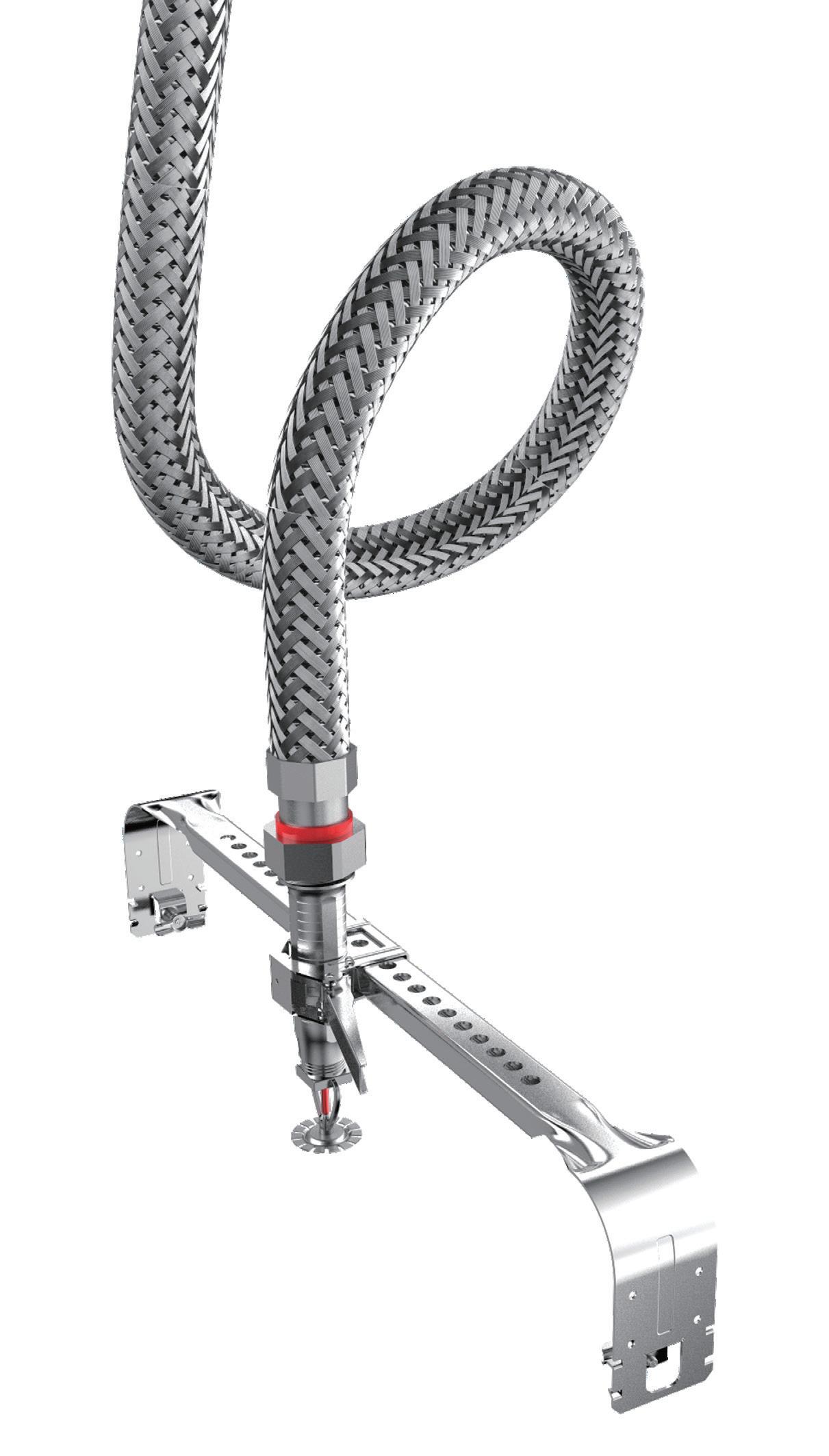
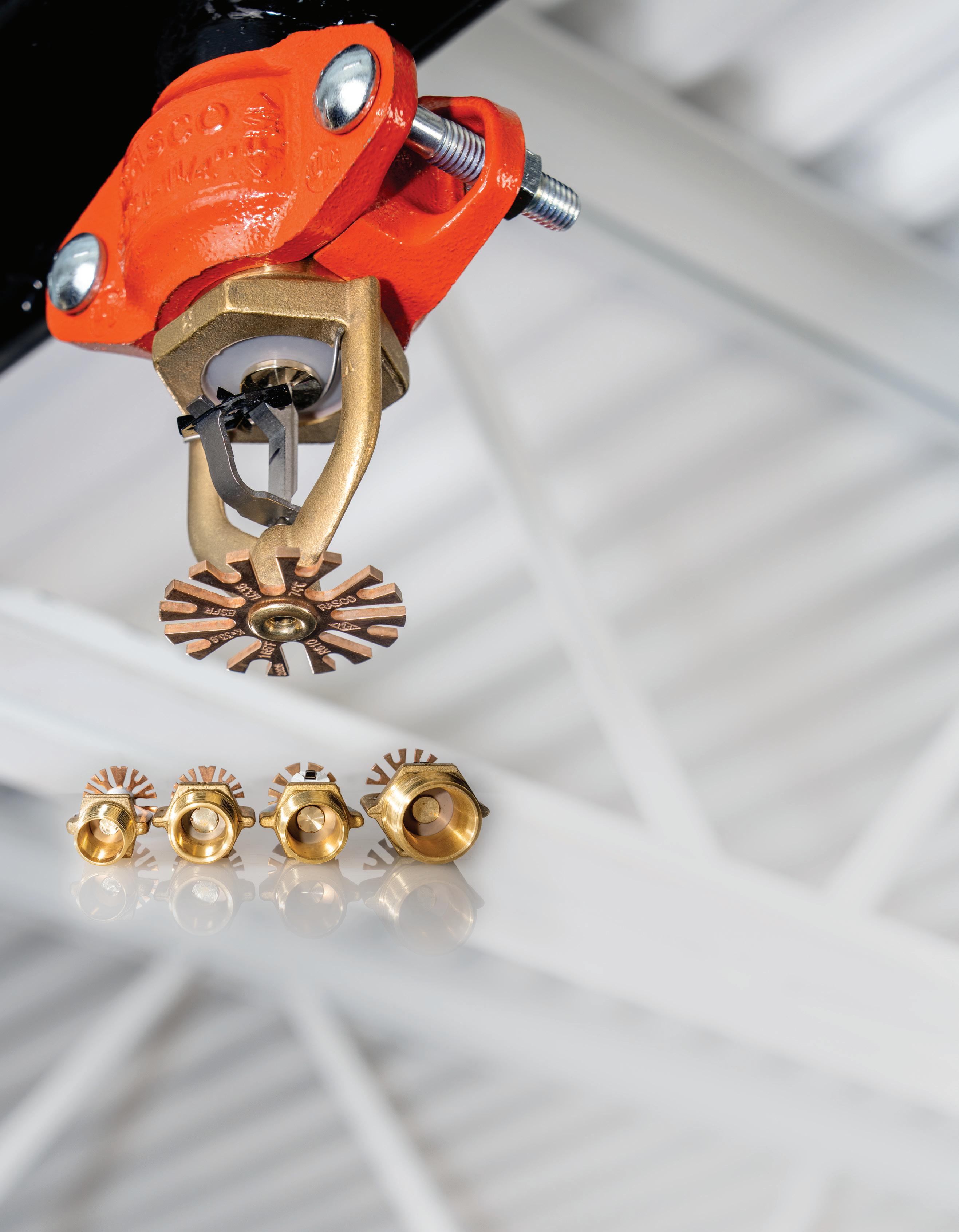
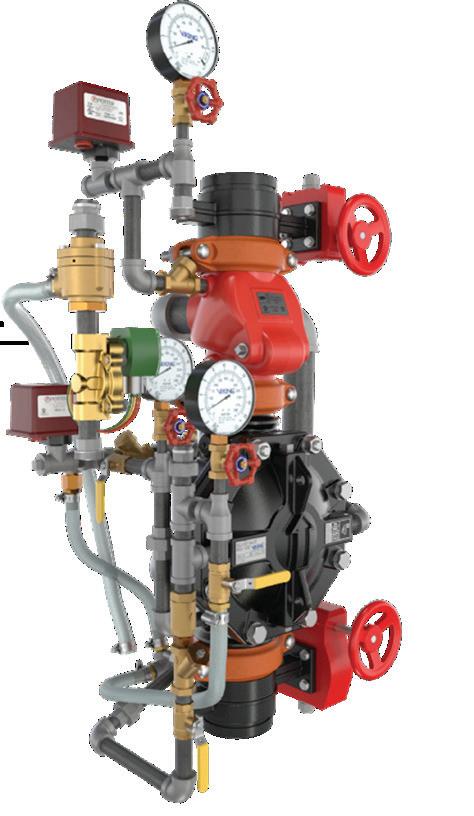
• 55 ft (16.8 m) ceiling height
• 50 ft (15.2 m) storage height
• 4 ft (1.2 m) minimum aisles
• 3 ½” (89 mm) takeout
• K33.6 (480)
• Available in Grooved or Threaded connections
• Durable fusible link operating element
Contact the Reliable Product Technology team at tech@reliablesprinkler.com or 1-800-557-2726 to discuss warehouse solutions.

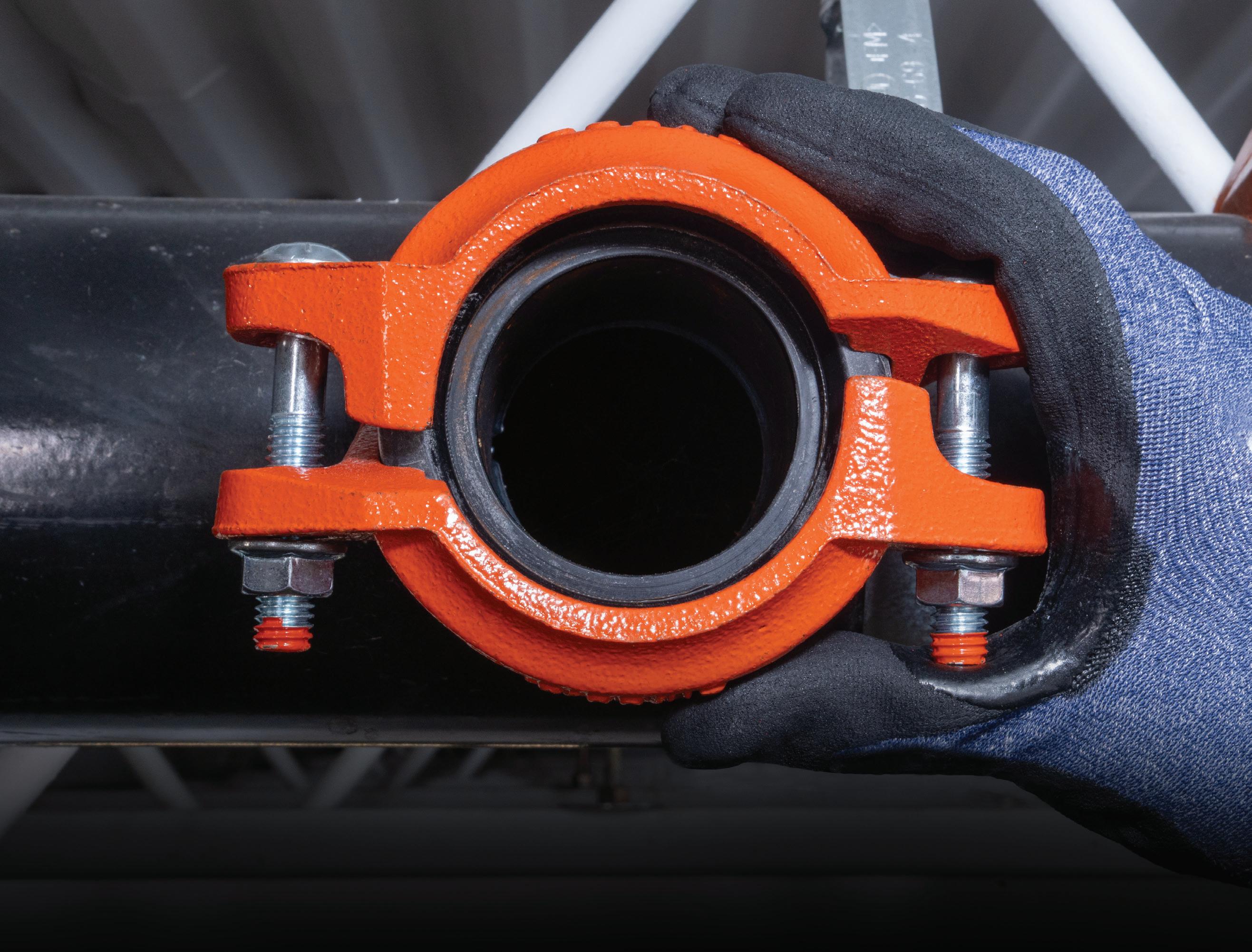
The wait is over and the choice is clear: the Reliable Quick Rigid System angle pad coupling. Field tested and performance proven push-on technology.
From the fire protection experts.
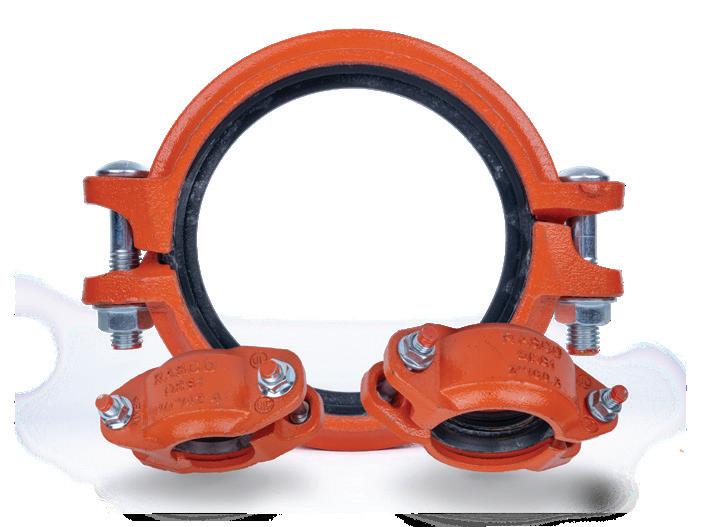
• FM Approved, cULus Listed • 1 ¼”–8” Pipe Sizes
• Painted or Galvanized Finish
• Available at Reliable Distribution Centers coast-to-coast
reliablesprinkler.com/grooved
CONT FEATURES
LARIOS TAKES FIRST PLACE AT AFSA44 IN DC
NEGLECTED SECTIONS OF NFPA 25 When Overlooked Sections of NFPA 25 Become Contractor Liability 12
Hiller Companies’ Apprentice Wins 32nd Annual National Apprentice Competition
A LOOK BACK AND A LOOK AHEAD “Cautious Optimism” Continues Into the New Year
NEXTGEN AT AFSA44
Young Professionals Engage With Industry
HONOR THOSE WHO MAKE AN IMPACT Nominations Open for 2026 AFSA Awards
CONTRACTORS HAVE “DAMPENED” EXPECTATIONS FOR 2026
AGC and Sage Release 2026
Construction Hiring and Business Outlook
AFSA CELEBRATES 45 YEARS IN 2026
Join Industry Professionals in the Lone Star State
HATS OFF TO RONNIE J. HAHN! Past Board Member Continues to Contribute to the Industry
FIRE ALARM INSPECTIONS
NFPA 72 Requirements
SPRINKLER REPLACEMENT AND TESTING INTERVALS According to NFPA 25
STRUCTURED TRAINING, REAL-WORLD RESULTS Expert-Led Blended Instruction, Hands-On Experience Make the Difference
NFPA UNVEILS NFPA LINK 3.0 Latest Version Introduces Powerful New Tools
WEBINARS OFFER TRAINING, CEU S Keep Up-to-Date With AFSA’s Subject Matter Experts
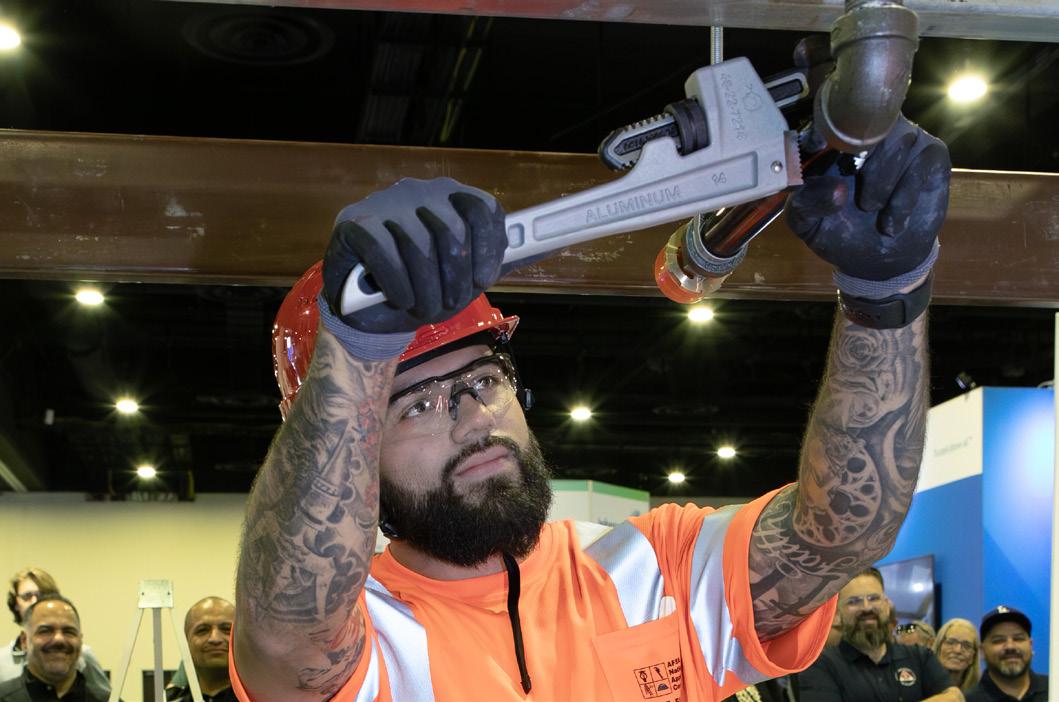
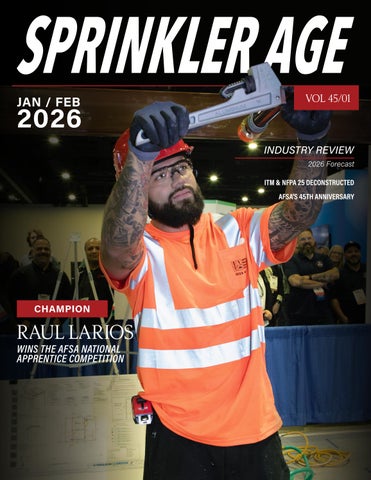
Raul Larios with the Hiller Companies is the winner of the 32nd Annual National Apprentice Competition. Also in this issue: ITM.
AFSA is the voice of the merit shop fire sprinkler contractor. We educate and train the industry while promoting fire protection systems to save lives and property.
CHAIR’S MESSAGE
As Chair of AFSA, I am proud to reflect on the tremendous success of our recent national convention in Washington, D.C.
It was a celebration of our industry. This event brought together passionate professionals from across the country, all dedicated to advancing fire protection and life safety. There were many valuable learning opportunities, connections were made, friends came together, and achievements were recognized. The attendance was fantastic, and the enthusiasm throughout reaffirmed the strength of our AFSA community. Kudos to our AFSA staff and convention committee for their accomplished work.
One of the highlights of this year’s convention was witnessing our seven National Apprentice Competition (NAC) finalists showcase their skills under the watchful eyes of a full exhibit hall. They demonstrated technical proficiency and a commitment to excellence. These rising stars will become skilled sprinkler fitters and leaders who will help shape the future of our industry. Their performance was inspiring. Congratulations to all the finalists. Your hard work and professionalism make us proud. Many thanks to Brett Heinrich, chair of the NAC committee, and his team of dedicated AFSA member volunteers.
Our ongoing programs for inspection, testing, and maintenance (ITM) of water-based fire protection systems are a direct outcome of our members’ need to understand their roles and responsibilities in implementing the requirements of NFPA 25. Many traditional fire protection contractors are expanding their ITM business, and, for others, it is their primary business. Now, contractors have constant contact with installed systems and the unintended consequences of the discovery of system deficiencies.
Tragic building fires with loss of life amplify the need for properly functioning fire sprinkler systems. Too often, the building owner is not taking responsibility for their fire protection system, and they deflect liability, and contractors are caught in litigation. The need for robust ITM practices with the AFSA program has never been greater. AFSA is committed to providing best-in-class educa-
tion, resources, and support for ITM professionals. These programs not only ensure compliance and safety for our customers but also elevate the professionalism and expertise within our member companies. Contractors who utilize AFSA’s programs are positioned for success.
We need to turn our attention to the NFPA Pro Codes Act, a measure with important implications for our industry. Fire and life safety codes and standards help protect our businesses, homes, and families. They are under threat of being rolled back by special interest groups. The Act addresses how critical fire and life safety codes and standards are accessed, referenced, and adopted nationwide. Every level of government needs to recognize this. Tell your elected official that safety standards matter. AFSA is actively engaged in advocacy and education efforts surrounding the Pro Codes Act, ensuring that our members are informed. We will continue to provide updates, guidance, and opportunities for involvement. Visit dontchancesafety.org.
As we move forward, I encourage all members to take advantage of AFSA’s many training opportunities, share your insights, and continue advocating for high standards. Together, we are making a difference—protecting lives, protecting property, supporting careers, and strengthening our industry. Thank you for being a part of AFSA. Here’s to continued growth, innovation, and success!

PAUL DELORIE AFSA BOARD CHAIR
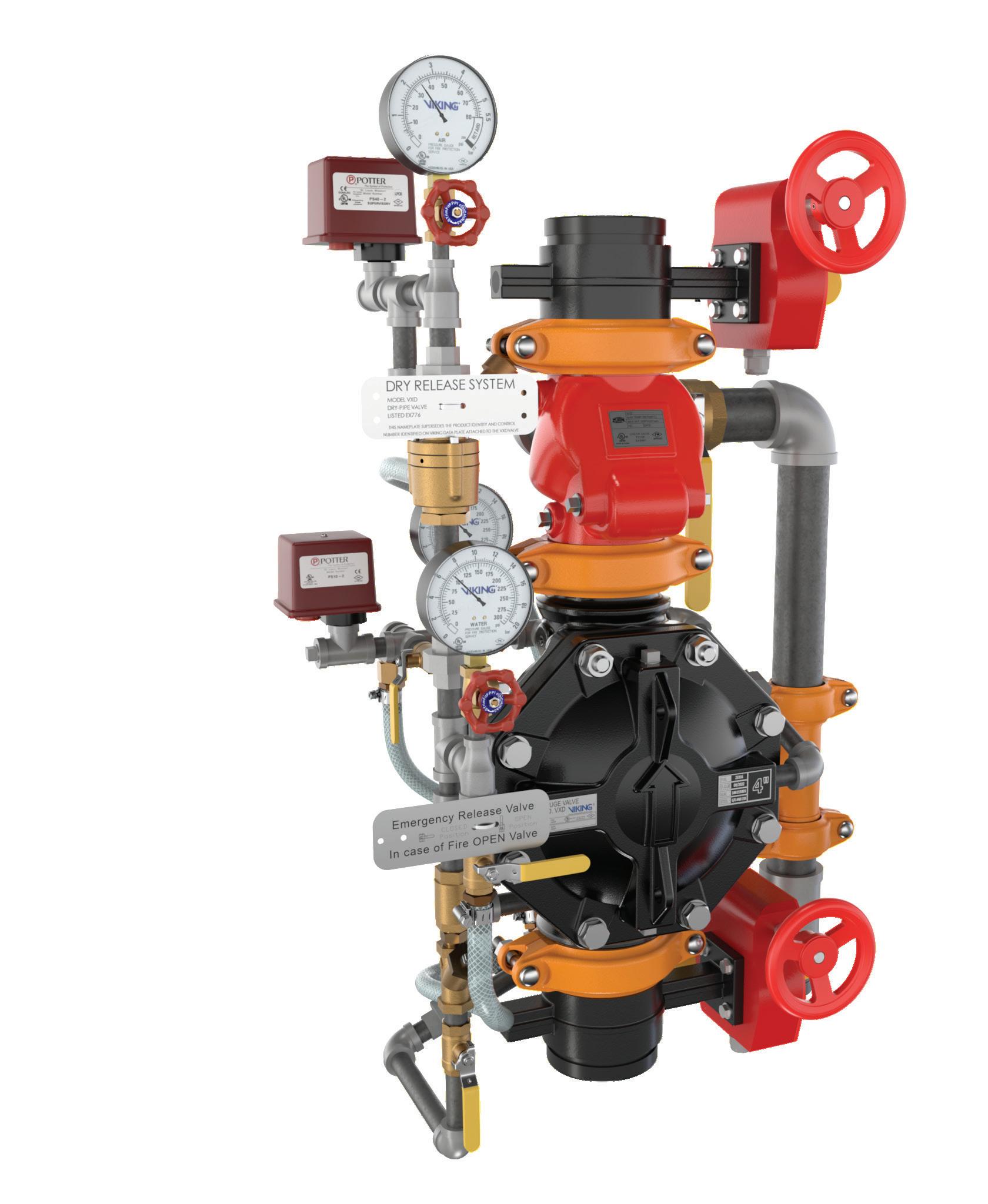
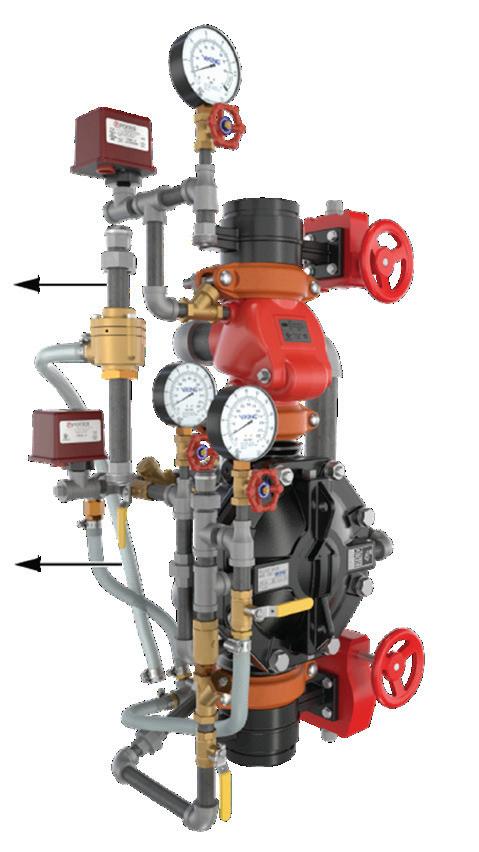
The Valve & System Configurator makes it a breeze to build out your system riser. Check it out by scanning the QR code, or visiting valveconfig.vikingcorp.com.

Data centers never stop evolving and your fire protection shouldn’t either. Viking’s new cULus Listed Data Center Upgradeable System delivers a smarter, simpler path forward. Install today as a dry pipe system, then upgrade to preaction when the need arises without costly rework or wasted investment.
By lowering upfront costs and simplifying future transitions, this system gives contractors and building owners the confidence that their protection will keep pace with the demands of modern infrastructure. Learn more on our website at vikinggroupinc.com.
PRESIDENT’S REPORT
Let me begin with a sincere THANK YOU to everyone who helped make AFSA44, our annual convention just a few short months ago, a monumental success. Once again, we enjoyed a record turnout of attendees and exhibitors, and we look forward to seeing everyone in San Antonio, Texas, for AFSA45. Please mark your calendars for September 27-30, 2026. Leave the suits and ties at home because this will be strictly a jeans and boots event!
As we ring in the new year, most of us will start with a few resolutions and a personal mental bookmark. One that marks the end of one year and the promises we make to ourselves about things we might do differently in the next. We’re drawn to wonder about what might interfere with our plans for ourselves and our businesses. There is no shortage of prognosticators willing to opine on what 2026 will look like in terms of the economy or anything else, including the end of the world as we know it (AI will put us all out of work and computers will take over the world—run for the hills!).
Well, I don’t think AI will put us all out of a job in 2026, although I do believe it will change the way many of us work, particularly how we research topics or perform repetitive functions. While I don’t think AI will replace many jobs in our industry, I do believe people who embrace and understand how to utilize AI tools to become more efficient will be more likely to keep the jobs we have. If computers do start to take over the planet, pull the plug and wait for the battery backup to die. We should all be just fine.
While the U.S. economy and our industry have been performing well for a long time now, I don’t think 2026 will be the year we see the bubble burst. No, I don’t have a crystal ball, and I have been wrong
BOB CAPUTO, CFPS AFSA PRESIDENT
before (today). Still, I have faith that politicians and our government leaders will do everything possible to ensure economic stability as we head into the midterm elections. In 1992, James Carville (a member of the Clinton administration) said, “It’s the economy, stupid,” and I think that’s still true today. That isn’t to say our industry won’t face challenges in terms of economic issues related to construction market shifts, more so on a regional basis than in the national picture. While there has been a significant push from industry toward recurring revenue streams, at its core, the fire sprinkler industry remains closely tied to the construction industry for many of our members.
Residential construction is expected to remain strong, particularly in the Sun Belt states, primarily due to migration patterns and continued housing shortages. Pro tip for those first-time homebuyers, we understand that purchasing a new home may be a better deal than buying an older one, partly due to the discounts offered by new home builders. That aside, when we examine the markets and what work might still be available, it appears that residential, specifically high-density residential construction, will remain strong in many regions. Tenant improvement work largely depends on the available inventory of unused space in your area. Many companies have moved past the remote work scenario and have reoccupied pre-COVID workspaces. That said, many people continue to work from home efficiently and effectively, which has a significant impact on predicting the need for new office space.
The big demand in the new construction sector looks to be the energy sector, with plans for energy generation facilities on the rise to meet the increasing demands of an AI-driven world. We see Meta building facilities in small to medium rural communities where land is less expensive and there are available job seekers. Others
are doing the same, which is exciting to see. However, these large projects tend to favor larger subcontractors who can provide manpower and have the necessary bonding capacity, so they may not offer backlog opportunities to some members. With an aging U.S. population, hospitals and healthcare facilities are expected to continue seeing growth in both new and remodeling projects. Additionally, numerous tall buildings across America still require retrofitting with fire sprinklers.
Regardless of the region or market segment, ITM work will always remain strong, if for no other reason than the fact that codes and standards require all systems to be inspected, tested, and maintained, even in unoccupied buildings or spaces. Enforcement has gained popularity everywhere, partly due to the use of third-party reporting systems.
Now, I am no expert in the field of economics, nor am I qualified to evaluate where the world or the U.S. will be this time next year. The war in Ukraine, tariffs, elections, and a host of other daily headlines may undoubtedly have a greater impact on the markets than anything I can predict. Still, I know this industry has been kind to all of us through good and bad times, economic swings, and even through the COVID-19 pandemic. So, I remain optimistic that 2026 will be an excellent year for us all, and especially for AFSA members as we continue to expand and grow our services, training, and educational offerings in response to market demands and member requests. We are in the process of adding a training facility for low voltage (fire alarms) and special hazards, including kitchen hood systems, eLight testing, fire door inspections, and fire suppression systems ITM. Our expanded training facility is expected to be operational by Q4 of 2026, with a series of dry-run seminars and initial class registrations scheduled for early 2027. Our goal is to help our members expand their service offerings with the same level of expertise as you perform on wet systems today. We will provide more updates on this as we progress closer to making this project a reality.
I wish everyone a prosperous 2026 and beyond!
BOB CAPUTO, CFPS, Publisher, ext. 124 | bcaputo@firesprinkler.org
D’ARCY G. MONTALVO, Editor, ext. 115 |dmontalvo@firesprinkler.org
CLARISSA RIOS, Communications Coordinator, ext. 134 crios@firesprinkler.org
D’ARCY G. MONTALVO, Editor, ext. 115 |dmontalvo@firesprinkler.org
PAUL DELORIE, Chair, Region 10, 603-432-822
JAY STRICKLAND, First Vice Chair, Region 6, 301-474-1136
CHRIS JOHNSON, Second Vice Chair, Region 7, 727-581-9339
TOMMY CLEMENTS, Treasurer, Region 9, 804-459-2218
JEFF PHIFER, Secretary, Region 8, 803-438-2994
LINDA M. BIERNACKI, Immediate Past Chair, Region 5, 318-688-8800
BROOKS BAYNE, Region 1, 503-692-9284
HUNTER BRENDLE, At-Large, 334-270-8571
MINDY BUCKLEY, At-Large, 770-925-9099
R. DONALD (DON) KAUFMAN, Region 3, 505-884-2447
MICHAEL F. MEEHAN, At-Large, 804-459-2200
WAYNE WEISZ, Region 2, 209-334-9119
BOB CAPUTO, CFPS, President, ext. 124
MATT KLAUS, Executive Vice President & COO, ext. 139
MELISSA ATHENS, Vice President, Finance, ext. 112
LESLIE CLOUNTS, Vice President, Education Services, ext. 130
JOHN AUGUST DENHARDT, P.E., FSFPE, Vice President, Engineering & Technical Services, ext. 121
MEDA MERRITT, CAE, Vice President, Membership & Chapter Development, ext. 133
Sprinkler Age is devoted to the professional development of the fire sprinkler industry. Deadline is 1st of the month preceding publication.
Published by American Fire Sprinkler Association, 1410 East Renner Road, Suite 150, Richardson, TX 75082. Call (214) 349-5965, FAX (214) 343-8898, or email sprinklerage@firesprinkler.org for information.
Copyright © American Fire Sprinkler Association, Inc. All rights reserved. PRINTED IN USA. Unless expressly stated otherwise, all editorial and advertising material published is the opinion of the respective authors and/ or companies involved and should not be construed as official action by or approved by Publisher or the Association.
Sprinkler Age is a membership benefit, provided free of charge to AFSA members. For information on non-member and/or foreign subscription rates, call (214) 349-5965.
AFSA annual membership dues are a sliding scale for Contractors and Associates and a flat fee for Authorities Having Jurisdiction. (Members receive a free subscription to Sprinkler Age.) Write or call AFSA for membership information. See AFSA’s website at firesprinkler.org.
FLASHPOINT
As I grow older, I have been getting in the habit of looking around, asking the reasons why we do certain things, and why we struggle to see the importance of doing other things. Do we do things that we like to do and put off what we don’t like? Everything in life is a compromise: time needed, costs associated, and the benefits weighed, whether subconsciously or consciously. Sometimes, we do not fully understand the potential risk of inaction. With the above in mind, let’s look at a specific activity we do as fire protection contractors.
Inspection, testing, and maintenance (ITM) of fire protection systems is a service most of our Contractor members provide. We have Associate members whose products are to provide services to support ITM activities. AFSA has a very successful program for the development of ITM technicians; however, most contractors have difficulty hiring enough qualified technicians, as the labor force is insufficient. Certification agencies like NICET and NFPA offer programs so qualified technicians can earn a certification that indicates their accomplishments. Most owners maintain their fire protection systems to some extent, but usually, compliance with all the regulations is not achieved. Difficulty in determining what is required, cost, and understanding the benefits are all obstacles that need to be overcome. Some owners ignore ITM requirements as the lack of compliance is seen as low risk. AHJs and insurance companies attempt to enforce ITM requirements but often lack the resources to do so. Third-party reporting programs have benefits, but all have negative issues that most people do not understand. So, what does

JOHN AUGUST DENHARDT, P.E., FSFPE AFSA VICE PRESIDENT OF ENGINEERING & TECHNICAL SERVICES
all of this accomplish? In my opinion, a recipe for disaster. Unfortunately, when there is a loss due to a fire protection system failure, partial or complete, the injured parties turn to the legal profession to protect their interests. Special experts and forensic engineers look at every possible cause to assist the legal team in determining who is at fault. In most cases, the legal team sues all parties involved to cover all angles. When all is complete, the injured party receives compensation, and lots of others make money in the process. What can we learn from this?
Let me use one of my favorite examples, a Ford F-150 pickup. Suppose you purchased this new truck in December of 2023. You had the oil changed every 5,000 miles or so at the local quick lube place down the street from where you work. You try to follow the maintenance schedule that Ford issues, but you have not memorized or reviewed the schedule in many months. At 52,000 miles, the engine starts making a terrible internal noise. You have the vehicle taken to a Ford dealership. An evaluation by the mechanic determines that a mechanical engine failure occurred due to improper oil viscosity used in the engine. You are disappointed and frustrated as the cost of the repair is over $5,000. Who’s to blame? The quick lube place, Ford, you as the owner, or someone else?
Now, suppose you lend your friend the truck to make a run to pick up some furniture. While driving on the highway, a front tire blows out. The accident results in no injuries but lots of damage to other people’s property. Insurance companies and lawyers become involved. Experts claim your tire conditions led to the blowout and accident. Are you to blame as the owner? What about the quick lube place since they did a free safety check? What responsibility does your friend have?
In both situations, the truck owner is ultimately responsible for the vehicle’s upkeep. When others are hired to do specific work, they are responsible only
under the terms of the contract regarding the scope of service, materials, and liability. The maintenance of a fire protection system is no different; except when these systems fail, the losses can be catastrophic. At a minimum, major property damage, or, in the worst case, people die.
What have we learned from this? As an ITM service provider, you must:
•Ensure your sales team understands the fire protection systems in the building and the ITM requirements.
•Ensure your sales team assists the owner in his understanding of the applicable ITM requirements.
•Provide a contract to perform the scope of work that the owner has agreed to have completed.
•Ensure the contract limits your company’s liability for items not in your scope of work.
•Ensure your technicians are qualified to perform and fully understand the scope of work. This might be inexperienced and unqualified individuals you hired who need to be properly trained while on the job.
•Ensure the work is fully completed and the associated reports are complete and filed as required.
•Ensure the sales team follows up on the reports and offers the owner any additional services or recommendations.
If a loss later occurs, the owner and their insurance company will likely blame your company, as you were hired to perform ITM services for the fire protection system. Hopefully, if all your bases are covered, the blame will stay where it started, on the owner.
While discussing ITM on all fire protection systems, I would like to highlight a specific section in NFPA 25, Standard for the Inspection, Testing, and Maintenance of Water-Based Fire Protection Systems , 2026 edition, that is particularly relevant. The following information is taken directly from NFPA 25.
4.1 Responsibility of Property Owner or Designated Representative.
4.1.1* Responsibility for Inspection, Testing, Maintenance, and Impairment.
The property owner or designated representative shall be responsible for the proper inspection, test -
ing, maintenance, and impairment management of water-based fire protection systems in accordance with this standard.
Paragraph 4.1.1 sets the tone for enforcing the standard by stating that the property owner or designated representative (see A.4.1.1.5) is responsible for maintaining a water-based fire protection system. Maintaining a system includes the ITM tasks, as mandated by the standard. The owner should carefully read and understand all of the requirements in section 4.1 to have a full understanding of the responsibilities placed on them by NFPA 25.
In my opinion, the above language should be presented to the owner of any system before a contract is executed. Notifying the owner of their responsibilities may help your company in the event of any future issues.
I pray that everyone has a great and prosperous New Year. May God bless your personal and work families. I know I am enjoying my two grandchildren, and one of my resolutions for this year is to spend more time with my family. Life is too short.
LARIOS TAKES FIRST PLACE AT AFSA44
HILLER COMPANIES’ APPRENTICE WINS
32ND ANNUAL NATIONAL APPRENTICE COMPETITION
CLARISSA RIOS | AMERICAN FIRE SPRINKLER ASSOCIATION
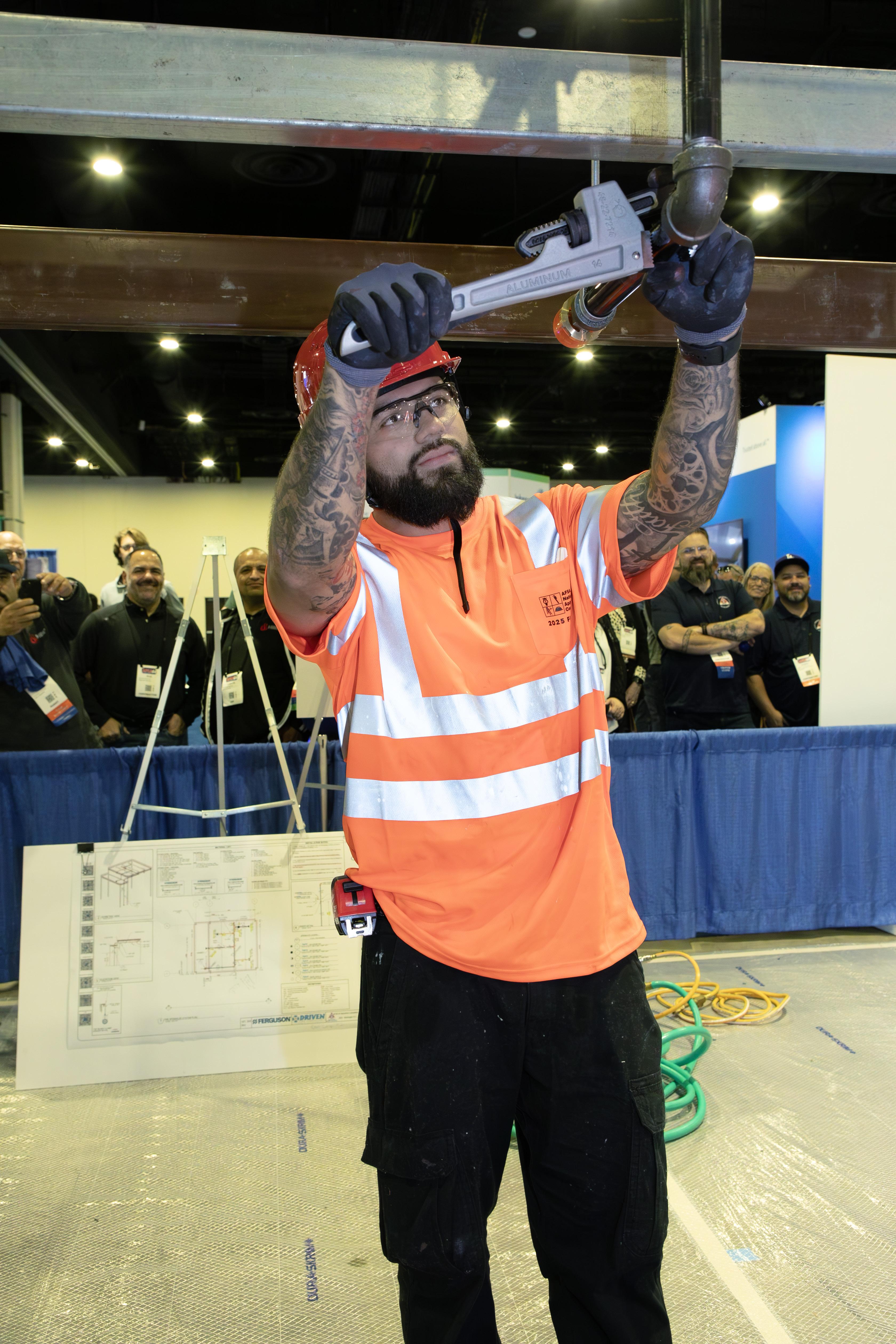
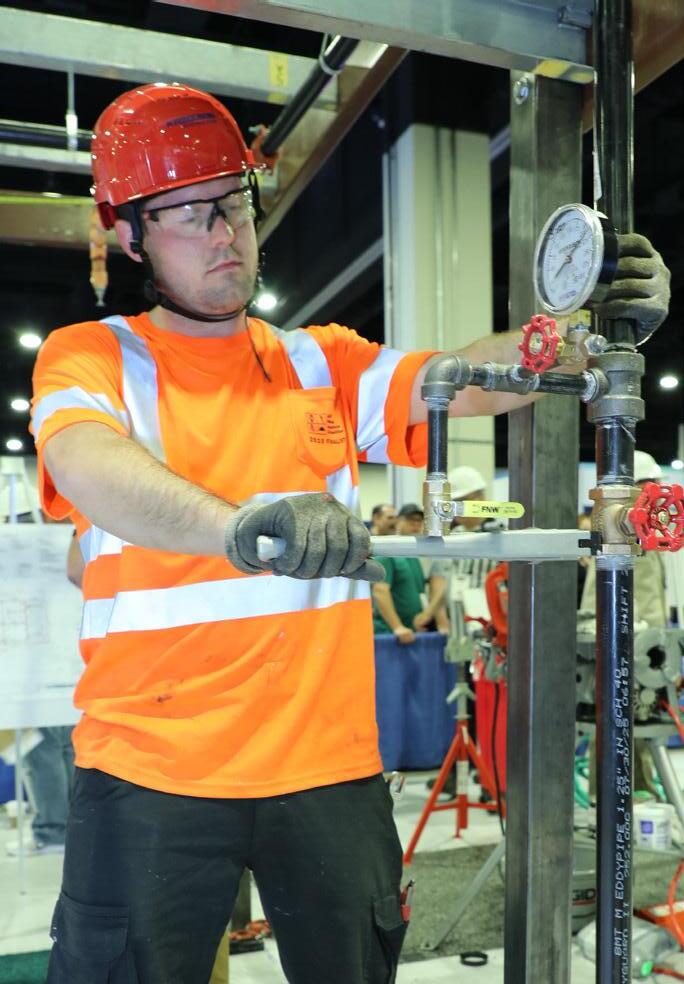
When Raul Larios first stepped onto a construction site, he had no idea he was about to discover a career that would change his life. Today, he stands as the American Fire Sprinkler Association’s (AFSA) 32nd National Apprentice Competition (NAC) winner. Larios represented Hiller Companies on the national stage in Washington, D.C. at AFSA44: Convention, Exhibition, and Apprentice Competition, Oct. 15–18, 2025.
Seven of the nation’s top fire sprinkler apprentices competed for a $10,000 cash prize and national bragging rights, showcasing their skills before an industry-wide audience. Larios won first place, bringing the grand prize back to his team in Orange County, Calif.
For Larios, this was a first. “I’ve never really won something
this big; it made me feel really proud of myself.” Although a humble man, he took pride in his accomplishment and was excited to be a part of the AFSA44 atmosphere. “Aside from the competition, seeing all the other companies and sprinkler stuff that’s coming out, it’s just an amazing experience.”
FROM GREEN TO GOLD
Larios entered the fire sprinkler trade with no prior construction experience, coming instead from a background in automotive sales and marketing. Initially uninterested in construction, a longtime friend whose family had been in the trade for many years encouraged him for years to join. Larios was content with his job and lifestyle until life unexpectedly intervened, and change was inevitable.
“I came into the trade, totally green with no experience whatso-
ever. I didn’t want to do construction at all,” he explains. “But then COVID happened, and I lost my job. My fiancée was pregnant with my first daughter, and I knew I needed a career.”
Through his friend’s uncle, Carlos Cortez—his superintendent and mentor who later accompanied him to the
“I CARE ABOUT WHAT I DO, AND IT’S PAYING OFF.”
NAC—Larios was given his first opportunity in the field. From day one, he felt an immediate connection to the trade and knew he had found his career path. “From the very first day, it was like everything clicked for me. I was like, ‘Oh yeah, I can do this the rest of my life.’ I really enjoy it.”
FIRST IN DC
DISCOVERING THE NAC
Larios learned about the competition during the first year of his apprenticeship program, with the California American Fire Sprinkler Association (CASFA). During the beginning of his career, he was encouraged to test for AFSA’s NAC. However, it doesn’t take much to motivate Larios to push himself to the next level. As someone always trying to better himself in all aspects of his life, he started taking the placement test in year one and gradually improved each year.
“I always want to better myself with what I do. I figured I would just try it out. It’s kind of tough for a first-year student to take it, because it’s four years’ worth of training and knowledge of books.” Any knowledge Larios didn’t have from the fourth book, he picked up in the field. By the end of his third year, with a combination of his determination and the support of his mentors and peers, he earned the opportunity to compete at AFSA44.
Larios was initially unsure what to expect when facing other apprentices from across the country. Many may assume that competition fosters tension, but he found the opposite to be true.
“It surprised me because I feel like we all got along really well. We were all helping each other out, asking each other questions, and helping with one thing or another. They’re all really good people, and I really enjoyed competing with them.” The announcement of Larios’ victory only proved his point further when the other apprentices were the first to congratulate him.
His victory was made even more meaningful by the presence of his fiancée and colleagues. “Having people that I care about be extremely proud of me, for sure, made me feel good about myself. I care about what I do, and it’s paying off.” Back at work, the recognition continued, earning praise throughout his company and in
When asked if Larios would recommend the NAC to other apprentices, his stance was clear. “I don’t think there’s a reason why not. I think they should. If you really enjoy the trade and you want to better yourself, it’s for sure something that will better you. If you really care about the trade, you have to try your hardest to be a part of it.”
COMPETITION DETAILS
AFSA’s NAC is celebrating 32 years of showcasing apprentices. The competition is divided into two phases. Phase 1 consists of a 100-question multiple-choice exam provided by AFSA. The test is proctored online, making it accessible to contestants in all 50 states. The top seven scoring apprentices in the Phase 1 exam received expense-paid trips to compete in Phase 2 of the national competition, held during AFSA44.
In Phase 2, participants took another, more thorough written
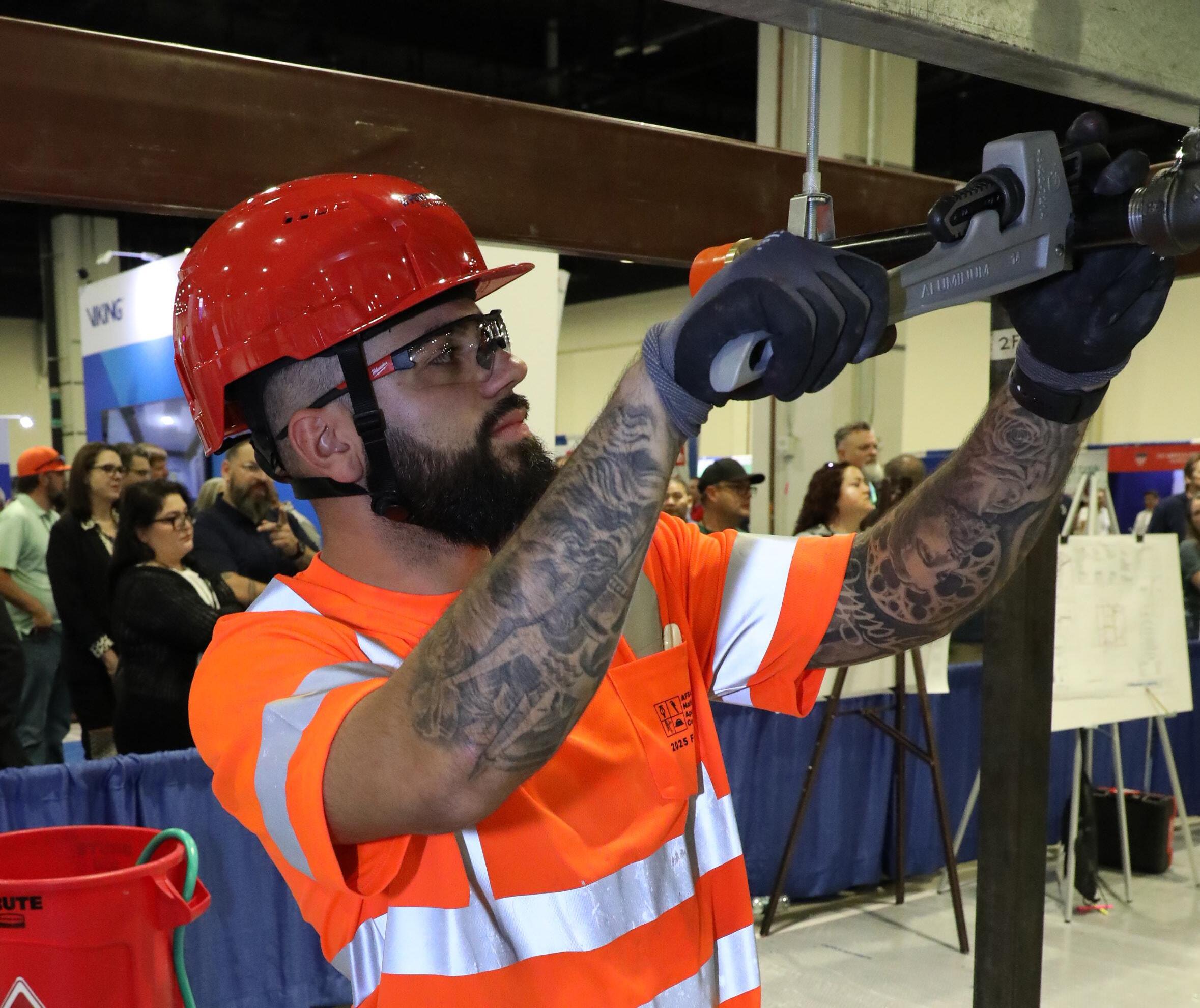
LARIOS EXCELLED DURING THE NAC AT AFSA44 IN D.C.
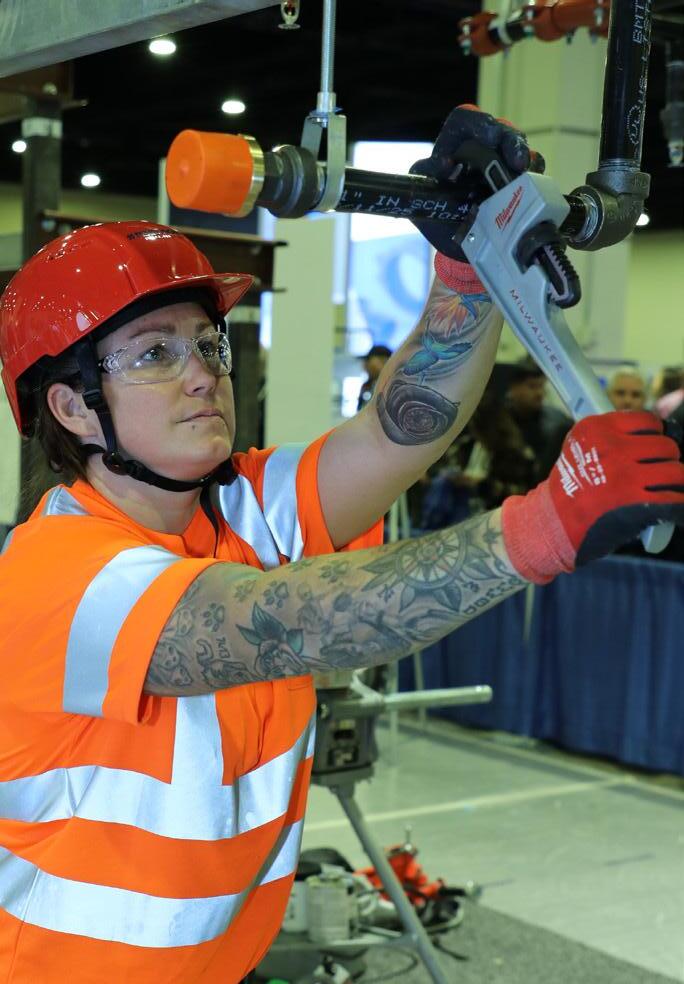
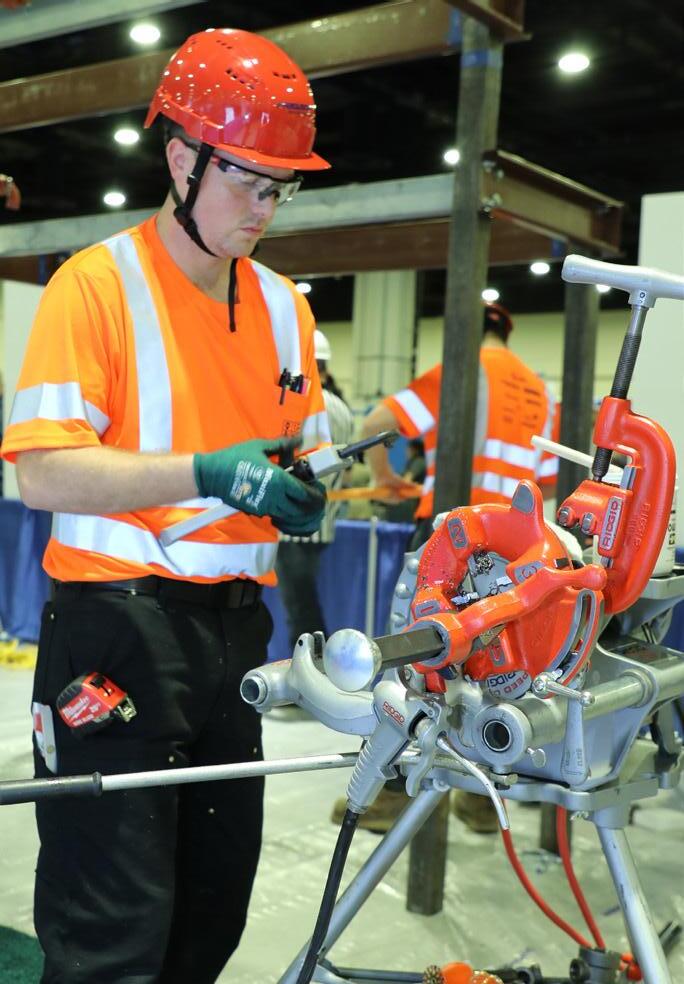
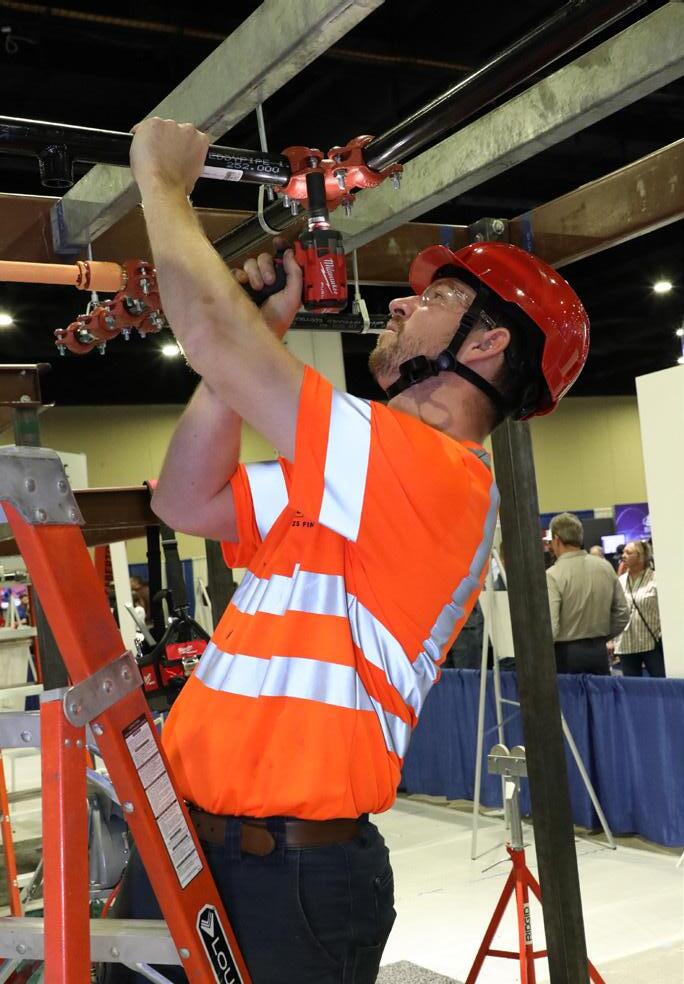
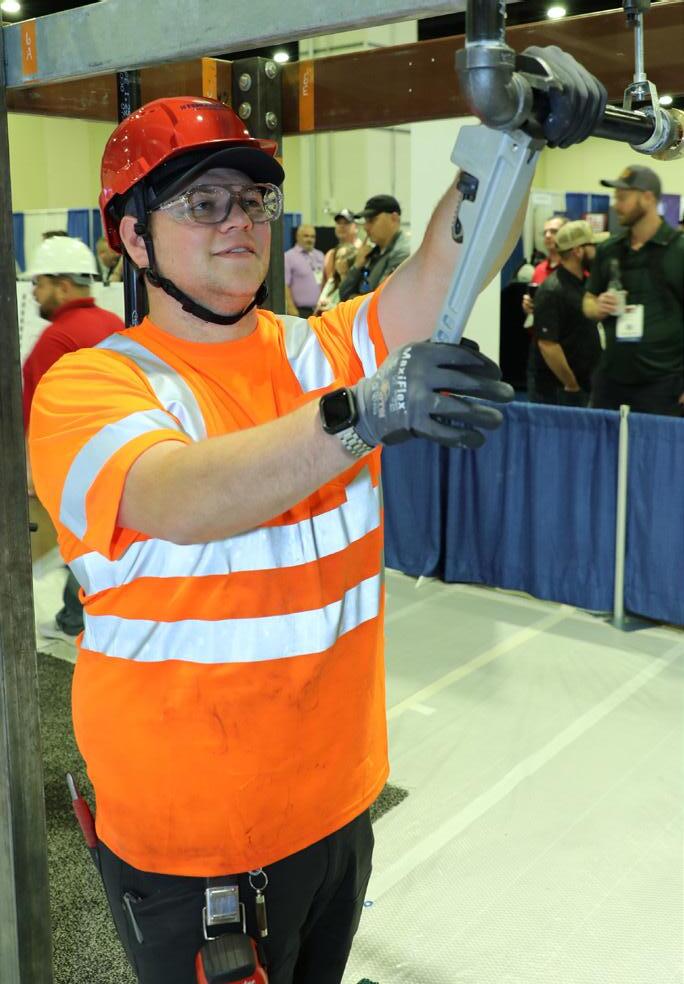
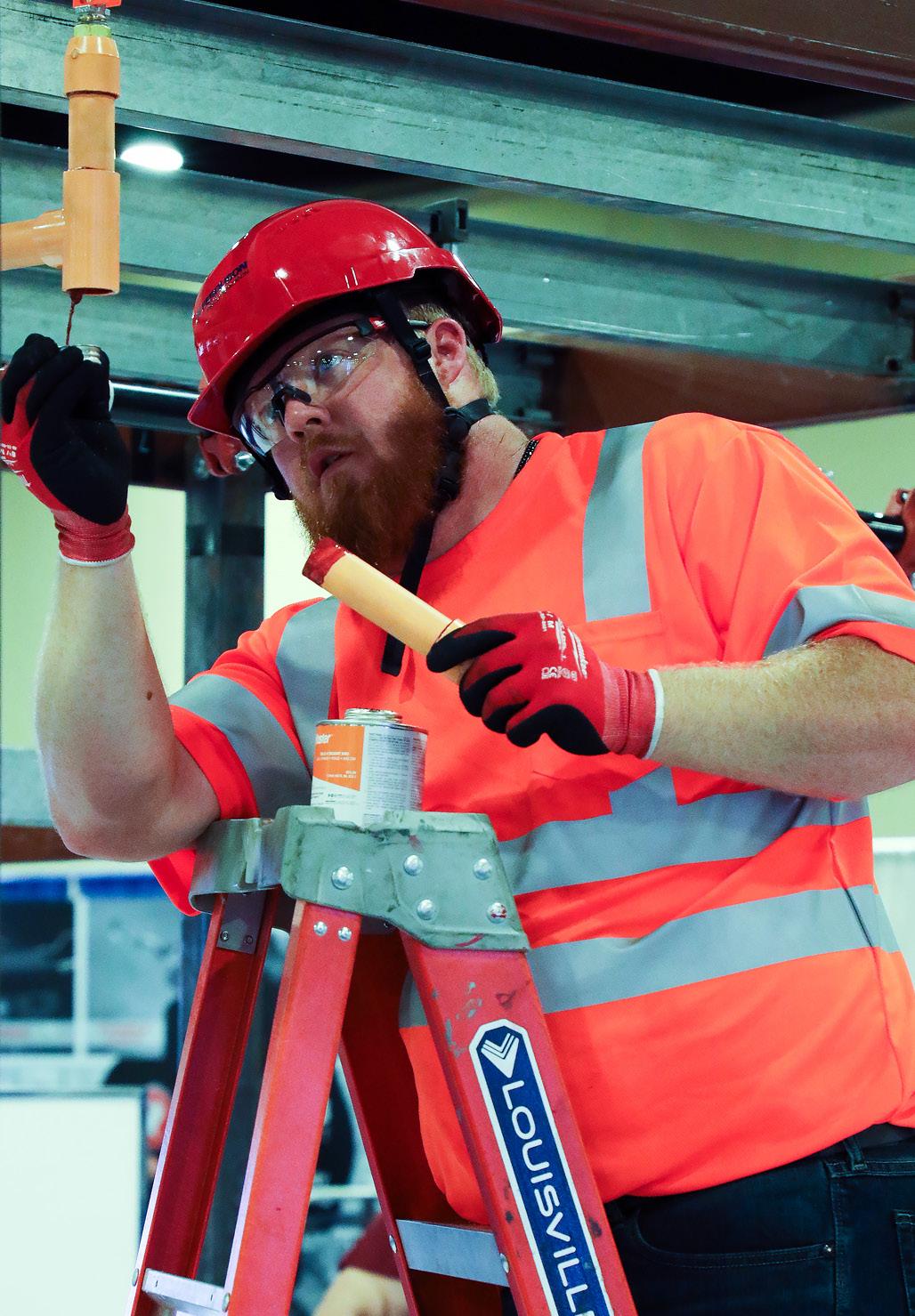
examination and installed a steel and CPVC sprinkler system with pendent and sidewall heads. The systems were pressure tested, and participants were graded on accuracy, craftsmanship, and safety. The installation portion was held in the middle of the exhibit hall on the convention’s final day.
For Larios, the install was another workday … with some extra eyes on him. “The install is what we do every day. It’s like we’re at work. But the hardest part is all the people watching you. But if you’re being taught well, and you’re being taught right, then just apply that to the install, and you should be good.”
place and $7,500; and Christopher Redman, J.G. Tate Fire Protection Systems, Poway, Calif., third and $5,000. Honorable mentions and $2,500 were awarded to Stephen Dolan, Rieve Fire Protection, Conn.; Corbin Rogers, Rapid Fire Protection, Inc., S.D.; Kyle Strickland, Marmic Fire & Safety, Ark.; David Walencewicz, Impact Fire Services, Conn. All competition finalists received a commemorative award, tools, and an experience of a lifetime.
“IF YOU REALLY CARE ABOUT THE TRADE, YOU HAVE TO TRY YOUR HARDEST TO BE A PART OF IT.”
Competition results for the other competitors were Leona Ball, Piper Fire Protection, Fla., second
The National Apprentice Competition was started in 1994 by the late Robert L. (Bob) McCullough, then chair of AFSA’s Apprenticeship & Education Committee and president of Allsouth Sprinkler Company. The company contin-
ues to sponsor the competition each year.
The competition was created to promote apprentice training and recognize the apprentices actively enrolled in the AFSA apprenticeship program. It continues to bring fire sprinkler apprentices from AFSA local chapters and member training programs from all corners of the United States together in the association’s foremost showcase of excellence in training among future industry leaders.
THANK YOU!
AFSA extends its sincere thanks to NAC Chair Brett Heinrich for leading the 2025 competition, as well as to the many companies and volunteers who helped make it a success. “There are many ‘thank yous’ that are deserved, and not enough room to list everyone individually. This could never have happened without the support of so many dedicated companies and individuals,” says Heinrich. “This year’s turnout was incredible. I’m humbled to be a small
Second-place winner Leona Ball.
third-place winner Christopher Redman. honorable mention finisher Stephen Dolan.
part of a competition that highlights the very best of our industry and proudly reflects our commitment to training and education. I can’t thank everyone involved enough for their participation.”
For the 32nd Annual NAC, Ferguson Fire & Fabrication was the main supplier, and Milwaukee Tools donated many cordless and hand tools for the event and apprentices. Other tools, materials, donations, and support were provided by AFSA Florida Chapter; AGF Manufacturing, Inc.; Allsouth Sprinkler Company; Alwest Fire Protection, LLC; ARGCO; Bamford Fire Sprinkler Co.; Core & Main Fire Protection, Crawford Sprinkler Company of South Carolina, Inc.; Driven Fire Consultants; Eastern Fire & Safety; Fayette Pipe Company; Fire Tech Systems, Inc.; Foothill Fire Protection, Inc.; JFV Engineering, LLC; NICET; Reliable Automatic Sprinkler Co.; RIDGID Tools; Victualic; Viking Group, Inc.; VSC Fire & Security, Inc.; Viper Tradeshow Services; and Winsupply.
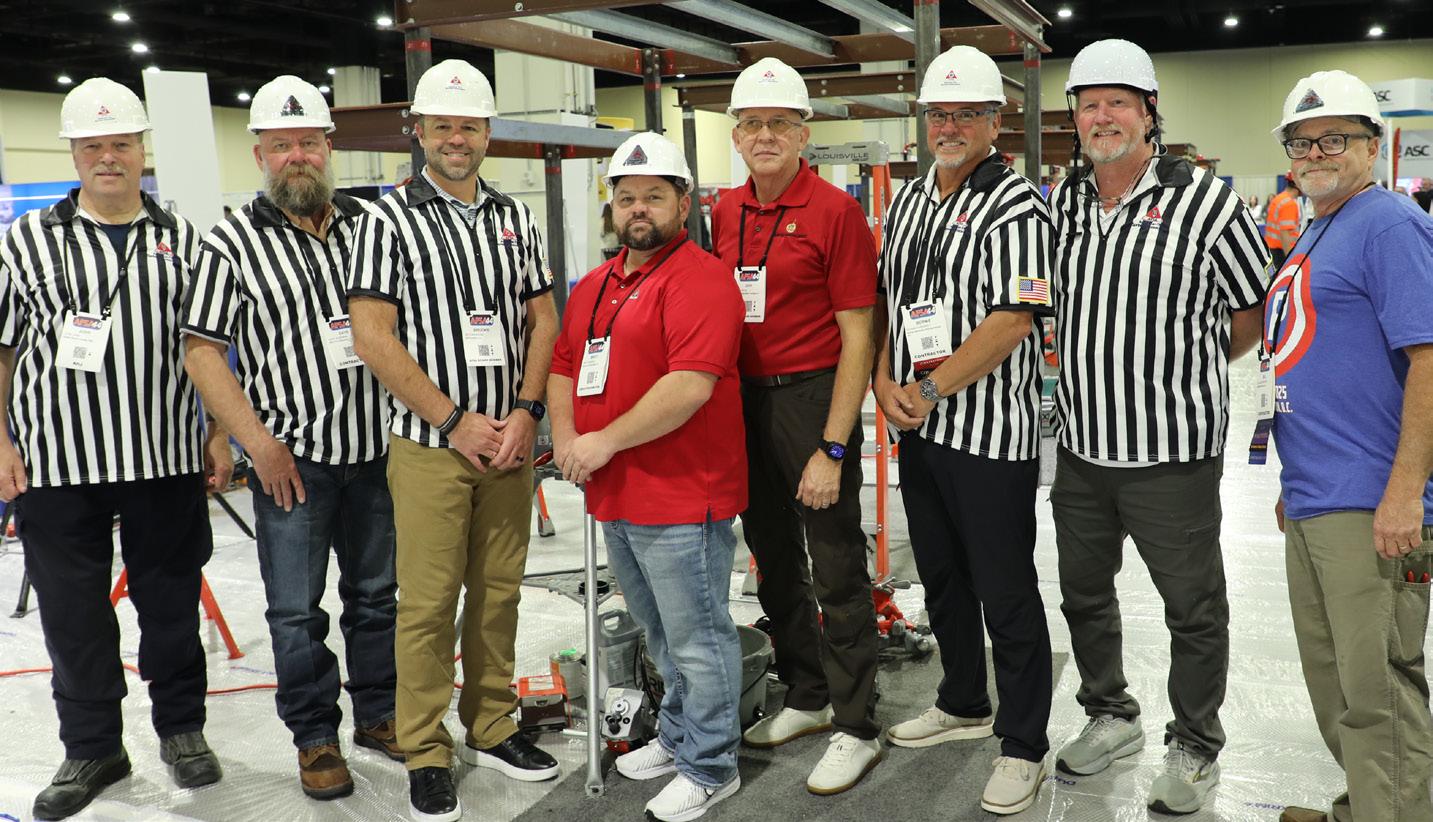
Judges for this year’s event were Brooks Bayne, AFP Systems; David Koopman, VSC Fire & Security, Inc.; John Lane, Queen Anne’s County, Md. Fire Marshal’s Office; Bernie Parsons, Wayne Automatic Fire Sprinklers, Inc.; and Gene Taylor, Brendle Sprinkler Company. Jeff Phifer, Crawford Sprinkler Company of South Carolina, Inc., and Heinrich served as alternate judges. Bill Norwood, Alwest Fire Protection, LLC, performed the hydro testing on the systems and was instrumental in the setup, teardown, maintenance, and repairs of the structures.
ARE YOU NEXT?
“It’s about continuing to grow, continuing to learn, and continuing to inspire others, especially the next generation of apprentices,” Larios concludes.
Catch the 33rd NAC in the Lone Star State! AFSA45 will be in San Antonio, Texas, Sept. 27-30, 2026. Entry forms will be available soon. For more information and future updates, see page 60 of this issue or visit firesprinkler.org/competition.
honorable mention finisher Corbin Rogers.
honorable mention finisher Kyle Strickland.
honorable mention finisher David Walencewicz.
from l to r: john lane, david koopman, brooks bayne, brett heinrich, jeff phifer, bernie parsons, gene taylor, and bill norwood ensured this year’s competition was a success.
A LOOK BACK... AND A LOOK AHEAD
“CAUTIOUS OPTIMISM” CONTINUES INTO THE NEW YEAR
D’ARCY MONTALVO | AMERICAN FIRE SPRINKLER ASSOCIATION
Anew year brings fresh hopes, renewed energy, and evolving expectations—and the fire protection industry is no exception. The same holds true for members of the American Fire Sprinkler Association (AFSA). While construction industry reports suggest a slower year ahead, most forecasts continue to project modest growth. AFSA contractor members surveyed report a cautiously optimistic outlook for 2026. Explore the industry and member insights highlighted below and throughout this issue of Sprinkler Age . For additional forecasts and analysis, visit enr.com and constructionexec.com.

INDUSTRY REPORTS
Annual reports detailed in Engineering News-Record (Nov. 19, 2025) include Dodge Construction, which predicts the total dollar value of overall construction starts will slightly decline by 0.4% in 2026, following a 6.1% increase last year. For residential construction starts, Dodge expects the total dollar value of residential to increase 1.7% in 2026. It estimates a 9.5% decline in single-family construction in 2025 with another 1.9% drop in 2026. Multifamily housing is forecast to end up 18.1% last year, and climb another 7.6% this year.
Dodge forecasts warehouses should end down 0.5% in 2025, then increase 4.8% in 2026. Hotel and motels
were down 2.6% last year but will rise 4.8% this year. Office building starts are expected to jump by 25.2% in 2025 and increase slightly by 0.6% in 2026. Stores and shopping centers are expected to continue the 7.0% increase in 2025, with another 2.6% rise in 2026. Healthcare facilities should grow by 17.3% in 2026, after rising 13.6% last year.
FMI Corp. is forecasting total construction put-inplace for 2025 to decrease 1.4%, with a slight increase of 0.7% in 2026. Total residential construction putin-place will drop 2.2% in 2025 and creep up 0.7% in 2026. The forecast for single-family construction put-in-place is down 3.1% for 2025 and up a slight 0.8% in 2026. Multifamily put-in-place is expected to decline 9.1% in 2025 and another 2.2% in 2026. Total non-residential construction put-in-place is expected to decline by 2.0% in 2025 and by 0.5% in 2026.
WHAT’S AHEAD FOR THE FIRE PROTECTION INDUSTRY FOR 2026?
Commercial work is expected to decline 8.5% in 2025 and fall another 4.1% in 2026. Data centers are one area where FMI has seen substantial growth that will continue. In 2024, it jumped 55.7%, followed by a 33.4% increase in 2025, and is forecasted to grow 24.9% in 2026.
The National Association of Home Builders (NAHB) estimates single-family work is expected to rise 1.4% last year and grow by 7.5% this year. Multifamily will show a 5.8% drop in 2025 but rebound by 10.5% this year.
MEMBERS REPORT ON 2025 AND FORECAST FOR 2026
AFSA Chair of the Board and Region 10 Director
Paul DeLorie, senior vice president of Hampshire Fire Protection, Co., Inc., Londonderry, N.H., reports that 2025 was another “very successful” year. “Our region has been hot for a while, and the future looks favorable
“We expect to contract more foam replacement work as existing fire protection systems with PFAS chemistry-type foam are being replaced with environmentally friendly non-fluorinated foam.”
“As usual, we need help with quality design work that is timely and the pipe ‘fits’ at installation,” notes DeLorie. “BIM projects are causing through put problems, as the time required to model and coordinate is excessive.”
“We had a rocky start in 2025; our booked work was down from 2024, and going into the third quarter of last year. However, the flood gates opened as the government opened back up, and now, we have exceeded last year’s booked work going into 2026,” notes AFSA Immediate Past Chair of the Board and Region 5 Linda Biernacki, president of Fire Tech Systems, in Shreveport, La. “I am cautiously optimistic for 2026. Based on the tax cuts in the Big Beautiful Bill, we should have a robust year ahead.”
“OUR REGION HAS BEEN HOT FOR A WHILE AND THE FUTURE LOOKS FAVORABLE ... ” – AFSA CHAIR OF THE BOARD PAUL DELORIE
as large apartment complexes and mixed-use buildings are being approved for construction. There is a lot of hospital, school, and university work available.”
For 2026, he is cautiously optimistic, which is their normal posture. “We expect to maintain our market share in new construction, while increasing our ITM and fire alarm business.”
DeLorie continues, “Our service department handles ITM, and they are very busy. We have a small fire alarm division, and they are integrated into our ITM work. We no longer have the headache of relying on an alarm subcontractor and being disappointed with schedule dilemmas.”
“We expect strong growth in ITM in 2026. Our business goal is to have ITM revenue be on par with our traditional construction work and fire sprinkler service work,” he says. “The pace of mergers and acquisitions for fire sprinkler companies and small fire alarm companies has increased the demand for our services as an independent contractor.”
Biernacki notes that labor remains a concern heading into the new year. “As an industry, we should focus on how we can market to the workforce to join our life-saving and property-protecting industry. Also, we must invest in training our workforce.”
Chris Johnson, president and co-founder of Piper Fire Protection, a Fortis Brand in Clearwater, Fla., and AFSA’s Second Vice Chair of the Board and Region 7 Director, says business grew in both the California and Florida markets. “Storm impacts in the Tampa region from 2024 and high interest rates seemed to slow residential and commercial work locally. We were able to increase labor rates this year to match increasing labor costs.”
“We have booked several large jobs in the fourth quarter of 2025. We expect to see moderate growth in southwest Florida markets in construction, service, and testing and inspection services. Storm repairs are still driving fire pump replacements and fire alarm system replacements on the beaches. We are also expecting some condo and apartment work to start
back up in the back half of 2026 as interest rates go down and people move back into the area.”
Johnson continues, “We are setting our budgets with aggressive growth forecasts in 2026. We expect to see a bounce back in new construction work starts in the second half of 2026. We closed several large jobs in the fourth quarter of 2025, which has our backlog of new construction work back to 2022 levels.”
Donald Cole, president, Titan Fire Protection, Inc., Largo, Fla., saw a “modest growth” in 2025. He expects similar growth for this year. “Current backlog exceeds last year’s sales.”
Cole notes that the workforce continues to be an issue. “We’re using more subcontract labor to sustain growth.”
Joel Warner, president, Sentry Fire Protection, Inc., York, Penn., says 2025 “was average and not as robust as the last couple of years.” He reports that 2026 is “unstable” at this time and “really hard to gauge.” However, “with all the good news about the economy, I am optimistic.”
Ken Olson, president, Allan Fire Protection Systems, Tucson, Ariz., says last year was “okay,” and expects 2026 to be “much slower” than 2025.
Last year was “a slight tick down for us,” comments Richard Schmidt, general manager, Residential & Commercial Fire Protection, LLC, Waldorf, Md., “We seemed to have been awarded a variety of projects with challenges that created the need for construction schedules to be adjusted into 2026.” He expects a “decent increase” in work opportunities this year. We should be able to build a nice backlog for 2026 and into Quarter 1 of 2027.”
Schmidt says he’s seeing the same problems from 30 years ago today. “Lack of qualified designers and lack of qualified field personnel. As we all get older, these two issues get magnified a bit more.”
Chris Brown, managing partner, Certified Life Safety, LLC, Louisburg, Kan., saw a high backlog of work throughout 2025. “There was plenty of work for all the trades,” he comments. “2026 is trending strongly
with four months of backlog work. I am expecting higher growth and earnings for the first quarter.”
Brown concurs with all other respondents, noting that there is “still a low pool of skilled workers in the industry and a lack of experience for workers.”
Justin Smith, president, Ironsmith Fire, LLC, Collierville, Tenn., notes, “Our company grew substantially in 2025. It was a great year!” While he says that “developing our workforce is our biggest challenge, he expects a “minimum of 30% growth” this year, with a focus on heavy industrial and data centers. “We are very optimistic about 2026, and expect growth into new geographical areas as well as product lines.”
AFSA At-Large Director Hunter Brendle, president of Brendle Sprinkler Co., Inc., Montgomery, Ala., began to see some “big projects” on the calendar again in 2025. He also saw some more retrofits, and ITM work was up last year. “We’ve had to add a crew to our service and inspection department,” Brendle notes. “We wanted to focus on ITM service and inspections because we saw a slowdown coming.”
For 2026, Brendle feels work will be steady but slower in the first half of the year, then pick up in the second half. “We added some really big projects in December, so I’m optimistic 2026 will be good.”
ADD TRAINING TO THE MIX FOR 2026
AFSA is here to help its members succeed with topnotch training in all aspects of the industry. From apprenticeship training to education for beginning and experienced designers to hands-on ITM programs, AFSA has the tools and expert instruction contractors need.
“I continue to be grateful to the AFSA leadership and staff for their dedication and commitment to providing contractors with the tools we need to stay relevant with the gold standard in training all areas of life safety,” comments Biernacki.
Read more about training opportunities in this issue of Sprinkler Age or visit AFSA’s website at firesprinkler. org/education-training.
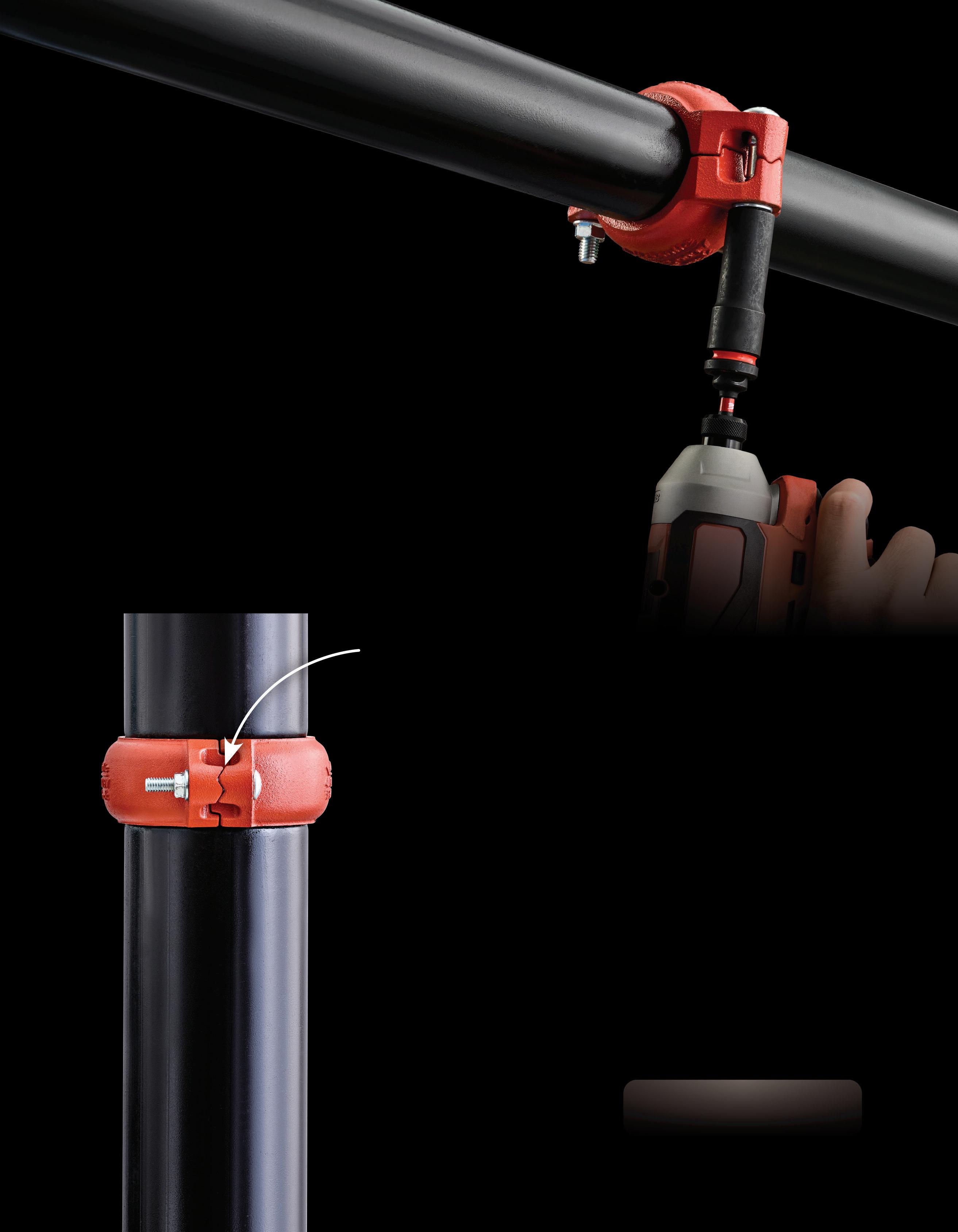
with the best-in-class Installation-Ready™ rigid coupling for fire protection
STYLE 009V
Eliminate guesswork and mitigate risk with fully defined metal-to-metal contact at the install indicator
Install with ease, accuracy and speed when tightening with one touch per bolt
Simplify installations with robust gasket tabs that provide proper groove engagement and alignment
Prevent spinning bolts and pinching fingers with extended track neck bolt design SCAN
NEXTGEN AT AFSA44
YOUNG PROFESSIONALS ENGAGE WITH INDUSTRY
The event of the year! I always say that once you attend an AFSA convention for the first time, you finally understand what a special industry we work in. AFSA44 was held in Washington, D.C., and it was a huge success. With over 1,500 attendees, contractors, and vendors from around the country, you start to get a feel of just how impressive the life safety industry really is.
As a young professional, I attended convention for the first time in 2017. The networking, training and development, and general learning opportunities sucked me right in—I knew I had to come back. Each year since, AFSA staff and committee volunteers find a way to top last year’s experience. In 2024, NextGen National launched a scholarship program to encourage young industry professionals to attend convention. In 2025, we had over 75 individuals apply! Five young professionals attended and had the experience of a lifetime. Some contractor members even modeled the scholarship and added additional employees to their attendee list.
We reached out to a few first-time attendees to ask them about their experience. Going into convention, numerous expressed both excitement and nerves! We asked the group if anything surprised them
or was different from what they expected, and they all noted the size of the event (the number of attendees, the exhibit hall, and the number of seminars) and, for an event of that size, how fast-paced and on-track it stayed. Matt Turner, inspector from VSC Fire & Security, said he was impressed with “How AFSA was really focused on trying to get the next generation of the fire sprinkler industry into knowing the trade and the focus on working with high schools.”
AFSA44 had numerous high points, and some favorites from the group included networking with industry professionals and checking out new products from manufacturers and suppliers in the exhibit hall. They each attended several seminars covering various topics, but some of their favorites included AI, Women in the Industry, NFPA 25, and Leadership. One attendee mentioned, “The seminars really opened my eyes to what I need to focus on in order to be able to continue to grow in this industry.” Lily Yagos, an inspection trainee from VSC Fire & Security in Little Rock, Ark., added, “I loved getting to hear from women who are in the business and love what they do!”
Dylan Whitaker, fire sprinkler technician, from Summit Fire & Security, shared, “Attending an AFSA convention early in my career has proved pivotal to my perception
of the industry. The convention is filled with more than a thousand professionals, many of whom have dedicated a lifetime to the trade. Experiencing all that the convention has to offer, including networking, seminars, and exhibits, has solidified my passion for fire protection.”
AFSA Board members have spent an incredible amount of time and energy devoted to the next generation. Linda Biernacki made it one of her many goals during her tenure as Chair of the Board to pour into NextGen. Throughout the week, you could often find any of the Board members sharing a cup of coffee with young professionals. AFSA Board Member Hunter Brendle, of Brendle Sprinkler Company, spearheaded a scavenger hunt for our youngest next generation. He put together a booklet to encourage young children in attendance to interact with convention—taking a photo with a Board member, completing a “word search” with sprinkler terms, and other fun activities.
Overall, AFSA44 was a huge success, with much of that coming from the energy, excitement, and general attendance of so many young professionals. It is encouraging to see the number of young people at convention grow every year. I look forward to seeing even more new, young faces at convention in the Fall of 2026 in San Antonio, Texas.
KATIE MEEHAN | VSC FIRE & SECURITY

Ready for premium piping connections?
We don’t “do” fire protection. We define it.
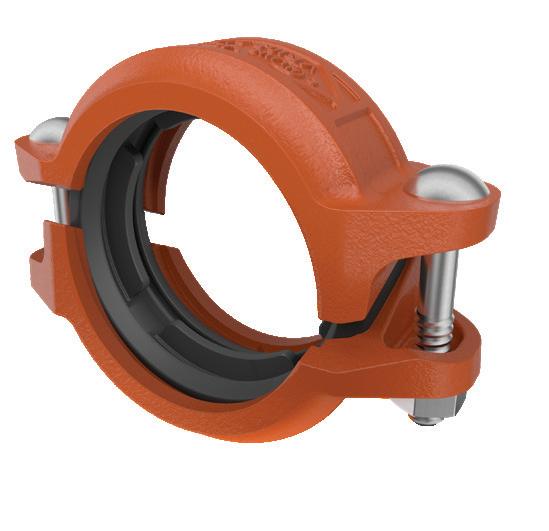
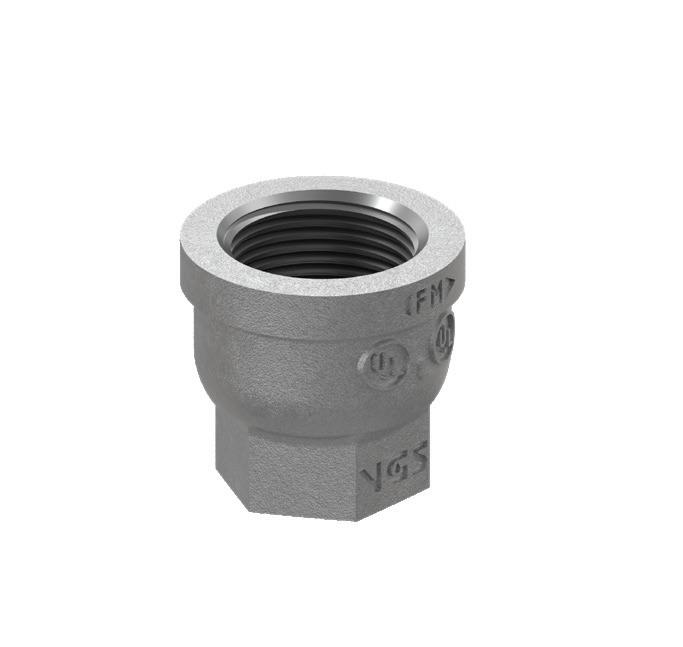
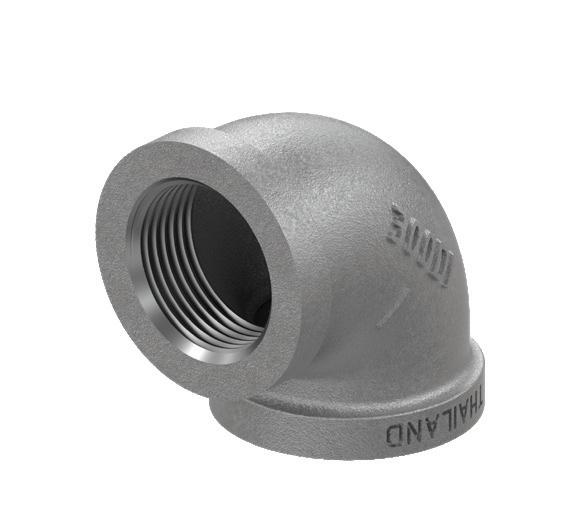
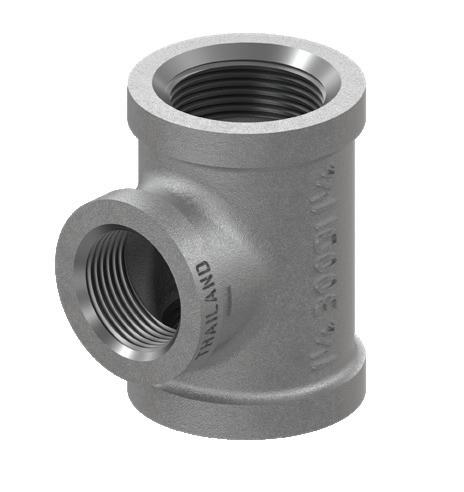
The VGS offering provides a full lineup of premium piping connections and is backed by the Viking brand that contractors have trusted for over 100 years.
This full lineup, paired with long-standing and new, strategic partnerships, the industry’s leading fire protection experts and world-class training, and the consistent and significant growth in the booming Viking SupplyNet distribution space, VGS provides contractors with a trusted, strong solution, and offers a stable product line amidst industry turmoil.
For more information, contact your local Viking SupplyNet branch.
HONOR THOSE WHO MAKE AN IMPACT
NOMINATIONS OPEN FOR 2026 AFSA AWARDS
The American Fire Sprinkler Association (AFSA) is accepting online nominations for its top honors: the Henry S. Parmelee Award, the Fire Sprinkler Advocate of the Year Award, and the Young Professional of the Year Award. Awards will be presented during AFSA45: Convention, Exhibition & Apprentice Competition in San Antonio, Texas, this fall, and the recipients will be featured in Sprinkler Age . Visit firesprinkler.org/awards to submit a nomination.
HENRY S. PARMELEE AWARD
AFSA’s highest honor, the Henry S. Parmelee Award, is given in recognition of an outstanding individual who has dedicated himself or herself to the professional advancement of the fire sprinkler industry and to the goal of fire safety through automatic sprinklers. AFSA members may nominate someone with a longterm commitment to improving the industry. The award was instituted in 1983 to give recognition to distinguished industry professionals and to memorialize Parmelee, an outstanding pioneer in the industry who is recognized as the inventor of the first commercially successful closed sprinkler. June 30 is the deadline for 2026 nominations.
FIRE
SPRINKLER ADVOCATE OF THE YEAR AWARD
This award was created to honor individuals not directly involved in the fire sprinkler industry whose efforts have had a national impact in advancing the fire protection industry and automatic fire sprinklers. Previously known as the Fire Service Person of the Year, the award was renamed in 2001 to better reflect the diversity of backgrounds, including the fire service, as well as legislative, code, and standards-setting groups in which individuals can have a major impact on the industry. The nomination deadline for this year’s award is March 31.
edge in the world of business and construction management among the next generation of industry leaders,; promote the emergence of young talented professionals in the field of fire protection, thus fostering interest for the fire sprinkler profession and a future career in this field of expertise; and inspire fire protection companies and the fire protection community to invest even more in the development and excellence of the profession. Nominations for the 2026 YPY award are due by March 31.
AWARDS PRESENTED AT AFSA45
JOE HEINRICH YOUNG PROFES-
SIONAL
OF THE YEAR AWARD
The Joe Heinrich Young Professional of the Year (YPY) Award honors the contributions of promising fire protection specialists and serves to reaffirm the growing importance of fire sprinkler knowl-
Visit firesprinkler.org/awards to read the eligibility rules and to nominate someone for the association’s highest honors. Then, join AFSA to celebrate this year’s honorees at AFSA45: Convention, Exhibition, and Apprentice Competition, Sept. 27-30, 2026, at the J.W. Marriott San Antonio Hill Country Resort & Spa. Visit firesprinkler.org/AFSA45.
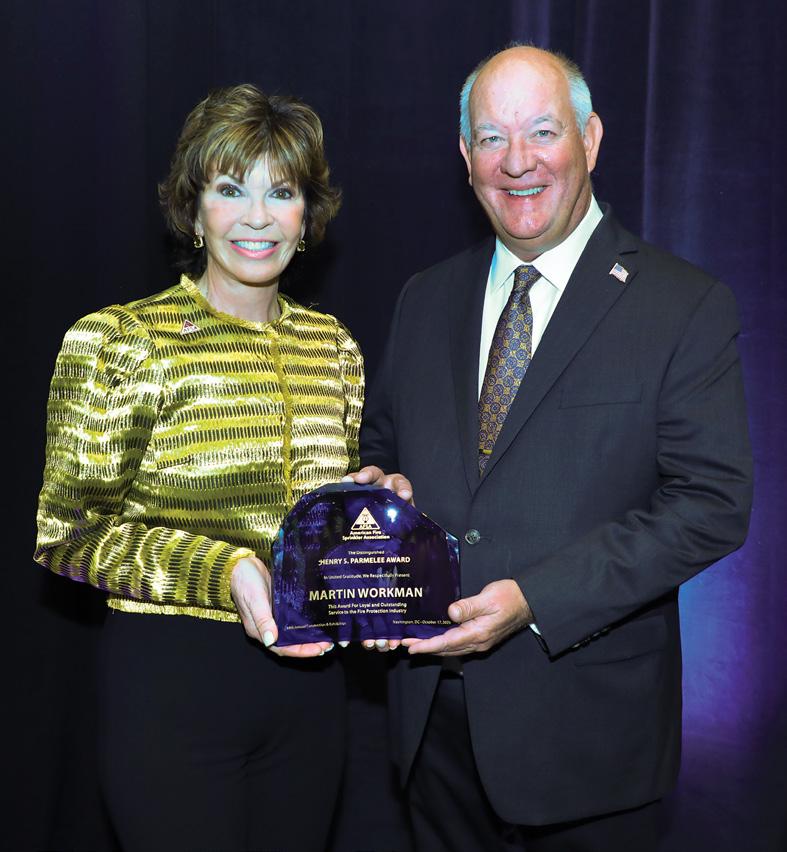
linda biernacki, 2025 afsa chair (LEFT), honored 2025 PARMELEE AWARD WINNER MARTIN WORKMAN.
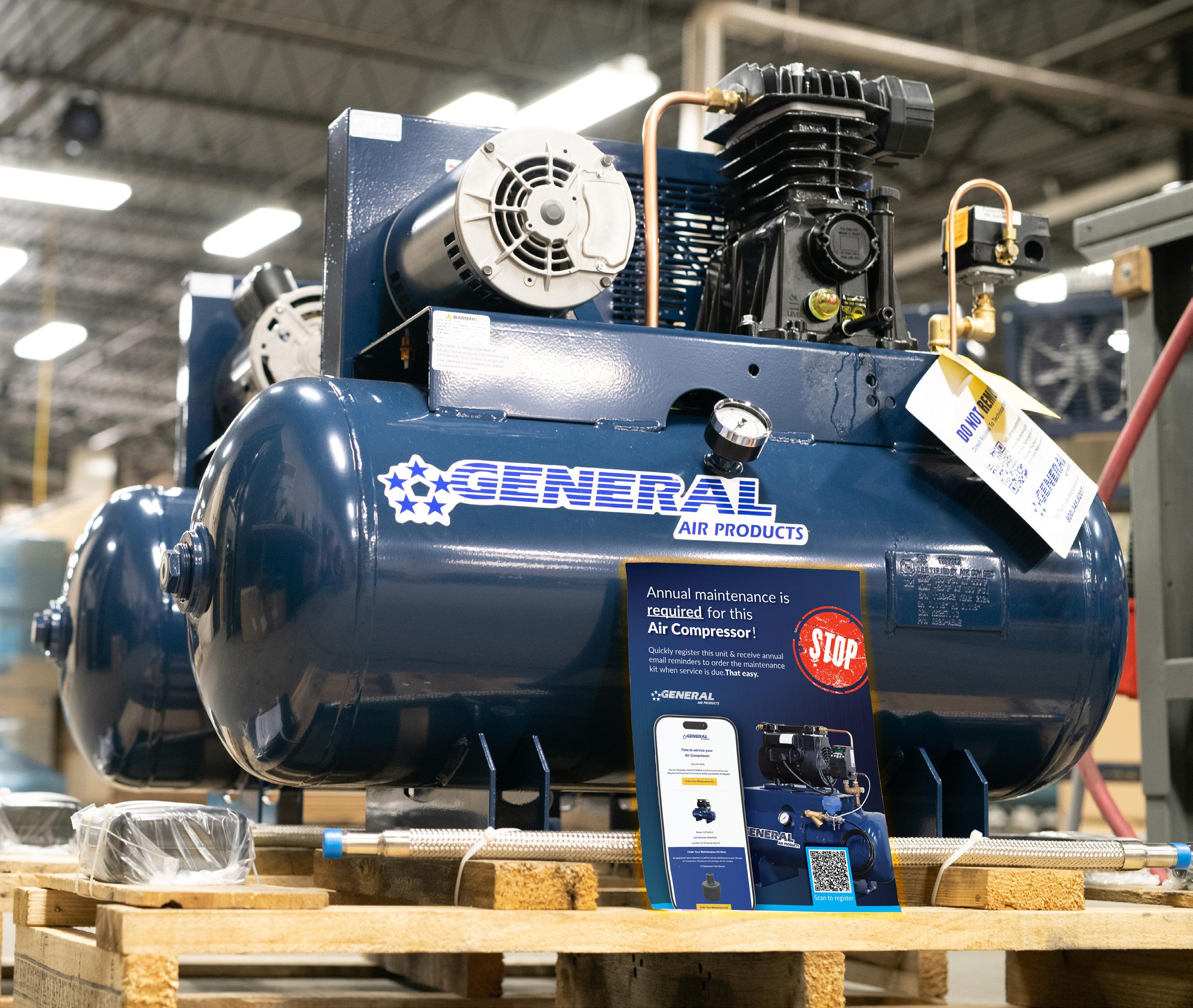
Look for these reminders shipping on every fire protection air supply from General Air Products.
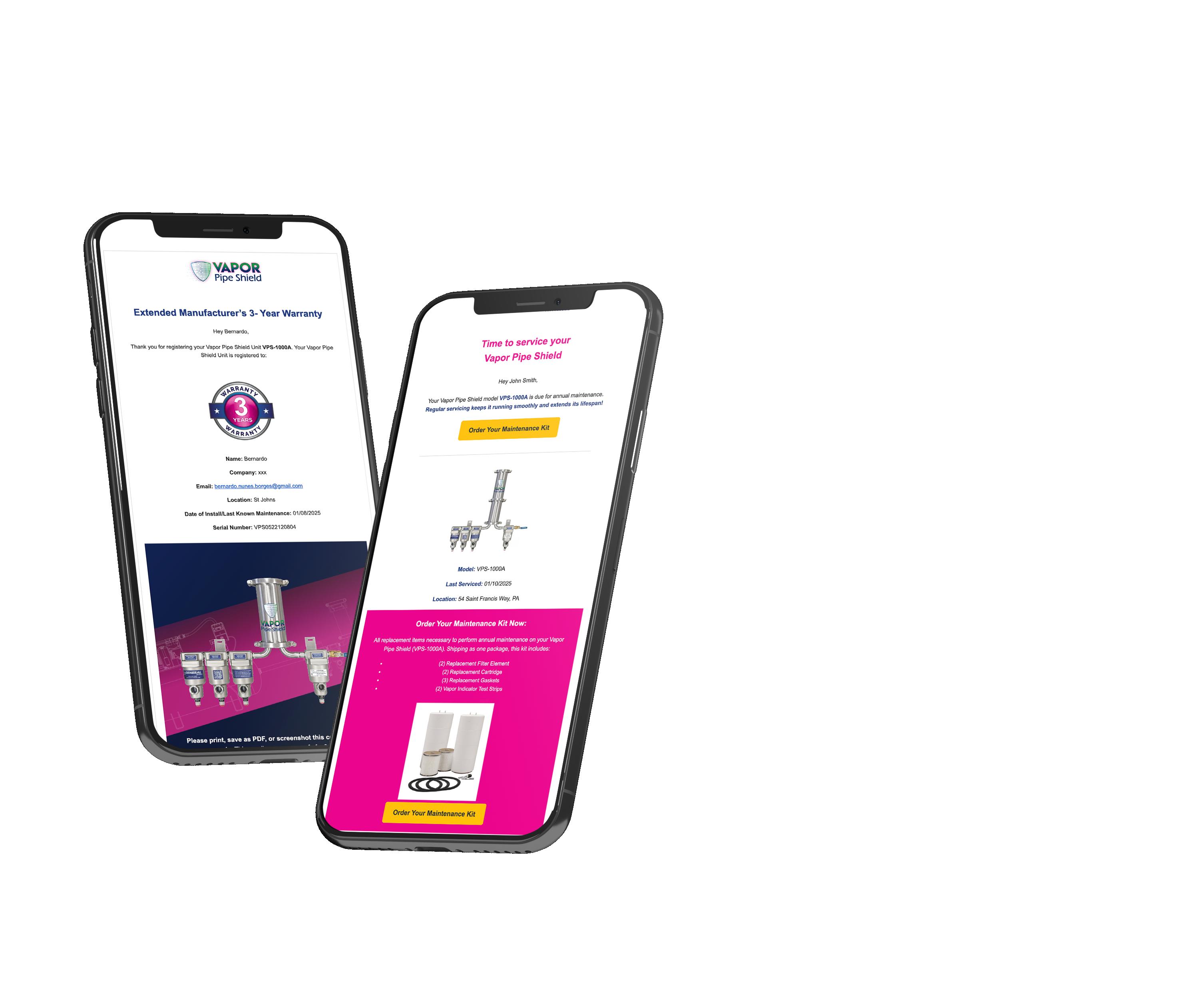
General Air Products is making annual maintenance simple.
In the field, scan the QR code with your smartphone or tablet and receive automatic annual e-mail reminders when it’s time to perform maintenance & a quick link to order your maintenance kit!
CONTRACTORS HAVE “DAMPENED” EXPECTATIONS FOR 2026
AGC AND SAGE RELEASE 2026 CONSTRUCTION HIRING AND BUSINESS OUTLOOK
Construction contractors have “dampened” expectations for 2026, aside from surging demand for data centers and power facilities, amid broader worries about the direction of the economy, according to “Dampened Expectations: The 2026 Construction Hiring and Business Outlook,” which the Associated General Contractors of America (AGC) and Sage have released. In addition to lower expectations, contractors report they have been impacted by tariffs, enhanced immigration enforcement, and challenges in finding qualified workers.
“While there are pockets of optimism in select private-sector markets, contractors’ overall sentiment has dampened notably compared to last year,” said Jeffrey Shoaf, the association’s chief executive officer. “One reason for their lowered expectations is that contractors are increasingly worried about the broader economy, the possibility of a recession, and the outlook for materials costs.”
Shoaf noted that the Outlook measures contractors’ expectations for different market segments via a net reading—the percentage of respondents who expect the available dollar value of projects to expand compared to the percentage who expect it to shrink. The highest net reading, 57%, is for data centers. Specifically, 65% of respondents expect the market for data center construction to increase, compared to just 8% who expect it to shrink.
Contractors remain bullish about power projects as well, which recorded a net reading of 34%. Contractors are moderately optimistic about hospitals, other healthcare facilities, water and sewer, and manufacturing. Within healthcare, non-hospital facilities, includ-
ing clinics, testing facilities, and medical labs, recorded a net reading of 24%, followed by hospital construction with a net reading of 20%. Water and sewer had a net reading of 16% and manufacturing posted a net reading of 15%.
The net reading for construction of transportation structures, such as airport and rail projects, plunged from 29% to 11% during the past year. The reading for bridge and highway construction dropped 14 percentage points to 10%.
“WHILE THERE ARE POCKETS OF OPTIMISM ... OVERALL SENTIMENT HAS DAMPENED ... ” – JEFFREY SHOAF, AGC
Net readings declined as well—but remained modestly positive—for warehouse, federal work, multifamily residential projects, and public building. Expectations for contracts for federal agencies such as the General Services Administration, Department of Veterans Affairs, U.S. Army Corps of Engineers, and the Naval Facilities and Engineering Command fell from 22% to 5%, while the multifamily residential net slid from 12% to 4%. The net for public building dropped as well, from 14% to 1%.
The net reading for K-12 construction declined from 13% in 2025 to -1% in this year’s survey. Higher education slipped from a net of 12% to -5%. Expectations for education construction have been weakening for several years, with both K–12 and higher education showing decelerating growth since 2022, aside from a brief uptick in higher education in 2024.
Expectations for lodging, private office, and retail construction were the three most negative segments in 2026. The net reading for lodging fell 14 points, from 7% in 2025 to -7% in this year’s survey. Private office declined by 11 points to -14%, while retail dropped 13 points to -18%.
In addition to lowered expectations, many contractors also report being impacted by new tariffs and enhanced immigration enforcement. Roughly 70% of firms report being affected by tariffs this year. Forty percent report responding to actual or proposed tariffs by raising bid prices, and 20% of firms added price-sharing adjustments or other terms to contracts. While 35% report passing most or all tariff-related costs on to project owners, 11% say they absorbed most or all tariff costs.
One-third of firms (33%) report having been affected by immigration enforcement actions in the past six months. Six percent report a jobsite or offsite was visited by immigration agents. Eleven percent report workers left or failed to appear because of actual or rumored immigration actions, and 24% report subcontractors lost workers.
In addition, over three-fifths (63%) of respondents report that an owner postponed or canceled a project in the past six months. When asked why, 37% cite a lack of funding or uncertainty about a funding source, whether federal, state, or private. More than one in three firms (34%) say project financing was unavailable or too expensive. Just under a quarter (23%) of firms say increasing material or labor costs played a role.
Shoaf noted that respondents were asked to identify their biggest concerns for 2026. An economic slowdown or recession emerged as their most-often mentioned concern, cited by 62% of firms. The next three most cited concerns were workforce-related: 57% of respondents cited insufficient supply of workers or subcontractors, 56% selected rising direct labor costs (pay, benefits, employer taxes), and 53% identified worker quality.
Despite their broader concerns, most firms anticipate adding workers in 2026 to meet the needs of current and planned projects. More than three-fifths (63%) of firms expect to add to their headcount,
compared to only 15% who expect a decrease. However, more than four out of five firms report having a hard time filling hourly craft positions (82%) or salaried openings (80%)—a higher proportion than at any point in the past three years.
Officials with Sage reported that construction firms are increasingly investing in technology to address productivity and labor challenges. Sixty-one percent of respondents say their firms are using artificial intelligence or plan to increase investment in it, up from 44% last year. AI is most commonly used for office and administrative functions, estimating, and preconstruction activities.
“AI is becoming an increasingly important tool for construction firms facing tighter labor markets and more complex projects,” said Julie Adams, senior vice president of construction and real-estate solutions at Sage. “Firms are using technology to improve efficiency, manage risk, and maintain productivity in a more uncertain environment.”
Association officials said one of their top priorities this year will be to get Congress to pass a new surface transportation bill before the current one expires in September. They will also continue to urge the administration and Congress to address workforce shortages through expanded lawful, temporary work visa programs for construction and increased investment in workforce development. And they are calling for greater clarity and restraint around tariff policy and for practical permitting reforms to reduce delays.
“With supportive infrastructure funding, workforce, trade and permitting policies in place, construction can continue to grow the economy, deliver essential projects and expand access to high-paying career opportunities,” Shoaf said.
“The 2026 Construction Hiring and Business Outlook” survey was conducted from November 4 through December 15, 2025, and drew 951 respondents from construction firms across 49 states and the District of Columbia. Participating companies represented a broad range of revenue and employment sizes. About 30% of respondents reported employing union workers most or all of the time, while roughly 60% identified as open-shop contractors.
AFSA CELEBRATES 45 YEARS IN
JOIN INDUSTRY PROFESSIONALS IN THE LONE STAR STATE
D’ARCY MONTALVO | AMERICAN FIRE SPRINKLER ASSOCIATION
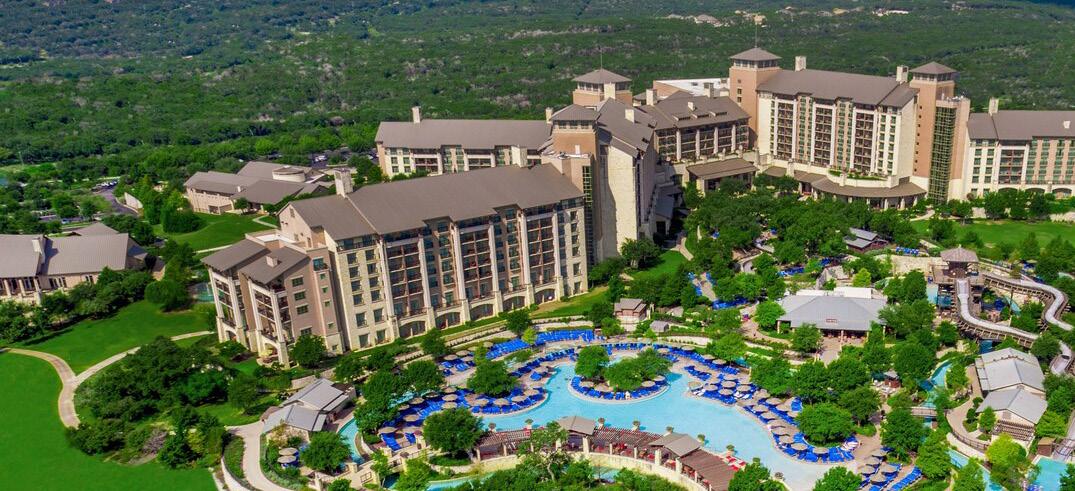
The American Fire Sprinkler Association (AFSA) is excited to celebrate its 45th anniversary in 2026, and we are inviting everyone to the party! Join AFSA as we return to JW Marriott San Antonio Hill Country Resort & Spa in San Antonio, Texas, at AFSA45: Convention, Exhibition, and Apprentice Competition, September 2730, 2026, in the Texas Hill Country near San Antonio, for a Texas-sized celebration. Featuring the largest event of its kind in the fire sprinkler industry, AFSA45 offers four days of seminars, exhibits, and many networking opportunities.
“THIS IS GOING TO BE A CELEBRATION TO REMEMBER!” – BROOKS BAYNE, AFSA CONVENTION CHAIR
“I am honored to serve as this year’s Convention Committee Chair and very excited to welcome everyone to San Antonio for AFSA45,” comments AFSA Region 1 Director and Convention Chair Brooks Bayne, AFP Systems, Tualatin, Ore. “This is going to be a celebration to remember as AFSA celebrates 45 years of training and education for the fire sprinkler industry. With over 60 seminars and a packed exhibit hall, AFSA45 is an excellent opportunity to learn and network with fellow industry professionals. You won’t want to miss this year’s event!”
EDUCATION, NETWORKING, AND FUN!
AFSA45 offers four days of managerial and technical seminars filled with education, training, and networking led by fire protection industry experts. AFSA’s two-day exhibition provides an opportunity to meet with leading manufacturers and suppliers of the fire sprinkler industry’s latest products and services. The unopposed exhibit hours allow attendees and exhibitors to visit without interruption, and the second day of exhibits also features the finals of AFSA’s 33rd Annual National Apprentice Competition (NAC). For apprentices who are interested in competing, see page 60 of this issue or visit firesprinkler.org/competition.
THE J.W. MARRIOTT SAN ANTONIO HILL COUNTRY RESORT & SPA IS THE SETTING FOR AFSA45.
2026

Convention highlights include an opening party, Exhibition Grand Opening reception, general session, social events, and a chance to meet and reconnect with friends during the networking meals hosted for attendees who are fully registered in AFSA’s room blocks at the office headquarters hotel, the JW Marriott San Antonio Hill Country Resort & Spa.
HILL COUNTRY SPLENDOR
Discover JW Marriott San Antonio Hill Country Resort and Spa, nestled amid 600 acres of oak-covered hills in Texas Hill Country near downtown San Antonio, Texas. Resort guests can immerse themselves in renowned attractions nearby, including wineries, SeaWorld, Shops at La Cantera, Natural Bridge Caverns, and Six Flags Fiesta Texas. Retreat to the River Bluff Water Experience, a nine-acre water park with a 1,100-ft lazy river. Indulge in delectable cuisine at six exceptional resort restaurants or rejuvenate with a body treatment or massage at the luxurious spa. Relax in up-
scale hotel accommodations with expansive floor plans, lavish furnishings, top-tier amenities, and awe-inspiring views of Texas Hill Country. Find solace in this country retreat, where tranquility and sophistication meet amidst the natural beauty of San Antonio.
The AFSA group rate for the JW Marriott San Antonio Hill Country Resort & Spa is $239 per night plus tax. A daily $20 resort fee includes complimentary internet in guest rooms. Reservations may be made online during the convention registration process at firesprinkler.org/ book. Group rates are available for stays from September 26-30, 2026. To receive full AFSA hotel benefits, you must book directly with the hotel by phone or using the link found on AFSA’s convention website, firesprinkler.org/AFSA45.
CALLING ALL SPONSORS
For all companies looking to put their brand and offered services in front of an industry-targeted crowd, AFSA45 is open for sponsorships. AFSA45 sponsors are offered exclusive benefits based on their level: Diamond, Platinum, Gold, Silver, and Bronze. Booth selection will be based on a point system within each sponsorship level, from Diamond to Silver. Benefits vary throughout each level, and as levels increase, so does the available exposure and visibility to convention attendees. Benefits are provided throughout the convention with online exposure, increased visibility, and face-to-face opportunities. For more information on sponsorships, contact AFSA’s convention team via email at convention@
firesprinkler.org or phone: (214) 349-5965 ext. 116.
MEMBERSHIP HAS ITS BENEFITS
If you aren’t currently an AFSA member, there isn’t a better time to join than now. Membership provides a range of benefits and services to support you, your employees, your business, and the industry. One of the top benefits of AFSA membership is the ability to register for AFSA45 at a discounted price. For more information on AFSA membership, visit firesprinkler.org/join-afsa.
TEXAS-SIZED CELEBRATION
Registration will open in May for AFSA45. Receive real-time updates on the association’s official happenings sent to your desktop or wireless device by subscribing to or following AFSA social media, and use our official hashtag #AFSA45.
• TikTok: tiktok.com/@firesprinkler. org
• LinkedIn: linkedin.com/company/american-fire-sprinklerassociation-afsa-/mycompany
• Facebook: facebook.com/ firesprinkler.org
• Instagram: instagram.com/ firesprinklerorg
Everything’s bigger in Texas, and AFSA45 will be the biggest and best event of them all. Y’all come on down September 27-30 and be a part of the celebration!
NEGLECTED SECTIONS OF
WHEN OVERLOOKED SECTIONS OF NFPA 25 BECOME CONTRACTOR LIABILITY
JOSHUA MCDONALD, P.E., MSET, CFPS, CWBSP, WBITM | AMERICAN FIRE SPRINKLER ASSOCIATION
NFPA 25, Standard for the Inspection, Testing, and Maintenance of Water-Based Fire Protection Systems , is one of the most frequently referenced documents in the fire protection industry, and its use has expanded as contracting companies look to diversify service offerings, capture recurring revenue, and build long-term business stability. While many professionals rely on the standard daily, significant portions of it often go unread unless someone is preparing for a certification exam or quickly reviewing requirements before servicing a customer with a specialty system.
Year after year, sprinkler system failures are most tied to inspection, testing, and maintenance issues—such as shut valves or improper maintenance—rather than poor system design. In many cases, these failures can be traced back to a lack of understanding of the roles and responsibilities defined in NFPA 25, failures in reporting, breakdowns in communication with customers, and, ultimately, insufficient familiarity with the standard itself.
Understanding the “neglected” sections isn’t just for code nerds. Gaps in knowledge directly impact system reliability, increase liability, and affect life safety.
NFPA 25- DESIGN ANALYSIS MINIMUM STANDARD
One of the most important clarifications appears at the beginning of the document. NFPA 25 establishes minimum requirements for inspection, testing, and maintenance (ITM) of water-based fire protection systems. It is not intended to verify whether a system was properly designed or installed.
Still, inspection reports often include comments on sprinkler spacing, coverage gaps, or proximity to walls—items governed by installation standards such as NFPA 13. Chapter 1 of NFPA 25 explicitly states that ITM activities are not meant to assess the adequacy of design or installation.
Applying NFPA 25 outside its intent creates confusion for owners, friction with Authorities Having Jurisdiction (AHJs), and unnecessary liability for contractors. Understanding what the standard does not require is just as important as knowing what it does.
CHAPTER 1: SCOPE, PURPOSE, AND RETROACTIVITY REALITY
Another commonly overlooked point is that NFPA 25 has no retroactivity clause, and it never has. Unlike installation standards, NFPA 25 is a wear-and-tear document. It evolves as technology improves, data is collected, and better maintenance practices are identified.
Even when jurisdictions formally adopt older editions, professionals should still understand what the current standard says and why changes were made. Compliance with adopted codes is required, but awareness of newer guidance helps inform better decisions—especially when newer provisions improve reliability or safety.
Chapter 1 also requires coordination between NFPA 25 and NFPA 72 ITM activities. This coordination is not optional. When it is ignored, owners are often subjected to duplicate testing, unnecessary impairments, and avoidable costs.
CHAPTER 3: DEFINITIONS & FREQUENCIES
Chapter 3 is frequently skipped, but it quietly governs how the entire document is applied.
NFPA 25
NFPA 25 clearly defines “inspection,” “test,” and “maintenance.” These terms are not interchangeable. Using them incorrectly—especially on inspection reports—matters. Reports are documentation, and documentation carries weight.
Frequency definitions matter just as much. An “annual” task is not locked to the calendar year. NFPA 25 provides a window, typically a minimum of nine months and a maximum of 15 months. Understanding those windows affects scheduling, compliance, and how findings are reported.
CHAPTERS 10-12: SPECIALTY SYSTEMS
Chapters 10, 11, and 12 cover systems that behave differently from standard wet or dry sprinkler systems.
Before finalizing an inspection report, Chapter 3 should always be part of the conversation.
CHAPTER 4: RESPONSIBILITIES
Chapter 4 is often summarized as “owner responsibilities,” but that description misses the point. This chapter clearly defines roles:
• The owner or designated representative is responsible for ensuring inspection, testing, maintenance, and impairment management occur.
• The contractor is responsible for fulfilling contractual obligations—not enforcing compliance.
• The AHJ is responsible for enforcement.
When these roles blur, frustration follows. Contractors may feel ignored when deficiencies remain uncorrected, but NFPA 25 is clear: reporting and educating is the contractor’s role. Prioritization and correction belong to the owner.
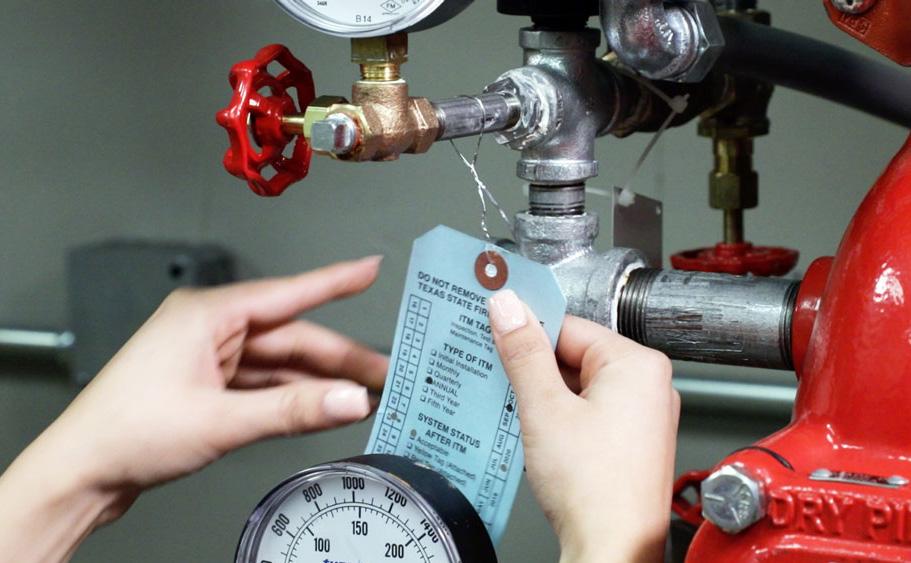
Tagging is another area that causes confusion. NFPA 25 does not mandate that specific deficiencies correspond to specific tags. Tagging guidance appears in the annex. Owners are responsible for maintaining documentation and tagging systems— not contractors.
Water spray systems, foam systems, and water mist systems introduce unique components, different inspection frequencies, and manufacturer-specific requirements. Some systems—such as Ultra High Speed Water Spray Systems (UHSWSS)—may require inspections at the start of each shift, far more frequently than traditional systems.
Foam systems include proportioners, foam chambers, concentrate storage, and components not found in conventional water-based systems. Water mist systems may involve high-pressure cylinders, hybrid gas-and-water configurations, and small-orifice nozzles that require closer attention.
If a contractor is performing ITM on these systems, inspection reports should reflect every applicable component identified in the chapter. Treating specialty systems like conventional sprinklers increases risk.
CHAPTER 15: IMPAIRMENTS DESERVE MORE ATTENTION
Chapter 15 may be one of the most important sections of NFPA 25 and one of the least read.
The chapter distinguishes between emergency and pre-planned impairments and requires the owner or
Inspection, Testing, and Maintenance Tagging.
designated representative to assign an impairment coordinator. Contractors may assist and provide guidance, but they do not own that role.
As insurance carriers and risk engineers place greater emphasis on impairment management, understanding Chapter 15 is no longer optional. Clear communication, documentation, and defined responsibility protect not just buildings, but the people responsible for maintaining them.
CHAPTER 16: THE NFPA 13D NUANCE
Chapter 16 is short, but it answers a question that comes up often. NFPA 25 applies to NFPA 13D ( Standard for the Installation of Sprinkler Systems in One- and Two-Family Dwellings and Manufactured Homes ) systems only in limited circumstances, such as residential board-and-care facilities referenced by NFPA 101.
Outside those conditions, NFPA 25 does not mandate ITM for NFPA 13D systems. Missing this distinction can lead to unnecessary work and incorrect enforcement.
NFPA 25 AS A PROFESSIONAL TOOL
NFPA 25 works best when it is treated as a professional tool, not a checklist. The chapter’s most often skipped are the ones that define scope, clarify responsibilities, and reduce liability.
Opening those sections doesn’t make the job harder. It makes it clearer, and clarity is what ultimately improves system reliability, strengthens professional judgment, and helps fire protection systems perform when they are needed most.
Understanding where responsibilities begin and end doesn’t happen by accident. AFSA’s NFPA 25 workshops are built around these conversations, helping professionals apply the standard consistently while avoiding unnecessary liability and confusion.
ABOUT THE AUTHOR: Joshua McDonald, P.E., MSET, CFPS, CWBSP, WBITM, is the Director of Training and Operations for AFSA. In this role, he leads the development of technical education, hands-on training programs, and instructional content designed to advance the skills of fire protection and life safety professionals. With a background spanning fire protection manufacturing, risk engineering, and inspection, testing, and maintenance, McDonald actively contributes to the evolution of fire protection standards. He serves on multiple NFPA technical committees and UL standards panels, helping shape industry codes, product requirements, and best practices. McDonald is a licensed professional engineer in the state of Texas and holds NICET Level III certification in Water-Based Inspection, Testing, and Maintenance, along with multiple NFPA fire protection certifications. He earned his B.S. in Fire Protection and Safety Engineering Technology and his M.S. in Fire Safety and Explosion Protection from Oklahoma State University. McDonald is the author of Little Fire Sprink Sprink, a children’s book created to inspire early awareness and appreciation for fire safety.


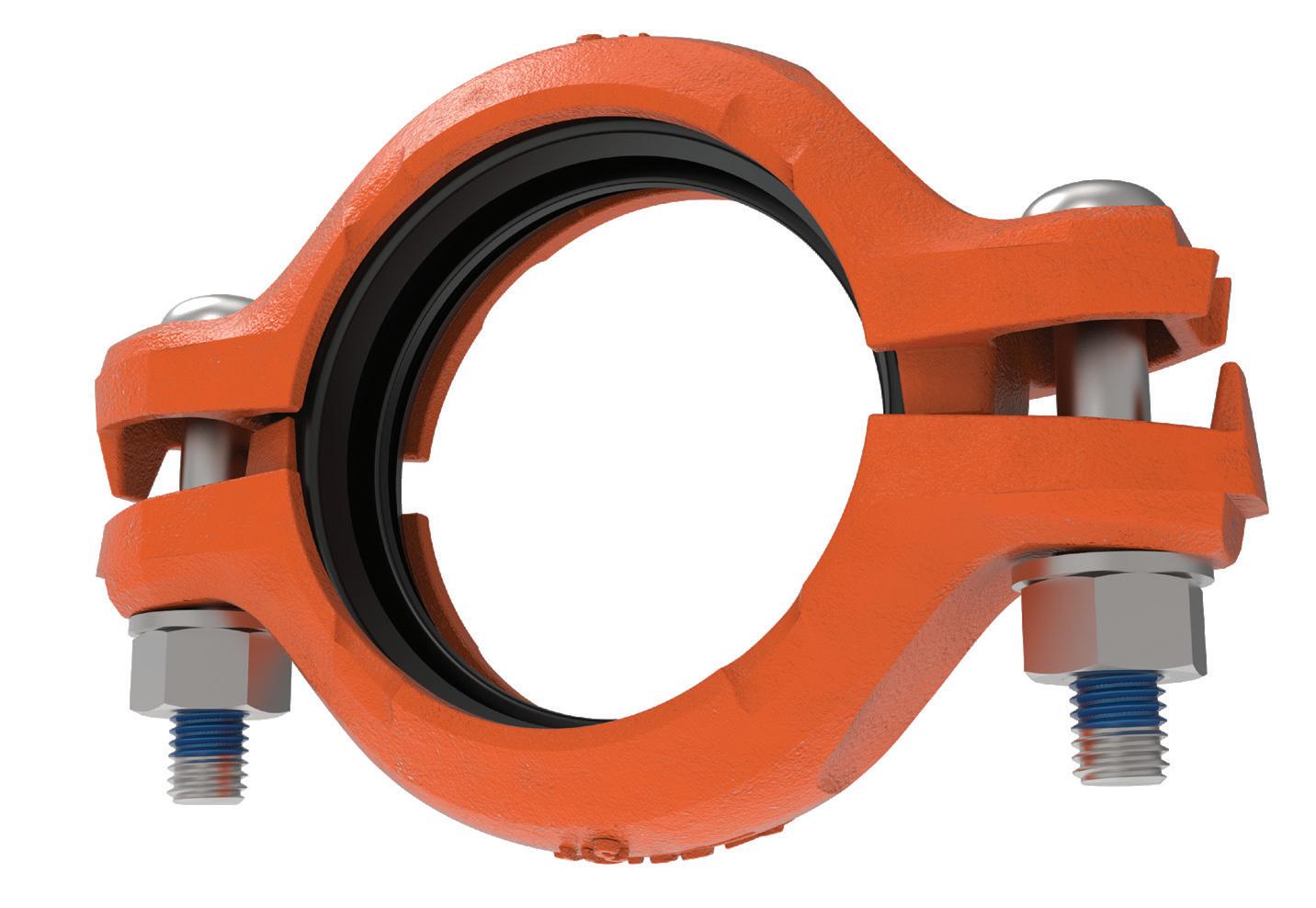
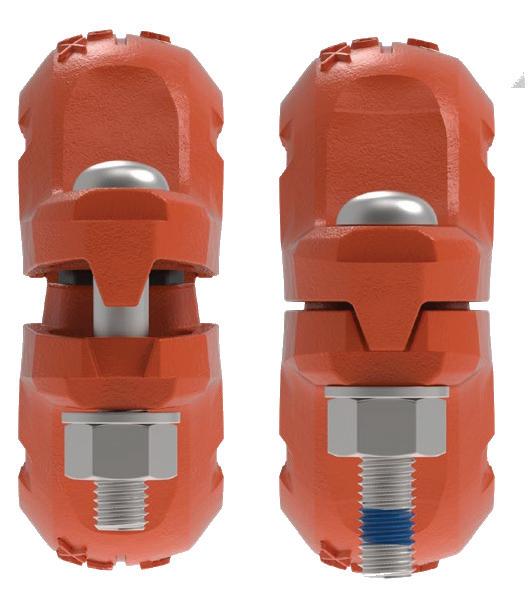
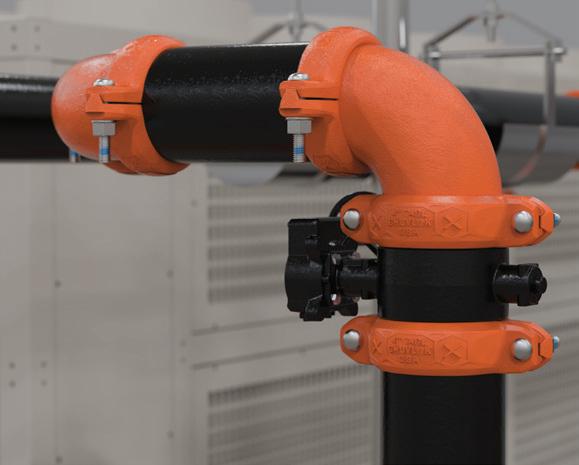
Introducing the Figure C9-CL The Fastest, Easiest to Verify Rigid Coupling Available
• Visual and Tactile Installation Verification
• All-new Patent-pending Design
• CenterLOK™ Gasket Enables Two-handed Installation
• Simplified Tightening
• Ready-for-installation
HATS OFF TO RONNIE J. HAHN!
PAST BOARD MEMBER CONTINUES TO CONTRIBUTE TO THE INDUSTRY
D’ARCY MONTALVO | AMERICAN FIRE SPRINKLERSSOCIATION
The American Fire Sprinkler Association’s (AFSA) North Carolina Fire Sprinkler Association’s Summer Beach Bashes are a great example of industry professionals coming together for education, networking, and fun! Attendees from across the region come together each May for seminars, a trade show, and social events.
One VIP in regular attendance is Ronnie J. Hahn, a past Board member for AFSA. Hahn was instrumental in the association’s early years and served on its Board of Directors in the late ‘80s and early ‘90s. AFSA’s 45th anniversary year is a great time to acknowledge these early leaders and celebrate their continued involvement in the fire protection industry.
Hahn began his career in the sprinkler industry in 1962 with Crawford Sprinkler Co. in Charlotte, N.C. He and Rudy V. Frye, Sr. founded Associated Fire Protection in April 1973, and Hahn became the sole owner of the company in 1986.
Hahn was a charter
member of the AFSA Carolinas (now North Carolina) Chapter and served as its chair for two years. He has always been an advocate for the sprinkler industry and merit shop sprinkler contractors.
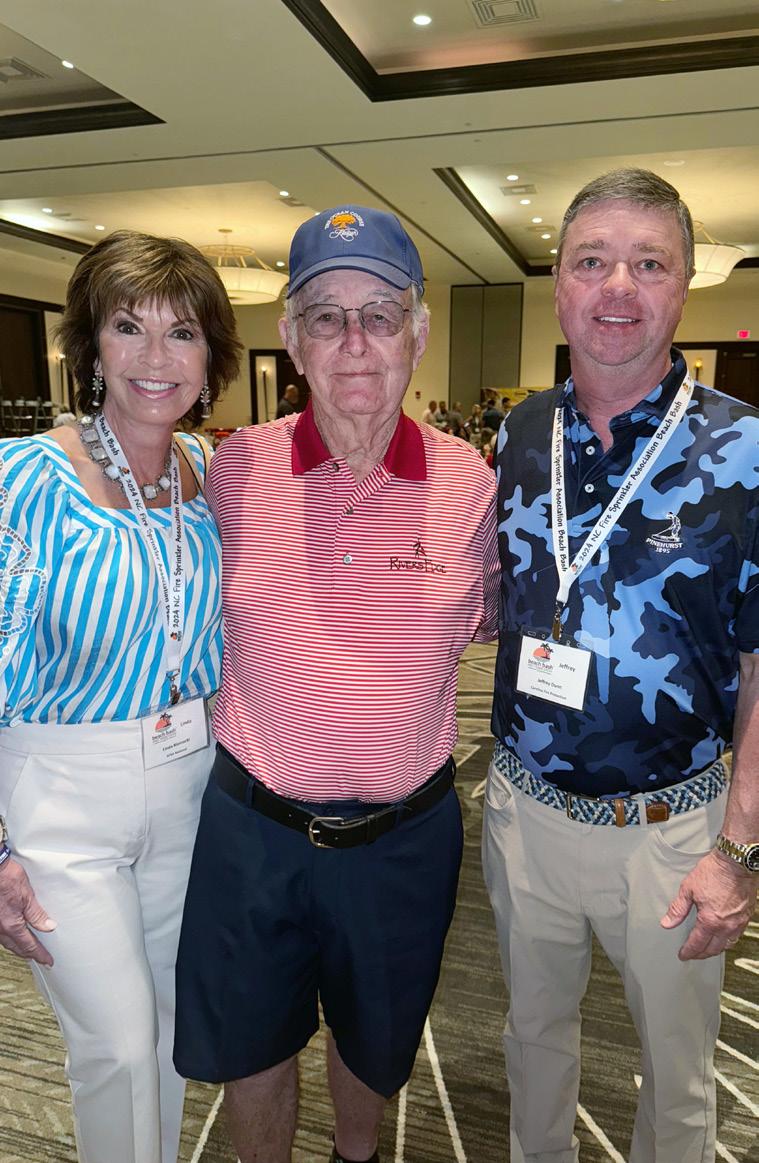
“Ronnie hired me into the industry in August of 1986, and I worked with him for seven years,” remembers Jeffrey Dunn, past chair and current member of AFSA’s North Carolina Chapter. “He was a great mentor when I started Carolina Fire Protection in 2002. He still offers advice anytime I ask. Ronnie has always been a huge AFSA fan and is the reason we got involved with AFSA.”
WORKING FOR THE INDUSTRY AND MEMBERS
Hahn trained across all aspects of the field— fitter, then learned design, estimating, and sales before starting his own company, which Hahn proudly says is “still going strong.”
Hahn remembers getting involved with AFSA early in its formation. “It was the fall of 1981 when I first heard of AFSA,” Hahn recalls. “There was an NFPA convention in Dallas, and several people from North Carolina were going, including myself. Tom Waller was the ringleader back then and wanted to start a chapter, so we all got together in Charlotte in 1982 to form the chapter.”
Waller, a past AFSA Chair of the Board, was instrumental on the national and local levels and quickly recruited several other contractors in the area, including Hahn, to officially form the Carolinas Chapter (now known as the North Carolina Fire Sprinkler Association). In 1987, Hahn was asked to serve as chair. His work on the chapter, state, and national level also led him to serve on the national AFSA Board of Directors from 1987 to 1990.
biernacki, HAHN, AND dunn at the 2024 BASH.
Hahn was heavily involved in legislative activities on behalf of the Carolinas Chapter. North Carolina didn’t have a licensing law at that time, and several members worked on that issue for several years. He also served eight years on the State Board of Examiners and six years on its Resolution Committee.
“We formed a PAC [political action committee], but it was really just three of us doing the legwork— Sonny Aldridge, Bob Rees, and me,” Hahn remembers. “We spent an inordinate amount of time in Raleigh, walking around in suits and ties, pretending we were lobbyists!”
Eventually, the chapter hired a lobbyist, Raleigh attorney Henry Jones, and was successful in passing legislation. State licensing includes contractors and inspectors. The legislation is clear and consistent and is a point of pride for chapter members, ensuring NICET Level 3 can design and maintain sprinkler systems, and not just a P.E.
“The endeavor took a lot of personal sacrifice for everyone involved,” Hahn says.
The PAC continues to this day, with Dunn serving as treasurer.
A LEGACY OF SERVICE
By 2008, Hahn was ready to retire. “Associated Fire Protection is the son I never had,” comments Hahn [he has one daughter]. Once I started the business, I didn’t have time for any more children,” he laughs. “It’s been a good industry for me. I’ve spent my whole life in it.”
Hahn left an indelible impression on chapter members to continue working on behalf of its members, the chapter, the association, and the industry, beyond just building a business. He was a mentor to Dunn, who followed in Hahn’s footsteps to serve on the state’s Board of Examiners, within the AFSA chapter, and on national committees within AFSA.
“I’m happy giving back on the national committee level, and not just being another line item on the checkin list. It’s an opportunity to give back,” Dunn says.
He continues, “The way Ronnie ran his
company when I was there was to empower people to do something. I carried that same philosophy from Associated Fire Protection when I started out on my own with Carolina Fire Protection. That’s how we run our business. ”
Systems, Inc., Shreveport, La., and AFSA’s Immediate Past Chair of the Board. “I thoroughly enjoyed visiting with him about his involvement in AFSA’s
“HE HAS ALWAYS BEEN A HUGE AFSA FAN AND IS THE REASON WE GOT INVOLVED WITH AFSA.“
– JEFFREY DUNN
CONTINUING TO BE INVOLVED
Hahn still makes his mark at chapter and industry events, including the chapter’s annual Beach Bash. The event brings together contractors, manufacturers, and suppliers for educational seminars, a trade show, and social gatherings. The 2025 show was a great success with record turnout and a record number of vendor booths.
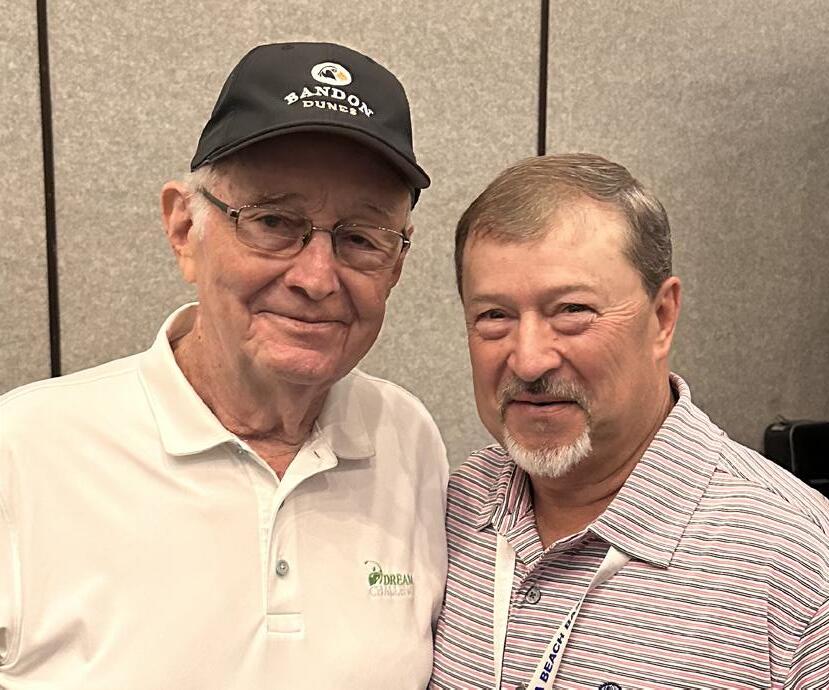
“Meeting Ronnie was a real delight,” comments Linda Biernacki, president of Fire Tech
early years at the Beach Bash. It was a fabulous event and a fantastic opportunity to connect with industry professionals and meet legend like Ronnie!”
The 2026 Beach Bash & Trade Show will take place April 22-24 at Kingston Resort by Embassy Suites Myrtle Beach. For more information, contact Chapter Executive Director John Turnage via email at jturnage@umpiretechnologiesgroup.com.
HAHN AND GARY SINGLETON at the 2025 beach BASH.
FIRE ALARM INSPECTIONS
NFPA 72 REQUIREMENTS
TOM PARRISH | TELGIAN CORP.
This article will look at fire alarm system periodic inspections, focusing not so much on the sprinkler devices that most contractors will already be familiar with, but on some of the additional requirements that can be very specific to the different editions of NFPA 72, National Fire Alarm and Signaling Code.
While NFPA 25 is the Standard for the Inspection, Testing, and Maintenance of Water-Based Fire Protection Systems , the ITM of fire alarm systems and their components is covered by NFPA 72. Specifically, NFPA 72, chapter 14 has a few attributes that
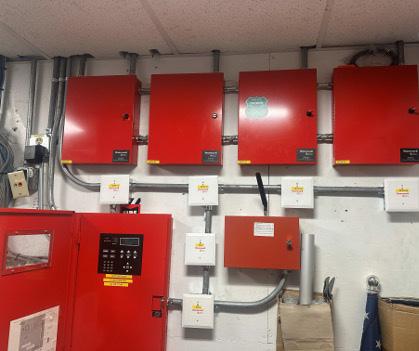
“THE EXACT REQUIREMENTS OF NFPA 72 CHANGE FROM EDITION TO EDITION, SO IT IS VERY IMPORTANT TO KNOW WHICH EDITION YOUR JURISDICTION HAS ADOPTED.”
need to be acknowledged if you are going to conduct testing and inspection activities. First, chapter 14 applies to both existing and new systems, and the tables are broken into two columns. The left column is for installation or acceptance testing, and the right-hand column is for periodic testing. Think of it as the left is the equivalent to NFPA 13, Standard for the Installation of Sprinkler Systems , the right is the equivalent to NFPA 25. The exact requirements of NFPA 72 change from edition to edition, so it is very important to know which edition your jurisdiction has adopted. Let’s review some of the more common components that fall under both NFPA 25 and NFPA 72. For the purpose of this article, I will base code citations from the 2025 edition of NFPA 72 and the 2023 edition of NFPA 25 unless specifically noted.
Flow Switches:
• NFPA 72: Visual inspection is a semi-annual inspection.
• NFPA 72: Testing requirement is semi-annual testing by flowing water according to NFPA 25.
• NFPA 25: Inspection frequency is quarterly.
• NFPA 25: Testing requirement is semi-annual.
Tamper Switches (Control Valves):
• NFPA 72: Visual inspection is a semi-annual inspection.
• NFPA 72: Testing requirement is semi-annual testing.
• NFPA 25: Inspection frequency dependent on supervision method.
° Sealed is weekly.
° Locked is monthly.
° Electronically monitored is quarterly.
• NFPA 25: Testing requirement is semi-annual.
The ITM of fire alarm systems and their components is covered by NFPA 72, Chapter 14.
Other Supervisory Devices:
• NFPA 72: Visual inspection is semi-annual.
• NFPA 72: Testing requirement is annual.
• NFPA 25: Inspection frequency is quarterly.
• NFPA 25: Testing requirement is annual.
Let’s look at items that are connected to all fire alarm systems, including both the full building systems and the dedicated function sprinkler supervisory systems.
Item 1 on the NFPA 72 visual inspection table clearly states that all components, including ones that may not be specifically listed, are required to be inspected at least once a year. Correspondingly, on the testing table there is similar wording requiring testing at least once a year.
POWER SUPPLIES. You need to make sure the FACU (Fire Alarm Control Unit) is receiving the required AC power. If the panel is monitored for alarm, trouble and supervisory signals, this is done annually. If the system is not monitored for all three conditions, this inspection is required weekly. There may be some exceptions for older systems. This is usually confirmed by the power light on the panel and there being no trouble condition showing. Valve-Regulated Lead-Acid (VRLA) Batteries are also inspected semi-annually. Battery tests include semi-annual temperature testing of the enclosure and the battery (looking for a difference of more than 18° Fahrenheit). Charger test
(lightning and ground protection) requirements and load testing requirements are all semi-annual. There is an option in the current edition of NFPA 72 to allow battery replacement every three years in lieu of the above load testing. These requirements do tend to change from edition to edition, so know which requirements apply. If the manufacturer requires battery replacement at a certain interval, that must be followed due to the requirements found in NFPA 72 chapter 10.3.2.
SMOKE DETECTORS.
There are several testing requirements, including the smoke entry test required by NFPA 72 chapter 14. Unfortunately, it has been common practice to incorrectly use a magnet to circumvent this test requirement. The table was revised to clearly state that a magnet may not be used to satisfy the requirements for the smoke entry test. Additionally, there are requirements for smoke detector sensitivity testing, usually on an annual basis, but dependent on system performance. Some panels can fulfill this sensitivity testing, while others may require additional steps, including possibly downloading a report from the panel.
HEAT DETECTORS.
Inspection/testing requirements depend on the type of detector installed and whether it is restorable or non-restorable. Non-restorable devices must be replaced at 15 years or have 2% sample tested. Restorable devices require that all devices be tested within a five-year period.
“NFPA 72, CHAPTER 14 APPLIES TO BOTH EXISTING AND NEW SYSTEMS, WITH SEPARATE REQUIREMENTS FOR ACCEPTANCE
TESTING AND
PERIODIC TESTING.”
This requires some documentation, which can be challenging to maintain. It may be advisable to test a restorable device annually and eliminate a potential issue with documentation and tracking required if completed on a five-year period basis. Please review section 14.4.4.5 for specific requirements.
DUCT-MOUNTED SMOKE
DETECTORS. These are another device that does not always get tested per the requirements of the NFPA 72 chapter 14 tables. For example, table 14.4.3.2 17.(7)(e) requires a pressure differential test to make sure smoke can enter the duct detector. This is in addition to the smoke entry test required for all smoke detectors. Again, test stations using a key or magnet do not meet the requirements of NFPA 72. Duct detectors should be programmed as supervisory signals unless a local requirement is adopted that requires these to transmit an alarm signal. This is based on
the fact that a duct detector is not considered by NFPA 72 as a replacement for area detection and is usually installed to meet a requirement of the mechanical code to stop the spread of smoke throughout a building.
BEAM DETECTORS.
These are tested annually with either a smoke substitute or the filter specified by the manufacturer.
CARBON MONOXIDE
(CO). These devices must be tested annually, and all detectors must be placed into test mode prior to using the test gas on the devices.
COMBINATION DEVICES.
Smoke/heat/CO detection devices or any combination of these all require specific technology that must be tested to ensure each detection method works as designed. Notification devices need to be inspected semi-annually and tested annually to make sure they are properly functioning and not physically damaged.
Communications means shall also be tested. Some use a cellular radio type communicator, while older systems may still be on POTS (plain old telephone service) phone lines, but these are disappearing due to the FCC no longer requiring the support of the older copper lines. POTS lines have been replaced with managed Facility Voice Networks (MFVNs) in the current edition. In some areas, you may still have the building’s local alarm system connected via a master box system. These are being phased out, but some areas still maintain these systems.
No matter what methods are used, when testing a system, it should be confirmed at the monitoring center that all signals were received. Some older systems would send one general signal for the alarm, trouble, and supervisory signals. Most systems have the capability to transmit on a per-point basis, allowing the alarm monitoring center to advise the fire dispatch of the exact point that has been activated.
The information contained in this article relates to many of the basic systems we see installed. If you have releasing systems, there may be additional panels for the releasing, and if you have highrise or other buildings with smoke control systems, there are more advanced tests and inspections that may be required. Also, this information applies to periodic inspections, not acceptance testing, which would be governed by the left-hand column of the tables in chapter 14.
This article has tried to cover the basics and highlight some of the requirements that are in place in addition to just the sprinkler monitoring requirements.
As always, one of the most important items overlooked is the required documentation prior to and after the test and inspection activities. There should be a test plan that outlines how occupants will be notified of the testing, as well as how you will convey this information if an emergency occurs during the testing. Report requirements and sample forms are described
in chapter 7, of NFPA 72 titled “Documentation.” The retention requirements are also included in that chapter, along with the requirement for the fire alarm system documentation box.
Hopefully, you found this article helpful and will aid you as you work to keep people safe.
ABOUT THE AUTHOR:
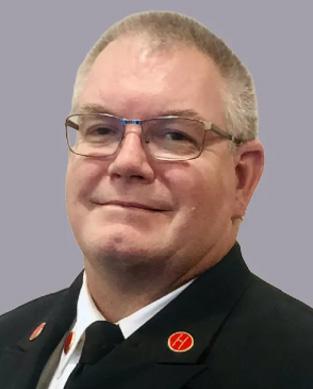
Tom Parrish, SET, CFPS, PSP is vice president of compliance & training for Telgian Fire Safety. He has more than 25 years of experience in fire protection and emergency response. He has held multiple positions with municipal fire, law enforcement, and emergency medical services, as well as in private industry system design and installation programs. As an industry leader, Parrish serves on several NFPA technical committees including Loss Prevention Procedures and Practices and NFPA 72 Signaling Systems for the Protection of Life and Property and Emergency Communications Systems. In addition, he is the immediate past president of the Automatic Fire Alarm Association (AFAA) and is a senior instructor for NFPA. Parrish’s professional credentials, including Level IV NICET Certified Fire Alarm Technician, Level III NICET Inspections and Testing, Certified Fire Protection Specialist and Master Electrician. He is board-certified as a Physical Security Professional by ASIS, a retired firefighter and the retired fire marshal at Putnam Township Fire Department in Pinckney, Mich.






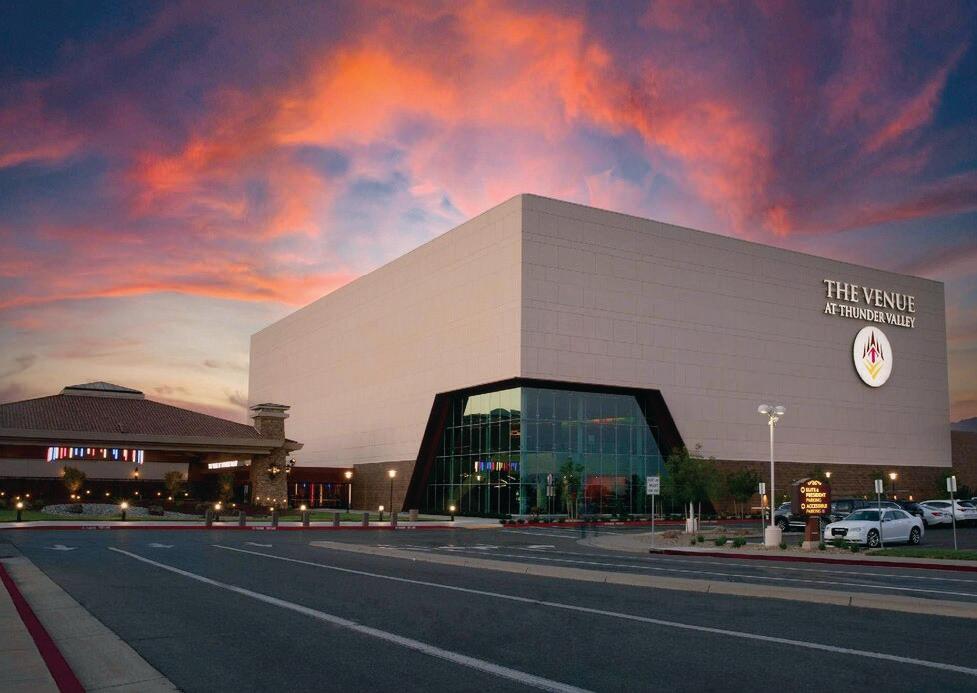







Consultants • Architects
Fitters

Fire Department Personnel
Designers
SPRINKLER REPLACEMENT AND TESTING INTERVALS
ACCORDING TO NFPA 25
ALYSSA DUNN | DYNE FIRE PROTECTION LABS
According to NFPA 25, Standard for the Inspection, Testing, and Maintenance of Water-Based Fire Protection Systems , periodically, sprinklers are to be replaced or, in lieu of replacement, a minimum of 4 sprinklers or 1% of the sprinklers in a sample area are to be submitted to a laboratory for testing. However, determining the intervals for testing/replacement can be challenging. It is not a universal interval and depends on a variety of factors, including the sprinkler’s response type, age, and environment.
Figure 1 can be used to determine the appropriate initial replacement/testing intervals according to the most recent, 2026 edition of NFPA 25. Note the following definitions from Chapter 3 of NFPA 25 when referring to Figure 1.
Control Mode Specific Application (CMSA) Sprinkler – A type of spray sprinkler that is capable of producing characteristic large water droplets and that is listed for its capability to provide fire control of specific high-challenge fire hazards. (3.3.39.4.2)
Corrosion-Resistant Sprinkler – A sprinkler fabricated with corrosion-resistant material, or with special coatings or platings, to be used in an atmosphere that
would normally corrode sprinklers. (3.3.39.4.3)
Dry Sprinkler – A sprinkler secured in an extension nipple that has a seal at the inlet end to prevent water from entering the nipple until the sprinkler operates.
(3.3.39.4.4)
Early Suppression Fast-Response (ESFR) Sprinkler – A type of fast-response sprinkler that has a thermal element with an RTI of 50 (meters-seconds)1⁄2 or less and is listed for its capability to provide fire suppression of specific high-challenge fire hazards. (3.3.39.4.5)
Quick-Response (QR) Sprinkler –A type of spray sprinkler that has a thermal element with an RTI of 50 (meter-seconds)1⁄2 or less and is listed as a quick-response sprinkler for its intended use. (3.3.39.4.15)
NFPA 25 does not explicitly define what a harsh environment is, but there are examples provided in Annex A, Explanatory Material.
Examples of these environments are paper mills, packing houses, tanneries, alkali plants, organic fertilizer plants, foundries, forge shops, fumigation areas, pickle and vinegar works, stables, storage battery rooms, electroplating rooms, galvanizing rooms, steam rooms of all descriptions including moist vapor dry kilns, salt storage rooms, locomotive sheds or houses, pool equipment rooms, areas around bleaching equipment in flour mills, portions of areas where corrosive vapors prevail, and outdoor installations with corrosive environments. (A.5.3.1.1.2)
The maximum allowable ambient temperatures may also be an important consideration when determining the appropriate replace-
ment/testing intervals. See Table 1 for this information.
If at the initial interval, sprinklers are tested instead of replaced, and the sprinklers are found to be acceptable, the remaining sprinklers from the sample area can remain in service. Subsequent testing would be needed periodically thereafter. Figure 2 can be used to determine the subsequent testing intervals according to the most recent, 2026 edition of NFPA 25. (See Figure 2.)
WHY ARE SPRINKLERS REPLACED/TESTED ON DIFFERENT INTERVALS?
Sprinkler replacement/testing intervals are largely impacted by historical data or the lack thereof. For relatively newer technologies (e.g., fast response sprinklers), replacement/initial testing has been pushed back several years over the last several editions of NFPA 25 as data continues to grow to support such a move (i.e., failure rates continue to be low). The same goes for dry sprinklers, which, for a time, were replaced/initially tested much sooner, given the prevalence of the O-ring water seal design—a design that has not been listed for use in over 20 years. While some O-ring designs do remain in the field, the numbers are dwindling, and as a result, the failure rates have dropped so much so that the replacement/initial testing of those sprinklers has also been pushed back over the last several editions.
For sprinklers in a harsh environment, degradation can obviously be greatly accelerated, and thus the replacement/testing is due much sooner. However, those
sprinklers that are listed as resistant are given a slightly longer time before replacement or testing is required, given their use of corrosion-resistant material, coatings, or plating to combat some of that degradation.
ABOUT THE AUTHOR: Alyssa Dunn is the general manager at Dyne Fire Protection Labs, an NFPA Global Solutions company, which is an ISO 9001 certified & ISO 17025 accredited laboratory that specializes in the periodic analysis of fire sprinklers, firefighting foams, and a variety of other fire protection products. Dunn has a Bachelor of Science in Chemistry from UW-Stevens Point and previously served as a lab technician and lab manager at Dyne.





FIGURE 1. THIS CHART be used to determine the appropriate initial replacement/testing intervals according to the most recent, 2026 edition of NFPA 25.
FIGURE 2. THIS CHART can used to determine the subsequent testing intervals according to the most recent, 2026 edition of NFPA 25.
STRUCTURED TRAINING, REAL-WORLD RESULTS
EXPERT-LED BLENDED INSTRUCTION, HANDS-ON EXPERIENCE
MAKE THE DIFFERENCE
XAVIER FRAIRE | AMERICAN FIRE SPRINKLER ASSOCIATION
As the fire protection industry continues to evolve and expectations for compliance and performance increase, properly trained professionals are more essential than ever. The American Fire Sprinkler Association (AFSA) has designed education and training programs specifically developed for contractor members. Covering every aspect of the industry, these programs will ensure a well-trained workforce and set companies on the path to success!
VIRTUAL INSTRUCTION PATH
Through AFSA’s Virtual Instruction Path (VIP), apprentices gain structured training that combines expert-led instruction, self-study, and performance-based tasks to reinforce real-world skills. With the VIP program, students like Alexandro Granados of American Fire Systems
are advancing their careers while applying what they learn directly in the field.
Fitting apprentice training curriculum, now in its 4th edition. Each level provides ten months of
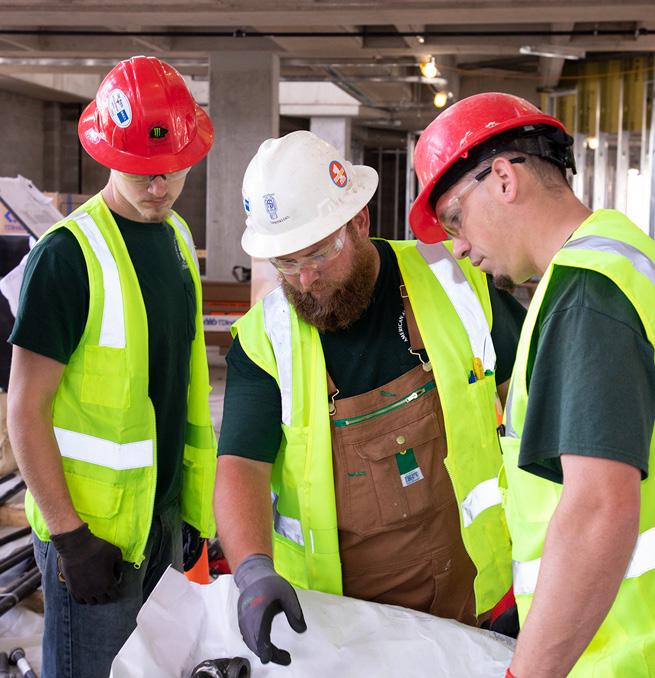
“I’d recommend VIP to someone who is serious about their career. What intrigues me is that I just keep learning. Some of the challenges are really hard, but after a couple of those experiences, you get used to doing things like that, and it becomes more natural,” Granados says.
AFSA offers the VIP option for the Sprinkler
education to accompany the on-the-job learning (OJL) conducted by the employer. The education includes the Sprinkler Fitting textbooks, two live webinar classes a month, performance tasks to reinforce the modules, self-study components, and assessments. The live lessons are instructed by AFSA staff and subject matter experts (SMEs).
“The live sessions really enhance the program. Each session will run for two hours and include time for discussion. Lessons are delivered twice each scheduled day to accommodate multiple time zones and work schedules,” comments Victoria Valentine, P.E., FSFPE, AFSA’s director of special projects. “We then assign performance tasks, which are the execution of items that correspond to the lesson and completed with their supervisors. This reinforcement increases the learning and retention of participants.”
During the self-study portion, the apprentice is expected to read the accompanying sections that support the lesson and review any add-on resources, such as videos or articles that have been provided. The text provides questions with each module to help guide the apprentice and ensure key concepts are absorbed.
Included with VIP are practice quizzes and module exams via the
AFSA’s vIP provides structured TRAINING for apprentices.
learning management system. VIP students are given an opportunity to test their knowledge using the practice quizzes before attempting module exams. Additionally, all module exams are virtually proctored, ensuring the integrity of the apprenticeship training.
Granados has the opportunity to further establish himself while applying what he’s learned in VIP. “I really like it because I know that the stuff that I’m learning is going to help me out and further my career. When I’m out in the field, I’m going to be more confident.”
AFSA’s VIP equips apprentices with the knowledge and skills needed to succeed in the fire sprinkler industry. By combining structured lessons, hands-on performance tasks, and expert instruction, VIP, along with the employer’s support, ensures that every apprentice develops into a properly trained, confident professional. Visit firesprinkler.org/vip to learn more and take the next step in your apprentices’ fire sprinkler career.
ITM INSPECTOR DEVELOPMENT
Inspection, testing, and maintenance (ITM)
of water-based fire protection systems requires fundamental knowledge and technical accuracy. AFSA’s hands-on ITM trainings provide a clear understanding of industry standards. Inspectors and technicians at every stage of their careers can look to AFSA’s ITM Inspector Development Program for proper training and walk away a safer and more confident technician.
The ITM Inspector Development Program provides a structured, 20-month blended-learning pathway for ITM technicians and fire sprinkler in-
spectors desiring comprehensive training in the inspection, testing, and maintenance of water-based fire protection systems. The program integrates on-demand lessons, instructor-led webinars, in-person instruction, and robustly structured on-the-job training (OJT) with mentoring support. This combination reinforces a practical understanding of NFPA 25 system operation, field inspection techniques, documentation practices, and the roles and responsibilities involved in ITM work.
Participants develop hands-on skills in
The REPAIR PARTS Experts
Fire Pumps Backflow Preventers Automatic Control Valves
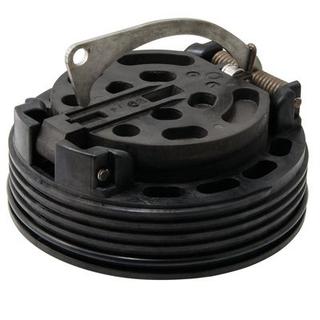
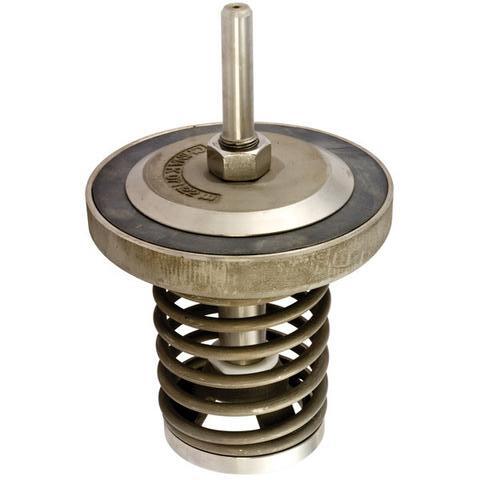
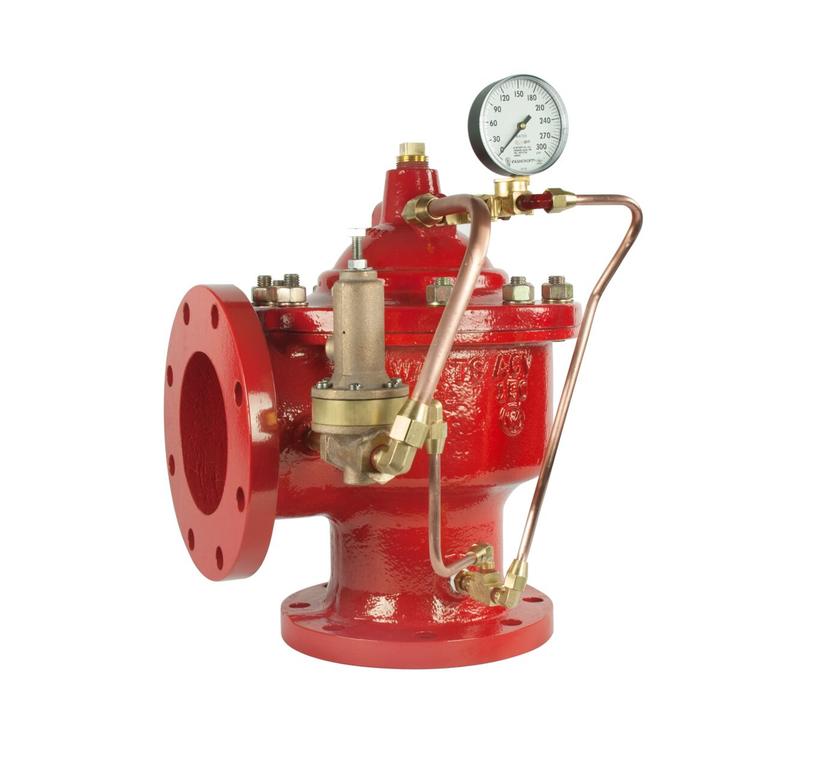

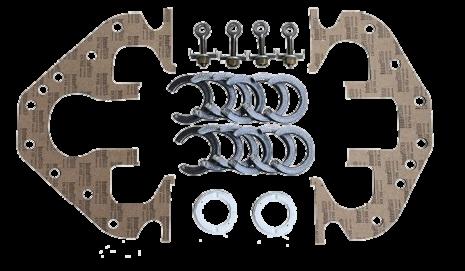
inspecting and testing wet, dry, standpipe, and other water-based system configurations. The curriculum emphasizes identifying deficiencies and impairments, verifying system conditions, interpreting NFPA 25 requirements accurately, documenting inspection results, and customer service skills.
With its comprehensive design and extended training timeline, the program also provides strong preparation for the NICET Inspection & Testing of Water-Based Systems Levels I & II certification.
Ace Champion with VSC Fire & Security learned a great deal throughout the course and believes the experience will make a lasting impact on his work. “I’m going to be better at my job for coming through it. The pace of the course is quick, and there’s a lot of work involved, but the instructors and everyone at AFSA have been great!”
The next session for the ITM Inspector Development program will begin this summer on June 8. For more information or to register, visit firesprinkler.org/ ITM.
NFPA 25 FIRE PUMP WORKSHOP
AFSA’s NFPA 25 Fire Pump Workshop provides ITM technicians,
interpretation. Learning these NFPA 25 ITM fundamentals support participants as they prepare for professional certifications, such

facility managers, and Authorities Having Jurisdiction (AHJs) with a practical understanding of fire pump installations and associated ITM requirements. Students explore the differences between diesel and electric fire pumps, perform noflow and full-flow pump tests, and review NFPA 25 tank requirements.
Hands-on activities include data acquisition, supply graphing, energy diffuser selection, and performance
in a simple and practical way. Hands-on training allowed participants to confidently operate and troubleshoot fire pumps, and the course materials were detailed, up to date, and easy to understand. Overall, the course improved everyone’s knowledge and skills, making it highly effective.”
as those from NICET, NFPA, or ACE. The course equips participants with the practical skills and industry knowledge needed to excel in fire pump inspection and testing.
One evaluation form comment received from a recent student was very complimentary. “This workshop was successful because it provided clear, well-structured lessons on pump operation and safety. The instructor explained complex topics
Are you preparing for certifications such as NFPA or NICET? AFSA’s ITM courses provide an effective way to build knowledge and assist in preparation. Designed to support professionals at every stage of their careers, these programs offer a clear path forward, whether you’re investing in yourself or your team. Develop well-rounded ITM technicians and inspectors who contribute to safer, more reliable operations while reducing risk and liability for individuals and businesses.
The next classes will be held March 5-6 and May 6-7. For more information or to register, visit firesprinkler.org/ firepump.
DESIGNER TRAINING
Accuracy and code knowledge are critical
AFSA PROVIDES EXPERT-LED CLASSROOM INSTRUCTION.
in the fire protection industry. Confident design skills are built through hands-on training and a deep understanding of fundamentals. AFSA has long been recognized for its Beginning and Intermediate Design Schools, whether a designer is new to the job or looking to advance his or her skills to the next level. Both courses help prepare participants for certification exams and other industry credentialing tests.
A recent Beginning Design School participant from AFP Systems, Inc., said, “Everything was done exceptionally
well. The pacing of the class, the structure, the in-person demonstrations, and the interactive components all made for a great learning experience. This is a course I would gladly recommend to anyone seeking to advance their career in the design field.”
AFSA’s Beginning Design School provides a comprehensive, hands-on approach to preparing fire sprinkler drawings from start to finish. Within the course of three weeks, students participate in six live webinars, complete self-paced mod-
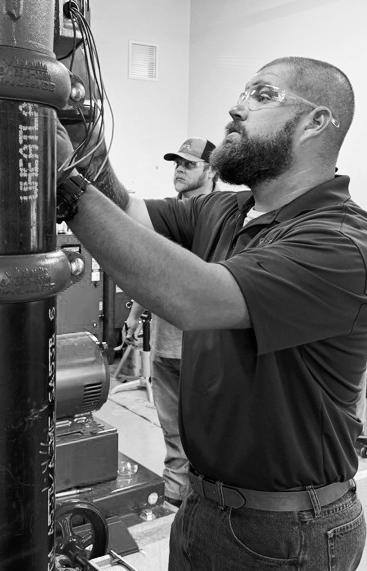
ules, and work through exercises focused on installation and design requirements. A week of in-person instruction reinforces these concepts as students prepare fire sprinkler layouts, shop drawings, and hydraulic calculations by hand—without the use of CAD or third-party software. This manual approach ensures that future designers thoroughly understand the inputs required by software programs and how to interpret their outputs, strengthening both technical accuracy and professional judgment.
Four Beginning Design Schools are currently scheduled: Feb. 10 – Mar. 6, Apr. 21 – May 16, May 26 –June 19, and Jun. 30 –Jul. 24. For more details and to register, visit firesprinkler.org/ design.
A recent participant from Aegis Fire Systems was pleased with his experience in a recent Intermediate Design School. “I was extremely happy with the course. It was evenly paced between the lab, the instruction, and then following up with being able to apply what we just learned in Revit® design. As a designer, we
JUNE 9-11, 2026
Comprehensive AFSA/ OSU program focused on inspection, testing, and maintenance for fire sprinkler systems.
8AM-5PM
Combines classroom instruction with hands‑on training, including valve operations, hydrant flow testing, and fire pump testing.
DALLAS, TX
Equips professionals with practical, job‑ready skills to stay compliant with NFPA 13 and NFPA 25 and enhance system safety and reliability.

Register at https://tinyurl.com/2ktx525e
AFSA FIRE SPRINKLER INSPECTION TRAINING AND CERTIFICATE PROGRAM
don’t get to see the actual spray patterns develop. It was awesome.”
AFSA’s Intermediate Design School enables students to refine their design skills by developing a deeper understanding of standpipe systems, fire pumps, seismic protection, and general storage design, utilizing Autodesk Revit® and key NFPA standards. This blended-learning course helps experienced layout technicians strengthen the tools they use daily while expanding their technical knowledge of NFPA 13, NFPA 14, and NFPA 20. Students participate in five days of in-person instruction focused on applying design and installation requirements for general storage, laying out and calculating seismic protection, designing and calculating standpipe systems, and selecting and sizing fire pumps. The course also covers detailed seismic protection and sway bracing requirements.
The next Intermediate Design School will be held April 27 – May 8. To learn more, visit firesprinkler.org/nextlevel.
BUILD HYDRAULIC SKILLS
Hydraulic Calculations Workshops are designed
to strengthen foundational knowledge and advance established skills to the next level. Whether you’re learning the fundamentals of hand
and enthusiasm we all have for being in the fire protection industry were awesome. The class gets you ready for NICET Level III,”
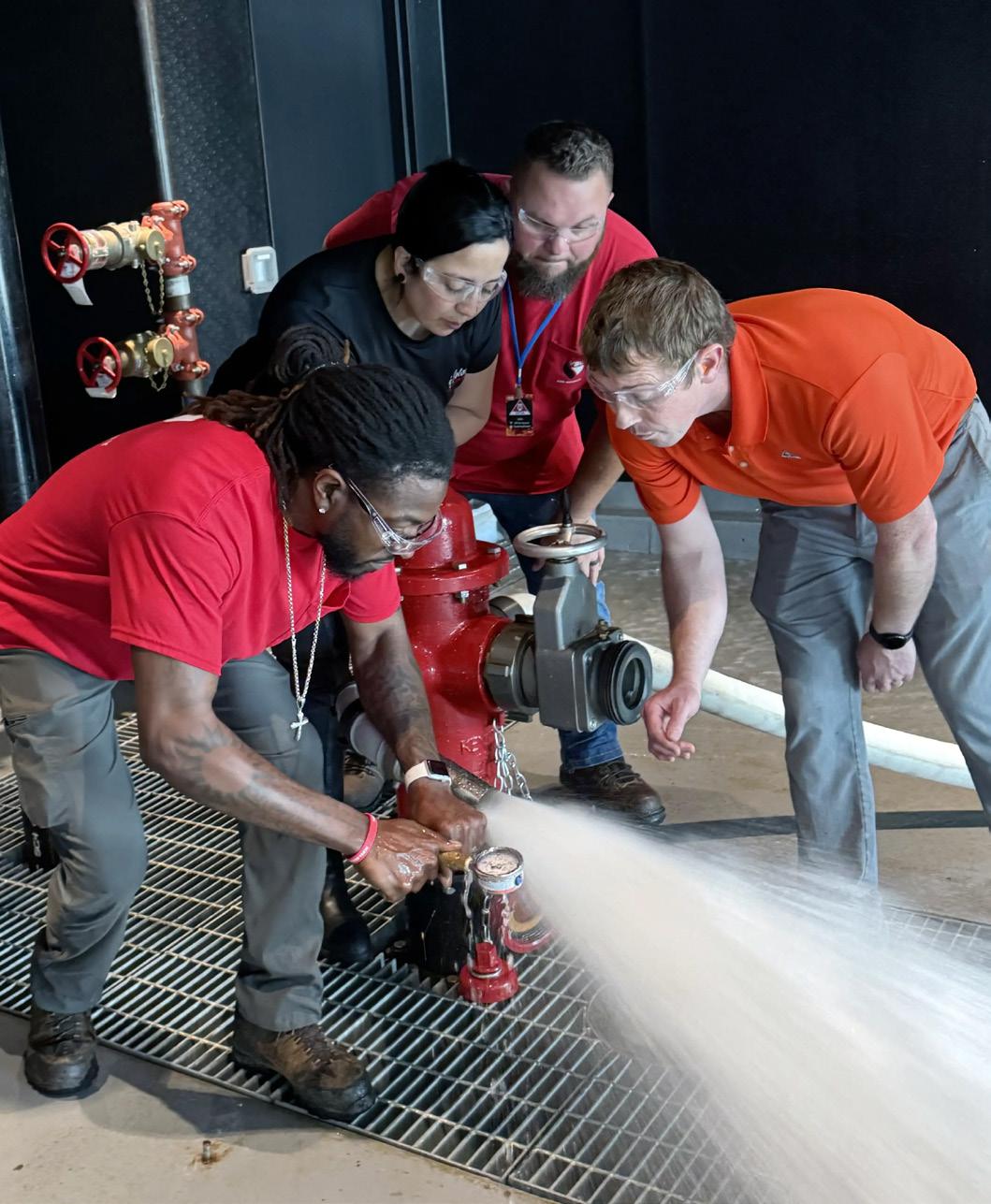
calculations or tackling complex hydraulic scenarios involving pumps, standpipes, and storage tanks, these workshops equip participants with the skills needed to evaluate results, make informed decisions, and communicate effectively with AHJs, contractors, and suppliers.
“The instructors have been absolutely wonderful and patient. They took the time to walk us through how hand hydraulic calculations work. The camaraderie
real-world sprinkler system scenarios.
Participants perform hand calculations for tree systems, remote area selection, water supply analysis, and simple loops. This manual process builds the foundational understanding designers need to confidently enter data into hydraulic calculation software and verify whether the program’s outputs are accurate and reasonable. These foundational hydraulic skills are required when pursuing higher-level industry certifications.
Christopher Coker says, describing his experience in the Sprinkler Hydraulic Calculations Workshop.
The workshop enables students to strengthen hydraulic calculation skills through three days of hands-on exercises. Students explore hydraulic principles in depth, including pressure types, elevation changes, friction loss, equivalent length adjustments, and node analysis, before applying these concepts to
The next Sprinkler Hydraulic Calculations Workshop is scheduled for April 13-15. To learn more or to register, visit firesprinkler.org/ calculations.
The Advanced Hydraulics Calculations Workshop provides students with an in-depth, calculation-based study of advanced hydraulic principles as they apply to fire pumps, standpipe systems, and water storage tanks. The twoday course emphasizes practical application of NFPA standards and hydraulic fundamentals used in the design of water-based fire protection systems.
AFSA’S FIRE SPRINKLER LAB PROVIDES HANDS-ON TRAINING.
“Kevin’s instruction of the class was excellent. Questions I had were answered, and I feel that the course will help me greatly in my career,” notes one evaluation form from a workshop participant. “The transportation, accommodations, and provided lunches were great.”
Another comment received from a student: “I thought Kevin did a great job explaining the course materials. Additionally, he took the time to help individuals when they were struggling to understand some of the material. He was very willing to go above and
beyond to help everyone; it made the course very enjoyable and beneficial.”
Students will learn how to size and select fire pumps, analyze standpipe system demands, identify vertical pressure zones, and determine the most suitable water storage solutions. Through guided examples and hands-on exercises, attendees will acquire the skills necessary to confidently analyze complex hydraulic scenarios, support informed design decisions, and effectively commu-
nicate with AHJs, contractors, and equipment suppliers.
SECURE THE TRAINING YOU NEED TO SUCCEED
“THE INSTRUCTORS HAVE BEEN ABSOLUTELY AMAZING.”
– CHRISTOPHER COKER
Visit firesprinkler. org and click on “Education & Training” to learn more and enroll in the next workshop taking place April 17-18. Hit the ground running with your hydraulic calculations career, overcome anxiety, and build confidence towards your next certification!
WHERE COMPLIANCE MEETS CONFIDENCE.
Take the next step in your career with AFSA! Whether you’re building a strong foundation or advancing your expertise, AFSA has the right program to provide the hands-on training and industry knowledge needed to design with confidence.
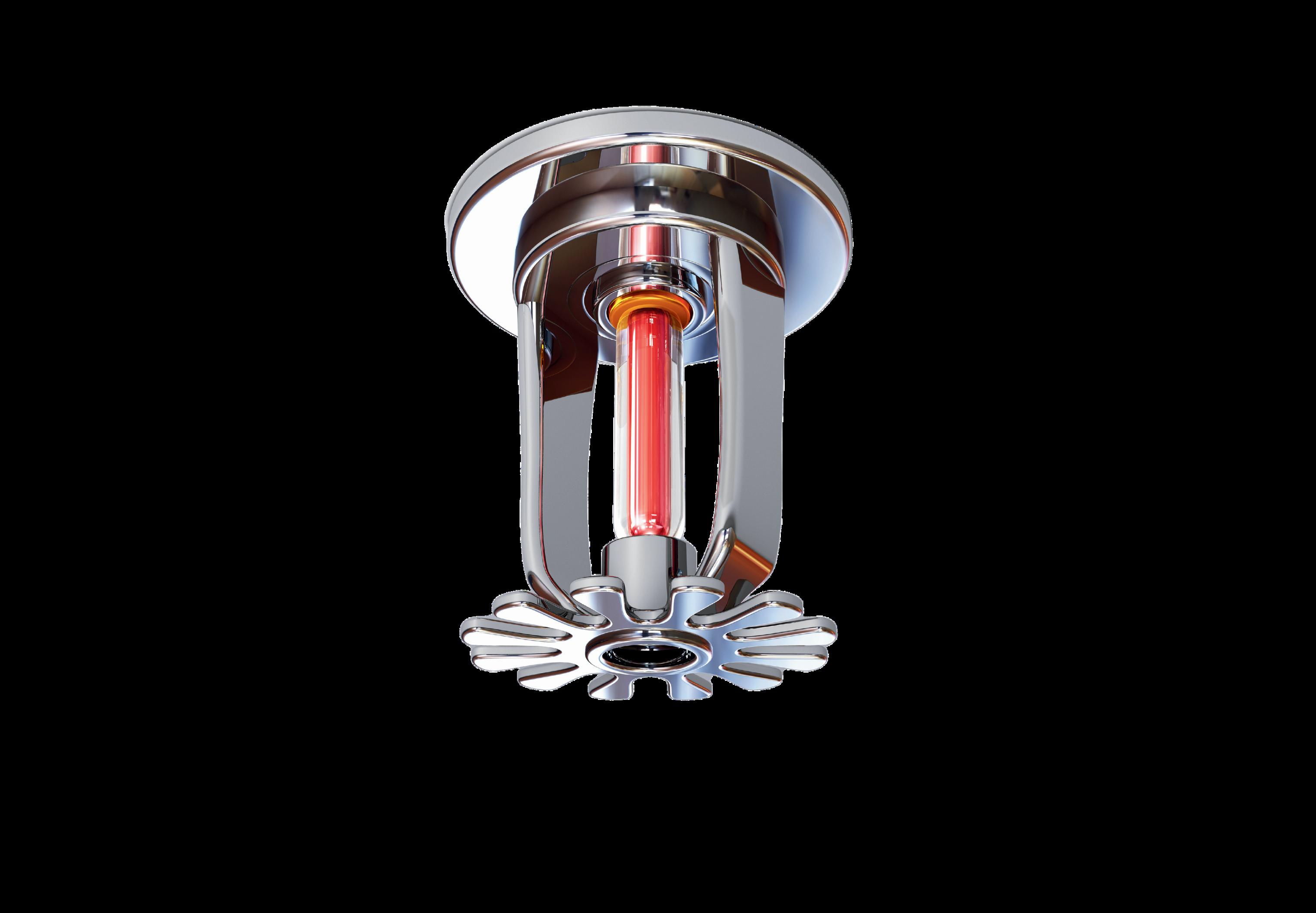
ABOUT THE AUTHOR: Xavier Fraire is a communications intern with the American Fire Sprinkler Association (AFSA).
NFPA UNVEILS NFPA LiNK 3.0
LATEST VERSION INTRODUCES POWERFUL NEW TOOLS
The National Fire Protection Association® (NFPA®) has announced a major milestone update to its digital platform NFPA LiNK®, which provides access to the organization’s vast codes and standards library and other related resources. The next generation of NFPA LiNK has been purpose-built— with AI top of mind—to help safety professionals make faster, smarter decisions as they work with NFPA guidelines to keep people safe, buildings up to code, and processes efficient.
“We couldn’t be prouder to launch the new AI-powered enhancements in NFPA LiNK. This new version is a game-changer that takes NFPA LiNK from being a reference tool to a career companion for professionals across the world. It brings intelligence, accessibility, and speed to finding the latest codes and standards, helping people apply safety more effectively wherever they are. And with the inclusion of CASI™, our new AI-powered assistant, users can trust the information they are getting, because it’s grounded in official NFPA information and resources that define safety. The next generation of NFPA LiNK bolsters our dedication to raising the bar for fire, life, and electrical safety across the globe,” said Jim Pauley, NFPA president and CEO.
“The latest update to NFPA LiNK is built for the practitioners who keep our world safe, ensuring they have the best tools, whether they are working in the field, office, or training. As our world becomes more complex—especially in a technological sense—safety needs to stay in lockstep. With features like CASI and NFPA LiNK’s interactive notebooks feature, we’re delivering the trusted tools and intuitive workflows that help teams to work faster and more confidently than ever before,” added Kyle Spencer, director of NFPA LiNK.
NFPA LiNK is a subscription-based, all-in-one digital platform that has long provided access to NFPA’s library of 300plus codes and standards with the click of a button, and now, the enhanced platform has introduced powerful new features designed to help users work smarter, faster, and more collaboratively.
Key innovations of the enhanced NFPA LiNK include:
• CASI (Codes and Standards Intelligence), NFPA’s new AI-powered assistant: Enables users to engage in interactive conversations, receive summarized responses, and access citations from NFPA content, all with a simple prompt or question.
• Interactive and customizable notebook feature: Allows users to import images, insert
code references, add text, create checklists, and keep all project-related work within the platform.
• Redesigned dashboard: Empowers users to organize information in a way that fits their workflows.
For 130 years, NFPA has remained a trusted voice in safety, continuously adapting to meet the challenges of today’s built environment. Its work supports the NFPA Fire & Life Safety Ecosystem™, from standards development and enforcement to education and informed public engagement. Through the launch of the new generation of NFPA LiNK, NFPA reinforced its commitment to building a safer, smarter future for communities through collaboration, knowledge sharing, and digital innovation.
To learn more about the enhanced NFPA LiNK, visit NFPA. org/link.
WEBINARS OFFER TRAINING, CEUS
KEEP UP-TO-DATE WITH AFSA’S SUBJECT MATTER EXPERTS
Webinars offer education from the comfort of your office or home and cost savings, especially for members of the American Fire Sprinkler Association (AFSA), as most association webinars are offered free to members. Beginning this year, all live webinars will begin at 11:30 a.m. CT. Technical topics being covered this year include special occupancies; plan review; hydraulics; fire pumps; inspection, testing, and maintenance (ITM); protecting data centers and parking structures; dry pipe water delivery times; standpipes and air supplies; cloud ceilings; and storage. NFPA standards being addressed are the 2028 edition of NFPA 13R, Standard for the Installation of Sprinkler Systems in Low-Rise Residential Occupancies , and NFPA 13D, Standard for the Installation of Sprinkler Systems ; 2027 edition of NFPA 14, Standard for the Installation of Standpipe and Hose Systems , and 2028 edition of NFPA 20, S tandard for the Installation of Stationary Pumps for Fire Protection . Business and project management-focused webinars will also be added will be added throughout the year.
For webinar descriptions, pricing for non-members, CEU certificate costs, and to register, visit firesprinkler.org/ webinars.
In addition to live webinars, AFSA On-Demand recorded webinars are accessible via PC, laptop, tablet, or smartphone. Users can navigate content by type, event and topic. These courses are carefully developed to offer the ultimate in convenience and flexibility—as
well as AFSA’s proven track record for effective training. Recorded webinars are sold individually with CEUs and/or CPDs, and members have three months from the date of purchase to complete the course. For details, visit firesprinkler.org/ recorded-webinars-list.
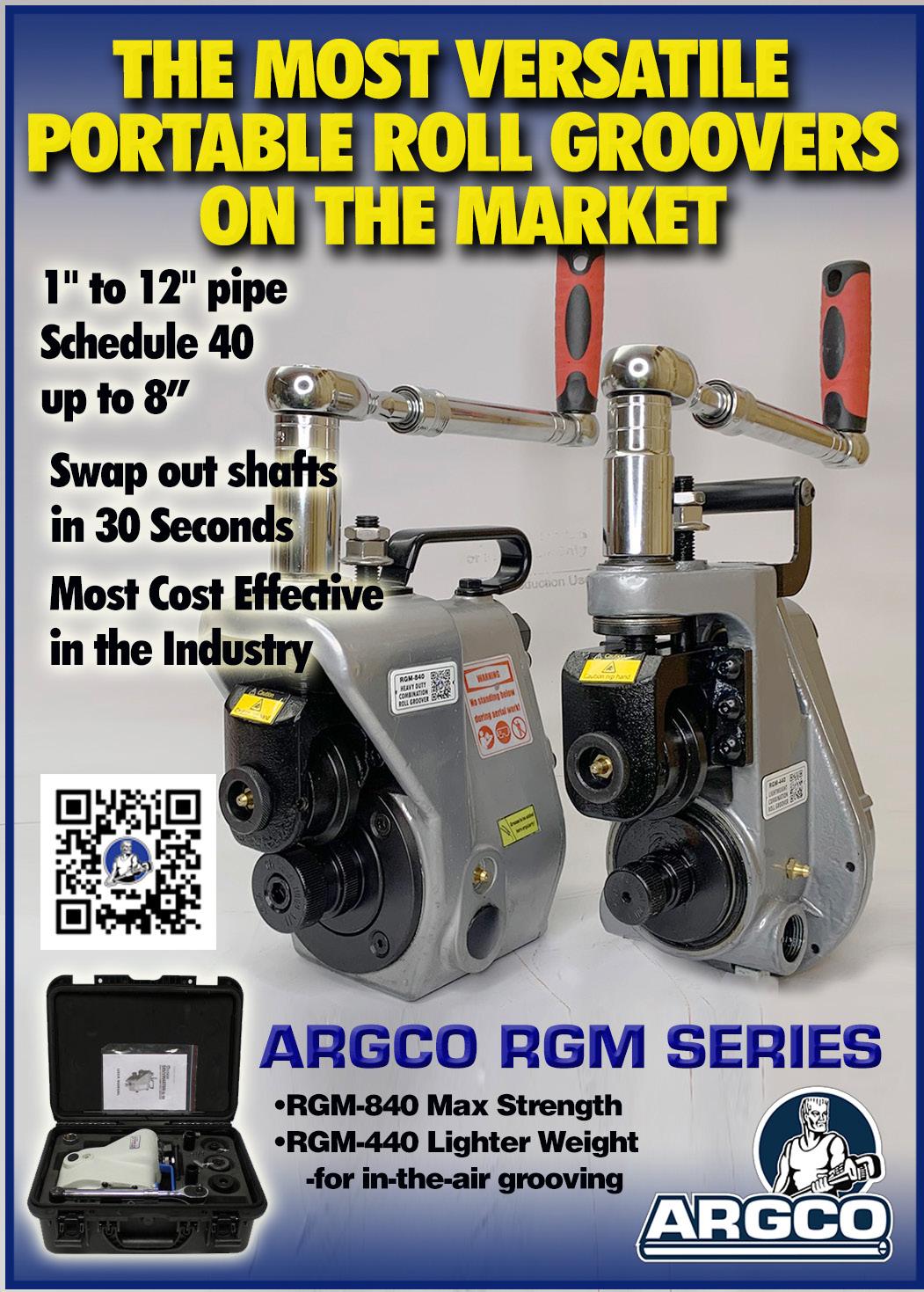
HIGHER STANDARDS
The first stage in the standard development process for the 2028 edition of NFPA 13, Standard for the Installation of Sprinkler Systems , is coming to a close with the correlating committee adjourning this week. So, what does a correlating committee do?
Simply put, the correlating committee helps make sure NFPA 13 reads and functions as one clear, coordinated standard rather than a collection of disconnected chapters. NFPA 13 is developed by multiple technical committees, each focused on specific subject areas such as installation requirements, discharge criteria, or hanging and bracing. The correlating committee’s job is to step back and look at the document as a whole, ensuring all of those individual efforts line up and support one another.
One of the most important roles of the correlating committee is maintaining consistency throughout NFPA 13. Because the standard is large and highly technical, a change in one chapter can easily ripple into others. A revised definition, a new design approach, or an added exception may unintentionally affect requirements elsewhere in the document. The correlating committee reviews all First Draft revisions to catch conflicting requirements, inconsistent terminology, or design concepts that don’t quite align before they move further in the process. This early coordination helps reduce confusion and minimizes the need for corrections later in the cycle.
Language matters in NFPA 13, and the correlating committee pays close attention to how terms are defined and used. When new definitions are added or existing language is revised, the committee checks to make sure those terms are applied consistently throughout the document. It also looks for places where similar concepts are described differently in separate chapters and works to bring those sections into alignment. That extra layer of review helps designers, installers, inspectors, and Authorities Having Jurisdiction (AHJs) interpret and apply the requirements with confidence.
Coordination across related technical topics is another key focus. Requirements affecting system layout, hydraulic design, material selection, and installation practices are often spread across multiple chapters. The correlating committee looks at how these provisions interact, helping ensure that requirements work together in the field and don’t unintentionally create design or installation challenges when viewed as a complete sprinkler system. This big-picture review is especially important as new technologies and approaches are introduced into NFPA 13.
The correlating committee also serves as a place to work through differences between technical committees. It’s not unusual for committees to approach similar issues from different perspectives or with different priorities. When that happens, the correlating committee helps facilitate discussion, clarify intent, and find solutions that best support the overall goals of NFPA 13 through correlating comments back to the committee. These correlating comments ensure that the individual technical committees address the comments during the public comment stage.
Throughout this process, the correlating committee keeps the purpose of NFPA 13 front and center: providing clear, enforceable minimum requirements for the design and installation of sprinkler systems to protect life and property. By maintaining that focus, the committee helps ensure the standard remains practical, usable, and responsive to the needs of the fire protection community.
With correlating notes completed and First Revisions now balloted, the NFPA 13 revision process moves into the public comment stage. This next step invites stakeholders to review the proposed changes, ask questions, and provide feedback based on real-world experience. As the correlating committee wraps up this phase of work, it marks an important milestone and sets the stage for broader participation in shaping the 2028 edition of NFPA 13.

KEVIN
HALL, M.ENG, P.E.,ET, CWBSP, PMSFPE
AFSA
DIRECTOR OF ENGINEERING
AFSA TECHNICAL ADVISORY COUNCIL
E. PARKS MOORE, P.E., CHAIR (National Scope) Pye-Barker Fire & Life Safety
Alternate: Phillip Clemen, Rapid Fire Protection Group
ROBERT ANDERSON (Region 6) Silco Fire & Security
CHRIS CAMPION (Region 9) Eastern Fire and Safety
Alternate: Thomas Carlock, Eastern Fire and Safety
KEVIN GALLIGAN (National Scope) Johnson Controls Fire Protection
JASON GILL (Region 8) Crews and Gregory Fire Sprinkler, Inc.
Alternate: Griff Brinkley, Old Dominion Fire Co.
CHRIS JOHNSON (Region 7) Piper Fire Protection
Alternate: Steven Helkin, Piper Fire Protection
CHRIS KACHURA (National Scope) VSC Fire and Security
Alternate: Andrew Hafner, VSC Fire and Security
ADAM LEVINE (Region 9) Capitol Fire Sprinkler
Alternate: Chris Ribando, Approved Fire Protection
JEFF LEWIS (Region 8) VSC Fire and Security
Alternate: David Victor, VSC Fire and Security
DALE LINDH (Region 4) Summit Companies
Alternate: Paul Szafranski, Summit Companies
ERIC RIEVE (Region 10) Rieve Fire Protection
Alternate: Connor Rieve, Rieve Fire Protection
CHRIS RUSSELL (Region 1) Security Solutions NW
Alternate: Cody Sharp, Security Solutions NW
STEVEN SCANDALIATO (Region 5) SDG, LLC
Alternate: Michael Newell, Belvedere
JOHN SCHOTZ (National Scope) Davis Ulmer Sprinkler Co. (APi Group)
Alternate: Noah Koski, Reliance Fire Protection (APi Group)
TAYLOR SCHUMACHER (Region 4) Security Fire Sprinkler
Alternate: Calen Schumacher, Security Fire Sprinkler
BYRON WEISZ (Region 2) Cen-Cal Fire Systems, Inc.
Alternate: Erik Weisz, Cen-Cal Fire Systems, Inc.
JASON WILLIAMS (Region 3) Telgian Corporation
Alternate: Tracey Bellamy, Telgian Corporation
KEVIN HALL, M.Eng, P.E., ET, CWBSP, PMSFPE (Staff Liaison) AFSA
EX-OFFICIO MEMBERS
AFSA MANUFACTURERS/SUPPLIERS COUNCIL CHAIR Andy Kaempfer, Safe Signal
Alternate: AFSA Manufacturers/Suppliers Council Vice Chair Dave English, General Air Products
JOHNSON CONTROLS Melisa Rodriguez
RELIABLE AUTOMATIC SPRINKLER CO. Cary Webber
Alternate: Brandon Telford
UL SOLUTIONS Kerry Bell
Alternate: Jeff Hebenstreit
VICTAULIC Kevin Kelly
Alternate: Alaina Schwall
VIKING CORPORATION Martin Workman
Alternate: Josh Overholt
ABOUT THE TAC TAC meetings are open to all AFSA members in good standing. Contact your regional representative to discuss any issues that the TAC should hear. While the number of voting members on the TAC is currently restricted to 20 contractor companies, there are other opportunities for interested AFSA members. If you are interested in serving on an NFPA or UL technical committee, email technical@firesprinkler.org. All technical committee appointments are made by the TAC.
UNCLE RUSS
Earlier this year, I read a Wall Street Journal article titled “The Best Small-Business Advice I Ever Got.” It made me reflect on advice I have received over my lifetime— not just for business, but my life overall. I have been blessed with a host of wonderful mentors and teachers. In this “Uncle Russ,” I pass on a few of the most memorable insights I have received over the years. In most cases, they are simple and straightforward, and the depth of their meaning became apparent to me over time.
Go all In, Son. I played baseball in high school. As a sophomore, I excelled on the junior varsity team. Midway through the year, a starter on the varsity squad was suspended for academic reasons. I was promoted with the intention that I would immediately start in place of the suspended player. Throw in the fact that the team was undefeated and ranked number one in the state, and I had an immediate confidence crisis. I was deathly afraid that I would make a mistake, so my play was timid and unproductive. It was most apparent with my lack of aggressiveness in the batter’s box. Coach Reed pulled me aside before an at-bat during my third game. He looked me in the eye and said, “You cannot stand in the batter’s box doing nothing and hope to get on base. Go all in, son—and swing the [dang] bat!”
OK. So, no fairy tale ending to the story on that day. I did not slug a homerun or even a base hit, but I did go down swinging, and success did come later as I stayed aggressive through the remainder of the season, which, by the way, resulted in a state championship. How often do we miss out on success because our fear of making a mistake or failing is stronger than our desire to win or succeed.
Do your homework [dummy]. Arithmetic was easy, but I struggled with math. Eighth-grade geometry required the memorization of proofs and theorems. It meant that I had to do something outside of the class-
RUSS LEAVITT, CFPS, S.E.T.
TELGIAN HOLDINGS EXECUTIVE CHAIR
AFSA COMMITTEE MEMBER & SPEAKER

room. That was a novel concept to me. I had always been able to slide by in my classes without doing homework. This did not work for geometry. I failed several quizzes, as well as my first test. No surprise that my mom was unhappy with me. I tried to deflect her unhappiness by blaming it on my teacher, the lousy textbook, and finally, that it was obvious I was not cut out for math. She unilaterally dismissed all my arguments and arranged for a meeting with my teacher. My dad came along—uh oh. Actually, I do not remember what was said in the meeting, but I do remember what happened when we got to our car. As I opened the door to the rear seat, my dad pushed it shut. He turned me around. Facing him, he let me know plainly that my only job was to listen. There was going to be no back talk or excuses from me. It was easy to see from his demeanor that it would be foolish not to comply.
He moved in closer with his face just a few inches from mine, and in a firm voice, he whispered, “You do not succeed by skipping the work, young man. I am only going to say this one time. DO YOUR HOMEWORK! Now, get your butt in the car.”
The admonition has served me well. When I think about my career, most failures came when I did not do my homework and tried to “slide by” with a minimum amount of preparation. It is a fool’s folly to think we can succeed without a strong effort to get ready for whatever is coming.
Do the right thing. Early in my career, I had a mentor (Milt) who worked with me as I learned about the business of fire and life safety. I was struggling with solving a problem for a customer. Strictly following the code would satisfy the AHJ, but in my mind, it did not result in good fire protection. I solicited Milt’s input. He listened while I debated with myself about what I should do. Finally, he put his hand on my shoulder and said, “Russ, it is not about doing things the right way. It is about doing
the right thing.” I have applied that advice many times when faced with life’s paradoxes.
Milt’s admonition has made it easy to choose the right path. I am not saying that the path is easy, but making the correct choice means we can go forward with a clear conscience and confidence in our decision.
Be on time, every time. Contractors, engineers, architects, and others in the construction world are notorious for being late. The justification we use is that we must be absolutely accurate in all we do. I took this to heart as a young sprinkler layout technician. I wanted my working plans to be perfect in every way. I rationalized any missed deadlines by producing “accurate and one hundred percent complete” working drawings. One day, our field superintendent took me to lunch. We were a signatory company. He reminded me that our installation crews were made up of highly qualified and well-compensated fitters. He emphasized the term “fitter.” He instructed me that while it is important to deliver complete and accurate installation drawings, my penchant for perfection was causing delays in the field. He taught me about the importance of schedules. Our system piping had to be installed during the right “window” of the construction process. To miss created a myriad of problems and challenges. He implored me to deliver my drawings “on time, every time” as it was a key part of a successful project. He pointed out that a “less-than-perfect” drawing delivered on time will make for a successful job. He stressed that his “fitters” do not need me to cut the inspector’s test piping; they will make it fit. He finished with, “Russ, get the big stuff correct, deliver it to me on time, and we will win every time.” Can’t say it any better than that.
There is no doubt that each of you has similar meaningful mentors. Take a moment, as I did after reading the WSJ article, to reflect on the advice you have received over your lives. I had forgotten some of what I had been told until I consciously tried to bring them back. They can be wonderful reminders and give us a chance to incorporate them once again into our lives. As another mentor stated to me, “Russ, I do not expect you to incorporate everything I suggest, but I do expect you to give it consideration.” What is the point of seeking help only to ignore it?
Think about it.

If you installed a they aren’t!
The AGF COLLECTanDRAIN Model 5500 is a dry fire sprinkler system auxiliary drain that features a thermostat which operates an internal heater. The heater runs as needed to reduce energy use while maintaining a temperature safely above freezing. The motorized supply and drain valves automatically maintain the auxiliary drain per NFPA standards, and the programmable logic control (PLC) can be wired to a fire control panel or building management system for remote notification and/or operation. Be ready for winter! Upgrade your system’s auxiliary drains and streamline system maintenance while preventing expensive system freeze-ups.

#MEMBERSMATTER
Have you ever signed up for a gym membership—maybe even taken advantage of a free trial—only to cancel it a month later because you didn’t see the value? If so, you’re not alone. Many people walk away from memberships believing they “didn’t get anything out of it.” Association membership works the exact same way. The truth is simple: you can’t see value in something you don’t use.
Joining a professional trade association is one of the most strategic business decisions a company or individual can make. Yet too often, members miss out on the return on investment (ROI) because they never fully tap into the resources, relationships, and opportunities available to them. A common trend I’ve noticed when reviewing members who don’t renew is that they never utilize their membership. Never attended an event, never signed up for a webinar or training, nor did they leverage technical services. Value doesn’t work that way. ROI is a result of action.
Our members have access to training, technical guidance, professional development, industry advocacy, and invaluable networking opportunities— but many of these benefits go unused. The key to seeing real ROI is not simply joining—it’s engaging.
An association membership is more than a listing, a badge, or a logo to place on your website. It is an active tool that, when used intentionally, can save your company money, enhance your industry knowledge, expand your network, and strengthen your business operations. Just like a gym membership, the benefits exist—but only those who show up truly benefit.
When members participate in association activities, the value compounds quickly. Those who attend meetings, participate in training, ask questions,
MEDA MERRITT, CAE
VICE PRESIDENT OF MEMBERSHIP & CHAPTER DEVELOPMENT

network with peers, read industry updates, and utilize technical resources consistently report that their membership pays for itself multiple times over.
The American Fire Sprinkler Association (AFSA) offers premier technical and educational programs designed to elevate industry standards. Companies that take advantage of these training opportunities often see measurable improvements—fewer installation errors, stronger compliance practices, and better-prepared employees. When you compare the cost of training internally to the discounted or complimentary training available through AFSA, the savings alone can justify the membership.
AFSA’s Engineering & Technical Services team is one of the highest-rated benefits among engaged members. Whether interpreting standards, navigating complex design questions, or resolving code issues, having access to seasoned experts can save countless hours and prevent expensive mistakes. Yet many members are surprised to learn how often they can use this service—and how impactful it is.
Your membership helps support critical advocacy efforts at the national, state, and local levels. AFSA works to ensure fair regulation, promote safety standards, and champion the interests of fire sprinkler contractors. This behind-the-scenes work has a direct impact on business operations across the country—even for members who may not realize how much they benefit from it.
One of the most underestimated values of association membership is access to a national network of industry peers, leaders, suppliers, and innovators. This network extends far beyond simple introductions—it creates opportunities for collaboration, problem-solving, and shared growth across the fire sprinkler industry. Many companies have found trusted business partners, long-term mentors, skilled employees, and even new customers simply by show -
AFSA
ing up at AFSA events or engaging through local and national chapter activities. These connections often lead to conversations that spark new ideas, uncover solutions to common challenges, and strengthen professional credibility. Networking opens doors—doors that remain closed without participation—and helps members stay connected to both the people and the opportunities shaping the future of the industry.
Whether it’s event registrations, training programs, publications, or advertising opportunities, AFSA members receive reduced rates designed to support their success. Some members recoup their dues entirely through discounts alone—again, only when they actively take advantage of what is available.
•Identify your goals—training, compliance support, networking, recruitment, or business growth.
•Match those goals with AFSA programs that support them.
•Assign a staff member to manage your membership and ensure your company is connected to all available benefits.
•Attend one event, whether virtual or in-person, to start building peer connections.
•Utilize at least one key service each month, such as technical review, member discounts, or online learning.
Over time, engagement becomes a habit—and value becomes visible.
Association membership, especially within AFSA, is a powerful investment in your professional success and your company’s future. But like any investment, the return is only as strong as the effort you put into it. Membership alone doesn’t create value. Engagement does.
When you show up, participate, and take full advantage of the resources available, your membership becomes not just worthwhile—but indispensable.
Need Backflow Repair Parts?
Visit Us On-Line www.bavco.com • www.bavcostore.com West Coast - Long Beach, CA (800) 458-3492 • info@bavco.com Central - San Antonio, TX (866) 318-0274 • txinfo@bavco.com
East Coast - Charlotte, NC (844) 202-1618 • ncinfo@bavco.com
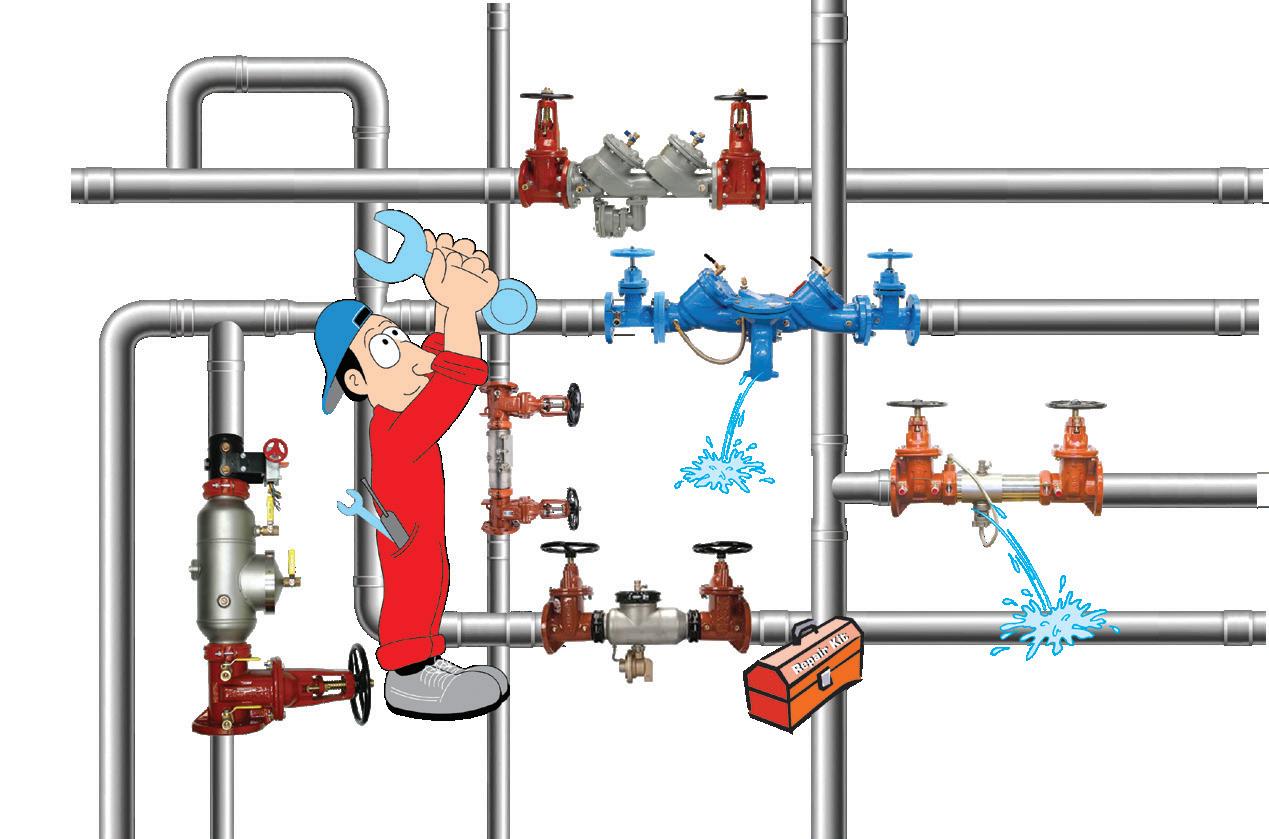
AFSA NEWS
FIRE SPRINKLERS SAVE LIVES AWARD
In addition to the awards presented annually at convention, AFSA’s Fire Sprinklers Save Lives Award is presented year-round to recognize individuals outside the fire sprinkler industry who help dispel the myths about fire sprinklers by generating public awareness about this life-saving technology. AFSA’s Public Education & Awareness Committee accepts and recommends nominees for this award, and they are approved by the AFSA Board of Directors. The nomination will be considered at the committee’s next meeting. Visit firesprinkler.org/awards to nominate someone today.
FIRE SPRINKLER LAB RESERVATIONS
Facility requests for AFSA’s fire sprinkler playground are rolling in, with many users requesting regular training throughout the year. The 2026 calendar is filling up quickly. If you are interested in renting the facility or providing customized training to support your organization’s educational and training needs at the sprinkler playground, complete the request form at firesprinkler.org/facility-request-form. Get your request in as soon as possible!
SCHOLARSHIPS PROVIDE PUBLIC EDUCATION AND FINANCIAL ASSISTANCE
Now open—AFSA’s Second Chance School Scholarship Essay Contest! Through August 31, 2026, eligible high school graduates can enter to win one of five $1,000 scholarships. Created by AFSA’s Public Education & Awareness Committee to raise awareness about fire sprinklers, the fire protection industry, and its careers, the contest is open to students who want to pursue a college degree or trade school education. Five winners are randomly selected to receive a one-time $1,000 scholarship payable to their respective college, university, or trade school. For more details and to enter, visit afsascholarship. org/secondchance.
CALENDAR
MARCH 2026
5
NFPA 25 Fire Pump Workshop
AFSA Headquarters, Richardson, TX firesprinkler.org/firepump
April 2026
13-15
Sprinkler Hydraulic Calculations Workshop
General Air Products, Exton, PA firesprinkler.org/calculations
16-17
Advanced Sprinkler Hydraulic Calculations Workshop
General Air Products, Exton, PA firesprinkler.org/acalculations
20 – MAY 15
Beginning Design School
AFSA Headquarters, Richardson, TX firesprinkler.org/design
27 – MAY 8
Intermediate Design School
AFSA Headquarters, Richardson, TX firesprinkler.org/nextlevel
28-30
NFPA 25 Essentials Workshop
AFSA Headquarters, Richardson, TX firesprinkler.org/essentials
May 2026
1
Introduction to the Fire Sprinkler Industry
AFSA Headquarters, Richardson, TX firesprinkler.org/intro
CHAPTER NEWS
LOUISIANA
The LFSA Chapter proudly hosted its 18th Annual Golf Tournament, a highly successful event that raised $10,000 for Camp I’m Still Me while bringing together participants for a day of fun, laughter, and camaraderie. Thanks to the generous support of sponsors and players, LFSA was proud to make a meaningful contribution to this important cause. In addition to the charitable impact, the tournament featured impressive competition across the course. Congratulations to the First Place team from Pye Barker—Jeremie Ott, Blaine Richard, Kevin Way, and John Higginbotham; Second Place team from Brassco—Danny Oliver, Daniel Oliver, Kyle Gorgues, and Tom Connor; and Third Place team from Ameripipe, Gary Singleton, Ryan Waters, and Victor Tigerina, with special appreciation for their generosity in donating their winnings back to the camp. LFSA extends sincere thanks to everyone who participated and supported the event.
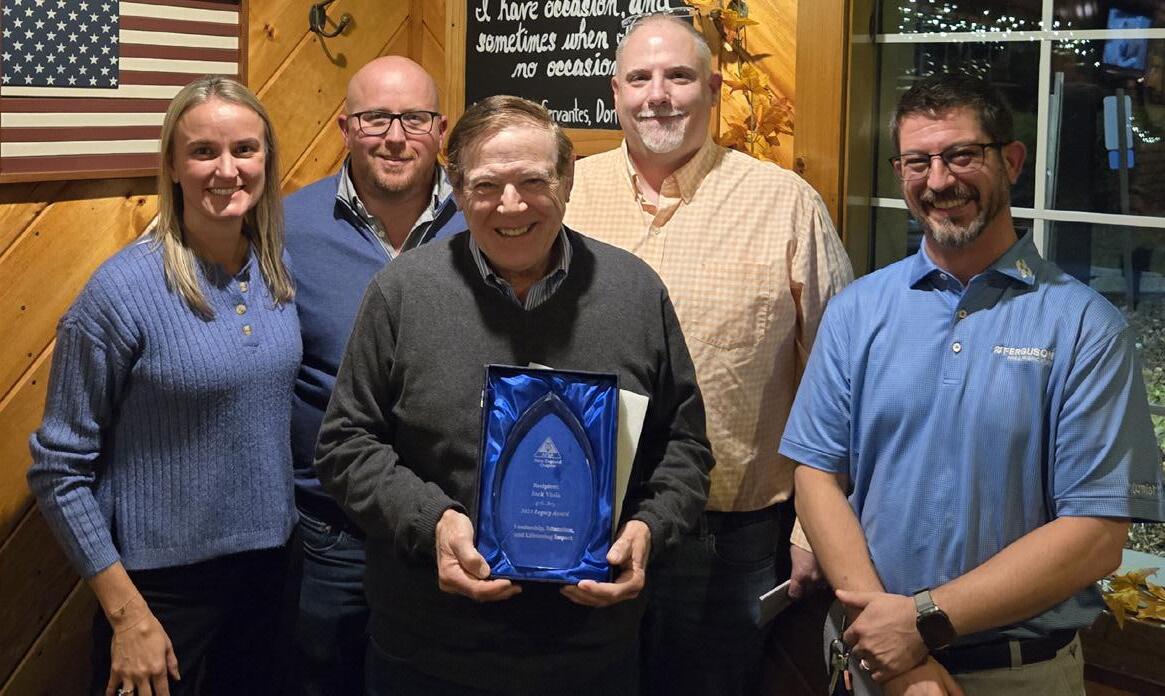
ners Children’s, a pediatric healthcare system providing exceptional care to children regardless of their families’ ability to pay.
SACRAMENTO VALLEY
The AFSA Sacramento Chapter will host its 14th Annual Trade Show on March 5, 2026. To be held at The Venue at Thunder Valley Casino & Resort in Lincoln, Calif., the free event features over 50 exhibitors. For more information, visit sacvalleyafsa.org or contact Chapter Executive Director Paulene Norwood via email at paulenesacvalleyafsa@gmail.com.
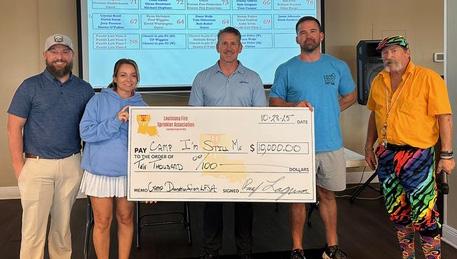
NEW ENGLAND
The AFSA New England Chapter Board Election & Dinner was a memorable evening celebrating the chapter’s 2025 achievements and sharing important updates. Daniel Berry was elected chair, Scott Labonte vice chair, and Brian Bussiere was reelected as event/ sponsorship chair. The board also welcomed Kacee Paige as secretary, Brendan Kennelly as treasurer, and Braden Adams as the new NextGen chair. The chapter honored Jack Viola with the AFSA New England Legacy Award for his lifelong dedication to advancing fire safety and mentoring industry professionals. Thanks to the support of members, $5,000 was donated to Shri-
ASSOCIATION NEWS
FSCATX
The Fire Sprinkler Contractors Association of Texas (FSCATX) invites members and industry professionals to attend its First Quarter Chapter Luncheons in Houston and DFW this February. The Houston luncheon will take place on Feb. 11, 11 a.m.-1 p.m. at Cadillac Bar in Houston, featuring a presentation on Danger Zones: High-Risk Shifting Provisions in Construction Contracts. On Feb. 12, the DFW Chapter Luncheon from 11 a.m.-1 p.m. at Winewood Grill in Grapevine. The topic of discussion will be on Electromobility Challenges. Visit FSCATX.org.
lfsa raised $10,000 FOR CAMP I’M STILL ME.
JACK VIOLA WINS the NEW ENGLAND chapter’s LEGACY AWARD.
AFSA CHAPTERS
ALABAMA
Lee Seewald – Pres. 202-252-5101
Greg Willis – Exec. Dir. 334-567-4257
ARIZONA
Jason Williams – Chair 480-421-8411
Denniece Cooper - Exec. Dir. 480-282-5393
ARKANSAS
Randy Gilliam – Chair 479-391-4523
Stephen Bitely – Exec. Dir. 501-605-3495
CHESAPEAKE BAY
Jason Martin – Chair 240-848-2710
Danielle Fowler – Exec. Dir. 410-972-1122
COLORADO
Roger Wallace – Chair
719-337-6550
Kim Cook – Exec. Dir. 704-213-4368
DALLAS-FORT WORTH
Talon Hernandez – Chair 214-575-2000
Merle Hittle – Vice Chair 214-282-0350
FLORIDA
Aaron Jones - Chair 813-695-1082
Jessica Cox – Exec. Dir. 813-784-3624
GEORGIA
Allen Cagle – Chair 770-554-5285
Tracy Williams – Exec. Dir. 770-355-0774
GREATER BAY AREA
Dave Karrick – Chair 925-417-5550
Angelica Ramirez – Exec. Dir. 408-680-1875
GREATER KANSAS CITY
Mark McKenzie – Chair
913-432-6688
Brett Heinrich – Exec. Dir. 785-825-7710
ILLINOIS-INDIANA
Skyler Bilbo – Chair 217-342-2242
LOUISIANA
Randy Laguna – Chair
504-464-6236 ext 224
Ellen Ballard – Exec. Dir. 318-393-9565
MICHIGAN
Doug Irvine, Jr. – Chair 616-784-1644
MINNESOTA-DAKOTAS
Marc Haug – Chair
701-232-7008
Tina Hoff – Exec. Dir. 701-709-1899
NEW ENGLAND
Lisa DiRienzo – Chair
508-298-2134
Alison Desmond – Exec. Dir. 774-278-3260
NEW JERSEY
Thomas Bowlby, Jr. – Chair
908-226-5313
Victor Lugo – Exec. Dir. 201-635-0400
NEW MEXICO
Paul Chavez – Chair
505-898-9197
Renee Nix - Exec. Dir. 505-690-0913
NORTH CAROLINA
Drew Jester – Chair 336-469-0382
John Turnage – Exec. Dir. 919-624-3456
OHIO
Scott Huber – Exec. Dir. 513-942-1500
ORANGE COUNTY/INLAND EMPIRE
Henry Fontana – Chair 914-497-6316
Michelle Rossmann– Exec. Dir. 951-644-9247
PACIFIC NORTHWEST
Brandon Stewart – Chair 971-235-9608
Cameron Kammers – Exec. Dir. 425-343-9793
SACRAMENTO VALLEY
Holly Gray Salmon – Chair 916-296-9913
Paulene Norwood – Exec. Dir. 916-296-0635
SAN DIEGO
Justin Joseph – Chair 619-588-6364
Rhonda Gudger – Exec. Dir. 951-326-4600
SCHUYKILL
Dan Hinkle - Chair 215-778-5484
Alyssa Capko – Exec. Dir. 610-754-7836
SOUTH CAROLINA
Tyler Blume – Chair 864-909-2643
Kari Miller – Exec. Dir. 843-415-5452
SOUTHERN CALIFORNIA
Vahe Zohrabian – Chair 818-822-1797
Rigo Vazquez – Exec. Dir. 909-208-5410
TENNESSEE
Justin Smith – Chair 901-664-5930
David Pulliam– Exec. Dir. 901-484-0605
UTAH ROCKY MOUNTAIN
Mark Winder, Jr. – Chair
385-630-8064
Brent Heiner – Exec. Dir. 801-544-0363
VIRGINIA
Timothy “Hooper” Loscomb – Chair 804-620-3735
Danielle Fowler – Exec. Dir. 410-972-1122
OKLAHOMA FIRE SPRINKLER ASSOCIATION (AFFILIATE)
Tim Hollon – Pres. 918-851-2416
FIRE SPRINKLER CONTRACTORS ASSOCIATION OF TEXAS (AFFILIATE)
Paul McKenna – Pres. 281-741-1006
Sarah Kiefer – Exec. Dir. 512-844-6632
AFSA NEW MEMBERS
New members as of Jan. 13, 2026
CONTRACTORS
360 Fire Prevention, Clifton, NJ
American Fire Protection LLC, Bristol, CT
FireCode Design Inc, Hyde Park, MA
Proactive Fire Protection, LLC, Pace, FL
DESIGNERS
Elite-A Fire Protection, Crofton, MD
FC Engineers, Columbia, MD
Target Pro Mechanical, Monroe, NY

AFSA
AHJS
William Abderhalden, Maple Grove, MN
Catherine Akkerman, Royse City, TX
Rick Anewalt, Summerville, SC
David Beaudin, Stow, MA
Jason Bowen, Monroe, WA
Dustin Bumgardner, Huntington, WV
Randal Carroll, Jamestown, OH
Nia Daniels, North Port, FL
Jesus Del Toro, Berkeley, CA
Eric Ferguson, Raytown, MO

Andrew Fosina, JR, Tittusville, NJ
Guillermo Hidalgo, Lancaster, CA
Casey Kikuyama, Fort Shafter, HI
Jordan Kilbey, Honolulu, HI
Randy Kimbro, North Royalton, OH
Alfredo López Bernal, Amecameca, Mexico
Jim Lundh, Gulfport, FL
Marlene Melendez, McKinney, TX
Diego Mendez Zamora, Lima
Jesse Moskovitz, Gunter, TX
Brian Quick, Manchester, MD
Marcos Reina, Stuart, FL
Jaclyn Rogacz, Worcester, MA



U.S. CONSTRUCTION REPORTS
CONSTRUCTION STARTS PULL BACK 20.5% IN NOVEMBER
Total construction starts were up 21.1% in October to a seasonally adjusted annual rate of $1.53 trillion, according to Dodge Construction Network. Nonresidential building starts rose by 17.9%, residential starts declined 15.4%, and nonbuilding starts expanded 59.4% over the month. On a year-to-date basis through October, total construction starts were up 5.9% from last year. Nonresidential starts were up 5.6%, residential starts were down 5.1% and nonbuilding starts were 19.8% higher over the same period. For the 12 months ending October 2025, total construction starts were up 8.1% from the 12 months ending October 2024. Residential starts were down 3.1%, nonresidential starts increased 7.5%, and nonbuilding starts were up 22.9% over the same period.
CONSTRUCTION STARTS SURGE 21.1% IN OCTOBER
Total construction starts were down 20.5% in November to a seasonally adjusted annual rate of $1.22 trillion, according to Dodge Construction Network. Nonresidential building starts fell by 13.4%, residential starts increased 13.3%, and nonbuilding starts dropped 43.7% over the month. On a year-to-date basis through November, total construction starts were up 5.1% from last year. Nonresidential starts were up 4.7%, residential starts were down 4.9% and nonbuilding starts were 17.5% higher over the same period. For the 12 months ending November 2025, total construction starts were up 5.7% from the 12 months ending November 2024. Residential starts were down 3.6%, nonresidential starts grew 4.8%, and nonbuilding starts were up 18.0% over the same period.
PEOPLE IN THE NEWS
NOMINATIONS ACCEPTED FOR 2026 JAMES M. SHANNON ADVOCACY MEDAL AWARD
The National Fire Protection Association® (NFPA®) is calling for nominations for the 2026 James M. Shannon Advocacy Medal, which recognizes fire and life safety advocates who have made significant contributions to reducing losses from fire, electrical, and other hazards while furthering the NFPA mission. The nominee application is available for download and can be emailed to publicaffairs@nfpa.org until the submission period closes on Feb. 28, 2026.
The advocacy medal honors an individual or group that shares the values of former NFPA President James Shannon. NFPA considers nominees who are fire service members or any individual or group whose advocacy efforts meet the award’s criteria. The medal recipient will be announced and receive their award during the NFPA Conference & Expo® in Las Vegas, June 22-24, 2026. Previous recipients have worked to improve firefighter safety, increase the use of home fire sprinklers, and advocate for updated codes, among other activities. Visit nfpa.org.
TELGIAN EXPANDS LEADERSHIP WITH KEY PROMOTIONS
Telgian Fire Safety (TFS), a nationwide provider of fire protection and life safety services, is proud to announce the promotion of two team members to key leadership positions. These advancements highlight the company’s ongoing commitment to operational excellence and its investment in developing strong leaders to guide its continued growth. Stephanie Hovey has been promoted to vie president of inspection operations from her previous role as senior manager of client and vendor operations. Valerie Olivas has been promoted to vice president of repair operations.
Stephanie Hovey has been promoted to vice president of inspection operations from her previous role as senior manager of client and vendor operations. In this new position, Hovey oversees the inspection, testing, and maintenance of critical fire and life safety systems. These essential services ensure that systems are ready to perform when needed most, safeguarding lives and property. With more than 15 years of experience in customer experience, operations management, and facilitation, Hovey brings deep expertise and a strong focus on customer protection to her leadership role.
Valerie Olivas has been promoted to vice president of repair operations. In this role, she will manage all repair operations for fire and life safety systems nationwide, ensuring that customer facilities remain compliant, operational, and protected. Since joining Telgian in 2007, Olivas has excelled in a variety of roles, gaining a comprehensive understanding of operational and logistical challenges in the fire and life safety industry. Visit telgian.com.
WINSUPPLY HIRES HUBBARD
The Winsupply Family of Companies is growing its West Coast presence by adding another person responsible for coaching and recruiting entrepreneurs in wholesale distribution. Keith Hubbard joined Winsupply Inc., a national wholesale distributor based in Moraine, Ohio, in early November as an area leader to serve Winsupply Local Companies and recruitment efforts on the West Coast.
Hubbard comes to Winsupply from his most recent role as president and CEO of PACE Supply Corp., an employee-owned wholesale distributor of plumbing supplies based in California. He led the company for five years, growing revenue to over $1 billion annually with 32 locations. Visit winsupplyinc.com.


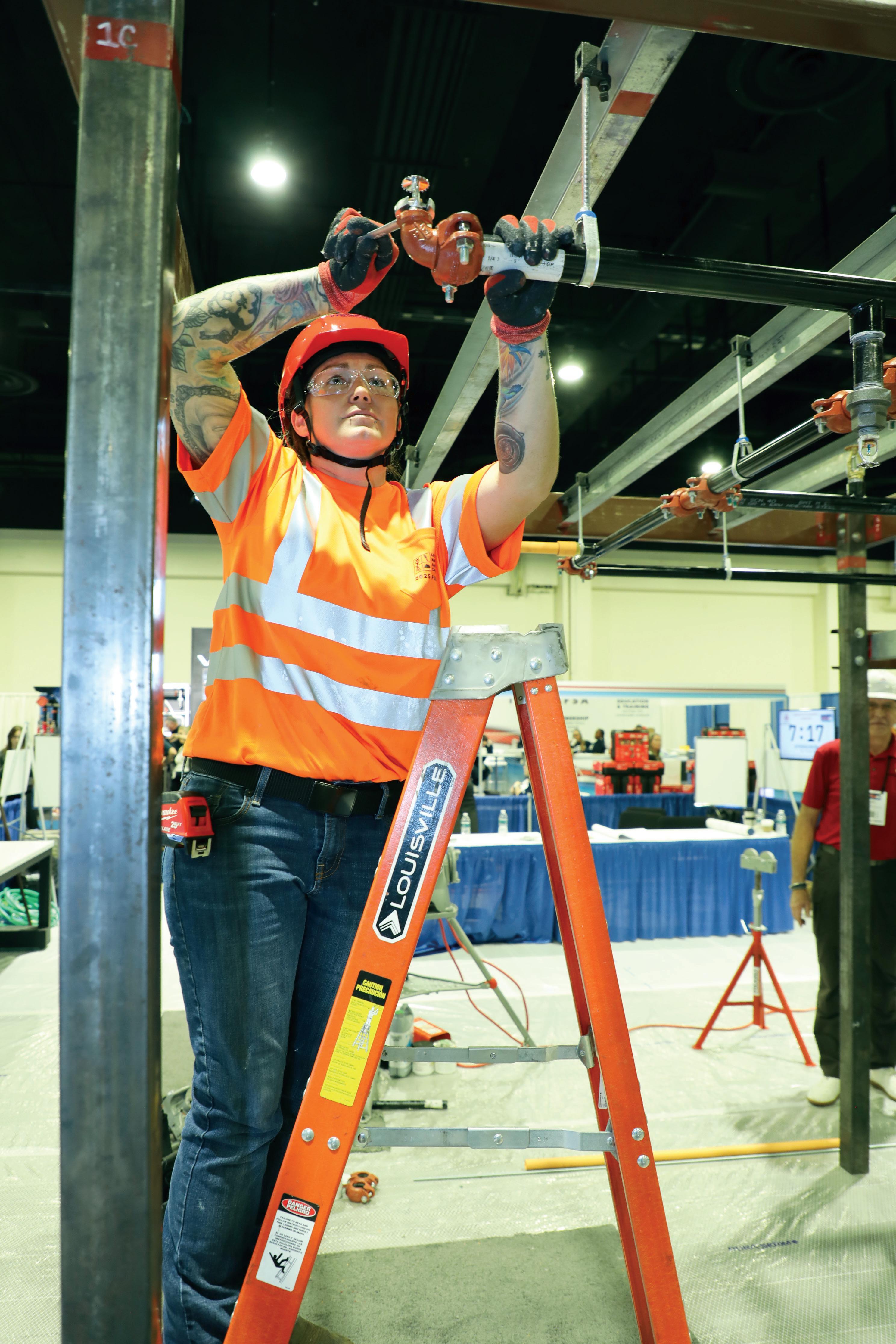
$10,000 First Place
$7,500 Second Place $5,000 Third Place


PRODUCT NEWS
SERVICETRADE LAUNCHES
AI-POWERED SMART SCAN
ServiceTrade announces Smart Scan, an AI-powered nameplate scanning capability in the ServiceTrade mobile app that lets technicians snap a photo of an equipment nameplate to instantly capture accurate make, model, and serial information. Smart Scan creates a record of the unit at the correct location or retrieves an existing record in seconds, eliminating manual typing from hard-to-read plates and accelerating field workflows. The new capability reduces asset-entry time from minutes to seconds and has been shown to create records up to 6x faster—10 seconds with Smart Scan vs. 60 seconds manually. Visit ServiceTrade.com.
ARMSTRONG LAUNCHES SE-FMS
Armstrong Fluid Technology, a global leader in intelligent, energy-saving fluid-flow and whole-building mechanical solutions, is pleased to announce the launch of its Systems Envelope – Fluid Management Station (SEFMS), a modular solution designed to revolutionize fluid management in HVAC systems. The SE-FMS is engineered to eliminate inefficiencies, reduce costs, and deliver optimized performance throughout the system lifecycle.
The SE-FMS leverages Armstrong’s innovative Envelope Core platform, which integrates advanced digital technologies such as Performance Mapping, Digital Twinning, and real-time performance track-
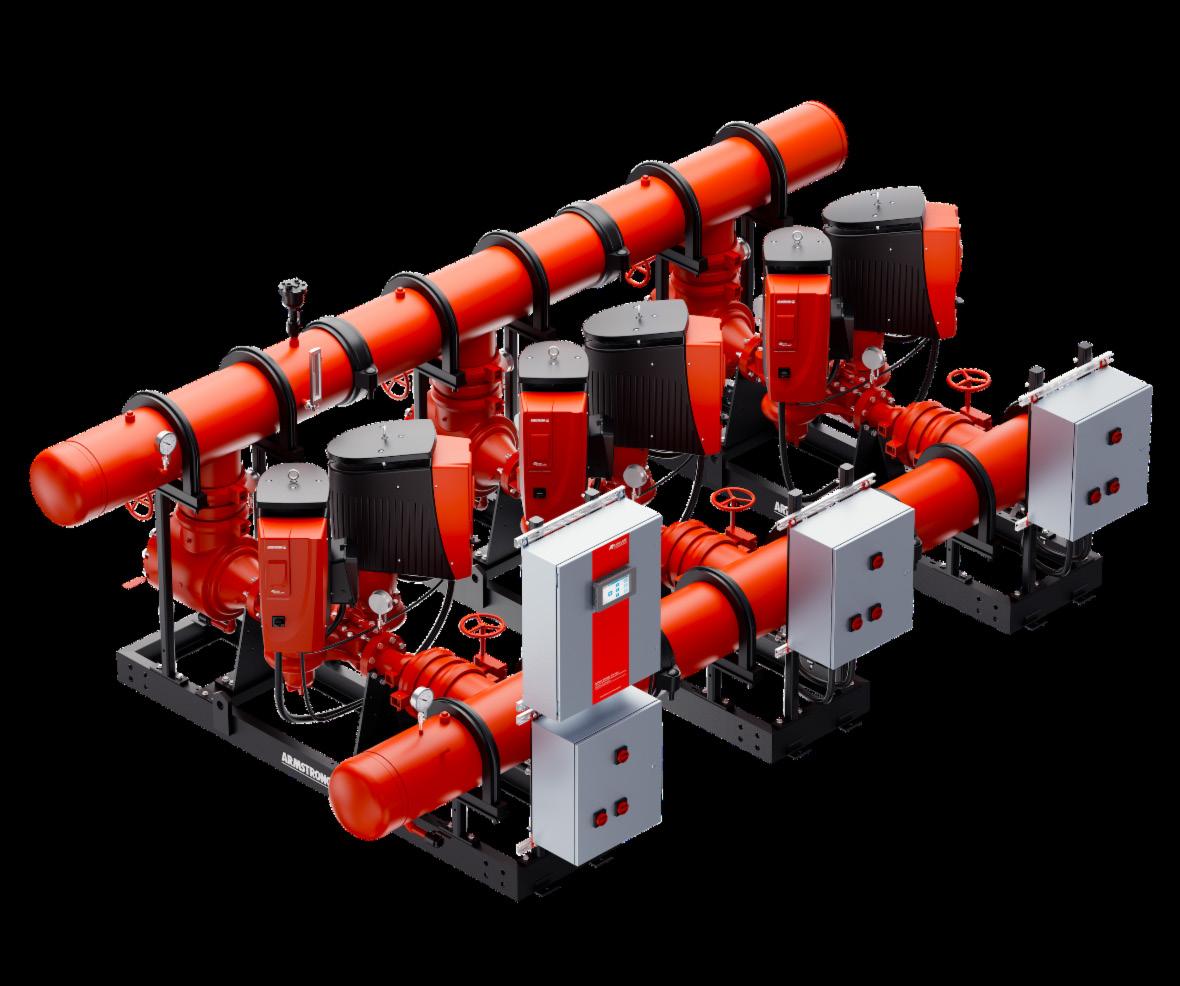
ADVERTISERS
ing. These features ensure precise system optimization, enabling customers to achieve the lowest installed cost and best operating lifecycle cost. For more information, visit ArmstrongFluidTechnology.com.
INDUSTRY NEWS
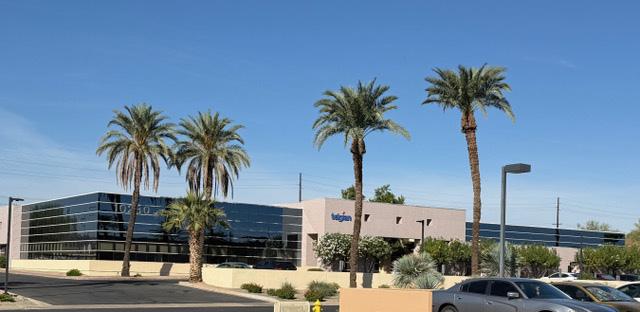
TELGIAN CELEBRATES 40 YEARS IN 2026
Telgian marked a major milestone in November as the company celebrated its 40th anniversary. Since its founding in 1985, Telgian has grown from a small consulting firm into an industry-leading organization trusted by some of the world’s most recognized brands to protect people and property.
In honor of Telgian’s 40th anniversary, the company hosted a celebratory event at its corporate headquarters in Phoenix, Ariz. Representatives from several leading global brands shared their appreciation and reflected on their long-standing partnerships with Telgian. They spoke about Telgian’s vital role in helping their organizations remain compliant and safe, as well as the positive impact the company’s work has on every associate and customer who walks through their doors. Visit Telgian.com.
HEALTH INSURANCE OPTIONS
Mass Marketing Insurance Consultants offers a self-funded group health insurance program. This plan
is available to employer groups of two to 50 employees, and behaves like a traditional, fully-insured health benefit plan. The employer provides a flat monthly premium payment determined upfront and guaranteed not to increase for a full year as long as there are no changes to group benefits or enrollments. The monthly premium is used to run the administration of the plan. Pay the stop-loss insurance premium (protects the plan from larger-than-expected claims). Build the claims account (when claims are lower than expected, a portion of the difference is credited back).
MMIC also offers traditional fully insured group PPO, HMO, and HSA insurance plans. Group health coverage is guaranteed to employees (preexisting conditions are covered), and benefits payable are unlimited. A company can start or transfer a group health insurance plan at any time throughout the year since the open enrollment period does not apply to fully-insured plans. National networks of providers are available. Options such as dental, vision, and life insurance
can be added to the medical coverage. To obtain a free, no obligation quote on any of the above group health insurance options, email quotes@mmicinsurance.com or call 1-800-349-1039.
SFPE ANNOUNCES FIRE SAFETY CONFERENCE 2026
The Society of Fire Protection Engineers (SFPE) announces the 2026 SFPE Fire Safety Conference on Performance-Based Design will be held in Singapore, from April 15-17, 2026. Hosted every other year, the conference features three days of content from global experts on current and future trends in fire regulatory systems for performance-based design.
Conference programming includes more than 45 presentations, nine case study team presentations, discussion panels on current topics, networking events, ane expo, and live discussions throughout. In addition to the keynotes and general session presentations, conference programming includes the topics of evacuation, timber structures, performance-based design framework and applications, sustainability design, digitalization, fire dynamics, battery fire hazards, the latest research and innovation projects related to performance-based design, and more. In addition, one conference seminar has been planned and is available at a discounted rate when bundled with conference registration: “Substantiating the Suitability of a Fire Model,” April 13-4 by Bryan Klein.
Visit sfpe.org/pbd2026 for the full conference schedule, and sponsorship opportunities, and to register.
TELGIAN IS CELEBRATING 40 YEARS.