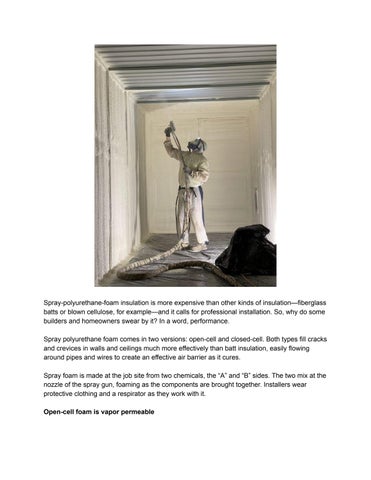
Spray-polyurethane-foam insulation is more expensive than other kinds of insulation—fiberglass batts or blown cellulose, for example—and it calls for professional installation. So, why do some builders and homeowners swear by it? In a word, performance. Spray polyurethane foam comes in two versions: open-cell and closed-cell. Both types fill cracks and crevices in walls and ceilings much more effectively than batt insulation, easily flowing around pipes and wires to create an effective air barrier as it cures. Spray foam is made at the job site from two chemicals, the “A” and “B” sides. The two mix at the nozzle of the spray gun, foaming as the components are brought together. Installers wear protective clothing and a respirator as they work with it. Open-cell foam is vapor permeable
Issuu converts static files into: and more. Sign up and create your flipbook.