VETERANS CHRONICLE
FEBRUARY 2026
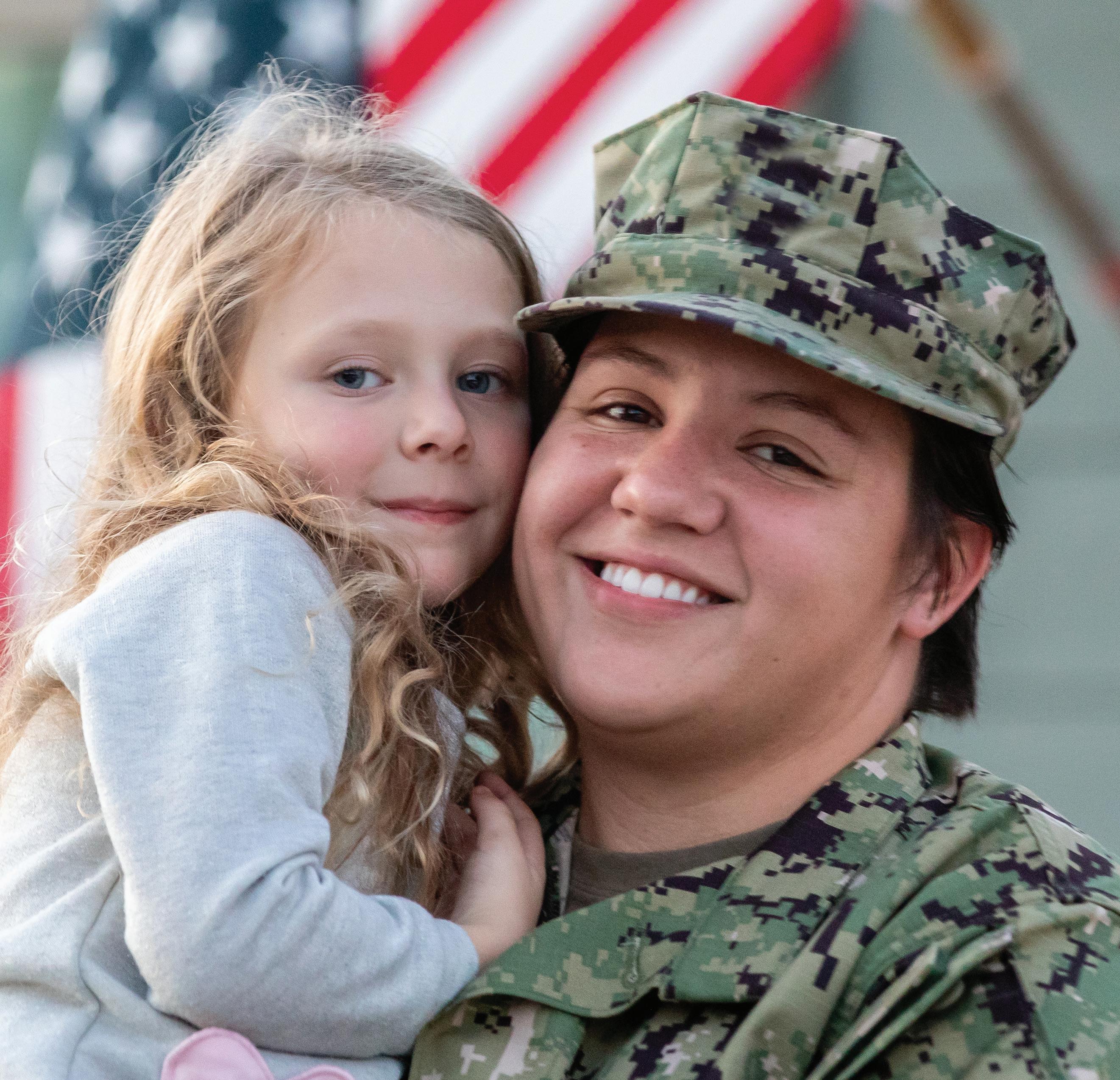
LOOK INSIDE FOR
Post Falls non-profit provides support for area veterans in need
“Mayor of VA” steps down after 53 years of service
8 services available for disabled veterans wanting to stay at home
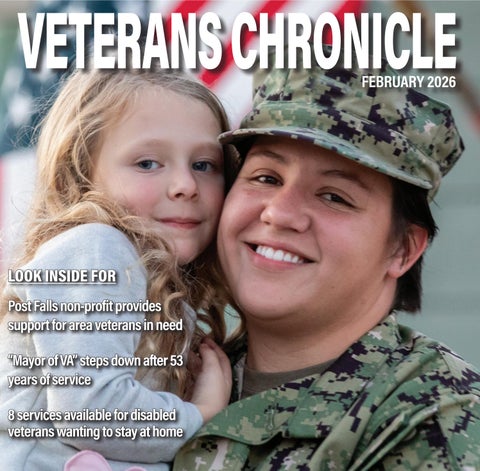
FEBRUARY 2026
Post Falls non-profit provides support for area veterans in need
“Mayor of VA” steps down after 53 years of service
8 services available for disabled veterans wanting to stay at home
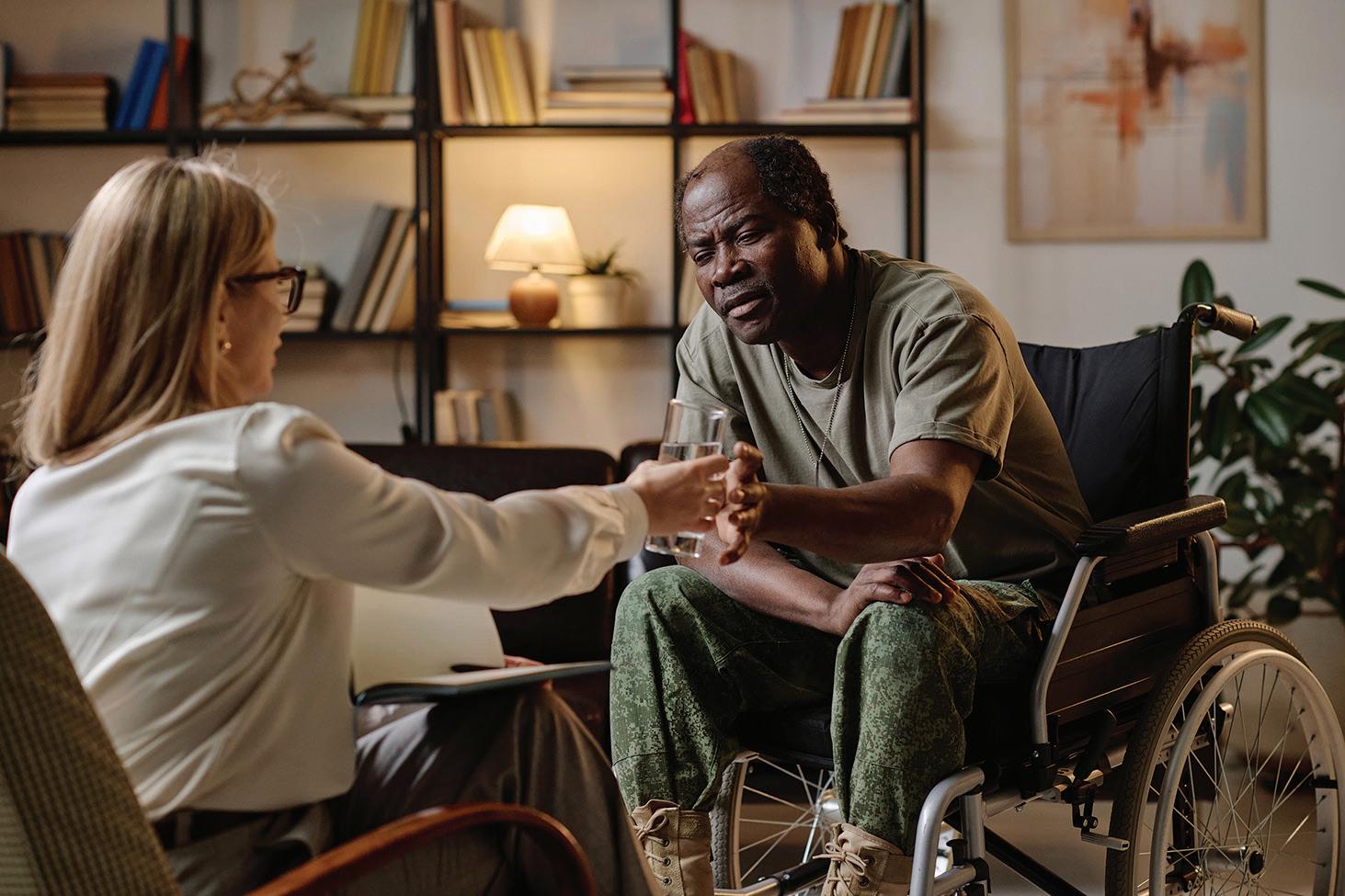
If you’re signed up for VA health care, you can get help managing your disability or health condition while living at home. The services you qualify for will depend on your needs and whether a service is available in your area. If you need to, you may be able to use more than one service at the same time.
Some options are below: Home-based primary care:
A VA health care team, led by a VA doctor, provides services (like nursing care, physical therapy, and help with daily tasks) in your home.
(https://www.va.gov/GERIATRICS/ Guide/LongTermCare/Home_Based_ Primary_Care.asp)
Homemaker/home health aide (H/HHA) services:
A trained caregiver (supervised by a registered nurse) comes into your home to help you care for yourself.
(https://www.va.gov/GERIATRICS/ Guide/LongTermCare/Homemaker_ and_Home_Health_Aide_Care.asp)
Adult day health care:
A program you can go to during the day for social activities, companionship, and recreation as well as care and support.
(https://www.va.gov/Geriatrics/guide/ longtermcare/Adult_Day_Health_ Care.asp)
Skilled caregivers come into your home to provide comfort care to you and your family. You qualify for hospice care if you have a terminal condition (a condition that can’t be treated), with less than 6 months to live, and you’re no longer seeking treatment other than to ease pain.
(https://www.va.gov/GERIATRICS/ Guide/LongTermCare/Hospice_Care. asp)
Palliative care:
Skilled caregivers come into your home to provide comfort care to help ease your pain and control your symptoms so you can do as much as possible in your daily life.
(https://www.va.gov/GERIATRICS/ Guide/LongTermCare/Palliative_ Care.asp)
What if I’m homebound or live far away from VA?
If you’re signed up for VA health care, you can get home-based health care as part of your benefits. The services that you qualify for will depend on your needs.
Other options include
Skilled home health care:
Health care providers from a community-based home health agency come to your house to provide services such as wound care, physical therapy, social work support, and help with daily tasks.
(https://www.va.gov/GERIATRICS/ Guide/LongTermCare/Skilled_ Home_Health_Care.asp)
Home telehealth:
A VA care coordinator keeps track of your health remotely using special equipment in your home and will check in with you by phone, if needed. If there are any signs of a problem, your care coordinator will work with you and your VA doctor and nurse to figure out what to do next.
(https://www.va.gov/GERIATRICS/ Guide/LongTermCare/Telehealth_ Care.asp)
Respite care:
You may be able to get a service called respite care as part of your VA health care benefits. This service pays for a person to come into your home—or for you to go to a program outside your home— while your family caregiver takes a break.
(https://www.va.gov/ GERIATRICS/Guide/ LongTermCare/Respite_Care.asp)
Other services for home health care (like adult day health care or skilled health aide services) listed above can also help to support caregivers.
For more local information see the “How Can I Get Help?” info box on Page 4 of this publication.
VETERANS HELP NET
Don Walker
Bryan Bledsoe
MANAGING EDITOR
Joe Butler
ART DIRECTOR
Russ Rosenbalm
MARKETING ADVISOR
Andrew Christensen
ADVERTISING SALES MANAGER
Jeanne Inman
Veterans Help Net partners with The Spokesman-Review to publish Veterans Chronicle each quarter to increase awareness about veteran issues and to help veterans find hope and help.
To share a veteran story or information about resources for veterans, please contact don@vethelpnet.com call (509) 998-6484 or visit www.VeteransHelpNet.com.
For advertising information, please contact advertising@spokesman.com or (509) 459-5095.













By Jean Bledsoe Veterans Help Net Correspondent
If you served, you are welcome here.
That simple message guides the work of Newby-ginnings of North Idaho, Inc., a local nonprofit dedicated to supporting veterans, active-duty military members, their families, and Gold Star families—at no cost and without barriers.
Founded in October 2013 in honor of SPC Nicholas Newby, who was killed in action in Baghdad, Iraq, on July 7, 2011, Newby-ginnings was created as a living legacy of service. Its mission is to provide essential personal and household items, referrals, and connections to community resources for those who have served — or are currently serving—our nation. This work is made possible entirely through the generosity of donors and the dedication of volunteers. Becoming a client is simple. Proof of military service is the only requirement, such as a DD214, VA card, military ID, or a driver’s license with a

“veteran” designation. There are no income requirements and no geographic restrictions.
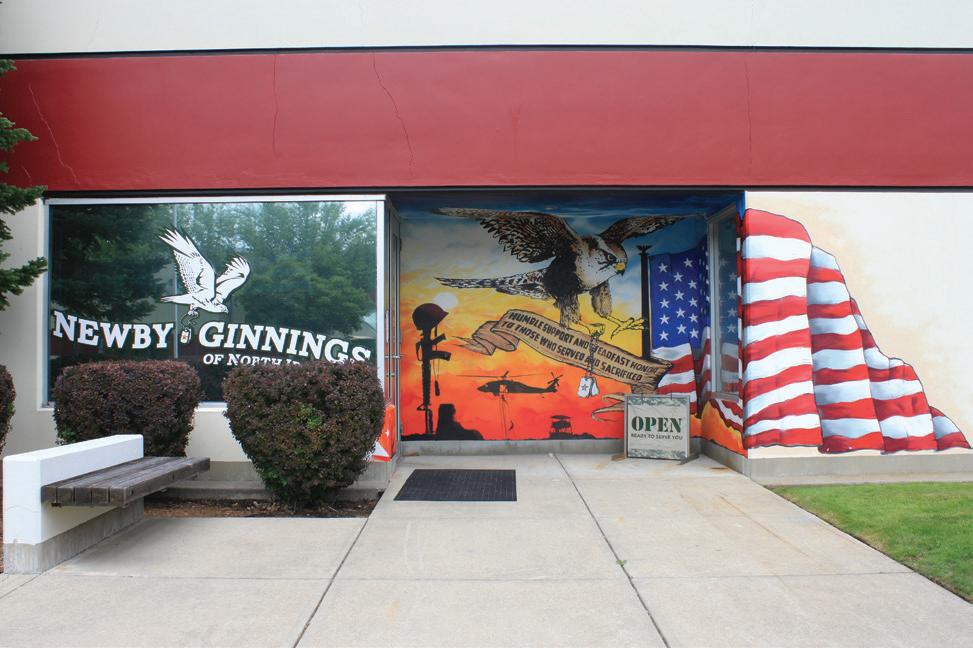
Clients are welcomed by friendly staff, assisted with a brief application, and given a tour of the shop. Once registered, they may return weekly to select clothing, furniture, food and other essential items for their home.


No money is exchanged. Nothing is sold. What clients find instead are vital resources, a welcoming community, and a true sense of belonging. Every individual who walks through the doors of Newby-ginnings is met with dignity, compassion, and unwavering support—because service deserves respect, and sacrifice should never be forgotten.
Would you like to learn more? Visit newbyginnings.org to discover how Newby-ginnings is making a difference every day.


As a veteran, you may be able to get long-term care services like assisted living, residential (live-in), or home health care.
Care settings may include:
• Nursing homes
• Assisted-living centers
• Private homes where a caregiver supports a small group of individuals
• Adult day health centers
• Your own home
If you’re enrolled in VA health care, it covers some longterm care services under standard health benefits. You may still
need to pay a copay for some covered services.
Other services aren’t covered under VA health care benefits. For these services, you may be able to pay through Medicaid, Medicare, or your own private insurance.
To learn more about long-term care services, visit https://www.va.gov/ health-care/about-vahealth-benefits/longterm-care or see “How Can I Get Help?” on this page.
VA.gov
The Department of Veterans Affairs website has resources on every topic relevant to veterans.
The VA Welcome Guide covers all types of benefits and services available for veterans, new recruits, active service members and their families.
Explore.VA.gov/benefitsnavigator
Explore VA benefits and discover which ones you and your family may be eligible to receive.
Spokane County Regional Veteran Service
1117 N. Evergreen Rd., Spokane Valley, WA (509) 477-3690
Apply for emergency services, or have any benefits or service questions answered by 5 Veteran Service Officers (VSO) and staff.
Kootenai County Veteran Services and Benefits Office
120 E. Railroad Ave., Post Falls, ID (208) 446-1092
Meet with a VSO or staff for help with VA benefits enrollment, claims or other veteran needs.
Spokane County Regional Veteran Service (509) 477-3690
Kootenai County Veteran Services and Benefits Office
120 E. Railroad Ave., Post Falls, ID (208) 446-1092
Veteran Crisis Line 1 (800) 273-8255, press 1
North Idaho Crisis Center (208) 625-4884
Dial “2-1-1” for health and human resources referrals. Every county and state has a Veteran Affairs office to answer questions about benefits and provide assistance. There are
Goodwill Support Services for Veteran Families (SSVF)
130 E. Third Ave., Spokane, WA (509) 828-2449
SSVF helps homeless veterans and their families find housing and connects veterans with other support organizations.
Healthcare for Homeless Veterans (HCHV)
504 E. Second Ave., Spokane, WA (509) 435-2019
Provides healthcare and outreach for housing, job opportunities and counseling.
Washington or Idaho 2-1-1
“The Mayor of VA” retires Tray Traylor has spent years helping veterans
A total of 53 years of combined federal service -- and countless successes serving and enrolling veterans -- is why Spokane’s MannGrandstaff VA Medical Center is celebrating the military and career retirement of Bennett “Tray” Traylor, who is referred to as “Mayor of VA.” Traylor began his Veterans Administration career as a workstudy in 1993, after completing his 20-year enlistment with the Air Force at nearby Fairchild Air Force Base. For the past 32 years, “Tray” became the Inland Northwest’s premier subject matter expert on eligibility and enrollment into VA by America’s military veterans.
Also known affectionately as the “Mayor of VA,” by Congressional leaders, local elected officials, veterans and the main hospital’s 7th floor Healthcare Administration Service, “Tray” and the team take great pride in welcoming veterans into VA, getting them their official Veteran Identification Card, assisting them with patient orientation and navigating into the VA to obtain the healthcare and benefits they’ve earned.
For over three decades, “Tray” and his VA counterparts, including the Spokane Veteran Center team, have worked tirelessly enrolling veterans and reassuring them -- and their families – that they can count on VA. “Tray leads by example,” explained Joe Dumlao, MSW, who provides counseling and readjustment support
for veterans and families through the Spokane Vet Center “Tray exemplifies the importance of being a leader –compared to being a manager. He leads by example and he’s inspired us all in so many ways.”
As 2025 wound down, MannGrandstaff VAMC welcomed staff, volunteers, family and friends for a private retirement ceremony to honor Traylor’s extraordinary career and lasting impact on the veteran community. Over and over, he met veterans where they were: at Stand Downs, town hall meetings, cultural awareness and “Yellow Ribbon / Welcome Home” events for veterans, families and caregivers.
Admirers expressed their deep love and respect for Traylor and his expertise at understanding the many, often confusing layers of VA’s eligibility criteria supporting veterans and those living with disabilities after their military service.
“We learned through osmosis, day after day of being around Tray – watching and listening to him interact with veterans – it was a lot of fun,” said Thomas “Reed” Bryan, an HAS coworker. Others proclaimed knowing that whatever special event they were working together
with Tray, “would always turn out to be a good day” – because of Tray’s dedication to the mission.
“He leads by example,” was a steady theme during the retirement celebration.
The “Mayor of VA” and his impact extend well beyond enrollment numbers, “Tray” helped build a culture for veterans centered on access, trust, and service that
continues from the entire team at Mann-Grandstaff VAMC. Other than sharing his sincere gratitude for the years of support from his coworkers and community partners, he reminds everyone, “to tell that veteran and everyone you know – to do their part to ensure our veterans enroll into VA to ensure they and their families can receive the healthcare and benefits waiting for them.”
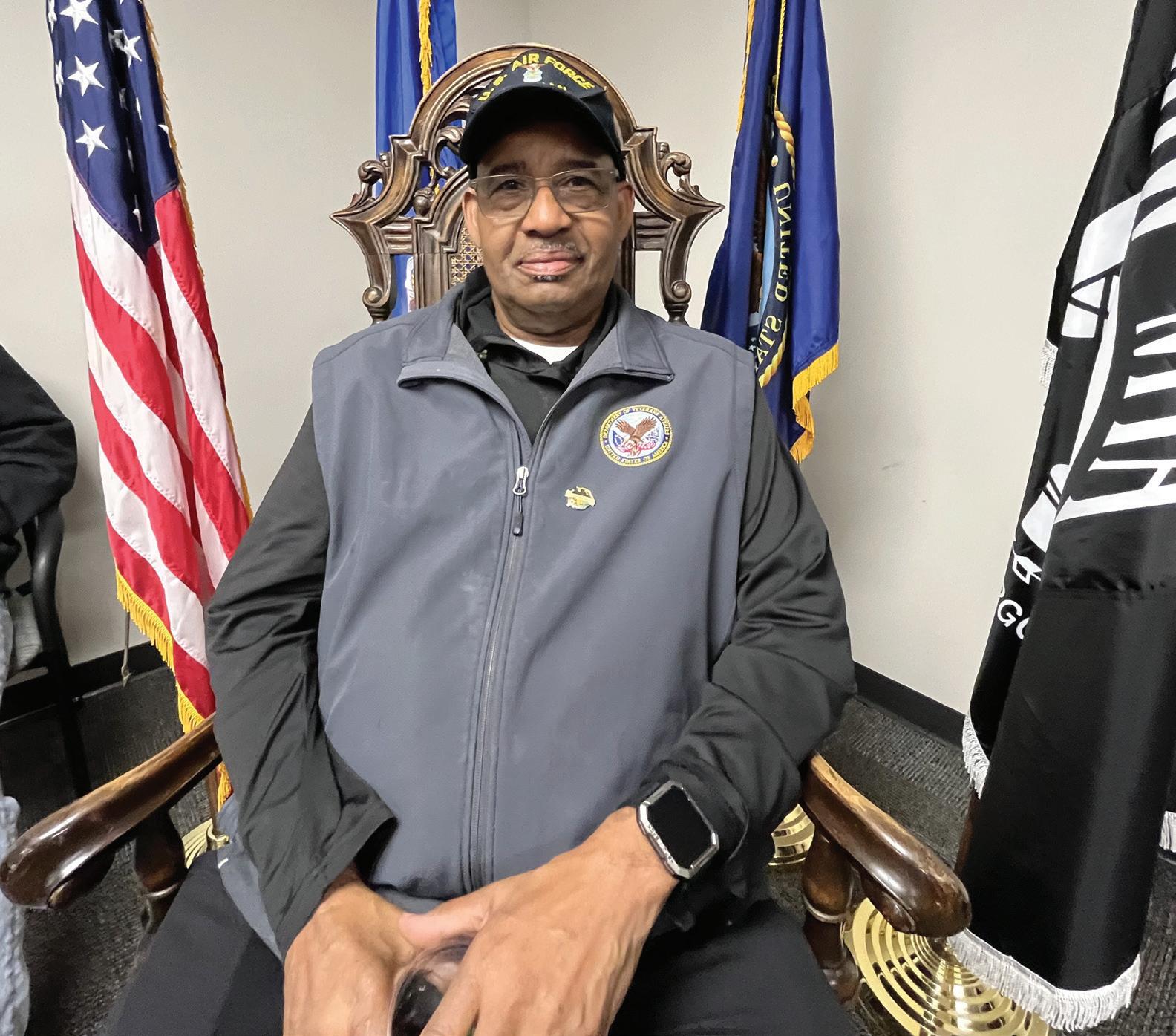
“Tray exemplifies the importance of being a leader – compared to being a manger. He leads by example and he’s inspired us all in so many ways.” - Joe Dumlao, Spokane Vet Center
By Bret Bowers Mann-Grandstaff VAMC
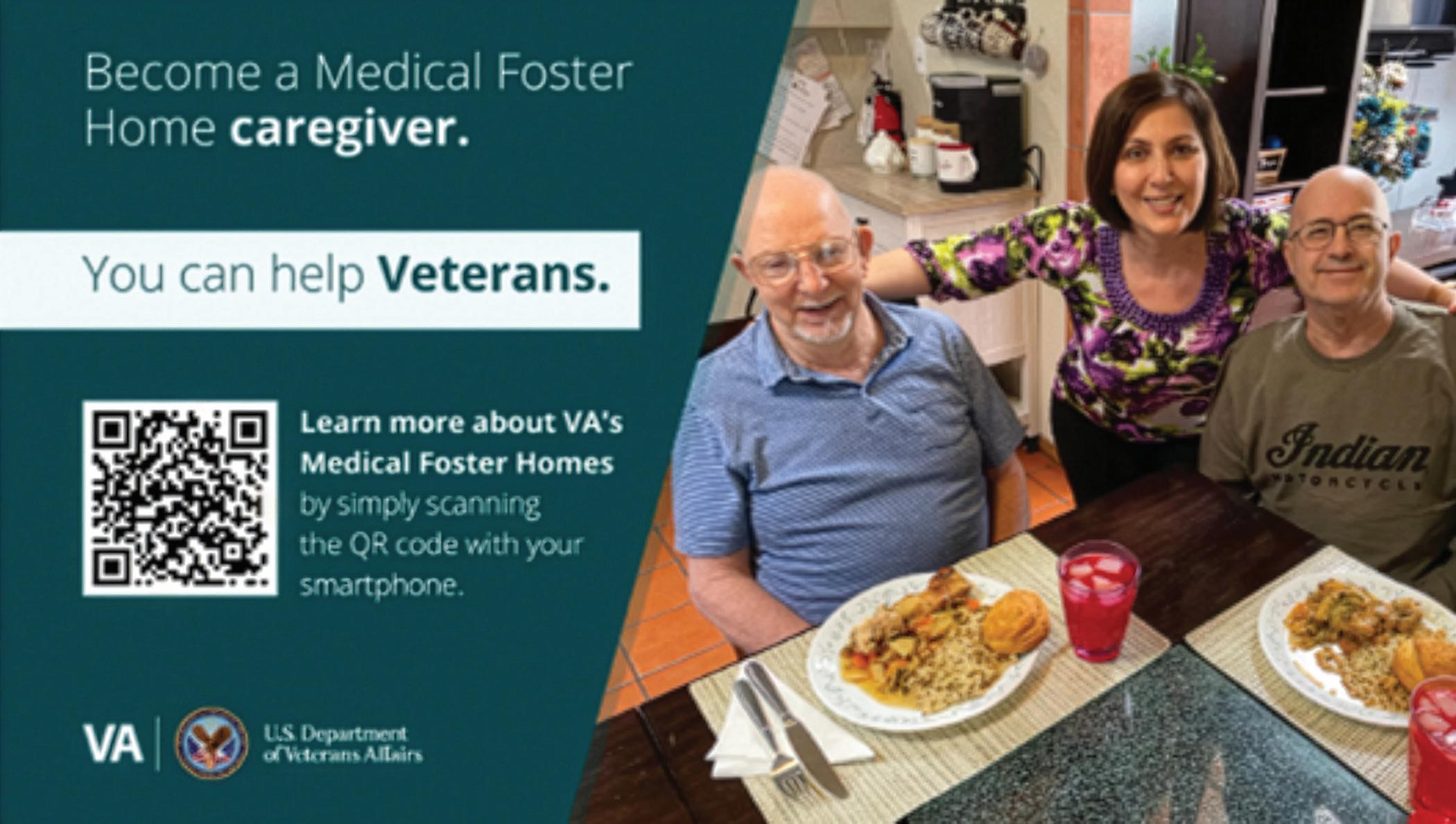
Due to their dedication and commitment to veterans, social workers from the VA’s Spokane and Puget Sound Health Care Systems are significantly enhancing efforts to recruit homeowners for the VA’s Medical Foster Home program.
Praised for their success in securing formal legislative support, the VA is expanding the Medical Foster Home program within Washington state. This initiative aims to place veterans in welcoming foster homes where they can pay for room and board while receiving healthcare services from the VA.
The Medical Foster Home program is established in Idaho, Washington, and several other states nationwide. Jamie Pillers from Spokane VA oversees the MFH program for Eastern Washington and Northern Idaho and is available to meet with prospective homeowners.
This program provides an alternative for veterans seeking long-term care in a home-like environment rather than a nursing
home. The VA ensures that qualified veterans can afford the care and receive healthcare visits through the Home-Based Primary Care program.
This includes creating a comprehensive care plan with services such as pharmacy, dietetics, psychology, and other support. In this arrangement, caregivers/ homeowners assist veterans with daily activities, allowing them to age with dignity.
For more information about the VA’s Medical Foster Home program in the Inland Northwest through Spokane VA, please contact Jamie Pillers, LICSW, at (509) 230-9357 or Jamie.Pillers@va.gov.
Additional details about VA’s MFH program can be found at: https://news.va.gov/144292/ cheyenne-va-medical-fosterhome-service-area.
Bret Bowers, USAF Veteran, is the Public Affairs Officer at MannGrandstaff VAMC.
The VA proudly honors our dedicated outpatient pharmacists at Spokane’s Mann-Grandstaff VAMC in celebration of National Pharmacy Day. Veterans can take pride in the outstanding performance, productivity, and patient satisfaction delivered by our trained pharmacists and technicians at Spokane VA. According to fiscal year 2025 metrics, this facility filled over 800,000 prescriptions and conducted 18,000 direct patient care visits.
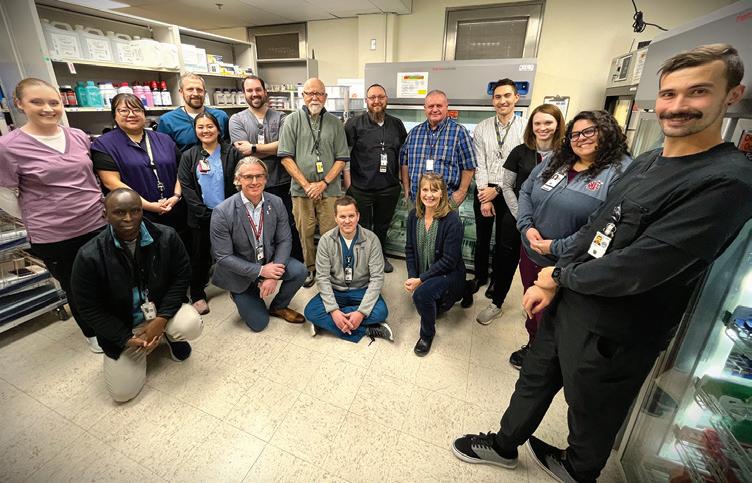

Additionally, the on-site Pharmacy residency program plays a key role in training the future generation of pharmacists. Several team members took a moment for a photograph in support of National Pharmacy Day, highlighting the significant cost-saving initiatives achieved by the MGVAMC team, which amounted to $3.9 million in 2025 (142% above the internal goal).






Simultaneously, more staff members are reaching their professional development milestones while consistently prioritizing patient safety.
Congratulations to the Spokane VAMC Pharmacy Team for their exceptional service and for helping veterans confidently choose VA


















































By Bret Bowers Mann-Grandstaff VAMC
She humbly goes about her business each day at VA, helping brighten the outlook for Disabled Veterans by offering a variety of personal and group activities that invigorate one’s mind, body, and soul.
She’s Chelsey Pangborn, CTRS, CDP, a VA Recreational Therapist who’s big heart and enthusiasm for Veterans has earned the trust and admiration of her patients – and co-workers at Spokane’s Mann-Grandstaff VA Medical Center.
As veterans she serves soon learn, Chelsey is perfect at her job because she imports a sense of purpose into recreation therapy, by embracing adventure, and overcoming the unknown to accomplish a mission.
That “drive” in part, stems from her
family heritage – aviation and military history.
Clyde Pangborn, a WWI pilot and cousin on her dad’s side, was one of the country’s premiere “Barnstormers” (aerial stuntmen) in the 1920’s. The Public Broadcasting Company (PBS) even did a documentary on Pangborn, who saw his first plane as a young boy in St. Maries, Idaho in 1911.
Twenty years later, Clyde Pangborn became the first pilot to fly non-stop across the Pacific, making a belly landing in East Wenatchee, WA in 1931.
In 2019, Chelsey honored her family’s aviation heritage during Halloween at VA.
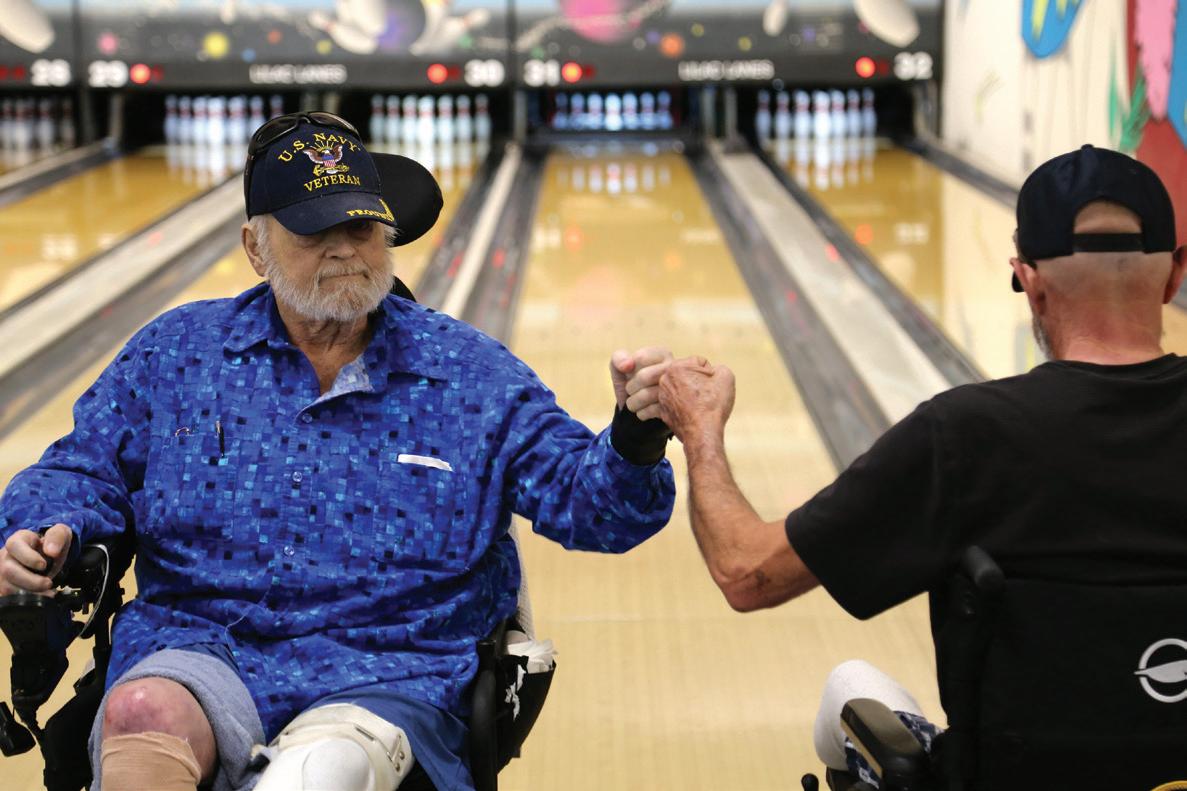
Chelsey Pangborn is a proud member of the Spokane VA team serving thousands of veterans finding dramatic, life-changing improvements through a variety of proven, mental and physical therapies. With the onset of fall and winter, one of the popular activities Chelsey and the team coordinates are the weekly bowling outings at Lilac Lanes in North Spokane for veterans enrolled at Mann-Grandstaf VA Medical Center.
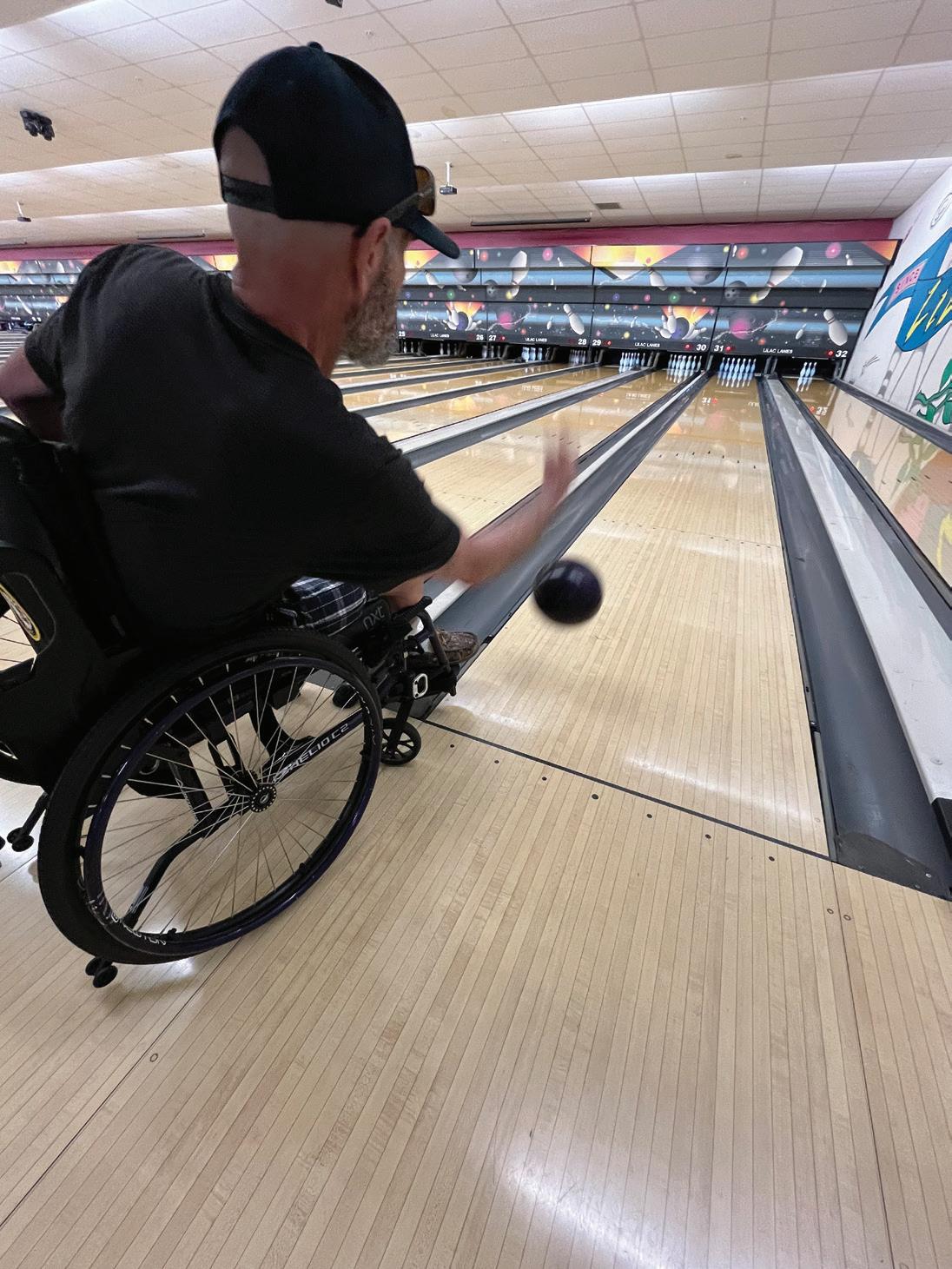
to get outside of the Community Living Center or hospital.
“These activities are fun and help me with my depression,” said Jana Potter, a former Army medic.
That’s what Recreation Therapy does. It gives veterans an outlet, a release valve to take the pressure off once in a while.
“This gathering uplifts me so much,” smiled Steve, a Navy veteran who served 1980-82. “You can tell. We’re all having fun. I changed my schedule to ensure my Thursdays are open for this.”
For Air Force Veteran Joe Fulton, bowling is a little more challenging, because he can barely see. With significant visual impairments, Fulton uses a guide rail to orient him during his approach and ball delivery on his lane. “Pin calling” is used to give Joe an idea on which pins are still standing and immediate feedback related to the path the ball took.
trust and friendships, Fulton has since begun volunteering at VA, including answering questions, guiding veterans and being a “VA Ambassador.”
“It energizes me,”smiled Gary Hekathorn after picking up his spare and sharing “knucks” with veteran Steven Godin.
Hekathorn served in the U.S. Navy during the Vietnam War, 1963-68.
In recent years, the outings have also included some of the medical center’s in-patient residents wanting
“Chelsey is an angel to every one of us,” explained Fulton, who was isolating himself before finding comfort in VA’s rec therapy programs.
“This is a safe group where everyone feels included – and happy,” he said. After four months of developing


Interviewing him quickly in the hallway at the medical center, weeks after a bowling outing, Fulton was at the podium and felt like sharing more about what he’s learning about life… while losing his eyesight.
“It’s really good mentally to talk to people, and be around others.

Chelsey is the one who pushes you to try stuff,” Fulton said.
“When you have a disability, you think you can never do that again… but you find out you can, it’s just a little different than before. You gain confidence, an ego boost, and more self-esteem. When you’re feeling down and are around others who like, wow he doesn’t have a leg and
he’s having fun, so yeah, I can try too,.” He smiled and turned to answer another veteran’s question. “Gotta keep moving forward.”
The reason Recreation Therapy works, explained Chelsey, “is because it challenges veterans to learn to reintegrate, that it’s OK to be around noise, to face their anxieties by working with and meeting new people and developing important coping skills on a new level.”

At its prepandemic peak, Recreational Therapies through Spokane VA included multiple
activities such as bowling, archery, rock climbing, fishing, field trips, and other fun physical outings.
For Air Force veteran Peggy Piland, the gathering of veterans, “gets me out of my house, and outta my head,” she smiles.
Peggy uses a special ball with a retractable grip to allow her to enjoy bowling – like she used to.
She and all of the participants agree the bowling outings offer exercise and fun, but the real value is in the “quiet” comfort of knowing they’re amongst other veterans working to overcome their own challenges and fears, by participating – together.






... Medical conditions related to diabetes may be covered.
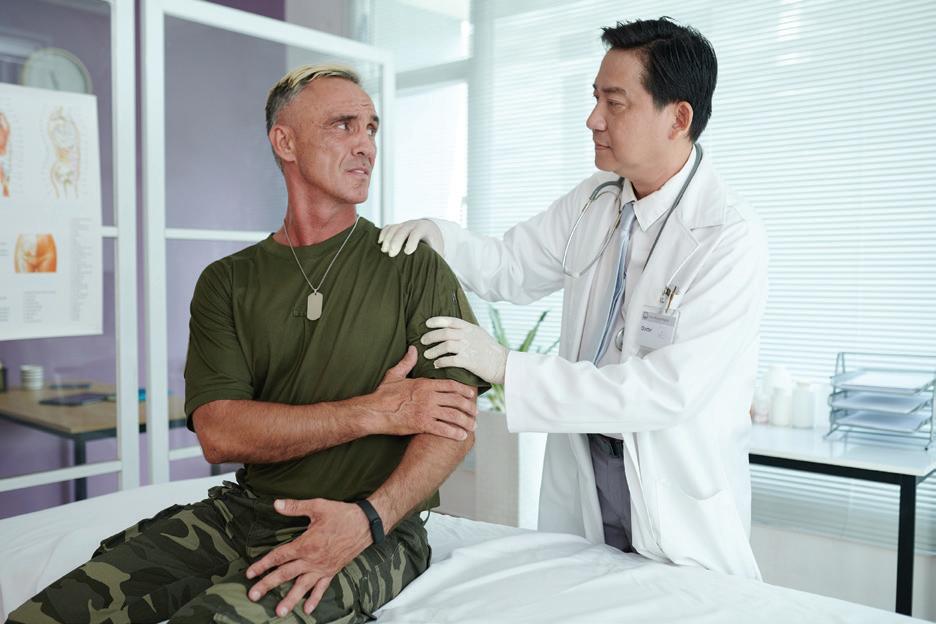
Vietnam veterans who develop Diabetes Mellitus (Type II), are automatically eligible for some VA healthcare benefits and a monthly disability check.
Conditions that are secondary to diabetes are also covered like neuropathy, chronic kidney failure, heart disease, etc.
The reason is that anyone that stepped foot in Vietnam is presumed to have been exposed to Agent Orange.
There are currently 19 listed diseases that automatically qualify you to receive compensation.
Contact one of the Veterans Service Officers (VSO) listed for more information and to help you file a claim. Your VSO doesn’t charge for this service and you do NOT need to belong to their organization to receive help.
… the U.S. Department of Veterans Affairs consists of three major administrations operating under the Secretary of Veterans Affairs?
1. Healthcare: Veterans Health Administration (VHA)
2. Compensation: Pensions & Loans the Veteran Benefits Administration (VBA)
3. Burial Services: National Cemetery Administration (NCA)
If you need help contact one of the Veteran Service Officers (VSO) listed in on “How can I Get Help?” on Page 5 or visit https://www.cem.va.gov/ veterans-and-families/, https://www. va.gov/health-care/#:~:text=My%20 HealtheVet-,VA%20health%20 care,January%205%2C%202026, https://www.cem.va.gov/veterans-andfamilies/ or https://www.cem.va.gov/ index.asp
… the VA has a mobile Safety Plan app to help you in the event of a mental crisis?
The Safety Plan app helps veterans identify strategies and tools to prevent a crisis, before it happens. Download the free app at https://mobile.va.gov/app/safety-plan
...If you are a snowbird or traveling, VA has a program to help?
If you are a traveling veteran, your VA offers the Traveling Veteran Program that includes the services of a Coordinator who helps you whenever you are traveling. Learn more at https://www.va.gov/illiana-health-care/ programs/traveling-veteran-program/
… when a veteran dies there is a process for substitution of VA claimant?
If your veteran dies with a VA claim in process, you may request to be a substitute claimant with 1 year of death. If your request to be a substitute claimant is approved, you can help the VA gather the evidence needed to complete the claim. If the claim is approved, the VA will pay you the accrued benefits (or back pay) that VA would have owed the deceased claimant before their death.
Learn more at https://www.va.gov/supporting-formsfor-claims/substitute-claimant-form21P-0847/introduction

A VA Survivors Pension offers monthly payments to qualified surviving spouses and unmarried dependent children of wartime veterans who meet certain income and net worth limits set by Congress.
For a spouse to receive DIC VA Benefits, a service-connected disability or one presumptive of military service must be listed on the death certificate as a primary cause of death or a contributing cause of death.
Be sure the person that will sign the veteran’s death certificate (at the funeral home or a medical person at a hospital) is aware of any and all service-connected disabilities that
could have caused or contributed to the veteran’s death. This will help the spouse file a successful claim to receive VA benefits after the veteran’s death. Attention veterans and families!
You cannot wait until a veteran dies to start your quest for survivor benefits! To make sure you get the benefits earned and deserved, you have to make sure the Death Certificate is completed as noted above. To get additional information or help go to https://www.va.gov/familymember-benefits/ or seek help for the resources listed in the “How Can I Get Help?”section in this publication.

By Tzena M. Scarborough Vets Help Net Correspondent
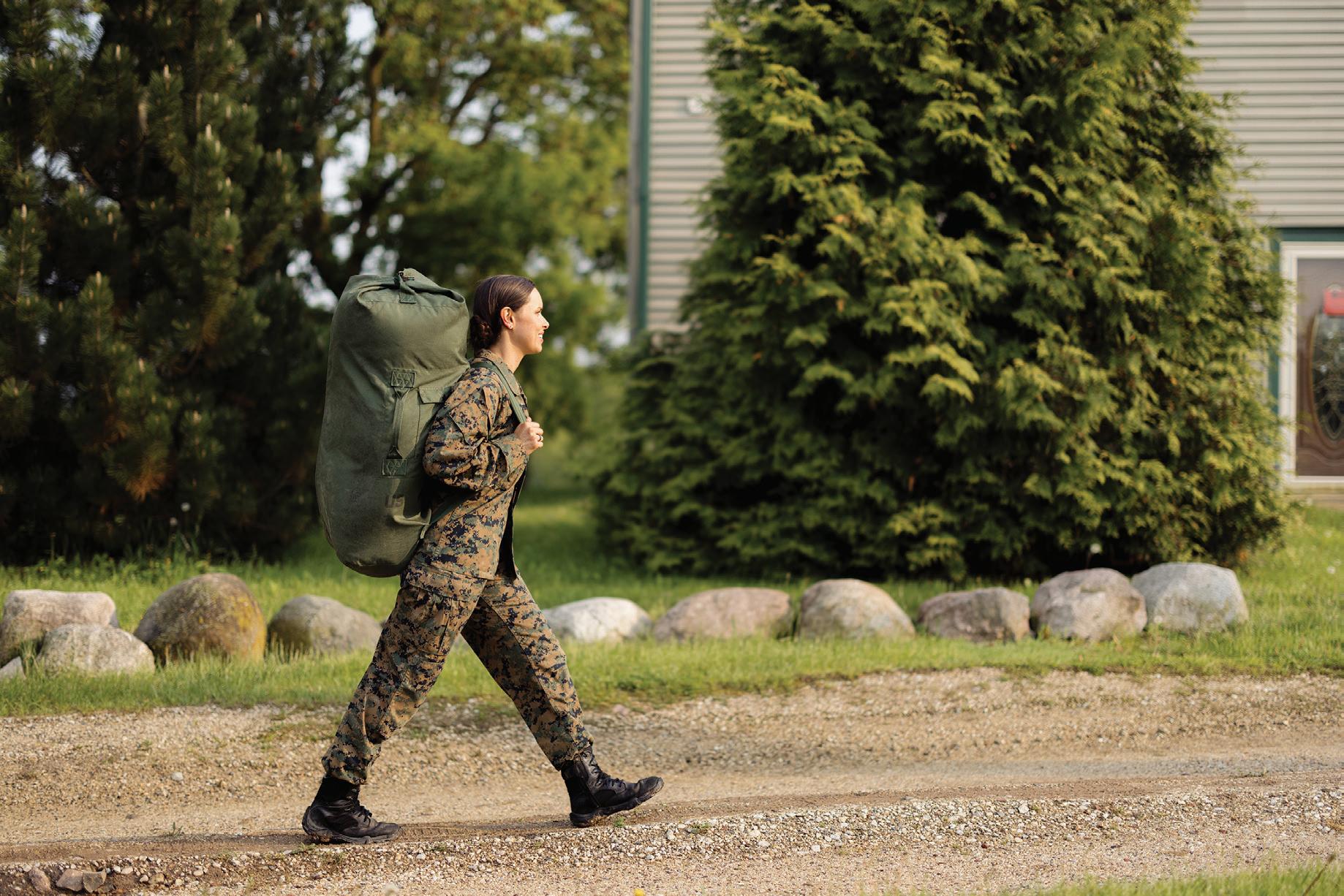
Veteran Service Organizations (VSOs)—including the American Legion, Veterans of Foreign Wars, Disabled American Veterans, and many local posts nationwide—have long been cornerstones of veteran life. They offer camaraderie, service opportunities, and a collective voice for those who have served. For many women veterans, however, participation in these organizations remains a mixed experience.
Today, women make up more than 10 percent of the U.S. veteran population. Over 3 million women have served our country since the Revolutionary War, and more than 2 million women veterans are alive today.
Women have served in every branch, in every era, and in every role the military has to offer. Yet many VSOs still reflect an outdated image of who a “typical” veteran is: an image that does not always include women. That disconnect is often felt the moment a woman veteran walks through the door.
Women veterans frequently report being mistaken for a spouse or a guest rather than recognized as a fellow veteran. Some are questioned about their eligibility or asked to “prove” their service in ways their male counterparts rarely experience. Others report being directed toward auxiliary membership, despite being eligible for direct membership.
While these moments are often unintentional, they can create an
immediate sense of exclusion in spaces meant to foster belonging, trust, and shared experience.
Even when women are welcomed as members, inclusion does not always extend beyond attendance. Leadership roles within many VSOs remain overwhelmingly male. Women who seek greater involvement — or who raise concerns about equity, conduct, or organizational culture— sometimes report being talked over, dismissed, or labeled as disruptive.
Several women veterans also note that meetings and social environments can feel unwelcoming when sexist language or dismissive behavior goes unaddressed.
These experiences are not universal. Many women veterans have found VSOs that lead with respect and inclusion. Posts with diverse leadership, clear codes of conduct, and intentional outreach to women veterans often become stronger and more effective organizations.
Simple steps — using inclusive language, publicly recognizing women’s service, and ensuring respectful meeting spaces — can make a measurable difference in whether women
veterans feel valued and heard.
VSOs play a vital role in advocacy, community service, and veteran support.
When women veterans disengage because they feel undervalued or unwelcome, organizations lose experienced leaders, dedicated volunteers, and perspectives shaped by modern military service. The broader veteran community loses as well.
Women veterans are not asking for special treatment. They are asking for the same respect, trust, and sense of belonging afforded to any veteran. VSOs face a clear choice: remain rooted solely in tradition or adapt to reflect on the veterans they serve today.
Listening to women veterans— and acting on what they share —will determine whether these organizations remain relevant, representative, and strong for generations to come.
Tzena M. Scarborough is an Army woman veteran (WAC) and American Legion member. She is also a veteran advocate and organizer of the “Women Veterans in the Spokane Area”Facebook page, for all women veterans, active duty and reserve members. She encourages all veterans to consider joining a VSO. Contact her at (509) 999-4939 or ladyveterans@comcast.net. She recently asked ChatGPT “What are women veteran’s experiences with Veteran Service Organizations such as the American Legion, VFW, DAV, and others?”


Explore new ways to stay active, engaged and inspired.
Discover local vendors dedicated to helping you feel your best, stay independent and live vibrantly after 55!
Sponsored by:











Designed for adults 55+ who want to live well, stay active and enjoy life.
Saturday, May 16 9:30 a.m. - 1:30p.m. spokesman.com
Connect with businesses focused on active aging, try engaging demonstrations, and enjoy free seminars that cover health, home, recreation, financial well-being, and more!