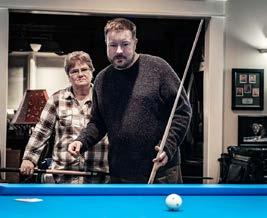
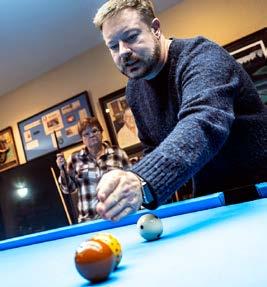
By now, you've certainly heard of the value of a pre-shot routine (PSR). You might have even spent time trying to build one. Take a moment to verbalize what your routine looks like before reading further.
Did you describe something like this? "I chalk behind the shot, see my contact point, step in, take three practice strokes, and fire."
That sounds like a routine you want to have. Now, let’s consider what a real routine is. Think about this: When you cross your arms, which arm goes over the other? When you brush your teeth, which tooth does your brush touch first? I'd bet you brush almost the same number of strokes for the same amount of time every time you brush, and you've probably never counted them.
These are real routines. They are so ingrained that you perform the same action without conscious thought. It would take concerted practice and effort to change them. The motions are so rote that trying to do something different feels unnatural. The reality is that every experienced player already has an automatic pre-shot routine which may or may not look like what you've read or seen it's supposed to look like. The difference is that the best players know how to harness their inherent routine to set themselves up for success—automatically and mindlessly.
It doesn't matter how many practice strokes you take. The
truth is, it really doesn't matter if you take three practice strokes, or three hundred, or zero. What matters is the one stroke that hits the cue ball. Here is our three-step framework for maximizing the effectiveness of your pre-shot ritual with consistency valued over counting:
Build Your Mindless Routine: The 3 P's of Pool
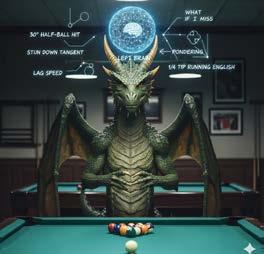
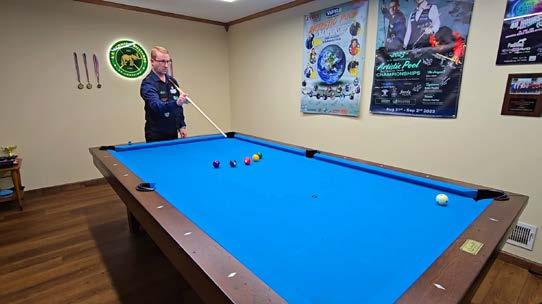
1. Pondering: Think in the Thinking Position (Embracing the Left Brain)
This is where you plan. After identifying the shot and
safety factors, stand behind the shot and mentally verbalize the execution plan. This is the realm of the nerdy but logical, left brain.
• Use specific words: "It's a 30-degree half-ball hit, stun down the tangent line with 1/4 tip running English to get back to center table, lag speed."
• Crucial rule: This is done while standing. We do not shoot here, and we cannot miss here.
2. Painting: Visualize in the Visualization Position (Embracing the Right Brain)
Here we transition from words to pictures. This is where the artistic and intuitive right brain paints the desired outcome, and the musical inclination of the right brain associates sounds with aim, spin, and speed.
• Visualize the outcome: “Hit the object ball here so the cue ball goes there.”
• Use sound cues: Tone (spin) and volume (speed) are critical.
• Crucial Rule: This is done while standing. We do not shoot here, and we cannot miss here.
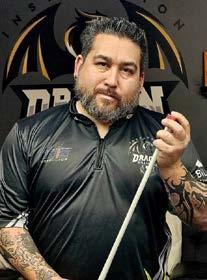
Kim "The Dragon" Young
2025 PBIA Instructor of the Year
PBIA Master Certified
ACS Level 4 Instructor
Senior Instructor at Billiard University
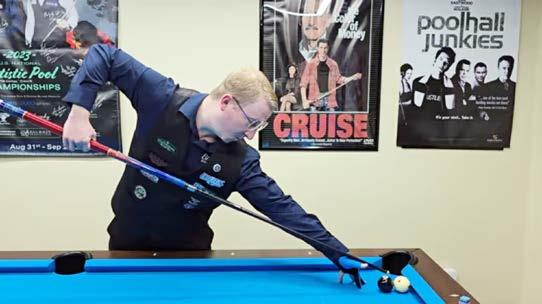
3. Performing: The Shooting Position (Incorporating the Body)
All of your conscious thinking and visualization is complete. You are now down on the shot, and your body is going to either listen to the right brain and paint the picture, or listen to the left brain and second-guess/ make corrections at the last moment. You must operate solely on a binary system:
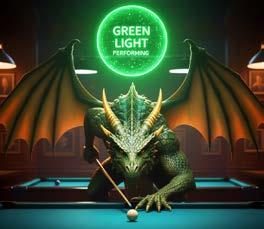
• Green Light: All systems go. The vision aligns perfectly. FIRE.
• Red Light: There is any doubt, tension, or misalignment. STAND UP AND RESTART.
• There are no yellow lights and no thinking here; this is where we can miss. If it doesn't feel right, do not shoot! We never miss any shots that we don't take.
The Power of Missing Like a Pro
The brain is not designed to multitask in the way we often demand of it. If you're down on the shot, thinking about how many practice strokes to take, who is aiming? It is perfectly fine if your pre-shot routine doesn't look like others. What isn't okay is when you don't look like yourself.
At Dragon Billiards Instruction, we teach our students how to miss like a pro before we teach them how to shoot like one. When a professional misses, you often have to watch the pocket to realize it because most often when they miss, they look exactly the same as when they make. When an amateur misses, we can often tell by watching the shooter.
Learn to miss looking good. Learn to look exactly the same whether you pocketed the ball or missed it. When you can miss like a pro, you will inevitably start making more shots like one, too.
• Don't think in the shooting position.
• Don't shoot in the thinking position.
• Miss fewer shots by shooting fewer shots.
• If it doesn't seem right, you don't need to shoot it to find out!
When you operate in pictures instead of words and focus on natural consistency instead of forced behaviors, your routine will become so automatic that you won't know how to describe it next time someone asks—just like you couldn't describe your tooth-brushing routine until you pretended to do it.
Ready to Take Control of Your Game?
Join over 7,000 other students I’ve worked with in 62 countries to improve your game live online or inperson. We can work together wherever you are in the world with live online instruction. Honestly, it's usually more effective since we can work on smaller pieces more often rather than cramming many pieces into a weekend. Give me a call for a free consultation, and let's see if we make a good partnership.
Quit Draggin' and Get Dragon!
Kim "The Dragon" Young 2025 PBIA Instructor of the Year
PBIA Master Certified, ACS Level 4 Instructor, Senior Instructor at Billiard University
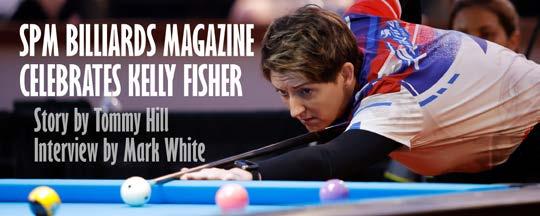
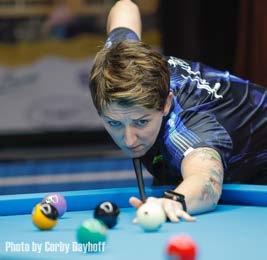
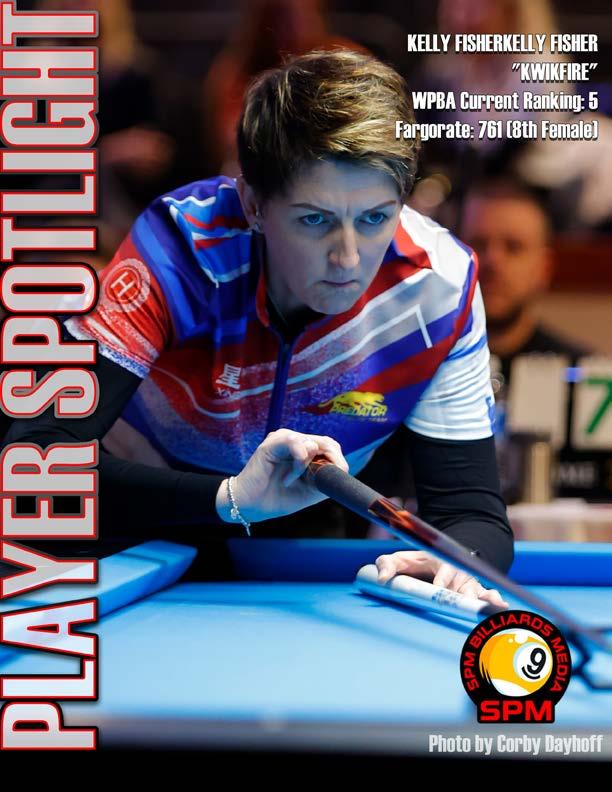
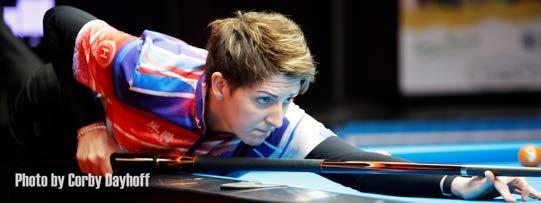
When you think of the great women of pool, there are many names that pop up. Allison Fisher, Jeanette Lee, Loree Jon, Ewa, to name just a few. There is one name, however, that should be at the top of everyone's list, and that name is Kelly Fisher.
I had the opportunity recently to chat with Kelly about her career, and wow, what a career it has been. Kelly has countless tournament victories under her belt, and when I say countless, I mean it. I tried to count them all and stopped trying.
What struck me most about Kelly was her lighthearted
wit and just how genuine and friendly a person she is. If you ever get a chance to meet her, you will be all the better for it.
When Kelly was growing up in the UK, her parents owned a pub called The Empire Working Mans Club. The pub housed a snooker table that she was just fascinated with. She told me that at a young age, she remembers standing on a crate, hitting balls, and when she was just nine years old, her father bought her a small table to play on at home.
Recognizing his daughter's talent, Kelly’s father took her to a snooker hall when she was twelve. That is when she was introduced to Lionel Payne. A man who would become her friend, her coach, and her mentor. Kelly smiled and told me that when he first saw her play, he didn’t think she stood a chance because she was too short to reach the table. However, as he watched her play, her ball pocketing abilities and fluidness around the table quickly changed his mind. Lionel agreed to become Kelly's coach. After many world championships and a couple of years now, Lionel is still coaching her today.
Kelly started her career as a professional snooker player. Her proudest moments, if she could pick from so many, came in 1998 when at just nineteen years old, she won her first snooker championship. Then in 2019, at the age of forty, she won the WPA women's 9-ball world championship,
proving to herself that she still had the firepower to compete with the younger generation of players.
Kelly made the leap from the UK to the States in 2004 to join the WPBA. She was enjoying a successful career as a professional snooker player when the rug was pulled out from under her. At the time, the main sponsor for the women's professional organization was a large tobacco company. In 2004, the UK placed a ban on tobacco use indoors. Needless to say, the tobacco company withdrew its sponsorship, and that was the end of the women’s tour. Now with nothing to do, Kelly entertained the idea of getting a job. She went to a job placement agency and was sent out on two different assignments. To the pool world's benefit, she hated it, so she packed up her cues and headed on over. Since then, she has become one of the most recognized and loved ladies on tour.
During our conversation, we discussed the Mosconi Cup. I asked her why she thought the Europeans have had such a strong hold over the US, and she attributes it to the strong connection between the pro players and the junior programs in Europe. She also added that the USA junior programs have made a huge jump, which helps to level the playing field. I asked her what her thoughts were on having a woman player on each team. We both agree that it would be a nice addition to the cup. Maybe the decision makers will take that into consideration at some point.
In 2021, Kelly was inducted into the Billiards Congress
of America Hall of Fame. As far as I know, Kelly is the only player, male or female, to have won a world championship in five different disciplines. This includes Snooker, English billiards, 9-ball, 10-ball, and just this year, she added Heyball to the list.
Kelly is currently working on a new endeavor with Noel Flannery. Noel is known as one of the world's leading coaches in sports psychology. Together, they have launched a website called cuesporthubusa.com, where players can subscribe to the site and unlock a world of knowledge regarding the mental game.
Like most full-time touring pros, Kelly will be on the road for the first part of December. She intends to return home to spend Christmas and New Year's with her family, before having a quick turnaround on the tournament trail come January.
Kelly credits her parents for instilling a love for cue sports in her at a very young age. Her sponsors include Predator, Xingjue tables, Horo cue tips, and Cue Armour apparel.
Our sport is unique in that we can go to an open event and mix it up with our favorite players. The pro players, for the most part, are approachable and willing to say hi and even take a picture. Kelly is right up there at the top of the list. She is as nice a person as you will ever find. If you see her at a tournament, be sure to say hi and tell her you read her article in SPM Magazine.
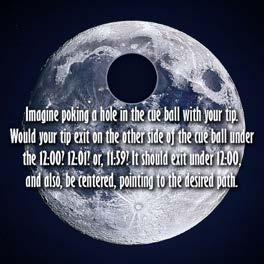
Every cue ball has a light side and a dark side—the half you see and the half you don’t. Great players learn to connect with both. The visible side guides your aim; the invisible half, the dark side, determines your accuracy.
Most missed shots come from striking slightly offcenter. Miss left, the cue ball deflects right; miss right, it squirts left. This tiny error—squirt—is like gravity pulling the ball off course. To play precisely, you must learn to strike through the light into the dark: the unseen hemisphere where the true center lives.
Strategy 1: Using the Top—Illuminating the Horizon
An effective way to find the center is to align your tip with the top of the cue ball—the horizon line (12 o’clock). Visualize your cue punching a hole in the cue ball, exiting on the dark side. That unseen exit point helps you find the true center.
I use this method especially when applying topspin. Thinking about the top keeps me centered and reminds me that the cue’s path extends into the hidden side of the sphere.
Strategy 2: Using the Base—Finding Light in Shadow
When applying draw, I focus on the base of the cue ball—the lowest point (6 o’clock). That base runs along
the same vertical axis as the true center. By visualizing the tip traveling through to its opposite point, the center of the cue ball is much easier to find.
Strategy 3: Understanding the Equator—The Line Between Worlds
The cue ball’s true center lies along its equator. Ironically, it’s also the hardest place to strike precisely (because it’s so much wider). A fraction of an inch off, and your entire shot changes direction. Mastery begins with envisioning the invisible.
Pro Tip: Aim High or Low—Navigating by the Edges
When you’re forced to aim high on the cue ball, you’re usually better off aiming really high—and the same goes for low. It’s far easier to center there (narrower), and the extreme positions give you a clearer visual reference. When you strike near the very top or bottom of the sphere, you’re hitting the cue ball’s natural leverage points, allowing you to shoot softer while generating greater spin with less effort. This reduced power requirement not only increases your control but also enhances accuracy, since softer strokes minimize deflection and throw. In essence, committing to high or low contact points creates cleaner, more efficient results than hovering indecisively near the true center.
The Case for High-Center—Guided by the Light
High-center is the most forgiving hit because it’s easier to visualize. The taper at the top of the cue ball gives you a clear horizon to align with.
Anthony Beeler is the current Billiards Instructor of the Decade and is a former BCAPL National Champion. He has numerous “Top 25” national finishes and is the primary author of the ACS National Billiards Instructor’s Manual. He has also authored the book Unstoppable! Positive Thinking for Pool Players. Anthony currently has the highest established Fargo Rating of any Master Instructor. He has won over 300 tournaments and has defeated numerous professional players in tournament competition.
When I strike high-center, I imagine the cue passing through and exiting just beneath the 12 o’clock point on the dark side. That mental image locks in my alignment. Buddy Hall was famous for this. When asked how he hit a particular shot, his answer was almost always, “Highcenter.” Asked why, he said, “I just see the shot clearer that way.”
And he was right. With high-center, your vision flows straight from cue ball to object ball—no extra eye movement, no confusion.
Whenever possible, I recommend it because:
1. Less eye movement – Your gaze stays steady and direct.
2. Easier alignment – The taper at the top helps you find the center.
4. Natural cue path – The shaft aligns more cleanly with your aim line.
High-center simplifies aiming and builds repeatable precision—the essence of confidence at the table.
Centering on the Dark Side
Think of the cue ball as a planet—360 potential “centers,” one for every degree of its surface. Your task is to locate the one exact line that sends the cue ball on the desired path to pocket the object ball in the center of the pocket.
Top players understand this instinctively. Data shows that elite shooters with Fargo Rates in the 800s spend more time studying the cue ball than those in the 700s. They aren’t hesitating—they’re aligning with the dark side of the moon.
The Takeaway
Don’t just aim for what you can see. Aim for what you can’t. True accuracy lives on the hidden half of the cue ball—the side that only your mind’s eye can reach.
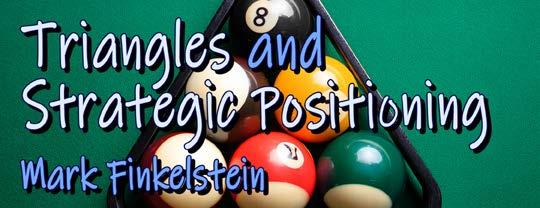
Triangles
In this article, I want to look at the idea of cue ball work and how to take the balls off the table in the simplest way possible. As you realize by now, pool is a difficult game, and the more we try to do with our cue ball, the harder the game gets to pocket the object ball and control the speed and direction of the cue ball.
Imagine for a moment a tall, skinny cone with the pointed end cut off. If you do nothing with your cue ball and keep the game simple, pool is easy. But once you start adding things, high right, draw, etc., the game gets hard amazingly fast.
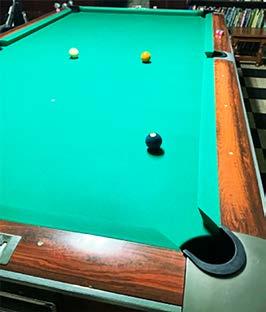
Let us look at the baseline concept for taking the balls off the table in the easiest way possible. Before we get into the details, there is some vocabulary we need to understand. A ball leads to another ball if the cue ball replaces that ball; the next shot would be easy. In this photo, the one ball leads to the two balls. In this case, just pocketing the one with a soft, rolling ball guarantees a shot on the two-ball.
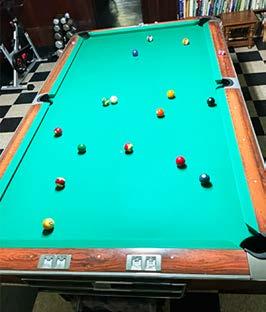
What we want to do when taking balls off the table is look for triangles where one ball leads to the next in a series of three easy, slow rolling shots. This is a distinct way of thinking about pocketing balls! Without using “a little draw” or anything extra, just finding three easy shots without adding anything to the cue ball! Let us practice picking out some of these triangles in the photo on the next page.
The 1 leads to the 14 and then the 7. All three of these balls can be pocketed with a simple rolling ball and an easy stroke. Difficult to mess up! And if we push out further into the future, the 7 leads to the 5 on the side, and then we fall on the 6 and then the 9! In every shot
here, I used a soft rolling ball and cheated the pocket slightly if I needed to adjust an angle.
The key point here is that I didn’t overhit any shot or add things to a shot that aren’t necessary. Now I understand there are a lot of times, particularly in rotation games, that require our cue ball to do a lot of work, but your game will increase rapidly if you always look for the easiest option first before juicing up your cue ball. A little of this and a little of that will get you into a lot of trouble quickly!
For example, let us say you overhit the shot on the 14 and leave yourself with a back cut on the 7. Now the cue ball will hit the 6, sending it into the unknown, and the cue ball will be heading toward the lower right-hand pocket. To avoid this, you jack up a little, put some “low left” on the cue, rush your stroke, and miss the ball, tie up the 6, and take a seat in the chair!
You will go to the practice table and shoot that jackedup back cut draw shot a hundred times to get it right! And that is a good thing because the more tools in your toolbox, the better. However, to win more games, a slow
roll on the 14 to keep your angle on the 7 is the ticket!
The key concept in this article is doing whatever is easiest and not doing more than is necessary.
To practice this concept, throw 15 balls on the table, take all the chalk off your tip (or cover it with cell tape), and see how many balls you can run! All of a sudden, those spin and draw shots disappear, and you are forced to pick good triangles, roll the cue ball slowly, cheat the pocket when necessary, and shoot softly. Once you get the hang of random balls, try running out 8-ball or 9-ball patterns with no chalk! Start simple with three or 4 balls and work your way up! Race the ghost as a measure of your success.
Stick with this for a month, and your game will get simpler, and you will be playing a whole lot better.
How to get better right now!
We all want to improve our pool game. We buy the latest in equipment, we read all the books we can find, we take lessons, watch videos, talk to our friends, and practice. We try different grips, different tips, different shafts, and even different shoes. But that breakthrough is just out of reach! This article aims to help you.
What I want to do in this article is to give you some tips that will improve your pool game right now! You will not have to buy anything, practice something a thousand times, or change anything. In fact, the main emphasis in this lesson is on doing less!
Let us start with our eyes. Now there are arguments for looking at the cue ball last, or the object ball last, and I will not explore that here. What I do want you to do, though, is that whatever you choose to look at, make sure your eyes are focused on that target and not moving while you are stroking at the cue ball! That is right, do not move your eyes while you are stroking the cue ball!
Pick the spot you want to hit, or your target for the cue ball, and make sure your eyes are locked onto this point while you are moving your cue! The idea here is not to move your eyes while you are moving your arm.
Next is your grip. Again, I recommend a loose grip, but your loose grip might be tight in comparison to mine. But what is crucial here is that whatever grip you start your stroke with, you finish your stroke with. Twisting, clenching, pulling back, and punching are all added to the swing and will cause way more harm than good. Again, the theme of doing less raises its head. So many people tighten up to hit the cue ball. Think of pool as a board game where you are moving pieces around, rather than a stick and bal game where you hit the ball.
On to the bridge. We want our bridge to be solid, nonmoving, and close to the cue ball. How close is a matter of judgment and shot speed, but the key factor here is that your bridge is stable and not moving! One thing about being close enough is that it is a trade-off. The closer you are to the cue ball with your bridge, the more accurate you are, but up close, it is harder to see the cue stick and shot line. There is a happy pace where you can see the shot and are just close enough to be accurate. Also, make sure your fingers do not open, your thumb is rock solid, and your grip hand is on the table. Again, make a stable bridge and leave it like that!
Next on our list of doing less or nothing is using a painfully slow back swing! It will be hard, but make sure you use a slow, full backswing, all the way back to your fingers! Nothing short, quick, or jerky! A quick backswing causes all sorts of errors with accuracy and speed control. A brief backswing means you need to punch or muscle the cue stick forward. Pull the cue stick slowly back to your bridge hand, pause, and then swing.
Staying down on the shot is also very important. After the stroke, stay down on the shot and do not jump up! I know this will be hard, but any movement right before, during, or right after your stroke will all contribute to errors. Just move your stroking arm and stay still!
The last tip is to keep your head still while you are stroking the cue ball. This is related to what your eyes are doing. Moving your eyes and head causes slight errors in stroke delivery with missed shots and position as a result.
I guess that, unlike most things where you are encouraged to do more and try harder, this does not apply here. Relax and do as little as possible! The person with the slowest heart rate has the best chance of winning! Relax, stop trying so hard, and let your cue stick do the work for you.
Center-to-Edge Aiming is indelibly tied to 2:1 regulation playing surfaces, such as the fifty inches by one-hundred inches plane that is common to four and a half-foot by 9-foot pool tables. The origin of two squares butted together serving as the standard surface for various cue sports unknowingly opened a portal that facilitated the birth of an aiming phenomenon.
Professional aiming occurs with one of two cue ball edges to one of three object ball aim points.
On one hand (for feel), a 2:1 playing surface does not matter when it comes to aiming systems. On the other hand, a 2:1 playing surface is absolutely critical for attaining objective alignments. Traditional feel systems, such as ghost ball, contact points, and fractions, can work wonderfully on playing surfaces
consisting of dimensions other than 2:1. That’s the nature of man-made systems; just feel your way to the pocket. It’s a fact that conventional aiming practices are chock-full of subjectivity. No problem! Feel is deemed to be inherent to all aiming.
Hold on, there actually is a problem. A finite body of visual and alignment knowledge, which was never supposed to have seen the light of day, has surfaced. This finished work solves aiming, but only on playing surfaces that have 2:1 dimensions with six regulation pockets. This knowledge is branded as CTE PRO ONE. CTE PRO ONE unravels everything from A to Z about Center-to-Edge Aiming. Despite two and a half decades of pushback and continuous negativity directed toward CTE and me, a paradigm shift is occurring in conjunction with the emergence of the truth about the aiming phenomenon. What has been problematic for my critics is a blessing, a gift if I may, to those players around the world that are sufficiently motivated to experience how to really aim and align.
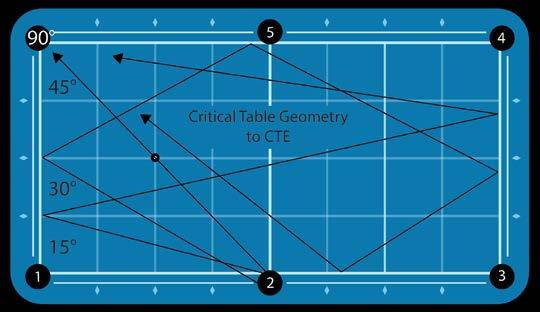
Thanks to Hal Houle’s genius, there’s more to table geometry than what meets the eye. Illustrated in the pool table diagram are three angles (15, 30, and 45 degrees) that are common to all 2:1 playing surfaces. As you will discover, these angles are the foundational tie between table geometry and human vision.
The 45-degree angle line runs from the side pocket to the 90-degree corner. The 30-degree angle can be established as a line that originates from the back of the side pocket to the nose of the cushion in front of the middle diamond. The 15-degree angle line runs from the center shelf of the side pocket to the nose of the cushion in front of the first diamond. The sum of the angles 15, 30, and 45 equals 90, which is the angle shown at the corner pocket. The significance of this is that just as the 45-degree line leads from the side pocket to the 90-degree corner, the 15 and 30-degree angles each form lines that naturally route to the same 90-degree corner. The 15-degree angle, when extended, creates a two-rail route to the 90-degree corner. The 30-degree angle, when extended, yields a four-rail route to the 90-degree corner.
Should the dimensions of a 2:1 surface be altered to a different ratio, such as 3:2, the 15, 30, and 45-degree angles could not occur as a trio of routes that lead to the 90-degree corner. CTE can not work as an objective center pocket system on a modified playing surface. A table’s surface dimension for the purpose of applying CTE must be 2:1 with six regulation
pockets. A standard six-pocketed surface has eight 90-degree angles: one at each corner and two at each side. When man created the specifics for regulation pool tables, little did he know that in time, a Hal Houle initiated reverse engineering feat would solve aiming for how to really see and align on 2:1 surfaces.
Decades ago, when Houle shook up the pool world with his assertion that three aim lines can handle nearly all shots on a pool table, some important thinkers in our game chose to look the other way. That was very unfortunate, considering the lost years of valuable research time. Houle’s online three-aim line document was severely criticized and joked about rather than seriously studied. Years later, it was this CTE researcher who came to understand that Houle’s three-line aiming directive is an inseparable component of Center-to-Edge Aiming.
Let’s take a cursory look at what just one of the three phenomenal aim lines can do for a single cue ball and eight object balls in relation to a corner pocket, 90-degree angle.
An aim line for CTE does not originate with the traditional center of the cue ball. That’s amateurish guesswork aiming at ghost ball, contact points, and fractional stuff. Professional aiming occurs with one of two cue ball edges to one of three object ball aim points. Those aim points are located at the object ball center and the two quarters.
What’s amazing about the eight-shot setup is that the same aim line makes all eight shots, not just in the pocket but into the center of the pocket. Shown in the image are eight different angles with varying distances between the cue ball and each of the object balls, yet the left cue ball edge has a geared alignment to the left object ball quarter, solving each shot to a professional center-pocket entry.
You can take it to the bank; three aim lines can handle nearly every shot on a 2:1 table. Aiming is finally solved, thanks to the phenomenon known as Center-to-Edge Aiming. One day, CTE will become the aiming standard of our industry.
Stan Shuffett is the world’s foremost authority on Center-to-Edge Aiming. In 2011 and 2013 Stan produced two top shelf CTE videos: “Stan Shuffett Presents PRO ONE and Basic Center-to-Edge” and “Stan Shuffett’s CTE PRO ONE: The Final Chapter”. In 2021 Stan authored “Center Pocket Music: Using CTE PRO ONE to Improve Your Pool Game”. Shuffett is a master instructor and has been with the PBIA since its beginning in 1992. He specializes in individual instruction at his private teaching facility in Greensburg, Kentucky. Stan’s website is www. justcueit.com.
One of the biggest issues that resides in any athlete is the mind. The mind can be very difficult to control and, at times, be very detrimental to an athlete's performance. Over the years, sports psychologists have worked hard to gather research to control how the mind works in intense situations, and despite their findings, some amazing information on how the brain works, many athletes across all sports succumb to the wounds of pressure.
My moment of huge psychological breakthrough came at the ACS Midwest Championships. I was playing with a killer team, and our first round saw us draw a team from Indiana. The race to 11 battle went on for a while until the score was 10 to 10. Back then, when a tie match occurred, each team put up one player to play a one-game tiebreaker
to determine the winner. I had been put in this spot many times before, but this time it was different. My team turned to someone else for the first time, and immediate doubt set in. I had never had that feeling before, as I had always been “that guy” on the team. Now, this wasn’t a bad thing because the player they turned to is an absolute beast on the pool table, but it was his response that put even more pressure on me. He says, “Guys, I’m really not feeling it, I think Eric should do it.” The look on my face, I’m sure, was one of shock, as I respect this player's game very much. However, to his credit, when you aren’t feeling it, you aren’t feeling it.
The problem for me in this situation was that I was already dealing with the mental pressure of my team having more
confidence in someone else than in me, and then that player turning around and saying, “You do it.”
Here I am flipping a coin to break the last rack (never flip, always lag), and luckily, I win the coin toss. As my opponent is racking the balls for the break, I remember feeling lots of pressure. This player was the first person I ever played in a state tournament, and he absolutely ran me over. Over time, we became friends and we both respect each other very much. So the rack was set, I got down to break and let out a huge head on break… just to have about four balls from the rack spread out and leave the rest of the rack in the stack. My opponent looks at me and says, “Eric, you know I would never.” As I looked at him, I smiled and we both began to laugh because we understood that four balls hit a rail and the safe game was on. Little did we know what was about to happen.
1 hour and 28 minutes and 57 safeties (each) later, he finally made the first error, and I was able to take ball-inhand with an opportunity to win the match. There were about 30 to 40 people watching, and even three referees who didn’t have the heart to challenge a stalemate. My heart was racing 1,000 miles per hour, and I thought to myself, “Eric, you can’t screw this up.” I took way longer than I should have, I am sure, and I ran what was left of the rack and won the match for my team. We didn’t win the tournament, but that game was a huge psychological win for me because going into the game, I wasn’t confident due to the prior discussion before the game began.
After that game, the other player that was asked to shoot the tie breaker looked at our team and said, “As long as we shoot on the same team, I will never shoot the tie breaker game again. I would have swung into that rack 45 seconds into the match, and probably lost the game. You played that game with such patience, and that was fun to watch.” He probably doesn’t remember saying all this, but the impact that message had on me was so beneficial because it reassured my mind that I did deserve to be in that spot. He may never fully understand what that meant to me. To this day, he has still refused to play the tiebreaker. I haven’t won them all, but I am batting over 500 with my tiebreaker wins since that day.
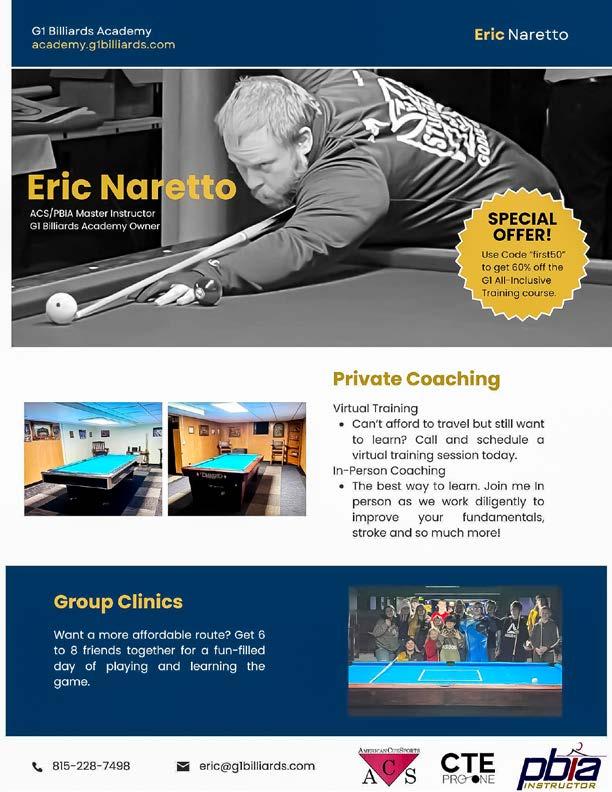
Eric Naretto is a two time State and National Champion.
An instructor for 13 years, he is currently a Master Instructor with the PBIA and a Level 4 Instructor with the ACS.
In July of 2025, Eric was awarded the Inaugural American Cuesports Outstanding Instructor of the Year Award.
With all that being said, I am not a sports psychologist. BUT! As an instructor and coach, it is my job to relay any information to my students that may help their situation of mental breakdown turn into a mental breakthrough. Here are some tips that a player can use to work on their mental management.
Hold Yourself Accountable
Obviously, this is a big one in pool. So many players give the excuse that the table rolled off or the rail was dead. Other players blame the lights and people walking around. Sometimes it’s the noise in the room.
If you miss a ball, just accept you missed it. We are human, we aren’t always going to execute well, and some matches may see us execute better than others. If you learn to hold yourself accountable, when you do use any of the excuses above, they will hold more merit with the players that listen and look up to you, as they know you will never be a person to make excuses for yourself.
Breathe
Breathing is totally overlooked in pool. One of the only things we can control (perhaps the only thing) we can control to try and keep the mental pressure off is to breathe. Strong breathing techniques in the pre-shot routine and the chair when the other player is shooting can be all the difference between a mental success or a mental shutdown.
Trust Your Training
You only know what you know. Compete at the level you know how to compete at for as long as possible. Stay within your means. Now is not the time to try something new or guess. Do what you can, but remember what you couldn’t. If you find something you don’t do well, that is when you return to the practice table and work on the concepts that you don’t understand well to help improve performance in the future.
Don’t Let Negative Thoughts from Outside the Game Harm the Thoughts Inside the Game
This one is tough. Things happen in life that you may not be able to stop thinking about. If this occurs, take a step back, breathe, and approach the table as calmly as you can. Don’t be upset at a loss in this situation. We will lose some battles in this war, but taking the time to focus and break away from the outside world will help a player play better.
Have Confidence and Believe in Yourself
The first four tips go into this final piece of confidence. You will never be able to break your limits without the confidence to do so. Positive thinking is so important in the development of an athlete. The confidence to understand that you are capable of performing at a high level unlocks the ability to play at a high level and continue to grow as an athlete. In my story, I wrote at the beginning, there is a spot where I told myself, “Eric, you can’t screw this up.” Negative thinking promotes negative actions. I was putting even more pressure on myself to do what I knew I could do. Having a positive response, such as “Let’s go, you can do this,” and actually believing it can turn a B player into an A player in a very short amount of time.
The story I shared with you is a very personal one to me, as I have battled some mental anxiety for the majority of my life. I hope that the story and tips provided allow you to play hard and work on your game even harder than before.
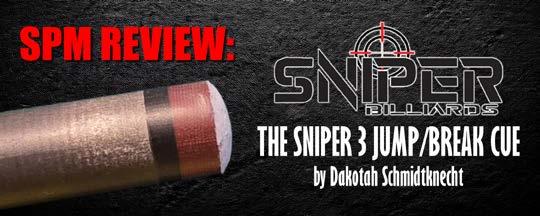
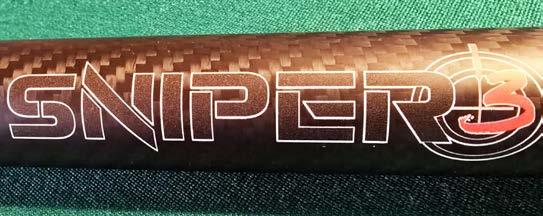
The Sniper 3 Jump/Break Cue is an absolute standout in the world of pool equipment—sharp, reliable, and engineered with precision that punches way above its price point. Crafted entirely from high-quality carbon fiber, this cue delivers premium performance without forcing you to empty your wallet, making it an accessible powerhouse for serious players looking to elevate their game.
Starting with the aesthetics and build, the Sniper 3 boasts a sleek matte exposed carbon fiber finish that's not only visually striking but incredibly smooth to the touch, providing a comfortable, non-slip grip even during intense sessions. The full carbon fiber construction ensures exceptional durability and lightness, clocking
in at around 19 ounces, which strikes the ideal balance for powerful breaks without feeling cumbersome over long matches.
One of the cue's smartest features is its dual Uni-Loc quick-release pins—one for the main joint and another for the secondary—which allow seamless transitions between full-length breaking, shortened breaking, or jumping configurations. This modular design makes it incredibly versatile, adapting effortlessly to whatever the table demands.
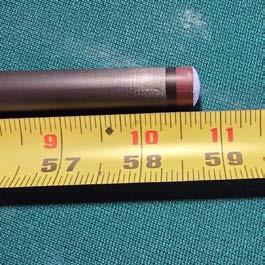
At the business end, the 13mm Bakelite phenolic tip is a game-changer. Unlike traditional hard tips that can feel slick and unforgiving, this one retains that classic
phenolic explosion on impact for rack-shattering power, while offering just enough added grip to give you superior cue ball control. It's this thoughtful engineering that prevents the cue ball from squirting off unpredictably, helping you pocket balls consistently right from the break.
The shaft's hybrid pro taper transitioning into a conical shape is nothing short of perfection. As you stroke through the break, you'll feel an incredibly smooth, consistent release that builds energy efficiently. The subtle expansion of the taper provides immediate feedback—"speaking" to your hand in a way that keeps your motion compact, controlled, and repeatable. I found it excelled particularly in second-ball breaks for 8-ball, where the tip channeled explosive energy exactly where I needed it, while keeping the cue ball glued to the center of the table for optimal position play. No more wild scratches or lost whites—just pure, predictable dominance.
Switching to jump mode is where the Sniper 3 truly shines as a multi-tool. In its shortened configuration, jumping becomes effortless and intuitive; within minutes of practice, I was clearing obstacles under a chalk's width and launching the cue ball over 4 feet with pinpoint accuracy. The lightweight carbon fiber and balanced weight distribution make it forgiving for players of all skill levels, yet responsive enough to execute advanced jumps that would stump lesser cues. Whether you're evading a tough block or setting up a combo, this cue handles it all with ease.
What elevates the Sniper 3 even further is its pedigree: it's designed by professional pool player Tony Crosby,
the mastermind behind the entire Sniper line. Crosby poured countless hours into refining every detail, ensuring this cue performs on par with—or often surpasses—the offerings from big-name brands that cost twice as much.
Priced at just $499 USD for a complete top-to-bottom carbon fiber jump/break cue, it's an outright steal in today's market. Consider that most standalone carbon fiber shafts alone run $400–$500; getting a full cue with this level of innovation, versatility, and pro-level performance at that tag is a no-brainer for anyone serious about breaking and jumping. If you're ready to upgrade your arsenal without the premium markup, the Sniper 3 is the cue that delivers championship results every time you chalk up.
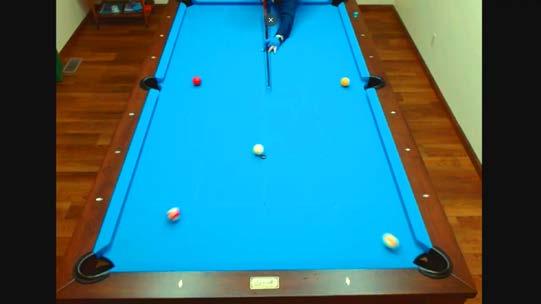
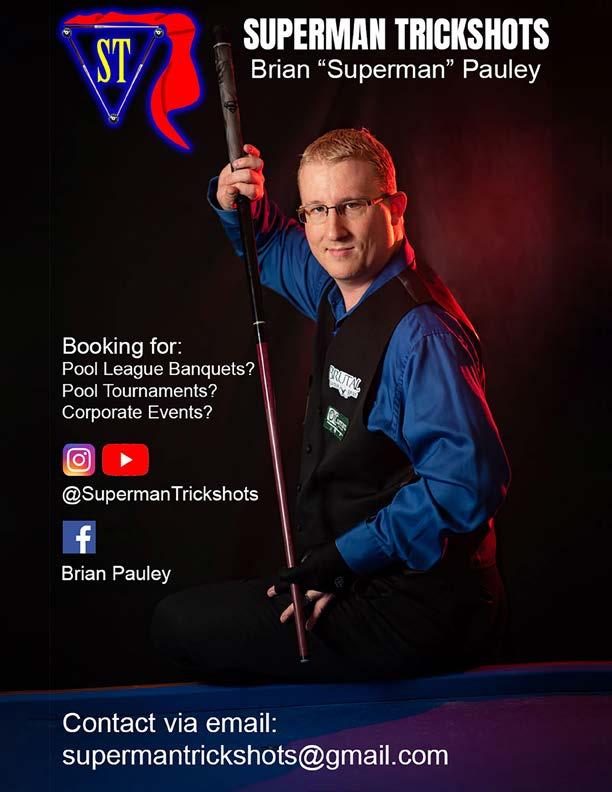
Starting a new project can be a huge undertaking. You never really know what it entails until you do it. That is so true when it came to my YouTube video project. For years, my friends told me that I should do videos like other trickshot artists do. They felt like I could do just as well. Real life always came into play, and I could not start anything. Also, I didn’t know where to start. I didn’t want to do what other people did.
I borrowed a phrase from former WCW President Eric
Bischoff to help shape what I wanted to do. Eric took a struggling, regional Pro Wrestling Company and not only made it successful and profitable for the first time but defeated the juggernaut that was the WWF (WWE now) in TV ratings for 83 weeks straight and over 100 weeks total from 1996 to 1998. His philosophy was “I can be better than, less than, or different from.” If he tried to be “better than” the WWF in something that WCW couldn’t, then they would appear to be “less than,” which is not the goal. If he became “different from,” then it would set him apart.
Those words really spoke to me. When people think of trickshot videos, most people think of Florian “Venom” Kohler, and rightfully so. When it comes to pool social media content, he is the main guy. If I try to be just like him or better than him, and I can’t, then I will appear to be less than. I had to come up with something that no other trickshot artist was doing and then make it my own. When we watch trickshot videos, most of the time, it is a static camera while the person is doing the shots. The videos don’t have a theme, and most of the time, there is no commentary from the person in the video. It’s just shot after shot. Not saying there is anything wrong with that. It is a tried and true format. However, I wanted my project to be different than everything else. This is why there is a different theme each week of the month. In essence, it is four different video series each month. I wanted there to be some variety. I wanted to keep a schedule, so the videos become “appointment viewing.” People will know which series goes with each week and make sure to see the series that they like.
Another way I wanted to be different is the edits and effects in my videos. I watch a few podcasts on YouTube, and they all have a custom video intro, so I wanted
my video series to have the same. Since the name of the project is “Superman’s Trickshot Tuesday,” it was decided to use a comic book theme for the intro. Each series also has its own custom intro clip. It is another way my videos are different from all the other pool videos out there.
The next task was to pick the themes for each week and have them be different from each other. The first Tuesday of the month is “When Does That Come Up in a Game?” When people find out that I am a trickshot artist and even see me perform some shots at the pool room, that is the first question someone asks me. “What you do is cool and all, but when does that stuff come up in a game?” That is the mentality for a lot of people. They can’t appreciate the skill and art of what we do.
Everything must apply to a regular pool game, which I completely understand. I have used many trick shots, or the concepts behind them, while playing in pool leagues. This was the perfect way to start the series.
The second Tuesday of the month is “Cinema Recreations.” There are a lot of trick shots from the many pool movies
out there. There are also several instances where trick shots are used on TV, either in commercials or parts of TV shows. I show the clip of the shot and then recreate it with some instructions on how to make it.
The third Tuesday of the month is “Amazing Trickshots and How to Shoot Them.” This pays homage to what got me into trick shots to begin with, a VHS tape called “Amazing Trickshots.” It featured pro players Steve Mizerak, Jimmy Mataya, and Eva Mataya. Jimmy provided the initial voice-over for the introduction, which he says, “Amazing Trickshots and how to shoot them.” I wore this VHS tape out to the point that I almost couldn’t watch it again. The format is like the original, where I explain the setup for classic shots and then demonstrate them.
The fourth Tuesday of the month is “Sponsor Spotlight.” This is where I highlight a sponsor of mine with an interview on the channel, either online or in person. I would not be where I am today if it weren’t for my sponsors, so I wanted to give them their own section in the series. In the case of a fifth Tuesday of the month, it looks like a selection of my
favorite trick shots set to music and maybe a Q&A video once I get enough of a following.
This project has been one of, if not the biggest, projects I have ever done. From the planning to getting the room set up, to the filming, the editing, and the release, it takes a lot of time. However, I love every minute of it. I do not know where this channel will go. I hadn’t really utilized YouTube until this video project, so I know I am a little behind. One thing I must manage is expectations. This is a new channel, and I don’t have the name recognition or following as other personalities in the pool. So, I will start small and will continue to work and see where this can take me.
Pool players are athletes with less physical demands but more mental skill requirements than athletes in other sports. Once fundamental pool skills are mastered, pool primarily becomes a mental venture. So, the work you do on your pool mental skills is just as important as your time spent working on shotmaking and position play. And yet, most pool players do not spend much time addressing the mental aspects of playing pool. The mental side of pool is often overlooked. It is more fun to play pool or practice running balls than to work on mental skills. But, fifteen to thirty minutes per week of mental training can significantly improve your pool playing abilities. This is because the words and images you put in your brain are what create your physical motions.
Motivation
Motivation is an inner drive or desire that makes us want to play the game of pool. It induces us to practice, compete, and strive for excellence. It is the mental force that initiates, sustains, and guides us throughout our pool playing journey. Motivation plays a crucial role in our performance, confidence, and overall success.
Intrinsic motivation comes from within us and is driven by personal enjoyment, passion, and a genuine interest in the pool game. Pool players with strong intrinsic motivation participate because they find pool inherently rewarding. Extrinsic motivation arises from external factors like
rewards, recognition, or social approval. Examples include winning money or a trophy, earning a high APA level or Fargo rating, or gaining praise from instructors or peers.
Several things can influence our motivation. Clear and challenging goals can enhance motivation. Confidence in our ability to succeed affects motivation. Encouragement from coaches, teammates, and family members matters. Lastly, a deep love for pool fuels motivation. How much we are motivated directly influences our effort, confidence, and commitment. Highly motivated pool players work harder, stay focused, and perform better under pressure.
Discovering your motivations for playing pool is essential for maintaining enthusiasm and commitment. Here are some questions to help you explore your reasons.
Why Did You Start Playing Pool?
Reflect on what initially drew you to the sport. Was it curiosity, social reasons, health, or a specific interest?
What Do You Enjoy About It?
Identify the aspects of pool that bring you joy. Is it physical activity, competition, camaraderie, or personal growth?
What Goals Do You Have?
Are you simply having fun, aiming for championships, or personal improvement?
How Does It Make You Feel?
Does playing pool make you feel fulfilled, excited, or challenged?
What Benefits Does Pool Offer?
List the physical, mental, and social benefits you gain from participating.
What Would You Miss If You Stopped?
Imagine not playing pool. What aspects would you miss? Adrenaline, teamwork, or a sense of achievement?
What Challenges You?
Consider the difficulties you face in playing pool. Overcoming challenges can be a powerful motivator.
How Does Pool Fit into Your Life?
Assess how pool aligns with your lifestyle, and priorities.
What Keeps You Coming Back?
Reflect on why you continue to play. Is it the pool community, personal growth, or the thrill of competition? Motivations Can Evolve.
Regularly revisit these questions to stay connected to your passion for the pool game! If you feel the need, here are some strategies to boost your motivation:
1 - Set Clear Goals:
• Define specific, achievable, and time-bound goals related to your pool game.
2 - Find Intrinsic Motivation:
• Reflect on what intrinsically excites you about pool. Is it a challenge, camaraderie, or personal growth?
• Connect with the joy of playing rather than rewards.
3 - Visualize Success:
• Use mental imagery to see yourself performing well.
• Imagine successful shots, movements, and outcomes. Visualization enhances motivation.
4 - Create a Supportive Environment:
• Surround yourself with like-minded individuals who share your passion.
• Join pool clubs, teams, or online communities to stay motivated.
5 - Celebrate Small Wins:
• Celebrate small achievements along the way.
• Each step forward contributes to your motivation and overall progress.
6 - Track Your Progress:
• Keep a training journal. Record your practices, improvements, and setbacks.
• Seeing your progress in writing can boost motivation.
7 - Stay Positive and Self-Compassionate:
• Replace negative thoughts with positive affirmations.
• Be kind to yourself, especially during setbacks or challenging times.
8 - Challenge Yourself:
• Set personal challenges within your pool game. Try new techniques, compete against stronger opponents, or learn advanced skills.
In summary, motivation is the driving force that pushes pool players to overcome obstacles, stay resolute, and achieve their pool playing goals. Whether intrinsic or extrinsic, motivation shapes your pool journey and impacts your ultimate success.
Confidence
A pool player’s confidence is the belief in one’s pool abilities, trust in oneself, and the certainty that one will play the game in a highly effective way. It is a crucial mental state that impacts a player’s performance, decision-making, and overall success in the game. Building and maintaining confidence is essential for pool players to perform at their best. Here are strategies to help you boost your pool playing confidence:
“Confidence is key.
Believe in yourself and your abilities, and you will achieve greatness.”
Pan Xiaoting
Practice:
Practice is the time to work on your fundamentals and your limitations. The more shots you make in practice, the more confident you will become.
Positive Self-Talk:
To build and maintain your confidence, practice positive self-talk regarding your pool game performances. Replace any negative thoughts with positive affirmations (“I am an excellent pool player.”) and constructive feedback.
Set Realistic Goals:
Confidence grows when pool players achieve their goals. Set specific, achievable goals to provide a sense of accomplishment and reinforce belief in abilities.
Visualize Success:
Use mental imagery to rehearse successful outcomes. Imagine executing perfect shots or overcoming challenges to build mental resilience.
Focus on Skill Development:
Competence breeds confidence. Consistent skill development helps players see progress and feel more confident.
Learn from Failures:
View failures as learning opportunities rather than setbacks. Understand that mistakes are part of growth and maintain confidence during challenging times.
Remember Why You Started:
Revisit the initial reasons you began playing pool. Reignite your passion by connecting with those early motivations.
Create a Supportive Environment:
Try to foster an environment where your efforts and improvements are recognized by other players, team members, and family members. A supportive atmosphere can significantly boost a pool player’s confidence.
Confidence is a game-changer that can transform good pool players into great ones. By implementing these strategies, you can nurture and sustain your confidence for optimal pool performance.
Conclusion
Motivation and confidence are pivotal elements in the journey of a pool player. Motivation, whether intrinsic or extrinsic, drives players to practice, compete, and strive for excellence. It is the mental force that initiates, sustains, and guides players throughout their pool playing journey. Confidence, on the other hand, is the belief in one's abilities and the certainty that one will perform effectively. By setting clear goals, practicing positive self-talk, visualizing success, and creating a supportive environment, pool players can nurture and sustain their confidence. Ultimately, the combination of strong motivation and unwavering confidence can transform good pool players into great ones, enabling them to achieve their pool playing goals and enjoy the game to its fullest.
Are you holiday shopping for someone who is just starting their billiard journey? Do you know someone who has shown interest and can be drawn into this wonderful game we love, but needs a cue at the stage before purchasing a custom cue? Any entry-level pool player needs a cue that provides enhanced performance over basic beginner models while remaining budgetfriendly.
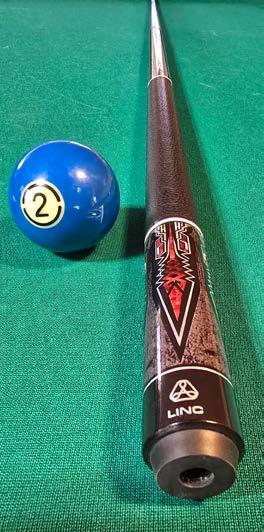
The Linc cue, available at seeyberts.com for $276, fits this criterion as an economy cue featuring a carbon fiber shaft and a luxurious litchi-grain textured leather wrap. It delivers reliable performance suitable for those advancing their skills without a significant financial commitment.
For generations, the pool cue has remained a simple yet sacred instrument, primarily crafted from the warm, traditional feel of hard rock maple. But just as technology revolutionized golf, cycling, and aerospace, it has firmly arrived on the billiard table in the form of carbon fiber. The new-age material promises the ultimate trinity for the serious player: consistency, durability, and low deflection.
This revolution, initially led by high-end brands like Predator and Cuetec, has created an accessibility gap. High-performance carbon fiber was often viewed as a luxury, reserved for top-tier competitors with budgets to
match. Enter the Linc Carbon Fiber Cue, a compelling new entry that challenges this status quo by delivering cutting-edge performance technology at a price point that makes it a true contender for the everyday player.
A Nod to the Carbon Revolution
The shift from wood to carbon fiber represents arguably the biggest leap in cue technology since the two-piece design. Traditional maple, while beloved for its feel and feedback, is inherently susceptible to warping from humidity and temperature changes, demanding meticulous care. More importantly, its natural mass distribution causes significant cue ball deflection (often called "squirt") when English (sidespin) is applied, forcing players to constantly compensate for their aim.
Carbon fiber shafts address these flaws head-on. Crafted by weaving strong, lightweight carbon strands and setting them in resin, the material is virtually immune to warping and is exceptionally durable against dings and scratches. The key to its performance, however, lies in its low mass at the tip-end. This design principle— shared across all high-performance shafts, including the Predator REVO—significantly reduces deflection. For the player, this translates to: less aim compensation, more accurate spin shots, and greater consistency from one game to the next.
Landing the Perfect Cue: Performance on a Budget
The Linc Dark Gray Stained Maple Cue with a Carbon Fiber Shaft, available at retailers like Seybert's Billiard Supply, makes a strong statement. It manages to fuse the technical benefits of a carbon fiber shaft with a welldesigned maple butt, creating a high-value package that belies its economical price tag.
THE CARBON FIBER SHAFT
Linc's 29" high-performance carbon fiber shaft is the star of the show. Players can choose from three diameters: 11.8mm, 12.5mm, or 12.9mm. The material's inherent stiffness ensures minimal deflection, which is crucial for advancing players learning to execute draw and spin shots with precision. While some highly-priced carbon shafts are engineered to emulate a "wood-like feel" for traditionalists, the Linc leans into the modern, firmer, and more consistent hit that carbon is known for.
THE HIT AND FEEL
The consensus on carbon fiber is that it provides a very consistent, solid hit. The Linc cue is no exception. This consistency is its biggest asset for entry-to-intermediate players, helping them build muscle memory without the variables introduced by a natural material like wood. The cue comes topped with a 7-layer soft black leather tip, which offers a good blend of spin control and forgiveness.
THE GRIP
The cue features a stylish litchi grain textured leather wrap. This detail is more than aesthetic; it provides an ergonomic and secure grip that minimizes hand slippage, especially during long playing sessions. This is a crucial feature for maintaining a fluid, reliable stroke.
Design and Build Quality
A good cue must feel as good as it looks, and the Linc delivers a contemporary aesthetic.
SLEEK MODERNITY
The butt is constructed from dark gray-stained maple, accented with bold red and silver graphic points outlined in black. This design strikes a balance between the classic maple look and the modern, high-tech vibe of the carbon fiber shaft.
PRACTICALITY AND VALUE
The cue is joined with a solid radial pin, a common, high-quality joint that ensures a firm connection. Linc enhances the overall value proposition by including practical accessories in the package: complementary joint protectors and a protective sleeve. It is also extensionready, compatible with Linc cue extensions, allowing for customizable length and balance adjustments.
Is the Linc Carbon Fiber Cue the Right Investment?
The Linc Carbon Fiber Cue represents a significant win for the entire billiards community, proving that highperformance technology can be accessible
If you are a serious recreational or league player still using a traditional maple cue, the Linc is a highly recommended and cost-effective upgrade. It offers the core benefits of the carbon revolution—unmatched consistency and resistance to warping—and excellent playability for the price.
For its combination of affordability, quality construction, and performance benefits, the Linc Carbon Fiber Cue earns high marks (we'd give it 4.5 out of 5 stars).
It’s more than just a budget cue; it's a genuine carbon fiber contender, ready to elevate your game without emptying your wallet.
In terms of performance, the carbon fiber shaft is notably very stiff, which contributes to reduced deflection and more consistent shot execution compared to traditional wooden shafts. It facilitates improved control over spin and draw shots without excessive flexibility. The litchi grain textured leather wrap provides a secure, ergonomic grip that minimizes slippage during extended play, enhancing overall comfort and confidence.
The cue's dark gray-stained maple butt with red and silver accents presents a sleek, modern design that stands out professionally at the table. Its balance is commendable, and the included accessories—such as joint protectors and a protective sleeve—add practical value.
For those seeking a decent playing cue with carbon fiber technology on a budget, go to seyberts.com. Order now and have it wrapped and under the tree.
MOSCONI 2025: Pressure and Technique:
The dynamic that could have prevented the dying cueball. Please read to the end. It could save you someday! My phone blew up.
About a dozen texts:
• “How did he mess that up?”
• “How did he hit the 8ball so bad?”
• “Did you see him not get out?”
When a player sets on the shot with sidespin already on the cueball, they have basically calculated how much deflection to allow for. Basically they are making a highly educated guess.
Problem: In highly stressful situations, with the world watching and self-imposed pressure, ANYTHING can go wrong. You can guess incorrectly on deflection and hit a ball just a little heavy or a little thin, resulting in the horror show we witnessed last night.
It’s happened to every champion I can think of. Easy on the guy. It happens. What if there is a pretty sure way to help prevent such a devastating result even under pressure? There is.
With no english (no side spin) aim your stick at the contact point. This already gives us the thick hit. Now with your backhand, apply the left english needed.
Backhand english allows your cueball to take the
ORIGINAL PATH YOU AIMED AT. This is because of equalizing linear energy and center mass energies crossing a sphere. This is called spinning a ball in and is one of the most reliable of all shots. It eliminates contact throw and uses english throw to correct the original thick hit. This allows the player to KNOW how thick he is hitting the ball: Not guess about deflection.
Technique vs FEEL in a super high pressure atmosphere. The laws of physics can work with you with just a little bit of knowledge. Point is , even with fainting like nerves, this technique works. It is a built in safeguard .
Tyler, your next big win will be soooo sweet. No worries.
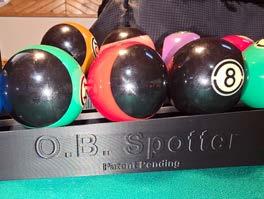
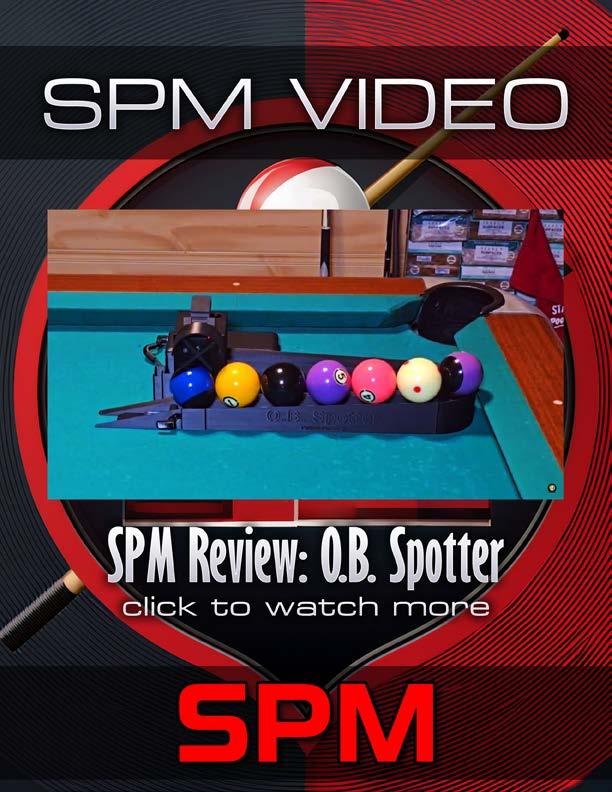
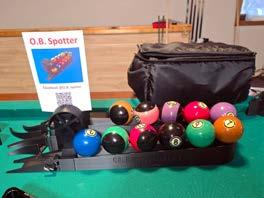
The O.B. Spotter: A Game-Changing Precision Training Tool That Redefines Deliberate Practice in Cue Sports
An in-depth, professional review after 300+ hours of realworld use. In a sport where fractions of a millimeter and degrees of spin separate good players from great ones, the quality of your practice environment is often the single biggest determinant of long-term improvement. For decades, the billiards community has relied on manual repetition, paper templates, laser pointers, and sheer willpower to achieve consistency in drills. While those methods work, they are slow, fatiguing, and inherently imprecise.
Enter the O.B. Spotter — a brilliantly conceived, Canadian-made training device that finally solves the
age-old problem of repeatable object-ball placement with push-button ease. After incorporating the Spotter into my daily routine for the past five months (and logging well over 25,000 individual practice shots with it), I can say without reservation that this is the most significant advancement in solo training since the invention of the training ball set itself.
Origin, Philosophy, and Craftsmanship
The patented O.B. Spotter was invented and designed by Guy Jémus, a passionate player with 3D, CAD, mechanical, and electronic knowledge based in Montreal, Quebec. His goal was simple yet profound: create a tool that gives every player, from enthusiastic amateur to touring professional, the ability to practice with the same level of precision and repeatability that only the luckiest few enjoy when training with a dedicated spotter or coach.
Every unit is assembled, tested, and shipped by Guy himself, and the pride of craftsmanship is evident in every detail. The device is built primarily through highprecision 3D printing combined with final hand finetuning where needed, resulting in tolerances that are extraordinary for a consumer training aid.
The main housing is lightweight yet rigid and impact resistant, finished in one of four attractive colors
(black, blue, red, or gray). A powerful yet whisper-quiet calibrated stepper motor sits at the heart of the system, powered by a compact external rechargeable lithium battery pack that delivers up to 12 hours of continuous use on a single charge. The entire package, Spotter, battery, charging wire, four interchangeable launch rails, distribution ramps, arrives in a nice fitted soft padded carrying ‘’camera style’’ bag.
How the O.B. Spotter Works — Elegance in Motion
Operation is deceptively simple and utterly addictive. Up to 12 object balls are loaded into a gently curved, lowfriction distribution ramp system. When you’re ready for your shot, a light tap on the large, soft-foam activation pad triggers the motor. In less than one second, the current object ball is released via gravity alone — no springs, no plungers, no jarring impact — while the next ball silently rolls forward into the same position. The result is a perfectly consistent rollout, shot after shot after shot.
Four interchangeable launch rails are included, allowing you to choose exactly how the ball enters the playing surface: A dead-straight drop for maximum precision with a distance limiter for smaller tables, 2 short curved rails (left and right) and 2 longer curved rails (left and right) for positioning the object ball at different places on the surface without moving too much the O.B Spotter. Switching rails takes literally 3 seconds and requires no tools.
And last, but not least, what about that remote control that launches the object ball at a distance! Perfect for instructors who do not want his or her students to move an inch when analyzing their stroke. A game changer for any instructor.
The Holy Grail: True Repeatability
In cue sports, meaningful improvement only occurs when you can isolate and repeatedly test a single variable — your stroke, your aim, your speed control — while keeping everything else identical.
The O.B. Spotter achieves this with a level of precision I have never seen in any other consumer product. During testing, I placed a high-speed camera and a digital inclinometer on the table and recorded hundreds of consecutive releases. The variation in final resting position was consistently under 0.8 mm — a tolerance that rivals laboratory testing equipment. When paired with a premium training ball such as the Aramith Pro Cup measles ball or the Aramith Black set, the feedback loop becomes almost scientific. You quickly discover subtle table rolls you never knew existed, allowing you to compensate or shim the table accordingly. Once the table is truly level, the O.B. Spotter delivers object-ball placement that is, for all practical purposes, perfect.
The psychological effect cannot be overstated. Knowing that every single object ball is going to land in the same spot removes doubt and second-guessing. You stop wondering “Was that miss because of me or because the ball was not placed right last time?” and instead receive pure, honest feedback on every shot. The result is accelerated learning and dramatically increased confidence.
Performance and Time Savings
A typical 100-shot progressive cut drill that used to take me 45–50 minutes to complete (due to constantly walking around the table) now takes 22–25 minutes with zero loss of accuracy. That’s nearly double the repetitions in the same timeframe, a massive advantage for anyone with limited practice hours.
The gentle gravity release is another masterstroke. There is no “plunk” or bounce that disturbs the cloth or imparts unwanted spin. The object ball simply rolls out as if a world-class spotter had placed it by hand. Even on a brand-new Simonis 860HR, there is zero marking or disruption. Players with physical limitations — back issues, knee problems, or mobility challenges — report that the O.B. Spotter has been life-changing. One gentleman in his late 70s told me, “For the first time in ten years, I can run 100 long straight-ins without pain. This thing gave me my practice routine back.”
Build Quality, Reliability, and Customer Experience
In over 300 hours of heavy daily use, I have experienced exactly zero mechanical failures. The motor remains whisper-quiet, the battery life is outstanding, and the 3D-printed components have shown no wear despite thousands of cycles. Guy Jémus provides a full one-year warranty and has an earned reputation for extraordinary customer service, sometimes shipping upgraded parts at his own expense when needed. Every purchaser receives direct access to Guy via Messenger or email. Shot routine videos are shared regularly on his Facebook O.B.Spotter page. This isn’t a faceless company selling a product; it’s a fellow player who genuinely wants you to improve your game.
Value Proposition — $340 Well Spent
At approximately $340 USD (plus shipping), the O.B. Spotter sits in the same price bracket as a high-end break cue or a carbon-fiber playing shaft. Yet unlike those purchases, which primarily affect only break shots or feel, the O.B. Spotter improves every single aspect of your game, every single day you practice. Consider this: most serious players will spend $300–$500 on a new tip and shaft, or set of balls, with the hope of gaining a few extra ball-pocketing percentage points.
The O.B. Spotter routinely delivers 10–20% more quality repetitions per session and eliminates placement
error. The return on investment in skill development is therefore orders of magnitude higher. As one reviewer eloquently put it: “You can buy a $1,200 custom cue and still look average if you don’t practice properly. Or you can buy the O.B. Spotter, train like a pro for six months, and make that $400 cue look like a million bucks when you’re actually pocketing balls.”
Who Benefits Most?
Intermediate-to-advanced players who already understand fundamentals and are hungry for measurable progress. Instructors and coaches running clinics or private lessons, hence the remote control.
Home-table owners who practice alone 90% of the time. Players recovering from injury or with mobility concerns. Anyone who has ever felt frustrated walking endlessly around the table, resetting the same shot.
Final Verdict — Enthusiastically Recommended
The O.B. Spotter is not hype. It is not a gimmick. It is a genuinely innovative, meticulously engineered training aid that delivers exactly what it promises: perfect, repeatable object-ball placement with the push of a button. It is the closest thing most of us will ever have to a personal, tireless spotter standing beside the table 24/7.
If you are serious about improving at pool, whether your goal is to run out more consistently in league, qualify for a regional tour, or simply dominate your Thursday night money game, the O.B. Spotter is the single most effective practice investment you can make today. I no longer practice without it. I don’t want to. And once you experience the flow of shooting shot after perfect shot with zero setup time and zero placement error, neither will you. The O.B. Spotter doesn’t just help you practice better.
It redefines what “better practice” even means. Highly, wholeheartedly, and unreservedly recommended.
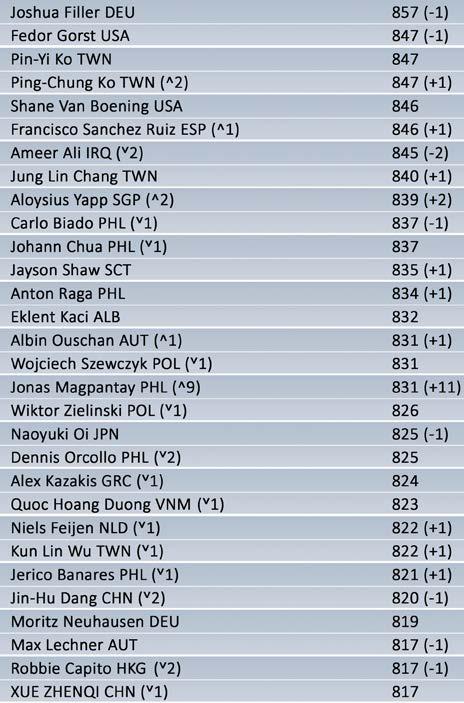
CURRENT RATINGS
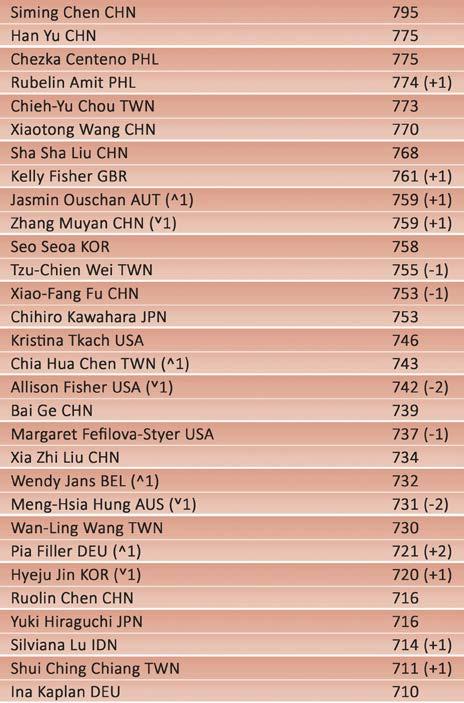
CURRENT RATINGS
Time Out!
I’m sure many readers here play in an organized league. One part of league play involves using timeouts. This is primarily helpful for lower-ranked or less experienced players. And for higher-ranked players, it gives the opportunity to help your teammates navigate out of a difficult situation. This month, we’re looking at some ways to be a successful coach when it comes up.
Good coaches also understand the limitations of their players.
A timeout can be called by the shooter when they aren’t sure what to do or how to execute a shot. Or it may be called by the coach it they see a potential mistake in the shooter’s plan. Either situation, when handled correctly, can be a benefit to the team.
The best coaches have been paying attention to the match in progress. If your teammate asks for a time-out, you shouldn’t have to ask them if they’re stripes or solids. Knowing what’s going on makes it easier to offer the best advice. If you’ve been paying attention, you may have noticed a weakness in the opponent’s game that your teammate may not have seen. This kind of knowledge might allow you to offer better recommendations.
Paying attention can also help avoid some more difficult situations. An inexperienced player might be looking at an easy shot that might leave them with no good options for their next shot. Calling a time out before they get in trouble is usually better than waiting until they find themselves locked up with few options to make a good shot.
Good coaches also understand the limitations of their players. That 3-rail kick with a touch of right spin might be reasonable for you, but be way too difficult for a lowerranked player to execute successfully. Look for the simplest solution that gives your player the best chance to succeed.
Another recommendation is to keep your suggestions as simple as possible. Don’t have them doing geometry to complete the shot. Simple directions usually work best. “Aim at this point with no side spin at about lag speed” is easier for them to execute. The APA now allows you to place a piece of chalk on the rail, giving
them something specific to aim at. This can help by taking away any guesswork from their shot.
One thing I always do when I approach the table for a time-out is to ask the player what they are thinking. This will help you in your decision-making. Players often have a good idea what they can comfortably do with a shot. By asking first, you may be able to help them complete the shot with greater success.
League play is supposed to be fun for everyone.
I also try to use time-outs to keep a player’s confidence up. Telling them they’re playing well can make a huge difference in the outcome. I will also take the blame if the shot doesn’t work out as planned. If their attempt fails, I will often tell them that I was off a little bit in judging the shot angle. Keep your player motivated and feeling good about their playing. Remember, you're all part of a team, and each player has something to contribute to the team’s success.
Most importantly, remember that league play is supposed to be fun for everyone. Don’t put added pressure on your teammates. Keep things light, and you will be building a team that not only plays better, but look forward to getting together for those weekly matches.
Until next time
Steve Jennings ACS/SPF/PBIA Master instructor.
Playing pool since the age of 10, first learning on a table at home, and into pool rooms a few years later, I won several base championships while in the service. After my discharge, I continued to play recreationally, and in several regional tour events.
I started coaching and teaching game strategies in the 90s. I worked with several Master instructors reaching Master instructor status in 2015. Now Director of Training for the Southeastern Billiard Academy, and teaching classes as often as I can. I train/certify new instructors and look forward to help every player achieve their fullest potential.
One of the biggest mistakes I see in today’s pool world is players doing everything they can to avoid tougher competition. They stay in the same division. They sandbag. They protect their “status.” They chase that small payday or that easy bracket win because it feels good in the moment.
But here’s the truth nobody wants to say out loud:
You don’t get better by beating players you already know you can beat. You get better by losing to the players who can teach you something.
I know that stings a little. But if your goal is growth—not ego—then this is the path.
The better players are the ones who expose your weaknesses. They’re the ones who show you where your patterns break down, where your nerves show up, where your fundamentals slip, and where your decisions cost you racks.
And here’s the beautiful part:
They can also show you how to fix it—if you ask.
After the match, don’t just grab your cue and walk out the door. Ask questions.
“How would you have played that pattern?”
“What did you see on that safety?”
“What would you have done differently in that situation?”
Almost every top player I’ve ever met is willing to share their knowledge if you show genuine curiosity and respect. Most of them love talking about the game. But they’re not going to chase you down to explain it—you have to be the one to initiate the conversation.
This alone is one of the fastest ways to level up your game.
But the other piece might be even more important:
Stop clinging to lower divisions to get a payout.
If you’re purposely staying in a division you’ve outgrown… If you’re avoiding moving up because you want an “easy win”… If you’re holding onto your rating like it’s a badge of honor…
Just hear me out:
You would honestly make more money—and grow your game more—by getting a part-time job for a few hours a week than by sandbagging for that small tournament payday.
A lower division win feeds your ego. A higher division loss feeds your future.
One gives you short-term comfort. The other gives you long-term growth.
If your true goal is improvement, confidence, and consistency… You have to play people who challenge you, frustrate you, push you, and ultimately show you what level you’re capable of reaching.
The game opens up when you stop protecting what you already are and start chasing who you could be.
So here’s your challenge:
• Seek out better players.
• Ask questions.
• Play in higher divisions.
• Stop aiming for the “comfortable” bracket and start aiming for the bracket that scares you a little.
Because that’s the bracket where your next breakthrough lives.
If you want help building the confidence and routine that will actually hold up against stronger players, reach out. I’ve helped many players navigate this exact phase, and the transformation that follows is worth every bit of discomfort on the front end.
This is how you build the version of your game you’ve always pictured.
Let’s get you there.
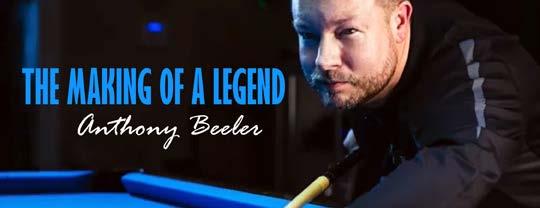
Anthony Beeler's name is synonymous with excellence in the world of pool. With a career spanning over two decades, he has established himself as one of the most sought-after instructors in the industry. His credentials are impressive - two master's degrees, over 300 tournament wins, and recognition as a Master Instructor by both the PBIA and ACS. Beeler's playing career is nothing short of remarkable. He's gone hill-hill with none other than Shane Van Boening at the Derby City Classic and has defeated numerous professional players in tournament competitions.
Beeler is not only a great friend to his students but also a cool, witty, and intelligent mentor—equally comfortable in both academic and everyday “street” settings. His influence extends far beyond traditional pool instruction. With a rare blend of experience, expertise, and authenticity, Beeler brings a depth of understanding that transcends the game itself. Teaching comes naturally to him—it’s both a calling and a craft. Yet it’s his relentless work ethic and professional discipline that form the foundation of his success, helping players achieve levels of performance they once thought impossible.
Beeler's victories include BCAPL National 9-Ball Champion in 2013, many-time Kentucky State 9-Ball Champion, Great Southern Billiards Tour Champion, and finishing 9th out of 1,186 players in the BCAPL
National 8-Ball Championship in 2013. His ability to adapt to different playing styles and conditions has earned him respect from his peers and students alike.
Beeler's teaching style focuses on personalized instruction, helping students improve exponentially. His online and in-person lessons cater to various skill levels, from beginners to professionals. He has worked with students who've gone on to achieve great success in the world of pool, including Janet Atwell, 9th in the world on the WPBA Tour, Sam Henderson, the top junior in the country with multiple national tournament wins, and HT Geerman, Aruba National Champion. He has also trained or certified the last three Instructors of the Year—Samm Diep, Eric Naretto, and Kim Young.
Beeler’s expertise extends beyond his students. He’s written several acclaimed books on pool and billiards, including Do You Want to Play Like a Pro? A Pictorial Guide to Playing Your Best Pool, Unstoppable! Positive Thinking for Pool Players, and Maximize Your Potential: Angles Language. His latest release, Do You Want to Play Like a Pro?, has garnered national attention, featured in Yahoo Finance, Morningstar, PR Newswire, and Benzinga for its innovative approach to teaching the mental and mechanical sides of the game. Beeler is also the primary author of the National Billiard Instructor’s Manual. His articles have appeared in leading publications across the billiards industry, and he’s widely recognized as one of the most influential and respected instructors in cue sports today.
Anthony Beeler's impact on the world of pool extends far beyond his impressive playing career and teaching prowess. He's a true leader in the industry, having served as a director of the Kentucky Billiards Association and working closely with other organizations to promote the sport. His dedication to excellence has earned him numerous awards and recognition, solidifying his position as one of the most respected figures in the world of billiards.
Beeler's teaching style has been refined over the years, allowing him to effectively work with students of all skill levels. His ability to break down complex shots and strategies into manageable parts has helped countless players improve their game. Many of his students have gone on to achieve great success in the world of pool, crediting Beeler's instruction and guidance for their accomplishments.
Beeler's love for the game is evident in everything he does. He's a strong advocate for promoting the sport and encouraging new players to join the community. His passion for billiards has inspired countless individuals to take up the game, and his contributions to the sport will be felt for generations to come.
As a respected figure in the world of billiards, Anthony Beeler continues to push the game forward through
his work with the Professional Billiards Instructors Academy (PBIA). His dedication to excellence and passion for teaching have made him a leader in the industry. Beeler's contributions to the PBIA have helped establish standardized teaching methods and certification programs, elevating the level of instruction and play worldwide.
BEELER'S LASTING LEGACY
Beeler's impact on the world of pool will be felt for generations to come. His students, colleagues, and peers alike praise his ability to break down complex shots and strategies into manageable parts, making the game accessible to players of all skill levels. As a true ambassador of the sport, Beeler's legacy extends beyond his own accomplishments, inspiring others to pursue excellence in the world of billiards.
Beeler’s influence spans generations, connecting the timeless artistry of legends like Willie Mosconi with the precision and discipline of today’s champions, including Aloysius Yapp. His work continues to shape the modern era of cue sports, bridging tradition, innovation, and education in a way few instructors ever have.