Serving Tamarack Seventeen and Springmill Lakes at Tamarack 30th Edition, September 10, 2023
Fourth Annual Golf Cart Tour
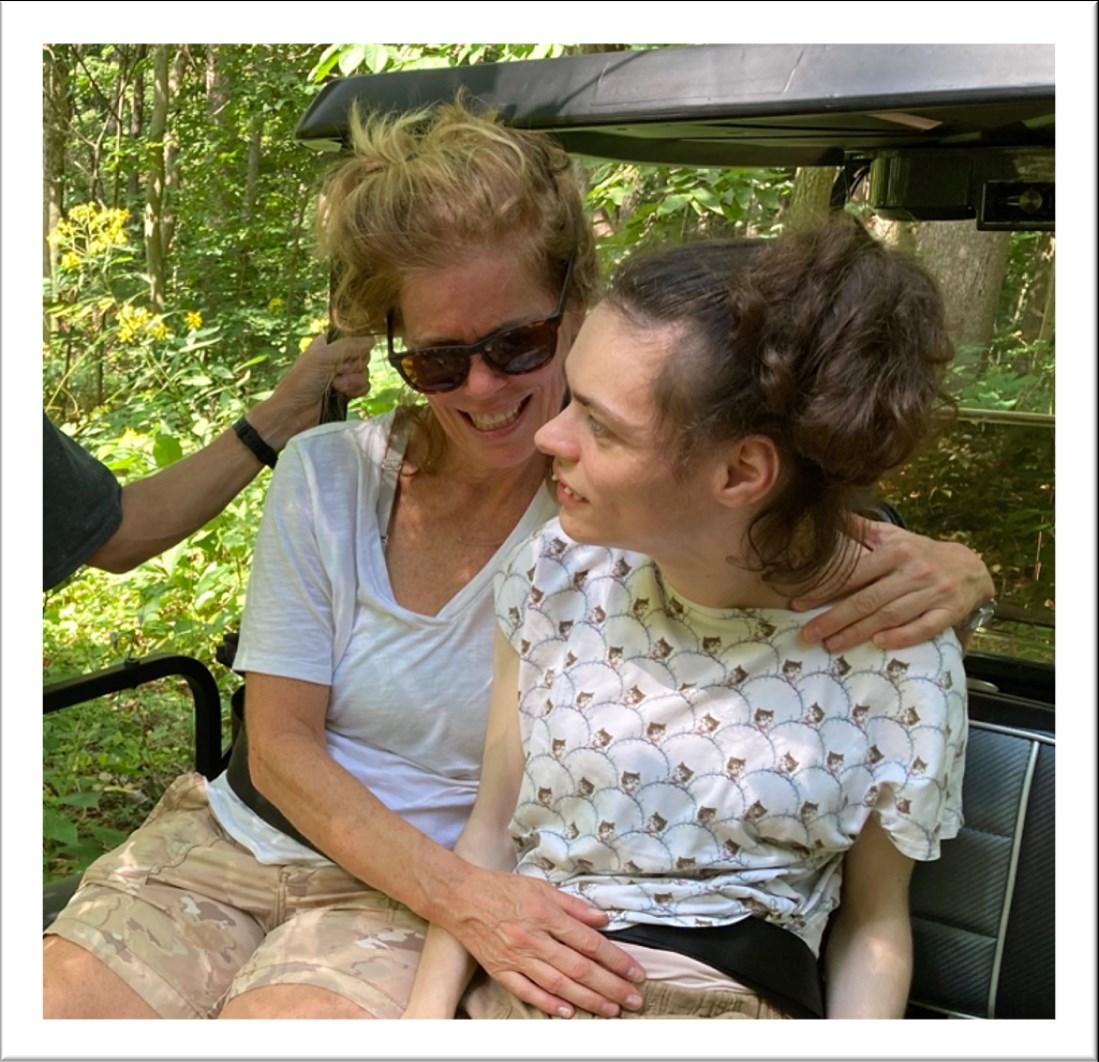
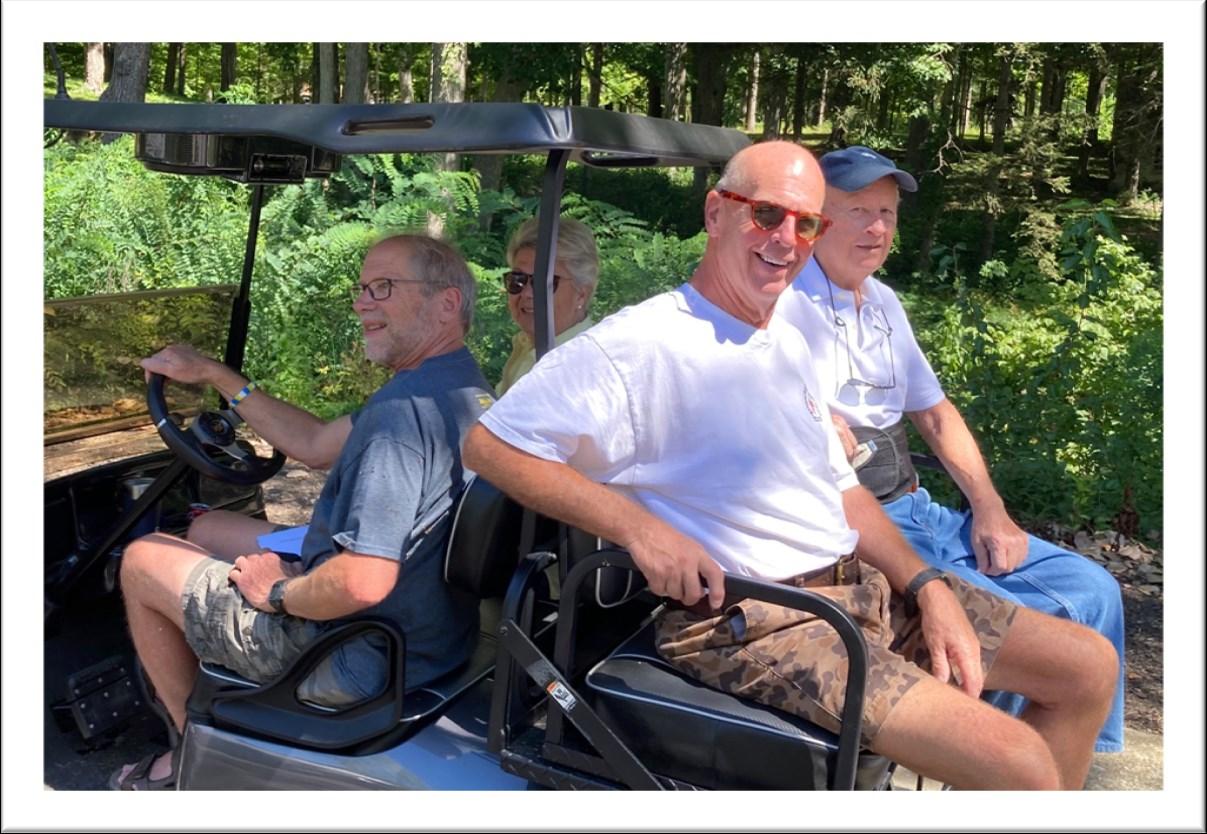
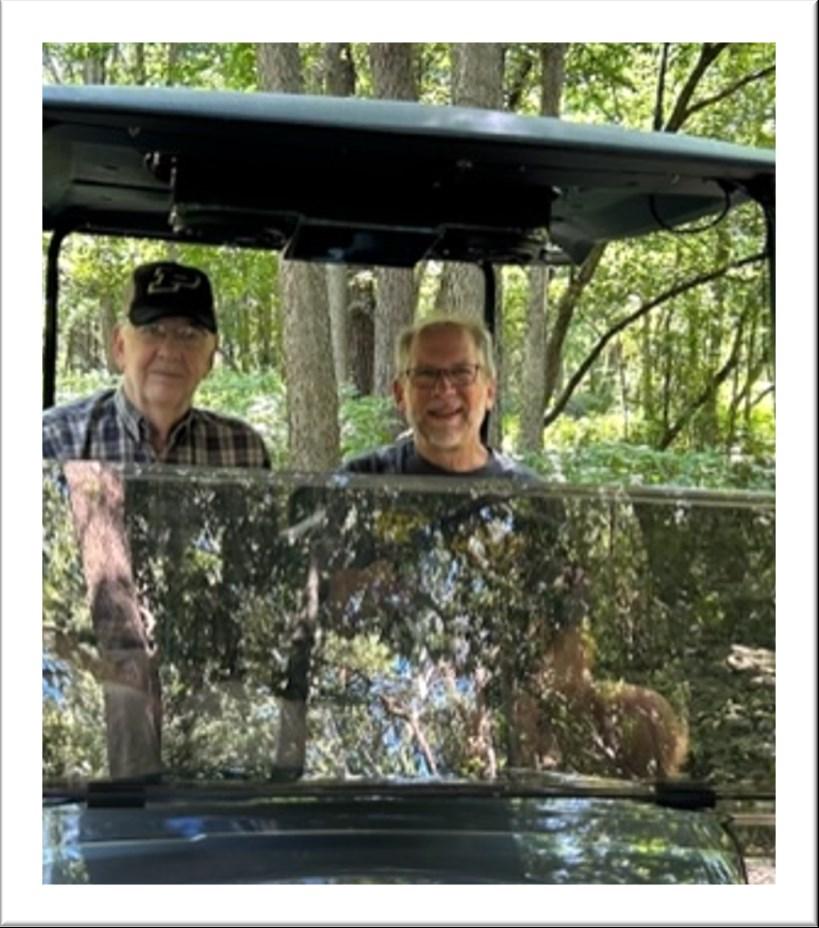
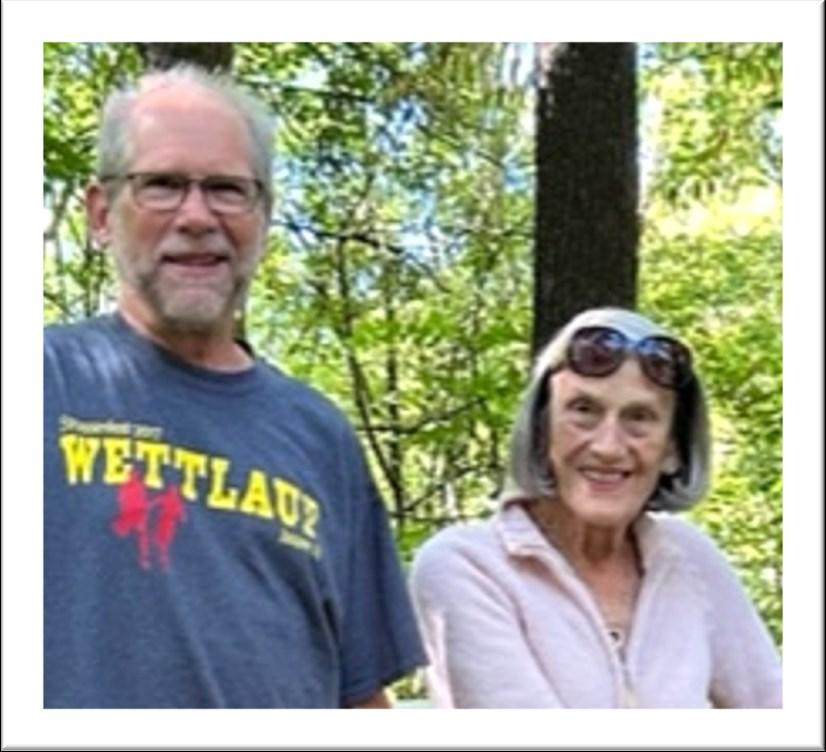
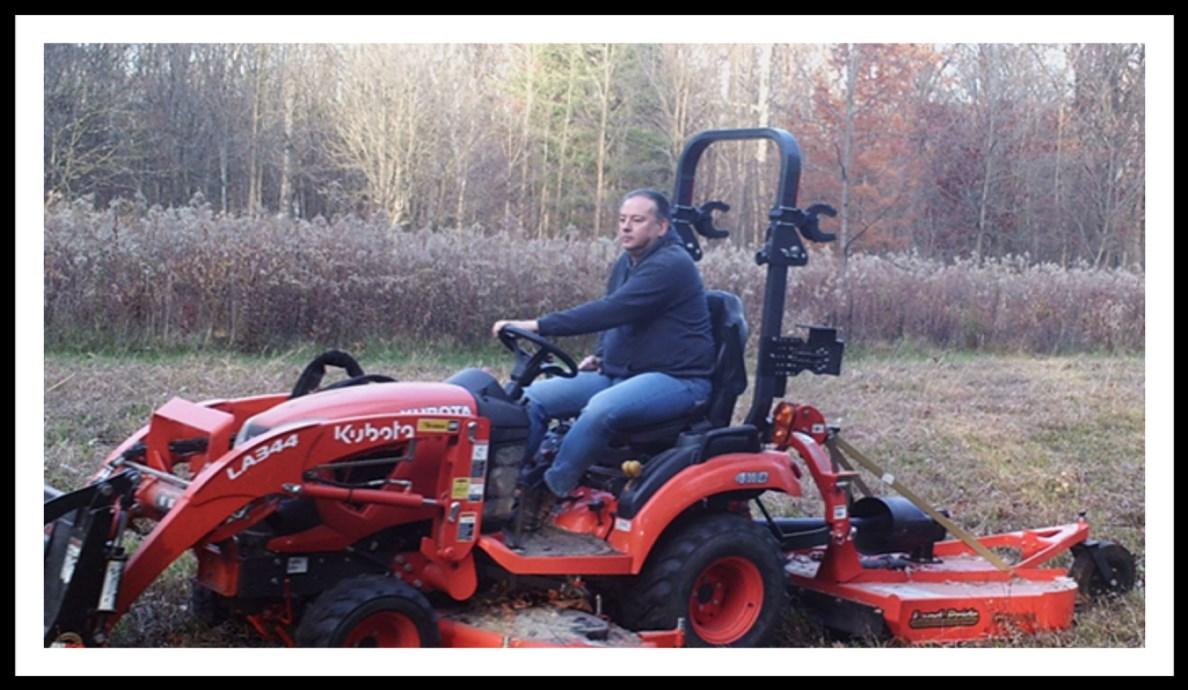
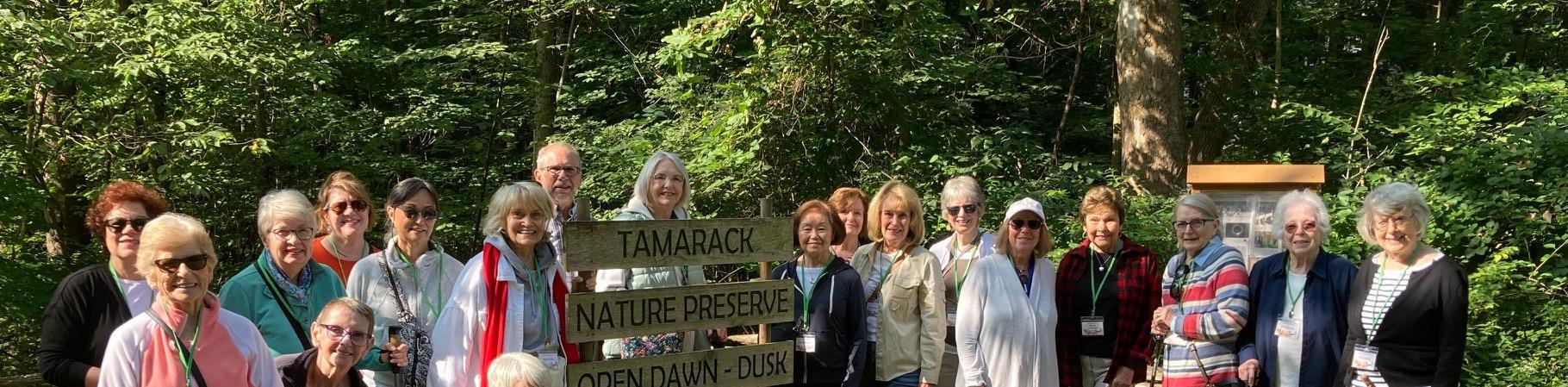
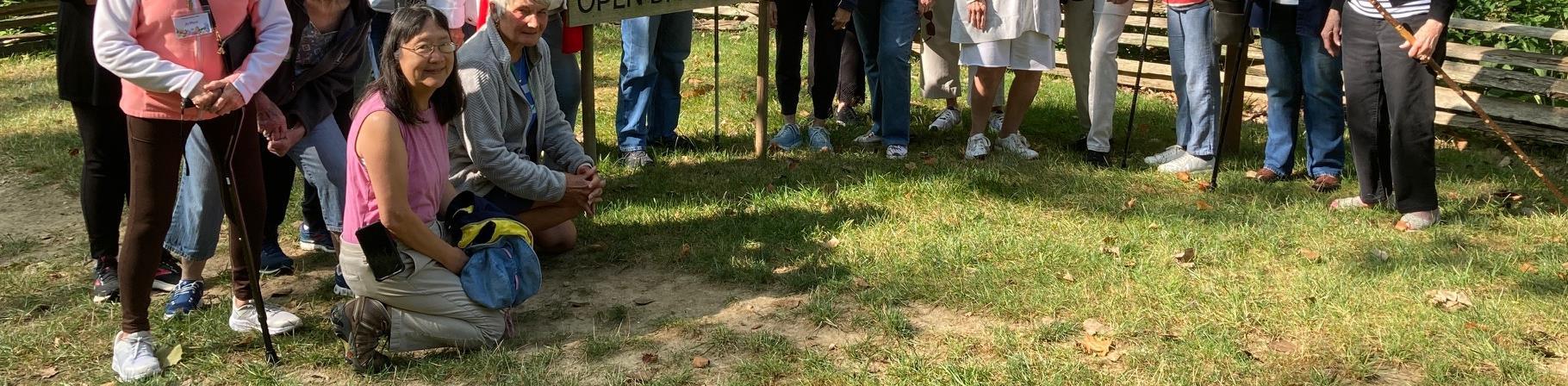
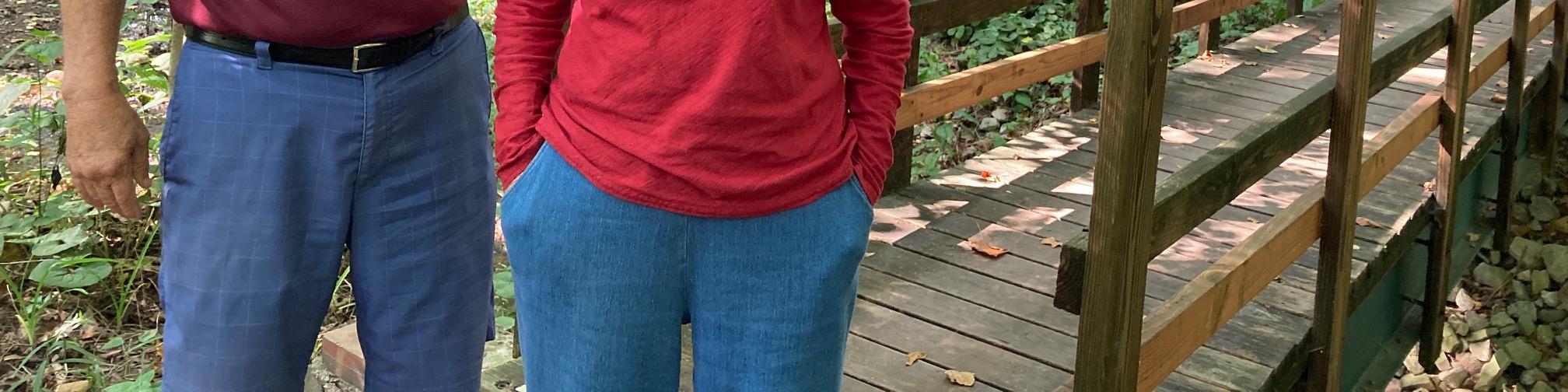
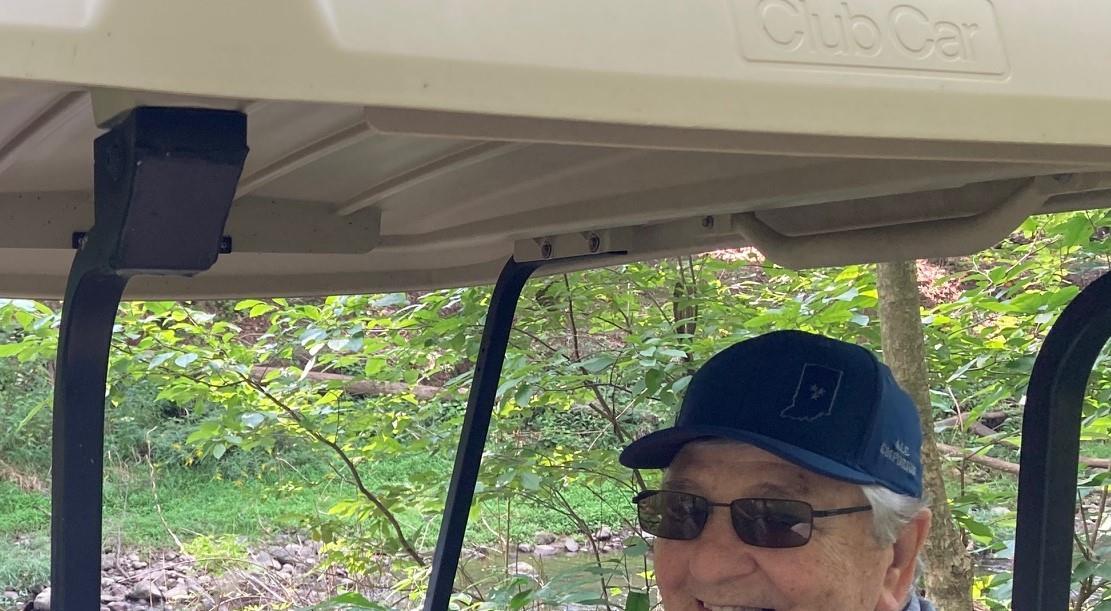
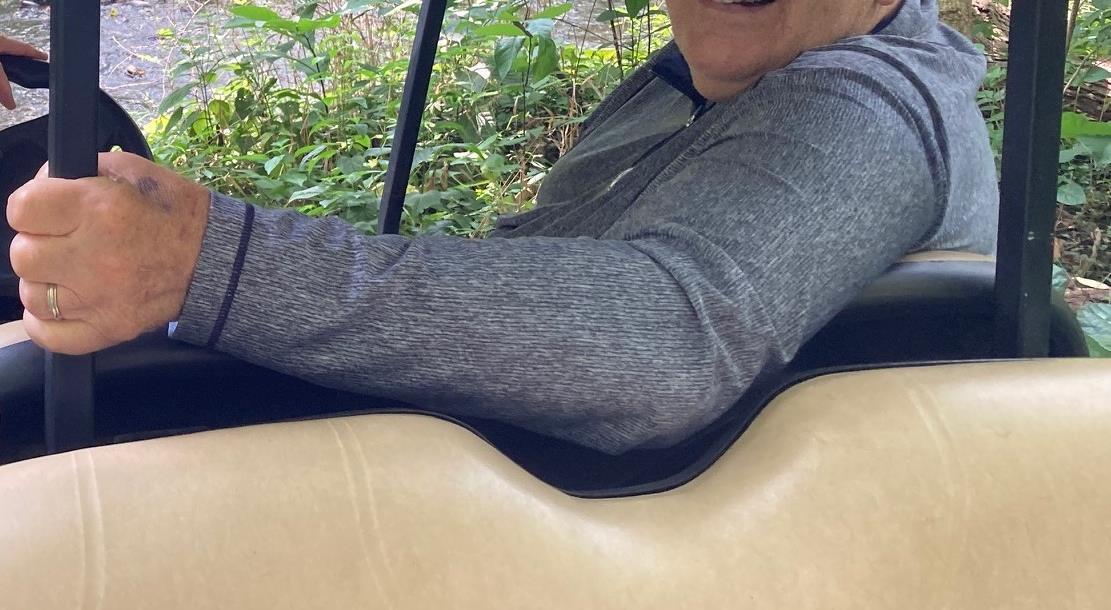
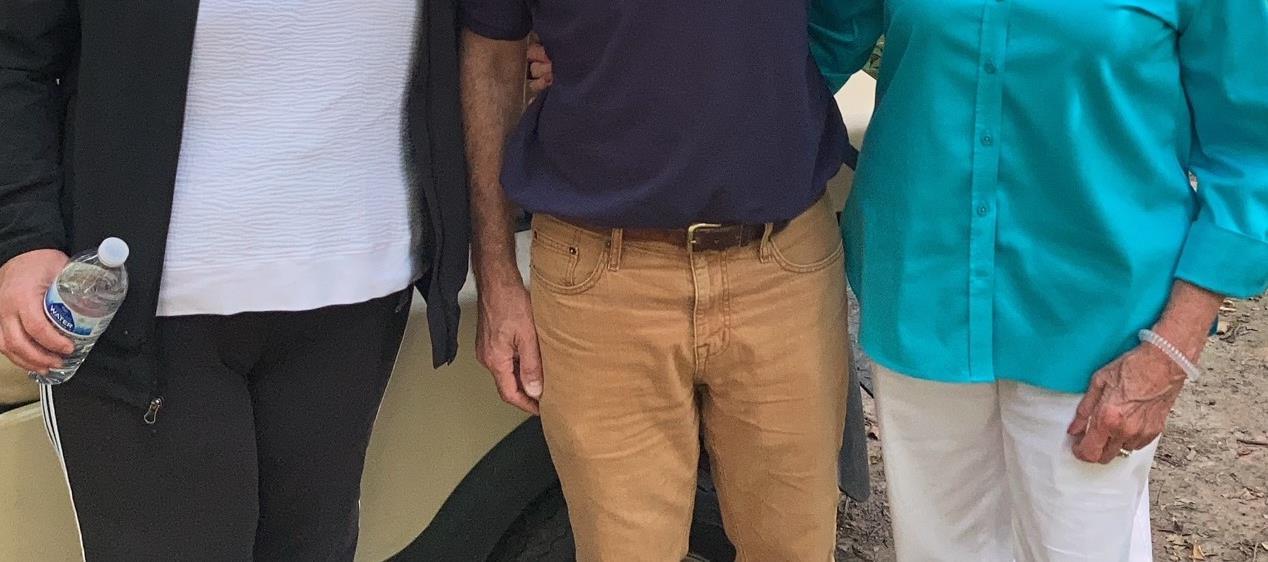
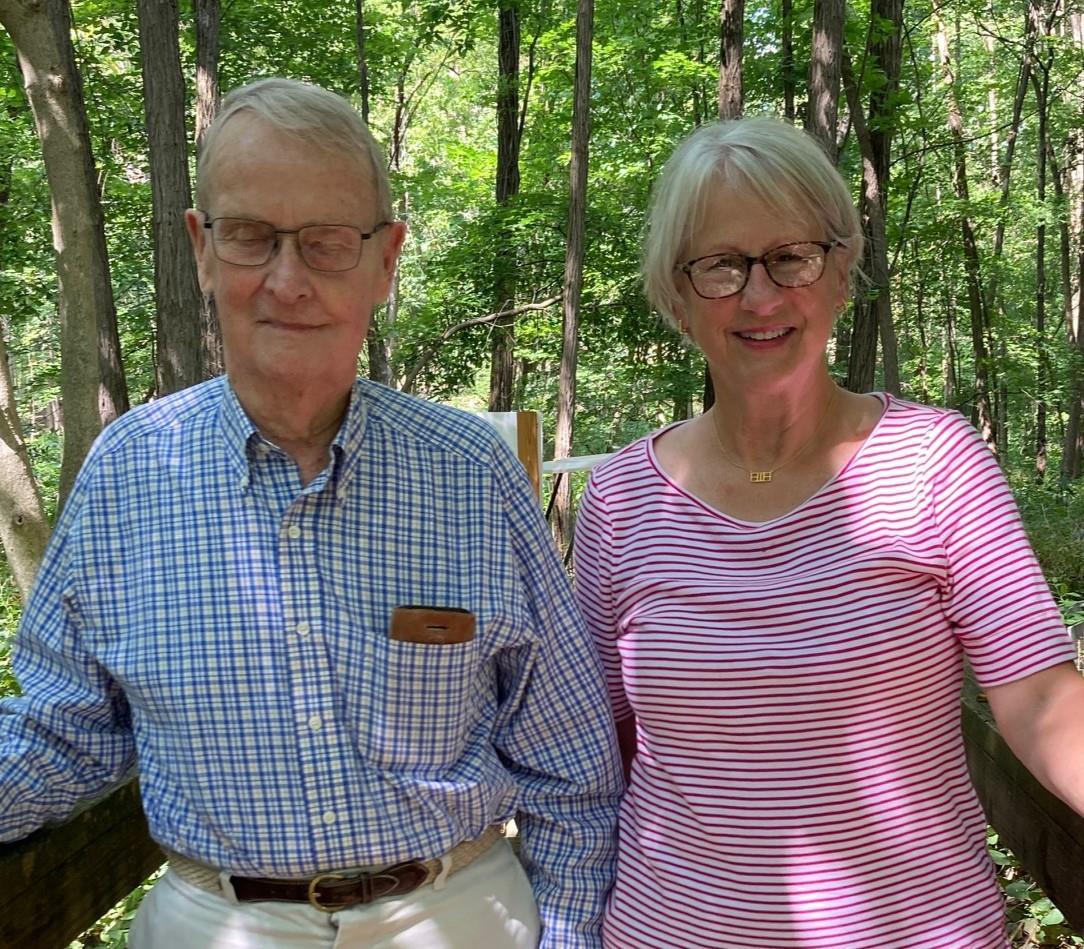
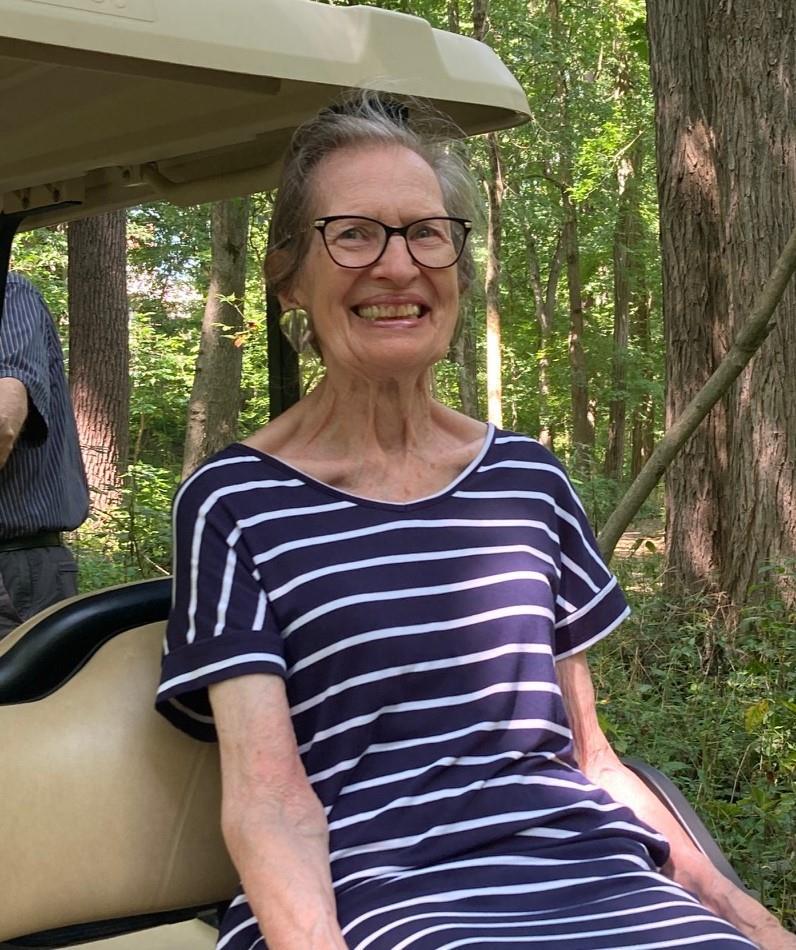
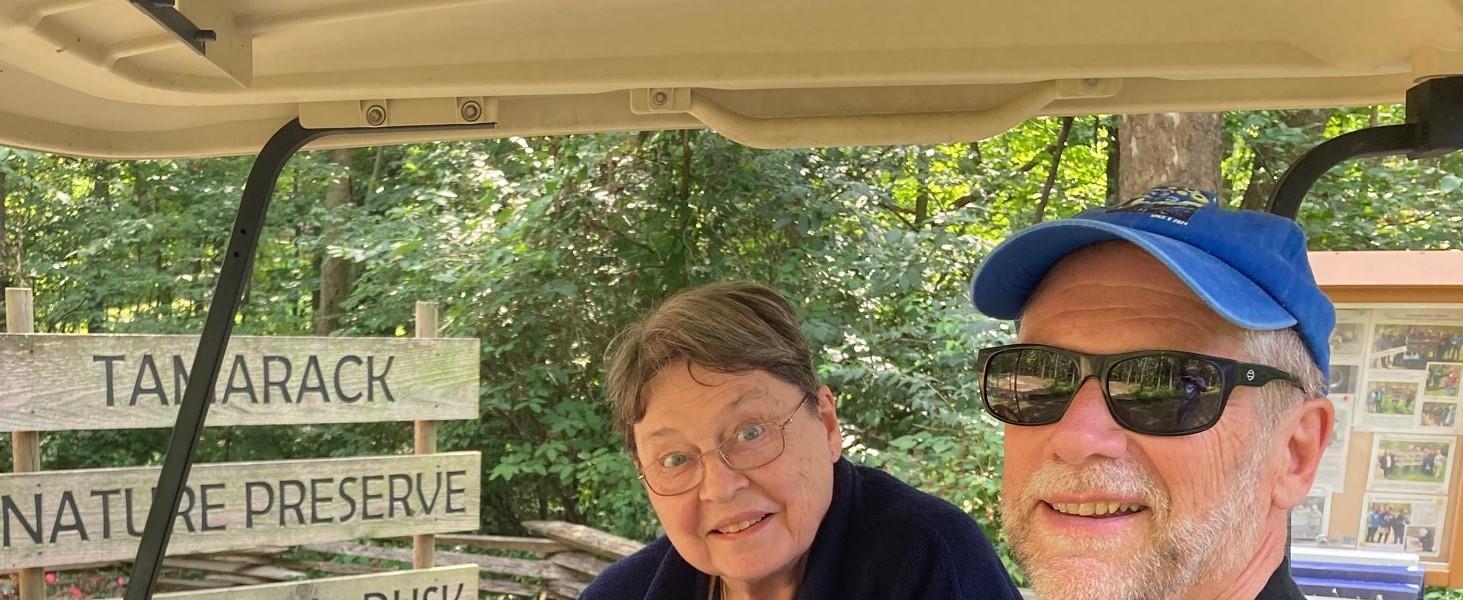
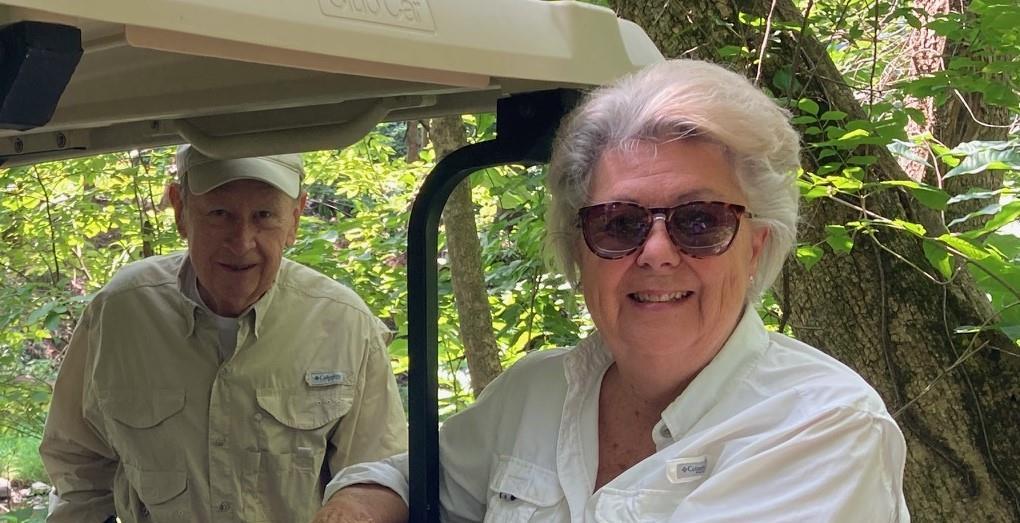
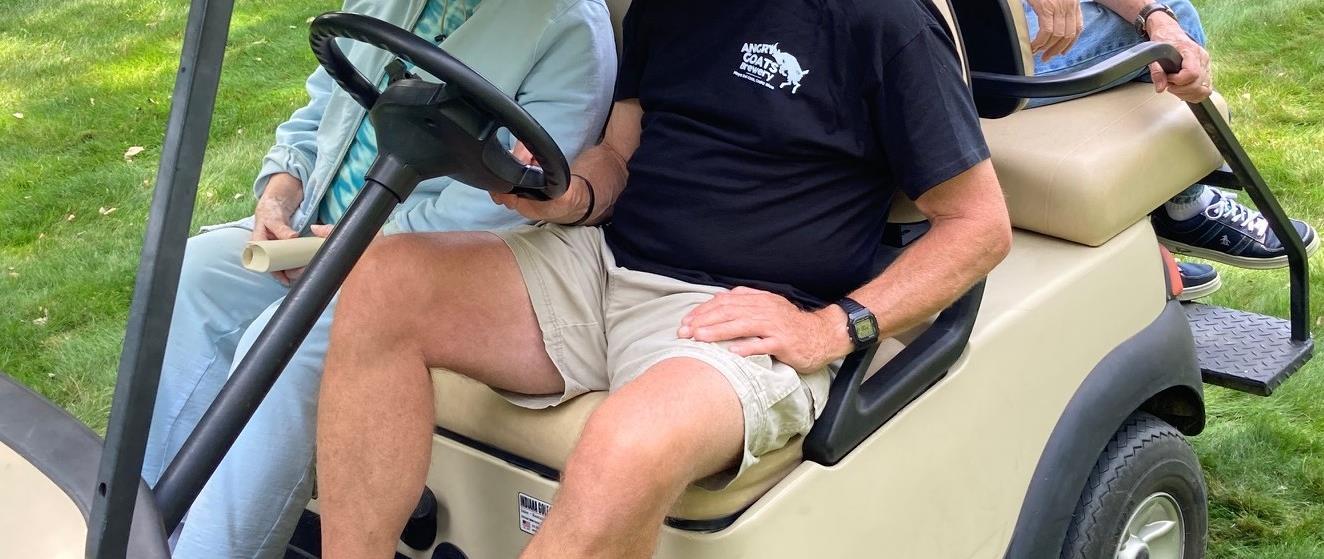
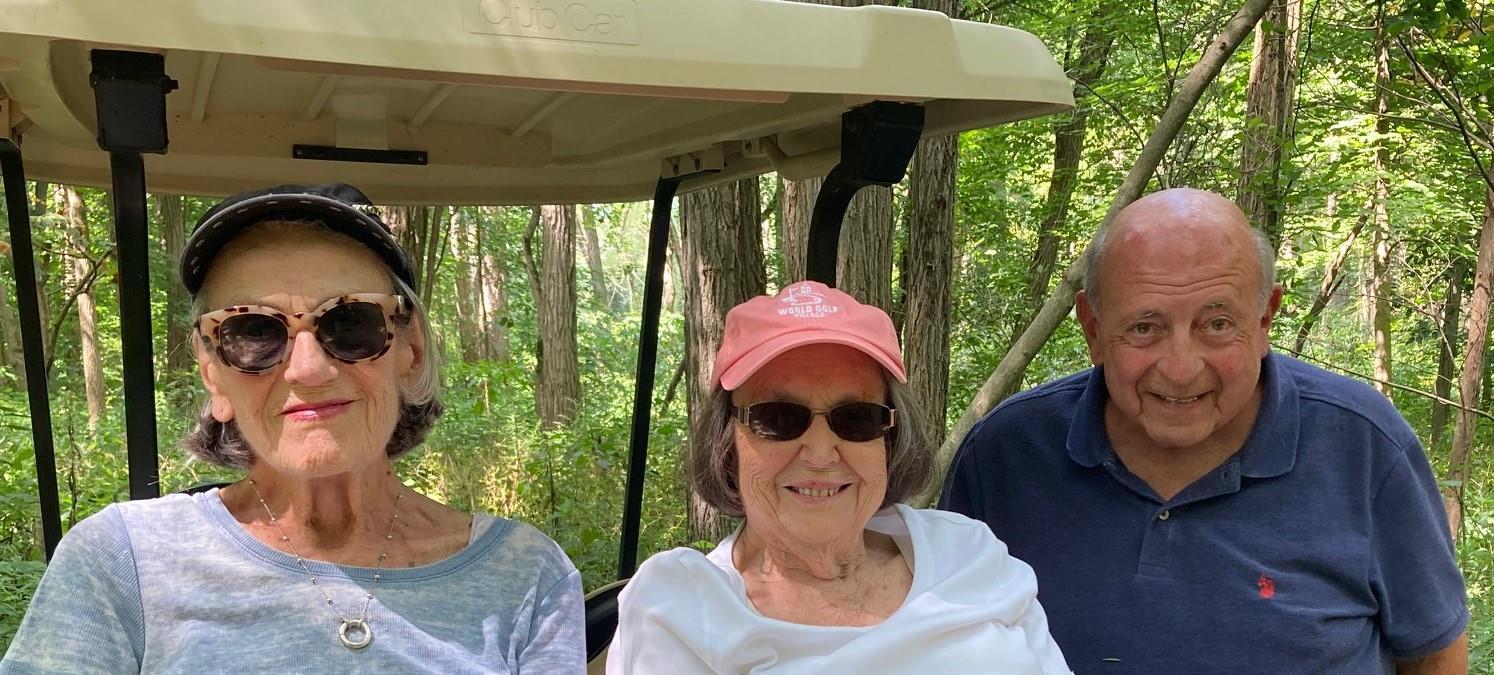
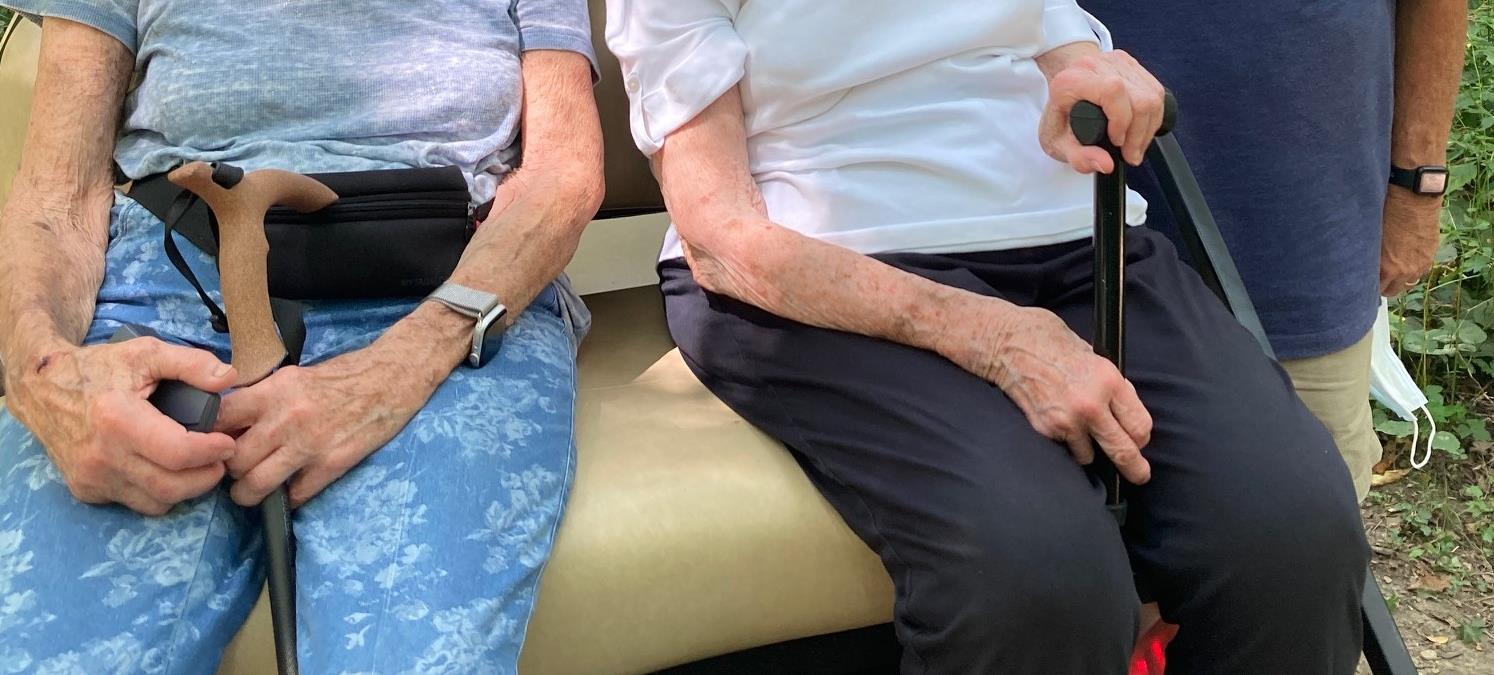
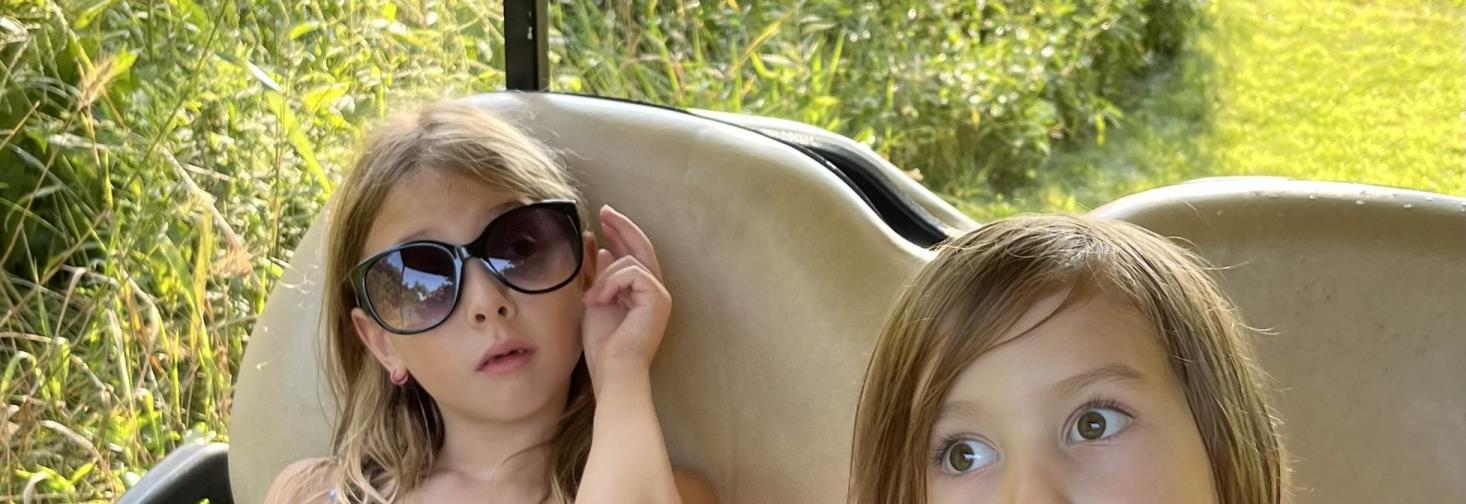
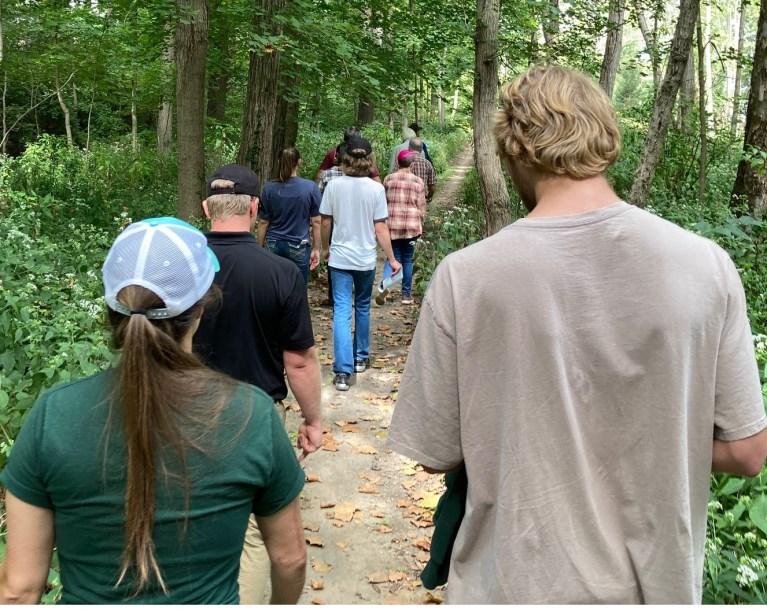
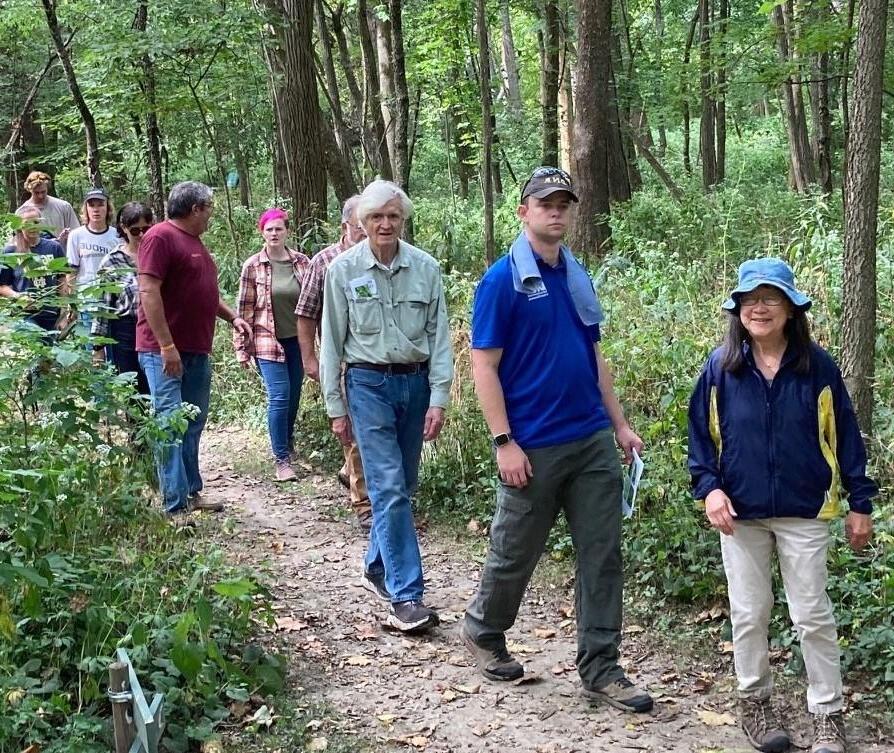
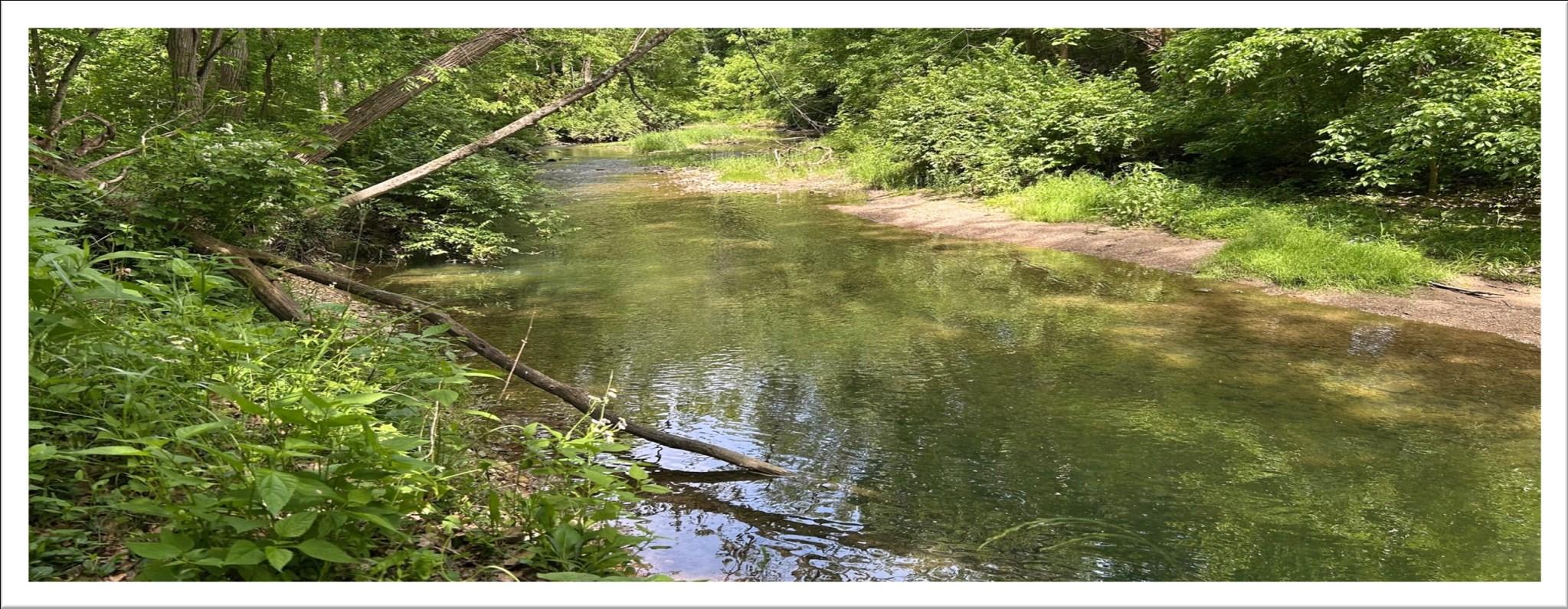
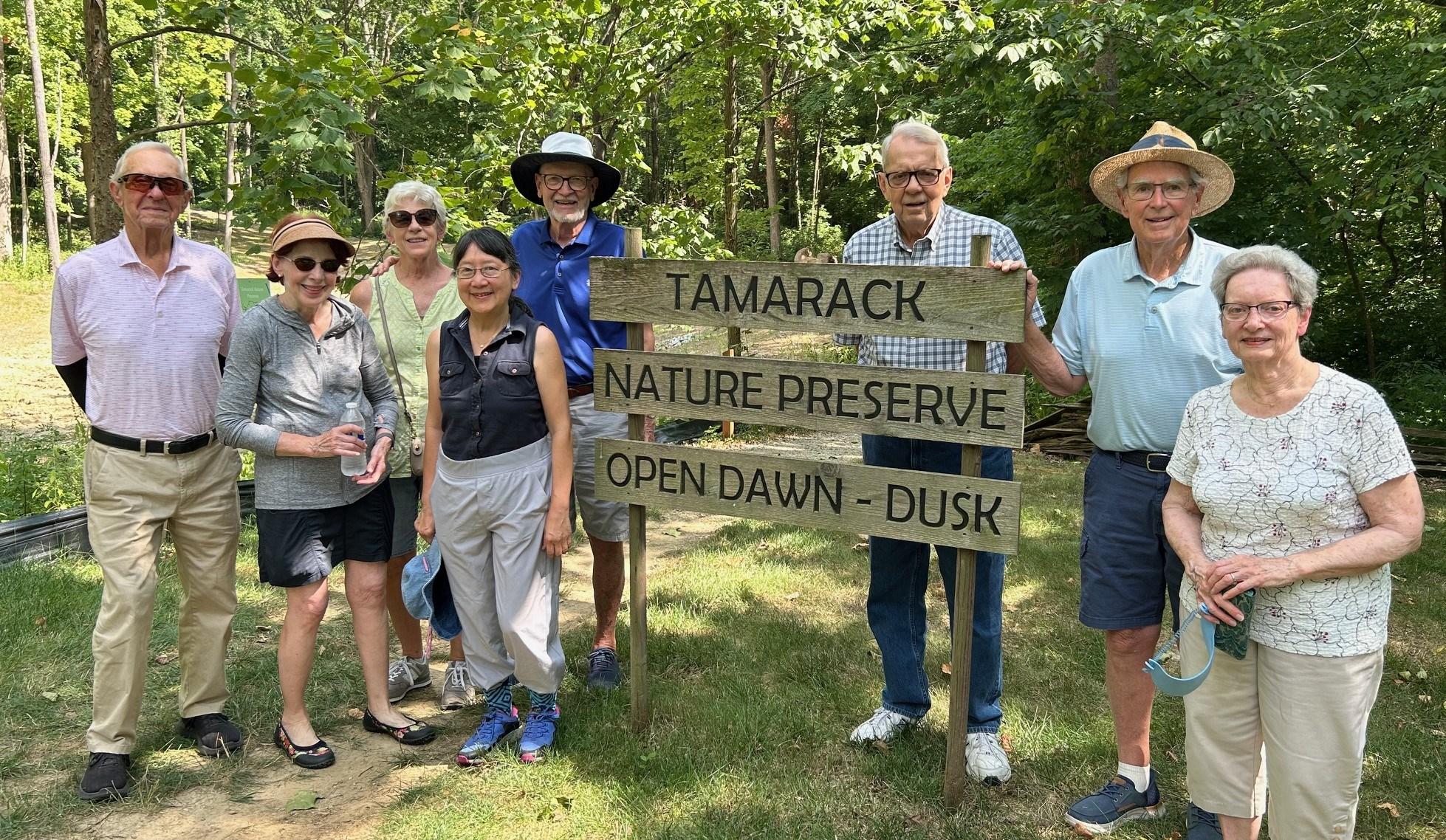
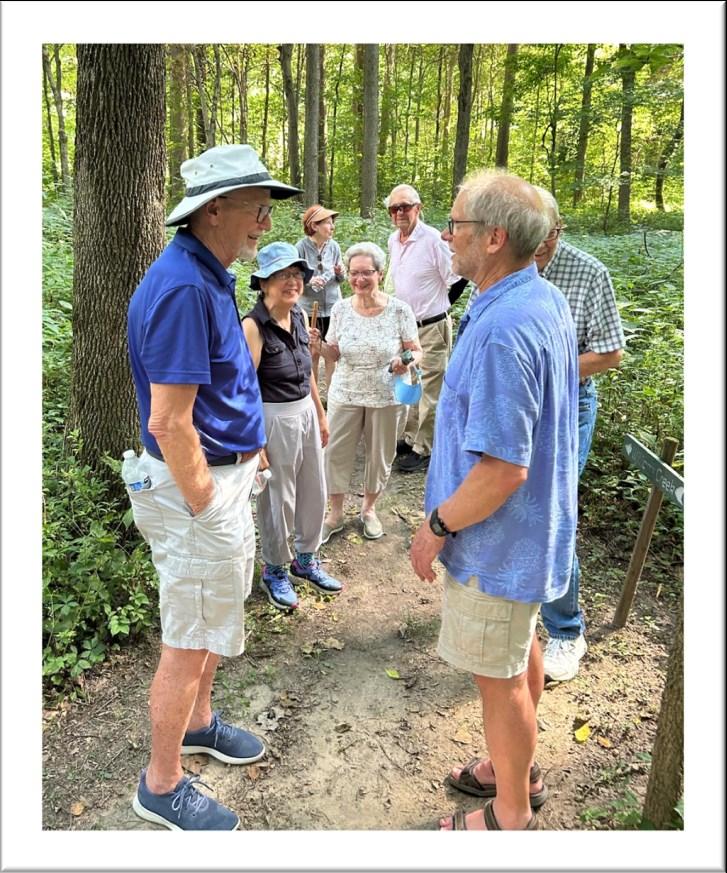
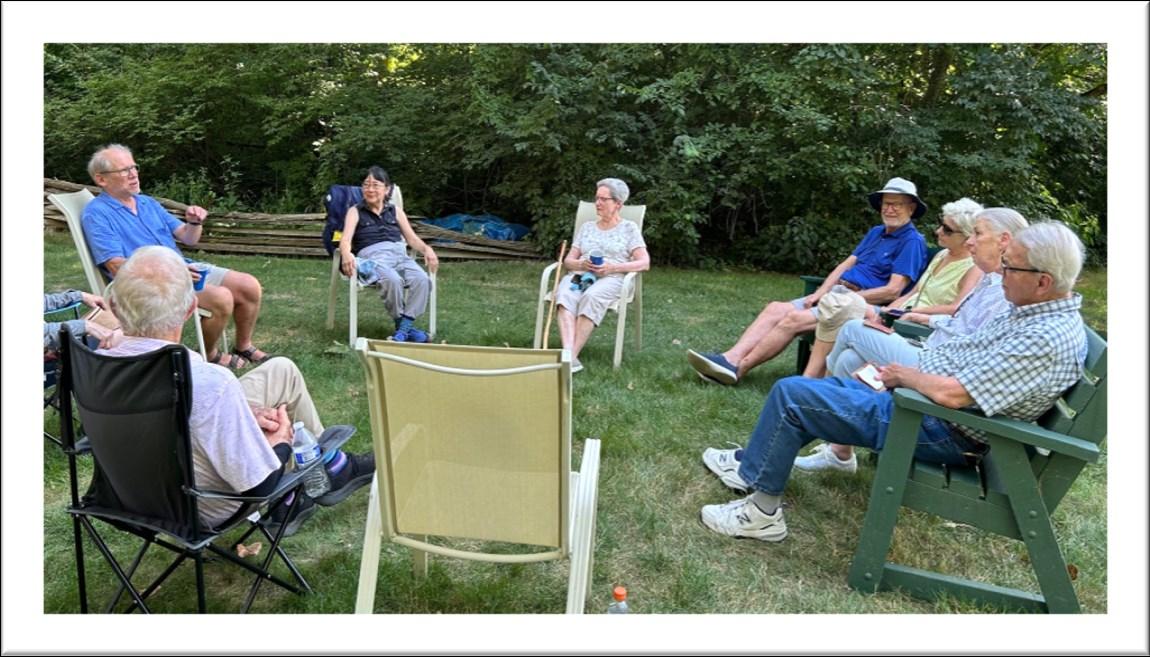
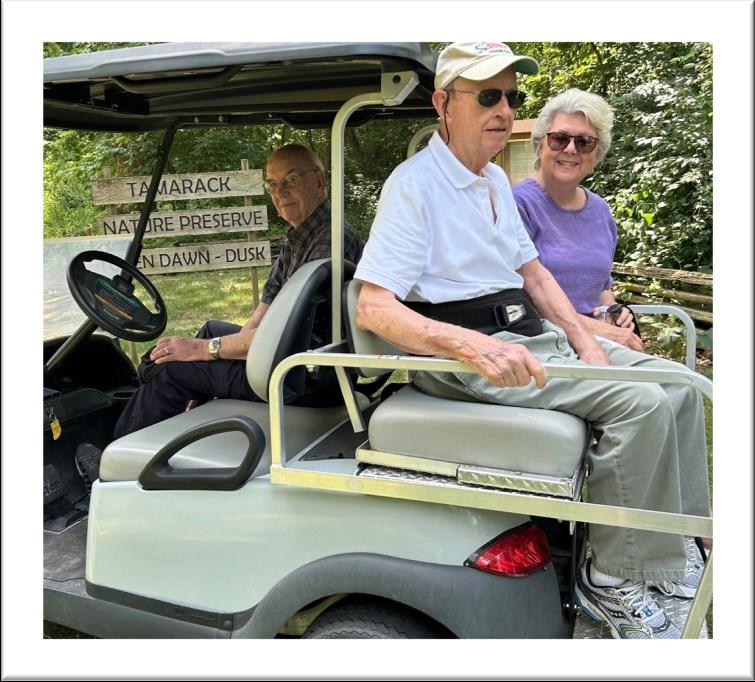
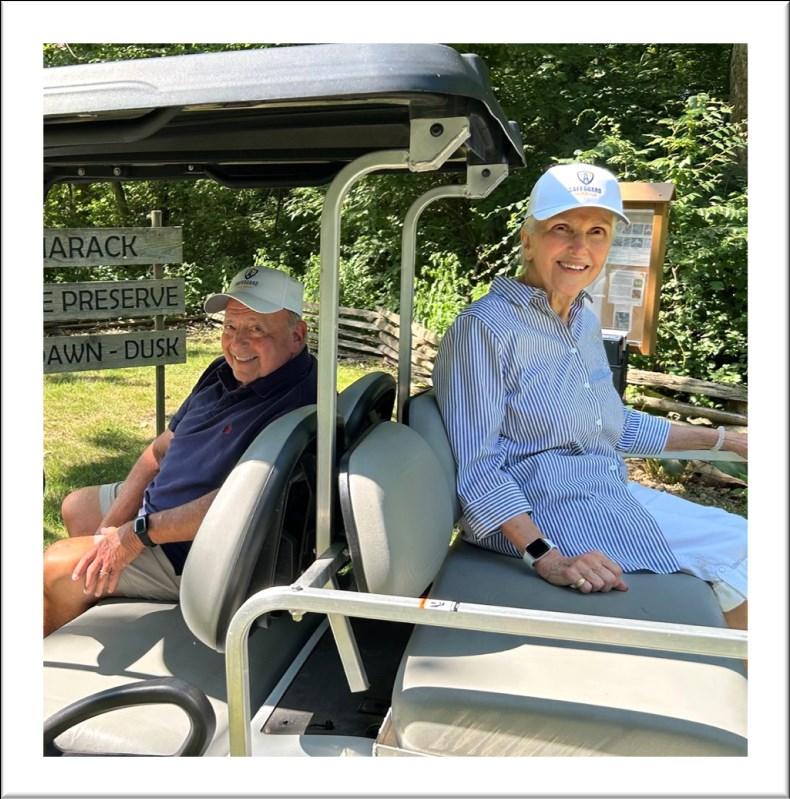
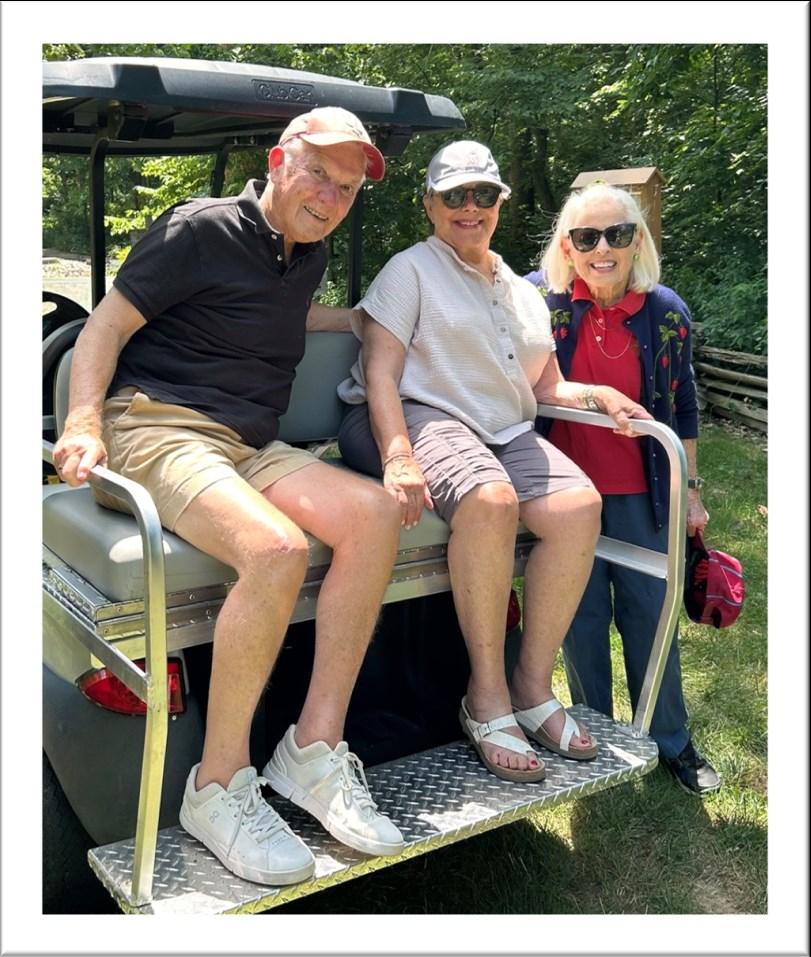
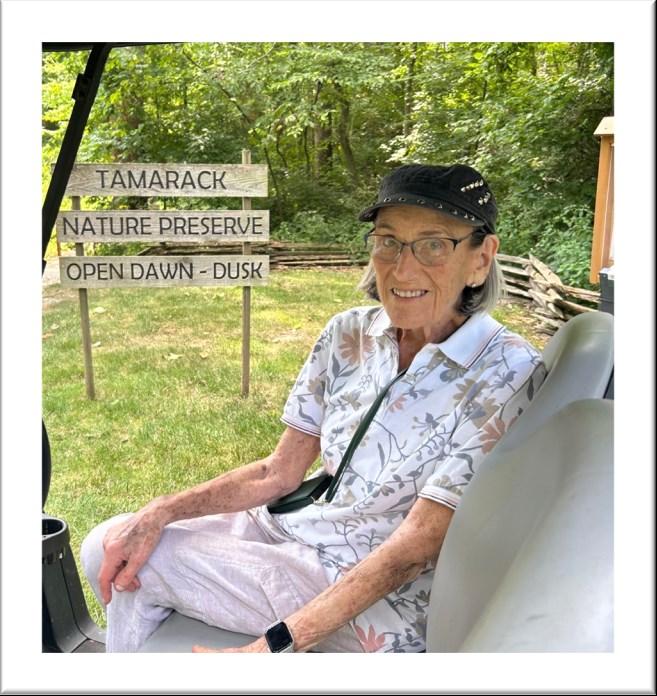
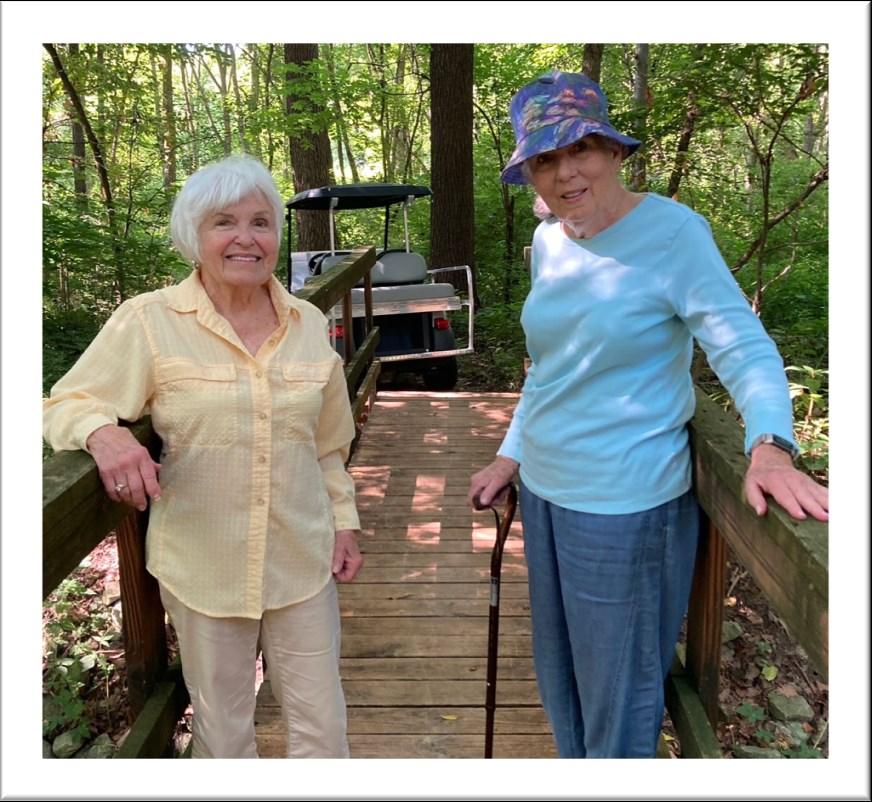
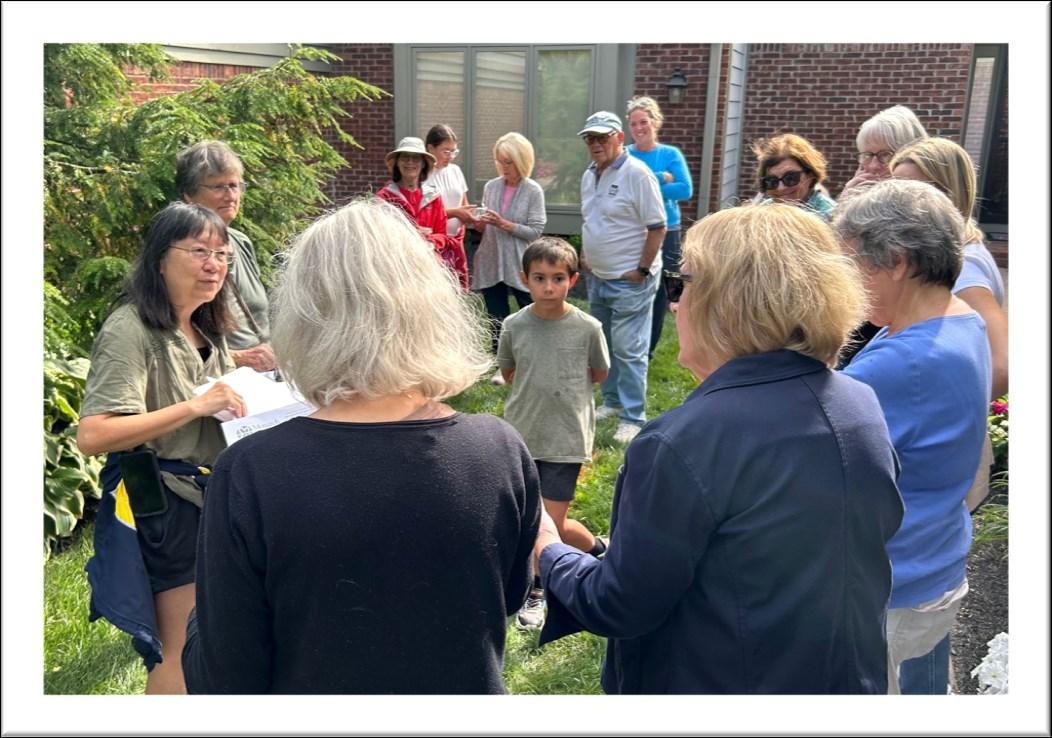
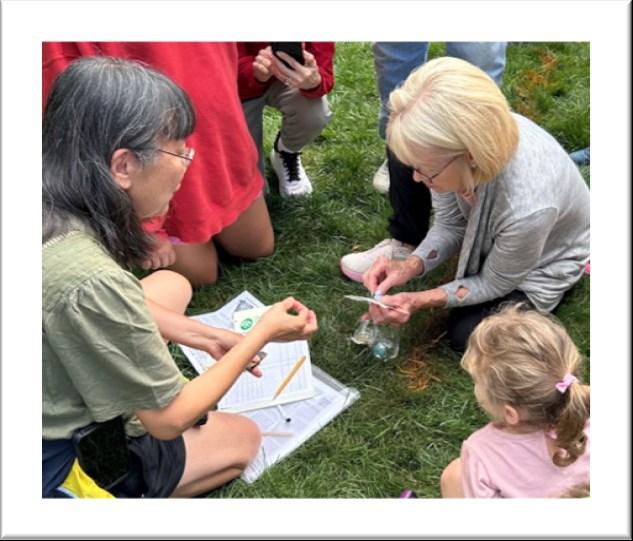
This year, the cart tour was extended to three days. There were 1 scheduled tours for a total of 2 partcipants. The purpose of this annual golf cart tour is to ofer neighbors an opportunity to enjoy the preserve in the comfort of a motorized cart. Thank you for making this a successful event!
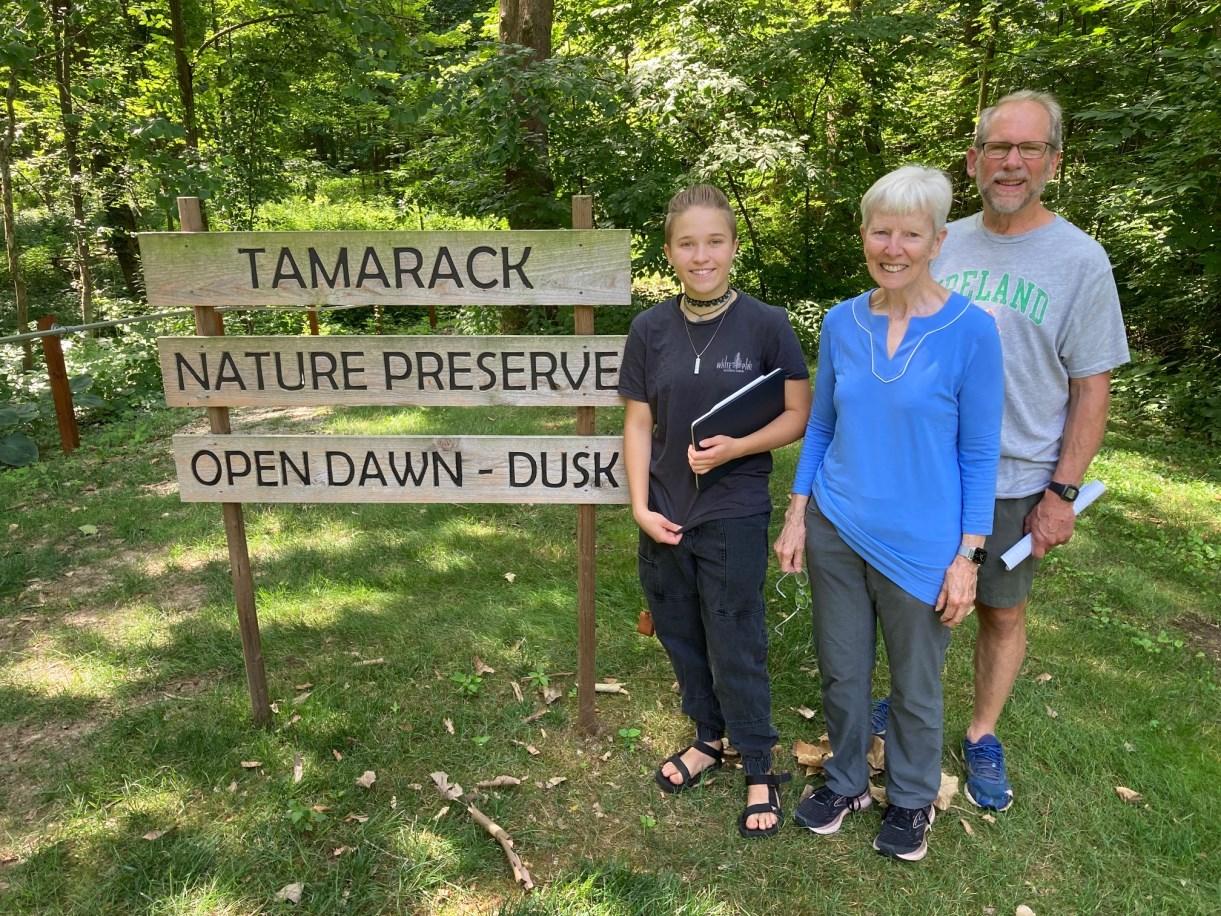
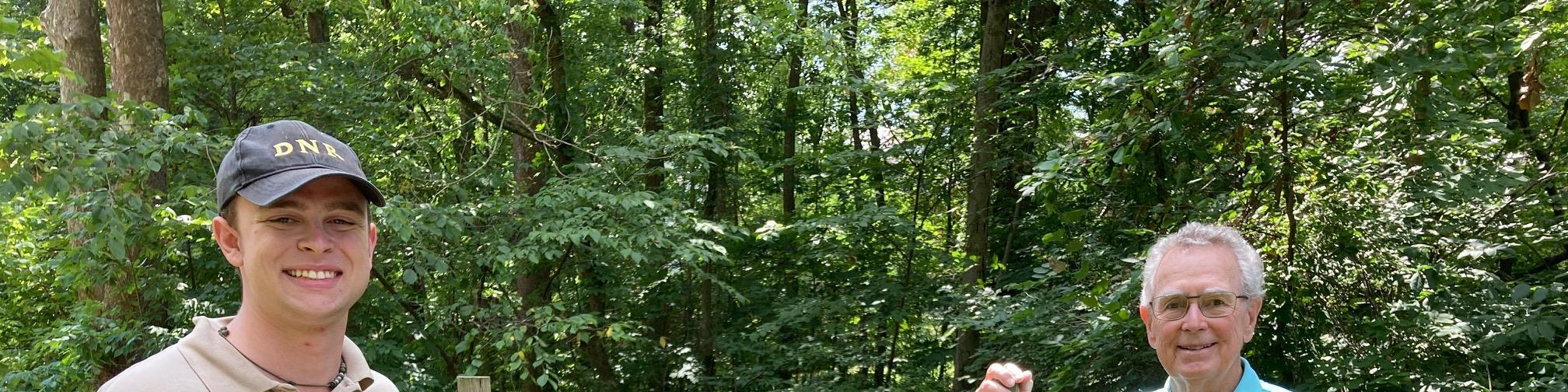
Wi h he a i a ce f Zach S i h DNR a d Mi a Be e U i e i High Sch h e a a e e e e a ha bee c ea ed f i i ’ e j e
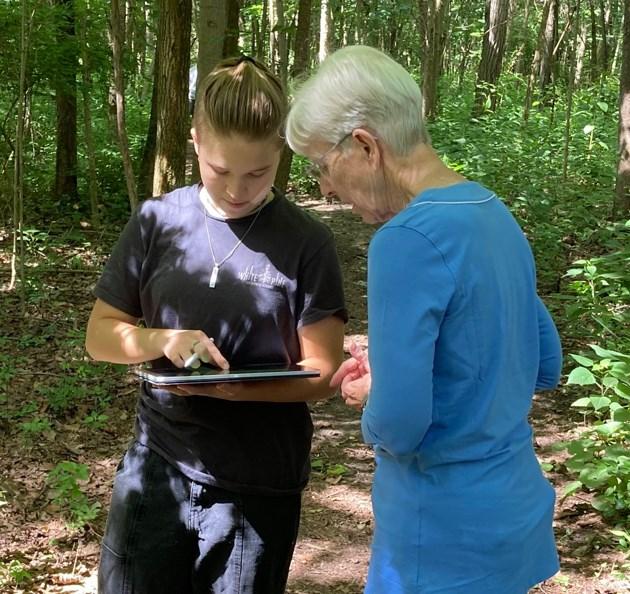
Ne a acc a e a f he e e e h i g he ai a d he ee ca Thi a acc i hed b Mi a Be e
Fi a G eg Ha ke a ached a be ed di k i di id a ee ha c e d i h he i f ee a d hei ecie
The f e a ide f ee ha a e ca ed a g he ai Thi a k a acc i hed b Zack S i h DNR F e e
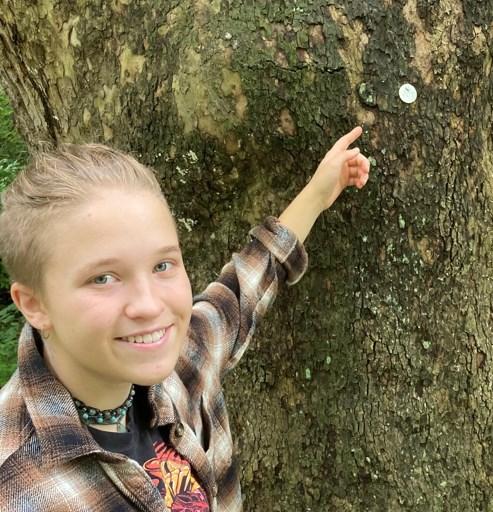
T a e e e e a a e di a ed a he e a ce he e e e a d a he f b idge a H e R
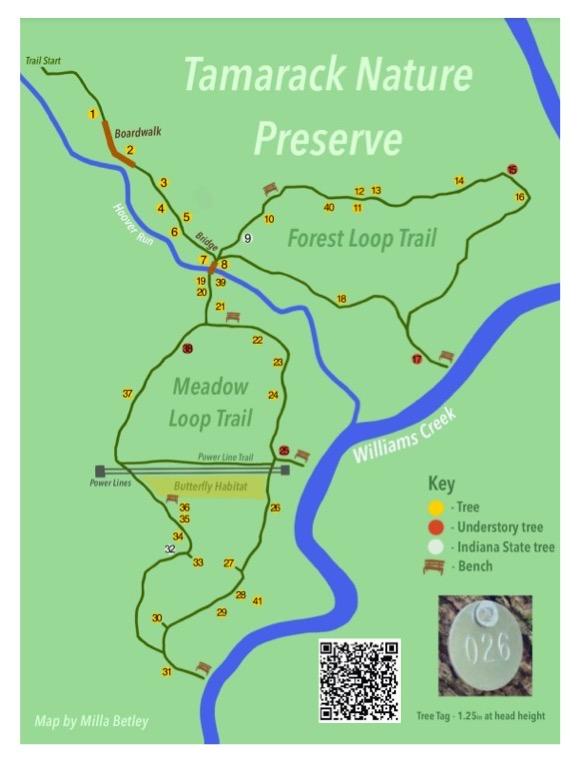
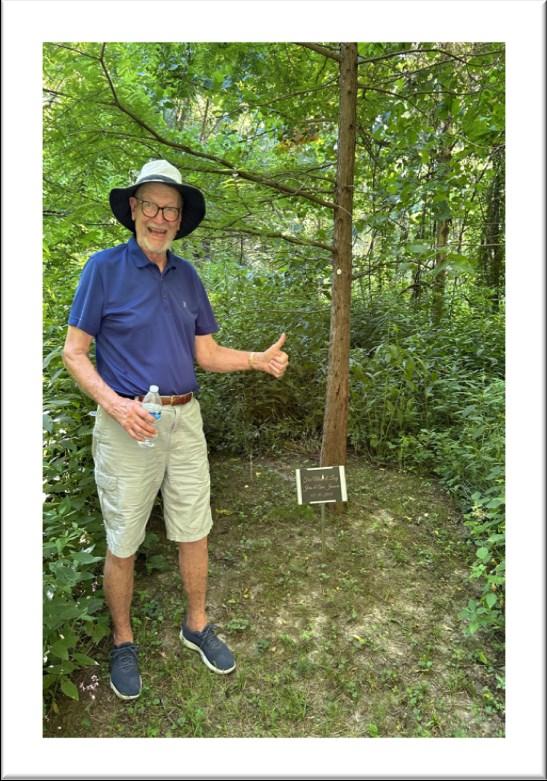
The a c ai a QR c de he ca ed i h iPh e i di a he a a d a i f ee c e di g he agged ee a g he ai
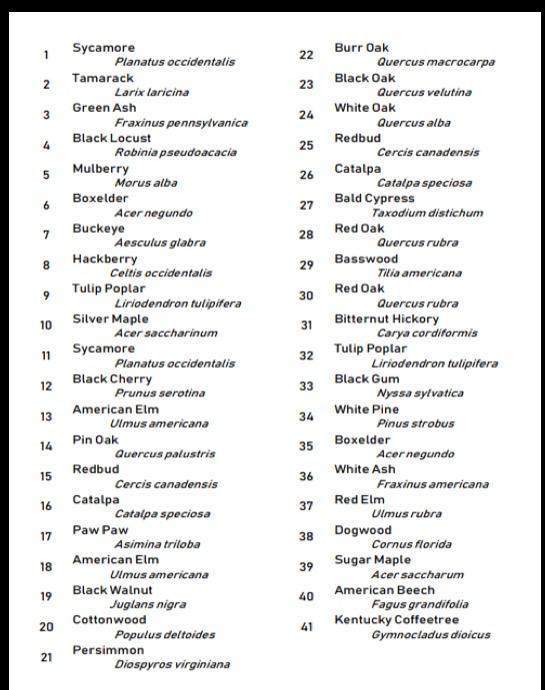
The e age h he f i hed d c The a i h QR c de a d he i f ee ca ed a g he ai Whe ca he QR c de he e age i be di a ed iPh e
Milla Betley, Kate Betley, Greg Harker
Zack Smith
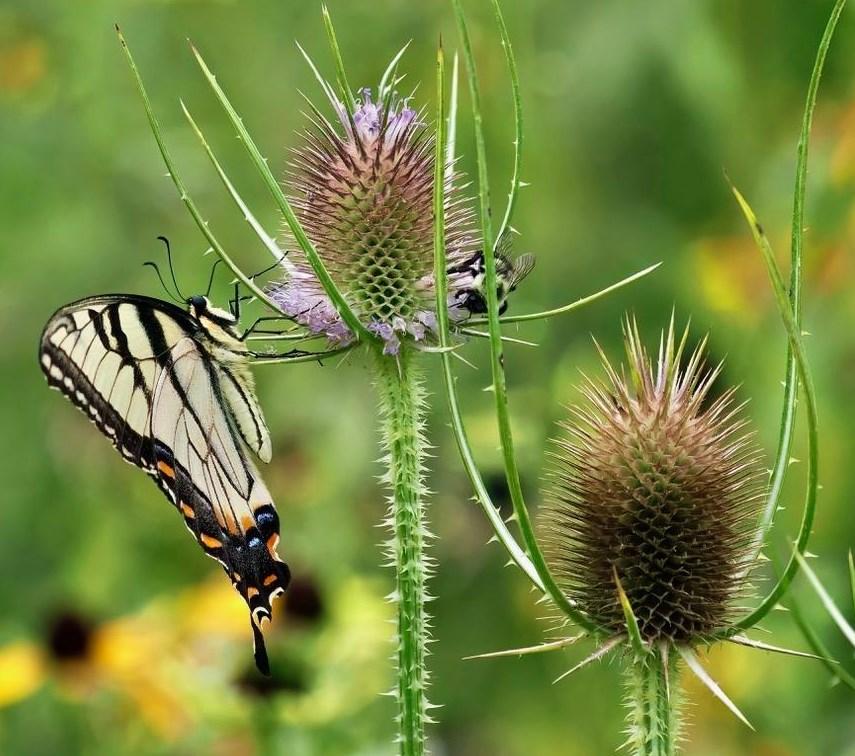
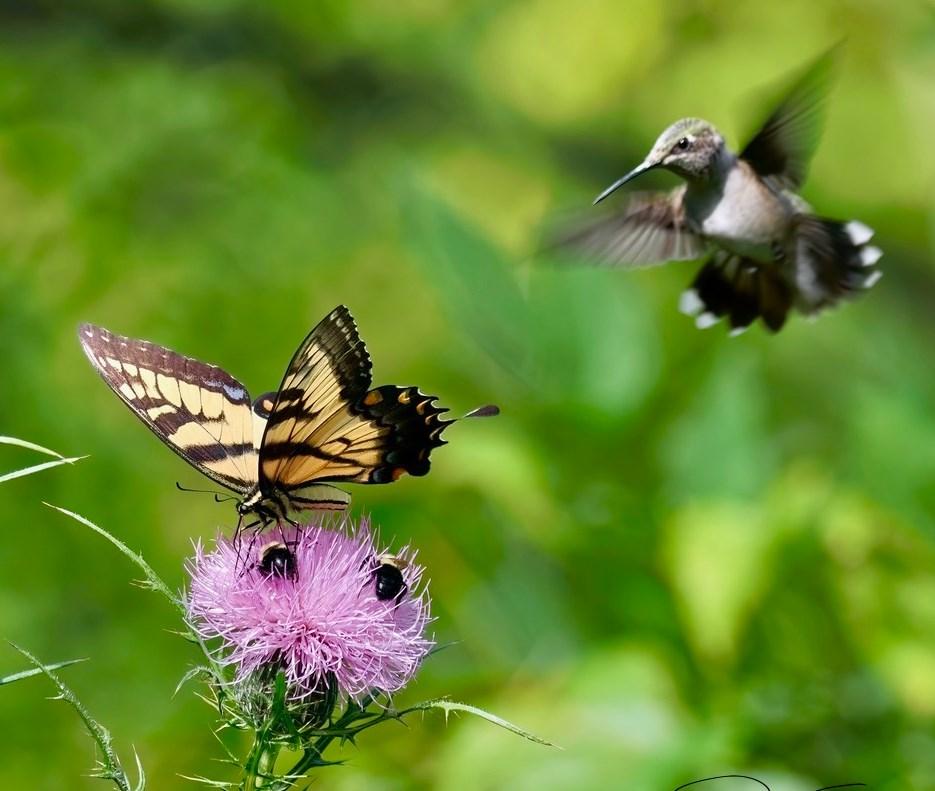
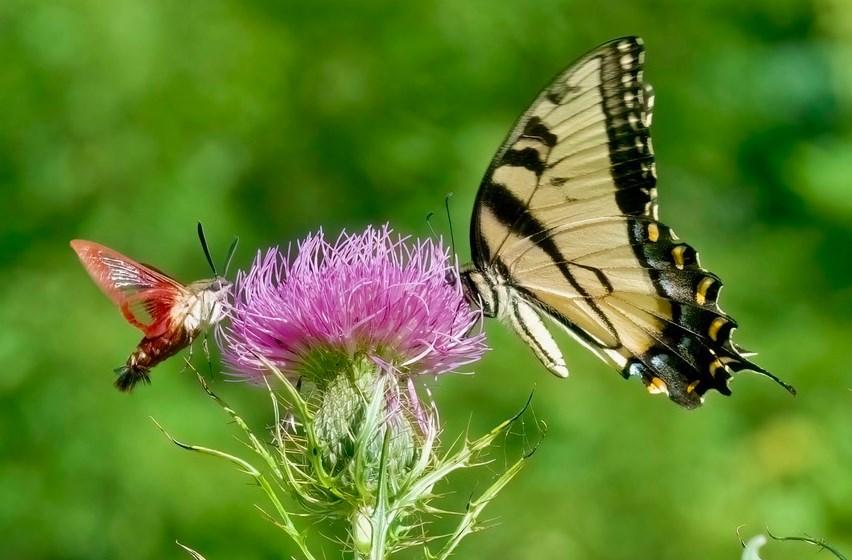
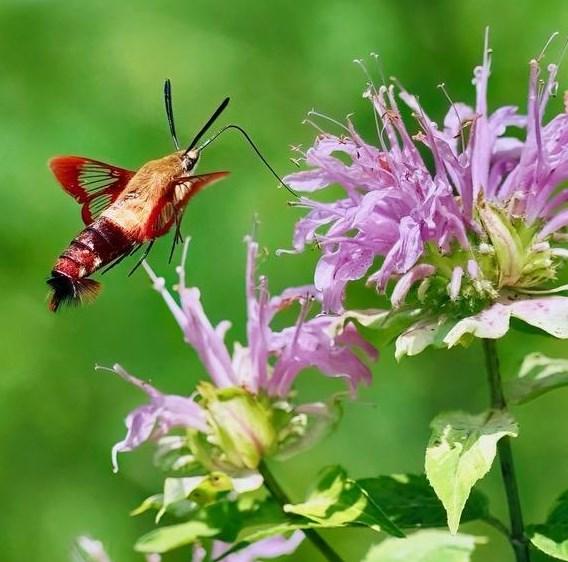
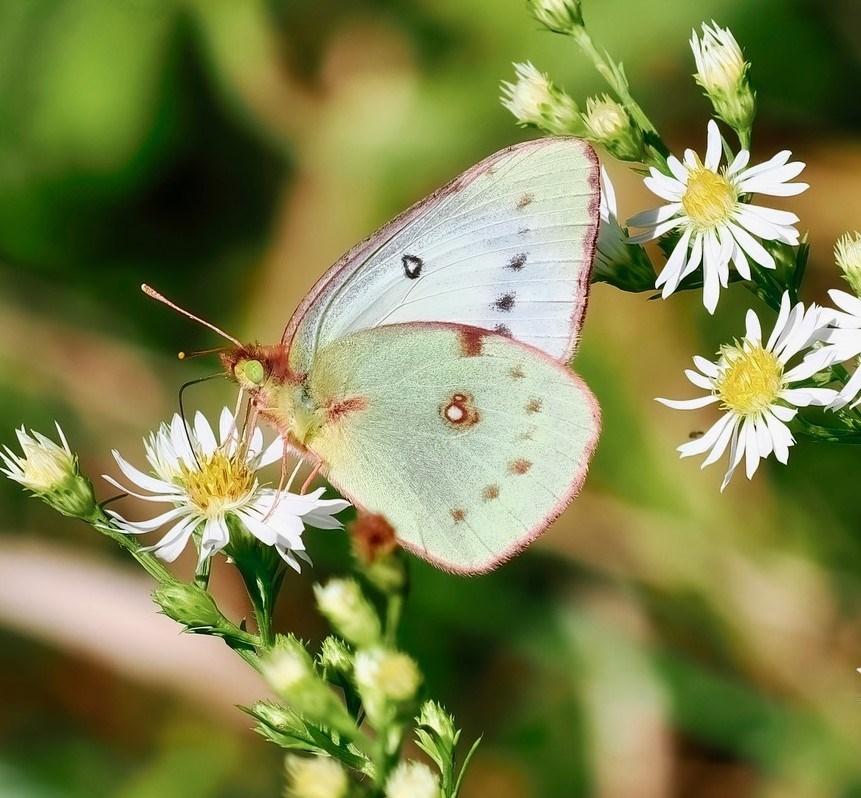
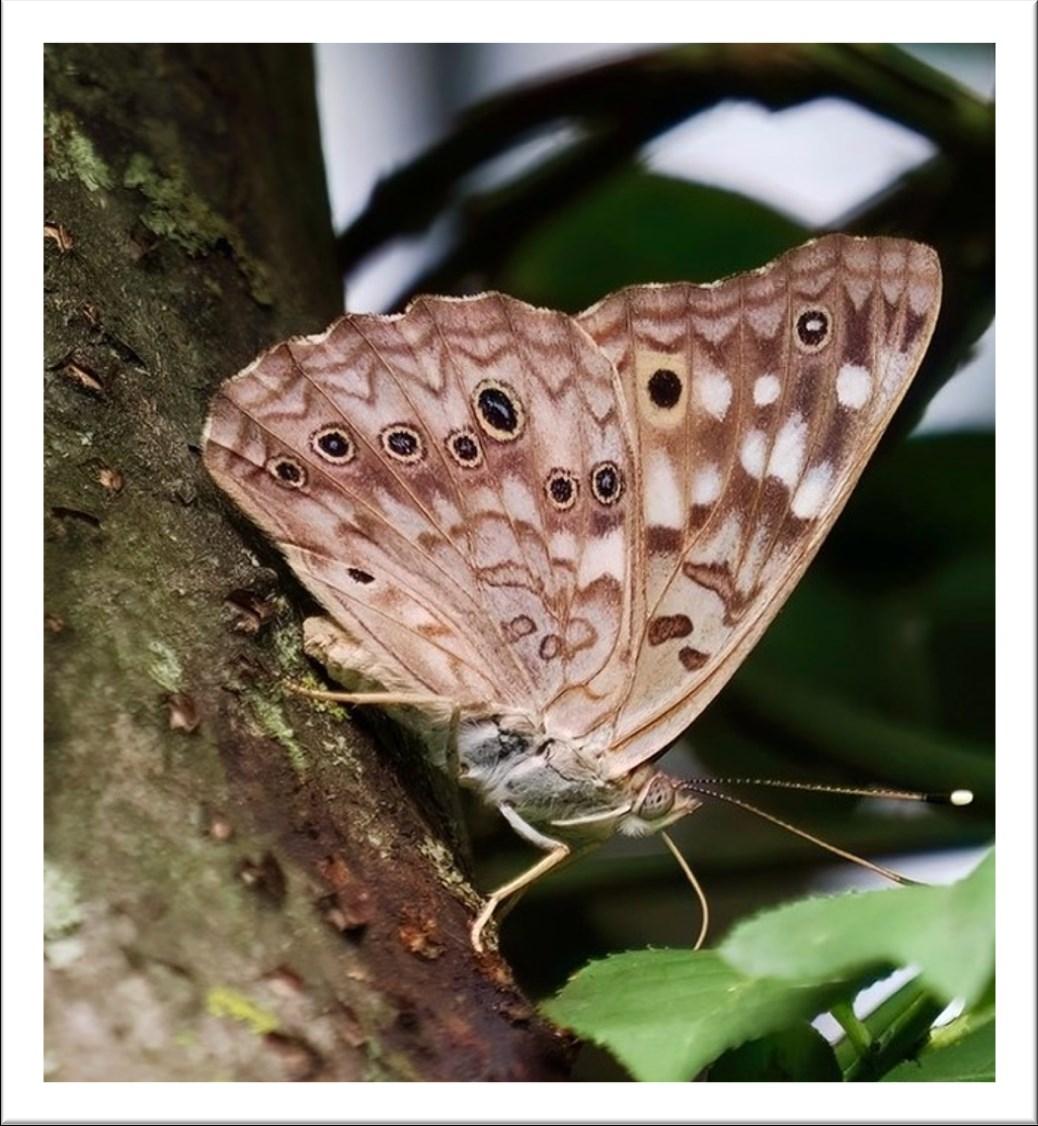
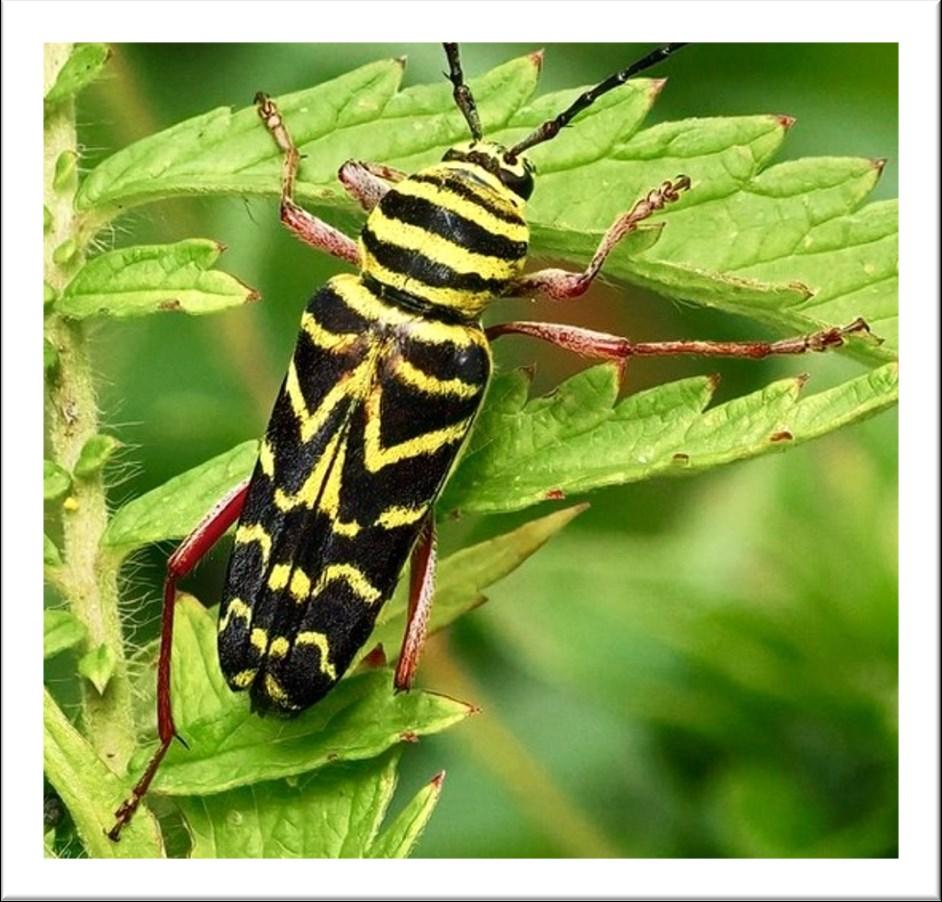
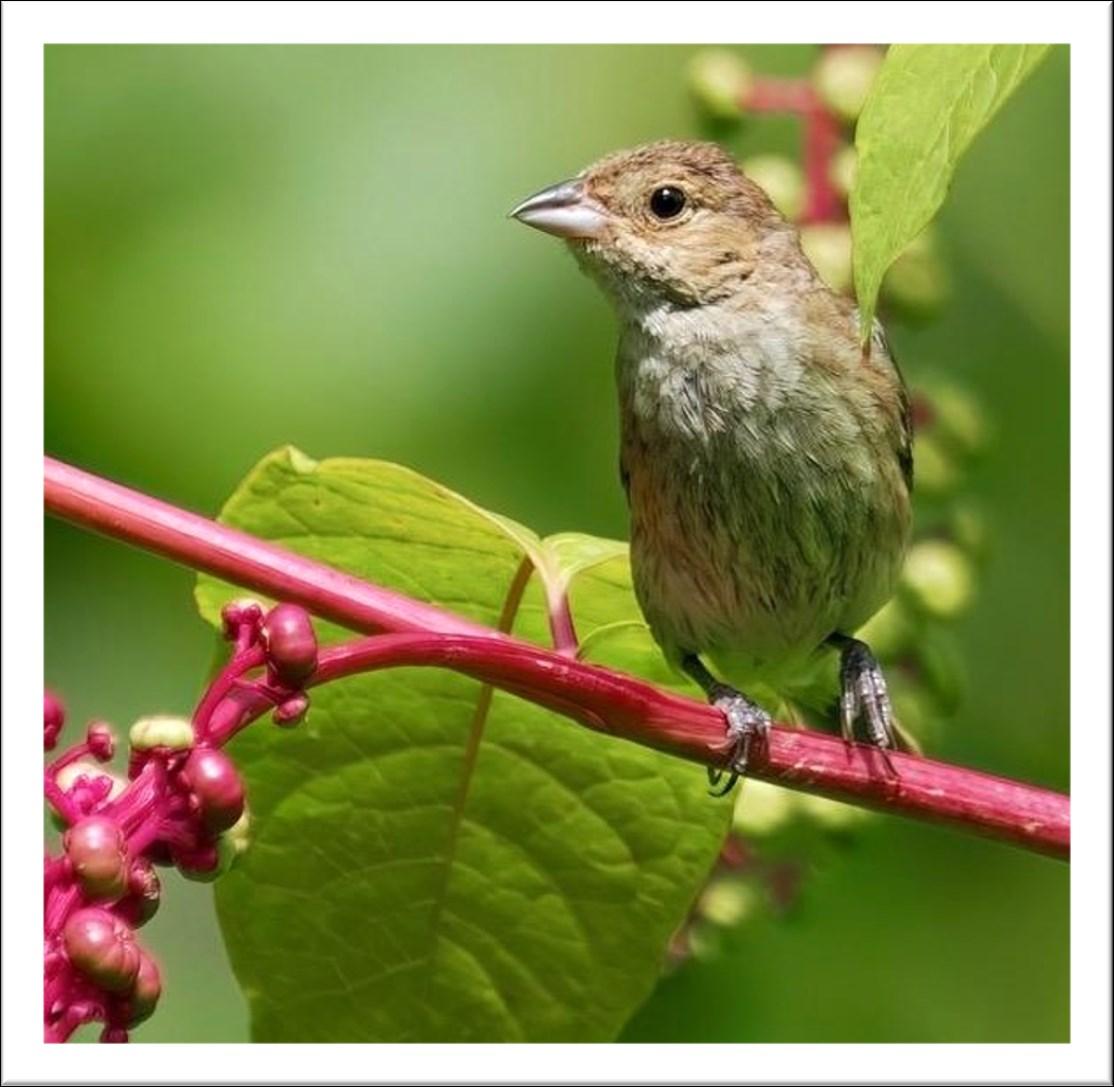
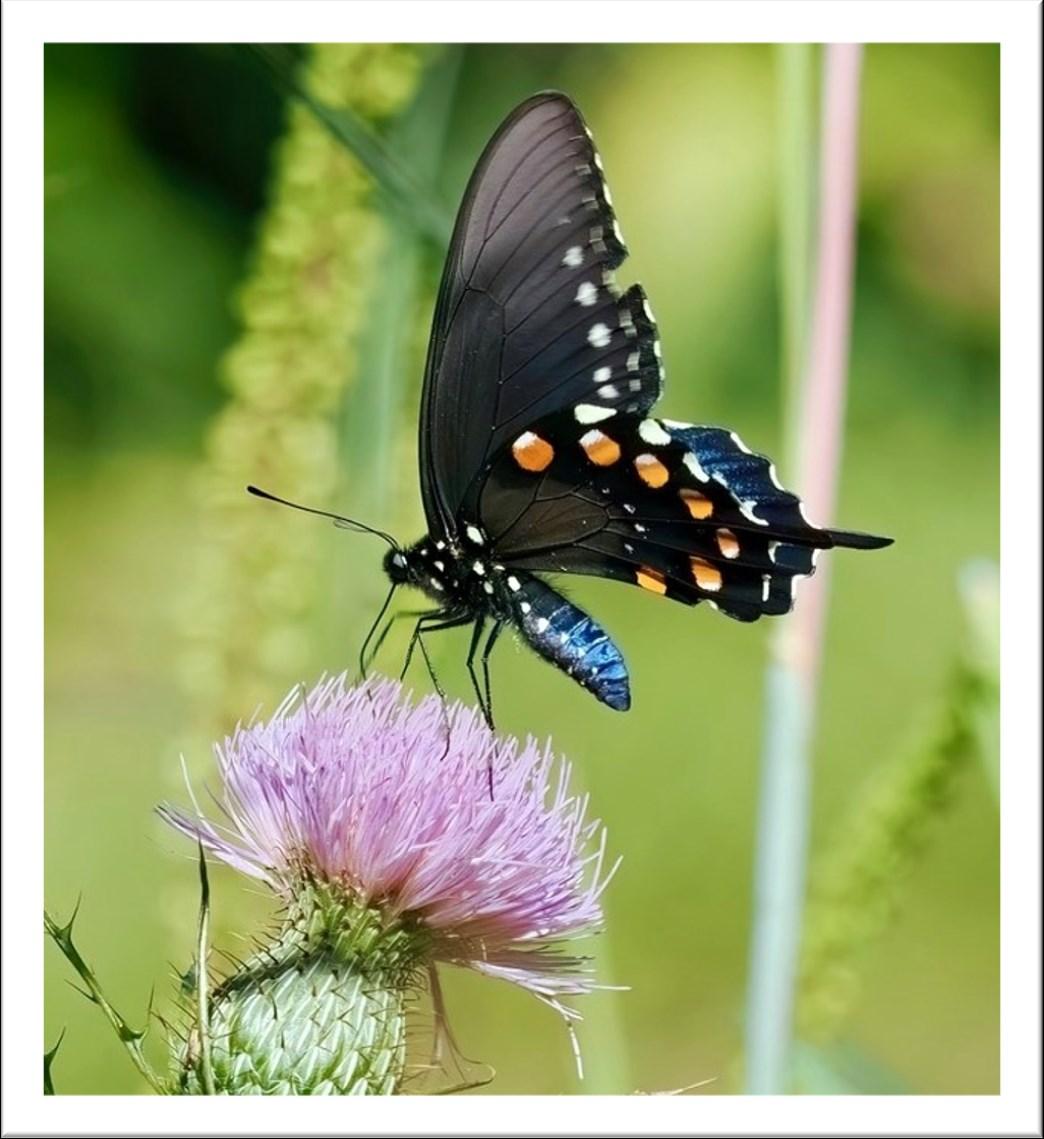
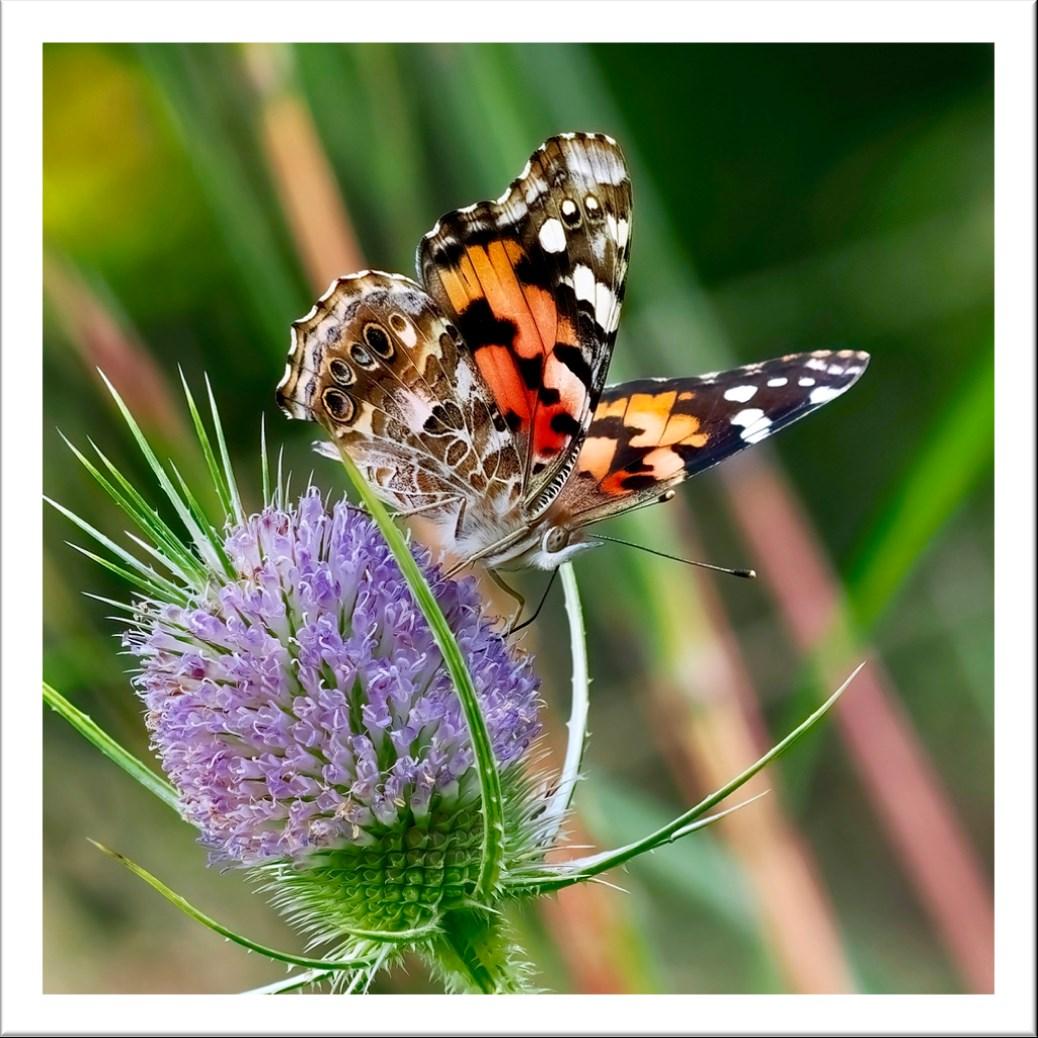
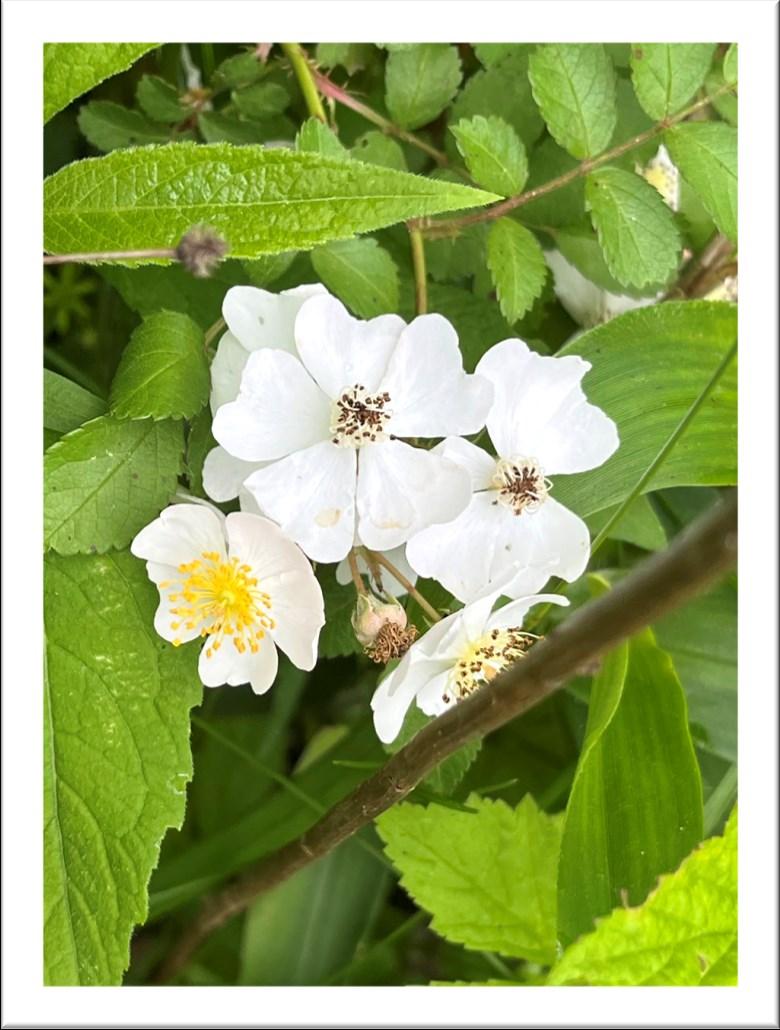
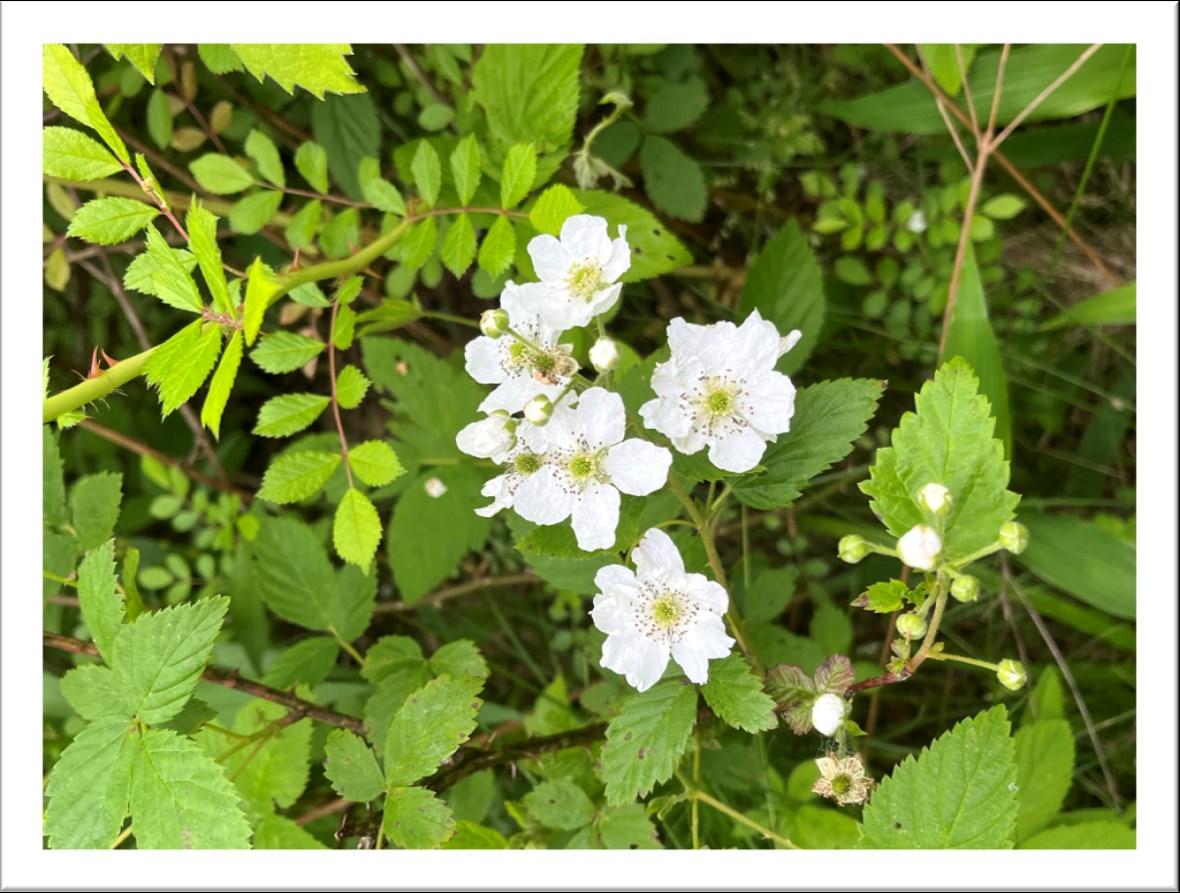
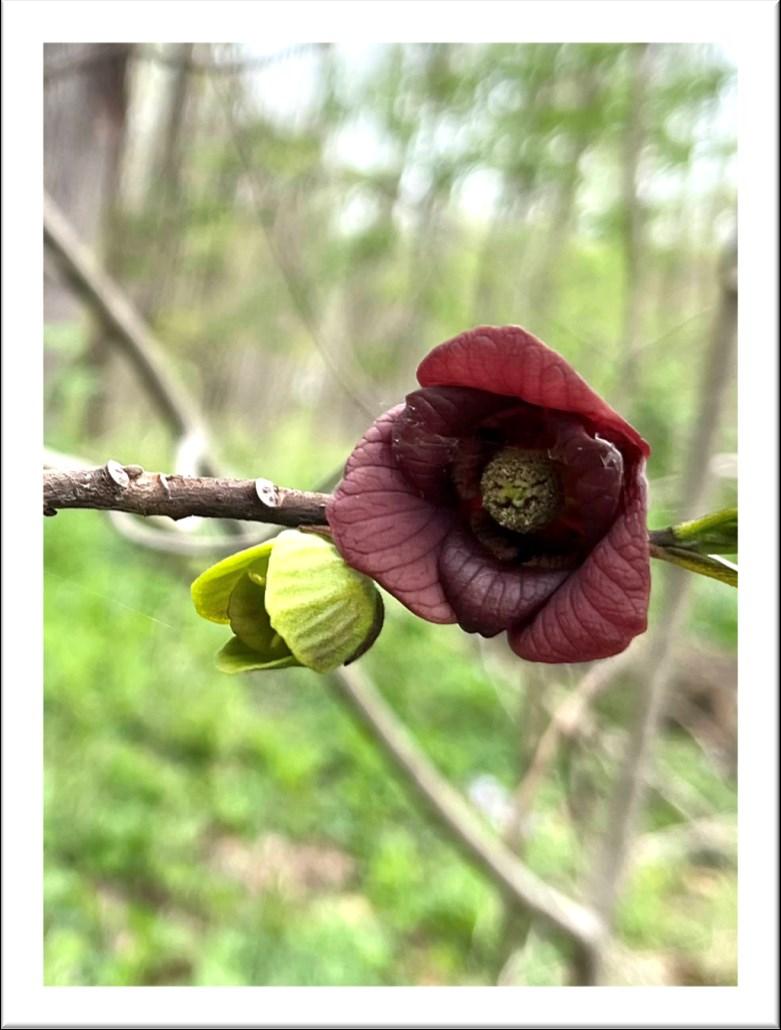
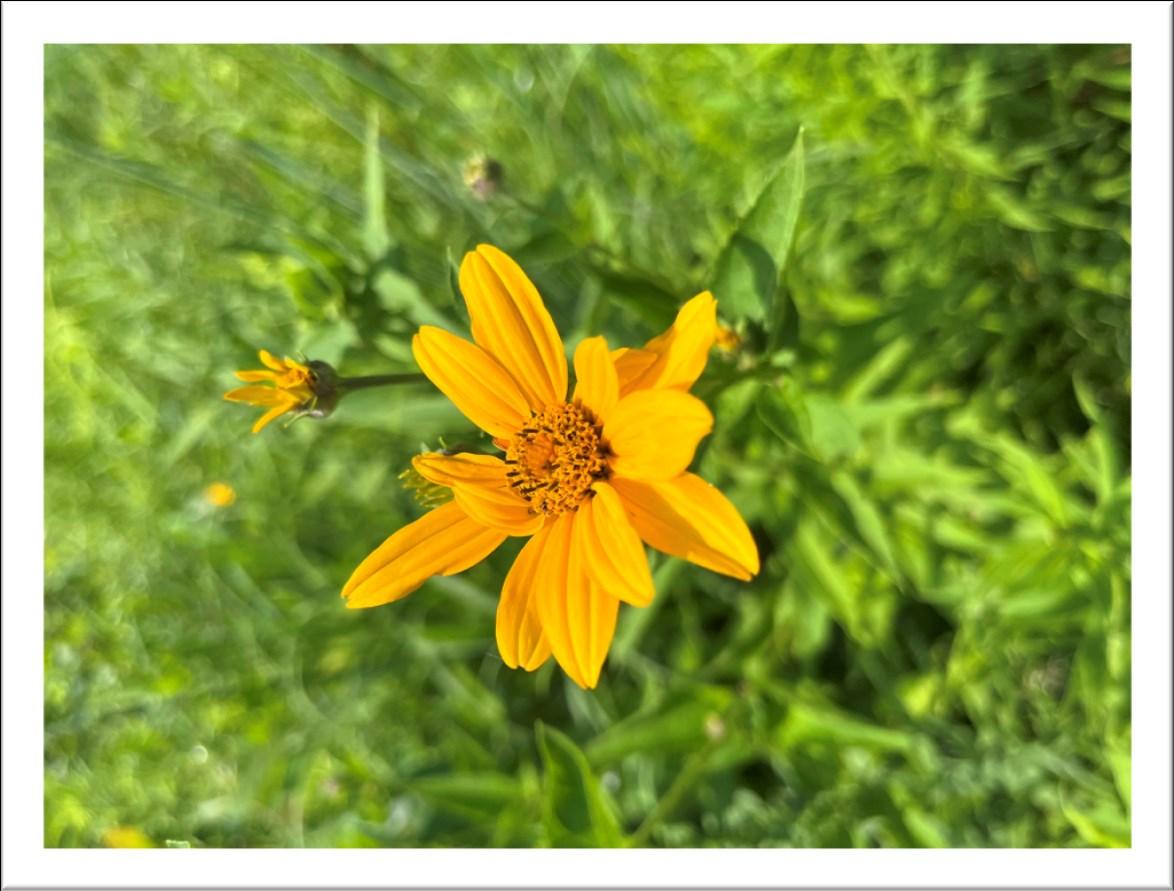
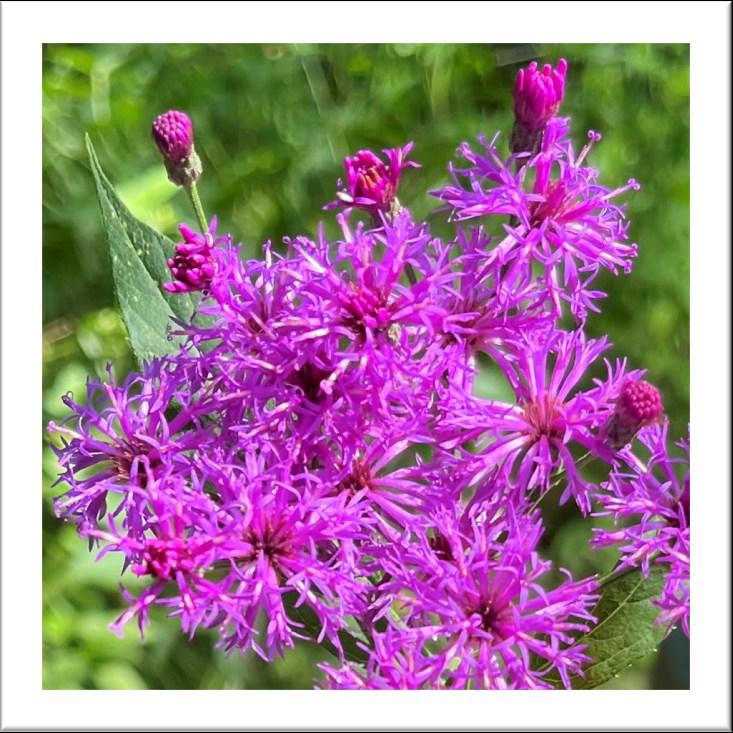
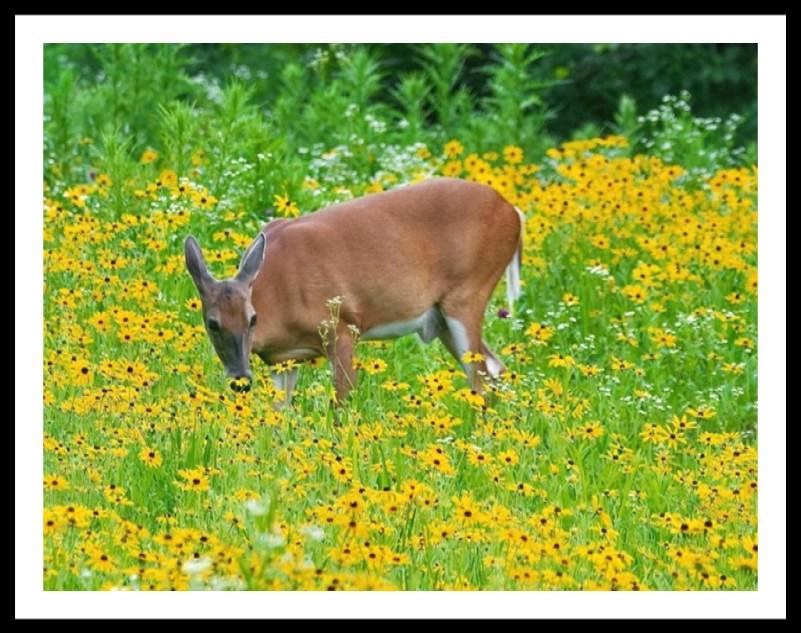
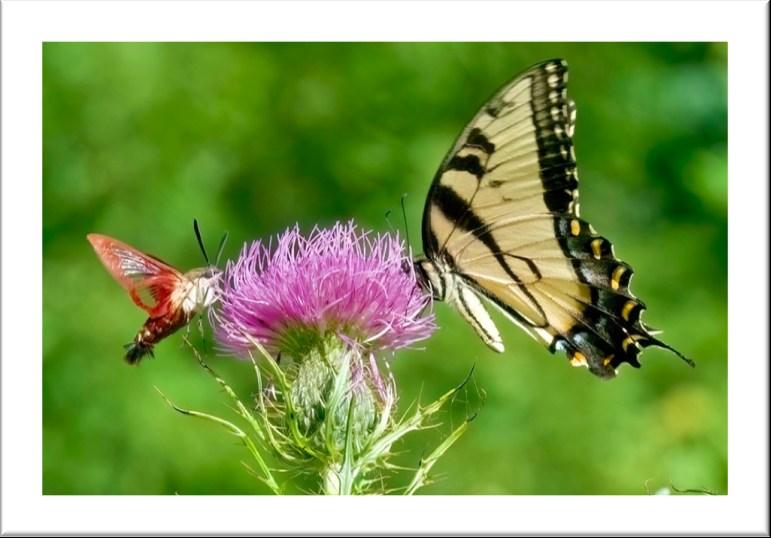
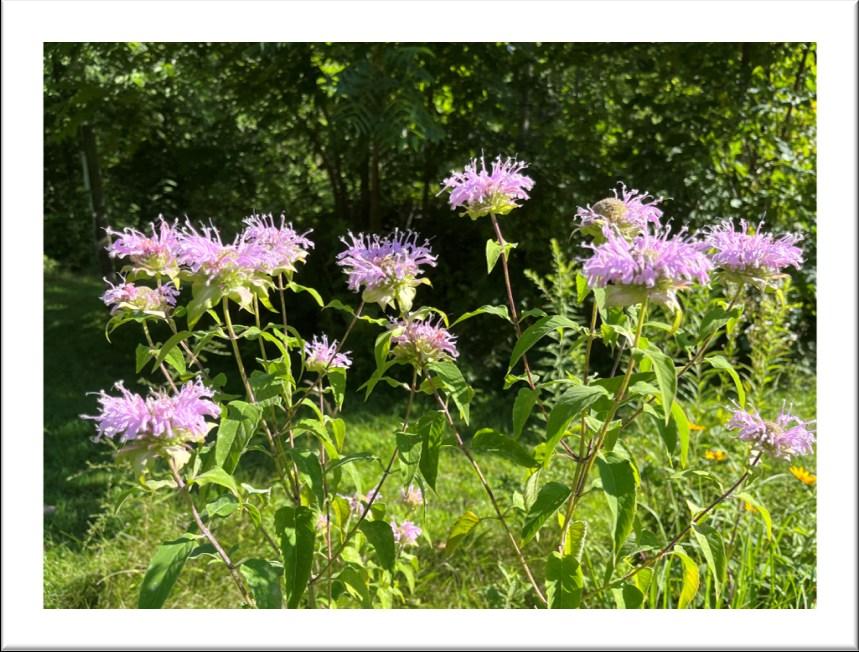
Late summer photos taken in the
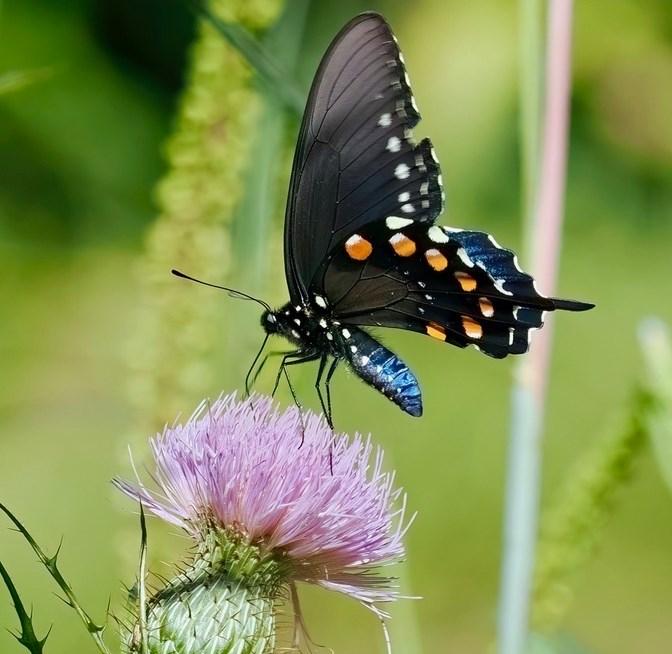
Pipevine Swallowtail Buterfy
Eastern Tiger Swallowtail Buterfy
Hummingbird Clearwing Moth
Hummingbird Clearwing Moth and Eastern Tiger Swallowtail Buterfy
Eastern Tiger Swallowtail Buterfy and Ruby-throated Hummingbird
buterfy habitat by Pilar Morera
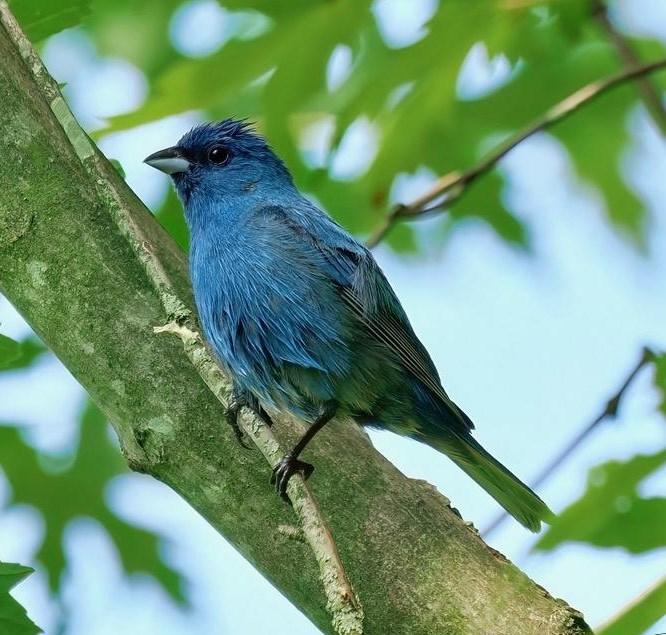
Indigo Buntng (male)
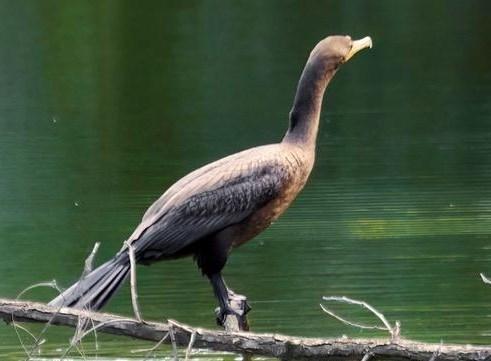
Double-crested Cormorant
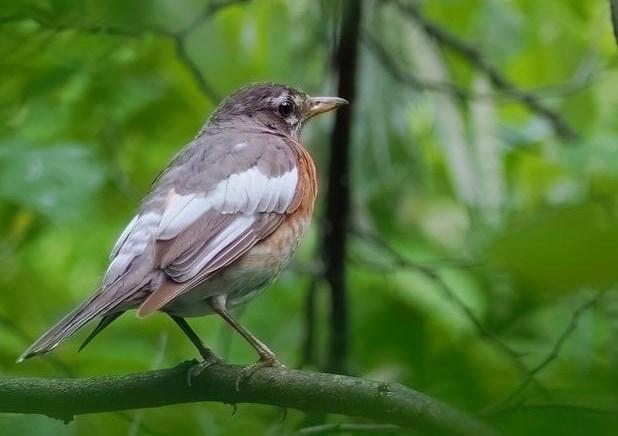
American Robin
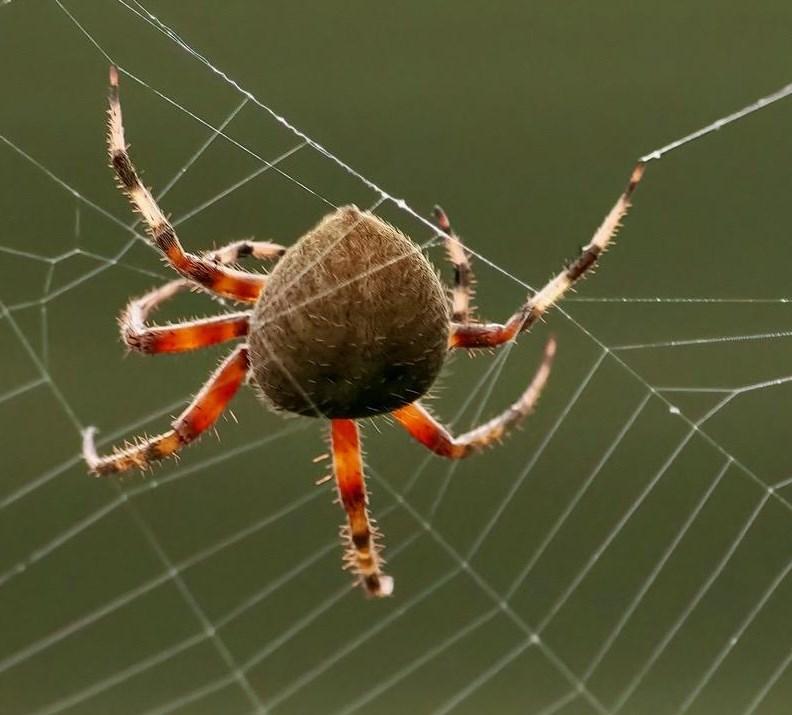
Spoted Orbweaver
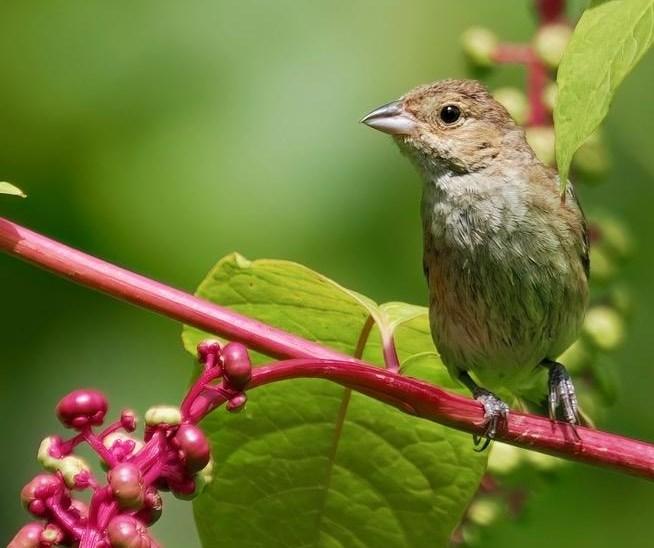
Indigo Buntng (female)
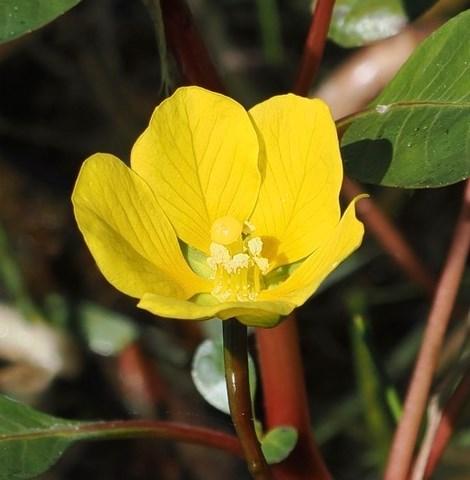
Floatng primrose-willow
Photos by Pilar Morera
Se ing Tama ack Se en een and S ingmill Lake a Tama ack nd Edi n Decembe
Sa e he Da e Walk in he W d am M nda Jan a
J in famil f iend and neighb f na e e e e adi n
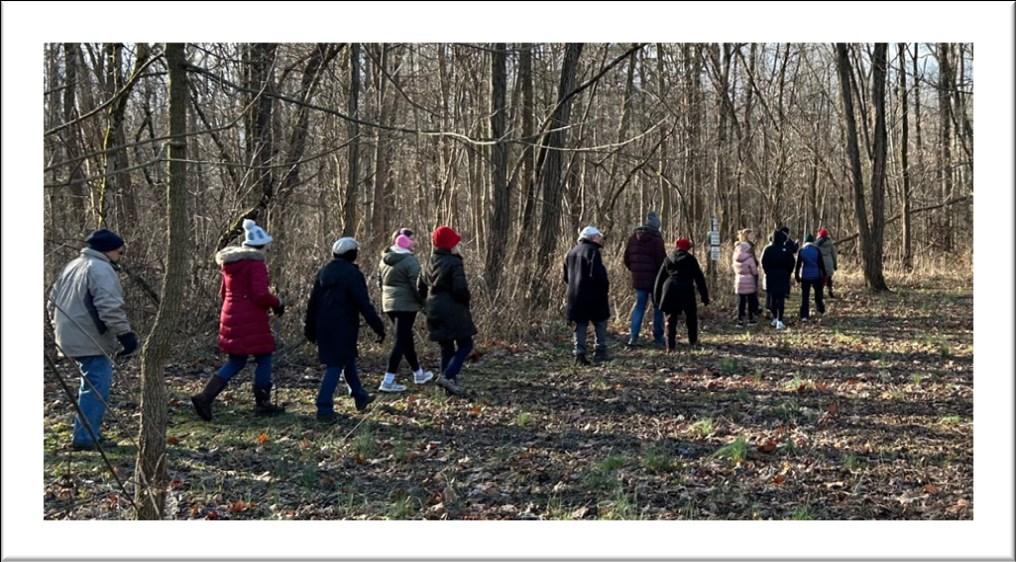
The simple plan to get more people to enjoy the outdoors on New Year ’s Day has become a natonwide movement startng more than three decades ago. A vigorous walk is a great way to start the new year on the right foot literally- and get outdoors, enjoy nature, spend tme with family and friends and maybe start working on that New Year’s resoluton to get in shape.
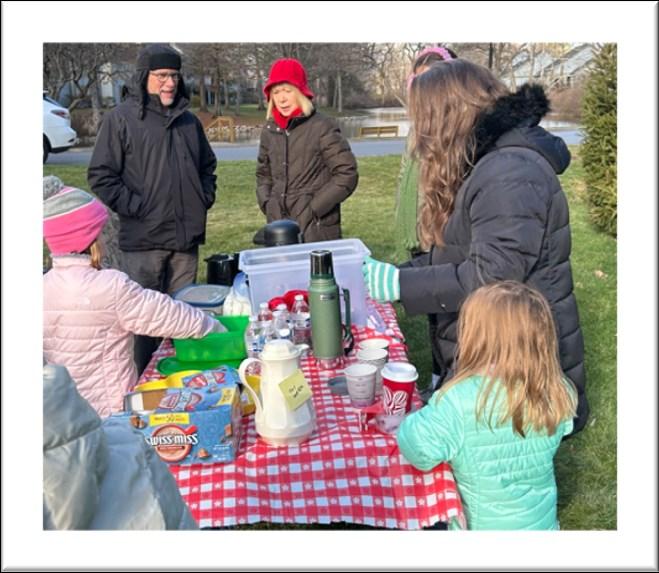
Ref e hmen and nack ill be ided al ng i h a f e i ake a a he chill
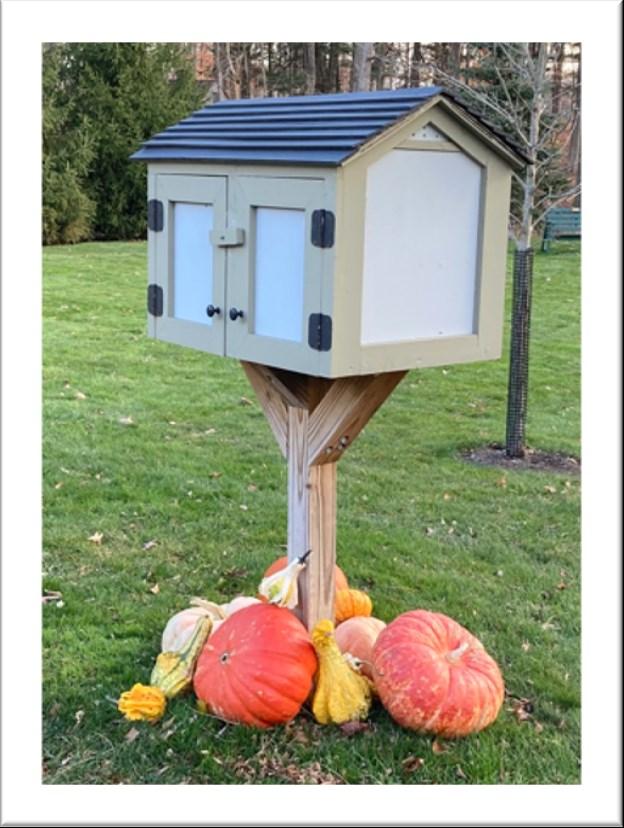
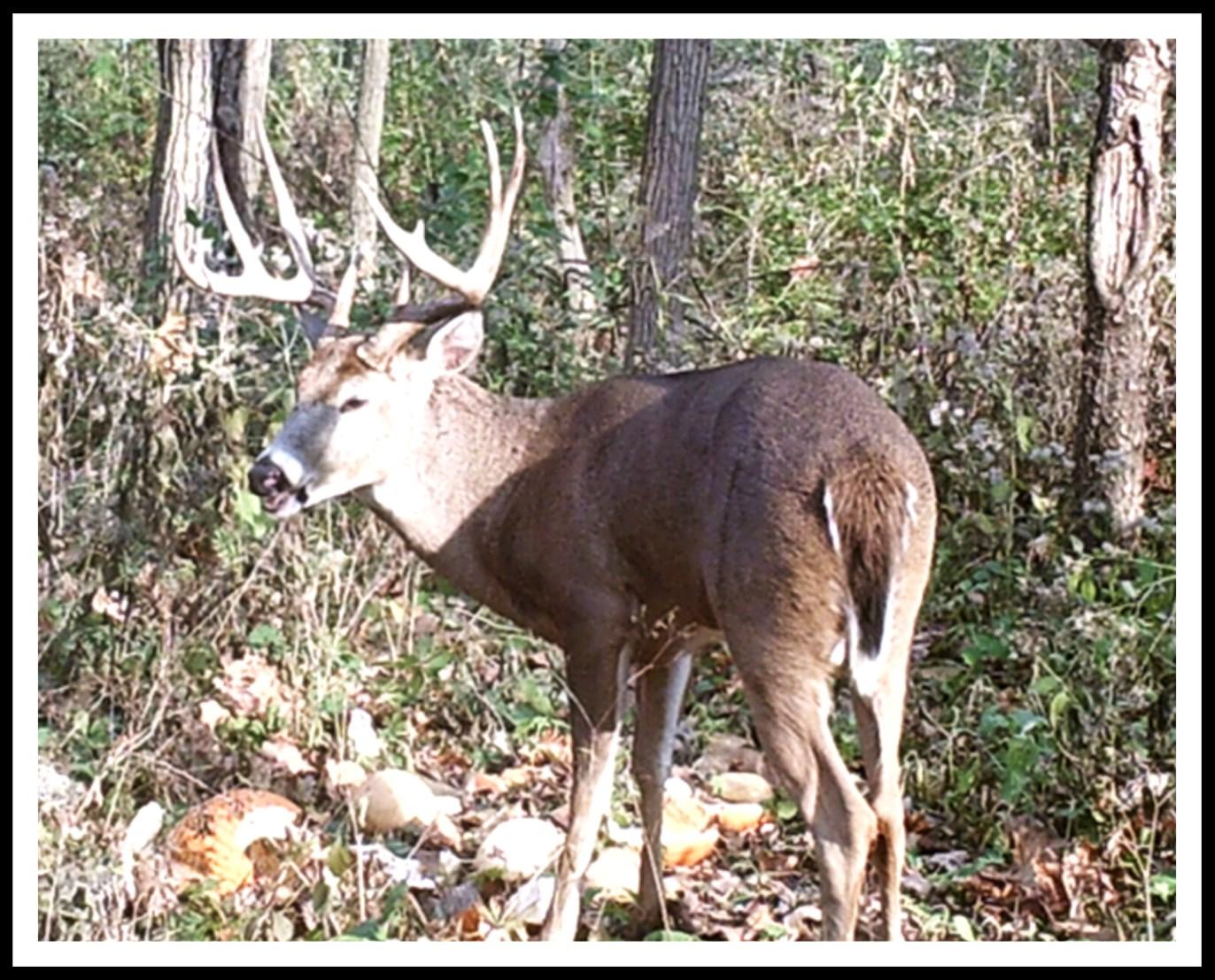
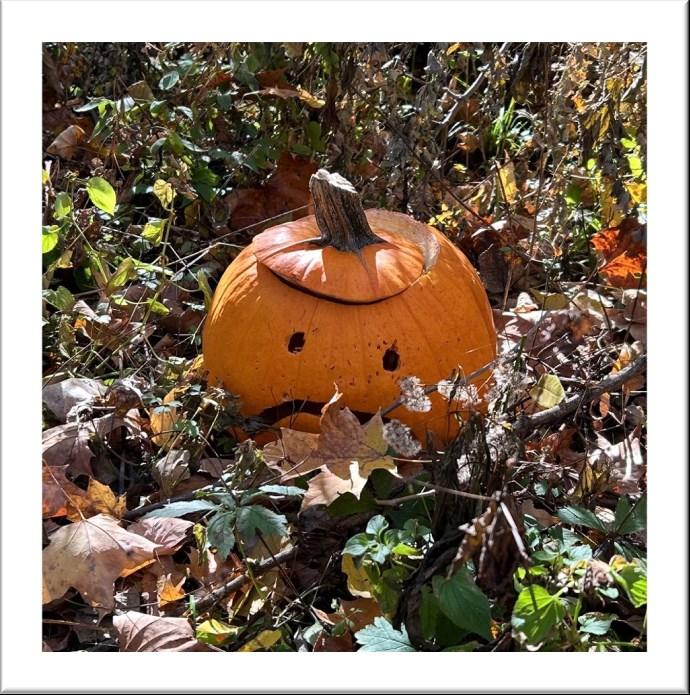
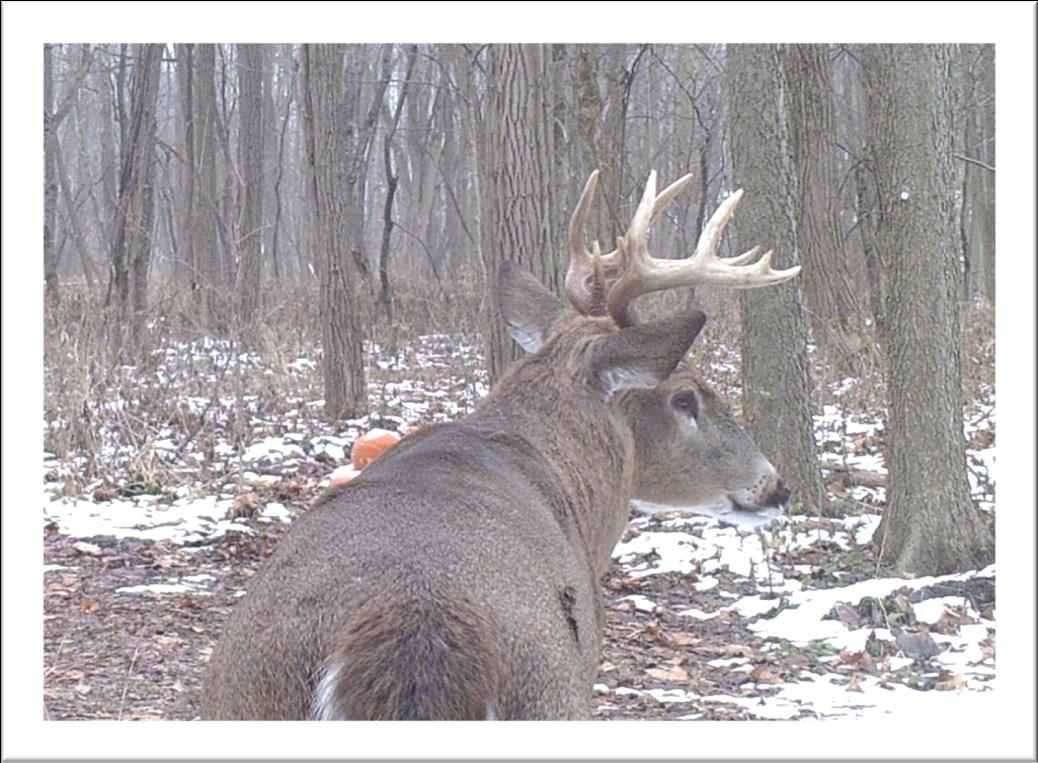
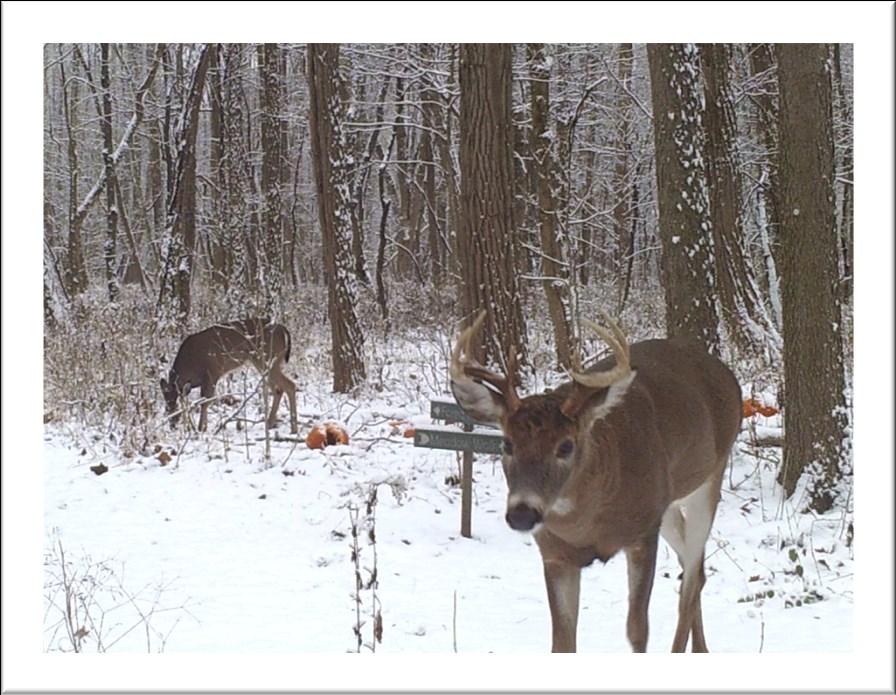
Rudolph thanks everyone for the tasty pumpkins
htps://conservingindiana.org
Cliff Chapman, CEO of the Cen al Indiana Land T (CILT) paid a courtesy visit to our nature preserve on November 2nd, to see what we offer the residents of Springmill Lakes and Tamarack Seventeen. While touring the preserve he came upon our offtrail seep area, south of the butterfly habitat which has a large area of skunk cabbage and marsh marigolds. Cliff waded in the muddy area to see what was there. He was very excited about the variety of plants in that area and plans to bring the State Botanist to our nature preserve to make a further assessment. After Cliff’s visit, we sent additional photos from our flower guide. Cliff was thrilled to learn that in the late summer and fall we had about 75 pale gentians blooming in the area north of the butterfly habitat. This is a very rare plant in Indiana and Cliff told us he had never seen it growing wild in Indiana. We truly have some treasures in our nature preserve, and there are probably more to be discovered in the futu e!
Managing In a i e B ning B h in he Fall
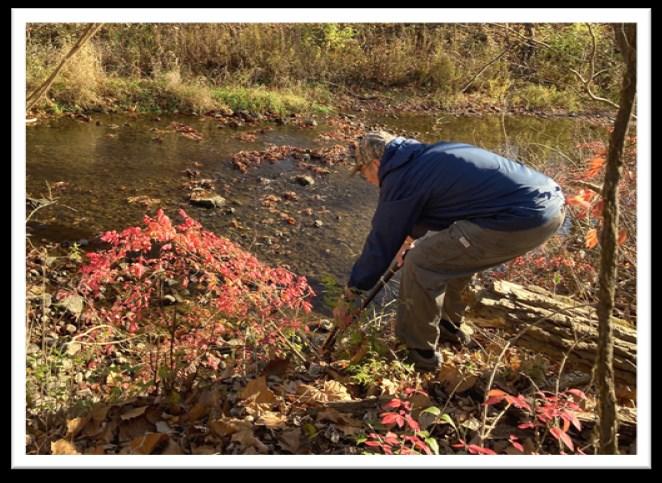
As part of the preserve ’s mission of managing invasive plants, Greg Harker is removing the invasive burning bush. A natve to central and northern China, Japan, and Korea. The common name "burning bush" refers to its bright red fall color. This plant is regarded as an in a i e e cie of woodlands in eastern North America
Tama ack Na e P e e e c n n e alif a a Cla ifed F e and Wildland
“This is a well-managed forest that provides excellent wildlife habitat in an otherwise urban setng. The woods also provides watershed protecton to Williams Creek and Hoover Run, which intersect on this property. The Associaton has worked diligently to remove invasive species from the property and their eforts show! The natve wildfowers, grasses, sedges, ferns, seedlings, and saplings are thriving in the understory because of the reduced competton from invasive plants.” Allie Cline, DNR District Forester
M ing he b e f habi a for the fnal tme this year. Thank you neighbor, Tom Kretz, for your contnued support
Clif Chapman and Kate Betley
Fall Ph b
Na h ille Wa ble
T fed Ti m e
N he n Flicke
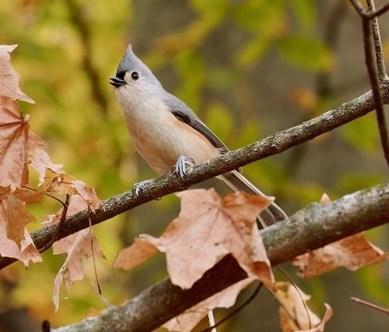
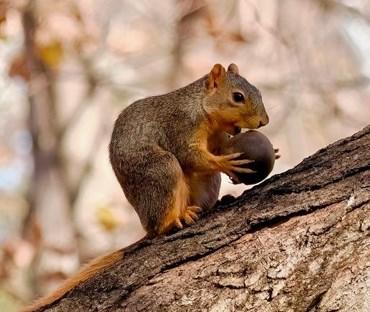
F S i el
Bl e Ja
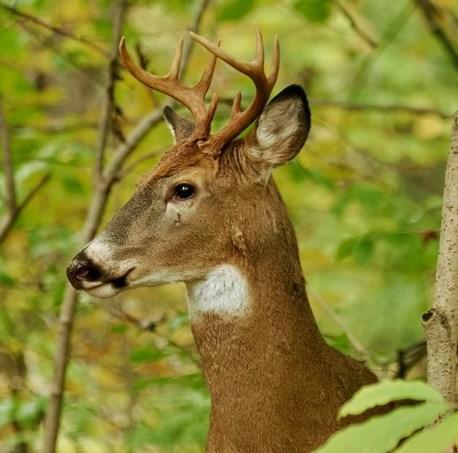
Whi e- ailed dee
th Editon Jan ar
al
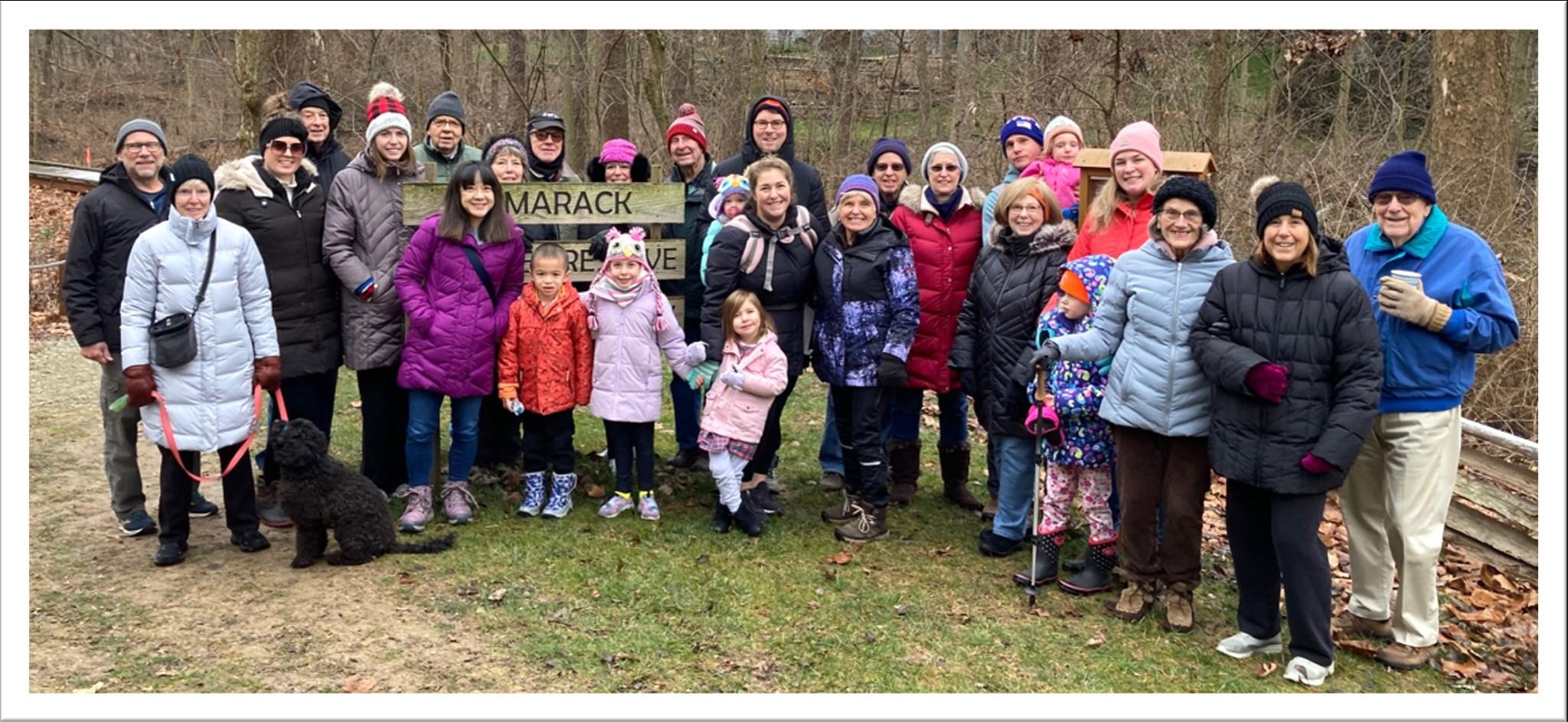
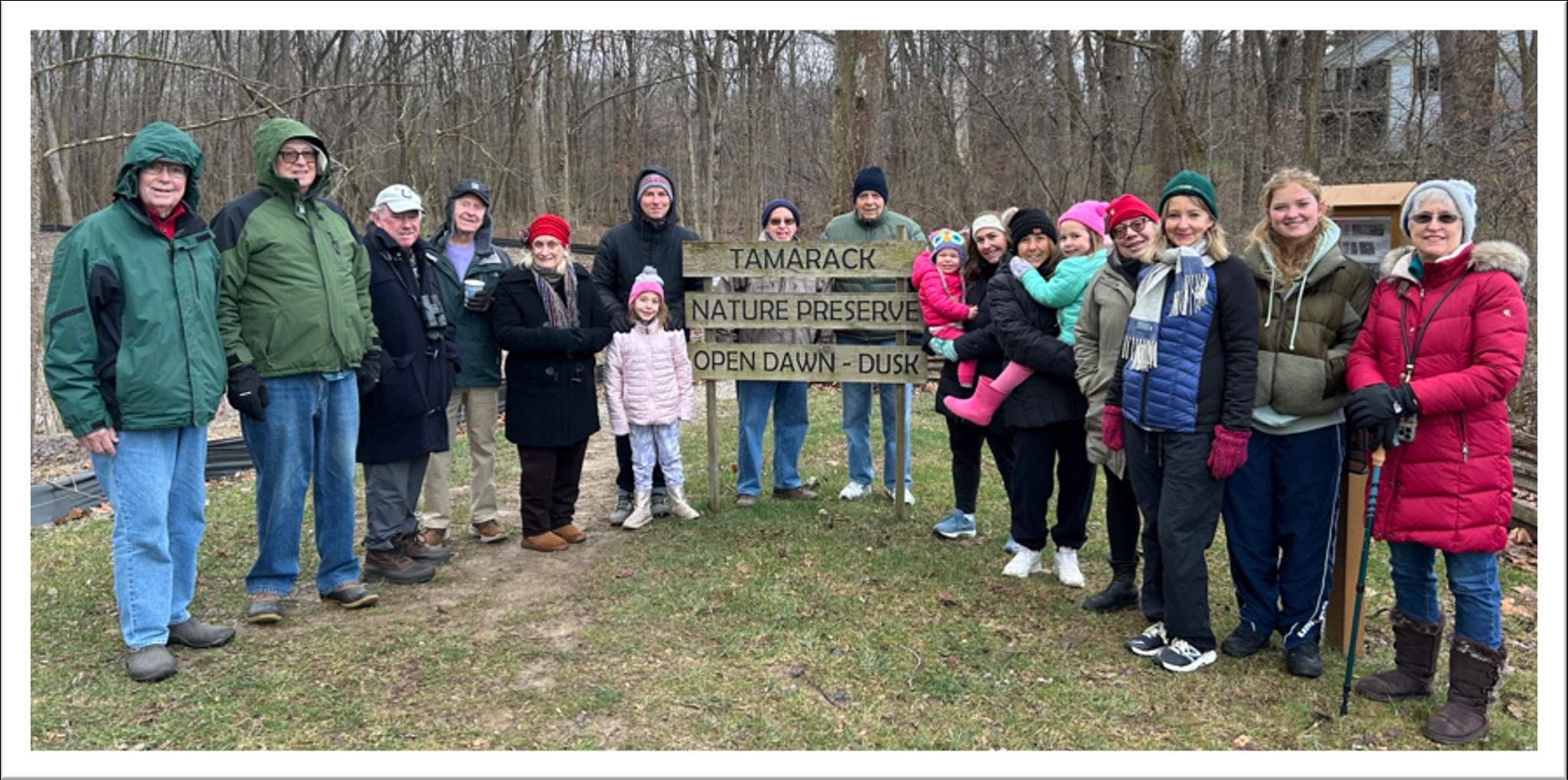
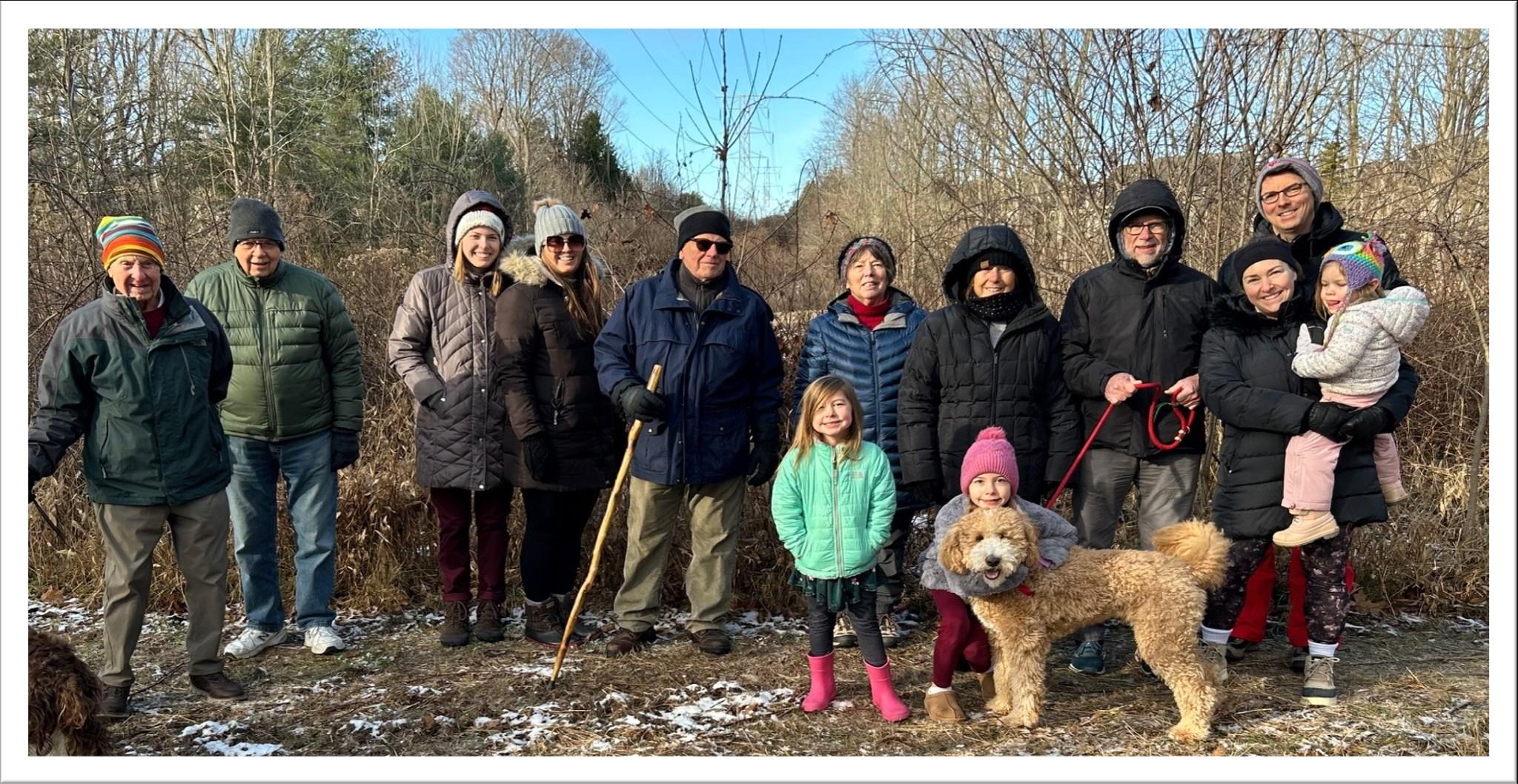
Thirt famil and friends enjo ed the th ann al alk on Ne Year’s Da
Tamarack Nat re Preser e
Ann
Walk in the Woods
Act ites and Accomplishments
Dues paid by SPLAT and Tam 1
04
The ongoing challenge contnues to be managing invasive plants. We spent $6,5 on removing honeysuckle. While it is a never-ending task, we have made a lot of progress. Other invasive plants needing atenton are Lesser Celandine and Garlic Mustard. To manage Garlic Mustard, we ask for volunteers in the spring to assist in pulling plants and removing them from the preserve. In 2023 we had two entertainment events Tim Wright, popular guitarist, singer, and composer. In the fall we had the Dave Lowe combo playing popular songs for listening and dancing enjoyment. Other events were the annual Spring Flower Tour, Golf Cart Tour, and the 5th Annual New Year’s Day Walk in the Woods. Our preserve is a Classifed Forest and Wildlands and is subject to DNR inspecton and re -certfcaton every 5- years. The DNR inspected our preserve in August and gave us a very complimentary review. Special visitors in 2023 were a Purdue University research group studying invasive plants and in late fall, Clif Chapman, CEO of the Central Indiana Land Trust paid a courtesy visit.
Plans
We plan on contnuing our work on invasive plant removal. We are working on a grant to assist in paying for further work on invasive plant removal. 2024 is the fourth year of the buterfy habitat and we are expectng a wide variety of fowers to bloom this coming year.
The following schedule is tentatvely planned6th Annual New Year’s Day Walk in the Woods completed.
Spring fower tour April
Total Eclipse Party April * Garlic Mustard pull Volunteer Day April
Visit by Indiana State Botanist and Clif Chapman, CEO Central Indiana Land Trust. -April
Musical entertainment May
Golf cart tour August
Musical entertainment September.
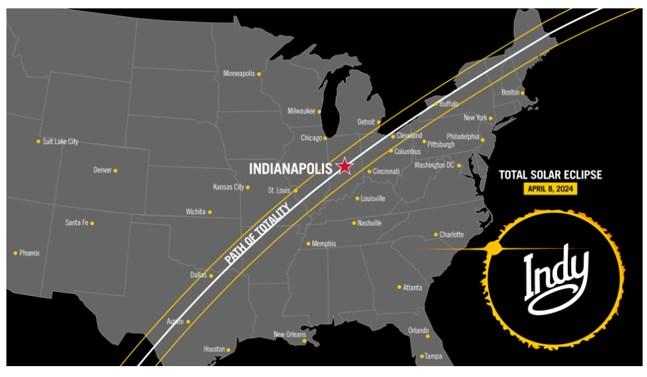
Sa e the Date April th Eclipse party at the preserve entrance.
The eclipse will be fully visible across the United States but nowhere will there be such a connected and accessible destnaton as the “Crossroads of America” Indianapolis, located in the center of the “Path of Totality” will see a total solar eclipses for 3 minutes and 46 seconds on April , 2024, at 3:06 pm. Viewing glasses will be provided for 50 atendees or buy your own to safely view a once in a lifetme event. Details will be announced as we get closer to the event.
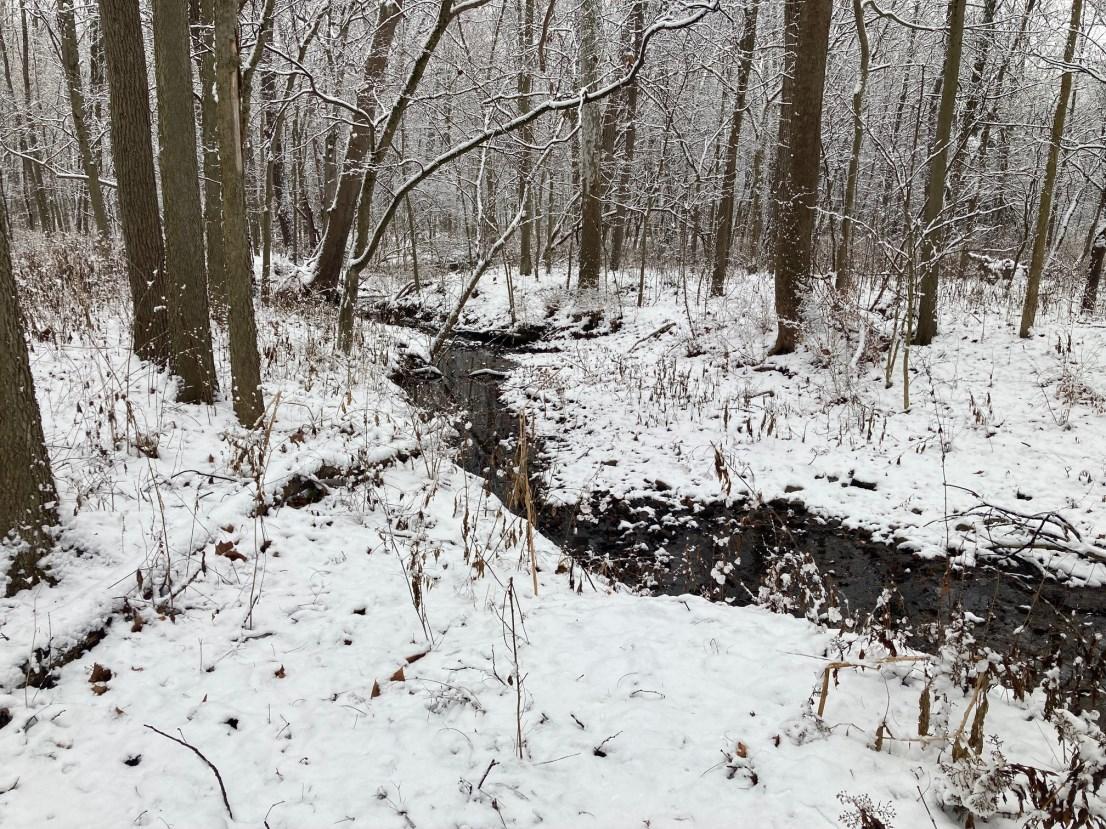
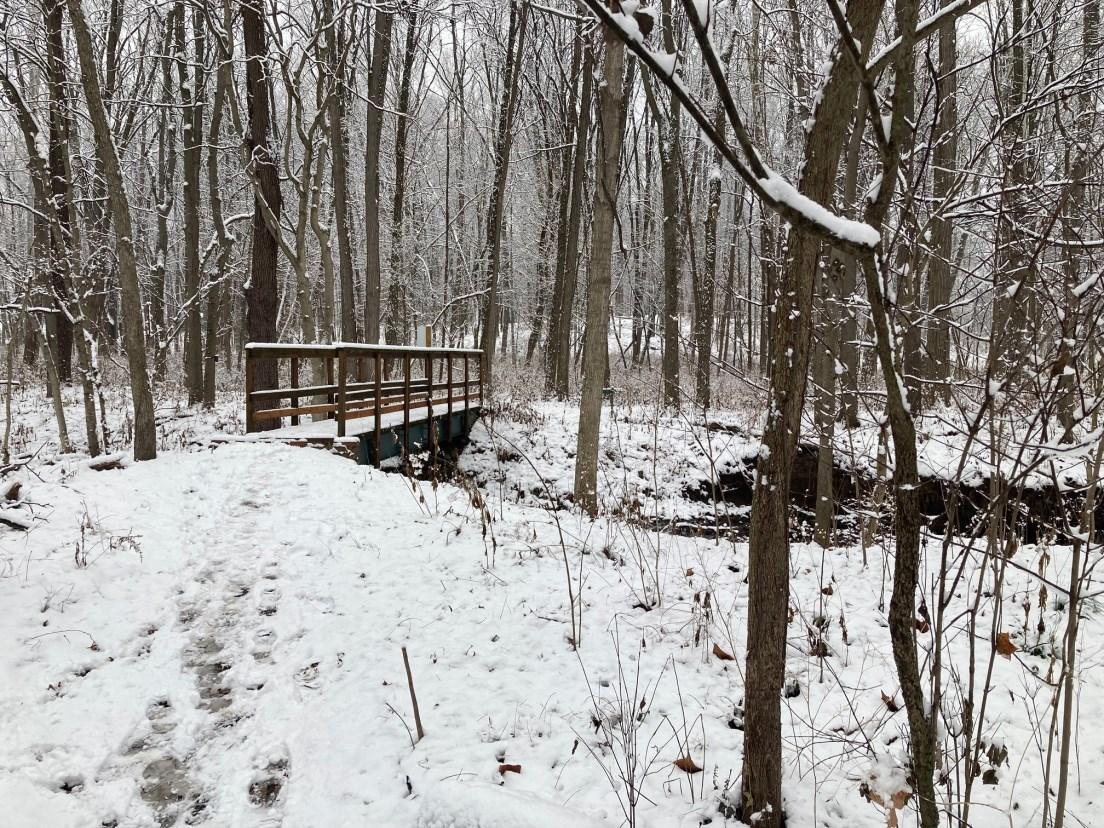
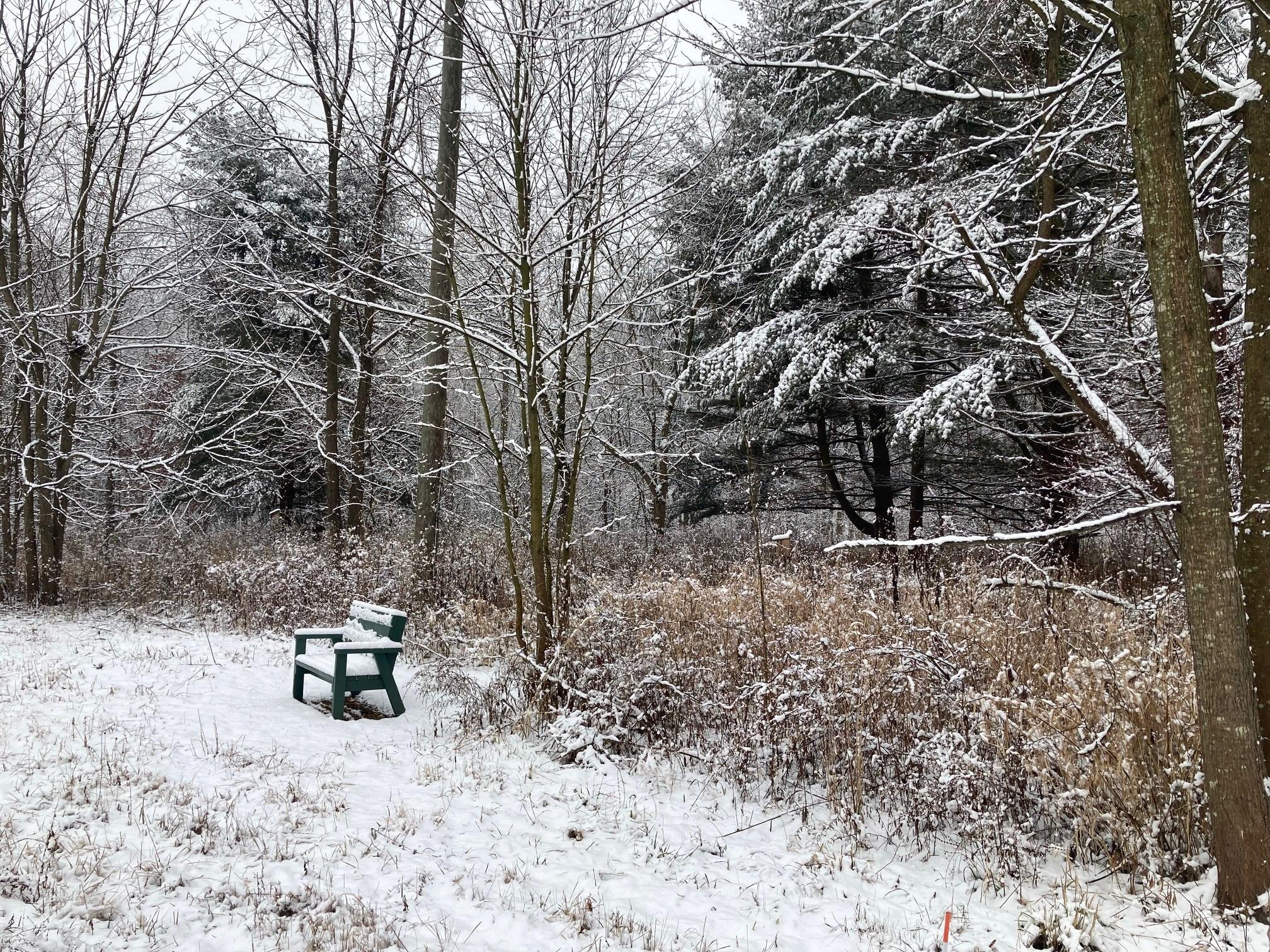
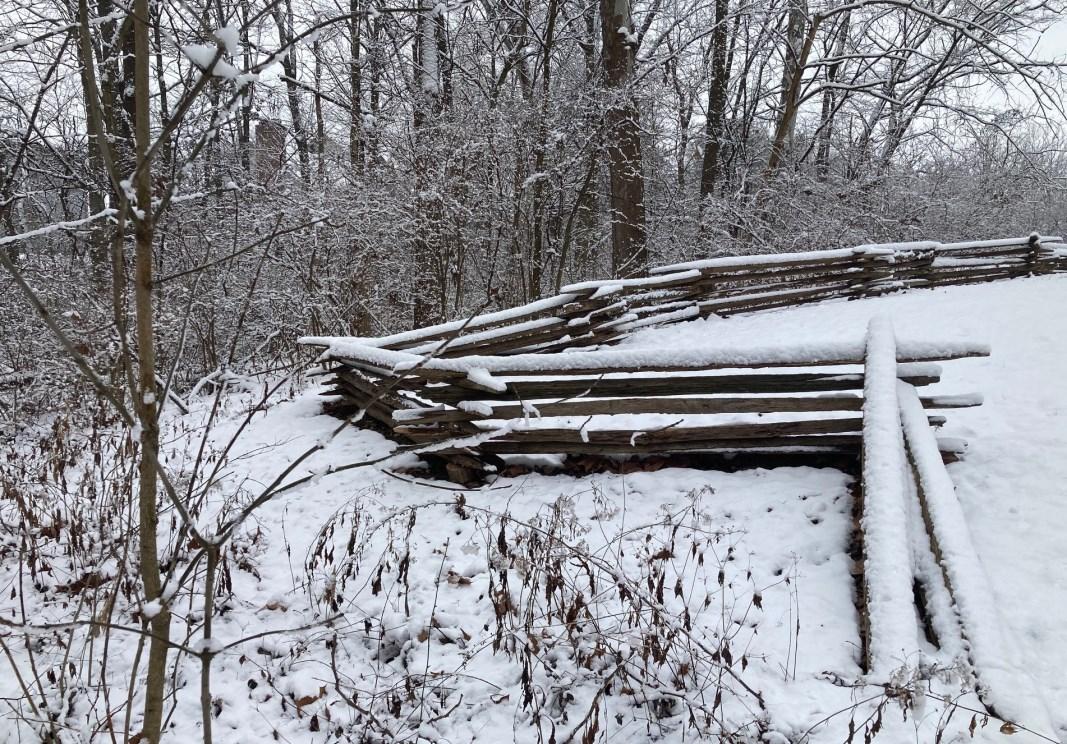
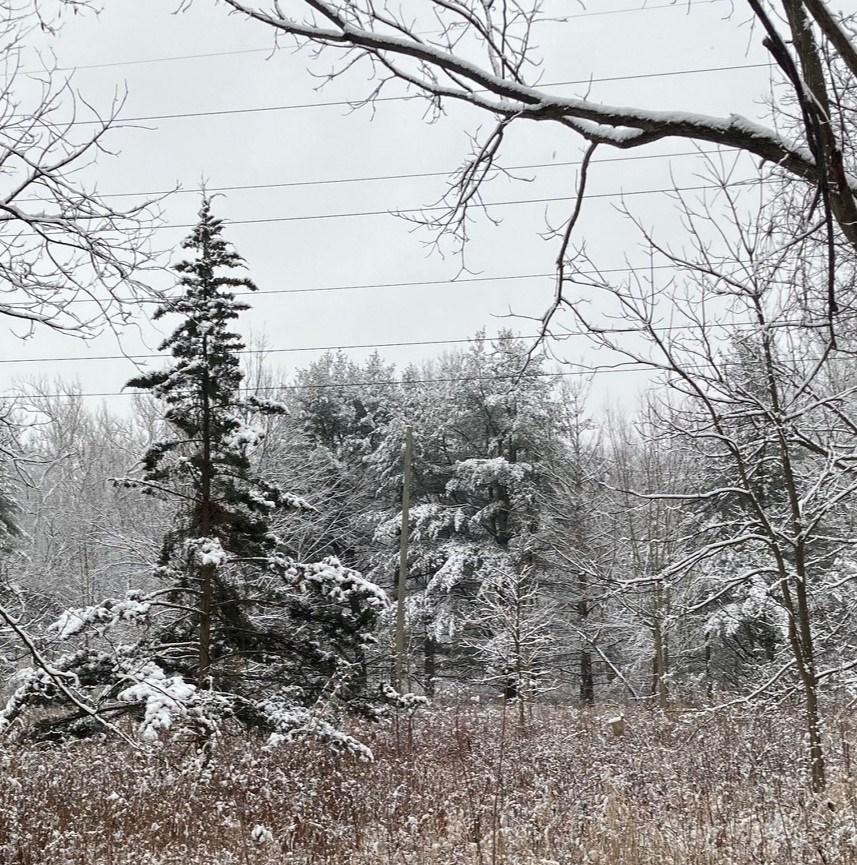
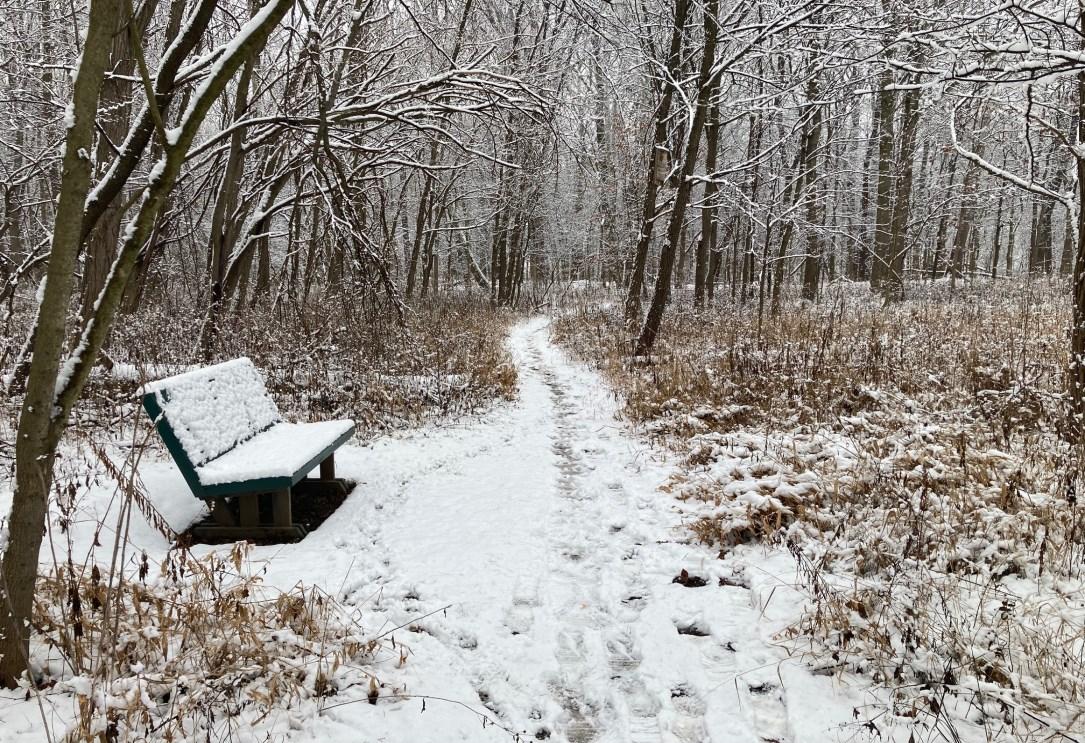
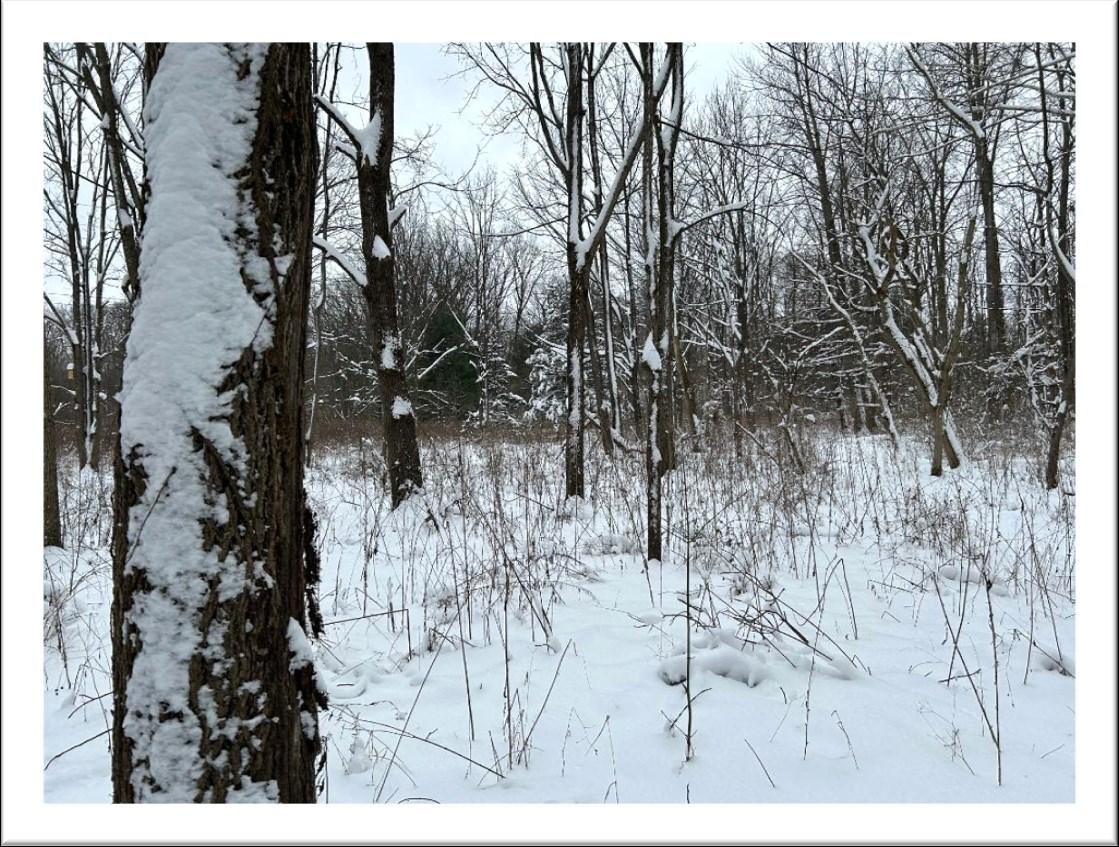
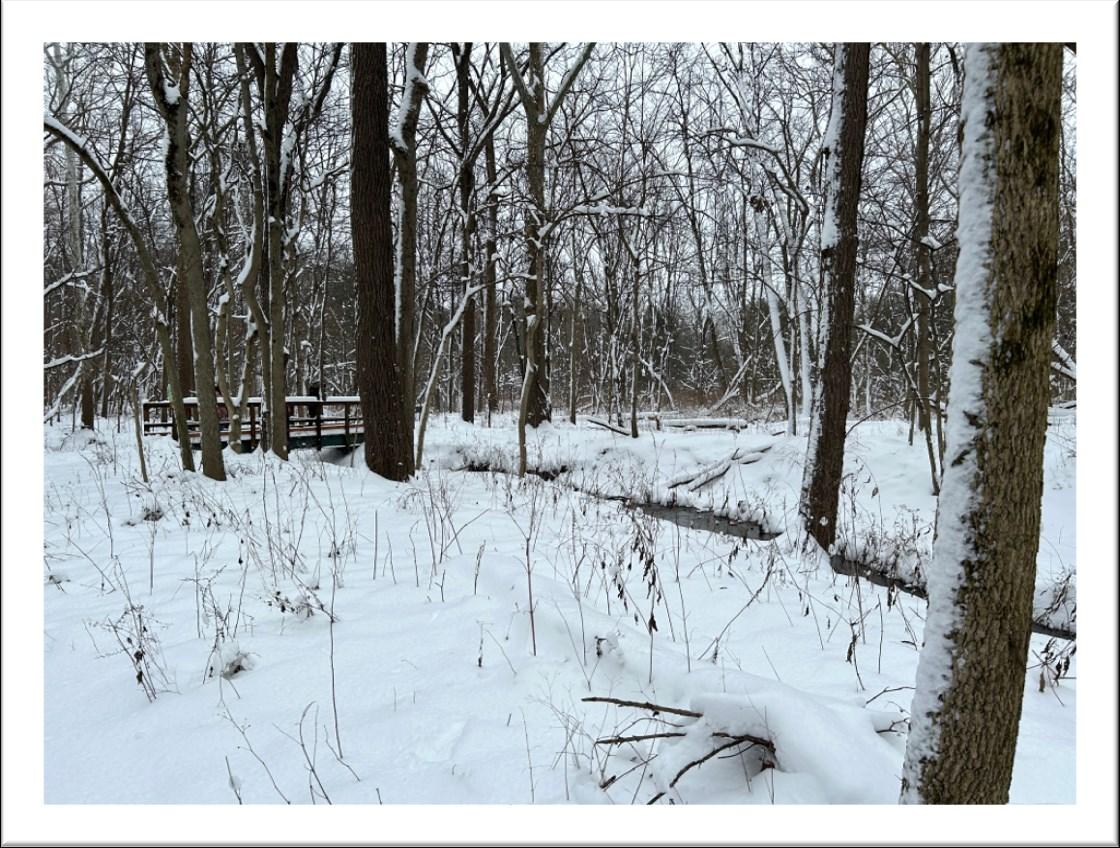
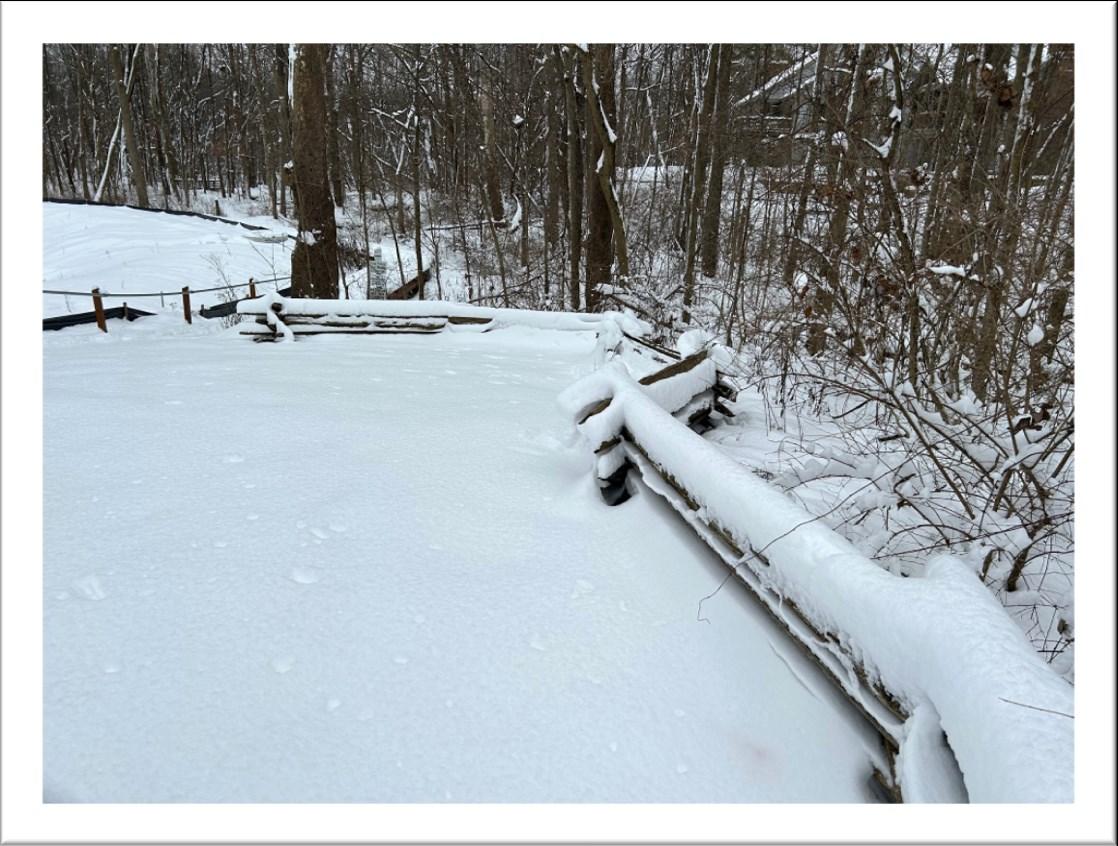
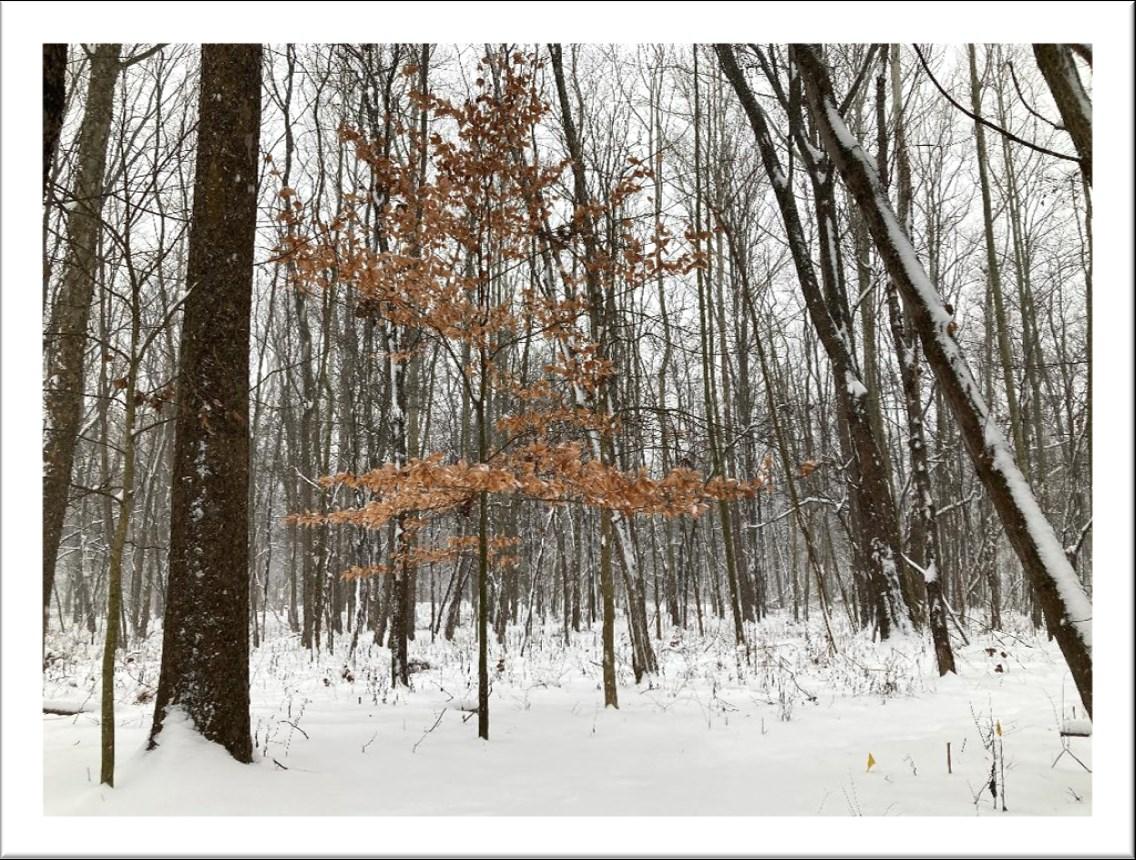
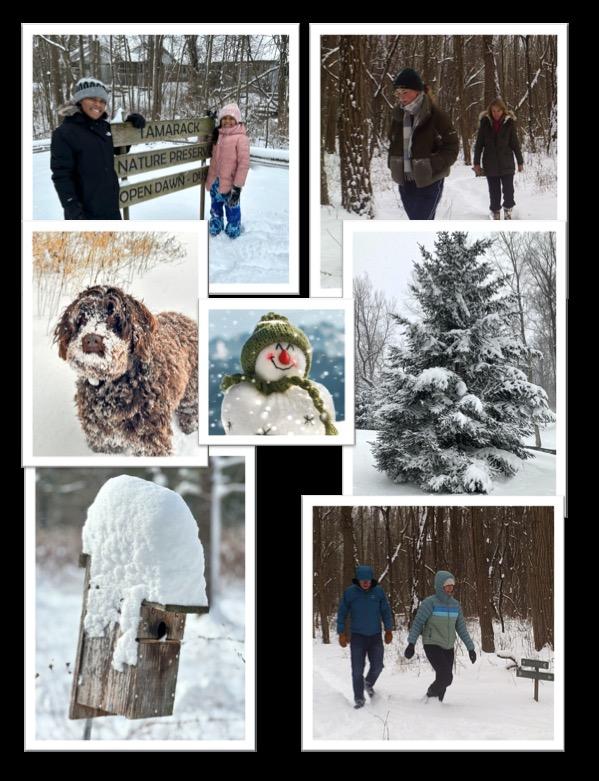
Winter Scenes
Sat rda
Jan ar
Ta a ac Na e P e e e
Se i g Ta a ac Se e ee a d S i g i La e a Ta a ac
h Edi i Ma ch
V ee Needed f Ga ic M a d P Fri, April th and Sat, April th @ pm
Introduced into Long Island, NY in 1860’s for medicinal and culinary purposes, garlic mustard has become an aggressive woodland invasive species, spreading throughout the East and Midwest. Its ability to establish in the low light of understory forests has allowed it to displace many natve plants by monopolizing light, moisture, nutrients, and soil. When pulling garlic mustard it must be removed from the preserve. V l ee ill be ided a h bag be em ed f m he e e e The e ill be a h bag a he e a ce f he a e e e e d i g f half f A il f a e h a ll addi al ga lic m a d hei he i he d
Ec i e Pa -
Monday, April th
Sched e To view the entre event plan on arriving at : 0 pm and stay untl : pm Total eclipse will occur from :0 to : 0 pm
Whe e: We will gather at the buterfy habitat at the southern end of the preserve. This area wide open and provides a clear view of the eclipse.
Wha i i c ded We have Solar Viewing Glasses for 0 atendees or be sure to bring your own if you already have them. Join us in the buterfy habitat area and bring a lawn chair. We'll have extra chairs for those who can't carry their chair and can provide assistance to anyone who needs help walking into the nature preserve, getng across the bridge, etc. If you need us to provide a chair for you, please contact Greg Harker gharker @aol.com or - - so we'll know how many extra chairs are available. Refreshments and snacks will also be available
A a S i g Wi df e T -
Saturday, April 0th @ 0: 0am
We are pleased to announce our tour guide will once again be Norma Wallman, wildfower expert and author of Wildfowers of Holiday Park- htps://www.hollidaypark.org/wildfowerBook.html
Sc eech O Ne g B
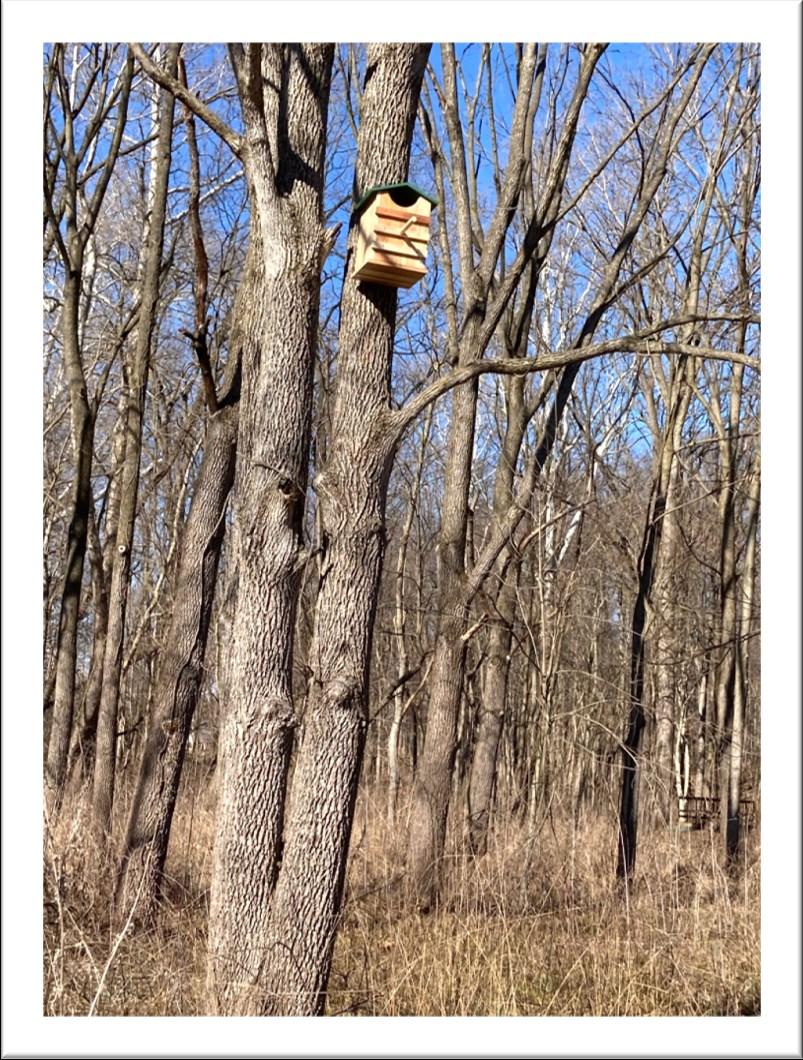
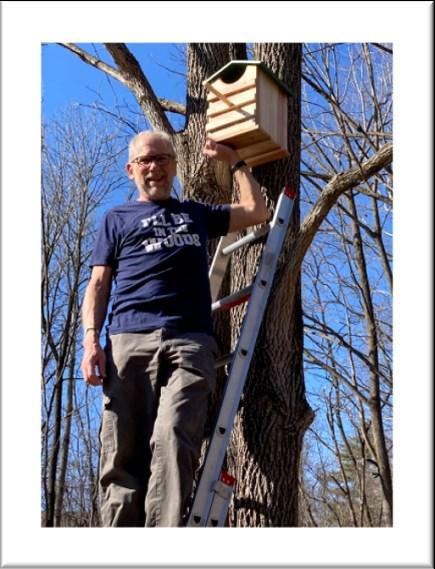
Recently, an owl nestng box has been installed between Hoover Run and the buterfy habitat.
Screech-owls live in forested parks and edges of woodland clearings. They survive well in suburban neighborhoods with trees and use the spacious lawns as huntng grounds. The owls do not build any nest inside the box. Instead, the mother lays her - eggs on whatever is in the botom of the cavity. Greg put in some nestng material in for mom. Screech -owls are “secondary nesters” which means they do not excavate their own nest cavites but instead require a nest box, natural cavity or an old woodpecker cavity to nest.
As of this writng, no owls have been spoted.
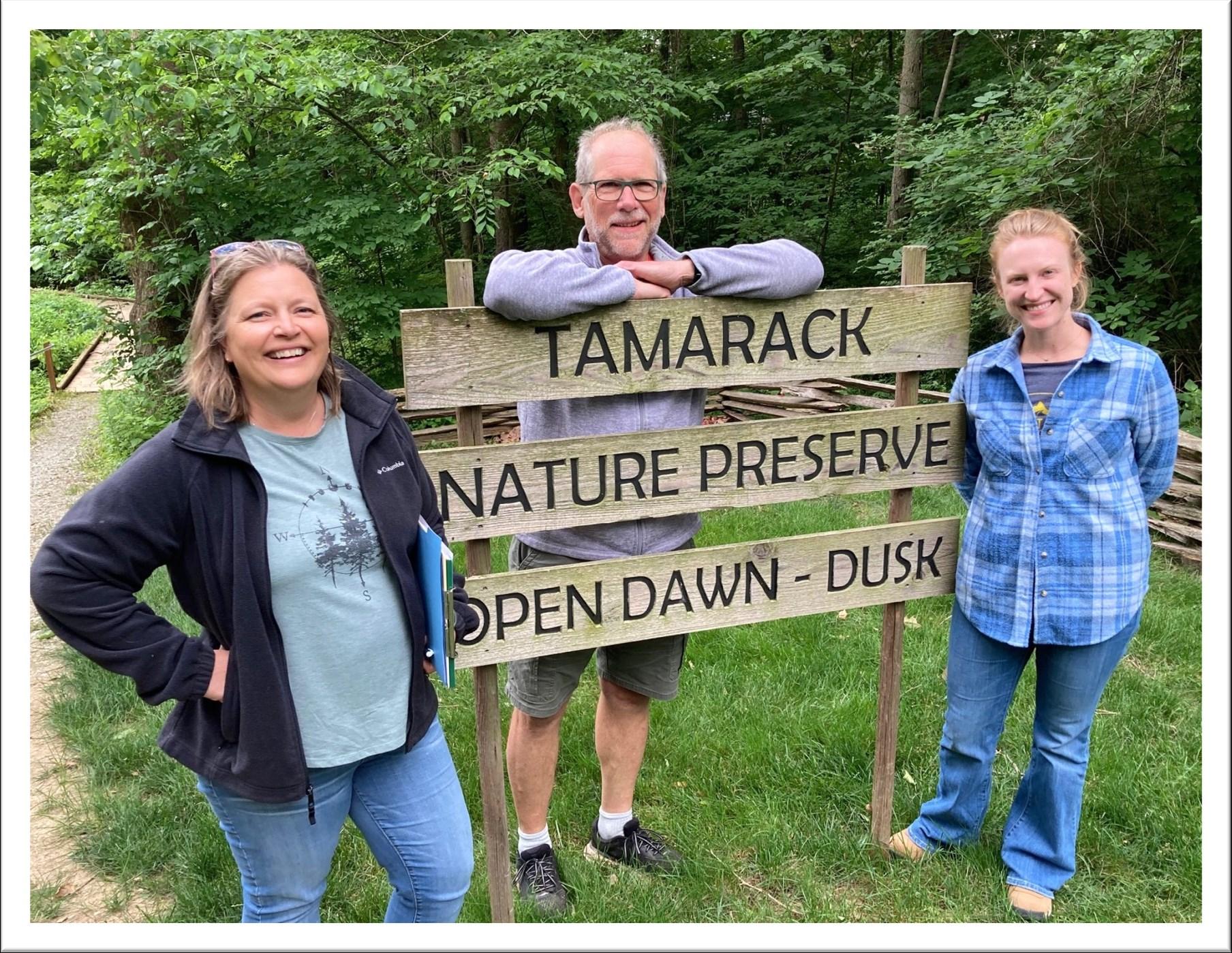
DNR S a e B a i Di ec f Ce a I dia a La d T Vi i
Ja a L-R Greg Harker, Preserve President, Bety Yan, Preserve Board Member, Scot Namestnik, DNR Botanist, Division of Nature Preserves, Indiana Natural Heritage Data Center, Stephanie Paine Crossin, Land Protecton Director, Central Indiana Land Trust
Cliff Chapman, CEO of the Central Indiana Land Trust visited our Nature Preserve in November 0 (please see the nd edition of our Nature Preserve). He was excited about the varieties of plants in the seepage wetland area. He was also amazed at the number of Pale gentians near the butterfly habitat. Pale gentians are very rare in Indiana. He planned to invite Scott Namestnik (State Botanist for Indiana Natural Resource (DNR), Division of Nature Preserves), to visit our nature preserve.
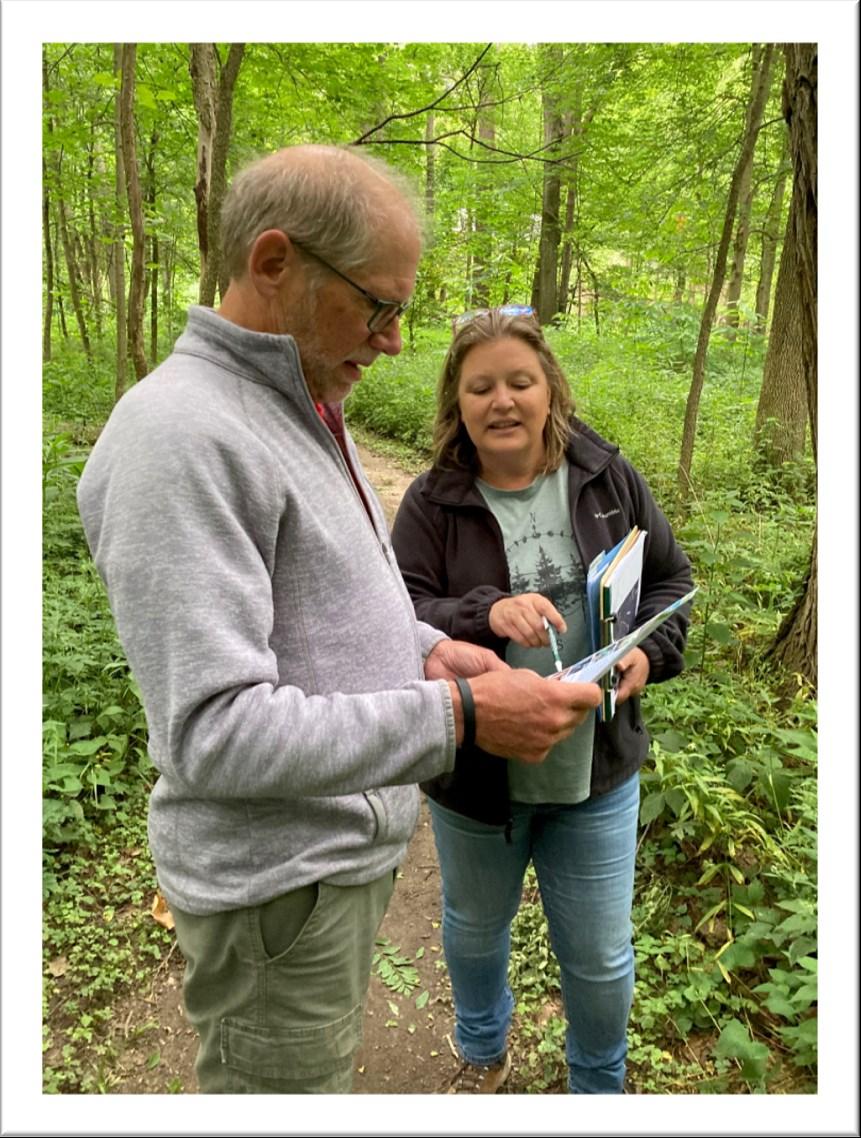
Scott Namestnik, together with Stepanie Crossin (Director of Land Protection, Central Indiana Land Trust) visited on Jan , 0 . Stepanie was amazed at how well our nature preserve is maintained with an impressive amount of volunteer effort and only a very moderate amount of funding.
Scott's visit was mainly concentrated on the plants in the seepage area of our preserve. Along the way there, he took inventory of the species of plants next to the trail. After the visit, he sent us a detailed report of species of plants in our preserve. These included those he noted during his visit, the invasive plant species from the Purdue University graduate students ’ study of our preserve (see the th edition of our preserve newsletter), the species of trees that were in our preserve trail map as well as the preserve wildflower photo guide (see the 0th edition of the preserve newsletter). He provided detailed assessment of the plants in our preserve, such as native and non -native, annual, biennial, or perennial.
Scott is going to visit our preserve in May and will conduct further inventory of plants in our preserve during the growing season.
Wi Webe B e U i e i de a i g i Bi g
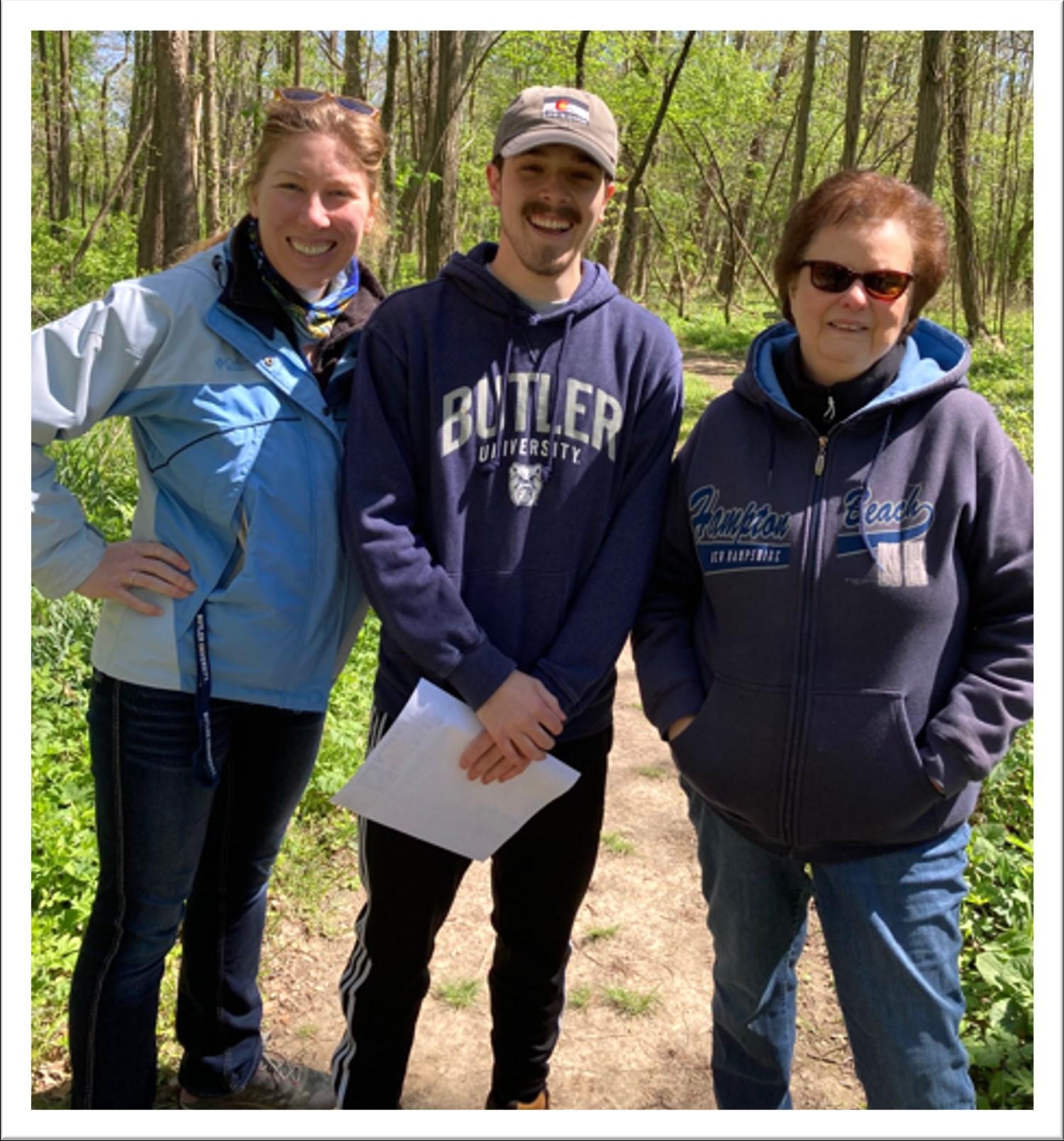
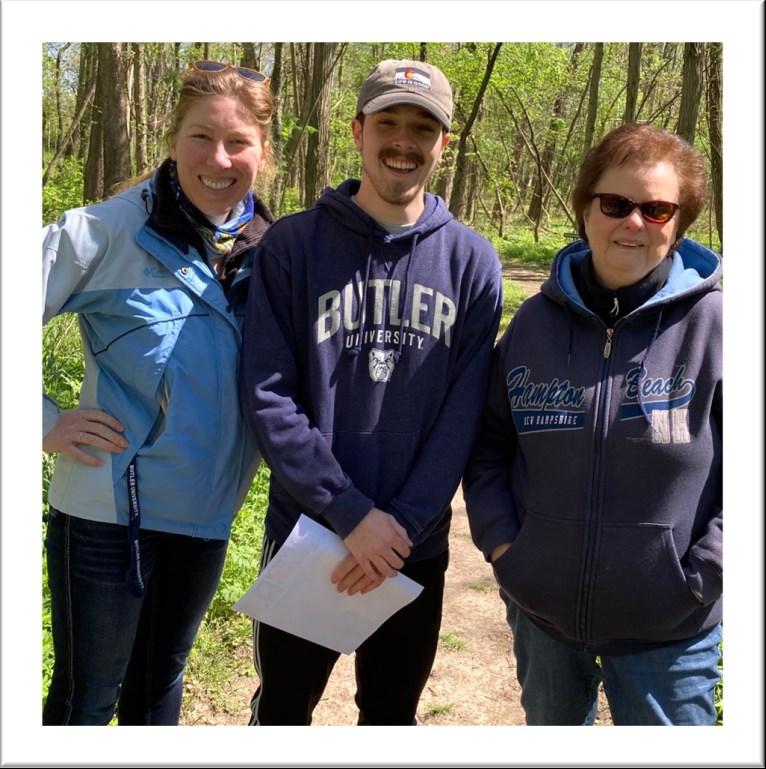
Will Weber, a junior at Butler, is undertaking an independent study research project of the plants in our Nature Preserve. He is under the faculty advisors, Drs. Marcia Moore (Director of the Friesner Herbarium) and Hilary Madinger.
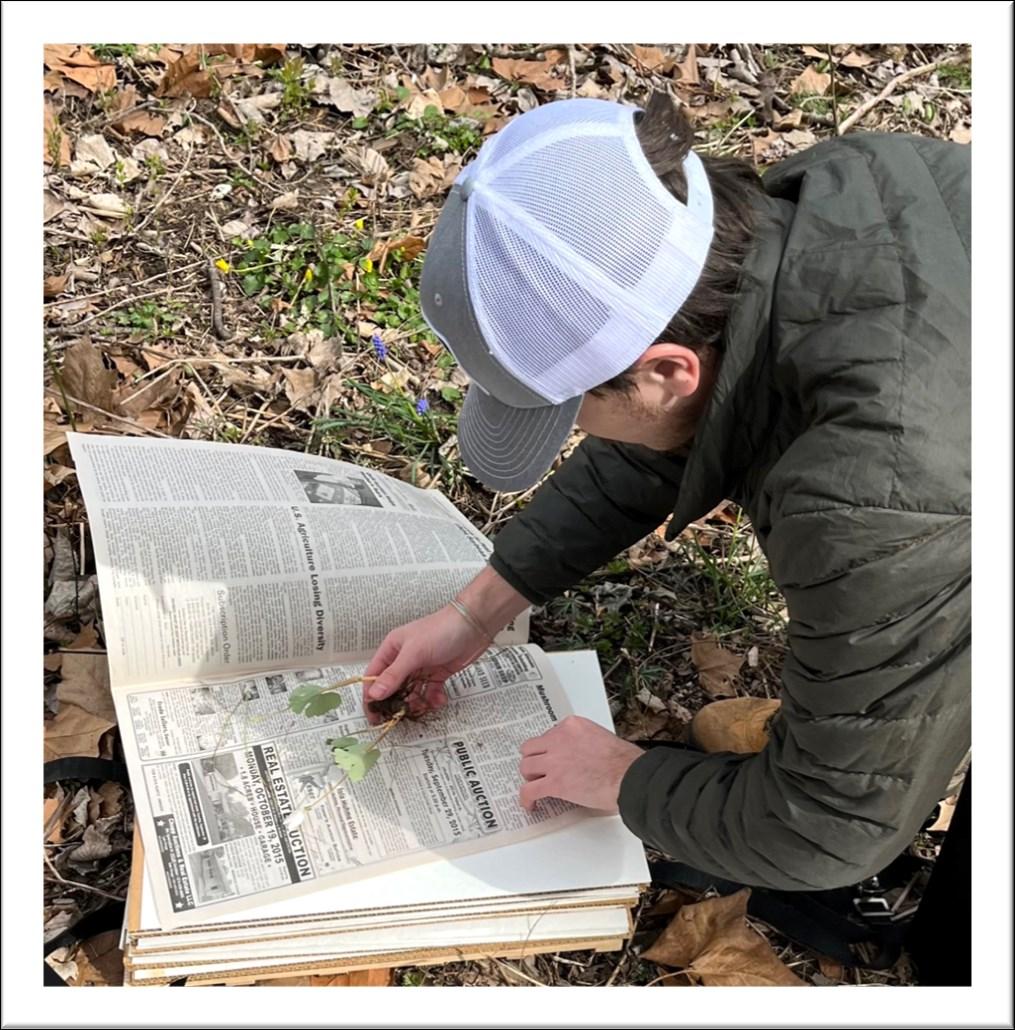
Will’s research project will consist of collectng plant specimens from the Tamarack Community Nature Preserve on the north side of Indianapolis. This collecton will take place during the spring months, startng March st, and going through September. At the Nature Preserve, I plan to collect a representatve sample of common plants, which can include invasive species, at the site while collectng photographic evidence of rare and uncommon plants to preserve biodiversity at the site. For trees and large plants, I will remove a representatve sample of leaf and branch material for preservaton. For small plants that are common, I will remove the whole plant including leaf, stem, and root material. Plant specimens and associated data will be mounted and archived in the Friesner Herbarium at Butler University. I am commited to ensuring the proper respect, and care for the preserve and the specimens collected within it. I will do this by only removing specimens in densely populated species, and minimally disturbing the area while collectng At the conclusion of my study, the samples will be available at the Friesner Herbarium and digitally archived on the Consortum of Midwest Herbaria. Additonally, I will make available the results of the species present at this nature preserve. I hope to present my fndings back to the community and will give a presentaton explaining my fndings at the end of the summer.
Feb : L-R Bety Yan, Preserve Board Member, Pilar Morera, Preserve Photographer, Will Weber, Butler University Biologist, Bernie Pierce, Preserve Board Member
La e i e h b Pi a M e a
Wi e Ac i e
W d a d C c
G ea B e He
Fe a e Pi ea ed W d ec e
G ea B e He
S d
Tamarack Nature Preserve
Serving Tamarack Seventeen and Springmill Lakes at Tamarack
3 th Editon April 15, 2024
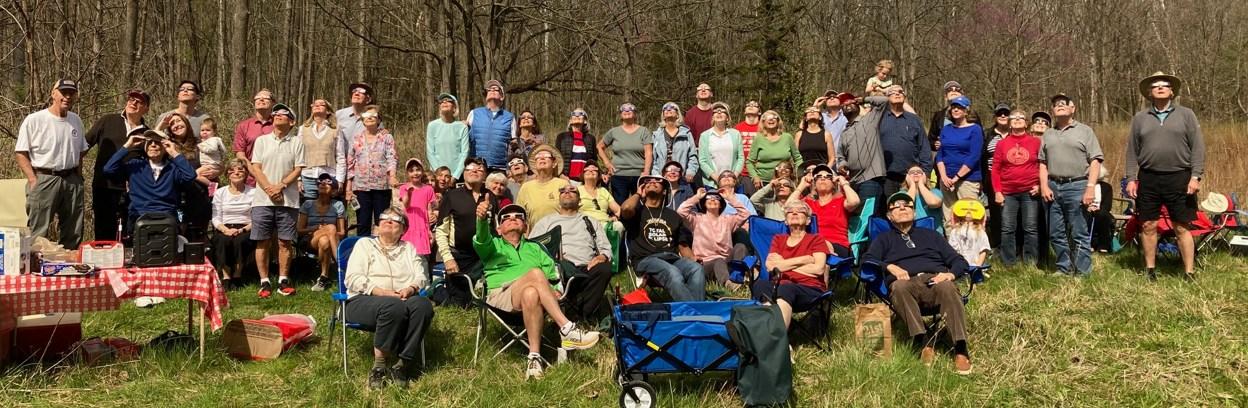
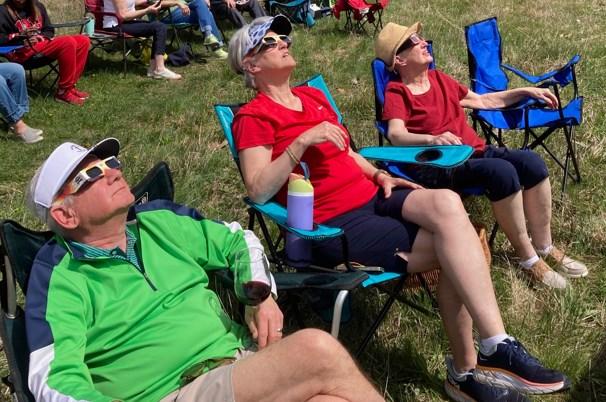
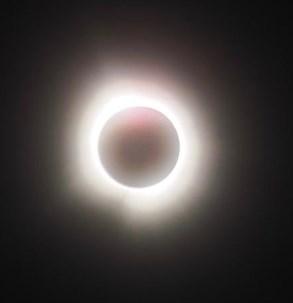
April Sixty-two neighbors, friends and family gathered in the nature preserve buterfy habitat to enjoy the once in a lifetme total eclipse. The weather cooperated and the event was as advertsed spectacular!
Annual Spring Wildflo er Tour - Saturday, April 20th @ 10:30am
We are pleased to announce our tour guide will once again be Norma Wallman, wildflower expert and author of Wildflowers of Holiday Parkhttps://www.hollidaypark.org/wildflowerBook.html
Garlic Mustard Pull
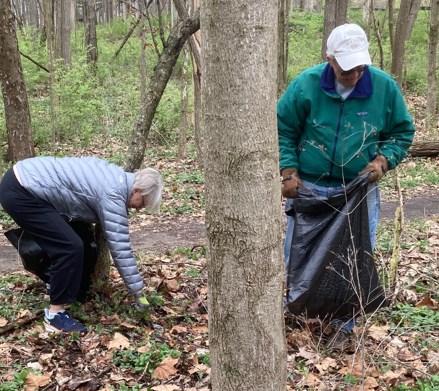
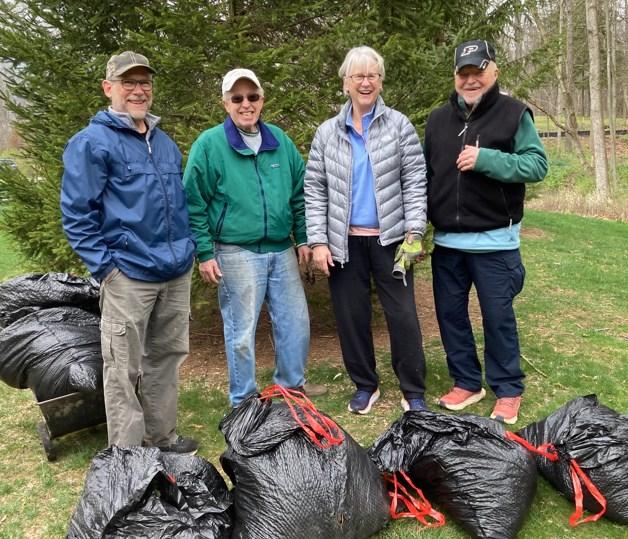
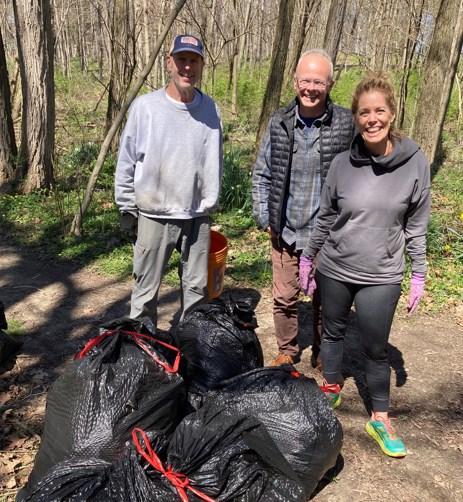
Many volunteers joined in to pull the invasive Garlic Mustard. This is an annual task we complete to remove as much garlic mustard as possible. While it is a somewhat of a “hopeless task, we are seeing positve results from year to year.
Thank ou volunteers
Above: Dave Wenzel, board member, Hank Copeland, and Amy Johnson.
Lef: Greg Harker, Preserve President, Les Magnes, Mary Oldham and Dean Pfeifer from New Hampshire.
Other volunteers not photographed: Nancy Snively, Dick Darlington, Jane Essenburg, Victor Chen and Bety Yan, Nancy Martn, Bernie Pierce others THANK YOU!
Upper Lef: Mary Oldham and Les Magnes in acton
Spring Photos b Pilar Morera
Join Norma Wallman Saturda April am to see these fo ers and more
Tamarack Nature Preserve
Serving Tamarack Seventeen and Springmill Lakes at Tamarack th Edition May
A i A a S i g Wi df e T
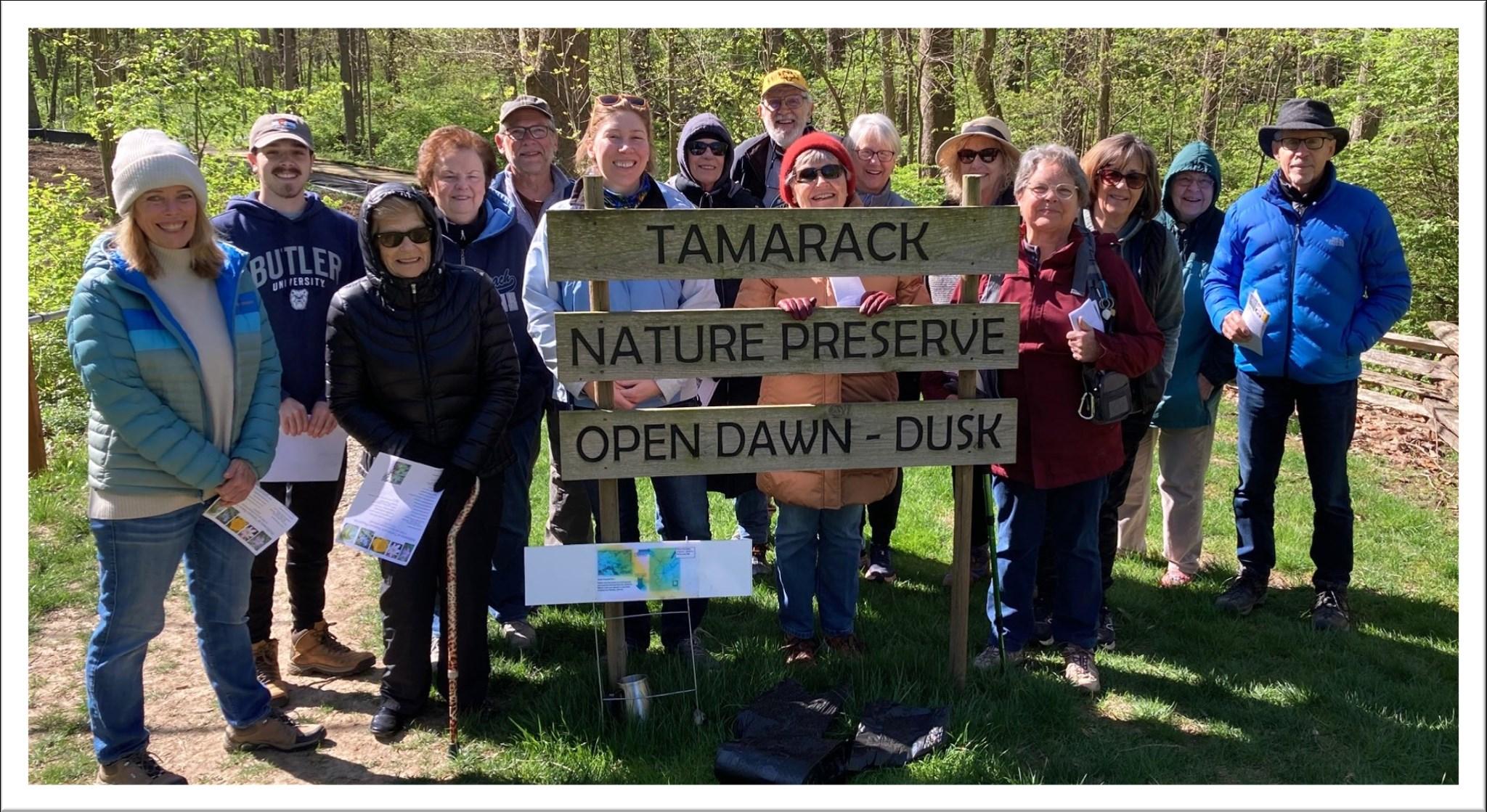
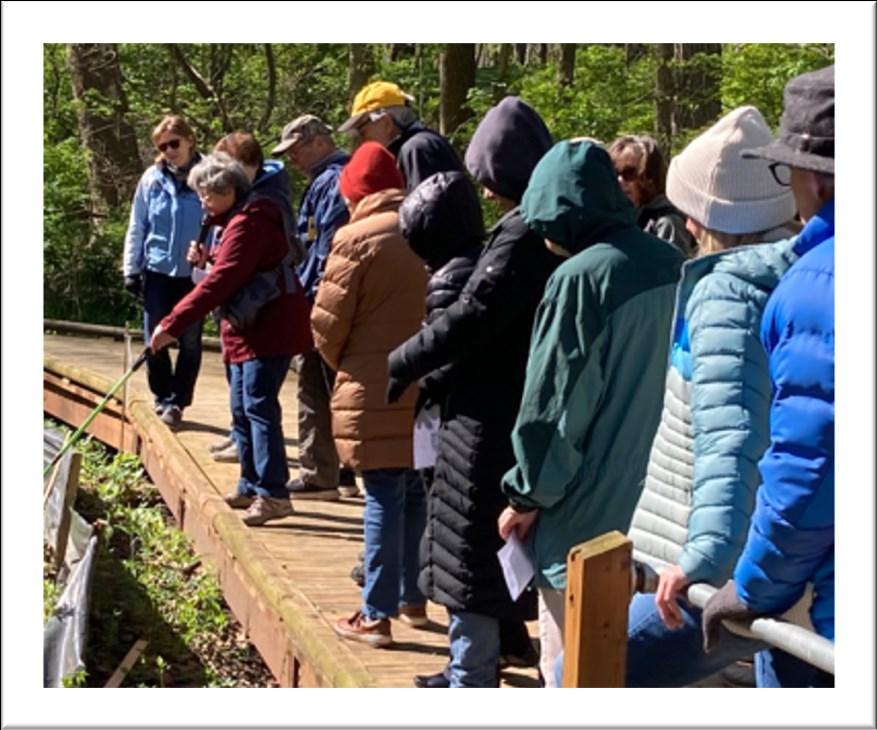
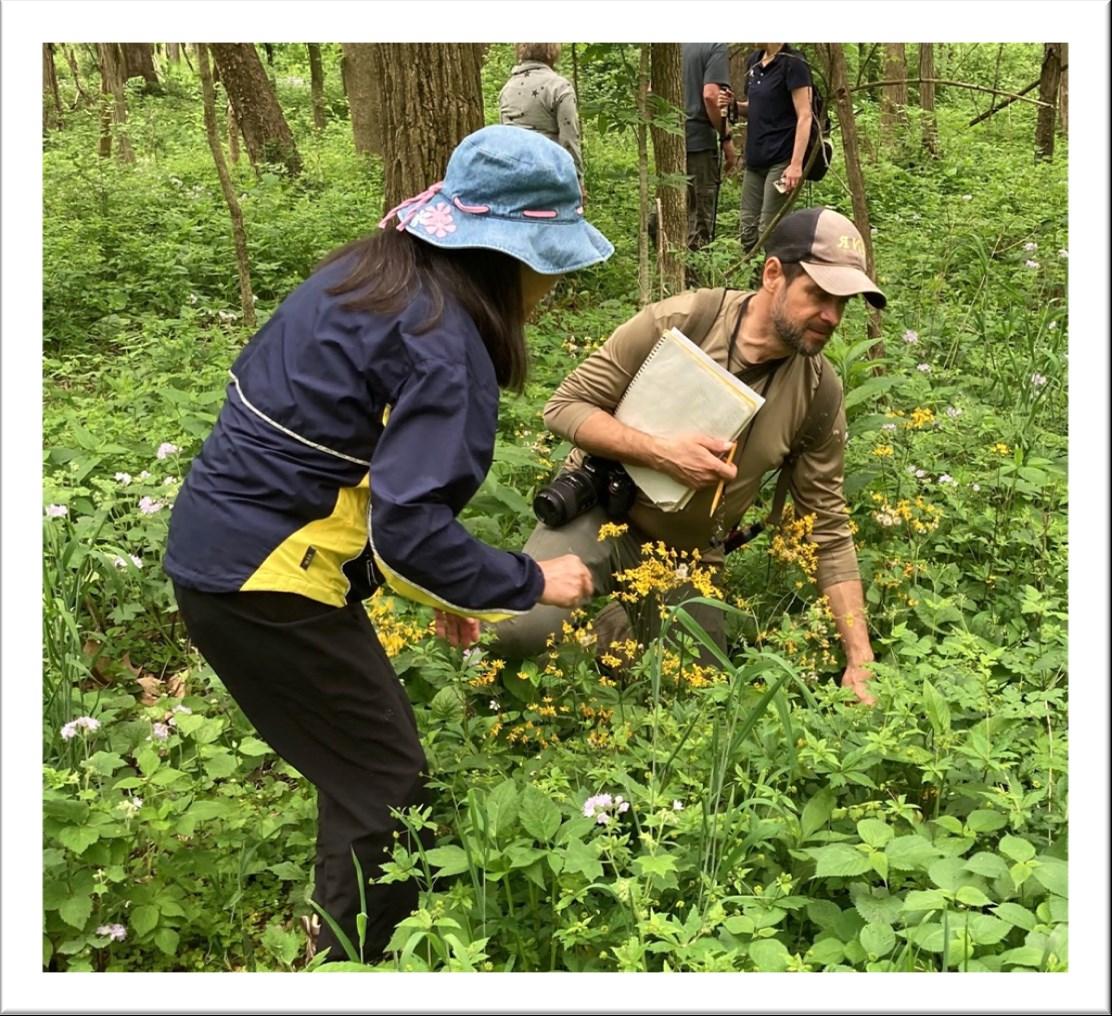
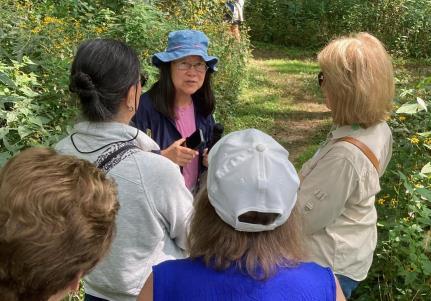
Over twenty neighbors and friends joined tour guide Norma Wallman walk the preserve in search of spring fowers
April Preparing for the wild ower tour - Each year prior to the tour Norma visits the preserve to identify owers of interest to the tour participants L -R Pilar Morera preserve photographer Nancy Snively preserve treasurer Gary Harker preserve president Norma Wallman expert and tour guide
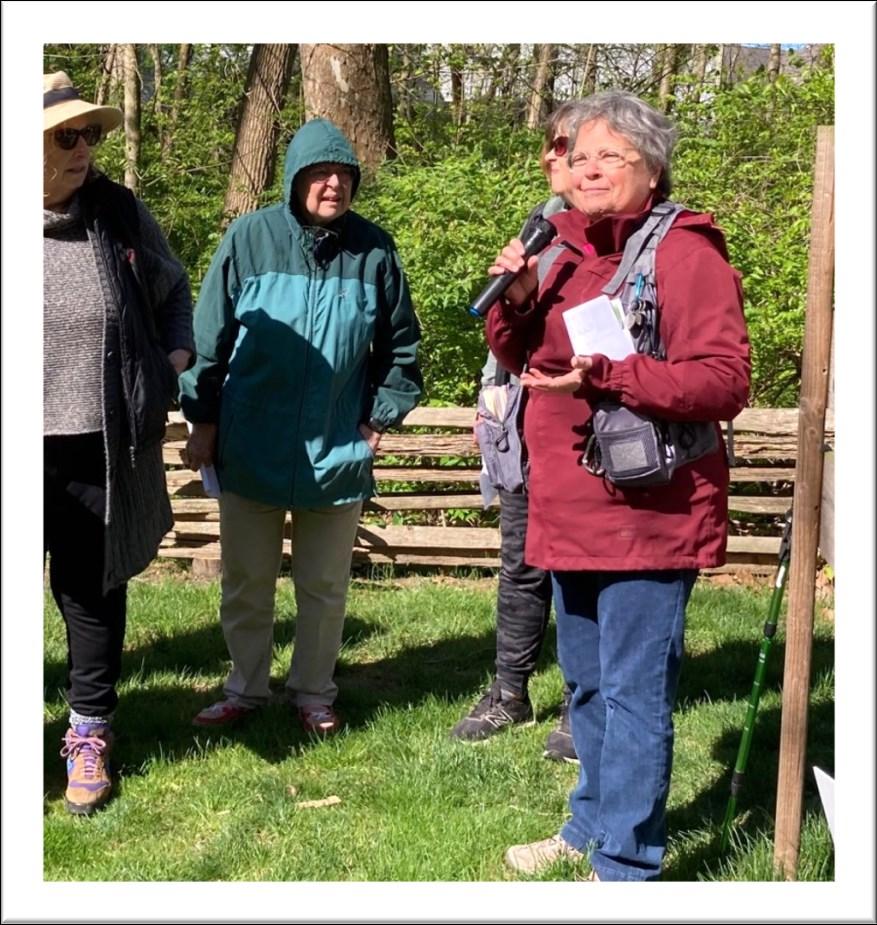
Norma making opening comments
Butler University Sta Attends Annual Wild ower Tour
Will Weber, a junior at Butler, is undertaking an independent study research project of the plants in our Nature Preserve. He is under the faculty advisors, Drs. Marcia Moore (Director of the Friesner Herbarium) and Hilary Madinger. Will’s research project will consist of collectng plant specimens from the Tamarack Nature Preserve. This collecton will take place during the spring months, startng March 1st, and going through September.
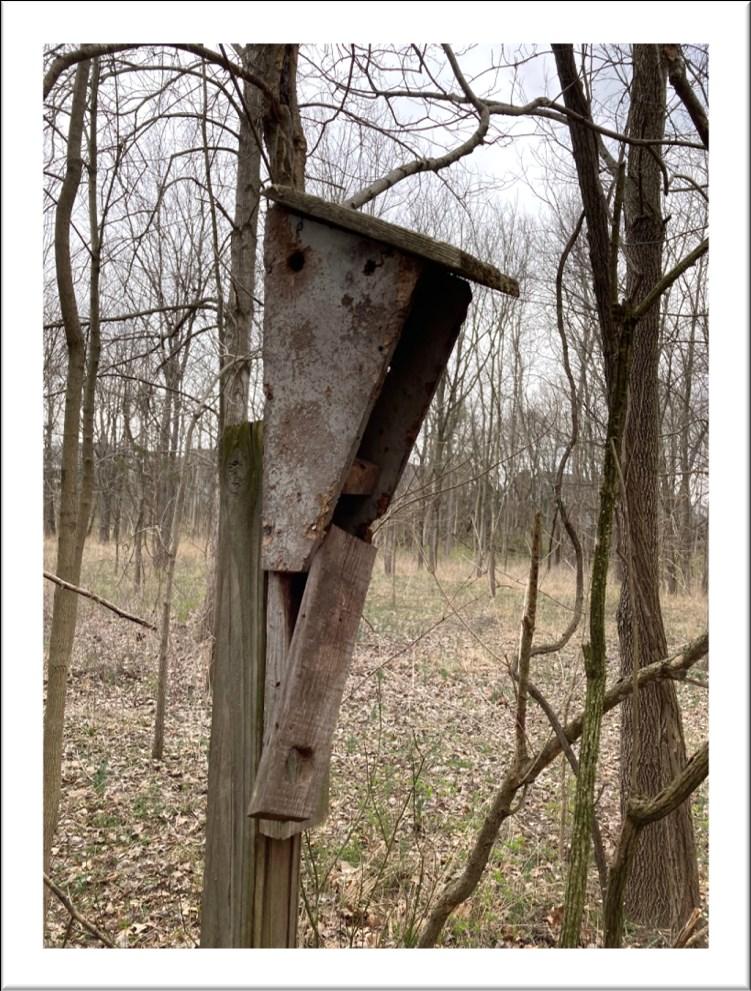
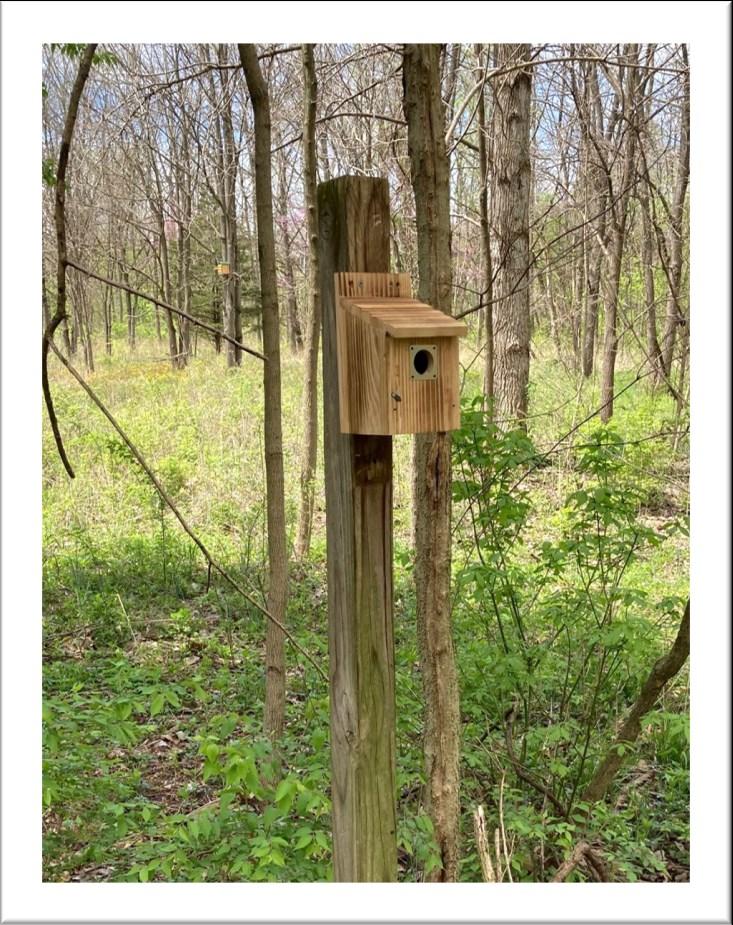
Two old bird houses have been replaced with new, bluebird nestng boxes.
Wha ’ g i g d b he b a d a k
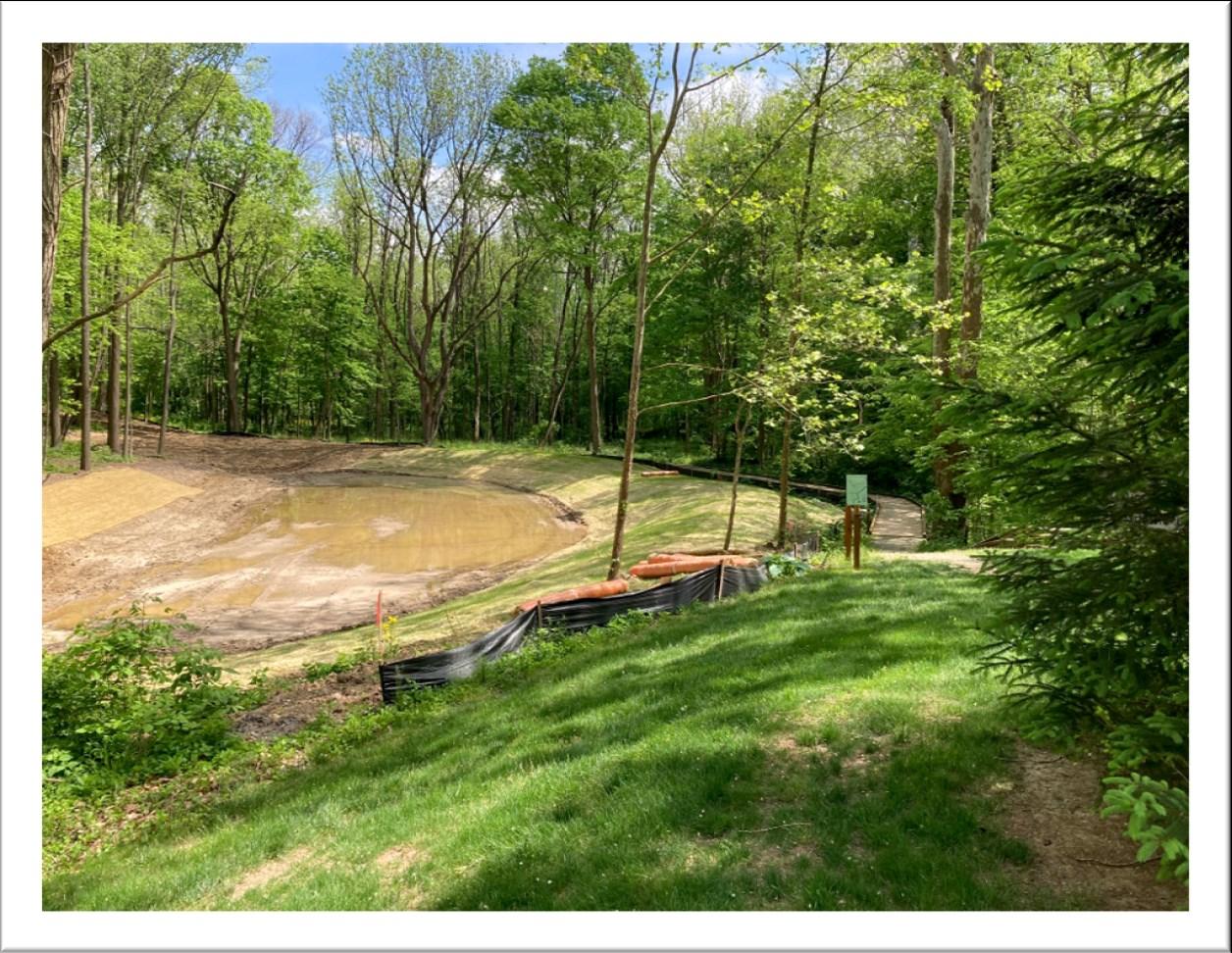
If you have walked the nature preserve recently, you have notced a large hole next to the boardwalk. This excavaton, next to the boardwalk, will become a bioretenton pond for the water runof in the new development north of the nature preserve.
You may wonder if the bioretenton pond is on nature preserve property? The answer is no. The nature preserve boardwalk is not on nature preserve property but spans a combinaton of Springmilll Lakes property and property owned by developer Tom Kretz, TMKdevelopment. A legal easement has been granted by TMKdevelopement to Springmilll Lakes, allowing the boardwalk to provide a safe pathway to the preserve.
Wha e ac i a bi e e d
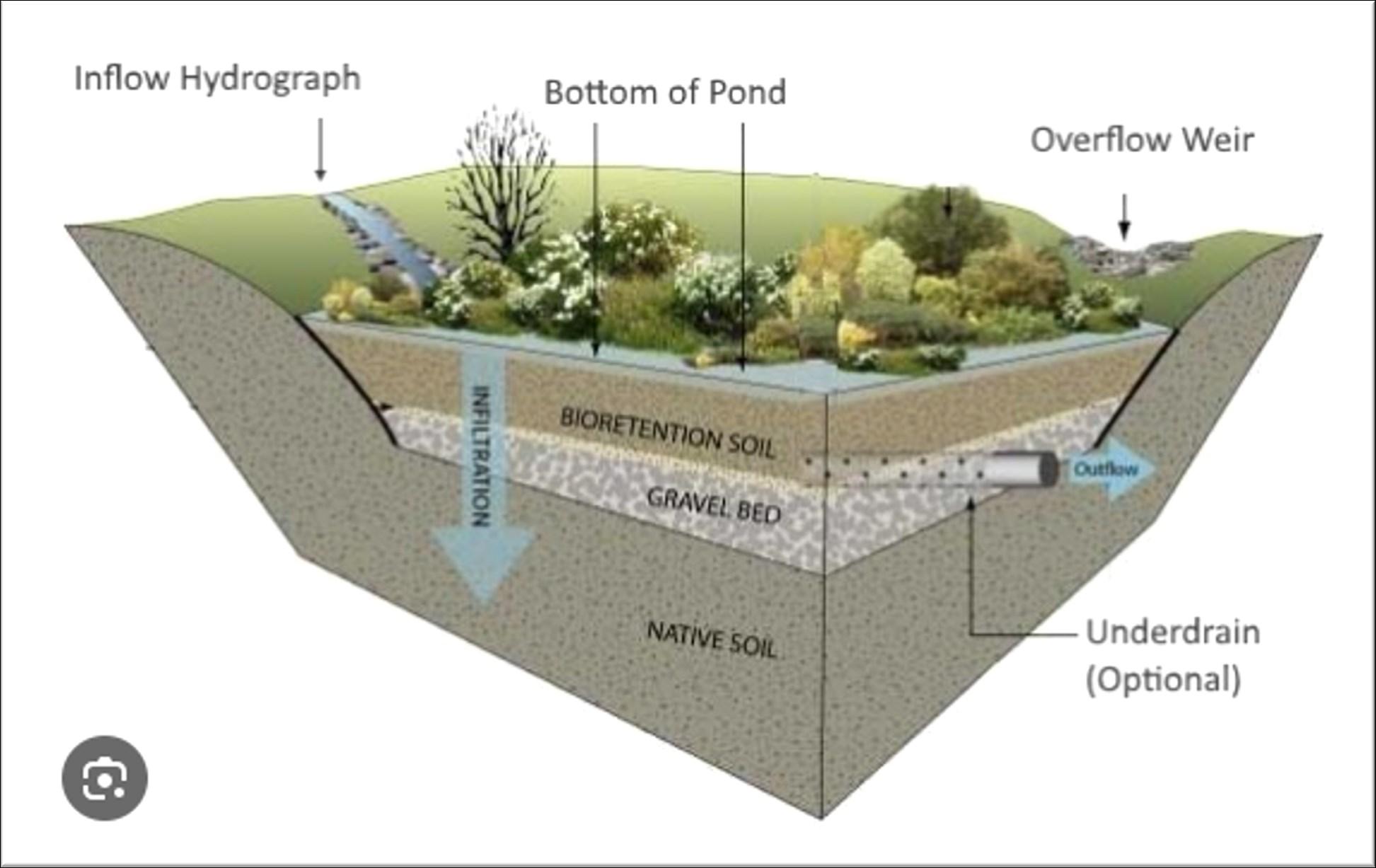
The pond is designed to collect drainage water from the TMKdevelopment. The pond constructon is made up of several layers, gravel, sand, and soil. This constructon is designed to absorb the water entering the pond. The design considers 100 - and 00-year foods. If the pond is unable to absorb the water, an outlet drain located under the nature preserve boardwalk will move the excess water into Hoover Run. Due to the special constructon, grass and small plants will populate the pond surface and present a pleasant, landscaped area.
E a e f a bi e e d
De a e f Na a Re
I dia a La
-
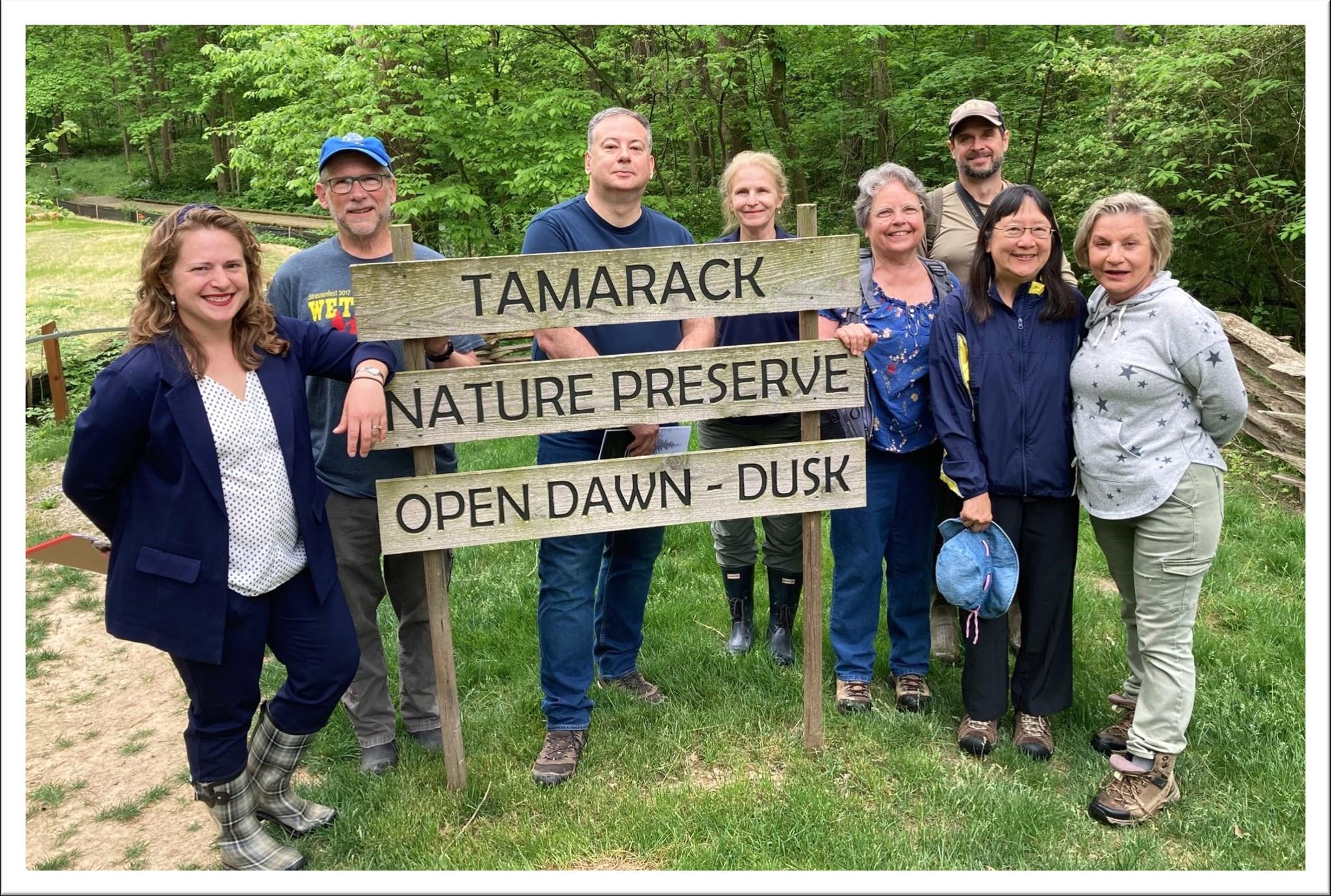
-R: Andrea Townsend, TMKdevelopment, Greg Harker, Preserve President, Tom Kretz, TMKdevelopment, Stephanie Paine Crossin, Land Protecton Director (CILT), Norma Wallman, Author -Naturalist, Scot Namestnik, Botanist, Indiana DNR, Bety Yan, Preserve Board, Pilar Morera, Preserve Photographer.
By Bety Yan
Scot Namestnik visited our Tamarack Nature Preserve on January , 0 and provided us a list of plant species based on that visit (see our Nature Preserve newsleter, th editon). He visited us again on May during the growing season to provide us with additonal plant species, especially in the wetland seep area, as well as answered questons about plants in our preserve.
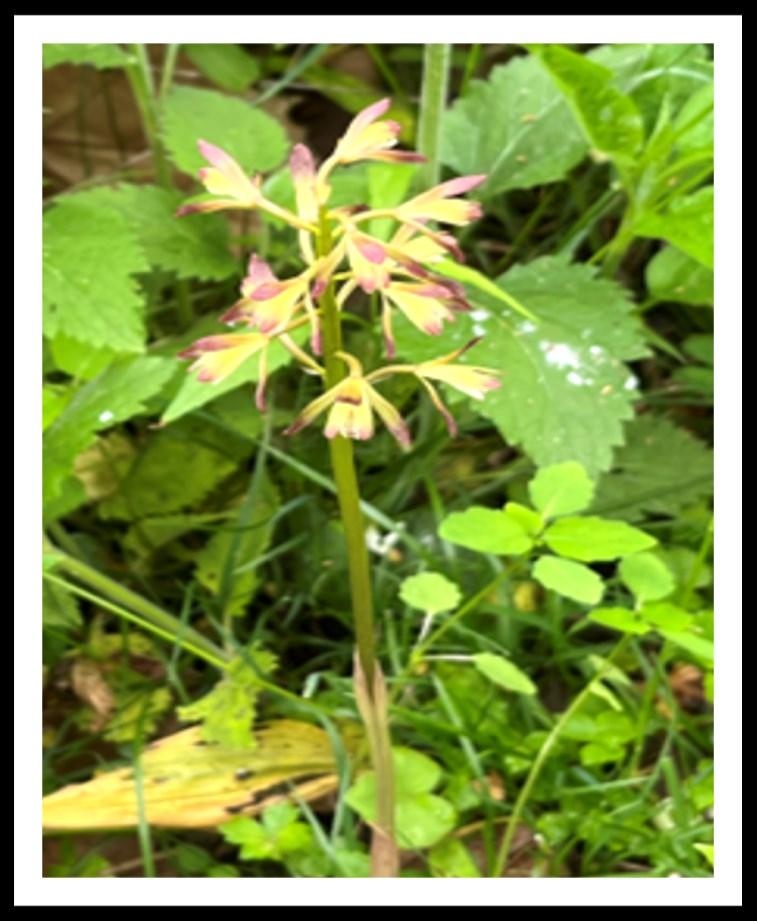
Scot was also interested in looking at the Ram ’s horn (Proboscidea louisianica) that was found by Pilar the last two years at the TMK property. Pilar took us to the locaton of the plant which wasn ’t there, probably because it is not yet growing season for this rare plant. Here are a few highlights of plants in our preserve during his visit. We have a wild orchid, Puty root in our preserve. It happened to bloom and it is a rare sightng. We all took photos, including Scot
L
Scot identfed a healthy Blue Ash tree ( Fra in s quadrangulata ) (about feet tall) in our preserve. This tree is on the endangered species list for Indiana. He showed us that the twigs typically have four corky ridges, a distnctve feature giving them a square appearance, hence the species name, q adrang lata, meaning four-angled.
We have a rare wild fowering plant, Pale Gentan in our preserve. They typically bloom in late August
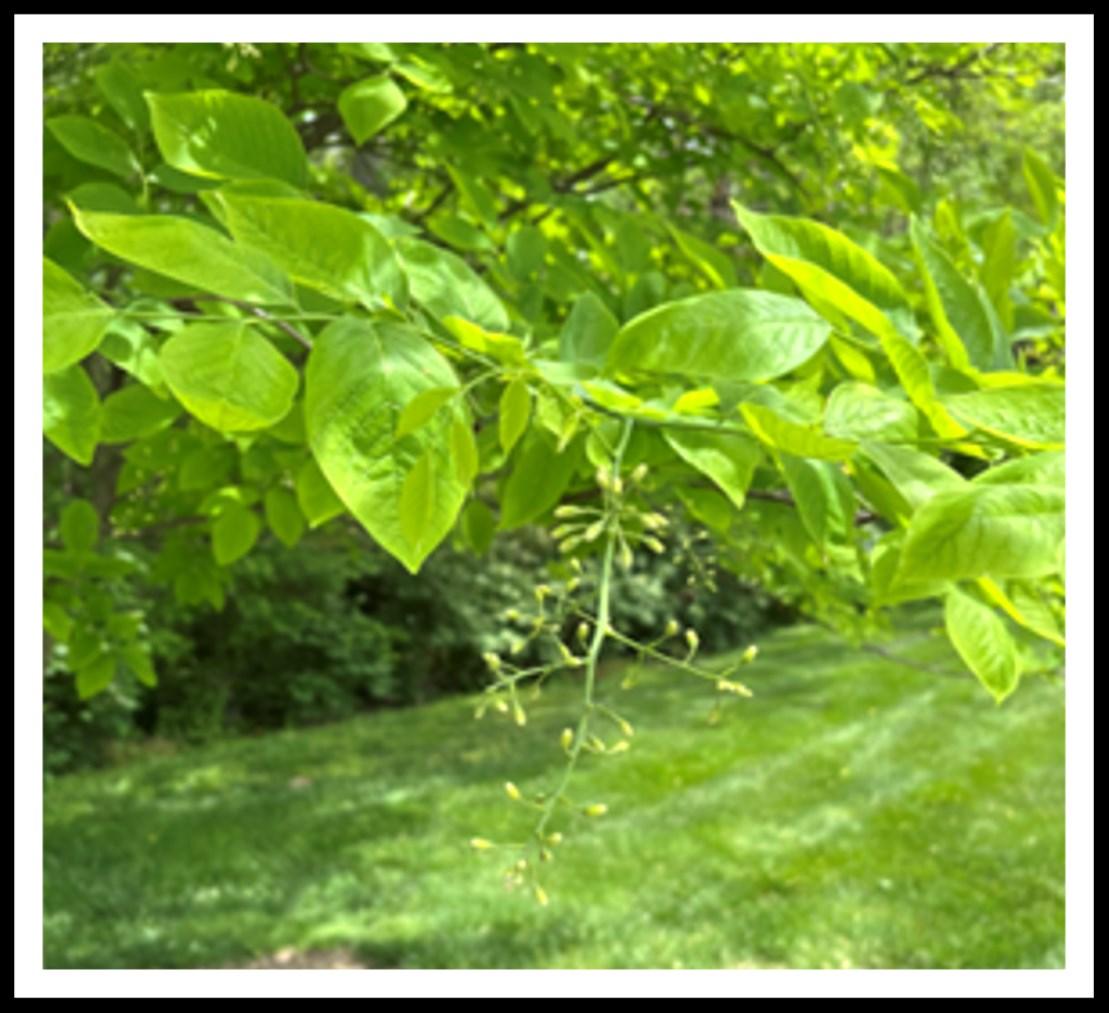
As we were departng from the preserve, Scot realized that he was parked underneath a Yellowwood tree (Cladrasts kent kea). This is a very rare tree in Indiana in the wild. This tree is growing in our common area and is fowering
Scot and Bety Yan looking for rare species
Scot Namestnik is the Botanist at the Indiana Natural Heritage Data Center, which is part of the Indiana Department of Natural Resources – Division of Nature Preserves. Much of his work involves conductng botanical inventories, assessing sites for protecton consideraton, and documentng and monitoring occurrences of endangered and threatened species. He has a degree in Botany with a focus in Environmental Science from Miami University and over 0 years of experience with the fora of the Great Lakes region and the Midwestern United States. His writen work on the fora has appeared in several peer -reviewed journals including The Michigan Botanist, The Great Lakes Botanist, Phytoneuron, Proceedings of the Indiana Academy of Science, and Rhodora, and he is co-author of Wildfowers of the Midwest (Timber Press) and Wildfowers of the Indiana Dunes Natonal Park (Indiana University Press). He is a board member for NatureCITE, Indiana Natve Plant Society (North Chapter) and South Bend-Elkhart Audubon Society, is on the advisory council for Shirley Heinze Land Trust and the planning commitee for the Indiana Dunes Birding Festval, and is actve with the Indiana Natve Plant Society (Journal Team Leader) and the Indiana Academy of Science (member of the Biodiversity and Natural Areas Commitee and Chair of the Plant Systematcs and Biodiversity secton).
S i g h b Pi a M e a
Fe a e d d ck i h d ck i g
S i e
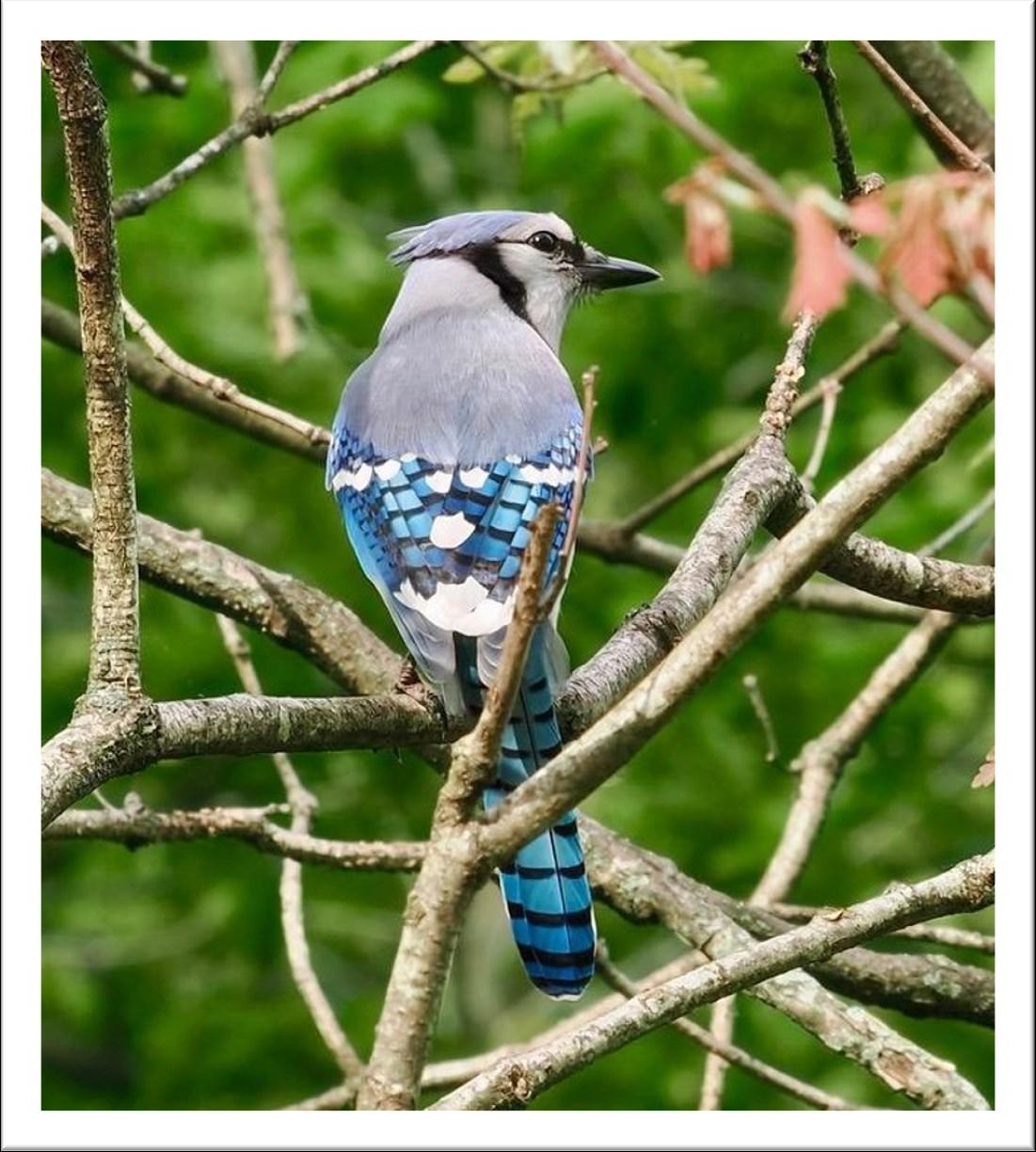
Blue jay
J e a ’ D k i g
Da k Cahi Ma f
P e R cke
I e i a dba i
Vi gi ia S ide >
A e ica G ebe
T ad hade T i i
Ye T i i
G - f- he-
La ge Whi e T i i
D i g T i i
Tama ack Na e P
Se i g Tama ack Se e ee a d S i gmill Lake a Tama ack
th Editon, July ,
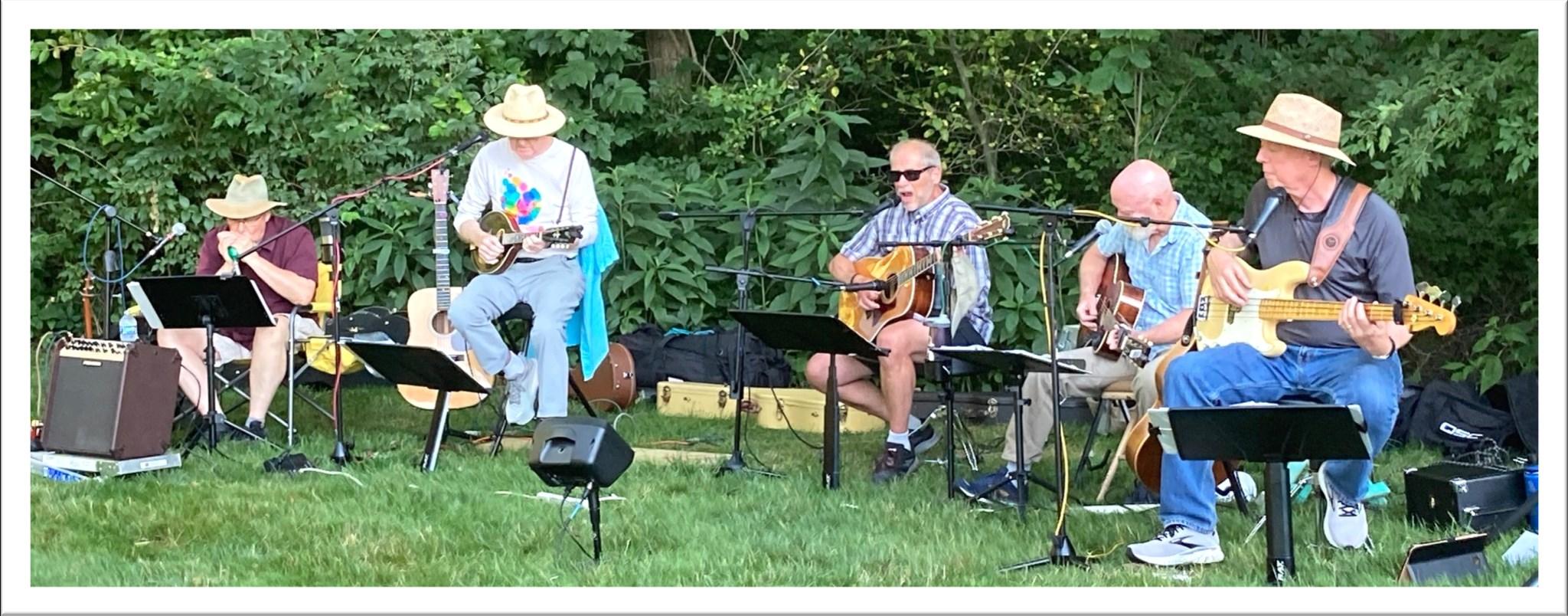
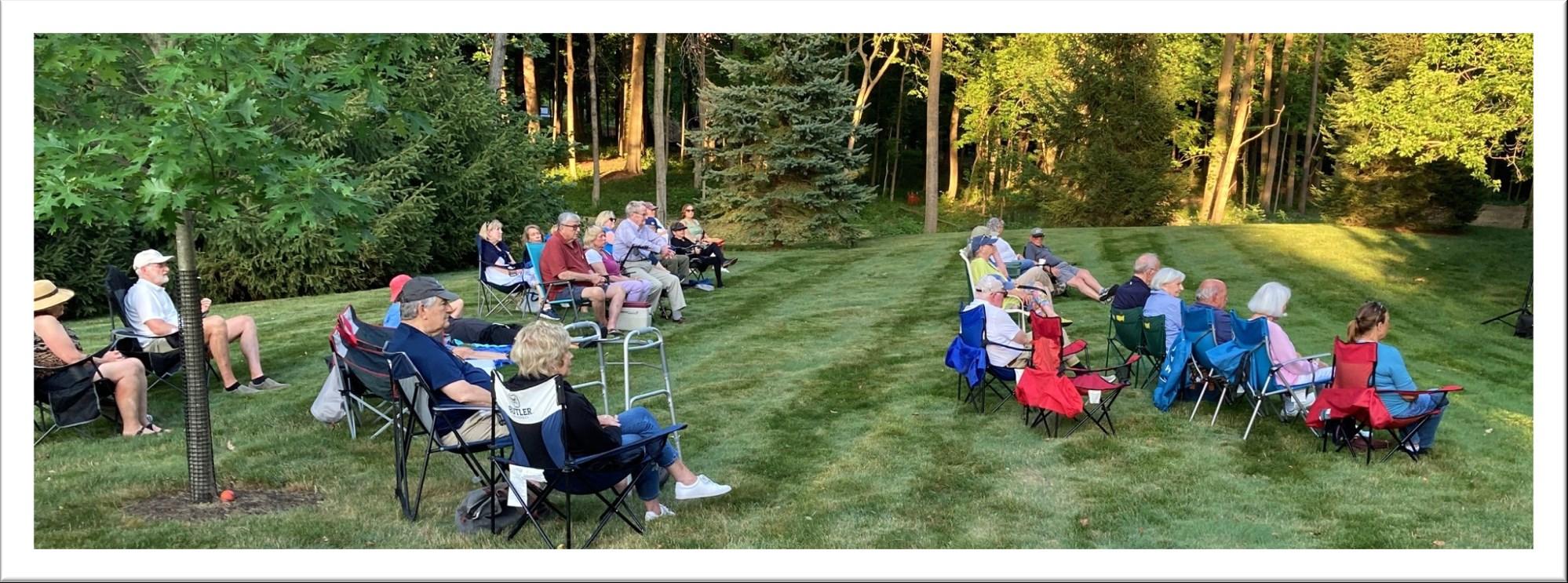
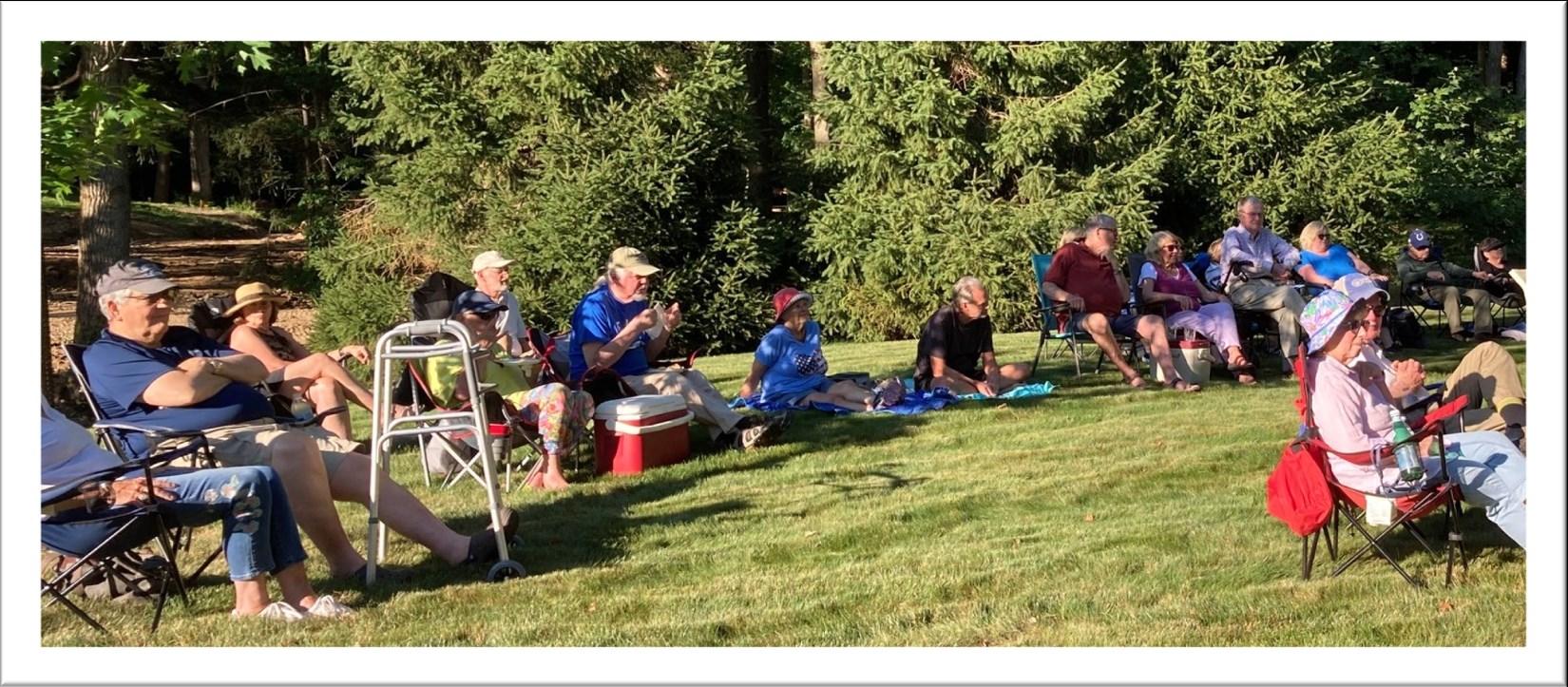
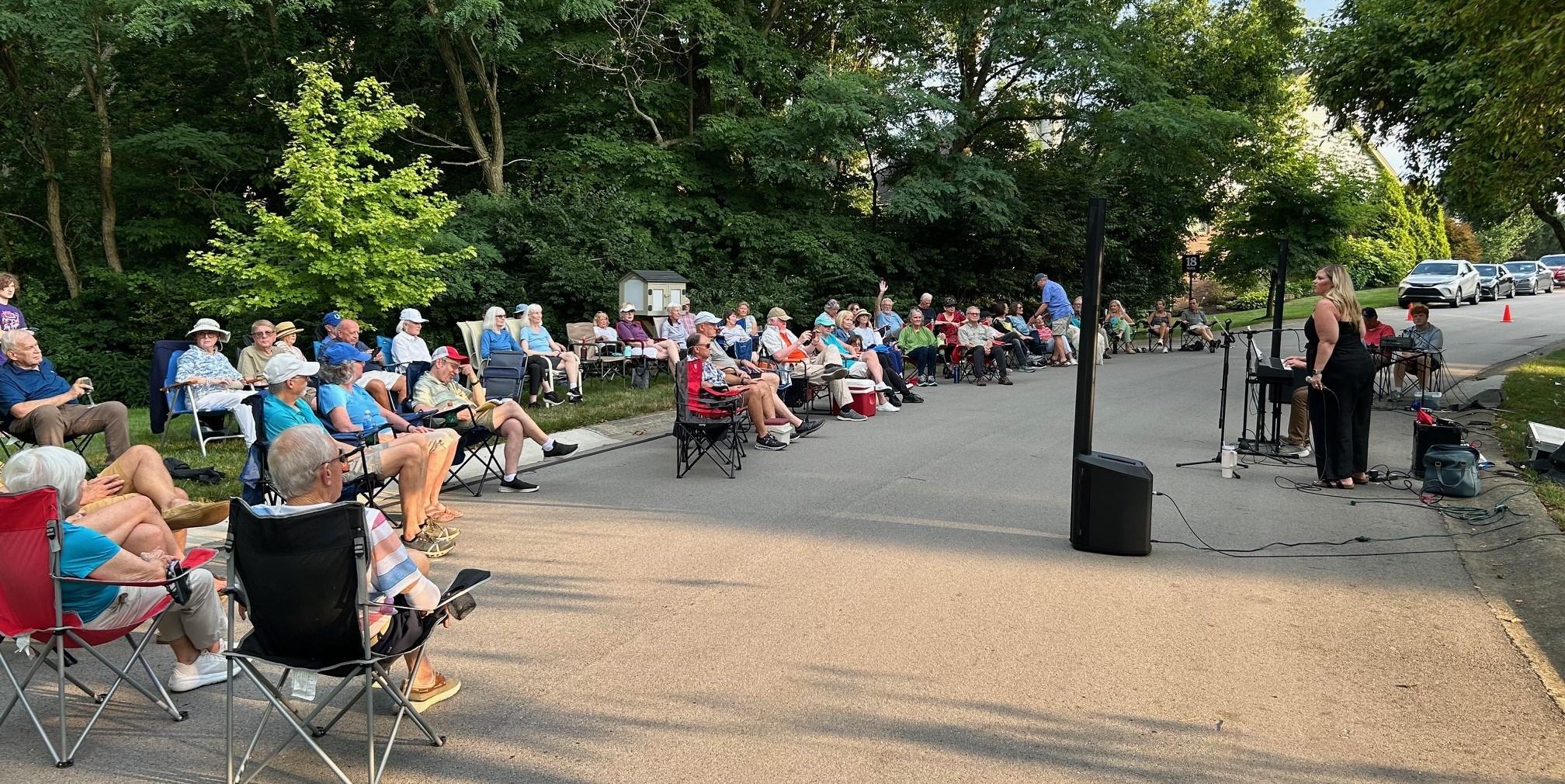
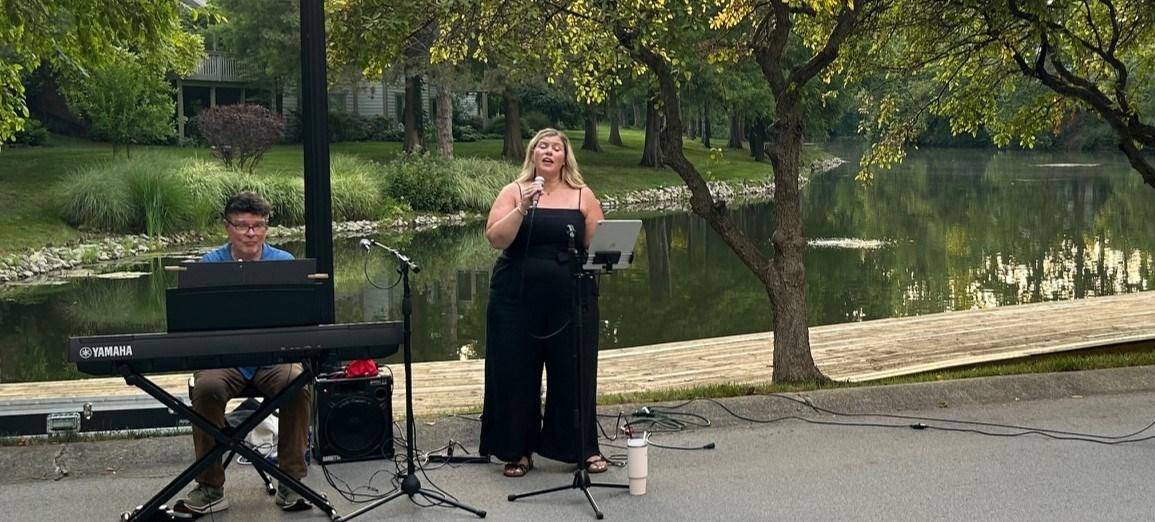
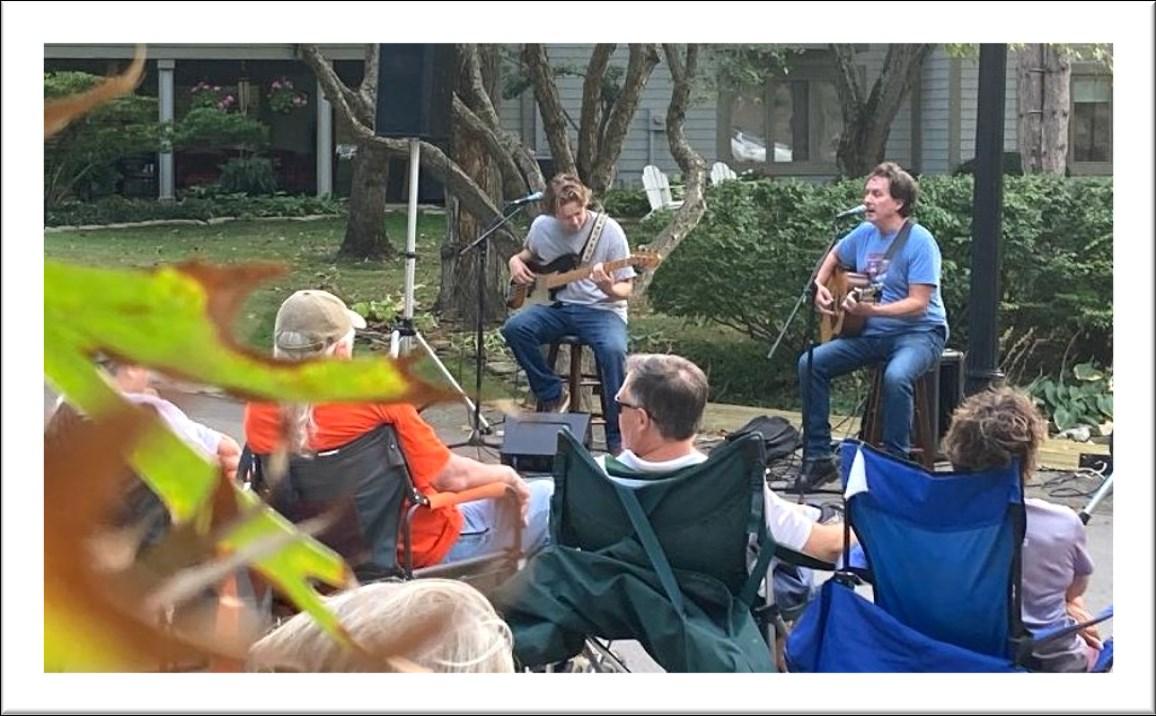
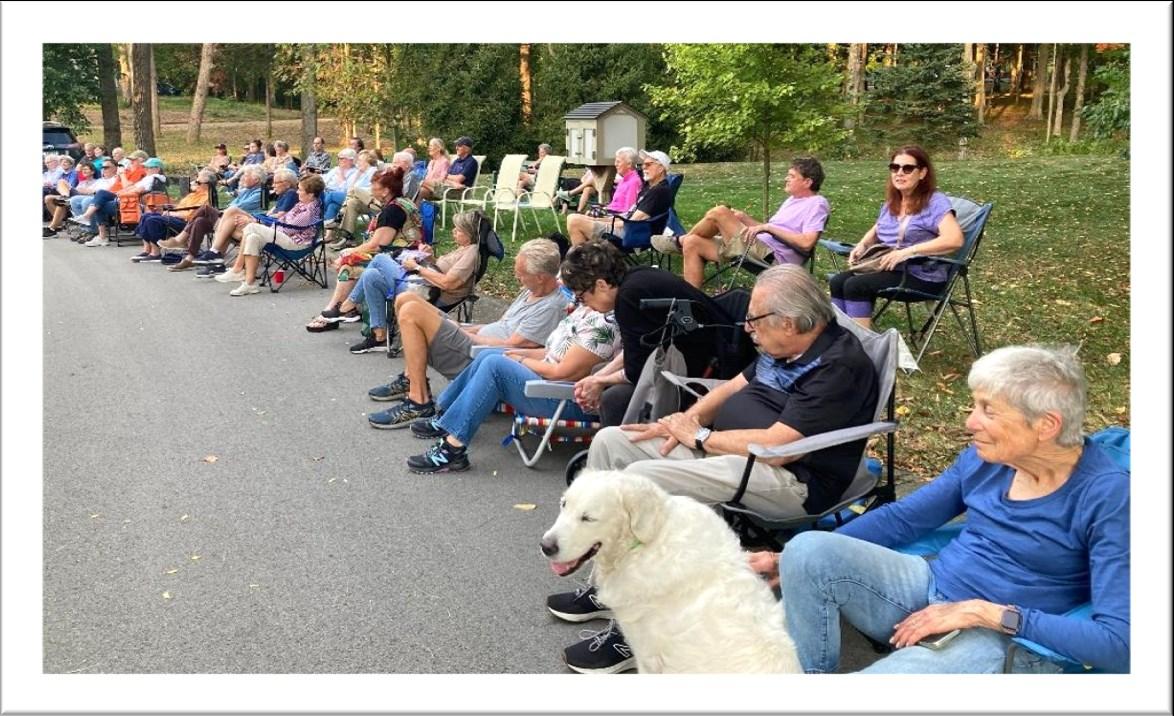
The Whobilados along with our Nature Preserve President, Greg Harker, (sunglasses) entertained over friends and neighbors, last Thursday evening. The weather and concert presented a perfect evening. THANK YOU to all who came out to the concert, and who so generously donated that evening. Your generous donatons allowed us to break even on the event. We appreciate your contnued support, which enables us to have occasional social events like this in the neighborhood.
U i ed S a e De a me f Ag ic l e USDA
Vi i he Tama ack Na e P e e e
GRANT REQUEST SUBMITTED
Under the guidance of our past nature preserve president, Dick Kiterman, our preserve has received generous grants from the USDA in support of our ongoing task of managing invasive plants. More recently, President Greg Harker has been in contact with Susanah Hinds, NW Grazingland Specialist, USDA. We have applied for a grant under the Conservaton Stewardship Program
Lef: Susannah explains the requirements that are included with the Conservaton Stewardship Program.
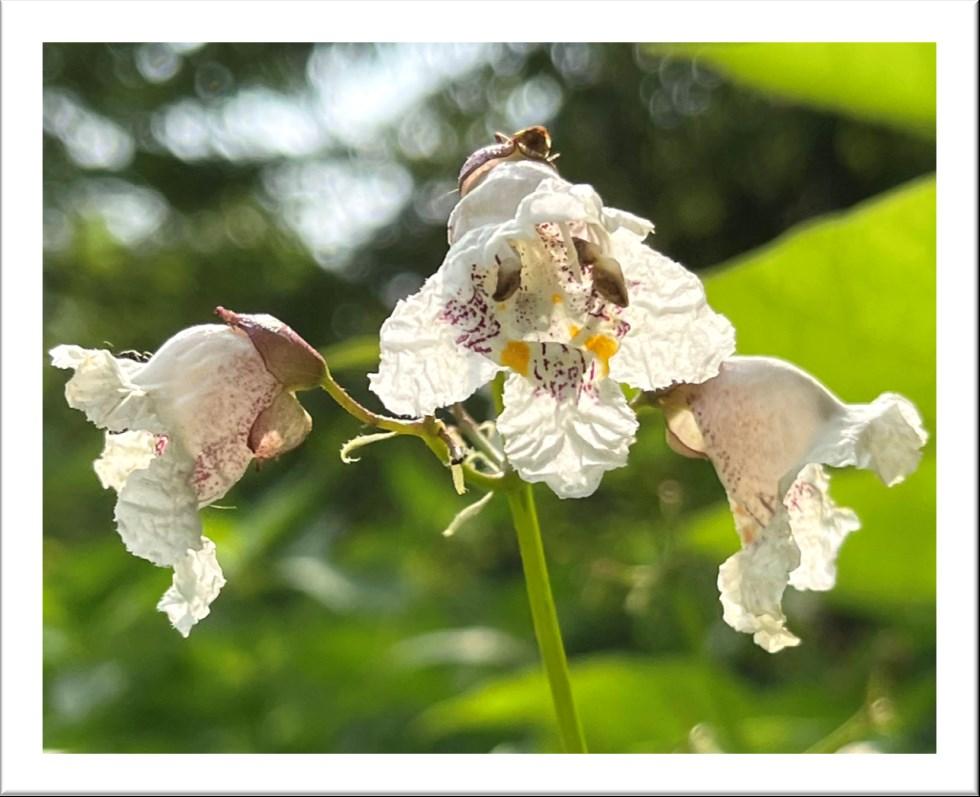
We have quite a few Catalpa trees in our preserve. The half a dozen trees in the woodland side are very tall trees, thirty feet or more high and it is difcult to see the leaves and the fowers.
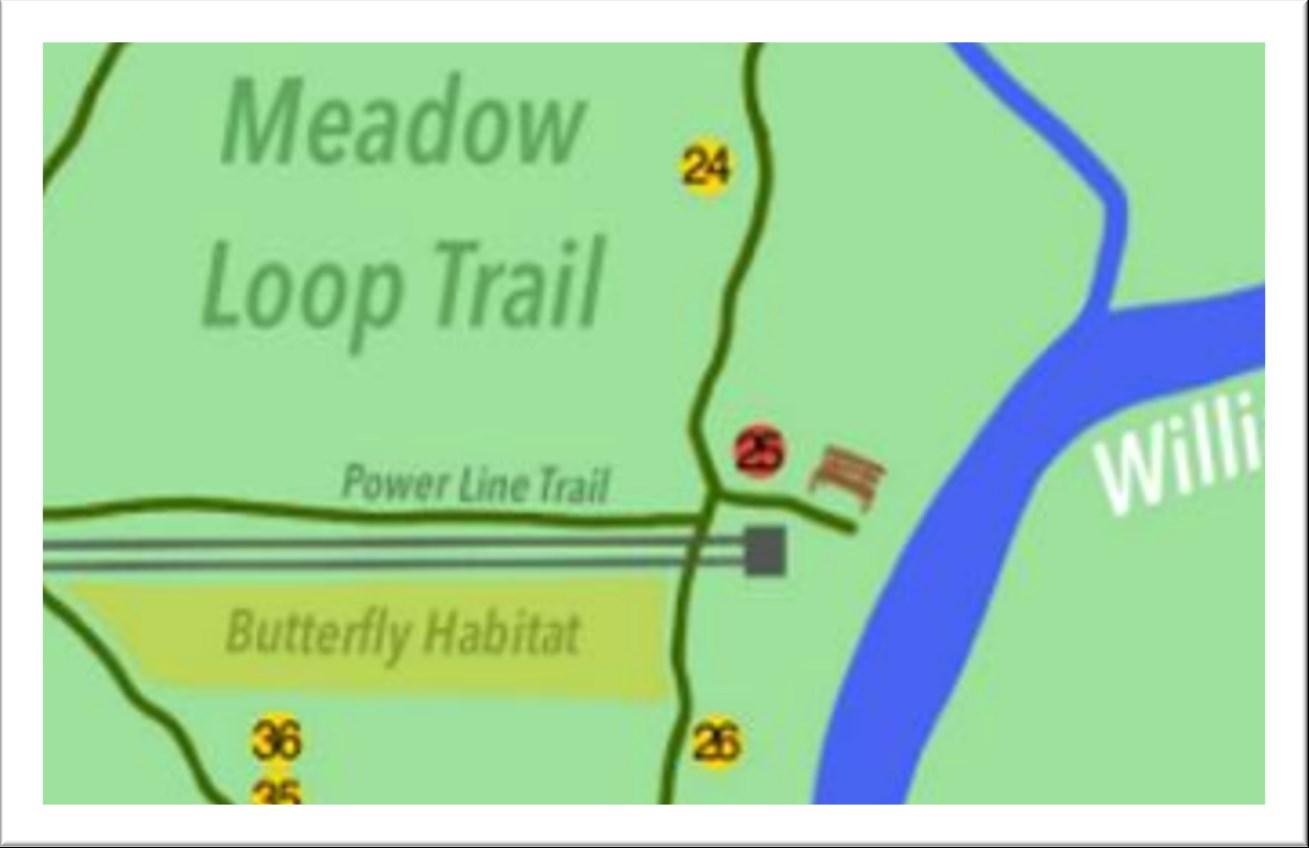
Tree in our tree map is a shorter Catalpa tree. It was blooming a couple of weeks ago. I have atached a couple of photos of the fowers. The long bean pods are now growing on the trees.
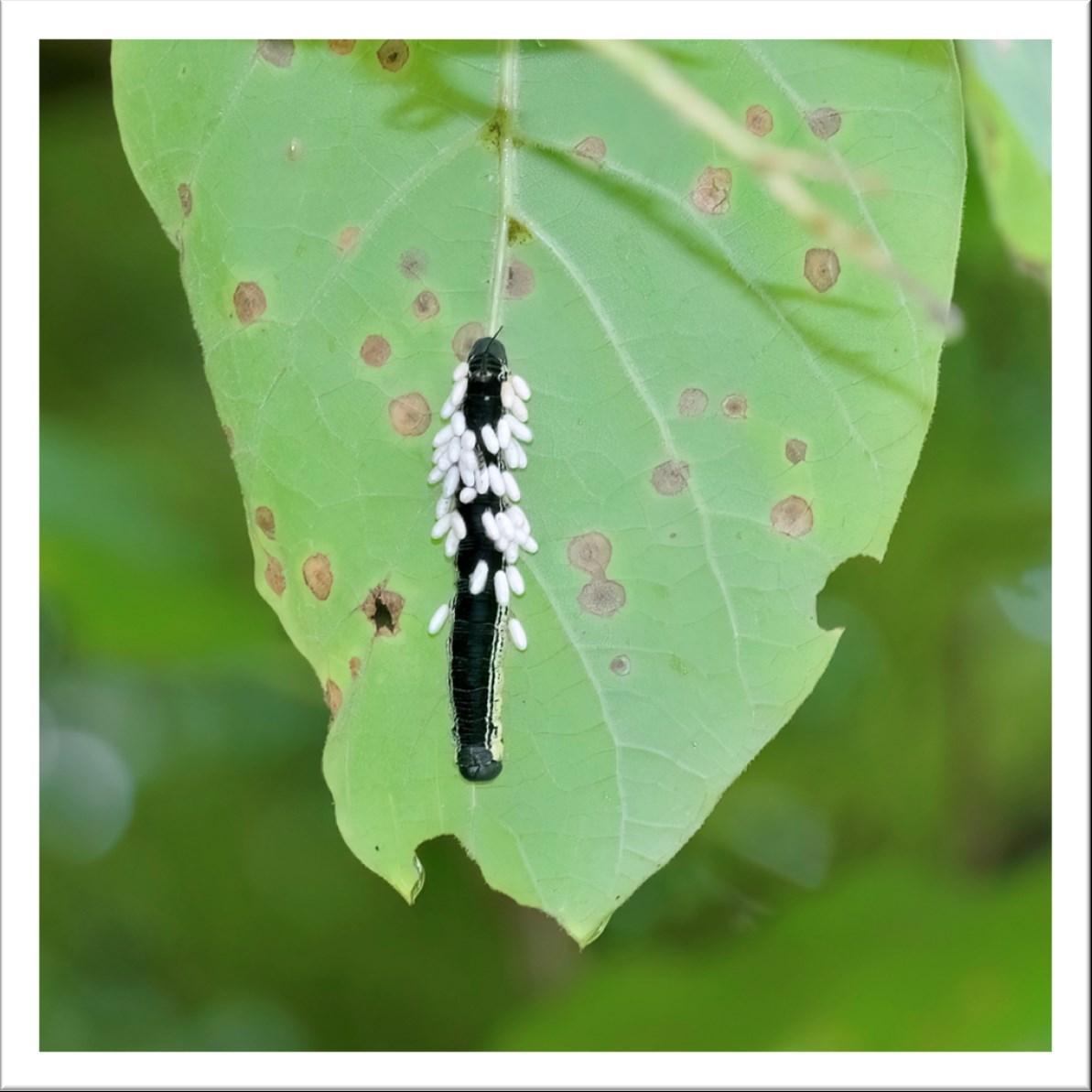
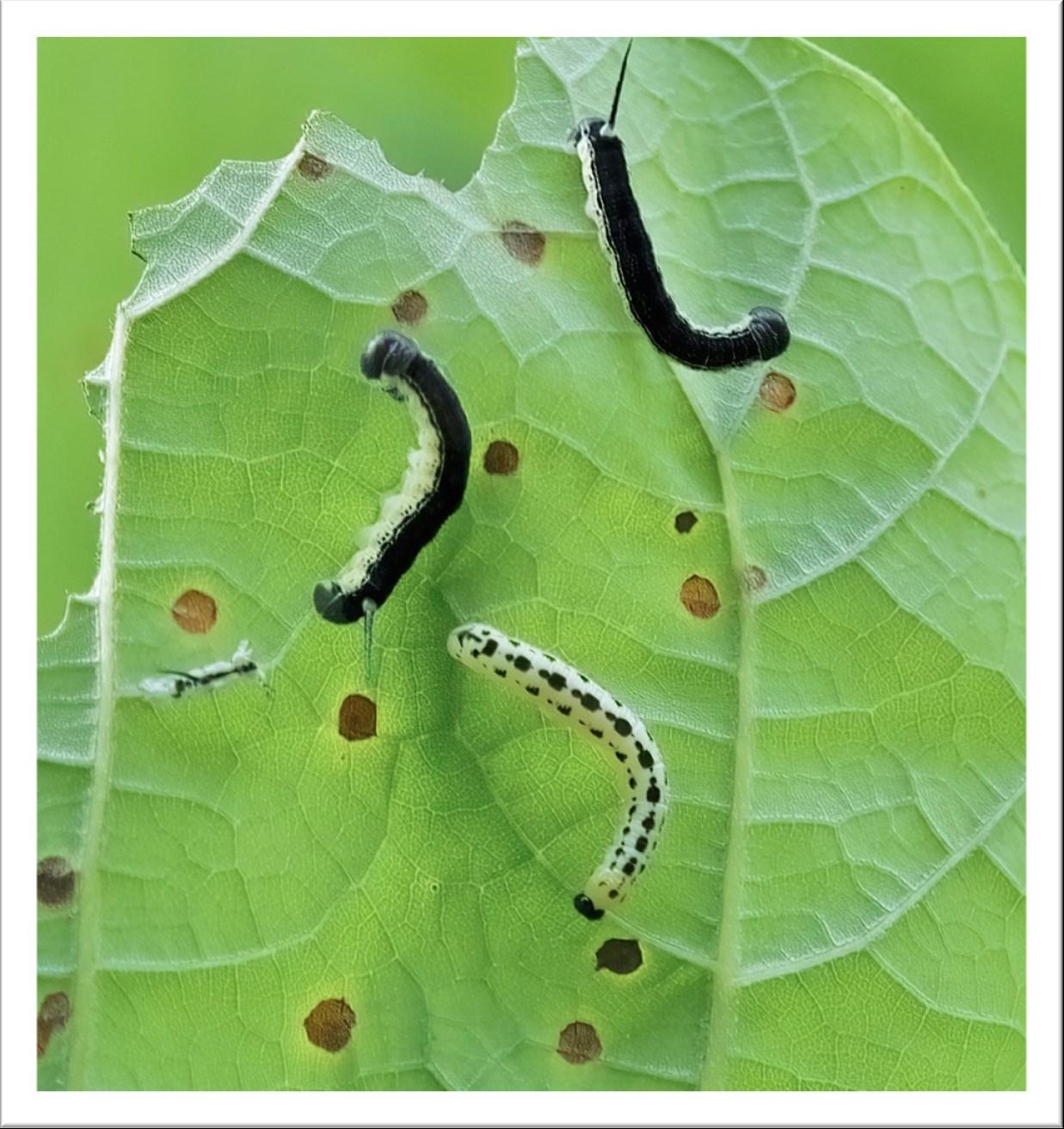
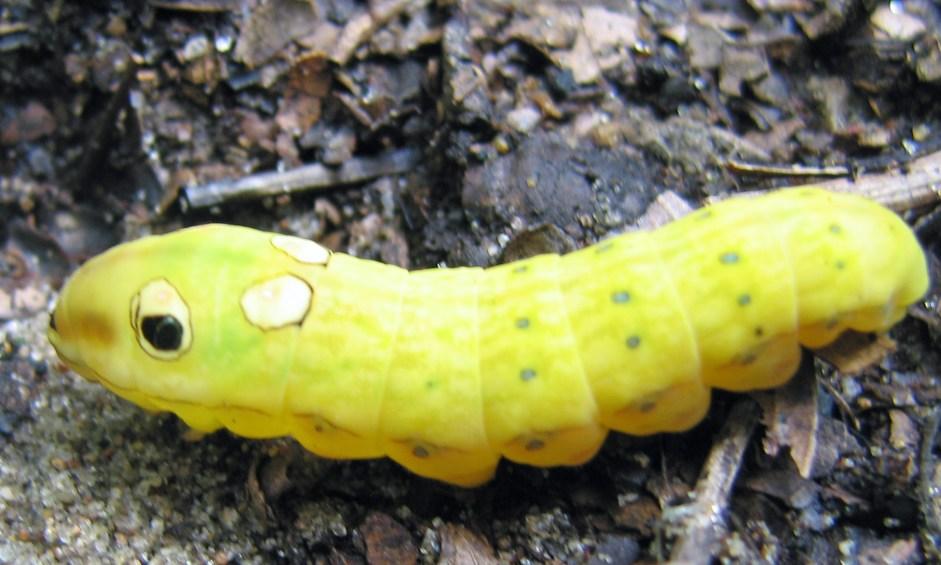
Catalpa worms (caterpillars of Catalpa sphinx moths) are great fshing baits. Sure enough, when I looked up at tree , the worms were eatng the leaves. The caterpillars feed exclusively on Catalpa leaves. I found a few wonderful photos that I got from Pilar last year on Catalpa sphinx moth caterpillars.
One photo shows white eggs on a Catalpa sphinx moth caterpillar. Those were eggs laid by parasitc wasps (C e ia c ng ega a).
By Betty Yan:
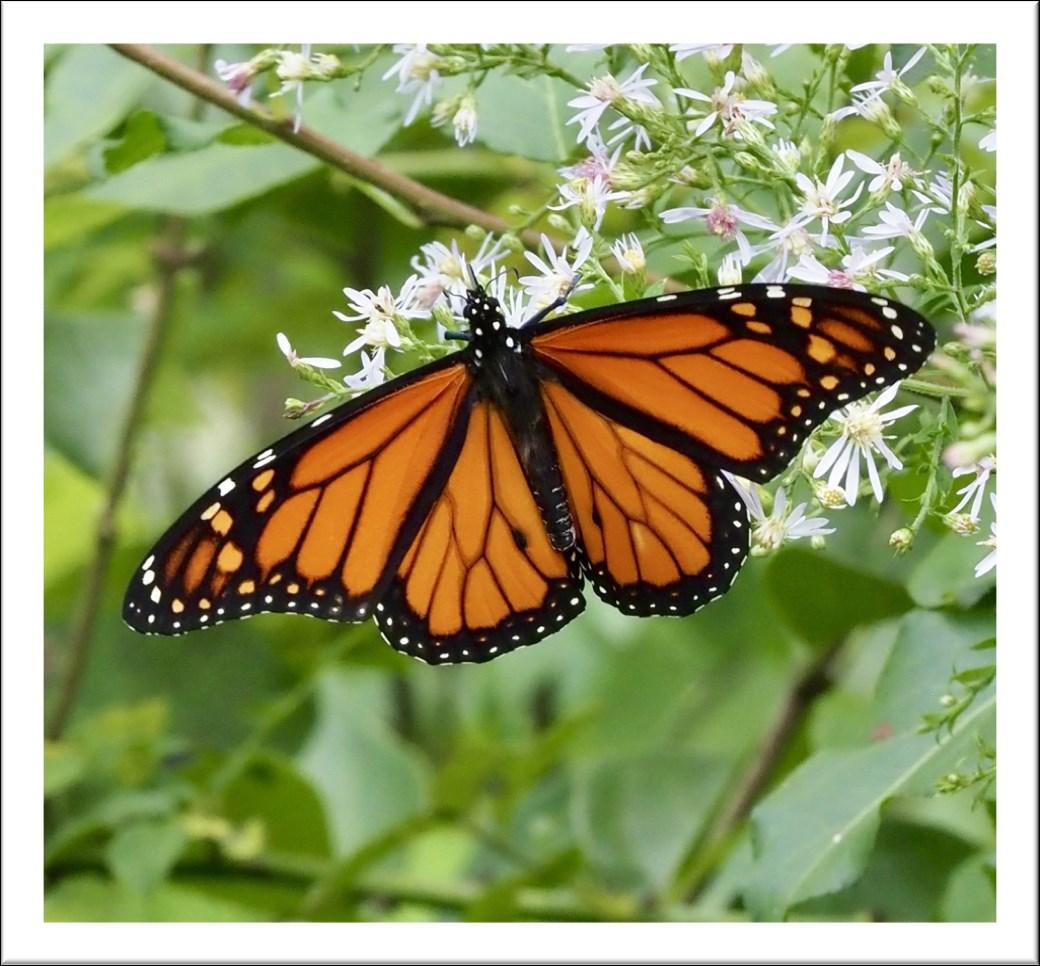
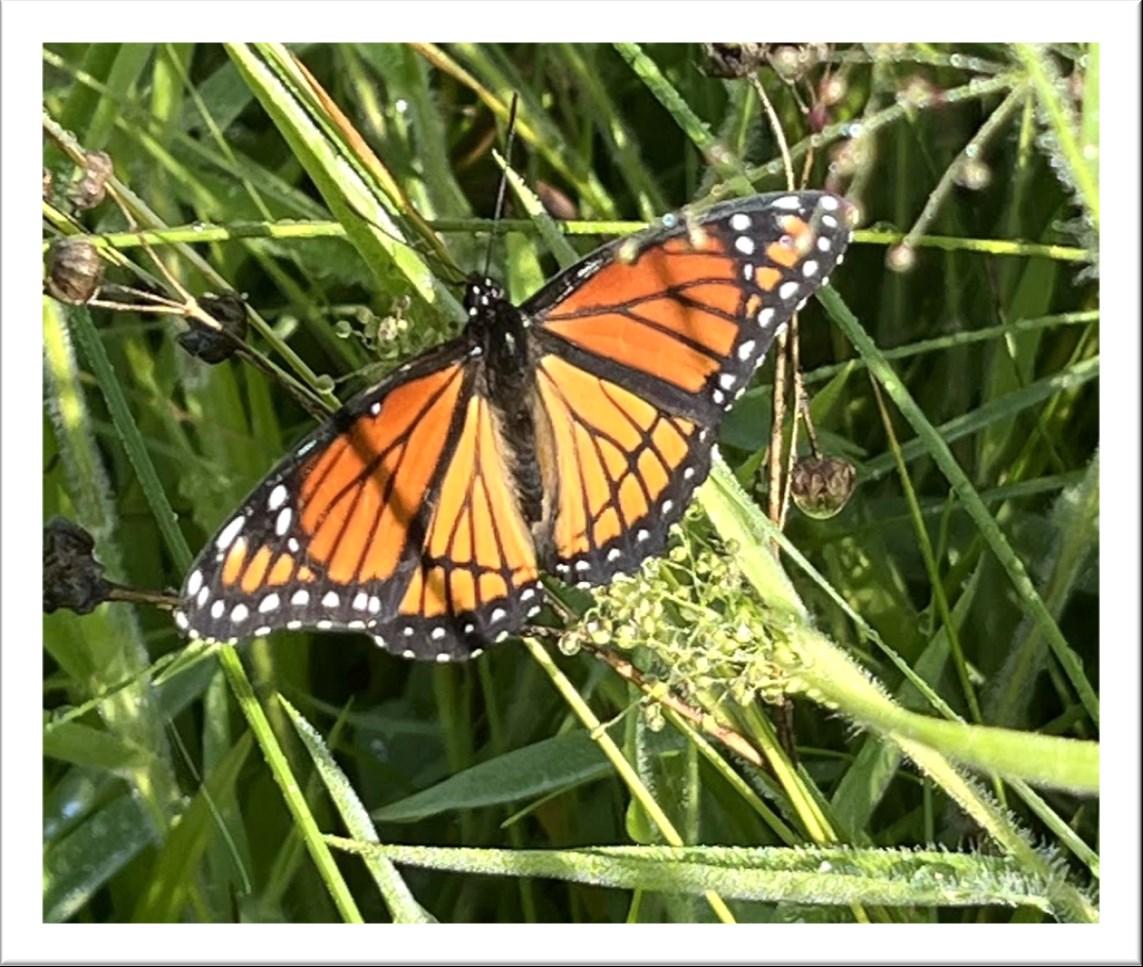
I was walking along the butterfly garden in our preserve and thought I saw a Monarch butterfly. As I approached the butterfly, I realized that it was a Viceroy butterfly which is almost the same as a Monarch except that it has a horizontal line through the hindwings. It is not a common sighting here for a Viceroy.
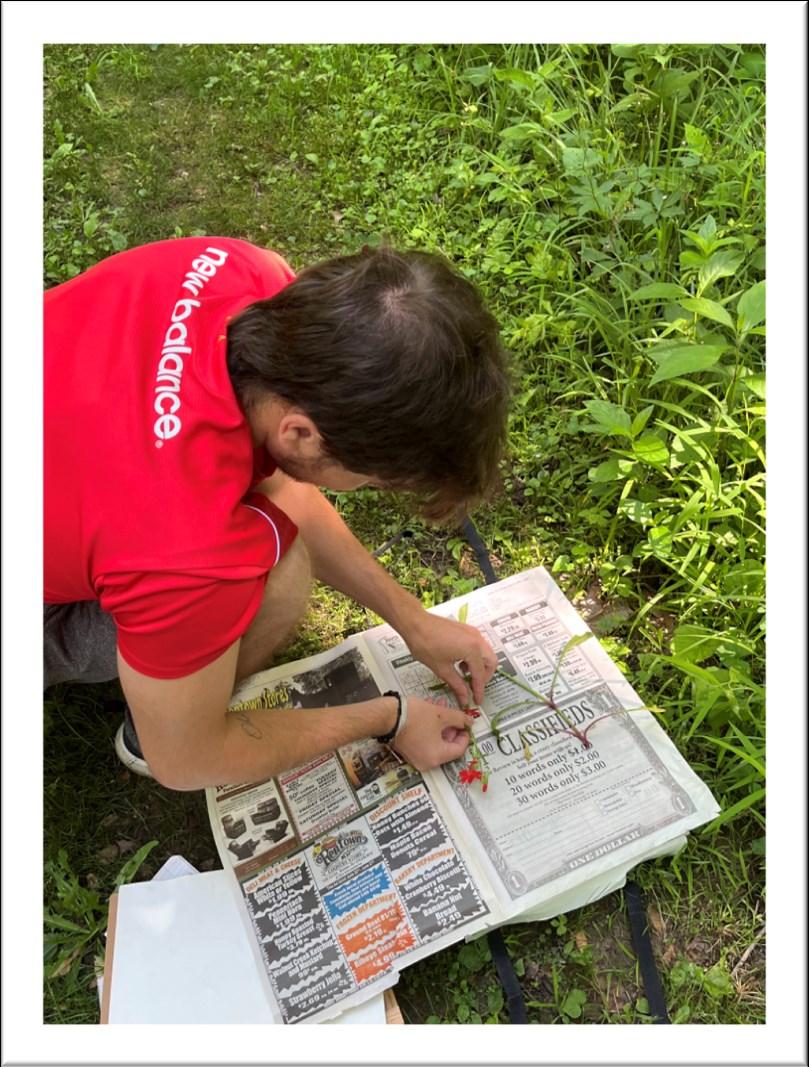
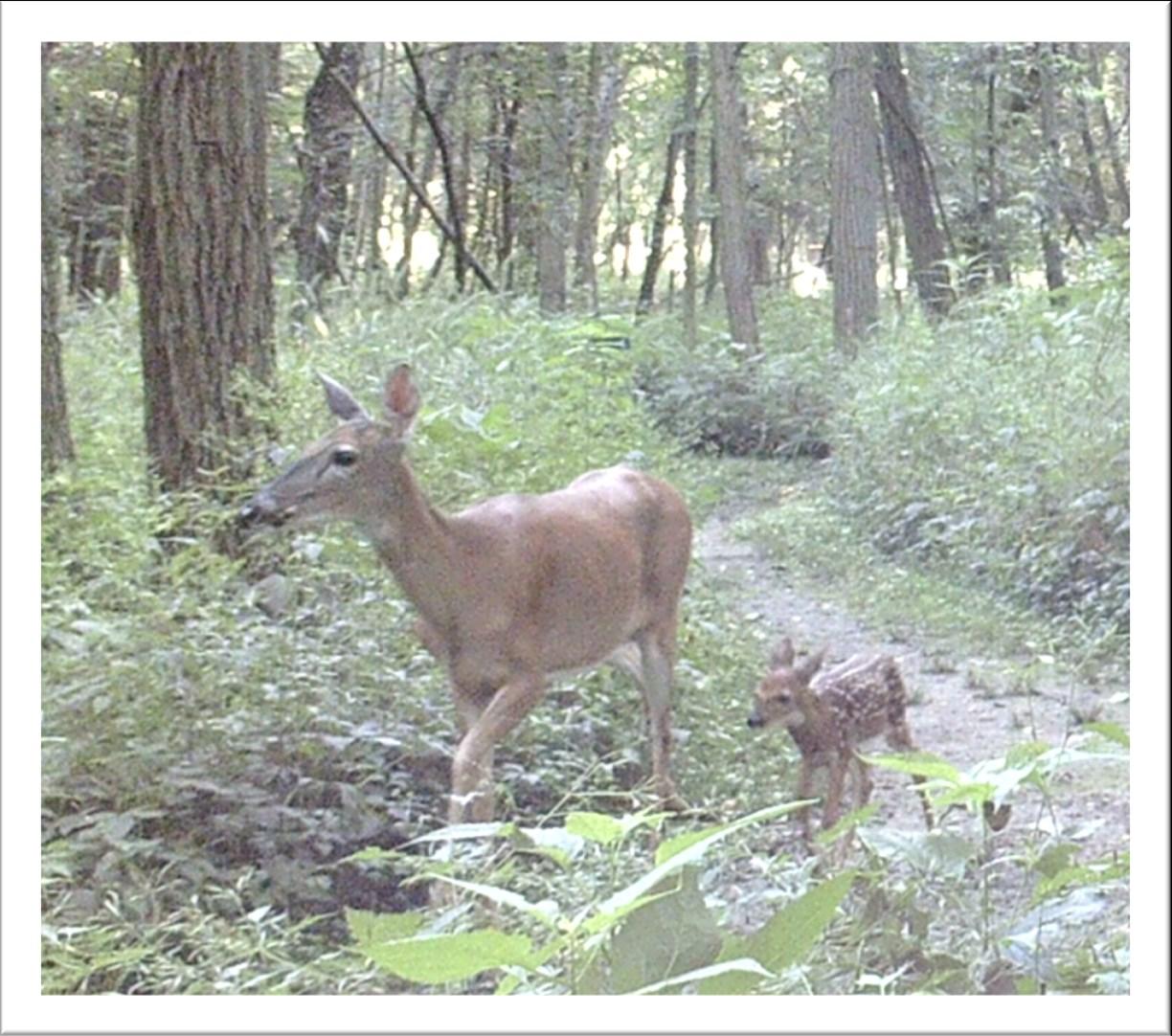
Above Lef: Butler biologist, Will Weber, contnues to gather plants for his research project. Here he is pressing Fire Pink. Above Right: Our trail camera captured mother and Bambi walking along the trail.
M a ch
Vice
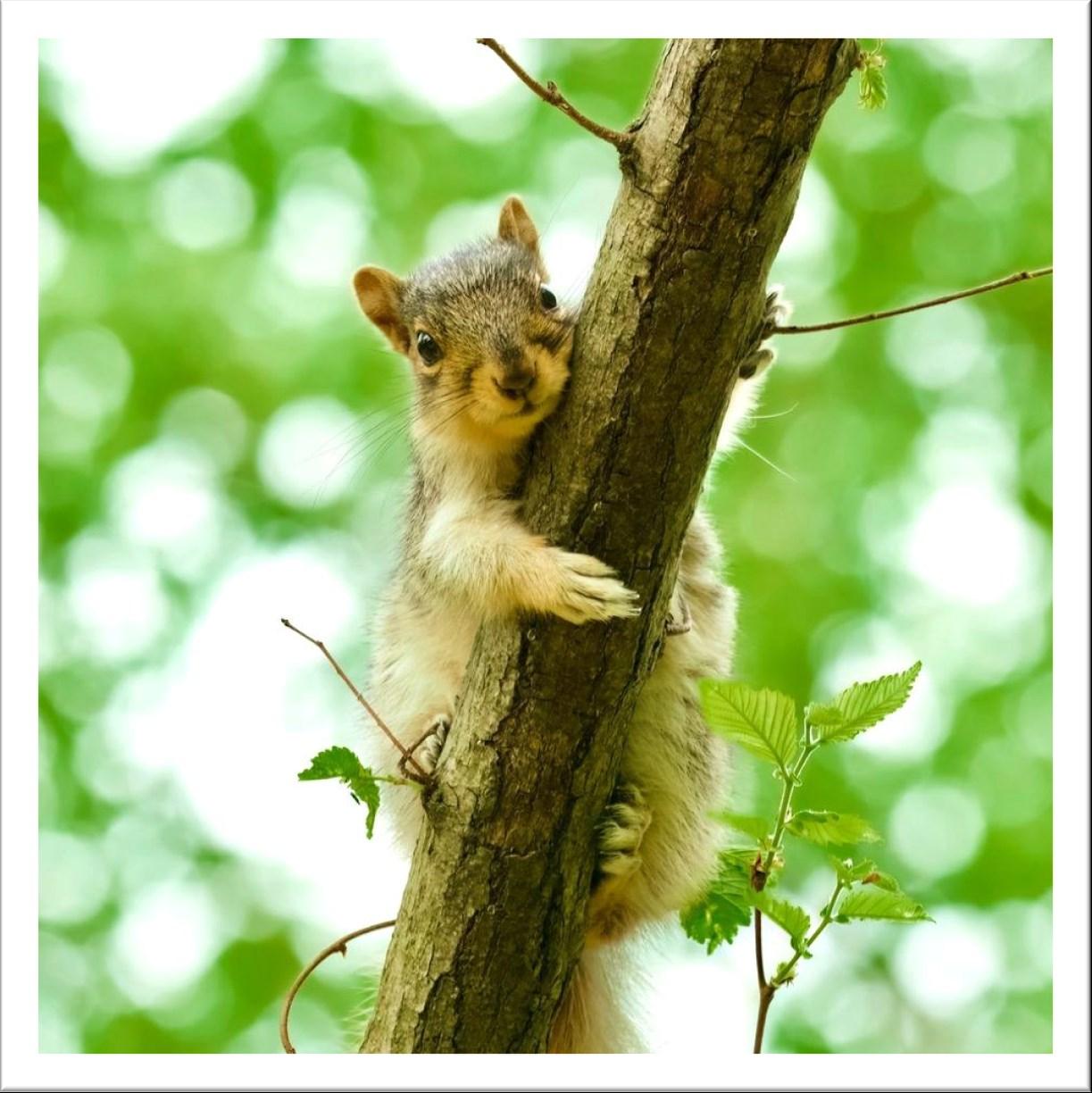
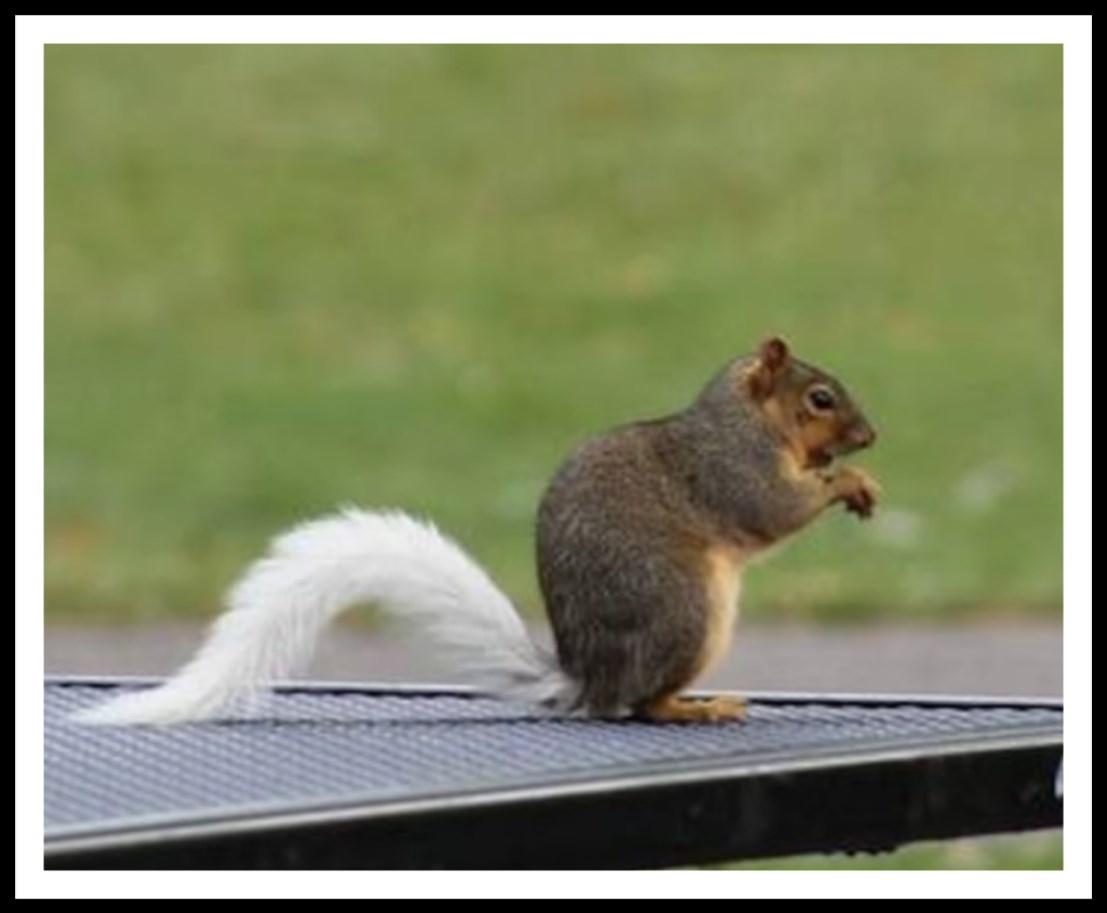
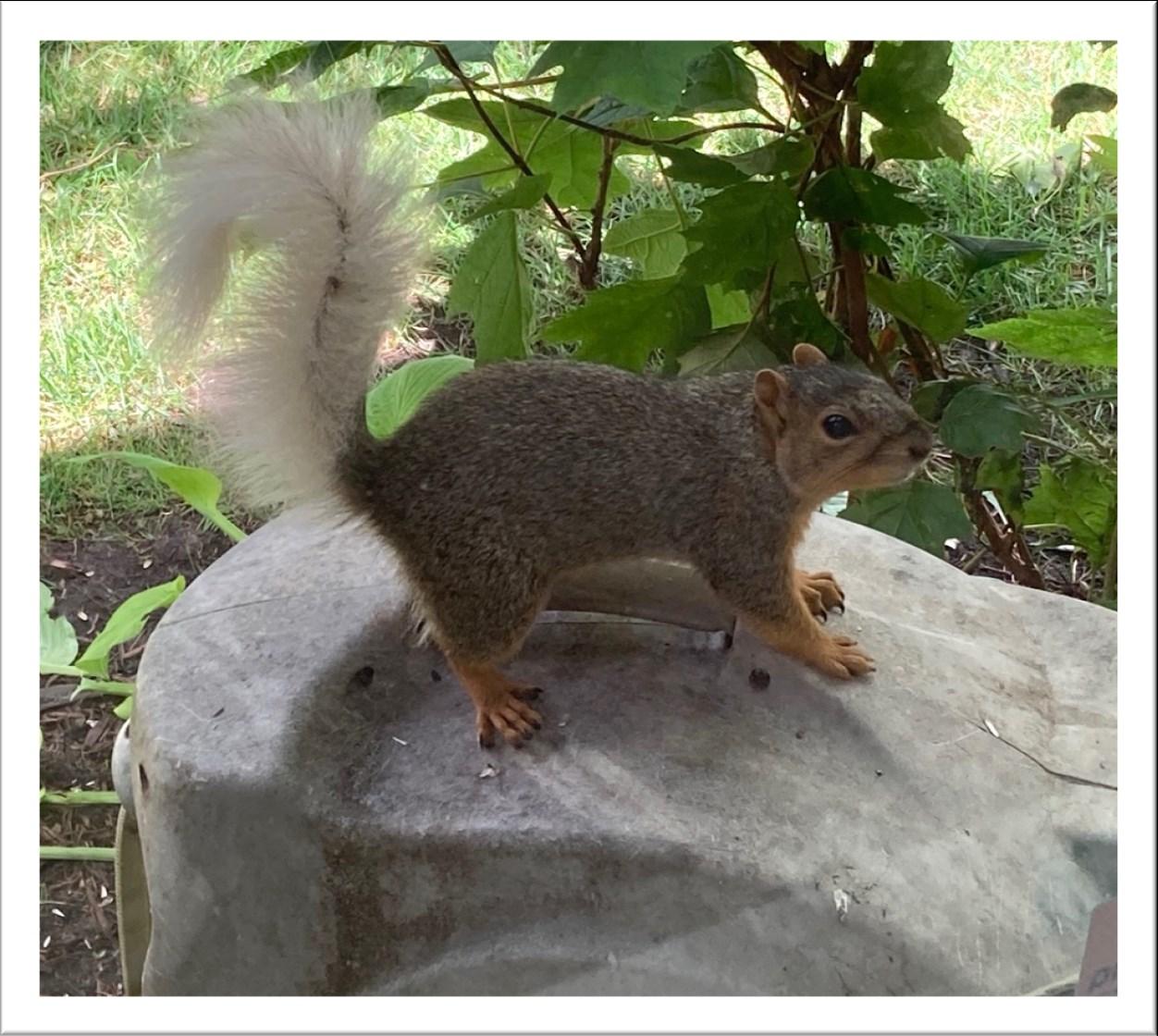
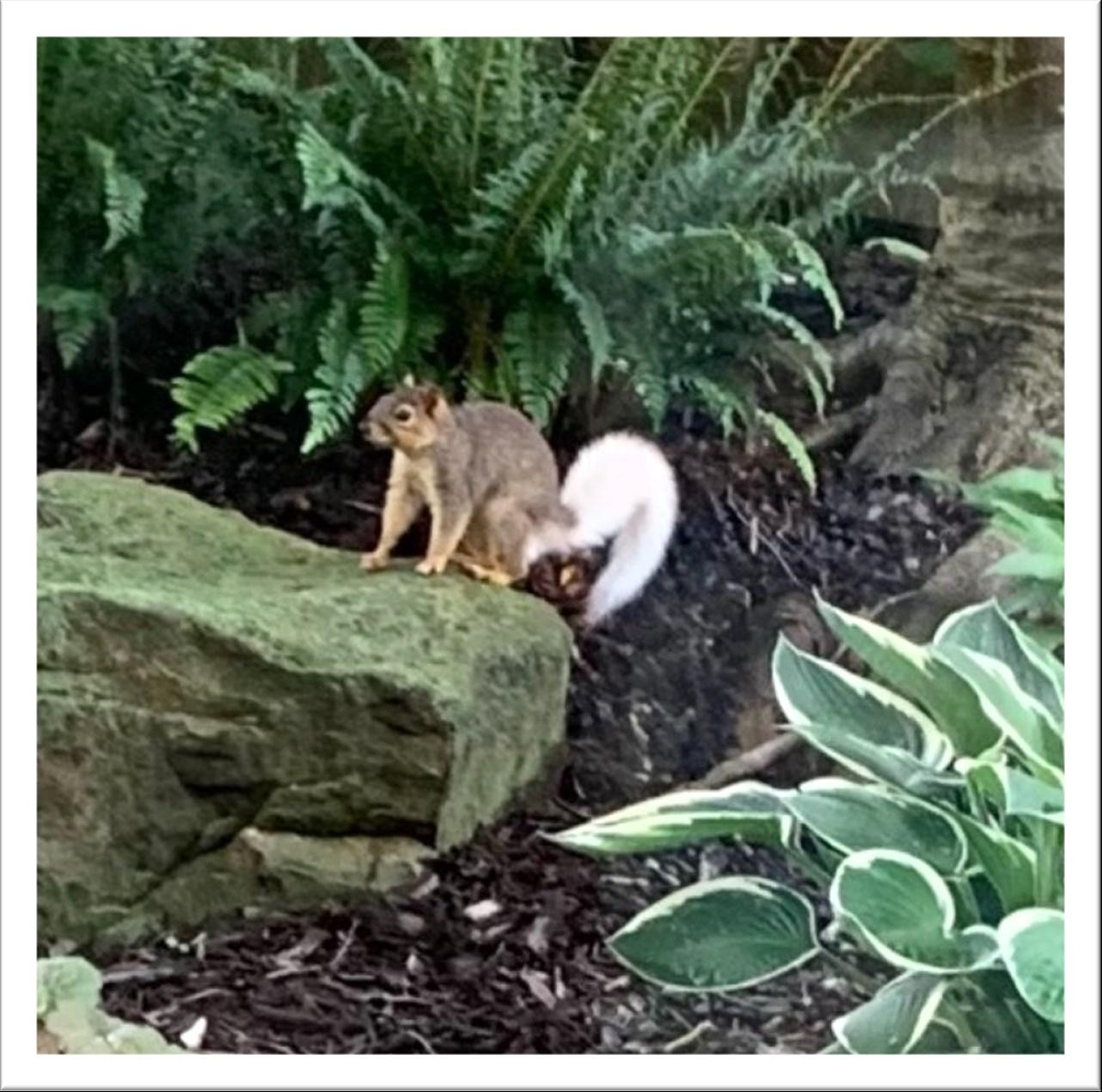
White-tailed squirrels are uncommon but can become common in some areas, and they can be found in Indiana. They are not albino squirrels, but rather a variaton of the gray squirrel that can result from a recessive trait in their genetc line. For a squirrel to inherit the white tail trait, both of its parents must have the genes for it. If the mother has a white tail, that characteristc is likely to be passed on to her ofspring. Because the trait is so uncommon, squirrels with white tails in a given area are probably related to each other
S i g Fl e
S i g Fl e
Ph b Pila M e a
Tama ack Na e P e e e
Se ing Tama ack Se en een and S ingmill Lake a Tama ack
Edi A g
Na e P e e e Vi i o and Calenda of E en
A g h E ic McD a d Di ic F e e I dia a DNR
A g ………………..Hi c e Ga de C b
A g a d 24………A a G f Ca T
Se e be h S cie f A e ica F e e Fa Mee g
Oc be h ……………….Da e L e T i f i e i g a d da ci g ea e
Will Webe B le Uni e i Bo ani log hi h ecie collec ed in o na e e e e The bea f A e ica g d f e h a e b i g a e i he b e f habi a i he a e e e e a e a i he ai ie e a d h f he habi a A e ica g d i a i e a d i g b c i bi g a g a he a a d i The a e i e ha f ea a e de g d a d he a e edib e a d i The ea e f A e ica g d a e he f d f he ca e i a f he Si e ed i e b e fie Q i e a fe f he e b e fie a e i b e f habi a The a i aga ed b hi e hich a e a edib e a d a a e a e i e ee a e Si e ed i e
Whi e Tail S i el S o ed in he
Neighbo hood
Righ Ph b Ma ha Ha e i he bac a d Be Ph b Be ie Pie ce h gh hi i che i d
A ian B h Hone ckle The a e e e e i c a i g e i g i a i e ecie O be e a f e c i he A ia B h H e c e We c e e d 1000’ f d a id he e e e f hi bad ac S e e e ha e he i c ce ha he e a e be ef h e c e We ca a e he e a e e He e i a a c e i e b Sa S a a f ee a ce a i i g f he J e edi f he I dia a i M h aga i e
A ian B h Hone ckle b Sam S all
Thi all-con e ing abomina on a ppo ed o p o ide co e fo ildlife i doe n ’ help con ol oil e o ion al o no and e e a a lo el o namen al plan fo a d and ga den Which i o of did Unfo na el i almo immedia el e caped ho e a d and ga den and ampled ac o he co n ide
Tho gh he mo in a i e hone ckle a ie e a e illegal o ell in Indiana he damage i al ead done No ada o can fnd hem p e m ch e e he e f om B oad Ripple alle o he da ke co ne of he Hoo ie Na onal Fo e The c o d o na e plan i h ome a ie e e en elea ing g o h inhibi ng chemical ha poi on he g o nd a o nd hem
A ian b h hone ckle g o o den el he hade o e e hing on he fo e foo ofen lea ing no hing b ba e oil acco ding o he In a i e Plan Specie A e men Wo king G o p Un p i ingl con e a on folk o ld like o o e mina e an pecimen of hi loa h ome in e lope o migh fnd on o p ope
S o ed joe - e eed
I eed
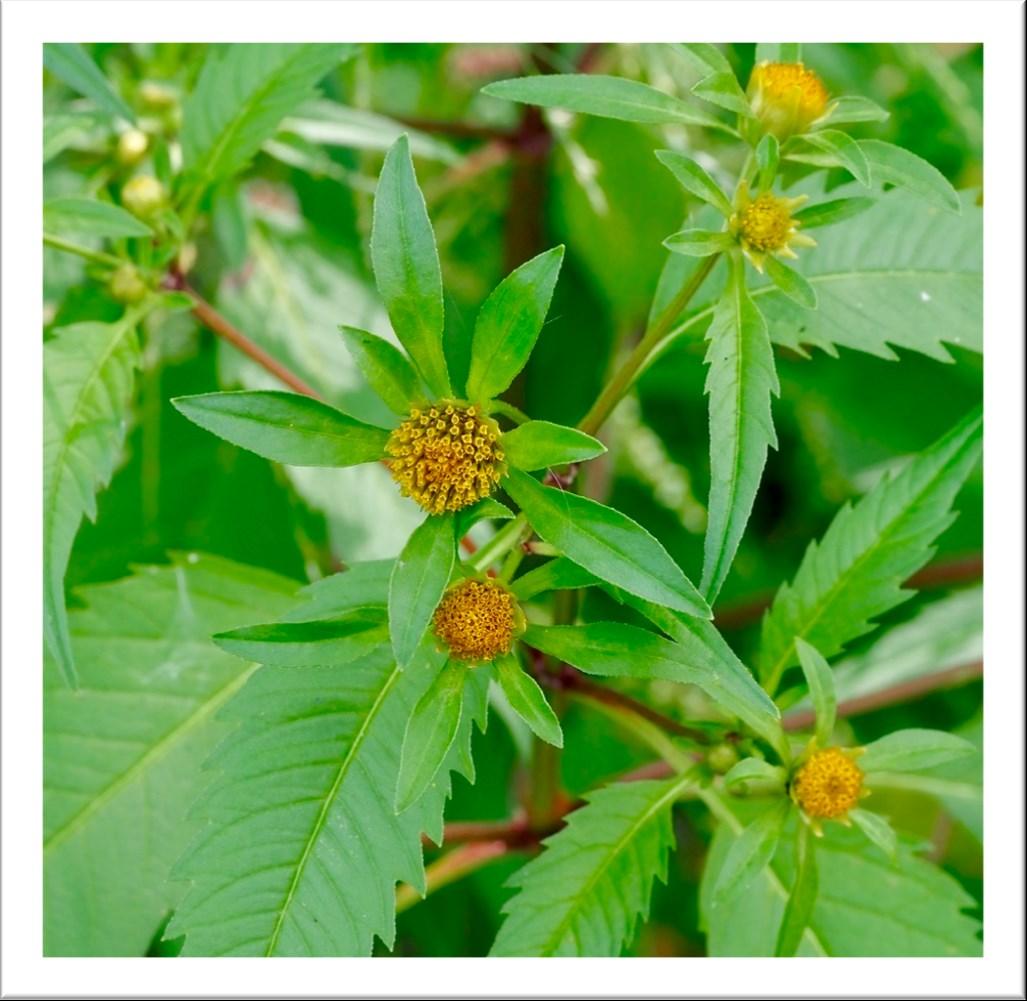
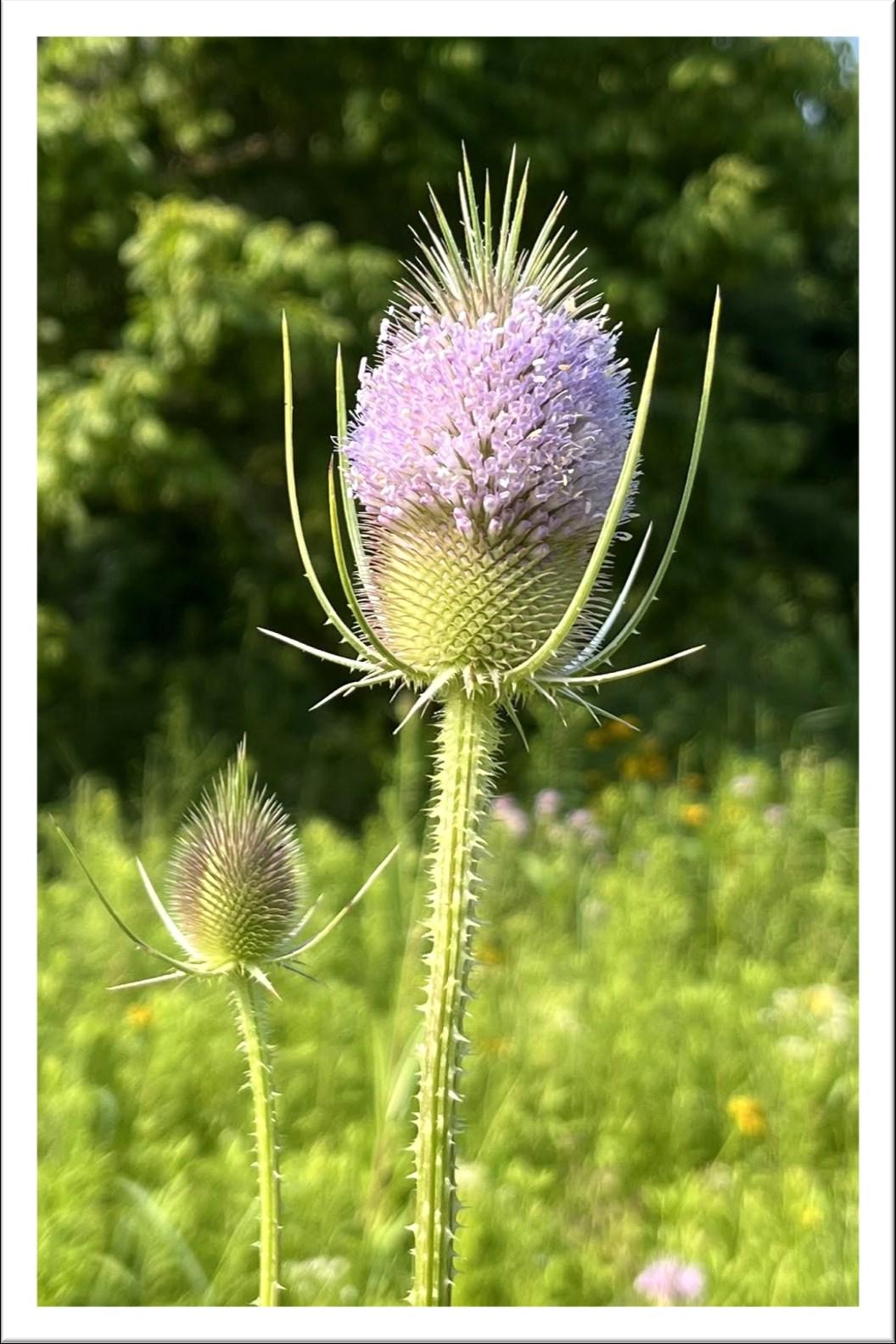
Wild Tea el
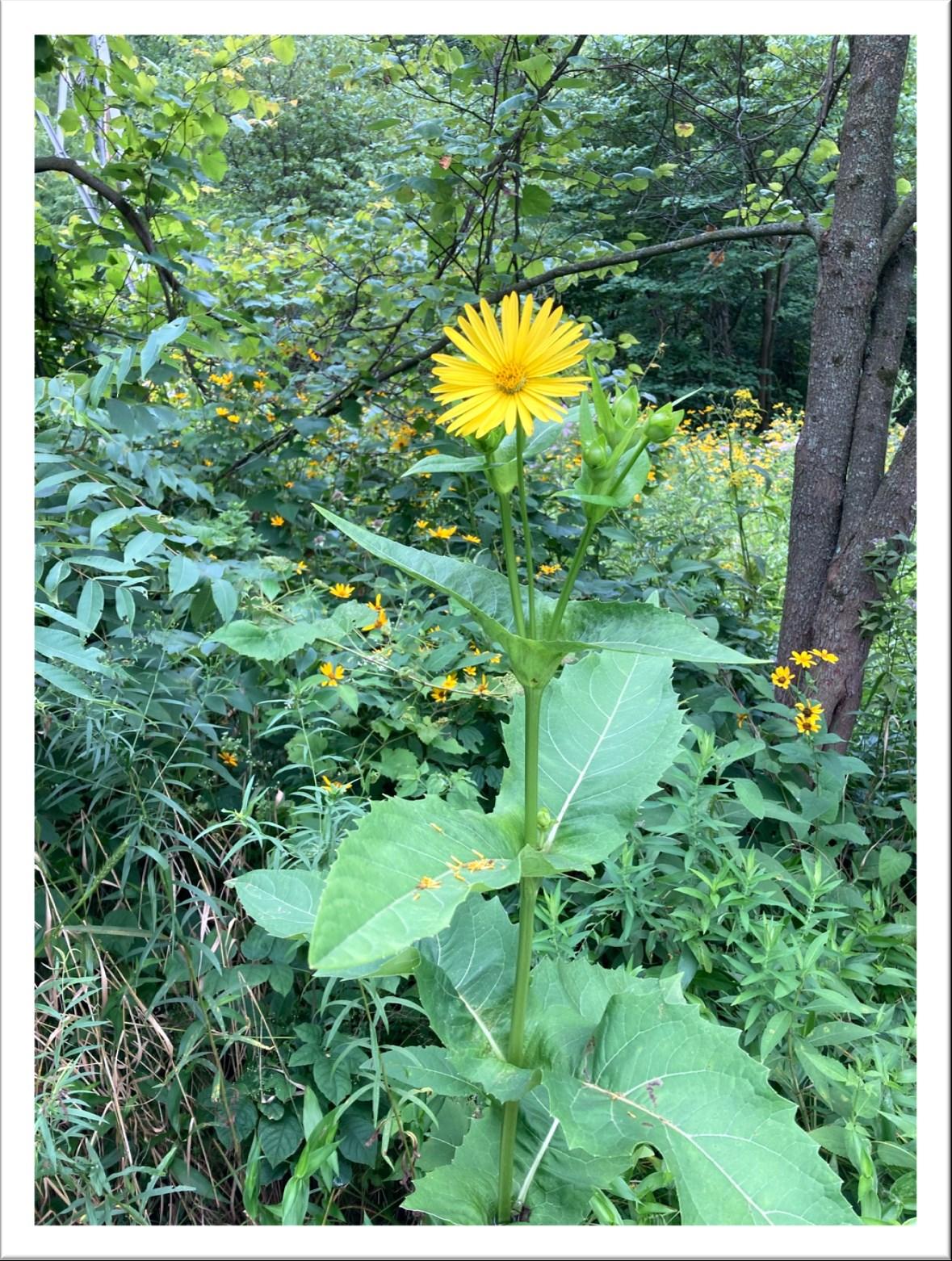
Wild S nfo e
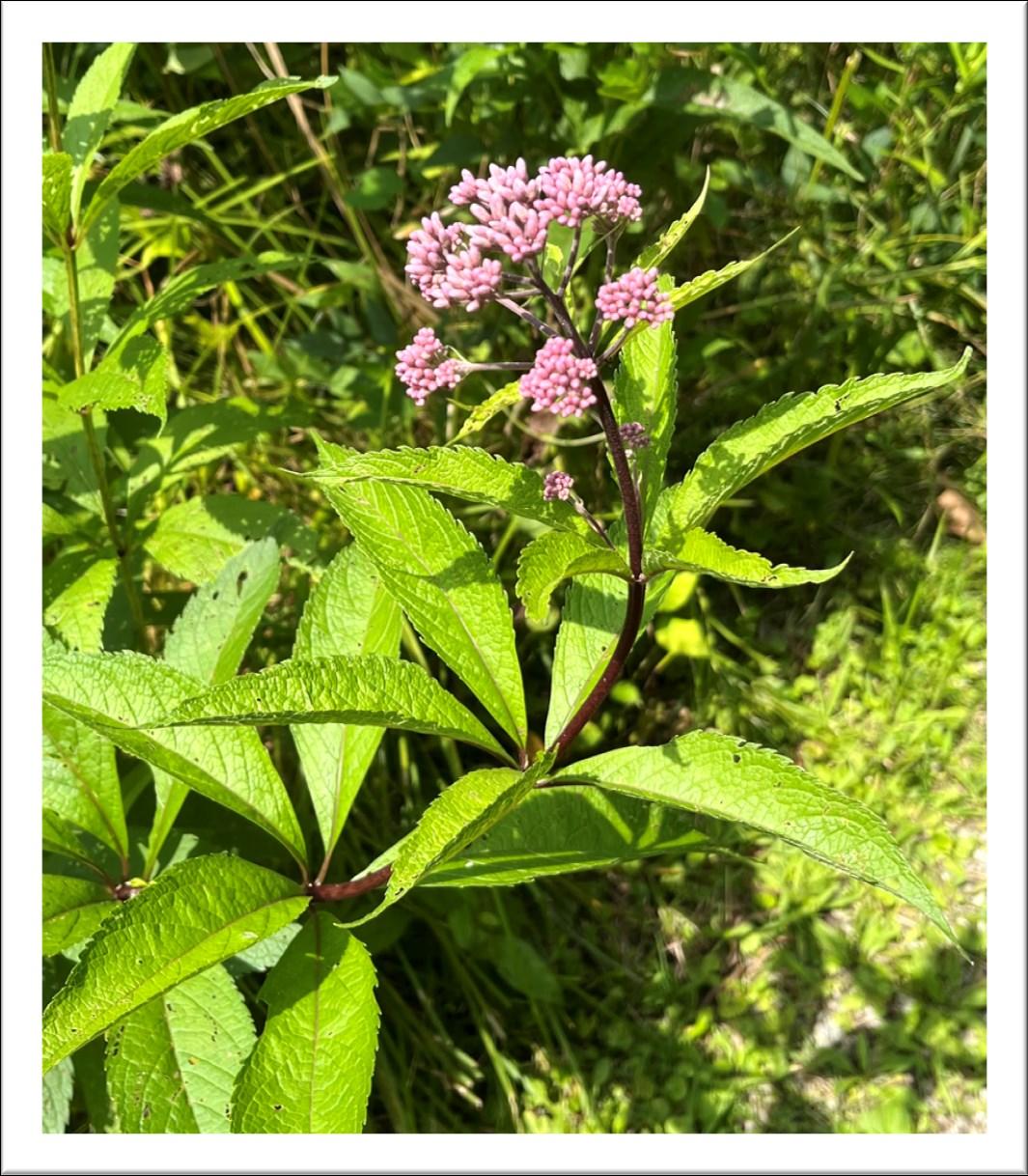
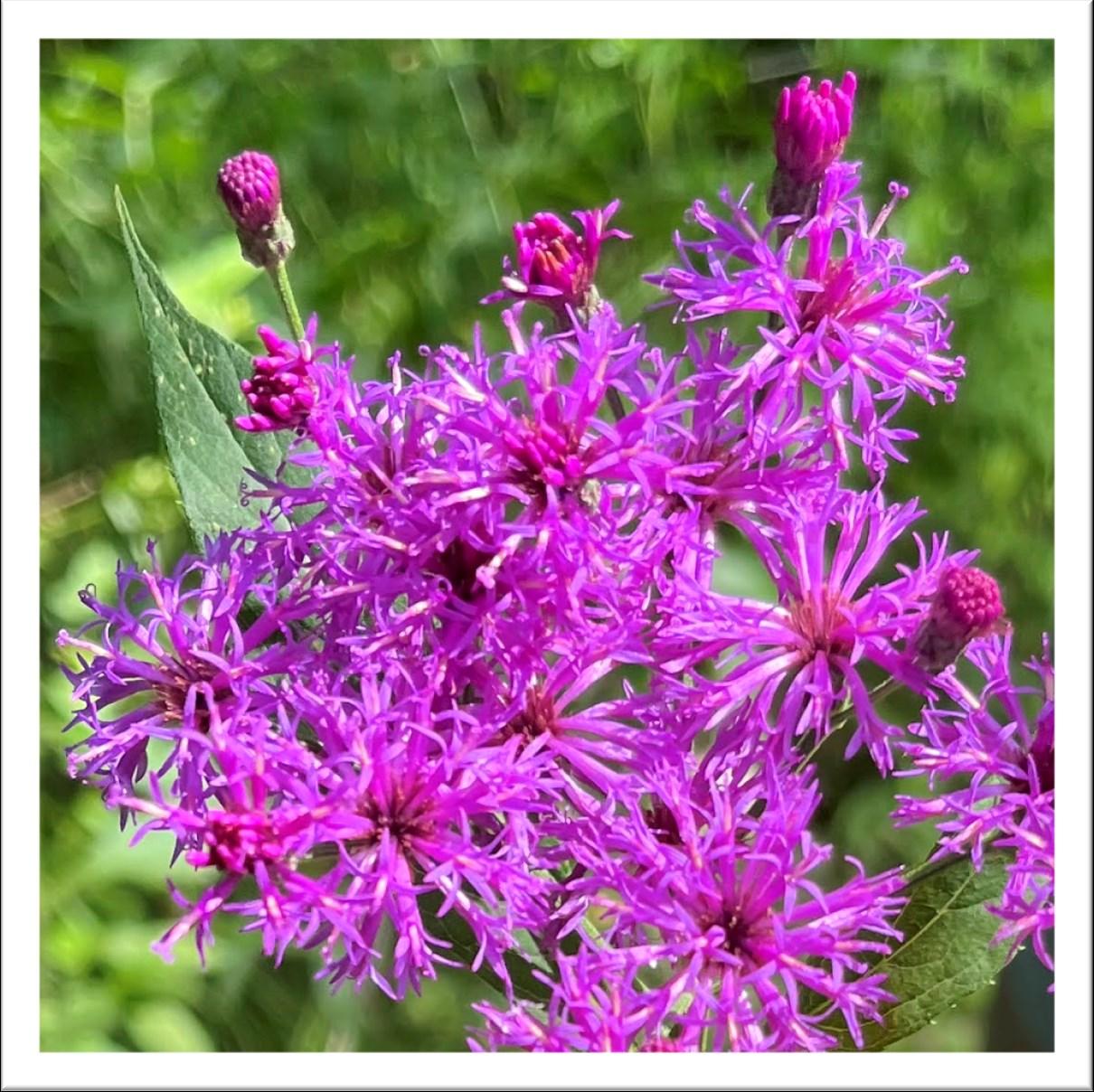
Flo e fo nd in he b e f habi a
Tamarack Nature Preserve
Serving Tamarack
Seventeen and Springmill Lakes at Tamarack
42nd Edition, September 3, 2024
August 20: Over 20 Hillcrest Garden Club members toured our nature preserve. Special emphasis was placed on touring the butterfly habitat. Greg Harker and Betty Yan lead the tour, explaining the many plant species in the area.
Hillcrest Garden Club History
Established in the early 1960 s. Current membership is 35 fun loving gals. Monthly meetings are held at the Hillcrest Country Club except for Jan, Feb and Mar. Hillcrest takes about 4-5 tours a year. Most are good .Tamarack was Great!! If there is no field trip scheduled, the club has a short meeting at Hillcrest, followed by a speaker. Donna Bonifield, who lives in Springmill Lakes at Tamarack, is a member. The club invites anyone interested to please contact Kathy White, kbwhite@comcast.net 317-281-7381
Hillcrest Garden Club
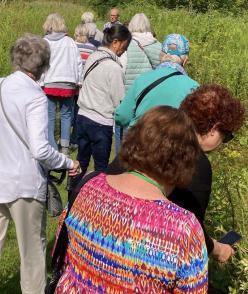
August 23 and 24: 26 neighbors and friends enjoyed the Annual Golf Cart Tour. This year, special emphasis was placed on the butterfly habitat. Thanks to everyone who participated in this year s nature preserve tour.
Annual Golf Cart Tour
More Golf Cart Tour Photos
Tamarack Nature Preserve set to host biannual Indiana Society of American Foresters field tour
August 19: Eric McDonald visited the nature preserve in preparation for a field tour scheduled on September 13th.
The Indiana Society of American Foresters holds biannual meetings to support their mission of advancing the science, education, technology, and practice of forestry. This year s fall meeting will take place at Fort Harrison Inn culminating with a tour of the Tamarack Nature Preserve. In addition, the Society brings in professionals from the surrounding area to speak about new research, technology, and techniques relevant to forest management. Each meeting also provides opportunities for networking with forestry professionals across Indiana.
The below link will take you to our community website and to the nature preserve page. The link has all the photo guides for our preserve. All the photos were taken in our preserve by Pilar Morera and identified by Betty Yan. The guidebooks are updated regularly.
L-R: Eric McDonald, District Forester Indiana Department of Natural Resources, Division of Forestry, Bernie Pierce, nature preserve board member
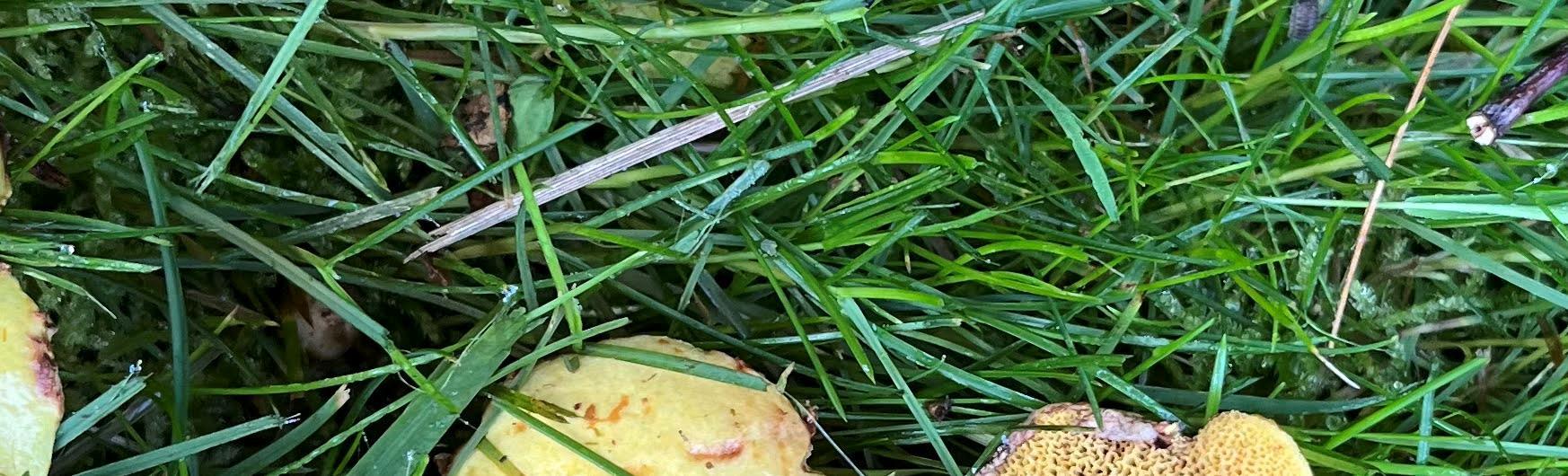
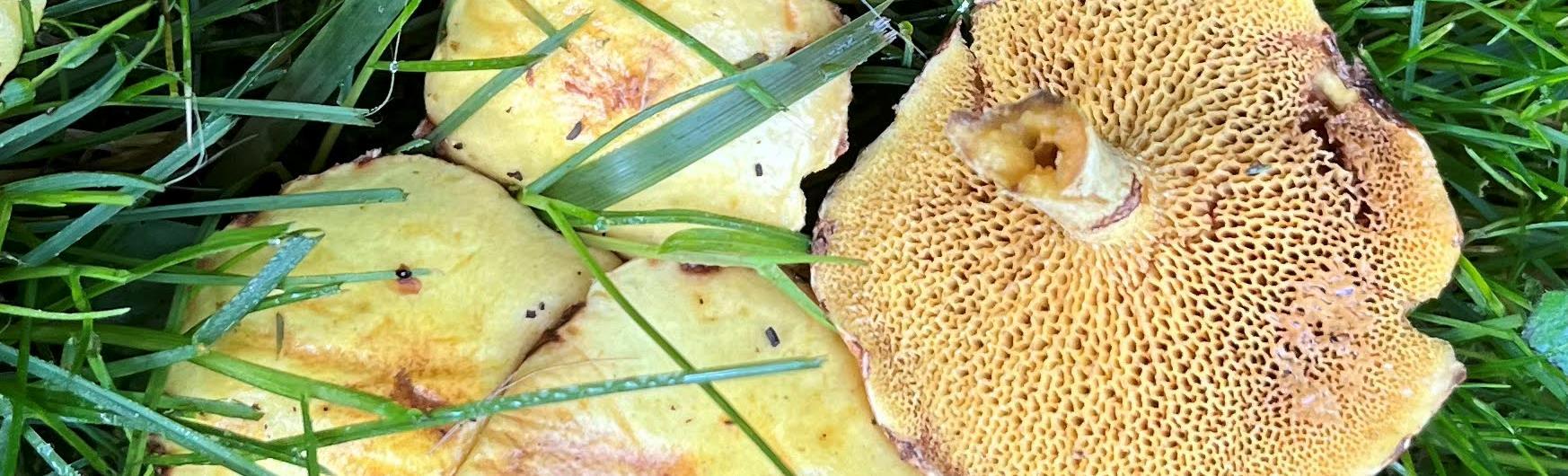
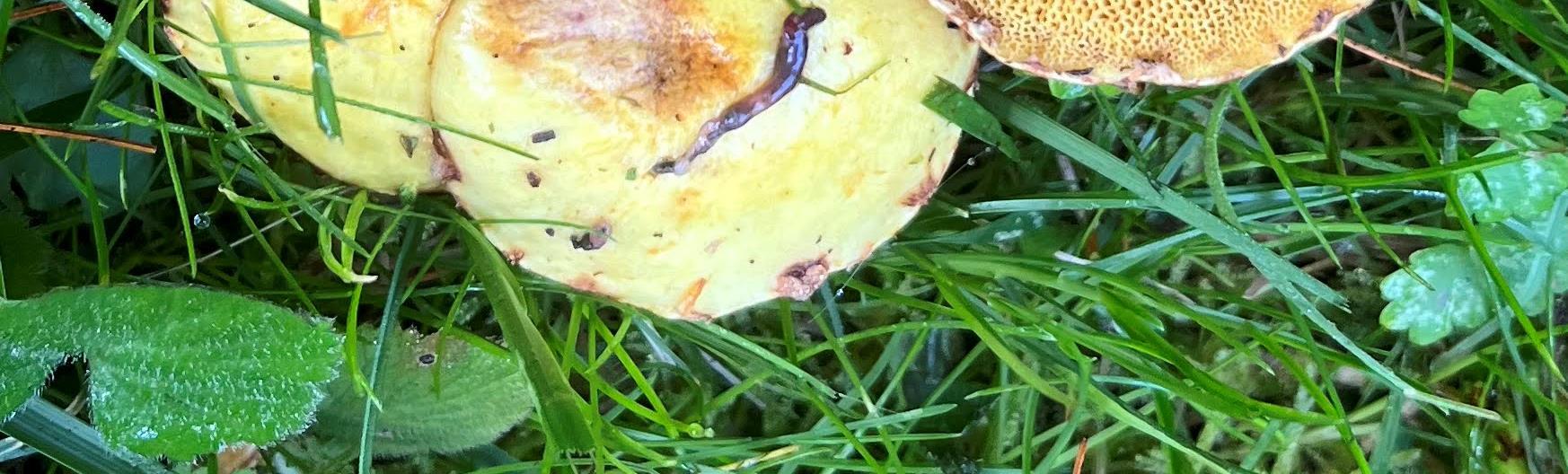
Chicken fat mushrooms (Suillus americanus)
Below is a photo of Chicken fat mushrooms (Suillus americanus) that was recently found in our nature preserve. The topside of the mushroom looks like chicken fat. The underside of this mushroom has "pocketlike" structures, unlike that of other typical mushrooms with gill- like structures. This mushroom only comes up close by or under an Eastern white pine tree. That is exactly where we found these mushrooms. There are about a couple dozen of them
Be on the lookout for the Spotted Lanternfly
Bob Bruner, Purdue s Invasive bug specialist alerts us to the Spotted Lanternfly now being found in Indiana. It was first discovered in Pennsylvania several years ago and is thought to have arrived on container ships from Asia. The host plants are Tree of Heaven (a terrible invasive plant), grapes (wine production), black oak and maple trees. Here is a link to learn more
SAVE THE DATE: Dave Lowe will entertain Sunday, October 6, 4pm
Tamarack Na re Pre er e
Ser ing Tamarack Se en een and Springmill Lake a Tamarack rd Editon, September ,
Indiana Socie of American Fore er
Indiana Socie of American Fore er
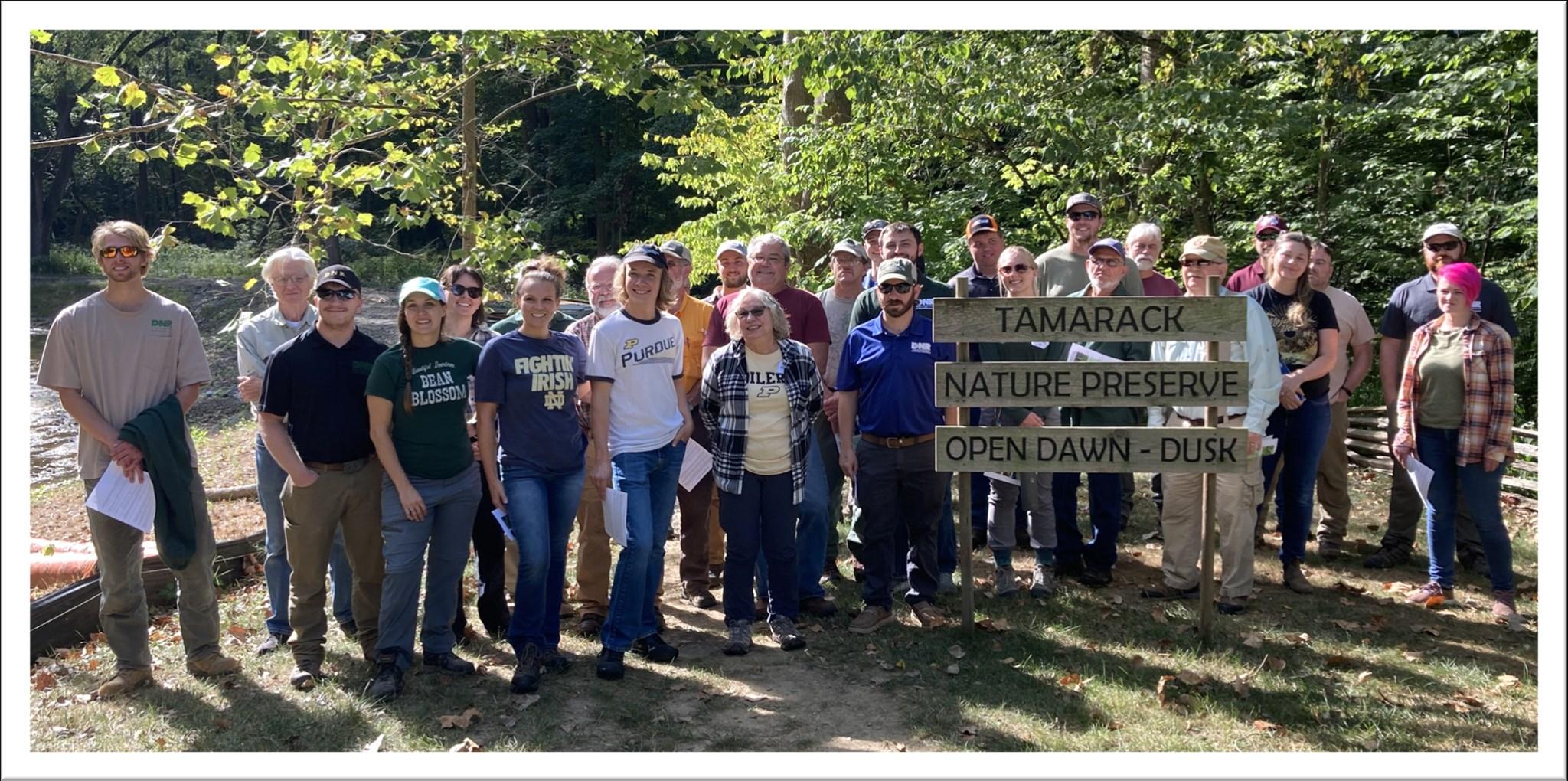
The Indiana Society of American Foresters holds biannual meetngs to support their mission of advancing the science, educaton, technology, and practce of forestry. On Friday, September th, over DNR and USDA foresters toured the nature preserve The foresters were divided into three groups, led by board members, Greg Harker, Bety Yan and Bernie Pierce. The tour was a very enlightening experience for Greg, Bety and Bernie. As you can imagine, walking along with experts in their feld and listening to their comments on everything from grasses, trees, vines, fungi invasive and non-invasive- you name it! To say the least, we learned a lot about our nature preserve.
Overall, we have received high marks for managing invasive species with our primary focus on honeysuckle. Additonal species were identfed with recommendatons on how to eliminate them number one being honeysuckle
We wish to thank Eric McDonald, District Forester, Indiana Department of Natural Resources, Division of Forestry for organizing the tour. We met a lot of dedicated foresters, who work statewide to improve our Indiana
Tamarack Na re Pre er e Hi or
In the early s, the nature preserve, and surrounding areas were the out of town summer home of the Alexander Taggart family, who owned the Indianapolis Taggart Bakery and introduced Wonder Bread in . In the late s the condominiums of Springmill Lakes at Tamarack (aka SPLAT and homes of Tamarack were being developed and around the same tme the nature preserve was created from acres of foodplain along Williams Creek, under the Indiana Non-Proft Act. The ofcial name for the nature preserve is Tamarack Recreatonal Corporaton.
Eventually, the -acre property received Classifed Forest and Wildlands certfcaton from the Indiana DNR. To maintain certfcaton, the DNR inspects the preserve every - years. The most recent inspecton was successfully completed in . Tamarack Nature Preserve is a private nature preserve for the enjoyment of the condominiums and homeowners along Tamarack Drive, who pay a small monthly fee to the Tamarack Recreatonal Corporaton.
There are three distnct areas in the nature preserve, a forest, a meadow, and a seep, or wetland area. Having three diferent types of areas, the diversity of plants in this small nature preserve is greater than one might expect. Residents have identfed hundreds of plants, insects, buterfies, birds, and animals and documented them in photo albums available for viewing on the SPLAT website.
Visits by DNR personnel, including the DNR s head botanist, Purdue University, USDA and others have resulted in a list of approximately diferent plants found in the nature preserve.
Annual events in the nature preserve include a Spring Wildfower Walk, a garlic mustard pull to atempt to control this invasive plant, and a golf cart tour of the preserve for residents who are unable to walk the trails. The nature preserve has also organized concerts in the past few years, at the grassy area near the preserve entrance. These have been fnanced by passing the hat and/or by donatons from generous residents.
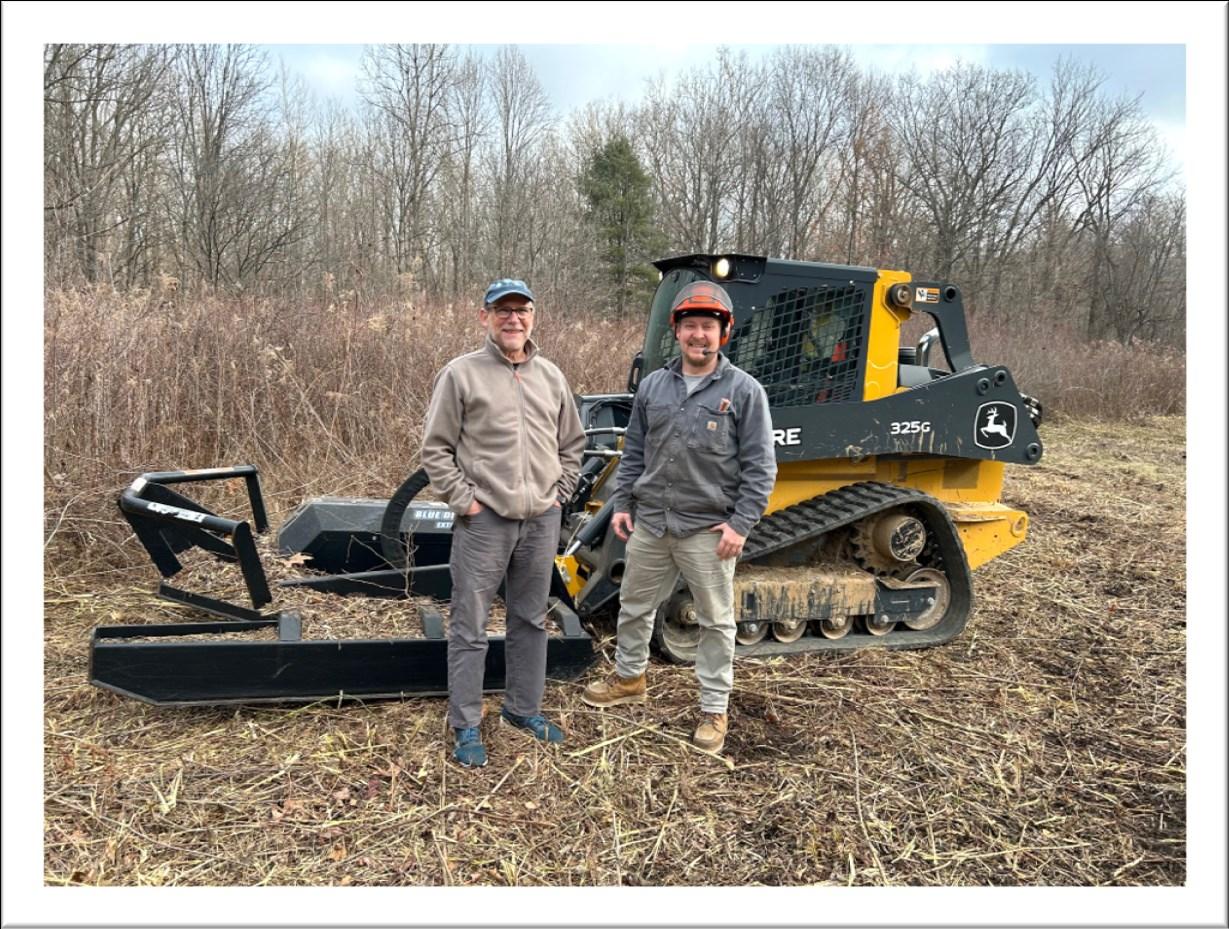
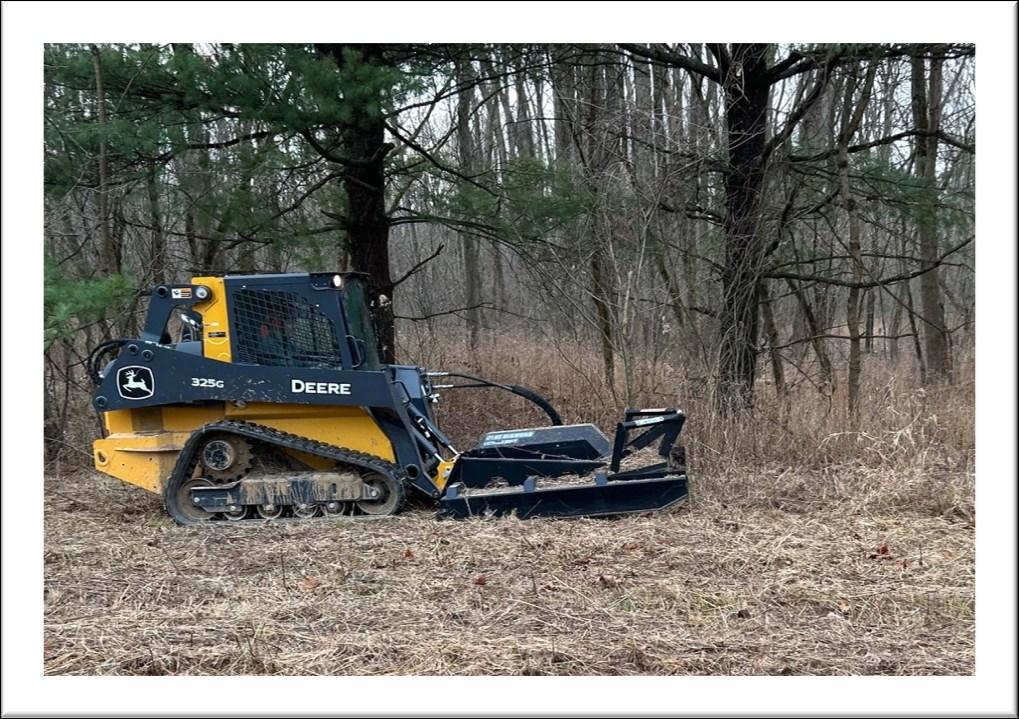
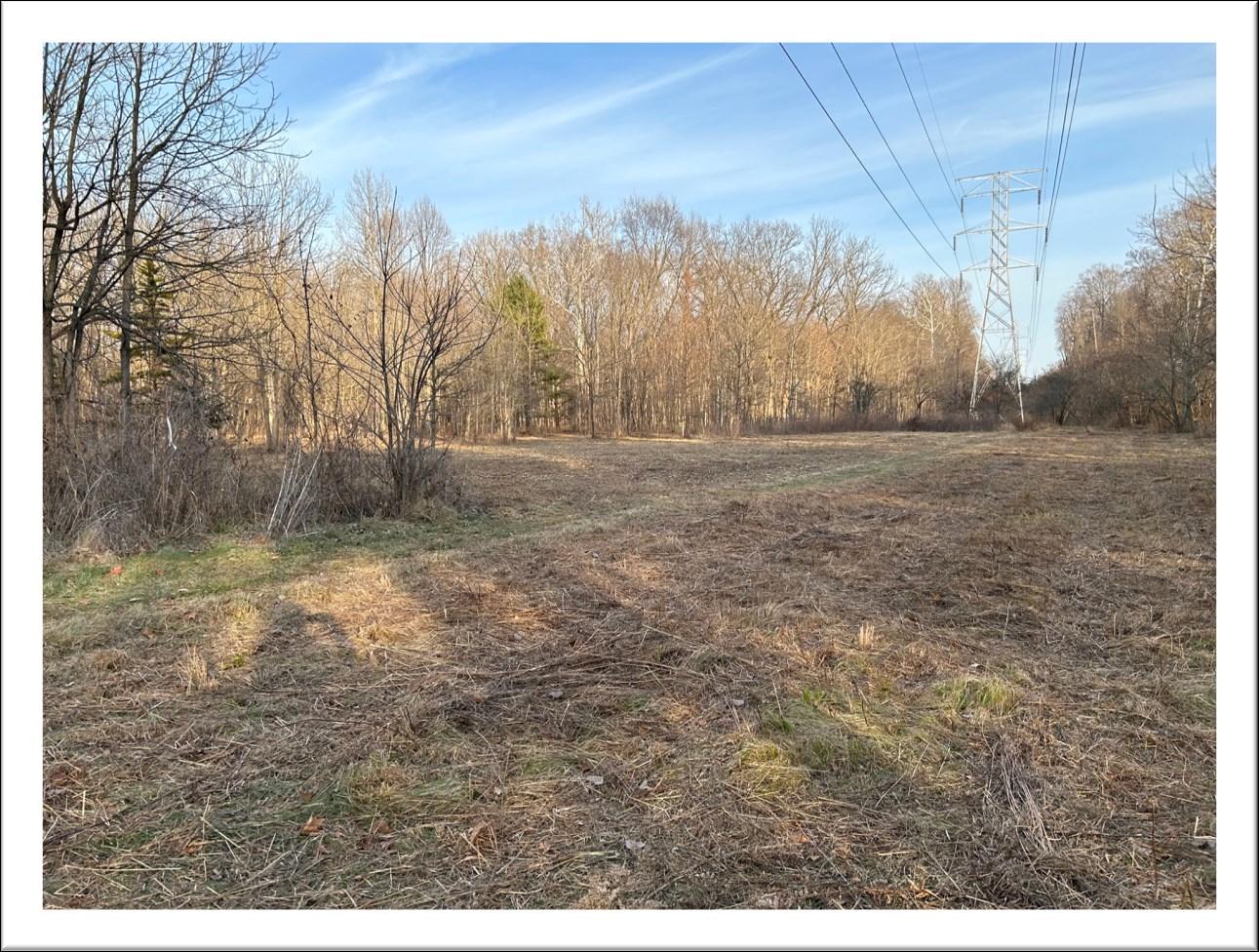
- A major honeysuckle removal project was begun, using a Fecon in the eastern wooded secton of the nature preserve. Follow-up cutng and spraying of resprouts is done periodically to control this invasive plant.
- The frst annual New Year s Day hike was organized and is now enjoyed every year by residents.
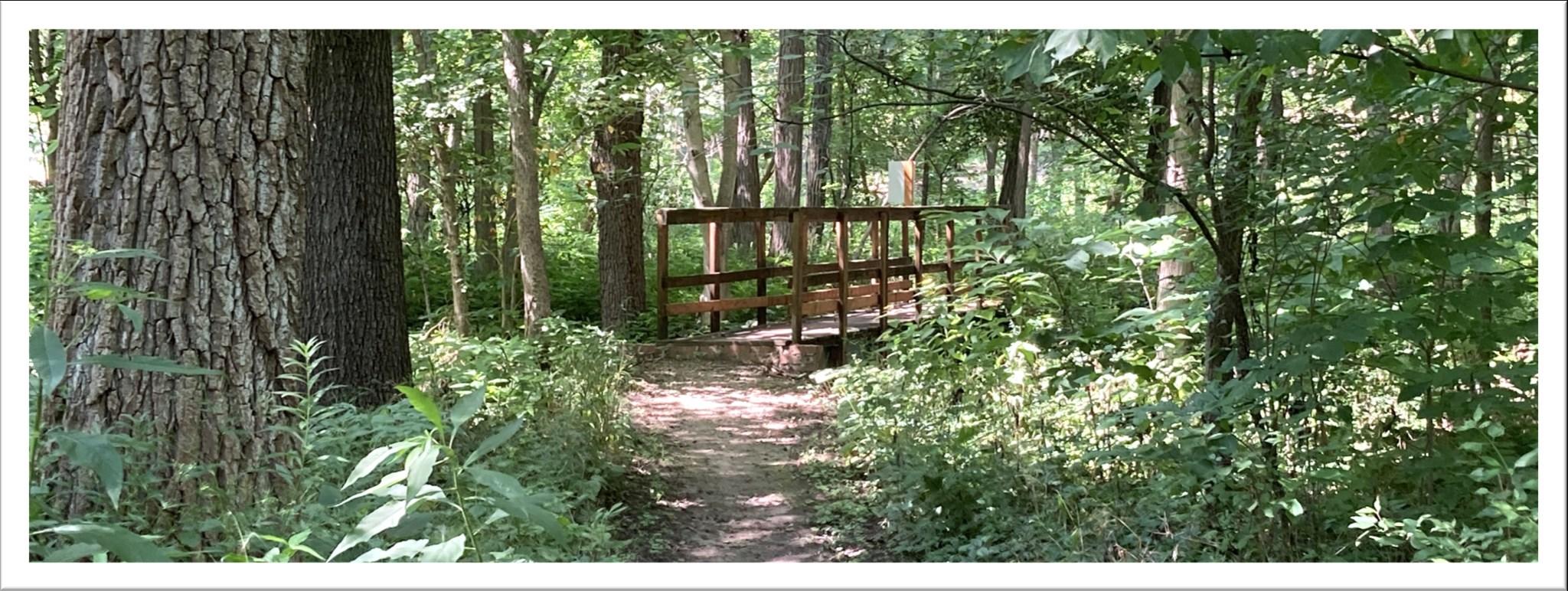
- A boardwalk was installed at the entrance to make the nature preserve more consistently accessible, especially afer heavy rains.
- A buterfy/pollinator habitat area of just under acre was planted for the enjoyment of residents and pollinators.
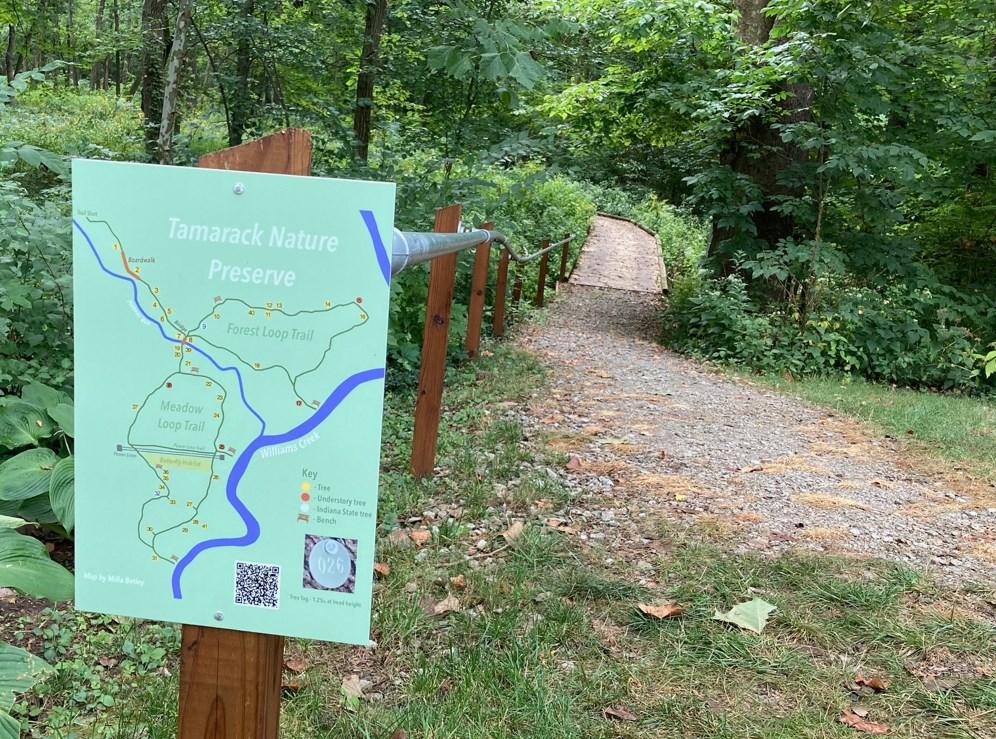
- A trail map was developed for the preserve, notng the locaton of approximately diferent tree species adjacent to the . miles of trails. This map was posted at the entrance and at the bridge and contains a QR code which will link users to the map and the tree listng, for the purpose of self-guided tree observaton.
- A total of residents, neighbors, and friends atended the April Total Eclipse Party in the nature preserve.
Use of the nature preserve by residents has contnued to increase the past few years. The boardwalk installaton was tmely, it was constructed just before the Covid Pandemic, when people were looking for nearby outdoor recreaton. Interest in the preserve has also increased since the installaton of the buterfy habitat and due to the nature preserve newsleter which lets residents know of actvites and events.
Writen by Greg Harker/Bernie Pierce - September
Sa e he Da e Sunday, Oct th, : pm Da e Lo e a he piano Bring your dancing shoes!
B ler Uni er i Frie ner Herbari m To r and Pre en a on on Tamarack Na re Pre er e Re earch Projec
Due to limited space, the Herbarium can only accommodate people. If you are interested in atending, contact Greg Harker at gharker aol.com or call - - . The frst callers will be scheduled for the event. Due to limited parking, we will car pool to the Butler campus.
S mmar of he projec cond c ed b Will Weber B ler Uni er i bo an re earcher
Hello everyone, I’m sure many of you have seen me outside conductng research at your preserve throughout the spring and summer months. With the help of members from your community I have worked to understand the diversity and abundance of the fora in Tamarack Preserve. I have collected over plant specimens between the months of March-August consistng of a variety of wildfowers and tree species including natve and invasive species prevalent in Indiana. My collecton will join over , herbarium specimens currently housed in the Friesner Herbarium at Butler. These plants are used to identfy historical distributons, habitats, fower tming and fruit producton focusing mainly on specimens collected in Indiana. For more informaton and resources about Friesner Herbarium you can visit our website. htps:// herbarium.butler.edu/
My project will look at the locality and seasonality data taken from each specimen collecton and compare it to other residental parks in Marion County studied in previous years. I hope to compare the diferent habitat types within the preserve, analyzing how species may vary from a more forested area to an open, prairie like environment. Seasonality and blooming tme can also be compared as much older studies could show changes in the diversity of the plants blooming at diferent tmes of the year. This research is important in understanding the botanical diversity in the Indianapolis area and how parks and preserves like yours support thriving ecosystems benefcial to the community. I am excited to share my fndings and look forward to having you all at Butler.
Tamarack Nature Preser e
Ser ing Tamarack Se enteen and Springmill Lakes at Tamarack th Editon Januar
th Annual Walk in the Woods
Januar
Act ites Report
Income E penses
HOA fee M i g
D a E e
G a Mai e a ce I a ce
Man isitors and e ents lled
h A a Wa i he W d
Re ea che Wi Webe a B e U i e i bi gi f d e ecie f ca a
S i g F e T
A a ee da e e ga ic a d
S a ah Hi d a d Li d e D a d USDA
Sc Na e i DNR S a e B a i c i ed a i e i f a f a e e e e
S e ha ie Pai e C i Ce a I dia a La d T
Ec i e Pa
Wh bi ad ica e e ai e
Hi c e Ga de C b
S cie f A e ica F e e Fa Mee g
A a G f Ca T
B e U i e i Fie d Bi g C a
Da e L e T i ica e e ai e
Thi ea e ed he h ead Thi ide e i e f a e a g We a c d a f h e c e i g ee O ge - e a i b ai a g a f d a a ef ed ce he h e c e a Addi a i a i e a e e ea ed Ja a e e g a e e ce a di e a d b i g b h a e a fe We a ied f a USDA g a b e e cce f We a e h ef ha e i be a a ded a g a i
Plans
P a i c e dea i h i a i e a We i e b i f a USDA g a If a a ded e i e e f he f d f c ed i a i e a e adica We i c e eg a e e a i he a he f c e ed Ja a h A a Wa i he W d
Winter Scenes Januar
e eighb
i h familia Ame ica
ided c mme
a ce ai l a ecial
Con e a ion effo of o Tama ack Na e P e e e
B Bett Yan
One of the responsibilities of o r Tamarack Nat re Preser e is to control in asi e plant species to allo the flo rish of Indiana nati e plants. This in ol ed significant efforts from ol nteers in o r neighborhood and from contractors (please see 12th edition of Nat re preser e ne sletter, Jan 13 th 2022). There as the ann al p lling of garlic m stards b ol nteers. The c t back of the in asi e hone s ckles that form dense stands that aggressi el o tcompete nati e plants for access to s nlight, ater and n trients. Hone s ckles also prod ce to ic chemicals that pre ent other plants from gro ing there. Oriental bitters eet is another aggressi e in asi e plant that gro s into large patches and can completel co er e isting egetation and displace nati e plants. As it climbs a tree, oriental bitters eet inds aro nd and chokes the tree, e ent all killing it or ca sing breakage from the eight of the ines. Controlling this plant is going to be a ne ndertaking. .
I he e a a e can mea e o effo in e e ing o na e e e e?
Ye !
The e i a ali a i e ob e a ion from o r neighbors that alk thro gh o r nat re preser e before and after the c tback of the hone s ckles. The are able to see m ch better/farther here the massi e hones ckles sed to block their ie . There is also a m ch ider spreading of o r nati e ild flo ers s ch as the Virginia bl ebells in the spring.
Then in 2024, he e e e o cien ific, an i a i e die of the nati eness of o r nat re preser e. These st dies ser e as a point -in-time (baseline) record of the stat s of o r con ersation efforts to date. Similar st dies e er fe ears can help s assess o r contin o s efforts.
The first st d as cond cted b Will Weber, a B tler Uni ersit st dent and as described in the pre io s nat re preser e ne sletter (47th edition, Ma 12, 2025). Briefl , Will collected 97 ecie of plants from o r preser e and calc lated a mean C al e (Coefficient of Conser atism) of 4.2 and an FQI al e (Floristic Q alit Inde ) of 37.5 for o r preser e. These al es are comparable to those of an Indianapolis cit park (J an Solomon park) and t o Indiana parks (Hanging Rock National Nat re Landmark, and Fern Station Nat re Preser e). In general, a mean C al e greater than 4 (o r preser e) along ith an FQI al e great than 50 o ld s ggest that the site is of high q alit and has a good degree of nati eness.
The second assessment st d of o r nat re preser e as done b Scott Namestnik, a botanist at the Indiana Department of Nat ral Reso rces, di ision of nat re preser es. This st d incl ded 305 ecie of plants in o r preser e and the f ll report is posted in o r nat re preser e ebsite ( https://iss .com/ splatnat represer e/docs/tamarack_plant_in entor _6ma 2024_9.55.05_am).
78% of the plants in o r preser e are Indiana nati es and 87% of the plants are perennials. In the f ll report from Scott, the C al e as pro ided for e er plant as ell as their W al e. A negati e W al e indicates that the plant has a strong affinit for etland/seep area conditions. Scott pro ided a mean C al e of 3.7 and a FQI al e of 57.1 for o r nat re preser e. Both al es indicate that o r preser e, as of 2024, is of high q alit and has a good degree of nati eness.
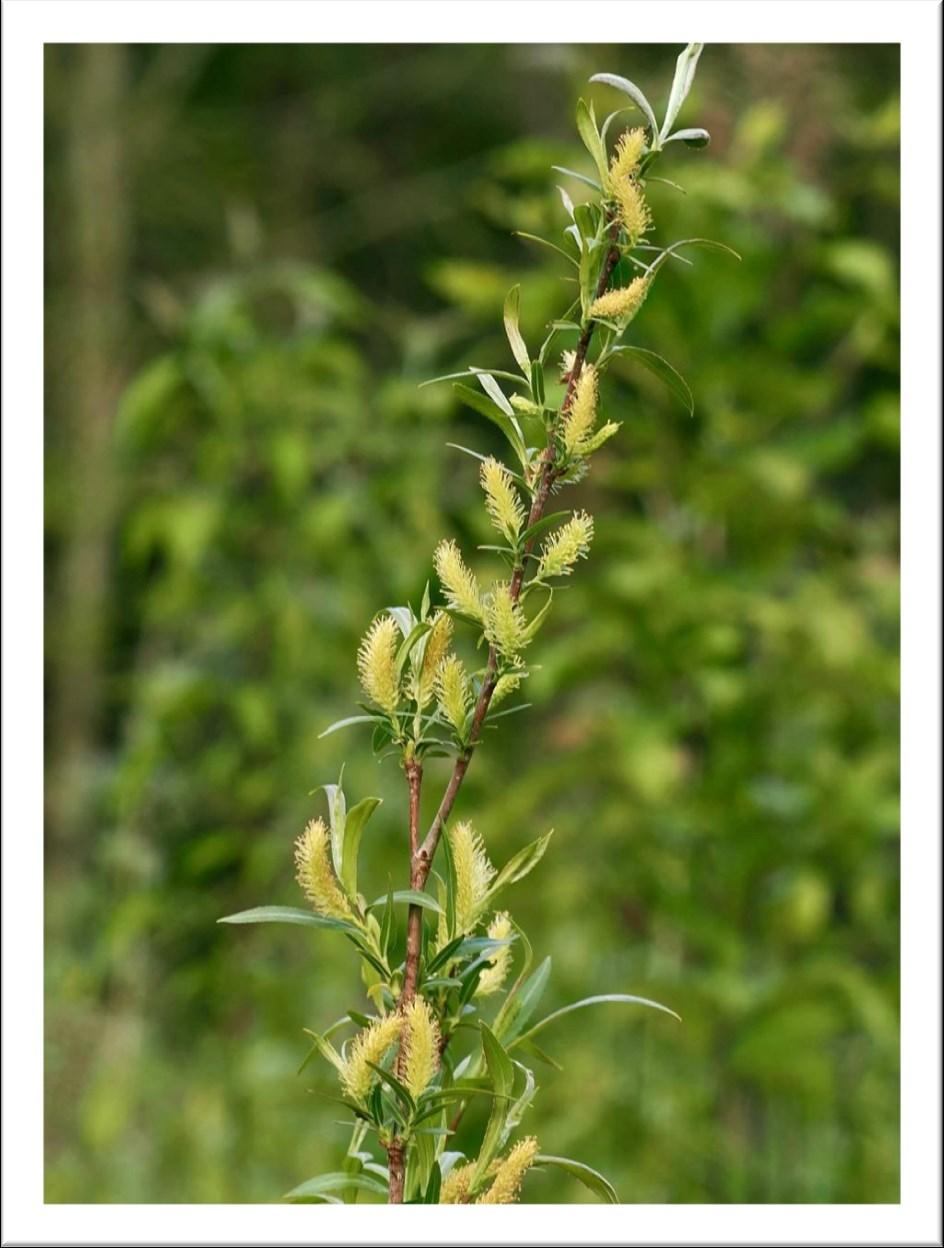
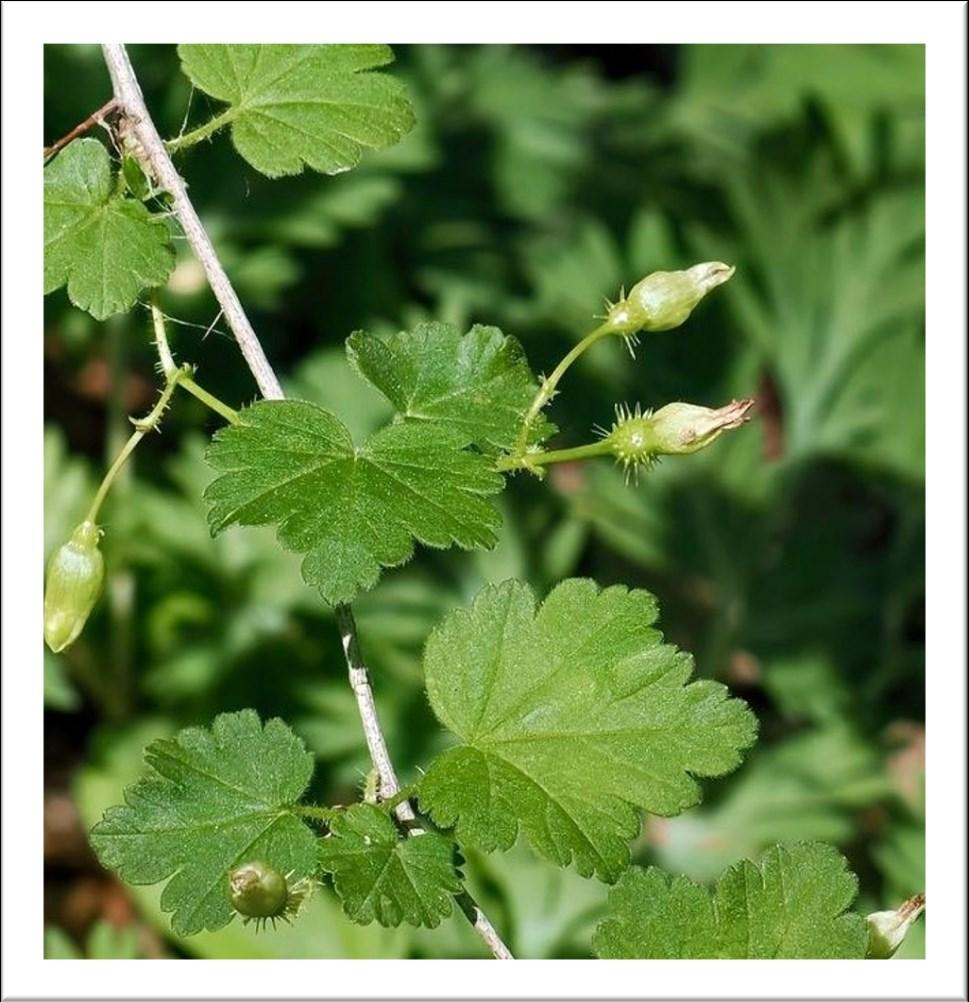
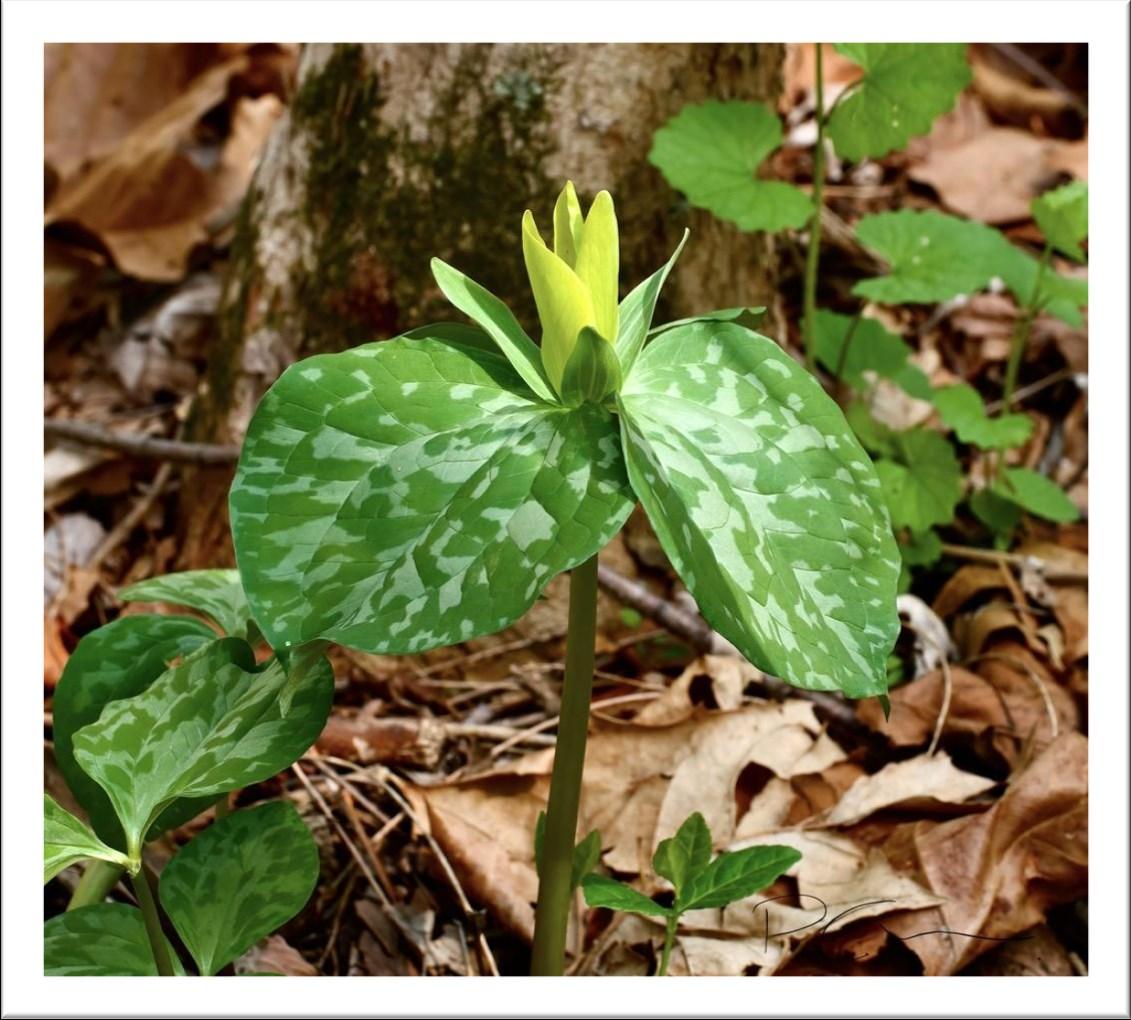
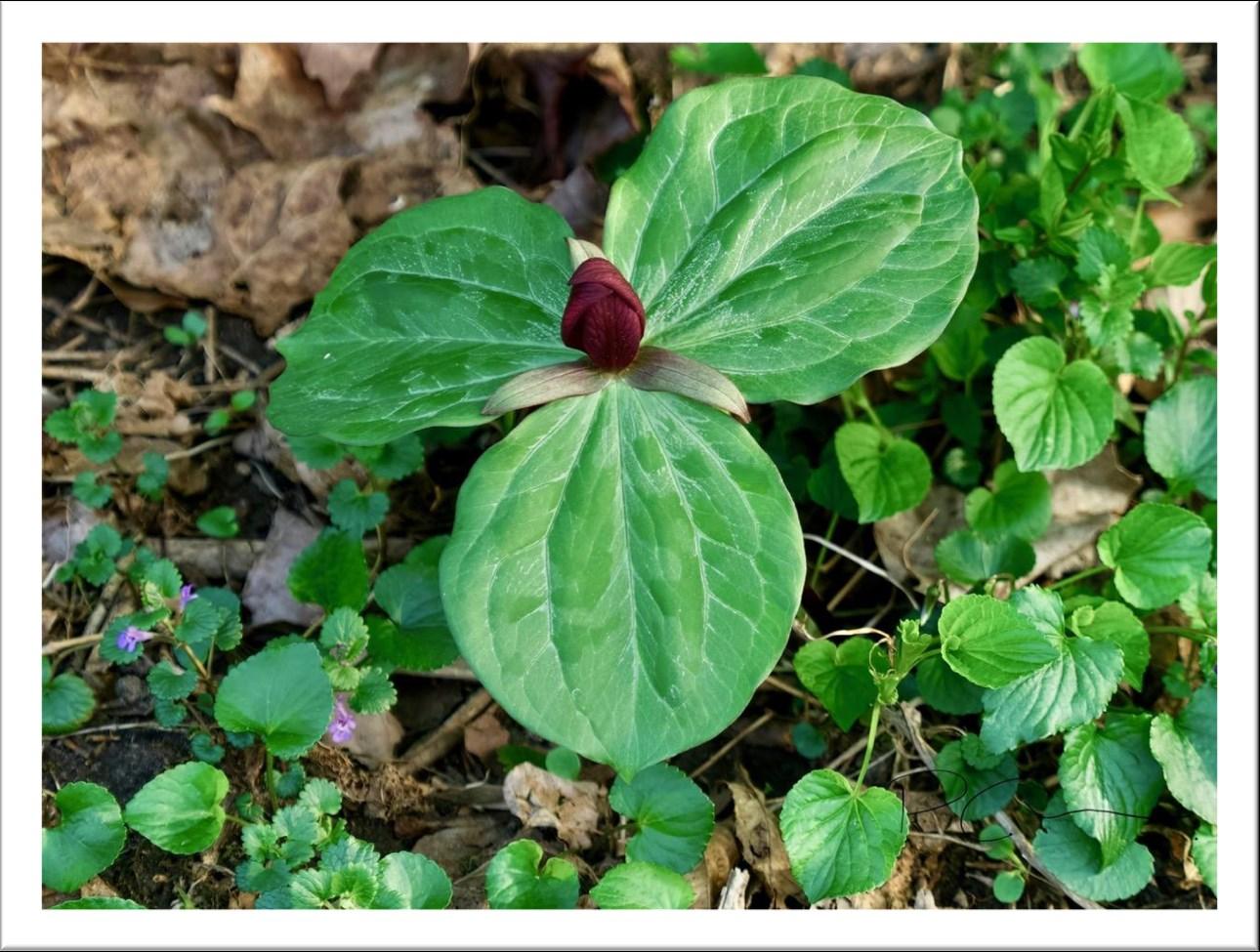
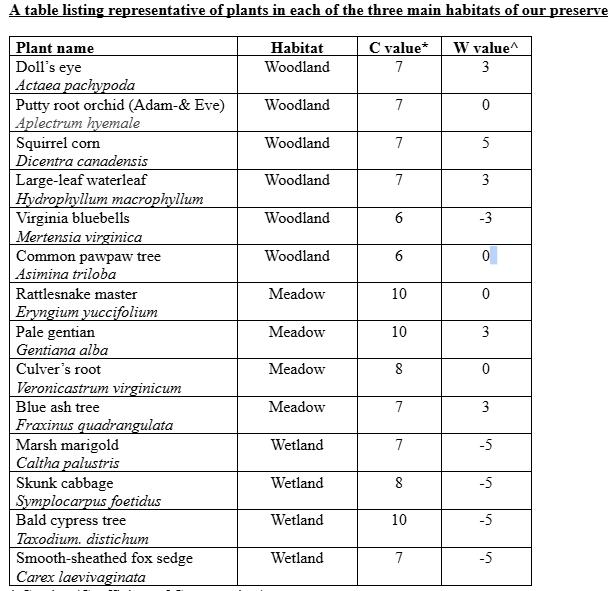
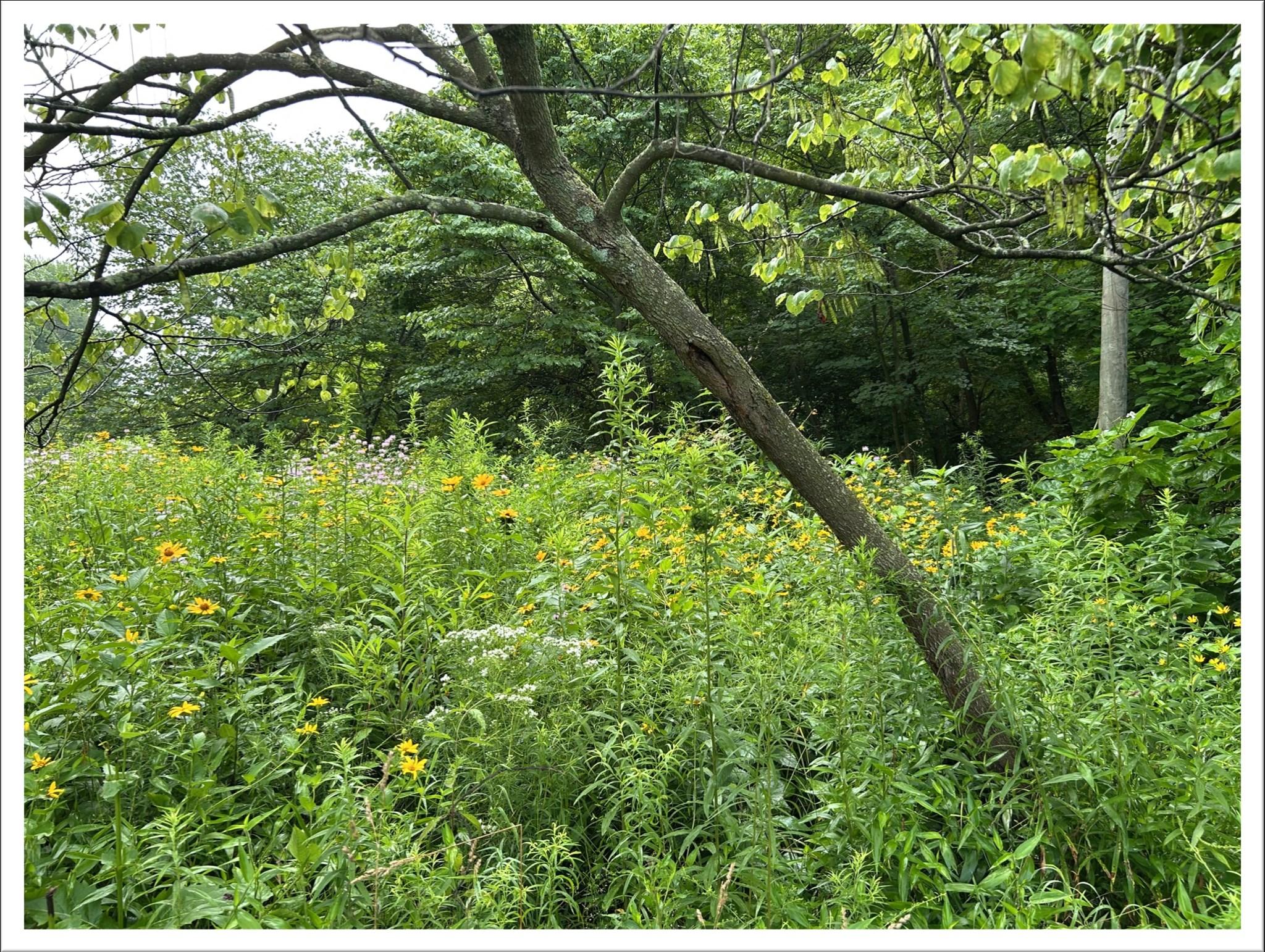
O r nat re preser e has three main habitats, the oodland, the meado and the seep/ etland. Plants ith a strong preference for seep/ etland ha e a negati e W al e. Plants ith a high C al e (ma im m of 10) are highl intolerant to a dist rbance in their en ironment. A fe representati es of the plants in o r preser e in each of the three habitats are listed belo . The also ser e as a cana a ning ign if o r conser ation efforts are not effecti e
* C al e (Coefficient of Conser atism) - A C a (C c C a ) a b a d ac I d a a a a . C a a
0 ( a d ba c , d a a a c) 10 ( a d ba c , c da ). C a - a a 0. C a I d a a a a b d 2004 a d a a ab I d a a D a
Na R c b ( :// c . . /d / a/ / -
FQA_ _I d a a_R . d ).
^ W al e (Coefficient of Wetness) - I a d d ca a d d a , "c c " a ca a d ca a c ba d a a da d . I ' a c a d d a , c d c a da d . W a d d ca a a a d ca a , a a -5 ( / da d) +5 ( d / c).
N a a d ca a a
a d c d ( . ., -4, -5). P a d ca a a a d c d ( . ., +4, +5). Z a - a d ca a ac a c , a a a d a d
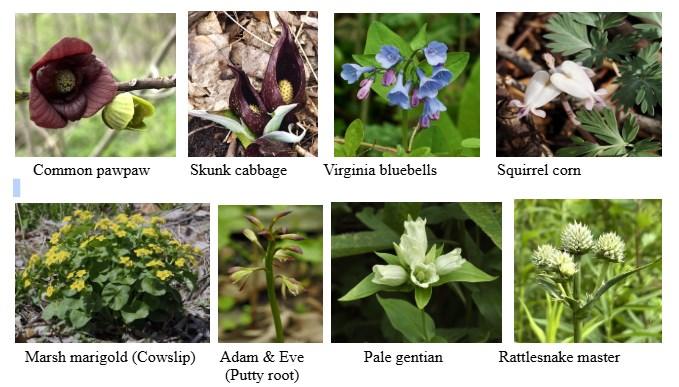
Pho o of ome of he lan li ed in he able abo e a e ho n he e.
For photos of man of the 305 species of plants in the report from Scott Namestnik can be fo nd in the follo ing t o links in o r preser e ebsite: https://iss .com/splatnat represer e/docs/tamarack_preser e_ ildflo ers_trees https://iss .com/splatnat represer e/docs/iss _ ildfo er_2ed
For location of the trees in o r preser e a link to o r preser e ebsite: https://img1. simg.com/blobb /go/f52ecd50 -6da1-420b-ad42-b2d6901eda84/do nloads/Tree%20Trail% 20Map.pdf? er=1750171563492
The B e f Habi a i i f ll bl m
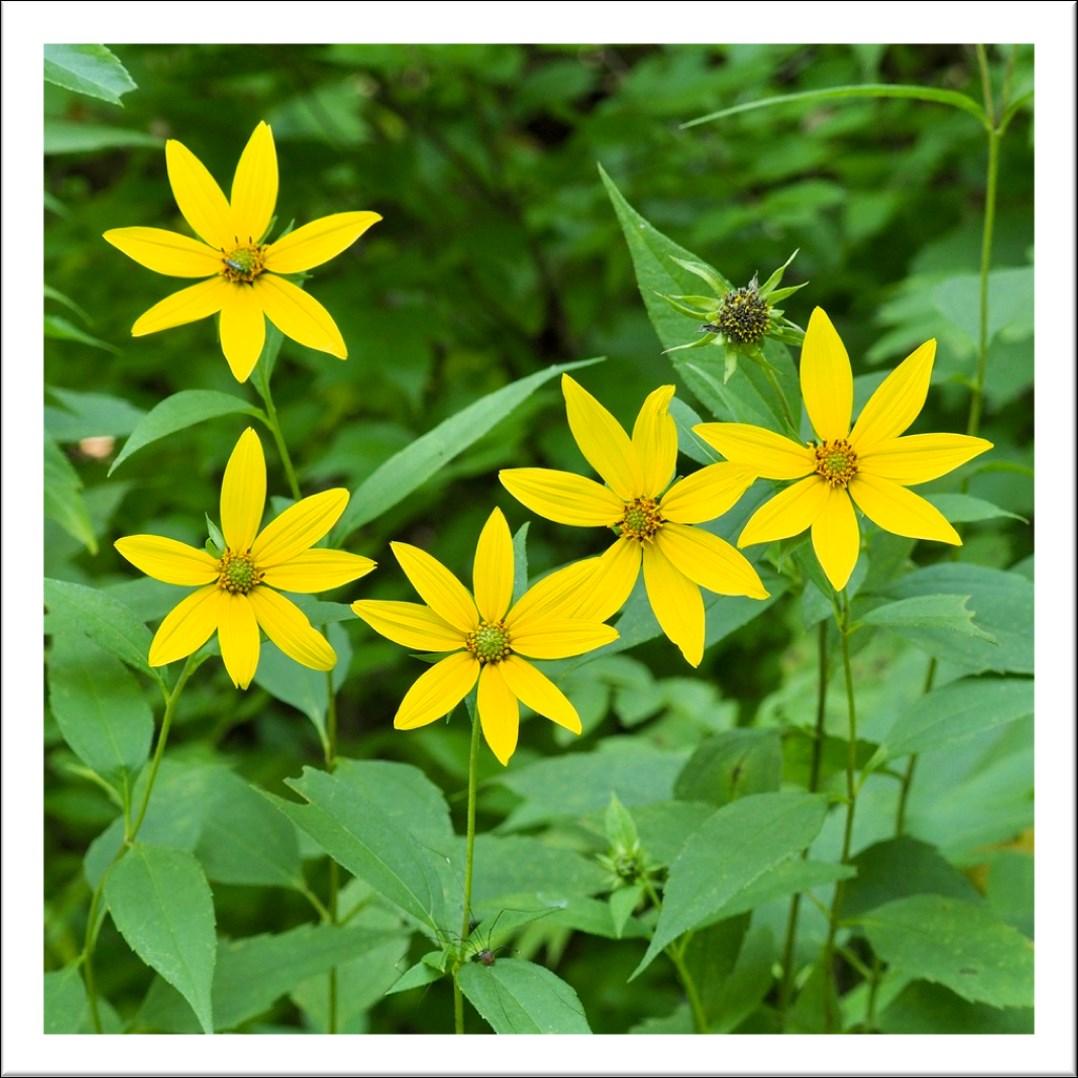
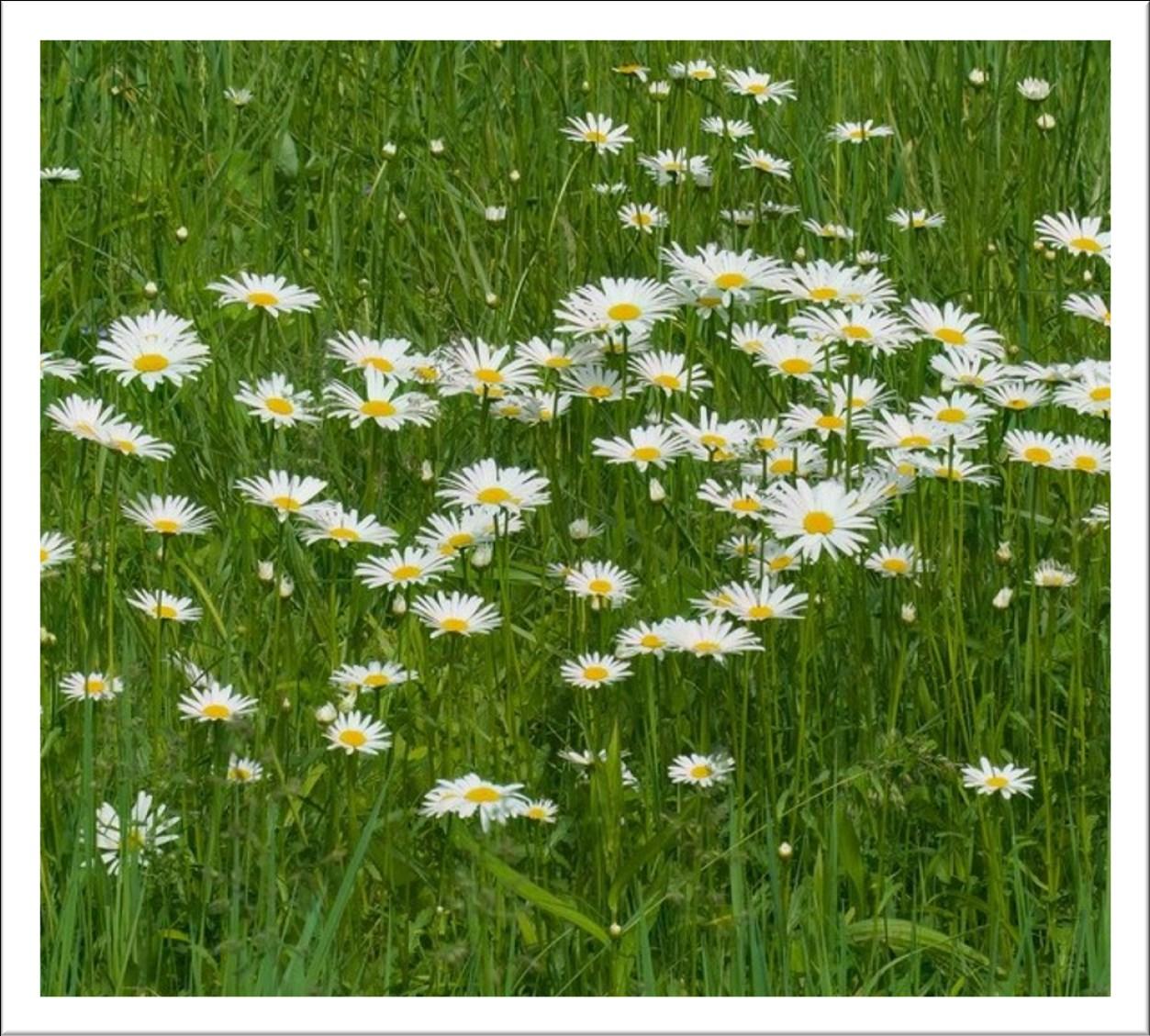
Wild Be gam - Fal e S f e - Black e ed S a - Vi gi a M ai Mi S am Milk eed
The belo link ill ake o o o r comm ni eb i e and o he na re pre er e page The g idebook are pda ed reg larl https://springmilllakesattamarack.com/nature-preserve
Pa Ne le e ill be added he eb i e See bel f a e ie
Ne le e L La d ca e F ma
h i c m la a e e e e d c ama ack e le e edi l
Ne le e P P ai F ma
h i c m la a e e e e d c ama ack a e e e e e le e edi
Ne le e P - P ai f ma
h i c m la a e e e e d c ama ack a e e e e e le e edi
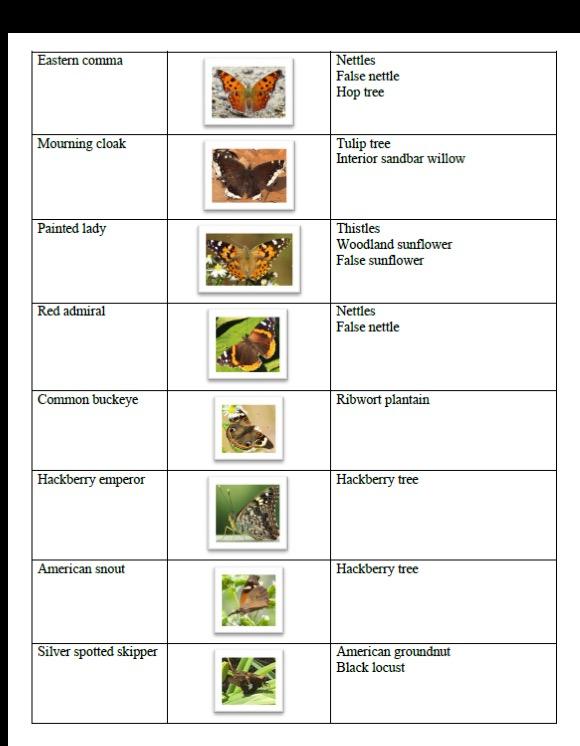
M l f a R e
La ge-Leaf a e leaf
C mm Pa a
Alleghe Blackbe
Fal e S f e
Fi e Pi k
Ma gi ed Lea he Bee le
Ra le ake Ma e
Wild Be gam
Alleghe Blackbe
Climbi g P ai ie R e
Sm h R ellia
Vi gi ia M ai Mi
Wi e Ac i e Seed d
William C eek
Tama ack Na e P e e e Se ing Tama ack Se en een and Sp ingmill Lake a Tama ack h Edi on A g
Na e P e e e Leade hip Al mni Ga he ing
S nda A g Past and present nature preserve board members gathered at the preserve entrance to exchange memories of past achievements. The alumni atendees spanned from about 00 through 0 0.
In he ea l 2000’ leadership was provided by Judy Gardner who has since moved away. Judy was a hardworking volunteer and single handedly pulled Garlic Mustard every spring. Judy also is responsible for the dafodils planted along the entrance trail. Thankfully, the DNR has not asked us to remove them, since they are not natve plants.
o Juris Jansons stepped in as president, joined by Mary Crevey, treasurer, Bety Culp, deceased, and Pat Reed from Tam- . During this administraton many important projects were completed. In the early days, there were farm fences throughout the preserve . Most were removed with the assistance of a local Boy Scout Troop. Steps were taken to slow the erosion along Hoover Run. On the recommendaton of the DNR Burr Oaks were planted, four in 0 0 and three in 0 . Juris commented at the tme that Governor Daniels was following Juris’s lead and planted Burr Oaks in front of the Indiana Statehouse. In 0 eight trees were planted, Black Gum, Black Cherry, Yellow Buckeye, Bald Cypress, Red oak and Witch Hazels. In additon to the trees, Juris solicited tree donatons from Steve Zimmerman, Mack Furlow and John Pearson Finally, two park benches were donated to the preserve compliments of Mack and Diane Furlow, and Don Walters in memory of his wife, Pat Walters. All were constructed by Dick Kiterman.
L-R: Dick Kiterman, Mary Crevey, Annie Jansons, Bety Yan, Juris Jansons, Don Willing, Bernie Pierce, Pat Reed
o During this tmeframe, Dick Kiterman became the president, Nancy Snively, treasurer along with Pat Reed, Bob Lowe, Martha Lamkin and Bety Culp. Spring fower tours were led by board member Pat Reed. Work contnued removing farm fences. With the assistance of Martha Lamkin, The Consttuton and By-Laws were amended to refect the current conditons. A big achievement was removing most of the Asian Honeysuckle from the north secton of the preserve. In 0 - 0 0 we received USDA grants of $ , 0 and $ 0, to support this important project. In 0 - 0 0, a fund-raising drive raised over $ ,000 to support further honeysuckle removal and to construct a boardwalk across an area that regularly eroded. The boardwalk opened the nature preserve entrance and more neighbors discovered our gem. All these achievements have been due to the generosity of our neighbors.
o oda Work contnues with leadership provided by president Greg Harker, treasurer Nancy Snively, secretary, Bernie Pierce, Bety Yan, Don Willing and Dave Wenzel, of Tam –1 . Accomplishments have been numerous. The establishment of a buterfy habitat, blue bird nestng boxes, newsleters, golf cart tours, Spring Flower Tours guided by Norma Wallman, invasive plant removals, extensive photo guides using photos by Pilar Morera and edited by Bety Yan, Bulter and Purdue research projects, and summer musical entertainment for all our neighbors and friends to enjoy. In 0 , Don and Kathy Willing, donated a park bench over looking Williams Creek. Two additonal benches were added in 0 , one at the nature preserve entrance which was donated by Ralph Fowler in memory of his dog Coco, and one at the edge of the buterfy habitat which was donated by Elliot Yolles and Susan Moore.
The Tama ack Na e P e e e a history of dedicated neighbors diligently ensuring your preserve is well maintained and an asset to the community.
Righ C en p e iden G eg Ha ke e plain he plan fo he p e e e
Dick Ma
J i Pa
Don J i anding b hi dona ed ee
Sha ing Memo ie
Ann al Golf Ca To
T en fo neighbo and f iend a eled he p e e e ail in he comfo of a golf ca
Musical Entertainment
September pm
Doug Henthorn
A Hoosier singer song riter and stellar guitar pla er and singer
"One of United States' best kept secrets, the Indiana born and bred guitarist and singer/songwriter...a very distnctve sonic trademark, suspended between Americana and contemporary Southern-Rock, with a touch of 0's sound at tmes."
Sunda September
Nature Preserve Photo Guides Drone Video Plant Inventor and Trail Map
The below link will take you to our community website and to the nature preserve page. The guidebooks are updated regularly.
https springmilllakesattamarack com nature-preserve
Past Ne sletters are no available in the Nature Preserve ebsite under the heading of “Ne sletters See belo for a previe
Newsletters L1 Landscape Format
https://issuu.com/splatnaturepreserve/docs/tamarack np newsletter editions l 1
Newsletters P1 Portrait Format
https://issuu.com/splatnaturepreserve/docs/tamarack nature preserve newsletter editions p 1
Tamarack Na re Preser e
Serving Tamarack Seventeen and Springmill Lakes at Tamarack 0th Editon September , 202
Tamarack Na re Preser e has been A arded a USDA Gran of
USDA Natural Resources Conservaton Service (NRCS) under the Environmental Quality Incentves Program (EQIP) has awarded the Tamarack Nature Preserve a grant of $ ,32 in support of managing invasive plants and preserving ecosystems. htps://www.nrcs.usda.gov/programs -initatves/environmental-qualityincentves-program
The EQIP applicaton that we made in 2022 was for removal of invasives, by cutng and spraying. Our grant will provide money in each of the next 3 years, 202 - 202 , for work that we do or contract out to other contractors. This will allow us to contnue to improve the nature preserve, eliminatng invasives in areas we haven't worked on much in the past, so that natve plants will again dominate.
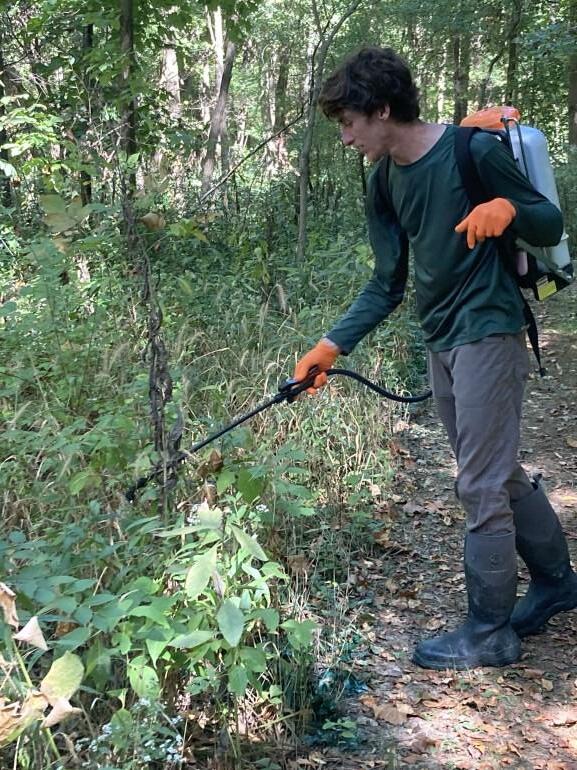
The frst work will start in mid-September, we have selected a contractor who will cut some of the Asian Honeysuckle, Burning Bush, Autumn Olive, etc., spraying the stumps to kill the roots. Then there will be some selectve spraying of other plants including Oriental Bitersweet, which is becoming more common in our nature preserve.
We will likely need to close the nature preserve for a day or two at a tme while this work is going on but will post signs at the entrance when the work is taking place.
B erf Tagging
SAVE THE DATE
M sical En er ainmen Sep ember pm
Doug Henthorn
A Hoosier singer/songwriter, and stellar guitar player and singer.
“One of United States' best kept secrets, the Indiana born and bred guitarist and singer/ songwriter...a very distnctve sonic trademark, suspended between Americana and contemporary Southern-Rock, with a touch of 0's sound at tmes."
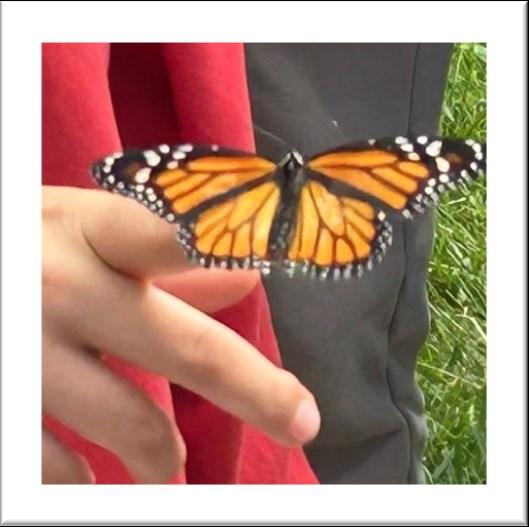
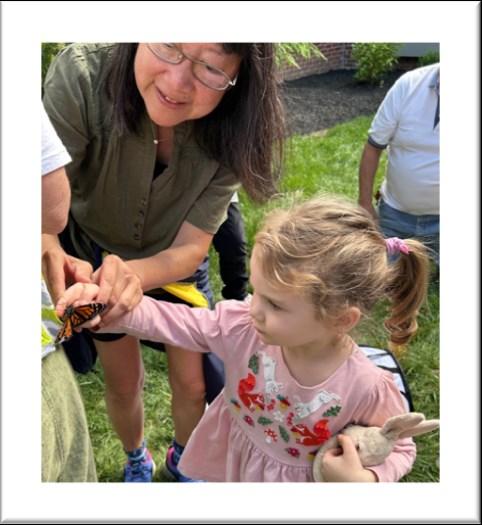
Bety Yan and Shirley Triller demonstrate buterfy tagging. Over the next several weeks
Bety, Shirley, Nancy Snively and Mary Oldham will be tagging and releasing over 0 Monarch buterfies
# - B e e ec ded e e e
- :// .c / a a e e e e/d c / _b e _ _2ed * - H a d e e e - :// .c / a a e e e e/d c / _ d e _2ed - :// .c / a a e e e e/d c / a a ac _ e e e_ d e _ ee - htps://img1.wsimg.com/blobby/go/f 2ecd 0 - da1- 20b-ad 2-b2d 01eda /downloads/Tree 20Trail 20Map.pdf?ver 1 01 1 3 2 M h , be c a ,
ab e a . We
e Ca a a ee
c ca e a a e . M a ch Ta a : htps://www.monarchwatch.org/tagging/ Refe e ce
B e e I d a a b Je e E. Be (2003), I d a a U e P e Rec e ded I d a a- a e a a ac a P d e U e (h :// e e i .e . d e.ed / b ica i /POL-6/POL-6. df
Tamarack Na re Pre er e Ser ing Tamarack Se en een and Springmill Lake a Tamarack Edi on No ember
I ’ ha me of he ear again bring o r p mpkin o he librar for placemen in he pre er e o feed he deer Ne Na re Pre er e E en
S nda Sep ember
D g He h a d e e ed a deligh l g a f fa ilia g
Th r da Jan
O e f ie d a d eighb e j ed he e e i g f ic a d f ie d hi
USDA Gran ppor he in a i e plan rea men comple ed in Sep ember
A e c le e ea e a e f ed i Se e be E a le f e edia all h e ckle i a ea ha e e al ead c ea ed i i ea
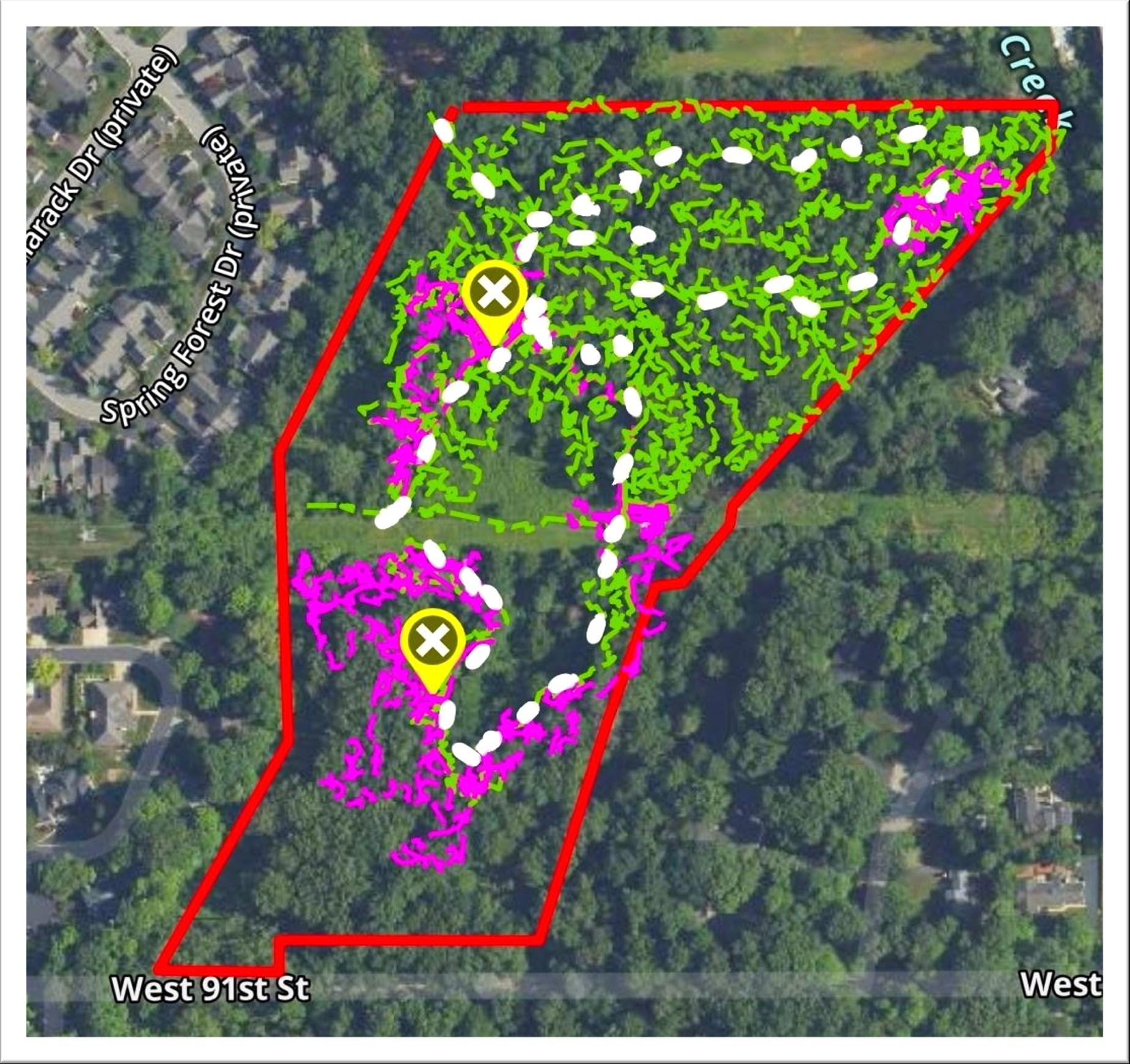
Jack Ca hca f OIKO a c ac ed ea he a e e e e i a i e Lef G eg Ha ke Na e P e e e P e ide a d Jack Ca hca
Righ Jack a i g i a i e la
The a bel i dica e he e Jack ked i he a e e e e The a ea i green e e e a i g l he a ea i p rple a e he e he c la ge h e ckle a d a ed he Ba ed i ec he k f OIKO ill be e efec e
2025 - A Bonan a Yea of Mona ch B e fl fo he SPLAT Neighbo hood!
Content contributors:
Ma O a , G Ha , S T , Na c S , R b Y , B P c , B Ya
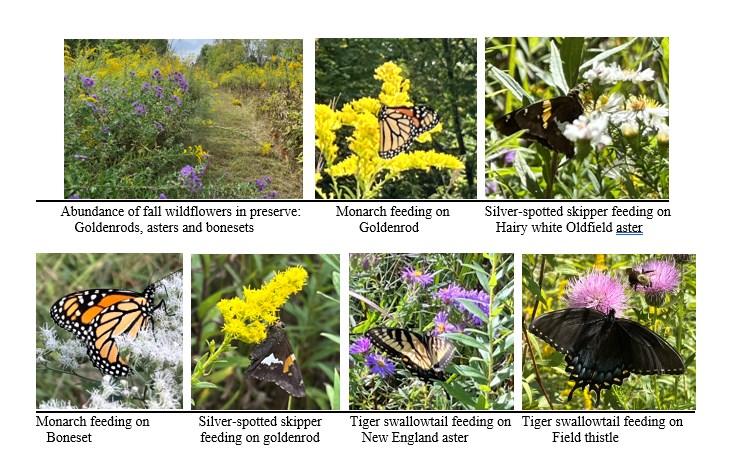
The Mona ch b e flie ha e acce ed o ho i ali ie in d o e hi ea . We had milk eed plants in our neighborhood gardens from spring through late summer, to pro ide the onl food that the caterpillars of the monarch butterflies ould feed on. In the fall migration of the monarchs to their o er intering ground in Me ico, the nectar-rich fall ildflo ers in our nature preser e pro ided much needed energ for the adult monarchs coming through Indiana from southern Canada and other northern US states. Earlier than e pected, the first group of female monarchs, coming north from the southern US states, laid eggs on the milk eeds in our neighborhood gardens starting on April 28. The continued to arri e till earl September for egg la ing. Not onl ere e surprised b their earlier than e pected arri al, e ere also surprised b the large number of eggs laid. SPLAT neighbors, Mar Oldham, Shirle Triller, Nanc Sni el , Pam Purdie and Bett Yan all jumped in to help taking in the eggs to raise them into monarch butterflies. When e ere at our capacities, Mar recruited her sister Joan and grandson Frank, and Mar ’s friends outside SPLAT to join in the effort. Mar also maintained a milk eed patch in front of her home for communal picking to feed all the er hungr caterpillars!!
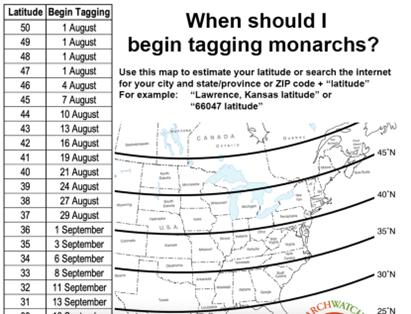
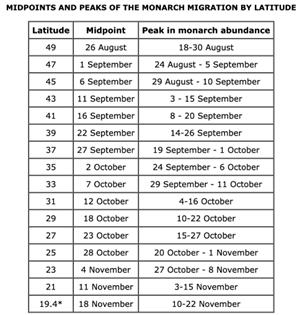
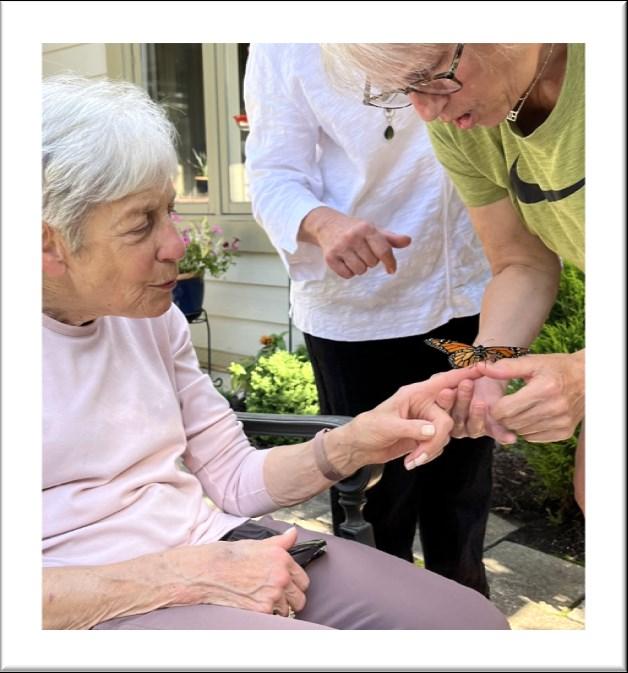
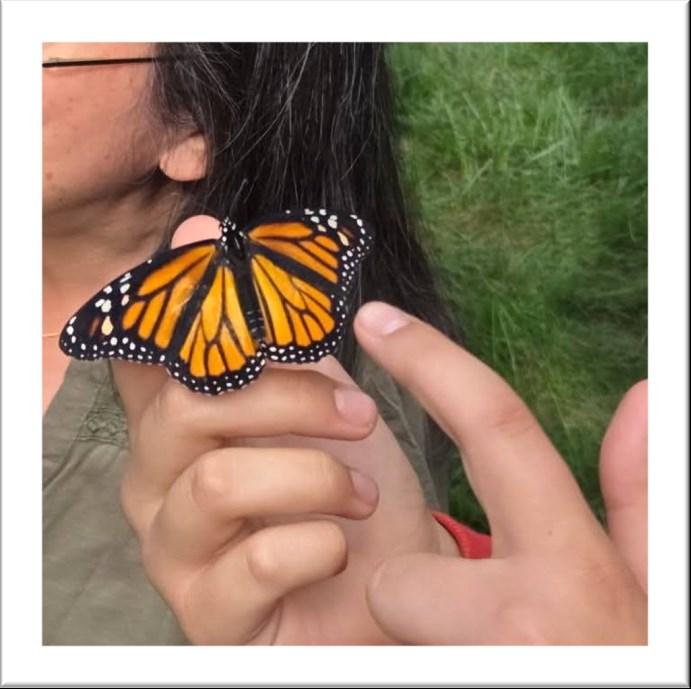
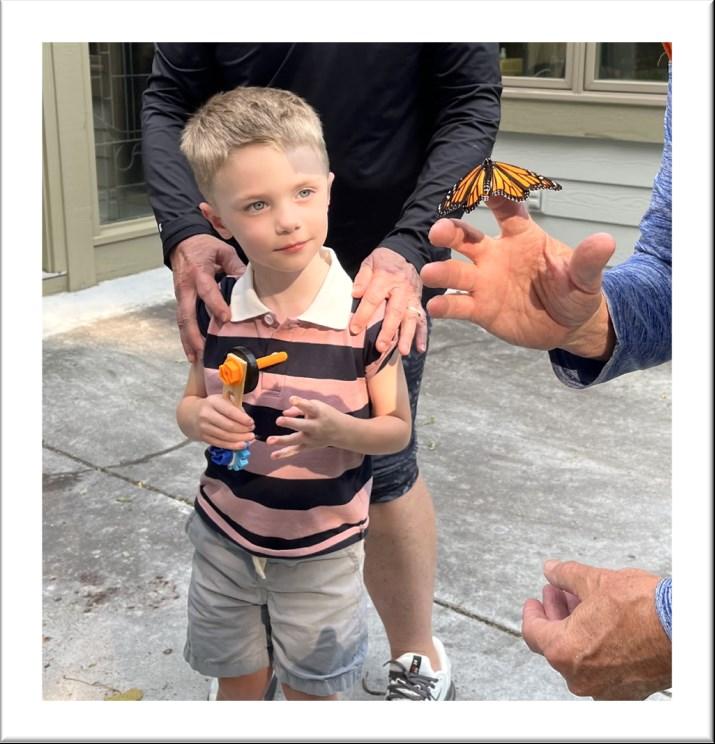
We estimated that e released 280 monarch butterflies back into the ild in 2025. About 100 monarchs ere released before August 24 and these ere not tagged as the ere still migrating north (see the chart of tagging timing belo ). Guided b the angle of the sun, those monarch butterflies that emerged from their chr salises around August 24 or later in Indianapolis (latitude of 39.9) ere the ones to migrate south to o er intering in Me ico. We ran out of tags, and tagged onl 159 monarchs that emerged from their chr salises after August 24. As in the past, neighbors and friends ere in ited to participate in se eral of the fun e ents of tagging and releasing monarchs (see photos belo ).
During the peak monarch migration (from southern Canada and northern US states) through Indiana (see chart belo ) around September 22 this ear, half a do en to a do en of monarchs ere obser ed in our preser e at a time, feeding hungril on the large number of fall ildflo ers such as goldenrods, asters and bonesets (see photos belo ). A cornucopia of these nectar-rich bounties as our gift to the monarchs on their long journe south.
It is hope that the SPLAT communit effort ma help to get the Monarch butterfl off the IUCN (International Union of Conser ation of Nature) Endangered species list in the ears to come.
Wan o lea n mo e abo Mona ch B e flie ?
In 1920, a oung Fred Urquhart, from Toronto, Cananda ondered here the Monarchs disappeared to. In 1937, after graduating ith a degree in oolog , Fred started to stud the migration paths of Monarchs. It as a long and frustrating e ercise but finall in 1975, he found the Monarch ’s inter ha en in the Sieara Madre mountains of Me ico. Learn about Professor Urquhart's long and fascinating journe He e i he link to a 44 minutes docudrama Flight of The Butterflies. This docudrama sho s ho the o erintering site of the Monarch butterflies as disco ered, the migration of Monarchs and the life c cle of this butterfl .
In No ember of he na re pre er e la nched he b erf habi a Fi e ear la er e are re arded i h a na ral ha en for Monarch b erfie a ell a man o her pecie
In A g h ndred of Mon arch ere relea ed and man ere agged Thank o he “b erf ladie ” for haring he e perience i h neighbor and friend
2026 Walk in the Woods
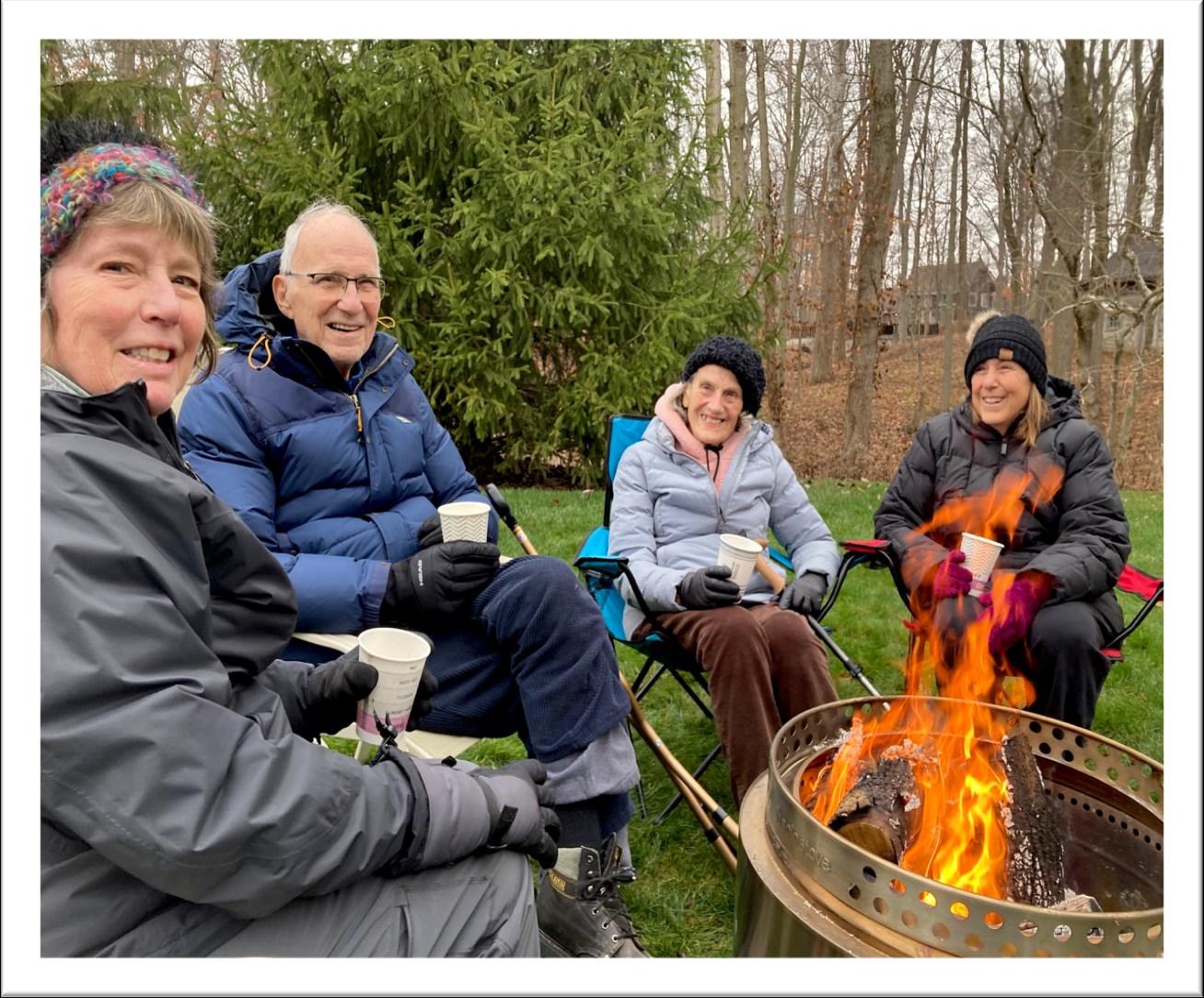
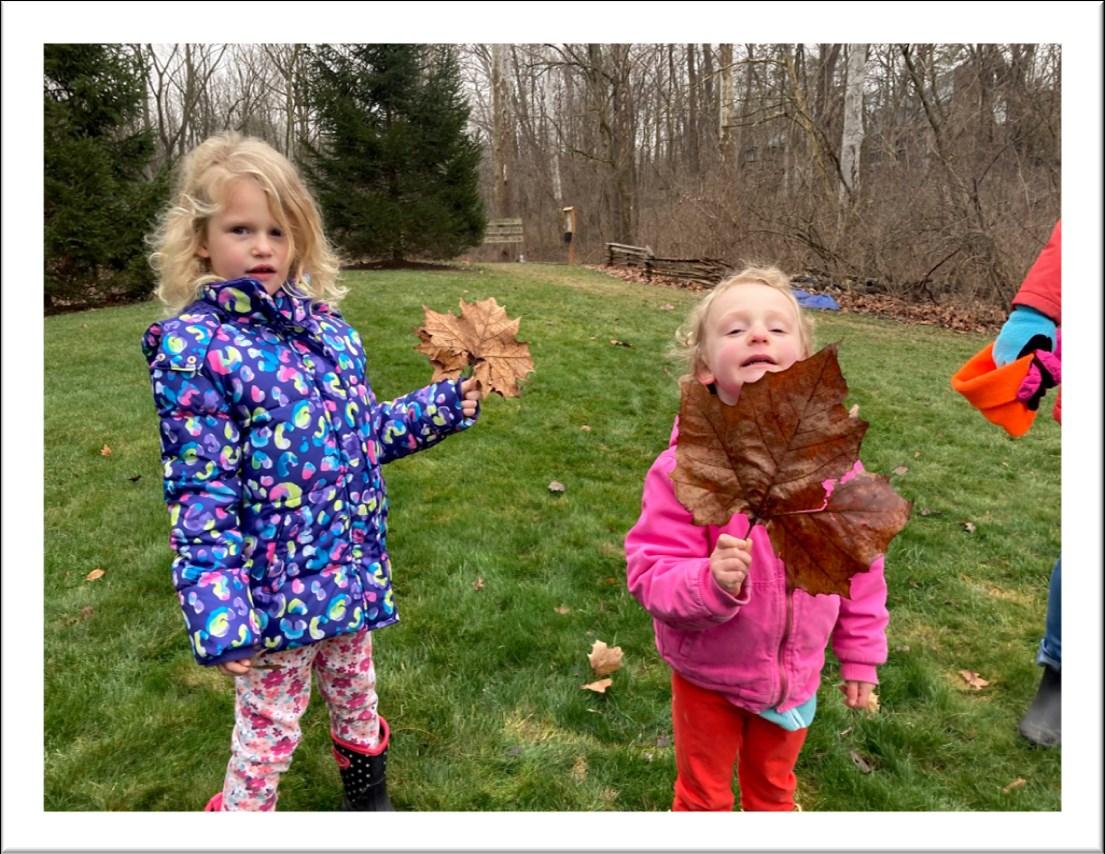
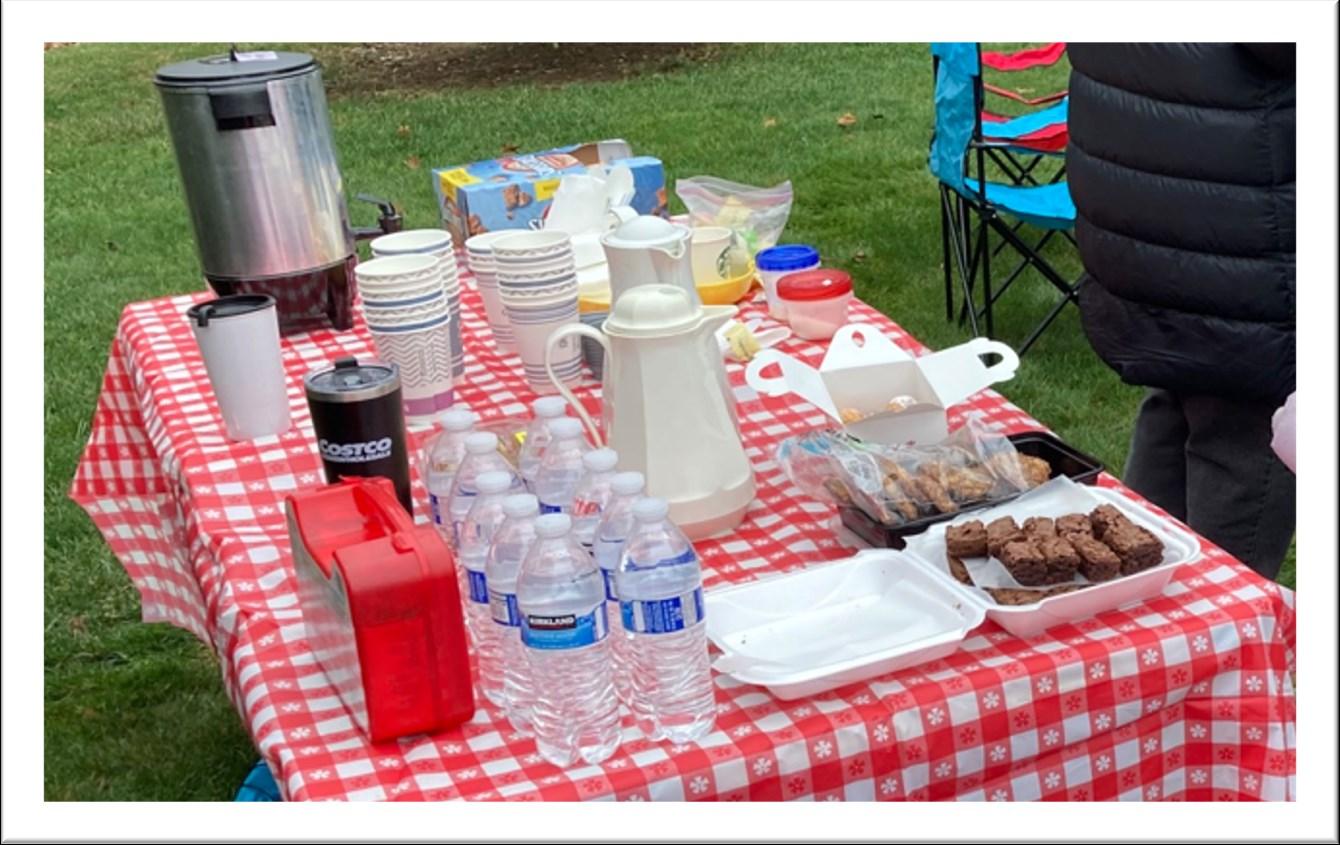
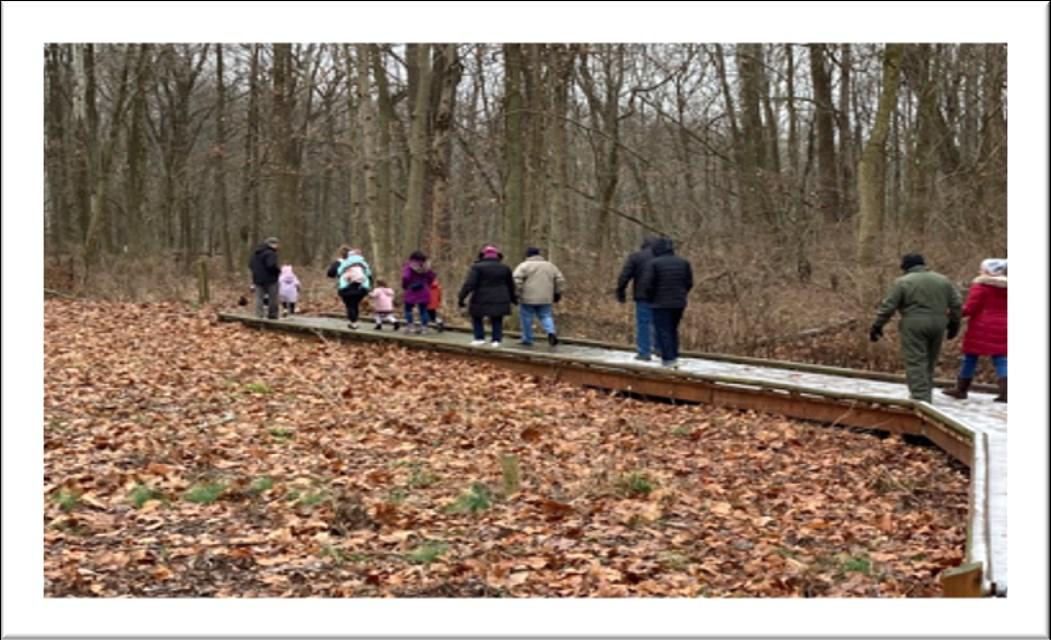
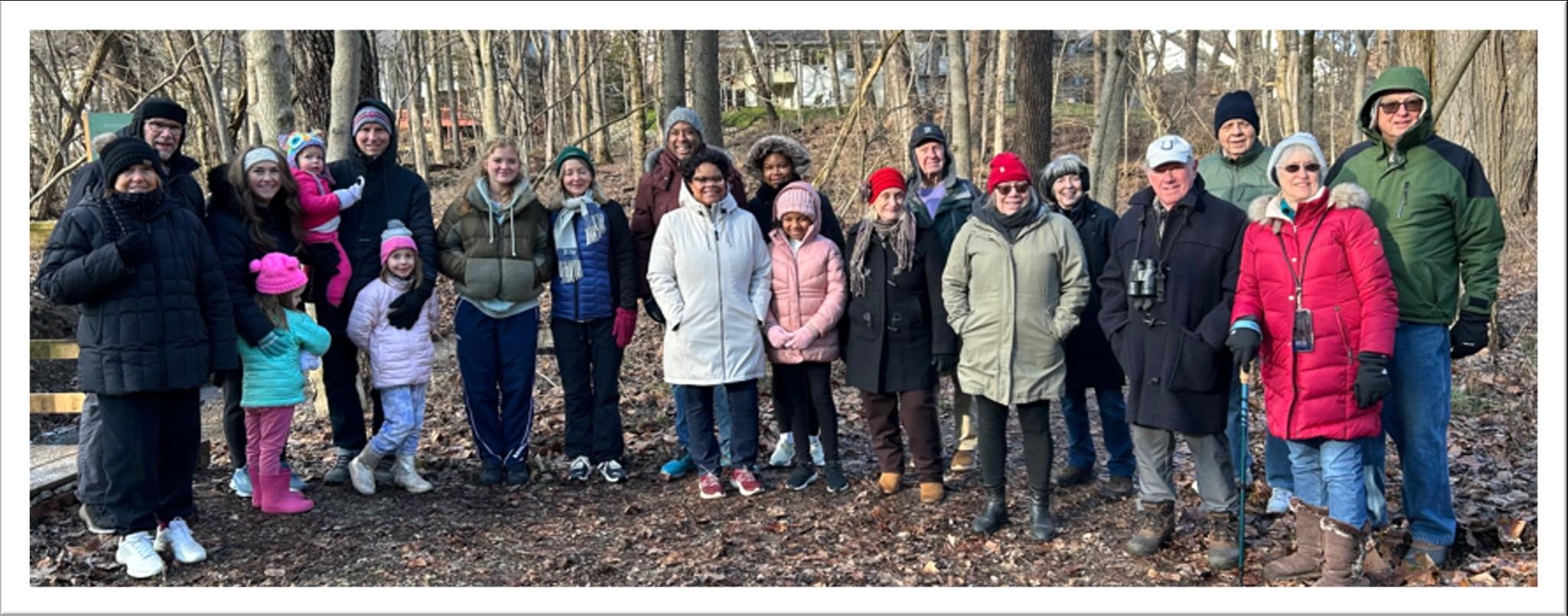
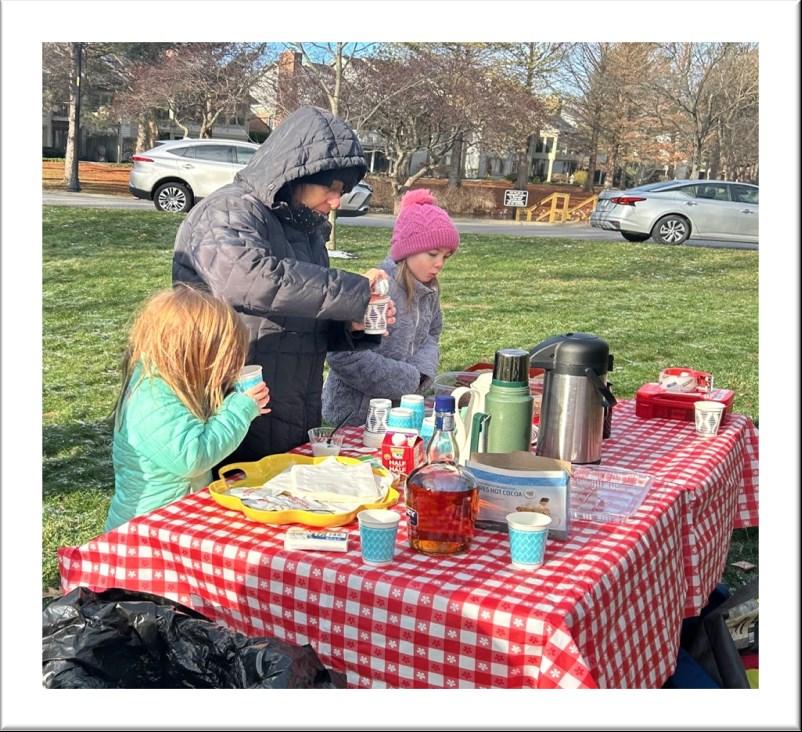
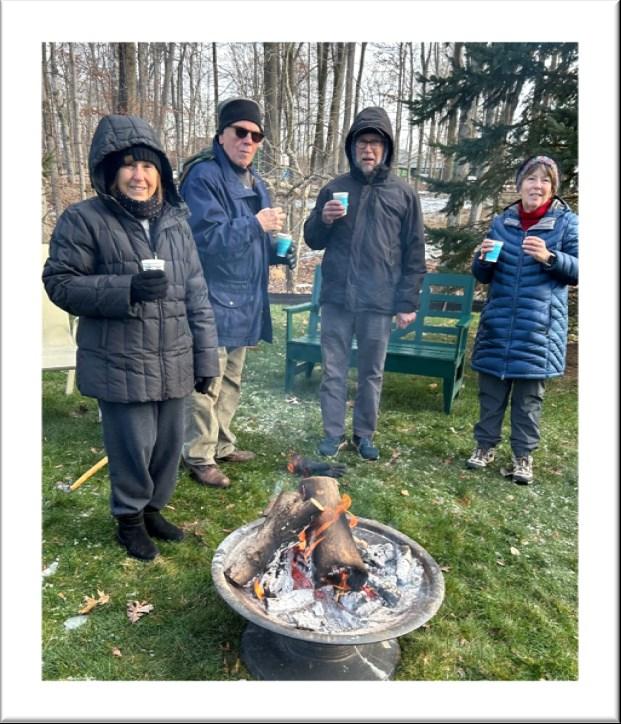
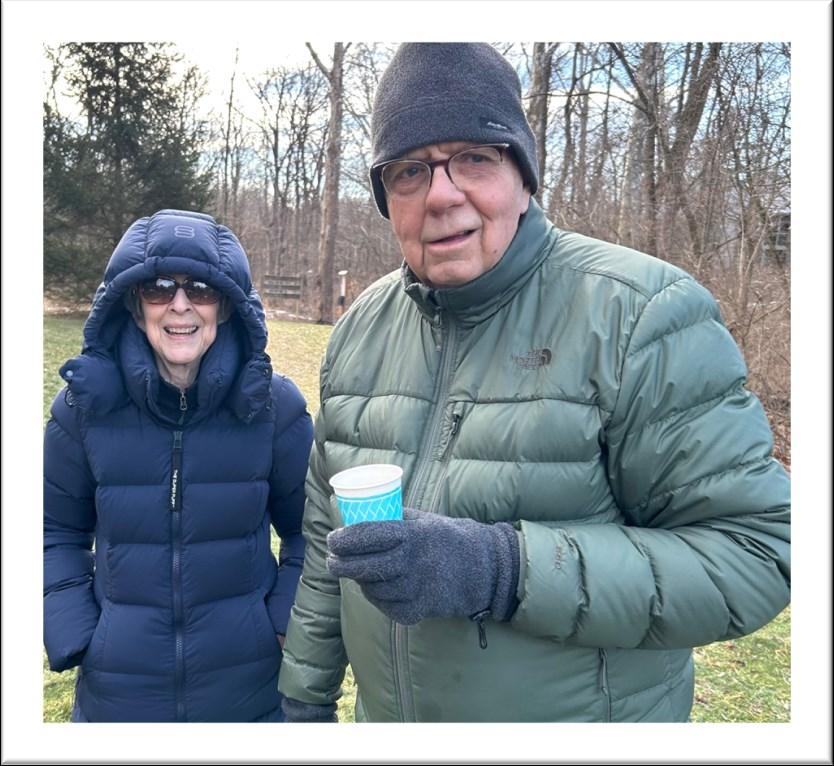
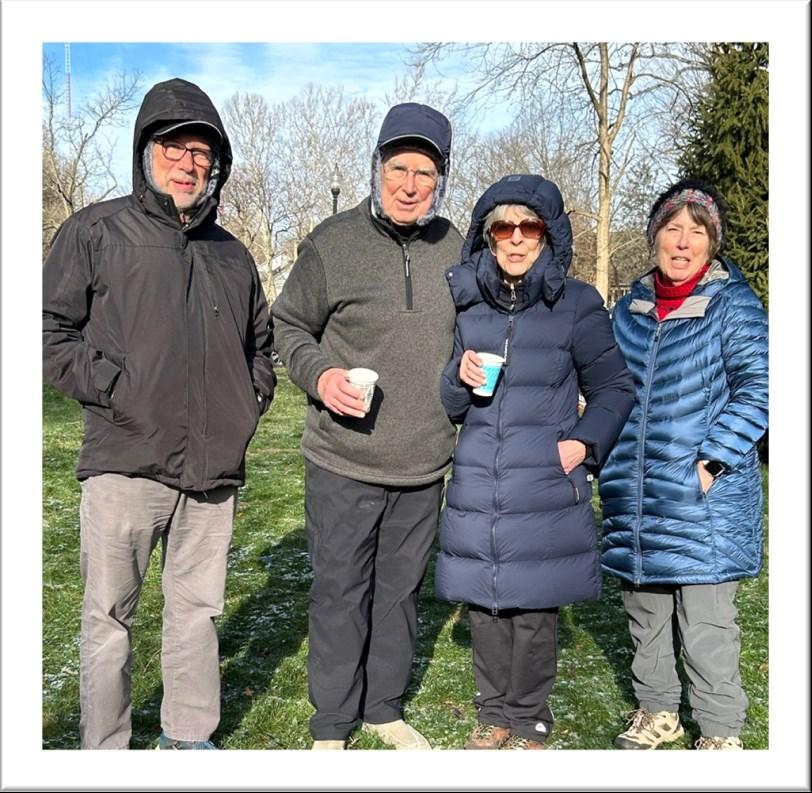
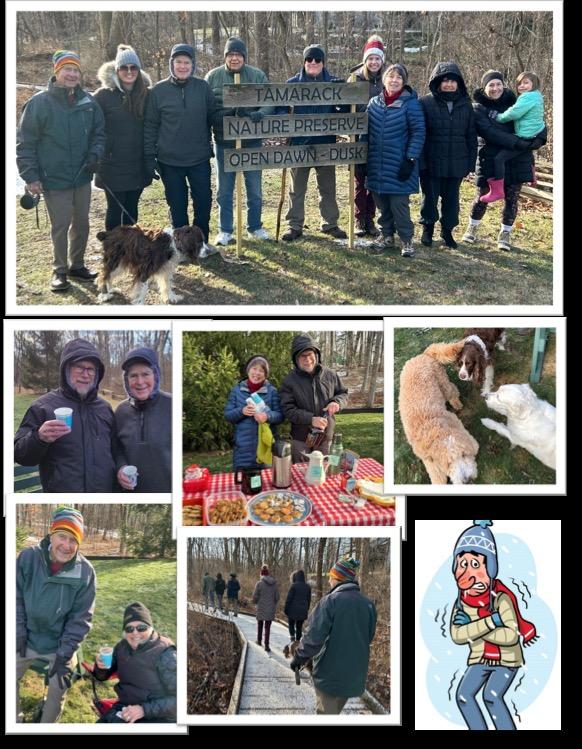
January 1, 2026: Fifeen brave souls and three dogs showed up for the annual walk in the woods. A sunny morning made it very comfortable. Hot drinks, cookies, an occasional shot of brandy and a warm campfre.
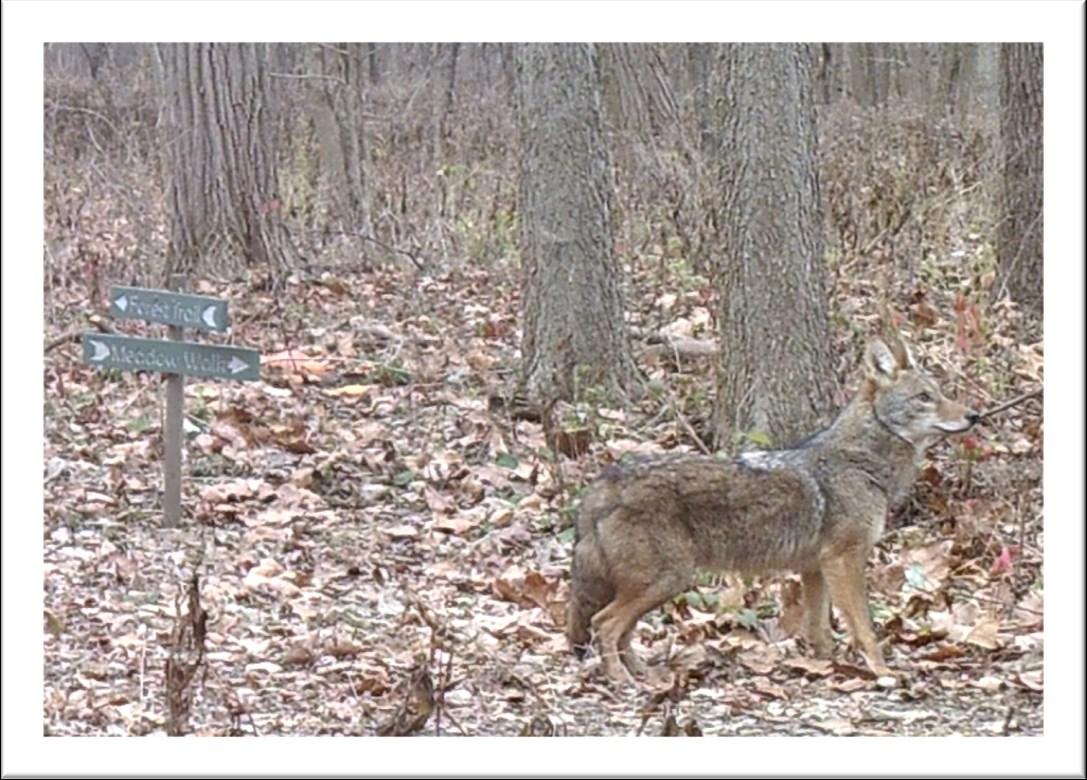
Woodland friends enjoying the Halloween pumpkins Can you spot the Coyote?
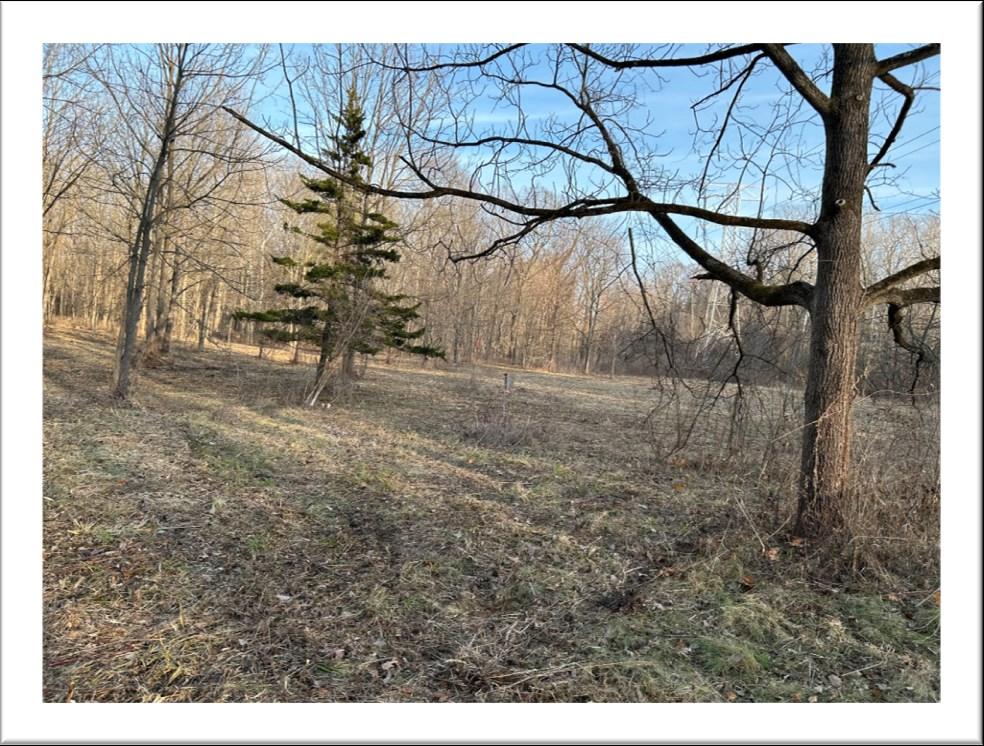
Mowing the Buterfy Habitat and the central meadow. Mowing the Buterfy habitat is an annual event. We also mow about 1/3 of the preserve each year. This allows the sun to get to the seeds distributed by plants during the summer resultng in more natve plants.
Greg Harker and Jacob Slaughter, contractor
Tamarack Nature Preserve April 1, 2026, 53rd Editon.
Nature Preserve Visitors
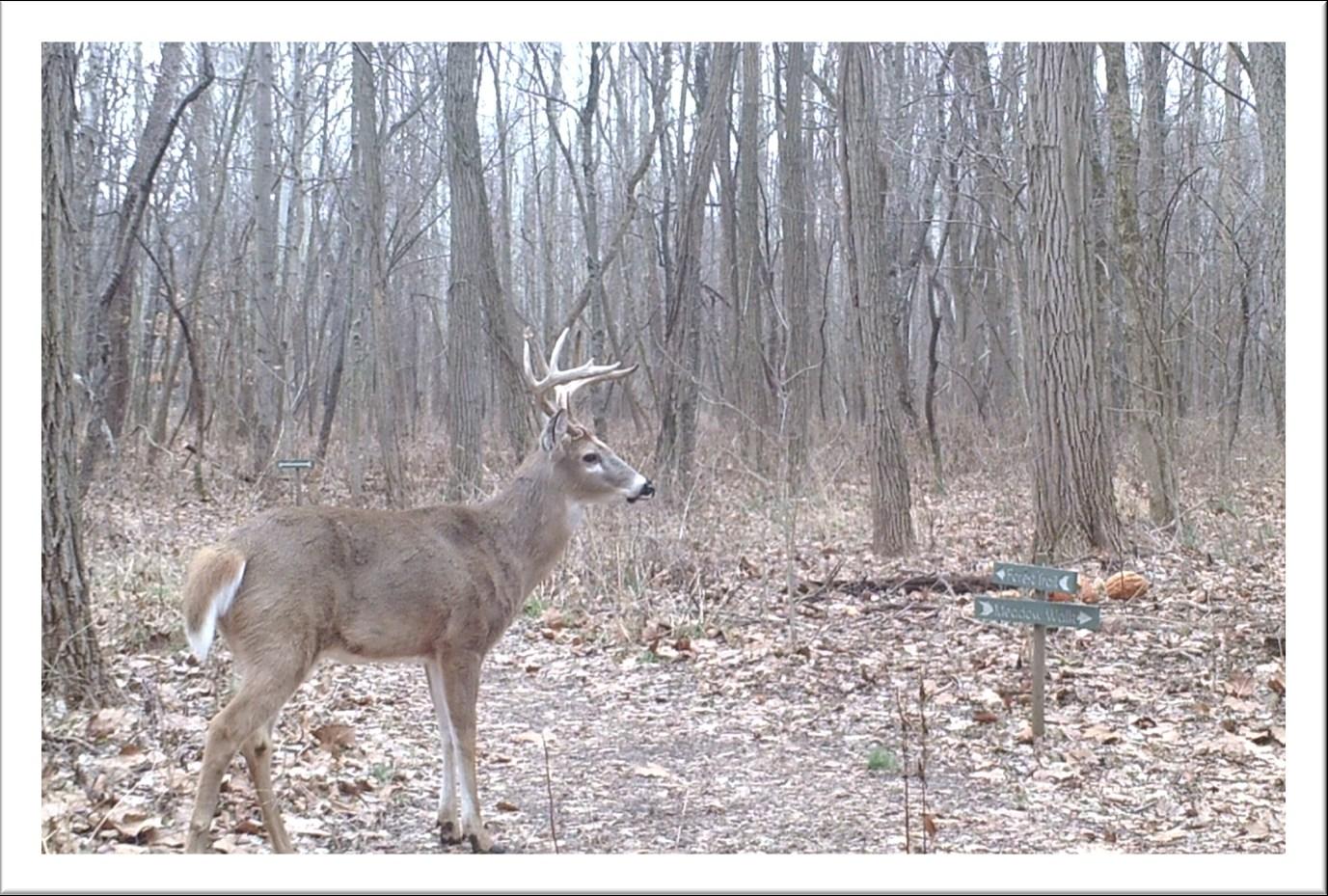
According to the Indiana Department of Natural Resources, improved habitat for many species has resulted in recent sightngs of animals not been seen in Indiana for many years. Eforts to remove invasive plants from our Nature Preserve has produced healthy stands of natve plants, which helps to atract some of these animals as they resume roaming Central Indiana once again. Rumors of river oters swimming in Williams Creek have not been confrmed yet by SPLAT and T17 residents. But photos submited to the Newsleter Editor just last week confrm the sightng of 2 species not seen in Marion County for many years. Please exercise extreme cauton when hiking NP trails this Spring and Summer, to avoid scaring and provoking these animals to give chase!
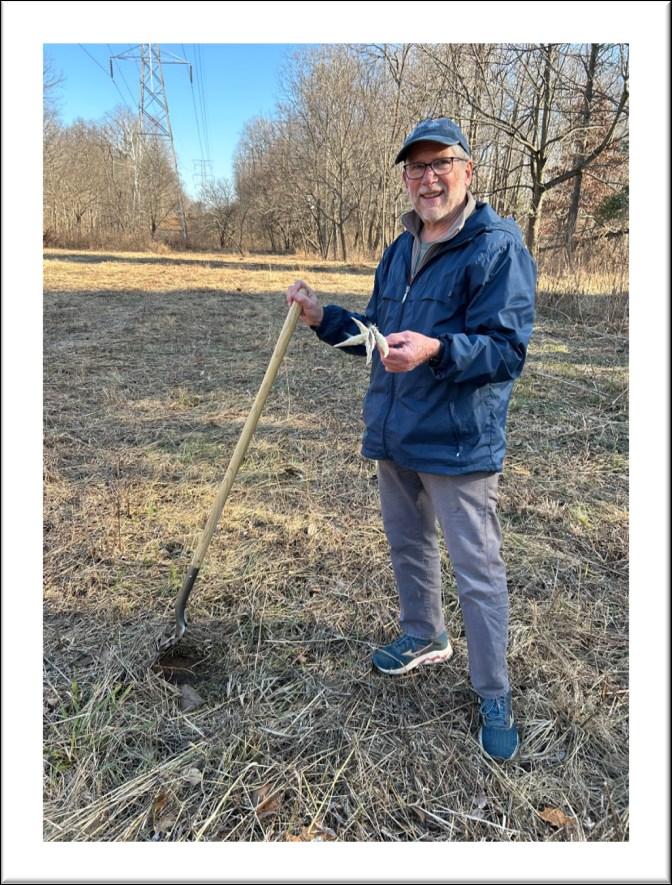
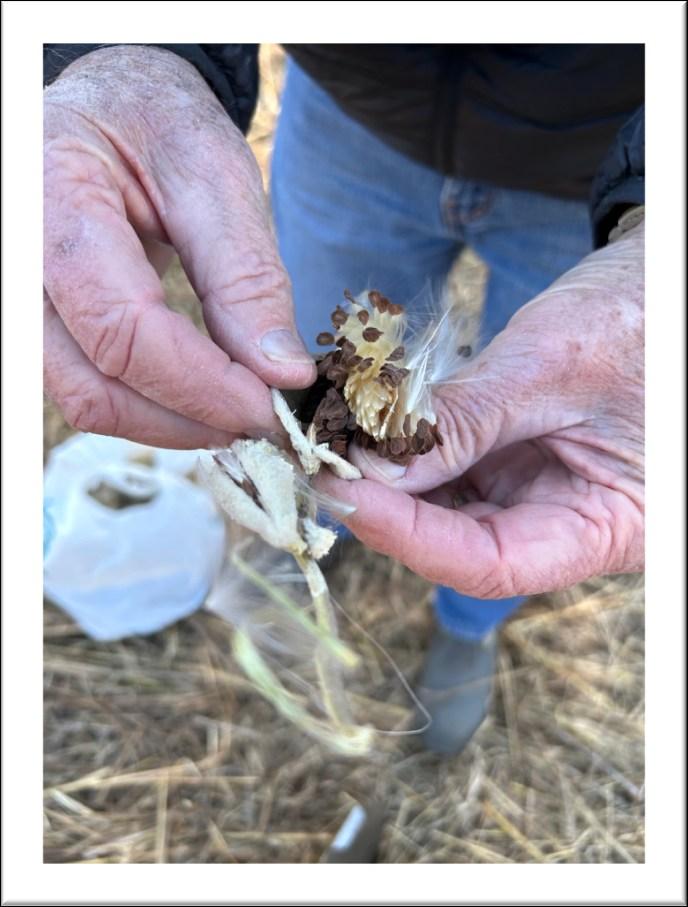
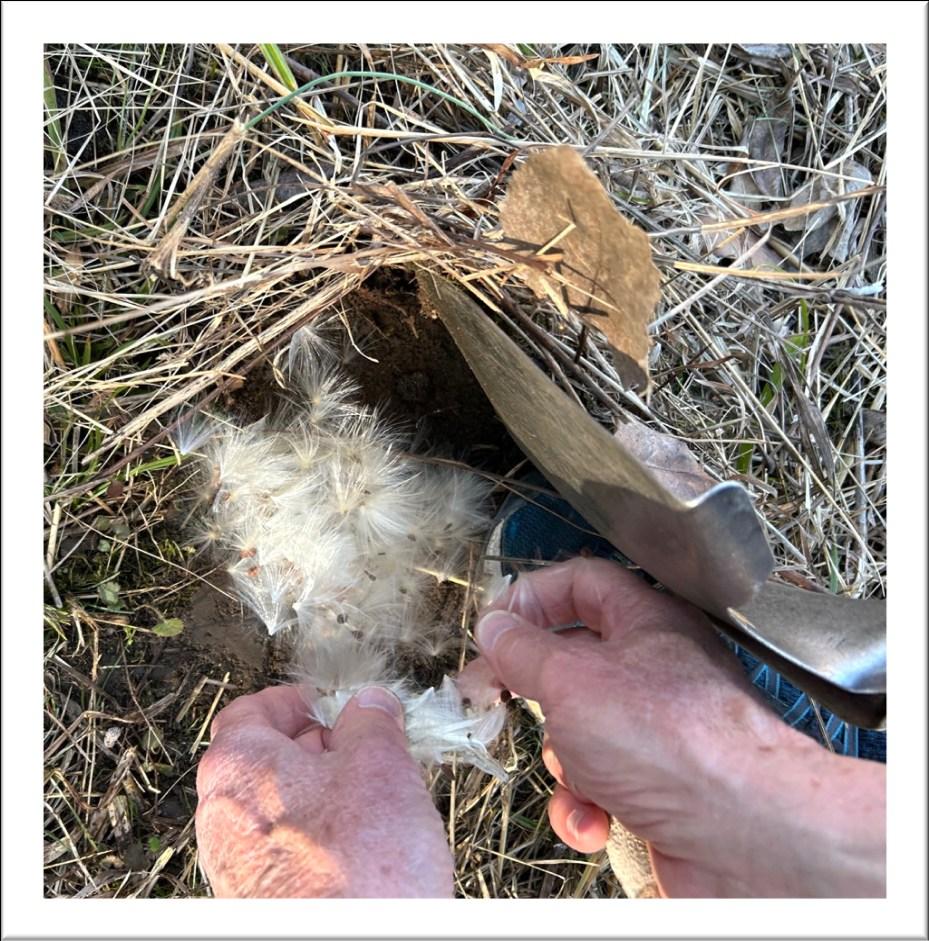
This winter we planted hundreds of Milkweed seeds in the buterfy habitat. Milkweed is the only plant a Monarch buterfy will lay eggs.
Photos captured on our trail camera
2025 Actvites Report
Income Expenses
HOA fees - $5,904
Donatons $,3,015
Many Visitors and Events flled 2025
7th Annual New Years Day walk in the woods
Maintenance (mowing, trail repairs, etc.) $2,261
Events $1,938
Insurance $957
Invasive eradicaton $1,740
Butler researcher Will Weber received an award for his natve plant research, completed in 2024 Annual Spring Wildfower Tou Annual volunteer day to remove garlic mustard Annual Golf Cart Tour
Buterfy tagging
Alumni preserve leadership gathering
Received an USDA Grant of $8,329 to be received in years 2026,2027 and 2028 In late fall, honeysuckle and oriental bitersweet remediaton for the entre preserve
Musical Entertainment
Gary Waters/Erin Benedict American Song Book
Doug Henthorne – folk and sof rock.
This year we mowed the buterfy habitat and the meadow to the north of the habitat. We hired a contractor to spray honeysuckle and oriental bitersweet throughout the entre preserve. Now that we have the USDA Grant money, we will contnue to remediate honeysuckle and other invasive plants.
2026 Plans
The USDA Grant will be used to contnue eradicaton of invasive plants. We will contnue our regular events as in the past frst one was the New Years Day Walk in the Woods
Mark your calendar: Spring Wildfower Tour Saturday April 25th.
Enjoy your preserve and April Fools
Tamarack Nature Preserve
April 20, 2026 54th editon
Every year on April 22, the world celebrates Earth Day. But what is Earth Day? Earth Day is an environmental movement started in 1970 by Gaylord Nelson, a senator from Wisconsin and Denis Hayes, a student at Harvard Kennedy School.
Earth Day 2026 is on Wednesday, April 22, 2026, with the theme "Our Power, Our Planet". This 56th annual celebraton focuses on community-driven acton to combat climate change, reduce plastc, and promote environmental educaton, highlightng that collectve acton can protect the planet, according to EARTHDAY.ORG.
Saturday April 25th 10 am
Back by popular demand, Norma Wallman, author and wildfower expert will provide valuable lessons in identfying wildfowers and interestng plants that only an expert can fnd. Join us for a walk in the woods with neighbors and friends. The warm weather has caused many species to appear. Do not miss this great outdoor adventure
Tamarack Nature Preserve Wildfower Tour
Volunteer Day-Wednesday April 15th
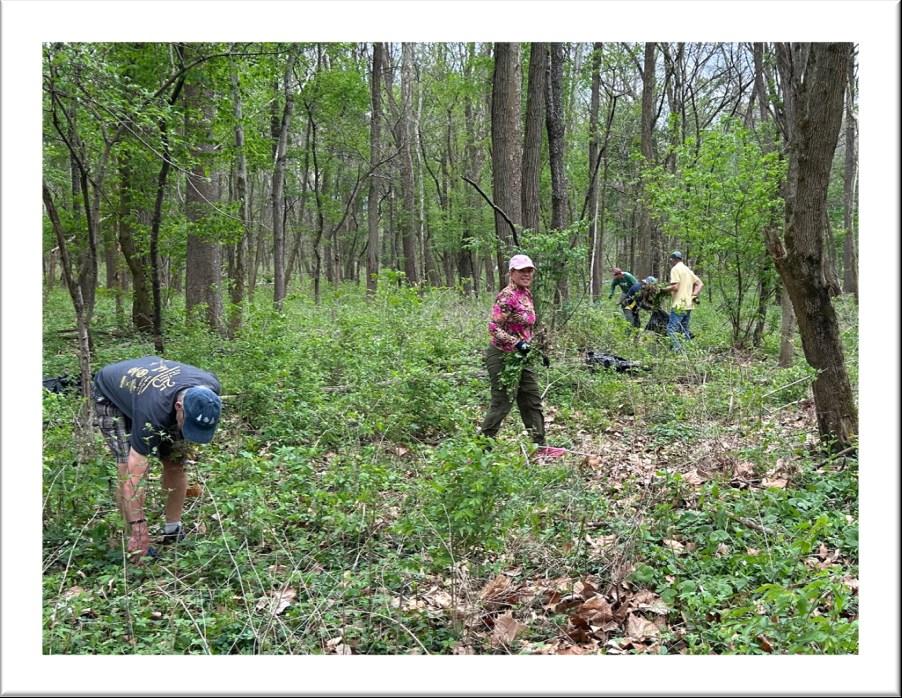
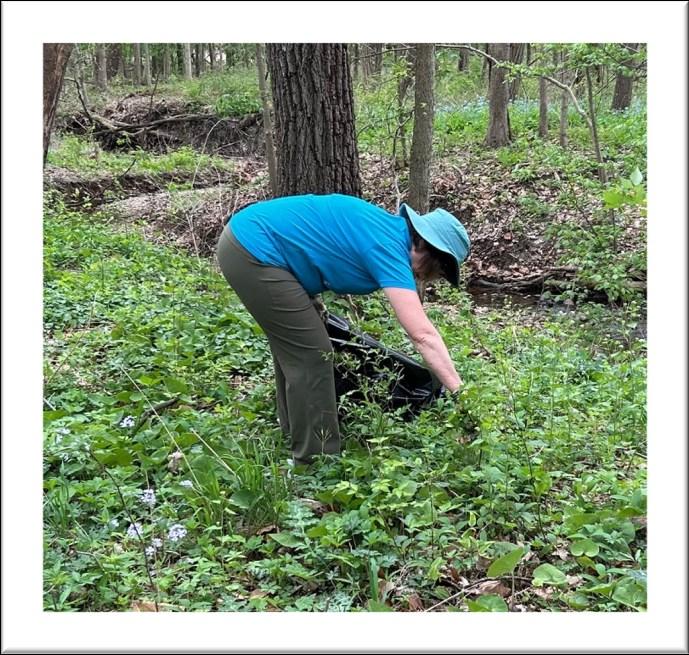
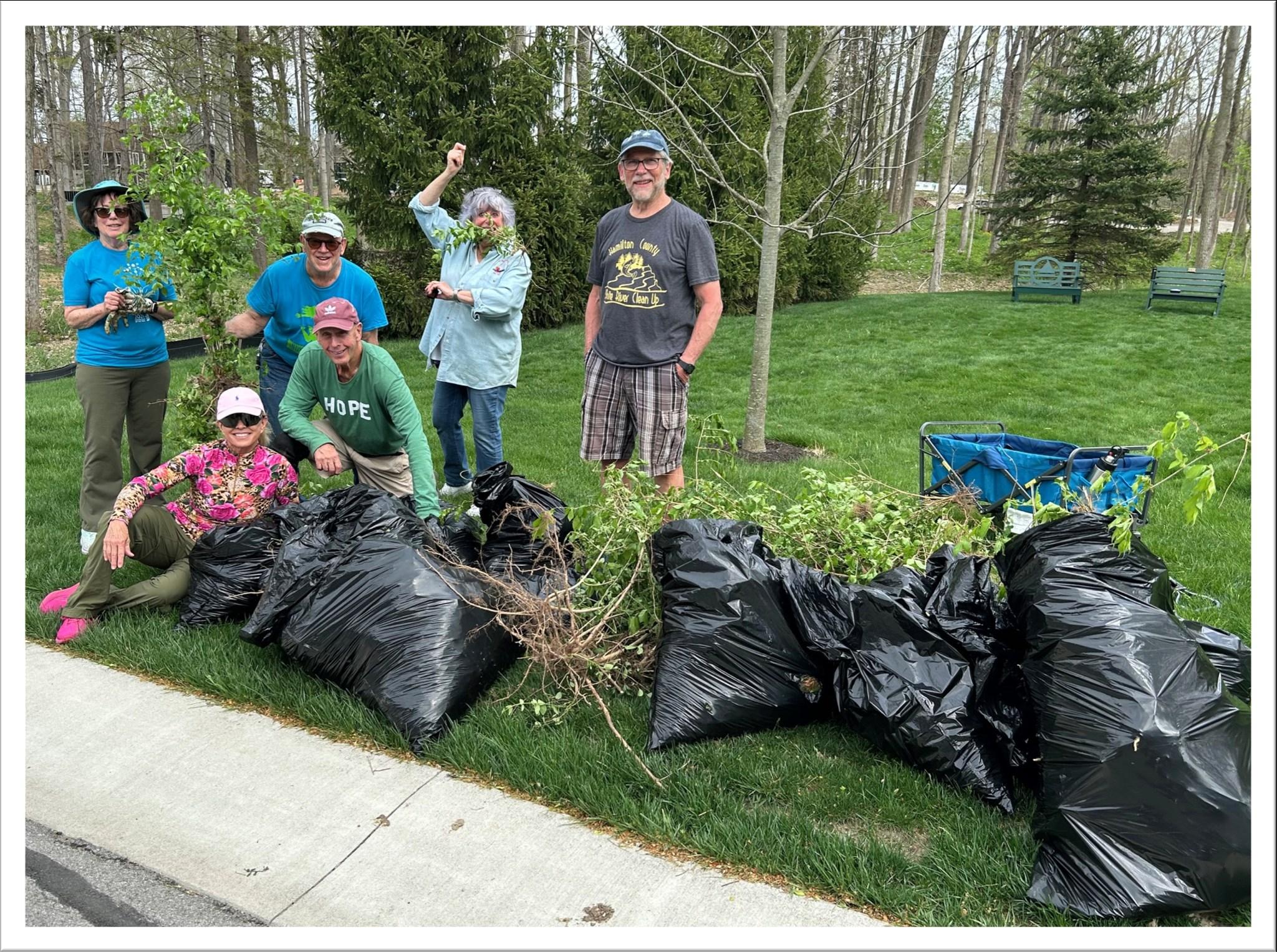
Ten neighbors joined forces to remove invasive Garlic Mustard from the preserve. In additon to Garlic Mustard several invasive Honeysuckle plants were removed. Each year we remove Garlic Mustard from the preserve. This invasive plant is hard to eliminate but through our volunteers each spring, we can keep the plant from taking over. Many thanks to the neighbors who pitched in for this important task.
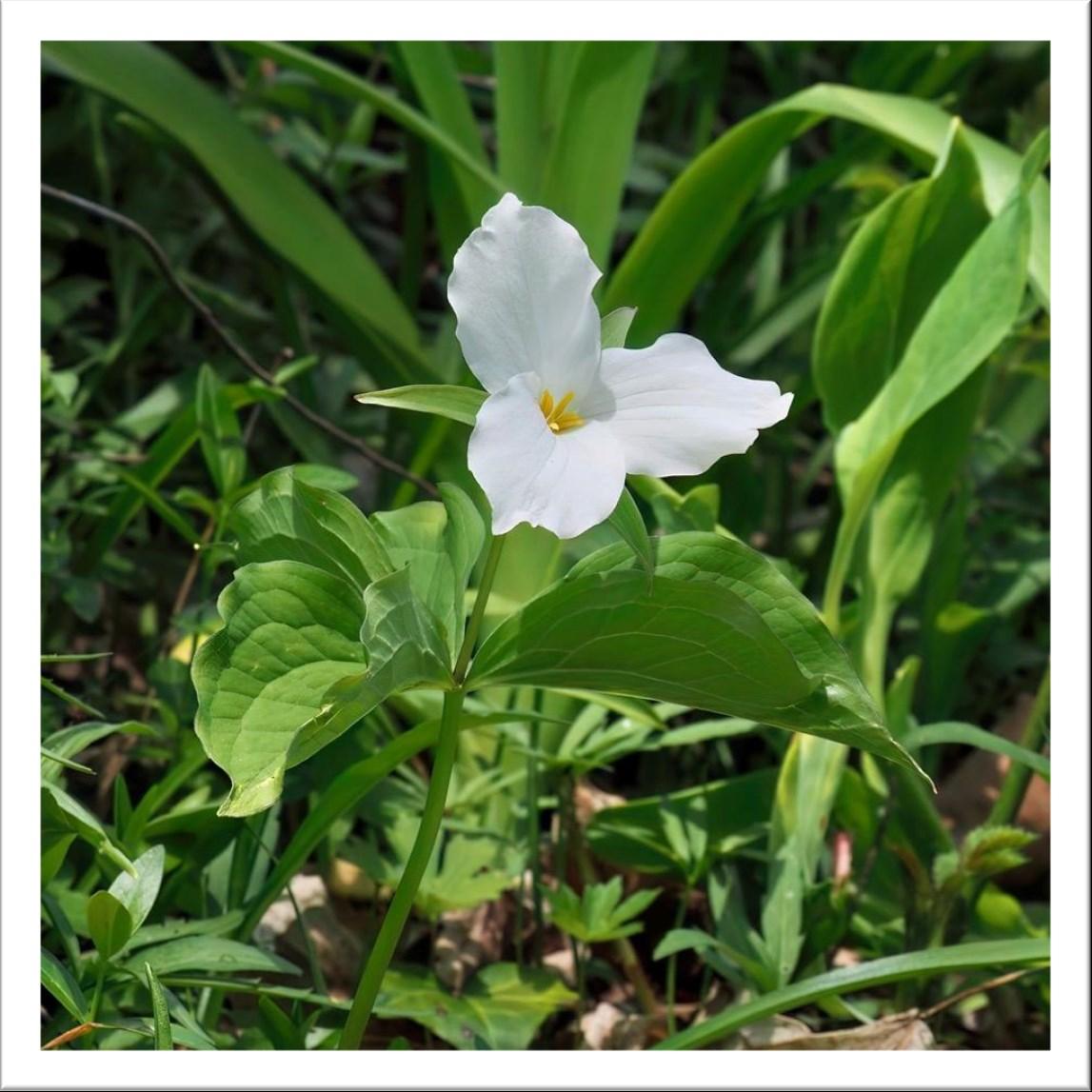
Early spring flowering shrub in our Nature Preserve – American Hazelnut
By Betty Yan
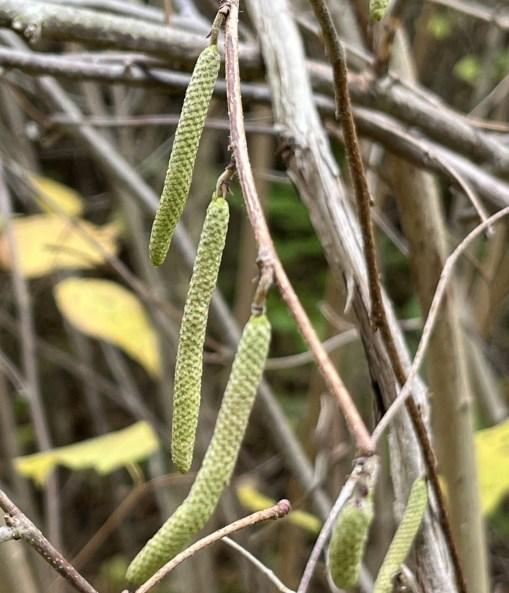
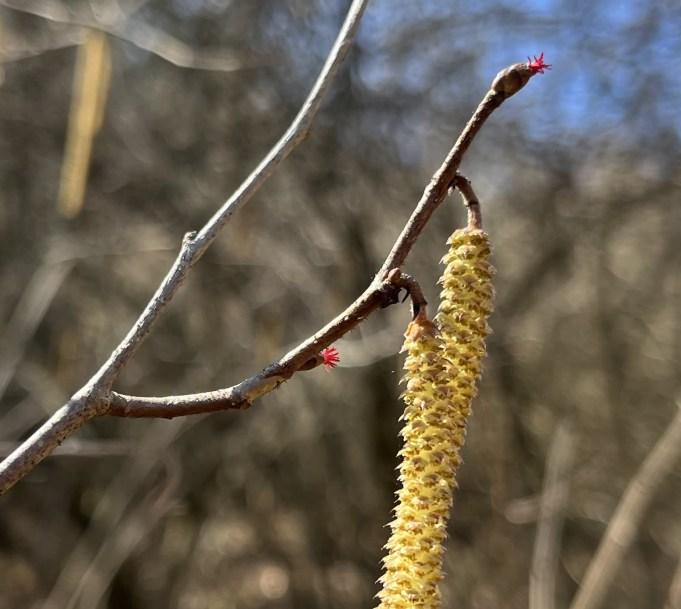
American Hazelnut (Corylus americana) is a deciduous shrub native to Indiana. We have an 8 - l0 foot spread of this shrub, and about 10 feet tall in our preserve. It was first noticed by Greg Harker in spring of 2025.
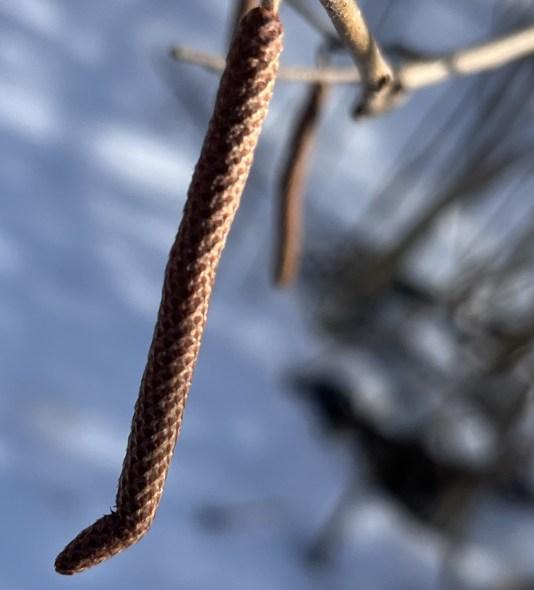
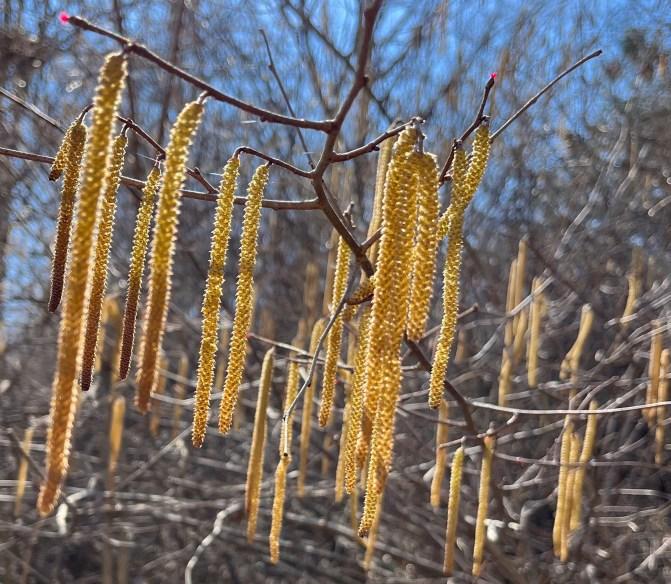
The male green flower buds (called catkins), about 1 – 1.5 inches in length, appeared in the fall and stayed through winter. In late winter (around February), the male catkins lengthened and changed from green to reddish brown. Shortly after that, the male catkins bloomed (early March), with fluffy yellowish flowers. At the same time, the very tiny red female flowers showed up. There are generally 2-5 female flowers in each tiny flower bud.
The American hazelnut is one of the earliest flowering shrubs here in central Indiana before the leaves come out. The flowers are wind-pollinated without the aid of pollinators as the temperature may still be too cold for the presence of insects such as bees.
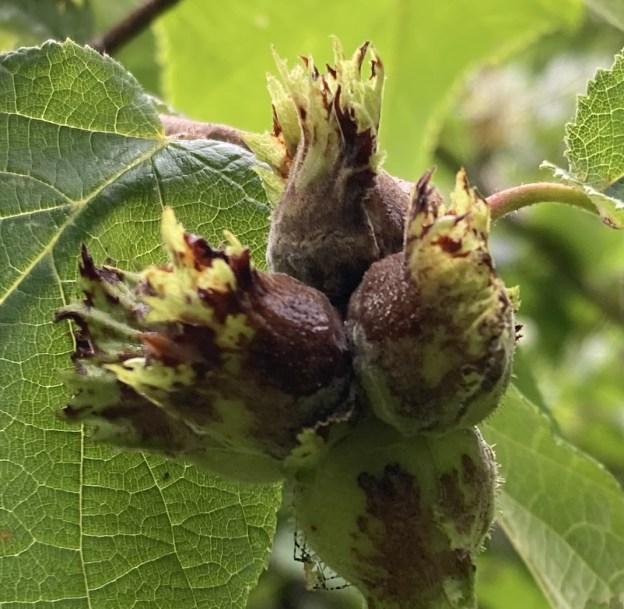
The hazelnuts in late summer are highly sought after by many birds and wild animals in our preserve
Male flower buds (catkins)
Male flower buds in late
Male flowers (catkins) in bloomed appeared in the fall winter just before blooming in early spring (Mar 8, 2026)
2 - 5 very tiny red female flowers
Hazelnuts in late summer bloomed at the same time as the male flowers (hanging catkins)
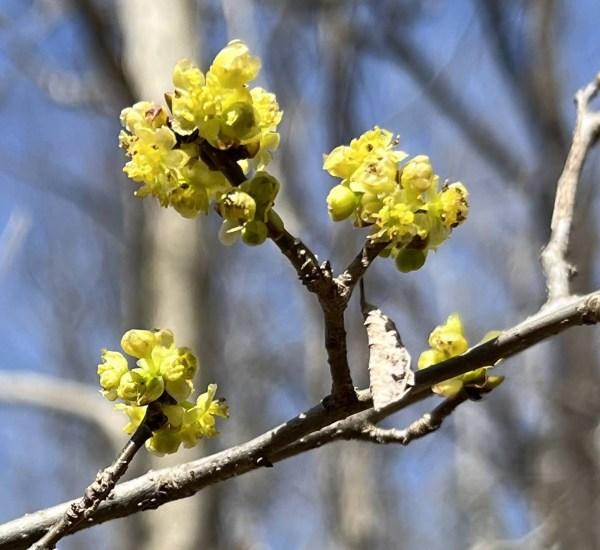
Early spring flowering shrub in our Nature Preserve – Northern Spicebush
By Betty Yan
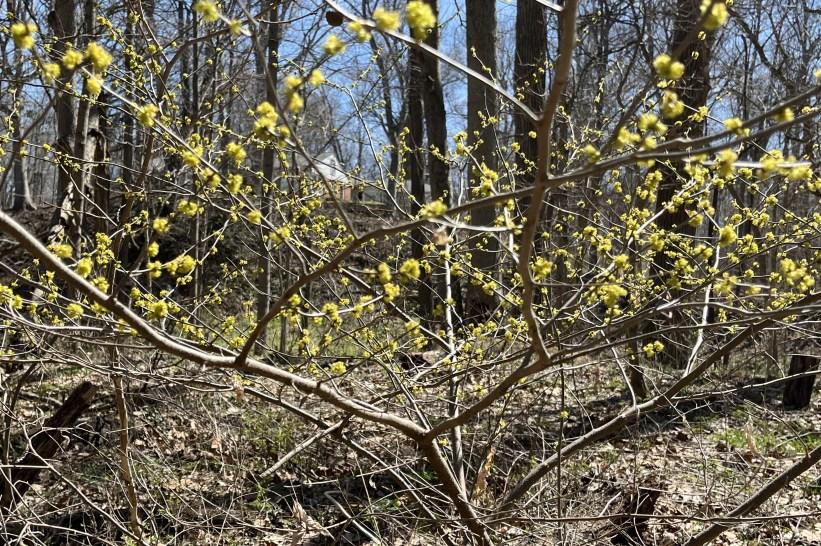
Northern spicebush (Lindera benzoin) is a deciduous native shrub in Indiana. Pale yellow flower clusters show up in early spring (late March) on bare branches before the sprouting of leaves. The nectar rich flowers are important source of food for pollinators such as bees this early in spring. The yellow flowers on bare branches also make it easy to quickly identify this native shrub in the springtime. We have at least a dozen Northern spicebush shrubs in our preserve.
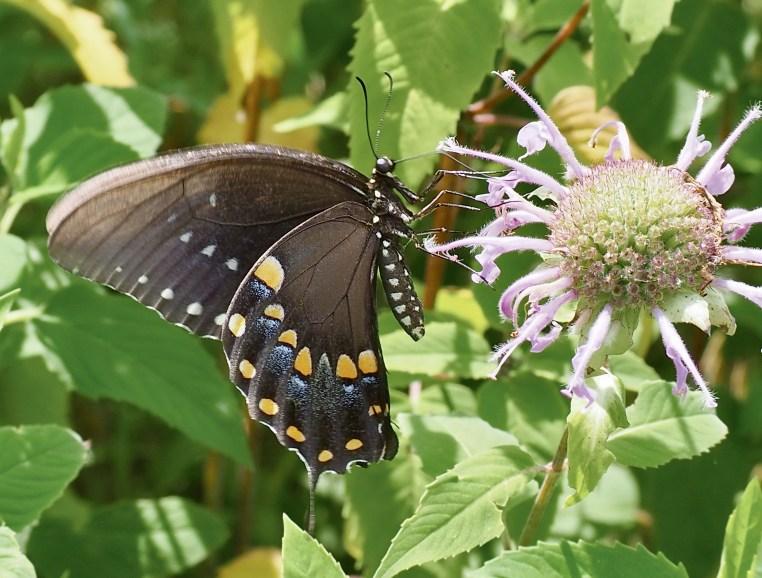
When leaves emerge, they are the preferred food for the caterpillars of the Spicebush Swallowtail butterfly and the Promethea Silk moth. It would be fun to look for the distinctive looking Spicebush Swallowtail butterfly caterpillars on a Northern Spicebush shrub.
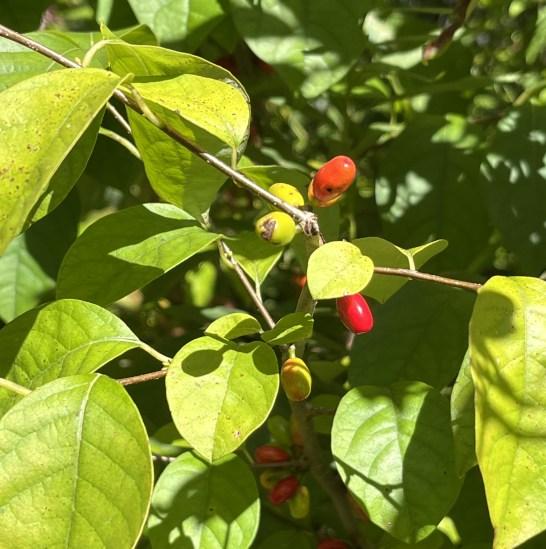
In late August to early September, the Northern Spicebush bears glossy bright red berries. They are highly sought after by both resident and migratory birds, wild animals and humans. The ripe berries, fresh or dried, can be used in place of allspice for baking, tea and savory dishes.
https://en.wikipedia.org/wiki/Papilio_troilus )
Pale yellow flowers in early spring on bare branches of the shrub Glossy bright red berries in early September
Spicebush swallowtail butterfly in Caterpillar of the Spicebush butterfly (from our nature preserve
Serving Tamarack Seventeen and Springmill Lakes at Tamarack 55th Editon, May 8, 2026
Annual Spring Wildfower Tour – Saturday, April 25th
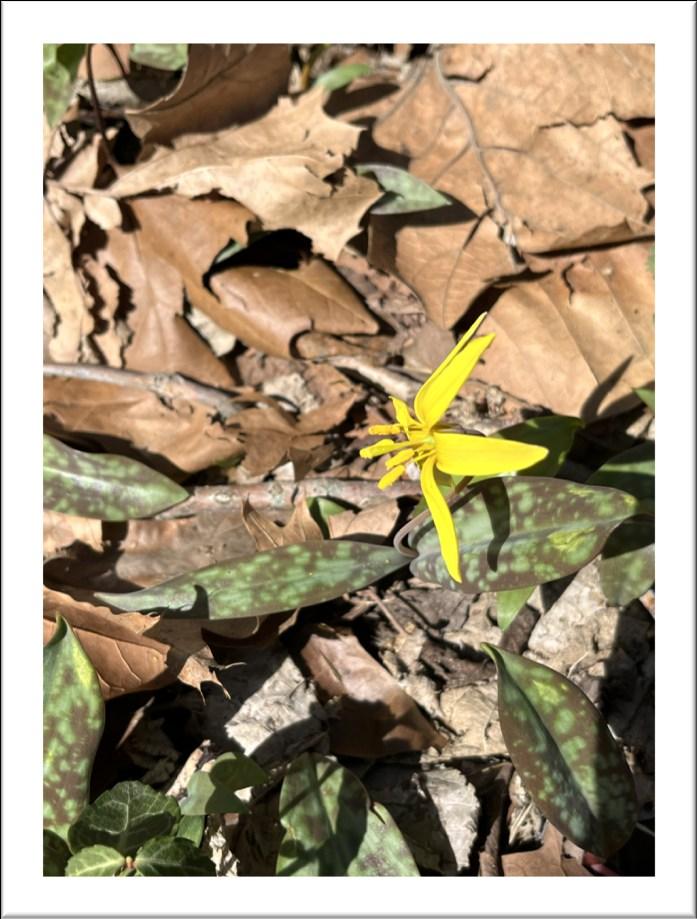
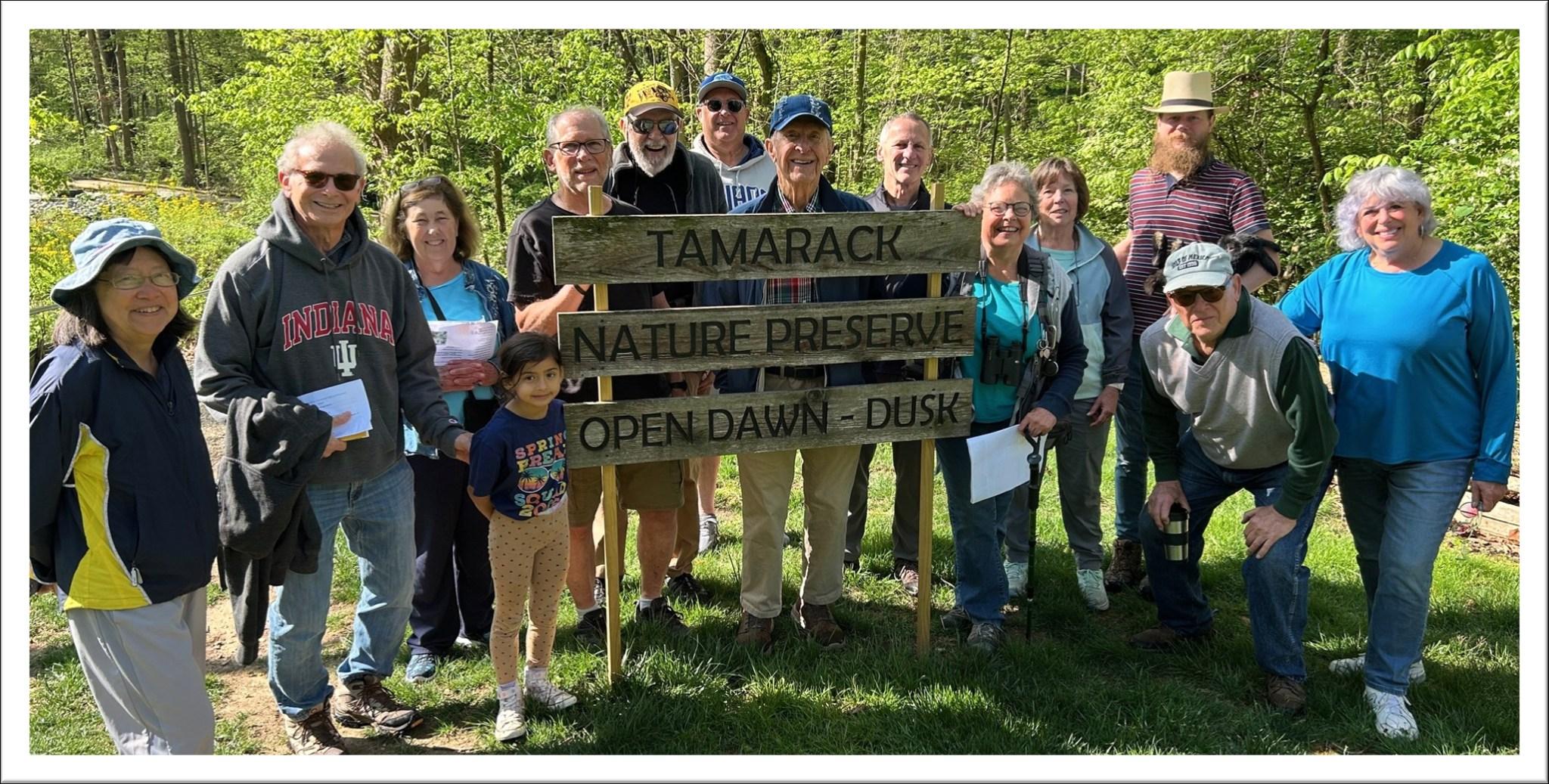
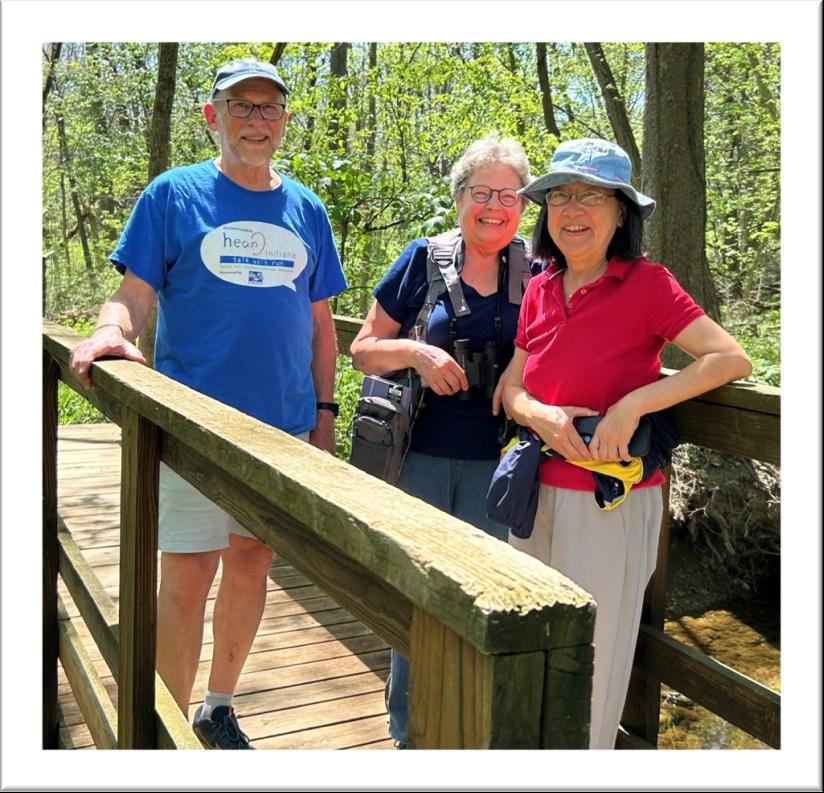
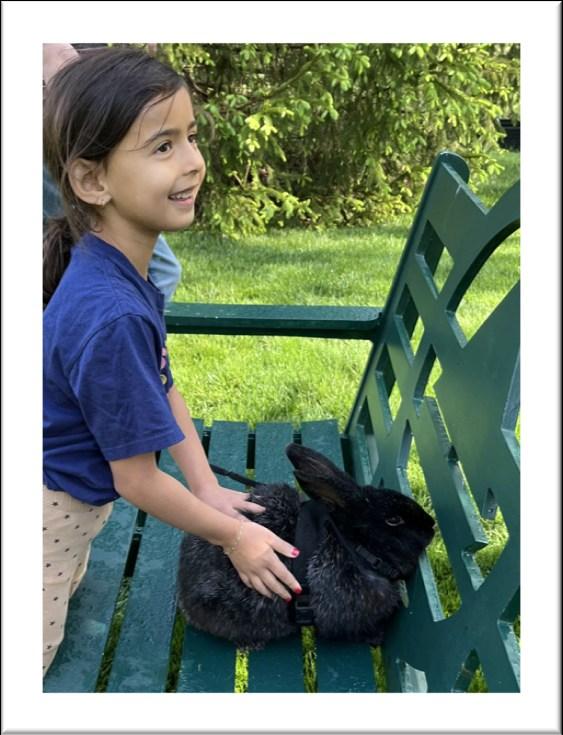
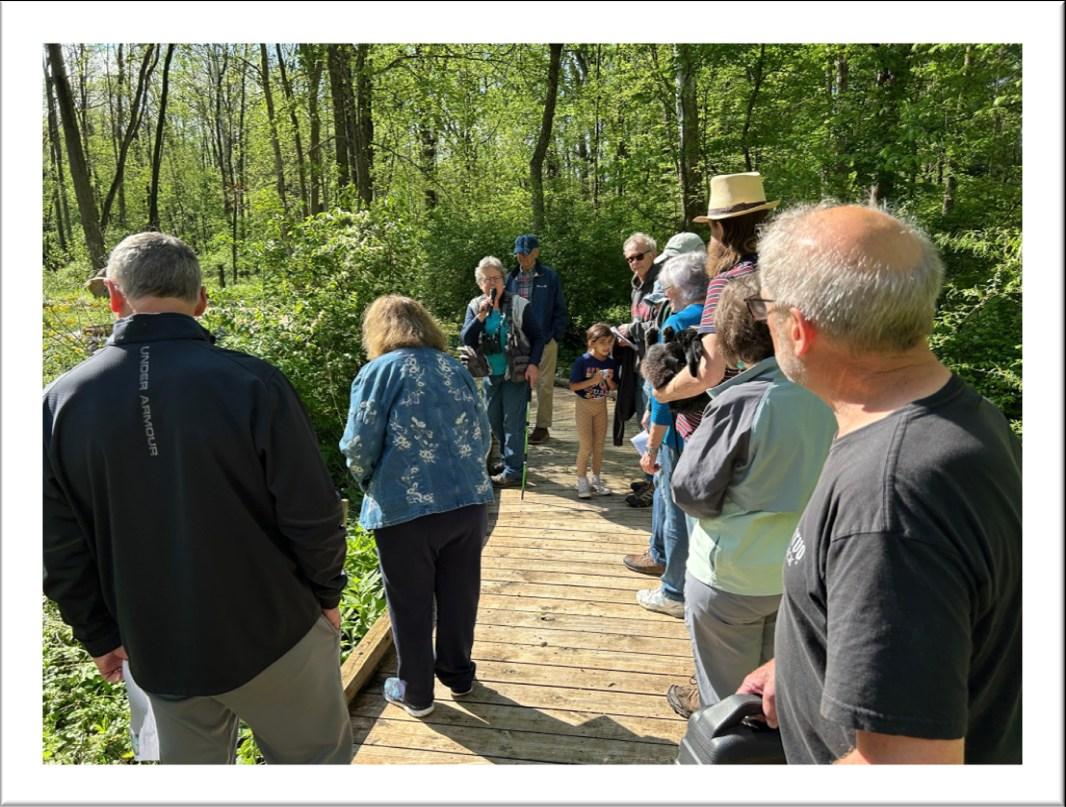
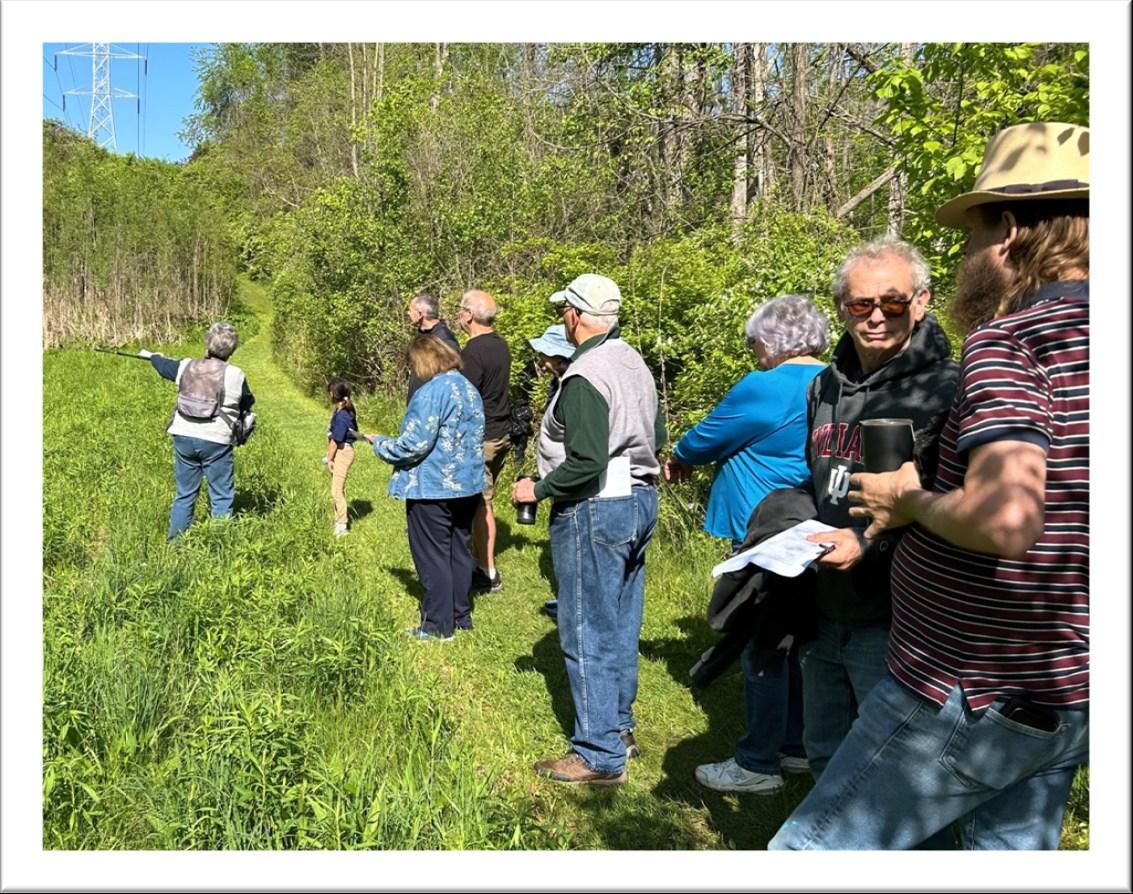
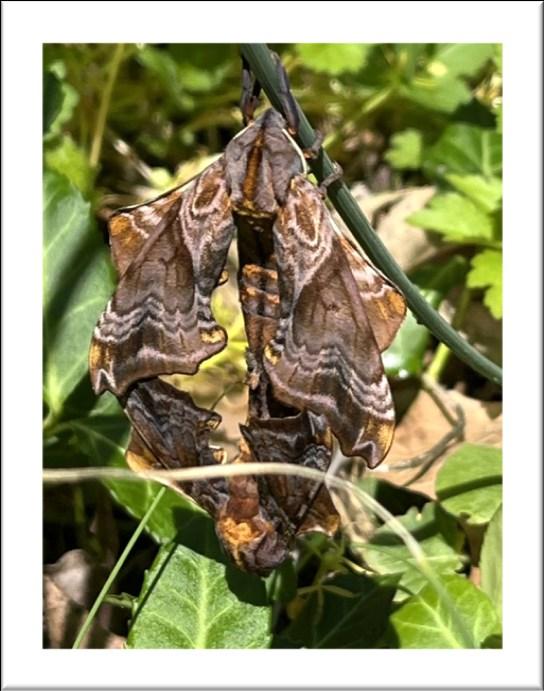
Friends and neighbors gathered to stroll through our preserve under the guidance of our expert guide, Norma Wallman. Thanks t o Rob Young, introducing his friend Mike and his pet Silver -fox rabbit, Bruce. In additon to the rabbit surprise, Mike and Rob s poted a rare sightng of two Small -eyed sphinx moths matng. Norma pointed out many fowers, trees and natve plants. A real treat!
Greg, Norma and Bety met prior to the Saturday tour to make sure many wildfowers would be identfed during the annual tour. Bruce the rabbit and Milla became close friends. As the tour group strolled through preserve, Norma pointed out interestng fowers and plants.
Lef: Small -eyed sphinx moth matng – get a room!
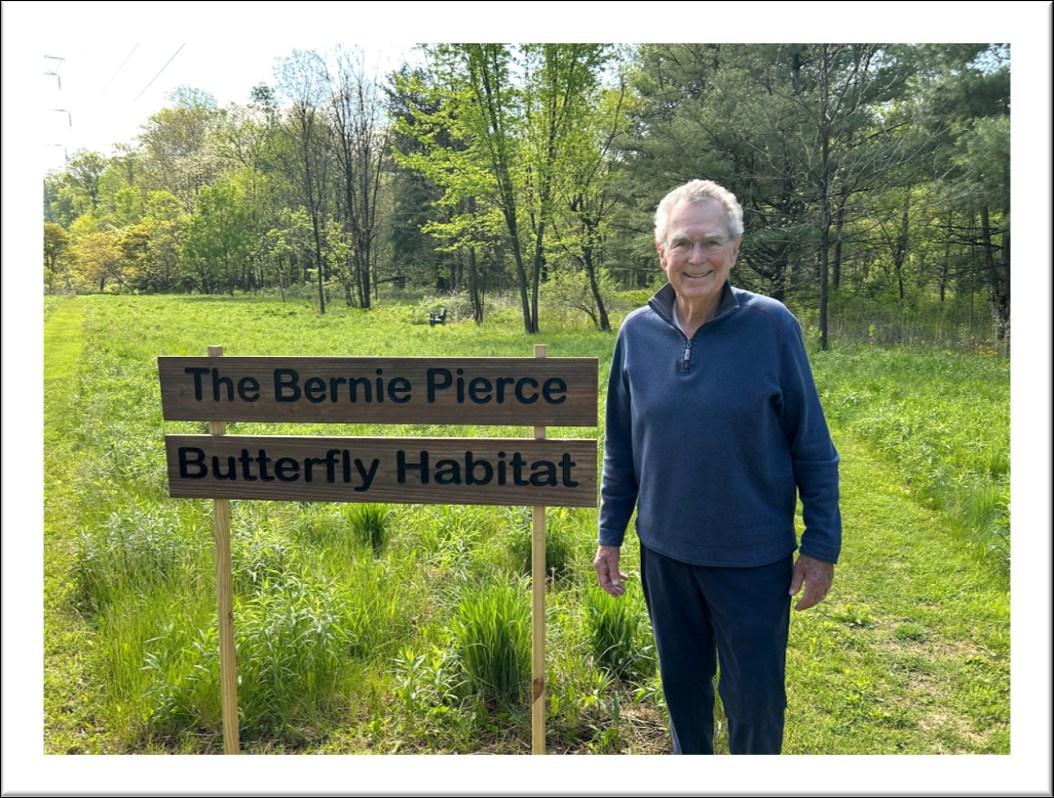
Buterfy Habitat dedicated to Bernie Pierce in appreciaton of his contributon
It was Bernie Pierce who had the idea to plant a buterfy habitat in our nature preserve underneath the AES power lines. When a contractor came in to cut down the large trees under the lines, Bernie suggested they cut all the trees and then later had a Bloomington company called Eco Logic spray to kill the area and seed the buterfy habitat area, which is just under one acre. Funds for the project were raised mostly by donatons from neighbors. The plantng was done with special equipment in January, 2022 using a mesic pollinator seed mix of natve fowering plants and grasses. Those of you who frequent the nature preserve have seen that the area has been improving each year and is now seeding itself and is a highlight of our preserve, especially in the warm months. We have Bernie to thank for this wonderful area. During the April 25 Wildfower Walk, we surprised Bernie by unveiling a sign that dedicates the area as The Bernie Pierce Buterfy Habitat. We encourage you all to enjoy this area at any tme but especially in the summer growing season when fowers are in full bloom and bees and buterfies are feeding in the area. And be sure to thank Bernie for this nature preserve treasure next tme you see him!
Save the Date—Tuesday, June 23 @ 7pm by the lake.
Featuring guitarist, Tim Brickley and vocalist Wendy Reed. Two Indianapolis icons in the music scene.
Wendy Reed is the gold standard for vocal showmanship in Indianapolis. A modernday curator of the Great American Songbook. She’s widely admired for her artstry and theatrical grace. Reed contnues to defne the city’s musical landscape as one of its most enduring and versatle voices
Tim Brickley is an Indianapolis, IN singer/songwriter/ composer/mult- instrumentalist/bandleader and producer who the Indianapolis Star has described as a musical "local legend”.
Breaking News! Wendy Reed is a 2026 inductee into the Indianapolis Jazz Hall of Fame.
The below link will take you to our community website and to the nature preserve page. The link has all the photo guides for our preserve. All the photos were taken in our preserve by Pilar Morera and identfed by Bety Yan. The guidebooks are updated regularly.
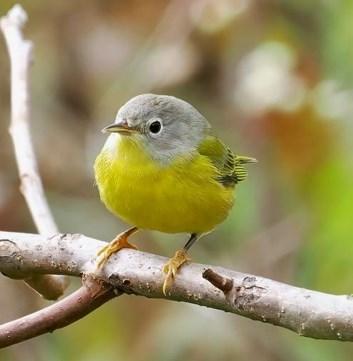
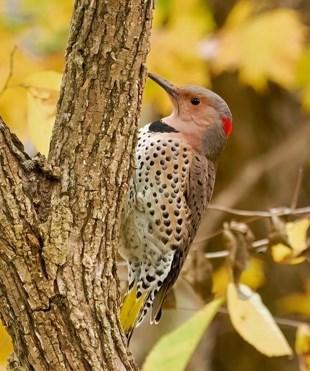
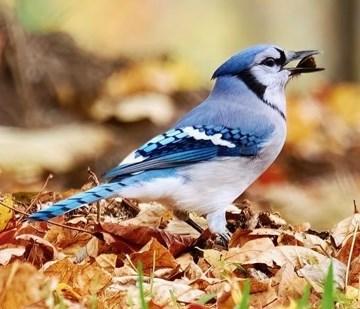
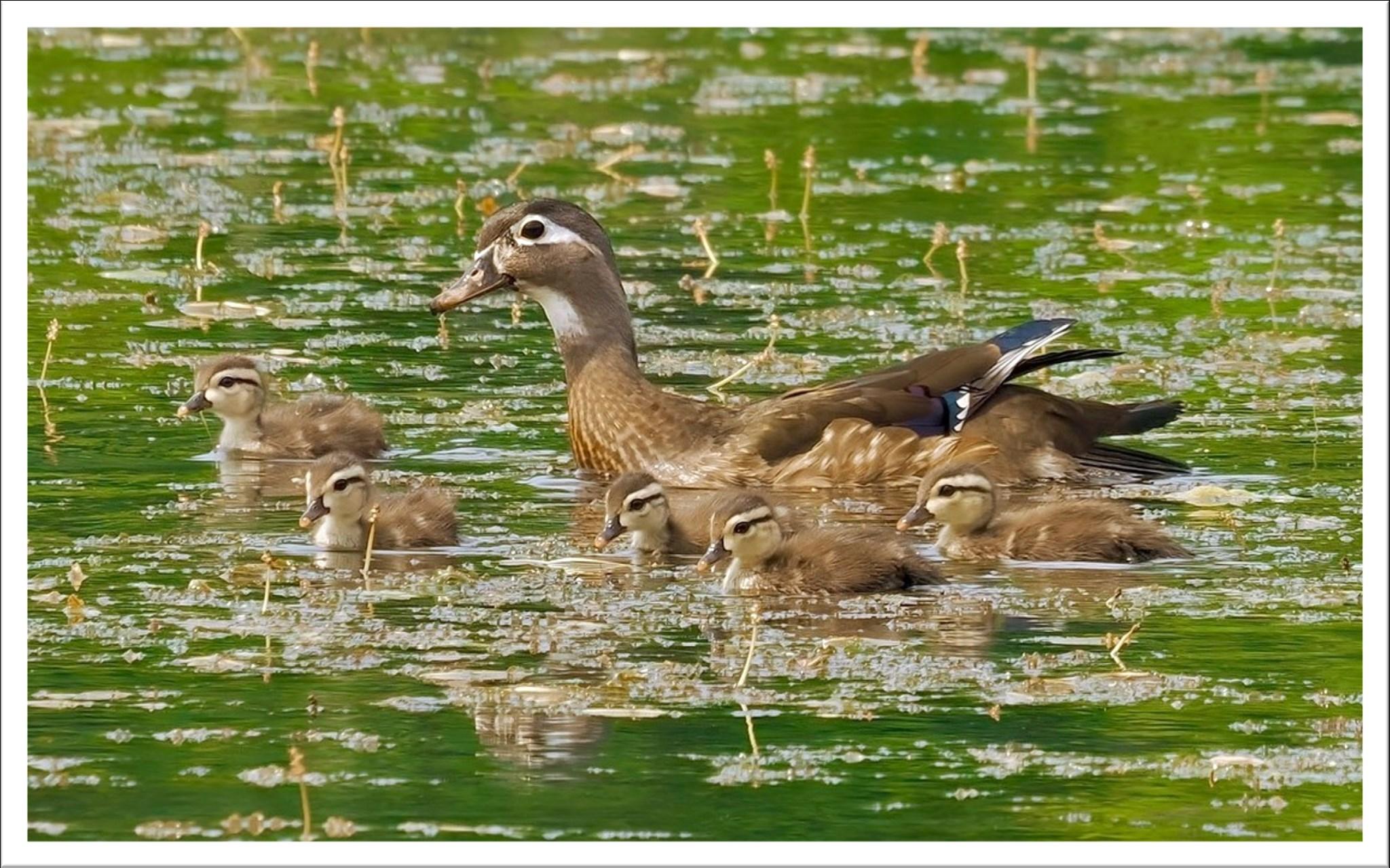
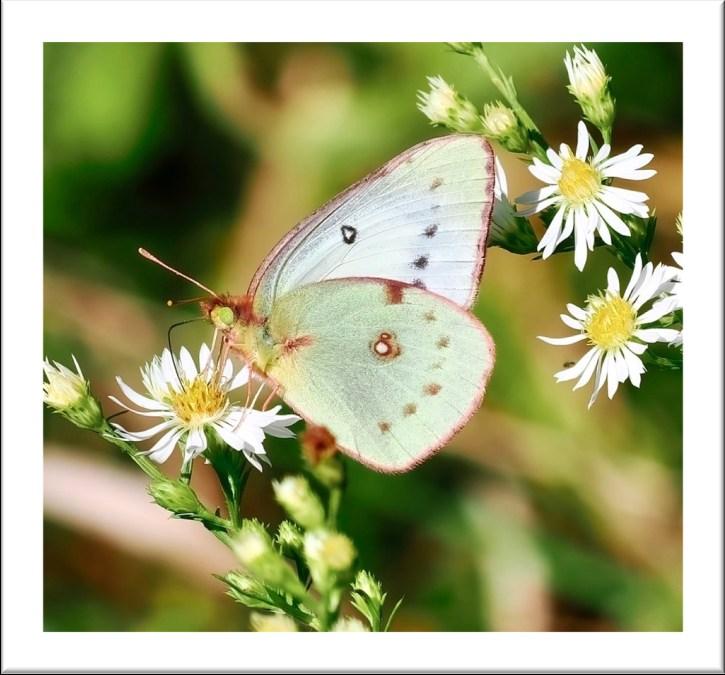
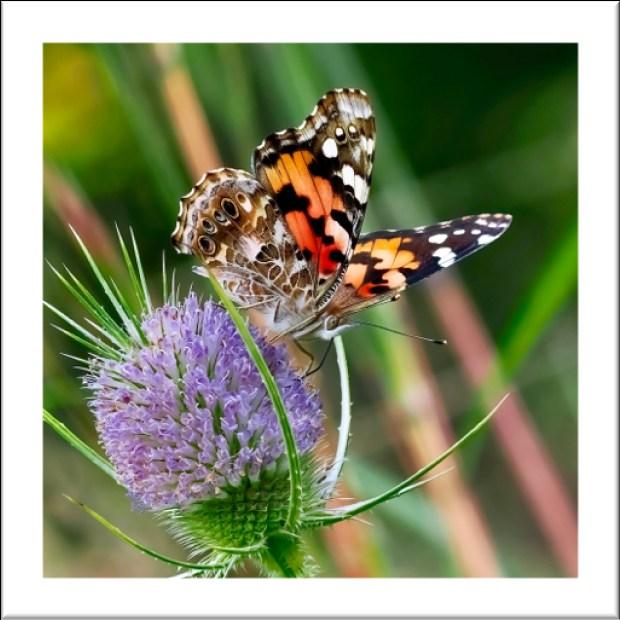
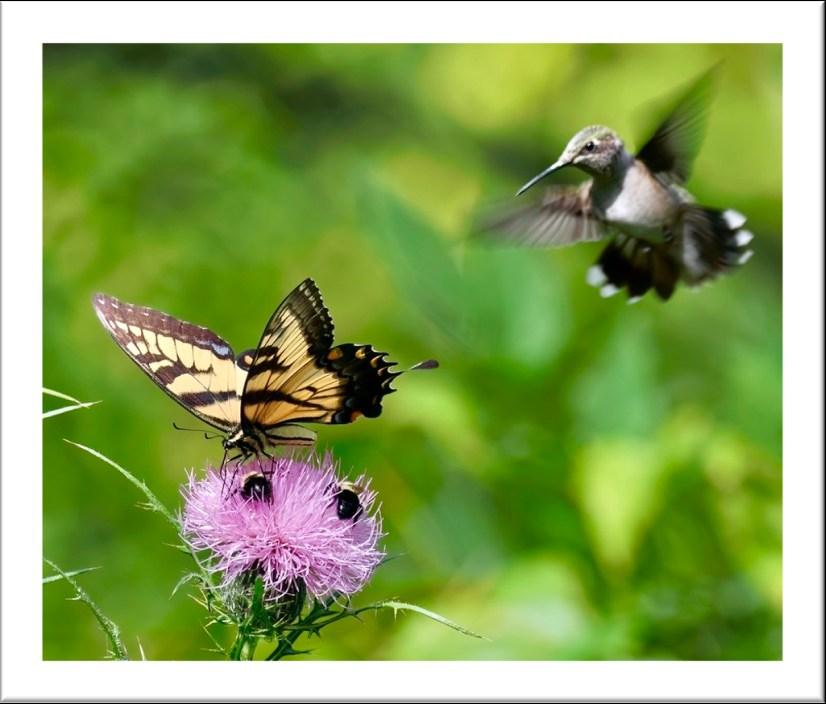
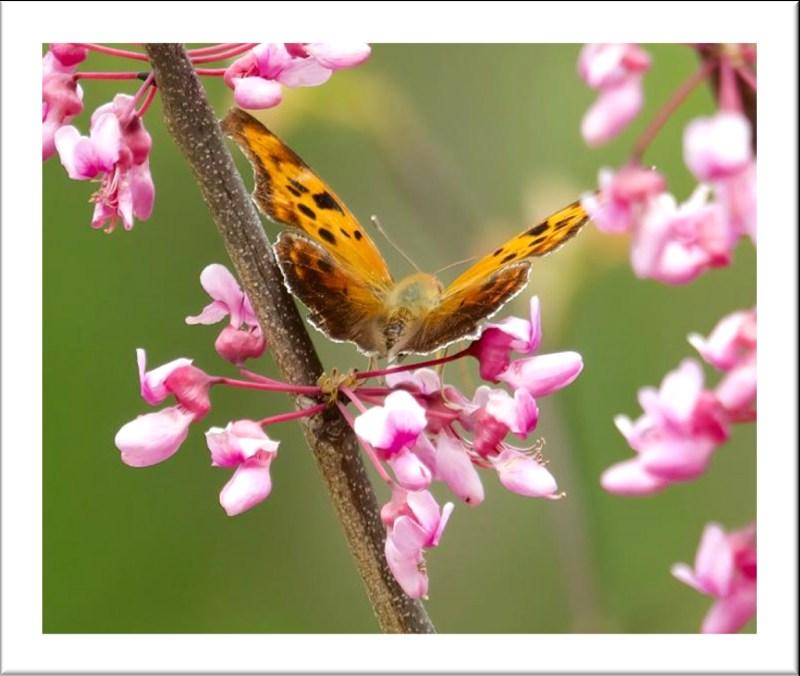
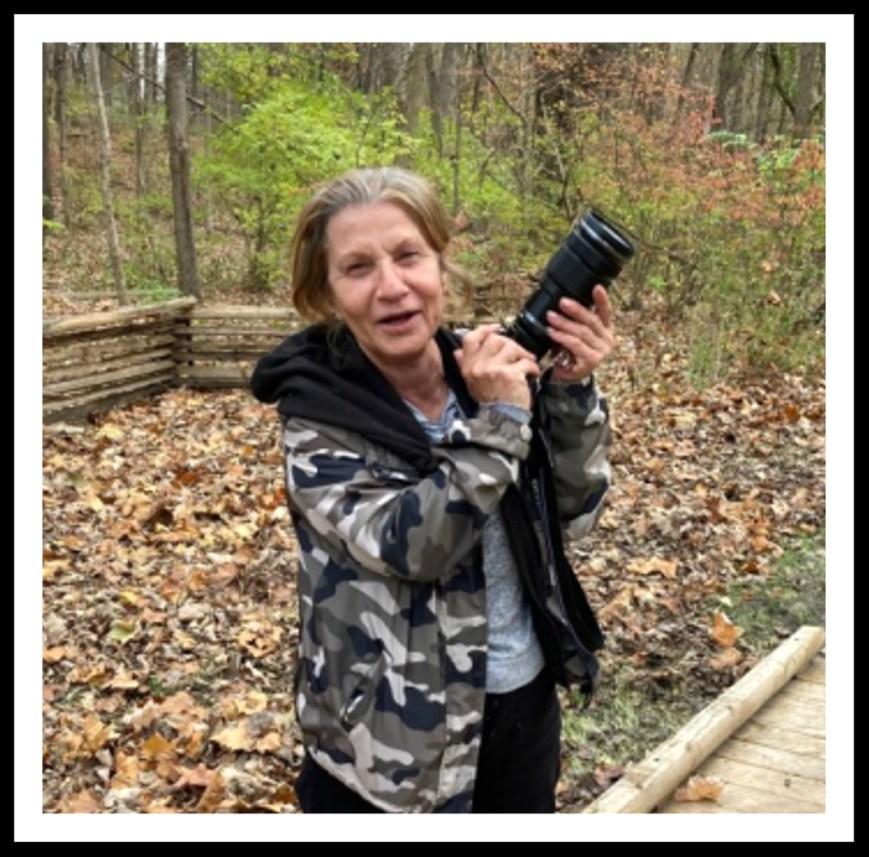
For many residents, the Nature Preserve is a pleasant place to walk, enjoy fresh air, and connect with nature. For Springmill Lakes resident Pilar Morera, it became something much more a place of discovery, learning, and artistic inspiration.
Pilar's journey as a photographer began after she moved to the community. Armed with a camera and a natural curiosity, she taught herself the art of photography while exploring the preserve's trails and habitats. What started as a hobby soon became a passion.
"I am completely self-taught," Pilar says. "The secret to finding birds and insects is to be very observant and curious."
That curiosity has guided her throughout her life. Pilar spent her childhood in northeastern Spain, first in the central region of the Pyrenees Mountains before her family moved to Zaragoza, a historic city located in the Ebro River Valley. Although she moved to the United States at the age of 21, she still returns to Zaragoza each year to visit her sister and reconnect with her roots.
Nine years ago, Pilar moved into the community and was immediately drawn to the Nature Preserve. For three years she walked its trails throughout every season, often carrying her camera and searching for new subjects.
"It was like going shopping," she says with a smile. "Every day there was something new to see."
Her photographs captured the remarkable diversity of life found within the preserve. Migratory birds stopping during their long journeys, insects hidden among native plants, and wildlife quietly moving through the woods all became subjects for her camera. Over time, Pilar developed a deep understanding of the preserve's ecosystems, learning to recognize plant species, bird behavior, seasonal changes, and the subtle interactions that make a natural environment thrive.
Through Pilar's Lens: Discovering the Magic of the Nature Preserve
Tamarack Nature Preserve June 15, 2026 56th Editon
One of her favorite memories involves the preserve's deer population. After countless walks along the trails, some of the deer became so accustomed to her presence that they would quietly follow her as she explored.
"It felt magical," Pilar recalls.
The preserve also became a place where she could witness the rhythms of migration. Many bird species use Central Indiana as a temporary stopover during their seasonal journeys, often remaining for only a day or two before continuing north or south. For a patient observer like Pilar, these brief visits provided opportunities to photograph species that might otherwise go unnoticed.
While she acknowledges that the preserve has changed over the years, Pilar remains passionate about nature and conservation. Her experiences have given her a unique perspective on environmental stewardship and the importance of understanding the delicate balance that exists within natural habitats.
She notes that some invasive species found in Indiana originated in Europe and appreciates the challenges involved in managing natural areas while preserving their ecological character.
Today, Pilar continues to bring the same sense of wonder and curiosity to the natural world that first inspired her years ago. Through her photographs, she encourages others to slow down, look closely, and appreciate the remarkable wildlife that surrounds us.
For those who visit the Nature Preserve, her advice is simple: "Be observant. Be curious. If you take the time to look, you'll be amazed by what you find."
The next time you walk the preserve's trails, take a moment to see it through Pilar's eyes. You may discover that the magic is still there, waiting to be noticed.
The next tme you are in the preserve and spot Pilar searching for her next prize photo, take tme to say hello and thank you!
The below link will take you to our community website and to the nature preserve page. The link has all the photo guides for our preserve. All the photos were taken in our preserve by Pilar Morera and identfed by Bety Yan. The guidebooks are updated regularly. htps://springmilllakesatamarack.com/nature-preserve
Save the Date—Tuesday, June 23 @ 7pm by the lake.
Featuring guitarist, Tim Brickley and vocalist Wendy Reed. Two Indianapolis icons in the music scene.
Tim Brickley is an Indianapolis, IN singer/ songwriter/composer/mult- instrumentalist/bandleader and producer who the Indianapolis Star has described as a musical "local legend”.
Wendy Reed is the gold standard for vocal showmanship in Indianapolis. A modernday curator of the Great American Songbook. She’s widely admired for her artstry and theatrical grace.