SPIRITUS CHAMBER CHOIR
ANDREA CIONA • ARTISTIC DIRECTOR
in collaboration with Chronos Vocal Ensemble

in collaboration with Chronos Vocal Ensemble

Saturday 25 May 2024
Christ Church Elbow Park
“Quality attracts — and for lovers of fine choral music, Spiritus Chamber Choir has come to mean refinement, poise and rich expression in choral singing.”
— Calgary Herald
Spiritus Chamber Choir is an internationally award-winning amateur choir founded in 1995, based in Calgary, Canada. Spiritus has been recognized both nationally and internationally for its high-quality performances, musicianship, and unique collaborations. The choir is committed to excellence in choral music, performing for music lovers in Calgary and surrounding areas.
Spiritus has produced five recordings to date. Seven Last Words from the Cross, All the Stars Looked Down, and Vedel: Choir Concertos Nos. 1-12 & Divine Liturgy of St. John Chrysostom are available online on Apple Music, Spotify, and other major streaming platforms.
Dawn Coulter
Kathryn Fraser
Anne Heinemeyer
Joanna Henry
Amanda Hillestad
Caitlyn O’Connor
Kim Reinhart
Taylor Berry
Kathy Hanna
Bri Harvie
Anna-Marie Koszarycz
Sarah McLean
Julia Millen
Olena Simsek
Patti Vaillant
Volodymyr Amiot
Jordan Casello
Michael De Los Santos
Allan Morgan
Paul Newman
Chris Visser
Kyle Canton
Joshua Field
Bryan Hryciw
Brady King
Colin Redekop
David Schey
Bob Serrano
Nathan Severson-Baker
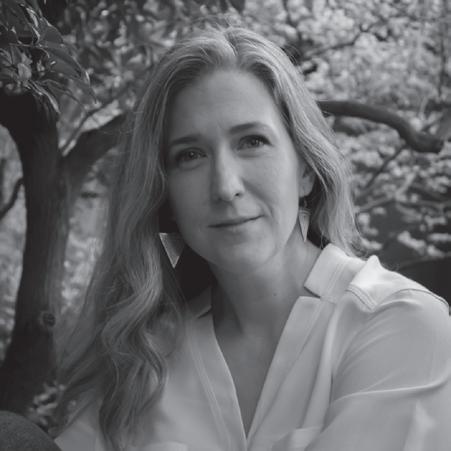
Andrea Ciona is a distinguished conductor, performer, adjudicator, and educator from Calgary, Alberta. Having conducted and adjudicated ensembles around the world, Andrea has served as Artistic Director of the Spiritus Chamber Choir since 2022. Director of Choirs at Bishop Carroll High School in Calgary, Alberta, since 2010, her ensembles have been recognized nationally and internationally for their artistry and skill. Andrea is the founding director of the Rocky Mountain Symphony Chorus and regularly performs with the Symphony. Currently on faculty at Mount Royal University Conservatory of Music, Andrea leads the Advanced Performance Program in Choral Conducting where she coaches and mentors aspiring choral conductors. Previously Andrea has served on faculty at the Red Deer College School of Music and worked with Alberta Education on the Provincial Arts Education Curriculum Redesign. In her free time, Andrea loves travelling and exploring the world with her husband and two children. This sense of adventure influences her musical approach, encouraging innovation and creativity. Andrea holds degrees from the University of British Columbia (B. Mus, Performance & M. Mus, Choral Conducting) and the University of Calgary (B. Ed, Secondary Music)..
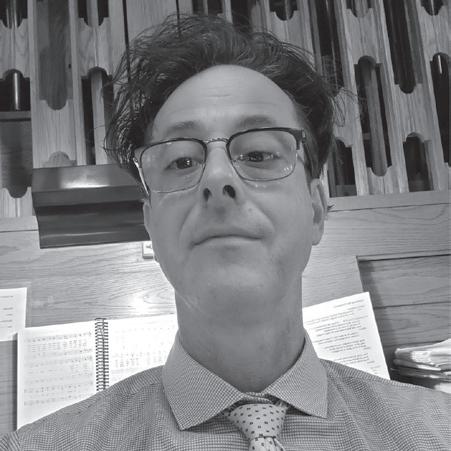
Colin Redekop completed his undergraduate studies in his hometown of Winnipeg, Manitoba. He holds the Master of Church Music degree from Southern Seminary (1999) and the Master of Music degree in organ performance from the University of Calgary (2011). Significant organ instructors include Boyd Jones, Richard Greig, and Neil Cockburn.
Awards and scholarships include the Winnipeg Bach Festival Trophy, the Lieutenant Governor’s Trophy of the Winnipeg Music Festival, the Cantos Music Foundation grant for organ studies, and grants from the Alberta government and the University of Calgary Faculty of Graduate Studies. Colin was also a prize winner in the 2009 Composer Competition of the Alberta Guild of English Handbell Ringers. An accomplished church musician, Colin has served congregations in Kentucky, Florida, Manitoba, and Calgary. He is presently an Assistant Organist at Christ Church Elbow Park. Colin has accompanied numerous Calgary ensembles, including the Calgary Girls Choir, the University of Calgary Chorus, the avant-garde choral theatre group Artio, and the award-winning choirs of Webber Academy. He is currently the accompanist of both the Spiritus Chamber Choir and the Calgary Renaissance Singers & Players.
Since its founding in 2013, Chronos Vocal Ensemble has gained a national reputation for innovation and excellence. The ensemble has delighted audiences at concerts in Edmonton, on tours in four provinces, and at conferences of Choir Alberta, Choral Canada and the American Choral Directors’ Association. Chronos has been recognized both nationally and locally, with the Healey Willan Grand Prize in the National Competition for Canadian Amateur Choirs, and in Edmonton’s Salute to Excellence. Collaborators have included the Edmonton Symphony Orchestra, Alberta Baroque Ensemble, Vocal Alchemy, Spiritus Chamber Choir (Calgary), Da Camera Singers and Edmonton Youth Choir. The choir’s recordings are regularly featured on CBC’s Choral Concert. In championing new Canadian choral music, Chronos has given more than a dozen world premieres and commissioned composers including Andrew Balfour, Marie-Claire Saindon, Matthew Emery, Katerina Gimon, and Nicholas Ryan Kelly. To bring more new works into the Canadian catalogue, the ensemble has offered an annual composition competition since 2017. The choir’s fourth album, Resolve, features new music by eight Canadian composers.
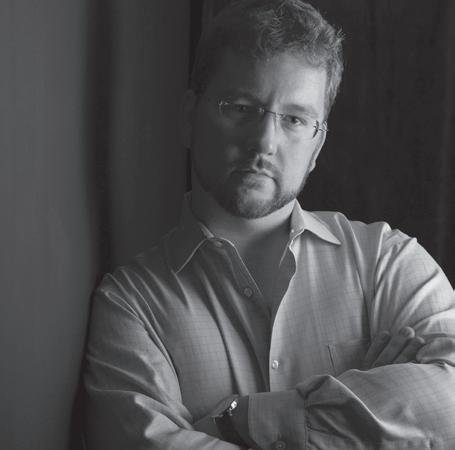
Jordan unites singers in the common goal of creating rich musical experiences – for themselves, for each other, and for audiences. He founded Chronos Vocal Ensemble in 2013 to pursue excellence in choral performance. Early in his tenure with Chronos, Jordan was nominated as an Emerging Artist in Edmonton’s Mayor’s Celebration of the Arts. He also leads the choral organizations Vocal Alchemy and Ante Meridiem, and in 2016 received the Con Spirito award from Choir Alberta, for “spirit, dedication, and commitment to choral music in the Province of Alberta.” Jordan serves as a workshop leader, adjudicator, juror, and organizational consultant. As an educator, he has worked with choirs at Concordia High School, Concordia University of Edmonton, and the University of Alberta. He appears regularly as an ensemble member and soloist with Calgary’s Luminous Voices. When not making music, he enjoys spending time with his kids, gardening with Tamara, and chasing birdies.
SOPRANO
Melanie Astle
Jessica Heine
Kaley Henbest
Tegan Hryciw
Rebecca Patterson
Carla Stolte
Amanda Wong
Erin Crocker
Deanna Davis
Vita Lorence
Annie Randall
Emily Stremel
Alex Thompson
Aaron Addorisio
David Dykstra
Tim Lo
Isabela Ramos
David Salmon
Stuart Beatch
Cole Dorchester
Kurt Illerbrun
Paul Mitchinson
Chad Ohman
Nicholas Rheubottom
Frank Thede
Spiritus Chamber Choir would like to acknowledge that this concert is occurring on the territory of the Niitsitapi, or Blackfoot people, and the peoples of the Treaty 7 region in Southern Alberta. We would like to recognize the Treaty 7 Nations who make their home on this land, including the Siksika, the Piikani, the Kainai, the Tsuut’ina, and the Ĩyãħé Nakoda First Nations, including the Chiniki, Bearspaw, and Goodstoney First Nations. Spiritus rehearses and performs on land adjacent to where the Bow River meets the Elbow River, a place traditionally called Mohkínstsis, Wîcîspa, and Guts’ists’i. This land is also home to the Métis Nation of Alberta. Spiritus is grateful to the people of Treaty 7 for taking such good care of this land, so that we may enjoy such abundance. We are all treaty people, and we accept the responsibilities that entails.
Volodymyr Amiot - President
Bri Harvie - Vice-President
Kevin Di Filippo - Secretary
Evan Cortens - Treasurer
Katt Hryciw - Director
Sarah McLean - Director
Allan Morgan - Director
Events and Marketing - Nia Devetzis
Program Design - Volodymyr Amiot
Librarian - Dawn Coulter
Assistant Librarian - Joanna Henry
Graphic Design and Website - Bob Serrano
Administrative Support - Bri Harvie
... and our concert volunteers!
Andrew Balfour
Of Cree descent, Andrew Balfour is an innovative composer/conductor/singer/sound designer with a large body of choral, instrumental, electro-acoustic and orchestral works. Andrew’s works have been shared locally, nationally and internationally. He has been commissioned by the Winnipeg, Regina and Toronto Symphony Orchestras, Ensemble Caprice, Groundswell, the Winnipeg Jazz Orchestra, the Winnipeg Singers, the Kingston Chamber Choir, Roomful of Teeth, Tafelmusik and Toronto Mendelssohn Choir, among others.
“The vision described in the title and painted in the music is somewhat fearsome at its climax. For comfort, Grandmother (Nokomis) and Grandfather (Mishomis) are called upon. By the conclusion, there is resolution, and perhaps of awakening to a sunrise.”
- Andrew Balfour, in conversation with the composer and Jordan van Biert, Artistic Director of Chronos Vocal Ensemble
Ivan Hrušovský
Ivan Hrušovský’s “Rytmus” is an exploration of rhythm and energy, reflecting the composer’s unique blend of avant-garde and traditional Slovak influences. Known for his innovative approach to contemporary Slovak music, Hrušovský crafted a piece that challenges performers and engages listeners with its complex rhythmic structures.
“Rytmus” relies on syncopation, shifting time signatures, and intricate patterns, creating a vibrant and dynamic auditory experience. Performers must navigate rhythmic complexity and maintain precise ensemble coordination, all while conveying the underlying drive that propels the piece forward. Through a repeated text honouring Eve, “Rytmus” represents the constant evolution of rhythmic motifs. This interconnectedness of rhythmic patterns invites listeners to consider the dynamic nature of rhythm and its role in shaping the emotional and energetic landscape of music. Ultimately, this work is a testament to Hrušovský’s rhythmic innovation and modernist approach.
Jake Runestad
Jake Runestad’s choral composition “Why the Caged Bird Sings” is a setting of Paul Lawrence Dunbard’s poem, “Sympathy.” The work captures the essence of the caged bird, a metaphor for oppression, and the voice that sings for freedom. Runestad is renowned for his emotionally rich choral music, and this piece exemplifies his ability to translate profound themes into compelling musical expression. In 2023 Spiritus experienced Runestad’s incredible skills firsthand, working with the composer in preparing several of his works.
This particular composition uses a range of musical elements to reflect the emotional journey of the text. It begins with gentle and sombre tones, gradually building to a soaring climax, symbolizing the caged bird’s enduring hope despite its constraints. The music’s intensity fluctuates, mirroring the struggle and defiance described in the poem. Through harmonious melodies and dynamic contrasts, Runestad creates a vivid soundscape that resonates with the listener.
The connection between text and music in “Why the Caged Bird Sings” underscores the idea that music can be the voice of the soul. The caged bird’s song represents a longing for liberation, while the music’s soaring passages suggest the soul’s inherent strength. The rhythmic sections evoke the struggle for freedom, while the harmonious crescendos capture the dream of a better world. Runestad’s composition invites us to reflect on the power of hope and resilience, illustrating that even in the face of adversity, the human spirit finds ways to sing.
Using the words of American poet Alice Williams Brotherton, “The Frost Myth” explores the Norse creation story of our universe, born from the elemental forces of fire and frost. This captivating musical narrative by composer Katerina Gimon weaves through a rich tapestry of textures, incorporating driving rhythmic patterns and forceful Viking-like chants to illustrate the ancient myth. The piece’s dynamic time signatures keep the momentum building, creating an intense and unpredictable progression that culminates in a climactic chorus proclaiming, “And who shall say the gods have left us?”
Spiritus Chamber Choir collaborated with Gimon to prepare for the world premiere of the SATB arrangement of “The Frost Myth” in April 2024, offering a thrilling new Viking-inspired interpretation of this Norse saga.
Eric Whitacre
“I’m not an atheist, but I’m not a Christian either, and for my entire career, I have resisted setting texts that could be used in a liturgical context. After spending the 2010 Michaelmas term in Cambridge (Sidney Sussex College), though, singing with Dr. David Skinner and his marvellous Chapel Choir, I began to see the deep wisdom in the liturgical service. I found myself suddenly open to the history and the beauty of the poetry, and it was the single word Alleluia, ‘praise God’, that most enchanted me. It seemed the perfect fit for the music of my wind symphony work October, which to me is a simple and humble meditation on the glory of Autumn.”
- Eric Whitacre
During the summers of 1901 and 1902, Gustav Mahler set five poems by the German Romantic poet Friedrich Rückert to music. The third of these, “Ich bin der Welt abhanden gekommen” (“I have become lost to the world”), portrays a world-weary artist who exists in our everyday world, but who lives his life in another, more ethereal plane reserved for great artists. Mahler, much maligned as a composer during his lifetime, identified strongly with the poem, saying that it expressed his very self. In this work, he reused themes from his famous Adagietto of his Fifth Symphony, which he composed during the summer of 1902. The orchestral version of this piece begins with a mournful melody played by a solo English horn. This melody is then restated and extended by the singer during the first stanza, which speaks of the artist’s isolation in a world that already thinks him dead. The tempo increases slightly for the second stanza, during which the artist reflects that he does not really care what the world thinks. The third stanza is remarkably peaceful as the artist describes the other world in which he resides: “I live alone in my heaven, in my love, in my song.” The gentle consonant-dissonant alternation of the violins and English horn in the coda seems to portray the artist staring beyond the horizon into his musical paradise. Many consider this piece Mahler’s greatest song, one of his most profound and moving works and of immense personal significance. This 16-part a cappella setting by Clytus Gottwald moves the orchestral parts around and through every section, supporting the melody in the vocal line with rich harmonic sonority.
Chosen Family is a four-movement choral cycle adapting poetry by Victoria-based poet John Barton. The text is taken from his most recent book Lost Family, a memoir in sonnets. The four poems recall important people in his life, both friends and family, who have since passed away. Together, they form a narrative of life, love, and coping with loss through the support of our chosen families.
“Inside the Frame” remembers James Gordaneer, a well-known artist in Victoria. Following a stroke in 2011, James was wheelchair-bound but continued to paint until his final days. The music transitions from quiet solitude into a rollicking sea shanty, celebrating the liberation he felt through his art.
“Oxygen” recounts the final time John visited his favourite aunt Barbara in hospital. Despite the bittersweet emotions in retrospect, the music is filled with joy and tender moments, celebrating the beauty of her character.
“What She Gave Me” describes the birthday cakes John received in the mail each year from his mother, meant to bridge the divide between them as adults. The music is highly colourful and rhythmic, using vivid text painting to bring these gifts to life.
The final movement, “Chosen Family”, begins with an extended image of eagles coasting through the summer sky as friends are gathered down below, sharing food and drink together. Weaving together moments and themes from across the entire work, the piece ends by recognizing the connection we all share—between people, in nature, and across the Earth.
Chosen Family is dedicated to the memory of James Gordaneer (1933-2016), Barbara Preston (1931-2016), Nancy Barton (1922-2014), and Eva Wynand (1940-2019).
Josef Rheinberger
Joseph Rheinberger was the son of the Prince of Liechtenstein’s treasurer, and a prodigiously talented young organist and composer. In 1877 he was appointed Hofkapellmeister of Munich, which put him in charge of the choir of the Catholic Allerheiligen-Hofkirche, a magnificently decorated chapel full of marble, gold and colourful frescoes (largely destroyed in the Second World War). The year after his appointment, Rheinberger wrote his Mass in E-Flat Major, ‘Cantus missae’ Op.109, his first new composition for the post. It is a work for double choir, a ‘symphonic mass’, as Rheinberger described it, which makes a striking effect of its stereo setup whilst remaining within the practical bounds of a liturgical setting. A gently lyrical Kyrie, Sanctus and Benedictus frame the broad, quasi-orchestral texture of the Gloria and Credo: this is difficult music which wanders through a variety of keys and cleverly combines Classical principles of developing themes with the carefully woven textures of the Renaissance and speaks of the quality of Rheinberger’s choir. The closing Agnus Dei is a touching journey from heartache to optimism, the melancholy descent of the vocal lines in the first half of the movement counteracted by the rising melodies and major key harmonies of the second, coming to rest finally on a peaceful closing ‘Amen’.
On its publication in 1879, Rheinberger dedicated the Mass to the newly elected Pope Leo XIII, and the grandly antiquated style of the title page – the title and dedication are all in Latin – symbolizes the composer’s desire to identify himself as part of the Catholic choral tradition of Palestrina, Gabrielli and others.
-Katy Hamilton (2023)
Vision Chant
Saturday, May 25, 2024 at 7:00 pm
Christ Church Elbow Park
Rytmus
SPIRITUS CHAMBER CHOIR
Why the Caged Bird Sings
Andrew Balfour (1967-)
Ivan Hrušovský (1927-2001)
Jake Runestad (1986-) text: Paul Laurence Dunbar (1872-1906)
Joanna Henry, soprano
The Frost Myth
Katerina Gimon (1993-)
text: Alice Williams Brotherton (1848-1930)
Volodymyr Amiot, tenor
Kim Reinhart, soprano
Alleluia
Dawn Coulter, soprano
Colin Redekop, baritone
Ich bin der Welt abhanden gekommen
Eric Whitacre (1970-)
Gustav Mahler (1860-1911)
setting: Clytus Gottwald (1925-2023)
text: Friedrich Rückert (1788-1866)
Chosen Family
Stuart Beatch (1991-) text: John Barton
I. Inside the Frame
II. Oxygen
III. What She Gave Me
IV. Chosen Family
Mass in E-Flat Major, Op. 109 (Cantus Missæ)
Josef Rheinberger (1839-1901)
1. Kyrie
2. Gloria
3. Credo
4. Sanctus
5. Benedictus
6. Agnus Dei
text: Cree Ojibwe
Hey-hyah, Hey-hyah!
Babamadizwin
Windigo
Misho mis, Nokomis, Windigo
Hey-hyah, Hey-hyah
Rytmus
text: Latin
Ave Eva fons amoris Tu regina venustatis
poem by Paul Laurence Dunbar
Hey!
Journey
Ice monster
Grandfather
Grandmother
Hey!
Hail Eve, O source of love
You are queen of nobleness
I know what the caged bird feels, alas! When the sun is bright on the upland slopes; When the wind stirs soft through the springing grass, And the river flows like a stream of glass; When the first bird sings and the first bud opes, And the faint perfume from its chalice steals — I know what the caged bird feels!
I know why the caged bird beats his wing Till its blood is red on the cruel bars; For he must fly back to his perch and cling When he fain would be on the bough a-swing; And a pain still throbs in the old, old scars And they pulse again with a keener sting — I know why he beats his wing!
I know why the caged bird sings, ah me, When his wing is bruised and his bosom sore, When he beats his bars and he would be free; It is not a carol of joy or glee, But a prayer... I know why the caged bird sings!
adapted from a poem Alice Williams Brotherton * denotes lines that have been adjusted by the composer from the original text
Out of Frost and Fire sprang Ymir, Type of Chaos, long ago; Mighty Odin slew the giant, As the Norse-folk know.*
From the rushing blood the ocean In swift thunderous torrents whirled; From the ponderous carcass Odin Carved the Mitgard world,–
Of his hair made waving forests, Of his skull the vaulted sky, Moulded from his bones the mountains Which around us lie.
Lo, today, upon my window Odin carves on every pane, (To rebuke my skeptic smiling), A new world again.
Mountain, forest, plain and river, Flash upon my raptured sight; Here is Summer’s perfect joyance, And Spring’s dear delight.
Ferny cliff, cascade and grotto, Glitter on the frosty pane–Miracle the Norse-folk chanted* Here is wrought again.
And who shall say the gods have left us,* Or that Odin’s power is lost, When new Mitgards rise before us Out of Fire and Frost?
text: German poem by Friedrich Rückert
Ich bin der Welt abhanden gekommen, Mit der ich sonst viele Zeit verdorben, Sie hat so lange nichts von mir vernommen, Sie mag wohl glauben, ich sei gestorben. Es ist mir auch gar nichts daran gelegen, Ob sie mich für gestorben hält, Ich kann auch gar nichts sagen dagegen, Denn wirklich bin ich gestorben der Welt. Ich bin gestorben dem Weltgetümmel Und ruh’ in einem stillen Gebiet. Ich leb’ allein in meinem Himmel, In meinem Lieben, in meinem Lied.
I have become lost to the world with which I used to waste so much time, It has heard nothing from me for so long that it may very well believe that I am dead! It is of no consequence to me Whether it thinks me dead; I cannot deny it, for I really am dead to the world. I am dead to the world’s tumult, And I rest in a quiet realm! I live alone in my heaven, In my love and in my song
poems by John Barton from Lost Family: A Memoir
Inside the Frame
Kept to one floor, he rolls his chair from bed
To easel, weekdays spent behind windows
Houseflies walk across, the light-torn, rain-bled Squares of glass they lift from, blankly going Where he cannot, grandchildren in and out Wife opening her florist’s shop, daughter
Attentive, busy, wheeling him around Time an island trapped by shallow water
He paints his mornings out of, each canvas
A sail catching what flails inside a frame
He turns windward to make bell out, nexus
Of what could albatross the picture plane
Unbound by able brushstrokes, an old man’s Youthful sightlines stretched life-sized, a life’s span.
Oxygen
We were close. My iPhone scrolling us through Photos I took to show you, a last glimpse In your final days, though we had no clue Or would not see or must have looked askance. I did, at least. In your hospital room Chair drawn up to your bed. Oxygen tank Hung overhead, not unlike a vacuum Cleaner canister, you breathing in banks Of purifying air; cheerful, loving While affirming the flora you knew well Camas, grape hyacinth, dogwood, quince—spring Weeks old, as if its efflorescent spell When stemmed, could carry forward still; grateful For your poised life with us; as I’m grateful.
Their arrival forthright as a stopwatch
Every March slid inside my bachelor
Apartment’s milk chute by whistling postmen
Boxes my mother winged over divides
Mountains would incline between us, candied
Peel and cherries drunk on brandy or rum
Eggs beaten in after siftings of flour
Baked, then swathed in bubble wrap and dispatched
Uniced, candles if unpacked set aflame
The years I’d blow out seldom passed alone
Consumed in thick slices before they went
Stale, my Murphy bed springing back unmade
Inside the wall on mornings stomached prone
The crumbs scattered from two plates not misspent.
Coasting above the sun-drenched sequoias
Anchored in your backyard, wingtips touching Shadows turning—skydivers with hands joined
Who’ve yet to come to ground—the thermals quaffed
Pouring them through ellipses, tipped spirals
Uncoiled and rewound, feathers wind-tethered
Kaleidoscopic when light-struck, a braille
The eye runs across, the air read lower
Down where we sit brimming, gazing up thrilled
Your table holding us to a circle
Buoyant with cheeses and glasses of chilled
Tequila, words unplanned, luffed vertical—
A prayer held in beaks of like-minded steel
The Earth spinning, four eagles a sun wheel.
text: Latin
Kyrie
Kyrie eleison. Christe eleison. Kyrie eleison.
Gloria
Gloria in excelsis Deo.
Et in terra pax hominibus bonae voluntatis.
Laudamus te. Benedicimus te. Adoramus te. Glorificamus te.
Gratias agimus tibi propter magnam gloriam tuam.
Domine Deus, Rex caelestis, Deus Pater omnipotens.
Domine Fili unigenite, Jesu Christe.
Domine Deus, Agnus Dei, Filius Patris.
Qui tollis peccata mundi, miserere nobis.
Qui tollis peccata mundi, suscipe deprecationem nostram.
Qui sedes ad dexteram Patris, miserere nobis.
Quoniam tu solus Sanctus.
Tu solus Dominus.
Tu solus Altissimus, Jesu Christe.
Cum Sancto Spiritu, in gloria Dei Patris. Amen.
Lord, have mercy. Christ, have mercy. Lord, have mercy.
Glory be to God on high, and on earth peace to the men of good will. We praise thee, we bless thee, we worship thee, we glorify thee, we give thanks to thee for thy great glory, O Lord God, heavenly King, God the Father Almighty.
O Lord, the only-begotten Son, Jesus Christ; O Lord God, Lamb of God, Son of the Father, that takest away the sins of the world, have mercy upon us.
Thou that takest away the sins of the world, receive our prayer. Thou that sittest at the right hand of God the Father, have mercy upon us.
For thou only art holy; Thou only art the Lord; Thou only art most high, Jesus Christ, with the Holy Ghost, in the glory of God the Father. Amen.
Credo in unum Deum. Patrem omnipotentem, factorem caeli et terrae, visibilium omnium et invisibilium.
Et in unum Dominum Jesum Christum, Filium Dei unigenitum, Et ex Patre natum ante omnia saecula. Deum de Deo, lumen de lumine, Deum verum de Deo vero. Genitum, non factum, consubstantialem Patri: per quem omnia facta sunt. Qui propter nos homines et propter nostram salutem descendit de caelis.
Et incarnatus est de Spiritu Sancto ex Maria Virgine: Et homo factus est.
Crucifixus etiam pro nobis sub Pontio Pilato: passus, et sepultus est.
Et resurrexit tertia die, secundum scripturas.
Et ascendit in caelum: sedet ad dexteram Patris. Et iterum venturus est cum gloria judicare vivos et mortuos: Cujus regni non erit finis.
Et in Spiritum sanctum Dominum, et vivificantem:
Qui ex Patre, Filioque procedit. Qui cum Patre, et Filio simul adoratur et conglorificatur: Qui locutus est per Prophetas.
Et unam, sanctam, catholicam et apostolicam Ecclesiam. Confiteor unum baptisma in remissionem peccatorum. Et expecto resurrectionem mortuorum
Et vitam venturi saeculi. Amen.
I believe in one God, the Father almighty, Maker of heaven and earth, and of all things visible and invisible. And in one Lord, Jesus Christ, Only-begotten Son of God, Begotten of his Father before all worlds. God of God, light of light, Very God of very God. Begotten, not made, being of one substance with the Father: by whom all things were made. Who for us men and for our salvation came down from heaven.
And was incarnate by the Holy Ghost of the Virgin Mary: And was made man.
And was crucified also for us under Pontius Pilate: suffered, and was buried.
And the third day He rose again according to the scriptures. And ascended into heaven, and sitteth at the right hand of the Father And He shall come again with glory to judge the living and the dead: His kingdom shall have no end.
And (I believe) in the Holy Ghost, Lord and giver of life: Who proceedeth from the Father and Son. Who with the Father and Son together is worshipped and glorified: Who spake by the Prophets.
And in one holy catholic and apostolic church. I acknowledge one baptism for the remission of sins.
And I look for the resurrection of the dead And the life of the world to come. Amen.
Sanctus
Sanctus, Sanctus, Sanctus, Dominus Deus Sabaoth.
Pleni sunt coeli et terra gloria tua. Osanna in excelsis.
Benedictus
Benedictus qui venit in nomine Domini. Hosanna in excelsis.
Agnus Dei
Agnus Dei, qui tollis peccata mundi, miserere nobis.
Agnus Dei, qui tollis peccata mundi, miserere nobis.
Agnus Dei, qui tollis peccata mundi, dona nobis pacem.
Holy, holy, holy Lord God of Hosts. Heaven and earth are full of thy glory. Hosanna in the highest.
Blessed is he who comes in the name of the Lord. Hosanna in the highest.
Lamb of God, who takes away the sins of the world, have mercy on us.
Lamb of God, who takes away the sins of the world, have mercy on us.
Lamb of God, who takes away the sins of the world, grant us peace.
Spiritus Chamber Choir relies heavily on outside funding and donations in order to produce our concert season and recordings. Our funding comes from a combination of government grants, foundation grants, corporations, and private individuals. Please consider making a tax-deductible donation to support our ongoing vision of providing Calgary with the finest in choral music. To donate, find us on CanadaHelps.org or visit spirituschamberchoir.ca.
Spiritus is also currently seeking sponsors to fund specific projects and initiatives. Please contact us by email at info@spirituschamberchoir.ca or speak with a member of the choir if you are interested in becoming a benefactor to help us realize our artistic ambitions.
DONORS (JULY 2021 - MAY 2024)
Andrea Ciona
Anna-Marie Koszarycz
Anne Stang
Anonymous
Antoinette Sossong
Colin Redekop
David Severson
Enerplus Resources
George Ferzoco
Ian McGregor
Jackson Wu
Ken Hryciw
Liz and Tony Fricke
Mark Bartel
Myriam Hemberger
Oliver Munar
Paul Newman
Peggy Wedderburn
Robert Dawson
Email: info@spirituschamberchoir.ca
Web: spirituschamberchoir.ca
Facebook: Spiritus Chamber Choir
Instagram: @spirituschamberchoiryyc
Twitter: @SpiritusChoir