

Secure, simple and reliable. The award-winning VSN series, powering any video wall size imaginable.


Designing Sound
Disappears:
46 Esports Arenas Reimagined: Engineering the Ultimate LED Experience 50 SOLUTIONS UPDATE
DECODE 64 Projection Mapping: From Shadow to Simulation
36 Audinate’s IRIS: Reimagining PTZ Camera
42 Orchestrating Esports: Powering Next-Gen Production Through Flexibility, Scale, and Innovation

69 SINGAPORE: Singapore Institute of Technology Builds State-of-the- Art Virtual Production Studio for Real-World Learning
74 INDIA: Spandan: A Symphony of Light, Water and Stories
79 THAILAND: Mahajak Delivers Large-Scale Harman AV Installation for Grande Centre Point Lumphini
82 INDIA: Christie Projectors Illuminate UNESCO World Heritage Site
Thomas Richard Prakasam Publisher/Editorial Director thomas@spinworkz.com
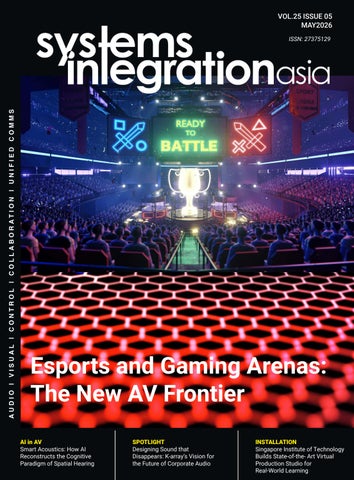
Top-tier esports tournaments are placing renewed emphasis on physical venues and studio environments—where fairness, consistency, and trust can be more effectively upheld. Asia-Pacific continues to stand as one of the most influential regions in global esports, home to some of the world’s largest fan communities and most dynamic tournament markets.

In this issue, Ross Video spotlights three defining pillars—flexibility, scalability, and innovation—as operational imperatives for esports production. ROE Visual, meanwhile, demonstrates how LED displays can transform the live experience through a meticulous balance of engineering precision, creative versatility, and uncompromising reliability.
In our AI in AV column, Yongbo Chen, Product Director at AI Speech Co., Ltd., offers fresh perspectives on how AI is reshaping spatial hearing cognition. Our Spotlight column explores how K-array is redefining its role—from equipment provider to design partner—as corporate environments evolve into experienceled spaces.
This issue also brings deeper insights through our Design Decode and Interview columns. Enjoy the read.

EDITOR, INDIA AND ME
Ram Bhavanashi
ram@spinworkz.com

MEDIA REP

DIRECTOR
INDUSTRY ENGAGEMENT
Andy Tan andytan@spinworkz.com
CHINA,HONG KONG, TAIWAN
Judy Wang
Worldwide Focus Media
+86-13810325171
judywang2000@vip.126.com

ADMIN & CIRCULATION
Julie Tan
admin@spinworkz.com

DESIGN & LAYOUT
Hazel Gundaya
Tel: (65) 63162716
Disclaimer: Systems Integration Asia is published 12 times a year. All rights reserved. No part of this magazine is to be reproduced, whether mechanicalor electronic without the prior written consent of the publisher. Views expressed in this magazine do not necessarily reflect those of the editor or the publisher. Unsolicited contributions are welcome but the editor reserves the discretion to use them. Whilst every care is taken to ensure the accuracyand honesty in both editorial and advertising content at press time, the publisher will not be liable for any inaccuracies.
Please be informed that products and company names mentioned in this publication may be protected with tradenames, trademarks or registered trademarks of their respective owners. Our non inclusion of such symbols is not an indication of us not recognising the copyright but rather to have a common look across our articles. Misuse of tradenames, trademarks or registered trademarks is strictly prohibited. It is the obligation of our readers to check if company names and products are protected with tradenames, trademarks or registered trademarks.
























A Voicebox column contributed to our March issue by Sachin Jain, Director of PLAY TECHNOLOGIES, on “What Truly Makes AV Equipment AI-Capable?” has served as the catalyst for launching a dedicated AI in AV column in our magazine.
In this issue, we explore how AI is redefining spatial hearing cognition. Bringing fresh insights to the discussion is Yongbo Chen, Product Director at AI Speech Co., Ltd
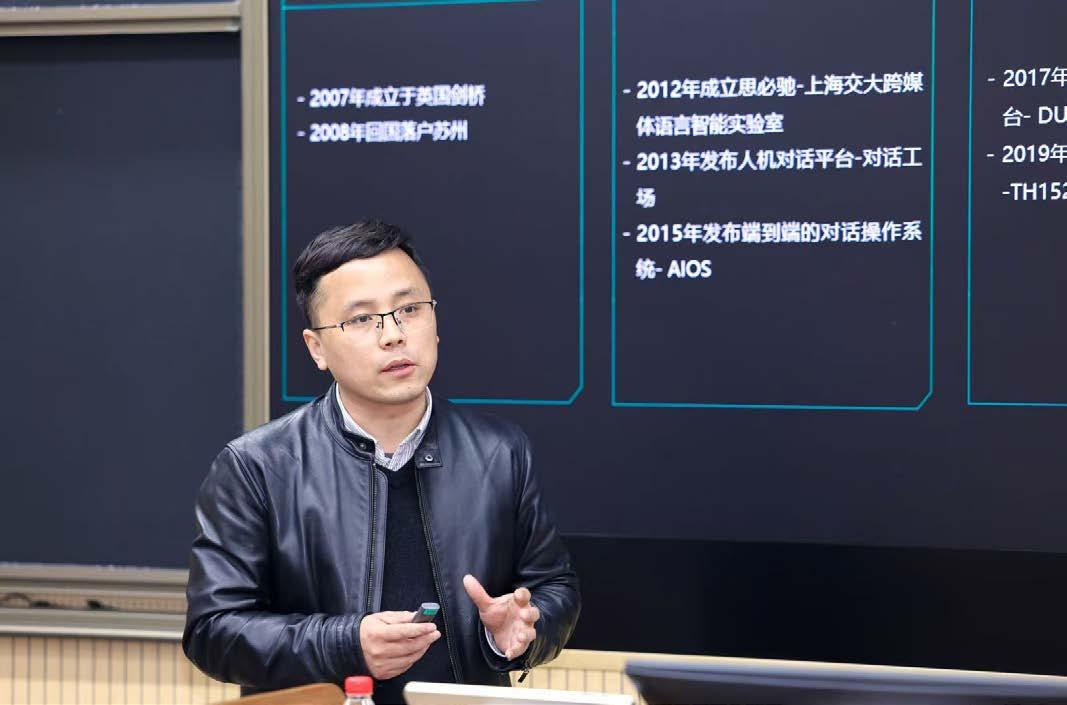
At the intersection of acoustic engineering and information science, a quiet revolution is reshaping the way humans perceive and interact with sound. While conventional audio processing technologies remain constrained by the immutable laws of physics, artificial intelligence has stepped beyond the limits of basic signal processing. Empowered by humanlike high-order cognitive intelligence, AI breaks through technical bottlenecks, turning acoustic environments into computable, interpretable,
and customizable intelligent fields. This shift is not merely an upgrade of audio tools—it is a fundamental redefinition of spatial hearing cognition, led by innovations that bridge technical performance and human-centric experience.
Traditional audio systems suffer from a critical paradox: they process sound waves efficiently but fail to understand the meaning behind sound. Adaptive filtering can suppress noise in targeted frequency bands, yet it cannot tell apart a casual keyboard tap from an important alert, beamforming technology enables directional sound pickup, but it cannot grasp the emotional tone or intent of a speaker. Trapped in ‘processing without cognition’, these systems have long been limited to the role of passive auxiliary tools.
The breakthrough of deep learning AI models lies in building an organic connection between acoustic features and semantic understanding through autonomous learning capabilities. By modeling temporal acoustic features with the Transformer architecture, next-generation systems can separate mixed sound sources, construct a comprehensive sound semantic map, accurately identify speaker emotions, and even perceive the distribution of audience attention in a space. The integration of AISpeech’s DFM-2 language model with proprietary audio algorithms marks a pivotal paradigm shift—moving audio processing from the single goal of ‘hearing clearly’ to the advanced capability of ‘understanding precisely’.
True acoustic intelligence is defined by a system’s ability to perceive and adapt to its surrounding environment. Modern audio
systems are evolving into independent cognitive entities with spatial awareness. Through multi-modal sensor fusion, including acoustic arrays and environmental sensors, these systems generate real-time 3D acoustic maps, and interpret the spatial attributes and semantic value of every acoustic event occurring within the space.
This cognitive capacity has unlocked a wave of practical innovations across industries. In smart classrooms, the system eliminates background noise while recognizing teachers’ behavioral patterns, automatically adjusting sound pickup and amplification to match teaching scenarios. In corporate meeting rooms, it senses the natural rhythm of speaker turn-taking, intelligently arbitrating pickup priorities for multiple participants to ensure smooth, uninterrupted communication. No longer just sound processors, these systems act as intelligent coordinators of spatial acoustic experiences.
The essence of a ‘seamless user experience’ is that technology deeply understands and adapts to human behavioral habits, requiring predictive intelligence that anticipates user needs before they arise. AI-powered sound field management systems continuously learn spatial acoustic characteristics and usage patterns, enabling them to predict shifts in meeting formats—from free-flowing discussion to formal thematic presentations—and complete sound field reconfiguration in hundreds of milliseconds in advance.
These systems also grasp the physical essence of "natural human communication." Using generative adversarial networks to simulate ideal acoustic environments, they eliminate unwanted reverberation and echo while shaping sound field properties that align with innate human auditory preferences. When a speaker moves around a meeting room, the system
does not simply track the sound source,instead, it maintains acoustic perspective, ensuring the sound image listeners perceive matches the speaker’s visual position. This design aligns with the neurological foundations of natural face-to-face communication, making technology feel invisible rather than intrusive.
In the post-pandemic era, hybrid collaboration has become the new norm, erasing the acoustic boundary between physical and digital spaces. Intelligent audio systems have emerged as the foundational infrastructure for building an ‘acoustic metaverse’ enabling transparent cross-space acoustic transmission and coordinated acoustic management across physical and virtual environments.
A dynamic sound field optimization algorithm based on reinforcement learning balances local sound amplification and remote audio transmission demands, reserving optimal acoustic parameters for remote encoding and decoding to preserve sound clarity. Cuttingedge research is now focused on spatial acoustic digital twins, which allow remote participants to not only hear speakers clearly but also perceive their exact position and the acoustic properties of the physical room. This achieves true cross-space acoustic cognitive alignment, making remote collaboration as immersive and natural as in-person interaction.
As acoustic systems grow more intelligent, ethical design has moved from an afterthought to a core pillar of technical architecture. Protecting user privacy and ensuring acoustic equity are no longer optional—they are essential to responsible innovation.
Differential privacy technology is embedded into the acoustic feature extraction process, ensuring the system can understand
semantic content without exposing sensitive conversation details. The federated learning framework enables the system to learn universal acoustic patterns from multi-scenario data without centralizing raw audio files, eliminating data privacy risks associated with centralized storage.
In education, this ethical design translates to tangible social value. Intelligent sound field systems monitor the uniformity of acoustic coverage in classrooms, automatically adjusting amplification strategies to ensure students in the back rows enjoy the same auditory clarity as those in the front. This uses technology to advance educational equity, making inclusive learning a reality through acoustic intelligence.
When audio systems evolve to understand scenarios, predict needs, shape experiences, and uphold ethical standards, they transcend the definition of standalone "devices" and become a critical component of spatial cognitive infrastructure. This evolutionary path is fully embodied and validated by AISpeech’s core technologies and product practices.
Built around the proprietary ClearSpeakAI algorithm, AISpeech has developed a complete intelligent audio ecosystem spanning underlying algorithms to end-user devices. Its Ceiling Microphone series and Matrix Microphones are the physical manifestation of this architecture: they are not passive sound-capturing tools, but cognitive nodes embedded into physical spaces. A single device delivers a 4.5–8 meter pickup radius and 25ms ultra-low latency, and cascaded deployment creates full-space, blind-spot-free sound field coverage. Beyond core functions like AI noise suppression, reverberation cancellation, and automatic gain control, the system intelligently perceives acoustic scenarios, makes autonomous pickup decisions, and anticipates
user auditory needs to deliver seamless, natural sound amplification.
This transformation from ‘device’ to ‘infrastructure’ integrates acoustic intelligence with ethical priorities such as privacy protection and equitable coverage. This next-generation infrastructure enables deeper interpersonal connection, more efficient knowledge transfer, and more inclusive participation experiences for all users.
Looking ahead, smart buildings will adopt acoustic systems as one of their core nervous systems, working in tandem with visual and environmental control systems to create spaces that adapt perfectly to human cognitive traits. In this evolution, AI is more than an optimization tool—it is an explorer redefining ‘sound as a cognitive medium’. It reminds us that the ultimate goal of improving auditory experience, which is not to chase abstract technical parameters, but to expand the
boundaries of human communication and understanding.
This revolution will not culminate in a slightly clearer conference system. It will redefine how humans perceive, understand, and connect with each other in physical and digital spaces. When technology truly understands the meaning of sound, sound itself will gain a new, profound purpose in human life.
AISpeech is a leading conversational AI company in China. Founded in Cambridge (2007) and headquartered in Suzhou, the company develops its proprietary end-toend dialogue platform, 1+N distributed agent system, and AI voice chips. By integrating LLMs with cloud–edge deployment and hardware–software integration, AISpeech delivers advanced solutions across Smart Mobility, Smart Office, and AIoT. Supporting dozens of languages, AISpeech holds over 1,700 intellectual property rights and has contributed to more than 70 industry standards, driving intelligent transformation for partners worldwide.
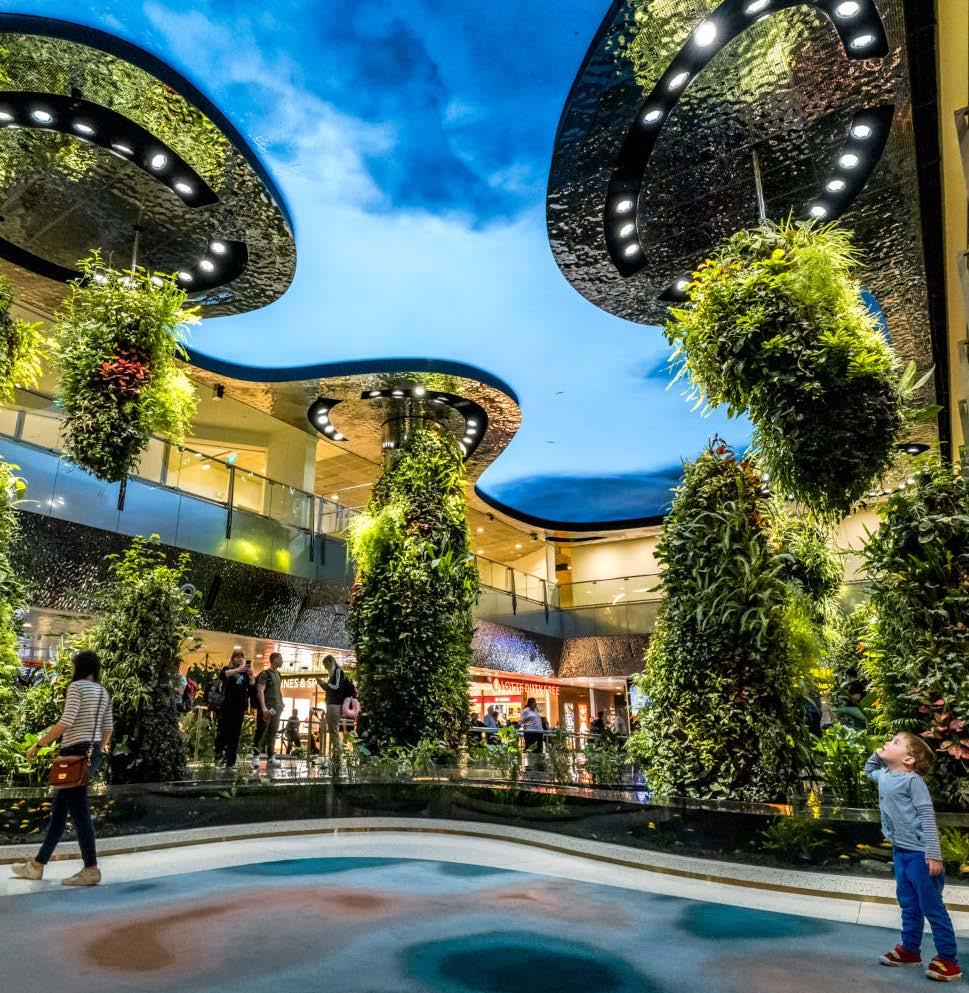
As corporate environments evolve into experience-led, hybrid-ready spaces, audio is no longer just a technical requirement—it’s a critical design element. K-array is redefining its role from equipment provider to design partner, delivering high-performance, “invisible” audio solutions that seamlessly integrate into modern architecture. With Asia emerging as a key growth engine, the company is aligning innovation, aesthetics, and functionality to meet the rising expectations of next-generation workplaces.
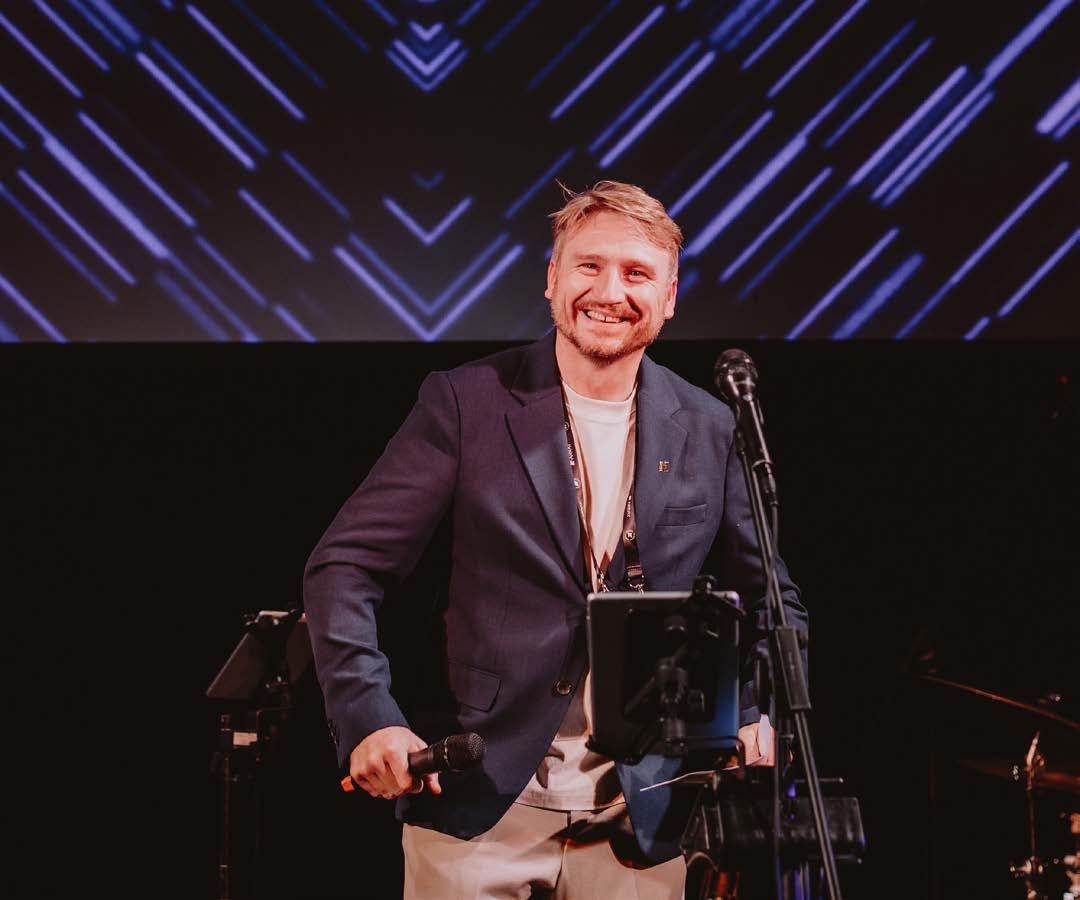
How important is the corporate segment to K-array's overall growth strategy in Asia and globally?
Corporate is one of our highest-priority verticals and Asia is central to how we're scaling it. The shift toward experience-led headquarters, hybrid working and client-facing showcase environments has changed what corporations expect from audio. They want systems that disappear into the architecture but perform at a level that matches the ambition of the space. That's precisely the brief K-array is built for.
Globally, we're repositioning ourselves not as an audio vendor but as a design partner, engaging early with architects, consultants and end clients before a specification is written. Asia accelerates that strategy. The region's appetite for design-forward corporate real estate, the calibre of consultants working on these projects and our existing footprint with references like JLL Singapore, Changi Airport
SI Asia chats with Tom Riby, Global Business Development Manager, K-array, about the company’s plan and ambitions for the Corporate segment.
and the ByteDance Beijing headquarters make it a natural growth engine for us over the next three to five years.
What key trends are shaping audio requirements in today's corporate and hybrid workplace environments?
Four trends matter most. First, space is now multi-purpose, a town hall on Monday, a client pitch on Tuesday, a social event on Thursday. Audio has to flex across all of it. Second, hybrid working has raised the bar for intelligibility; if the remote participant can't hear clearly, the room has failed. Third, design-led architecture has pushed hardware toward invisibility, Architects are truly pushing the limit of where audio can be hidden, exposed ceilings, glass, stone, timber and minimal surfaces leave nowhere for traditional speakers to hide. Fourth, sustainability and long-term asset value are now part of the AV conversation, clients want systems that last 10-15 years, not three.
K-array's Anakonda installed in the ceiling at ByteDance headquarters. Together, these trends favour manufacturers who can deliver discreet form factors, genuine acoustic performance, and tight integration with control ecosystems. Generic boxes on brackets don't cut it anymore.
How does K-array's "invisible audio" design philosophy address the needs of modern corporate spaces?
Our philosophy is straightforward: audio should be felt, not seen. Every product we design starts with the question of how it disappears into the architecture, slim line arrays,column speakers the width of a pencil. That lets architects preserve their design intent without compromising on acoustic performance.
In corporate environments, this matters commercially as well as aesthetically. When audio is visually intrusive, it dates the space and undermines the brand signal the client is trying to send. Invisible audio protects the design investment. The ByteDance showroom in Beijing is a good example, a 2,000m² space with metal finishes, display walls and hard surfaces everywhere. The brief demanded concealed audio across multiple zones with no
acoustic bleed. Our Anakonda series, flexible 2 meter loudspeaker that can be linked up to 32 pieces made that possible without visible hardware. Nobody even knows where the sound is coming from.
Which K-array solutions are best suited for boardrooms, collaboration spaces, and corporate auditoriums?
Three reference points. For boardrooms and collaboration spaces, our Vyper ultra-flat line arrays and Kobra column speakers deliver high intelligibility from a footprint of millimetres. For larger corporate auditoriums, the Zydus auditorium in India is a good example, our Kayman and Mugello systems scale to full-range performance while remaining architecturally discreet. For lobbies, experience centres, and flexible zones, Anakonda flexible arrays and our KSCAPE RAIL solution integrate audio into lighting infrastructure itself.
The common thread is that every product is designed to be specified by an architect, not hidden behind a grille as an afterthought.
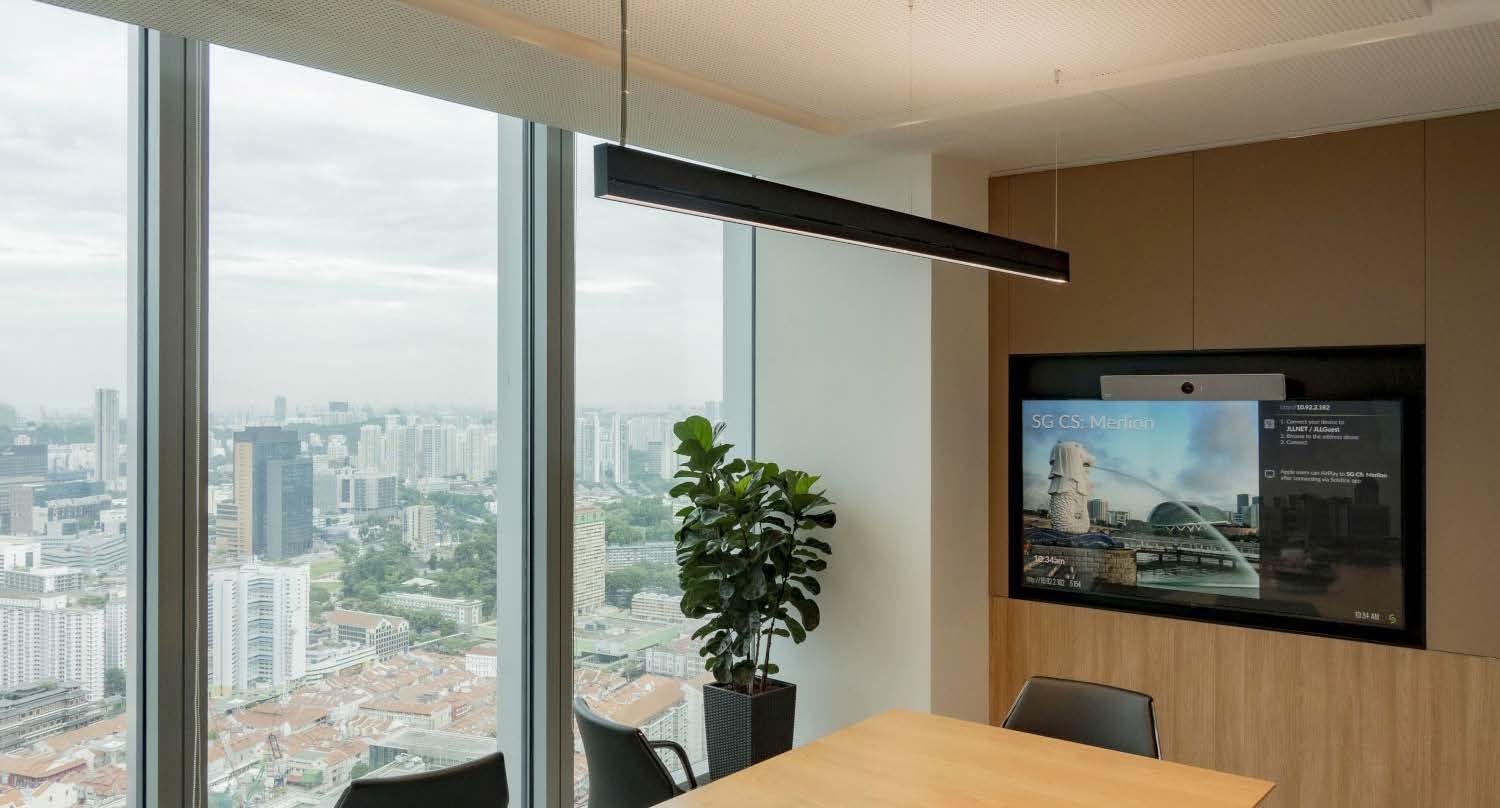
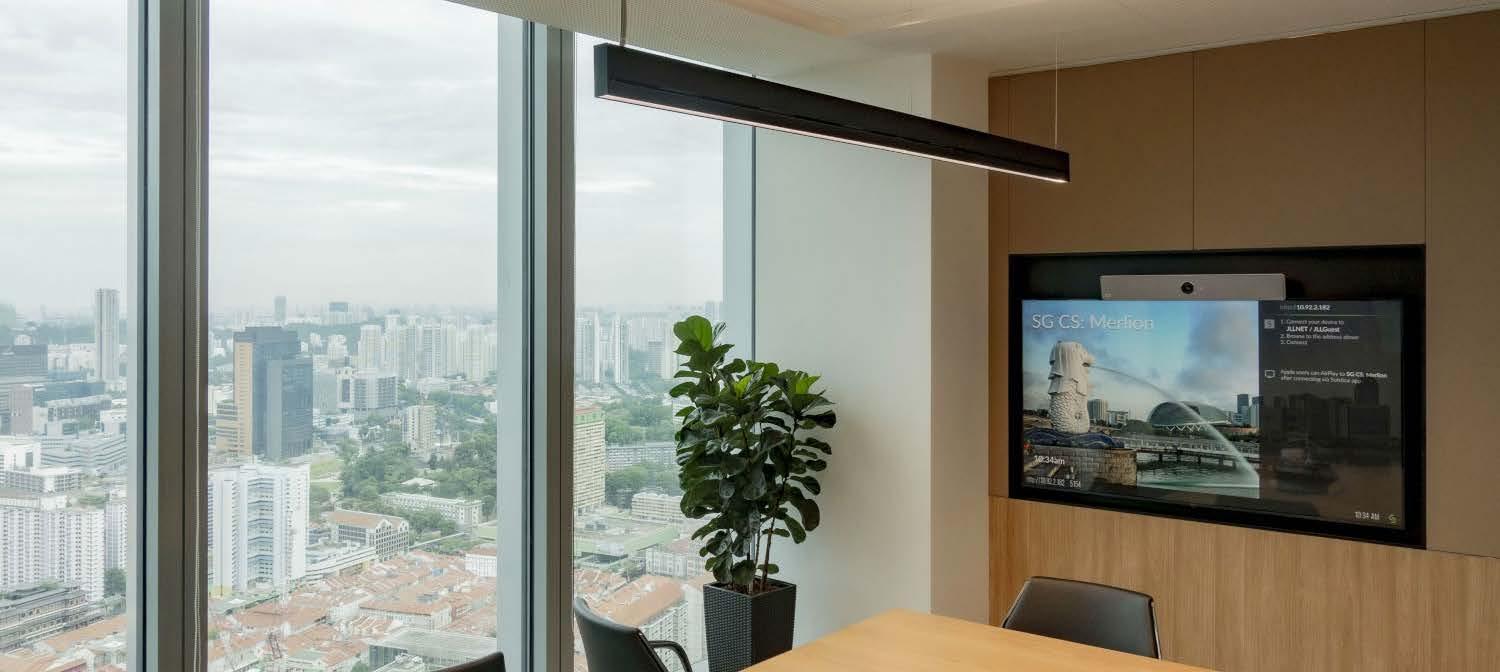
KSCAPE’s Rail in JLL Offices in Singapore.
How do your technologies enhance speech intelligibility and user experience in meeting environments?
Intelligibility comes from controlling where the sound goes, not just how loud it is. Our Pure Array Technology gives narrow, predictable vertical coverage, which means speech energy reaches the listener without exciting reflections off glass, screens, and hard surfaces, the usual enemies of a modern meeting room. Combined with appropriate DSP and room tuning through K-Framework, we deliver consistent STI scores across the seating area rather than hotspots and dead zones.
The user experience gain is that people stop noticing the audio and start focusing on the content. Remote participants sound present, not processed. That's the standard hybrid working should be held to. But you have to hear it, experience it to truly understand what we are able to achieve here.
What role does KSCAPE play in creating immersive and flexible corporate spaces? How does KGEAR complement your offerings for more cost-sensitive corporate projects?
KSCAPE is our division dedicated to merging architectural lighting with pro audio. The flagship, RAIL, is the first architectural light with integrated professional audio, a single installed element delivering both functions. For corporate clients building flexible, experienceled environments, this is transformative: one piece of infrastructure, two disciplines resolved, dramatically cleaner ceilings.
KGEAR complements this at the other end of the spectrum. Same engineering DNA as K-array, engineered for broader commercial deployment where budget sensitivity matters, distributed meeting rooms, huddle spaces, back-of-house areas, education and government. It lets us deliver a consistent performance standard across an entire building rather than forcing clients to mix brands. For a corporate rolling out a global estate, that consistency is commercially meaningful.
What are the most common pain points in corporate AV that K-array aims to solve?
Three recurring ones. First, visual clutter, speakers, grilles and brackets that undermine design intent. Second, poor intelligibility in acoustically hostile rooms, which is most of them. Third, fragmented specifications where audio is an afterthought, procured late and never integrated properly with the design or the wider AV stack.
Our response is to engage earlier. We work directly with architects and consultants at the design stage, provide full acoustic modelling and system design support, and treat each project as bespoke rather than catalogue. That upstream involvement is how you prevent the pain points rather than patch them on site.
How does K-array ensure seamless integration with other AV and IT systems commonly used in corporate spaces?
Our ecosystem is built around major standards like Dante, AES67, and third-party control integration with the major platforms integrators already deploy. K-Framework handles system configuration and tuning; K-Cloud and K-Monitor provide remote management and diagnostics at estate scale. For global corporations managing hundreds of rooms, that remote visibility is no longer optional.
We also invest heavily in integrator enablement through K-Academy, so the integrators and consultants specifying our systems have direct access to training, design tools and technical support. In APAC we have a strong partner infrastructure already in place, which means clients get local delivery quality alongside Italian engineering.
How do you help corporate clients and integrators measure ROI when investing in premium audio solutions?
ROI in corporate audio is rarely a pure cost calculation, it's about lifecycle, user outcomes,
and brand signal. We frame it across three measures. Total cost of ownership: our systems are engineered for 10-15 year service life, backed by a five-year warranty, so the amortised cost is often lower than a cheaper system replaced twice. Productivity and engagement: intelligible, frustration-free meeting environments have a measurable impact on hybrid meeting effectiveness and user satisfaction. Also brand equity: for clientfacing spaces, headquarters and experience centres, the quality of the environment directly affects how the business is perceived.
We work with clients to build that business case during design, rather than leaving integrators to defend the price tag at procurement.
Looking ahead, how do you see audio, AI and integrated technologies shaping the future of corporate environments?
AI will play a role in room tuning, predictive maintenance, adaptive acoustics and we're engaging with it pragmatically rather than chasing hype but the bigger shift is integration. Audio, lighting, acoustics and control are converging into single architectural systems. KSCAPE is our early bet on that convergence. The corporate environments of the next decade will be defined less by discrete AV equipment and more by unified design disciplines.
What won't change is the fundamentals. Great corporate audio will still come down to design partnership, tailored engineering for each space, and the discipline to make the technology disappear. That's where K-array commits its effort, being a design partner to the architects, consultants, and end clients who care about getting it right, not a vendor chasing the next spec.

INFOBIT and NETGEAR validate a complete AV-over-IP stack built around the iSwitch Dante AV Series
GLOBAL: The AV-over-IP revolution demands more than capable encoders and decoders — it demands a network backbone that can be trusted. Infobit is proud to announce a validated technology partnership with Netgear, confirming that Infobit AV-over-IP, Dante AV, Dante Audio Product Series perform flawlessly on Netgear managed switch infrastructure across installations of every scale. Following rigorous real-world testing in hospitality, corporate, education, and broadcast environments across Asia, the verdict is clear: when Infobit and Netgear infrastructure work together, integrators get predictable, bankable results every time.
Infobit AV-over-IP and Dante Audio Product Series bring the simplicity of Dante networking to full 4K video distribution. Encoders accept HDMI from any source and transmit 4K video, embedded audio, RS-232 control, and PoE power over a single Cat 5e or 6A cable. The Netgear managed switch distributes the multicast stream to up to 24 Infobit decoders simultaneously, with endto-end latency held below one millisecond — keeping video, audio, and PTZ camera control in perfect sync. Netgear’s IGMP snooping ensures bandwidth stays flat as display count grows, so integrators can scale from a four-screen boardroom to a full video wall without rearchitecting the network.
Specifying a validated pairing eliminates the single greatest risk in IP-based AV projects: the untested interface between AV processing and network infrastructure. Infobit and Netgear have completed that joint testing so your team does not have to, backed by a combined support channel that resolves interface issues fast. The Netgear installed base — already deployed across thousands of commercial sites globally — means this certified stack is immediately available for upgrades and retrofits, not just greenfield builds. The validated ecosystem covers the complete signal chain: iSwitch Dante AV encoders and decoders, iCam PTZ Camera and tracking device, iTrans USB-over-Dante converters, iSound 88D DSP processors, and iSpeaker Dante Audio: ceiling microphone and active speaker systems — a single, trusted bill of materials from source to screen.
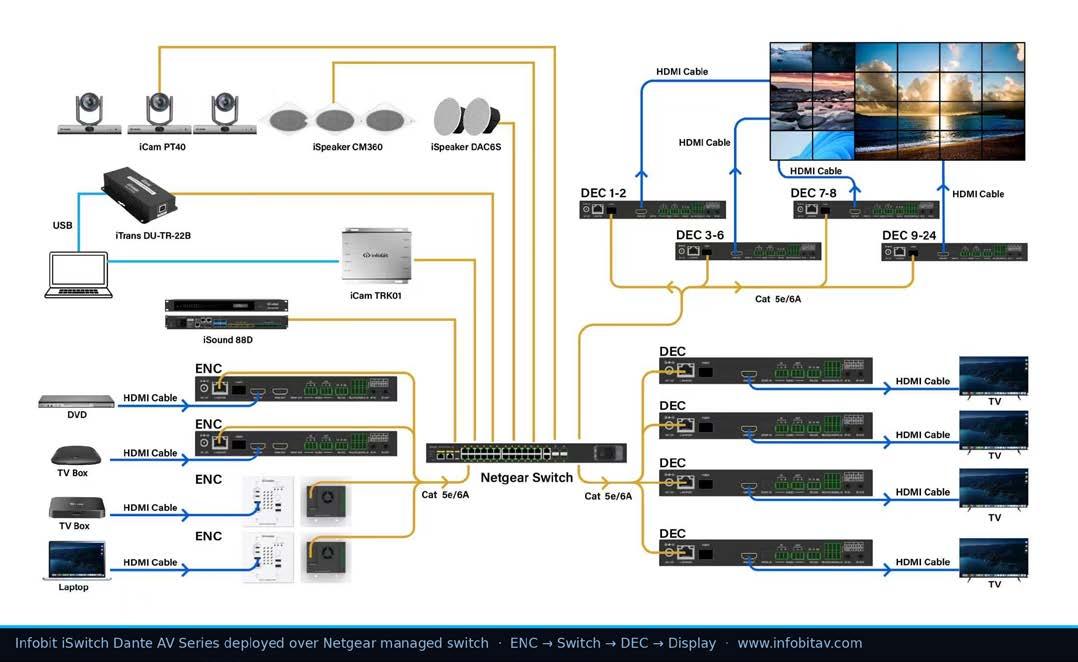
Infobit Dante AV and Dante Audio Product Series deployed over a Netgear managed switch. Sources connect via HDMI to encoders; the switch distributes 4K multicast streams to up to 24 decoders via Cat 5e/6A.
For product specifications, deployment guides, and partnership enquiries, visit:
infobitav

APAC: Turtle AV has appointed Kaira Global as its distribution partner for Singapore, Malaysia, and India, accelerating the company's expansion across some of the fastest-growing AV markets in the world. With a strong footprint across Asia and a reputation for building and supporting high-performance AV brands, Kaira Global brings immediate scale, local expertise, and deep market access across all three territories.
“This is a really important move for us," said Eamon Drew, Co-Founder and Co CEO at Turtle AV “Singapore, Malaysia, and India are all seeing strong growth in AV over IP. Kaira Global understands these markets, they support their partners properly, and they know how to build momentum. We are extremely happy to be working with Kaira Global to grow Turtle AV’s presence across the region.”
The partnership opens local access to Turtle AV's full ecosystem of Dante and AV over IP solutions, designed for real-world deployments across corporate, education, broadcast, hospitality, and government environments.
Kaira Global will distribute the complete Turtle AV lineup, including:
• Chazy 4K Dante AV-A family of AV over IP encoders and decoders
• Chazy Control and Chazy Control Pro with built-in Dante Controller
• Mineola and Phoenix Dante audio bridges
• Darwin H.265 encoders and decoders
• USB-C 4K60 and USB 2.0 extenders
• Downtown Dolby Atmos and DTS:X decoder to Dante encoder
• Dante adapters and new Dante Bluetooth Wallplates
• Dante PoE amplifiers
• Dante Domain Bridge
“Our focus has always been on bringing strong, relevant technology to our partners," said Rajesh Attal, Co-Founder and CEO at Kaira Global. "Turtle AV delivers a complete and well-thought-out ecosystem around Dante and AV over IP. The products are practical, easy to deploy, and commercially competitive. We see strong potential across Singapore, Malaysia, and India, and we are excited to take this to market."
Kaira Global
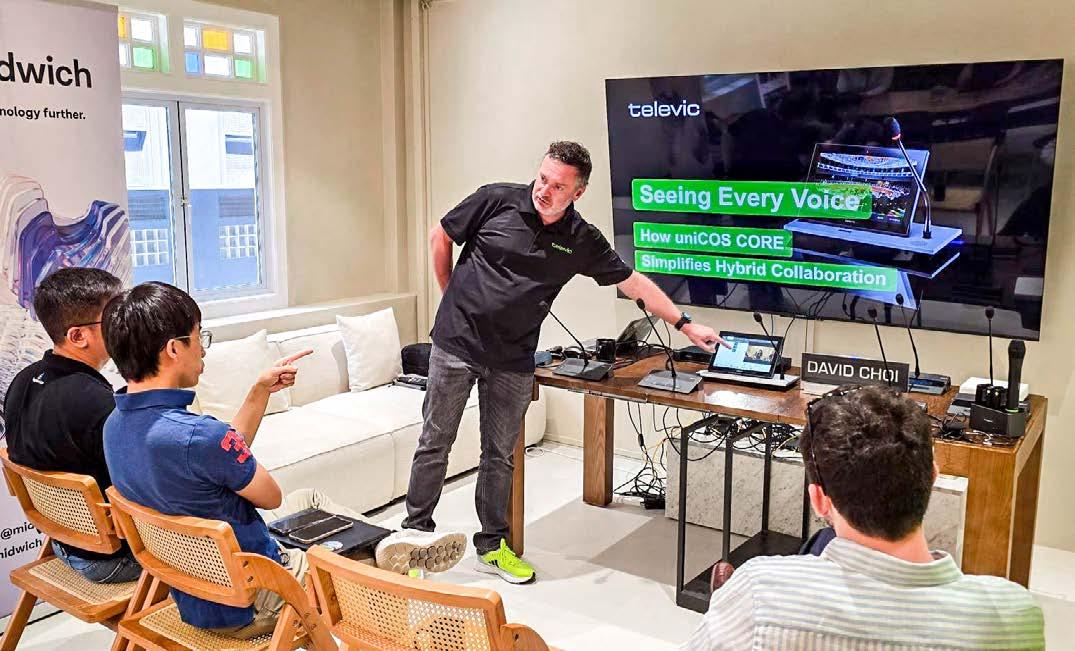
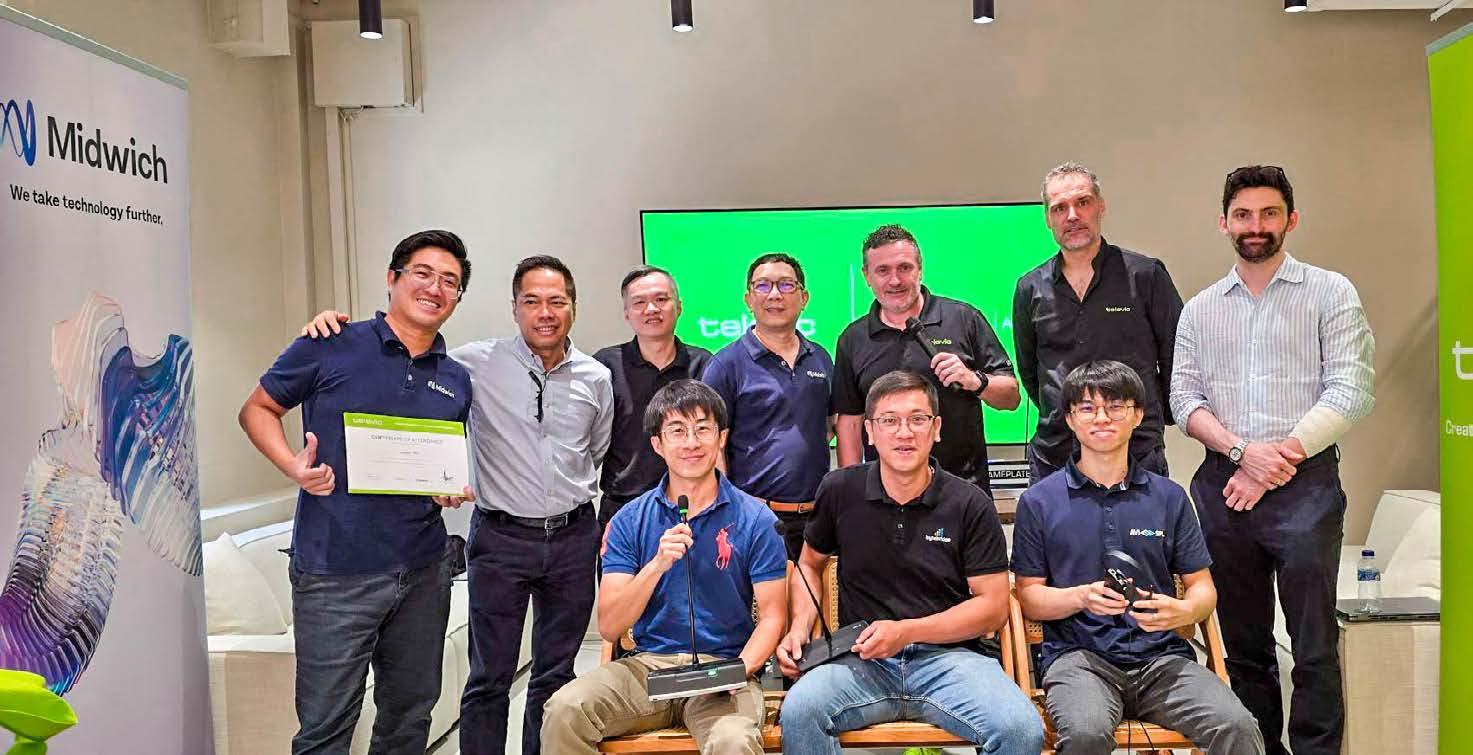
SINGAPORE: Midwich Asia has taken a significant step in expanding access to advanced conferencing solutions in Southeast Asia, announcing a new distribution partnership with Televic Conference in Singapore. The agreement reflects a shared ambition to bring high-performance collaboration and communication technologies closer to consultants, integrators, and end users in one of the region’s most active technology hubs.
Rather than a traditional rollout, the partnership launched with immediate impact. Within days of signing, both companies hosted a two-day hands-on training and experience event in Singapore, led by Televic Conference’s Didier Rosez. The sessions drew strong interest from across the market, with integrators, consultants, and end users attending in high numbers to explore the portfolio in a practical, real-world setting.
Attendees were introduced to key Televic solutions, including Confidea, UniCOS, and Unite, while also gaining insight into system design and deployment through live demonstrations. The sessions were designed to go beyond product overviews, offering direct technical engagement and a clear understanding of how the solutions perform across boardrooms, council chambers, education spaces, and enterprise environments.
Midwich Asia’s Will Fenby highlighted that the early momentum reflects both the strength of the Singapore opportunity and a commitment to building partner confidence through hands-on engagement from day one. Televic Conference also views Singapore as a strategic growth market in APAC, with the partnership providing the local expertise and channel reach needed to accelerate adoption.
With the Singapore distribution now in place, both companies will continue to focus on education-led market development, technical enablement, and closer collaboration with consultants and partners. The move aligns with Midwich Asia’s broader strategy to strengthen specialist technology ecosystems across Southeast Asia through practical engagement and high-value customer experiences.
Midwich Asia
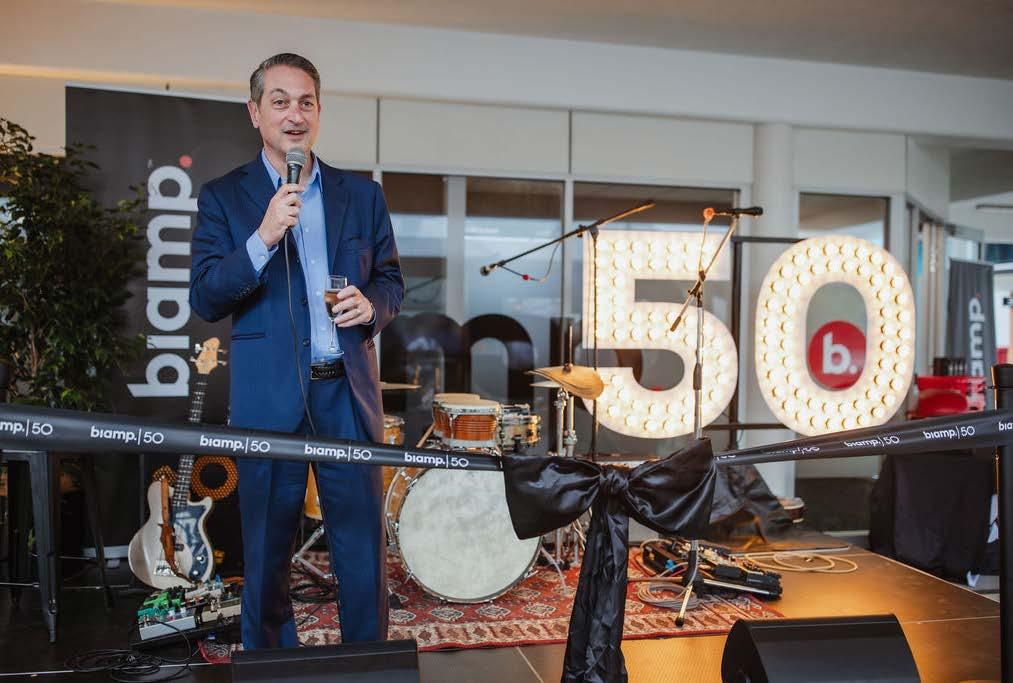
AUS/NZ: Biamp is doubling down on its presence in Australia and New Zealand, unveiling a state-of-the-art Experience Centre in Brisbane as part of a broader regional expansion and a celebration of its 50-year milestone.
The new Brisbane facility represents a strategic investment in the ANZ market, reinforcing Biamp’s commitment to customers, partners, and end users across the region. The launch comes as the company continues to grow its regional footprint, now employing more than 50 staff across two offices.
Designed as a dynamic, two-level environment, the Experience Centre blends a live working office with immersive demonstration spaces. Upstairs, Biamp employees operate within a modern, open-plan workspace enhanced by integrated AV technologies, including sound masking for improved privacy and productivity. Visitors can explore flexible collaboration setups, from bring-your-own-device (BYOD) configurations to fully equipped Microsoft Teams Rooms, showcasing how organisations can tailor meeting environments to different workflows.
Downstairs, the facility transforms into a hands-on showcase of Biamp’s full AV
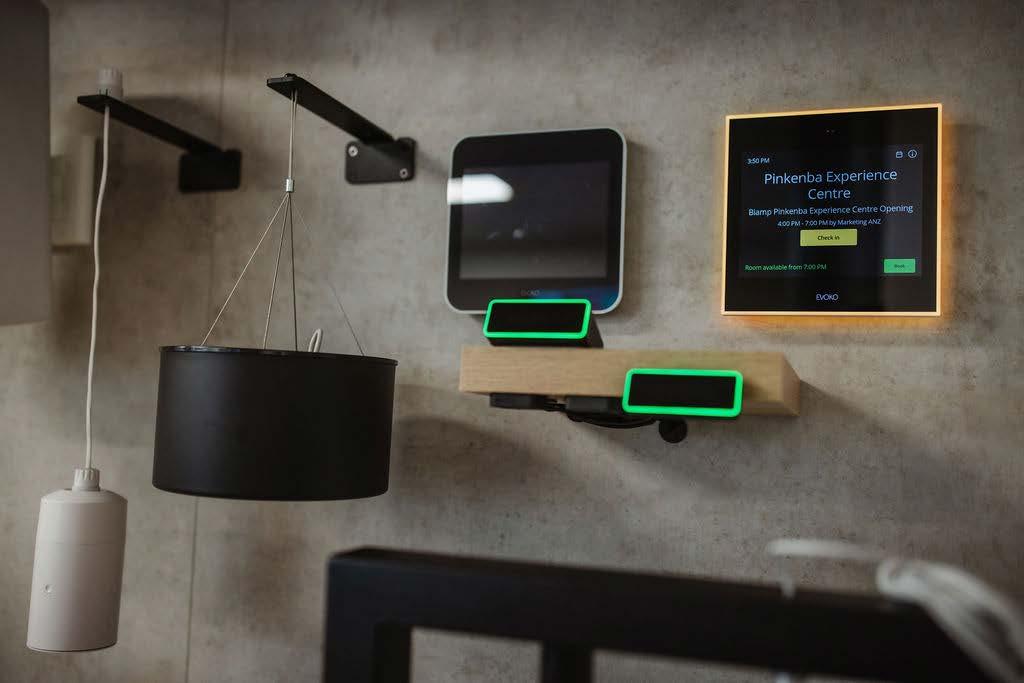
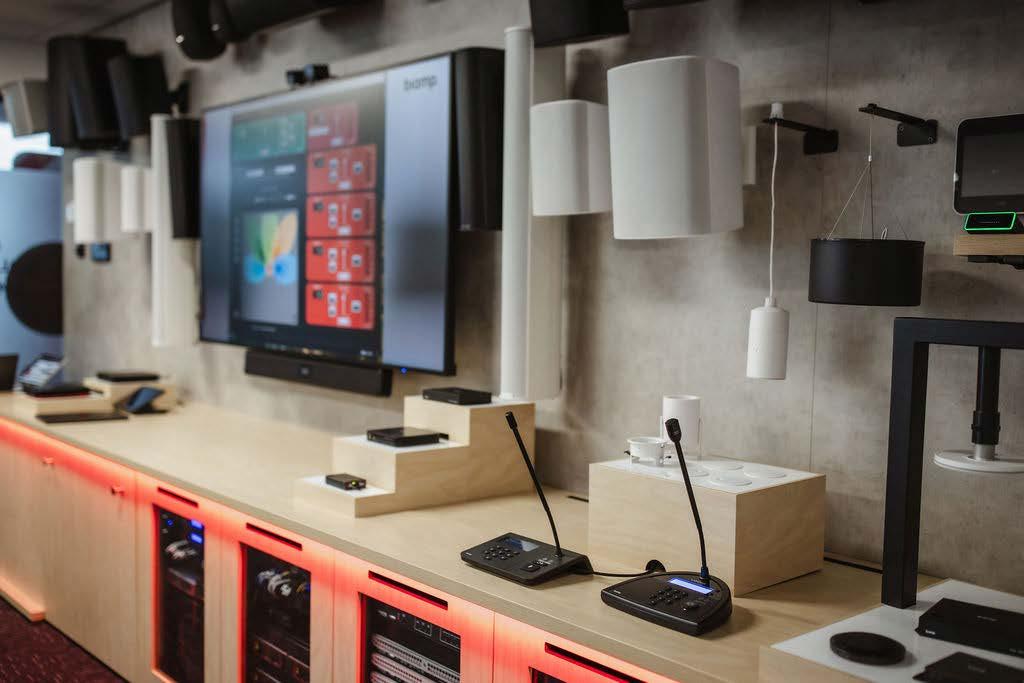
ecosystem. A dedicated loudspeaker demo zone allows side-by-side comparisons across a wide range of solutions, giving visitors a clear sense of performance in both music playback and speech clarity. The space also highlights robust outdoor audio systems engineered for Australia’s demanding climate, alongside multiple conferencing setups that demonstrate scalability, from compact all-in-one solutions to enterprise-grade deployments.
Notably, the Brisbane centre is among the first globally to feature the new BMA 360D ceiling tile microphone, signalling Biamp's continued push into advanced audio innovation following its ClearOne asset acquisition. The facility also integrates paging and life safety systems, offering interactive demonstrations of live announcements, text-to-speech, and prerecorded messaging.
With this launch, Biamp is not only celebrating its legacy but also signalling a forwardlooking strategy in the ANZ region, anchored in innovation, customer engagement, and scalable workplace technology.
Biamp
JAPAN: Nureva Inc. has appointed MEDIA PLUS Co., LTD. (Media Plus) as its distributor in Japan. Founded in 2002 and headquartered in Tokyo, Media Plus specialises in audiovisual and communications solutions, including videoconferencing, AV system design and integrated room solutions for corporate environments. Media Plus will bring Nureva’s revolutionary audio conferencing product line to customers across Japan through its established market presence and solution-led approach.
Hybrid working and learning continue to increase demand in Japan for reliable, scalable meeting room and classroom audio. Japan’s Ministry of Land, Infrastructure, Transport and Tourism reported in its most recent national survey that 24.8% of employees were teleworkers, while hybrid work combining office and remote work was expanding. Looking ahead, Market Research Future projects Japan’s unified communication service market will grow from US$2.64 billion in 2025 to US$7.42 billion by 2035, reflecting strong longterm demand for collaboration technology.
Responding to these needs, Media Plus now offers Nureva’s award-winning audio conferencing systems powered by patented Microphone Mist technology. This breakthrough advancement in audio fills rooms with thousands of virtual microphones to deliver true full-room coverage so every participant is heard clearly and collaboration happens naturally and easily — without the costs and complexities of traditional multicomponent installations. Nureva’s approach is particularly well-suited to medium and larger spaces, where organisations are looking for simpler ways to achieve consistent
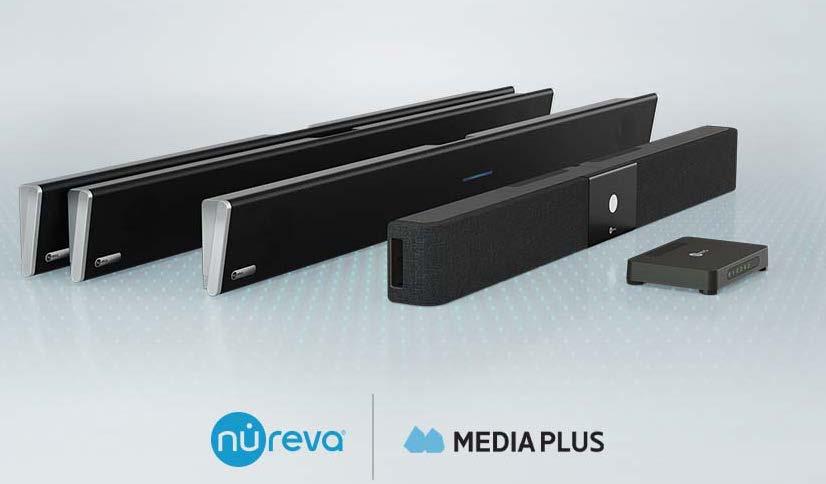
full-room microphone pickup while reducing deployment time, complexity, costs and management.
“We’re pleased to serve as Nureva’s distributor in Japan,” said Naoko Sugano, President of Media Plus. “As pioneers in videoconferencing, we’ve long focused on creating the best possible audio experience in meeting room design. Nureva’s Microphone Mist technology brings a unique and highly effective approach to medium – and large-room audio, delivering clear, consistent coverage while removing much of the complexity typically associated with design, installation and operation. We believe Nureva audio systems will have a meaningful impact on the Japanese meeting room market as organisations continue to modernise their spaces.”
“Adding Media Plus in Japan strengthens our ability to help organisations equip meeting spaces with clear, reliable audio — without the cost and complexity of traditional systems,” said Nancy Knowlton, Nureva’s CEO. “The company’s deep expertise in videoconferencing and integrated AV solutions makes them exceptionally well positioned to expand adoption of Nureva audio systems across the Japanese market.”
Nureva continues to expand its global footprint, with growing demand for simple, highperformance audio solutions in medium, large and extra-large collaboration spaces.
Nureva Inc.
expansion plans in the near future. Since its inception in 2019, COLCOM has seen steady growth in both scale and capability. The team is now distributed across eight cities in India, reflecting the company’s expanding project footprint and client base.
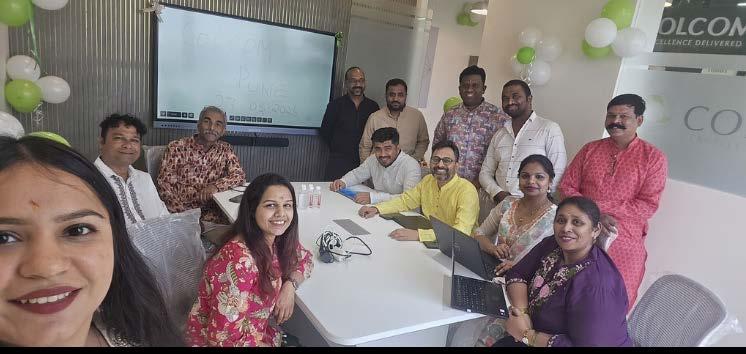
INDIA: Collaboration and Communication Technologies Pvt. Ltd. (COLCOM), the Indian subsidiary of ESCO Pte. Ltd. continues to strengthen its presence across India with the opening of a new office in Pune. Established in January 2019, COLCOM serves as ESCO’s wholly owned subsidiary in India for the design, integration, and maintenance of professional audiovisual and collaboration technology systems.
Pune has long been an important market for COLCOM, with several successful projects already delivered for clients in the region.
According to Sujith Sivaram, Managing Director, ESCO, the decision to establish a formal office in Pune was driven by both operational growth and strategic intent.
“As our team grew in Pune, it became important for us to create a space where they could meet and collaborate effectively,” he explained. “More importantly, the new office allows us to conduct proof-of-concept demonstrations and host clients, enhancing engagement and solution validation.”
Beyond Pune, COLCOM currently operates offices in Mumbai and Bengaluru, with further
“Our team has grown from strength to strength over the years,” said Soheb Siddiqui, COLCOM’s Executive Director. “We are approaching a headcount of 75, with several new positions set to be filled in the near future. Importantly, we have built a selfsufficient team across all key functions.”
Looking ahead, COLCOM is focused on broadening its reach and delivering world-class AV and collaboration solutions across India. As a GPA partner in India, the company is wellpositioned to support multinational clients with consistent standards and execution.
A key area of focus is strengthening its partnership with ELMO, particularly in promoting its interactive flat panel solutions integrated with smart software applications. “We aim to establish ELMO as a leading technology partner in the region,” Sivaram noted, “while continuing to deliver exceptional experiences for our customers.” With its new Pune office and a growing national footprint, COLCOM is clearly positioning itself for the next phase of growth in India’s evolving AV and collaboration landscape.
*ESCO was acquired by Japan’s Techno Horizon Group and is the owner of the Elmo brand. ESCO integrally uses and distributes ELMO visual technology, such as visualizers and ELMO Interactive Flat Panels (IFPs), for their “smart classroom” and corporate AV projects.
GLOBAL: ProjX360, project management software created for AV integrators by AV integrators, has launched a new AI Assistant that is designed to deliver instant support, streamline workflows, and enhance how integrators interact with their business data.
The ProjX360 AI Assistant is seamlessly integrated into the platform, giving users immediate access to answers, guidance, and best practices directly within their workflow. Whether users need help navigating features, understanding processes, or finding information quickly, the AI Assistant acts as a real-time support resource —eliminating delays and reducing dependency on traditional support channels.
“Integrators don’t have time to dig through documentation or wait for answers,” said Doug Greenwald, Founder and CEO of ProjX360.
“Our AI Assistant puts the power of instant knowledge directly into their hands — right inside the platform they use every day.”
Unlike generic AI tools, the ProjX360 AI Assistant is purpose-built for the AV industry. It understands the workflows, terminology, and real-world challenges integrators face — from proposals and project management to service and invoicing.
Key Features of the ProjX360 AI Assistant Include:
• Instant Answers: Integrators get real-time help with features, workflows, and system navigation
• Context-Aware Support: Tailored responses based on how integrators use the platform
• Workflow Guidance: Step-by-step assistance for proposals, project management, and service tasks
• 24/7 Availability: Support anytime, without waiting for a response
• Seamless Integration: Accessible directly within ProjX360 via the help interface
This launch marks a significant step forward in ProjX360’s mission to simplify operations for integrators by combining powerful project management with intelligent automation.
“ProjX360 has always been built around realworld workflows,” added Greenwald. “With AI, we’re taking that a step further—helping our users work smarter, faster, and with more confidence.”
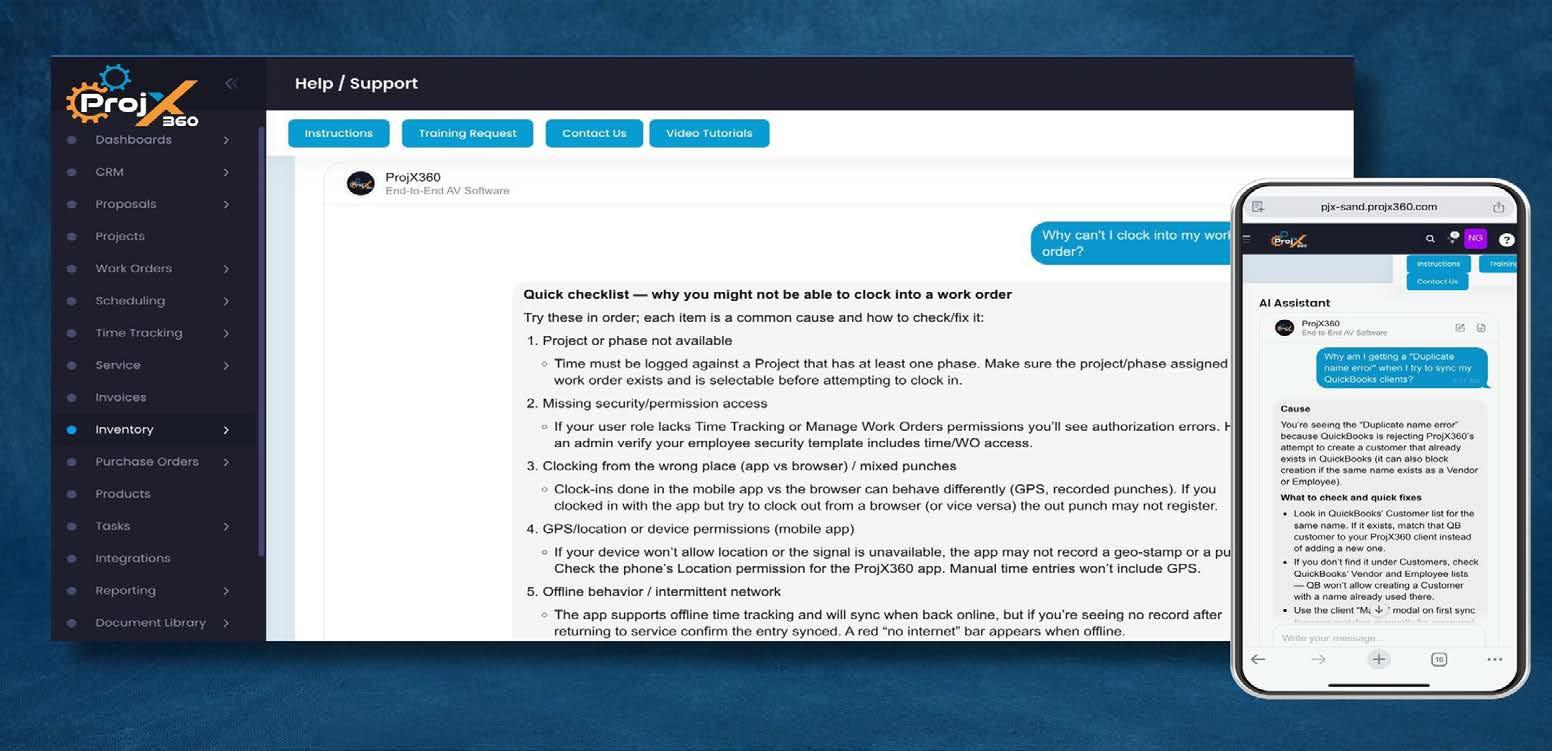
The AI Assistant is now available to all ProjX360 users. To learn more about ProjX360, book a demo.
ProjX360
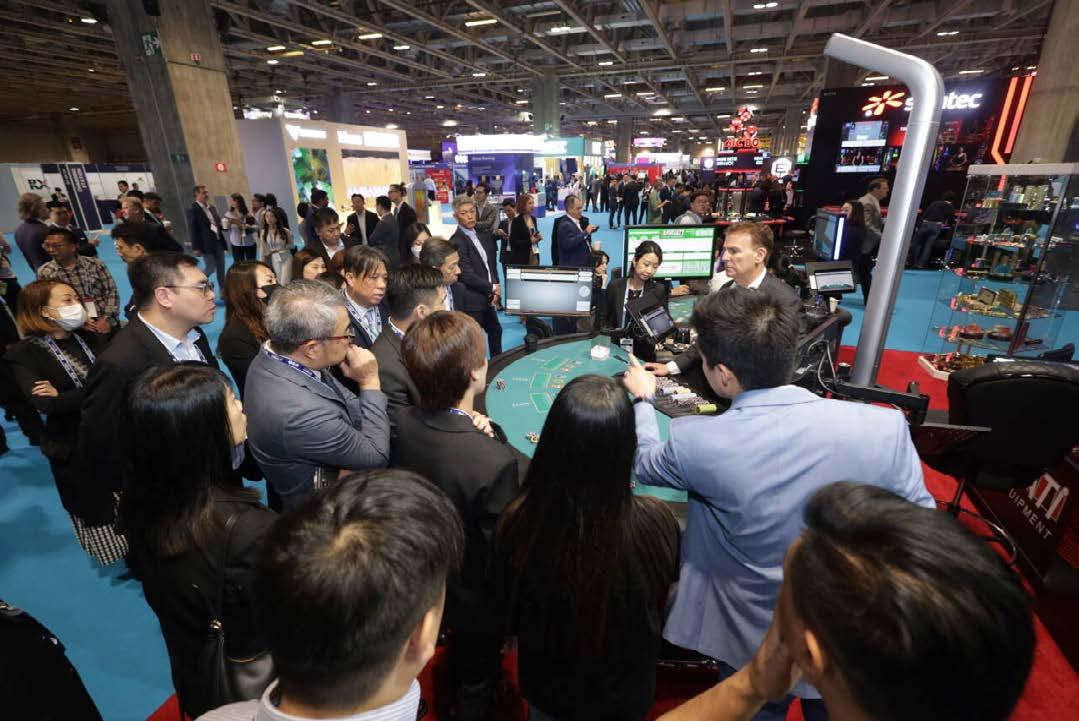
MACAU: G2E Asia and Asian IR Expo the flagship trade shows for the gaming, entertainment, and integrated resort industries, return to The Venetian Macao, Macau, from May 12-14, 2026. The co-located shows are expected to attract 8,000 industry leaders and professionals from over 90 countries and regions, providing a premier platform to explore innovations, exchange insights, and forge strategic partnerships. With Macau serving as Asia’s leading integrated resort hub, the setting provides attendees with a firsthand view of the region’s innovation momentum.
Spanning over 30,000 sqm of event space, this year’s events are built around two focused themes: “AI, Robotics and New Digital Innovations for the Gaming Floor” for G2E Asia, and “Entertainment Technology” for the Asian IR Expo. Together, they will showcase emerging technologies and solutions shaping the future of the industries. Building on G2E Asia’s 17-year track record as Asia’s trusted one-stop platform connecting operators, innovators, and industry leaders, the 2026 edition will highlight AI, automation, enhanced guest experiences, and other emerging innovations, giving attendees hands-on opportunities to discover and engage with the latest industry advancements.
As Asia’s integrated resorts evolve beyond traditional gaming, technology and digital innovation have become critical differentiators. “This year’s joint events spotlight the innovative strategies and technologies driving this evolution,” said Yip Je Choong, Senior Vice President, Commercial, APAC, RX (Reed Exhibitions). “Attendees will gain actionable insights and discover new opportunities to stay ahead in an increasingly digital landscape.” This edition provides industry professionals with in-depth perspectives on market trends, best practices, and innovations defining the future of gaming, entertainment, and integrated resorts in Asia.
The joint exhibition, spanning three halls, will feature 150 returning and new brands, covering all segments of the industry’s supply chain and offering professionals a holistic view of the sector.
For 2026, the exhibition introduces several new features designed to reflect the sector’s rapid digital transformation. G2E Asia will showcase its Display for Gaming Zone and Gaming Entertainment Zone, presenting a wide range of digital products and technological innovations. Meanwhile, Asian IR Expo presents an expanded Technology Zone, hosting two-day Tech Talk sessions on the latest innovations and trends.
A major attraction is the new Display and Entertainment Zone, offering an immersive tech experience with live demonstrations of hospitality automation in action. Attendees can enjoy Asia’s most futuristic business networking experience, with AI-powered matchmaking for B2B meetings, segmented networking areas, and interactive experiences such as robot-served coffee and cocktails, complemented by live robotic performances.
From immersive tech demonstrations to AI-driven matchmaking and live robotic performances, the exhibition delivers a one-ofa-kind experience that showcases the sector’s
latest innovations while fostering meaningful business connections.
Both G2E Asia and Asian IR Expo will feature three-day conferences covering current trends, emerging technologies, and key issues shaping their respective industries. Technology and transformation will take centre stage, with dedicated sessions exploring how organisations are adapting to an evolving landscape and redefining operational and customer strategies.
Attendees can access both conferences with a single pass, maximising learning and networking opportunities. The program blends panel discussions, case studies, and interactive formats, ensuring participants can engage with the content in formats that best suit their professional needs.
The 2026 conferences will feature a distinguished lineup of thought leaders and senior executives from across the sectors.
G2E Asia Conference will welcome experts from leading resorts and specialist organisations, including:
• Mr Gregory Hawkins, President and Chief Operating Officer, Bloomberry Resorts Corporation / Solaire Resort
• Mr Walt Power, Chief Executive Officer, Grand Ho Tram Resort
• Mr Praveen Choudhary, Managing Director and Head of Asian Gaming Lodging and Real Estate Research, Morgan Stanley
• Mr George Choi, Director – Global Head of Gaming Research, Citi Research
• Mr AI Watson, Chief Executive Officer, Dataworks Group
• Mr Joseph Bufalino, Executive Director –Responsible Gambling, Marina Bay Sands
• Mr Paul Devlin, Global Leader of Betting, Gaming & Sports, Amazon Web Services …and more
Asian IR Summit will spotlight experts driving innovations across the sector, including:
• Mr Mario Yau Kwan Ho, Chairman and Co-CEO, NIP Group Inc.
• Mr Kuong Hon Che, Chairman of the Executive Committee, General Association of World Sports Federations
• Mr Henry Kerins, Founder and CEO, East Asia Super League
• Mr Alex Zhu, Founder and CEO, Vista/Robo Space
• Mr Jimmy Pak, Regional Solutions Strategy Lead, Twilio APJ
• Ms Peggy Tng, Regional Lead – APAC, Global Sports Innovation Center (GSIC) powered by Microsoft
• Mr Zhonglu Zeng, President, Asia-Pacific Association for Gambling Studies
• Mr Glenn McCartney, Associate Professor in Integrated Resort and Tourism Management, University of Macau …and more
Industry professionals from gaming, entertainment, and integrated resort sectors –including operators, providers, and hospitality experts – will gain strategic insights, networking opportunities, and explore cuttingedge innovations driving the future of the sector.
Companies eager to showcase their latest solutions are invited to explore exhibiting opportunities. Attendees can now register, with conference passes available at an early bird rate until April 15, 2026, and free registration for the exhibition hall until May 11, 2026.
G2E Asia

Philippines: Hyung Jun Lim, AV system integration specialist and CEO of Integrated Systems Technologies Philippines (ISTP), has been named Most Innovative AV Systems CEO 2026 (Philippines) in the CEO of the Year Awards 2026 by the UK-based business publication APAC Insider.
Hyung Jun Lim began his professional journey in 1998 with the establishment of Wild Grass Studios, a music recording facility that laid the foundation for his work in sound engineering, acoustics, and system design. Over the years, his role expanded into full-scale audio-visual
system integration, encompassing audio, video, control, and network-based technologies for a wide range of professional environments.
Currently based in the Philippines, Hyung Jun Lim leads AV system design, consulting, and integration initiatives through ISTP while actively supporting technical education and professional development within the industry. His work emphasises practical system design, operational reliability, and alignment with international AV standards.
In addition to system integration projects, Hyung Jun Lim has been involved in educationdriven initiatives aimed at developing skilled AV professionals. He established training programs focused on real-world AV system design, consulting workflows, and technical implementation, bridging the gap between theoretical learning and practical deployment.
With industry-recognised credentials including AVIXA CTS-D and CTS-I, Hyung Jun Lim's expertise spans system design, commissioning, technical direction, and project strategy. His approach integrates engineering discipline, user-centric design, and educationoriented development to support sustainable growth within the AV integration industry.
Based in the Philippines, Hyung Jun Lim continues to work across corporate, institutional, and specialised AV environments while contributing to workforce development initiatives across the Asia-Pacific region. His ongoing focus includes strengthening technical education, supporting industry collaboration, and advancing professional AV system integration practices.
This recognition highlights Hyung Jun Lim’s continued contributions to innovation, education, and leadership within the AV system integration field.
Integrated Systems Technologies Philippines
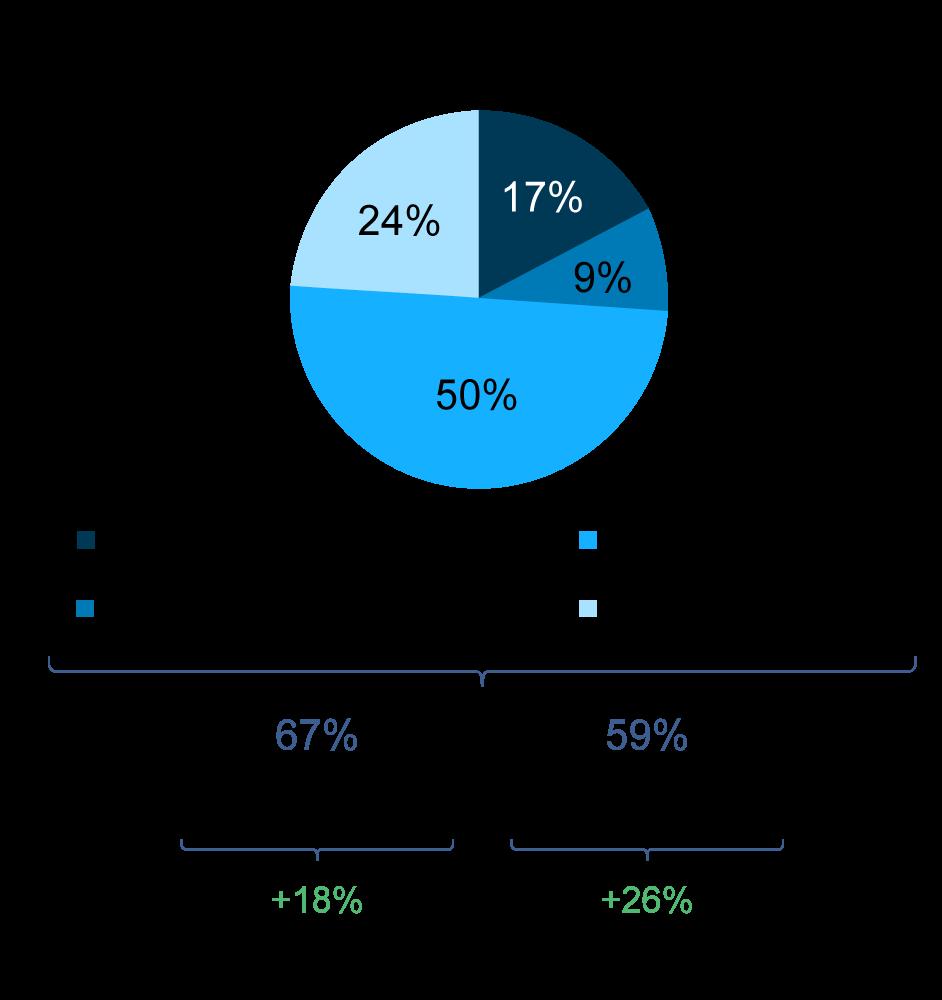
GLOBAL: AVoIP is no longer an emerging technology. It is fast becoming the backbone of modern AV infrastructure. New research from Audinate Group Limited in collaboration with Futuresource Consulting reveals that the industry has reached a decisive inflexion point, with adoption accelerating worldwide and expectations rapidly evolving.
The global survey highlights a shift beyond basic connectivity toward more sophisticated demands, including seamless interoperability, robust security frameworks, and cloud-enabled

control. This next phase of evolution has been referred to as AVoIP 2.0 and marks a transition from optional deployment to strategic necessity.
Drawing on insights from 370 end users and 100 integrators across North America, Europe, and Asia-Pacific, the study spans sectors such as corporate, media, healthcare, education, and government.
The findings show that Audio-over-IP is already firmly established, with widespread deployment and near-universal adoption on the horizon. Video-over-IP is following closely behind, reinforcing the growing role of IP-based systems as the foundation for scalable, futureready AV environments.
To access all the insights from the survey, download the full whitepaper here

GLOBAL: Christie Digital Systems announced a key leadership transition, appointing Michael Phipps as President and Chief Executive Officer, effective from April 1, 2026. The promotion, made by parent company Ushio Inc. signals continuity in leadership as the company builds on recent operational and strategic progress.
“Over the past two years, Mike successfully implemented operational initiatives and drove improvements in our product offerings and processes to better serve our customers and markets. His leadership was instrumental in the company’s transformation, and his passion for our cinema and ProAV industries will lead the organisation well into the future,” says Takabumi Asahi, CEO, Ushio Group, Inc.
Phipps succeeds Takabumi Asahi, who has led Christie for the past two years and will continue in his role as Chief Executive Officer
of Ushio Group, Inc. Having joined Christie in 2008, Phipps brings nearly two decades of experience within the organisation, including serving as chief financial officer from 2019 and most recently as president and chief operating officer.
His appointment reflects a track record of driving internal transformation, strengthening product offerings, and aligning operations more closely with evolving customer and market needs. Under his leadership, Christie is expected to continue advancing its position across both cinema and professional AV sectors.
“The industry is constantly changing, but what stays at the heart of what we do is our customers. We listen to their business challenges and work collaboratively to support their vision, so they can rely on our technology to create unforgettable experiences. I want to thank Mr Asahi for his guidance over the past two years and look forward to continuing to work with our customers and employees in my new capacity,” concluded Phipps.
Christie Digital
GLOBAL: Magnetic 3D, a leader in glassesfree 3D display technology and immersive visualisation solutions, is proud to announce the launch of its newly redesigned website, built to streamline how enterprise customers, developers, and partners discover, purchase, and deploy next-generation 3D experiences.
The new platform represents a major step forward in Magnetic 3D's mission to make immersive, glasses-free 3D accessible at scale—transforming how organisations engage audiences across retail, themed entertainment, healthcare, education, corporate environments and beyond.
The redesign enables easier navigation for an improved user experience, more clearly differentiates the company's single-viewer and multi-viewer display products and adds subscription capabilities for easy and immediate access to its professional developer tools, including plugins for Blender, Cinema 4D, Unity and Unreal.
Key improvements also include:
• Simplified Product & Services Discovery
• Enhanced e-commerce functionality
• Partner & Developer Enablement Options
• Educational & Technical Resources
• Insight on Immersive Technologies
Magnetic 3D’s new website is a foundational step toward the company’s broader vision: a future where glasses-free 3D becomes a core interface for physical AI experiences.
“Our displays have already removed the friction for users when it comes to experiencing 3D content,” said Tom Zerega, Founder & CEO of Magnetic 3D. “Now, we’re removing the friction for our customers and partners. We’ve rebuilt our Hypervue™ plugins from the ground up—with support for Unreal and Blender—so creators can seamlessly swap in the Magnetic 3D camera and output in our format, whether rendered or interactive.”
At the core of the Magnetic 3D platform is its ability to deliver exceptional forward projection “pop,” true depth, and ultra-wide viewing zones—without the need for headsets or wearables. The platform bridges both ends of the creative spectrum: empowering professional VFX artists, animators, and
designers with advanced tools, while also enabling non-technical users to generate glasses-free 3D content instantly using AI.
At the same time, the company is preparing to introduce a new generation of AI tools that will enable anyone within an organisation to convert existing 2D content into glasses-free 3D in seconds. By transforming standard 2D assets into multi-view 3D in seconds, Magnetic 3D dramatically reduces the cost, time, and complexity traditionally associated with immersive content creation.
The new website and solutions are tailored to support high-impact deployments across key industries, including:
• Retail: Next-generation visual merchandising and experiential solutions
• Event: Rental options for U.S. customers for trade shows, conferences and activations
• Themed Entertainment / Attractions: Reimaging Pepper’s Ghost and Holographic illusions
INDIA: MSS World, one of India’s most respected large-format projection and immersive experience specialists, has made a significant investment in Christie’s
• Healthcare & Medical Visualization: 3D SaaS for medical and patient education
• Corporate & Experience Center: High-impact AI-powered capabilities and LED systems
• Education & Research: Easy-to-use tools for STEM learning and visualisation
Magnetic 3D's new site also lays the groundwork for expanding its global sales partner network and supports a series of product announcements planned for later this year. As a pioneer in glasses-free 3D and a company that helped bring holographic visual experiences to market through advanced autostereoscopic displays for nearly two decades, Magnetic 3D is once again charting a new path—transforming from a hardware innovator into a scalable platform for immersive, AI-driven visualisation.
To learn more about Magnetic 3D’s cuttingedge glass-free 3D displays, click here or email info@magnetic3d.com
Magnetic 3D
most advanced RGB pure laser projection technologies. The acquisition comprises 16 units of the flagship Christie Griffyn 4K50-RGB, making MSS World the first company in India to procure this industry-leading projector.
This strategic investment further strengthens MSS World’s rental fleet, which includes Christie Crimson WU31 laser projectors, along with Christie DWU23-HS and D20WU-HS 1DLP laser projectors, reinforcing its position as Christie’s largest rental partner in the region and one of its most trusted collaborators in India. MSS World also brings a strong track record of well-known installations spanning museums, live events, and permanent projection mapping projects nationwide.
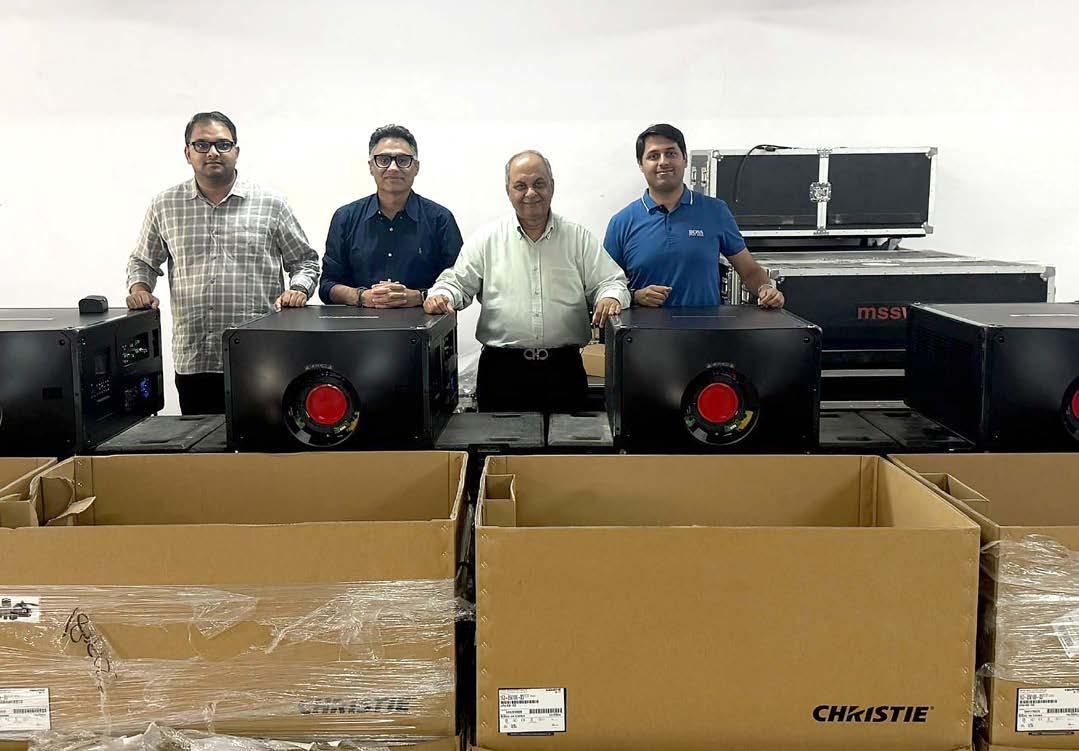
“From the very beginning, our partnership with Christie has been built on a shared belief in investing early in technologies that redefine what is possible at scale,” said Davinder Wadhwa, founder of MSS World. “Over the years, Christie’s projection systems have played a critical role in helping us deliver some of India’s most ambitious live events and cultural installations. Our investment in the Griffyn 4K50-RGB builds on this philosophy, enabling us to deliver truly world-class visual experiences.”
Pratik Wadhwa, CEO of MSS World, added, "Our decision to invest in the Griffyn 4K50RGB reflects both the scale of experiences our clients expect from us and the level of performance we demand from our technology partners. Christie's RGB pure laser projectors have consistently delivered outstanding brightness, colour fidelity, and reliability in the most challenging environments, from historic monuments to complex outdoor installations. Being the first in India to add the Griffyn 4K50RGB to our fleet strengthens our ability to deliver bigger and better visual experiences."
Rishubh Nayar, ProAV sales director for India, Christie commented, “MSS World has been an exceptional partner to Christie for many years, not only in terms of their scale of operations but also their unwavering commitment to quality and innovation. Their continued investment in our latest projection technologies reflects a deep level of trust in our brand and a
shared commitment to delivering spectacular visual experiences. We are proud to support MSS World as they continue to set benchmarks for large-format projection in India.”
Recognised for delivering technically demanding, high-profile projects across the country, MSS World has consistently relied on Christie projection solutions to power some of India's most iconic large-scale visual experiences. These include the "Matrubhumi" projection mapping show at the historic Red Fort in New Delhi, large-scale ceremonial projection mapping at Vijay Chowk during the annual Beating Retreat Ceremony, and the laser light and sound show at the Thiruvalluvar Statue in Kanyakumari, where Christie RGB pure laser projectors bring cultural storytelling to life on a monumental scale.
Designed for the world’s most demanding largevenue, live event, and permanent installation applications, the Christie Griffyn 4K50-RGB delivers true RGB pure laser illumination, achieving approximately 98% of the Rec. 2020 colour gamut, native 4K resolution, and up to 50,000 lumens of brightness in a compact, rugged platform. It delivers remarkable visual performance while operating at just 54dBA, even at full brightness.
Embedded Christie LiteLOC™ technology maintains consistent colour balance and brightness over time, regardless of fluctuations in ambient temperature. The Griffyn 4K50RGB also offers versatile connectivity, omnidirectional operation, and remotecontrolled electronic colour convergence (ECC) for precise, effortless colour alignment. With an efficiency of 13.2 lumens per watt, it also ranks among the most energy-efficient projectors in its class—making it ideal for large-scale projection mapping, immersive attractions, and premium live experiences.
MSS World
MIDDLE EAST: With the geopolitical situation in the Middle East remaining unpredictable, AVIXA has revised its plans for AV industry engagement in the region. InfoComm EDGE, originally scheduled for October 2026 at the Festival Arena in Dubai, will now take place October 27-28, 2027, at the same location.
AVIXA will also host a highly curated, invitationonly EDGE Preview in Dubai, Q4 2026. Positioned as a focused working forum, EDGE Preview will bring together senior decisionmakers and end users across key sectors— government and enterprise, leisure and entertainment, education, and retail—alongside AV industry stakeholders and international consultants.
Through a collaborative, co-creation-led format, participants will actively shape the role integrated AV can play in supporting regional recovery, growth, and long-term value creation. The focus will be on fast-tracking measurable outcomes—from enhancing human engagement and productivity to strengthening talent retention, investor confidence, and destination appeal.
“The positive response to our announcement of InfoComm EDGE earlier this year reinforced a clear market need for a different kind of event— one focused on how integrated AV delivers realworld outcomes,” said David Labuskes, CTS, CAE, CEO of AVIXA. “After close consultation with our partners in the region, we’ve taken a deliberate decision to move the full event to 2027 to ensure it lands with maximum impact— particularly at a time when government bodies are aligning investment decisions with longterm strategic priorities.”
“At the same time, this year’s EDGE Preview will be a focused, high-value forum designed for the current moment. By bringing together senior

decision-makers, end users, and consultants, we will be creating a space to explore how AV can actively support regional regeneration, productivity, and engagement—and to shape the direction of InfoComm EDGE 2027 through real collaboration and shared insight.”
Planning for InfoComm EDGE continues, with regional integration firms now beginning to submit design proposals for the event’s core activations—each focused on demonstrating how integrated AV performs in real-world environments and delivers measurable outcomes.
Central to this process is the InfoComm EDGE End User Council, a growing collective of regional organisations providing direct input into the design and evaluation of these activations through the lens of enterprise and operational impact. The Council now includes a dozen confirmed participants, including Emirates Airlines, du, Dubai Roads and Transport Authority, Sharjah Education Academy, Atlantis, Miral Asset Management, and Jollibee.
“Our commitment to AV in the Middle East remains clear, and this approach ensures we remain closely aligned with the needs and priorities of the region at a critical time,” added Labuskes. “The EDGE Preview this year is a deliberate step—bringing together the right stakeholders to focus on how AV can deliver meaningful impact now, while shaping the foundation for InfoComm EDGE 2027.”
Date and location for the EDGE Preview will be confirmed shortly, with a limited number of partnership opportunities to be made available to vendor brands.
AVIXA
GLOBAL: AtlasIED has expanded its international team with two strategic appointments aimed at reinforcing regional expertise and strengthening partner
“Bringing Bartosz onto our team is a significant step in enhancing our technical sales capabilities across the EMEA region. With his strong connections, we are confident in the expertise he will bring to the area,” said Simon Godfrey, Director of Sales – EMEA. “His experience and customer-focused approach will contribute to successful outcomes for our partners and clients.”

engagement. Bartosz Pętlak joins as Applications Engineer for EMEA, while Roger Lim steps into the same role for APAC. Both will bring extensive, field-tested experience to support the company’s growing global operations.
Based in Poland, Pętlak enters the role with 17 years of experience spanning AV and digital signage. He will focus on driving regional growth through precise solution design, technical consultation, and close collaboration with distributors and end users to ensure seamless project delivery.
“The AtlasIED team and the company's extensive product catalogue are responsible for an impressive amount of applications in the EMEA region, and I'm honoured to join the efforts,” said Pętlak. “I look forward to leveraging my experience in the industry to deliver solutions that address a wide range of complex customer requirements and drive successful project outcomes.”
In APAC, Lim brings over three decades of experience in professional audio and AV integration. His expertise in acoustics, sound reinforcement, and signal flow will underpin AtlasIED’s ability to deliver robust, real-world solutions tailored to regional requirements.
“I am excited to build and nurture strong relationships with customers in the APAC region. Being able to assist them in person is empowering, and I take pride in the strong presence that AtlasIED has established and will continue to expand in this area,” said Lim. “I am passionate about ensuring that our solutions perform well in real-world environments and provide long-term value. I look forward to directly supporting our customers in my region.”
“Adding Roger to our team greatly strengthens our ability to support customers throughout the entire project lifecycle,” said Glenn Lin, Director of Sales – APAC. “His significant experience in application support will play a critical role in expanding our presence across APAC.”
AtlasIED
GLOBAL: The SDVoE Alliance has welcomed DEXON Systems as an adopting member.
Founded in 1990, DEXON Systems is a global manufacturer of AV signal management and distribution solutions. DEXON Systems offers a comprehensive portfolio of video wall controllers, video processors, multiviewers, and matrix switchers, designed to enable real-time visualisation and seamless content distribution across a wide range of applications. These solutions are deployed in environments ranging from large-scale, mission-critical control rooms to small meeting spaces.
“We're excited to become a member of the SDVoE Alliance," said Dr János Czupy, Managing Director for DEXON Systems. "Our focus has always been on delivering reliable, high-performance visualisation solutions for complex environments. By aligning with the SDVoE Alliance, we can further expand the capabilities we bring to customers who depend on scalable, real-time video distribution."
DEXON Systems is trusted by thousands of organisations worldwide across corporate, government and defence, education, retail, industrial supervision and healthcare sectors. With a global presence spanning Europe, the Americas, the Middle East, and Asia-Pacific, DEXON Systems holds ISO 9001 and ISO 14001 certifications. DEXON Systems brings more than 30 years of in-house hardware and software development to support a robust product portfolio relied upon in some of the world's most demanding 24/7 operations.
“DEXON Systems brings deep expertise in video processing and control room applications to the Alliance,” said Stéphane Tremblay, President of the SDVoE Alliance. “Their addition strengthens our global ecosystem and supports our mission to drive interoperability and innovation across professional AV over Ethernet.”
The SDVoE platform is built on a 10 Gbps Ethernet architecture known as the "Power of 10," enabling high-performance AV applications with zero latency, uncompressed video and scalable system design over standard network infrastructure. As a manufacturer of video wall controllers, processors, multiviewers and matrix switchers, DEXON Systems is well positioned to bring these capabilities to the increasingly complex multi-display environments its customers depend on, whether in a corporate boardroom, a government command centre, or a mission-critical control room operating around the clock.
SDVoE Alliance

EMEA/APAC: G&D and VuWall are strengthening their international sales leadership to support closer alignment across their key international markets. Effective April 15, 2026, Mirko Aubel has been appointed Executive Vice President Sales EMEA & APAC, assuming operational sales leadership for both companies in these regions. Concurrently, Eric Hénique has been named Chief Revenue Officer (CRO) for G&D and VuWall.
The new leadership structure is designed to bring international account management, channel development, and partner engagement into closer alignment across both companies. It also supports a more consistent go-to-market approach for G&D and VuWall’s combined portfolio of KVM, visualisation, and video wall management solutions.
The leadership appointments reflect growing demand for integrated solutions in missioncritical control rooms and visualisation environments. In international projects, customers and partners increasingly expect KVM, visualisation, and video wall management to work together seamlessly — along with clearly defined ownership across regions and brands.
In his new role, Aubel will lead sales activities for both companies across EMEA and APAC from G&D’s headquarters in Siegen. His focus will include the development of international key accounts, expanded partner engagement, and a more unified approach to market coverage across both regions.

Mirko Aubel Brings Broad B2B Sales and Channel Experience. Aubel brings over 14 years of experience in technology-driven B2B markets. During his time at the ASSMANN Group, he held senior leadership roles with responsibility for sales and partner development across multiple European markets, including IT and KVM-adjacent infrastructure solutions.
“G&D and VuWall bring complementary strengths to the control room market,” said Aubel. “Customers don’t want two separate points of contact for an integrated solution. My goal is to simplify that experience and position the combined portfolio of both companies as the coordinated end-to-end solution it is.”

Eric Hénique Assumes Group-Wide Revenue Responsibility.
Eric Hénique, well known in the industry through his leadership at VuWall, now assumes group-wide revenue responsibility for G&D and VuWall as Chief Revenue Officer. The new structure combines centralised revenue leadership with regionally focused sales execution across the strategically important EMEA and APAC markets.
“With this new leadership structure, we are establishing clear accountability for the international market development of G&D and VuWall,” said Thorsten Lipp, CEO of the Panoptec Group. “For customers and partners, this means closer sales alignment, a more consistent market presence, and a more targeted approach to developing business across our combined portfolio.”
G&D and VuWall
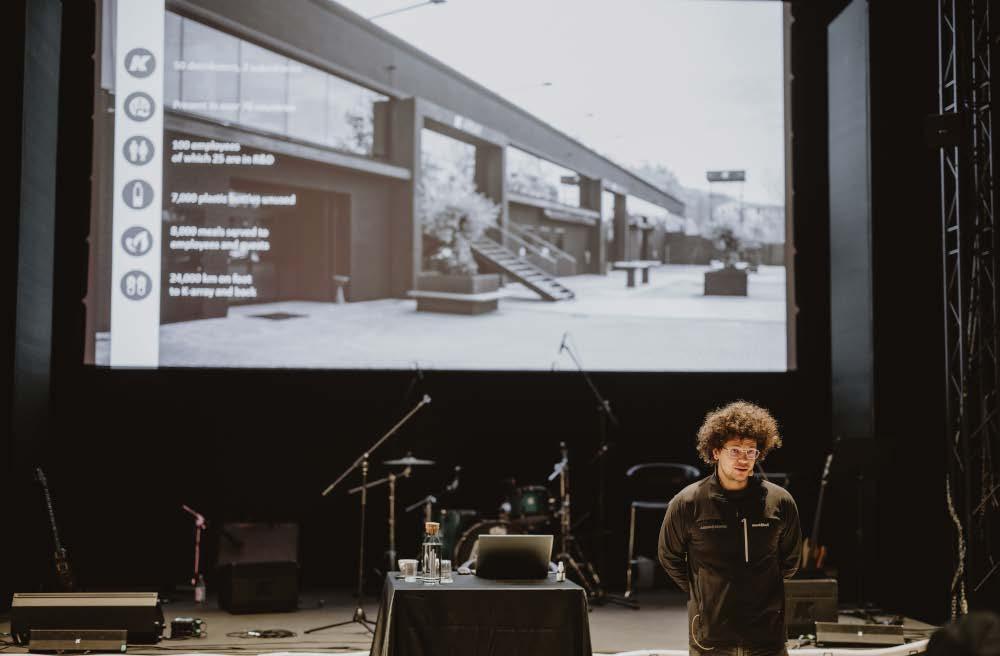
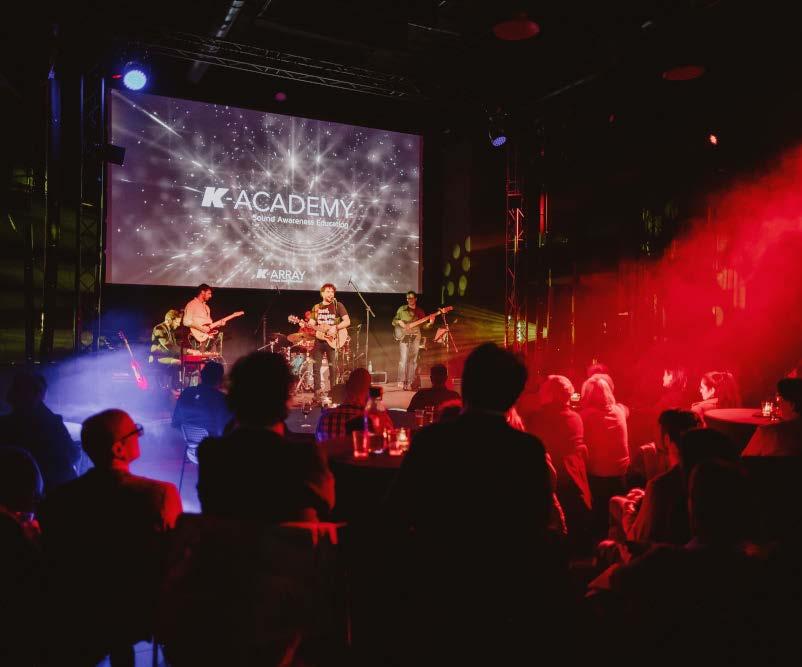
GLOBAL: K-array is elevating audio education in 2026 with the launch of its in-person K-academy “K-experience” program, an immersive training initiative designed to give industry professionals more than just theory. These hands-on sessions transform the company’s headquarters into a dynamic learning environment focused on real-world sound applications.
Aimed at system integrators, consultants, distributors and audio specialists, the two-day experiences offer a deep dive into the K-array, KSCAPE and KGEAR ecosystems. Rather than traditional classroom-style learning, attendees are guided through real-world applications, live demonstrations and practical case studies, bridging the gap between product knowledge and on-site execution.
Held throughout 2026, each session blends technical insight with experiential learning. Participants not only explore audio
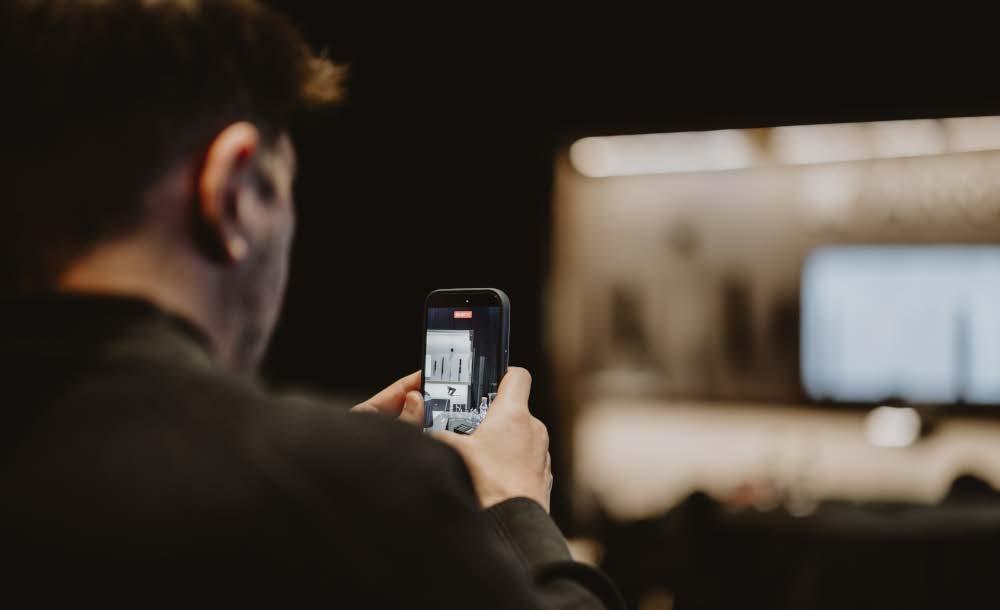
technologies but also connect directly with the engineers and teams behind them, gaining rare, behind-the-scenes access to the thinking that drives K-array’s solutions.
“We believe that a K-academy course must go beyond merely presenting technical data. It’s about warmly welcoming participants into the unique world of K-array,” says Daniele Mochi, customer support director at K-array.
“In our online courses, we strive to instill our values, vision and passion for the industry. While we put our best effort into these virtual experiences, visiting our headquarters provides the complete K-experience. It’s a blend of education and entertainment, plus a unique opportunity to connect with the people developing our solutions.”
The program kicks off with an introduction to the K-array ecosystem, followed by live indoor demonstrations and deep dives into real project applications. Attendees are also introduced to the K-Framework 3 acoustical simulation software, gaining practical tools they can apply immediately in their work. The first day wraps with a networking dinner, encouraging collaboration and idea exchange.
Day two expands into KGEAR and KSCAPE solutions, as well as concert system applications, including an outdoor demo, weather permitting. A guided factory tour offers a closer look at production processes before sessions conclude with insights into amplifiers, matrix systems and the broader K-array software suite.

ASEAN: Kramer Electronics APAC has announced the appointment of Jamie Boey as Regional Sales Manager for ASEAN, based in Singapore.
While the in-person experience offers a premium learning environment, K-array is also expanding access globally. Its K-academy online platform, now AVIXA CTS-certified, allows participants worldwide to engage with the brand’s training, with each course earning CTS holders two Renewal Units.
K-academy sessions are scheduled for the following dates during 2026: May 19-20, June 16-17, July 21-22, September 15-16 and November 24-25.
For more information, and to register for the upcoming sessions, click here.
Jamie brings over two decades of experience across the audiovisual, professional lighting, and commercial audio sectors in Asia Pacific. He has held senior roles across leading organisations and is recognised for driving sustainable business growth, managing regional operations, and building strong channel partnerships.
In his new role, Jamie will focus on strengthening engagement with system integrators and consultants in Singapore, while expanding end-user relationships to support broader adoption of Kramer’s solutions across ASEAN. He will work closely with Christie Lim, Regional Sales Director for ASEAN, as part of Kramer’s continued investment in the region.
This appointment underscores Kramer’s commitment to reinforcing its presence in ASEAN through deeper partner collaboration, enhanced market engagement, and delivering innovative AV solutions to customers across the region.
Kramer Electronics
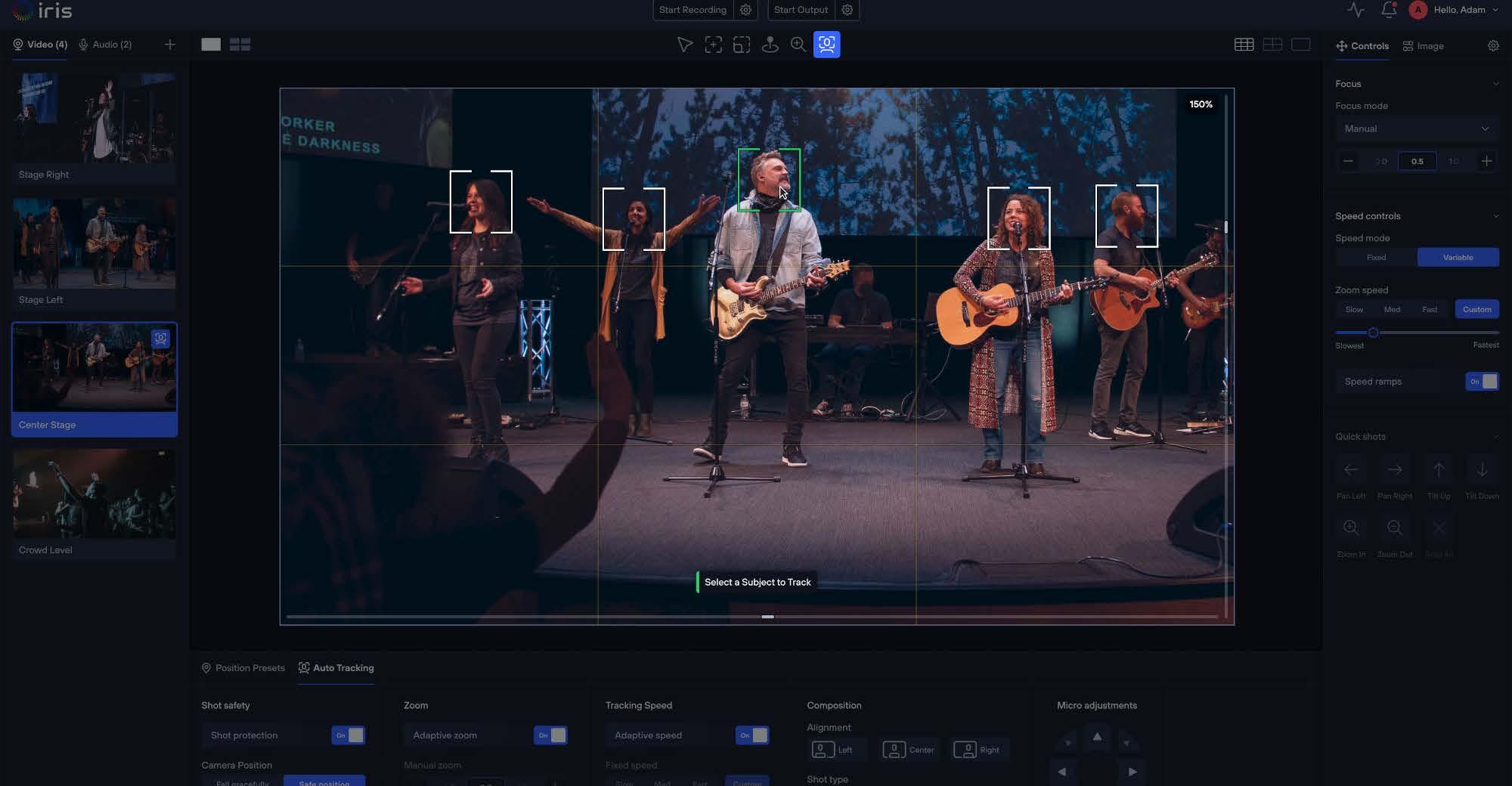
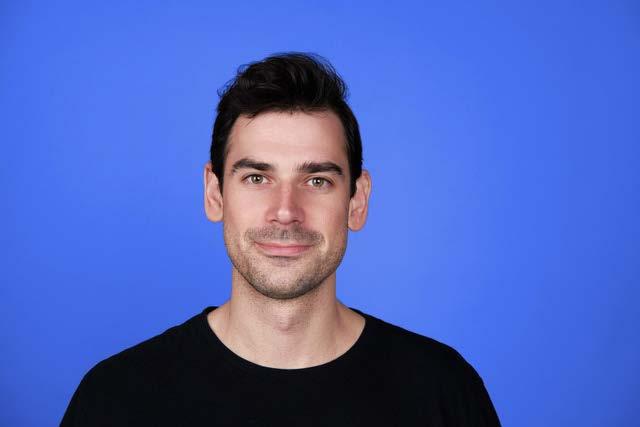
As production workflows continue their shift to IP and cloud-based environments, camera control has remained one of the last strongholds of hardware dependency. In this Interview, Noah Johnson, Vice President of Video Applications at Audinate, discusses how Iris is changing that paradigm. Designed as a cloud-based, software-first platform, Iris brings centralized, browser-driven control, cross-brand compatibility, and AI-powered automation to PTZ camera operations—enabling production
teams to work smarter, scale faster, and manage complex, multi-location setups with unprecedented ease.
What was the key problem with camera control that Iris set out to solve?
While audio and video have largely transitioned to IP-based workflows, camera control is still dominated by on-premises physical joystick controllers. We created Iris to solve that problem.
Iris is a cloud-based, brand-agnostic PTZ control platform that provides a single interface for users to access, operate, and manage cameras locally or remotely. It works with virtually any PTZ camera, native or non-native, and sets up quickly.
Through a browser-based interface, Iris delivers centralized control and AI-powered automation, including real-time subject tracking, intelligent framing, and position
presets. This reduces the need for manual camera adjustments and eliminates traditional, hardware-intensive workflows, allowing teams to focus on delivering professional productions from anywhere — whether that's a house of worship, a university lecture hall, or a corporate boardroom.
In simple terms, how does Iris transform a traditional PTZ camera into a cloud-connected production tool?
Iris takes a software-first approach, giving users a single, browser-based platform to control and manage cameras across different PTZ makes and models, whether the workflow is local, remote, or a mix of both. Because it is softwaredriven, we can continue expanding functionality to support both legacy and new cameras, delivering a more flexible, universal control experience.
Why was it important for Iris to support cameras from multiple manufacturers from the start?
Today, Iris supports virtually any make or model of PTZ camera through our desktop application.
We also recently launched Iris Enabled, which embeds Iris directly into camera firmware so it can run on the device itself. As a result, compatible cameras can connect directly to an Iris Studio or the cloud with a seamless setup experience. The first wave of firmware integrations includes 16 brands, and that list continues to grow, including partners such as BZBGear, NEOiD, Telycam, Z CAM, AIDA, BirdDog, Marshall, Bolin, Lumens, KatoVision / HDKATOV, Everet, and Angekis.
AI automation is a core feature of the platform. How does this change the way operators manage cameras during production?
Iris automates tasks like subject tracking and framing. A user selects a subject, defines the desired shot, and the system automatically adjusts the camera to maintain that composition over time. The result is less
manual correction and a more intuitive cameracontrol experience.
Iris AI models run locally on the user’s computer rather than in the cloud, delivering responsive performance in live production environments. It also allows Iris to run more advanced models than are typically possible today due to cloud-based hardware and processing limitations. Because Iris operates at the control layer, its AI tools work across virtually any make or model of camera.
Looking ahead, we see AI expanding into more workflow-specific capabilities that further improve production efficiency. These may include automated colour correction, predictive device alerts, and tracking solutions tailored to specific verticals.
One operator controlling multiple cameras across different locations sounds powerful. How does Iris make this practical?
The practical foundation is that Iris is entirely software-based and browser-accessible, so a single operator doesn't need dedicated hardware or even themselves at each location — they access one unified interface from anywhere, with real-time control across 400+ supported camera makes and models. There's no juggling of brand-specific joysticks or tools; the experience is identical whether cameras are across the hall or across the country.
Iris also reduces the amount of active attention each camera requires. Presets, auto tracking, and proactive status alerts let cameras run reliably on their own, so one operator can manage a distributed deployment, thanks to the platform's ability to treat them as a single coherent system.
How does the platform help organisations maximise the value of their existing camera investments?
Traditional on-site setups are capital-intensive, requiring upfront investments in hardware and costly replacements as systems evolve.
Cloud-based platforms shift this model by reducing upfront costs and moving to a subscription that includes ongoing updates, new features, and expanding device support without additional hardware.
Labour is another cost consideration. Remote, AI-powered tools enable fewer people to manage more with less training. With Iris, a single operator can control multiple cameras across multiple venues, enabling distributed collaboration and scalable production without needing to add the same level of crew or equipment.
Which industries are currently showing the strongest interest in Iris?
Our primary markets include houses of worship, corporate production, higher education, and sports. But ultimately, anywhere there’s a PTZ camera, Iris can add value.
How does Iris improve collaboration for production teams working remotely?
The biggest change is scale. With Iris, a single operator can manage multiple cameras across multiple venues. Teams can collaborate from different locations, and productions can expand without needing to scale crew or equipment at the same rate.
Setups that once took hours can now take minutes, opening new possibilities for productions that may not have been economically feasible before, from houses of worship and corporate events to sports and live streaming.
What makes Iris different from other remote camera control solutions on the market?
Different brands use different protocols, interfaces, and feature sets, which creates friction for production teams. Once you are managing multiple camera types, multiple operators, or multiple locations, that complexity adds up quickly.
Iris takes a fundamentally different softwarefirst approach to solving that problem (which has historically been mostly hardware-minded). It gives users a single, browser-based platform to control and manage cameras across different makes and models. Whether the workflow is local, remote, or a mix of both, and because it is software-driven, we can continue expanding functionality over time.
How quickly can a production team deploy Iris and start controlling cameras remotely?
What used to be a full-day job — running cables, configuring each controller, mapping cameras one by one — can now happen in minutes. For organizations managing multiple venues, that difference compounds quickly. A regional team that once needed a technician on-site at each location can now bring a new room online remotely.
Looking ahead, what new capabilities can users expect from the platform in the future?
The next five years will be defined by two major trends: Cloud and AI.
Production workflows are moving out of the room and into the cloud. Camera control, monitoring, and configuration will live in software, accessible from anywhere. That enables distributed teams, centralized oversight across locations, and far more flexible operations.
Troubleshooting and system management are other major areas. AI will continuously monitor device health—connection stability, performance, and error patterns—and identify issues before they become failures. More importantly, it will simplify troubleshooting. An operator can describe a problem in plain language, and the system can diagnose the issue, suggest a fix, or resolve it automatically. This dramatically lowers the expertise required to maintain reliable production, especially in volunteer-driven environments.
Audinate
by Surabhi Pandey
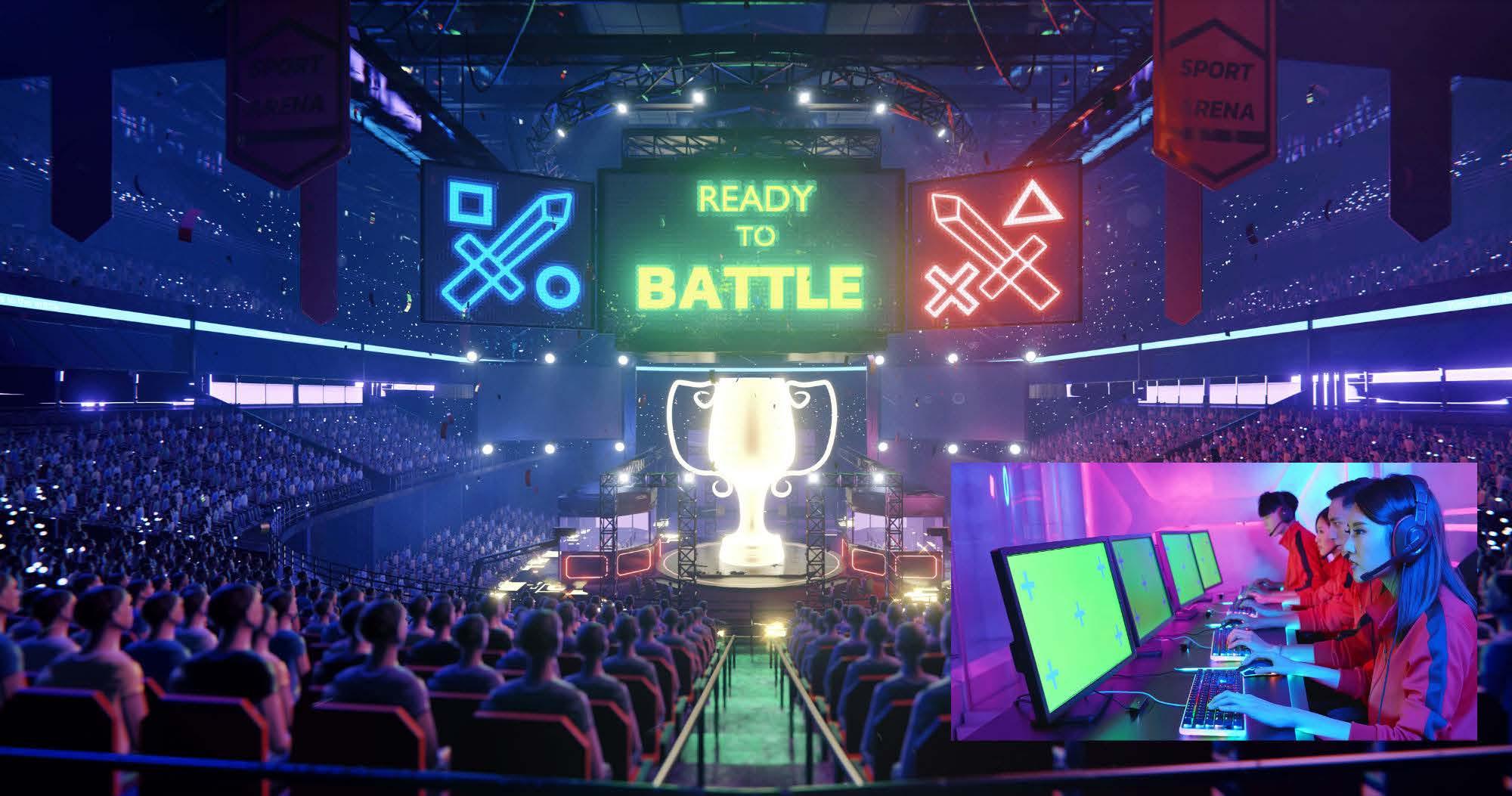
Esports has long been built on the promise of convenience and open access. If players have the skill and a stable internet connection, serious competition can happen from almost anywhere, with fans, organisers and sponsors able to take part from wherever they are. That flexibility has helped the industry grow rapidly across Asia-Pacific, turning online tournaments into a powerful engine for scale.
But as prize pools rise, sponsorship money increases and audiences expect higher standards, convenience alone is no longer enough. Many top-tier tournaments are placing renewed emphasis on physical venues and studio environments, where fairness, consistency and trust are easier to protect.
Asia-Pacific remains one of the most influential regions in global esports, with some of the world’s largest fan communities and tournament markets. Various industry estimates place Asia-Pacific as the largest regional audience for esports globally. That audience scale creates opportunity, but also pressure. Fans expect professional standards. Sponsors expect brand-safe environments. Publishers expect integrity. Regulators increasingly expect governance.
In short, esports can no longer rely on start-up era operating standards while functioning as a billion-dollar ecosystem. This matters because it will shape where the next wave of
investment flows. It influences venue technology, AV integration, live production, networking, cybersecurity and fan experiences. For integrators, event operators and venue owners across APAC, it is one of the clearest commercial opportunities in the sector.
Online tournaments were essential during the pandemic era and remain useful for qualifiers, amateur circuits and regional ladders. But at the top tier, distributed competition creates persistent risks. Latency remains the most obvious issue. In games decided by reaction time,tiny delays can influence outcomes. A few milliseconds may not matter to casual players, but at elite level they can determine a round, a duel or a title.
Then there is infrastructure inconsistency. One player may have fibre broadband, another may suffer packet loss. One region may route traffic cleanly, another may experience congestion.
There are also integrity concerns. Remote competition makes it harder to verify hardware setups, detect unauthorised software, prevent coaching breaches or control communications. Even when no wrongdoing occurs, suspicion alone damages trust. That is a serious problem for any spectator sport.
A purpose-built esports venue removes much of that uncertainty. LAN environments deliver near-identical network conditions. Tournamentgrade devices can be standardised. Officials can monitor players in real time. Broadcast teams can synchronise feeds accurately. Referees can intervene instantly.
Most importantly, outcomes become easier to validate. When a team loses on stage, viewers are less likely to blame lag, packet loss or
hidden advantages. The result feels legitimate because the conditions are visible and controlled. That perception matters commercially. Fans stay engaged when they trust the product. Brands invest when they trust the competition. Rights holders expand when they trust the ecosystem. This is why modern esports arenas increasingly resemble highperformance broadcast studios as much as gaming halls.
Asia-Pacific already has several structural advantages. The region combines dense urban populations, strong gaming cultures, worldclass connectivity and consumer appetite for live entertainment. It also includes mobile-first markets where esports fandom is firmly mainstream.
We are already seeing major live events draw enormous attention. Recent audience tracking continues to show Asia generating some of the highest esports watch-time globally. That scale supports investment in permanent and semi-permanent competitive venues rather than one-off pop-up events.
Cities such as Seoul, Shanghai, Bangkok, Singapore and Manila are well placed to become recurring hubs for regional leagues, cross-border championships and publisher showcases.For venue developers, the opportunity is not simply renting floor space. It is creating trusted tournament ecosystems.
This is where systems integration becomes central. Competitive integrity depends on far more than rows of gaming PCs. It requires resilient low-latency networking, redundant internet paths, controlled access systems, broadcast-grade video routing, referee monitoring stations, anti-cheat oversight, audience displays, audio precision and cybersecurity controls. A modern venue also
needs scalable production capability for multilingual broadcasts, hybrid audiences and sponsor activations. That means AV integrators, network specialists and smart venue designers have a larger role to play than many realise. Esports venues are becoming convergence projects, where entertainment technology meets enterprise-grade operational standards.
Integrity may be the headline reason, but physical venues unlock wider value. They generate ticketing revenue. They create premium sponsorship inventory. They support merchandise, food and beverage, fan meet-andgreets and community programming. They also extend engagement beyond tournament days. Many venues can host creator events, brand launches, university competitions, coaching academies or public play sessions. Even betting and prediction ecosystems benefit from higher confidence environments. When audiences trust official competitions, adjacent engagement platforms such as 1xBet become easier to position around mainstream esports audiences. That broader monetisation case helps justify capital expenditure.
Not every tournament needs a stadium. Online formats will remain vital for grassroots growth and regional accessibility. But the upper tier of esports is clearly moving toward a hybrid future: online pathways feeding into physical finals, league stages hosted in controlled arenas, and marquee events built for both spectatorship and integrity.
That mirrors traditional sport. Local participation can happen anywhere. Professional competition requires standards. For APAC, this is an opportunity to lead the next phase of esports maturity. The region already has the audience, the passion and the infrastructure momentum. Now it needs more trusted venues. In competitive gaming, talent may win matches, but trusted infrastructure is what sustains the industry.

About the writer
Surabhi Pandey is a Communications Specialist focusing on sports business, digital fan engagement and sports media trends. Surabhi can be contacted at surabhi2301@gmail.com

How next-generation esports venues are redefining production through adaptable workflows, software-defined infrastructure, and immersive audience experiences
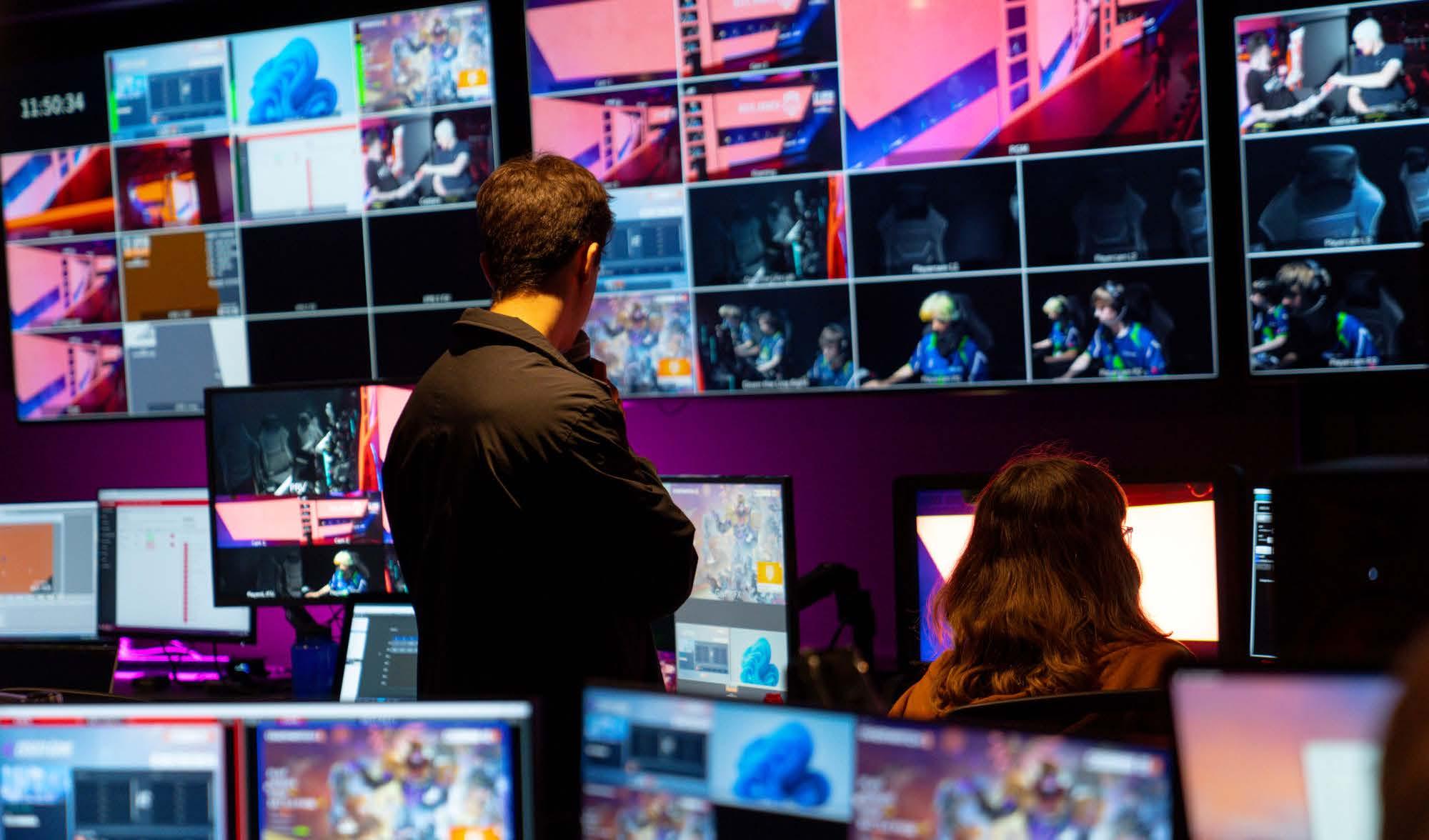
Esports production is evolving at a pace unmatched by traditional broadcast and live events. At the heart of this transformation are three defining pillars: flexibility, scalability, and innovation. As highlighted in Ross’s framework, these principles are no longer aspirational—they are operational necessities.
Modern esports arenas are not just venues; they are dynamic, high-performance ecosystems that must pivot between game titles, scale across event sizes, and continually adopt new

technologies to meet rising audience expectations.
Drawing on insights from Andrew Tan, Regional Sales Director, Asia, Ross Video, this article explores how these three pillars are embedded into the very DNA of esports production—and how they are shaping the future of AV in this space.
Esports arenas differ fundamentally from traditional sports or entertainment venues. Rather than supporting a single primary feed, they function as multi-layered content ecosystems, managing simultaneous inputs— from player POVs and caster cameras to live data overlays and analytical graphics.
This is where flexibility becomes critical.
Unlike conventional formats, esports events are highly volatile. A venue may host a first-person shooter tournament one day and a sports simulation or mobile game the next—each requiring entirely different production logic, visual priorities, and workflows. As Andrew Tan explains, “what matters” shifts with every title: the number of feeds, the type of data, and how that information is presented.
Facilities such as the Confetti X Esports Complex illustrate this reality. Designed to accommodate diverse game genres and event formats, the venue prioritises repeatable workflows and unified control systems. This allows operators to pivot quickly without rebuilding production from scratch—an essential capability in an environment where last-minute changes from developers and publishers are common.
Flexibility also extends beyond competition. The rise of the “esports campus” model— where venues support training, content creation, and community engagement— demands infrastructure that can seamlessly switch modes. In this context, AV systems are no longer static installations but adaptive platforms that enable continuous reinvention.
If flexibility enables adaptation, scalability ensures sustainability.
Esports events range from small regional tournaments to global championships with millions of online viewers. For operators, the challenge lies in delivering high production value while maintaining cost efficiency—a balance that requires intelligent system design.
High-performance LED displays are a case in point. In esports, the main screen often serves as the audience’s primary “field of play.” This places immense importance on low latency, high refresh rates, and consistent colour reproduction. But as venues grow, the challenge shifts from optimising a single display to coordinating dozens—sometimes hundreds—of endpoints across the arena.
Andrew notes that the real breakthrough in large-scale deployments often comes not from adding more technology, but from reducing workflow fragmentation. By streamlining signal paths and aligning production with display systems, operators can maintain consistency across multiple outputs while meeting strict latency requirements.
Scalability also manifests in infrastructure. The shift towards AV-over-IP and broadcast IP workflows allows venues to move away from rigid, point-to-point connections. Instead, video, audio, and data become network-based resources that can be routed, scaled, and reconfigured as needed.
Andrew adds that when people refer to broadcast IP, they're generally speaking about environments built around SMPTE ST 2110, where video, audio, and ancillary data travel as separate flows. In practice, this means three core building blocks: a switching fabric, ST 2110-capable endpoints and gateways, and an orchestration layer that enables devices to discover and connect flows. The infrastructure becomes more akin to a platform than a patchbay — and in larger deployments, that orchestration layer may extend to monitoring and debugging across complex topologies. It's worth noting that this is not "plug and play" in
the consumer sense; broadcast IP introduces new design priorities around timing, stream management, and control, making the venue resemble a purpose-built media network.
However, IP alone is not the solution. The real advantage lies in software-defined production, where processing, routing, and multiviewing are treated as flexible resources. This enables venues to build a core system once and adapt it across different event scales and formats— maximising both efficiency and return on investment.
In esports, latency is not a background technical metric—it is a defining factor in both competitive integrity and audience experience. Even slight delays between gameplay, in-venue screens, and live streams can disrupt the sense of immediacy that fans and players rely on. As a result, manufacturers are approaching latency as an end-to-end challenge, focusing on minimising processing steps, streamlining signal paths, and ensuring tight synchronisation across switching, graphics, and replay systems. Crucially, the goal is not just ultra-low latency, but consistent and predictable performance. Since latency is cumulative—every conversion, scaling process, or handoff adds delay—system designers are prioritising cleaner, more efficient workflows.
At the same time, there is growing recognition that latency and operational complexity must be addressed together. Fragmented systems with multiple control layers often introduce both delay and inconsistency, particularly in high-pressure live environments. The shift, therefore, is towards unified orchestration— where video, audio, and show control are tightly integrated—ensuring that the entire production ecosystem moves in sync, delivering a seamless and truly real-time experience.
If flexibility and scalability are about capability, innovation is about relevance.
Esports audiences are among the most techsavvy and demanding in the world. They expect not just high-quality visuals, but immersive, interactive, and constantly evolving experiences. This pushes production teams to rethink traditional workflows and embrace new technologies.
One major area of innovation is hybrid production. Esports events inherently combine in-venue experiences with global broadcast and online streaming. Today’s platforms are evolving to support this complexity, moving from single-output pipelines to integrated ecosystems that deliver multiple synchronised outputs.
Three key trends are shaping this evolution:
• Template-driven workflows: Standardisation enables teams to handle the variability of esports formats while maintaining consistency across events.
• Automation and data integration: Real-time game data is increasingly driving graphics and storytelling, reducing reliance on manual processes and enabling faster, more dynamic content delivery.
• Unified orchestration: Bringing together video, audio, lighting, and control into a single layer ensures that the arena and the broadcast feel like one cohesive experience.
Latency remains a critical frontier in this innovation cycle. In esports, even minor delays can disrupt both competitive integrity and audience immersion. As a result, manufacturers are focusing on end-to-end

latency optimisation, minimising processing steps and improving synchronisation across systems.
But perhaps the most significant innovation lies in experience orchestration. As esports venues converge with themed entertainment and brand activations, production expands beyond screens into fully immersive environments— coordinating content, cues, and interactions across multiple touchpoints.
Ultimately, esports production is not just about technology—it is about storytelling at scale
Flexibility allows producers to adapt the narrative to different games and formats. Scalability ensures that the story can reach
audiences of any size, from intimate venues to global streams. Innovation brings new ways to engage fans, turning passive viewing into active participation.
Together, these three pillars form the foundation of modern esports production.
As the industry continues to evolve, one thing is clear: the future of AV lies not in standalone systems, but in integrated, intelligent platforms that can adapt, scale, and innovate in real time. Esports is simply the proving ground—and what is being built here will soon influence the broader world of live production, entertainment, and beyond.
Ross Video
How ROE Visual is powering the convergence of live spectacle and global broadcast
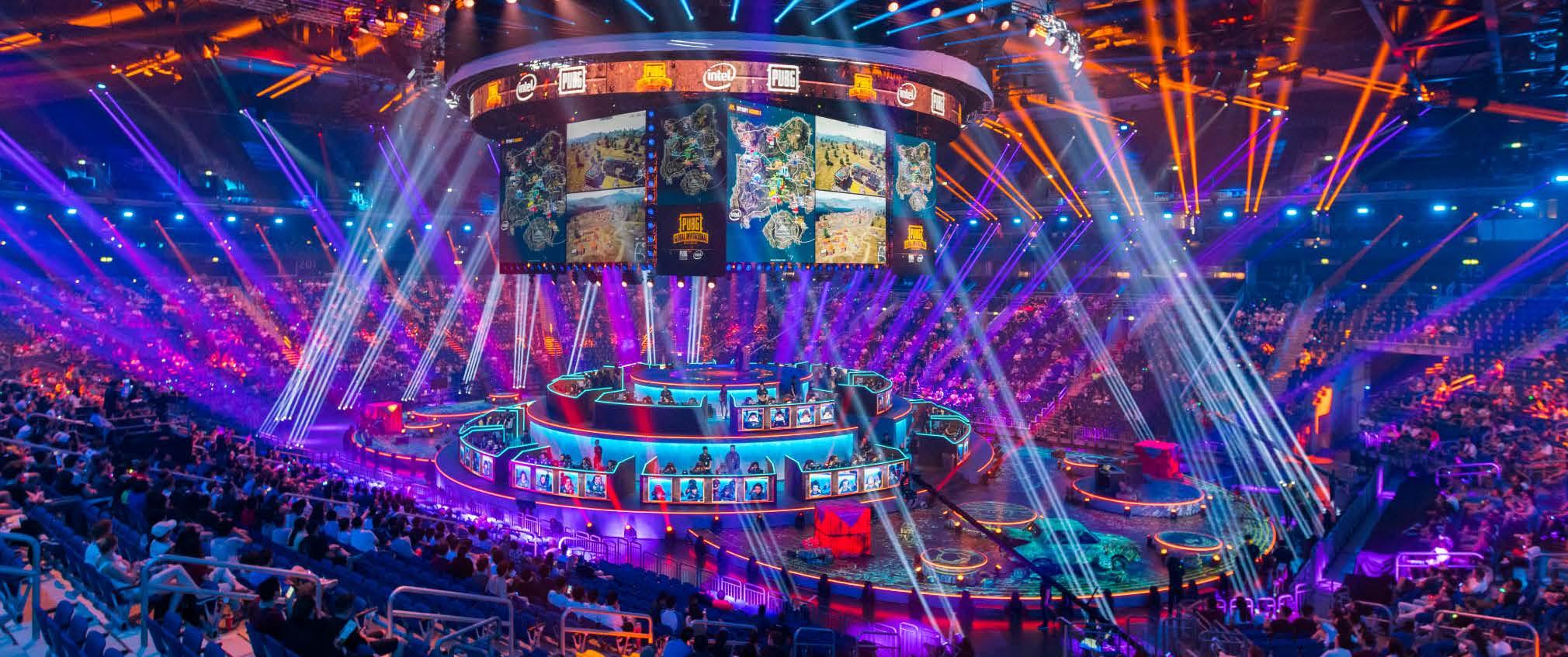
The PUBG Berlin event featuring ROE Visual displays.
As esports continues its meteoric rise, the arena has evolved into something far more complex than a traditional venue. It is now a hybrid stage—part live entertainment spectacle, part high-stakes broadcast studio. At the heart of this transformation lies LED display technology, which must deliver flawless performance for both the in-house audience and millions watching worldwide. According to ROE Visual Marketing, achieving this balance requires a meticulous blend of engineering precision, creative flexibility, and uncompromising reliability.
At the core of this evolution is the role the LED display plays in shaping the entire experience. For esports, the LED display is not just a screen—it is the primary storytelling canvas. To meet the demands of fast-paced titles, ROE Visual delivers ultra-high refresh rates

of 7680Hz and beyond, coupled with support for frame rates up to 240Hz. This ensures that every rapid movement, from split-second flick shots to sweeping in-game transitions, is rendered with absolute clarity and zero motion blur. Equally critical is resolution. ROE Visual addresses this through a spectrum of pixel pitches—from ultra-fine 0.9mm–1.2mm displays for analysis rooms to larger 2.6mm–6mm configurations for main stages—ensuring optimal visibility across varied viewing distances.
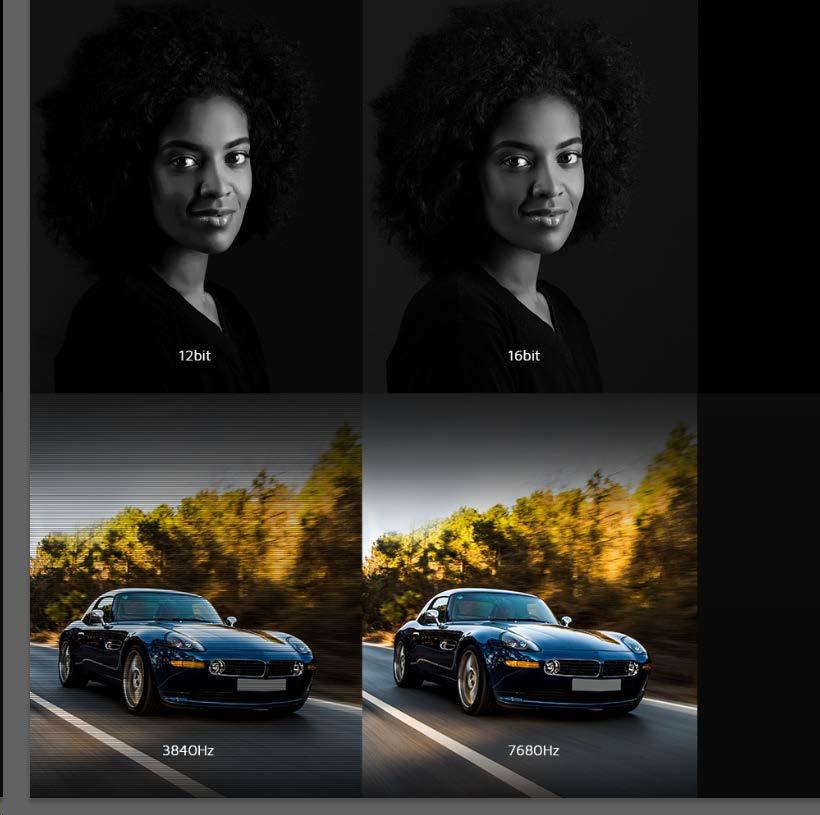
But performance goes beyond sharpness. In visually complex game environments, especially those with darker tonal ranges, precision grayscale and high contrast are essential to reveal detail without loss. Wide colour gamut support, such as DCI-P3, further enhances the visual fidelity, preserving the artistic intent of modern game design. Crucially, camera compatibility remains a defining factor. With global streaming at the core of esports, LED systems must integrate seamlessly with broadcast cameras, delivering flicker-free visuals through advanced driver ICs and shutter synchronization.
The dual nature of esports production—serving both a live audience and a broadcast feed— introduces unique challenges. ROE Visual tackles this with a holistic ecosystem approach. For in-venue audiences, anti-reflective and antiglare surface treatments ensure consistent image quality even under intense lighting conditions. For broadcast, near-zero latency is achieved through cutting-edge workflows, including SMPTE ST 2110 standards and highbandwidth fibre transmission, ensuring perfect synchronization between on-screen action and player performance.
Innovation extends further with technologies like GhostFrame, enabling LED displays to present different visual layers simultaneously. While the live audience experiences a clean, immersive environment, broadcast cameras can capture hidden elements such as augmented reality markers or region-specific sponsor content—effectively allowing one stage to serve multiple visual narratives without compromise.
Beyond raw performance, ROE Visual emphasizes stability as a cornerstone of its value proposition. Drawing from experience across globally recognized events—from Olympic ceremonies to major entertainment productions—the company brings missioncritical reliability into esports. In an industry where downtime is unacceptable, this level of dependability is not just an advantage—it is essential.
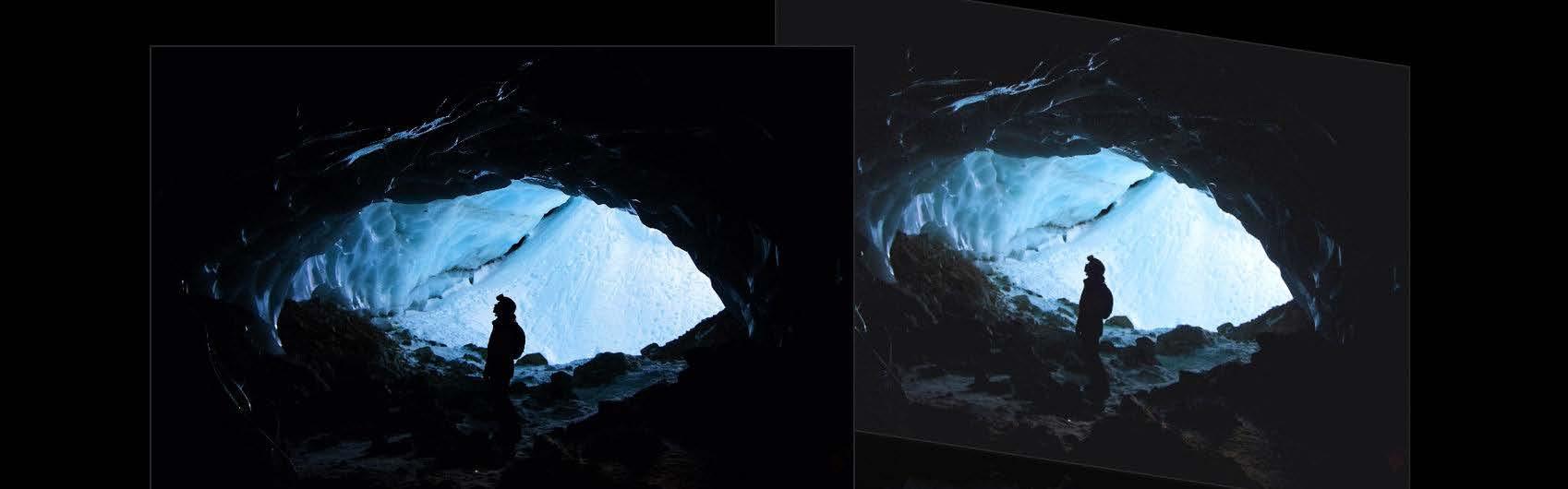
With the high blackness and anti-reflective solutions, ROE LED displays look deep in areas where there is no content on them, and it can remove the impact of ambient reflected light on the panel.
On the creative front, LED technology is unlocking unprecedented design possibilities From transparent backdrops and interactive floors to immersive XR environments, ROE Visual’s solutions enable designers to blur the line between physical and digital worlds. Installations at premier esports tournaments demonstrate how modular systems can scale from standard configurations to fully customized, multi-dimensional stages without sacrificing practicality.
ROE Visual’s capabilities are best reflected in its track record. From the massive scale of the Esports World Cup (EWC) and Dota 2 The International (TI) to the high-stakes atmosphere of the League of Legends World Championship in Shanghai, ROE has consistently delivered the infrastructure behind some of the industry’s most complex stage designs.
Solutions such as the Vanish V8T for hightransparency backdrops and the Black Marble (BM) series for interactive LED floors have enabled fully immersive 3D environments for both players and audiences. At the Riot Games Esports Centre, ROE Visual deployed the BP2V2 to create a seamless XR experience, blending the physical stage with digital game worlds. This combination of creative freedom and proven reliability is why designers continue to favour ROE’s technology.
Looking ahead, ROE Visual continues to push boundaries. Its Vanish Acoustics solution allows sound to pass through the screen without distortion, eliminating the need for bulky, visible speaker arrays. Meanwhile, the Vanish Air series—featuring holographic transparent panels—opens up new possibilities for floating visuals and futuristic stage effects. Whether for standard deployments or fully customised builds, ROE adapts its technology to each creative vision—continuing to lead the industry while delivering unforgettable “wow” moments.
Yet, innovation is always tempered by real-world considerations. True cost efficiency, ROE Visual notes, is not defined by upfront savings but by long-term reliability. Durable, high-performance panels that minimize failure and maintenance ultimately protect both the production investment and the event’s reputation.
As esports venues continue to push the boundaries of experience, LED technology stands as the defining enabler. With a focus on precision, adaptability, and resilience, ROE Visual is helping shape a future where every match is not just played—but spectacularly brought to life.
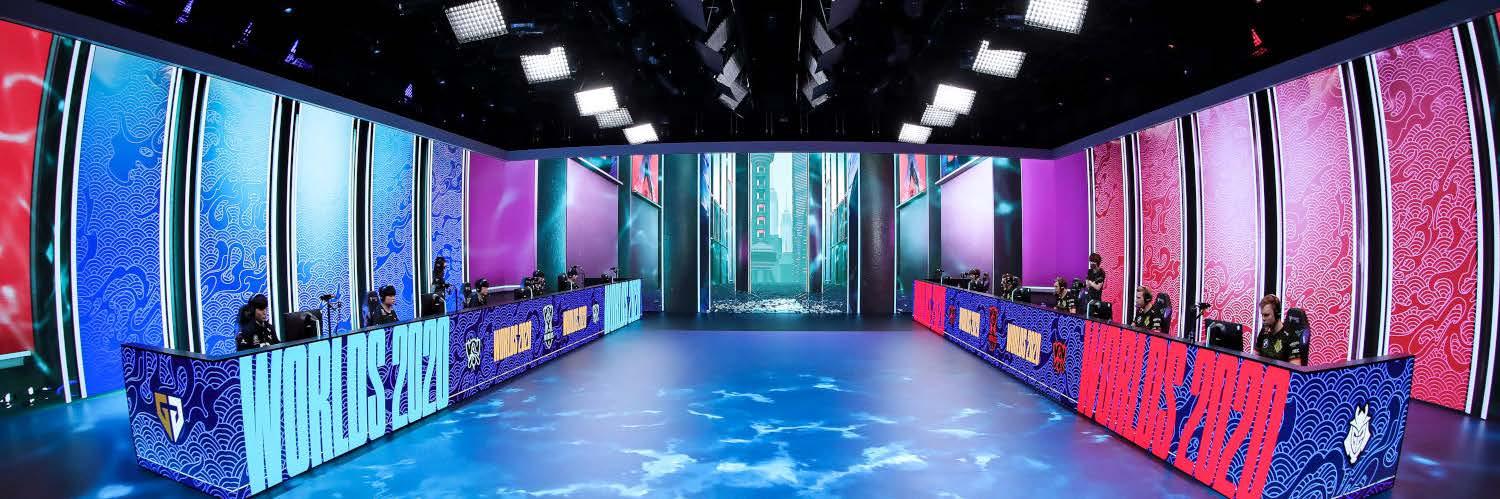

Meet the Biamp BMA 360D: a ceiling tile microphone that actually makes meetings easier to follow. It’s a beamforming array that captures natural, full-range speech so everyone sounds clear, whether you’re in a tiny huddle space or a large conference room.
Designed to integrate seamlessly with Tesira systems via Dante®, the BMA 360D captures natural, full-fidelity speech with impressive consistency across a wide range of room sizes and layouts. By outputting pure, unprocessed beam audio on individual Dante channels, it gives designers and integrators the flexibility to fine-tune routing and signal processing for more precise, optimised performance.
At the heart of the system is ultra-wideband, frequency-invariant beamforming, which maintains a consistent beam shape across the full voice frequency range. The result is clear, natural and intelligible speech throughout the room, whether in a small meeting space, training room or larger venue. Biamp’s Deep Side Lobe beamforming also helps reduce unwanted reverberation and off-axis noise, keeping the focus firmly on the voices that matter.
To support global deployments, the microphone is available in two formats: the BMA 360D (24-inch x 24-inch) and BMA 360DI (600 mm x 600 mm). Installation is further simplified with multiple mounting options, including Surface Mounting Kits and Recessed Mounting Kits, designed to suit different project requirements. Integrated amplification, standard ceiling tile sizing and flexible mounting all help reduce system complexity and speed up deployment.
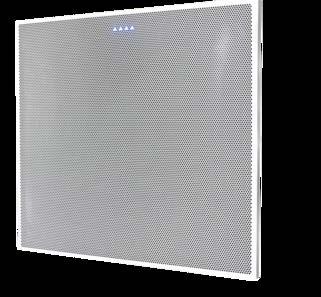
Biamp is also introducing BMA Config Software giving users quick access to beam pattern presets while allowing full customisation of beam widths and positions. This added control makes the BMA 360D well suited to more advanced applications such as voice lift, camera tracking and DSP-driven room automation.
Whether for conferencing, training environments or large-scale spaces, the BMA 360D is positioned as a flexible, highperformance option for projects where speech clarity is critical. The Biamp BMA 360D Ceiling Tile Microphone is available now.
Biamp/BMA 360D



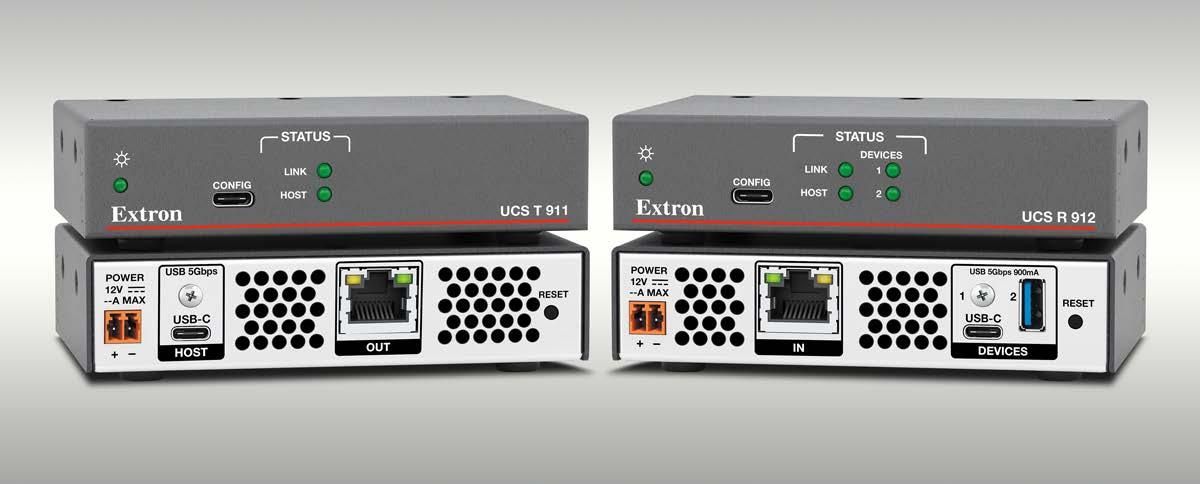
Extron is now shipping its UCS 910 Series of twisted pair USB extenders, giving integrators a new option for extending high-speed USB connectivity over longer distances in professional AV environments.
Designed to send USB data from peripheral devices to a host computer over CAT 6A, the UCS 910 Series supports transmission distances of up to 330 ft (100 m) while maintaining compatibility with USB 3 and earlier standards. Supporting data rates of up to USB 5Gbps, the solution is aimed at deployments where reliable, high-performance USB extension is essential.
The UCS T 911 transmitter features a USB-C host connection and can be powered either from the receiver or locally with an optional power supply, while the UCS R 912 receiver includes a two-port USB hub with both USB-C and USB-A ports for connecting remote
peripherals. Together, the system is designed to simplify the integration of devices such as cameras, videobars, annotation tools, interactive displays, headsets and speakers across larger spaces.
According to Extron, the UCS 910 Series is suited to a wide range of environments including classrooms, lecture halls, training rooms, courtrooms, conference rooms and other collaborative spaces where USB peripherals need to be positioned away from the host system without sacrificing performance.
For complete deployments, the UCS TR 910 Kit bundles the transmitter, receiver, power supply and ZipClip brackets, allowing the units to be securely mounted in furniture, behind displays or under desks for a cleaner installation.
Extron/UCS 910 Series

Delivering clear, natural speech in large or flexible spaces has long meant juggling multiple microphones, complex setups, and ongoing support. With the release of Tesira 5.6
Biamp introduces Parlé Voice Lift, a streamlined approach that simplifies voice reinforcement while improving the listening experience.
Built on the integration of Parlé TCM-X microphones and Tesira DSPs, Parlé Voice Lift ensures that every voice carries clearly across lecture halls, training rooms, classrooms, and divisible spaces. By removing the need for handheld, lavalier, or podium microphones, it reduces technical friction for both presenters and AV teams.
This latest development consolidates the capabilities of Parlé Presenter Lift and Parlé Participant Lift into a single, unified solution. The result is a more intuitive system that is easier to deploy, manage, and scale across different environments.
Beyond clarity, the focus is on efficiency. Parlé Voice Lift minimises the need for hands-on AV support, while built-in tools significantly cut down design and configuration time. For integrators and IT managers, this translates to faster deployments and lower operational overhead.
As a complete, single-vendor solution, Parlé Voice Lift aligns performance with practicality and offers a consistent, reliable way to deliver high-quality voice reinforcement without added complexity.
Biamp/Parlé Voice
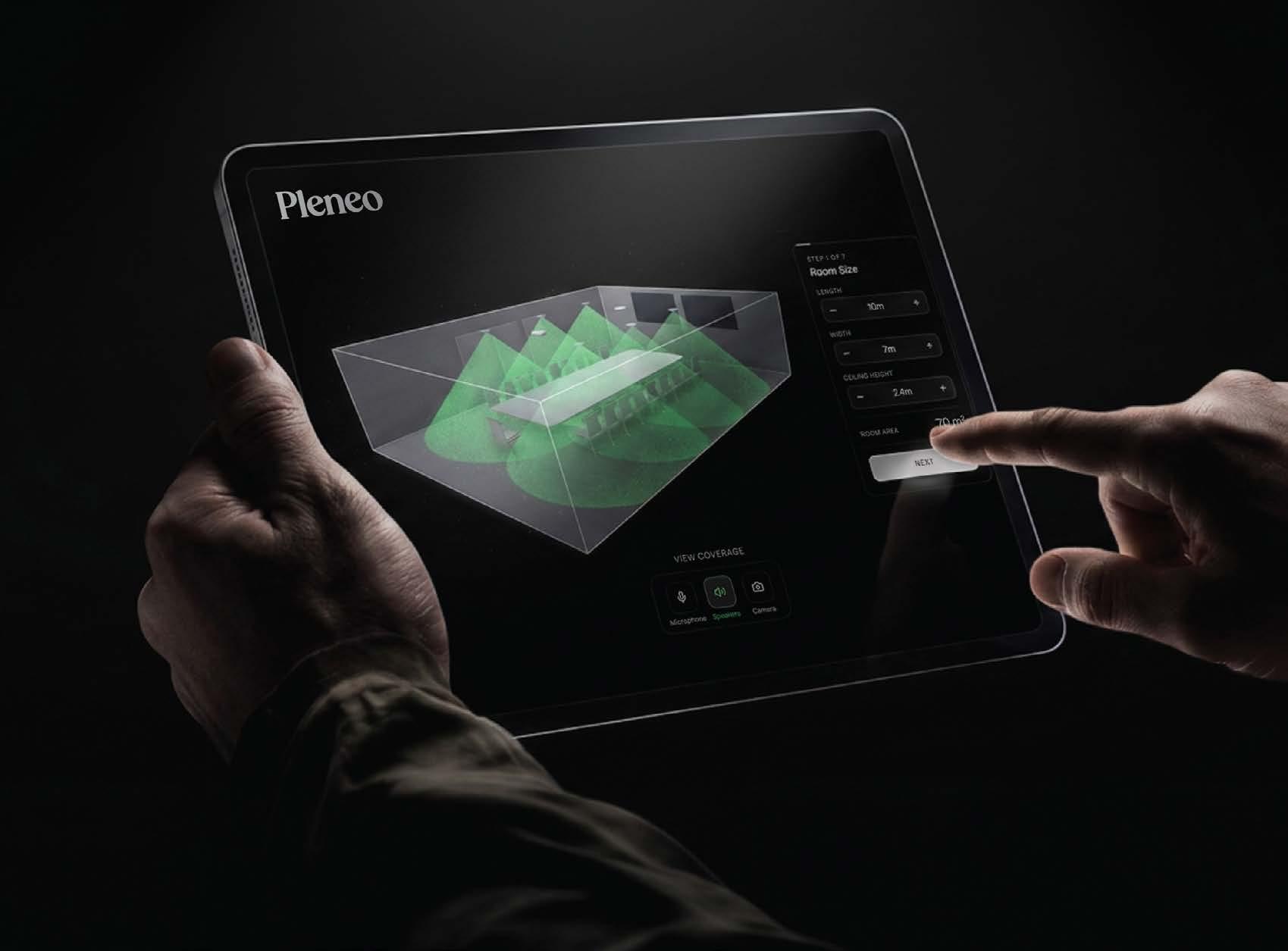
Designing high-performance meeting spaces has traditionally required time, expertise, and multiple tools. With the launch of Pleneo Planner, Pleneo is compressing that process into a matter of minutes—without compromising on quality or best practice.
Built on AVIXA standards, the online tool allows users to input room dimensions and instantly generate a fully realised design. Microphones, cameras, loudspeakers and processing are automatically positioned to optimise coverage, sightlines and overall system performance.
The experience extends beyond static layouts. Pleneo Planner creates a fully interactive 3D environment where users can visualise microphone pickup zones, speaker dispersion and camera fields of view in real time. The ability to step into the camera perspective
adds a practical layer, showing exactly what participants will see in the finished space.
Crucially, the platform bridges the gap between concept and execution. With a single click, users can produce a complete bill of materials, wiring diagrams and presentation-ready renders, streamlining both specification and client engagement.
By supporting both Pleneo and selected thirdparty components, the tool also enables direct comparison of different system configurations within the same room. The result is a more consistent, data-driven approach to AV design, helping organisations scale high-quality meeting experiences with greater confidence and efficiency.
Pleneo/ Pleneo Planner
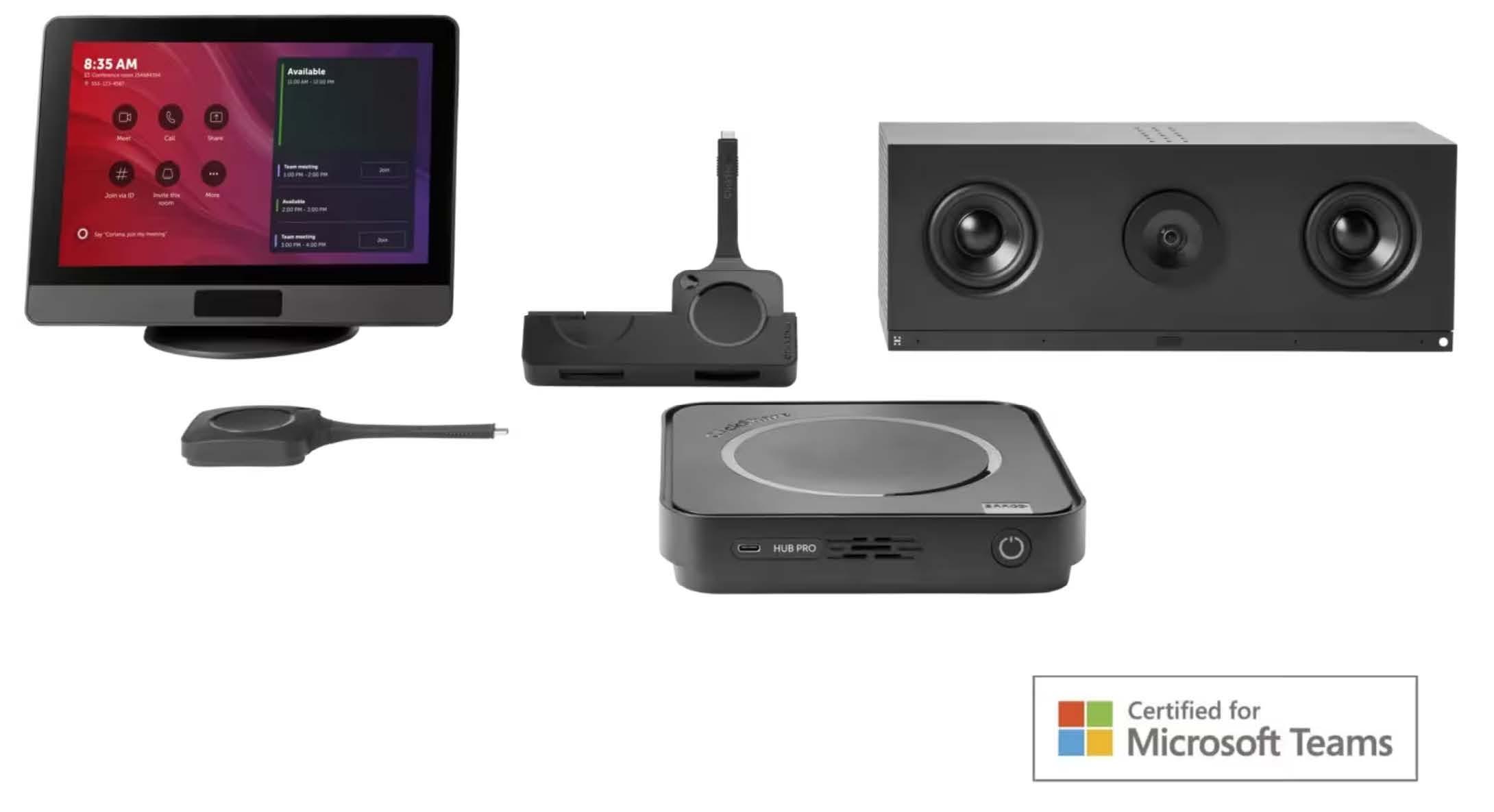
Barco has developed a new wireless room system bundle in partnership with Huddly and Certified for Microsoft Teams. The solution combines ClickShare Hub Pro with the Huddly® C1™ video bar, bringing effortless wireless conferencing and presentation to small-tomedium-sized rooms.
By combining Barco’s expertise in wireless collaboration with Huddly’s leadership in developing AI-powered video conferencing cameras, the two companies are making it easier for organizations to deploy reliable, people-first meeting solutions. Meeting participants start a meeting with a single tap on the ClickShare Control Panel. The next-gen ClickShare Button lets employees and guests share content in 4K from their own laptops with a single click – no drivers or training
needed. Huddly C1’s advanced AI-driven video and audio ensure everyone is clearly seen and heard – whether participants join from the room or remotely.
Designed as a Microsoft Teams Rooms solution and Certified for Microsoft Teams, the bundle delivers the native Teams experience with room-to-room consistency. ClickShare Hub Pro is built on Microsoft’s Device Ecosystem Platform (MDEP), combining a security-by-design foundation with centralized management for IT.
With this launch, Barco now offers three bundles that are Certified for Microsoft Teams, giving organizations more flexibility when equipping small and medium meeting rooms.
Barco/ClickShare Hub bundles
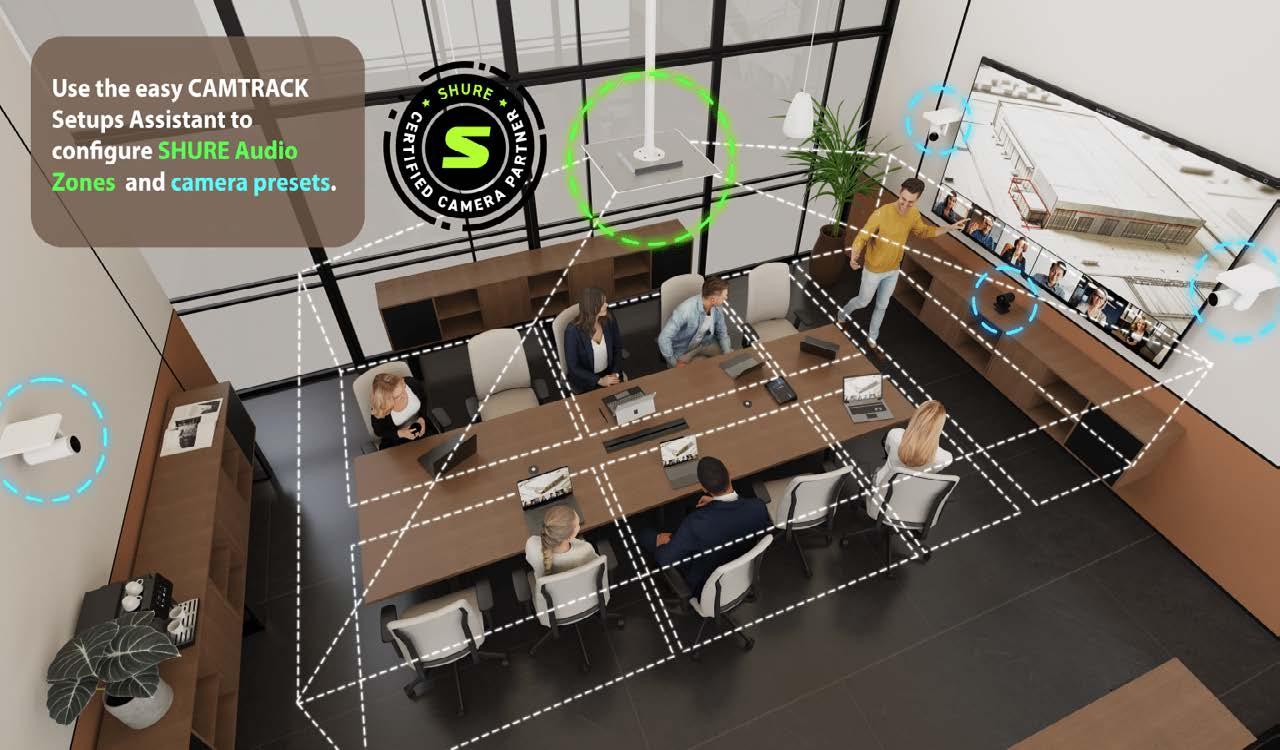
INOGENI has joined Shure’s Camera Partner Program marking a strategic step that strengthens the growing demand for more intelligent and interoperable hybrid meeting environments. Through the collaboration, INOGENI’s CAMTRACK voice-activated multi-camera switcher has been certified for seamless integration with Shure’s audio ecosystem, combining real-time speaker detection with automated camera switching to create more natural and engaging meeting experiences.
By leveraging Shure’s spatial audio intelligence from the Microflex Advance range, including the MXA920 Ceiling Array Microphone and
MXA901 Conferencing Ceiling Array Microphone, CAMTRACK can identify active speakers with precision and trigger smooth transitions to PTZ camera presets or AI tracking modes without lag. Video is then routed through INOGENI switchers such as the CAM230, CAM300 or IP2USB into a single UVC-compliant USB stream, supporting platforms including Microsoft Teams, Zoom and other conferencing applications.
Available in Standard and Pro versions, CAMTRACK is designed to reduce programming complexity while improving visual continuity, helping remote participants stay focused and connected. The partnership adds another validated option for AV integrators working across corporate, education and hybrid collaboration spaces, where ease of deployment and cross-platform reliability remain top priorities.
Already recognised at ISE 2026 with a Best of Show award from Sound & Video Contractor and a Techonaut honour from The Tech Effect, CAMTRACK is now available through INOGENI’s global distributor and partner network. With web-based configuration, camera-agnostic support across NDI, USB and HDMI workflows, tally activation, TAA compliance and a five-year warranty, the solution is positioned as a practical, scalable tool for modern meeting room design.
INOGENI/CAMTRACK
NEXT Audiogroup’s X80 is a highperformance 4-channel Class D amplifier engineered for demanding professional audio applications requiring power, precision, and seamless system integration.
Delivering up to 4 × 2000 W at 4 Ω, the X80 combines substantial output capability with advanced DSP processing and full compatibility with the X-NET ecosystem, making it a flexible solution for both touring and fixed installation environments.
At the core of the X80 is a 96 kHz / 32-bit SHARC DSP, providing extensive system control and tuning capabilities. Users can configure parametric EQ, FIR filters, limiters, delay, polarity, and advanced routing, ensuring accurate optimization across a wide range of loudspeaker systems and venue conditions. Up to 24 onboard presets can be stored and recalled, allowing fast deployment in multiscenario applications.
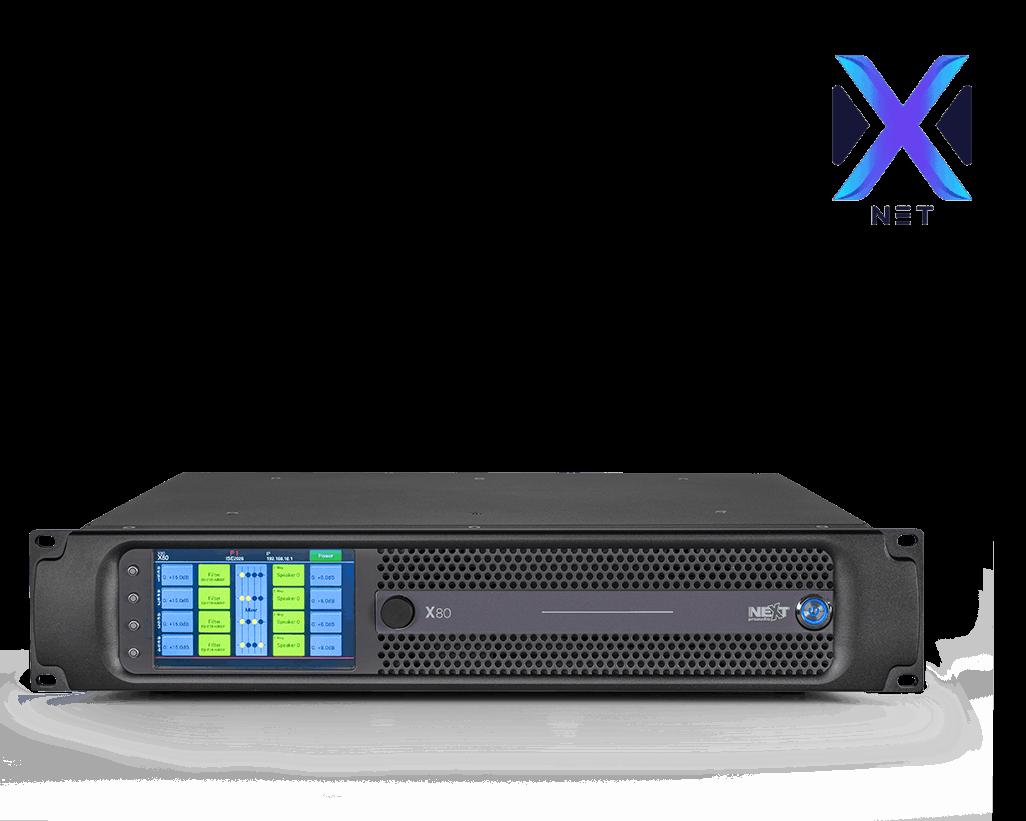
To ensure reliability under continuous highpower operation, the X80 incorporates comprehensive protection systems including thermal protection, short-circuit protection, DC protection, and overload protection. The amplifier is housed in a robust 2U 19” rack chassis with intelligent cooling, engineered for consistent performance in professional environments.
Designed as a fully network-ready platform amplifier, the X80 integrates directly with X-NET software via Ethernet connectivity. This enables real-time monitoring, remote configuration, and centralized management of multiple devices within complex sound systems, supporting scalable deployments across touring setups, performance venues, and multi-zone installations.
Connectivity options include balanced analogue inputs, AES/EBU digital inputs, and balanced signal outputs, providing maximum routing flexibility for modern hybrid system architectures.
With its combination of output power, advanced DSP processing, and full X-NET integration, the X80 expands NEXT Audiogroup’s system amplification platform, supporting the company’s strategy of delivering fully integrated and scalable professional audio solutions across installation and live sound applications.
NEXT Audiogroup/X80
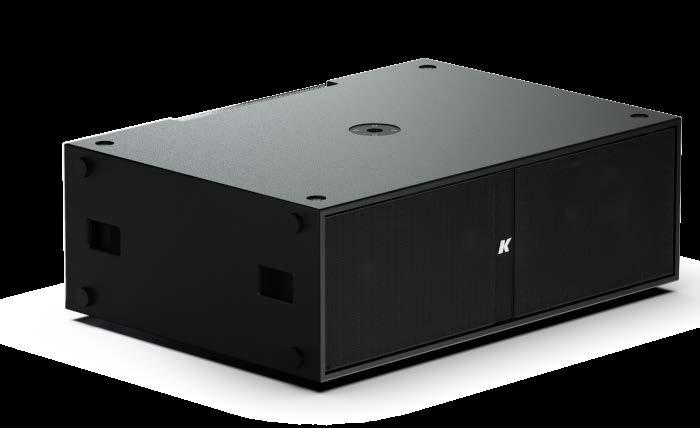
©K-array
K-array’s Thunder-KSCARDIO412P passive cardioid subwoofer is now shipping. First previewed at Integrated Systems Europe (ISE) in Barcelona earlier this year, the KSCARDIO412P is a compact, single-cabinet solution designed to give professional audio engineers precise low-frequency control without the complexity traditionally associated with cardioid subwoofer systems.
Cardioid subwoofer configurations have long been valued for their ability to reduce unwanted rear sound radiation. This offers a significant advantage in live event and fixed installation environments where stage spill and monitor feedback can compromise audio quality. Achieving this effect has traditionally required carefully configured multi-cabinet arraying, external DSP processing, and the application of delays. The Thunder-KSCARDIO412P is designed to take away that complexity, delivering true plug-and-play cardioid performance from a single enclosure with no additional signal processing or time alignment required in standard configurations.
At the heart of the cabinet are four 12-inch neodymium magnet woofers, providing low-frequency response down to 35 Hz and a maximum output of 138 dB SPL. The KSCARDIO412P weighs only 61.7 kg, a compact footprint for the power on offer,
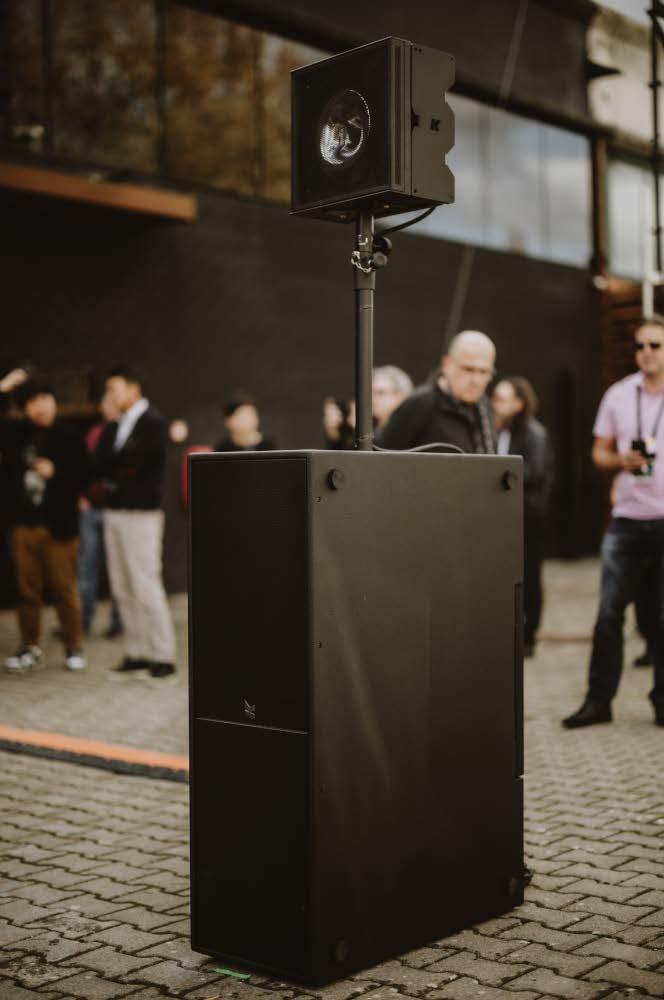
making it practical for both touring rigs and permanent installs. The enclosure is constructed from birch plywood with a polyurea coating, built to withstand intensive use and regular transport, and is available in black or custom RAL finishes. Image credit: K-array
The system supports both mono-amp and bi-amp operating modes, offering flexibility for engineers working with different amplifier configurations. In bi-amp mode, rear attenuation of up to 20 dB is achievable, allowing for highly controlled low-frequency directivity. Critically, the cardioid pattern
remains stable whether the cabinet is deployed horizontally or vertically, and in single or sideby-side configurations. This addresses an important practical consideration for system designers working across varied venue layouts.
The KSCARDIO412P is well-suited to a broad range of professional applications, including live touring, theatres, clubs, DJ venues, beach
bars, rooftops, and broadcast environments. It is compatible with K-array’s K-Framework3 software for system design and configuration.
The Thunder-KSCARDIO412P joins K-array’s established Thunder subwoofer range and is available now through K-array’s global distribution network.
K-array/Thunder-KSCARDIO412P
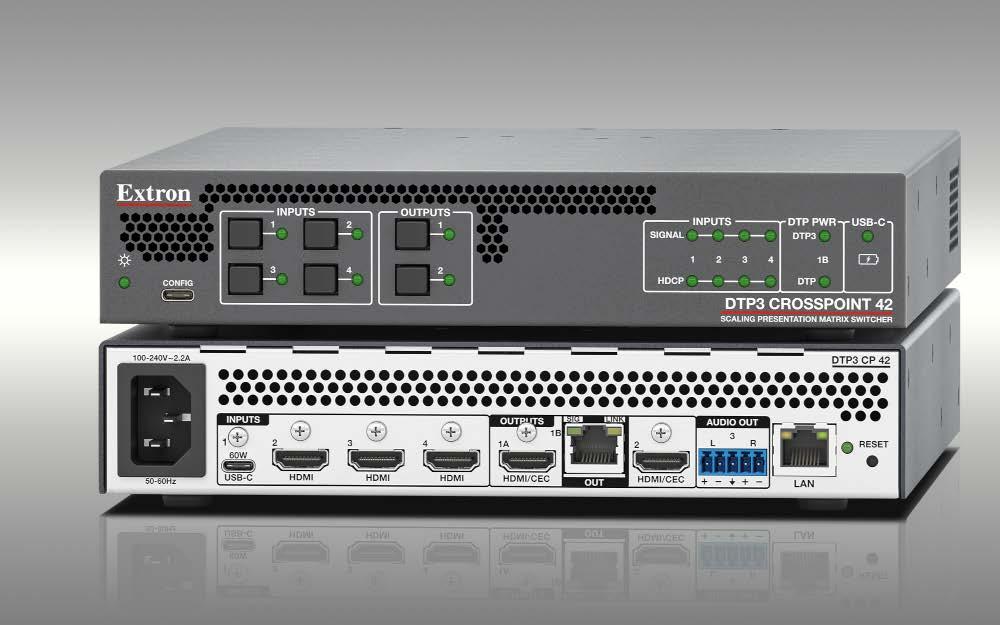
Extron has begun shipping the DTP3 CrossPoint 42, a compact yet powerful 4×2 4K/60 matrix switcher engineered to meet the evolving demands of modern meeting and collaboration spaces.
Designed for efficiency without compromising performance, the DTP3 CrossPoint 42 integrates USB-C® and HDMI inputs, HDMI outputs, and a DTP3 output capable of extending video, audio, and control signals
up to 330 feet (100 metres) over a shielded CAT 6A cable. Built-in features such as 60-watt USB-C charging and audio de-embedding reduce the need for additional hardware, enabling cleaner system designs and faster installations.
At the core of its performance is Extron’s proprietary Vector™ 4K scaling technology, delivering consistently sharp image quality alongside seamless switching transitions and logo keying for a more polished presentation experience.
Purpose-built for spaces where reliability and ease of use are critical, the DTP3 CrossPoint 42 is well suited for corporate meeting rooms, higher education lecture halls, training environments, and government facilities.
Extron/DTP3 CrossPoint 42
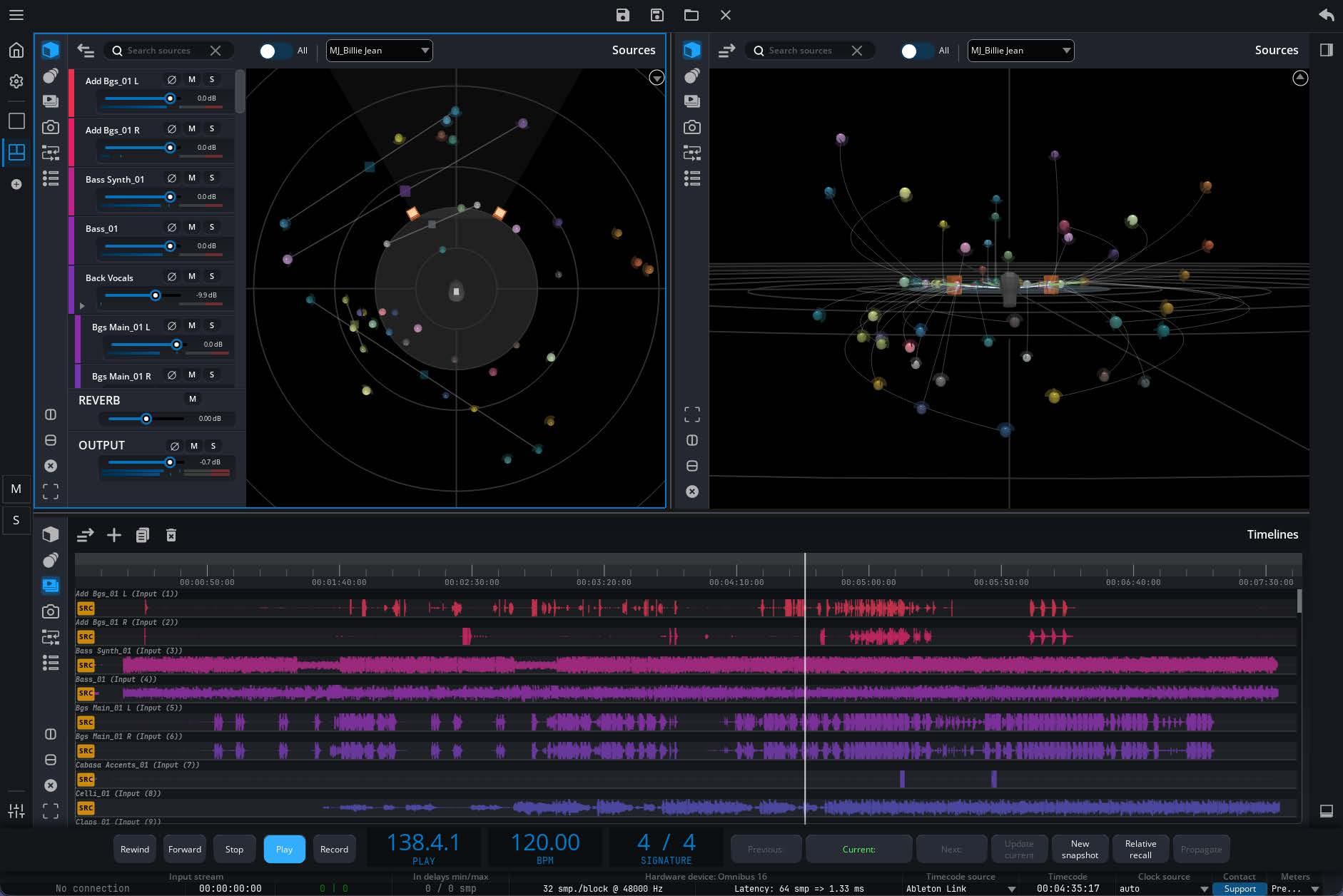
HARMAN Professional Solutions has introduced the latest updates to its FLUX: software suite with SPAT Revolution 26.04 and MiRA 26.04 delivering a more integrated, intelligent approach to immersive audio production and system tuning.
Marking the first major upgrade to SPAT Revolution in two years, version 26.04 signals a clear shift toward consolidation, bringing playback, processing, and control into a single, cohesive environment. At the centre of the update is a new Multi Media Recording and Playback engine, allowing users to capture and replay immersive sessions directly within the platform. By eliminating the need for external playback systems, engineers can now combine pre produced content with live object based mixing in real time, unlocking more flexible and reliable show workflows.
The introduction of a programmable Cue Sequencer further strengthens SPAT Revolution’s role in live and installed environments. By enabling condition based triggers and automated system responses, it allows productions to scale in complexity without increasing operational burden. The new Morphed Protection Zone adapts to real world venue layouts, replacing rigid spatial constraints with more natural and consistent audio behaviour.
Workflow efficiency is further enhanced through expanded format support, including direct import of ADM files such as Dolby Atmos ADM WAV. This enables seamless translation of projects from digital audio workstations into immersive environments without rebuilding automation, preserving both time and creative intent.
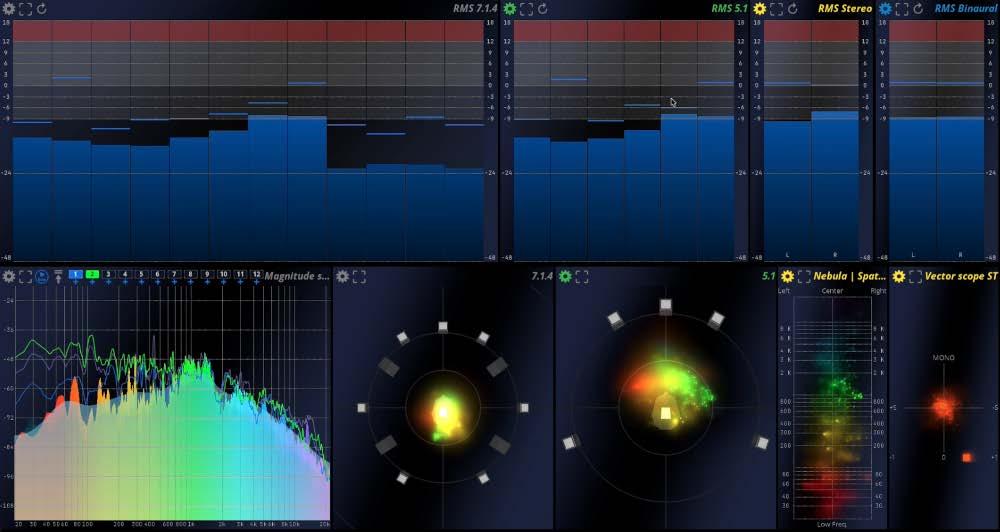
In parallel, MiRA 26.04 introduces a more intelligent approach to system optimisation. Its AI powered Auto EQ function allows users to define target curves and automatically generate equalisation settings, improving consistency while significantly reducing manual tuning time. Combined with expanded real time analysis capabilities and enhanced measurement workflows, users gain a clearer and more immediate understanding of system performance across even the most complex environments.
MiRA 26.04 also introduces support for an unlimited number of simultaneous input streams, with up to 24 channels per stream, enabling parallel analysis of complex systems in real time. Improved measurement workflows for MiRA Live and Ultimate license holders allow users to create multiple computed curves per session, enables automated measurement sequences for streamlined sequential captures, and perform RTA-based measurements without a reference signal.
The updated loudness metering scope adds Peak-to-Loudness Ratio (PLR) and Peak-toShort-Term Loudness Ratio (PSR) metrics,
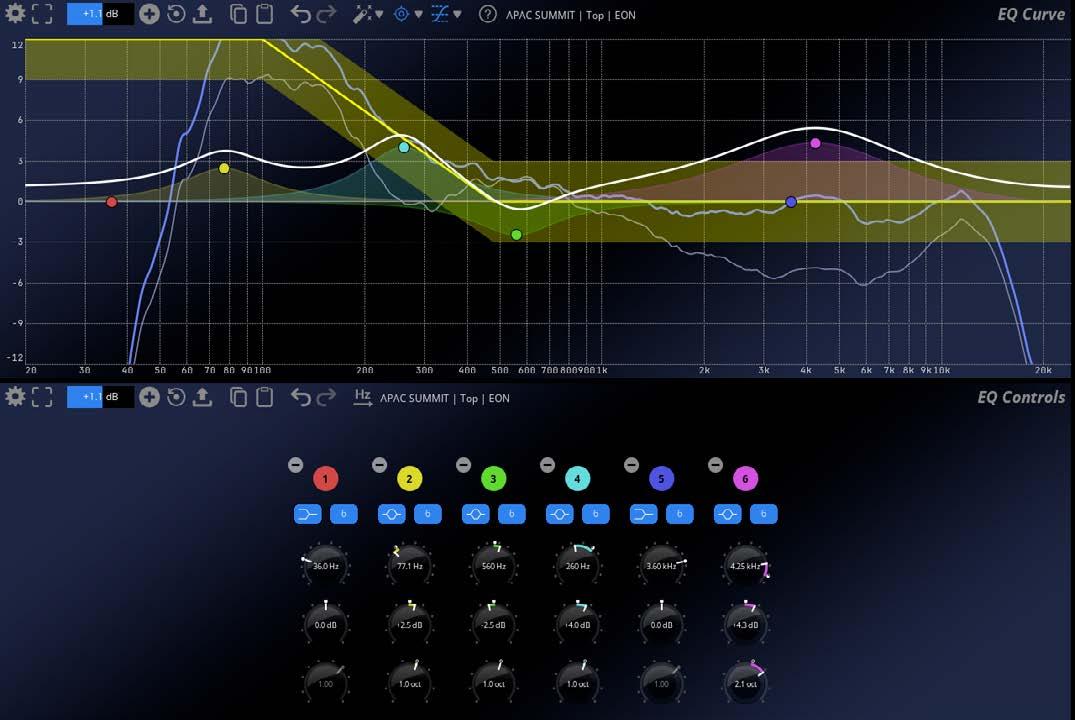
providing additional insight into dynamic behavior. Other enhancements include an updated I/O configuration page, improved visual clarity with new auto-color system for captures, and daylight mode for improved visibility in bright environments.
MiRA 26.04 is available as a free update for users with a valid perpetual license or active subscription and can be accessed through FLUX:: Center. SPAT Revolution 26.04 is available to users with active support plans or eligible upgrade paths through their FLUX:: accounts.
Download FLUX:: here

As the demand for high-performance outdoor LED displays continues to grow across smart cities, transportation hubs, and commercial landmarks, LAMPRO introduces its latest innovations: the LS Pro Series and LXII Pro Series.
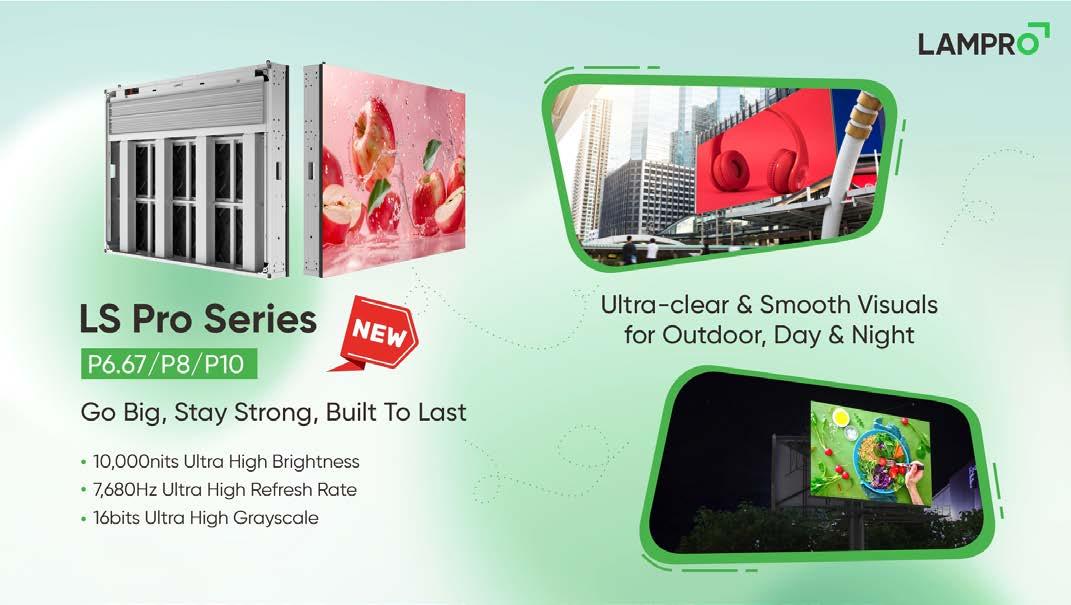
At the heart of large-scale outdoor installations, the LS Pro Series redefines flexibility in bigformat LED displays. Unlike traditional largesize screens that are limited by fixed cabinet
dimensions, LS Pro introduces a multi-size cabinet system specifically designed for largescale applications—a significant upgrade from the previous LS generation.
With a range of cabinet sizes that can be freely combined, LS Pro allows integrators to build massive displays with far greater precision and efficiency. Whether adapting to complex building façades or optimizing screen proportions for different project requirements, this flexibility reduces structural constraints and installation complexity—delivering a more refined and cost-effective solution for largeformat deployments.
Beyond its scalability, LS Pro continues to deliver outstanding visual performance, with up to 10,000 nits brightness and a 7,680Hz refresh rate, ensuring clear, stable images even in the most demanding outdoor environments.
While LS Pro powers large-format impact, the LXII Pro Series unlocks new creative possibilities. Designed for fine-pitch outdoor applications, it enables seamless integration into architectural spaces with flexible sizes, curved designs, and even eye-catching glassesfree 3D display solutions. From retail façades to transportation hubs, LXII Pro transforms everyday spaces into immersive visual experiences.

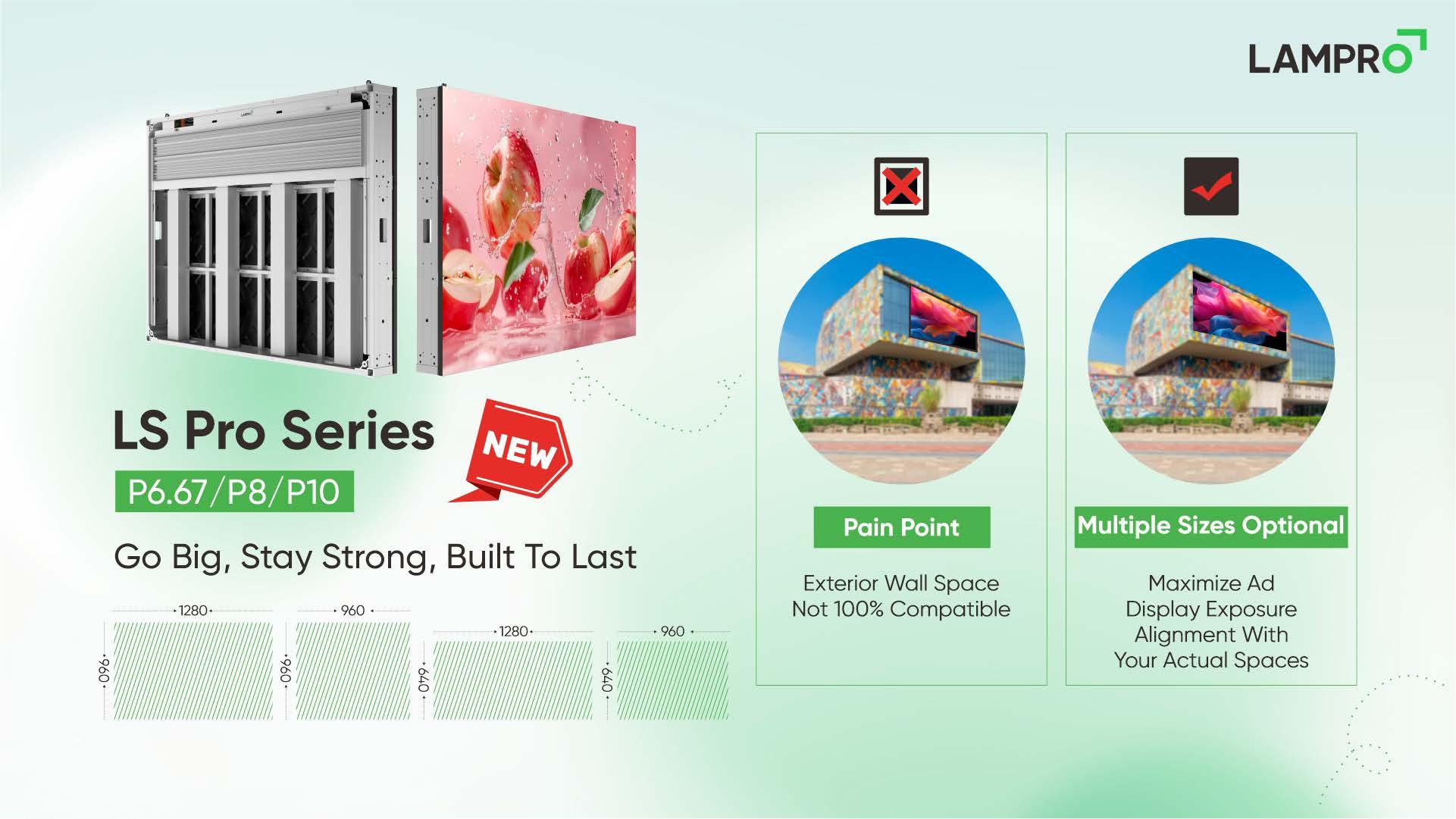
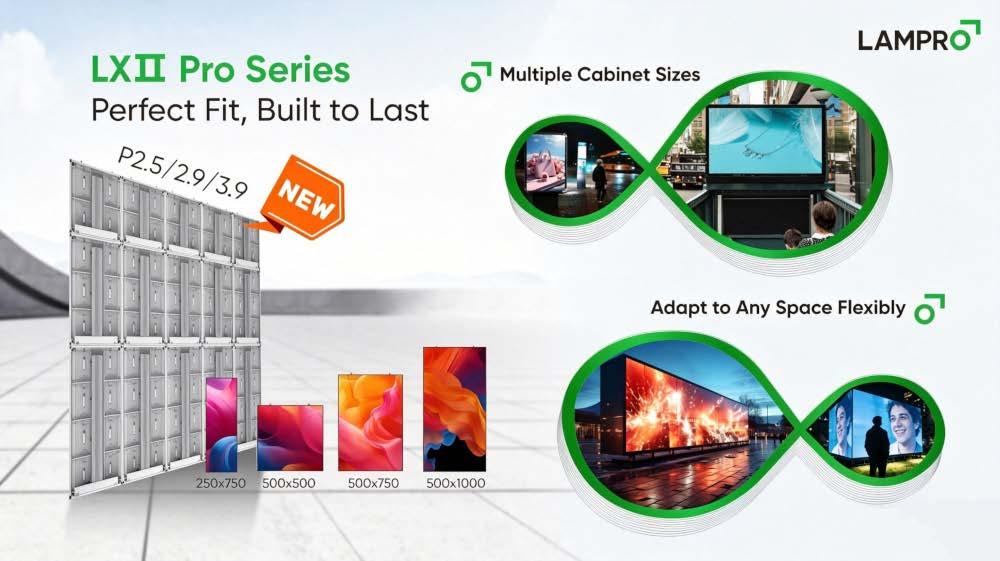
Lightweight yet durable, the LXII Pro Series combines die-cast aluminum construction with excellent heat dissipation and high environmental resistance, ensuring long-term stability in demanding outdoor conditions. With IP66-rated protection and a 5VB fire-resistant design, it delivers enhanced safety and reliability—making it an ideal solution for hightraffic public environments.
Both series are designed with practicality in mind. Front and rear maintenance, hidden cable
management, and modular structures simplify installation and servicing—helping reduce downtime and maximize long-term value.
Backed by LAMPRO’s global service network spanning over 160 countries and supported by localized technical teams, customers benefit from rapid response times and comprehensive after-sales support.
LXII Pro Series
Intent, content, descent, advent and an experiential event called projection mapping
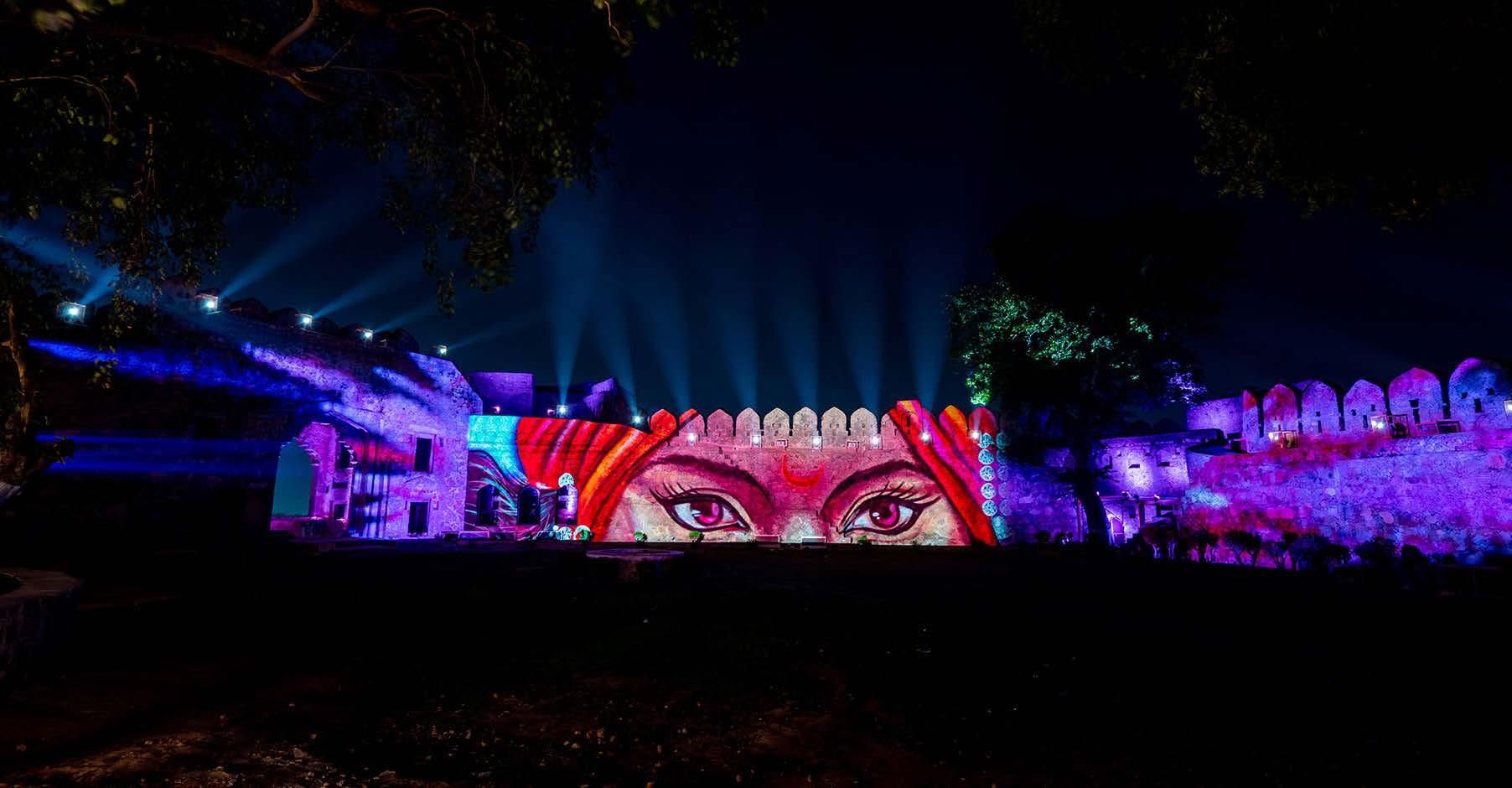

Last issue, we discussed the many palettes of projection – how different projection systems respond to different surfaces, and how the final visual experience is never merely a product of content, but of a far subtler negotiation between optics, material, colour behaviour and scale. In part two, Avijit Samajdar, Founder & CEO of Axis Three Dee Studios, elaborates further about understanding the surface to achieve objectives beyond “imagination”.
Any deeper observation at any perfectly done projection mapping install would naturally lead to a deeper and more fascinating question… How did we arrive here at all…?
At this extraordinary point in history where light can be bent, corrected, sculpted and spatially disciplined so precisely… that architecture appears to move… monuments seem to breathe… and inert surfaces begin to behave like living presences.
Projection mapping – while it is an experiential journey for the viewers – it both an experiential business and bliss for the designers. It’s a very fascinating science at play for both takers and makers.
Projection mapping, as we understand it today, is often perceived as a recent technological marvel. It is not. It is the outcome of a much older instinct… the human desire to animate space itself
Long before software, servers, or digital geometry… there was a simple yet profound curiosity. Can light do more than merely illuminate?
Early stage designers and theatrical pioneers began integrating projection into performance… not as a backdrop, but as a participant. Productions like experimental European theatre and immersive stage work began dissolving the boundary between performer, space and projected image.
Projection stepped out of the frame… It entered space.
Long before this question was shaped through computation… artists and scenographers had already begun exploring its essence. In 1958,
Laterna magika at Expo 58 in Brussels brought together live performers and projected film in a way that was not decorative, but dramaturgical. Projection stepped beyond background… and entered the language of performance itself. A decade later, with the opening of Disneyland’s Haunted Mansion in 1969, this idea found a more widely recognisable expression –projected imagery began to inhabit dimensional objects, lending motion and presence to sculptural forms in ways that could be felt, almost believed. Early in form… yet remarkably precise in intent.
The tools would evolve… the understanding had already begun.
By the late twentieth century, the question evolved. Not “can we project?”... but, “can projection be made to understand the surface?”
With the rise of computational imaging and spatial research, environments could now be scanned, reconstructed and finally translated into digital geometry. This was the decisive moment! The surface was no longer passive… it became computationally addressable.
Distortion stopped being a flaw. It became design logic!
By the early 2000s, three forces aligned:
• Digital projection systems (high brightness, stability)
• 3D modelling + UV workflows
• Media servers and real-time mapping tools
Projection mapping emerged as a discipline. A global phenomenon followed.
From monumental façades to immersive installations… projection mapping began transforming architecture into dynamic
storytelling surfaces, enabling artists to turn buildings into “living screens” with motion, depth and narrative .
But what truly defines this medium… is not the tools. It is the thinking it demands.
Modern projection mapping follows a precise chain:
Reality → Capture → Geometry → UV → Content → Projection
Every visual you see… is not just design. It is a well-crafted negotiation. Between:
• digital intent
• physical surface
• optical behaviour
While projection mapping evolved globally… its most culturally distinct expressions emerged across APAC. Because here… light was not just used. It was interpreted.
A brief look across the region reveals how each of the cultures has shaped the medium in its own distinct way.
1. Japan… Precision, Restraint, and Spatial Elegance
Japan’s projection mapping language is defined by discipline.
A defining example is Tokyo Station Visionwhere projection mapping was used not to overpower architecture, but to reveal its inherent rhythm. Mechanical illusions, timebased narratives, and structural alignment created a deeply integrated experience.
Similarly, immersive environments like teamLab Borderless (Tokyo) pushed the idea further-
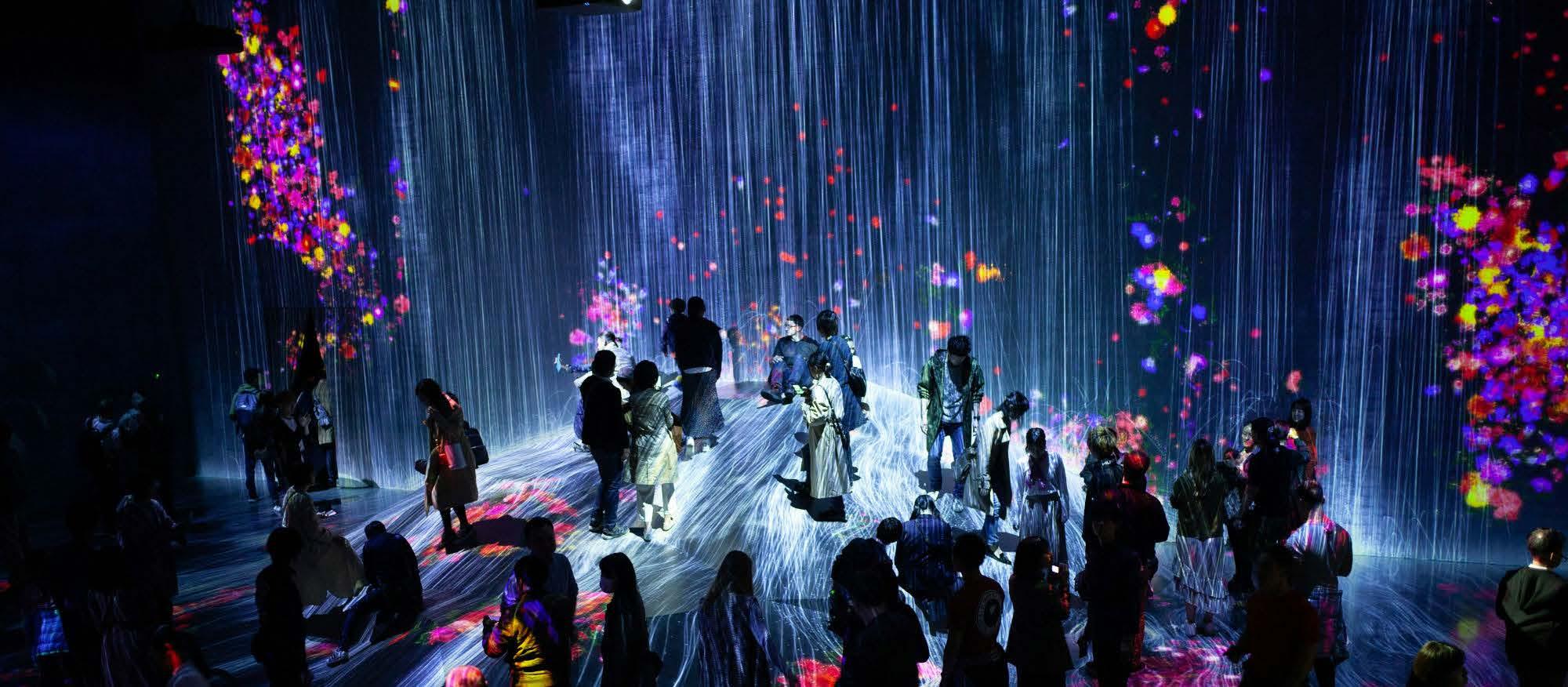
Teamlabs Borderless. Photo copyright: Karsten Gohm, Unsplash.
where projection escaped architecture entirely and became a fluid, boundaryless spatial experience across rooms and surfaces .
In Japan… Light does not decorate. It aligns.
2. Singapore… Urban Integration and Civic Illumination
Singapore represents projection mapping as urban choreography.
A landmark example is i Light Singapore, where projection, light installations, and environmental storytelling transform the Marina Bay district into a participatory public experience.
Another example- Gardens by the Bay mapping shows- used projection across ‘Supertrees’, merging architecture, landscape and digital storytelling into a unified civic spectacle. Here… The city is not the venue. It is the canvas
3. South Korea… Media Façade Intelligence and Fluid Geometry
South Korea has redefined projection mapping through media architecture
Projects like Seoul Light DDP (Dongdaemun Design Plaza) demonstrate how projection
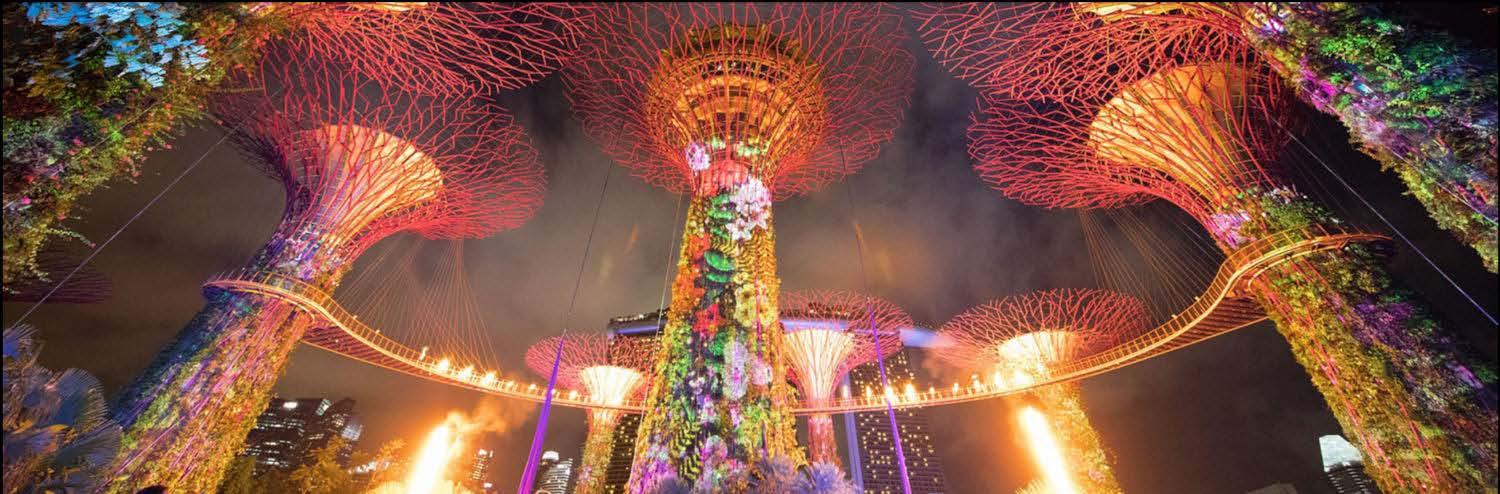

mapping can adapt to complex, non-linear, parametric architecture.
Even more significant is the rise of immersive environments like the Arte Museum, where projection mapping, sound design and spatial interaction merge into large-scale experiential storytelling environments .
Here… Architecture is no longer static. It is programmable.
Australia’s approach to projection mapping is defined by temporality
A defining example is Vivid Sydney, where the Sydney Opera House and the surrounding harbour precinct are transformed into a canvas of light, colour and large-scale public storytelling.
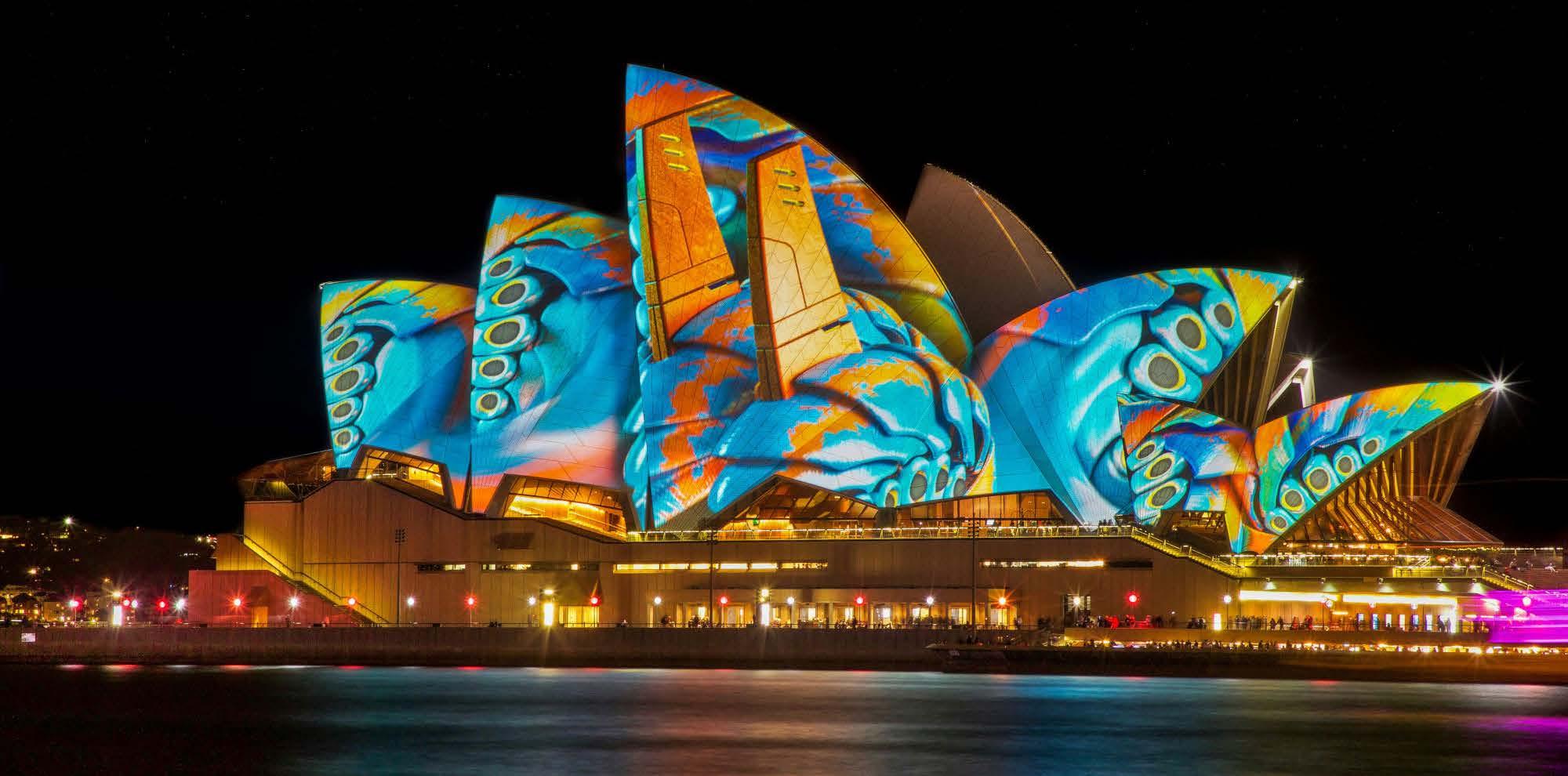
Here, architecture is not treated as a permanent digital skin. It is reinterpreted… for a moment
Projection mapping in Australia leans closer to performance than permanence… turning the city into a shared, immersive experience.
It is not designed to endure. It is designed to be experienced.
5. India… Narrative Scale, Sacred Scale, and Emotional Magnitude
And then… India.
Here, projection mapping enters an entirely different dimension. It unfolds across spaces that are not merely architectural, but deeply experiential- temple complexes, immersive museums such as the Jhansi Space Museum, the upcoming Indian Defence Museum project, heritage fortifications like the Jhansi Fort, and monumental sculptural forms such as Adiyogi and the Statue of Belief
In such contexts… the surface is never just a surface. It is already alive- with history, devotion and sanctity- long before the first trace of light arrives. What follows, therefore, cannot be treated as spectacle.
It demands interpretation… sensitivity… and alignment with something far deeper than form. Projection mapping here must read the narrative, respect emotion, and resonate with cultural memory
Because this is not the act of projecting visuals… it is an act of translation- between myth and medium… heritage and history… devotion and design… and ultimately, between structure and soul
Projection mapping has evolved:
• From theatre → architecture
• From analogue → digital
• From projection → simulation But more importantly… It has evolved culturally.
It has learned to speak in many ways… with quiet restraint in Japan… with seamless integration in Singapore… with fluid abstraction in South Korea… with ephemeral spectacle in Australia… and with profound meaning in India.
The medium remains the same… yet its expression shifts… shaped not just by technology, but by the cultural rhythms it chooses to inhabit.
The same light… speaking different languages.
And perhaps that is why this medium continues to captivate us. Because when it is done right… it becomes unobtrusive. The hardware and system recede… leaving behind an experience where architecture is no longer perceived as still.
For those of us who follow in the paths laid by our pioneering predecessors… the work continues… quietly, precisely. Not to redefine the medium… but to refine its understanding… Projection mapping is not merely the evolution of projection… it is the evolution of how light learns to engage with form- shaped by culture, guided by geography, and refined through the way each space chooses to be seen
(To be Continued in next issue)
Avijit Samajdar is the Founder & CEO of Axis Three Dee Studios… an internationally acclaimed creative technologist and projection designer, behind many best known and prestigious Indian and global immersive projects. A polyglot, and an avid musical enthusiast, Avijit integrates optics, colour science in visuals, and concepts like Schumann resonances in sound- transforming architecture into living, breathing, immersive narratives of audio visual experiences. He can be contacted at avijit@axis3dstudio.com
A cinematic-grade LED volume meets applied education, equipping students with industry-relevant skills in virtual production, AI, and real-time content creation
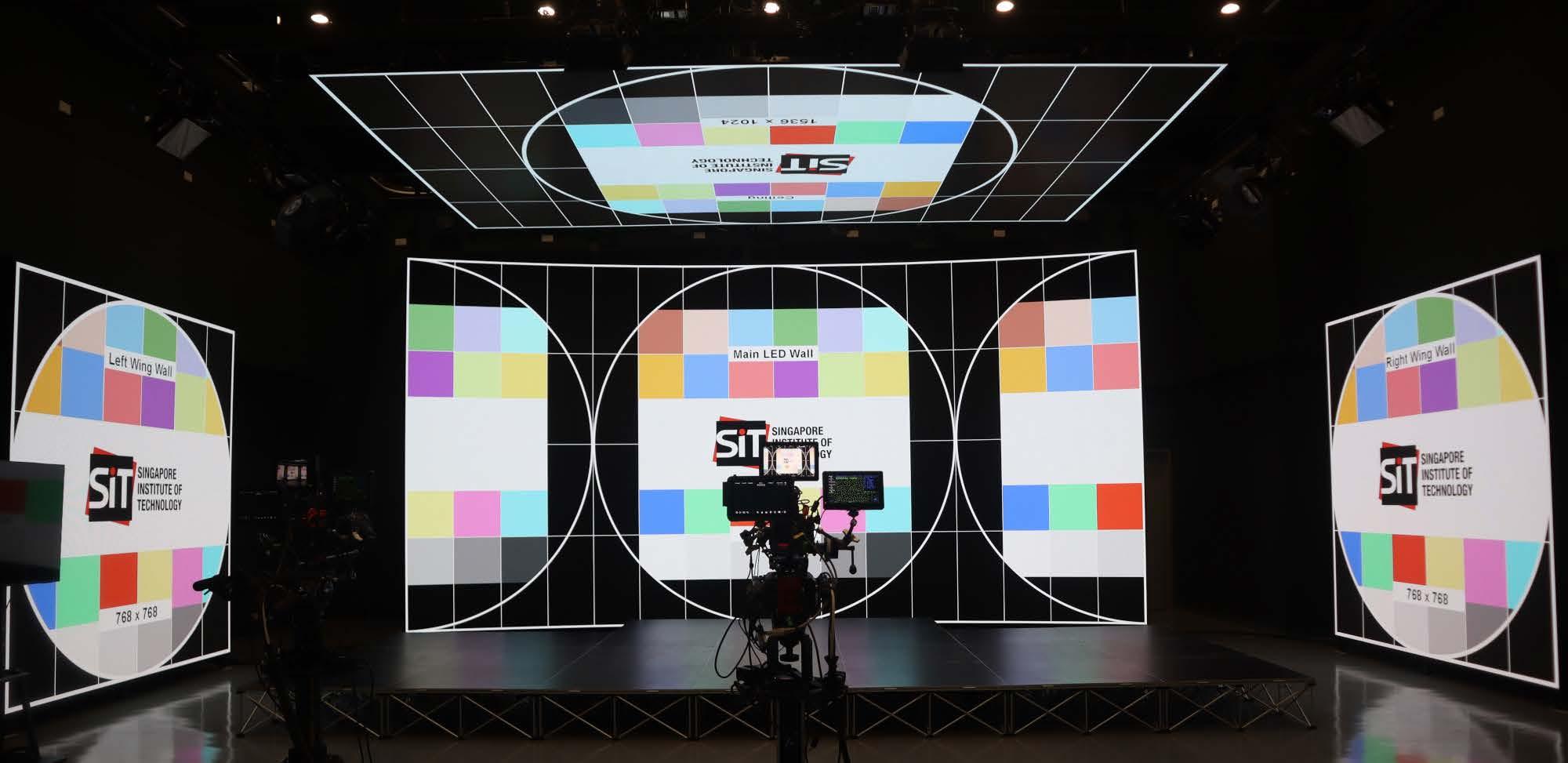
The Singapore Institute of Technology (SIT) is redefining communications and media in business education with the launch of its flagship virtual production (VP) studio—an advanced facility that merges cinematic performance with practical, student-centric workflows.
Designed as both a training ground and a reference-grade production environment, the studio reflects the growing convergence of media, technology, and education with
business applications, reinforcing SIT’s applied learning approach to meet Singapore’s evolving business operations, data analytics, PR and marketing landscape.
SIT’s transition to its new centralised campus in Punggol Digital District provided the university with an opportunity to enhance its teaching and learning environments, including
Project Name: Extended Reality Studio, Singapore Institute of Technology
Project Location: Singapore
Project Segment: Education
AV Highlight: To create a reference-grade production environment to reflect the growing convergence of media, technology, and education
Key AV Brands: INFiLED, RED Digital Camera, Mo-Sys Engineering, NANLITE
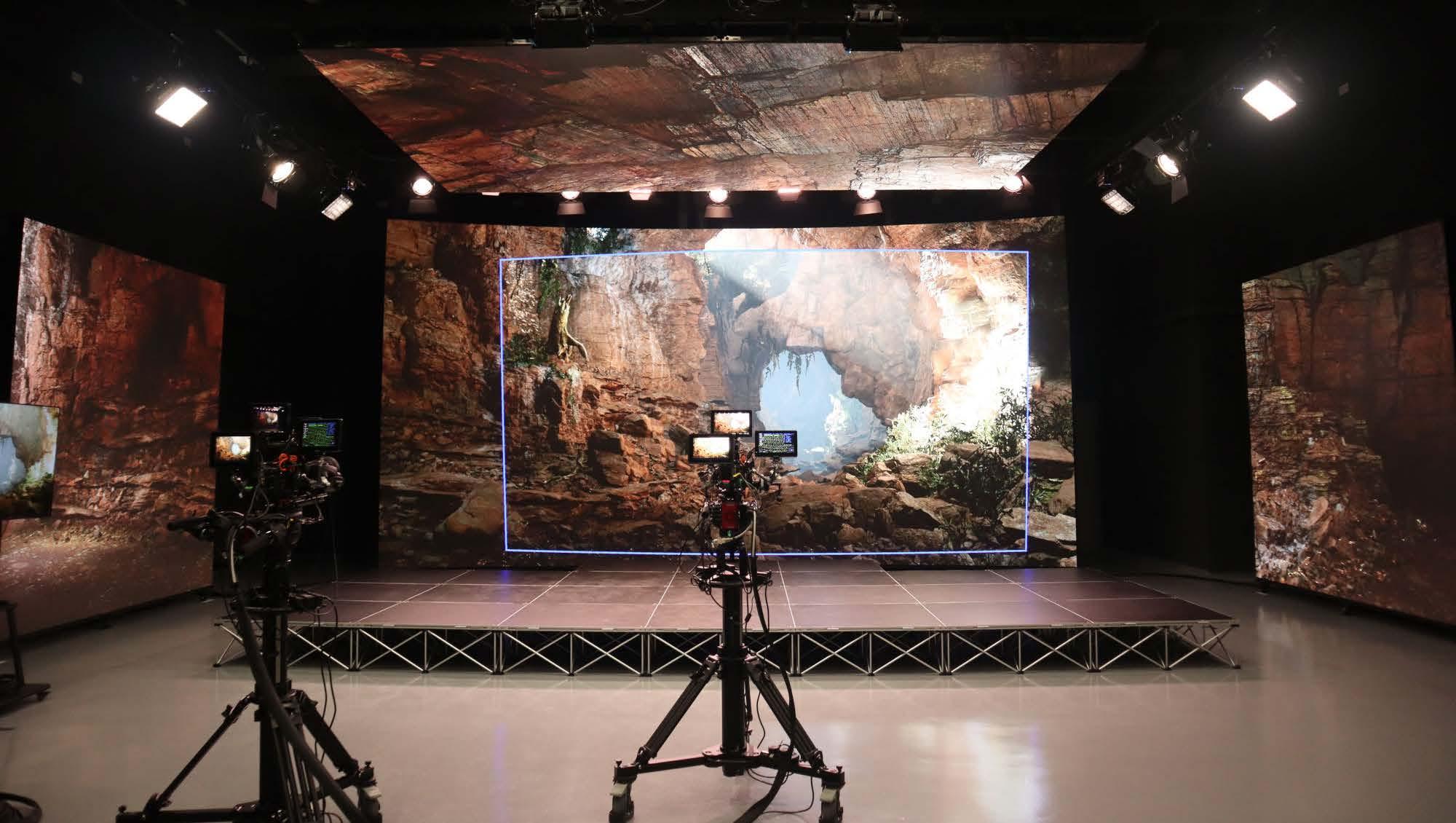
the creation of the VP studio. This shift into LED-based virtual production arrives at a crucial juncture for the industry. According to Leong Mun Wai, Senior Professional Officer at SIT, the decision was closely aligned with national and industry developments.
“Virtual production is now a recognised skills area in Singapore’s refreshed Skills Framework for Media, alongside generative AI,” he explains. “With IMDA actively funding VP capabilitybuilding and apprenticeships, it was the
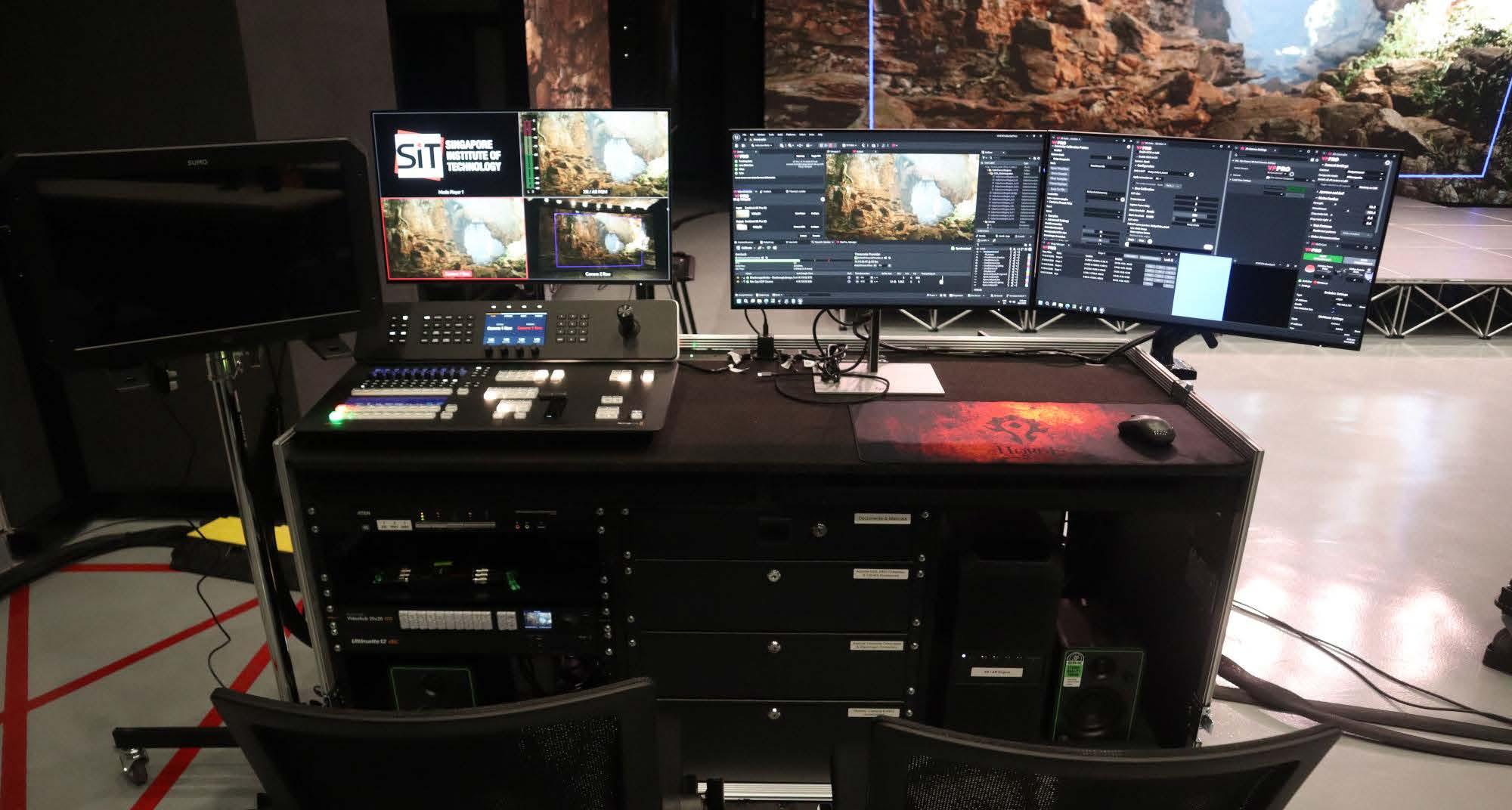
The “brain” of the system featuring the Mo-Sys VP Pro XR. right time to align our teaching environment with how content is increasingly produced locally. for business operations and strategic branding.”
This forward-looking approach supports SIT’s broader mission as Singapore’s first university of applied learning—bridging academic theory with real-world industry practice.
At the heart of the facility is a carefully designed LED volume engineered to deliver cinematic-grade output while remaining practical for daily academic use.
The system features an INFiLED GX2.6 main wall measuring 8m by 4m, complemented by ceiling and side walls using INFiLED AR3.9 panels. This dual pixel pitch strategy balances high-resolution capture for in-camera content with cost-effective peripheral coverage. The extended LED volume—including a 6m by 4m ceiling and movable side walls—enhances
environmental realism, enabling natural lighting, reflections, and immersive backgrounds. High brightness levels and wide colour gamut support HDR workflows, ensuring accurate colour reproduction for film and broadcast applications.
To meet the demands of content production that enable storytelling of brands and public relations messaging, the system is also built with future-ready architecture, supporting XR workflows, multi-camera setups, and scalable expansion.
Beyond the displays, the studio operates as a synchronised, real-time production pipeline.
A RED Komodo-X system, genlocked to the LED walls, ensures frame-accurate capture, while the Mo-Sys StarTracker Max provides precise positional tracking across the studio. Realtime rendering is powered by Unreal Engine, integrated through Mo-Sys VP Pro XR.
Lighting is handled by a NANLITE professional system with DMX control, synchronised with virtual environments, while a full studio audio setup completes the production pipeline.
The result is a seamless workflow where camera, tracking, lighting, and LED content operate in perfect synchronisation—mirroring real-world production environments.
While the studio delivers high-end cinematic output, equal emphasis has been placed on usability—critical in an academic setting.
Pre-built virtual production scenes, simplified control layers, and structured training modules ensure that students can quickly engage with the technology. From guided exercises to advanced workflows, the system supports learners at different levels while enabling rapid setup and reset between classes.
“SIT students are first grounded in storytelling, audience strategy, and analytics before layering in VP as a production option,” says Mun Wai. “It’s not treated as a novelty, but as an integral part of a comprehensive business plan to achieve strategic objectives.”
The VP studio is deeply embedded within SIT’s Bachelor of Business in Communication and Digital Media programme, particularly in modules such as Innovative Digital Media Production and Digital Marketing and Advertising.
Students are introduced to LED-stage fundamentals, real-time environments, and onset collaboration through hands-on projects. More importantly, they learn to critically examine the content creation process in the context of a business project, developing the
most optimal end-to-end workflows to exploit the capabilities that virtual production and other emerging technologies bring.
“Students begin to plan business campaigns and stories with virtual production in mind— treating environments, talent, and motion as one integrated canvas,” Mun Wai explains. “They also develop practical skills in set planning, camera coordination, and rapid iteration, which are directly transferable to industry roles.”
The facility also supports continuing education, enabling adult learners to upskill in VP workflows and AI-enhanced production techniques.
The VP Studio project was delivered through close collaboration between SIT and industry partners, including display solutions provider AUO Display Plus Singapore, system integrators Cgangs International, and Broadcast Professional, alongside technology providers such as INFiLED, RED Digital Cinema, and MoSys Engineering.
This collaborative approach ensured that the facility not only meets academic requirements but also aligns with professional production standards.
The introduction of the VP studio is already reshaping how teaching and collaboration take place on campus.
“Classes that were once confined to traditional studios can now be run as stage-based labs,” says Mun Wai. “Students work side by side in roles such as director, Director of Photography, editor, and VFX, mirroring the interdisciplinary teams they’ll encounter in the industry.” This shift fosters deeper collaboration and allows abstract creative concepts to become
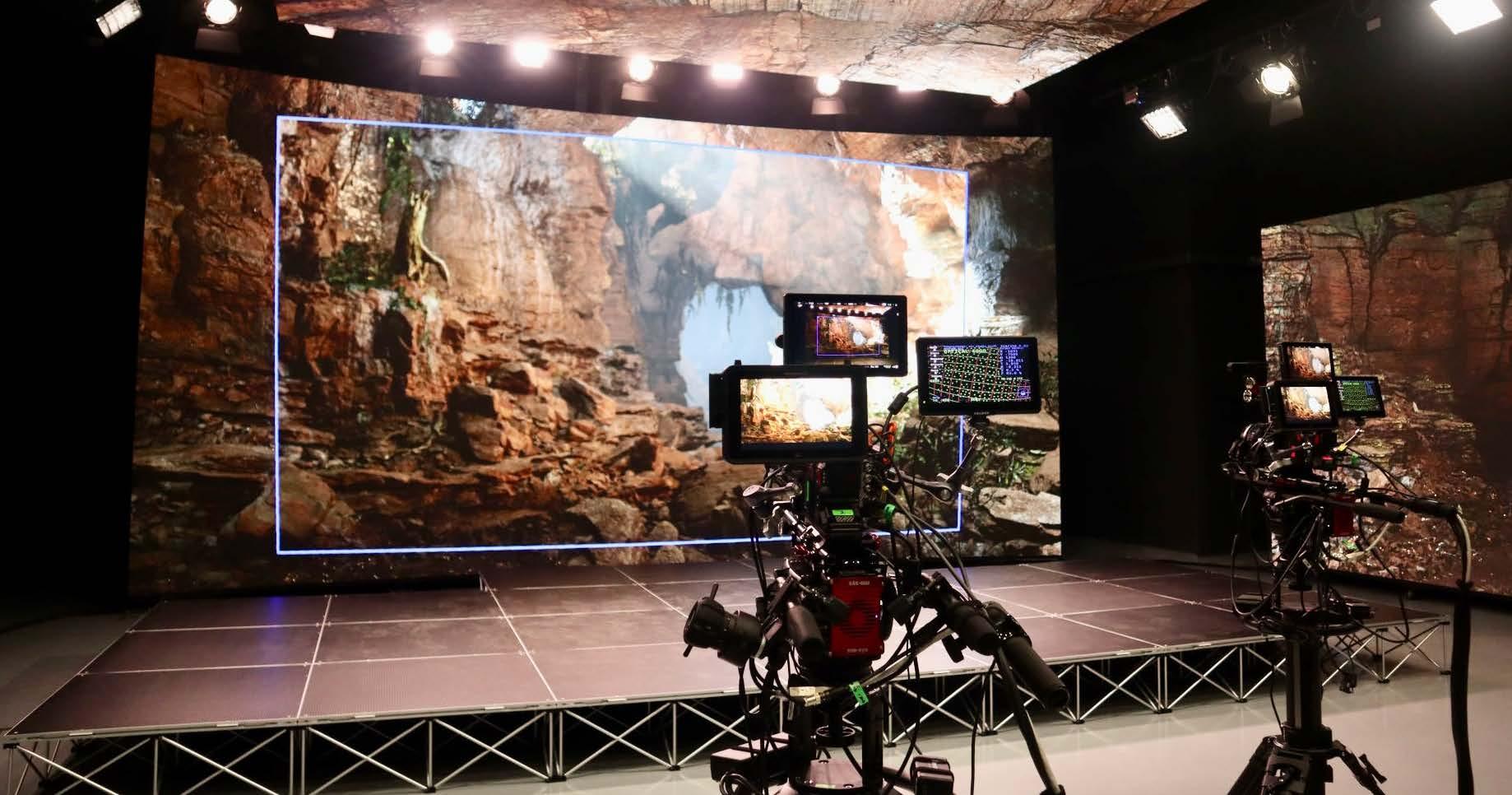
tangible, as students see their ideas come to life instantly on the LED wall.
With its first VP-focused classes set to begin in August 2026, students will be trained in the current VP workflow processes and create digital content that are aligned with industry requirements. The created content will form part of the student’s portfolio.
“Looking ahead, virtual production will evolve from a specialist capability into a platform that students across communication, marketing, design, and business will likely engage with,” Mun Wai concludes. “As AI and real-time tools lower barriers, SIT students need to imagine new ways of harnessing such technologies to do more with less to achieve impactful storytelling, engaging brand experiences, and content creation that resonates.”
Echoing this forward-looking vision with a perspective grounded in execution, Janet Lam, Assistant Director of AUO Display Plus Singapore adds, “The most fulfilling aspect
was seeing a complex, first-of-its-kind system come together in a way that genuinely supports teaching and learning. Close collaboration with SIT and our technology partners allowed us to translate academic requirements into a practical, industry-aligned facility, and successfully handing over a studio that faculty and students can confidently use from day one was especially rewarding.”
By combining cutting-edge technology with applied education, SIT’s virtual production studio sets a new benchmark—one where students don’t just learn about the future of media, but actively create it.
AUO Display Plus
Cgangs International
Broadcast Professional
INFiLED
RED Digital Cinema
Mo-Sys Engineering
Nanlite
A unique water projection at Moradabad spellbinds people with culture connect
By Ram Bhavanashi
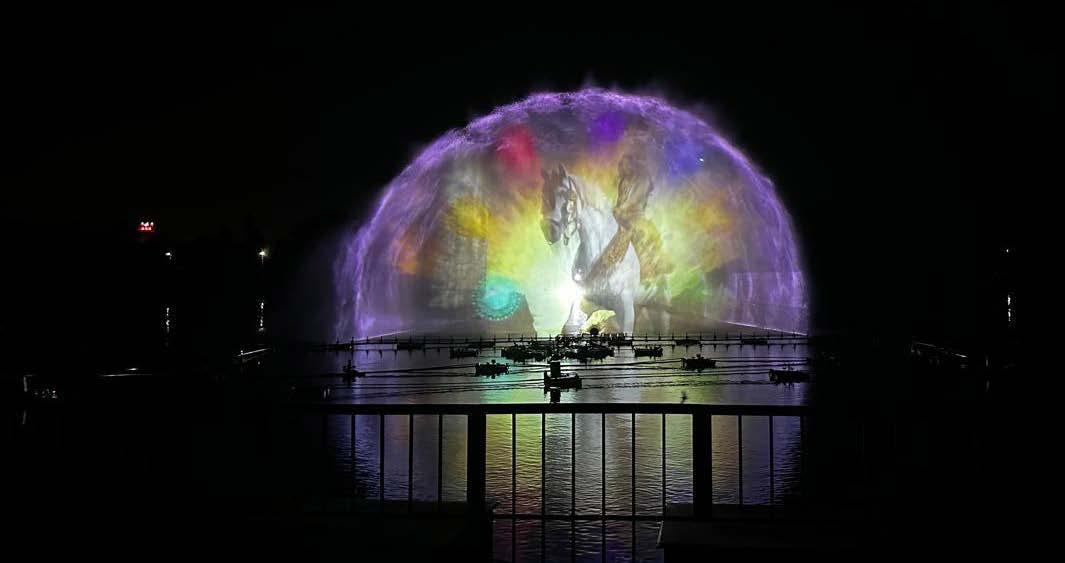
Moradabad – an otherwise dusty town, some 150-plus km northeast of New Delhi – has, of late, transformed into a city of pleasant attractions that characterize a unique cultural nationalism. One of the recent embellishments to the city’s identity is a water body with a rare projection screen created entirely of water.
Spandan Sarovar, as it is aptly called, is an unforgettable spectacle of light, water, and storytelling. A story that is powered by a unique blend of technology even as it speaks of a grand national heritage, with an irresistible connect with the local landscape.
A masterly creative work of two New Delhi-based AV solution providers Temflo Systems and Magical Theatre, the project is a captivating recreation in the brass city of the country. An SI Asia exclusive.
As the sun sets on the city’s purified water body Spandan Sarovar and the lake begins to reflects the shimmering lights of the installation, visitors gather along the banks to witness
a breathtaking fusion of dancing fountains, immersive music and cinematic visuals projected onto a screen made entirely of water.
Project name: Spandan Sarovar, Water Screen Projection Show
Project location: Moradabad, India
Project segment: Infotainment
Project owner: Moradabad Smart City Limited
Project operator Temflo Systems Pvt. Ltd.
Project overall budget : >₹15.5 crore (US$1.6million approx.)
Project AV cost: ₹2,87 crore (>US$300,000)
Project Management Consultant: Temflo Systems Pvt. Ltd.
Project Content Partner: Magical Theatre
Project Acoustic Consultant: Temflo Systems Pvt. Ltd.
Project Systems Integrator: Temflo Systems Pvt. Ltd.
Key AV Brands: VAL audio Speakers, Subwoofer, amps & dsps, Yamaha Mixer, Digital Projection
Projectors and LBT Laser /moving headlight
Project Highlight: 3D projection mapping on water sceen entirely created with misty vapour
Initiated by Moradabad Smart City Limited (MSCL) – under India’s ambitious Smart Cities Mission – with a view to creating a recreational facility in the city, the project is executed by New Delhi-based AV solutions provider Temflo Systems Pvt. Ltd. in close collaboration with another New Delhi-based AV experiences creator Magical Theatre who designed the content for the project.
The MSDL – whose mission was to transform the Peetal Nagri (Brass City) of India – the popular title for Moradabad for its being the centre of the country’s brass industry – into a sustainable growth centre and livable city –stood at the centre of the initiative, with its CEO Divyanshu Patel playing a driving force for all.
The CEO – who is also the Municipal Commissioner of the City and implemented several programmes to transform the otherwise dusty city into clean and green urban living - played a crucial role in the whole transformational process.
“When I first took charge of the corporation, it appeared a doomed city,” recalls Divyanshu. “There was no cleanliness, no hygiene, no recreational means for people to breathe fresh,” he explains. “That moved me a lot, and with the spirited support my higher officials, we decided to change it all for the good,” he reveals.
The Spandan Water Screen Projection project took shape as one of those measures that sought to instil a sense of responsibility with cultural nationalism among the citizenry while the administration provided an expressive platform for transformation.
“This, we did with a view to instilling the sense of nationalism, and then blend them with the need for clean environs contributing to a great heritage,” Divyanshu explains.
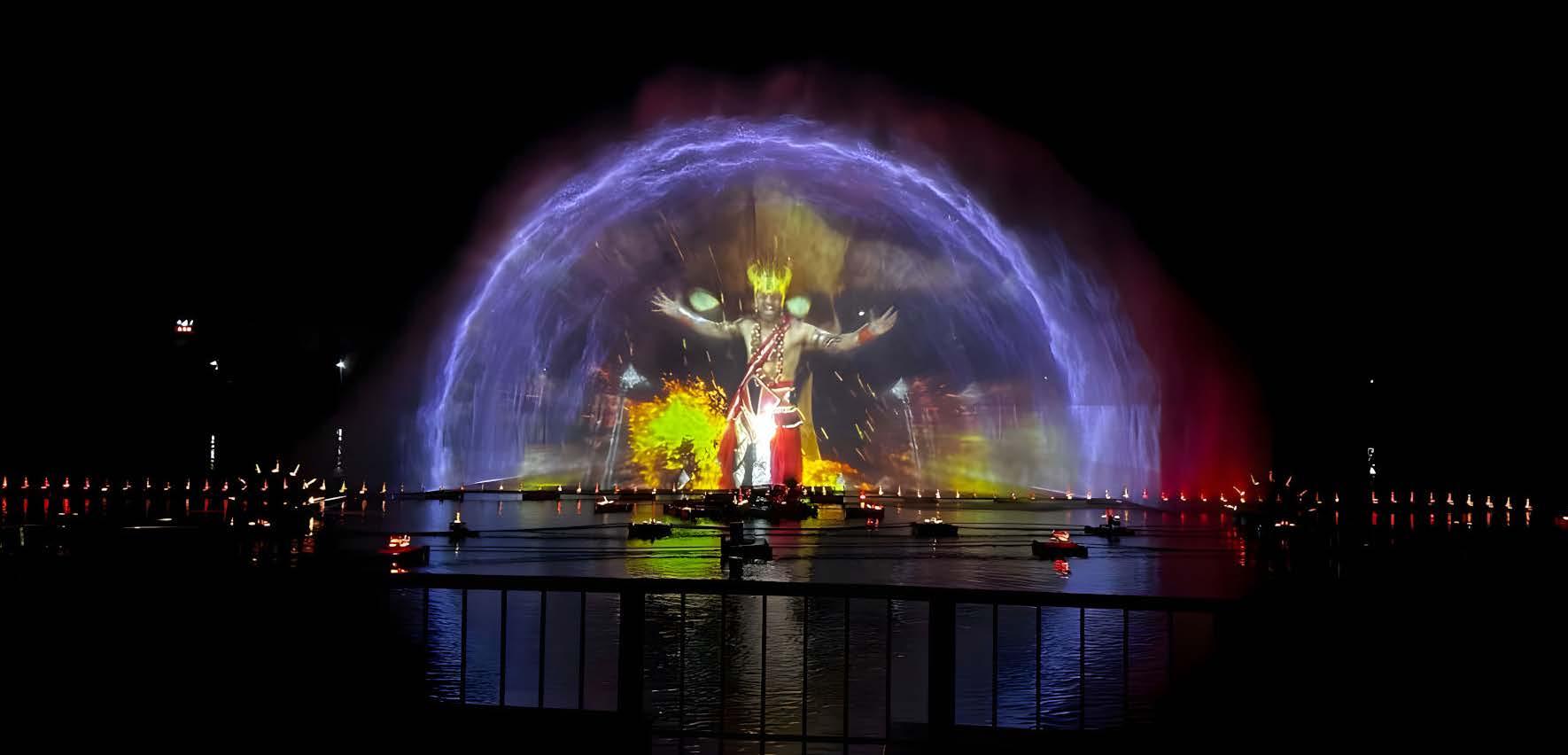
The first one to greet and bring people together was a sports gallery – made out of a loco shed – the second one a victory memorial commemorating the Kargil Victory (India got engaged in war with Pakistan, and armed infiltrators and reclaimed all occupied highaltitude posts in Kargil district of Kashmir in mid-1999), which was then followed by Spandan Sarovar Water Screen Projection, Sound and Light Show – an immersive event themed on Indian mythology – to sensitize people towards doing things right.
Driven by such missionary zeal, the outdoor AV spectacle is a coming together of world-class fountain technology and creative storytellingboth nicely blending into a landmark entertainment experience.
The quintessential aspect of this water projection show lies in transforming water itself into a storytelling canvas. Fine mist is projected upward to form a translucent screen upon which vivid visuals appear, seemingly floating in mid-air.
Blending with it at the same time is a series of precisely engineered musical fountains rising and syncing in perfect harmony with the soundtrack, creating vivid patterns of water that move rhythmically with the music.
When illuminated with dynamic lighting, these jets of water turn into luminous sculptures, constantly shifting and evolving as the narrative unfolds. The audience experiences a seamless blend of sound, motion and imagery, where fountains dance, light beams sweep across the lake and stories unfold against the night sky.
The show has been thoughtfully designed as a collection of three distinct narratives, each offering a different emotional and thematic experience. Together, they create a unique blend of mythology, imagination, and cultural pride, ensuring that the attraction appeals to audiences of all ages.
The conceptualization, content development, and creative direction for these narratives have been meticulously crafted by Magical Theatre, whose artistic vision weaves storytelling, technology, and emotion into a seamless spectacle. Through their creative approach, each show unfolds like a living canvas on water—bringing together mythological grandeur, imaginative storytelling for young audiences, and a proud celebration of Moradabad’s heritage in a visually arresting and immersive format.
The first show is inspired by the powerful mythological concept of Kalki Avtaar, the prophesied tenth incarnation of Lord Vishnu. In Hindu belief, Kalki is destined to appear at the end of Kaliyuga to restore righteousness and bring back peace and sanity to the world that is torn by tumults of evilness.
This powerful theme is depicted through dramatic visual storytelling. As fountains surge upward and music builds in intensity, the narrative unfolds with depictions of the changing ages, the decline of moral values and the growing anticipation of divine intervention. Images projected onto the water screen seem to emerge from mist and light, creating an almost mystical experience for the audience. The climax of the show is marked by the majestic appearance of Kalki, accompanied by powerful music and radiant fountain patterns that symbolize hope, renewal and the triumph of dharma.
Through its powerful visuals and emotional narrative, the show reminds viewers that even in times of darkness, the promise of righteousness and renewal remains eternal.
The second show – quite in contrast to the mythological grandeur of the first show –offers a delightful fictional story designed especially for children. Filled with vibrant colors, playful animation and cheerful music, this narrative creates a magical world where young characters embark on an imaginative adventure.
As the story unfolds, fountains leap energetically in rhythm with the lively soundtrack, transforming the lake into a stage for a fantastical journey. Animated visuals projected onto the water screen depict enchanting landscapes, friendly characters and whimsical moments that captivate young audiences.
Beyond its entertaining storyline, the show carries an important message about respect for the nature, kindness and environmental
responsibility. Through the adventures of its characters, children learn the value of caring for nature and believing in their own abilities. By blending fun with meaningful storytelling, the show ensures that the experience is both engaging and inspiring for young viewers and their families.
The third show celebrates the legacy of Moradabad, taking audiences on a journey through the city’s history, culture and growth. Often referred to as the ‘Brass City of India,’ Moradabad has built an international reputation for its exquisite brass handicrafts and skilled artisans. This show highlights the evolution of the city through evocative visuals projected on the shimmering water screen.
The narrative begins with glimpses of the region’s early history and gradually moves through the development of the city’s craft traditions. As fountains rise and fall in graceful patterns, images of artisans at work, intricate brass designs and bustling markets appear in luminous detail. The interplay of lighting and reflective water beautifully symbolizes the gleam of brass that has become synonymous with the city’s identity.
The show then transitions to Moradabad’s modern achievements and growing aspirations, portraying the city as a vibrant hub of culture, craftsmanship and progress. By the end of the performance, viewers are left with a deep sense of pride in the city’s remarkable journey.
Temflo Systems Pvt. Ltd., the executing agency for the project, has played a crucial role in bringing the concept to life. The company has integrated advanced fountain technology, high-resolution projection systems and synchronized lighting controls to ensure that every element of the show moves in harmony. Each fountain jet is carefully programmed, each light cue precisely timed and every projection synchronized with the soundtrack to create a seamless visual experience. The result is a performance where water, light and sound
work together like a perfectly choreographed orchestra.
Beyond its visual spectacle, the Spandan Sarovar Water Screen Projection, Sound and Light Show has become an important cultural attraction for Moradabad as this installation has transformed the lakefront into a lively evening destination. Families, tourists and residents now come together to enjoy the shows, creating a vibrant atmosphere filled with excitement and wonder. The attraction not only enhances the recreational value of the area but also strengthens the city’s cultural identity by presenting stories that reflect its heritage and values.
As the final moments of the show unfold and the fountains slowly descend back into the lake, the lights fade gently and the water returns to its calm state. Yet the images and emotions linger in the minds of the audience. The stories told through shimmering fountains and floating visuals leave behind a sense of awe and inspiration.

"Delivering a project of this scale required close coordination between design, technology, content, and on-site execution teams,” recounts Asha Kiran, Project Manager, Magical Theatre. “From installation to synchronization and final show programming, every detail was carefully managed to ensure a flawless audience experience and a world-class public attraction for the city."
The Spandan Sarovar Water Screen Projection, Sound and Light Show stands as a shining example of how modern technology can be used to celebrate culture, imagination and heritage. By combining mythological storytelling, children’s entertainment and the proud legacy of Moradabad, the installation has created an experience that resonates with audiences of all ages.
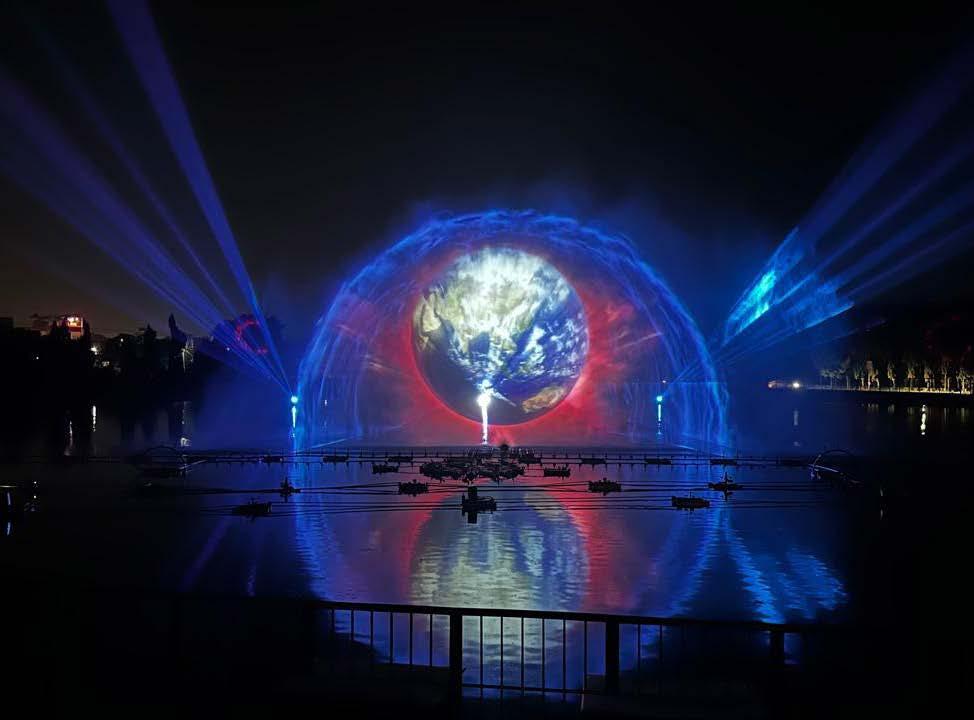

“Our vision was to transform water into a living medium of storytelling,” says Says Bal Mukund Maheshwari, Founder, Temflo Systems Pvt. Ltd.: “Through advanced fountain engineering, synchronized lighting, and precision-controlled projection systems, we have created an immersive experience that seamlessly blends technology with emotion, making it a landmark attraction for Moradabad."

Recounts Aman Arora, Creative Director, Magical Theatre: “the project was conceived as more than a fountain show—it is an emotional journey across mythology, imagination, and the proud heritage of Moradabad. Every visual, every musical rise, and every burst of water was designed to evoke wonder, ensuring that the audience feels deeply connected to the stories unfolding on the lake.
Temflo
Magical Theatre
Mahajak Development Co., Ltd. installs JBL, Crown, BSS, Martin, and AMX solutions to create an intelligent, flexible hospitality environment in Bangkok’s luxury hotel
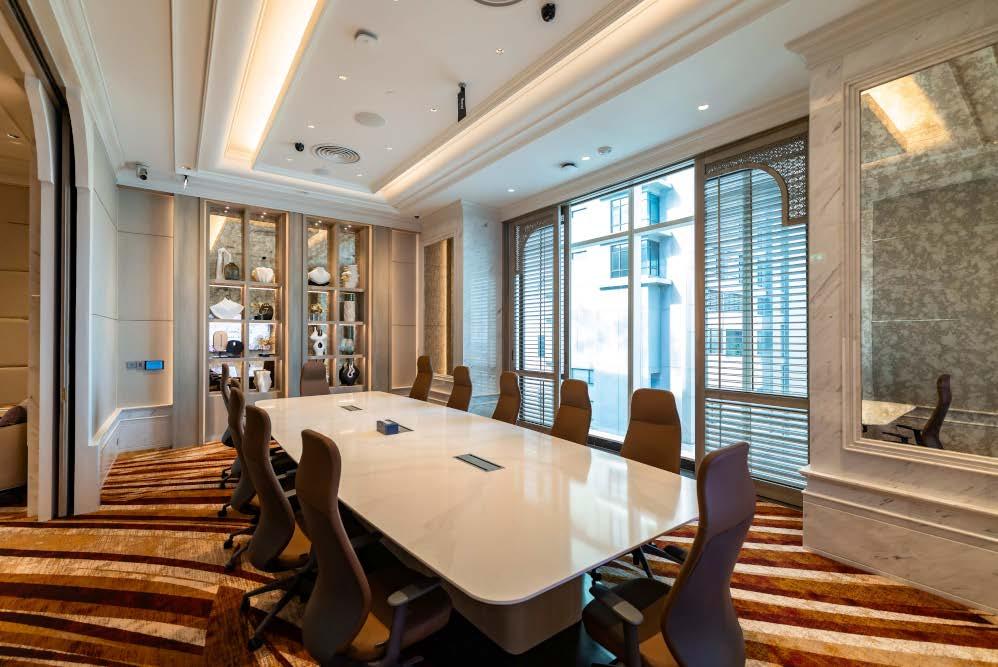
Rising above Bangkok’s skyline, Grande Centre Point Lumphini has reimagined modern hospitality with a fully integrated Harman Professional AV ecosystem designed to deliver clear, immersive experiences across every space. The luxury hotel partnered with Mahajak Development Co., Ltd. for the project, marking their fourth collaboration, to install a unified audio, video, lighting, and control system across two floors and nine event venues. The result is a professional-grade environment capable of supporting everything from corporate meetings and conferences to gala banquets and live performances.
The system was engineered for consistent audio quality and operational simplicity. Primary front-of-house coverage is provided by 24 JBL SRX910 line arrays paired with 12 SRX928S subwoofers, ensuring flawless sound from keynote sessions to evening galas. Flexibility is built in through 24 JBL BRX308-LA line arrays and eight BRX325SPS subwoofers, allowing teams to adapt setups to different room sizes and seating arrangements without compromising the signature JBL sound. Smaller meeting spaces feature JBL Control Series ceiling loudspeakers, including Control
Project Name: Grande Centre Point Lumphini
Project Location: Bangkok, Thailand
Project Segment: Hospitality
Systems Designers and Integrators: Mahajak Development Co., Ltd.
AV Highlight: To deliver seamless, venue-wide immersive AV with consistent audio clarity and intuitive control
Key AV Brand: JBL, Crown, BSS, Martin, AMX
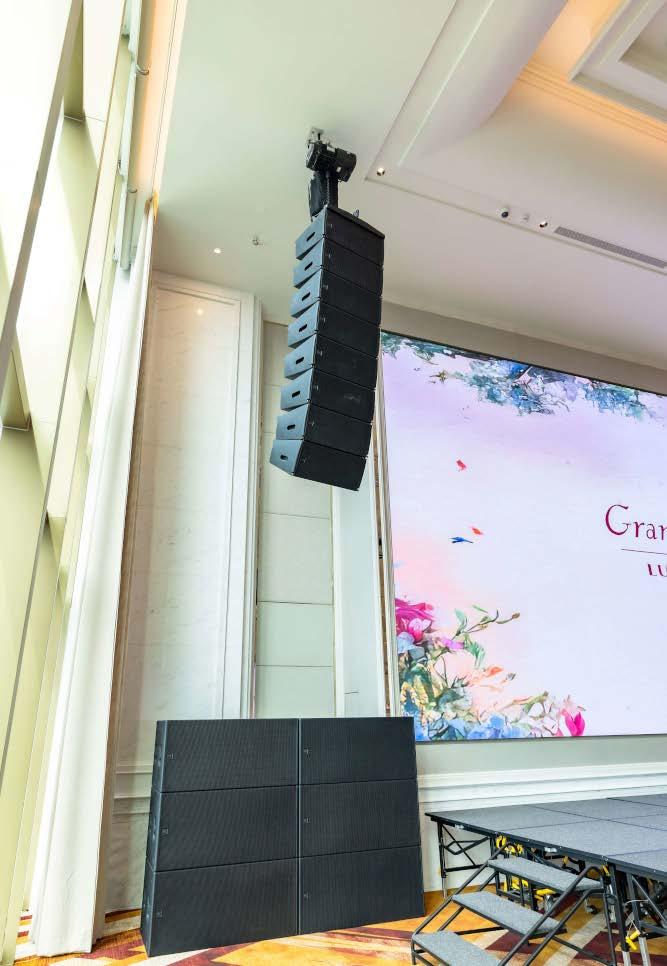
16C/T, 18C/T, and 47LP models, combined with Control 19CS subwoofers to guarantee even coverage and clear speech.
Supporting this network, BSS BLU806DA processors and Crown CDi 4|300 amplifiers deliver precise routing, system tuning, and amplification across all zones. Distributed
audio extends to public areas via more than 95 JBL Control Series speakers and 16 JBL GSF6 ground-stake landscape loudspeakers, providing seamless coverage in lobbies, corridors, and fitness areas. For pop-up presentations or smaller events, the hotel can deploy two JBL PRX ONE powered column PAs for instant reinforcement.
Unified control was a key design goal. Four AMX NX-2200 control processors, eight VariaSL80 touch panels, and four TCP-IPAD licenses give staff centralised access to audio, video, and lighting presets, allowing non-technical personnel to manage room resets, turnovers, and event setups effortlessly. Room acoustics and loudspeaker placement were modelled and optimised using JBL Venue Synthesis and Performance Manager, ensuring a flawless experience from the smallest meeting to the largest banquet.
Lighting integration enhances the ambience and flexibility of the spaces. Eight Martin MAC Aura PXL fixtures deliver pixel-mapped wash effects, while four Martin ERA 150 Wash fixtures provide versatile illumination for conferences, staged presentations, and special events.
“Grande Centre Point Lumphini wanted a sound system that would be as flexible and refined as the experiences they offer,” said Nick Screen, sales lead for Harman APAC. “The Harman
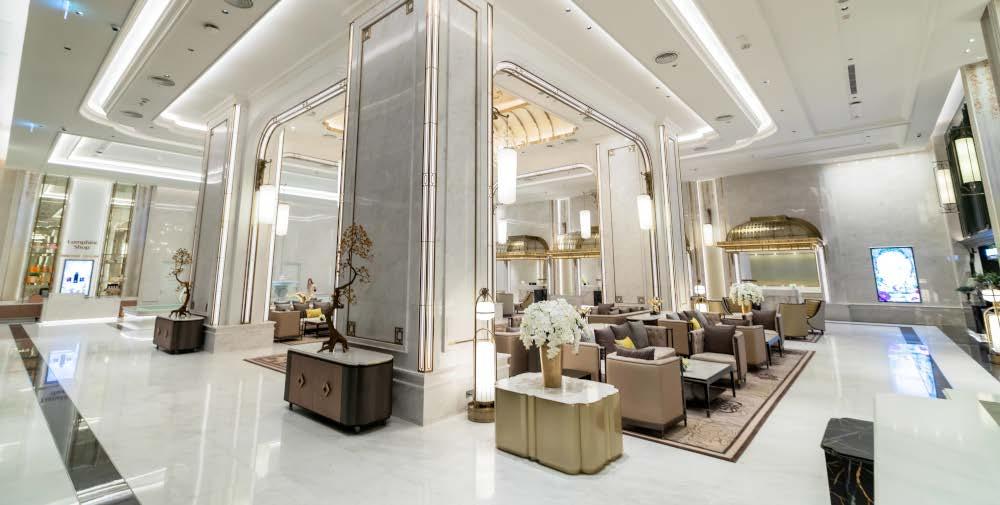
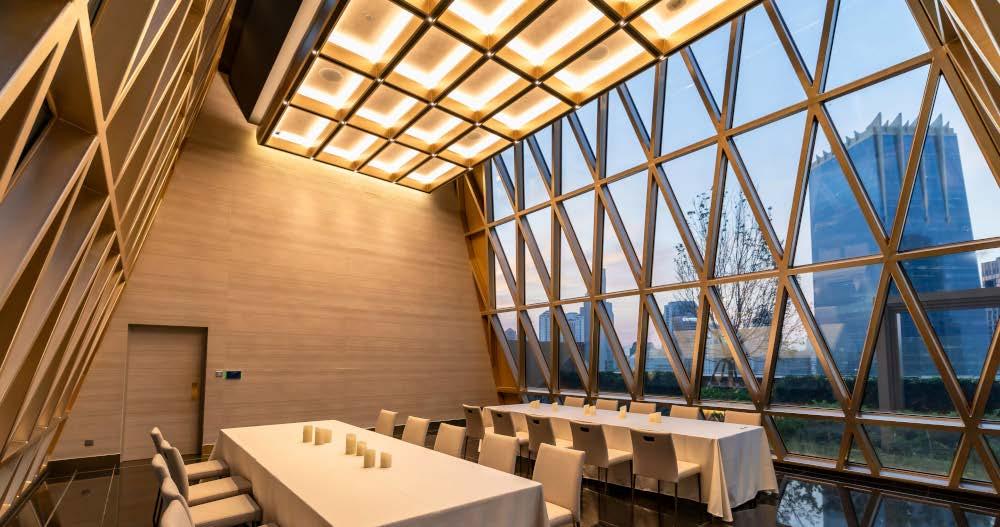
Professional solution ensures every guest— from those attending a conference to those relaxing in a lounge—hears clear, consistent sound across the hotel.”
The installation not only elevates the hotel’s ability to host a diverse range of events, but it also future-proofs the property. With a fully networked AV-over-IP backbone, Dante
integration, and centralised control, the system can evolve alongside guest expectations, expansions, or modifications. More than an upgrade, this installation sets a benchmark for luxury hospitality, uniting technology, design, and user experience to deliver lasting impressions.
HARMAN Professional
4K RGB laser projection and retractable infrastructure enable high-impact heritage visualisation while preserving the integrity of the UNESCO-listed monument

The 11th-century stepwell Rani-ki-Vav, a UNESCO World Heritage Site in Patan, Gujarat, has been transformed into a breathtaking canvas of light, colour, and storytelling thanks to Christie® RGB pure laser projectors. Commissioned by the Government of Gujarat and inaugurated by Prime Minister Narendra Modi on March 31, the immersive projection mapping experience spans the 500-foot-long subterranean monument, marking one of India’s most ambitious digital heritage showcases.
Ten Christie RGB pure laser projectors, including the Griffyn 4K35-RGB and M 4K25 RGB models bathe the stepwell in vivid colour and brilliant contrast, delivering up to 36,500 lumens per unit. The 4K resolution and wide colour gamut faithfully render every carving, texture, and subtle hue, from warm sandstone to deep indigo night skies.
Supported by Design Factory India as consultant, Aura Bright Light supplying and installing the projectors, and Knownsense Studios leading content creation, the installation maps 22,000 pixels across the stepwell, the canvas among the largest ever used for an Indian heritage site. Multidisciplinary teams of artists, animators, and heritage researchers developed visuals inspired by Patan Patola textiles, ancient water architecture, and spiritual symbolism, blending ultra-high-resolution 3D animation with evocative soundscapes that merge traditional instruments with cinematic orchestration.
Given the monument’s UNESCO status, strict guidelines from the Archaeological Survey of India (ASI) prohibited permanent or visible structures. To overcome this, hydraulic lift-based projector mounts were installed underground, rising six meters at showtime for
Project Name: Rani-ki-Vav
Project Location: Gujarat, India
Project Segment: Hospitality
Systems Designers and Integrators: Design Factory India, Aura Bright Light, Knownsense Studios
AV Highlight: To deliver large-scale, conservation-compliant immersive storytelling without altering the heritage site
Key AV Brand: Christie Digital
millimetre-precise alignment before retracting afterwards. Thus, ensuring the historic site remains visually unaltered by day.
“Rani-ki-Vav demanded a technological solution that could match the monument’s extraordinary craftsmanship,” said Siddharth Bathla, director and co-founder, Design Factory India. “Christie’s RGB pure laser projectors were the clear choice, delivering the resolution, brightness, and colour fidelity needed to honour every carving and contour, while the concealed hydraulic infrastructure ensured the monument’s sanctity was fully preserved.”
Shailesh Patel, managing director, Aura Bright Light, added, “Executing a project of this scale within the constraints of a UNESCO World Heritage Site is a rare challenge. The innovative deployment of the Christie Griffyn 4K35-RGB and M 4K25 RGB projectors on hydraulic lifts enabled us to achieve spectacular results with precise alignment, while adhering to every conservation guideline set by ASI.”
“We treated Rani-ki-Vav not as a backdrop, but as the protagonist of the story,” said Mandeep Sharma, head of Production and Animation, Knownsense Studios. “Christie’s 4K RGB projectors allowed our ultra-highresolution content and 3D animations to blend seamlessly with the stone architecture, creating an emotional, immersive experience that feels both contemporary yet deeply rooted in history.”
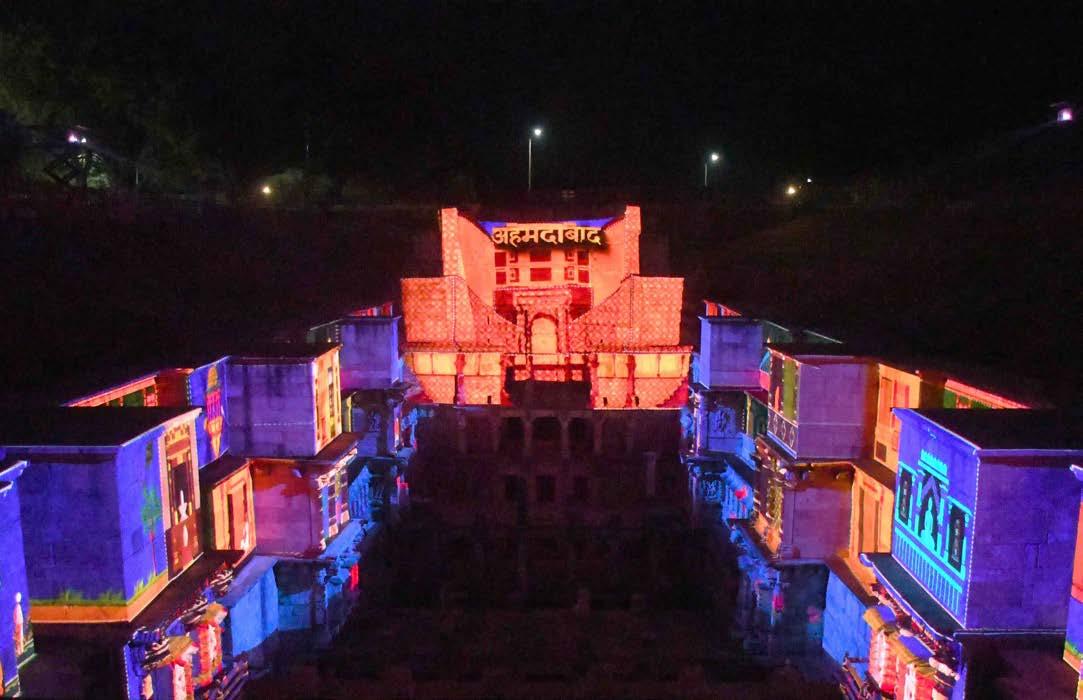
Rishubh Nayar, ProAV sales director for India, Christie, commented, “This project exemplifies how technology can elevate heritage storytelling with dignity and precision. Our RGB pure laser projectors are designed for demanding environments where colour accuracy, fine detail, and long-term reliability are non-negotiable. Rani-ki-Vav powerfully demonstrates how light can connect past and present on a global stage.”
By combining 4K RGB pure laser projection, culturally authentic storytelling, and precise engineering, the Rani-ki-Vav light and sound show elevates digital heritage experiences in India. More than a spectacle, it is a living dialogue between centuries, a celebration of architecture, culture, and innovation that connects audiences to India’s legacy through light, sound, and storytelling.
Christie Digital