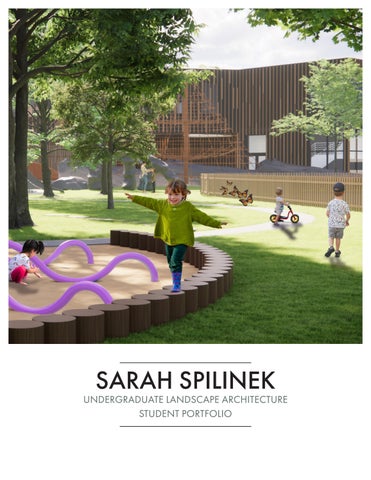
SARAH SPILINEK
UNDERGRADUATE LANDSCAPE ARCHITECTURE
STUDENT PORTFOLIO

Academic HEART OF BENSON
Academic
COASTAL ESCAPE PARK
Academic
GALACTIC FRAGMENT
Academic
KIMLEY-HORN INTERNSHIP
Professional
LEARNING SPACES 1
Fall
2024 - DSGN 410 - In Collaboration with Matthew Blome, Emma Held, and Miracle KenkelInstructors: Vanessa Schutte and Darin Hanigan

LEARNING SPACES
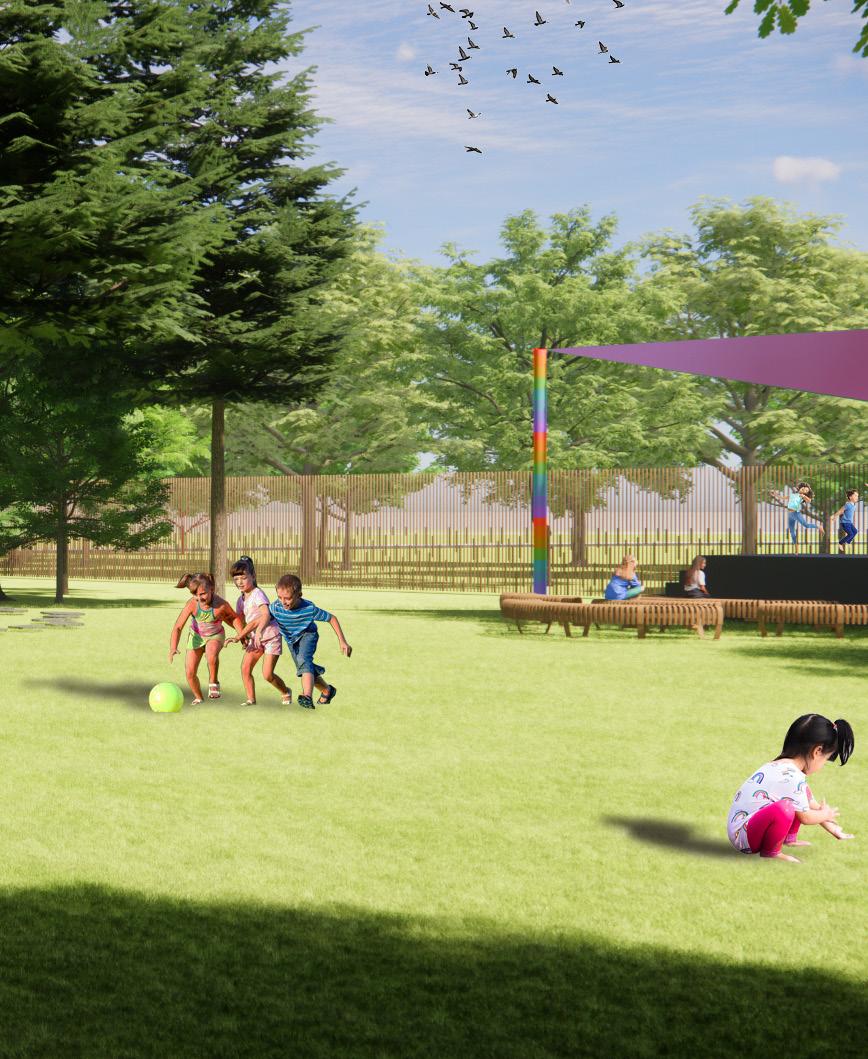
PROPOSAL FOR THE UNIFICATION OF UNL’S RUTH STAPLES CHILD DEVELOPMENT LAB AND FAMILY RESOURCE CENTER
The intention behind this design is to create a centralized approach to learning that emphasizes the core values of both the Ruth Staples Child Development Lab and Family Resource Center under one roof. Within all aspects of the site, the user experience is prioritized by focusing on the six key principles. By continuing the programs’ existing connection to East Campus, where their current facilities reside, users are
able to have the same biophilic, immersive experiences that are currently possible within each organization. By synthesizing what each program currently loves about their facility and what they need to optimize organizational growth and user enrichment, this design is able to establish a community hub for positive mental, emotional, and physical health for users of all ages.
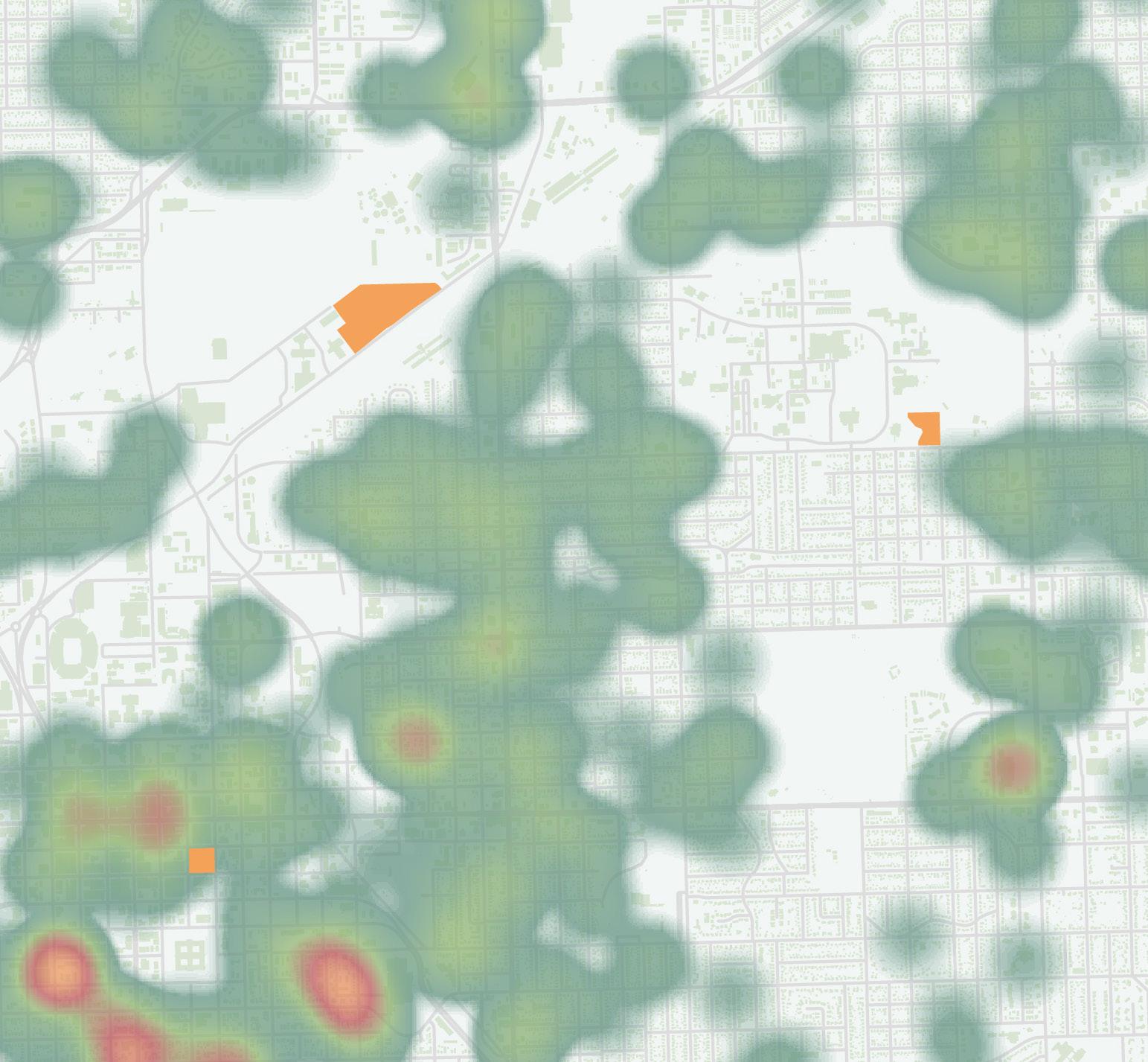
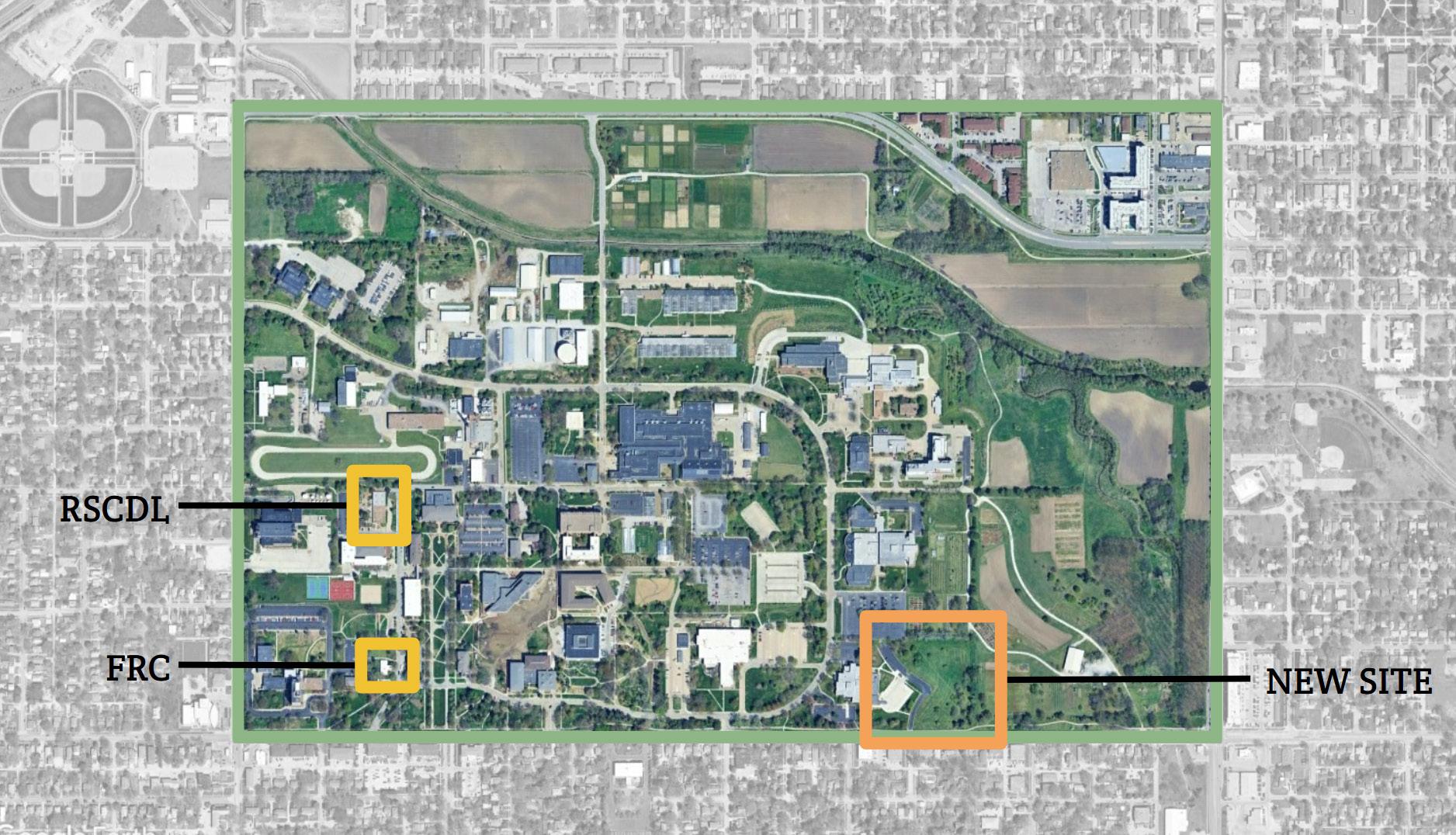
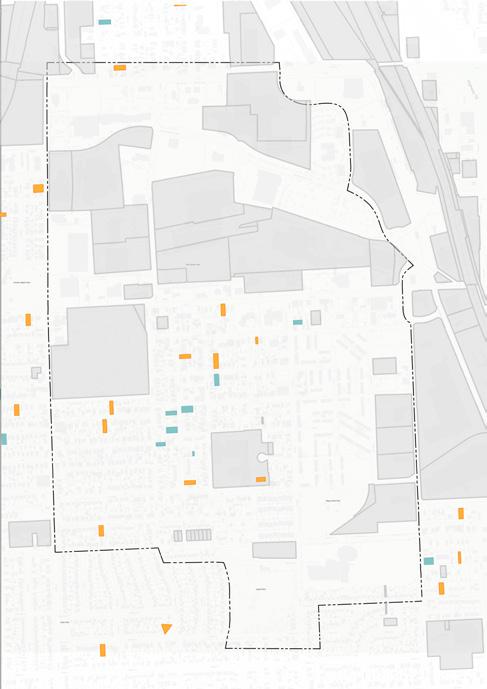
Analysis of violent crime in Lincoln, NE. Proposed sites highlighted in orange
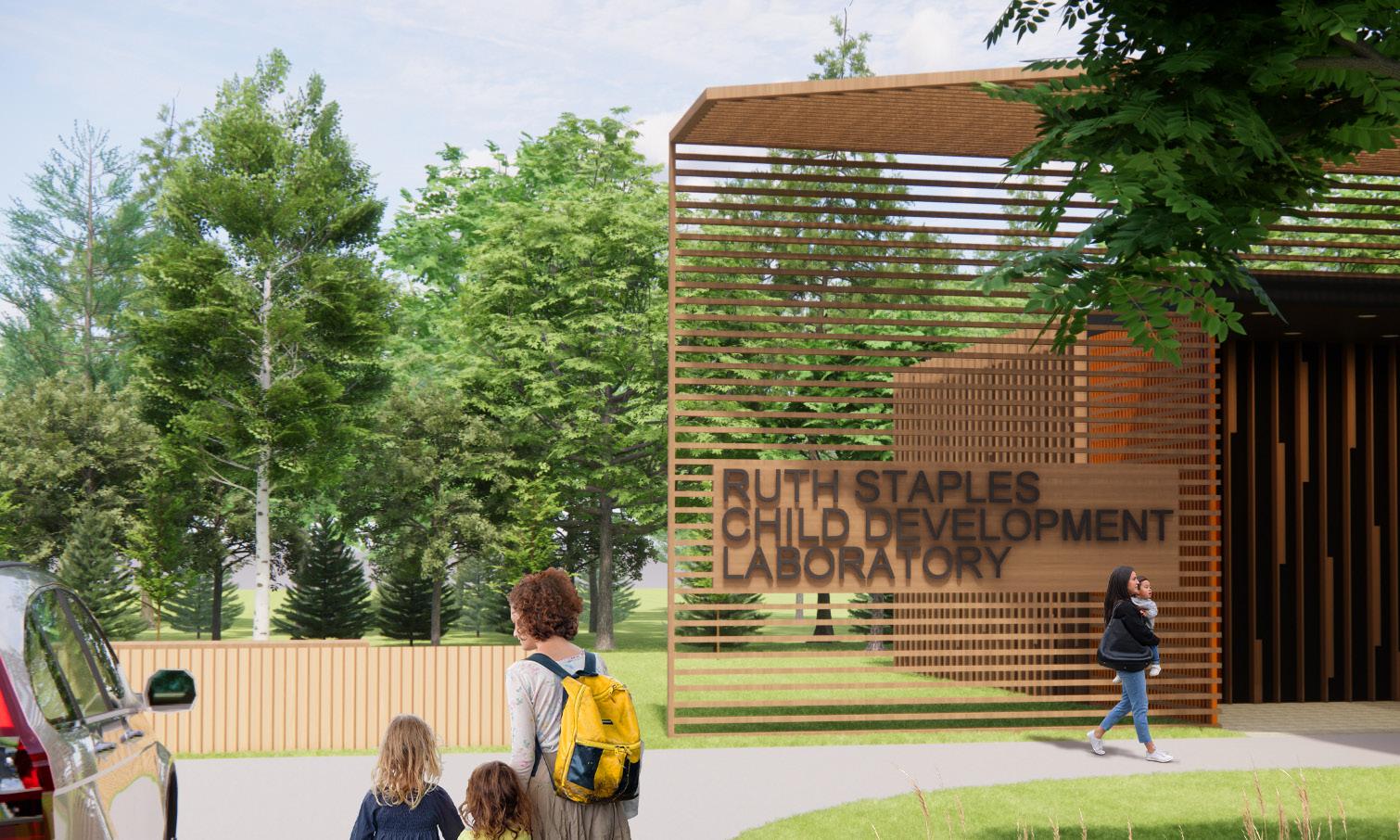
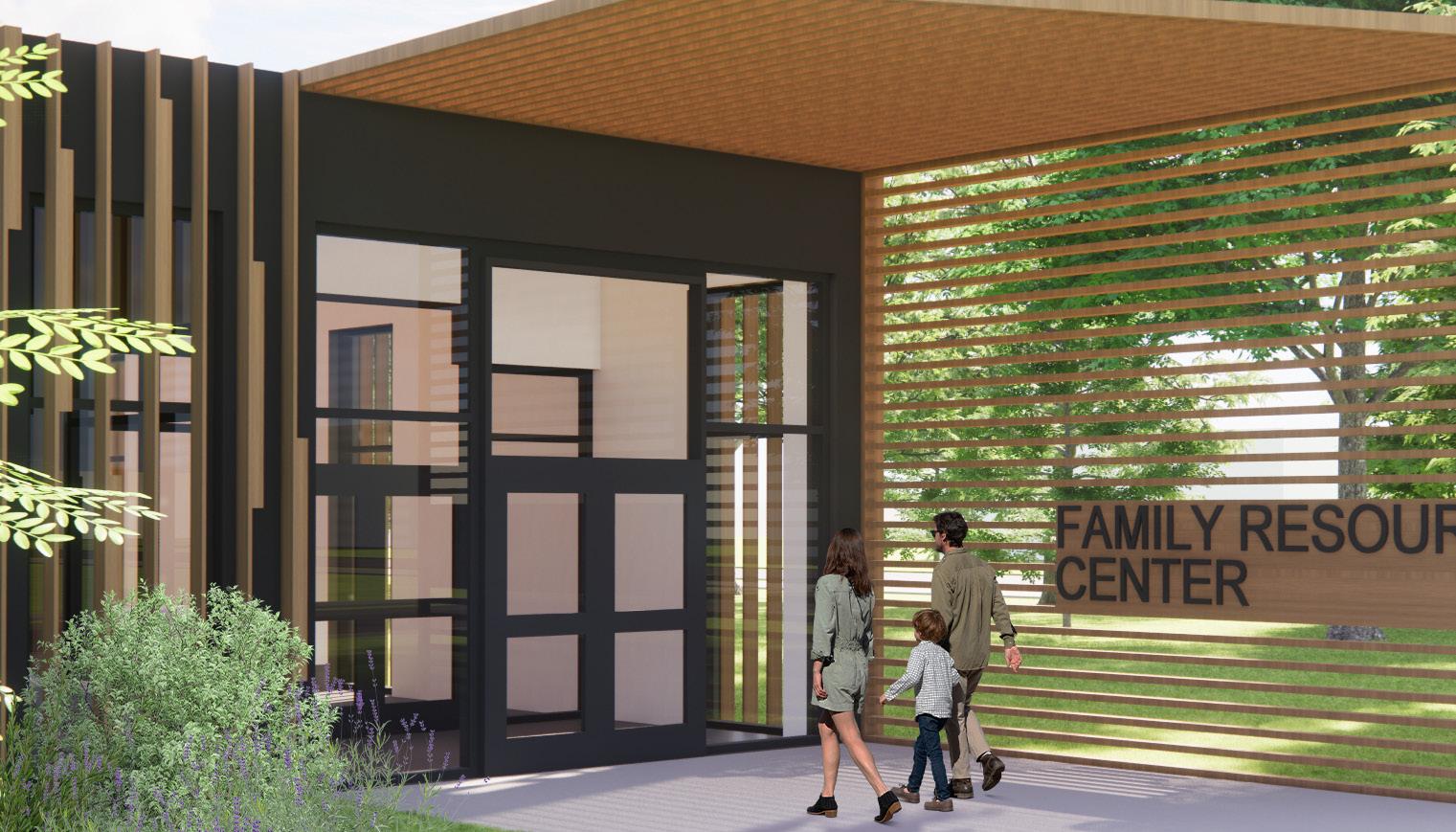
View of the entrance to the Child Development Lab
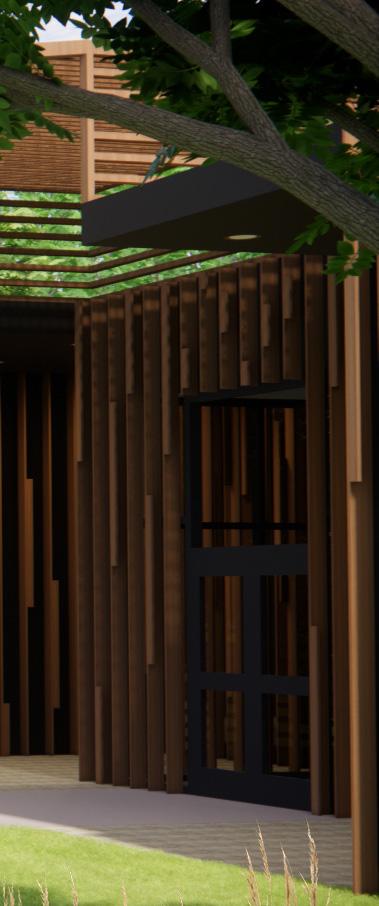
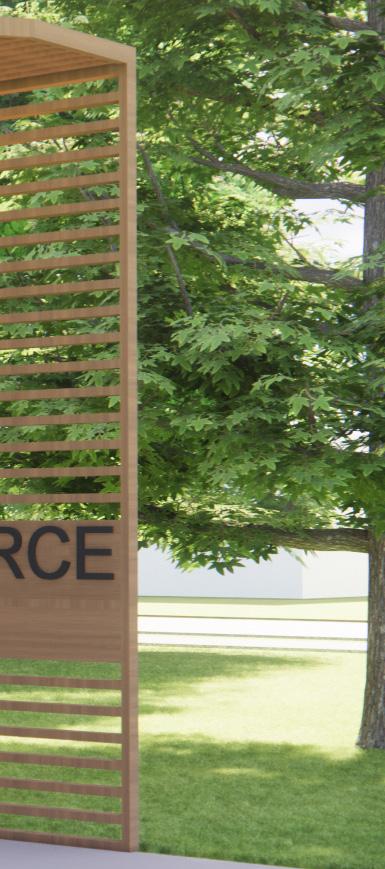
View of the entrance to the Resource Center
LEARNING SPACES
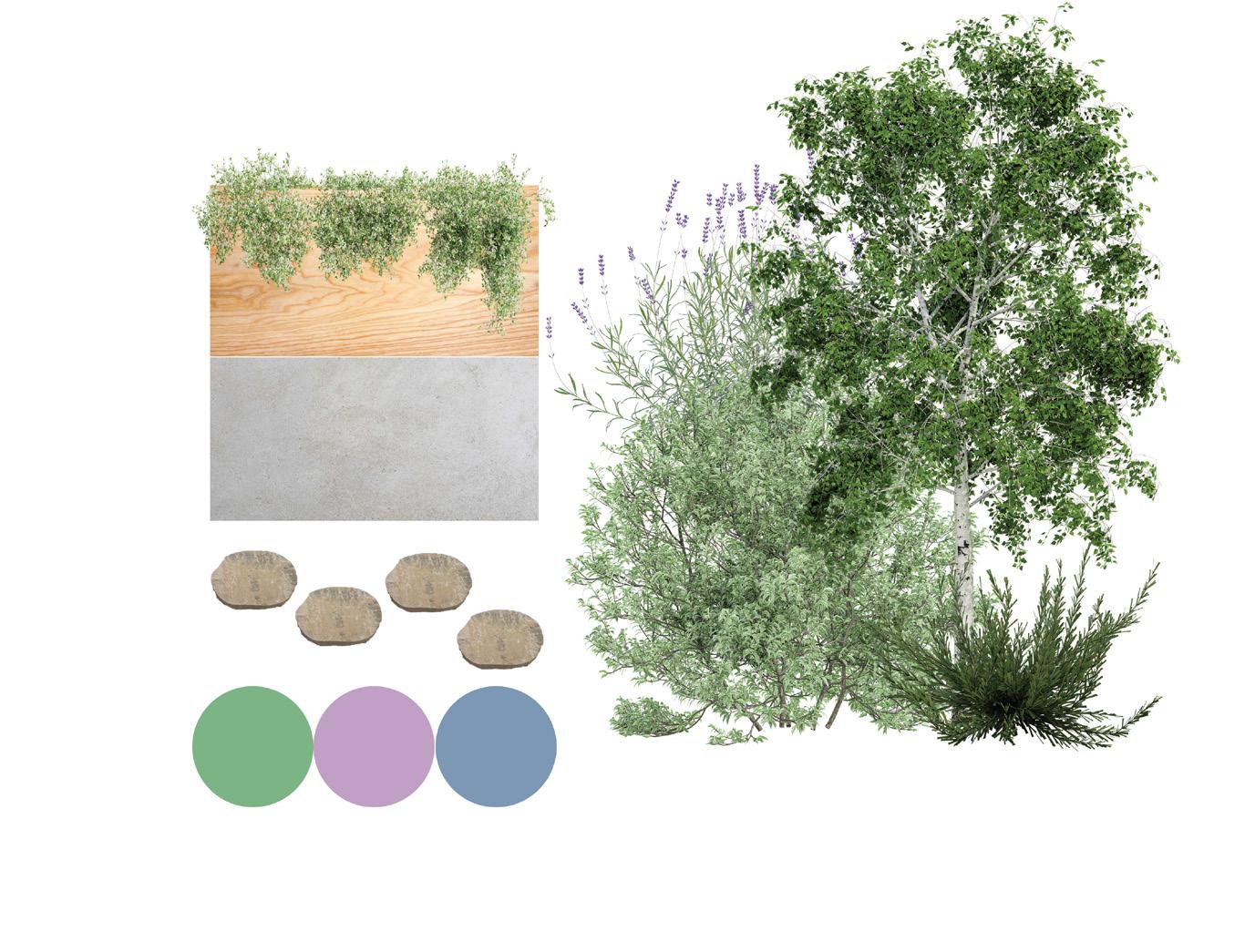
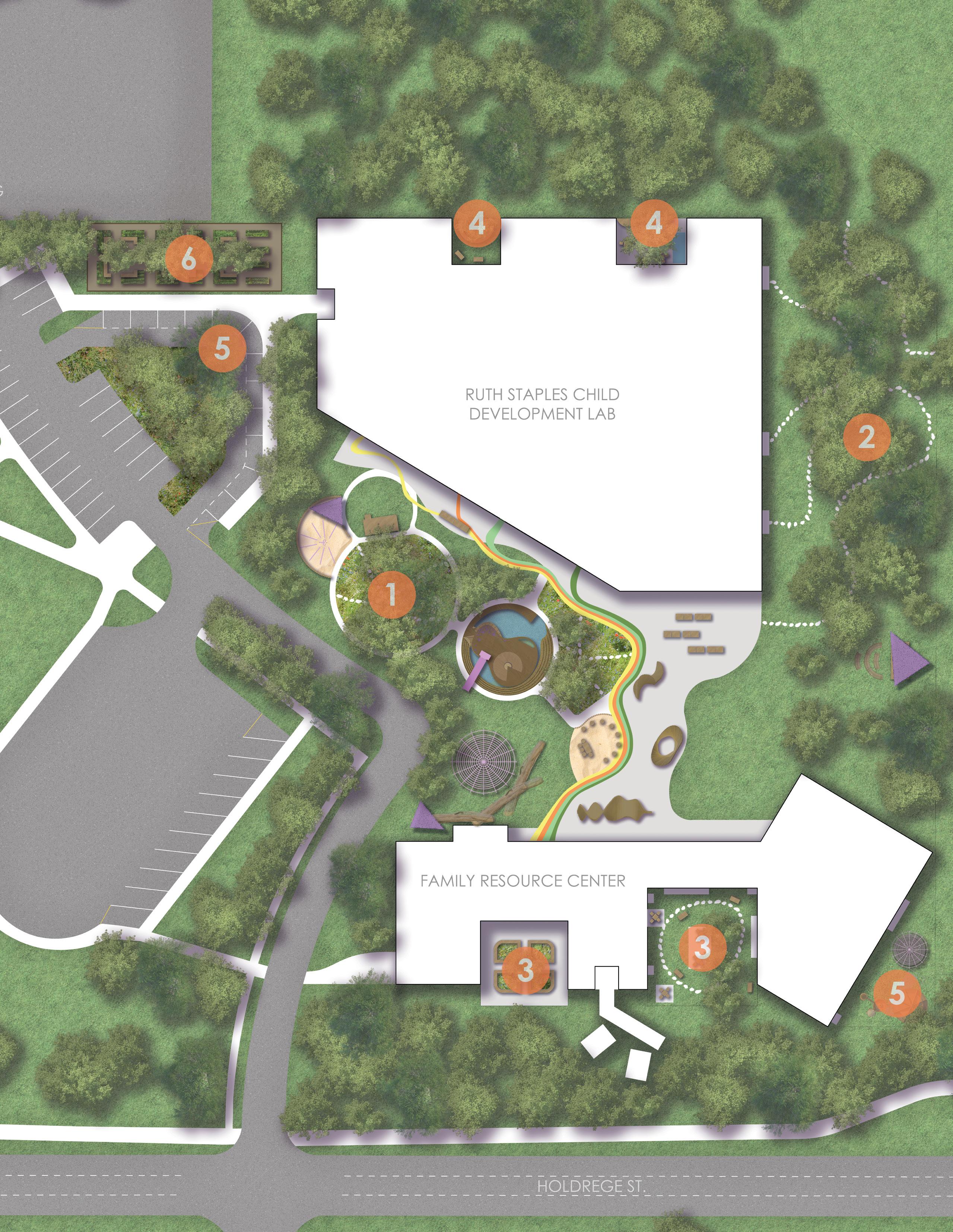
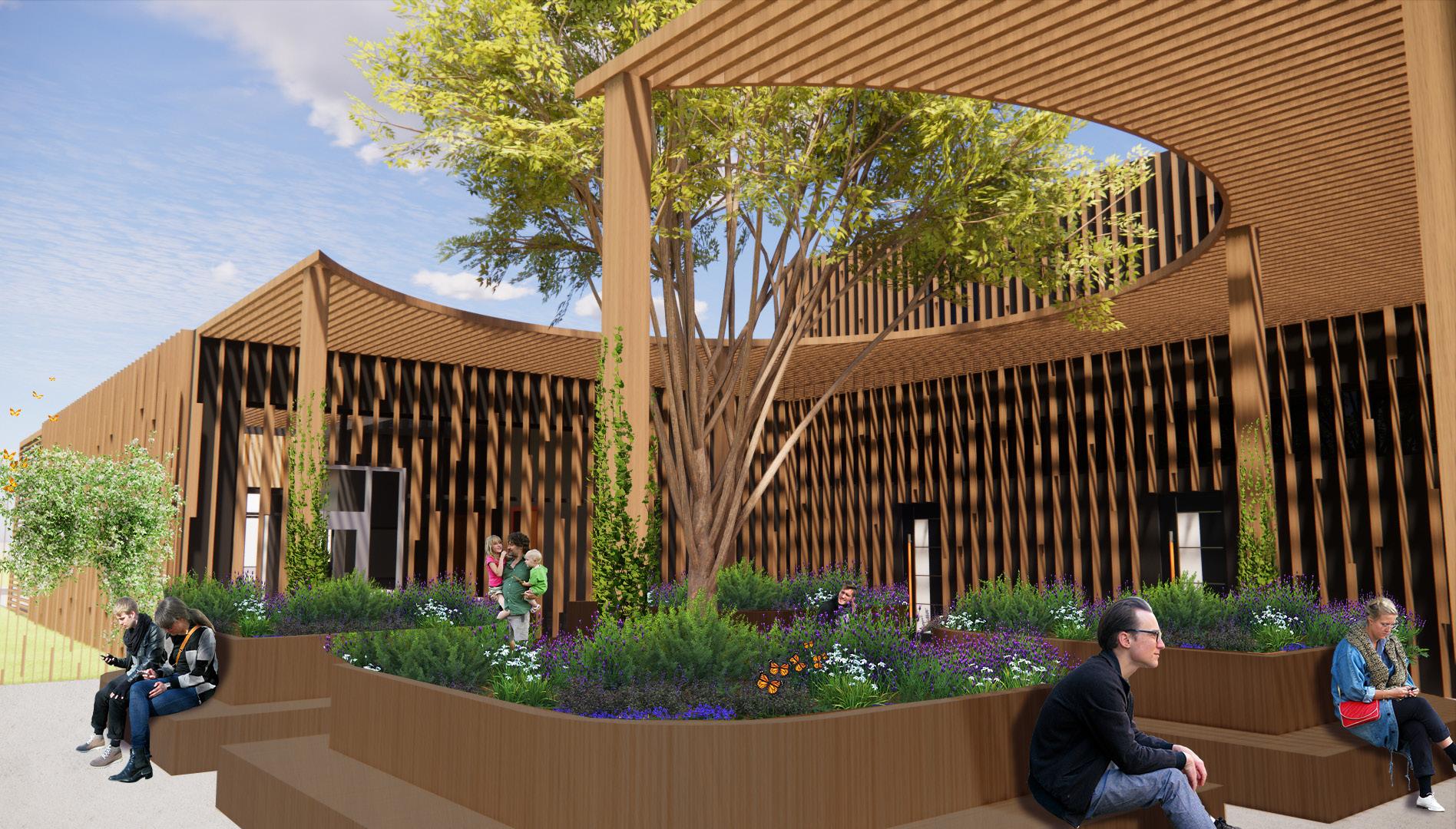
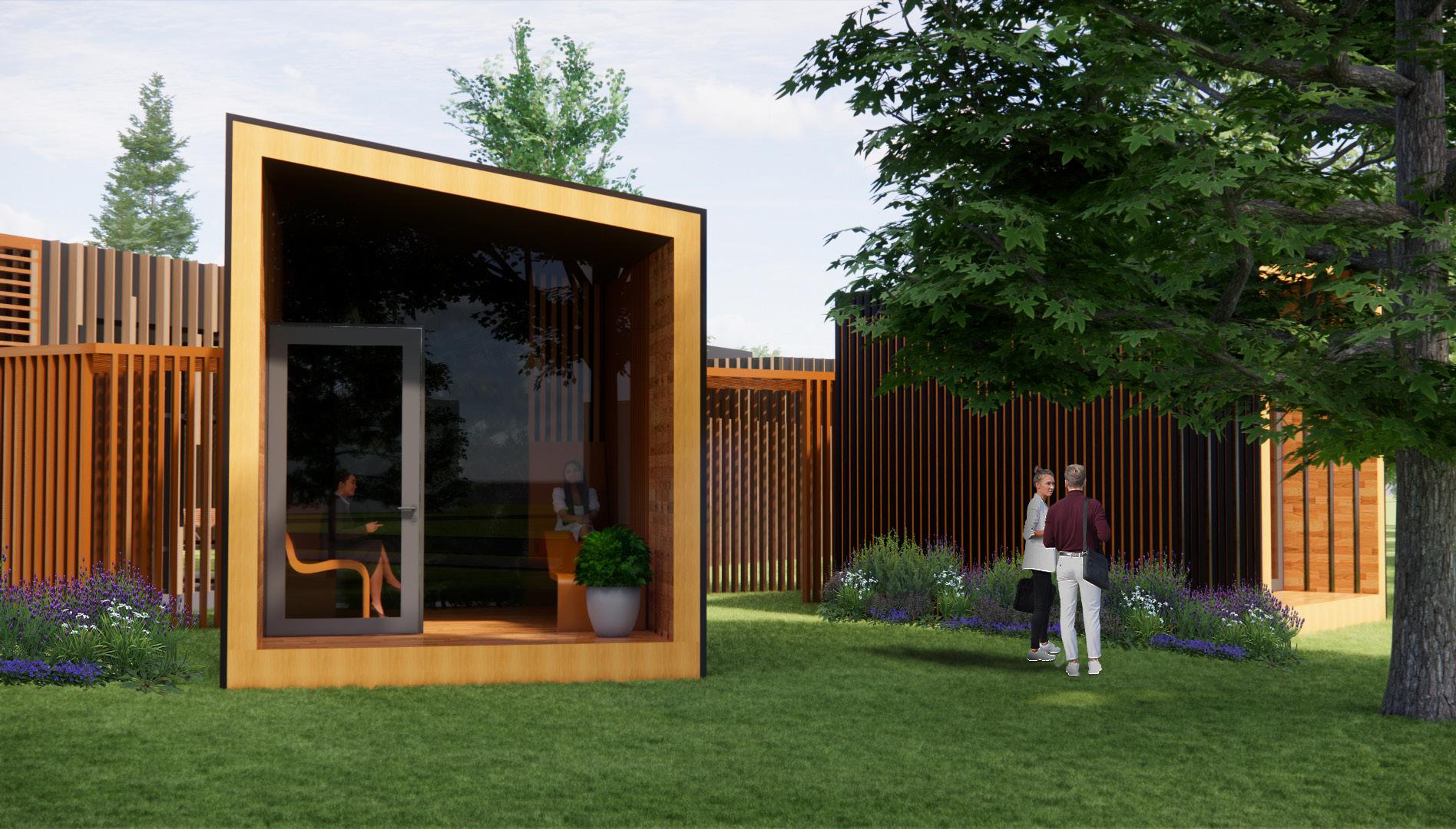
Though the external building language is consistent across the two departments, the landscape begins to distinguish them as distinct programs. The Ruth Staples Lab has existing identities for their two age groups; Bluestems and Goldenrods. With added space, we doubled the number of classrooms and included an infant room, bringing on Dropseeds, Coneflowers, and Cottonwoods. These identities are reflected in the plant landscape, along with natural materials and a native buffalograss turf. The Family Resource Center’s plant palette allows for a softer, sensory experience. Lavender, jasmine, rosemary, and yarrow fill the space with calming and enriching energy.

RSCDL Landscape Materials

Building Massing Progression
LEARNING SPACES
OVERALL MASTER PLAN
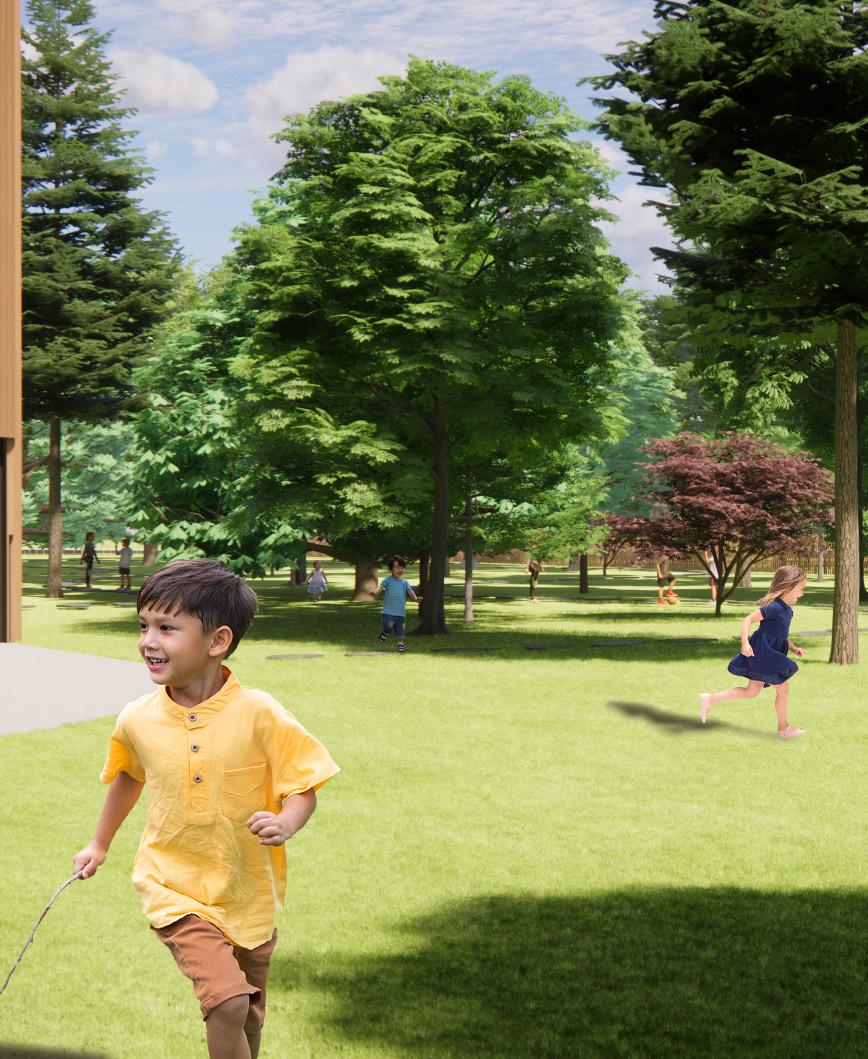
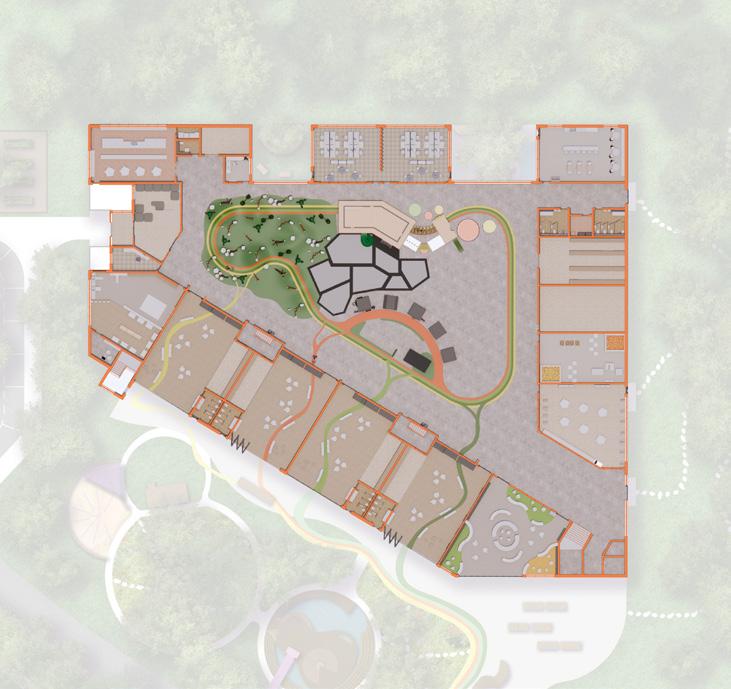
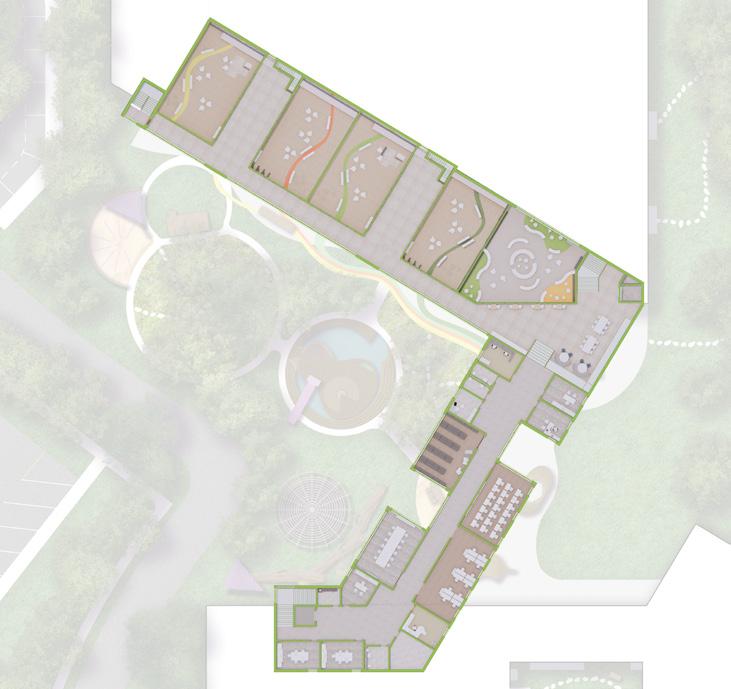
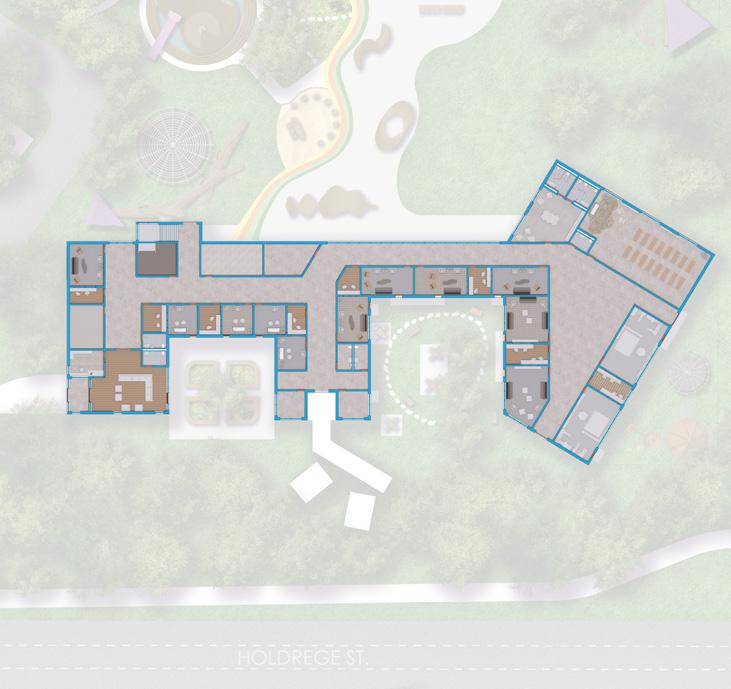
The intention behind building and site layout revolves around the placement of play. As a team, we discussed the benefits and detriments of placing play in front of the building, behind the building, and through the building. We liked the flexibility that a connected FOH and BOH play brings, and ultimately decided on that strategy, with structured play happening in front of the building and unstructured, wild play happening behind. Play passes under a bridge that connects the two programs.
RSCDL Floor Plan
The Bridge Floor Plan FRC Floor Plan
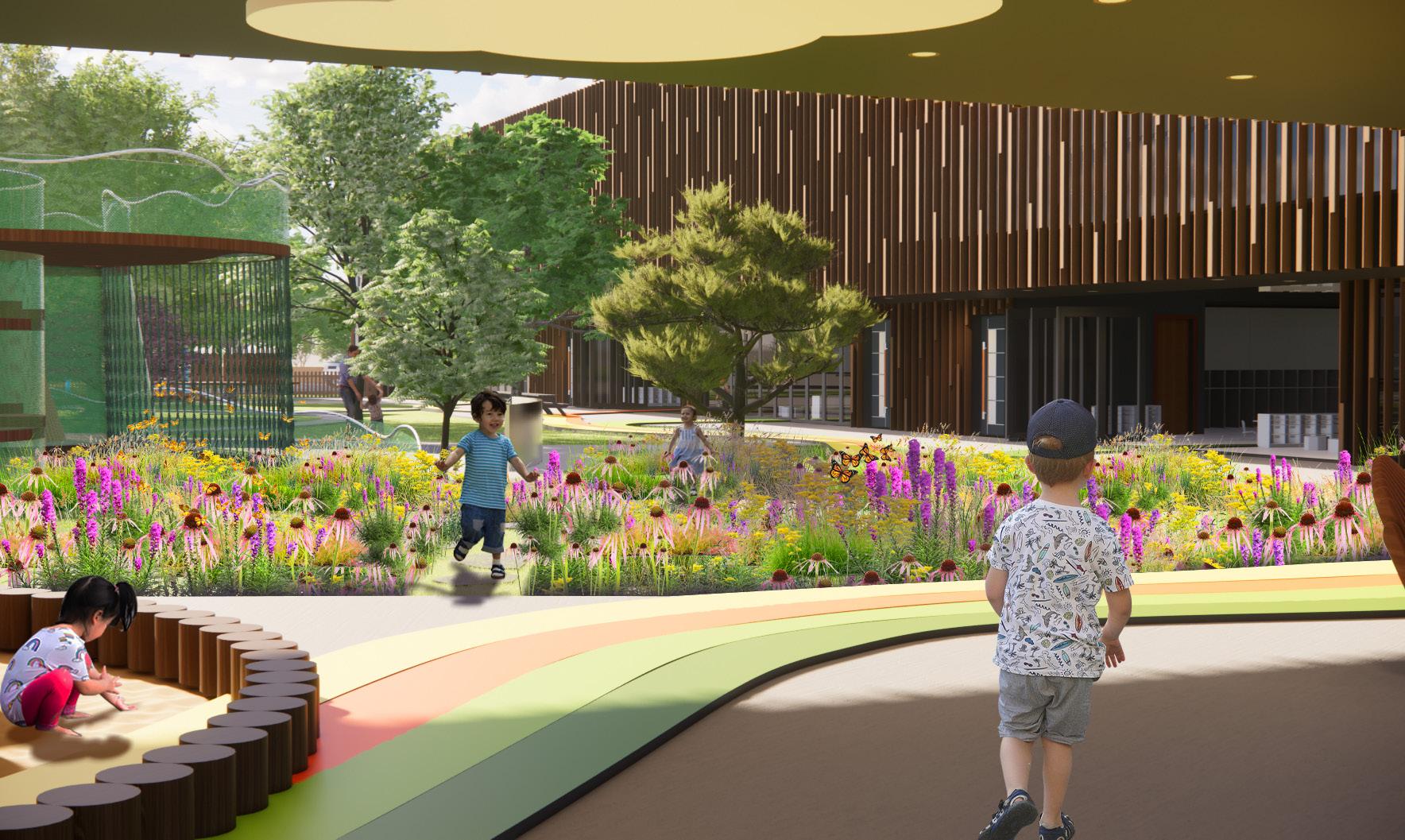
View from under the bridge, looking towards classroom enterances
View of structured FRC waiting courtyard
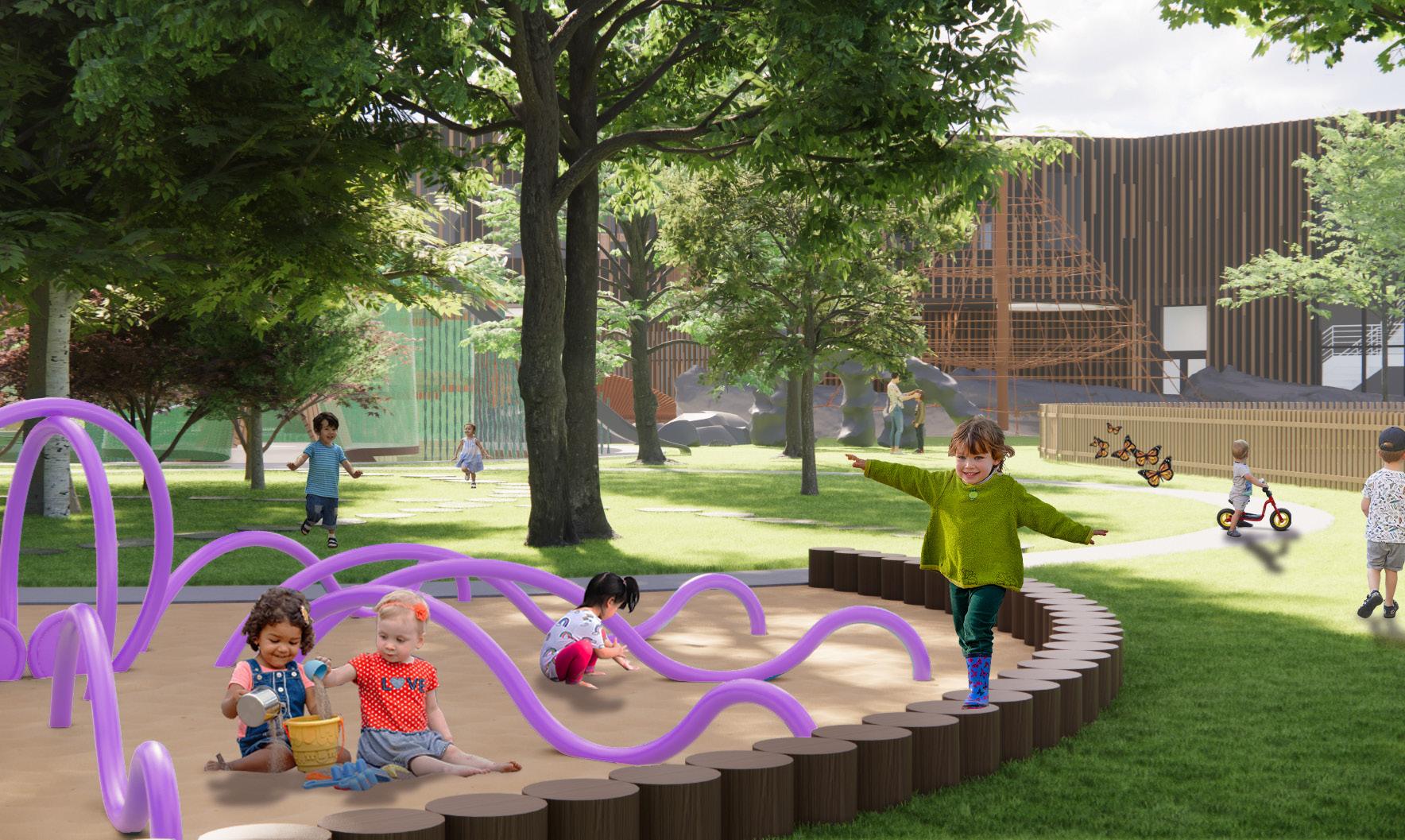
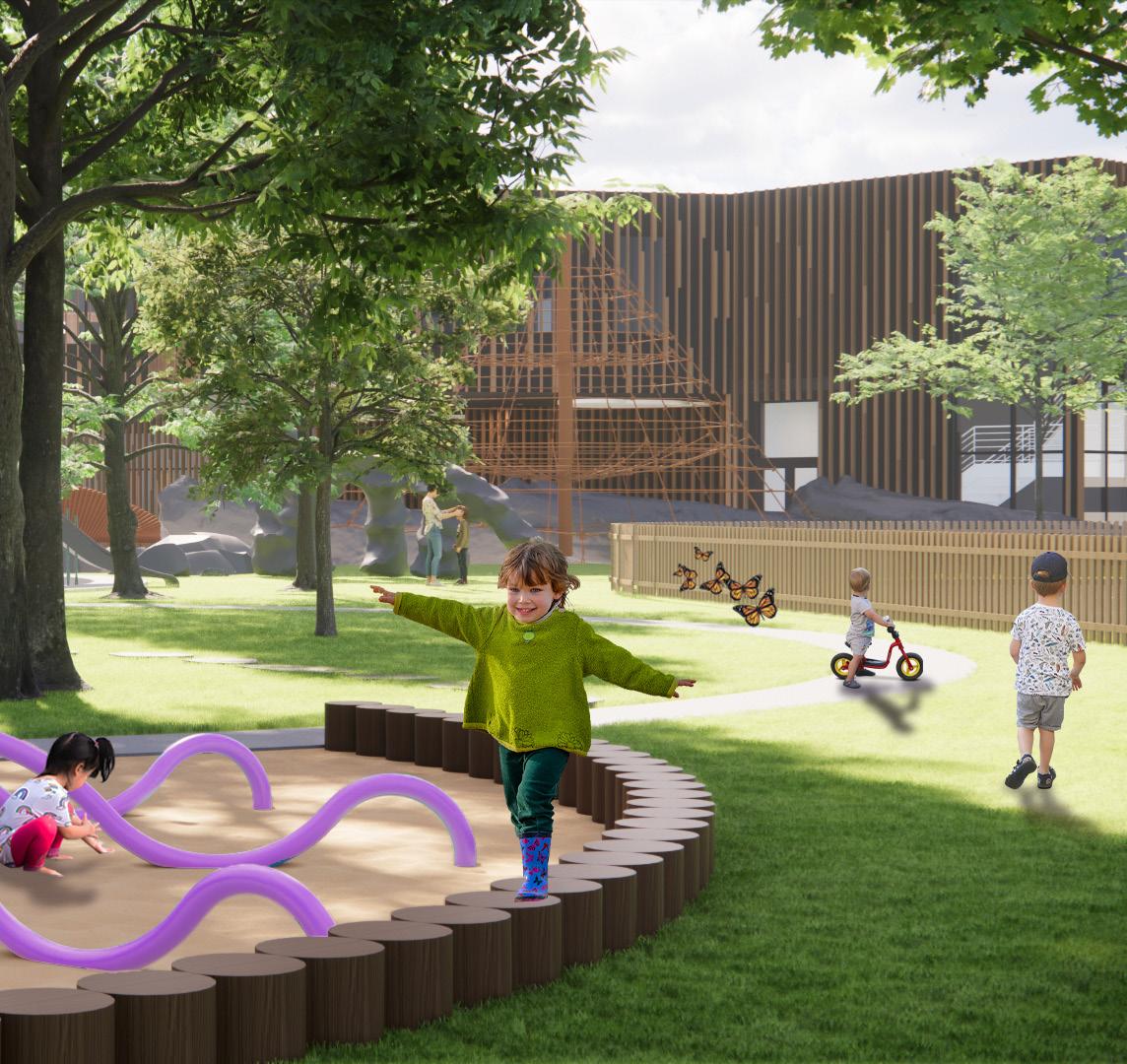
View of structured front-of-house play
View of FRC outdoor therapy pods
LEARNING SPACES
MULBERRY TREEHOUSE
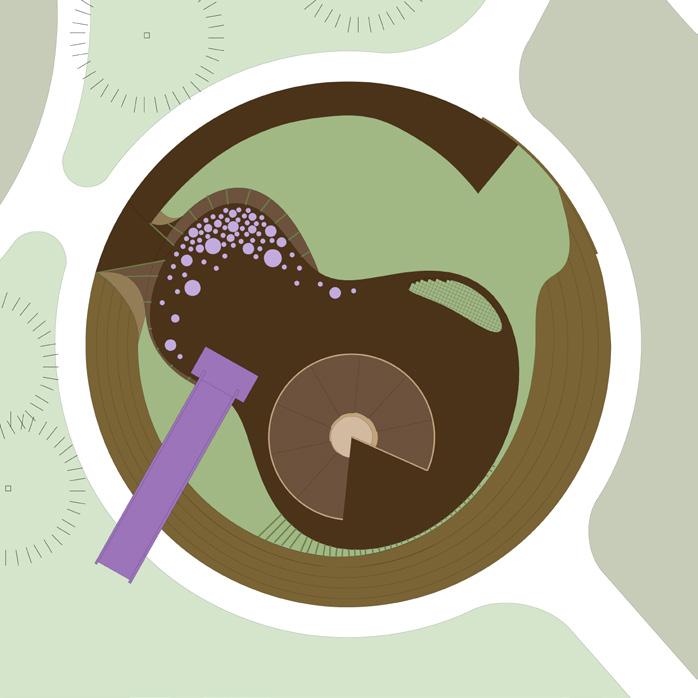
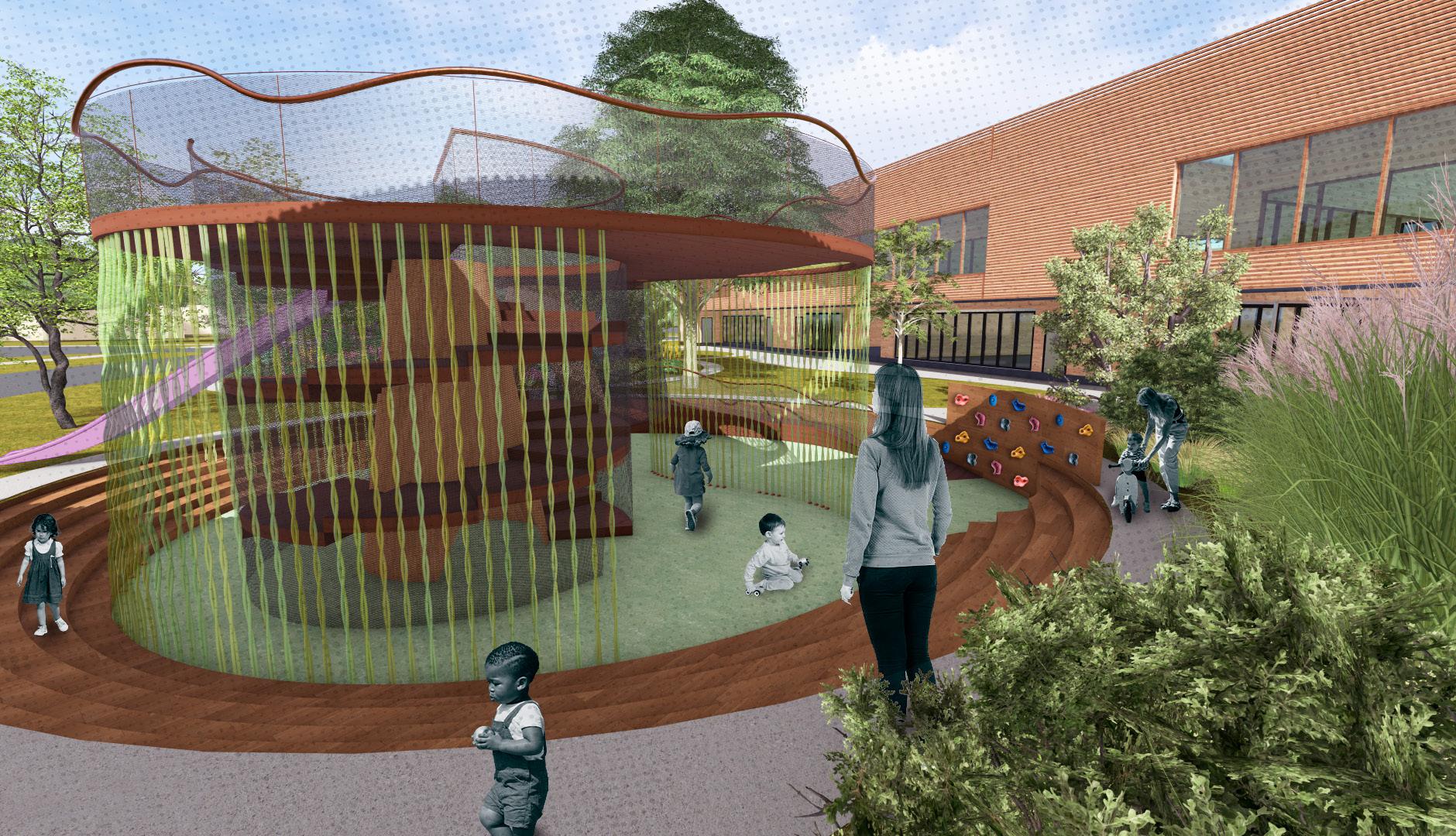
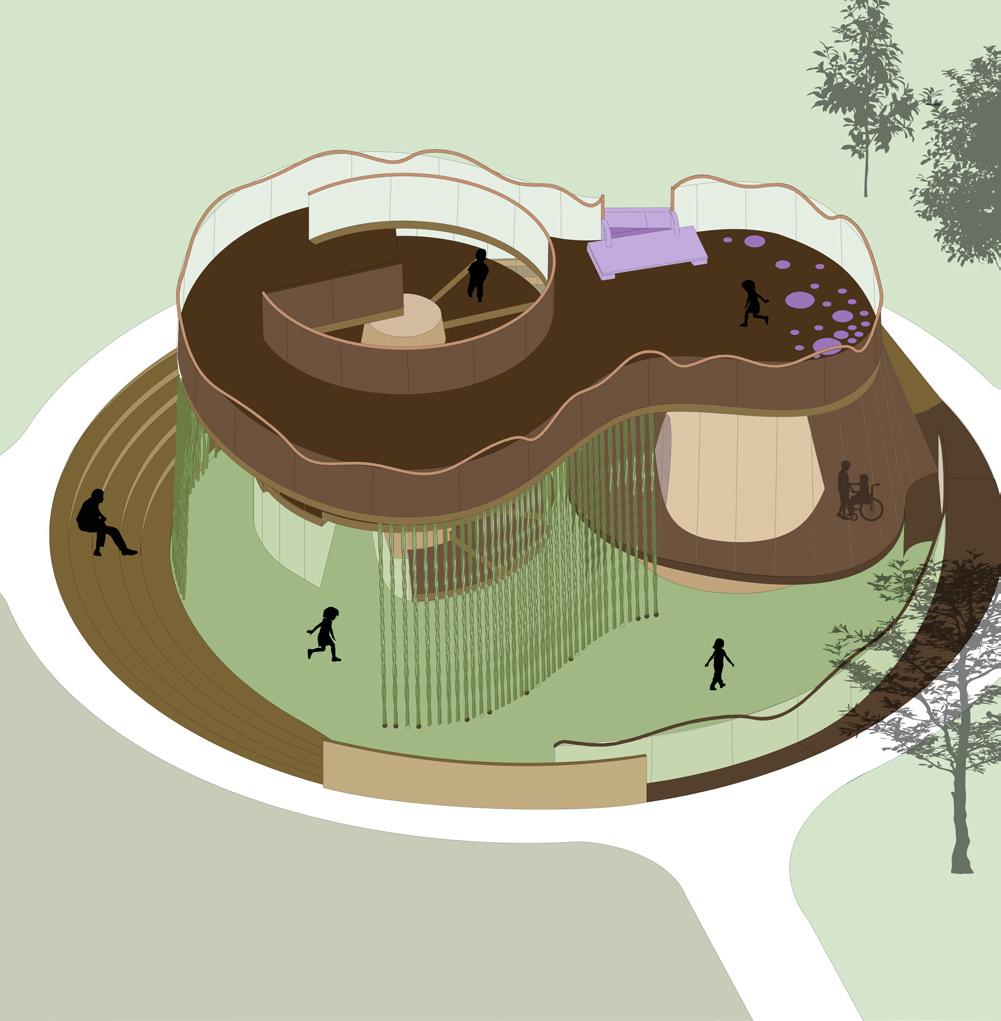
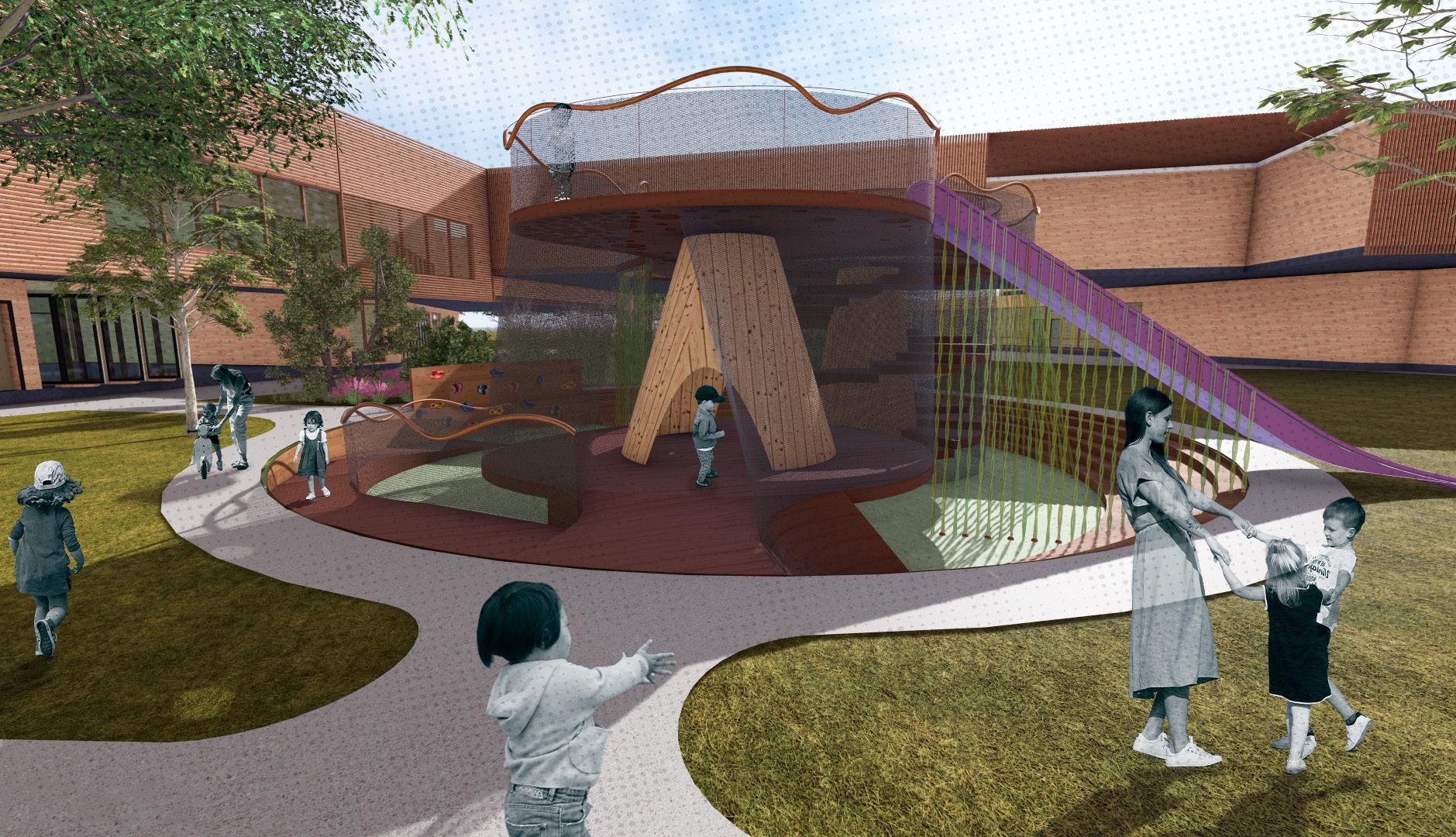
Students and staff of the Ruth Staples Child Development Lab have a tradition with the weeping mulberry tree on their current site. When kids graduate from the school, they climb up to the top of the tree. It’s the perfect tree for a play space, with natural alcoves made by the weeping limbs that hang down. This design embodies what they love about their current tree in a built play structure form. Hanging ropes allow kids to climb and interact with the structure. The sunken condition and hollow
‘trunks’ create cozy spaces for kids. There is both an accessible trunk and a risky-play trunk that allows for the interaction and benefit of kids of all abilities. Once kids have climbed to the top of the canopy, open netting and colored glass holes allow for interaction with their friends below. When they’ve had their fun upstairs, the slide can take them back down. This is a dynamic space that can be used for open play, an outdoor classroom, or for teachers and staff to keep an eye on the kids.

Northeast View Southwest View
ARBOR WAY 2
Salvador Lindquist
PROPOSAL FOR A COOLER AND MORE THERMALLY EQUITABLE ‘Q’ ST. IN OMAHA, NEBRASKA ARBOR WAY
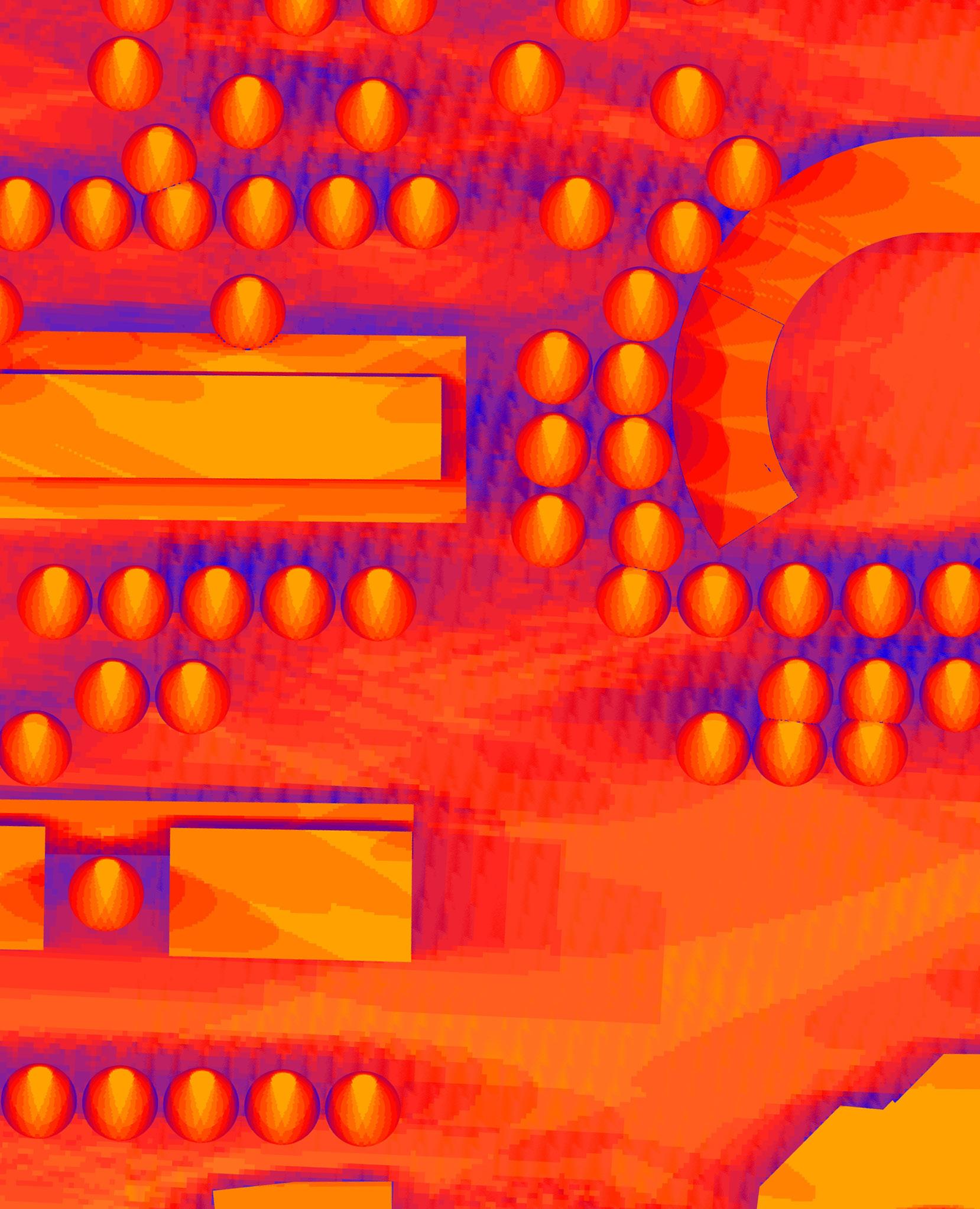
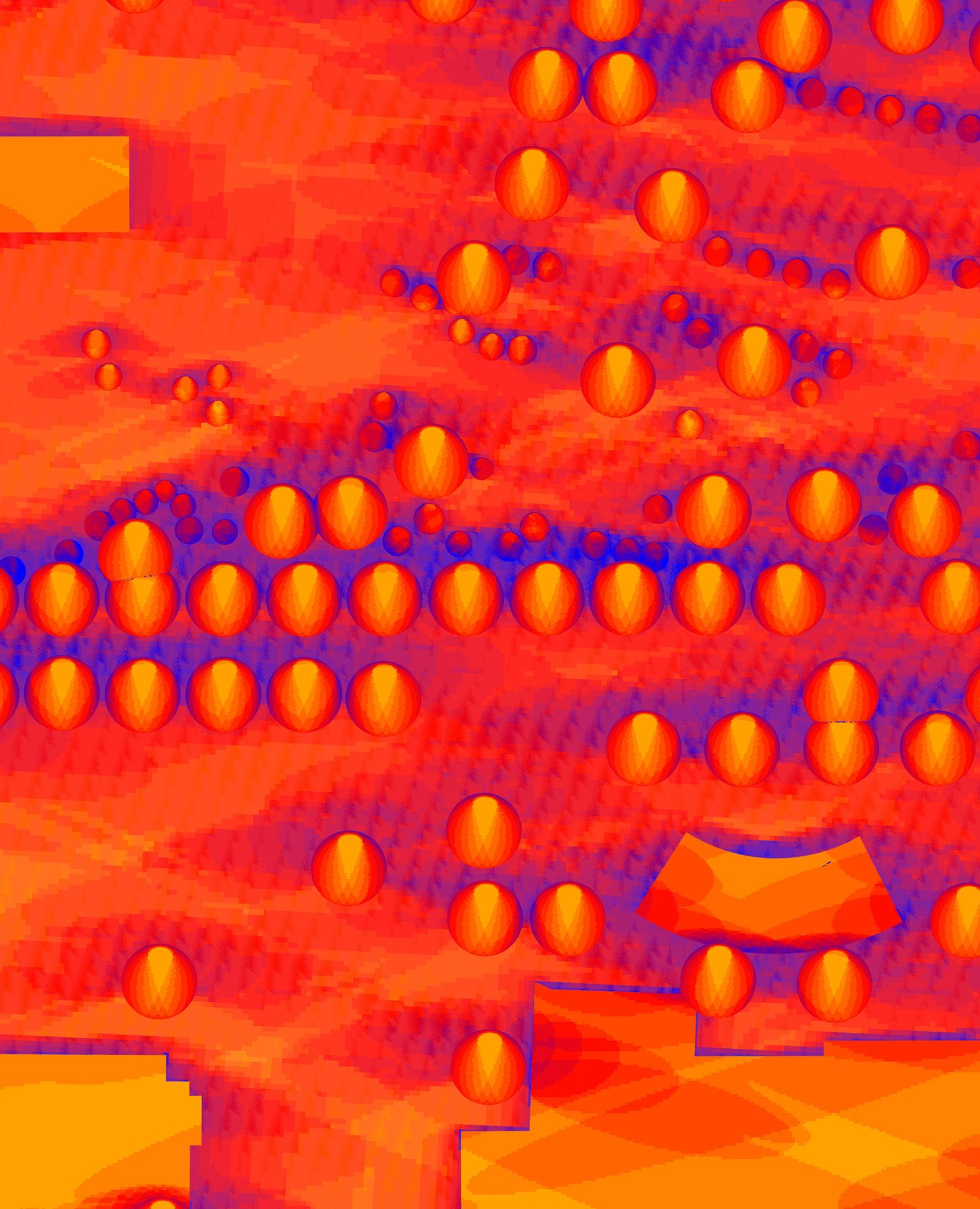
Arbor Way is a proposal for Q Street running west to east between 36th and 28th Streets just south of the historic Sockyards in South Omaha, and north of Southside Terrace. Based off of the traffic study completed in the area, issues such as speed related crashes, lack of shade, and a need for a transit hub. Our solutions to some of these issues include the addition of programs such as
collective restaurants with pocket parks, a shaded space for farmers markets, community garden, stormwater management, and many other methods such as green infrastructure, energy, and heat mitigation. With these strategies in our tool belts, we created a safe harbor for community engagement, allowing them to find an oasis within the shady, tree-filled site.
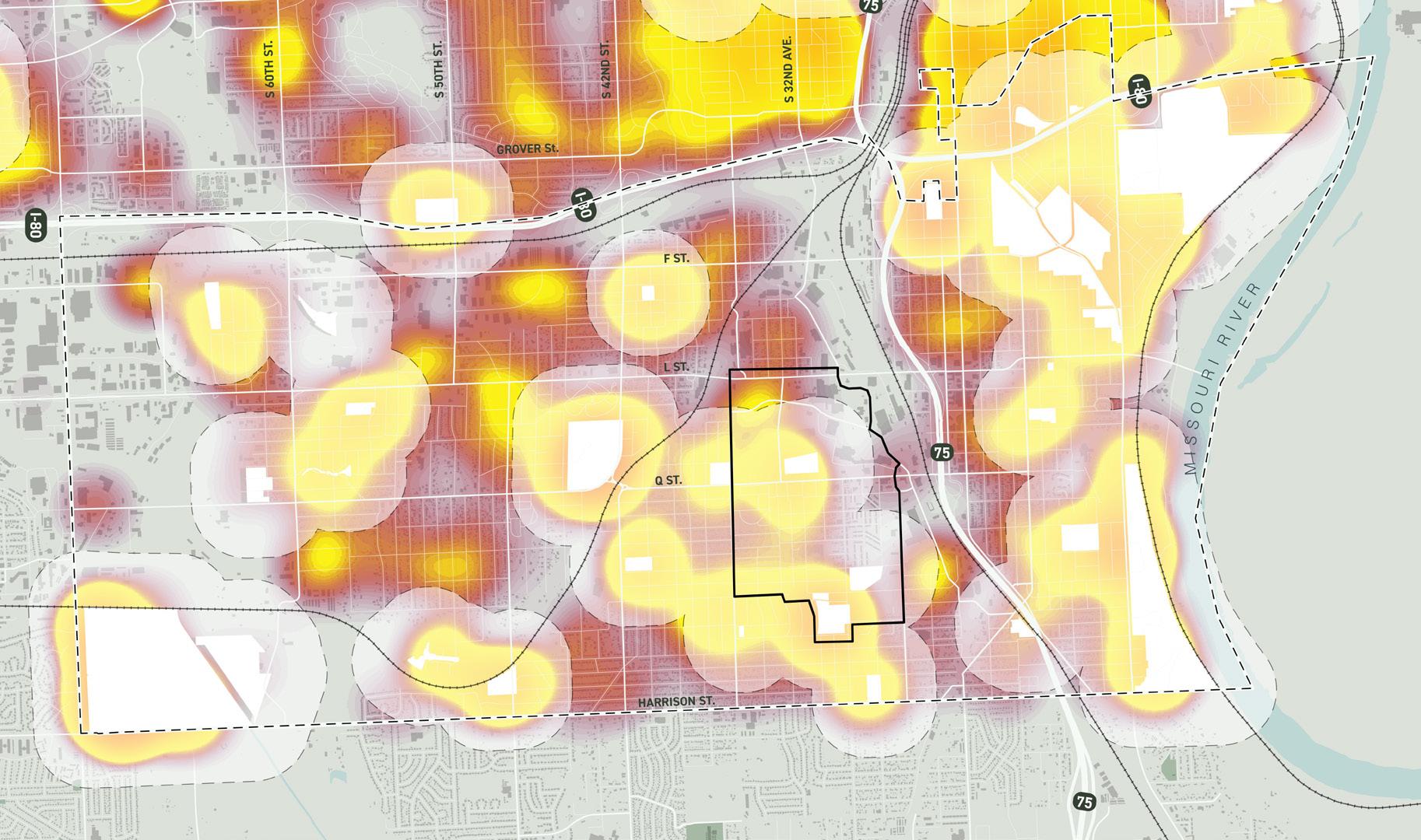
Parks and Tree Canopy
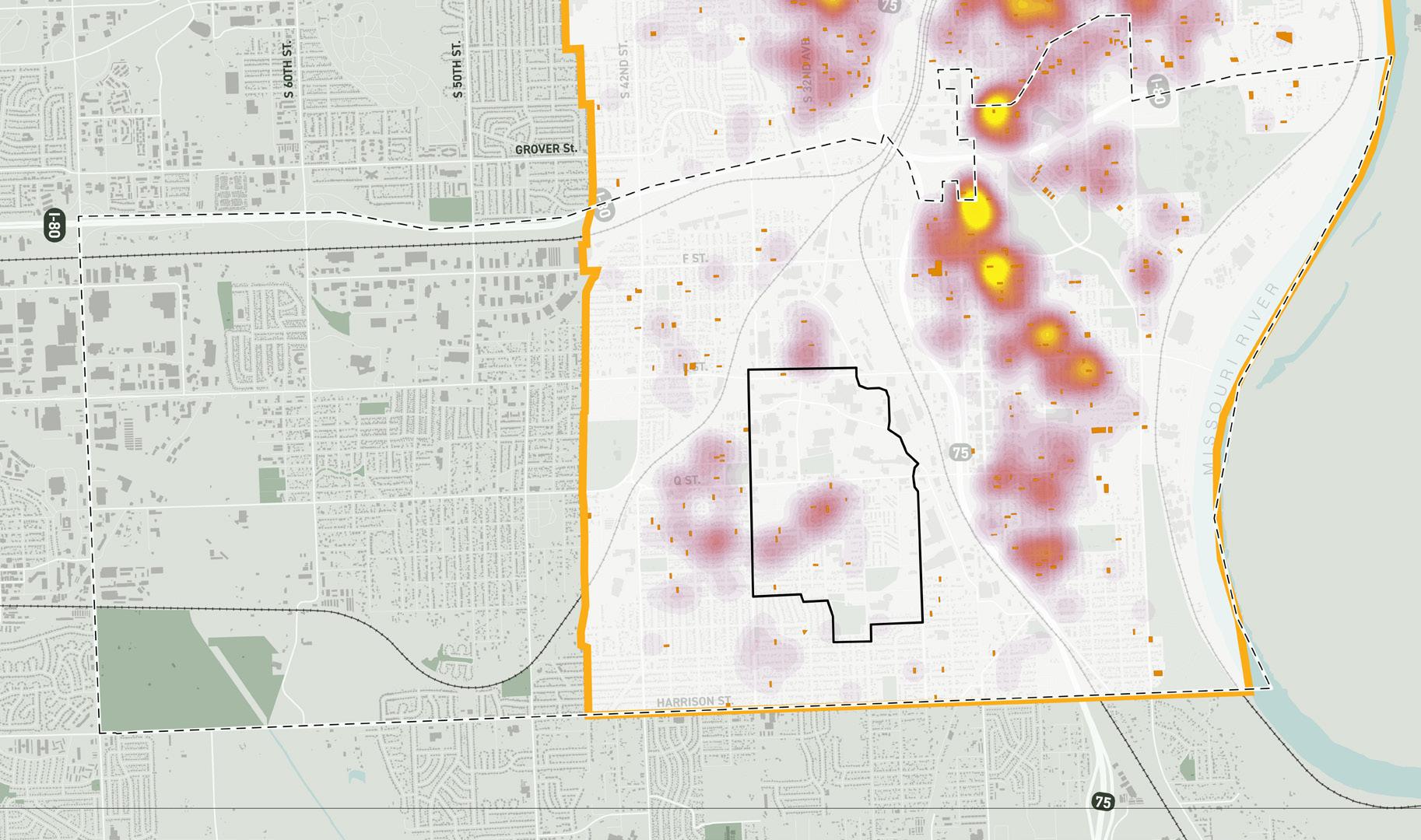
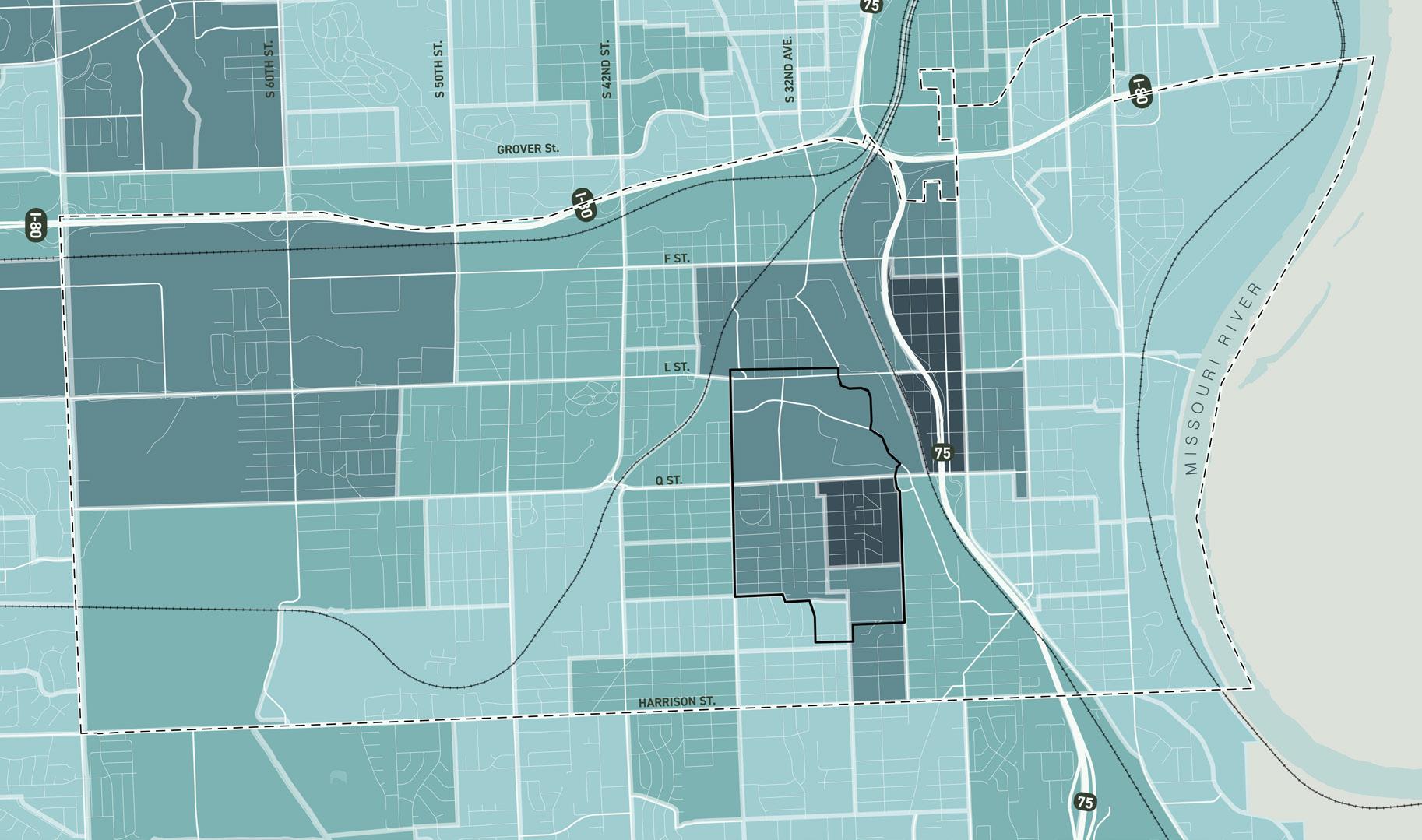
Lead Contamination
Master Plan
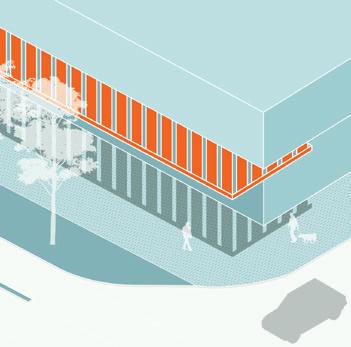

ARBOR WAY
OVERALL MASTER PLAN
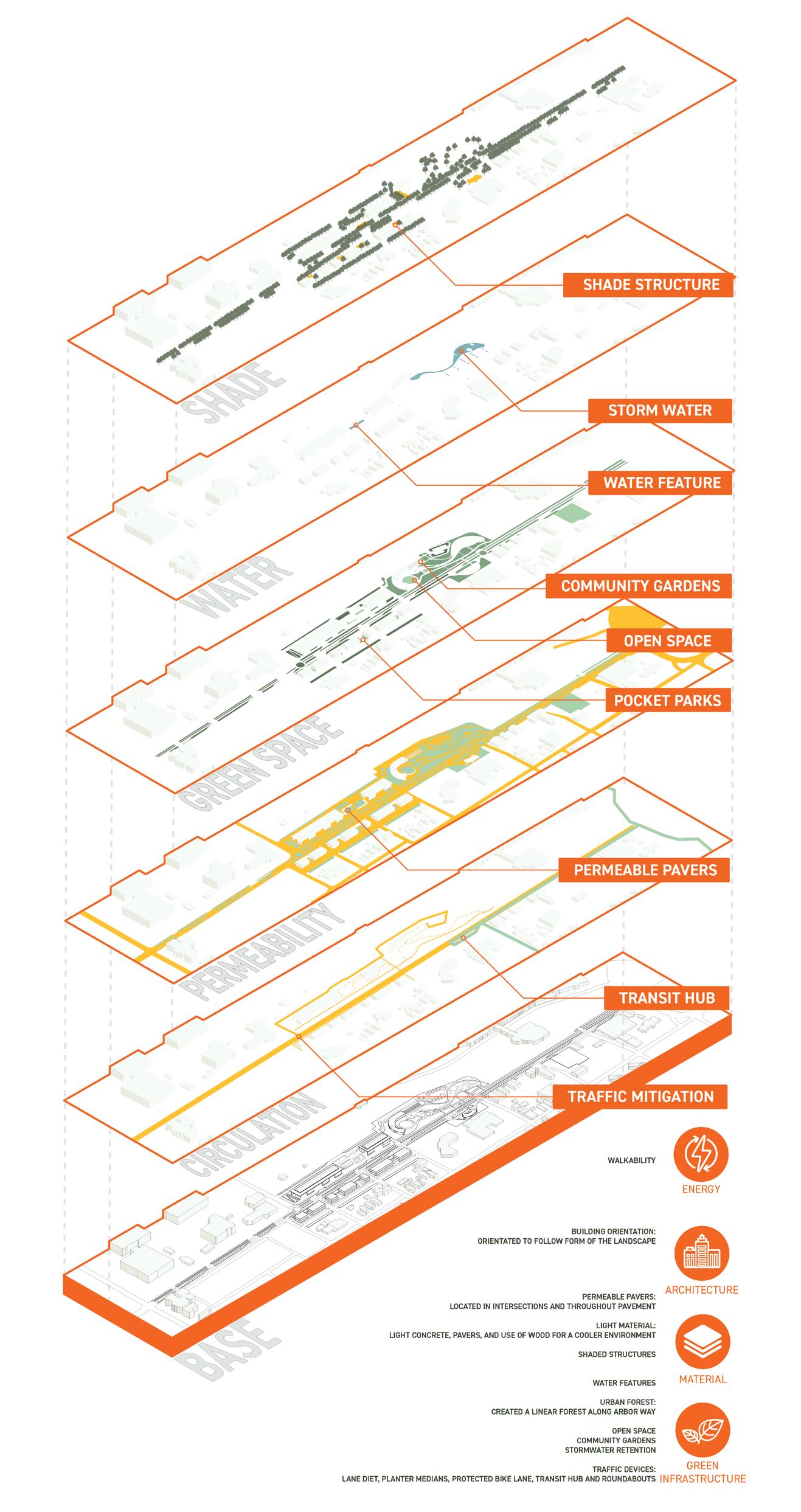
The vision of Arbor Way is to create a cool, safe, accessible, and vibrant streetscape with shaded areas, green spaces, sustainable drainage, and community engagement opportunities to enhance urban living in the fight against heat and smell. Our master plan aims to highlight specific points of heat beating initiatives, such as cooling strategies, public transit, and urban parks. This linear system of connected improvements creates a welcoming, walkable, and sustainable condition in South Omaha.
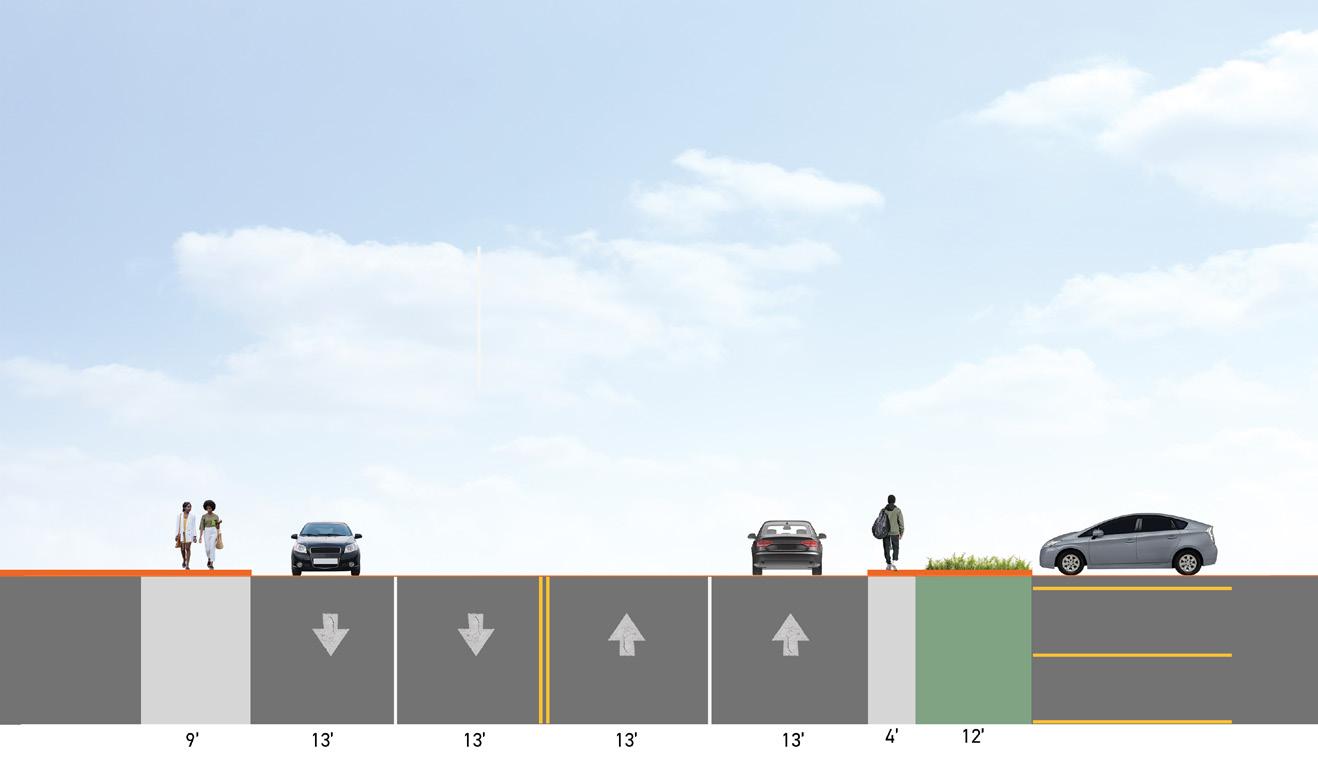
Existing condition
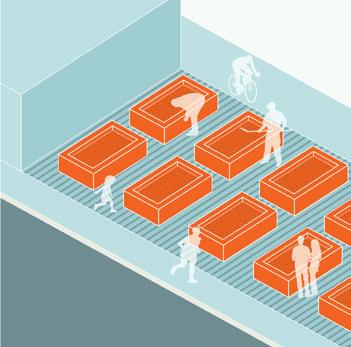
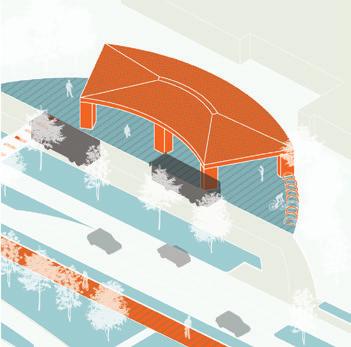
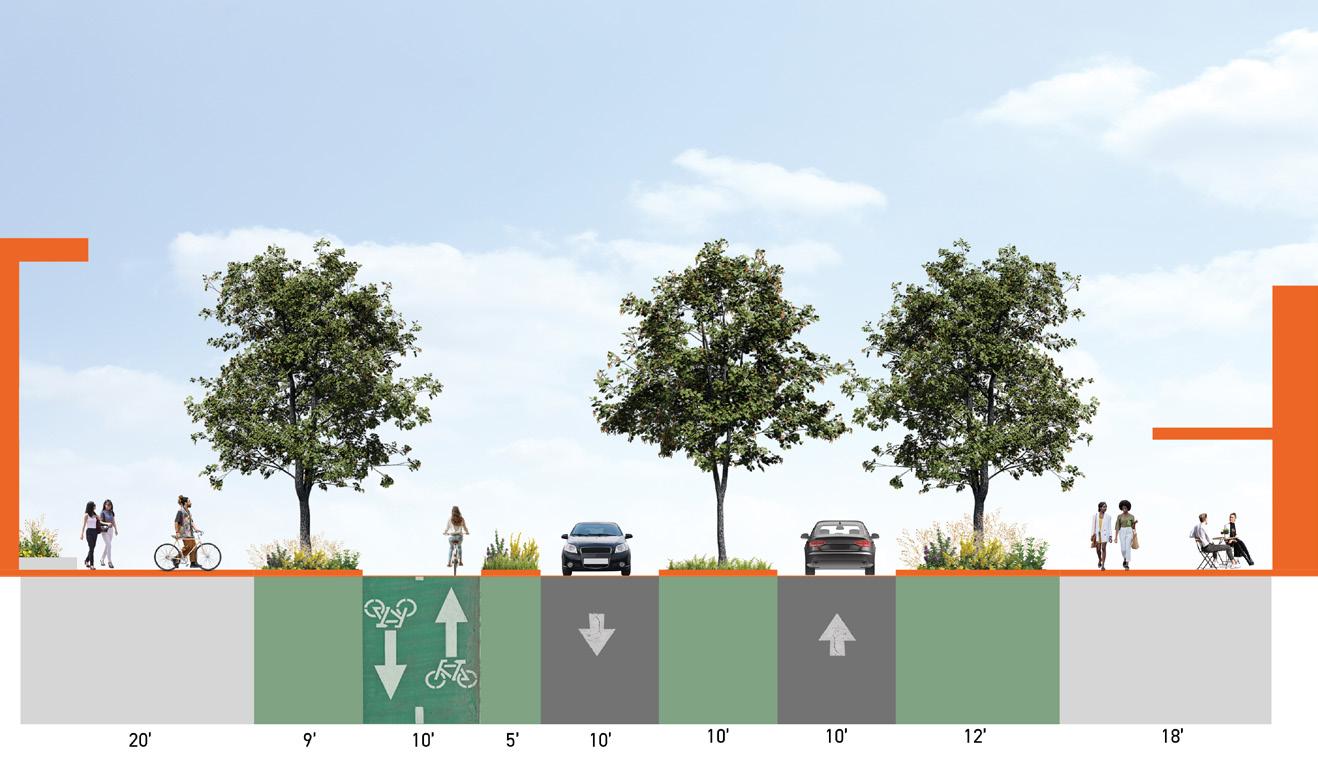
Proposed condition
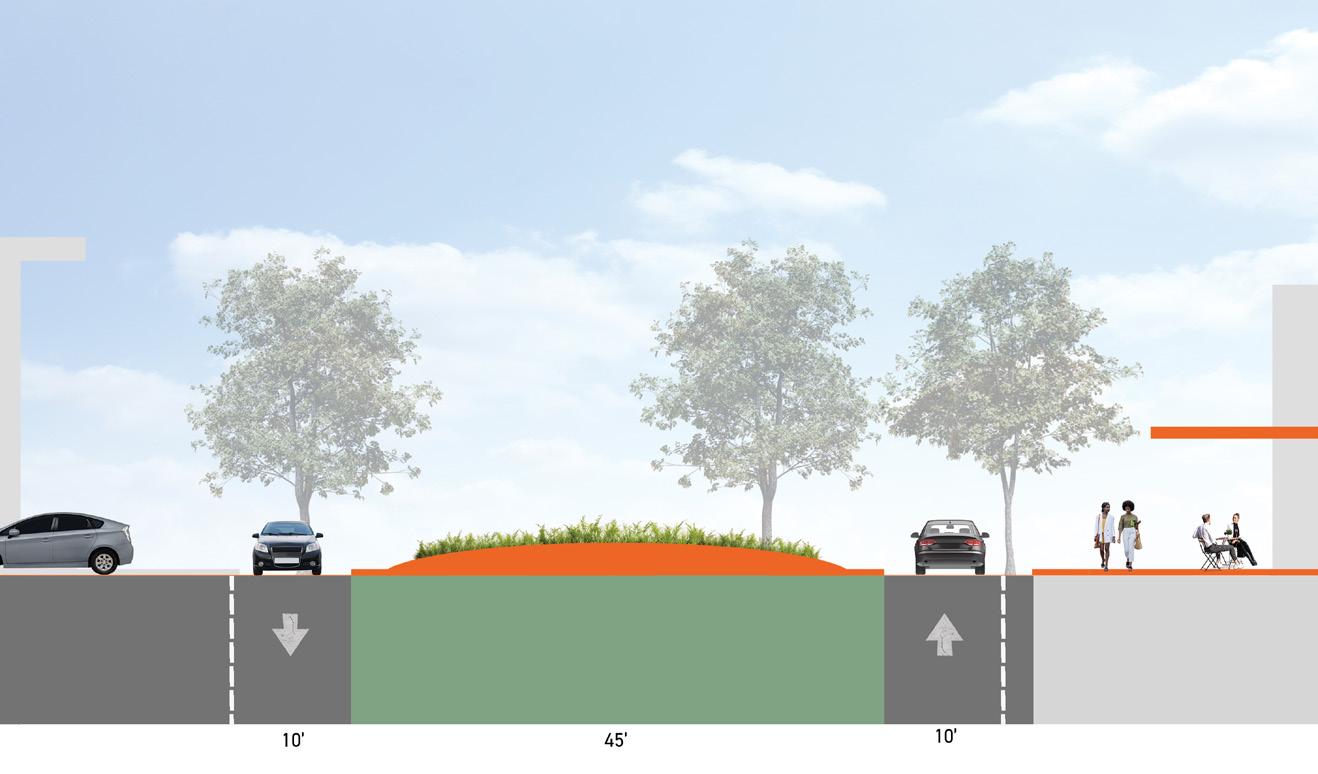
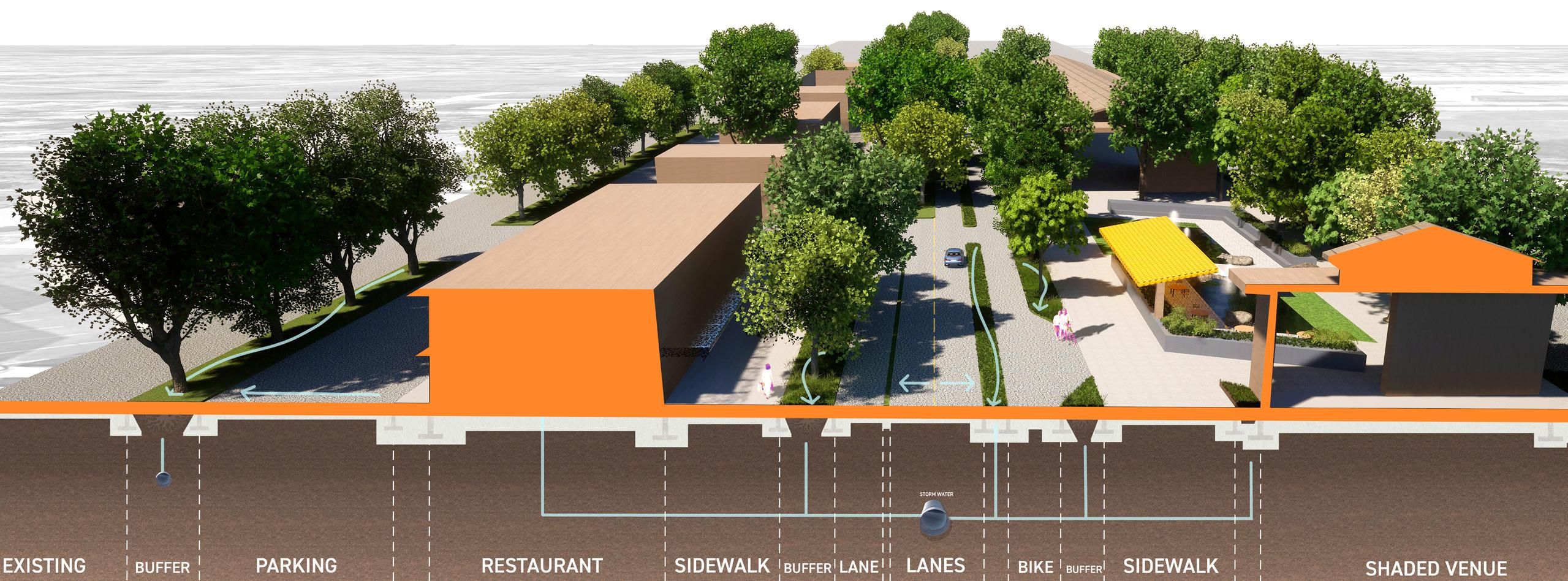
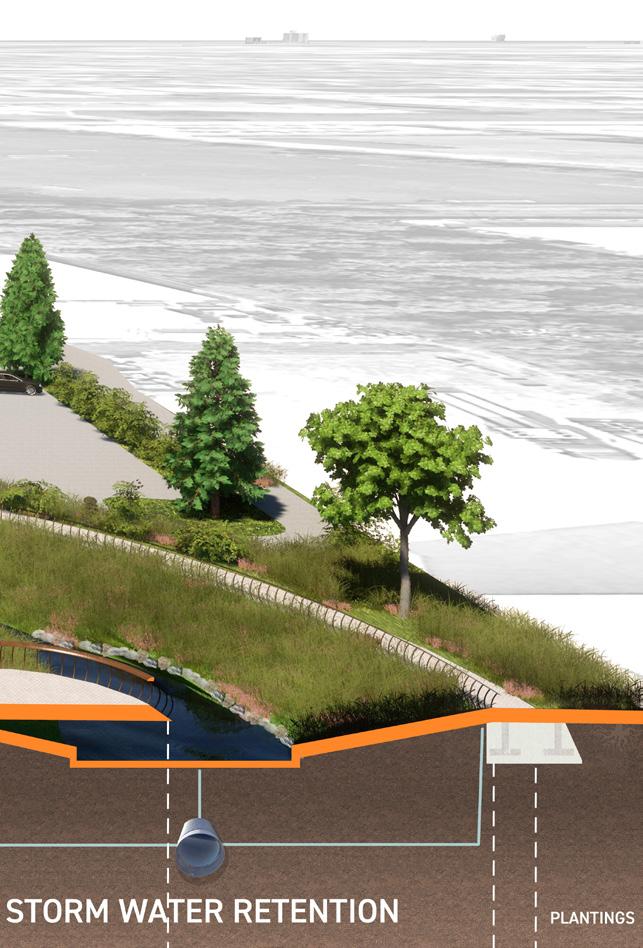
Harvest Plaza Section Perspective
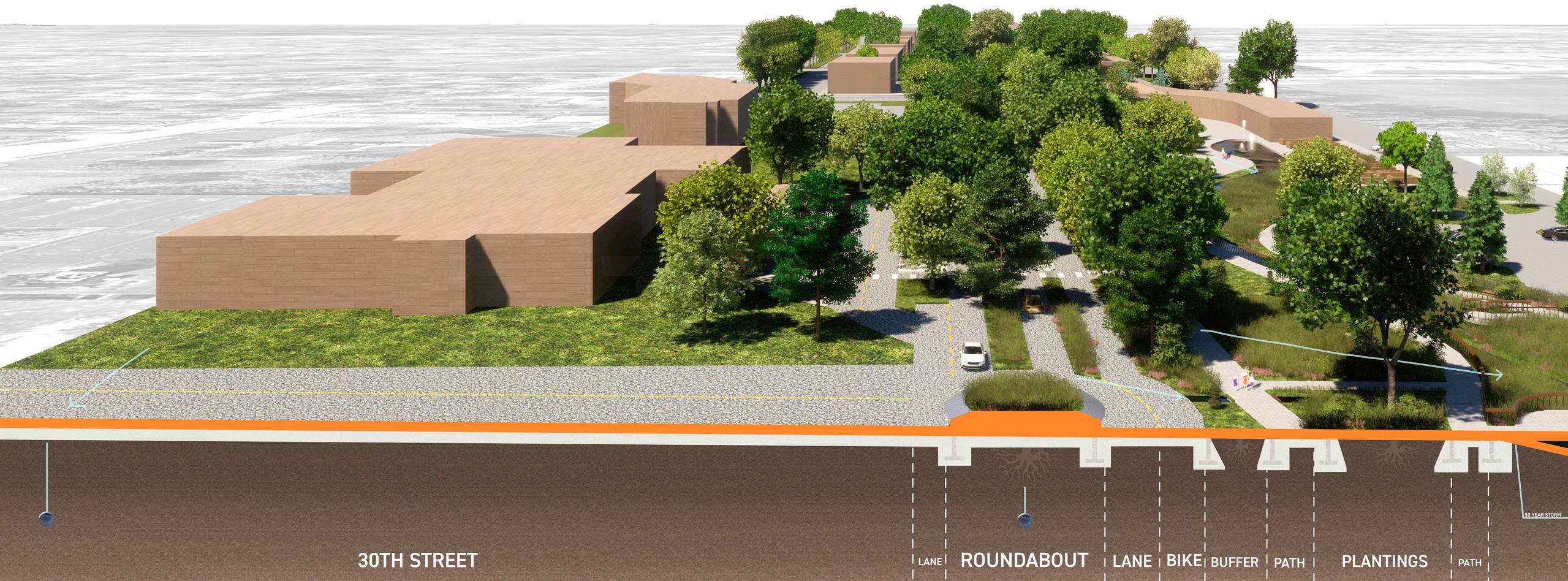
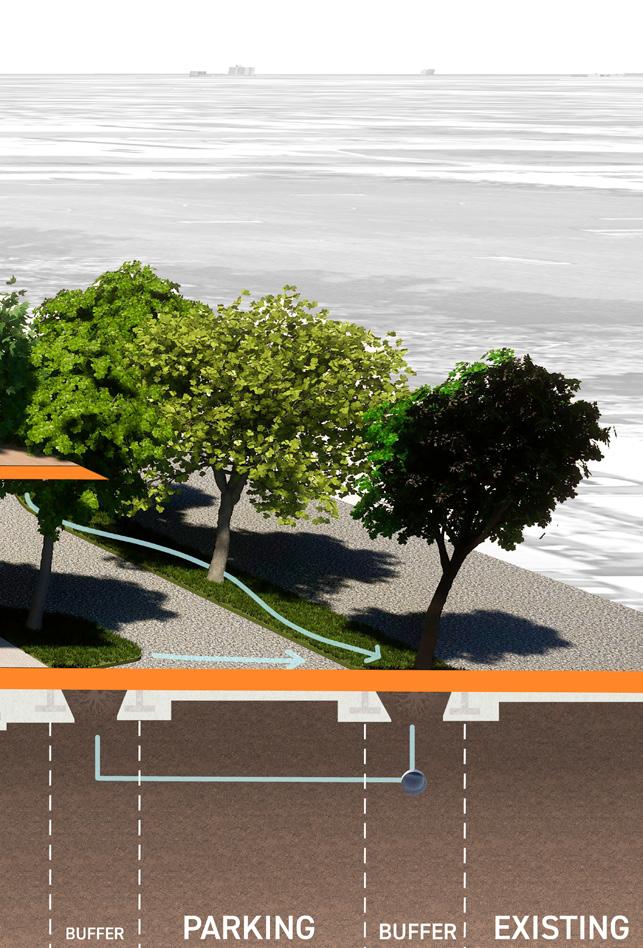
Garden Grove Section Perspective
ARBOR WAY
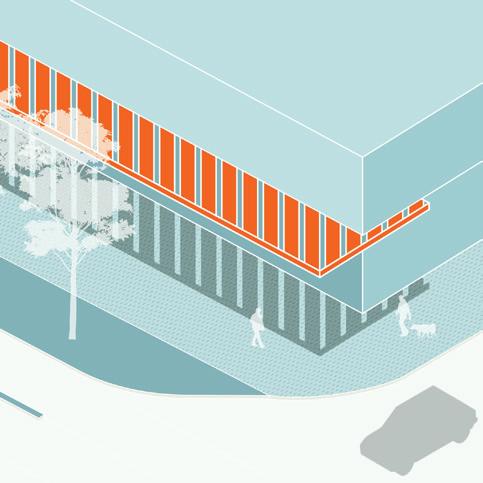
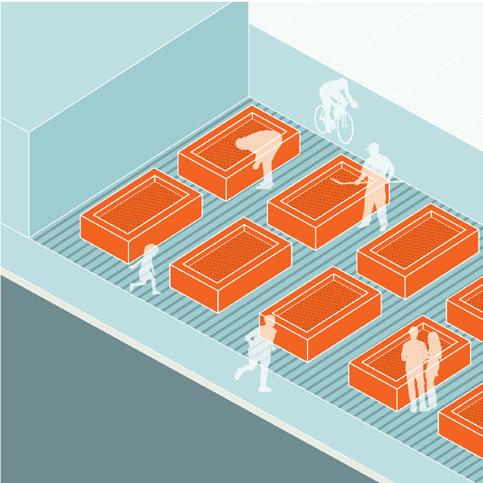
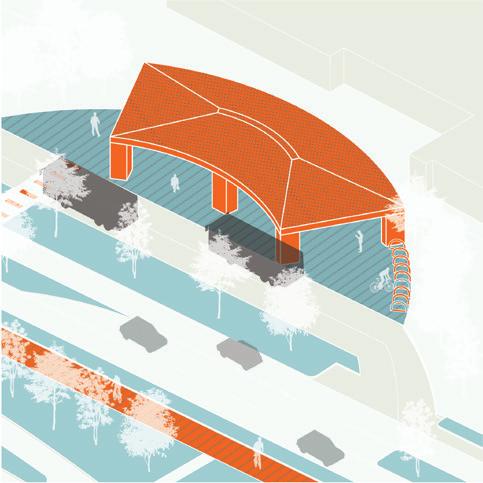
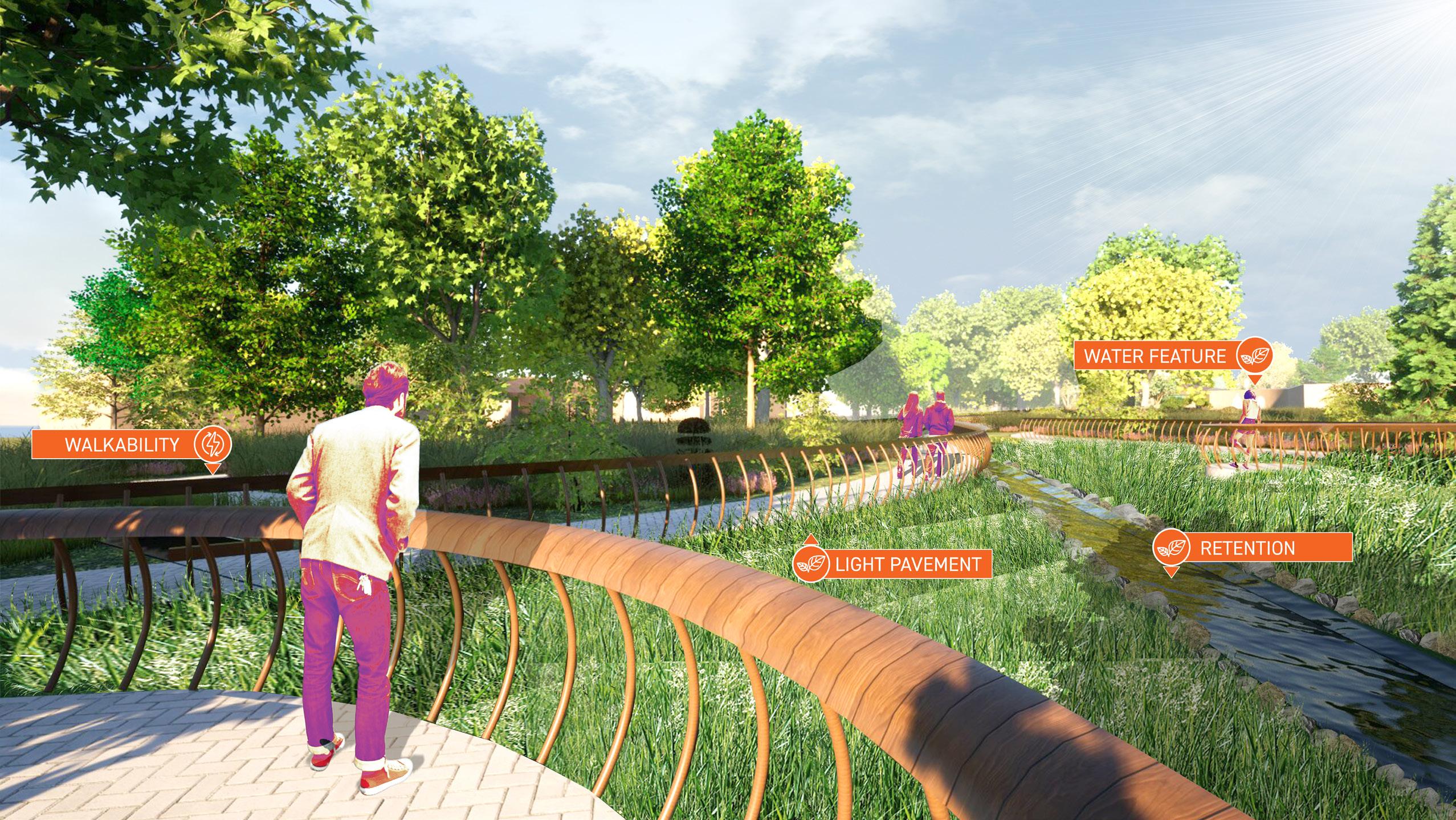
Two large nodes along the streetscape include Harvest Plaza and Garden Grove. Harvest Plaza is characterized by two large pavilions, one for permanent, local businesses and restaurants to occupy, and one for casual gatherings and farmers’ markets. Occupy-able water and shade features make for a cool respite to visitors and residents alike in the neighborhood.
ARBOR WAY
PROJECT GOALS
Thermal Comfort: Implementing the use of shade, canopy, water, green space, and light colored surfaces to reduce the harsh effects of heat on the community.
Pedestrian Safety: Ensuring that streets are designed to prioritize pedestrian safety, including features like crosswalks, sidewalks, traffic calming measures, and promoting the use of public transportation.
Green Spaces: Integrating greenery and landscaping into streetscapes to improve air quality, provide shade, reduce urban heat island effects, and enhance the overall aesthetic appeal of the environment.
Sustainable Drainage: Incorporating innovative stormwater management techniques such as permeable pavements, bio-swales, and basins into the design to reduce runoff, mitigate flooding, and improve water quality.
Community Engagement: Integrate community gardens, farmers markets, and urban agriculture initiatives into streetscapes to promote food security, local economic development, and social cohesion.
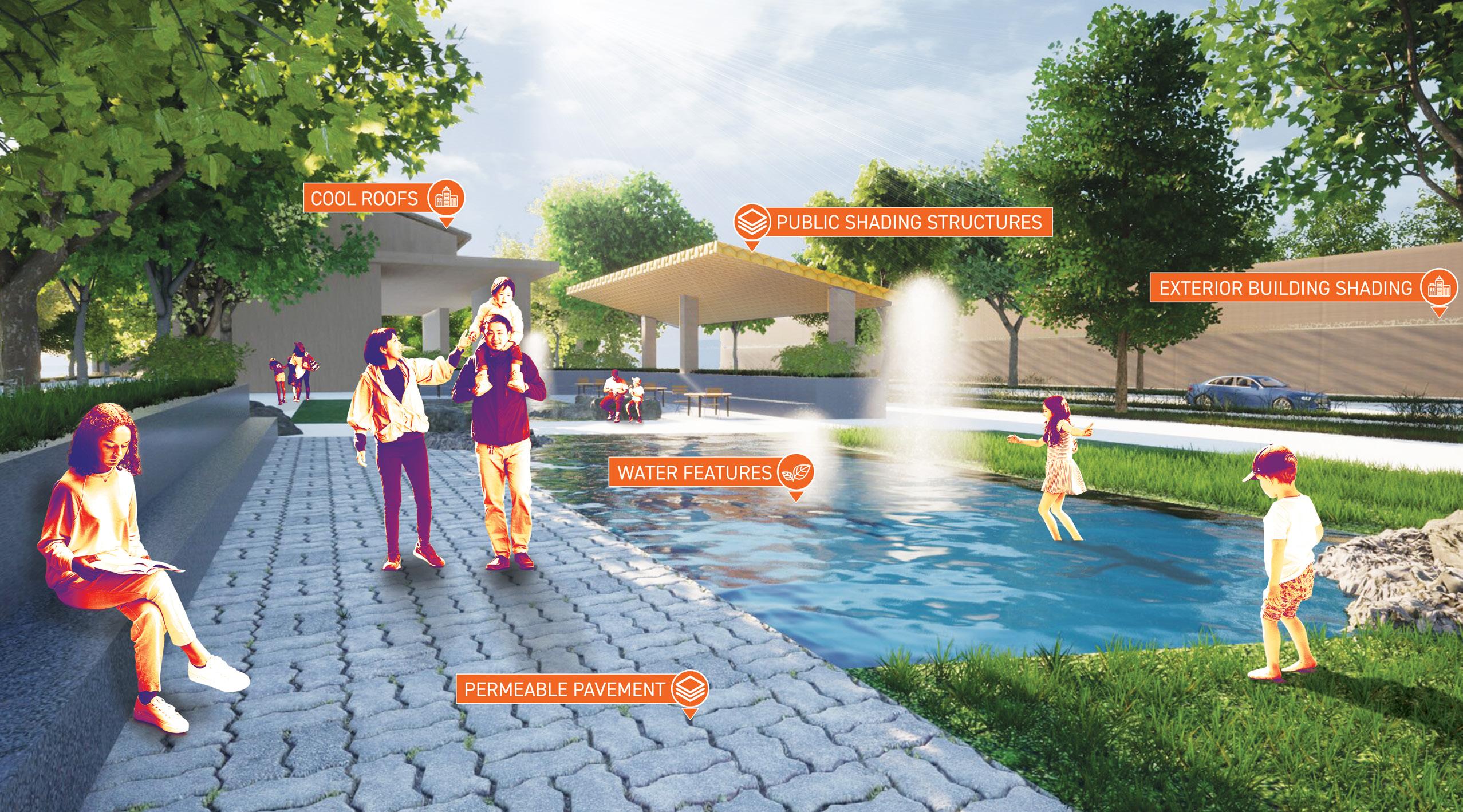
View from within Harvest Plaza, a cool commons housing local businesses and farmers’ markets
View from Garden Grove, a functional stormwater retention system and urban park
HEART OF BENSON 3
Fall 2023 - LARC 310 - In
Collaboration with Kalyssa Williams, Elli Klein, and Ethan PreheimInstructor: Yujia Wang
HEART OF BENSON
PROPOSAL FOR THE REVITALIZATION OF BENSON OMAHA IN PREPARATION FOR A DENSE URBAN CENTER IN 2043
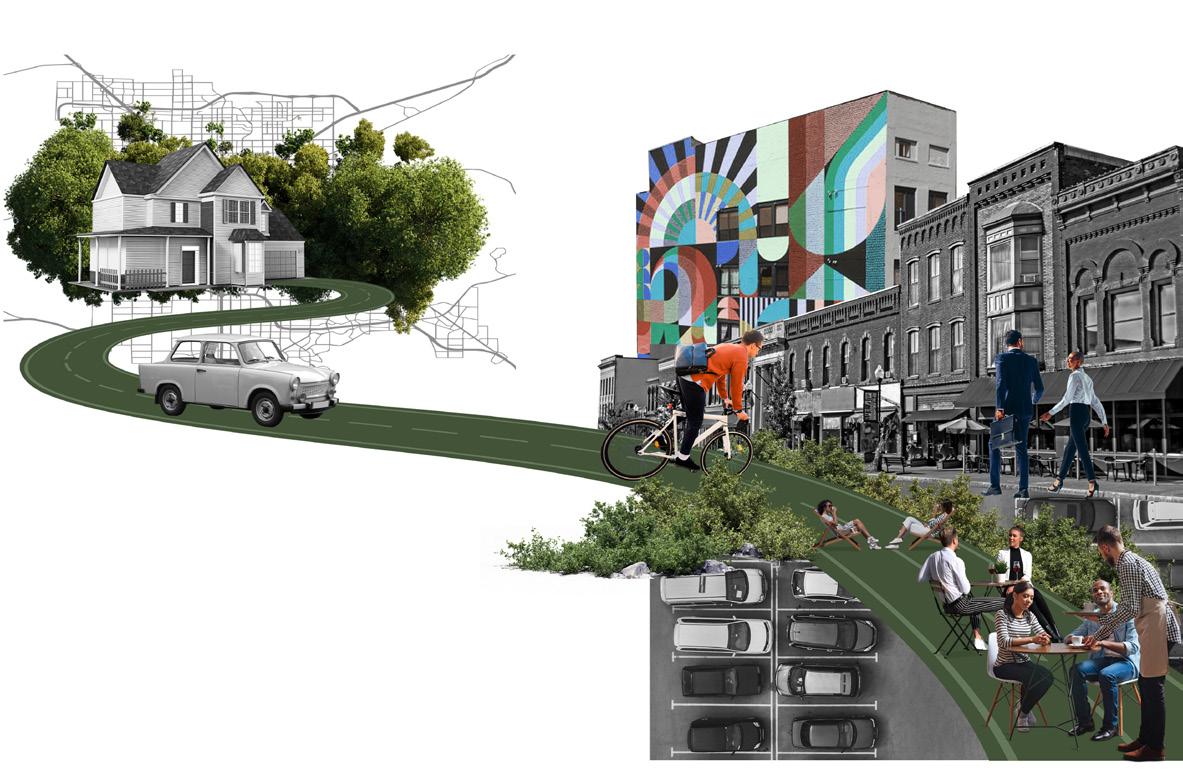
Imagine a future where your income, social status, race, or gender does not determine your access to quality public space. This is achieved through the process of spatial equity. This semester focused on the right to spatial justice in dense, urban spaces. As a team of four, we completed research and ran tests to revitalize Benson, a neighborhood in Omaha, NE. In order to properly develop a spatially just urban environment, we first need to define our parameters. We came up with a series of 8 rights that all
people should be given in to achieve spatial equality. These are Safety and Being, Mobility, Physical Health, Community, Education, Beauty, Play and Dream. We set out to use these rights as guiding principles throughout our design process in the revisioning of the design of Benson. We tested this rubric through a series of existing sites and our own strategies. We will visualize these evaluations through radial histograms, each radii representing a right or objective we have defined.
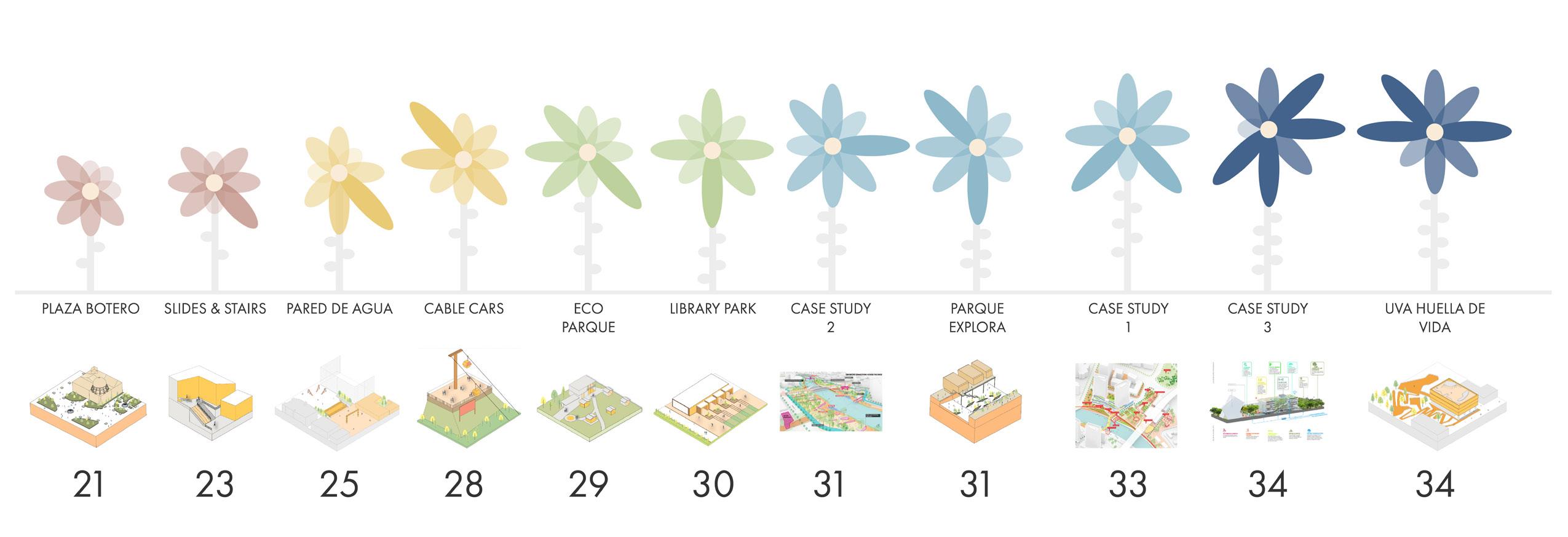

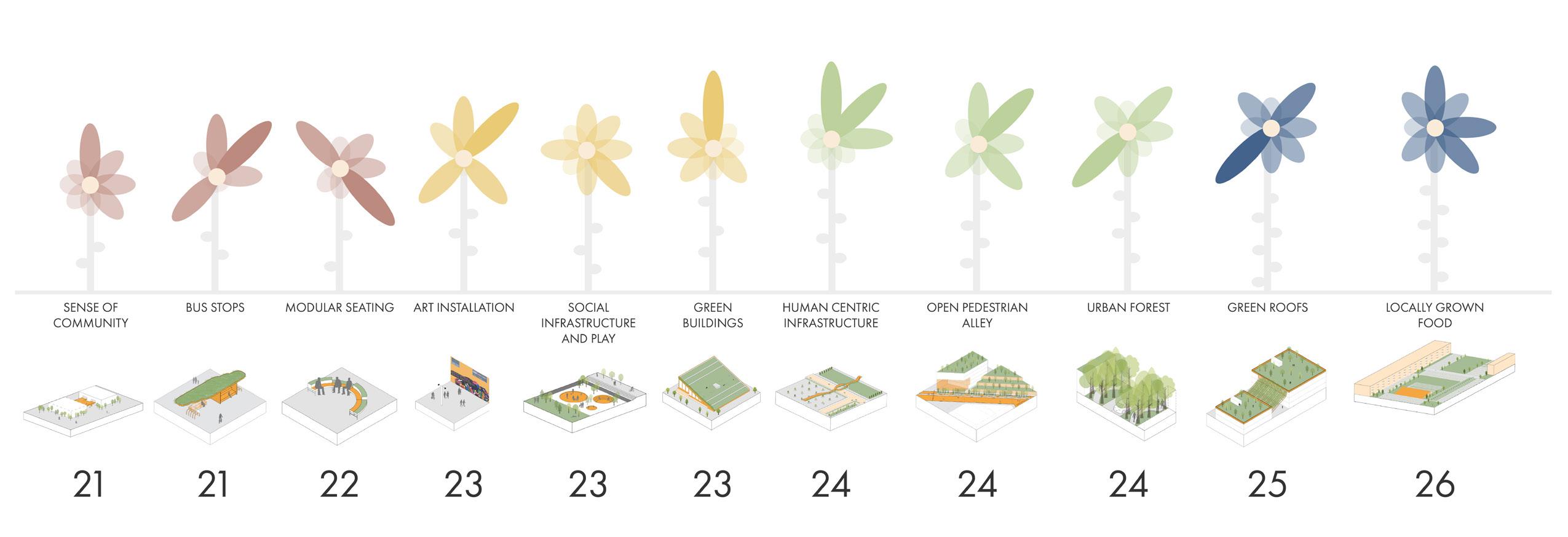
Strategies for Benson Against our Rubric
Medellin, Colombia Public Spaces Against our Rubric Spatial
HEART OF BENSON
OVERALL MASTER PLAN
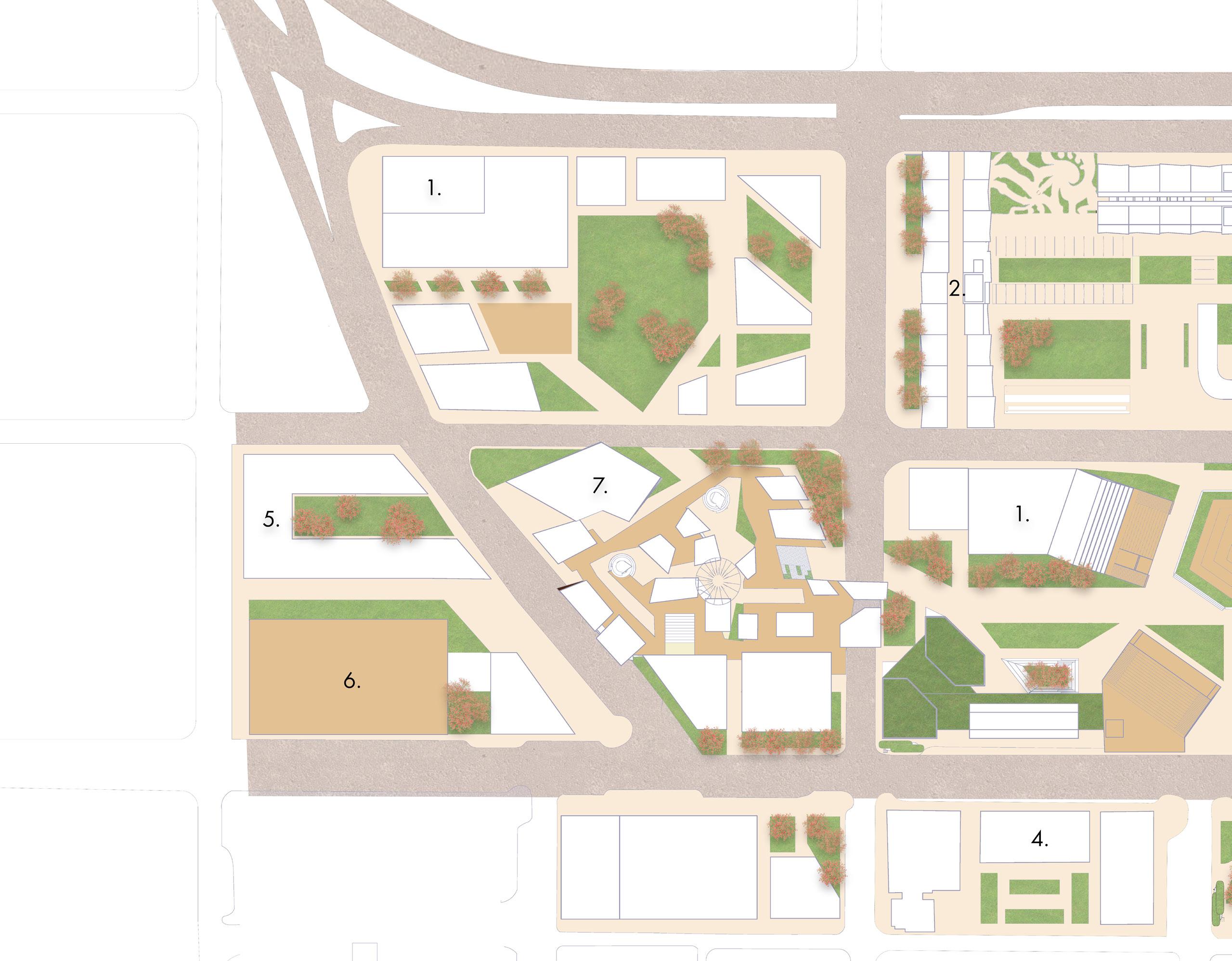
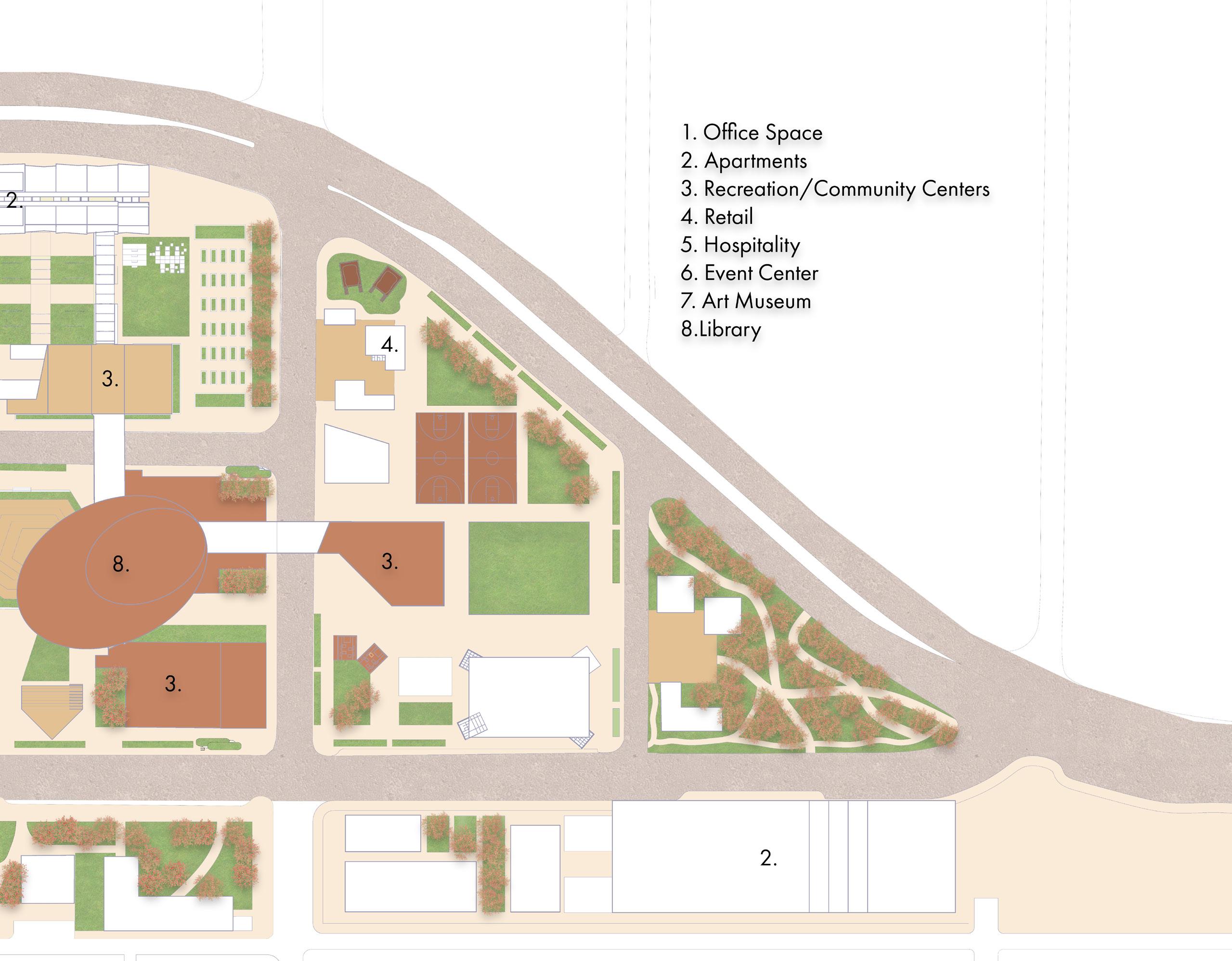
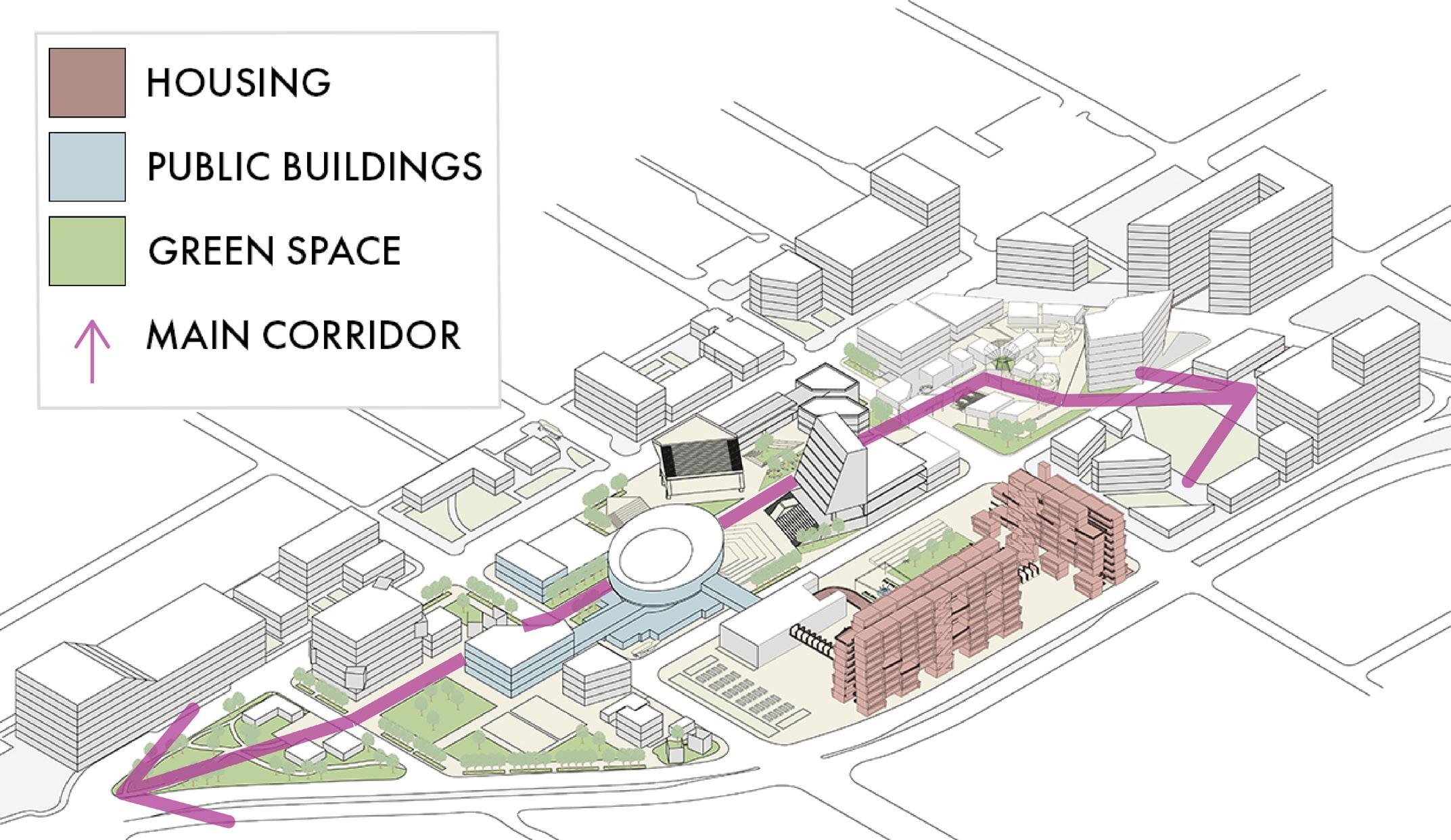
Our master plan aims to highlight key community gathering areas, shown in tan, and community amenities and recreation, shown in dark brown. These gathering areas and amenities primarily lie along our central axis to create a sense of accessibility and welcoming to all members of the community and visitors. The central axis guides individuals through a variety of programs intended to provoke exploration, community, and a sense of belonging unique to the Benson neighborhood. The schematic design diagram shows the relationships among our designated nodes, strategically placing them to
cultivate a genuine sense of community through diverse programs and gathering areas. Housing units, comprising mixed-use income housing and apartments, are visually shown in a dark red-brown color. There are green spaces integrated throughout, with a focal park situated at the corner, guiding individuals into and out of the site seamlessly. The main corridor is what connects each node to one another, which runs through the middle of the site. The purpose of this diagram is to understand the layout of important concepts and focal points in our design.
HEART OF BENSON
REDEFINING THE CENTER STAGE
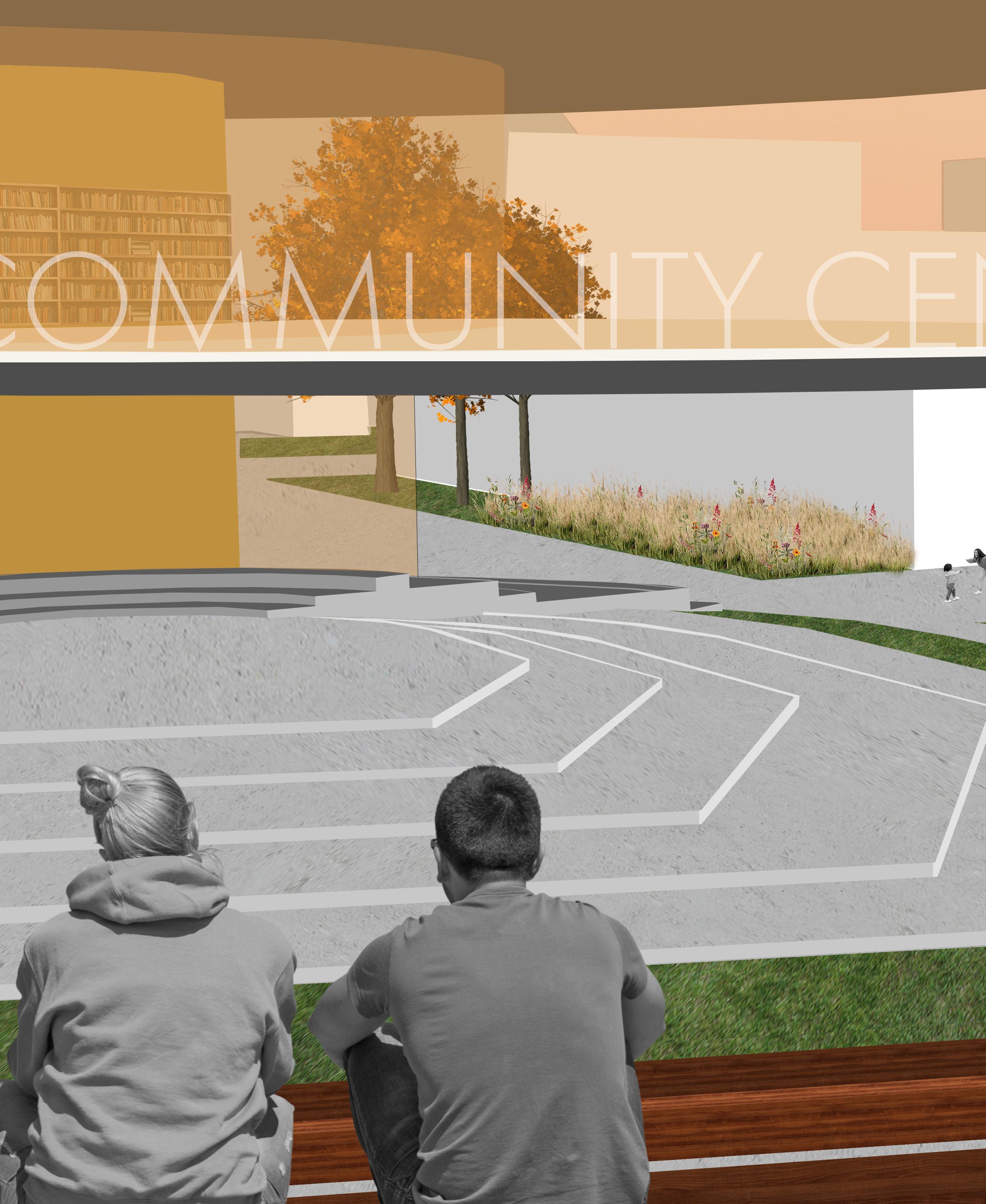
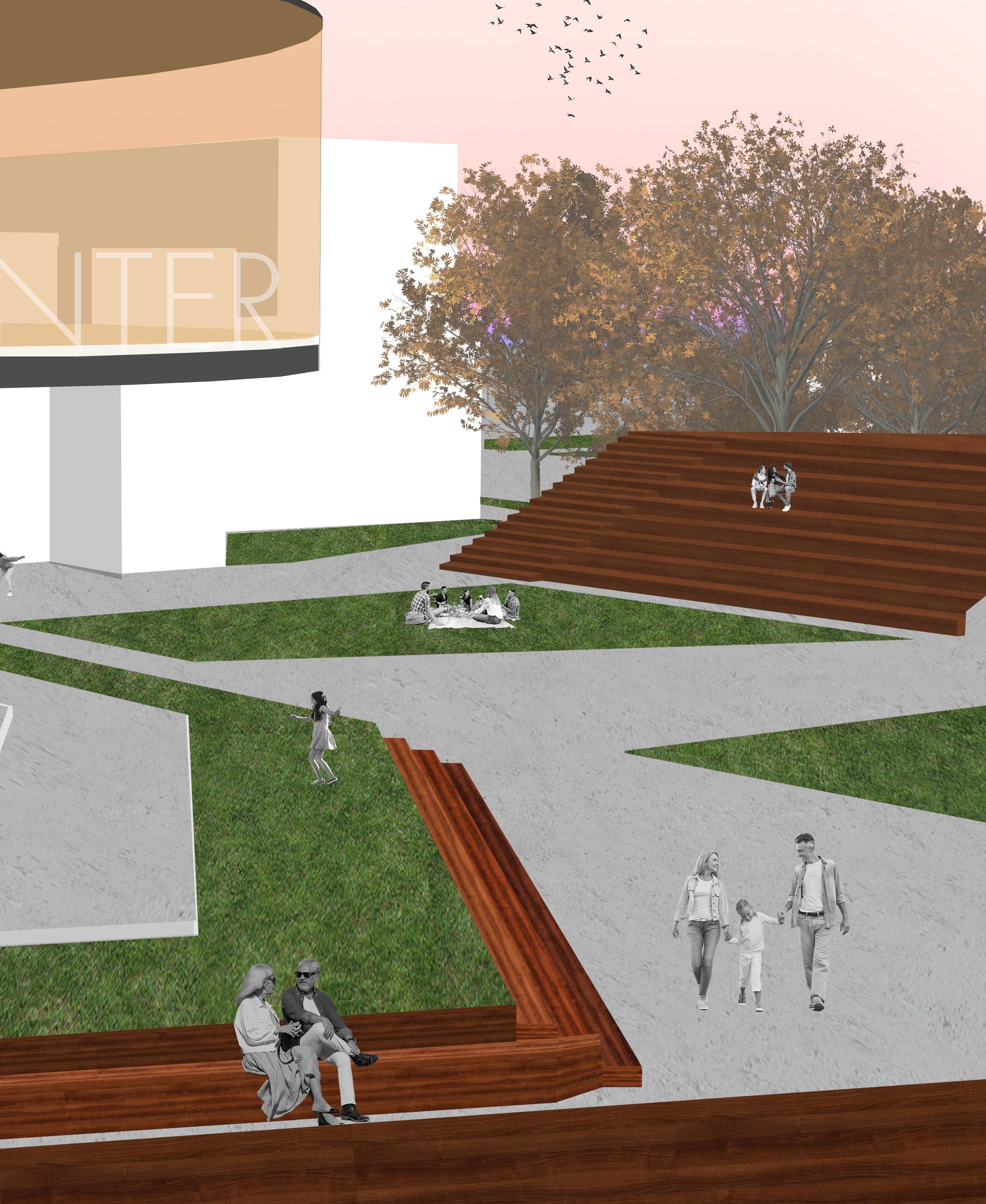
The layout of this area of Benson includes 3 amphitheater seating facades, an outdoor central stage, an interior more intimate stage, library/ community center extension, green space, and seating. The forms respond to each other to cultivate an embracing public space at the foot of important public buildings.
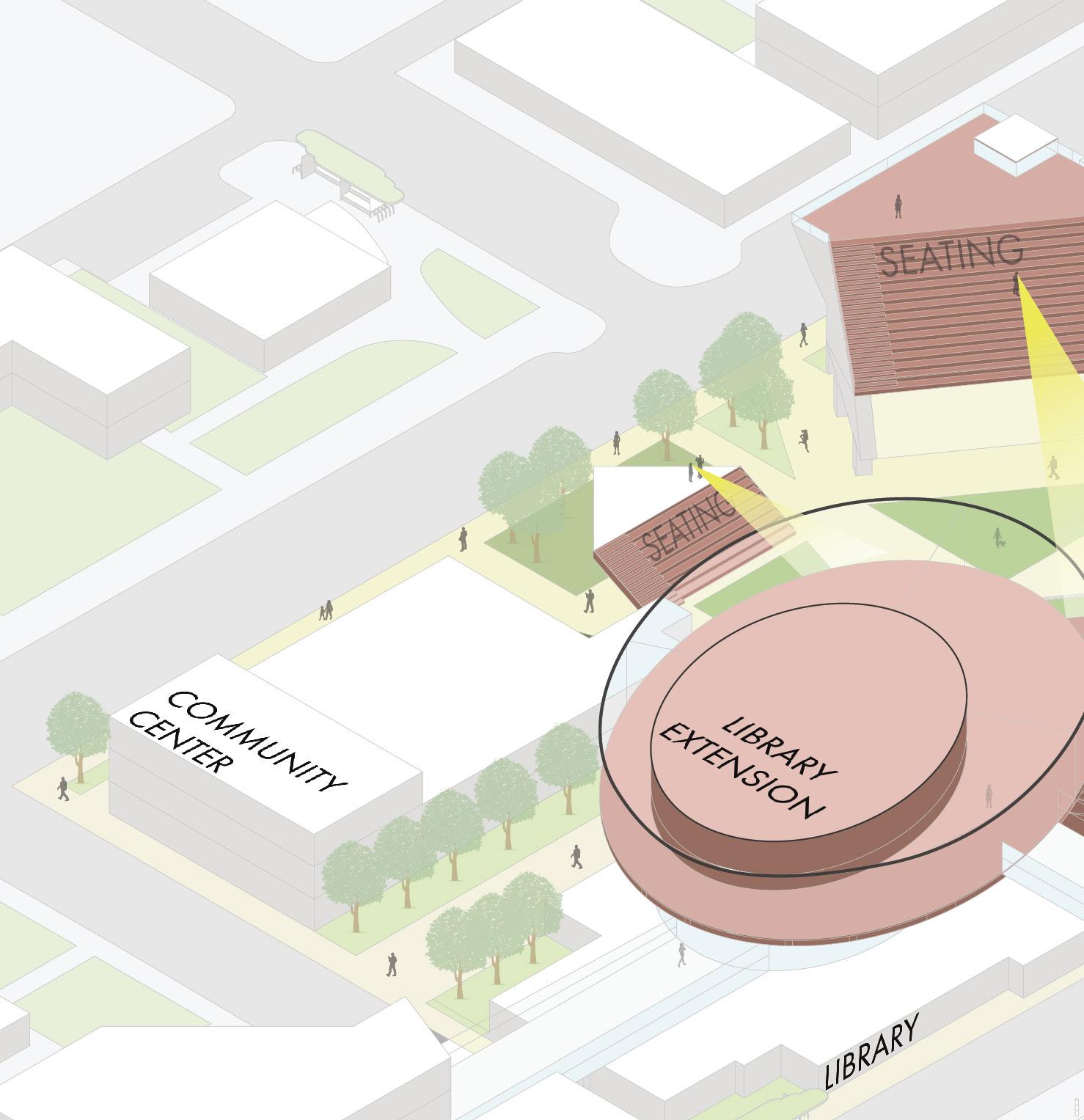
The design strategy we used in this area of Benson aligns with our overarching goals of the project: using building forms and facades to blend public space and built structures. Within this context, we are creating these spaces in relation to the public buildings that are open to all. The library and community center protrude into the site to bring the programs of the building into the public
realm. Clear glass showcases the interior, creating a sense of ownership for community members over what exists within. The area is also laid out in response to the building forms. Their faces all incorperate amphitheater seating that frames the views of the central stage in the middle of the site. In all, the design creates equitable spaces through built forms and building facades.
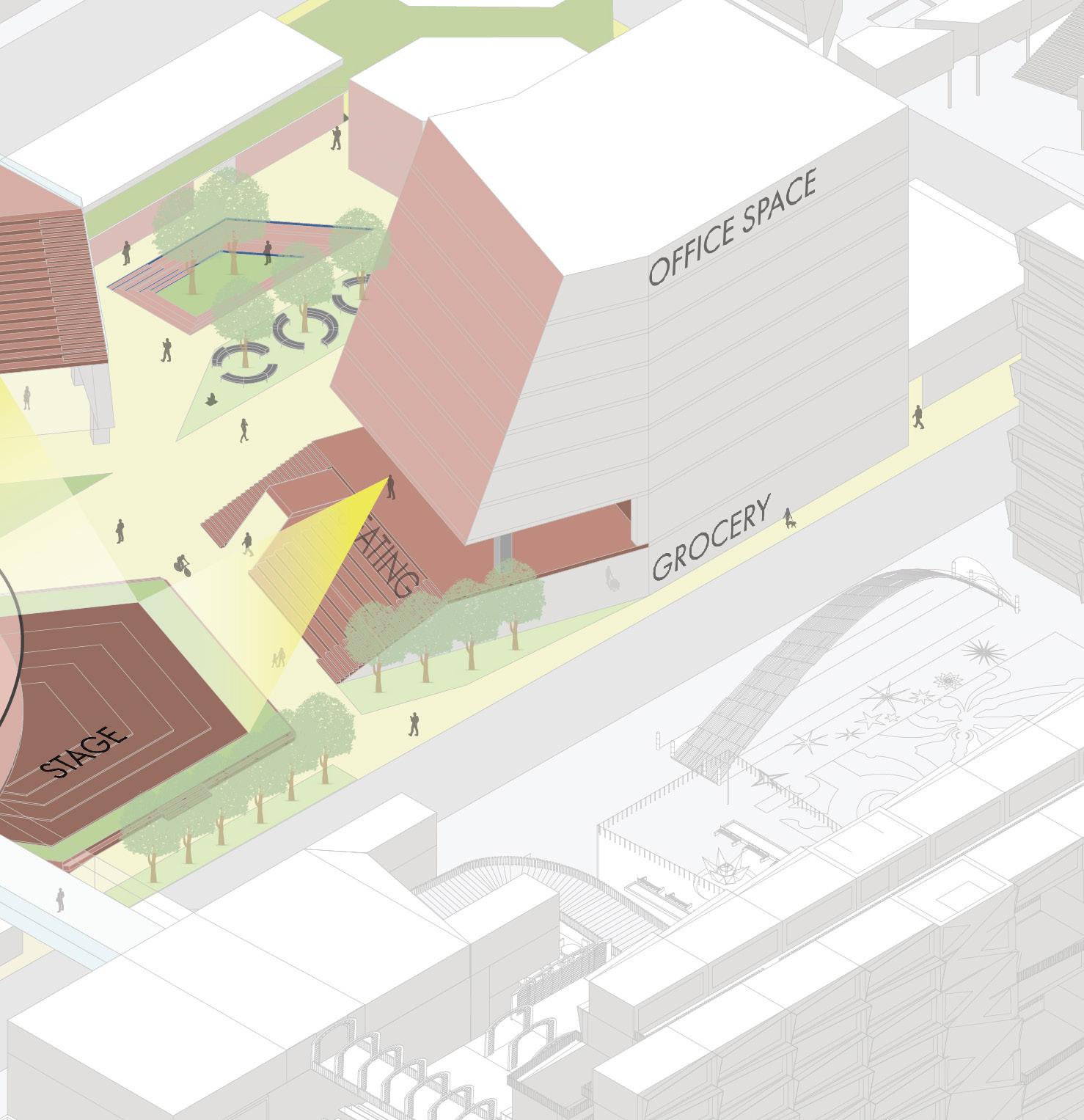
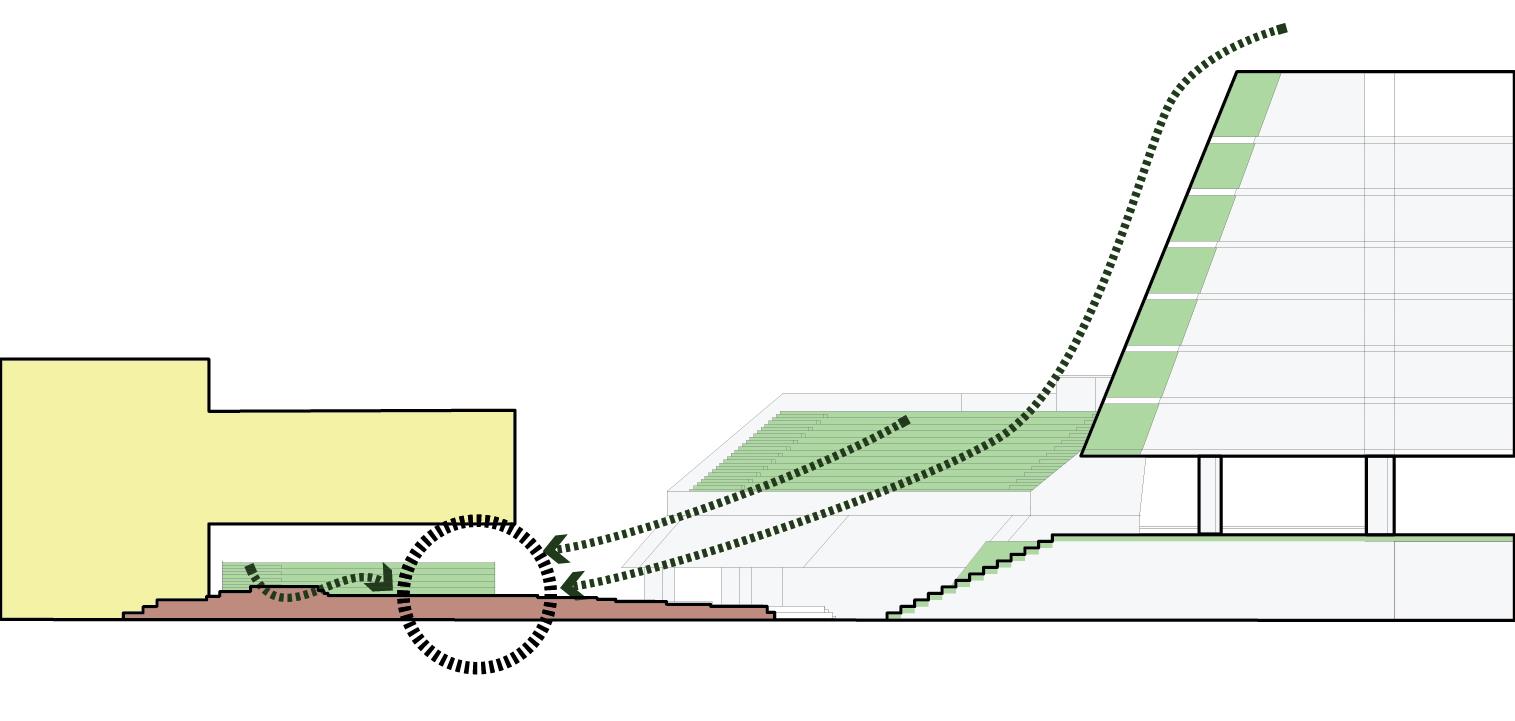
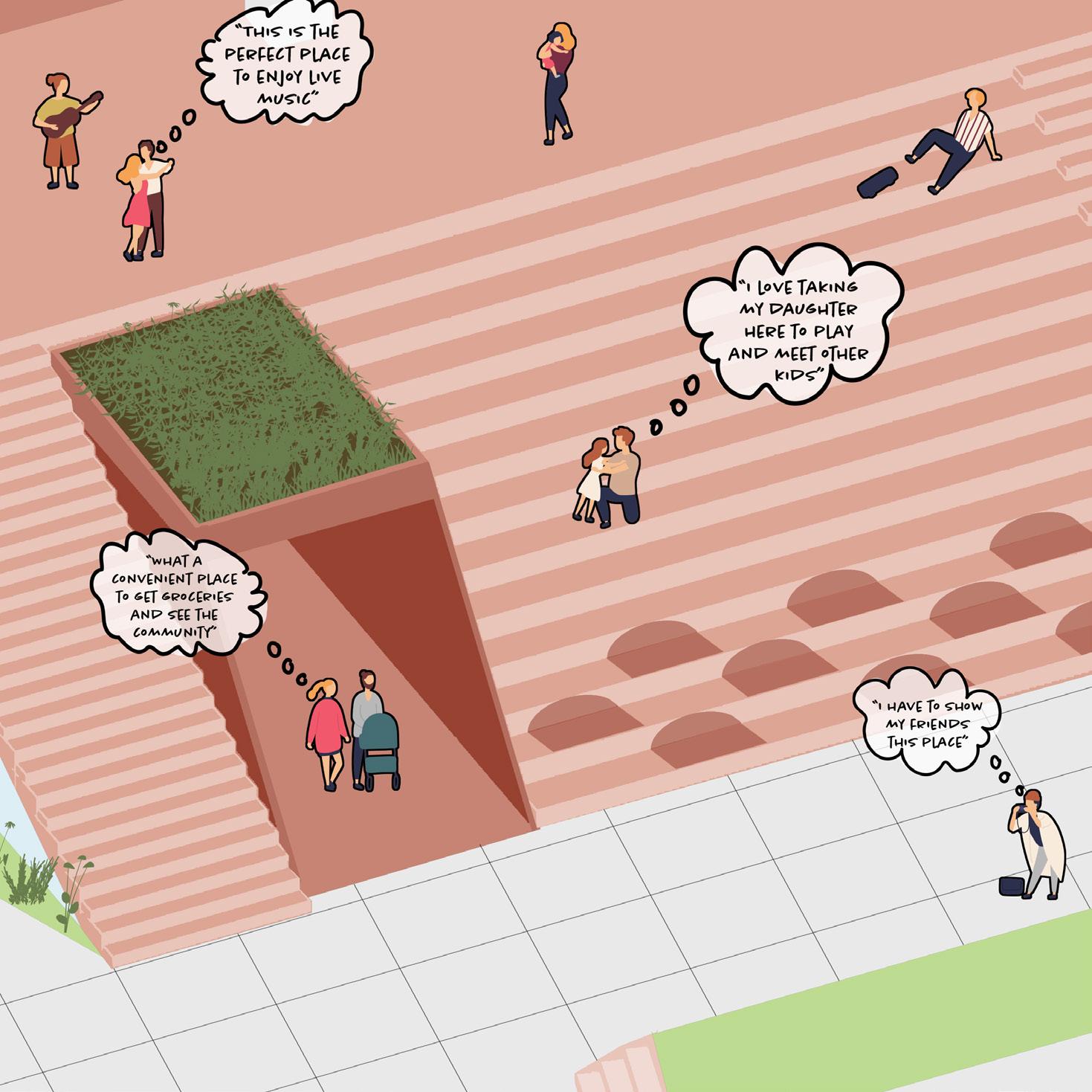
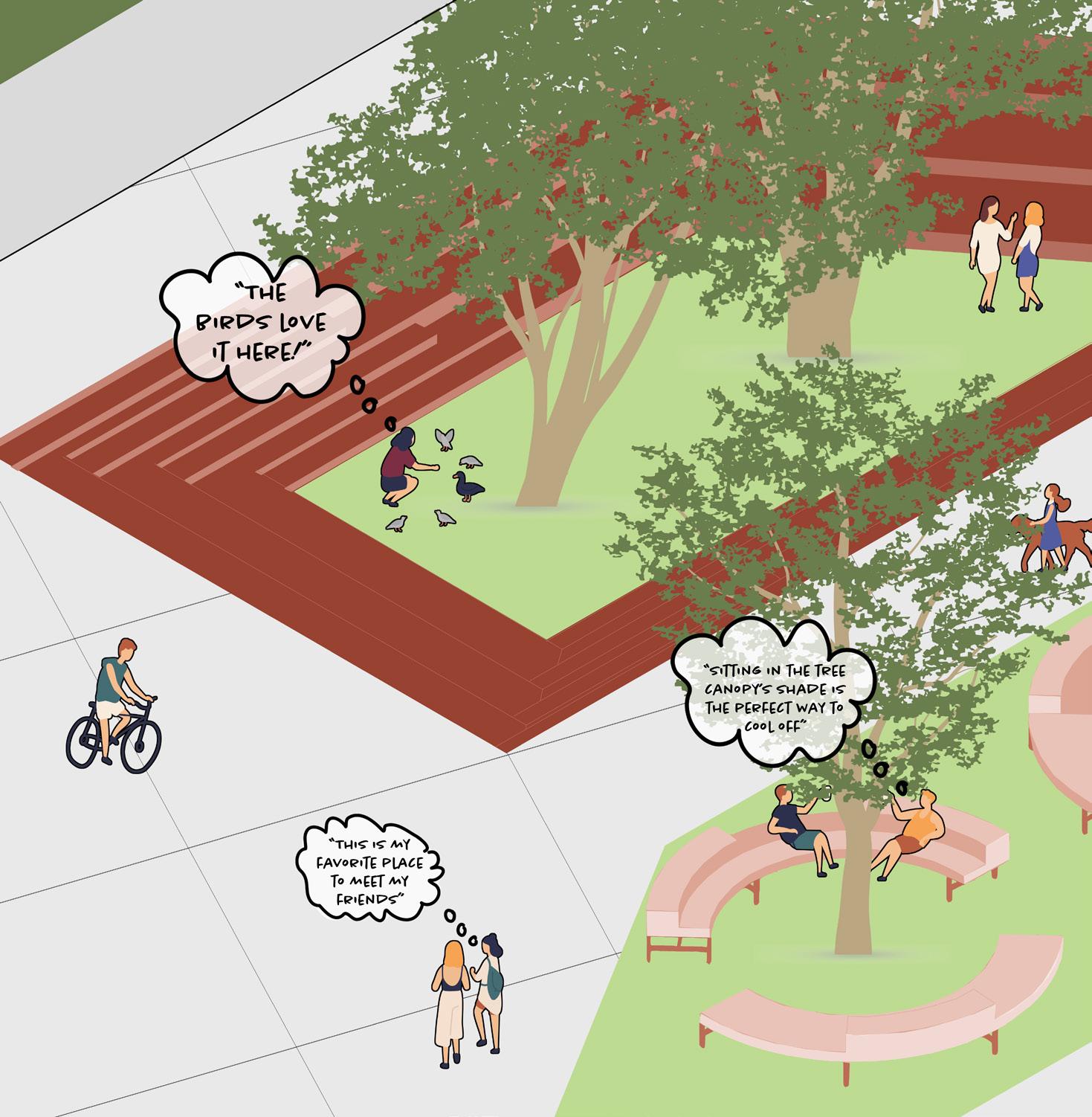
Sunken, Shaded Gathering Spaces
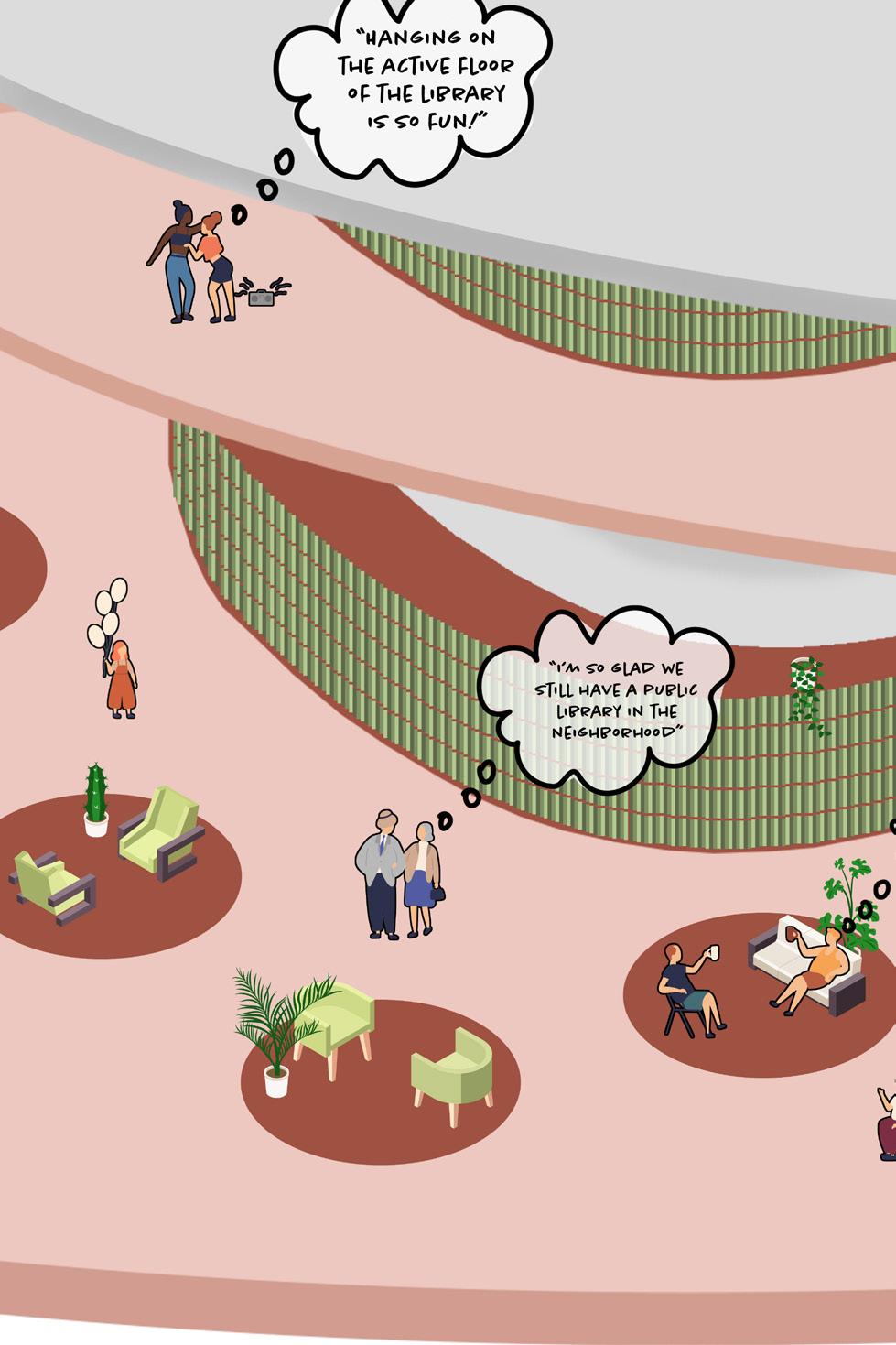
Library Extension Stage Below Library
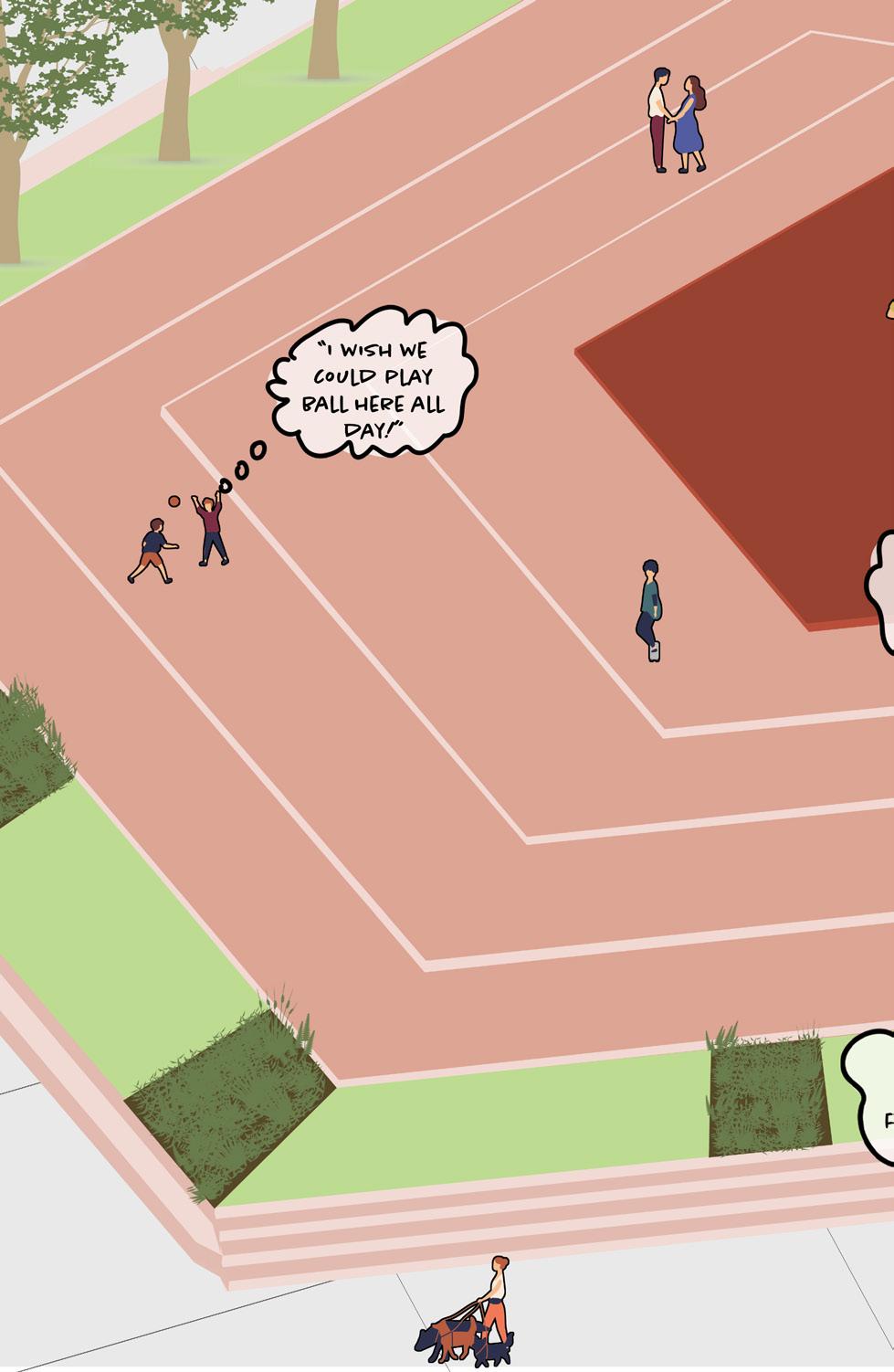
Main Amphitheater Facade
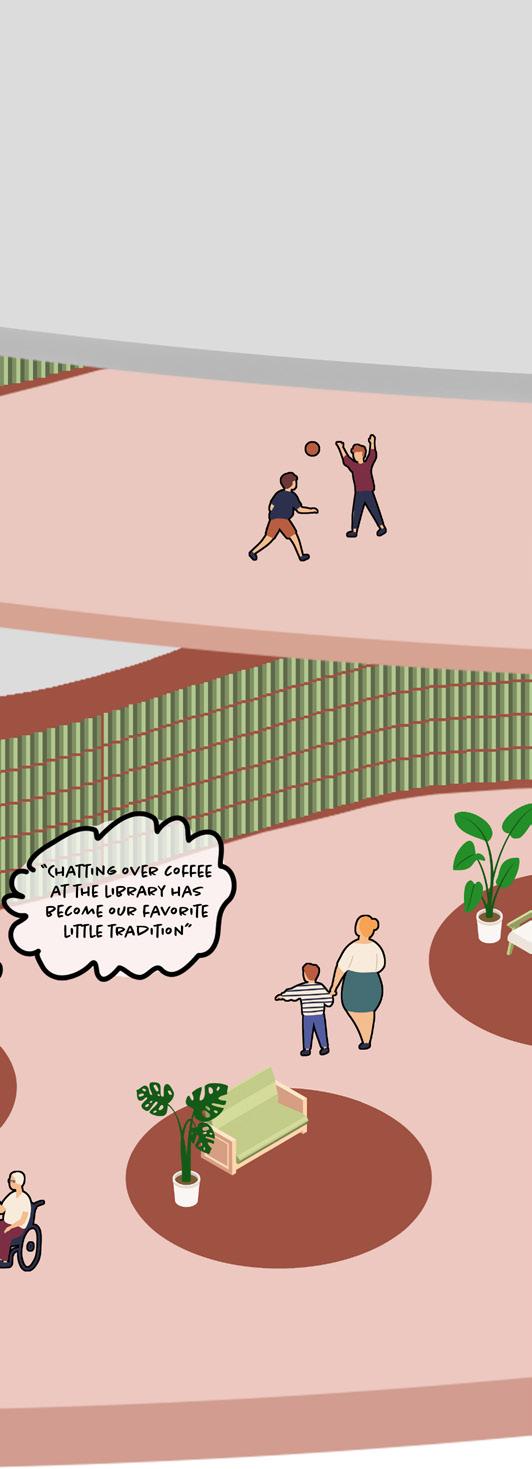
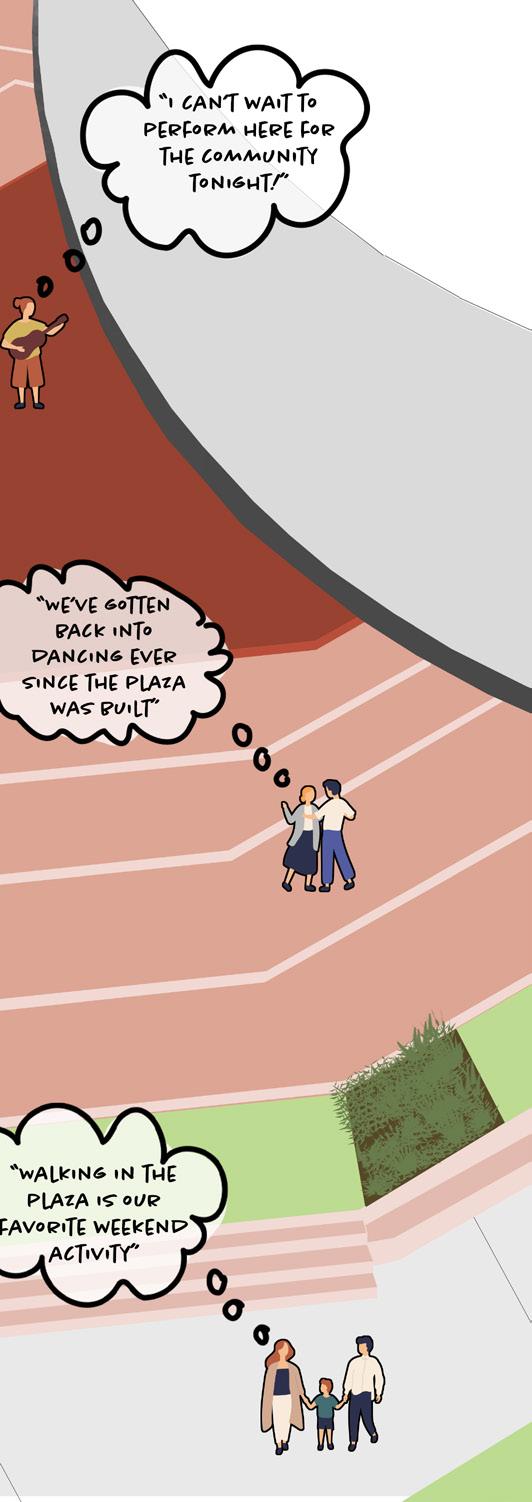
HEART OF BENSON
Interactions and experiences are cultivated within this space, and we can take a deeper look at some of them through ilustrative and perspective scenes. We can see the foot of the largest amphitheater seating, which also includes an entrance to the building projected into the space. This is a strong example of the blending of public and private space within the site. Below is a secondary gathering space that sinks down amphitheater style into a shaded green space. We also see that the library is a building that is truly a space for all to access information justly. We can also see tha tthe stage below is a flexible play and gathering area when there is not a
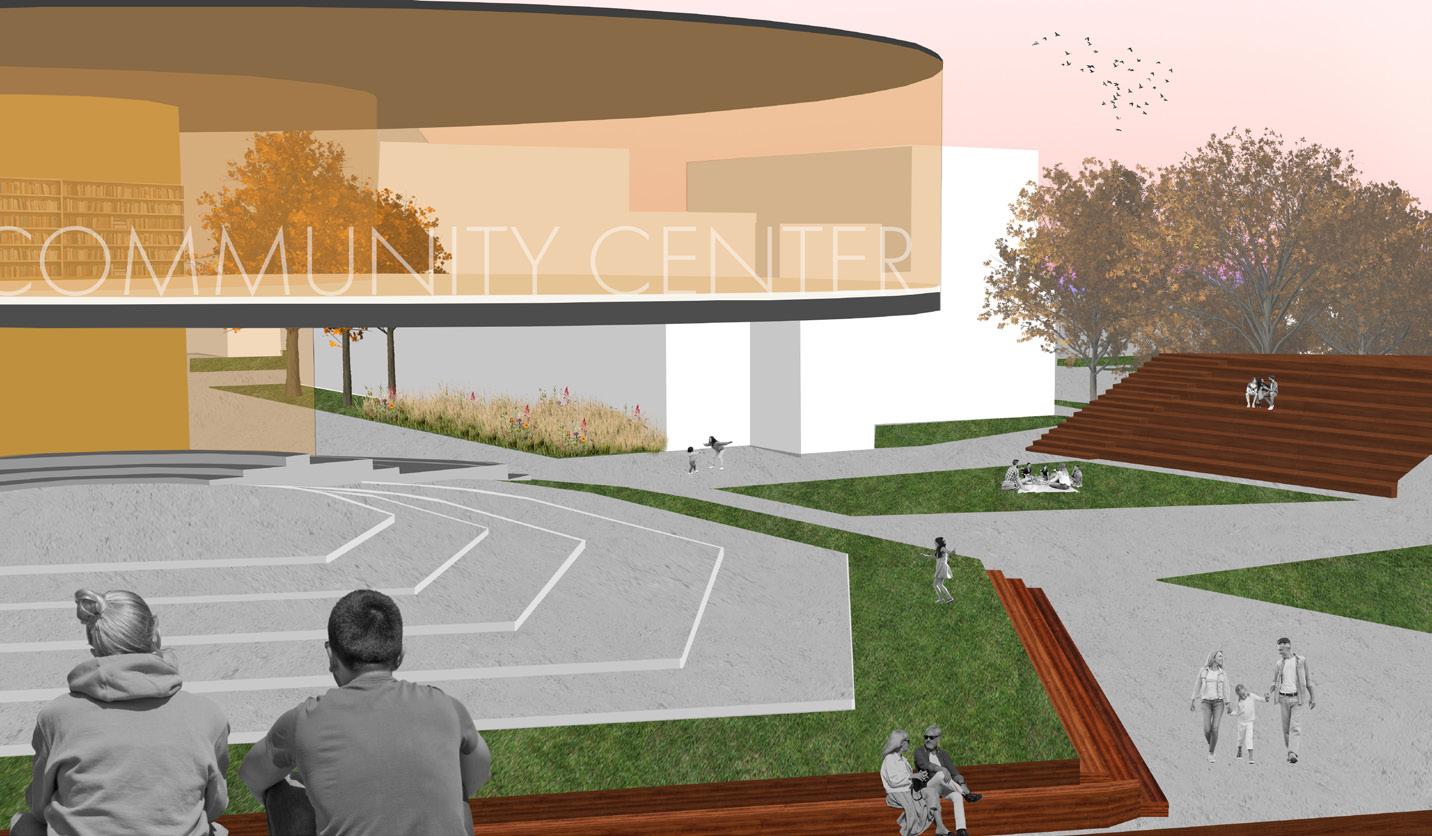
This perspective view is from the top of the largest amphitheater area looking down on the spaces within the site. This illustrates the blending of public buildings and outdoor space that exists in Benson. Lawn space, seating, and the main axis are all used by members of the community.
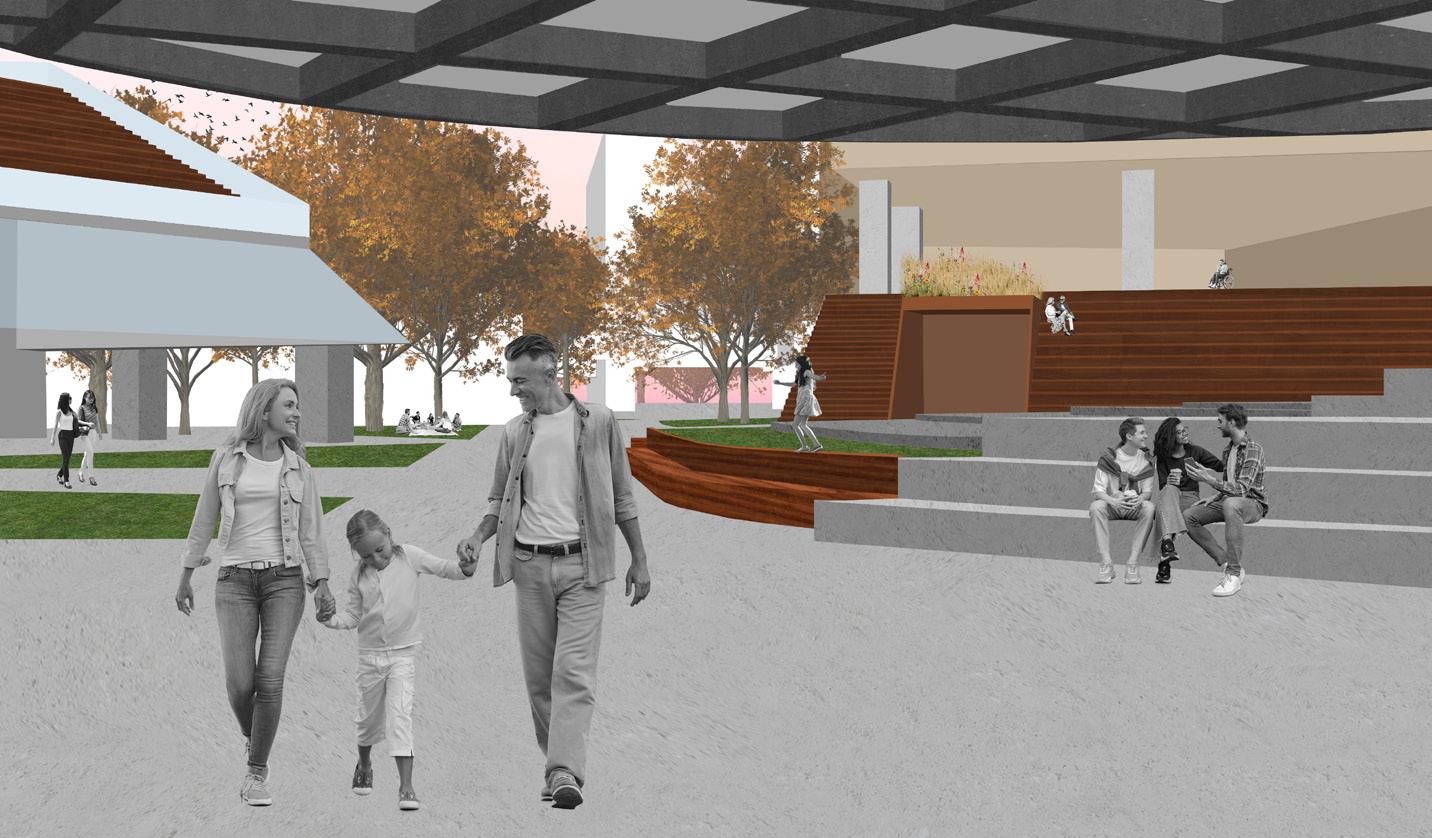
This view is from underneath the library and community center extension, looking up at our previous view. This is taken from a view of our main axis as you pass underneath the library and are opened up to the intimate public space that is the beating heart of Benson.
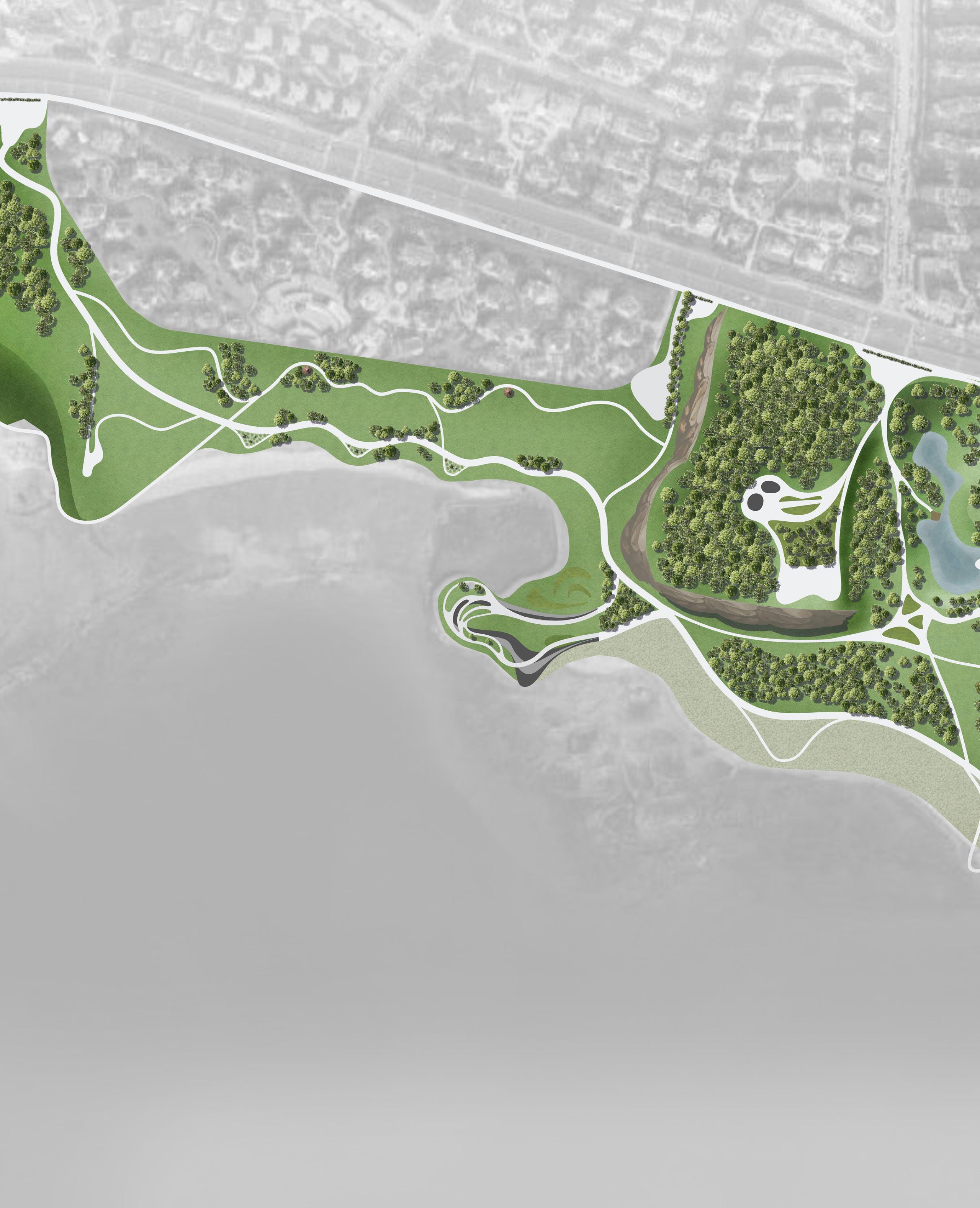
COASTAL ESCAPE PARK
Peninsula Overlook Bayside Theater
2023 - LARC 211 - Instructor: Yujia Wang
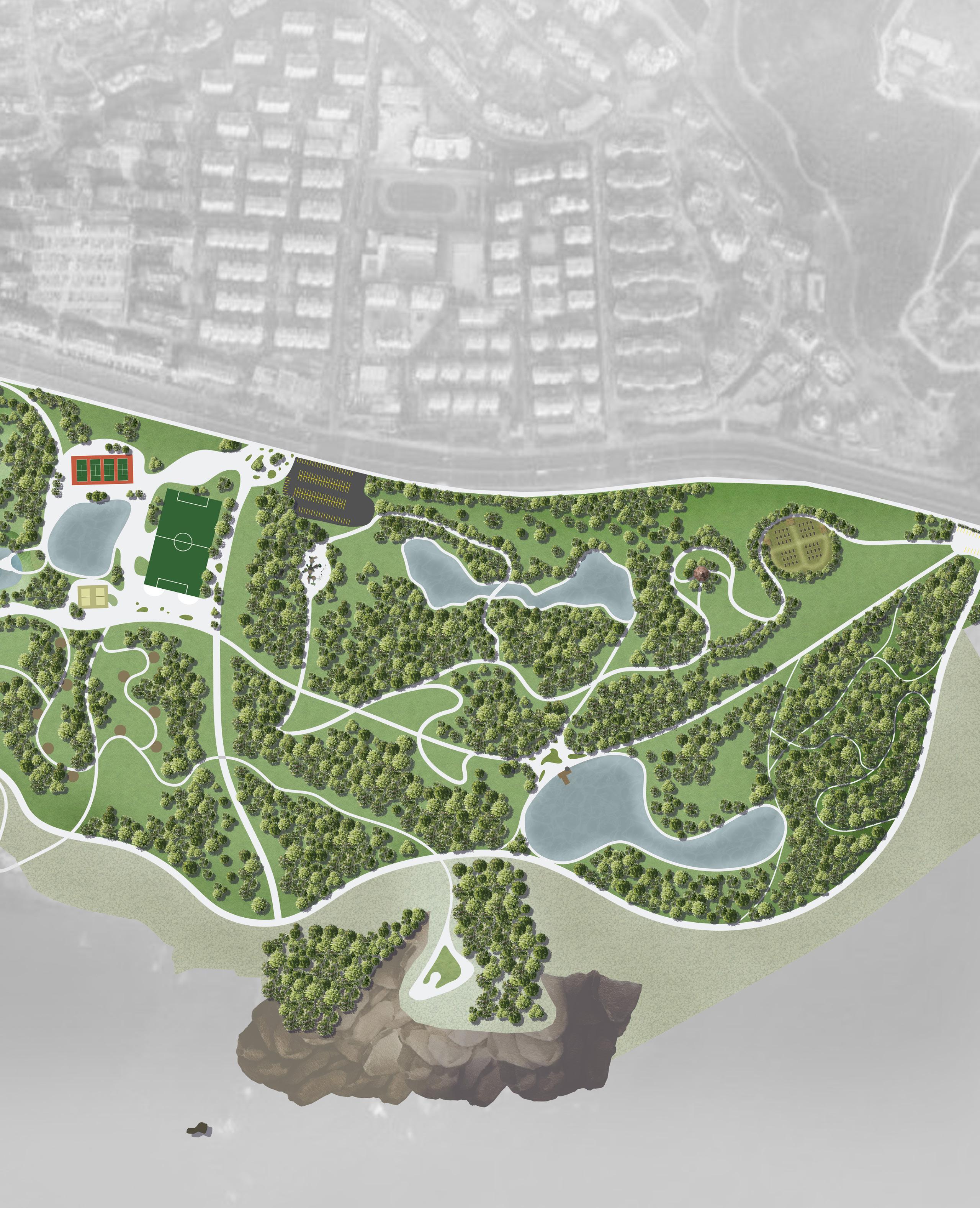
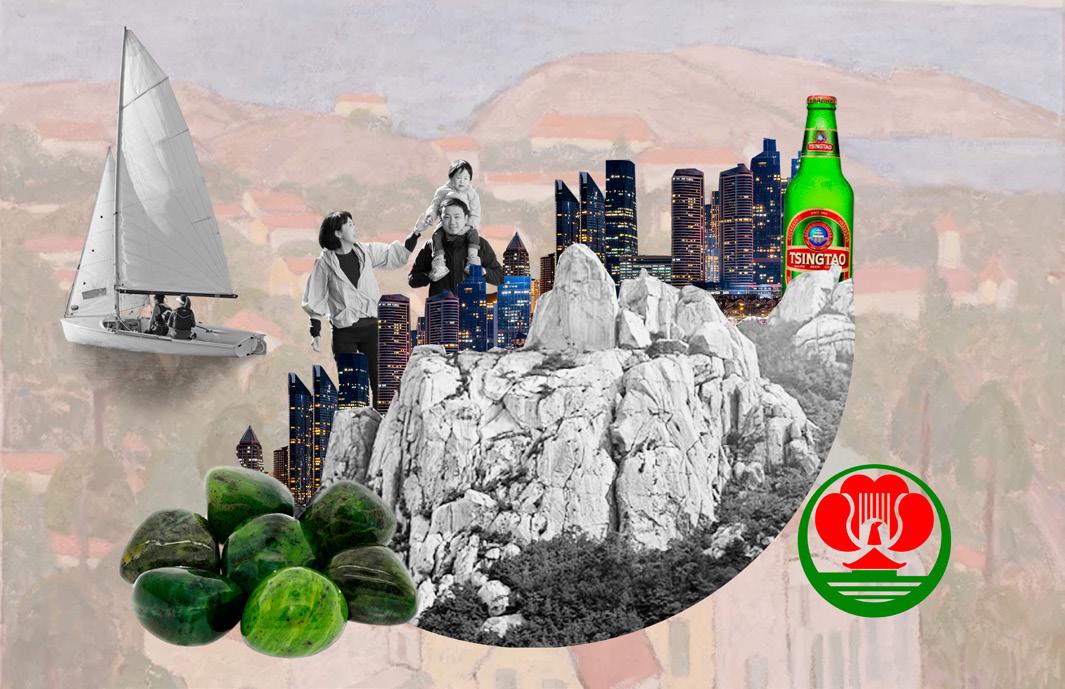
COASTAL ESCAPE PARK
PROPOSAL FOR THE REPURPOSING OF A COASTAL ECOLOGICAL PARK ALONG THE SHORE OF QINGDAO, CHINA
Qingdao, China is rich in culture and history, not only socially, but also ecologically. The plants and animals native to Qingdao, as well as their habitats, have found their way into the local culture and history. The coastal city has a thriving fishing economy, strong local biodiversity, and various habitats and topographies that let locals and tourists connect with nature. The design of Coastal Escape Park highlights the fluid, natural features of both this site and coastal Qingdao as
a whole. It strives to serve the ecosystem through habitat building and preservation, as well as serve the recreational needs of people through nature trails, gathering spaces, sports courts, picnic areas, plazas, gardens, and lawn space. The design of the park also honors the legend of Shilaoren (Stone Old Man), a sea column just off the coast that resembles an old fishing man. Overall, the park is a feat in ecology and strives to be a mustsee for tourists and well loved by locals.
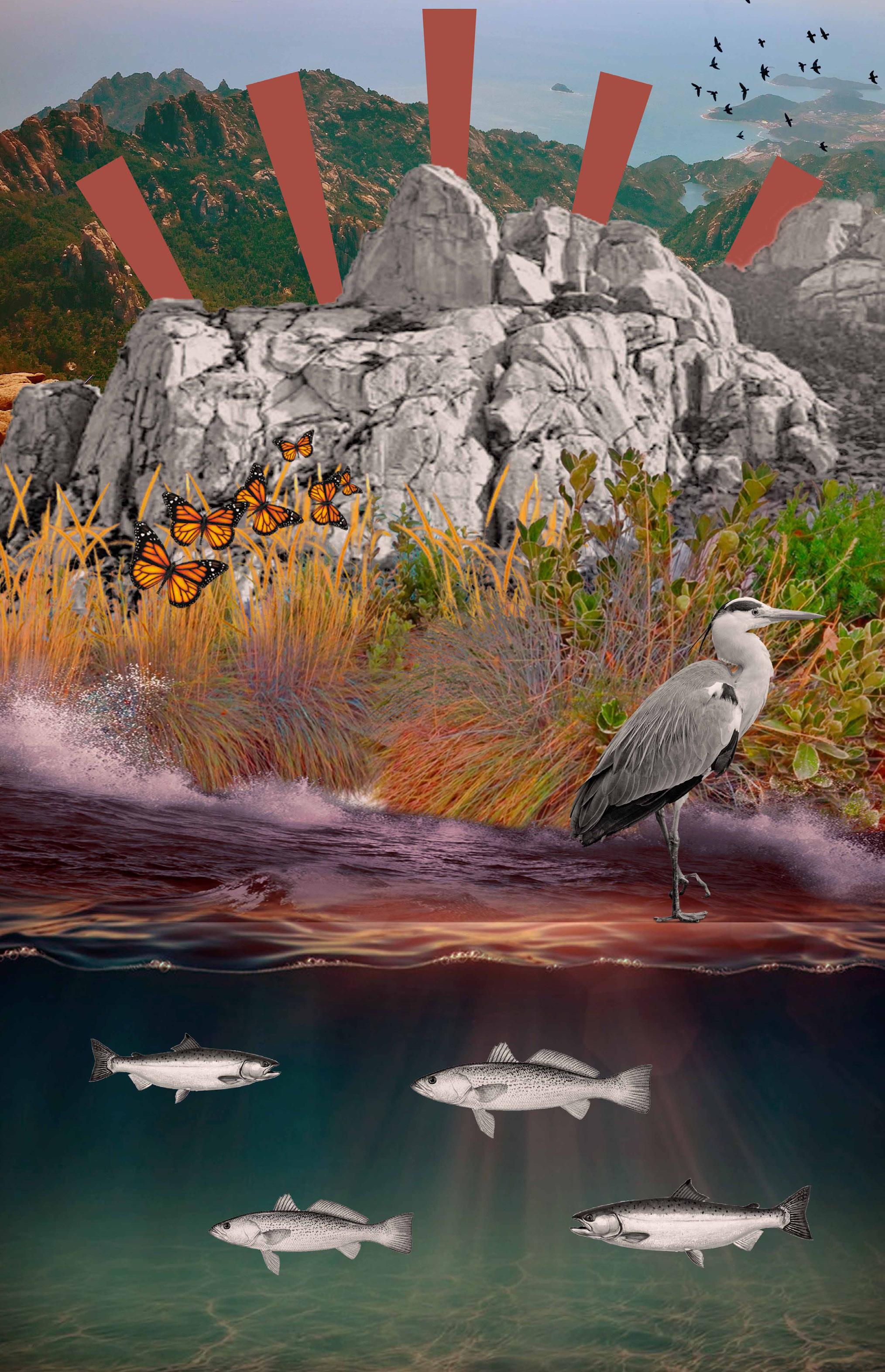
Conceptual Collage of the Complex Layering of Ecologies in Qingdao
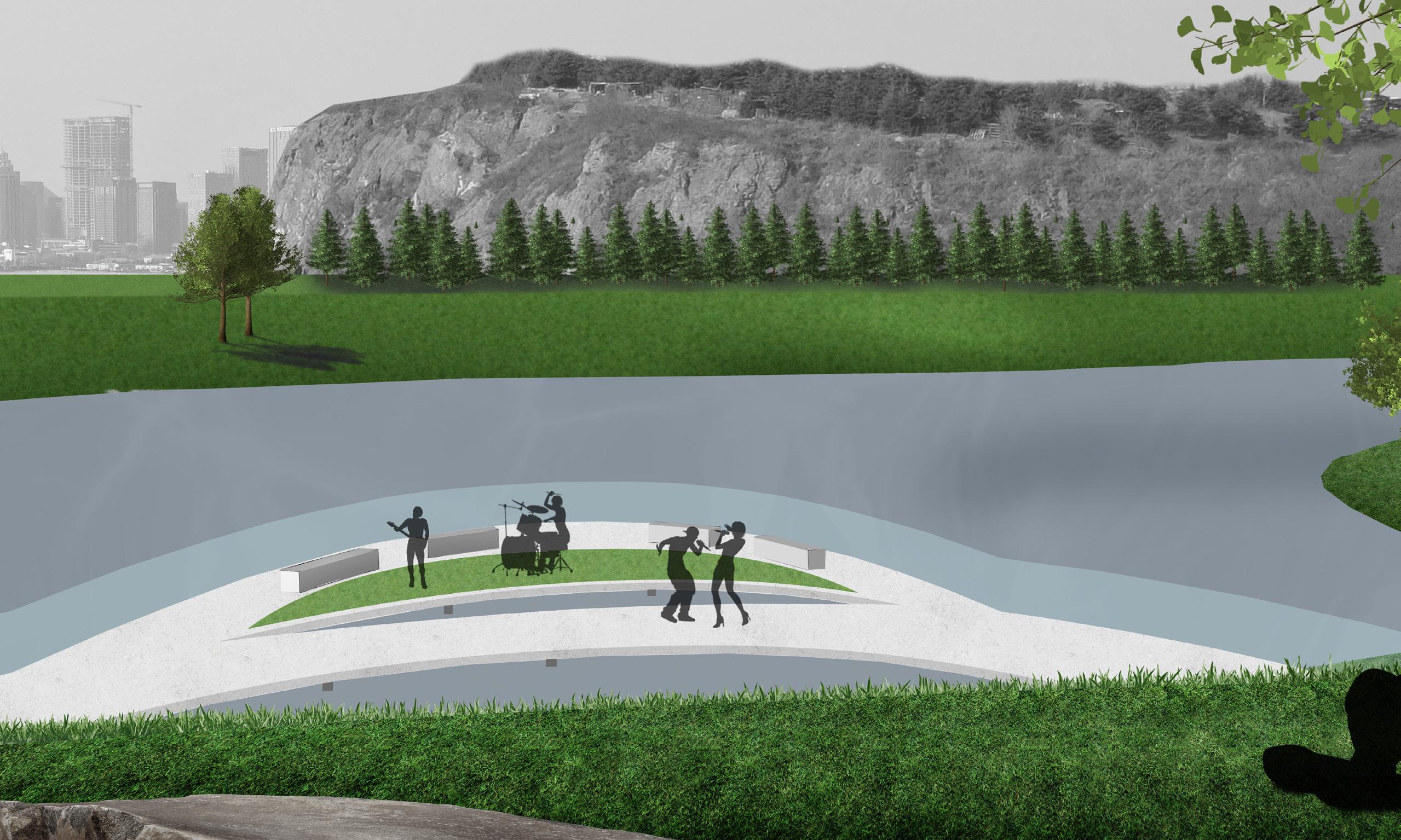
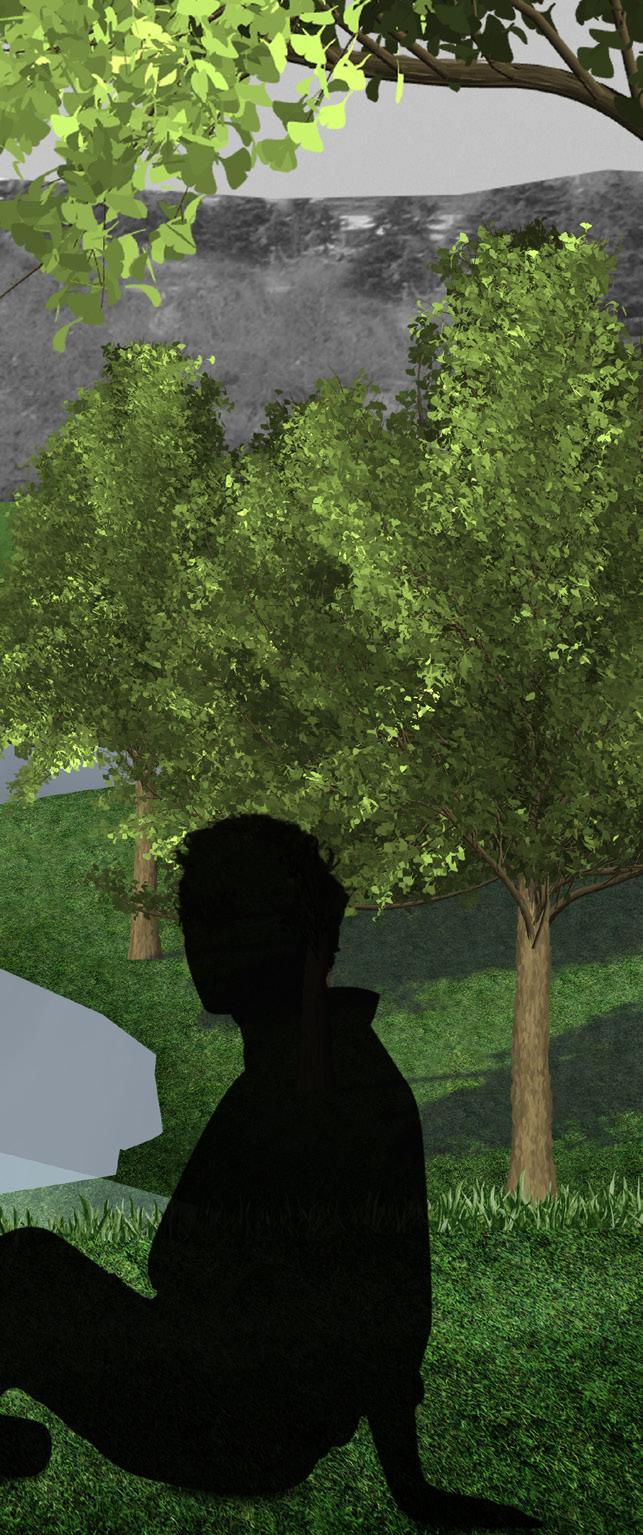
View from a high point of Bayside Theater, overlooking a performance
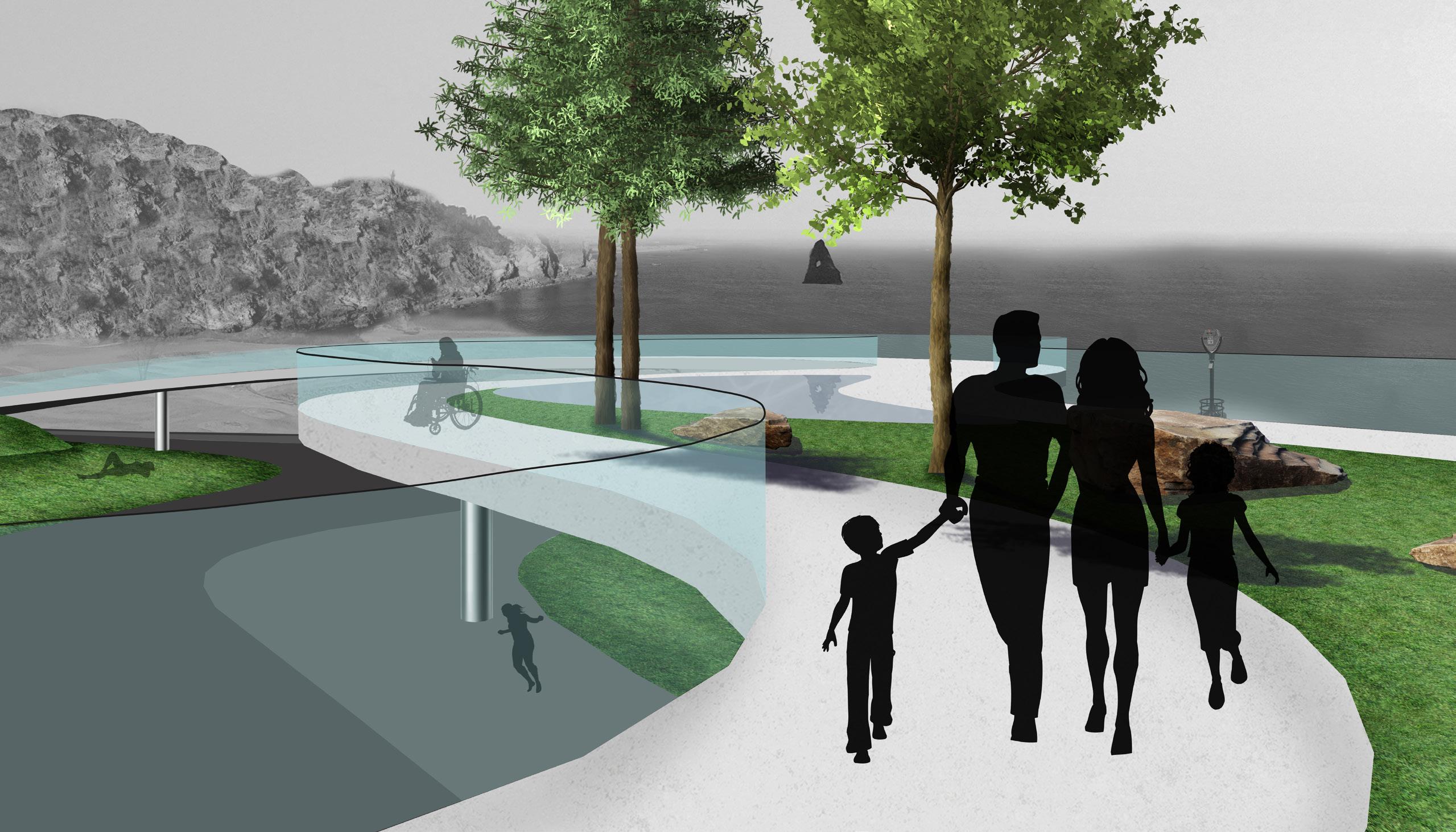
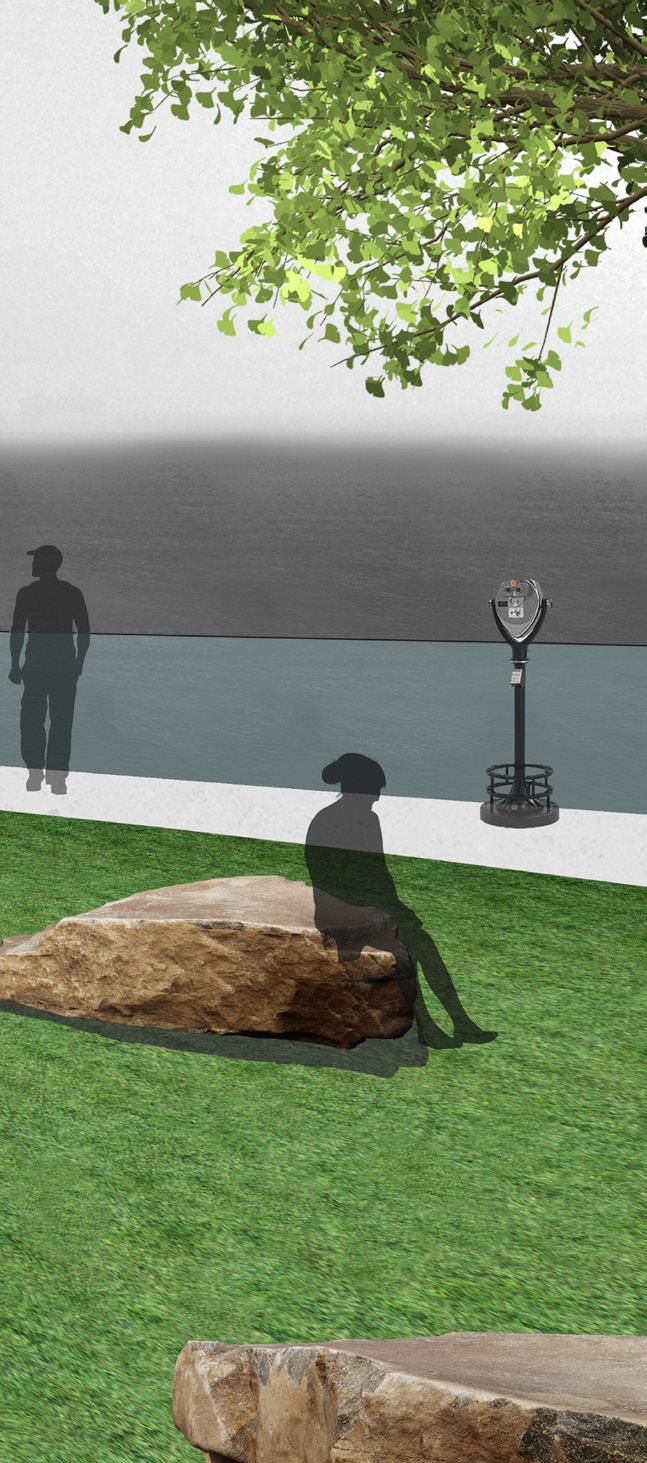
View from the top of Peninsula Overlook with a view of Shilaoren in the distance
COASTAL ESCAPE PARK
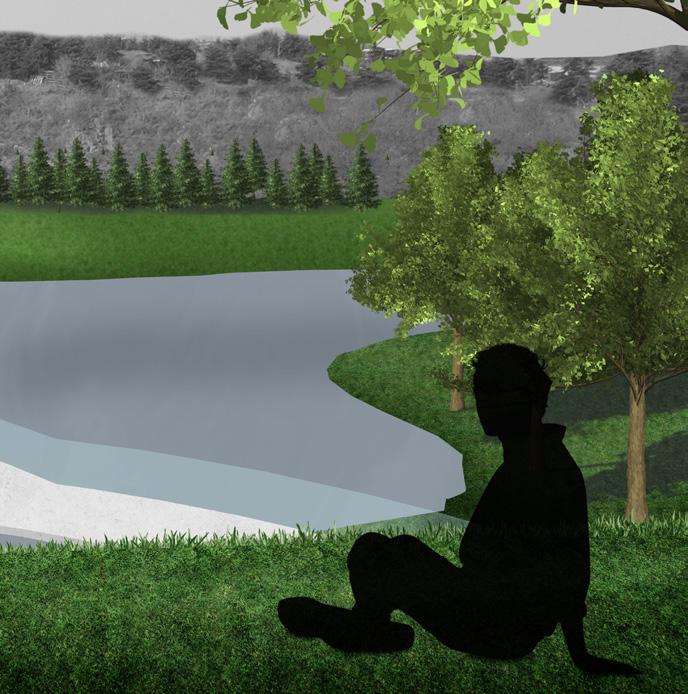
The experience of visiting the park is intended to be peaceful, contemplative, and a way to feel at one with nature. When attending performances at the ampitheater on the lake, visitors feel a deep connection with the land they sit upon. The stage is not simply imposed on the landscape, but rising from within it. As guests to the park make their way to the peninsula overlook, views of Shilaoren, the cliffs, and the ocean are framed by vegitation and organic forms and bends that follow the shapre of the land. Natural seating stones seem to rise from the earth to sit and stay a while at this high point of the coast.
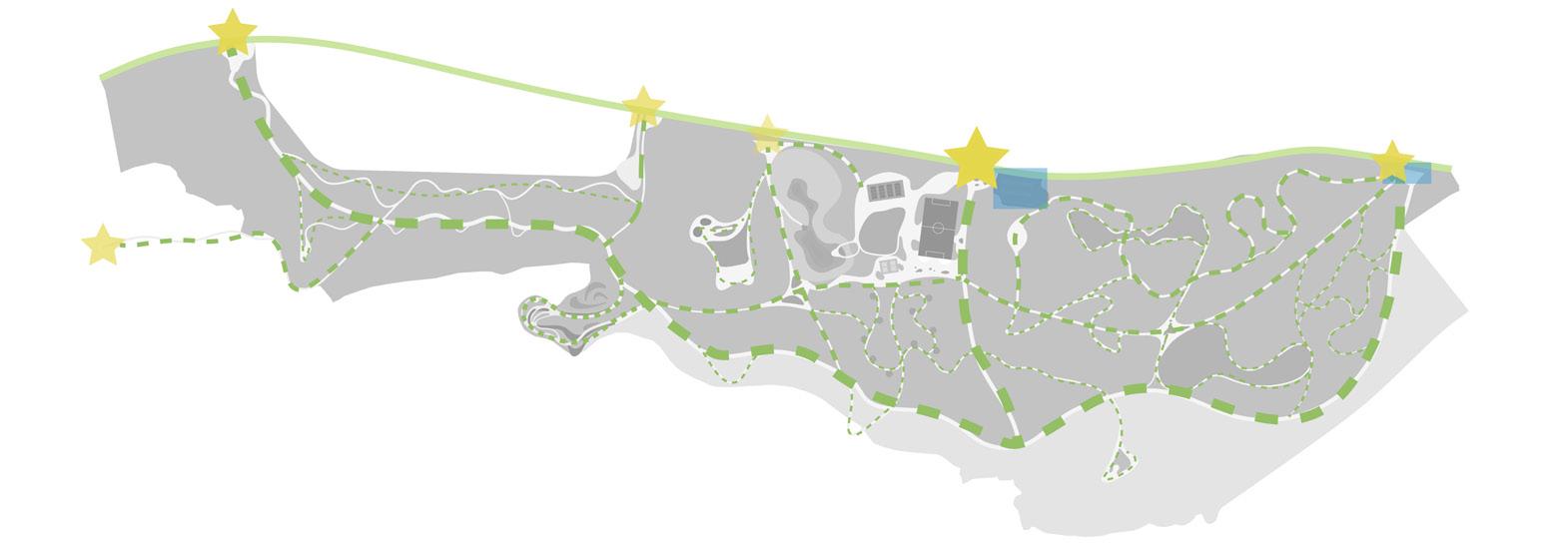
Enterance Points, Parking, and Circulation
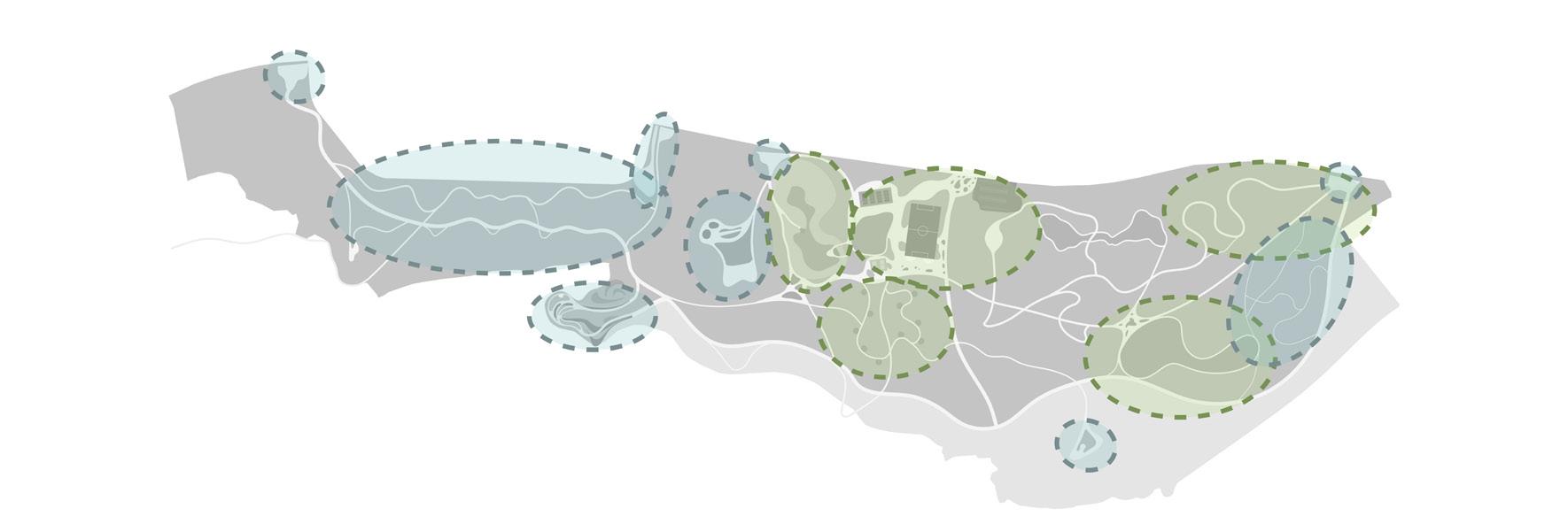
Passive (blue) vs. Active (green) Spaces
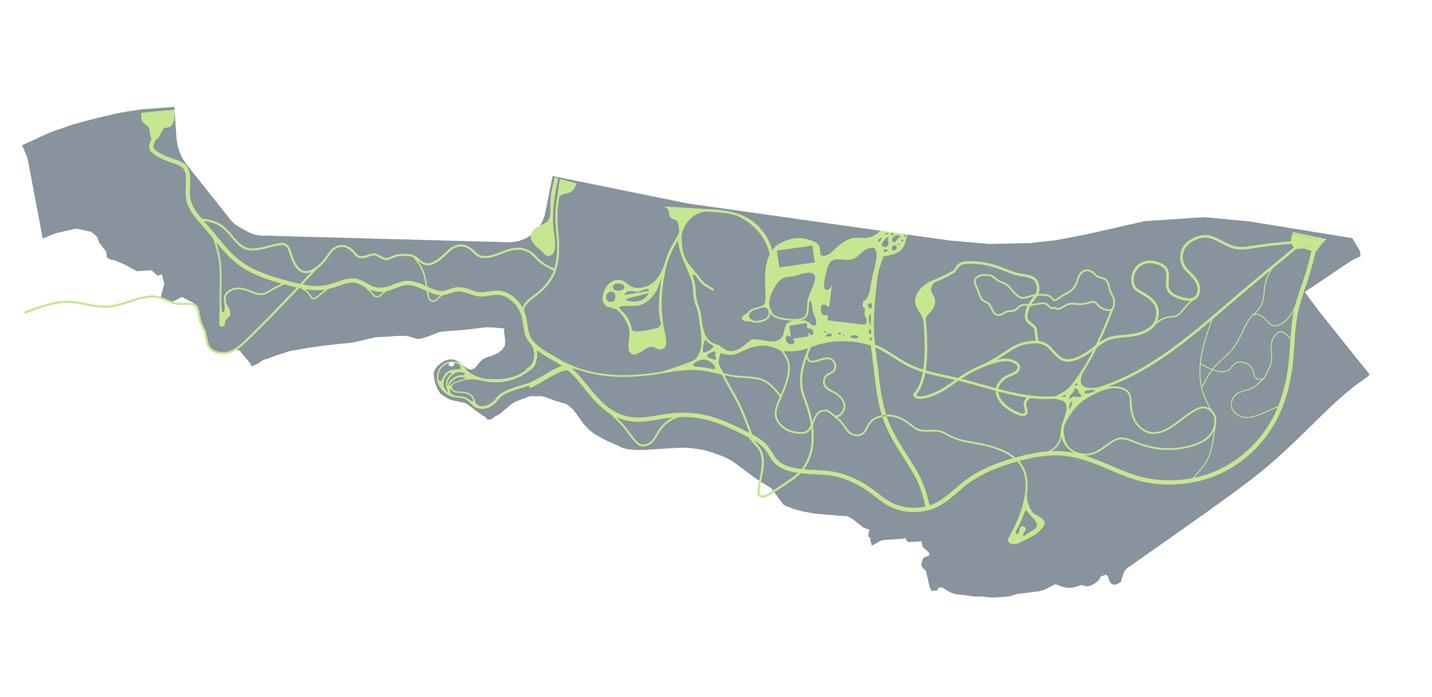
Pathways
COASTAL ESCAPE PARK
NODAL DESIGN
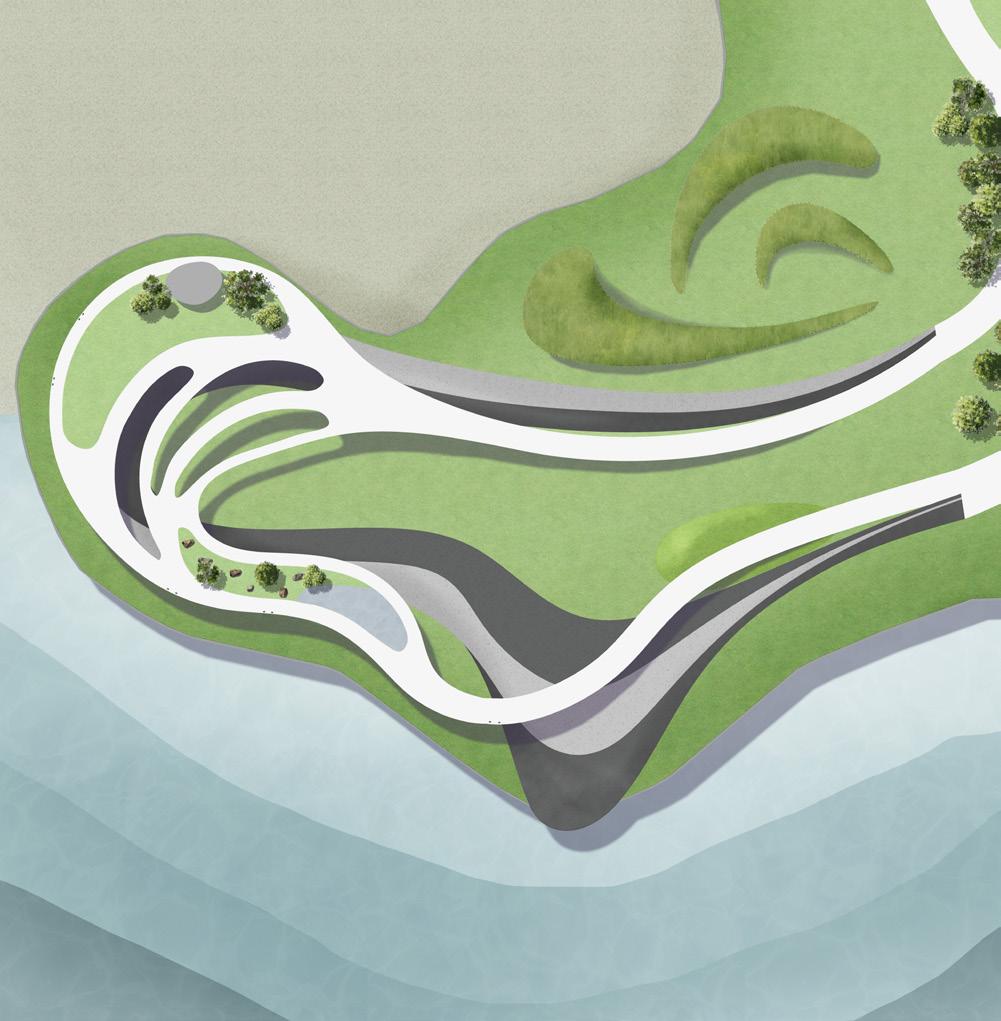
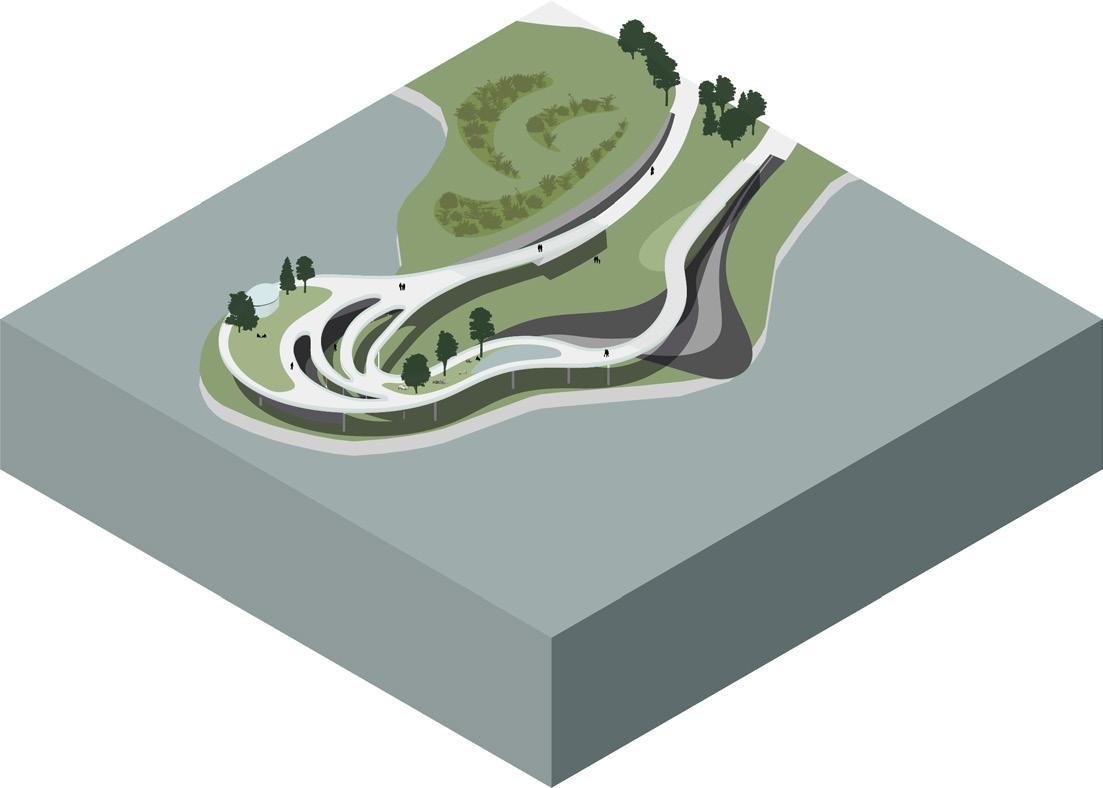
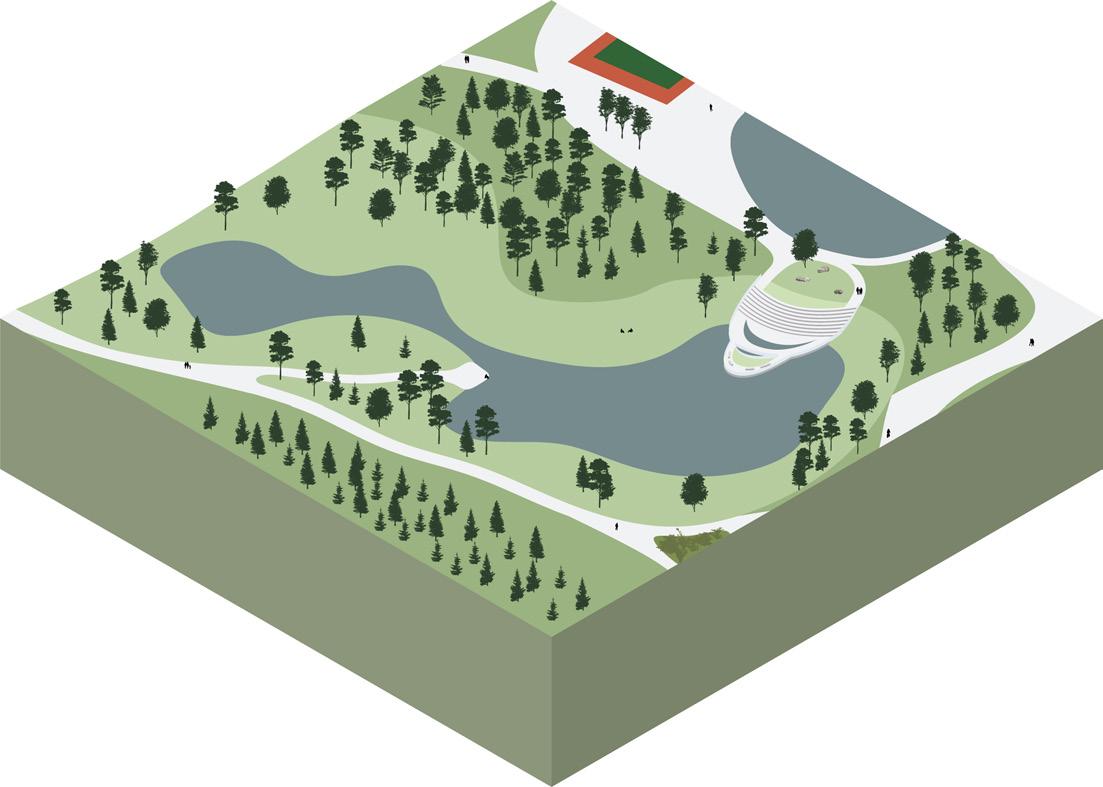
When taking the design of the park further, I chose two key areas to focus on. These nodes of the park are the ‘Peninsula Overlook’ and ‘Bayside Theater.’ The first of these is a raised platform overlook that can be occupied both on top of and below. On the northern edge of the peninsula is a cafe servicing visitors both above and below the raised surface. Voids in the overlook’s surface allow the light to play with shadows below. Vegetation, seating, binoculars, a reflection pond. and open lawn space are offered above. Planted berms,
open lawn, and hard surface is offered below. Overall, this node of the park is a unique stop along your stroll along the coast. The second of these two areas, ‘Bayside Theater,’ is a stage sitting within a sunken inland lake surrounded by trees and offering theater seating. On the west side of the lake, there is a small dock that allows visitors to interact with the water through swimming or kayaking when there is not a performance. This theater is also in close proximity to the sports and activity area, offering sand volleyball, tennis courts, a soccer field, and picnic areas.

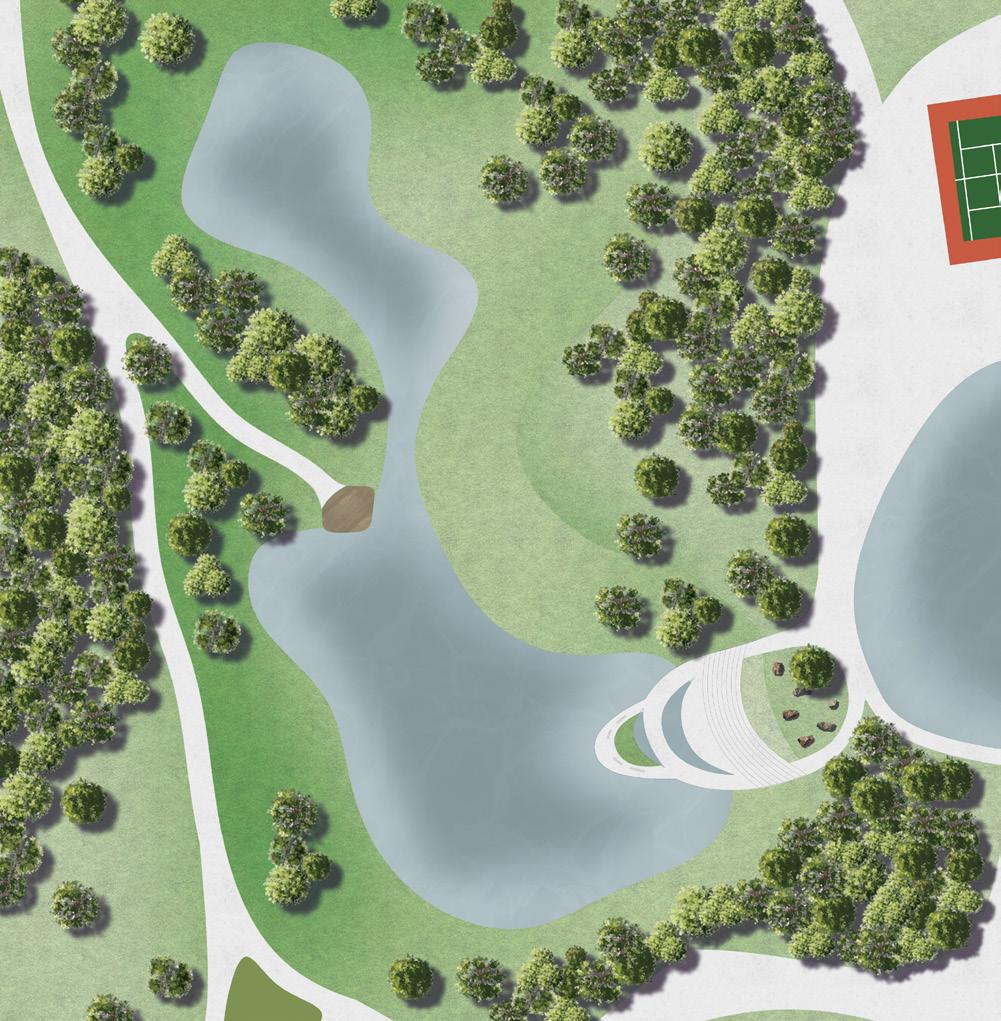

Bayside Theater
Peninsula Overlook Section
Peninsula Overlook
Peninsula Overlook Axonometric
Bayside Theater Axonometric
5
GALACTIC FRAGMENT
ARTSCAPE IN MARGINALIA
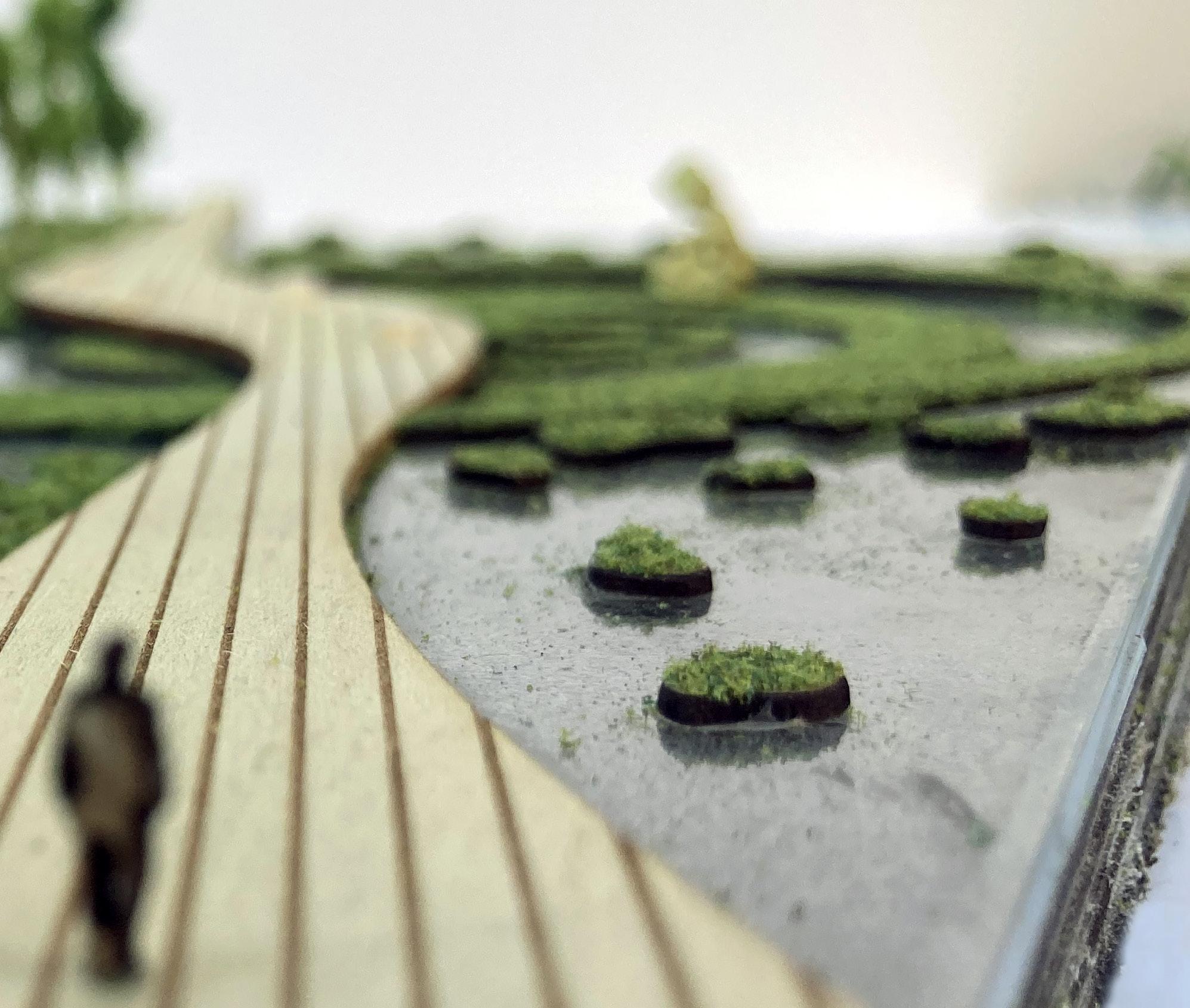
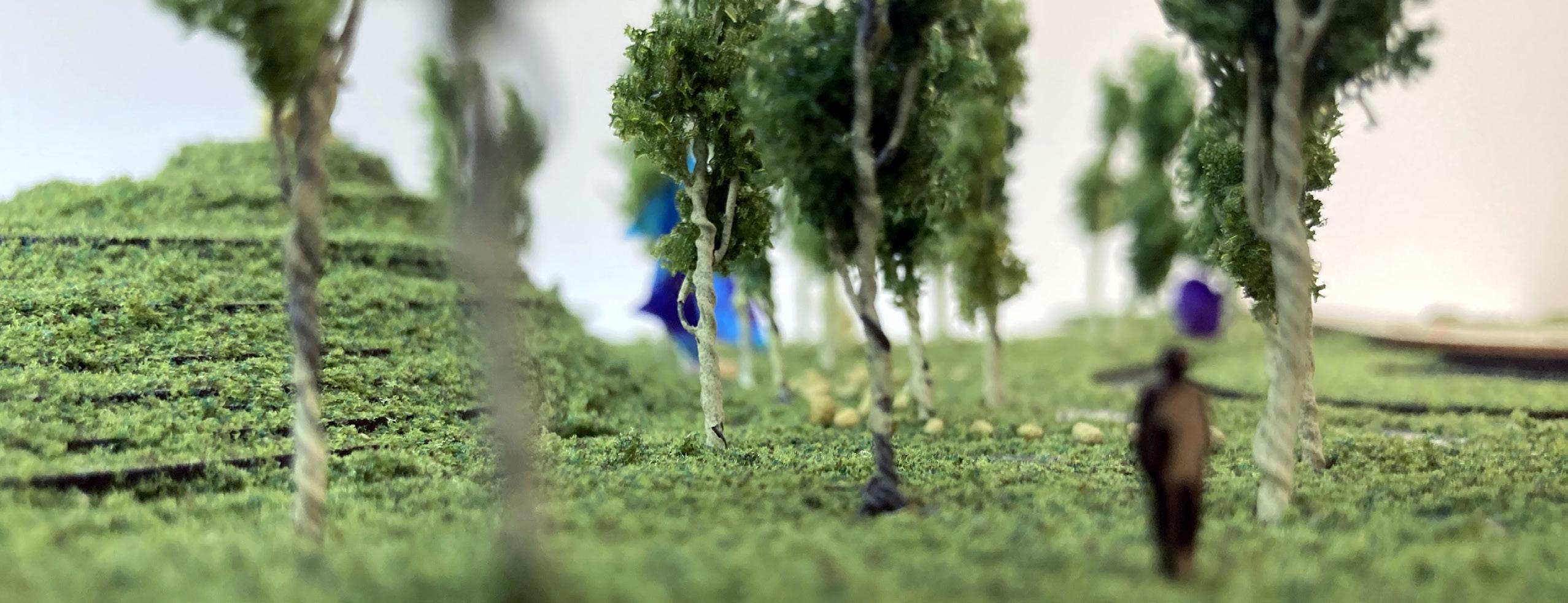
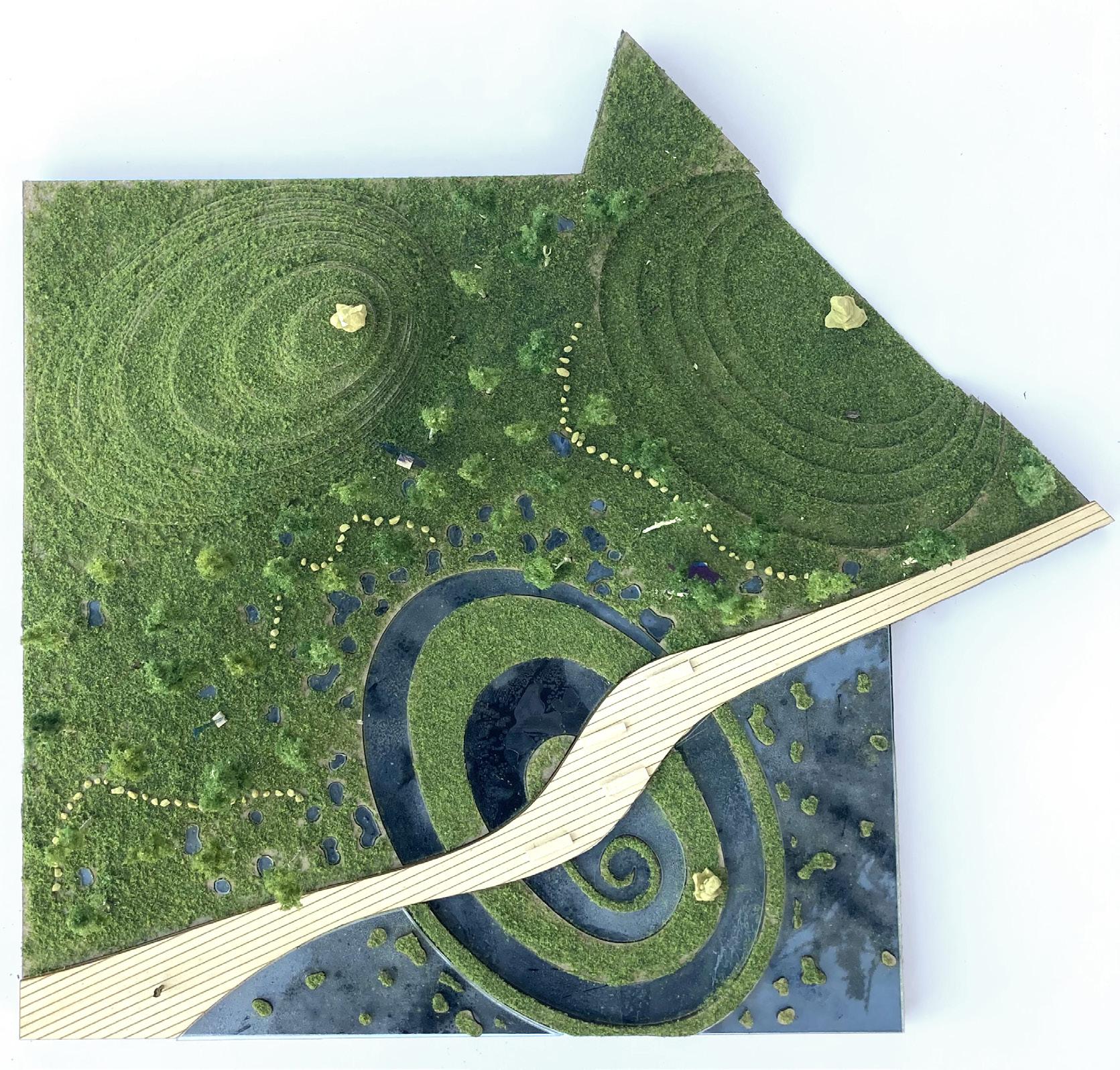
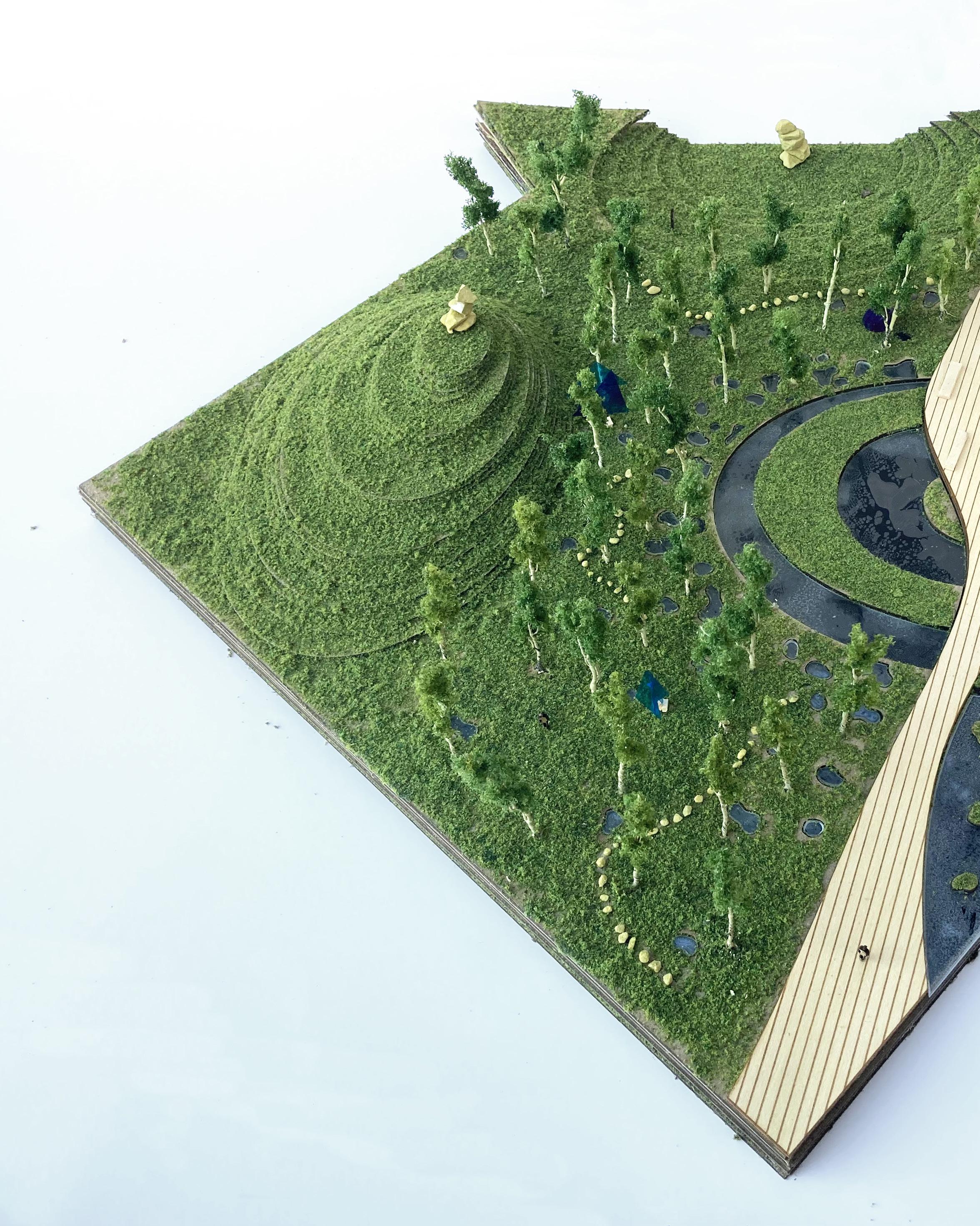
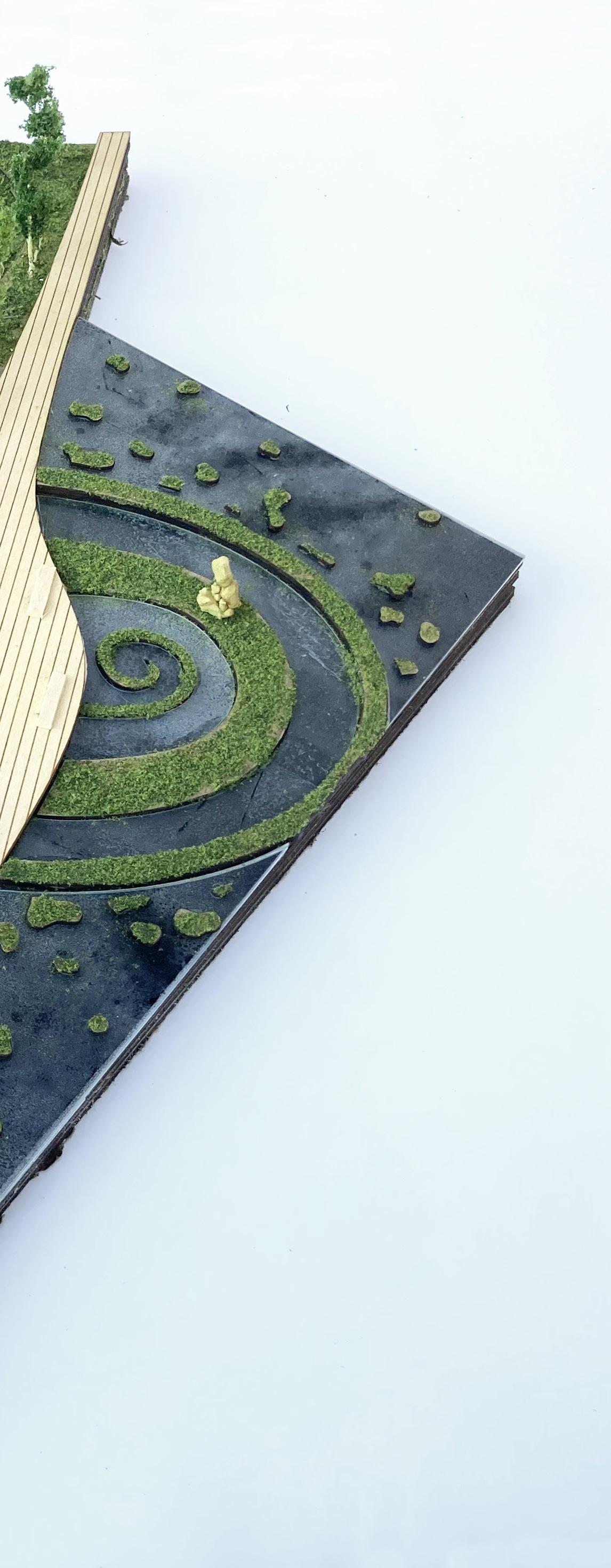
Through inspiration from established, successful projects, Galactic Fragment is a reflective park showcasing sculptures in a sculptural way. A winding wooden path, meandering stone pathways, tiered extruded berms, small organic ponds, a sunken gathering space, and a spiraling inversion of land and water come together to make this artistic expression of landscape.
GALACTIC FRAGMENT
EXPLORING THE RELATIONSHIP BETWEEN CANOPY, ENCLOSURE, GROUND, AND LANDFORM IN THE CREATION OF AN ARTSCAPE
The focus of this studio project was to study and use successful tactics of canopy, enclosure, ground, and landform use in the built environment.
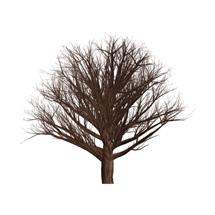
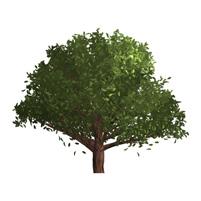
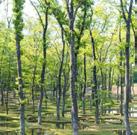
I took a look at the Yoshino Cherry Trees on the campus of the University of Washington.
The symmetry of the design keeps in line with the Gothic architecture surrounding the space by suggesting an arcade or cloister within the quad.
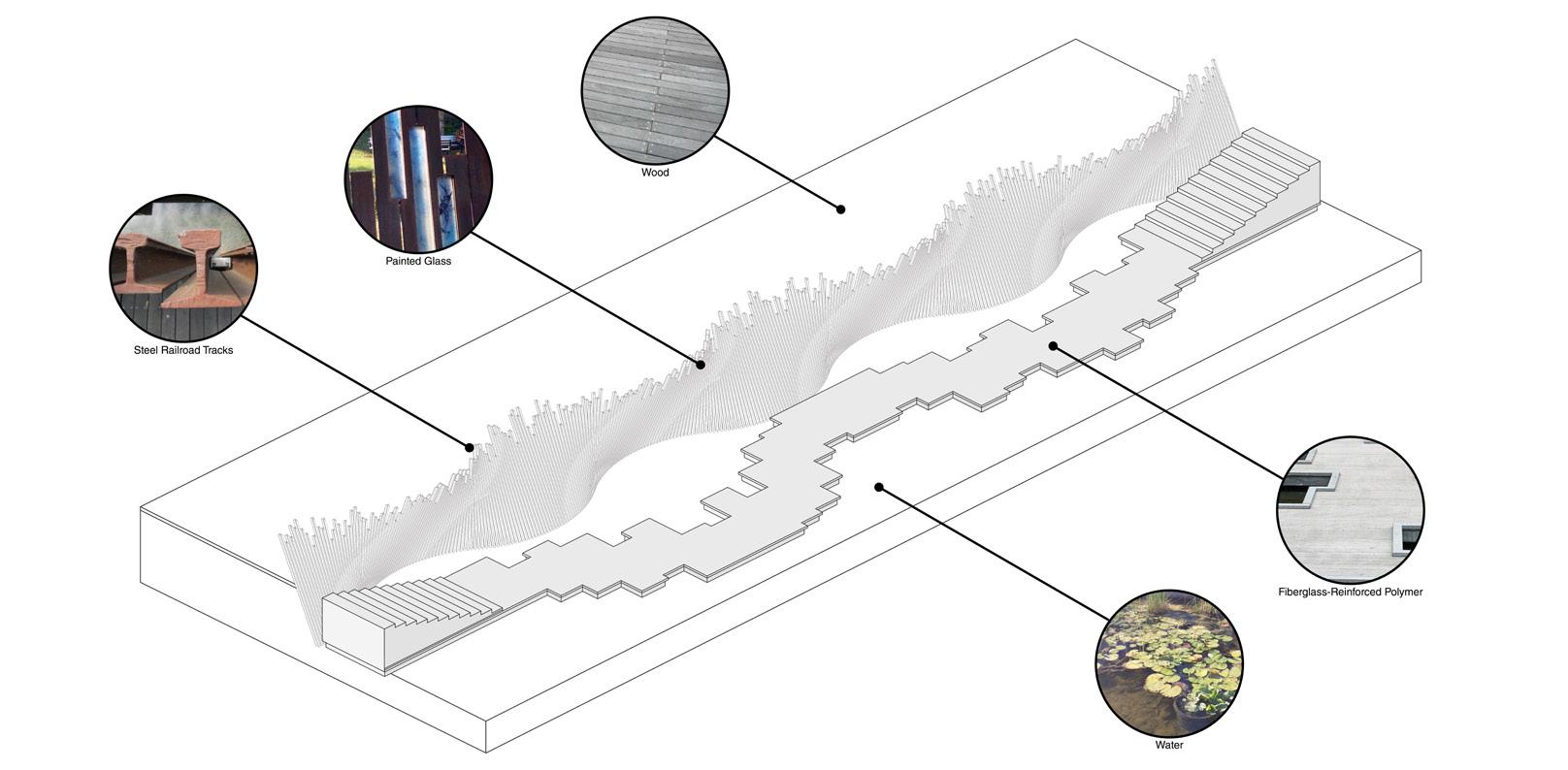
As for a successful precedent of enclosure, I took a look at Tanner Springs Park in Portland, Oregon. To the East border of the park, ‘Art Wall,’ creates a sense of enclosure along the winding path. It is made up of 368 historic
railroad ties that weave back and forth. They are inlaid with pieces of glass that have been handpainted with things of nature.
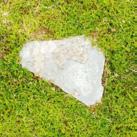
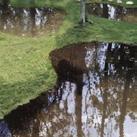
I researched Water Garden by Junya Ishigami for insight into ground design. The intent behind the design was that the space would be used by visitors for inner thinking and meditation. The organic paths and elements create a unique blend between the built and natural environments.
The final phase of this process was a look into the use of landform in landscape design. This was the main basis of the creation of our own artscape. My main inspiration was ‘Cells of Life’ by Charles Jencks.
CANOPY ENCLOSURE GROUND
WATER GARDEN





Galactic Fragment
Moultonboro by Frank Stella
GALACTIC FRAGMENT
PRECEDENTS AND FRAMING
The abstract shaping of the boundary of Galactic Fragment is based upon ‘Moultonboro’ from artist Frank Stella’s irregular polygon series.
The sculptural landform of the artscape is based upon ‘Cells of Life’ by Charles Jencks.
I drew inspiration from the tiered extrusions and levels made through shaping the Earth. Another large factor of inspiration was drawn from ‘Water Garden’ by Junya Ishigami. I took inspiration from the organic shapes that form the boundaries of land and water.
Cells of Life by Charles Jencks
Galactic Fragment
Water Garden by Junya Ishigami


GALACTIC FRAGMENT
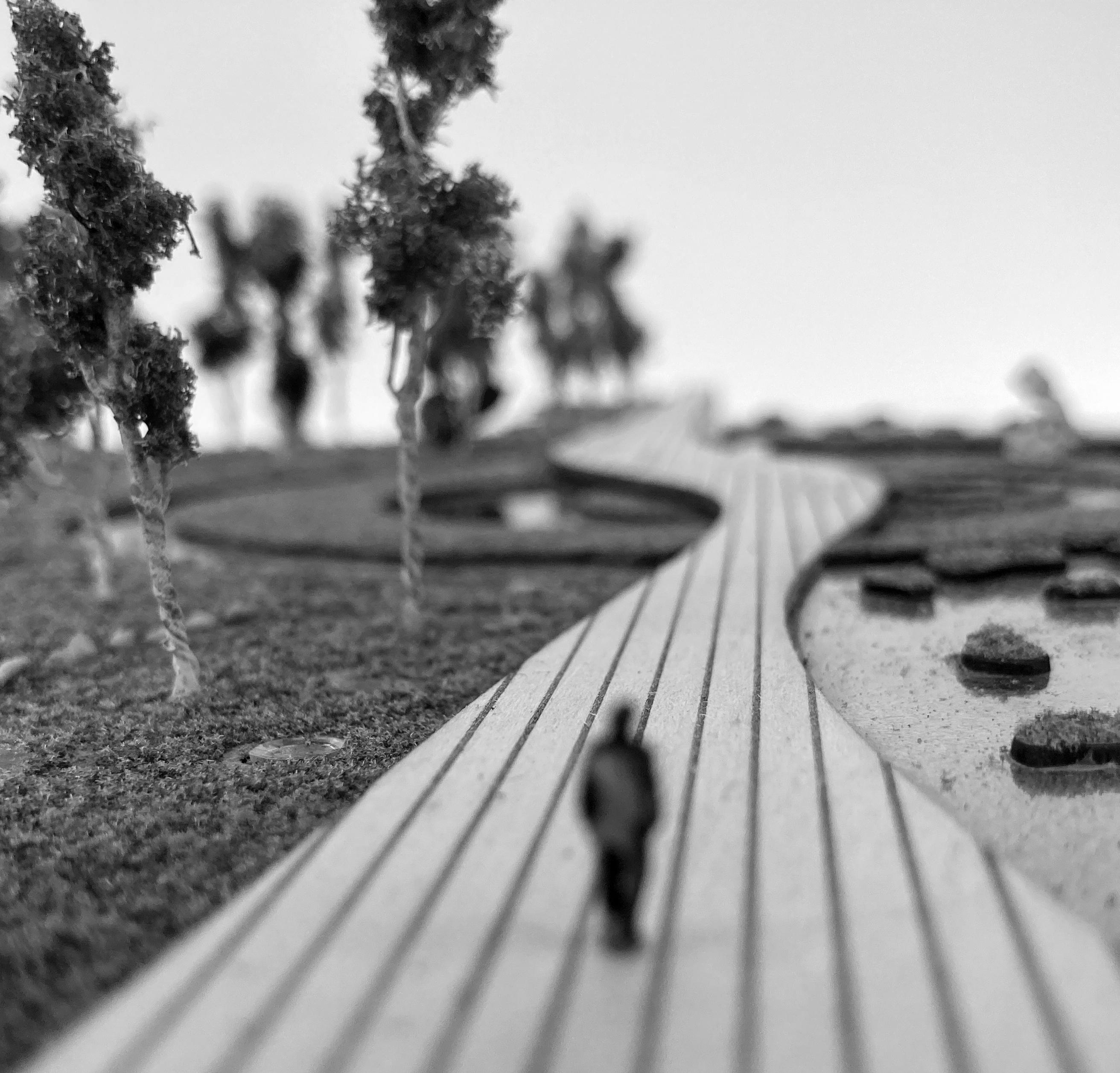
MODEL MAKING
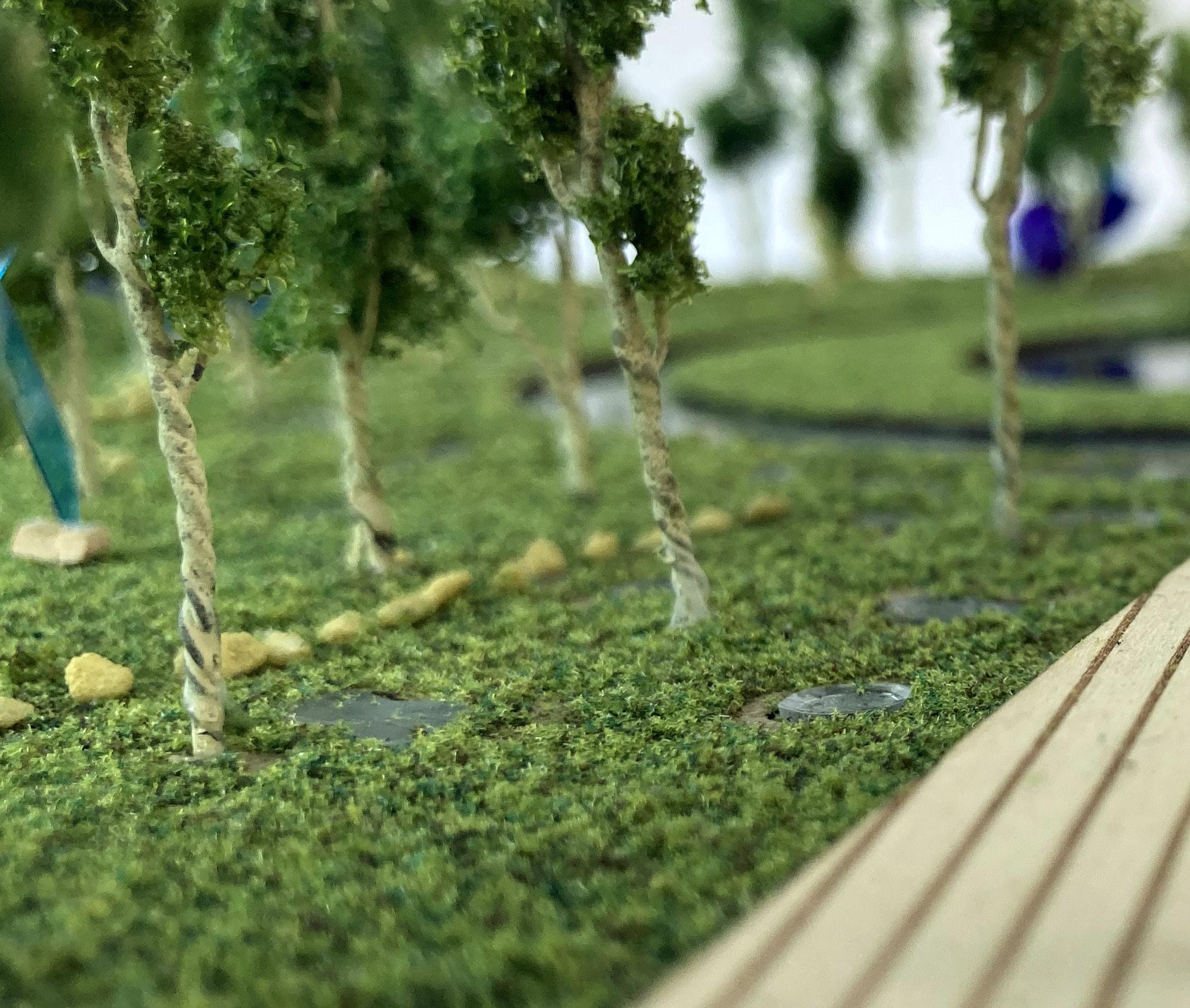
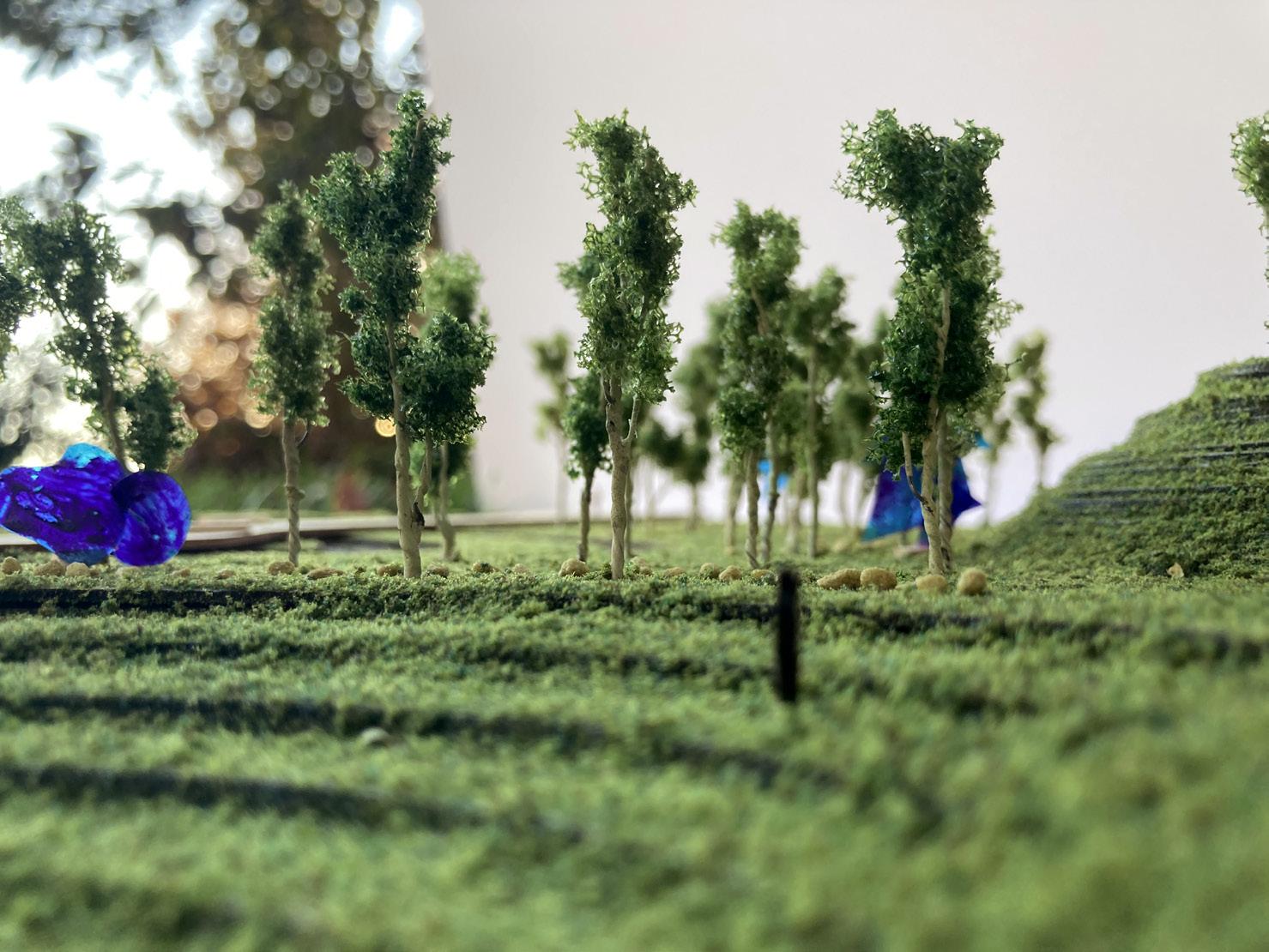
Utilizing chipboard, acryllic, basswood, paint, gravel, and fake miniature plant material, the physical model making skills I acquired throughout this process have made me a better designer. I had to think critically about
how I was to communicate my design and emotional intent to observers of the project. It was a combination of technical and artistic skills that went into producing an effective model of Galactic Fragment.
KIMLEY-HORN INTERNSHIP
KIMLEY-HORN INTERNSHIP
RALEIGH, NC
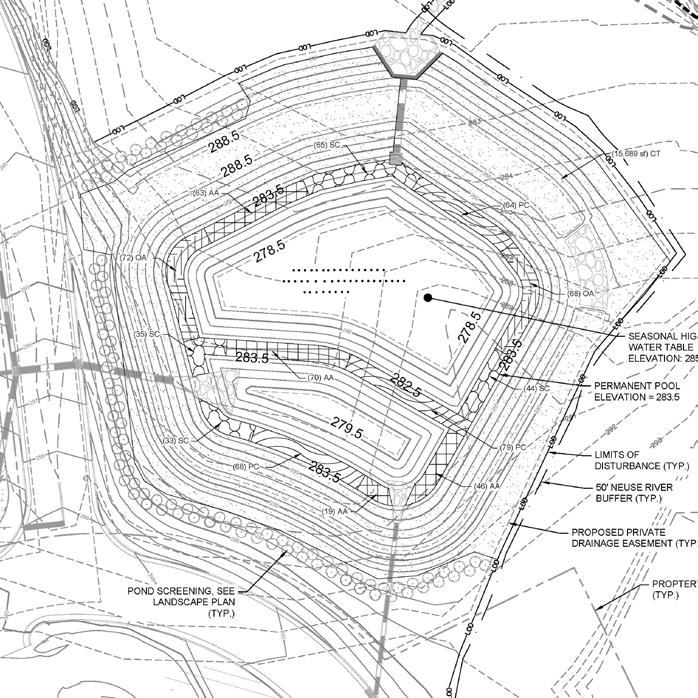
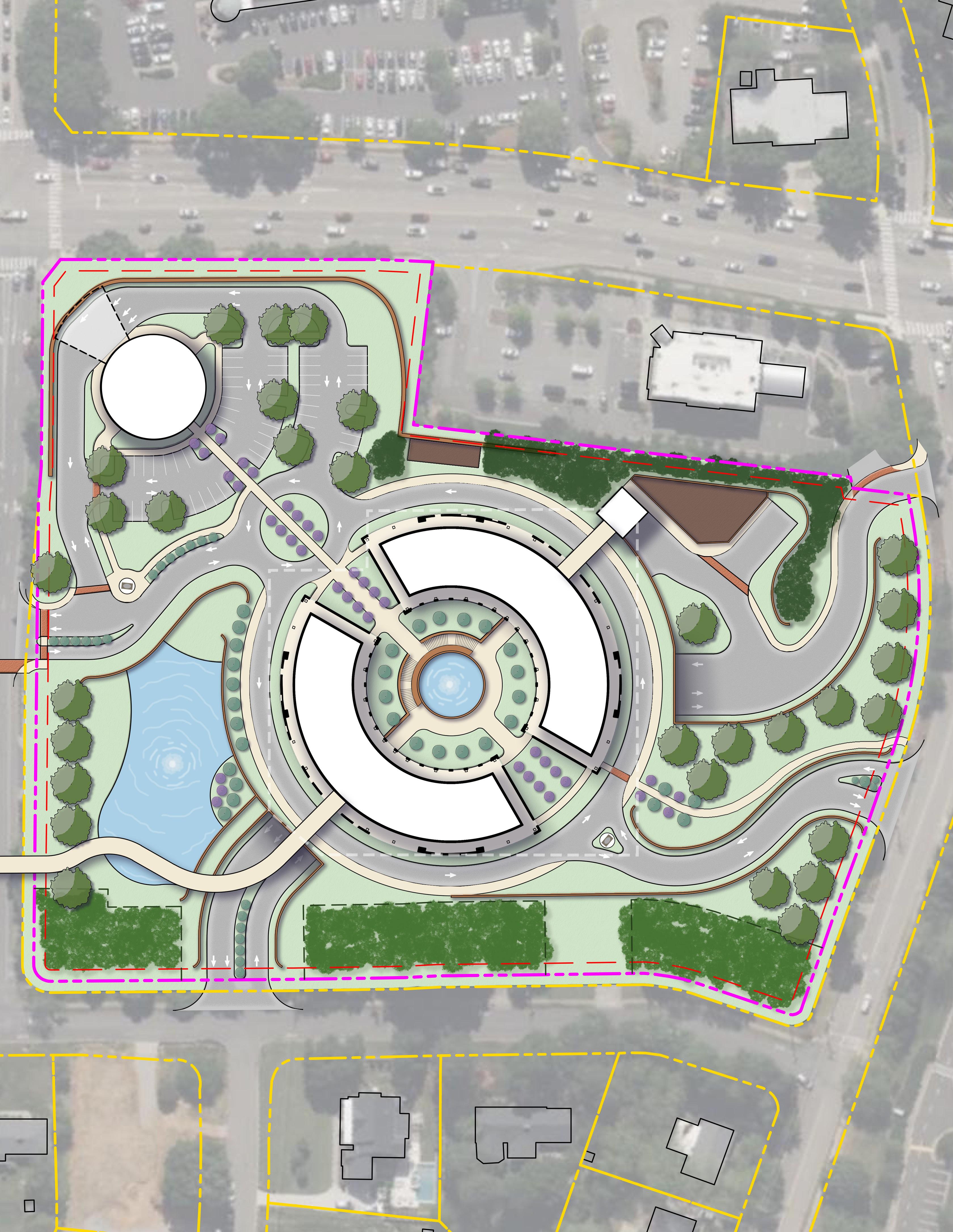
In summer of 2024, I had the chance to get some hands-on experience with landscape architects in the field at Kimley-Horn in Raleigh, North Carolina. I was one of three landscape architecture interns in the office, which happened to be the company’s corporate headquarters. I coordinated with landscape architects, engineers, environmental specialists, and
marketing specialists within the office for numerous projects I had the chance to be a part of. Working mostly in Civil3D, I assisted with hardscape plans, landscape plans, planting plans, details, renders, and even graphic design. The skills I gained were incredibly valuable to my education and future career in the field of landscape architecture.
KIMLEY-HORN INTERNSHIP
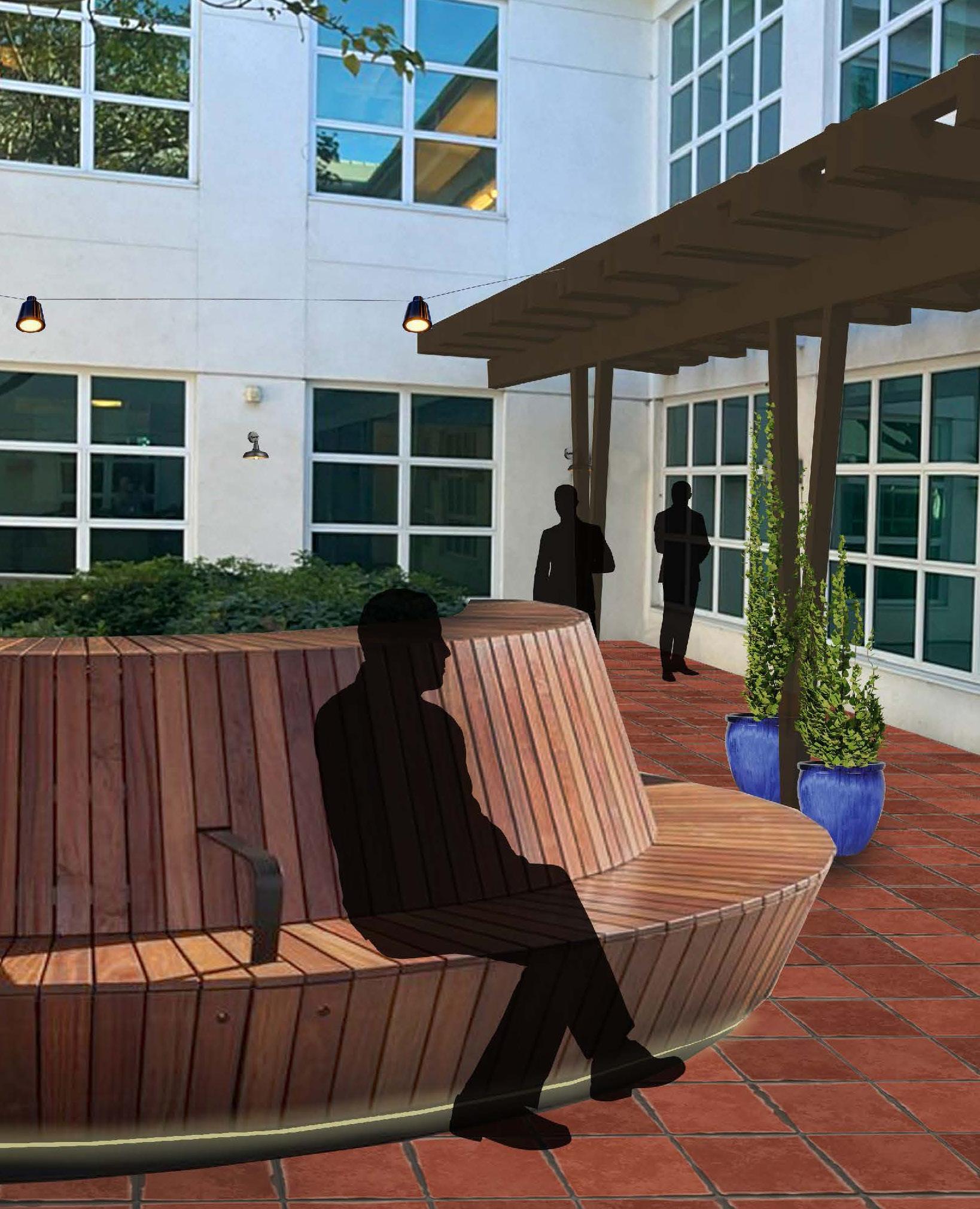
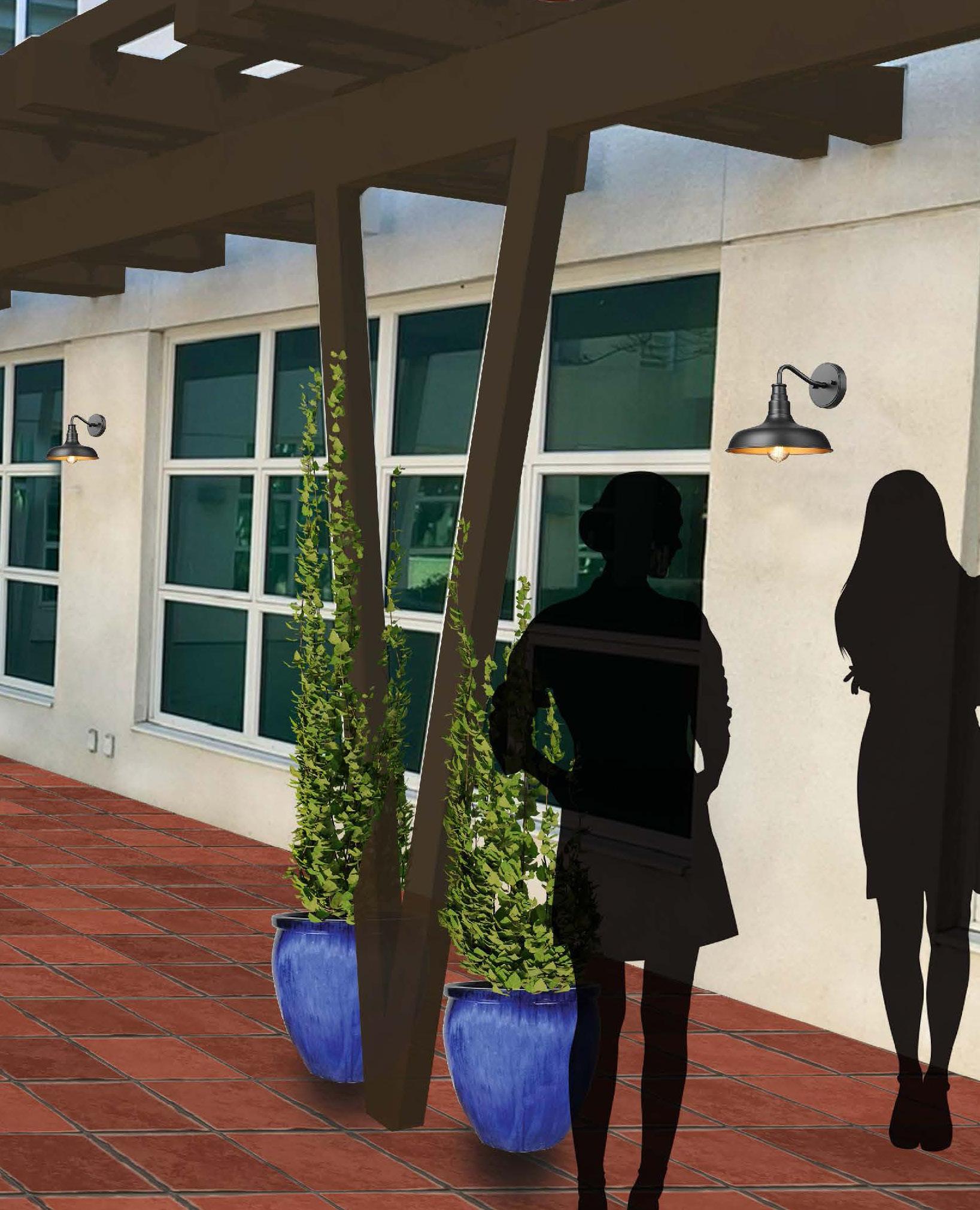
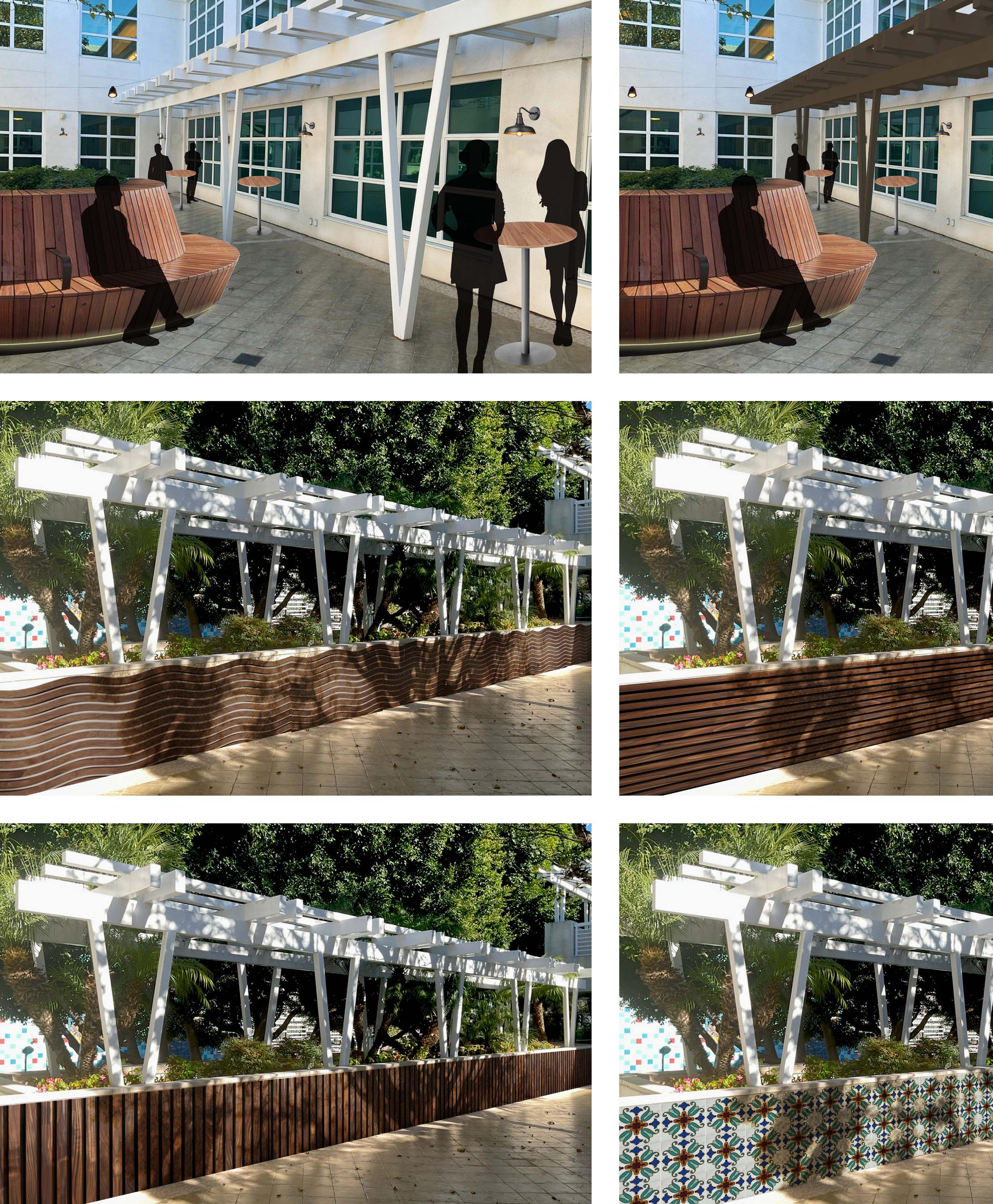
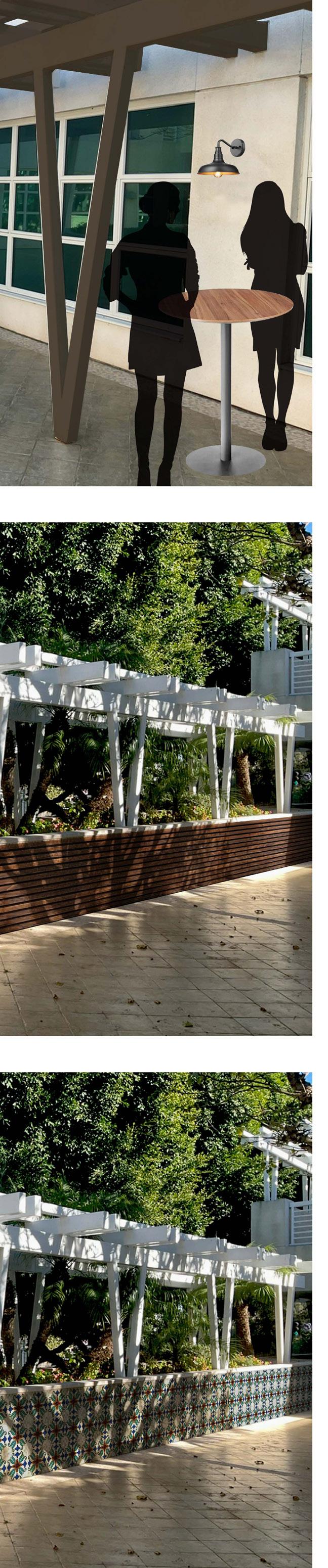
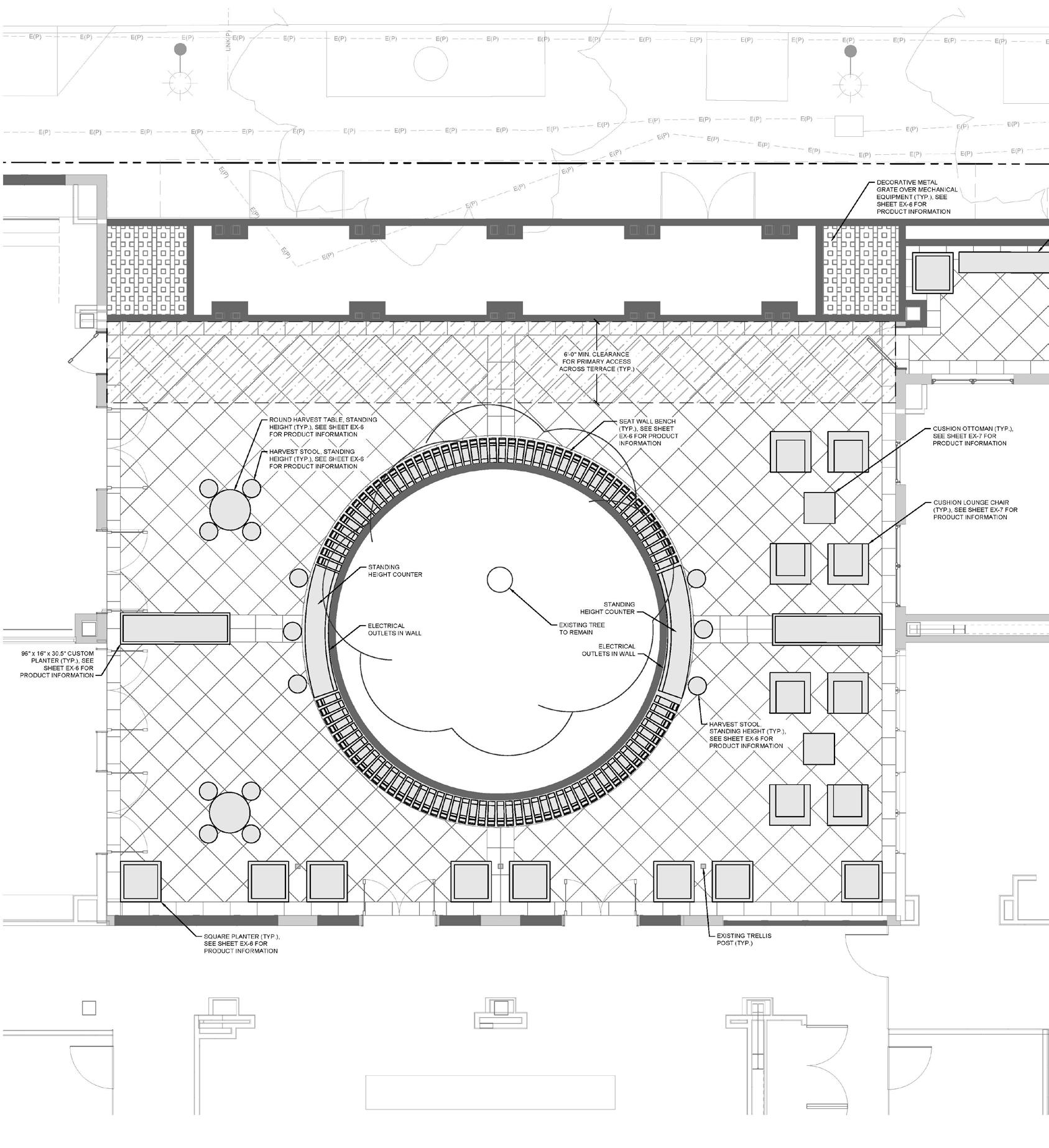
My favorite project was one I had the chance to kick-off with the client. A First Citizens Bank branch in Santa Monica, California was interested in redoing their outdoor terraces. In order to get a better idea of what they want, we drafted a series of renderings of their existing space with improvements made. Along with these renderings, we presented a variety of site furnishing options for the client to decide on as well. Being able to communicate directly with the client through this project was incredibly valuable and gave me a good understanding of how landscape architecture fits into the consulting process.

SARAH SPILINEK