SPEC
SPEC /spek/
In hope of success without any commission or instruction.
We are a publication focused on identity, lifestyle and culture, grounded in individual and creative expression.
Cover Image by Hallie Jing
OUR TEAM
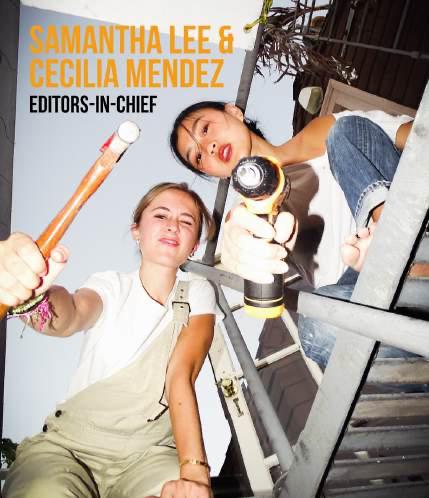
SAMANTHA LEE & CECILIA MÉNDEZ-COMAS EDITORS-IN-CHIEF
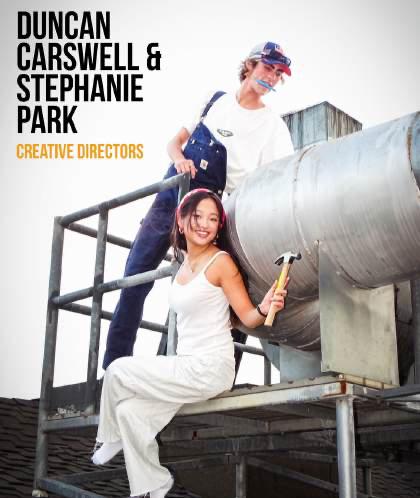
DUNCAN CARSWELL & STEPHANIE PARK CREATIVE DIRECTORS
DAISHALYN SATCHER VICE PRESIDENT OF WRITING
ASAKO ISHIBASHI & MARINA HERMANN
VICE PRESIDENTS OF PHOTOGRAPHY
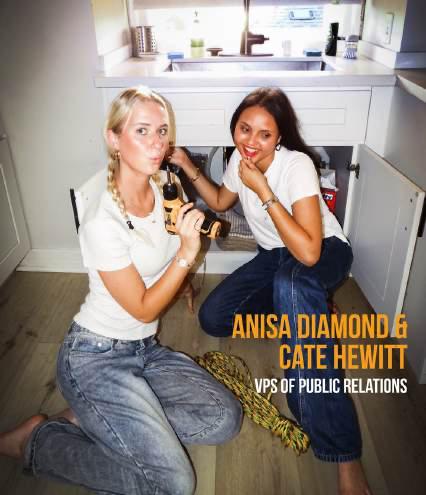
ANISA DIAMOND & CATE HEWITT
VICE PRESIDENTS OF PUBLIC RELATIONS
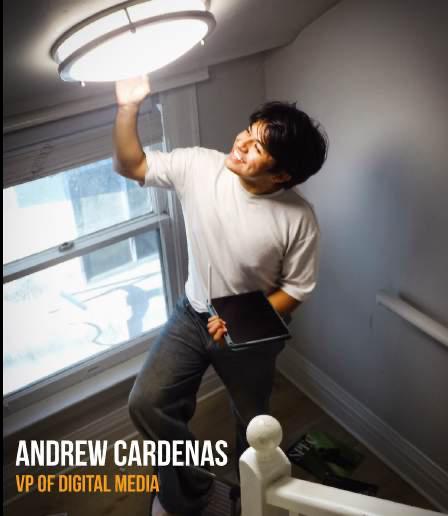
ANDREW CARDENAS VICE PRESIDENT OF DIGITAL MEDIA
TRISHA VARIYAR & ISABELLA BALIKIAN
VICE PRESIDENTS OF FUNDRAISING AND EVENTS
DESIGN
MIA ALONSO
ALEXIS CHIU
ARIADNA BERTAN
AMY KOO
ELYSE BOUCHARD
CAMILLE CULBERTSON
KATIE BOND
ZEINA LEE
BLOGS
OLIVIA SMITH
YAHVI SHAH
SHEILA CASTILLO
WEB DESIGN
CATALINA PALAZIO
ERICA GONG
JACKY
RUTHERFURD & SKYLAR SEPULVEDA
VICE PRESIDENTS OF MERCHANDISE
WRITING
LIZZIE STEWART
NATHAN JANAK
EDWARD ZHANG
CORDELIA WELD
CAROLINE BERGER
SOLE MARINO
AASHNA MADAN
ISABEL RAMOS-ASSAM
PUBLIC RELATIONS
PAIGE HENCH
SOPHIE LAM
KIANA CASTILLO
SAMY VIMALRAJ
SOPHIA BOULTINGHOUSE
ISABELLA MILLER
PHOTOGRAPHY
DELARA JADVAR
CATALINA PALAZIO
MARYAM RAHIMIE
HALLIE JING
ERIN CHANG
FUNDRAISING & EVENTS
TIARA JAIN
GEORGIA KLASS
GAVIN MARK
SANA SANJEEV
ISSY SOULEYMAN
SARAH PARK
TEBO NICHOLSON
ERICA GONG
letter from The Editors
Dear reader,
It is with excitement that we present you Issue 15 of SPEC Magazine.
We thought long and hard about what to call this issue. 2025 has brought many challenges to Los Angeles. We started the year with devastating wildfires. We punctuated the summer with protests in our own backyard. And we’re ending the year with uncertainty, as policies shift around us like the seasons.
Tossed up in the air by caution, we found simple things to ground ourselves: a hike on a warm day, the gift of flowers, a conversation in your native language, until it dawned on us… the ground itself is the only constant amid never-ending change.
DIRT is all of our ends and all of our beginnings.
If our blueprint for this issue started with the obvious – inflation, cancel culture or college – then we would be a broken record. Instead, we looked beneath the surface, for the stories we were told to bury.
We wanted to represent a generation more tethered to reality. A generation who knows who they are and are unafraid to express how they feel. From foot fetishes to the origins of profanity, DIRT makes clear that we are unwilling to conform, unpredictable, and rebellious.
Most people may never pick up this magazine, but since you have, thank you for allowing us to share our perSPECtive. We hope this issue makes you consider all the roots you choose to plant. We also hope it makes you laugh – or cringe. Have fun within these pages because, at the end of the day, we all just need a little bit of sun.
With love,
Samantha Lee and Cecilia Méndez Comas Editors-in-Chief


WRITING
Isabel Ramos
DESIGN
Zeina Lee
PHOTOGRAPHY
Erin Chang
PR
Sophie Lam

DIRTY MOUTH
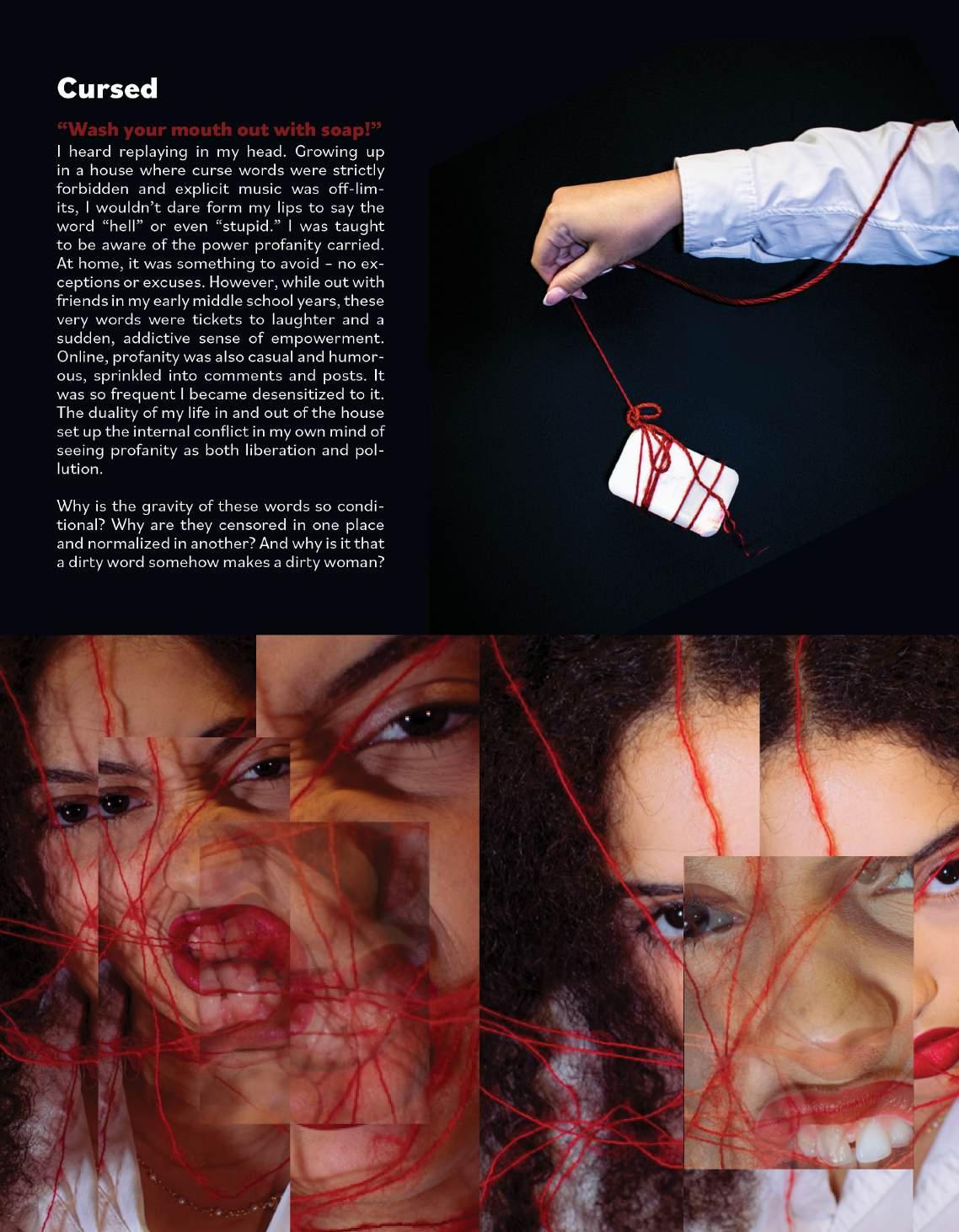
“Wash your mouth out with soap!”
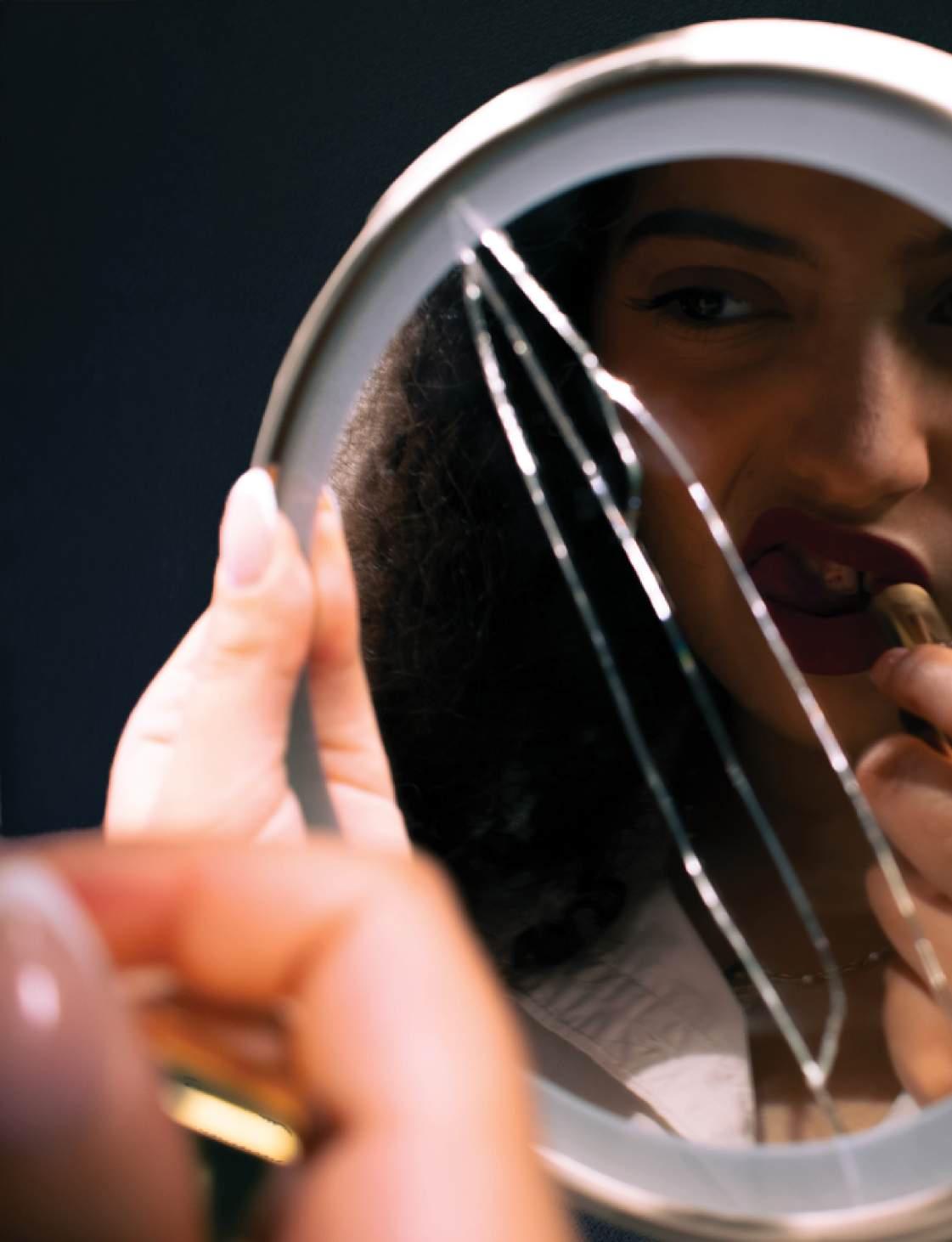
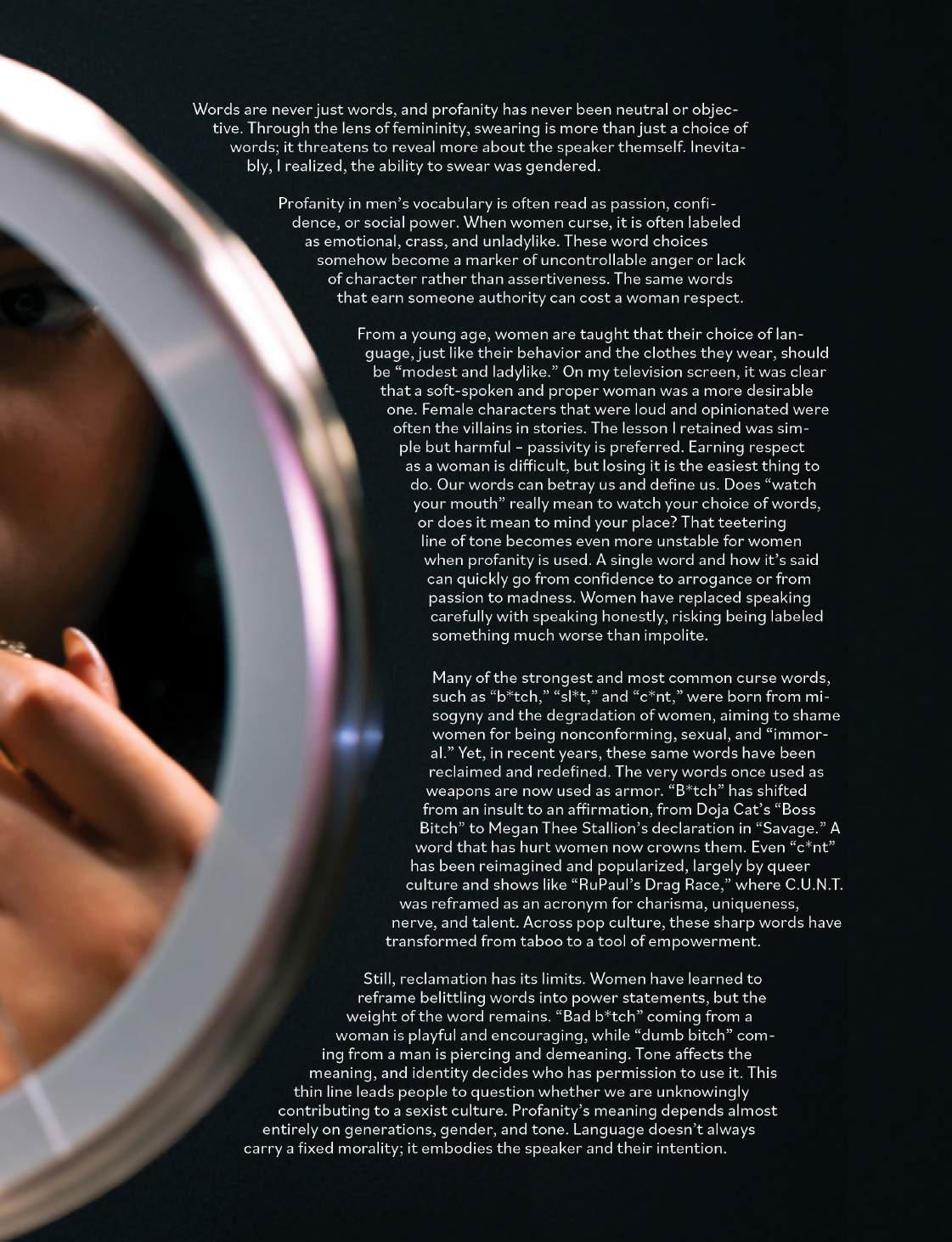
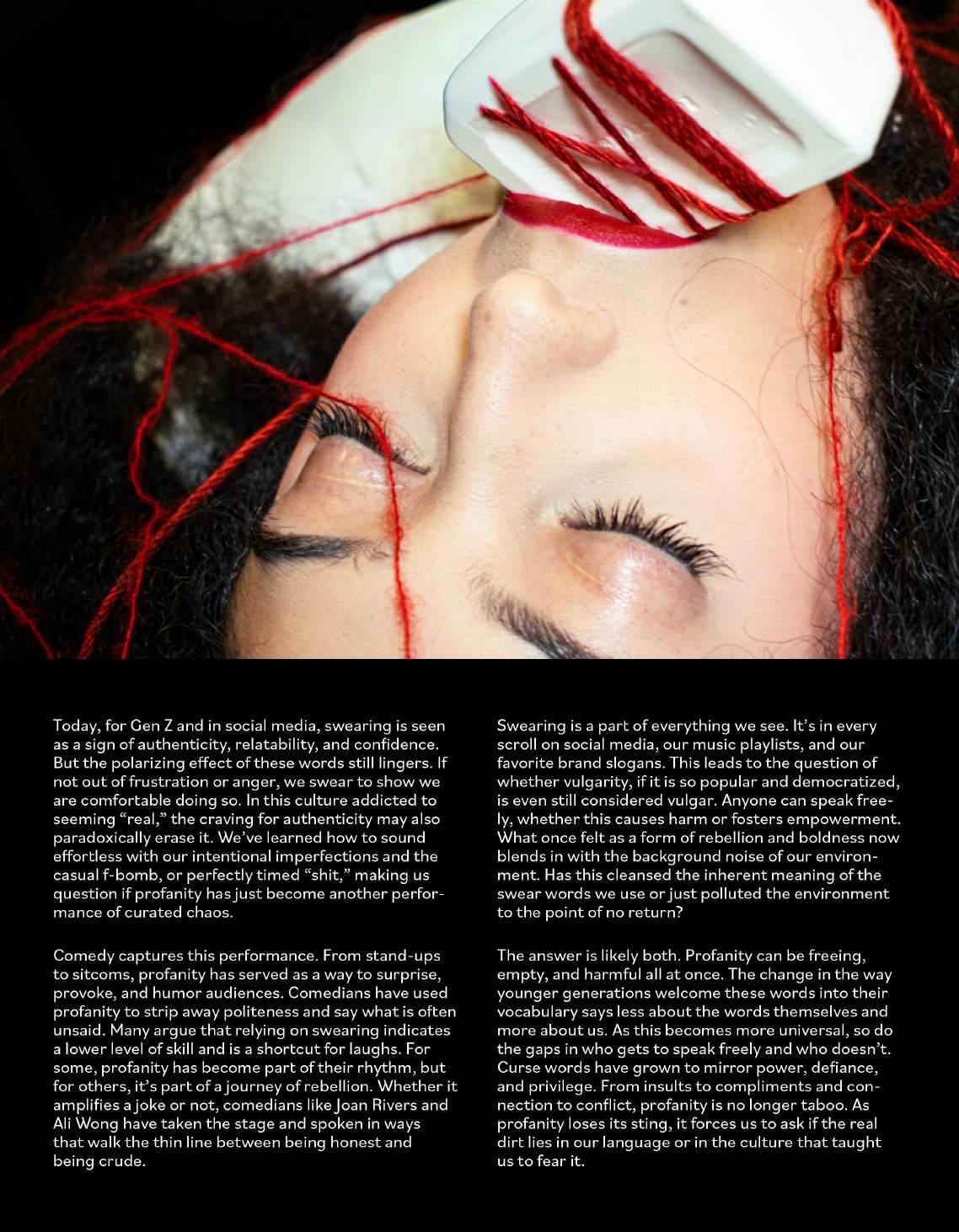
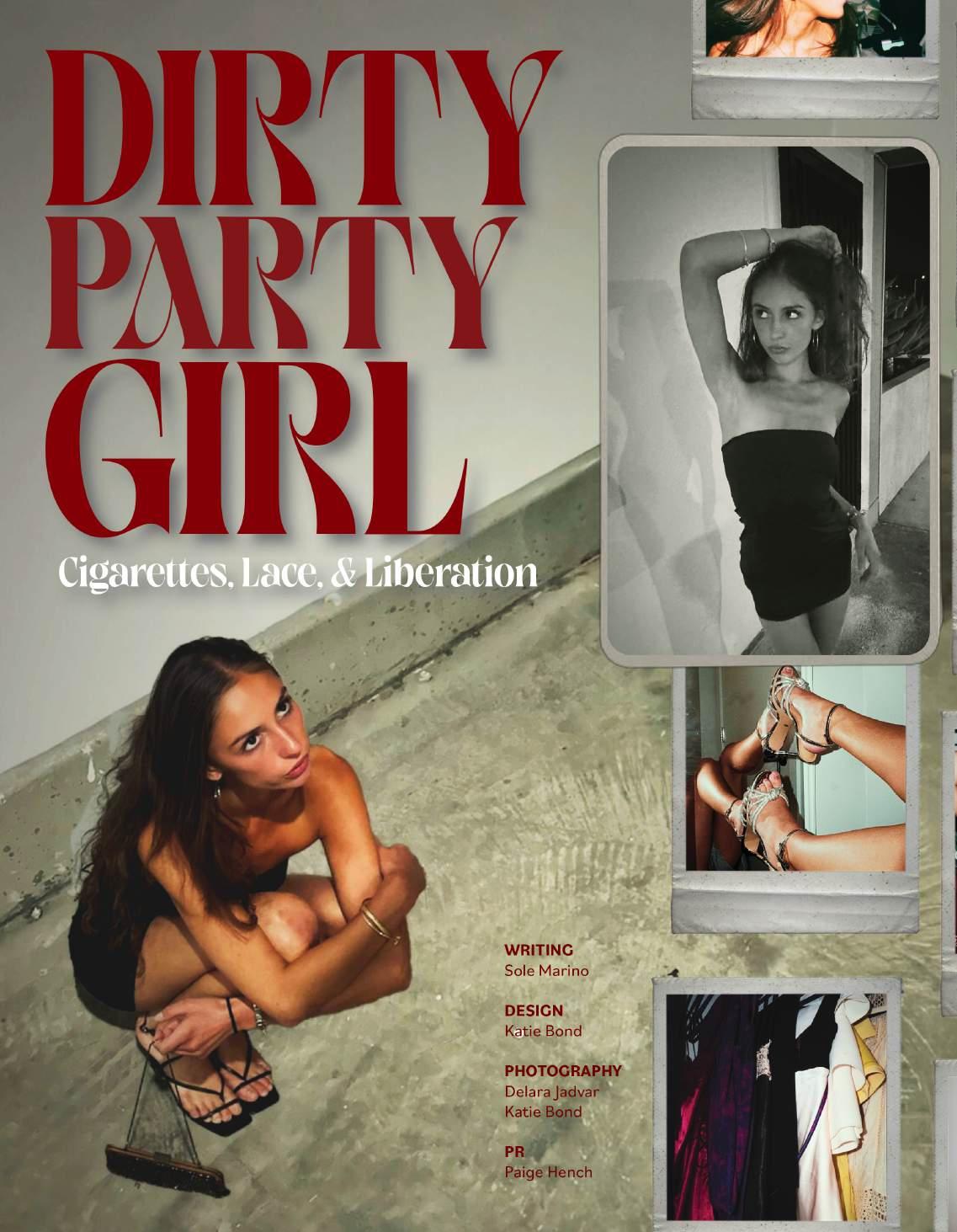
I heard replaying in my own mind. Growing up in a house where curse words were strictly forbidden and no explicit tracks could be played, and I wouldn’t even dare form my lips to say “hell” or even “stupid.” I was taught to be aware of the power pro fanity carried. At home, it was something to avoid – no exceptions or excuses. However, while out with friends in my early middle school years, these very words were always sure to get a laugh followed by an addictive feeling of empowerment. Online, profanity was also casual and humorous. It was fre quent and I gradually became desensitized to it. The duality of my life in and out of the house set up the internal con mind of seeing profanity as both liberation and pollution. Why is the gravity of these words so conditional? Why are they cen sored in one place and normalized in anoth er? And why is it that a dir makes a dirty woman?




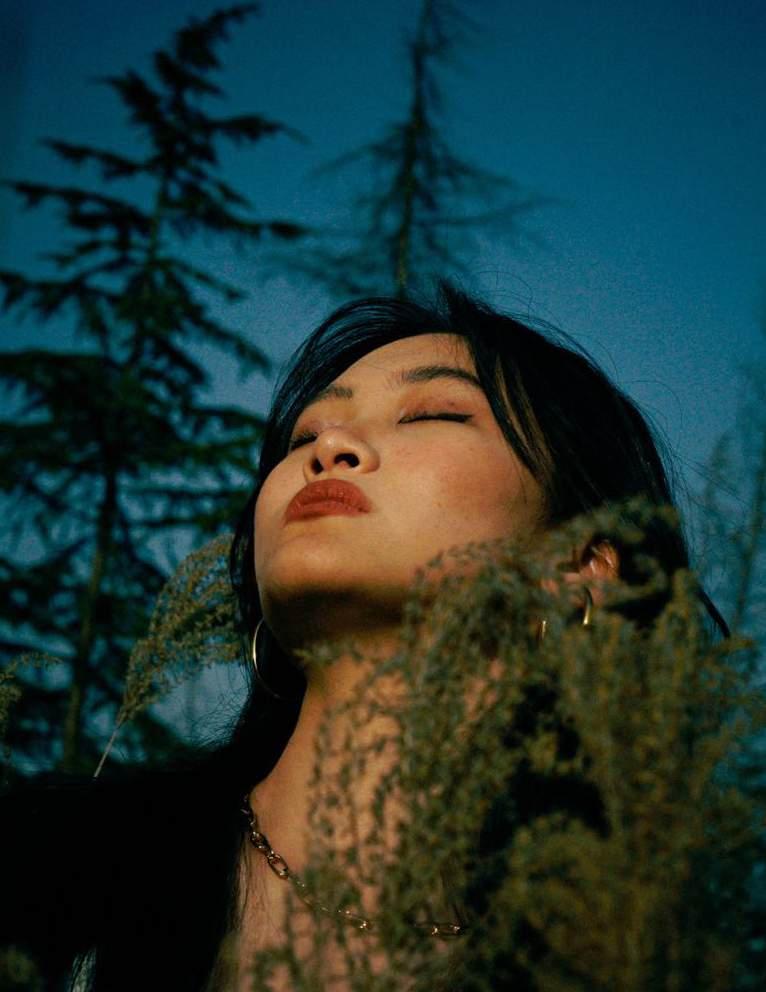
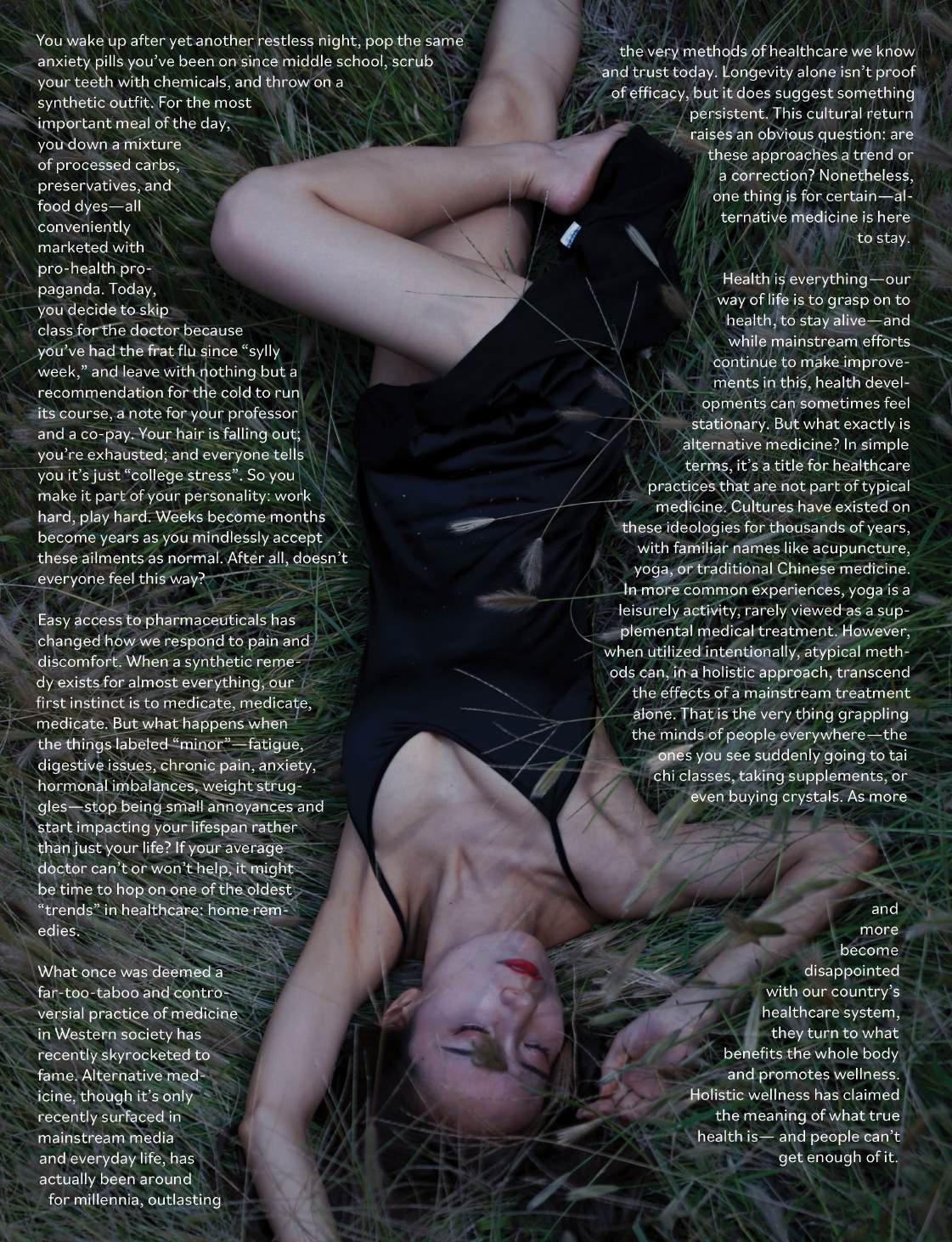
Holistic Wellness and Natural Medicine
WRITING
Caroline Berger
DESIGN
Amy Koo
PHOTOGRAPHY
Hallie Jing
PR
Anisa Diamond




PLANT MUSIC
WRITING
Aashna Madan
DESIGN
Elyse Bouchard
PHOTOGRAPHY
Maryam Rahimie
“It’s a very transcendental experience”
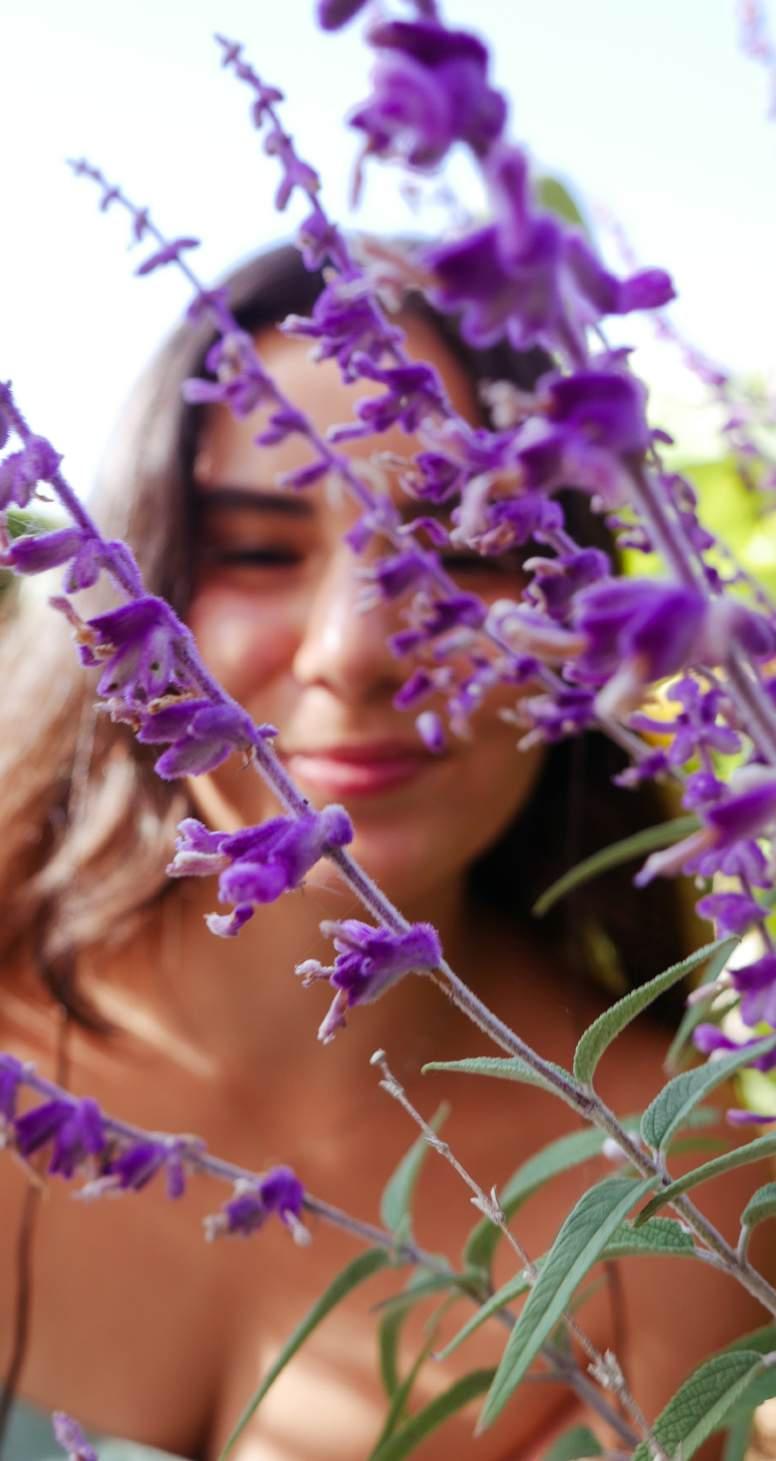
So often we’re told to “stop and smell the roses,” but what if we listened too, going beyond their floral scent to hear their sweet melodies? What if a bouquet of daisies didn’t just perfume a room but gave it a pulse, a rhythm to groove to? What if a garden were really a symphony you haven’t heard — yet? Plant music asks us to take that question seriously – to take the ecosystem around us off mute.
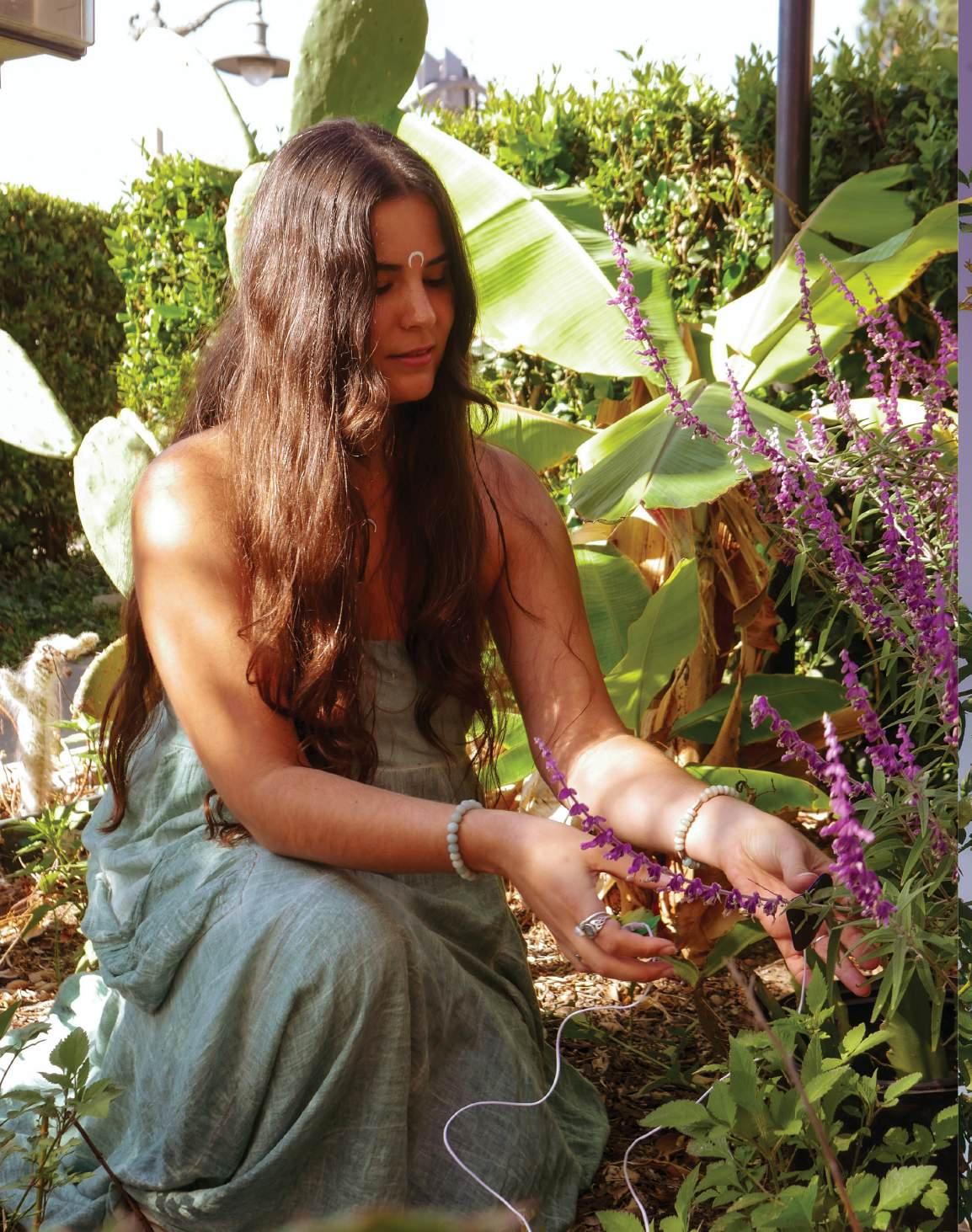
We throw around the phrase “reconnecting with nature” after a few rough days, then go back to our phones for comfort. Most of us live indoors, behind glass and under bright lights. And the habit shows. It’s getting harder to notice a breeze, a bud, a leaf, or a patch of shade. Time in green spaces lowers stress and steadies attention; we have the studies to prove it, and we feel it in our bodies. That is the gap Yucca works in. The Los Angeles-based DJ and sound designer Yucca (@yuccaliptus) brings a living plant onstage, places small electrodes on its leaves, and invites the audience to touch it. As their hands move, the plant’s vibrational signals shift, and their instrument turns those variations into sound.
The common misconception, Yucca said, is that plants produce frequencies that naturally create music on their own. Electrodes measure the electrical resistance coming off the plants and how it changes when humans are in close proximity. They are able to pick up a binary code that is then converted into musical notes. We’re at a crux of electronic music where a lot of synthesizers and inorganic sound are being created. At an intersection between organic and electronic, there’s a pull to return to more analog, natural sounds.
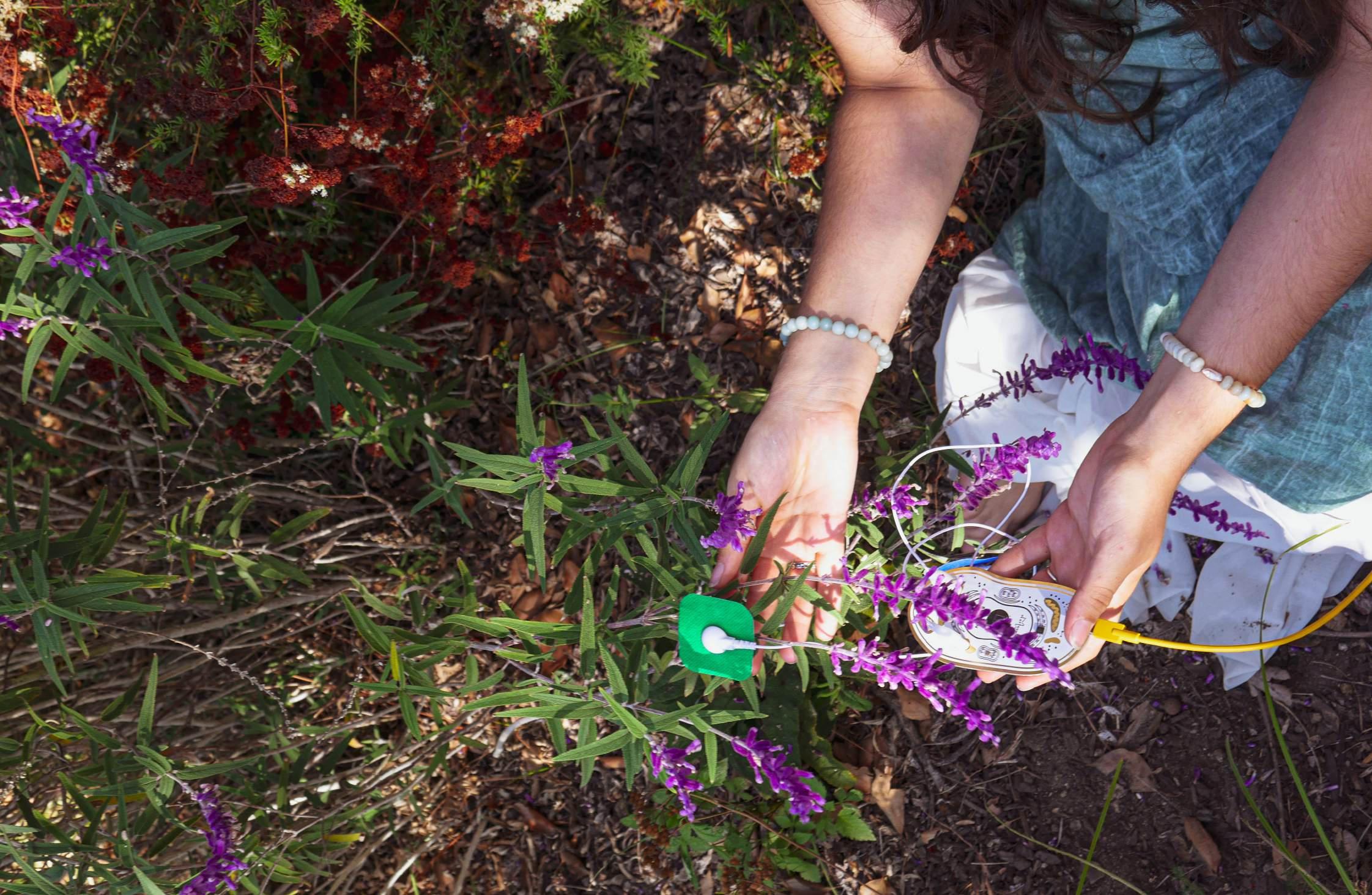
Yucca’s intention is their craft. They engage with a specific plant through all their senses – how the plant smells, how it tastes if it is edible, and how it feels when they touch it. Because of this, plant music involves a level of unpredictability unique to other music. Yucca shared, “for artists it’s a very transcendental experience, because we’re relinquishing our control.” When people come and touch the plants during the set, it gives them authorship and makes the instrument social. They dream of a communal jam.
Since a plant has the power to play many frequencies, every performance is unique. Having performed live twice, Yucca has a variety of sound designs to pick from. At each set, they start from scratch, utilizing modeling synthesizers to bring real-life sounds and objects into the synth world. However, translating these sound designs into music during performances changes depending on how the plants are touched. How the plant feels shapes its response: a thirsty plant sounds half as good as a well-watered one.
Atop the plant music, Yucca overlays singing and other instruments. Yucca then worries: What if the plant and artist don’t sound good together? Nevertheless, they said, the risk and unpredictability of plant music are what make the field so exciting. It fosters a deep connection between the audience and the artist because, like Tinkerbell’s pixie dust, this instrument only works when people pay attention.
Yucca shared a special moment when they sang a line onstage and the plant returned the exact same melody. This broke their focus and made them smile mid-song, reminding them that their objective was never about controlling the tune but building a relationship with their leafy co-stars.
Yucca’s primary goal is to shine a light on the protection of native plants in our community. Invasive plants are infiltrating big cities like Los Angeles and New York City; therefore, they hope to highlight plants that are native to the land itself. Individuals often forget to consider what the environment facilitates before planting particular species that may not be conducive to the habitat. Yucca wants to better respect the wisdom that native plants carry through their music. Dirt gives rise to unique art forms that bridge nature and technology as artistic mediums.
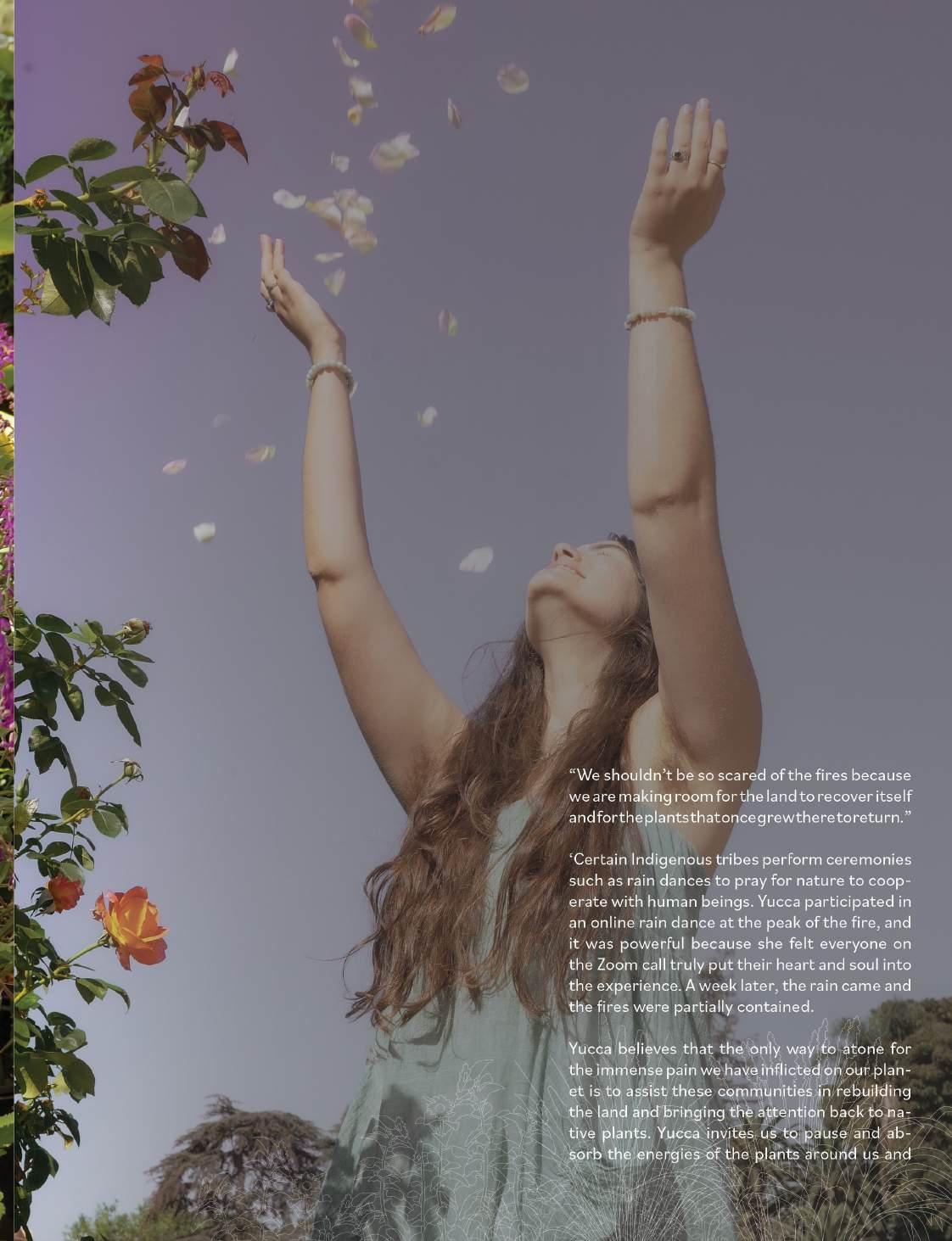
The interplay between human beings, plants, and music has always been part of history. Yucca’s recent performance was dedicated to the LA wildfires in January, its elemental spirits, and its impact on the community. The process for composing their song, “Run like Wind,” involved closing their eyes, sitting with the plants, and letting them speak to them. They addressed the fires from a different angle, reflecting on the land’s origins and how it once housed native plants and animals. This gave them a new perspective: the tragedy felt inevitable, a sign of the land trying to reclaim itself. Although fires bring destruction, they also fuel life.
According to Yucca, we should work more closely with the native community in this area because they are aware of the necessity of fires and how they are natural.
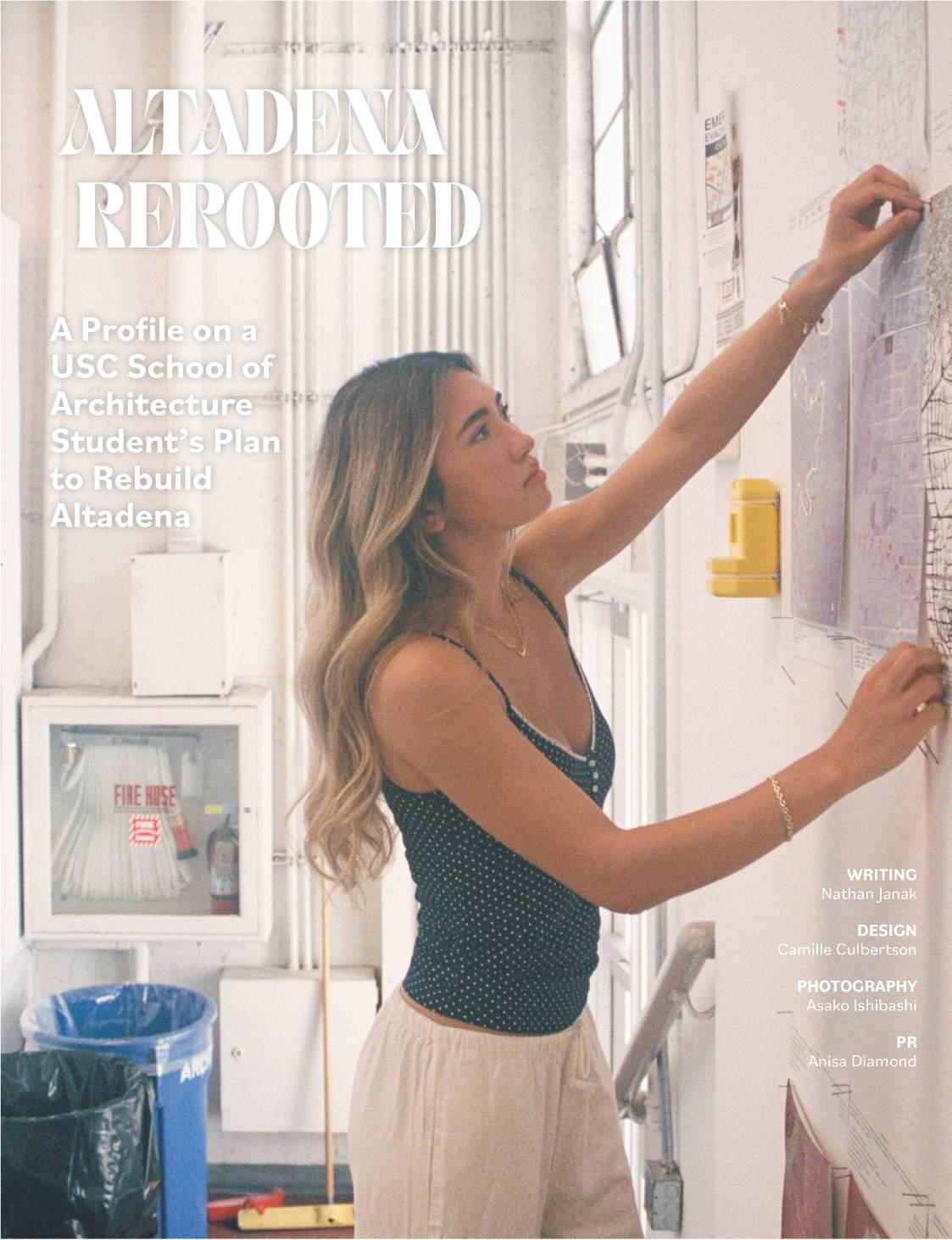
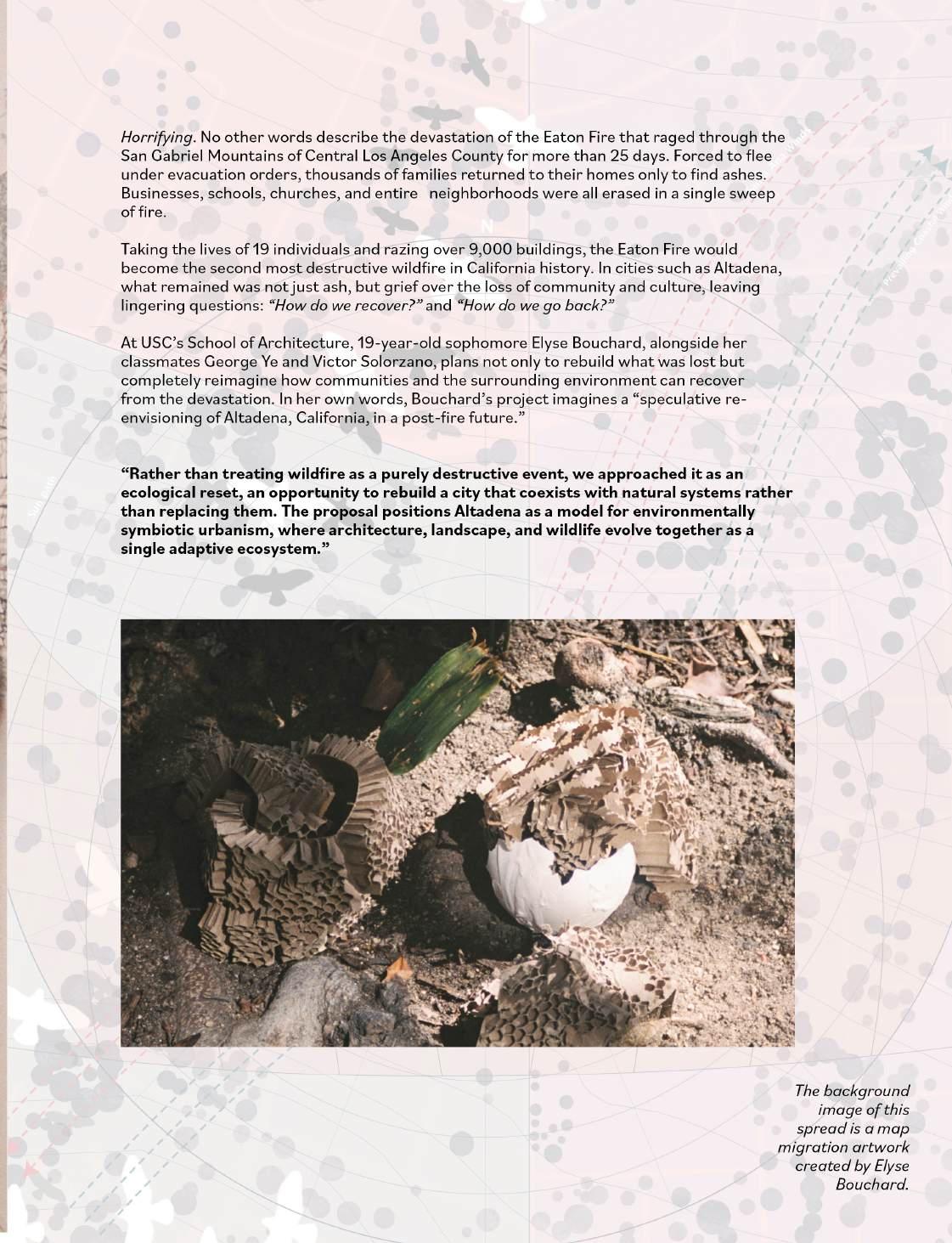
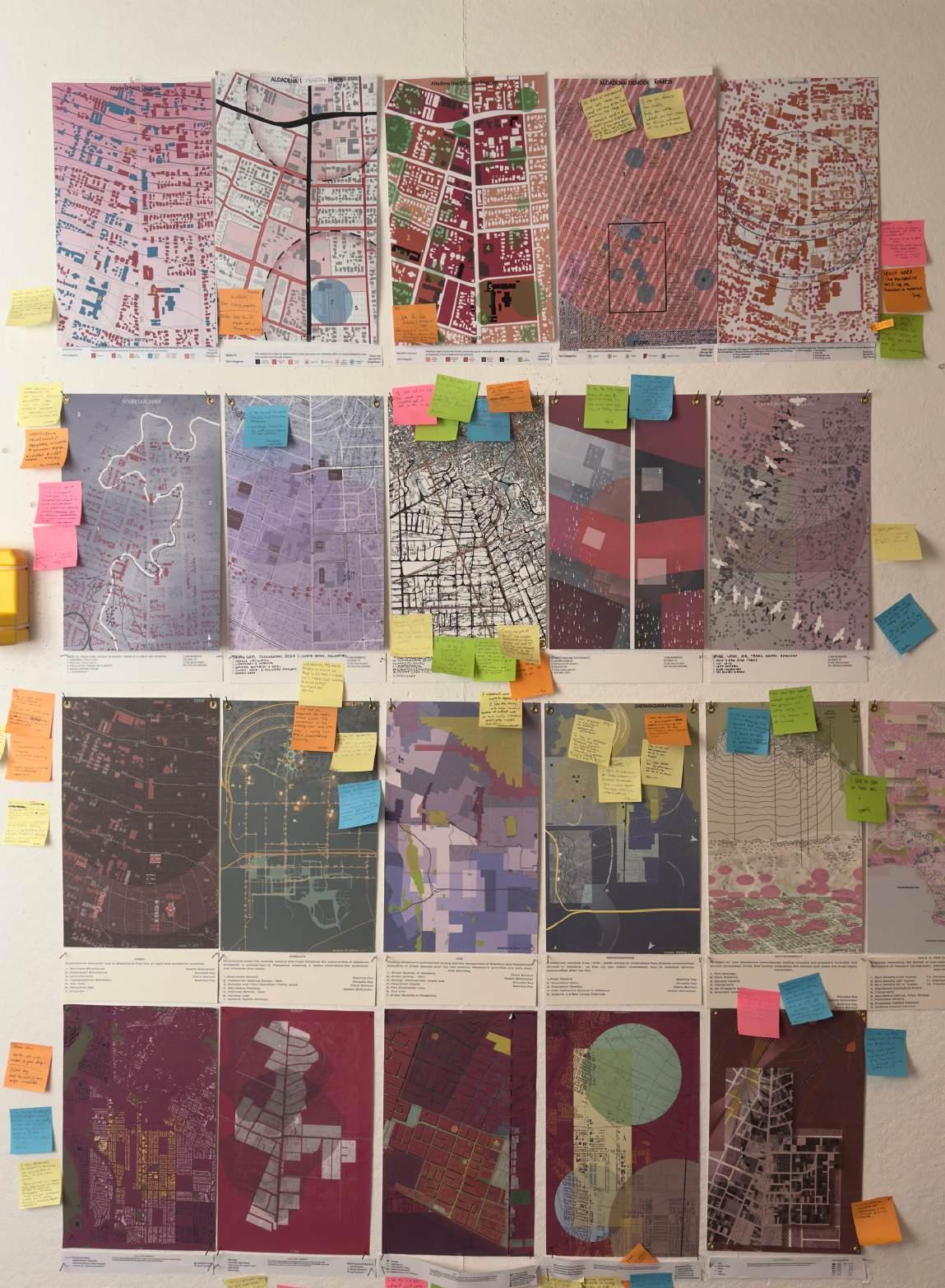
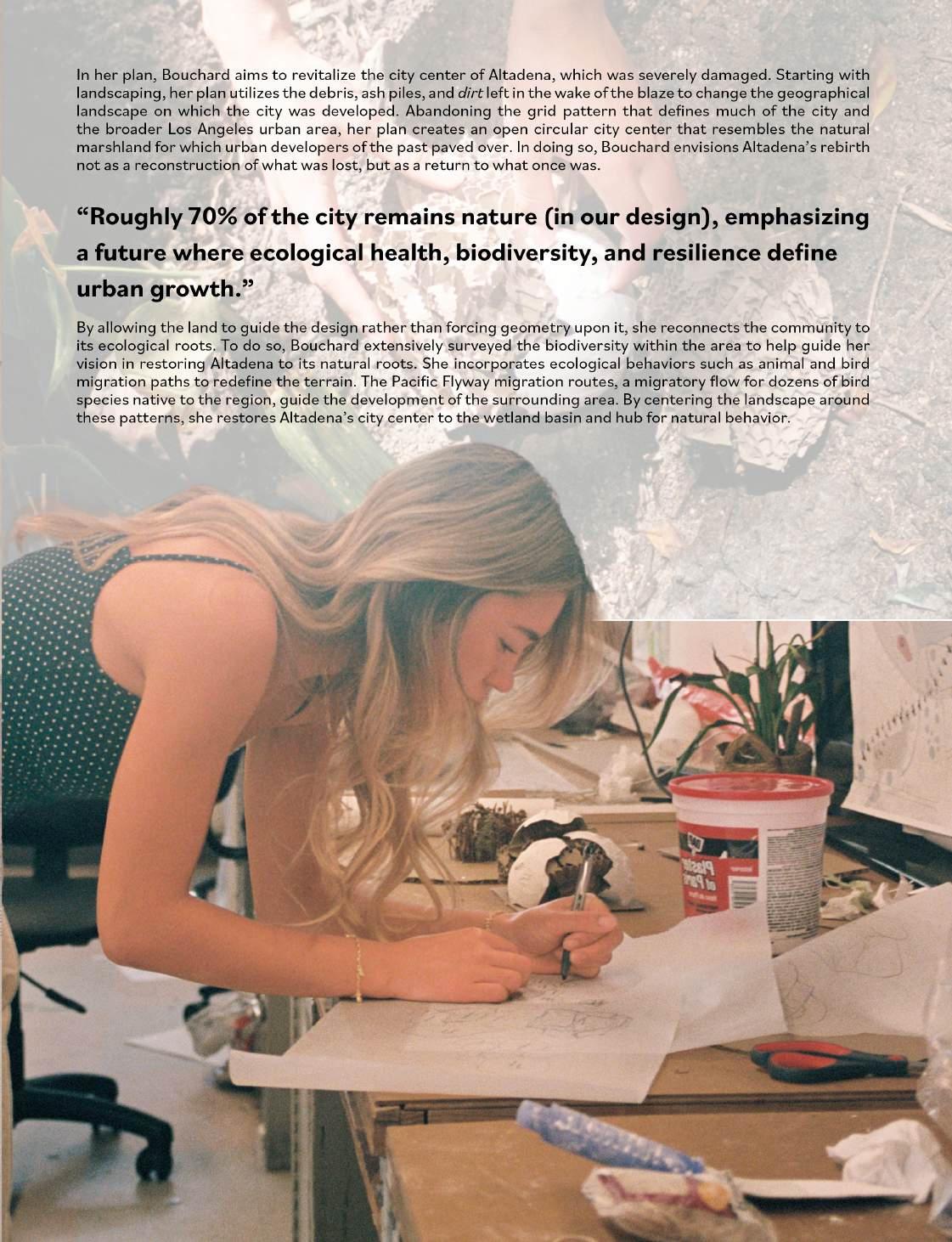
Oak trees, which have dominated the surroundings and contributed to the area’s biodiversity, were noted by Bouchard as having survived the fires at a significantly higher rate than other species.
“They (Oak Tress) became the foundation for my environmental strategy: preserving all existing oaks and developing a long-term plan to introduce new fireresistant species to reinforce the forest canopy.”
Bouchard, using fire-resistant natural materials, boldly plans to rebuild houses as treetop canopies. Rather than reconstructing the lost single-family housing on the ground, her plan incorporates housing directly into the Oak Trees. Altadena will become a “tree-city,” she said, one that promotes urban development within the landscape rather than on top of it. By weaving homes into the branches of the native oaks, Bouchard’s design honors the symbiotic relationship between people and place.
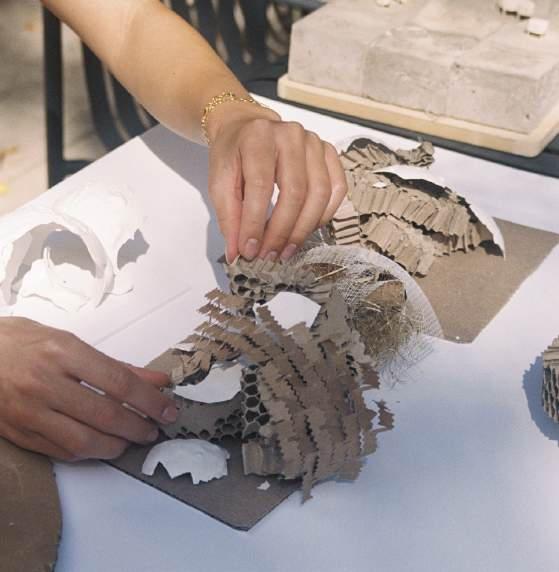

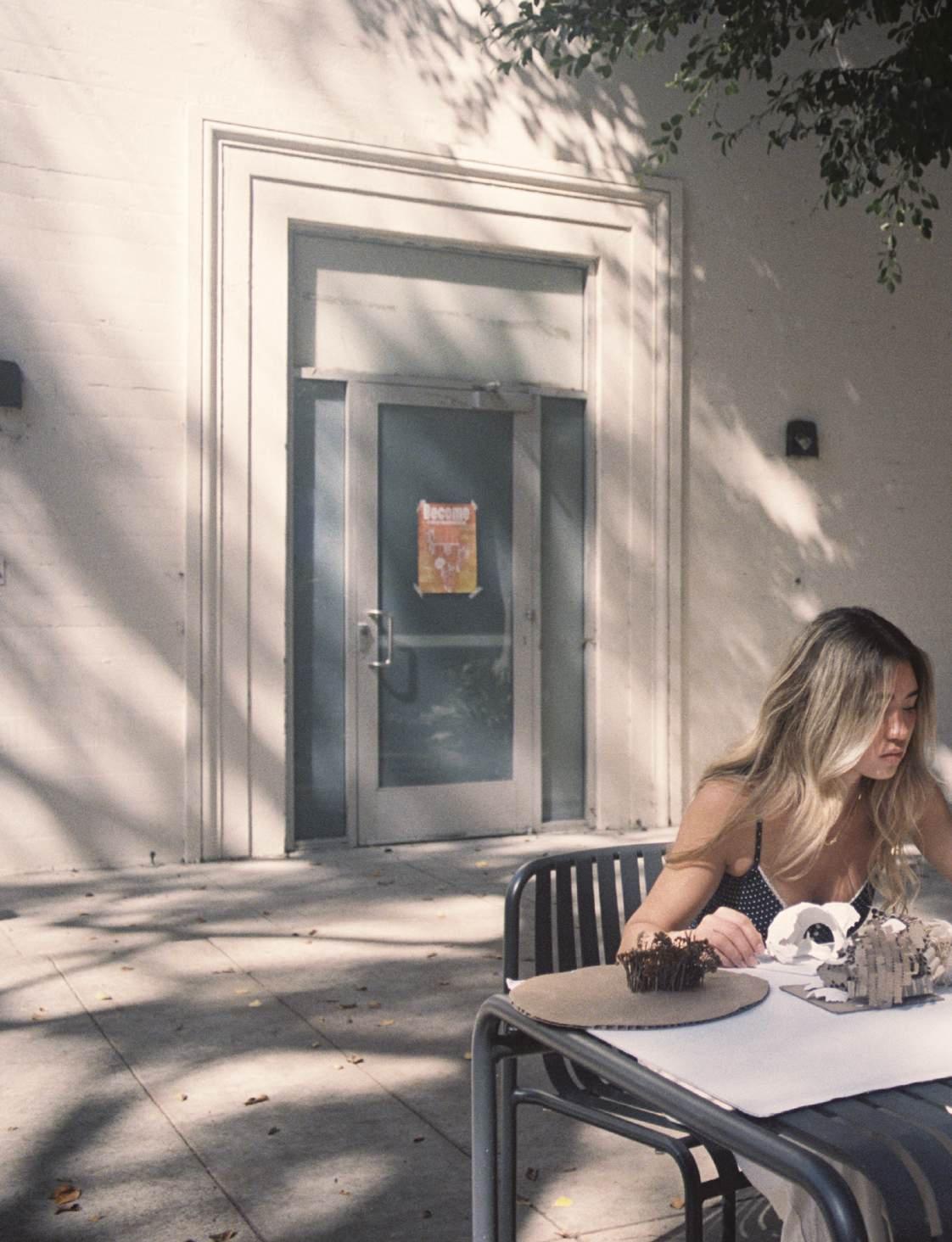
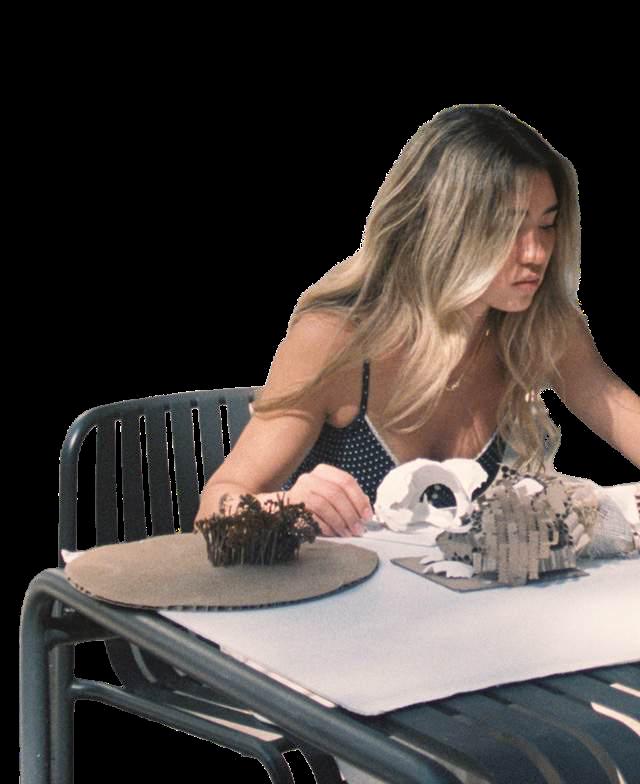
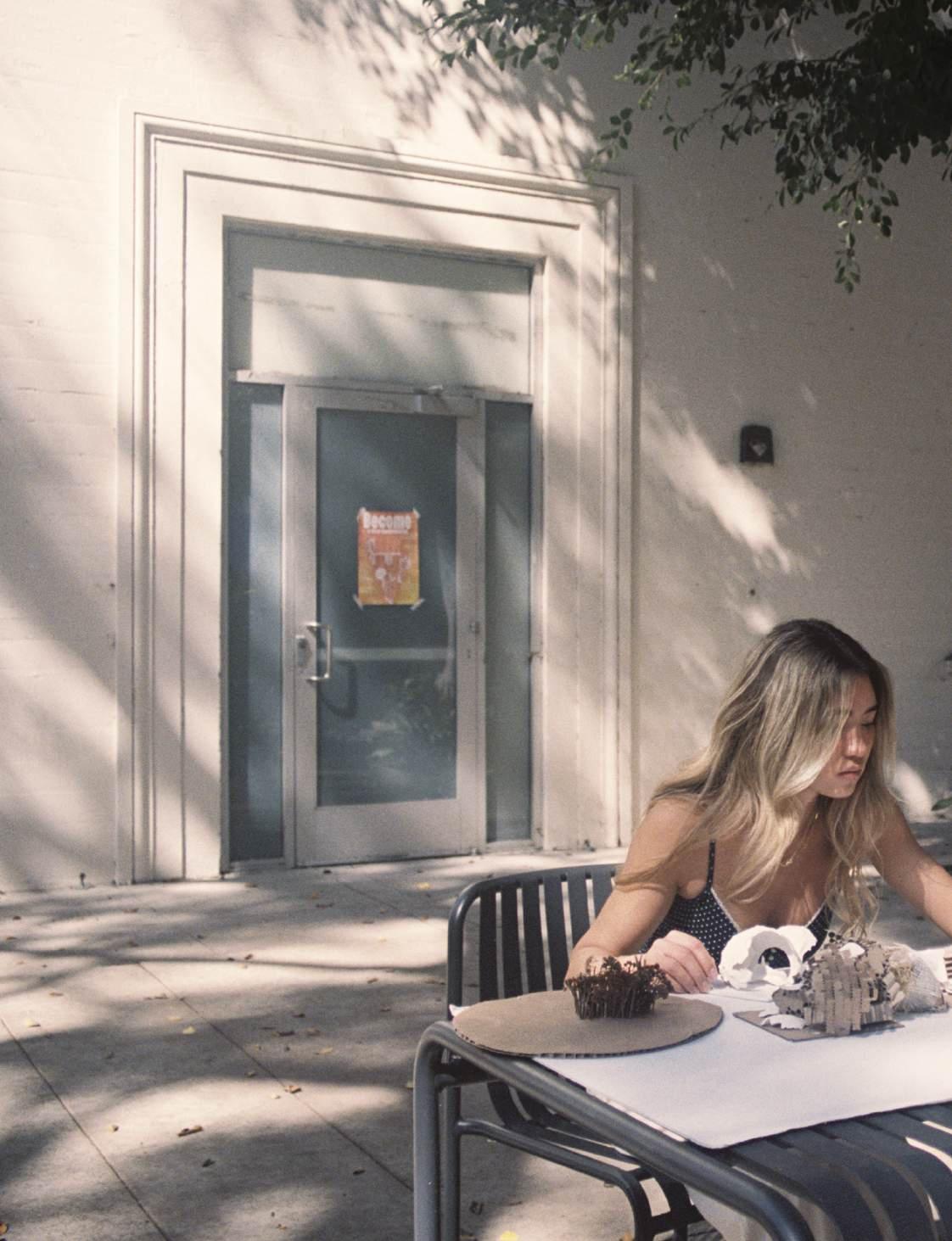
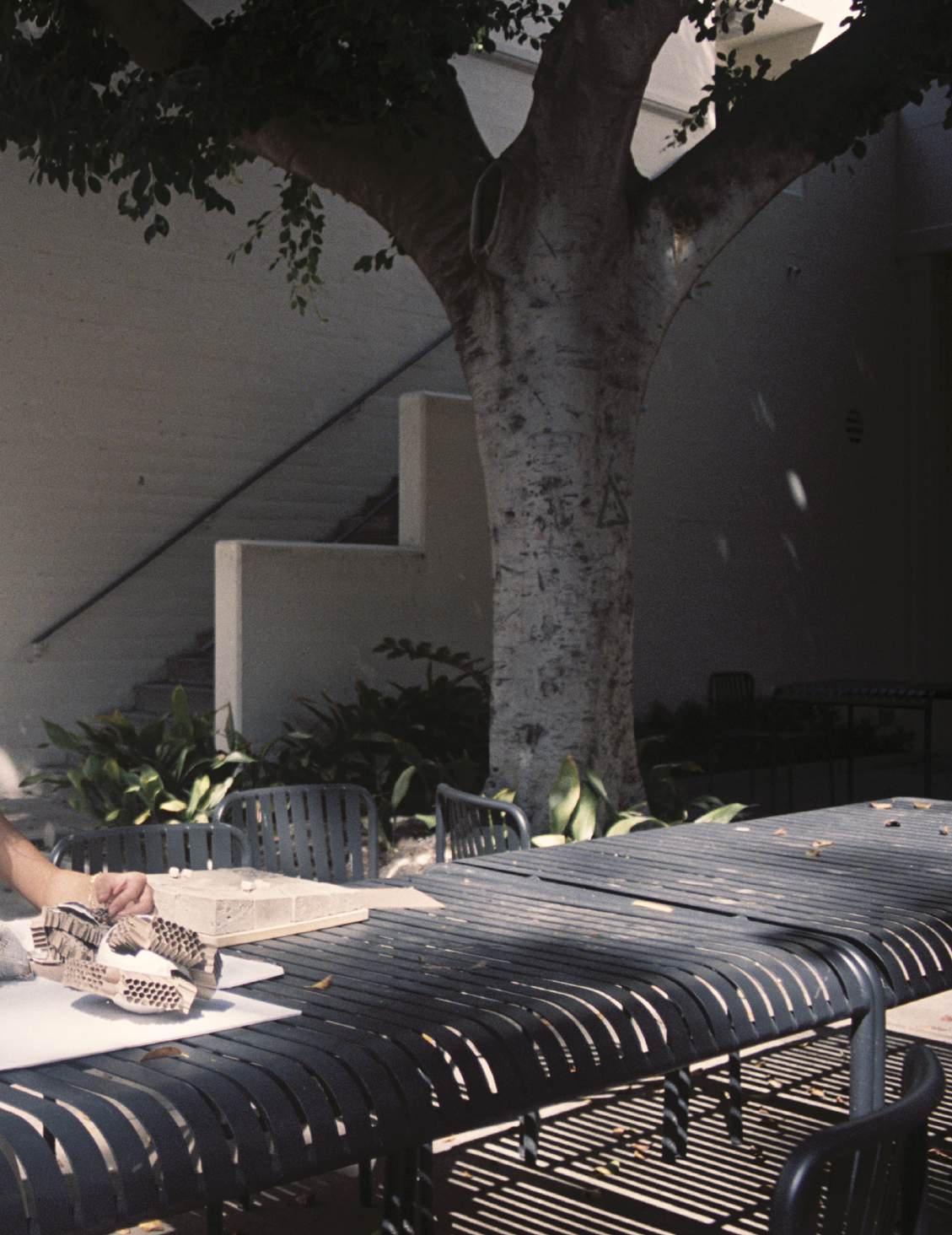
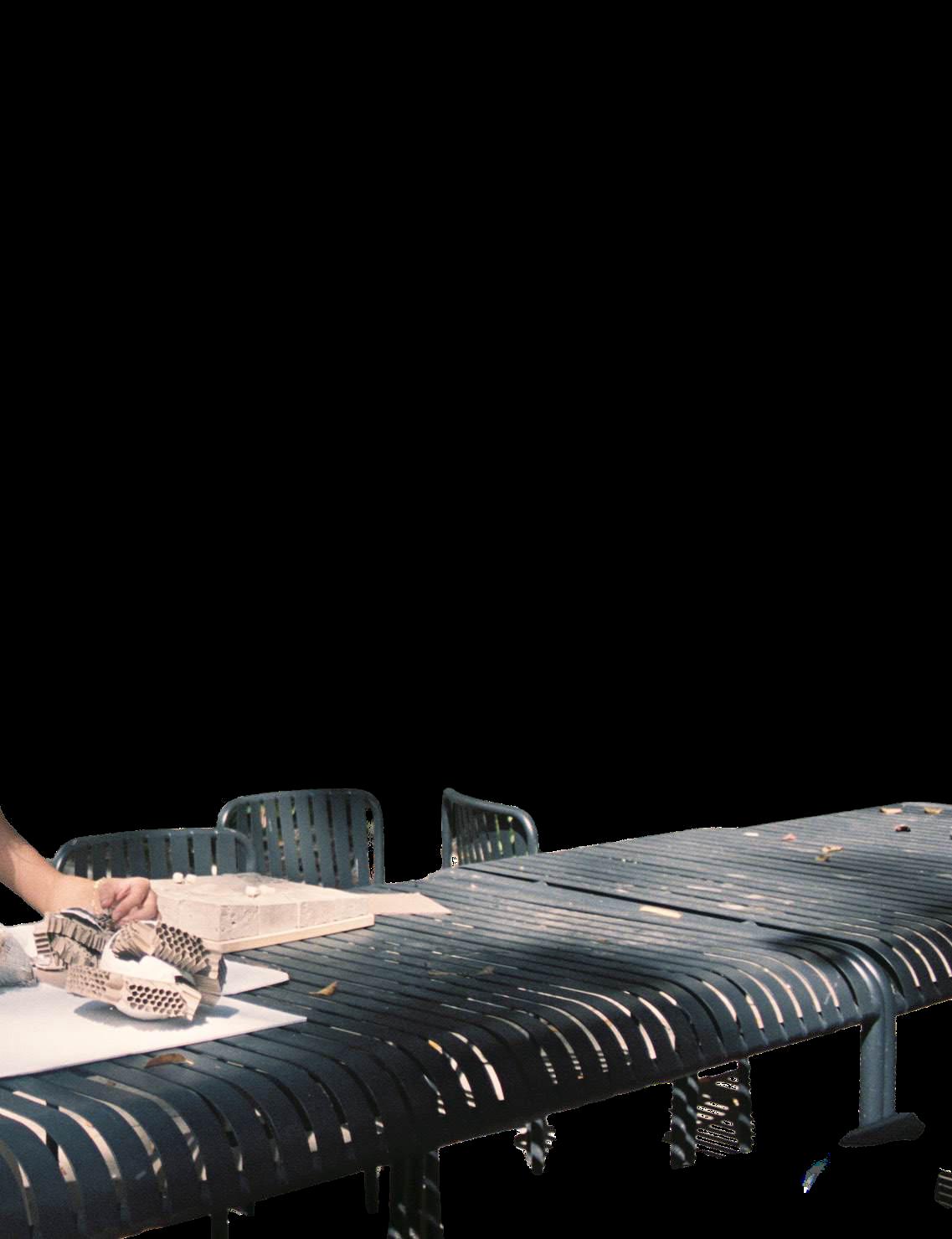
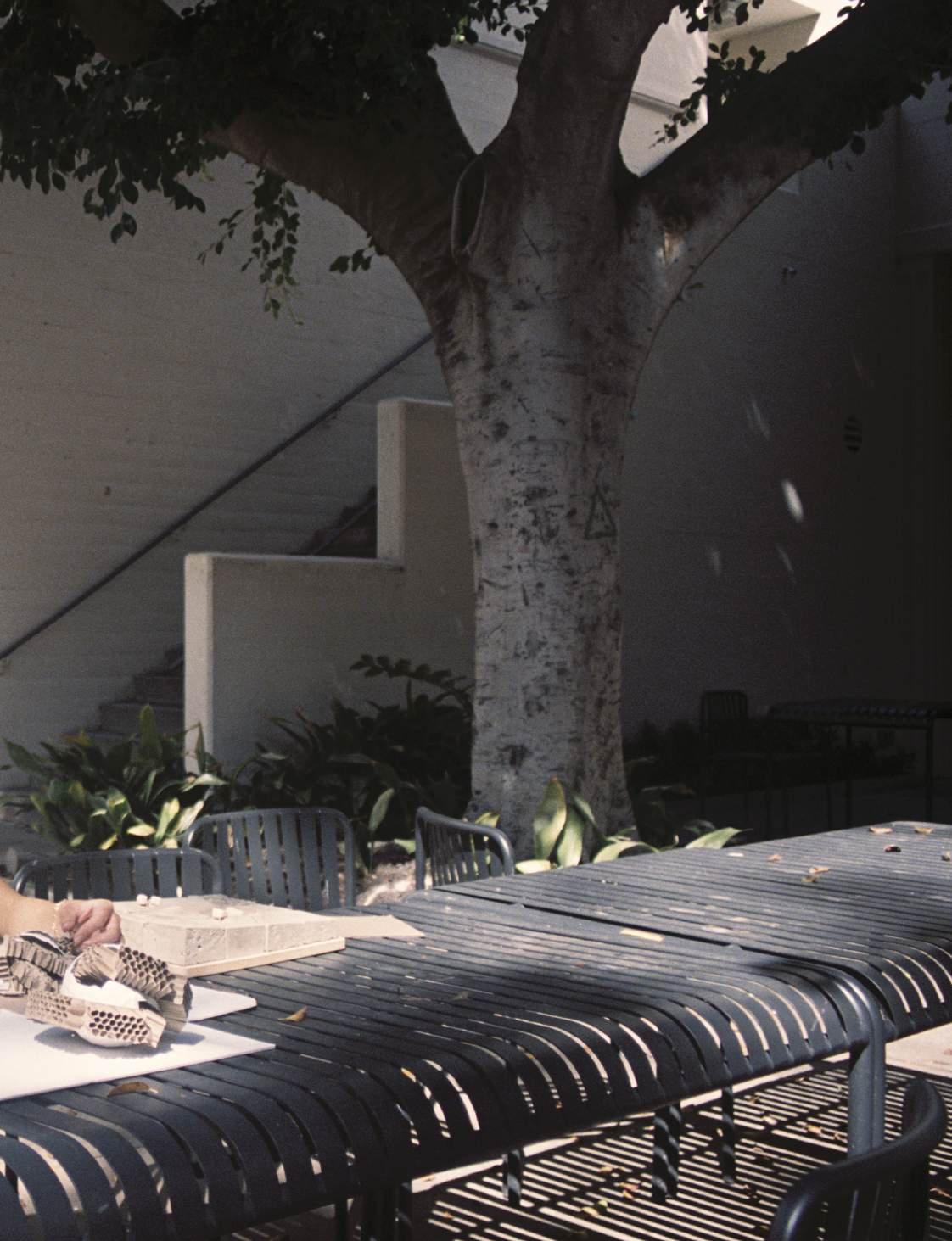
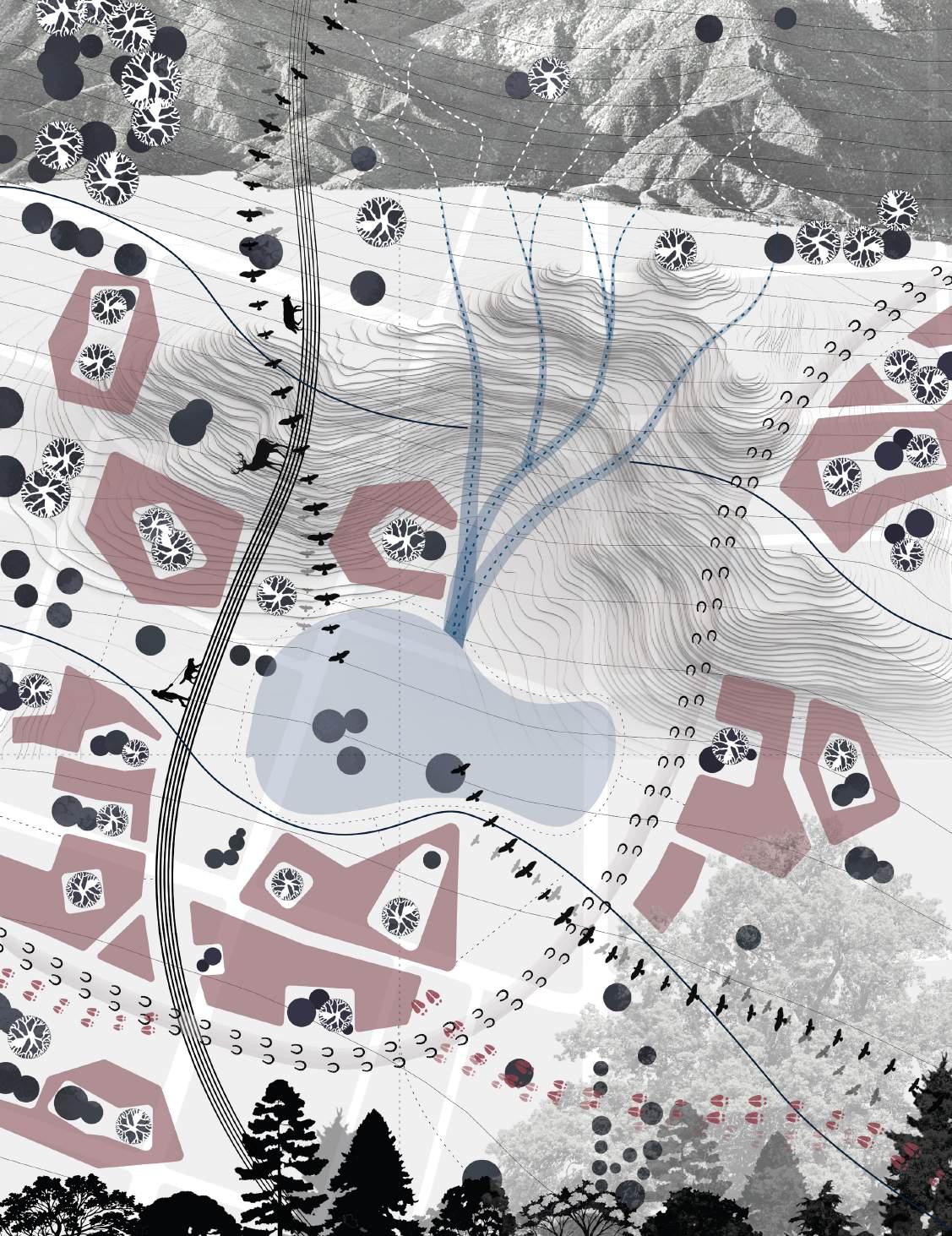
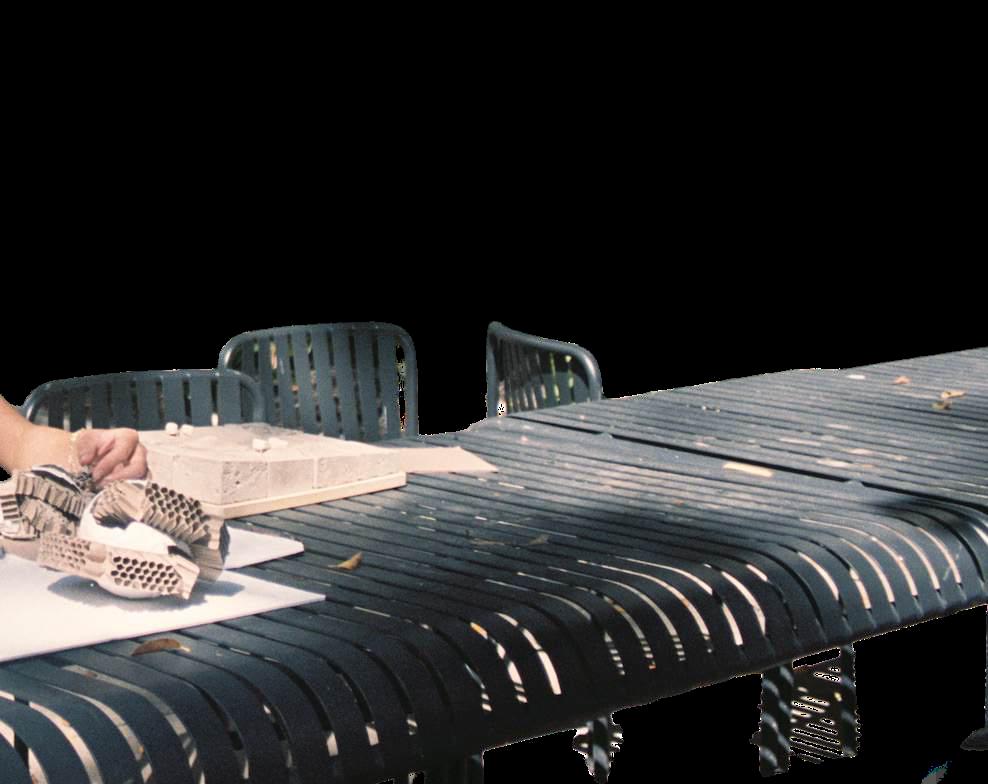
“This allows the ground plane to remain primarily open, a living, continuous system of vegetation, wildlife, and natural regeneration.”
For Bouchard, who herself was affected by the neighboring fires that decimated the Palisades, this project is personal.
“For me, it became a study of how rebuilding after trauma, whether ecological or human, requires imagination, care, and a willingness to coexist with uncertainty.”
Contrary to the current Zone 0 regulation enacted by the State of California, which recommends eliminating all vegetation within five feet of homes to reduce fire risk, Bouchard believes the plants should stay. Where state policy approaches fire through restriction, Bouchard’s vision approaches it through self-renewal.
Bouchard reminds us that healing requires bold perspectives to create, not restrict. Her “tree-city” vision for Altadena invites residents to rediscover their connection to the roots in the land that once sustained them.
*Elyse Bouchard would like to credit her Program Director, Scott Uriu, and her section professor, Evelyn Tickle.

waste less” “Design more,
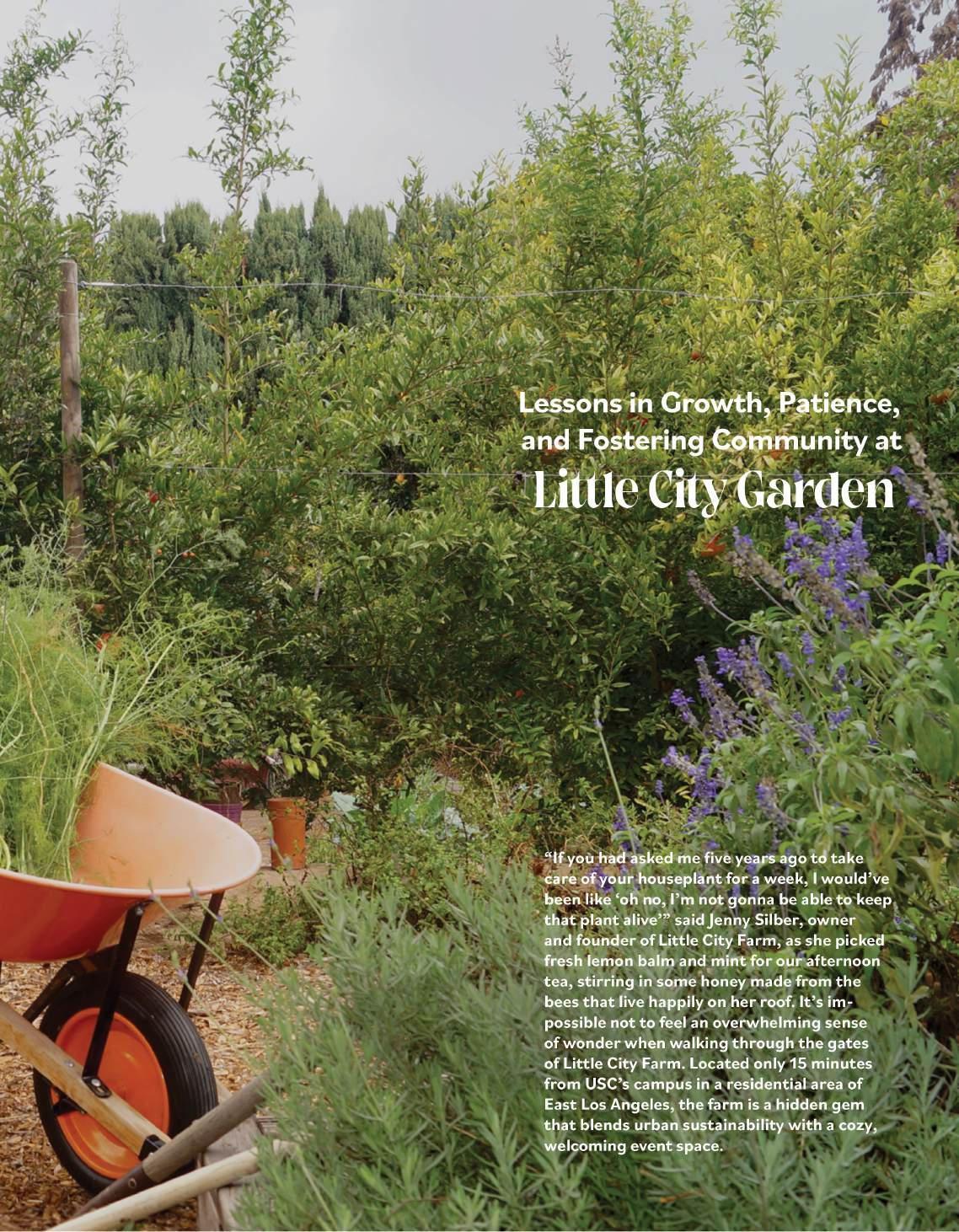
“Design more, waste less” is the motto at the forefront of Silber’s life. With a background in architecture and material development, she has made it her mission to practice sustainability wherever she can. As the co-founder of Rewilder, a brand that transforms plastic filters into practical and fashionable bags, she felt a calling to bring eco-friendliness into her home, fostering an environment where she and her children could live more in line with the Earth and the seasons.



The farm, alongside its private event space, has provided her with the perfect opportunity to do so within the comfort of her own backyard. When she bought the house in 2016, she was pleasantly surprised to learn it came with a plot of attached land, a rarity amongst the architectural density of Los Angeles. Back then, it was a tennis court
Her first thought: “Oh my god, this is gonna be a farm.” And it became just that.
At the beginning of 2020, with the expertise of an impressive network of urban farmers, sustainable business owners, and restaurateurs, the intensive process of bringing vision of a farm to life began.
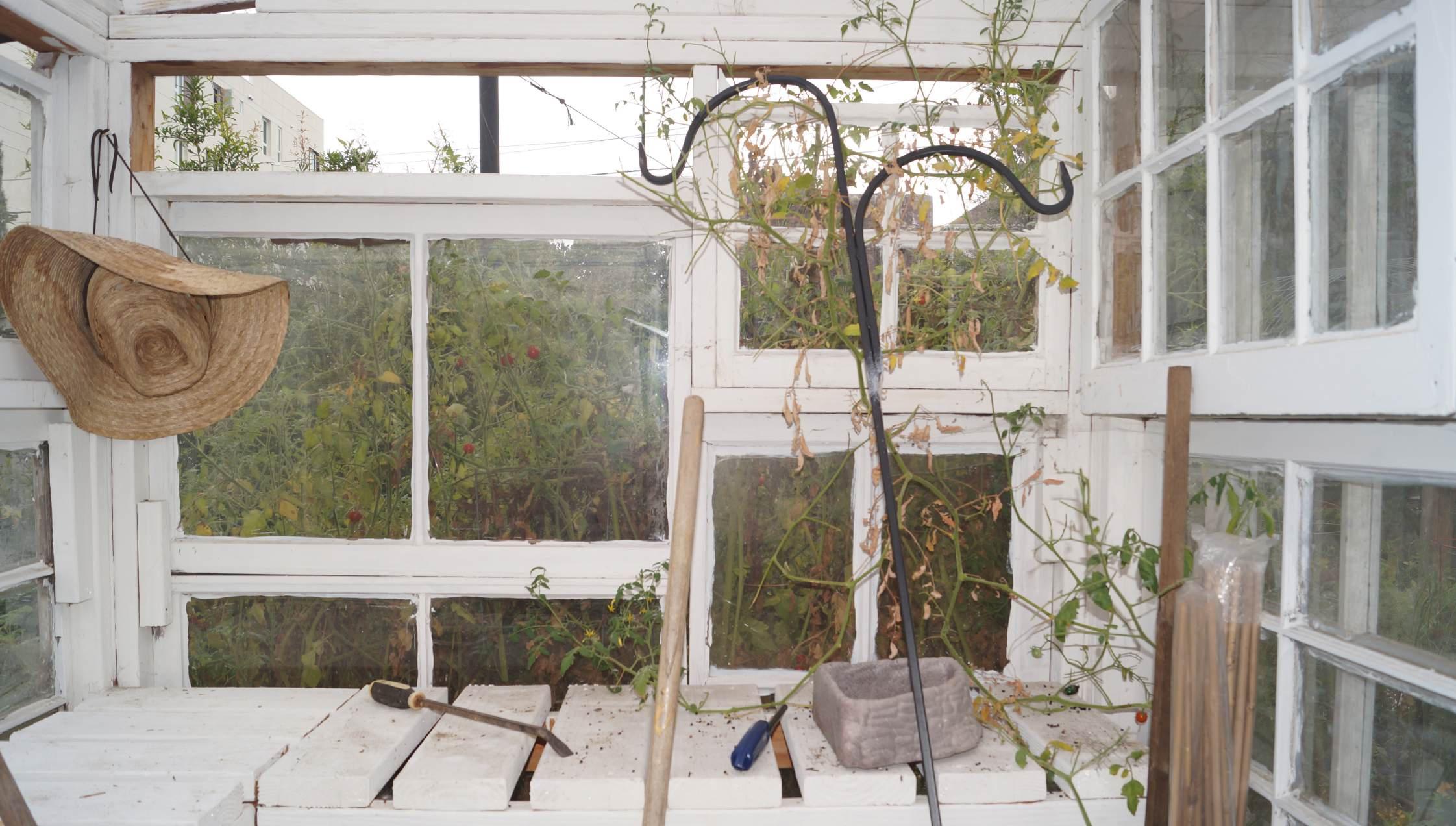



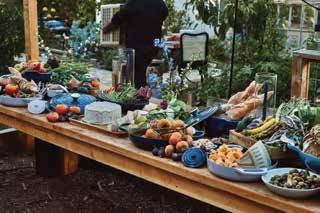


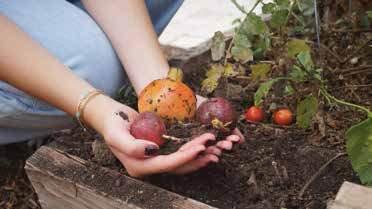
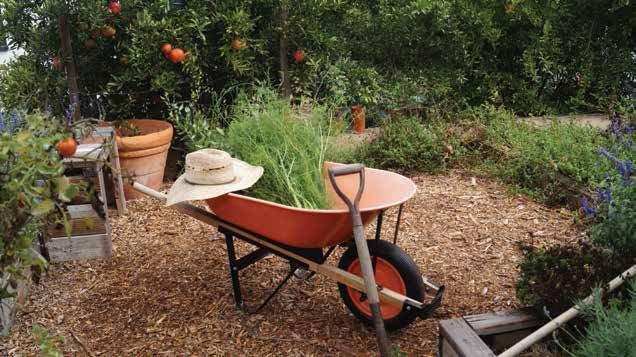
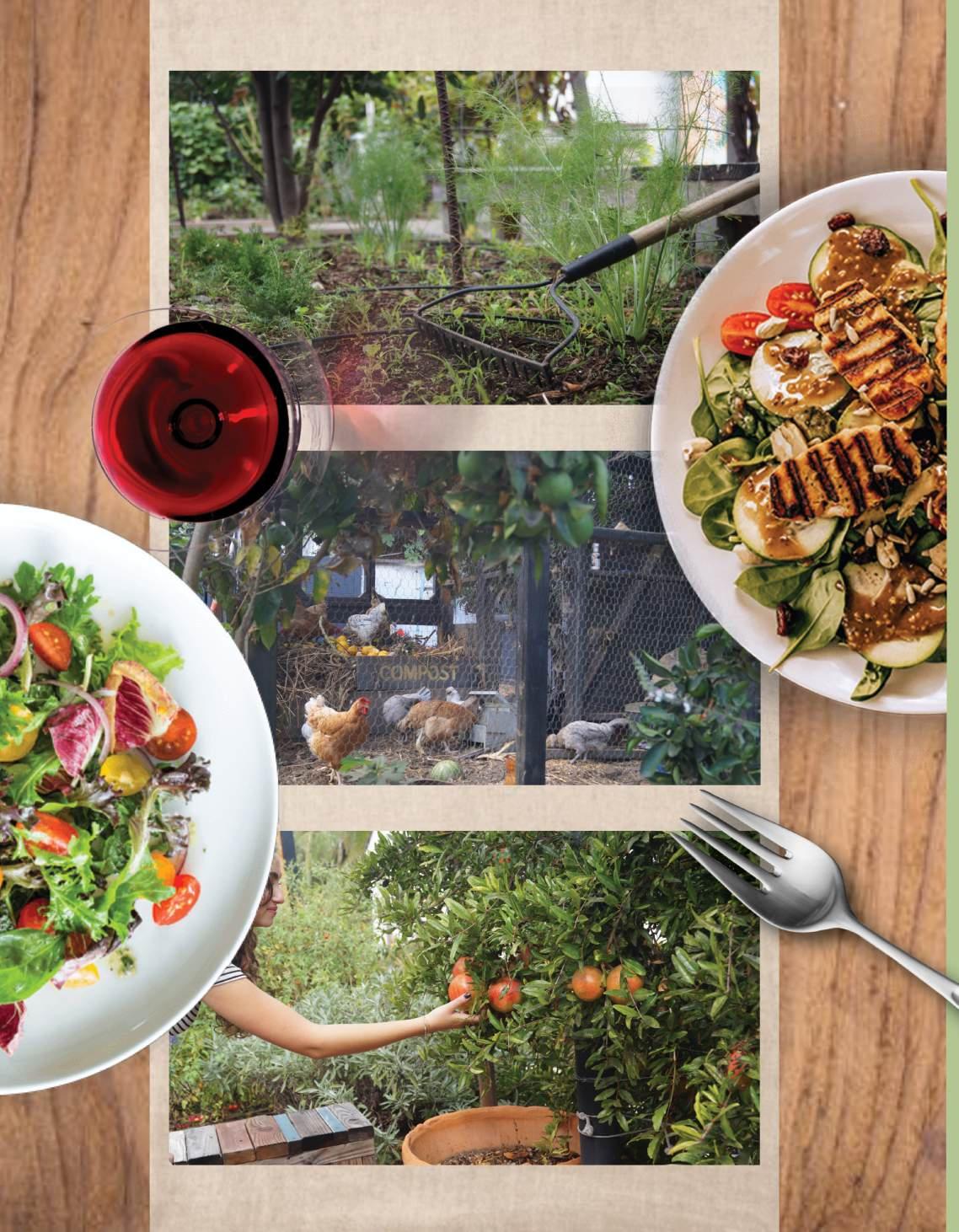
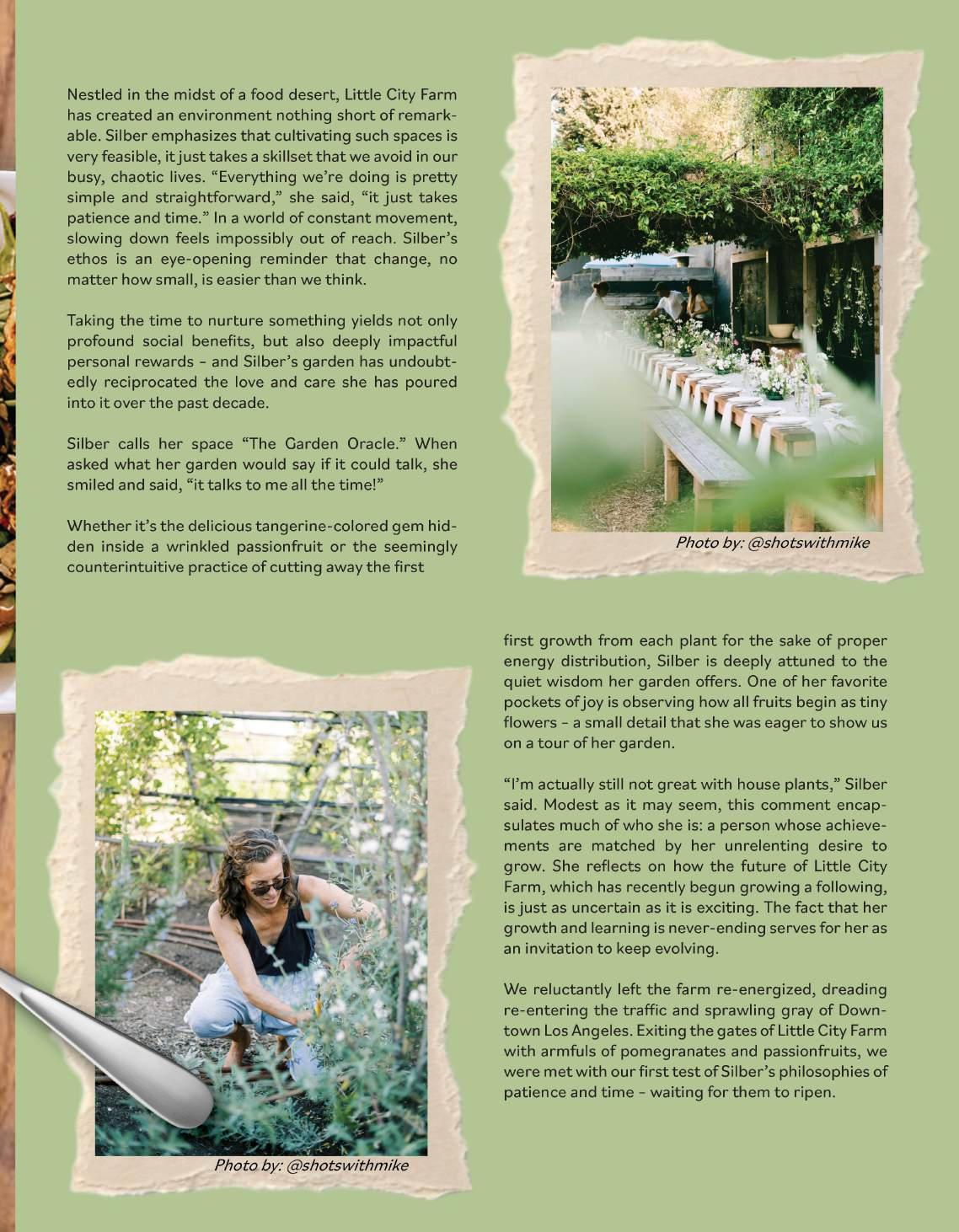
Unearthing the soil that had been suffocated for a century by thick concrete was as cathartic as it was intensive. The soil, stripped of its nutrients and riddled with clay pipes and trash, was begging for reinvigoration. Restoring it took months of digging and pit composting, a technique in which compost is buried deep into the ground to oxygenate it from the bottom up. Once finished, nitrogen-rich clover was planted all over the lot before being outfitted with a drip irrigation system. Within a year, the space was unrecognizable, enveloped in green. Complete with a family of chatty chickens and a collection of 60,000 bees, it now thrives as an “experimental garden.”
The evolution of the farm into a community and event space happened as a natural reaction to the limitations placed on gatherings during the Covid-19 pandemic. Little City Farm’s inaugural event, Silber’s son’s bar mitzvah, gave friends and family a delightful and safe community gathering, which they had craved after months of isolation. From there, it attracted more and more guests.
The events hosted by Little City Farm are inherently self-selecting – Silber said she noticed everyone who enters the space has a special twinkle in their eye, which she attributes to their preexisting appreciation for the planet and sustainability. The farm has served as a tranquil atmosphere for countless stunning and grounding events, ranging from personal celebrations to large-group educational experiences. Recent highlights have included an intimate sound bath meditation followed by an Ayurvedic meal, and an in-house pizza workshop. Sharing and trading things with neighbors and fellow urban farmers has been an added benefit, she said, as neighbors often stop by to exchange spoils from their gardens as well as tips and tricks of the trade. As amazing as the farm is in its own right, it is clear that Little City Farm derives its magical energy from the communities it fosters.




MEET THE TEAM MEET THE TEAM MEET THE TEAM MEET THE TEAM