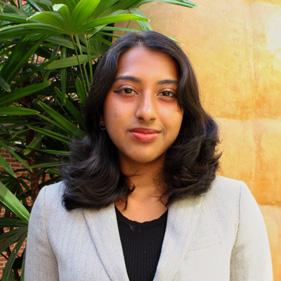
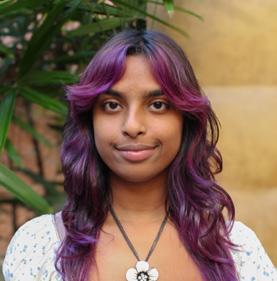
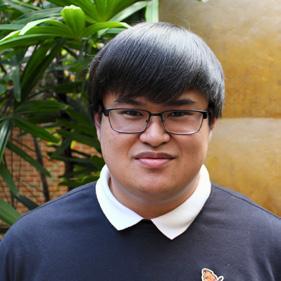
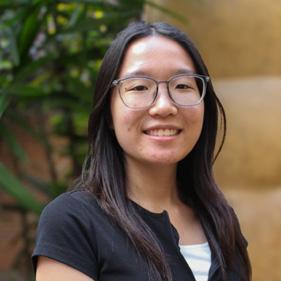
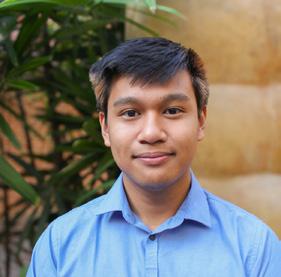
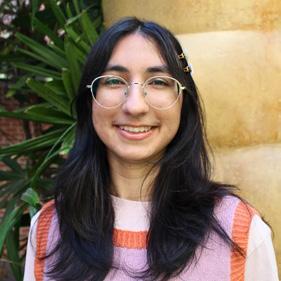
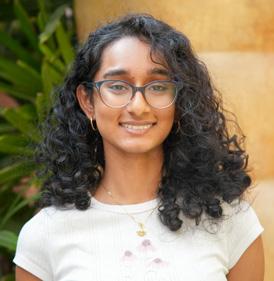
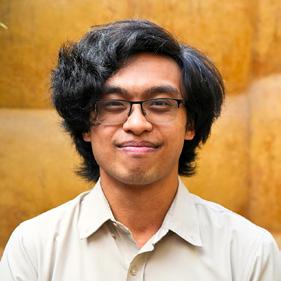
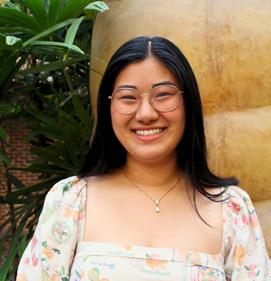
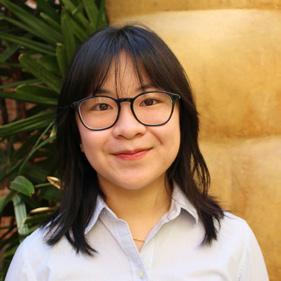
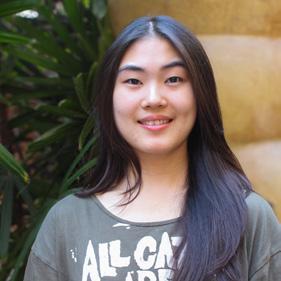
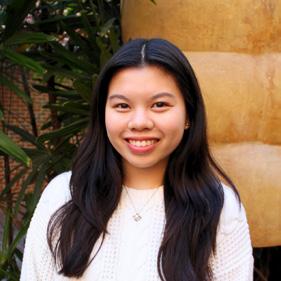
• Maria Isaacs • Merita Thomas • Milana Schemkes • Tuana Cenberoglu
PHOTOGRAPHERS Camila Pezzia • Carolina Molero Roca • Jiayi Fu • Laasya Kavarthapu • Lily Hartzema • Mia Seng
E-BOARD
Editor-in-Chief Sabrina LaVopa • Managing Editor Colin Strom
Yeleeya Li • Lead Copy Editor Aize Hassan
Financial Director Aize Hassan • Lead Copy Editor
Copy Editor Ananya Pradhan
Copy Editor Lauren Wong • Design Editor Divya Somayaji • Design Editor Jennifer Jia
Photography Editor Eddy Chen
STAFF
Design Editor Enchang Fan
Photography Editor Andrea Sison
PR Director Emma Salcedo Writer Sehja Abeysiriwardana
Writer Arooba Godil
Writer Muyao Guan
Designer Mahzabeen Choudhury
Designer Gahyun Kim
Photographer Andria Subhit
Publicity Shreya Shanmugam
A LETTER FROM THE EDITOR
DEAR READER,
It is my greatest honor to present to you Issue 29: Counter.
This semester, Sparks wanted to center our theme around our community’s shared resilience and strength. In the current political climate, it’s easy to let despair seep in, stealing joy and killing any motivation to continue fighting for your beliefs. Faced with the adverse events and challenging circumstances of the past few years, characterized by the loss of important community resources, it is more important than ever to celebrate our achievements, no matter how small.
With Issue 29: Counter, Sparks aims to commemorate the progress made toward combating these limitations and barriers faced by the APIDA community throughout history.
In each issue, Sparks highlights the stories and voices of the APIDA community. As the only magazine for this community at the University of Florida, Sparks is a bastion of APIDA visibility and representation, striving to preserve our collective experiences for future generations. When vulnerable groups face erasure and disenfranchisement, it is up to storytellers to share and preserve the lives and experiences of these groups. Through every publication, Sparks embraces this responsibility, illuminating obscured narratives and highlighting the vastness and diversity of our community.
Of course, these feats would be impossible without a strong support system. For Sparks, that includes the dedicated and hardworking executive board and staff that make up the backbone of this organization. I want to extend my deepest gratitude and appreciation to you all; from the bottom of my heart, thank you. Each and every one of you is a storyteller in your own right. Without you, there is no Sparks.
Reader, as we look ahead, no matter what challenges arise, remember: you are not alone. Your community stands with you, ready to support and uplift you. Our collective voices are louder than those who seek to silence us, and when we come together, there is nothing we can’t achieve.
WITH LOVE,
SABRINA LAVOPA EDITOR-IN-CHIEF
1948 Chinese Club, now known as Chinese American Student Association
1973 Vietnamese Student Organization
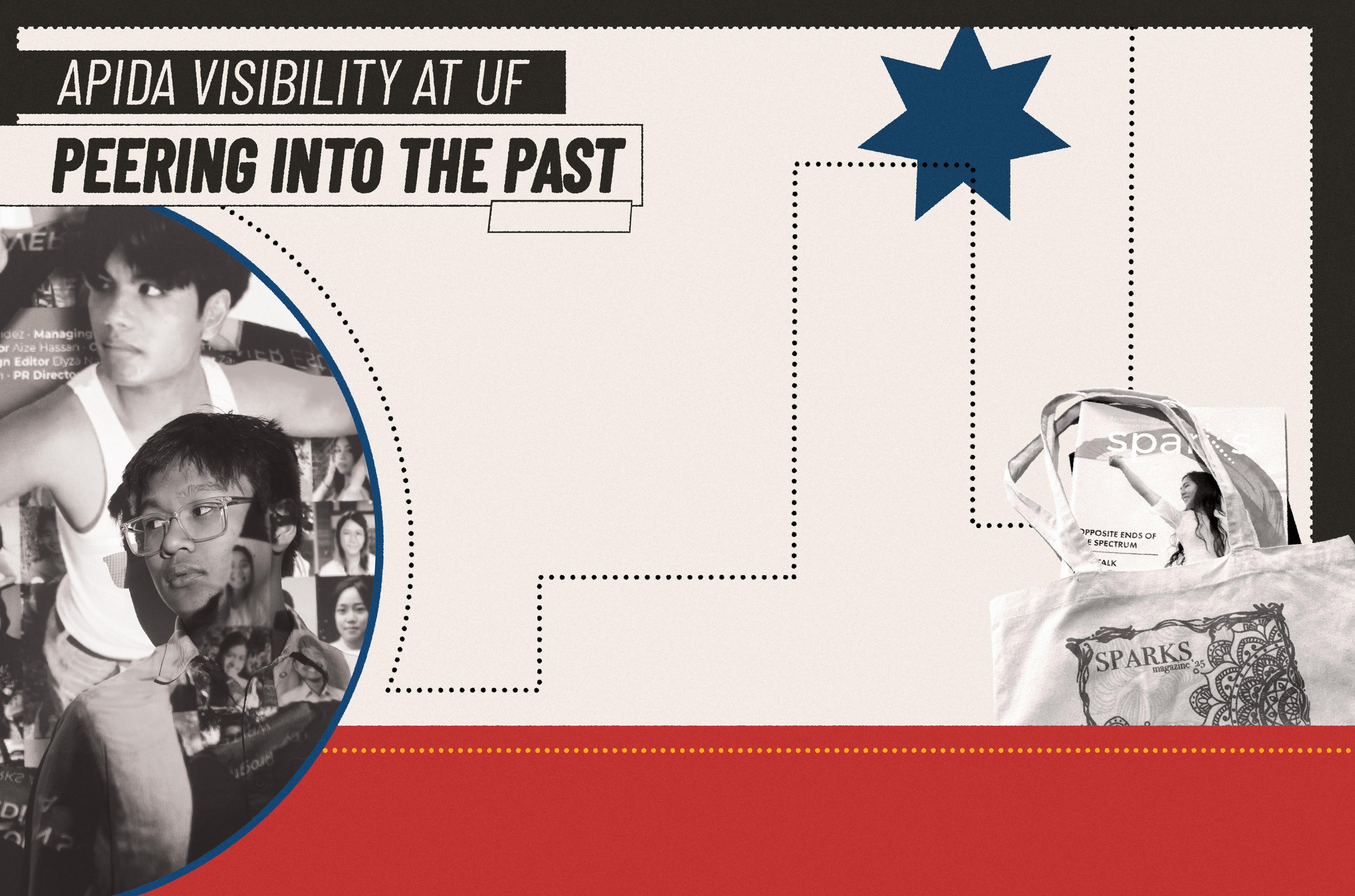
By: Yeleeya Li
COLOR
1985 Korean Undergraduate Student Organization
1987 Filipino Student Association
1993 Asian Student Union is formed after initial denial in 1992. 1915
Asian American, Yick Kuen Wong, attends the University of Florida.
2010
Sparks Magazine is founded by Kevina Lee at UF.
2006 First-Year Leadership Program
2005
Asian Student Union changes name to Asian American Student Union.
2009
The first issue of Ink Magazine is published. Ink Magazine served as a creative voice for the APIDA community and was the precursor for Sparks Magazine.
2012
Sparks Magazine’s first issue is published.
2023
Buffstar is created.
2014
Second chapter of Sparks Magazine is established at the University of Central Florida.
2012
Sparks Magazine’s first release party is held.
2013
Health Educated Asian Leaders
2017
Third chapter of Sparks Magazine is established at the University of South Florida.
Pho: A Taste of Home
A dive into the history and significance of the national Vietnamese dish
By: Arooba Godil
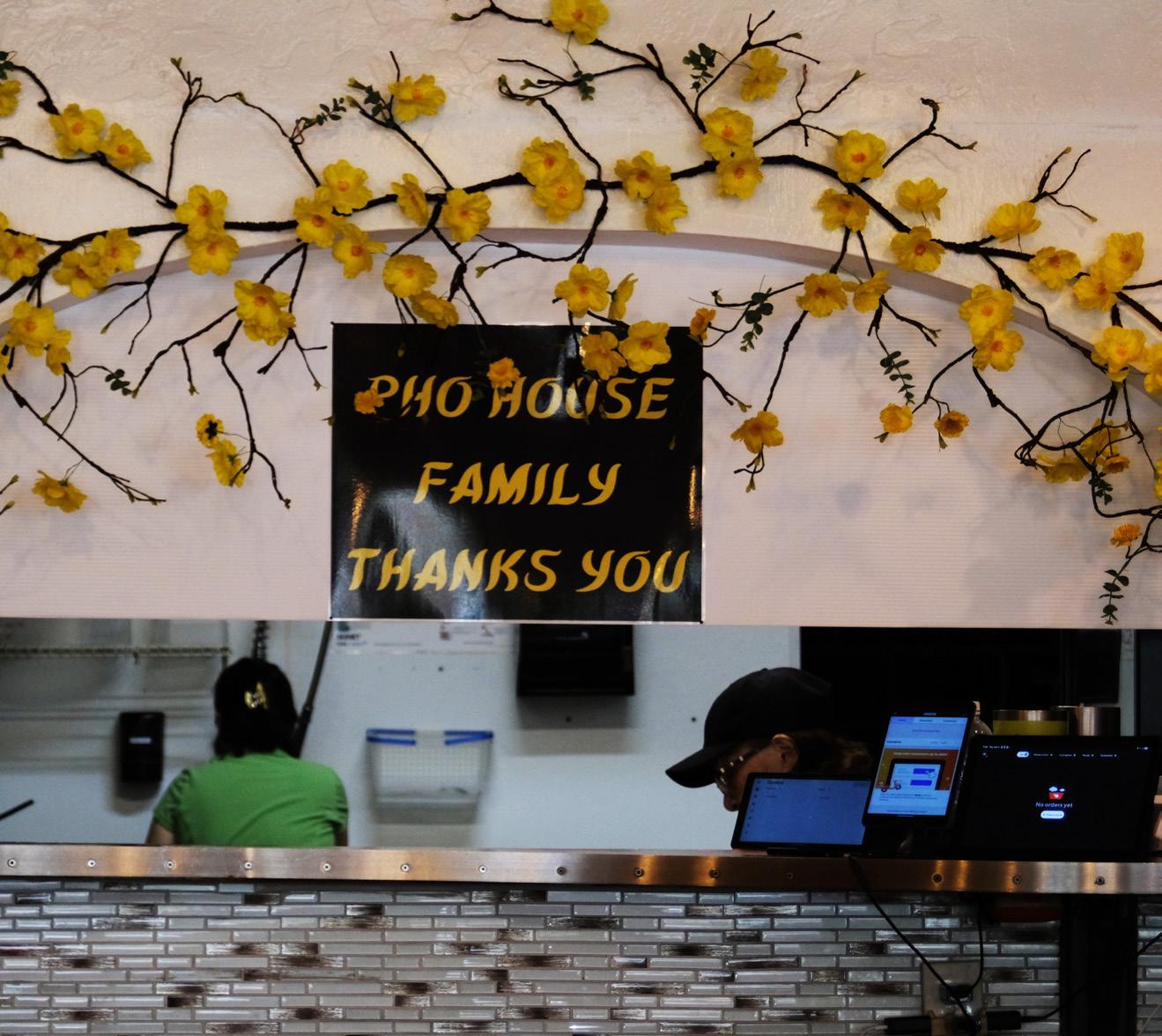
s customers walk into the cozy interior of Pho House, the smell of simmering broth fills the air. Behind the counter, Chef J.C. moves with quiet focus, checking pots that have been cooking since early morning. “It’s tedious,” he says with a smile.
“You’ve got to keep cleaning, skimming, and checking. Sixteen hours just to get it right.”
- Chef J.C.
The Patience Behind Every Bowl
The story of pho, however, begins even earlier. It originated in Northern Vietnam in the 1900s, when French and Vietnamese cooking traditions started to blend. The rich, meaty broth inspired by the French “pot-au-fe,” a boil of beef and vegetables, met the Vietnamese love for rice noodles and fresh herbs, and created a dish that quickly became a local favorite. As it spread south to Malaysia and the Philippines, pho evolved into new dishes, picking up regional spices and variations throughout its journey into modern cuisine.
After the Vietnam War, thousands of Vietnamese families resettled in the United States, bringing their food and culture with them. What began as a simple street dish soon evolved into a symbol of home and identity for those far from it. Initially, pho shops first started in cities like Los Angeles and
Houston before finding their way to smaller towns such as Gainesville. Each bowl carries a bit of that journey, incorporating a mix of history, migration, and community connected into something timeless and delicious.
Crafting the Perfect Dish
At Pho House, located on the corner of South Main Street and University Avenue, the process of making pho starts before sunrise. Beef bones are rinsed and slowly simmered the night before with vegetables and spices like cinnamon, cloves, fish sauce and even a touch of rock candy. “It’s all about balance,” J.C. explained. “You don’t want it too salty or too sweet. Every flavor has to work together.”
This kind of patience is what defines pho, Vietnam’s national dish and one of the world’s most comforting soups. From the recipe, pho might look simple, but getting it right takes real skill and time. “The broth is everything,” J.C. said.
The recipe to pho also varies depending on where it is made in Vietnam. Northern pho has a lighter, clearer broth, while southern pho tends to be richer and topped with more herbs and sauces. The broth served at Pho House is Northern style.
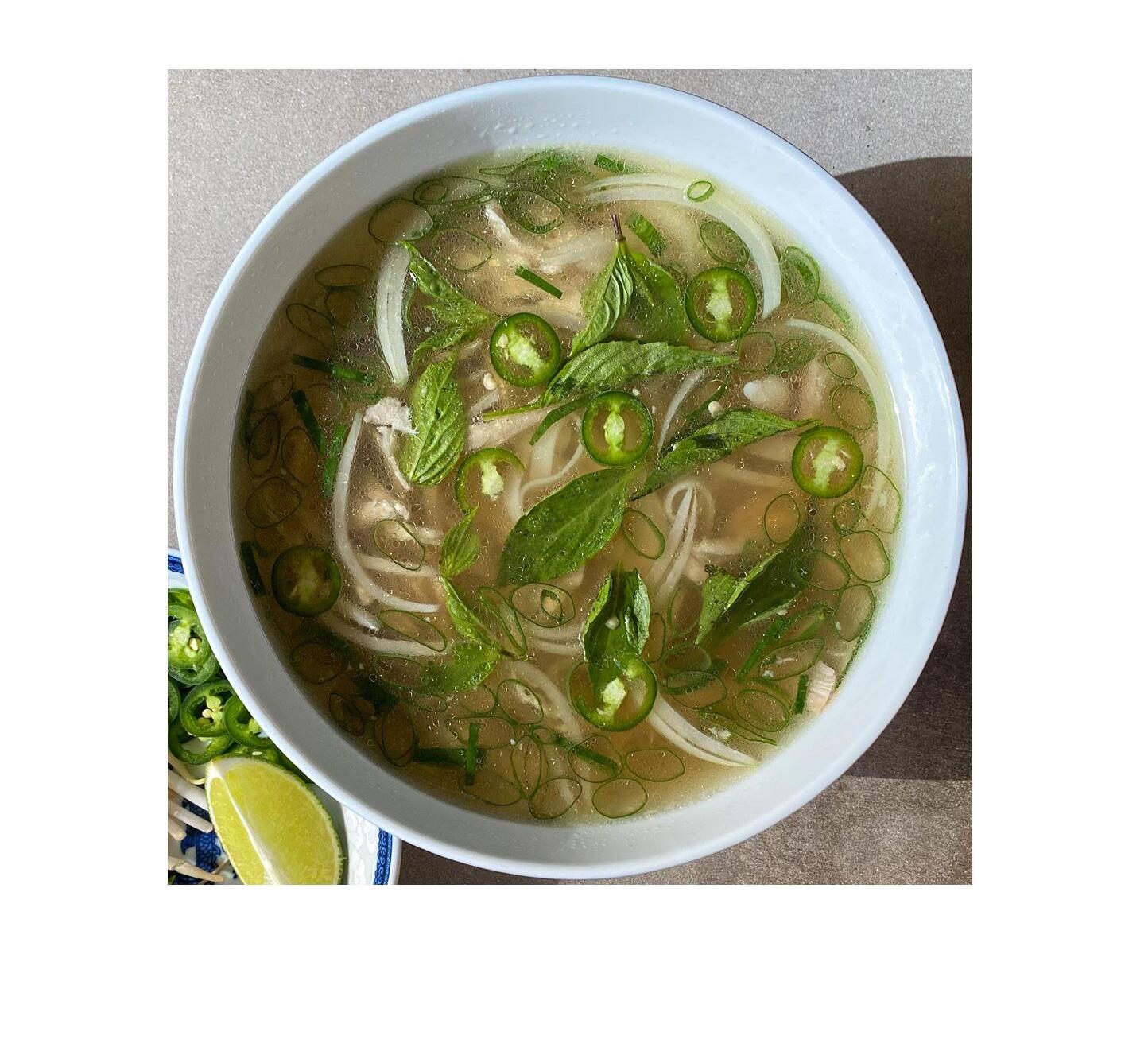
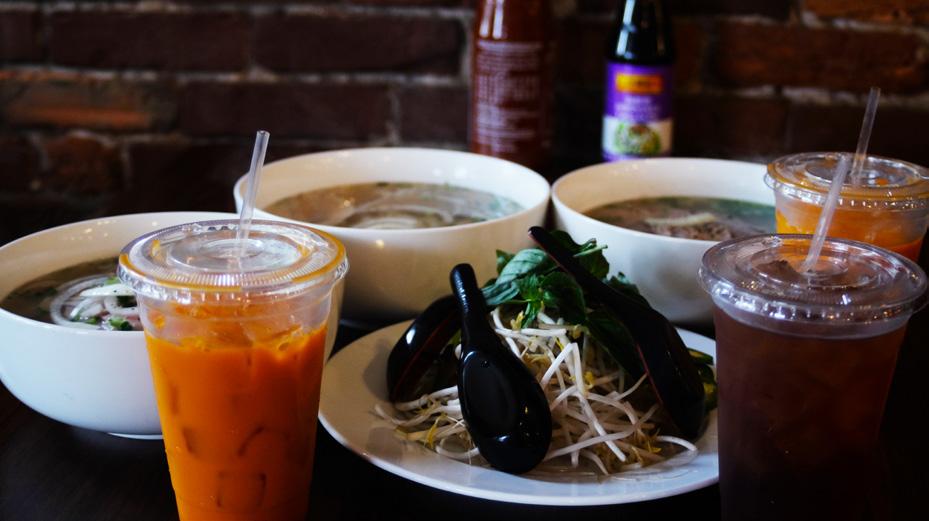
When it comes time to serve, hot broth is poured over soft rice noodles and thin slices of beef that cook from the heat. Each bowl is finished with cilantro, bean sprouts, lime and sliced jalapenos. Customers can then season their pho with hoisin or chili sauce to their taste, leading to a balance of warmth, spice and freshness, representative of the care and thought put into every step.
design by/
Nethumi Ratnayake
publicity by/ Izzy Zheng
J.C.’s Way to Pho
J.C. did not start out cooking Vietnamese food. In high school, he took home economics, worked at grocery stores and fast food places, and later went to Johnson and Wales University to study culinary arts. His grandmother, who often sent him handwritten recipe cards from Texas, inspired his love for food.
Years later, J.C. met the Vietnamese family who would change his career, the same family who now owns Pho House. Back then, they ran another Vietnamese restaurant in town, where he was a regular customer. “I’d go in all the time for lunch,” he said. “We’d talk about food, about recipes, about life. Eventually, that turned into a friendship.”
in a new place. “Pho reminds me of growing up in Vietnam,” said Huy Nguyen, third-year and VISA’s show director. “I’ve eaten pho since I was a kid. It’s simple, clean and comforting. Every family makes it a little differently, but the feeling is the same.” Even now, Nguyen gets pho as a cheerme-up meal after a stressful day at school.
Their shared love of food brought them closer, and soon after, J.C. started working with them at their old restaurant. When the family later opened Pho House, he was asked to join and has been with them ever since. “They welcomed me like family. They taught me to respect the process, to focus on quality over quantity, and to care about every bowl that leaves the kitchen.”
Since then, J.C. has watched pho grow from something a few people in Gainesville knew about to one of the city’s favorite comfort foods. “When I started, maybe one or two pho places were here,” he said. “Now there are five or six. People know what pho is, and they’re learning what it’s supposed to taste like.”
Pho in the Gainesville Community
For members of the Vietnamese International Student Association (VISA) at UF, pho is more than a meal. It’s a way to stay close to home while living
Anh Hao Dang, a fourth-year and the president of VISA, says the club focuses on keeping traditions alive through food, language and shared experiences. “We want [our club members] people to feel connected to their roots,” he said.
“Even if
you’re far from home, traditions like pho… help keep
our culture going.”
- Anh Hao Dang
For many Vietnamese students, Gainesville’s growing food scene has made college life a little easier. “It’s nice seeing more pho restaurants around,” Nguyen said. “It makes [me] feel like Vietnamese culture is being shared and appreciated by everyone, not just by us.” Dang shared the same remarks, observing that many who were not culturally Vietnamese knew of the dish and had tried it.
The Meaning of Pho
Running a restaurant in a college town is not always easy, but J.C. says it is worth it when customers walk out happy, “When someone says it’s the best pho they’ve had, that’s what keeps me going.” Both Dang and Nguyen agreed that food, especially dishes like pho, represents more than just flavor. “When you share pho, it’s never just about eating,” Dang said. “It’s about slowing down, talking and remembering where you come from.” Pho is more than just a bowl of soup; it holds both history and culture, offering comfort and connection in every spoonful.
ARMONIES EARTH H from the
By: Ayushi Srivastava
In today’s fast-paced, high-stress world, music provides an escape from the demands of hustle culture. The trend of “soft girl” music has attracted a global following for its peaceful, melodic atmosphere and emotionally rich lyrics. Originating in 2019, the “soft girl” aesthetic became popularized through social media apps like TikTok, Instagram and Pinterest. This subculture combines cozy, feminine vibes with sensitive, dreamy personalities. Asian and Asian American musicians have used this music style as a platform to share their struggles with identity, appealing to audiences worldwide with their gentle charms and soothing voices.
editor of The Oberlin Review, expressed in an article: “There’s no single lyric or genre that can properly describe the pain, loneliness or isolation of that experience, so Laufey uses multiple.”
Stitching the Fabrics of Culture: Laufey
Laufey Lín Bing Jónsdóttir was born and raised in Reykjavík, Iceland to a Chinese mother and an Icelandic father. As a child, she was introduced to different musical genres by her mother’s family such as classical and pop, then later expanded to jazz while attending Berklee College of Music in Boston, Mass. Laufey showcases her rich musical background by combining these genres to describe her experiences, such as loneliness, a feeling often shared by those with an Asian identity navigating non-Asian spaces. The “blended genres” reflect the culturally isolating environment she grew up in. Kayla Kim, the managing
Laufey’s music further explores themes of her Asian identity through her mainstream music. “Letter To My 13 Year Old Self” is a heart-wrenching acceptance letter to her half-Chinese identity. She wrote about the alienation she felt as a child in comparison to her current feelings of self love. Growing up as someone who only had her mother and family friends as Asian representation in Iceland, moving to the U.S. for college allowed Laufey to interact with a larger Asian community, helping her celebrate her heritage. In her interview with Yerin Kim, a former features editor at Popsugar, Laufey stated that her relationship to her roots became stronger and fostered a deeper connection with her Asian fans.
Resolving the Self: Mitski
Mitski Miyawaki, a Japanese American singer and songwriter, also explores these themes of isolation and mixed identities with her music. She was raised in Mie Prefecture, Japan by her Japanese mother and American father. She studied studio composition at SUNY Purchase College’s Conservatory of Music where she felt increased pressure to represent the Asian American community through her music, resulting in burnout.
“I don’t have a self, I have a million selves, and they’re all me, and I inhabit them, and they all live inside me.”
- Mitski Miyawaki
She explored these themes of dissonance between various versions of herself in her 2023 album “The Land Is Inhospitable and So Are We.”
design by/
Mahzabeen
Choudhury
publicity by/ Brian Paz
In her music, she talks about the complex emotions associated with her upbringing: her relationship with her family, her insecurity due to her heritage, and her wish to conform. Mitski stated in an interview with NPR how this album served as an outlet to express her conflicting emotions: “I’m Asian American. I’m half white, half Asian. And so I don’t really fit into either community very well. I am an ‘other’ in America, even though I am American.” She demonstrates how being vulnerable with her cultural community can lead to immense pressure from within, a feeling listeners identify with.
Crafted with Community: Lauren Juzang
Recent Syracuse University graduate Lauren Juzang is a 22-yearold singer-songwriter from Tarzana, California with Vietnamese and Creole roots. She has numerous EPs on Spotify such as “HAHAHHAHA,” “PEEK-A-BOO!” and “EITHER WAY ??!?” with songs that tackle themes such as heartbreak, mental health and personal identity. Juzang was first introduced to music through piano lessons and then taught herself to play music from her favorite bands. In high school, she and her friends started a band named Deli Hours. Later, the band became inactive, but Juzang’s passion for music strengthened in college.
She fondly mentions how she always enjoyed producing music, and performing in a band allowed her to grow as a songwriter. She also recalls how her musician friends, family and university’s music program have been constant sources of encouragement in her journey. “In the beginning of my career, there were a couple [Vietnamese-owned businesses] that supported my music, which was really nice, because that’s how I got my first Spotify playlist… someone found it on a Vietnamese playlist,” commented Juzang with a smile, appreciative of the kindness from her community.
Juzang is also close with her grandmother, who moved to the U.S. after the Vietnam War. Growing up, she loved hearing stories about her grandmother’s life in Vietnam, citing her grandmother’s perseverance and sacrifices as motivation to work hard while embracing her cultural heritage. In the future, she intends to incorporate these stories into her music, especially with utilizing Vietnamese instrumentals: “I would love to write at some point about either my heritage or, like, my grandmother’s life, I think [it] would be nice to have a song like that.”
And the Crowd Wants More…
Fans appreciate the graceful melodies and introspective lyricism from these artists. “I wanted to find something different, and so I started looking for slower, jazzier, kind of things that would make me… feel rather than excite me,” said Aston Dawson, a junior at Windermere High School, Lake Butler, Fla., who has numerous “soft girl” Asian musicians on his playlists. Dawson discussed how artists like Laufey depict themes of heartbreak and longing in their music but also delve into topics such as understanding and embracing their identities.
“[The
artists] are able to explore both sides of the spectrum, but still be able to know who they are and where they stand.”
- Aston Dawson
He also admired the variety of genres they explore and the vast spectrum of emotions they capture through their lyrics and instrumentals. This sentiment is undoubtedly shared by many other fans, evident in the millions of listeners worldwide, highlighting how these artists connect to diverse audiences in numerous ways.
From big-industry artists to rising musicians to even fans listening at home, “soft girl” music is a powerful way to explore complex yet beautiful sentiments. The calm instrumentals and passionate themes allow artists to share their experiences, giving listeners a variety of cultural and emotional perspectives. As “soft girl” music continues to gain popularity, more doors open for representation and for creativity worldwide. Whether an artist or a listener, music showcases the beauty of the human experience, a harmony that connects every heart.
Reframing Representation
Children feast on all kinds of stories. Their dreams are filled with epic tales of good versus evil, the rise of the underdog, valiant warriors and the triumph of love over all else. Television is a portal through which young imaginations can run wild: anyone can be anything. Each film is its own universe, where infinite points of connection can be made between oneself and the characters.
But with this comes the problem of representation. Despite a large population of South Asians in the West, they’re almost entirely absent from their media. When they did appear, they were misrepresented– reduced to harmful, monolithic caricatures.
Baljeet from “Phineas and Ferb” and Ravi from “Jessie” both encapsulate the socially-inept, nerd stereotype surrounding South Asians, with identities revolving around academic perfectionism and prodigality. Together, they represent how Western media often turns South Asian kids into rule-following geniuses, denied of depth.
This perpetuates the model minority myth, applying a onedimensional expectation of intelligence and success solely based on Asian identity. It may sound positive on the surface, but it’s deeply harmful by painting all South Asians as universally prosperous. Ravi Ghadge, a sociology professor at the University of Florida, explains that “this erasure makes it seem as though inequality doesn’t exist in the South Asian diaspora, when in reality, many still experience poverty and discrimination.” Meanwhile, children internalize portrayals, learning that acceptance depends on meeting unrealistic standards of achievement. Adrita Ali, a fourth-year Bangladeshi student at the University of Florida, described, “Seeing [the stereotype] in media and getting this idea reinforced that Asians do well in school and are super smart made me feel like I’m falling behind when I’m not upholding that level of intelligence.”
Apu, a character from “The Simpsons,” is an Indian immigrant who runs a
By: Nandani Patel
convenience store, primarily serving as comedic relief. His accent is an exaggerated mockery performed by the character’s white voice actor, Hank Azaria. In an interview with IndieWire, Azaria admitted that he based Apu’s voice on Peter Seller’s brownface performance of the character Hrundi V. Bakshi in the 1968 film “The Party.” Apart from the lack of South Asian input, the accent was weaponized, normalizing racism in schools. Eventually, Azaria stepped down from his role in 2020, and expressed in an interview with The Guardian that “part of [him] feels like [he] need[s] to go around to every Indian person in this country and apologize.” Even so, the damage was already done. In shows like Phineas and Ferb, the brown characters are often depicted as undesirable.
“Orientalism” is a fundamental concept in understanding Western portrayal of Asians. This term was coined by Edward Said, a professor of post-colonial studies, and is defined by “The West’s systematic representation of the East as exotic, backward, uncivilized, and in need of Western domination — intellectually, culturally, and politically.” Said argues that the West’s portrayal of the East is a form of discursive power, marked by the ability to dominate a culture through its representation.
design
by/
Bhavana
Kavarthapu
publicity/
Shreya Shanmugam
Historical marginalization fueled a counter-movement, where South Asian producers, writers and actors fought to occupy spaces that Hollywood previously blocked. Early pioneers used their platform to subvert stereotypes in exchange for more multidimensional characters.
Mindy Kaling is one of these pioneers as a South Asian actor, writer and producer. She has used her platform to reclaim the narrative and shift South Asian roles from side characters to the main drivers of stories. She co-created “Never Have I Ever” with Lang Fisher in 2020, a coming-of-age comedy television series about an Indian-American teenager, Devi Vishwakumar. From Kaling’s vision, stated in a 2020 Teen Vogue article, Devi was created to be "messy, funny, and complicated – not the perfect Indian girl or stereotype.” While Devi is high-achieving, she isn’t the typical nerdy, obedient, rule-abiding South Asian. She’s impulsive, outspoken and makes lots of mistakes. With this, the series explores unhealthy competitiveness, validation-seeking behavior, anxiety from familial expectations and feelings of inadequacy during college admissions. Devi also openly expresses her desire to be in a relationship, groundbreaking for the fact that South Asian women are usually never at the center of romance plots in Western shows.
Many critique the show for being white-washed due to Devi strongly assimilating into her American identity. However, the show still explores the struggles of being a second-generation South Asian, including feeling “too Indian [yet]. . .not Indian enough.” Cingirikonda resonated with this, confessing that “[she] hated being Indian growing up. . .[and] tried to erase [her] culture.”
Just like Devi, she had to go through a long process of unlearning shame in order to embrace her heritage.
In 2022, “Bridgerton” made strides by introducing two Indian women, sisters Kate and Edwina Sharma, as central characters of a Regency-era romance, and more importantly, as love interests. The depiction was revolutionary, deviating from orientalist storytelling. Kate Sharma isn’t the subject of fetishization—
serving to enhance the status of a Caucasian man—she’s a multidimensional woman. She’s emotionally guarded, protective and headstrong. In the story, Kate is simply a woman in love. It also reframed typical beauty standards as South Asian jewelry and culture were depicted as assets to be admired. This included brief cultural nods, like Kate and Edwina calling each other “bon” and “didi,” the Bengali and Hindi terms for sister, respectively. In one scene, they also applied “haldi,” also known as turmeric, commonly used in the traditions of South Asian weddings. These subtle inclusions show genuine effort at representing the culture.
The primary criticism is the fact that the show doesn’t mention colonization, leading to the issue of whether visual representation is the same as meaningful representation. “Brownness” exists, but it’s detached from the British colonial rule that shaped South Asian lives during that era. Therefore, while South Asians are seen, their stories aren’t fully told. Many express disappointment, saying it “feels like surface-level diversity without deeper context,” as observed by Cingirikonda. Still, the fact that visual representation exists at all is refreshing. Ali reflected, “We’re just looking for scraps sometimes, wanting to see ourselves in popular media.” The next step is ensuring that representation goes beyond visibility.
“Ms. Marvel” further continues at reclaiming the narrative by establishing Kamala Khan, a Muslim Pakistani-American superhero, as the main character. The series was authored by Muslim and South Asian women, including Bisha K. Ali, Sharmeen Obaid-Chinoy and Meera Menon. They helped represent Islam in ways rarely seen in media, including women’s prayer spaces and Eid celebrations. Ali noted, “Islam has often been put in a negative light, making it really tricky to portray in media.” The show’s effort to challenge stereotypes from within the community itself is clear. Nakia, Kamala’s best friend, wears her hijab with pride, directly opposing the narrative that Muslim women are oppressed. The story has a warm family dynamic, filled with Urdu dialogue, Bollywood references and Desi humor. One of the show’s most powerful storylines is its exploration of The Partition of 1947, a significant historical trauma for many South Asians. While the show has been criticized for its commercialization, limiting its political and cultural nuance, it deserves praise for including context alongside its visual representation.
South Asian representation in Western media has come a long way–from caricature and stereotype to multidimensional and authentic. While there’s still more room for progress, these newwave shows mark a turning point for the community. The fact that these portrayals can be critiqued or debated at all shows just how far representation has come, and how much further it can go.
Fuzhounese-American students’ experiences being raised and working in family restaurants
By: Justin Fernandez
The stereotype reads as follows: “All Fuzhounese-American families own a restaurant.” There’s some history behind the narrative: in pursuit of economic opportunity too inaccessible in the population-dense city of Fuzhou, China, swathes of aspiring workers in the late 1900s embarked on trips to the “Land of Opportunity”: the United States of America.
Arriving as immigrants to Ellis Island, they poured into the immediate surrounding area, gradually establishing historic ethnic enclaves like Brooklyn’s Chinatowns and Manhattan’s Little Fuzhou. And like many other diaspora narratives, the movement of people means the movement of culture, especially of cultural foods. With the rich ethnic diversity of these neighborhoods, and the exotic allure of immigrant cuisines, restaurants started popping up en masse, tailored to the American palate. And thus, history gave rise to a bevy of popular, sweeter, less spicy versions of traditional Chinese dishes — including orange chicken and General Tso’s chicken — now described as “New York Style Chinese food” or “Chinese takeout” style.
Facing language barriers, many of these immigrants started their lives in the U.S. working at another Fuzhounese citizen’s restaurant before taking their experiences with them across the states. Such is the story of Fiona Sun, a second-year UF student whose parents own Great Wall, a restaurant in Melbourne, Florida. Her parents drew on their FuzhouneseAmerican social network
to get acclimated to the industry, hopping several times between friends’ and relatives’ businesses before finally purchasing their own. Her father “treats each restaurant like a little project, like a baby, where the whole family works together [and] slowly, over the years, builds up the business,” she said.
Striving Past Stereotypes
But some students are wary of sharing their history working through childhood, in fear of attracting negative attention. “I don’t know how to word this the right way without sounding like I’m promoting child labor,” laughed Kathy Liu, a secondyear student whose parents met through the restaurant industry and now own BoBo Chinese Take Out in Sunrise, Florida.
“It
wasn’t a negative thing for me. I don’t think it’s a negative thing for a lot of people, but I think it comes off that way … And I just don’t want my parents to seem like bad people, because they’re not.”
- Kathy Liu
The stigma Liu warns about is a unique, overlooked immigrant experience: having one’s ethnic reality be in violation of a Western ideal. The Success Sequence — a prevailing
design by/
Azille Latras publicity by/ Eva Lu
American ideology rigidly dictating the “correct” order of life experiences — demands citizens fully finish college, achieve job stability and marry before focusing on family-building. Since publication by sociologist Marline Pearson in 2006, the theory has grown to an ostensibly positive approach to solving individual poverty — and yet, it has no solution to solving poverty for the greater family unit. Collectivist Eastern values that may encourage children to think “family first” — to actively support their parents in the work sphere well before graduation — exacerbate stigma on families that already stand out.
Liu reclaims the restaurant stereotype in an optimistic direction. “I had an AP and AICE Chinese teacher who told me that all the people she knew that owned restaurants were Fuzhounese,” she reminisced. “She said, it’s because her Fuzhounese friends are all ‘super determined, like they never give up.’ I think that describes my parents.”
“They’re two of the most driven people I know. They’re so tired all the time… but they just never quit.”
- Kathy Liu
Respect isn’t reserved solely for her parents; rather, when the restaurant feels like an extended home, each worker is treated like extended family. The people Liu now lovingly calls her “uncles and aunties” have been there “since the restaurant opened and [have] spent so much time together that they celebrate every Lunar New Year together, like family.” The warmth of the restaurant, indiscriminate in its spread, invites in all chefs, hosts and their children. Each adult there shares the same dream: they work in the industry to best provide for their family.
A Labor of Love
The reality of the immigrant American Dream is thus revealed as having two parts. The proverbial belief that consistent and determined hard work will always be rewarded by prosperity first allures Fuzhounese migrants to the United States. The second, often overlooked part of the process is how that same belief is inherited — and reinterpreted — by their American children, whose strides toward upward social mobility are built on the promise of bringing that prosperity to life. “I’m working so hard to accomplish things I know my parents wouldn’t understand,” Lin Na Lu said, a fourth-year student whose parents own Great Wall in St. Cloud, Florida. “Getting internships every summer, or finding a job right after college … my mom doesn’t
understand that kind of success. She doesn’t understand what an internship will do.” Regardless of major or academic pursuit, it’s clear through experience that these students live out a multigenerational dream.
“It makes me think, ‘I’m doing all of these things to make her feel proud, but she never had those expectations in the first place.’ She just wanted us to be happy.”
- Lin Na Lu
The most remarkable part of the Fuzhounese work ethic — and of the greater immigrant work narrative — is in its irony. Fully achieving that idealized, coveted Western socioeconomic stability means no longer needing the family business to get by. And, despite being the singular most defining physical space for many childhoods, parents have no intention to keep ownership within the family. “My dad does not wish for my brother or I to get into this business,” Sun said. “Not unless we absolutely have to.” Now in her second year of undergrad and studying neuroscience at Florida’s flagship university, Sun recognizes how much sacrifice was dedicated to her education. “I see my dad. After every workday, he’s in pain. His muscles are stiff. His back isn’t — like I said — not doing great. They don’t want that kind of life for my brother and [me].” And so, while cherishing her memories, Sun understands that the time must come when her parents will sell the restaurant. She believes in paying her blessings forward, hoping her parents will pass ownership to another newly immigrated couple with young kids to continue the legacy of living and loving the space.
Indeed, the “Chinese takeout restaurant” sequesters both memories and dreams for these parents and children. Their aspirations intertwined, both groups play roles longing for the other’s comfort: workers at the restaurant to fund their children, and students at university to repay their parents. Coming together for night shifts, days off school and Lunar New Years, these families’ motivations go beyond a need for money. Long hours at the restaurant mean making family memories: through spending quality time together, through reciprocating acts of service, these FuzhouneseAmerican families work as an expressive, wholehearted labor of love.
How first-generation Asian mothers navigate life across foreign seas
By: Ananya Bhargava
What would you do for love? In the ideal world of films and television, people move across the globe for their significant others as the ultimate gesture of love and devotion for one another. But after this happy ending, there are both positive and negative aspects of leaving their established lives behind to assimilate into an entirely new country. According to Maria Brandén and Karen Haandrickman, two researchers from Stockholm University, women are more likely the ones to uproot their lives for their husbands, as is seen most commonly in the APID community, leaving them to bear the majority of the impacts.
Leaving for Love
Helen Haagenson didn’t expect to move across the world for the love of her life. But after she had met her now-husband at a restaurant she was working at in Korea, she moved to the U.S., cementing a new start in a foreign country. However, this change came with its setbacks. Raised in the Philippines, she grew up with her extended family. “It’s different because…I am family oriented,” she explained, “[it’s] the first time I have a home [with] just my husband and kids.” It was challenging, in a sense, to live without the familial comfort she had structured her life around.
Alternatively, Maria Escobar knew she was going to marry her college sweetheart and long-distance boyfriend. Though, it didn’t make the move any easier. Having met him in her first year of college, they remained together even when he moved to the U.S. for work opportunities while she stayed in the Philippines to pursue a medical degree. When she moved to the U.S. after getting married, she explained that moving was a huge risk, knowing she was leaving a stable job and her family.
“There’s no guarantee, you don’t know what the hell you’re gonna go into.”
- Maria Escobar
Leaving her home bore a major emotional toll on Escobar, reflecting the experience of many first-generation immigrants. Because she did not work at the time, she was often at home alone while her husband went to work. “There was a point in time,” she said, “that I would cry every time [my husband went] to work because what else am I gonna do? I miss my parents, I miss my siblings…all my friends are in the Philippines.”
The APID community has traditionally emphasized collectivism as a result of familial interdependency. It is especially difficult for women who have grown up with such intimate connections and bonds to not only live so far away, but without a community to both support and uplift them. Having left their established lives to build a new one in a foreign country, both Haagenson and Escobar were left without a sense of security or belonging, navigating through finding and building a community themselves.
design by/ Julia Su publicity by/ Stella Lee
A career halt
While settling in proved to be a challenge, a lack of extended familial support in the U.S. for both Escobar and Haagenson led to a halt in their careers. Instead of focusing on career development, they focused on raising their children by themselves.
Escobar had a passion for medicine, having obtained a Bachelor’s degree in pharmacy and a medical degree in the Philippines. After moving, she was unable to continue her career without a U.S. medical degree, nor could she apply to certain jobs due to her overqualification. Additionally, having two children soon after effectively paused her job search. Had she tried to pursue a U.S. medical degree, it would have been both expensive and extremely time consuming, something she couldn’t afford while raising children.
On the other hand, as a stay-at-home mom, Haagenson emphasized the necessity to put her family above her career. While family or community members would offer to watch her children for free in the Philippines, she would have to “bring [her] children to a daycare [for] someone to watch [her] kids” in the U.S., something she could not afford. Without access to such support, she slowed her career growth to take care of her kids.
Building A home
By itself, moving to a foreign country is difficult, but these women have to adapt to and maneuver through the unfamiliar languages and build communities to ensure survival.
Haagenson moved to the U.S. knowing no one, often having difficulties connecting to others around her and faced challenges communicating what she meant in English rather than in her first language, Tagalog.
“I have a hard time communicating or talk with the neighbors... Sometimes I don’t understand the way to talk.”
- Helen Haagensen
She reiterated how back home in the Philippines, the neighborhoods are more open and people are often outside and willing to have casual conversations, a stark difference to the more reserved nature of those in the U.S. Even when simply trying to talk to others, she found it hard to properly articulate her words and develop a community.
Conversely, Escobar was able to quickly rid the feeling of homesickness in this foreign country. “My husband was already here [for] five years…so he already had established his own community…I just kind of blended in,” she said. As her daughter, Sara Escobar, explained, they connected with many other Filipino families in the area, growing up around their customs and traditions. Maria Escobar found relationships to last a lifetime, assimilating into the surroundings by building a familiar community and making friends.
Language barriers and community formations were the beginnings of settling in for these first-generation mothers, bringing pieces of their world into this one while trying their best to assimilate into the environment.
Despite the barriers they faced, both mothers raised their children. Escobar took steps to becoming a highly accomplished nurse through an online program, using her assets to the fullest. Furthermore, as her children are now all grown up, Haagenson is able to work freely, currently occupying a customer service job. While it is not a necessity, she works to send her salary back home to the Philippines, continuing to provide for them in any way she can.
WHAT WE DO FOR LOVE
From finding their footing in the U.S. to building a close-knit community, these first-generation mothers have navigated through it all. Although they grew up with a more communityoriented culture, they adapted to a foreign culture while raising children who stayed connected to their roots.
Despite unfamiliar situations and new lifestyles, love has served as a driving force to push people forward in the face of setbacks. Escobar and Haagenson both uprooted their established lives, but planted seeds for a whole new life, one that preserves their culture and ties in new identities seamlessly.
The Rise and Reinvention of
How Western commercialization is reshaping matcha’s Japanese identity
By: Amrita Ketireddy
The current “in” of the internet is renowned for being the biggest green flag yet—literally. Matcha took the world by storm in 2022, weaving itself into everything from the classic cafe latte to movie theater popcorn. The Japanese ground tea has even established itself as a staple in Western culture through recent online trends. It’s praised for bringing awareness to its historical roots while providing numerous clinical benefits.
However, peering through the idealized haze surrounding the drink, it’s clear the damage its commercialization has caused, both to Japanese farmlands and matcha’s overall identity. The notable green flag could turn red as positive trends start overshadowing the underlying cultural and ecological issues.
Matcha Hitting the Mainstream
Matcha’s fame in Western countries skyrocketed in 2022, but green tea—matcha prior to being grounded—was an increasingly common flavor in the early 2010s. The Japanese drink was discovered to contain multiple health benefits without common side effects from other drinks, such as the “adrenaline effect” associated with coffee.
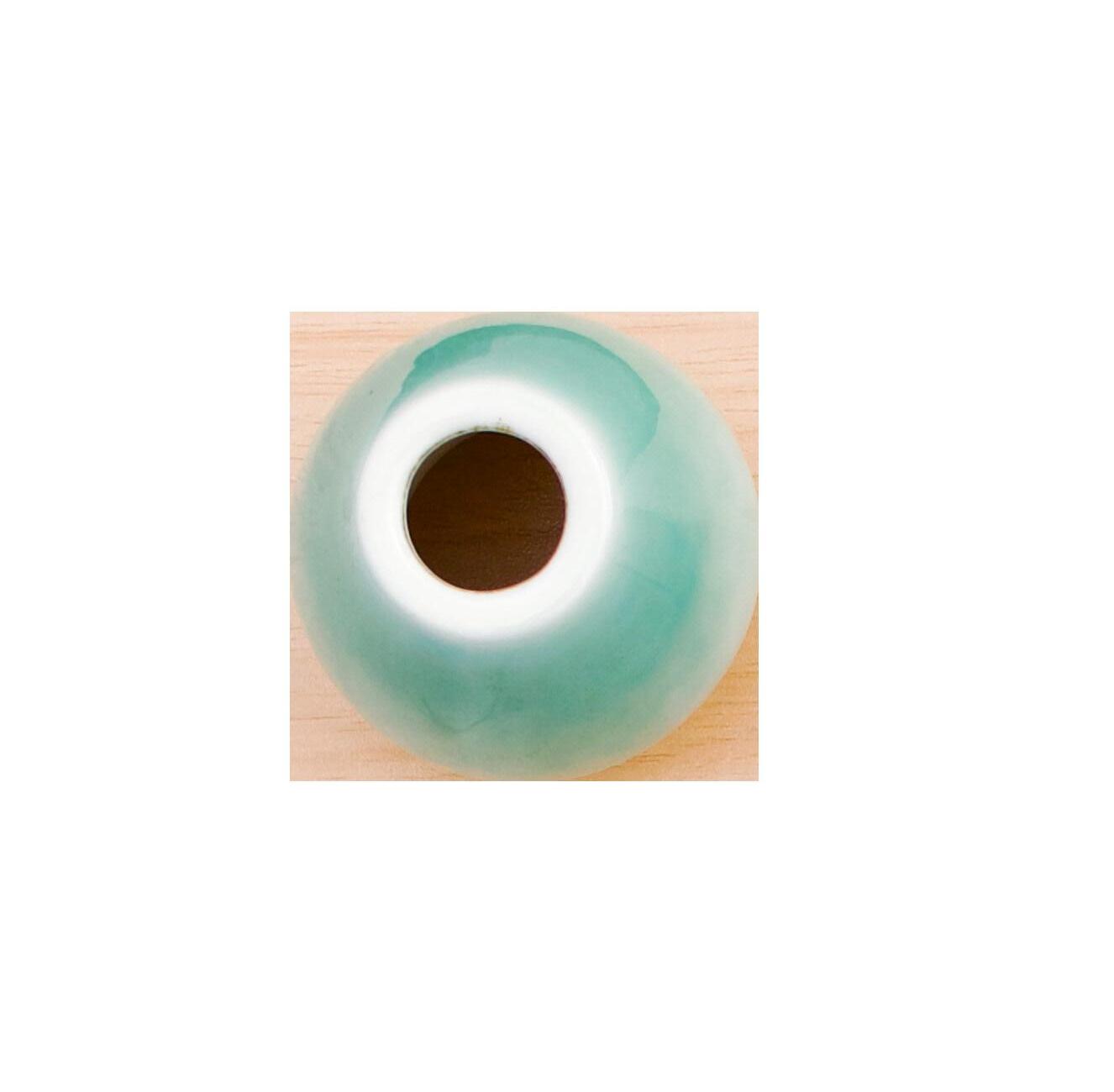
Derived from the plant Camellia sinensis, the most important step to making matcha is shading. As the tea plant grows, farmers gradually decrease the plant’s source of light. The highest grade of matcha is blanketed in near darkness close to the time of harvesting. This step is essential to cultivating the flavor of matcha’s slight earthy bitterness.
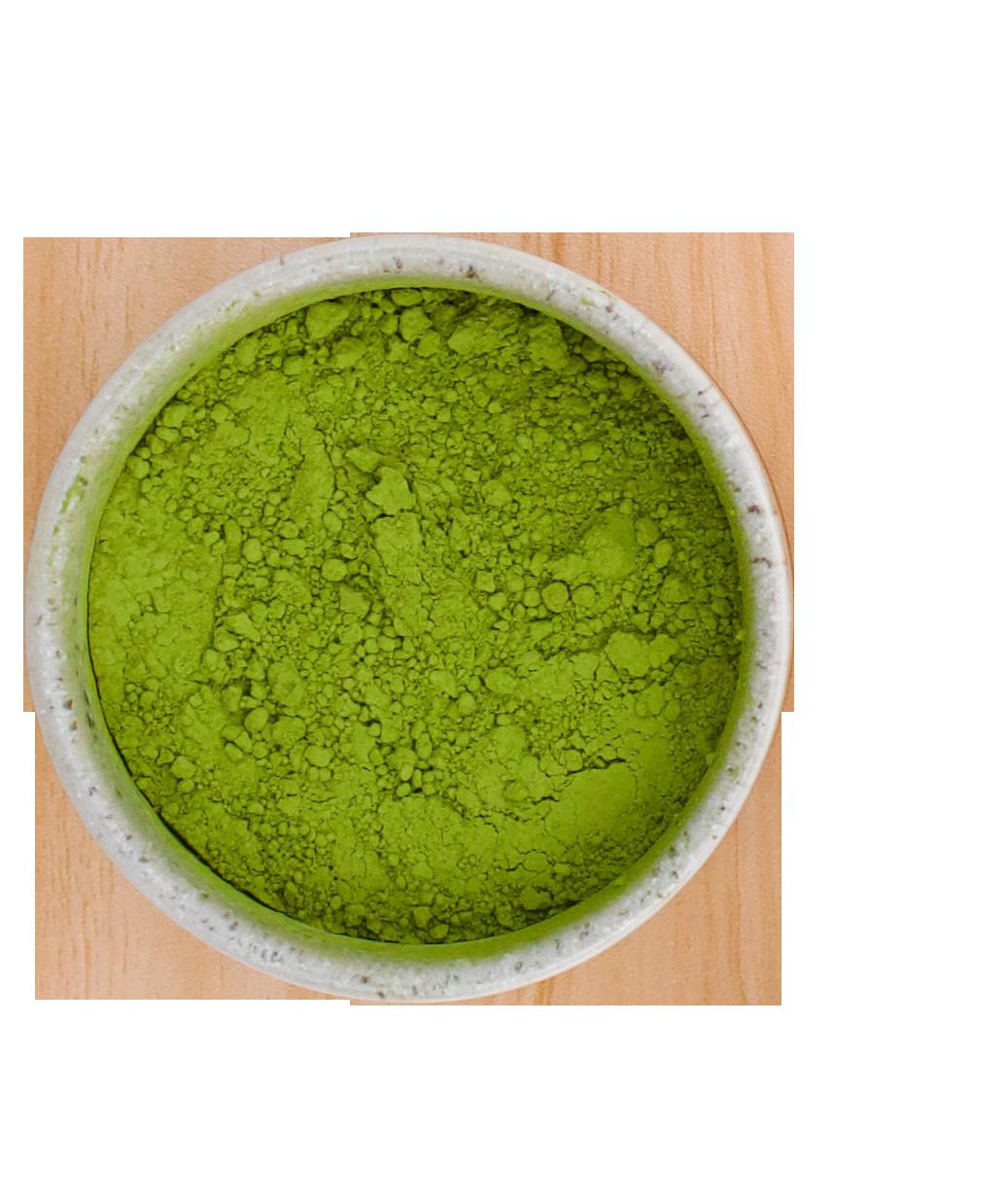
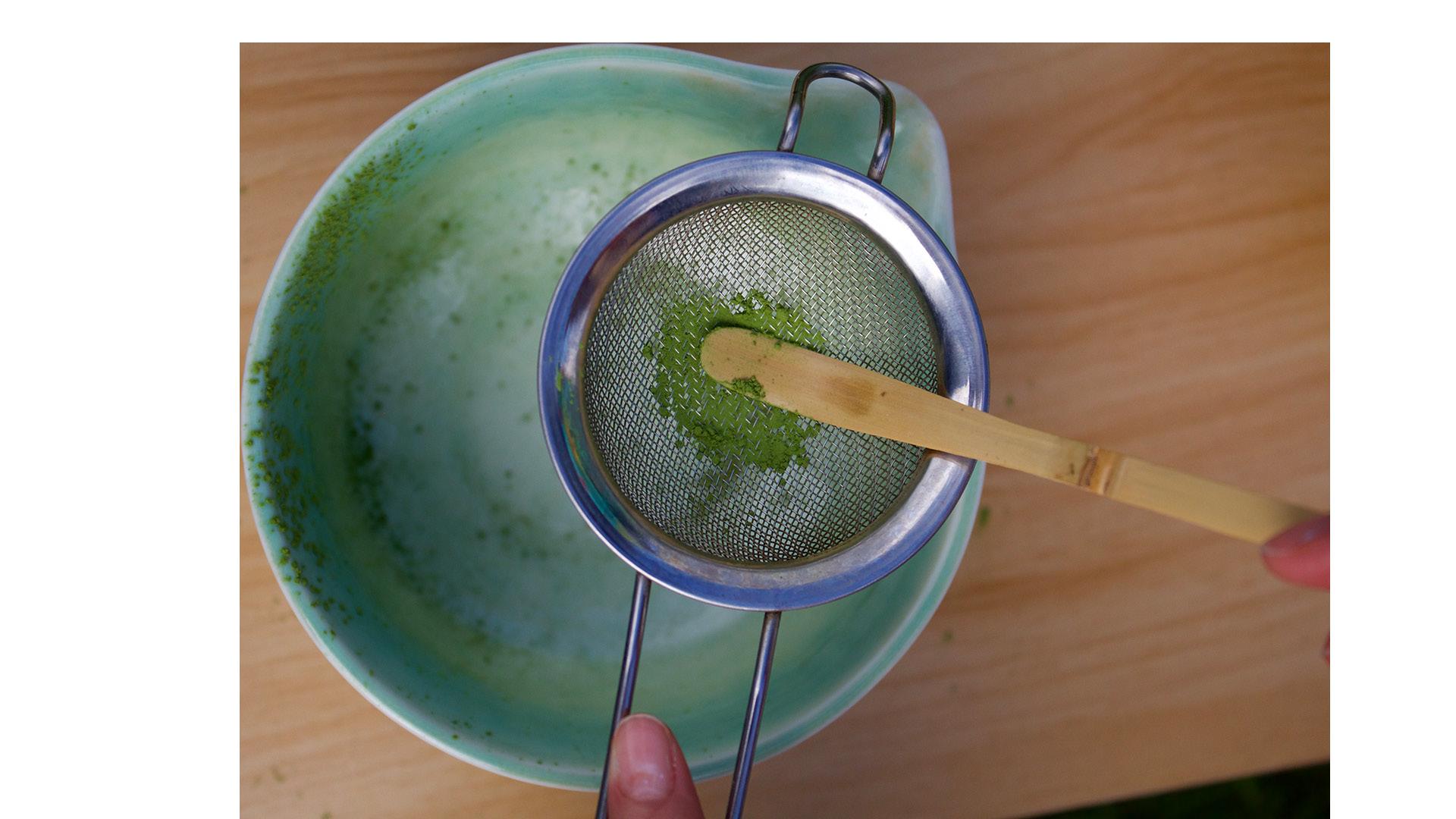
The iconic green color comes from the next step: steaming the leaves of the plant. As the artisan ground tea company Matchæologist details, “ … the leaves used to make matcha are cooled and dried … then deveined and destemmed to become tencha (碾茶),” or “grinding tea.” After grinding these tencha leaves, the matcha powder is ready to consume.
This process, although complex, is how the ground tea develops its health benefits. The shading and fine grinding help preserve
the natural compounds, allowing them to degrade less as the leaves are steamed. These benefits are what companies and cafes highlight under the description of “superfood.” Although no scientific definition of the word exists, Laura Acosta, a nutrition expert at the University of Florida, states that what most companies are referring to are the bioactive compounds that make up matcha, the predominant one being epigallocatechin gallate. This bioactive compound is responsible for the antiinflammatory, anti-oxidant and vasodilatory effect which deliver the relaxing feelings matcha is known for.
At first, these clinical advantages brought awareness to matcha’s Japanese origins with new appearances in cafe pastries, household snacks and local grocery aisles. Now, it’s hard to deny its involvement in recent internet trends, one of them being the “male performative aesthetic.” This trend labels a style for men that markets itself as more appealing to women, with common elements including wired earbuds, tote bags, keychains around the belt loops and—of course—matcha.
“We are conflating popularity with expertise.”
- Dr. Laura Acosta
Drinking matcha has evolved into a visual signal with a curated online identity, one that specifically prioritizes self-care and refined taste. Engaging in the trend provides relevancy, a trait important for gaining interaction and views on the internet, regardless of genuine enjoyment. Overall, as matcha’s image resonates more strongly with Western culture, its original purpose fades behind the commodified filter.
Sinensis in Ceremony
Matcha, before caught in the whirlwind of Western trends, existed for a much simpler cause. Originally found in China, a Zen Buddhist monk brought tea seeds to Japan, where matcha was then harvested in extremely limited amounts. The traditional tea established itself as a luxury good consumed
design
by/
Celine Hui publicity by/ Ho-Jung Lee
among elites, used specifically in tea ceremonies. These ceremonies emphasized values such as harmony and tranquility, revolving around temae, the formal process of preparing and presenting matcha in Japan.
Eventually, matcha’s elite status began to fade. Technological advancements and other modernizing practices simplified the complicated processing of matcha, enabling easier availability to the general public. Matcha became just another flavor in Japan.
“Matcha was no different to strawberry, chocolate, or vanilla, being a commonplace flavor…”
- Ethan Ramirez
Ethan Ramirez, a first-year student and member of UF’s Japanese Student Association (JSA), recalls fond memories of his mother buying him ice cream and familiarizing matcha as a common choice. “I never thought of matcha as the weird or ‘healthy’ option,” he says. “Matcha was no different to strawberry, chocolate or vanilla, being a commonplace flavor…” While matcha integrated naturally in its home country, it became something else entirely different abroad, resulting in both cultural and environmental challenges.
Spill the Tea!
What began as a symbol of harmony now pushes an industry stretched thin and a product losing touch with its roots. As matcha’s demand increases globally, supply struggles to keep up. Matcha is commonly grown and cultivated by local Japanese farmers, but farming takes time—vastly more than it takes to purchase a cup. “In the Kyoto region, where a quarter of Japan’s “tencha” comes from, hot weather has led to poor harvests even as demand soars,” explains Osmond Chia, a business reporter from BBC News. Matcha is demanded yearround, causing issues when it comes to timing cultivation with adequate weather patterns. Additionally, while the number of consumers in line for matcha is long, the labor harvesting the matcha is decreasing. Japan “faces a shortage of farmers as its population ages and not enough younger people go into the industry,” Chia states.
While farmers fight to keep up with the rapid rate of consumption, online popularity soars and yet alienates the drink from its cultural source. Internet trends on social media platforms associate matcha with contemporary concepts like streetwear, feminist literature and consumer goods. Matcha has fallen under the umbrella of “just” another viral drink. Its integration into every food
imaginable has led to it to become a relatively common flavor at the cost of losing cultural context and straining local farmlands in Japan.
For Here or To Go?
First-year student, Arthur Popovich—Japanese name Toma Nantani, and also a member of UF’s JSA— expresses the same sentiment, commenting that he doesn’t think people “take matcha seriously” and that many have devalued its cultural significance by making it a part of “casual, popular internet culture.” Detachment from matcha’s origins has altered the modern perspective of its impact in multiple ways. The fundamental issue, however, is that global visibility hasn’t yet translated into global understanding. It’s the most common question cashiers ask at the counter, but now we ask the same about matcha’s future. Before its rapid rise as another internet trend or “superfood,” matcha’s popularity brought awareness to Japanese traditions and called people to appreciate ethnic culture and cuisine globally. Today, many—not just those with a cultural connection—hope to see these trends die down, allowing matcha to once again tie back to its roots and less as something sensationalized simply for the aesthetic. On the other hand, many celebrate its popularization, proud to see the cultural drink fostering awareness, even if not through the most traditional avenue. So the question everyone seems to be asking now is:
Will matcha be for here or to go?
Origins YOGA of
Tracing yoga’s journey from spiritual practice to its modern gobal impact.
By: Caitlyn Crimmel
Introduction
If you’ve taken a yoga class, you may have heard “Namaste” at the very start of a lesson. It literally means “I bow to you,” from the Sanskrit words “namah” (bow) and “te” (to you), and is used as a customary Hindu greeting. Arising from the northwest of South Asia, Sanskrit is widely used in several other Indian religions. It is also the language in which the original yoga scriptures were written, making it an essential part of the practice, naming various terminologies and philosophies. Recently, however, these names have become something that is widely glossed over, with certain English translations becoming more popular. Nonetheless, yoga’s global impact is undeniable, but the story of its influence is a long-winded one, rooted in history beyond the 21st century.
Origins of Yoga
Dating back to over 2,000 years ago, yoga is a practice of such antiquity that its exact origins are difficult to trace. Its earliest depictions are from Mohenjo-Daro, an archeological site of the Indus Valley displaying a yogi (a practitioner of yoga) in the Lotus pose, or “Padmasana.” In ancient yogic scriptures, yoga was meant to guide and train one’s consciousness to unite with universal consciousness, resulting in harmony between the mind, body and soul. In fact, in Sanskrit, “yoga” means “yoke” or “unite.”
Vasudha Narayanan, a professor of Hinduism and its diaspora at the University of Florida, described yoga as more of a “spiritual path” in which postural yoga is only a small part of it. Its main ideals contributed greatly to Hindu philosophy, though its origins aren’t religious, despite being questioned as so. The meaning of yoga has shifted over time and changes depending on the intent of the
practitioner, among other factors, so there is no definite answer as to whether yoga is religious or not. According to Narayanan, Indian teachers of yoga “began to think that the practice of yoga led to higher spiritual good,” where yoga is “a human heritage, rather than that of one particular ethnic religious group.
Yoga was meant to guide and train one’s consciousness to unite with universal consciousness, resulting in harmony between the mind, body and soul.
Lauren Ahrens James, a graduate student studying under Narayanan, mentioned how yoga was first introduced to the United States in 1893 by Swami Vivekanada, a Hindu monk, philosopher, author and religious teacher who is widely regarded as one of the greatest modern Indian thinkers. His presentation of yoga occurred at the World Parliament of Religions in Chicago, describing it as a matter of philosophy, psychology and self improvement. However, his ambiguity confused people as to what exactly yoga was, leading to more speculation than enactment. Despite this, it gained more popularity throughout the 20th century as a posture-based practice, aligning more with the yoga known today. Yoga teachers such as Sri Krishnamacharya and Richard Hittleman pioneered modern yoga, introducing yoga through books and television and helping it reach a larger audience. Yoga’s popularity continued to increase into the 21st century, of which James attributed to the 1960s counterculture movement.
The Appropriation of Yoga
People are familiar with poses such as downward dog or the tree pose, but what about “Adho Mukha Svanasana” or “Vrksasana?” It might be surprising to find out that these terms actually refer to the same poses.
“Adho Mukha Svanasana” and “Vrksasana” are the Sanskrit names of
design by/
Saee
Joshi
publicity by/
Ho-Jung Lee
downward-facing dog pose and tree pose respectively, where the latter names are more widely understood by a Western audience. These new English translations emerged when people began to see opportunities to profit off of yoga’s commercial appeal. James described it as “commodification of Hindu ideologies.” It’s common to see people disregard yoga’s spiritual aspect entirely, with “almost an exclusive focus on posture in transnational modern postural yoga.” Even the aesthetics of yoga are used as a marketing strategy, seen with Lululemon’s past clothing lines, “Namastay Put” and “Mula Bandhawear” underwear.
Modern yoga also stops once individuals leave the mat, where traditional yoga is more of a lifestyle, used as a tool for selftransformation in all aspects of life.
In recent years, the appropriation of yoga and lack of respect for its cultural origins has been a point of contention. Baano Golawala, who instructs a fusion of yoga and pilates called yogalates, noted how “when people like something, they want to associate it with the Western world, and when they think it’s ugly and gross, they want to say it’s Indian.” There’s this idea of Indian people being viewed through a lens of inferiority, and Golawala briefly touched on her own struggles with this. Discussing the common lack of association between Indian people and physical activity, she said “if an Indian person is teaching yoga, it’s less credible than if a white person was.” However Golawala has twisted that idea around, in her words “reclaiming it” and finding more confidence in herself as a yogalates instructor.
Modern vs Traditional
Within the U.S., yoga eventually evolved to be almost entirely different. Most people are familiar with “Asana,” postures of yoga, or “Pranayama,” the breathing. Both are key parts of “Hatha” yoga, one of six main branches of yoga. The others—”Raja,” “Jnana,” “Karma,” “Bhakti” and “Tantra”—focus on different aspects. These branches go beyond the physicality of yoga, incorporating aspects such as inquiry of the self or world, discipline and service. They are also less popular, likely due to less appealing factors such as celibacy or devotion to a certain god. Due to this, Narayanan thinks postural yoga is
here globally to stay. Modern yoga also stops once individuals leave the mat, where traditional yoga is more of a lifestyle, used as a tool for self-transformation in all aspects of life.
That isn’t to say that modern yoga doesn’t provide any of the benefits that traditional yoga might. Golawala commented on this, explaining how her work at Shands Hospital acts as sort of a “preventative medicine for our healthcare professionals who spend so much time on their feet.” Beyond the physical aspect is the mental relief. Golawala mentioned how “just taking that hour to really focus on your own body, on your own mental state…can be really calming and soothing.” There are also many different fusions of the traditional and modern aspects of yoga today, from the previously mentioned yogalates to hot yoga to aerial yoga. They vary widely in their unique executions and how closely these executions stay to traditional yoga varies by person. For instance, in yogalates, Golawala described how she ends her class with the “Shavasana,” something that “not all classes end in.” Oftentimes, people practice their own interpretation of yoga and go at a pace most comfortable for them.
With its accessibility and health benefits, yoga’s popularity makes sense. While it may not be exactly the same as in the past, it has survived thousands of years and is celebrated globally. Despite the many nuances in yoga today, it all leads back to the same ancient practice, in which the mind and body unite in harmony. Whether it is through hot yoga or intense stretches, the rich history of yoga carries the spirit of the practice for generations to come—a reminder of the unseen devotion of its cultivators.
Barriers AND BETWEEN Borders
Faced with uncertainty at home and in the U.S., international students are stuck between a rock and a hard place
By: Muyao Guan
Hopelessness.
A feeling proliferating through the minds of international students as they embark on the quest of entering university, earning a degree, landing a job and establishing a livelihood — entire oceans away from their homes.
This is the American Dream: everyone, no matter their background, can afford freedom and opportunity if they work hard enough. They, too, can achieve upward social mobility and become wholly American; for being American is a mindset, not a single race or national origin.
But this is far from reality. For Asian international students in particular, migrating to the U.S. means escaping grueling examination systems that are the predominant college decision processes in their home countries.
Cutthroat Competition
In India, National Eligibility cum Entrance Test (NEET) and Joint Entrance Examination are among the toughest entrance exams. NEET is a required test to be admitted to medical and dental professional programs, with over 2.4 million applicants and less than a 5% acceptance rate. JEE leads to top engineering institutes, with less than 0.5% students entering top
students competing for limited slots, with the top two universities in the country — Peking University and Tsinghua University — boasting less than a 0.1% acceptance rate.
Likewise, in South Korea, the College Scholastic Ability Test (CSAT), also called the “Suneung,” is the sole entry point for university admissions. Famously, the entire country shuts down on test day. Planes flying near schools are delayed or diverted, roads near schools are blockaded to preserve student concentration and even the stock market opens late on test day. Infamously, suicide rates increase once results are released.
For exam preparation in these countries, students in their last year of high school often forgo weekends and holiday breaks, study from sunrise until well after sundown and attend afterschool test preparatory academies, colloquially termed “cram schools.”
Much of the time, studying becomes a numbers game of rote memorization and not necessarily about learning the subject material.
University is framed as their only option for success — the lynchpin of their entire academic career they have built so far. Much of the time, this is the sole path to upward mobility. Unless students wish to repeat a year of high school and retake their exams, there is no other way to gain admission to prestigious universities. The “name brand” of their undergraduate degrees will follow them for the rest of their lives — something that is common in the U.S., but far more pronounced in Asia. Ultimately, it’s easier to gain admission to schools abroad than attend a top school in their home country.
In China, the Gaokao exam, taken in the last year of high school, is the sole determinant for university admissions. In 2024, there were over 13 million
Hope Abroad
For many international students, the most simple route to escape from their home education system is to seek education abroad. In Asia, the common perception is that American and Western education styles emphasize individual growth and critical thinking
design by/
Hannah Li publicity
by/
Genesis
Barrios
— qualities that Asian education systems lack, where success can be as infinitesimal as a score from a single test.
Eva*, a student who graduated from a top high school in Taiwan that emphasized freedom and critical thinking, felt pressured to fit into this narrow definition of success. She is currently a double major in international studies and sustainability studies at the University of Florida. “[My school] had vibrant student culture and activities. It was very forward for student education … but we still had to take the exam and go back to the cramming system in the senior year of high school to prepare for it. It was suffocating.”
Despite its relatively low population of test takers compared to India and China, with a little over 115,000 in 2022, Taiwan’s college entrance exam, the General Scholastic Ability Test, still abides by the principle of regurgitating information built into its academic system.
The competition does not end with university admissions, but also continues into the workplace after graduation. Still, having an American degree gives Eva a leg up in the workforce. “[I came here] in pursuit of a better life, in every extent. If I stayed and worked in the U.S., that’d be a better option. If I go back to Taiwan, the job [after attending university abroad] would be better.”
In This Economy?
While moving to the U.S. may seem like the obvious choice, this process comes with its own unique hurdles. Namely, one major restriction faced by thousands of prospective international students each year is the obstacle of visa bureaucracy.
Getting the most common undergraduate international student visa — the F-1 — is a relatively simple process, with over 400,000 issued in 2024. However, getting here is the “easy” part — staying is what’s tricky.
Enter the realm of post-graduation employment restrictions. International students in the U.S. on an F-1 student visa are allowed to gain work experience through Optional Practical Training (OPT) for up to 12 months after graduation. To remain longer, they must secure a highly competitive, highly coveted employer sponsorship for the H-1B visa lottery — which, even then, only has about a 16% probability of acceptance. Under the Trump administration, the H1-B visa also now has a proposed $100,000 filing fee, which makes the future uncertain for these students.
However, an easier shortcut to staying longer is the two-year STEM OPT extension.
Despite her dream of working in cultural relations within international organizations, Eva feels forced to double major in STEM due to these major-based work restrictions.
Because of the competitive nature of post-graduation work visa sponsorship, most international students will major in STEM fields in hopes of being able to obtain employer sponsorship within the duration of their extension.
“Very few people will leave their country to do humanities or social sciences,” she said, while also mentioning how none of her peers were aware of visa restrictions prior to arriving. “It’s very frustrating.”
“One thing we [international students] joke about is that after you learn about working restrictions the easiest way to settle down here is to get married,” she said. “Even then, it’s not guaranteed.”
Whether this is an intentional choice by the government or a byproduct of a system that receives over 2.6 million immigrants per year, following the American Dream is not always the easiest. In attempting to circumvent difficult exams and open up doorways abroad, international students find themselves in a whole new realm of challenges. In the heart of every international student lives a story of struggle, but also of hope for new beginnings.
*Name changed to preserve the anonymity of the interviewee.
The Fire That Never Burns Out
AASU seniors reflect on the highs and lows of leadership
By: Sehja Abeysiriwardana
The Asian American Student Assembly showcase starts with an explosion of colors and music. From graceful hand fans to dancing lions, the different cultural clubs within the organization showcase their talents, dance routines and team spirit in an electric effort to promote new engagement within the Asian American Student Union (AASU) community and strengthen existing bonds.
Established in 1993, AASU promotes an inclusive community of empowered UF students celebrating Asian culture and heritage. Through numerous clubs, mentorship programs, organized events and even publications like Sparks Magazine, AASU members work diligently throughout the year to recognize the diversity of UF’s campus.
However, what’s hidden behind the curtain is the firm but friendly leadership of AASU’s executive board members. Their hard work and ability to inspire underclassmen to pursue leadership roles after them keeps AASU a vibrant and growing community.
Walking the Tightrope
Being a leader, however, is no easy feat. As the academic demands of college increase, it becomes difficult for even the strongest students to balance their education and club engagement. Even so, the tight-knit AASU community maintains a special bond from year to year.
“AASU is special because it’s cultural,” said fourth-year Rafael Sunga, former president of the Filipino Student Association (FSA) and current programming head of Def Talent Jam (DTJ), an FSA
dance competition and a UF Signature Event. “A lot of us grew up more Americanized, but AASU reconnects us with our roots. You can find friends anywhere, but not that cultural understanding.”
Sunga had entered freshman year unsure of where his commitments would lie. He had known about AASU through one of UF’s earlyarrival programs for APIDA students called Forming Identities through Networking and Development. While he spent his freshman year juggling a variety of clubs, by sophomore year, he cemented his role as the vice president of FSA.
“As a freshman, you’re exploring and spreading yourself thin — it’s fun but draining,” said Sunga. “As a sophomore in leadership, it’s a different kind of stress — you’re trying to recreate the magic you saw as a freshman. You’re your own biggest critic, trying to make things just as good or better than before.”
Fourth-year Hailey Pham, DTJ associate director and former FSA and Vietnamese Student Organization (VSO) multimedia director, agreed that managing academics with club work does prove to be difficult, especially when unsure about where your career path is headed. “I’ve seen a lot of freshmen want to get involved and burn out because of overlapping commitments and exams,” she said. When Pham started as a biomedical engineering major, the intense workload left her unsure if it was the right choice for her. Figuring out her academic trajectory was already stressful without the heavy commitment of leadership in AASU.
However, Pham also added that the community within the clubs was always ready to lend a helping hand when the pressure got too intense. Faced with the knowledge that her “bigs,” a term for upperclassman mentors, were graduating, Pham dove deep into her roles in FSA and VSO as a junior in the hopes of giving them a final year as memorable as the ones they had organized. Through the sleepless nights and hours of work for events, she fondly recalled how her board members were always willing to help when time permitted.
design by/Maya
Rudo publicity by/ Izzy Zheng
“I think a lot of people are scared to ask for help because they feel like it’s a cultural thing of being seen as weak.”
- Hailey Pham
“But I feel like here, everybody has had the same upbringing and they’re very understanding – they’ll want to help you, but they can’t do that if you don’t tell them.”
The Legacy Loop
Despite the grueling work, both Pham and Sunga look back on their past years in AASU with nostalgic grins. The bonds they formed with their co-board members and mentees have followed them throughout their time at UF.
For certain alumni, though, the AASU commitment changes from a college journey into a lifelong connection. Phillip Cheng, a PhD student at UF specializing in Asian American Studies, is one such member.
Cheng entered UF as a freshman in 2006 and was quickly swept into the chaotically close AASU community. Having come from a small and predominantly white town, being involved with cultural events as a Chinese Cambodian was new to Cheng, and he embraced the change with open arms. Over the next few years, he served as a Chinese American Student Association (CASA) officer, First-Year Leadership Program (FLP) director, Asian Kaleidoscope Month director and the president of AASU itself.
Cheng admitted that staying in leadership is not as easy as it sounds: “Once you take on a position in one organization, that’s already a lot. And so if you do it in multiple organizations, you just simply sell yourself short,” he said, warning against doing too much at one time.
“You are simply sacrificing quality for quantity.”
- Phillip Cheng
“We get to see everybody’s accomplishments on their social media, and so we think that it’s natural or that it’s easy to hold all of these positions. But in fact, it’s not.”
Though AASU continues to have a chock-full schedule each month, Cheng highlighted that prioritizing a few clubs and balancing them with academics made his time spent in AASU the most enjoyable and allowed him to focus on larger-scale projects as a leader.
Despite the numerous years it took to reach fruition, Cheng’s favorite personal accomplishment was founding the Association of Asian Alumni, a network that provided a way for UF’s Asian community to stay connected even once their paths led them away from campus.
“I was very proud of the legacy that I left behind,” Cheng said. “It was really rewarding to see students continue to do stuff, but not only just to continue it — they built on it and they made it better.”
The Flame that Keeps Burning
Despite the struggles they faced, all three AASU leaders agreed that the text chains, late-night dance practices and stress-fueled PowerPoints were all worth it for the memories they made during their time at UF. After all, to stay committed for multiple years requires a driving force: genuine excitement to be part of the AASU family.
“AASU was never the burnoutit was definitely the fire extinguisher.”
- Rafael Sunga
“There were times where I had three exams back to back, but then I had a GBM at the end of the week. And that was my light at the end of the tunnel.”
As the stagelights fade on the AASA showcase, sparks ignite across the audience – the future generation of members, board executives and alumni. Even though the community changes over the years, the dedication of the AASU leaders never wavers from their mission of forming a strong and diverse home for students within their organizations.
The show may end, but the fire never goes out.
Explore opposition, reflection, and everything in between.
WORMED DELICIOUS (VER. 3), JUSTIN FERNANDEZ
Mutating together the phrases “bad apple” and “apples fall not far from the tree,” this piece explores the dreadful direction of fearing not just your parents, but also the fate of each older sibling before you. In their haste to cut ties and defy family curses, the prodigal speaker is caught mired in transition: they fail to independently feed themselves, to clean their studio and — most regrettably — to fully find peace in leaving their family behind. Through biblical allegories, an empty commitment to four-line stanzas that visually stretch the speaker’s words thin, and a lingering feeling of unease across the text, the piece’s structure complements the final, fatal realization that liberty alone is insufficient for countering fate. In-context, Wormed Delicious challenges APID American narratives of withdrawing from the family under financial or academic pressure, questioning whether isolated rumination is as effective as open conversation in overcoming generational traumas.
Like that I lay into the apple core its empty wedge browned to the touch of air and me.
Acid keeps in its seeds and I — now among them — stir on the counter
fermenting sour the sin of being bitten! O’ Lord
I count my brothers each laid rest by evil adjourned from tree to leaf to bloom to apple grown to be made I muse
it’s the unfounded aspiration that does em in. A light flashes: Mother wishes I’d call aching forward this memory from the countertop bloated and impolite the doting serving voice indigestible beyond eyes blanking upon being seen leaving as untorn fruit
suffocates in air sap and plastic. I turn from it whiplash rocking forward filth and bile to blot out sight amidst the mess of this studio
and the premature panic startles the barstool underneath, splitting arm from soapstone
carving the spine upturned supplanting heels for skull
on mahogany flooring staining in all shades richer deeper riper and now behold: a pastiche of fruit — fertilized and ripened ready to be picked and returned to fridge tree womb dirt — against the backdrop of a dying phone’s chimes
the dull toll and dim light a showcase for family and visitors: first dark, then cold.
COUNTER OF THE DISDAINED,
JOAQUIN R. C. MARCELINO
Written as a response to the 2024 election while working in D.C., this poem has become a reminder of and rallying cry for the progress still needed. Laced with half rhymes and allusions from the Declaration, to the Constitution, to the writings of the wall of the Library of Congress, it reminisces about how despite all the imperfections of reality, the principles of our democracy stand, and it stands with us on the right side of history. We stand on the shoulders of giants which have dug us out of tremendous holes, it is merely our turn to continue that legacy of advocacy and countering that which threatens the beauty of the inclusivity of the egalitarian democracy we strive for.
I shall pay for the sins of America— in life, liberty, and happiness— Though I have served her well. I’m met with shackles and disdain— For it wasn’t for my freedom that she was ordained.
America has made her choice, A right not all may enjoy— Though a choice that shall henceforth make all be enjoined By marching orders deployed.
America, for now, has retained her democracy, A Republic exclusionary and bloody— Witnessed by history, lived by posterity— Though in this road she has chosen, America may continue to learn her lesson.
I bear witness to her tribulation, her evolution manifested, All the while I shall bear a brunt of it, Though I have walked her hallowed sandstone halls as her faithful servant—
But following the treacherous road of her democracy, I shall stay determined, To see through the perpetuation, and not the end, of the Great American Experiment.
I ride on the coattails of America’s forsaken, Who have toiled for her in times wherein hope was far more barren,
Gritting my own teeth to fight for the Blessings of Liberty and a more perfect Union,
Realizing by natural right our self-determination, Paying equal heed to all we give expression, If not for us, but for the sake of our Posterity and their children, Securing honor, dignity, and compassion becoming a person.
For Humanity do I strive to do Justice, love Mercy, and walk with humble acumen, So that God may give me grace for caring for Their children, countering their ignorance, in Heaven.
PAPER DOLLS, SEHJA ABEYSIRIWARDANA
Trying to oppose normal culture is really difficult; everyone likes to fit in and that makes us very fragile - like paper.
Paper dolls
Walking in a paper town trimming their own corners while the wind pushes them down
Paper dolls
trying different skins instead of gowns eyes comparing while they’re staring