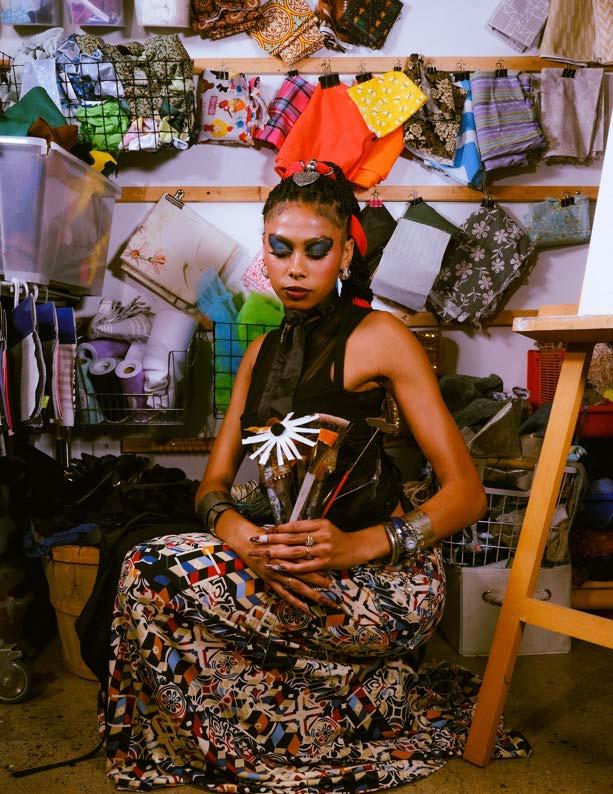
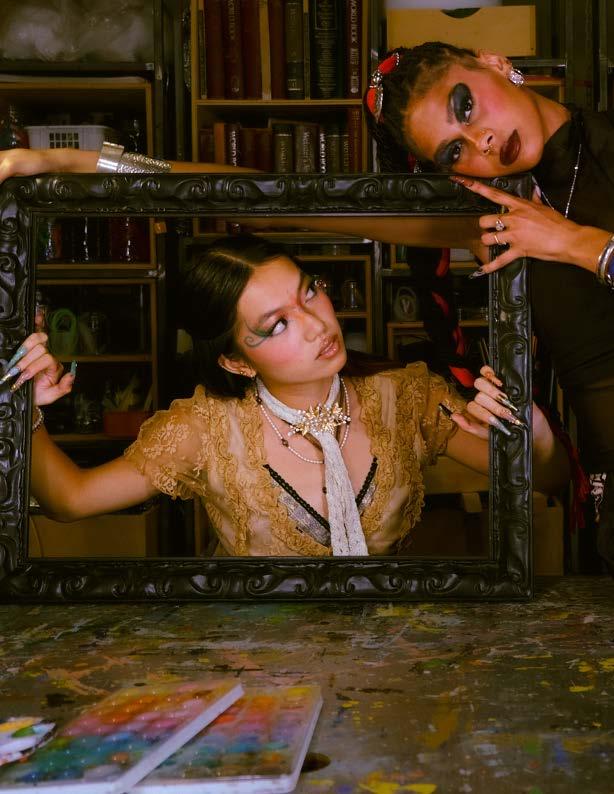
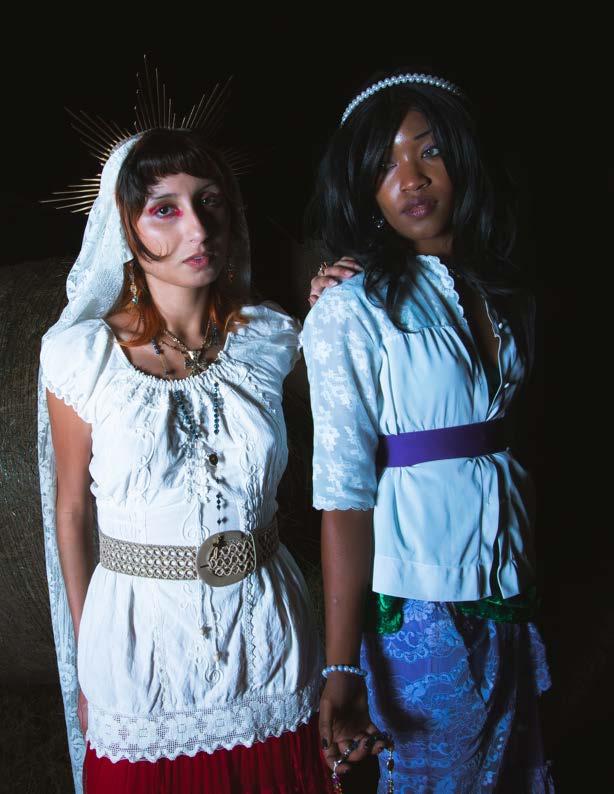
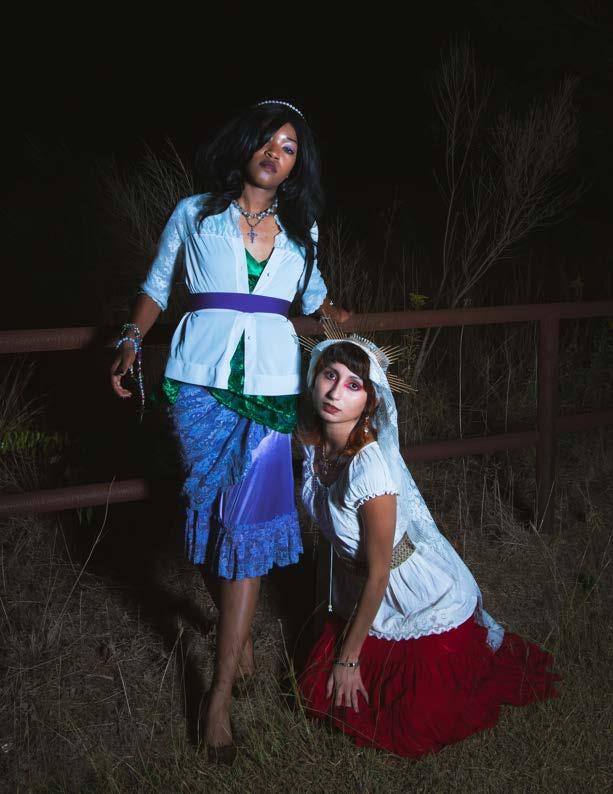
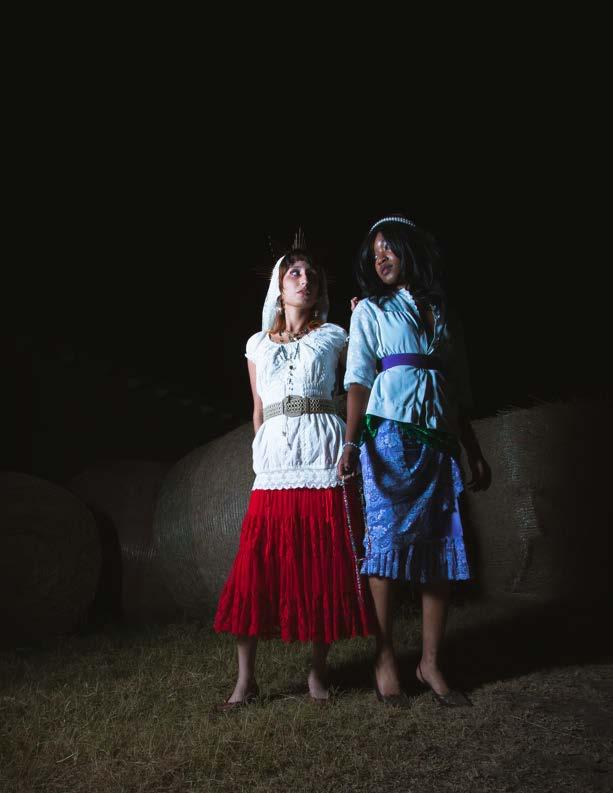
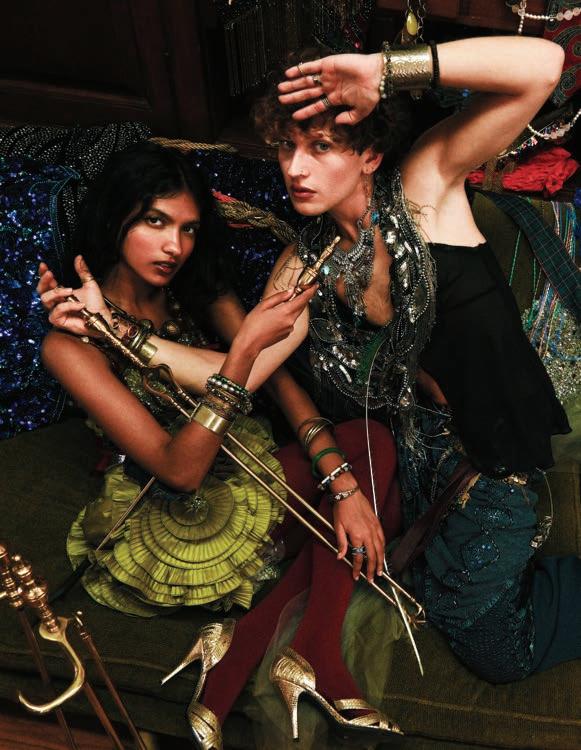
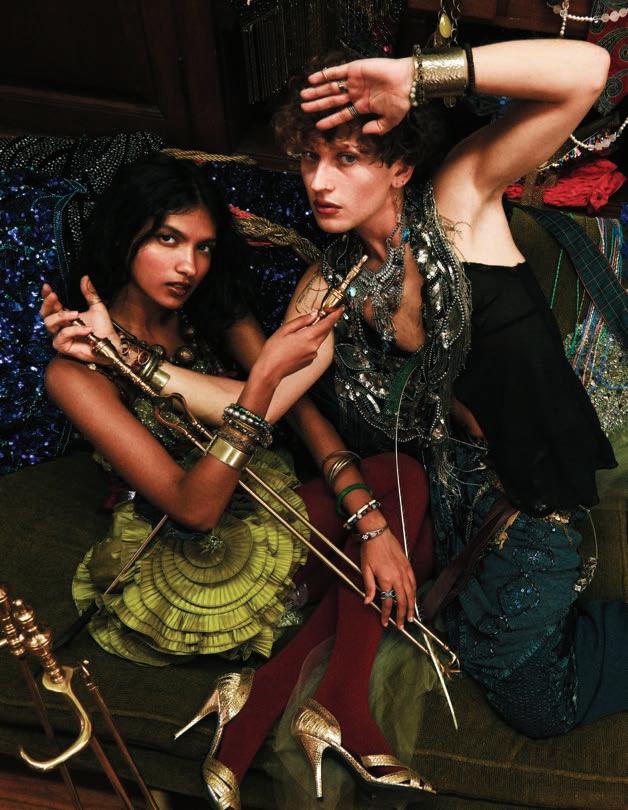
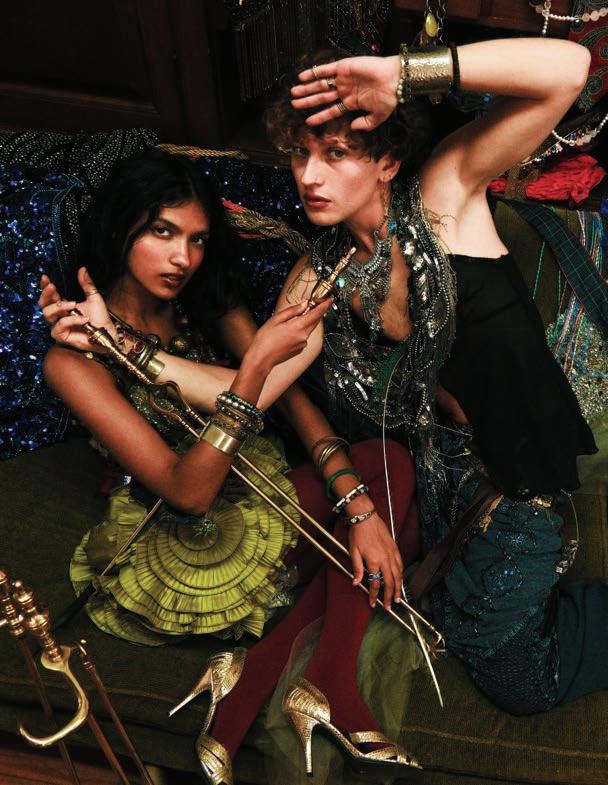
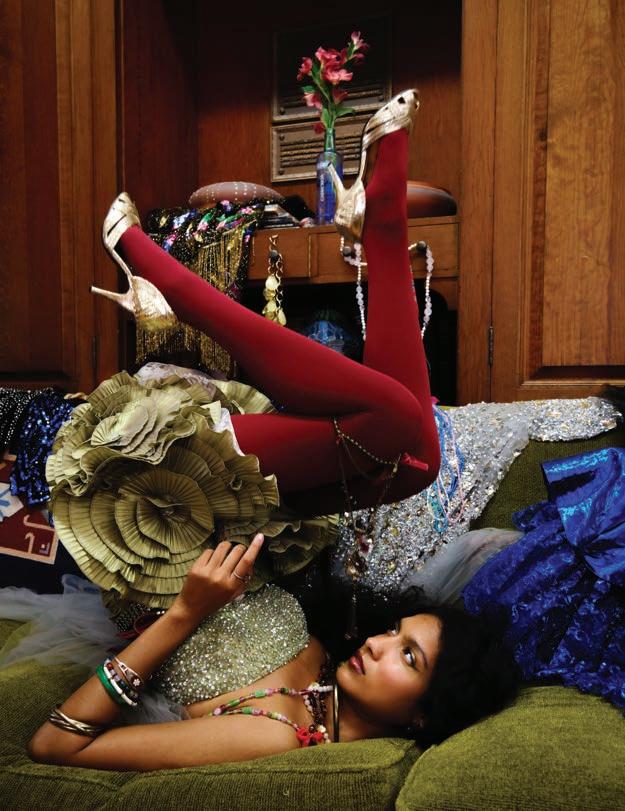
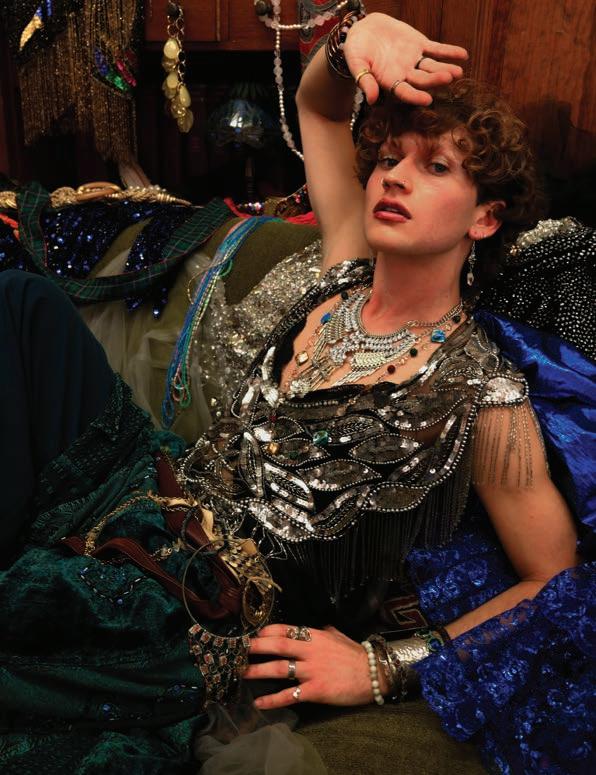
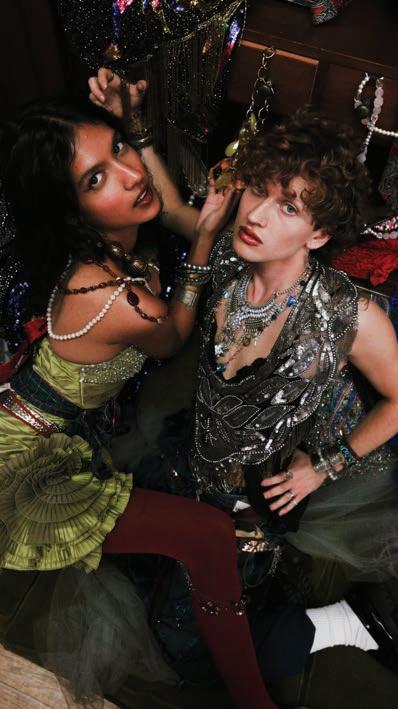
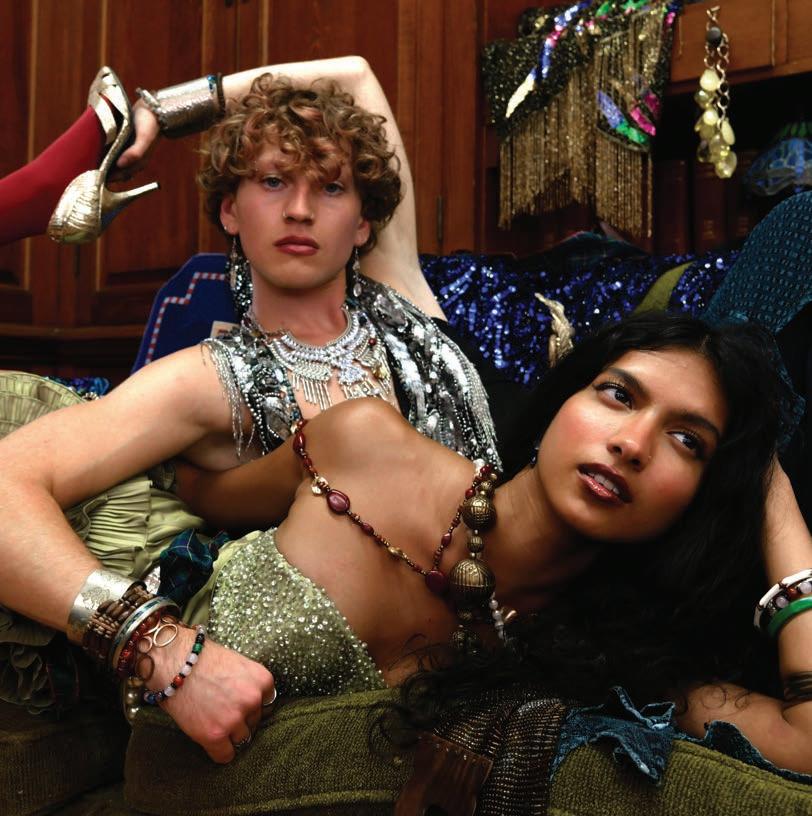
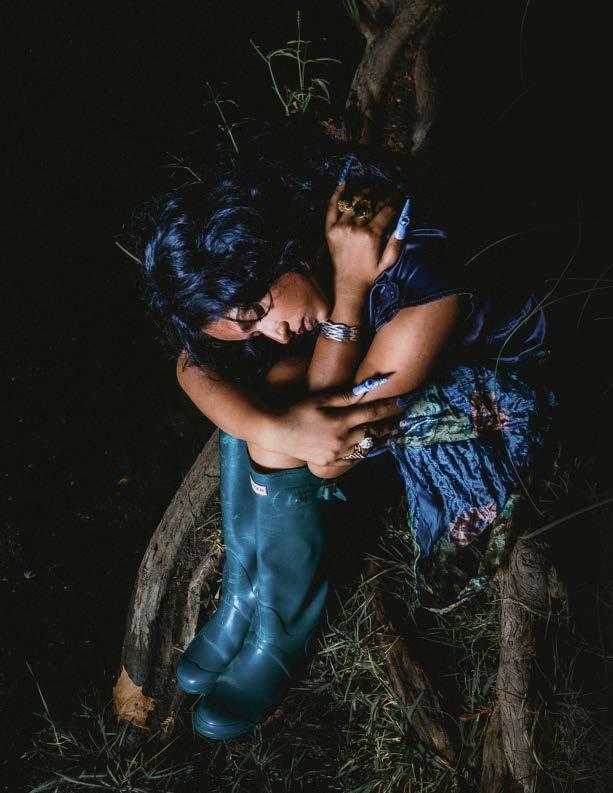
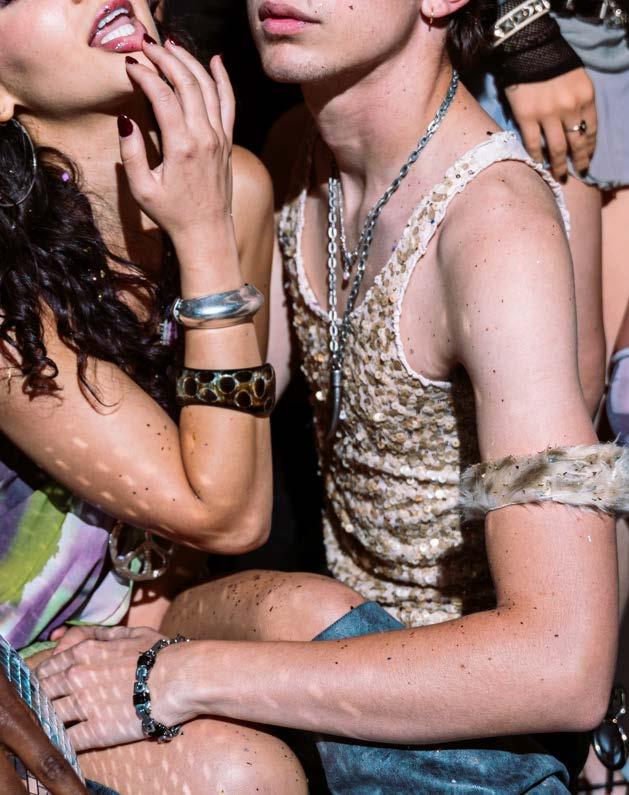
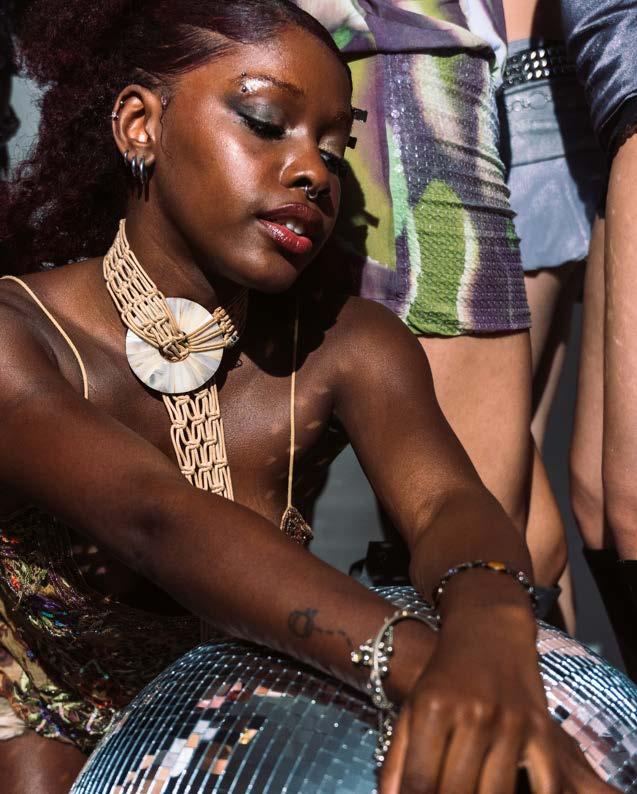
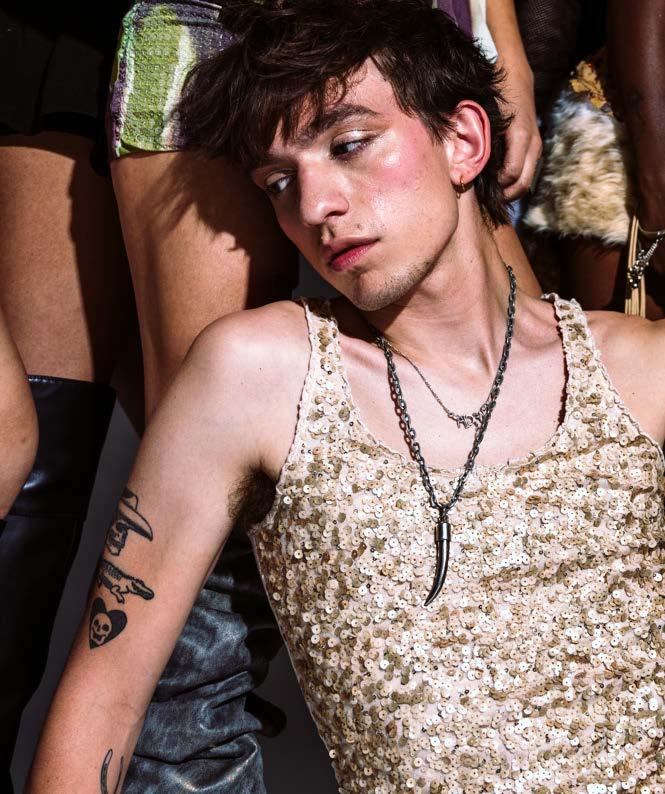
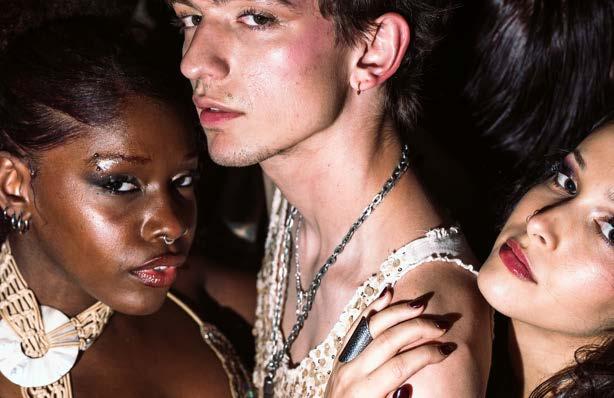
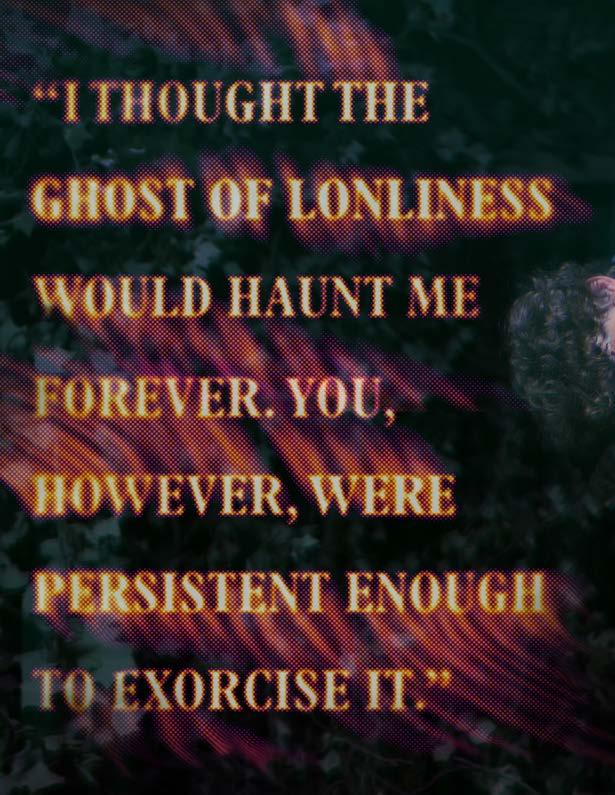
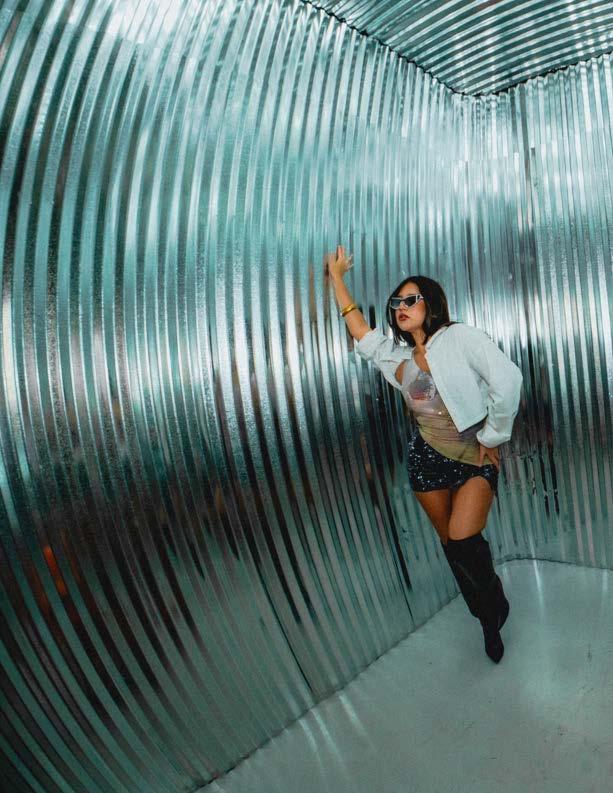
A CELEBRATION OF ALL THAT TRANSCENDS PAST SURVIVAL, PAST LIFE, AND DEATH, PAST NATURAL HUMAN INSTINCT. HERE’S TO THE IRRATIONAL — SELF-REFLECTION WITHOUT ABSOLUTION, RITUAL PAST REASON, AND ART SANS PROFIT.
editor in chief ava jiang
managing director abhigna bagepally
layout director emmy chen
assistant layout director jazmin hernandez arceo
assistant layout director melissa huang
assistant layout director andy kang
co-graphic design director ariana perales
co-graphic design director paris yang
assistant design director erin jeon
web development director gray suh
senior print editor anjali krishna
associate print editor danielle yampuler
associate print editor ariel barley
assistant print editor jennifer wang
assistant print editor lorena tellez
co-senior web editor olivia ring
co-senior web editor anastacia chu
assistant web editor abeera amer
assistant web editor mallory morgan
assistant web editor emily nunez
creative director alex basillio
assistant creative director jaden spurlock
co-director of hmu floriana hool
co-director of hmu jaishri ramesh
assistant director of hmu kennedy ruhland
director of nail art grace joh
director of modeling jaden spurlock
assistant modeling director anya gokul
assistant modeling director madilyn hernandez
director of photography will whitworth
assistant photography director tai cerulli
co-director of videography belton gaar
co-director of videography brandon porras
director of styling andromeda rovillain
assistant styling director stella thomas
assistant styling director aidan vu
business director eric martinez
co-director of events evangelina yang
co-director of events elise laharia
assistant events director savannah hilliard
co-director of marketing mary ann shiju
co-director of marketing sameeha syed
social media director gray suh
assistant social media director lucia soldi
assistant social media director lili bien
staff
zyla alaniz, nasim aleem, da’moni babineaux, tomi baisabayeva, becca belmore, edgar benitez, olivia birge, john-anthony borsi, grecia del bosque, amanda cam, kaimana carlsward, jayda carrejo, layla castro, srikha chaganti, avya choi, alexis choi, aidan christensen, hailey chuong, william coats, cocopaine, james connolly, julia corzo, zoe costanza, mia cruz, mo dada, sarah david, rayna dejesus, reyna dews, riya doraiswamy, travis duong, leonard durbin, yasmin champion evans, gianina faelnar, parker ferguson, beverly frankenfeld, hector frausto, kenia gallegos, norma garcia, nicole garcia, elvia garcia, juno gerdes, shreya goel, zoe goleski, adrian gomez, elaine gong, juju gonzalez, anaid gonzalez, dani goodlett, mimo gorman, karina gutierrez, dat ha, victoria nicolaevna hales, alana harvey, shawn w. hassanzei, nayeon heo, sara herbowy, theo hernandez, amari herrera, emmeline hurter, jose jimenez, nandita joshi, mia kaneda, nihal kaya, clay keener, abby kerrigan, zara khan, joanne kim, melinda kiss, jocelyn kovach, liz kuromiema, janhavi lalwani, andrew lee, andy lee, isabelle lee, alex leisk, isabella leung, cameron lightfoot, angelina liu, larry liu, sister lotus, rihanna lyu, sienna madrigal, katie manz, sophia marquez, maya martinez, jasmine mata, taylor mendoza, samanvita nalla, madison ngo, nik nguyen, anthony nguyen, aidan nguyen, alyssa nguyenboston, armaan noormohamed, chelsea nyatenya, tasmuna omar, anika pandit, taly peralta, emma pettiette, nguyen pham, lucy phenix, joseph chunga pizarro, laasya raju, adriana ramirez, alyssa ramon, ranchucub, miranda revilla, nick reyna, meadow riley, hana robson, breanna rocha, josh rush, alexis rae saenz, tyler la salle, marissa sandoval, odelia schiller, shreya ravi shankar, anoushka sharma, evania shibu, rylie shieh, jalynn shrepee, karen solis, cayenne souknary, julianna stennett, asiyah sultana, jennie tchao, amyan tran, franklin trinh, mia-katherine tucker, aditi tyagi, carys valdez, john walton, wen wang, henna wittsche, jonathan xu, belle xu, emily yao
from the editor
It’s SPARK’s 25th birthday! Fittingly, our theme for Issue No. 25 is Jubilee. On a surface level, this is our birthday issue, an indulgent gift to ourselves. But birthdays are also a time for reflection: at its core, Jubilee is a celebration of SPARK’s beating heart, the shared act of creation. Each of us — myself, the No. 25 team, and the iterations before us — are tied together by the search for a creative space and the drive to hone an artistic craft.
In 2025, our daily lives are optimized for maximum efficiency. The economy seems to define us. We pursue a perfect optimization of it all: time, money, effort. We no longer move spontaneously through the present, everyday world; the world and its balance sheet move us instead. Anything irrational – existing outside of the commodity market — has lost its place. This issue seeks out that irrationality, those moments of escape, and revels in it.
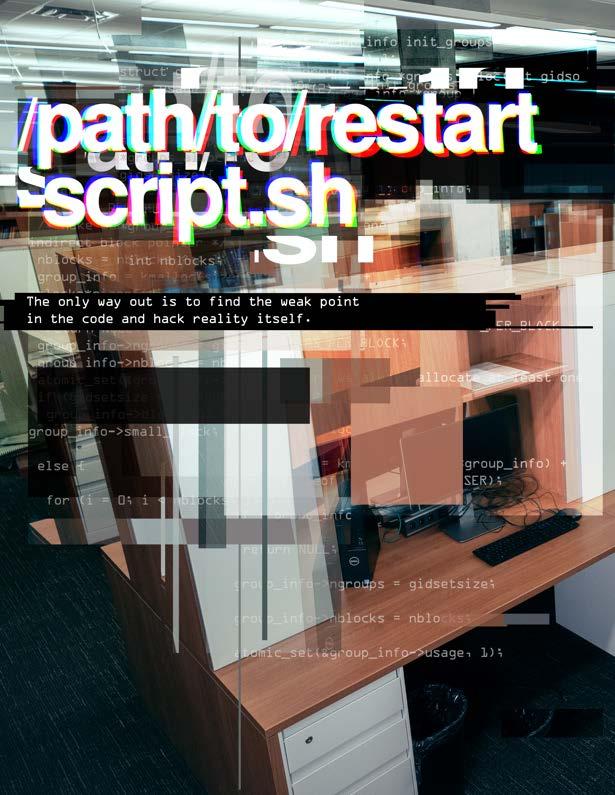
In the churning machine that continuously demands more and more of its inhabitants – more rationality, more discipline, more efficiency — why do we give ourselves over to celebration? How do we return to what grounds us through changing times, chase the moments that make us feel alive, and relish in the mundane rituals? These questions are at the center of Jubilee and its three chapters: Lucidum, Bacchanal, and Remonstra. While we don’t have it all figured out, we search for answers all the same. As Belle Xu writes in /path/to/restartscript.sh, “To feel everything — to feel fully — is how we break the script” (pg. 191).
Our feature story localizes this search for authentic expression. We chose to highlight Laura
Flores, the founder of Austin market Subculture Swap. Amidst the growing Austin vintage scene, we saw Laura as someone who remains true to promoting small vendors and artists.
While the questions we pose and attempt to answer are expansive, I am proud and excited to say that our staff has risen to the challenge. They have produced an issue that is both cohesive and nuanced, simultaneously meditative and exuberant — all the while having a good time.
Welcome to our very own celebration,
Ava Jiang Editor in Chief
jubilee
LUCIDUM ode to hiraeth aquamarine painting and other mysteries blister and burn.
all the ways i have died in my sleep original sin bells blue fish
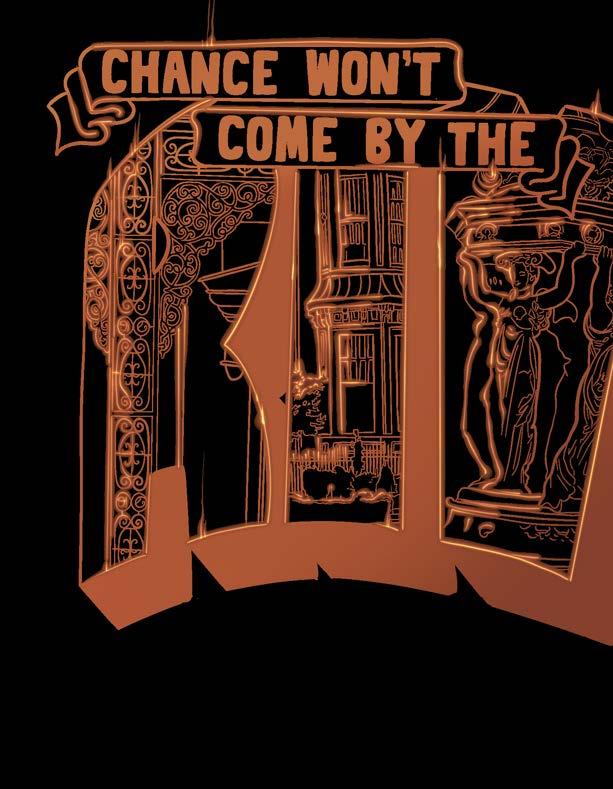
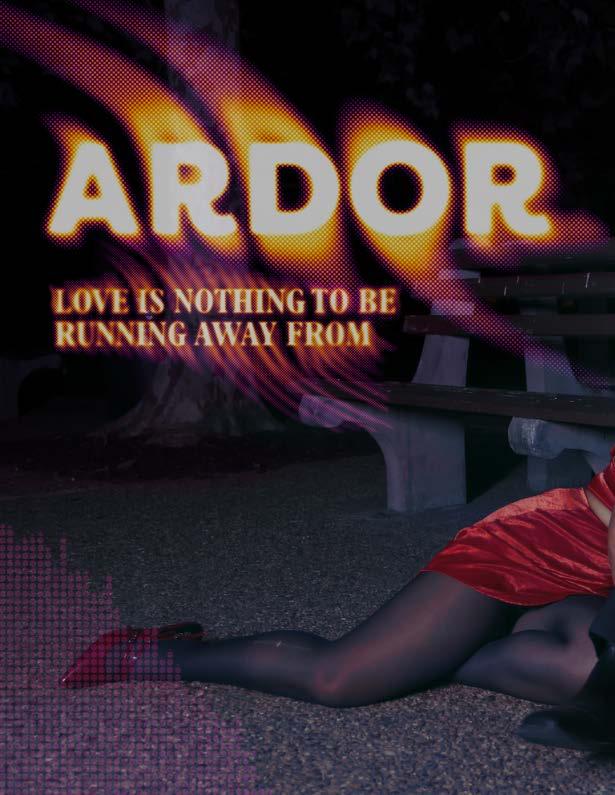
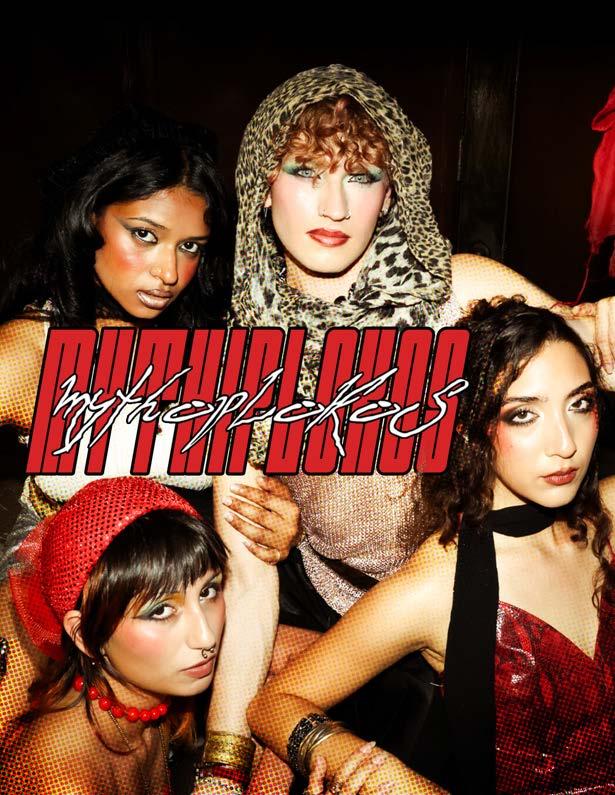
BACCHANAL happy birthday, baby! party animal! until tornado green chance won’t come by the river ardor mythoplokos golden years godless worship
REMONSTRA i do no one ever leaves a star the lemon tree out back hendrix five, six, seven, eight free-fall archetypes /path/to/restart-script.sh 1-800-spark
jubilee
jubilee
jubilee
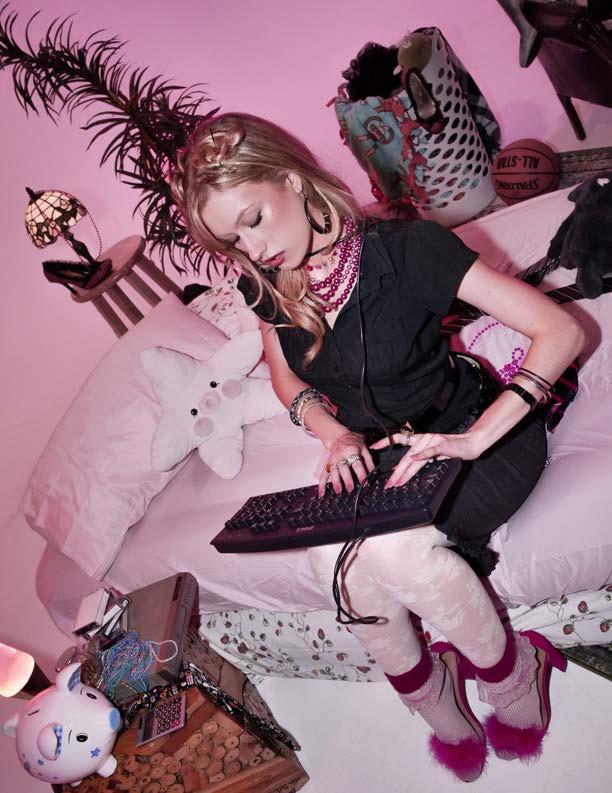
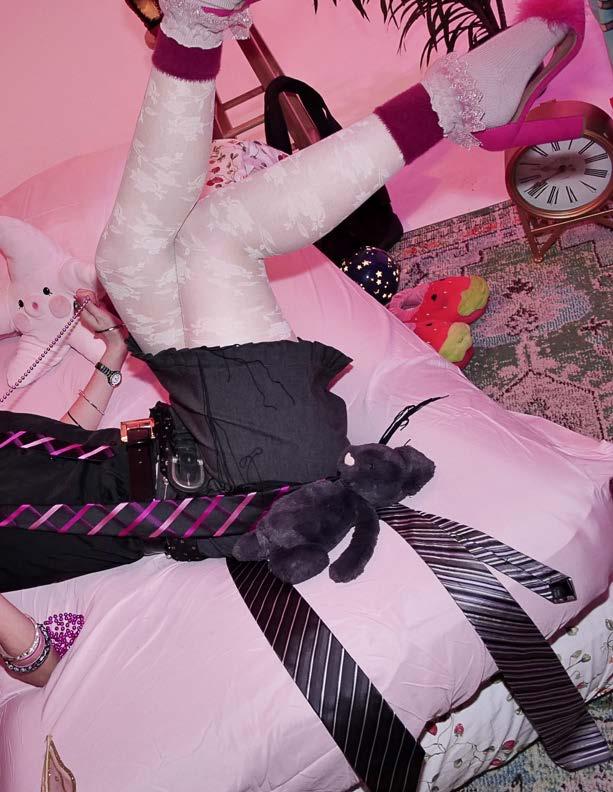
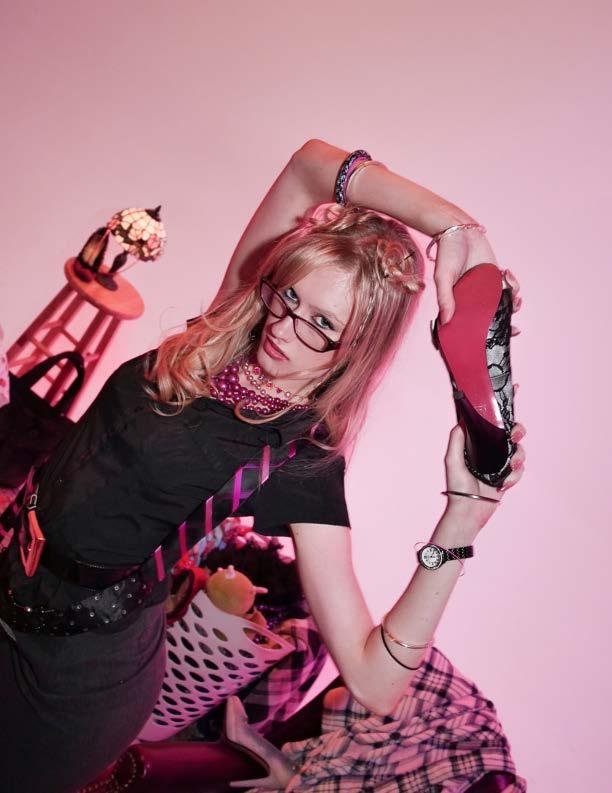
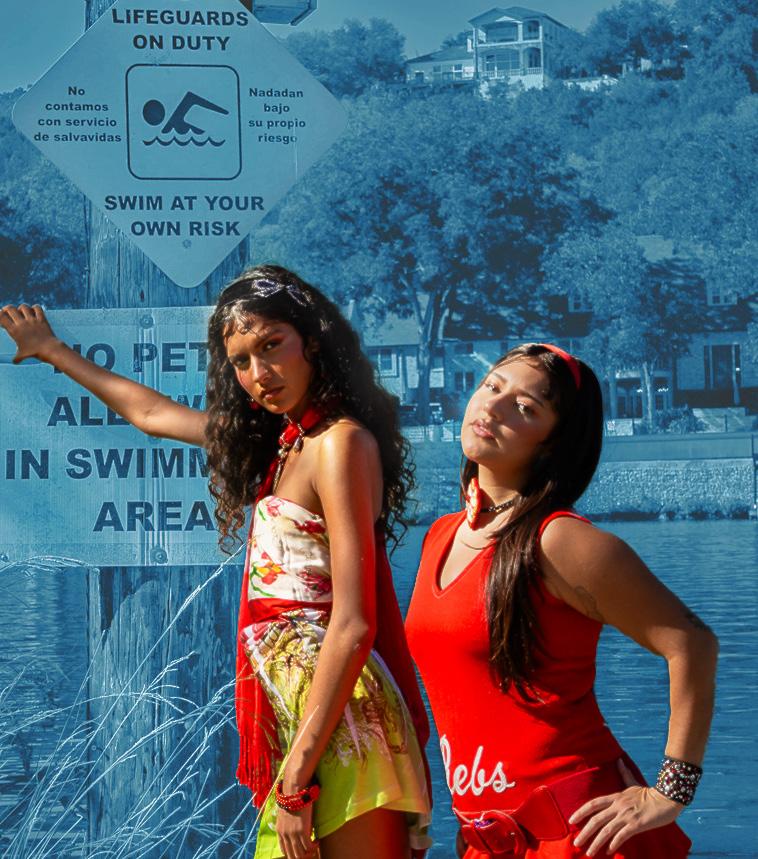
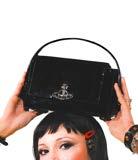
PENCIL SKIRT & BELT | Austin Pets Alive
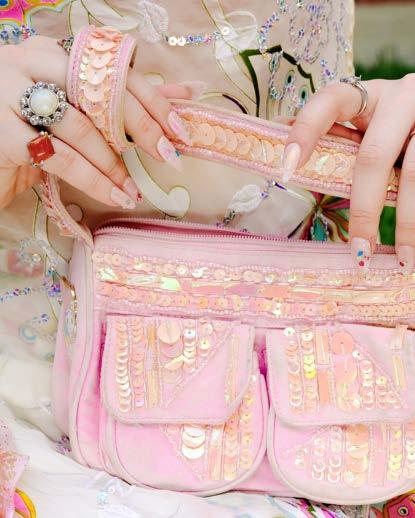
PINK BEADED NECKLACES | Sassy Threads
PINK JEWEL NECKLACE & WATCH | Austin Pets Alive
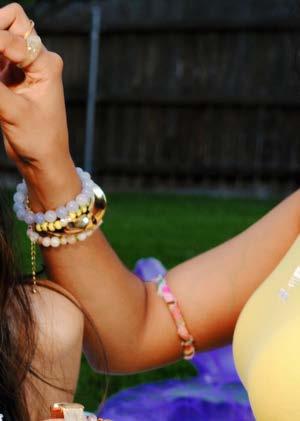
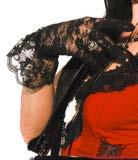
CUFF BRACELETS | Revival Vintage
jubilee
jubilee
by HANA ROBSON
I secretly believed, in my heart of hearts, that I was a mermaid.
I tried my best to be the girl I was by the sea while I was stranded on land, butIcouldn’tignore thefeelingswirlingin mystomach.
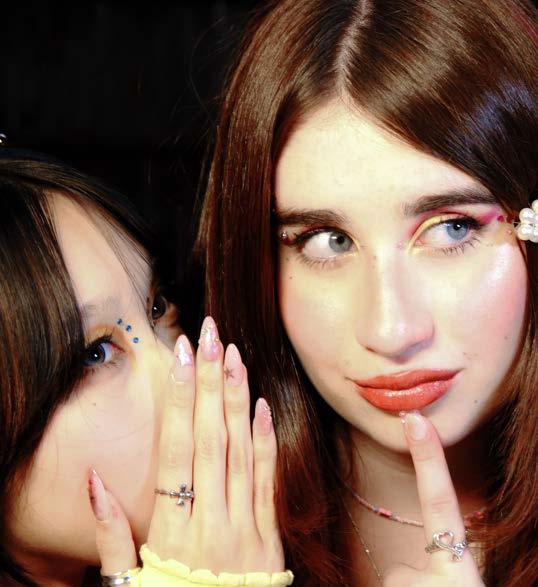
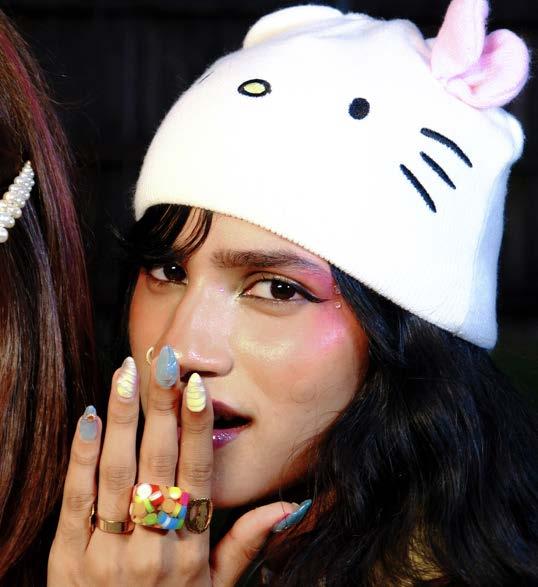
layout ELIZABETH KUROMIEMA photographer ABBY KERRIGAN videographer MADISON NGO stylists EMILY MARTINEZ & SOPHIA MARQUEZ hmua KAREN SOLIS & KENNEDY RUHLAND models AMYAN TRAN, EVANIA SHIBU & JULIA CORZO
jubilee
wimsuit lycra smells like my childhood.
When my family made the sixhour drive to our ramshackle beach house off the coast, I came alive. I spent every waking minute from March to September in my swimsuit. I would dive deep underwater — so low that my ears would pop — just to see if I could touch the bottom of the deep end. I loved the floaty feeling of being completely submerged underwater, of being alone in my own small blue world. The salt water curled my hair, and I didn’t mind the sand between my toes if it meant a day spent at the beach, diving into the turquoise waves over and over and over again.
Leaving always broke my heart. Seeing my dad’s truck loaded up with boogie boards and sand pails meant that I would go back to school, and the dead brown grass that covered the playground. While the other girls played kickball, I sat alone and studied the movements in the clouds. I preferred it; there was less chance I would overhear whispered remarks about how quiet or strange I was. My classmates had left me once bitten and twice shy, so I shrank away, keeping my voice low in hopes of being unnoticeable. As summer turned to fall, the sun set later and the colors of the world faded away. My real life felt so far from this miserable world of cold and concrete. I ached to be back on the shore, feeling the sun warm my back and the waves tickle my toes.
When I was twelve, I decided I couldn’t continue living in two separate worlds. I begged my mother
to move our family to Malibu so I could become an Olympic surfer. She refused. I retaliated by covering my walls in pictures of the ocean. I wore seashell necklaces to school and dyed streaks of teal in my hair, even though it meant whispers
of laughter followed me in the dimly-lit cafeteria. I painted my toenails electric blue and listened to Island in the Sun until my CD player broke. I tried my best to be the girl I was by the sea while I was stranded on land, but I couldn’t ignore the feeling swirling in my stomach.
I secretly believed, in my heart of hearts, that I was a mermaid.
“The salt water curled my hair, and I didn’t mind the sand between my toes.”
Rationally, I understood that was impossible. I was old enough to know that Santa Claus wasn’t real, that the tooth fairy was actually my parents, and that I shouldn’t run around telling people on the playground I thought I was half-fish unless I wanted an extended session with the school counselor. But some desperate part of me still practiced swimming with my ankles pressed tightly together and combed through YouTube for video evidence of mermaids’ existence.
I met Zoe, a transfer student from California, in the seventh grade. She had long curls haloing her head that she never bothered to tie up for gym class, and she wore countless necklaces and bangles that clinked softly like sea treasures. She never noticed the other girls that would circle her like a shiver of sharks, razor-sharp remarks on the tips of their tongues. While I felt myself drowning in the presence of the others, she simply floated away, unaware of their presence. Zoe had more important things to worry about, like what phase the moon was in that evening.
Zoe noticed the teal streaks in my hair, and her eyes
sparkled when she said, “I like your blue hair. I think it makes you look like a mermaid.”
I noticed then that one of her necklaces was a sand dollar. I smiled back.
From then on, we were inseparable. We swam together at the rec center pool on Sundays and took turns pretending to drown in front of the teenage lifeguards to capture their attention. She shared custody of her nail polish collection with me in exchange for my CDs.
Zoe accompanied my family on our annual beach trip the summer after seventh grade, piling into the backseat of my dad’s pickup. As soon as we made it to the house, we shed our flip flops and ran all the way down to the beach. We didn’t stop until the waves hit our shoulders, salt air whipping in our hair. Finally, I was home.
Later that evening, in our homemade blanket fort, Zoe and I played a game of truth or dare. I asked if she had ever kissed a boy. She asked if a kiss on the cheek counted for anything. I said it probably didn’t.
“Do you ever worry that we’re falling behind with that sort of thing?” I whispered anxiously.
Back then, my worst fear was always that I wasn’t growing up quickly enough — I had nightmares of my principal refusing to hand me my diploma because she found out I still watched cartoons and slept with stuffed animals.
Zoe paused for a moment as the question swirled in the air between us.
“No, I don’t really think about it,” she said, adjusting the pillows behind her sleeping bag.
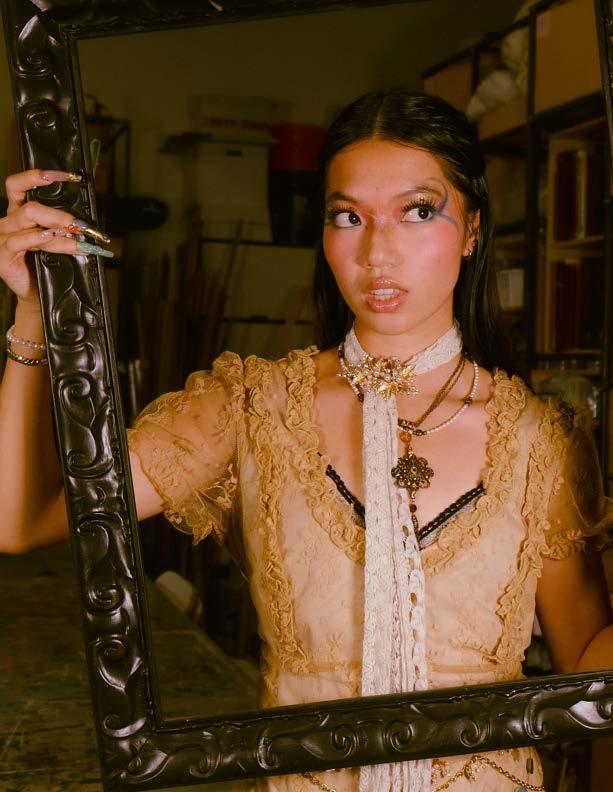
PINK BUTTERFLY NECKLACE | Austin Pets Alive
RAINBOW CRYSTAL NECKLACE | Austin Pets Alive
BRONZE EARRINGS | Austin Pets Alive
jubilee
“What do you mean you don’t think about it?” I asked, bewildered.
“I mean, I just don’t care all that much. I care more about hanging out with you than I do with boys. Maybe one day that will change, but I don’t see a problem with it. Anyway, why care about what anyone else is doing?” I felt my cheeks start to go bright red.
“Besides, you’re a lot more fun than boys are. They all smell like Axe.”
I hit her over the head with a pillow in response, and she followed my lead. We didn’t stop swinging until feathers flew into our hair, and our chests ached with laughter.
Emboldened by her recent confession, I chose dare next. She grabbed my hand and jumped up. “Let’s go swimming!”
“Outside? In the ocean?” I asked, confused by her sudden urgency. She pulled me out of our room and onto the porch.
I knew it was risky to go out on the beach after dark, but I followed her anyway. We stood on the shore, watching the stars twinkle against the waves, when she grabbed my hand.
“Come with me,” she said.
I hesitated. I was afraid of the dark blue water at night. I couldn’t see what lay beneath the murky waves. I felt her hand grasp mine and squeeze. She knew I was scared, and I could tell she wanted me to be adventurous for once, to fight the urge to hide.
We slowly waded into the water together. “We could swim all the way to San Diego,” she said before diving into the saltwater.
I dove with her, feeling the cool blue wash away the sand on my skin. For a moment, I
contemplated swimming into the depths of the ocean and never looking back. I felt the push and pull of the waves dragging me under, felt the pressure build in my lungs as I swam. I wanted to escape into the ocean forever, to swim until I was far away from my anxieties. It was only when I broke the spell and surfaced for air that I realized Zoe was waiting for me on the shore, a smile on her face and a towel in her hand. There was no need for me to be anxious.
A year later, Zoe’s family moved back to California. Her dad got a job for some newage tech company in the Valley. We promised to write each other, but with time, the letters dwindled into texts, which dwindled into nothing.
She left me her sand dollar necklace, and for years. I wore it ever day for years.
Even though she was gone, I still saw her reflection in every seashell, in all the phases of the moon, and in the curl of every
wave as it broke the shore. When I felt doubt in my thoughts, I imagined Zoe’s voice asking, “why care about what anyone else is doing?” I found that the more I pretended I didn’t care what anyone thought of me, the more I could stifle the whispers and the sideways glances.
Eventually, I didn’t even feel like I was drowning anymore or that I needed to escape into the ocean. I could just float. ■
jubilee
and other mysteries
by ANJALI KRISHNA
“and what good does all the research of the Impressionists do them / when they never got the right person to stand near the tree when the sun sank?”
– Frank O’Hara, LovePoems
layout EMMY CHEN & SARAH DAVID photographer TAI CERULLI videographer MO DADA stylist WEN WANG hmua ANDROMEDA
ROVILLAIN nails ALYSSA NGUYEN-BOSTON models DA’MONI BABINEAUX & ISABELLA LEUNG
jubilee
n the moments before close, the gallery is quiet. Only the noise of air conditioning whirs on with the faint sound of footsteps being rushed outside. I have a few seconds left before the attendant will fetch me too, tell me politely that the museum is now closed. For a bit, though, I have what’s arguably the best seat in the house — a cold black leather lounger in front of Jackson Pollock’s “One.”
Seated upright, shoulders back, I tilt my head one way and then the other. I send my gaze right side up and upside down. I trace the shapes in the paint splatters and then try not to read into them at all. I’ve already moved up close, studied the layers of material and shine. These details are written carefully in my notebook. On the seat now, I’m trying a different approach, hoping distance can offer clarity on why the painting matters. So far, distance hasn’t offered too much at all. Ungenerous.
I underline in blue pen beside the listed names of Pollock’s paintings, need to understand and analyze. I add a few exclamation points for good measure and leave before anyone comes to get rid of me.
In the window seat of the F-train, I tap my foot to the rhythm of badly-fixed potholes hopped up on sugary raspberry tea. I count the stations as they go by: eight stops between 57th St. and 2nd Ave. There’s a drum performance — on an upside down Home Depot bucket — that I can’t decide if I’m supposed to like between the gaps of Joni Mitchell in my headphones.
Low-lit, white-hot in the heady summer air, I find my friends tucked into the corner of Tile Bar. I wait for the bartender leaning up against the counter and watch their movements cut shadows into figure. As Reva gesticulates, Jay and Ashrith shake their heads and laugh. It’s Thursday — the night is warm, spirits high.
I want a drawing of the moment, an image. But when I raise my phone to take a picture, I catch Jay’s eye through the camera and we both begin to laugh.
When the bartender gets around to me, he asks if I want the double vodka sour my friends are having. These days, this is the sort of thing which makes me happy: personal recognition from perfect strangers and my friends at our usual table. I sketch a smile and order another round, watching the soft hiss of the soda gun fill our glasses.
Lately Reva and I have been spending our hungover Sundays at the park, and I’ve been reading Frank O’Hara: the pocked-sized version Rhys got me before I left for New York. I think it’s in “To You” that he wrote “there’s no need for vistas we are one / in the complicated foreground of space.” Reva reads Dolly Alderton in the grass beside me.
Before the summer, I thought I knew a lot of things. I could tell you about the types of Classical columns (Doric, Ionic, Corinthian) and how the Umayyads co-opted Byzantine imagery. I could write essays about the ethics of repatriating the Benin Bronzes or what it meant to see curatorial diversity in contemporary shows. I inhaled facts from dark slideshows and spit them out on exam papers with a Youthful Leftist tilt. In the margins of my papers, professors wrote things like “deep insight” and “good point!”
On weekends in my apartment, I read interviews with famous authors before their first books and long-form articles about cobalt mining in the Congo. These are the sorts of things that interest me, I liked to think before shutting my computer to talk with my roommates in the living room. Even then, I found the two worlds hard to balance — the reality which glowed so valiantly, or some other thing, a third dimension almost secular from my life where I read academic papers and produced novel comments about art and literature.
Before the summer, I searched poetry and painting for something missing in my life, that special, distinctive tissue of human connection. I searched in the bathtub, the BookPeople, and the dry spot between my thumb and pointer finger. I was obsessed with the details of other people’s lives: that they watched movies every Tuesday
DRESS
Austin Pets
jubilee
jubilee
at Barton Creek Mall or had two best friends. I kept these facts in glass jars in my mind, dipping my fingers into them like honeypots when I wanted a taste of life and vitality. I had sought answers in analysis and facts, in things I thought would teach me the truth of life — whatever that might be.
Before the summer, I didn’t have the city as it moved with me and the friends I lived through it with. These days, I feel as frantic as O’Hara might have — “What good does all the research of the Impressionists do them,” he wrote, “when they never got the right person to stand near the tree when the sun sank”?
I have been trying, as of late, to write like O’Hara because it’s all that calls to me — our parks, our bars, our New York or Austin or wherever else. I don’t
care for the avant-garde, the process, the analysis: I care for my life, our life, as it is in dialogue and text messages and the bar corner. I don’t care for the abstract expressionists because they never cared for you, for our life, because it is so obviously the best.
I have been trying to write and analyze and make facts of our life here, but I can’t make sense of it. I can’t make sense of it, and I can’t make sense of art that isn’t about our people and our lives because if they find something half as perfect as this —
Here it is, within my grasp just steps away. Here it is, mine and ours and theirs. The lantern-light shines through the windows at our bar and we are seated in the corner. Here it is, in the half-day’s light. Here it is, unspoken. ■
“Before
the summer, I searched poetry and painting for something missing in my life, that special, distinctive tissue of human connection.”
jubilee
Blister & Burn.
by JULIA CORZO
Ilovedhow the sun made the watersparkl
“I dreamt of the feeling.
As a child, I was told never to walk under the sun without protection — it would be a disaster if I did. I never dared to ask what the disaster would be. I just knew that I should always hide from the sun, to act like I was too embarrassed to be seen by it.
It was almost comical, the routine my mom would put me through whenever the temperature hit above 80 degrees and the sky got oh, so blue. Her ritual was predictable like clockwork.
It went like this:
1. Stand in front of her for five minutes as she lectured me about the dangers of the sun and how I should never look it in the eyes. If my skin became hot or heavy, I was to immediately return to her.
2. Turn around so she could spray my entire body with two very, very, thorough coats of sunscreen. Feel her hands rub my back raw just to “make sure it stays pretty.”
3. Turn to her for the same treatment on my face. Receive a quick little kiss on the forehead (score!) while she puts the last of the sunscreen on, smearing a white dollop on my nose extra hard.
As I grew older, I began to think I was above routines. They became a weight on my shoulders, an embarrassment I was not willing to take while all my friends tanned and bragged about the way the sun had given them such a sweet kiss.
I was tired of hiding in the shade. I wanted to step out into the sun.
I could feel the warmth.”
One summer, I finally did. It was a beautiful day — the weather was above 80 degrees, and the sky was oh, so blue. My sister had just texted from her friend’s pool to update me on her perfect tan. My sister belonged to the summer, turning a beautiful golden color under the sun and gaining the most lovely flush in her cheeks.
My mom liked to emphasize that I was a cooler beauty, prettier when the sun lost its powers and the shade made my eyes a cool grey. That day, I wondered why that mattered. The sun was right there, alluring and inviting.
I decided it was my turn to find that summer beauty, my turn to be kissed by the sun. For the
As I eased myself onto the pool lounger and floated lazily around, I could feel the pinpricks of the sun on my skin. I felt powerful; the sun made me feel free. I loved how the sun made the water sparkle so beautifully, and hoped it would do the same for me.
The steady heat lulled me into a false sense of security, and eventually, I started nodding off.
I dreamt of skin like my sister’s, beautiful and glowing, basking in the attention of the sun. I thought of the tan the sun would leave behind — unnatural on my body, but even more beautiful. I dreamt of the compliments, of the attention.
Ever since I was a child, my mother would dress me head to toe in the “cutest” clothing she could find: adorning me with sparkly earrings and tying bows into my hair. I modified aspects of my body before I learned to do algebra. I was used to manicures, threaded eyebrows, and dyed hair.
Showing skin made me feel pretty. Having others look at me was an intoxicating feeling. Painting my face in makeup and glitter made me feel safe, like I was protected by something that would make me alluring, make me beautiful. I learned to like the eyes; I learned to love the compliments.
I dreamt of the feeling. I could feel the warmth.
I woke up two hours later and immediately knew something was wrong. I could feel the sun through my sunglasses, and there was a tingling sensation across my body I couldn’t quite name. I felt numb, disconnected from my body. The first thing my mom did when I returned back inside was laugh: she couldn’t believe I have been stupid enough to sit outside for so long. When I asked her why she didn’t come and get me, she insisted I could handle myself. She knew I couldn’t though; the sunburn was just the perfect punishment for not listening to her years of warnings.
I rushed upstairs to the mirror. I watched as the burn began to take form, crawling up my feet to my thighs and sliding its way across my stomach. The burn crept up my chest and onto my face, where it comically avoided the spots my sunglasses covered. It felt wrong. It looked terrible.
I delicately peeled off my swimsuit and changed into something looser. I’d never felt the need to cover up my body so strongly. My skin had never felt so delicate, so fragile.
I wonder if this is how porcelain dolls feel. I hope my skin doesn’t blister.
WHITE SWEATER | Sassy Threads WHITE SHORTS | Leopard Lounge
“Maybe, just maybe,I’ll skip the extra dollops of
My mother taught me that a sunburn was a death sentence — a slimy, slippery red snake that would curl up around me and leave me nothing like I was before.
I felt silly then. I wanted to chase something for myself, I wanted to uncover a new aspect of my beauty that I thought would make me unique. Instead, I was left with a mark of shame. It felt like a sick joke. I felt humiliated, and worst of all, I felt ugly.
After weeks of hiding behind drawn shades and blankets, I finally decided to go out with some friends. I spent hours in front of my mirror trying to cover the sunburn with endless amounts of concealer, desperately lathering it around my face, shoulders, and chest.
I felt like every person we passed knew I was sunburnt. They could see right through the concealer like an X-ray, looking right at the girl who flew too close to the sun, chasing something that was never hers to begin with.
A week later, I noticed a little white layer of skin growing over the redness. I was peeling. The peeling was calming, watching the deepest source of my shame slide right off. I watched the burn soothe itself out.
Watching the little white wrapping of skin gather together at different points across my body reminded me of the dollops of sunscreen my mom forgot to rub on me. I laughed at the irony, reveling in relief.
The pink of my skin began to take a stronger color, evening itself out into a rosy tone. The color reminded me of the moments before summer sunsets, when the sky turns a mixture of light blue and pink. I remember staring at myself in the mirror, thinking about how my skin resembled
that soft, flattering light even if it wasn’t the golden tones of an actual sunset.
While I peeled, I went to California. The rolling hills of Santa Cruz and the cloudy weather felt like a refuge for me. Even though I was less pink, I was still sensitive. The clouds hid my burns, which made me feel less alien in my own skin.
I inspected myself in the mirror. I saw little bits of peeling skin left and the flush in my cheeks. My skin was still pinkish but also slightly golden. I’d never seen myself like that before, never imagined I could feel okay with the enveloping tingle of a burn all over my body.
I liked the way the golden-rosy color spread across my cheeks, down my chest, along my stomach. The coloring ran up and down my thighs, accentuating the muscle in my leg I had built while running from the sun and to my feet, where it had already begun to fade away. That quiet, shady morning in Santa Cruz, when it was just me and the girl in the mirror, I felt genuinely beautiful for the first time all summer.
I never did get a real tan. I stayed rosy until September, until my pale skin finally pushed its way back, but I still have an outline of the sunburn in some places. I can still see the light outline of my bikini straps when I’m changing.
That summer, I discovered something about myself: that there is a version of me that can exist beautifully in the summer. I revel in the fact that even though I was set up to never find it, I did anyway. Even though the sun had barraged my skin and rubbed it raw, it still left me with a kiss goodbye.
Maybe, just maybe, I’ll skip the extra dollops of sunscreen on my face this summer. ■
sunscreen on my face this summer.”.
by ARI SMITH
I LAID THERE, WAITING FOR THE TRUCK I KNEW WOULD COME BARRELING TOWARD ME. I WASN’T AFRAID. DEATH FELT NECESSARY. I IMAGINED THE WEIGHT OF THE TIRES, THE QUICK CRUSH OF BONES. I WAS IMPATIENT FOR IT.
RYLIE SHIEH stylists ALEXIS RAE SAENZ & WEN WANG hmua NGUYEN
PHAM models ADITI TYAGI & MADILYN HERNANDEZ
jubilee
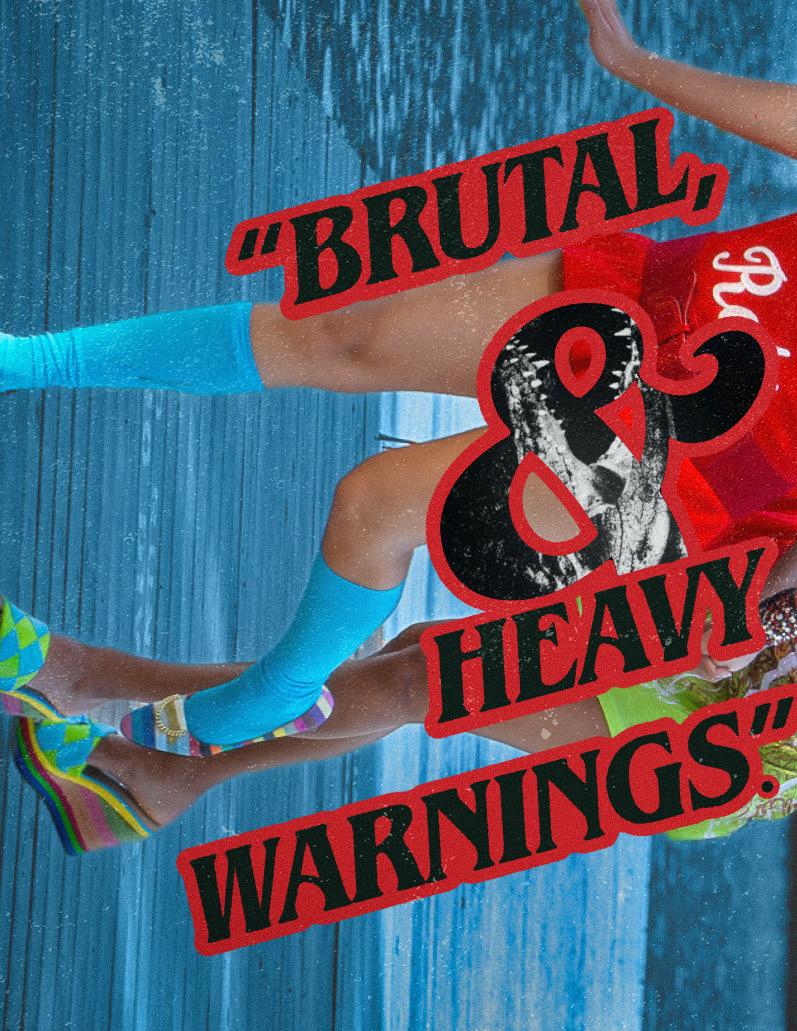
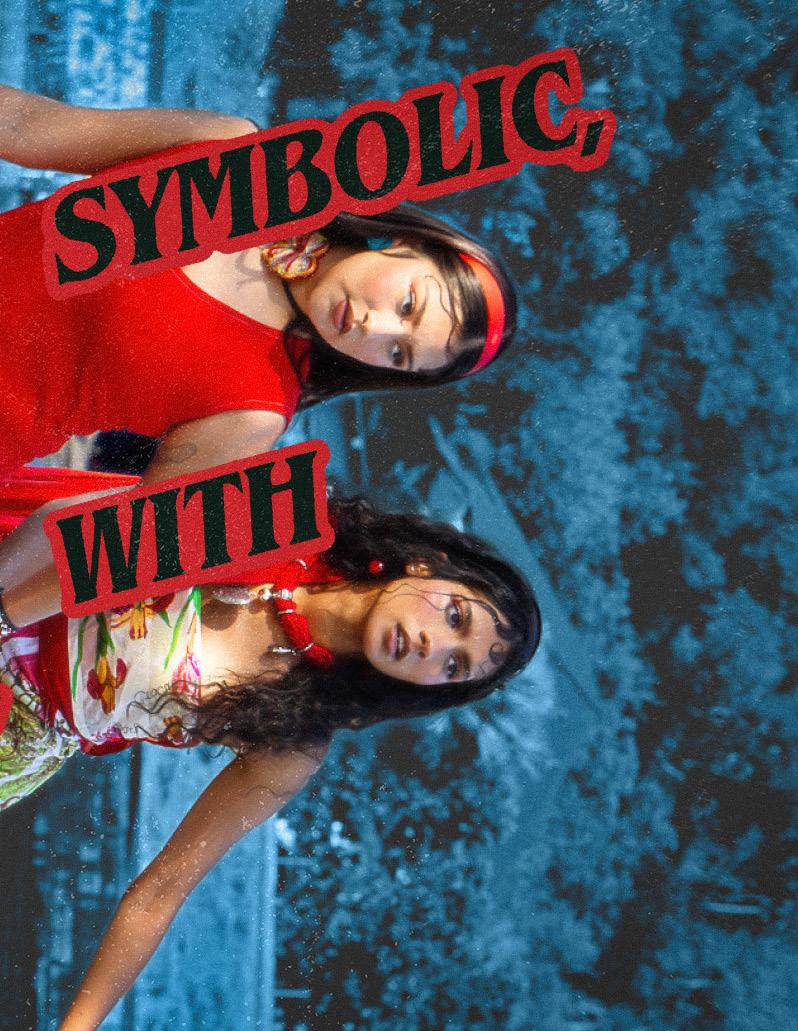
Since childhood, I’ve been visited by vivid nightmares: brutal, symbolic, and heavy with warnings — remember not to do this or else. Family and friends disappear without mercy. Messages contradict themselves. Symbolism collides with sudden violence. Yet each time I wake, breath fills my lungs, and the world glows a little sharper.
I’ve always feared the deaths of others more than my own. In dreams, my own death feels like a small necessity. My life, though fragile, keeps proving itself resilient.
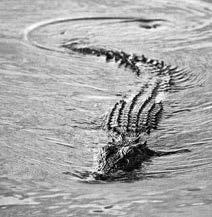
Growing up in Florida, water pressed in from all sides. My parents put me in swimming lessons early, but natural bodies of water were forbidden; old women and children got dragged under by alligators in the swamp. However, the indoor pool offered only the illusion of safety. In reality, it was a fluorescent-lit tomb of chlorine and bodies. Parents tentatively hovered over water that glinted unnaturally under buzzing lights.
That night in my dream, I was alone in the public pool. The water was still, holding its breath with me. The ceiling hummed a cold, electric yellow that vibrated in my teeth. The tiles sweat under my bare feet. A slick,
deliberate chill brushed my calves. My chest tightened. I looked down and saw yellow eyes blooming from the dark water. Before I could process what I saw, the pool opened and pulled me in.
Teeth enclosed around my waist, and with this came an immediate sharp constriction. The beast dragged me deeper under the water, thick and unrelenting, until the world condensed into a green blur.
Lurching awake, I felt the familiar aftertaste of death: something quiet and ordinary. Each dream is a small rehearsal for the end, but life continues.
On another night, sleep carried me into another trial, a different stage for the same lesson. For the sake of my own sanity, I’ll obscure the identity of the other person in this next dream. I’ll call her Daisy.
Daisy brought me on an impromptu trip to a hotel resort in Orlando, a reward for good grades. The resort was a Floridian vacation fantasy — a windowed globe with fountains and luscious tropical greenery that formed a perfect ensemble of pinks and greens. A rumble of quiet voices rose and fell periodically, as if composed to fill the sparsely populated space.
I felt uneasy, but forced myself to show Daisy I was grateful. I asked to step inside a chocolate shop. The room was wrapped in shiny red paper and filled with chocolates displayed on silver platters. I beelined for a sales associate with a sampling platter and wordlessly plucked a dusty brown cube. I bit into a bitter chalk with citrus filling.
As we stepped back into the main corridor, a family entered — a rough, redneck group. The father stood out — gray, overgrown beard, clean-cut mustache, and fly-fishing boots. We crossed paths, and their eyes lingered. I felt their animosity, sharp and unprovoked.
jubilee
Time stretched painfully. We ran into them again and again. I avoided their gaze, desperate to prove we weren’t a threat, to dissolve the tension I felt radiating from the father. There was no witness to the danger circling us.
Dreams work like movies: one second you’re in a scene, then time jumps unexpectedly, and you cut to the next. Though the trip felt long, we left that same day, the sun still beaming. The parking lot was massive and packed despite the resort’s emptiness.
I felt Daisy’s demeanor shift to one of tense regret. Alarm pricked at me. I admonished myself for making her feel I hadn’t enjoyed the trip.
The sun reflected off the red four-seater truck, blinding me as we approached. With my eyes squinted shut, I didn’t detect how briskly Daisy had gotten ahead of me — so far that she reached the driver’s side before I heard the car door slam. I stopped dead in my tracks, standing still behind the bed of the truck. Daisy had never before neglected to open the car door for me. My dread intensified.
I rounded the passenger side and froze. Through the window, I saw a body strewn across the back seat. It was Daisy: dead, with no wounds or blood. She was still, as if she were only asleep.
I looked to the driver’s seat. The Daisy there — a counterfeit presence — met my eyes with a phantom calm meant to reassure me that everything would continue as normal.
My memory flashed to the family’s violent glances and my ignored instinct.
Without thinking, I sprinted toward the road, flinging myself onto the rough concrete. I laid there, waiting for the truck I knew would come barreling toward me. I wasn’t afraid. Death felt necessary. I imagined the weight of the tires, the quick crush of bones. I was impatient for it.
Waking brought relief. I hadn’t been run over. Daisy was alive. The phantom dissolved. Morning light filled the room, and the air tasted sweet.
I think about this dream nearly every day. It lingers, but it no longer feels like a threat. I know it grows from these old fears: empty spaces, unprovoked animosity, and the terror of being the only one aware of danger — like a dog in a horror movie who senses what others can’t. Only I can’t bark — I can’t warn anyone, or my warnings fall unheard. Yet waking
proves that life waits patiently on the other side. I carry with me not dread, but a sharpened sense of proof that death, even in its many rehearsals, keeps teaching me how precious it is to wake.
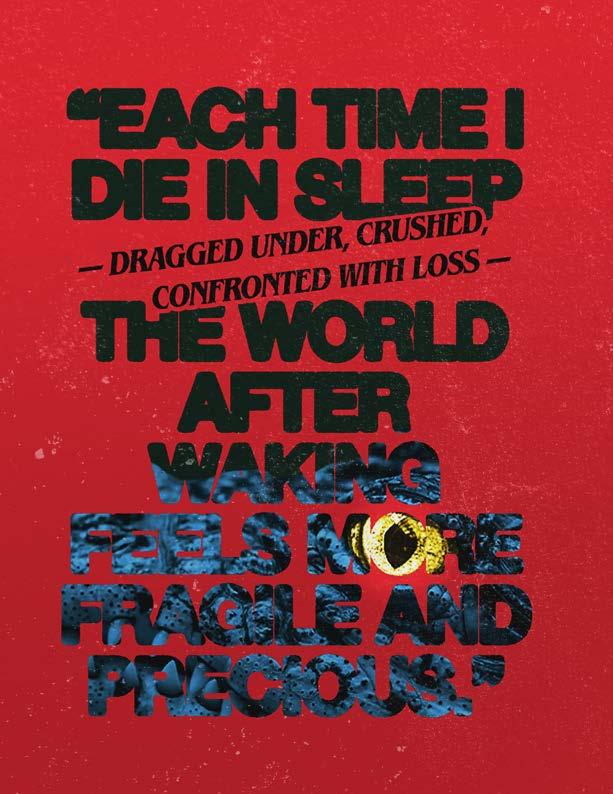
Each time I die in sleep — dragged under, crushed, confronted with loss — the world after waking feels more fragile and precious.
My own death, whenever it comes, will likely be nothing like these visions. It will not be theatrical nor brutal, not by an alligator’s jaws or a phantom’s deception. More likely, it will be a mundane soft exhale, a body’s natural pause. In that mundanity, there is relief.
The gratitude of waking up to live another day is never immediate. I don’t wake up refreshed or thanking God. In reality, I wake up frazzled and groggy, eager to feel some sort of rush from coffee. Sometimes I remain frozen, my face soaked in tears — sweaty, sniffling, and smearing snot onto my sheets.
For a while after waking, everything feels burdensome and sluggish, like I am trying to make my way through a thick fog. My senses are void, but my body somehow pulls me through to fulfill my obligations.
I’ll attempt to get my day started, but everything feels heavy. Then I step outside. The cold air hits my skin like a jolt. Through the fog, the sun peeks out, rising until it’s directly above me. It clears the haze in an impossibly precise way. Slowly, the world opens up before me, calm and certain.
Waking is the gentlest resurrection. The body returns, heavy and alive, and I’m able to be grateful. ■
jubilee
two tongues.
layout ERIN JEON & ANDY KANG photographer MEADOW RILEY videographer JOSEPH CHUNGA PIZARRO stylists EMMELINE
Iuse the weight of my entire body to yank open the door to my mom’s black Suburban. White beads loop across the rearview mirror, the silver cross swinging with every bump in the road, catching the sunlight in sharp flashes that make me squint. Her eyes catch mine in the mirror, and I avert my gaze in shame.
“What’s wrong, sweetheart?”
I sink into the leather, my thighs sticking to the seats, and I break into ugly, heaving sobs as I beg her not to take me to practice. My teammates’ steely demeanors and thorny remarks whittle me down to a toothpick, discard me with an absentminded flick of their wrists. The thought of being around people whose malice hangs thick as fog fills my body with leaden dread.
My mother’s soft hand gracefully extends to the backseat — her skin luminescent in the light — and wraps around mine. The radio hums with Christian pop while my mom whispers a prayer: for strength, for kindness, for protection. I squeeze my eyes shut. For a moment, the dread recedes. For a moment, I believe I am not alone. I walk into the gym, cheeks burning from fresh tears, but determination powering my steps.
That night, I’m alone in my bedroom. I pull my Bible out from my bedside drawer and read a verse so embedded in my heart I could recite it in my sleep: Blessed are the meek, for they shall inherit the Earth. Unfurling my limbs and swiping off my zebra-patterned comforter, I position myself at the end of my bed. I clasp my hands together, knuckles and chubby skin pressing into each other. I pull my hands to my lips and squeeze my eyes shut.
The world feels impossibly large, and I can’t bear the weight of it alone. I don’t think it’s God specifically that soothes something ticking in me. It’s the thought of community, of belonging: the kind of love that makes everyone equal. His doctrine is worth more than gold in my world, my home. For a moment, I breathe a little easier.
As the night descends, I toss and turn in bed, anxiety wracking my body. My long hair suffocates me, and I struggle to inhale deeply enough to satiate this mounting desperation. Exhausted, I leap out of bed and run to my mom’s room, bare feet thumping on tile floors. I stumble into her room, pull her comforter down, and climb clumsily into her bed. Her eyes flutter open as she whispers an “I love you” to me. Her warm embrace slows my quickened pulse, and I melt in her arms, my home.
Years later, I’ve gained braces and semi-confidence, somewhere between middle school awkwardness and high school self-assurance. Offhandedly texting my friend, I pull open the door to my dad’s truck. The smell of cigarettes, dirt, and black coffee assaults me, and I fold into the fabric seats, familiarity easing the stress pent up in my bones. The droning voices of male podcasters rumble through the speakers, going on about Texas football and playoff odds. Their chatter lulls me, background noise I’ve heard my whole life, until my father twists the dial and silence falls.
“Mija, you are the brightest person I’ve ever met. Complacency is your biggest curse.”
A violent mix of pride and shame bubbles in my gut and runs up my chest. In that moment, my god-given talents of wit and mental acuity turned into a pedestal, a weapon. My aspirations of a simple life — one of being at peace surrounded by family and community — morphs into ones of grandeur. Jaw clenched, I promise myself that I’ll get out of this town. If not for me, then for my family.
The next morning in class, I feel the contradiction thrumming inside me. I strain, measuring myself against my classmates, sizing my opponents up in a race only I seem to be running. Humility dissolves into calculation. I feel a sense of betterness when I write them off as an unequal rival. I think bigger, and as my dad would say, this town is too small for a mind like mine.
At church, I sit in pews that creak under the shifting weight of bodies. The air smells faintly of incense and dust, heavy
with silence except for the priest’s monotonous preaching. Sunlight filters through stained glass, bleeding color across the yellowed walls. The beauty is lost on me. My knees ache from kneeling and my flesh screams to stand.
Beside me, older women whisper in quick Spanish about neighbors and grandchildren, their gossip rising and falling like waves against the priest’s steady drone. Their words dig into me, filling the sanctuary with sharp little secrets. Reprimands of mediocrity and laziness spill from their tongues, miles darker than the prayers they so reverently plead. I wonder how faith can exist alongside such judgment. I wonder if God hears them over the priest.
In that pew, I realized what I’d always known: there is no compromise between the God of my culture and the one of the world. Life along the southern border holds that tension, caught between reverence and restlessness. Families are held together by prayers and carne asadas, by candles burned for those who left and for those who never could. I learned early that my worth is measured in service: how often I show up, who I feed, who I forgive. It’s a world that taught me to carry others before I ever learned how to stand on my own.
The world beyond, the American world, runs on a different kind of devotion. It praises ambition like a virtue, competition like communion. The promise of progress hums through classrooms and cities and universities. I am only as good as my last achievement; I can always climb higher if I’m willing to leave something, or someone, behind. And so, I grew up fluent in both faiths: one that tells me to bow my head and another that demands I raise it. I learned to navigate both altars until I couldn’t tell which god I was serving.
that the leaving was worth it. My mother’s arms, ever open and gracious, now smothered me. But I’ve always wondered if, in chasing that promise, I was trading the closeness of my people for the coldness of independence.
When my father told me complacency was my biggest curse, I heard it as both blessing and burden. To him, success was proof that the sacrifices meant something,
The God of my home, my mother, values quiet endurance, bowed heads, and full tables. The God of the world, my father, rewards hunger, the kind that empties my plate before anyone else has eaten. I have spent my life trying to feed both.
Now, I grip the steering wheel of my own car, my palms damp with sweat. The rosary swings from the rearview mirror, its beads clinking softly against the glass. I don’t pray anymore, but I can’t take it down. I drive past half-remembered towns — gas stations and faded storefronts, half-English signs and half-forgotten saints. As the miles peel away, I know what waits for me: the familiar buildings of my hometown, their facades worn and sun-faded, the same panaderías, taquerías, and gas stations that have always been there. Some new storefronts have sprouted up, awkwardly shiny against the old brick, but most things haven’t changed. That’s the thing about home: it resists.
My playlist hums through the speakers, songs that don’t carry sermons but still feel holy in their own way. I think about my mother’s prayers, my father’s grit, the way faith clings to us like humidity. Maybe the God of the world and the God of my home aren’t enemies but mirrors, both asking for devotion, both demanding sacrifice. Maybe the sin isn’t in choosing one, but in pretending I can serve them equally.
I don’t know if my hunger for more is ambition or inheritance, if my longing for home is strength or weakness. I don’t think I’ll ever know. I’ll spend forever in this antinomy, never quite reaching either heaven. The border doesn’t just divide nations — it divides gods. It cuts through me. ■
TThere is a pipe above the shower in my newish apartment, and it leaks sometimes. For a few weeks, I barraged maintenance with a series of emails bemoaning this fact — playing at a germaphobe so that I could have a response when people heard the leak from my room.
“They’re getting it fixed,” I would say, annoyed at our building staff. “And it’s taking forever, ugh.”
But now I’m at that point in the whirlwind of a semester where my room is uninhabitable. To save face, I close the door whenever I’m not in it. I’m almost to the point where I will lock it whenever I leave, fearful that Cecily will poke into my bathroom to steal a tampon and see the worst of me — as if she doesn’t already know.
Clothes from outfits gone by decorate my rug. My laundry remains undone, my desk untouched, unused. The whole of my room suffocates me in these phases until I find it in myself to dedicate a precious, fleeting night to cleaning. I cannot get myself to leave my bed, and I cannot get myself to care about a stupid shower leak when my room looks like shit. I would rather lay in bed.
A friend once told me that I nest, and the thought never really left me.
I came from a messy house — one where my parents never made their beds or picked up their clothes off the floor or ever washed all of the dishes. Instead, my dad dedicated the early, bed-making moments of his morning to his favorite acoustic guitar, strumming me awake as my mom sang along in a private little morning prayer. My dog would bark loud, and our creaky house would rumble with the heavy, sleepdeprived footsteps of my unclean, but un-sad family. I would listen and curl three blankets and four pillows around me until they made me feel content enough to get up. I do the same thing now — just to the sounds of cars and trucks creaking by.
The sentiment behind my bed-non-making remains the same in college: why ruin my perfectly curated “nest” by trying to be the type of girl who makes her bed? Why waste the precious seconds of my morning where I can hear my shower leak and think about dying and not have to get up?
My bed is usually my comfort, but today my skin is dry like cardboard. I can hear the leak from my bed-perch, and I feel like the whole world can tell I’ve been crying. That’s another thing: when I nest, I cry. The sound of it lulls me and not in a good way anymore. I am wallowing, and my bed is not enough to make me normal.
After hours of this — thop-thop, silence, silence, thop — Garrett and Cecily enter the apartment. Cecily has a higher voice, and Garrett’s is low when he’s feeling comfortable. Their voices mix into easy chatter, soft and breezy. This is enough to rouse me, enough to quiet the leak for a bit as I move my body into the other room. I say hello to make them look at me and my well-nested body.
I grab a candle from the TV stand. Apple Orchard — one of Cecily’s. The sticker has cartoonish apples with smiley faces strewn across it. I picture one of them frowning.
Garrett stops me before I can light it. He’s probably over for homework, or a movie.
“Can I trim the wick?” he asks. I wonder if he can tell that something’s wrong, or maybe he really just wants to trim the wick.
He says this every time I need to light a candle, in the same exact tone, with the exact same timing. Something about it feels like the start of a routine. Gare snips the wick with whatever pair of scissors he can get his hands on, and his fancy little lighter bzzts to life. Soon, someone will make tea — be it Gare, or Cecily in the other room. The kettle will shhhh into our cold kitchen.
I feel calm — at least the early wigglings of it. I feel a phantom wrench in my hand, and I don’t even want to beat myself over the head with it. I want to fix a leak, but not more than I want my head pillowed by Gare’s thigh — as close as he’ll let me get. Later, then — I’ll fix it later. ***
A girl who I don’t really know that well has a windchime in her room, and I just can’t stop looking at it.
“He yelled at me this week. Like, really yelled at me. Like, if he does it again I’m breaking up with him.”
jubilee
OLIVE GREEN SEQUIN DRESS | Sassy Threads
GOLD HEELS | Sassy Threads STRETCH DISCO BELT | Side Kitsch
Aubrey talks endlessly, hastily, like she can’t help it. It’s nice, albeit redundant most of the time. I like the background chatter for these nail appointments. That’s why I keep coming here with a hasty Pinterest moodboard and an even hastier coffee, despite the forty-five minute drive. And I really do like to give advice on girls’ evil boyfriends. They — straight and bi girls — seem to love me for this role, like I exude some sort of passive almost-lesbianism that flags me as a worthy and unbiased boyfriend-confidant. I like being a confidant, so.
I place my hand under the UV lamp as Aubrey continues her spiel.
“He’s just so loud,” she says, raising her voice over the whirr of the lamp. “It’s so much, for someone quiet like me. Hand.”
I give her my hand, and I open my mouth to say “you should break up with him” again, but what comes out instead is:
“Where did you get that windchime?”
Aubrey seems startled, like she doesn’t immediately know what I’m talking about. I can’t fathom that she might’ve forgotten the windchime. It has spun leisurely for this entire session, emitting tiny dinks that weave between the flow of Aubrey’s incessant chatter and my customary hmms and ahhs. Like: ahh-dink, dink-hmm, ahh-dink-dink For her it might blend in, but I, the visitor, cannot look away — cannot stop hearing it. I want to rip it from her ceiling and hang it above my bed. I want to put the orange plates that make the dink noises between my teeth and crunch on them like rock candy.
“Oh, that. It’s nice, right? My mom got it for me,” She motions at the lamp, and then at her TV, and then her two old, rattling cats who breathe so, so loud. And then, shockingly, to herself. “It drowns out the noise.”
In freshman year, my dancer friend London asks if I want to go two-stepping. I laugh and tell her that for all my life in Texas, I’ve never been that type of dancer. She laughs back like a tinkling, scheming little fairy, and I quickly find myself in a mirrored gym room with a pair of cowboy boots I haven’t worn in five years.
As London dips me left and right and spins me, I curse the awkwardness of my limbs.
“Just follow me,” she says, like it’s that easy — because to her, it is. Her pink speaker vibrates with the synthprickling intro of a song off the newly released Midnights Frustration festers in my chest, ugly.
“I think I’m just bad at this,” I eventually say, after I’ve nearly fallen. What I mean is: I cannot bear to be bad at this in front of you anymore.
I think that she can sense my unease, so she directs me to sit while she dances solo. I watch as the music shifts into something slower, hypnotic — maybe Caroline Polachek?
She is beautiful and tiny, and her red hair bounces with her graceful movements. She points her toes even in her sparkly cowboy boots, which I know is informed by years of classical ballet. She once saw the arch of my foot and proclaimed her jealousy. Now, watching her, I cannot imagine what she would have to be jealous of. Her boots create a rhythm. Tap-tap-tap. Tap-tap. Repeat.
Idly, I think of boys on tables at frats — of the bars I’ve snuck into with my fake ID. I think my girlfriends in highschool filming themself doing a viral dance that feels more like a series of movements. I think of my mom, who wanted to be a dancer but had me instead. I think of my feet, which are perfect for ballet.
“Anyone can dance.” Even when London says it — chipper and as we walk out of the dance room — I don’t believe her. I do, however, listen to the tap of my shoes as I walk.
Later, a girl will stare quizzically at the cowboy boots I’ve dragged into the gay club and ask me why I’m wearing them. I do not say that I am from Texas. I do not even say it’s for fashion, because it’s not. I prattle off something about how they tap-tap-tap. What I don’t say: I am a bad dancer, but I really love to dance.
Gare has an assignment for a photography class: what does home look like to you? He takes a picture of the pennant flags in our living room. I don’t have a nice camera, but I think of my four apartments in four years — the way my posters have been the same from my dorm to my two-bytwo. I reason that, for me, it cannot merely be a place.
It cannot be a merely person, either. I think of my dad, a musician. I think of my mom, a singer. I think of my brother and his school choir, and the way he breathes louder than anyone I’ve ever met because he’s hard of hearing. I think of screaming at him in our youth — of repeating myself twenty times in our adulthood. When I close my eyes, looking for comfort in nothingness and pondering home, I ask myself — I must ask myself — what does it sound like?
I hear boot-tapping and candle-wicking and circling the drain. I hear a windchime like a mobile and a Tamagotchi wheedling for breakfast in my youth. It all sounds like —
bells. ■
"What i don’t say:
I am a bad dancer, but i really love to dance."
layout JOANNE KIM photographer ANTHONY NGUYEN stylist OLIVIA BIRGE
hmua SRIKHA CHAGANTI nails ALYSSA NGUYEN-BOSTON model TASMUNA OMAR
by SRIKHA CHAGANTI
jubilee
For months now, I’ve been working on a comically large crochet project: a navy blue wall hanging longer than my body. I pick it up when I have ample time on my hands or when I want to think about myself as the center of the universe — and these events tend to coincide. I wrap one end of my third skein around my left-hand fingers and hold my extraergonomic needle in the other. Today, the yarn is unforgiving. No matter how hard I try to keep it in line, I have had to pause repeatedly to detangle the knot it ends up in.
Sometimes, I talk to a friend while working, but this evening my room is silent. I have been stuck in an argument with myself for the better half of my life. I don’t think this next hour will find its conclusion, but I hope to gain some insight through the double stitches I form.
My life has been staunchly ruled by a series of truth tables, both mathematical and emotional. Each major decision is entirely formulaic. The sensible outcome usually occurs. However, as I grow out of adolescence, my grasp on emotional sensibility has only faltered. The needle slips out of my hand the more I relax.
Earlier that day, I came across a short video on using knot theory to detangle yarn. I got excited at the possibility that I could take the mathematical proportions that already ruled my life and apply them to reality. Against all physical proof, it didn’t work. I still had to pause and manually detangle my skein.
As I worked my fingers mindlessly, I reminisced other times that I was unable to apply logic so universally. The year before, I moved in with my best friend. Then too, what should have worked didn’t. The change in the most central friendship of my life had brought about a sudden rush of irrationality.
jubilee
August 2022, Move-In Day
I pinned the last postcard to the wall and stumbled down my unnecessarily tall bunk bed, hitting my knees twice. The 200 square-foot-room was the worst possible shape it could be and the only redeeming quality was the especially high ceilings. On the other side of the room was the mini-fridge, her bed, desk, and the heavy door.
Supposedly, it wasn’t a good idea to live with your ‘best friend,’ but at that point, I didn’t know what a ‘best friend’ was. I kept people close to me for as long as I could, but she redefined this notion. I shared everything with her. Granted, there was a lot about her I didn’t understand or felt was difficult to agree with, and I’m sure she felt the same. However, we found value in listening, disagreeing, and occasionally, screaming in excited agreement.
Kicking her dirty white Converse off, she asked me about the 11 a.m. class I barely made it to. I told her about the guy I had been eyeing in the lecture, the fascination I had with the day’s focus (introductory mathematical analysis), and the embarrassing impostor syndrome I felt there.
As I talked, I tried not to look at her desk littered with schoolwork, snacks, and makeup — mostly so I didn’t try to clear everything off the table. I don’t think I’ve shared more words with a singular person, but I couldn’t fathom the idea of simply telling her to put things away. I didn’t think my reluctance would ever change.
November 2023, Our First Apartment
The day felt unnecessarily long, even though I only spent three hours outside. Usually, I would throw my backpack on the grey couch and climb over her unnecessary amount of plushies after the day had ended. At some point in time, I had looked forward to talking about my day with her, regardless of stress, distance, and sadness. But today, and last Tuesday, and three weeks before that, I didn’t want to do that anymore. Nothing was truly wrong between us. I knew she would still make it a point to ask about my day, but her question would be short and so would my answer. I decided to go into my room.
My stomach wouldn’t stop growling, but I was too cold to stand in the kitchen. There were also conversations I wanted to avoid waiting for me in there. Even my jeans felt chilly against my legs, and I bunched my too-short throw blanket in my hands while I lay down. I replayed the entirety of my friendship with her, making sure to analyze every conversation, every hug, every text. Reasonably, if something was off, I should be able to place a moment when something had shifted. My stomach turned with more than hunger as I couldn’t realize what I was upset about despite this formulaic, fool-proof method of discovery. I knew my expectations for our friendship couldn’t stay constant when nothing else in life was — but I was still unsettled.
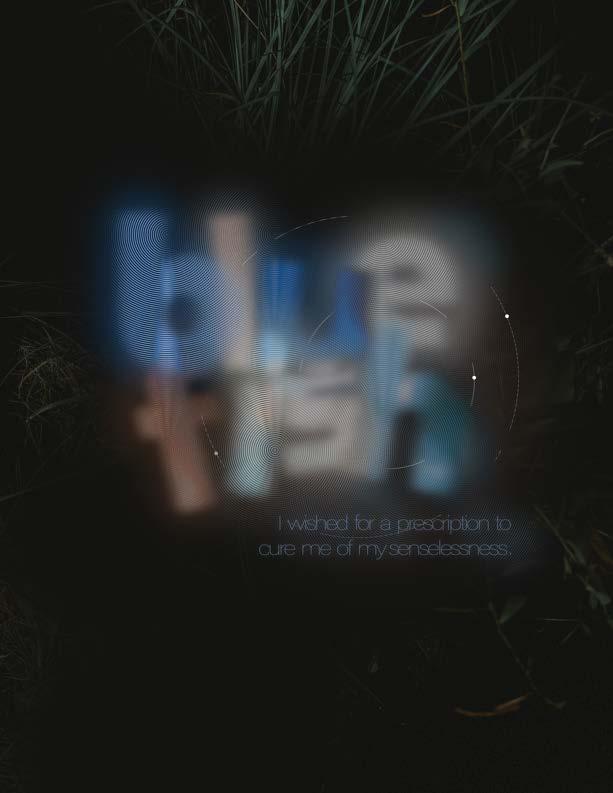
The sheets were clammy all of a sudden, and I just wanted to force-feed myself leftovers to get rid of any feelings in my tummy. There was no world in which I wanted anybody to know I was feeling this way, but it was getting difficult to ignore. I wished for a prescription to cure me of my senselessness.
***
Three more rows of the tapestry are finished now, the semicircles have begun to look like fins, and my thumb feels a little sore. The relentless knots that I keep encountering shouldn’t exist. While I work, it feels necessary to be critical of my lines of reasoning and train of thought. I couldn’t trace why I hated being vulnerable in front of the single person who had seen so much of me, despite the turmoil my overthinking caused. It didn’t make any sense, but I didn’t want to confront these parts of me, and it felt reasonable to keep them isolated.
I know it is absurd to rely solely on logic when navigating life — I feel naive, stupid, and ashamed to admit that I want to. The alternative senselessness isn’t exactly providing any tangible benefits either. I feel like I’m losing control of my own life. The fact that I cannot pull the yarn with ease, despite every effort to keep it untangled, has me biting at the skin of my lips. Lost in memories of emotional turbulence, I wonder what leaning into feeling can offer. I start frogging parts of my project, hoping for a reminder of what passion and intensity brings to life. I recall the single successful encounter I’ve had with giving in, one I always revisit. My choice to study mathematics was impractical, and a decision of the heart.
August 2024, By Myself
The morning of my flight from YYZ to DFW, I cried by myself for the first time. I had been in Toronto for the summer, studying math, and the day to return home had come. My eyes were dry from a lack of sleep, my arms were tired from giving long hugs, and I wept for an hour. My new skeins of yarn sat awkwardly in my single suitcase — this was the summer I started crocheting. I watched the sunrise in my dusty student apartment for the last time and left my Muji notebook out so it would be the last thing I packed.
Three months past, I had never been more unsure of who I was, what I wanted, and how I would do it. Rubbing the chalk off my hands in math class, I was excited even though I knew I was nowhere near the smartest in the room. In fact, I was excited because I knew I was nowhere near the smartest. Excitement was insufficient, however, in terms of what was necessary for the sacrifice that was dedicating my life to the study of a subject. Unfortunately, it felt like excitement was all I had. In turn, my nights became filled with the desire to find an alternative to the exhilaration that mathematics offered: something more practical. In class, eating dinner, before sleeping, I contemplated my spark
jubilee
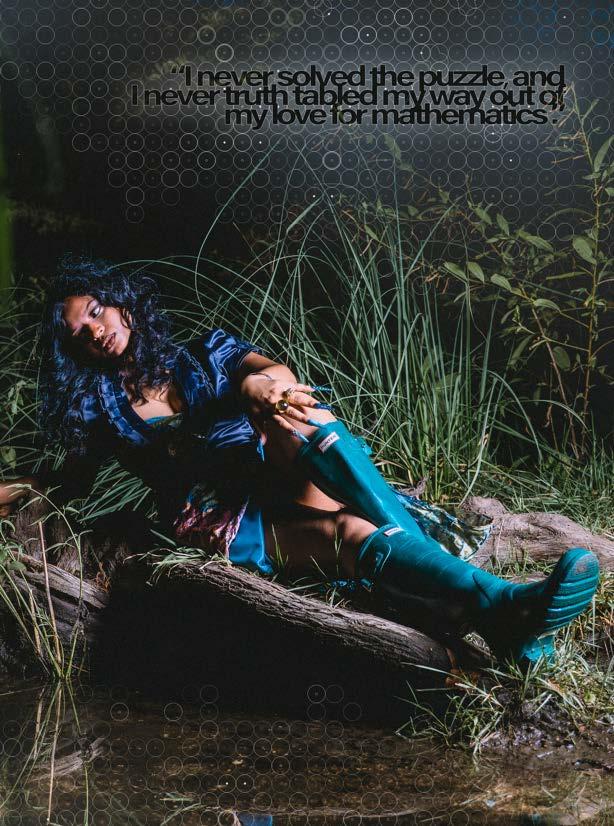
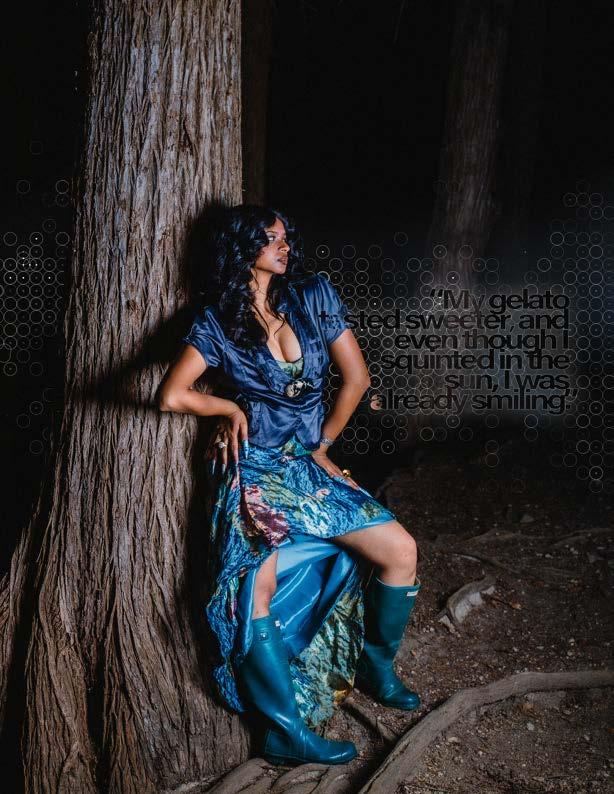
future. I spent at least 200 hours trying to come up with the most optimal path for my future. This was excruciatingly confusing: I had never liked something so much that I found it impossible to imagine a world where I was happy without it. I never solved the puzzle, and I never truth tabled my way out of my love for mathematics. That spring, I naively allowed myself to sit in the math building and pursue the study with everything I had. The following summer, I participated in my first real research experience. In late June, I began to lose the slight taste of loneliness in my mouth. My gelato tasted sweeter, and even though I squinted in the sun, I was already smiling.
The six-inch notebook I had left out while packing was filled from start to finish using three navy ink fills and growth.
Although I am battling sleep now, I remember why I picked up the yarn in the first place. I feel itchy at the thought of vulnerability, but each time I feel like the argument is settled in favor of rationality, I remember mathematics and its senseless victory. This is the singular time I have allowed myself to forgo logic, free-falling into impracticality. It doesn’t matter whether it makes sense. I love it regardless. What am I so terrified of — living?
Simple computation can’t navigate all consciousness, but emotion is not often triumphant in my life. Why do I find myself in such discomfort feeling anything, and alternatively, what are the true benefits of feeling everything? I return my project to its bag and my mind to its questions.
I am halfway through now, but I am still struggling to see the blue fish. ■
Baccha
Trace where your fingers clasp together in prayer, where your eyes have watched a black cat disappear, or where you revel every Friday night. The ritual is important — it feels that way in your tears at weddings and funerals, the smile in your photos from nights out. You know it’s real, or maybe you know it’s not. Either way, it’s yours.
graphic by MELISSA HUANG
chanal
jubilee
by JENNIFER WANG
layout ERIC MARTINEZ creative director GRECIA DEL BOSQUE photographer WILLIAM WHITWORTH videographer TYLER LA SALLE & LUCY PHENIX stylist AIDAN VU & ELVIA GARCIA
hmua ALEX BASILLIO & JALYNN SHREPEE models AIDAN CHRISTENSEN, MIMO GORMAN & ODELIA SCHILLER
jubilee
1
FUR SKIRT & GARTER
Elvia Garcia
BROWN HEELS
jubilee
SEQUIN TANK | RagzRevenge
BLACK PANTS & BELT | RagzRevenge
FUR CUFF | Elvia Garcia spark
2
jubilee
METALLIC TUBE TOP
Aidan Vu
jubilee
jubilee
by ANJALI KRISHNA
layout AVA JIANG creative director ALEX BASILLIO photographer TAI CERULLI stylists ALEX BASILLIO & ANDROMEDA ROVILLIAN hmua FLORIANA HOOL model LAURA FLORES
jubilee
“Floresisoneoftheoriginals.”
Under twinkling fairy lights at Tweedy’s, air from a whirring fan moves through the long dress Laura Flores is wearing. At her neck sits a cross necklace, black, like most of her clothes.
As we speak, Flores’s eyes flit behind me to the bustling market. Tweedy’s wasn’t her preferred space for Subculture Swap, the market she organizes biweekly, but the bar’s compactness allows her to keep watch from our table sticky with beer.
Since the pandemic, open-air markets in Austin have exploded in number and popularity. But Flores is one of the originals — she has been involved in the Austin vintage scene for nine years.
“It feels like there’s a million markets now and that makes it a little harder to exist, it’s more competitive in that sense,” Flores said. “That this market is a subculture swap market makes it stand apart. There is a huge wave of thrifting and markets, but I can survive it by finding my own niche. I love it because I’ve attracted these vendors, and I can help them make sales where they may have struggled at another market.”
Flores started off as a vendor, running a vintage clothing booth with her friend Caitlin. While Caitlin sold girly Y2K, Flores vended mostly punk and goth. After oversaturation made her work frustrating, Caitlin and Flores decided to make the fad work for themselves. Considering how difficult it was to get a vending spot, they shifted their energy toward coordinating, realizing they could start their own market. Luck did the rest of the work. While Caitlin and Flores were vending at a market at the Ballroom, the music venue next to Tweedy’s, the owner asked if they might be interested in starting a recurring market in the space.
“I was like, oh you’re kidding,” Flores said.
So began Flores’s work as an organizer. After running the Ballroom Block Party for years, though, Flores and Caitlin didn’t feel its name fit its vendors and customers.
“It was more identified with the Ballroom and not our own market,” Flores said. “We wanted to reclaim it. We had already curated a certain style with our vendors and attracted a certain kind of customer. Eventually, we landed on Subculture Swap.”
Indeed, subculture is a guiding theme of the market. Horror DVDs, bone jewelry, and apothecary goods sit alongside hand-beaded earrings and houseware — each item at the Swap is unique, and so are its vendors. Subculture is nothing new to Flores, who frequents Terror Tuesdays at the Alamo Drafthouse. The market reflects these interests, making it a space for alternative culture.
“Whenever I was growing up, I was very introverted and independent and that nature in myself led me to seek out alternative cultures where other people were misfits. I was very into fantasy and the occult and horror movies. As I got older, I started to explore punk and goth cultures.”
The market is only one facet of Flores’s interest in material culture and vintage. With her psychology counseling masters degree in hand,
jubilee
she is starting a second degree in Audio Technology and Industry, continuing her work in creative spaces. Indeed, her interests in film and music are incorporated into the markets: Tweedy’s has live music and Double Trouble plays movies, from Jennifer’s Body to Fantastic Mr. Fox. Many of these creative interests manifest in material culture for Flores. She spends weekends renting videos from We Luv Radio, a local Austin business.
“I have a huge DVD and VHS collection,” Flores said. “I’m a physical media hoarder and this definitely feeds into it. I just bought a tape, Bride of Chucky. Whenever I’m picking the vendors, I’m also selfishly picking what I want to shop.”
And shop they do. Tweedy’s is a busy space, with customers milling around and chatting casually with vendors. There’s a casual energy in the air compared to the usual rush of Austin markets.
Even after Caitlin decided to leave vintage markets behind, Flores continued to coordinate the market herself. The Ballroom venue changed hands, and the Subculture Swap moved into two new locations: Tweedy’s and Double Trouble. While the Double Trouble space is larger, the accessibility of Tweedy’s makes it a popular secondary location for the biweekly markets.
“At first I was apprehensive about Tweedy’s, because it’s not very spacious,” Flores said. “I’ve had to get creative here, a lot of the vendors are using the picnic tables rather than opening a tent and bringing their own setup. I’m so glad we went for it, because Tweedy’s is cool. People are here, people are shopping and that’s what I like to see. Both of the new venues really match our vibe, both our customers and our vendor’s customers.”
These days, Flores is less worried about competing with other potential markets, having carved out her niche in the Austin vintage scene. She is more interested in keeping the cost of vending at the Subculture Swap low, continuing its alternative theme, and supporting the vendors who inspire her as talented artists or tasteful curators.
“Markets should be about supporting your local artists and small businesses,” Flores said. “A lot of the vendors here with us tonight have been with us for years. Those are the ones I’ve been grateful to build a relationship with, that’s the beauty of the market.” ■
“Eachitematthe Swapisunique,and soareitsvendors.”
jubilee
by EMMA PETTIETTE
layout ADRIANA RAMIREZ photographer REYNA DEWS videographer LARRY LIU
stylists ZYLA ALANIZ & CHELSEA NYATENYA hmua KAREN SOLIS & ELENA DURBIN nails
ANOUSHKA SHARMA models CHELSEA NYANTENYA, ISABELLA LEUNG & CARYS VALDEZ
jubilee
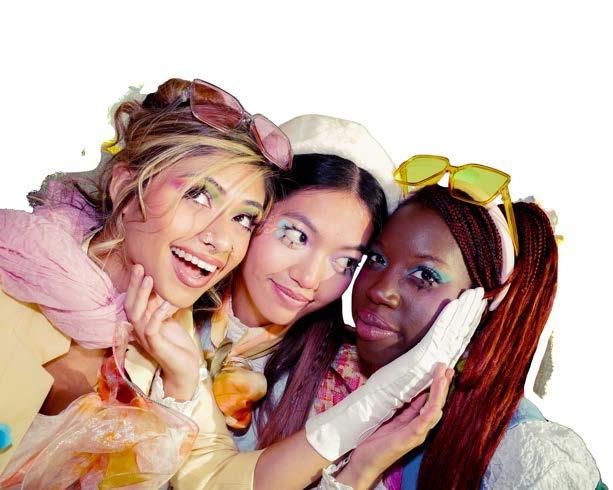
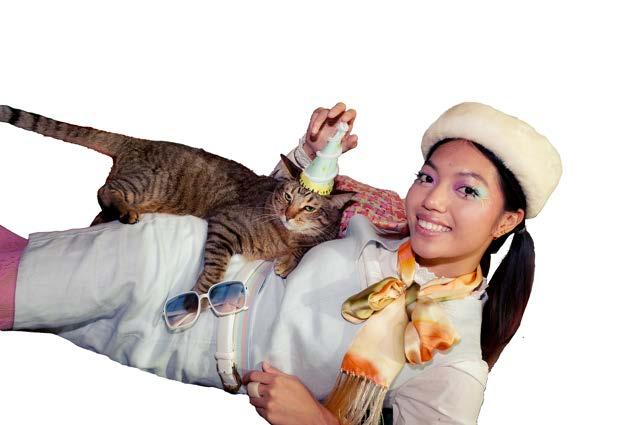
WHITE GLOVES | Sassy Threads
YELLOW BLAZER | Austin Pets Alive
PINK SCARF | Austin Pets Alive
PINK TINTED SUNGLASSES | Sassy Threads
ith my chin pressed against the dresser ledge, I stared into tiny, blinking alien eyes. My hermit crab, Lava Girl, remained rigid in the tank. She maintained a single position for hours, with her claws tucked neatly before her, utterly devoid of celebration. It was her birthday. My breath casted wet smears on the tank while I shrilly serenaded her.
I plunged a new, larger shell beneath a plastic palm tree in her tank — a birthday present.
She only hid behind her sponge in response.
Unbeknownst to her, the selection of which shell to give her was a point of contention at the pet store. Special efforts were also devoted to scrubbing the tank for a tidy celebration space. Lava Girl’s reaction would suggest these efforts were pointless, and yet, my red cheeks were split into a maddening grin as I excitedly observed her. I hoped somehow she could feel the love radiating off my face.
There is something captivating about narrowing your appreciation for existence to one thing at a time.
The prime real estate around the table during the birthday song is usually just beside the birthday boy or girl. As a child, I felt differently — I would usually situate myself directly across the table, accepting the elbow of a camera-bearing mother.
I love birthdays because they celebrate the thing we all don’t understand yet feel: the passage of time. Standing on the opposite end of a table or outside of a plastic tank allows me to celebrate time's inevitable movement. Each passing year prompts me to remember the things I love, pets and humans alike.
Pet birthdays are softer and quieter. Their lack of obligation always makes me feel imaginative. We don’t need to celebrate our pets’ birthdays the way we do our own, but we do so with frivolity, silliness, and joy. I should know better than anyone: I have hosted birthday parties for a dozen animals.
Following my first trip to the countryside terrain of East Texas, I developed an inappropriate obsession with mammoth snapping turtles. My mom bought me a red-eared snapping turtle as a safer and less prehistoric alternative. His name was Domino. Turtles, like hermit crabs, are rather antisocial creatures and prefer to be left alone. Domino would stretch on a large rock and flex his webbed feet at the heat lamp.
On Domino’s birthday, I released him in my Barbie dollhouse. His neck stretched around tiny stiletto heels and plastic plates of painted food. To my dismay, he was too large to balance on the zebra-print doll bed. The dollhouse was quickly disorganized with carrot
shreds, turtle pellets, and tipped furniture. Instead of enjoying his change of scenery, Domino spent most of the day attempting to escape.
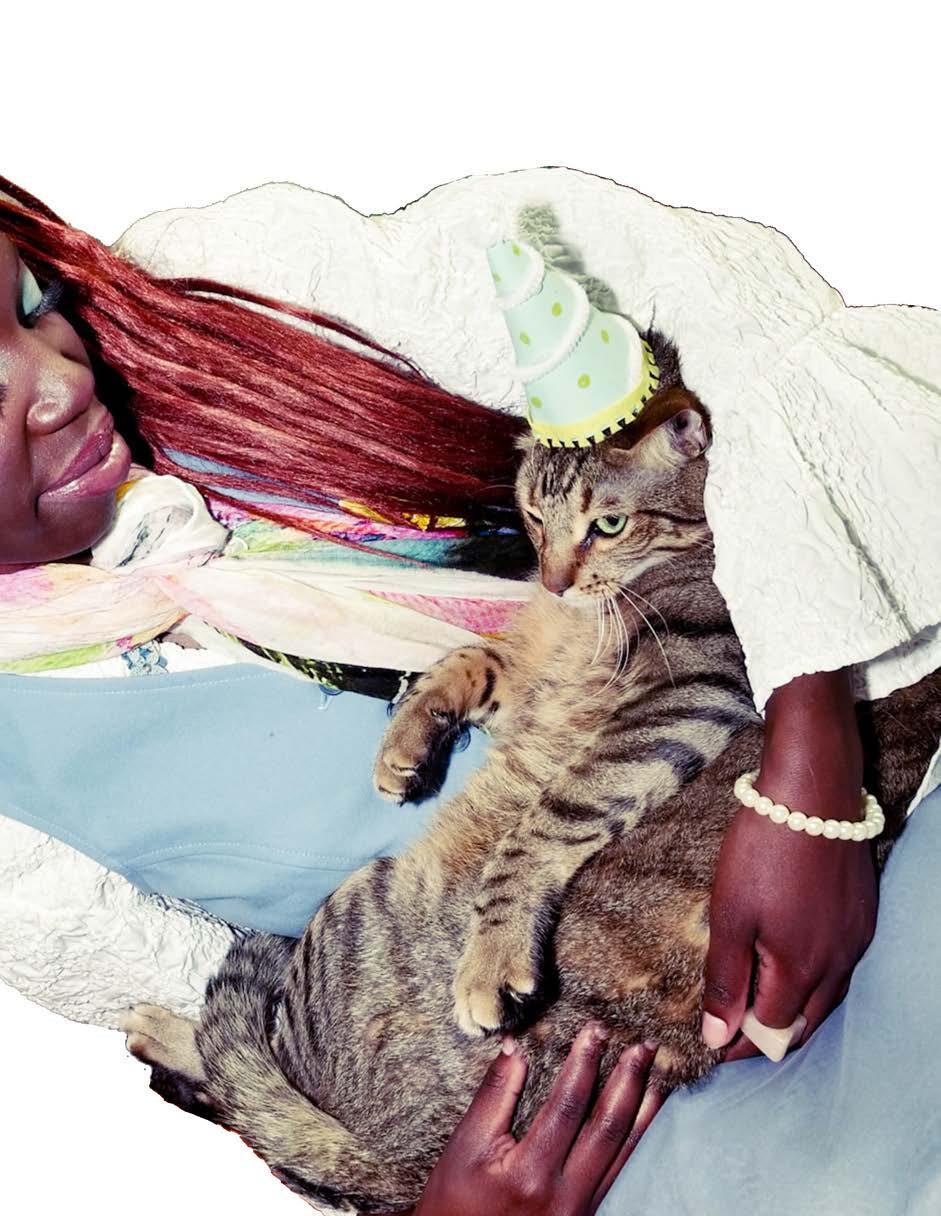
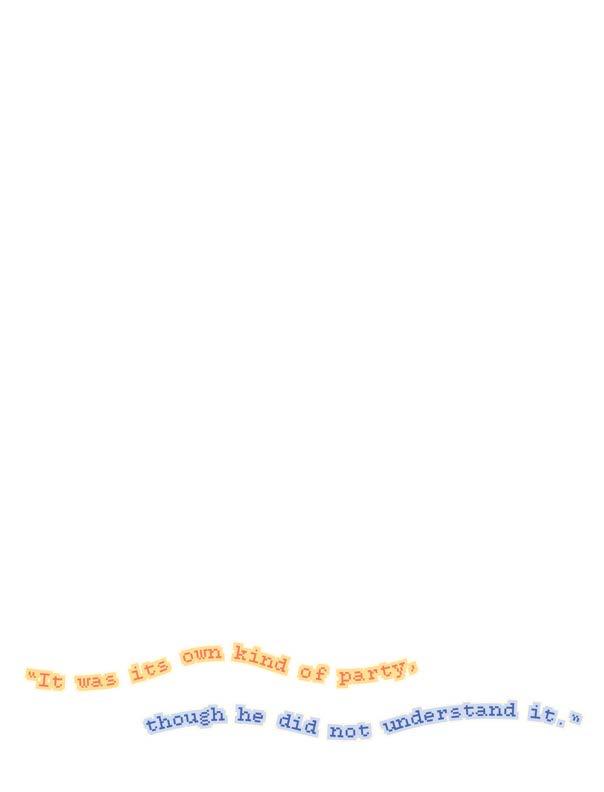
It was its own kind of party, though he did not understand it.
I used to celebrate birthdays with a slice of cake and pastel balloons. As I got older, birthdays assumed a more complicated, heartfelt undertone. The passage of time became more noticeable, and birthdays seemed to roll by faster than ever. There were some years where it felt like there wasn’t a single moment worth celebrating — where 365 days felt like one long night in which I tossed and turned and did nothing but make unflinching eye contact with a scrape on the wall.
I was stuck clutching at clock hands as I tried to appreciate my life from a bird’s eye view, while simultaneously living in the moment.
Sometimes it is easier to celebrate the existence of an eager puppy than to wear a party hat for yourself.
When we celebrate our pets, we celebrate our capacity for care, silliness, and finding delight within the fleeting. These parties make our love tangible: something to wrap, record, and mark on our calendars.
jubilee
We don’t throw our pets parties to be thanked, but rather to step back and remember the passage of time with a companion who makes the years fly by.
22 years and two dozen pets later, I continue to recognize the birthdays of my pets.
I have a large tabby cat named Rigby whom I celebrate every single day, but especially on his birthday: November 14. I crouch beside him on the floor as he purrs boredly and his tail sways like a curious cobra about to strike.
He watches his reflection in a bowl of milk with big tapioca pearl eyes and drooping whiskers. He plunges his tongue beneath the ghost-white puddle and sniffs it once more before trotting away completely unintrigued, perhaps even with an undertone of disappointment.
I didn’t even get to finish wishing him “Happy Birthday.”
For him, this was nothing out of the ordinary. He didn't know it was his birthday and had no cause for celebration. I stared down at his eyes pressed shut against my waist, his purrs sending vibrations down to the mattress, his claws extending in an affectionate knead.
Candles on a cake are but semantics when you’re surrounded by things worth celebrating. ■
jubilee
UNTIL TORNAD GREEN
by KATHERINE
MANZ
layout ANDY KANG
TORNAD
His body is prayer turned flesh.
It feels good, doesn’t it?
jubilee
Half of all sports fans — 50% — believe that the divine has a hand in sport. 26% have prayed for God to help their team. 21% perform rituals.
At 2 a.m. in the morning on June 20, 1999, a man swaddled in green polyester and tacky sweat holds a 34-pound hunk of metal like a lifeline. His head is thrown back; his eyes are closed. It’s the best day of his life.
On the other side of another town, I am somewhere, something. Maybe watching, maybe not. My 23-yearold father leaves his feet momentarily as light and noise and absolute victory fill the room from the television. This moment has a consequence: nearly eight years later, I am born into a world where miracles do happen.
Growing up, I was taught that there are certain things to be treated with religious devotion. I do my schoolwork. I read books on books. I concede space to my elders. God never captures my attention, so I slump at the altar of hard work like my mama tells me, always saying, It feels good, doesn’t it? It feels good to be exceptional, to trust your hands to make it so. I learn a contiguous world: if you work hard, you will win.
The man is laughing, passing a cigar around. There’s something familiar about his face. His body is prayer turned flesh. It feels good, doesn’t it?
He is an imagined memory, a ghost. Still, at 10, I see him peering around doorways, printed on the back of my father’s jersey. When I begin watching hockey, he is everywhere. Mo, Mikey, Modano. Always straightfaced, lacing his skates, the back of his jersey flapping. This is hockey: be classy, don’t step on any toes. Do your job and go home.
At 16, I started working for magic. I don’t know how to explain the ways victory becomes personal. I pull on my green socks and my mom’s jersey. I walk into the arena on my first playoff night, buzzing with nerves and looking for fingerholds, and shove my phone under my seat because it feels like the right thing to do.
The NHL’s bloated playoff format demands that a Stanley-Cup-winning team play between 16 and 28 playoff games to get there. The 1999 Dallas Stars played 23: two months of getting it all right.
I have no idea what Mike Modano did the morning of June 19, 1999, the day the Stars would play for the Stanley Cup. I imagine something like this: he orients his chair the proper way, eats the appropriate number of eggs for breakfast. Every one of his warm-up shots goes in. He is 29 and will not let God pass him by again — I can feel it, the coarse tape tight on his wrists, the slow-mouthed prayers, the breath replete with invincibility. His first stride on the ice that night leaves a long white trail of stardust. It’s taken a long time, but he’s figured out how to catch fate in his chest.
I watch him go, mouth open. I think: all history is retrospective — he must’ve known then. He must’ve.
“AT 16, I STARTED WORKING FOR MAGIC.”
jubilee
In 2024, we’re all still scrambling for something solid. I find it, finally; by the second and third games, every move is premeditated. In a week, hearing Zach Bryan will begin rubbing my ears raw, but for now, it is a steady support, a comfort. I grip my phone in my hand when play starts.
Do you think it matters which way it faces? Breathe. I forgot my bracelets. Breathe, Katie. If I sing under my breath this whole period, we will win. If I sacrifice my breath and do not close my eyes, we will win.
It isn’t for hope that I move my body in my own kind of reverence — pulling on my sweatshirt, my lucky necklace; singing the proper music; growing my fingernails out for months. It’s for fear. It goes like this: IF I do not wash my hair tonight, THEN mine will be the misstep that keeps all of us from the absolute ecstasy of having something to staple our names to.
The Stars win the game. I repeat my song and wear out my socks. The green and silver polish on my nails, a holdover from prom, is beginning to chip. I like my nails short, but I won’t cut them. Some things demand sacrifice.
In the playoffs, games simply continue until one team wins, 20-minute periods set like teetering wooden blocks. Game 6 in 1999, the Cup-winner, was 115 minutes, 13 seconds: three periods and nearly all of three overtimes. Pacing, gripping. Lucky towel twisted in the palm. There are so many more ways to pray than you realize.
What happens if Modano eats a different pre-game meal? Do you care to find out?
I don’t. I follow his example, and my Stars make it miraculously through the first round of the playoffs in seven games — the marquee series of the round. The bus takes me home. Because I have done it right, I am there, in the echoing amphitheater of flashing lights and rally towels, shouting until my head hurts.
Two weeks later: Round 2, Game 6. Overtime. There are only so many outcomes.
“I don’t want to face Hellebuyck and the Jets at home,” says the woman behind me. “Best finish them off here.”
The lights are too much; I close my eyes and try to settle my heart, which screams like a throttled rabbit. When watching overtime at home, I habitually check the score on my phone, which updates maybe fifteen seconds faster than my stream. Here, there is only bare ice stretching out into the endless possibility of the horizon.
At the end, we were all banged up. I’m not sure if we could have won Game 7 with all the injured players. I do look at that and think it might have been a kind of destiny thing.
The green slip of him comes out of nowhere. 90 seconds into overtime, Dallas Stars defenseman Thomas Harley takes a beautiful one-touch slap shot that finds only net.
“HIS FIRST STRIDE ON THE ICE THAT NIGHT LEAVES A LONG
WHITE TRAIL OF STARDUST.
jubilee
IT’S TAKEN A LONG TIME, BUT HE’S FIGURED OUT
HOW TO CATCH FATE IN HIS CHEST.”
“He’s taking the shot. He’s still waiting. Until then, I will stand and wait for miracles.”
Somebody screams first.
18,000 people screaming, throwing their hands in the air, teary-eyed, hearts filled to bursting. The chairs, designed for this, snap up. The roof contains all sound. One woman grips onto her husband, saying, Oh my God, oh my God, and it seems undeniable that He’s here and listening, finally He’s listened. Slowly, the streamers come down.
On June 20, 1999, the Stars make the front page of the Dallas Morning News. The headline is OVERJOYED. People jumped and screamed as the Stars raised their sticks in triumph 1,300 miles away. One man is crying. The shine of silver, impeccably polished, is inkless on the page.
For Mike Modano, the night of the win goes on forever — spraying champagne in the locker room, and then family, the logistics of the parade, the day with the Cup in his hometown. Two weeks later, the pages are framed.
Two weeks after they beat the Jets, the 2025 Stars drop the next series in five games. I sit and move my hands, trying to convince myself that my hope was fruitless from the start.
My parents are liars. Destiny cannot be manufactured through hard work. Harley waits for the handshake line, keeping his head down and his stick on the ice. There is a body-width between stardom and having your name turned immortal and pristine, and we are, again, a millimeter off.
Decades can wear on like this. Four, five, six. Maybe I’ll die without a crowning glory to recount, always recalling my dad saying, Someday you’ll get yours.
Today, I still see silver-painted keratin lying in flakes on the desk, like a promise, vital up until it was exorcised. The same pair of socks now washed, the way I put both hands on the fabric in prayer, dotting my i’s, crossing my t’s, leaving the blinds open. Letting some light through.
On my way out of the arena, I pause at the Modano statue that went up this year — the victorious ghost, now mocking.
The bronze puck is on his stick, which bends backward. He’s taking the shot. He’s still waiting. Until then, I will stand and wait for miracles. ■
THOMAS & AIDAN VU hmua JAISHRI RAMESH models ODELIA SCHILLER & VICTORIA NICOLAEVNA
jubilee
jubilee
jubilee
jubilee
by JENNIFER WANG
layout AVYA BARTON photographer MIA KANEDA videographer AIDAN NGUYEN stylists ELVIA GARCIA & TALY PERALTA hmua JANHAVI LALWANI models JOHN ANTHONY-BORSI & ELAINE GONG
jubilee
INFATUATION
The first time we meet, I’m crouched awkwardly on the floor of a friend’s dorm, a cup of something mixed in my hand. My knees creak under my own weight, and there’s a dull soreness in my bones. Still, my head buzzes with anticipation for the night ahead.
That’s when you walk in, all smiles and waves to a room full of strangers, before your eyes land on me. I smile back and give you my name like it’s an offering; you give me yours in return. Even though we’ve just met, you don’t feel like a stranger.
You bombard me with question after question on our walk home. You want to know everything there is to know about me — where I’m from, what my hobbies are, where I like to study — I answer every curiosity, still giddy from drinks that have yet to wear off.
We part ways with each other’s numbers in our phones and a silent promise to see each other in the future.
The familiarity of this routine isn’t lost on me. I go to parties, lose track of where my friends are and meet strangers who put their socials into my phone. That’s what weekends are for.
When I was 17, I had this terrifying fear that I’d be alone for the rest of my life. I felt like I wasted all my high school years chasing after love that only knew how to flee from me. At 18, college was a new playing field, filled with new personalities to explore — but the rules of the game didn’t change. Every genuine connection I made eventually fizzled out to nothing but numbers I deleted from my phone.
I thought the ghost of loneliness would haunt me forever.
You were persistent enough to exorcise it.
TEMPTATION
I’m late.
Those are the only words echoing through my head as I race down Nueces St., eyes peeled for your balcony window. The January cold nips relentlessly at my exposed torso, the cropped jacket I stole from my roommate offering little help.
I stop by a window that’s louder than the others. Just as I pull out my phone to text you, the balcony door slides open with a piercing screech.
My friend Sara squeezes through the crack and beckons at me to come inside. I toss my purse up at her with a grin, scaling the brick and swinging my legs over the railing like I’m committing a heist.
Inside your apartment, the warmth tames my frozen skin. I make my way around greeting everyone before my gaze lands on you, flushed cheeks and messy hair in all your glory.
I know right then I’m in trouble.
When I was 14, my mother hired a Chinese fortune teller to read my fate. He told her that the stars weren’t aligned in my favor when it came to love. The heavens made it clear — I was destined to become a divorcée.
My mother didn’t really believe in ancient superstitions, but she warned me that some of the teller’s predictions had come true in the past. His words stuck around just enough to turn me into a skeptic by the time I had graduated high school.
The sight of you then was enough to make me doubt everything I thought I believed about love.
STUPOR
Under my command, you press the rim of a plastic cup against my glossed up lips, and I relish the burn each time liquid fire scrapes down my throat. The sickly sweetness always gives way to this horrible, chemical taste that lingers on my tongue before it’s washed out by another round. Again and again, I surrender myself to the mercy of the red Solo cup.
It takes a couple more for me to hear it — the sound of my own blood, a hum rising in a crescendo, like a choice symphony in my ears. Your hand lands on my shoulder, and your voice cuts through it all with four words, strung together in a low murmur.
Are you feeling okay?
I nod, but my body betrays me. I’m heaving, struggling to breathe as the world around me grows blurrier by the second. Suddenly, the carpet on your bedroom floor looks like the perfect place for a nap.
Don’t get on the floor. It’s cold. Come on, up — get on the bed instead.
You crouch to resurrect me from the human puddle I had become, scooping me up like I weigh nothing. You tuck me in with a blanket decorated with the logo of your favorite football team and sacrifice your poor Squishmallow to become my pillow.
My skin feels like it’s burning off my bones, yet I feel colder than ever. I can’t stop shivering, no matter how many deep breaths I take or how hard I pinch myself. At the sight of my restlessness, your hands find their way to mine, burning the invisible frost away. I squeeze your fingers, my lifeline,
jubilee
jubilee
the only thing grounding me to your mattress. Selfishly, I wanted them to stay tied with mine forever.
In a world where every act of service for a woman is expected to be repaid, I didn’t understand why you were being so kind to me.
Why? I whisper a question that feels forbidden. Why are you doing this?
Because I’m the host, you pause, deliberating your next words carefully. But also because I want to take care of you
AVOIDANCE
Now you’re pressing glass against my lips, the gloss long stripped from my cupid’s bow, water in place of liquid hell. Each sip you coax down my throat quiets the pounding in my head a little.
I watch you over the rim of the cup. I watch the way you part your lips slightly in guidance for me to imitate and how you make sure the blanket is always above my shoulders when I lie back down.
Still, I can’t bring myself to relax around you.
I used to look for love everywhere: inside high school lockers, in between lines of texts, in all the wrong people. There had always been something about me that was unsatisfactory; compared to the next girl in line, I just didn’t match up.
Who’s to say you wouldn't think the same?
There on your bed, I keep wondering why you’re drawn to me.
What’s your type? I ask, curious for the answer. I prepare myself for a physical description of something that vaguely matches my profile.
You take your sweet time with the answer. While I wait, I try to read your eyes through your eyelashes. Finally, you part your lips and say, Someone who’s easy to love.
SABOTAGE
Easy to love, I repeat in my head. I wonder if that has ever been me.
At that moment, I can’t tell who’s feeling more delicate — you, with your heart bleeding through your sleeve, or me, with confusion addling my brain.
I become hyper-aware of our hands, still tangled together on the bedside. I try to avoid your gaze, try to close my eyes and pretend I can’t feel your skin on mine. I try to ignore the warmth that you radiate even from a distance, a warmth that calls out to me to inch closer. I try to disregard how I can feel each pulse from your heart dance its way through your veins and to my fingertips.
I swallow the monster of sticky shame that grew inside me. You like me, but I’m not even sure if I like you.
You sigh through your nose and look at me softly in defeat.
I know. That’s okay.
Your unwavering calmness enrages me. I want you to be upset, to curse and scream at me, to call me a fraud for the way I’ve scammed your affections. But you don’t. Instead, you just continue to feed me water and whisper assurances into my ear.
Two weeks later, with the haze gone from my mind, I decide to give you a reason to hate me. I tell myself it’s only fair to you that I cease this game I’ve dragged you into.
It happens a week before Valentine’s Day. I sit outside the Blanton Museum to dial your number and sever the budding connection we have.
I’m too used to the loss of a good thing. So like all other good things that have come to me in my past, I let you go.
ARDOR
I eventually found my way back to you — it felt inevitable we would reappear in each other’s lives. I was right.
I’m still surprised by all this — cooking dinners for each other, stroking your hair after a bad day, waking up to your sleeping figure — the simple ease of loving you, and being loved.
From time to time, I still remember the words of that fortune teller. Sometimes the doubts creep in, and I wonder if his words will stand true.
But I refuse to believe there is a prophecy for love.
Tonight, I will fall asleep to the sound of your breathing, just as I do every other night.
SHREPEE models GRECIA DEL BOSQUE, CAMERON LIGHTFOOT, AMARI HERRERA & TASMUNA OMAR
jubilee
Aschizophrenic strobe cascades across the sea of skin, muscle, bone, and blood. Limb loosening substances flood the room. Supposedly, they loosen one’s soul, too. In this basement, made holy by the rituals performed within it, sweat-soaked figures undulate to a hypnotic rhythm. This is where those exiled from the outside world come to feel safe, to amalgamate into a mass minority.
They call this community.
Somewhere in this crowd, a body pretends to belong, a parasitic cell in an otherwise healthy organism. Somewhere in this body is me. Contrary to my expectations, here I have never felt more tightly wound, more individual, and more remote.
I’ve always had an issue with partying.
I detested the performative quality of becoming someone else for a night. Even more, I hated the substances I’d take to suppress the fact that this wasn’t me, that this thing that everybody else loved was not something I loved. I forced myself into a mold of something I was not because it seemed that community came from partying for queer people my age. I craved that community. I envied the freedom of people who acquiesced so naturally, who simply belonged. I felt perpetually on the outside, trying to break in, trying to achieve the genuine connection I knew others had.
Why did it seem that the only way for me to access community involved a falsified self-transformation? When I couldn’t find answers myself, I did as I always had no comments, and turned to literature.
Pentheus returned from abroad to find his native city overtaken by mass mania. The skeptical King of Thebes heard whispers of the city’s crazed citizens from afar, but did not heed such whispers until he reached his homeland. Indeed, the masses were given over to madness; they donned fawnskins, wreaths of ivy, and acted with an unfamiliar religiosity. They feasted on livestock with their bare hands and plundered villages. In a ritual site far beyond the city’s borders,
they thumped the ground with decorated staffs and made wells of water, honey, and wine spring from the earth. They gorged themselves on these gifts and took to euphoric revelry.
“What has come over my people?” Pentheus thought.
His many questions would be answered when, walking the streets of the city, he came across a representative of the people, a foreigner who had come to Thebes in Pentheus’ absence.
The foreigner explained: “The people now kneel to Bacchus, the God of freedom, wine, and fertility. Bacchus grants the people a euphoria they have never known but for which they have been searching for their entire lives. So great is this freedom that it nearly blinds them to the world that has, since their birth, tried to contain them. That is why your people now perform carnal and barbaric acts.”
I confided in a friend about the disconnect I felt with the queer community.
“I think you’re afraid of freedom,” he told me.
I was offended by this assertion. Freedom was all that I desired but could not achieve. I tried incessantly to make a genuine connection with the community I longed to be a part of. It was to no avail.
I thought maybe my approach was wrong. In trying to belong, I put forward an image of what I thought belonging looked like, as if that costume were the key to acceptance. But that costume — one of exaggerated flamboyance, frivolity, licentiousness — derived from a distorted and degrading perception of my community. For most of my life, I had been an observer, adopting a restrictive, normative perspective. And so in an attempt to belong, I made myself fit a stereotypical mold that left me misshapen, ingenuine. Of course I would feel out of place in that mold. To foster genuine connection, I needed to rework my approach.
“ S S M.
jubilee
Pentheus could not bear this forced separation from his people. How could his whole city be deceived by some grand delusion of freedom? It seemed to him as if he had been left
Pentheus begged the foreigner, “What must I do to become one of my people again?
The foreigner responded promptly: “It is quite simple. To become one of the bacchants, a follower of Bacchus, all you have to do is submit yourself to the god’s way. The freedom he grants is frightening at first, but all you have to do is kneel, yield to the euphoria and pleasure he brings you. Then you can
“No! How could I commit myself to such sacrilege, to bend to the will of a god I’ve never known? That is beyond belief!” he decried. “I see they wear lengthy robes, fawnskins, crowns of ivy, and — is that a thyrsus they wield? Perhaps if I take on such
“I never really thought about it that much,” they said, confused as to where my
I was amazed to find that the question I had toiled over for so long posed no challenge for others. Could belonging be so effortless? I was also frustrated because this answer gave me nothing to go off of; I had hit a wall in my attempt to belong. I would forever be an amorphous thing, floating between two worlds whose borders
Pentheus dressed as he thought appropriate for the occasion, much to the knowing dismay of the foreigner. He costumed himself into a perfect replica of the bacchants, thinking this would allow him entry into their sacred community. Newly robed, fawnskin and all, he made his way to the outskirts of Thebes, eager to penetrate what remained so
The foreigner knew his performance was not enough. “You might want to reconsider your method of acquiescing with the bacchants. Their freedom involved a more… spiritual change than costuming. They may not take kindly to this mere emulation.”
Pentheus cared little for the foreigner’s advice.
“Spiritual change? Nonsense, I would never commit myself to such sacrilege,” he said. “I know my people. I will be made one with them as soon as they lay eyes on me.”
Somewhere in my confusion, I reluctantly found myself going to another party. I knew it would be the same music, same lighting, same substances as always. I knew I’d relive my recurring unfulfilling experience. I knew I’d end the night feeling insecure and out of touch. So I didn’t dress up, nor did I get so fucked up that I would become another person. I simply showed up as I was, no costume imitating a flamboyance that wasn’t mine, no plan of action to be a part of some caricatured community.
Pompous Pentheus approached the ritual site without reservation and announced himself to the bacchants.
“Look, my people! I have come to join in your manic praise of Bacchus, the god of freedom! See, I am dressed just like you, and like you wield a thyrsus; I have become one of you!”
The bacchants halted their celebrations and turned to their former king, unimpressed.
Having followed Pentheus along the way, the foreigner approached him and said, “I warned you, Pentheus, that your costume would not be enough, that the euphoria of freedom required mere spiritual submission. But you did not heed my warnings. Now I, Bacchus, must show you the consequences of your false submission!”
Bacchus set his followers upon the king of Thebes with a storm of wrath and rage. Before Pentheus could even cry out, they tore him limb from limb, severing with their bare hands bone, ligament, and viscera alike, rendering their former king an unrecognizable pile of gore. The final role Pentheus performed: a heap of flesh as unexciting as the convention he so desperately clung to.
I entered the party to a warm, inviting energy that I had never been privy to before. People were excited to have me there regardless of what I looked or acted like, what I consumed, or who I was with. This feeling was new to me, but my true revelation was that this feeling, this acceptance, had been available to me all along. I had just not seen it. Unbound from the restricting image of what I thought I should be, I no longer felt the need to perform. With no preconceptions about the party I was joining, I was able to get in touch with that genuine, euphoric relief that seemed beyond my reach for so long.
The same deafening, bass-heavy music played, the same blinding lights scattered across a crowd of people. Drinks went around a room of bodies that pulsed in unison to one rhythm, sharing a sacred moment. This time, though, there was no loneliness. I felt myself acquiesce. I felt myself, my truest self, belong. ■
jubilee
by ALEXIS RAE SAENZ
layout NICOLE GARCIA
How will birthdays look 50 years from now, and what kind of attention, will I still be surrounded by? love, or joy
jubilee
It’s the middle of spring in a retirement community. Three ladies enter a room with the guidance of a younger teen boy. The clashing of pearls and the skids of walkers fill the room. Their bright cardigans and layered scarves contrast with one another. In their hands are Lotería cards and bags of pinto beans. They take a seat at the playing table and thank the young man for everything he does.
He smiles and says, “You let me know if you ladies need anything else, okay? I’ll be right back.”
It is my first time volunteering at a retirement center. I am scrambling to complete the volunteer hours I need to graduate. Friends describe the center as laid-back, and it lives up to that reputation. The small community spends its after-dinner hours in the lounge, a warm space filled with the soft hum of conversation and the faint smell of coffee. Some residents gather at a table, writing in journals while the daily news plays on a nearby TV. Others shuffle disks across a corner shuffleboard, their movements slow but deliberate. At another table, an elderly couple leans over a crossword puzzle, heads close together, absorbed in the quiet challenge.
Words and chatter float through the room. I find myself drifting in and out of conversations; most of it is mumbles, yet somehow everyone
understands one another. I begin to interpret the murmurs as a kind of universal language in this space.
There’s a certain feeling I get when I’m surrounded by elderly people, a mix of comfort and familiarity — a sense that I can relate to them even though I haven’t lived long enough to truly understand their experiences. I admire their outlook on life, their encouragement, and their words of wisdom.
I took pride in knowing I could chime in during morning chats and that my thoughts were valued. I knew they saw me as a fresh perspective, someone with decades of living ahead.
I enjoyed the pungent smell of my grandmother’s perfume and the warm feeling of her wrinkled hand holding my own. I would sit beside my grandfather with fake glasses and a crossword puzzle in hand, competing with him to see who could finish first. The anticipation of Friday mornings these days never feels as strong as it did back then.
I rifled through my grandmother’s wardrobe, trying on her soft, worn sweaters and playful
hats, imagining myself many years from now — visibly lined with age but still vibrant. My grandmother looked remarkable at 76, her feathered hair perfectly styled, and she often offered me little pieces of jewelry during my visits. She carried a quiet, comforting confidence I hoped to have when I reached her age. I wanted to grow old with that same sense of style and ease, someone my future grandchildren could look at and think,
She’s still got it.
My attention shifts to the three ladies as they start their match of bingo, Al Green playing softly in the background. Marianna, wearing a yellow cardigan, calls out each card for her friends.
“La Sandía… La Mano… La Dama,” she reads.
Lupe, in a red cardigan, stamps her cards while nudging Olga to let her know she missed a number. The game continues for six minutes until Olga calls the win.
The young man comes back to check on the ladies, sneaking up behind Lupe with a heart-shaped cake and candles.
“I heard it’s my favorite lady’s birthday today,” he says.
“I wrapped the word in soft colors and warm images — birthdays, stories, the perfume of grandmothers.”
He places the cake on the table, and the ladies laugh and marvel in amusement. The cake is decorated with glitter and pearl beads, reading, “Happy 79th Birthday Lupe!”
Everyone in the room joins in singing “Happy Birthday.” It’s a quiet but mighty group of elderly citizens coming together for her. Some show no expression yet sing along; others smile ear to ear, moving their hands to the words.
Lupe pauses to take it all in. Her face creases with happiness as she looks at the cake and her friends. She scans the room, taking in each person, as if measuring the weight of this moment. This is her community, and I imagine all the moments that led her here. Perhaps she spent her life with her lover by her side or a loyal pet that never left her. Maybe I have it all wrong, and her days were marked by struggle. Her eyes find mine, and she holds my gaze, smiling with quiet warmth.
When I was eight years old, there was no ounce of fear in my soul about growing old. If growing old meant I would smell rich and tell stories all day, I couldn’t wait for the gray hairs to grow in. I never imagined the quiet aches or the empty chairs, only the idea that growing old equaled a life well spent.
At the age of 12, maturity began to settle in. I viewed aging as a gentle ghost that followed behind me, whispering softly that it wasn’t here to take me just yet. In the back of my mind, I pictured a ticking time bomb — a symbol of the uncertainty about whether I would ever truly grow old. Would my time expire in the next two hours, when I least expected it, or while I was sound asleep?
I wondered if I would ever live to hear the laughter of my future children or visit all the places I once dreamed about
with someone I loved. I wondered if I would look in the mirror one day and see the proof of a full life etched across my face: the creases from laughter, the sun’s warmth imprinted on my skin. I thought about the small bunny tattoo on my left arm and how it might look on wrinkled skin. Would anyone even notice it was a bunny? Either way, it marked a moment in time I chose to carry with me for the rest of my life.
Aging was a romanticization to keep my mind off the thought of a sudden death. I wrapped the word in soft colors and warm images — birthdays, stories, the perfume of grandmothers. I tweaked the meaning to make it feel less like an ending and more like a promise.
I can’t pinpoint exactly why celebrating Lupe’s 79th birthday meant so much to me. Maybe it was the way the other residents and staff visibly loved her, or maybe it was the sight of her fashionable circle of friends that I envisioned in my distant future.
I look back on all my previous birthday celebrations and realize they weren’t about how old I was getting, but about the impact of my existence and what I meant to the people around me. It’s in the small gestures — remembering my favorite cake flavor, choosing a color scheme for decorations, noticing something I’ve been thinking about, and turning it into a thoughtful gift. How many people will celebrate me this way when I’m no longer in my twenties? How will birthdays look 50 years from now, and what kind of attention, love, or joy will I still be surrounded by?
I pictured the bright cardigans, the games stretched across long tables, and the easy comfort of friendships built over decades — the same warmth I had witnessed that day at the home. It was the exact vision of the golden years I dream of. ■
“It
was vision golden dream
the exact of the years I of.”
jubilee
jubilee
Small hands passed around a loaf of braided bread. Young voices sang prayer, “Baruch ata Adonai Eloheinu Melech ha’olam, hamotzi lechem min ha’aretz.”
The melody was odd but beautiful, as prayers often are. Not every child knew exactly what they were singing, but they felt its sentiments.
Thank you for our bread, each child thought as they took a slice of challah.
Just who they were thanking varied in their minds. Thank you to their teacher, who came with a loaf every Friday. To their friend, who chose to pass the loaf to them next. To the baker, who crafted this for them. And finally, as the prayer intended, thank you to God for making this possible
There was an art behind the Friday tradition. It was not simply about having the treat, lining up for it as you would at a pizza party. Rather, each child served their classmates as a symbol of love, of altruism. I want you to have this.
In kindergarten, I was under the impression that faith and belief were a large game of make-believe. We all spoke in an ancient code. We chose to say we believed in God to communicate that we believed in kindness, morality, ourselves, and each other.
I believed faith was an agreement. Not one to God specifically, but to the world around us.
My parents were secular at best; I more or less escaped any structure surrounding religion when I switched from Jewish schooling to public. It was there that I realized many truly believed in God and his power.
One girl tried to baptize me with fountain water in a self-described attempt to save me from Hell. A boy taught me how to stick my middle finger up, then immediately proclaimed that I would go to Hell if I didn’t apologize to God every time I flipped the bird to the sky. I began to do so diligently, sometimes sticking my middle finger up so I could feel the relief of apologizing.
While God never made sense to me, I have always been well acquainted with the persuasive power of fear. As a child, I believed there were two men in my head who had the ability to blow me up if I didn’t do exactly what they wanted. Of course, I knew that they didn’t actually exist. However, if Bob and Larry said that I had to swim to the other side of the pool right fucking now or else my mom was going to get it, I was going to swim to the other side of that pool.
jubilee
I’m accustomed to a sort of dual consciousness. There’s me, my actual brain. It is rational and knows that monsters aren’t real and that clicking the spacebar on my computer won’t make any difference in that. Then there
Simply reminding myself of something’s unreality was not enough to make me any less scared. My obsessions were brought on by anxiety, by a deep need for comfort. Compulsions satisfied that, but only ever in the short term. To move forward from my fear, I had to stop
“I paId holy penance to It the next nIGht reGardless.”
“I prefer to put faIth In thInGs I know to be true.”
Every spring, my mother insists that my sister and I return home for Passover. It is my family’s favorite holiday. This is an unpopular opinion among Jews: traditionally, a Passover Seder consists of three hours of prayer and small portions of bland, symbolic food.
My family enjoys it because we speedrun the seder in 30 minutes. This means we consecutively drink the traditional four glasses of wine in that time period. In between glasses, my mother explains to the table what the story of Passover means to her. God is rarely mentioned; she knows barely anyone at the table cares for Him. Instead, she encourages us to be thankful for what we have: our freedom, our food, the people we love.
Last year, three of my closest friends attended. After the seder, my sister played music. We stood up to dance, sneaking some more glasses of wine. I couldn’t stop giggling as we twirled around my mother’s living room.
In moments like these, I know where I put my faith. Looking into the eyes of the people I love as they clumsily spin me around reminds me that they are who I truly care for. God may not have been present, but it was a religious experience nonetheless.
I know I am falling into my anxious ways when I find myself fearing things I do not believe in. I still catch myself muttering God an apology when I point my middle finger upwards. In those small moments, a familiar and comforting fear takes over me. I feel God’s presence, and the heat of hell below me. I return to my agnostic state as soon as the apology is finished.
Afterwards, I remind myself that I prefer to put faith in things I know to be true. Things such as the love I hold for others and the love they hold for me. I believe in kindness and in ensuring everyone gets what they need. I believe in thanking the person who gave me my bread and then passing it along. ■
I take you — my wedded wife — to have, to hold, to rip open my ribcage and nest inside, to ruin me sweetly.
It started quiet, a hum in the ribs, then a full-body mind-numbing possession. Thoughts dissolving into white noise, vision tinted red, a knot behind each sternum — pulled tight, tighter — snap.
This isn’t just love; it’s cosmic vandalism: gravity wearing lip gloss, an object in motion without friction, impending, earth-shattering ignition.
I dream of you with exhausting excitement, build a life with you in REM cycles. Futures click into place like fate: matching mugs, a cat, your hair tangled in the drain and me feigning annoyance while secretly thrilled it means you were here. Hopeless, honeyed, domestic, delirious — mundanity turned manic.
They say love is a choice, but you arrived like instinct. A fever that never breaks, a heartbeat that never asks permission. Not decision, but recognition.
Kiss me again. Forget which mouth is mine. Know me so well that when you forget your name, mine slips out instead. I want your fingerprints on my soul.
Let’s burn loud and bright and joyful. Let the sun be jealous. Let wanting stay wild. Let time not weather it down, the sensation pulsing deep. Let routine never tame it. Not a promise, not a commitment — god forbid, not a habit.
No, a never-satiated flame, a forever that refuses to sleep, a desire so ingrained it’s impossible to tell where it ends and you begin.
Across lifetimes, through the deaths between them, until the concept of I is irrelevant and only us remains.
From this day forward, this is my solemn vow: For better, for worse, for every lifetime and the spaces between, till death do us part.
DANI GOODLETT & AIDAN VU hmua JANHAVI LALWANI nails HAILEY
CHUONG model VICTORIA NICOLAEVNA
Your career in show business was buried, long forgotten — a murder covered up by the press.
But you clung onto it, your grief forever paralyzed in denial. Your greatest achievement —
jubilee
IAM BIG. IT’S THE PICTURES THAT GOT SMALL.”
INT. – 1950, A decaying Hollywood mansion. 10086, Sunset Boulevard. One could ascertain that, in its prime, the house was incredibly glamorous. A lavish pool, two tennis courts, and terrazzo flooring that Valentino himself danced on. Now it’s in decline, cobwebs flourishing on the rusting gold decor. In a lot of ways, the house reflects its owner.
You sit at your vanity, staring at yourself through a freshly cracked mirror. You can see your face through dozens of angles, but you’re focused on the center. You’ve applied enough makeup to mask at least five years of age, although makeup and beauty treatments can only do so much.
Next to you sits a framed photo of you in your prime: 22, attending the premiere of one of your films.
EXT. 1923, Paramount Studios, in its youth.
Your career grew alongside the golden age of Paramount Studios. You, a young, fresh face, headlined its days of silent film.
You had dreamt of a career in performance since you were young. You were bright-eyed and charismatic, discovered by a casting agent at a small cabaret. They told you your smile carried across the entire room. You had never felt more seen in your entire life. That pride stayed with you, the desire to entertain the masses, to feel seen by crowds of people.
“You stand up, solely focused on your — the way your face will appear on the screen.”
Your face conveyed emotion that surpassed a need for words. Your performance carried countless films and iconic roles: Joan of Arc, Queen Elizabeth, Helen of Sparta. You were one of the most talented actresses of the silent era. Your repertoire only proved that.
You look at the photo, then back at yourself. You grab your blush, applying more and more, attempting to mold your face into how it looked 30 years prior.
Behind you, someone says, “Ms. Desmond, the cameras are ready for you.”
You stand up, solely focused on your performance — the way your face will appear on the screen.
You take a breath and then begin your descent down the stairs.
News outlets described you as “The Greatest Star of All,” and in a way, you were. Your name alone was enough to guarantee a box office success. The biggest names in Hollywood swarmed you, showered you with praise, and you drank it all in. This is what you were living for: the cameras, the audience, the glamor.
Then the transition into talkies began. As an aging actress with little experience conveying emotion through dialogue, you were left behind from the artistic vogue. You were pushing 30 by that point.
The studio executives decided that young, fresh faces should helm the transition away from silent film.
Your reputation as “The Greatest Star of All” waned as your fame dissipated and offers from studios grew sparse. The mailman stopped delivering fan letters. Your career in show business was buried, long forgotten — a murder covered up by the press.
But you clung onto it, your grief forever paralyzed in denial. Your greatest achievement — The Greatest Star of All.
INT. 1949, that mansion on 10086, Sunset Boulevard.
You’ve been planning your return to the screen for years, but decades had passed, and your telephone was collecting dust. Your study is scattered with pages and pages of scripts for films that you’ll star in. You sit by your phone, waiting for the call from Paramount Studios, reading your stacks of fanmail. You ignore the similarities in handwriting, ignore that the postage comes from inside your own home. Delusion has seeped into every aspect of your life.
Your mental state is declining. You no longer feel secure, despite having all the money in the
world. You buy a gun for protection, laying it upon your nightstand. You don’t plan on using it, but the security gives you comfort.
To relax, you watch your old films and fill your home with photos from the glory days. You put on “Joan of Arc,” your greatest achievement, and light up as the title displays on the screen. You would give anything to be on that soundstage again, cameras facing you, catching every expression you make.
At that moment, a car crashes into the garage. A young man, a disillusioned writer, steps out of the car. You could use a writer, and an interruption to the monotony of your life.
Your scripts need a second pair of eyes before you ship them off to Cecil B. DeMille at Paramount.
Your offer is unbeatable: you would allow him to stay at your mansion on Sunset and provide him a guaranteed writing gig. No wonder he accepts.
Beyond the fresh eyes on your script, he provides you with companionship. You feel connected to him. He seems to be just as invested in your return to the screen as you are, and that’s what you need. You need someone to recognize your talent again, for people to see your face the way they once did. You feel like he might — maybe he does.
When he completes his edits, the script is sent to Paramount, and they ask you to come to the studio
Your name is enough to get you back onto the soundstage, and when you step onto it, you feel a sense of homecoming. You ignore the concerned glances from around the room, the atmosphere of confusion. Your sole focus is making it back here — no matter what it takes.
The writer is your key to the return, but a couple of months into the process, you can feel him getting distracted, distant. You need him here with you. You’ve grown attached to him, in love with him. He can’t leave you.
In a state of anxiety, you go through his bag and find a new script. It was written for another woman. You rip up the script in retaliation. He’s stabbed a knife in your back, and it isn’t the only one that sits there. You feel like you’re being murdered for the second time in your life. So you call the new woman and tell her about his living situation. You effectively sabotage his relationship with her. He’s upset with you, but you don’t care. You can keep him with you. He makes you feel alive again.
He says he’s going to leave — but if he leaves, so does your script. So does your return to the screen. So, you do the rational thing. You keep him from stepping beyond the gates by shooting him in the back — once, then again, then dropping the gun, though you haven’t realized what you’ve done... (“You can’t leave. / No one ever leaves a star.”) He falls to his knees and then into the pool. He floats above the water, and you walk off, deluded. You make your way upstairs, sit in front of the vanity, and begin applying your makeup, ready to make your return to the soundstage.
EXT. 1950, front door, 10086, Sunset Boulevard.
Cameras flash around you, the crowd anticipating your next line. It feels like you’ve returned home.
The news anchors and journalists stare, but you’re focused on the camera. There is still blood on your hands, but you’ve long forgotten about that. You’re in front of a camera again.
You smile, ready for your return to the screen.
“I’m ready for my close-up.” ■
jubilee
The TreeLemon Out Back
Rot begins not in the fruit, but in the one who watches it fall.
by LAASYA RAJU
layout MELISSA HUANG photographer MIRANDA REVILLA videographer MADISON NGO stylist OLIVIA BIRGE hmua NGUYEN PHAM & KENNEDY RUHLAND nails RAYNA DEJESUS models ELAINE GONG & MIA-KATHERINE TUCKER
GREY DRESS | Austin Pets Alive
PINK BELT | Revival Vintage
BLACK HEELS | Austin Pets Alive
BROWN MINK JACKET | Sassy Threads
SILVER JEWELRY | Side Kitsch Vintage spark
“Something deep inside me already knew I would not survive what I found beneath their skins.”
Behind my first house stood a lemon tree that no one claimed. I don’t remember when I first noticed it, only that once I did, it began to feel like it had always been there. The trunk leaned slightly toward the house, and I often wondered if it had grown that way or if it had been reaching for me all along.
The weight of the fruit bent the branches low, so heavy they brushed the ground, and yet the lemons rotted where they fell — whole seasons melting into the dirt because nobody bothered to pick them. I never did. Every time I thought of touching them, my stomach tightened, as though something deep inside
I told myself I’d gather the fruit eventually, make something bright and sweet to justify all that abundance — but I didn’t. Every day I meant to start: to open the notebook again, to write something worth reading, to prove I hadn’t wasted what I’d been given. But the weeks kept passing, and I did nothing. Each fallen lemon felt like a page I’d left blank. They dropped through the summer, splitting on impact. The ground beneath the tree grew soft with rot.
It was easier to pretend the tree wasn’t mine. It was easier to imagine that if I ignored it long enough, it would stop producing. I told myself that maybe I was waiting for the right time, the right version of myself, the one who could create something whole again. But the truth was simpler and uglier: I was afraid — not of the fruit, but of what it would mean to take it, and what I might have to admit about myself if I did.
By the second summer, the lemons multiplied like a reproach. The branches sagged so low they looked broken, yellow fruit hanging like swollen hearts ready to burst. I began to dream of them splitting open, spraying juice against the grass like blood. I started closing the blinds, but even then, I could feel the light pressing through: insistent, patient, unbearable. Every idea I’d ever abandoned, every project half-finished, seemed to hum beneath the floorboards. The world outside was still creating; I was not.
One morning, I found a lemon on the porch step. I hadn’t heard it fall. It sat perfectly still, bright and wet, as if it were placed there. I stared at it for a long time, wondering if the tree was mocking me, reminding me of the manuscripts in boxes, the sketchbooks stacked in the corner, the life I planned to begin but never did. The fruit looked like proof that something in the world still had purpose, even if I didn’t. I kicked it back into the yard, but that night I dreamed of it rolling closer to the house inch by inch. I woke up to damp sheets and the taste of citrus in my mouth.
By midsummer, I despised looking at the tree. Its excess felt pointed now, almost personal, like a generosity I hadn’t earned. Every day, the lemons burned brighter, and every day they dropped until the ground glowed with them. I used to think inspiration worked like that: abundant, unending, something I could always come back to. But the tree taught me that even beauty has limits when left unclaimed.
My neglect spread like a stain: wherever the fruit fell, the ground grew bald, wet, and black. When it rained, the rot seemed to spread toward the foundation. Some nights I thought I heard whispering from the words I never wrote, the ones that could’ve saved me if I had let them. I stopped going outside entirely.
The next spring, the blossoms were fewer. The bees came halfheartedly, almost as if the world had grown tired of waiting for me to care. The lemons that followed were smaller and paler, as though the tree had grown weary of itself. But I could not shake the feeling that it was watching me, waiting to see if I would move now that it had begun to die. Somewhere in that quiet dying state, I recognized myself. I recognized the exhaustion of someone who mistook potential for permanence.
By late summer, the yard was nearly silent. Only a few lemons fell, scattering their faint scent in the grass. The absence unnerved me; I had built my whole identity on the promise of
“one day.” Without the promise, there was nothing left to hide behind. The tree seemed older now, stiff in the wind, its bark darkening along the trunk. I caught myself staring at it too long, heart kicking like I’d left something undone.
When almost nothing grew the following year — just a few blossoms, a few hard lemons clinging stubbornly to the branches — I thought maybe this was mercy. That nature had forgiven me. However, the thought of touching that tree filled me with a quiet, shaking terror I couldn’t name. I told myself it wasn’t about fear, but reverence. That beauty should be left alone. That decay was natural. But the truth was that I had confused reverence with avoidance. I was afraid that if I reached for the fruit, I would have to see exactly how much I wasted.
The tree became a mirror, and I was afraid of what I would see reflected in its shine. Every unpicked lemon was a dream I talked myself out of, a chance I waited too long to take. Each rotted fruit was a small, unspoken regret. The fruit only mirrored what I refused to touch: the softening, the darkening, the waste. I kept imagining the right moment to reach for them, the right version of myself who could turn decay into something useful.
“But I could not shake the feeling that it was watching me.”
PINK AND GREY CROSS STRIPED DRESS | Austin Pets Alive METAL EARRINGS | Side Kitsch
jubilee
I sliced it open, the knife slipping easily through the soft rind. The smell rose up sharp and clean, the first real scent of lemon in years. I pressed it to my mouth.
Some afternoons, I’d stand at the back door, palms
The bitterness hit instantly. It was sour enough to make my teeth ache and my eyes water, filling my whole mouth like a shout. I spit it into the sink, throat burning, and stood there with my hands braced on the counter, the taste clinging like it meant to stay.
Now when I look at the tree, I understand the real cruelty of it. Not that it grew without me, but that it never needed me at all. The lemons were always going to fall. The ground was always going to take them back.
After all that waiting, after all those seasons, this was what I was afraid of: not sweetness, never sweetness,
the slow, inevitable bitterness of it all.
Rot begins not in the fruit, but in the one who watches
“The ground was always going to take them back.”
jubilee
A man possessed, he bent to his guitar as wails of sonic ecstasy rippled through the theatre. His head shot towards heaven and sweat pooled above his brow. The Beatles marveled at the pure gall of the man on stage.
D he n Rix
jubilee
imi Hendrix, clad in crushed velvet pants, a flowery overshirt, and a multicolored scarf tied across his forehead, stormed into the dressing room of Saville Theatre in London with a copy of Sgt Pepper’s Lonely Hearts Club in his hand. The Beatles’ album had just been released three days prior, and Hendrix loaded the record into a portable machine he brought.
“We’ll open with this,” he said of the title track.
Mitch Mitchell and Noel Redding looked at each other and then at Hendrix, dumbfounded. The guitarist’s face held a look of steely determination as he began picking out the chords for the track. There was only thirty minutes before The Experience was set to perform, and Brian Epstein — the Beatles’ manager and owner of the theatre — along with Paul McCartney and George Harrison sat in box
Met with thunderous applause, The Experience began playing a newly arranged version of “Sgt. Pepper’s Lonely Hearts Club” that dripped with supreme confidence and technical skill. Despite being haphazardly rehearsed in the dark dressing room a mere half hour ago, Hendrix’s hands wrapped around the neck of the guitar with ease, an extension of his mind and body.
A man possessed, wails and moans of sonic pleasure vibrated through the theatre. His head shot towards heaven and sweat pooled above his brow. The Beatles marveled at the pure gall of the man on
Jimi — born to a 17-year-old Lucille Jeter Hendrix — grew up with holes on the backs of his favorite tennis shoes and rarely enough to eat. He spent most evenings gazing up at the moon, yearning for his mother who drank herself to death while the cool night breeze rustled through his thin clothing. Dirty dishes littered the rusted kitchen sink, and the shuffling caretakers of the home were not enough to fend away the familiar pitter patter of rodents and cockroaches.
Jimi and his younger brother Leon were inseparable, working summers picking berries in the fields and cooling off with a swim in Seattle’s crystal lakes. At night, they sat up late together and waited for their father, dreaming of hearty dinners and clean clothing. While their other younger siblings were forcibly taken away or given up, Jimi became a protector for Leon. He loved science-fiction novels and comic books, imagining his mother descending upon Earth on an alien spacecraft or himself an otherworldly being.
Jimi escaped through music. Introduced to the poignant guitar of Muddy Waters, he grabbed a yellow straw broom and wildly strummed until the straw shook loose and littered the wooden floor. He would surely be punished if his father saw him playing around instead of sweeping up, but the blues moved through him, faster and harder than any force he had ever known. The slow, yowling guitar transcended his girlfriend’s sandwiches he split with her at lunch because he couldn’t afford his own and, later on, the leftover fast food headed for the dumpster he gobbled down in front of the high school he flunked out of.
Dates with his first girlfriend often meant long walks in the neighborhood, their stomachs empty and silence filled with talks about their big dreams outside of Seattle. They fit together in this way; she never doubted his conviction for being a musician, and he revelled in her aspirations. He hid out in local clubs, asking the managers to let him play with the bands despite his cheap instrument. He stayed out late to spend time with his guitar, his father disapproving of his devoted relationship. He often tucked her away underneath an extra stage curtain backstage, leaving a lingering promise to return for her the next day.
"Jimi escapeD thRough music."
jubilee
Hendrix jilted his head upwards as a man possessed. The carefully arranged studio version of Sgt Pepper’s Lonely Hearts Club faded away. Hendrix made the guitar speak in tongues, six-strings wailing and moaning in pleasure and pain. He oozed supreme confidence and sexuality, donning a smirk worthy of seducing anyone he chose to direct it towards. A manhood so powerful that he made Cynthia Plaster Caster famous after she made a mold of his.
He continued the tirade, theshreddingeffortlesslyinto guitar. The Beatles were the world’s biggest band and could do anything that they wanted to, but Hendrix proved that he could too.
jubilee
168
Jimi opted to join the army at 19 to avoid serving time in juvenile detention. He kept up his exuberance for music, quickly falling into a three-piece band named The King Kasuals. Hendrix feigned all sorts of maladies at the hospital base camp to escape his 26 month sentence, claiming he suffered from intense heart palpitations to raging homosexuality. Feigning insanity, he sold his most prized possession to a squadmate and purposefully masturbated in the camp barracks to prove his madness and need to be released.
When Jimi first enlisted, he had listed his profession as “student.” When he left, he wrote “musician.”
He never forgot to write postcards to his father, homesickness rampant in each one. He let his father know where he was and where he planned on going, who was being nice and who wasn’t. Sometimes, he’d ask for a little bus fare, just
knew in his childhood, but the nights on the bus were lonely and cold. He sent home money to his father and Leon, relishing in the idea that they might be enjoying a nice dinner on his account.
Slowly but surely, the time on the Chitlin’ Circuit hardened him. It morphed his sound into something wholly new. By the end of it, he no longer sounded like a Muddy Waters or B.B. King
“he no longeR was the boy who tRieD to emulate a blues legenD; he haD become one himself."
jubilee
WE’RE A TROOP OF MONKEYS — ENTERTAINERS, COURT JESTERS.
by JOCELYN VICTORIA KOVACH layout JOHN WALTON
jubilee
The air reeks of saccharine perfume and sweat-soaked socks. My muscles scream as my arms cut through the air. A choreographer’s fingers bury themselves in my brain, wriggling around and moving my arms and legs in a visually appealing gesticulation. I feel as though there are clips on the corners of my mouth with a string tied around my skull. My teeth are bared in an approximation of a porcelain mask. There are 24 girls on the cheerleading team. We’re a troop of monkeys — entertainers, court jesters.
We perform not just under the Friday Night Lights, but throughout school while wearing our uniforms. It’s a privilege. We wear this second skin when we walk the halls between classes. This label tags us as untouchable: the ultimate achievement.
When practice ends, we lumber over to the lockers holding clothes void of sterilized struggle. The girls pick on one another. They needle the appearances of others and whisper venomous barbs behind their perfectly manicured hands. We shed our school logos, and with them, the deep-seated insecurities that manifest as abrasive entitlement.
While we can come together on stage for a 2-minute and 30-second performance, we are not in the sport for the same reason. The subterfuge and treachery of girls who think that being mean masks their teenage angst reminds me of just that.
Most of the girls aren’t in cheer for the satisfying feeling of complete control over their bodies but for the social standing and clique rewards. They clamor to climb the social structure more enthusiastically than they climb our pyramids. Our team isn’t accomplished. The girls focus more intently on receiving social favor than on practicing their skills.
I concentrate on the routine. I’m all too aware of the eyes that will monitor me during the performance with both admiration and disdain. I review the choreography in my mind. Running through the motions of a full show fills me with a giddiness that only being on stage can replicate.
I imagine standing on the blue strips of three-inch foam that seem to stretch for miles. I’m paralyzed until the music blares through the speakers, kick-starting my mental eight-count which synchronizes to my heartbeat. My body stretches, muscles falling back on memories of skills I learned years ago. My stomach lurches as I throw myself through each flip, my arms scream when I’m holding up my top girl, my voice breaks as I screech encouragement for the figures suffering next to me. The rewarding feeling of running on stage once the music cuts off and reveling in the shared accomplishment is a high I constantly chase.
On my drive home, green trees blur as I cruise past buildings I’ve seen for years but never really looked at. This cleanses my mind and washes away the tarnish of my teammates’ bad attitudes. By the time I’m home, my soul has been gently polished by the leaves on the trees and the routine in my mind.
“
I FEEL AS THOUGH
“ THERE ARE CLIPS ON THE CORNERS OF MY MOUTH WITH A STRING TIED MY TEEH ARE BARED IN AN APPROXIMATION OF A PORCELAIN MASK. AROUND MY SKULL.
“ THE STUDENTS HERE DON’T WISH TO STEAL THEMSELVES — THEY WOULD RATHER PULL EACH OTHER TO THE FRONT OF THE STAGE FINAL BOW. THE SPOTLIGHT FOR FOR THE SACRED ACT OF THE
“
The next day, I’m on a different stage. This one is built of black waxy wood on the backs of awkward teenagers. Most of the cast and crew hide behind the looming curtains, avoiding the ire of our director. On this stage, we rehearse the same scenes almost daily. I’m part of the ensemble, and I am happy to be. The students find this place to be a safe haven from the contempt of high school. These kids deserve the spotlight more. Let me hide in the gentle anonymity that comes from this eccentric community embracing my dull shell. Here, I’m not odd for seeking companionship and trust in my peers.
I giggle backstage with my friends. We stifle our snorts and pretend to pay attention while nudging each other inconspicuously. Our director wants us to work harder. He wants us to realize our potential. Many of these students spend hours reciting lines. I watch them huddled in the corners of the black box, muttering the same phrase over and over with different expressions, different tones. They try slipping on the skin of new characters, imagining lives they’ve never lived. They’re not always chosen for the main role, but they step back and study harder for the next audition.
There is less social pressure in the theater. Of course, we still have moments of tension, moments when our creative passions push us to competitive posturing. Girls tell each other to “break a leg” with more than the typical well-wishing behind it. Boys pat each other on the back a little too roughly. Yet these moments of annoyance come and go as swiftly as our performances fly. The students here don’t wish to steal the spotlight for themselves — they would rather pull each other to the front of the stage for the sacred act of the final bow.
The difference between this stage and the blue mat is that I do not feel like my stomach is turning itself inside out, or that TV static is buzzing under my skin. I relish the shared artistic enjoyment. Backstage, the technicians hustle about and whisper through headsets, controlling lights and the mood of the show. The actors mouth words and swing their bodies with a flourish. The stage lights burn through our layers of clothing, causing beads of sweat to roll down our figures, but we ignore them. We are here to perform art. We are here for the shared feeling of joy.
Our bodies fit together to create cogs in a machine; we’re a school of fish, harmonized and interchangeable. We all exist in the grand inner workings. No part is too small to have a significant impact. We interlock our skills like we’re teeth in a gear, with all experience levels contributing equally to the collaborative routine.
I miss performing. Late at night, I dream of my muscles stretching and adrenaline pumping through my veins. The crowd is a blur, looking at us with reverence and envy. Pride swells in my chest when I think of being on stage, of putting on a show to prove not only my talent but that of everyone around me. It stems from the endorphins released during exercise, the knowledge of the time and tears I’ve dedicated to doing what I love, and the joy of others.
Cheer was where I began to understand myself. I wasn’t the best cheerleader; my anxiety and insecurity kept me from progressing. I felt like a sheep in wolves’ clothing — a weed surrounded by flowers.
It was different in the theater. Everyone was there for the joy of performing. There were still times when I felt like a fish out of water, gasping and gaping, flopping across the stage with faltering acting — but it was about taking pride in experiencing something new. It was about stepping out of my own life to make someone believe in the tale I twisted.
My last time on stage didn’t feel real. I was swept up in the emotion of the world created from the imagination and dedication of all the cast and crew. During the show, we didn’t dare breathe a word backstage. We had only 40 minutes to wrap up our show, 40 minutes to make everyone believe the story from a script written 100 years ago. Everything goes as we planned, not a prop out of place.
The show ends, the curtains close, yet we could still hear the roaring cheers and the raucous applause: a standing ovation. ■
free-fall
by ASIYAH SULTANA
The threat of danger could never be enough to deny such intense feeling. And god, are you feeling. yourself a moment of
layout MELINDA KISS & MELISSA HUANG photographer KENIA GALLEGOS videographer CLAY KEENER stylist TOMIRIS BAISABAYEVA & ZARA KHAN nails MIA CRUZ models ANYA GOKUL & MIA-KATHERINE TUCKER
"It’s not a sign of weakness but rather a reminder that he is alive, pushing his body beyond the bounds of comfort or rationality."
Hushed whispers bounce off the walls of a pitch-black stairwell.
He silently curses himself as he recounts the conversation that led him here. Rooftopping — the unsecured climbing of tall structures — is popular in his circle. His friends urged him to come along on their latest excursion, and he reluctantly followed them through the city to this dark, blocked-off stairwell.
His parents’ warnings to not try anything stupid blare through his mind. Only when the group ascends the staircase does an unfamiliar feeling buzz under his skin.
They emerge through the doorway, surging past the No Roof Access sign and into fresh air. He feels a rush of adrenaline explode in his chest.
When he perches on the edge alongside the others, he lets his legs hover over open air. He can’t resist pulling out his phone to snap a picture of this moment, the lower half of his body backdropped by the entire city.
* * *
You scoff immediately after you open the message. It’s a photo of your brother’s sneaker-clad foot, dangling above rows of buildings dotting Atlanta’s sunlit skyline: a sight equally as terrifying as it is gorgeous.
You shoot him a scolding text.
this is what ur up to in ur free time?
my friends idea. not mine, he writes back in defense. still dumb that u went along.
yeah, ik. Two minutes later: it was kinda fun tho.
You roll your eyes. You can’t fathom what would be appealing about putting oneself in danger for what, a moment of adrenaline? Fun?
You are still appalled by his photo later that night as your friends drag you out of your room for a party. You are prepared to follow the routine you are all too used to and half-consciously mingle with strangers you will soon forget. It is not exciting, but it is familiar and easy and that has always been enough for you.
Your usual night of mundanity is derailed when you spot her for the first time.
She is all bright eyes and dark hair and gold jewelry, five-foot-five inches of glitter and mystery. You find yourself pulled in the direction of this alluring stranger.
The two of you strike up a conversation. Something about the way she talks with vague answers and intense eye contact is unnerving. Shockingly, you don’t shy away.
You skip home eagerly that night. The next morning, you call your friend the second she wakes up to bombard her with questions — hey, have you met this girl before? What do you know about her? What is she like?
“My friend knows one of her exes. Apparently, she left him out of nowhere. She has a reputation for that: hurting people.”
Oh. That information barely makes a dent in your daze.
“Don’t get any ideas.”
“Okay, okay.”
“I’m serious. It’s not worth it. Girls like her — don’t even bother. You could get seriously hurt.” * * *
Any fear of getting hurt dissipates as he toes dangerously close to the edge. He knows now to enjoy the disorientation. It’s not a sign of weakness but rather a reminder that he is alive, pushing his body beyond the bounds of comfort or rationality.
From up here, the sparkle of the skyline blends into moonlight that filters through gaps between buildings. The buzz of Atlanta persists below, but it is muted from this height, a fuzzy, faraway tune. His sneakers separate so he can peer at the blur of motion drawn out below him. The streets are rows of bokeh dots, coral and teal like jewels.
He snorts remembering his initial anxiety. The sight splayed out before him is priceless — night sky billowed out over buildings, starlight swallowing cloud wisps — but the best part of this adventure is the feeling of floating. Towering over the city gives him the illusion that he’s superhuman, untouchable, and above humanity.
Now that he knows what it feels like, he can’t fathom missing out because of fear.
The threat of danger could never be enough to deny a moment of such intense feeling. * * *
And god, are you feeling. When she presses her lips to yours for the first time, you ignore every warning sign.
jubilee
The questions you refused to confront nag at you. What happens next? How long will this last? How badly will it hurt when this ends?
Maybe it would be wiser to pull away now, but you are warm with adoration, thrill, and euphoria. Every emotion is intensified tenfold by her. If you let your fears prevail and shut this down now, you may live the rest of your life never knowing just how passionately you can feel.
Instead, you deepen the kiss.
“Towering over the city gives him the illusion that he’s superhuman,
untouchable, and above humanity.”
When your lips finally part, she mutters, “We shouldn’t do this.”
You nod. The words feel fragile under the thickness of electrified air. Gazes lock, mischievous and challenging, and you both already know this will keep happening.
Every preconception you had about romance — that it meant stability and longevity — has been thrown out the window.
Right now, you know for certain that you are in love. Not because it feels safe, or because it makes sense, or because it fits into your rules — but because you feel it in your bones. You are dizzy with it.
jubilee
Instead of letting rationality win, you refuse to give this up. You will keep writing love stories that the world will never see. You will meet her at midnight and hold her close as she lists every reason she cannot introduce you to her family. You will continue to lie to yourself that it is a race to whoever leaves first, knowing subconsciously that it will never be you.
Just like that, it almost ends. The last time he rooftops in Atlanta brings all the same stimulation — until he missteps.
A broken security camera and a fire exit stairwell allowed easy access into the closed-off rooftop. When he kneels by the edge to document his achievement, the same burning excitement rushes through him. He is acutely aware that this hobby is against his own better judgment, but it doesn’t matter right now. Nothing can break him.
At least, that’s what he thinks. But then his foot slips and he staggers. For a second, white-hot panic slides through his flailing body, and his hands grasp at air. Crisscrossing roads looming a hundred feet below fill his vision, and he prays that is not his fate. He pinwheels his arms and swivels his legs, catching himself just in time.
He sinks to his knees in relief, inches from the edge of the roof, and begins to laugh.
You’re not as lucky.
That morning comes sooner than you anticipated, the one where you wake up next to an empty indent in bed.
Sunlight filters through the curtains and pokes at your eyelids, a gentle wake-up call. You don’t open them just yet. You can already sense that something feels different, and discomfort is hot and prickly in your stomach.
When you finally sit up, your fears are confirmed. You reach for your phone and see a new text under her name. Even without reading it, you know what the message says. You knew it yesterday — six months ago — didn’t you?
You drag yourself to the window and press your head to the glass. Tears slip onto the windowpane as you stare at the sidewalk outside.
How many hours has it been since she wandered away? How could this happen?
Your body is wracked with sobs.
But of course this happened. You sift through the conversations in your head. You remember all the times your friends warned you, each doubt you pushed away for the sake of enjoying the moment.
The aftermath is tragic, but not unexpected.
You want to curse yourself for letting this happen. Perhaps your friends were right all along, perhaps none of the moments were worth the excruciating pain you are suffering through now.
Two weeks later, the memory of that first kiss comes back to you in a dream. You don’t feel an inch of regret, only the excitement of the moment. You had giggled into nervous lips and felt your stomach tumble with nerves; she warned you it wasn’t a good idea, but still you indulged.
Without her, you may have never realized how honestly you could love someone. It hits you then: you would relive it all a thousand times more if given the option.
Rationality will never outweigh passion.
From the moment you felt yourself falling, you had welcomed your fate. You knew no safety net would catch you, yet you did not shy away from the ending.
You did not survive, but you lived. ■
jubilee
layout NGUYEN PHAM photographer WILLIAM
WHITWORTH videographer JOSE JIMENEZ stylist
GRECIA DEL BOSQUE hmua NGUYEN PHAM models
JOHN ANTHONY-BORSI & SARA HERBOWY
jubilee
BLACK SUIT JACKET | Austin Pets Alive
BLACK BOOTS | Leopard Lounge
BLACK GLASSES
| Pavement
GLOVES, BLACK HAT & RED SCARF | Sassy Threads RED DRESS | Austin Pets Alive WHITE FUR COAT
Side Kitsch
jubilee
jubilee
by BELLE XU
layout NICK REYNA photographer JOSEPH CHUNGA PIZZARO videographer
SHREPEE models VANI SHAH & GRACE JOH nails GRACE JOH
jubilee
Every morning, I respawn outside of the beige concrete structure. The days blur together into telephone lines and computer screens. The labyrinth of hallways spins as I try to navigate through the solemn offices. I stumble through the office door, and a slight tinge of Clorox and misery permeates the air. I begin the monotonous routine of bringing coffee to a boss I hate and saying polite greetings to coworkers who operate like NPCs.
My vision buffers as I open my screen to the office directory. I read a sea of text compressing someone’s trauma into one file. Each line details the horrors our defendant has perpetrated, yet the desensitized office doesn’t react. This is just like any other case.
Working at a criminal defense firm that defends the depravity of humanity opens my eyes to the cruelty of the legal system and the harsh realities of human nature.
Despite my paradoxical feelings, I seem just as programmed as everyone else in the office. My avatar looks like all the others: I wear a stiff blazer, hollow eyes, blank expression, and a coffee clutched like a prop. There is no customization here, only a finite set of options: a white button-up, neutral blazer, and shoes that hurt. “Individuality” is just a skin pack you can’t afford. Even my smile feels pre-rendered, stretched over my face with the uncanny quality of bad animation. At least in The Sims, you can dye your hair neon green or set fire to the kitchen. Here, everything is beige. Beige walls, beige cubicles, beige thoughts.
I do not feel alive; I feel uploaded.
I question why I’m here at an unpaid internship, where I wake up every day to make the world significantly worse. Was my resume booster worth selling my ethics? I feel a tinge of guilt knowing I continue to show up under the guise of “experience” or “networking.” No one pressured me to get a job, other than myself and the systematic expectations of success.
The world insists that ambition is noble: succeed, succeed, succeed. Earn points in the form of promotions, upgrades, and salary boosts. But beneath the glossy script is shame, and the creeping sense that my hunger for success is just greed in a tailored suit. I can hear my own morality eroding, pixel by pixel, as I chase goals that aren’t mine.
“I do not feel alive; I feel uploaded.”
“The world insists that ambition is noble: succeed, succeed, succeed. Earn points in the form of promotions, upgrades, and salary boosts. But beneath the glossy script is shame.”
The illusion of choice is the cruelest part. Every option feels autonomous — choosing your major, your company, your career path — but in reality, they all lead to the same mega-conglomerates. The system rewards conformity disguised as independence and convinces us that compliance is empowerment. The developer of my program tells me what I will do before I do it: User#7 checked her inbox. User#7 updated the spreadsheet. User#7 attended the 10 a.m. meeting and laughed at her boss’s joke.
Did I even want this? Did I truly choose this?
Or was I tricked by TV shows with fast cuts of glass skyscrapers and the dreams my parents alluded to at bedtime? Was sitting in a sharp suit and clicking on my laptop worth the promise of success? I try to click options that don’t exist. The cursor flickers but won’t move.
Soon, the office itself begins to warp. The monitor freezes, then fills in responses without my hands moving. Happy to help! Excited to be part of the team! My keyboard clacks on its own.
The screen cracks at the edges like a spiderweb fracture, leaking static into the room. I try to type my own words, but they appear pre-written, auto-filled with enthusiasm I don’t feel. The more I resist, the less control I have. I am not piloting the avatar anymore; the game is piloting me.
The carpet feels damp under my shoes. The hallways are narrower than I remember. Fluorescent lights hum louder. The walls inch closer, cubicles multiplying like fractals. NPC coworkers pass me in endless loops, their polite greetings stuck on repeat: Crazy weather today. Almost Friday. Crazy weather today. Their mouths move, but their eyes are glazed, blank, like corrupted souls without a body.
I sit at my desk, staring at a case file that details how we can keep a sex offender out of jail. My hands move, but my mind drifts. I don’t care about the number of LinkedIn connections or the bullet points on my resume. I care about looking beyond the avatar of my coworkers and seeing a life with goals and dreams beyond this corporation. I want to find the connection that holds us all together and makes us human — emotion and creation beyond the program.
But the final boss is not my manager with shark-like grins and eyes filled with bloodlust, or the desk receptionist with her weaponized cheer. It’s not even the CEO whose photo glares down at me from framed posters. The enemy is faceless: it’s the system itself. The code that binds the game together, the invisible architecture that respawns me endlessly. It is colder than flesh, less merciful than malice. You cannot argue with it; you cannot inspire empathy in lines of code.
The corporation has no body. It cannot look me in the eye or hear me plead. It is indifferent, inhuman, and endless. A spreadsheet with teeth. A cubicle wall that breathes. Its objective is simple: keep me here forever. Keep me clicking, replying, nodding, and logging in.
So I look where the coders never wanted me to look: behind the vending machine, down the emergency stairwell that ends in a locked door, and in the broom closet where the walls tremble as if they’re hiding a pulse. Inside the smiles, laughter, and shared eye-rolls between me and my coworker, who also despises this job, I see individuality. These places feel unscripted, unrendered, and dangerous.
The only way out is to find the weak point in the code and hack reality itself. I imagine restarting the script — not to replay the loop, but to break it. I’m rebooting in a world where sincerity is not a glitch but a feature, fluorescent static is replaced with daylight, and my avatar is not beige but human. The game may never end, but if I recognize the humanity and morality beyond corporate systems, I can play outside its rules.
I open my eyes, and the hallways keep shifting, narrower still. But this time, I don’t move like the code scripted me to. I wait. I listen for silence under the hum. I imagine love, laughter, fear; all the things the game cannot simulate. For the first time, the cursor flickers, uncertain. The code hesitates. ■
jubilee
layout
EMMY CHEN creative director ALEX BASILLIO photographer
ANTHONY NGUYEN stylists ALEX BASILLIO & STELLA THOMAS