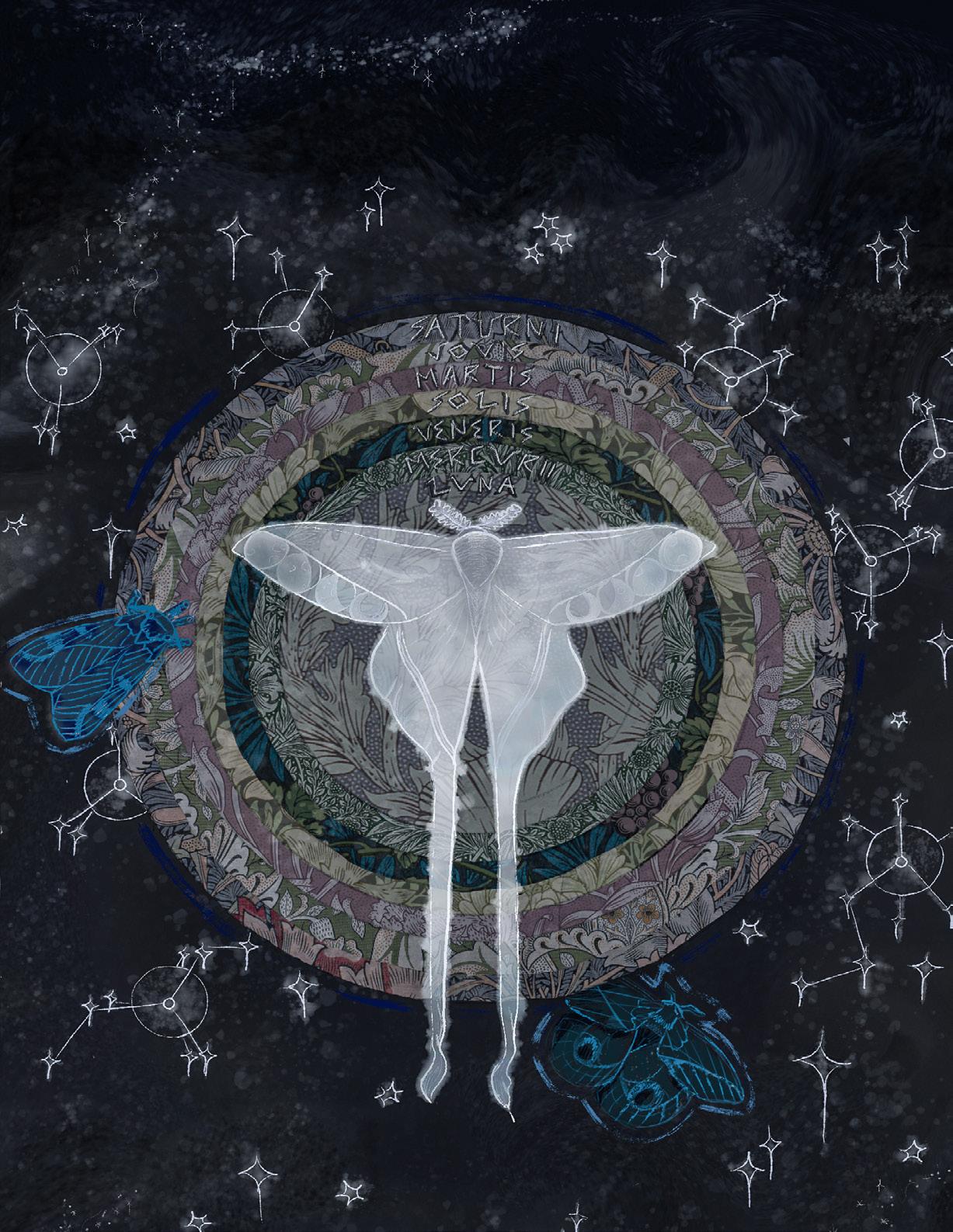
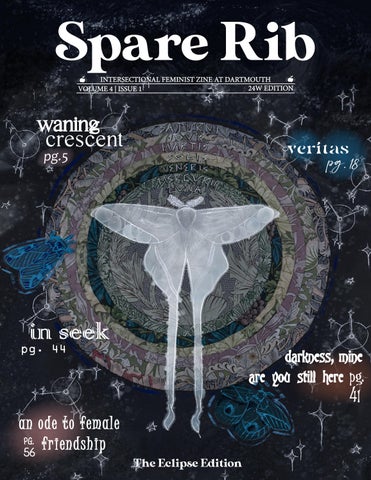
Eclipse ushers in a new era for Spare Rib this winter. This year, we welcomed many new members, and began to envision a club that could adapt to the wants and needs of our community as it evolves. In previous editions, we’ve used themes to unite us in our thoughts, feelings and activism. Eclipse, however, functions differently. In this edition, you’ll find that Eclipse is a dreamscape with limitless imaginings for writers and artists alike. Like an actual eclipse, our theme lends itself to constantly moving images and fluid consciousness, resulting in the expression of many things all at once. In the shadow of the eclipse, all of us are represented in a fleeting moment.
Now more than ever, political activism is crucial. Here on Dartmouth’s campus and beyond, we have been faced with moments that have been hard to cope with or make sense of. Eclipse aims to embrace the darkness and make it our own; manipulate the shadows and eventually, let the light shine again.
The eclipse is an opportunity to reflect: what parts of yourself do you eclipse? What external factors eclipse your life? Whatever they may be, let our stories, our eclipse, merge with your own. Embrace our darkness, and maybe you too will enjoy the inevitable light.
withcare,your24Wwritingleads,noelleandz
The Spare Rib newspaper was first published in 1992 to highlight women’s accomplishments and persisting problems in the two decades following co-education at Dartmouth. For reasons we are still working to discover, the original Spare Rib went out of print after a few years. Thirty years later, our goal reflects a movement that has evolved considerably since 1995. We are re-establishing Spare Rib to discuss struggles, achievements, and history of people and places beyond the center, hindered (but not constrained) by racism, classism, sexism and further means of oppression, through analysis, humor, and critique. Our struggles deserve recognition, our perspectives deserve to be voiced, and our strengths deserve to be celebrated.
As written in the second chapter of Genesis, God took a rib from Adam, the first man, and from it fashioned Eve, the first woman, to serve as his companion. We propose a different origin story, in which no one is merely a piece of flesh, secondthought, servile, or spare.
The views and opinions expressed in Spare Rib are those of individual authors and not necessarily reflective of the zine, writers, or staff as a whole, nor represented as wholly complete or correct information, nor intended to disparage any group or individual.
In accordance with Spare Rib’s values and mission, we want to bring attention to the land on which we stand, its history, and its original peoples. More than a land acknowledgement, this is a statement against a historical injustice. This is a historical demand and a material necessity that has been brewing for over five centuries. Dartmouth College is a settler-colonial, patriarchal, bourgeois institution, founded on the eve of the American revolution. It is thus profoundly entangled with the settler-colonial project. This institution stands on unceded, continually-occupied Abenaki territory and within the wider Turtle Island, lands currently under the violent, fascistic military occupation of the Euro-American settler regime. These lands have seen genocide, warfare, and plagues, which have decimated most of its original inhabitants. They have seen treaties ignored and broken, cultures and languages forcibly erased, and entire populations displaced. Indigenous peoples remain here, standing proud and resolute, in love, community, and joy, awaiting the new dawn to come.
Now more than ever, Spare Rib assumes the historical duty to stand in solidarity and dedicate ourselves to a genuine end of colonial injustice. Spare Rib stands for a return of the land, people’s government, and Indigenous self-determination. This statement is a new beginning for our efforts for Indigenous justice and autonomy — this is not the end. As we move forward, we devote ourselves to a future of collective liberation for all oppressed peoples.
Spare Rib was created by students at Dartmouth College, a school built on unceded Abenaki land that, to this day, prospers off of Indigenous trauma. Settler-colonial exploitation is ongoing, complex, and damaging to all, and Spare Rib aims to acknowledge the privileges and exploitation we take part in within society—devoting ourselves to honoring Indigenous peoples and allies around the world that fought and continue to fight for a more equitable and inclusive future. We will continue to voice our support and encourage others to educate themselves and learn about Indigenous issues and identities. (edited from 23S edition)
Waning Crescent.........................................................................................................................................
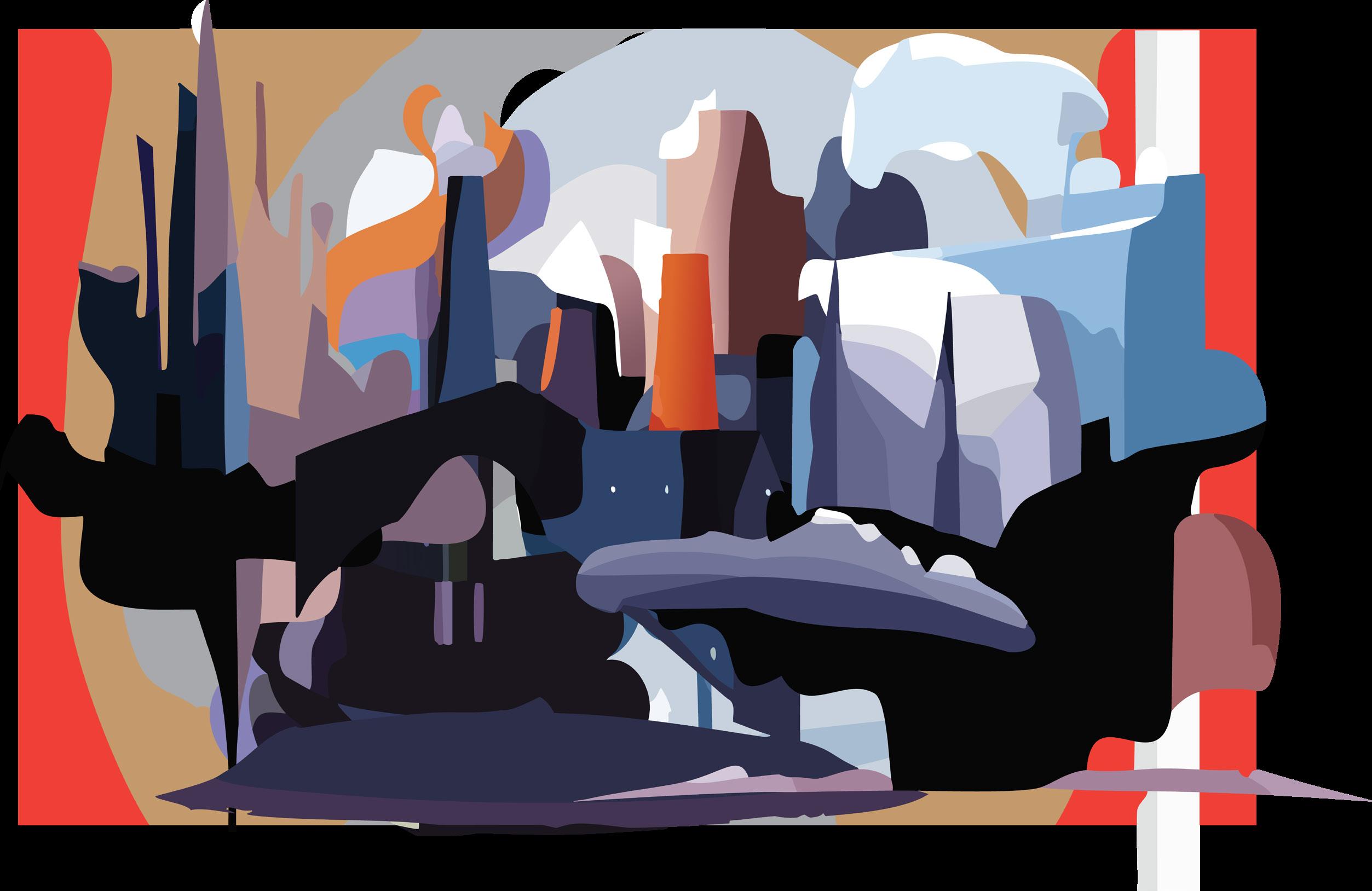
Author: Rosa Lopez — Designer: Stephanie Xu — Artist: Sophie Williams
The Blade and the Moon............................................................................................................................
Author: Devin Gifford — Designer: Anonymous — Artist: Mary Howley a bath of ink.................................................................................................................................................
Author: Kate Ginger Designer: Abby de Leon Artist: Sophia Gregorace The Silhouette.............................................................................................................................................
Author: Marion Caldwell Designer: Harper Richardson Artist: Abby de Leon
Lost & Found, Lost & Found.....................................................................................................................
Author: Claire Mann Designer: Milanne Berg Artist: Clara Schreibman
Veritas..........................................................................................................................................................
Author: Anonymous — Designer: Ella Grim — Artist: Anonymous
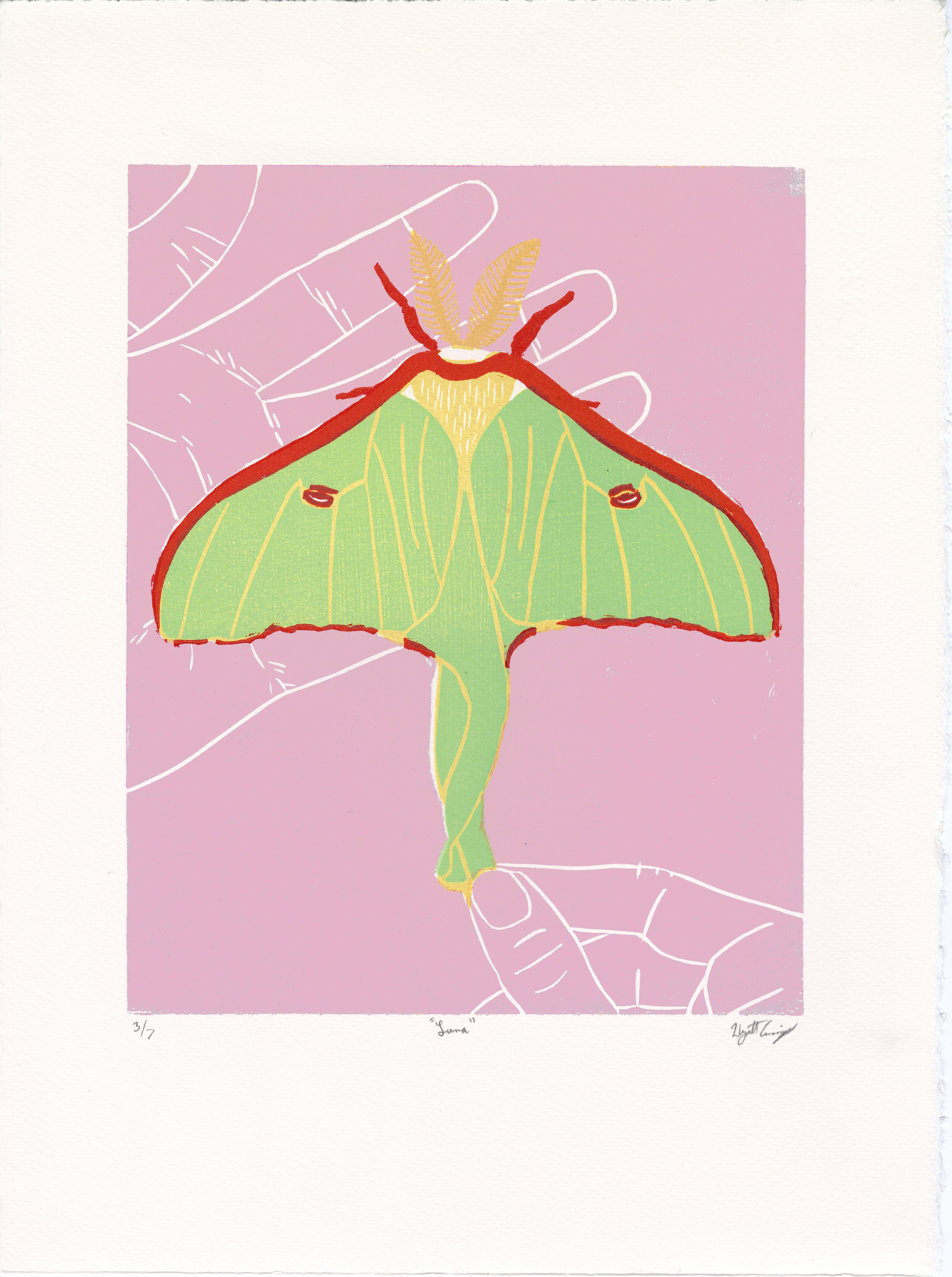
Author: Connor Schafer Designer: Milanne Berg Artist: YaYing Yu Luna.............................................................................................................................................................
Artist: Wyatt Cummings
Playing House.............................................................................................................................................
Author: Skyler Rockmael Designer: Addy Reid Artist: Addy Reid
Twilight Movie Marathon..........................................................................................................................
Author: Sally Young Designer: Chloe Cordasco Artist: Cal Shin
Where the Wolves Went..............................................................................................................................
Author: Sydney Mann Designer: Katherine Jia Artist: Chloe Cordasco
Homecoming...............................................................................................................................................
Author: Chloe Cordasco Designer: Mia Ting Artist: Camille Yang
Darkness, Mine, Are You Still Here?..........................................................................................................
Author: k.m.a Designer: Raegan Boettcher Artist: Sophia Gregorace In Seek..........................................................................................................................................................
Author: Avery Lin Designer: Helen Cui Artist: Raegan Boettcher
The Hills That Are Rolling........................................................................................................................
Author: Grace Caplan Designer: Milanne Berg Artist: Maanasa Reddy EARTH
Author: Sam Paisley —Designer: Chloe Cordasco Artist: Milanne Berg
Alien Other: A Critique of Current Racial Disparity Research..............................................................
Author: Cara Lewis Designer: Rai-Ching Yu Artist: Raegan Boettcher
Momentary Halo.........................................................................................................................................
Author: Noelle Blake Designer: Ella Grim Artist: Ruth Brior An Ode to Female Friendship.....................................................................................................................
Author: Ava Razavi Designer: Lillia Hammond—Artist: Sophia Abati
Editor’s Letter.............................................................................................................................................
Letter from the Design Leads..................................................................................................................... Our Staff......................................................................................................................................................
Socials & Playlist.........................................................................................................................................
By: Rosa Lopez
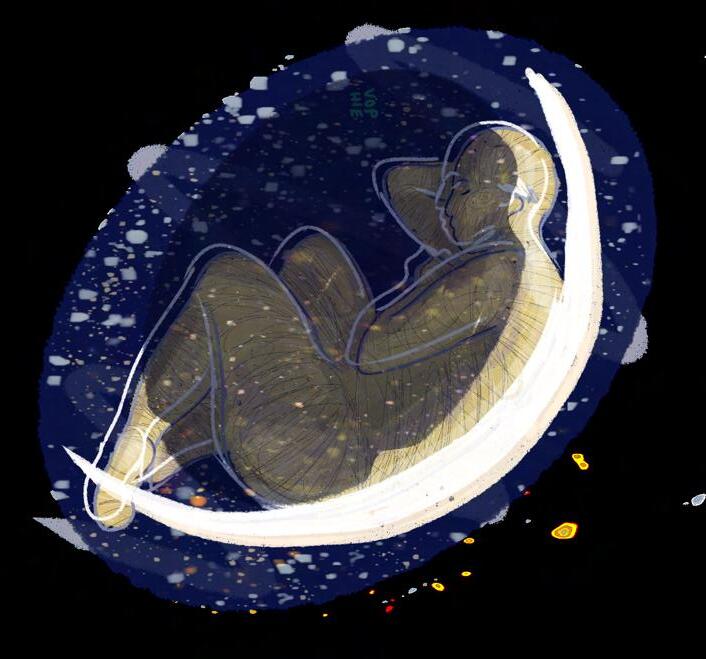
by: Sophie Williams
Design by: Stephanie Xu
29 days and some change disappointment sets in, seeding in the crooks and crannies between my legs Waning Waiting Wanting
A darkness crawls, skin raises like pinpoints precisely pushing in mapping outward spreading across the thickened surface of my thighs and surfing to the top of my stomach, dropping into the crescent button that holds notions of life, knotted entwined interlinked swashing in the tomb that is me, swallowing the breath of a love past with the tinged taste of resentment.
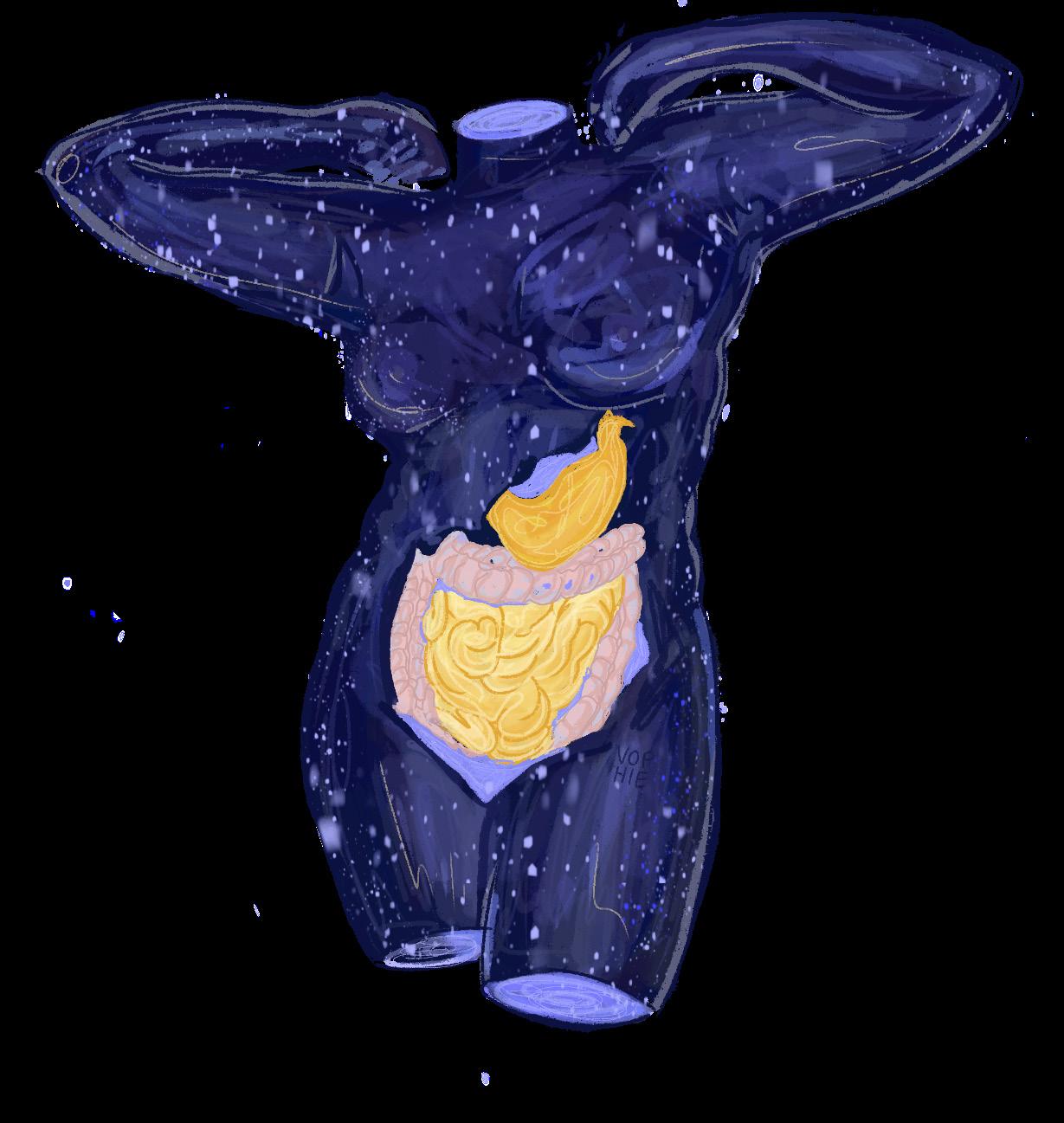
There is a sweetness rotting inside, damping the air with floral disapproval, an altruistic aroma weighs heavy from the fruits of me — your annual touch.
Feed off my bones
Consume me
Ingest apologies
The pressure shrouds, wrapping my remnants carefully in a lukewarm embrace of silence slowly p i e r c i n g till there is a stillness of dead heading affection — your love, an empty promise with hunger growing.

By: Devin Grifford
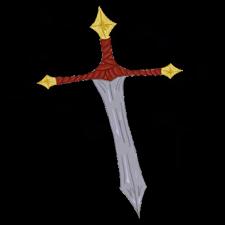
Art by: Mary Howley
Design by: Anonymous
Content warning: graphic violence, murder, abuse, graphic violence, murder, abuse, death of a parent of parent
[[[[[e\\\\\
Tonight would mark the 400th time that Arel had saved her father’s life. Perched on the lattice of wooden beams which made up the ceiling of the Great Hall, she looked down upon the colorful bustle below. Her father was holding yet another dinner at the palace to celebrate nothing more than his everlasting rule. Servants ran from one end of the banquet hall to the other, clearing plates and refreshing the courses of seared duck and sauced gooseberries, roast potatoes and spiced carrots. The ranks of royalty gorged themselves as the jilting chorus of their voices reached up to the peak of the ceiling. Arel observed it all, eyes flicking like scythes over their heads.
The king was well-versed in empty conversation, and he entertained the duke that sat beside him with practiced ease. To everyone else in the hall, he seemed relaxed. Arel’s eyes settled on him, watching the slightest twitch in his face. His gray beard hugged his chin closely, cutting out the square of his jaw and matching the hard set of his brow. He knew she was there, but to him, she did not exist. Unless she was needed, of course. As soon as a knife was drawn to his neck, his mulberry wine was poisoned, or a bow twinged to strike his chest, she would be there.
Just as she had been 399 times before.
She shifted on the balls of her feet, knees rubbing across her leather chestplate. The weight of her knives assured her that she would be ready when the moment arose. The only question now was where the threat would come from. Arel listened to the din of the room, letting it fade into the familiar buzz. She gripped the solid wood of the beam with raw fingers, calloused at each bend of the knuckle, and steadied herself. Her mind opened to what was to come.
There was her father, but not as he was now. He stood in the Great Hall, alone. Gone were all the bustling servants, the guffawing royals. The dining table was barren of all the bounty she had just seen; its polished wood shone with the light of the moon. The tall oak door to the Great Hall
opened soundlessly, someone stepped in. The king turned. Arel saw her twin sister, Lena, approach the stone steps before the throne. She wore her usual white satin dress, which flowed behind her and reflected the little light in the room, throwing it against the walls. Its sleeves hugged her lithe arms, and the collar came up on either side of her fine neck. She held her father’s gaze with a flickering defiance, masked well behind her composure. In that regard she had always outmatched Arel. Where Lena’s mind was collected, Arel’s was unruly. It showed her moments such as this, when what she needed to see was the next threat to her father’s life.
Frustration broke into her vision. The din of the banquet hall returned and the moonlight wavered on the table, giving way to half-eaten duck roasts and the royals’ clinking glasses. Pieces of the present blurred into the future. She dug thin fingernails into the splintered wooden beam until the pain brought her back to what she needed to see. The room emptied. Lena stood before her again, but the future moved faster now. Lena faced their father. He spoke, but the words echoed strangely, as they often did in this space between present and future. Lena opened her mouth to answer him.
Time suddenly tilted. Arel’s mind was slipping again, losing its grip on what was now and what was then. Her father struck Lena. She stumbled on the steps. Arel flinched. Her father did not cease. He struck her again. The Great Hall shifted, the walls fell away. Arel heard her sister scream, felt it in her lungs. She saw Lena lunge toward their father. There was a raised hand, a knife held in it. Blood on her sister’s white dress, pooling in the hollow of her neck. Her eyes, staring empty.
Arel panted. The present came back to her in a rush of adrenaline and agony: the roar of the dining room, the scent of duck and sweaty royalty, the darkness she crouched within. Her fingertips were wet with blood, drawn from her grip on the wooden beam. She imagined it smeared on Lena’s dress, and the image nearly sent her reeling onto the dining table below. Arel had looked into the future hundreds of times before. It was part of her, a weapon she wielded like the knives at her sides. It made her lethal and inevitable, ensuring she would always know where the threat would come from. Her father had made use of her ability, shaped her into the tip of a blade and sharpened her in his service. She was the reason his reign hadn’t ended years ago. He was a king, and the price of his crown was paid in blood: the blood of the mothers, fathers, sons, and daughters of those who sat around him now. Arel often wondered if he gathered these people here simply to test her, to demonstrate his perfect weapon and his infallible power.
Lena, however, was no assassin. She was the true princess, the lady of the people. Where Arel crouched in the comfort-
able dark, Lena basked in the light. To many, Lena was the light. Her healing song was sought after by all who ailed, and for that reason their father kept Lena on a gilded leash. He held her power over the kingdom, deeming who was worthy of her healing and who was not. Arel was one of his weapons, but so was suffering.
He deserved every attempt on his life. Arel knew it.
But she knew that if she didn’t save him, Lena would. Her strange loyalty to their father had been another distinguishing factor between them all her life. It set them apart when their outward appearance made them all too identical. When they were girls, their mother had often told them that they had the fair face of the moon, circled by black hair as deep as the purest night sky. Now, Arel wore her hair tied back, and Lena had grown it so it reached down her spine. Their mother had been in the ground for six years. She saw no more moons.
Arel had always suspected that Lena was so devoted to their father’s service to make up for the fact that she had failed to save his wife. Lena’s power had its limits. The song weakened her each time she uttered it, and no matter how many times Lena sang to their mother, the illness that gripped her would not loosen its hold. She nearly laid herself in their mother’s grave with each fruitless attempt.
Their mother’s death had twisted their father, and thus, the king turned wicked. The kingdom withered with disease and vice. Meanwhile, the royal court feasted weekly. Arel fended off attacker after attacker so that Lena would not lay down her life for their undeserving father. Lena, unbeknownst to the king, left the palace nightly to sing to the sickened children of the kingdom. This was her only act of defiance.
If what Arel had seen was certain, it seemed Lena would pay her life to their father after all.
Arel looked to the king. He sat, stoic, at the head of his table as the servants cleared away the remnants of dinner and the members of the royal court flooded out of the hall. Rather, he stared up, into the rafters, and his iron eyes found the corner of darkness that Arel was folded within. She locked his gaze with hers and released her grip on the beam, leaving bloody fingerprints where she had held it. Arel dropped away into the dark.
[[[[[e\\\\\
Arel burst through the door of Lena’s quarters only to find them empty. She stepped into the room, a pillar of darkness amongst Lena’s soft, pinkish decor.
There was a creak in the doorway, and Arel turned to see a small servant woman. Arel recognized her, with her stout figure, plump cheeks, and streaks of gray hair falling across her forehead. Her name was Bessy. When their mother fell ill, Bessy used to read to the young princesses. She had been one of their few comforts.
“Where is she?” Arel demanded.
“Princess Lena is out,” Bessy said.
“She’s gone to the village,” Arel’s face blanched.
“The king has requested her home at once,” Bessy said. Her voice wilted around the words, and she looked to the floor, “he sent the guard to fetch her.”
Arel had heard enough. She pushed past Bessy, into the hall. Her anguish hardened into steely resolve in her chest. This suited her well enough. She was versed in violence. She subconsciously ran her hands over the hilts of her daggers, one at each hip, beside the small throwing knives she kept close to her bodice. She took three quick steps up the hall, where an ornate bookcase marked a supposed deadend. Pushing it aside, Arel ascended the shadowed staircase in pursuit of her sister.
Tonight would mark the first time she tried to kill her father.
The Great Hall was empty. All the court had gone, the duck cleared away, the wine drank. The stone walls rose like great slates to the ceiling, where Arel had seen this exact moment before. Her father stood before his empty throne. It was a cold obelisk, inherited from generations of cruel kings before him. Wooden carvings swirled up the back of the throne, which extended taller than any mortal man could ever hope to be. It sharpened into a point at its peak, resembling the blades that rested comfortably in Arel’s hands. The entire throne was bordered in iron, the seat boxed in by pointed iron armrests. Arel watched her father from the corner of the room, crouched behind a statue of her mother, who held her stone hands neatly in front of her, her mouth set.
Her sister entered the Great Hall, flanked by two guards. Lena’s face shone in the moonlight, her cheeks slightly flushed from the bitter wind. Her black hair fell in a sheath down her back, like smeared paint against the stark white canvas of her silken dress. Her father turned, just as he had in the vision, and regarded her with a resolute expression rivaling her mother’s statue. He dismissed the guards, and they
shrunk into the dark passages leading away from the hall.
“Lena,” the king said, letting her name fill the room. Lena stopped just short of the steps leading to the throne, looking up at her father.
“Father,” she curtsied low, and her dress splayed out around her in a sweep. She folded herself carefully in front of him, entwining her hands together.
Arel shifted her weight to the balls of her feet, readying to strike. She knew better than to leap ahead of the moment. It had to play out as she had seen it, or else she could not be sure he meant to kill her. She had spilled innocent blood, thinking she knew the potential assassin when it had really been another. Her mind could not betray her here as it had before.
“I have been informed,” the king paused, “that you have disobeyed me.”
Lena’s spine stiffened, but her gaze did not waver. “I am not sure what you mean, father.”
“Don’t feign ignorance,” the king spoke through his teeth. He stepped toward her, “I do not speak of things that I am not certain of. You have deceived me. You leave the palace without my knowledge, to visit the village folk. And do you know the worst part of this disobedience? I give you this single chance to admit your fault, child.”
The Great Hall held nothing but heavy silence. Lena held her tongue for a moment longer.
“Why should I admit it, when you say you are already certain of what I have done?” she finally said.
The king’s eyes flared like blown coals.
“Insolent girl! You forget your duty to this kingdom, your duty to me. You dare share your gift outside these walls? It weakens you to sing your sacred song, and yet you waste your power on lowlife scum who do not deserve to be saved. You disrespect me with your disobedience. I will not stand for it.”
Arel held tight to her mother’s stone calf, watching her father close the distance between himself and Lena. Lena did not flinch. She did not move back. A single stone step separated her from the inherent violence in his fist.
“I choose to sing my song for all those who need it. Not only for those who can afford it,” she spoke steadily.
Arel leapt to her feet as her father squared to strike. His
hand swept down across Lena’s cheek, and she stumbled, just as Arel had watched her stumble before. There was no more time for watching. Arel crossed the Great Hall in three strides, lunging toward her father. Her knives, like extensions of her limbs, flashed in her grip. The familiar rush of the kill filled her every sense with roaring fire, blotting out her sister’s cry, her father’s pleas. She focused on nothing but the death she intended to bring and buried her blade deep into her father’s chest. It was only when Arel looked into her sister’s face that she realized what she had done. Lena stood in front of her, slumping into her arms and falling to the steps. Blood bloomed across the white silk of her dress and Arel’s knife stuck out from below her collarbone, pierced into her heart in a killing blow. She had stepped in front of their father as Arel rushed him, eclips ing his body with hers, his life with her life. Arel had killed her.
Anguish like nothing she had ever felt filled Arel. She fell to her knees beside her sister, hold ing her limp hand in desolate desperation. Lena’s blood pooled around her and dripped down the steps. Her eyes did not see her sister, whose body shook with sobs, or her father, who was paralyzed in shock. She saw nothing. Arel’s senseless pleading fell on dead ears. She wrung her hand in her sister’s. She begged for forgive ness. She begged her not to go, but Lena was gone.
“What have you done?” the king said. His voice was void of emotion, demanding an answer. Arel gave him none. He grabbed her arm and wrenched her upright. Her legs buckled, “What have you done?”
“I saw-” Arel began, trying to remember what she had seen. Had it been her father holding the knife in her vision? “I saw you kill her. At the dinner. I saw it. I had to stop you. I had to save her. I-”
Arel choked on her tears. Her father did not let go of her shoulder.
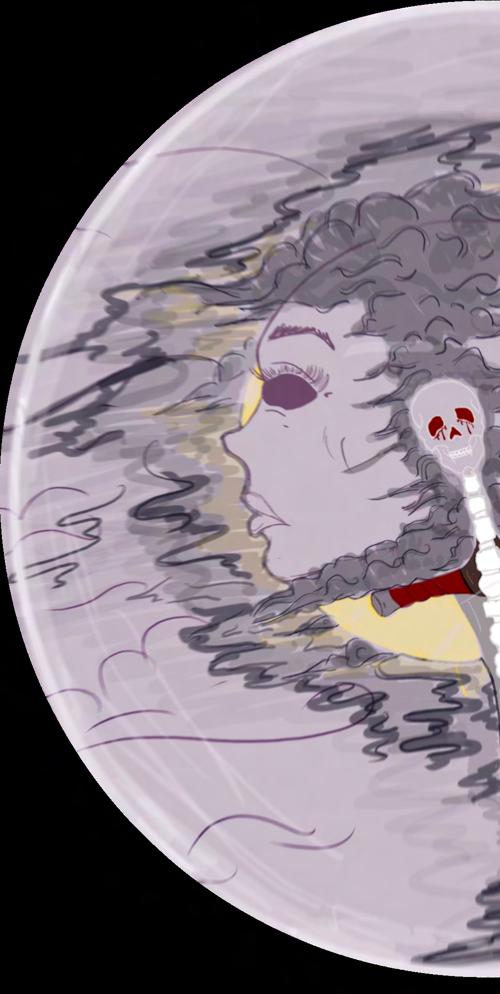
“Does she look saved?” Her father demanded. “Look at what you’ve done.”
He shoved her toward Lena’s body, but Arel caught herself. She still held her other knife in her left hand, turning back to her father. She stood like a vision of death.
“I know what I’ve done,” she said, “I’ve upheld your rule for far too long.”
“You’ve lost your mind. I tried to give you a purpose, to keep your gift from twisting your mind. I tried, but I failed. You are a demented, violent child. You always have been.”
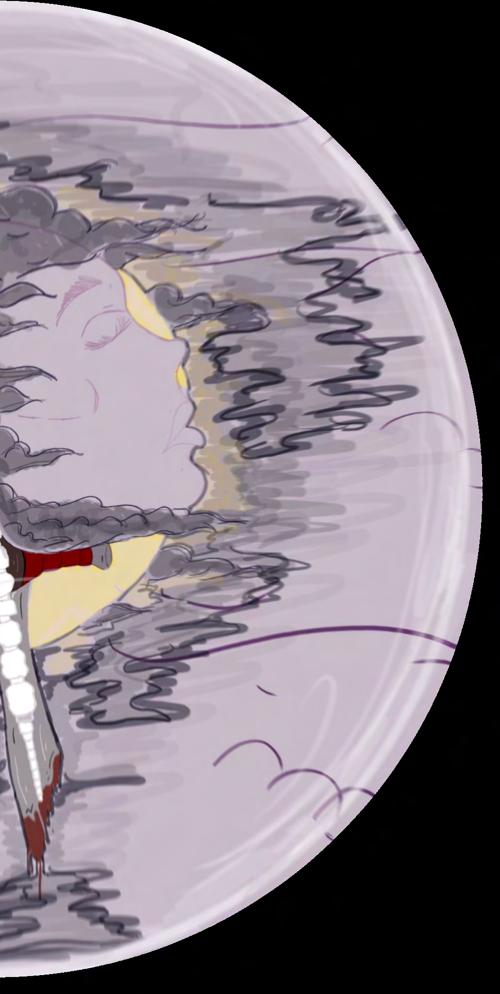
“Don’t pretend to know my mind. You’ve only ever exploited it,” Arel’s voice was barely above a whisper, “I will not be your weapon anymore.”
She lunged again, aiming her knife for his neck, but her father caught her blow and twisted. Her arm nearly dislocated, but she dropped low and stabbed a small knife into her father’s leg. He shouted in agony, letting go of her to hold his new wound. She took advantage of his brief weakness to land several blows across his face, beating him with all the rage she had held so quietly since her mother died. She stood back from him as he knelt before her.
“Look at what you’ve done.” Arel said. She flipped her knife in her hand, “I am as you created me.”
Her father bellowed, rage renewing the fight in him. He grabbed her and struck, again and again, his fists painting her purple as he jabbed her ribs, chest, and face. Arel allowed him to strike, to deal her the pain she deserved. She clutched her knife close. He discarded her beside Lena’s body, and Arel looked into the empty eyes of her sister, blood leaking from her cut lip, life seeping from her limbs. She would not let her sister’s death be in vain.
She stood again, knife in hand, and faced her father. Each of them, twin pictures of rage. Arel rushed him again, but
this time she went about it tactfully, in the practiced way she had taken each life before. He struck high, she ducked low, coming back up and cutting him in the chest, a quick jab to draw blood. He staggered, and she took advantage, moving quickly behind him and holding her knife to his neck.
“I free myself from your rule,” she whispered against his cheek, pressing the tip of her blade into his neck, “and I will free this kingdom from your rule if I have to. Know that this blade will find its mark, should you continue to leave our land in ruin.” she said.
Arel removed the knife from her father’s neck, letting it slash a shallow cut across his throat. The king stumbled, and she left him kneeling in front of his unforgiving throne. She gathered Lena’s body in her arms and stepped out of the hall.
Outside the palace, the village people had gathered. Men, women, and children stood before Arel, each dressed in ragged clothing. Word must have spread that Lena had been apprehended, and now they saw that they were too late. The crowd moved slowly toward Arel, who held her sister’s bloodied body like a sacrifice. The moonlight lit Lena’s face with an otherworldly glow, her dress blowing wildly in the wind. The village folk came forward. They held Lena’s hands, brushed her hair from her face, and gently closed her eyes. They took her from Arel’s arms and laid her under the sky to rest. Then, they began to sing Lena’s healing song. Quietly at first, but growing louder as the chorus of voices multiplied. Arel looked up at the moon and saw her sister’s face, just as her mother had always said.
“Lena,” she breathed.
Arel collapsed, letting the moonlight wrap her in her sister’s arms.
I wrote this piece to explore sisterhood, cycles of violence, and the way women are often oppressed and exploited by structures of power. Arel and Lena go about their defiance of their father differently, according to the ways that they have been exploited by him. By forging Arel into his weapon, he created the force that now threatens his kingdom, and by keeping Lena and her power within the palace walls, he pushed her to seek out the village. I also wanted to explore the concept of the “mad woman” through Arel’s struggles to determine reality. I hope that my piece can provoke thought regarding these topics.

stretches before me, shrinking the scenery, sublimating, so the haze rises against the stark sky and i’ve never felt so small. smaller still, when ink sloshes onto my board soaking my legs and feet chilling me to the bone then receding into the well of ink that mirrors an invisible night sky. and i’m reminded of the dark dappled by waterlilies, they glow, unblinking, among lilypads whose tendrils twist and twirl, reaching into the ink, unafraid. and i wonder if i might be swallowed. still, i leap. the frothy ink washes through my hair, my eyes, my mouth rattling my teeth and wrenching my gut yet i bob to the surface and i float, unstained.

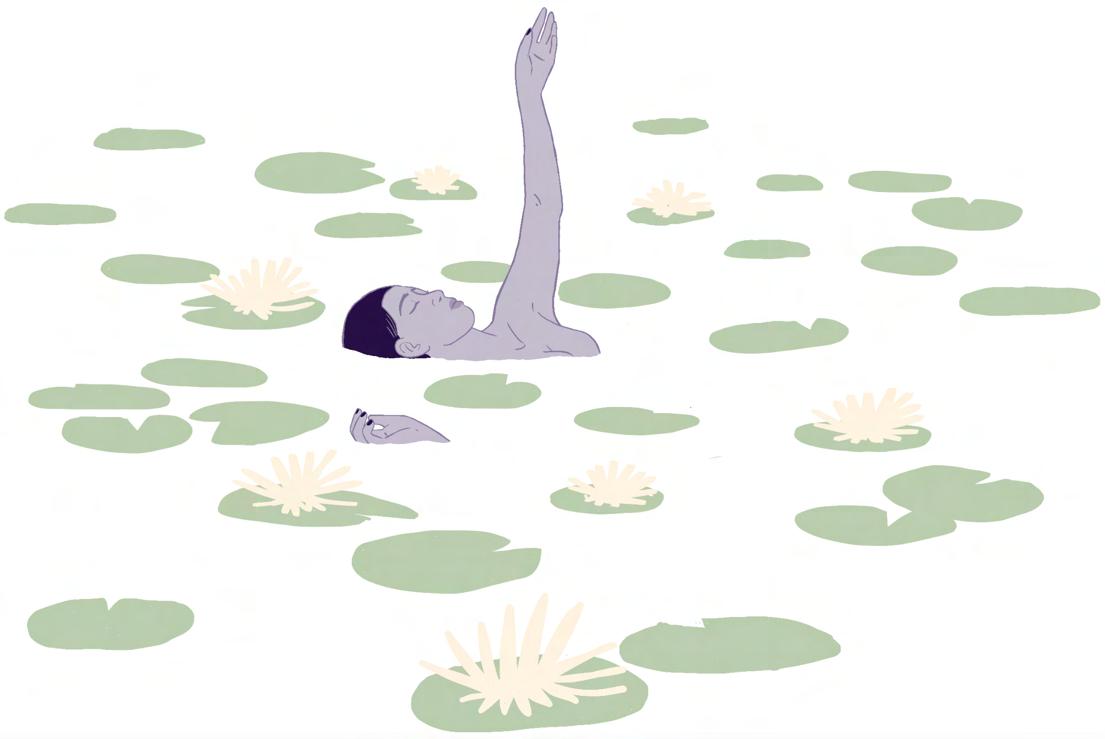
by: kate ginger art by: sophia gregorace design by: abigail de leon
By: Marion Caldwell
Art By: Abby De Leon Design By: Harper Richardson
Ría always liked long walks through the forest, especially at night. The deep shadows, creaking winds, and mysterious skies attracted her. The forest seemed changed at night, made into a place where anything could happen. She preferred to bring a weak flashlight to preserve a little of the darkness. Obviously it was important that she could see, but she didn’t want to disturb the creatures of the night or shatter the majesty of the black shadows. Usually, she walked alone. She loved the liberty of wandering the forest, sometimes running wildly along the trails like an untamed animal and sometimes staying very still to watch the clouds crossing the face of the moon.
Being in the forest at night was a euphoric and powerful feeling, like a drug to her. During the day, Ría stared out the windows of her classrooms towards the forest and dreamed of the shadows. She could focus, but she didn’t want to. Nothing seemed important in comparison with her nocturnal journeys. She felt like a trapped animal, pacing restlessly back and forth in a too-small cage. She passed the days waiting for the night, and passed the nights in a wild and joyful state. When she didn’t walk alone, she had to control her desire to run and wander and sudden freeze on the border of an open field like a cautious fox. Even so, she enjoyed company once in a while, and if a friend asked to walk with her, she generally said yes.
This was the case one August Thursday night. Her friend Diego accompanied her because Ría always raved about her nocturnal wanderings, and he had become curious. They left at nine, when the sun had set and the shadows had completely covered the forest. There were clouds that night, and they couldn’t see the stars or the moon. There was no rain, however, and the air was warm. In Ría’s opinion, it was perfect.
But because the night was so perfect, Ría felt horribly restless after only five minutes. Diego walked at a steady pace along the center of the trails, his bright flashlight illuminating every branch and leaf. It was so boring! Ría thought she could feel her bones vibrating with the need to hide in the darkness and sprint through the towering trees.
Incapable of bearing the normalcy of the walk for another minute, Ría said to Diego, “I’m going to walk a bit behind you. I want my eyes to adjust to the darkness because I want to try to stargaze.”
“But it’s too cloudy, isn’t it?” he responded
“Yeah, probably, but I still want to try,” Ría laughed.
“Ok,” said Diego acquiescing with a shrug of his shoulders.
Ría stopped while Diego walked along the path. Before he disappeared completely around the corner, she began to walk again. But this time, she walked her way: close to the edge of the path, stopping when the brushes creaked and moving quickly from shadow to shadow. She was careful to keep the light of Diego’s flashlight in sight because she didn’t want to leave him alone in the dark forest, but she was essentially in a world of her own.
At first, Diego frequently glanced over his shoulder to make sure that she was still there. Each time, the light blinded Ría for a moment. She felt like Eurydice, who faithfully tried to follow Orpheus despite his fearful actions that threatened to drive her away. Fortunately, Diego soon decided to trust that Ría would not disappear into the forest and stopped checking so frequently.
Left in peace, Ría returned to her natural habits. Her soul sang in harmony with the rhythm of the woods. Her eyes adjusted to the night. There were no stars, but the lights of the city reflected off the clouds and prevented complete darkness. She allowed Diego to walk farther and farther away, until his silhouette became blurred and indistinct—just a black figure outlined by a halo of light so weak that it seemed gray.
In the dark, it was easy to imagine that the silhouette wasn’t Diego—it was a foreign traveler, a ghost, something without substance or familiarity. Ría’s imagination filled with ideas and stories. She was a wolf and the silhouette was her prey; the next moment she was a lost traveler and the silhouette a mysterious guide; a step later she was an adventurer and hunter of the supernatural and the silhouette a magical and dangerous phenomenon. She retreated into her own mind until the fantasies seemed more believable than the physical world.
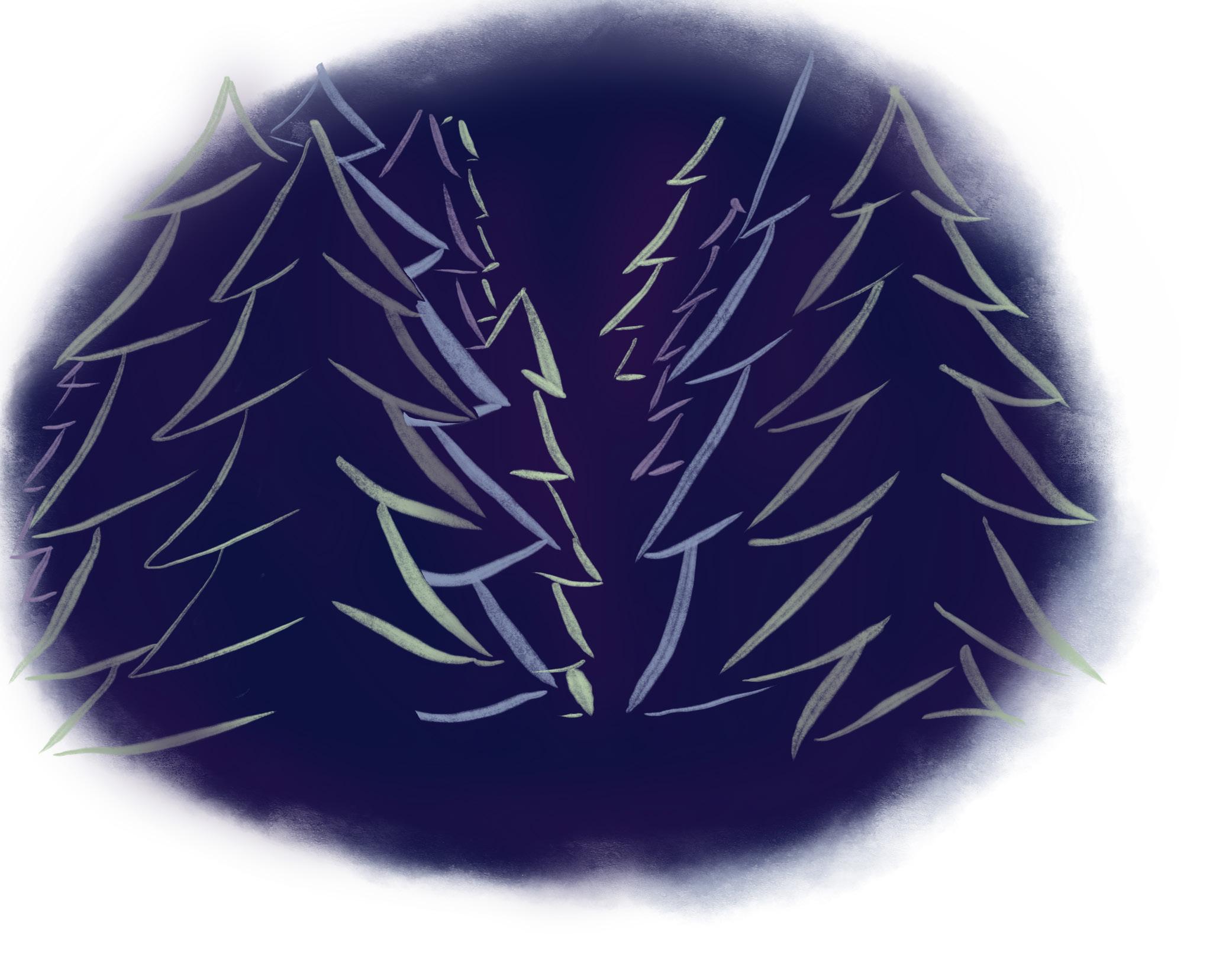
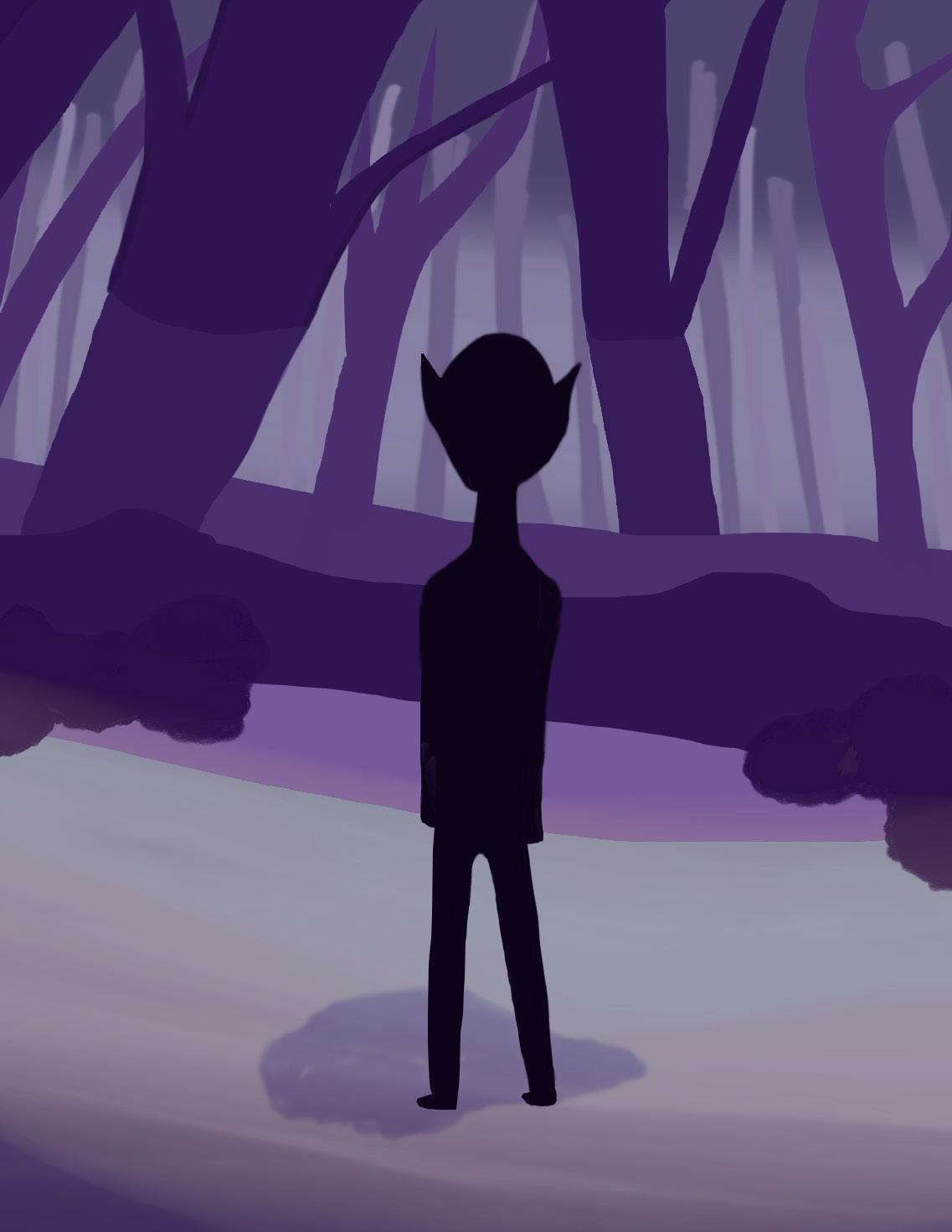
Suddenly, she noticed that Diego had turned around a bend in the trail and she could no longer see him. Only the faint light of the flashlight was visible, and that was disappearing rapidly. The fear of her own imaginings surrounded Ría, suffocating and thick. Suddenly afraid that Diego was nothing more than a dream, she began to run, rounding the curve and bounding across a small bridge. As she approached, the silhouette seemed to tremble and its edges seemed to shift and warp.
Her vision blurred by exertion and fear, Ría reached the silhouette and grabbed the arm. “Hey, Diego, you almost left me behind—” she said breathlessly, her free hand resting on her knee and her head lowered as she caught her breath.
But Diego’s voice did not respond. Instead, she heard a chittering like that of a giant insect. Surprised, she looked up.
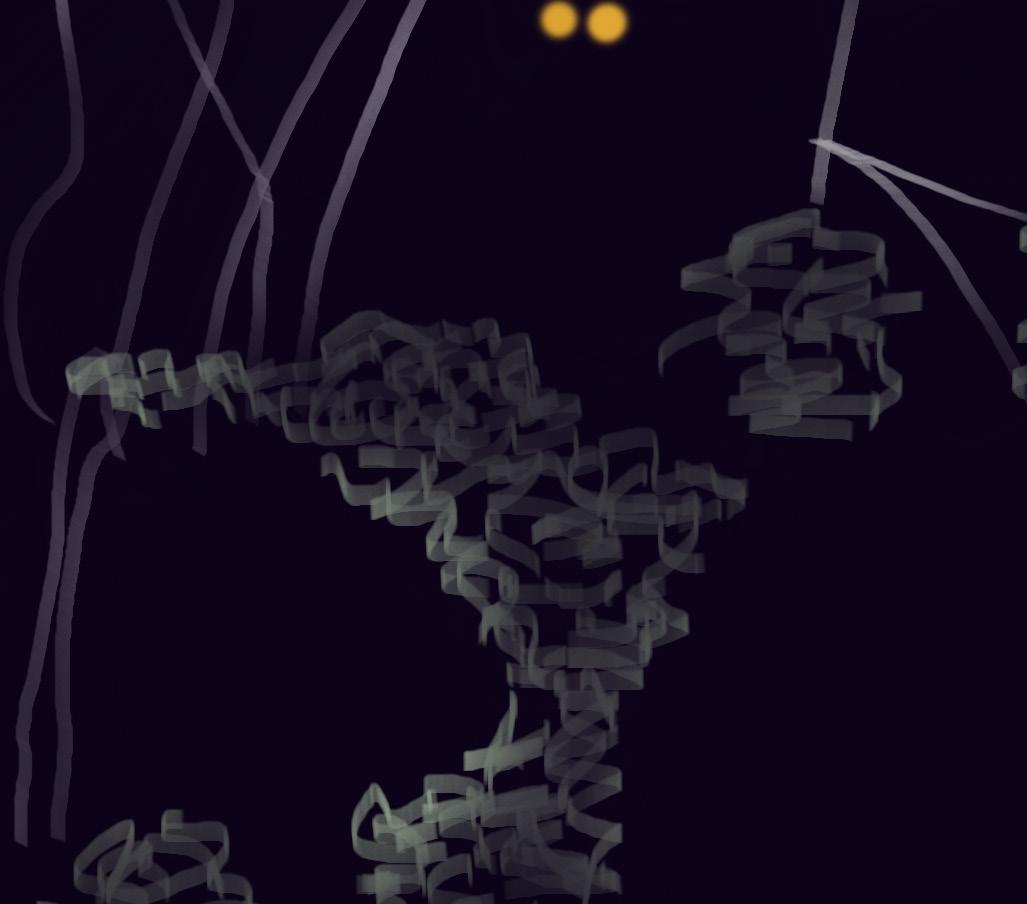
She did not see Diego’s face. She was grasping the elbow of an unfamiliar creature that held a lantern of archaic style that shone with a cold, faint light. The creature’s face was too flat to be human, and the eyes—enormous, almond-shaped, and solid gold—seemed more like those of a praying mantis. As Ría stared in shock, the creature opened its mouth of needle-like teeth and trilled again, inclining its head towards her in apparent curiosity. With a hum, giant dragonfly wings began to unfold from its back.
Startled out of her stupor, Ría screamed and let go of the arm. She whirled around and sprinted back the way she had come, but the dragonfly being leaped with a flutter of its wings and landed on the path in front of her. She swerved sharply off the trail and stumbled through the bushes. She rapidly realized that the plants were different too: some leaves glowed when she brushed them with a hand or leg, and others made chirping sounds. A patch of small flowers lit up and took flight in a neon cloud. She ignored it all, running in a dazed panic. She could hear the hum of the creature’s wings right behind her. She didn’t think about where she was running or why; she simply ran.
Then, the ground abruptly disappeared from beneath her, and she fell down the bank of the stream. She rolled to a stop at the bottom, breathless and with her feet submerged in the frigid water. She stayed there, immoble, listening for the hum of dragonfly wings.
But instead, she heard Diego’s voice. “Ría! Why’d you leave the trail? I heard a scream and a splash… What happened?” he said, standing on the bank above her.
Ría was confused and disoriented. She also wanted to know what had happened. She opened her mouth to explain what she had seen, but then hesitated. Would Diego believe her? She didn’t know. She wasn’t sure if she believed herself. In the light of the flashlight, the visions of creatures with dragonfly wings and glowing plants seemed like a foolish impossibility.
“I don’t know, Diego. I think I was walking too far from you and the light and got disoriented. It doesn’t matter, I’m not hurt,” said Ría, crawling back up the bank. Diego grabbed her hand to help her up.
“Well, I’m glad you’re fine. But walk closer to me, please.”
“Yeah, of course,” responded Ría absent-mindedly. The forest seemed very dull and boring in comparison to the strange world she had just glimpsed. She looked at the trees and bushes, searching for some remnant of her mysterious experience. She had truly been terrified, but now that the surprise and confusion had faded, she only felt strong fascination. Feeling a drop of cold water rolling down her ankle, she vaguely recalled a myth from her childhood saying that the fae of ancient times could not cross flowing water. Did the stream return me to this world? she asked herself.
“Ría? Are you listening to me?” asked Diego. Ría looked toward him, reminded of his existence. “Are you sure you’re ok?” he asked, worried.
“Yeah, I’m fine,” Ría reassured him. “I’m ready to keep walking.”
“And you’re going to walk closer to me, right?”
“Of course. What’s wrong, Diego, don’t you trust me?” Ría joked.
“Yeah, yeah,” laughed Diego, “let’s go.”
He turned back to the trail and began to walk. Ría remained still for a moment, still scanning the dark woods for neon lights and dragonfly wings. Slowly, she began to walk as well. She watched the faint light of the flashlight in front of her as she allowed it to move farther and farther away. She followed the silhouette farther into the darkness, her eyes full of intense curiosity.

there is a man that i know, a man with no name no country, no faith, no fear, and no blame i met him once, at the end of the world at the place where the stars and the earth unfurled
he has nothing, he told me no mountains too deep no oceans too tall or nights with no sleep just him, and his life, and the breath from his lips and the glow of a eyes like a solar eclipse
i can’t see him, not truly and his look i can’t place he features tend to blur when i look at his face so i’m left here in wonder of the man that he is and the one he used to be that he always seems to miss
i study him like religion and the mystery he creates a blessing, a curse, his unavoidable fate i wish i didn’t trust him, but i fear that i do we sit and we talk until the sky turns blue
he feels like the sun and the wind and the rain i wish that i knew the rules to his game but i sit and i fidget and play with my feet back and forth between elated and grinding my teeth
my desire runs deep i can feel it in my bones a ridiculous want for this man i don’t know but maybe, just maybe, it’s more real than it seems and not just a product of wild fictitious dreams
the day he looked at me my breath caught in my throat the moment when i first found his eyes and his nose his beautiful face finding root in my brain so lovely that my stomach almost clenches in pain
every day i’m at his side and with each hour we spend his ambiguity comes to a hesitant end i map out the lines in the topography of his smile the one which he uses so freely to beguile
my heart is so full and he’s found where he belongs with sunshine and loving and whispers of songs
on the map, if you look, our country you’ll see it’s marked with the stain of both him and of me
his faith is restored and i fall on my knees our love is as holy as the birds and the streams the gates of the castle are open at last and you may as well just fly my flag half-mast
there is a man that i know and i call him by name with our love so fierce it puts Verona to shame i turn and see my angel; he’s haloed by the sun at the end of the world, baby, i am undone
i love you and the sound of your voice under the stars where we lay i love you so much that it’s not a choice and i love you more every day
i love you like fire, it burns like a flame the way that you light up my dark i burn up inside when you call my name you always hit me in the heart
i love you whenever, wherever, today so i can’t even put up a fight i love you in every possible way i want to be with you tonight
i know that you’re so loved by everyone around you and now i’ve found out that it’s happening to me too i cant imagine a world without your face and i know that you can never be replaced
so i hope and i pray that you’ll always you love me back and i honestly think i’m way too attached but hey, truly, that’s all on you don’t blame me for loving everything you do
“have you ever seen anything quite like that?” my head turns to watch you watch the clouds “no, not til now” you smile as you say your shine hurts my eyes so i have to look away
the stars are sprinkling like little beams of light they spin and they dance across your eyes
i see you point up towards Orion and say “have you ever seen anything quite like that?”
the guitar strings sing a lovely tune but i am only mesmerized by you my gaze blurs as i watch your fingers fly have you ever seen anything quite like that? your fire glows in the night sky
the trees are leaning in to quietly whisper “have you ever seen anything quite like that?” the leaves are shuddering with secrets but i know they’ll never tell
vines grow from your branches they seem to be whispering the answer have you ever seen anything quite like that? the answer is no, not til now. not until you.
you promised me that you’d give me your heart but we’re planets and moons and cosmos apart there’s nothing you can do to heal the scars maybe this time we went a little too far
the sound of your voice is tearing my skin and to breathe i don’t where or how to begin but i know that i’ll run right back to your arms so please keep them closed, away with the stars
i look at your face and there’s nothing i see besides all these clouds and these tears and these dreams the ones that we made while watching the ceiling if only we knew that’s love we were feeling
i wish i could talk to more than a stranger but i sense the feeling of oncoming danger when i look into your beautiful, heavenly eyes and all i get back is a look of despise
i wish there was something i did besides cry, watching our love float up to the sky, and waiting for the day when my soul finally dies
i’m sick and tired of all your word games tossing me around like scrabble the pieces fall and scatter in my brain with your infinite surge of babble
shut up, please, i can’t do it anymore i just want to go back to sleep but i shut my eyes and end up on the floor uncontrollably starting to weep
the way that you treat me it scabs and stings in every single thing that you do there’s a dread that sinks in the bags that i bring each day as i trudge back to school
you wonder why my skin is cold like ice but my eyes are scorching like fire i’ll burn your heart out so take my advice do not try to climb any higher
go away, i plead, and don’t come back not now, not ever, not today there are knives in your words and i bleed from your attack a price that i will no longer pay
there’s a buzzing in my ears like a thousand little flies that echo the sound of my fears they crawl in my brain and whisper every lie the ones that i constantly hear
but maybe there’s truth that hums along too hidden underneath the swarm it swims in oceans made of most crystal blue and promises light in this storm
the dawn breaks through with a loving embrace but i don’t know if i believe it i shield my eyes as the warmth hits my face and my stomach it swirls and it freezes
but maybe there’s hope, even just for a second and that glimpse just might be enough and i think that the sun is slowly beckoning “come on out, you deserve love”
it feels so nice to be breathing in the air as my hands trace the paths all around the everlasting trees all turn to stare because i’ve finally dug up from the ground
so here’s what i’ll say, and you know that it’s true you will no longer define my worth you say i don’t matter but i know that i do and your words will be buried in earth
i’ll find love somewhere else, in my trees and my books and i won’t need to feel your despise
i’ll curl up with my mugs of hot chocolate in nooks and i’ll finally close my eyes
my sleep will be peaceful, not shattered with dreams of the sound of your voice and your tears and your screams and the way that your mouth always twists at the side as you burn my skin out of the corner of your eyes
and the light will be warm as i smile at its face and won’t scorch like the loathing of your love sometimes it feels like a never-ending chase but i know that there’s people i can hug
when the world feels too grand for me to even exist when there’s so much happening at once when the knots in my stomach start to turn and twist and i feel like i want to give up
because i am worth more than the things that you say and i am more than enough and there’s more to explore on every new day so for once and for all: SHUT UP!!

By:Anonymous
haunting the halls is the soul of a songbird who feeds on words and stains it chews them to a pulp no substance left just an aftertaste and it stops singing and starts spitting swallows vitriol and screams
drip drip drips from my lips sounds so violent it rips some god apart breaks my neck
cursed to look up and up and up to a heaven ablaze cracks my head open
look
look inside look what is left behind who trails orpheus through hell? i would stay as dead as a doornail sickness is heresy
i leave my skull ajar and i feel sicker than ever
the poisoned little bird cries into the sky like a little girl and kicks and struggles like a man this makes for a mighty shadow, shifting and full of knots
you would think it belongs to a vulture who tells stories profane to history hoards words in its nest so vulgar until they resemble a house.
(rome had no chance, nor did the ottomans, they loved the thrill of having too much)
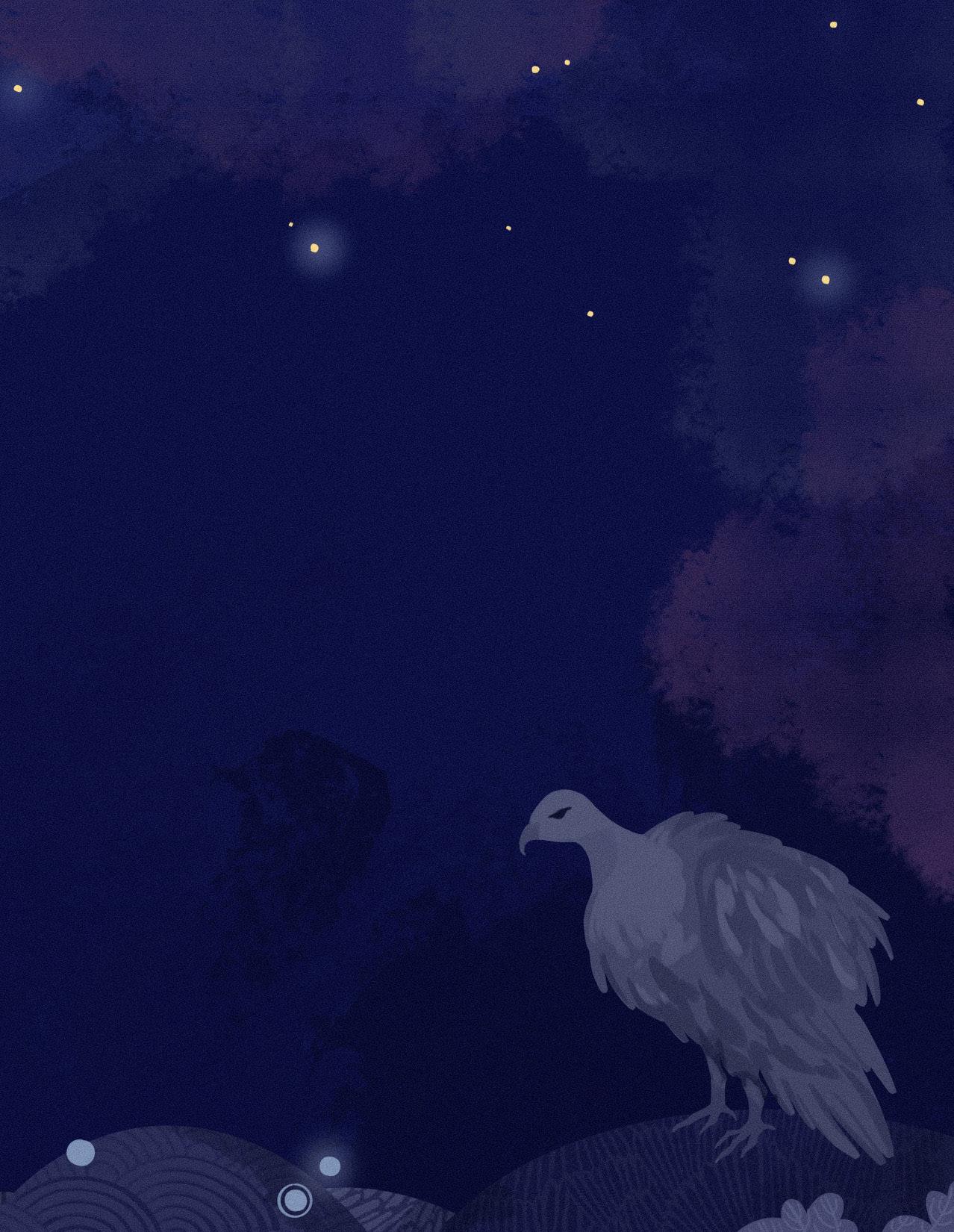
with the touch of a beak, the bird makes empires fall leaves a trail of their crumbs as it ies away keeps the return in its clenched st mind a storied homecoming, just to nd a tapestry sublime and adamant and angry in its wholeness.
i do not look up not for an omen not for a god i look down to search for pretty pebbles. pick them up, feel the weight of a punch of earth packed under a smooth skin in my sweating palm there is proof i take i take to give under perfect guidance
tell me, nurses devils muses with my pockets heavy with pebbles is it a crime to pray still?
when i catch myself trying to sew shadows onto a nevergreen parade of nevergrowing bodies, my darling friends have to lick my papercuts open.
they see the hearth burning crashing and burning. they wax and wane quench the thirsty re lend me kisses to sign goodbyes. i hold translucent grudges i mean no harm i mean what i say goodbye, goodbye
the songbird ies to kiss the bowl of re ected light that will bring about the demise of the taker and its sorry wings a night sky painted with ashes once the sun abandons it.

By: Connor Schafer
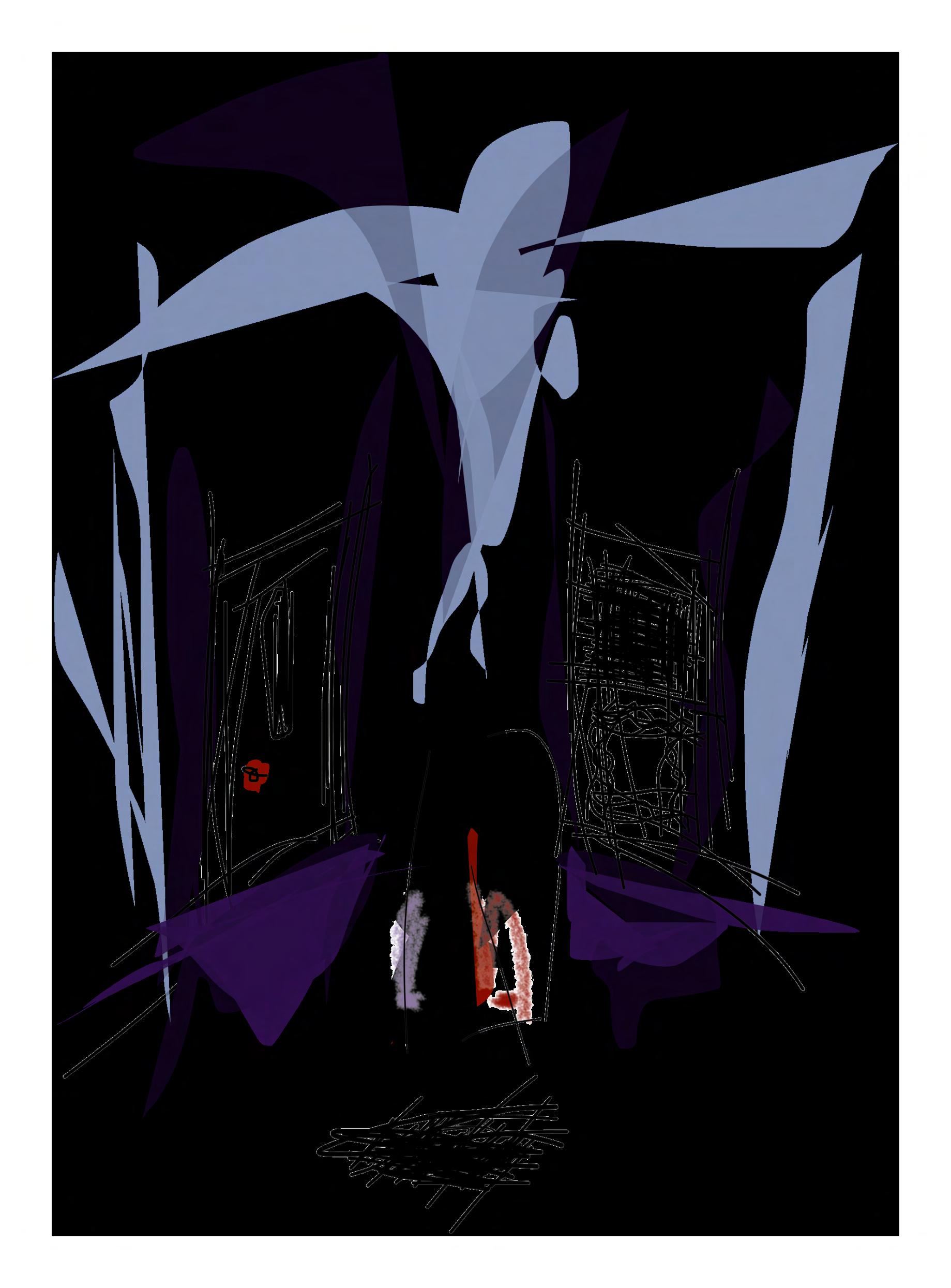
Art by: YaYing Yu
Design by: Milanne Berg
Many millennia ago in the far off land of Quk there once lived a girl named Daqutr. Although a small girl, around the age of six, she already understood much about the world she called home. She first understood that there was little comfort or freedom for her, as she and the other tutks were only destined for lives of hardship and labor. For her, this meant long hours in the pin factory. So secondly, she understood pins. She knew pins so very well. Although only six years old, the child had likely already manufactured thousands. When she slept, she could only see pins. Thirdly, she understood that the men with the funny hats were dangerous. Even though the hats were squishy and bright yellow and sometimes had very small men inside who would open trapdoors to peer out… the men were dangerous. She often received a bruised cheek or spinning head for not making enough pins. And as she lay on the ground, crying in pain, the terrible little men who live in the hats swarmed out like bees from a nest. They covered her in a forceful restraint until the real men came to take her away. Long story short, the men with the funny hats are not so funny.
One night, Daqutr put her weary little head on her straw pillow and closed her eyes. Pins, as usual. Recently, a deep anger had begun to boil against the pins and whoever decided she had to work in the pin factory. In her resentment she got up from the alley where she and her siblings slept. Her eyes darted back and forth between the walls and clutter with no particular purpose. Eventually, her attention went far to the distance. She was instantly captivated by a shape emerging from low in the night sky. The shape emerged from a tower which belonged to the astronomer’s guild.
Known across the city, the astronomers would retreat each night to their stone tower in the corner of the city to study the stars, or so they claimed. The city folk found their obsession with the night sky strange, instead enjoying the comfort of sleep and warm fires in the dead of night. Often, people would speak of the astronomers guild’s strange contraptions, which would etch strange shapes in the sky high above the rooftops.
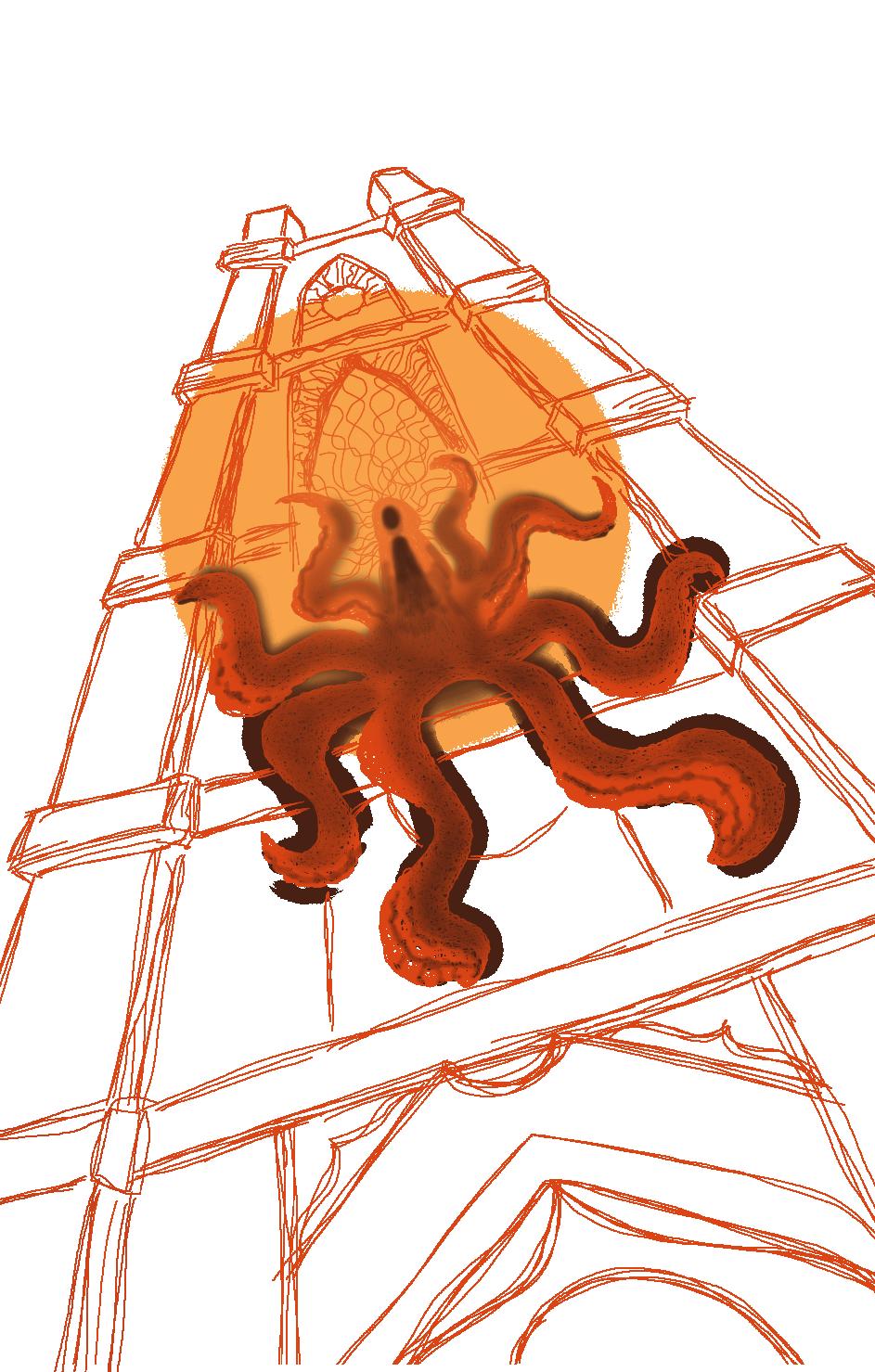
Daqutr saw dozens of individual lines twisting and turning, but which together created an amorphous shape that protruded from the tower like a wilting plant, sagging from its own weight. Daqutr thought it looked a bit like an octopus. Never before had she seen anything like this. Daqutr quickly forgot about her grueling day in the pin factory.
She woke up her sister Snii’i with excitement.

“Snii’i, Snii’i, wake up, wake up!” she said playfully. “What?” her sister said, in the disengaged tone of any teenager.
“You won’t believe what is in the sky!”
“If it’s not trying to actively kill us, go back to sleep!”
She said while burying her head into the blanket.
“There’s a giant octopus in the sky.”
“What?”
“I said an octopus!”
Snii’i finally opened an eye. “Yep,” she agreed. And then dug her face back into the pillow.
Daqutr waited in anticipation for her sister to give the shape any more attention. How could she simply dismiss it! For Daqutr, there was something about this octopus which had materialized in the night. The dark form seemed like it had so much power, sitting ominously above the rooftops. In her excitement, she had not noticed that some o=f the octopus’ arms extended from the astronomer’s tower. Perhaps this would have enlightened her on the form’s origins. But nevertheless, Daqutr was so hungry, sore, and cold that she simply latched onto this octopus in the sky as her ticket out of a life of despair. Looking up from the dark, cramped, rat infested alleyway, her eyes sparkled with hope. She was going to the octopus.
But she knew it wasn’t safe to go out alone, she would need her sister for safety. So, she had to convince her to get up.
“The octopus is an alien that has descended from the stars, do you not want to meet an alien?”
“No.”
“Perhaps the octopus is here to save us from the men with the funny hats!”
“Stop it.”
“Perhaps the magical octopus will take us away!”
“Don’t be ridiculous.”
“Snii’i I’m begging you! We must heed the call of the octopus!”
Snii’i let out a dreadful sigh and slowly stood up. She looked down at her sister in a moment of contemplation.
“Will you promise to shut up if we just walk up the hill for a better look?”
“Yes,” her sister said grudgingly.
The two of them slowly walked up the hill, hand in hand. Snii’i dragged her step much more than her little
sister. They both kept a close eye on their peripheral, but nobody was out. Instead, the street was eerily quiet. A moon with an orangish tint eerily fed the shadows which reached out to grab the two.
Once they got to the top, they took in the view. They gazed at the octopus figure attentively.
“What’s it doing there?” the older sister asked
“It’s here to save us!”
“How do you know?”

“A feeling, I just believe.”
“What makes you think…”
She was cut off by quite rude interruption by one of the men with the funny hats who had approached from behind.
“What are you doing here in the dead of night?!”
The sisters turned behind themselves and saw 5 men with the funny hats, daggers drawn. The little men in their hats presented tiny pistols out the trap doors of the hats.
Daqutr looked at her sister for guidance. Snii’i, however, didn’t know what to do. So, she ran down the hill. Her sister joined in stride, but they were both pelted by a slew of little men who live in the men with
the funny hats’ hats. But they could not run to safety. Quickly, they became covered in the little men from the hats of the men with hats. Their little hands dug spikes into Daqutr and Snii’i’s skin, sending an explosion of prickling pain across their bodies.
Daqutr jolted forward in pain, willing herself to move faster. But Snii’i, overwhelmed by the little men, collapsed in pain.
“Get up!” Daqutr shouted as she ran, bolting down the hill. After a moment, she bolted down an alleyway. Her life depended on it, so she ran. Snii’i, however, could not. Snii’i was instead covered in little men from the hats of the men with the funny hats and then taken away by the men with the funny hats. Her fate now lay uncertain.
Once she felt safe, Daqutr lay in an alleyway and cried for an hour for her sister. She was devastated. The guilt overwhelmed her. After having a nice cry, however, she stood up and looked back at the octopus. Maybe the octopus can save my sister, she thought. So she willed her tired, sore body to walk towards the shape. Hope kept her going through that dark night. Miraculously she evaded the men with the funny hats for the rest of the night, perhaps aided by her short stature.
Within an hour, she approached the massive figure. Made of a seemingly spontaneous arrangement of wood, metal, and pulleys, the figure loomed above the rooftops. It stood eerily still above the rooftops.
“Hey, octopus!” she shouted to no avail.
Daqutr noticed that the figure touched the large tower in front of her. The astronomer’s tower. Daqutr approached it and then entered slowly through a cracked door and peered into their tower, revealing a small room filled to the brim with robed astronomers yanking at pulleys and bickering with one another. Ropes and bamboo poles shot up from the floor and along the walls and lofts towards the top of the tower, around 50 feet up. Daqutr watched as they prepared to hoist a large wooden barrel with taunt ropes. Dozens of brass rods with various instruments spinning and whirring shot out from the floor and stone sides of the tower like the quills of a porcupine. A feeling of purpose compelled her and she ran towards the barrel. As she got closer, she noticed a small door near the bottom of the barrel and leaped inside. Being as small as she was, the busy astronomers did not notice Daqutr jump in, and within minutes she traveled through the structure and was perched atop the large octopus.
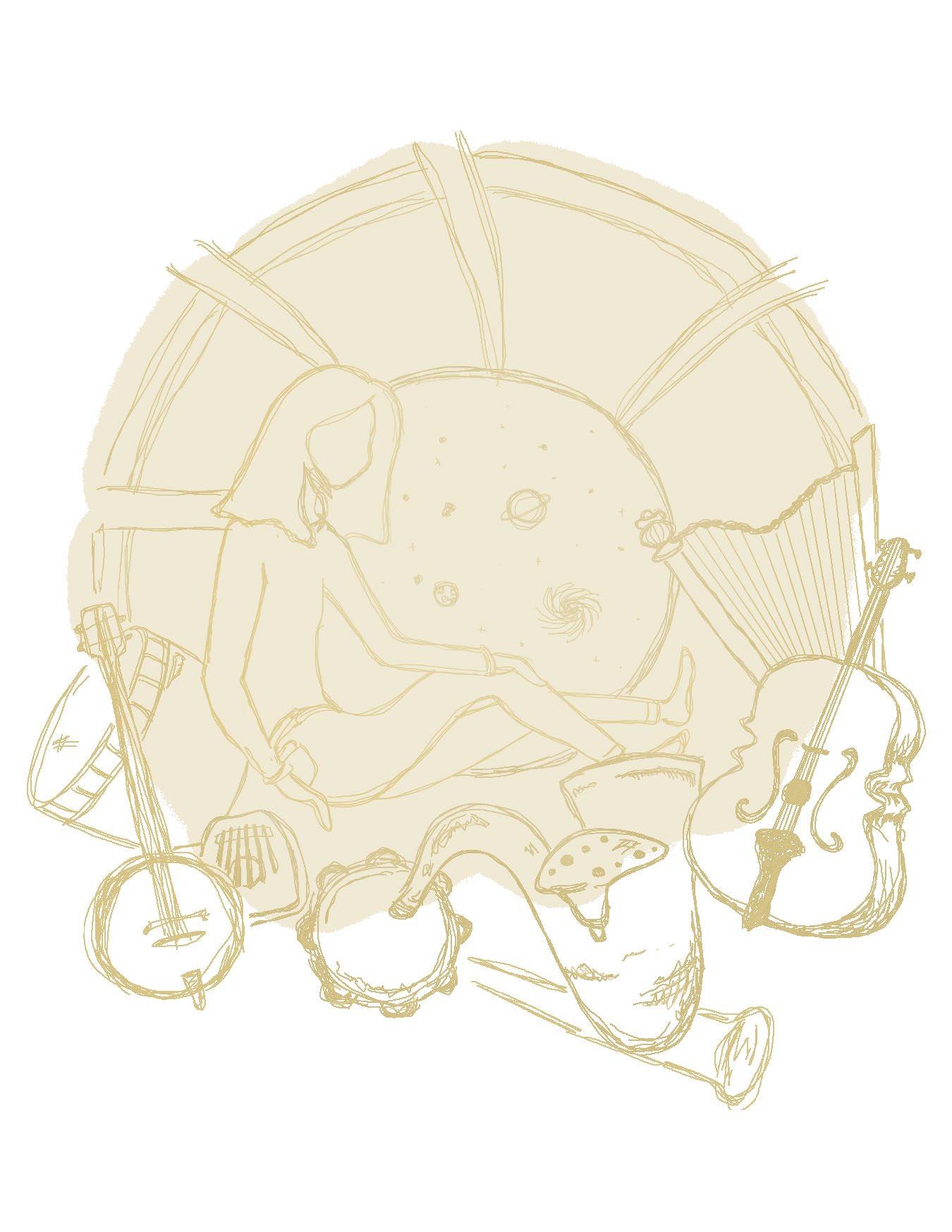
Inside the small vessel was a collection of brass instruments, slowly ticking a whirring, which left Daqutr with little room, but she did not let that discomfort deter her. Instead, through the door and small holes, she could peer out at her city far below her, mesmerized by the new perspective. Lights of the city twinkled as if saying goodbye. Daqutr smiled. Now, she was far from the men with the silly hats. No more pins. And no
Meanwhile back in the astronomer guild’s tower, astronomers worked busily to keep their barrel in the air. The excitement was tangible amongst the robed figures, for their project was almost complete. For years they had prepared and expectantly waited, but in the morning it would finally happen.
An interruption in their perfectly rehearsed plan materialized unexpectedly in the middle of the tower. A short astronomer by the name of Frubh announced a discovery:
“Oh britches! ‘Tis a floating pear!”
“Hmm” said the others as they encircled the fruit, “What a peculiar sight.”
“‘Tis a sign, methinks,” said an old astronomer by the name of Pufk, as her son wheeled her wheelchair towards the pear, floating only a few feet from the ground.
Once close enough, she grabbed the fruit and took a vigorous bite. Savoring the fruit, she announced, “‘tis sweet!”
The astronomers cheered.



self-embrace. As she pressed her hand to her stomach, however, she felt something in her pocket that was vaguely circular and now a little bit squished. She pulled the pear out of her pocket and took a bite.
“Hm,” she remarked. How strange. Perhaps the octopus had sent it.
“What happens next?” BiWWun asked, a new recruit of the astronomer’s guild asked.
“We don’t know. Frubh just kind of felt like it”
“Me’thought this twas the vibe, it was giving good vibes, one might say. You see, this night is a special night, as the moon turns orange,” Frubh explained BiWWun began to understand.
“So you just felt like making a giant mechanical octopus in the dead of night and then sticking it out the top of our tower because the moon will change color?”
“Indeed…”
Looking outside, Daqutr realized that she was quite higher than before, and no longer supported by the astronomer’s contraption. The structure lay far below her, and now seemed distant and blurry like the city lights. She gasped with surprise when she realized that she must now be floating. The barrel quickly accelerated upwards, pushing Daqutr’s more and more against the pointy metal instruments. With increased velocity came increased movement and pressure within the barrel. Daqutr screamed as she realized how fast she was really going. Flames gathered underneath her wooden spaceship. Her fears erupted too. Then, the barrel erupted.
Far below her, on the surface of the Earth, the pears rained down like a torrential downpour. People woke up from their slumber to see the strange rain. They shattered on the ground in an explosion of delicious and sweet pulp. The children smiled.
Daqutr woke up from an unintentional, head trauma induced slumber. Her body felt weightless, no longer oppressed by gravity. Peeping her eyes open, she discovered that she was now miles from the surface of the earth. This couldn’t be right, she thought. What happened? Why was she here? Did the octopus bring her here? Why? She felt so very confused.
“Help!” she pleaded.
As soon as she shouted, a shape emerged from the depths of space. Another pear.
This second pear confused her once again. She hungrily bit into it and looked around. Suspended high in the night sky, she noticed she could faintly see her own body. Her skin radiated an orange color. Why was she orange now? Looking opposite the earth, however, she noticed the moon was orange. It looked a bit like a pumpkin, she thought.
Illuminated in the moon’s light, she bit into the pear once again. The fruit brought a level of clarity. She was brought here for a reason, and she didn’t need any more help. The sun, Earth, and moon aligned for her now. All she needed to do now was act. Her sister would be coming back.
Daqutr opened up her hand and orange sparks flew out, further illuminating her face. She focused on the octopus and brought her hand up. With it came the octopus, coming to life. The astronomers rejoiced, believing their vast efforts were now not in vain.
Flying above the city, the octopus’ arms shot out and suction-cupped the men with the funny hats, then depositing them in the pin factory. When finished with the men with the funny hats, the octopus picked up the factory, foundations and all, and dropped it off far from the city. Finally, they were free from the oppressors. She then thought of a beautiful apartment for her and her sister to live in, and it materialized. After transporting Snii’i into the apartment, she flew to her new home herself.
The sisters slept soundly that night, as well as everyone else in the town. Peace had now eclipsed the oppressive men with the funny hats.

An hour on Sunday when it was
Encouraged To pretend
They were always sunny times Even when it Snowed Hailed Rained
Until on a hot summer day It got shaded
The Sunday started off Sunny
Alas, I wanted a new pretend
I was bored of being Mom who Cooks Cleans Cries
By: Skyler Rockmael
by: Addy Reid
Design by: Addy Reid
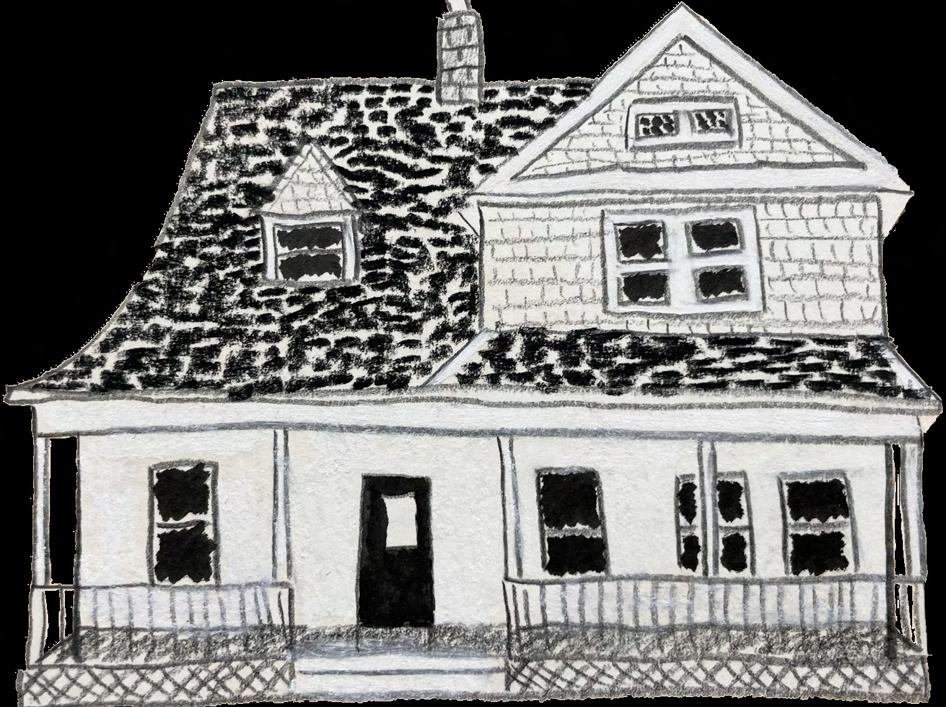
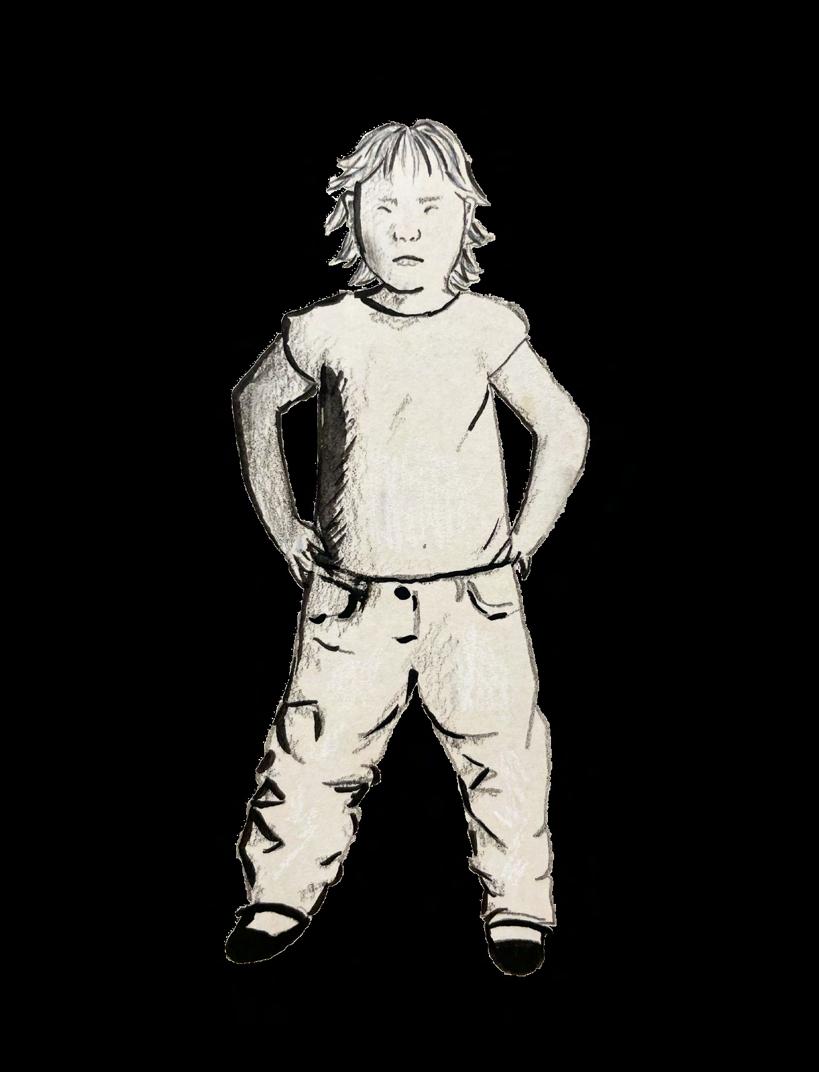
I wanted to be the mom who was Dirty Mighty Strong I wanted to be a
Not of the world
Or the house
But of the pretend family
On this one Sunday morning
Suddenly, I was on trial
I was a lawyer
Who had not finished the Second grade
The judge was not much older And we shared many similarities
Hair Color
Eye shape
My punishment was far worse than I thought For I was restricted to playing
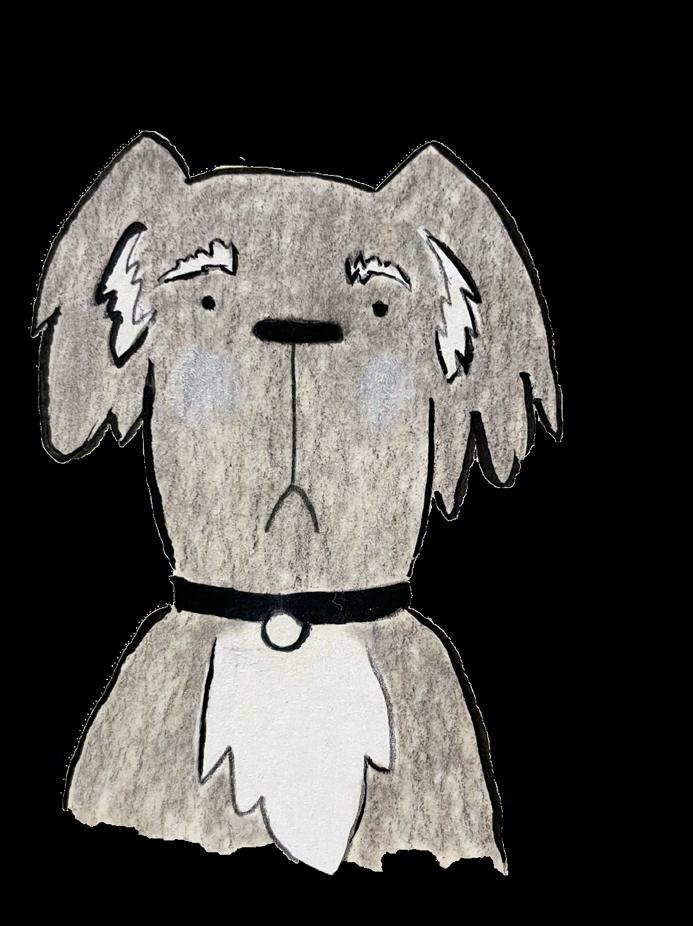
I got up from the courtroom On that hot summer day But the warmth was gone For the judge had created

In fifth & sixth & seventh grades I scribbled notes through science class in a daze of hazy forests & fields.
Some days were meant for dreaming of something other than rocks & bugs & sometimes someone saw me eyes ablaze in sunlight somehow with E&B forever tattooed right above my heart.
I think classmates were jealous that I was somewhere they were not.
Forever, for real, forever, in that flower field of sparkle & forever was my sixth-grade certainty that all would be alright.
I’d sprint from stupid soccer practice & straight into my room. Sorry, no time to talk ‘til dinner there’s science homework to do.
Then I only tore my eyes away when the blue light burnt my fingertips & then I’d scan the secrets stashed away on well-worn pages. Scenes bit through my skin & sucked the blush from my cheeks. Chemistry & carbon dating they taught me something new.
Didn’t breathe ‘til the daydream ended & I bent my independence. Devour & deliver & destroy me!
I’m desperate for this hope.
background source: yapo zhou, untitled, 2018
tape texture source: Ferhat Deniz Fors, untitled, 2021
But somewhere along the road to Washington I grew up & got bigger. Red pickup truck seems silly now & it started raining harder & forever became a little less long & the fields, they lost their shimmer.
My twilight was eclipsed by dawn & men who didn’t glow. Middle school became back then & baseball was lost to the storm. Blue turned into black & my heart still has a bruise from when the world read my tattoo & told me to grow up.


background source: Susan Wilkinson, untitled, 2022

By: Sydney Mann
Art by: Chloe Cordasco
Design By: Katherine Jia
warning:
Eastover, South Carolina, had not seen wolves since the paper mill company had come to town and brought with it clear cutting and acrid black smoke. There had been no flashes of red through the pines, no tufts of fur left on chicken wire, no paw prints painted in mud and blood on porches. There had been no howls to pierce the lonely dark, and no one to join along. The wolves, like most of the town, had left. When the dust of main street settled, all that was left was the post office, a bar, the old church, and the three women of the Woods family. From the veranda of the farmhouse that their foremothers had made and they themselves had mended, they had watched as the town bled dry. Soon, there was no one to bear witness to their diligence — to the blood and sweat they poured into the handful of acres that had provided for their family for generations. Nor to give testament to those that came calling to their door, first asking and then demanding they sell their land. No one but Eliza and Dorothy saw the strength in their aunt Helen’s upright back as she refused their offers. The three Woods women were the only true witnesses to the events that passed in the small southern town during one hot, humid summer.
“I’ve got a letter for you to write out, Dorothy.” Helen passed her a small square of paper, and began dictating.
“Dear Mr. Jenkins, we thank you kindly for your offer, however we cannot accept…” She looked expectantly at Dorothy, who had stopped writing and simply stared, mouth agape, at her aunt.
“The Woods women have stayed here for decades, nearly a century, we have made it through much worse before,” she said plainly.
“Those are just words, Dorothy,” Helen said, as if she were simple.
“I thought that after last night… you can’t be serious Helen?” Dorothy implored, her palms flat against the table.
“We’re not safe here, how could you ever plan on staying?” It was as Dorothy began to raise her voice that Eliza cut in.
“And what of that?”
Dorothy pointed through the front window to the red paint that streaked the porch. The bottoms of her shoes were still stained with it, and the nails of all three women were rimmed with red, though no amount of scrubbing had erased the words.
“They are a threat,” Dorothy cried.
“No more of a threat than leaving this land!” Helen retorted, snatching the paper from Dorothy and passing it to Eliza, who reluctantly picked the pen up from where it lay discarded in the center of the table. Dorothy opened her mouth, as if to say more, but thought better of it.
“We
cannot accept your offer at this time.”
Helen concluded her dictation, and Eliza copied it out. She tried to make eye contact with her cousin, but her thoughts were elsewhere. Her gaze had slipped past the red on the porch, to the horizon and beyond as the sun began its descent.
“Now you want to slide this forward, and make sure to do it in one quick motion,” Helen instructed Eliza, who looked increasingly confused, gripping the ancient rifle they usually kept stored beneath the floorboards in her hands. Their house was set far back into the woods, and the setting sun filled the rooms with an amber glow broken by the long, jagged shadows of the branches outside the windows.
“Wolves are small and quick, the traps may do the trick but we’ll work on your aim tomorrow.” Helen had been but a child when the wolves left for good, but now they were back. There had been pawprints in the mud beside the chicken coop, and specks of blood, though by their count all the hens were accounted for.
“I don’t know if I can remember all this.” Eliza set the rifle on the table, as if it were suddenly a great weight too burdensome for her to carry.
“Well, you wouldn’t need to if we would just sell this land,” Dorothy moaned.
“A girl should know how to protect herself,” Helen said, her eyes hardened as she thought of all that may be prowling in the night other than light-footed wolves.
“If we had a man in the house,” Dorothy waggled her eyes at Eliza, who blushed to remember the young man who had courted her before leaving on the back of a cargo train.
“But we don’t,” Helen said harshly, as she placed the rifle back in Eliza’s open hands.
The sound of the gun being loaded and reloaded, taken apart, cleaned, and put back together, was the music of the afternoon, and then the melody of the night as darkness finally set in. The moon was barely cresting over the woods, and none of the women had made preparations for bed. Dorothy sat slumped, her mending work forgotten, while Helen and Eliza set aside the rifle in favor of spades. Neither spoke it aloud, but this was not a night for sleep; it was a night for vigilance. The paint on the porch was still damp, the rope from the noose that had been left swinging above it lay still in a corner — some use would eventually be found for it, but tonight it was simply a reminder. Beside the stack of worn and faded playing cards lay a box of ammunition.
It was Dorothy who noticed it first, standing up so quickly her chair toppled backward. All three women moved at once, none needing to be told what to do. From outside, the fire was barely visible, still low to the ground, but spreading through their fruit bushes, primed for ignition from the dry summer. This work, too, was done in silence. With a practiced hand, Helen flung the wet towels they kept soaking in a trough over the top of the flames; they spread out in midair, landing with a wet sizzle. Eliza and Dorothy passed buckets between themselves, scooping from the small pond they kept filled for the animals; it would be empty when this was over By the time the flames had quieted, the bushes and several saplings were gone, but the large pine trees remained upright and watchful, and the three women released a sigh, throwing the rags and buckets they clutched to the ground. Their relief, however, was short-lived as a figure strode through the smoke that still hung in the air.
“Evening, Mr. Pickens.” Helen gave a curt nod to the man. He was thin as a whip, still dressed for a day’s work in the office, and he looked around at the burnt crops with distaste.
“Lucky this didn’t burn out of control, and that the bushes weren’t fruiting.”
“Nothing to do with luck; we put it out ourselves.” Helen wiped her hands on her pants, straightening her back so she was eye level with Mr. Pickens.
“Heard you’ve been asked to sell.” Eliza and Dorothy exchanged a glance; the land that surrounded theirs had been bought for cents on the dollar, and cleared faster than they could blink, all by Mr. Pickens and Mr. Jenkins, whose names were on the paper mill. It was they who now owned a ghost town.
“Must be hard, caring for all this land just the three of you, and what with Henry gone to war and returning lord knows when… well, no one could blame you if you did.”
“You know well as I do that this land’s been in the family for generations, my children are buried here, their mothers’ buried here.” Helen gestured to the girls behind her. “And we will be too.”
“I have no doubt about that.” Mr. Pickens turned before Helen could respond and disappeared across the line that marked the beginning of his own property.
All three women looked at each other. Dorothy was ashen and looked close to being sick, but Helen simply pursed her lips and ushered them inside. They did not speak of what they would do in the morning, whether they would pack their bags and walk out of town, or if they would dig their roots even deeper into the land, holding onto all they knew and loved, contained within a few acres.
When dawn stretched its fingers through the Woods’ home, it found the three women already in the kitchen, clutching mugs of coffee. All were unwilling to voice what they felt was the obvious conclusion.
Wemustfightback. Wemustflee,now,quickly. Wemustpersevere.
It was Dorothy who spoke first. “I’m leaving within the week.” The clock over the sink ticked away.
“But Dorothy we can make this work; we can make an agreement with them, we’ll only sell some of the wood and then…..”
“Maybe I want something better than this,” Dorothy cried. “Maybe I don’t want to be afraid all the time.”
“That’s life, child,” Helen said, a hardness in her eyes as she remembered the last four decades spent in the town. The lives she had felt slip through her fingers, the battles she had fought and the scars they had left.
“I heard up North that they ain’t got a colored section no more and that there’s even an interracial couple all out and about in public and no one cares and —”
“That’s a fantasy, Dorothy! that’s not real life! How do you think that happened? You think they got together all peaceful like and they hugged out the fact that their daddy used to own my daddy? Child, please, this is the real world.”
“This is America.”
She spat out the last word like it was dirty.
“You don’t get nothing unless you take it,” she pushed her finger into Dorothy’s chest, “and you don’t have the spine to take nothing that ain’t already placed down right in front of you.”
“It will be better one day,” Dorothy said softly, wrapping her arms around herself.
“Maybe, but that day ain’t today and it certainly ain’t gonna be tomorrow, so until then, we’re gonna keep protecting this land, and we ain’t gonna leave it.” Helen stood firmly in the kitchen, legs planted wide.
“Don’t argue with me, girl; your father’s last wish was that I keep his baby safe, and by God, that is what I’m gonna do even if it means I have to chain you to this damn house.” Her hands shook at her side and Eliza looked worriedly between the two women. She could not remember ever seeing Helen this riled, not since they had found Peter, that day she had gone from living to surviving. Had the stoicism that kept her working so hard been worth it all?
“Helen, I —”
“Maybe if you’d moved with Uncle Isaiah then Peter would —”
Helen didn’t utter a word before her open palm connected with Dorothy’s cheek, leaving the room in a tense silence before Helen clenched her fists to her side and strode through the front door. Dorothy wiped tears away as she hurried out the back door. Between them, Eliza stared at each receding back; by the time she decided who to follow, they were out of sight.
It was Dorothy who returned first, and seeing the lecture prepared on Eliza’s face, left again to begin the work of refilling the small pond in the yard with buckets from the lake. She was still gone as the house began to fill with a warm red afternoon glow.
“He’s dead.” Helen began pulling up the boards and grabbed the rifle from where it lay, clean and polished and ready for use.
“Pickens, they found him dead this morning, mauled by that damn wolf.” Eliza stifled a gasp.
“Heard it from one of the errand boys, now that Pickens is out of the way Jenkins wants his full parcel of land, and he ain’t willing to be as patient.” Helen loaded the rifle, buckshot sliding neatly into place. So they were to fight. It was only as she saw the look on Eliza’s face that she registered Dorothy’s absence.
“Where is she?”
“She, she’s down by the lake.” Eliza’s face blanched. The lake, the lake that backed the Jenkins’ property. The lake from where men would come as soon as it was dark enough that their faces would be cast in shadow and their actions hidden in the trees. Helen took this information in stride.
“Lock up the house, take the butcher knife from behind the chickens, and meet me in the hollow oak.” She looked over her shoulder at Eliza, “Don’t worry, I’ll keep us safe.” She disappeared back into the night, and Eliza allowed herself three deep breaths to gather her nerve before doing as she was told.
The night air was crisp, the sun barely sunk, and the moon not yet risen, and all was cast in a purpley blue light. The snap of every twig and brush of every branch set Eliza’s nerves on edge, and she held the cleaver with two hands so as to stop their trembling.
She did not dwell on what a knife could do against men armed with guns, how Helen hoped to secure their safety, or why they had stayed when they could have left.
She did not think about the way they had found Peter’s body on the edge of this very property, swinging slowly, his face so disfigured they had identified him by a cracked pocket watch.
She did not think of the graves she walked over, her mother and her baby brother, her cousin and her grandma.
She did not think of all the blood they had poured into the soil, a century’s worth of sweat and work.
What would be lost, if they lost this land?

When she arrived at the hollowed-out oak she tried to slow her breathing, the sound of her racing heart flooding her ears, and pressed her body into the rotting wood. The moon rose slowly as darkness set in, and the shadows between the trees lengthened into inky voids.
Eliza did not know how long it had been since Helen had come back when she heard a scream in the dark. Eliza did not think twice; she ran towards where she knew the water’s edge to be, away from the lights of the house barely visible through the woods and towards the remains of her family. Another scream, now mingled with choking sobs, rang out, and Eliza knew in her heart that it was Dorothy. But where was Helen?
“Dorothy!” Eliza was running blind, chasing after where she thought the sound came from. It was as if all her muscles had been ready for this moment. Years of tension had left her spring loaded, ready to bound into action; as if she had been bred and born for running and fighting. As she came closer to the woods’ edge, she could hear voices.
“I… shoot…. Her go.” Helen’s voice, unmistakably calm and stern. The response could not be heard, but
Eliza could make out Dorothy’s whimpers of pain. She emerged into a clearing beside the lake in time to see a man gripping Dorothy by the roots of her hair as she tried to kick out of his grasp. He was pulling her back, towards the crowd of men, hooded and standing between the trees like watchful tombstones when a blur knocked him over. He screamed once before the shadow on top of him tore into his throat. Blood sprayed onto Dorothy’s face, and she ran behind Helen, who gripped her with one hand while keeping the rifle level with the other. The men retreated slowly at first, blood staining their white robes, but as their fallen comrade gurgled out a last breath and scrabbled at the ground trying to escape the shadowy mass still on top of him, they turned and ran. Within seconds, they had disappeared into the woods.
"It was the wolf. It had to be the wolf. But even as the women recognized this, reality seemed to change before them. A reddish coat rippled, hind legs lengthened, there was a horrible snapping and crunching, and an animal keening sound, and before them. A woman. She was completely naked, her arms and legs and lips coated in what may have been mud or blood. Her hair was matted into thick locks, and it was turning gray at the roots. She panted slowly, nudging the body before her with her foot.
“Josephine?” Helen queried, simultaneously pushing Eliza and Dorothy behind her so she could properly aim her rifle."
“That won’t do any good,” the woman said, her voice was hoarse and deep as if she had not spoken in many weeks.
“You, you were a wolf,” Eliza said at the same time Helen said, “You are supposed to be dead.”
“No, I am a woman.” She straightened, as if suddenly aware of her appearance. “And I certainly am not dead.”
“Is he dead?” Helen gestured to the man.
“Yes.” The woman regarded Eliza, Dorothy, and Helen with a critical eye. Eliza and Helen now stood shoulder to shoulder; behind them, Dorothy had sunk against a tree, her eyes vacant.
“Why?” Helen finally asked.
“Because he was going to kill you.”
“I didn’t ask you to —”
“You didn’t need to.” She took a step closer, and Helen cocked the gun, but she didn’t step back.
“Did you think it was simple luck that you never lost a chicken nor goat, that you never had any thefts, that the man coming after your house died so suddenly? Come now,” she smiled coyly.
“No one’s that lucky, and certainly not three black girls.”
“You’re Josephine Larouge.” Eliza thought back to the few photos she had seen of her great-aunt, the almond shape of her eyes, the slight cleft lip.
“I’ve been called that, yes.”
“Why shouldn’t I shoot you?” Helen cocked the rifle.
“I told you it wouldn’t do any —”
The woman doubled over as the shot rang out. Helen’s aim was true, but within seconds the women stood upright again. Helen dropped the rifle in shock.
“You, I —, you’re. You’re dead.”
“You need me,” the woman said, looking past Helen’s incredulous face and locking eyes with Eliza. She wanted to press her back into the tree and sink down beside her cousin, but she held the woman’s gaze. Her eyes flickered over the blood congealing and dripping like syrup from her fingers, the sinew and striations of the muscles in her legs and back, her shoulders pulled back so she looked as if she had conquered both the man below her and the forest itself. She held herself like she could not be touched nor tamed by any man.
“We were doing just fine before you killed a man on our land.” Helen bent to retrieve her fallen weapon, keeping her gaze fixed ahead.
“Were you? A mob came to do god knows what, half your land burned, waking up to nooses, that’s doing just fine?”
“What kind of help… are you offering?” Eliza said, stepping forward so she was shoulder to shoulder with Helen.
“A little bit of this, a little bit of that…” Josephine curled her hand, and all three women gasped as they saw fingers stretch and elongate, nails thicken and curve.
“You’re a werewolf,” Dorothy said, her voice equal parts awe and fear.
“Something like that.”
“You want to make us… like you,” Eliza posed, brows furrowing.
“Yes,” the woman said simply.
“Why can’t you just keep doing what you’re doing?”
Josephine looked annoyed, as if Dorothy had asked a stupid question.
“Because I am old, and my bones hurt, and clearly it hasn’t been enough,” Josephine gestured around her.
Helen and Eliza exchanged glances, shoulders pressed tightly together, Dorothy peering unseeing from behind their legs; what were they to think?
ButhowcouldInotseizepowerwhenitisoffered,evenifpowercomesintheformofviolence?
ButcouldIliveandhuntasabeastandstillknowwhatitistobeawoman?
Butisthereanychoice,truly,inwhichIcouldlivewiththepathnottaken?
The first woman that stepped forward placed a hand tentatively in Josephine’s open palm. She could feel the blood coating the tips, the knowledge that this would not be the last time they were stained in such a way. But the moon had finally risen, all was cast in a silver light, and for the first time in a very long time, she felt powerful.

By: k.m.a Art by: Sophia Gregorace & Yaying Yu Design by: Raegan Boettcher
Penumbra wearer, what goes bump in the night, un-you, black black black murk, cavity of an achy breaky heart, the down-under-under-down, one you recognize but will not admit you know, eclipse-product, inverse in verse, shadow-self, hide and don’t seek, the Hyde, the goodbye-less, the unseen unvoiced unknown unwanted unloved unendable desire-haver, da-da-da-da-darkness, yours.
What do you want?
I only want you to ask. I want you to ask me what I did today, and then, when you walk away, I want you to say: Come with me.
I can’t do that.
Something else then — don’t say what you do say, what you only ever say: Stop following me.
But why do you follow me? Why do you cling to me? Why can’t I escape you?-
Why don’t you want me? Why do you run, peering over your shoulder, checking for my presence with a furrowed-brow panic-tensed no-no-never-not-no? Why do you chase me away with the light? Why do you mourn my every return?
Because: I want to do all the things that make me a human — eat, drink, think, feel — but I don’t want you to look at me while I do them. I don’t want to look at you while I do them.
You do look at me, though. And it kills me — or feeds me — or ravages me — a little bit, I think, every time you look right at me and do not see me. How can you walk right up to me with your light-refracting eyes and call me by what someone, maybe me, has told you is my name? How can you move your teeth together to make sounds that make me feel like my stomach is my brain and my feet do not belong to me and my own eyes do not exist? And then you walk away, and I walk away, and what did those few moments mean to either of us?
I will tell you how: Because I cannot resist, because I do not know any other way, because I want to bury my corporeal self deep within the cloak that is the night and hide her where the sun meets gentle diversions come day. I want to lie down on the dusky ground until the ground lies itself on top of me. I want — I want to go to places where the light cannot shine on me, cannot reveal the outline of what I am, cannot make me look at you.

Keep going.
Maybe I am asking for too much. Maybe what I mean when I say I want the darkness — not mine, not you — is that I want to curl my limbs around my core and cover myself with cotton and wool and close my eyes to to the light. Maybe what I mean when I say I like the night is that at night you cannot see what day reveals — nor what it cannot dispel.
Keep going.
Maybe what I mean when I say I want to hide is that I want someone to find me. Find me. Find me and tell me you love me, tell me I matter, tell me I am interesting and good and that you think about me when you are alone. Tell me that sometimes
you think about the darkness too, so you don’t have to think about your darkness. Tell me that I am not alone. Tell me that we can be alone together. Tell me that the darkness — not ours — can be the thing that gives us the power of not being seen, the thing that makes me bold enough to say: Come with me. That makes us bold enough to find each other.
I will come with you. Not you. I wasn’t talking about you, just then. I want someone else.
You haven’t told me to stop following you, though, not this time, not yet, not when usually you already have by this point. I don’t want you. I want darkness because I don’t want to see you. You, light-needer, light-revealed. You, darkness, mine.
Just because you do not always see me, does not mean I am not always there. You make me hate the light.
I am not light.

I hate you.
You hate me because I am not light. You hate me because light does not exist without me. You hate me because you want darkness, but not your own, you don’t want to look at your own darkness — you don’t want to look at me.
You’re wrong.
What matters more? What’s real, or what you believe to be real? You hate me because what you really want is the light, without me.
You don’t know what you’re talking about.
Oh light, oh sun, oh moon, oh stars. You want to look at them so much; you call them selfish because you love them; everyone is looking at them and you think they are beautiful but you talk about them when they cannot hear you and you do not always say nice kind lovely things. I do not want to be talked about; I only want to be thought of. I do not want to be looked at; I want to be seen. You do know the difference, don’t you?
I don’t know what you’re talking about.
You blame them for my existing and — because of that — you won’t admit you love them.
You can’t see everything in the light, you know, You can see me;
but you don’t have to see anything in the darkness.
I am still here.
I wish you weren’t.
Stop following me.
Go away.
You’re not welcome here.
I hate you, I hate you, I hate you, you wretched thing, you —
When the world goes dark at the end I hope you are sitting next to me. I hope we reach out for each other, smacking walls and bruising hips,
knocking teeth and tripping on corners, elbow jostling rib sucking in — arm finding shoulder — head within thinking: There you are. I hope we do not need light-light-only-ever-light-be-light-see-light-die-light even if we know we love it. I hope the darkness lets us know our skin is not where we end; I hope the darkness lets us know we can be darkness too. I love you. I love you. I love you.
Don’t tell me to stop following you. You know I can’t. Ask me to come with you.
Stop following me. You know I can’t.
Ask me to come with you. You know I can’t
Darkness, mine, are you still here?
I told you. I’m always here. Will you always be here?
Until you invite me in — yes. I’m not ready.
You’ll get there. I’m not sure.
I am. Let me show you. How?
Admit something. What?
Admit something. Why?
Admit something.
I have never not been afraid of love. What do you do when you’re afraid of something? I pretend I don’t need it.
And do you need love? No.
And do you need light? No.
And do you need to look me in my un-eyes and really see me? No.
Do you believe yourself ?

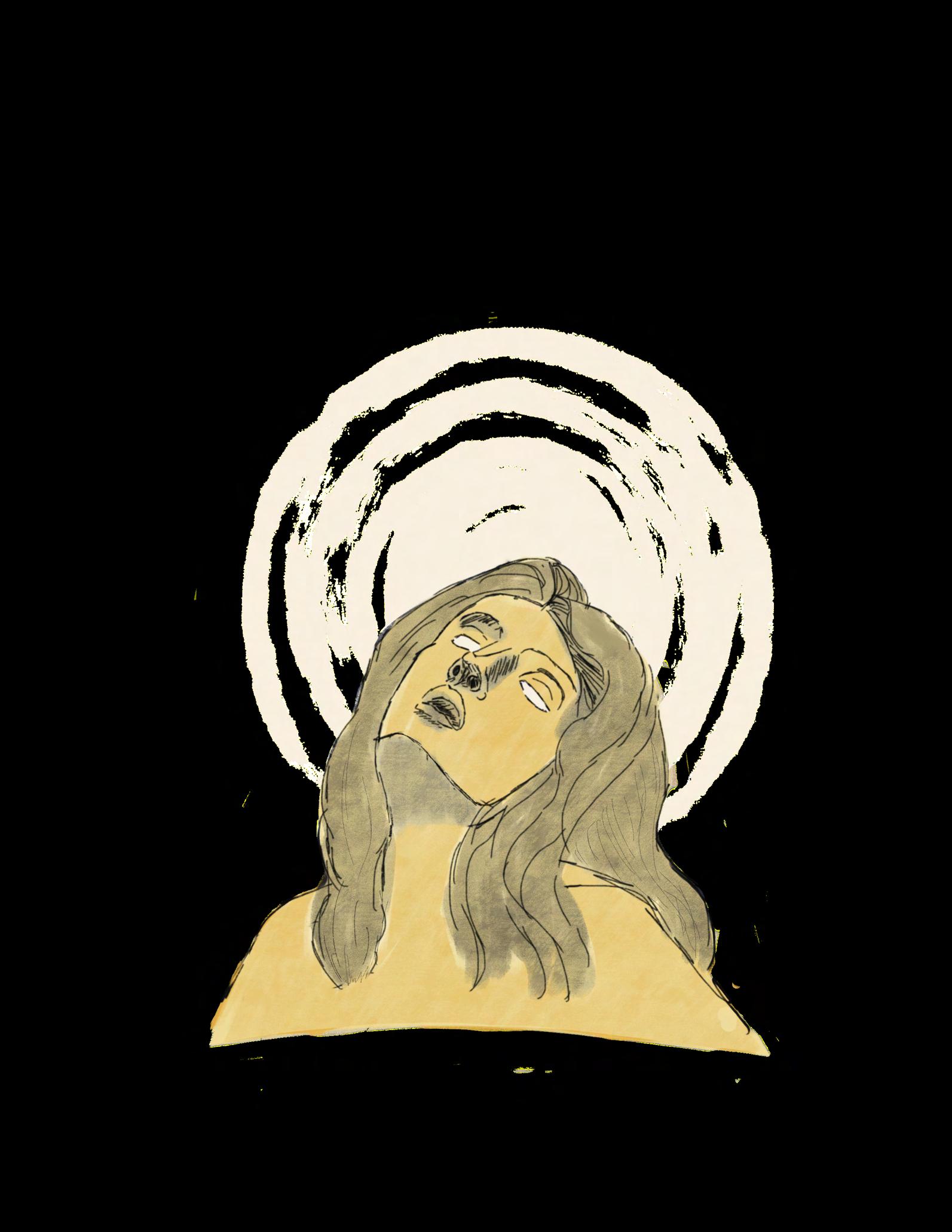
Greet the exquisite genesis: the sanctified, though perhaps irreligious, moment of delivery/deliverance of the girl . There’s a micro-world, with its precious and precarious geometry, precipitating her new membership; its borders will cave in time, parting for swankier seas. This filet of an individual has surfaced, an uncultured Thing (except that her potentialities are squarely oriented): she’s premature but that’s a scientific concern, a cute semantic distinction even, the potential for precocity vitally not precluded. (The procedural incubation – a spot in the all-modern womb – is for good form.) All things considered, she’s unquestionably lucky to have emerged, sweet and uncontested, slated on the delicate laurels of privilege. The culture will enforce this in its clever ways, thus she need only catch the dawning wave – treading will be involved, but there’s a network of intervening devices to assist – and cast back the benisons of this charmed existence;
Later: well, lovely bones are designed to engender lofty
In the infancy of socialization when feisty splinters occasionally manifest – rage-mustering rebellion, worry-prickling reticence –there’s no concern to be dished out at dinner, an exhibition-worthy selection to celebrate. The signs of individuality (flirting with eccentricity but not uncouth) are admirable: the sequin handbags, the creative leadership, the poem-clad notebook.
Glimpse the diminished vitality that unfurled. (Was it the same individual or a different breed altogether, the product of a troubled metamorphosis?) The physical evidence of disquieted existence: the flaky hair and scarred skin (of the once pretty face), insipid style (for which she was once known) and cardboard smile. It’s easy to say in retrospect that she lost sight of the way, but this is technically nonsensical, a cheap assertion, for the way had been modeled all around her. (POV: The spruced, sheeny social butterflies with their same sheath of A’s; it’s really not that hard, their existences seem to prove, and she in turn – with her bastardized, closeminded version of excellence – seemed distressingly misguided.)
So it’s easy for her to self-diagnose on a wobbly pedestal, buoyed by the inherent hope of returning to the golden path: of walking among those whom the spotlight invigorates, accentuating their beauty and brightness (like decorous lemons, their essence unpeeled, bleeding
So she clings to this grand notion with an atheist’s avid faith, embarking on a year of Travel and Rejuvenation (it’s the environment, surely) to turn a new leaf, shed the rotted exoskeleton. See the incisive commitment to wellness: to Yogalates and glass-walled parfaits, to assisted beauty sleep and devoted skincare, to countless massages that she spends exercising her mind while the muscles are soothed – contemplating her better future, strengthening her resolve to not work so hard in the imminent juncture (or ever), to never again slip into that suffocating, radically disorienting tunnel seemingly of her own making. For what was she if not, as the world has assuringly informed her, an assiduous forger of her own destiny? A woman (why, then, is she the girl in the mirror) of ability and importantly, agency, in this enlightened age?
She is – and she acknowledges this – chasing some elementary internal spark (the elusive joie de vivre, the uninhibited realization of her humanity!) that she knows and shakes herself for having inexplicably lost in those tortured years between sprightly elementary school and this current tremulous slippage into adulthood: lost in the unjustifiable drawn-out process of cloistering in the cluttered quarters of her otherwise well-appointed yet fantastically neglected room, evidence of her warped priorities on display.
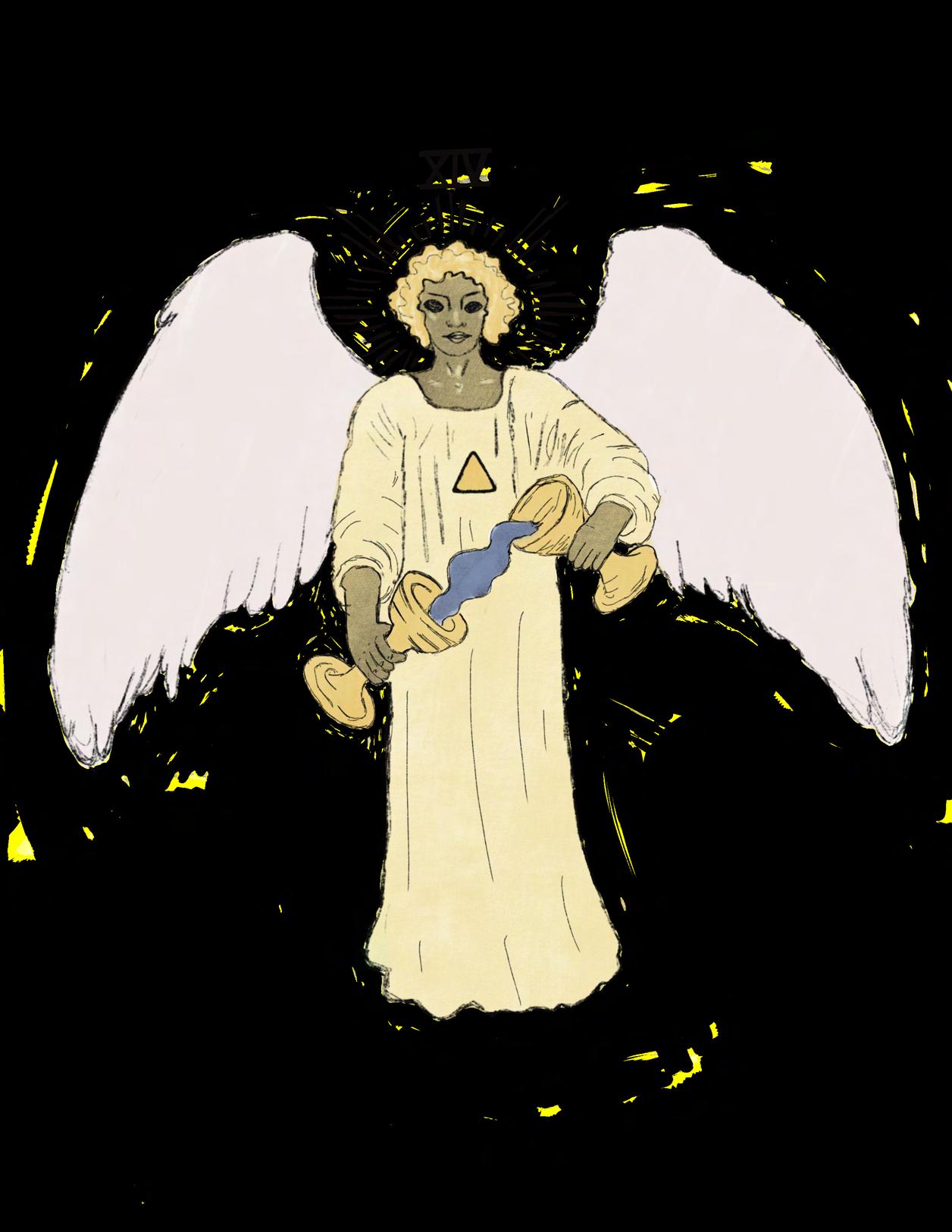
What, naturally, she struggles to admit is that these commendable new strides are, devastatingly, superficial. Indeed, she is later infected by the nagging suspicion that for all that her whirlwind t ravels may have appreciably broadened her worldview or plumped her resume, they have somehow failed to nourish her spiritually in the way she’d hoped or presumed. What could revive her, if not a stay at a Buddhist monastery, with its holy architecture? Why couldn’t an astonishing sunrise move her nearly to tears, in the way of her cosmopolitan companions, who surely seem more human than her? What could whisk her closer to that unadulterated self she can see so clearly in her memory: a person not riddled with irrational neuroses and anxieties, fractured by inconfidence and plagued by destructive, at worse debilitating tendencies in the name of abiding to religious values of the likes of academic discipline? How can she forge the conditions for a cleansing reincarnation such that these impurities are sloughed off, for their very presence seems cancerous?
For logically it would seem that one cannot obliterate the self, when the self is merely the accumulation of its histories.
She is convinced in the notion of an insidious blockage of her vital essence – her brain requires rescrewing perhaps, the container of her emotions unstopping – of a fundamental obscurity of her light. Her revival is urgent, for her yet-determined future to which she is deeply and dutifully committed – her ability to harness any of those glimmering potentialities not yet beyond reach thanks to this sandbank –relies on it. Perhaps, when one gets down to it, this angling toward recovery – toward the restoration of an earlier, purer iteration of self – is but a girl’s moony dream, wistful. Maybe her desperation is at heart more fanatic, in that she truly yearns for rebirth. Yet is that, too, simply absurd? For logically it would seem that one cannot obliterate the self, when the self is merely the accumulation of its histories.
Alas, there is no guidebook to be offered with a cheery ribbon and heartening words. She will have to brave this existential test alone, it would seem. Her chronic disposition toward psychoanalysis might just be what saves her, or else hinders her indefinitely. (This ramble began as a self-reflection that took itself way too seriously, or perhaps was just too vulnerable; she can handle most anything else, but it’s the shame that penetrates.) She can, perhaps, take comfort in one truism: that the human mind is notoriously susceptible to change. So when the forces of circumstance and her own receptibility collide and conspire, as she dreams it will, celestial-scale progress may transpire.

I love you and I heard you start crying. You were talking about the dream you have had for years. In the dreamscape, the moon hangs above a dark silvery world and each shadowed figure of the landscape stands out against a reddish sky. Alone, you are searching for your baby — sometimes babies. Sometimes in the dream the sky is blue or green and the earth is more arid — what does it matter? You are panicked with the sense that you lost them or they had been taken from you. You are afraid and you come to a precipice. It is just your body now — defiant, tragic, or lost? — silhouetted against a reddening sky.
Dear Mom, you started crying when I asked you what you thought the dream meant. You said it was obvious and then you warned me that you would start crying. I looked forsakenly outside the car windows at the passing hills but I wanted you to continue. Your voice broke when you said that you feel that maybe you didn’t give enough love to your children. I began to cry then. “Give enough love.”
Dear Mom, when I think about you I think about the sun. The correlation started early; the sun was the biggest thing I knew. I imagine myself shifting through thousands of years to be at each civilization on the day they worshiped the sun, always dancing and cheering as it shone down. You filled up my world in my earliest memories and it was the truest then (most of what I do now is try to recreate this truth). Each moment with you stretched into infinity — all I felt was warmth and curiosity as we picked up stones and crouched down to look at small flowers. I think I could see each sun beam hanging in the air and each particle of dust like a universe. Mom, this is the life you lead me to. All I feel is peace when I think about the way that I was anointed into this world with you.
I now think about motherhood more as I get older. I used to think of the maternal instinct as something which overcomes and fundamentally changes someone; that mothers are different. But you were just a young woman, I realize. A little older than me — I know nothing. You were a young woman like me and you did the most beautiful thing young women do which is to love something. In the vast world you found this helpless thing — a baby — and you chose to care for it — for us.
Now when I feel the sun I think of you and I want to lay with you in the sun like we would in tall grass or the snow and we would soak it all in.
All of life with you. ~“I didn’t give enough.”~
I guess that the pain you feel now is because of us. Because we grew older, Mom, and more monstrous. And the young woman didn’t understand why her babies now had pain in their reddened eyes. “Not enough love.” Dear Mom, it wasn’t you. The world is so hard sometimes. Last week I rode my bike to a spot where the evening light touched the edges of everything. The world seemed to me to be so perfect. Recently, I realized that I will die. I guess the youthful egoism that presupposed that I cannot not exist wore off. For weeks I had experimented with the idea of an indifferent universe — one that could kill me off. I came to a large tree and looked up and I thought

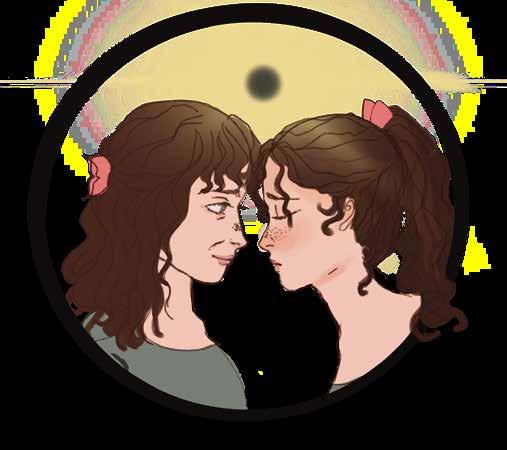
about how perfect everything is at being and I knew I couldn’t face the possibility of death yet. There must be something cradling me in this warm summer afternoon with the flies floating over the seeded grass. Was it God? I thought I believed in God, Mom, but I think I believe in you.
Ever since I came to college and left you, I’ve flirted with the idea of a power that cares about me. Is this all religion is? Human is born into a world of their mother in which everything centers around her and her love. Human begins to explore the ever-growing world in the shelter of maternal protection. Slowly though, Human wanders farther and farther and freedom comes to mean independence and choice and fate together rip: a quiet tear.
with the nauseating feeling of lost babies still hanging in the dark room. You didn’t lose us. We changed.
And we definitely cry sometimes and we beat our heads against the pillow, but haven’t we always done that? And sometimes we stumble out our jumbled minds and apartments into a sunny day and slowly raise our face to feel the warmth, our eyelids flutter softly, and suddenly we can hear sparrows too just behind the thick drone of traffic.

However, there remains the profound need to remain attached to a protecting figure and the desire to once again be a child to my mother. Human turns to authority; Hu man turns to God because Human misses their mom.
Dear Mom, I miss when we were all at home; I miss childhood in ways that I can’t express other than closeness and the creak of a staircase. I know that you feel lost and I know that I don’t have answers on this great transition from mother of children to mother of adults. I don’t know anything — I am not a mother, only a daughter.
I don’t want the dream to close out, the sky to be come red. I don’t want you to have to stand there alone against it all. I don’t want you to have to awake either,
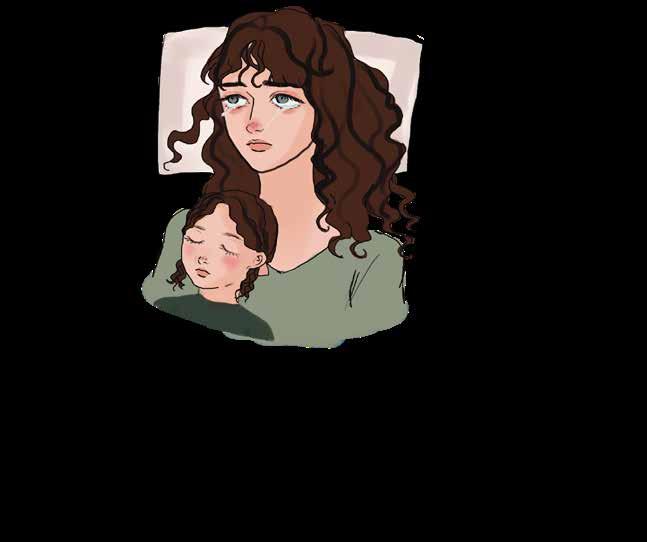

By: Sam Paisley Art by: Milanne Berg Design by: Chloe Cordasco
From low clouds thunder-torn
Nothing more promised than this
When shallow hills cast mystery hidden by fog
And a canyon of trees reaches up towards the sky from the river banks
There is a cup of coffee left overflowing with rain
At the window where I confide in nothing
Someday comparison would demand I set myself on fire I’ll set myself on fire by standing out in the pouring rain
Thirteen years ago I visited the moon In search of Moonwalking solar self-energy
Friends in a field, their shadows running long into the untilled From a distance
Their silk dresses more beautiful frozen than when they were worn
We all cried out with the sun
As August is the cruelest month when winter is ahead
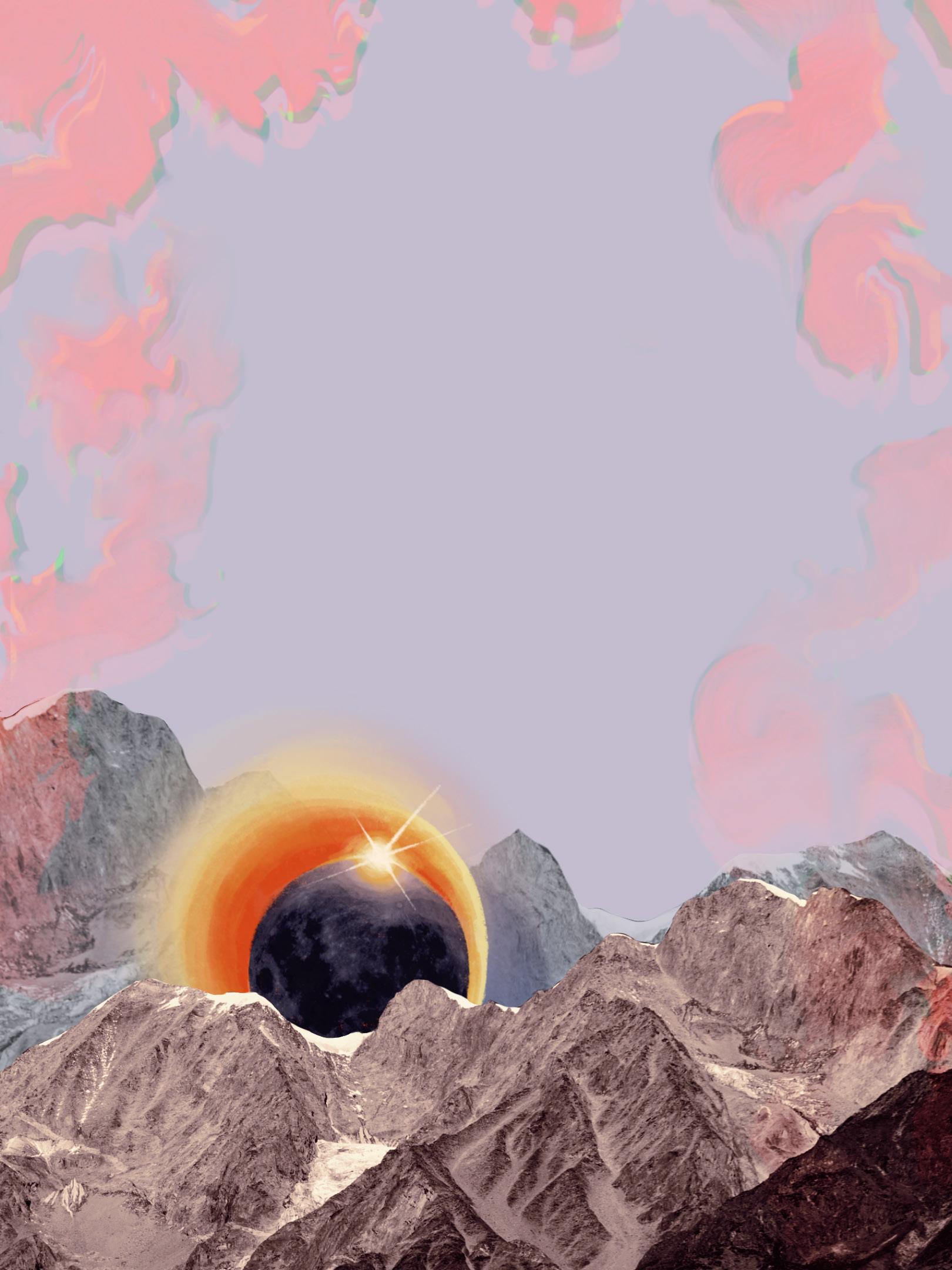


In July of 2023, I traveled with my cohort of Native American Research Internship students from the University of Utah to the 83rd American Diabetes Association Conference. My research was funded under a grant from the National Institute of Diabetes and Digestive and Kidney Diseases, so I knew well that Native Americans have the highest prevalence of diabetes compared to other racial groups in the United States.1 Despite this fact and Janet Brown Friday2’s inspiring keynote address for more racially cognizant research3 at the conference, I walked away from the research presentations feeling boxed, taped, and stacked into the anonymous abyss of the “other”.
Many of my fellow Native interns had the same experience of categorical exclusion. After a poster presentation of diabetes management racial disparities in teenagers, my friend commented wistfully that “she was a good presenter, and clearly proud of her work. It’s just sad that in her own research, she makes herself an ‘other’.” This problem of self-othering persists in many aspects of identity; we have unprecedented percentages of women in positions of leadership in academic research, and yet many clinical trials are still limited to only including men, and cell culturing often only draws from male specimens. So many of us climb the rings of academia and health science with a hungry passion only to fall prey
By: Rai-Ching Yu
By: Raegan Boettcher Design
By: Cara Lewis Art
Deconstruction is the heart of understanding social hierarchies from a feminist standpoint.
Deconstruction is the uncovering of buried oppositions.
to the same cyclic and systematic “othering” of ourselves in our research. We allow the crushing demand of academia to eclipse our sense of identities beyond the institutional monolith of white men.
We use the concept of othering every day. We other by establishing names at birth and comparing our test scores against the class median and grabbing the tea we ordered from the pickup counter instead of the drink of the person behind us. Lajos Brons, an analytical philosopher, concedes that “othering is common” and that it can be a necessity for self-identity4. In order to construct a sense of self, one must create a boundary from the outside other. Othering is employed to prove points and make distinctions and form comparisons. Yet this benign othering is different than malignant, “radically alien” othering. Brons defines the radically alien othering as establishing “a near impenetrable border between the self/in-group and the inferior/out-group”5. It is this hierarchical approach to othering that “justifies” damaging biases and subjugation. As the current Surgeon General, Vice Admiral Vivek H. Murthy, recently said at the Summit of Surgeon Generals at Dartmouth6, “It’s much harder to hate someone close up.” Radically alien othering provides the illusion of distance sufficient for hate. He proceeded to add that “our connection to one another is the foundation for a healthy community”. No wonder the converse, the reality of healthcare and research today riddled with senseless division and “others”, allows systemic health inequity. Radically alien othering allows hate to eclipse altruism, medical ethics, and basic principles of empirical research. When you deconstruct racism, sexism, homophobia, and other identity-based biases, radically alien othering is the foundation.
Brons warns that “history should teach us to be suspicious of such boundaries”7 His advice draws upon the dividing lines of othering that propelled the many racially and sexually charged scientific crimes of World War II and the 20th century. A common theme of these atrocities was that they employed the radically alien other to dehumanize “research” participants8. Janet Brown Friday reminded the ADA attendees that forgotten atrocities lead

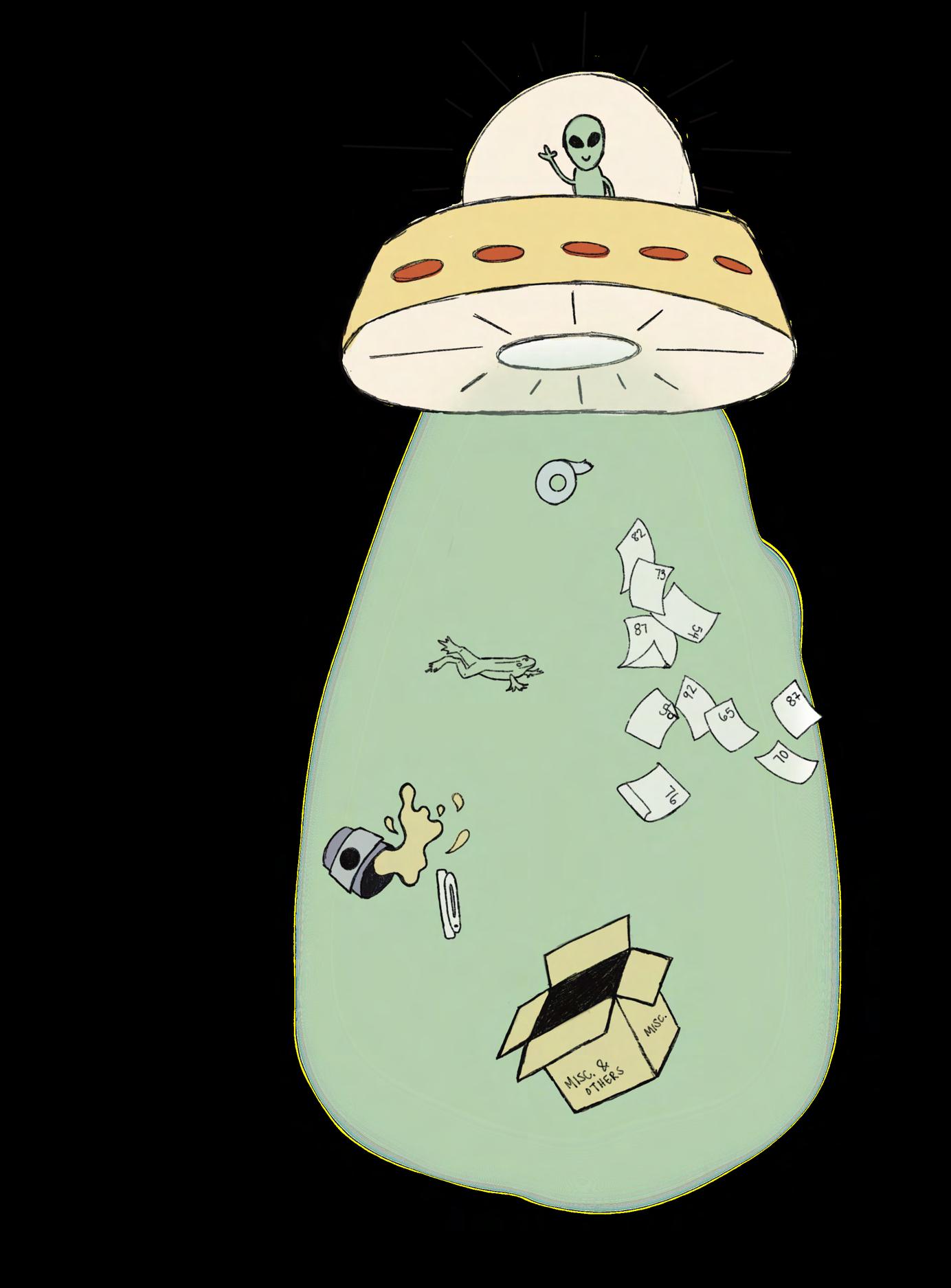
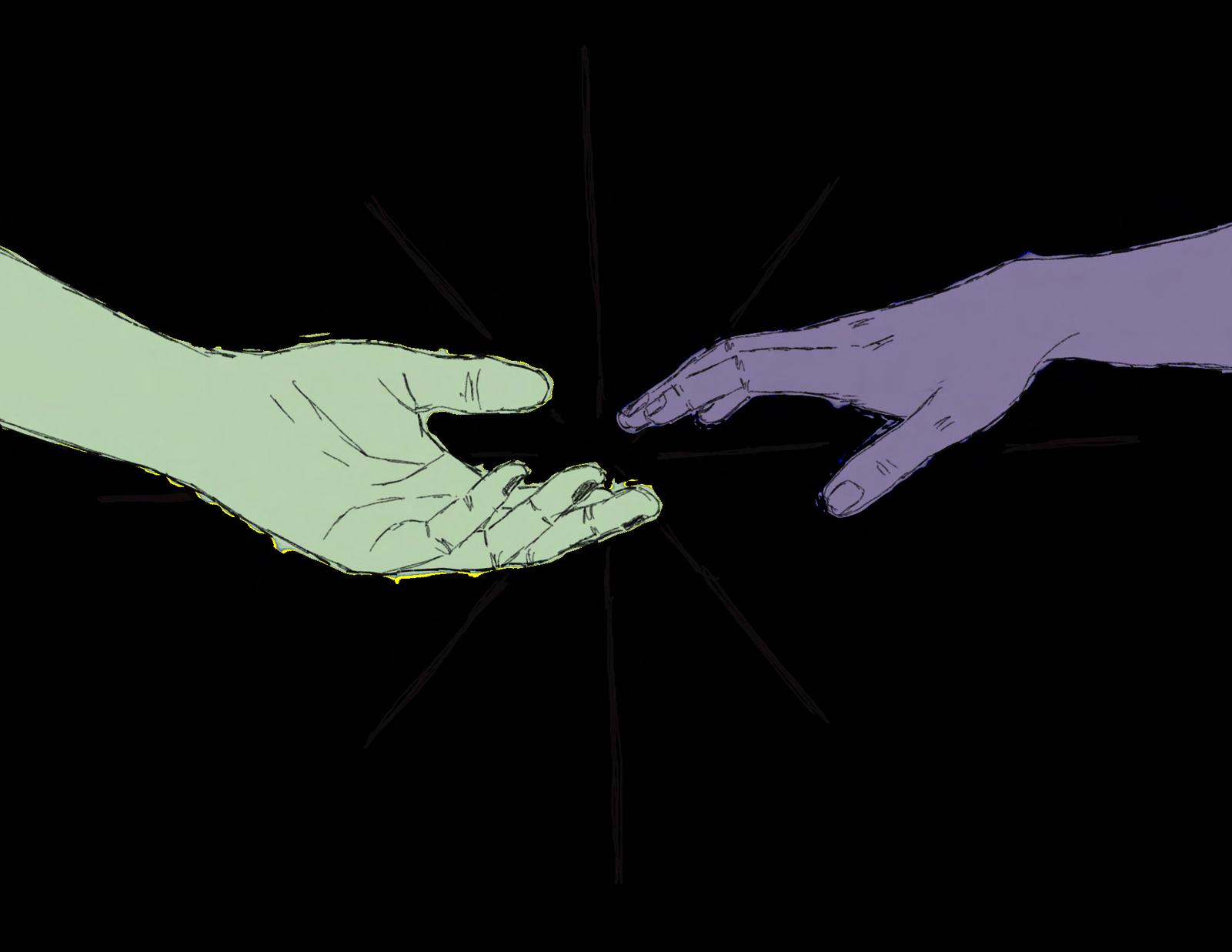
in shouldering burdens.
If one were studying differences between frog species, surely they would analyze more than just two species before saying that they exhausted the comparisons11. If one were to conduct a survey of who needed house insurance in a neighborhood, would you not want to include the block of houses that had all just burned down and not just the houses with expensive furnishings? Your data will be skewed if you choose to only include two frog species or only focus on houses with valuables due to inaccurate categorization and sample representation, and you will not achieve the point of your exploratory research in the first place. In order to have effectual research you must take into special consideration the categories outlined and how these groups relate to the purpose of the research.
There is a vital difference between categorizing and radically alien othering. Using inappropriate circumferencing language in conjunction with inaccurate categorization establishes the radically alien other even if the othering was unintentional. When the category of “other” is separated out in the face of supposedly encompassing racial disparity
culture in biomedical research. Many people self-identify, have mixed cultural heritages that are unique, and overly tedious separation would create more division. For example, while Pan-Indian perspectives can cause controversy and over-simplification, its unrealistic to separate out all the federally recognized Native American tribes which number over 30013. Still, when a scientist claims to quantify the extent of racial disparity in a field while only listing two racial categories and sometimes the ambiguous “other”, there is clearly inaccurate representation, misleading data, and the metaphysical transgres sion of othering. We must find balance for a more accurate and more human system of cate gorization. We cannot begin to collect accurate data or disassemble racial disparity in health sciences if our reconnaissance research propagates alienation and erasure.

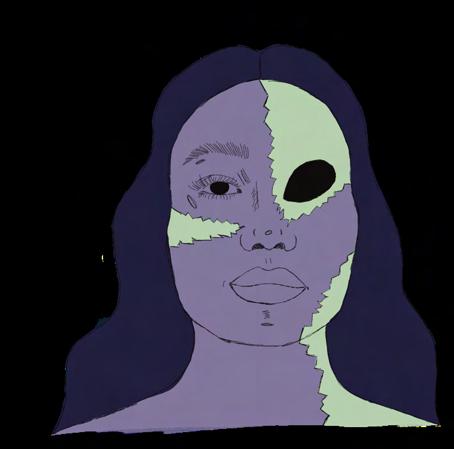
1 Centers for Disease Control and Prevention. (n.d.). Native Americans with diabetes - vital signs - CDC. Centers for Disease Control and Prevention. https:// www.cdc.gov/vitalsigns/aian-diabetes/index.html
2 Janet Brown-Friday, RN, MSN, MPH is the current American Diabetes Association President of Healthcare & Education and the American Diabetes Association Clinical Trials Manager.
3 Brown-Friday, J. Written Testimony of Janet Brown-Friday, RN, MSN, MPH President of Health Care and Education, American Diabetes Association Clinical Trials Manager, Albert Einstein College of Medicine’s Diabetes Clinical Trials Unit. (July 27, 2023). American Diabetes Association. https://www.jec. senate.gov/public/_cache/files/4e3d3dcb-bb45-4695-b846-5d7763204644/janetbrown-friday-jec-hearing-testimony---written.pdf
4 Brons, Lajos. (2015). Othering, An Analysis. Transcience, a Journal of Global Studies. 6. 69-90.
5 Brons, Lajos. (2015). Othering, An Analysis. Transcience, a Journal of Global Studies. 6. 69-90.
6 Murthy, Vivek H. (2023, September 21st). Surgeons General Round Table. Dartmouth College.
7 Brons, Lajos. (2015). Othering, An Analysis. Transcience, a Journal of Global Studies. 6. 69-90.
8 The public tends to forget that it wasn’t just the Nazis from the Nuremberg Trial that violated consent, justice, and liberty in the name of research. The United States Government and many scientists were bad actors while simultaneously establishing international codes of ethics. Eugenics was popularized and propelled by the climate of United States politics and prejudice.
Ko, L. (2023, September 6). Unwanted sterilization and eugenics programs in the United States. PBS. https://www.pbs.org/independentlens/blog/unwanted-sterilization-and-eugenics-programs-in-the-united-states/
9 Rock, D., & Grant, H. (2016, November 4). Why diverse teams are smarter. Harvard Business Review. https://hbr.org/2016/11/why-diverse-teams-are-smarter
10 National Commission for the Protection of Human Subjects of Biomedical and Behavioral Research. (1979). The Belmont report: Ethical principles and guidelines for the protection of human subjects of research. U.S. Department of Health and Human Services. https://www.hhs.gov/ohrp/regulations-and-policy/ belmont-report/read-the-belmont-report/index.html
11 There are in fact over 5000 species of frogs, so comparing only two species for a holistic review is completely ludicrous.
12 Such limited representation appeared frequently, including as a talk titled “The Contribution of Risks to Racial Disparities in Type II Diabetes” that only collected data on White and African Americans.
13 The National Archieves . (2023, January 1). The Federal Register. Federal Register . https://www.federalregister.gov/ documents/2023/01/12/2023-00504/indian-entities-recognized-by-and-eligible-to-receive-services-from-the-united-states-bureau-of
By: Noelle Blake
“How rare,” they say Heads tilted in awe ey point their cameras and ngers reach out as if to touch... Pull back, applaud instead
Art by: Ruth Brior Design by: Ella Grim
For a few seconds, with special glasses, ey leer at the moon before the Sun, bravely overtaking its glaring adversary For a few seconds.
But the moon must return to her place, where she belongs Waiting, watching A mere vessel for the Sun to beam through her pores
In her brief moment of glory she stands proudly dark and de ant against the Sun’s brutal kiss
Finally she thinks to herself, ignoring the pointed heat Bearing down on her back
How long can it last?
She begs the Sun for one more moment
But a rock will always pale In the light of a blazing Star Earth stands by waiting for the re to push the moon into the margins
A stranger in the sky
Don’t worry ey’ll applaud her as she goes And thank her for her bravery

The song “Intergalactic,” my beat-up 2015 Honda Civic, our local burger joint, the show Spamalot, and the matching jewelry that we bought on a girls’ trip to Portland, Oregon. These are the most prized moments of my best friend and our relationship. Scattered all around our hometown, we have built our own story.
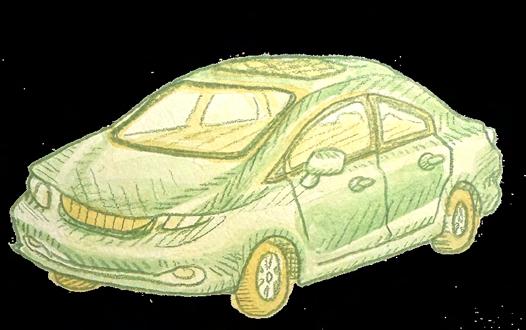
Up until the day I met her my mind had been plagued by this societal pressure that women need to find romantic relationships to be complete. Then I met Cate.
She was not my romantic relationship, but she was my soulmate.
We had our own fun together, like kids left to their own devices in an empty house. Cate and I would make up songs with horrible dissonant melodies, we would play cards (I often let her win because, in all honesty, it was starting to get embarrassing how bad she was), we watched sit-coms, and laughed way too hard at mediocre jokes, and we talked about anything and everything. She grounded me in the way that we are told adulthood is supposed to, creating a sense of stability, responsibility, happiness, and trust in my life.
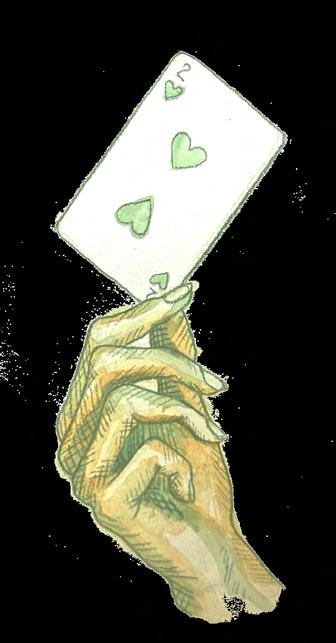
I knew that this relationship was as strong as any I had ever had, stronger even. Our friendship was not as fickle as romantic love tends to be, breakable by the slightest insecurity or disconnect. Opposite of the way that romance seems to

By: Ava Razavi
by: Sophia Abati
by: Lillia Hammond
drain us, making us feel like we consistently have to be the perfect partner to hold onto our relationship, my friendship recharged me. I never pretended to be perfect in front of Cate, she knew all of my flaws and did not care. Never once did I fear that her knowing I could not spell the word “simultaneously” (thank you Grammarly), seeing my horrible charade performance, watching me cry after a hard day, or listening to me complain for the millionth time about a situation that I maybe could have taken partial accountability for, would drive her away. That kind of connection cannot be cast aside.
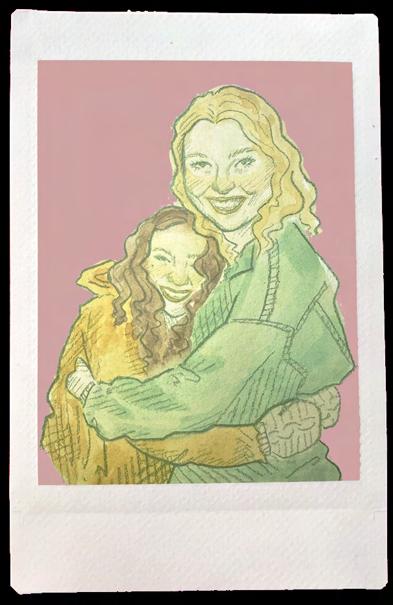
As a woman I have always lived in a state of double consciousness, existing through other people’s eyes.
Before I leave the house I check my outfit and make sure that traditional people would not find it too provocative or alternative. I try my best to remain “ladylike” but not “girly” in conversations with my superiors because I wouldn’t want them to think of me as someone who is ditzy but I also don’t want to come across as a powerhungry bulldozer. The is female brain conditioned to care indescribably deeply about what other people think of us,
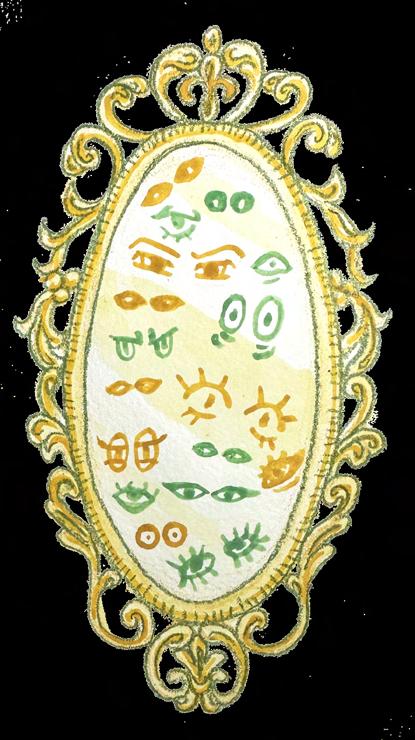
and we have been trained to do whatever we can to ensure their positive perspectives of us. In my female friendships, I find a pocket of peace from this constant awareness of judgment. We know how much these judgments hurt, and how tiring it is to live a life of double consciousness, so in turn, we choose to let the other be who they are.
Aristotle spent a rather significant amount of his career arguing that platonic love is the highest form of connection, which goes against our contemporary view of romantic relationships taking precedence over platonic ones.1 He theorized that people only encounter a couple of true platonic relationships in their lifetime due to the time and level of connection and respect that they must achieve to reach the highest level of love. With this in mind, I think it is time that we place more value on our female friendships. How many times do you meet someone who can tell when you are having a bad day with just a glance from across the room? How lucky and rare is it to find someone who cares for you only to be there for you emotionally, without romantic or sexual undertones?
And how much I care for my female friends. have found that female friendships release calming hormones that romantic relationships do not.2 We find tranquility in each other’s presence.
This sense of calm allows us to open up to each other and inquire about things we have always been too scared to ask, creating a space of growth and learning. It was Cate who taught me what it meant to truly listen to someone in crisis, not forcing advice down their throat, but instead providing reassurance. She was the one who taught me to draw boundaries with others when I felt taken advantage of. Had she not been there for
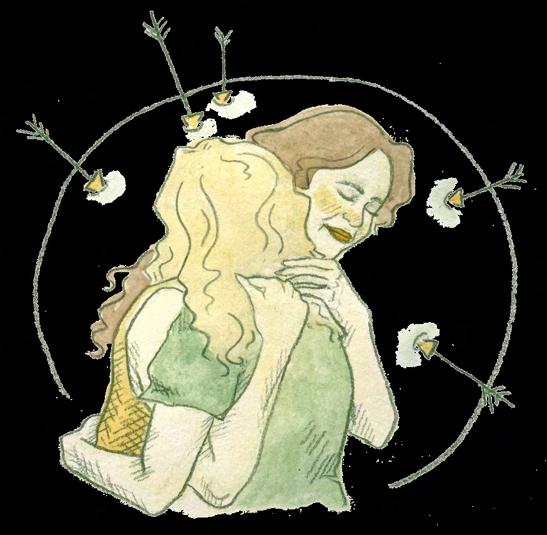
me, I am sure I would not be half the person I am today. We live in a world where sexual and romantic relationships are placed on a pedestal, and while they have their own benefits, that does not mean that there isn’t immense value in female friendships. In the words of Dolly Alderton,
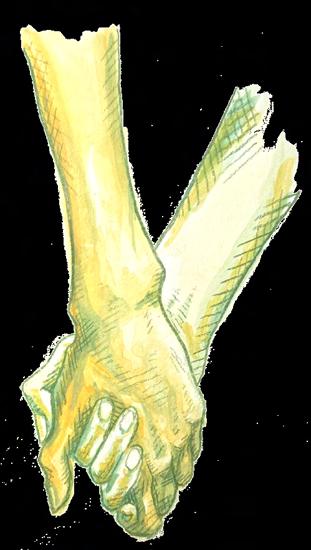
“Nearly everything I know about love, I’ve learnt from my long-term friendships with women.”3

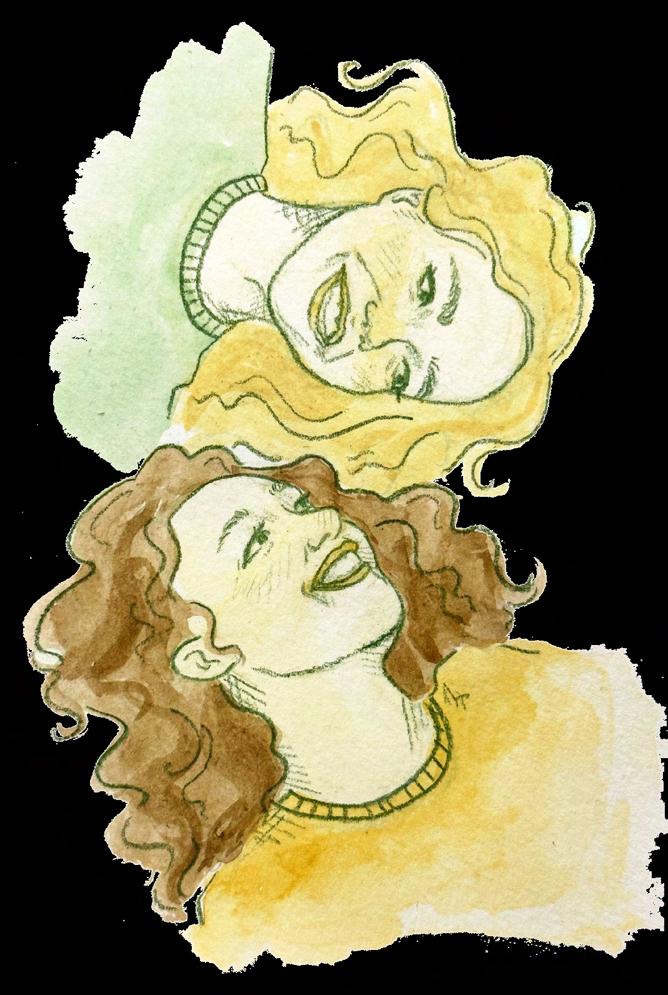
1- McCoy, Marina Berzins, ‘Friedship and Moral Failure in Aristotle’s Ethics’, Wounded Heroes: Vulnerability as a Virtue in Ancient Greek Literature and Philosophy (Oxford, 2013; online edn, Oxford Academic, 1 Jan. 2014), https:// doi.org/10.1093/acprof:oso/9780199672783.003.0006, accessed 19 Oct. 2023.
2- Marcus, Bonnie. “Hanging with Your Girlfriends Helps You Live Longer and Happier.” Forbes, Forbes Magazine, 2 Feb. 2021, www.forbes.com/sites/ bonniemarcus/2021/02/02/hanging-with-your-girlfriends-helps-you-live-longerand-happier/?sh=48d586966973
3- Alderton, Dolly. Everything I Know about Love. Penguin Books, 2022.






By: Chloe Cordasco
Art by: Chloe Cordasco

Design by: Mia Ting

How do you enter a house
Is that a rude question
Is it rude to not care
Do you use the concrete path
When you turn in from the street
Do you step on the common green
Avoid the home keen pachysandra
Do you use a door or a window
Do you use a key or pick the lock
Do you look around at all, at all
The people smoking up from the street
Do you read on the porch at all
Every month before the light goes
Out, I didn’t used to know this, but
Keys are easily copied, codes learned
Nails painted, and from the street
There is and there isn’t a difference, between
Self awareness and self revelation
Do you think I’m being cryptic
Do you have a problem with it Fuck you (ok)
You are not the main character, I am not her
Either, we aren’t even the house. And in there there isn’t a chance(-character-encounter) in it but The one you act like you see
When you act like you see
Did you know I know you don’t (I don’t)
I’m not being honest. I need to try again. Please lmk when you get this. Call me back.
Dinner tonight? No, Girl dinner tonight?
Girl dinner
Girl syndrome. Girl disorder. Girl disorder? Girl? Disorder?
Lucky girl syndrome Yes Um Yeah, No thanks
Pete, I have something to say to you
It’s not very romantic I was never very good at performing anyway
Been sleeping on the stairs Dressing lesbian again Where
It’s hard to get to, where There’s Good in it, Fuck the rest.
I’m sorry, I’m not, I’m distracted. But you. You driving in the dark You need to know
You need to be careful, You need to know
There is nothing I have Nothing I can Keep can I not please can Nothing I Can use Later when Something I forgot Not
Forgot no not That, where There is something I Cannot Feel where There is nothing I can Not Go Since Kant can’t cunt but I Can’t Even Count
All my fingers, I Get tired, and they Get dirty. And there is Something There Where Nothing Does Where I’d Like To
Stop,
Please, can I ask Will you laugh at me
When I invariably involuntarily Spill
Down the front steps in front of the neighbors Homeroom in five minutes, that’s four now Is empathy sadomasochistic
And when you look at me confused I Say the same thing again, and Isn’t it though, because I don’t know how you feel But I like to imagine. It hurts being you.

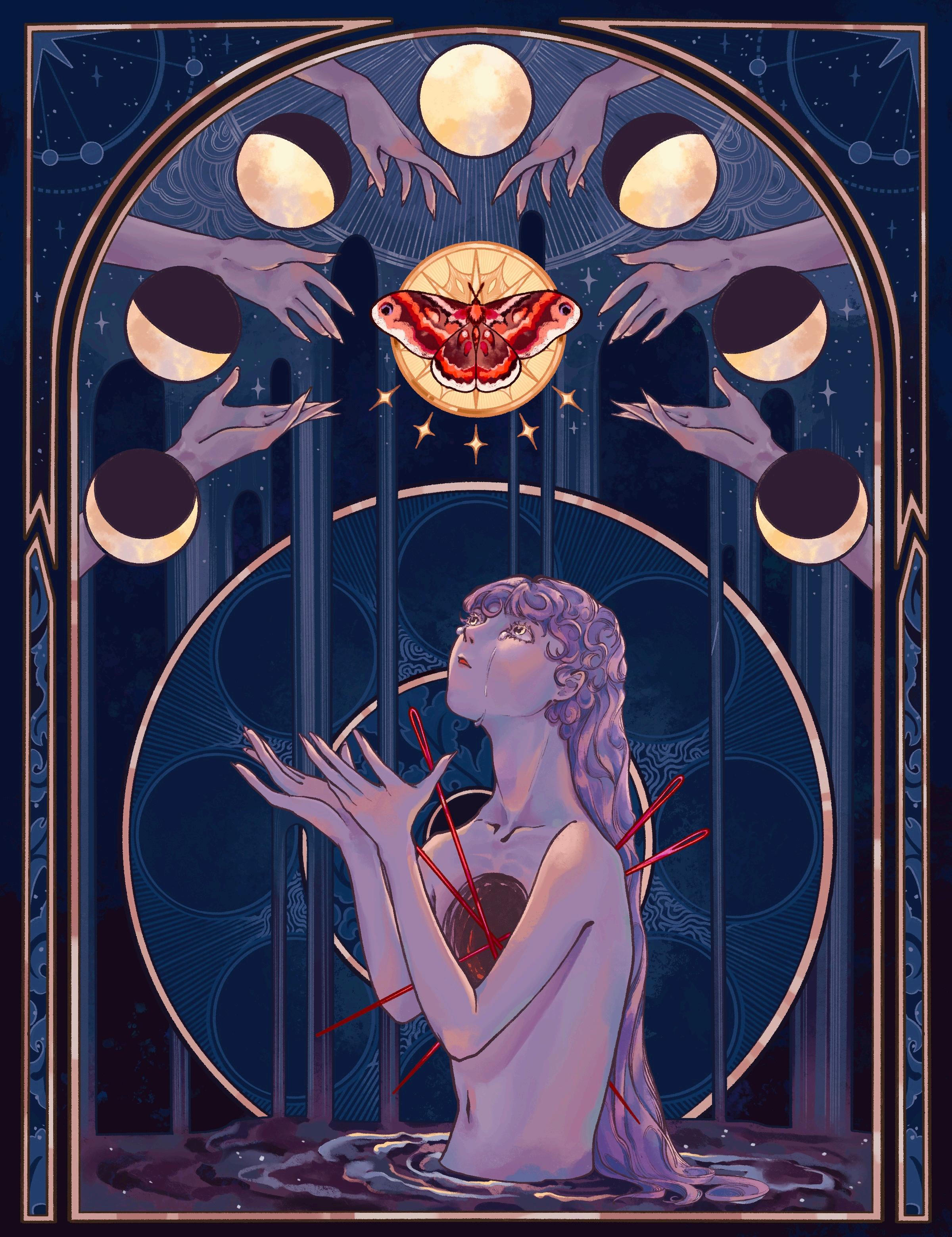
dear Spare Rib <3
dear everyone who worked on the zine - everyone who worked in the community, who showed up to staff meetings and socials, who created pieces that shared their thoughts, who communicated their needs and their limits. thank you. thank you. thank you.
to many, Spare Rib is a radical thing. a collective of ridiculously hardworking people. a community. and one that can put into art, print, and action: the thing that might be the most needed thing in this world.
we talk about things. we do research and we make art and we have conversations that are definitely not permitted in a lot of other spaces. that much is growing clearer. but together we actually grow grow. .
it is not always easy living and working in this society. we get burnt out. we are tired and have trouble getting things accomplished. we are constantly witnesses to unimaginable actions in this world, where helping each other is made more difficult by systems designed to separate us. history seems to be crushing itself, in this world we share.
but we keep trying. we keep trying and we communicate with our friends when we need help. it is impossible to push through alone, but organized together, we can accomplish great things against the odds.
there is so much work to do. so, please, take care. of yourself and of each other - it is the work.
with love, chloe, yaying, and aryma your 23f design leads
Abby Bordelon '24 - special projects*
Abby de Leon '27 - design, art
Addy Reid '27 - design, art
Ava Razavi '27 - writing
Avery Lin '27 - writing, editing
Cal Shin '27 - art
Camille Yang '25 - art
Cara Lewis '26 - writing, cover art
Chloe Cordasco '24 - editing, writing, art, design*
Claire Mann '27 - writing
Clara Schreibman '27 - art
Connor Schafer '24 - writing
Devin Gifford '27 - writing
Eda Naz Gokdemir '25 - editing
Ella Grim '25 - design, editing
Emily Chang '26 - special projects*
Emma Johnson '24 - marketing
Grace Caplan '26 - writing
Harper Richardson '27 - design
Helen Cui '27 - design
Kat Arrington '24 - writing, community development*
Kate Ginger '27 - writing
Katherine Jia '27 - design
Lillia Hammond '26 - design
Maanasa Reddy '27 - art
Marion Caldwell '25 - writing
Mary Howley '25 - art
Mia Ting '27 - design
Milanne Berg '24 - design, art, general manager*
Mimi Moore '25 - design
Noelle Blake '26 - editing, writing*
Rachel Roncka '26 - logistics*
Raegan Boettcher '24 - design, art
Rai-Ching Yu '27 - design
Roan Wade '25 - writing, art
Rosa Lopez '26 - writing
Ruth Brior '27 - art
Sabrina Chu '26 - community development*
Sally Young '26 - writing, editing, marketing*
Sam Paisley '25 - writing
Serena Suson '25 - editing
Skyler Rockmael '27 - writing
Sophia Abati '27 - art
Sophia Gregorace '24 - art
Sophie Williams '23 - art, general manager*
Stephanie Xu '27 - design
Sydney Mann '27 - writing
Tiffany Chang '23 - logistics*
Yaniya Gilford '27 - writing
YaYing Yu '26 - art, design*
art: created art for articles or standalone pieces
design: a the layout for each page
editing: copyeditors who gave writing feedback writing: authored an article
*: acted as a department lead notes