WSA LEADS LEGISLATION IN MADISON
CHECKOFF RESEARCH IS FUTURE FOCUSED
BRISKY, BENSEND TO SERVE ON UNITED SOYBEAN BOARD
WSA LEADS LEGISLATION IN MADISON
CHECKOFF RESEARCH IS FUTURE FOCUSED
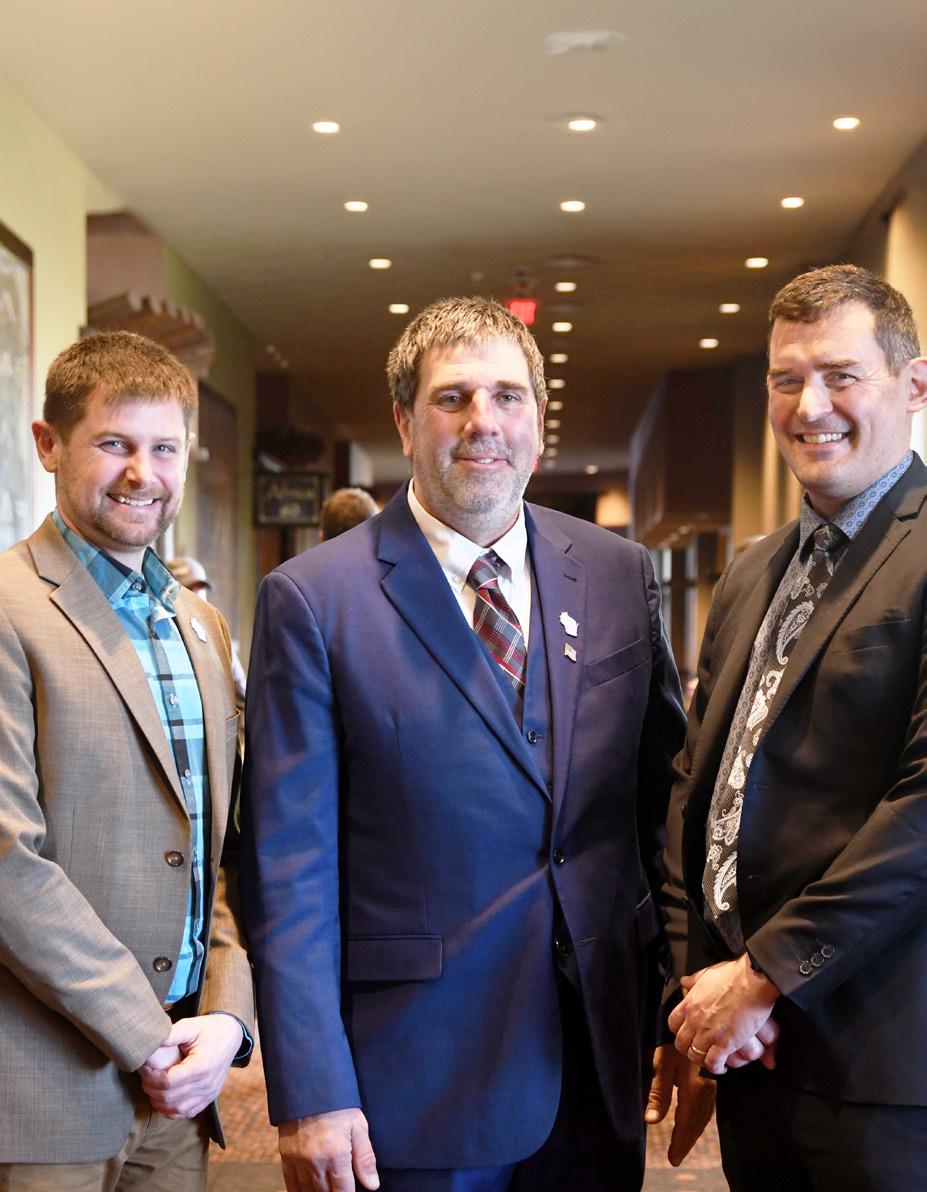
BRISKY, BENSEND TO SERVE ON UNITED SOYBEAN BOARD
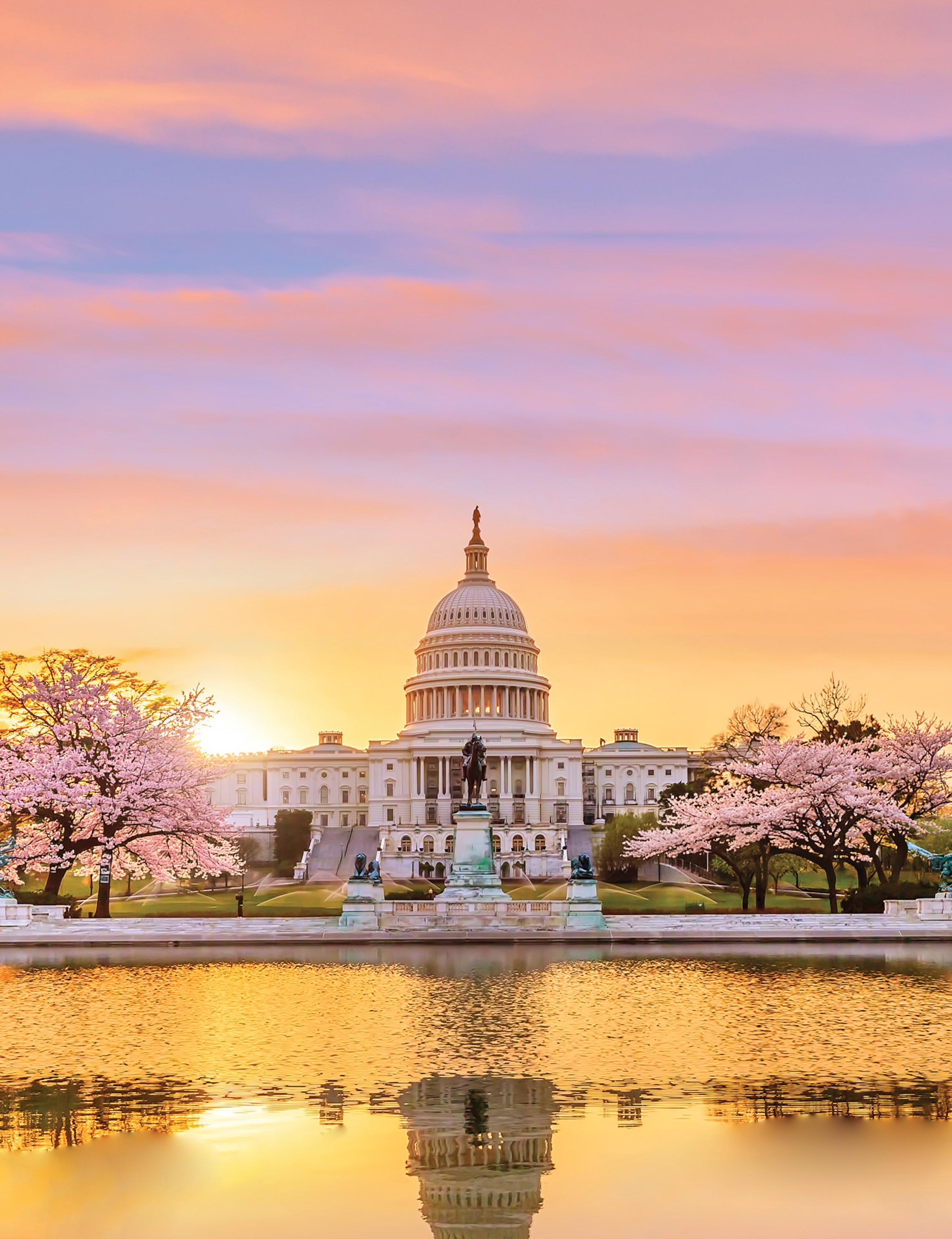
WSA earns its stripes in D.C.
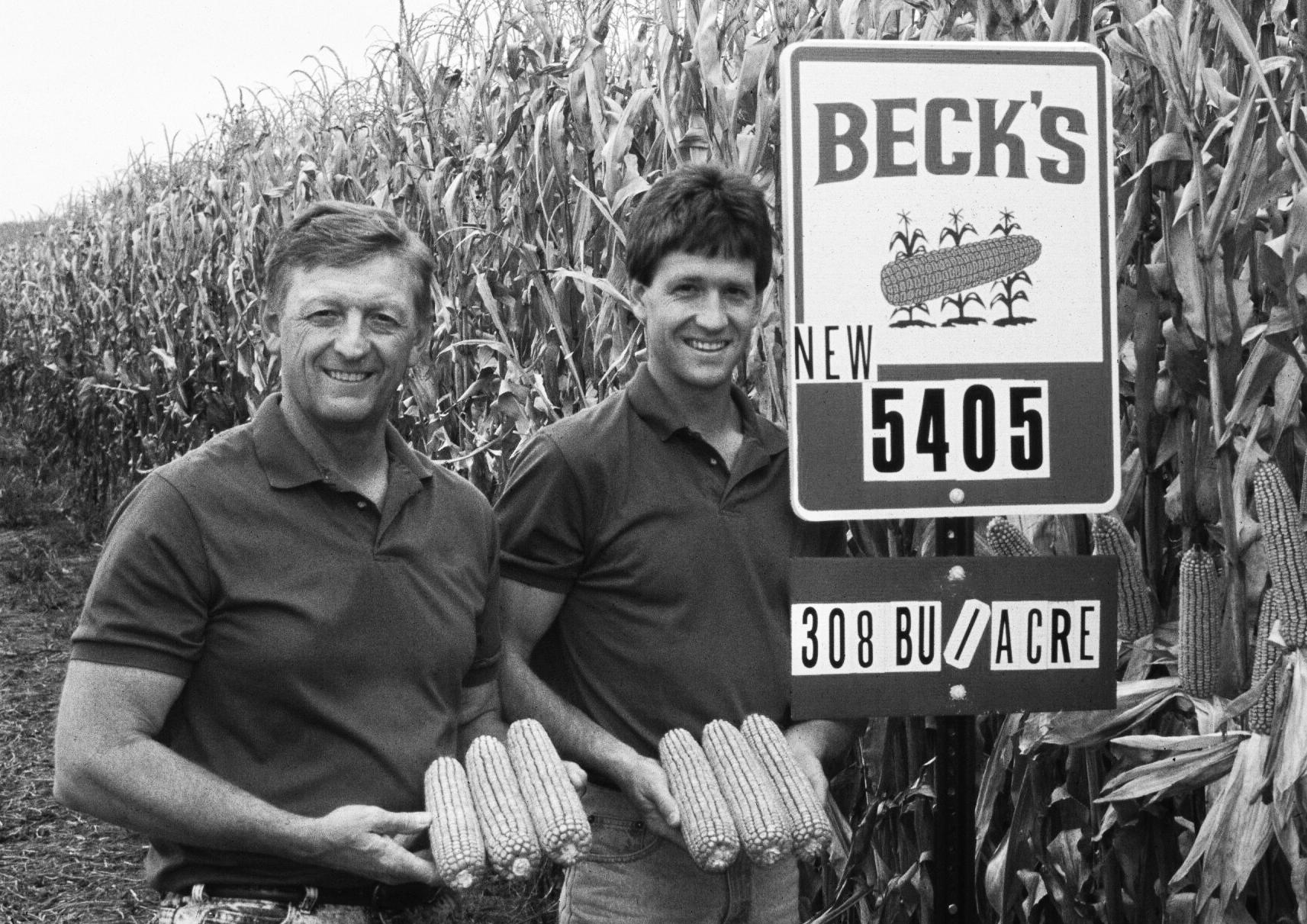
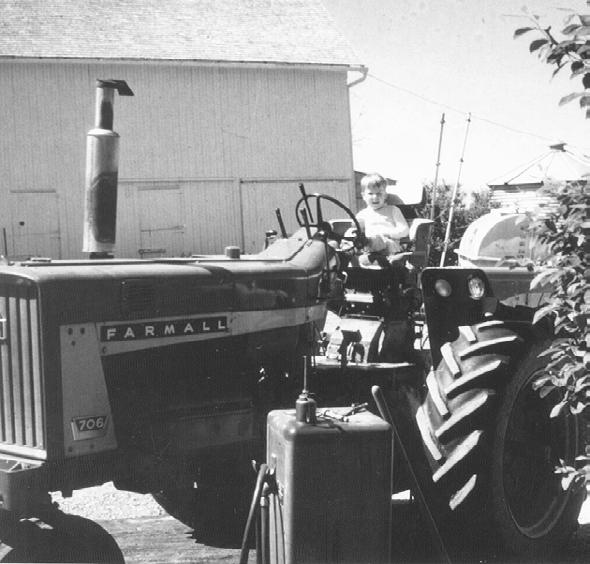
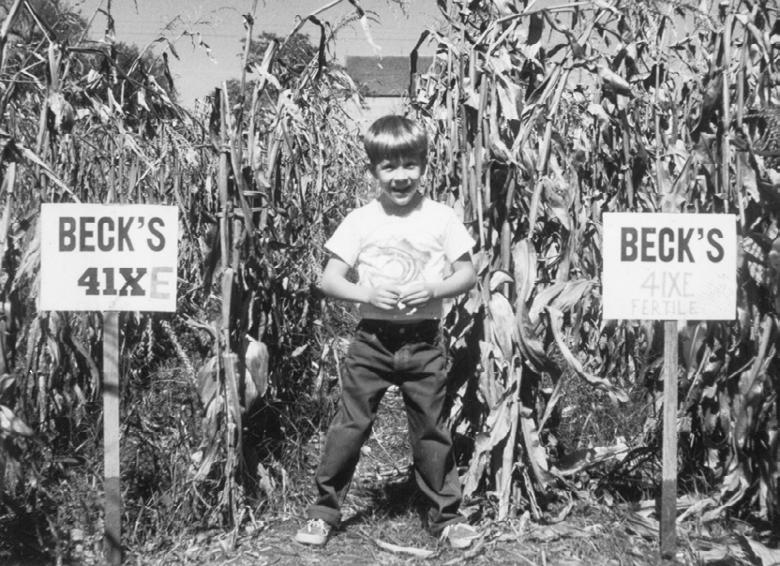
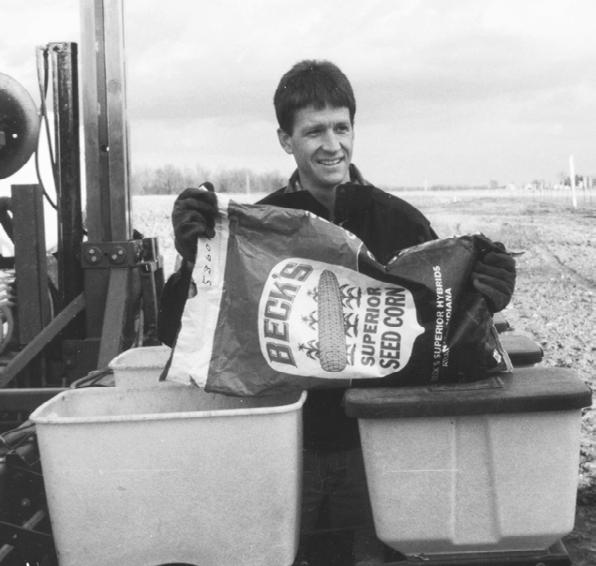
A legacy of faith. A tradition of farming. A future rooted in both.
Would extra weeks of residual protection help?
Then you should try ...
You must already be using ...
Your choice of herbicide should be an easy one — especially with extra weeks of residual weed control from Zidua® brand herbicides. When you're dealing with a Ziduation in your fields, Zidua brand herbicides are here to help you face it.

Wisconsin Soybean Association directors were well positioned to speak up for soybeans farmers while in Washington, D.C., in early 2026. President Doug Rebout was invited to attend the State of the Union, and a few weeks later joined his fellow advocates for a round of policy visits on Capitol Hill. We live in uncertain times, yet rest assured: WSA is advocating for Wisconsin soybean farmers.
Read more on page 18.
wisoybean.org/wsa 608-274-7522 admin@wisoybean.org

From the Dairyland to D.C., Wisconsin Soybean Association (WSA) farmer directors work on behalf of 1,200 members to ensure sound ag policies for Wisconsin’s nearly 17,000 soybean farmers.
Your voice in Madison. Grassroots advocacy is at the core of WSA’s mission. Our volunteer farmer leaders serve as the voice of soybean farmers in Madison and Washington, D.C. WSA’s advocacy efforts are directed by farmer leaders and driven by membership dollars, lobbying support and collaborating with the American Soybean Association on federal policy issues.
Founded in 1973, WSA is a grassroots advocacy organization. We rely on volunteer members to help fund our advocacy efforts.
WSA is farmer led, which means the men and women fighting on your behalf understand the issues important to the districts and farmers they serve.
Profitability – by working to adopt usage of biodiesel, fighting to keep valuable farm inputs and more.
Ideas That Work – we push for plans that bring value back to farmers, such as biodiesel adoption.
Growing Markets – we work for state investments in infrastructure by land or water to get your crops to market.
Board members from across the state represent the voices of Wisconsin soybean growers to advocate for government policies and support research that helps improve the profitability of soybean farmers.
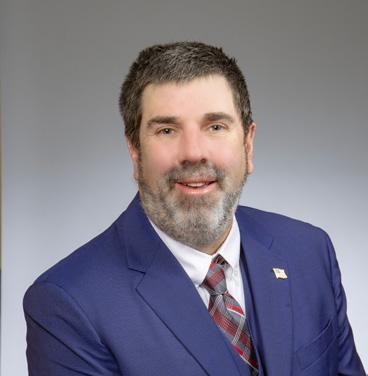
Doug serves as president on WSA’s officer team, representing District 3. He raises soybeans, corn and wheat in Janesville alongside his brothers and nephews.
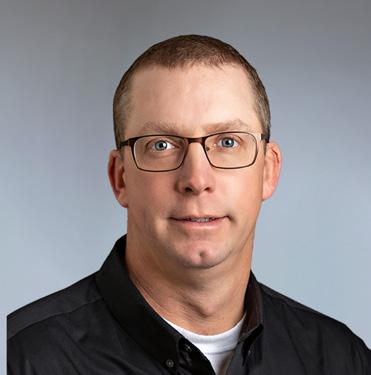
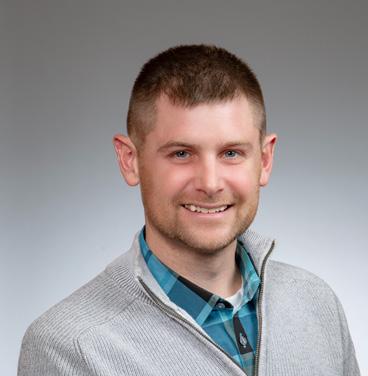
Matt serves as WSA vice president and represents District 3. A first-generation farmer, he raises soybeans, corn and wheat on his operation in Darien.
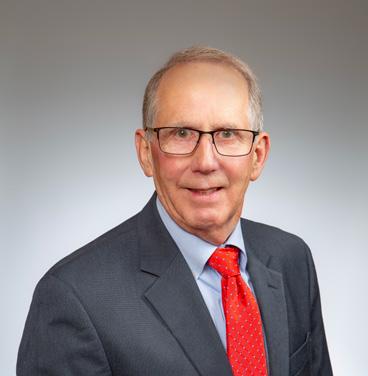
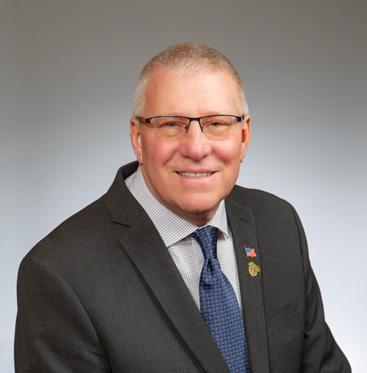
Dave is a recently retired banker with a lifetime of experience in both agricultural and commercial lending. He joined the WSA board in 2023 as an industry representative. Serving District 3, Dave was reelected WSA treasurer in 2026.

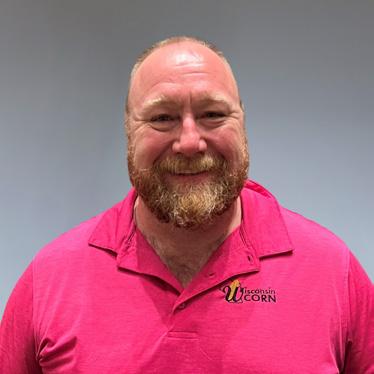
Daniel represents District 1 and serves as WSA secretary. He grows a mix of soybeans and corn with his father on his farm in Mondovi. Along with crops, the Linses also raise turkeys.
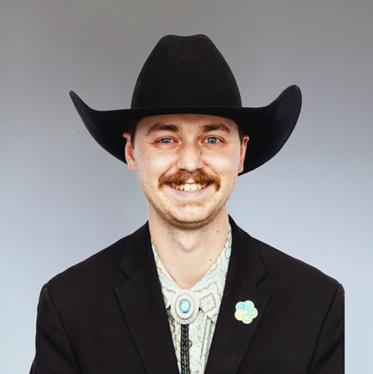
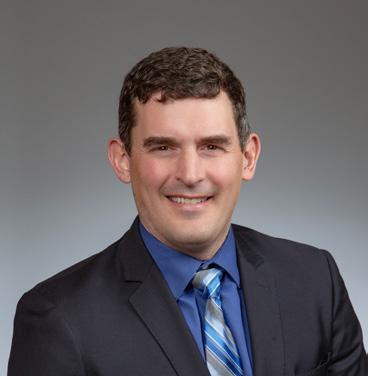
Danny grows soybeans and corn near Columbus with his three uncles. He completed ASA’s Young Leader Program in 2024. Danny also works as a crop insurance agent, is involved in Astico Perseverance 4-H club and is a soil health advocate.
Katie was elected in 2024 as an industry director for WSA. She is the district sales manager for Legacy Seeds and resides in De Pere, representing District 4.
Longtime advocate Luke Goessling is an at-large director with WSA and serves as co-chair of the Wisconsin Corn•Soy Expo. He farms soybeans and corn in Whitewater alongside his wife and two sons and also owns and operates a gravel trucking company.
Eric Wuthrich farms in Monroe with his wife, Jaclyn, raising soybeans, corn and chickens. A fifth-generation farmer, Eric is WSA’s current ASA Corteva Young Leader.
WSA Executive Director Adam Kask akask@wisoybean.org (608) 274-7522
Managing Editor Drew Lyon drew@agmgmtsolutions.com (608) 274-7522
Art Director Alex Troska atroska@agmgmtsolutions.com
Sales Manager Erin Rossow erossow@agmgmtsolutions.com (507) 902-9191
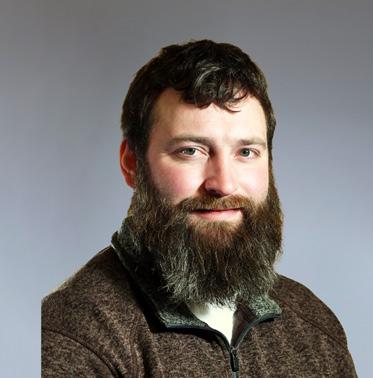
Brad is a WSA Young Leader at-large after graduating in 2025 from the American Soybean Association’s (ASA) Young Leader Program. He farms in Columbus on a family dairy operation. In addition to cattle, Brad raises soybeans, corn, alfalfa and sorghum.
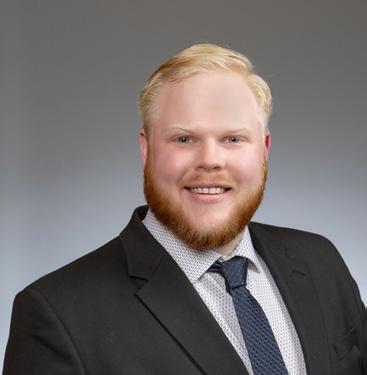

Amber joined WSA in 2025 as the District 4 director. Amber and her husband, Zac, raise soybeans, corn and wheat in Seymour. With a lifelong passion for ag, Amber is a past ASA Young Leader and currently a NK Seeds representative working with ag retailers and growers across northern Wisconsin.
Advertising space reservations can be made by the 15th day of the month prior to publication. In consideration of the acceptance of the advertisement, the agency and the advertiser must, in respect of the contents of the advertisement, indemnify and save the publisher harmless against any expense arising from claims or actions against the publisher because of the publication of the content of the advertisement.
Advertisements within this publication contain the opinions and information of the advertisers and do not necessarily reflect the opinions or views of the Wisconsin Soybean Program or affiliated groups.
Soy Forward is published quarterly on behalf of the Wisconsin Soybean Association. Circulation comments and suggestions can be submitted to Managing Editor Drew Lyon.
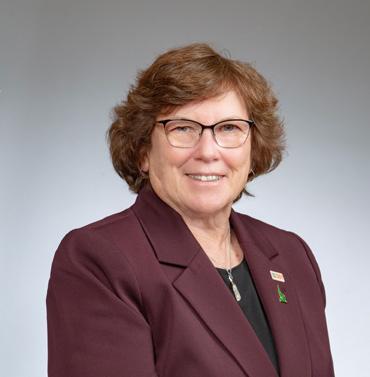
Sara is WSA’s District 2 director and served as president from 2023-25. She operates a diverse farming operation that includes soybeans, corn, peas, green beans and cattle in Wautoma.
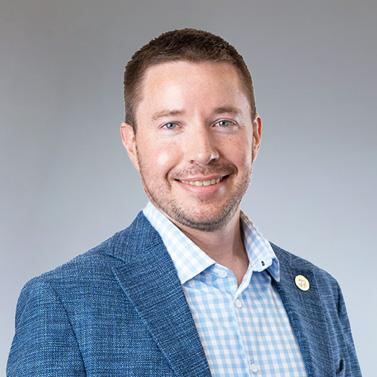
Tanner is a first-generation farmer from Prairie Farm. He is an at-large director for WSA and serves on and serves on ASA’s Executive Committee. Tanner is also a 2017 graduate of ASA’s Young Leader Program.
Steve is a past WSA president who currently represents WSA on ASA. He farms primarily soybeans and corn in central Wisconsin near Amherst.
Adam is the executive director of both WSA and the Wisconsin Soybean Marketing Board. A U.S. Army veteran, Adam has years of experience working in farm policy, market development and agronomy.
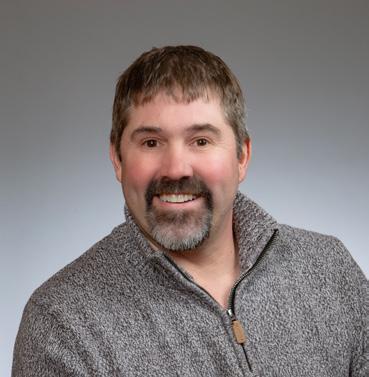
Dr.
Dr. Conley is a professor of agronomy and is the soybean and small grains specialist at the University of Wisconsin-Madison. Shawn is WSA’s representative on the board for the University of Wisconsin’s College of Agricultural & Life Sciences.

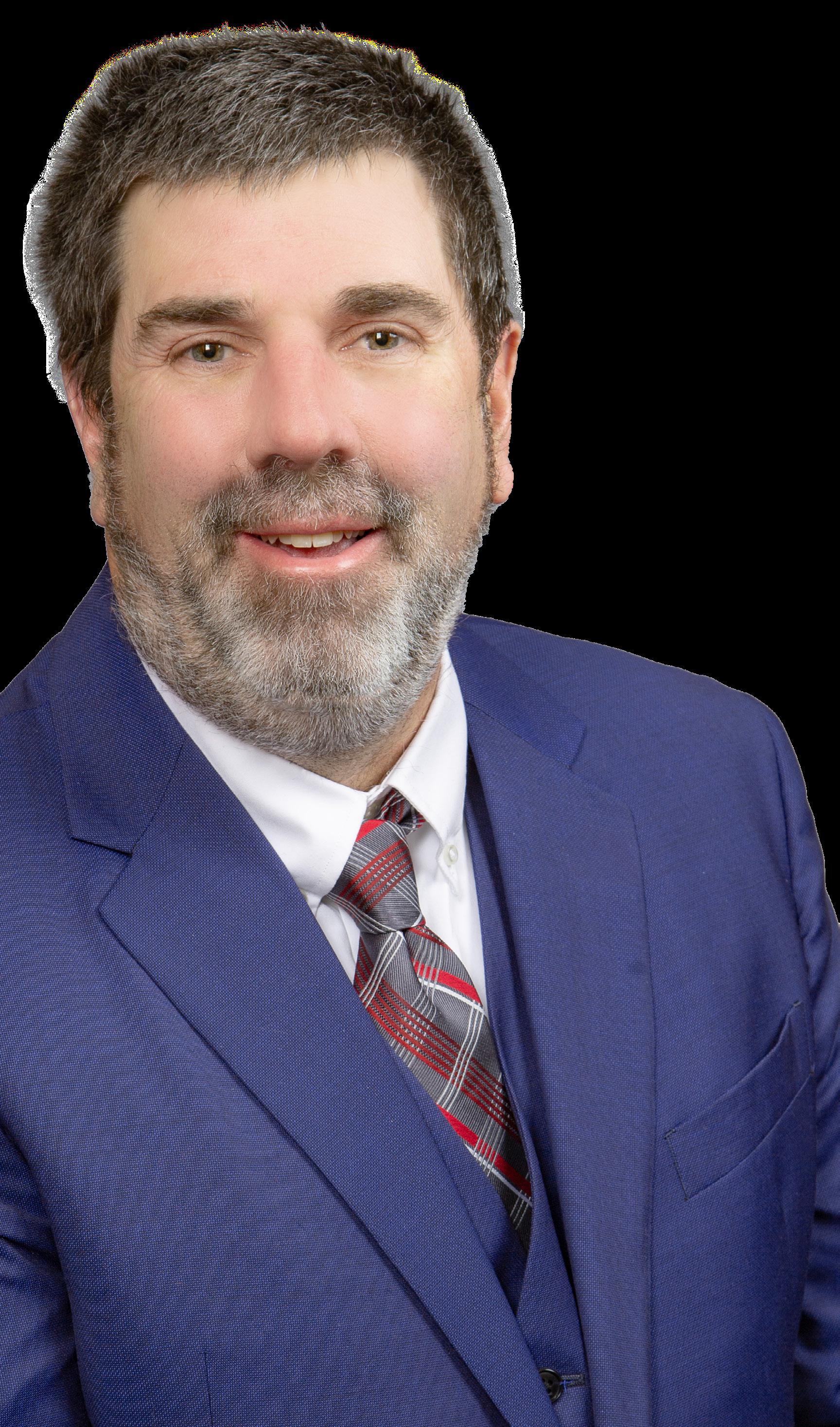
I was honored during this year’s Wisconsin Corn•Soy Expo to be reelected as president of the Wisconsin Soybean Association. I want to thank our entire board and our members for your support. We have accomplished a lot over the past year, as you have seen in our awardwinning magazine, but more work remains. I truly believe that our board and staff are going to continue to be one of the leading ag organizations in Wisconsin – along with continuing to elevate our presence on the national stage.
I’ve had a few humbling moments this past year, but none bigger than being invited to attend the State of the Union address in Washington, D.C. I was invited because of the relationships I’ve built with my congressman and his staff during legislative visits over the years, and also because of the work WSA has done speaking up about tariffs.
When we speak on behalf of 17,000 soybean farmers across Wisconsin, I know we are not always going to agree on what that message should look like. Before we speak, we take pride in gathering information and talking with farmers and industry leaders across the state and country.
As an organization, we work closely with people on both sides of the political spectrum; we promote policies, rather than playing politics. When we walk into our elected officials’ offices, whether we’re in Madison or Washington D.C., it doesn’t matter if they are Republican or Democrat. We are there to talk about agriculture, which should be a bipartisan topic. During our conversations, we agree on some things and disagree on others, but when we walk out, we shake hands and say, “We will see you again on our next visit.”
The mutual respect we have with legislators is a part of advocating that I take pride in. But when social media enters the chat, people feel more emboldened to make comments that can be meanspirited and insulting. When conversations turn into petty insults and negative comments, the farmer message gets lost.
Our country was built on agriculture – many of our Founding Fathers were farmers – and we’re a driving force of our economy. So, as we plant another crop this spring, I challenge my fellow farmers to make a difference. Instead of criticizing people who think differently than you, have a conversation with them and try to understand their point of view. You don’t have to always agree, but it’s OK to have a different opinion. Our political system feels broken because people criticize instead of listening and having constructive conversations. I challenge you to break this cycle and show everyone that farmers are leaders. The first step in bringing our back country together is by having those tough conversations.
And when we’re done, we can sit down and have a drink together. At the end of the day, we’re all trying to make our little corners of the world better for our families and the next generation.
Thank you for supporting Wisconsin agriculture and WSA! Let’s pledge to work together to listen and support each other, our communities and our agricultural industry.
Doug Rebout President, WSA
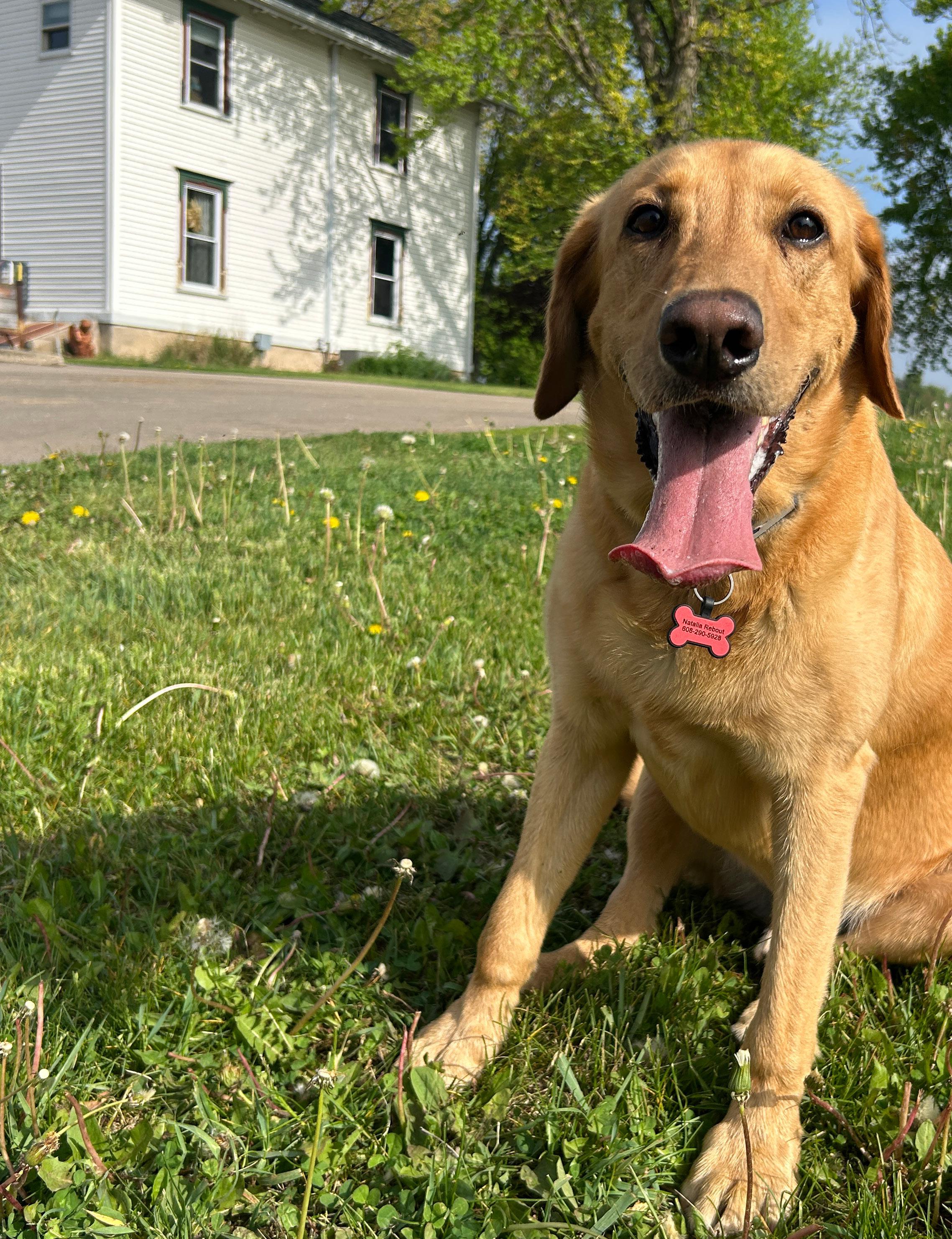



An orange comet soars through the sky, and my strong legs are on a mission. Dad can toss that ball a long way. I always find the ball, except when he throws it in the fluffy flowers that explode and get stuck in my nose. I sneeze a lot when that happens. And I can’t smell my favorite ball!
Have I told you I’m strong? I’m a big dog. Strong. Name’s Jake. Herding cow dogs takes a big guy like me.
Most mornings, I ride over to the farm with dad. We hop in the “truck,” as he calls it.
Dad loves the farm. I love all the smells — musky, rich and full of life. Dad likes feeding the cow dogs every morning. He says it all the time. Sometimes I help the cow dogs eat. Too grassy for my taste.
Other days, I keep the cow dogs in order. It’s a good boy’s job and really easy for me. If you put your head just below the fluffy tail thing on the cow dog’s head; well, that stops ’em every time.
Ever since I was a pup, dad has brought me to the farm. Sometimes I explore the plants in the fields. Some get really tall and cut at my tail. Others just hang over my back. I like running through the rows, especially on wet muddy days.
When dad brought me home, he taught me how to herd a family, too. Sometimes, being the good boy I am, I can sense when the family is really busy.
Have I told you how smart I am?
That’s why I make sure to play with my family a lot. When you’re part of this family, it’s important to have broad shoulders. There’s a lot to do, and it seems things never stop. Good thing for me, there’s always another ball.
By Kelsey Barchenger
When Eric Wuthrich was selected as Wisconsin’s participant in the American Soybean Association Corteva Agriscience Young Leader Program, it marked more than a professional milestone — it positioned him as one of the state’s emerging voices for soybean growers.
Hailing from Monroe, Wuthrich represents Wisconsin in ASA’s longest-running leadership development program, founded in 1984 to identify and train innovative growers to serve as advocates for American agriculture. Participants complete two multi-day training sessions. The first takes place at Corteva’s headquarters in Iowa, with the second held in conjunction with the annual Commodity Classic, which focused on leadership development, communications strategy and key issues shaping the soybean industry.
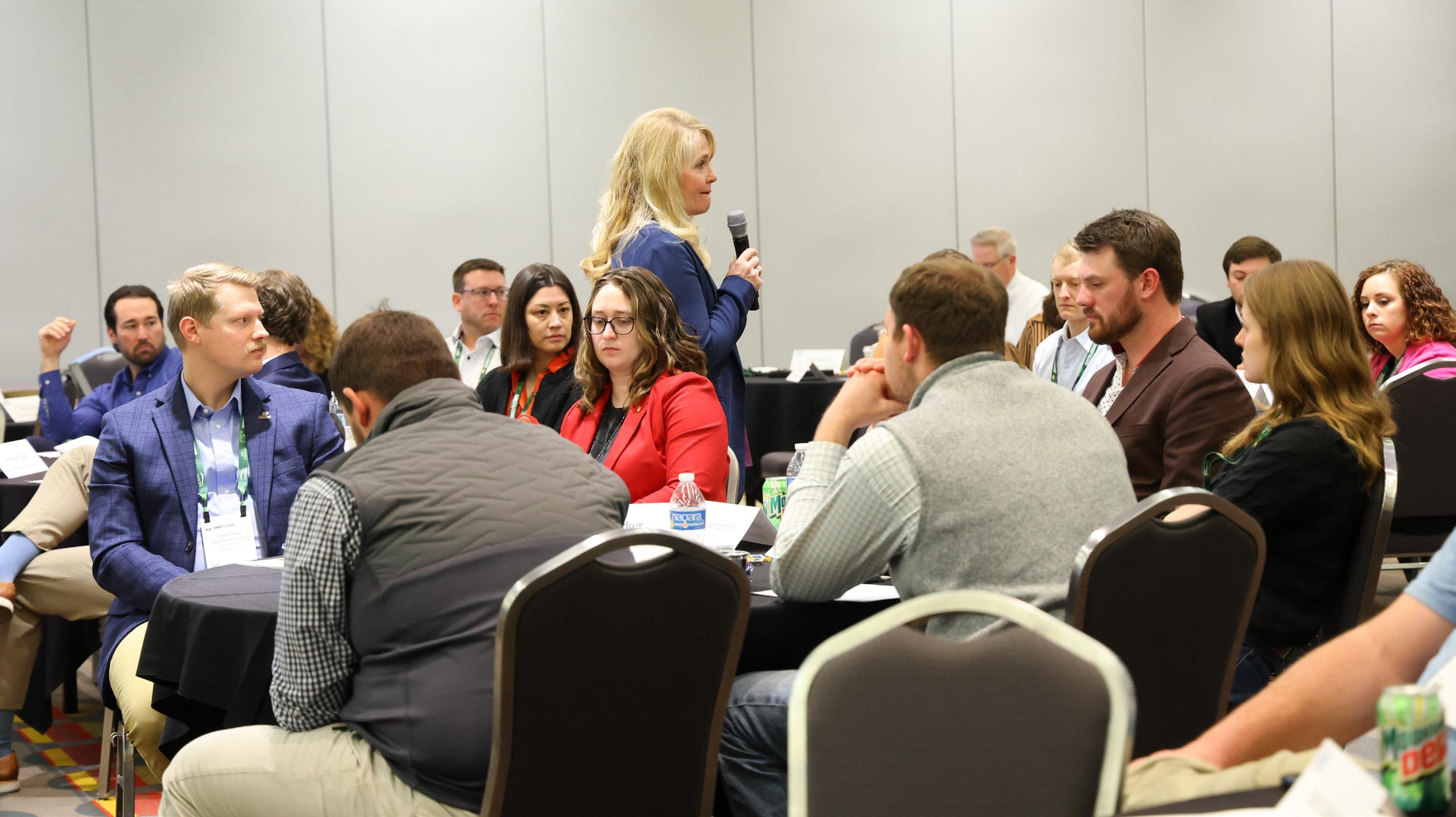
The ASA Corteva Young Leader Program is held in two parts. A third, invite-only session takes place in July in Washington, D.C. Information on applying for the 2026-27 Class is expected this summer.
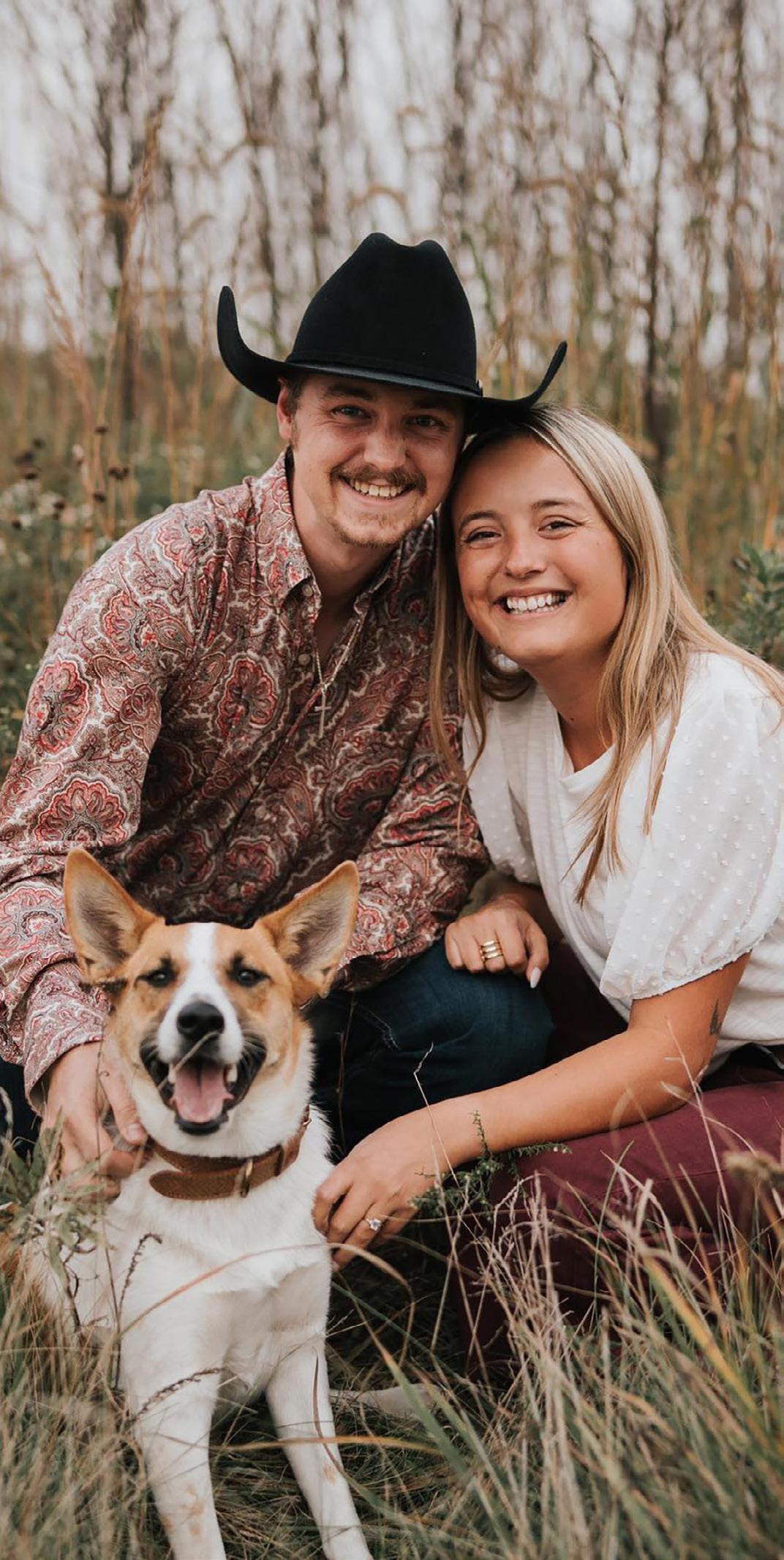
For Wuthrich, the opportunity to participate with his wife, Jaclyn, was a natural fit. In addition to his role with ASA, Wuthrich worked through his local Green County Farm Bureau to emphasize advocacy. He’s encouraged fellow farmers to engage in policy discussions, including at events like Ag Day at the Capitol, where he urged first-time attendees to confidently share their family farming stories with legislators. He’s also a passionate rural mental health advocate.
“I was excited to be involved with the Young Leaders program,” he said. “I’ve been involved through Farm Bureau on some other leadership trainings and really wanted to dive deeper into how to expand my leadership opportunities through different organizations.”
Although he did not grow up on a farm, Wuthrich’s passion for agriculture began while visiting his grandparents’ farm as a child. That early connection helped guide his educational and career path.
After graduating from the University of WisconsinRiver Falls with a degree in agricultural business and minors in crop science and agricultural engineering technology, Wuthrich made the move to pursue his dreams in Wisconsin’s farming community. He currently farms with Jaclyn on his fifth-generation farm, previously operated by his grandparents, raising soybeans, corn and chicken. He hopes to expand the livestock portion of his operation in the future.
He said the ASA Corteva Young Leader Program gives him the perfect platform to confidently represent agriculture in legislative settings and public conversations.
“We learn how to tell our story,” said Wuthrich, who began overseeing the family farm in 2023. “We are voices for farmers as farmers and ag professionals, so it’s been a great opportunity to learn how to express to legislators and the general public, the issues that we have as soybean growers in the state of Wisconsin.”
Wisconsin Soybean Association President Doug Rebout said the Young Leader program offers the board a chance to bring on young leaders with new ideas.
“Our ASA Corteva Young Leaders serve three years on the board,” Rebout said. “For us, we get the benefit of a young farmer who is being emersed in ag advocacy and leadership. It helps keep our ideas fresh.”
Many current Wisconsin Soybean Program directors, including WSA Vice President Matt Rehberg and American Soybean Association Director Tanner Johnson, are Young Leader alums. The program is supported thanks to soy checkoff support from the Wisconsin Soybean Marketing Board in its ongoing efforts to promote the next generation of farmer leaders.
The program also fosters collaboration among farmers from across the country, offering exposure to different production practices and business strategies.
“It’s always an awesome opportunity to get to know people outside of our area, listen to what their farming practices are and how we can help grow our farm and help my customers all throughout Wisconsin with different farming practices,” Wuthrich said.
Those relationships often extend well beyond the seminar sessions, creating a network of engaged growers who frequently move into leadership roles within state and national soybean associations.
By Kelsey Barchenger
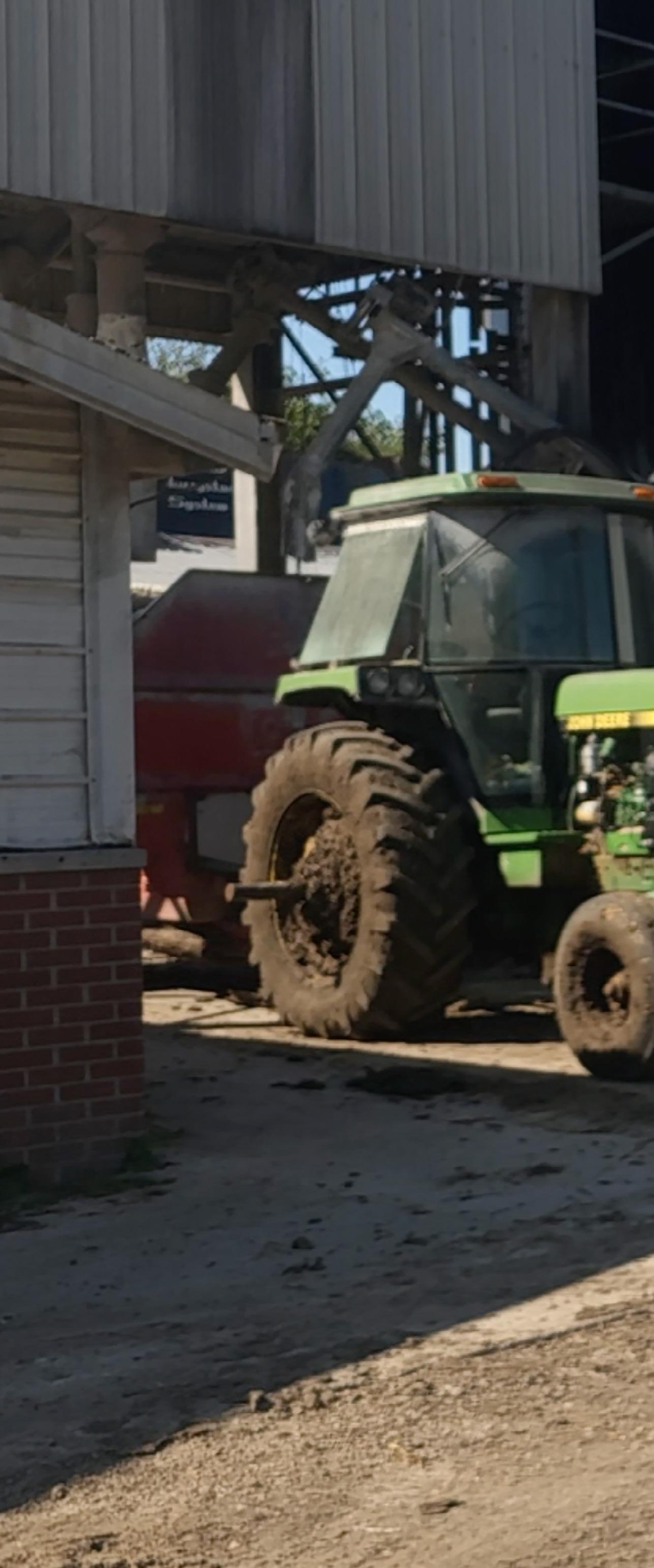
For some, farming is a career choice. For Brad Sennhenn, a director with the Wisconsin Soybean Association, it has always been a way of life.
“I was around it every day … riding around in the tractor with my dad,” Sennhenn said. “I just kind of got a love for it.”
That appreciation began early, shaped less by classrooms and more by barns, pastures and fields that demanded attention seven days a week. Saturday mornings often meant vaccinations and moving cattle.
“Dad really wanted our help,” Sennhenn said. “We were busy all the time shoveling feed.”
Like many young adults raised on farms, Sennhenn briefly stepped away to consider other options. He attended Madison Area Technical College for a year and took time off to evaluate his future.
“I realized I wanted to keep farming,” he said.
Today, Sennhenn is part-owner of his family’s dairy operation, where he works alongside his parents. It is a true family enterprise.
“Me, my dad and my mom do all the work,” he said. “My mom helps milk, and me and my dad do a lot of the other stuff.”
Working together has created more than a functioning farm. It has built lasting memories.
“It’s nice seeing them every day,” Sennhenn said. “You have a lot more memories with your parents.”
Years of experience have shaped the farm’s routines and systems. Cattle move through the barn in a set pattern. Equipment is operated in ways refined over time. While technology has evolved, Sennhenn still relies on familiar methods in the field.
“I still use the markers on the planters and follow the rows,” he said with a laugh. “There’s more corn in crooked rows, so right?”
The approach reflects a balance of tradition, practicality and doing what works best for their land.
“It's just a way of life,” said Sennhenn, who currently serves as a Wisconsin Soybean Association at-large director. “You have to enjoy what you're doing to keep doing it. It's hard work, which I enjoy.”
Farming presents challenges throughout the year, from weather uncertainty to market pressures. The reward, he said, comes at harvest, along with seeing how WSA and the Wisconsin Soybean Marketing Board’s soy checkoff program work to improve on-farm profitability.
After long days in the field and barn, he values the simple routine of returning home.
“My favorite part of the day is going home and seeing my wife, my dog and my cat, just relaxing,” he said.
For Sennhenn, farming is more than an occupation. It is identity, responsibility and legacy that he continues to carry forward each season.
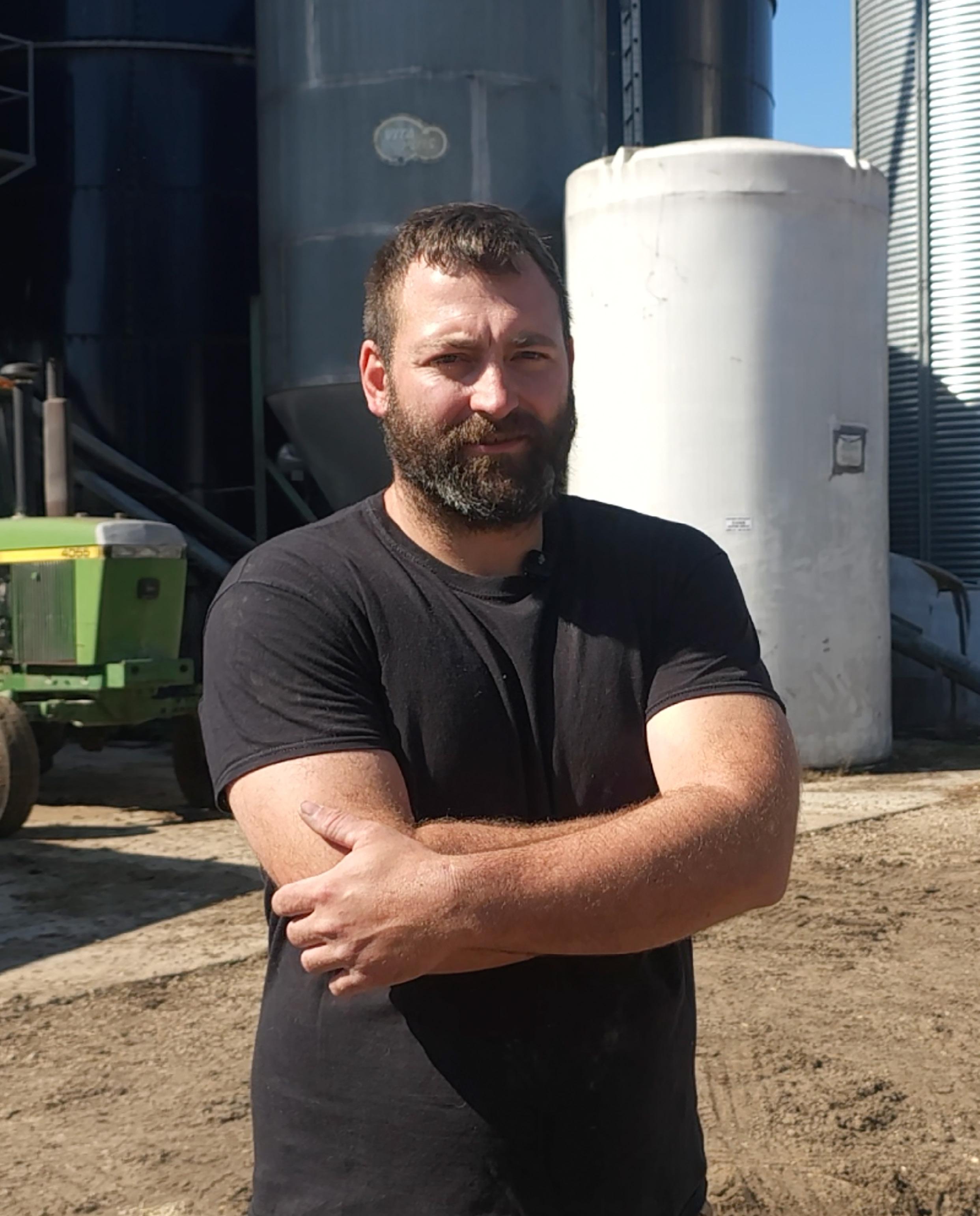
Scan the QR code to watch Brad in action
By Keaton Dorzek
The Wisconsin Soybean Association (WSA) continues to be an effective voice for the over 16,000 soybean farmers across Wisconsin. With the reelection of President Doug Rebout and his officer team during WSA’s Annual Meeting at the 2026 Wisconsin Corn•Soy Expo, farmer leaders are seeking to expand WSA’s efforts to continue to positively impacting farm policy.
“WSA is being heard,” Rebout said. “We’re an active board with great staff, and we’re making priorities and tackling those priorities.”
Rebout says WSA is continuing to advocate on behalf of all soybean farmers across Wisconsin. Through continued connection with policymakers, he hopes to ensure that WSA always has a seat at the table for important decisions.
Accompanying Rebout in his next term is his officer team, which includes Vice President Matt Rehberg, Secretary Dave Linse and Treasurer Dave Coggins. This team, reassembled for yet another term, is ready to pick up right where they left off.
“Internally, refining our organization and working more as a team is important,” Rehberg said. “Outwardly, of course, is continuing to grow our advocacy program.”
Rehberg emphasized that strong leadership is needed to refine and grow internally as an organization. He pointed out Rebout’s ability to represent farmers and build relationships with legislators.
“Doug’s done a great job,” Rehberg said. “He’s fearless when it comes to talking to legislators. He’s very measured and comfortable. They know him. He knows them. He is a great leader for our organization and a great spokesman.”
Rehberg’s compliments reflect a greater sense of growth within the organization. Over the past few years, the organization has grown exponentially. With this, more farmers and leaders have stepped up across Wisconsin, something Linse sees as crucial.
“When I joined during COVID, it was like pulling teeth to get people involved,” Linse said. “Now we’re seeing more young leaders step up. That’s a really good sign for the future of WSA.”
Coggins said this growth isn’t just limited to legislative and leadership involvement; the production of soybeans has increased across Wisconsin. From 2010-2024, Wisconsin soy producers boosted production by over 20%, harvesting 102 million bushels in 2024.
“When I grew up in the northern part of Wisconsin, I don’t think there was an acre of soybeans grown in my county,” said Coggins, a recently retired agricultural lender. “Today, Rusk County… has 30,000 acres, which is pretty remarkable.”
Expanding at both the farmer and legislative levels is essential to the growth of WSA. Rebout emphasized that a stronger, more engaged base will only help advocacy efforts. With that, he hopes to continue to grow WSA’s leadership as well as soybean farming across Wisconsin.
“It’s important as farmers to belong to farm organizations who work on their behalf,” Rebout said. “We want soybean farmers to join WSA. The more people that become members and get involved, the stronger we’ll be.”

THANK YOUTO OUR 2026 SPONSORS YOU TO THANK YOU TO OUR 2026 SPONSORS
THANK YOUTO OUR 2026 SPONSORS YOU TO THANK 2026



FRIEND OF AG
FRIEND OF AG

















WSA shows its ‘strong presence’ in Madison
By Drew Lyon
If an advocacy group wants to see legislation make its way to the governor’s desk, it’s often best practice to be aggressive and lead from the front. Even then, a new piece of legislation might take several years before becoming law.
That’s exactly the type of proactive approach the Wisconsin Soybean Association (WSA) took during the 2025-2026 legislative session.
“Fortunately, we were the exception this session,” WSA President Doug Rebout said. “We got something done in pretty quick fashion for our members and our rural communities.”
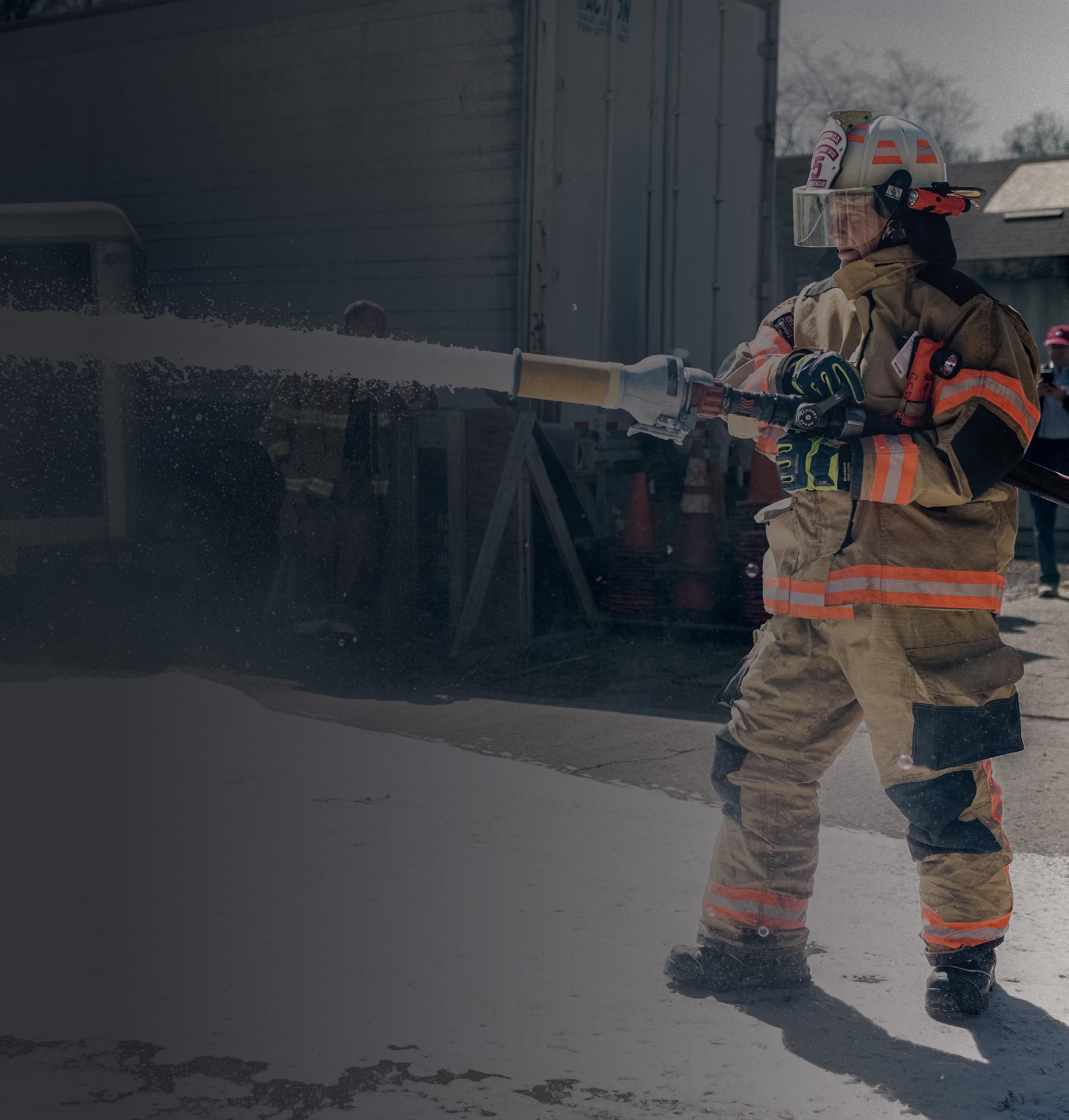
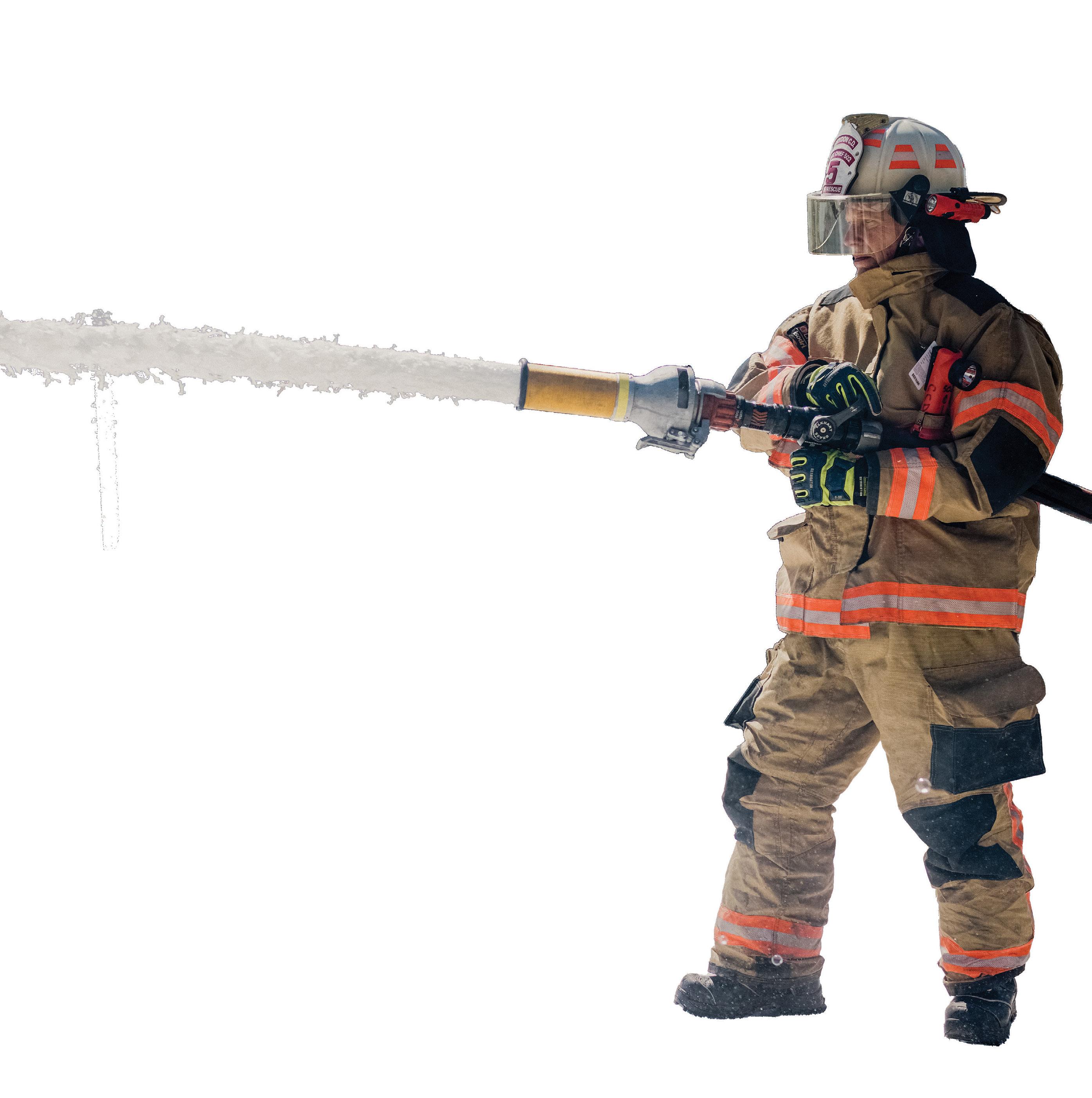
Last year, Dave Garlie of Cross Plains Solutions came to WSA with a problem that could be solved via legislation: SoyFoam, a soy-based firefighting foam developed by Cross Plains Solutions, had trouble qualifying for the Wisconsin Department of Natural Resources’ approved list of fire suppression grants.
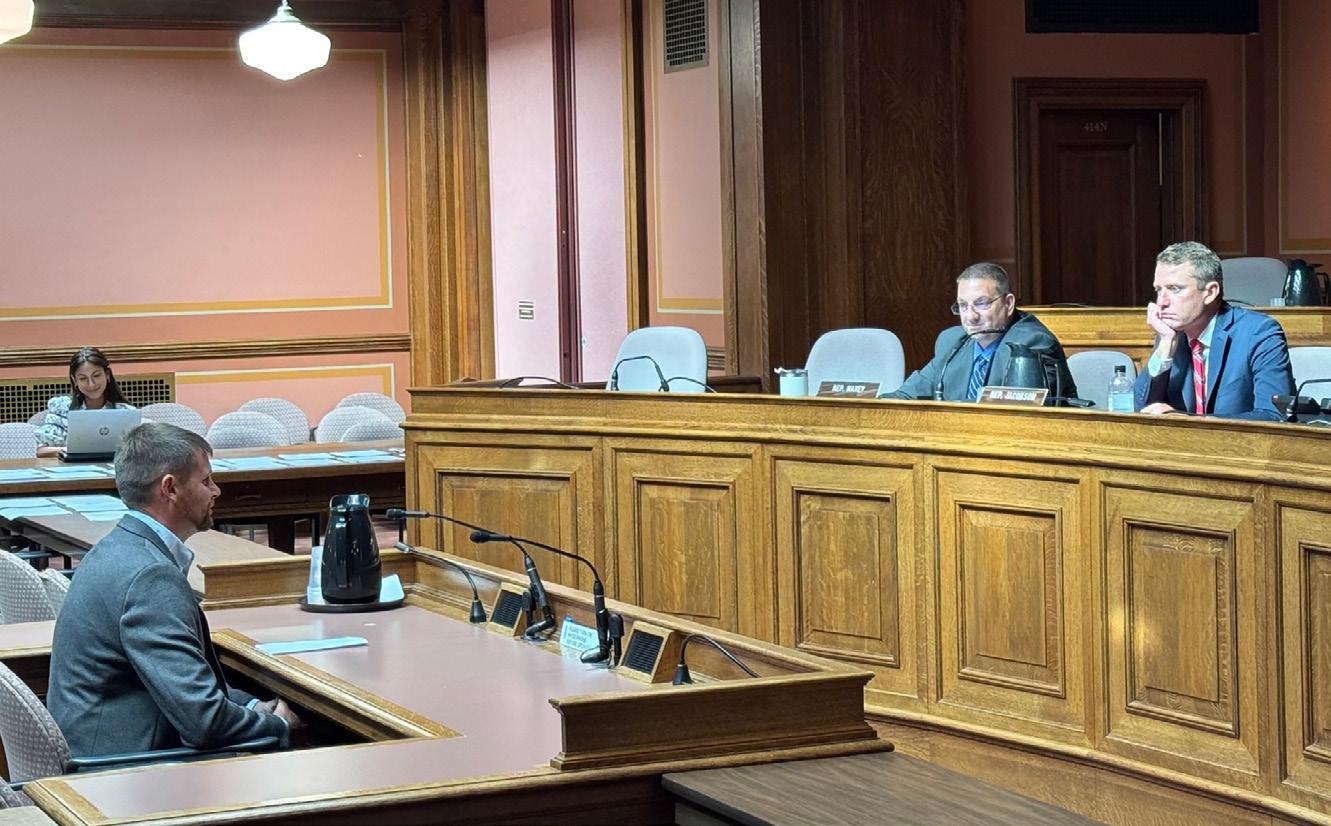
In November 2025, Rebout testified to the Wisconsin’s Senate Committee Agriculture and Revenue in support of Senate Bill 474, legislation introduced by legislative leaders at the request of WSA that would allow fire suppression products derived from soybeans, including SoyFoam, to be eligible for the grant program.
“SoyFoam works on so many levels. It’s another use for our soybeans and our soymeal that’s used to make the SoyFoam,” Rebout said. “It’s good for the environment, it’s good for the bottom lines’ of Wisconsin farmers and it’s good for our firefighters.”
Wisconsin firefighters and Garlie also testified in front of Senate and Assembly leaders, touting SoyFoam’s PFAS-free components, helping reduce the risk of firefighters’ risk of cancer, along with adding demand for Wisconsin soybeans. The grants will also assist firefighters in cutting costs.
“That’s really a very soybean-specific piece of legislation,” WSA lobbyist Jordan Lamb said. “We had support from our ag industry partners, but it was really the association that helped make this happen.”
Garlie, who’s based in Eau Claire, credited WSA’s
foresight in seeking a legislative solution.
“WSA led the whole way and really showed that they have a strong presence in Madison,” he said. “The whole process was seamless on my end, and we’re grateful that legislative leaders are seeing that soy-based products are helping our environment and our farm economy. We’re the only ones that are really focused on utilizing agricultural feedstocks to address the problem, and soybean farmers are crucial partners in these efforts.”
The bill, co-authored by Rep. Clint Moses and Sen. Howard Marklein, passed both legislative houses and now awaits Gov. Tony Evers’ signature to become law, which could happen as early as this spring, along with the bulk of over 100 other enrolled bills.
“We support any initiative that promotes innovation and market growth,” Lamb said. “It’s not going to solve soybean prices, but building any market is something that WSA supports.”
Other enrolled ag-relevant bills that WSA is tracking include:
• Restriction on Foreign Land Ownership: Prohibiting a foreign adversary from acquiring agricultural or forestry land in Wisconsin.
• Requiring Labeling of Lab-Grown Meat: The sale, service and labeling of food products containing lab-grown animal cells and providing a penalty.
• Rural Veterinary Loan Repayment Grants: Creating a rural veterinary student loan repayment grant program.
• Animal Health License Fees: Freezing fees related to animal markets, animal dealers, animal truckers and animal transport vehicles.
• CDL Training Grants: Expanding eligibility for grants under the commercial driver grant program to applicants other than training providers.
“It was another session with divided government, so it really forced issues to be bipartisan,” Lamb said. “Every single bill that was passed and signed was bipartisan, and that’s a challenging political environment, but can produce very good public policy.”
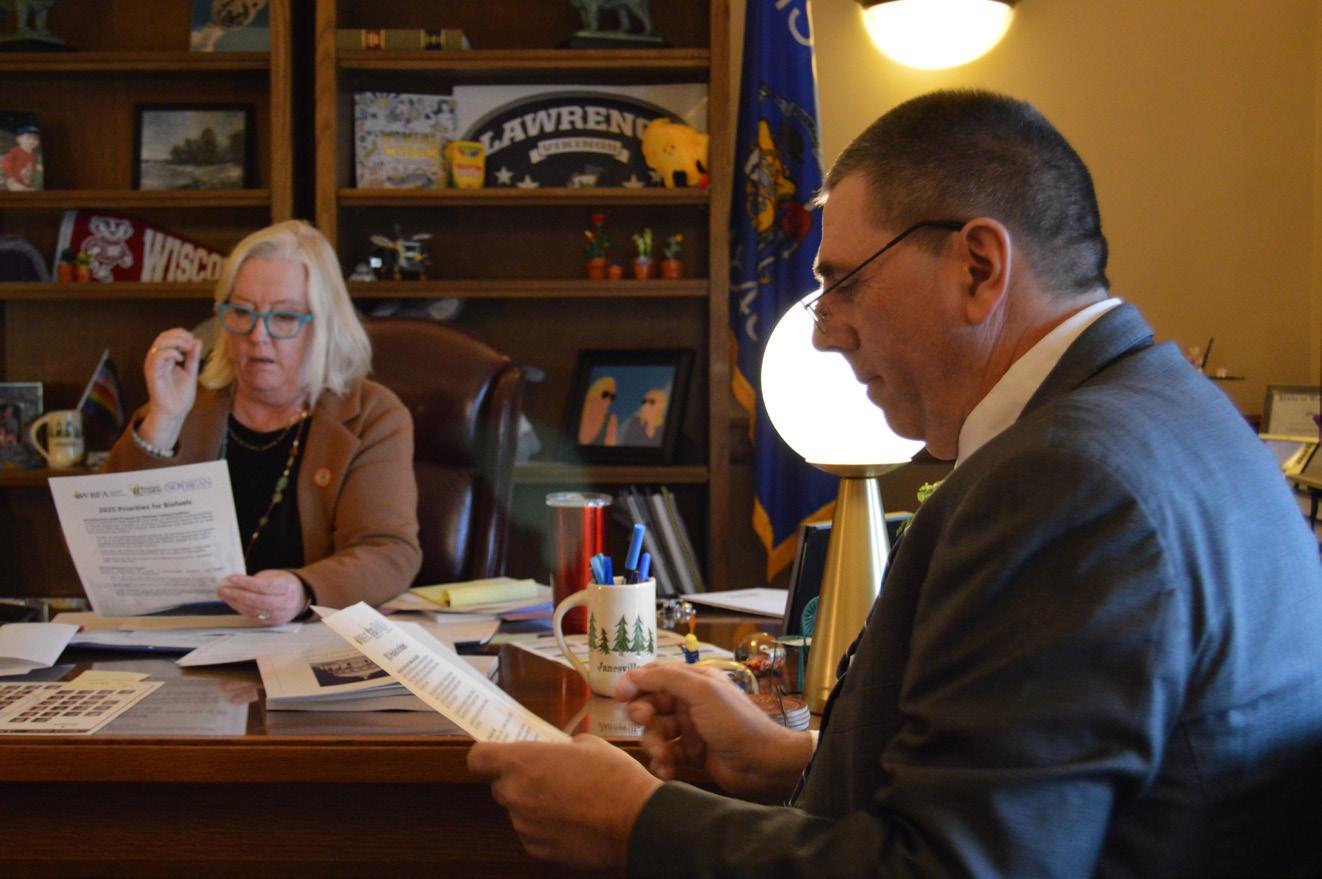
In the can’t win ’em all category, WSA and fellow ag groups were disappointed that the Assembly declined to take up the sustainable aviation tax credit, following testimony from WSA Vice President Matt Rehberg in September 2025. The bill, which would create a $1.50 production tax credit for each gallon of SAF produced in state, faced strong opposition from fuel retailers.
“We worked really hard to see the SAF tax credit to the finish line, but it’s a lot easier to kill a bill than it is to pass one,” said Lamb, who’s finishing her 29th year at the Capitol. “We’ll keep trying, though.”
The session wrapped in mid-March, though a special session could be called in April, along with a vetoreview session May 12-13; both are unlikely to happen. Legislators and prospective candidates will then begin campaigning ahead of the June 1 filing deadline and Aug. 11 primary. Voters will have plenty of choices on the state ballot in 2026: Gov. Evers is retiring, and a crowded field of candidates are vying to win the gubernatorial race come Nov. 3. In addition, all 99 Assembly members and 17
In February 2026, Gov. Evers and the Wisconsin Department of Transportation announced that one-time grant funding is available through the Local Small Structures Improvement Program (LSSIP) to repair or replace aging culverts and small bridge structures in rural communities.
The funding was included in the 2025-27 biennial budget and provided $150 million for the highly successful Agricultural Roads Improvement Program (ARIP), which WSA played an active role in supporting. Of the $150 million investment, $30 million will support projects focused on repairing or replacing aging culverts and small bridge structures in rural communities that are critical for moving and transporting Wisconsin’s agricultural and forestry products.
Application materials can be accessed at wi.accessgov.com. The application period closes May 1, 2026, at 5 p.m. Awarded projects may be funded with up to 90 percent state cost share.
odd-numbered seats in the Wisconsin Senate will be up for election.
Throughout the summer, WSA and the Wisconsin Ag Coalition will participate in the “Engage with Ag” tour to bring legislative candidates to about 10-12 farms around the state, giving policymakers an up-close look at modern farming and the challenges and opportunities within agriculture.
“This is our opportunity over the next six months to make connections with legislators before we ask them to take legislative action to support Wisconsin farmers,” Lamb said. “This is our chance to show them who we are and what we do, and it’s gotten significantly more organized over the years, and the candidates and legislators love it.”
WSA farmer leaders are eager to host legislative candidates.
“We want to show our legislative leaders what Wisconsin agriculture looks like, and our directors are always willing to take time out of their days to educate and share their family farming stories,” WSA Executive Director Adam Kask said.
By Doug Monson
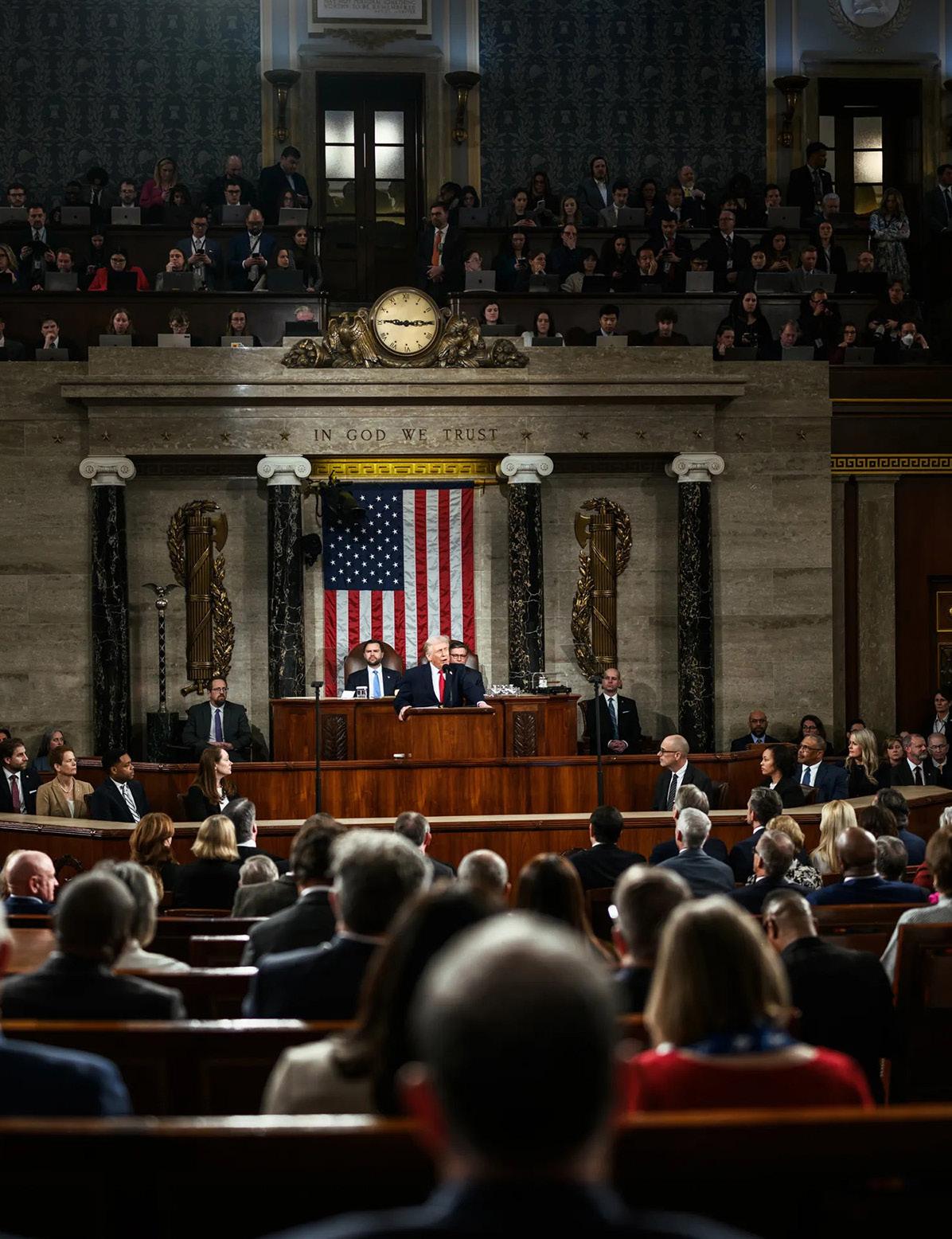
The State of the Union is by no means a celebrity event. But when you’re a family farmer from Wisconsin, invited by a congressman for a day of events and to attend the president’s speech, it’s easy to see how having the biggest names in politics under one roof can give off the persona of a celebrity event.
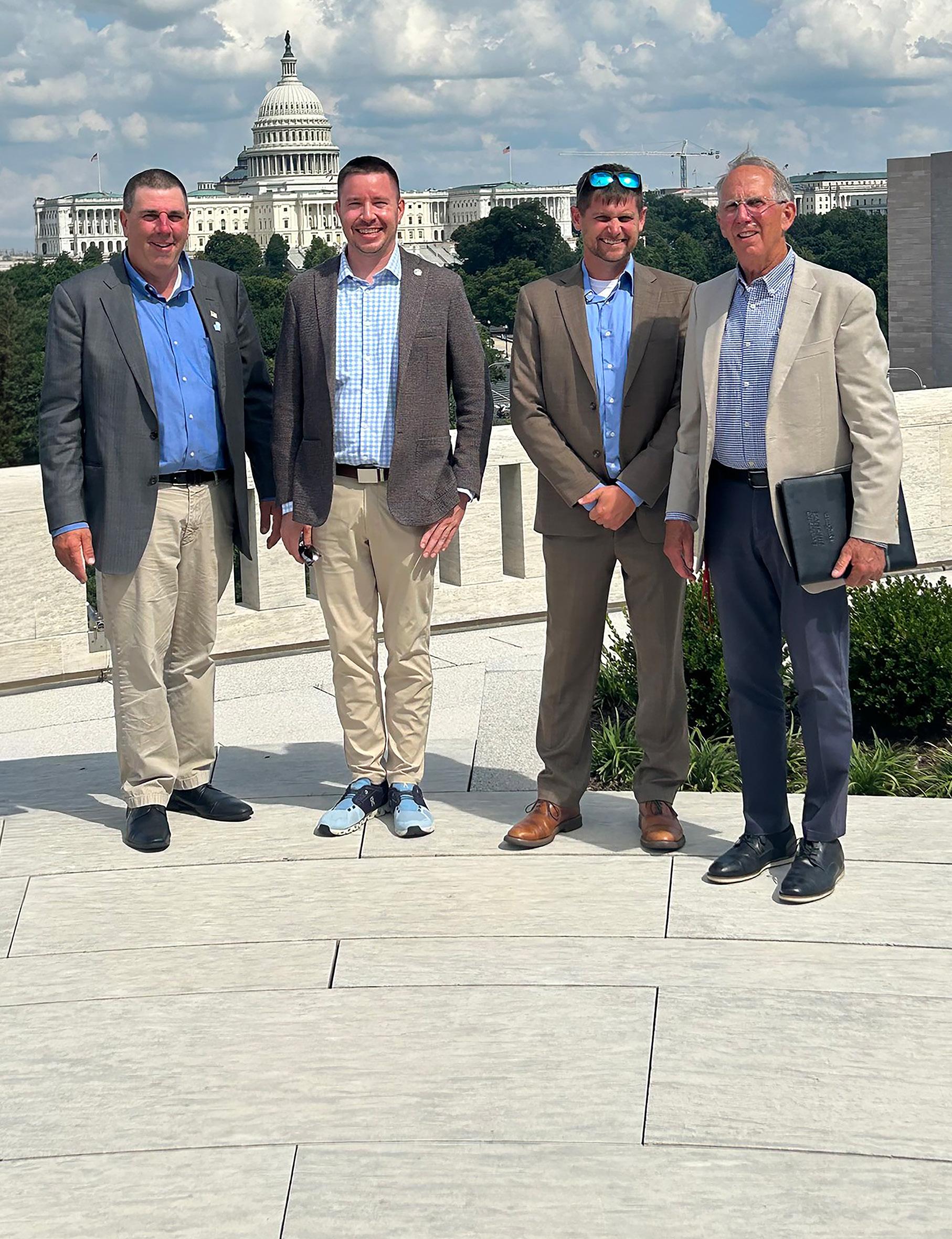
That was the case for Wisconsin Soybean Association President Doug Rebout, who attended the Feb. 24 speech to Congress as a guest of U.S. Representative Mark Pocan (WI-2).
“I’ve had a longstanding relationship through years of advocacy with the Congressman and his office,” Rebout said. “Along with that relationship, WSA has been very vocal on tariffs in the media. That’s why I was invited to attend the State of the Union.”
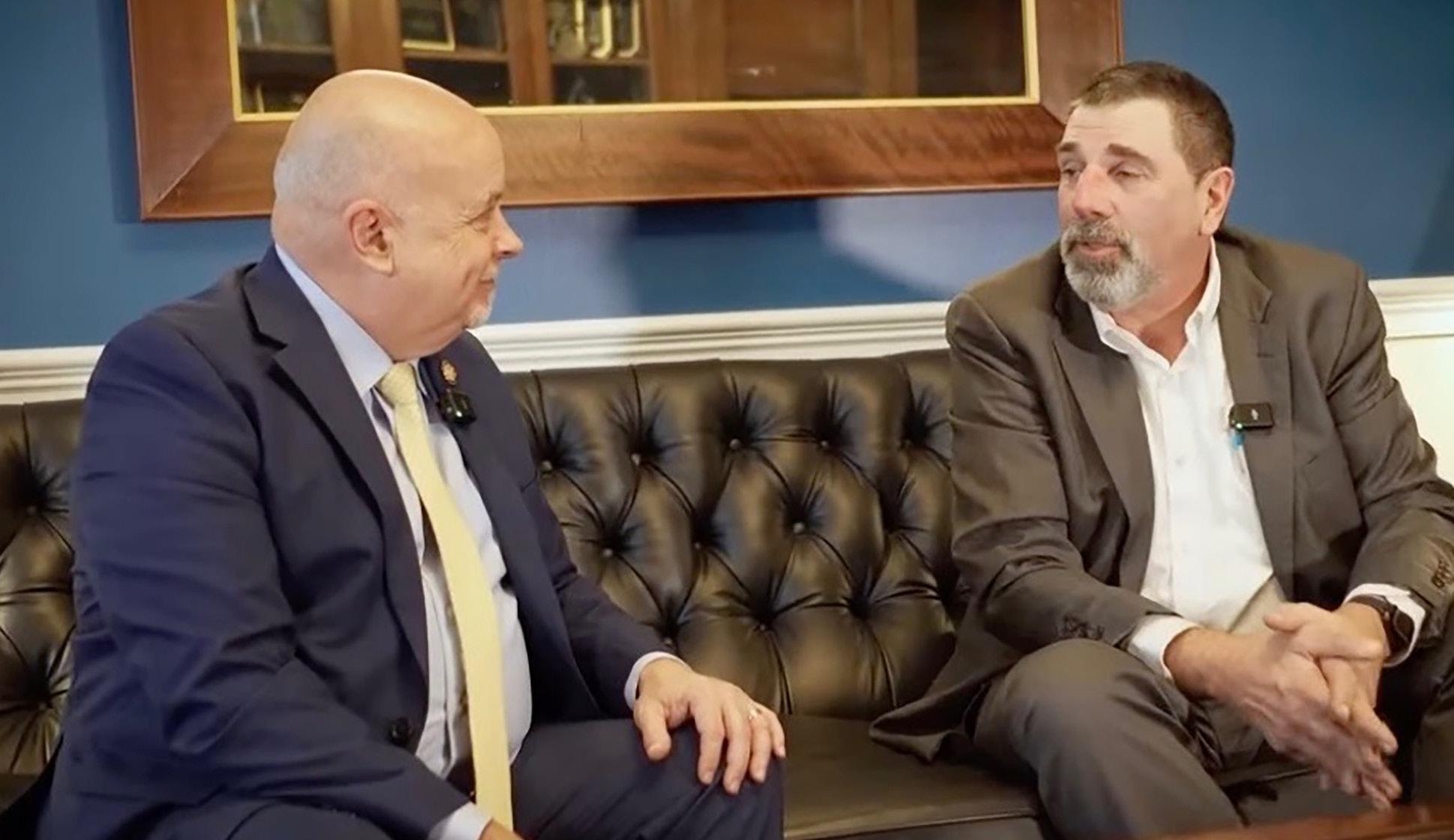
Rebout not only attended one of Washington’s marquee events: He spent the day on a media blitz, set up by Rep. Pocan’s staff, including a plethora of media styles.
“I did a podcast with Rep. Pocan, and then we did a wide variety of interviews, from television, to radio, to newspapers, to bloggers and social media influencers,” he said.
One of the more interesting interviews he did was with a TikTok influencer, which Rebout admitted, was a first.
All in a day’s work advocating for Wisconsin’s over 16,000 soybean farmers.
“Being interviewed by the TikTok influencer wasn’t all that different from any other interview I have done,” Rebout said. “But the benefit of that interview is that we’re talking to younger people, who are far removed from the farm, about agriculture and the important role it plays in our country.”
While Rebout spent the day talking about the state of agriculture and how farmers play a key role in food security for the country, the downtime between interviews also led to benefits for Wisconsin soybean farmers.
“Typically, we head to D.C., and we have maybe 15-20 minutes with our representatives or their staff before the next meeting,” he said. “All you can do is hit the major talking points, answer a couple of questions and you’re done. This visit allowed me ample time with Rep. Pocan, but even more time with his staff. By the end of the day, they were revising some of their talking points, which doesn’t happen often.”
As to what was his biggest takeaway from the day, Rebout couldn’t quite put his finger on one thing. He likened the House of Representatives Chamber to the size of a high school gymnasium. Ultimately, it was something about the people.
“I didn’t pay as much attention to the speech as I did the people,” he said. “We heard all day what could be in the speech. I really paid attention to how people reacted during the speech.”
Well, their reactions, and maybe a little bit of that celebrity awe.
“I was in the front row of the balcony, to the president’s right,” he said. “And directly across from me was Melania and the president’s family, which was pretty surreal.”
The experience left Rebout with a thought about WSA. About where the association came from, and where it is going.
“We’re becoming one of the leading ag organizations in the state,” he said. “We have staff who are involved. We have great directors who are very involved. It’s not just one person stepping up. We have a team, and we’re being heard.”
By Drew Lyon
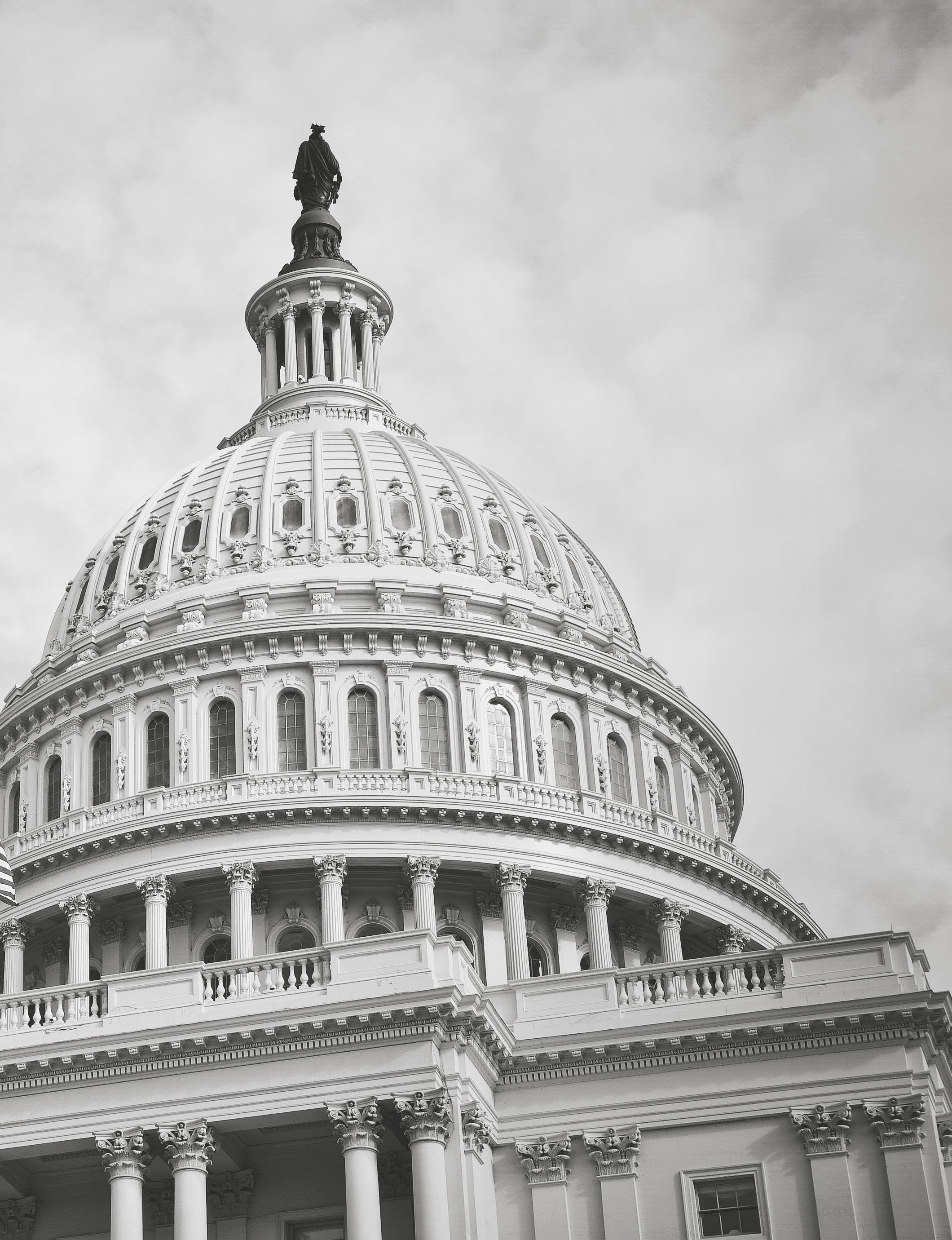
As a self-described “history nerd,” Barron County farmer Tanner Johnson appreciated the magnitude of representing Wisconsin soybean farmers in the office of Sen. Majority Leader John Thune at the U.S. Capitol in Washington, D.C.
“I usually get caught looking around and gawking when I’m in those rooms in important places,” Johnson said. “Sen. Thune called that out right away: ‘Hey, you like the digs?’ He’s a very low-key guy – if it wasn’t his picture on the wall, you’d never think he’s Senate Majority Leader, and I really respect that.”
Johnson, who serves as treasurer of the American Soybean Association (ASA), didn’t leave his Wisconsin farm for D.C. merely to sightsee: He joined his fellow ASA officers for a round of high-level meetings with policy and regulatory leaders during ASA’s biannual Hill Visits in March in the nation’s capital. The ASA team discussed with Leader Thune and North Dakota Sen. John Hoeven on the importance of seeing a full Farm Bill across the finish line. Sen. Hoeven shared his thoughts and encouraged ASA to continue its full-throated advocacy on behalf of the nation’s half-million farmers.
“Sen. Hoeven is very optimistic about a Farm Bill markup in (the Senate) in the upcoming months,” Johnson said. “He gave advice on how to attack our day. He basically told us, ‘Just don’t shut up. Keep standing up for yourselves.’”
So they did.
Johnson and his colleagues also met with the USDA Under Secretary Stephen Vaden, who hails from a row crop operation in Tennessee, to discuss how geopolitical uncertainties are causing an increase to input costs, while a meeting with the EPA offered ASA
WSA speaks for soy in D.C.

an opportunity to urge the agency to support strong Renewable Fuel Obligations (RVOs), which determines how much renewable fuel is blended into the U.S. fuel supply each year. About half of all U.S. soybean oil is now used to produce biofuels, generating over $42 billion toward the U.S. economy.
“Implementing RVOs can protect our energy independence and is a great example of how a D.C. policy can translate to profitability on a farm in northwest Wisconsin,” Johnson said.
Johnson’s full agenda meant he missed out on a scheduled visit to talk with officials at the White House.
“They still had a good meeting, but it would have been my first time, but it’s all right,” he said. “There’ll be other opportunities.”
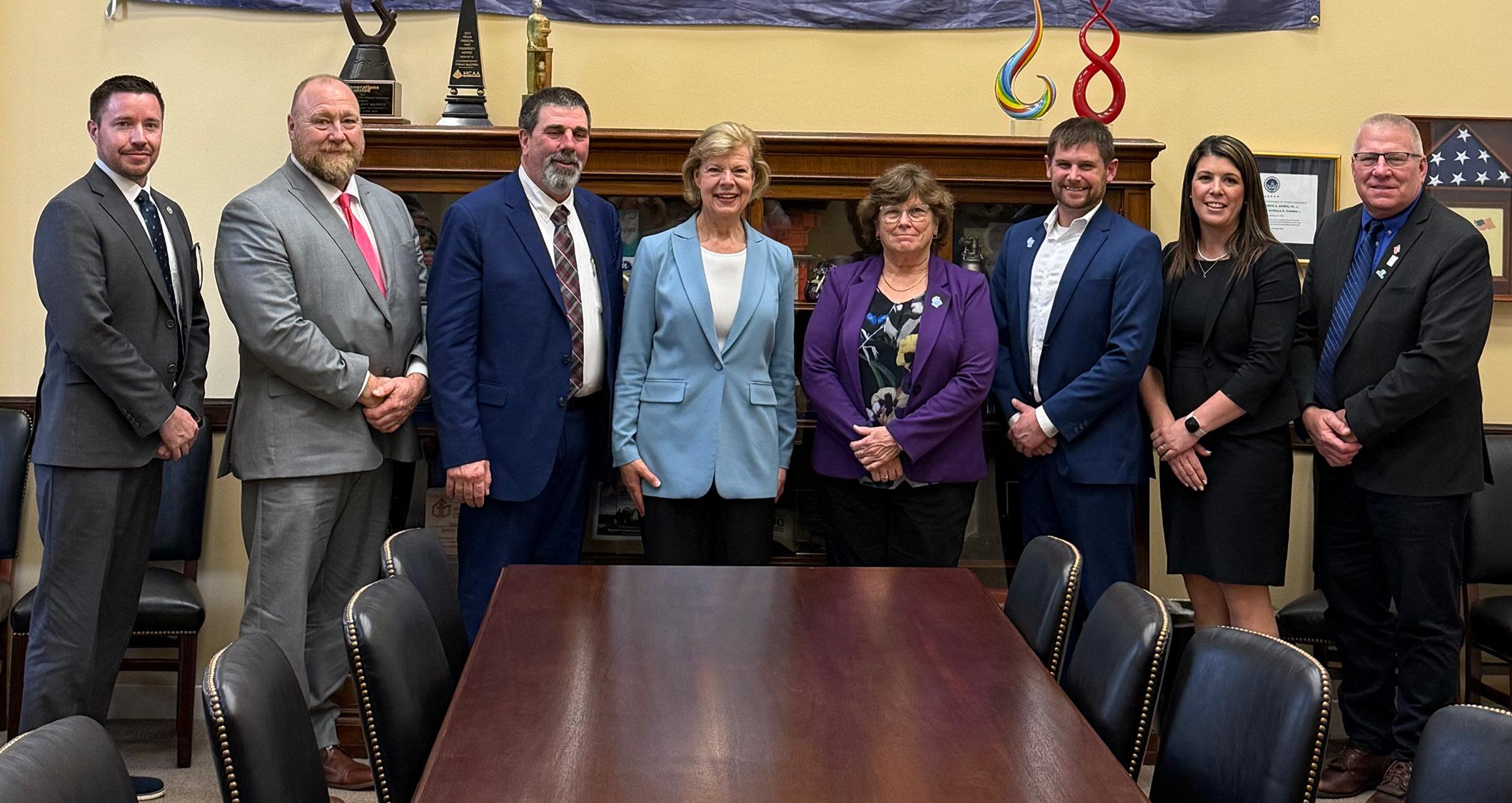
Johnson was apart from his fellow Wisconsin advocates, who were elsewhere on the Hill meeting with Wisconsin’s congressional delegation. WSA President Doug Rebout, Vice President Matt Rehberg, Directors Sara Stelter and Luke Goessling, ASA Director Steve Trzebiatowski and WSA Executive Director Adam Kask divided into two teams and visited the offices of legislative leaders.
“Steve can do this in this sleep. He’s a natural at talking policies, and I have a lot of respect for him,” Johnson said. “He just says, ‘Hey, look, this is my perspective from my little corner of America,’ and people really seem to resonate with it.’”
The House was out of session, and Trzebiatowski was invited to sit behind the desk in the chair usually seated by U.S. Rep. Derrick Van Orden.
“The chair felt very comfortable,” Trzebiatowski said. “That was probably one of the many good conversations we had. And it flowed so well, and they were very attentive.”
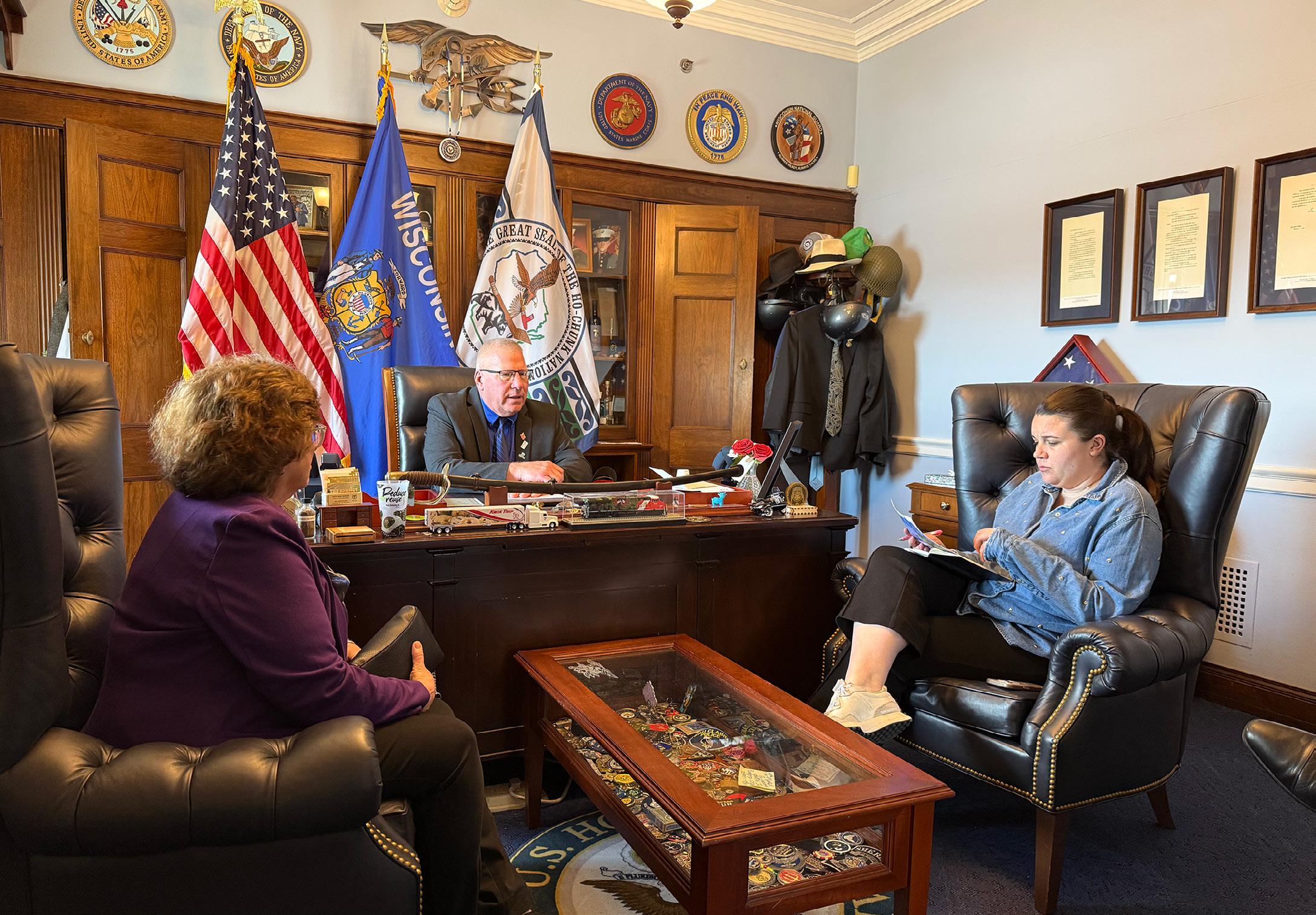
Meeting with legislative staffers can be a bit of a blessing in disguise, Trzebiatowski said, offering advocates the chance to build connections with aides who are working behind the scenes.
“At the end of the day, those people that are in their office are people who know the issues and are doing the research,” he said. “It’s always great to meet with a senator or representative, because it’s their votes we need, but the staffers are doing a lot of the heavy lifting.” Many of the WSA team met for the first time with Sen. Tammy Baldwin, who sits on the Senate Appropriations Committee.
“We had a great conversation with Sen. Baldwin on how it’s too bad that the Farm Bill is being held up because of partisan issues,” said Trzebiatowski, a former WSA president.
Beyond promoting biofuels and an urging for a comprehensive Farm Bill, WSA promoted a plethora of additional policy priorities, including:
• Promoting trade, including preserving the U.S.Mexico-Canada Agreement during its formal review this summer.
• Addressing the alarming rise in input costs (overall ag inputs have risen nearly 6%; the U.S. imports roughly $33 billion in inputs).
• The need for further financial support from Congress for growers beyond the Farmer Bridge Assistance. According to ASA, the FBA only covers 38% of losses for the 2025 soybean crop.
• Pesticide labeling.
• Promoting the health benefits of soybean oil.
Trzebiatowski, who sits on ASA’s Biofuels & Infrastructure Advocacy Team, said it’s past time for Congress to work together to secure wins for agriculture.
“There were 10 or 11 different issues that we could have talked about. You run out of time because there’s so many,” he said. “My hope is that we start checking some of these off – like the USMCA, because we have really nice trade with Mexico and Canada.”
With a little luck, and plenty of legislative activity before the August recess, WSA will have a shorter list of priorities to achieve when ASA holds its July board meetings and Hill Visits in D.C.
“There’s never a dull moment in the soybean world,” Trzebiatowski said. “But these are opportunities for getting the word out, and it shows that our membership dollars are working and that we’re getting things done for Wisconsin soybean farmers.”
By Macy Quartier
A shift of just a few days on the calendar helped put millions of dollars back into the hands of Wisconsin soybean growers.
“On average, our (research) strips out-yielded farmer strips by three to five bushels, putting another $30 to $50 per acre back in their pocket,” said Shawn Conley, University of Wisconsin–Madison soybean and small grains specialist.
That type of payoff is exactly what the National Soybean Research Program (NCSRP) is built to deliver for producers. The program brings together 13 states, including Wisconsin and its neighboring states, to leverage checkoff resources, solve production challenges
and avoid duplicating research efforts.
“NCSRP is taking the best of the best across the heartland and doing research that comes right back to your farm,” said Matt Wagenson, vice president of NCSRP.
Wisconsin’s farmer board helps guide the work through the Wisconsin Soybean Marketing Board (WSMB), reviewing projects and asking whether they deliver real return on investment.
“It’s important that checkoff dollars are represented in the best way possible for our state, and for us that means research,” said Wagenson, who farms in Bear Creek and also serves as WSMB vice president.
In 2026, NCSRP is entering a new era, following the retirement of Executive Director Ed Anderson after a dozen years at the helm. Joe McClure, chief officer for the Research Center for Farming Innovation at the Iowa Soybean Association, was tapped to replace Anderson.
“I always tried to support the farmers and researchers in the soybean industry to bring value, maximize that value and return on their investment,” Anderson said. “I’m very proud of the collaborations with the United Soybean Board.”
For more than a decade, Conley and his research team have focused on developing soybean management strategies that improve both profitability and environmental performance. Their work began with a large benchmarking project that gathered information from more than 8,000 farmers and analyzed data from over 600,000 acres of soybean fields.
Using that data, researchers grouped fields into environmental zones and compared management practices to determine where changes could improve performance.
“We can tell a farmer, ‘Stick with what you’re doing here, but change this over there,’” Conley said.
That long-term dataset proved valuable when the Risk Management Agency asked researchers to help update Wisconsin’s soybean planting date guidelines for crop insurance replant coverage. For years, the entire state used April 26 as the earliest planting date for full coverage.
“We already had years of planting date and yield data in place when they asked us to take a look,” Conley said.
The research team recommended a tiered system that allowed earlier planting in parts of the state. As a result, southern Wisconsin moved to April 15 and central Wisconsin to April 20.
“In an average year, that simple change adds about five million dollars back to Wisconsin soybean growers,” Conley said.
For farmer leaders, those outcomes demonstrate why coordinated research matters.
“Our researchers are great at their job, but they are also great at outreach and communicating their findings,” Wagenson said. “They are fantastic stewards of research and communication to farmers.”
Looking ahead, Conley’s team is expanding its work with new tools designed to put real-time information directly in farmers’ hands. Artificial intelligence-based prescriptions, satellite imagery and scouting apps are being developed to identify problem areas within fields and improve management decisions.
“It’s exciting and fun right now because we are building tools farmers can actually use on their farms,” Conley said.
By participating in NCSRP, Wisconsin growers can combine their state research dollars with other soybean-producing states to tackle shared challenges.
“The dollars Wisconsin puts into the NCSRP often comes back two, three or even four times over because they are part of a much larger research effort,” Wagenson said.
• Advancing Soybean Health: Field Trials to Decision Support Tools to Maximize Disease Management
• Boots on the Ground 2: AI-Driven Tools for Maximizing Soybean Yield and Profitability
• Management Tactics and Tools for Insect Pests in the North Central Region
• SoyGen3: Building Capacity to Increase Soybean Genetic Gain for Yield
• SoyRenSeq: A Novel Approach for Disease Resistance Gene Discovery
• The SCN Coalition: A Checkoff-led, University-driven, Industrysupported Partnership Battling Soybean’s Biggest Underground Threat
NCSRP’s 2025 Annual Report is available at ncsrp.com “NCSRP is taking the best of the best across the heartland and doing research that comes right back to your farm,” said Matt Wagenson, vice president of NCSRP.
By Doug Monson
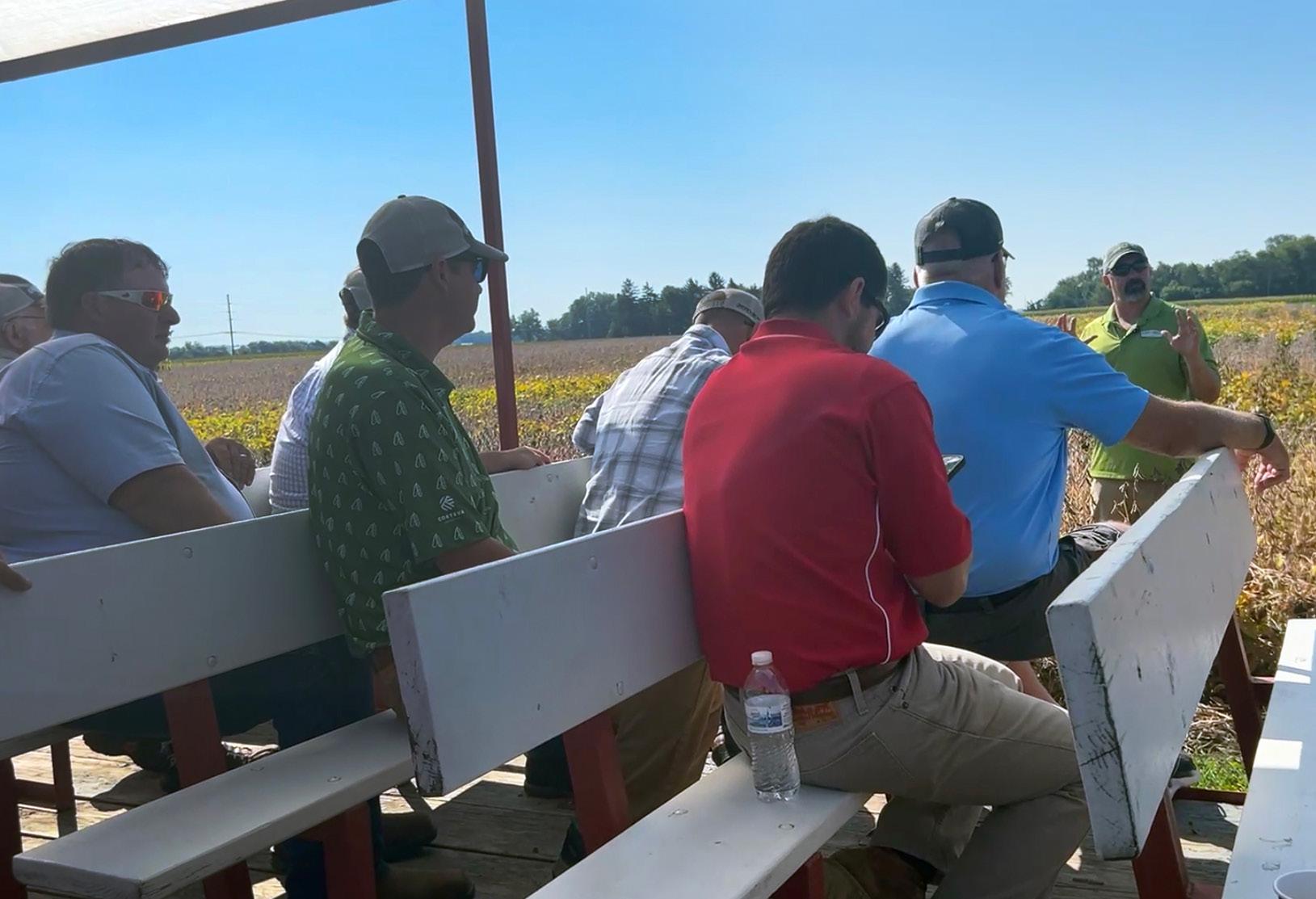
Choosing which research projects to fund with checkoff funds is never an exact science.
In February, the Wisconsin Soybean Marketing Board used a common theme to guide its decision making: weighing scientific merit against practical value for Wisconsin farmers operating in a tight economic environment.
“We had a number of proposals submitted by our University of Wisconsin-Extension researchers that we went through and graded,” said WSMB President Jonathan Gibbs.
Gibbs said the board invested a little more than $700,000 in UW research across production research, insect control and weed control, among others.
“We find all of the UW-Extension researchers we work with to be very valuable and respected by their peers,” he said. “As a board, it’s important to communicate with farmers and industry leaders. Dr. Shawn Conley’s team has the ability to bring that information to a farmer-level that we can understand and implement on our farms.”
Several projects centered on improving in-season decision tools and understanding how modern soybean genetics interact with nutrient management.
“We like to fund projects that might take a number of years to realize some outcomes,” Gibbs said. “We’re also funding things that really go directly to the farmer, whether it’s the soybean cyst nematode or white mold prediction models, that we can use day in and day out.”
WSMB Executive Director Adam Kask said several projects received approval, including soybean systems demonstrations, optimizing no-till soybean planting into cereal rye, soybean biological applications and sponsorship of the popular Wisconsin Soybean Yield contest, which continues to set participation records and is overseen by Dr. Conley’s research team. The annual contest is hosted by the Wisconsin Soybean Association and organized to encourage the development of new and innovative management practices that show the importance of using sound agricultural practices in the state’s soybean production systems. Details for the 2026 contest are forthcoming this spring.
“I thought there were a lot of thoughtful discussions amongst the board,” Kask said. “Much like farmers in their operations, there were some difficult decisions this year in terms of research funding. The board did a good job vetting each project and staying focused with its investments into Wisconsin soybean farmers.”
By Macy Quartier
From Midwestern soybean fields to Egyptian aquaculture ponds, Wisconsin farmer Jake Steffes followed the path of U.S. soybeans halfway around the world.
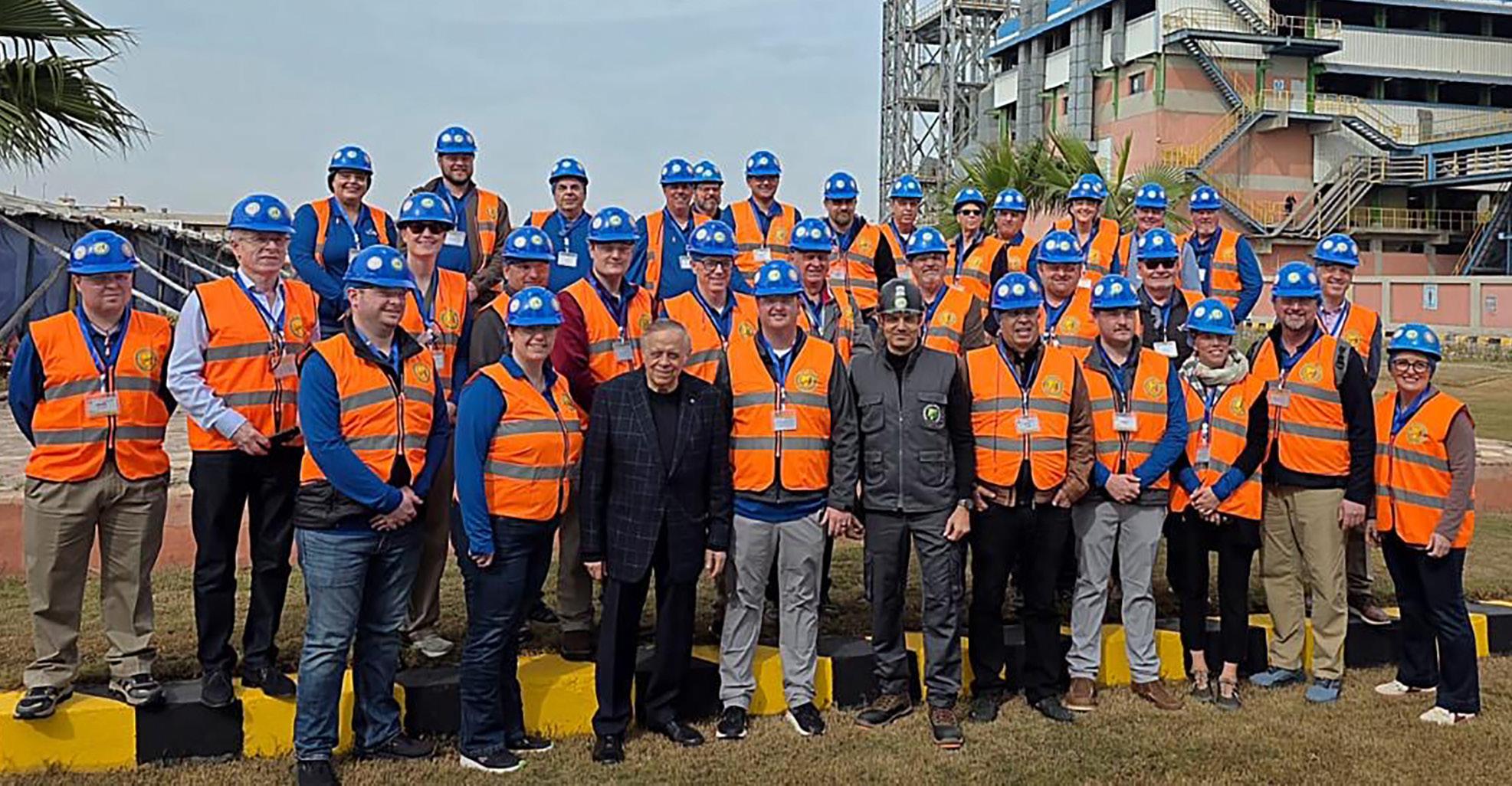
In January 2026, Steffes traveled to Egypt on the See for Yourself Tour, through the United Soybean Board and the U.S. Soybean Export Council (USSEC) to see where U.S. soybean checkoff dollars go and how they are used to build international markets.
“By visiting end users and meeting with buyers, I was able to gain a better understanding of how overseas markets are developed and maintained,” Steffes said.
Egypt currently plays a key role in the global soybean market for U.S. farmers. According to the U.S. Department of Agriculture, Egypt ranks as the third-largest importer of U.S. soybeans, purchasing approximately 3.5 million metric tons annually. U.S. soybeans account for about 90% of all of Egypt’s soy imports. Wisconsin ranks 14th in the nation for soybean production. In Egypt, soybeans are used mainly in aquaculture and feed mills that supply poultry and small dairies.
International trade missions help build a preference and demand for high-quality U.S. soybeans, says USSEC CEO Jim Sutter.
“Face-to-face (trade missions) are very important. We want to build a preference, we want to differentiate U.S. soy, and we want to make sure we have market access for U.S. Soy,” Sutter said. “For people around the world to get to know our farmers, that’s extremely important to help us in that process, so our buyers understand how these soybeans are grown, the care that’s taken into growing, the fact these are family farmers growing these crops. Being able to have that face-to-face contact is really important.”
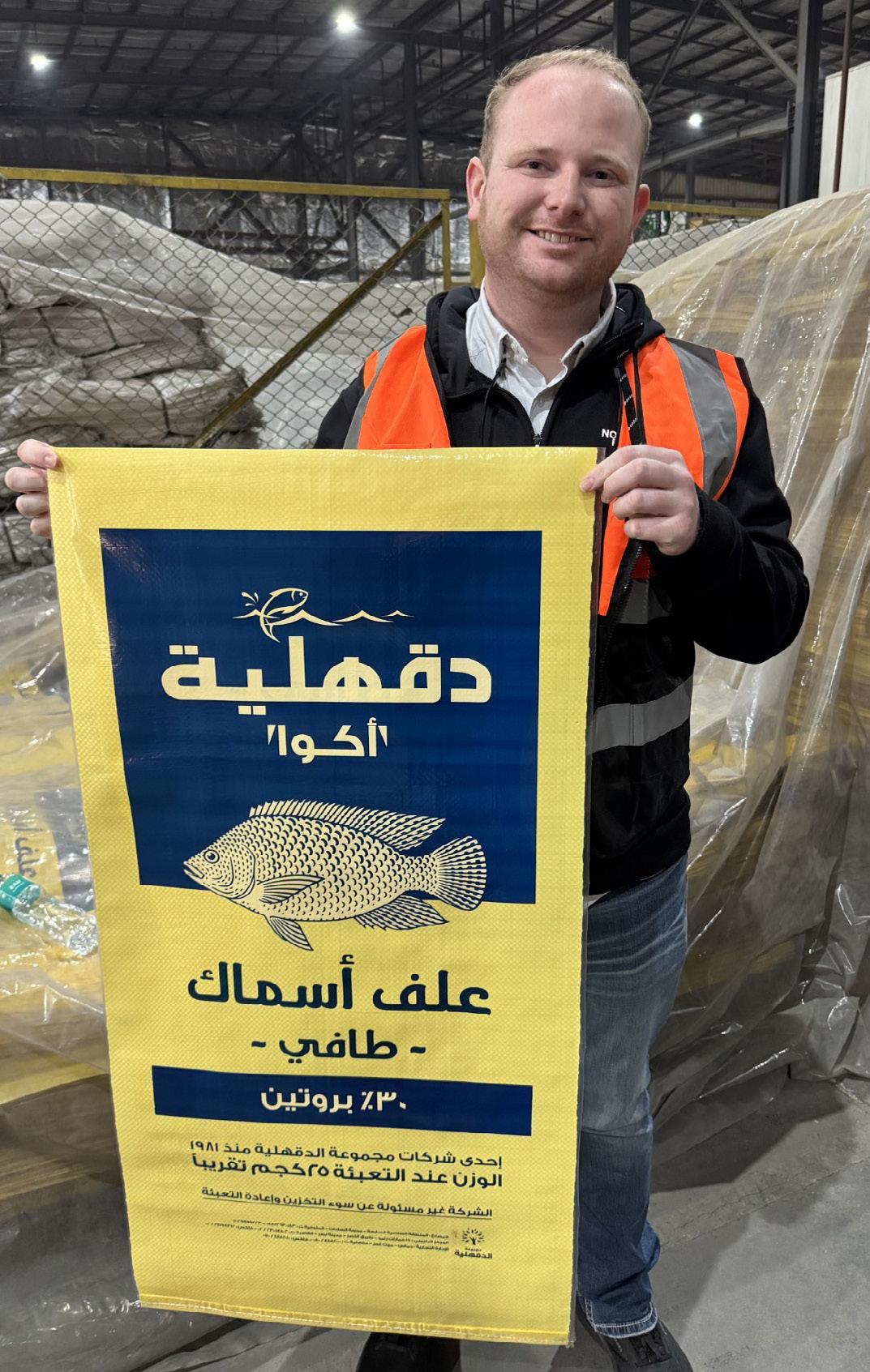
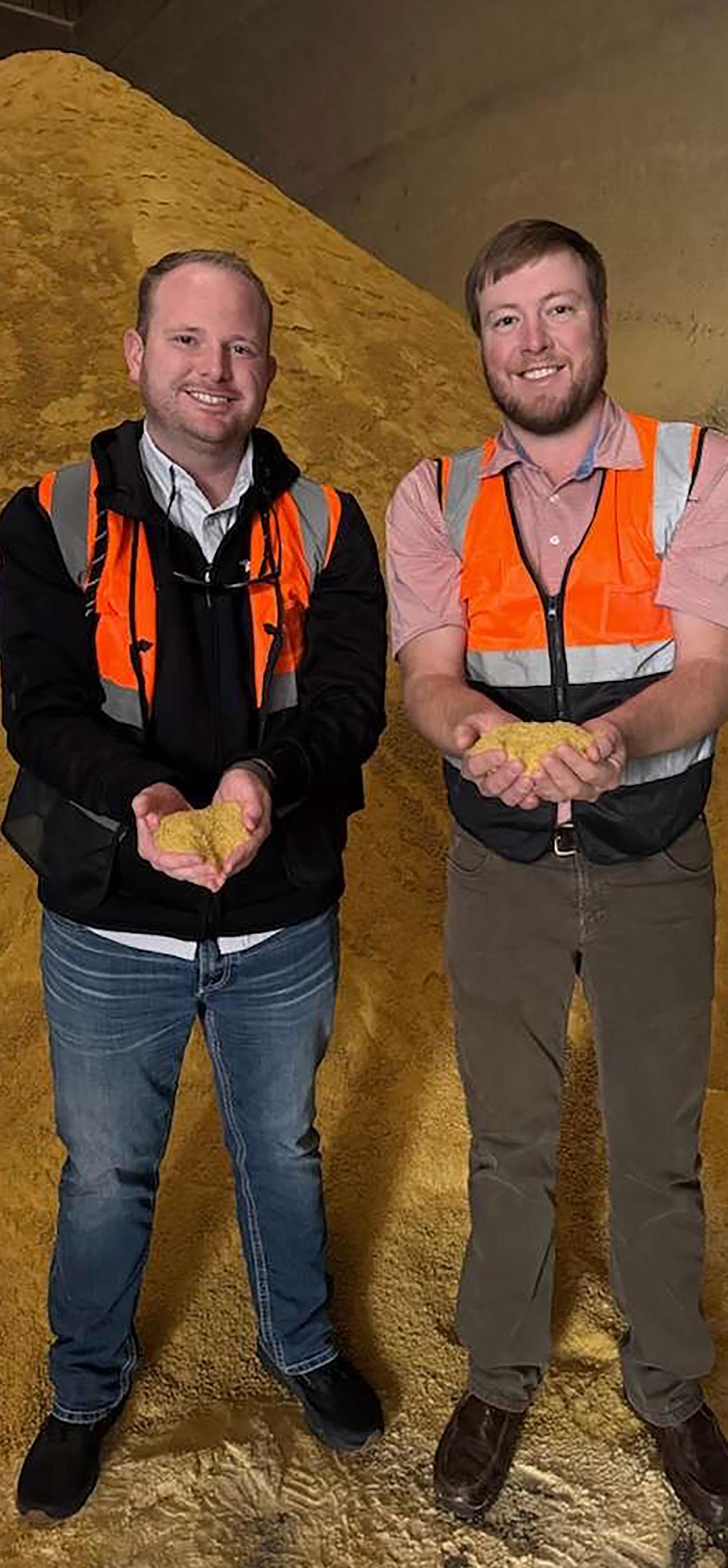
After representing Wisconsin farmers at the policy level, Jake Steffes says he’s excited to learn more about how checkoff markets are building demand for U.S. soybeans.
During the tour, Steffes visited aquaculture facilities, feed mills, grain farm hatcheries and a soybean oil crush plant.
While seeing how soybeans are used was important, Steffes said the highlight of the trip was meeting the people who buy them.
“The best part of the trip was having dinner with about 75% of the buyers of U.S. soybeans,” said Steffes, a graduate of the American Soybean Association Corteva Young Leader Program. “We were able to sit down with company owners and talk about why they choose U.S. soybeans.”
Conversations around the dinner table emphasized the consistent quality of U.S. soybeans and their willingness to pay a premium for them. Steffes noticed the pride companies take in using American crops.
Some products carried a “Proudly made with U.S. soybeans” stamp, reflecting the premium value placed on U.S. agriculture.
Not only are U.S. soybeans being consumed Egypt, but U.S. representatives are also living and working there, forming relationships with buyers and business owners to help build trust that leads to long-term markets.
According to Steffes, “boots on the ground are critical to creating and sustaining demand for U.S. soybeans.” These efforts connect directly back to farmers by showing how checkoff dollars are invested to promote U.S.-grown crops around the world.
“I would definitely recommend the See for Yourself tour to other farmers,” Steffes said. “It shows you where your checkoff dollars go and how they are creating more markets for our beans.”
This experience gave Steffes a broader perspective on agriculture and the role U.S. farmers play beyond domestic borders. Seeing where soybeans end up overseas helped him better understand the global reach of what farmers grow at home and the impact those crops can have worldwide.
“It opened my eyes and showed me how global agriculture really is,” Steffes said. “It is not just the U.S.; it is the whole world. This experience showed me how much U.S. agriculture and soybeans have to offer the world.”
• U.S. Soy has had a presence in Egypt since 2001.
• Over the past two decades, Egypt’s chicken production has more than doubled to meet demand for domestic consumption.
• The country’s crush sector has also advanced with the poultry sector. Over the past decade, Egypt has shifted from a primary soybean meal importer to importing whole soybeans. As its crush industry continues expanding, preference for U.S. soybeans is also growing.
• According to the most recent SoyStats, a publication cosponsored by the Wisconsin Soybean Marketing Board, Egypt imported more than $600 million in U.S. soybean in 2024.
By Soy Forward staff
Three Wisconsin soybean farmers were appointed in February 2026 by USDA Secretary Brooke Rollins to serve on the United Soybean Board, the farmer-led organization that directs investments of soybean checkoff dollars into research, market development and promotion efforts that benefit soybean growers nationwide.
Eau Galle farmer Tony Mellenthin, Danny Brisky of Columbus, and Dallas, Wis., grower Andy Bensend were among 42 farmer-leaders appointed to serve three-year terms on the board.
“We look forward to the continued leadership of Tony on the executive committee at USB,” said Jonathan Gibbs, president of the Wisconsin Soybean Marketing Board. “We’re excited for Danny and Andy, who will be strong representatives of Wisconsin’s soybean farmers.”
Brisky, a former American Soybean Association Young Leader, replaces Nancy Kavazanjian, while Bensend will fill the seat held by Sara Stelter. Brisky said he’s eager to step into the wide world of soybean checkoff promotion. In his role, he’ll represent Wisconsin on a biofuels committee to grow demand via markets including sustainable aviation fuel.
“I’m excited to learn more about how the process works and how we invest our checkoff dollars,” Brisky said. “There are so many facets to the soy checkoff, from developing new uses to increasing market access, and
it’s important that Wisconsin farmers have a say in how those dollars are spent on our behalf.”
Bensend, a WSMB director who also helps direct soy checkoff investments via his position on the Soy Transportation Coalition, said Wisconsin has a strong voice in directing national soy checkoff investments.
“It gives me an opportunity to represent Wisconsin on a bigger stage, and I have some very capable colleagues alongside me,” Bensend said. “Danny is going to do a great job, too. He’s got a great head on his shoulders, and we’re going to do all we can for Wisconsin soybean farmers to get our beans moving and increase demand.”
The United Soybean Board is composed of 77 farmerdirectors representing 29 soybean-producing states and two regional at-large seats. Each year, approximately one-third of the board is appointed by the Secretary of Agriculture from nominees submitted by Qualified State Soybean Boards.
“I’m proud to continue to serve Wisconsin’s soybean farmers at the national level,” said Mellenthin, a USB director since 2018. “I’m also blessed to have been voted by my peers onto the executive committee for USB.”
Through the soybean checkoff, farmers invest one half of one percent of the market value of a bushel sold to fund research, education and market development initiatives designed to create new uses for soy, strengthen demand and improve farmer profitability. The board’s work spans
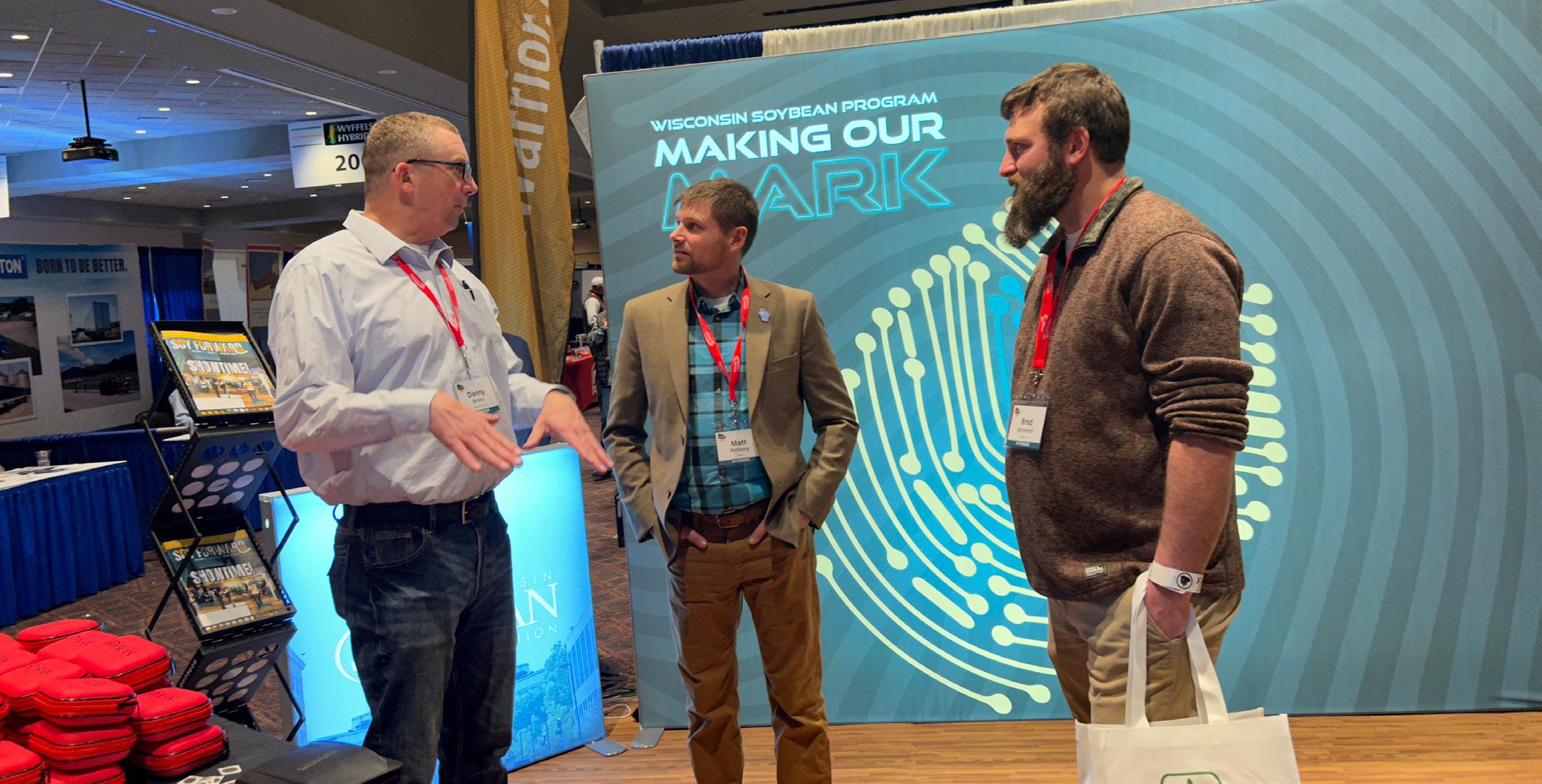
Brisky (left) is making his mark by directing checkoff funds through his new role on the United Soybean Board.
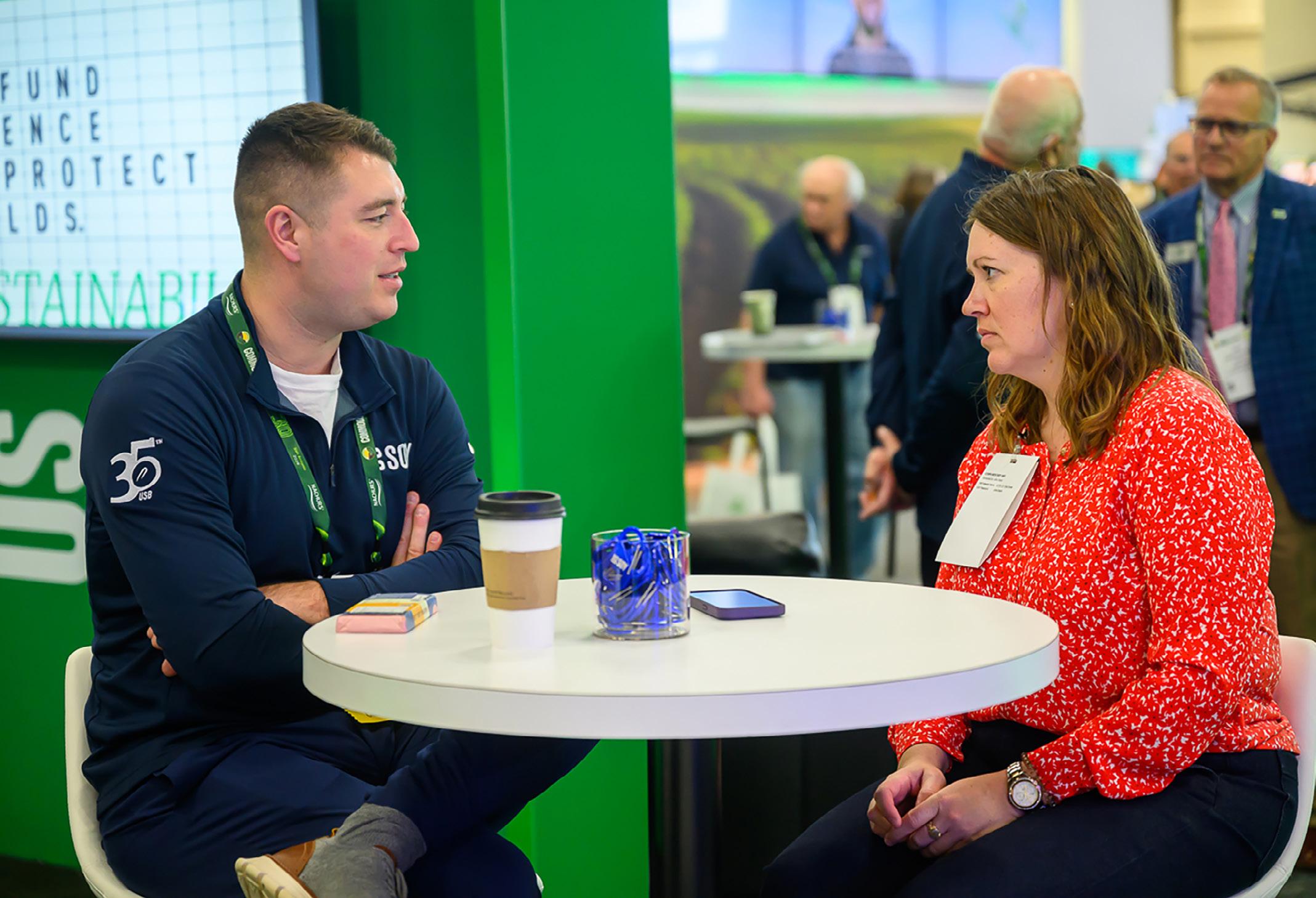
areas including animal nutrition, human food, industrial uses, sustainability and international market access.
“The United Soybean Board is strongest when it’s led by farmers who understand demand opportunities, on-farm innovations and a deep knowledge of today’s ag economy, and this group brings exactly that perspective,” said Brent Gatton, USB Chair and Kentucky farmer. “We’re grateful for the farmers stepping up to serve, but I also want to thank our outgoing farmer-leaders for the time, energy and leadership they gave to this organization. Their commitment strengthened the soy checkoff and helped deliver lasting value to soybean farmers across the country.”
USB directors will gather July 21-23 in Indianapolis to approve USB’s fiscal year 2027 budget.
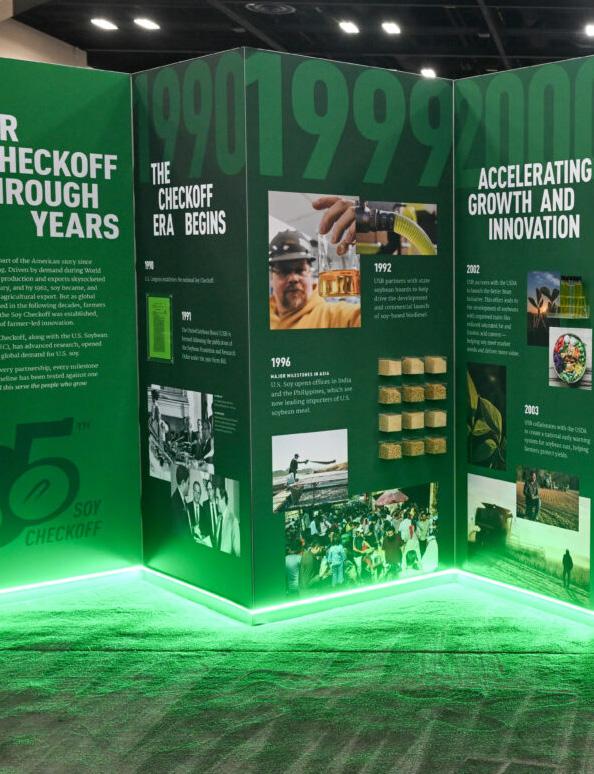
Since 1991, U.S. soybean farmers have invested together with a singular purpose: to build a stronger, more resilient future for U.S. Soy. Through the soy checkoff, those collective investments across food, feed, fuel, industrial, exports and sustainable production have transformed the soybean industry. It’s created entirely new categories for demand and advanced production — delivering measurable results back to the farm.
As USB marks its 35th anniversary in 2026, farmer
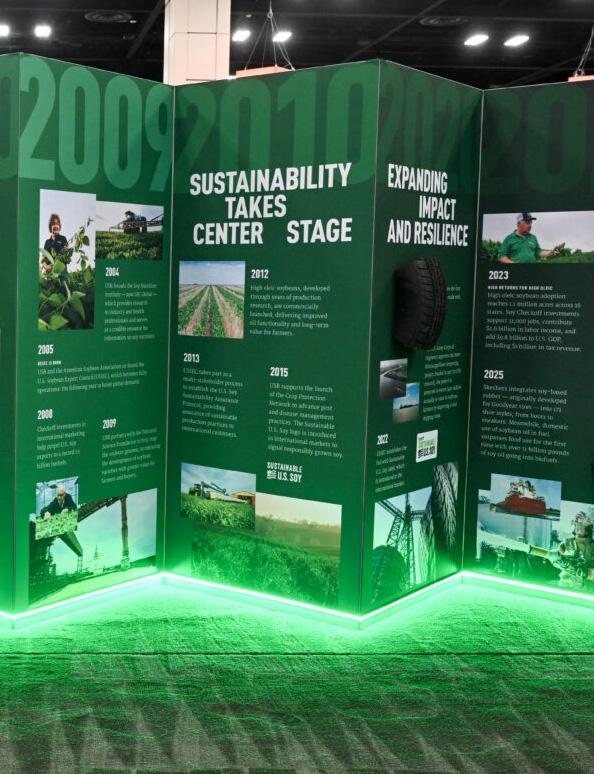
leaders are reflecting on how strategic, farmer-directed investments have reshaped the soybean industry for the better — and how that momentum is continuing to accelerate.
When the national soy checkoff was first established under the 1990 Farm Bill, U.S. soybean production totaled approximately 2 billion bushels annually. Today, that number exceeds 4 billion. Over that same period soy checkoff investments helped create new fuel markets, expand exports to more than 90 countries, strengthen U.S. infrastructure and differentiate soybean varieties to meet evolving global demand. For every dollar Wisconsin farmers invest into the checkoff, growers earn $12.30 in return value.
USB is also transitioning to new leadership this year, following the resignation of USB CEO Lucas Lentsch. Darryl Chatman, USB executive vice president of compliance, is serving as interim CEO while the board conducts a comprehensive search for the organization’s next leader.
USB remains focused on delivering measurable results for soybean farmers, maintaining strong partnerships across the industry and will continue executing its strategic priorities to ensure farmers achieve maximum value for their soy checkoff investments.
Wisconsin Soybean Marketing Board Director Justin Bauer’s everyday essentials
By Kelsey Barchenger
Some farmers swear by fancy tech. Others can’t live without old-school tools. For Justin Bauer, life on the farm is a mix of both — practical, hard-working and just a little bit funny. Here are the five things he says he simply can’t farm without.
Out here, time is everything and so is staying connected.
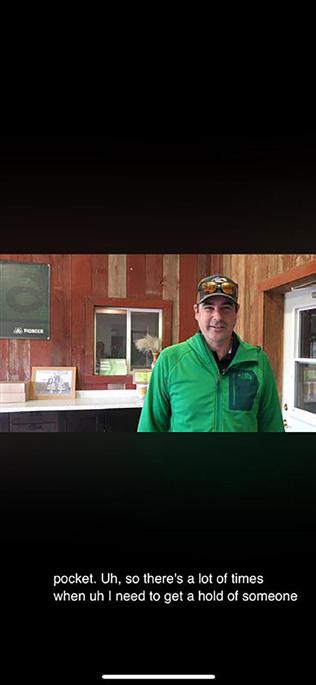
“For me, a cell phone means I don’t have to run back to the house every time I need to reach someone,” Bauer says. “But honestly? YouTube and Google are just as important. If I don’t know how to fix something or make something work, I just look it up.”
On today’s farm, the smartphone is equal parts communication tool and problem solver.
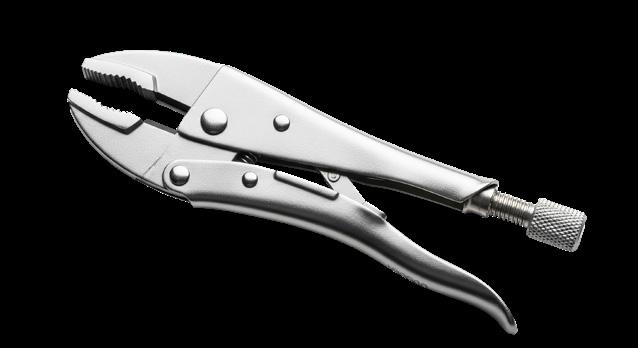
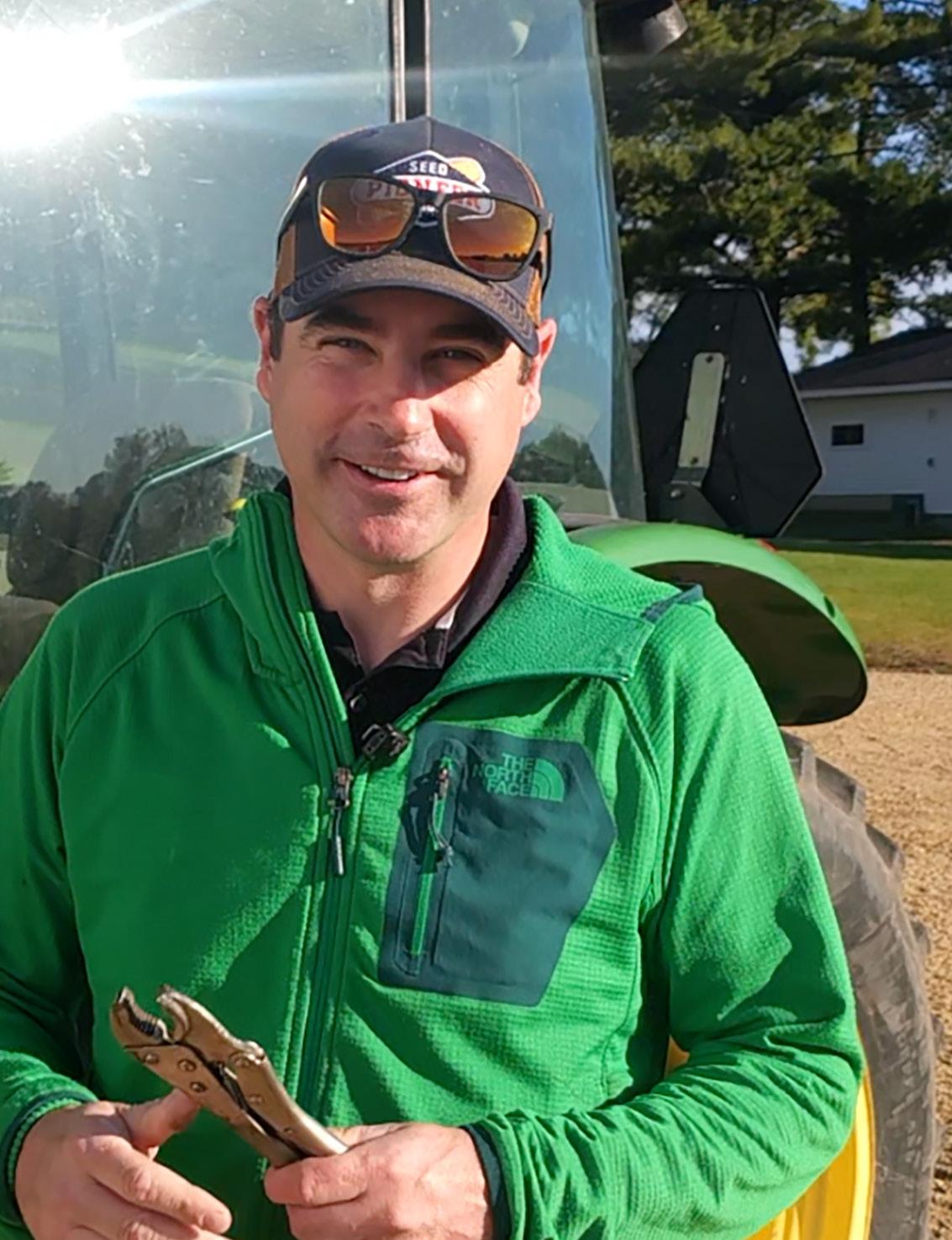
If there’s one tool that lives in every farmer’s pocket, it’s this. “You never know when something’s going to break, bend or need a quick fix,” Bauer says. “A vise grip is basically a multitool in disguise — simple, tough and always useful.”
12:00
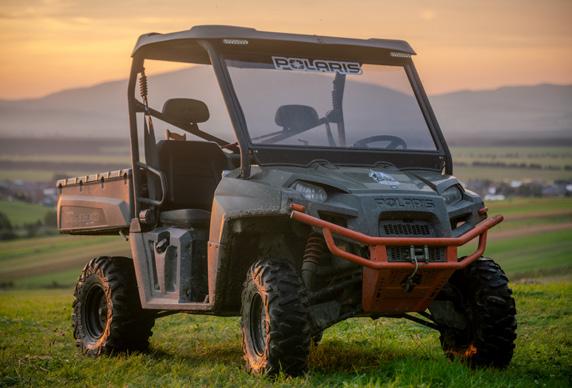
The real MVP of getting around the farm.
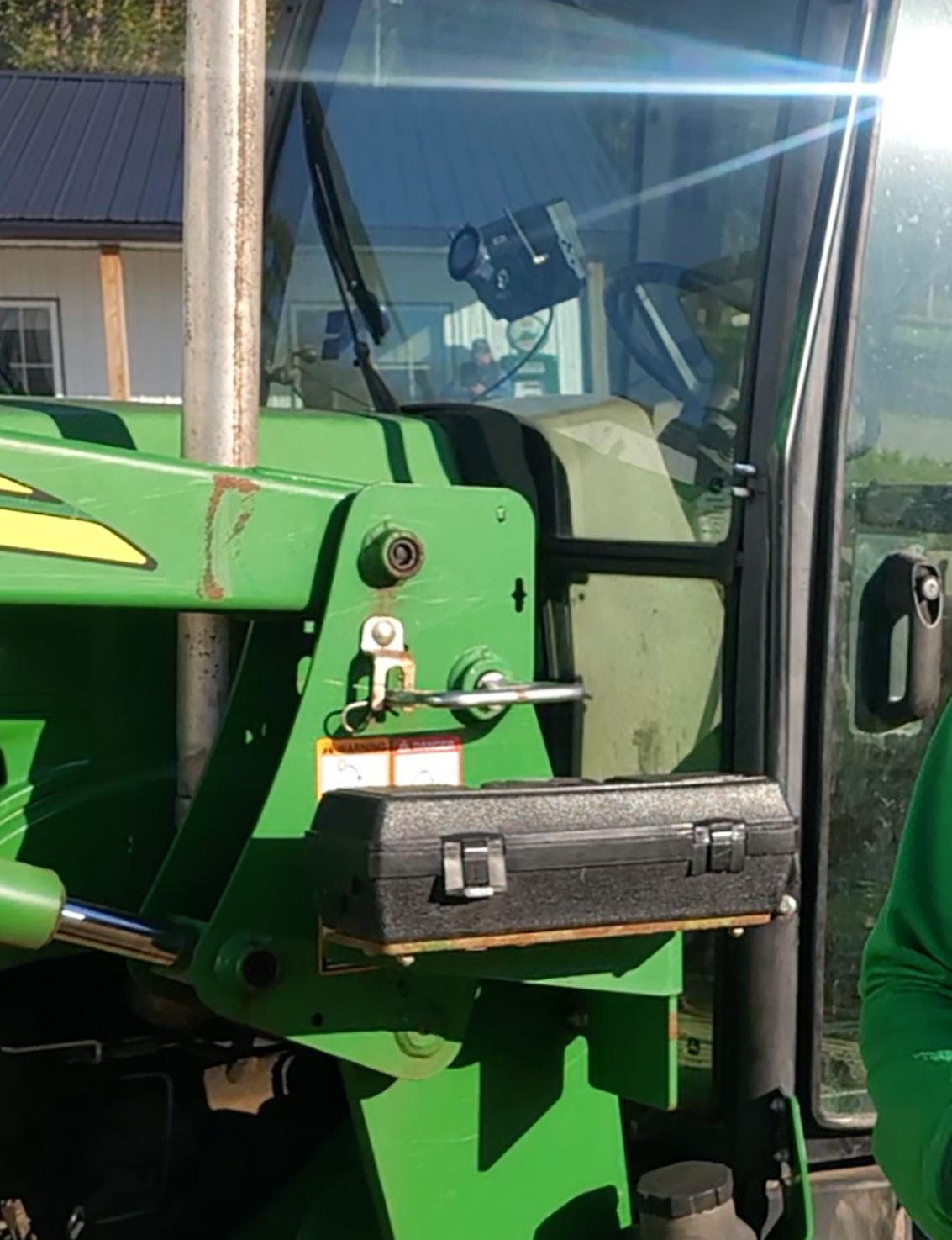
“Without it, we’d be walking everywhere,” Bauer laughs. “It’s made everything faster — hauling tools, checking fields, moving supplies. It just makes farm life a lot easier.”
From sunrise chores to sunset repairs, the Ranger keeps things moving.
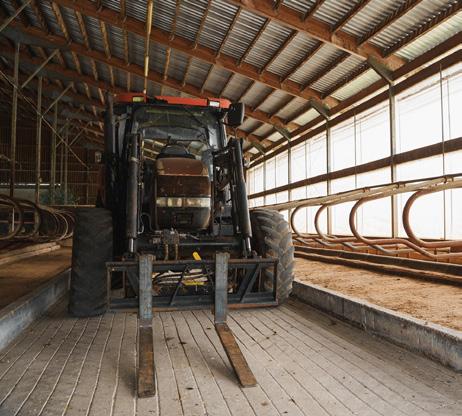
Modern farming means bulk everything — and that’s where the forklift comes in.
“There are so many things we get in bulk now — seed, fertilizer, supplies — that having a forklift makes life way more convenient,” Bauer explains. “It saves time, saves your back and just makes sense.”
Simple, essential and often overlooked.
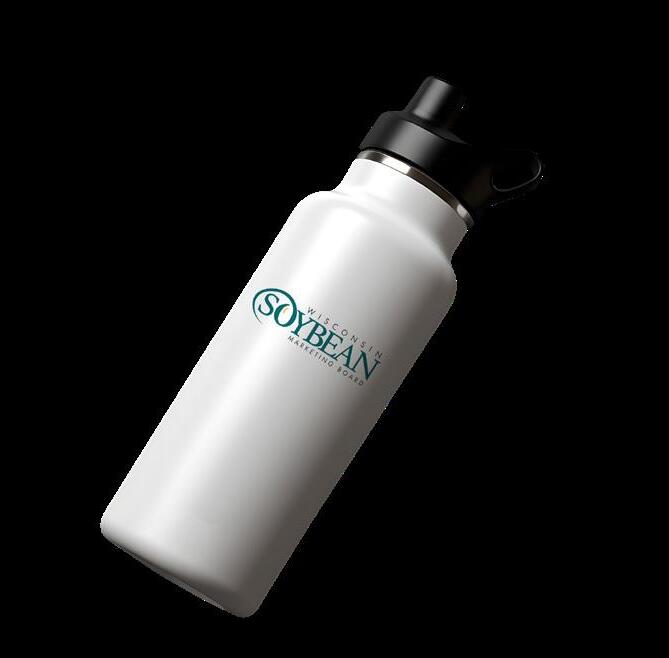
“You can’t drink enough of it,” Bauer admits. “My wife is always telling me I need to drink more — and she’s probably right.”
Long days in the field mean hydration isn’t just smart — it’s necessary.

The Wisconsin Soybean Program continues to move in the right direction in 2026.
In January 2026, Soy Forward, the Wisconsin Soybean Association’s (WSA) official magazine, was named the National Agri-Marketing Association’s (NAMA) Region 4 Best Association magazine. Soy Forward, a quarterly magazine that launched in fall 2024, submitted three issues from 2025 for consideration, including a cover story featuring WSA President Doug Rebout and his fellow officers.
“In less than two years, Soy Forward has quickly become a must-read in Wisconsin agriculture,” Rebout said. “We’re telling engaging stories about not just what we’ve achieved, but our goals for the future.”
The Wisconsin Soybean Marketing Board (WSMB) also emerged victorious at the Region 4 Awards. After earning top honors in the Company or Producer-Funded Advertising Campaign Element Director to Consumers category. WSMB also won the Region 4 Best of Show Consumer Audiences Award for a WSMB-branded Consumer Campaign via a campaign spotlighting how a “little” soybean grows up in big ways through checkoff innovations.
“We couldn’t be more proud to earn these awards,” WSP Executive Director Adam Kask said. “We are competing against the biggest and brightest names in our industry, and to come home with some hardware is humbling and gratifying for our team.”
The Best of NAMA awards program recognizes outstanding achievements in agricultural communications. About 1,000 entries from across the nation were submitted. Both of WSA and WSMB’s entries will be entered into the national Best of NAMA April 15 in St. Louis.
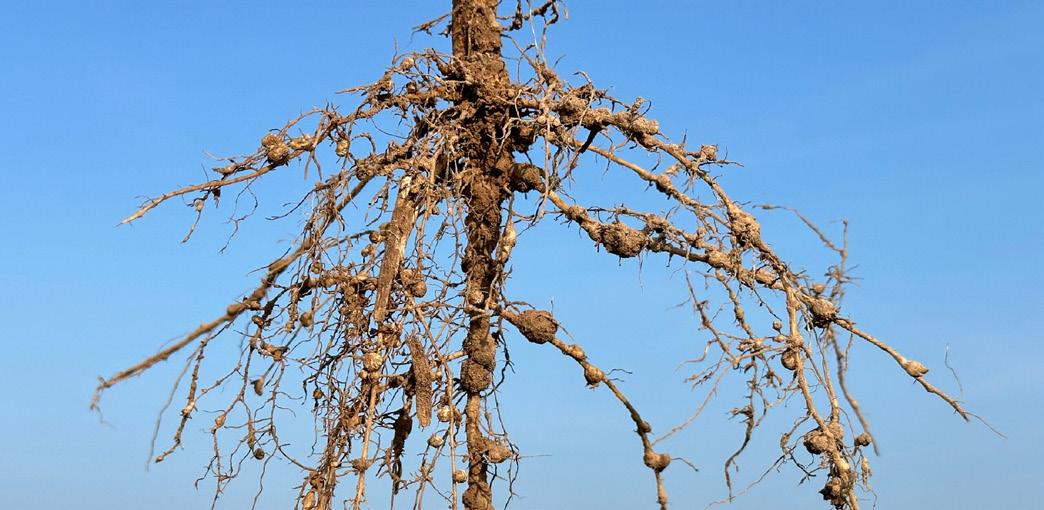
Soybean cyst nematode (SCN) isn’t the only nematode species threatening Wisconsin soybean production today. To help soybean farmers stay ahead of emerging nematode threats, The SCN Coalition has expanded its educational outreach to create the Soybean Nematode Management Guides, providing practical tools and science-based strategies to identify and manage four yield-robbing, parasitic nematode species.
Nematode management isn’t one-size-fits-all, as several species can infest soybean fields — each with distinct life cycles, symptoms and impacts on yield. Funded by the United Soybean Board (USB) and developed by Extension plant pathologists and nematologists – including at the University of Wisconsin-Madison – the Soybean Nematode Management Guides provide soybean farmers with science-based tools to soil test and identify nematode infestations, develop tailored management strategies, and recover lost yield potential caused by:
• Soybean cyst nematode (SCN): Known as the No. 1 yield-grabbing pathogen of the soybean crop in North America, SCN causes up to 30% yield loss without demonstrating noticeable aboveground symptoms, leading to annual losses exceeding $1.5 billion.1
• Root lesion nematode (RLN): RLN is the most common parasitic nematode in Wisconsin. With a broad host range, RLN can also reduce yield in rotational crops, including corn, and lead to recurring economic losses.
While it’s impossible to eliminate nematode pressure from an infested field, the Soybean Nematode Management Guides arm Wisconsin soybean farmers with multiple active management strategies shown to effectively reduce plantparasitic nematodes’ impact on yield.
Visit www.thescncoalition.com/field-guides/ to access the Soybean Nematode Management Guides. Thanks to support from the Wisconsin Soybean Marketing Board, Wisconsin growers are eligible to have four soil samples analyzed for SCN and other plant parasitic nematodes at no charge. To request a free soil sampling kit, email freescntest@mailplus.wisc.edu or call 608-890-0320.

Join the Wisconsin Soybean Association for another round at WSA’s annual Golf
The Wisconsin Soybean Association is going “fore” it this summer.
WSA, with sponsorship support from WSMB, is hosting its third annual Golf Classic Monday July 27 at the Evansville Golf Club. The cost to participate is $100 per person, or $400 for a four-person team, and includes 18 holes of golf, cart rental, meal and drink tickets. The day tees off with registration at 11 a.m. and a shotgun start at noon. Learn more about registering, along with sponsorship opportunities, by visiting wisoybean.org/wsa and WSA’s social media channels.
A portion of the proceeds from the Golf Classic benefit WSA and its over 50-year mission in promoting farm-friendly policies. Founded in 1973, WSA is a farmer-led advocacy organization that works on behalf of the interests of Wisconsin’s nearly 17,000 soybean farmers in Madison and Washington, D.C. Through proactive advocacy, WSA keeps family farmers in operation today and for generations to come.
The more we discover about soybeans, the more valuable they become. One innovative product, SoyFoam™, creates a new, sustainable use for your crop that protects firefighters and the planet. See how your Soy Checkoff is unlocking new markets for soybeans at unitedsoybean.org





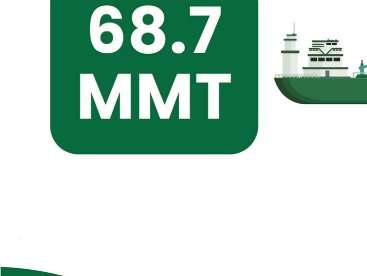

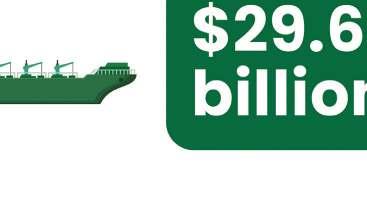

Source: USDA, Global Agricultural Trade System (GATS), January 2026























Do you have that big bean energy?
Prove it by entering the 2026 Wisconsin Soybean Yield Contest. Submit your entries by August 31!