DIRECTOR’S
I grew up in an old house in Kentucky. Don’t let your imagination carry you away—no columns, and George Washington never slept there. It is a frame farmhouse, built by farmers in the 1860s and lived in by farmers ever since, albeit having changed hands a number of times over the years. Still, the sense of story in its walls felt palpable to me even as a girl. I wondered what other hands slid down the banister before mine, touching the newel post on their way into the day, what other children had played under the trees in the front yard. Although I’ve lived in Oxford for a long time now, the truth is that old houses really weren’t all that affordable on a professor’s salary even back in the late 1990s, and so I reside, quite happily, in a one-story ranch house historic to the 1970s, updated to the mid-2000s, and cheerfully holding its own.
Instead, my most regular encounter now with structural history comes from reporting to work every day in Barnard Observatory, completed in 1859. I love this old building, right down to its odd nooks and crannies and its fitful relationship with the conveniences of the twenty-first century, including regulated temperatures and dependable Wi-Fi. I treat it a little bit like I do live here; I’m the one who orders the flowers for the foyer and hangs the holiday wreaths on the doors. I’m the one who’s always angling to repaint or rearrange, the one who insists on creating cozy spaces and hosting pancake study breaks so that maybe students will come to love it as much as I do.
But the University of Mississippi also works hard to care for Barnard, not least because it is a site on the National Historic Register. For example, updating our heating and cooling system consumed the latter half of the fall semester. It was no easy job, requiring a genuine force of workers from both Trane and UM Facilities Management. There are forty-two individual units scattered throughout the building, not counting the separate systems in the lecture hall and the kitchen. Each one had to be removed, replaced, reconnected, and the area around it repainted. Many of us got used to working from desks out of place, to explaining background
SO U THE RN R EGI ST ER
noise while on a Zoom call, to chatting with workers each day, sometimes about the detritus of time they were literally uncovering in the earthen cellar or the brick walls—an old Coke bottle, a forgotten slip of paper. They— like we—found themselves curious about Barnard’s past and the people who lived and worked here at different moments in the University’s history. We are only the building’s latest— and not its last—residents, and we are grateful to UM for its dedication to preserving the structure, to the College of Liberal Arts for advocating for its care, and to the technicians and craftspeople whose skills have literally restored it.
Places tell stories, and the story of Barnard Observatory is complicated. Erected on land that is the ancestral home of the Chickasaw nation, built by the hands of enslaved labor, and named for a man who yearned to read the stars in the sky through an observatory never fully completed because of a civil war, this building is actually the perfect home for something he could not have imagined but might well have understood—the complex field of inquiry called Southern Studies and the Center for the Study of Southern Culture.
In December, we were delighted to host, amidst the jumbled dislocation of our home improvement project, a series of local eighth-grade students from “Mississippi Studies” classes. Beginning with maps, but then turning to photographs, oral histories, and entries in the Mississippi Encyclopedia itself, we talked with them about the different groups of people—Indigenous tribes, settlers, those forcibly moved to the area, and those who immigrated freely—who once called or continue to call Mississippi, and the broader South, home. Places, we said, tell stories and you are a part of the story of this place.
Barnard Observatory continues to act as perhaps our best, and certainly our most immediate, teaching tool to introduce such ideas. Inevitably, of course, someone will ask if the building is haunted. “Maybe,” I’ll say. But the answer depends on what a person means by the question. My thoughts on whether or not there’s an actual ghost in the hallway I’ll keep to myself, but I’m convinced that operating out of Barnard Observatory obligates us to study the layers of place and history, to examine the multiple iterations of “southern” and “American” identity in a state that unhesitatingly embodies the contradictions of both. We are right where we need to be. Come and see us. We’d love to show you around.
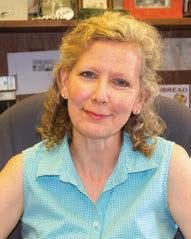
Katie McKee
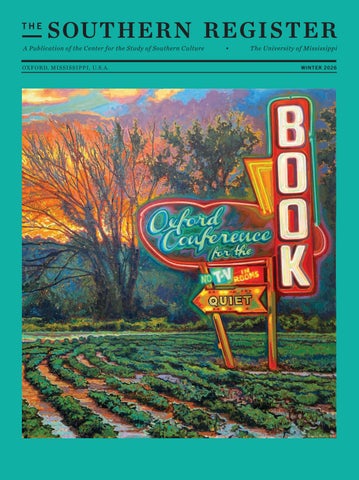
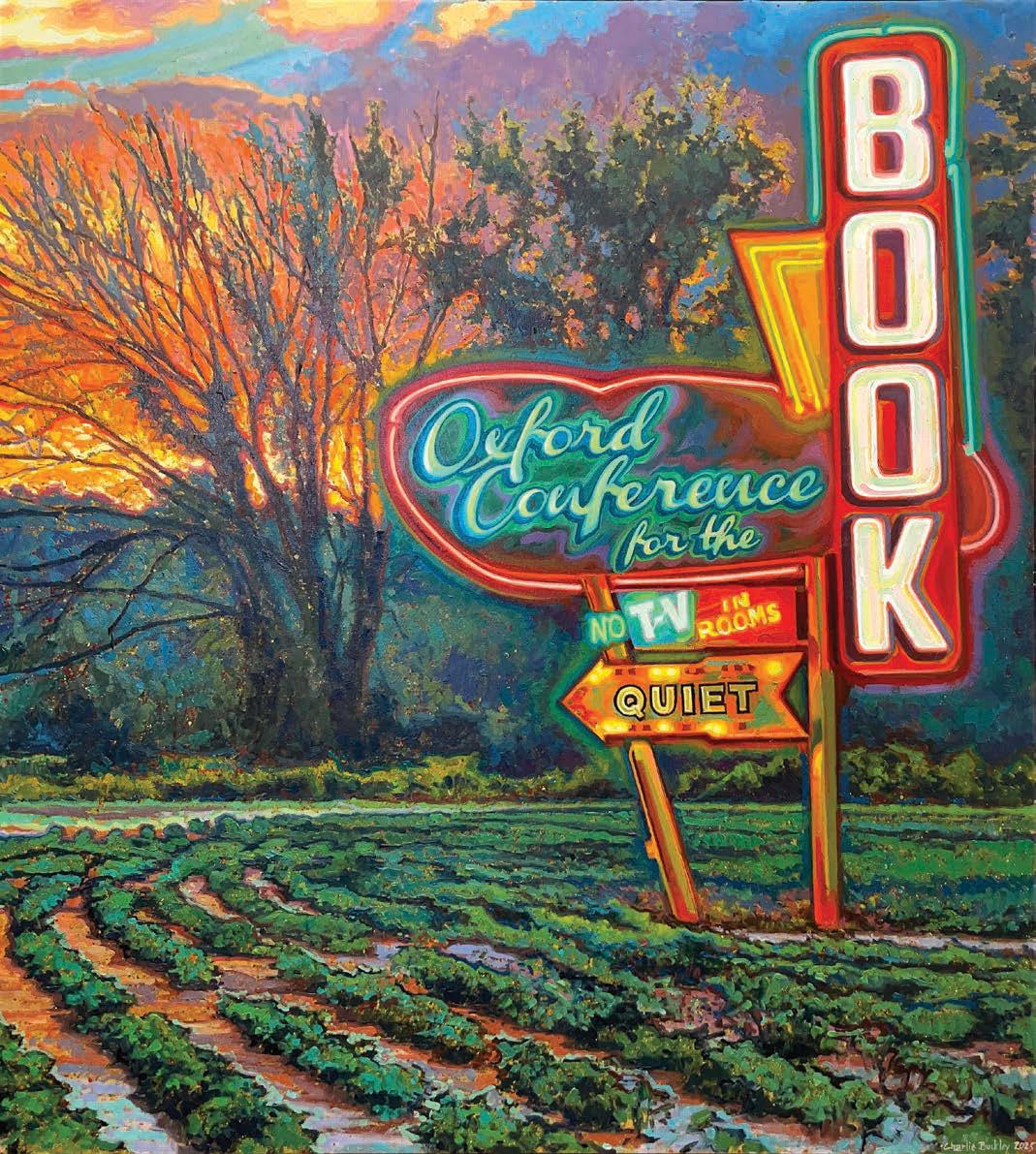
On the cover: Soybean Neon, by Charlie Buckley
REGISTER STAFF
Editor: James G. Thomas, Jr.
Graphic Designer: Susan Bauer Lee
Southern Studies Students Give Back Through Adopt-A-Basket Initiative
Kennedy Marrs and Sophia Jaqubino Lead One of ASB’s Longest-Standing Community Traditions
Fueled by a passion for service and their knowledge of southern culture, junior Southern Studies students Kennedy Marrs and Sophia Jaqubino made certain that everyone in the University of Mississippi community had a Thanksgiving meal in November. Through the UM Associated Student Body’s annual Adopt-a-Basket initiative, the two have turned classroom learning into hands-on service.
“There’s a lot of stress around the holidays to provide a big meal, especially when you might be food insecure or not have the means to have this huge Thanksgiving meal,” Marrs said. “Our goal is to provide as many Thanksgiving meal baskets as we can to employees of the university.”
As the ASB director of community service and director of philanthropy, respectively, Marrs and Jaqubino led the Adopt-a-Basket program, a campus tradition now in its twenty-second year. In 2024, the initiative packed 206 baskets, and for 2025 they filled more than two hundred requests from employees and departments.
The initiative relies on donations from students, faculty, and staff across campus. Marrs says the Greek community has been especially helpful. Contributions come from a grocery list that includes items listed online.
Jaqubino adds that the interdisciplinary nature of Southern Studies shaped how she understands the people she serves. “What really stuck out to me about the Southern Studies program is how you are able to diversify your knowledge and get real insights on the culture in the South and how things are developed and

just interactions with one another,” Jaqubino said.
For Marrs, the classroom experience translates into real-world experience. “It really helps build your ability to understand the cultural and regional complexity of this place,” Marrs said.
Marrs calls herself “boots on the ground,” preferring to connect with people face-to-face. She says her coursework, especially the conducting of oral history interviews, taught her how to form meaningful, intentional relationships. “It’s all about the people,” Marrs said.
Jaqubino said she values giving back to the same university that supports her. “This university gives so much to its students, that any chance that we could give back to those people is just incredible,” Jaqubino said.
Marrs says the program’s impact extends far beyond the ASB office. “I’ve received many emails from different department heads, even just members of any department, that are just reaching out, wondering how they can help,” Marrs said.
Jaqubino agrees. “It’s really cool to see how people want to get involved and give back,” she said. “It makes you realize how much of an impact something small can make. You can’t solve a problem that you don’t know about. That is something that Southern Studies really helps with.”
Looking ahead, both Marrs and Jaqubino plan to continue their paths of service beyond the UM community. Marrs hopes to build a career in the nonprofit sector. “I’m just super interested in the philanthropy world, and I thought that this would be a great way to get involved on campus and give back,” Marrs said. “I think that the South is somewhere I want to stay and help develop.”
Jaqubino plans to attend law school but says service will always be at the heart of what she does. “I absolutely want to continue serving as many nonprofits or volunteering with as many organizations as I can, wherever I end up long term,” Jaqubino said.
Mary Evans
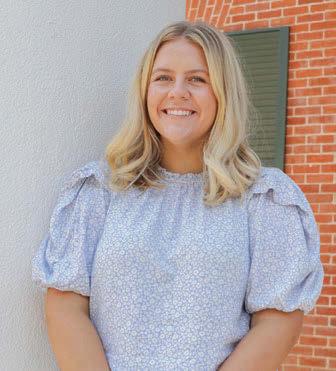
Kennedy Marrs
Sophia Jaqubino
University Launches Scholars Program to Tackle Gulf South Challenges
New Program Provides Funding, Fieldwork, and Real-World Projects
As one of the newest campuses in the Gulf Scholars Program, the University of Mississippi is working to prepare students to address some of the Gulf South’s most pressing environmental and social issues.
The Gulf Scholars Program is a five-year project led by the National Academies of Sciences, Engineering, and Medicine. It aims to bolster Gulfregion universities and their ability to train the next generation to address challenges in and around the Gulf.
“There are over one hundred million people that live around the Gulf in the US and Mexico, and coastal populations are growing,” said Richard Buchholz, director of the university’s Center for Biodiversity and Conservation Research. “As a consequence, the ecological, economic, and cultural resources of the Gulf will decline unless we prepare future leaders to understand how to find sustainable balance between what people want and what nature can
provide. We want to help students understand how to approach these complex problems with beneficial outcomes for all.”
As a hosting campus for the program, the University of Mississippi will create new courses, fieldwork opportunities, and communitycentered projects on a variety of subjects that relate to the challenges and cultural significance of the Gulf South. Buchholz, also a professor of biology, and Kathryn McKee, director
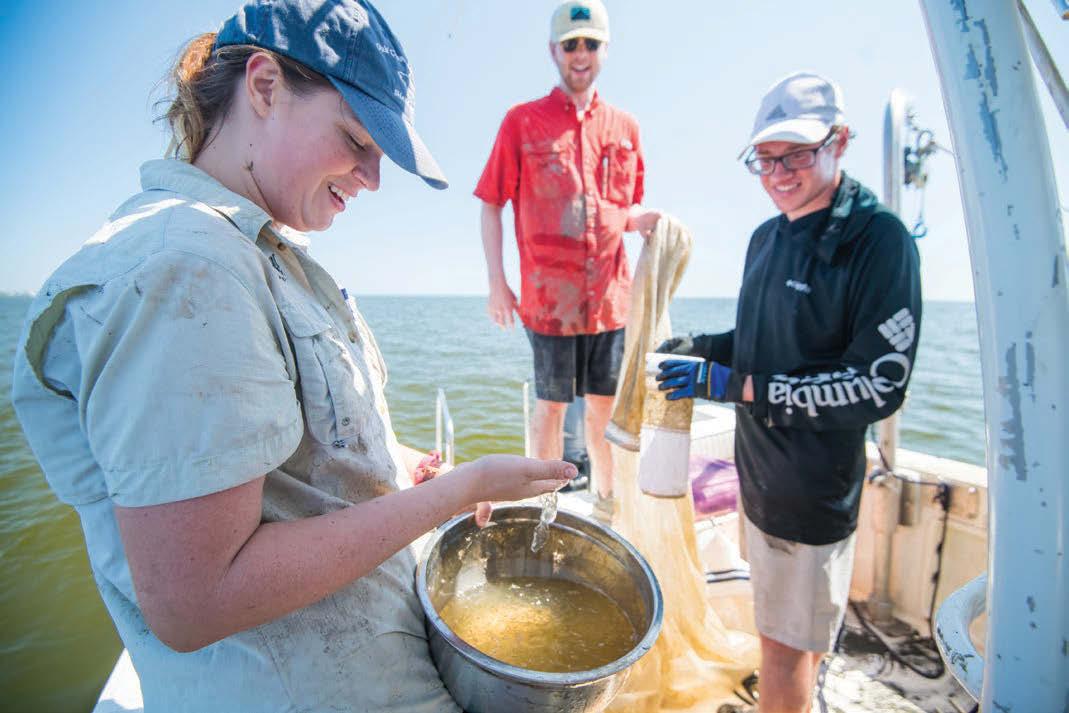
Environmental toxicology master’s program graduates (from left) Ann Fairly Barnett and James Gledhill and chemistry graduate student Austin Scircle measure water quality and pH levels in the Mississippi Sound.
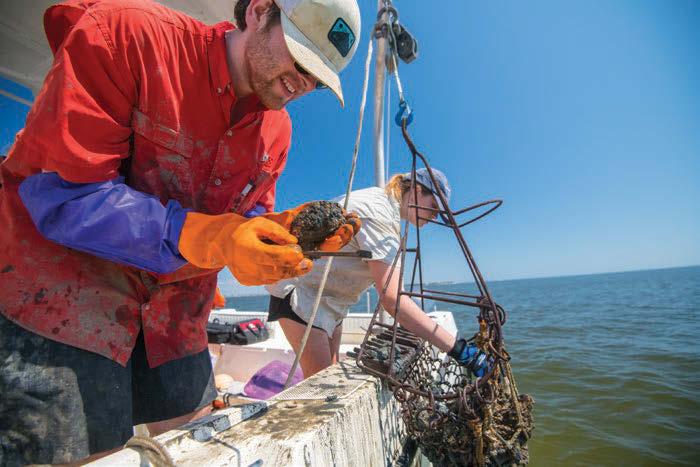
University of Mississippi students dredge for oysters while conducting research into reasons behind the decline of oyster populations off the Mississippi coast. The Gulf Scholars Program will promote research and study of issues that affect the gulf and watershed communities along the Mississippi River.
of the Center for the Study of Southern Culture, will codirect the program.
The Mississippi River watershed is one of the largest in the world, draining water from thirty-one US states and two Canadian provinces. All along the river—in areas such as the Mississippi Delta—communities, economies, and ecosystems are often shaped by their relationship to the water. This brings along benefits and potential challenges. These range from rich biodiversity and fertile farmland and fisheries to flood risks, erosion, and pollution that can ripple downstream.
“One outcome we hope for is that students will see themselves as capable of intervening in the world around them,” McKee said. “Global warming and other environmental concerns can feel so overwhelming that individual effort can seem pointless. But it isn’t. People can make a difference in the lives of their communities by learning how to think creatively about challenges.”
Each year, a cohort of at least fourteen students will receive up to $6,000 to help fund two years of
research and travel to watershed and coastal communities in the South. These students will have access to a new course titled Environmental Challenges in the Gulf South.
The program will also build on existing interdisciplinary courses, such as those offered in the new environmental studies major, and with programs such as the two University of Mississippi centers. “Southern studies is interdisciplinary by definition, inviting students to consider the US South from a variety of perspectives,” McKee said.
“We’re especially excited, then, by this opportunity to extend our interdisciplinary reach to partner with the Center for Biodiversity and Conservation Research. The study of the South begins with the granularity of place: soil, water, dirt. We are eager to engage more directly with the study of the environment at a moment when the health, not just of the region, but of the world depends upon our attention to it.”
The program will also partner with faculty at the Mississippi Gulf Coast Community College to help provide learning and research opportunities on
the coast. The program will also give students access to a StudyUSA course focusing on the Mississippi Delta, where they will hear from lawmakers and residents on local sustainability and environmental conservation efforts.
For their capstone project in the second year of the program, students will create a place-based project on a topic or issue relevant to the Mississippi Delta or the Gulf. Working with a faculty mentor, the students will propose sustainable solutions to regional problems, such as water diversion from the Mississippi River or the use of water as a coolant for artificial intelligence data centers.
“We’re requiring that our Gulf Scholars engage with community members in order to experience the practical challenges of planning a path forward when people have diverse needs and perspectives,” Buchholz said. “Community members are also incredible resources of local knowledge and strong motivation for collaborative learning and planning with our UM Gulf Scholars. Ultimately, you can’t make the world a better place unless everyone signs on to the plan.”
The program will create public events and learning opportunities in conjunction with the Center’s SouthTalks lecture series, the Oxford Conference for the Book, and the Gammill Gallery in the Barnard Observatory. “We also hope that students will be able to see quite literally how interconnected we are as a region, a nation, and a hemisphere,” McKee said. “North Mississippi constitutes an important part of the Gulf’s watershed. What we do here matters to what happens there, and what happens in the Gulf matters far beyond just those waters.”
Clara Turnage
This material is based on work supported by the National Academies of Sciences, Engineering and Medicine grant no. SCON-10001637.
KEVIN BAIN/OLE MISS DIGITAL IMAGING SERVICES
Three Majors, One Mission
UM Junior Combines Policy, Biology, and Southern Studies to Serve the South
“Thank God for Mississippi.” The phrase is often used as a shorthand quip for its penchant for last-place rankings, reducing an entire state to its struggles. For junior Emerson Morris, it is a challenge and a call to action.
In 2025, Campus Compact named Morris the University of Mississippi’s Newman Civic Fellow, a prestigious program recognizing student public problem solvers from thirtyeight states. Newman Fellows gain leadership development, community engagement opportunities, and a national network to drive social change.
“The Newman Civic Fellowship emphasizes civic engagement—getting to understand other people’s narratives, learning their stories, and applying that to my own life and work in the South,” Morris said. “One of my big reasons for applying was my photojournalism, documenting the American South—people, places, and different scenarios. I recently released a collection called ‘Thank God for Mississippi,’ documenting ghost towns of the Delta and the children who live there. I hope to talk about this on a national stage and bring light to the American South.”
Morris’s dedication to the region is rooted in her Gulfport upbringing. At fifteen, she witnessed how environmental collapse can upend a community: A 2019 algal bloom devastated the local seafood and tourism industries, and even six years later, the town imports most of its seafood. “That’s what sparked my interest in sustainable solutions,” Morris said. “You can’t just put a Band-Aid on something; you have to do stitches. I’m a big advocate for stitching solutions.”
Her academic path mirrors that complexity, blending public policy and leadership, biology, and Southern Studies. “My biggest passion is for the laws and governing of the American Southeast. I’m very passionate about conservation work done in that area as well. Getting those hard skills from biology, a historical understanding from Southern Studies, and the law basis from public policy was really important to me,” Morris said.
She says Southern Studies helped link her experiences to the region’s broader history. “Southern Studies has helped me craft my narratives surrounding what I’m interested in pursuing professionally, while exposing me to stories I wouldn’t have otherwise known,” she said.
She credits the University of Mississippi for nurturing her growth. “The University of Mississippi has a level of community, respect, and understanding that I haven’t experienced elsewhere. Programs [here] connected me to national stages and gave me tools to bring Mississippi voices forward,” Morris said.
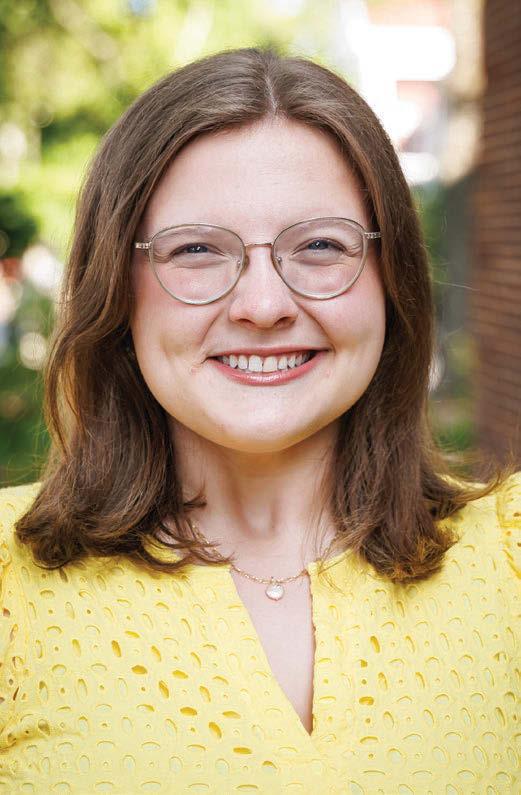
Morris highlights the small but powerful “Mississippi niceties” that define her home. “There’s a level of nicety, respect, and care among Mississippians—you open doors, make eye contact, help each other. That sense of community is invaluable,” she said.
Looking ahead, Morris plans to continue blending policy, conservation, and storytelling to serve the South. “I want to contribute to the spirit of community long after I’m gone and continue highlighting the people, places, and culture of the American South,” Morris said.
Mary Evans
Emerson Morris
Mississippi Freedom Trail Marker Unveiled at Fulton Chapel
University Leaders, Alumni, Students Reflect on 1970 Protest That Sparked Lasting Change on Campus
The Mississippi Humanities Council, in partnership with Visit Mississippi, unveiled a Mississippi Freedom Trail marker on September 2 at the University of Mississippi in the presence of student leaders who participated in a demonstration fifty-five years ago that is documented by the plaque.
The new marker, near Fulton Chapel, commemorates the February 25, 1970, peaceful protest by more than fifty Black students at the auditorium, where they brought attention to twenty-seven demands created by the Black Student Union.
The protest ended with eighty-nine students being arrested and jailed and all but eight being placed on probation by the university. The eight students not on probation were suspended and then expelled, eventually becoming known as the Ole Miss 8.
“Genuine leadership is the ability to motivate and inspire others, to stand up for what is right, and to have mental toughness,” Chancellor Glenn Boyce said. “In that regard, the Ole Miss 8 are powerful examples of this university’s legacy of leadership. As an educational institution, we share knowledge and inform our community about the events that have shaped our past. This marker connects us to that past, and it encourages the people who pass by it today to learn about our history.”
Four of the Ole Miss 8 attended the ceremony: Don Cole, Linnie Liggins Willis, Kenneth Mayfield, and Henriesse Roberts.
“It is with a great sense of pride for which I stand here today awaiting the unveiling of the Mississippi Freedom Trail marker, which will enshrine the history of the Ole Miss 8 and 81 into the fabric of this institution in perpetuity,” Liggins Willis said.
Despite being denied her degree in 1970 but awarded it later, Liggins Willis is at peace. “I embrace and acknowledge that I indeed have an alma mater, and it is the University of Mississippi,” she said.
The protest brought change to campus. Several of the students’ demands were met a few months after the demonstration. This included Jennette Jennings being appointed as the first Black faculty member and the establishment of the African American studies program.
The protest and its aftermath have been considered a “watershed event” in the university’s story by historian David Sansing. “It is those moments in history when [freedoms] are not upheld, when they are not a given, that cause us to pause and realize the importance of these to the people, to the
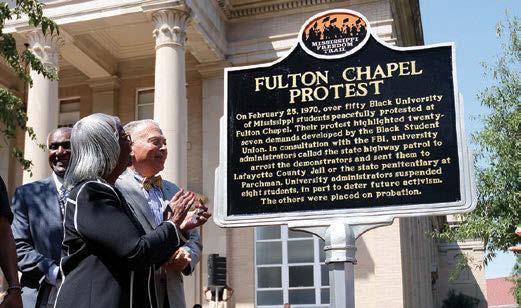
Cole (left), former UM mathematics professor and special assistant to the chancellor for multicultural affairs; Ole Miss alumna Linnie Liggins Willis; and Ralph Eubanks, faculty fellow and writer-in-residence at the Center for the Study of Southern Culture, celebrate the dedication of a campus marker commemorating a 1970 demonstration at Fulton Chapel.
democracy, and to circumstances in which we live,” said Noel Wilkin, provost and executive vice chancellor for academic affairs. “This marker helps to tell that story, to teach that lesson and remind people that when freedoms bestowed on us by the constitution are not upheld, all of us lose something.”
The marker provides an opportunity for passersby to learn about Mississippi history that shapes the present and future. “Members of the Ole Miss 89 community wanted a Mississippi Freedom Trail Marker so that the event, the history of which has largely been kept silent for more than fifty years, came to be part of Mississippi civil rights history,” said Ralph Eubanks, writer-in-residence and faculty fellow at the Center for the Study of Southern Culture.
The legacy of the Ole Miss 8 is something from which the community can continue to learn. “This event reflects a key chapter in our university’s history—and the shared responsibility we have in building a campus where every student can thrive,” said Shawnboda Mead, vice chancellor for student affairs.
Borrowing from the Sam Cooke song “A Change is Gonna Come,” Liggins Willis articulated the occasion: “It’s been a long time coming, and a change has come today,” she said.
Marisa C. Atkinson
Don
Southern Studies Sideline Is a Resounding Game-Day Success
Sausage balls and pigs in blankets adorned the cloth-bedecked table as the scent of warm, orange cinnamon rolls perfumed the air. On this particular balmy Saturday morning in the Grove, a sea of people, all dressed in navy, bustled among the tents and beneath the boughs of oak trees that spread as far as the eye could see. Washington State University was in town to play Ole Miss in football on this particular weekend, and it was the Southern Foodways Alliance’s turn to set up the tent. There was no doubt that the food was one of the main attractions.
For the first time in a handful of years, the Center set up a tent on football game days. Dubbed the “Southern Studies Sideline” by first-year master’s student Meritt Tompkins, the tent claimed some prime real estate—located just in front of Barnard Observatory, opposite the Grove, the tent became a new weekend home for Southern Studies professors, staff, and students. The Center hosted four home games in the Grove tent this season: Tulane, LSU, Washington State University, and the University of Florida.
When asked if they thought the Sideline had been a success, Southern Studies assistant professor of practice and Southern Foodways Alliance oral historian Annemarie Anderson had this to say: “Absolutely I do. The Southern Studies tent is a really wonderful venue for Southern Studies students, professors, and university friends and family to get together and hang out outside
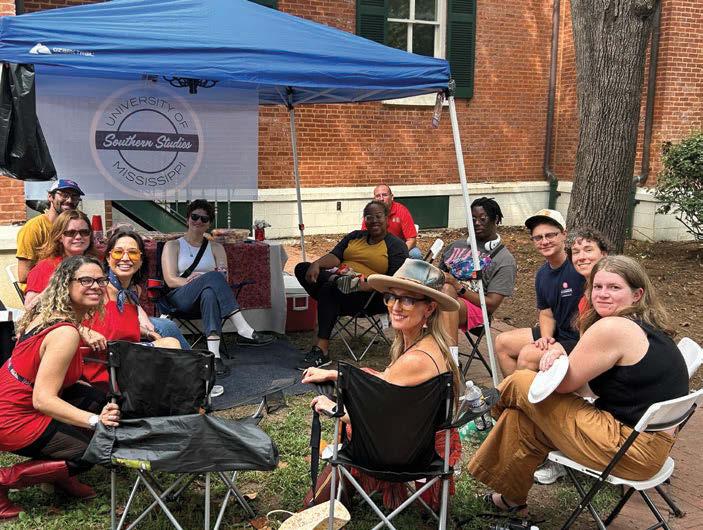
of class. I love hanging with my Southern Studies people.” This sentiment was echoed by all who stopped by the cozy venue, replete with nibbles, ice-cold drinks, and even a small, wooden chandelier.
One second-year master’s student called the idea—and its execution— “delightful,” having eagerly attended each game day and rightfully looking forward to more next year. This year’s Sidelines were hosted by enthusiastic Center volunteers, including associate professor of anthropology and McMullan Associate Professor of Southern Studies, Simone Delerme (Tulane); Center administrative coordinator, Andrew Bryant (LSU); Southern Foodways Alliance codirector Melissa Hall (Washington
Gathering at the Southern Studies Sideline
State); and Annemarie Anderson (University of Florida), with dozens of people checking in, proving its popularity. Each week tailgaters ranged from undergraduates and their parents and friends to staff and professors and graduate students. This opportunity to mingle with folks with whom one may not otherwise interact, in an environment that is relaxed (and catered!), clearly proved popular, and nothing is stopping this camaraderie from continuing. New connections will be fostered at next year’s South Studies Sideline; all that might be missing are a 98-inch flatscreen TV to view the game—and a real crystal chandelier.
Astrid Knox-McConnell
From Dijon to the Delta
French Scholar Finds Mississippi at the Heart of his Work
When Éric Doidy was twenty-three, he boarded a plane from France to Mississippi with little more than a few saved francs and a dream. “I said, let’s go. Forget about everything, let’s go to Mississippi to meet my hero and listen to the music,” Doidy said.
That hero was blues legend Junior Kimbrough of Holly Springs. Doidy knew Kimbrough was not likely to tour Europe again. Within months of their meeting, Kimbrough was gone. He died in early 1998. “He had been to Europe, but I was a little kid. In ’97, he didn’t play concerts anymore. I really wanted to see him,” Doidy said. “Going to his place—his juke joint—was a life-changing experience for me.”
At the time, Doidy was unsure about pursuing his doctorate, but Mississippi gave him direction. “When I came back to France, I started my PhD on another subject,” he said. “But since then, I never stopped meeting and interviewing blues musicians.”
That decision eventually led to Going Down South: Mississippi Blues, 1990–2020, a book compiled from decades of interviews with artists like John Lee Hooker and B. B. King. Published during the pandemic, the collection quickly sold out. His publisher requested a second edition, which brough Doidy back to Mississippi this past fall as a visiting scholar with the Center for the Study of Southern Culture. “I was just coming here to pick up some little small things to make the second edition. But within a week, I have enough material for another book,” Doidy said.
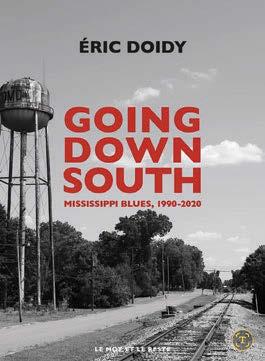
During his stay, Doidy set up basecamp in Water Valley, using Oxford and the Center as his academic hub while traveling extensively. “I only had a month and a half, so I wanted to meet as many diverse people as possible.”
While the first book focused more on the musicians, the second one will focus on the social and historical context of the blues. Early in his visit, Doidy found himself visiting farmers in Lexington, Mississippi, including a veteran-turned grower. “I’m trying to understand the global social context of not only the music, but also the culture, because in that type of music, whether it is blues or gospel music, it’s so much more than just music.”
Along with his blues work, Doidy continued his research on farming and veterans. “Most of them suffered from PTSD, and farm work was a way of healing. It was more peaceful,” Doidy said. “One of them told me at the time, ‘I don’t serve people by killing other people, but by providing good food, good products to my community.’”

Doidy’s connection to the blues started in his childhood in Dijon, France. Born in 1974, he grew up during a time when few French people spoke English or had direct access to American culture. But American musicians touring Europe often found hospitality at his parents’ home after shows. “As a kid I was very much impressed with Black American musicians,” he said. “I knew B. B. King before I knew Eric Clapton or the Rolling Stones,” Doidy said.
This early exposure shaped his approach. “In Europe, we have the music—we listen to the records. But this music is much more than sound,” Doidy said. “Over here in Mississippi, it’s what people live and experience every day. You see the audience not only dancing but responding and understanding.”
What keeps him coming back is the Delta itself. “Here there is something special. Maybe it’s in the water or in the air. I don’t know. But what struck me? The first thing everybody tells me, the first word, they say, ‘Welcome.’ You don’t see that in France,” Doidy said.
Mary Evans
Éric Doidy heading to airport in France to travel to Mississippi
From the UK to Oxford,
Tom Attah Blends Performance and Sociology to Ask What the Blues Does and Why It Still Matters
He’s played as a featured artist at the Glastonbury Festival of Contemporary Performing Arts, as well as at the Great British Rhythm and Blues Festival. He composed and recorded solo acoustic guitar tunes for the permanent exhibition of the former home of Georg Frideric Handel and Jimi Hendrix in Mayfair, London.
Now, Tom Attah, who has jammed alongside Robin Trower, Toots Hibbert, and Honeyboy Edwards, has moved across the pond as the assistant professor of sociology and Southern Studies at the University of Mississippi. Attah hasn’t put down his guitar completely; it’s just off to the side a bit as he teaches SOC 101, SOC 440, and, along with Adam Gussow in the spring, SST 118. His research interests include the effects of technology on popular music, particularly blues music and blues culture.
Attah is a researcher and active internationally known musician and author, and his passion for the blues shines through in conversations. “I didn’t realize was that I was a sociologist initially because I’d always been doing performance, but what I found was that the questions I was asking about blues music didn’t actually have their answers in musicology,” Attah said. “The questions that were more interesting were, what’s this music for? How does it work? How does it affect? Why is it still here? The key one was why does it persist? Why is it that people still listen to blues music and feel it because it means something to them? Why does it move all over the world to cultures and people
who have never been to America but understand the music? And as I built my research and writing and teaching, the answers were in sociology and in Southern Studies.”
After earning a BA in popular music studies from the University of Sheffield, he went on to the University of Salford to earn an MA in music (performance) and a doctorate in popular music. His dissertation, “Halls Without Walls: Perpetuation, Development, and Dissemination of the Discourse on Blues Music and Blues Culture in the Digital Age (1996–2016),” will be published by Bloomsbury as a monograph in 2027, with another book on blues in the north of England from Manchester University Press due in 2028.
“People sometimes assume that blues music is somehow primitive, and it’s not. It’s a forward-looking, living tradition. For example, you’ve got steel guitar strings, which in 1910 and 1920 was the cutting edge of technology. All guitars up until that point had been made out of wood. As soon as technology was able to fashion metal at scale and make these into instruments and sell them at a reasonable cost, resonator guitars appeared. And this was before the gift of electric guitars transformed the world,” Attah said. “The question is, why does the blues persist? Because it does something. What does it do? How does it do it? Well, let’s find out.”
Despite a few hiccups with his paperwork to get to the United States, Attah is pleased he finally calls Mississippi his
home, even though he wasn’t totally convinced he would be considered the right person for the job. “My interest and respect for the blues is real, but there are heavyweight academics in the United States who live and breathe this music, so I thought, it’s an honor to even be considered for this position. I’m going to go along for the experience of interviewing.” Attah said. “I thought, ‘Don’t hold back. Just bring everything you can and just enjoy it.’ So I did, and no one was more surprised than me when I was offered the job.”
In his short time here, Attah has already discovered concerts at the Foxfire Ranch and other music in and around the area. “If we want to understand what the blues was one hundred years ago, or two hundred years ago, all we have to do is listen to it today,” he said. “It’s not a question of having to get in a time machine.”
In the second fall semester in 2025, he taught SOC 404: Sociology of Citizenship and navigated the world of online teaching. “The key thing is, as long as you’re genuinely interested in the music and the people, respectful of the power of both, then everything’s fine. And if you’re interested in your students and respectful of the subject before anything else, everything flows from that,” Attah said. “I’m very lucky. I can write, I can read, people ask me to go and play shows, people are supportive and generous, and it all kind of works out.”
Rebecca Lauck Cleary
Oxford, Mississippi
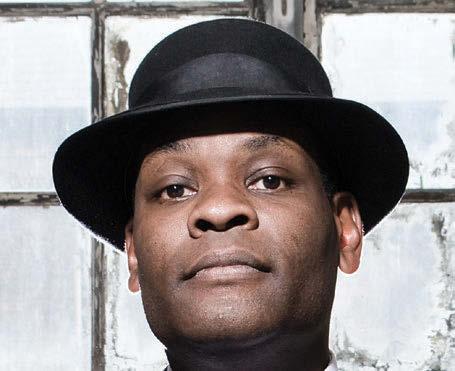

Tom Attah
A Steward of Stories
Annemarie Anderson Listens to the South One Foodways Tale at a Time
I make my way, wearily, up the mountain of stairs that leads to the Southern Foodways Alliance’s (SFA) office at the top of Barnard Observatory. It is a chilly autumnal day, yet my heart is thumping hard and I am starting to sweat from the climb. Panting, I find Annemarie Anderson sitting on one of the couches in the center of the room, ready and willing to answer the questions I have about her work.
For Anderson, an assistant professor of practice at the Center for the Study of Southern Culture and lead oral historian at the SFA, telling stories begins not on the page but at the kitchen table. She has built her career out of listening to southerners’ stories and defining southern identity through food. By using food as a lens, she explores and investigates the world around her. “I can meet you and understand you over a plate of food,” she says.
Anderson has long understood the significance of food in her own life. She grew up in the Wiregrass region of the Florida panhandle, and she says that food is still a way her family “engages with each other: the way we make meaning and the way we celebrate and grieve.” This awareness of how food can bring people together may be central to some of the life decisions she’s made.
Her first foray into the field of oral history was during her undergraduate studies at the University of Florida. “Oral history was a way for me to connect on the ground floor
with people,” she says. “It felt like the most radical form of learning, a salient way to engage with the research I was interested in doing, which was investigating broad historical narratives and telling those stories in compelling and beautiful ways.” Enrolled in English and history programs, Anderson ultimately realized that she really wanted to work in an interdisciplinary program and that foodways were her entreé into this world of interdisciplinarity.
That undergraduate work eventually propelled Anderson to also earn a degree from the Southern Studies program. She says that her time in the Center’s MFA in Documentary Expression program not only helped her “be a better listener” but it also helped her “be a better looker. I learned how to see in that process. I already knew how to listen, but while working on my MFA I really learned how to see.” And ultimately, this “transformed my practice and deepened it in a lot of ways.”
Belief in the power of oral history means that “every day is poetry” and that to listen to people share the stories of their everyday lives, you often get a “really beautiful answer that kind of blooms and breathes.” Anderson is careful, though, to be a “steward of stories rather than a storyteller,” making it clear that “oral history interviews are co-created. It’s a dialogic framework, a back and forth, a give and take.” Ultimately, she, along with the rest of the SFA, is “building an archive of voices, and there’s a lot of responsibility that
comes with that.” Central to the ethical framework of the oral historian is “this idea of co-creation, that we’re doing this together, that I’m not an expert coming in to study you, but I’m a curious person and you are the expert of your own lived experience.” For Anderson, this is a “really beautiful, fruitful way to engage. I’m not here to tell you something about you. I’m here to listen.”
When asked by her students what southern foodways are— the central question in this field—Anderson tells them that
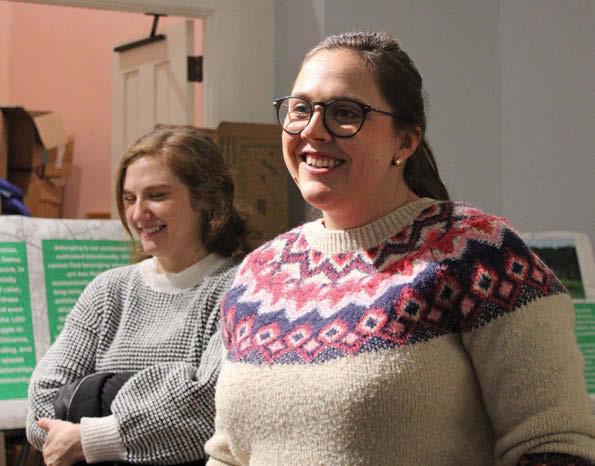
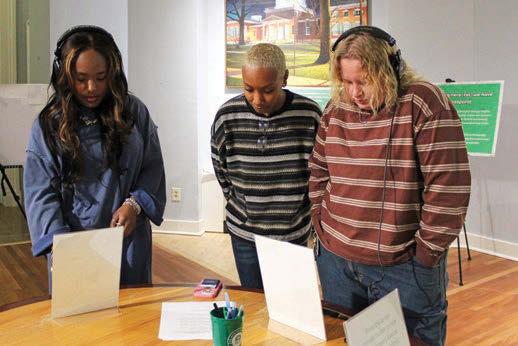
Annemarie Anderson (above) also uses her oral history expertise inside and outside the classroom by training students in the practice of doing oral history work. Students in her SST 560: Oral History and Southern Social Movements class (left) this fall semester conducted oral histories to create the Affordable Living in Lafayette-OxfordUniversity (LOU) Community archive. In December, they created a public exhibit in Barnard Observatory featuring descriptive text panels and audio excerpts from their interviews. The project highlighted the voices of people who work, live, and find community in Oxford, Lafayette County, and the University of Mississippi. In their research, student interviewers uncovered significant themes of belonging, change over time, livability, and university-town-county relationships within interviews.
“foodways is the study of what we eat, why we eat, and how we eat it.” She says that what is essential to understanding southern foodways is that “everybody has their own flavor,” and so, in essence, southern foodways, and the South in general “resists definition.”
As my time in the SFA offices neared an end, I asked Anderson the question that she must surely get all the time: What’s her favorite southern dish? After making it clear that “Southern foodways isn’t just collard greens and cornbread; it’s also pupusas and roti,” she says she ultimately finds “deep comfort in a big bowl of grits.” But it is boiled peanuts that take first place: “I could just eat a tub full of them, truly.”
Astrid Knox-McConnell
OLIVIA WHITTINGTON
OLIVIA WHITTINGTON
OLIVIA WHITTINGTON
From the South to the Sixth Floor
Courtney Chartier Enjoys Role as Director of Rare Book and Manuscript Library at Columbia University
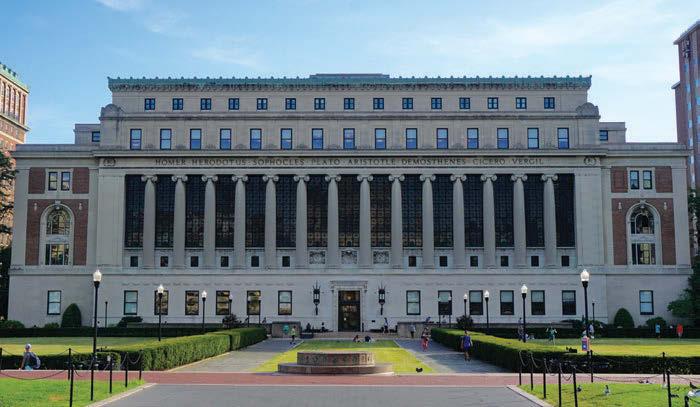
Imagine a place where the breadth of the written word is contained in one place, everything from cuneiform tablets to emails. That space isn’t imaginary, though, it actually exists on the sixth floor of the Butler Library at Columbia University in New York City in the Rare Book and Manuscript Library.
Courtney Chartier, a 2003 Southern Studies alumna, is director of Columbia’s largest archive and special collections library, which contains something for everyone. “We have reading rooms for using materials, provide research support, teach classes, host events and exhibitions, and lead work across all of Columbia’s archival repositories,” Chartier said. “I’m surrounded by fascinating materials and brilliant people, and my job is to sweat over budget spreadsheets and through committee meetings so they can focus on bringing that cool stuff to the world.” Her typical day starts with meetings—with her assistant, with a peer on the technology side, with unit heads, and with the full management team. She also leads a session for an undergraduate English class. Recently, she also traveled to Long Island to pick up the papers of Hale Smith, an American composer and pianist.
When she first started working at Columbia, she was vice president of the Society of American Archivists, and she became president shortly after moving to New York. This was after a three-year term on the council, years of committee service, and ten years on the Board of the Society of Georgia Archivists. “I’ve spent most of my professional life volunteering for one archival organization after another,” Chartier said. “I’m also a founding member of the Atlanta Black Archives Alliance. This profession can be hard, and the community I’ve found in these groups has been essential for
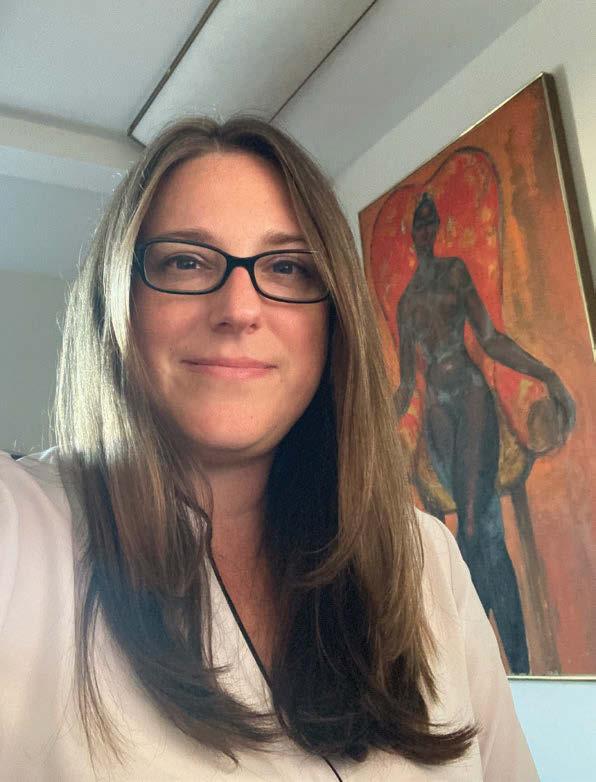
Courtney Chartier at work at Columbia University
“Archives are alive and they are meaningful. Anyone who says otherwise is selling something.”
my growth. Plus, now I know interesting people doing interesting work all over the country. I lean on them for expertise, inspiration, and lunch when I’m traveling.”
She admits that her career path— taking her out of the South and into the literal home of the Yankees—has taken an odd turn. “People here try to pretend it’s the mid-Atlantic but we all know that’s just geography,” Chartier
said. “I work with a lot of people who have never left New York, and they tell me my stories about home sound like a TV show, but that’s what we call ‘the rest of the country.’ Even in a rigorous academic environment like Columbia, few seem to understand the South or its development in the greater context of the nation.”
Luckily, her interdisciplinary Southern Studies master’s degree
provided her with the tools for solving daily problems on the job that aren’t food related. “I incorporate the South in my teaching, but my degree is also a lifelong gift in critical thinking,” she said. “I use analysis of information all of the time; it can’t be quantified or qualified.”
Her first piece of advice for anyone looking for employment in the field of archives and libraries is simple. “Learn technology,” she said. “Even big wellfunded organizations are stumbling around with how to manage digital records at any scale. Hone your public speaking and people skills. Archives are about trust, and you’ll need to demonstrate empathy for how fraught the giving up of one’s papers, or pursuing one’s research, can be.”
The other part is a little more complicated. “Be prepared to sing for your supper,” Chartier said. “Unlike at Emory, or my position before that at the Atlanta University Center, Columbia doesn’t love its libraries. Part of the work is convincing others of our value and staying resilient in the face of financial worries, a lack of appreciation, and attacks on truth and our country’s gorgeously complicated history. Archives are alive and they are meaningful. Anyone who says otherwise is selling something.”
Certainly, one aspect of Chartier’s New York life experience is easy to understand for sports fans. “I’m single and believe you me, the fact that I was at Ole Miss in the Manning years is like catnip to New York men,” she said.
Rebecca Lauck Cleary
Beyond the Courtyard features Southern Studies alums. Interested in letting us know what you are doing? Email rebeccac@olemiss.edu.
Butler Library, Columbia University’s largest single library
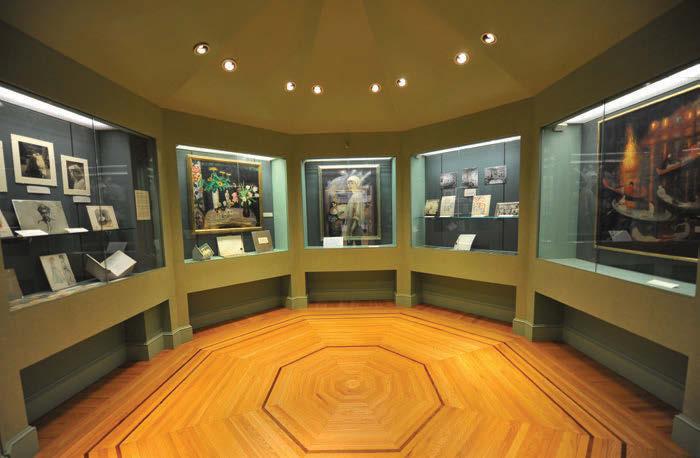
Chang Octagon Room in the Butler Library
What Meets the Eye
Student Portfolios from SST 544:
Documentary Photography
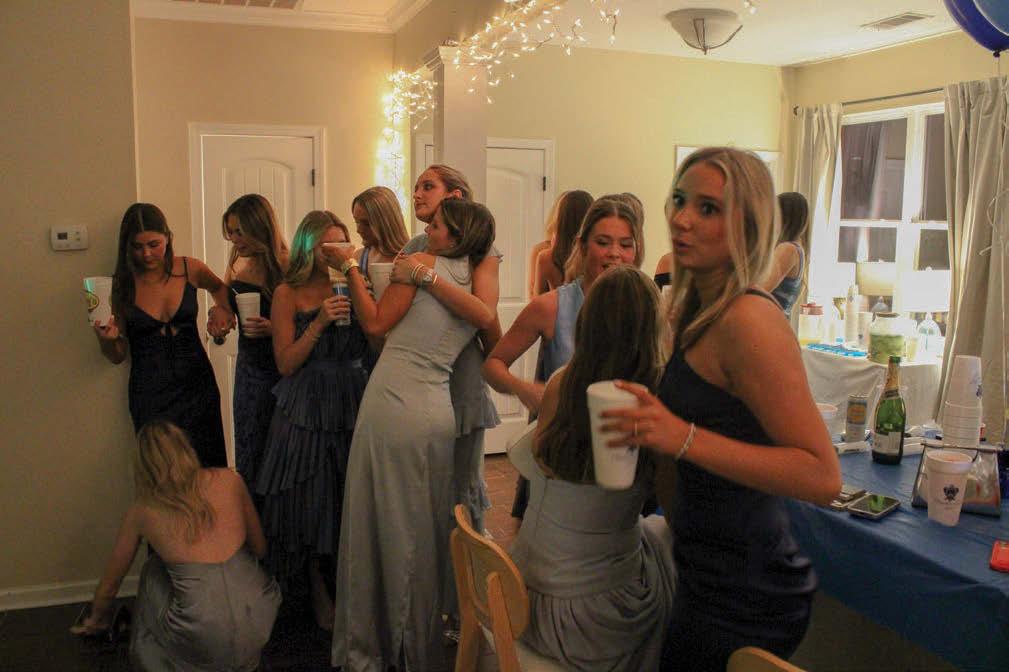
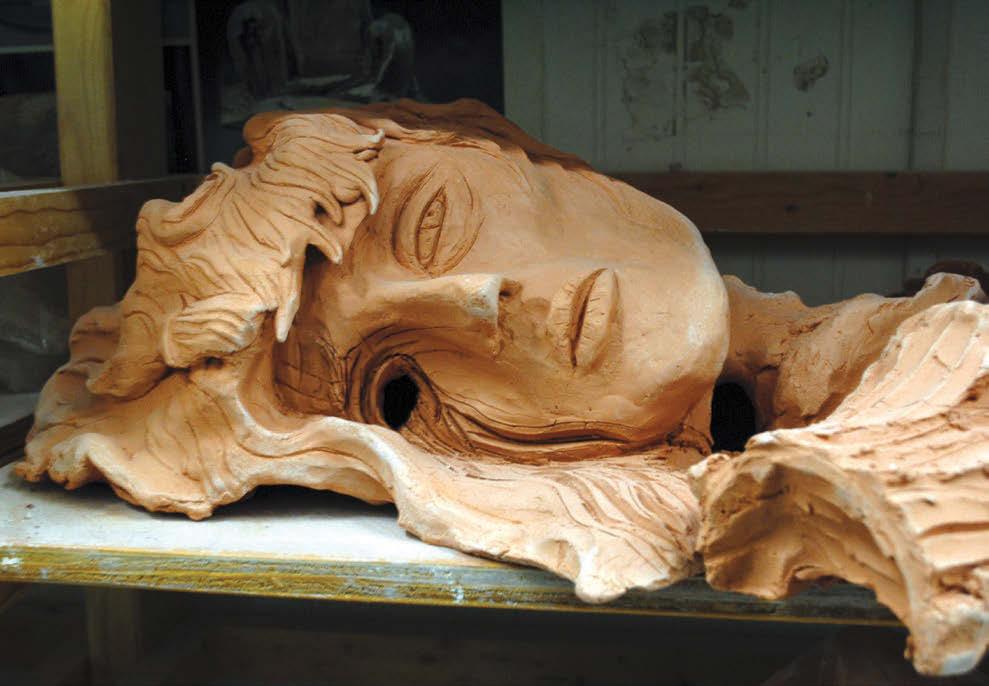
In Shiraz Ahmed’s fall SST 544: Documentary Photography class, he tasked students to explore realms within the campus and the city that are unnoticed by everyday passersby. Students were allowed to choose their subjects but were motivated to find a deeper, revelatory meaning behind the pictures they were making. Some chose the domesticity of their homes or neighborhoods, others put themselves in new situations, bonding with people familiar and strange and telling stories that reveal that these places hold meaning far beyond what meets the eye. By using their eyes, cameras, and composition, they told stories about grief, friendship, love, labor and history, sensitively and empathetically, looking to make the ordinary feel exceptional.
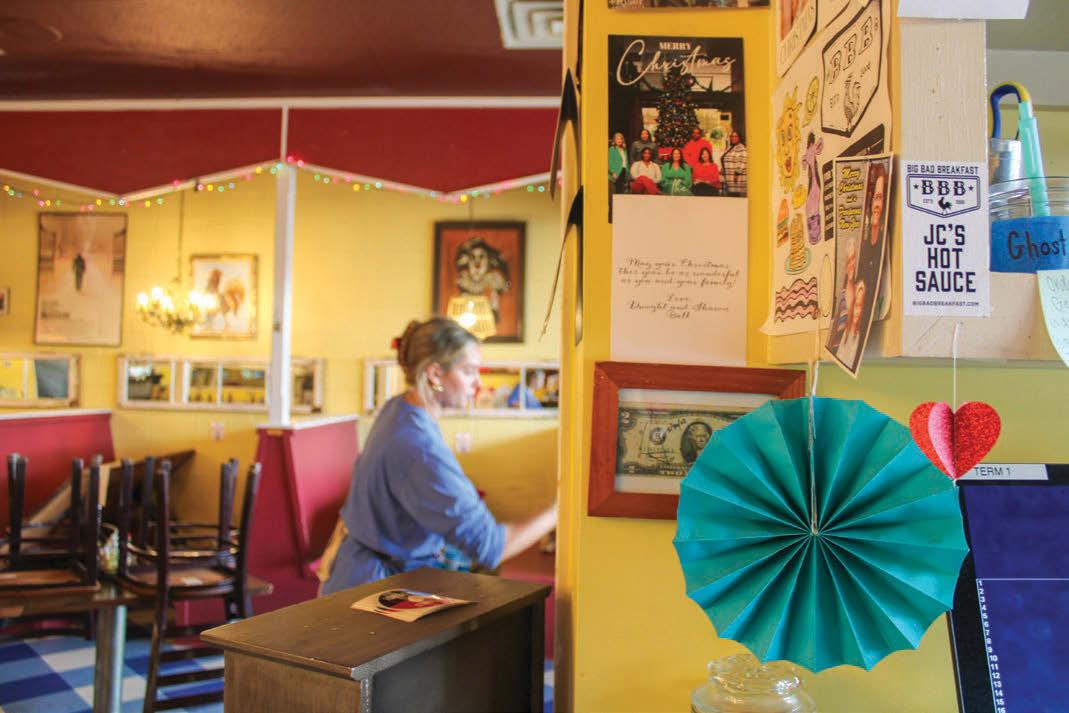
Photograph by Arianna Patterson, from the project Behind the Plate: The Life Inside Big Bad Breakfast
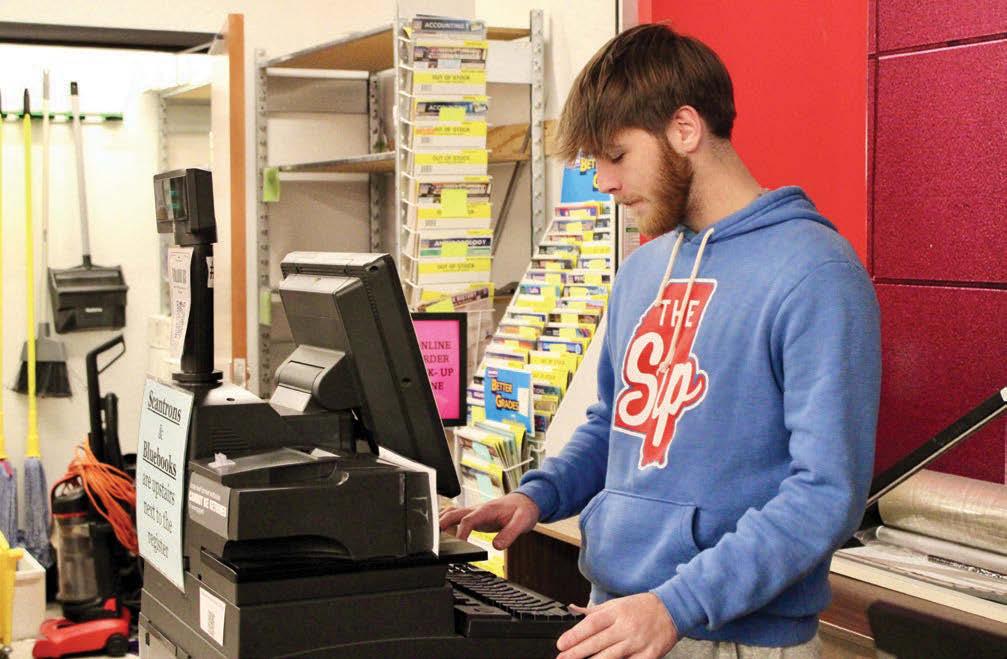
Photograph by Rebecca Johnson, from the project The People Behind the Place
Photograph by Grace Di Mento, from the project Life on Garfield Avenue
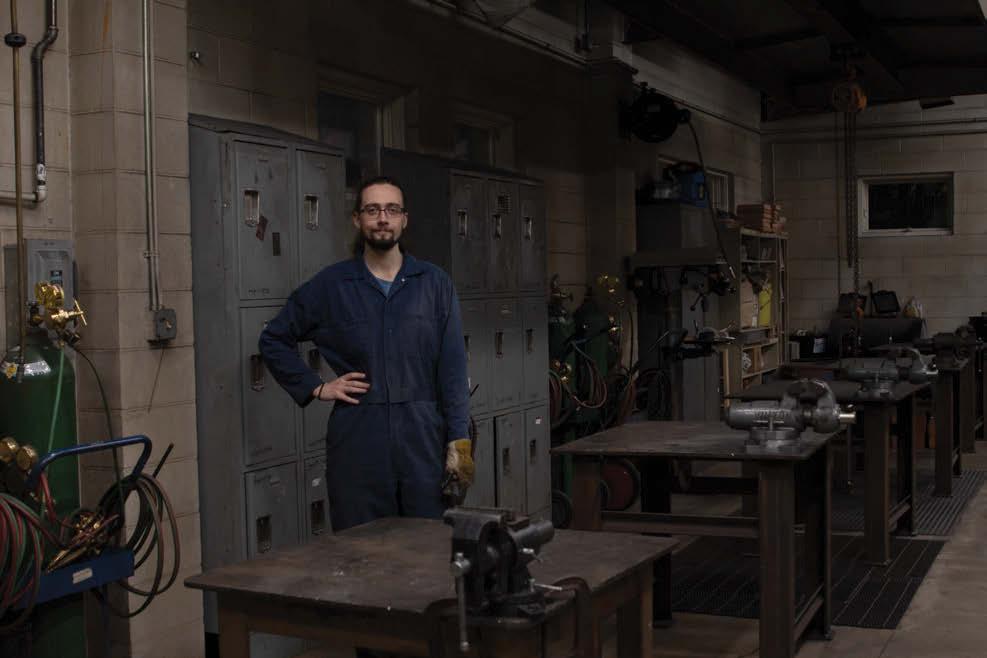
Photograph by Sela Ricketts, from the project To Wes and Ellis: A Photographer’s Love Letter to Her Subjects
Photograph by Gracie Miester, from the project Hand of Clay, Heart of Fire: The Art of Eliza Meow
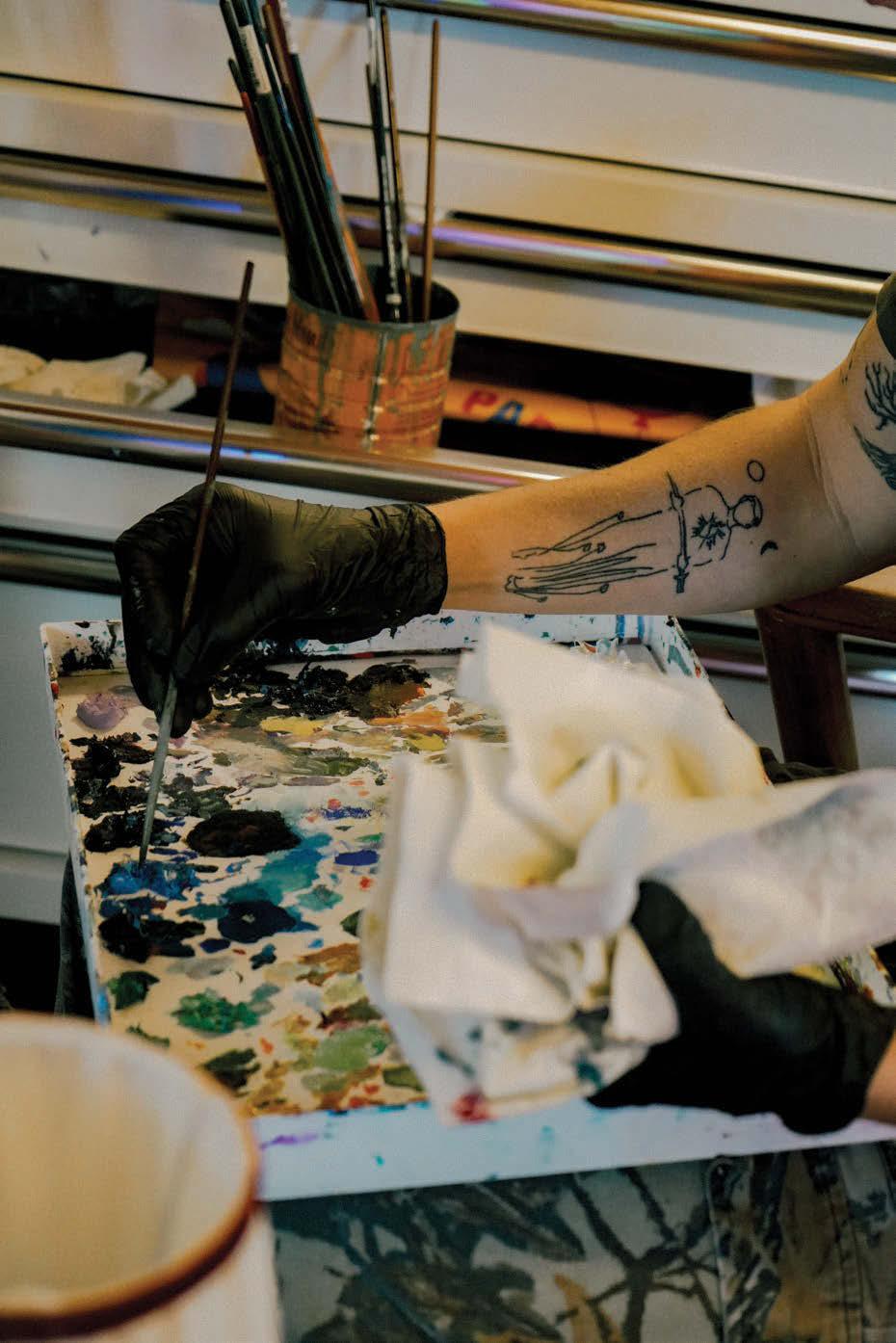
Photograph by Deja Samuel, from the project Church of the Living God
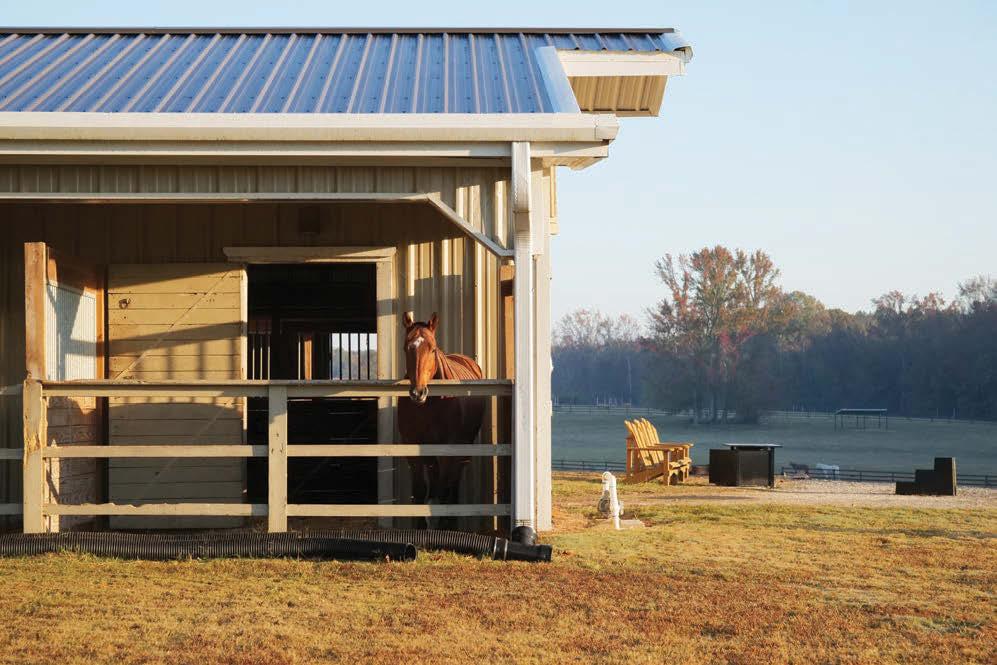
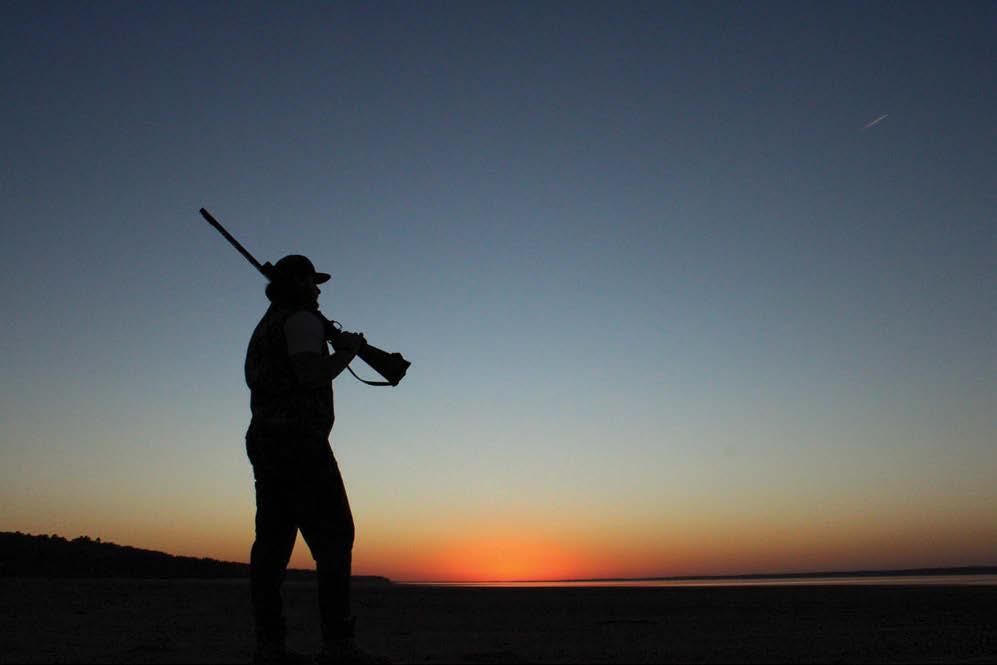
Photograph by Cody Stickels, from the project Stall Sweethearts
Photograph by Shelby Friedrichs, from the project Beyond the Shot
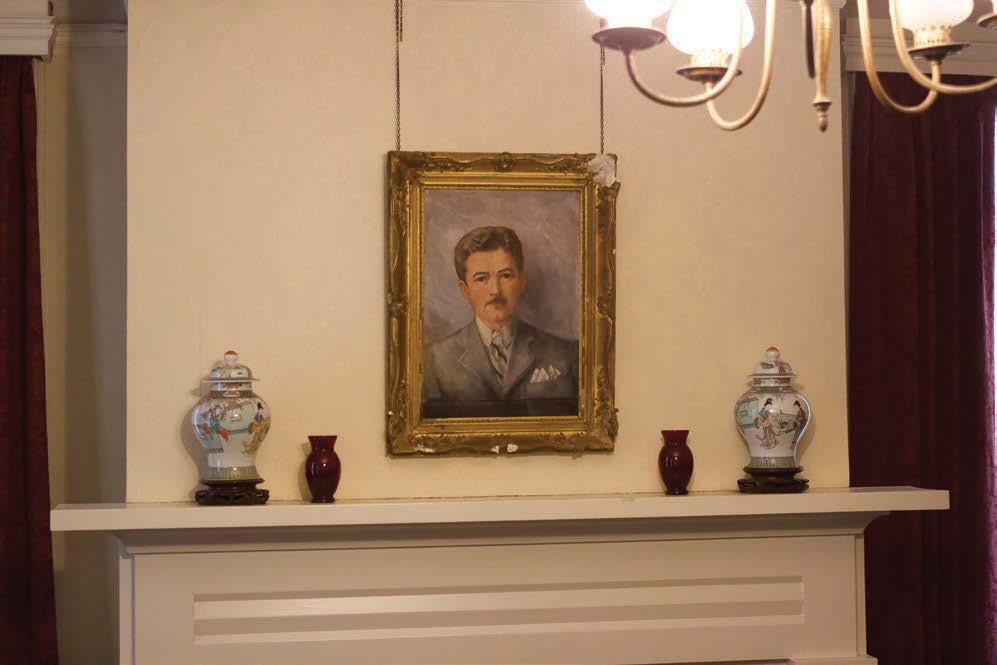

Photograph by Carter Hendrick, from the project A Living History
Photograph by Emma Boyd, from the project Something Like Sisters
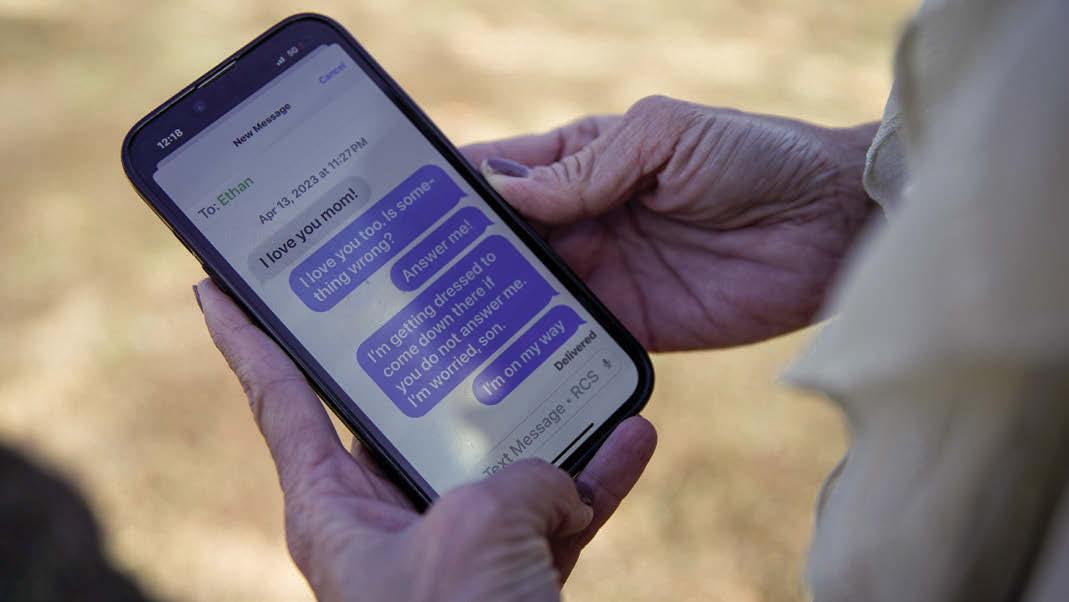
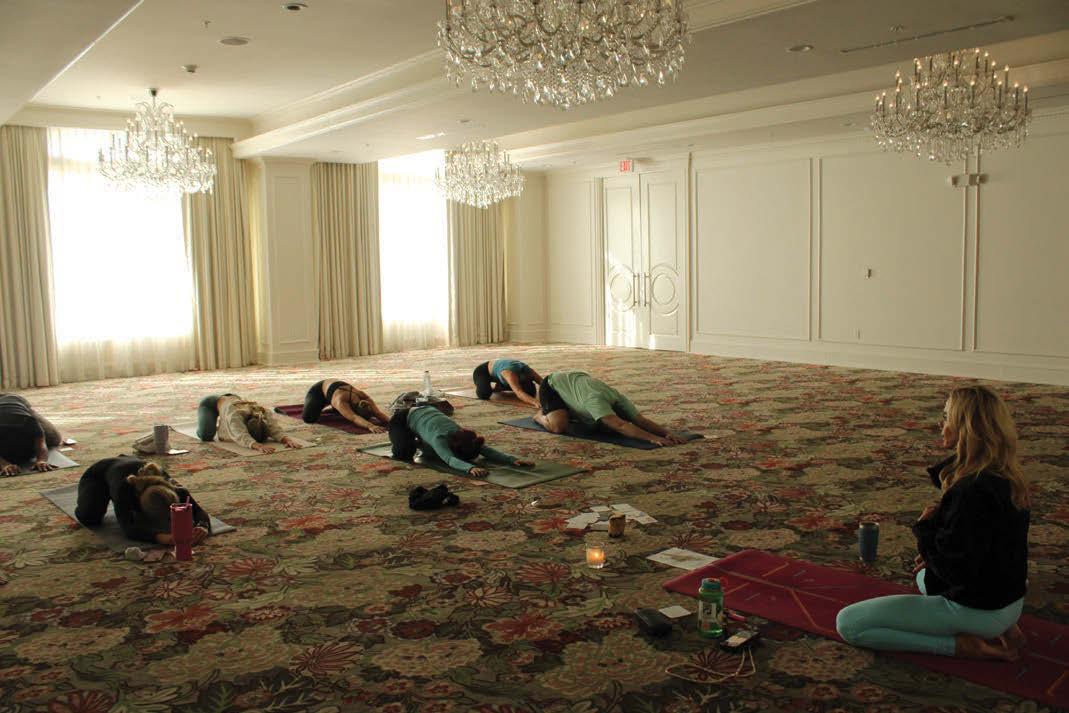
Photograph by Hope Kirabo, from the project Where Love Remains
Photograph by Mary-Helen LeMay, from the project Sober on the Square: With Kristy Bridgers
The Thirty-Second Oxford Conference for the Book March 25–27, 2026
Celebrating the Written Word
This spring, more than twenty of the nation’s leading and emerging authors, poets, scholars, and publishers will gather for the annual Oxford Conference for the Book. Over three days, panels, discussions, and events will span the University of Mississippi campus and the city’s historic downtown Square, transforming William Faulkner’s hometown into a vibrant literary playground. Mark your calendars: March 25–27, 2026, promises another book conference you won’t want to miss.
The thirty-second meeting of the conference, organized by the Center for the Study of Southern Culture, is as expansive as ever, thanks to support from national sponsors and local partners such as the National Book Foundation, the Willie Morris Awards for Southern Writing, and the University of Mississippi. As always, this year’s diverse lineup of book discussions and scholarly panels is free and open to the public. With venues ranging from the J. D. Williams Library and the Overby Center for Southern Journalism and Politics auditorium to Southside Gallery and Off Square Books—all within walking distance of each other—the conference offers an accessible and immersive experience for all.
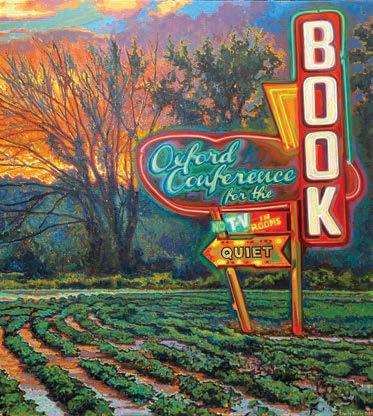
THE THIRTY-SECOND Oxford Conference
for the Book
The University of Mississippi • Oxford, Mississippi March 25–27, 2026 www.oxfordconferenceforthebook.com
This year’s artwork, titled Soybean Neon, is by Oxford artist Charlie Buckley.
“Watching people come back to Oxford year after year is one of the great joys of this conference,” said conference director Jimmy Thomas. “The setting, the university, and the community combine to create an atmosphere that celebrates reading and writing in a truly special way. Oxford has a character all its own, and it turns the conference into something genuinely memorable.” Rebecca Lauck Cleary, the conference’s assistant director, agrees: “The Oxford Conference for the Book is special because it brings together writers and enthusiasts of the written word. I love meeting people who are attending for the first time, as well as seeing attendees who come every year and who eagerly await the release of the schedule to see what authors will be featured.”
Organizers are finalizing the schedule, with a variety of events planned. To kick things off, the
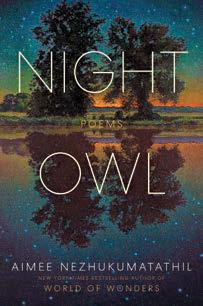
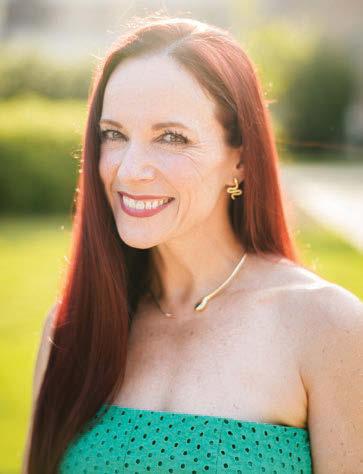
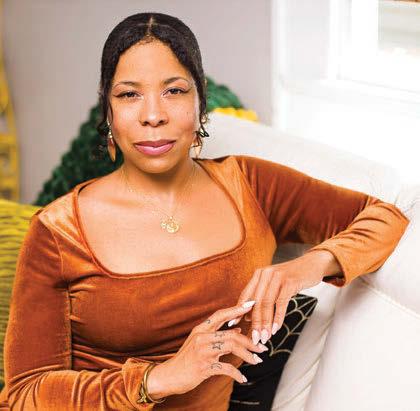
Oxford Conference for the Book and Square Books host the popular “Prologue” event on the evening of Tuesday, March 24, to celebrate the launch of Night Owl, the new collection of poetry by University of Mississippi poet and creative writing professor Aimee Nezhukumatathil. Nezhukumatathil is the New York Times bestselling author of World of Wonders and Bite
The Center for the Study of Southern Culture
by Bite Night Owl, her fifth collection of poetry, explores love, nature, and the transformative powers of the night.
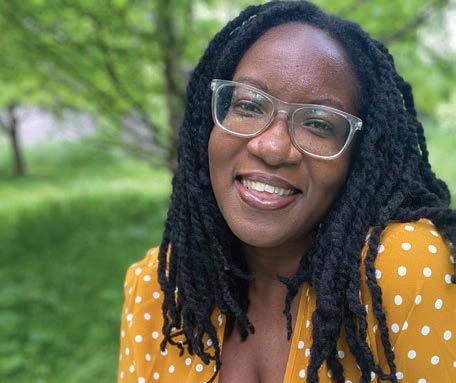
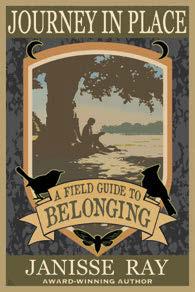
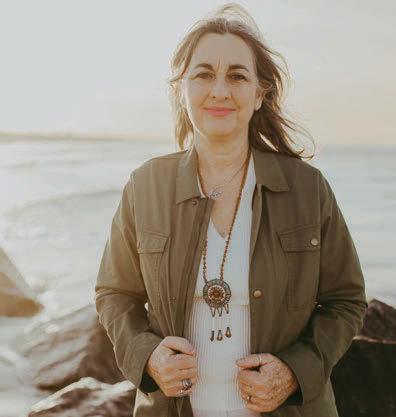
The annual Ann J. Abadie Lecture in Southern Studies takes place during the Oxford Conference for the Book as the keynote lecture on Wednesday, March 25. This year’s lecturer will be naturalist Janisse Ray. Her classic environmental memoir, Ecology of a Cracker Childhood, chronicled the story of growing up in the disappearing longleaf pine flatwoods. That debut was followed by many other books, most recently Journey in Place: A Field Guide to Belonging
Following the Abadie Lecture, the annual Welcome Party at Memory House—the conference’s only ticketed event— opens the festivities with live music, great food, and special craft drinks. Tickets are available for purchase on the conference website.
Thursday, March 26, begins on the UM campus with a conversation with Jay Wesley and Eddie Johnson, whose recent book, Choctaw Traditions: Stories of the Life and Customs of the Mississippi Choctaw, draws on more than fourteen hundred stories from interviews with more than one hundred tribal members, past and present, from the nine Choctaw communities in Mississippi and Tennessee.
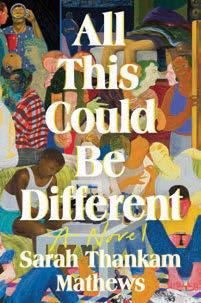
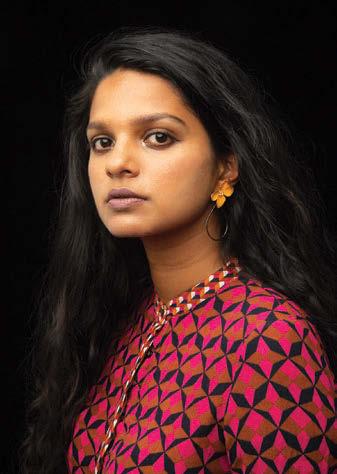
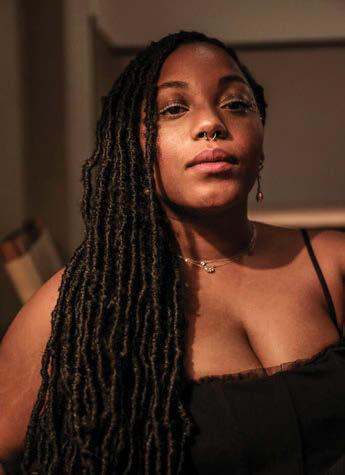
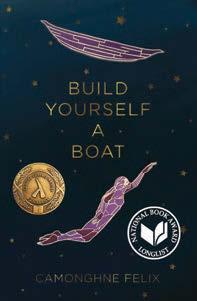
The conference welcomes back the National Book Foundation to present National Book Award–honored authors Sarah Thankam Mathews, whose novel All This Could Be Different was a finalist for the 2022 National Book Award in fiction, and Camonghne Felix, whose book Build Yourself a Boat was longlisted for the 2019 National Book Award in poetry. The session takes place Thursday in the Baxter Room in the J. D. Williams Library on the UM campus. Preceding the panel is a welcome lunch hosted by the Friends of the UM Library.
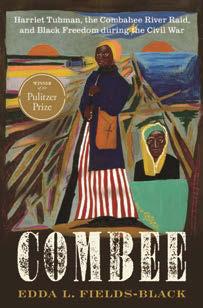
That afternoon, a conversation between Robert Colby, UM assistant professor of history and associate director of the Center for Civil War Research, and Edda Fields-Black, author of the Pulitzer Prize–winning Combee: Harriet Tubman, the Combahee River Raid, and Black Freedom During the Civil War, takes place in the Overby Center auditorium. “Dr. FieldsBlack’s Combee is a remarkable work of historical recovery,” said Colby. “Building on a foundation of painstaking research, she powerfully narrates the lives of people enslaved in Maryland and South Carolina and their pursuit of freedom during the Civil War. I’m delighted to have the opportunity to unpack this outstanding book with Dr. Fields-Black as part of a new partnership between the Center for Civil War Research and the Oxford Conference for the Book.”
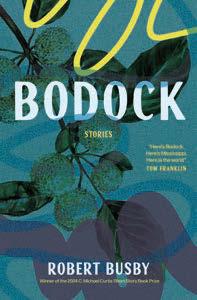
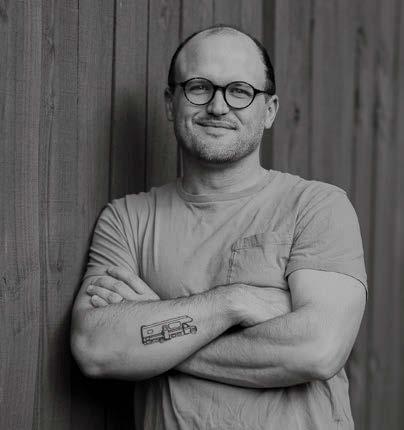
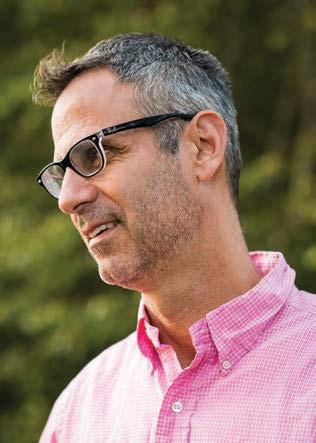
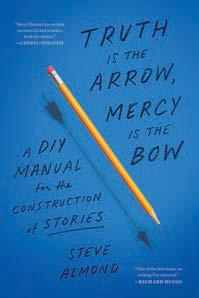
The following “First Books from Mississippi” session welcomes back to Oxford novelist Addie E. Citchens (Dominion), short-story writer Robert Busby (Bodock), and poet Nadia Alexis (Beyond the Watershed). Afterward, fans of shortform writing won’t want to miss the late-afternoon “‘Flash!’: Micro-Memoirs and Flash Writing in the Gallery” event at Southside Gallery, featuring Steve Almond (Truth Is the Arrow: A DIY Manual for the Construction of Stories), Ira Sukrungruang (This Jade World), and Beth Ann Fennelly (The Irish Goodbye: Micro-memoirs). A special Oxford Conference for the Book edition of the Thacker Mountain Radio show closes the day.
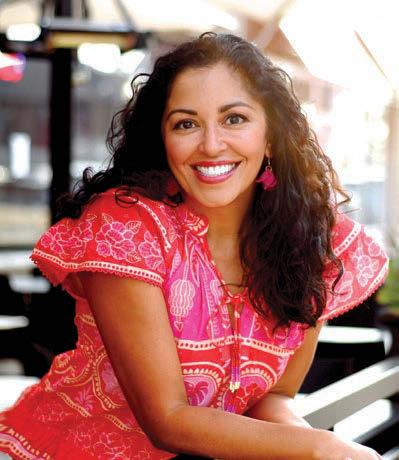
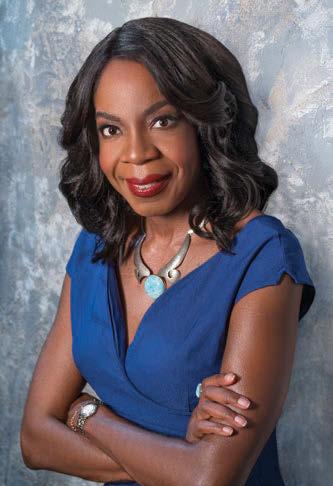
Aimee Nezhukumatathil
Edda Fields-Black
Robert Busby

Friday’s events begin at the University of Mississippi’s Gertrude Ford Center for the Performing Arts with the Children’s Book Festival. Every year, the goal of the festival is to give each child a book of their own, which they will read along with classmates and their teacher during the school year. The Children’s Book Festival serves more than 1,200 first- and fifth-graders from schools in Lafayette County and Oxford. Committees made up of local school librarians, teachers, and representatives from the Lafayette County Literacy Council (sponsor of the first grade), Junior Auxiliary (sponsor of the fifth grade), and Square Books, Jr. choose the books. The Oxford Conference for the Book then invites those authors to present programs to each grade.
“I look forward to the Children’s Book Festival each year for two reasons,” said Afton Thomas, the Center’s associate director for programs who works with community organizations to coordinate the annual Children’s Book Festival. “First, I enjoy any chance to spend the morning with enthusiastic young book lovers, and second, this event is a city- and countywide partnership. This long-standing event wouldn’t succeed without the support and energy of our dedicated donors and all our partners. And this year we will add two new partners and a new festival offering: The UM Department of Music and Thacker Mountain Radio are joining the festival fun and will produce a Thacker Mountain Radio, Jr.” The special edition of Thacker Mountain Radio, Jr. takes place on Friday afternoon.
At noon on Friday, the Lafayette County and Oxford Public Library will host a “Flash-Writing Workshop and Lunch” with poet and micro-memoirist Beth Ann Fennelly and essayist Steve Almond. Lunch is provided by the library, but registration is appreciated. A link for registration is available on the conference website.
Following the talk and lunch, the remaining events take place at Off Square Books on the Oxford Square and includes a conversation with Michael Reynolds, the publisher of Europa Books, and Dan Simon, author of the debut novel Ashland, a book that is described by Andrew Solomon, author of Far from the Tree, as, “Like a modern Thornton Wilder with a touch of Faulkner.” An additional session that afternoon is still in the planning.
The ceremony for the annual Willie Morris Awards for Southern Writing in fiction, poetry, and nonfiction follows. Winners for the Willie Morris Awards will be announced in February. “The Willie Morris Awards continue to reach a range of writers and poets,” said Susan Nicholas, the director of the awards. “The Willie Morris Awards elevate the works of those who have something urgent to share with their readers, adding fresh perspectives to the conference’s already strong lineup.”
The Willie Morris Awards hosts the closing Oxford Conference for the Book and Willie Morris Awards Celebration at Off Square Books following the awards presentations and readings. Works by all conference authors will be available for purchase at Square Books.
The Thirty-Second Oxford Conference for the Book is sponsored by the Center for the Study of Southern Culture, the Willie Morris Awards for Southern Writing, the Center for Civil War Research, the Friends of the University of
Beth Ann Fennelly
PAUL GANDY
Sarah Mathews Thankam
Steve Almond
Mississippi Library, the University of Mississippi College of Liberal Arts, the Lafayette County Literacy Council, the Junior Auxiliary of Oxford, Square Books, Southside Gallery, Thacker Mountain Radio, the National Book Foundation, Hawthornden Foundation, the R&B Feder Charitable Foundation for the Beaux Arts, Visit Oxford, and the Mississippi Arts Commission. With additional authors being added to the lineup, you’ll want to check for updates on the conference’s website: oxfordconferenceforthebook.com. Discounted hotel rooms for those traveling to Oxford are available at the Inn at Ole Miss. For questions, please contact conference director Jimmy Thomas at jgthomas@olemiss.edu.

This year’s artwork for the Oxford Conference for the Book poster was created by Oxford painter Charlie Buckley. The work is titled Soybean Neon. With a BFA from the University of Mississippi and an MFA from Miami University, Buckley taught collegiate drawing and painting before returning to the studio full time in 2011. He is represented by Fischer Galleries in Jackson and Southside Gallery in Oxford. Buckley’s work was selected for the bicentennial of Mississippi’s statehood exhibition at the Mississippi Museum of Art, and he participated in the 2019 Mississippi Invitational at the MMA as well. A two-time fellow in visual arts from the Mississippi Arts Commission, Buckley was also awarded the 2018 and 2025 Visual Arts award from the Mississippi Institute of Arts and Letters. He is in the collection of the Walton Family Foundation, Children’s of Mississippi, Baptist Memorial Hospital, CREATE Foundation, the Graduate, the Community Development Foundation, First Commercial Bank, Arkansas Children’s Hospital, the University of Mississippi, Mississippi State University, and the City of Gulfport, and he created the centennial celebration painting for the Lauren Rogers Museum of Art. Buckley’s stunning work also graces the cover of Aimee Nezhukumatathil’s new collection of poetry, Night Owl. He lives in Oxford with his family.

Addie E. Citchens BRITT
SMITH PHOTOGRAPHY
Nadia Alexis
Janisse Ray
Camonghne Felix
JATI LINDSAY
Fieldwork, Film Festivals, and Fresh Perspectives
SouthDocs Students and Faculty Engage Communities Across the South
This semester, SouthDocs has been busy. We’ve been taking day trips to our neighboring counties and networking at film festivals and at other events across the country. We just can’t seem to stay still for too long.
For Southern Studies 401, Andy Harper wanted to give his undergraduate students a chance to not just get out of the classroom but to also get out of Oxford. He realized that these new storytellers hadn’t spent much time in neighboring communities. If they were going to build thoughtful and wellresearched photo essays, they would need time dedicated to developing their fieldwork skills and building relationships. For the first few weeks, class was in a new location: Holly Springs, Water Valley, and New Albany. In Holly Springs, they shared lunch with Annie Moffitt at her restaurant, Annie’s Home Cooking. Afterwards, they met with Sally Godard for a tour around her historic home, which is part of the Behind the Big House Program that began in 2012.
In Water Valley, Jack Gurner walked students through the Casey Jones Railroad Museum. Gurner shared his family’s connection to the area and to the museum, as well as stories from his fifty-year career as a photojournalist. The day trip concluded with lunch at Sweet Mama’s and milkshakes at Turnage Drugstore.
For their last stop, New Albany, they met with Union County Heritage Museum Director, Jill Smith, who guided them through exhibits and shared the area’s history. Lunch was enjoyed at Latham’s Hamburger Inn, known for their “dough burger.”
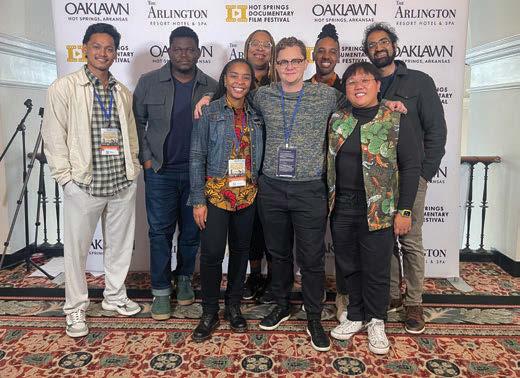
The Thirty-Fourth Annual Hot Springs Documentary Film Festival took place this year on October 10–18 in Hot Springs, Arkansas, and SouthDocs grads and faculty attended, immersing themselves in all things film. In roundtables, breakout sessions, and panel discussions, students were able to make connections with industry leaders and emerging filmmakers from across the South.
Melanie Ho, SouthDocs assistant professor of practice, presented a work-in-progress from her film From Kudzu as part of the Filmmaker Forum, an opportunity for filmmakers to receive feedback and engage with the audience. From Kudzu, funded by the Center for Asian American Media, is in postproduction and is expected to be completed by December 2026.
The Inquisitor, directed by SouthDocs assistant professor of practice Angela Tucker, was awarded Special Mention by the film festival’s jury. The Inquisitor premiered at the 2025 Tribeca Film Festival and has been making its way across the country, screening at DC Docs, Heartland Film Festival, Workers United Film Festival, and elsewhere.
of practice Shiraz Ahmed, is in the final rounds of editing. Earlier in the semester, Ahmed shared the work with his colleagues at the Center and received insightful feedback. The next goal is getting to the fine cut. Ahmed compared the process of filmmaking to a marathon, and he is almost to the finish line.
Cassandra Hawkins, an MFA candidate, took her work to several communities in Mississippi. On October 17, Hawkins presented her Black Churches as Schools in Yalobusha County at the Yalobusha Historical Society in Coffeeville. In this work, Hawkins focuses on the Oak Grove, Rocky Mount, and Roberson church communities during the period between 1943 to 1949. “The presentation is a part of a digital photo essay that I’m working on,” she said. “I’m using photographs and archival materials to document the sustainability of Black communities during segregation. Throughout Yalobusha County, many churches once served as both sanctuaries and schools for educating African American children. These efforts were built on the community’s labor, faith, and commitment to learning and remind us that education and spiritual life are inseparable parts of our shared history.” Hawkins presented her work Palimpsests of Strength on October 29 at the Black Women and Girls in Intellectual Thought Symposium at Tougaloo College. This two-day event brought together voices and experts across multiple fields to discuss works and insights on American life.
The semester concluded with our annual Documentary Showcase on Friday, December 5, in Barnard Observatory. The showcase was accompanied by a multimedia exhibition in the Center’s Gammill Gallery and talks by students in the MA and MFA classes. Enjoy some of that student work on pages 16-22 in this issue of The Southern Register.
Olivia Whittington
No Discount, directed by SouthDocs assistant professor
Center filmmakers at the Thirty-Fourth Annual Hot Springs Documentary Film Festival
From Plantations to Policy Failures: The Long Shadow of Inequality in the Delta
W. Ralph Eubanks Talks About His New Book
This January, W. Ralph Eubanks publishes his fourth book, When It’s Darkness on the Delta: How America’s Richest Soil Became Its Poorest Land. In this wide-ranging interview about his work, Eubanks reflects on the Mississippi Delta as both a personal inheritance and a national mirror, a place where memory, myth, and American inequality converge. Rooted in early recollections of traveling the region with his father— who believed deeply in the promise of Black landownership and rural self-determination—the conversation explores how the Delta’s history of poverty, segregation, political resistance, and cultural creativity continues to shape the present.
From the protest roots of the blues to the legacy of segregation academies, from the failures of philanthropy to the haunting proximity between life in Delta towns and life inside Parchman prison, he traces the ways the region reveals uncomfortable truths about America’s past and present. His journeys through Appalachia underscore that the forces shaping the Delta—extraction, dispossession, entrenched poverty, and enduring pride—are not unique but national in scope, offering a deeper understanding of how we see, and fail to see, the people and places we call poor.
Your connection to the Delta seems to be deeply intertwined with remembrances of your father. “This place was one of his lasting memories, and I want it to be that way for others,” you write. “But at the same time, I want it to live up to the promise my father saw in it when he arrived in the middle of the twentieth century.” What is it about this region that Americans need to understand and what was the better future that your father envisioned?

Most Americans look at the Mississippi Delta and only see the South’s relationship with a system of patriarchy, racism, and social stratification. But the Delta’s story is not just about the sins of the South; it is also a story of America and this country’s thirst and ambition for transformation and reinvention. In the Delta you see the roots of income inequality in this country. But now in other parts of the country these inequities have crept in, giving these regions more in common with the Delta than they would like to recognize.
What I think many people fail to understand is that Black poverty in the Mississippi Delta mirrors the poverty in white rural America. Race has rarely been central to the ways we as Americans think about rural poverty and its lasting impact on the health and well-being of people from places like the Mississippi Delta. Although the patterns of poverty in the Delta today mirror national trends with respect to race and poverty in rural America, even back when public policy was paying attention to issues of poverty and social mobility, race has rarely been central to those policies. The institutional structures of poor, white America—in dying Rust Belt towns or Appalachia—have always been easier for people to see than the equally destructive and dehumanizing structures of slavery, sharecropping, and Jim Crow segregation.
The better future my father envisioned was represented in the Farm Security Administration’s resettlement community at Mileston, a place that helped sharecroppers become landowning farmers. He saw Black landowning and selfsufficiency as key to a better future for the Mississippi Delta. What I don’t think he counted on was how Black independent farmers would be seen as a mortal threat to the Delta’s white plantation owners and their need to hold on to economic domination in the region. The reason he believed so deeply in the promise of Mileston was rooted in his education at Tuskegee. Tuskegee’s philosophy, as stated by its president Robert Moten, was that there was no reason for Black people to leave the South and that their future lay in the region. Tuskegee gave my father that idealistic vision and it is one he could never let go.
You wrote this about your first trip to the Delta you took with your father in 1964 at age seven: “On our first trip in 1964, as dusk approached, a glow covered the two-lane blacktop and seemingly everything around us. I was mesmerized, as if under a spell. The light was a reddish yellow. [. . .] In the Delta, the light covered everything like a canopy and the wide vista of the landscape made its luminance feel endless.” Was that memory one of the things that compelled you to write this book?
The idea for this book began with that memory. Ten years ago, I spent a great deal of time in the Delta reporting a story for WIRED magazine on the lack of broadband access in Mississippi, particularly in the Delta. Working on that story stirred some old memories. Soon after the article was published, I returned to Mississippi to teach at Millsaps College, a small liberal arts school in Jackson. It was then
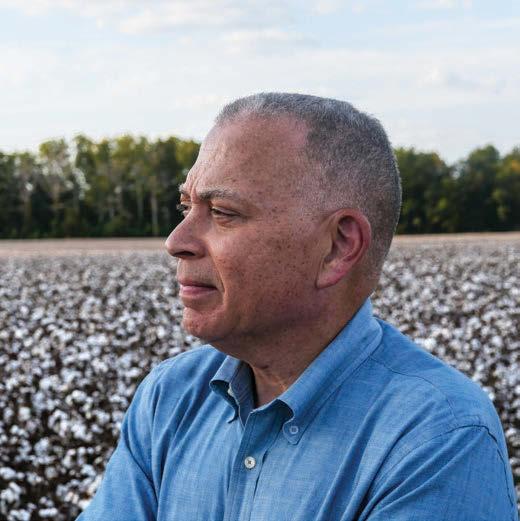
W. Ralph Eubanks
that I started driving Delta roads on weekends without a map. What those drives revealed to me was that I was leading a very different life in Mississippi than the people of the Delta. Just a few miles from the perfectly manicured campus where I taught, I was thrust into a different world.
The Delta wasn’t that different from what I remembered from my childhood, which was comforting, but I began to see it differently. As a child, I realized that I just saw the poverty of the Delta as part of the landscape. That is what most of us are conditioned to do: not to see poverty. And I felt a profound need to understand this place I remembered fondly and why the social realities of the past and the present were at odds with those memories of beauty and light.
The Mississippi Delta is known as the home of the blues. What is it about the music that sprang from the Delta that you wish more people knew?
In the push to commodify the blues as something to draw tourist dollars to the Delta, I believe certain aspects of the blues have been lost in the translation to something commercial. What is being lost is that the blues began as a form of protest. And when we fail to see the protest roots of the blues, the meaning of the music is lost.
In his 1998 book Development Arrested, geographer Clyde Woods formulated the idea of “blues epistemology ” to explain how the music named and critiqued the conditions of Black people in the Mississippi Delta. Describing the creators of the blues as “sociologists, reporters, counsellors, advocates, preservers of language and customs, and summoners of life,” Woods argued that the poetry and force of the blues had the power to compel social change—which, despite powerful persistence of the old planter culture, is exactly what it did.
Translation is always an act of interpretation, a reconstitution of a creative act, but despite the work of the most acute translators, something is inevitably lost. After living in the
“Poverty in the Delta persists because of decades of neglect and policies engineered to keep people poor.”
Delta and seeing how aspects of the blues are being lost, I came to realize that now may be the time to take what has been lost in the translations of the blues and recover its real value as instruction on how to survive, thrive, and move forward—and to do so with a certain sly humor and insouciance that subverts the schemes and dreams of those who want to bring back an imagined past that will provide even less to those whom it promises most. The blues recognized evil in the world—often speaking of it as the devil himself— and the blues called that evil out. That is the real power of the blues.
You spent a year teaching writing at the Mississippi State Prison at Parchman in Unit 29, which is where inmates serve life sentences. What did your time teaching there tell you about the Delta?
I came to Parchman not only to teach writing, but I thought that teaching writing there would allow me to see how much of the poverty and violence that exists outside of the prison walls in Delta towns affected by high crime rates actually leads these men to incarceration. I began by asking my students to write memoirs of their time before prison. But what the men really wanted to write about was their life inside prison.
I came to realize that I asked students to write about life before prison not just to understand how poverty and violence intersected with their lives before prison. I thought having them write about their memories before prison would somehow take them out of a place that, if I am being truly honest, scares me like nothing I have encountered on a deserted city street. The truth, I realized, was that I wanted them to write about life before prison because the life they have inside prison is unimaginable to me, just as it is to millions of Americans. Now I know why Parchman haunts my very soul, having learned that there is a thin line between those inside Parchman and those outside of it in the Delta and beyond.
Each week when the gate closed behind me, I understood more and more that there is little that separates me from these men. Having listened to their stories from childhood, as well as their life inside prison, I began to see pieces of their experiences mirroring my own.
“The Delta and places like it are poor because we allow them to be poor,” you observe. “And that poverty persists because of decades of neglect and policies engineered to keep people poor.” How is that reality in the Delta, including how poor people there are underserved by the welfare system and the fact that the state refuses to accept nearly $2 billion a year in Medicaid expansion, connected to the long-ago plantation system?
Mississippi’s refusal to expand Medicaid is a prime example of how we allow poor places to be poor. In Mississippi today, twenty rural hospitals are at immediate risk of closure, several of them in the Delta, largely because Mississippi refuses to expand Medicaid. And the rate of uninsured people in the state is 10.5%. These uninsured people are largely poor. Mississippi has relied on revenue generated through a financing tool—known as a provider tax—to draw down more federal dollars and boost Medicaid reimbursements to providers. But changes to the formula by Congress could hamper the state’s ability to collect those taxes.
Depending on how Congress restricts provider taxes, Mississippi could lose hundreds of millions in federal Medicaid funding, crucial in a state with such a high uninsured rate. And in a state that has not expanded Medicaid, these changes will largely affect poor people. In a state without Medicaid expansion, poor people will be the ones who are hurt by this change.
Mississippi experienced its first taste of equalized access to medicine in the late 1960s, with the opening of the Delta Health Center, the first federally funded health care center. The center was started to provide care to anyone regardless
of race or ability to pay and continues to do so to this day. The center’s philosophy was to look at what the organization’s founders called the social determinants of health, which included dilapidated housing, poor sanitation, malnutrition, and inadequate social welfare services.
John Fairman, the current director of the Delta Health Center told me during an interview that “it is the poor who tell us what the world is and what our service to the world should be.” As a Delta native, Fairman recognizes how the legacy of sharecropping and poverty in the region continues to affect the people of the Delta. Just like a plantation owner, those in power in Mississippi today do not want to think about the ways the health care past affects the health care present, even though there is data that reveals current inequities.
One of the regions you visit to look at places that mirror the Delta is the Appalachian hills and hollows of Eastern Kentucky. Why Appalachia?
Interestingly enough, part of Mississippi is designated as part of Appalachia. Mississippi lacks mountains, yet twenty-four counties in its northeastern region fall within the service area of the Appalachian Regional Commission, a Great Society program that sought to bring economic development to the Appalachian region. By using a map doctored by a group of politicians, part of Mississippi was reimagined as Appalachia, giving segregationist senators James O. Eastland and John C. Stennis a way to bring Great Society funds to the whitest part of Mississippi. These are the same senators who sought to obstruct the economic empowerment of Lyndon Johnson’s War on Poverty in the Delta because of its linkage with the Black freedom struggle.
The cotton fields of the Mississippi Delta and the hills of eastern Kentucky may be distinguished by their radically different landscapes, yet focusing on the differences in region, culture, and topography risks overlooking the similarities between these places. Both places were shaped by a single commodity—the Delta by cotton and eastern Kentucky by coal. There were much fewer plantations in Kentucky, but the corporate bosses that shaped the coal industry there were just as powerful as the Delta’s plantation class. The Delta is majority Black and eastern Kentucky is majority white, but both places have been shaped by the poverty of the people who live there. Poverty rates in coal country mirror those of the Delta. Visiting Appalachia with the Mississippi Delta on my mind and talking with the people who live in its hills and hollows shortened the distance I had perceived between these two points on the map.
When you traveled to Appalachia, you visited Martin County, Kentucky, where President Johnson launched his War on Poverty. With the help of the local historical society, you also found the Fletcher House, which served as the backdrop for launching Johnson’s initiative. Your local guides cautioned you not to stereotype residents of Eastern Kentucky “as a bunch of isolated
hillbillies.” When you were writing the book, how did you balance trying to avoid furthering stereotypes with the need for removing the veil that cloaks poverty and makes it hard to see?
That was difficult. Americans think of the Mississippi Delta as an outlier with regard to the way inequality and race have shaped the lives of people in this country. Yet we fail to recognize that there are other regions and places that have also been shaped by racism, extraction, and dispossession. I think many Americans look at Appalachia as an outlier as well, yet because the region is largely white a regional stereotype of the “hillbilly” evolved that unfairly characterizes the people.
The tricky part of writing about these two places is how in the United States region and race are tied together, particularly in the South. When we use the term “southerner,” all too often we are referring to white southerners, who are seen as having power. White residents of Appalachia are often depicted as powerless, which has led to cultural stereotypes being imposed on its residents.
Many of the people I spoke to in Kentucky were resistant to my use of a photograph of the Fletcher House, a tar-paper shack that is virtually unchanged since Johnson’s visit in 1964. The Fletcher House has become a symbol of the region’s deep poverty. Yet the people who objected to my use of this photograph were middle-class whites who sought to distance themselves from an image they felt had unfairly characterized them, since they felt all white people of the region were only seen through this lens of poverty. Yet Martin County, Kentucky, is just as poor as Sunflower County, Mississippi.
What I realized is that the impact of King Coal was different from that of King Cotton. Black residents of the Delta feel a pride about the place because they feel their labor and blood built and shaped the region. Strip mining poisoned Appalachia, leaving ravaged land and cultural shame.
Social status influences how people see their community and what they want others to see. When those concerns dictate how a community is depicted, we block people who live below the poverty line from our field of vision. By not showing poverty, we render it invisible. In Eastern Kentucky, as in the Mississippi Delta, I experienced the wealth of the culture, the pride people feel for the land where they are from, and their love for the music that sprang from the soil. Both places have a long legacy of social action that continues today. Traveling to Appalachia taught me that there is a complex interaction between social action and social embarrassment. It’s a common experience of humanity. If we are only concerned with avoiding social embarrassment, we diminish the lives of people who live below the poverty line by not allowing them to be seen.
This interview has been edited for length. To read the full interview, visit Eubanks’s website at wralpheubanks.com.
Irish in the Bluegrass
A Transplant to Lexington Finds Community—and Tayto Crisps—in His New Kentucky Home
By Gavin Colton • Photos by Arden Barnes
No one in my family had immigrated to America before me. I knew of mass exoduses across the Atlantic during An Gorta Mór (The Great Famine) and again during depression eras. My cousin Archie spent summers in New York City, working in Irish bars for more cash tips than he could have made in Dublin during the mid-2000s. Ma’s brother Paul—a career
alcoholic—is said to have made it to America in 1974, following a friend who was in a national tour of Joseph and the Amazing Technicolor Dreamcoat. Here, the story goes that he charmed a wealthy American woman who wanted him to marry her, but he returned weeks later, wifeless and with no clear memory of what had happened.
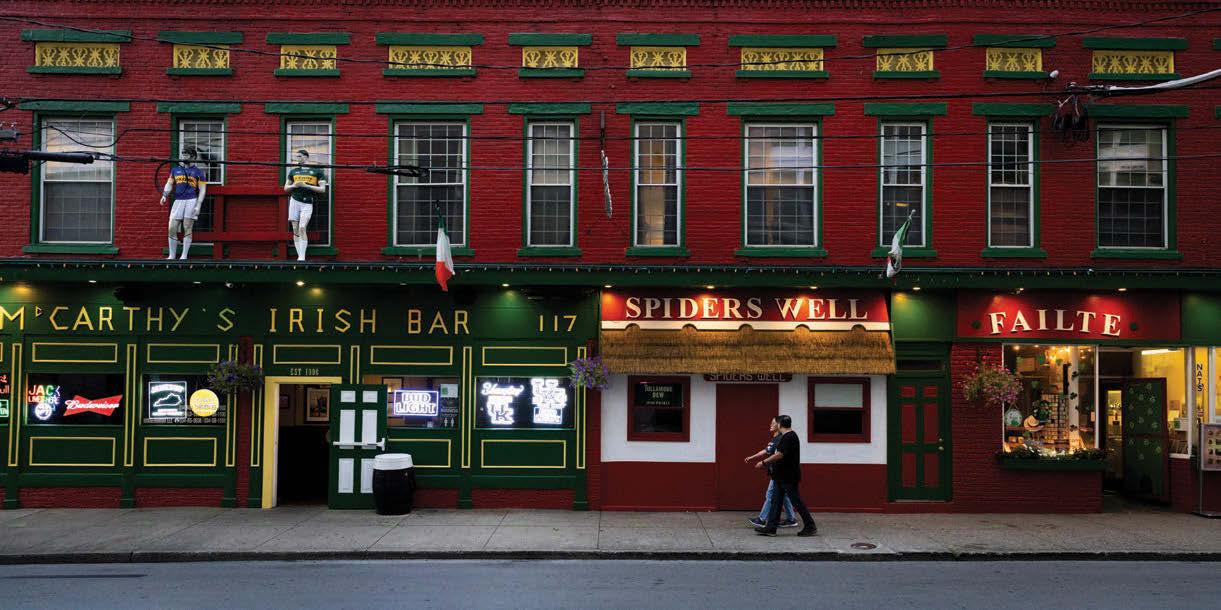
Pedestrians walk past McCarthy’s Irish Bar and Fáilte in Lexington, Kentucky, in August 2025.
“Like
many Irish immigrants, I seek the service of an Irish pub to stave off homesickness.”
Growing up, I knew America only through film and television—mainly the New York of When Harry Met Sally, Adam Sandler’s Big Daddy, and Home Alone 2. New York City looked like a place that was both luxurious and gritty: plumes of dirty smoke interrupting pristine shopfronts, the lush green lawns of Central Park unsafe to walk after dark, the criminal enterprise that seemed to coil around the lives of everyday people. I longed to visit the fictional Duncan’s Toy Chest (Home Alone 2’s stand-in for FAO Schwartz) and the Rockefeller Center Christmas Tree. I wanted to eat a slice of pizza I imagined would be the length of my arm and walk through bustling streets full of people going somewhere urgently.
Then, in 2011, a coach called to offer me a soccer scholarship at a university in Kentucky—which was not a place I’d seen on TV (or ever imagined). It certainly wasn’t a place I understood to be populated with Irish immigrants, like Boston or Brooklyn. I considered what I knew about Kentucky. It wasn’t much: Abe Lincoln, horse racing, Colonel Sanders. Still, I accepted the offer and at nineteen flew across the Atlantic to begin a new life in America.
For four years, I played in a conference that took me across the South. I relished the food we ate on the road before and after games. I ate cast-ironskillet cornbread, racks of saucy ribs, fried shrimp po-boys, lengths of earthy okra, cheesy grits, and piles of smoked meat pulled and stuffed between slices of white bread. It was not conducive
nutrition to prepare for ninety minutes of soccer, but it taught me that, like in Ireland, food is a tradition valued across the American South—something to be preserved, enacted, and protected. In Louisiana, I first tasted jambalaya, which carried the culinary influence from enslaved West Africans’ jollof rice, a heavily seasoned and smoky tomato-based dish. At a barbecue joint in Tennessee, I learned that the slow stewing of collards and other vegetables came out of a need to stretch limited food resources afforded to enslaved communities; that the survival of recipes and cooking techniques marked the survival of West African cultural and culinary identities.
During those years, I learned that food in the South is connected to its complicated history, just as it is back home. Ireland’s agricultural legacy around the production of beef, lamb, and potatoes, along with our national resilience in the face of colonization and famine, reverberates in the culinary techniques. Irish foodways include recipes shaped by the fruits of rich soil and mild climate, as well as customs that reflect centuries-old social rituals. Food had always been important in my family. We didn’t eat out much when I was growing up, a consequence of limited options in my town and working-class parents who valued money in their own pockets over the pretense of going to a restaurant. To boot, Ma was adventurous and efficient in the kitchen. She concocted sweet and spicy curries, the smell of which lingered on the fabric of my school uniform for days after. Da descaled
giant salmon my uncle caught out in the west of Ireland, and Ma slow baked them for hours in bitter citrus and fragrant dill from her garden. I spent my childhood watching, eating, and doing homework at the kitchen table until I was old enough to help. One of my favorite meals growing up was Dublin coddle, a dish that makes use of leftover bacon, sausage, and vegetable scraps, boiled in a salty broth. It’s a meal symbolic of the resourcefulness of working-class Dubliners like my parents and their parents. On Sundays, I remember Ma filling a stockpot with leftovers from the week, pouring in a can of Guinness, and stirring the pot with a long wooden spoon as it simmered all day. She’d skim the fat that curdled on top and scoop a spoonful before tinkering with white pepper, thyme from the windowsill, and a more modern squeeze of lemon. We doled it sloppily into bowls with thick slices of bread to dip.
Food served as my gateway to America, and it comforted the homesickness that thrummed in me. Collard greens served in small Styrofoam bowls in barbecue joints I encountered in Louisiana, Tennessee, and Texas reminded me of the roasted kale and boiled cabbage Ma cooked and mixed with buttery mashed potatoes. The sight of smoked pork butt and brisket in mounds reminded me of pulling the thick bone from a lamb leg that had been brushed with rosemary leaves and butter and slow roasted on a Sunday.
I had been living in America for seven years by the time I moved to Lexington to pursue a graduate
The walls of McCarthy’s Irish Bar are a shrine to Irish thoroughbred professionals: photographs and silks memorialize pinhookers, jockeys, trainers, and owners.
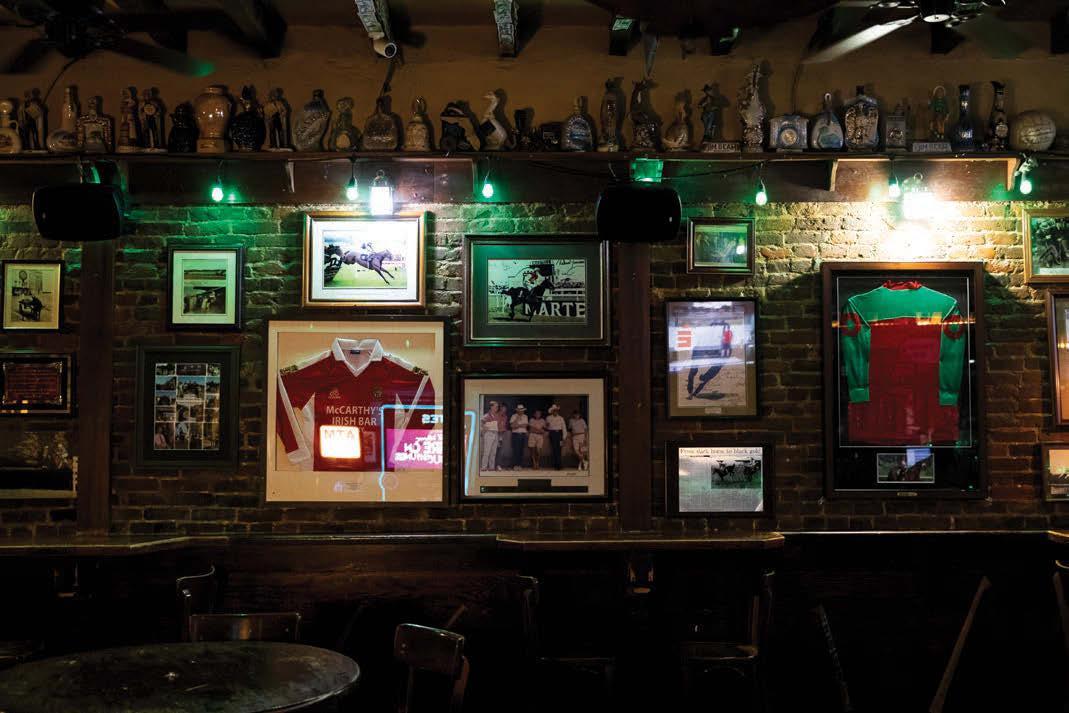
degree in creative writing. There, I was surprised to find a thick vein of Irish immigrants. Outside Blue Grass Airport, a sign informs visitors that Lexington is sister city to County Kildare, Ireland, where I was raised. The partnership signifies the shared economic and cultural pursuits around agriculture and horseracing. Some twenty-five miles from Lexington, the bluegrass gives way to the foothills of Appalachia, a region where early Irish settlers worked as subsistence farmers and later found employment in coal mines and railroad construction. Lexington shares its geographic make up of limestone-rich soil and rolling green pastures with Ireland. Stone fences that partition farms outside city limits were originally built primarily by Irish immigrants and indentured servants, who emigrated to America in the mid 1800s, bringing with them the iconic dry-masonry techniques. In Lexington’s Fayette County alone,
around 37,000 of nearly 322,000 residents claim Irish roots, according to US Census data released in 2021. The strong Irish community here is marked by busy Irish pubs, an imports store, Irish dancing studios, and a thriving St. Patrick’s Day parade. The inaugural parade in 1980 was spearheaded by Irish American IBM employee Bill Enright, who passed away in June of this year. Then-governor John Y. Brown and first lady Phyllis George Brown arranged to have Ed McMahon from the Tonight Show Starring Johnny Carson serve as Lexington’s first Grand Marshal. McMahon had been raised by an Irish-Catholic father, and his lively showmanship that March day marked the beginning of a growing celebration of Irishness in the Bluegrass State. In 2007, Lexington was selected over Chicago, New York, and Boston—staple cities of Irishness— to host the Irish Army Brass band at its St. Patrick’s Day parade.
Like many Irish immigrants, I seek the service of an Irish pub to stave off homesickness. A place that promises quick and guttural Irish voices, the malty smells of old wood that have absorbed decades of cigarette smoke, and a pint of Guinness. Since 1996, Irish immigrants in Lexington have gathered at McCarthy’s Irish Bar. The long bar is dark and smooth, bejeweled with bronze name plates pulled from famous horse cheekers. The walls are a shrine to Irish thoroughbred professionals: photographs and silks memorialize pinhookers, jockeys, trainers, and owners. Above the awning outside, mannequins are typically dressed in the jerseys of the most recent All-Ireland Senior Championship winning team. The men’s toilet consists of a long, steel urinal in keeping with the usual picture of a rural Irish pub. During the day, the bar is lined with quiet pint-drinkers eagerly following horse races streamed live from Ireland, England, and
“Fáilte
and McCarthy’s keep patriotic sensibilities alive for Irish in Lexington and offer Irish culture to the wider community.”
Australia. Every spring, Derek Warfield and the Young Wolfe Tones—a traveling band of Irish musicians—play a sold-out show in the main bar. Warfield, an original member of the Irish rebel band the Wolfe Tones, conducts a show that is part concert, part history lesson, wrapped up in a beaming display of Irish nationalism.
One Irishman who found community at McCarthy’s is Bobby O’Byrne. O’Byrne came to Lexington in 1998 from County Waterford to work at a horse farm in nearby Paris, Kentucky. His job was to prepare thoroughbred yearlings for sale: He ensured horses were fit, demonstrated good ground manners, and arrived in good health. O’Byrne had graduated from an agricultural college in England and completed a season of foaling at Coolmore Ireland, which houses a sister stud in Versailles, Kentucky. O’Byrne grew up on a farm, working with horses and cattle. His Uncle Roddy had opened McCarthy’s with friend and publican Peter Kiely two years previous, and O’Byrne remembers being surprised by the concentration of Irish he encountered at the pub when he first arrived.
“It was like going into headquarters,” O’Byrne said. “If you were [looking] for work or out of work, you were lined up within a week. Legally or illegally.” Some Irish arrive in Lexington on long-term work visas and J-1s (visa programs designed to promote cultural and educational exchange between the United States and other countries).
Others stay beyond visa periods and find pathways to citizenship through marriage. Some remain undocumented, working cash jobs, unable to travel home to see their families. Like many immigrants around the country, they pray for a more favorable future immigration landscape that might forgive their delinquency. Earlier this year, the president signed executive orders that gave unprecedented power to US Immigration and Customs Enforcement agencies. While it has been difficult to track accurate and detailed data, it seems that undocumented Irish (and other white and English-speaking) immigrants have avoided the same scrutiny that other groups have faced.
O’Byrne eventually left the thoroughbred industry. He began bartending in 2016 and is now the assistant manager at McCarthy’s. He takes responsibility for his role in perpetuating Irish pride and welcomes the opportunity to acquaint the next generation of Irish immigrants to Lexington. “I like to ask where they’re from. Ireland’s a small place, smaller than Kentucky,” Bobby said. “They should be proud of their villages [and] their parishes. It’s a magnificent thing to own where you’re from, to be proud of it. To share it.”
Over the years, the pub became a place for fundraisers to support outof-work and injured Irish jockeys and horse-farm workers. Charles Hynes, a County Roscommon man from the west of Ireland, is a thoroughbred sales and stud manager at a horse farm outside of
Lexington, where he manages the dayto-day life of Triple Crown winners. He knows the caretaking and goodwill of others is something that many Irish rely on while they’re away from their families. “It’s a nice thing to think: If you fall on hard times, you have that support,” Hynes says.
In 2001, Liza Hendley Betz, a Dubliner who moved to Kentucky in 1996, opened Fáilte Irish Imports, a store that sells Irish foods, clothes, and other products. Fáilte—the Gaelic word for “welcome”—sits in a narrow brick building next to McCarthy’s. The store operates as a salon for conversation about Irish history, politics, local gossip, and recipe sharing. On one wall, next to the humming freezer full of meat and bread, you’ll find a waterfall of imported chocolate bars, crisp packets, and biscuits. On the other wall, there is a gleaming display of Irish jewelry, Catholic pendants, and other fashion items. Behind the counter is a mosaic of Irish tea boxes. Hanging baskets and planter boxes brighten the N Upper Street block that is owned and operated mainly by Irish businessfolk.
Betz delights in assembling Christmas baskets, some of which include the fixings for a back-home breakfast. Compared with the American variety, Irish sausages are softer in texture, a finer grind of fattier pork and rusk (twice-baked bread) blended with white pepper, mace, and nutmeg, which gives them a distinctive porous texture. Irish rashers (bacon) are cut from the back of the pig, unlike
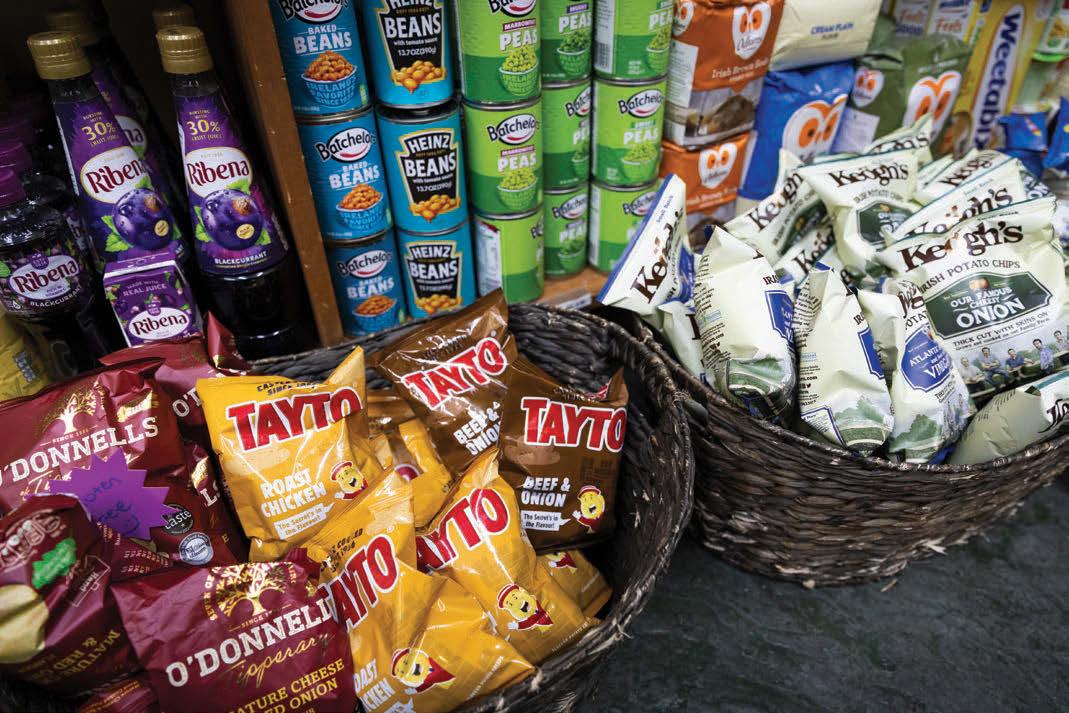
streaky American bacon usually cut from the belly.
When Betz first emigrated to America, she hadn’t expected to miss Irish food. She remembered her mother sending bags of Tayto crisps to her brother when he moved to England. This longing for humble, sometimes prepackaged, ingredients of home inspired Fáilte: “There’s nothing like a bag of Tayto,” she says. Throughout the year, I run next door to Fáilte between pints at McCarthy’s for bags of cheese and onion, salt and vinegar, or my favorite: prawn cocktail.
For O’Byrne, the symbiosis of pub and grocery store is reminiscent of where he grew up in Kilmacthomas in the southeast of Ireland. “It’s like an old Irish pub where you go in and get your groceries and a couple of pints and go home after.” Together, Fáilte and McCarthy’s keep patriotic sensibilities alive for Irish in Lexington and offer Irish culture to the wider community.
In February 2025, I became a naturalized US citizen. On weekend mornings, I often invite a group to my house for a full Irish breakfast, which consists of pork sausages, rashers, baked beans, mushrooms, runny fried eggs, white and black (blood) pudding, and tomato wedges. We gather as early as 7:00 a.m. to watch the first Premier League soccer match, happening five hours ahead and four thousand miles across the ocean. I cook in the dark of my kitchen, a messy and west-facing room where my dogs lounge around waiting for scraps and overboard meat slices. Some friends methodically slice at each ingredient, stacking bites onto the backs of forks. Others stuff sausages and rashers between slices of thawed bread and drench it in brown YR Sauce. We gamble amongst ourselves on matches, drink mugs of sweet and milky tea with chocolatey biscuits, and keep hush while the rest of my house sleeps.
I have never adjusted to the heat and
Tayto and other branded Irish snacks and pantry items are available for purchase in Fáilte Irish Imports in Lexington.
humidity of southern summers, but when the weather turns red in fall, I return to a malty brown bread recipe my mother emailed me several years ago. In spring, I drive the winding rural roads and witness the first steps of foals nudged along by mares, then return home to spend the morning preparing beef and vegetables to stew in Guinness until evening. In winter, I sneak off cold streets to a stool in McCarthy’s, where I am greeted by a young Irish bartender who says “Dia duit” (“God be with you”—a distinctly Irish utterance). I hold a pint of Guinness up in front of my face the way I imagine art critics do with priceless works, and I am closer again to home, a place that has become two places—an unexpected combination, like prawn cocktail crisps and creamy stout.
This story first appeared in Issue 97 (Fall 2025) of Gravy, published by the Southern Foodways Alliance.
The online Mississippi Encyclopedia has recently added new entries on poet and writer Catherine Pierce, French journalist Paul Leslie Guihard, professional wrestler and actor Max Palmer, and librarian and educator Lena de Grummond.
You can find these and other entries on Mississippi’s past and present online by going to www.mississippiencyclopedia.org.

Small Town Gay Bar
Documentary
film
The documentary Small Town Gay Bar, released in 2006, is a film directed by Malcolm Ingram, a native of Canada. The documentary explores the lives, struggles, and resilience of LGBTQ+ people in small-town and rural Mississippi. It showcases the story of a community in the Deep South that is forced to reckon with ignorance, hypocrisy, and oppression. Filmed primarily in Shannon and Meridian, the documentary offers an intimate portrait of two gay bars—Rumors in Shannon and Crossroads in Meridian—that served as vital community spaces in a South heavily marked by religious conservatism, social hostility, and physical danger for queer people. The film also visits Bay Minette, Alabama, to explore the violent hate crime murder of Scotty Joe Weaver, an eighteen-year-old whose burned and partially decomposed body was found in 2004 just a few miles from where he lived. Weaver’s sexual identity was part of the motive for the brutal crime.
Interviews with the bar owners, the bars’ patrons, activists, and even clergy, allow the film to highlight both the necessity of such queer spaces, but also their instability. Bars such as Rumors and Crossroads provided more than just nightlife entertainment: They were “oases of acceptance and alternative families,” according to David Rooney of Daily Variety Magazine. The film showcases how these bars were havens of safety, kinship, and identity formation in places where LGBTQ+ people often faced isolation and violence. As Kevin Smith, the executive producer,
stated: “It’s a film that is a portrait of small-town gay bars in rural Mississippi, which is probably the hardest place in the world to be gay.” He goes on to say that the film is a “portrait of how people will create their own community, even in the middle of a community that ostracizes them and wants nothing to do with them.”
Small Town Gay Bar also explores the broader historical contexts of the time, such as the legacies of the devastating AIDS crisis and the influence of evangelicalism, such as the Westboro Baptist Church, which celebrated the death of young queer people, including Scotty Weaver, and protested at the funerals of gay people and AIDS victims. The film also considers the longstanding role of bars as hubs of queer community.
Premiering at the 2006 Sundance
Film Festival, the documentary gained attention and awards for centering queer life in the rural South, an intersection not typically explored in mainstream representations of queer lives. Critics praise the documentary for not only highlighting the brutal reality of queer life in rural spaces, but also for challenging stereotypes about queer, southern, and rural identities. In 2006, the film won the Grand Jury Award for Best Documentary at Outfest: The Los Angeles Gay and Lesbian Film Festival and the Grand Jury Award for Best Documentary at the Miami Gay and Lesbian Film Festival. In 2008, Small Town Gay Bar was nominated for Best Documentary at the GLAAD Media Awards, an accolade bestowed by the Gay and Lesbian Alliance Against Defamation for an outstanding portrayal of LGBTQ+ life.
The documentary remains significant. Not only is it a time capsule of queer rural life, but it also provides an important intervention into the historical erasure of southern queer life. Recording the stories of individuals such as Charles Smith and Justin Williams and documenting the community of the bars maintains the visibility of the queer community in rural spaces and southern places. In this way, Small Town Gay Bar builds upon and contributes to queer rural studies and scholarship on queer community-building in the South, and essentially, highlights the importance of placemaking as a form of everyday resistance.
Astrid Knox-McConnell
Plantation Afterlives and Southern Imaginaries Recent Scholarship from Study the South
The Center for the Study of Southern Culture has recently published two new essays in Study the South
In the first essay, “Plantation Myths, Plantationocene Realities: Oil and Tourism in the US Gulf South and the Dutch Caribbean,” Jan Bant, Thomas van Gaalen, and Maarten Zwiers analyze the connections between plantation agriculture, petromultinationals, and the hospitality industry in the Gulf South (in particular, Louisiana and Mississippi) and the Dutch Caribbean islands of Aruba and Curaçao. Plantations, petrochemical plants, and the tourism industry constitute important economic factors in the histories and societies of the Greater Caribbean, and by employing the Plantationocene as a conceptual framework, Bant, van Gaalen, and Zwiers compare the ways in which the afterlives of slavery manifest themselves in the current realities of oil and tourism.
In particular, this essay shows how
landscapes once shaped by slavery are now reconfigured by oil infrastructure and resort developments, preserving— often invisibly—racial hierarchies and labor stratifications. It emphasizes how petrochemical plants sit on former plantation lands, how tourism recasts former slave estates into sites of luxury and leisure, and how both industries depend on marginalized populations for low wage, precarious work. By weaving together environmental degradation, health disparities, and cultural mythologies such as the “romantic plantation,” this analysis reveals that slavery’s legacies survive not only in social memory, but in land use, labor regimes, and patterns of exclusion in both the Deep South and the Dutch Caribbean today.
Jan Bant is a PhD candidate at Radboud University Nijmegen, the Netherlands and a visiting scholar at the University of Curaçao Research Institute (UCRI). His dissertation examines how baseball, softball, and
associated sport cultures influenced processes of belonging and identity formation within Dutch Caribbean communities in the Kingdom of the Netherlands. Thomas van Gaalen is a PhD candidate at Radboud University Nijmegen, the Netherlands. His current work focuses on practices of solidarity in the interwar Caribbean. Maarten Zwiers is senior lecturer of American studies and history at the University of Groningen, the Netherlands. He is the author of Senator James Eastland: Mississippi’s Jim Crow Democrat.
In the next essay, “‘Blessed Graceland Whispers to Me’: The Postmodern Pastoral South of Buddy Jewell’s ‘Sweet Southern Comfort,’” Adam Gussow draws on the work of literary scholar Lucinda Hardwick MacKethan, proposing that the Pastoral South mode—an idealized vision of the South as a “sweet, warm, friendly, orderly, musical, rustic Eden, a rural place of innocence and
interracial harmony”—can help us hear and see more deeply into Buddy Jewell’s 2003 country music hit, “Sweet Southern Comfort,” and its accompanying video. Released in the post9/11 moment, as the United States confronted both the lingering trauma of the attacks and the mounting entanglements of Operation Iraqi Freedom, Jewell’s sepia-toned evocation of his small-town Arkansas boyhood takes on an unmistakably ideological function. It positions the remembered “old South” as a symbolic heartland, a locus of “Real America,” what Gussow terms a “postmodern pastoral,” one in which the South’s imagined agrarian wholeness is sutured to the very corporate forces it outwardly disavows. Taken together, these elements position “Sweet Southern Comfort” not merely as a sentimental evocation of home but as a complex ideological artifact. Adam Gussow is a professor of English and Southern Studies at the University of Mississippi and a blues harmonica player and teacher. He has published a number of books on the blues, including Mister Satan’s Apprentice: A Blues Memoir (1998), Seems Like Murder Here: Southern Violence
and the Blues Tradition (2002), Beyond the Crossroads: The Devil and the Blues Tradition (2017), and Whose Blues?
Facing Up to Race and the Future of the Music (2020). His newest book, My Family and I: A Mississippi Memoir (2025), traces the progress of an interracial marriage and the raising of a biracial son in contemporary Mississippi during the Obama presidency and beyond. Gussow’s longtime musical partnership with Sterling “Mr. Satan” Magee is the subject of an award-winning documentary, Satan & Adam (2018), which screened on Netflix for two years.
About the Journal
Study the South is a peer-reviewed, multimedia, online journal, published and managed by the Center for the Study of Southern Culture at the University of Mississippi.
Founded in 2014, Study the South (www.StudytheSouth.com) exists to encourage interdisciplinary academic thought and discourse on the American South, particularly through the lenses of social justice, history, anthropology, sociology, music,
literature, documentary studies, gender studies, religion, geography, media studies, race studies, ethnicity, folklife, and visual art.
Study the South publishes a variety of works by institutionally affiliated and independent scholars. Like the Center for the Study of Southern Culture, Study the South embraces a diversity of media, including written essays with accompanying audio, video, and photography components; documentary photography; interviews with scholars and artists; video projects; and book reviews.
Submissions
To submit work for consideration to Study the South, please email a completed manuscript as a Word document, along with any available illustrations, graphics, video, or audio, to editor James G. Thomas Jr. at jgthomas@olemiss.edu.
Final manuscripts and projects must attempt to build upon and expand the understanding of the American South in order to be considered for publication. Copyright for essays published in Study the South is retained by the authors.
Living Blues News
Ninety-four-year-old Bob Stroger is the oldest active blues performer on the scene today, backing artists and fronting his own band. And active is the key word. The Chicago legend is a first-call bassist of top players for live gigs and recording sessions near and far, flying to places like Phoenix, Europe, and even Brazil, where he is a local favorite. His musical roots go back to the golden era of 1960s Chicago blues to a time when players were tuning electric guitars an octave lower to hold down the bottom. Stroger was one of the earliest electric bass players and first recorded with guitarist Eddie King in 1965. Over the years, he backed Otis Rush, Sunnyland Slim, Jimmy Rogers, Eddie Taylor, Snooky Pryor, and countless others. The website Discogs lists 153 recording credits for Stroger, but I suspect that is a low count. In this issue, we take a look back at Stroger’s long career.
We also explore the life of southern soul vocalist Wilson Meadows. Meadows, whose career dates to a 1962 recording with the vocal group the Zircons on the Federal label, has spent the past sixty years performing in a variety of groups and as a solo artist. His 1997 hit “That’s Still My Love” was followed by a string of releases for various labels, and Meadows is still in demand on the southern soul scene.
Jai Malano is an Austin-based vocalist who is finding success blending musical influences from gospel, jump blues, R&B, blues, and rock into her own special sound. Malano and A. J. Haynes are two more names on the list of amazing new, young talents in the blues today.
This issue’s Let It Roll section looks at the Blue Yodeler, Jimmie Rodgers, and his recording session for Victor Records in Camden, New Jersey, on November 30, 1927, which yielded his biggest hit, “Blue Yodel (T for Texas).” Rodgers’s influence extended across multiple genres, reaching blues artists that included the Mississippi Sheiks, Tommy Johnson, Furry Lewis, Mississippi John Hurt, and Howlin’ Wolf, who gives a nod to Rodgers for his famous howl.
Our “On the Road with B.B. King” issue has received some nice accolades and praise, but I did notice one error I want to correct. Somehow the name of Rod Evans, who authored the profiles of King’s band members, was left off. Our apologies to Rod, whose fine work helped the issue come together.
It is with sadness and disgust that I have to report that Gatemouth Brown’s headstone has been desecrated yet again. For the third time now, Brown’s headstone in Orange, Texas’ Hollywood Cemetery has been destroyed—once by a hurricane and now twice by vandals. His original marker was replaced in July with what family and friends hoped would be a sturdier stone, but it only lasted two months before being broken.
While the music industry continues to struggle, it is worthy
BOB STROGER
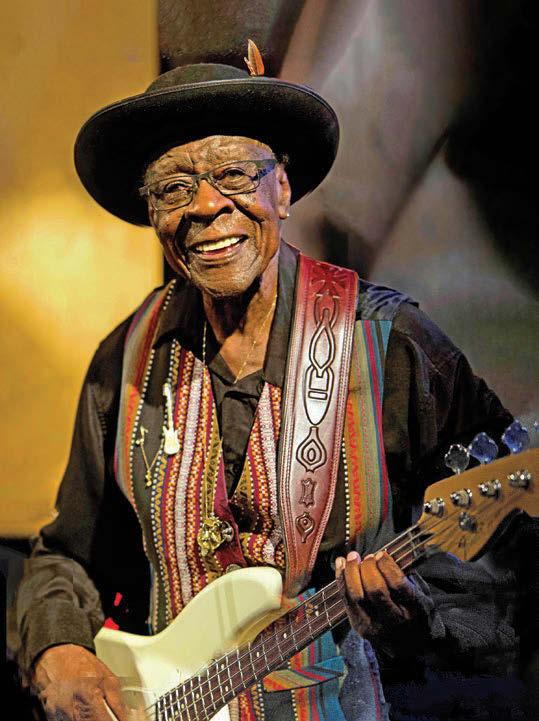
to note that
two new labels have recently popped up in the blues world. Christone “Kingfish” Ingram has launched Red Zero Records with his latest release. He plans to release recordings by several other rising, young blues talents in 2026. And Tony Mangiullo, owner of Rosa’s Lounge in Chicago, has launched Rosa’s Lounge Records with his release of Billy Branch’s latest recording. Best of luck to both on their blues ventures.
As some of you may know, our publication manager, Melanie Young, has been out on family medical leave helping her mother. Our office is running on part-time help. Please bear with us and send Melanie your best wishes.
November begins our 2025 fundraising campaign for the Friends of Living Blues Foundation. Everything related to producing Living Blues has increased in cost. We have strived to maintain our high standards of quality and content, but it is not easy. If you care about Living Blues and the things we do to document the blues and champion its future, won’t you please make a donation and help us continue to tell the story of the blues? Go to umfoundation.givingfuel.com/livingblues to make a one-time donation or an ongoing contribution to Living Blues
Brett J. Bonner
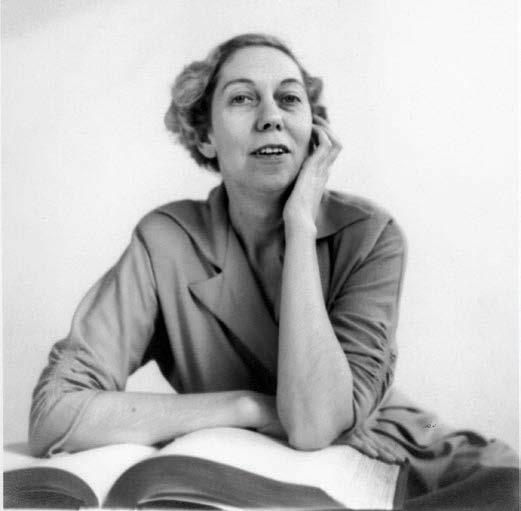
Eudora Welty Awards for Creative Writing
Do you think you might be the next Richard Wright? Can you channel your inner Flannery O’Connor with a flick of a pen? If so, you should enter your stories and poems for consideration in the Center for the Study of Southern Culture’s annual Eudora Welty Awards for Creative Writing. Students must be Mississippi residents in ninth through twelfth grade and writing should be submitted through students’ high schools. Short stories should not exceed 3,000 words, and poetry should not exceed 100 lines. The firstplace prize is $500, and the second-place prize is $250. Entry forms are available by using the following QR code or going to https://olemiss.edu/southernstudies/ academics/#eudora-welty-awards-for-high-school-students. Each entry should be accompanied by the entry form and postmarked or emailed to cssc@olemiss.edu by May 15, 2026. Faculty and staff from the Center for the Study of Southern Culture will judge the entries and select the winners. Application and submission requirements will be sent to all Mississippi public and private schools.

Welcome to Thomas Tilleros to Barnard Observatory
If you’ve happened by Barnard Observatory lately, you’ve likely noticed a new face around. That person is our new undergraduate student worker, Thomas Tilleros. Thomas grew up in Jackson, Tennessee, but also lived in Memphis during his high school years. He is a Southern Studies major and a Russian minor who, much to our delight on his first day, was able to translate a Russian Faulkner poster hanging in the office of one of our staff members, solidifying his new role as administrative assistant.
Around campus, Thomas is a member of the Russian club and is the president of the university’s running club. When asked what makes Southern Studies so special, Thomas says some of his favorite aspects of the department are “the questions and subsequent conversations that arise in class. These moments feel special,” he says, “and I often find myself continuing these conversations outside the classroom.” Thomas says it’s hard to narrow down what class or professor has had the most impact on him, but one that comes to mind is SST 109: Southern Rights and Activism taught by Ralph Eubanks. Thomas says that this class “opened his eyes to the many nuanced aspects of southern history” and taught him not only “a great deal about the evolution of race relations in Mississippi, the South, and the United States, but the world as a whole.”
When Thomas is not at the Center or out running on the trails, he also enjoys playing guitar. He began learning guitar his freshman year of high school and has played consistently since. Like myself, Thomas is a true fan of music, and you will often find us discussing music or playing records in the lobby of Barnard Observatory between duties. One day, when the workday is light, feel free to stop by and listen, and welcome Thomas to the Center.
Andrew Bryant
January 14, 1948–November 7, 2025
Mark Your Calendars!
The Thirty-Second Oxford Conference for the Book will be held on March 25, 26, and 27, 2026! www.oxfordconferenceforthebook.com
Join the Coalition for the Study of Race & Racism for the Fifth Annual Faculty and Graduate Student Forum on Race & Ethnicity
February 23, 2026
10:00 a.m.–3:00 p.m.
The Inn at Ole Miss
The Coalition for the Study of Race & Racism invites University of Mississippi faculty and graduate students to take part in a cross-disciplinary conversation about research and other projects related to the study of race and ethnicity, broadly stated, in the United States and abroad. Faculty and students from all levels of study and from all campuses and schools at the University of Mississippi are welcome.
CONTRIBUTORS
Marisa C. Atkinson is a communications specialist for University Marketing and Communications who earned a BA in communications from Mississippi State University and a JD in law from the University of Mississippi.
Brett J. Bonner is the editor of Living Blues.
Andrew Bryant is the administrative coordinator for the Center, as well as a singer-songwriter from Oxford. He makes his own records and is also a founding member of the band Water Liars.
Rebecca Lauck Cleary is the Center’s communications specialist. She received a BA in journalism from the University of Mississippi and her MA in Southern Studies.
Gavin Colton is originally from Leixlip, Co. Kildare, Ireland. He lives and works in Lexington,
Kentucky. His work has appeared in The Appalachian Review, Hippocampus, and The Honest Ulsterman
Mary Evans is a senior journalism student.
Astrid Knox-McConnell is a second-year Southern Studies graduate student.
Katie McKee is the director of the Center for the Study of Southern Culture and McMullan Professor of Southern Studies and English.
Clara Turnage is a communications specialist for University Marketing and Communications.
Olivia Whittington is the operations manager for SouthDocs.
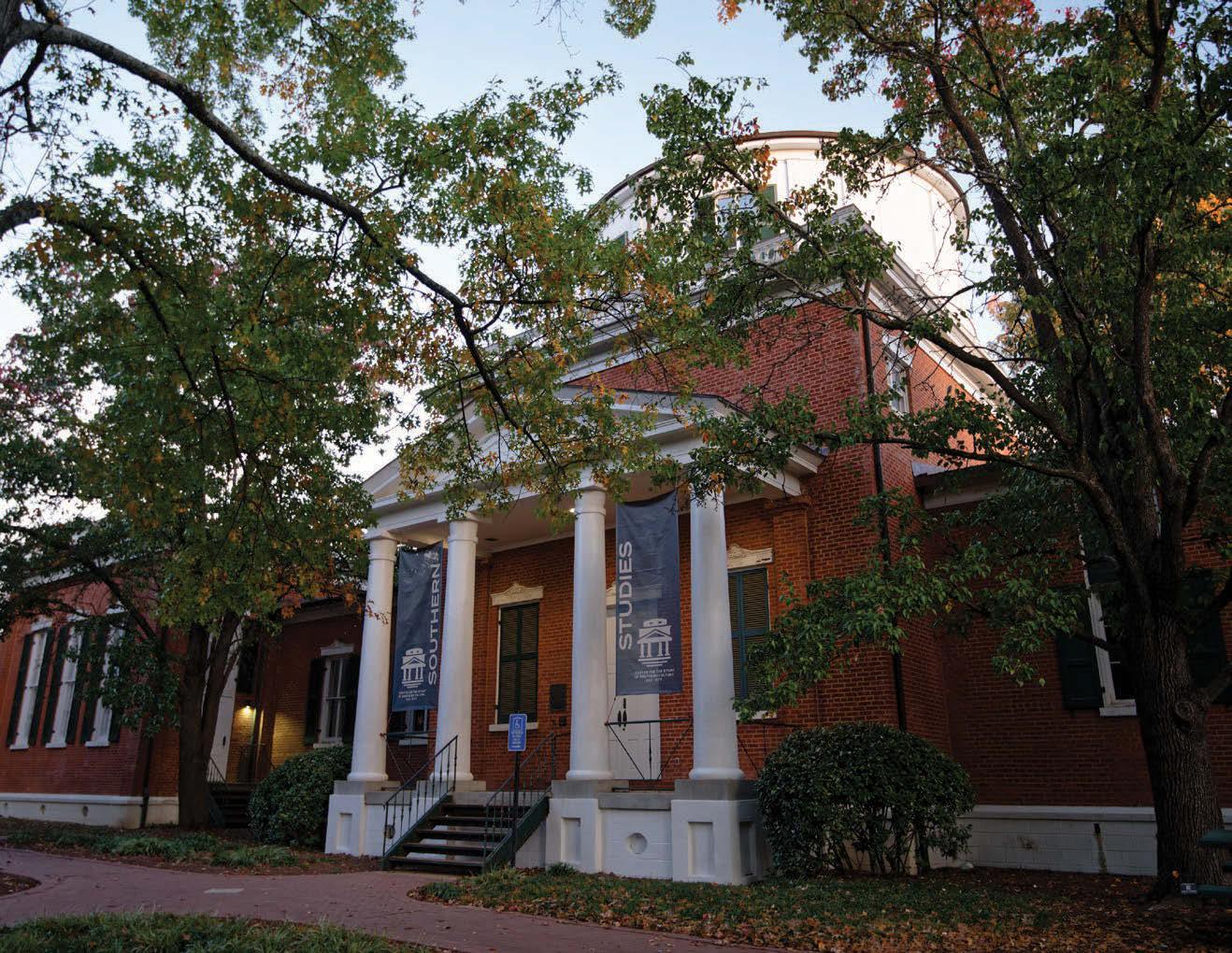
The theme for the Center for the Study of Southern Culture’s upcoming 50th anniversary is “The South in All Directions.” Your gift will help us take stock of the past, continue our work in the present, and plan a celebration for the future. Donate using the form below to support ongoing Center activities and to help plan for our 50th-anniversary celebration in 2027. Thank you!
The theme for the Center for the Study of Southern Culture’s upcoming 50th anniversary is “The South in All Directions.” Your gift will help us take stock of the past, continue our work in the present, and plan a celebration for the future. Donate using the form below to support ongoing Center activities and to help plan for our 50th-anniversary celebration in 2027. Thank you!
Dr. Kathryn McKee | Center Director | kmckee@olemiss.edu | 662-915-3372
Dr. Kathryn McKee | Center Director | kmckee@olemiss.edu | 662-915-3372

MAKE YOUR GIFT HERE
MAKE YOUR GIFT HERE
I/we will invest in the CSSC by making a gift in the amount of $ __________ I/we would like to designate my/our gift to:
I/we will invest in the CSSC by making a gift in the amount of $ __________ I/we would like to designate my/our gift to:
q Friends of the Center
q Living Blues magazine
q Friends of the Center q Living Blues magazine
q Oxford Conference for the Book
q Student Support
q Faculty Support
q Faculty Support q Oxford Conference for the Book q Student Support q Technology/Equipment for documentary work
q Technology/Equipment for documentary work
Check one and complete information to indicate method of payment for gift amount or plan for proposed pledge below.
Check one and complete information to indicate method of payment for gift amount or plan for proposed pledge below.
q My check for a one-time gift is enclosed, payable to the University of Mississippi Foundation with 2025 CSSC and gift designation in the memo line. Checks can be mailed for both pledge and one-time gifts.
q My check for a one-time gift is enclosed, payable to the University of Mississippi Foundation with 2025 CSSC and gift designation in the memo line. Checks can be mailed for both pledge and one-time gifts.
q Please enter my pledge for the amount, which I intend to pay by check $__________ over _____ months, beginning ______________________
q Please enter my pledge for the amount, which I intend to pay by check $__________ over _____ months, beginning ______________________
q Please enter my pledge and charge my credit card (information right) $__________ over _____ months, beginning ______________________
q Please enter my pledge and charge my credit card (information right) $__________ over _____ months, beginning ______________________
q Please charge my credit card for a one-time donation of $ ____________
q Please charge my credit card for a one-time donation of $ ____________
southernstudies.olemiss.edu/giving
The University of Mississippi Center for the Study of Southern Culture University, MS 38677
INCLUDE MAILING LABEL WHEN MAKING ADDRESS CHANGES.
Please help us reduce waste and postage costs. Complete this form and return it with your mailing label.
o Contact person changed o Name misspelled
o Address wrong o Received more than one
o Add my e-mail to your list o Delete me from your list
Friends of the Center
e-mail: cssc@olemiss.edu https://olemiss.edu/southernstudies/
Gifts to the Center for the Study of Southern Culture benefit teaching, publications, and outreach at the first interdisciplinary research center dedicated to investigating, documenting, interpreting, and teaching about the American South. Thank you for remembering us as you plan your charitable giving!
The Center’s Friends program provides essential general operating support for a number of Center endeavors. Visit https://olemiss.edu/southernstudies/ to learn more.
I/We would like to contribute $_________ to the Friends of the Center.
o Enclosed is my check. o Please charge my credit card.
CREDIT CARD: o Visa o MasterCard o AmericanExpress Account Number
Name (please print)
To make a gift online scan here. Not sure how to use a QR code? Open the camera on your smartphone and scan here. Yes, it’s that easy!
Please mail this form to:
The University of Mississippi Foundation/CSSC • 406 University Ave., Oxford, MS 38655 MAKE A GIFT ONLINE. Visit https://umfoundation.givingfuel.com/give