
DIRECTOR’S COLUMN
This spring I taught SST 602, the back half of a required sequence for first-year MA students, the outcome of which is a thesis proposal to guide their second and final year in the program. We had far-ranging conversations and read widely in texts chosen to illustrate the expanse of subjects and approaches in something loosely defined as the field of Southern Studies. This semester we picked up a new book by a well-established scholar of southern literature, Scott Romine, called The Zombie Memes of Dixie . In it, Romine traces some seemingly un-killable tropes of southernness—the ideas and images immediately invoked by any mention of “the South,” ranging from hospitality to a hackneyed “sense of place,” from grinding poverty to long rows of cotton. Never mind that “the South” both is and is not lurking in those words and pictures. The quickly drawn image always wins out over the complex puzzle. For this and other reasons he explores, Romine titles his concluding chapter “The South Is a Bad Idea.” Primarily it is an idea, he maintains, that has no real cohesion once you get past the political affiliations of 1860. Given that “the South” of that moment was inarguably a bad idea, any “South” that depends on that first incarnation—and they all do, whether they’re upholding it (the Dixiecrat Party) or trying to distract from it ( Southern Living )—continues to be a bad idea.
If you imagine that what will come next from the director of the Center for the Study of Southern Culture is a spirited defense of “the South,” you’ll be wrong. It’s hard to disagree with Romine’s conclusions: The South was a bad idea in 1860, it was a bad idea in 1960, and so is any unexamined and heedless adherence to it in 2025.
Yet as paradoxical as it may seem, here’s what’s not a bad idea: Southern Studies. Sure, there’s tautology in there: How could there be a Southern Studies without the South? (My colleague Leigh Anne Duck once famously and with some success called for just such a thing.) So, I concede that I may be utilizing some circuitous reasoning. But what I do know from many years of working in Barnard Observatory is that
SO U THE RN R EGI ST ER
Published by
The Center for the Study of Southern Culture The University of Mississippi 662-915-5993
cssc@olemiss.edu • southernstudies.olemiss.edu
Spring/Summer 2025
On the cover: Photo by James G. Thomas, Jr.
REGISTER STAFF
Editor: James G. Thomas, Jr.
Graphic Designer: Susan Bauer Lee

scrutinizing a stone rubbed to smoothness in the pocket reveals its still-rough places; dissolving unexamined assumptions takes work, and the fruit of those labors is not always immediately evident. With students, we try to quickly establish that “the South” is an idea, but one that has had real material, economic, geographic, political, and social consequences since colonists hatched it and politicians calcified it as part of the rhetorical drumbeat leading to the Civil War. And then we help them move to thinking more granularly: What elements comprise particular places and how do they shape the people who live there? Southerners didn’t invent the idea that places shape people; they just elevated that notion to romantic heights. Pulled back literally to earth, Southern Studies relies on interdisciplinary approaches to investigate the nuances of geography: What happened (is happening) here? Why? How were (are) people affected? No matter the setting, the response illustrates the uselessness of flippancy, the value of knowing that most questions have multiple, multilayered answers, depending quite literally on where you are standing.
We can see the outcomes of such an approach in the student paper prizes we recently awarded as part of our graduation proceedings. Of course the design of some student work is wobbly—if they had everything figured out they wouldn’t be here—but in project after project there was more than a glimmer of a topic once generalized or overlooked made more complicated: a visual essay about a younger brother’s basketball team, a study of nostalgia in contemporary country music, a comparative analysis of approaches to addressing food insecurity, a look at how gospel music is related to the music industry more broadly, an examination of the role food played in the civil rights movement, a study of the challenges faced by Black female doctors—and those are just the undergraduate winners. The list could also include work by graduate students: a thesis about Jewish identity by one student and films created by three others—one about the rise of a restaurant, one about the career of a sculptor, and one entitled, appropriately enough, Dream and Reality: Warping Southern Mythologies. In the work our students produce—in their undergraduate capstone projects showcased at the SST 401 fairs, at the fall and spring documentary showcases, at their seats taking old-school blue book exams—they are shaking off memes and declining to replace them.
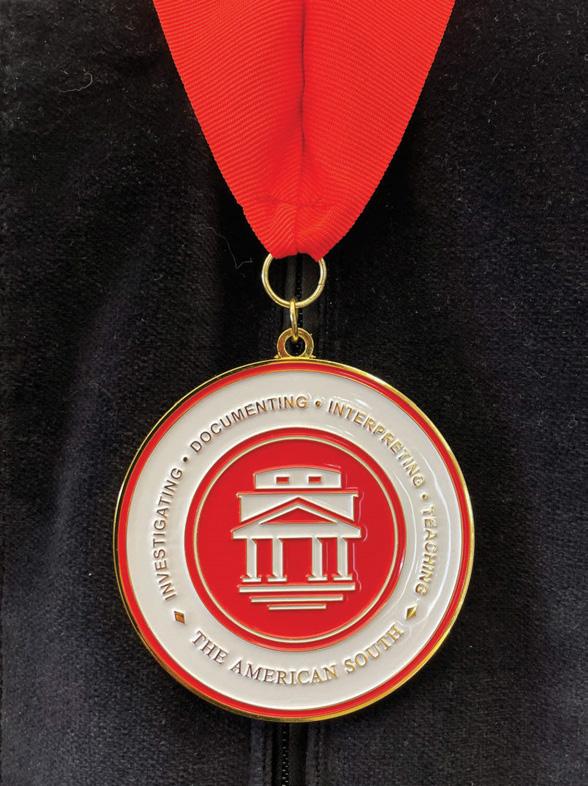
The world is full of bad ideas, especially right now: Look around. As antidote, I’m on alert for the good ideas. I regularly find them here in Southern Studies. You can see an example on the cover: one of the medallions this year’s graduates received. Thanks to Dr. Xavier Sivels, undergraduate adviser, who created them and who has, in so many ways, helped us take it up a notch.
Katie McKee
Living Blues News
Cover artist Thornetta Davis has been honing her skills for over forty years now. Crowned Detroit’s Queen of the Blues almost a decade ago, Davis’ music often explores the deep relationships of life and love with a musical sophistication that reminds one of the golden age of R&B and soul. With a voice that can raise the rafters when needed, Davis is often found weaving her way through a beautiful ballad—revealing hidden nuances inside a song that bring forth emotions buried inside. Fronting an eight-piece band (that includes guitarist Carlton Washington, who was featured in LB #292), Davis surrounds herself with a sound rich in depth and tone, commanding the ensemble with the ease of a maestro.
Another powerhouse vocalist in this issue is New Orleans–based Erica Falls. Raised in the church, Falls embraced her hometown’s rich musical heritage as a young adult and found her way into doing background vocal work at Ultrasonic Studios. There, she was a quick study, working with and learning from master artists, including Allen Toussaint, Irma Thomas, George Porter, and Zigaboo Modeliste. In 2014 Falls began a five-year stint fronting jam band Galactic. Over the last decade, Falls has also worked on her solo career with her band Vintage Soul—a name that she says sums up who she is as a person.
Memphis-based family band Southern Avenue has become one of the hottest commodities in the blues world. This quartet of sisters and a husband have embraced the deep gospel, soul, and R&B roots of their hometown and are on a meteoric rise in popularity with the release of their first album on Alligator Records. Their soaring harmonies and uplifting messages are a breath of fresh air in troubled times. As they sing on “Found a Friend in You” on their new record, Family, “We’ll heal each other with love and harmony.”
We also spotlight two rising young blues guitarists, Texas’ Xavier Shannon and Virginia’s Nick Wade. Twenty-sevenyear-old Shannon picked up the guitar in middle school and took his first steps into the blues after seeing a Family Guy television show featuring Muddy Waters. By the time he graduated from college he was jamming with local bands while working at a day job at Whataburger. Like many, his musical career was put on hold during Covid, but in late 2023 he met Eddie Stout of the Eastside Kings Festival and Dialtone Records. Stout pushed the young guitarist to play with some of the older musicians he worked with and booked studio time for him to cut some tracks. A forthcoming record should be available this summer, but you can get a taste of Shannon with a YouTube video of his Lightnin’ Hopkins–inspired “Lee Cotton Blues,” a song he wrote about his grandfather. Virginia-based Nick Wade was born just ten miles from where John Jackson lived. Though they never met, the sounds of Jackson, Flora Molton, and other Virginia- and Piedmont-style players influenced Wade deeply. Other influences include the Bentonia sounds of Jimmy “Duck” Holmes and Skip James.
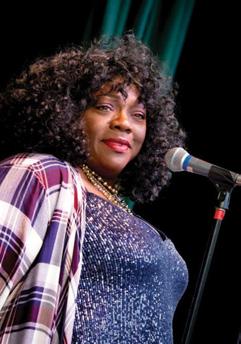
THORNETTA DAVIS
I’M A BLUES SINGER THAT’S WHAT I DO
Let It Roll with Skip James at Paramount Records
Speaking of Skip James, this issue’s Let It Roll column focuses on James’s lone 1931 recording session for Paramount Records in Grafton, Wisconsin. James’s idiosyncratic style of blues playing produced some of the deepest and darkest blues ever recorded. Often playing in a D-minor tuning, James’s songs are unique, at times foreboding, and often ethereal, seeming to float out of the mists of a Yazoo County backwater late in the night. Of the twenty-one sides James recorded over two days at Paramount, eighteen were released. These 78 r.p.m. records are some of the rarest for collectors and some of the most influential prewar blues sides ever cut. James’s legacy continues to live on in the small town of Bentonia, Mississippi, at the famous Blue Front Café. Jimmy “Duck” Holmes will host the fifty-third Bentonia Blues Festival on June 19–21, which will feature Holmes, Bobby Rush, Mizz Lowe, and Nick Wade, among others.
This issue also includes our annual Living Blues Festival Guide—your guide to all the best blues festivals around the United States. And go to www.livingblues.com for a complete list of blues festivals from around the world, as well as early season festivals you can check out next year.
And it is Living Blues Awards time again! Voting is open for this year’s awards. Go to www.livingblues.com and vote for all your favorite blues artists and releases.
Brett J. Bonner
Signposts in a Strange Land
Southern Studies Alumna Kate Medley Returns to Barnard with Photo Exhibition
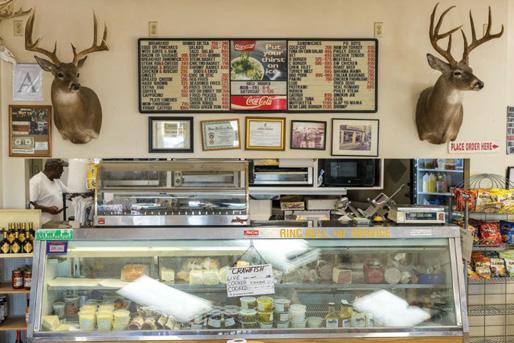
In her book, Thank You Please Come Again: How Gas Stations Feed and Fuel the American South, published by Bitter Southerner Publishing in 2023, photojournalist Kate Medley road trips across the South, documenting service stations, convenience stores, and quick stops of the region. Along the way, she pulls over for the tamales, fried fish, and banh mi at venues both familiar and indispensable. Medley’s images uncover complex landmarks that supply far more than food and gas for locals and travelers. In what feels like an evermore-homogenized America, Medley finds that these gathering spaces provide unexpected community and creativity. In her book, Medley ponders the
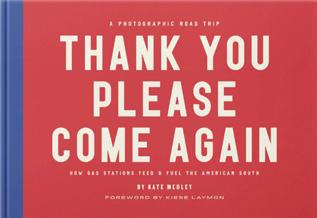
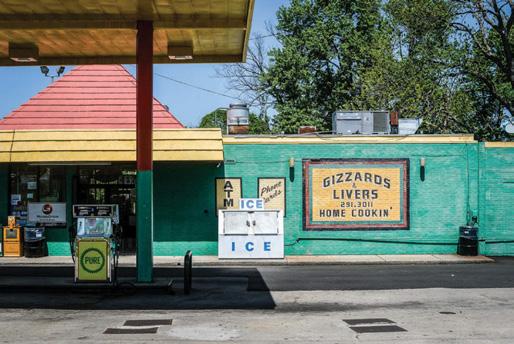
evolving nature of these gas stations. Are these rural and urban pitstops the true “filling stations” of our time, offering a cup of hot coffee, a bag of chips, an answer to a question, a place to just stop and sit a minute? How do these gathering spaces fuel an everchanging scene of customers, cashiers, cooks, and attendants? In Thank You Please Come Again, which includes two hundred powerful images from across the American South, Medley also shares her answers.
“In my travels in the South,” says Medley, “I see gas stations as signposts in a strange land. They tell me who lives there, what they do for work, what they eat, what they believe, what is important in their America and in their South.”
An exhibition of images from Medley’s book will be on display in the Gammill Gallery in Barnard Observatory from July 7 to September 12.
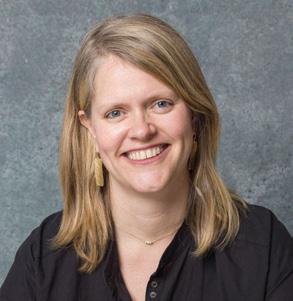
Kate Medley
KATE MEDLEY
A Good Life
Adam Gussow Promotes Beloved Community in New Memoir
The chapters of Adam Gussow’s life include teaching blues literature to inmates at Mississippi’s maximum-security prison and getting crowds grooving as a street blues harmonica player in Harlem. The University of Mississippi professor of English and Southern Studies weaves several of those personal stories into his new book, My Family and I: A Mississippi Memoir.
Released Tuesday, February 25, the book includes his reflections on the love that sustains his interracial family. Gussow is married to longtime UM staff member, Sherrie Gussow, who works in

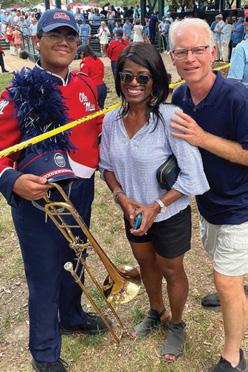
the School of Pharmacy. Their son, Shaun, is an Ole Miss freshman music performance major and part of the Pride of the South marching band.
The book challenges all sides of political and cultural ideology as he offers readers an intimate portrait of love, family, music, and hope amid a backdrop of persistent racial challenges. “We’re not the Ole Miss family or the Ole Miss couple that people expect,” Gussow said. “This is about an interracial family in contemporary Mississippi that comes into being. It’s about a great love and the son we made and are raising.”
A winner of Living Blues magazine’s Best Blues Book Award, the scholar of blues and African American literature has authored several thought-provoking texts. This time, he wants to interrupt narratives about race relations in the Magnolia State through a personal lens of his family’s “fundamentally happy” story and historical context, he said. “We’re living a good life here, and I hope that telling the story of how our family achieved that in Mississippi helps people demystify race to the point where we’re just living our lives in the pursuit of happiness,” Gussow said. “When the public hears those horrible stories about the six white officers down in Rankin County, the world knows how to deal with that Mississippi story—and those are legitimate stories—but there are other positive things happening in Mississippi.”
My Family and I chronicles Gussow’s decades-long commitment to the vision of Martin Luther King Jr. for a “beloved community”—a just America where mutual respect and brotherly love prevail.
Marvis Herring
Adam and Sherrie with their son, Shaun, an Ole Miss freshman in the Pride of the South marching band, during a 2024 pregame rally in the Grove.
Adam Gussow (left) takes a selfie during a 2016 hike with his son, Shaun, and wife, Sherrie.
Jodi Skipper Receives Thomas Ehrlich Civically Engaged Faculty Award
Campus Compact, the largest and oldest higher-education association dedicated to higher-education civic and community engagement, announced this past February that Jodi Skipper, professor of anthropology and Southern Studies at the University of Mississippi, is the recipient of the Thomas Ehrlich Civically Engaged Faculty Award. This prestigious award, presented in collaboration with Brown University’s Swearer Center, honors senior faculty members who demonstrate excellence in engaged scholarship through their teaching and research. Awardees are selected based on their meaningful partnerships with communities, institutional contributions, and scholarly impact.
Skipper is being recognized for her exceptional work in engaged scholarship at the University of Mississippi, particularly for her efforts in addressing both historical and present-day social injustices through collaborative community initiatives. Her research extends beyond traditional academic boundaries, actively incorporating community partners in the preservation and interpretation of African American heritage sites throughout the South.
Kirsten Dellinger, associate dean for access and strategic initiatives at the University of Mississippi, praised Skipper’s contributions in a nomination letter, stating, “In my twenty-seven years at the University of Mississippi, I have seen few scholars as innovative and forward-thinking as Dr. Skipper. Her commitment to communityengaged scholarship is truly transformative. Since our first meeting, I have witnessed her build a strong academic foundation that explores how African Americans are represented in material culture and how this connects to heritage in tourism spaces. Her work is
both pioneering and well-deserving of the Ehrlich Award.”
Bobbie Laur, president of Campus Compact, also commended Skipper’s impact, stating, “Dr. Skipper embodies the core principles we seek in Ehrlich Award recipients. Her approach to teaching and research exemplifies the power of engaged scholarship when combined with strong community relationships and outstanding academic leadership. We are honored to recognize her achievements with this award.”
In addition to Skipper’s recognition,
Julia Roncoroni, associate professor of counseling psychology at the University of Denver, and Daniel Trudeau, professor of geography at Macalester College, were named finalists for the Ehrlich Award.
The award is part of Campus Compact’s Impact Awards, which celebrate individuals and institutions dedicated to advancing the public mission of higher education. The winners were honored at Compact25, Campus Compact’s annual conference, in Atlanta, Georgia.
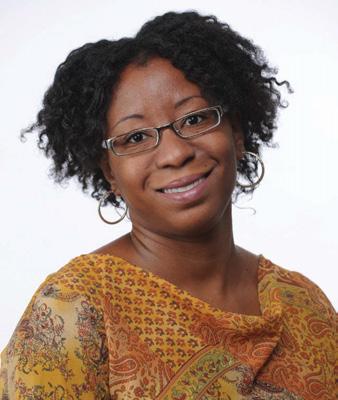
Jodi Skipper
Interpreting the Vote
Visiting Polish Scholar Researches Impact of Voting Rights Act
For two weeks this spring, visiting scholar Iga Machnik contextualized the historical framework of her dissertation, which focuses on the history of voter discrimination and critically evaluates the overall impact of the Voting Rights Act of 1965—particularly the now-invalidated preclearance provision.
Machnik, a doctoral candidate at the Jagiellonian University in Kraków, Poland, has been interested in researching these topics for several years. “Focusing my research on the defederalization of electoral safeguards through the lens of the Supreme Court’s jurisprudence came naturally to me,” she said. “From the beginning of my academic journey, I have been interested in the interplay between law and politics in the US context.”
Machnik earned her BA and MA in American studies from Jagiellonian University, a public research university founded in 1364, which is the oldest university in Poland and one of the oldest universities in continuous operation in the world. Machnik’s MA thesis examined the impact of the Commerce Clause on the desegregation of public accommodations in the United States and earned the Award of the Dean of the Faculty of International and Political Studies for best defended thesis.
Her research visit has been made possible through the Ryoichi Sasakawa Young Leaders Fellowship Fund of the Nippon Foundation. Altogether, she will spend four months in the United States, with most of her stay affiliated with the Columbus School of Law at the Catholic University of America in Washington, DC.
“I’ve always been drawn to the judicial mechanisms of the common law system and the ways in which the interpretive frameworks adopted by justices shape legislative initiatives and actions at both the state and federal levels,” Machnik said. “Just as my earlier work explored how the Supreme Court’s interpretation of Congress’s commerce power enabled the successful enactment of landmark civil rights legislation in the 1960s, my current research analyzes how contemporary interpretive approaches have led to the defederalization of electoral safeguards and facilitated the adoption of voter suppression measures.”
Being in Oxford was important to Machnik, and she homed in on the Center as a leader of interdisciplinary study of the American South. She feels like she made the right choice. “While looking for an academic affiliation during my fellowship, the Center for the Study of Southern Culture stood out to me due to its interdisciplinary character, offering an opportunity to build

a strong foundation of knowledge about the American South—a region crucial to understanding the Voting Rights Act and its effectiveness,” she said. “I have had the opportunity to work in the archives at the J. D. Williams Library and to discuss my research with scholars, all of which has provided invaluable insights in an exceptionally kind and welcoming environment.”
At Jagiellonian, Machnik earned the Rector’s Scholarship for academic achievement, was a research assistant and research team member, and the recipient of a research grant from the Copernicus Society of America.
Rebecca Lauck Cleary
Southern Documentary Project Celebrates a Semester of Film Success
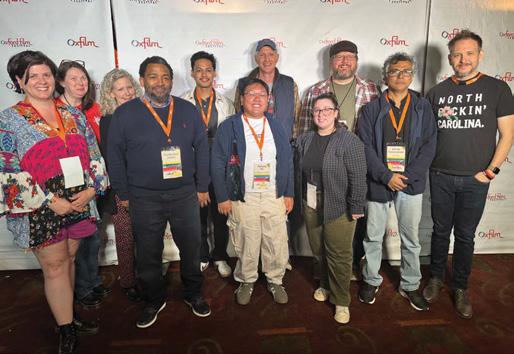
The Southern Documentary Project spent the semester celebrating documentary films and the people who create them. This spring, many graduate students, faculty, and staff showcased their work across the South.
Several films premiered at the 2025 Oxford Film Festival, including Loving Bill, by MFA candidate Athula Samarakoon, and Evidence, by MFA alum Lucy Gaines. MFA candidates Dr. Christopher C. Fisher and NEEN. screened their film Country Punk Black at the Oxford Film Festival, at the Stranger Than Fiction Film Festival, and at the Cathead Distillery in Jackson, where musician Twurt Chamberlain performed live.
MFA candidate Ashish Shrestha’s film Jere Allen also premiered at Oxford and screened at the South Georgia Film Festival and at the Redfish Film Festival in Panama City, Florida.
Our Movement Starts Here , by John Rash, assistant professor of film production and Southern Studies, and Melanie Ho, assistant professor of practice in documentary expression, has recently screened at numerous festivals and events across the region. Rash’s film Warp Weft Water Weeds also screened at the South Georgia Film Festival.
Olivia Whittington, operations manager for the Southern Documentary Project, presented her
film Gateway Toys at the Redfish Film Festival and at the South Georgia Film Festival, where it was awarded Best Graduate Film.
Shiraz Ahmed, assistant professor of practice in documentary expression, screened his film This World at the fourth annual Faculty and Graduate Student Forum on Race and Ethnicity at the University of Mississippi. It also screened at the Rūng Film Festival in Houston, where it received the audience award for best short documentary. Ahmed’s film The Safety Net also became available to stream nationally this spring on PBS through Detroit Public Television.
SouthDocs faculty, friends, and students at the 2025 Oxford Film Festival
Center for Community Engagement’s Celebration of Service
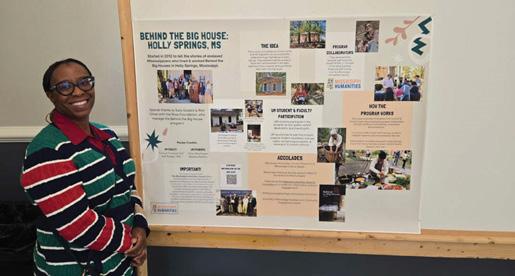
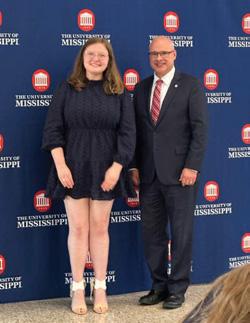
Outstanding faculty, staff, students, and community partners who are advancing community engagement at UM were honored at the Center for Community Engagement’s Celebration of Service. Shown above is Jodi Skipper, professor of anthropology and Southern Studies at the University of Mississippi, with her poster about her Behind the Big House project, which tells the stories of enslaved Mississippians who lived and worked behind the big houses in Holly Springs. Emerson Morris, a public policy and leadership major and Southern Studies minor, received the Newman Civic Fellowship Award. This is a year-long program that recognizes and supports student public problem solvers at Campus Compact member institutions. Fellows are nominated by their president or chancellor based on their potential for public leadership and their work with communities. Congratulations to you both on your impressive work!
Jodi Skipper
Emerson Morris
Building Collections, Building Community Alex Watson, Southern Studies Subject Librarian
It’s been my distinct pleasure to serve as the subject librarian and library liaison to the Center for the Study of Southern Culture for more than fifteen years, and during that time I’ve never ceased to be amazed by the quality of interdisciplinary scholarship on display from students, staff, and faculty. I’ve found Southern Studies to be a rigorously academic and introspective discipline, filled with folks from many areas of expertise turning a critical eye to the unique culture of our region.
As a liaison and subject librarian, my work with Southern Studies often revolves around making sure our students and scholars have the tools and training they need to complete their research. In a broad sense, this means acquiring materials for our library collections—new books and older titles that our researchers need, journals and databases filled with articles or other information, and even the odd collection of haiku. Often working closely with the library’s Special Collections, which handles rare, unique, or fragile Mississippiana, I’m given an annual budget to make sure that Southern Studies is amply supported with whatever materials people need.
This often includes accepting donations, too. Scholars in Southern Studies, especially those who are leaving for other opportunities or retiring, often reach out to me to coordinate the donation of their personal libraries. While I do have to exercise some discretion—the library isn’t infinite, and books with highlighting and underlining aren’t really suitable

for our collections—I pride myself on accepting and helping to process a variety of donated books. In fact, I would say it is my favorite part of the job! If you ever have clean, gently used books that you think would be a good match for our collection, don’t hesitate to reach out.
I also work with a number of instructors who teach classes out of the Center, helping to reserve library spaces for classroom activities as well as basic or advanced library instruction. The latter sees me bringing classes into the library to offer library demonstrations, research assistance, and more. While teaching a large class is very common, I also schedule one-on-one research consultations with students and scholars, either for specific projects or for more general research interests.
While my hours vary, I’m always open to try scheduling something.
Best of all, my personal background dovetails very well with the Center’s mission and needs. I’m a trained literary scholar with an MA in English literature and years of college-level teaching under my belt, and I also have a history minor and a deep family connection to the South. Through my work with other departments on campus, such as Art, English, Theater, and Writing and Rhetoric, I’ve been able to work in many of the disciplines in which Southern Studies scholars and students are immersed.
For those who aren’t aware, the library offers some essential collections to support the Center, as well. Our holdings in major literary figures like William Faulkner are world class, and many rare items and first editions dot our shelves. There are even more in Special Collections. While not my area of expertise, I often help scholars liaise with our archivists and assist them in putting together the logistics of working with our many unique primary documents. We also have an impressive collection of southern films and music in our collection, from Hollywood or indie movies we maintain on disc to the world-renowned Blues Collection—including B. B. King’s personal collection—held in Special Collections.
If there’s anything that you think the library should be doing that it isn’t— reach out and let me know. It’s not just my job but my pleasure to help folks out.
Alex Watson
Alex Watson
Creating Bonds, One Biscuit at a Time
Food and Family Nourish Bay Merrell’s College Experience
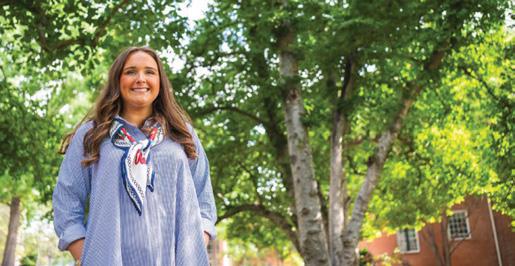
Warm, flaky, tender buttermilk biscuits were the inspiration for Bay Merrell’s undergraduate thesis—as well as the reason for her grandmother’s internet fame. A recently graduated Southern Studies major in the Sally McDonnell Barksdale Honors College, Merrell took Annemarie Anderson’s SST 401 course and completed her capstone project about her family’s food traditions last fall.
Merrell’s thesis was about southern women—including her own grandmother—who run online kitchens: “I’m looking at how online kitchen spaces have turned into places where women can come together and share recipes and memories and skills,” she said. “Rather than the kitchen being such an isolating place, it’s a way for women to connect and not feel so alone, and a way for them to make relationships and form connections,” Merrell said.
Merrell’s grandmother Brenda Gantt started her online kitchen during the Covid-19 pandemic, when she couldn’t feed her friends and neighbors. During the pandemic, Gantt felt isolated, so her online kitchen was a way for her to continue being able to share her recipes and food.
After being hounded for her biscuit recipe, she decided to put a short video on Facebook so people could see how easy cooking could be. Today, Gantt has 3.9 million Facebook followers, 264,000 followers on Instagram, and a YouTube channel with 146,000 subscribers. “She didn’t know much about Facebook or social media or anything like that, but she’s figured it out,” Merrell said. “It’s been really good for her.”
Last fall, Gantt even featured her granddaughter in a video while they talked and made zucchini lasagna
in the kitchen together. “She was so honored when I asked to interview her for my thesis. She was just thrilled,” Merrell said. “I think she was really excited that I was focusing on family foodways in the South.”
Conducting oral histories was a skill Merrell learned in SST 401, and her curiosity and fresh approach impressed Anderson. “Bay truly wanted to understand how history informed contemporary food media influencers in the South, and she tells a complex story through her project,” said Anderson, assistant professor of practice and lead oral historian for the Southern Foodways Alliance.
But the real question is: Can Merrell make those famous biscuits? She smiles widely and nods. “I can make the biscuits,” she said.
Rebecca Lauck Cleary
Bay Merrell
A Walking Advertisement for Southern Studies
Merritt Tompkins Found Her Team at the Center
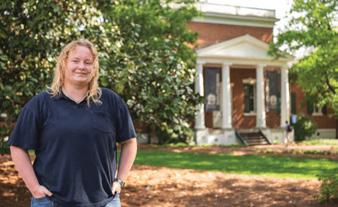
Finding mentors and guidance is an integral part of having a successful college career. Merritt Tompkins found both at the Center for the Study of Southern Culture, as well as all over campus.
Tompkins, who graduated in May with a BA in Southern Studies, found her niche by studying the South through an interdisciplinary Southern Studies lens. “I thought it sounded great because I love history and English,” she said.
One of the first classes Tompkins took as a freshman was Adam Gussow’s SST 103: Southern Mythologies and Popular Culture course. It was there that she began to learn to critique the South through literature, music, theater, film, television, and even music videos. “I still think about that class,” Tompkins said.
Tompkins also took Ralph Eubanks’s SST 109: Rights and Southern Activism course. Eubanks said she impressed him with her ability to conduct historical analysis. He even saved her final paper, which examined the memorialization of the 16th Street Baptist Church bombing in Birmingham, Alabama. “At its very core, my rights and activism class seeks to examine power dynamics in the movement, particularly related to gender,” Eubanks said. “The class pays close attention to the role women played in the movement, whether it was Fannie Lou Hamer’s speech at the 1964 Democratic National Convention or the Women’s Political Council in Montgomery, Alabama, which stood at the core of organizing the bus boycott there in 1955. Merritt
recognized how the power dynamics of the movement were mirrored in art and culture, and she did it in a way that was clear and concise.”
Before arriving at the University of Mississippi, Tompkins had a storied high school career as a kicker for the Destrehan High School football team in Destrehan, Louisiana; a goalkeeper for the school’s soccer team; and a member of the school’s golf team. While in Oxford though, she made the classroom her central focus and remained on the sidelines as a sports fan.
But her role on the Southern Studies Ambassadors made her a leader on the Center’s team, and informing others about the program seemed to come naturally to her.
Previously, Tompkins was a community desk assistant for student housing and worked her final year in the J. D. Williams Library. At the library, she found like-minded people, including Sarah Katherine Glass, program
coordinator for the IDEAlab, and Elizabeth Batte, outreach and strategic initiatives librarian. “I think you have to find support when you go to college, and you have to have adults to rely on, because sometimes you need the wisdom of someone who’s lived their life a little bit more than you have,” she said. “There are some really good people in Barnard Observatory specifically for that, and also in the library.” Being in a creative space, around professors who are easily accessible, is important to Tompkins. “The people at the Center have dedicated time and energy into investing and caring about what they are doing for the world, and that’s what I want to do,” she said. “I’m trying to find places where people care about what they’re doing. I know I have the tools to figure it out, and I gained them at the Center. I’m a walking advertisement. I just love it.”
Rebecca Lauck Cleary
Merritt Tompkins
Southern Studies Celebrates Classes of 2025
This year the Center graduates forty Southern Studies students. Twentynine graduate with a bachelor’s degree, six graduate with a master’s degree, and five graduate with a Master of Fine Arts in documentary expression. Here they are:
Bachelor’s Degree
Alyssa Faith Adair
Elias James Addy
Avery Myers Agee
Alivia Marie Berryhill
Nia Janae Brooks
Keely Mae Butler
William Carlos Daley
Alexander Thomas Deyton
Myles Makofsky Douglas
John Joseph Elms
Shelby Brooks Faulkner
Madelyn Grace Godfrey
Taylor Elizabeth Gunter
John Parker Hogan
Elizabeth Handly Hughes
Anna Claire Kimberlin
Elizabeth Caroline Kish
Jaden Simone McCutchen
Olivia Bay Merrell
Kaitlin Faith Orsega
Katherine Marie Ridenour
Abigail Rae Stewart
Nash Roberts Stewart
Leah Marie Vernelli Sumner
Paige Kennedy Thorson
Merritt Tompkins
Margaret Catherine Troxler
Annabelle Riley Van Essendelft
William Jackson Walker
Master’s Degree
Amirhea (MiMi) Bishop
Walker Bray
Garrett Fuller
Allison (Allie) Lockard
Charles (Charlie) Pappas
Sela Ricketts
Master of Fine Arts
Logan Kirkland
Greta Koshenina
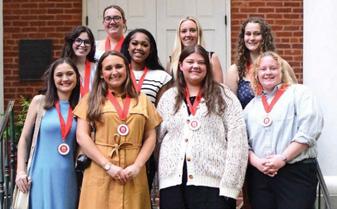
Nine of the twenty-nine graduating Southern Studies BA Students met at Barnard Observatory for a graduation reception on Wednesday, May 7
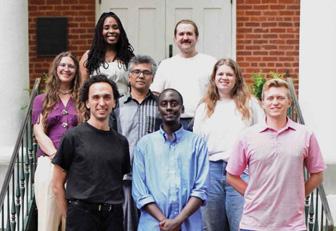
Graduating Southern Studies MA and MFA Students. Front row (left to right): Charles (Charlie) Pappas, Peter Muvunyi, Walker Bray; middle row: Greta Koshenina, Athula Samarakoon, Sela Ricketts; back row: Janeen (Neen) Talbott, and Logan Kirkland
Peter Muvunyi
Athula Samarakoon
Janeen (Neen) Talbott
2025 Prizes in Southern Studies
Each year at graduation the Center presents several awards for papers and documentary projects following the graduation ceremony on campus. Those awards are announced at the Southern Studies graduation reception in Barnard Observatory. The reception this year was on Wednesday, May 7.
Gray Prize for Outstanding Undergraduate Paper
Ellie Crane for “Solidarity Plus Charity: The Spectrum of Approaches to Food Insecurity in the American South,” completed in Annemarie Anderson’s SST 401 class
Coterie Prize for Outstanding Undergraduate Paper
Anne Claire Carter for “Fueling the
Civil Rights Movement: The Role of Food in the Fight for Freedom,” completed in Ralph Eubanks’s SST 109 class
Sue Hart Prize for the Best Work at the Intersection of Gender and Region
Jaden McCutchen for her oral history project “Healing in Color,” completed in Shiraz Ahmed’s SST 401 class
Peter Aschoff Award for a Study of Music
Keely Butler for “Songs of the Lost Cause: Patriotism and Nostalgia in Late Twentieth and Early Twenty-First Century Country Music,” completed in Adam Gussow’s SST 401 class
Sarah Dixon Pegues Award for a Study of Music
Alexander Deyton for “Gospel Music and Its Impact on the Southern Music Industry,” completed in Shiraz Ahmed’s SST 401 class
Lucille and Motee Daniels Award for the Best Graduate Paper or Project by a First-Year Student Astrid Knox-McConnell for her film “Our Sweet Mamas: A Queer Food Legacy Project in ‘Dixie’ Land,” completed in SST 533, team-taught by Andy Harper and Annemarie Anderson
Ann Abadie Award for Best Documentary Project
Olivia Whittington, Samson Oklobia, and Will Harbison for the film Shaped by Clay, completed in John Rash’s SST 537 class
Lucille and Motee Daniels Award for Outstanding Master’s Thesis Charlies Pappas for “Here, There: Jewish Identities in the South Through the Lens of Food,” directed by Ryan Parsons Award for Outstanding MFA Thesis Greta Koshenina for the multimedia project “Dream and Reality: Warping Southern Mythologies,” under the direction of Melanie Ho
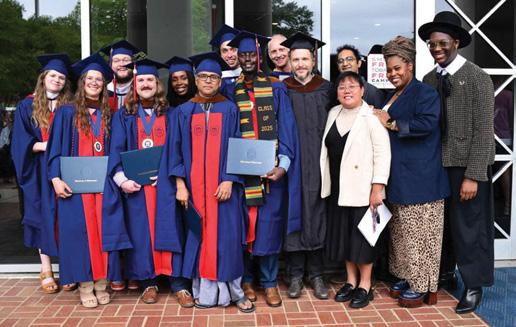
Graduating Southern Studies MA and MFA Students with faculty at Ford Center following graduation ceremony on Wednesday, May 7
OLIVIA
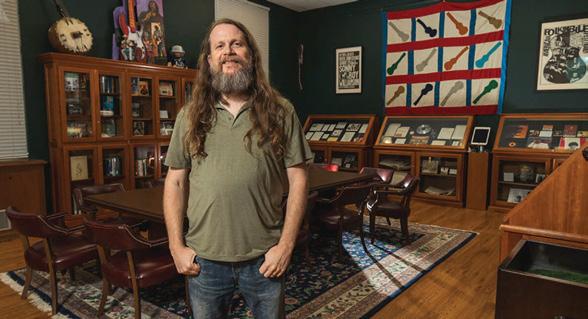
Preserving Music History
UM Blues Archive Celebrates Forty Years
Rare 78-rpm records from legends such as Arthur “Big Boy” Crudup, never-released studio recordings, and personal letters sent to fans by Ray Charles are just a sliver of the four hundred thousand artifacts preserved in the University of Mississippi’s Blues Archive. Housed in the J. D. Williams Library, the archive is celebrating forty years of collecting stories, voices, memorabilia, and images that define the genre often defined as “the people’s music.”
Born from struggle and resilience, the genre has threaded its style into countless others to become one of the nation’s most influential. “Sometimes people have this misconception that blues is all sad music,” said Greg Johnson, head of the Department of Archives and Special Collections. “The blues is so important to much of the popular music people listen to today. Jimmie Rodgers, from Meridian, Mississippi, is known as the ‘Father of Country Music,’ and he learned
to play from blues musicians. Many of his songs followed a blues structure.”
The exact birthplace of the blues is a subject for debate. But given Mississippi’s history of musicians, such as Muddy Waters, Robert Johnson, and Howlin’ Wolf, and the growing number of Mississippi Blues Trail markers statewide, it’s clear that blues is woven throughout the state’s DNA.
The Blues Archive is one of the largest resources of its kind in the world, and its holdings and staff have served as an anchor to blues education since 1984. Luminaries such as Grammy- and Oscar-winning composer Quincy Jones visited the archive while planning to film The Color Purple, and archive staff members helped Johnnie Billington create the curriculum that launched the Delta Blues Education Program.
“The blues has clearly come of age,” said Bill Ferris, Mississippi native, archive founder, and founding director of
Greg Johnson

Greg Johnson places a record on the Blues Archive’s antique Victor phonograph. The Blues Archive has several rare 78-rpm records in its collection, many of which are on display in the fortieth-anniversary exhibit.
the Center for the Study of Southern Culture. “It is no longer an isolated musical form that you travel to the Mississippi Delta to hear.” An emeritus professor of history and senior associate director of the Center for the Study of the American South at the University of North Carolina, Ferris led efforts that secured the archive’s foundational collections in 1982–83, when B. B. King donated some ten thousand sound recordings and the University of Mississippi purchased Living Blues magazine.
Ferris’s vision to create an international repository of blues history resulted from his struggle to find articles and verified documents for his research, he said. “Before I went to teach at Jackson State and then at Yale, I wrote my PhD dissertation, ‘Black Folklore from the Mississippi Delta,’ at the University of Pennsylvania in 1969,” he said. “At that time, there were five or ten books on the blues, many of which were written in England by Paul Oliver. When I proposed research projects and requested funding, people would often respond, ‘But there is nothing written on this subject. How can you do serious research on it?’ which really upset me.”
Ferris and a small founding team worked diligently to create a resource that solves that issue, promoting a greater appreciation of the far-reaching impact of blues in the US and beyond. “The fruit of the team’s vision and the support
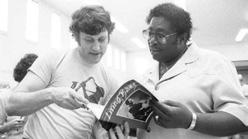
Bill Ferris (left), founder of the university’s Blues Archive, and blues musician B. B. King thumb through the pages of Living Blues magazine in June 1985. King donated some ten thousand blues records from his personal collection to help found the archive.
so many people gave us over the years is what we see today in the Blues Archive, which is an internationally acclaimed center for blues research,” Ferris said.
From exclusive performance footage to the one-of-a-kind clothing worn by blues musicians, the archive has been a fountain of knowledge for authors, filmmakers, researchers, historians, musicians, and the public for four decades. For example, the archive’s Trumpet Records Collection includes all of the record label’s contracts, ledgers, and business files. The access to such behind-the-scenes documents is something that has attracted the interest of business and law researchers. The Mississippi-based music label represented popular blues singers such as Elmore James, Jerry “Boogie” McCain, and Sonny Boy Williamson. “We also have all of Trumpet Record’s master recordings,” Johnson said. “Those include recordings that were never released, like alternate takes. The company determined which version to release, but that doesn’t mean the other ones are bad. Archive visitors may find them just as good or hear something they like even better.”
Other collections illustrate how the blues resonated with a wide audience through items such as letters to Highway 61, an award-winning blues radio program produced by the Center for the Study of Southern Culture, and a Memphis woman’s 1967 scrapbook. The woman had written letters to blues and jazz artists, asking them to wish her husband a happy birthday. They received responses from music legends such as Ray Charles and Louis Armstrong.
The university’s growing hub of blues history is helping amplify important stories, said Bobby Rush, an awardwinning blues artist who lives in Jackson. “A big part of the Blues Archive is helping people see what the blues is, how it’s influenced other music and where it comes from,” he said. “Ferris’s work at the Blues Archive also appeals to audiences that maybe weren’t listening before.”
In a move to improve accessibility around the world, the archive’s staff plans to create a more interactive experience for online users and to digitize virtually all its noncommercial audio and video materials, thanks to a grant from the National Historical Publications and Records Commission. Though the archive’s contents are usually kept in a private area and retrieved upon request, an anniversary exhibition titled “Soul & Spirit: 40 Years of Preserving the Blues” offers a closer look at the diverse repository. Visitors can listen to rare records on the archive’s antique Victor phonograph, read a letter that then-Senator Barack Obama wrote to Living Blues magazine, marvel at an original dress worn by the “Mother of Beale Street,” and view blues-related books and letters.
“Most people don’t get the opportunity to see an original Robert Johnson recording or an original Charlie Patton recording, but in an archive like ours, they can come here and see these things,” Johnson said. “It’s important to know about Mississippi’s and America’s cultural heritage, and the blues is right at the core of that.”
The Department of Special Collections and Archives is free and open to the public, 8:00 a.m.–5:00 p.m. weekdays.
Marvis Herring
Capturing Truth Through the Lens
Student Portfolios from SST 534: Documentary Photography
This past spring, I taught thirteen aspiring documentary photographers in my SST 534: Documentary Photography class. The course focused on how still images can convey deeper insights, conflicts, and contradictions about individual people, issues, and communities.
I asked the students to produce a documentary photo story in sixteen to twenty images that showcased their ability to connect with people and
groups, craft a narrative, and portray complex issues about the contemporary South. They chose to focus their lenses on a wide variety of subjects, including scarce housing availability, nutritional food assistance, the balancing of school and part-time jobs, immigrant stories, and the re-enactment of historical narratives, among others.
Over roughly one semester, they learned how to use the camera, identify and build relationships with their
subjects, and explore ethical challenges within documentary photography as a truth-telling medium. The most challenging task: Letting each image tell its own story.
The photographs were all taken in and around Oxford. Here are representative photographs from each student’s portfolio.
Shiraz Ahmed
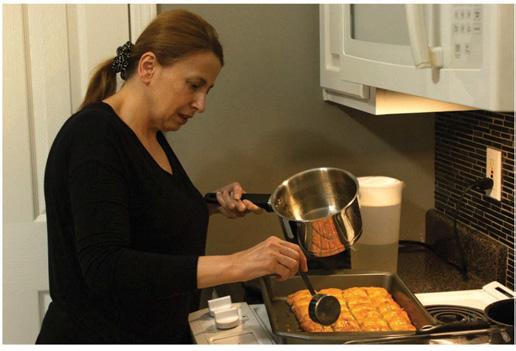
Photograph by Elias Addy, from the project Baked into the Community

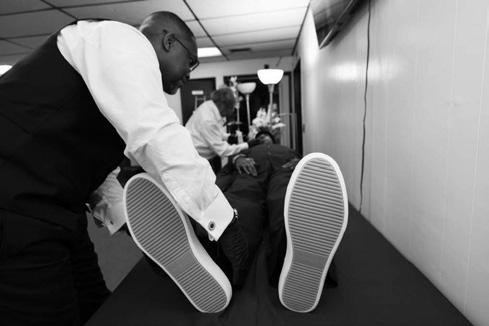
Photograph by Elaine Baker, from the project Building Pressure
Photograph by Christopher Fisher, from the project Fishers of Men
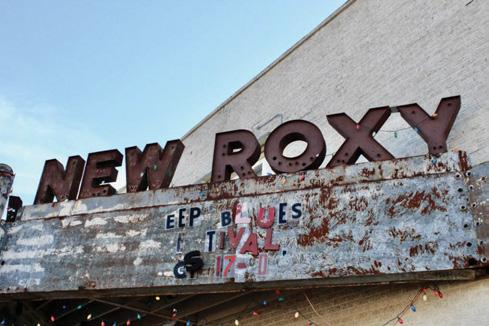
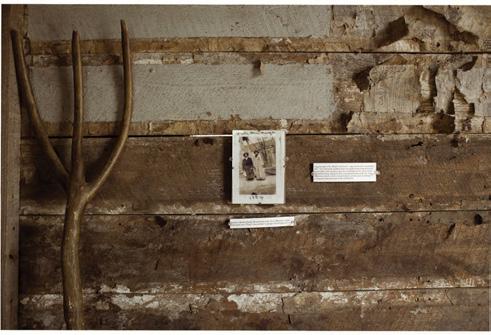
Photograph by Ashton Frankel, from the project What Happened to the Blues?
Photograph by J. Garrett Fuller, from the project How We Remember and How We Move Forward


Photograph by Peter Gershon, from the project What Defines a Southern Man
Photograph by Jaden McCutchen, from the project Always in the Game
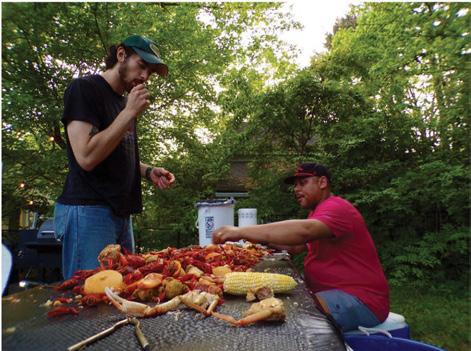

Photograph by Gracie Miester, from the project Outside the Grocery
Photograph by NEEN., from the project Always in the Game
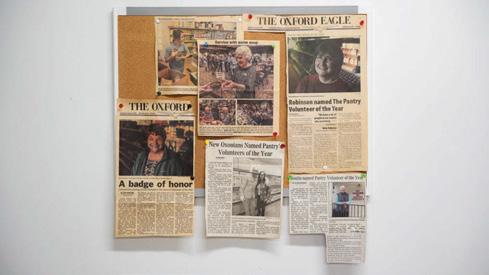
Photograph by Samson Oklobia, from the project Paper Bag Heroes
Photograph by Isabella Raia, from the project Balancing College Life and Work
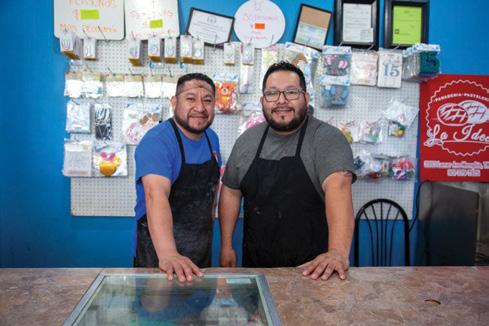

Photograph by Alé Santiago, from the project Dough & Diaspora
Photograph by Libby Sherwood, from the project Bean to Brew: Exploradora Coffee
A Tough Row to Hoe
Small and midsized farms face serious challenges. Still, argues a Tennessee farm advocate, they’re worth saving.
By Brooks Lamb • Photos by Kathleen Greeson
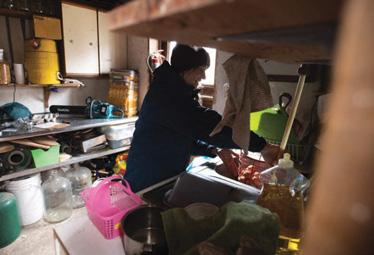
Jess Wilson farms on forty acres in Monteagle, Tennessee. She and her husband, Nate Wilson, have cobbled their land together, buying different parcels at different times. Throughout their farming careers, they have grown a variety of fruits and vegetables. They’ve kept bees and milked goats.
Nowadays, they focus mostly on tending a small herd of sheep for wool, meat, and specialty breeding stock. They use regenerative grazing practices, which support the health of their soil, forage, and flock. Their three children pitch in on the bigger jobs when they can.
“The kids help with shearing if they’re in town, and when they were little, they were super helpful with lots of projects on the farm,” Jess said over the phone one morning late last spring, a week or two before her family harvested the hay crop together. “It was important for us that they have great farm experiences.”
Jess grew up on a small dairy farm in upstate New York, and she studied sustainable agriculture at Sterling College in Vermont. She has worked on farms in Colorado, Alabama, and even Scotland. She also serves as the president of Southeast Tennessee Young Farmers Coalition, a local affiliate of a larger national organization. Nate is a forester with extensive
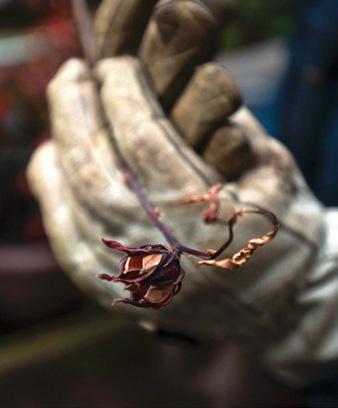
Farmer Jess Wilson holds a dried hibiscus in her greenhouse at Summer Fields farm in Monteagle, Tennessee, February 17, 2025.
FROM THE PAGES OF GRAVY
stewardship experience, and he currently works off the farm as the acting director of a nearby university’s land management team.
Jess and Nate are seasoned and skilled, capable and committed. They understand how to grow their products, market them, and manage the business. They pay attention to their place and their community, and they care deeply for their land.
They are good farmers in every sense Yet their farm, like so many others in Tennessee and across the country, is under increasing pressure. “Our current economic system isn’t working for small farms,” Jess says.
The latest USDA Census of Agriculture, released last year, suggests that she’s right. Between 2017 and 2022, Tennessee saw a decline of nearly seven thousand farms. That translates to a loss of roughly 10 percent of the state’s farms in just five years.
That statistic alone is concerning. But what should be more alarming to producers and consumers alike is the kinds of farms that are disappearing.
About 98 percent of the decrease came from farms that are less than five hundred acres in size, an imperfectly defined threshold where, at least in Tennessee, farms begin to shift from midsized to large. A variety of factors are causing these farms to fall off, from rising input costs and diminishing profit margins to succession-planning struggles and difficulties retaining employees.
As these farms close or are subsumed into larger operations—according to the same dataset, the state’s largest farms cover a total of more than six hundred thousand additional acres
than they did just a few years ago—it’s tough for new farms to replace them. When compounded with other challenges, such as the difficulties young farmers face in purchasing land and equipment, managing student debt, and covering childcare costs, the next generation isn’t just dealing with a tough row to hoe. They’re struggling to step into the field.
Tennessee lists the word “agriculture” on its state seal, but it is hemorrhaging the farms that underpin its rural economies, ecologies, and communities—its agri-culture. The numbers show that this is not a sentimental statement. It’s a fact.
“There’s been this pervasive myth that you can just get out there on the land and make it as a farmer on your own, you know?” Jess Wilson says. “It’s really hard to do that. We can’t do that all on our own as small, individual farms.”
For those familiar with agricultural issues, or for those who have seen and felt the changes firsthand, these statistics and statements won’t come as a shock. They follow a general “get big or get out” trend that has defined American agriculture for over half a century. Systemic forces encourage farms to become larger by acquiring more and more acreage. The market prizes so-called efficiency above all else, although its accounting often neglects externalities, like environmental and community-level economic damage,
Jess Wilson inspects the wool of one of her sheep.
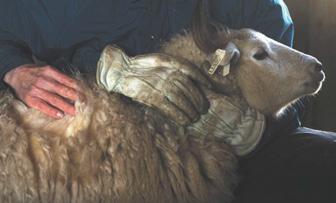
Jess Wilson washes fresh eggs that her son gathered on their farm.
that don’t fit neatly into a spreadsheet. Farmers who don’t want to expand—or can’t afford to—are left behind.
But it isn’t just the consolidation of farms and land that pose difficulties for many existing and aspiring farmers. In Tennessee, rural communities also face pressure from real estate development, which is projected to overtake more than a million acres of farmland in the state by 2040. On the outskirts of growing metropolitan areas like Nashville and Chattanooga, Knoxville and Memphis, as well as in more rural communities throughout the state, subdivisions, warehouses, and strip malls are replacing pastures and fields.
So are large-lot tracts and estates, where individuals purchase land not to farm but to build on, look at, and mow. A two-hundred-acre farm might be subdivided into forty five-acre lots,
each with its own house. Some of those parcels may still be considered agricultural for tax purposes, netting significant savings for the homeowner. But often, the land is no longer in production in a meaningful sense.
That’s not to villainize people who live on these parcels—and it certainly doesn’t capture what some farmers, such as vegetable and other specialty crop producers, can do on just a handful of acres—but it points toward a land-use planning problem. Growth isn’t a bad thing. Many rural communities need to grow, or else they risk withering. But when they do, it should be strategic and intentional. We need to find balance and consider the land and its bounty, not just new residences and businesses, when planning for the future.
Natalie Ashker Seevers, who serves as the executive director of the nonprofit
Tennessee Local Food, has witnessed this sort of change firsthand in her own community and across the state. “For anybody who has spent time in a rural community—not just driven through it but actually stayed there and watched it—the farmland loss is very apparent,” she says. “It’s in all our faces.”
All these types of development—the traditional sprawl, the low-density residential housing, the city dwellers’ second homes out-of-town, the commercial and industrial expansions—convert acreage, and they also cause a ripple effect that raises the price of other agricultural land to record highs. A quick online search shows that it’s commonplace for a fifty-acre farm with a home in Middle Tennessee to list for a million dollars or more. That might sound like a bargain to those who are used to real estate prices in a booming city like Nashville, but imagine an aspiring farmer who is trying to make that math work.
There’s a common perception that young people don’t want to farm because the work is too hard or because agricultural life is unappealing. That’s true for some: Tennessee has seen many multigenerational farms, even “century farms”—those in production for a hundred years or more—cease after parents pass away. But there are lots of young people who do want to farm. Whether they grew up on a farm or in a suburb, they yearn for the chance to root into the land and be part of a rural community.
Right now, most just can’t afford it.
Some in the agricultural and environmental fields in Tennessee believe that farmland conversion, rising land prices, and difficulties with land access for young farmers are reaching crisis levels. They worry that these parallel issues put the future of independent farming and local foodways in jeopardy. Those comments come from liberals, moderates, and conservatives
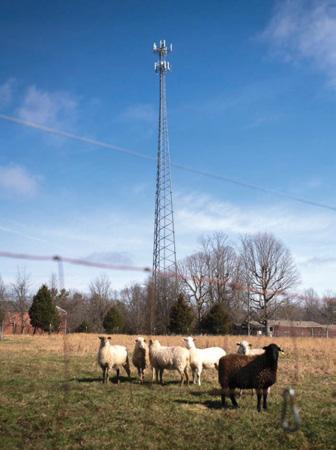
Sheep stand in a field at Summer Fields farm near a cell tower on neighboring property.
alike, a point of consensus in an otherwise hyperpartisan state.
Tennessee, a popular place to live and do business, feels these dual challenges of consolidation and conversion acutely. But it’s not alone. Rural communities across the South and the country are experiencing these same pressures. Projections from American Farmland Trust, where I work, suggest that, due to real estate development, the United States is on pace to compromise more than eighteen million acres of farmland by 2040. Estimates suggest that we have been losing about two thousand acres of agricultural land per day in recent years.
For context, a football field is about 1.3 acres. Across the country, we’re converting more than fifteen hundred football fields’ worth of farm- and ranchland every twenty-four hours. That loss is most concentrated in the South, with Texas, North Carolina, Tennessee, and Georgia all ranking in the top five for projected farmland conversion.
According to the Census of Agriculture, the United States saw an overall decrease of 140,000 farms, or about a 7 percent decline, from 2017 to 2022. There are currently about 1.9 million farms in the United States,
down from 6.8 million less than a century ago. Once again, smallerscale farms make up most of the recent decline. Nationwide, roughly 81 percent of the decrease between 2017 and 2022 came from farms that are smaller than five hundred acres, a clear signal of struggle. Notably, that doesn’t even include farms just above the five hundred-acre threshold, which
may be considered small or midsized in geographies like the Midwest, the Mississippi Delta, or the Great Plains, where bigger acreages are the norm.
“The numbers speak for themselves,” says Seevers, who works closely with small farmers in her role at Tennessee Local Food and has watched them fight to stay afloat. “For many of the farmers in my network, scaling up either isn’t feasible or doesn’t make financial sense.”
With the fall of these farms, communities also see the closure of schools, churches, and hospitals. Small businesses sometimes shutter. The effects reverberate throughout rural and semirural areas, especially in the many places where aging farmers aren’t being replaced by younger ones. These are just a few of the casualties that come from over-embracing industrialism and “efficiency.”
The national number of “new and beginning” farmers, or people who have been farming for ten years or fewer, actually increased from 2017 to 2022. That’s good news. It suggests renewed energy in the farming community. Yet the average age of a new and beginning farmer is nearly fifty, driven in part by the number of people who turn to
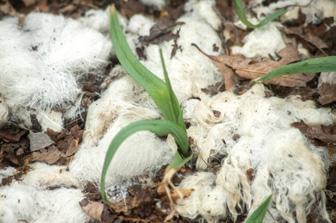
A garlic plant is surrounded with wool mulch on Summer Fields farm. Wool that can’t be sold is often used as mulch in the garden.
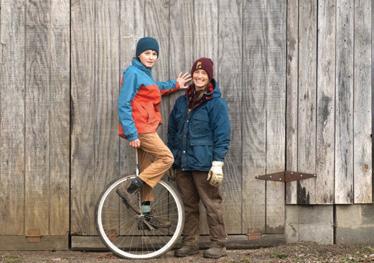
Jess Wilson with her youngest child, Josiah, outside the barn at Summer Fields farm.
Tennessee lists the word “agriculture” on its state seal, but it is hemorrhaging the farms that underpin its rural economies, ecologies, and communities—its agri-culture .
farming in retirement or as a second career. There’s nothing wrong with starting a farm later in life, of course. But the average-age statistic again indicates that it’s tough for young people to get started in agriculture. They don’t have capital saved up from a first career. They likely don’t have major assets to liquidate to fund their farm purchase. Fewer than 9 percent of farmers and ranchers in the United States are younger than thirty-five.
In her work with the Southeast Tennessee Young Farmers Coalition, Jess Wilson says, “We work hard to address land access for aspiring farmers, but sometimes we ask ourselves, ‘What are we doing? Are we setting people up for failure?’”
“If they can afford and access land, great,” she continues, mentioning that her organization will support them with information and guidance toward those goals. “But what if they can’t actually make it work?”
Those same questions recently gave her pause when a local elementary school asked her to come talk about farming as a career. She loves her work, but she worries that the path she and Nate took might be even less viable in another twenty years. How in good faith could she encourage those kids to become farmers?
that it isn’t productive to cast a constant doom-and-gloom shadow. We need to be honest about the struggles farmers face, but we shouldn’t dwell on them.
There are tools and strategies that could create a better, fairer, and more sustainable agriculture, one that offers more opportunity to smaller and midsized farms and moves toward land conservation rather than land conversion. Courageous, sensible changes could help cultivate an agriculture that gives young people an authentic chance at success and addresses landaccess challenges directly, that helps aging farmers retire with confidence and dignity, and that values stewardship and locality.
On the federal level, that might mean creating an Office of Small Farms within the USDA to ensure that smaller-scale farmers have better access to government programs so that they’re less likely to be left behind. For too long, public support for agriculture has disproportionately gone to the biggest and wealthiest farm operations. While there has been some momentum for this new office in recent years, its creation seems unlikely in the current political environment.
my home state of Tennessee. In January 2025, state senator Jack Johnson of Franklin introduced legislation that would create a farmland preservation fund. Such a program would pay qualifying farm families to place a conservation easement on their land, ensuring it will remain a farm permanently.
Governor Bill Lee mentioned this legislation in his February State of the State address, calling it a priority and saying, “It’s time that we support Tennessee farmers by finally passing [this bill].”
While the policy landscape can shift at any moment—and amendments can radically change the content of a bill— the outlook appears promising. At the time of publication, the bill had just cleared the Senate Energy, Agriculture, and Natural Resources Committee, with several senators speaking passionately in its favor. Tennessee political leaders understand the need to advocate on behalf of farms and farmers, and they’re taking up the charge.
States could also address land access head-on by adopting or enhancing farmlink programs, which connect landowners with people who want to farm. With meaningful financial and staff capacity, these programs work.
New York state offers an example of what a thriving farmlink program with wraparound services can do for both aspiring and retiring farmers.
These statistics and, more importantly, their implications for the people and places they represent, are unsettling. But advocates like Wilson and Seevers argue
For states, it might mean creating or expanding programs that fund permanent farmland protection. When done well, compensating farmers to conserve their land and keep it in agricultural production can stem farmland loss, enhance local economic viability, and make land more affordable for the next generation.
In full transparency, I am currently advocating for this sort of legislation in
County governments could support these efforts, too, by thoughtfully planning for the future of agriculture in their communities, pursuing their own land-linking efforts, and hiring dedicated staff to lead local agricultural economic initiatives to complement what extension programs and government conservation professionals are already doing.
Action must occur outside the
FROM THE PAGES OF GRAVY
government sphere as well. Nonprofit organizations like Seevers’s Tennessee Local Food and Wilson’s Southeast Tennessee Young Farmers Coalition are pushing for change, bringing farmers and community members together, and supporting those in the agricultural community who need it most. Many of their local and state-level counterparts across the South and the country are doing the same. When coupled with the resources, knowledge, and leadership capabilities of national organizations and generous funders, the nongovernmental sphere offers promise.
Whatever actions are taken— whether at the national, state, or local levels; whether public or private; whether policies or programs or, better yet, a combination of the two—we must first recognize that the current system is flawed.
“This laissez-faire approach to letting the market sort it out doesn’t work if we don’t all have the same access to land, to equipment, to information,” says Wilson with a sad laugh. “Policymakers need to acknowledge that if we want communities with small farms, and we want to see young entrepreneurs start farms and be successful, then we actually have to prioritize that. Because right now, it’s pretty much impossible.”
This reprioritization could make some stakeholders, especially those who are thriving in the current system, bristle. But other larger-scale farmers might welcome these changes. After all, some of them have expanded not because of greed or ambition but because of a system that demands it. They are playing the game by the rules in place. They’re trying to support their families and businesses. If downsizing was a more legitimate economic option, some larger farmers might be inclined to reduce their scale, their capital intensiveness, and their stress levels to farm on less expansive acreages. That would let them come back into closer contact with the land and soil, to return to the work that calls many people to farming in the first place.
No matter our geographies,
professions, or interests, we should pay attention to what’s happening with American agriculture. The fate of farming affects everyone who eats— that is, all of us.
Our current trajectory poses a threat to local and regional food systems. If cooks and consumers want farm-totable restaurants and ingredients, for instance, a movement that offers so much promise for both producers and consumers, we need far more local farms and farmers to provide them. If we’re not actively supporting these farms, we could lose access to some of the dishes and ingredients that we cherish: locally raised beef and farmfresh eggs; heirloom vegetables and local honey; fresh greens and beans and fruits and herbs.
Other repercussions of our current system are ecological. While public lands are important, some of our most significant wildlife habitats are found on private working lands, in fencerows and woods and lush pastures. Unlike developed areas, these landscapes and soils also help filter water that enters our creeks and rivers, and they mitigate the damage from floods that have hammered so many southern communities in recent years. When these places are paved over for development, or when their fencerows and woods are
pushed down to make room for everlarger fields, we sacrifice these benefits. Other impacts are economic. Agriculture is the foundation of many rural economies. When farms are replaced with bedroom communities where people sleep but rarely work, dine, or shop—or when dozens of farms are replaced by one large, industrial operation—the financial health of communities can waver.
According to Jess Wilson, we need to decide if we are collectively comfortable with the consequences of our current course. “If we’re only going to have hobby farms and then large industrial agriculture, which is where it seems like where we’re headed, we either need to say, ‘Yep, that’s what it’s going to look like. . . .’”
“ Or ,” she continued, with a mixture of tenacity and hope, “we need to make some changes so that we’re prioritizing the kind of agriculture we want.”
This essay was first published in the Spring 2025 issue of Gravy, the Southern Foodways Alliance’s journal.
The online Mississippi Encyclopedia has recently added new entries on nuclear testing in the state, on the Biloxi civil rights movement, and on writers Mary Miller, Michael Farris Smith, Greg Isles, and Catherine Warfield. Here’s another recent addition, this one on the novelist and essayist Kiese Laymon.
You can find this and other work about Mississippi’s past and present online by going to www.mississippiencyclopedia.org.
Kiese Laymon
(b. 1974) Writer
Born and raised in Jackson, Kiese Laymon is the son of an educator, as his mother, Mary DeLorse Coleman, worked as a political science professor at Jackson State University throughout his upbringing. Laymon’s relationship with his mother and his development as a writer with a distinct political consciousness is well documented throughout his work, especially in his much-lauded memoir, Heavy: An American Memoir. Laymon’s career as a writer, in many ways, can be traced along his educational journey.
Laymon briefly attended Millsaps College before being suspended for a year after taking a library book, Stephen Crane’s The Red Badge of Courage, without checking it out.
Millsaps president George Harmon’s antagonism toward Laymon and his essays in the school newspaper holds a central role in Laymon’s “How to Slowly Kill Yourself and Others in America,” which appeared in Gawker in 2012 as a major development in Laymon’s early career.
After his suspension from Millsaps, Laymon sought education outside of Mississippi, earning a Bachelor of Arts degree at Oberlin College and a Master of Fine Arts at Indiana University. He worked as a professor of English and Africana studies at Vassar College before accepting a position in his home state for the 2015–16 academic year as the John and Renée Grisham Writer in Residence at the University of Mississippi. He finished Heavy, published in 2018, during that time and continued at UM as the Hubert H.

McAlexander Chair of English until he left the university in 2021. Since 2022, Laymon has been the Libbie Shearn Moody Professor of Creative Writing and English at Rice University.
Laymon’s early writing career is primarily defined as that of an essayist. He produced pieces for a range of publications, including ESPN Magazine, The Washington Post, The Guardian, and others. While at Vassaar, however, Laymon worked on what would become his debut novel, Long Division, a speculative, time-traveling, comingof-age narrative about children in Mississippi reckoning with America’s racial politics. Laymon’s editor, from an unnamed major publishing group, urged him to cut the text’s most political elements. Laymon resisted and ultimately signed with independent publisher, Agate Publishing, which released Long Division in June 2013. Agate also published How to Slowly Kill Yourself and Others in America, a collection of his autobiographical essays, in August 2013.
Laymon’s work suggests that Black life in Mississippi reveals important truths about America—both its ongoing harm and the lies it tells about that harm. In response, he sees revision not just as a key writing skill but as a necessary way to rethink America and life within it. His process of revisiting and reworking past experiences highlights the importance of honestly engaging with both personal and collective memory. This theme also shapes his career, as he has produced revised editions of How to Slowly Kill Yourself and Others in America

(published by Scribner in 2020) and Long Division (published by Simon & Schuster in 2021).
Heavy, Laymon’s chronicle of his upbringing and a reckoning with the weight that American racism and violence place on interpersonal relationships, is his most well-recognized work. It earned him the Andrew Carnegie Medal for Excellence in Nonfiction in 2019. In 2022, the John D. and Catherine T. MacArthur Foundation awarded Laymon a MacArthur Fellowship. As of 2025, Laymon is at works on two books, Good God and City Summer, Country Summer, the latter being a continuation of work done in cooperation with photographer Andre D. Wagner. In 2023, Trevor Noah’s Day Zero Productions began development on a TV series based on Long Division.
Jacob Fennell University of Mississippi
The Center for the Study of Southern Culture and the Mississippi Encyclopedia are grateful to the Mississippi Humanities Council for its years of support of this project.
Kiese Laymon
PHOTO COURTESY
The Story of Resistance Study the South Research Fellow
Studies
Those Who Sacrificed Everything
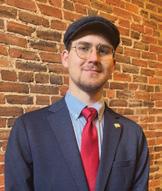
A self-described “politics junkie,” Zachary Clary first became interested in history through Texas-born President Lyndon B. Johnson. As time went on, Clary became intrigued by the history of the opportunity, the justice, and the hope of the Black freedom struggle.
This summer, Clary is conducting research during two weeks in June at the J. D. Williams Library on the University of Mississippi campus as the fifth Study the South Research Fellow. He continues to study the intersection of ideology and historical memory within the racial politics of the twentieth century as a second-year doctoral student in modern American history at Vanderbilt University.
“The story of resistance, of dignity, of humanity of the Movement has absolutely grasped me,” said Clary, who earned his BA in history from the College of William and Mary and his MA in history from the University of South Carolina. “I soon came to realize that it was these incredible people and the ideas that guided their lives that most interested me, not only as a scholar but as a person on this earth. So, I made the little jump from politics to intellectualism (though I am of the opinion that they are very comfortably aligned with one another), and more importantly, I changed my actors.”
Clary’s inquiry centers on the concept of martyrdom as a powerful lens through which to understand the moral and strategic dimensions of civil rights activism in the American South. “Initially, I was really interested in the image of the martyr—those people who sacrificed everything, including their lives, to advance their cause,” Clary said. “For me, Medgar Evers is the clearest and most compelling example of this in regard to civil rights advocacy. He organized, marched,
and spoke out for human dignity and respect every day, knowing full well that he was courting a violent death. But he certainly wasn’t the only one. Across the South, participants in the movement faced violent retribution and oftentimes murder at the hands of the mob.”
In addition to grappling with all this difficult and, at times, soul-crushing material, Clary came to recognize a pattern in the documents produced, articles written, and speeches given by people in the movement. “Throughout, there was a sustained effort to think about the robust and long history of Black people—both internationally and in the United States—in relation to their contemporary moment,” he said. “I felt compelled to grapple with the how: how did people go on knowing that death might be around the corner? How did people continue after the death of their closest confidantes and friends? How did one wake up every morning and continue the fight over months, years, decades, even generations?”
For Clary, the University of Mississippi’s archives are essential to uncovering the complex, often overlooked dynamics of civil rights in the
South. “The archives at the University of Mississippi have papers relating to one of the potential key moments in my study: the murder of two men during James Meredith’s integration of the university and the later attempted murder of Meredith himself. Not to mention that UM has papers from countless other folks who stood on the very front lines of the movement, which will be so helpful for my research.”
Those papers include the Race Relations collection, the Cleveland/ Wilson collection, the Henry Gallagher collection, the James Eastland papers, the Dean L. L. Love collection, and the collections of Mississippi periodicals, among others. This will enable Clary to see the documentation regarding the university’s integration, the deaths of Agence France-Presse journalist Paul Guihard and local resident Ray Gunter, which Clary says will reveal one of the civil rights movement’s most dangerous confrontations with state power and shed light on how the sacrifices made in Oxford inspired others to resist in spite of incredible odds.
Clary is eager to visit Mississippi for the first time. “Experiencing the state, walking through Oxford and the university campus, and interacting with community members, to the extent that I am able, will bring to life the area and the stories I am trying to tell in a way that just isn’t possible through reading a book,” Clary said.
Previous Study the South research fellows include Bobby J. Smith II, Anna F. Kaplan, Xavier Sivels, and Mandy Truman. Study the South is the Center’s peer-reviewed, multimedia, online journal. Founded in 2014, Study the South exists to encourage interdisciplinary academic thought and discourse on the American South.
Rebecca Lauck Cleary
Zachary Clary
A New Study the South Essay
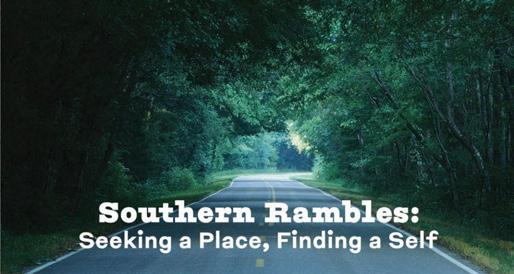
In “Southern Rambles: Seeking a Place, Finding a Self,” John Hayes chronicles interrelated journeys—a series of road trips over twenty-five years, a search for a South, and a stumbling into racial self-awareness. It begins with Hayes curious about something other than the Atlanta of his upbringing, especially as the city presented itself in the 1996 Olympics, and deciding to hit the backroads the following summer with a close friend, looking for the strange world they’d encountered in the fiction of Flannery O’Connor. The author’s professional training as a historian contextualizes this first journey and subsequent ones, describing the post–civil rights South as marked by insulated whiteness. It then returns to personal narrative, narrating how the journeys themselves, the openness to strangers and serendipity, came to a head one morning in the summer of 2018 in a vivid encounter in Selma’s Live Oak Cemetery. What Hayes saw, and his own inextricable positionality as a white man in it, is framed in the categories of Kierkegaardian philosophy: a journey of self-awareness, from
aesthetic curiosity to ethical commitment to religious implication.
John Hayes is an associate professor of history at Augusta University. He has a BA in philosophy and religion from Wake Forest University, an MA in theological studies from Duke Divinity School, and a PhD in history from the University of Georgia. He is the author of Hard, Hard Religion: Interracial Faith in the Poor South and is at work on a second book, The People Revolted: Black Power and Black Rebellion in Augusta, Georgia, coauthored with Nefertiti Robinson. He is a self-described scalawag, photographer, restorer of an old farm, and rambler with purpose. Follow him on Instagram @truthdrifter.
Study the South is a peer-reviewed, multimedia, online journal, published and managed by the Center for the Study of Southern Culture at the University of Mississippi. Founded in 2014, Study the South (www.StudytheSouth.com) exists to encourage interdisciplinary academic thought and discourse on the American South, particularly through the lenses of social justice, history,
anthropology, sociology, music, literature, documentary studies, gender studies, religion, geography, media studies, race studies, ethnicity, folklife, and visual art.
Study the South publishes a variety of works by institutionally affiliated and independent scholars. Like the Center for the Study of Southern Culture, Study the South embraces a diversity of media, including written essays with accompanying audio, video, and photography components; documentary photography; interviews with scholars and artists; video projects; and book reviews.
To submit work for consideration to Study the South, please email a completed manuscript as a Word document, along with any available illustrations, graphics, video, or audio, to editor James G. Thomas Jr. at jgthomas@olemiss.edu.
Final manuscripts and projects must attempt to build upon and expand the understanding of the American South in order to be considered for publication. Copyright for essays published in Study the South is retained by the authors.
Faulkner and Yoknapatawpha Conference
“Faulkner’s Bodies” • July 20–24, 2025
Faulkner and Yoknapatawpha is excited to report that we have another crowded slate of speakers and activities scheduled for this summer’s “Faulkner’s Bodies” conference, July 20–24, in Oxford. In addition to six keynote speakers, three teaching sessions, and a special rollout session for a new digital humanities resource spearheaded by University Museums and the Department of Archives and Special Collections at the J. D. Williams Library, the program will feature nearly fifty shorter talks delivered across sixteen sessions. As in previous years, the program, which includes participants from ten different countries, also includes film screenings, guided tours, a session for collectors, and meals on the grounds at Rowan Oak, the Faulkner residence.
This year’s keynoters are Aliyyah Abdur-Rahman (Brown
University), Lisa Hinrichsen (University of Arkansas), Maren Linnet (Purdue University), and Susan Scott Parrish (University of Michigan).
FAULKNER’S BODIES
Renowned photographer Sally Mann will deliver the fifth annual Ann J. Abadie Lecture in Southern Studies, and Ted Atkinson (Mississippi State University) will give the Library Lecture for 2025.
More information and a link to the registration portal and conference store can be found at the Faulkner and Yoknapatawpha website, www.outreach.olemiss. edu/events/faulkner. Contact Mary Leach, Division of Outreach and Continuing Education, at mleach@olemiss.edu for questions about conference registration and logistics. For other inquiries, contact Jay Watson, director, at jwatson@olemiss.edu.
Jay Watson
CONTRIBUTORS
Shiraz Ahmed is assistant professor of practice in documentary expression for the Southern Documentary Project.
Brett J. Bonner is the editor of Living Blues.
Rebecca Lauck Cleary is the Center’s communications specialist. She received a BA in journalism and an MA in Southern Studies, both from the University of Mississippi.
Jacob Fennell is a graduate of the Southern Studies MA program and a current PhD student in
the University of Mississippi’s Department of English.
Marvis Herring is a communications specialist for the University of Mississippi’s University Communications.
Brooks Lamb is the author of Love for the Land: Lessons from Farmers Who Persist in Place. He works with American Farmland Trust and teaches a class on agriculture and food at Rhodes College. A Memphis resident, he remains involved with his family’s farm in rural Tennessee.
Katie McKee is the director of the Center for the Study of Southern Culture and McMullan Professor of Southern Studies and English.
Alex Watson is a research and instruction librarian and associate professor at the University of Mississippi’s J. D. Williams Library.
Jay Watson is Howry Professor of Faulkner Studies and Professor of English at the University of Mississippi, where he has directed the Faulkner and Yoknapatawpha Conference since 2012.
Sally Mann to Give Ann J. Abadie Lecture at Faulkner Conference
One of America’s most renowned photographers presents the fifth annual Ann J. Abadie Lecture in Southern Studies as part of this summer’s Faulkner and Yoknapatawpha Conference.
Sally Mann, a large-format photographer known for her black-and-white photographs of the people and places around her, is also the author of the forthcoming Art Work: On the Creative Life (September 2025), her long-anticipated follow-up to her New York Times–bestselling memoir, Hold Still
Art Work offers a spellbinding mix of wild and illuminating stories, advice, and life lessons for artists and writers—or anyone interested in the creative path. It is a provocative exploration of creativity by one of America’s most original thinkers.
Mann graduated from the Putney School and attended Bennington College and Friends World College. She earned a BA and an MA from Hollins University and has received grants from the National Endowment for the Arts, the National Endowment for the Humanities, and the Guggenheim Foundation, and her photography is held by major institutions internationally. Her most recent accolades include the 2021 Prix Pictet, the global award in photography and sustainability for her series Blackwater (2008–12). In 2022 she was inducted into the American Academy of Arts and Sciences.

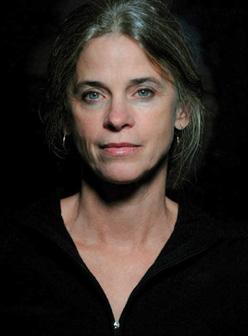
Mann’s lecture will be held in Nutt Auditorium and is set for Sunday, July 20. The lecture is free and open to the public. The Ann Abadie Lecture in Southern Studies
In
is a collaboration between the Center for the Study of Southern Culture and the Faulkner and Yoknapatawpha Conference as a tribute to Ann Abadie, associate director emerita of the Center and a longtime organizer of the Faulkner Conference. The overarching goal of the lecture is to add broad context to Faulkner’s world by connecting it to other writers, places, and movements.
Previous Abadie Lecturers include Natasha Trethewey, Percival Everett, E. Patrick Johnson, and Ron Rash.
Memoriam Pableaux Johnson (January 8, 1966–January 26, 2025)
Sally Mann
MICHELLE HOOD
The University of Mississippi Center for the Study of Southern Culture University, MS 38677
INCLUDE MAILING LABEL WHEN MAKING ADDRESS CHANGES.
Please help us reduce waste and postage costs. Complete this form and return it with your mailing label.
o Contact person changed o Name misspelled
o Address wrong o Received more than one
o Add my e-mail to your list o Delete me from your list
Friends of the Center
give us your correct information:
e-mail: cssc@olemiss.edu • www.southernstudies.olemiss.edu
Gifts to the Center for the Study of Southern Culture benefit teaching, publications, and outreach at the first interdisciplinary research center dedicated to investigating, documenting, interpreting, and teaching about the American South. Thank you for remembering us as you plan your charitable giving!
The Center’s Friends program provides essential general operating support for a number of Center endeavors. Visit southernstudies.olemiss.edu to learn more.
I/We would like to contribute $_________ to the Friends of the Center.
o Enclosed is my check. o Please charge my credit card. CREDIT CARD: o Visa o
Name (please print)
To make a gift online scan here. Not sure how to use a QR code? Open the camera on your smartphone and scan here. Yes, it’s that easy!
Please mail this form to: The University of Mississippi Foundation/CSSC • 406 University Ave., Oxford, MS 38655
www.southernstudies.olemiss.edu/Giving