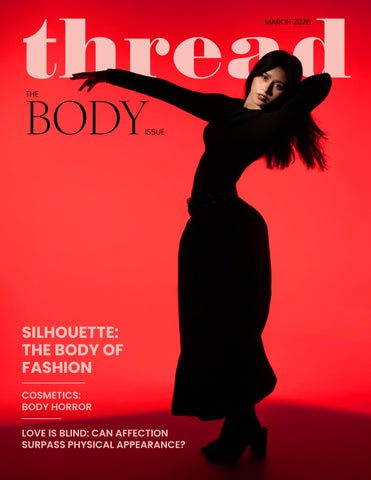
SILHOUETTE: THE BODY OF FASHION
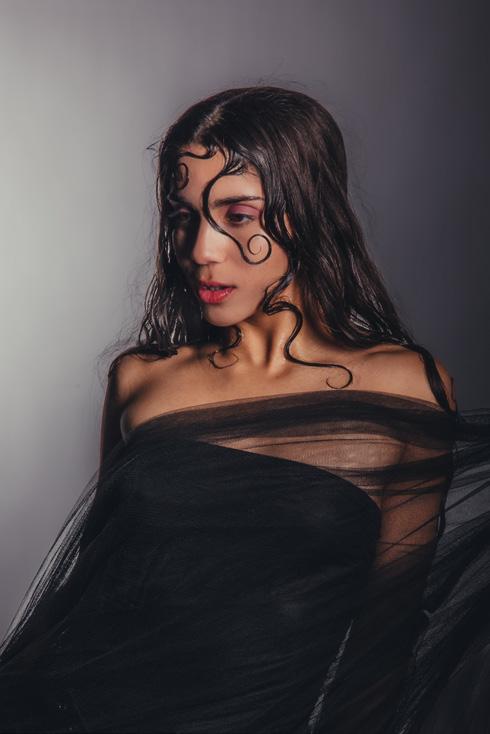
COSMETICS: BODY HORROR
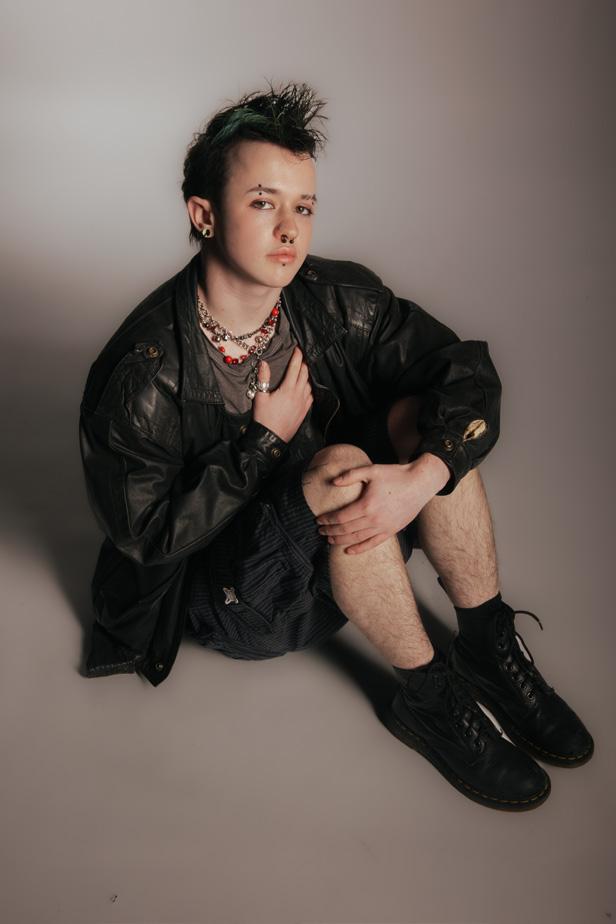
LOVE IS BLIND: CAN AFFECTION SURPASS PHYSICAL APPEARANCE?
COSMETICS: BODY HORROR
LOVE IS BLIND: CAN AFFECTION SURPASS PHYSICAL APPEARANCE?
FRONT OF BOOK
#04 Haute Online
#08 Top 5
#12 Editor’s Note
#13 Masthead
#14 Executive Board
#18 Runway Realway: Emelie Jenrell F/W 2017
#20 Runway Realway: Alexander McQueen S/S 2024
#22 Ilona Maher
#24 Jackie Chan
#26 Piercings
#28 Tattoos
#30 Body Horror
#32 Emily Ratajkowski
#34 Luca Guadagnino
WHO, WHAT, WEAR #38 Sustaining Bodies
MIDDLE OF THE BOOK
#46 Disproportion
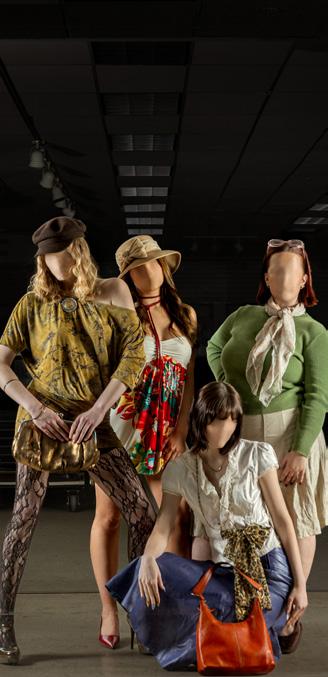
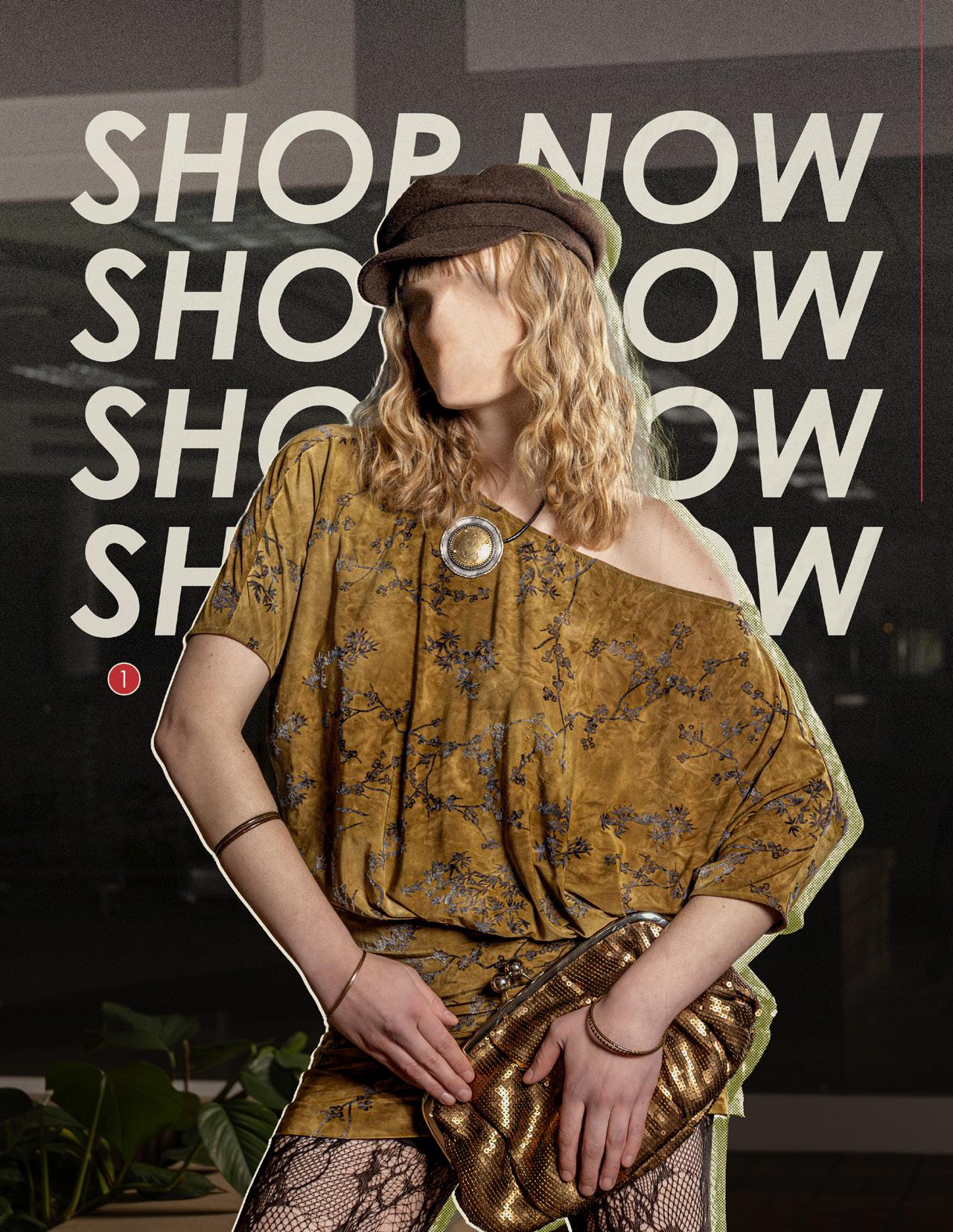
#58 Mannequin
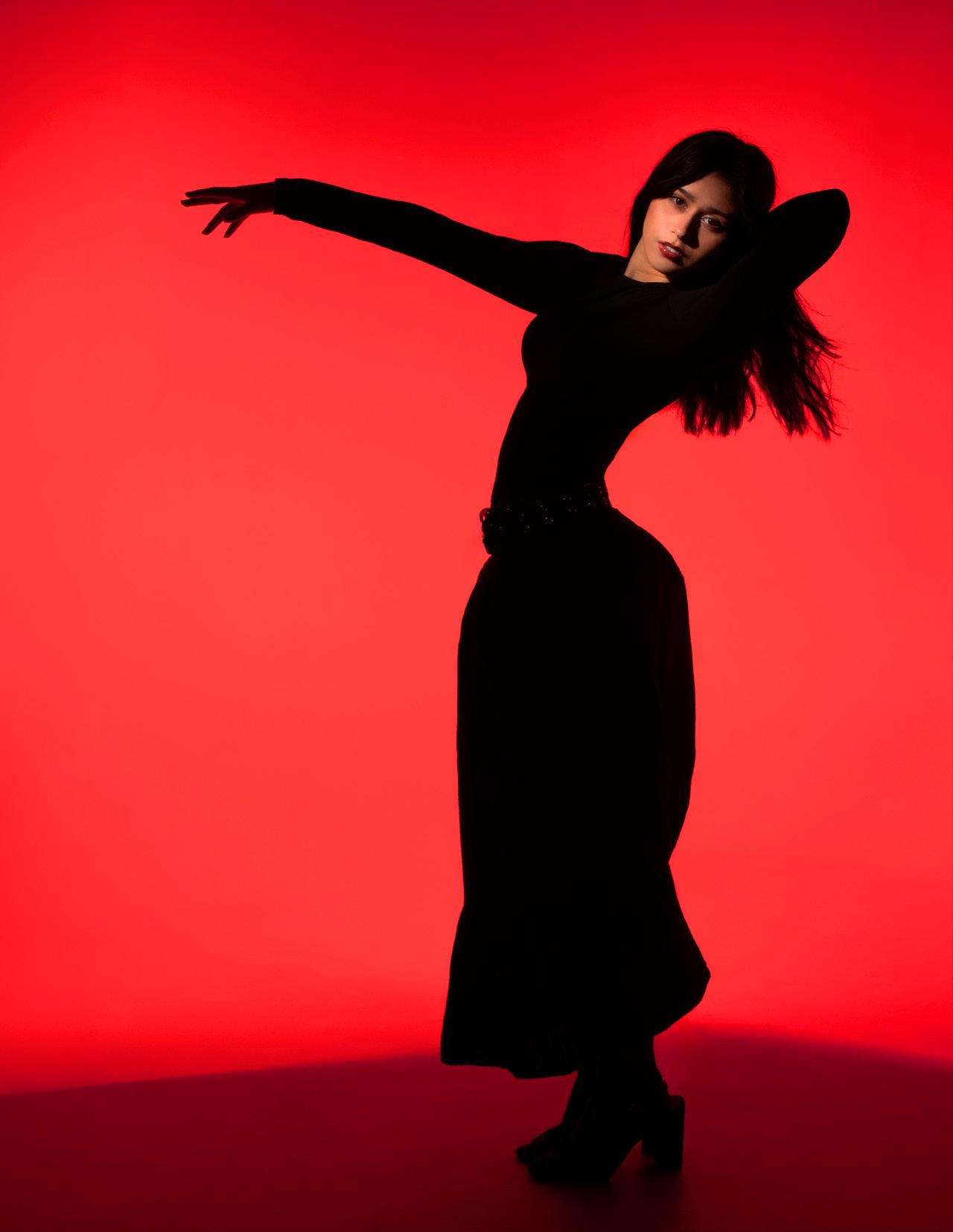
#70 Silhouette
#82 Puppetry
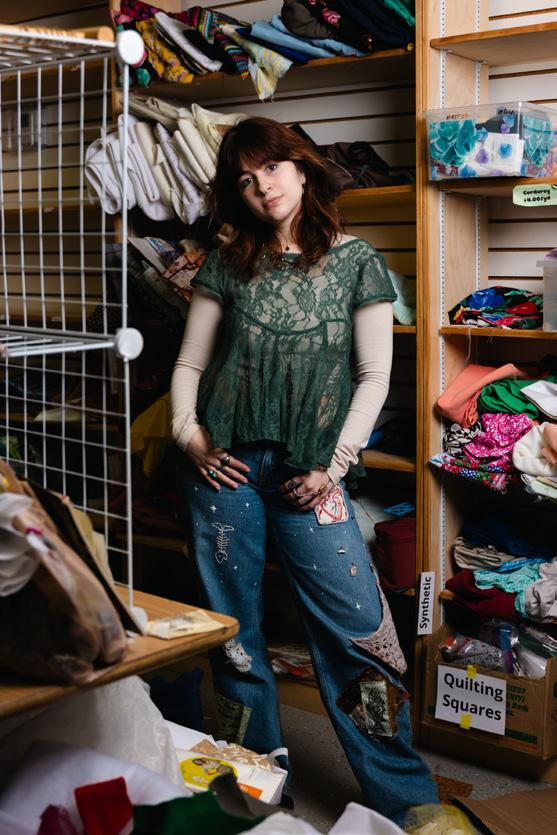
#102 Singing Men of Ohio
#104 Quiz: Which Body System Are You?
#106 ASL Club
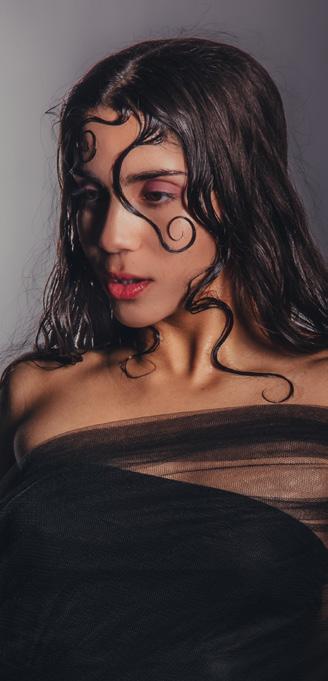
BACK OF THE CLOSET
#122 Athens Marathon
#124 Performance Art
#126 Body Horror Films
#128 Motherhood in Media
#94 Looks We Like: Skin, Heart, and Hair
#108 Unhealthy Health and Wellness Culture
#112 Is Athens Accessible?
#116 Is Love Blind?
#130 IGF: Local Tailor
#132 Rant/Rave: Nude Photography
Looking for a new internet obsession? Whether you want to listen to podcasts or watch some videos, we’ve got you covered virtually.
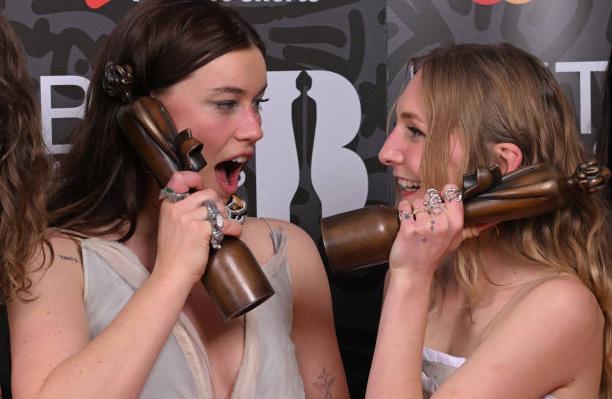
Wet Leg, an English indie rock band, was formed on the Isle of Wight by lead singer Rhian Teasdale and guitarist Hester Chambers in 2019. This quirky punk band released their first self-titled album in 2022, Wet Leg. This record pushed them into stardom with their hit single in 2021, “Chaise Longue”. This song lured listeners in with odd lyrics and an addictive guitar riff. This success led to winning Best New Artist, Best Alternative Music Album, and Best Alternative Music Performance at the 65th Grammy Awards. The band also won Best New Artist and Best British Group at the Brit Awards, as well as going gold on their hit single and debut album. Their second release and most recent is their album “Moisturizer,” which was
released in 2025 and debuted at number one on the UK Albums Chart.
Wet Leg, known for their sharp guitar hooks, deadpan humor, and punchy lyrics, writes songs about love, life, and anxieties. They use a blend of indie and rock to form their off-kilter sound and have recently expanded their range on their newest album. Whether in interviews, live performances, or visual art, Wet Leg’s personality produces a fun, vulnerable, and creative boldness in their music, which ignites and continues the conversation around them within the music industry.
-BELLA BOLIN
The first half of the fourth season of “Bridgerton” recently dropped on Netflix, and while I despise the split-season releases, I definitely do not despise these first four episodes. If you haven’t tuned in to “Bridgerton” yet, it’s a Netflix historical romance show that follows a new couple every season. The leads of season four are Benedict and Sophie, and their storyline is somewhat of a Cinderella retelling, which I am a sucker for. Benedict is the second-oldest in his family of eight kids and the second son, meaning he doesn’t have the responsibility of being the head of the household like his older brother, Anthony. As a result, Benedict is rebellious and doesn’t intend to settle down any time soon. He is very content to mess around and party until he meets Sophie at the masquerade ball, and he can’t stop thinking about her. Just like the classic Cinderella plot, she leaves at midnight without giving her name, and he has to search for her with just an accessory (in this case, a glove). Sophie is under the care of her evil stepmother and stepsisters, who forced her to become a maid, and of course, Benedict can’t find her because he would never think it would be a maid whom he met at the ball. As the
season progresses, the two leads meet for real when Sophie is working, and Benedict ends up falling for her (again).
I’ve seen countless discussions online about how obvious it was that she was the same girl, and I understand he couldn’t recognize her for the sake of drama, but I definitely got a good laugh out of Benedict’s ignorance. Besides that, though, I thought the leads had great chemistry, their relationship progressed at a conventional pace, and the drama kept me thoroughly entertained. Overall, I was very intrigued by these first four episodes, and I’m excited to see how the whole season will compare to the others. I’m not sure it will ever top season two for me because Anthony and Kate were near perfect in my opinion. However, it’s already better than season three for me, and it could be on par with season one depending on how the last four episodes shape up. “Bridgerton” is definitely not everyone’s cup of tea, but if you like romance and historical dramas, then you might want to give this one a try.
- AVERY ST. GEORGE

With her only social media presence being YouTube, Ana Wallace Johnson has managed to gain nearly 100,000 subscribers and has curated a channel to highlight the importance of literature. She created her own channel four years ago and has been spreading her vibrant energy, eccentric style, and bookish knowledge since. She introduces her viewers to books from all genres, including literary fiction, non-fiction, historical fiction, fantasy, romance, sci-fi, poetry collections, plays, and more. As well as giving her viewer recommendations from authors of all different backgrounds, showcasing writers of diverse ethnicities, genders, and sexual orientations, and viewpoints. You name it, she has it. Johnson
also often gives back to her community by giving away books and hosting online book clubs. So, next time you need a book recommendation for yourself, your best friend, your dad, or your weird neighbor, head over to Ana’s channel.
- BOBBI CROSS

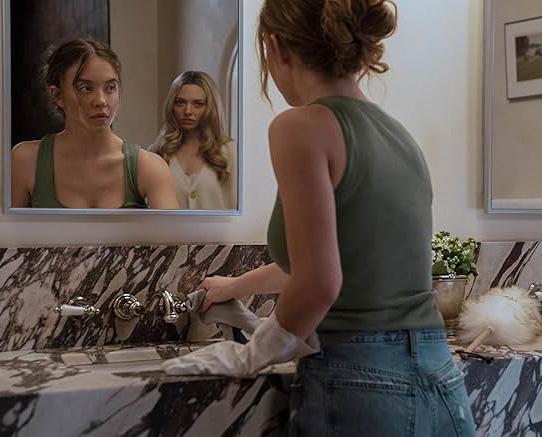
My most recent obsession has come from the movie “The Housemaid” that came out over break in theaters. I don’t know if the vibes were just really good the night I went to watch it with my friends, because I don’t think the film was particularly extraordinary, but I had such a great time, and I’m dying to see it again. Although I’m truly not the biggest fan of Sydney Sweeney because I think her acting is always the same, I thought the plot was exactly what I needed out of a movie to go see with my girls. Some good suspense, some crazy scenes, and overall, a movie I look forward to throwing on from time to time at a girl’s night or while eating dinner. This week, in order to patiently await the movie’s release on streaming
services, I have decided to read the book. Let’s just say I cracked it open 2 days ago, and I only have about 50 pages left to go. A good and easy read to break up some of the harder texts I have challenged myself with this semester. Overall, I would absolutely recommend this movie and book combo. It’s not a masterpiece, but it truly gets the job done. Crack open a bottle of wine, get some snacks, and enjoy!
- GABRIELLE CABANES
Find out the top five things that our exec board is inspired by right now.

“Who else got ‘em obsessed like JENNIE?” Jennie Kim is a global superstar who got her start in the K-Pop group Blackpink. Known by the stage name of Jennie Ruby Kim or mononymously Jennie, she was launched into the spotlight with the total success of Blackpink.
On March 7, 2025, Jennie released her first solo album titled “Ruby.” This album is a mixture of genres, including pop, rap, and R&B, and manages to have a sound that makes the album seem like a full unit together while also having the songs sound different enough. The lyricism also takes you through a story of growth and selfconfidence, making it a piece that everyone could enjoy listening to the whole album, or at least find a song they enjoy. “Mantra” and “With the IE (Way Up)” bring upbeat pop hits with fun and catchy lyrics to match. More R&B-centric songs like “Damn Right,” “Zen,” and “Love Hangover” deliver beautiful vocals and instrumentals while carrying passionate lyrics that bring out the emotions of the songs. “Like Jennie” and “ExtraL” showcase Jennie’s rap skills and add a dramatic flair to the overall album. “Ruby” also includes many features on the songs from artists like Dua Lipa, Dominic Fike, Doechii, Childish Gambino, and Kali Uchis — names that many are familiar with in the music industry.
In the end, “Ruby” is a phenomenal album that shows Jennie’s growth as an artist while also providing songs that touch on many different topics. Standing at 41 minutes long with 15 songs, “Ruby” is worth a listen for anyone who is looking for a new sound to take on the rest of the semester and summer with.
- MAX GRUHN
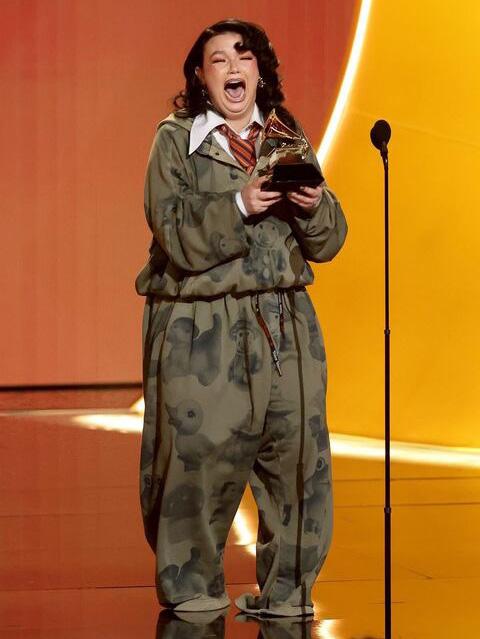
The age of being nonchalant is over. To me, there is nothing more inspiring and uplifting than seeing others excited about their accomplishments. Lola Young and Durand Bernarr at the Grammys are perfect examples of sharing their joy in this way. Both artists were overcome by excitement and emotion when they won their respective Grammys, running and shouting with joy all the way to the stage.
We should all be loud about the things that bring us joy! Accomplishments, victories, opportunities, milestones — whatever you’re proud of, shout it from the rooftops. There is so much negativity being fed to us on a daily basis, and I believe that enthusiasm for life’s wins — whether big or small — is what will get us through the tough times.
- HADLEY FAIN
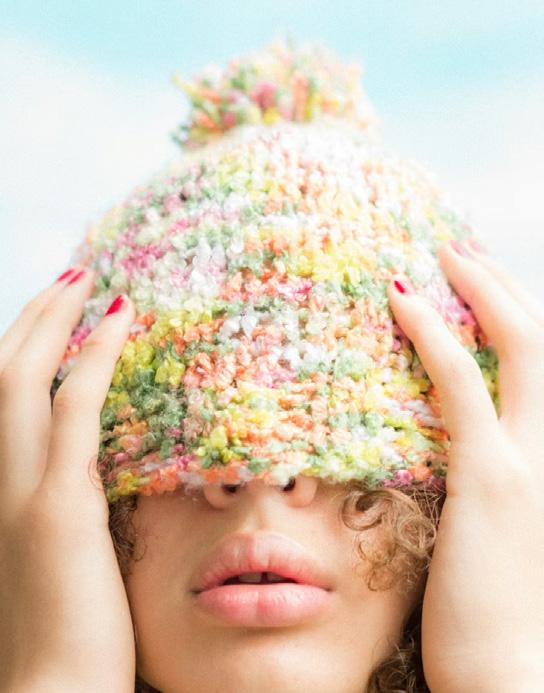
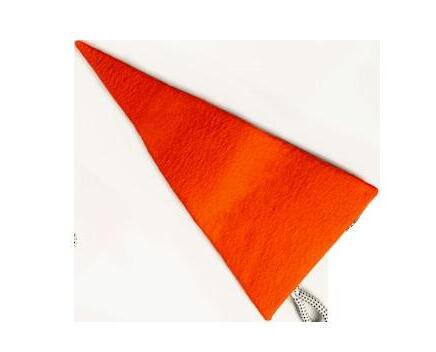
Ever since I learned how to crochet in 2020, I have mostly refrained from purchasing any hats, scarves, or other winter accessories in favor of making my own. This winter, I wear a triangle headscarf my friend knit for me nearly every single day. As someone who doesn’t like beanies, but whose ears become unbearably cold this time of year, I love a homemade headband, a balaclava, or a headscarf.
An abundance of patterns exists online for free, and they are typically all beginner-friendly. I have easily crocheted a scarf over an afternoon before; I get compliments every time I wear it, and I get to gleefully declare “I made it!” in reply. Making your own winter accessories kills two birds with one stone: engaging with a new hobby and keeping you warm during the cold season. It also makes you cooler than people who just buy their accessories from a retail store.
- ABBY JOYNER
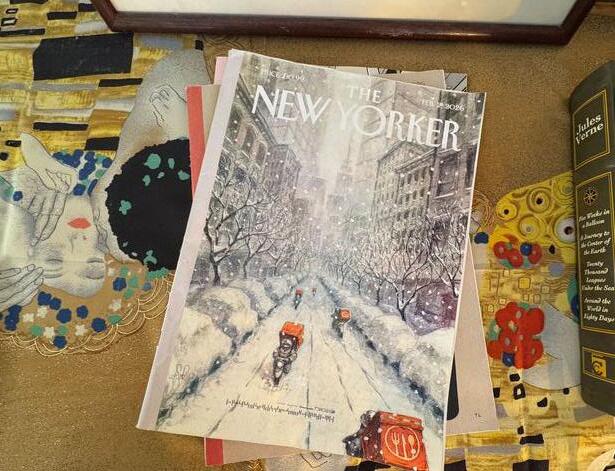
A couple of weeks ago, I pulled the trigger on a luxury that city-obsessed, childhood me could only dream of buying: The New Yorker magazine. My February issue currently sits on my nightstand, pages slightly crinkled and corners curled upward. The publication is a literary and journalistic institution. This is not a new opinion. However, I recently invested in a print subscription and am continuously surprised by the blips of joy, wisdom, and sheer captivation it brings to my daily life. From political cartoons and poetry to thoroughly researched journalism, The New Yorker’s coverage is neither forgiving nor weaponized — it feels like one of the lone journalistic voices that remains faithful without forgoing complexity.
While collecting analog or tactile media can often be unnecessarily glorified, I feel that print
magazine subscriptions improve my media consumption experience. Print copies contain tidbits, like brief movie reviews and timely cartoons, that I doubt I would find while endlessly scrolling on their app. Holding a polished issue feels simultaneously more intentional, more comprehensive, and less overwhelming than digital journalism. I find that I am more likely to finish lengthy stories without getting distracted by a notification. Also, The New Yorker does not waste its pages promoting products; if anything, I enjoy seeing the 2 to 3 ads for upcoming art exhibits. All of this, and more, for $1.50 per week (for digital and print access, plus a canvas tote). This is not an endorsement, but it is an admission that I am officially on the bandwagon.
- OLIVIA LEGGANS
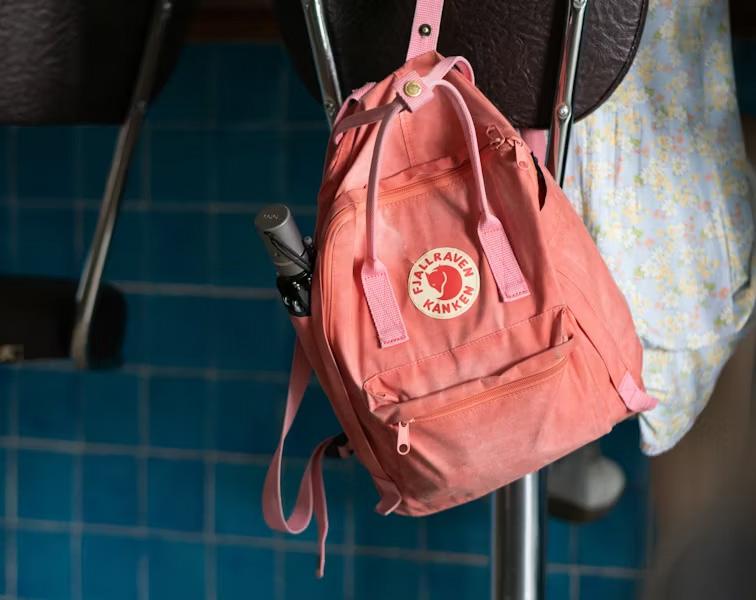
This semester abroad has been filled with booking flights and itinerary planning, and I’ve become more than familiar with budget airline and train policies. Although these small bag policies are definitely an attempt to grab extra profit from unsuspecting flyers and over-packers, I’ve found a lesson through packing, unpacking, and repacking my belongings into my light pink budget-airline-approved personal backpack.
My backpack has just enough space to roll up two pairs of pants, a set of pjs, socks, and a shirt or two alongside my toothbrush, mascara, passport, and some extra euros. This checklist is drastically smaller than what I previously thought was absolutely necessary. I have built countless outfits with the same black turtleneck, jeans, and belt, and my necklaces no longer rotate out.
Now, my single jacket has seen the curbs of Madrid street while I enjoyed chocolate churros with my friends, and my jeans have climbed up the 207 steps of Valencia’s El Micalet bell tower. I have collected sunglasses and rings while en route to castle tours, a reason to bring up where I have been and where I get to go. My fashion and clothes have always been a source of identity for me, and packing lighter and choosing less has allowed me to understand why clothes hold so much meaning and relevance.
- DISHA HOQUE
Hello everyone, and welcome back to our third issue of the year! For those of you who don’t know me, my name is Gabrielle Cabanes, and I am this year’s editorin-chief. It has been such a joy seeing this issue come to life in such an incredible way, and I am so happy it is finally here.
For our third issue, we tried to link different parts of the body, whether physical or psychological. While looking at these different aspects of the body, we focused our stories on topics we thought would best tie in. Whether it was our celebrity style piece on famous women’s rugby star Ilona Maher or a local in-depth feature on the accessibility around Athens, we found topics both on a local and national level. A special shoutout to our incredible features and BOC editor, Olivia Leggans, for pitching this issue theme. Your idea really came to life in a beautiful way, and we are so grateful.
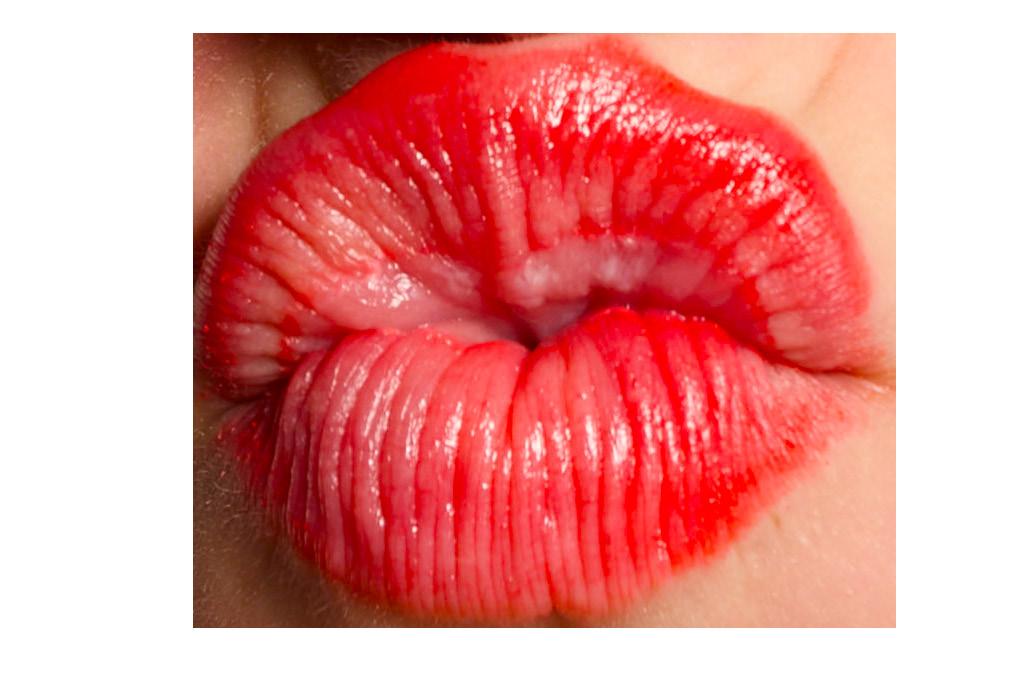
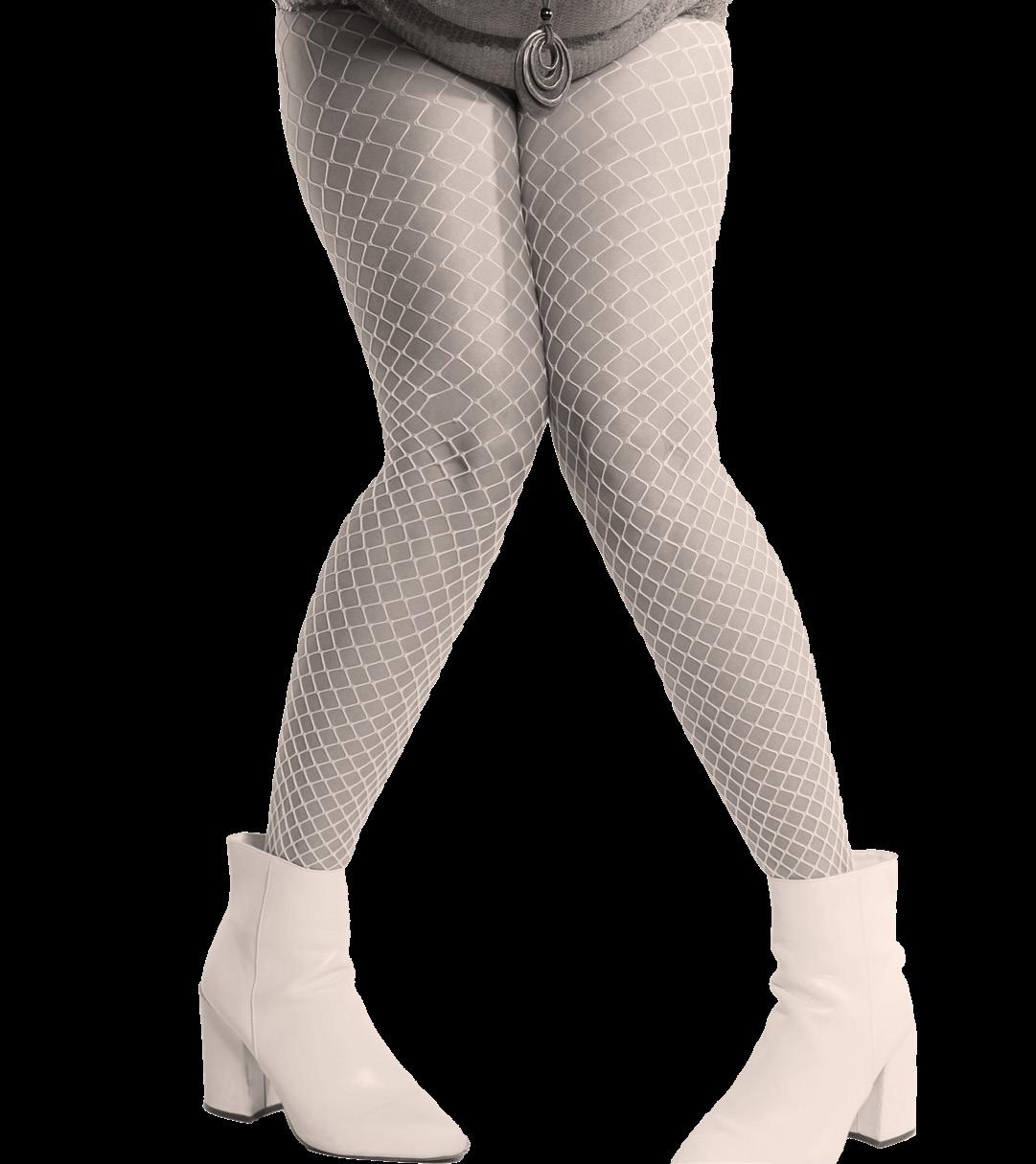
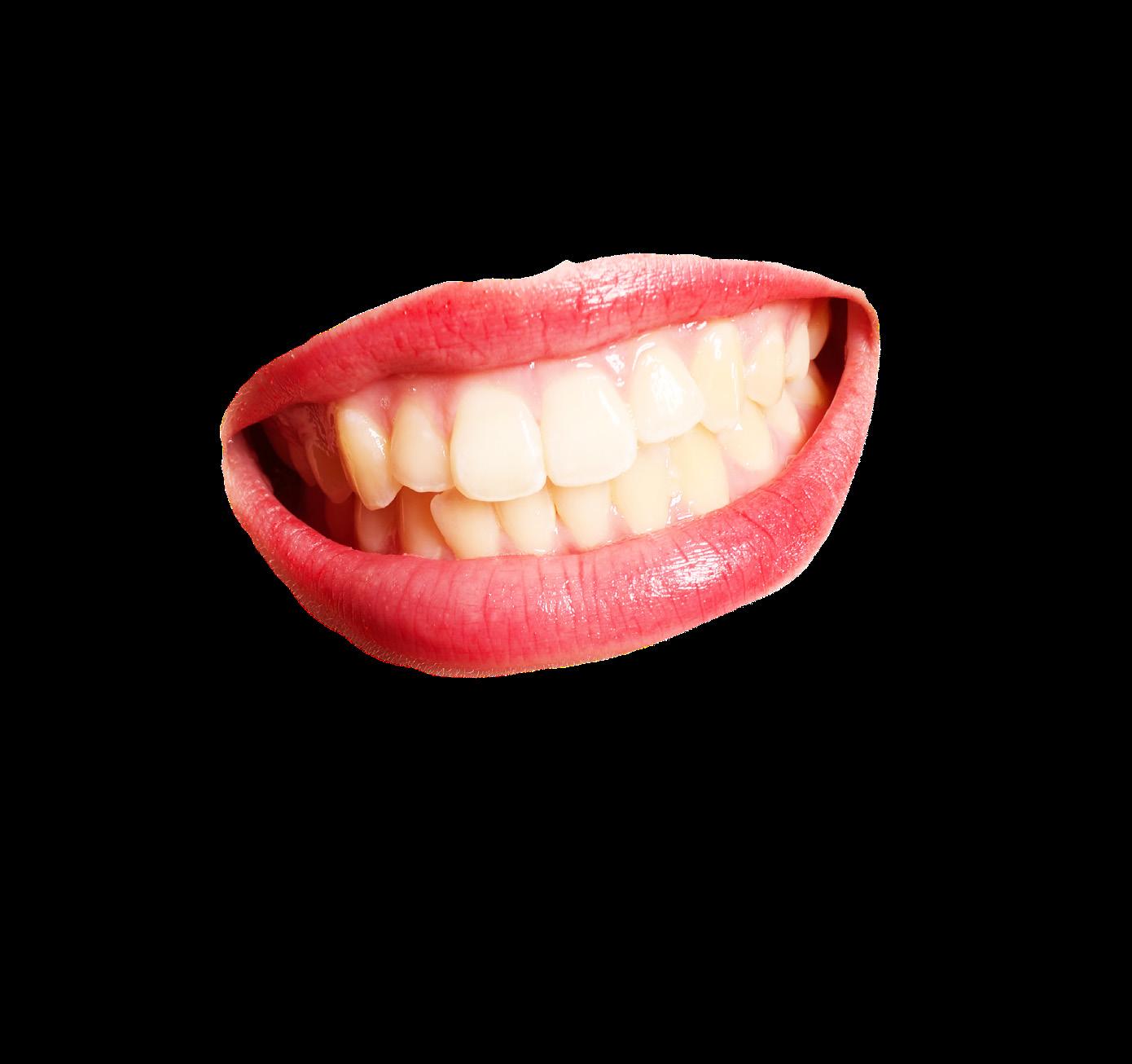
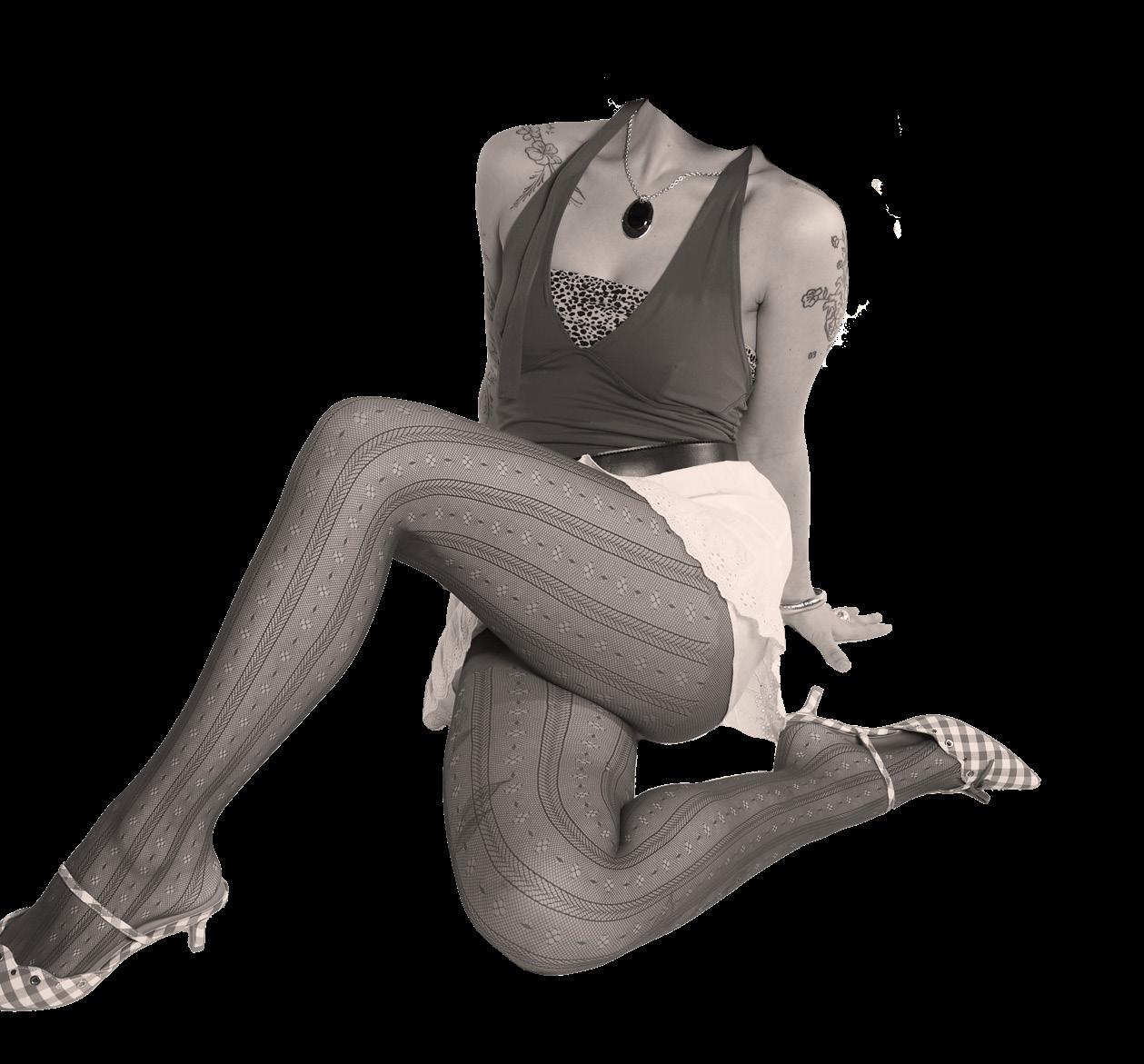
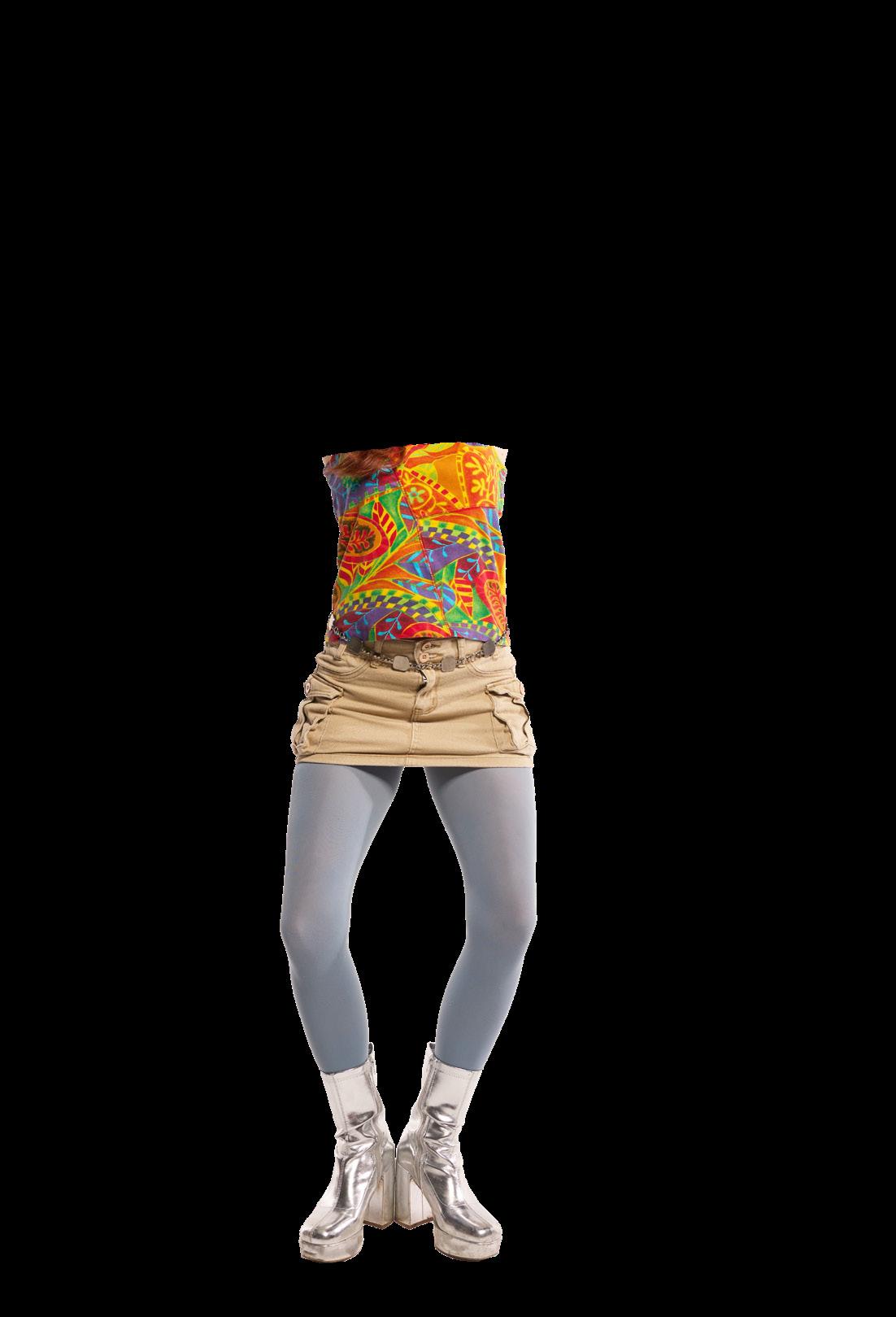
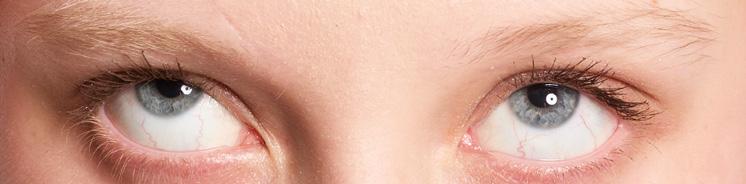
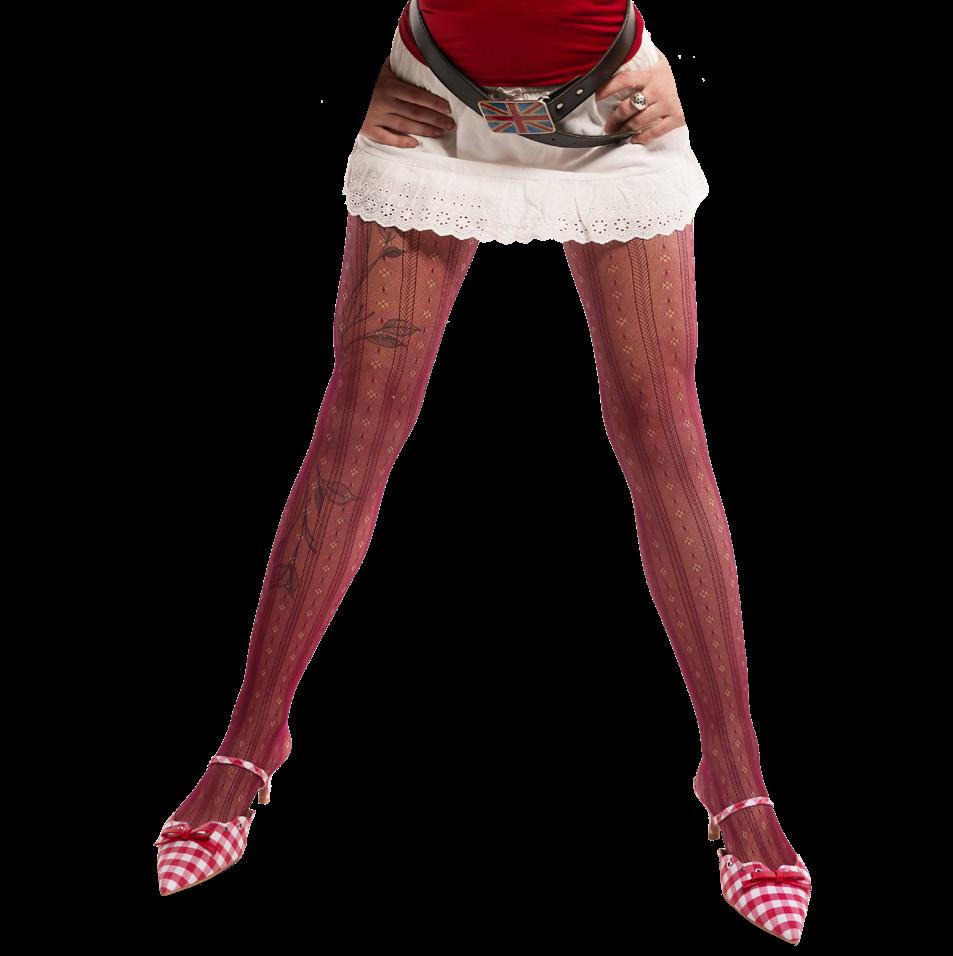
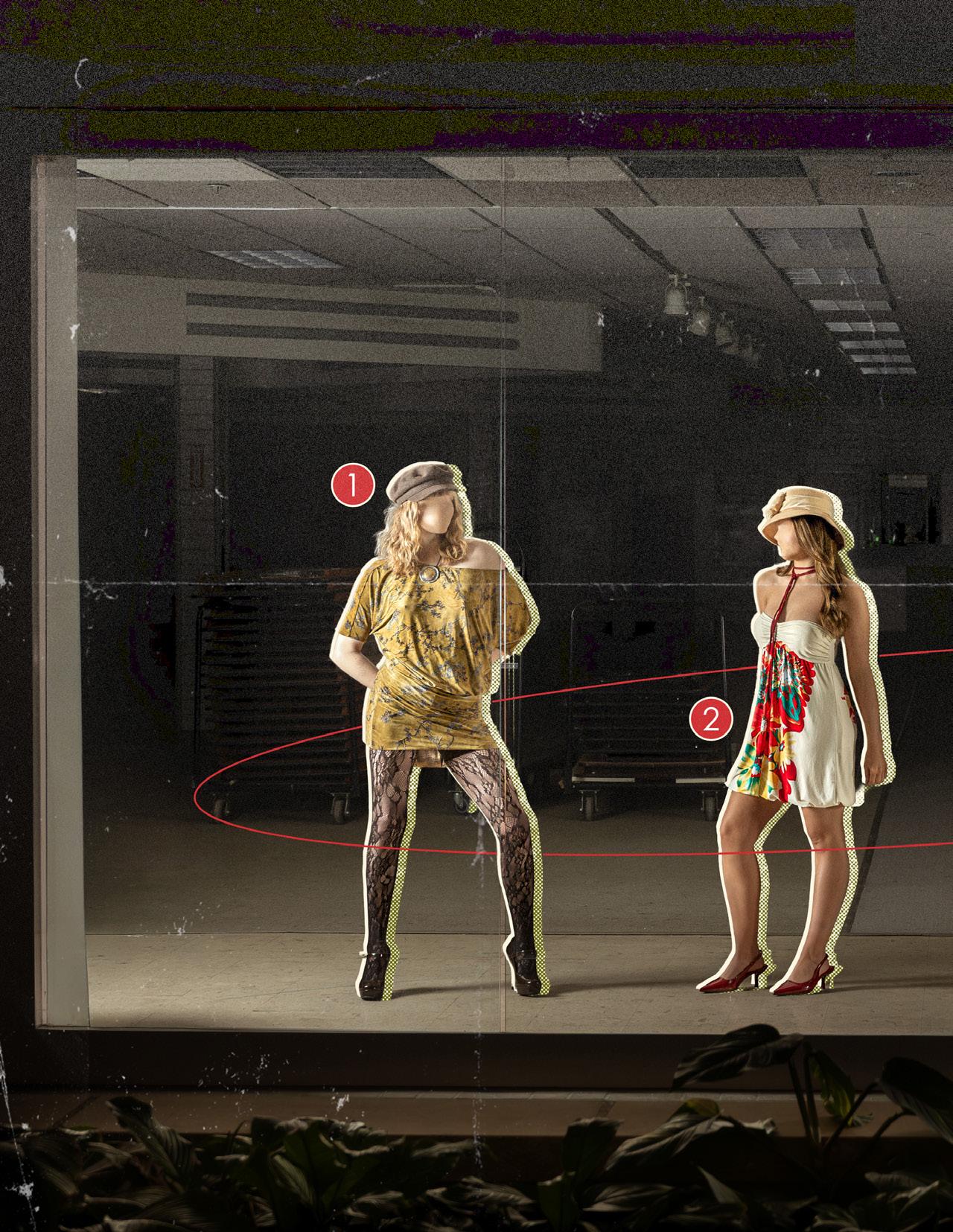
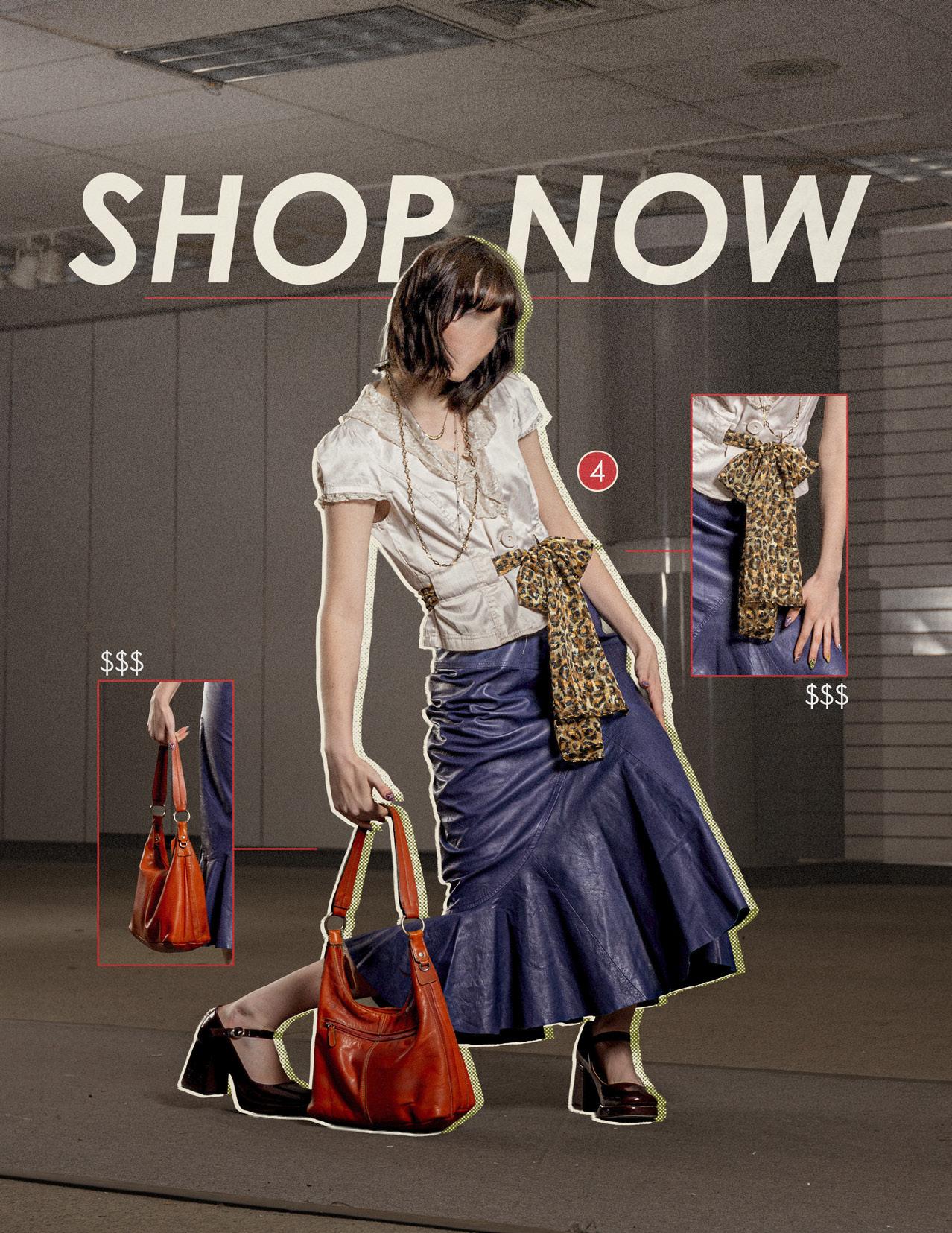
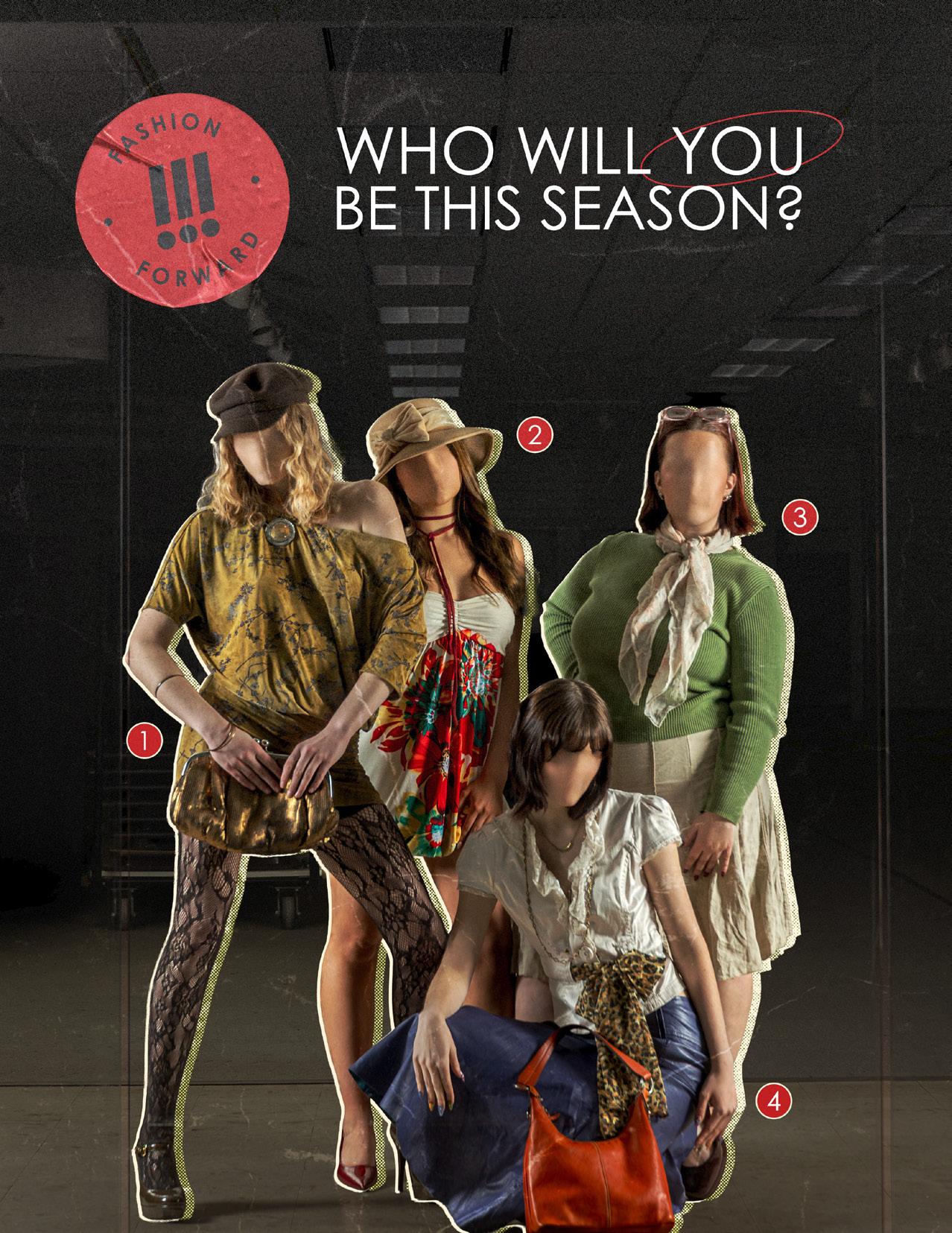
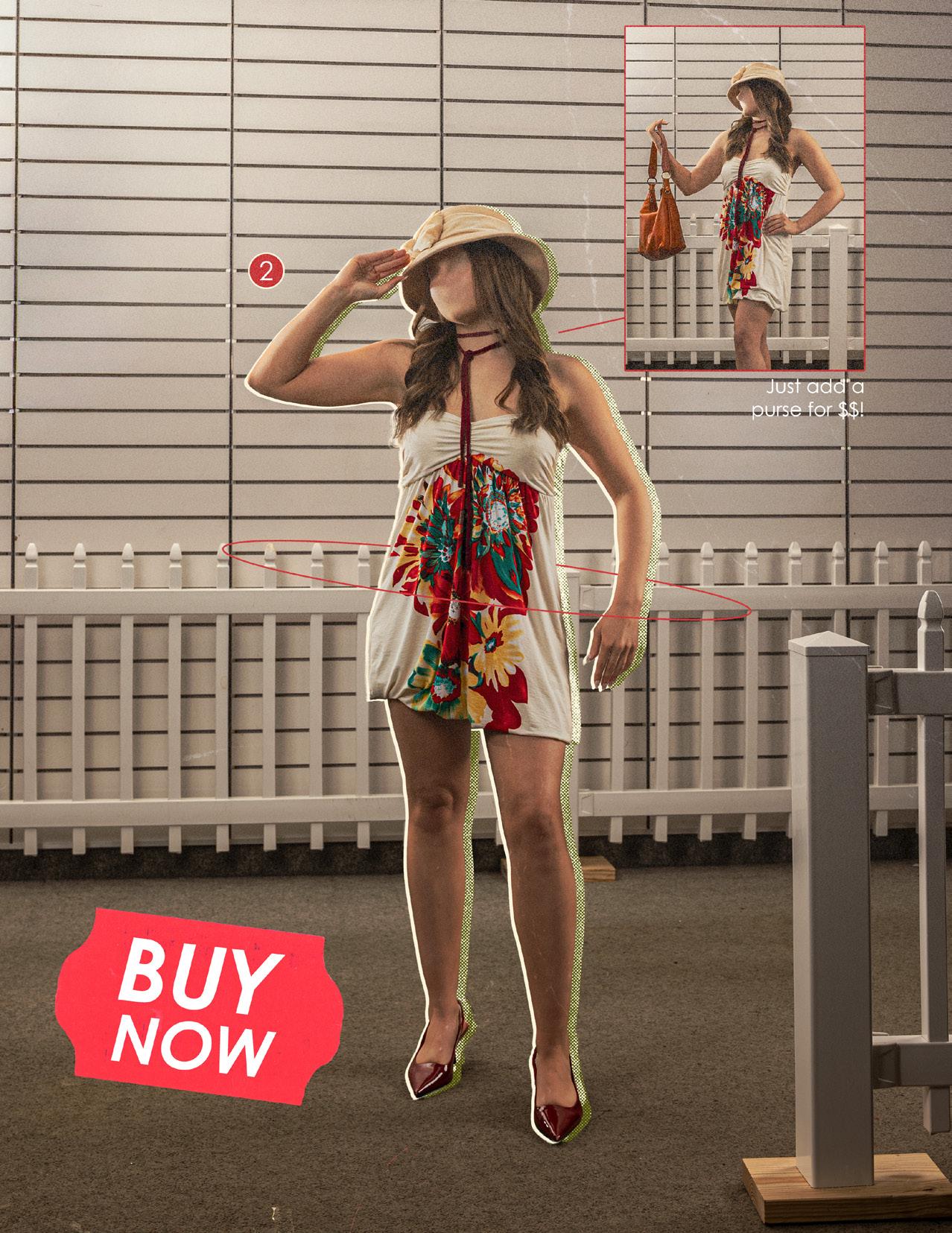
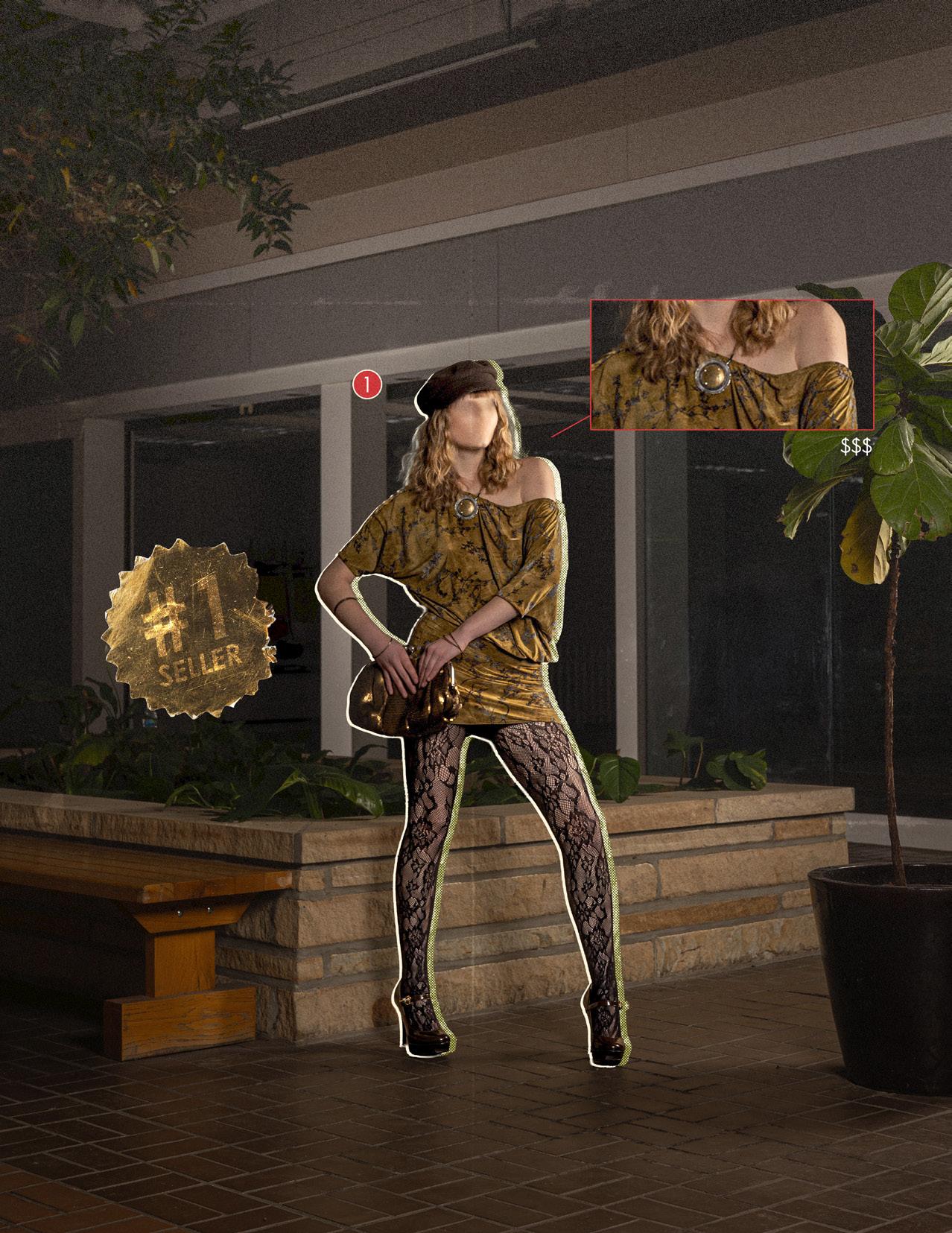
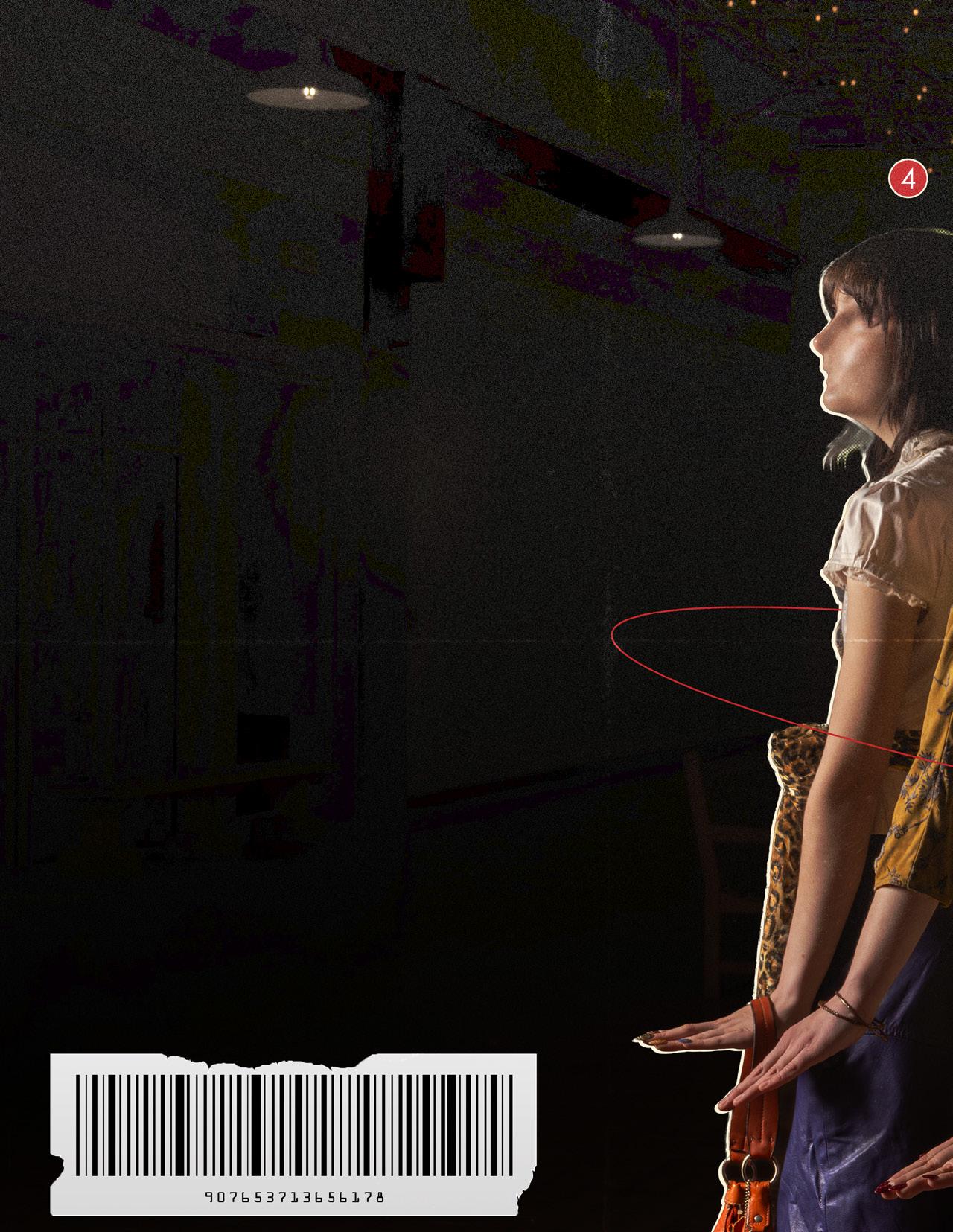
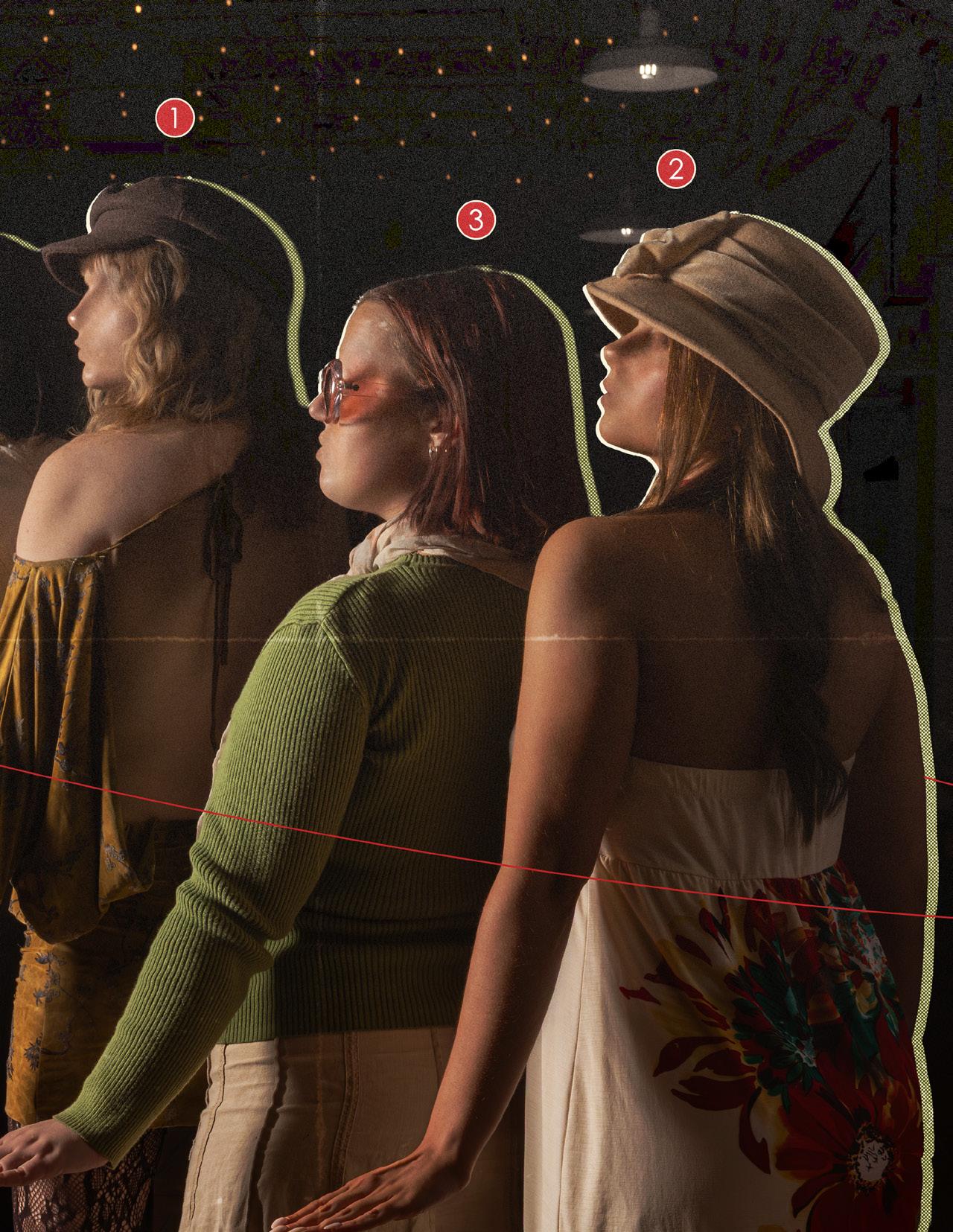
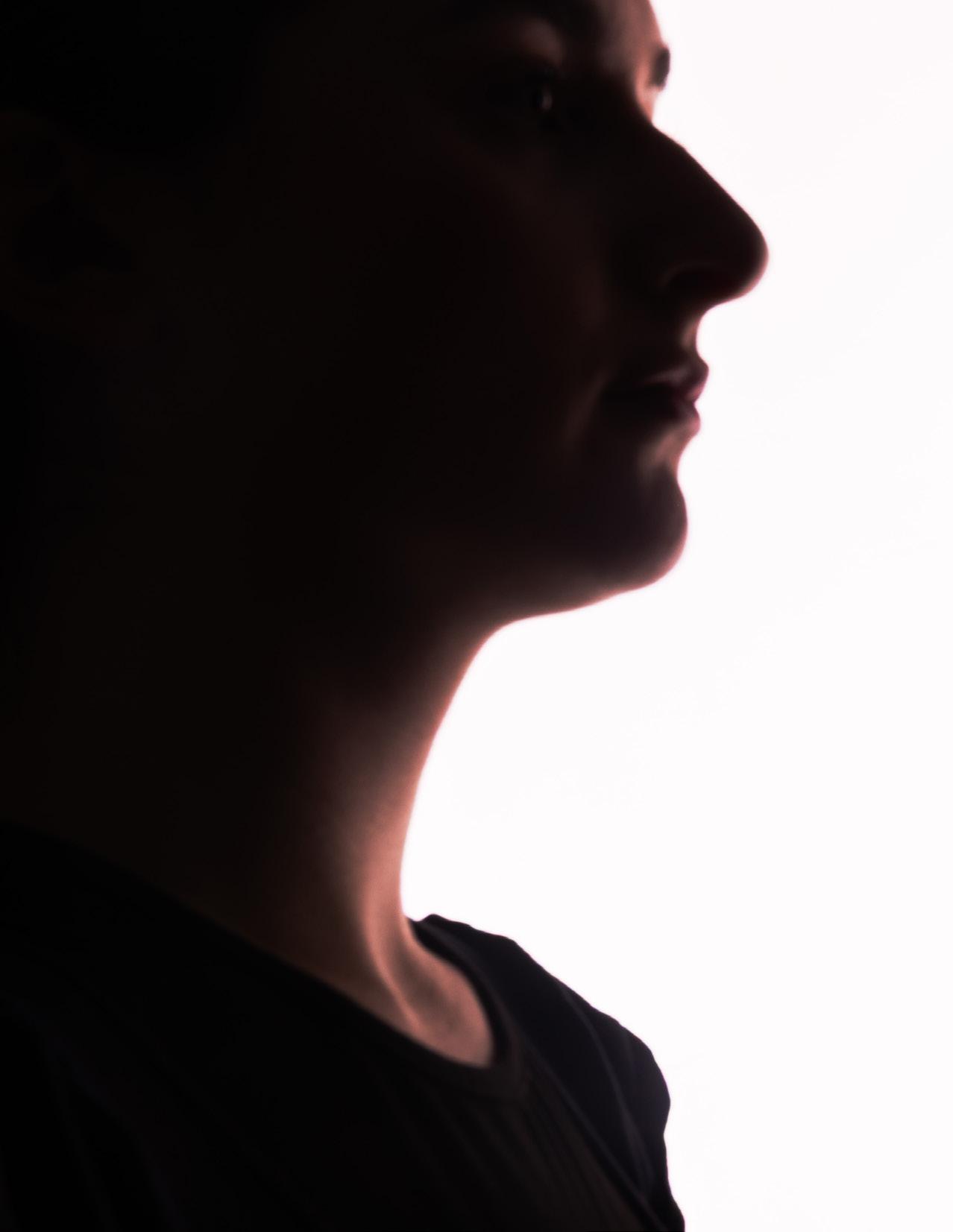
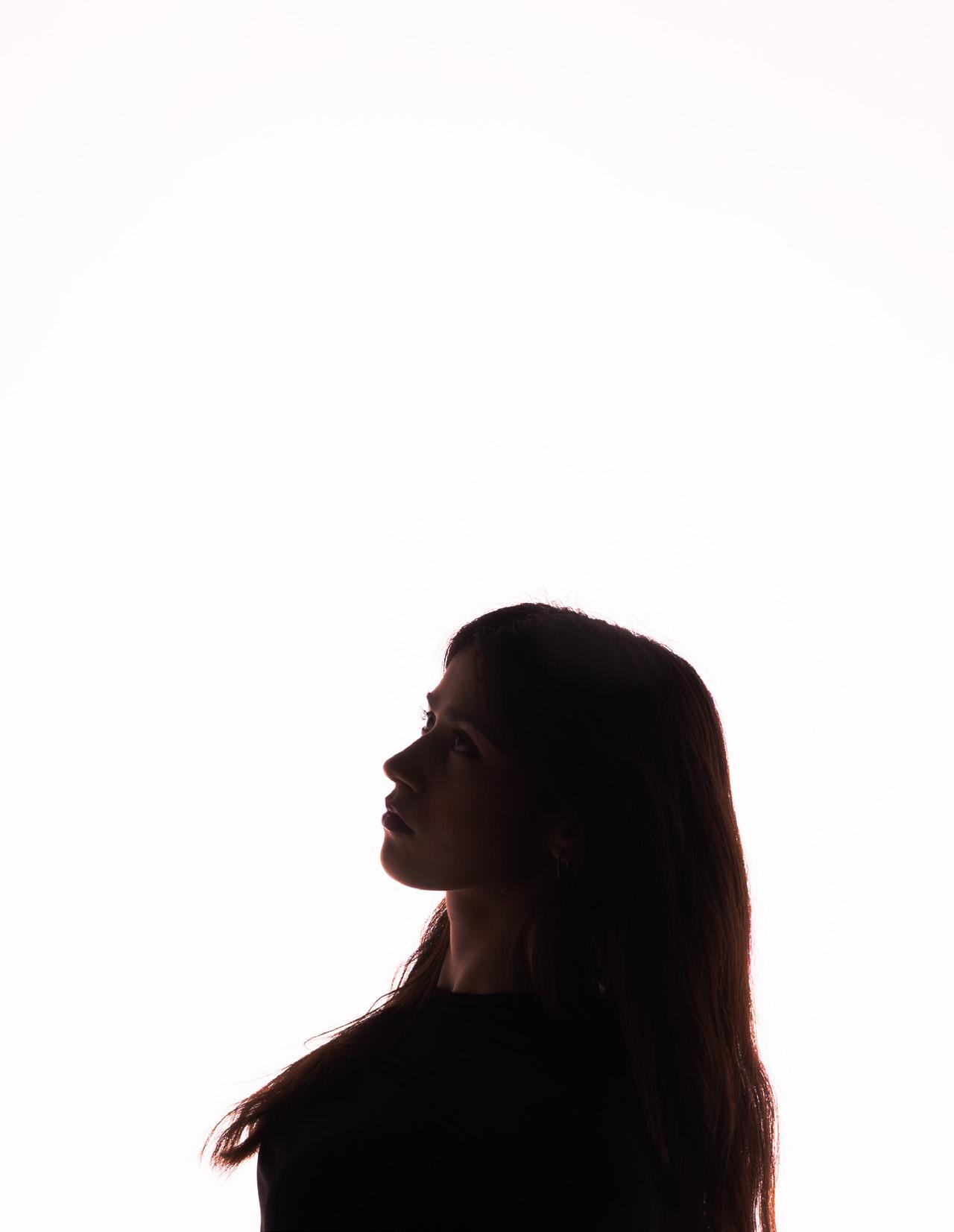
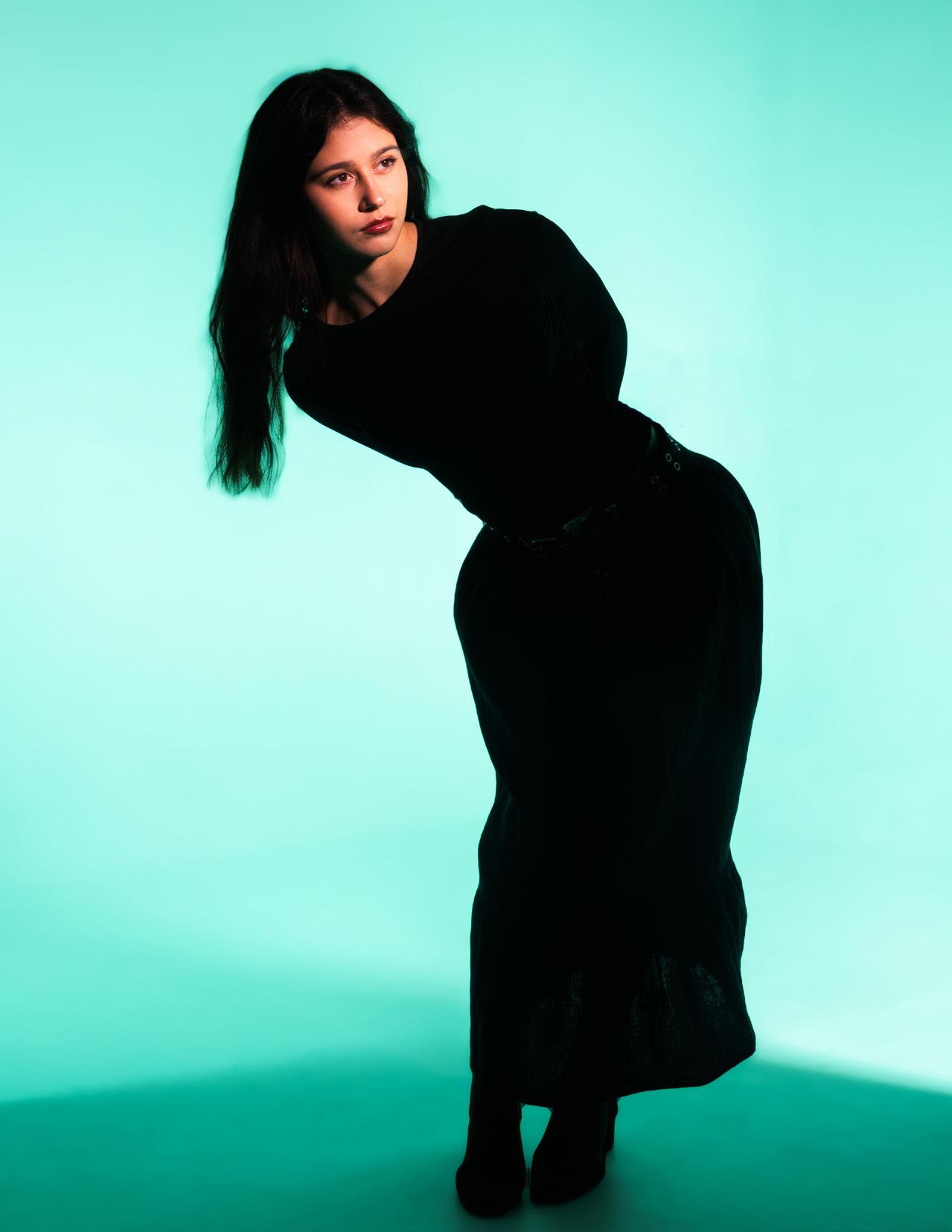
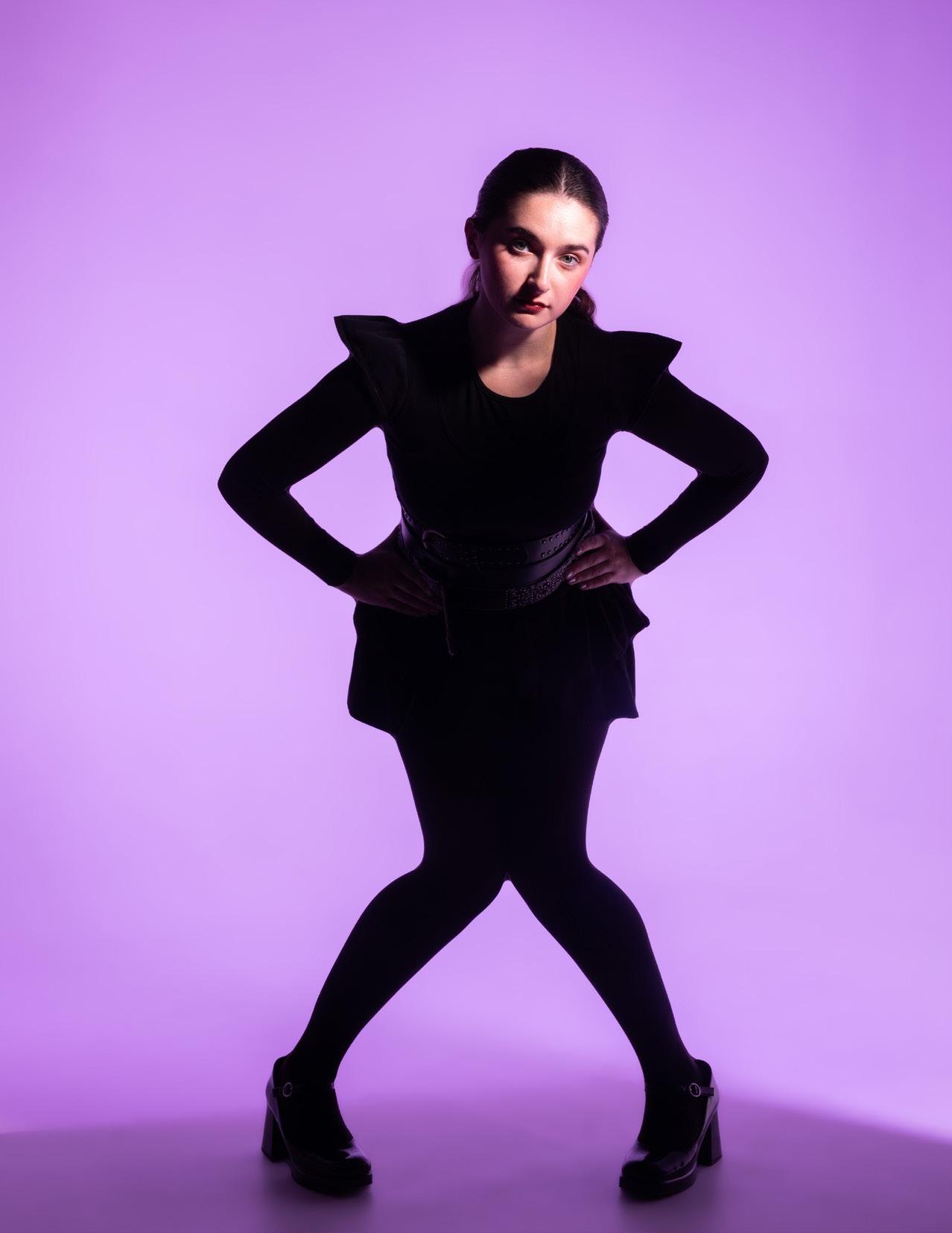
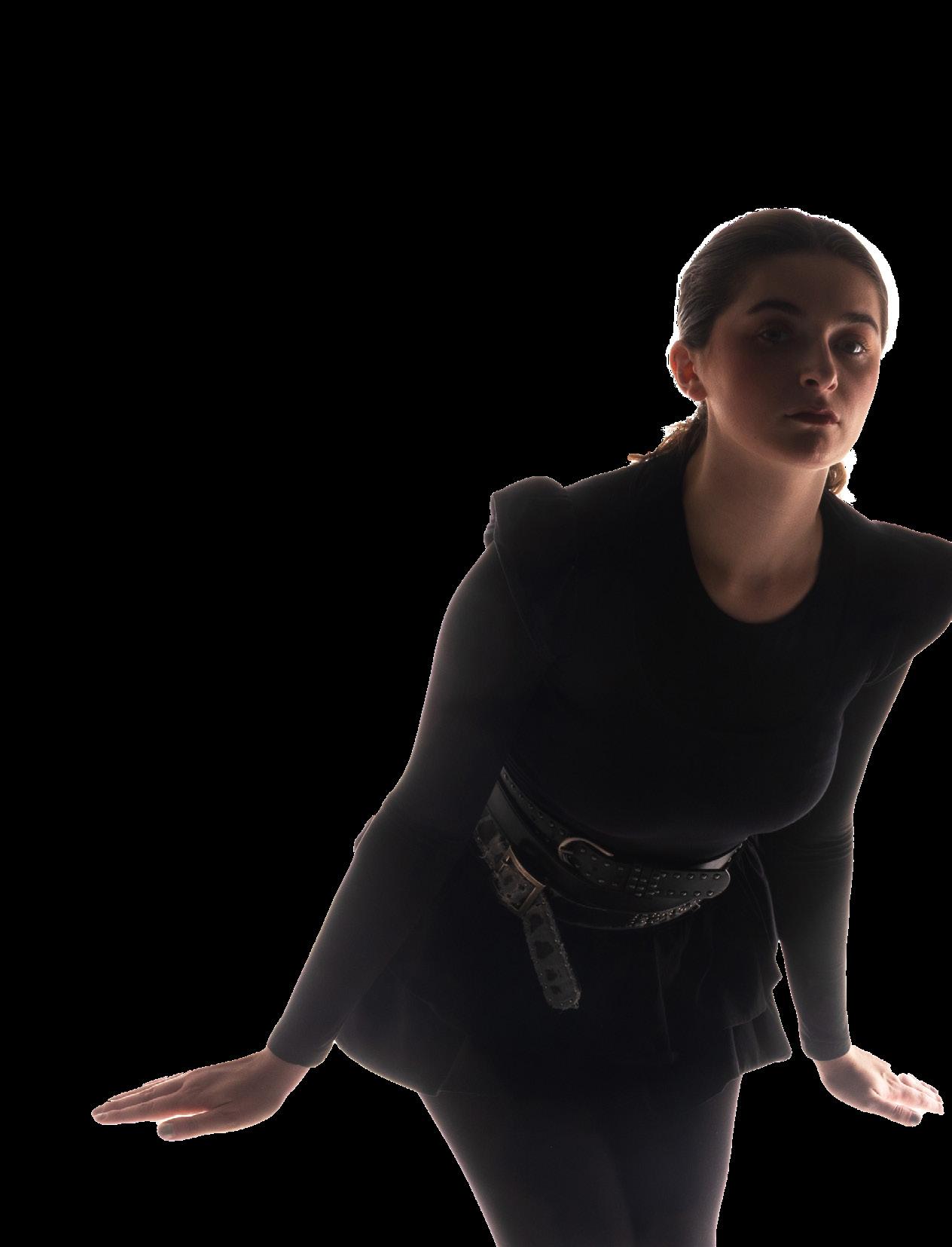
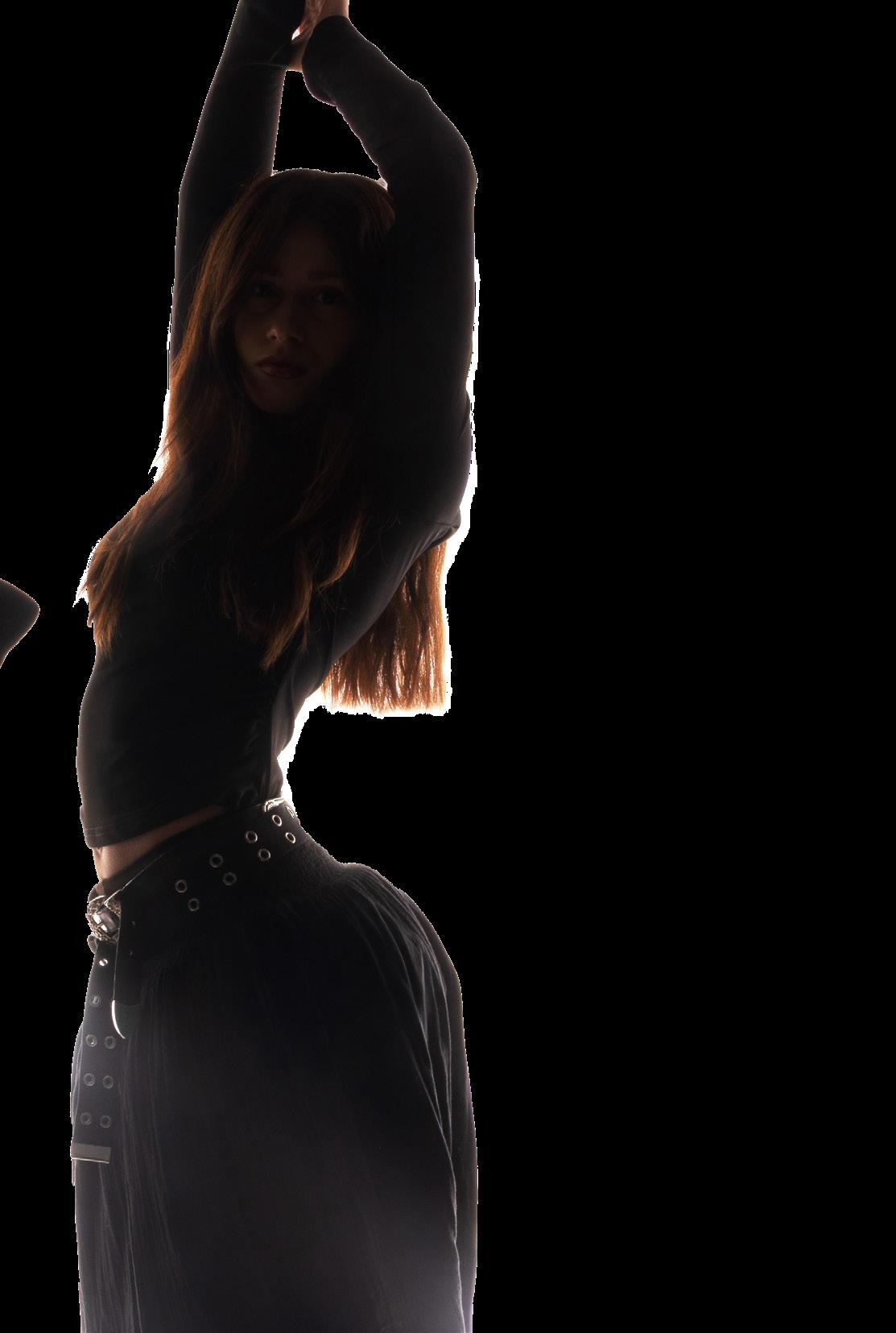
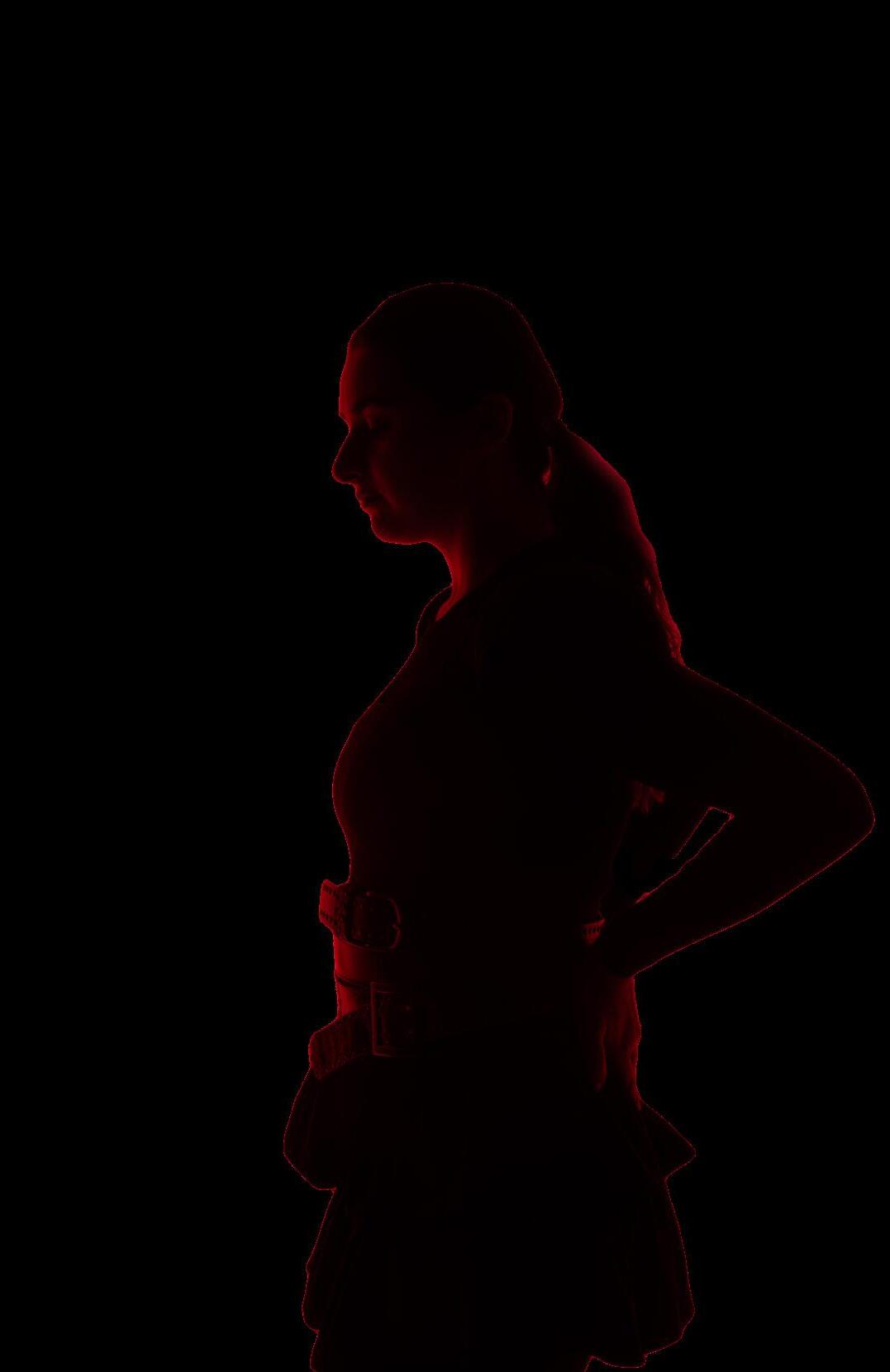
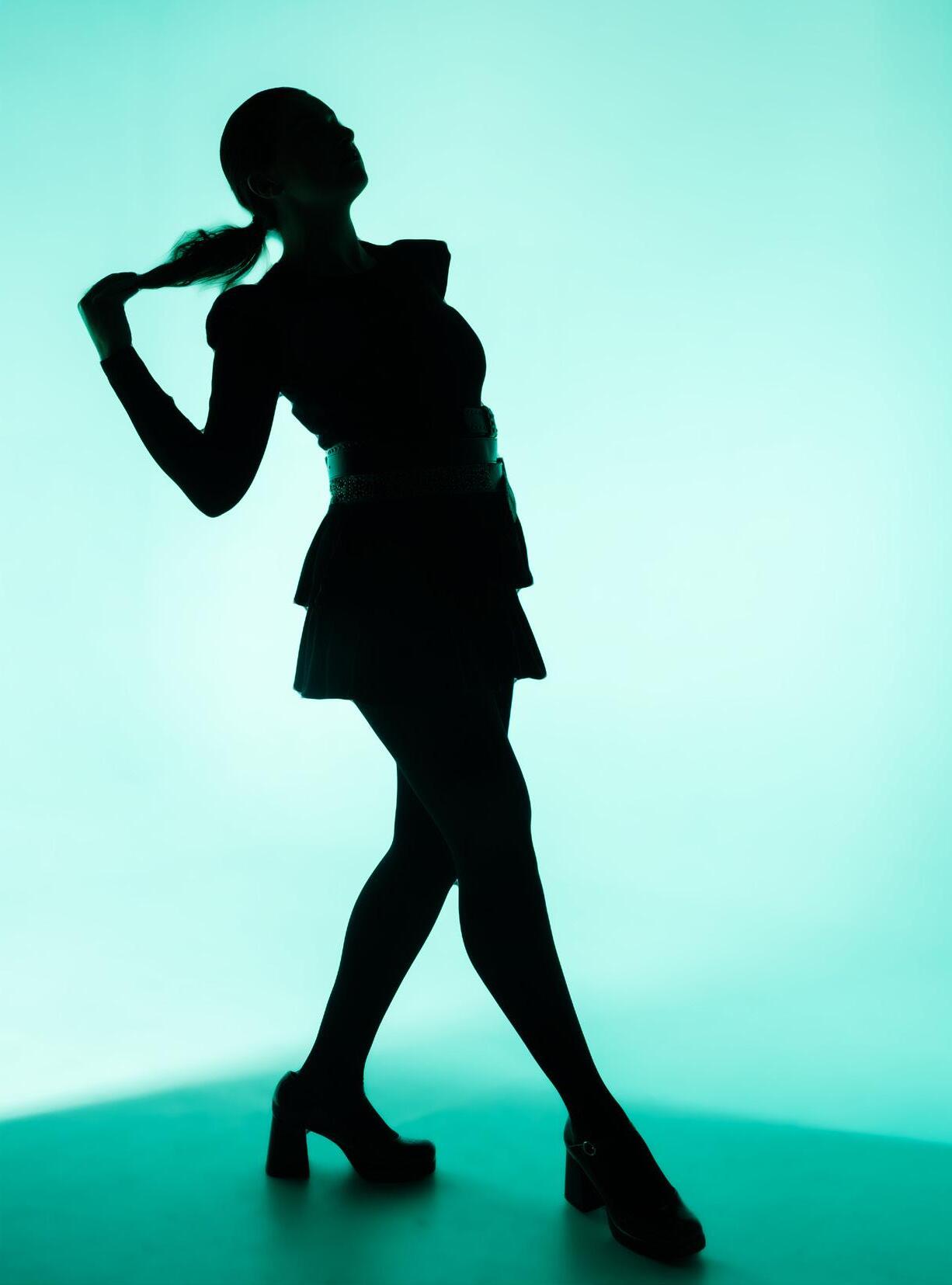
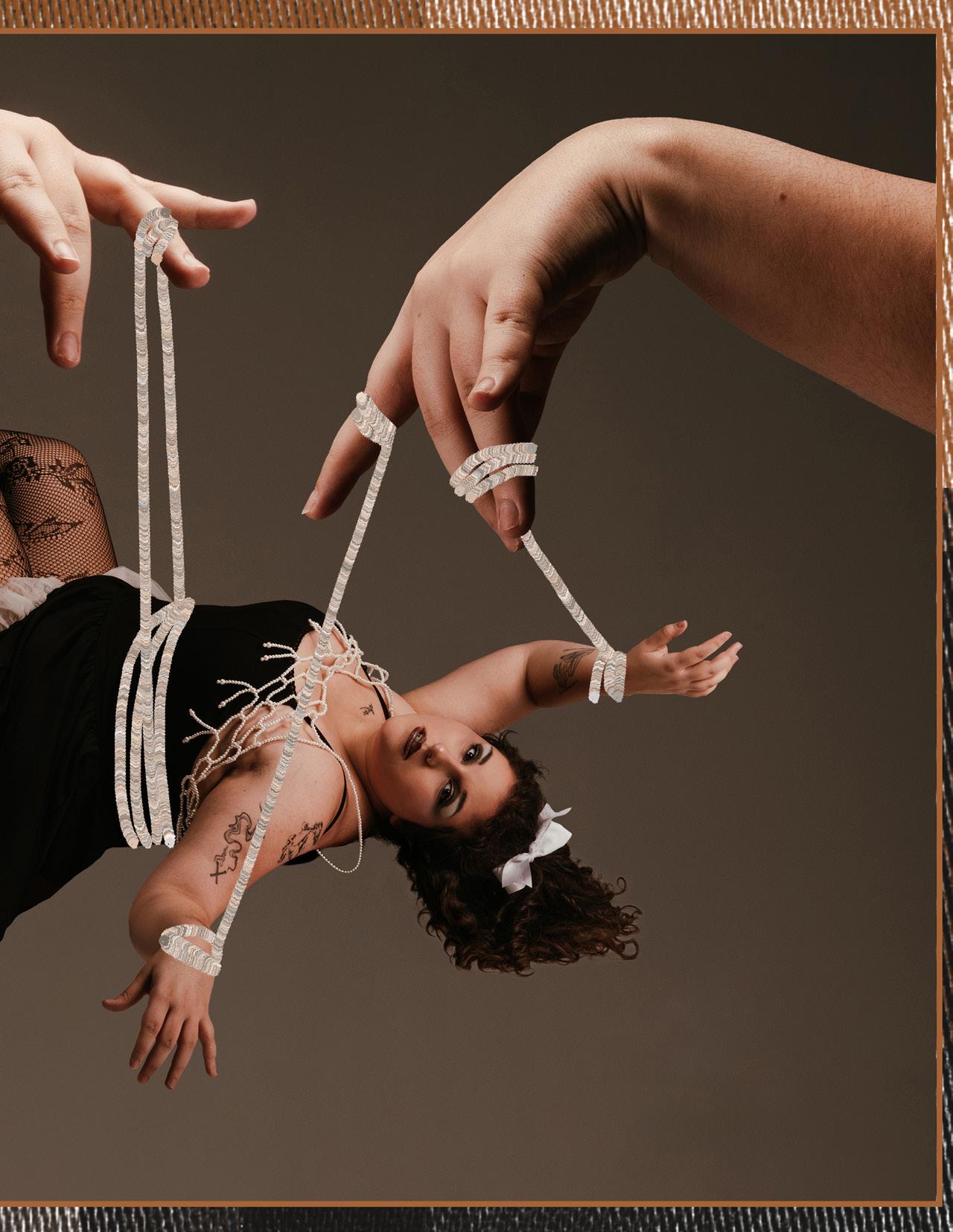
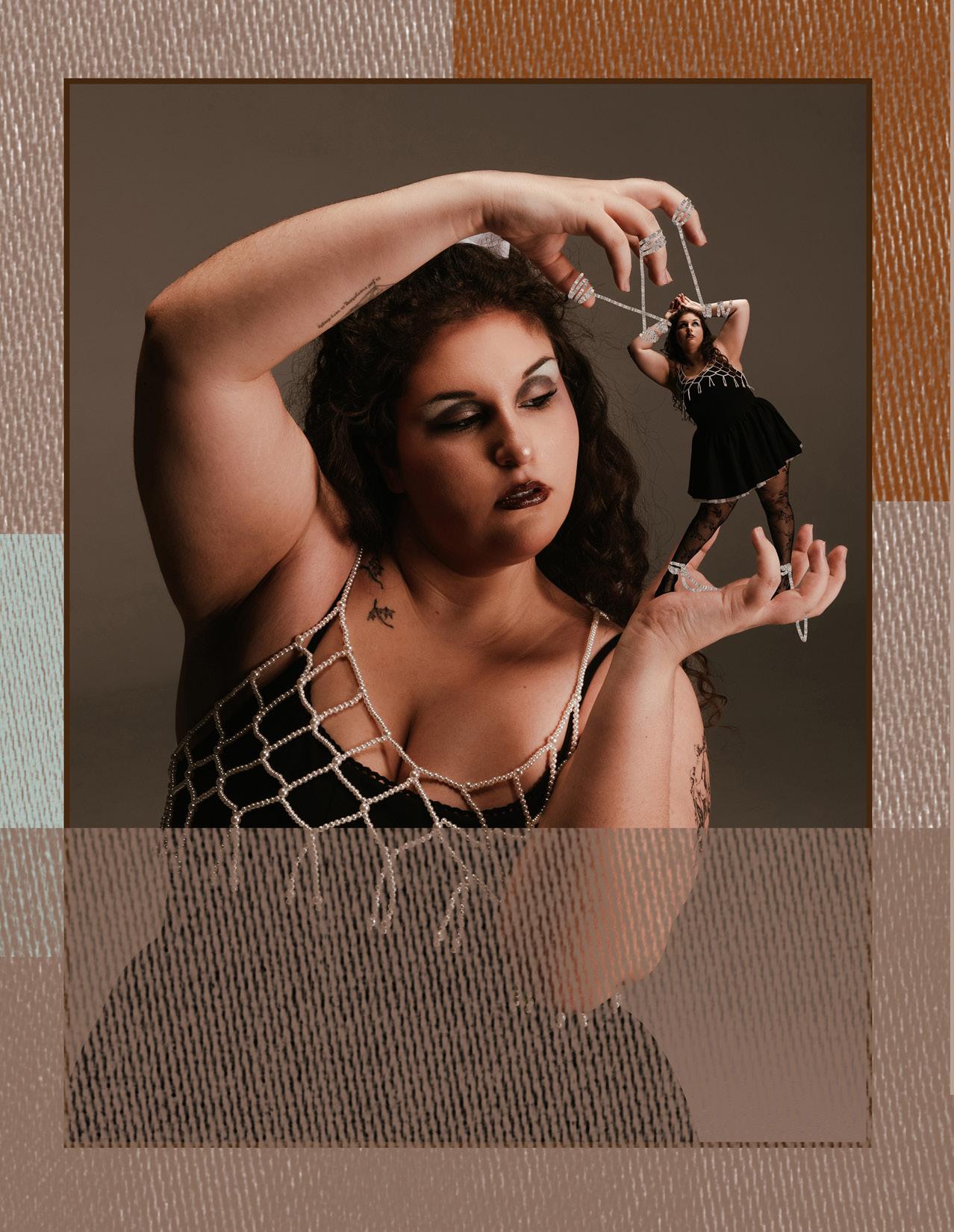
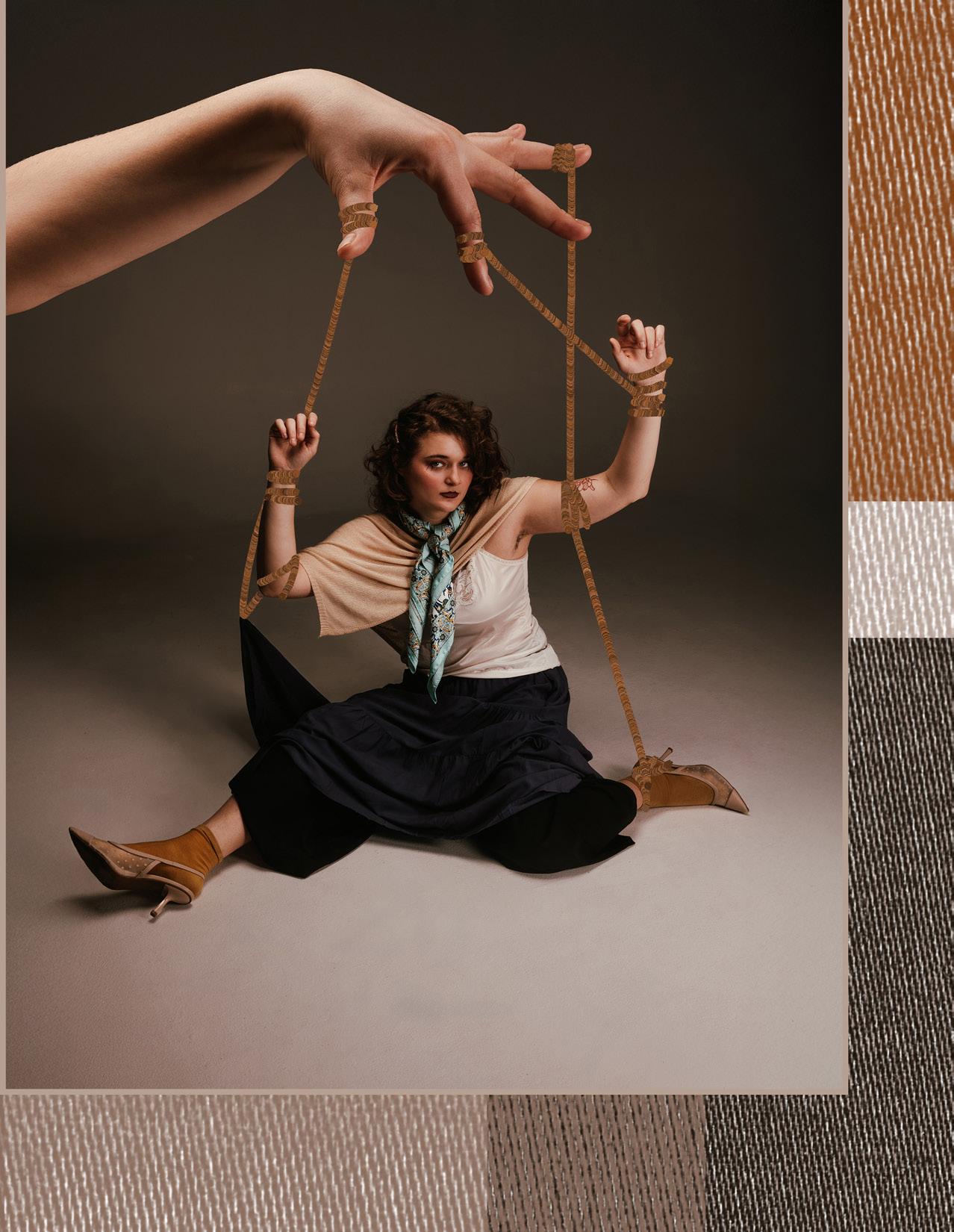
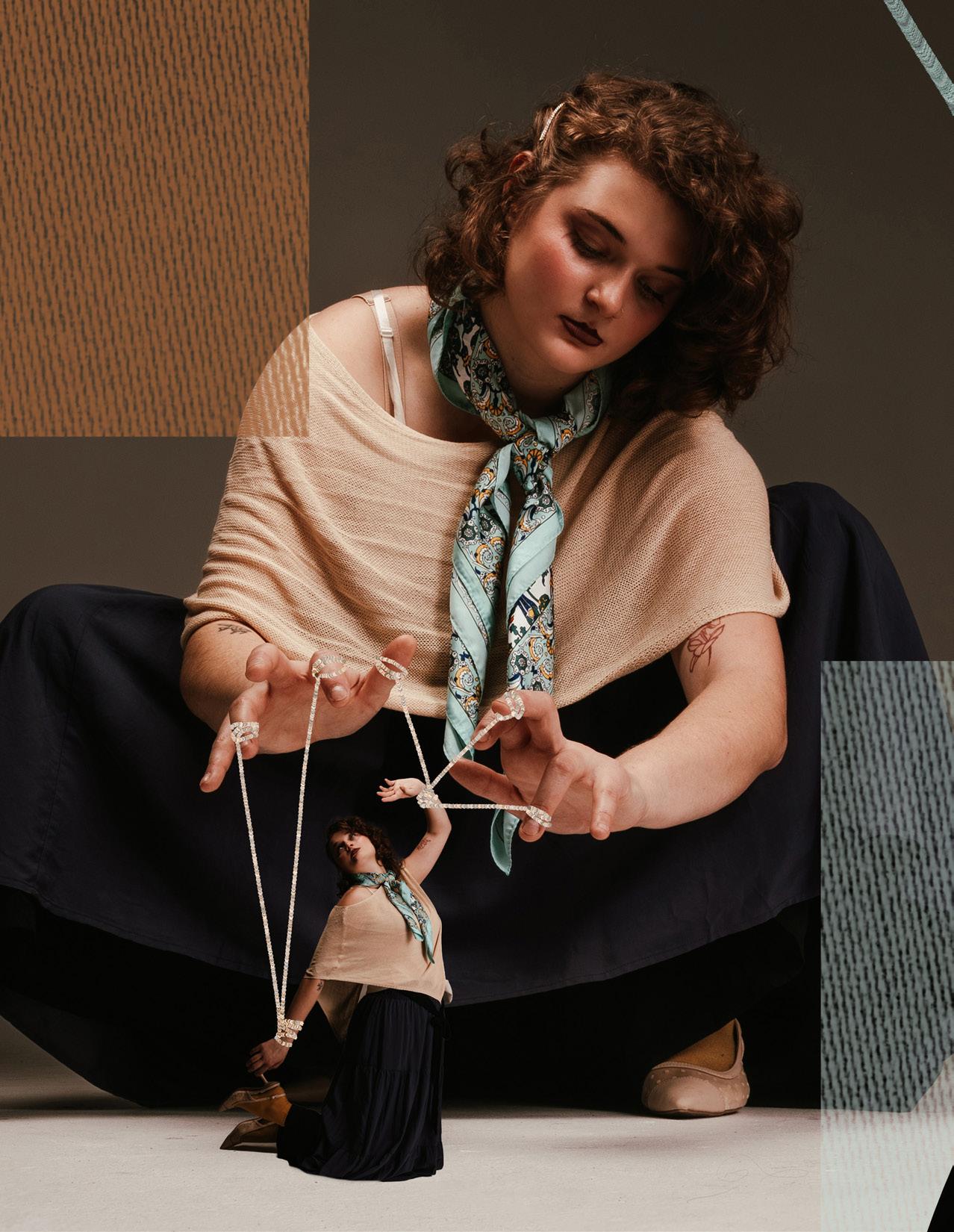
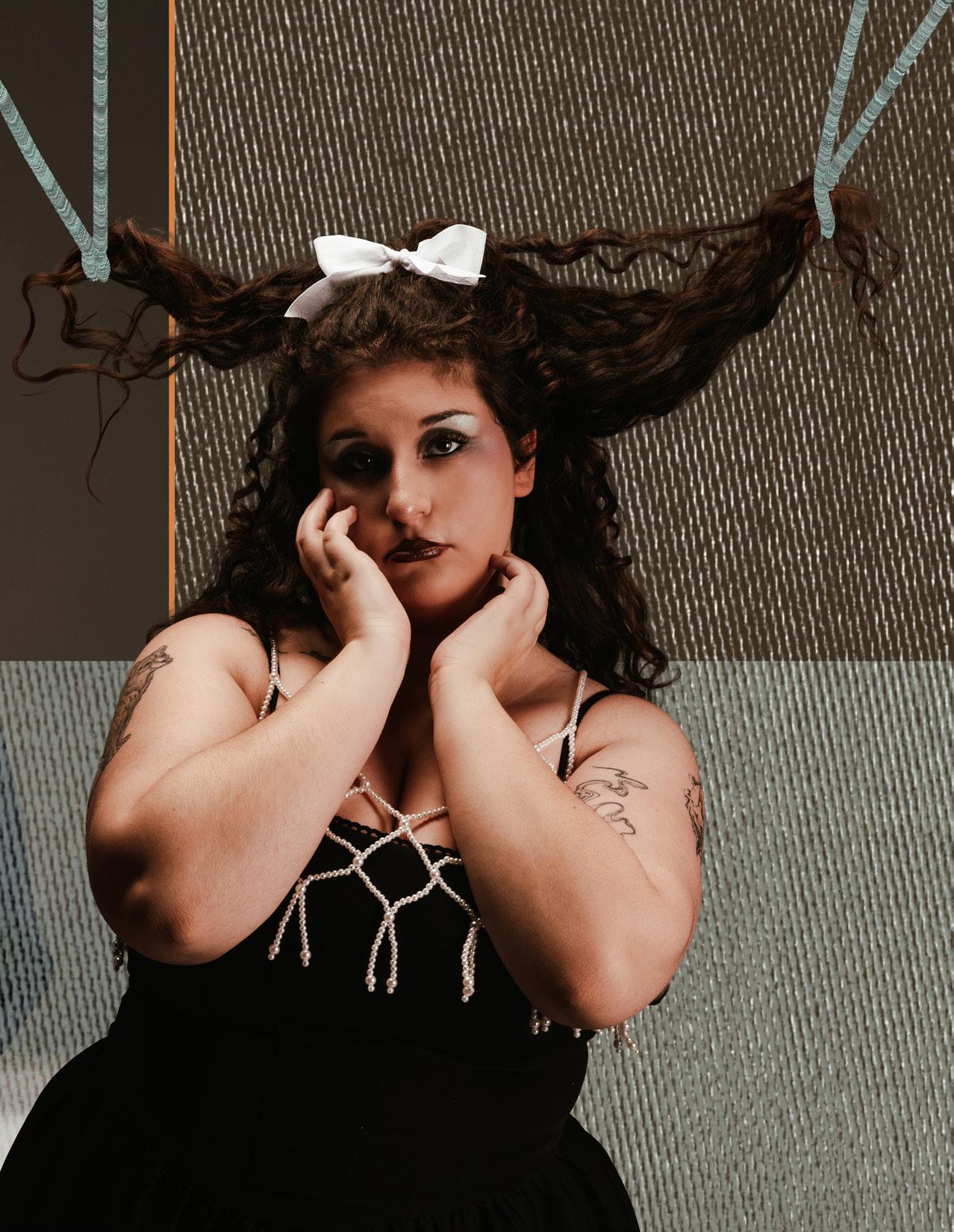
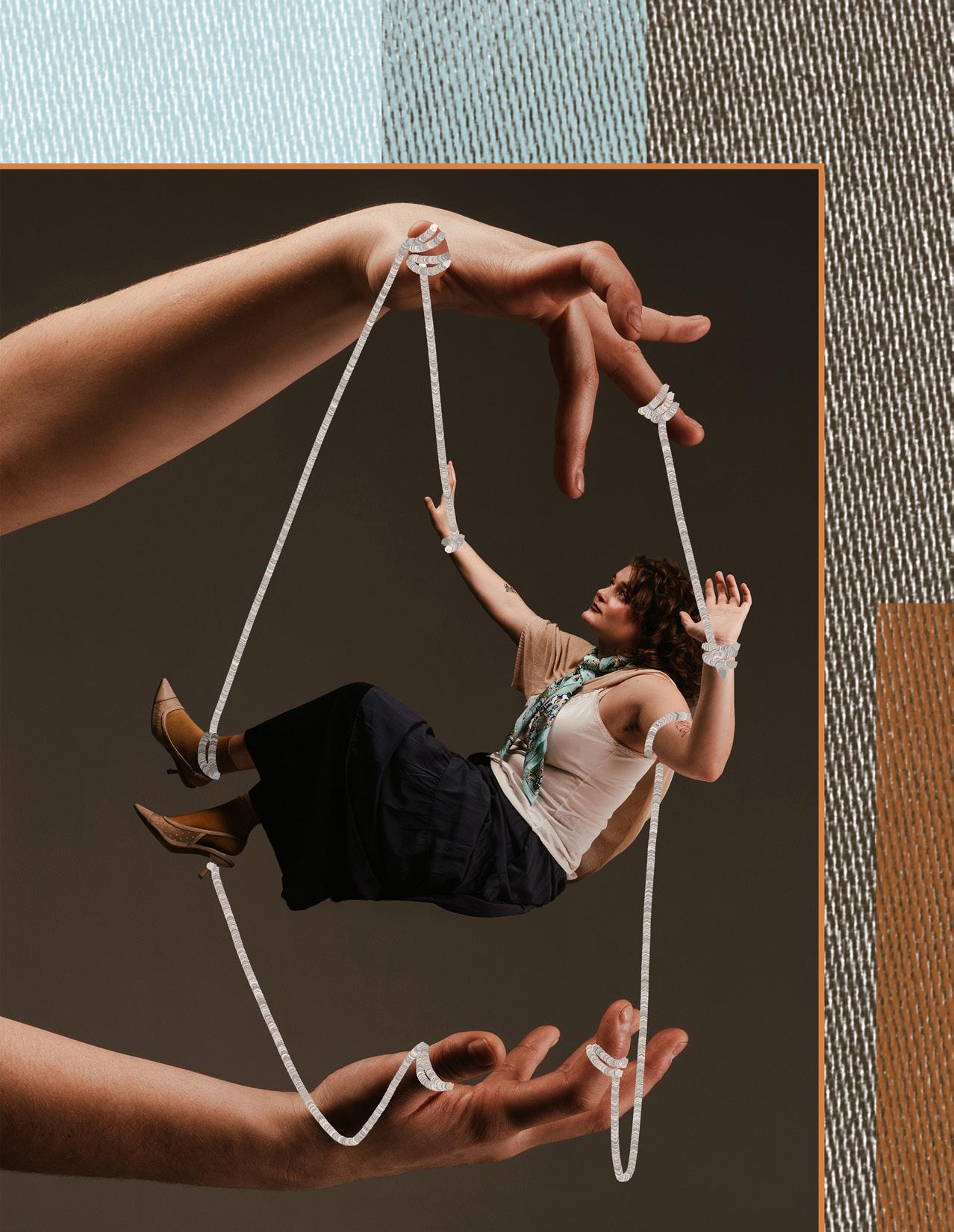
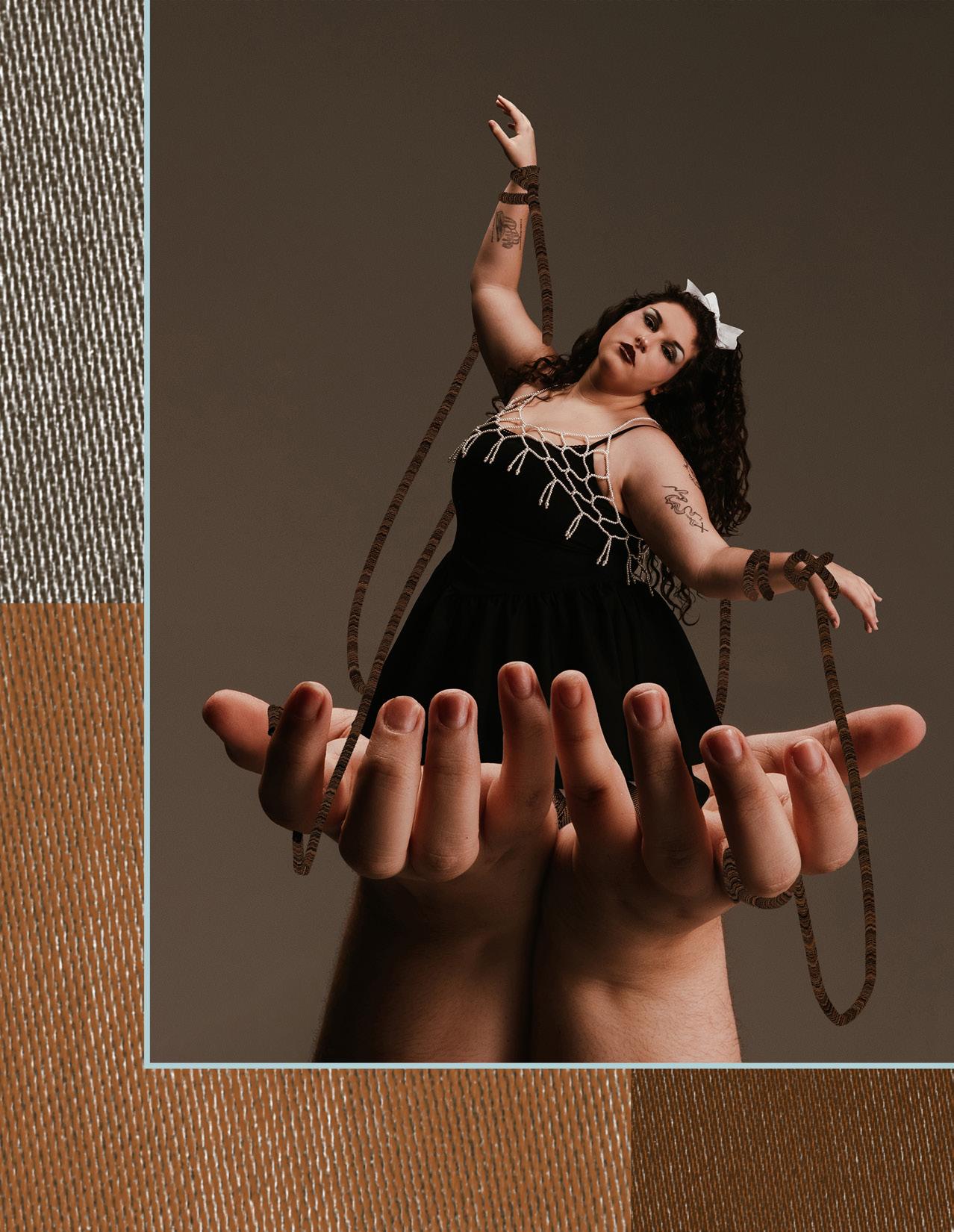
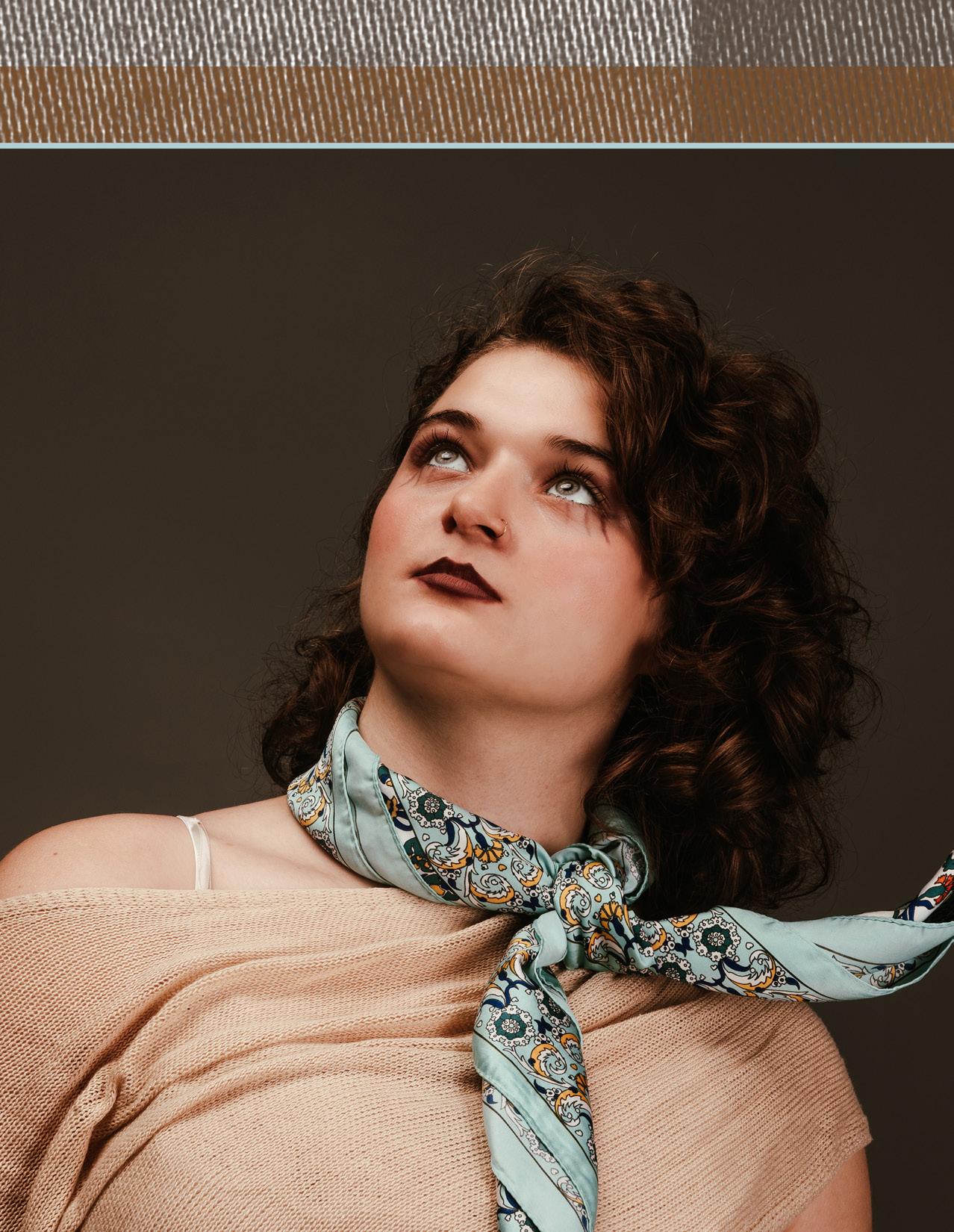
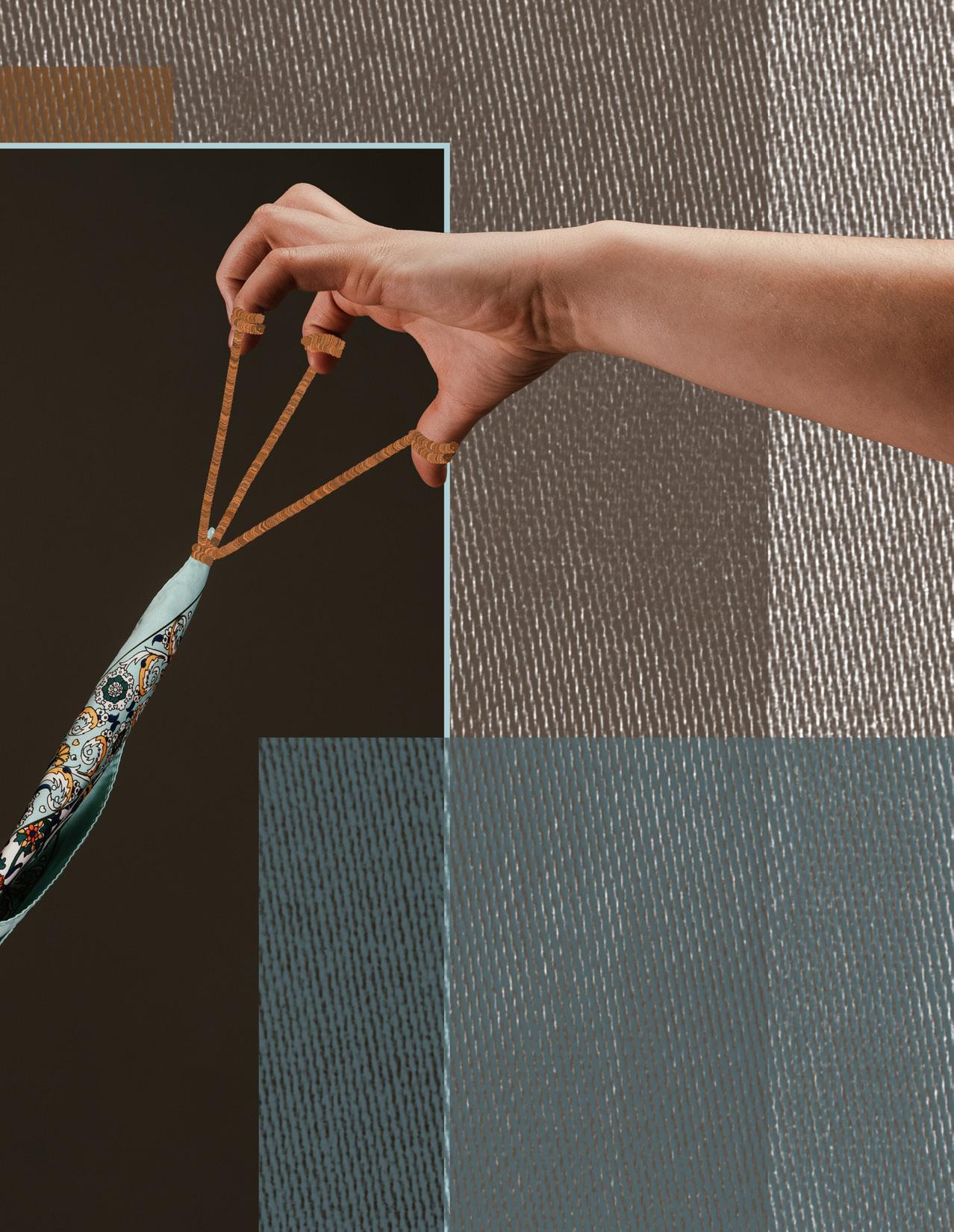
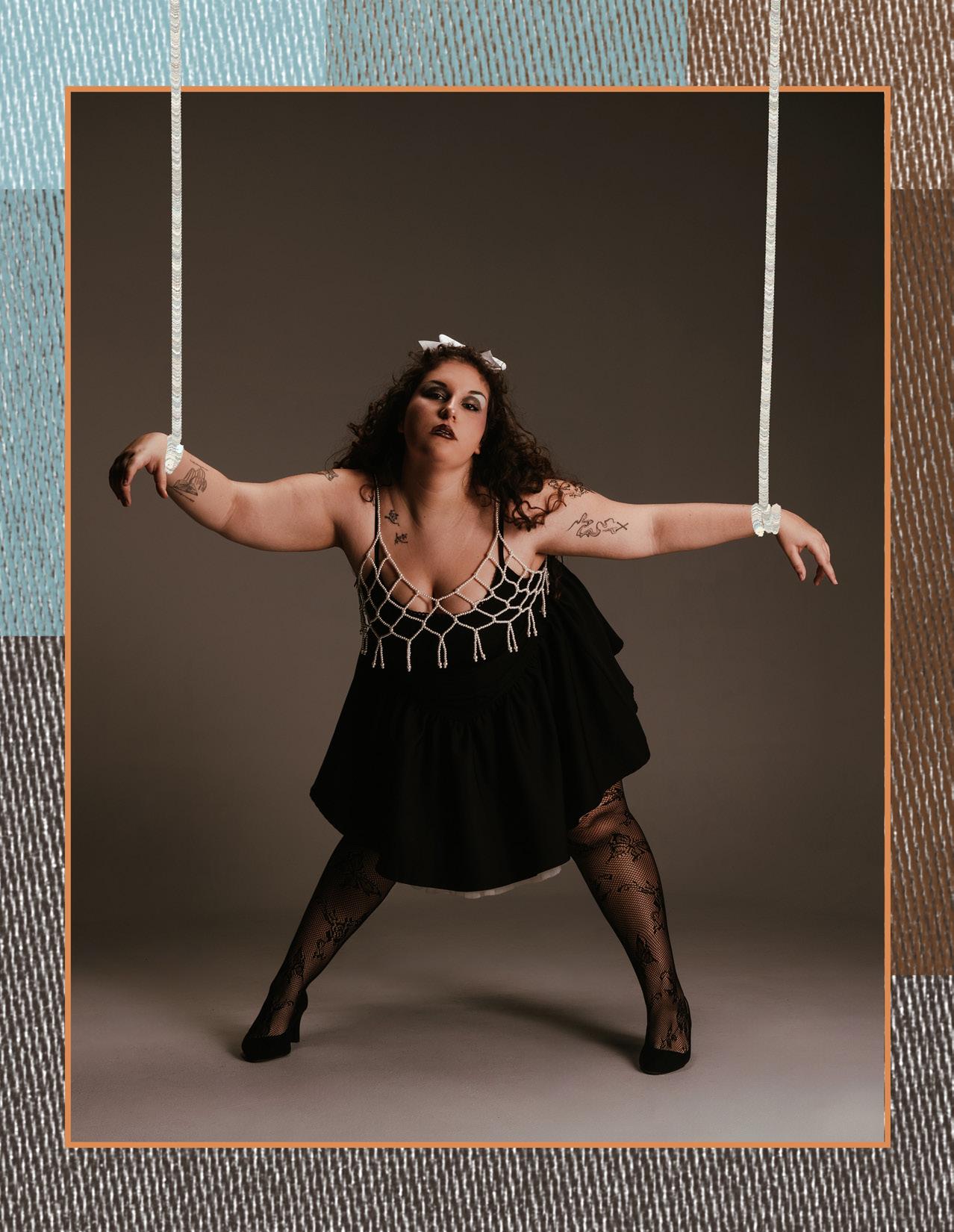
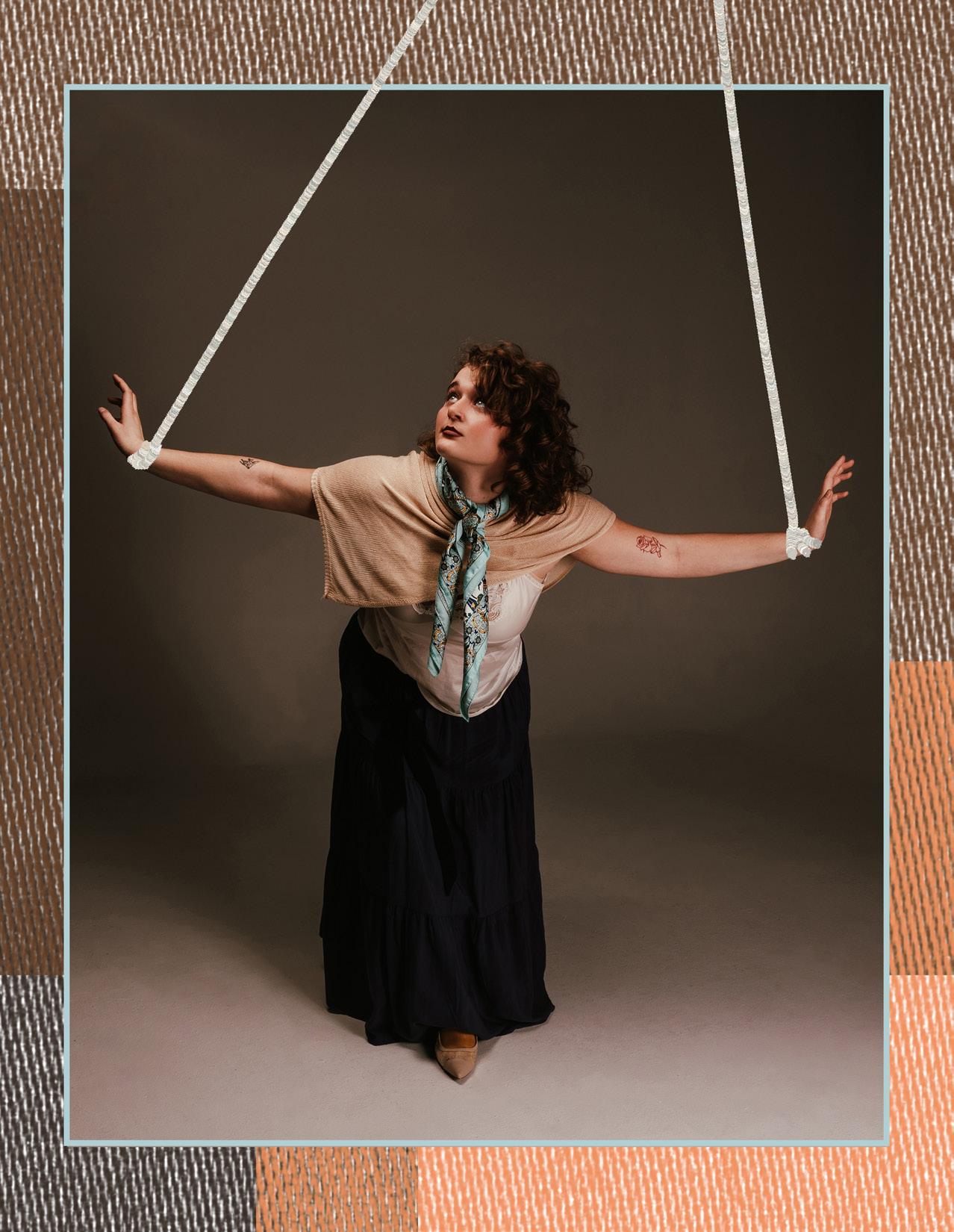
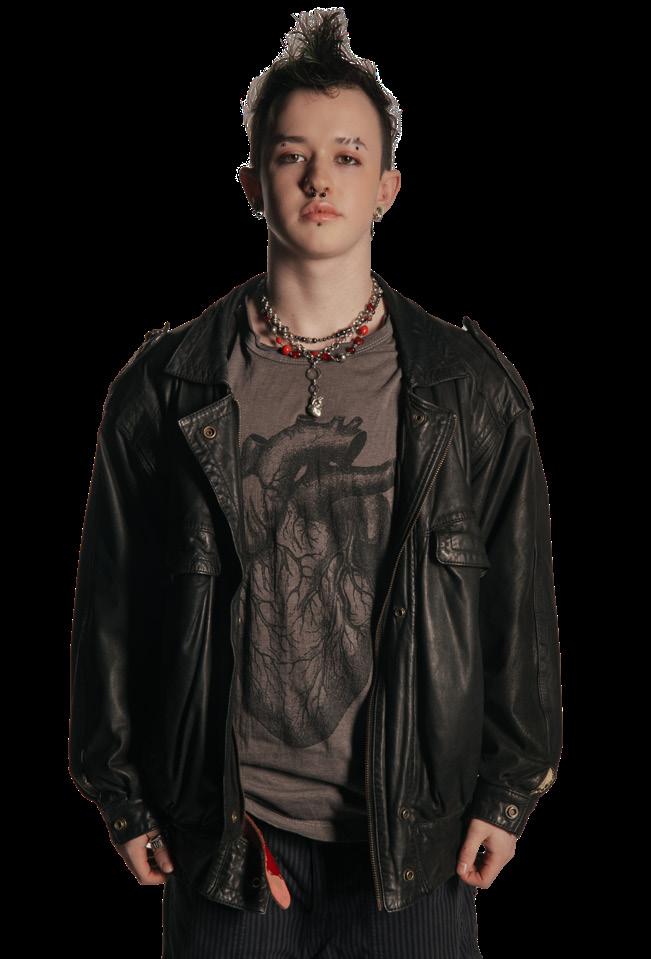
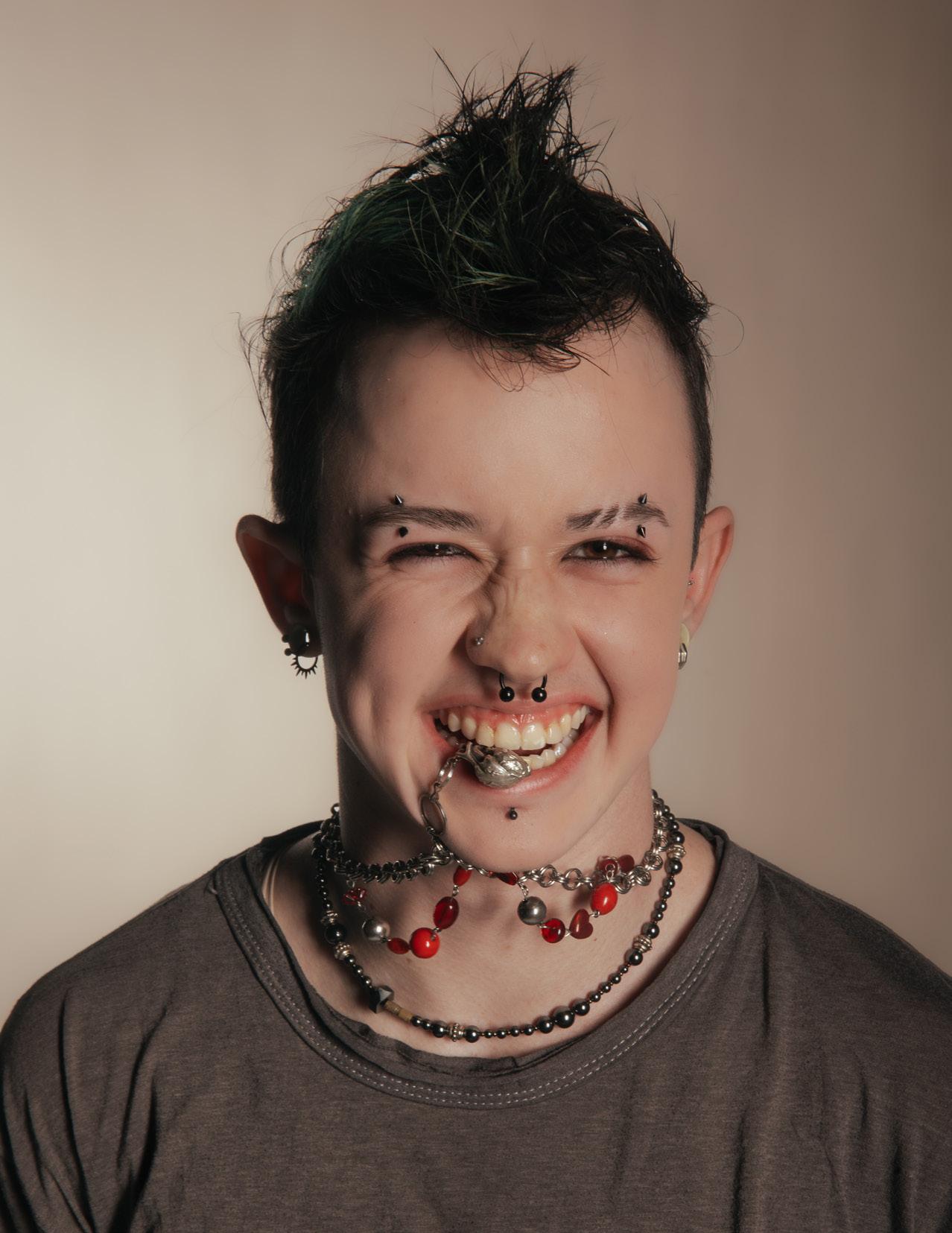
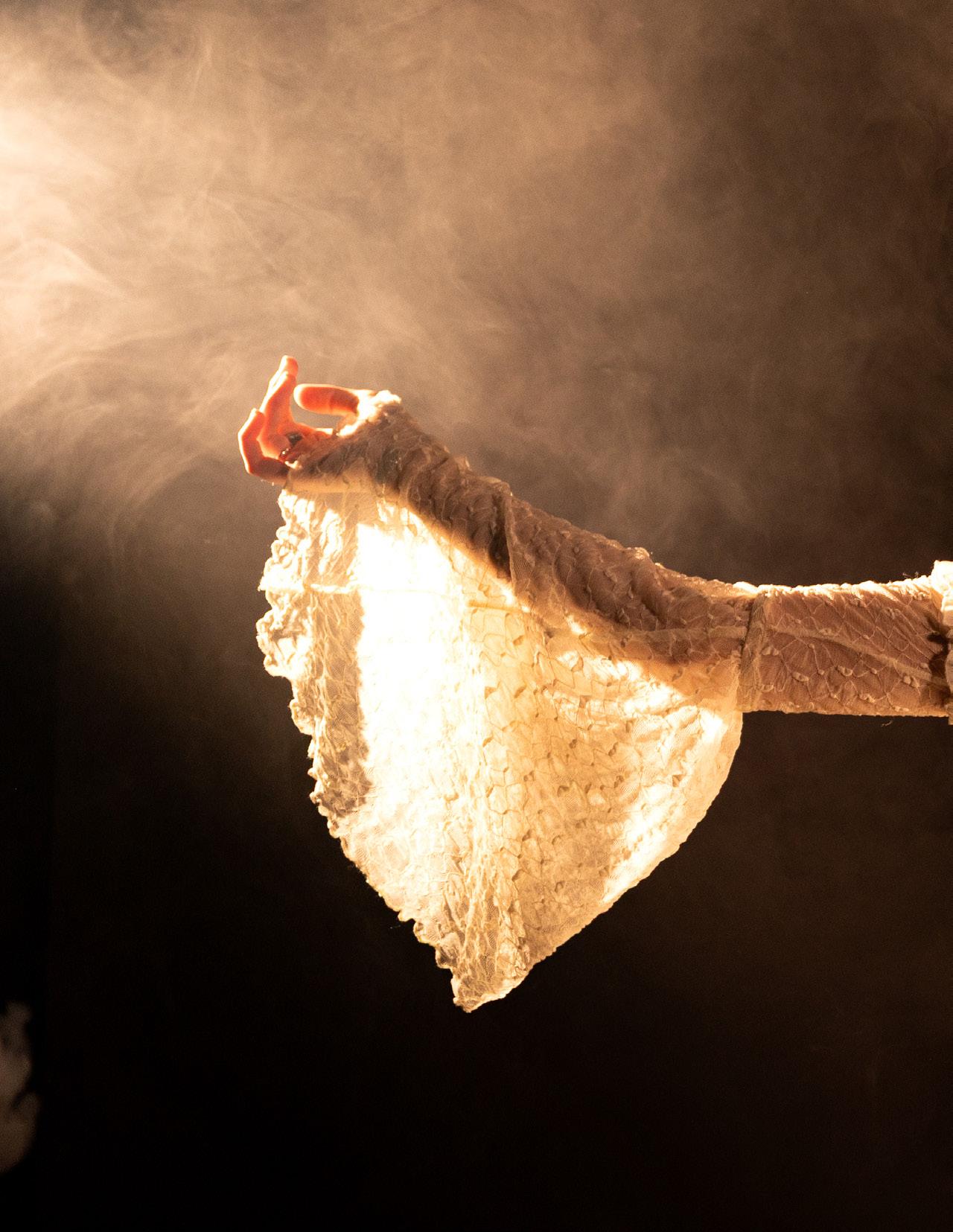
For our middle of the book shoots, we decided to push the idea of the body to new limits. Seeing how our imaginations could help us think of bodies in a new light. We first started with our disproportion shoot, where models were edited to have different-sized features throughout the photos. Our next shoot, titled “Mannequin,” which took place in the Athens mall, helped highlight statuesque bodies in a unique setting. Next, our “Silhouette” shoot showed off different figures of clothes and how their shapes impacted the body. Our team used hoop skirts and puffy sleeves to give an unusual and creative effect to the shoot. Finally, our shoot revolving around self-control showed our models playing with miniature versions of themselves on strings as if holding up puppets. This incredible design work helped give an ominous but theatrical side to these photographs.
Everyone at Thread has put so much work into making these stories, photos, illustrations, and designs come to life. Whether spending hours conducting interviews and editing stories or making photos come to life, one thing is for certain: our team is always up for the challenge.
To our fashion team and makeup teams led by Madelyn Joens and Bella Bolin, thank you always for your attention to detail and incredible taste. Our models come to life because of your work. To our photo team, led by Jori Husted, your work on this issue has been so wonderful to admire. Your talent and
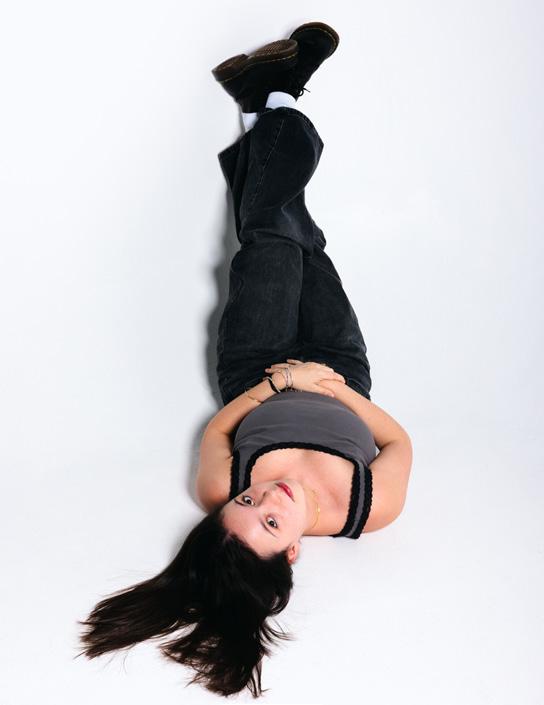
dedication to this team are so admirable.
To our incredibly passionate design directors, Emily Petertonjes and Sophie Schaller, I am forever in awe of the dedication and passion you guys bring to this team. Every chance you get, you guys are overcoming obstacles and putting in the work. Thread is so lucky to have you both. To our fabulous multimedia director, Maggie Musto, your team’s videos lighten our social media in a wonderful way. Thank you for making our audience so excited about Thread.
Next to our dedicated business team and especially our business manager, Natalie Schoolcraft, thank you for your continuous dedication to making sure Thread financially makes its dreams come true. From event planning to consistent posting on social media and ad sales, this dream team does it all!
To our wonderful editorial team who take hours upon hours guiding new and experienced writers to be the best they can be, thank you. Your attention to detail and constant pursuit of the best-sourced and written pieces is greatly appreciated.
The most creative art director is our talented and hard-working Morgan Clark. Thank you for always seeing the light at the end of the tunnel. We admire your dedication so much, and your vision drives this magazine in so many ways.
Finally, to my two most esteemed colleagues, Hadley Fain and Cami Seymore, you guys make Thread
special. This entire magazine would fall apart without you. Whether problem-solving at any time of day or being an advocate for Thread in every room you walk into, we are so lucky to have you.
Most importantly to our readers, giving you this magazine is our greatest joy. Thank you for your support. Please continue reading about fashion and culture even when life seems hard. We love to bring you happiness through our work. Now, please enjoy The Body Issue.

Gabrielle Cabanes Editor-In-Chief
EDITOR-IN-CHIEF Gabrielle Cabanes
MANAGING EDITOR Cami Seymore
CREATIVE DIRECTOR Hadley Fain
ART DIRECTOR Morgan Clark
BUSINESS MANAGER Natalie Schoolcraft
EDITORIAL
COPY CHIEF Lola Morana
SEAMS EDITOR Abby Joyner
WWW, & CAMPUS CASUAL EDITOR Avery St. George
FEATURES & BOC EDITOR Olivia Leggans
EDITORIAL STAFF Charlotte Petrie, Anna Hanes, Alexandra Hopkins, Susie Iannone, Naomi Boyles, Lauren Barna, Grace Schmidt, Ryan Dodd, Jen Fosnaught, Emilie DeOreo, Sophia Rooksberry, Max Gruhn, Hadley Fain
DESIGN
DESIGN CO-DIRECTORS Sophie Schaller & Emily Petertonjes
DESIGN ASSISTANT Ella Huelskamp
C0-ILLUSTRATION DIRECTORS Sully Potter & Minjoon Lee
ILLUSTRATION ASSISTANT Abby Stanley
FILE MANAGER Ally Kyle
DESIGN STAFF Hadley Fain, Grace Callahan, Carly Hart, Maris Cordial, Emma Christenson, Tanner Vance, Jori Husted, Sophia Cianciola, Georgia Booth, Emma Henry, Harlee Shae, Pamela Johnson, Madi Barrickman, Gretchen Stoner, Alyssa Kiszczak
ILLUSTRATION STAFF Ella Katzenmeyer, Grace Callahan
C0-PHOTO CHIEF Jori Husted
HEAD OF PHOTO EDITING Nate Conklin
SET DIRECTOR Zennia Lam
PHOTOGRAPHY STAFF Sophie Schaller, Audrey Frilling, Liam Delaney, Avery Tyla, Hadley Fain, Morgan Clark, Gabriella Cabanes, Max Gruhn, Ellie Duncan, Andy McLean
MULTIMEDIA DIRECTOR Maggie Musto
VIDEO PRODUCER Avery Callison
PROJECT COORDINATOR Nicole Bell
STAFF Lauren Stidham, Eden Radcliff, Erin Brogan, Jorja Kresinski, Maddie Benedict, Sydney Huckstep, Ace Florian
FASHION
FASHION DIRECTOR Bella Bolin
ASSISTANT FASHION DIRECTOR Courtney Getter
MAKEUP DIRECTOR Madelyn Jones
ASSISTANT MAKEUP DIRECTOR Bobbi Cross
FASHION STYLISTS AND MODELS Audrey Frilling, Aly Dever, Hayley Mitchell, Hope Madgett, Bre Waugh, Lauren Barna, Ashley Kyle, Ella Franks, Gwen Spaliatsos, Megan Harlan, Naomi Boyes, Amber Buss, Natalie Schneider, Rylie Rupert, Emma Perry, Harlee Shae, Juno Wilde, Isabella Jimenez, Jenna Englander, Kinga Turoczi, Adam Marcum, Bella Williams, Riley Morgan-Boucher, Hunter Gillespie, Erin Brogan, Jayden Shoaf, Alayna Armour
BUSINESS & SOCIAL MEDIA
DIRECTOR OF PR: CREATIVE STRATEGYLulu McGhee
DIRECTOR OF PR: SALES Kamyrn Clark
HEAD OF EVENT PLANNING Shyla Algeri
SOCIAL MEDIA MANAGER Max Gruhn
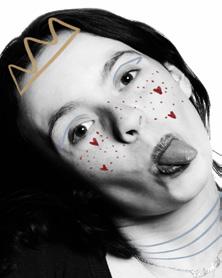
Gabrielle Cabanes Editor-In-Chief
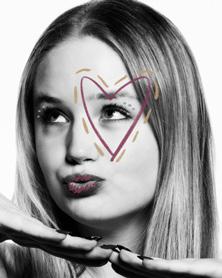
Cami Seymore Managing Editor
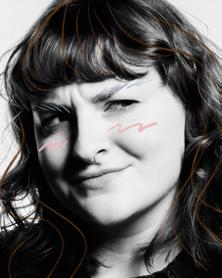
Hadley Fain Creative Director
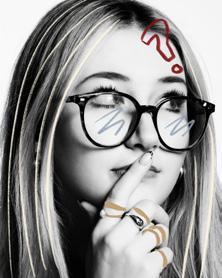
Sophie Schaller Co-Design Director
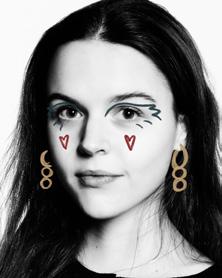
Morgan Clark Art Director
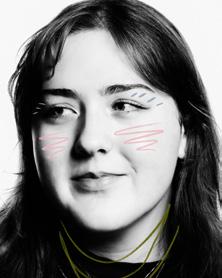
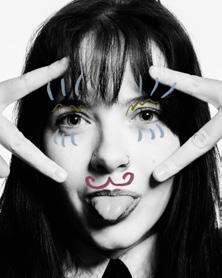
Natalie Schoolcraft Business Manager
Emily Petertonjes Co-Design Director Ella Huelskamp Design Assistant
Jori Husted Co-Photo Chief
Sully Potter Co-Illustration Director
Nate Conklin Head of Photo Editing
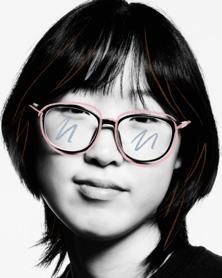
Minjoon Lee Co-Illustration Director
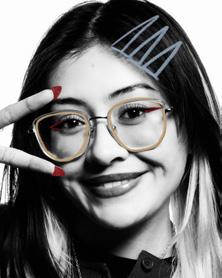
Zennia Lam Set Director
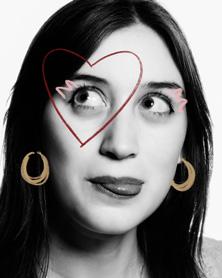
Abby Stanley Illustration Assistant
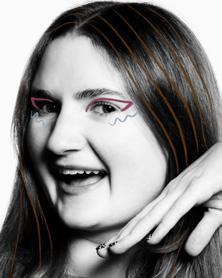
Avery Callison Video Producer
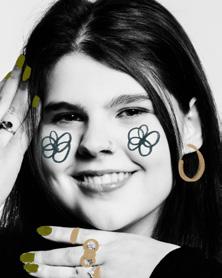
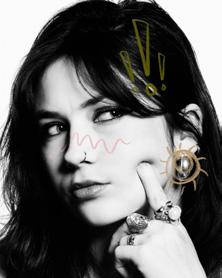
Bella Bolin Fashion Director
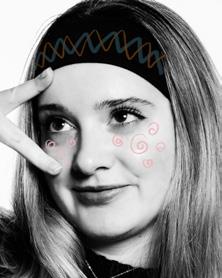
Abby Joyner Seams Editor
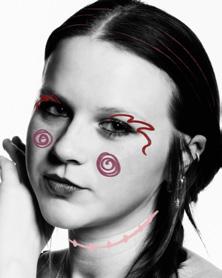
Courtney Getter Assistant Fashion Director
Avery St. George WWW/Campus Casual Editor
Madelyn Joens Makeup Director
Lola Morano Copy Chief
Bobbi Cross Assistant Makeup Director
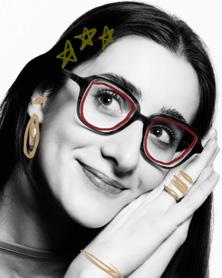
Olivia Leggans Features & Back of Closet Editor
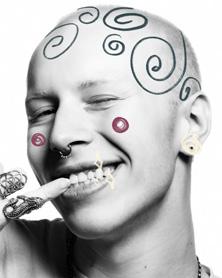
Max Gruhn Head of Social Media
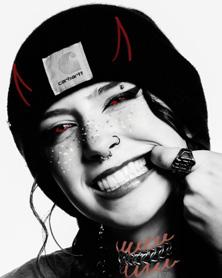
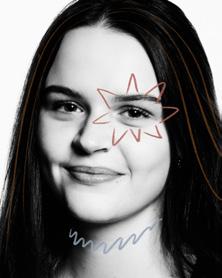
Kamryn Clark Director of PR: Sales
Savannah Swanson Community Standards Director
Lulu McGhee Director of PR: Creative Strategy
Nicole Bell Project Coordinator
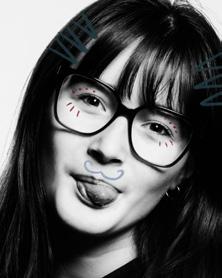

From the runway to the streets, and everywhere in between, here are this seasons’s most soughtafter trends.
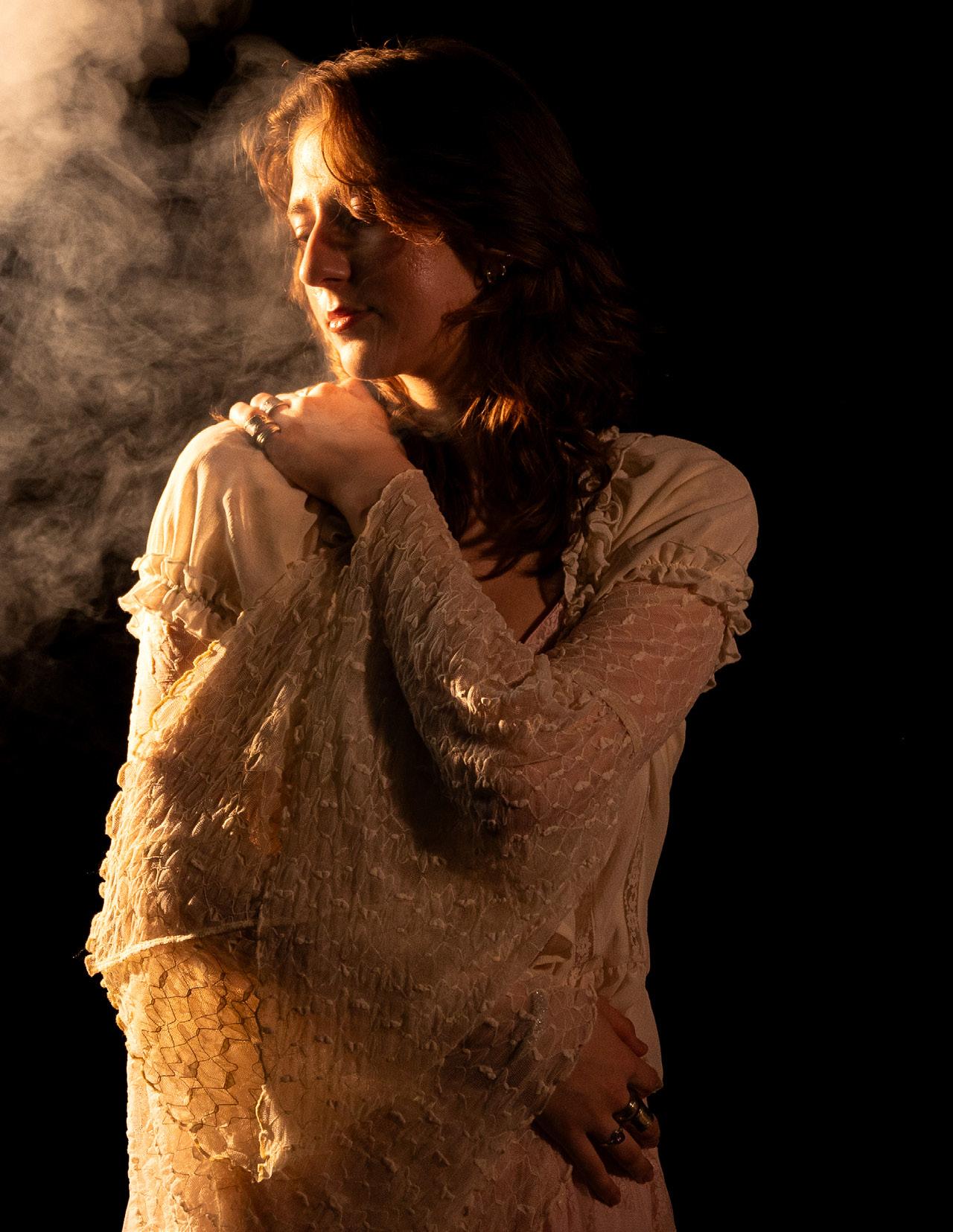
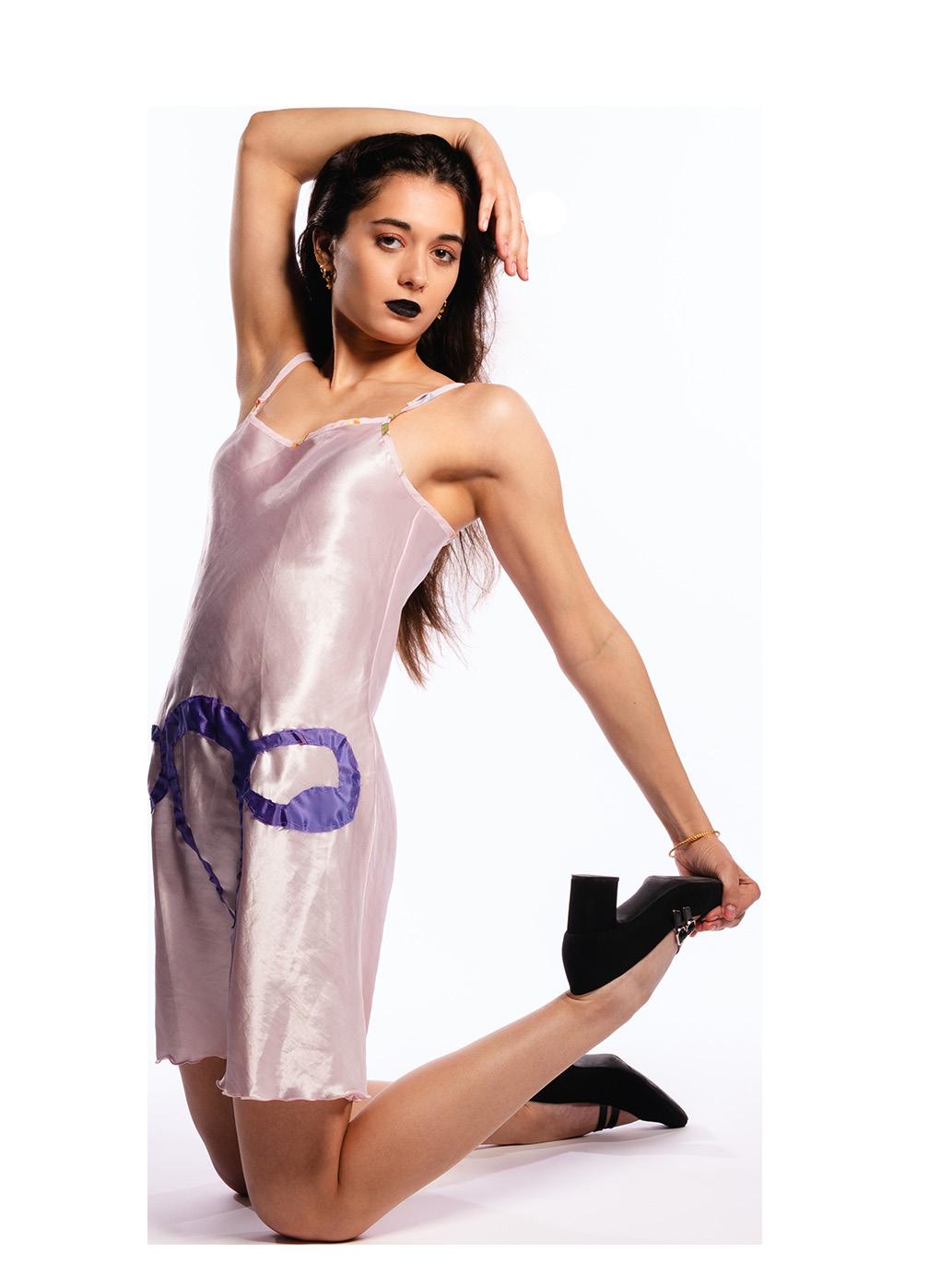
As autumn leaves were traded in for winter flurries in 2017, Emelie Janrell’s made-to-measure collection debuted at Stockholm Fashion Week. The ensembles enamored their audience with bold takes on Scandinavian style.
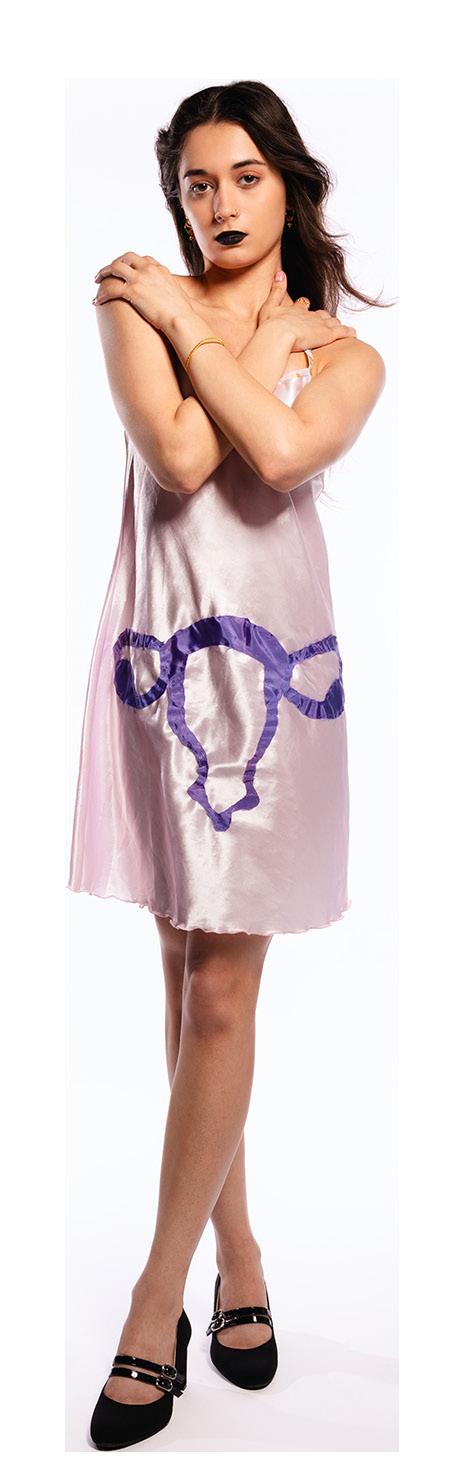
While staying true to the traditional minimalism and functionality of Nordic fashion, Janrell highlighted the female body in her designs. Sheer power mesh, silk-blended satin, and elaborate beading were consistent materials used throughout the lineup. Most striking was her use of the female reproductive organ, the uterus, as a motif within the collection.
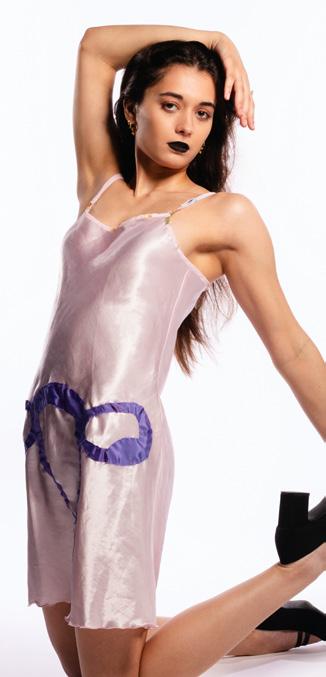
One dress featured a uterus appliqué made of purple satiny fabric, strategically adhered to the lower torso. The fabric clung tightly to the model’s body, highlighting and exposing the contours of her features in a cascade of cream to purple gradient. With this restrictive structure juxtaposed to the frank image of a uterus, this dress centralized the female reproductive system and the vulnerable sensuality that society automatically connects to women’s bodies.
Another incorporation of uterus
imagery was through its use as an interwoven pattern on the fabric of one of the dresses. This look emulated a businesslike, trenchcoat silhouette, but with a much looser and freeing structure.
Other looks, while not depicting uteri, defined femininity in other ways. The clothing highlighted details of the body while the model’s face was shrouded by a strategically placed cocoon of hair.
There is much to be said about the stylistic choices in the collection, as much of it provoked an examination of the feminine experience. The looks themselves explored femininity in more ways than the generally associated softness, delicateness, and glamour by asking viewers to look at an organ often considered taboo in conversation.
Notably, the #MeToo movement, a global initiative aimed at raising awareness for and ending sexual harassment and assault, is said to have reached its peak during 2017, which lines up with the release of Emelie Janrell’s collection.
Within today’s fashion sphere, Emelie Janrell’s F/W 2017 collection sparks a conversation that invokes the generations of individuals who work for a world where women’s bodies are celebrated for more than their sexual functions.
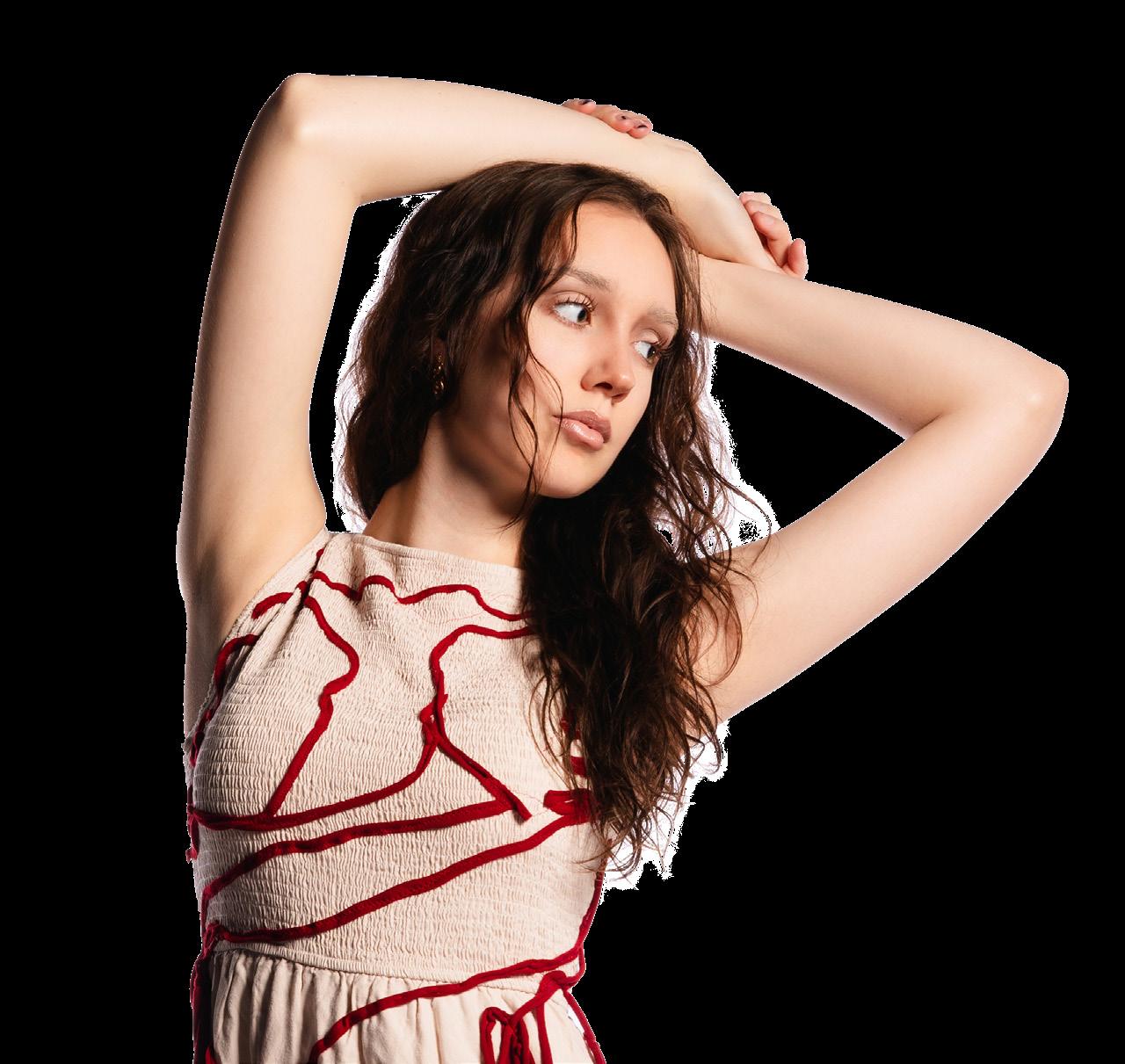
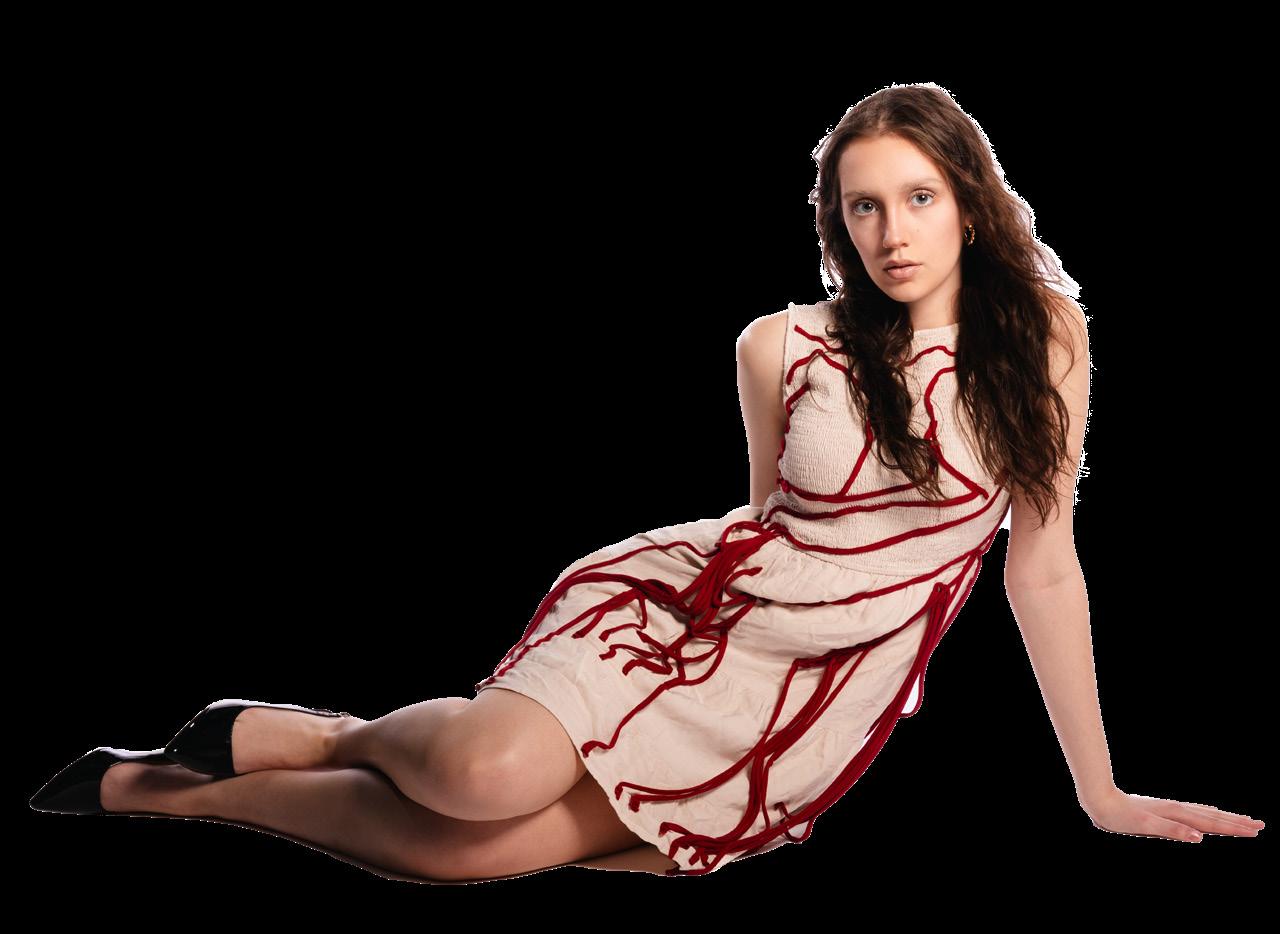
Sarah Burton’s Final Love Letter To The Female Form
Alexander McQueen’s Spring/ Summer 2024 collection, titled “Anatomy II,” presents femininity not as fragile, but as vital. As Creative Director Sarah Burton’s final show for the fashion house, the collection reads as a statement of endurance and power.
At its core is the repeating metaphor of the blood-red rose that captures both the life force of womanhood and its resilience. Blood represents lineage, survival, and the strength that flows through the female body, while the rose embodies beauty, softness, and danger. Together, they reflect a modern femininity that is complex, alive, and unapologetic.
Drawing inspiration from the experience of
emphasizes endurance. Tailored suits stand out as a key element, referencing the long and rebellious history of women fighting for agency in traditionally male-dominated occupational spheres. Once a symbol of exclusion, these garments are transformed into statements of autonomy and selfdefinition.
“Anatomy II” ultimately reframes femininity through strength, not softness alone. Burton does not ask women to be gentle in order to be beautiful. Instead, she celebrates resilience as the defining trait of womanhood. In her final collection for Alexander McQueen, Burton delivers a love letter to women in structure, movement, and symbolism. The blood-red rose does not wilt; it survives, and it continues
BY ALEXANDRA HOPKINS
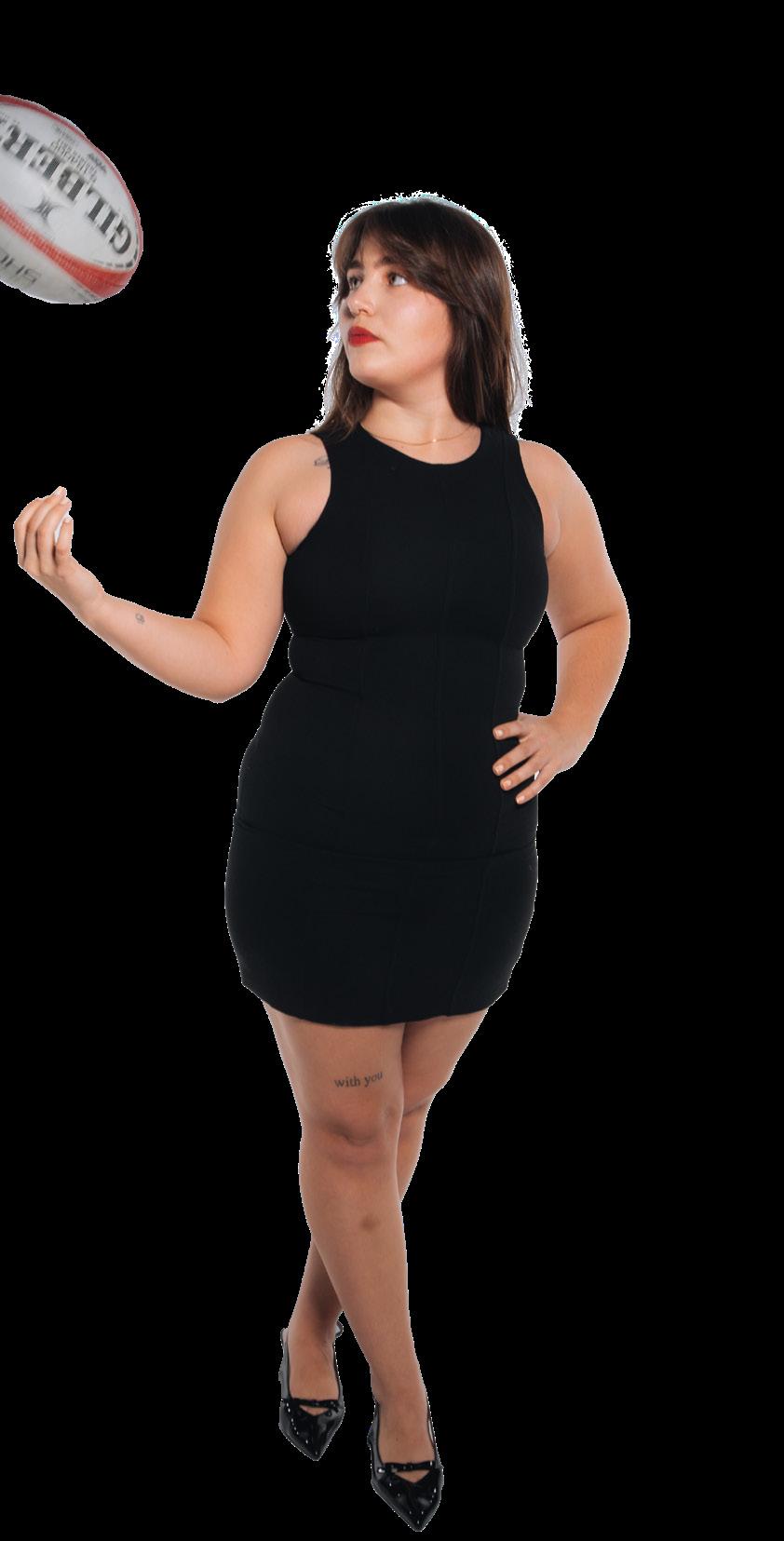
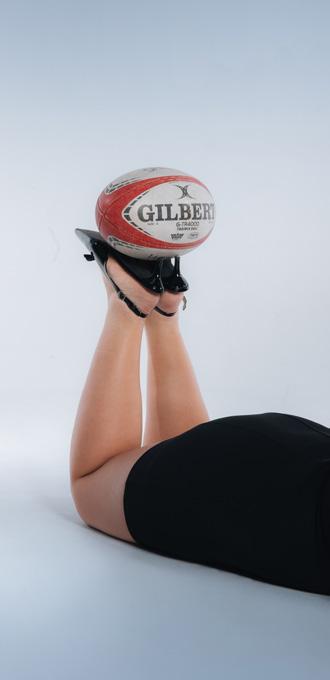
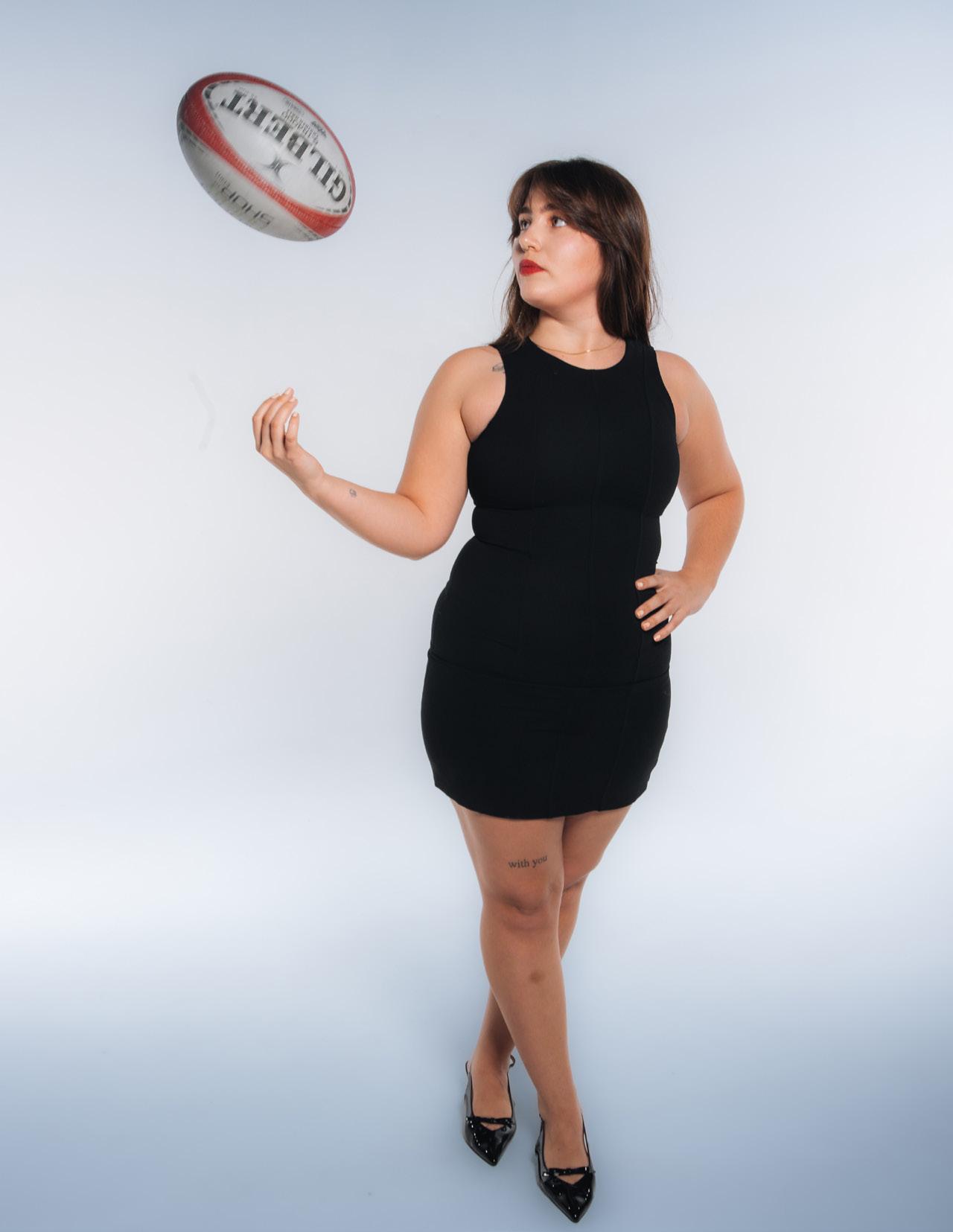
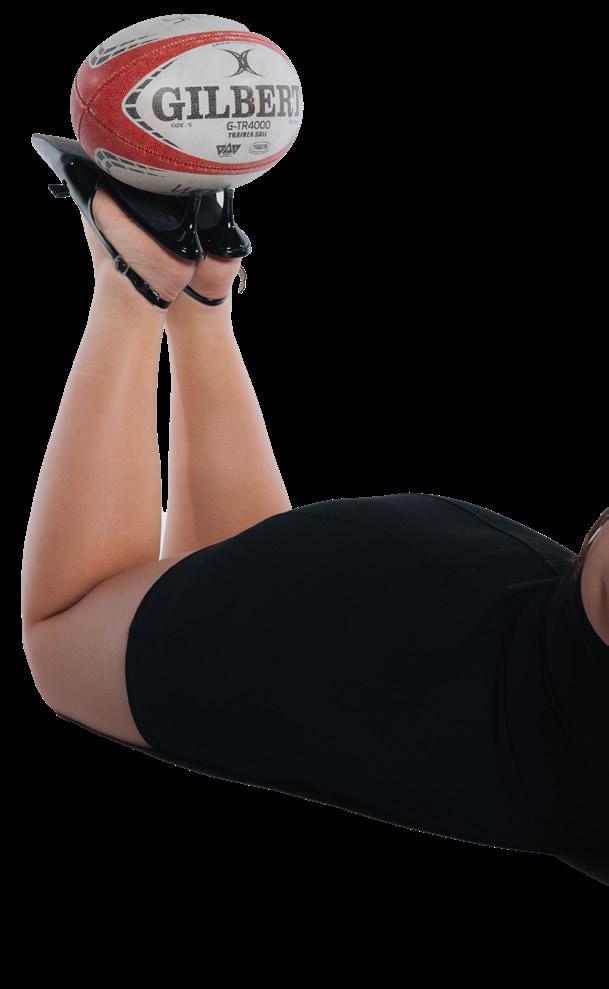
Ilona Maher, Olympic bronze medalist, social media star, and “Dancing With the Stars” contestant, is one of today’s most powerful advocates for body positivity.
Maher gained international fame at the Tokyo Olympics as a Women’s Rugby player for Team USA. But it was her behind-the-scenes videos from the 2024 Olympics that rocketed her to notoriety on TikTok. Online, she showcased life in the Olympic Village, where players and officials live for the duration of the games, as well as a look into her day-to-day life.
While making headlines for her social media posts, Maher was also leading Team USA to its first ever bronze medal win in rugby sevens. Her performance at the games was praised for her stiff arm and explosive plays against other teams. She received praise from a number of athletes, including retired football player Jason Kelce and New Zealand rugby player and twotime Olympic medalist Ruby Tui.
In addition to being a respected rugby player, Maher also uses her social media platform to encourage body positivity in women, specifically female-identifying athletes. She has garnered attention for the cause through the campaign Beast Beauty Brains.
Beast Beauty Brains encourages young women to love and appreciate their bodies and the feats their bodies allow them to be capable of.
“All body types matter, all body types are worthy,” Maher said in a TikTok in July 2024. “From the smallest gymnast to the tallest volleyball player, from a rugby player to a shotputter and sprinter, all body types are beautiful and can do amazing things. Truly see yourself in these athletes and know that you can do it too.”
In September 2024, Maher was the cover model for Sports Illustrated’s swimsuit edition. The article likens her muscular form to that of a Roman statue, and rightfully so. Her muscular, athletic physique contrasts the problematically normative, frail, thin body most frequently photographed in the fashion industry.
“I love that (rugby) showed me what I can do,” Maher told SI. “It showed me how capable my body is, and it’s not just like a tool to be looked at and objectified.”
Maher was also a contestant on season 33 of
“DWTS,” and finished in second place with her partner Alan Bersten. Among the songs she danced to included “Surface Pressure” from Disney’s “Encanto” and “Femininomenon” by Chappell Roan. For her, the opportunity on DWTS was a chance to show girls “how powerful and how important it is to be strong physically and mentally,” Maher told ABC News.
Maher’s success has transformed her into a national icon for women of all ages, showcasing that everyone deserves to think positively about their body and feel comfortable in their own skin. Icons like Maher encourage the world to become more accepting of those of all shapes and sizes, including their own.

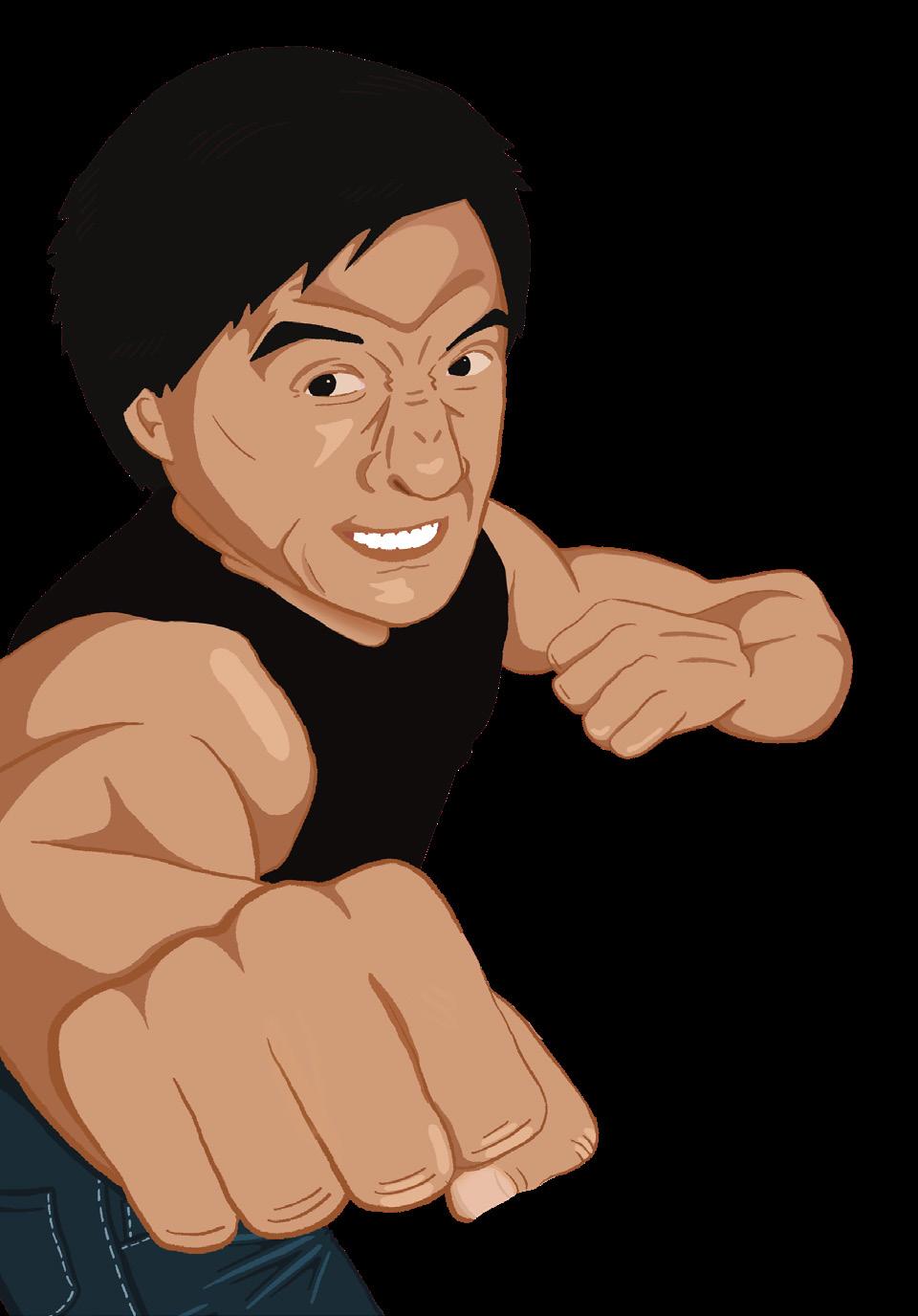
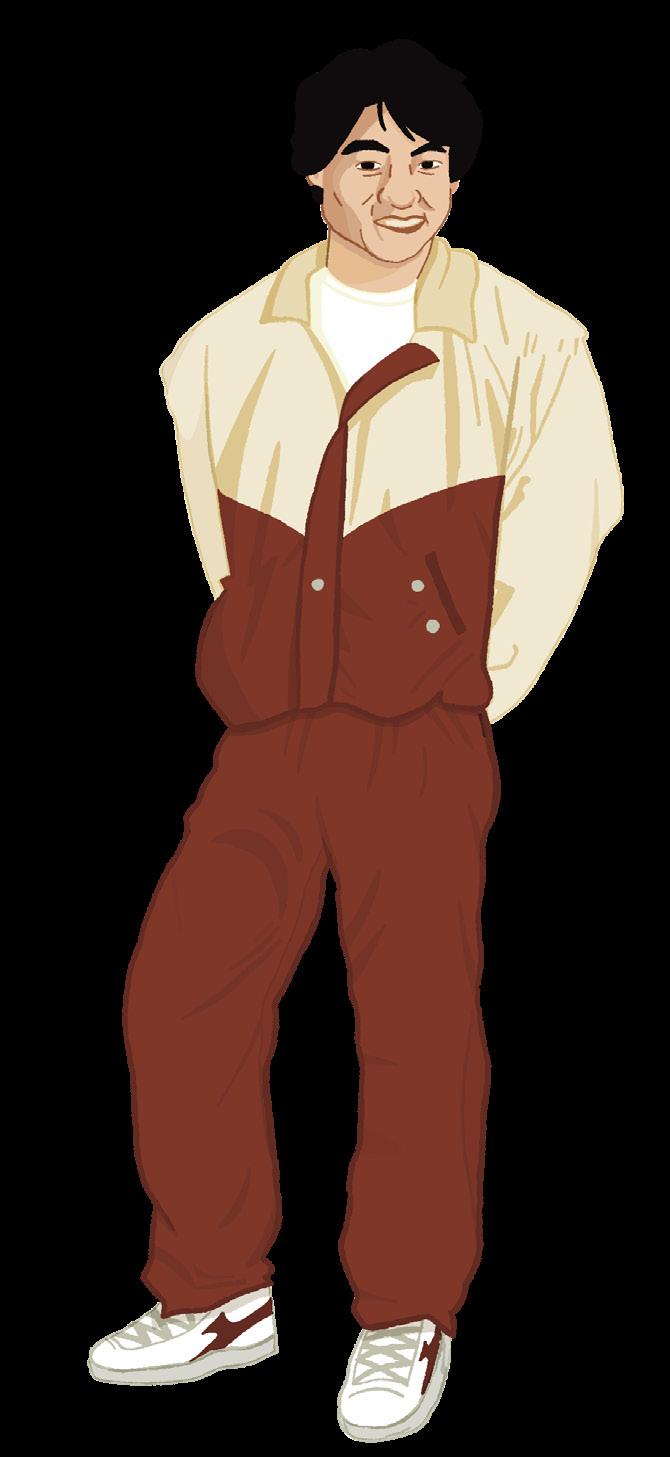
The legendary actor, producer, and martial artist Jackie Chan has remained true to his unique sense of humor and incredibly astute sense of fashion since his rise to fame in the 1970s. Over decades of changing trends and increased fame, Chan’s personal style continues to endure the test of time.
Chan was born in 1954 in Hong Kong. From age 7, he was raised at an opera boarding school house where he learned to sing, act, fight, and even perform elaborate stunts. Much of his inspiration has been credited to this school, from which many traditional Chinese opera techniques have been incorporated into his martial arts films.
Chan had his big break in the film “Snake in the Eagle’s Shadow” (1978), where he gained notoriety in his home country. Soon, his pursuits turned to the West and the Hollywood stage. Through all of this, Chan kept his cool not only in his personal life but in his snappy style.
In his early years, Chan sported short-shorts and athletic attire that leaned on bright colors and patterns in his style. A collection of track suits and ski-chic attire graced his wardrobe in the 1980s, where he was often spotted with giant sunglasses and a duffle bag, knitted sweaters with winter scenes, and elaborate neon shapes. While his athleticism was something to be admired, Chan also had a knack for dressing up, especially in all-black textured blazers, flared pants, and a lovely interest in V-neck sweater vests, often accompanied by a peacoat or the classic bomber jacket. In the summer, his true personality shone through his outfits with pastel and cream tank tops, denim pants and jackets, and his signature accessory, a shirt loosely secured around his neck.
Recently, Chan has been celebrating his Chinese heritage on the red carpet for various events, wearing a traditional casual robe called a Paofu, or Baoyi bodai, a style intended for men. Solid colors with detailed accompanying color accents on the fabric add to the intricate style of this robe, which Chan rocks on the regular. This January, Chan arrived at his first Milan Fashion Week, where he wore a simple blue cotton turtleneck and grey coat with his signature round glasses, contrary to the elaborate and theatrical nature of fashion week events. Through his many looks and countless
artistic projects, Jackie Chan continues to be an icon in both Chinese and Western pop culture.


BY NAOMI BOYLES
PHOTOS
HARLEE SHAE
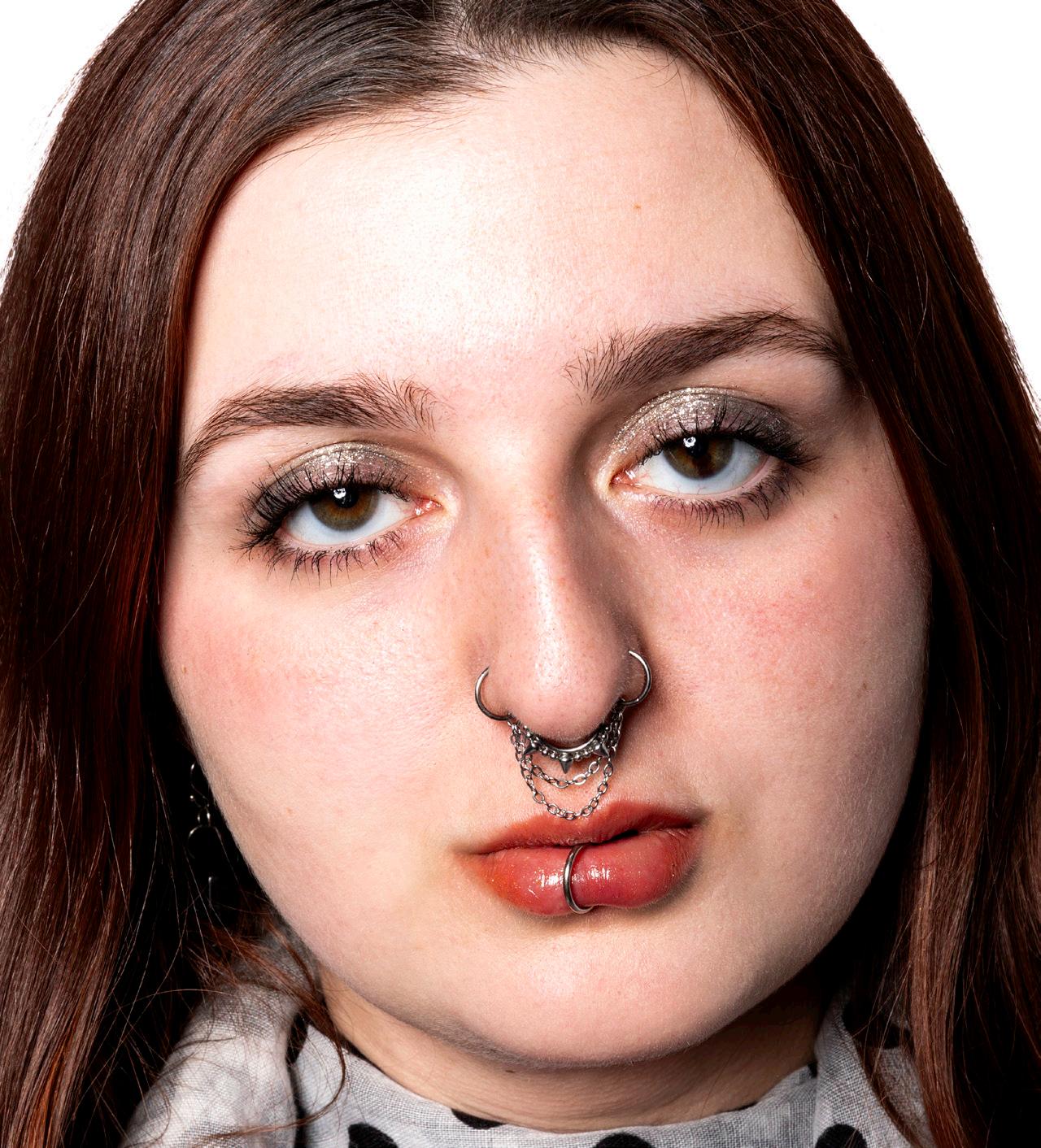
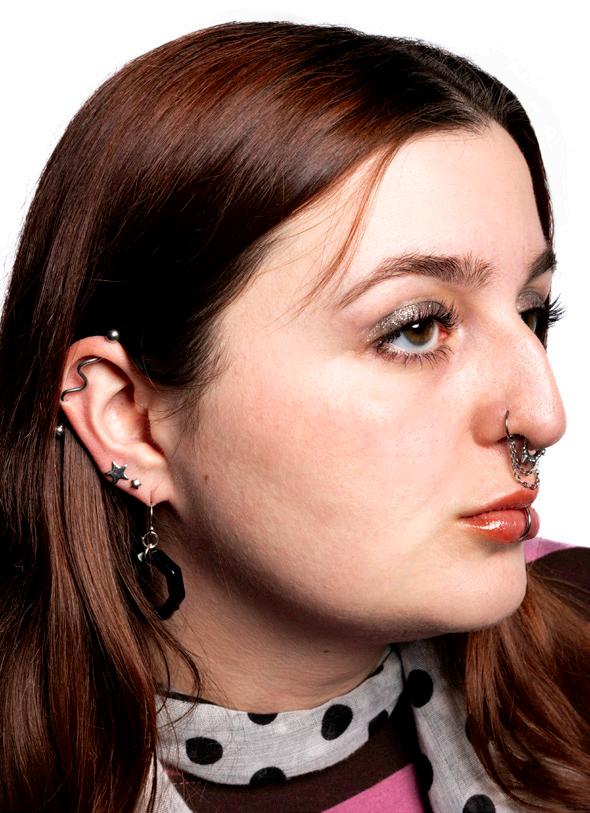
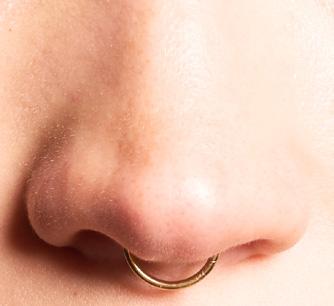
Piercings, from carefully chosen earring stacks to stylish septum rings, are now just as thought out as makeup and other jewelry. What once appeared daring in conventional society has since been normalized. Whether a small nose stud or a bold hoop, piercings enable people to shape their look, elevate their outfits, and express their identity without needing to speak.
The way people look at body modifications significantly changed in recent times. In the past, piercings were often seen as rebellious or pushing limits, tied to alternative and punk movements. Now, models commonly have piercings on fashion runways, in beauty ads, and all over social media.
Rihanna and Zendaya, among other celebrities like Gigi Hadid and Willow Smith, played a significant role in this shift. They are often spotted wearing septum and nose rings and ear piercings from the red carpet to their own street style. Even septum piercings, which have previously been culturally looked down upon, are not so taboo anymore.
Piercings represent more than a trend; they are choices that physically reshape and modify a person’s appearance. Just like dying hair and putting on makeup, piercing placement can change how a person’s facial features stand out.
For a subtle way to show off the jawline and cheekbones, ear piercings are the way to go. Nose and septum piercings nicely draw attention to the middle of the face.
Picking the right color and metal also makes a difference. Gold enhances the warmth of the face, while silver gives off a contemporary edge. For something a bit bolder and alternative, try black or matte metals.
The piercings should complement and enhance a look, not take it over entirely. Wearing a septum ring with natural glowing skin can really make the piercing pop. Earring stacks range from minimal to dramatic, depending on the occasion or setting. Hailey Bieber often mixes subtle studs with her statement hoops to create contrast.
For people considering body modifications, knowing their face shape and preferred metal will make the process go smoother. Choosing safe metals reduces irritation for sensitive skin; it is also imperative to perform the correct aftercare.
Piercings and body modifications allow fashion to live right on the skin. They, like tattoos, are beautiful physical reflections and emblems of a person’s life and history.

PHOTOS
BY
BY LAUREN BARNA
SOPHIE SCHALLER
DESIGN BY SOPHIE
CIANCIOLA
EDITS BY JORI HUSTED MODEL EMMA PERRY
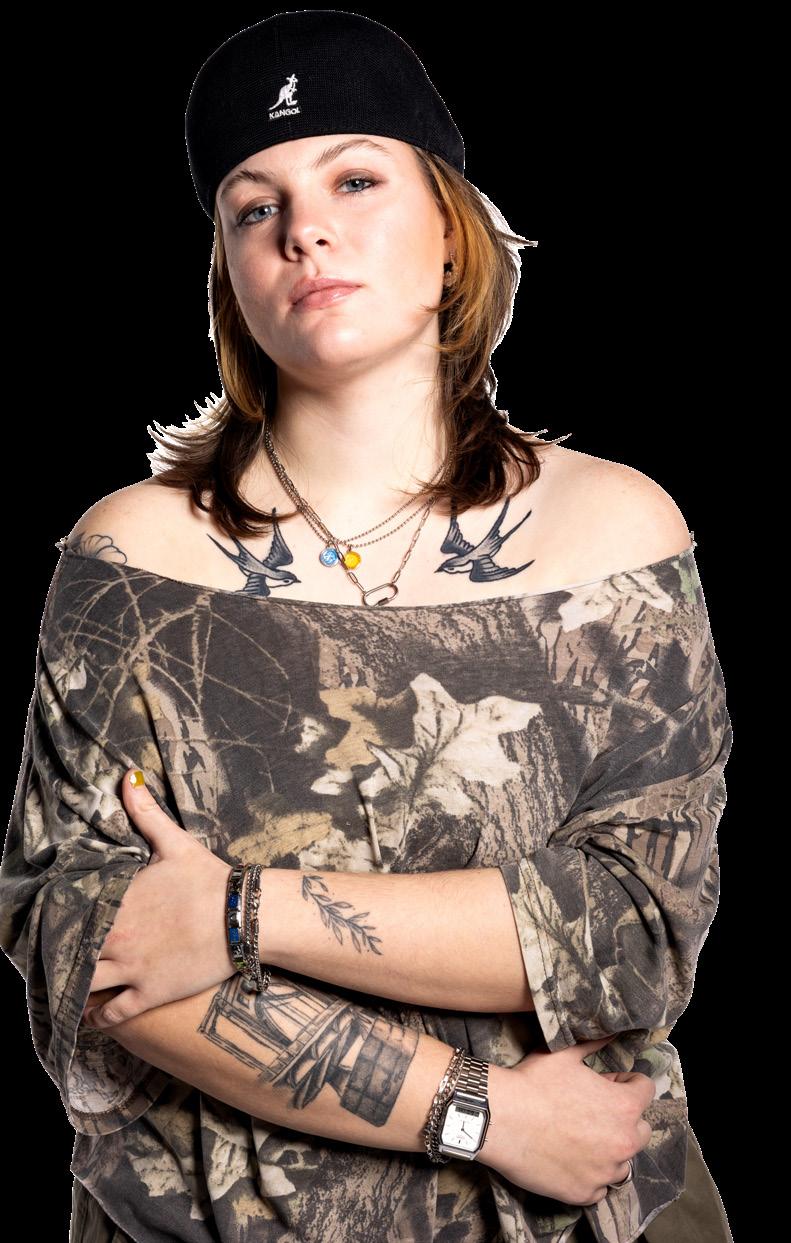
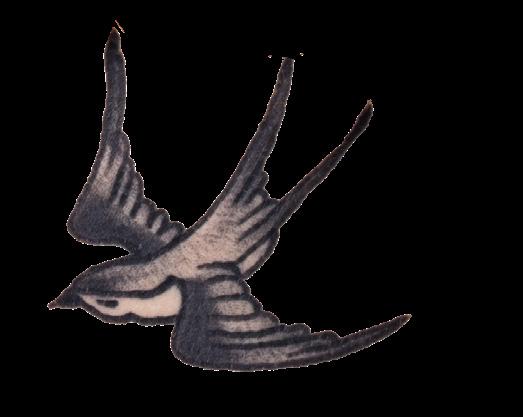
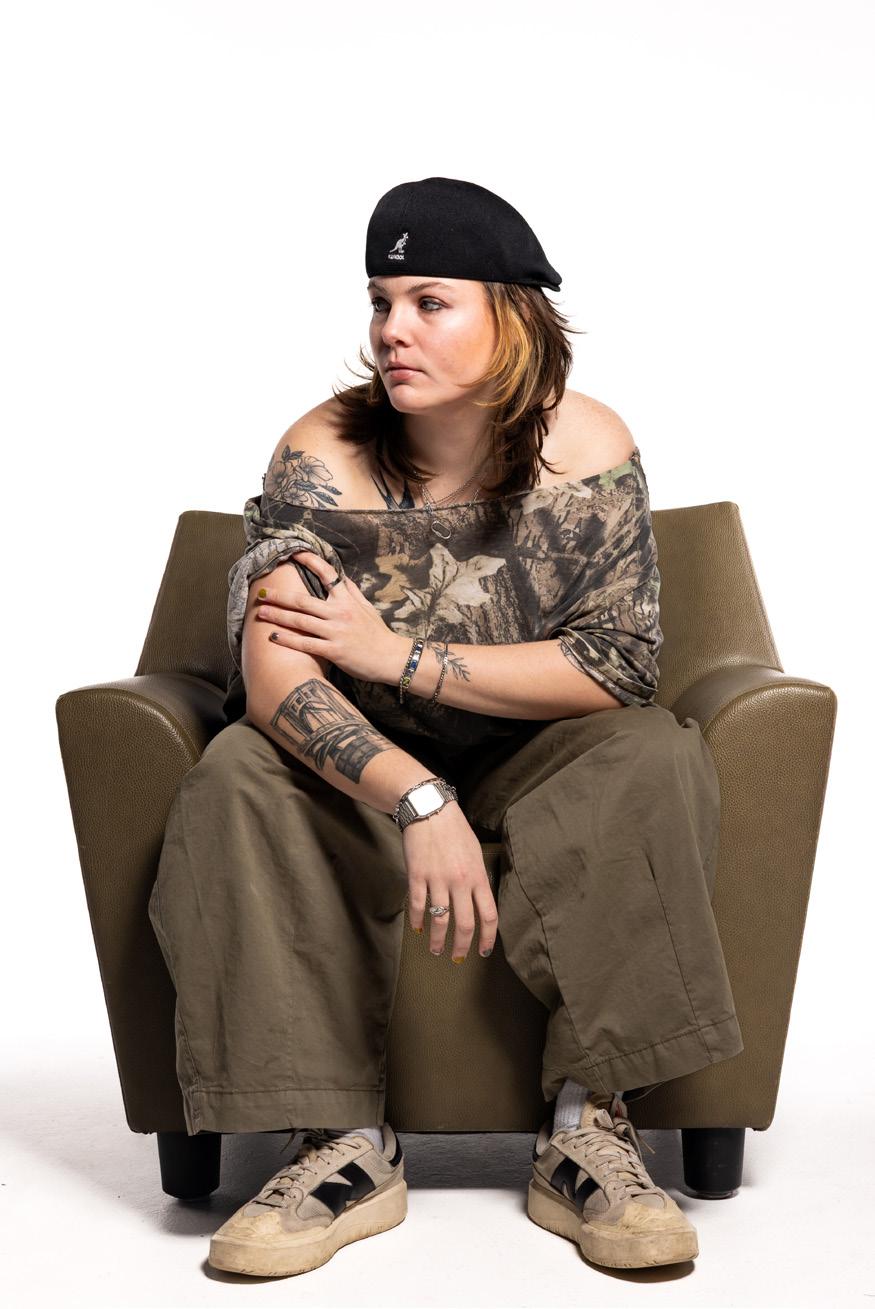
From memorials to milestones, tattoos are a modern archive of human experience — They are much more than just an accessory.
Tattoos can be a gateway to storytelling and learning more about a person. Just like every person has a story, so does every individual tattoo. They are a powerful tool for self-expression because the possibilities for tattoos are endless. This can include historical events, religious or cultural symbols, quotes, or a loved one’s handwriting, to name a few.
For example, if someone noticeably has words tattooed on them, it can lead to a beautiful conversation about a special saying in someone’s life and what its permanence on their skin means to them. Many tattoos can also serve as metaphors to honor a hardship faced or as a way to overcome a traumatic experience.
As deep as these meanings can be, tattoos can also be a fun reminder of youth. Many people wait until they are well past 18 to get their first tattoo to ensure it is something meaningful, but sometimes silly tattoos inked on the spur of the moment are the most impactful.
As intriguing as basic flowers are, it can be just as exciting to get a memento from childhood tattooed. The freedom of getting anything that comes to mind tattooed forever is part of the allure. It allows the artist and the person receiving the tattoo’s artistic style to flow freely.
Artists are able to tell their story not just by having tattoos, but by creating designs for other people to have as well. Each new inked addition to the skin feels like piecing together a new chapter of the same story.
Despite the controversy tattoos used to cause in society due to them being deemed unprofessional, they have become more normalized by an influx of Gen-Z individuals who do not care what the system tells them to do. By seeing people’s new ink on TikTok or Pinterest, the temptation creeps in; in the blink of an eye, the buzzing of the needle has begun.
By getting a tattoo, the body becomes a personal canvas that the individual fills with their stories, ambitions, and desires.
BY ABBY JOYNER
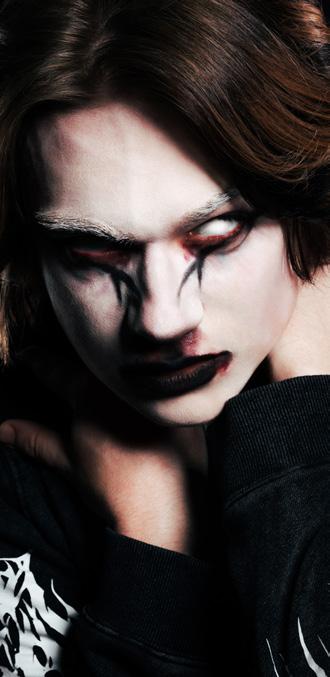
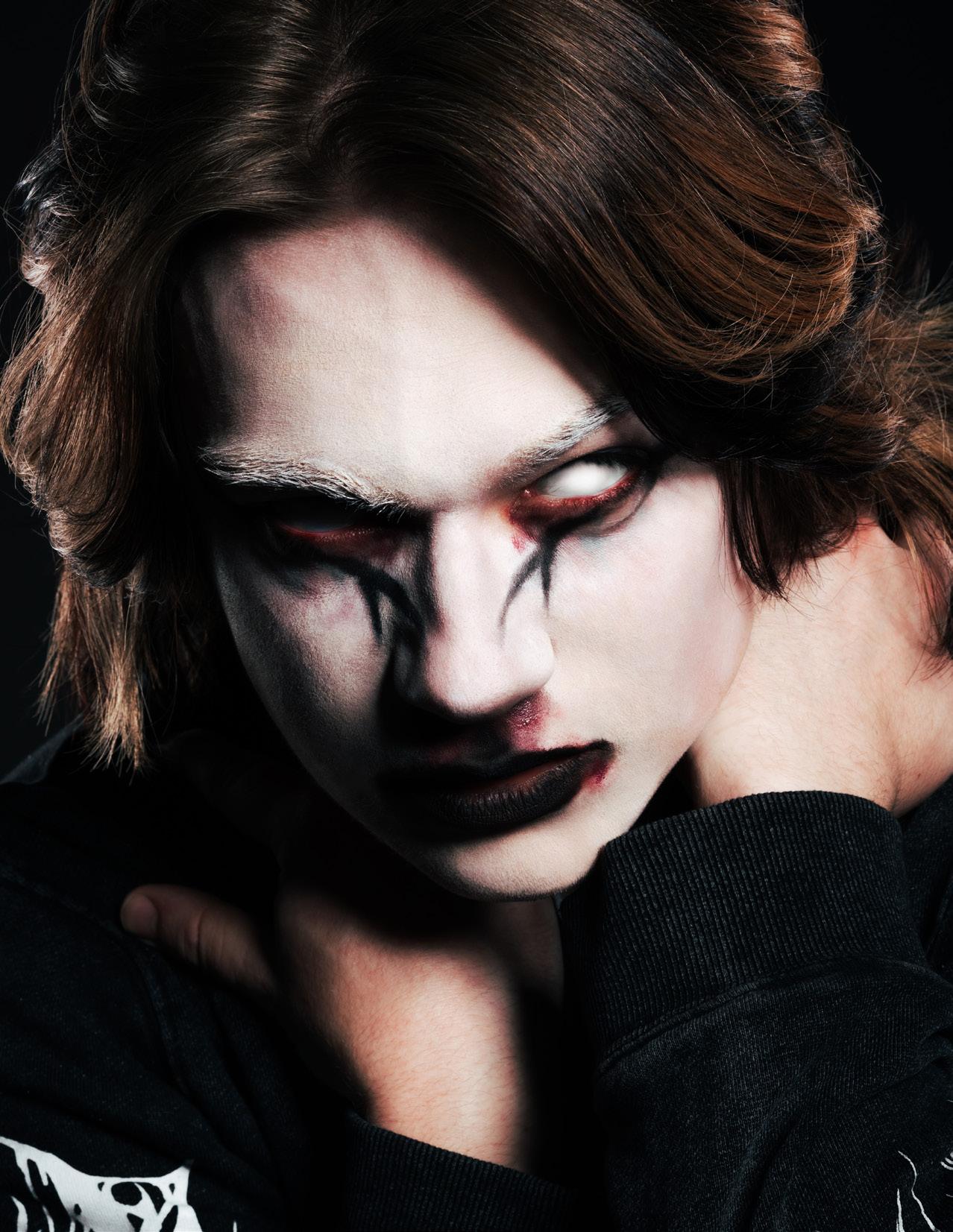
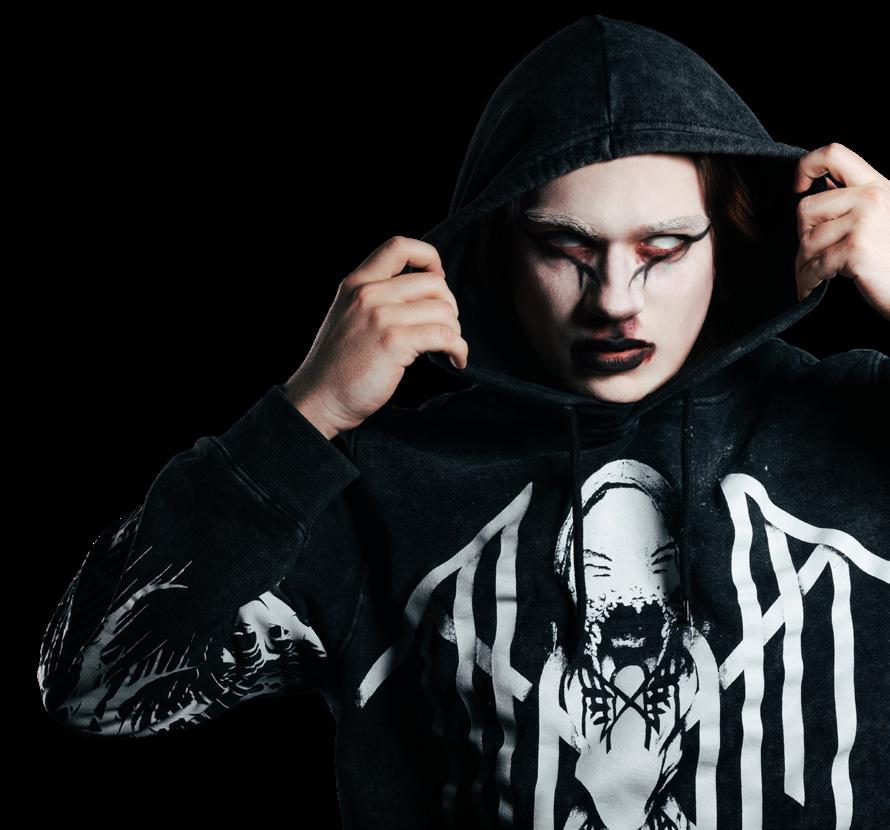
The effects, makeup, and prosthetics used to elicit fear and terror from spectators emblematize the art of body horror. These makeup and special effects artists create nightmarish heralds of death, gore, and the grotesque through an acute penchant for physically constructing the discomfort humans can feel towards their own bodies.
Body horror is not for the faint of heart. Common elements of this makeup style include peeling back skin to reveal bloodied bone and flesh, stitching that skin back together, enlarging or compressing body parts, or replacing features with inanimate materials like rope, furs, or plants. Artists patch over an eye, erase the nose, or cover the mouth. This has the uncanny effect of revealing to viewers certain anxieties and fears towards the body, which are grotesquely stretched and dismembered to emphasize the complex human emotions tied to horror.
The horror of this kind of makeup stems from the fact that it visually distorts, rearranges, or eliminates physical features—it removes a person’s humanity in favor of something animalistic, mechanical, or monstrous and pushes the boundaries of the human body beyond its capabilities. Viewers feel the disgust or repulsion in their own bodies, rather than their minds; unlike psychological horror, which torments the brain, body horror instead affects the entire body.
Champions of body horror makeup and artwork ask their viewers to reflect on their humanity and how their bodies function in society. Much of this genre of effects makeup ties back to representing death, decay, and disease in the most viscerally disturbing manner possible, making a point to blur lines between life, transformation, and death.
Sometimes, body horror makeup is done for personal enjoyment, for seeing the limits and possibilities for transforming the human figure, while most artists seek to make a complex argument regarding their physical being.
For example, by replacing
the shape of one’s mouth with rope, a female body horror artist potentially makes an argument on the lack of autonomy women face in certain cultures. Meanwhile, graphic makeup depicting diseased and mutilated flesh comments on the ephemerality of humanity.
Talented makeup and special effects artists use latex, blood, silicone, cardboard, and other prosthetic pieces to tear away or augment anatomy. In his remake of “The Fly” (1986), notable body horror director David Cronenberg employed practical effects master Chris Walas and makeup artist Stephan Dupuis to create the layers of transformation undergone by Jeff Goldblum’s character. To do so, they used varying sizes of contact lenses, masks, and differing prosthetics, which became more complex with each new layer.
The trick is to think outside of the box and combine unconventional materials to create something truly unsightly, grotesque, and weird. Body horror makeup offers a medium for artists to employ the macabre as a vehicle for punctuating anxieties directed at the human
BY GRACE SCHMIDT
ILLUSTRATIONS BY SULLY
POTTER
DESIGN BY GEORGIA BOOTH
Emily Ratajkowski is a model, actress, and author of the novel My Body, a vulnerable essay collection that discusses her own relationship with her body and the world as a model. In an interview with Seth Meyers, Ratajkowski described the book as an “act of control” for her. The introduction states that she aims “to examine the various mirrors in which I’ve seen myself: men’s eyes, other women I’ve compared myself to, and the countless images that have been taken of me.”
In these essays, Ratajkowski is not asking for sympathy, but simply relays the conversations about her body and walks the reader through her thoughts during them.
Ratajkowski began by evaluating the internet’s relationship with her body and how it has shifted throughout her career. One of her first major jobs as a model was her role in the music video for “Blurred Lines” by Robin Thicke featuring T.I. and Pharrell Williams. The music video is infamously controversial because of Ratajkowski and the other models’ nakedness in the video, hotly debating whether it exhibits misogyny.
“The world was shocked to hear me respond that I didn’t see it that way. I was secure in my body and my nakedness on set, I’d tell them honestly,” Ratajkowski said.
The success of “Blurred Lines” officially launched Ratajkowski’s career, prompting her to move to New
York City. Ratajkowski acknowledges that the success of her career achieved what every model desired: “to be known for their beauty.”
But Ratajkowski didn’t feel the happiness she expected to feel at that stage; she felt out of control. She fell into a spiral of denial, like her success was something she stumbled into and didn’t earn.
“I’m nothing more than an LA piece of ass to them. I’m not talented. I’m not even that pretty,” she said.
Ratajkowski admitted that a main motivator for her modeling career in the beginning was the money. She explains how initially it was empowering but soon felt limiting, that “it had never occurred to [her] that the women who gained their power from beauty were indebted to the men whose desire granted them that power in the first place … Facing the reality of the dynamics at play would have meant admitting how limited [her] power really was.”
Ratajkowski’s novel feels like diving into the mental spiral she has around her body. Her worth felt dwindled down to how she was perceived, and she became hyperfixated on the reassurance of beauty, a reassurance most female readers have experienced
“it had never occurred to [her] that the women who gained their power from beauty were indebted to the men whose desire granted them that power in the first place…”
themselves; but her final paragraph describes the wonder she felt when holding her son for the first time and the gratitude she felt toward her body: “The mirror was pushed to the side, but I could still see the place from where he emerged. My body.”
Ratajkowski continues to be a strong feminist activist for women’s rights and liberating women’s bodies via her social media. When asked what feminism is in an interview with Office, she said, “It’s literally the power to choose. Whatever you want to wear, however you want to present yourself, whatever your profession wants to be — you should not be judged on how you use your body, or don’t use your body, as a woman.”
BY AVERY ST. GEORGE
ILLUSTRATION BY SULLY POTTER
DESIGN BY EMMA HENRY
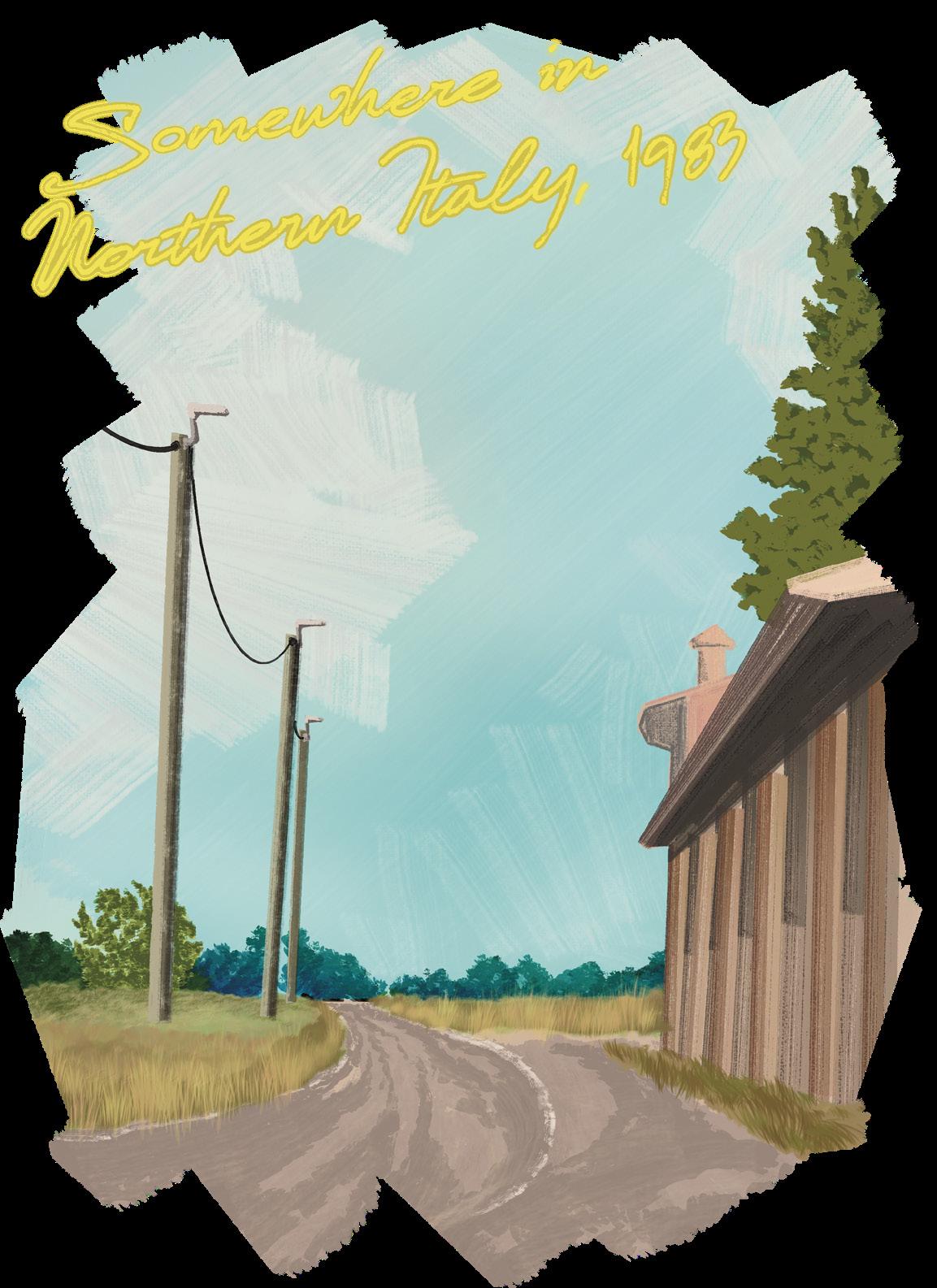
Luca Guadagnino is one of the trailblazing 21st-century directors who seek to bring change to the film industry. He is best known for movies such as “Call Me By Your Name” (2018) and “Challengers” (2024) that break the boundaries of typical romance stories in film. In an interview with IMDb, Guadagnino said he hoped that he didn’t have a specific “style” of directing, and he wants his movies to feel almost like a second language to his audience. Arguably, he may have achieved this feat so far in his career. When thinking of his most popular films, from the tranquil landscape scenes of “Call Me By Your Name” to the fast-paced camera movements of “Challengers,” it’s hard to point out a specific pattern.
Guadagnino’s not afraid to try new ideas or experiment with different genres, from horror to sports to coming-of-age, in order to tell a compelling story. The one thing you can define the Italian director by is his creative risk-taking. His filmography tells stories about samesex relationships, age-gap relationships, or other stories that aren’t always represented in the media. Guadagnino’s films are all about exploration.
Guadagnino displays immense emotional depth in his characters, which explains why people resonate so well with his movies. It’s impossible, for example, not to feel any emotions when Elio breaks down at the end of “Call Me By Your Name” in front of the fireplace after having a heartfelt conversation with his father. Most of all, Guadagnino makes his characters human. They make mistakes, get embarrassed, and have flaws that an audience can relate to.
Guadagnino has been directing since 1997, but found his breakthrough with “I Am Love” in 2009, which was nominated for an Oscar, and “A Bigger Splash” (2015) starring Ralph Fiennes and Dakota Johnson. He’s worked with an impressive array of actors during his career, including Tilda Swinton, Daniel Craig, and Timothée Chalamet, but the setting of his films is sometimes more important than the people in them.
The location of a Guadagnino film is incredibly important to the story he’s trying to tell. From Mediterranean villas to tennis courts, he masterfully crafts these worlds for the audience so it feels as though they are living alongside the characters as well. The still shots and the landscape shots serve to connect viewers with these places that become as important as the characters that are in them. Audiences become immersed in these worlds that are merely temporary, but they find themselves longing for them as though they had actually been there.
Guadagnino was born in Sicily in 1971 and speaks three languages: Italian, English, and French. Many of his films, like “I Am Love” and “Call Me By Your Name,” are set in Italy, and his trilingual upbringing is apparent through his characters who often speak multiple languages and navigate cultural differences. However, it was his American film “Challengers” that found the most success, earning over $96 million worldwide at the box office.
Since then, he has been highly sought after in Hollywood, with many hoping he will continue to portray queer stories on film. LGBTQ+ representation is consistently lacking in Academy Award-nominated films. Standout films such as “Brokeback Mountain” (2005) and “Moonlight” (2016) have made a short-lived campaign into mainstream media, but there is still a long way to go for the film industry.
A glimpse into some of Athens’ most captivating people, places, and events.
On Saturday mornings, the Athens Farmers Market feels like a testament to the community’s efforts toward a sustainable food system — reusable totes slung over shoulders, bunches of beets or homemade mozzarella, and vendors who know customers by name. Athens seems like a success story, or at least a small beacon of hope for a future of sustainable, healthy, and accessible food in Appalachia. But do farmers and customers feel this model is working?
Most days, Art Trese, a retired adjunct professor from Ohio
University, can be found at the Ohio University Student Farm, managing the day-to-day tasks and directing interns and volunteers. After teaching OU’s Sustainable Agriculture course for decades, Trese continues to volunteer his time at the farm. Even so, Trese acknowledged the complexities and shortcomings of sustainable food movements.
“In all those 60 years of growing food and teaching sustainable agriculture, … we have no idea what sustainable agriculture needs to look like,” Trese said. “I would argue, there’s no farmer out there right now that can tell you ‘I’m practicing sustainable agriculture’, if they’re a commercial farmer.”
Trese did not dismiss the efforts of local farmers to be more sustainable, but his gripes lie with

BY OLIVIA LEGGANS
ILLUSTRATIONS BY GRACE CALLAHAN
DESIGN BY GRACE CALLAHAN


who, what, wear
“If we grow so much food that people can go to the store and buy abundant food, beautiful food, for very little money, that’s a sign of the success of the American system. But it certainly came at the cost of small farms.”
ART TRESE
winter, I only buy from the farmers market.’ But, honestly … I do my shopping at Aldi and Kroger,” Le Melle said. While Le Melle does more than most, she said she often defaults to the cheapest option.
“You can only do what you can in the moment. I’m not gonna beat myself up about every choice,” Le Melle said. “That sounds exhausting.”
Jason Gadrim, an Athens local and kitchen manager at The Pigskin Bar and Grille, feels that he lives “checkto-check.”
“I have this exact amount of groceries, and then right when I get paid, I’m out of food,” Gadrim said. Despite producing food for others, Gadrim said he cannot buy fresh food consistently, let alone from sustainable farms with higher price tags, but he tries his best to buy locally and ethically produced meat.
As corporate chains sweep Court Street, Gadrim said the love of real food is dying. But for Gadrim, the Athens food community was part of the reason that he moved here, and he believes it has the potential to bounce back.
Many criticize sustainable food for being overpriced, but a more holistic view of the U.S. food system shows that sustainable farmers are not better off.
“A pride of America was that if we grow so much food that people can go to the store and buy abundant food, beautiful food, for very little money, that’s a sign of the success of the American system,” Trese said. “But it certainly came at the cost of small farms.”
Chris Chmiel, Athens County Commissioner, is the face behind Integration Acres and the PawPaw Festival. Chmiel spoke on the constant pivots farmers make to stay afloat.


“A lot of stuff went great, but, financially, no, it was not okay,” Chmiel said. “I’m changing because I want it to be sustainable; you have to be economically sustainable.”
Adam Blaney, of Blaney Family Farm in Albany, Ohio, also emphasized that many do not consider the financial well-being of farmers.
“We have to make a living doing this, so if we cannot make a living, then we are not

sustainable,” Blaney said. “That doesn’t mean we sacrifice our principles.”
Even with concerns voiced by residents and farmers, a resounding theme emerged: sustainable food practices are only feasible because of localized community participation. While it is nearly impossible to scale sustainable agriculture practices within our current globalized food system, there is hope for small-
scale communities to be self-sufficient by relying on each other.
“I feel delusionally, insanely hopeful,” Le Melle said. “I have lots of faith in humanity, and I can say on the local scale, like the small scale, I’m very hopeful because I feel like I have so many friends and people who are doing the things that I want to do.” who, what, wear
A look into Thread’s creative shoot concepts.
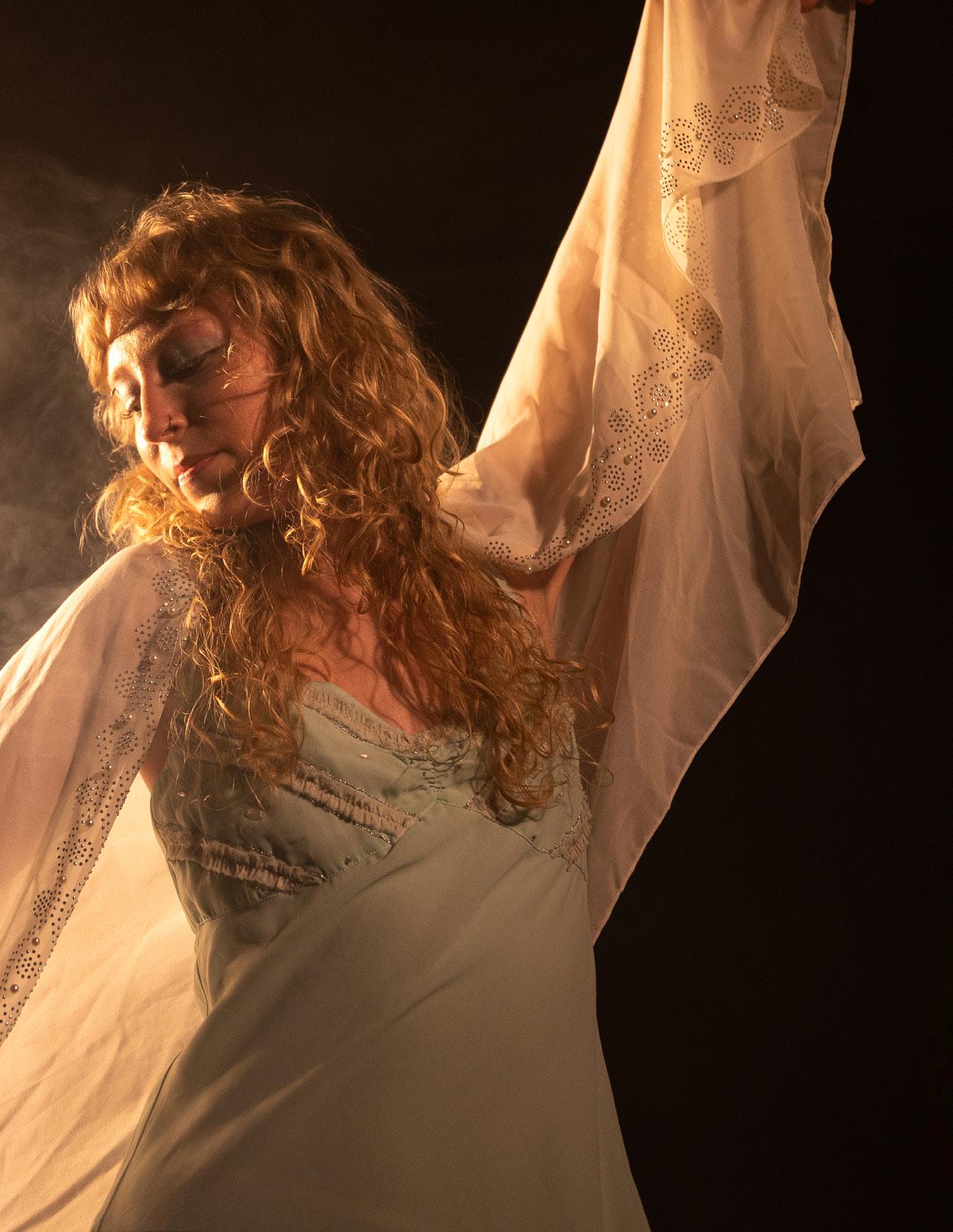
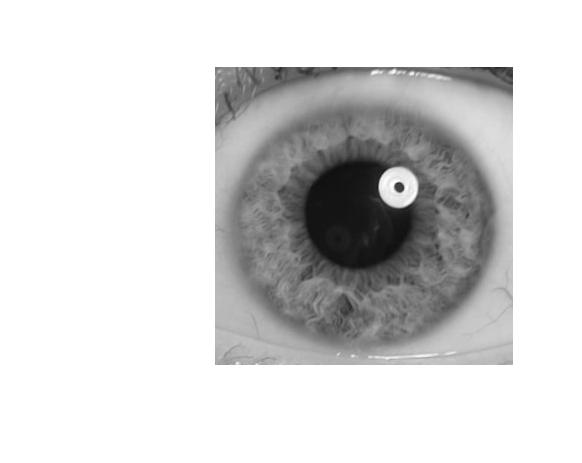
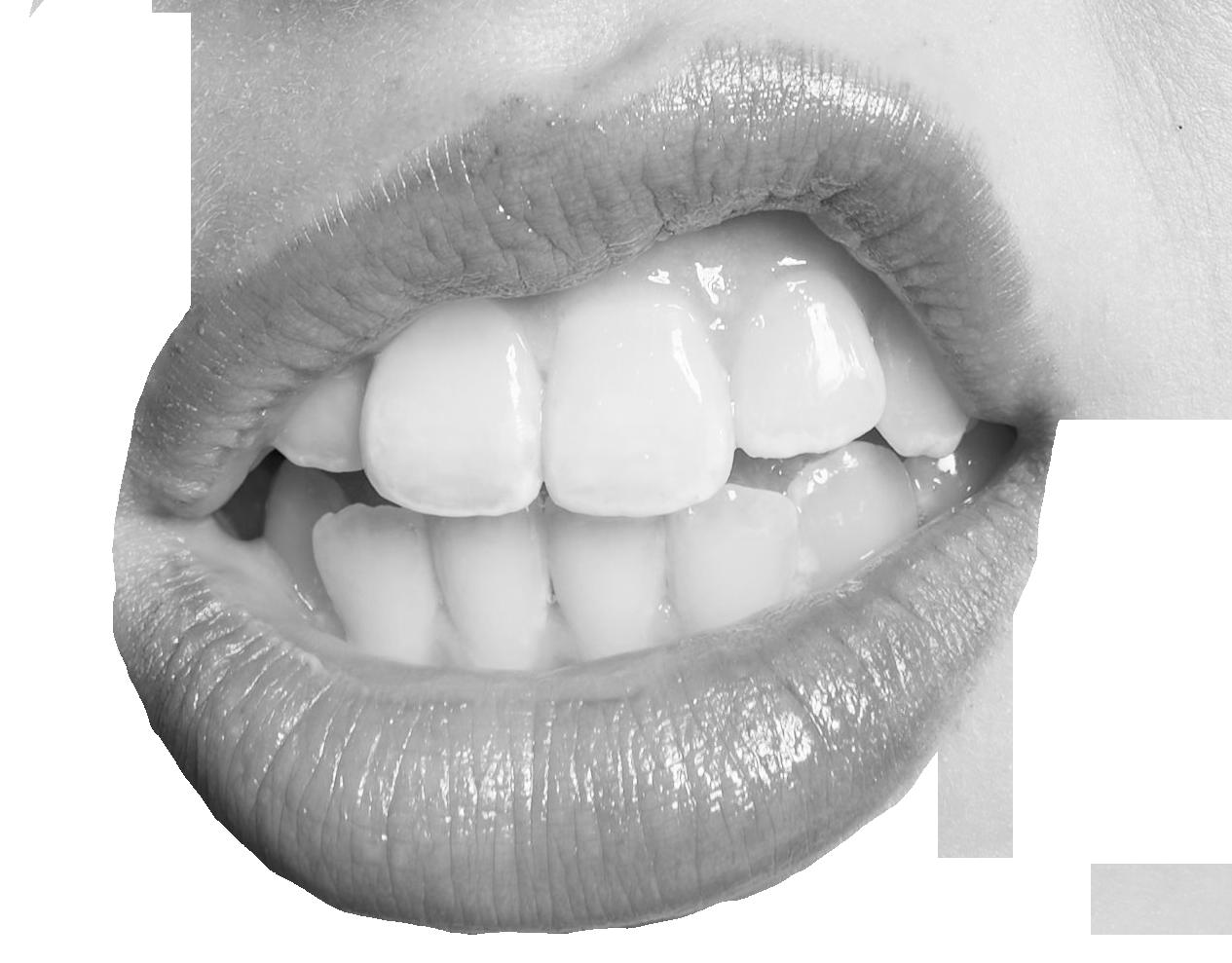

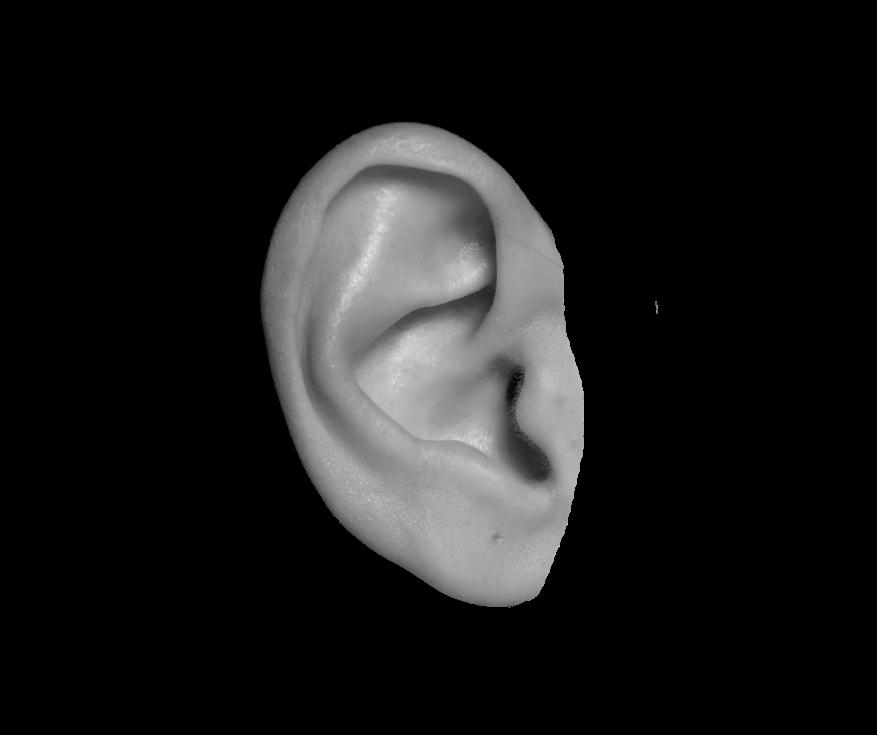

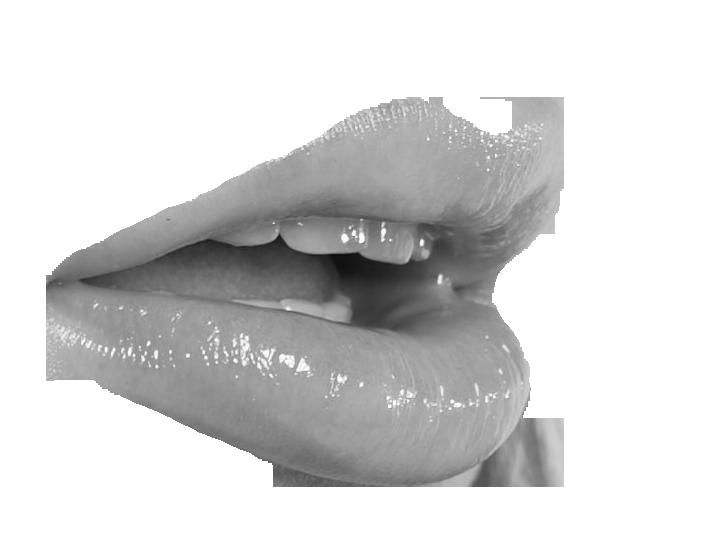
















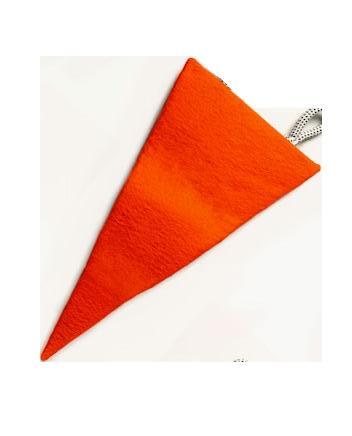
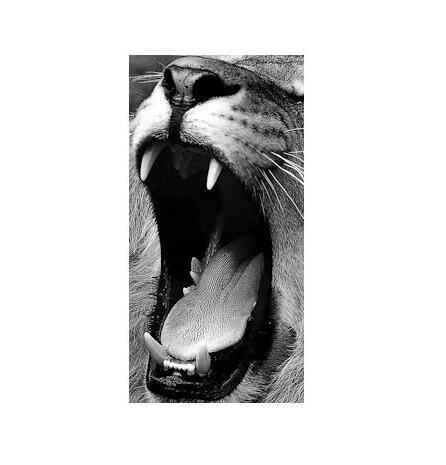

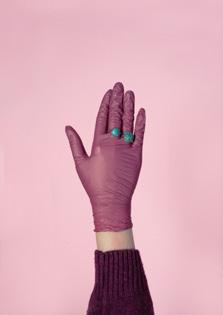
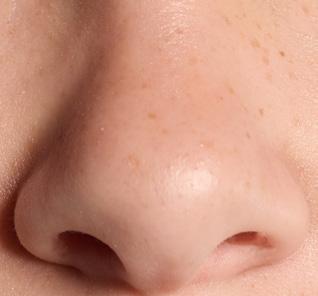
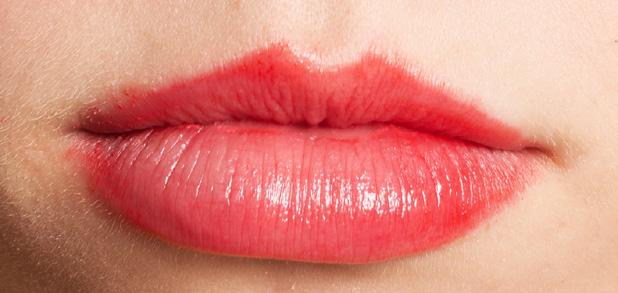

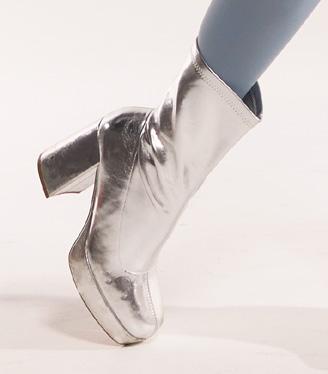
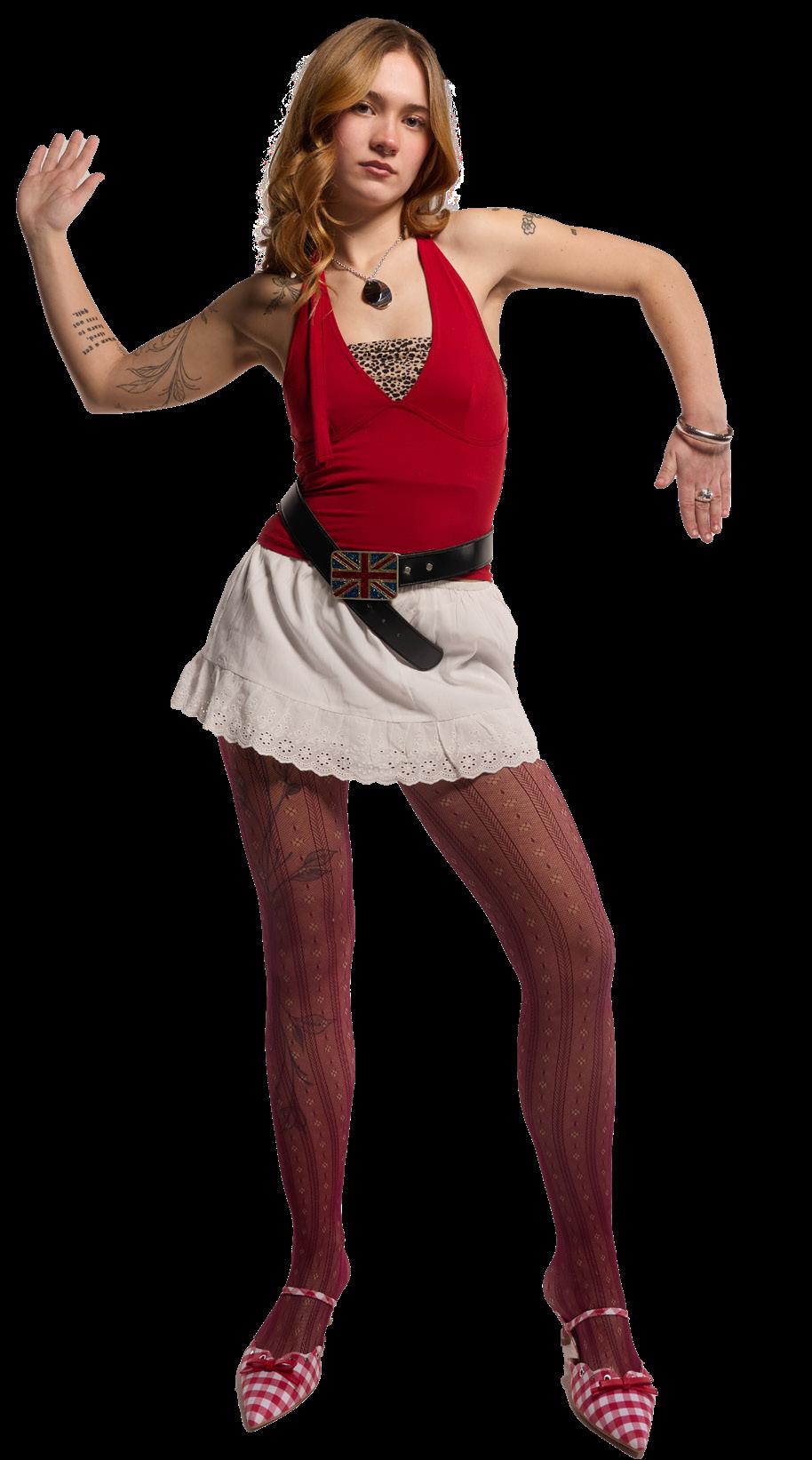
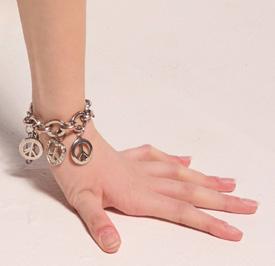

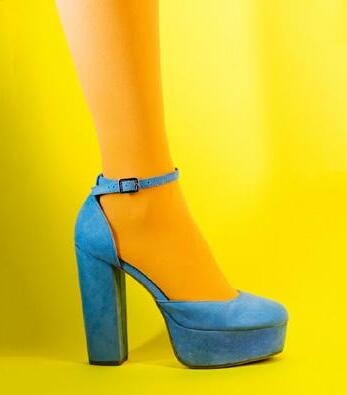

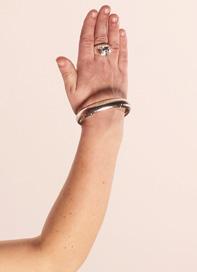
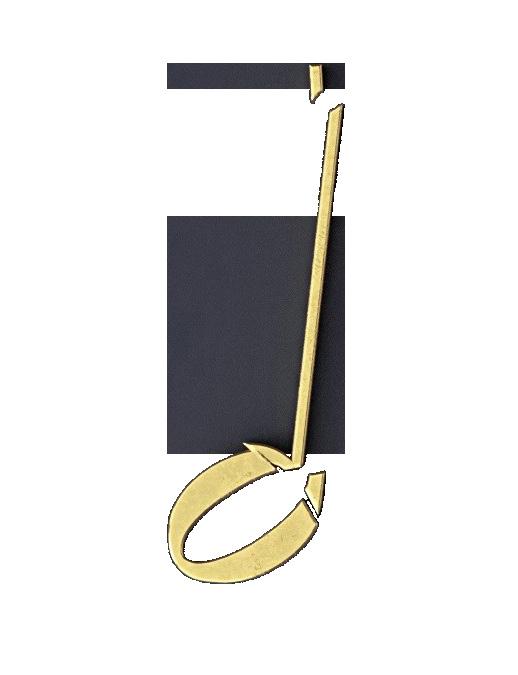
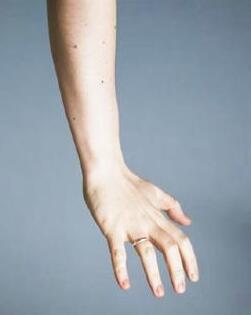
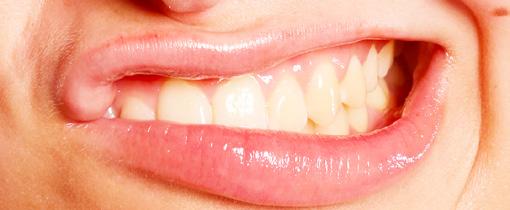
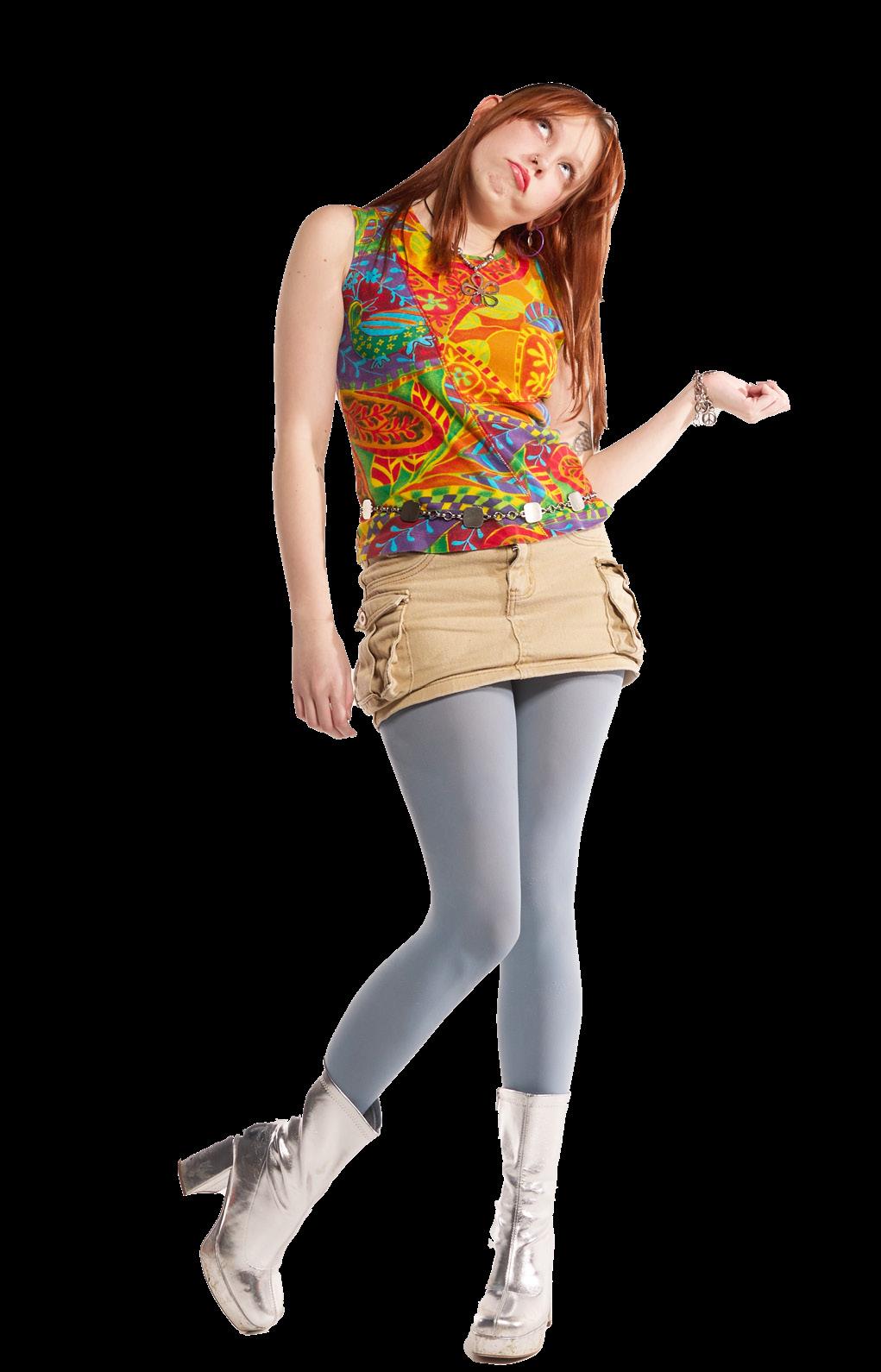
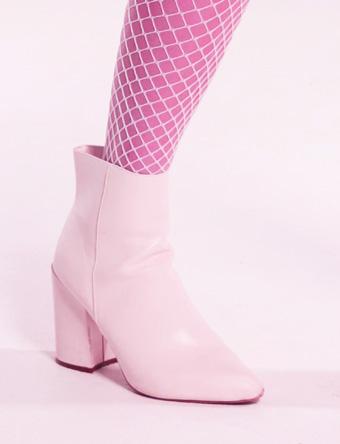
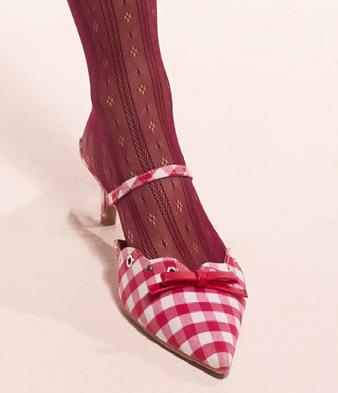

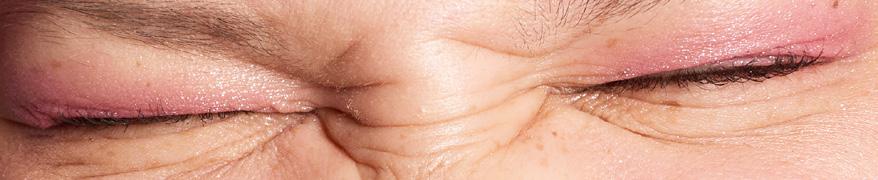






PHOTOS AND EDITS BY NATE CONKLIN DESIGN BY CARLY HART
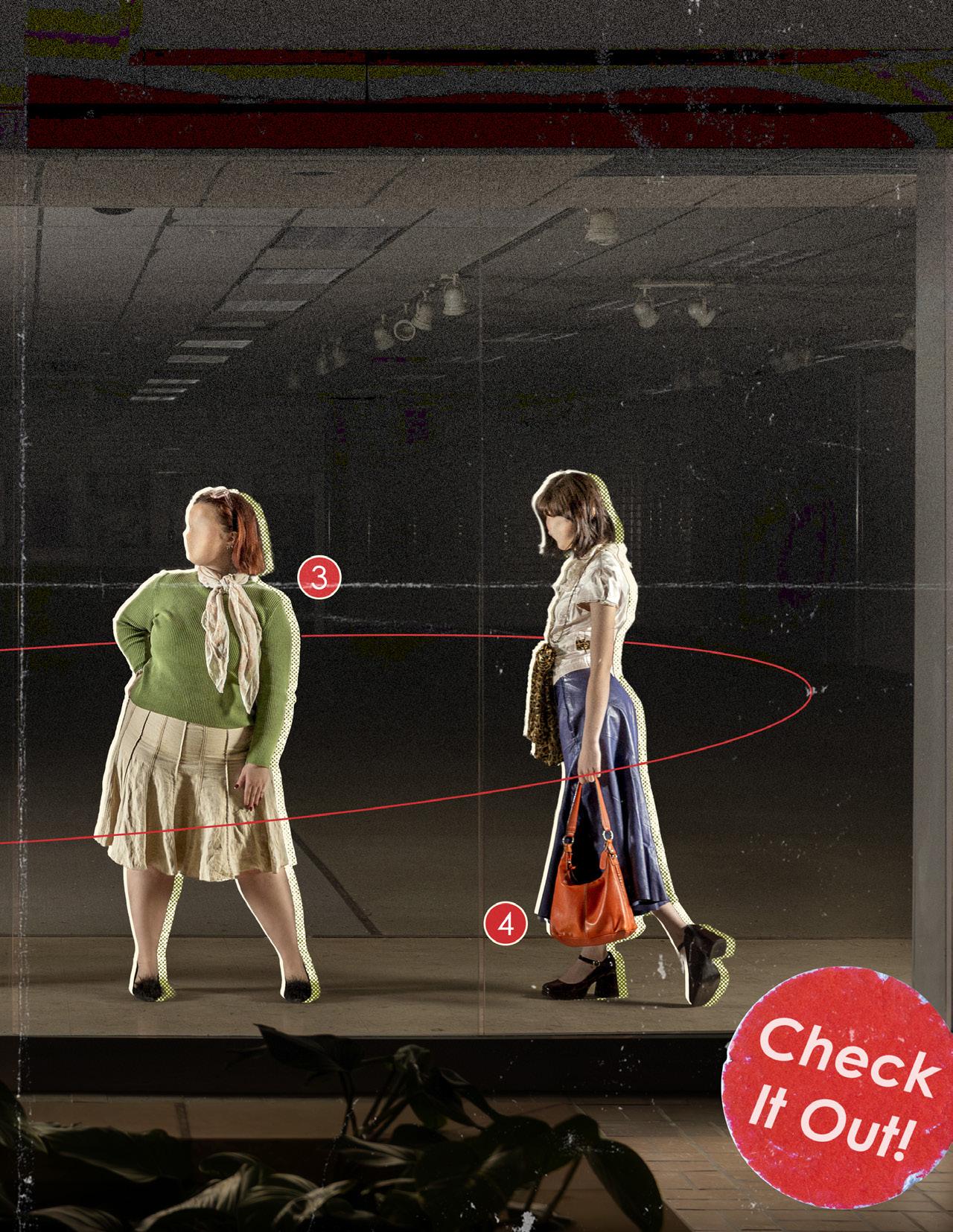
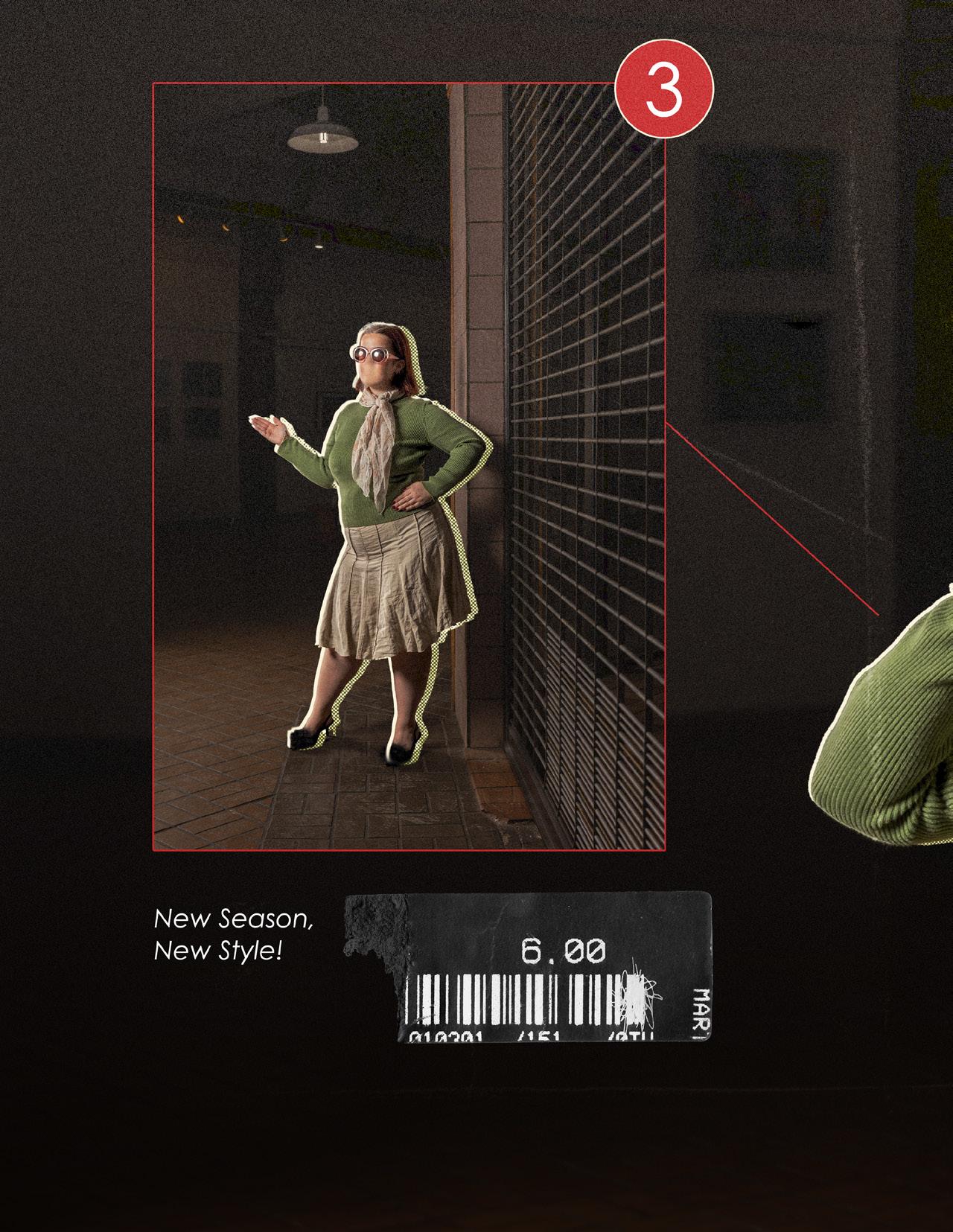
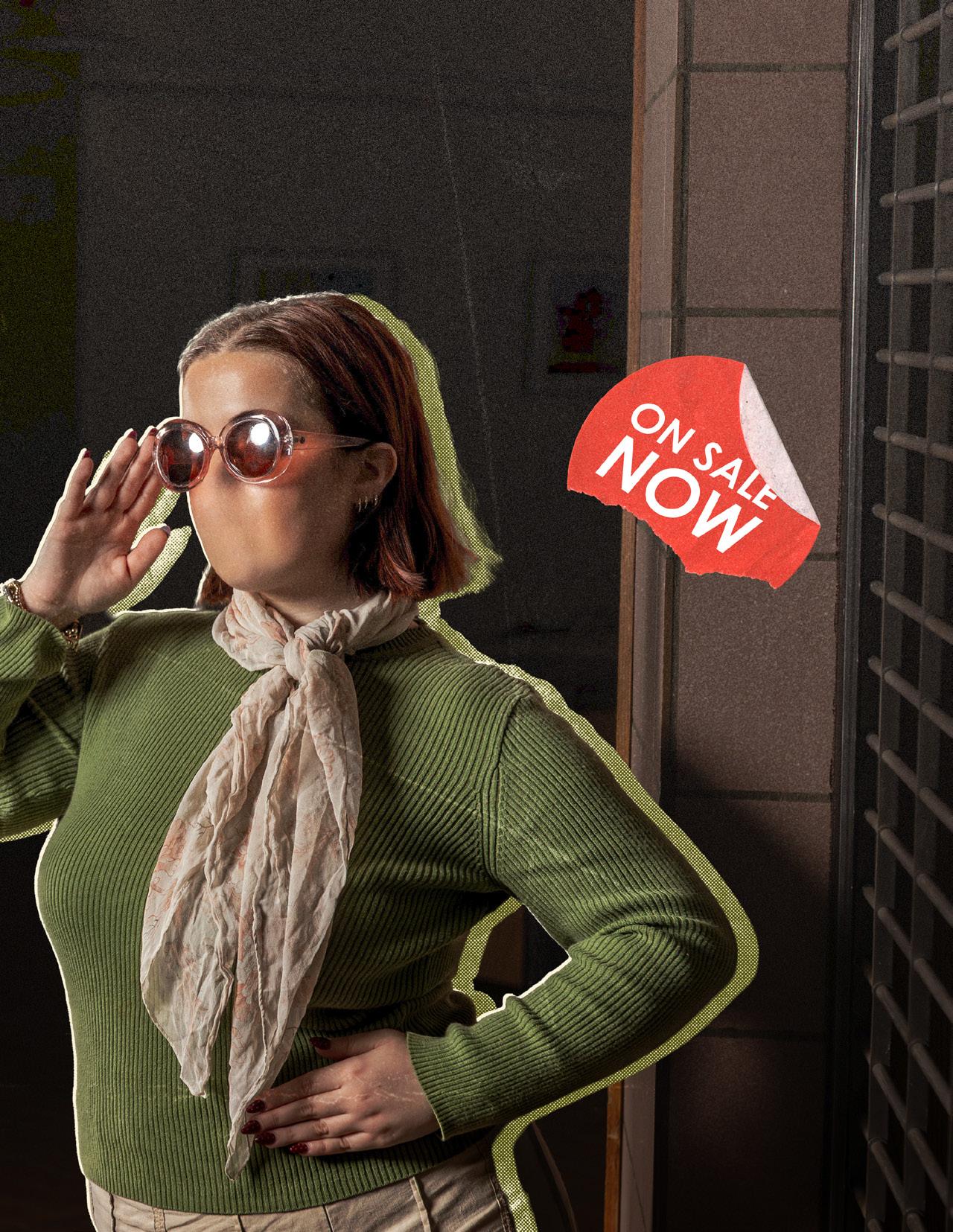
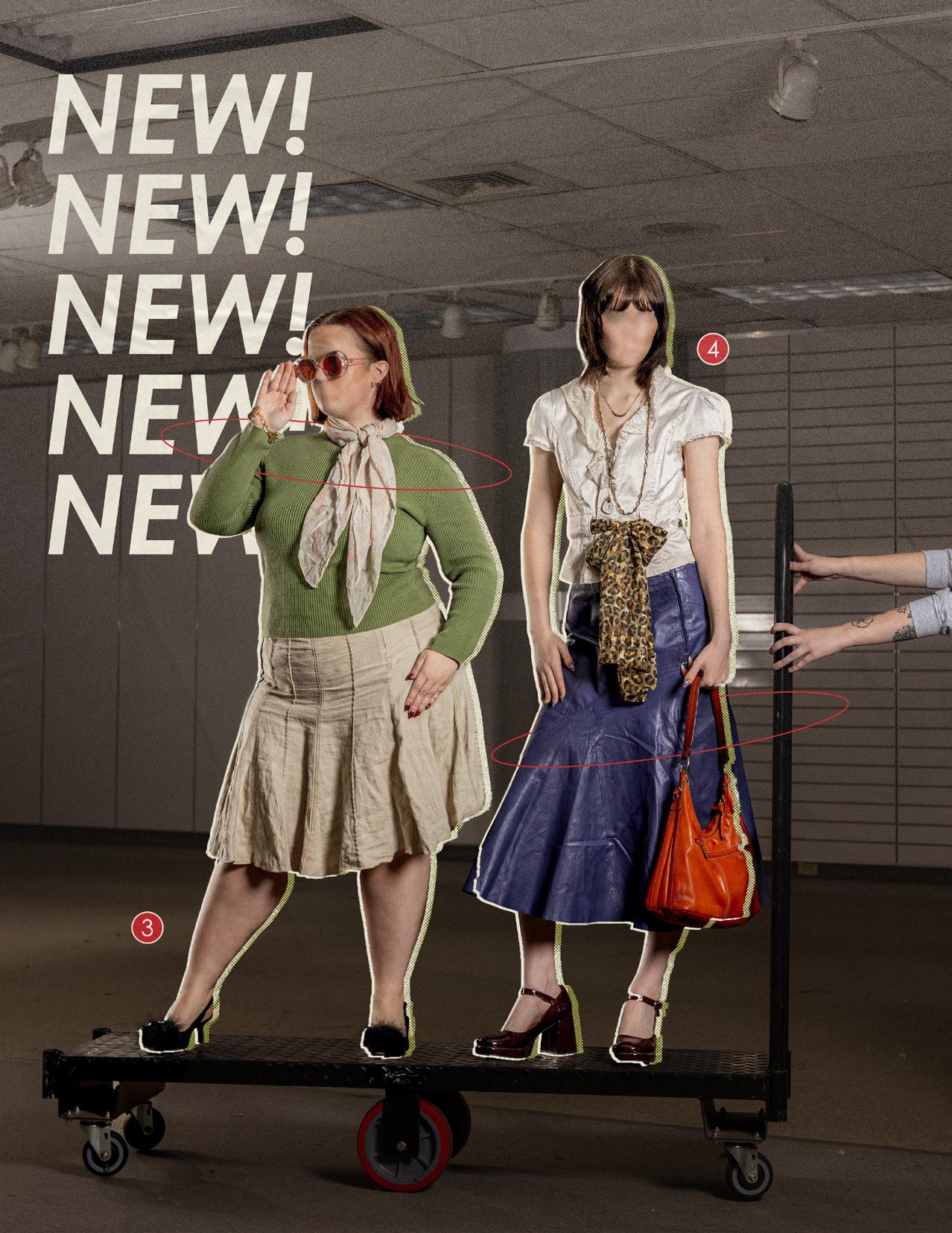
PHOTOS ELLIE DUNCAN EDITS BY ANDY MCLEAN DESIGN ELLA HUELSKAMP
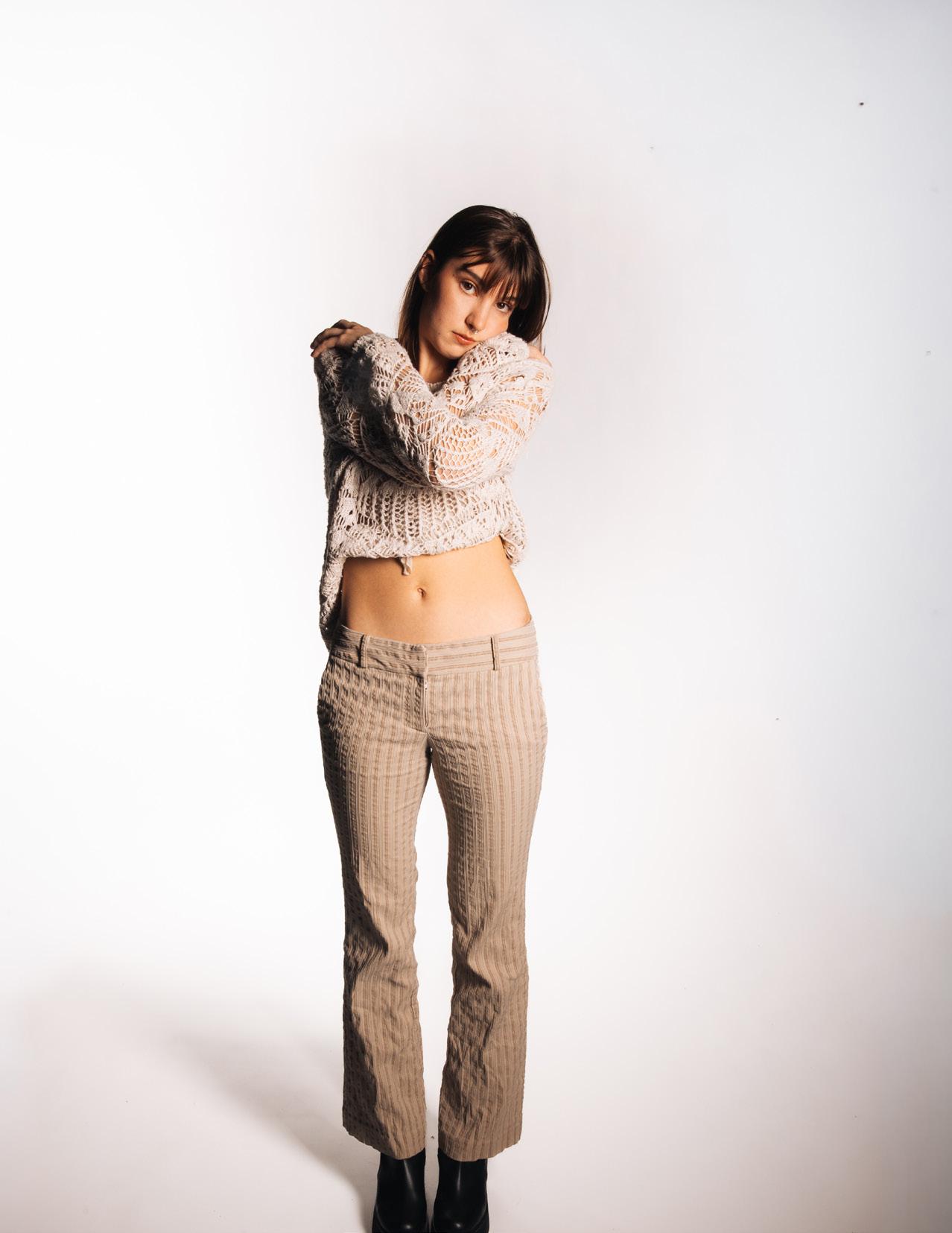
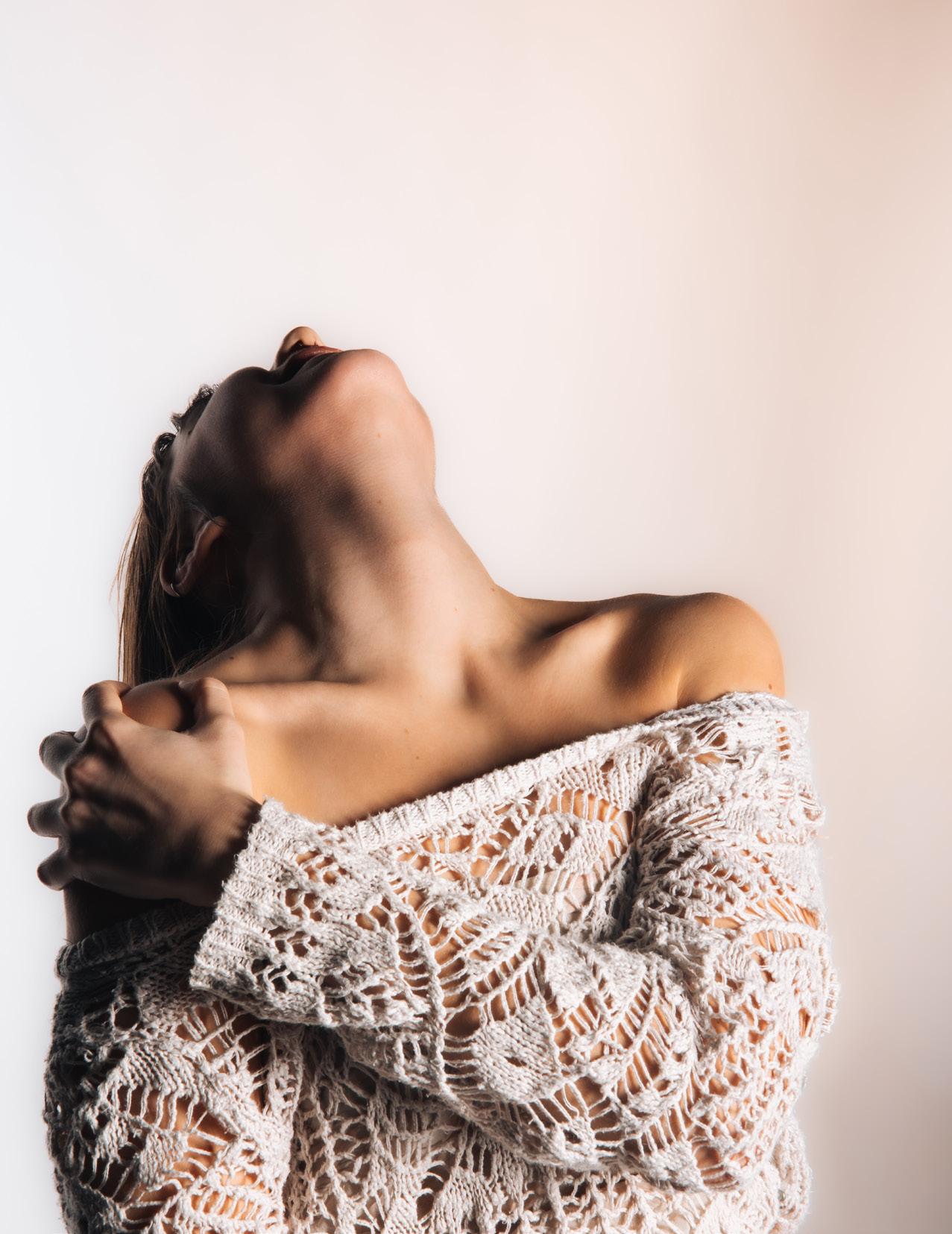
Exploring the shape and structure of fashion, and how garments define the body
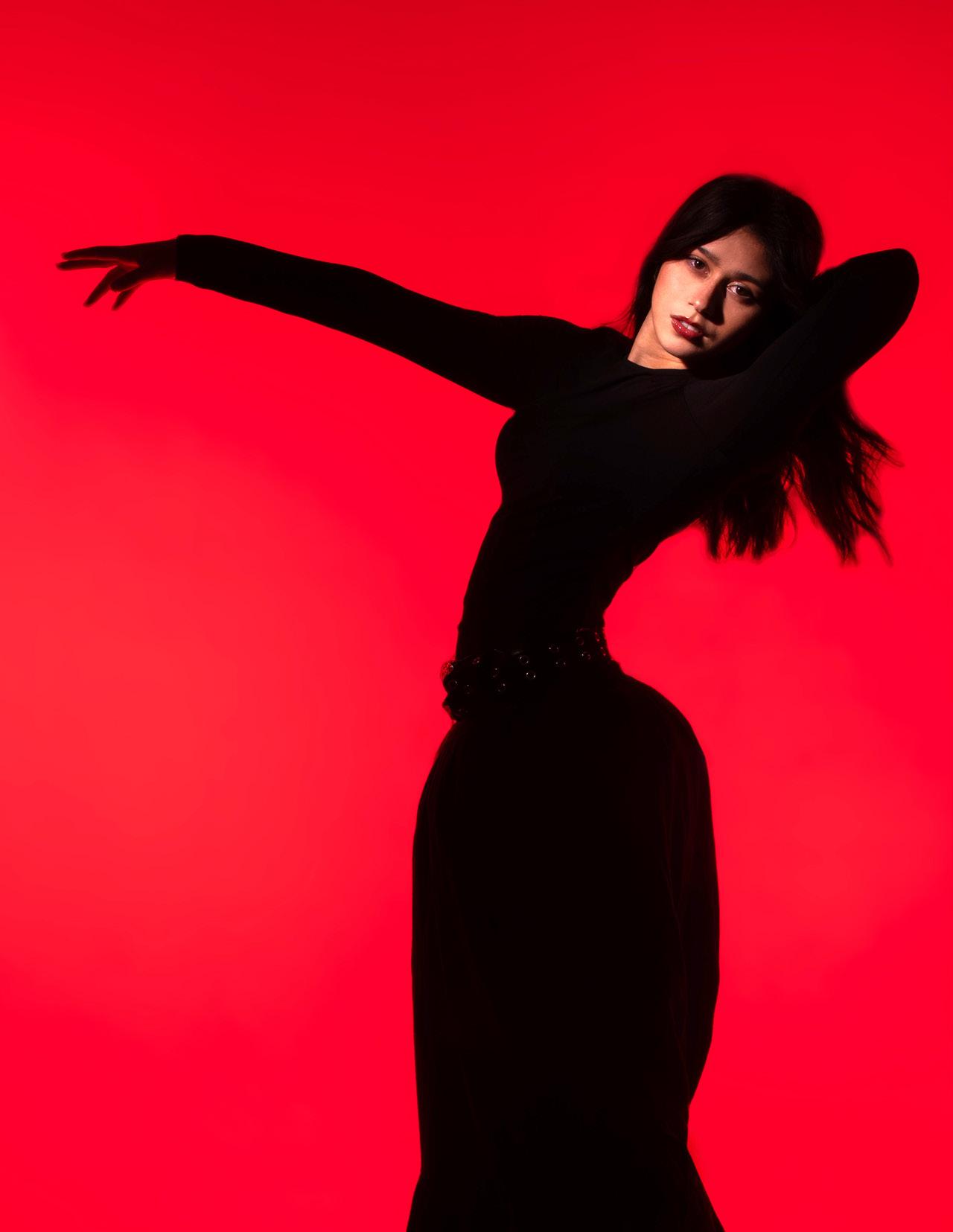
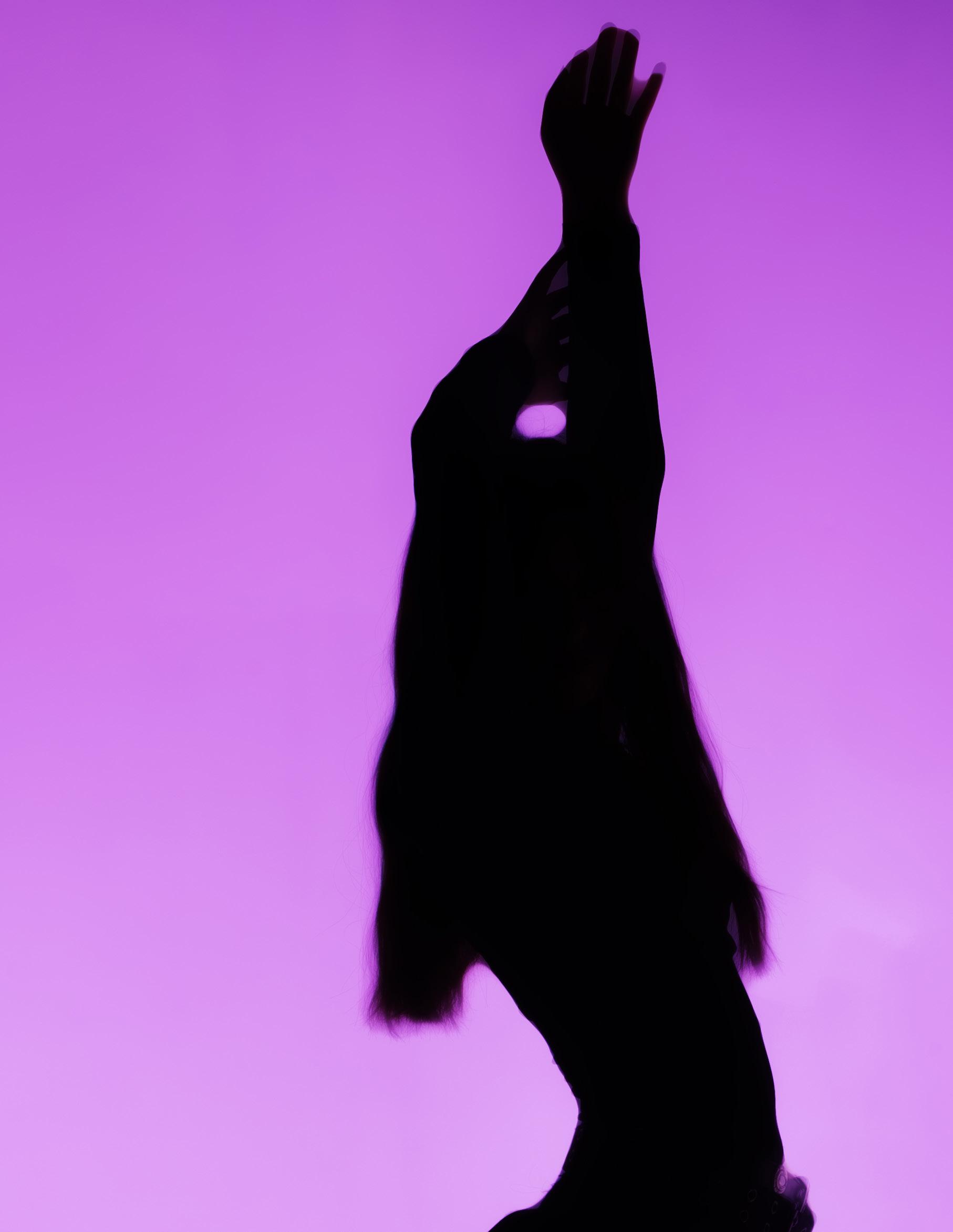
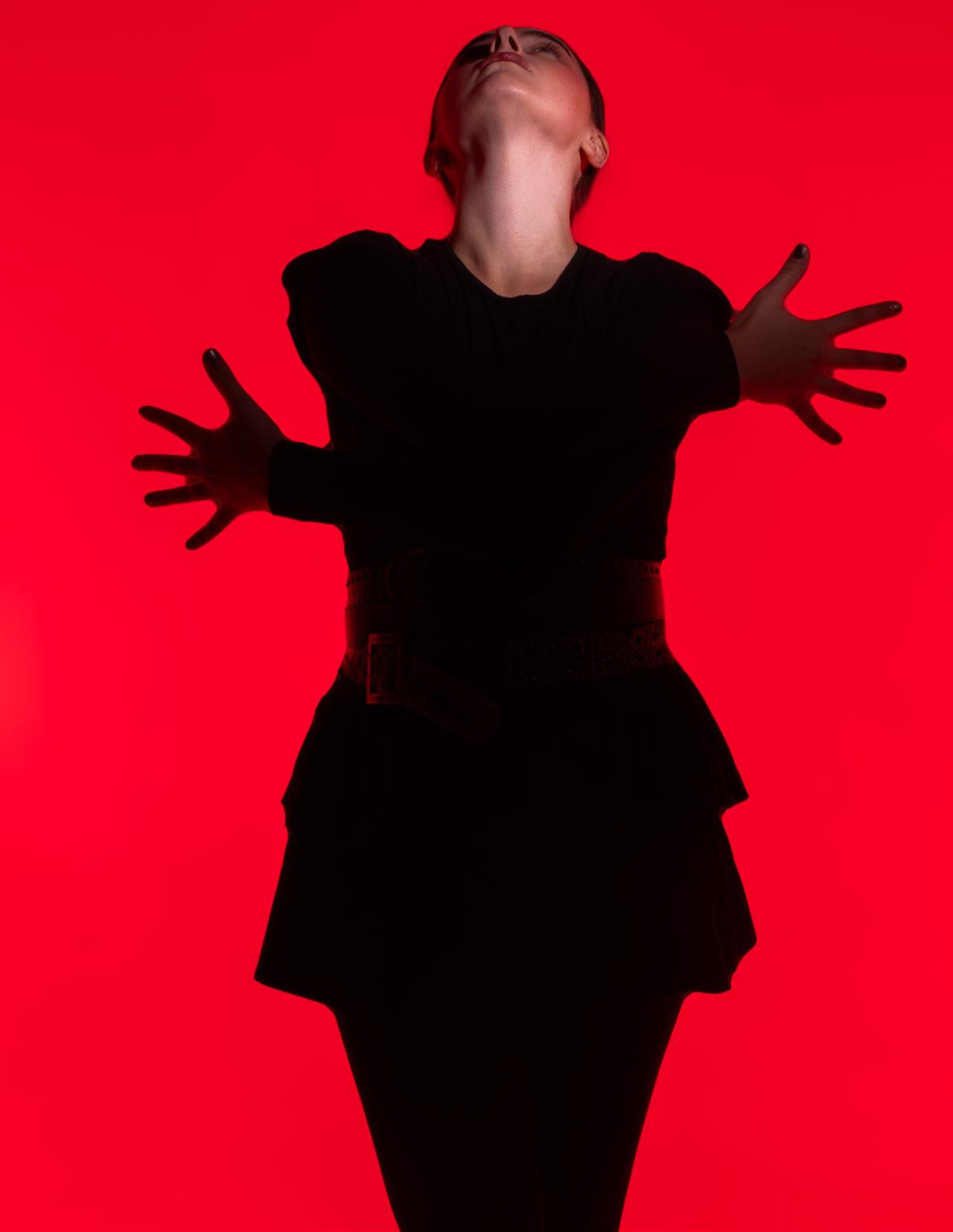





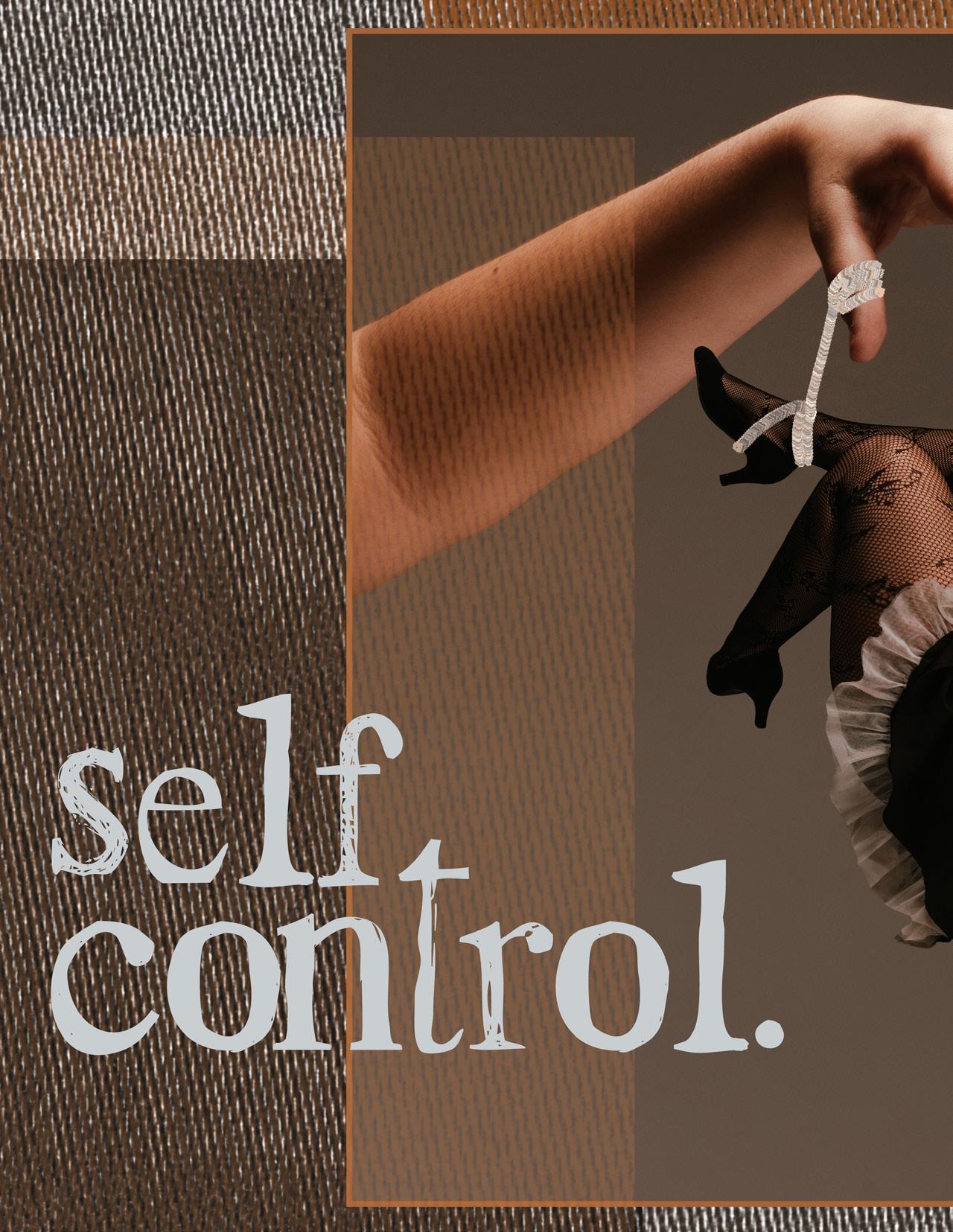
PUPPETRY AS A METAPHOR FOR BODILY CONTROL AND AUTHORITY OVER ONE’S BODY



Light-hearted reads for the quiztaking, listicle reading, horoscope believin’ spirit in all of us.

BY LAUREN STIDHAM PHOTOS BY MAXWELL GRUHN EDITS BY HADLEY FAIN DESIGN BY PAMELA JOHNSON
Music is uniquely ingrained across cultures of the world. It is a method of sharing stories, protesting, passing on tradition, and practicing religion, but it all begins with the voice.
Otto Jespersen, a Danish linguist from the early 20th century, described the voice, saying, “In the beginning was the voice. Voice is a sound of breath, the audible sign of life.” Looking at it now, there are many different ways people use this instrument of the body.
On Ohio University’s campus, the Singing Men of Ohio create their own community centered around this intrinsic instrument. SMO, founded in 1906, is a tenor bass chorus that performs a number of programs locally and nationally.
Dr. Peter Haley, the director of Choral Activities at OU and an assistant professor of music, started directing SMO in 2023. His love for music began with his grandmother, who was a church musician for 75 years, and it eventually led him to various roles here in Athens.
“As opposed to instrumentalists who may carry their trumpet around in a case, or percussionists who are going to pull out their drumsticks and play on an instrument, we use our instruments all the time — no matter if we’re just singing, if we’re communicating, whatever it might be,” Haley said.
Singing requires an extensive amount of bodily control and alignment, and teaching this process can look different for everyone. Haley’s method begins with developing a sense of bodily awareness.
“The first thing is just being able to align your body in a way where you’re as free of tension as possible,” Haley said.
He also educates his students on how breathwork can impact their voice.
“Based on how much air you’re using, how fast it’s moving, and how much control you
have, even over tension, that’s going to shape how loud or soft it is,” Haley said. “Even the way that you shape your mouth and you move your tongue will change the vowel that you use.”
To prepare and maintain the voice, Haley believes rest and hydration are the two most important factors.
“We also have to monitor how we use our voice,” Haley said. “How do we go about using our voice in a way that’s not abusive to it because the tissues and all that are involved with your vocal folds themselves can be very sensitive.”
Ben Christiansen, a senior studying communications and the president of SMO, has been singing since he was young. His sister, Liz, was the president of OU’s Soprano-Alto choir, Bella Voce, and she inspired him to get involved with SMO when he started at OU.
Christiansen recognizes how he takes care of his voice as a performer.
“The voice is a muscle. It’s just like going to the gym every day. You don’t want to overstrain, you don’t want to pull anything because over time, if you continue to use it correctly, it’s going to continue to grow,” Christiansen said.
There are many external processes that go into singing as well.
“What makes a good ensemble is people who look attentive that are ready to perform — they’ve got good posture, their faces look engaged, they’ve got a smile on their face,” Christiansen said.
Singing requires a level of mental composure, especially for groups like SMO that perform for large audiences.
“It’s all kind of a mental game, just kind of psyching yourself up,” Christiansen said. “It’s kind of like a ‘look good, play good’ mentality.”
The ‘look good’ part of this mantra is also achieved through the choruses’ matching green blazers. The iconic jackets are given to

members upon initiation and uniquely tailored to fit each singer.
“I think [new members] see how excited we are when we put them on and when we are ready to perform. I think that’s when they realize that it means something a little bit more than just all of us matching,” Christiansen said.
This ritual not only makes the group appear more professional when onstage, but it also reflects this sense of inclusivity within the organization.
“We’re a choir, but more importantly, we are a family,” Christiansen said.
The club is built on a diverse group of students, with about 70% being non-music majors, and Haley recognizes that a central aspect of SMO’s culture is creating a space where each member’s unique voice is present within the ensemble.
“Everybody’s voice is built differently,” Haley said. “You can feel like you’re not capable or a good solo singer, for instance, but you may

be a really good choir singer where your voice fits in with these other people really well to be able to perform, and it just takes a little bit of coordination — and a little bit of coaching sometimes — and you can really grow pretty quickly.”
1. How do you handle situations when you are feeling stressed?
a. I try to keep calm and deal with things one thing at a time.
b. I overthink everything. My mind starts to race, and I think about what could go wrong.
c. I feel deeply about situations and often want to talk them out with someone.
d. I focus on what I can do moving forward and how I can improve throughout the week.
2. How would your friends describe you as a person?
a. Reliable. I’m always there when people need me most.
b. Observant and clever. I can get into your head if I try.
c. Affectionate and kindhearted.
d. Imaginative and full of new ideas.
3. What is your ideal Friday night?
a. Productive. I keep my daily routine to feel balanced throughout the day and night.
b. Relaxing and quiet. I will do something I enjoy or try to recharge.
c. I spend time with the people I love to be around, whether that be friends or family.
d. I try to start a new project, such as a hobby, or read a new book.
4. How do you stay motivated throughout the week?
a. Consistency and structure.
b. Motivation and being driven for success.
c. Staying passionate and connected.
d. Personal growth and creativity.
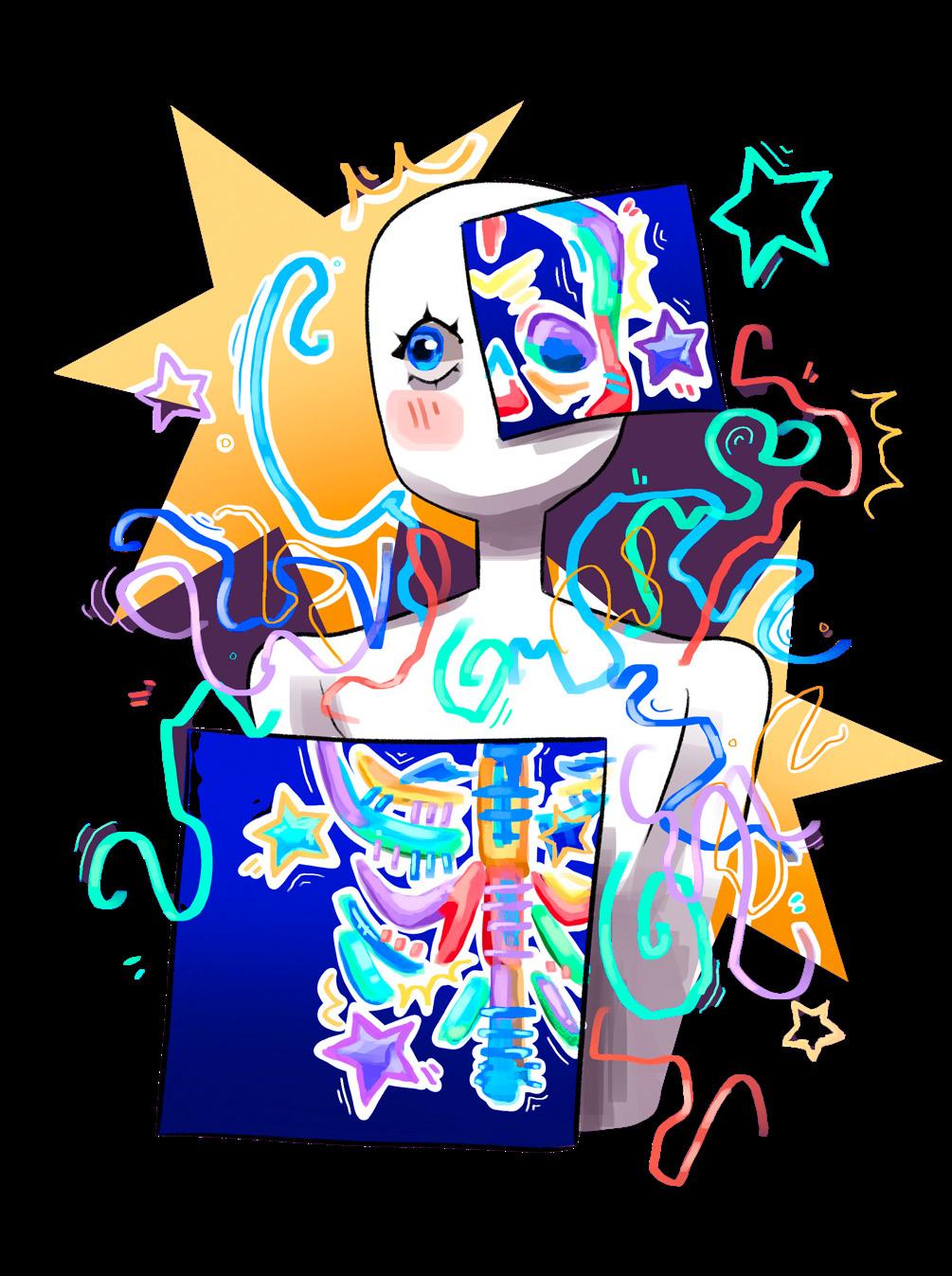
If you chose mostly A’s, you are the Skeletal System
You are dependable, composed, and consistent. Like the skeletal system, you provide structure and support to those around you. Others rely on you for stability, even if you prefer to stay out of the spotlight. You often keep situations grounded and balanced when others feel overwhelmed. Your presence creates a sense of security, and you’re often the person that others turn to if they’re going through a difficult time.
you chose mostly
You notice details others would most likely overlook and think carefully about your surroundings. Like the nervous system, you process information quickly and rely on intuition. Although you may overthink at times, your awareness allows you to navigate situations thoughtfully. You tend to be observant, analytical, and perceptive in social settings. You have the ability to read situations and understand what is happening beneath the surface.
chose mostly
You are compassionate, loyal, and emotionally aware. Like the cardiovascular system, you bring warmth and connection to those around you. Others feel comfortable opening up to you because you create an environment of trust and care. You value relationships deeply and make an effort to maintain strong bonds with family or friends. Your presence often brings a sense of calm and reassurance to the people in your life.
mostly
You are motivated by growth, creativity, and new beginnings. Like the reproductive system, you are drawn to progress, long-term goals, and fresh ideas. Others feel inspired by your drive and willingness to pursue new opportunities. You bring a sense of motivation and forward-thinking energy into the spaces you occupy, and the people around you really value your innovative ideas.
BY JEN FOSNAUGHT ILLUSTRATION BY MINJOON LEE DESIGN BY MADI BARRICKMAN
The American Sign Language club brings connections to Ohio University’s deaf, hard-of-hearing, and American Sign Language-speaking communities, hosting numerous events to educate and provide a safe space.
Between hosting events and partnering with the school, the ASL club can be found working toward its goal to make Ohio University a more inclusive space at meetings every other Wednesday in Morton 201 at 7 p.m.
The club prides itself on having activities for speakers of any skill level, from novice to fully fluent.
Camryn McGlumphy, the National Anthem/ Interpreter Coordinator for the club, believes the club does a great job at teaching newcomers.
“Even if you don’t know signs, you can still come,” McGlumphy said. “If we do any voicesoff activities, we’re always really good at sharing what is going to happen before we do it. And then if you have any questions, you can always ask.”
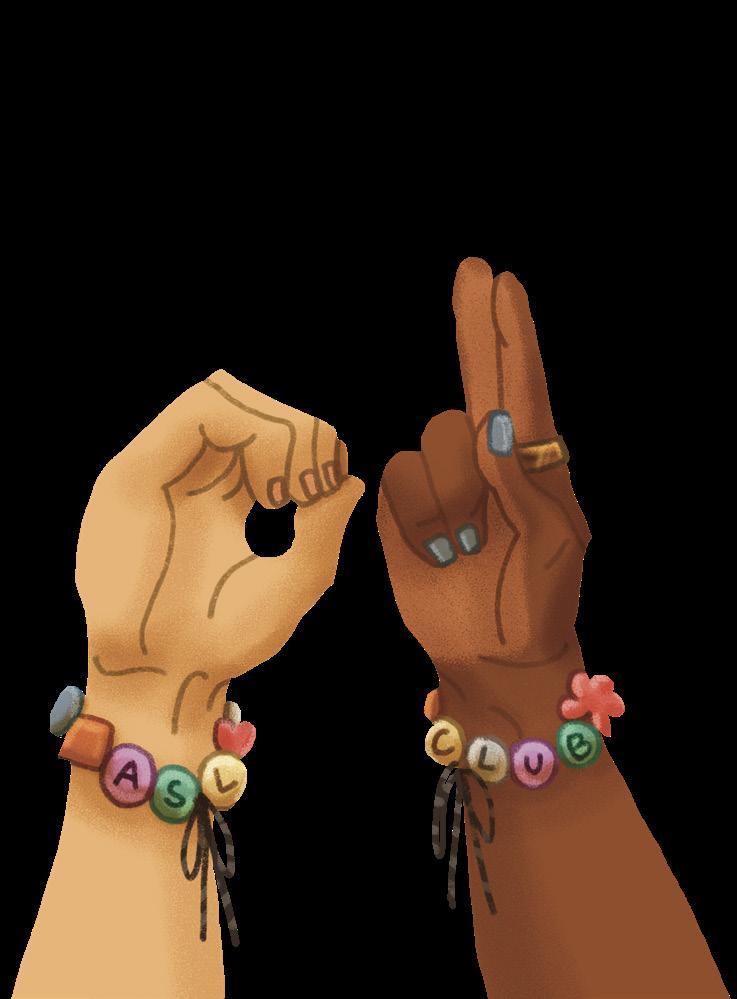
The club tries to keep things fresh and always has a wide variety of events and activities. First, they start the meeting by covering upcoming events, before switching to educating about an aspect of deaf culture. The club’s Deaf Culture Chair will share interesting information on anything ranging from Native American handsigns to Gallaudet University. Following that, members get to partake in a sign-languagebased activity like signing introductions or playing guessing games based on gestures.
Next is the main activity. In past meetings, the club has had pancake nights, documentary screenings, escape rooms, and more.
“I’m always trying to come up with new and fun ideas,” said Madi Klink, the president of the ASL club. “We actually have an interpreter who’s coming, who works on a cruise ship.”
Klink and McGlumphy both feel that learning ASL is an extremely valuable skill set and encourage people to involve themselves in the language. Whether it’s helping to break stigmas, connecting people, or expanding community, learning ASL can be extremely helpful.
“I think every opportunity that
campus casual we have, why not try to grow the people that we can communicate with?” Klink said. “We do live in a very much hearing-oriented world, which is understandable, but it does create a little bit of a division where hearing people are too afraid to approach the deaf world.”
Every year, the ASL club sponsors a trip to Gallaudet University in Washington, D.C. which is a university focused on educating those who are deaf or hard-of-hearing. During the trip, seniors involved in the ASL club can immerse themselves in a fully ASL-speaking environment and learn from deaf professors.
“It was such a great experience. I got to meet some of the closest friends I can say that I have now, just from this trip,” Klink said. “I think that it’s something that you definitely need to bend over backwards to try to do if you have an interest in the ASL club because it was so memorable.”
Klink highlighted that when she first joined the ASL club, she didn’t know anybody there and didn’t have anyone to sit with. She hopes the club can be a way for others to meet people and find community as she did.
“My biggest goal now is trying to get people who maybe don’t feel like they have a community to come to our club and feel like they have a release to hang out and meet people,” Klink said.
The ASL club is also in charge of signing the National Anthem at OU’s sports games and events. McGlumphy, as the Interpreting/ National Anthem chair, is in charge of coordinating signing and holds rehearsals after meetings to practice.
“We coordinate practices, and then on the day of, we’ll practice before the game,” McGlumphy said. “Then we’ll go to the game, and I’ll lead them out while the band is playing, and we’ll sign it while they are playing.”
On top of their Gallaudet trip and other activities, the ASL club often partners with other clubs at OU. Previously, the ASL club worked with 4 Paws for Abilities, a club that helps connect service dogs to people with disabilities, to help train dogs to aid deaf individuals. Currently, the club is paired with the Lost Flamingo Theater Company to provide live ASL translations for their shows. The ASL club hopes to continue partnering with other organizations in the future and help to connect OU’s clubs.

IBY CAMI SEYMORE ILLUSTRATION BY MINJOON LEE DESIGN BY ELLA HUELSKAMP
n an era shaped by social media, diet trends, and a growing emphasis on fitness culture, poor health and wellness trends are gaining traction. Young adults are often highly impressionable, making them vulnerable to the pressure and misinformation these fads can promote.
On TikTok, there are over 42.7 million videos under the ”GymTok,” where users share health and wellness advice ranging from low-calorie recipes and workout routines to extreme fitness transformations.
Specifically, there’s been an emphasis on “protein-maxxing,” which prioritizes protein intake over other food groups. However, this is nothing new. Throughout the years, various diet trends have become mainstream, such as
Weight Watchers, keto, Atkins, Whole30, paleo, the Mediterranean diet, carnivore diets, and even liquid diets.
According to a study by UCLA, researchers found that people who go on diets usually lose about 5% to 10% of their initial body weight within the first six months. However, the majority of people regain more weight than they originally lost within the next four to five years.
These diets often encourage restrictive eating and unhealthy relationships with food, which are only heightened by the influence of social media. With so much information readily available, it is important to know who and what to trust, especially when influencers portray themselves as health coaches or professionals.
Mackenzie Johnston, a senior studying sports
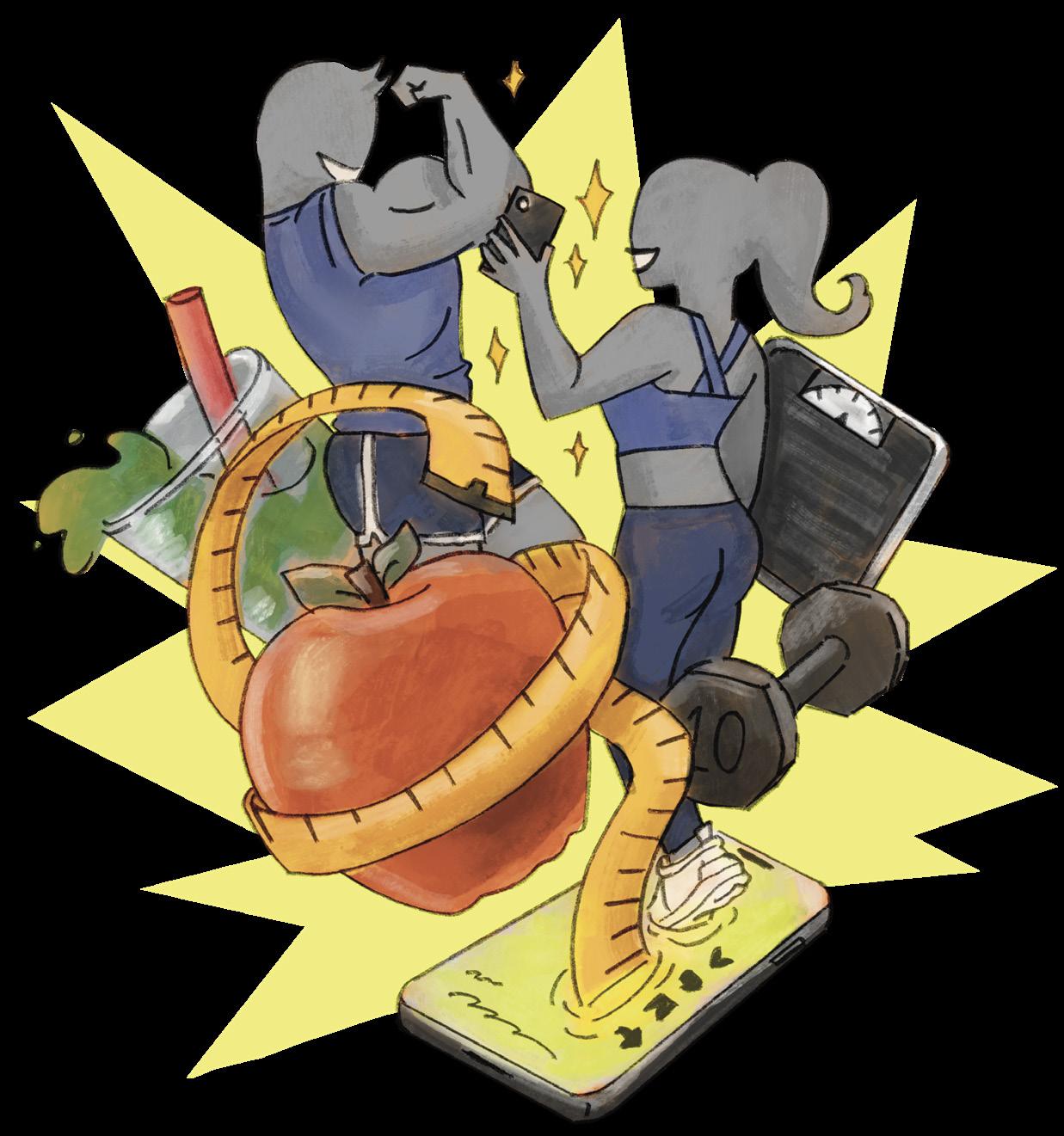
management, who also works as a cycle instructor and F45 trainer in Ohio University’s Charles J. Ping Recreation Center, discussed the positives and negatives of following fitness influencers.
“I think it’s a very slippery slope that you can fall down, because there are a lot of people who have all of the newest sets, and they have the tripod with the ring light and all the good angles,”
Johnston said. “Then, you have the other people who are posting the cellulite, or what it looks like when they bend down to pick up a weight, and like their stomach looks different than when they’re standing up and posing. So I think it is really tricky. If you’re only seeing those people who are posting the better angles, that’s what you see, and that’s what you think.”
Platforms like TikTok and Instagram are filled
with images and videos that often idealize thin bodies, presenting them as the standard for health and beauty. Trends such as “what I eat in a day” videos, body-checks, and transformation posts reinforce the idea that being thinner is always better, even when framed as wellness or fitness content.
Jessica Arquette, a professor of nutrition at OU and an OHIO athletics sports dietician, discussed the true definition of healthiness and how it’s often not what users see on social media.
“[Influencers] often say you have to sacrifice and suffer and do anything to be thin and skinny, because that’s what’s the best thing to be,” Arquette said. “In reality, the best thing is to be healthy in your mind and body, and being thin and making yourself miserable in order to be thin is not conducive to physical or mental health.”
However, as diet and health trends come and go, the ideal body type changes with them. Throughout history, society’s perception of the “ideal” body ebbs and flows.
For example, in the 1400s and 1500s, fuller, curvier bodies were considered the ideal. By the 20th century, slimmer figures became more desirable, reaching an extreme in the 1990s and early 2000s with the rise of “heroin chic.” In the 2010s, curves and the Brazilian butt lift gained popularity, influenced by the rise of plastic surgery to get the Kardashian look. More recently, thinner body types have begun to trend again, showing how quickly these ideals can shift depending on the time period and other societal contexts.
Currently, medications such as Ozempic, Mounjaro, and other GLP-1 drugs are rapidly reshaping the health and wellness landscape. Originally meant to treat Type 2 diabetes, they are now widely used for obesity treatment, though their growing popularity has also led to frequent misuse.
“Serena Williams, for example, is taking this stuff,” Johnston said, referencing an advertisement the tennis star did for Ro, a GLP-1 company. “One of the most profound athletes that people look up to is taking this, and I think if that is becoming
our standard, that can be really hard for some people.”
“There are hundreds of genes that are associated with obesity,” Arquette said. And if a person struggles with obesity and tries to lose weight for so long, it’s making them miserable. I applaud them for doing what they feel they need to do to become healthier through weight loss, if it’s from that medication, even if they don’t have diabetes. I’m not going to judge a person for doing that. What I don’t like is when you have people of normal weight doing the influencer thing on social media, trying to get people to follow them and use GLP-1s themselves to get as skinny as possible. That’s where I want to draw the line.”
Instead of hyper-fixating on achieving a certain body type, Arquette suggested prioritizing food within the Acceptable Macronutrient Distribution Range: 45%-65% from carbohydrates, 20%-35% from fat, and 10%-35% from protein.
“We should be having a balance of the nutrients, and when we have a balance of the macronutrients, protein, carbohydrates, and fat, we’re going to naturally get a balance of foods to provide us with the micronutrients, vitamins, minerals, and fiber that we need for health,” Arquette said.
With these ever-evolving health trends populating the internet, OU is trying to change the rhetoric surrounding fitness and wellness to be more inclusive for students of all fitness levels. Wes Bonadio, the director of well-being and recreation at OU discussed fitness culture and how it relates to OU’s programming.
“Gym culture has also continued to evolve,” Bonadio said. “There are good parts of it, and there are not-so-good parts of it. Those are some of the things that we try to work through here, trying to be mindful of what the culture is in our spaces, whether it’s on social media or the physical space.”
Ping offers free group fitness classes in Pilates, cycle, cardio dance, boxing, and yoga, along with F45 and other personalized training services that you can pay for. But beyond variety, inclusivity is
central to how these programs are designed.
“In all my classes, I’m always like, let’s have fun,” Johnston said. “Your weight on the scale doesn’t matter at the end of the day. If you came, you moved your body, you had a little fun, and now you’re happier about your day, or whatever it may be. It gives you a space to take your mind off whatever else is going on and just move your body and put a smile on your face.”
Sara Schoenhoft, assistant director of fitness and well-being, emphasized that group fitness is intentionally adaptable to different experiences and fitness levels, ensuring students feel welcome regardless of where they’re starting.
“There’s no one-size-fits-all formula,” Schoenhoft said. “Everybody is different. I think that body diversity is really important. I don’t want all of my coaches to be the same exact weight and have the same exact muscle mass and things like that, because that’s not attainable for everybody.”
Ping isn’t just a place for physical fitness; Its new well-being wing houses massage chairs, cold therapy, light therapy, wellness pods, and other spaces designed to help students focus on their mental and emotional well-being.
This space also has well-being coaches who connect students with campus services and provide support in areas such as sleep, nutrition, physical activity, hydration, time and stress management, productivity, self-esteem, gratitude, and social support systems, including resources like Counseling and Psychological Services or academic coaching.
THERE’S NO ONE-SIZE FITS-ALL FORMULA. EVERYBODY IS DIFFERENT. I THINK THAT BODY DIVERSITY IS REALLY IMPORTANT. “
Shadrack Bannor is a first-year graduate student and graduate assistant for well-being programming and outreach and overseeing the well-being programming at Ping.
“Our coaches are supposed to make referrals, “ Bannor said. “They are not like trained counselors. They are just there to guide [students] and connect them to the appropriate resources.”
Whether you’re a new student navigating campus for the first time or someone struggling to find balance, that guidance or advice can play an important role in supporting overall well-
”
being. Still, wellness professionals emphasize that there is no one-size-fits-all approach to health.
“We know that there’s a connection between your physiological happenings and physical health and your mental health, but being physically active looks very different for every person,” Bonadio said. “Everyone is their own individual person, so what works for one other person may not be what works for me or you.”
BY EMILIE DEOREO & SOPHIA ROOKSBERRY
ILLUSTRATIONS BY ELLA KATZENMEYER
DESIGN BY SOPHIA CIANCIOLA
The Athens bricks mark the Ohio University campus, with hills wrapped in brick-laden pathways that guide students, residents, and visitors through Uptown. But for those navigating the city with mobility challenges, that charm comes at a cost. Uneven surfaces, steep inclines, and narrow sidewalks turned what should have been a routine walk into a daily obstacle course. For wheelchair users, cane walkers, or anyone with limited mobility, the streets that define Athens’ character made independence difficult, if not impossible. “If you don’t live it and you’re not using a
wheelchair, it can be hard to see how something wasn’t done correctly,” said Annah Korpi, an OU instructor and member of the Athens County Accessibility and Advocacy Committee. “A lot of the time, contractors don’t quite follow ADA regulations; the curb cut is wrong, the angle is off, and if you don’t live it, you might not notice the problem at all.”
These small errors accumulated quickly. Despite public commitments to accessibility, Athens and OU continued to fall short of ADA requirements in ways that materially affected residents and students who relied on mobility
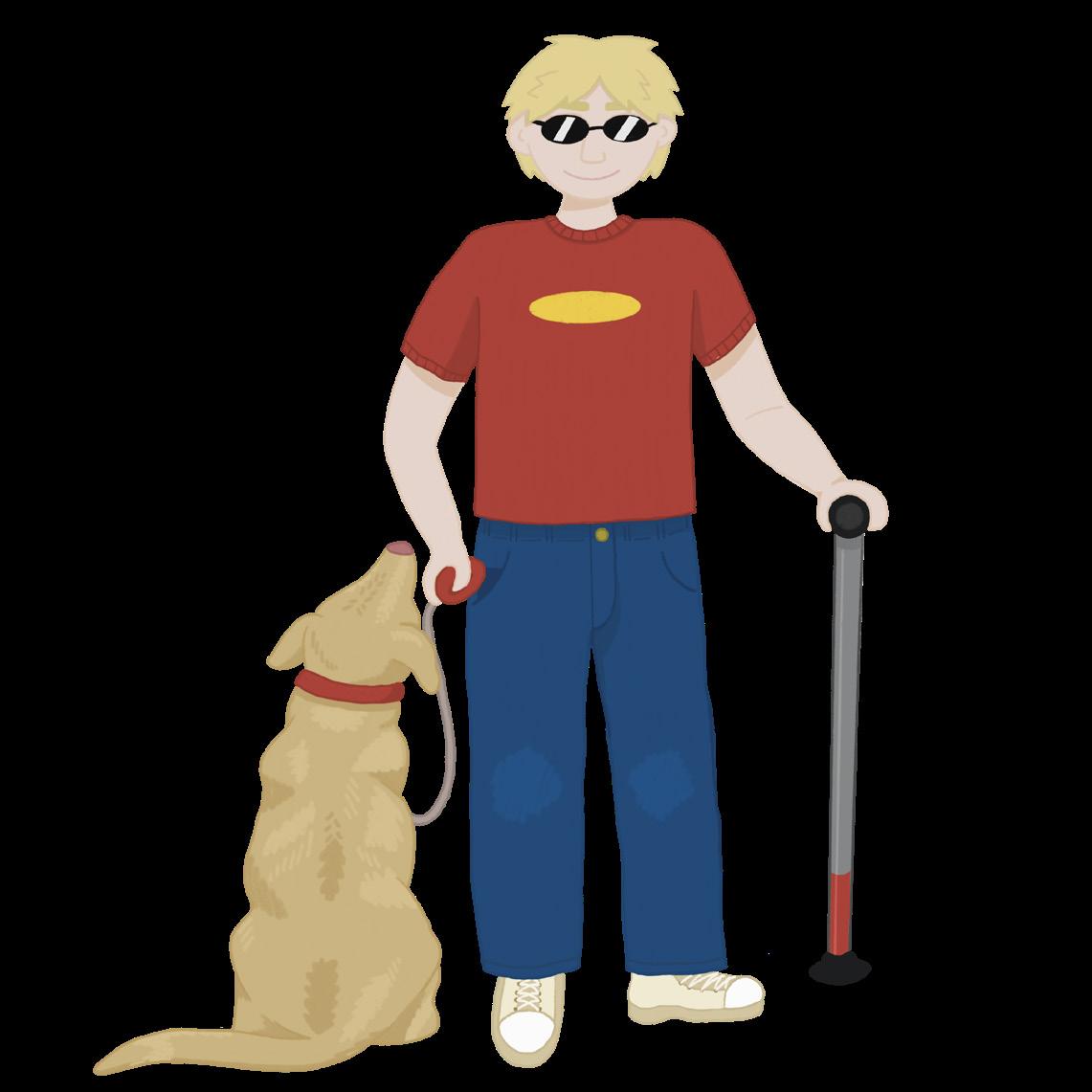
aids. For them, the city’s aesthetic charm could not compensate for streets, sidewalks, and entrances that failed to meet both legal and practical standards.
The Americans with Disabilities Act is a federal civil rights law designed to ensure that people with disabilities have equal opportunity, full participation, and the ability to live independently. Its protections cover public infrastructure, buildings, and programs, requiring new construction and renovations to provide accessible paths, entrances, and facilities. Elevator exemptions exist in limited
cases, particularly in smaller or older buildings, but they do not remove the obligation to provide accessible routes. In Athens, steep terrain and dorms without elevators illustrated how meeting minimum legal standards did not always translate to meaningful access.
Court Street, Athens’ main north-south thoroughfare, exemplified the tension between tradition and accessibility. Its red bricks are celebrated for their historic charm; however, they created uneven surfaces that were jarring for wheelchair users. Korpi, a parent to a child who uses a wheelchair, spoke about driving
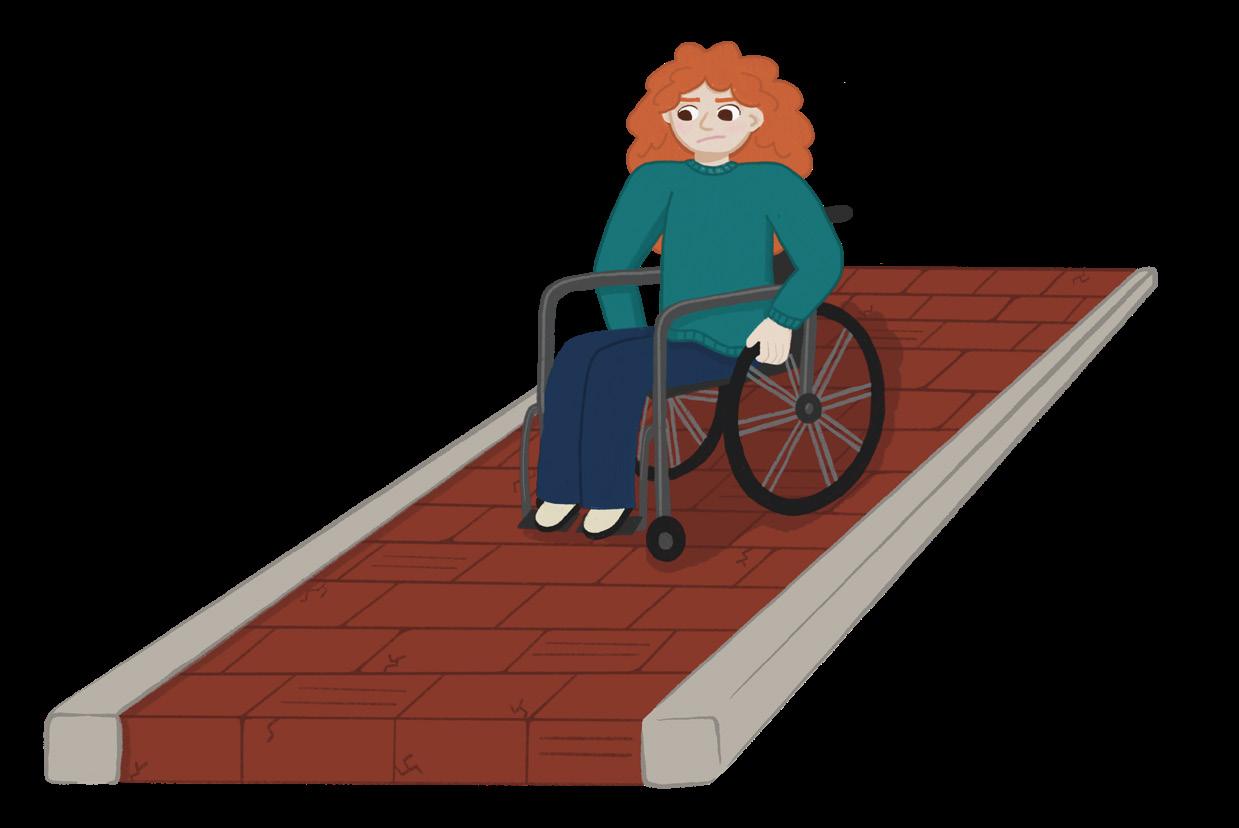
on the road: “Because of the bricks on Court Street, we’ll hit a bump, and my son’s body will go flying forward. It’s really uncomfortable and jarring.” Preservation advocates pushed to retain the aesthetic, while accessibility advocates highlighted the dangers. “It felt like confirmation bias — trying to justify keeping the bricks while ignoring the testimony of people with disabilities,” Korpi said.
Some bricks were removed and curb cuts adjusted, despite many challenges remaining. Korpi noted, “The city administration has been open and willing to do what’s needed for accessibility, even when that means removing bricks in certain areas. A complete overhaul of Court Street would solve a lot of issues, redoing the street, sidewalks, and store entrances all at once.” Although not the most timely of situations, the progress showed that beginning a full redesign demanded careful planning, sustained effort, and a focus on both accessibility and public input.
Compliance with the letter of the law did not always translate to usability. A wheelchairaccessible ramp that was too steep, a crosswalk curb cut misaligned with the street, or a narrow doorframe made life unnecessarily difficult, even when technically legal. “Some things seem
obvious if you don’t live it,” Korpi said, “but once you understand the issues, you realize there’s a better way to execute a project, not just to be ADA compliant, but to be usable.”
Beyond Court Street, Uptown Athens presented subtle but persistent barriers. Older buildings with narrow doorframes, heavy doors, or shallow entryways made navigating businesses difficult. ADA guidelines require doorways to provide at least 32 inches of clearance and deeper entryways to allow 36 inches; for wheelchairs measuring 24 to 27 inches, this left a minimal margin for maneuvering.
“I want to support local businesses, but I end up going to chains because they have wider doorways, automatic buttons, and space to maneuver a wheelchair,” Korpi said. “Those are decisions I have to make every day as a caregiver for someone in a wheelchair.”
The weather compounded the challenge. Snow, ice, and freezing temperatures turned uneven bricks and misaligned curb cuts into hazards, and delays in clearing streets and sidewalks made even accessible routes impassable. This past winter, after weeks of heavy snowfall and ice accumulation, some sidewalks remained buried under multiple inches of snow for more than a week, making previously navigable
paths difficult or impossible. These conditions showed how environmental factors magnified existing design flaws, turning minor obstacles into major barriers for residents and students trying to move safely through the city.
Student housing presented another layer of accessibility challenges. Only 14 of the university’s 36 residence halls have elevators, which limits options for students needing to navigate multiple floors safely and independently. Even temporary mobility limitations, such as injuries, could transform a once-manageable dorm into a daily struggle.
Thea Maynard, a junior, experienced this during her freshman year: “Once I broke my foot, it became a lot more challenging,” she said. “I had to have help to carry things up and down the stairs. It took me significantly longer to get in and out of the building, and it was just a very difficult maneuverability situation.” Housing selection could exacerbate this; Maynard was initially placed on the fourth floor with no accessible alternative.
Maynard suggested small changes, such as reserving first-floor rooms for students temporarily or permanently in need. Yet the issue extended beyond convenience: the absence of elevators also raised safety concerns during fire alarms or severe weather, when students with mobility disabilities may need assistance to evacuate. In those moments, accessibility became a matter of safety, not convenience.
Responsibility for accessibility is shared between the university and the city. OU maintains legal oversight through its ADA administration, while the Athens City Commission on Disabilities serves in an advisory role, elevating residents’ concerns and encouraging inclusive planning. Though the Commission cannot enforce compliance, it helps ensure lived experience informs public projects.
Allyson Hughes, assistant professor at OU and member of the Athens City Commission on Disabilities, emphasized the importance of including firsthand knowledge on ADA compliance in planning and execution: “In a perfect world, we’d have contractors with lived experience and previously completed ADA transition plans,” she said. “We have such great advocates on [city] council that are prioritizing disability. We just need to make sure that… we all communicate better to make sure that the final product is truly accessible.”
Comprehensive redesigns of streets, sidewalks, and building entrances show what Athens could achieve if accessibility were prioritized. While partial fixes address immediate hazards, longterm planning can create a fully navigable environment that accommodates everyone. Even historic brick preservation can coexist with accessibility if sidewalks are properly leveled, bases reinforced, and building entrances fully functional.
Delta Zeta sorority, the only fully ADAaccessible sorority house on campus, provides a concrete example: its accessible ramp, wide doorways, and elevator highlight how inclusive design is possible, yet widened the gaps that remained across the rest of campus. Hughes emphasized that even small adjustments could have a meaningful impact, noting that “sometimes inaccessibility is as easy as moving a trash can or a chair or a couch, and other times, it might be more difficult, but it benefits all of us.”
Ohio’s recent Senate Bill 1 and the closure of inclusive centers, including Mosaic, a student group focused on accessibility, exemplified the fragility of support structures for advocacy. Hughes reflected on the impact of closing such community spaces, particularly for students in minority or underrepresented groups: “As I have seen these programs closing at the university and seeing people fired … It is extremely disheartening and sad, and I think that we as the disabilities commission need to really serve as a lighthouse for others … as their rights are being stripped back strategically.” While SB1 may reshape university programs, it does not override federal civil rights law; the ADA remains binding regardless of changes in state policy.
Accessibility is not a matter of aesthetics; it is a civil right. In Athens, historic charm cannot substitute for usable infrastructure, and legal compliance alone falls short when daily experiences expose gaps between standards and reality. Hughes captured this principle in the phrase “Nothing about us, without us,” a disability rights slogan affirming that decisions affecting disabled individuals must include their direct voices and lived experiences. For residents, students, and visitors alike, true accessibility is a measure of inclusivity and the city’s commitment to ensuring equal participation for all.
Cast members Madison Maidenberg and Taylor Rue unpack their “Love is Blind” Experiences
BY CAMI SEYMORE
PHOTOS COURTESY OF NETFLIX VIA MADISON MAIDENBERG AND TAYLOR RUE ILLUSTRATION BY ABBY STANLEY
DESIGN BY JORI HUSTED
With the rise of dating apps like Tinder and Hinge, the new era of romance values physical looks over emotional connection. The majority of dating app users swipe on potential candidates based solely on their looks, often prioritizing short-term flings or hook-ups over building a relationship. But for those seeking long-term relationships, it can be discouraging to navigate a culture that encourages snap judgments and surface-level attraction.
Netflix’s “Love is Blind” challenges these modern dating norms by removing physical appearance from the equation entirely to see if emotional connection alone can form the foundation of lasting love.
“Love is Blind” is a reality dating show where
participants date in “pods” — separate spaces where they can talk but never see each other — where they develop an emotional connection without ever seeing one another. Couples who develop strong connections can choose to get engaged sight unseen before meeting faceto-face for the first time only after the proposal. Four weeks later, the couple will decide at the altar whether or not to marry each other, determining if love can truly be blind.
Since its 2020 premiere on Netflix, “Love is Blind” has since released nine seasons, featuring singles from cities across the United States, beginning in Atlanta and most recently set in Denver for season nine. While the premise sounds idealistic, the results have been mixed, revealing both the power of emotional
connection and the persistent role physical attraction plays in romantic relationships.
Madison Maidenberg, a contestant from the recent Denver season, went into the experiment hoping to find a connection that proved that love truly could be blind, both physically and metaphorically. Maidenberg has Retinitis Pigmentosa, a degenerative eye condition that could cause her to progressively lose her sight.
“My RP was my ‘why’ for going on the show,” Maidenberg said. “But it really came down to, if I’m not able to see that person, will that connection still exist for me? Because that’s a very real possibility in my life.”
In her everyday dating life, Maidenberg admitted that she often prioritized physical attraction. In the pods, however, that was stripped away, forcing her to rely on her personality and emotional connection rather than appearance.
“It’s interesting to just kind of see people’s personality have to shine through, rather than being able to hide behind the things that we take pride in physically.”
During the experiment, Maidenberg formed a connection with Joe Ferrucci, and the pair initially hit it off. However, after the reveal, things appeared to shift on Ferrucci’s end.
“Watching the reveal was extremely painful,” Maidenberg said. “It was so discouraging to see the way that he spoke about me and the way that he reacted to me.”
In on-camera interviews, Ferrucci made comments about Maidenberg’s body, saying he “preferred a petite figure.” Reflecting on that moment, Maidenberg said she noticed an immediate change in his demeanor during the reveal.
“When I really think about it, I saw him shut down immediately,” Maidenberg said.
Maidenberg isn’t the only cast member to experience issues with physicality during the reveal. Several couples on the show have struggled with this or broken up because the physical reality did not match the emotional connection built in the pods.
Each season, typically five to eight couples leave the pods engaged. In season 5, however, only three couples made it out. One of those couples was Taylor Rue and Jared “JP” Pierce, the first pair from their season to get engaged.
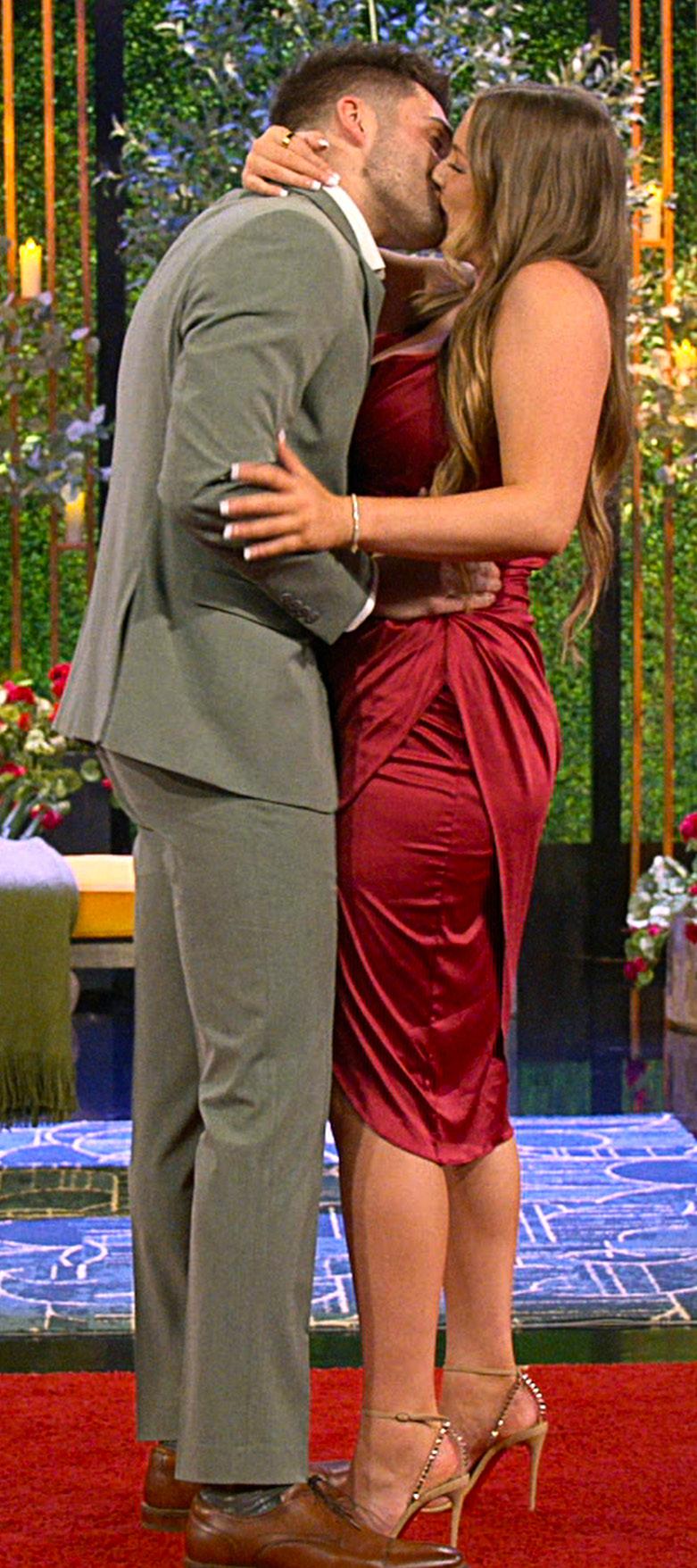
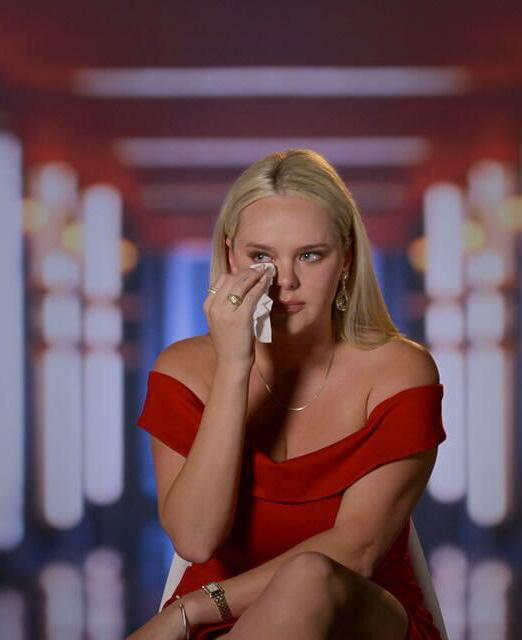
Their reveal was notably awkward, and the engagement quickly unraveled.
“I tried so long to do my makeup, and I had someone do my hair, and I picked out my prettiest dress,” Rue said. “Afterwards, I felt sad, disappointed. Not with how he looked, but I think how he acted towards me.”
In typical “Love is Blind” fashion, after the reveal, the engaged couples head to the second phase of the experiment and embark on a tropical vacation getaway, attempting to connect the emotional to the physical. They spend one-on-one time together in person and test their physical relationship, before heading home and letting real life and outside factors into their relationship.
During their post-reveal vacation in Mexico, Pierce was distant, often responding with brief, one-word replies that left their conversations stalled. Rue repeatedly questioned whether she had done something wrong or if his behavior was tied to her appearance.
“[I thought] this is going to be your husband, you’re gonna walk out, everything’s gonna be great. They’re gonna love you, no matter what it’s like,” Rue said. “He just had a total switch-up … I don’t even know if we had a real conversation — it was so weird.

Rue repeatedly questioned whether she had done something wrong or if his behavior was tied to her appearance. For some time, Pierce brushed off her concerns until he eventually admitted what had been weighing on him: Pierce said that the makeup Rue wore during the reveal presented a “fake” version of herself, and said that she “didn’t look like a real person.” Rue immediately shut down the conversation, and the couple broke up shortly after.
“I feel like in the moment, it’s hurtful, but then afterwards, I was just like, ‘ew, no.’” Rue said. “You’re not gonna tell me what to do. I’m gonna do what I want to do because it makes me feel good. And I think that’s ultimately what I want women to know. No man should tell you what you can and can’t wear or do, whether that’s makeup or clothes or the color of your hair or how low your top is.”
Whether it’s physical appearances of other outside forces like money, race, or background, love might be blind initially, but often other factors come into play. Brett Peters, a social psychology PhD and associate professor at Ohio University, discussed this phenomenon from a scientific perspective.
“People rank physical attractiveness as important,” Peters said. “But then, when it
actually comes to it, there are all these other factors that are built in … there are all these other contextual factors that are at play too. And so, it can be really important; it can matter. It could make or break a relationship, but it’s not the end-all be-all.”
Maidenberg agreed that physicality will always play some sort of a role in relationships, or at least it did in her experience. Although it impacted her relationship, she explained that it doesn’t have to be the most important factor.
“From my standpoint, [love] is blind, but not in a naive way,” Maidenberg said. “I think that love is blind without having requirements or stipulations on physicality. I think that if you allow yourself to be open to what someone can bring to the table, that can often overshadow the physicality.”
However, Peters cautioned viewers against taking the show too seriously as a model for real-world relationships, noting that “Love Is Blind” intentionally places its participants in a highly manufactured environment. He added that cast members may also have underlying motivations for joining the show, such as gaining a social media following.
“You have to remember that it’s being made to entertain,” Peters said. “You don’t know how much production is messing with the situation … It does create conversation, but it shouldn’t inform how you go about your relationships, or it shouldn’t inform how the decisions that you make about your own relationships.”
Despite skepticism from viewers and the experiment’s mixed results, “Love Is Blind” has still produced a significant number of engagements. Across its nine seasons, approximately 49 couples became engaged — though not all were shown on screen — and 14 of those couples went on to marry. Of those marriages, eight remain together while six have ended in divorce. Even when the relationships didn’t last, many participants still formed deep connections and fell in love without ever seeing one another.
“I did fall for somebody without ever seeing them,” Rue said. “But when you put the real world with it, you have to think about how somebody is going to treat you for the rest of your life and all the emotions that come with it. Yes, I do think you can fall for somebody blindly, I do. But I
guess, is love enough?”
That question remains at the heart of the experiment, and perhaps at the heart of modern romance itself. In a world increasingly driven by swipes and superficial judgments, “Love is Blind” suggests that emotional connection matters deeply. But the show also reveals an uncomfortable truth: while love may be blind to start, sustaining it often requires opening our eyes to the full reality of who someone is and whether we can accept them, imperfections and all.
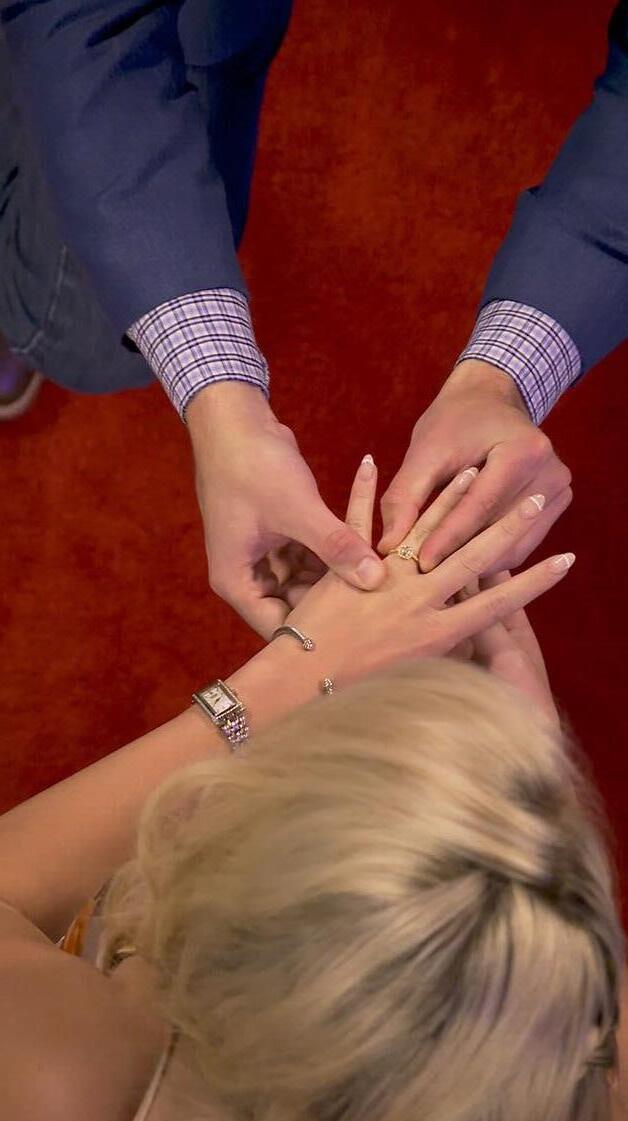
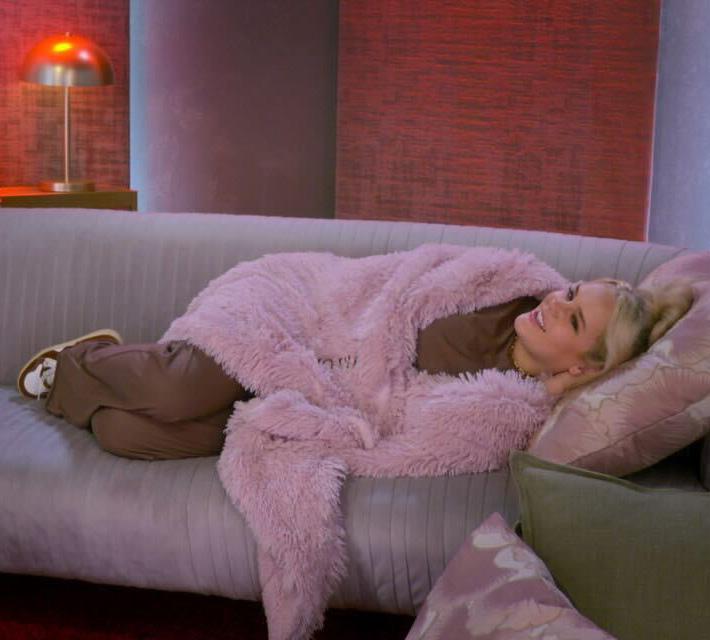
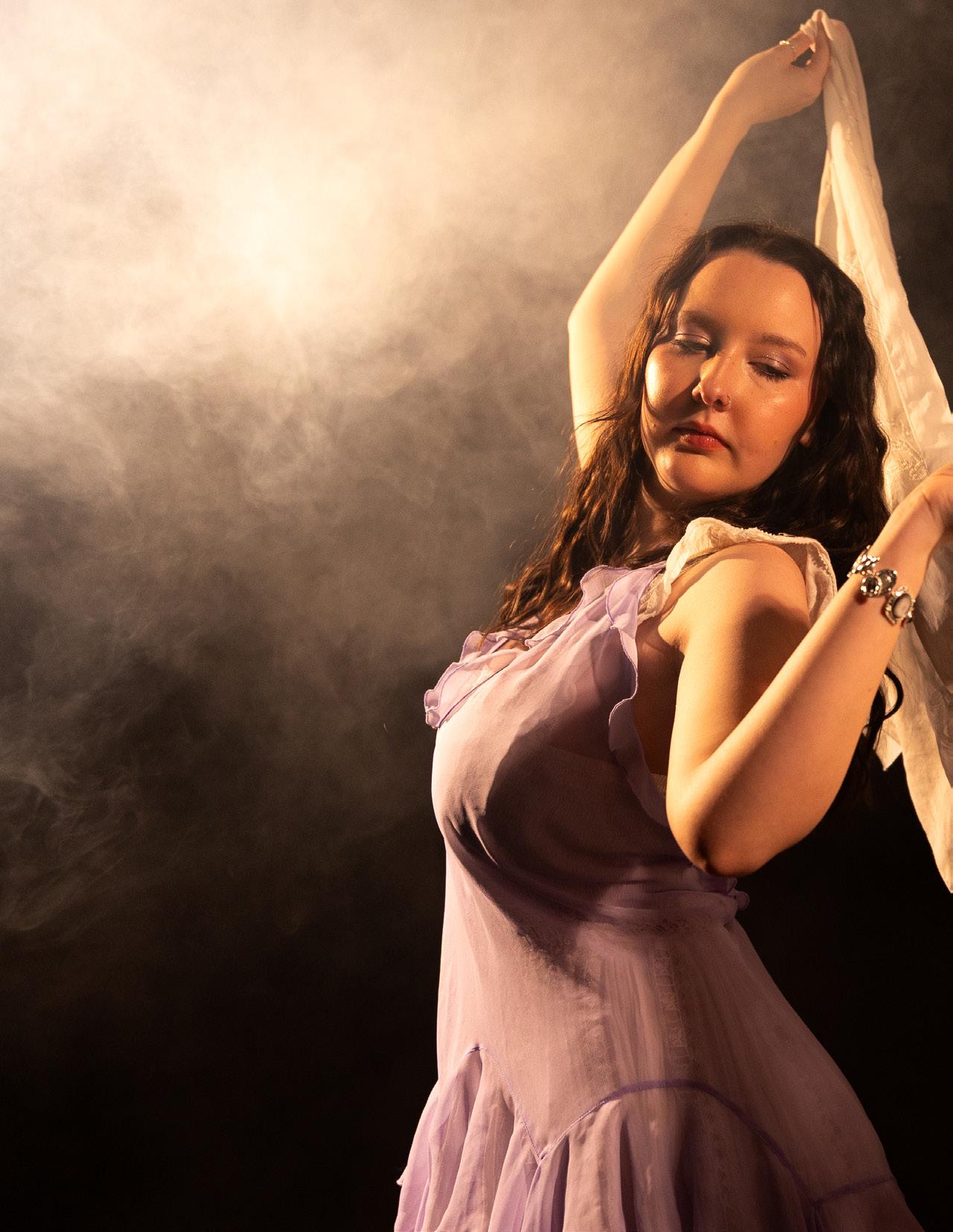
An in-depth look at today’s most buzz-worthy topics.
BY SOPHIA ROOKSBERRY ILLUSTRATION BY GRACE CALLAHAN
In 490 B.C., a young Greek courier named Pheidippides ran 26.2 miles to deliver some important news: the Athenian army had emerged victorious in the Battle of Marathon. As the legend goes, Pheidippides collapsed and died immediately after relaying his message. Centuries later, runners around the world aim to complete the same feat of strength in competitive races named after the battle that Pheidippides witnessed before his final run.
The Athens Marathon, which encapsulates both the full 26.2-mile race and the 13.1-mile half-marathon, not only upholds the history of the race but also its own legacy as the longestrunning marathon in Ohio. Founded in 1968, the race has been a part of Athens’ culture for decades and has recently experienced a change in leadership. Michael Owen is the founder of Southeast Ohio Trail Running Events and is in the midst of his first season as the Athens Marathon Race Director.
“It’s really rare for a race director to inherit a race that has such longevity,” Owen said. “You just happen to talk to a lot of people as a race director, so meeting people that did the race well before I was even born is a really cool experience. I look forward to meeting even more people when they arrive in town. Even with helping with the race, like I have in the past, I’ve
met people that were students at OU back in the ‘70s or ‘80s [and] they come back to Athens just to do the race, and it’s their excuse to stay in touch with Athens.”
Owen gained familiarity with the race by volunteering in past years, but this year, he is experiencing a whole new set of responsibilities.
“With the Athens Marathon, you’ve got to work with the city,” Owen said. “You’ve got to work with the county, because it leaves city limits, and then you’ve got to work with the university as well, because it finishes on Ohio University land. So, it’s a relationship thing. … It’s tracking down the correct people, trying to keep those relationships going.”
With some time yet to go before the starting pistol fires, Owen is busy with preparations and is looking forward to how his job will shift during the days leading up to the race.
“When you get to the race week, it’s a lot of work away from the computer and more on the ground starts happening,” he said. “When the runners start arriving, you’re really trying to be a good representation of the race, a person to talk to, welcoming runners, and so forth. It’s an evolving process as a race director, and … if everything goes well, the race day is the easiest day. It’s the day that you get to celebrate all the hard work, celebrate the runners, and as long as nothing goes wrong, should be the icing on
the cake.”
With this being his first year at the helm of the Athens Marathon, Owen isn’t looking to make any immediate changes to the race program.
“There are always things you can add, just from what you provide the runners, or maybe things that they can feel while they’re in town to give them a better time, but we’ll stick with the blueprint for now,” Owen said. “From an evaluation standpoint, if I can get some positive feedback from runners saying, ‘Hey, I had a great time this year because of this,’ or maybe even get some constructive feedback, like saying, ‘Hey, I’d love to see this happen in the future.’ We’ll try to work toward those types of changes.”
According to Owen, last year’s race saw approximately 650 runners finish the halfmarathon and just over 200 runners finish the full marathon; Owen is hoping for a similar turnout this year.
One of the participants in this year’s race is Paulina Kramarczyk, a senior studying exercise physiology at OU. Despite being fairly new to the sport, Kramarczyk is planning to run the halfmarathon on April 19.
“I’ve never actually liked running,” Kramarczyk said. “I started last semester when my roommate and I decided to do the Turkey Trot in Cleveland, and we just wanted to get a feel for it, and she actually had mentioned that only 3% of the population runs the half-marathon … so I was like, ‘Why not? Why don’t we be part of that population?”
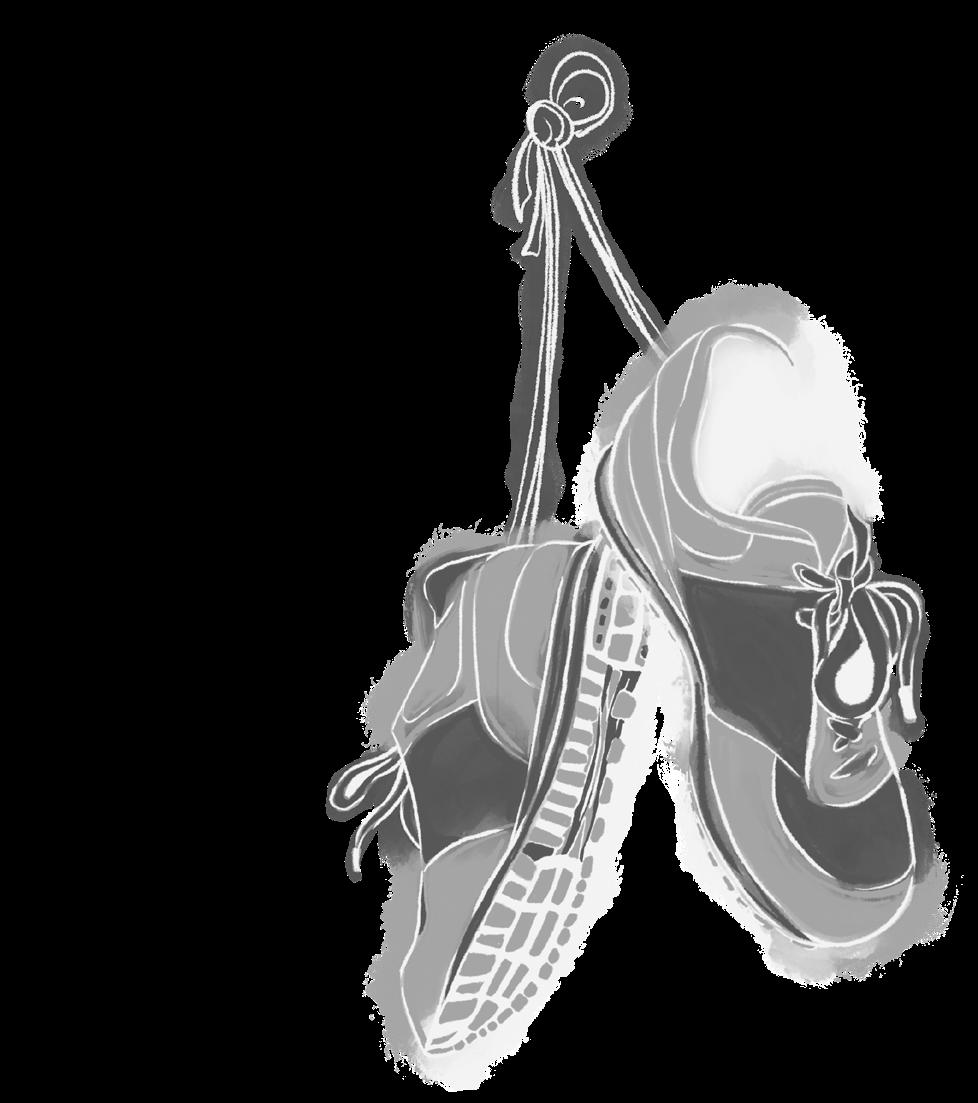
For her training regimen, Kramarczyk is practicing heart rate training and plans to build consistency and mileage with each passing week. As a former college athlete and longtime runner himself, Owen has witnessed the effectiveness of this training method.
“There are so many different philosophies on this, but I think just staying consistent, running five to six days a week without any long-term breaks [is important],” Owen said. “I joke about this with people sometimes, but when I got to college, I remember [my college coach] saying … that two days off in a row is the kiss of death for running.”
From the training stage to crossing the finish line, running a marathon is both incredibly taxing and wildly rewarding. Kramarczyk has
enjoyed getting to know different areas of Athens through her training runs, and is even more excited for the sensation on race day that she experienced for the first time in November.
“During the Turkey Trot … it was only a 35-minute race, but, still, just seeing everyone cheering you on, being surrounded by everyone who wants to finish the same goal [is incredible],” Kramarczyk said.
Registration for the Athens Marathon will be open until the morning of the race, with the cost ranging from $80-130 depending on when and for which race you register.
“Good luck to everyone who decides to race this time around, and I’m hoping for some good weather and a good time!” Kramarczyk said.
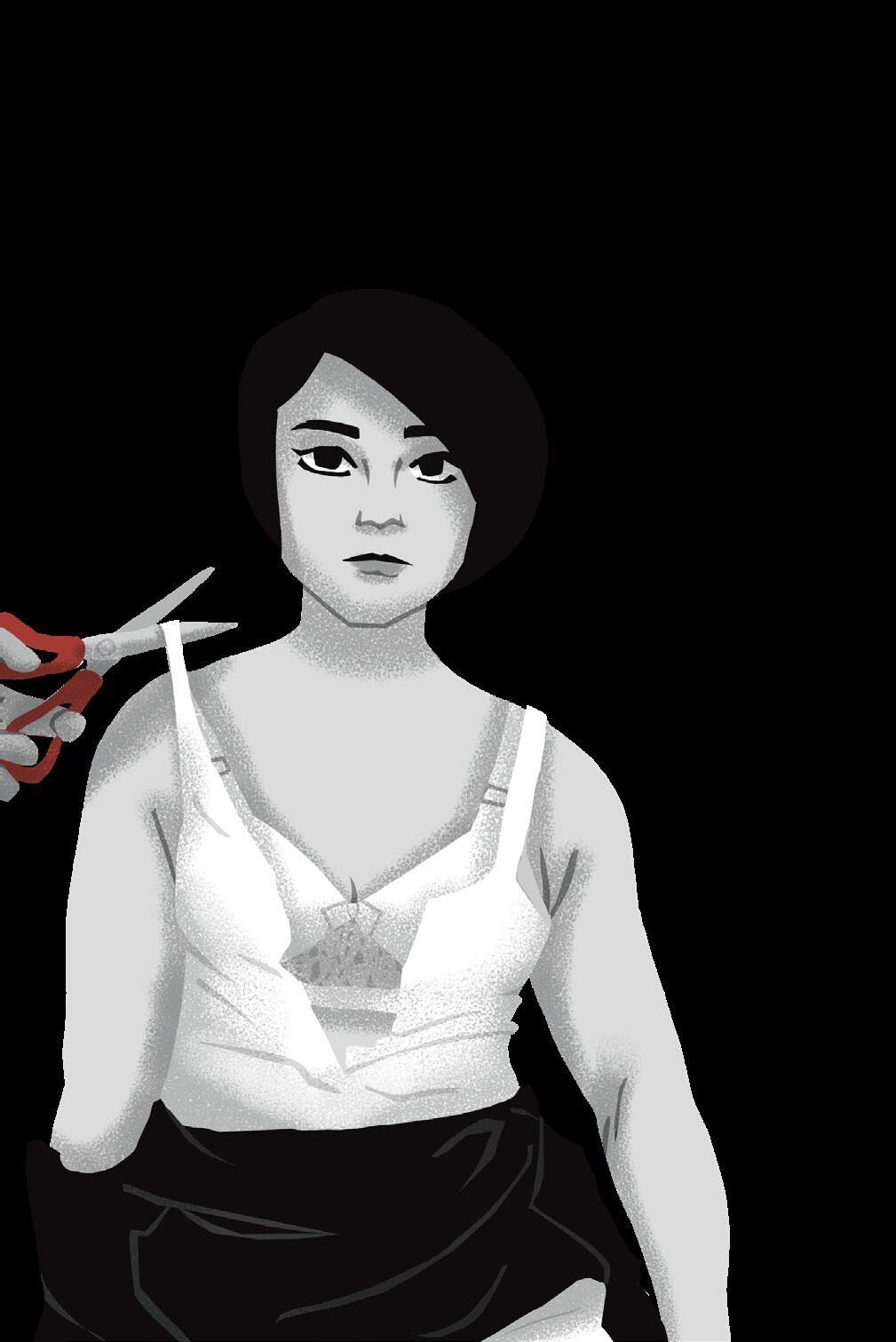
BY
Performance art can challenge audiences by forcing them to watch discomfort and vulnerability unfold. Using their bodies to convey powerful messages, performance artists raise questions about ethical responsibilities, often requiring audiences to react or participate in performances.
In a 1964 performance titled “Cut Piece,” Yoko Ono invited audience members to come on stage and cut off her clothing. By allowing the audience to control her level of physical exposure, Ono shed light on society’s inclination to exert power over women and strip them of their agency. Each cut made on Ono’s clothes reflected personal choices made by audience members, either to act or be complicit. By intentionally creating an uncomfortable atmosphere, the performance is no longer centered on the artist, but on the ethical decisions made by both participants and onlookers. This forced the audience to confront their own vulnerability as they saw the consequences of their actions play out on stage.
Years later, performance artists continued to test audiences and their personal limits. In 1974, Marina Abramović committed to standing completely still for six hours as she let audience members do whatever they wanted to her unobjecting body. Abramović provided 72 objects for audience members to utilize, everything from a feather boa and string to a knife and gun. Abramović called this performance “Rhythm 0.” Audience members began by feeding her, kissing her, and drawing on her. Eventually, however, the audience cut her, stripped her clothing, and pointed a gun at her. Without social etiquette and accountability, the audience weaponized their power over Abramović’s body, over her life. Some stepped in to protect her, while others sought to outdo each act of violence against Abramović. Abramović sacrificed the autonomy of her own body to draw out the audience’s true urges. Past and future viewers of her performance are reminded of the ways art can tease out conflicts between bodily
autonomy and power dynamics. Do performance artists create cascading social change? Or do they subject themselves to pain for the shock factor? Possibly both. Performance art pieces hold mirrors to audiences, making them a microcosm of the social and moral dilemmas that exist everywhere. Performance art often targets bodily autonomy — not because it is lowrisk, but precisely because it is shocking to see human autonomy violated. Artists risk violation, yet rarely expect or hope that audiences act on their darkest urges. The art form calls both artists and audiences to examine human relationships with bodies, control, and vulnerability.
Performance art does not give audiences concrete meaning or clarity. Audience compliance and participation often make the residual confusion, frustration, and uneasiness more gripping than other art forms. On the surface, performance art pieces may seem overly theatrical or dramatic, yet they ultimately reflect the ways humans use bodies to exert control over others. Self-exposure and vulnerability are only dangerous when outsiders fail to respect and value others and their bodies. Disapproval of performance art reinforces its ability to show the neglected ethical entanglements of vulnerability and the human body.
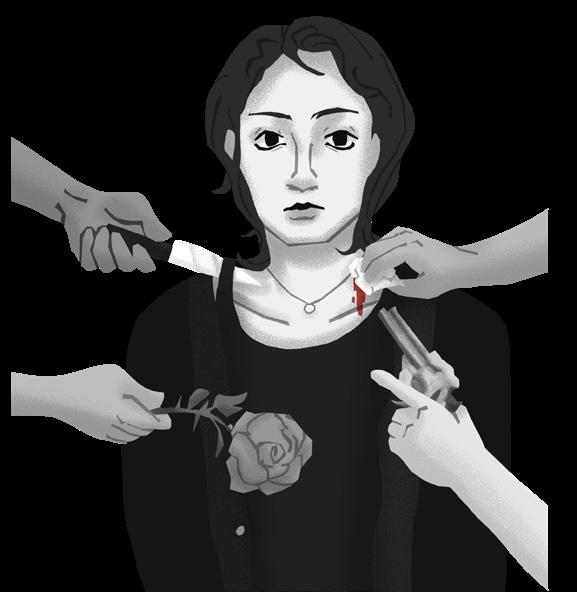
BY MAX GRUHN ILLUSTRATION BY SULLY POTTER DESIGN BY MADI BARRICKMAN
When hearing the words “body horror,” where does your mind go? Timeless film classics, like “Saw” (2004) or “The Fly” (1986) may come to mind. Deep cuts like “The Ugly Stepsister” (2025) and “Infinity Pool” (2023) are cinephile favorites. Or, maybe recent films with cult classic potential, like “The Substance” (2024) and “Titane” (2021), are standouts.
No matter where it goes, body horror’s prevalence in the film industry has spanned decades, defining and redefining the technical possibilities and status quo for filmmakers. Practical and special effects are at the core of many body horror films. But under the prosthetics, fake blood, and misshapen limbs lies the evolution of audiences’ tolerance and a cultural willingness to welcome body horror films, blood, bones, discomfort, and all.
In 1983, Philip Brophy, an Australian filmmaker and musician, first used the term “body horror,” citing films and directors that pioneered the subgenre, with David Cronenberg being one of the most consequential. Cronenberg’s meticulous directing style led to canon body horror
films, like “Crash” (2004), “The Fly,” and “Videodrome” (1983). His practical effects in these movies were singular for their time, changing the horror genre for all who followed. Cronenberg, along with many others at the time, found commercial success by tapping into audiences that were exhausted with the formulaic slasher films of the 1980s.
While filmmakers like Cronenberg may be on the Mount Rushmore of body horror directors, a new wave of hidden gems came out of the 2010s. “The Autopsy of Jane Doe” (2016), “Tusk” (2014), and “Raw” (2016) brought something new to the body horror domain, heavily leaning into psychological themes without forgoing hair-raising gore and corporeal realism. These films laid the groundwork for body horror films to break out of niche cinephile circles and onto the screens of the masses.
The 2024 theatrical release of “The Substance” did just this, grossing over $77 million worldwide. Directed by French filmmaker Coralie Fargeat, the movie dissects female body obsession and antiaging messaging through the story of a fading aerobic exercise celebrity. The
protagonist opts into a black market drug, promising to return her to a younger, “more beautiful” version of herself, yet her efforts ultimately leave her body unrecognizable and rejected by the same people she worked so hard to placate. As a critically acclaimed body horror film, “The Substance” sparked conversations about the thoughtfulness and nuance that permeate body horror films, but often fall by the wayside when mutilated limbs and exploding organs steal the show.
Hannah Turner, a junior studying psychology at Ohio University, highlighted her appreciation for “The Substance” and talked about the importance it holds for the genre. “It has a lot of symbolism behind it pertaining to young women and older women in the industry and pertaining to their structural image,” Turner said. “The SFXs were really done well, and they were tasteful, as well.”
Because women’s bodies are commonly the target of violence and disrespect in body horror films, the tactful use of both practical and special effects in “The Substance” is rare and often praised. Many criticize movies like “Terrifier” (2016) and “The Human Centipede” (2009) for their portrayal of women and the unnecessary devaluation of their bodies. For instance, a scene in “Terrifier” shows a woman’s physical mutilation from head to groin in explicit detail. Scenes like this can often turn audiences away from the body horror genre, but pieces like “The Substance” show how thoughtful body horror scenes can be a device for intentional artistic commentary, as is the case with any film genre.
Carli Rettig, a senior studying English and film at OU, is a makeup artist and special effects lover. As the foundation of the body horror genre, practical and special effects can involve using makeup and prosthetics to show bruising, bleeding, frostbite, bodily decay, or any other type of physical lacerations. While learning about the history of the art form, she worked on sets as a special effects makeup artist. She spoke on the importance of special effects in movies, specifically horror films, and how they are vital rhetorical and metaphorical plot devices for storylines that
can also elicit extreme audience reactions.
Rettig looks to films like “The Substance” and “28 Days Later” (2002) to exemplify the power of practical effects. Body horror films with practical effects better provoke the visceral cringe and physical recoil that spreads across theaters when witnessing body horror. Practical effects force audiences to better empathize with characters, but body horror’s potency as a whole highlights the cultural weight and reverence given to the human body.
Rettig also brought attention to the many unseen artists in the SFX industry. “The art form, as a genre, is very underappreciated,” Rettig said. “SFX workers do not get that much recognition.”
Even so, with the staggering commercial success of “The Substance,” Guillermo Del Toro’s “Frankenstein,” (2025) and “28 Years Later,” (2025) it seems audiences are primed to appreciate body horror films on both the silver screen and streaming platforms.
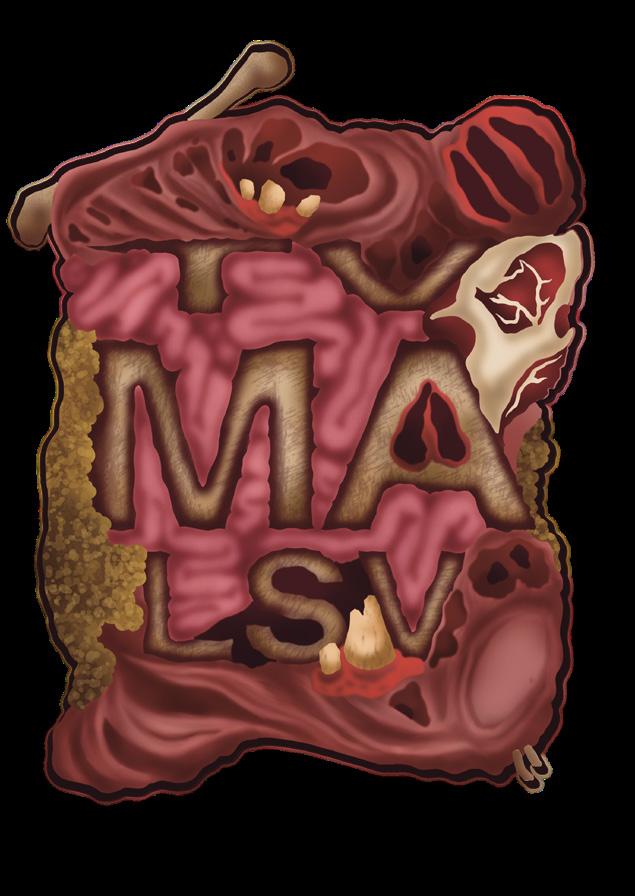
BY ABBY JOYNER
ILLUSTRATION
BY ELLA KATZENMEYER
DESIGN BY EMMA HENRY
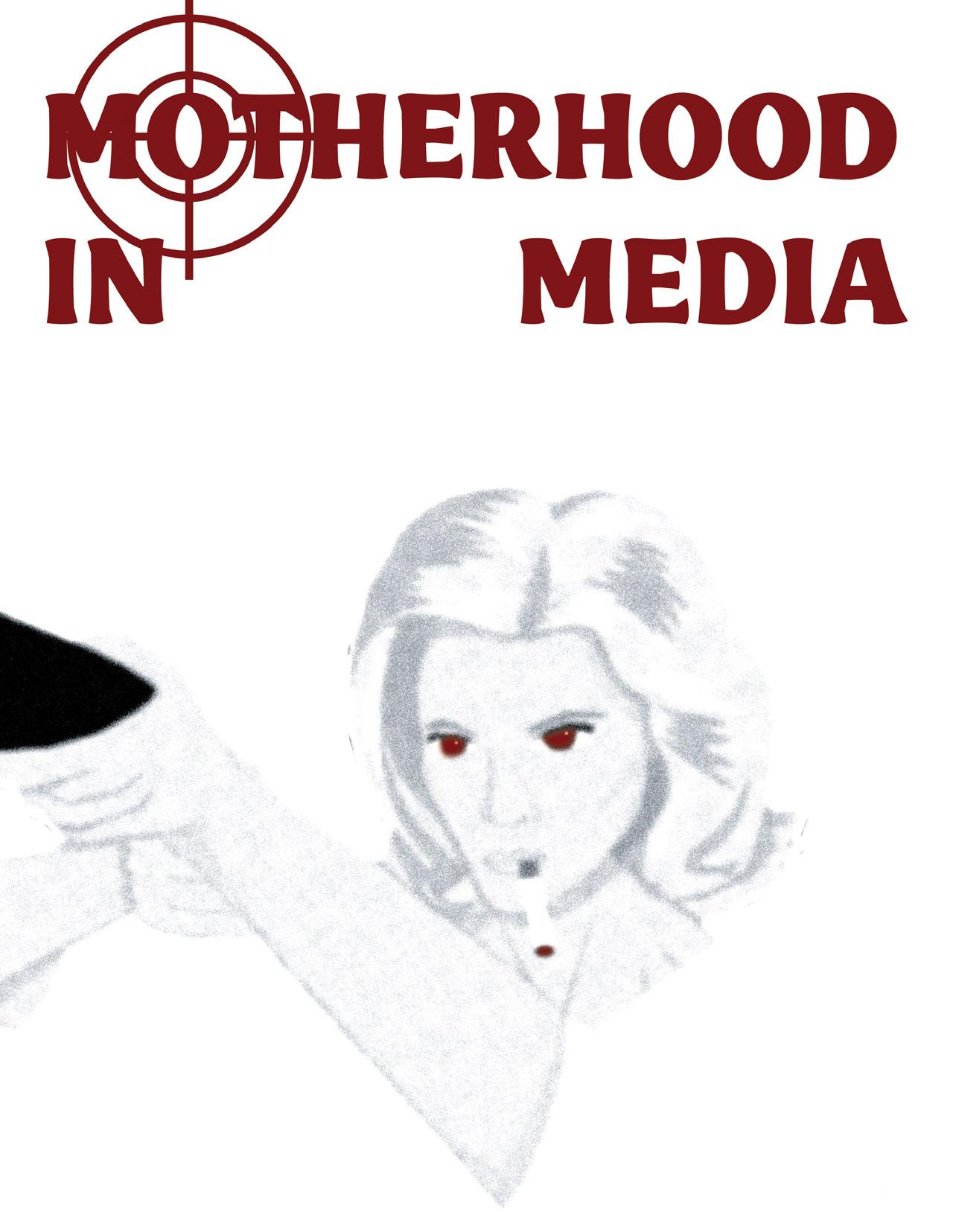
Often across media, from film to television to literature and to popular culture, a woman’s motherhood cannot be removed from her identity. These onedimensional representations essentialize the experience of motherhood and reduce women to their bodily reproductive capacities. Motherhood is not a singularly definable experience, and it is also not the only part of a
woman’s identity. The scope of motherhood is vast throughout film, art, literature, and popular culture — demonstrating the complexities of existing as a child-bearing person across gendered, racial, class, and cultural lines. What often occurs, however, throughout fictional and nonfictional representations of mothers is their construction within static stereotypes. This article will look at one example from
back of the closet television, film, literature, and popular culture, respectively, to illustrate the variety of ways mothers have been portrayed across media.
The “good mother” nurtures and supports her children; she sidelines her own personhood to focus her attention on her children. However, this woman, often associated with Betty Friedan’s “Problem With No Name” of the 1960s, is represented by emphasizing the boredom and dissatisfaction that came with this lifestyle.
Patty Stokes, a professor of women, gender, and sexuality studies at Ohio University, referenced the television series “Mad Men” (2007) as illustrating these dimensions and tensions within mothering. Betty Draper, wife of the main character, Don Draper, is “very clearly made to be a character that shows the constrictions of her time,” Stokes said. “So to the extent she’s a stereotype, she’s a stereotype that is placed there to show how [suburban white] women were restricted in the early 1960s and mid ‘60s.”
These characters often face backlash for their portrayals and critiques of womanhood. “There’s a ready audience for hate-watching certain kinds of women characters, right?” Stokes said. “They’re seen as somehow putting the brakes on a male anti-hero with whom viewers are evidently over-identifying.”
In a classic film example, the depiction of Norma Bates in Hitchcock’s “Psycho” (1960) reflects Freudian theorization on motherhood. Stokes references Freud as a “wellspring of ideas” surrounding the behaviors of mothers, most notably within the Oedipal complex.
Killed by her son, Norman, Norma looms over the narrative of the film and influences his behavior; he kills whoever threatens his close relationship with his mother, and assumes parts of her persona in doing so. In this example, potentially “bad” mothering — in the sense that Norman feels neglected and overshadowed by his mother’s other lovers — can lead to corrupted children.
Certain stories shy away from the grueling, less savory aspects of childbirth and mothering in favor of portraying motherhood as an inspiring and enlightening experience. Others, however, introduce complexities through often grotesque and unsettling images.
For example, Charlotte Perkins Gilman’s famous short story, The Yellow Wallpaper, further addresses the nuances of the mental
and physical toll motherhood imposes on a woman’s body. It warns audiences of the horrifying consequences that can befall mothers in a society that dismisses mental illness, for their legitimate struggles risk being overshadowed by the expectation of joy and ultimate happiness that supposedly accompany motherhood. In the story, an unnamed mother of a newborn battles postpartum depression, which is left untreated, leading to the narrator’s descent into madness.
Through this narrative, Gilman drew attention to the very real and debilitating mental, physical, and emotional toll motherhood took on her. She demonstrated that childbirth and motherhood involve much more than happily raising a child.
Popular culture perpetuates many stereotypes surrounding motherhood; the “refrigerator mom” theory, popularized in the 1950s, suggested that a mother’s frigidity toward her children caused autism. Derogatorily labeled “welfare moms,” or queens, are wrongly and culturally understood to not deserve government support on the grounds that they do not work hard enough. “Helicopter moms” hover so closely over their children that they cannot develop into their own persons. These various examples from real life permeate through culture and further embolden the standardization of certain mother types in popular culture.
Evidently, critiques of motherhood representations across media ask for layers of complexity to be built into these characters and real women. Successful mother characters embody complexity and intersectionality; they are women with careers, ambitions, and habits beyond children.
“I just feel like anytime you’ve got a fully formed, complex character who’s also a mother, that’s a win, right?” Stokes said. “I think one of the reasons why it’s been in the past and still sometimes in the present, maternal characters that are flat is that they serve as kind of reflection surfaces for their children and husbands.”
To repair this misrepresentation, Stokes said, “I think one of the important ways to add nuance to mothers is to just make clear that none of us are saints. You know, we’re all just humans.”

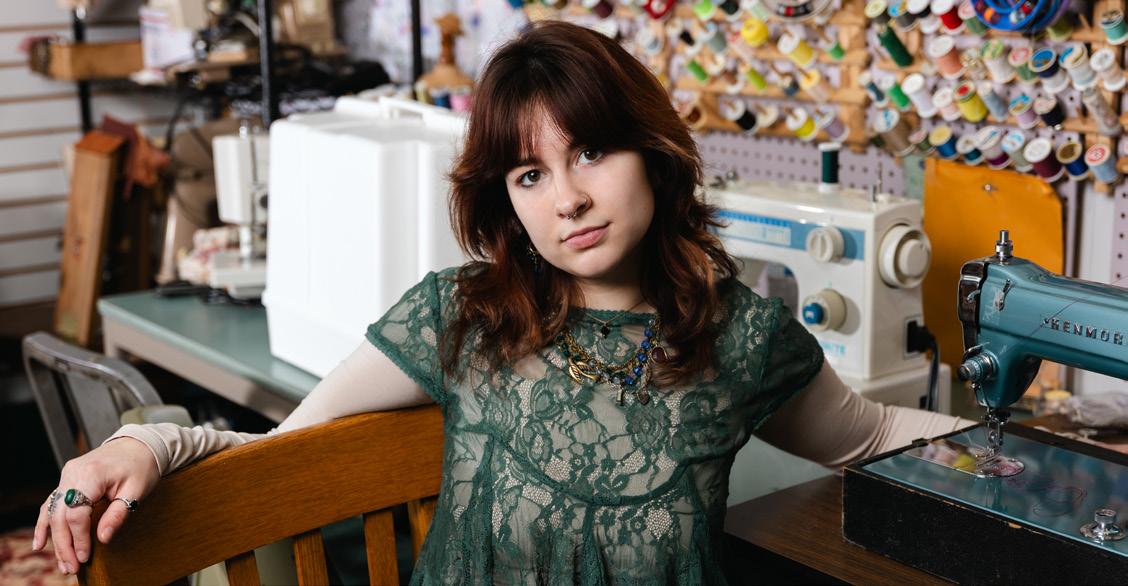
The fashion industry is a perpetual factor in issues surrounding body inclusivity. Many brands infamously lack options for different weights, heights, and shapes, making it difficult for a large population of people to develop a wardrobe that feels personal.
As public discourse makes it harder for brands to ignore demands for inclusive expansion in sizing, local laborers are taking matters into their own hands.
Emily Voss graduated from Ohio University in December with a degree in retail and fashion merchandising, a minor in business administration, and a certificate in entrepreneurship. Voss is a clothing mender for the Community Makerspace. She also started her own small business in 2024 called Venus’s Curse, where she upcycles secondhand clothing and handcrafts jewelry.
Community Makerspace sourced Voss to join their team as a clothing mender in December, and she offers an array of clothing repair services, from zipper replacements to patching holes and hemming. Voss started by upcycling and repairing her own clothes after taking
various sewing courses through her major.
“My mom had an old sewing machine, so I was just like, ‘let me steal that and alter my own clothes,’ because there are lots of things that I find at the thrift store. … I’m like, ‘I love it, but I don’t like how it fits me,’” Voss said.
Voss’s goal in both of her practices is to mix inclusivity with sustainability. “Thrifting has been on the rise for years, and people are noticing that fast fashion is killing the planet,” Voss said. “What I take to vendor shows, or what I post online, I make from donations. … I try really hard not to buy new fabric, or new anything, because that defeats the purpose of upcycling — keeping clothes in circulation.”
Her use of strictly secondhand clothing donations is her main way of ensuring sustainable practices, yet she also provides custom orders where she alters clothes to fit each individual. “If [people] see something they like at a vendor show, but it’s not their size, and they want to tweak it a little bit, I’m always willing to remake it and make it however they want to,” Voss said.
“What I do is helping people actually have
BY LAUREN STIDHAM
AND EDITS BY HADLEY FAIN DESIGN BY EMILY PETERTONJES
clothes that they want to wear and that they can wear, and they’re not going to be super cropped on them, or super long and dragging on the ground,” Voss said.
While Voss uses her skills to rework clothes for a diverse range of sizes, sourcing different sizes when upcycling pieces to sell online and at vendor shows is still an active process for her small business.
“I am working on expanding my size range, because it’s hard to do different sizes when I have my mom donating her size two clothes to me, and I can only do so much with that. So, it’s been kind of a topic on the forefront of my mind,” Voss said. “I think it’s really important that people want to wear the clothes that they buy.”
While this issue remains a struggle, Voss is always working on ways to open her products to a range of body types, something that even large corporations and high fashion conglomerates are falling short on. “[I’m] sourcing from anybody and everybody that I can,” Voss said. “I have a lot of different friends who are different sizes. So, I’m begging for clothes from them.”
Her services at large are still an outlet for all sizes, and she feels that mending and upcycling are sustainable practices that allow everyone to tailor their clothes to fit their bodies. “I’ve held a workshop before to upcycle patches so you can repair your own clothes and use scrap fabric. … So, I think that really helps letting people know that they can build the skills to do it,” Voss said.
Clothes should fit how you desire, and adding a few skills to tweak certain pieces is a way to take control amid the fashion industry’s shortcomings. Voss urges others to give upcycling a try. “My biggest piece of advice to anybody who wants to get into upcycling or mending would just be: just do it. Even if it sucks the first time you do it, at least you did it … you can only get better, and it definitely helps that it’s sustainable and you can make things that you really like and that you want to wear.”
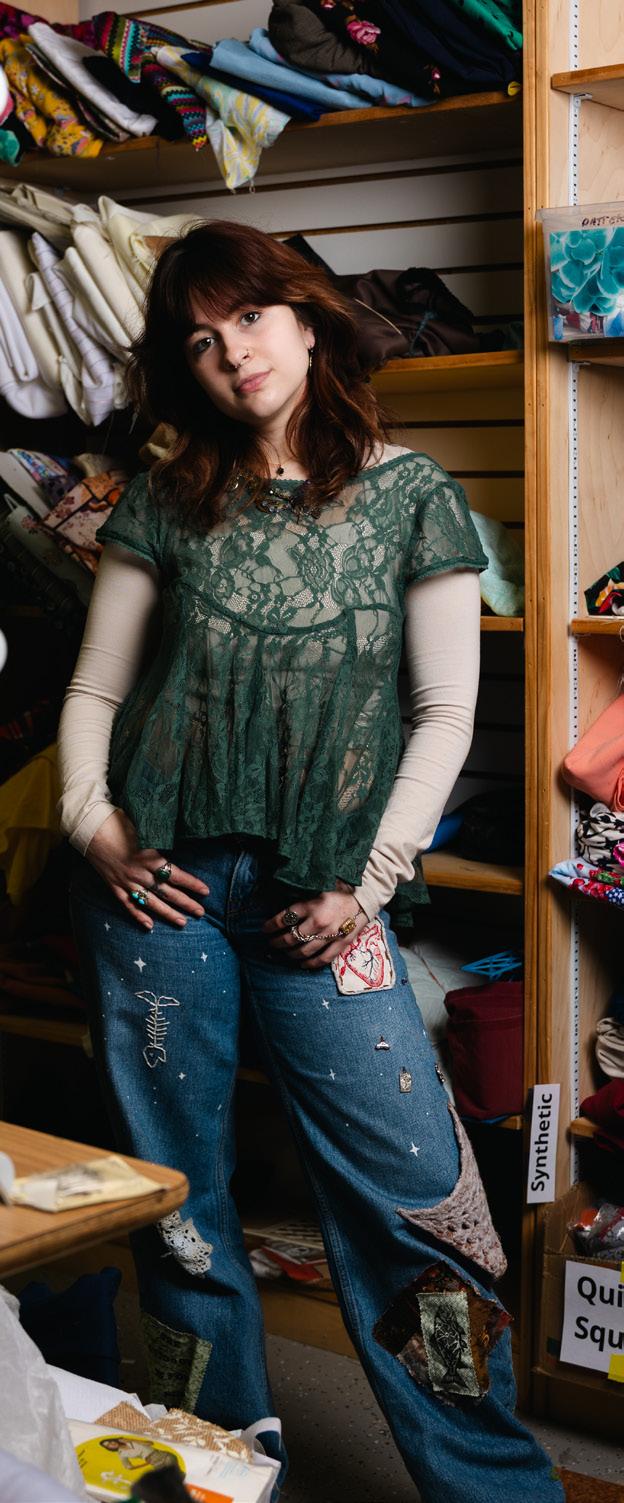
If I could give one word for how I feel about nude photography as a photographer, it would be “uninspired.” Since the dawn of the art form in the 19th century, photographers have been utilizing nude figures as subjects, just as painters and sculptors did centuries prior during the Renaissance. Drawing inspiration from historical art movements is a triedand-true way to create new interpretations, but it also begs the question: what more can be said with nude photography that hasn’t already been created?
Self-portraiture and expression hold creative value, yet finding models willing to pose nude for an idea that has been done thousands of times prior is something entirely different. Not only do nude photoshoots fail to contribute anything to the creative sphere, but they also position models — the majority of whom are disproportionately female — in awkward, uncomfortable, and often powerless situations. This is particularly concerning
given that the photography industry has been historically male-dominated.
There are far too many stories of photographers exerting their control and influence on set to take advantage of models, including minors. Because this issue is so widespread and prevalent, Ohio University has nude and risqué photography policies to ensure that students are following ethical standards. Additionally, model releases provided by OU’s photography program require all models featured in projects to be over 18 years old.
As much as nude photography is an art form, there seems to be nothing creative about it anymore. Moody and sexy? That angle has been shot thousands of times before. Abstraction of the body? This has also been exhaustively explored. Silhouettes and shape-accentuation? Done. Almost any idea dealing with the nude body — especially the female body — has been done in the past.
To the trained eye, direction and posing often make it obvious whether a photographer is a man or a woman. Traditionally, female photographers tend to lean toward softer, more “innocent” approaches to nudity, while male photographers often direct the opposite. While the human form may capture your attention, other creatives, like myself, often find it uninspiring and tired.
BY HADLEY FAIN ILLUSTRATION BY ABBY STANLEY DESIGN BY GEORGIA BOOTH

Inappropriate, degrading, uncomfortable; these tend to be the first connotations of nude photography. Nude photography is often frowned upon and associated with sexual exposure and exploitation. However, many do not understand the art of nude photography and the skills needed to capture the complex human form. The courage and confidence it takes to be involved in nude projects is inspiring — particularly for those who experience stunted confidence via shame and guilt about their bodies. Seeing this confidence in the media is foundational in building a healthy body image. Many people in the United States have preconceived notions of how models should look, sound, and feel, yet nude photography can help to dismantle these assumptions. When models of all shapes and sizes are confident and accepted in their own skin, nude photography has its place. This is not just a confidence boost for models, but for audiences as well. Seeing people of all races, weights, and ages being comfortable in their natural bodies can help set the tone for the rest of the world. Audiences may not take up nude photography or modeling, yet it can still reassure some that their body is allowed to take up space, even when they may feel discarded or on the periphery. Choosing to be involved in nude art forms serves as a rebellion against the tedious editing used to convince observers that models are effortlessly toned, symmetrical, and perfect. The problem is not nude photography, but instead the inaccurate distortions of the human form historically used by photographers and editors. We want to see the wrinkles. We want to see the stretch marks. We want to see the human elements. Ultimately, nude photography is an artistic expression that many choose to find uncomfortable and wrong. It does not need to be something people see as strictly sexual or pornographic; it can be an eye-opening embodiment of the idea that humans, in their purest form, are art.

THREAD MAGAZINE



@THREADMAG
@THREADMAGAZINE
SPJ MARK OF EXCELLENCE: BEST STUDENT MAGAZINE, FINALIST

SOCIETY OF NEWS DESIGN: MAGAZINE COVER DESIGN, HONORABLE MENTION