
The operating performance for the half year was strong with total revenue increasing by 7.4% to $20.90 million. However increased repairs and maintenance, including the scheduled five yearly dry docking of the tug Hauroko ($838K expenditure) led to a reduction of 7.1% in net profit after tax (NPAT).
South Port New Zealand Ltd’s NPAT in the period was $4.55 million (FY2018 $4.90 million).
At the 2018 Annual Meeting, the Directors advised that 2019 earnings were likely to be approximately 10% lower than in FY2018. The result is consistent with that guidance.
Several factors impacted on this year’s interim result including:
ö Increased maintenance expense with the scheduled docking of the harbour tug Hauroko.
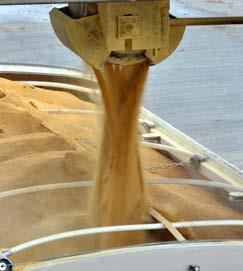
ö Expectations of dry weather led to an increase of stock food imports for the dairy industry.
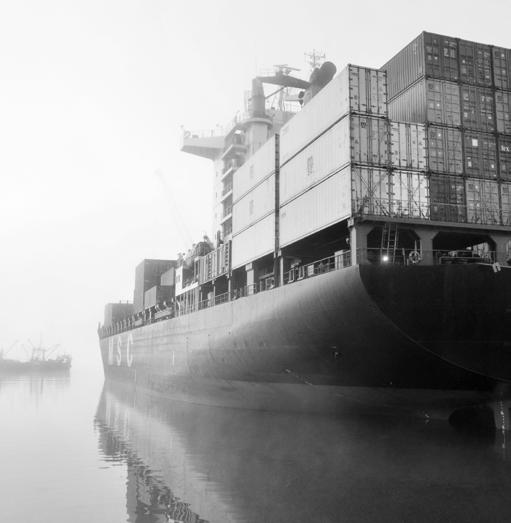
ö New exports of containerised Medium Density Fibreboard (MDF) being packed at the Intermodal Freight Centre and shipped on the Mediterranean Shipping Company (MSC) service through Bluff.
ö Increased storage and packing activities in the warehousing division.
Although the reported FY2019 interim profit is ahead of budgeted expectations, this should be read in conjunction with the Outlook section of this Report.
Total cargo activity was 1,772,000 tonnes compared with 1,754,000 tonnes in the prior year interim period. This represents an increase in cargo flows of 18,000 tonnes or 1%.
However revenue was up by 7.4% due to a favourable cargo mix, strong performance in the warehousing division and increased marine activity.
Bulk cargoes continue to be the backbone of the business. Volumes were comparable to the same period last year with the exception of fertiliser (-34,000) and stock food (+22,000).
Containerised cargo throughput increased by 10% due to an increase in both Open Country Dairy finished product exports and Daiken Southland Limited MDF exports.
Imports of containerised supplementary feeds being delivered to the Port for the dairy industry declined for the same period due to a shortage of feed in Australia as a result of drought conditions in New South Wales.
Fertiliser
Fertiliser imports were lower than in the previous period due to large volumes being carried over from last season. Volumes are however expected to meet budgeted expectations by year end which will be slightly down on the previous period result.
Stock Food
Stock food imports increased over the second quarter of the financial year due to a dry spring and the expectations of another dry summer.
Rain has however been plentiful over the summer months and it is now forecast that the volumes will also fall in line with budget.
Logs
The newly paved log storage area on the Island Harbour has been operating for the past nine months. The improvements that this piece of infrastructure brings are clear with safer working conditions, better utilisation, an improved environmental outcome through having a cleaner working surface and an upgraded drainage system.
Log volumes are similar to last season. However, there has been a slowdown of exports to the Indian market. Volumes have also been impacted by poor ground conditions in certain areas within Southland affecting the ability of logging crews to harvest their forestry blocks. It is anticipated that these two factors will lead to a reduction in throughput by year end of approximately 10% compared with last season.
Dairy
The most recent global dairy trade (GDT) auctions have delivered small increases which is a reflection of the tightening in supply of global milk production.
Although New Zealand supply has increased this season there has been a decline in production in both Europe and Australia which has impacted positively on the recent auction events.
Intermodal Freight Centre (IFC)
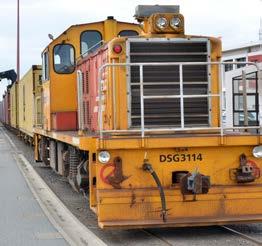
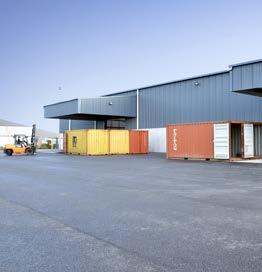
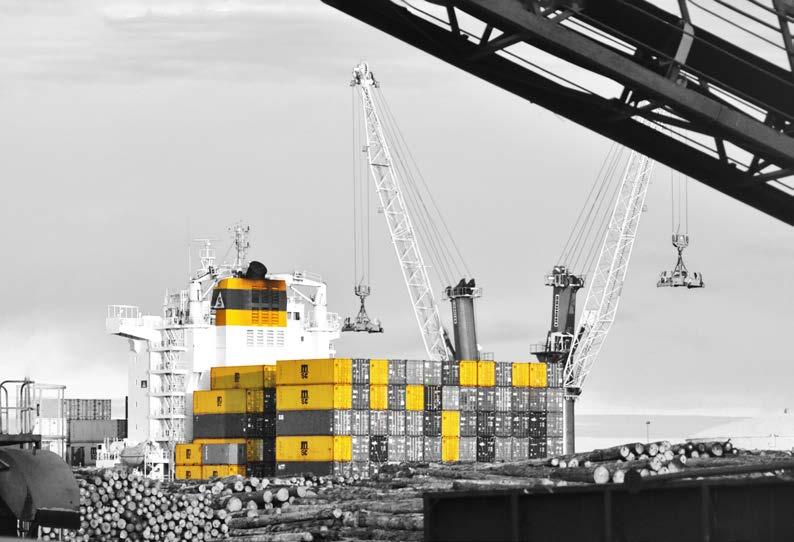
The IFC is into its third full year of operation. Initially set up for the receipt, handling and unpacking of imported goods, containers are now also being packed for export with MDF at this location for shipment through Bluff.
Serviced by rail from ports, we estimate that on an annual basis the use of this facility has taken 7,000 truck movements off the road which has delivered improved environmental outcomes through reduced emissions while also improving the safety of our road networks.
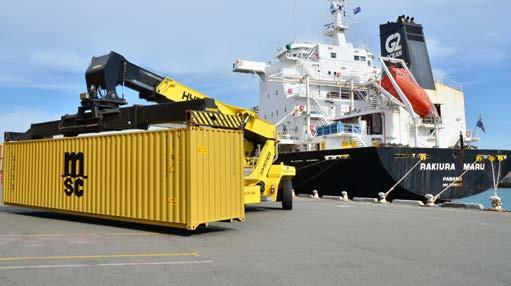
The Mediterranean Shipping Company (MSC) continues to be an important contributor to the Port and to the region’s exporters/importers, providing a competitive alternative to shipping lines calling at other ports.
A record volume of 19,800 TEU was handled on MSC during this interim period, 10% above last year’s throughput as noted above.
There has been increased handling, packing and storage of meat, fish and dairy products in both the cold store and dairy warehouses during the past six months. The recent completion of the cold store environmental loadout area and blast freeze is already delivering operational efficiencies, improving the safety of the operation while meeting the expectations of the Ministry for Primary Industries.
Maintenance
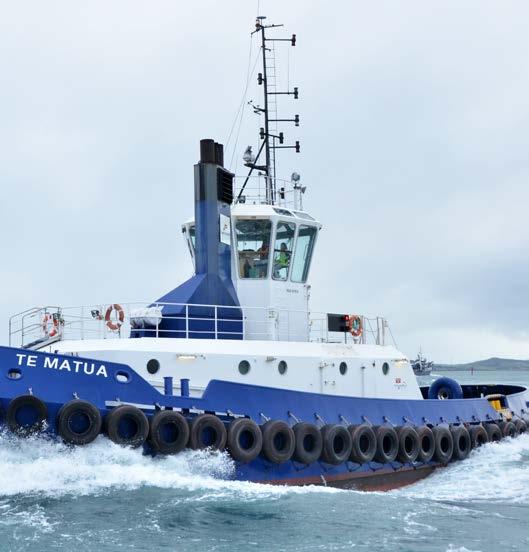
The scheduled docking of the harbour tug Hauroko was completed in August, a significant project that occurs every five years. This occasion involved the removal and overhaul of one Voith unit (propulsion/drive system), a complete strip down of a main engine, hull painting / repair work and replacement of a stern fender.
Mataura Valley Milk (MVM)
Construction of MVM’s infant formula plant was completed and commissioned in the second quarter of 2018 with processing beginning in August 2018.
The Port is pleased to communicate that MVM has chosen to export cargo through Bluff on MSC with the first shipment being recorded in November 2018.
New Zealand Aluminium Smelter (NZAS)
The official opening of the fourth potline was held at Tiwai Point on 6 December 2018. This potline when fully operational will consume an additional 60,000 tonnes of alumina and increase aluminium production by 30,000 tonnes per annum. Over the coming year, the Port will be working with the team at Tiwai to determine whether there are additional services we can provide to handle and/or pack any of this finished cargo into containers for export through Bluff.
This year the Port has begun recording its greenhouse gas emissions (GHG). GHG emissions are classified into three scopes. Scope 1 is direct emissions from owned or controlled sources; Scope 2 is indirect emissions from the generation of purchased energy; Scope 3 is all indirect emissions (not in Scope 2) that occur in the value chain of the Company.
Initially South Port will be tracking Scope 1 and Scope 2 emissions with a view to track Scope 3 emissions in the future. There are also a number of initiatives that are currently underway to improve the Port’s impact on the environment which will be covered in more depth in the Annual Report.
The Person Conducting a Business or Undertaking (PCBU) project – identifying all third party interactions, classifying contractual relationships and documenting H&S obligations of the respective parties is almost complete. We are now in the final stages of obtaining legal opinion on the content before implementation.
The Port is in the process of purchasing “Bowtie” risk assessment software. This software will be principally used for the analysis of critical fatality risks on the Port however can be used for all types of risk assessment going forward.
A project group with members from all sectors of the Port has been formed to discuss and work through the construction of a Fatigue Policy. This is an important issue for all organisations and will be a primary objective for the Company to complete over the next twelve months.
Wellness
Another important piece of this puzzle is to facilitate improvements to staff wellbeing. The implementation of a structured wellbeing programme will also be a targeted objective for the Company in the coming year.
Over the coming months it is expected that there will be a number of fluctuations in each bulk cargo category however by year end the total volume is forecast to be in line with budgeted expectations. Container volumes are tracking 10% ahead of the previous period and this positive trend is expected to continue through to the end of the financial year. Increased maintenance expenditure on the infrastructure and floating plant, as noted in previous commentary, will continue to have an impact on profitability going forward.
Based on all known factors at the date of releasing its 2019 interim result, South Port estimates that its full year earnings should fall in the range of $8.60 million to $8.90 million (FY2018 - $9.66M).
After assessing the anticipated year end result, the Directors have declared a fully imputed interim dividend of 7.50 cents per share (2018 – 7.50 cents) payable on 6 March 2019. In the event that the Company’s FY2019 profit falls within the above forecast range the Directors are confident that the full year dividend payment will be consistent with the previous year.
CONSOLIDATED STATEMENT OF COMPREHENSIVE INCOME SIX
1 ACTIVITIES OF SOUTH PORT GROUP
The Group is primarily involved in providing and managing port and warehousing services.
2 ACCOUNTING POLICIES
The Group is a Financial Markets Conduct (FMC) reporting entity for the purposes of the Financial Reporting Act 2013 and the Financial Markets Conduct Act 2013. These financial statements comply with these Acts and have been prepared in accordance with the New Zealand equivalents to International Financial Reporting Standards (NZ IFRS) and other applicable Financial Reporting Standards, as appropriate for profit-orientated entities. These financial statements comply with International Financial Reporting Standards (IFRS). There has been no change in accounting policies. All policies have been applied on a consistent basis with the most recent annual report.
3 AMENDMENTS TO NZ IFRS
Two new standards are effective for annual periods ending 30 June 2019, namely:
ö NZ IFRS 9: Financial Instruments
ö NZ IFRS 15: Revenue from Contracts with Customers
The Group does not expect these standards will have a material impact on the balances presented in the financial statements nor the period in which revenue is recognised. The adoption of these standards will result in changes to the Group’s disclosures.
4 TAXATION
Income tax expense comprises current and deferred tax at the company tax rate of 28%. Income tax expense is recognised in the Statement of Comprehensive Income except to the extent that it relates to items recognised directly in equity, in which case it is recognised in equity.
The South Port Group operates in the Port Industry in Southland, New Zealand, and therefore only has one reportable segment and one geographical area based on the information as reported to the chief operating decision maker on a regular basis. South Port engaged with one major customer who contributed individually greater than 10% of its total revenue for the period ended 31 December 2018. This customer contributed $4.22 million for the six months ended 31 December 2018 (2017: $3.95 million).
On 18 January 2019 a fire was located in a leased warehouse on the Island Harbour, causing isolated damage to the roof at the north east section of the shed. An investigation is underway, however the ignition point is believed to be a loader that had been operating inside the warehouse during the day.
7 STATEMENT OF CHANGES IN EQUITY
8 NET CASH FLOW FROM OPERATING ACTIVITIES