SOPHIA LOTZ
ACADEMIC PORTFOLIO
2021-2024
THIRD PLACES
NEW YORK, NY
University of Florida Design Studio 7 | Fall 2023
Prof. Jamie Lindsey
ALL WORK PRODUCED IN COLLABORATION WITH LYNDSEY WEISMAN
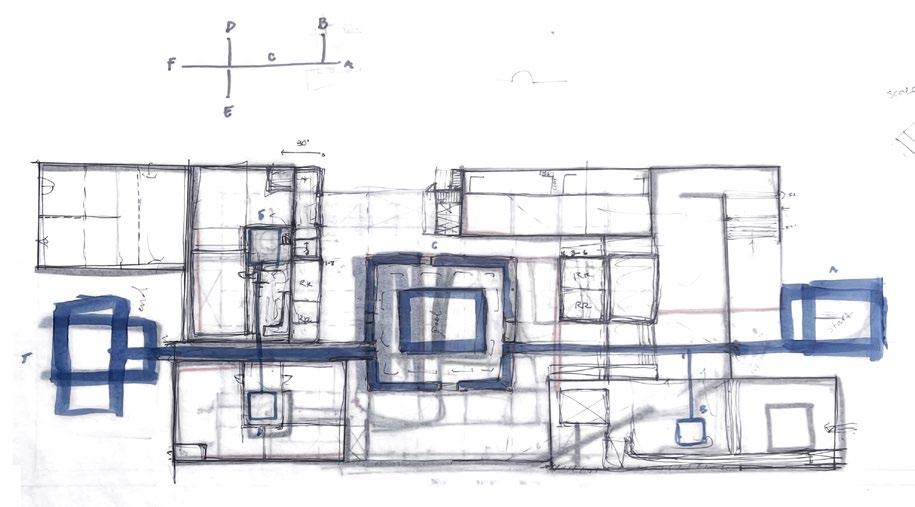
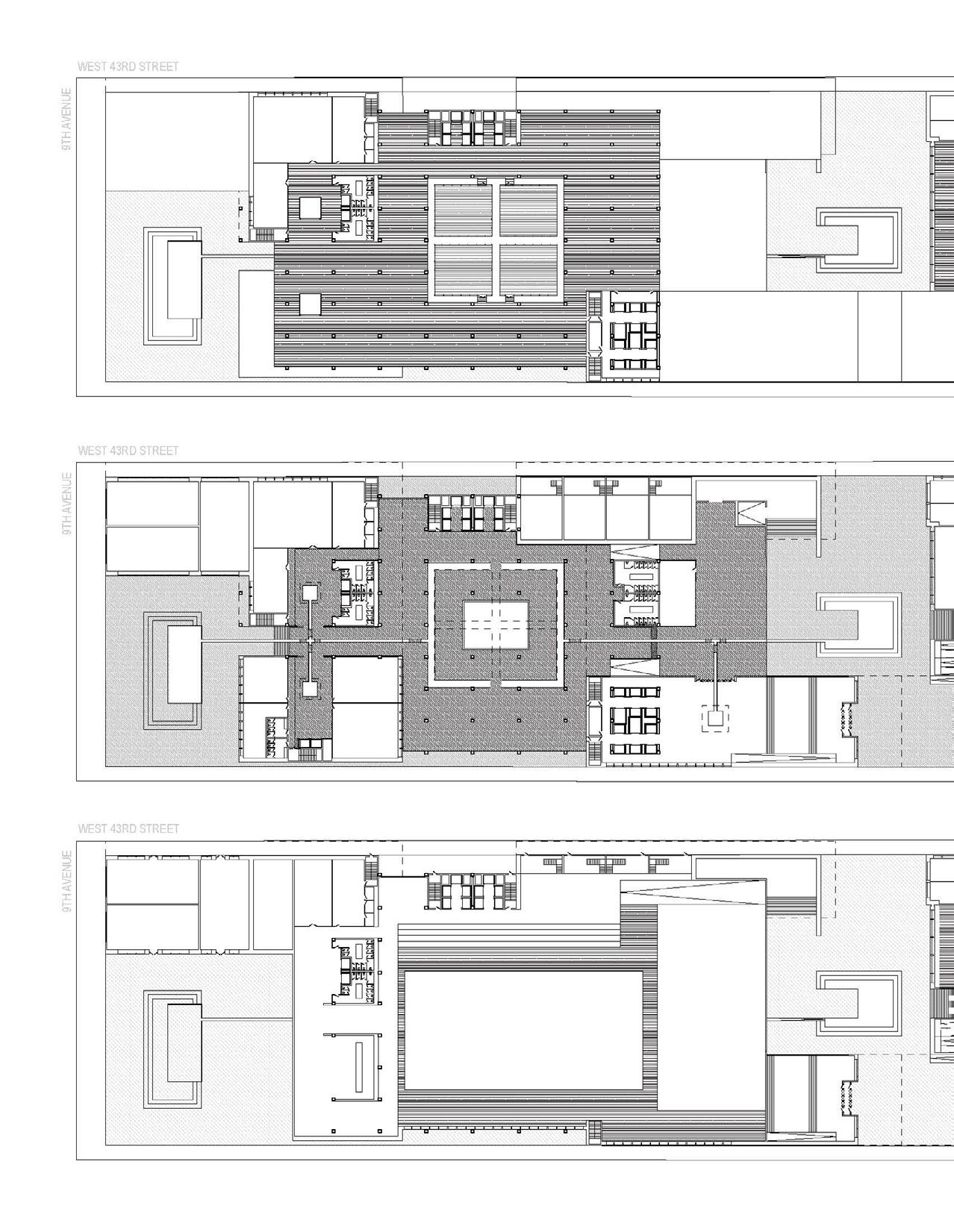
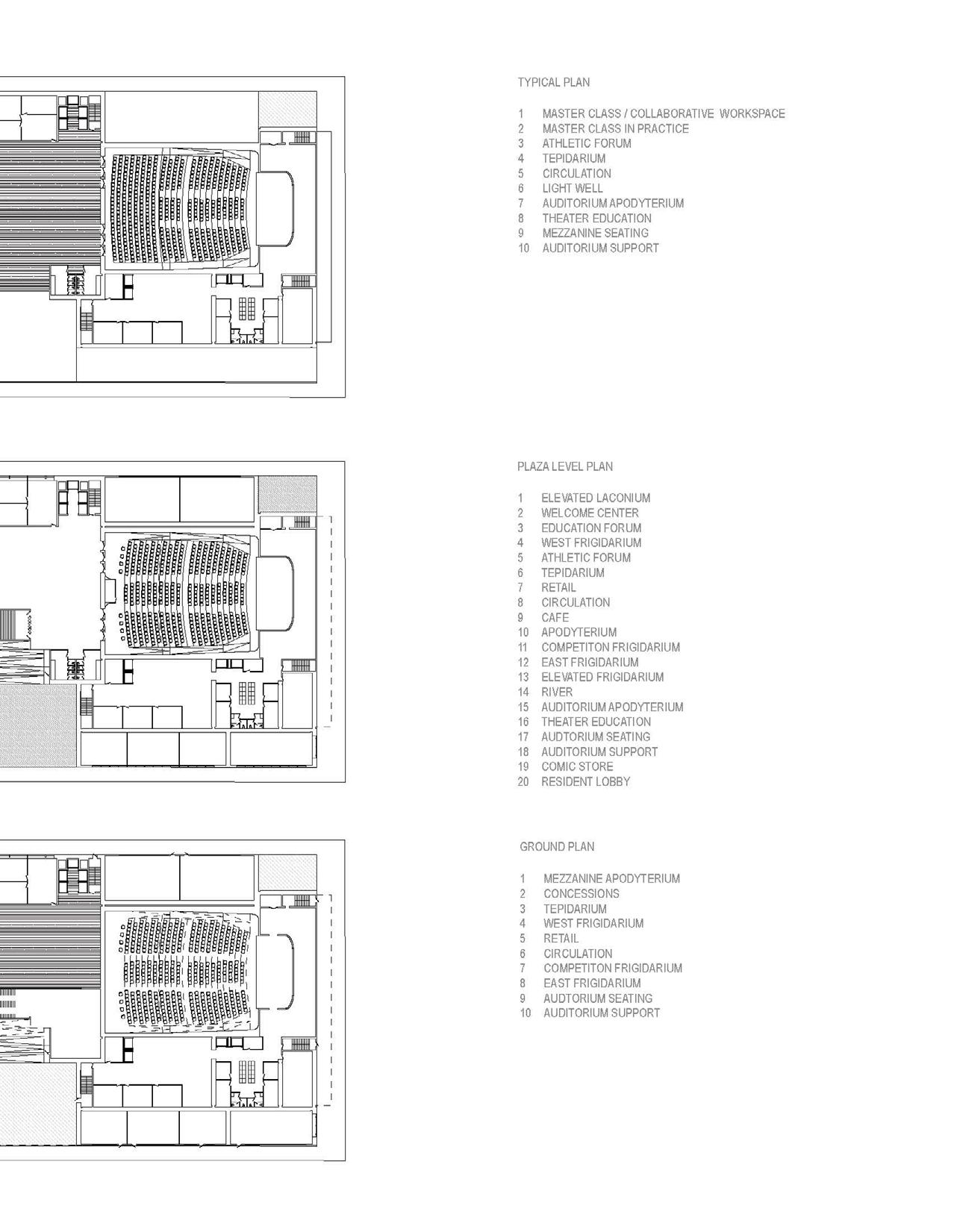
(TOP) Map illustrating how water flows through the city block, dictating itinerary across the project, and creating volumetric blocks of related program | EQUAL CONTRIBUTION
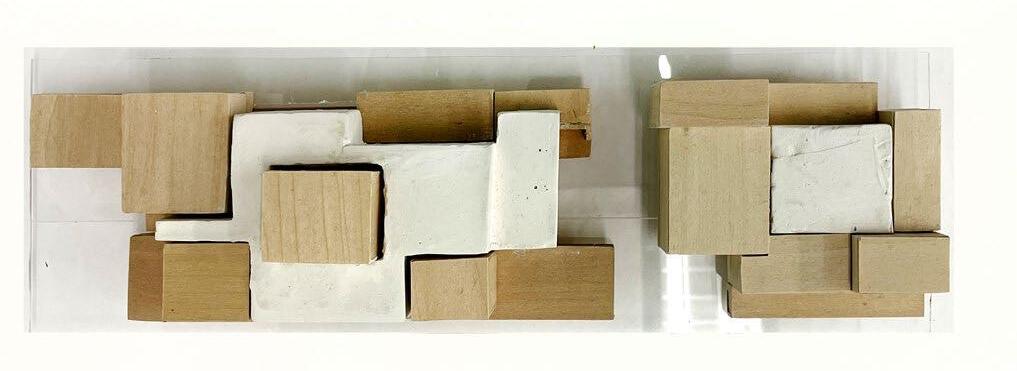
(BOTTOM) Model displaying how volumetric blocks of program hold the circulatory and undefined plaza space within the project | EQUAL CONTRIBUTION
The “third place” is a space separate from the first place, home, and the second place, work. Third places are designed to offer relief from the demands of the first and second places. This project recognizes the bathhouse as a prototypical third place. Bathhouses have historically been a space which create community, connection, and conversation by drawing upon the literal and symbolic or ritualistic uses of water.
In NYC, bathhouses served as the precursor to the public pool. In the summer months, public pools are a necessity, providing a space for the residents of New York to beat the heat. Today, most of Manhattan’s public pools are connected to a community center, several of which are renovated bathhouse facilities. Our project looks at the bathhouse through the lens of a community center in the heart of Midtown, New York City.
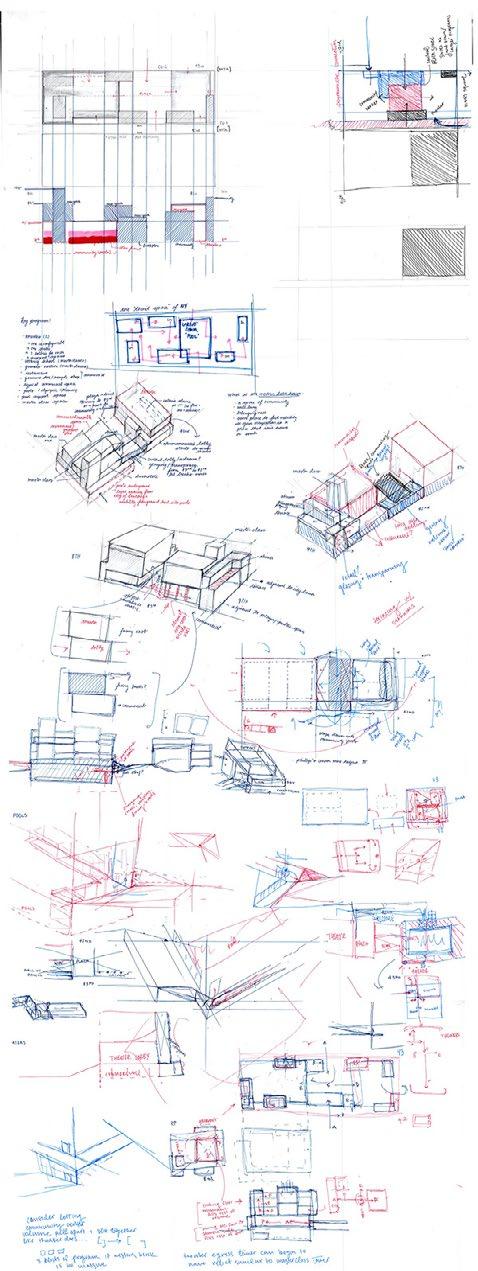
(LEFT) Tapestry of process thinking, working through ideas of adjacencies and volume on the city block | EQUAL CONTRIBUTION
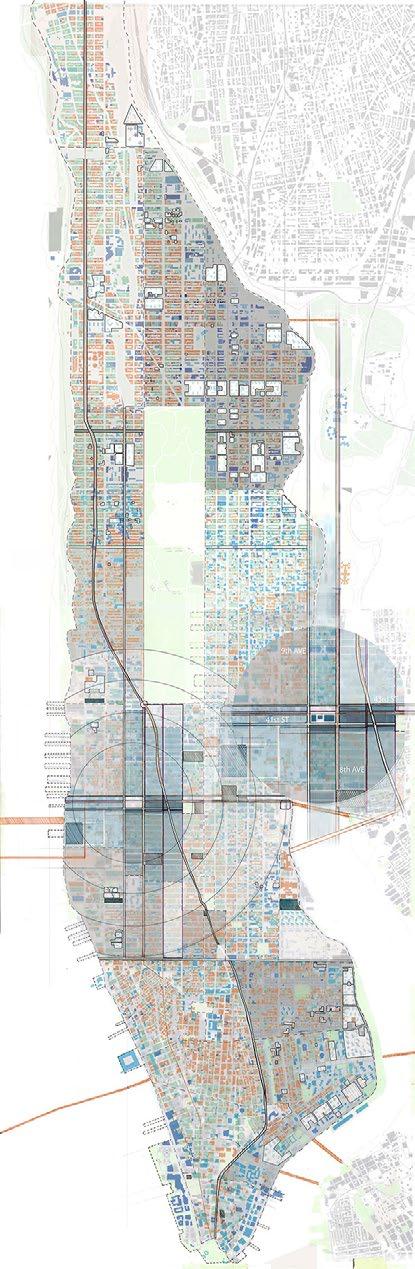
(RIGHT) Mapping of Manhattan highlighting nearby community centers, affordable housing, transportation lines, and defined neighborhood borders | EQUAL CONTRIBUTION
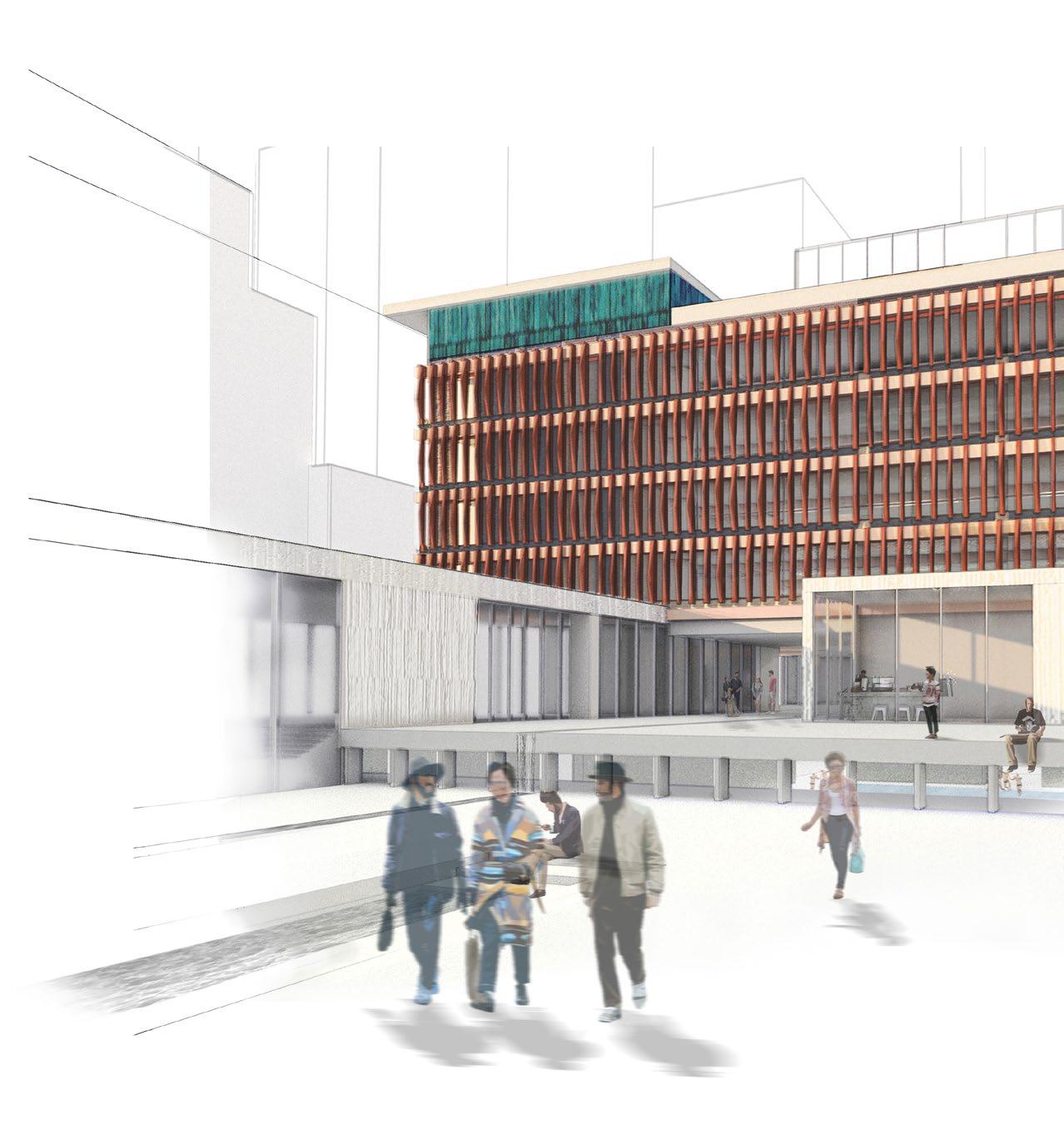
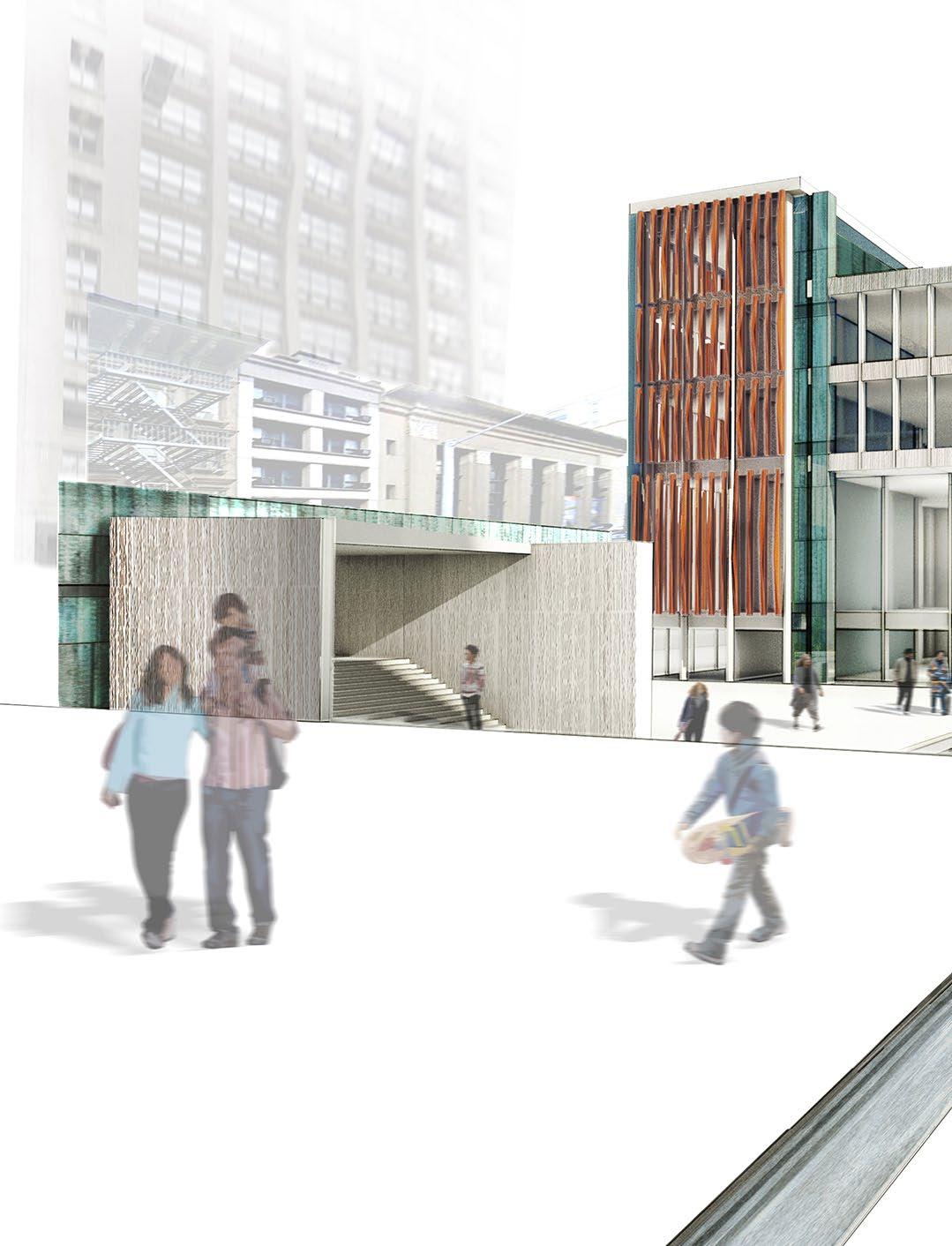
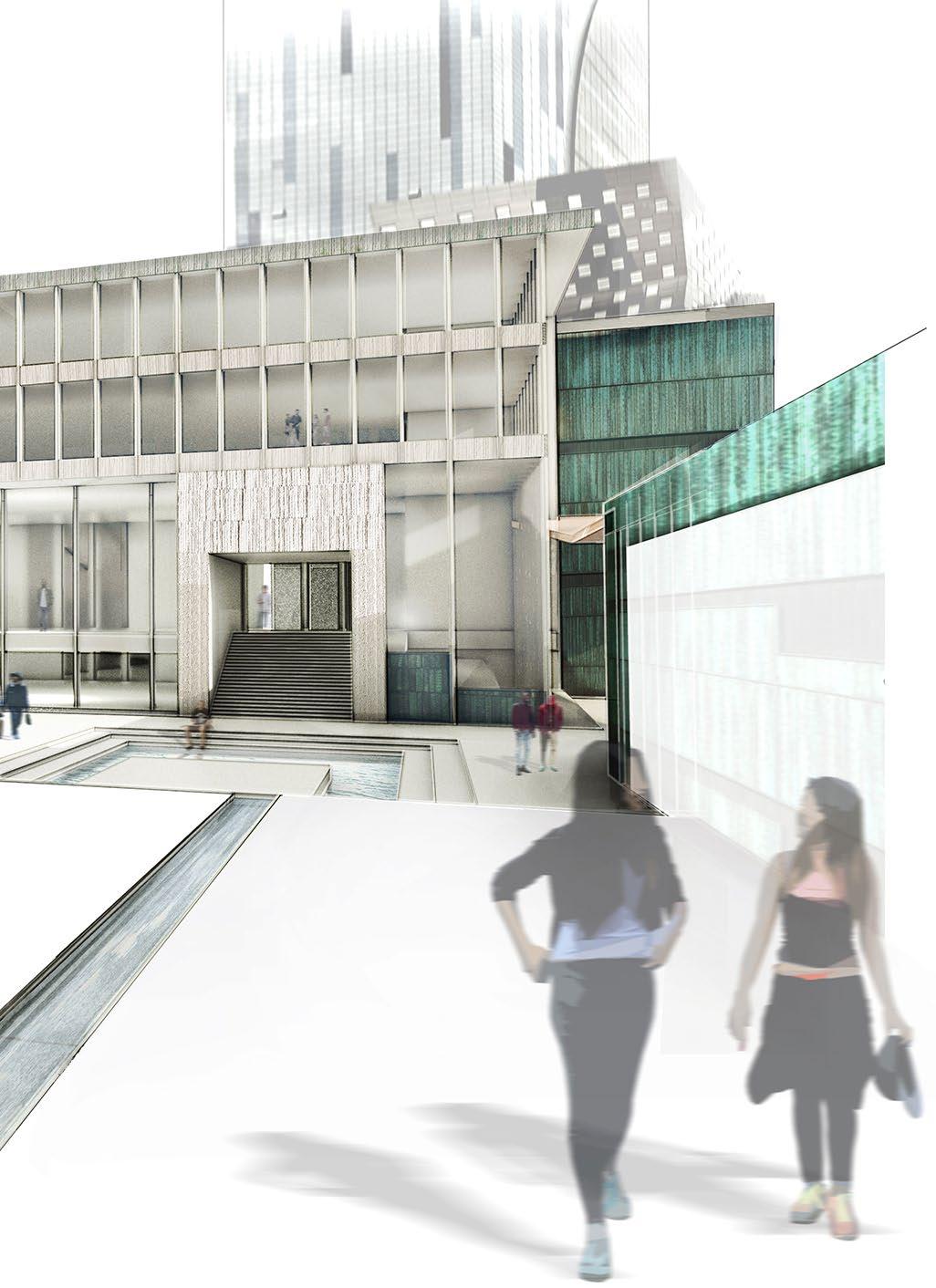
Exterior Plaza Level Perspective | RENDER LED BY SOPHIA LOTZ ASSISTED BY LYNDSEY W.
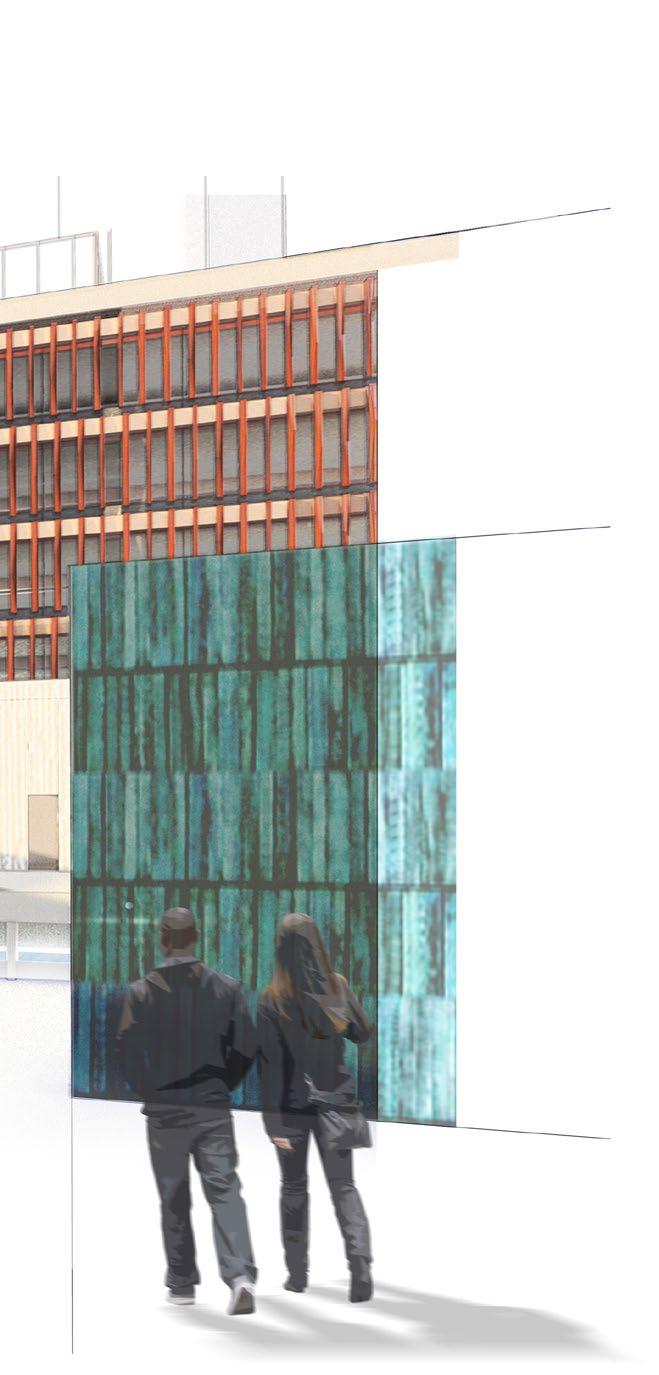

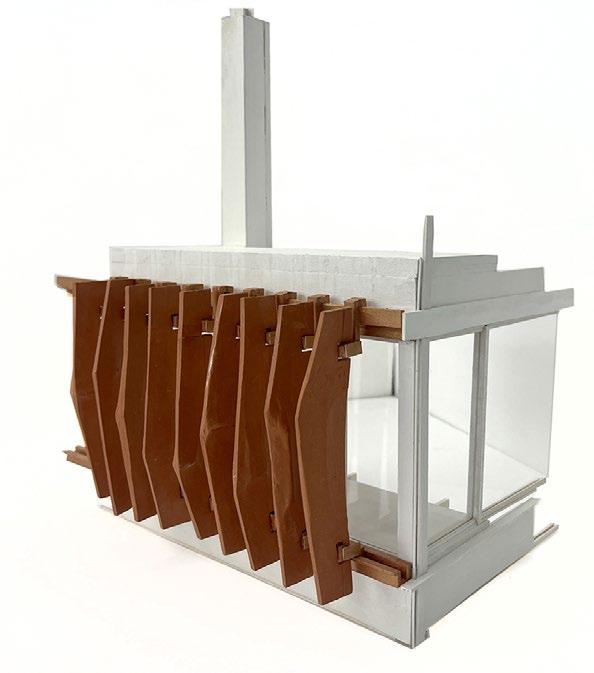
The unique color scheme of the nearby McGraw-Hill Building served as a major driver within our project, and the two city blocks are tied together by similar material palettes. We chose to use the glazed green terra cotta of the existing building in a vertical tiling, incorporated on the facade and interior of the intersecting community spaces. In compliment, the commercial intersections are clad in a white baked terra cotta. The shading device, acting as both a sun and rain screen, covers the east and west glazed walls and is constructed from unglazed terra cotta panels. The fins of the screen undulate in form, coming to one of three points along the face and expanding and contracting in width.
TO RIGHT:
(TOP) Model of tile colors and scale, Fired ceramic (approx. 3” x 2” each) | EQUAL CONTRIBUTION
(BOTTOM) Scale model of sunshading device and window assembly | EQUAL CONTRIBUTION
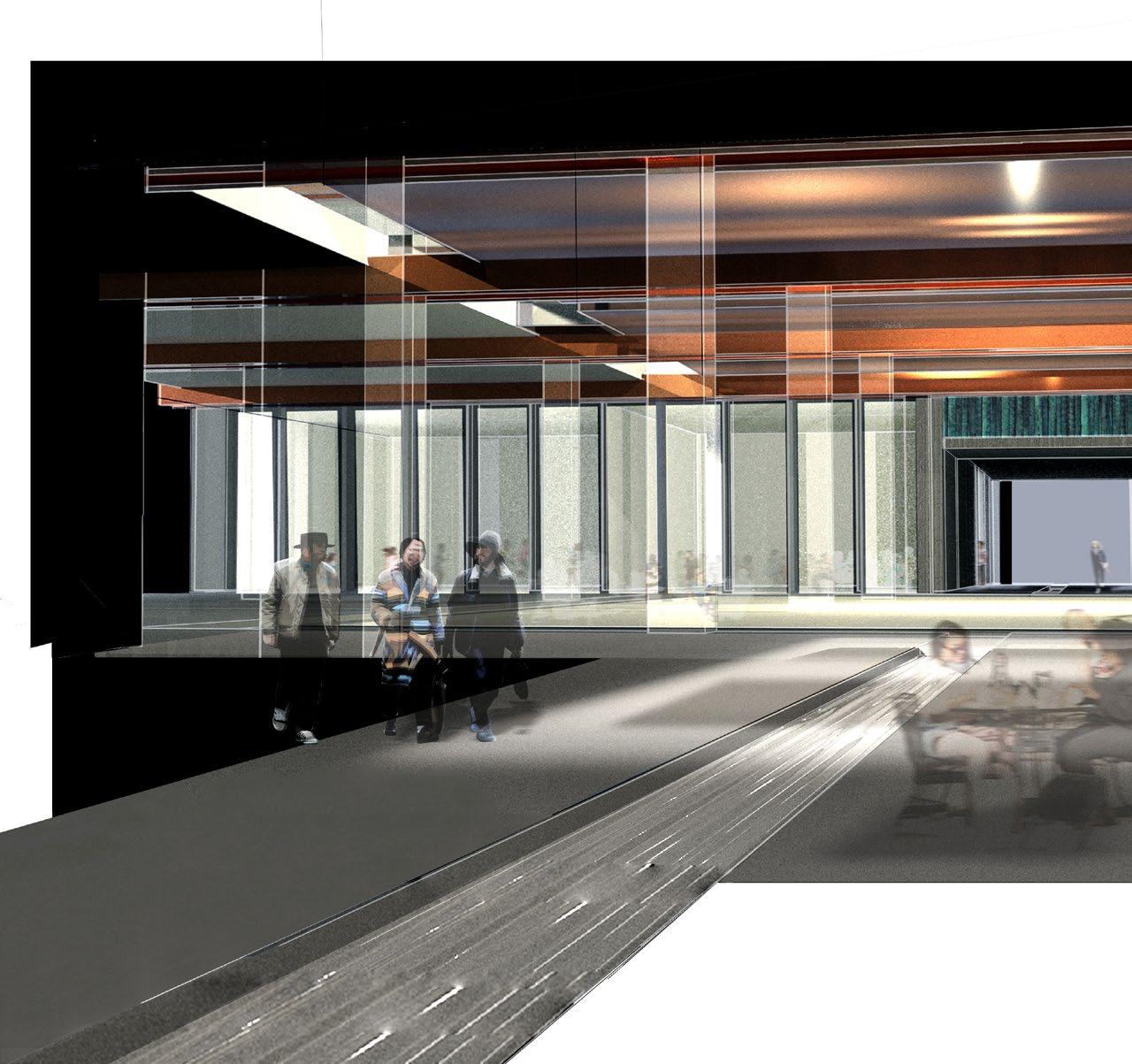
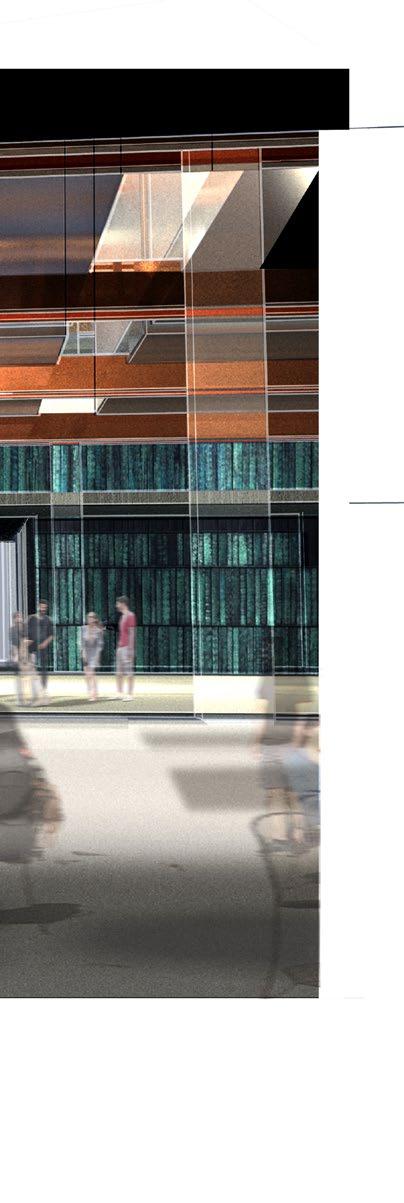
Lighting conditions in the interior plaza at nighttime | RENDER LED BY LYNDSEY W. ASSISTED BY SOPHIA LOTZ
CANOPY LIBRARY
SAVANNAH, GA
University of Florida Design Studio 6 | Spring 2023
Prof. Martin Gold
Telfair
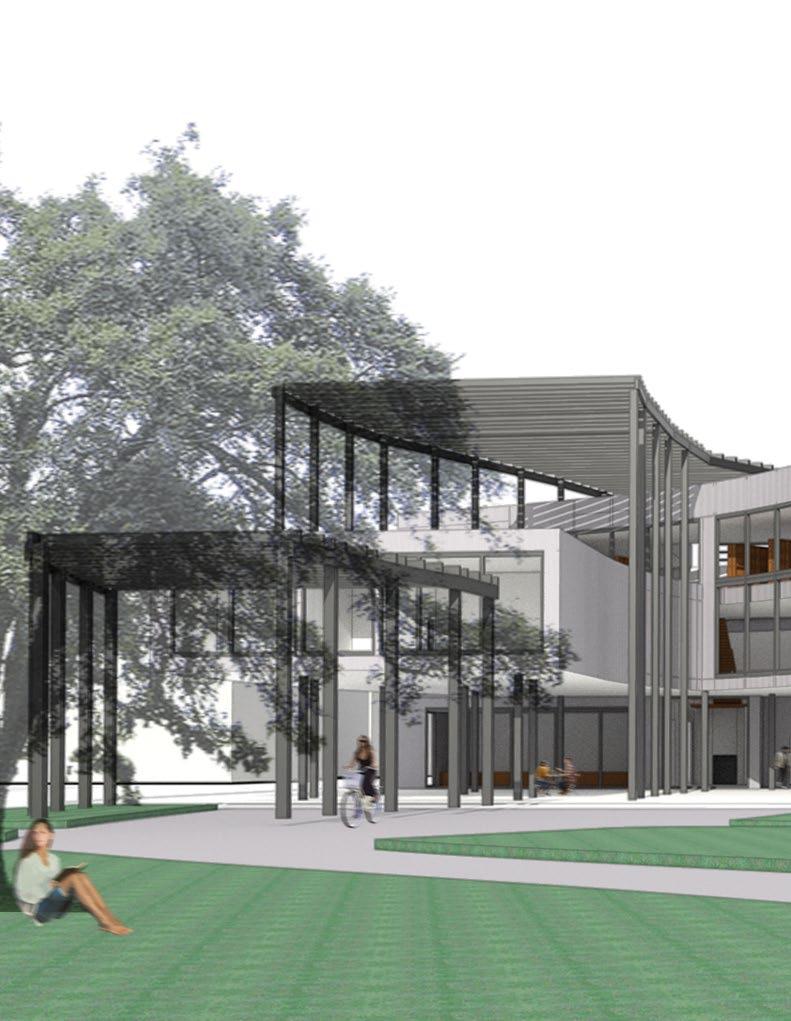
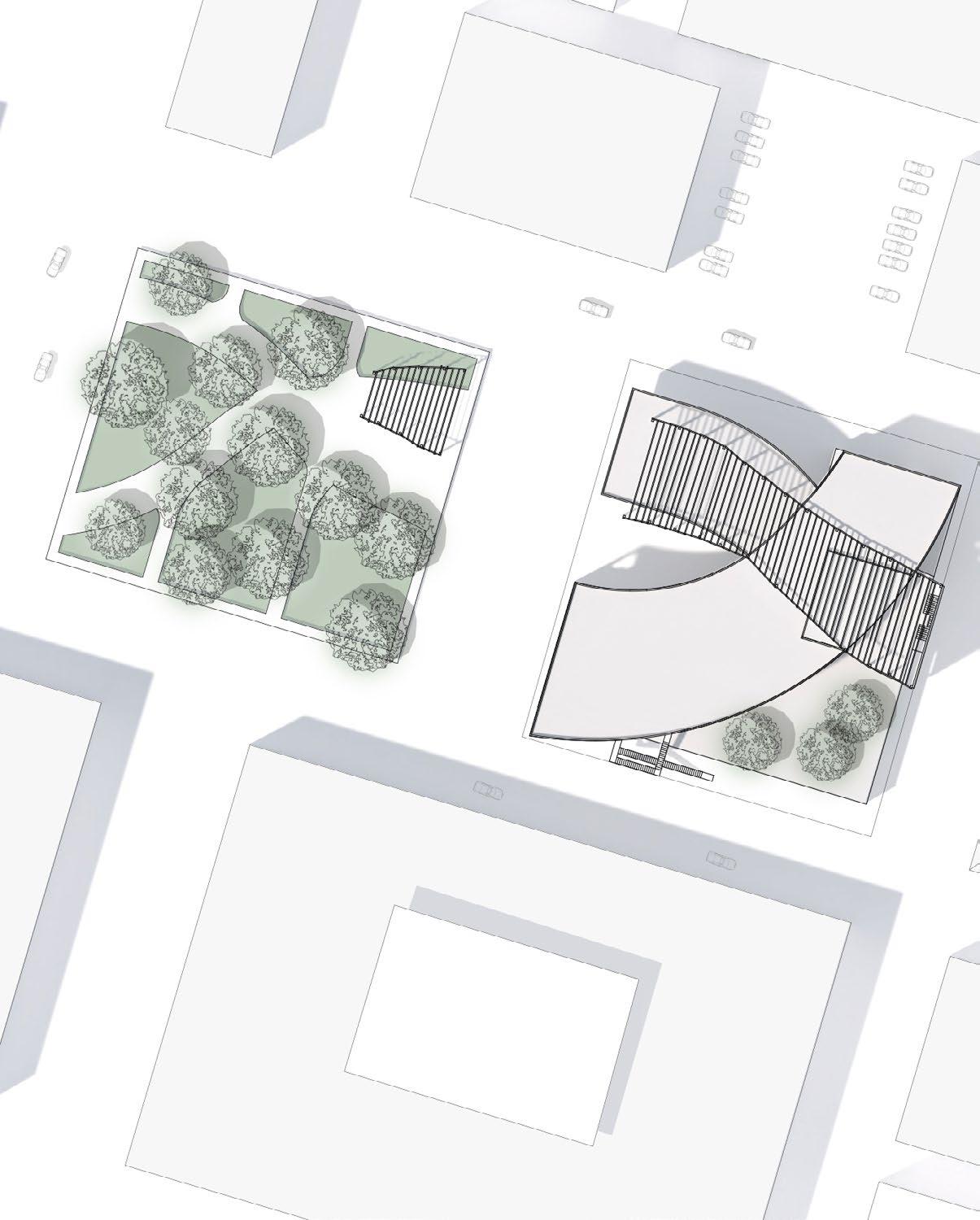
The Canopy Library is built on Telfair Square in the Historic District of Savannah, GA. Like most squares in Savannah, Telfair Square has two designated trustee lots established by the Oglethorpe Plan during the city’s original planning. These lots are currently occupied by the Jepson Center and the Telfair Museum of Arts and Sciences, the oldest public art museum in the south. The Canopy Library lies just across Telfair Square from the two trustee lots and aims to round out the locus of cultural enrichment established by Telfair Square.
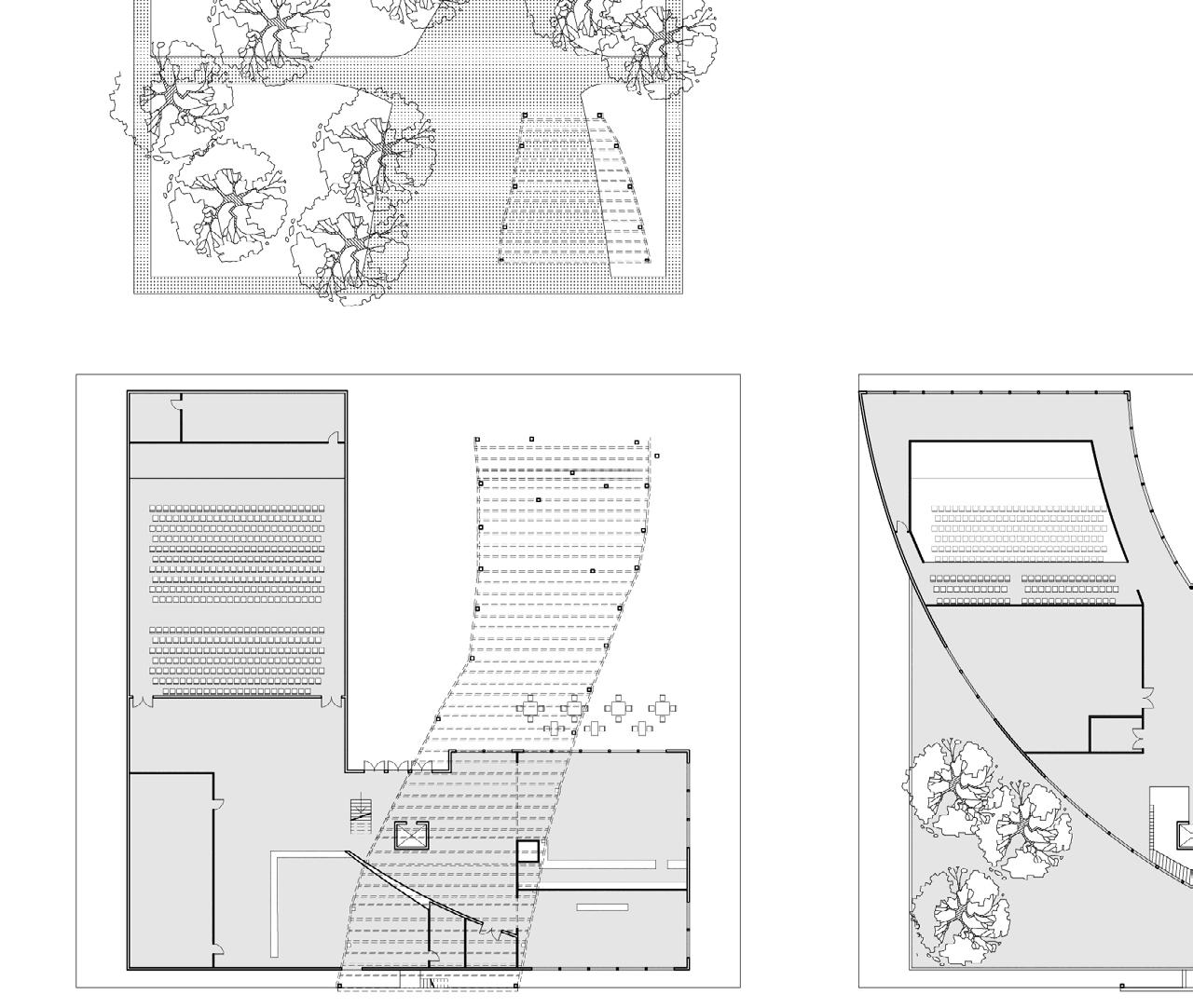
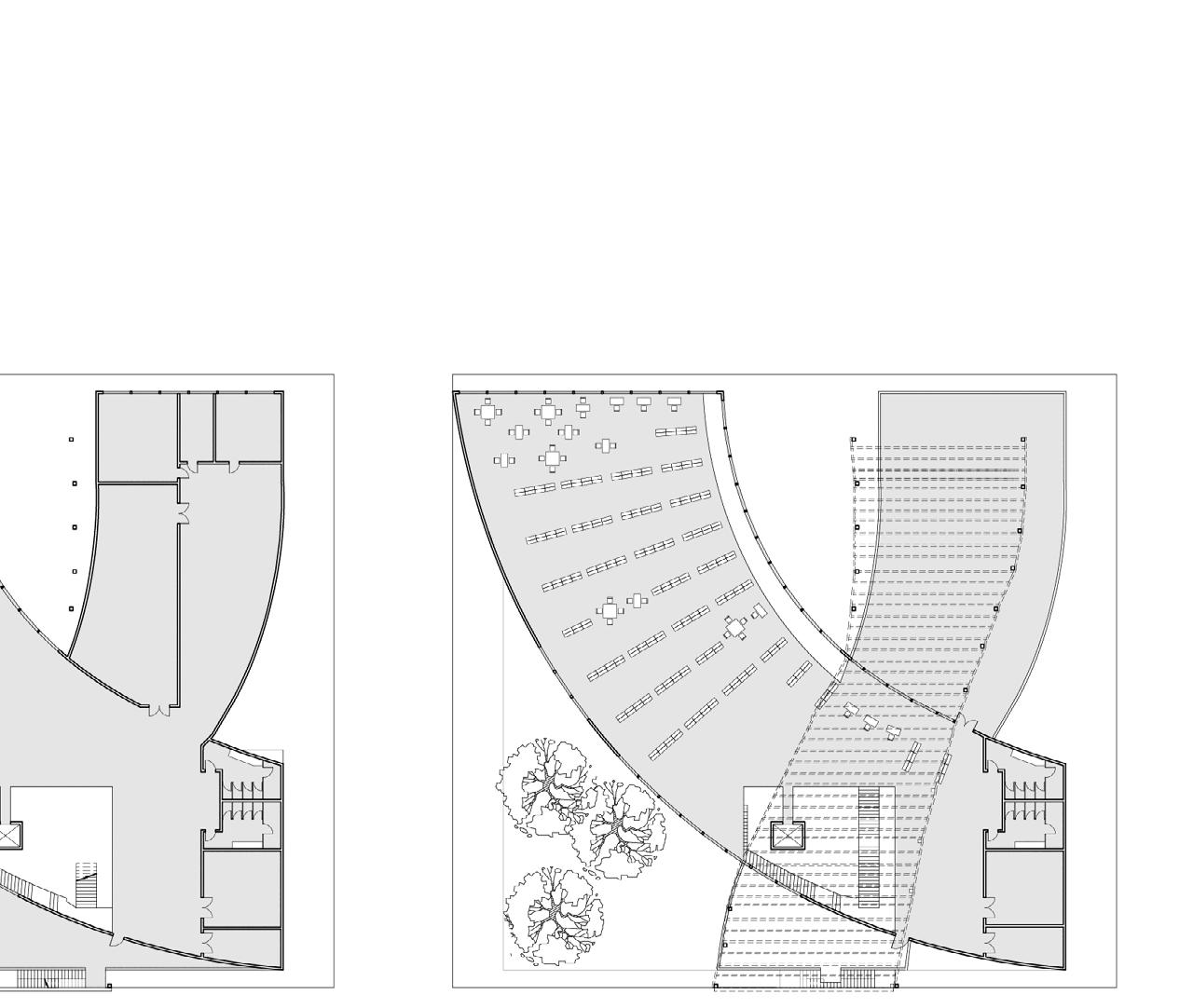
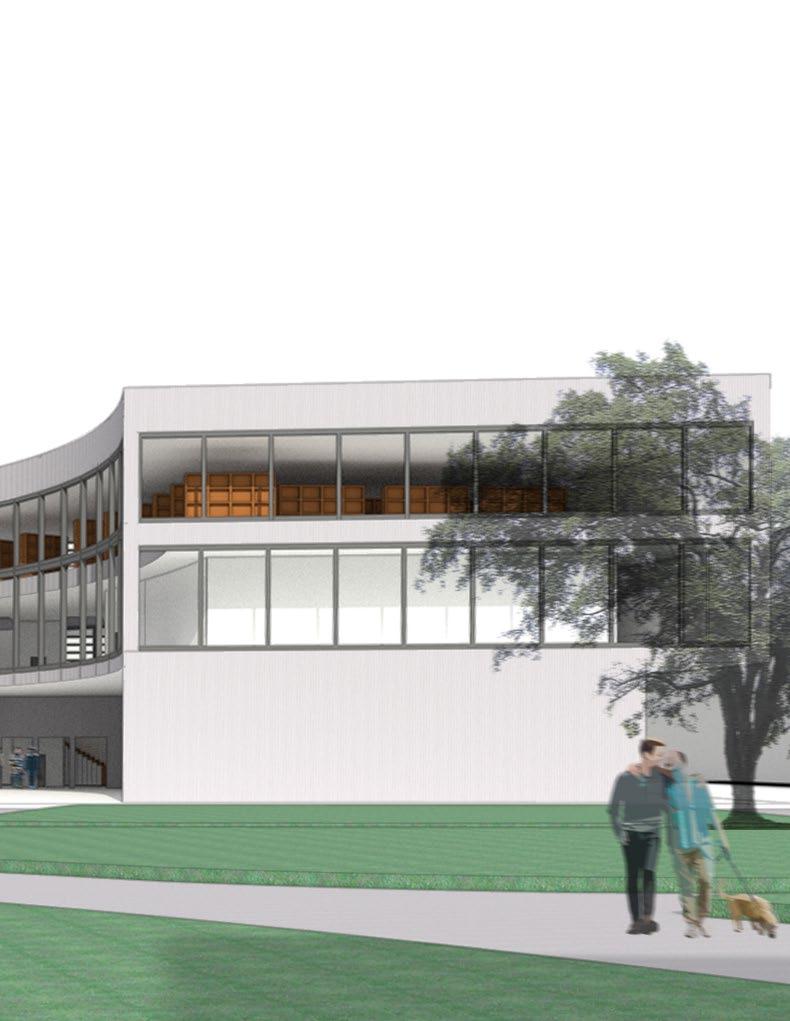
The forms of this project come from a few of the main ideas observed within Savannah: the Oglethorpe Plan, the Savannah River, and Trustee Lots. The ground floor of the Savannah Heritage Library adheres to the Oglethorpe Plan, its orthagonal form fitting in with the grid and squares produced by the plan. The second and third stories draw inspiration in form from the curve of the Savannah River, and create a visual connection to the trustee lots located across the square, tying the Canopy Library to the other cultural institutions located nearby.
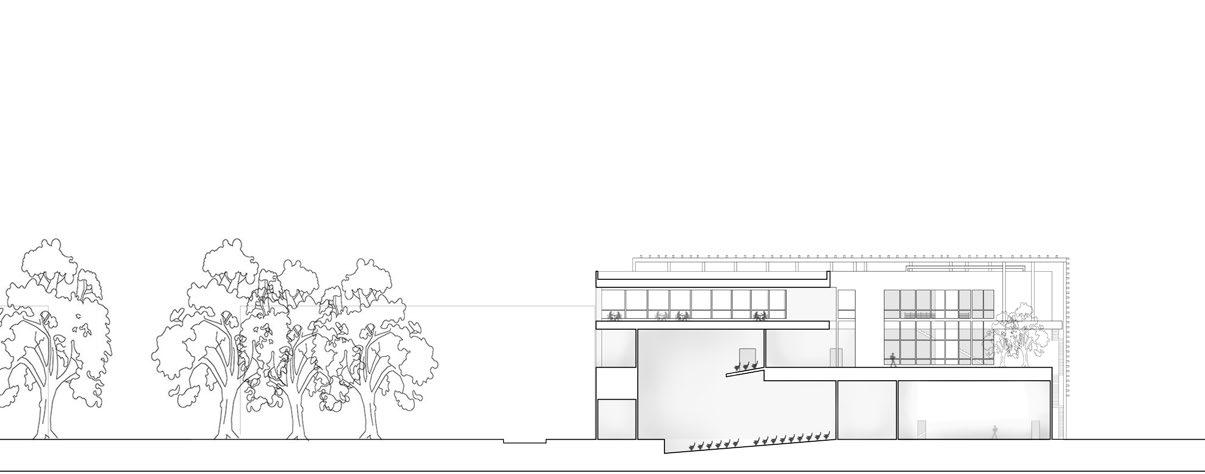
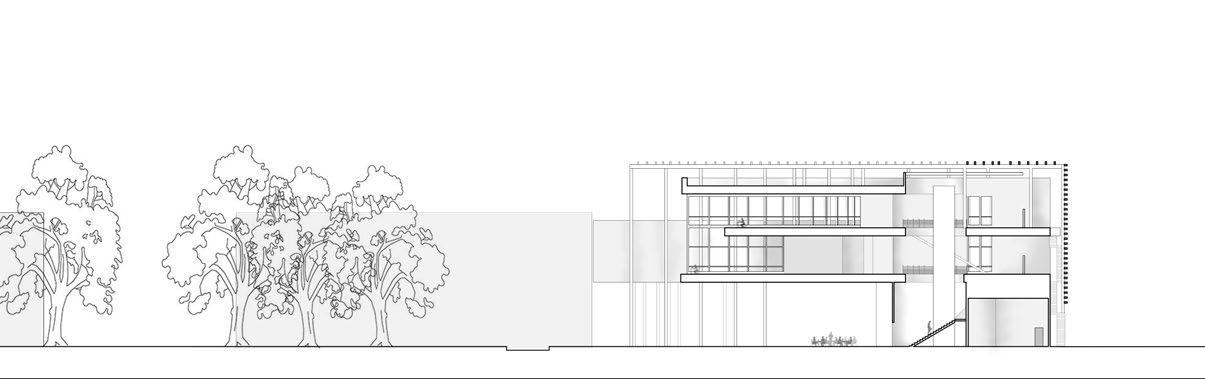
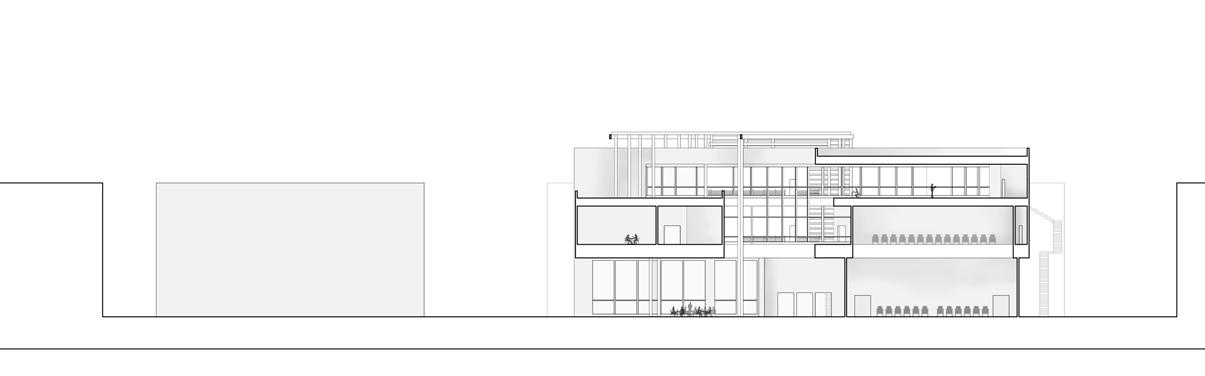
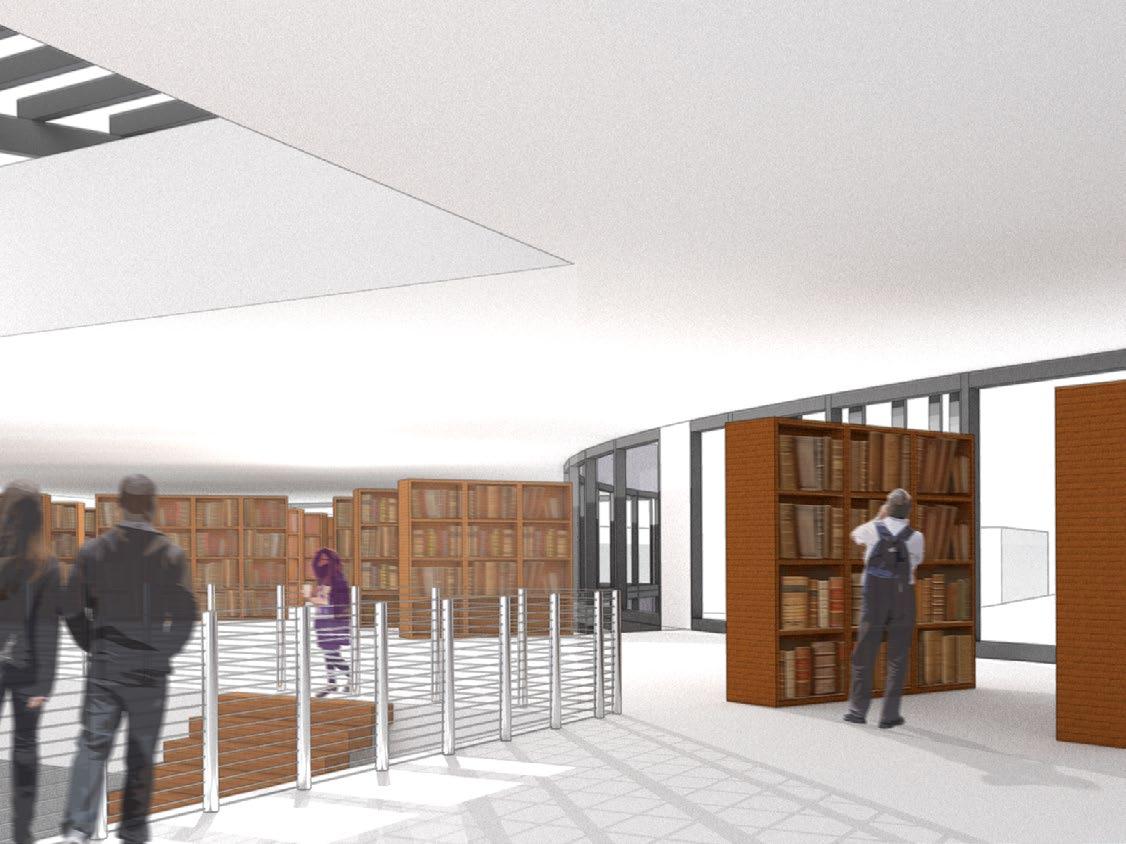
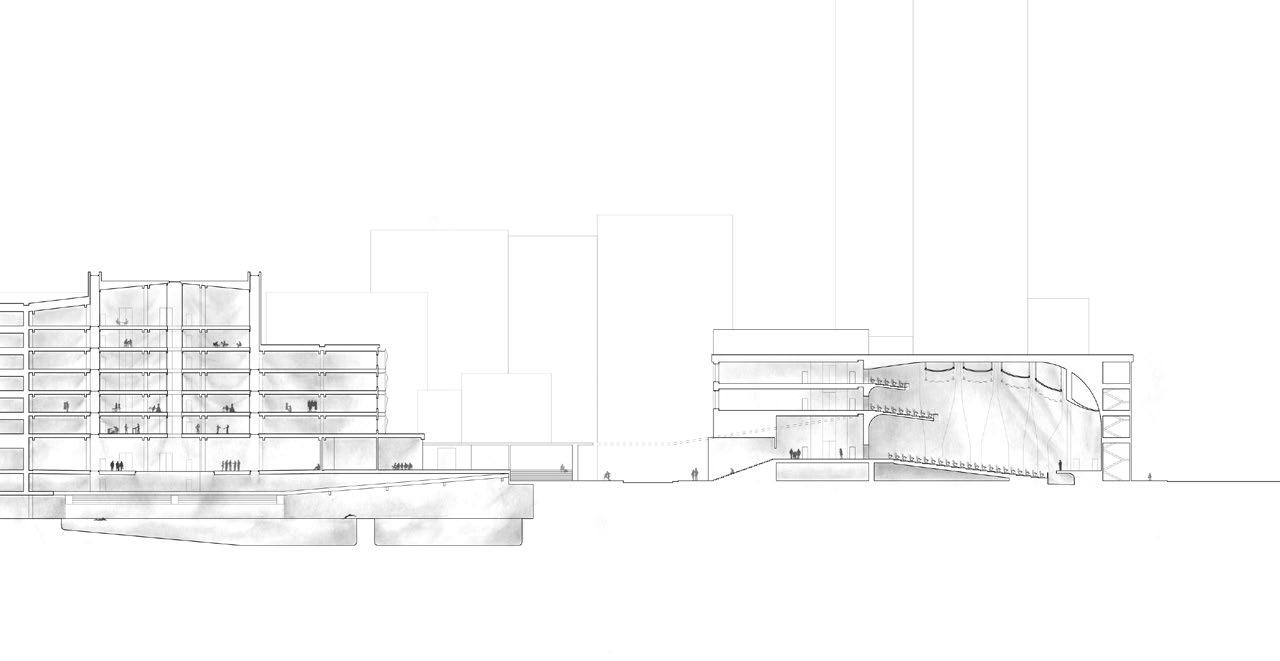
In addition to being dictated by a different formal idea, each floor is also organized with different programmatic blocks: the ground flood houses communal spaces (a cafe, bookstore, and circulation desks), the second floor houses the auditorium, and the third floor is the most quiet and focused, housing a reading room and the library stacks.
Perspective among the stacks and 3rd floor atrium
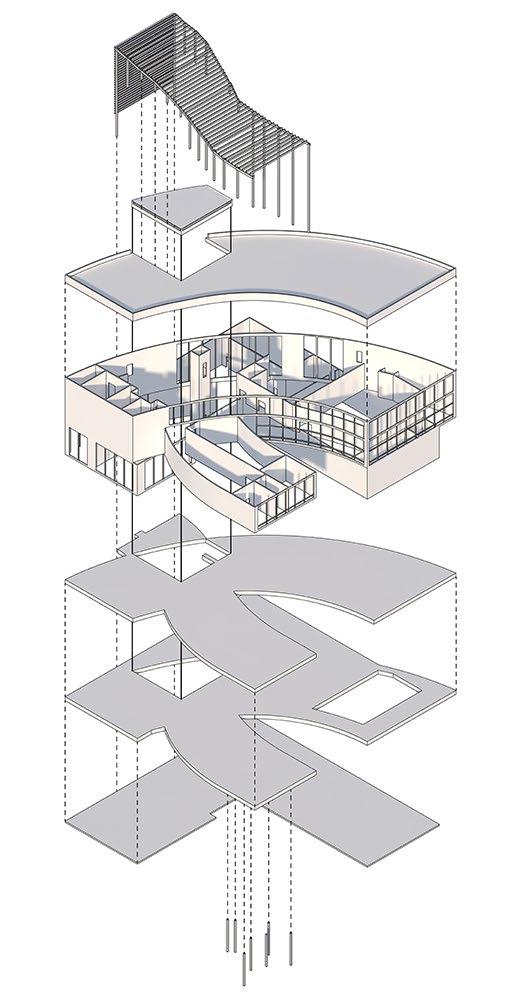
Axonometric
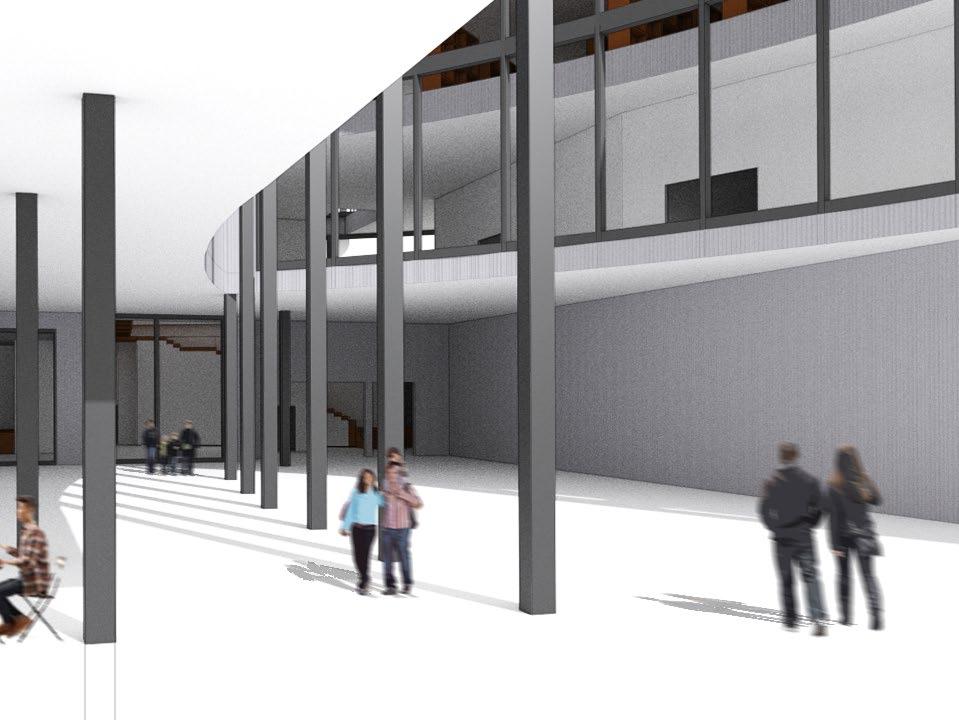
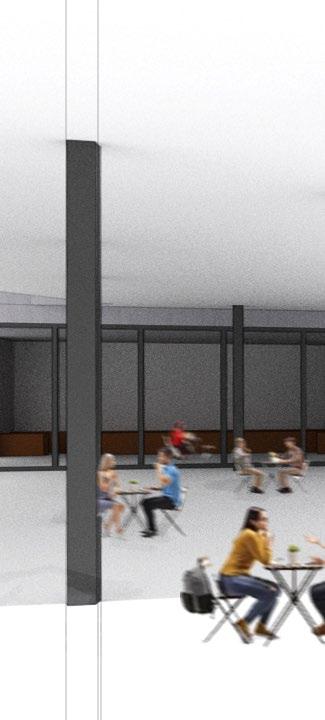
The cantilever formed by the second and third floors allows the plaza space at the entrance of the building to be utilized for performance and events, which may overflow into the park to the west. The columns supporting this cantilever create a forest like density underneath, drawing upon the Savannah experience of walking underneath the tree canopy. Life truly happens ‘beneath the canopy’ in Telfair Square, and the rest of Savannah, GA.
Perspective beneath the canopy

VERTICAL HOSTEL
University of Florida Design Studio 4 | Spring 2022
Prof. Michael Montoya
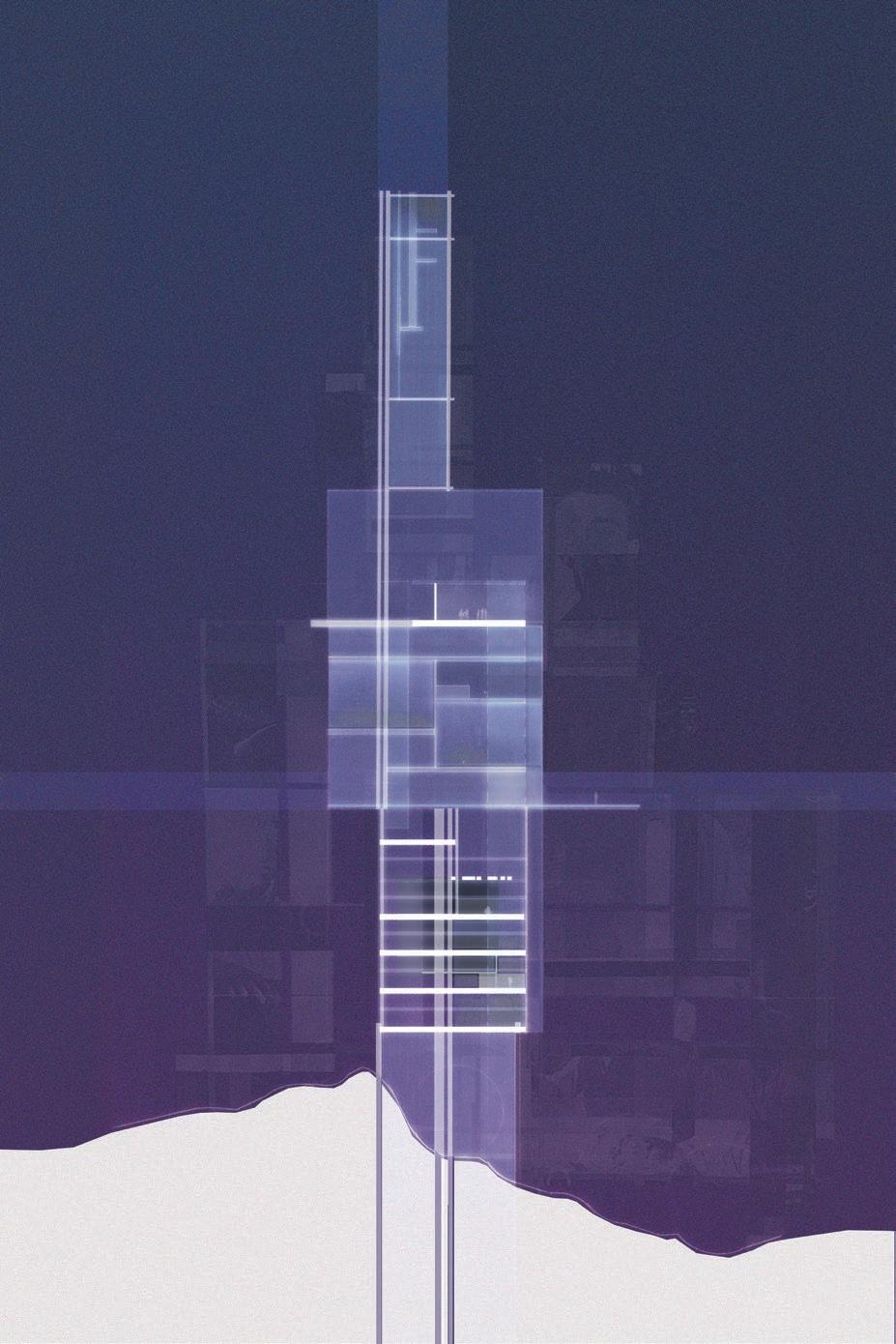
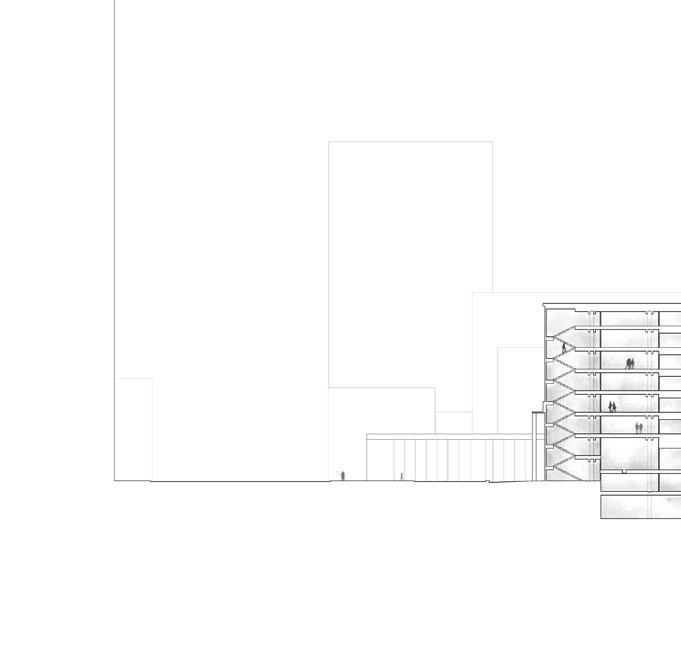
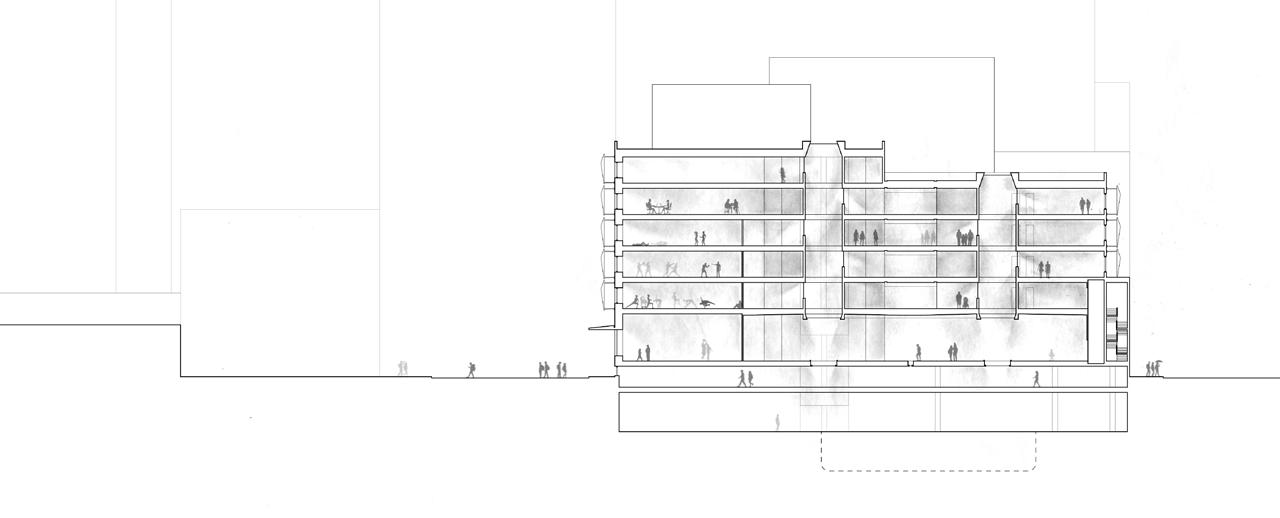
Section through the hostel
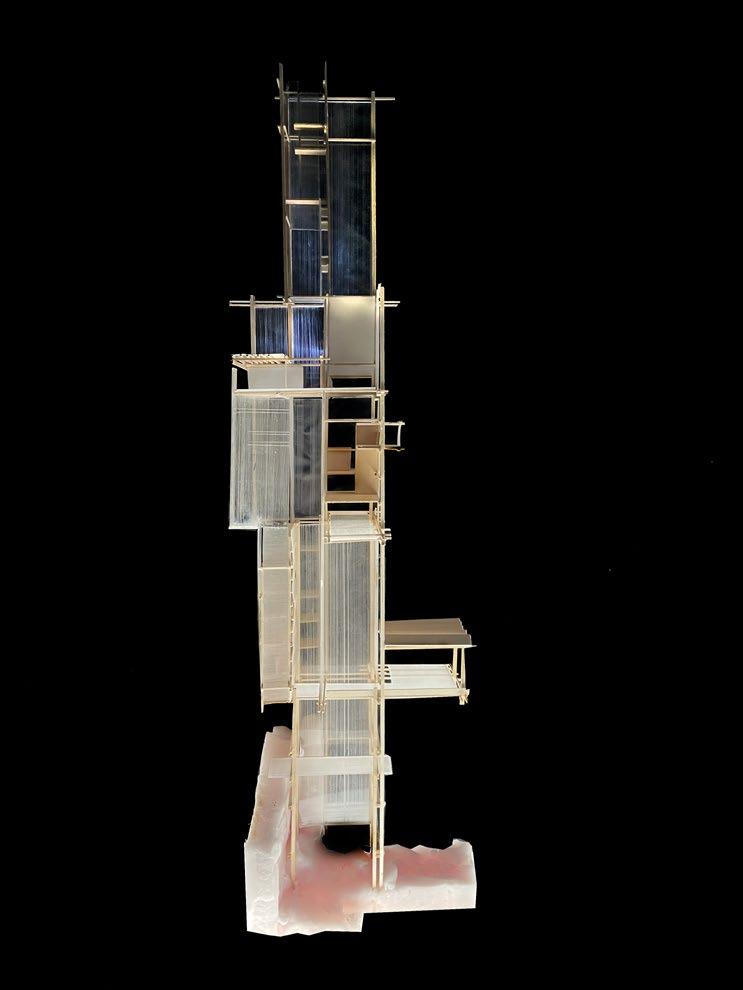
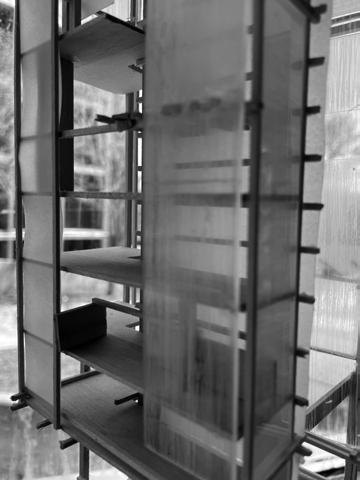
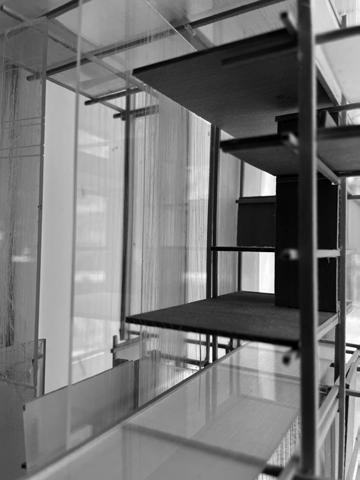
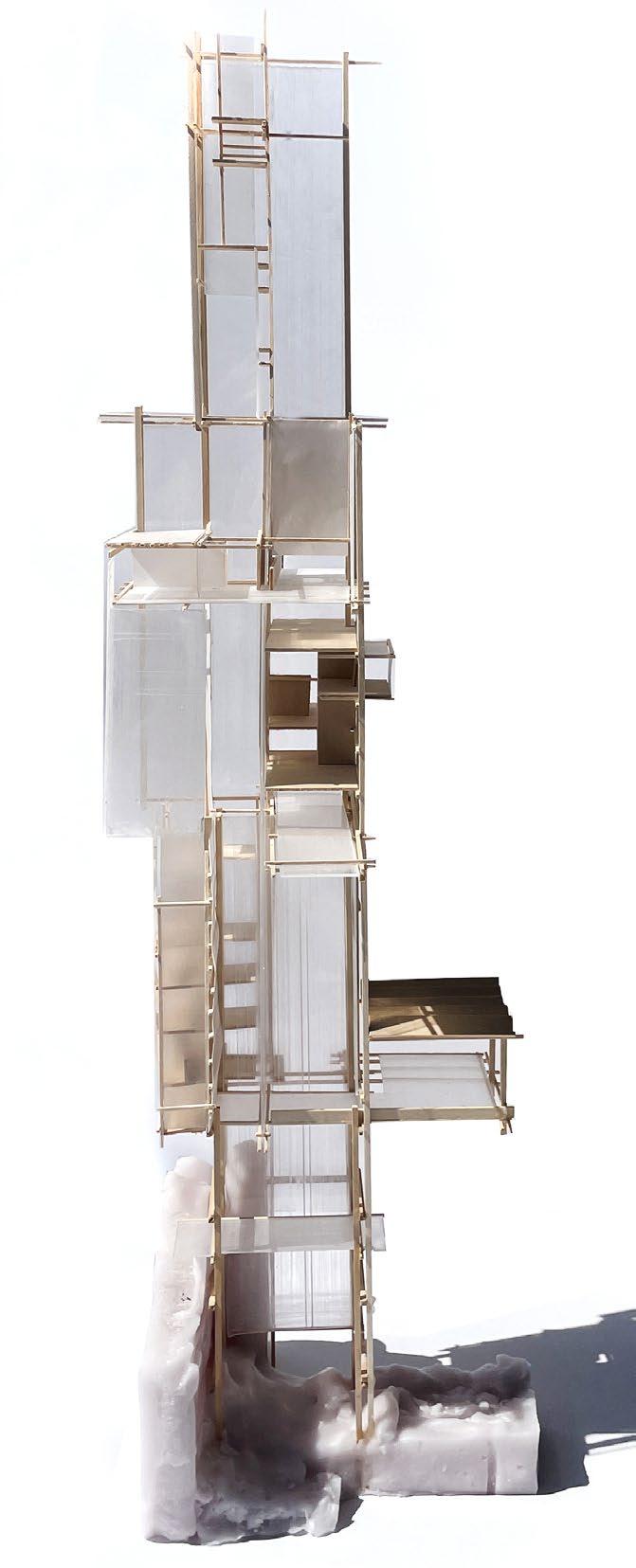
The poet, the musician, and the mathematician all share their creations–their discoveries–with the world. While their individual processes may begin as a private, solo endeavor, eventually they will have to prepare to have their work seen by others. Each character has a level of vulnerability in their work, whether it be the musician singing about heartbreak or the poet writing as a form of therapy. This vulnerability can be the beginning of an understanding of shared experiences between the characters, ultimately fostering collaboration.
In addition to the spaces at the scale of the individual the Vertical Hostel includes many group spaces for creation and observation of the world.
Transparency and vulnerability, as well as the sharing of ideas and experiences are emphasized and encouraged through the transparent materiality of the hostel and the organization of community spaces among the more private spaces.
Glowing nighttime conditions
Model details
LAKEFRONT STUDIO
GAINESVILLE, FL
University of Florida Design Studio 5 | Fall 2022
Prof. Ryan Sharston
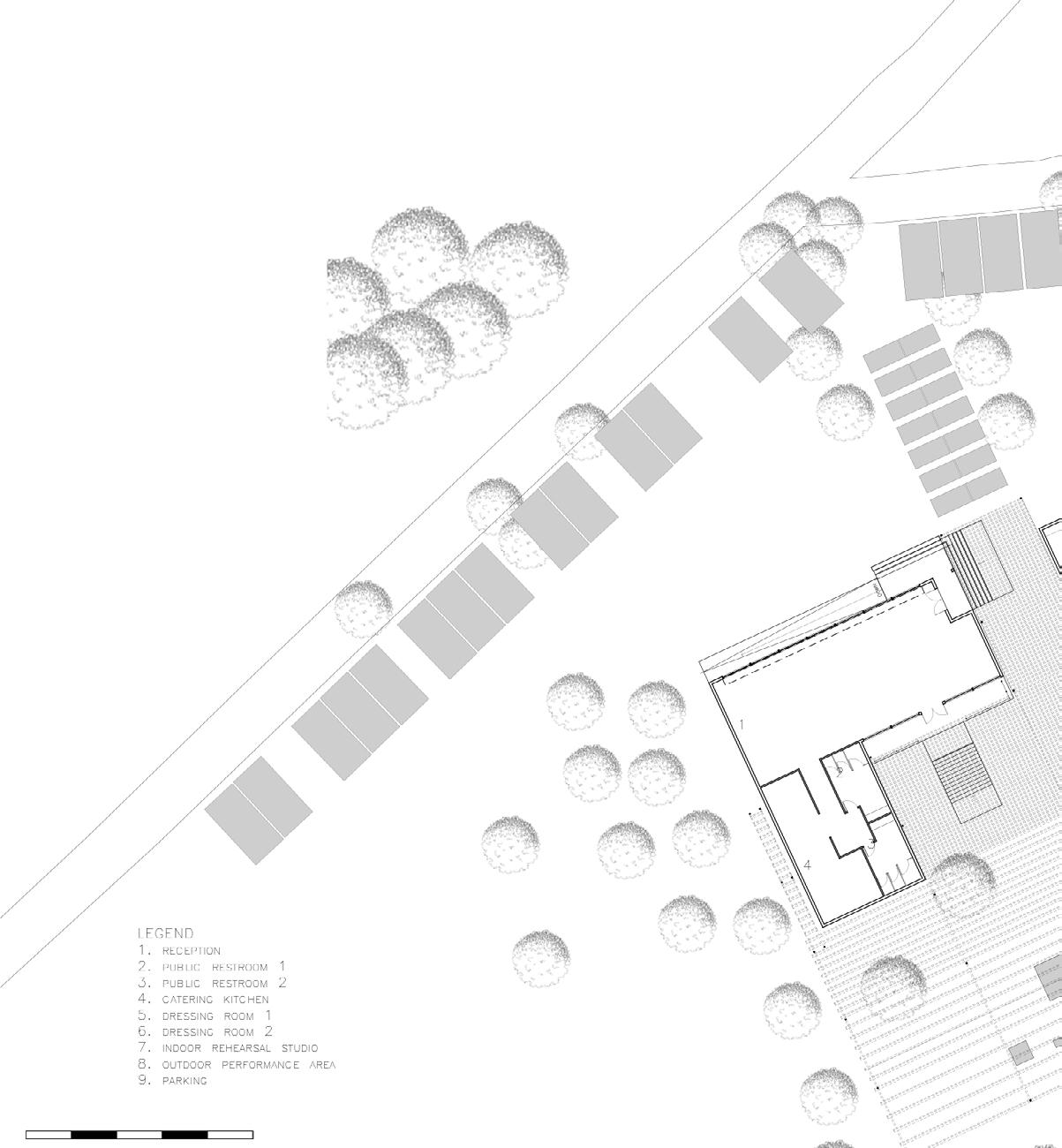
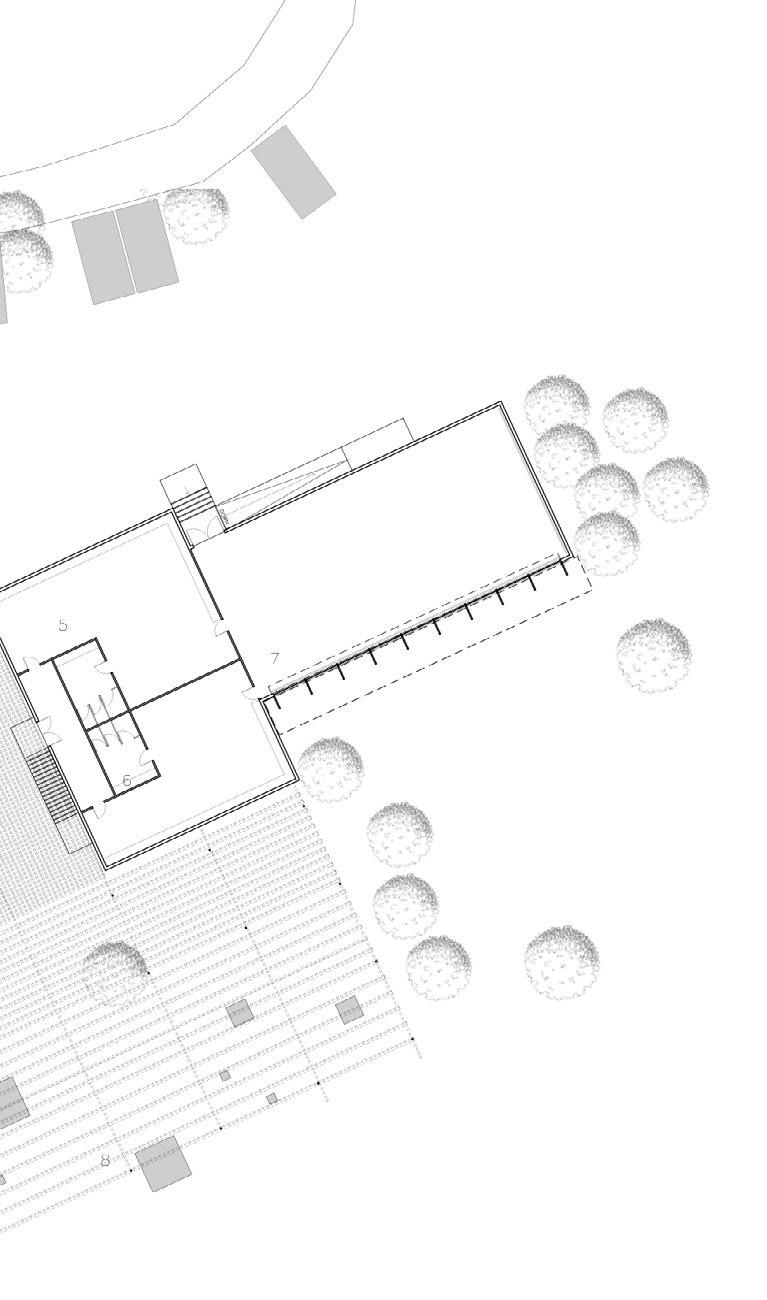
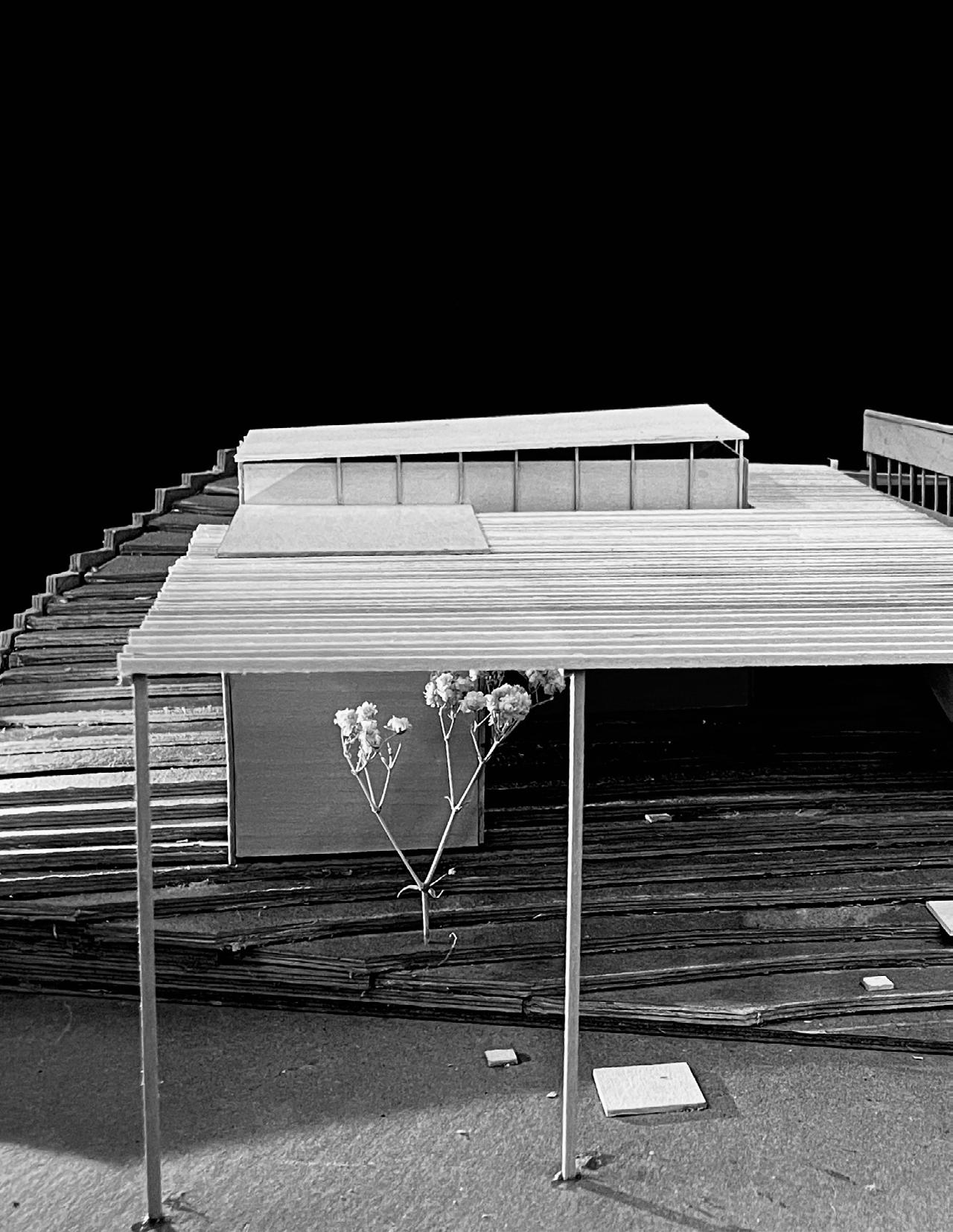
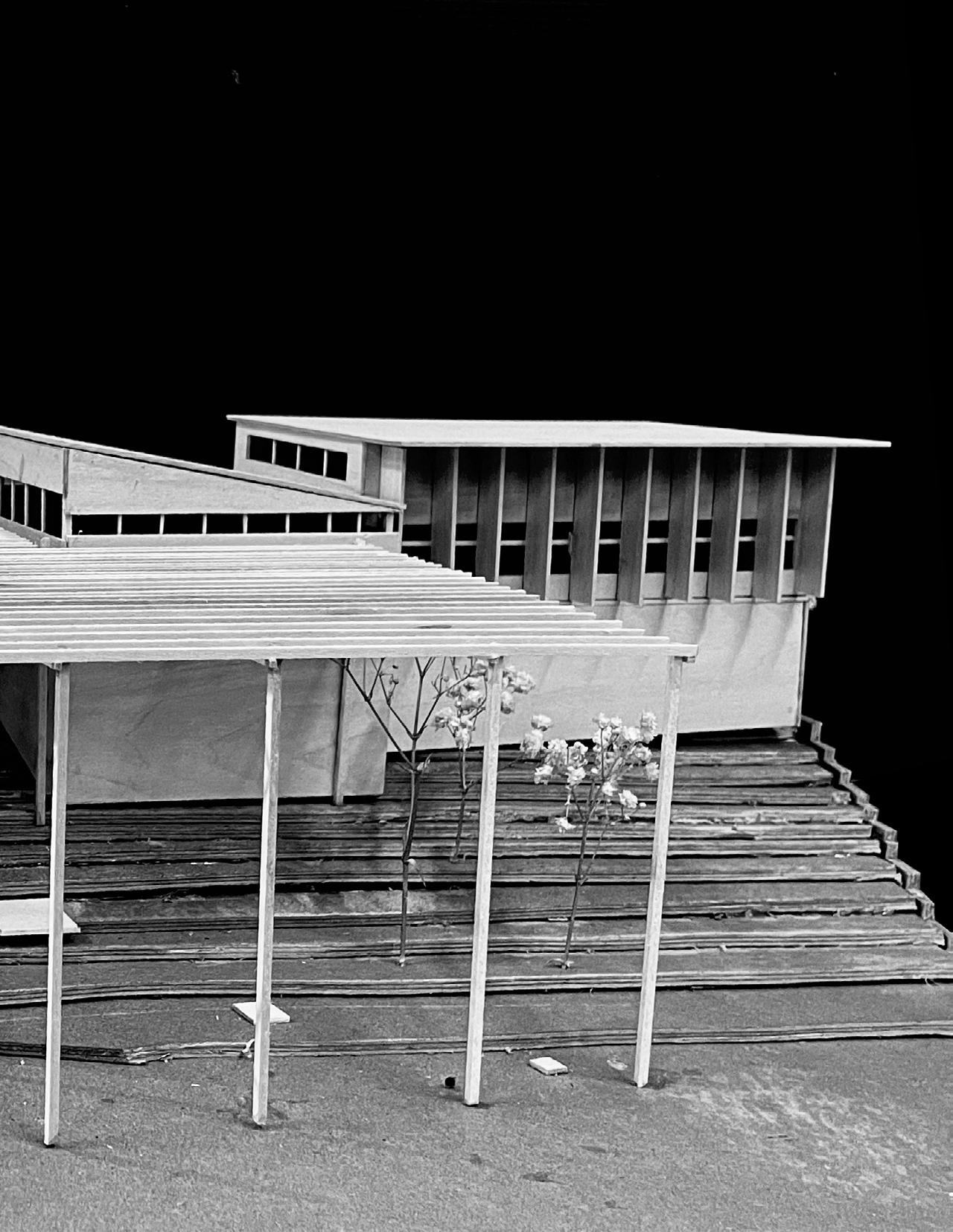
Produced through a collaboration between the UF School of Theater and Dance and the School of Architecture, the Lakefront Studio–located on the shore of Gainesville’s Lake Wauburg–creates a space for both studio performance and site responsive movement. The facility includes a reception space, catering kitchen, studio rehearsal space, and changing rooms.
The two programmatic blocks of the project (public on the left and private to the right) are united beneath an expansive trellis sun shade that creates a courtyard at the entrance of the project and grows towards the lakeshore to provide a covered outdoor performance area.
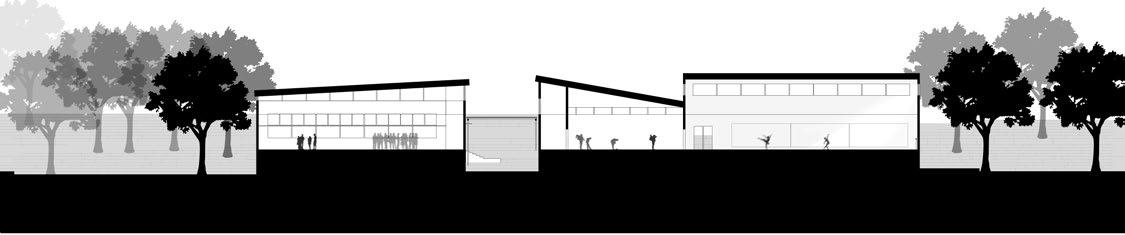
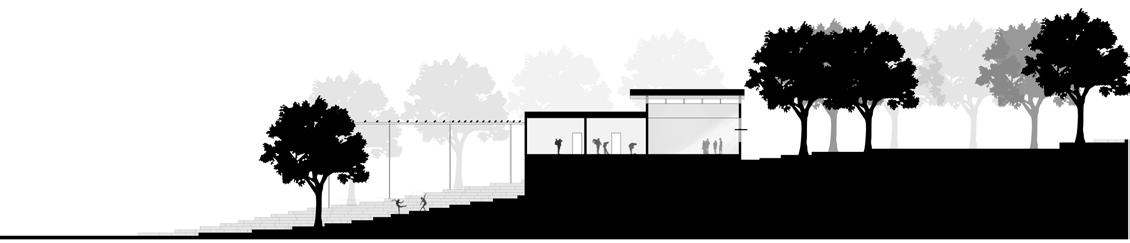
In order to encourage site responsive performance, which interacts with and takes inspiration from the space in which it occurs, the land in the outdoor performance area remains largely untouched. The beginning of the performance space is indicated by the increasing space between fins in the sun shading device above, and the presence of large concrete “moments” embedded in the ground, intended for dancers to interact with. The intense slope from the facility buildings toward the lakefront creates a natural seating area for guests as they are immersed in site responsive performance, with Lake Wauburg serving as the backdrop to every performance.
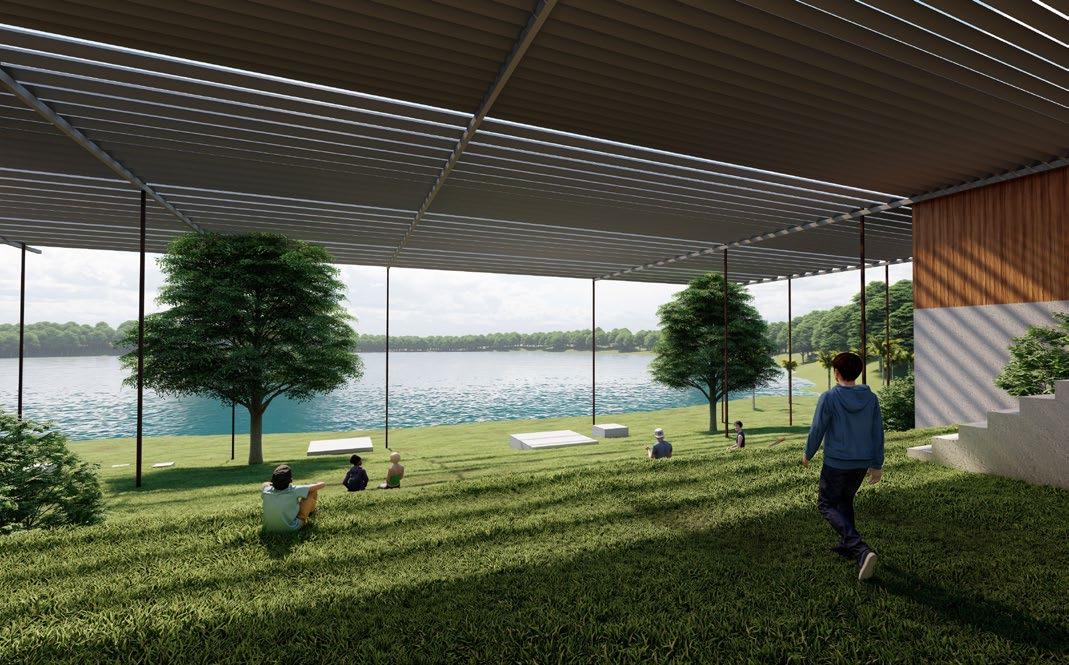
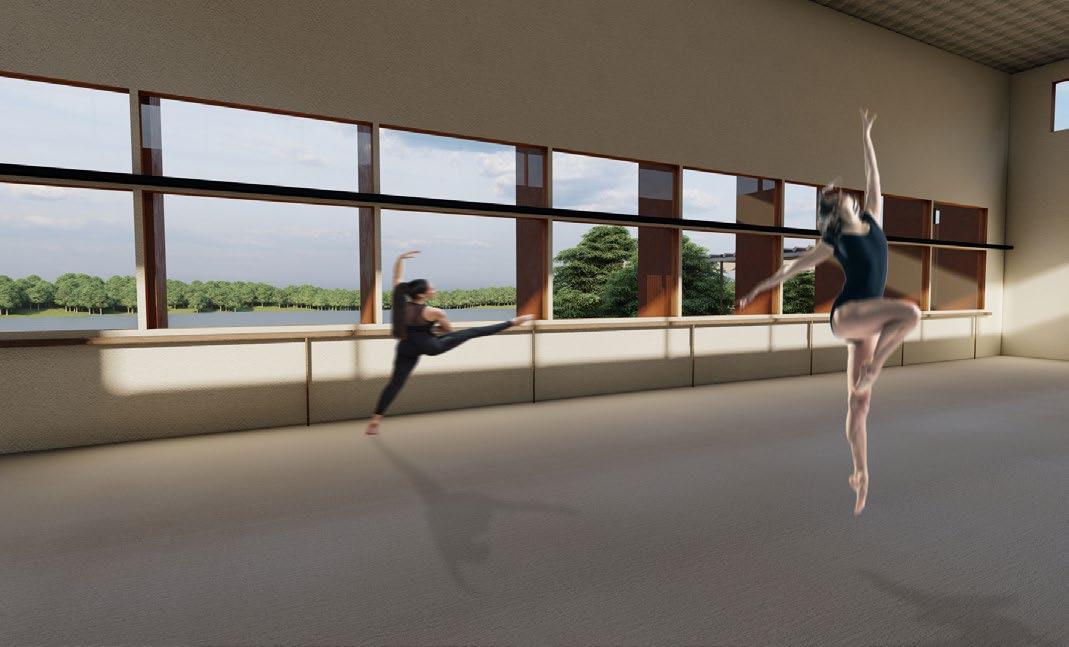
(TOP) Perspective approaching outdoor performance area from entrance courtyard
(BOTTOM) Perspective inside the indoor studio with windows overlooking Lake Wauburg
DOV’E IL BAGNO?
VENICE, ITALY
University of Florida Design Studio 8 | Spring 2024
Prof. Peter Sprowls
ALL WORK PRODUCED IN COLLABORATION WITH LYNDSEY WEISMAN
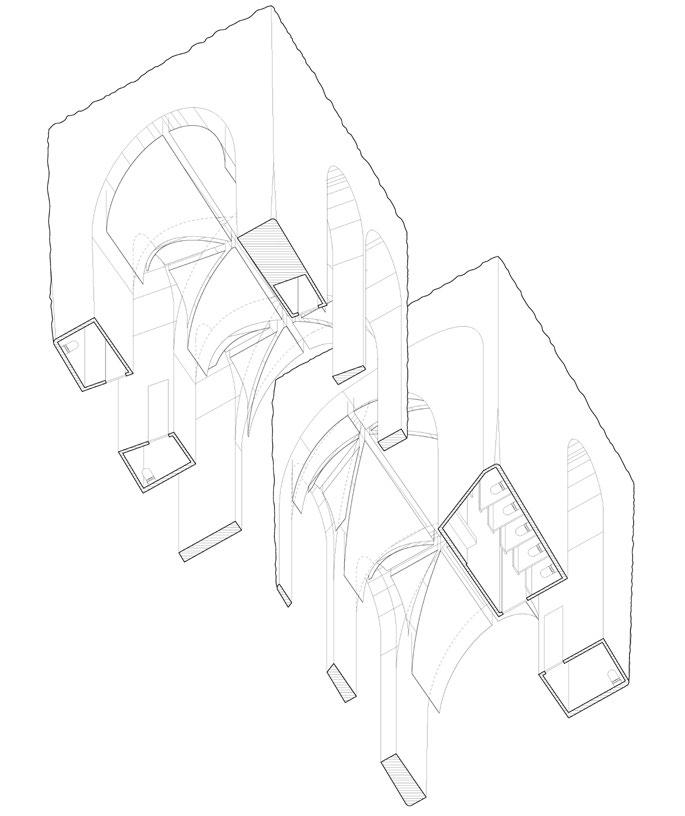
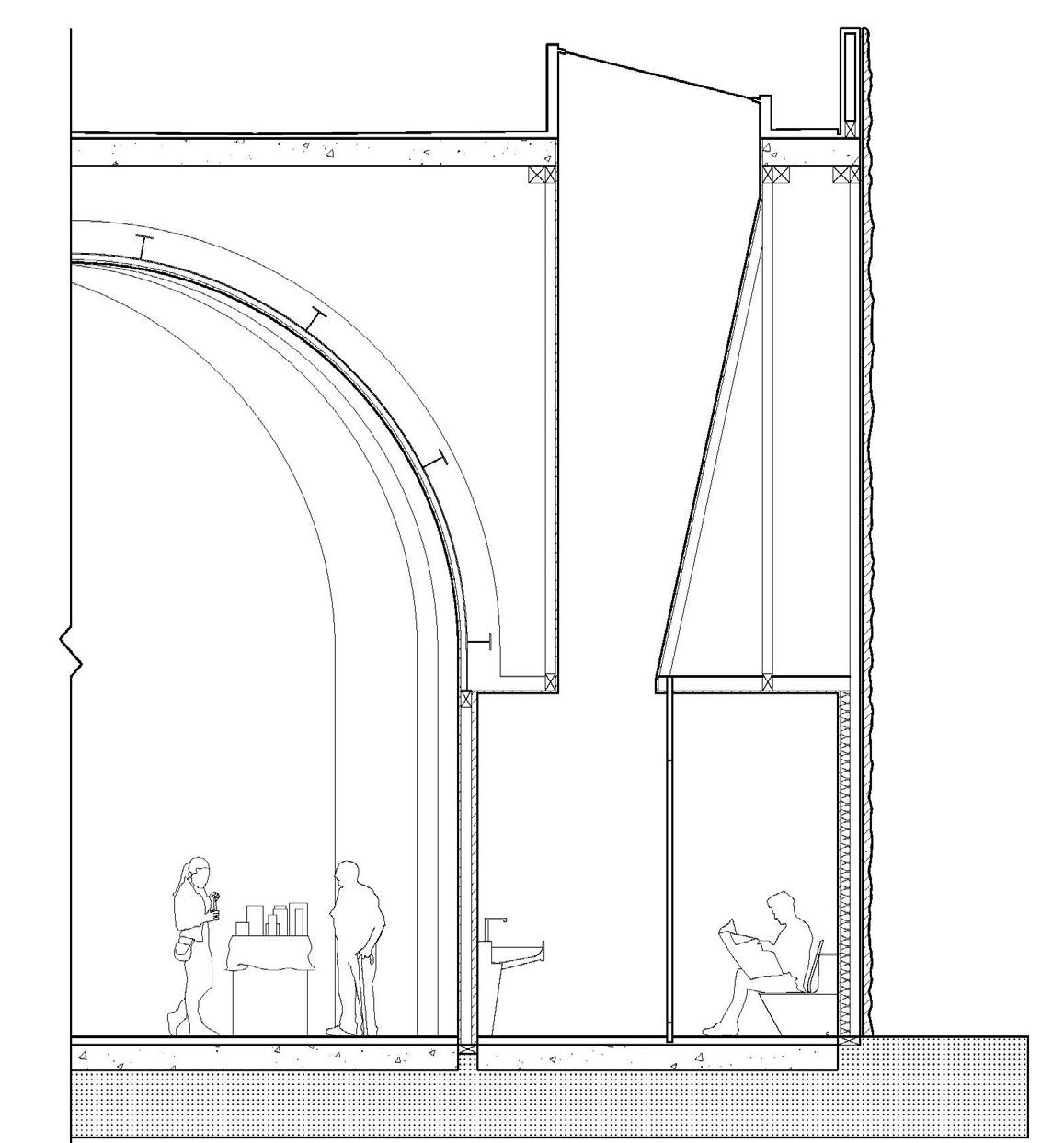
While Venice, Italy lacks public restrooms for its visitors, it also is severely lacking in spaces reserved for the locals of Venice. More and more, Venice is affected by over-tourism and is becoming a shell of the city it once was.
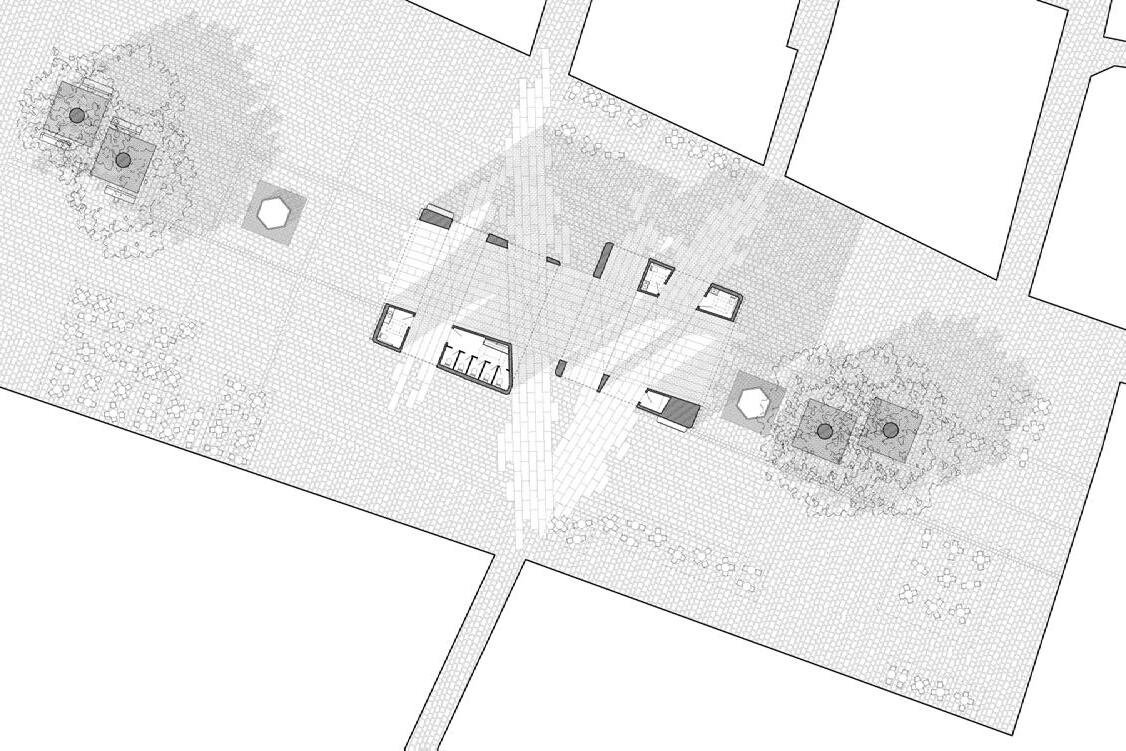
Dov’e il Bagno? aims to solve Venice’s restroom problem, while giving back to the local community and Campo Santa Margherita, the project’s site and location of a popular local fish and produce market.
This is achieved by creating a covered space for the market, which did not previously exist, and tucking restroom stalls into the columns created by the vaulted form.
Site Plan of Campo Santa Margherita | DRAWING LED BY LYNDSEY W. ASSISTED BY SOPHIA LOTZ
Worm’s eye axonometric | DRAWING LED BY SOPHIA LOTZ ASSISTED BY LYNDSEY W.
University of Florida
Integrated Building Technology 3 | Spring 2023
Prof. Lee-Su Huang
DESIGNED IN COLLABORATION WITH ALEXA
AND
SCHMIDT
DANIEL MCNEIL
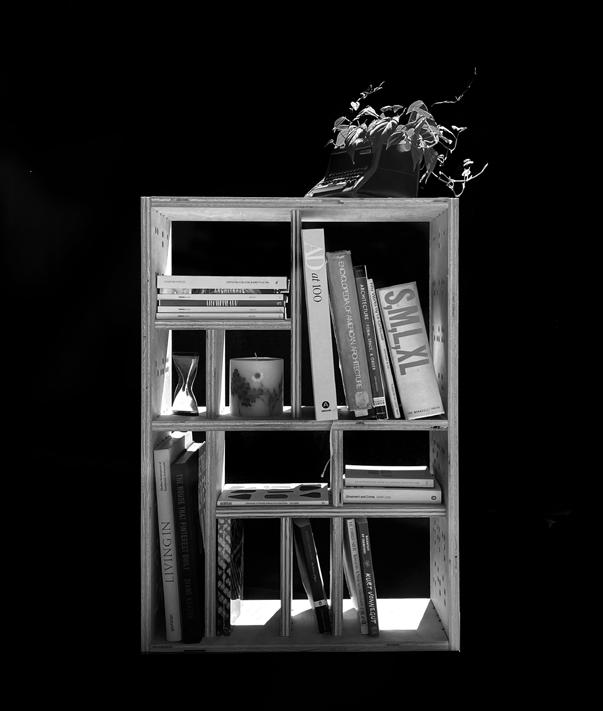
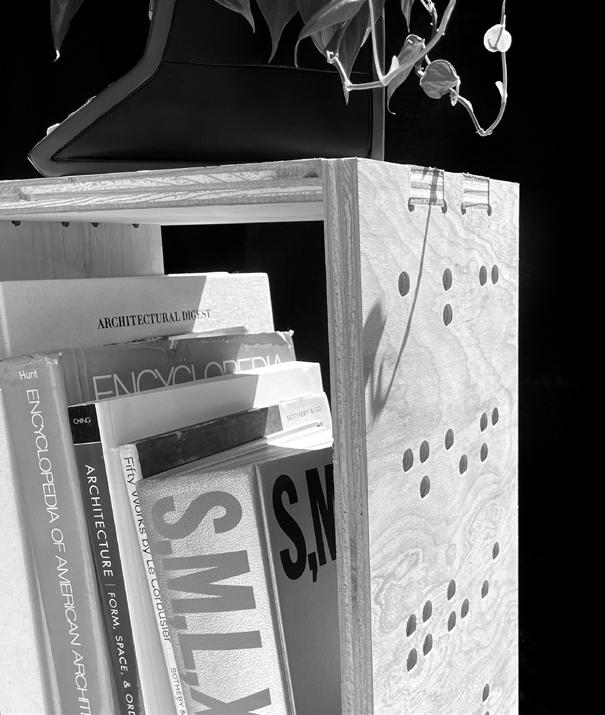
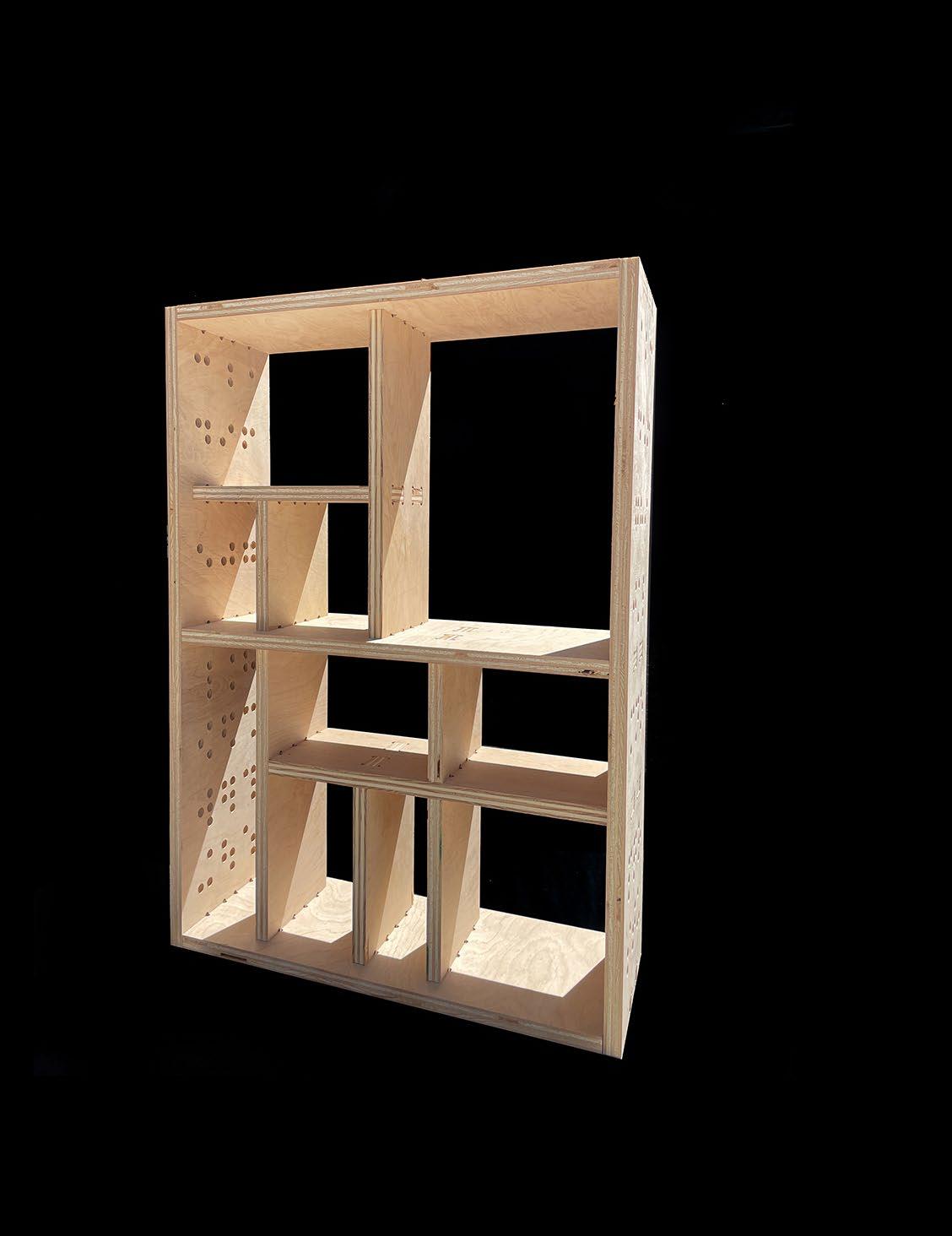
The Bookshelf for an Architecture Student was fabricated using CNC machinery and 1/2” plywood planks.
The design features the braile alphabet punctured through the sides of the shelf, creating both a tactile and visual experience for users of the bookshelf.