Meniscus Treatment - Dr. Kunal Aneja
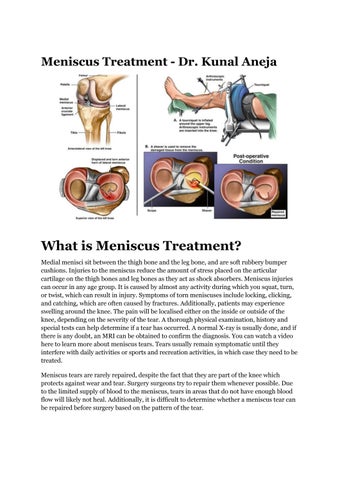
What is Meniscus Treatment? Medial menisci sit between the thigh bone and the leg bone, and are soft rubbery bumper cushions. Injuries to the meniscus reduce the amount of stress placed on the articular cartilage on the thigh bones and leg bones as they act as shock absorbers. Meniscus injuries can occur in any age group. It is caused by almost any activity during which you squat, turn, or twist, which can result in injury. Symptoms of torn meniscuses include locking, clicking, and catching, which are often caused by fractures. Additionally, patients may experience swelling around the knee. The pain will be localised either on the inside or outside of the knee, depending on the severity of the tear. A thorough physical examination, history and special tests can help determine if a tear has occurred. A normal X-ray is usually done, and if there is any doubt, an MRI can be obtained to confirm the diagnosis. You can watch a video here to learn more about meniscus tears. Tears usually remain symptomatic until they interfere with daily activities or sports and recreation activities, in which case they need to be treated. Meniscus tears are rarely repaired, despite the fact that they are part of the knee which protects against wear and tear. Surgery surgeons try to repair them whenever possible. Due to the limited supply of blood to the meniscus, tears in areas that do not have enough blood flow will likely not heal. Additionally, it is difficult to determine whether a meniscus tear can be repaired before surgery based on the pattern of the tear.