Solano PreK-12 Environmental Resource Guide for Educators
INTEGRATING ENVIRONMENTAL LITERACY INTO CAREER READINESS PROGRAMS
A CALL TO ACTION
It is imperative that K12 education includes Environmental Education as a means to help students develop skills necessary to make intelligent decisions on caring for our environment Education is compelled to include green jobs training and environment-related career opportunities while supporting the inclusion of sustainable, green practices in all career readiness programs.
Today’s youth must understand that the choices they make affect the environment and that the choices being made by others will impact career paths and opportunities well into the future. Choices can either help or harm the environment and the earth’s ability to sustain life and students need to understand their role in keeping the environment healthy, sustaining its resources, and creating a good quality of life for themselves and the future. [i]
[i] https://ca-eli.org/wpcontent/uploads/2022/03/211221-TeacherCall-to-Action 03 01 22-1-1-1 pdf
Today’s children will one day be responsible for making decisions that will shape the future health of the environment.”
-DEBORAH MITCHELL
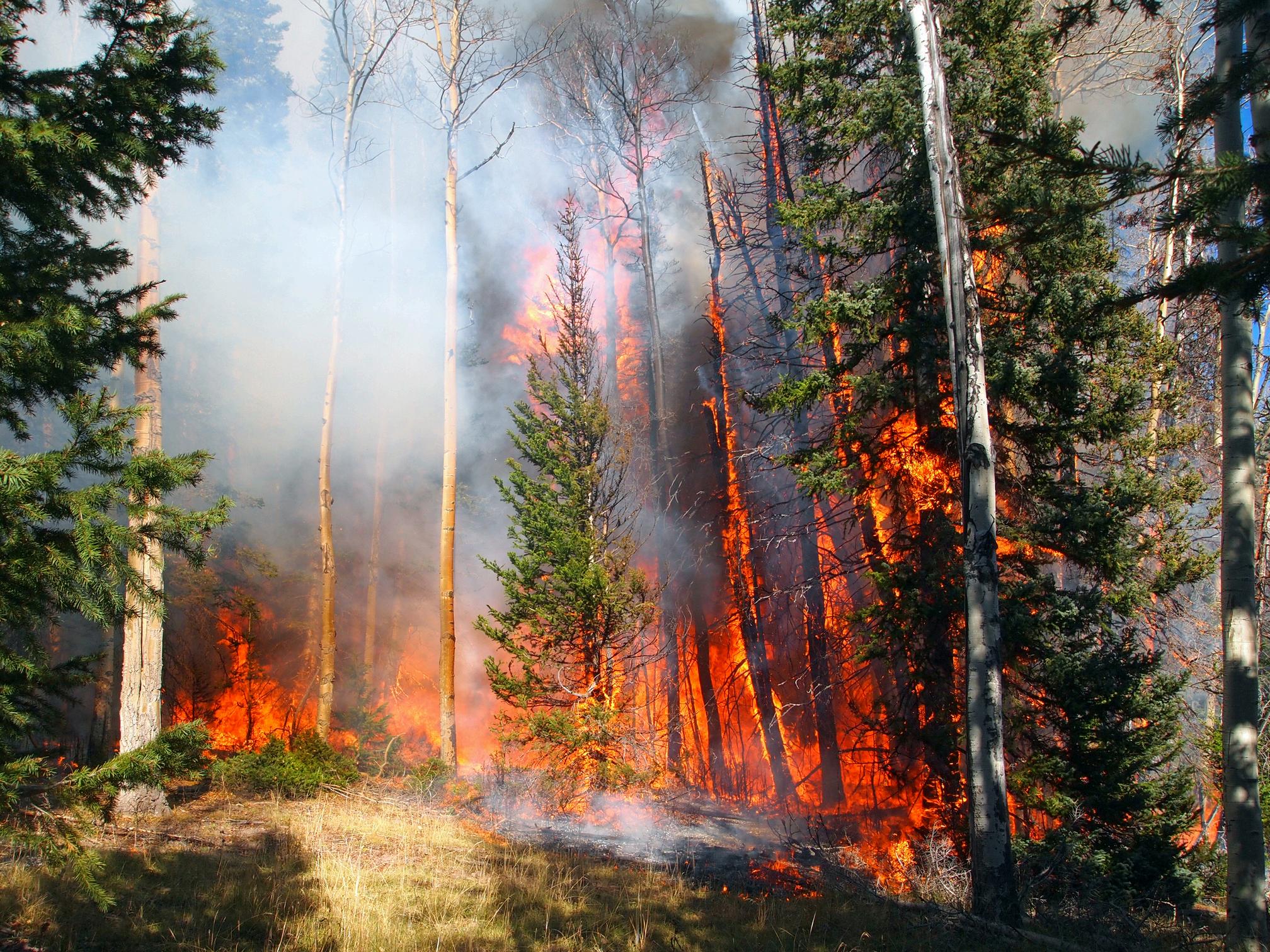
California’s biodiversity faces critical environmental concerns. Rises in sea level, losses in water supply, habitat changes, fires, and higher demands for energy and food due to larger populations, all threaten the natural resources in California
And yet it is important to note that not only are the natural resources themselves threatened, but those who use them will feel the effects as well
“As the Office of Environmental Health Hazard Assessment stated in its 2013 report, the adverse impacts of climate change are expected disproportionately to affect those who are socially and economically disadvantaged, including the urban poor, the elderly, children, traditional societies, agricultural workers and rural populations Disproportionate impacts can occur where certain groups lack the social and economic resources necessary to relocate to avoid impacts, or
to purchase the technology necessary to adapt to our changing climate. According to a 2009 report by California’s Climate Change Center, “[w]ithout proactive policies to address these equity concerns, climate change will likely reinforce and amplify current as well as future socioeconomic disparities, leaving lowincome, minority, and politically marginalized groups with fewer economic opportunities and more environmental and health burdens ” The Office of Environmental Health Hazard Assessment is continually studying the human health impacts of climate change and updating its reports and research ” [i]
[i] Climate Change’s Unequal ImpactsCalifornia Department of Justice
ENVIRONMENTAL LITERACY
- CA Blueprint for Environmental Literacy (2015) CURRICULUM
“An environmentally literate person has the capacity to act individually and with others to support ecologically sound, economically prosperous, and equitable communities for present and future generations. Through lived experiences and education programs that include classroom-based lessons, experiential education, and outdoor learning, students will become environmentally literate, developing the knowledge, skills, and understanding of environmental principles to analyze environmental issues and make informed decisions.”
[ii] Green Schools National Network
Environmental literacy is an individual’s understanding of how our local environments and the world are affected by the way we obtain and utilize resources. It is important for students to realize that our resources are depletable and affect our environment on a global scale. “Understanding the natural environment and the impact human activity has on it is essential to making informed decisions that affect the environment and human health now and in the future ”[iii]
Environmentally literate students are able to examine real-world issues, think critically, and make informed decisions about the challenges affecting our world [iii] Today’s children will one day be responsible for making decisions that will shape the future health of the environment,” wrote Deborah Mitchell, senior editor for Environmental Protection magazine, in “Promote Environmental Education for Children. “To prepare them for such responsibilities, they need a sound environmental education as a foundation upon which to make those decisions.” Most important, says Mitchell, environmental literacy helps develop and expand children’s critical thinking skills, prepares them for citizenship, nurtures their appreciation of the natural world, and enhances their physical well-being.[iv]
ACTIVITIES AND RESOURCES TO ENGAGE CHILDREN IN LEARNING ABOUT THE ENVIRONMENT.
Project Learning Tree’s high-quality units and lesson plans supplement existing curriculum and the activities can be integrated into lesson plans for all grade levels and subject areas (especially STEM, reading, writing, and social studies). Topics range from forests, wildlife, and water, to community planning, waste management, and energy.
“The activities are practical, hands-on, and fun, and aligned with state and national academic standards, including the Next Generation Science Standards, Common Core State Standards, College, Career, and Civic Life Framework ” [v]
[v] Project Learning Tree
ENVIRONMENTAL LITERACY IN MIDDLE SCHOOL CAREER READINESS
PRACTICES
C T I V I T I E S A N D R E S O U R C E S
San Mateo County Office of Education (SMCOE), through a grant provided by the state of California and in partnership with Ten Strands, has developed an Environmental Literacy and Sustainability Initiative Program, that includes lessons and activities for students in grades K-12.
Included in the Program, is the Green Careers Awareness Program, which shares instructional modules for grades 5-8 in a variety of areas such as agriscience, clean energy, engineering, and biotechnology These resources can be found at:
SMCOE’s Green Careers Awareness Program
ENVIRONMENTAL LITERACY IN MIDDLE SCHOOL CAREER READINESS PRACTICES
Sample projects are also available for school sites, grade levels, and classrooms to duplicate.
SMCOE’s Green School Technical Assistance
The program also includes a PBL Unit of Study Exemplar for grades K-12 It includes sample activities and is downloadable for use.
SMCOE’s K-12 Clean Energy Exemplar Resources
THE LINK BETWEEN ENVIRONMENTAL LITERACY AND CAREER TECHNICAL EDUCATION
OPPORTUNITY FOR ALIGNMENT
A focus on college and career readiness, including Career and Technical Education (CTE), provides an avenue for incorporating environmental content into the educational program A plan for achieving environmental literacy is proposed in “A Blueprint for Environmental Literacy: Educating Every Student In, About, and For the Environment” which was published by the California Department of Education. The central strategy is to integrate environmental literacy efforts into the educational system K-12 [vi]
The CTE model standards cover 15 industry sectors, of which at least three are directly related to environmental topics: Agriculture and Natural Resources; Energy, Environment, and Utilities; and Engineering and Architecture
The CTE standards include “Standards for Career Ready Practice,” which include skills related to environmental literacy: Act as a responsible citizen in the workplace and the community (Awareness of the impacts of decisions on others and the environment around them, and concerning the short-term and long-term consequences of their actions.)
Understand the environmental, social, and economic impacts of decisions
(They are cognizant of impacts on the social condition, environment, workplace, and profitability of the organization )
[vi] A Blueprint for Environmental Literacy
These standards create a connection between environmental literacy and career readiness “The hands-on and interdisciplinary focus required for building environmental literacy also lends itself well to the grounded, real-world focus of CTE standards. By achieving environmental literacy for all California students, we can effectively prepare them for a range of college and career pathways. In fact, while jobs in California’s overall economy grew by 12 percent from 1995-2010, employment in the state’s green economy grew by 109 percent. Ensuring that students attain environmental literacy is also a critical investment in California’s future
EDUCATING THE WORKFORCE OF THE FUTURE
The United States is projected to need at least 10 million new skilled workers Investments in infrastructure including upgrading 4 million buildings, weatherizing 2 million homes, building 1 5 million sustainable homes, investing $111 billion in wastewater, drinking water, and storm water infrastructure have been proposed [vii]
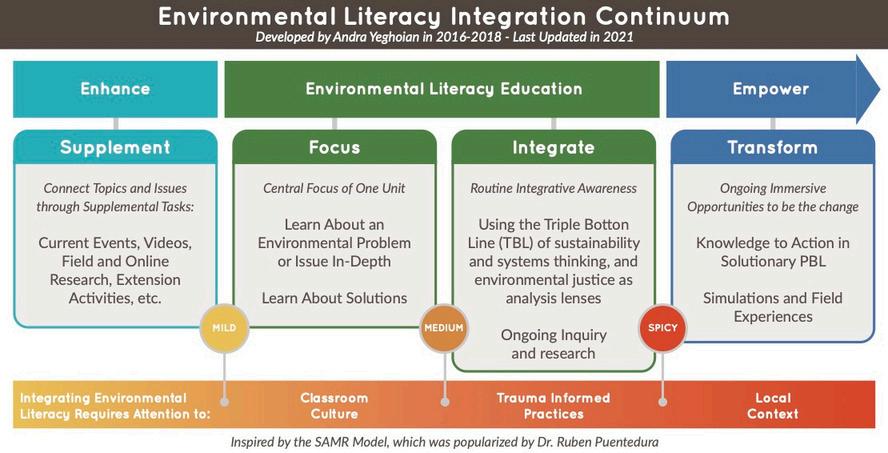
Opportunities exist to build connections and raise awareness across grade levels in support of developing environmentally focused skills and competencies and constructing career pathways for learners to understand environmental impacts on their careers of choice.
[viii] Integrating Environmental Literacy into Career and Technical Education Programming
A STANDARDS FOR CAREER READY PRACTICE
Career and Technical Education integrates academic skills, employability skills and job/technical- specific skills making a learner career and college ready. Embedded in the CA Standards for Career Ready Practice are standards directly related to environmental competencies that align with the Blueprint for Environmental Literacy Specifically:
Standard 11. Employ valid and reliable research strategies Career-ready individuals employ research practices to plan and carry out investigations, create solutions, and keep abreast of the most current findings related to workplace environments and practices.
Standard 12 Understand the environmental, social, and economic impacts of decisions. Career-ready individuals understand the interrelated nature of their actions and regularly make decisions that positively impact other people, organizations, the workplace, and the environment. They are aware of and utilize new technologies, understandings, procedures, and materials and adhere to regulations affecting the nature of their work. They are cognizant of impacts on the social condition, environment, workplace, and profitability of the organization.
GREEN CAREERS BY INDUSTRY SECTOR GREEN CAREERS BY INDUSTRY SECTOR
GREEN CAREERS BY INDUSTRY SECTOR
In addition to the key standards that are present in CTE pathways, there are green careers popping up throughout all 15 industry sectors San Mateo County Office of Education has created an overview of each CTE industry sector with examples of green jobs in each
SMCOE’s Green Economy Overview for K-12 Educators
Many occupations and careers today are considered Green. This means they produce items or provide services that benefit the environment For a list of occupations by industry sector that are considered Green or have components of a Green career click on the following link: CalJobs
Source: This information is based on O*NET™ data. O*NET is a trademark registered to the U.S. Department of Labor, Employment and Training Administration
“Everything depends on our ability to sustainably inhabit this earth, and true sustainability will require us all to change our way of thinking on how we take from the earth and how we give back.”
- DEB HAALAND
Superior Farms
Thistle Green Workforce Policy Playbook
Gotham Greens
National Career Clusters Framework
Sustainable Solano Recology
Build-it-Green
Patz Materials & Technologies
Carlise Construction Materials
Solano Land Trust
Solano County Farm Bureau
Benicia Water Treatment
Fairfield Water Treatment
Vacaville Water Treatment
There must be a better way to make the things we want, a way that doesn't spoil the sky, or the rain, or the land."
-PAUL MCCARTNEY
CTE
PATHWAY ANCHOR STANDARDS REFERENCES
There are many resources available to support districts and schools in integrating Environmental Literacy into their programs.
Climate Education Resources Padlet
San Mateo County Office of Education’s Green Careers Awareness Program
Ten Strands
Solano County Office of Education
California Environmental Literacy Initiative
Sustainable Agriculture Education
California Education & the Environment Initiative
California Educators Together
Center for Energy Workforce Development
San Mateo Office of Education’s Green Economy Overview for K-12 Educators
Climate Literacy and Energy Awareness Network’s Climate and Energy Educational Resource Collection
Green Schools National Network
California Department of Education Civic Engagement
California Foundation for Agriculture in the Classroom
FOOTNOTES
[i] California Environmental Literacy Initiative: Teacher Call to Action
[ii] State of California Department of Justice: Climate Change's Unequal Impacts
[iii] Green Schools National Network: Tips and Ideas for Integrating Climate Literacy Across the Core Subjects
[iv] SAVVAS Learning Company: Environmental Literacy: A Lot More than the 3 Rs
[v] California Education and Environment Initiative: Why Environmental Literacy?
[vi] Project Learning Tree
[vii] California Department of Education: A Blueprint for Environmental Literacy
[viii] California Department of Education: A Blueprint for Environmental Literacy
[ix] Integrating Environmental Literacy into Career and Technical Education Programming
[x] Department of Education: Standards for Career Ready Practice
[xi] California Career Technical Education Model Curriculum Standards