CERAMIC WETLANDS
New Orleans, LA
Partner: Charlotte Kelley
Professor: Adam Marcus
MATERIAL
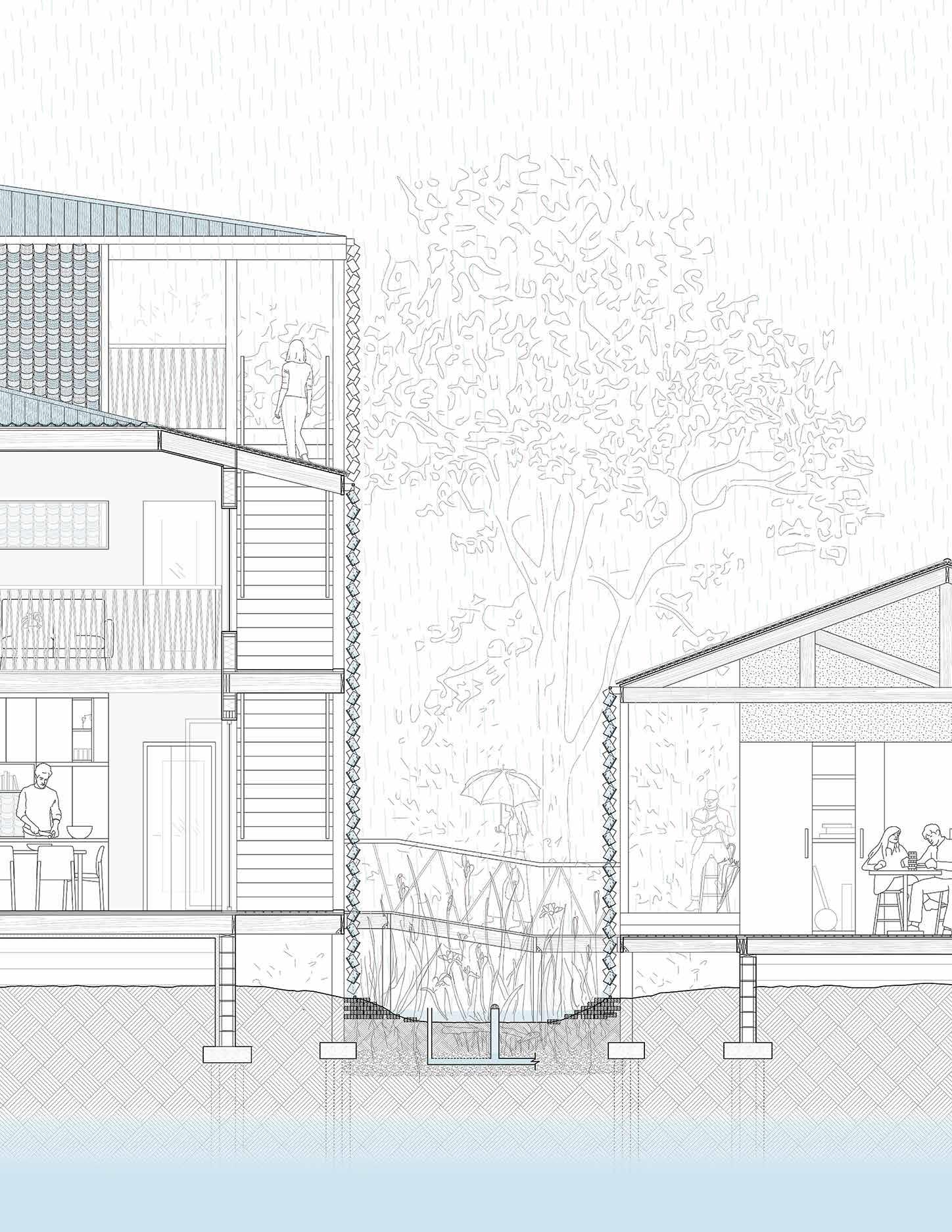
In New Orleans, traditional water management techniques of chronic pumping and paving have given way to alternative issues of subsidence, cracking, and lowered ground water.
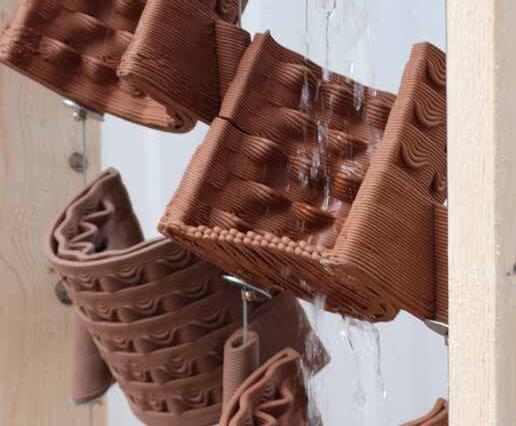
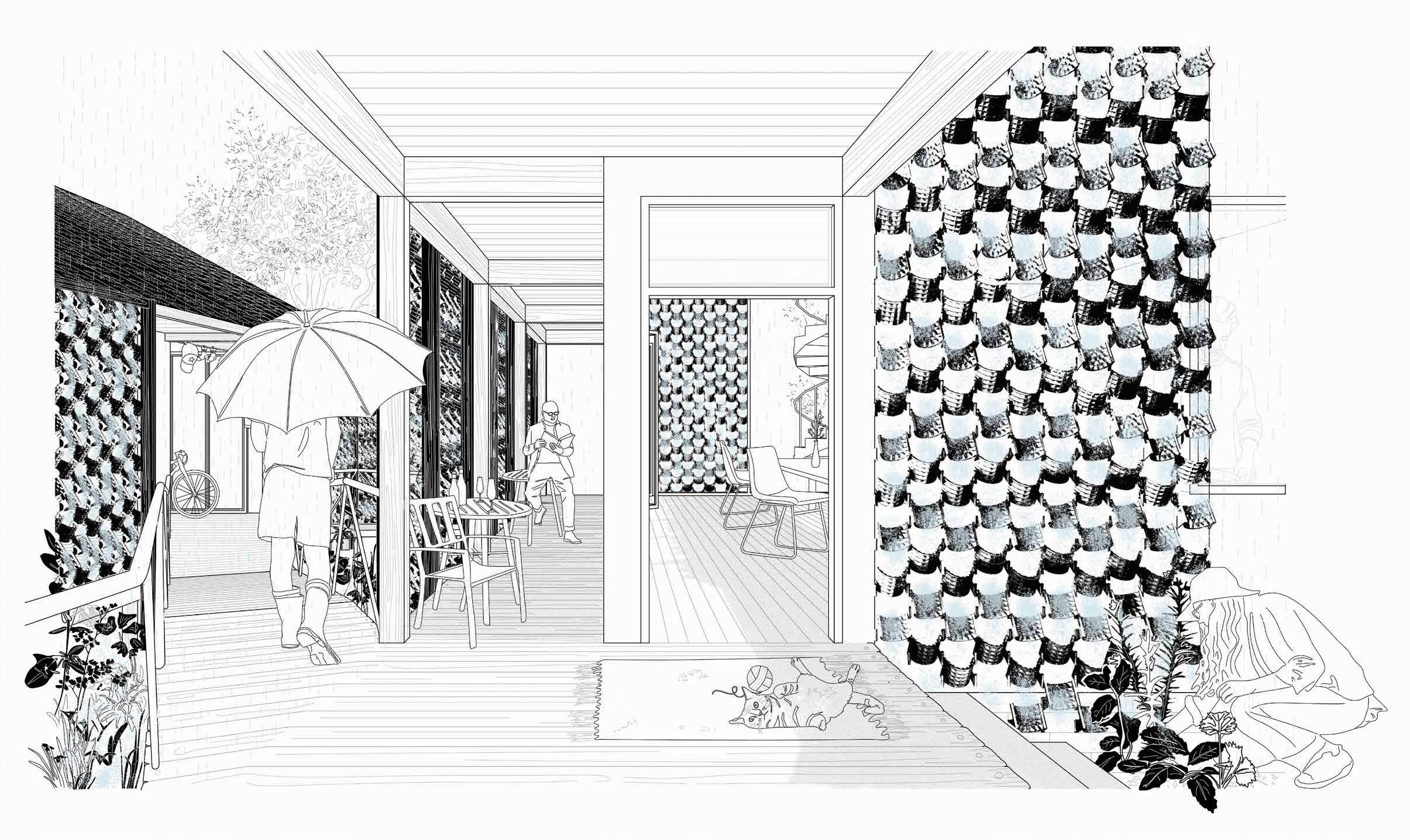
“Ceramic Wetlands” merges understandings of digital fabrication, material assemblies, and ecological performance for humans and non-human species to propose a shift in New Orleans’s relationship with water into one that embraces rather than expels it.
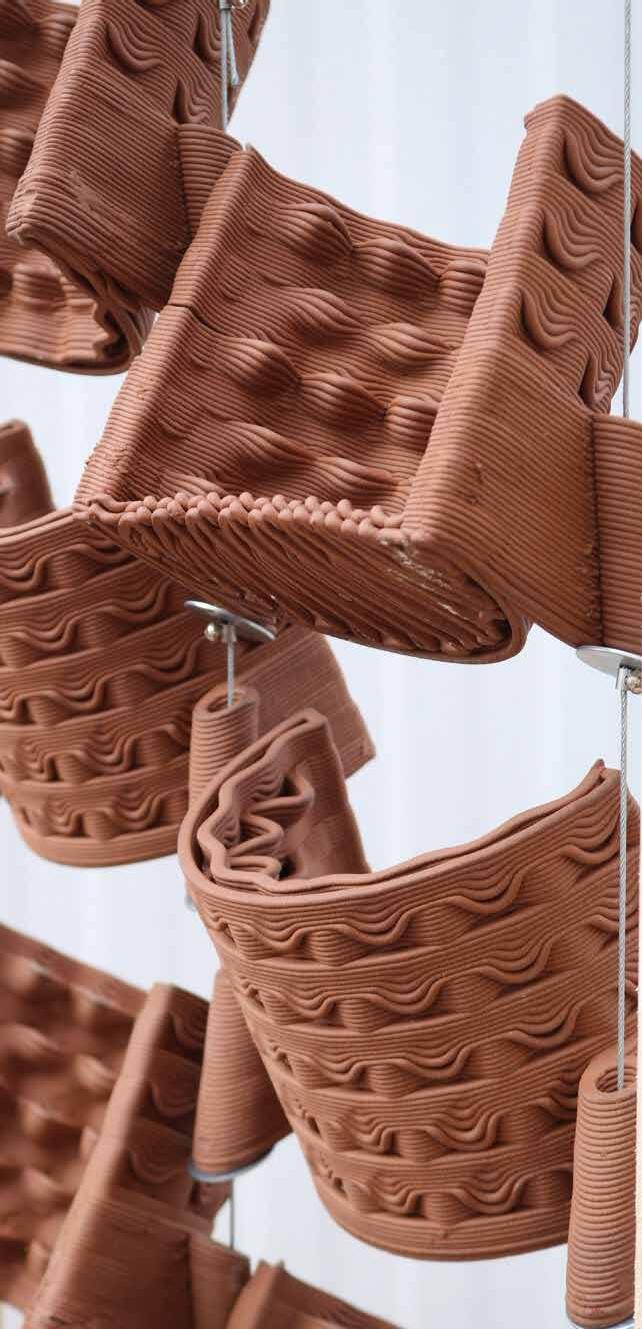
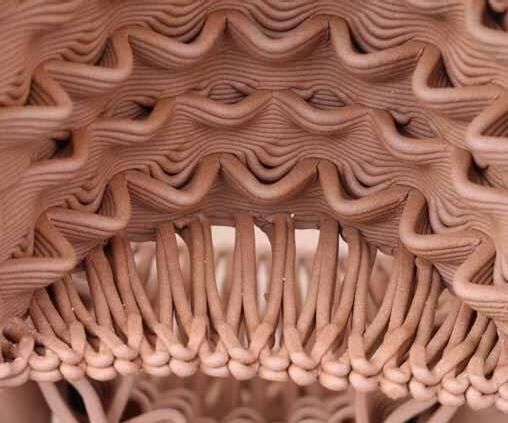
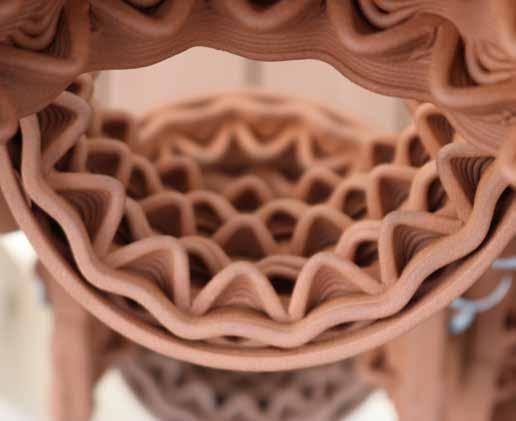
This is done through the development of a ceramic envelope that extends rain and flood mitigation beyond the ground plane and into the roof and facade of the architectural project as well. The system wraps around both an existing and new structure and directs, utilizes, and slows rainwater before gently releasing it into a natural rain garden. Fabricating the facade modules with 3D-printed clay ceramics allows for controlled porosity, texture, and slowing at various scales.
Images: Scales of Thought + Rain Section
COMPONENT
ARCHITECTURAL
Full-Scale System Mockup
Roof Component CHANNEL + SHED
Wall Component CAPILLARY ACTION
Ground Component PERCOLATION
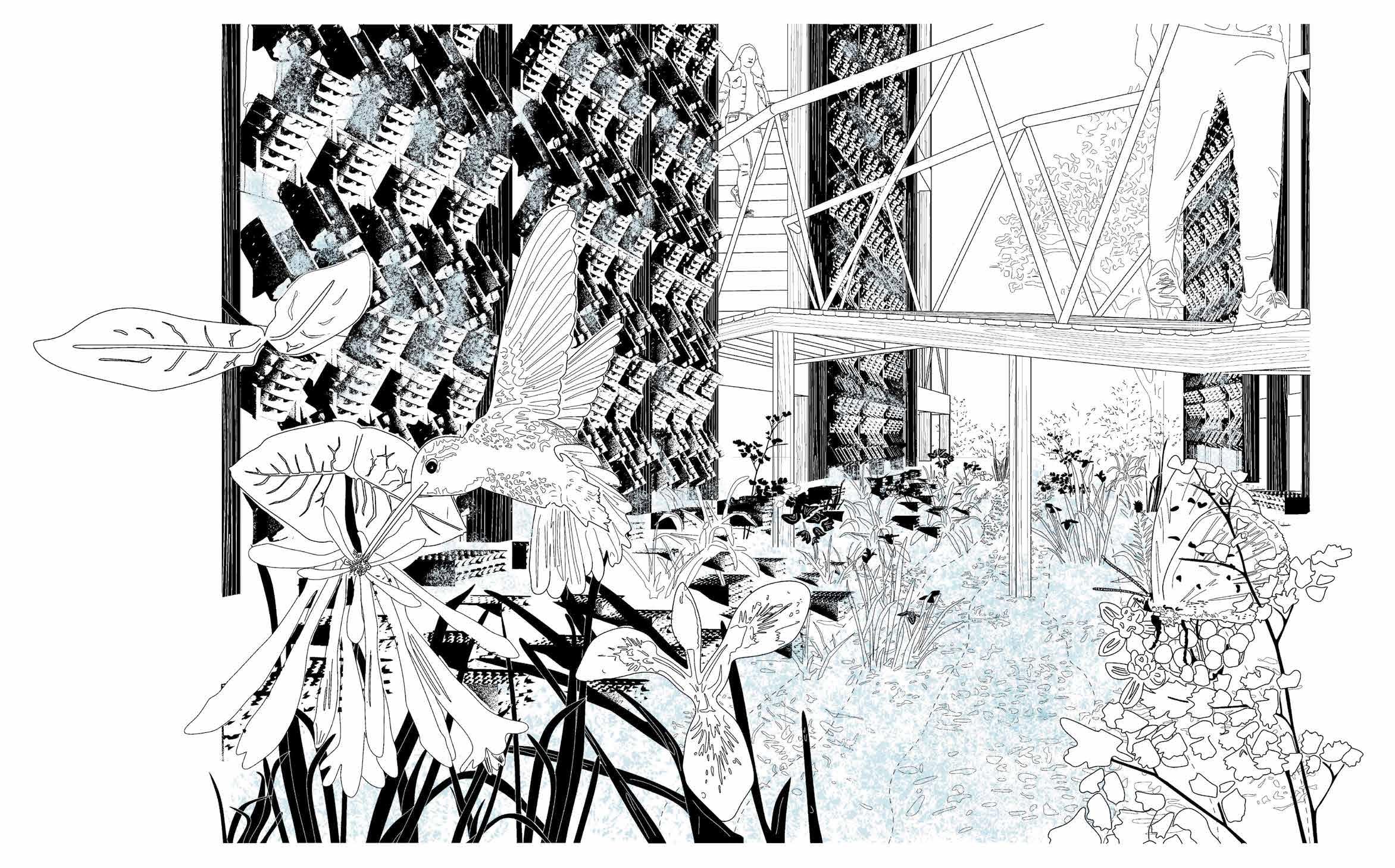
Within the Ceramic Wetland - Non-Human Perspective
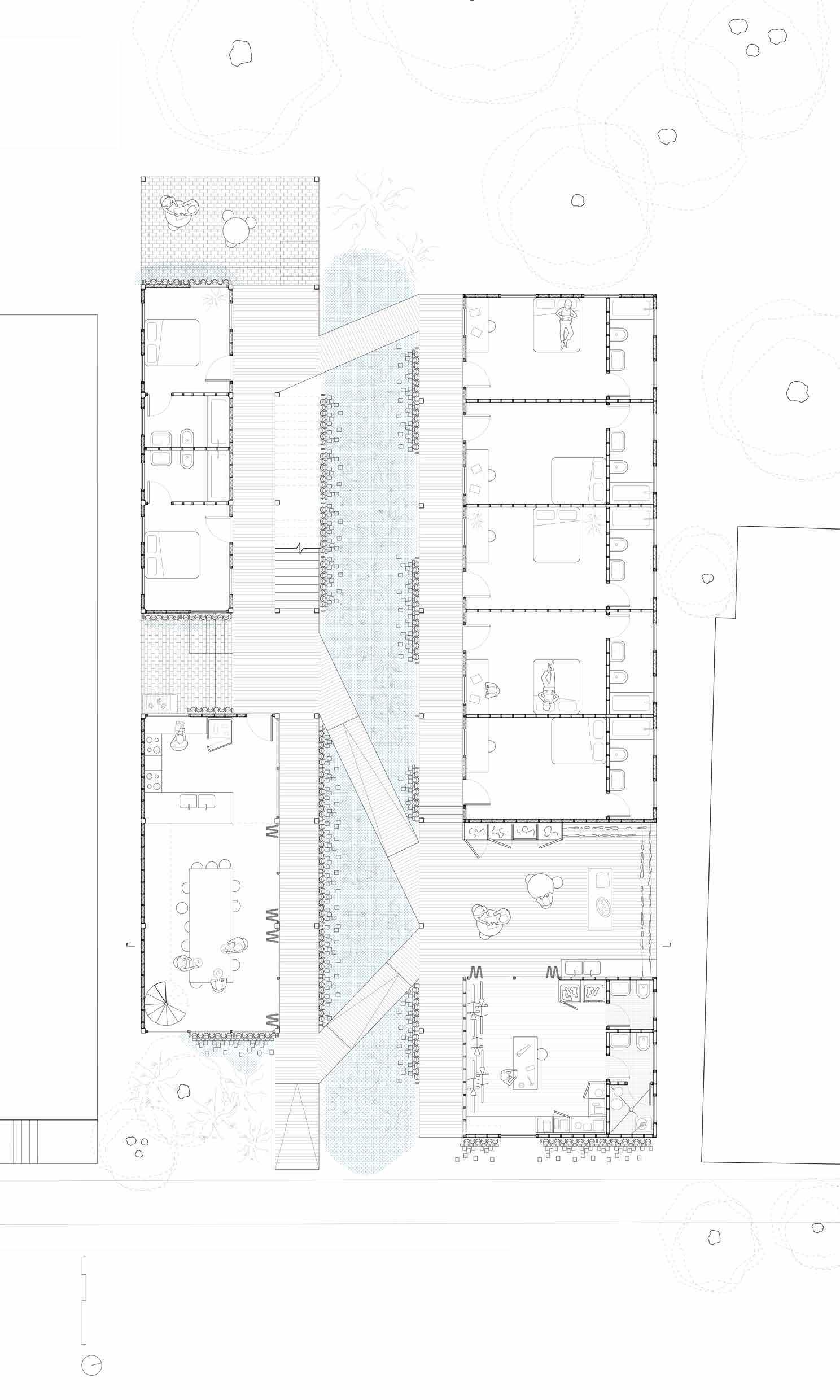
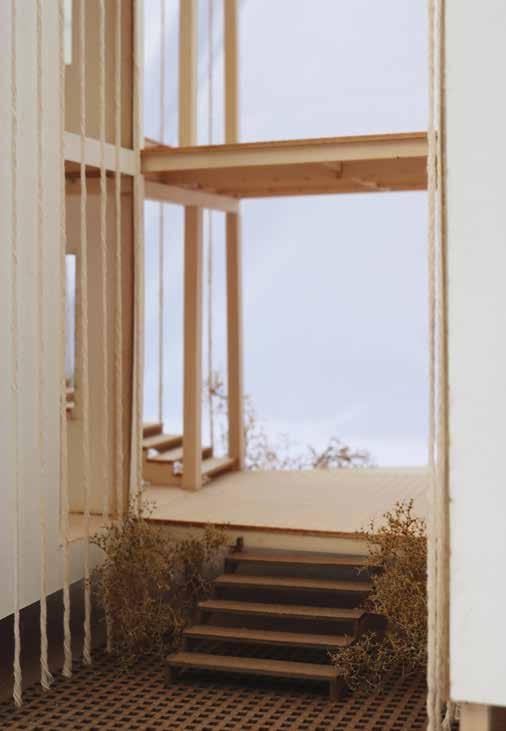
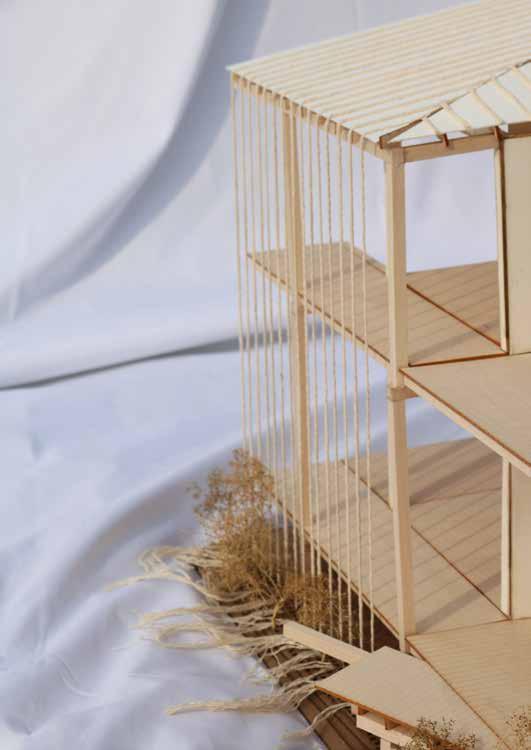
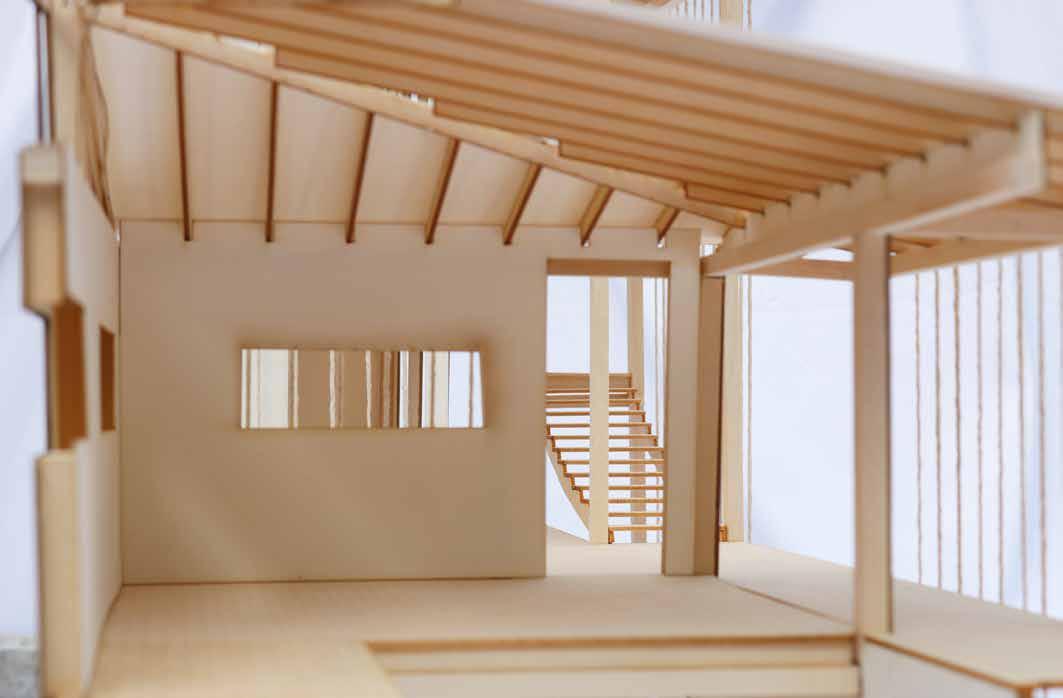
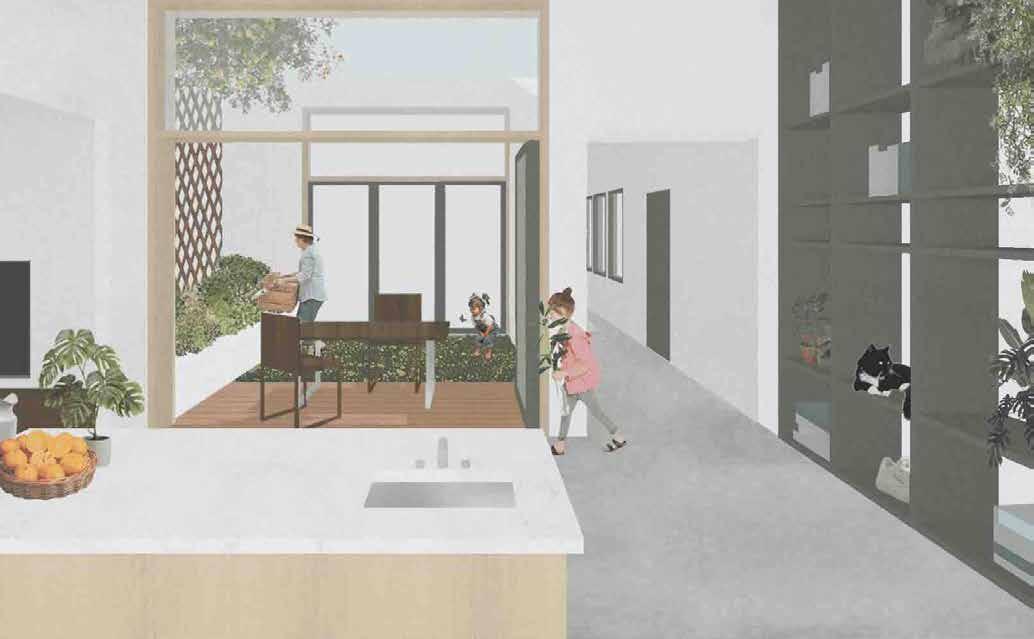
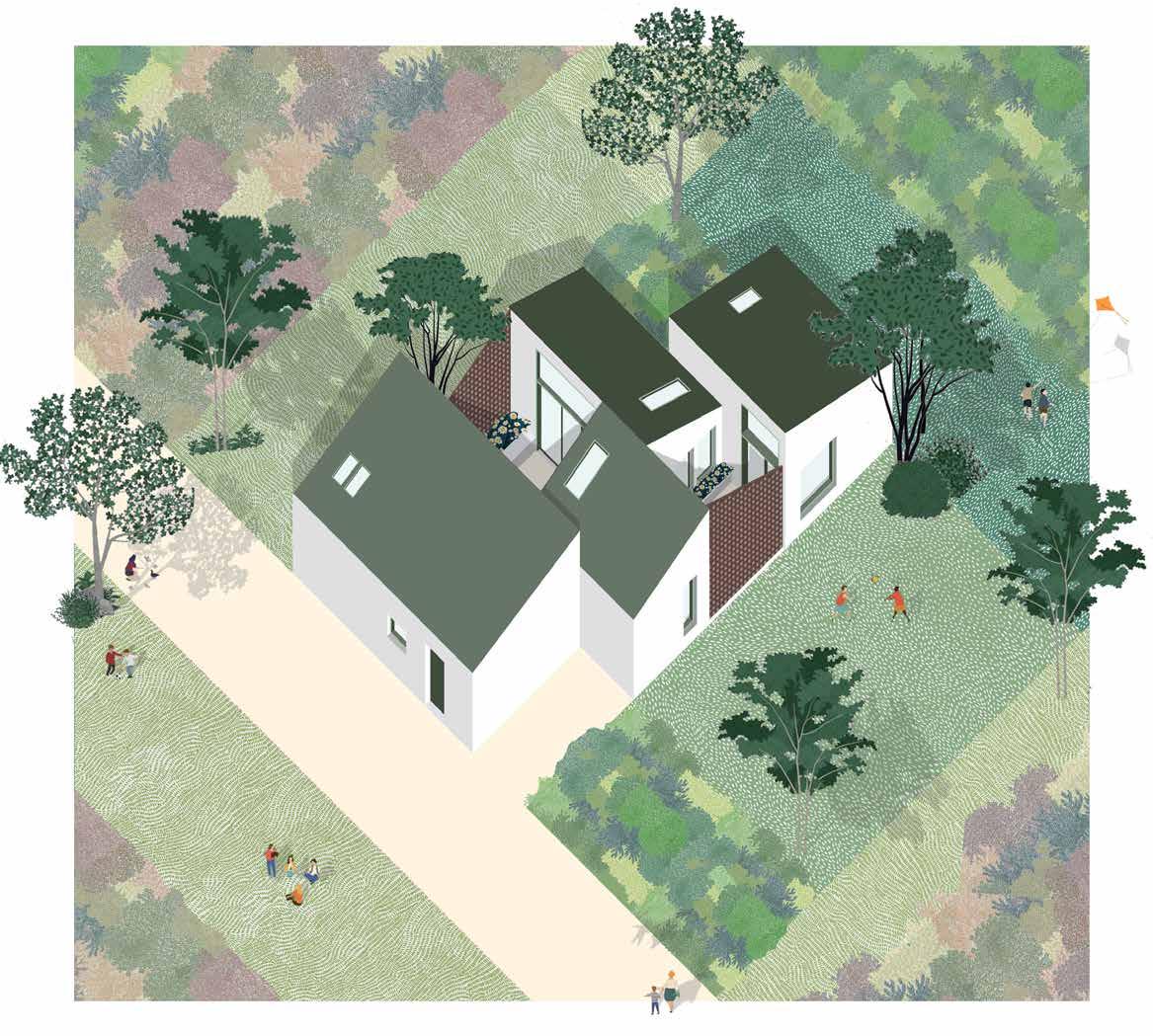
The spatial design of this project reinterprets an existing historic shotgun with a side gallery, adding a new structure that mirrors the original. It builds upon the vernacular organization of the linear New Orleans shotgun but maximizes the number of living units, offering a model for denser and more communal inhabitation. The shared spaces are a hybrid of interior and exterior, allowing for comfort and open social space. Circulation of inhabitants is driven by cross-ventilation, while circulation of water is driven by passive cooling opportunities and proximity to porous ground.
1/4” Sectional Model Through New Addition
Within the Ceramic Wetland - Human Perspective
A SEAT AT THE TABLE
Miami, Florida
Professor: Sonsoles Vela
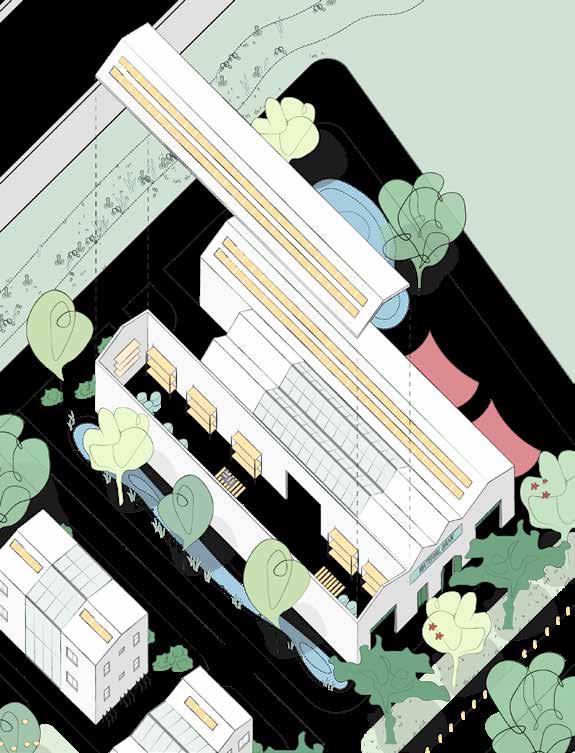
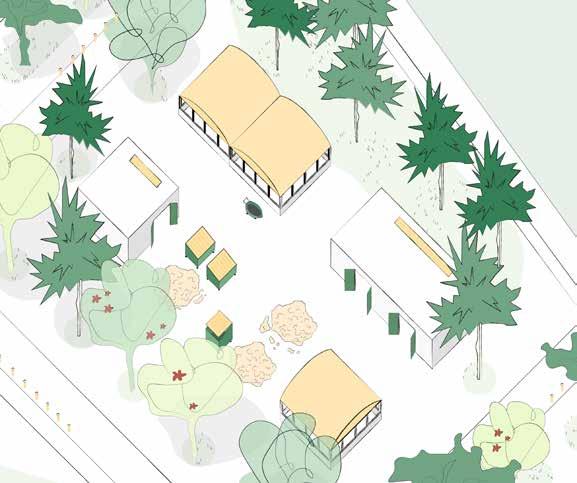
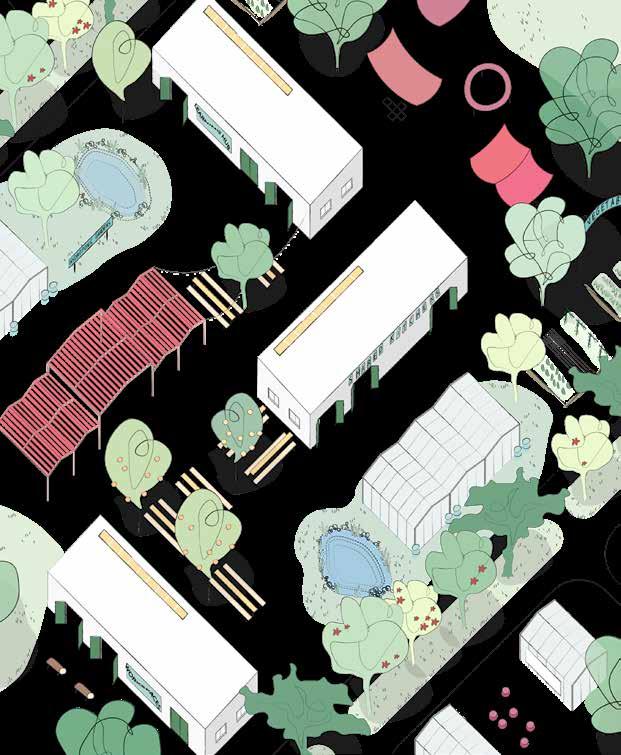
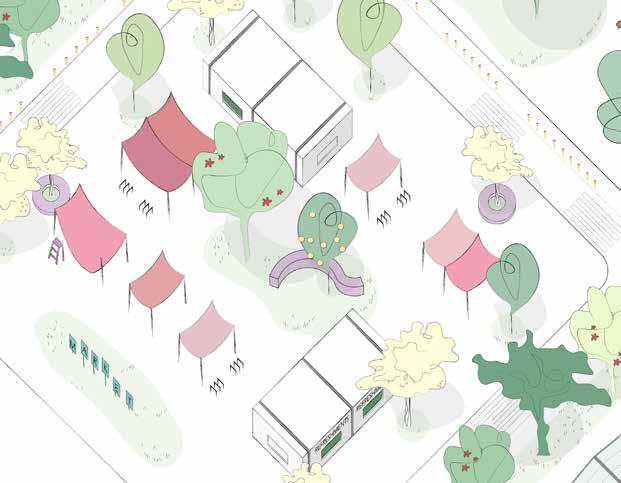
“A Seat at the Table” takes on broader issues of sustainability, waste, and carbon emissions within the built environment while addressing the economic and environmental challenges faced locally by the Little River community. This is done by reimagining the neighborhood as a metabolic system, in which the flow of resources is reorganized to maximize self-sufficiency and make reuse the standard practice, and by exploring food production across four different scales:
(1) the systemic scale by viewing supply chains as complex, circular systems rather than a linear progression from production to consumption,
(2) the urban scale by developing vegetative and food production spaces that restore the land, provide economic opportunities, and make the community more comfortable and healthier to inhabit,
(3) the architectural scale by prioritizing local, recycled, and biogenic materials and implementing passive strategies to minimize embodied carbon, and
(4) the human scale by developing collective spaces that focus on the social and cultural aspects of food and dining.
Diagram: Flow of Resources Through + Across Site
REORGANIZING RESOURCE FLOWS
The built environment is responsible for about 42% of annual global CO2 emissions, exacerbating many of the challenges that this site currently faces. By reimagining our neighborhoods as metabolic systems, we can reorganize our flow of resources to promote longevity, prioritize bio-based materials, and make reuse the standard practice.
NATIVE SPECIES
Currently, the site has a canopy density of only 11%. This makes extreme urban heat a risk for residents and their health. Native trees and vegetation are used to increase canopy density to 30% and improve biodiversity and on-site carbon sequestration. Some species such as slash pine and clumping bamboo are also potential material sources once they reach maturity or end-of-life.
CONSTRUCTED WETLANDS
Water surronds the community, with Little River to the north, Biscayne Bay to the east, and ground water just a few feet below the surface. Flooding is an ongoing issue, and its severity is expected to increase alongside 2’ of sea level rise by 2060. Raingardens and constructed wetlands are implemented to capture, reduce, and filter stormwater and agricultural runoff. Native filtering plants such as cattail, pickerelweed, whitetop sedge, and lemon bacopa are incorporated.
WATER RETENTION
Miami receives about 61.9 inches of rainfall per year, which contributes to site and city-wide flooding. By implementing on-site water retention points, runoff is mitigated and rainwater is seen as an opportunity. Retention points feed the edible gardens and native vegetation, reducing the need for municipal water supplies and improving drainage.
FOOD PRODUCTION
Site context includes economic disparity and unemployment, large amounts of agricultural waste at the regional level, and a global crisis in food production and affordability. Edible gardens are used as a strategy for more sustainable production, maximizing self-sufficiency, and providing economic opportunities.
MATERIAL (RE)USE HOUSE
Urban
Scale - Supporting Components
CENTRAL HUB - EDUCATION SPACES, SHARED WORKSHOPS, + EDIBLE GARDENS
WAYS OF RETURN - MARKET
WAYS OF RETURN - COMPOST
RECYCLED POLYCARBONATE EXISTING STEEL RAILS
BAMBOO CLADDING GLAZING
HEMPCRETE INSULATION
GYPSUM SHEATHING
TIMBER PILES + FRAMING
RECYCLED CMU BLOCKS CLT PANELS
RECYCLED CONCRETE REBAR
CIRCULATION
59% OF AVERAGE EMBODIED CARBON OF NEW HOMES
VERTICAL STRUCTURE ENVELOPE
HORIZONTAL STRUCTURE
Architectural Scale - Food as an Ecological + Social Process
THE RIBBON LIBRARY
Los Angeles, California
Professor: Ruben Garcia Rubio
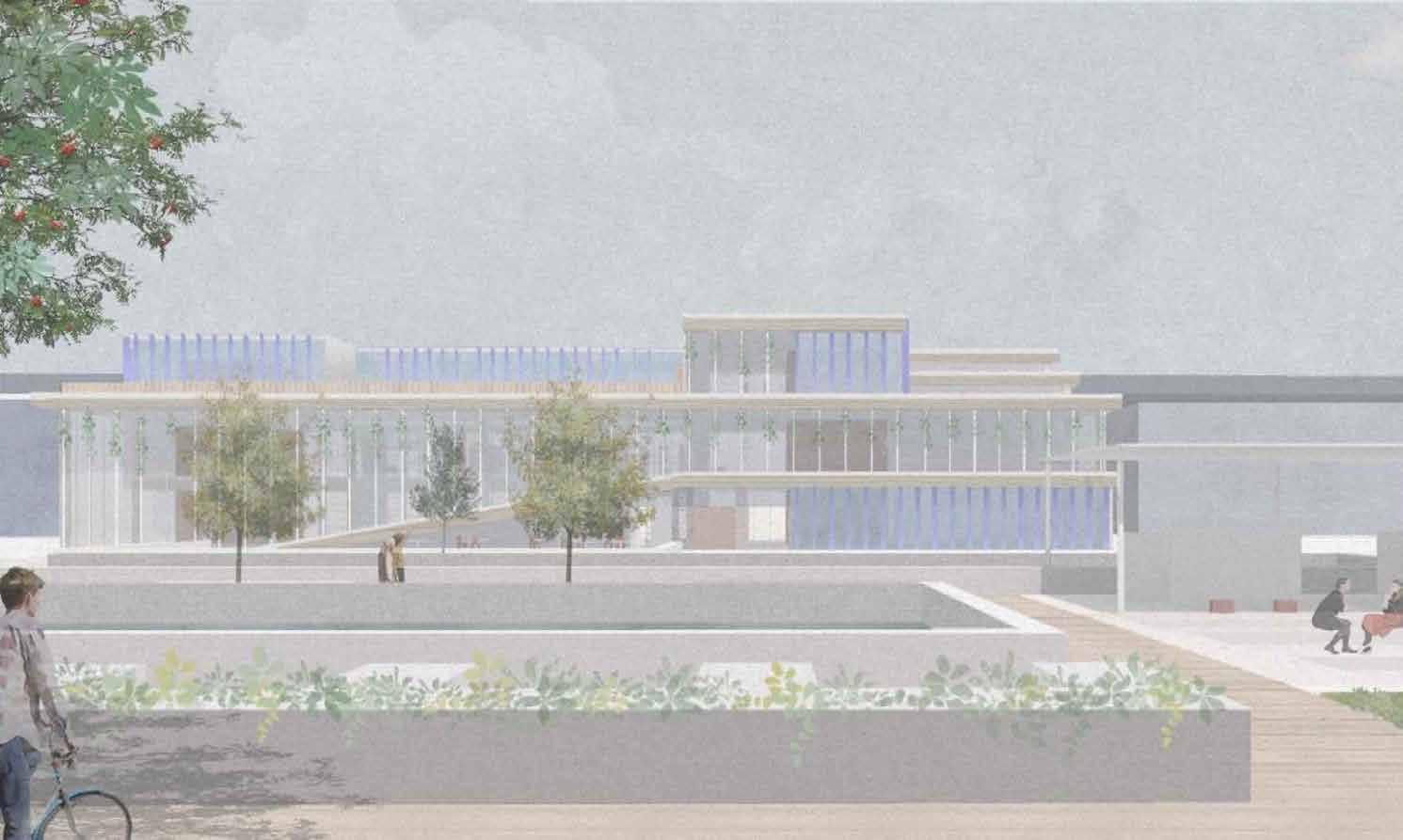
Located in an area that has little educational and socialization opportunities, this project proposes a library as an urban catalyst. It also serves as a reflection on recent events and personal education experience - we have gone through several dramatic changes, transitioning very quickly from in-person learning at the onset of the pandemic, to learning completely online, and then returning to an in-between hybrid. In response, this project reimagines a library that can adapt alongside future needs as our methods of learning and education continue to change more rapidly.
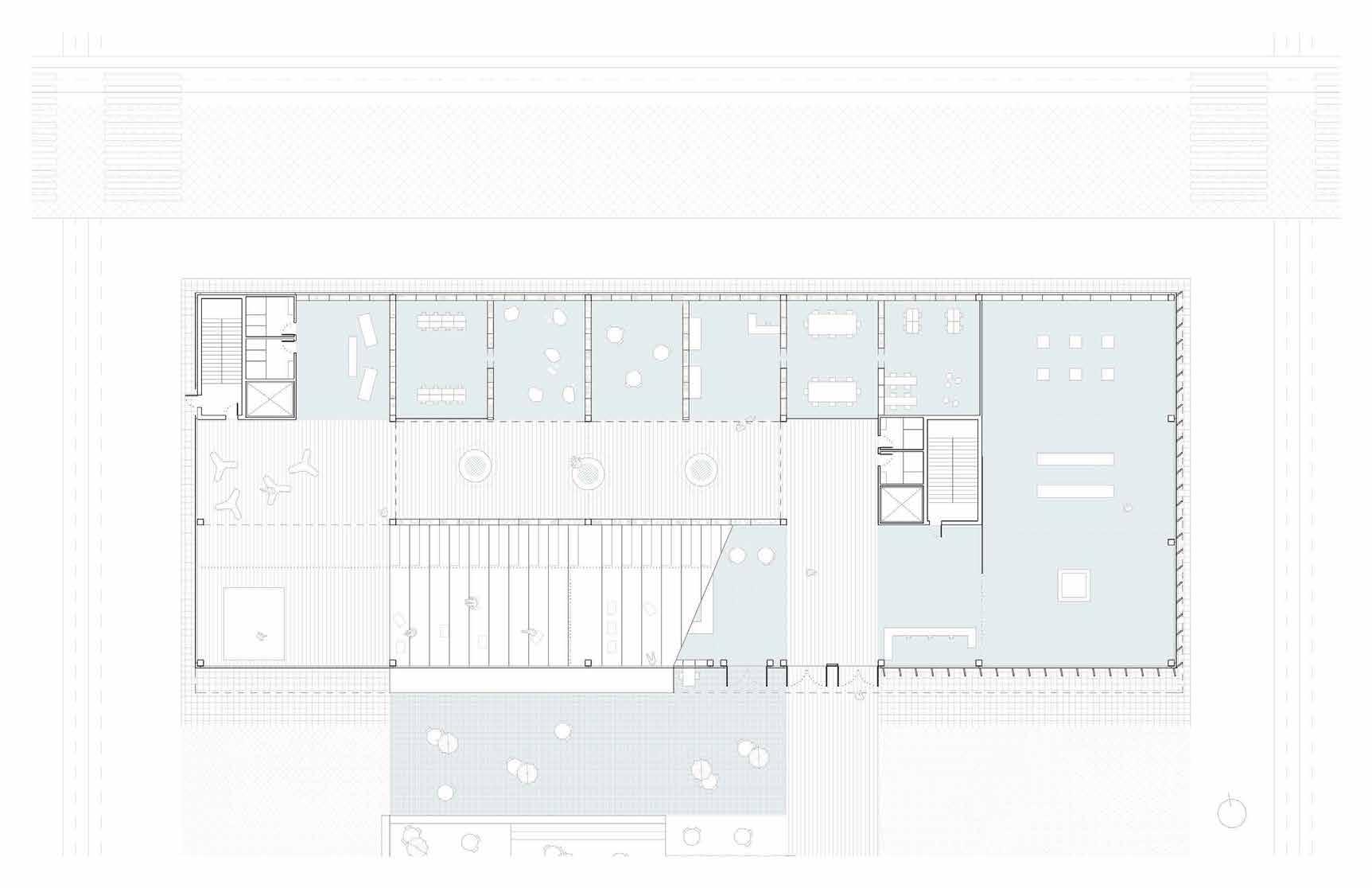
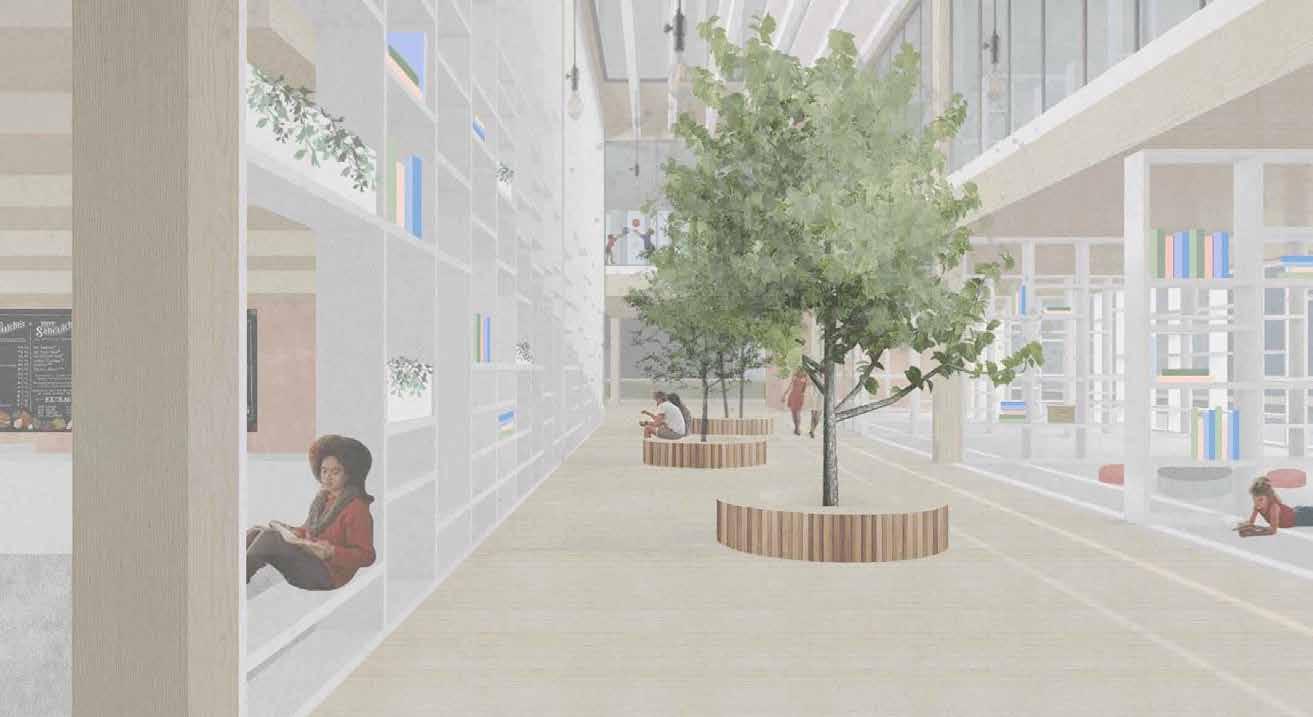
Challenging conventional models of organization, where shelves are fixed and used primarily for the storage of books, shelving is treated as flexible furniture and walls. It is used to define classroom, study, and work spaces with embedded seating, program, storage, and desks.
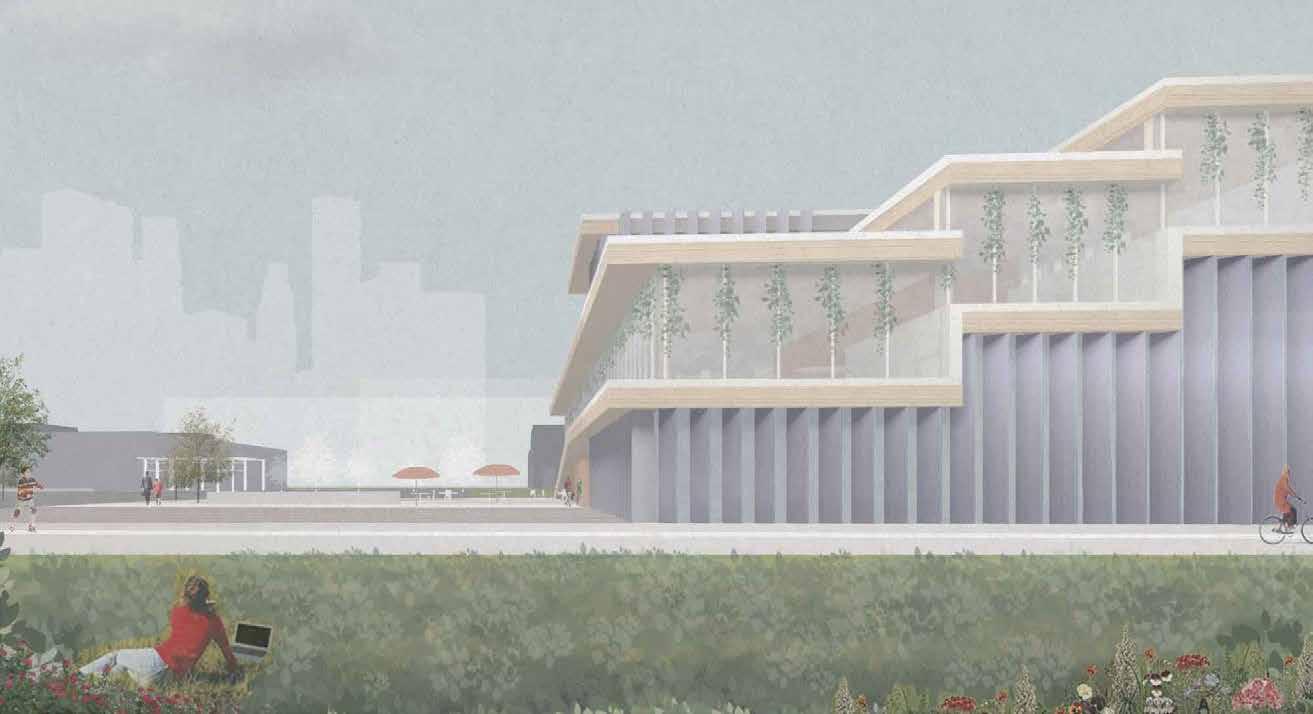
This leaves room for communal and larger programmatic spaces to take over in the form of a continuous, inhabited circulation band. This ribbon begins outdoors and winds upwards and through the project, providing a wide variety of educational and community opportunities.
Two large inhabited staircases serve as transitional spaces between floors and host auditorium, exhibit, and collaborative learning spaces. Leaning into a library’s common role as a community center, resources such as advising, counseling, remote-work areas, and childcare are offered throughout as well.
Diagram: Shelving Strategy
Exterior Approach + First Inhabited Stair
Exterior Approach + Second Inhabited Stair
URBAN HOSTEL
New Orleans, LA
Professor: Juan Medina
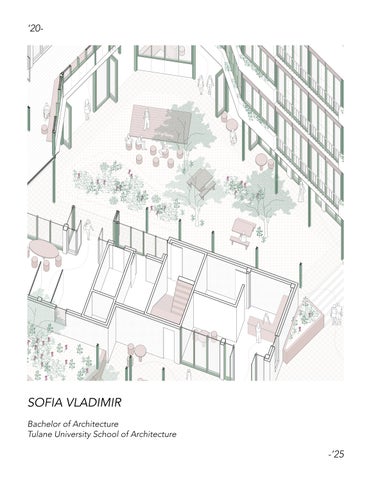
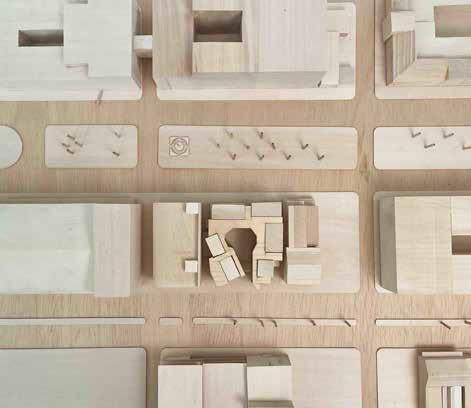
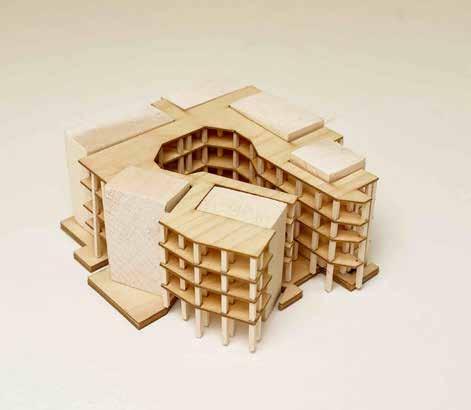
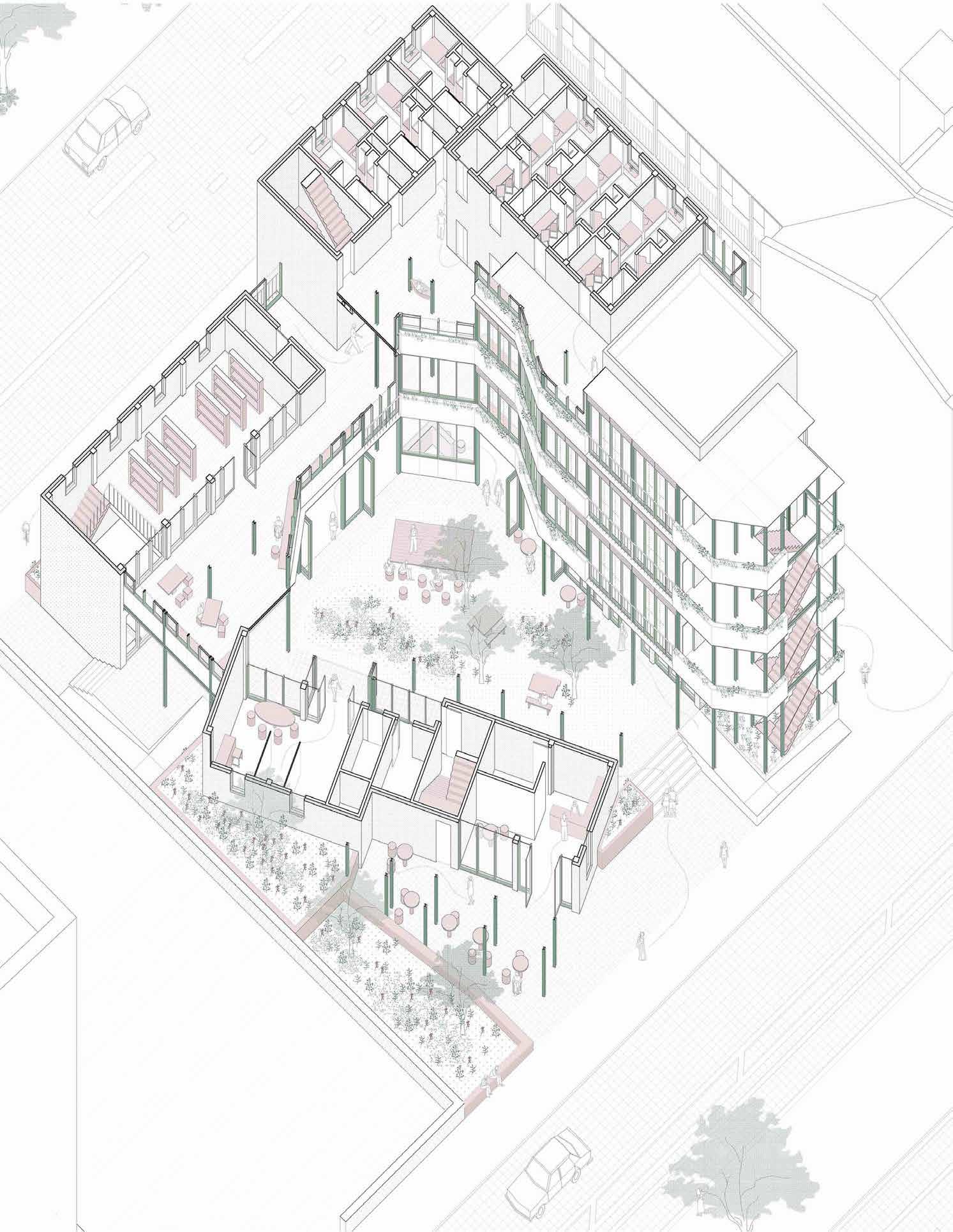
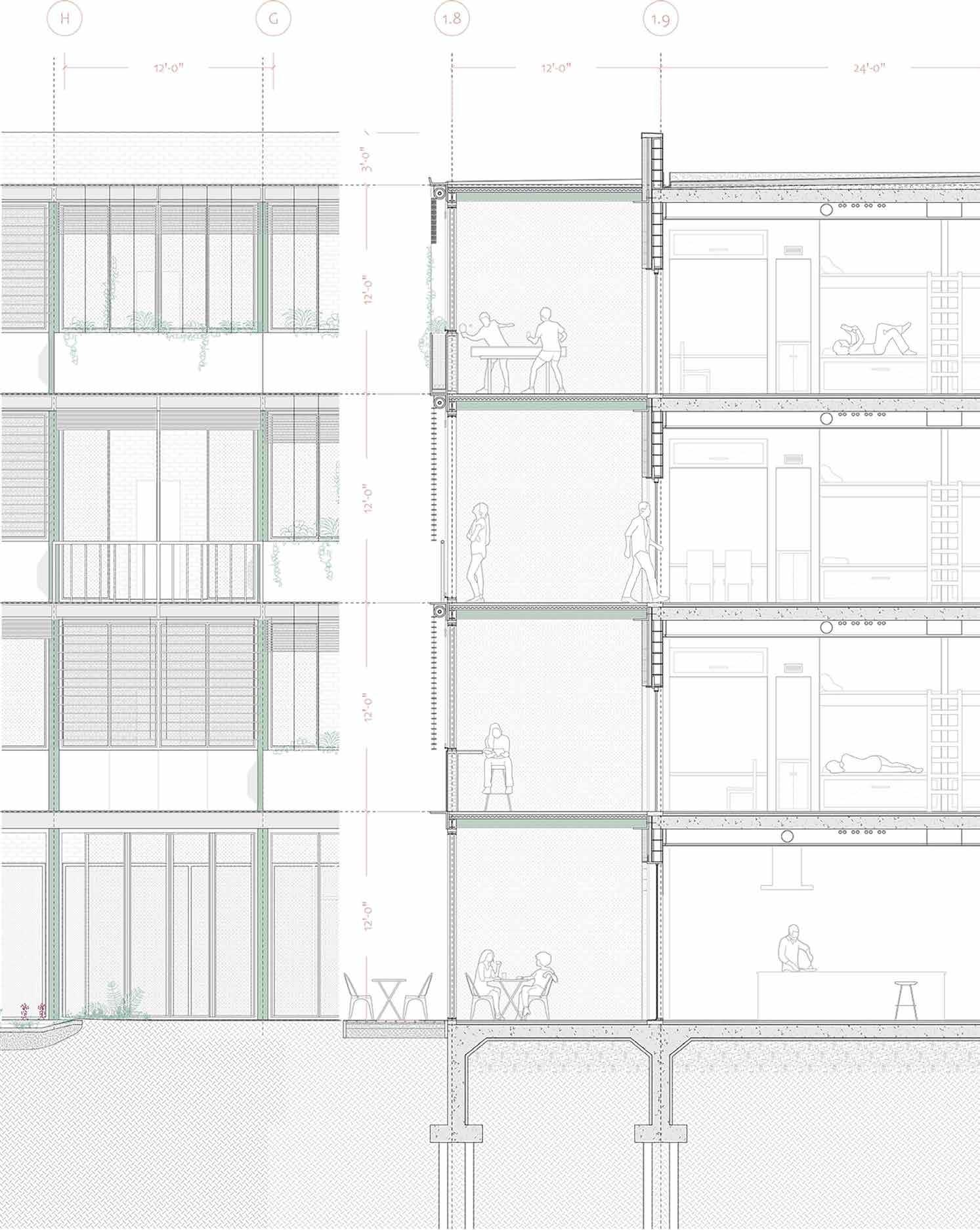
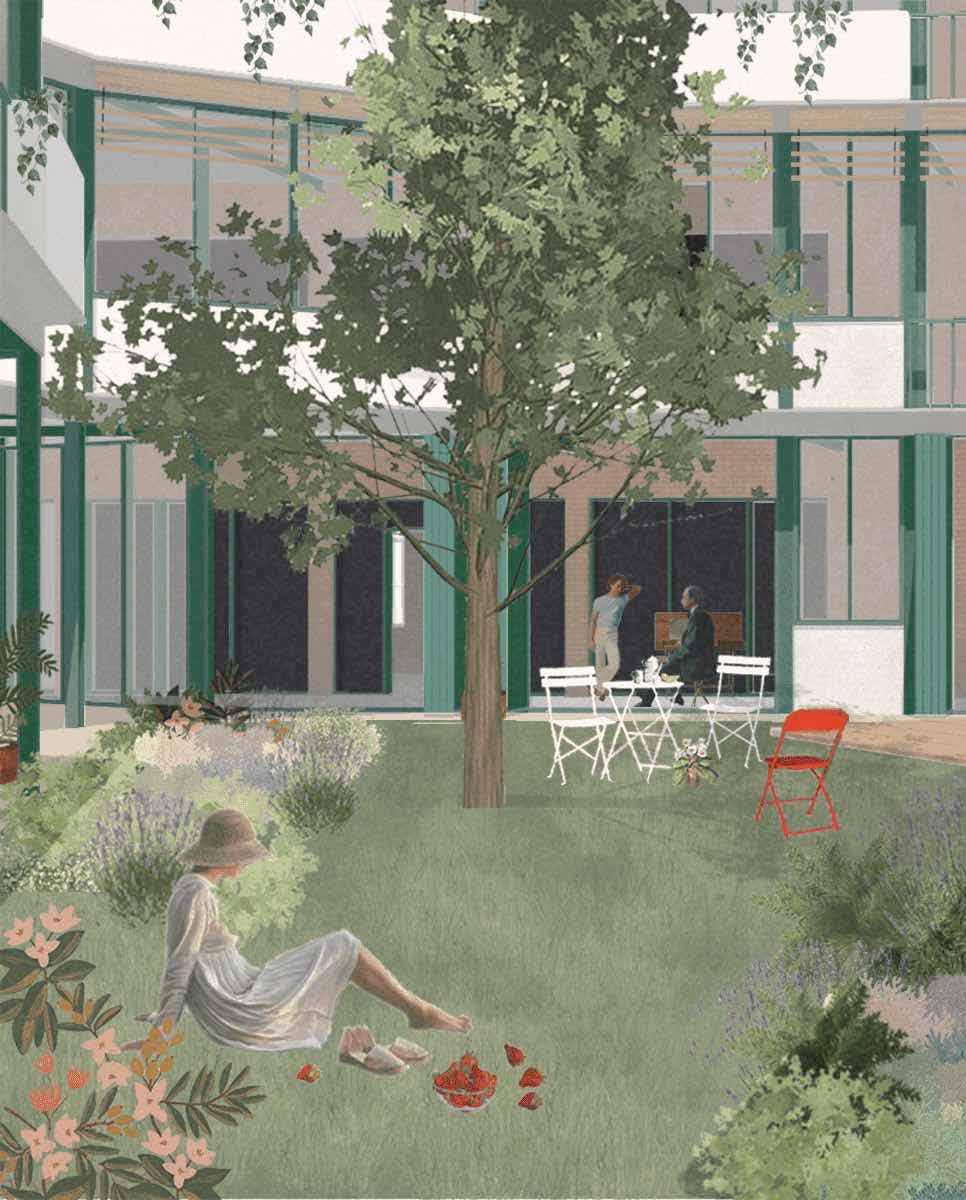
Located at the intersection of three distinct New Orleans neighborhoods, this hostel offers an alternative approach to the interior courtyard typology that is prevalent nearby. Structure is used as a method for experiential and programmatic variation through the use of rigid, concrete volumes and lighter, enveloping steel galleries. This creates two worlds - one that responds to the surrounding urban, brick environment and another that fits the domestic, hospitable needs of a hostel.
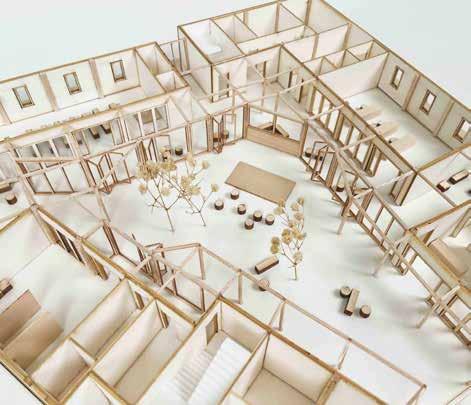
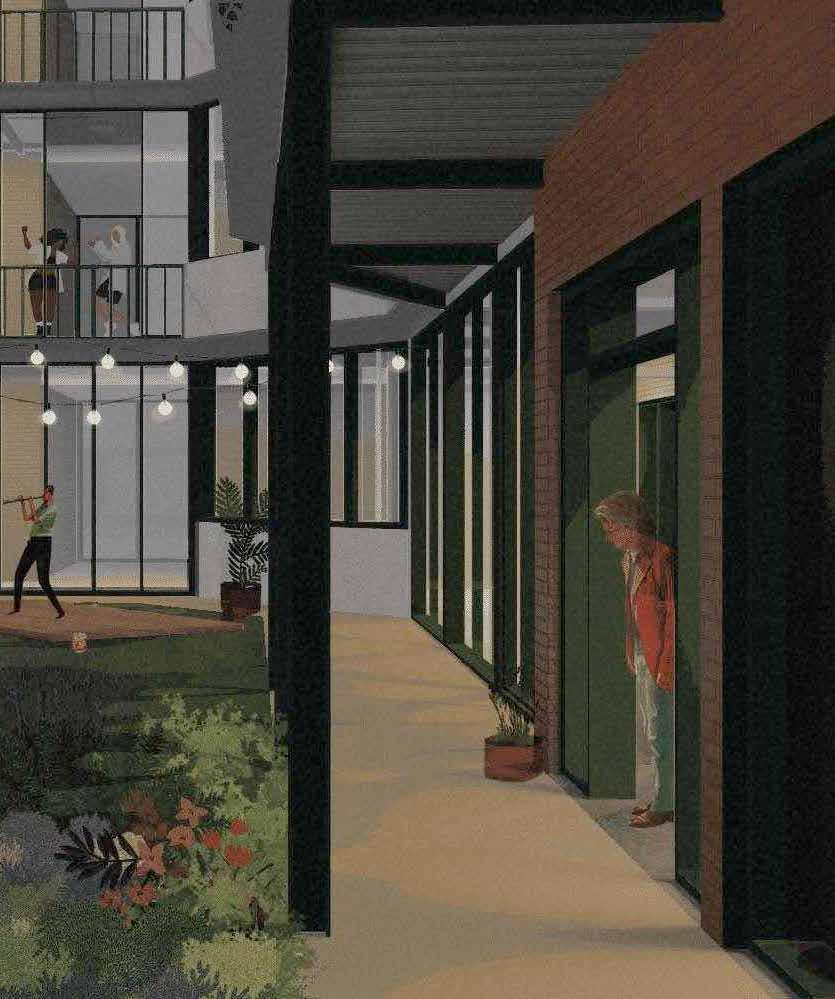
The concrete volumes host private and defined program such as hostel rooms and kitchens and form narrow openings along the perimeter of the site. Through these narrow openings, pedestrians get small glimpses into a more expansive interior courtyard, drawing them in and creating many different connections between the project core and its surroundings.
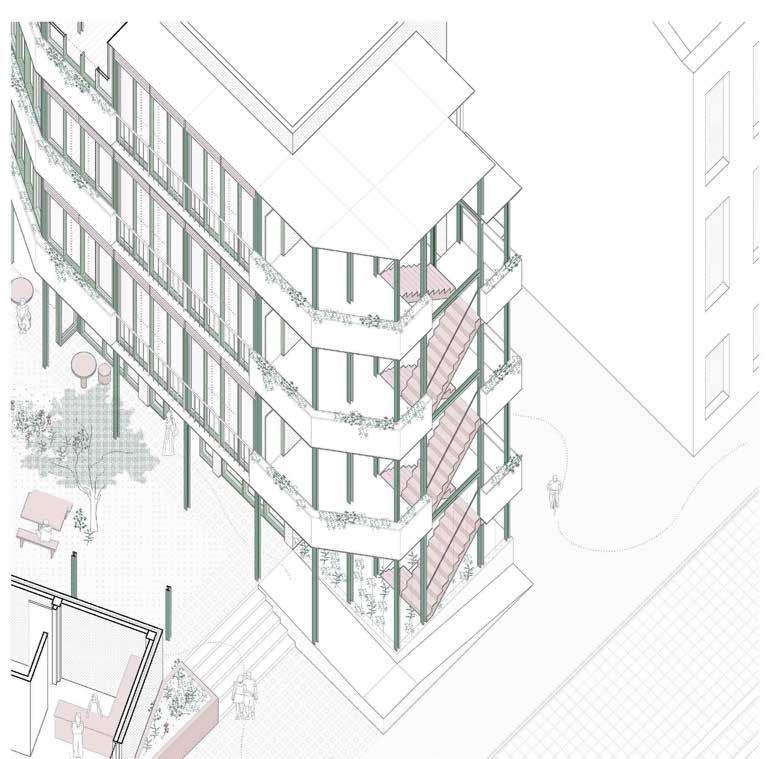
These two structural systems also facilitate a gradual progression between interior and exterior spaces, which is embraced through the use of an inhabited facade. The enclosed, steel galleries host communal, flexible program and bridge the volumes, at times wrapping around to expose themselves along the perimeter.
Models: Conceptual Massing + Ground Floor Inhabitation
Section + Elevation Detail - Inhabited Facade
Exterior Perspective - Courtyard Day + Night
X-S HOUSING
Siteless
05 Professor: Emmanuel Osorno
These housing proposals take on concepts such as circulation, aggregation, and privacy to propose new ideas of inhabition that question conventional methods of living. The human scale is carefully considered through architecture that enhances the domestic experience and through visualizing the lived-in qualities a space takes on.
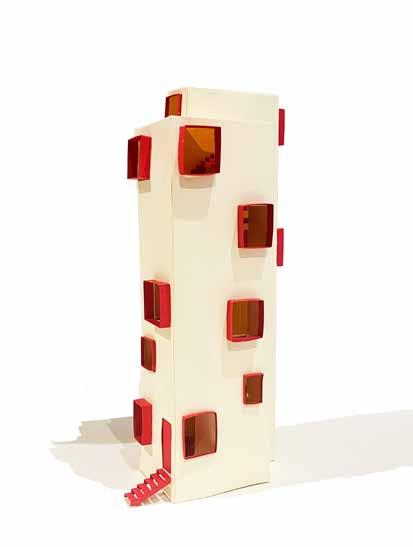
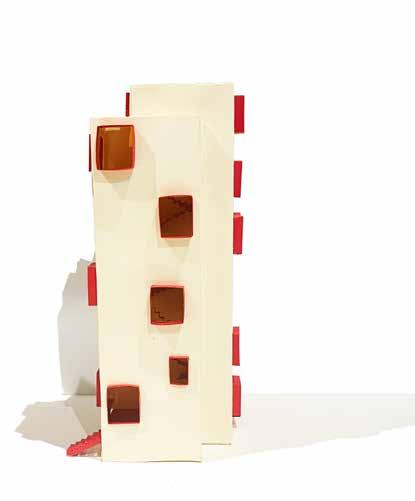
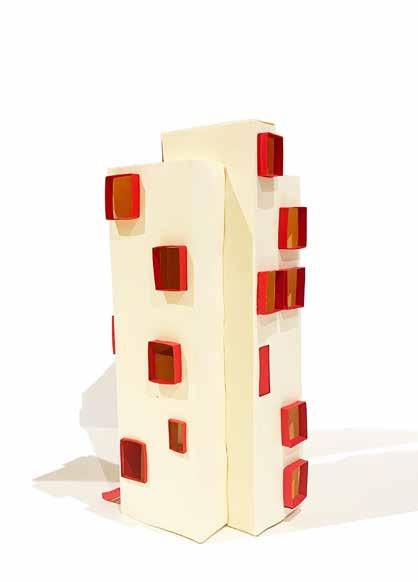
The vertical home, with only a 250 sqft footprint, envisions a dynamic and playful housing solution for highly-dense areas. Communal spaces are maximized and branch off of a central, inhabited stair. Alternating landings, extruded windows, and sills present unique spatial conditions and are packed with uses that respond to inhabitants.
“The Vertical Home” Model - Openings + Extrusions
LATITUDINAL AGGREGATION
The horizontal home is designed for a multi-generational family, maintaining a balance between conditions of privacy and connection. It is organized into four modular “bars” that correspond to each family member. These bars slide to form a central, inhabited corridor and two courtyards as a strategy for bridging individual rooms and extending programmatic activites to the exterior. Sloped roofs orient each volume towards a courtyard, with larger openings on interior rather than exterior facing walls for more privacy. The modular bars have the potential to aggregate in multiple ways, extending longitudinally for a larger family, or laterally to form more, distinct units.
With a 1,200 square foot limit, program, storage, and seating are heavily integrated into walls, windows, and circulation spaces.
Diagrams: Organizational Strategies
COURTYARDS
INHABITED CORRIDOR
Living “Bar” + First Courtyard
Openings, Massing, + Roofs
WHAT MATTER’S HERE.?!
Small Center Fellowship + Exhibit
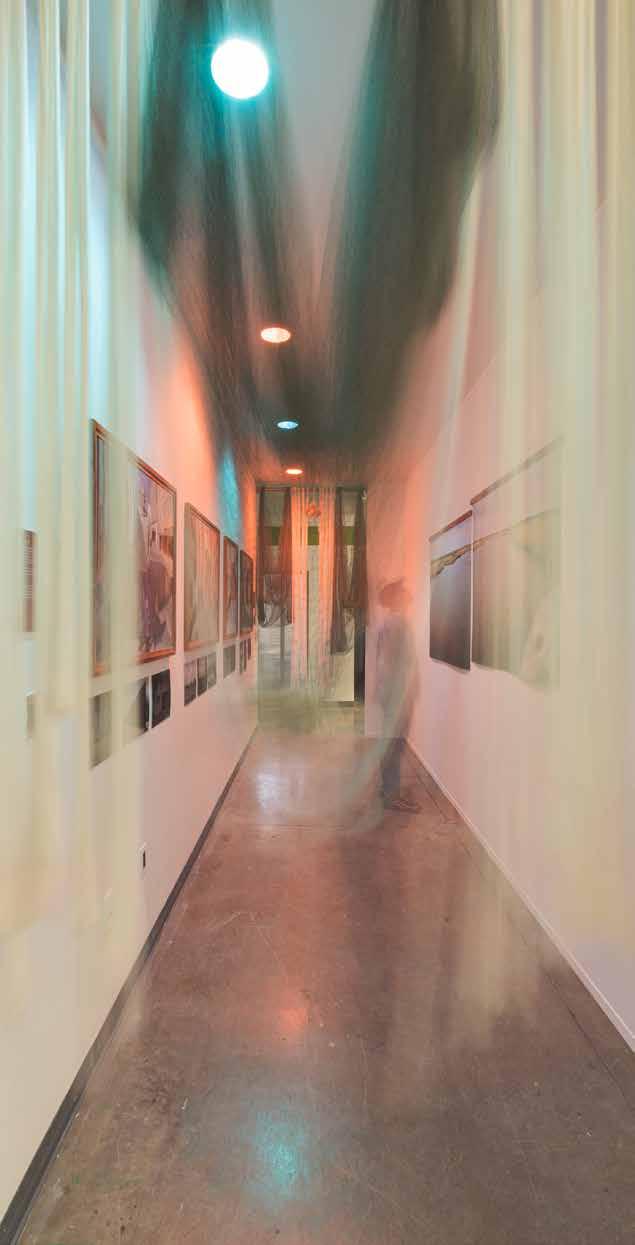
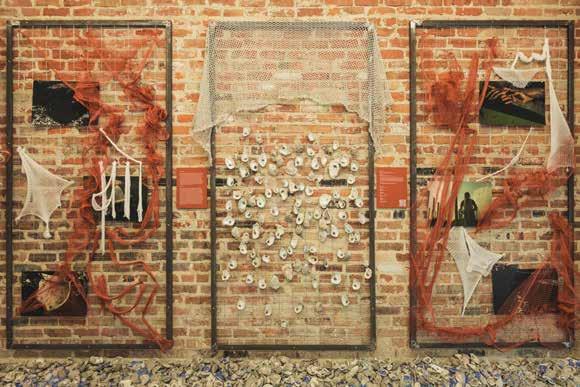
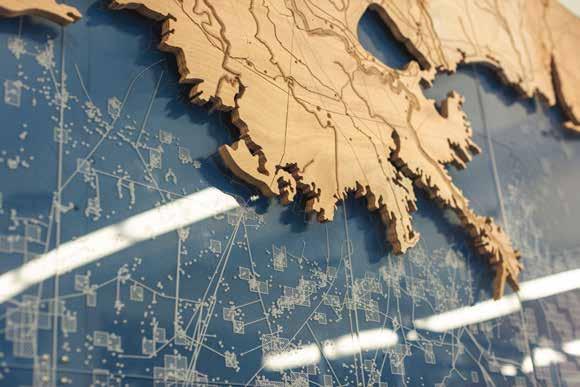
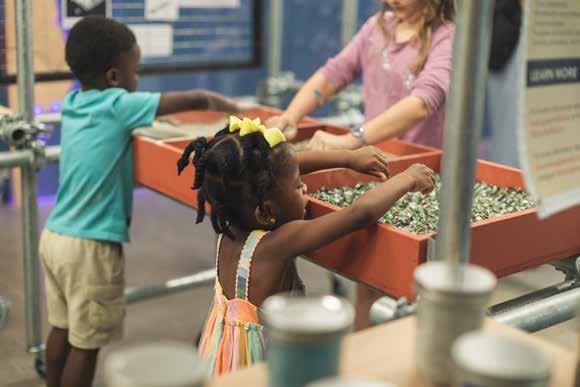
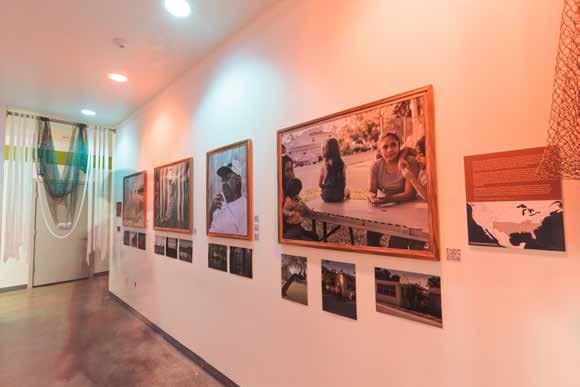
This immersive exhibit was designed as part of a ‘24 Summer Fellowship through the Albert and Tina Small Center for Collaborative Design. Supported by the National Academies of Sciences, Engineering, and Medicine’s Gulf Research Program, it explores the Gulf Coast’s industrial past and imagines alternative futures through the work of students, professors, artists, and local organizations such as Glassroots. It balances academic projects, community initiatives, and personal stories in an effort to highlight not only the material legacies of the coast but also the people, traditions, and lives that are shaped by the discussed extractive practices.
It poses questions such as “how might we rewrite the material languages of our built environment? Discover new forms of beauty and performance from the remnants of extractive industries? And reimagine building as a catalyst for ecological and regenerative repair?” small.tulane.edu
The exhibit will remain open throughout the year and is intended to evolve as new research and projects are developed.
In Collaboration With: Summer Fellows - Emilia Bertoli, Corwin Almo, Emmet Tanzer-Tragatch, Kris Smith, Ben Cornett; Small Center Faculty and Designers - Jose Cotto, Ann Yoachim, Nick Jenisch, Liz Camuti; Local Artists, Organizations, + Non-Profits
Exhibit Photography: Jose Cotto
Collage + Window Decal - Oil Extraction Along the Coast
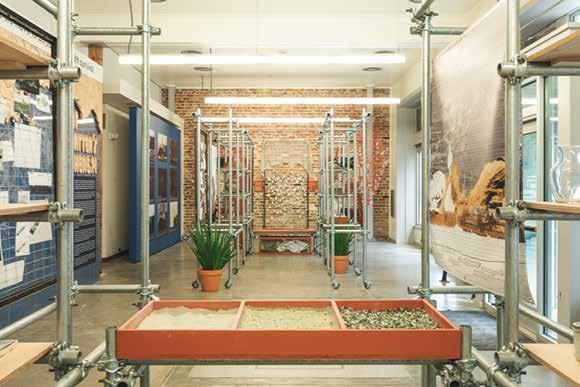
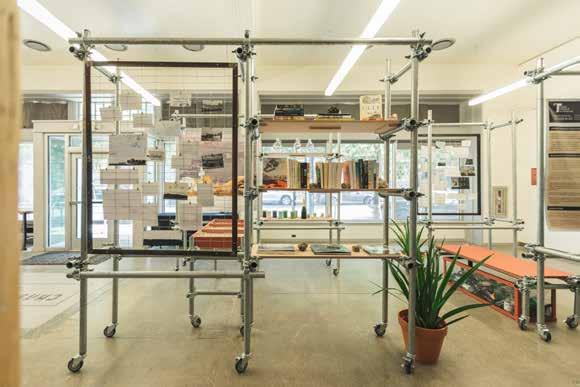
Keeping in mind the themes of the exhibit, the design itself reflects ideas of industrial pasts and rebirth. The central structure uses scaffolding framing to create a versatile exhibit system. This system is made up of smaller units that can come together to make (1) an evolving, interactive material library, (2) split apart to make room for events and guest-speakers, and (3) continue a life beyond the exhibit by serving as individual shelves, benches, and pin-up spaces for the Small Center or the Tulane School of Architecture.
MISCELLANEOUS MAKING
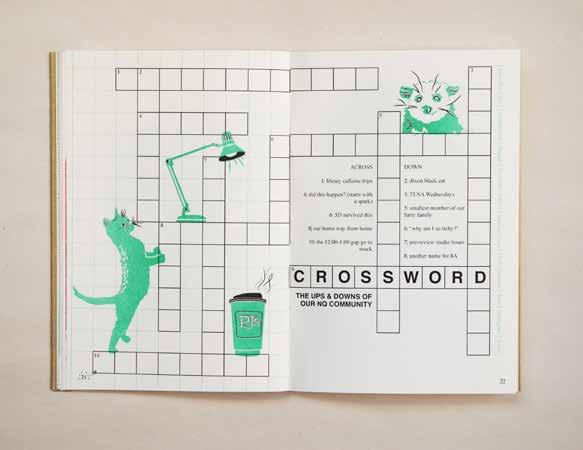
The Charrette - Student Publication
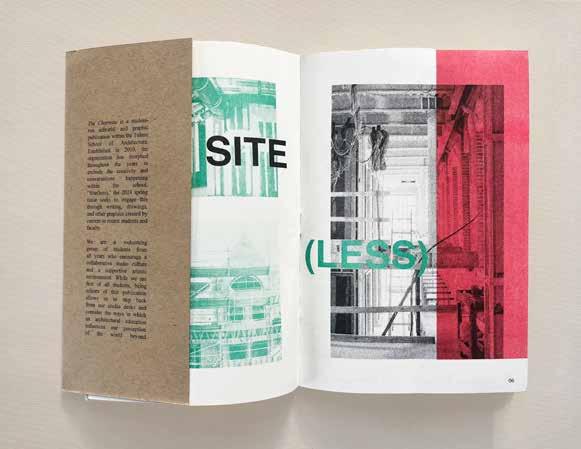
“The Charrette is a student-run editorial and graphic publication within the Tulane School of Architecture. Established in 2010, the organization has morphed throughout the years to embody the creativity and conversations happening within the school. While we [editors], are first of all students, being editors allows us to step back from our studio desks and consider the ways in which an architectural education influences our perception of the world beyond.” the-charrette.com
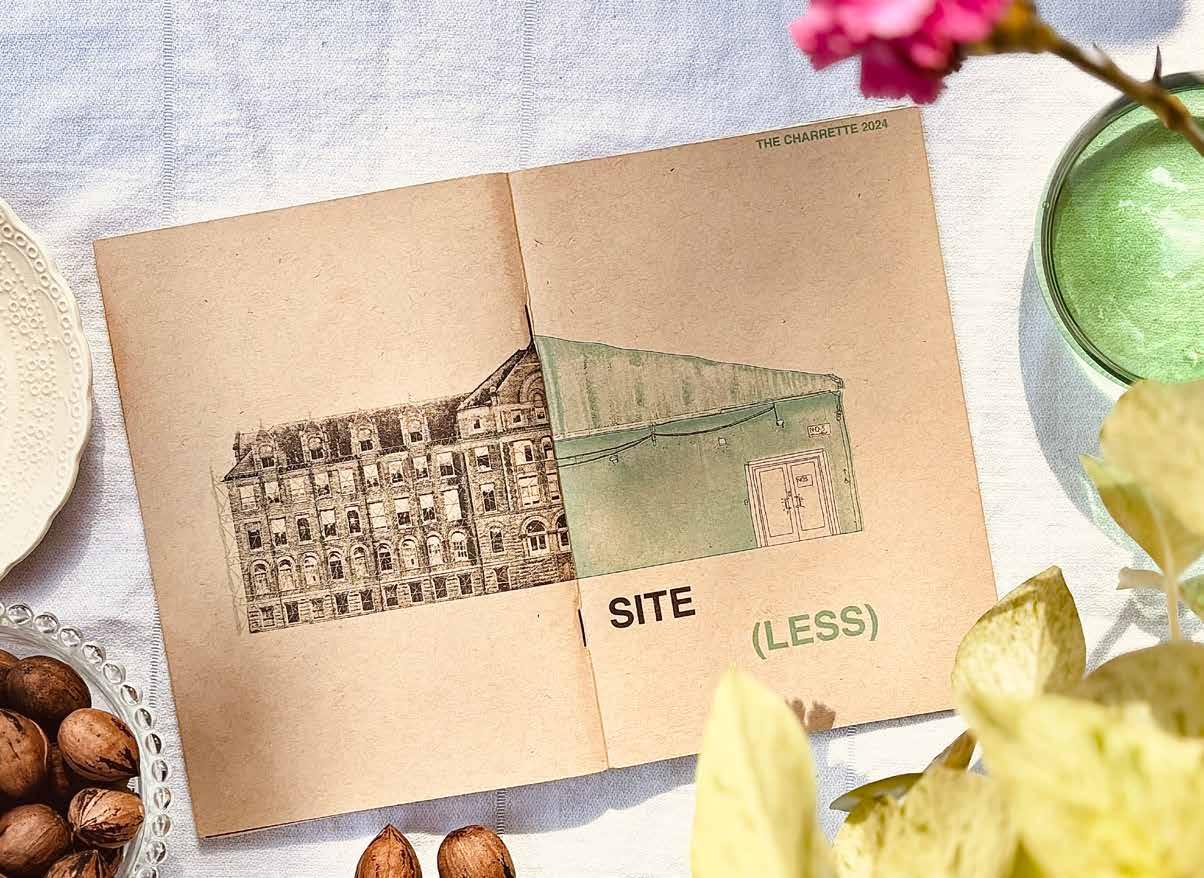
“Site(less),” the 2024 Spring issue, seeks to engage with these goals through writings, drawings, and other graphics created by students and faculty. This issue captures the ups, downs, sentiments towards, and community that students and faculty have created throughout the renovation of the Tulane School of Architecture’s Richardson Memorial Hall.
During the Fall Semester, the club also aims to design a physical installation. The current work-in-progress project is to design and fabricate a shelf through a series of quick and collaborative design charrette meetings. The intent is to display previous and future issues to preserve the club’s history, pass it on to incoming students, and give our publication a home.
President: Charlotte Kelley
Leadership Team: Emily Brandt, Kayleigh Macumber, Daphne Vorel, and Sofia Vladimir (me)
Risograph Printing; in Collaboration with constance, New Orleans-Based Creative Practice
Spring ‘24 Issue - Siteless; Cover Page Photography - Emily Brandt
MISCELLANEOUS MAKING
Personal Work
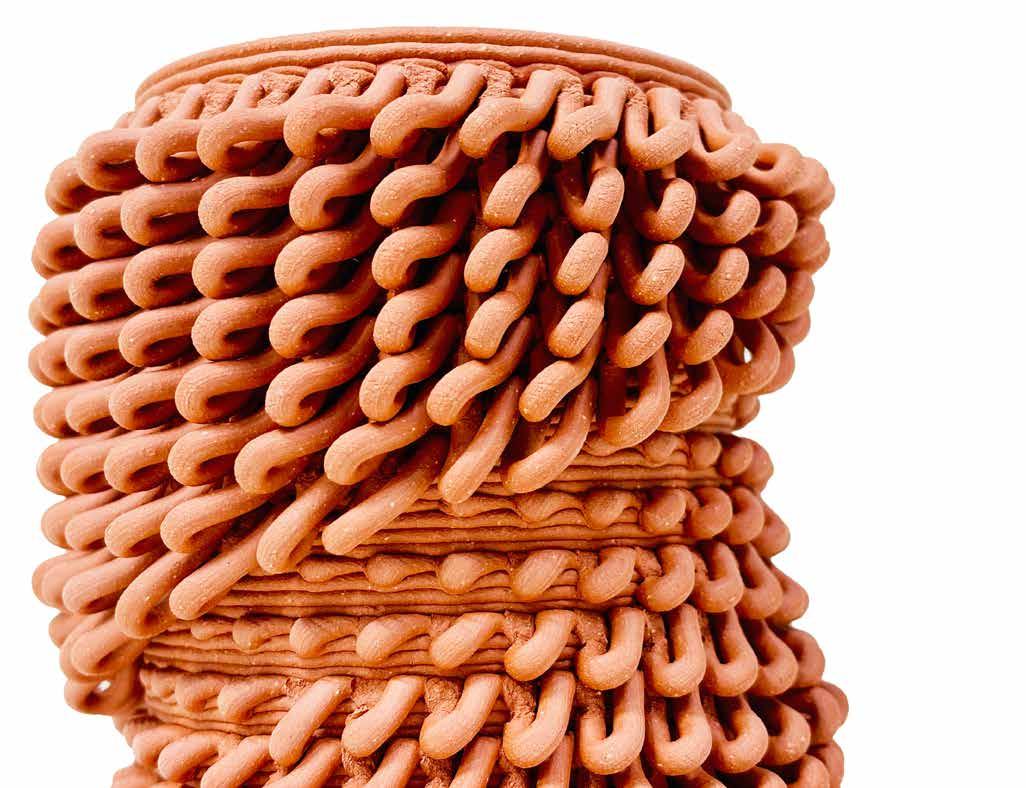
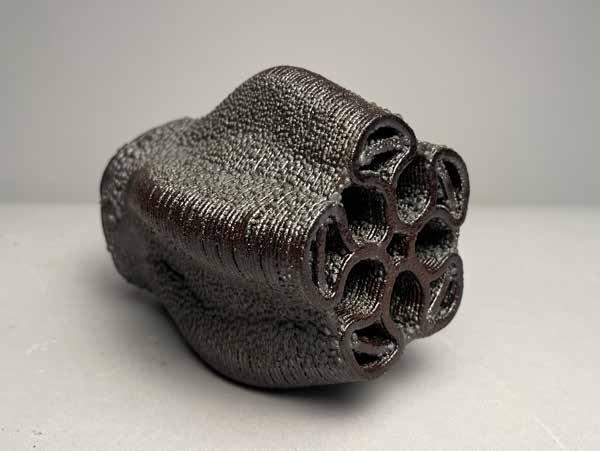
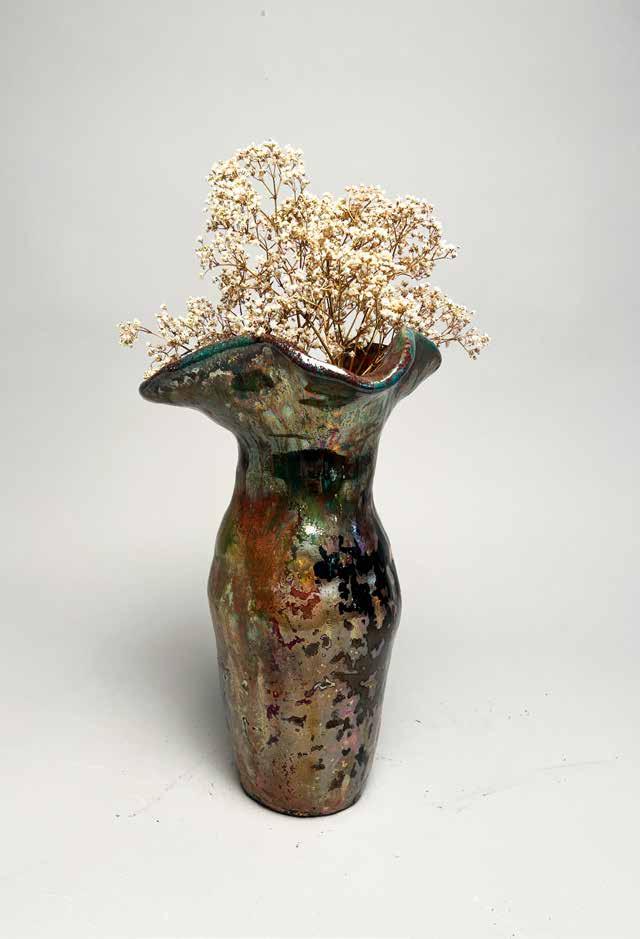
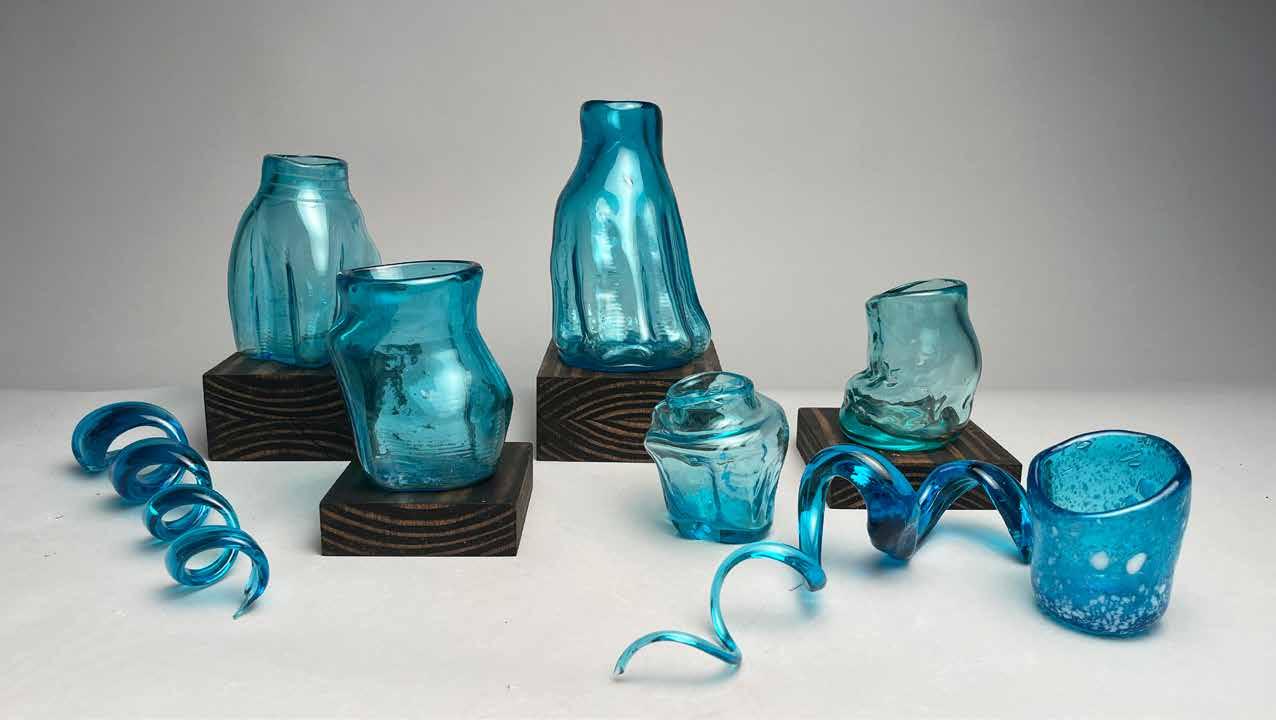
I have enjoyed combining my architectural education with personal explorations into different artistic mediums and forms of hand and digital fabrication. I have found myself drawn to ceramic arts and glassblowing, experimenting with parametric design, different glazes, forms, and processes.
3D Printed Ceramic Pot - Parametric Experiments
Anatomically Correct Vase; Raku Experiments; Glass Wonderland Using Custom Mold Blowing
| Sofia Vladimir | 253.301.7733 | sofiamvladimir@gmail.com |