SAMMIE
SKINNER

My name is Sammie Skinner. I am from Overland Park, KS, and I have been drawn to the built environment since before I can remember. Interior design has always been a passion of mine, driven by the belief that well thought out spaces can transform how people experience their environments. Spaces can have an impact not only physically, but also emotionally, and have the power to enhance users’ daily life.
I am captivated by the relationship between form and function, where aesthetic principles meet practical solutions to create spaces that are not only visually inspiring, but also deeply personal and functional. My passion stems from a meticulous attention to detail, a strong appreciation for diverse design styles, and a dedication to learning the nuances that make interiors both timeless and innovative.
I am eager to immerse myself in the professional world of design, collaborating with experienced teams to further refine my skills and contribute fresh perspectives. I am constantly striving to grow as a designer as the learning will never come to an end when it comes to the world of interior design. I always bring a detail oriented, conscientious and creative mindset to every project I undertake. I am deeply committed to excellence and believe in the value of leveraging design to foster meaningful, impactful experiences.
01 02 03 04 05
CHICAGO WORKPLACE
First semester, Third Year
NEUROINCLUSIVE K-5 SCHOOL
First semester, Fourth Year
Second semester, Second Year
HUFFT HOUSING PROTOTYPE
Summer 2025
CREATIVE OUTLETS

Hufft June 2025-July 2025
sammie_skinner@outlook.com (913) 274-6906
16401 Monrovia Street
Overland Park, KS 66221
Kansas State University Manhattan, KS
Expected Graduation: May 2026
College of Architecture, Planning, and Design
Bachelor of Science in Interior Design
Cumulative GPA: 3.89
Angelo Donghia Scholarship | June 2025
One of 15 interior design students nationwide awarded $30,000 for design excellence and creativity.
Jeanne A. Baldwin FIIDA and James G. Baldwin Scholarship in Interior Design | May 2024-25
Recognized for outstanding academic performance and design excellence in interior design for the past 2 years.
IIDA Mid-America Scholarship | June 2025
Selected as the first-ever recipient of the IIDA Mid-America Scholarship in recognition of academic distinction and impactful design work.
Made in Manhattan Competition | May 2025
One of five projects from Kansas State Interior Design chosen for the Made in Manhattan Gallery.
ASID Portfolio Competition - Top 10 Finalist | April 2025
Top 10 Finalist for the ASID Portfolio Competition.
Steelcase NEXT Competition - Top 1.75% | December 2024
NCIDQ - In Progress
IDFX - Passed October 2025
IDesign Club | August 2025 - Present
Co-president
DIM Club | August 2024 - Present
Digital Information and Media Team for APDesign Graphics Team
ASID & IIDA | December 2024 - Present
Student Member
Alpha Delta Pi | August 2022 - Present Member
• Assisted on residential and commercial projects using Revit and SketchUp.
• Supported client presentations and progress reports.
• Worked on a studio-style project with another architecture intern to create an affordable housing prototype. Modern Business Interiors Intern May 2024-July 2024
• Modern Business Interiors is a furniture dealership in Lenexa, KS
• Shadowed Interior Designer that worked at this furniture dealership
• Learned programs such as CET, Visual Impressions, and CAP 2020
• Drew floor plans of existing spaces on AutoCAD
• Created budget and furniture specifications on CAP 2020
• Attended meetings with furniture dealers such as HON, Kimball International, Human Scale, etc.
• Attended sales calls and drew reference plans with measurements of existing spaces
Kansas State Interior Design Teaching Assistant August 2024 - present
• Worked alongside the Studio 1 and 2 professors to help first year students
• Worked closely with each student and taught introduction level techniques and graded projects
Design Tutor at Varsity Tutors January 2025 - present
• Tutoring students online in design programs such as Revit, AutoCAD, and Adobe Creative Suite, enhancing their skills and knowledge.
One of two projects from Kansas State Interior Design submitted to Nationals for the Steelcase NEXT competition and was recognized as part of the top 1.75% of submissions.
Dean’s List| May 2023-2025
Students that complete at least 12 graded hours with a grade point average of 3.75 or above are given the title of Dean’s Scholar.
Computer Skills: AutoCAD
Revit
Enscape
SketchUp
Visual Impressions
Adobe Photoshop
Adobe InDesign
Adobe Illustrator
Microsoft Office
CAP 2020
Hand Drawing Skills:
Hand drafting
Perspective drawing
Hand rendering
Diagramming
Archivist Officer from 2023-2024
Kansas State University
First semester, Third Year
Individual Work
3 months
Top 1.75% out of 1,600 submissions
Next Competition
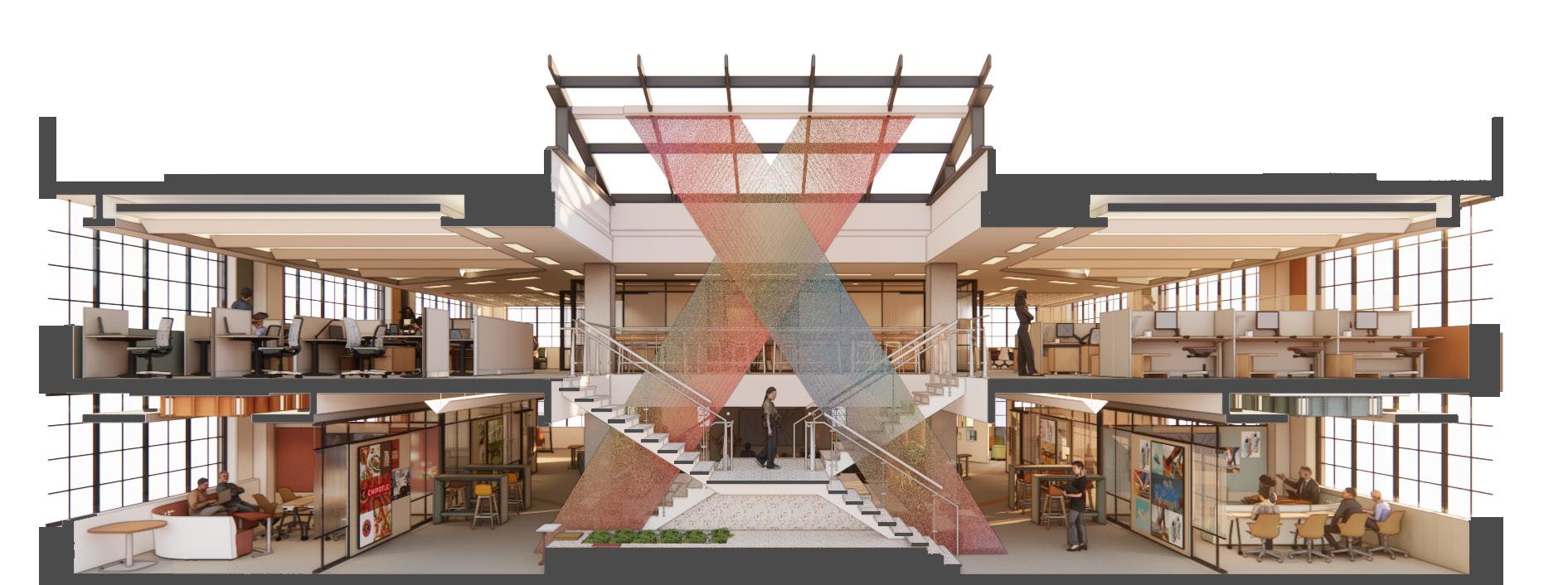
NEXT is a competition hosted by Steelcase. Each year, they propose a new building, site and program for students to work with. Students have one semester to complete the project individually. At the end of the project, the professors choose two projects to send to the National Steelcase competition and this project was one of the two chosen.
Program Summary
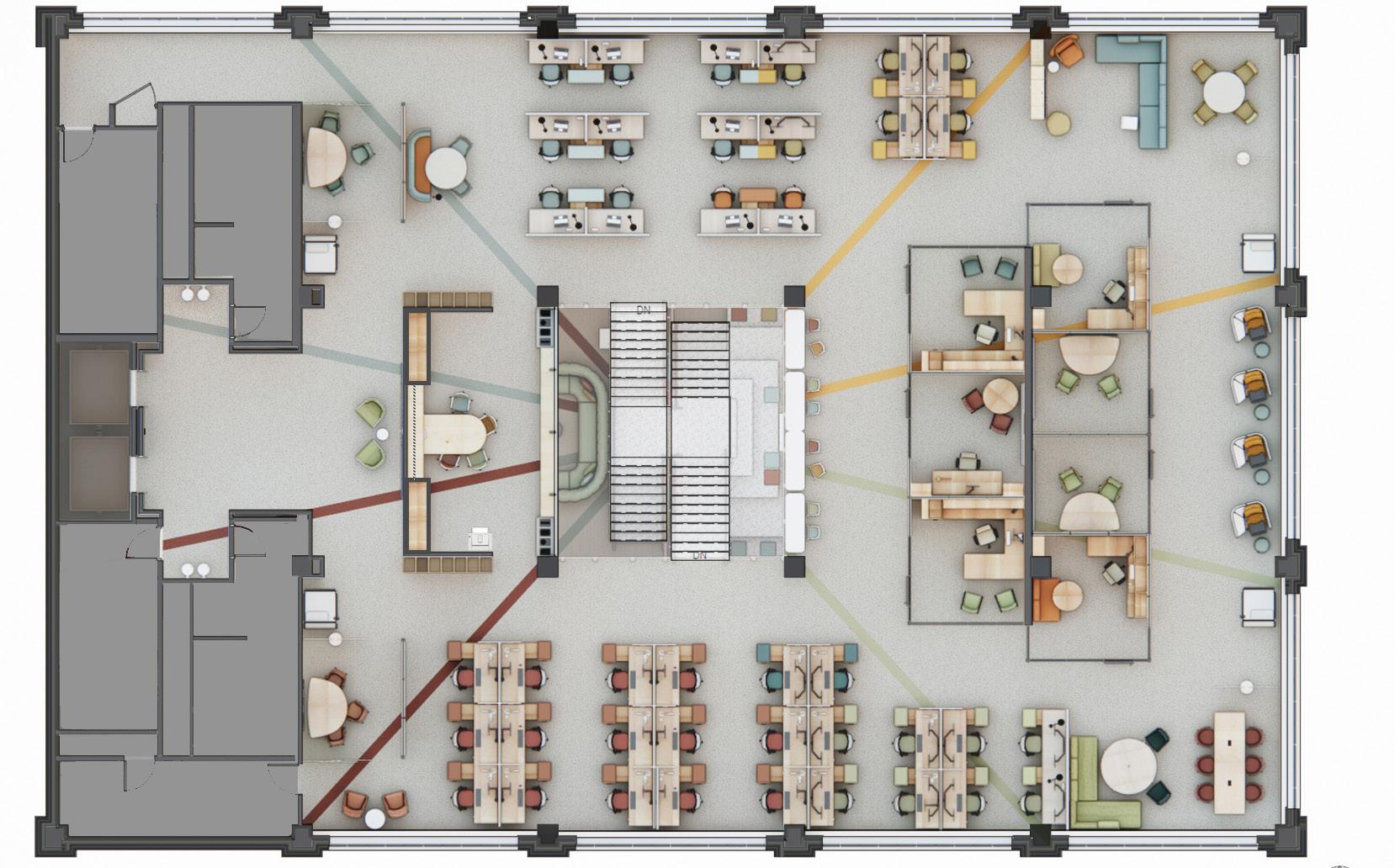
In 2024, the NEXT office was a global advertisment agency with offices worldwide, soon expanding to Chicago at 811 West Fulton Market. The new 16,000 sqft Chicago office will prioritize collaboration, inclusivity, and employee wellbeing, supported by Steelcase furnishings. NEXT serves Hoka, Perrier, Glossier, and Chipotle. The company promotes a “Being More Human” workplace, creating spaces that inspire creativity, connection, and growth. NEXT’s core values include; ideation, individualization of employees, hybrid work, and enforcing collaboration between employees.
Skills Used: Revit, AutoCAD, Enscape

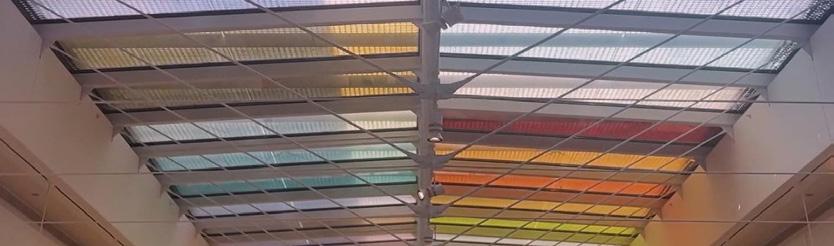
Light is recombined through colored glass at the Art Institute of
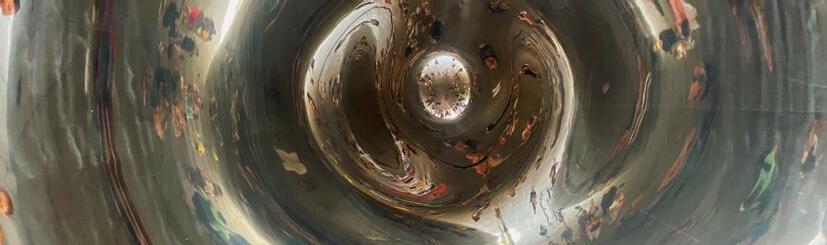
Light is reflected like at Chicago’s iconic Cloud Gate, also known as the “Bean.”
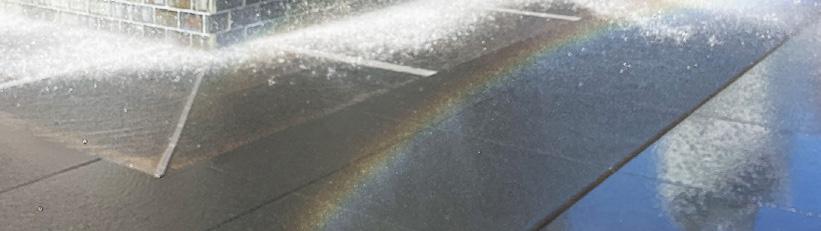
Light is dispersed, like it is seen here at the Crown Fountain
LIGHT
IDEATION INDIVIDUAL WORK HYBRID WORK COLLABORATIVE WORK
LIGHT DISPERSION REFLECTION RECOMBINATION OF LIGHT



THE “LIGHTBULB” EFFECT
The space maximizes natural light through clerestory windows and
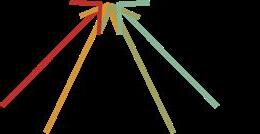
DISPERSING AWAY REFLECTING BACK AND FORTH RECOMBINING TOGETHER
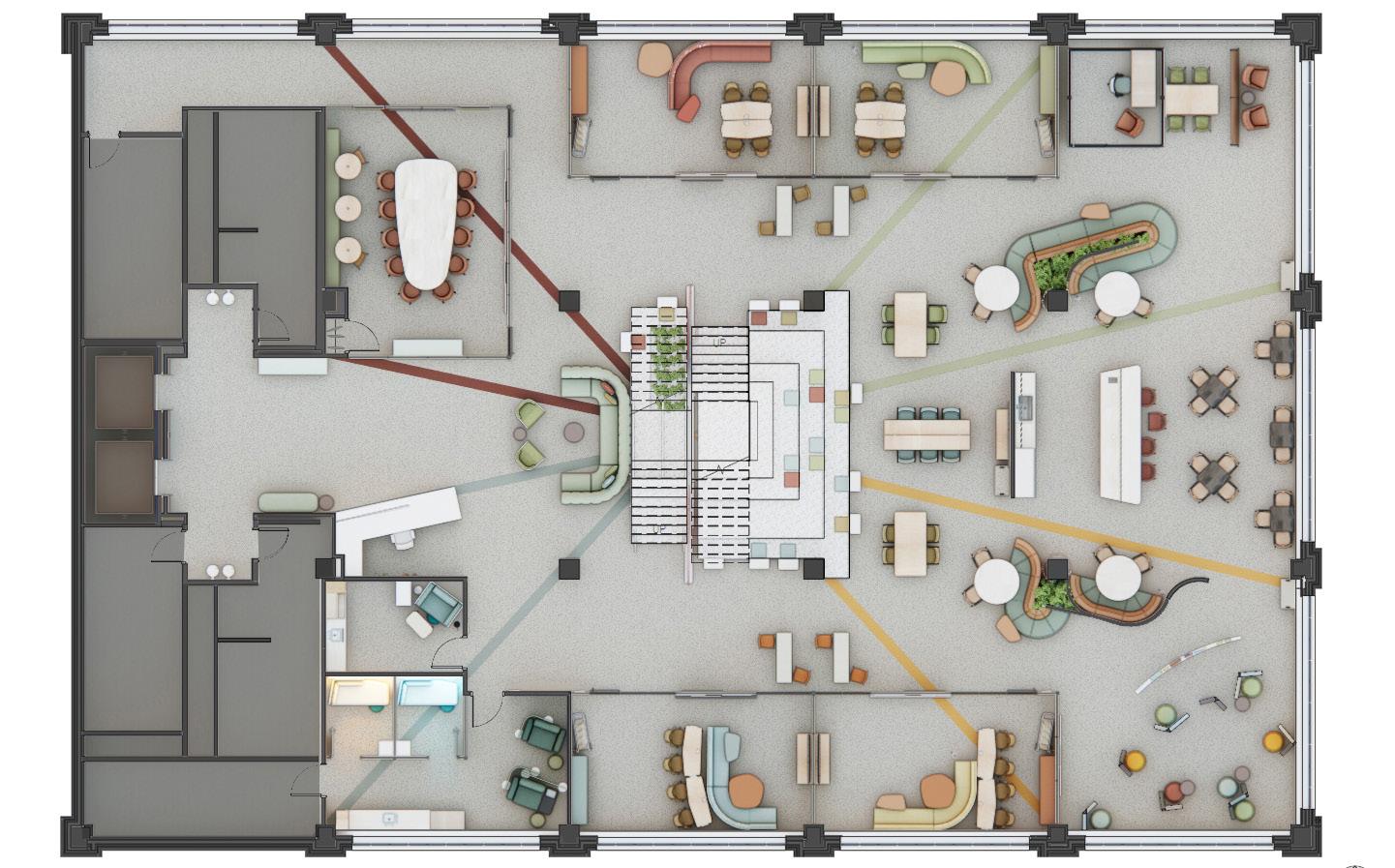
Throughout the office many spaces are alotted where NEXTers can disperse and work or relax individually.
Throughout the office many flexible spaces are provided were NEXTers can “bounce ideas off of each other” virtually. Users are able to work seamlessly back and forth from home with those in the
Many spaces are provided that foster recombining together after dispersing. Both informal and formal collaboration spaces are provided.
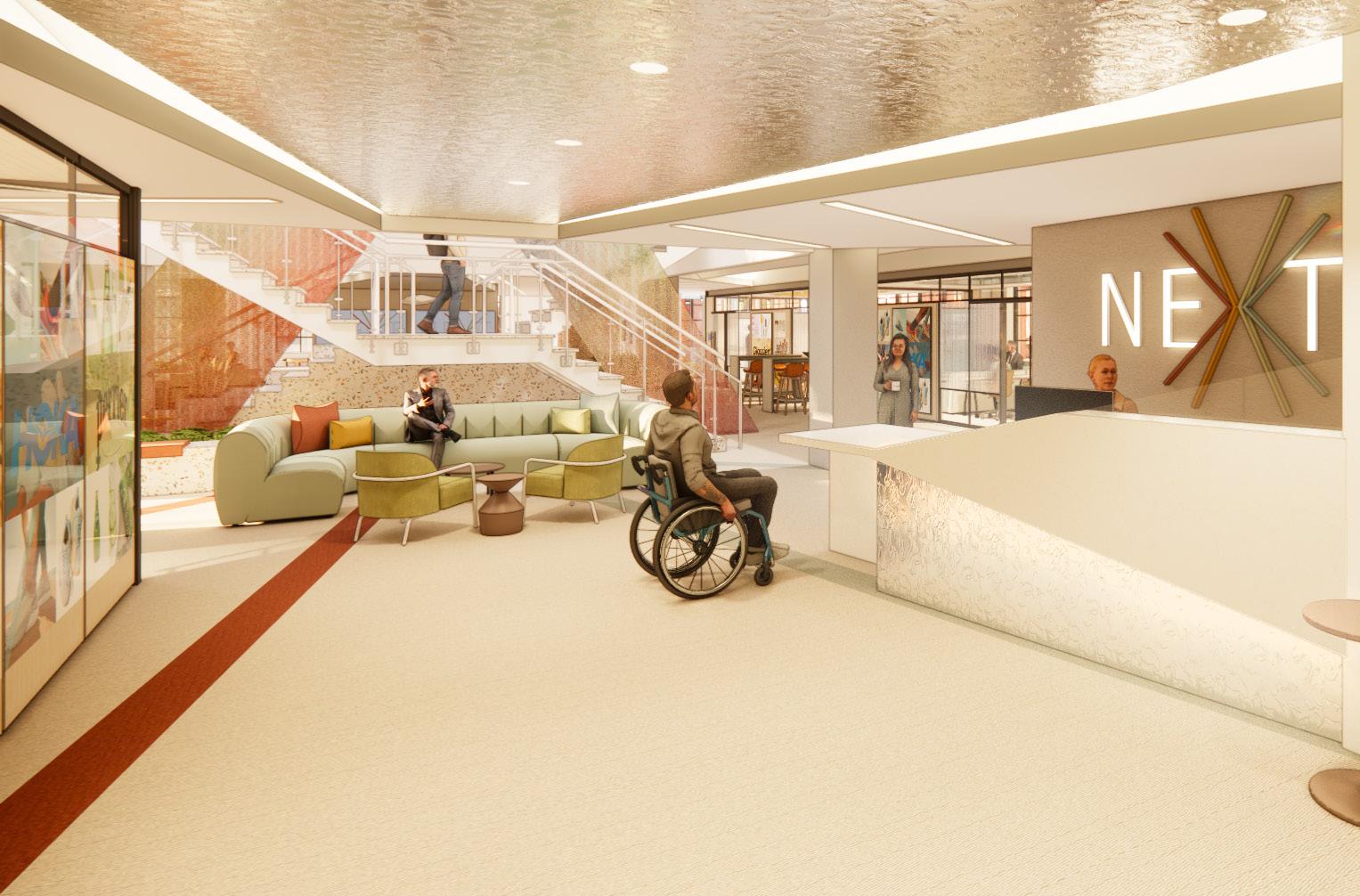
“MELT” PENDANT LIGHTS MIMICKING THE BEAN
LOUNGE SEATING FOR A GUEST WAITING AREA
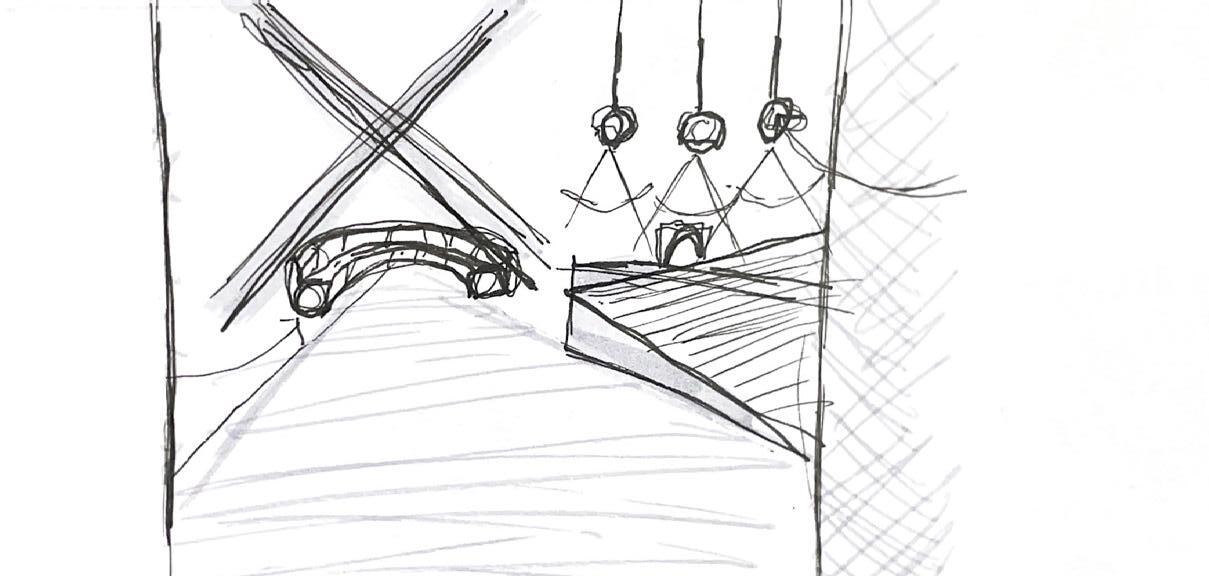
Upon entering the office there is a warm and inviting atmosphere. The monumental staircase and ceiling shape creates a pull into the space. The light coves help promote circulation into the space and fun pendants suggest a moment of pause at the reception. The reflective ceiling not only brightens and expands the space but also mimics the experience of standing beneath Chicago’s iconic Cloud Gate.
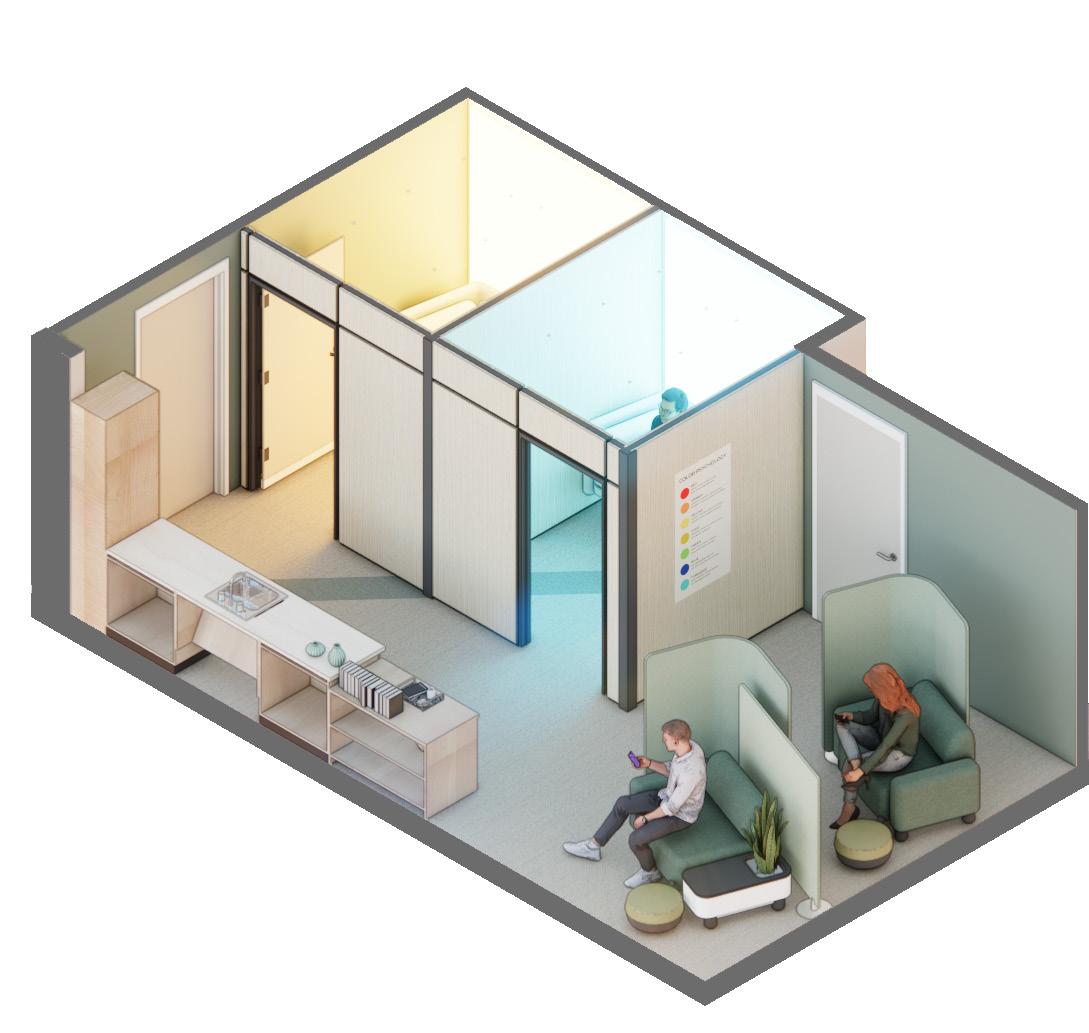
The wellness room offers versatile support spaces designed to enhance employee well-being. Light therapy pods allow users to adjust lighting to match their mood or needs with LED light panels, for example vibrant yellow for uplifting energy or calming blue light for relaxation. These pods also provide a private space for personal matters.
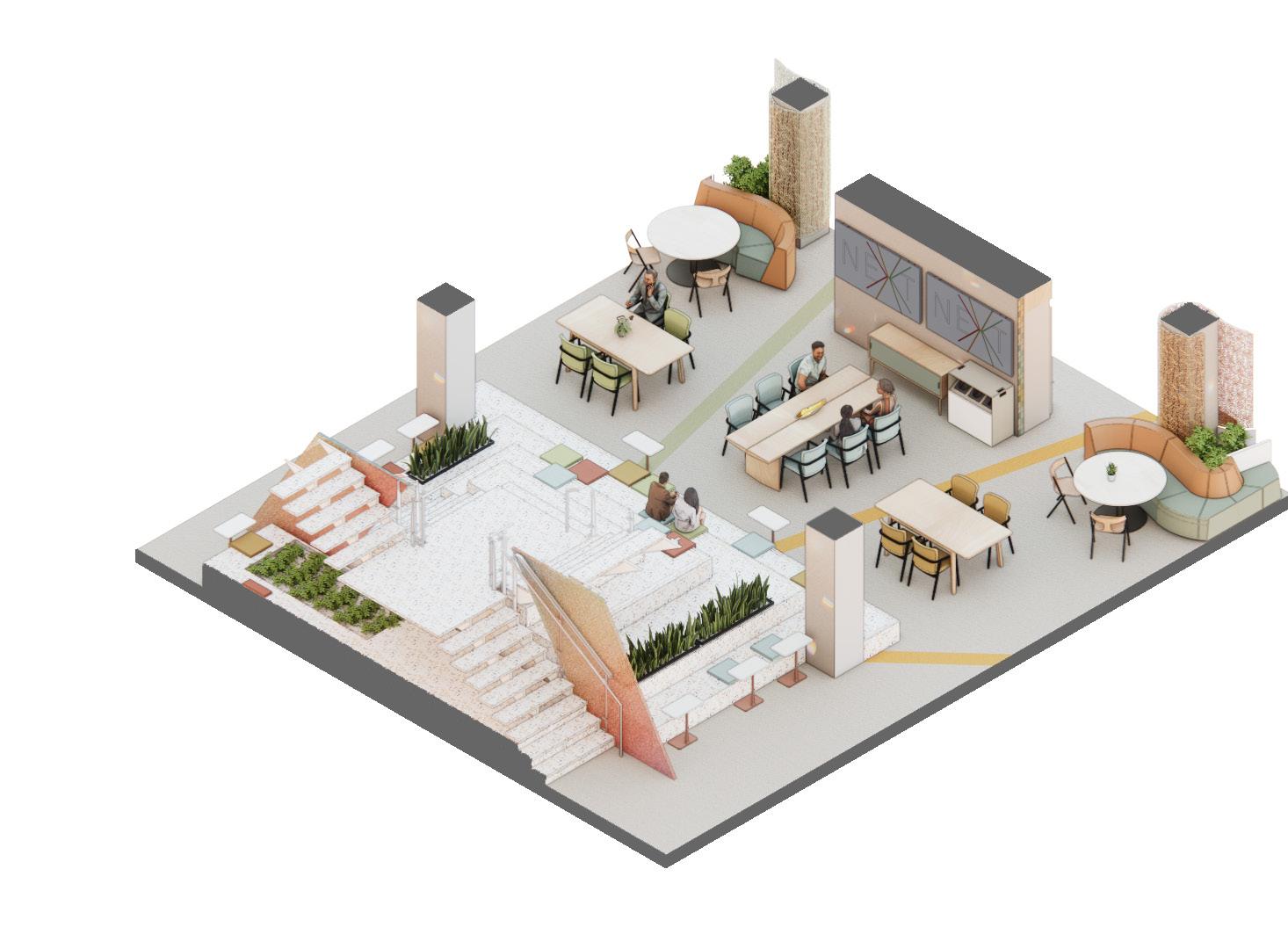
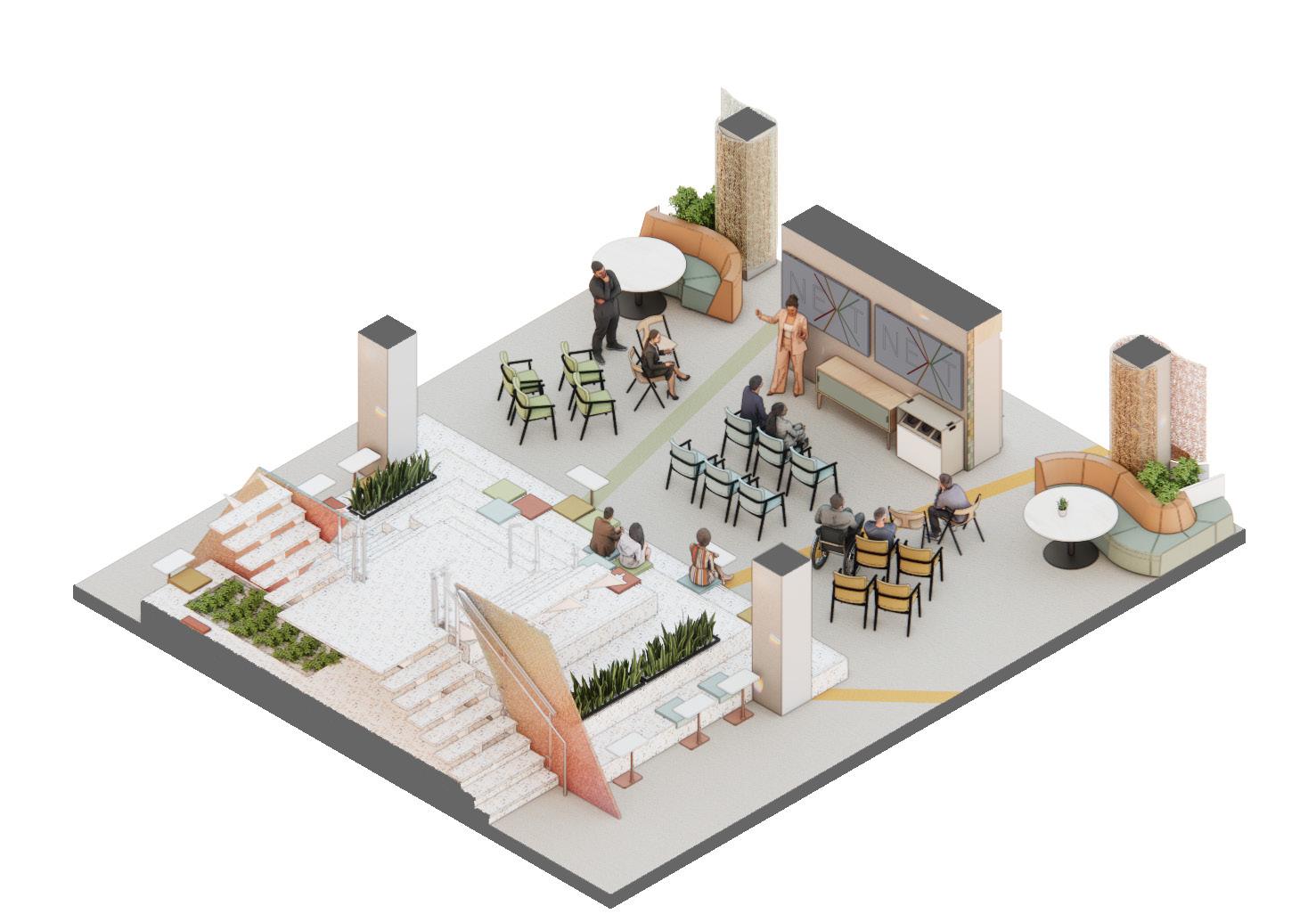
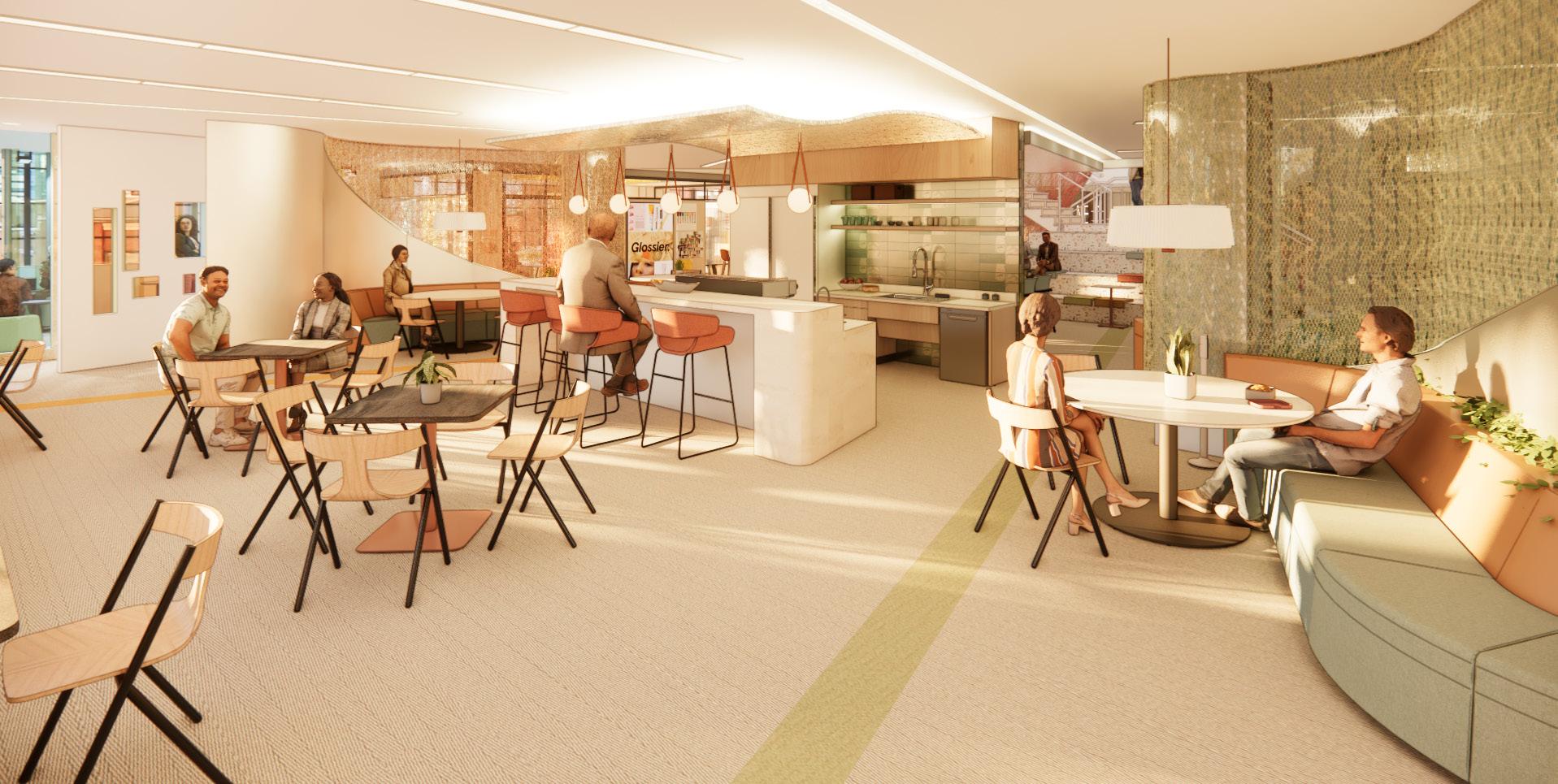
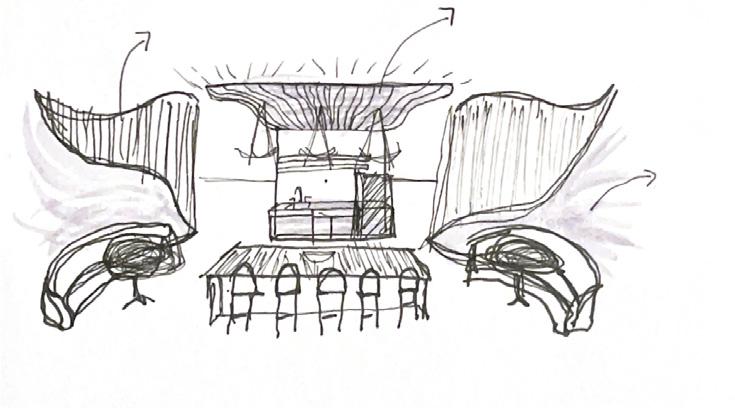
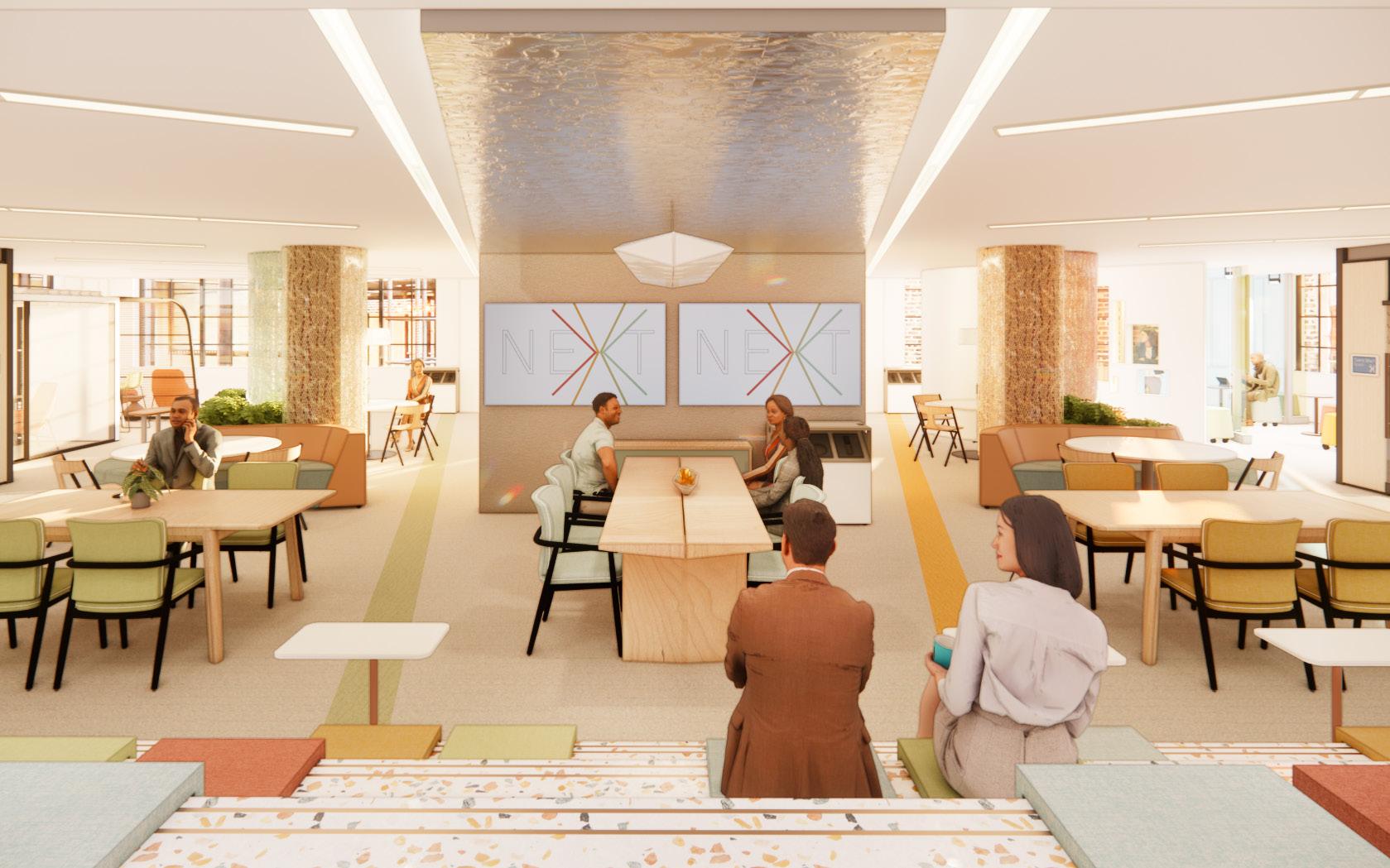
This vibrant color palette fosters socialization through its lively and dynamic colors. The curving metal ceiling and chain walls draw inspiration from the flowing forms of the Pritzker Pavilion, a major gathering space for Chicago.
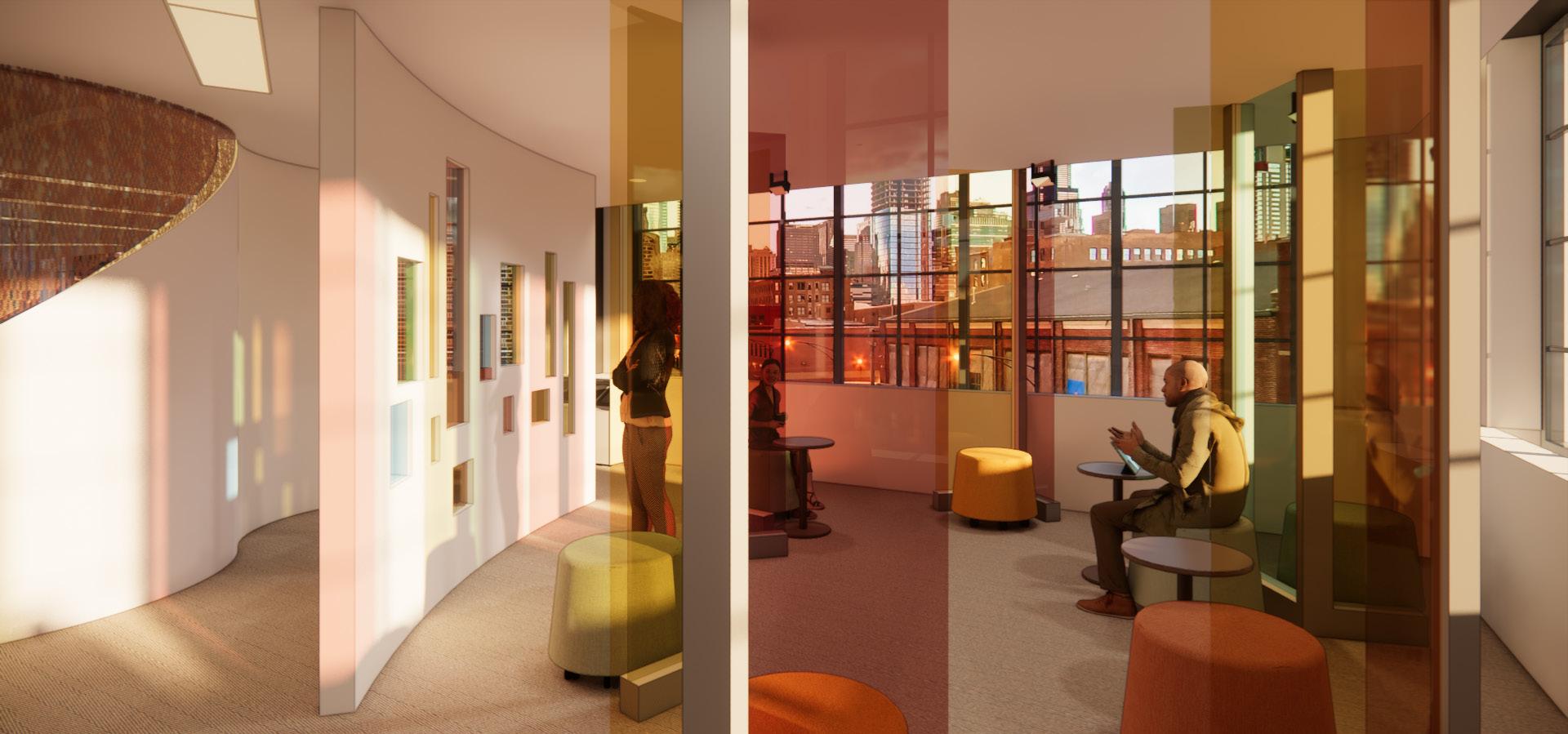
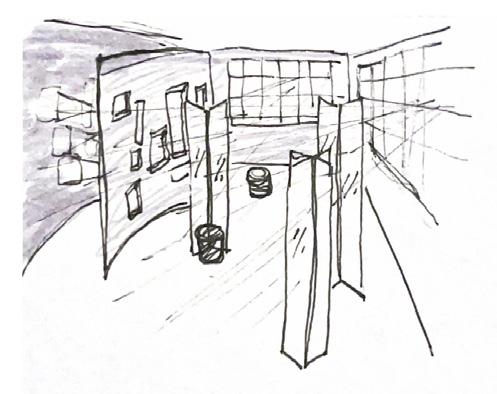
This wildcard space serves as an ideation illumination space, designed to inspire and rejuvenate employees during moments of stress or creative blocks. Colored glass panels create dynamic interplays of light which helps to stimulate the mind. Modular ottomans provide flexible seating for collaboration or quiet reflection
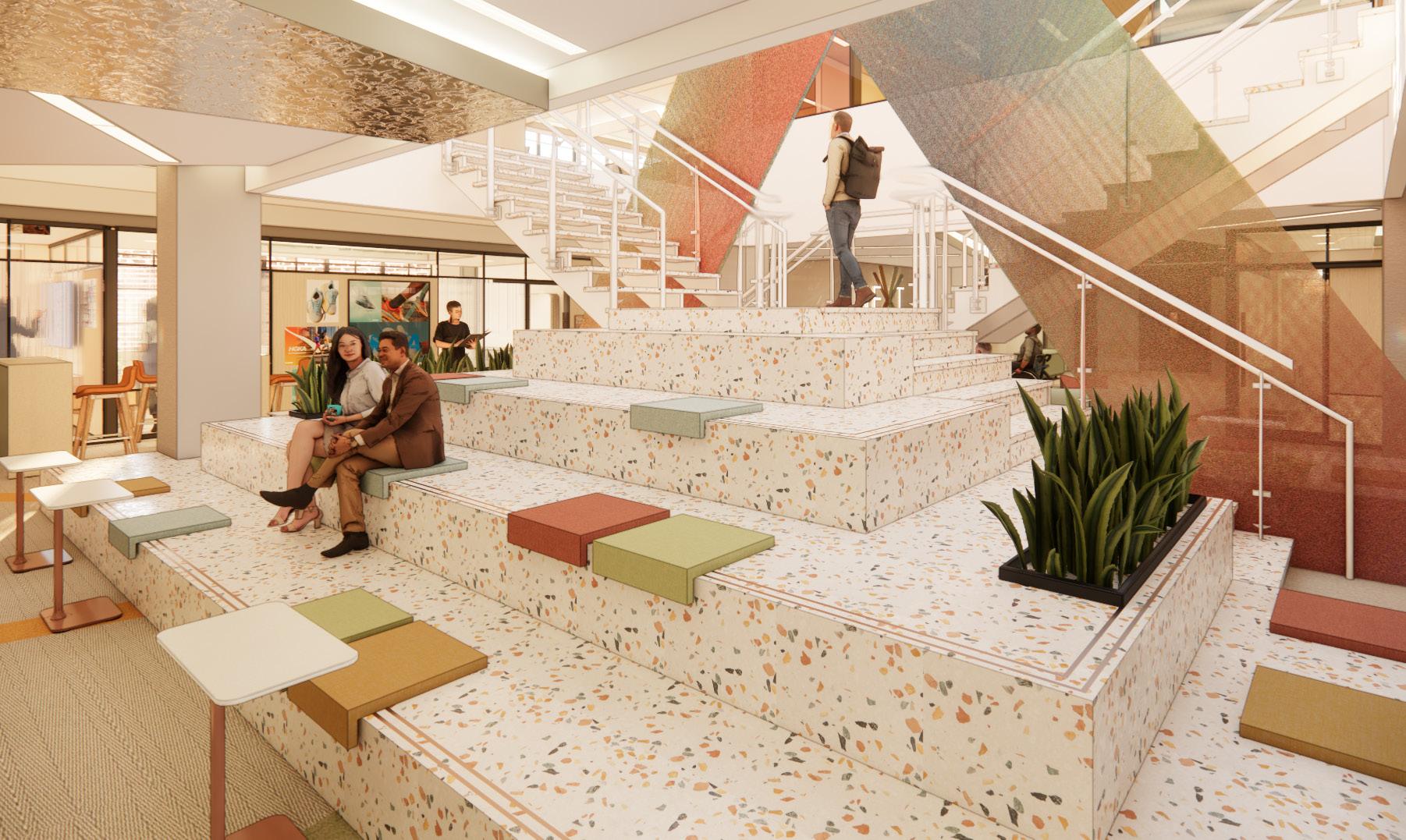

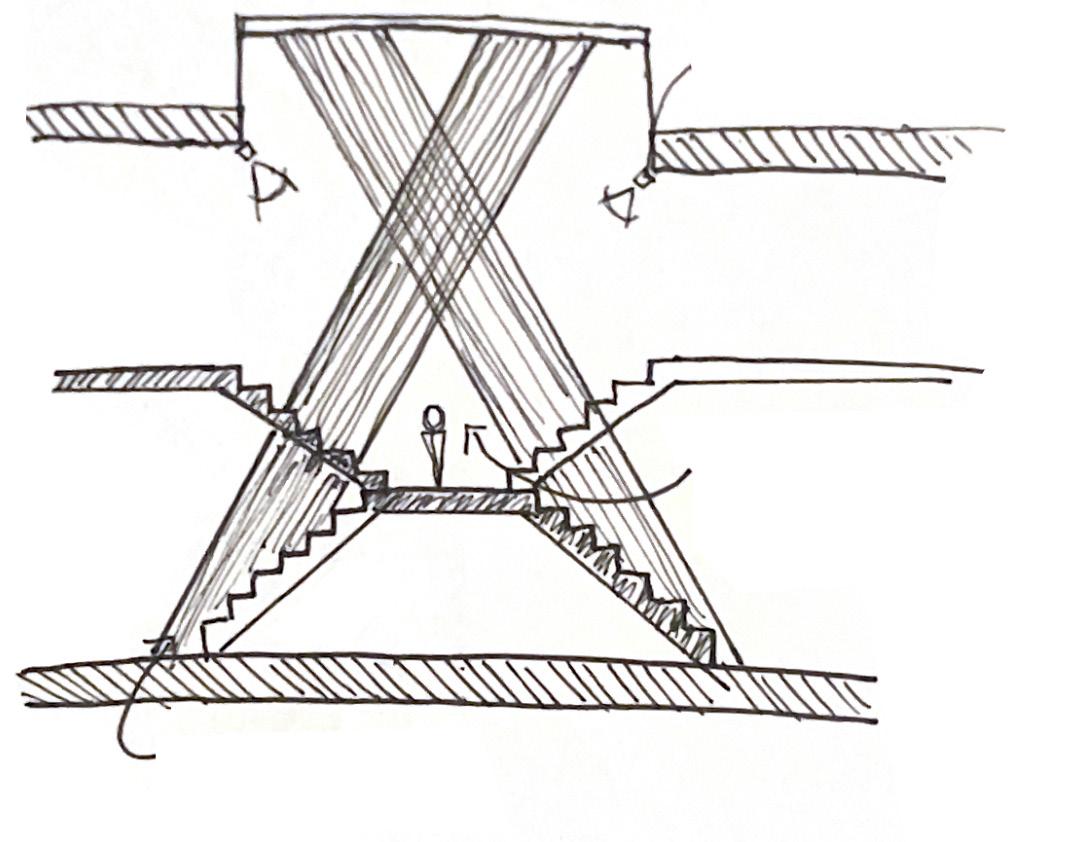
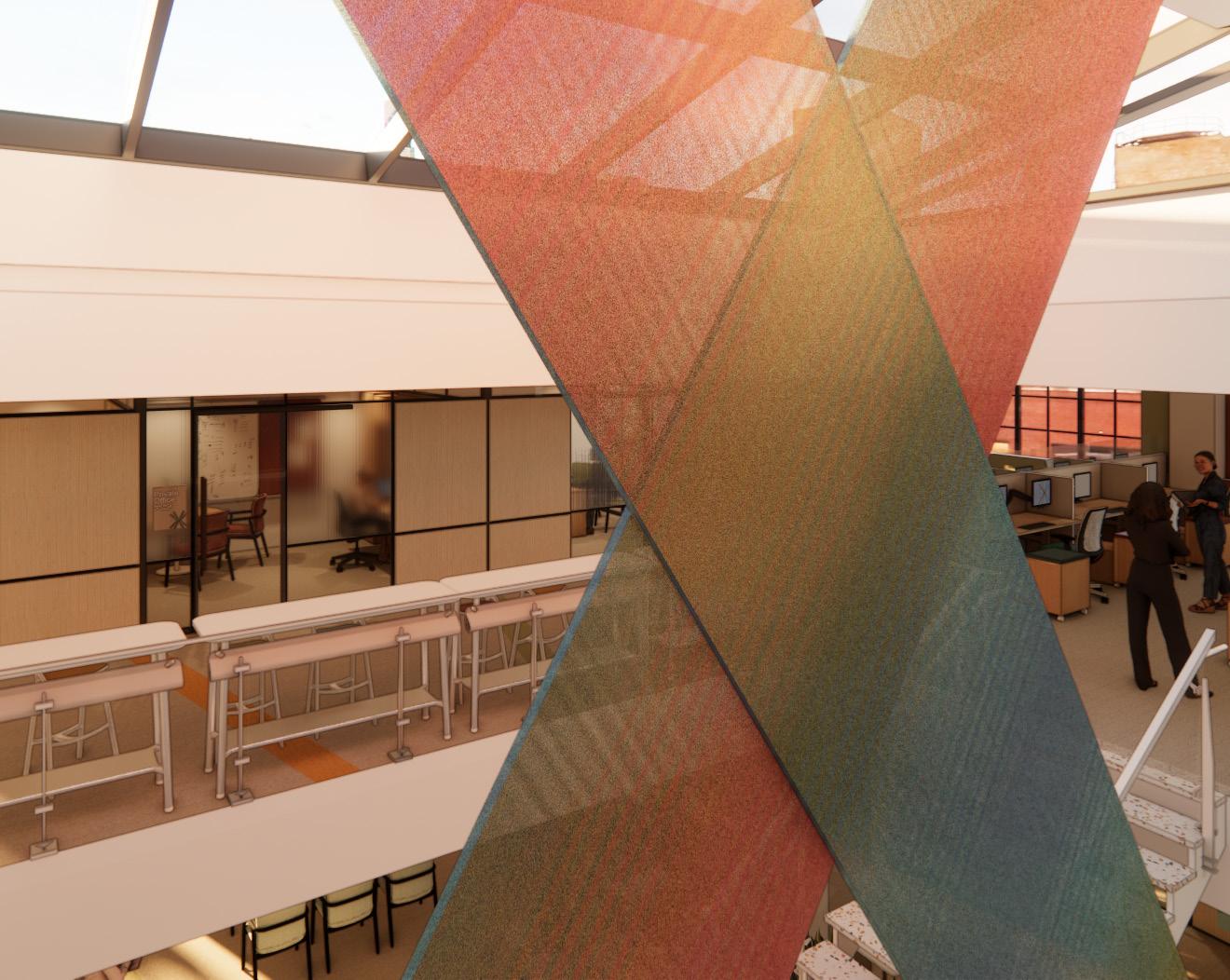
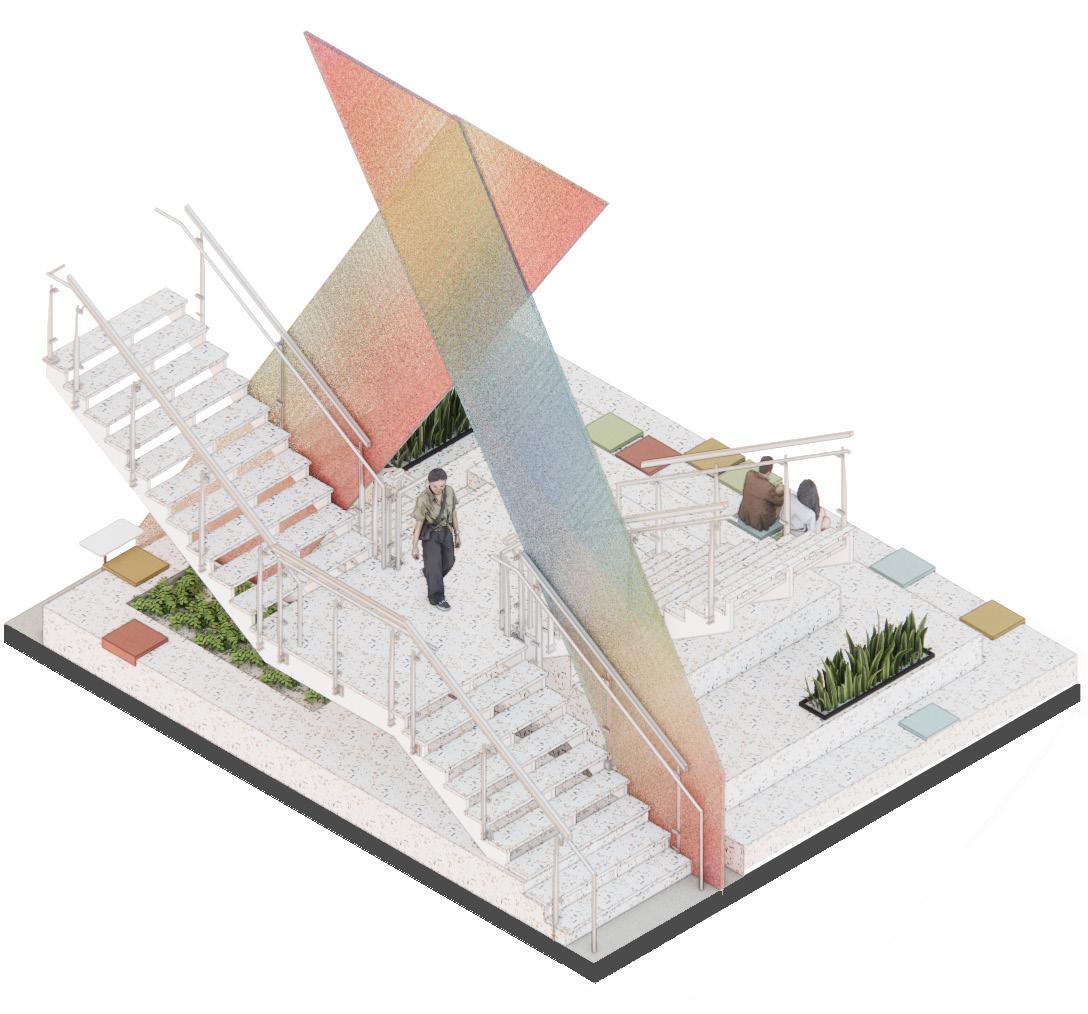
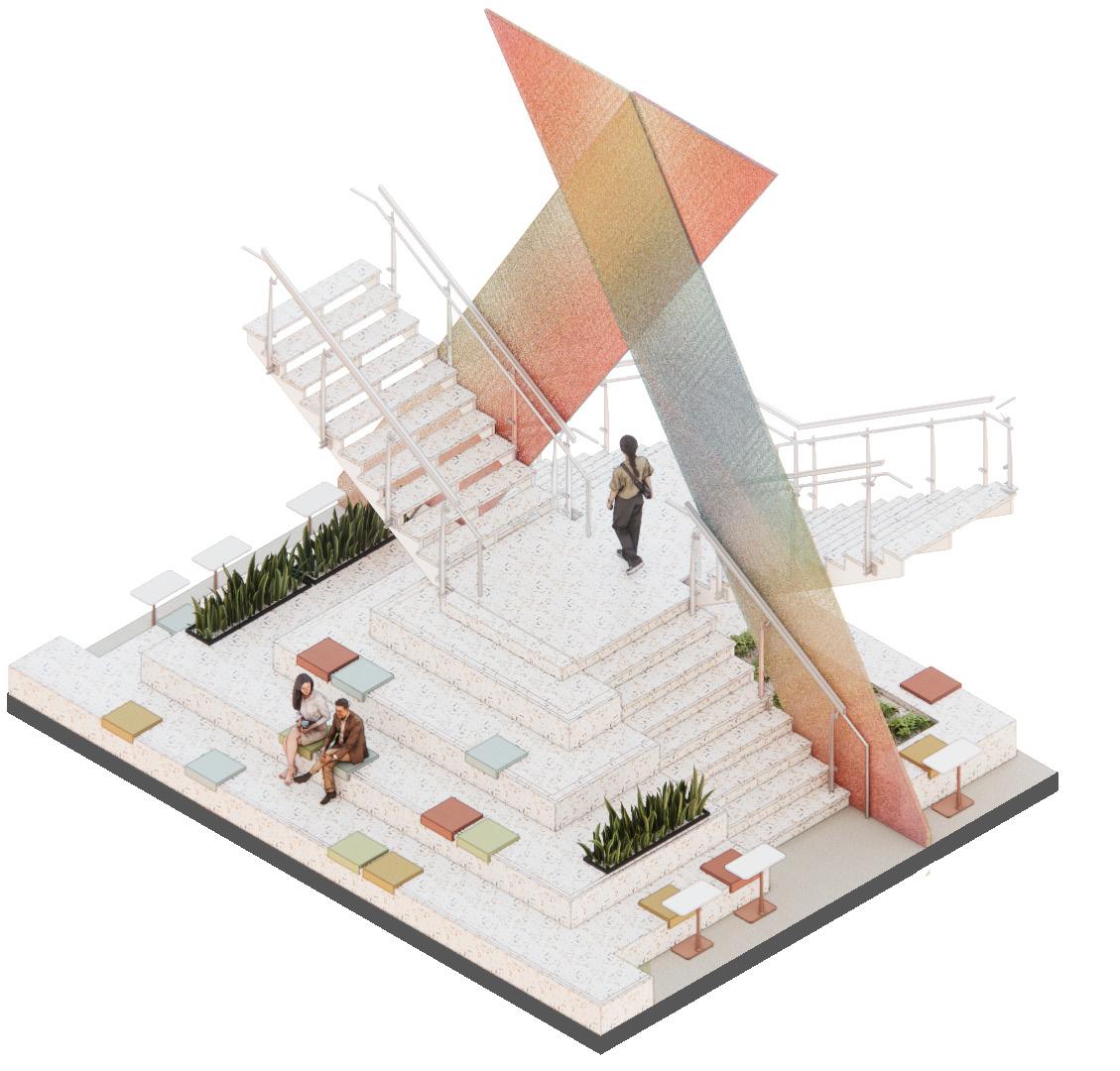
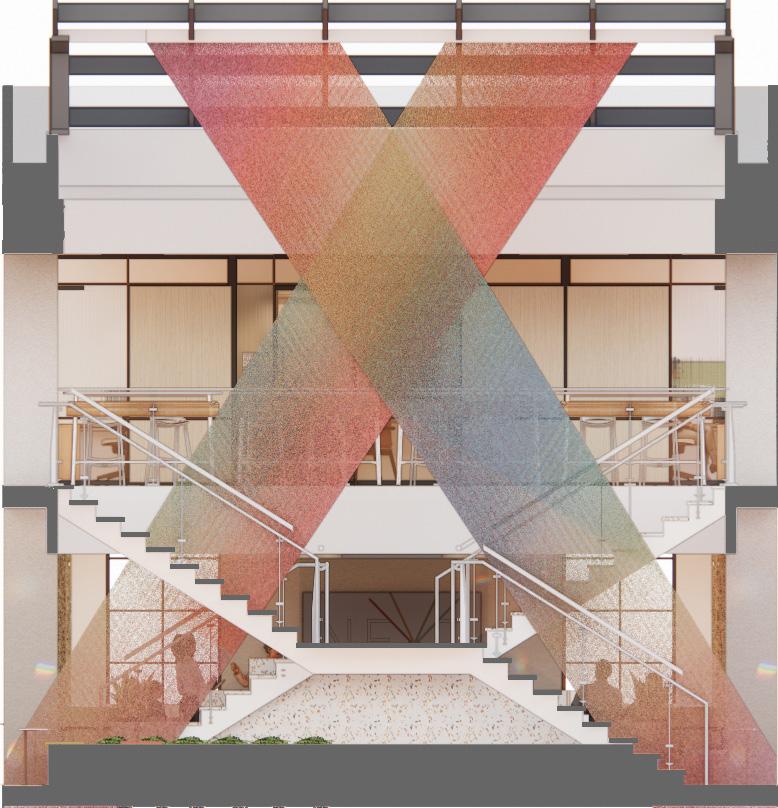
The stairs are arranged parallel to each other, forming an “X” when viewed head-on. At the center, the art installation Plexus by Gabriel Dawe creates a striking focal point for the space, embodying the concept of the interplay of light. The stadium seating, integrated into the stairs, further encourages interaction, inviting users to engage with the space and fostering connection and socialization among them.
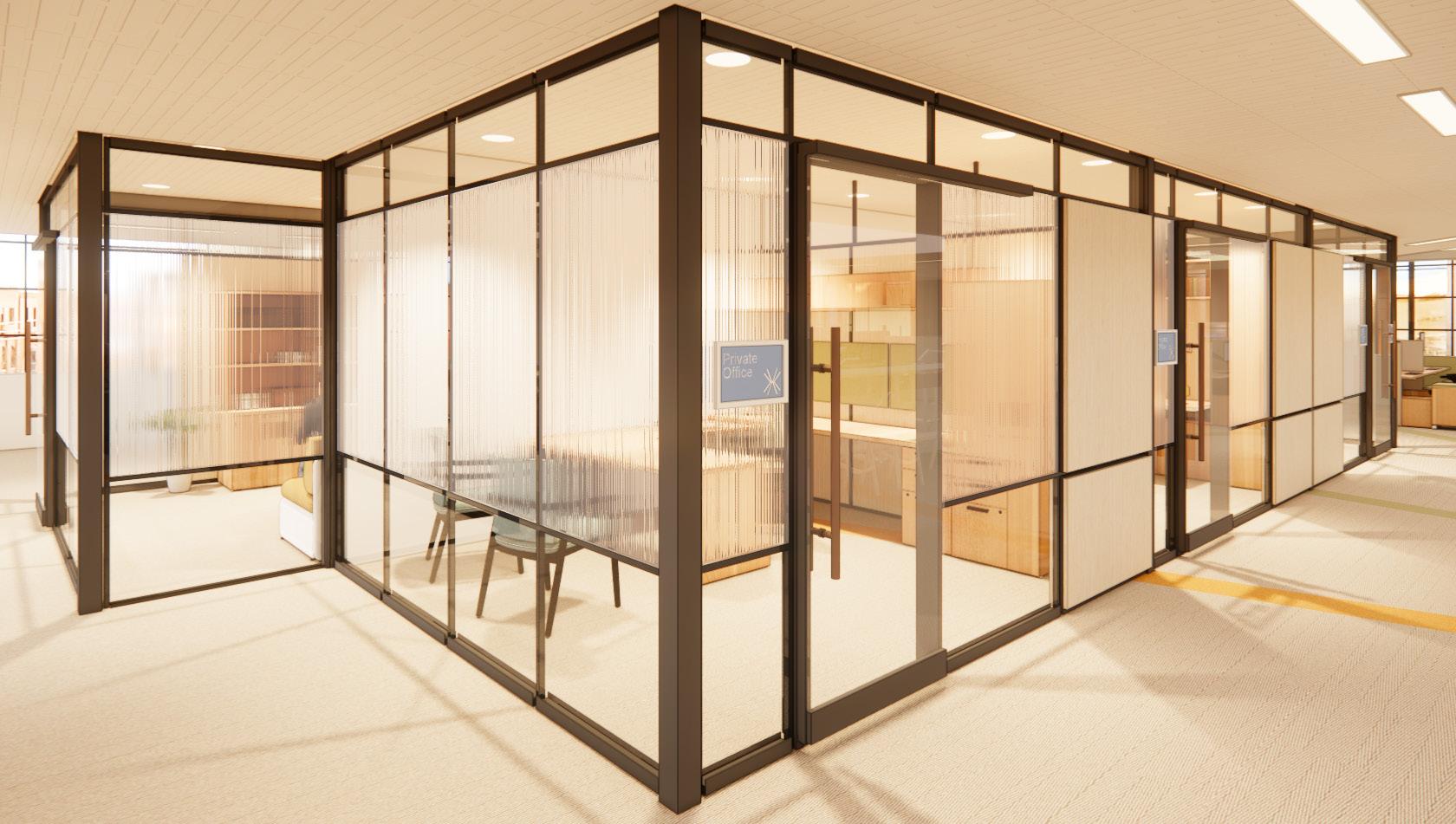
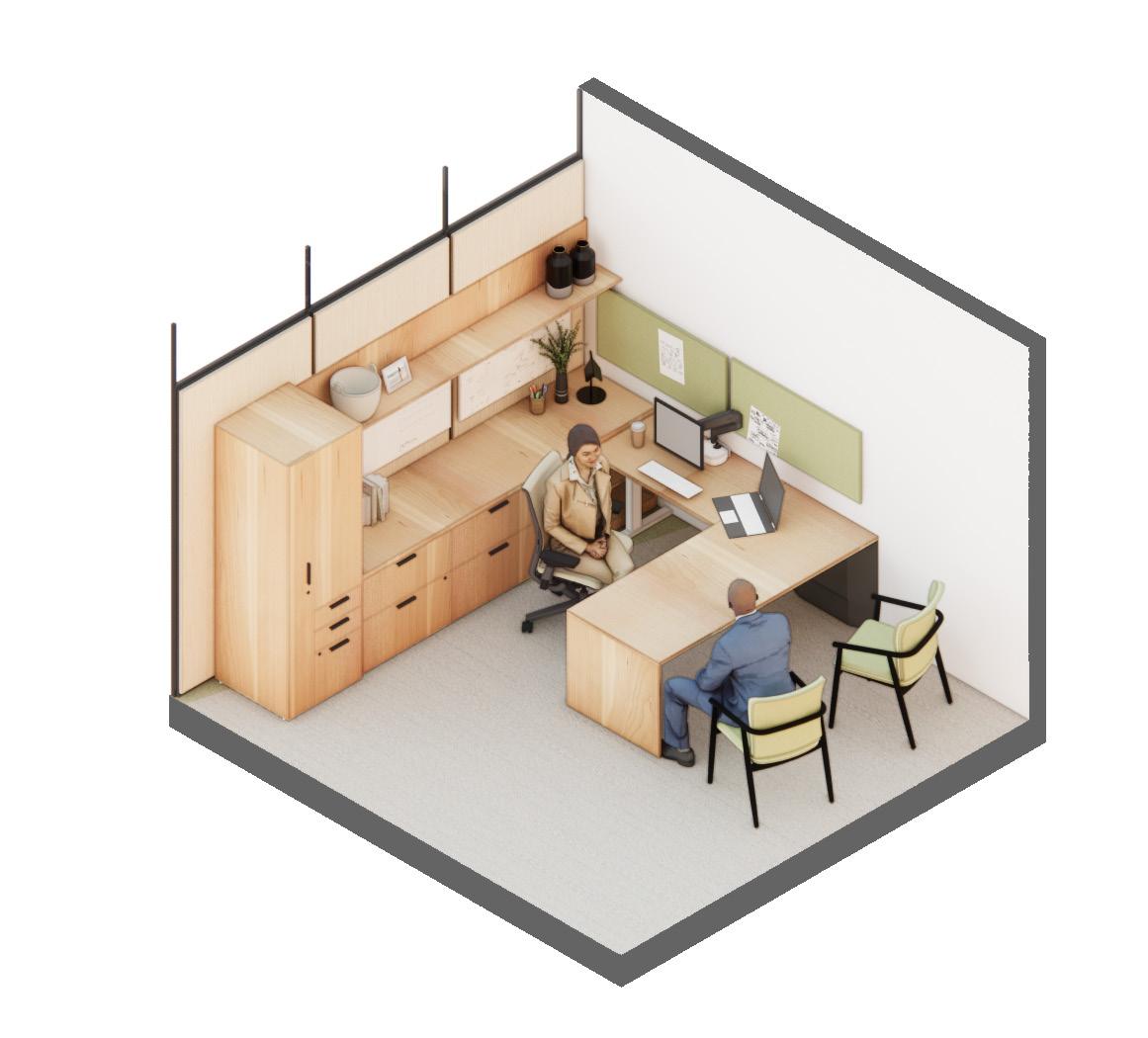
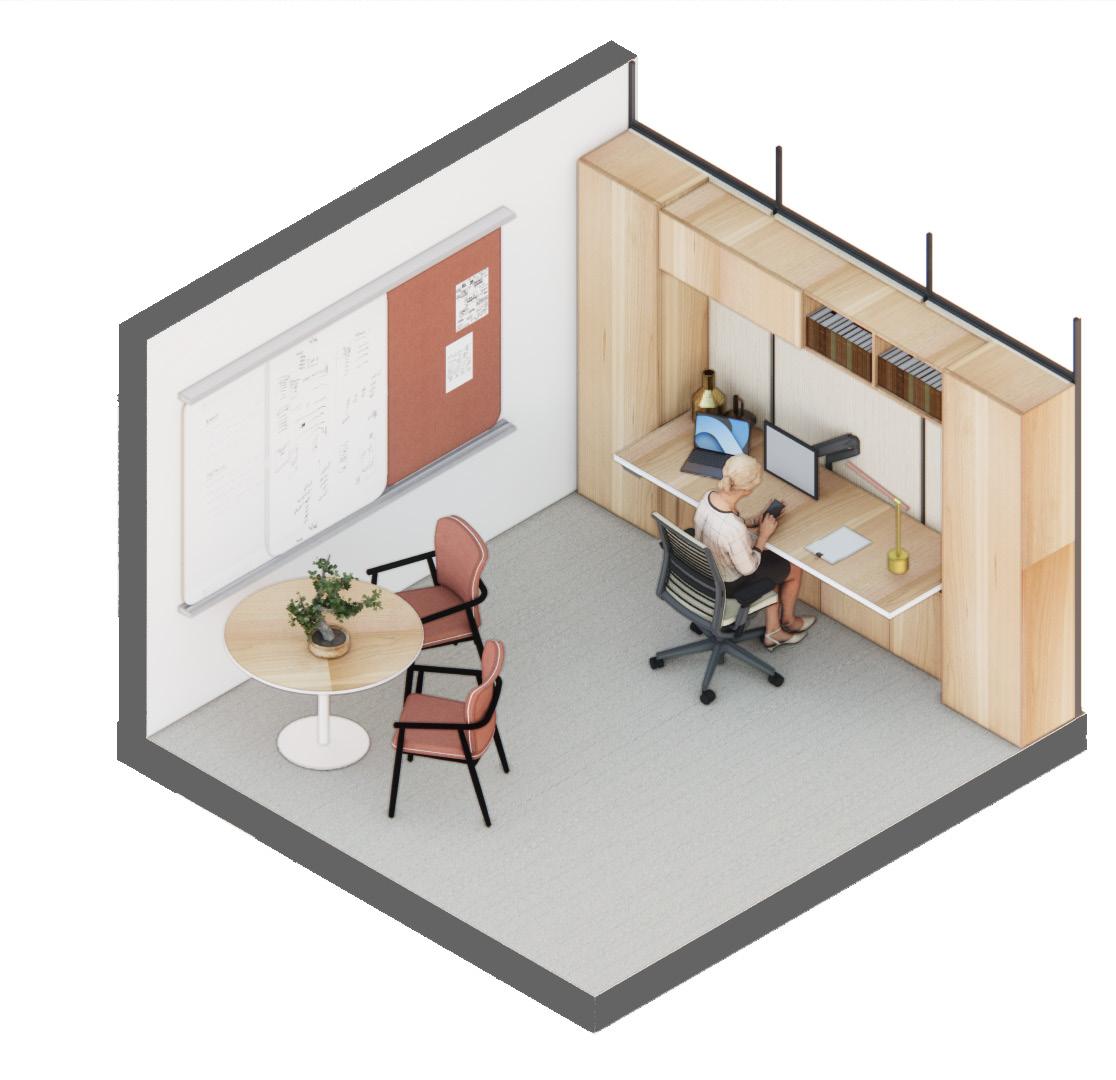
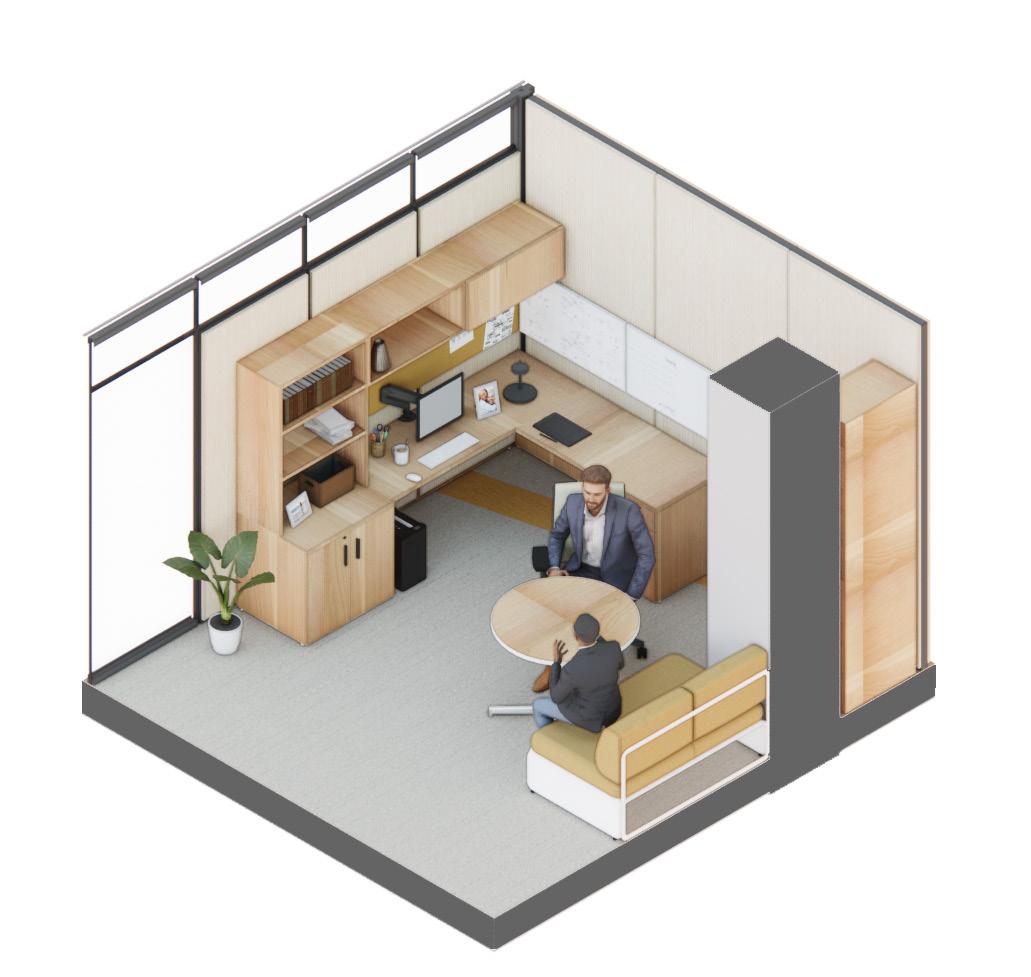
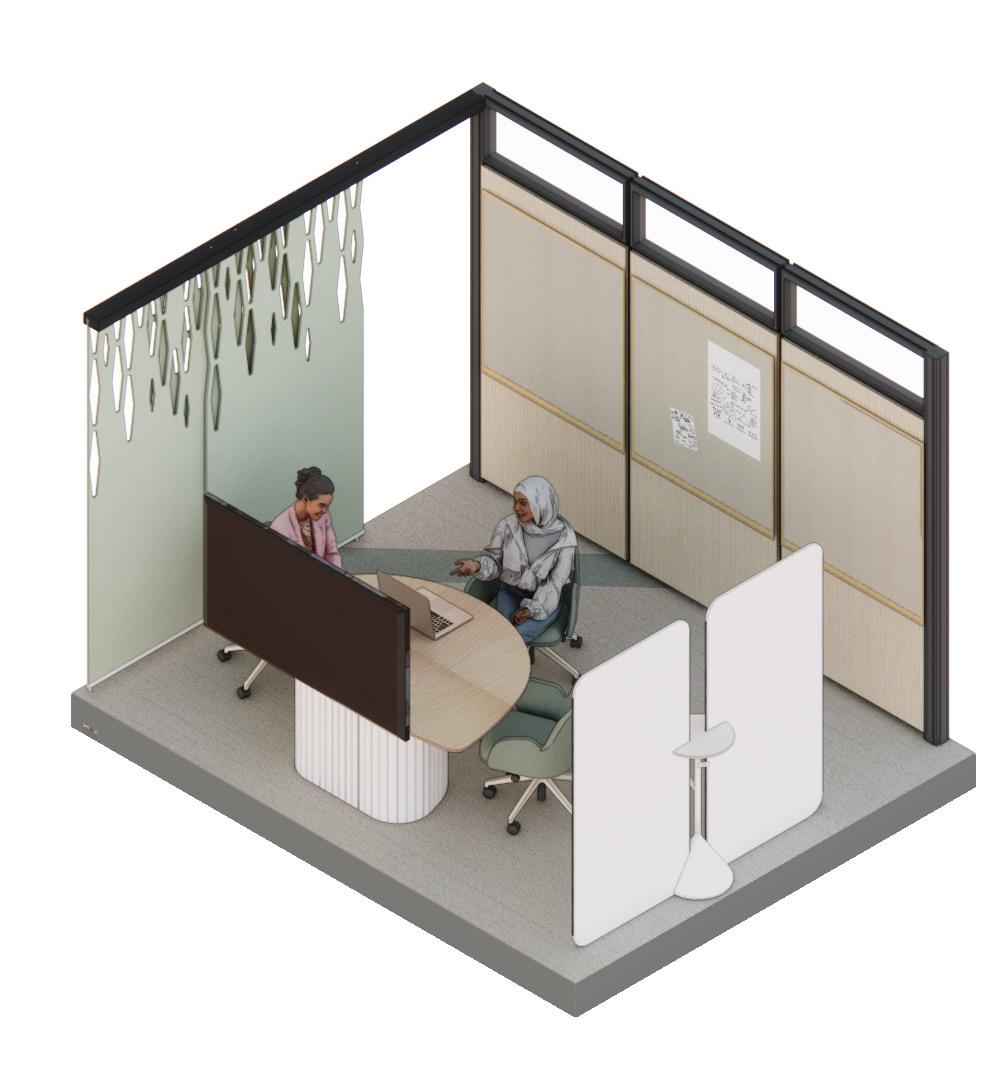
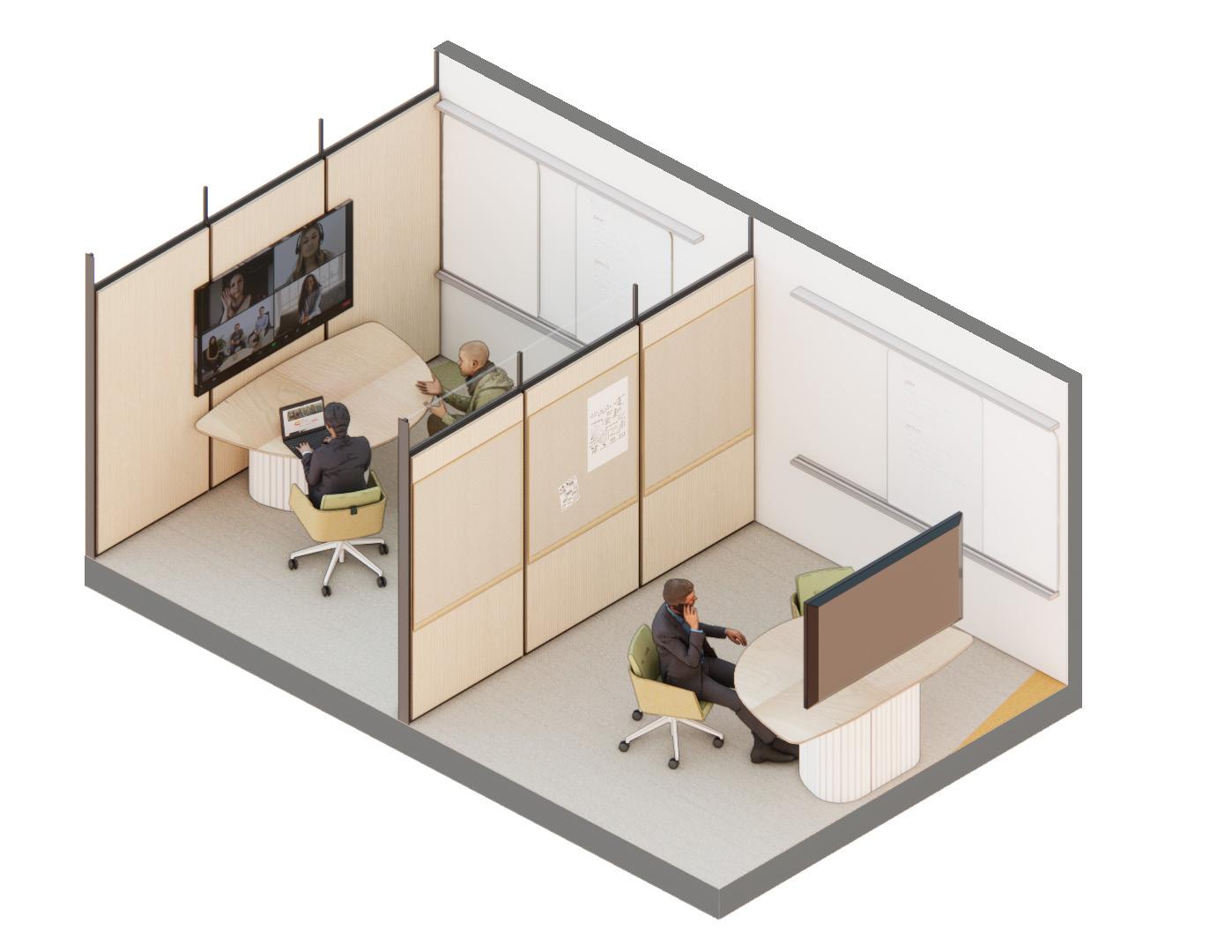
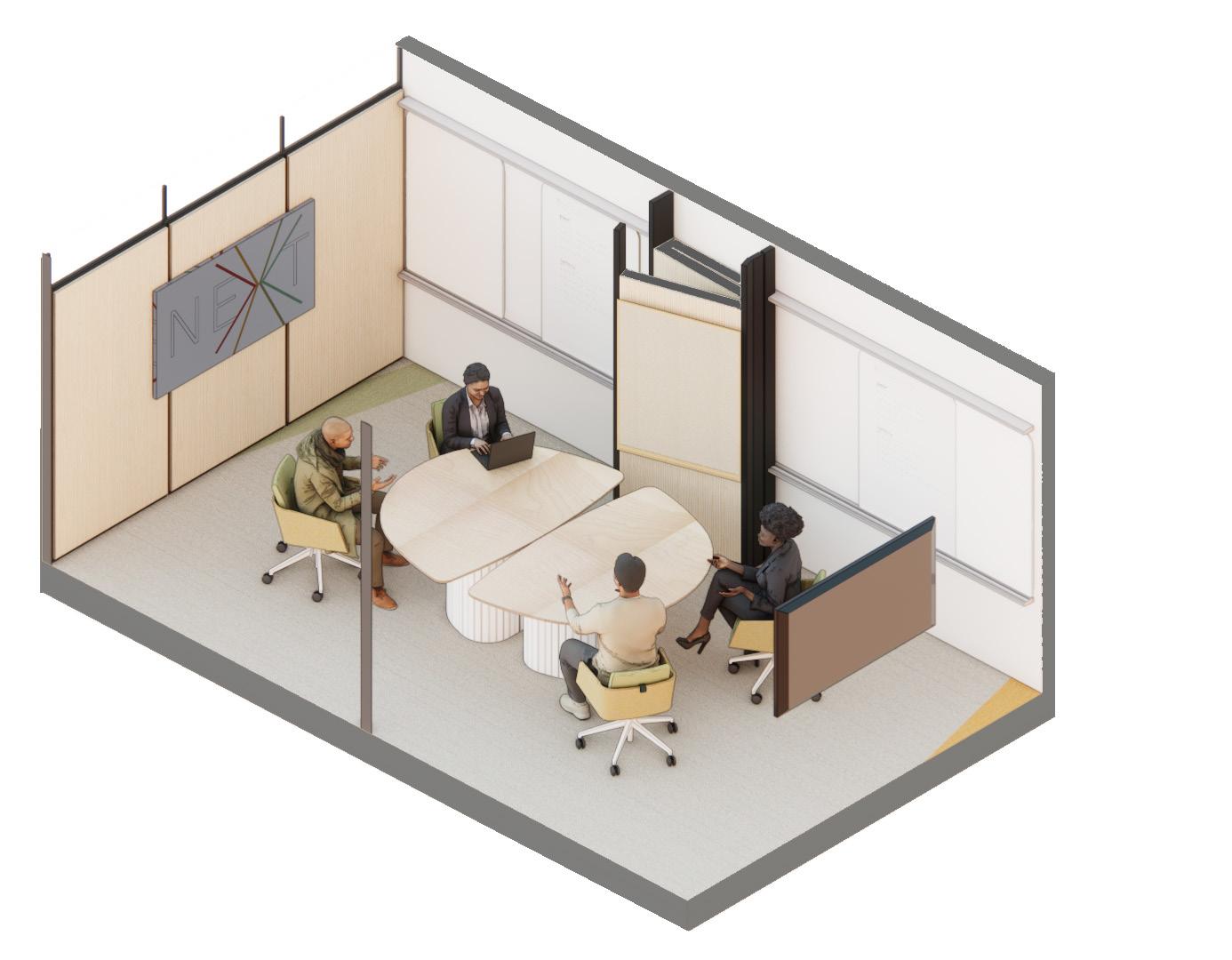
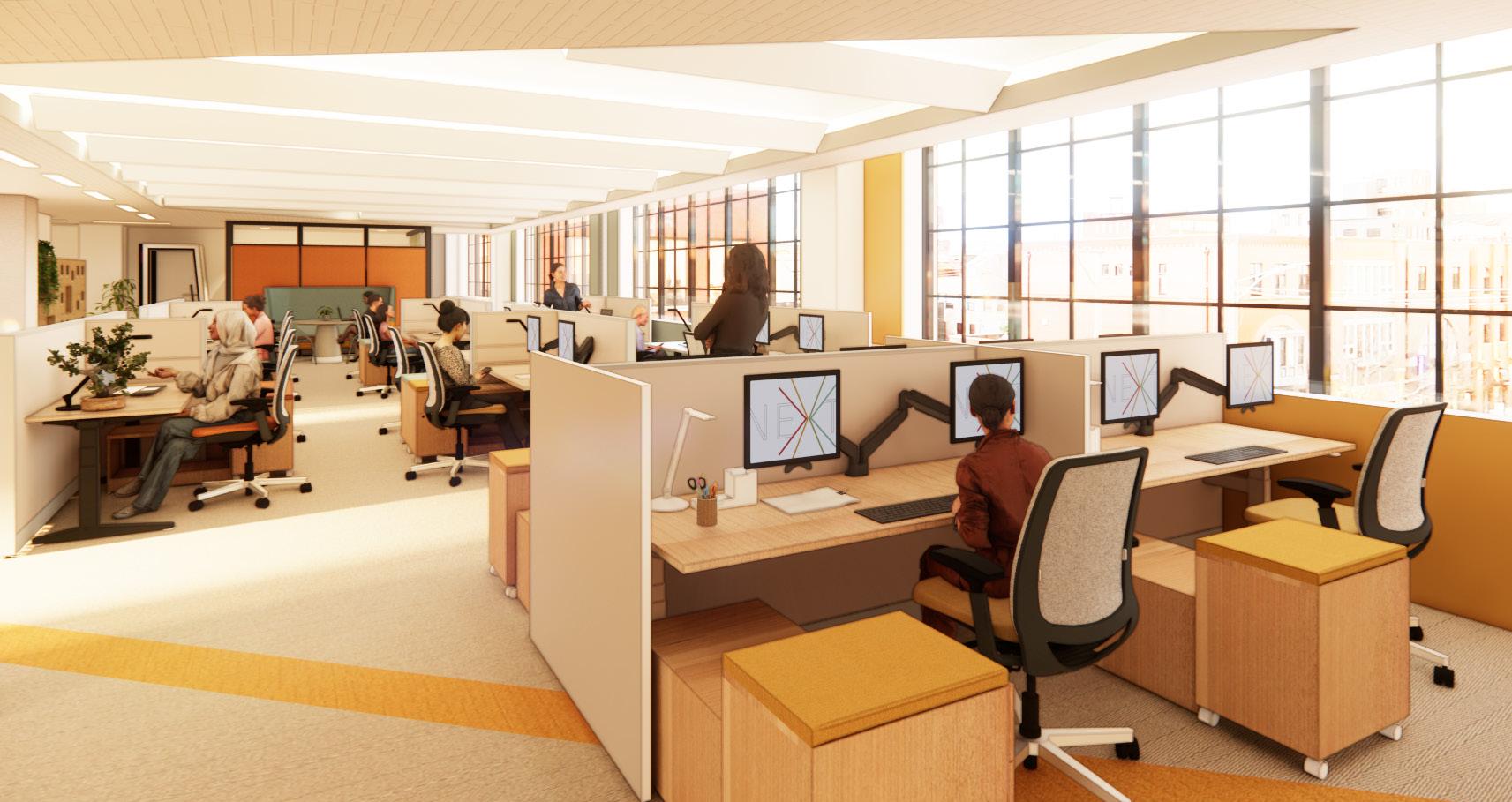
Each team has their own “neighborhood”, each featuring a unique color for easy identification. The layout provides individual workstations for focused tasks, complemented by collaborative areas and pin up areas close by to facilitate teamwork.
Kansas State University
First Semester, Fourth Year
Individual Work
1.5 months
Program Summary
This project builds upon human-centered research on a topic of the student’s choosing. Each student is responsible for developing an entirely original design, created from the ground up, and informed by evidencebased decision-making.
Project Summary
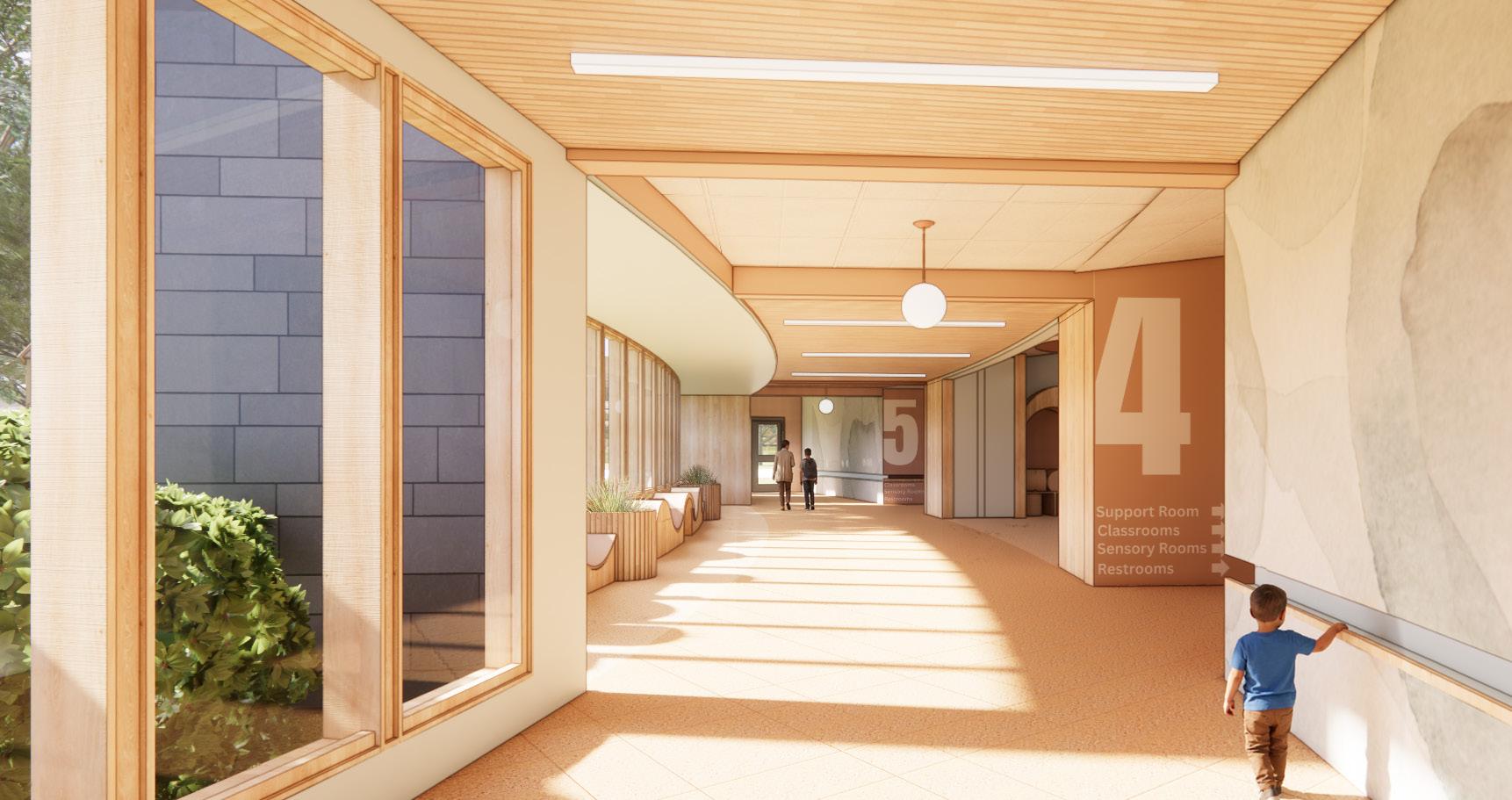
This K–5 school design treats accommodations as supports that benefit all learners. Instead of separating neurodivergent students, the environment is designed to include all neurological profiles within the same classrooms through evidence-based strategies.
The base plan is inspired by the structure of the human brain, with circulation that mirrors the organic flow of neural pathways. These intuitive curves reduce cognitive load, improve wayfinding, and create predictable transitions that support attention and emotional regulation, principles rooted in Attention Restoration Theory. Likewise, calming sensory zoning, acoustical control, and balanced lighting follow Sensory Integration Theory, helping students regulate sensory input rather than become overwhelmed by it.
Ultimately, designing for neurodiverse students designs for all. By supporting attention, comfort, movement, and sensory balance, the school fosters equity, wellbeing, and belonging for every learner.
Skills Used: Revit, Enscape
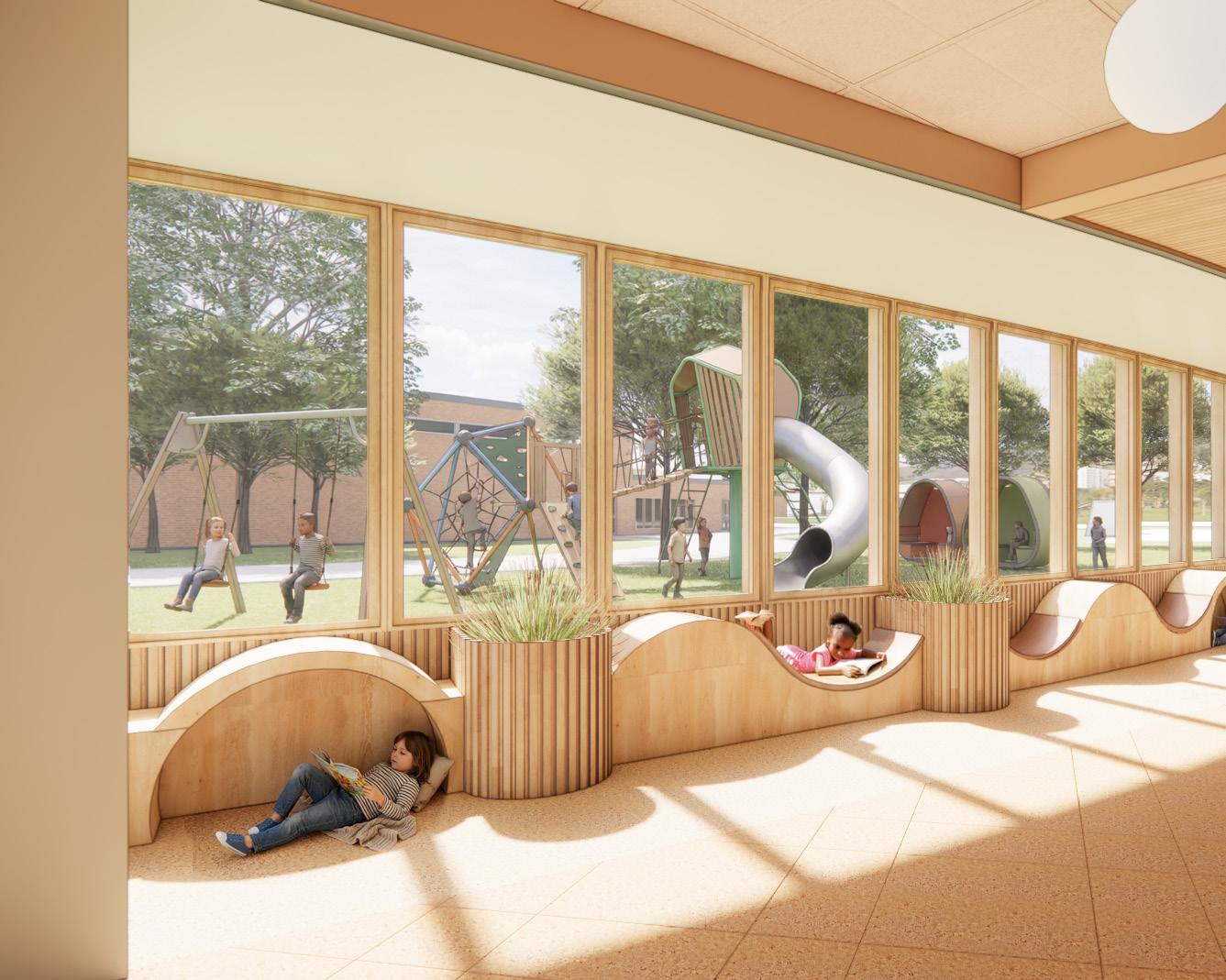
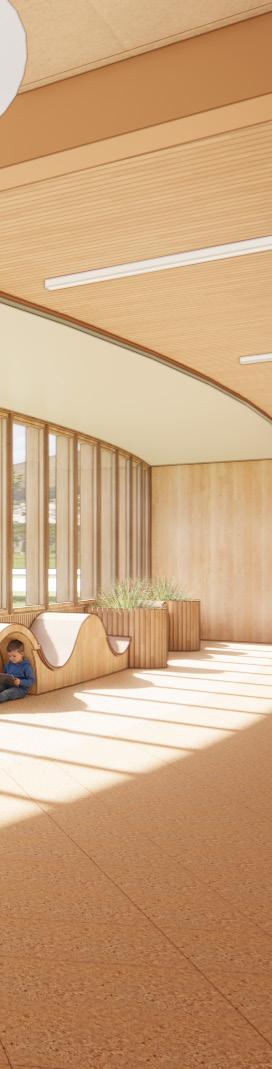
Soft, natural, glare-free lighting
Good acoustics and reduced background noise
Predictable, easy-to-read layouts
Clear, intuitive wayfinding
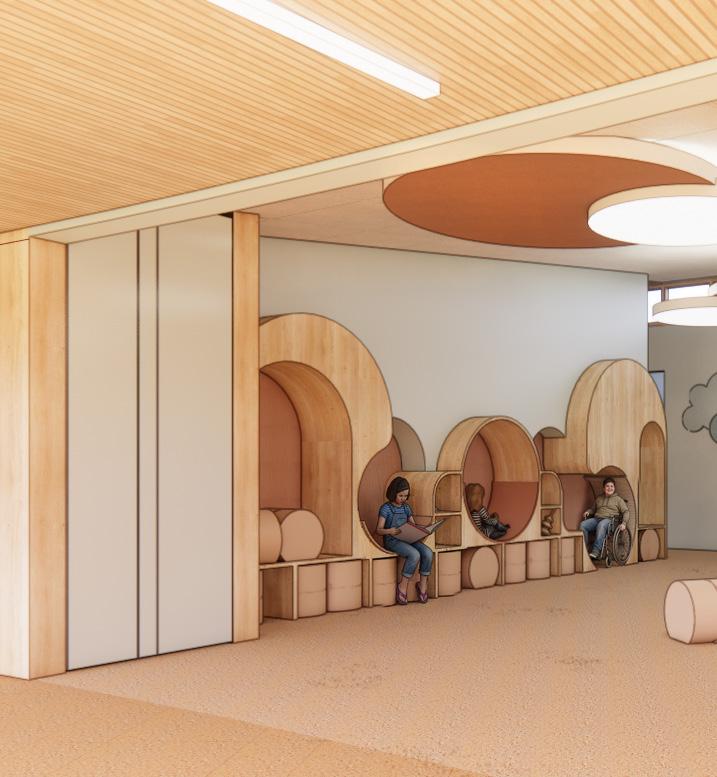
Access to calming/retreat spaces
Multiple seating + posture options
Chance for movement during the day
Reduced cognitive load / sensory balance overall





Wider pathways, supportive handrails, and organized furniture layouts help navigation and motor planning.
High-contrast signage, simple wayfinding, and uncluttered visuals reduce cognitive load and support comprehension.
Predictable layouts, softer lighting, and quiet retreat spaces reduce overload and support regulation.
Clear layouts, reduced stimuli, and movement-friendly seating support focus.

Clear layouts, reduced stimuli, and movement-friendly seating support focus.

GEMINI AI USED TO GENERATE SCALE FIGURES
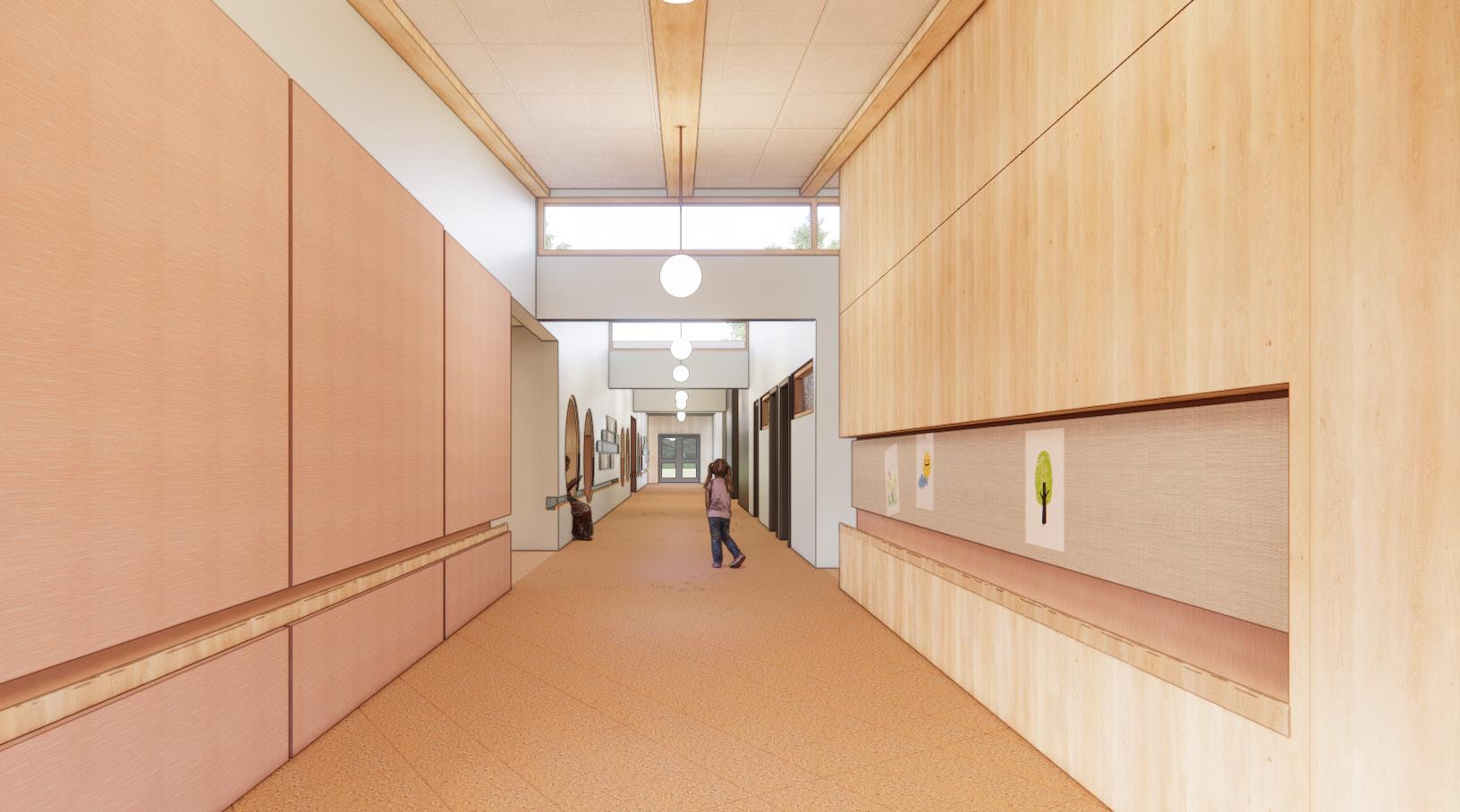

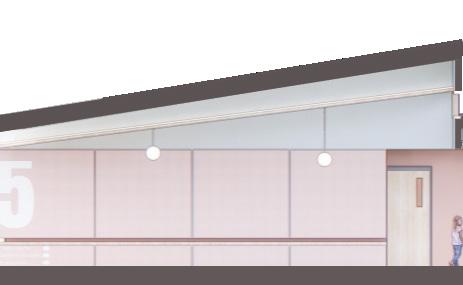
Compression and release provided horizontally through walls and vertically in the ceiling plane

Clear, easy to understand signage

“Sunscape” seating providing a transitional space

Recessed railing for coordination issues

Flooring changes signaling a clear path

Linear elements guiding path

Biophilic patterns guided by Attention Restoration Theory
Niche seating providing a transitional space

Recessed railing for coordination issues
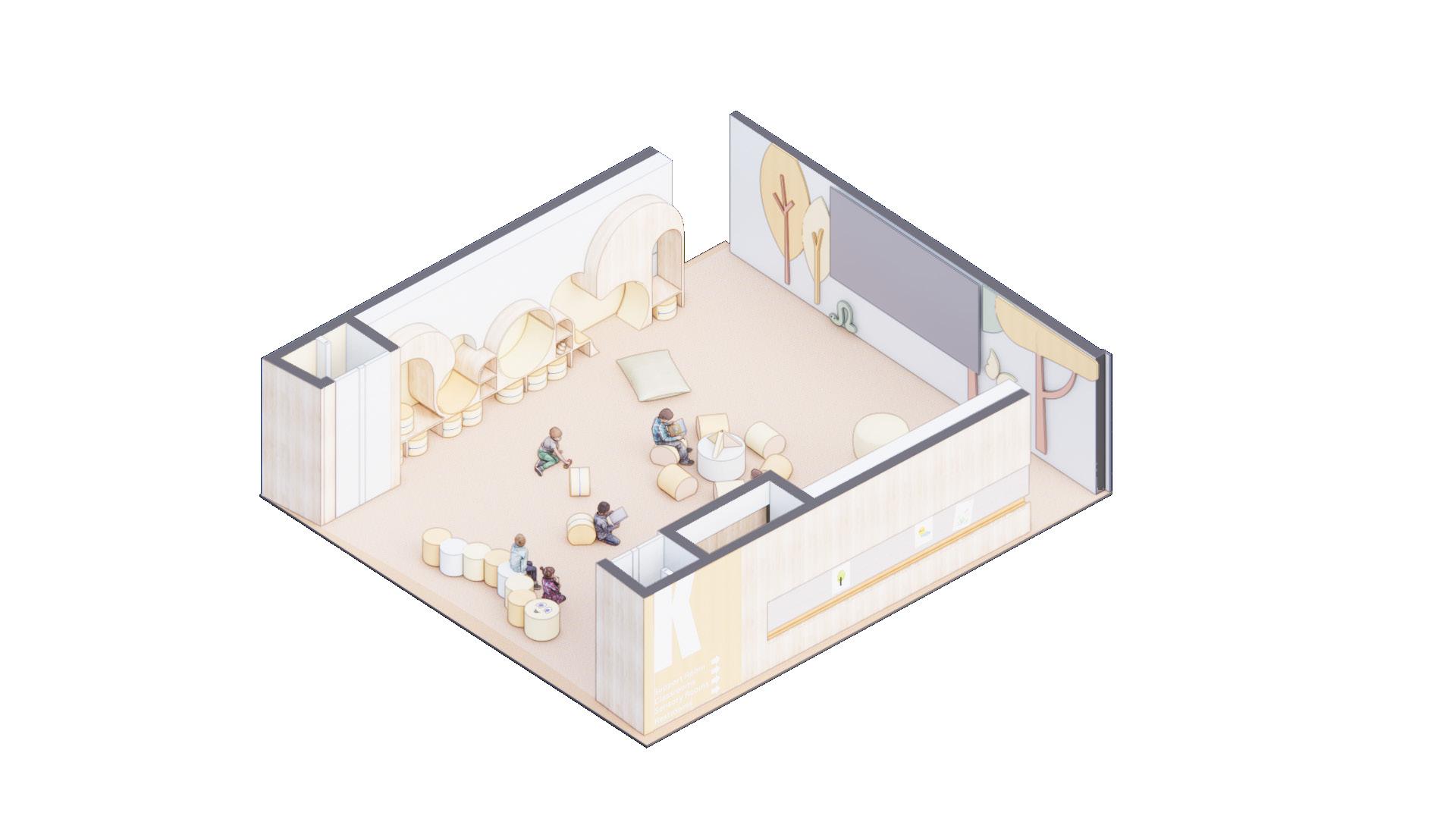
K-1
Floor Time
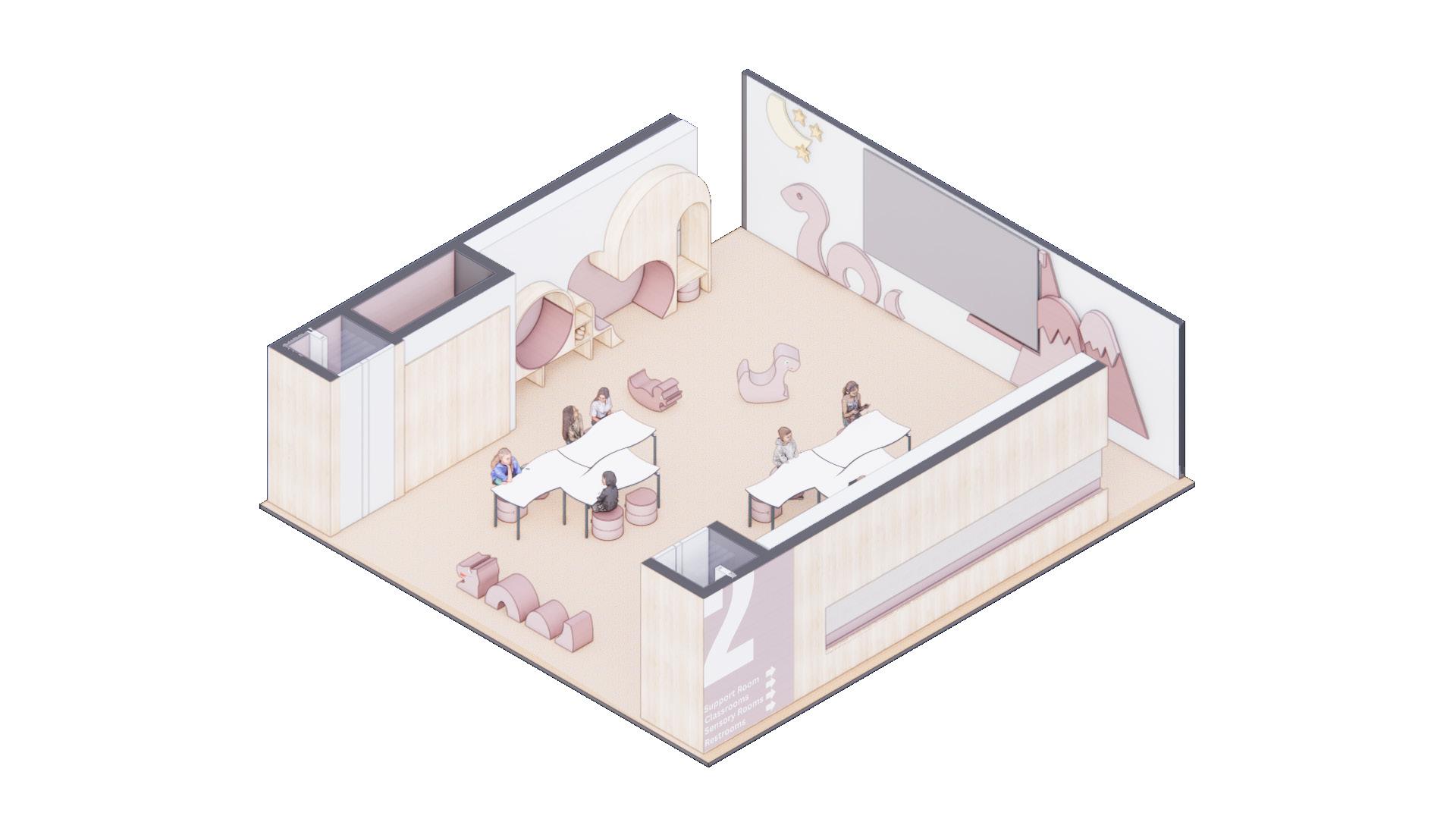
2-3
Small Group Work
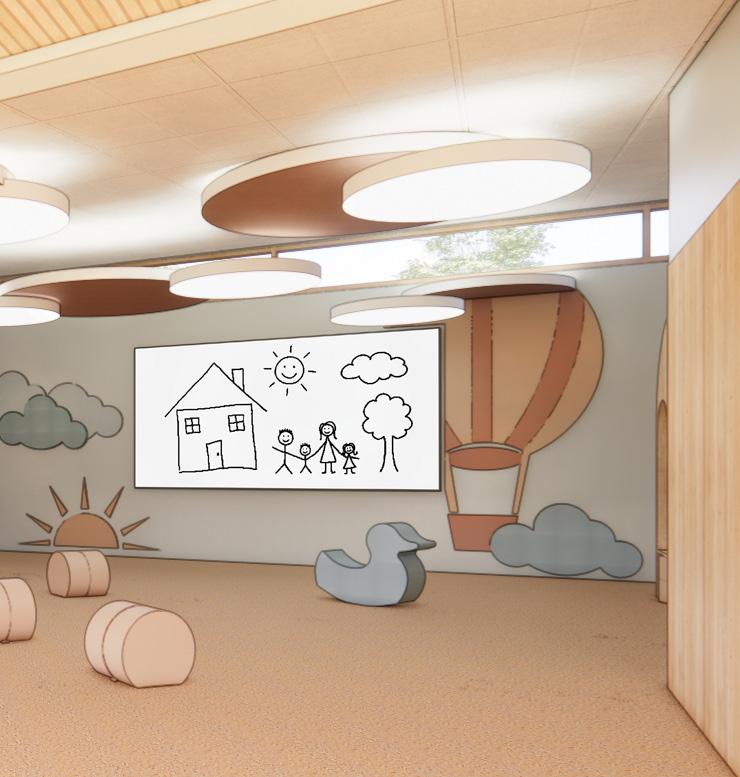
Movement through the space is further supported by wayfinding cues that give each pod its own identity. Colors and custom designed acoustical panels work together to create a distinct “story” in every wing. The relationship between hues and shapes reflects the ways K–5 students naturally play at their age, through role-play, storytelling, and adventure, allowing each pod to carry it’s own identity. These visual cues guide movement and act as a backdrop to signage, making it unnecessary for users to rely on text to navigate the space effectively.
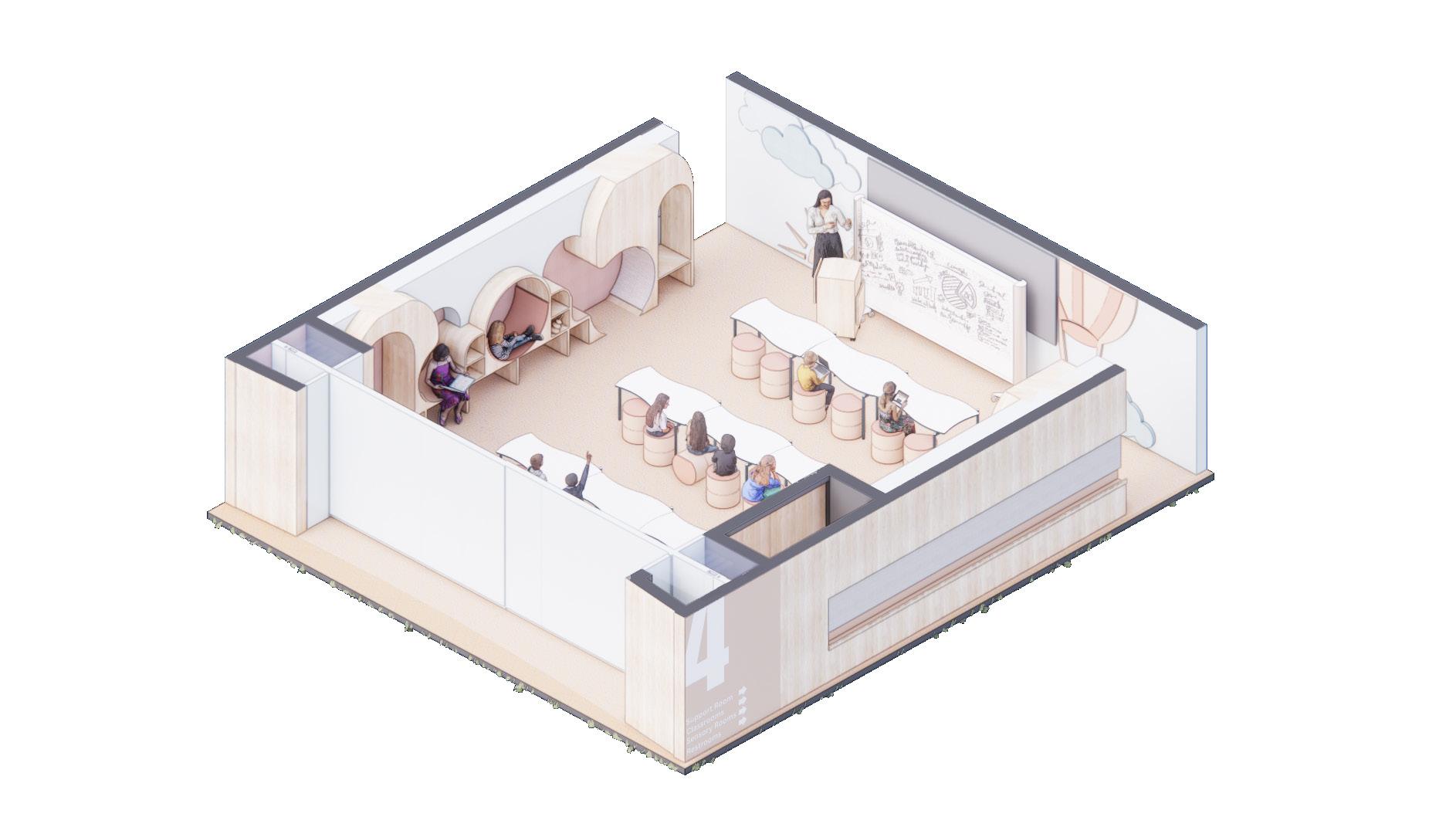
4-5
Desk Work
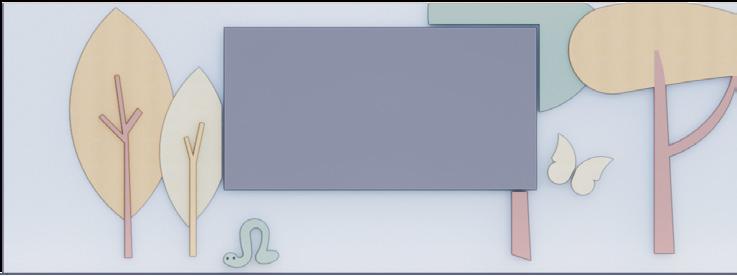
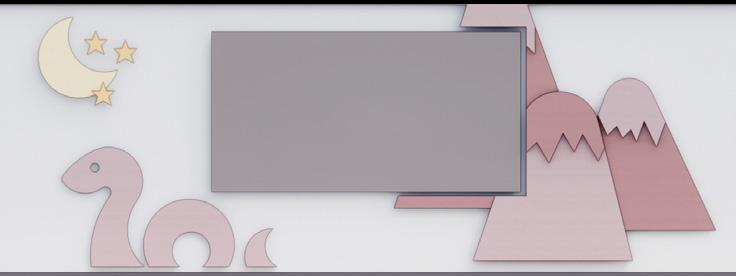
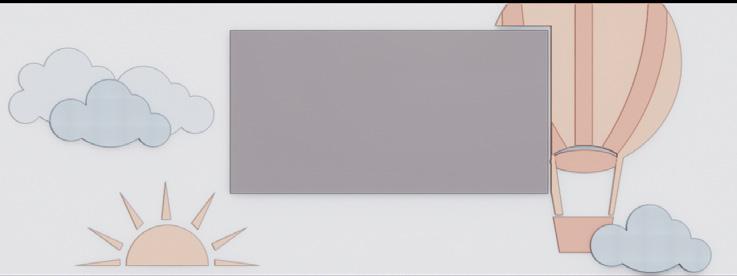
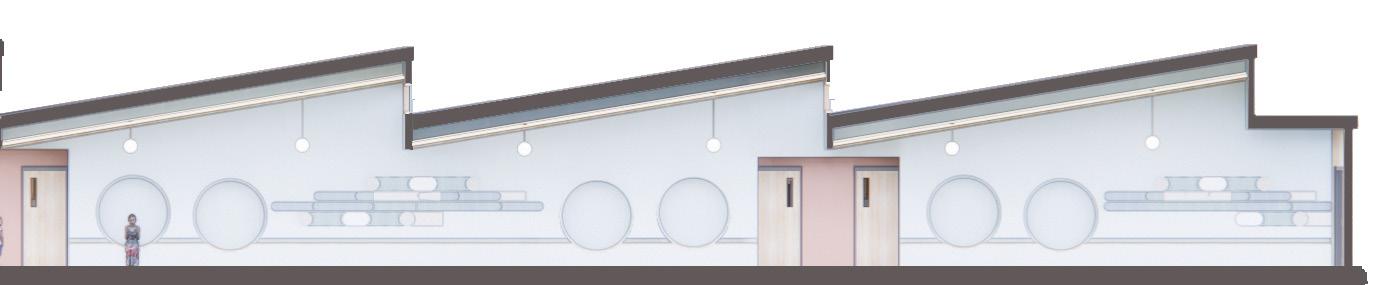
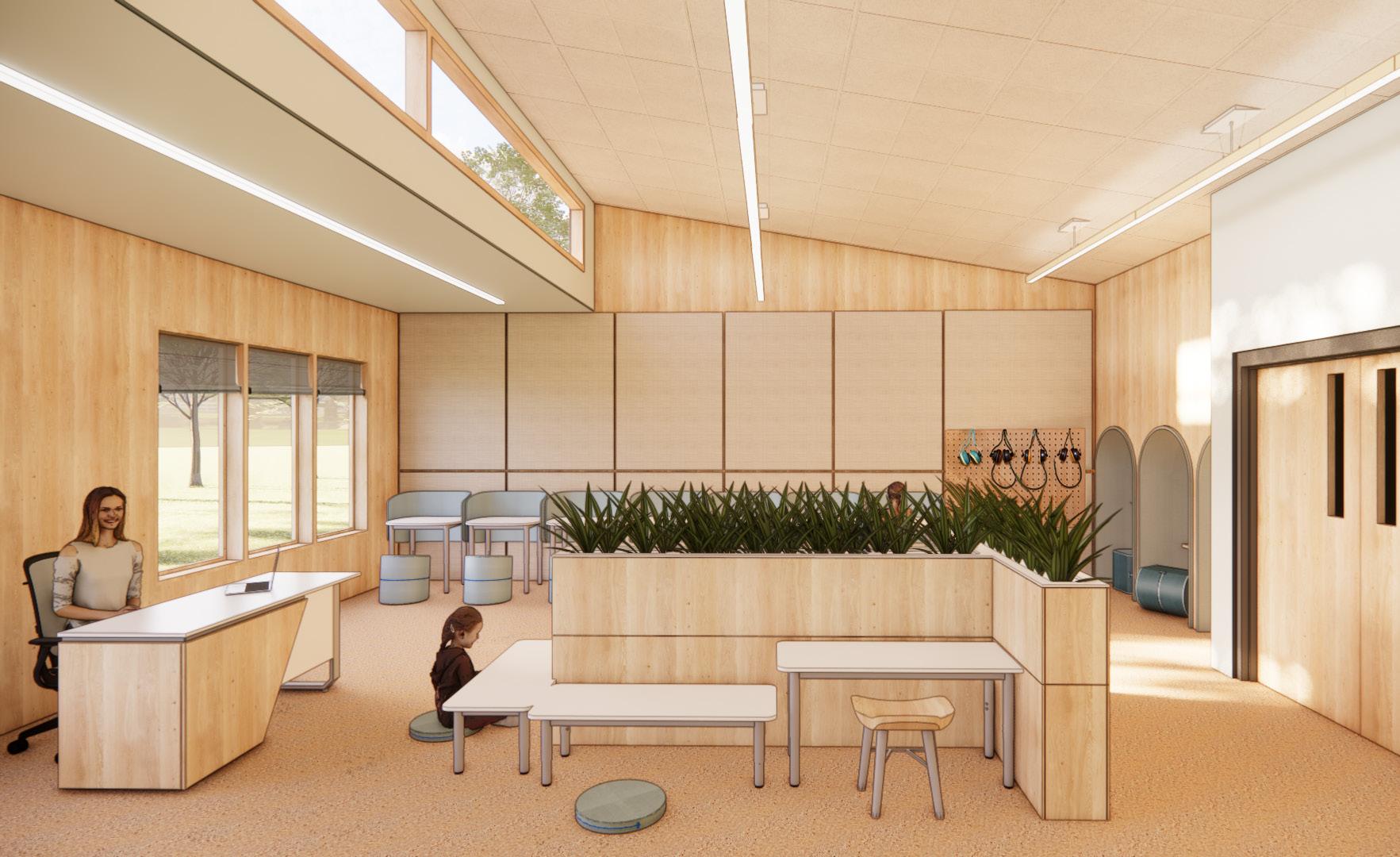
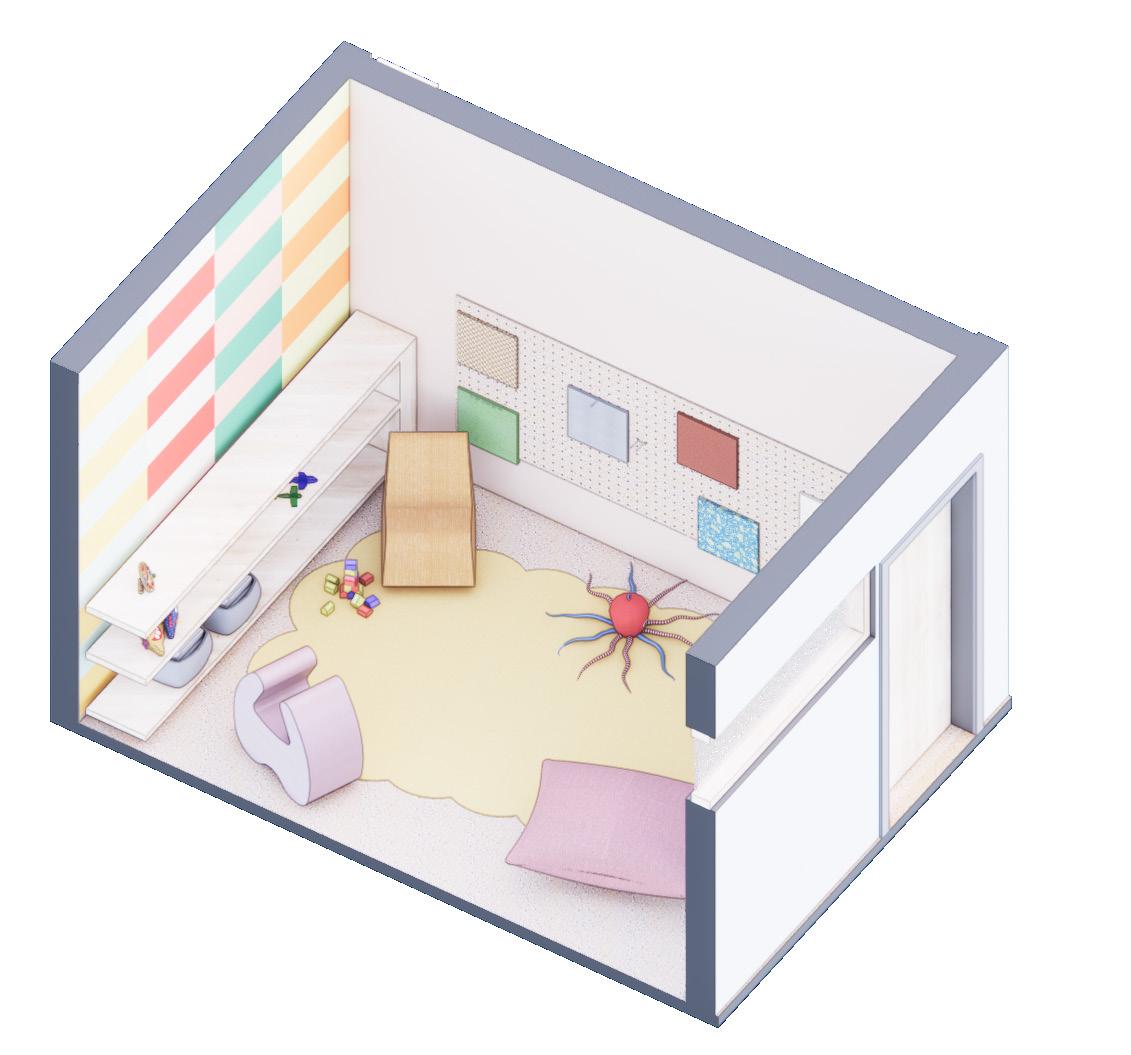
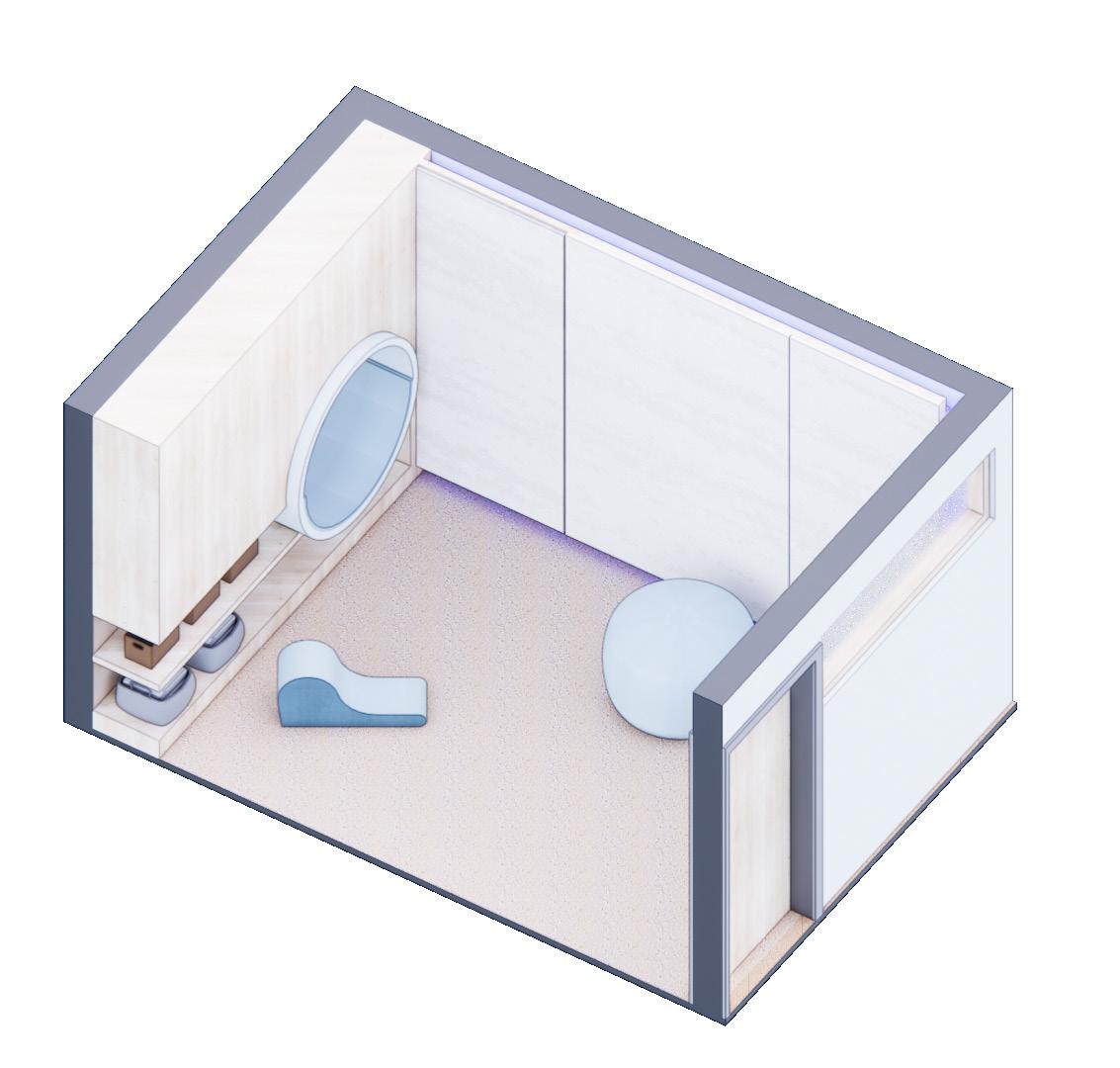
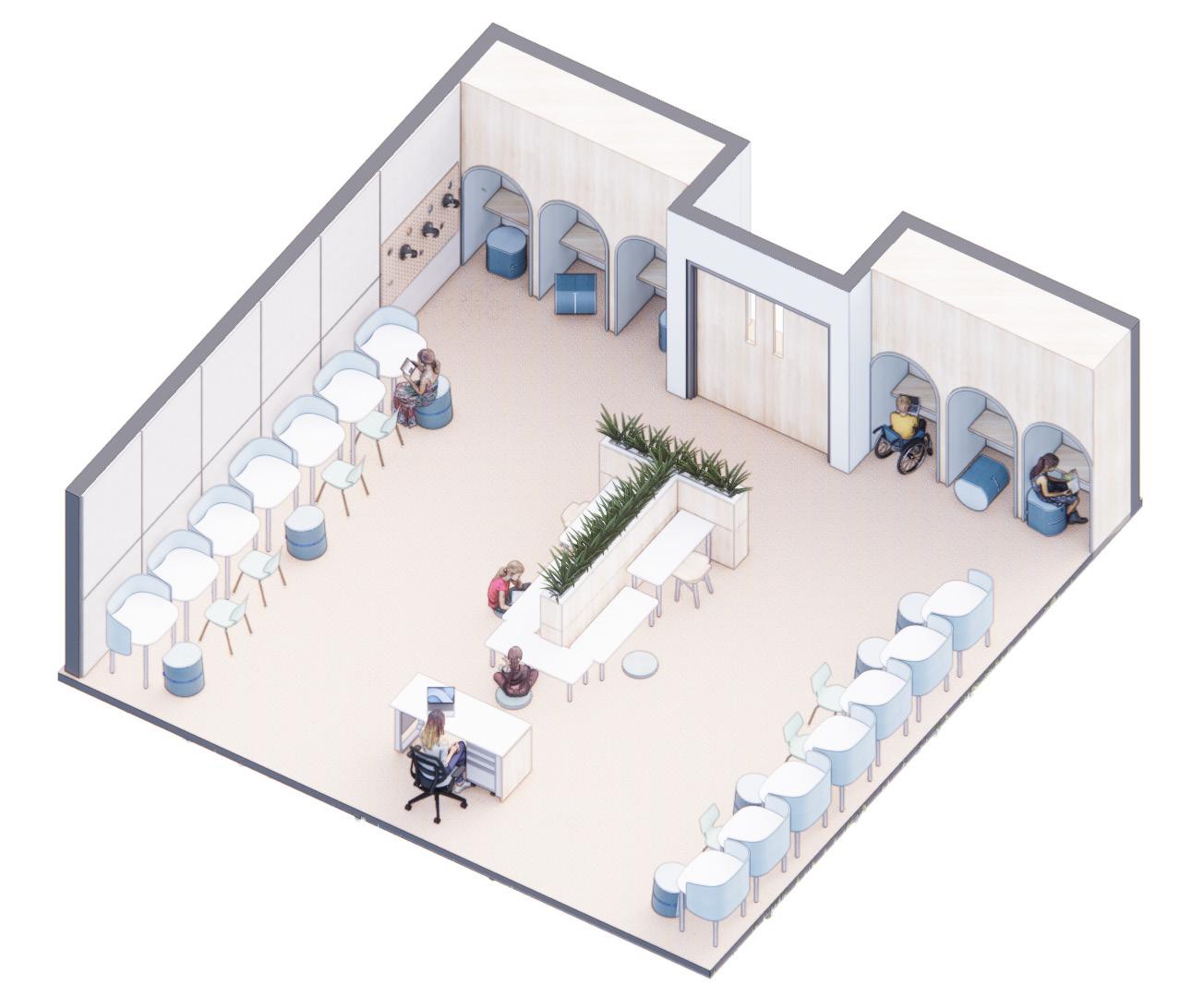
The focus rooms are designed to accommodate every testing accommodation in a single inclusive environment, ensuring no student is separated or singled out based on their needs. Adjustable lighting, acoustic control, varied seating, and semi-enclosed work zones support extended time, reduced distractions, and assistive technology use. By integrating these supports into one unified space, all learners can test comfortably and equitably, reinforcing a culture of belonging while maintaining the integrity of the assessment process.

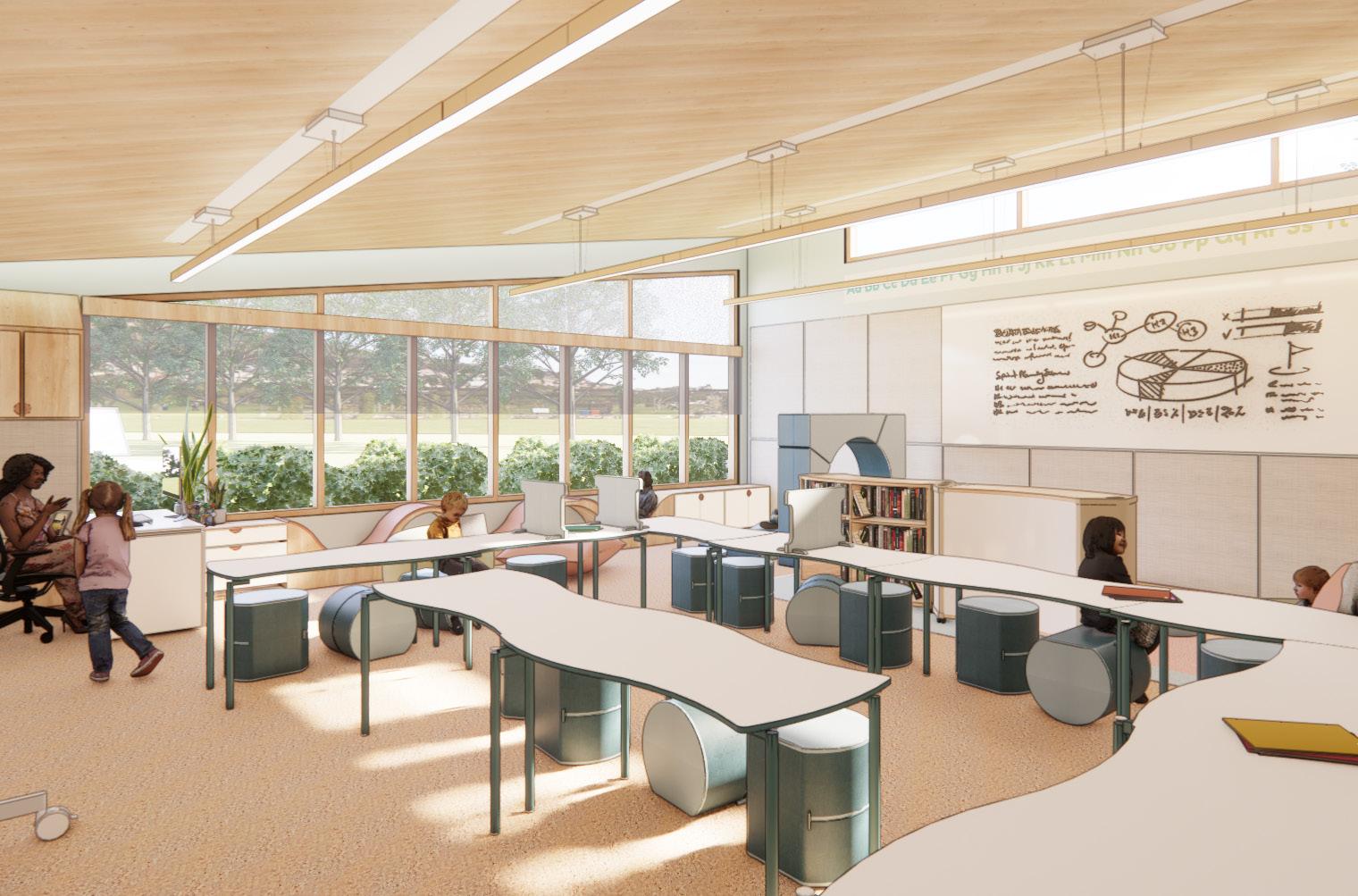
CLASSROOM FLEXIBILITY
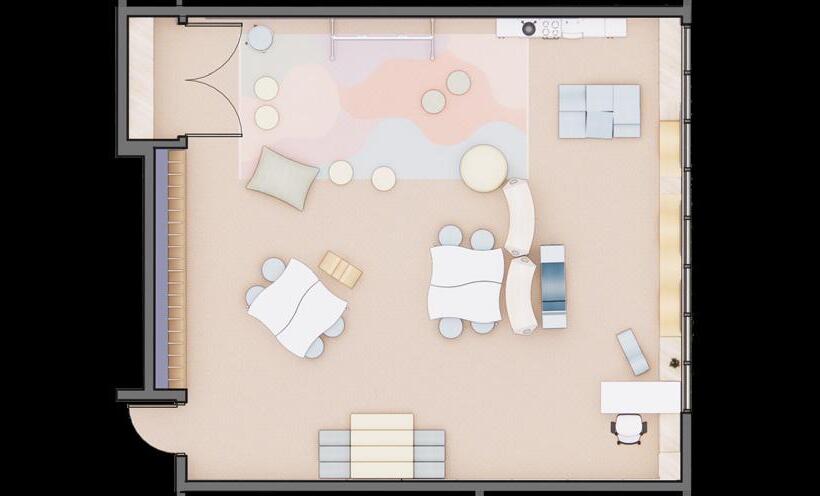
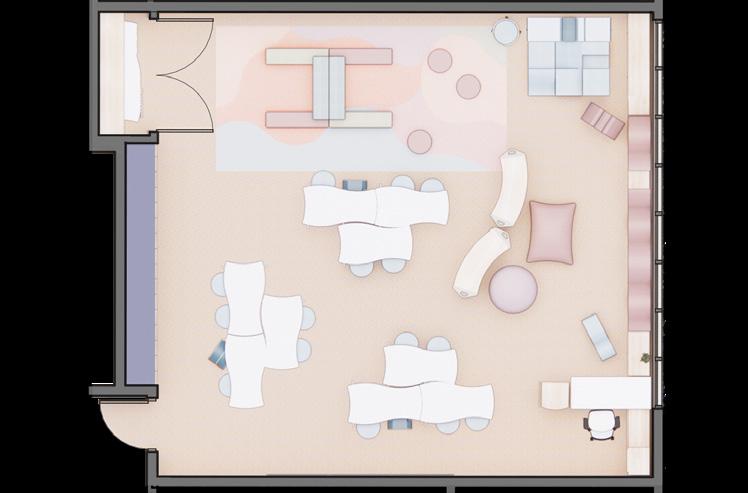
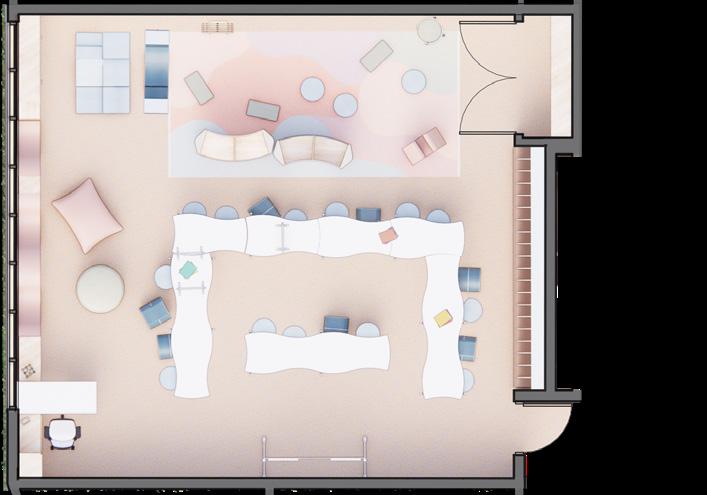
CLASSROOM FLEXIBILITY
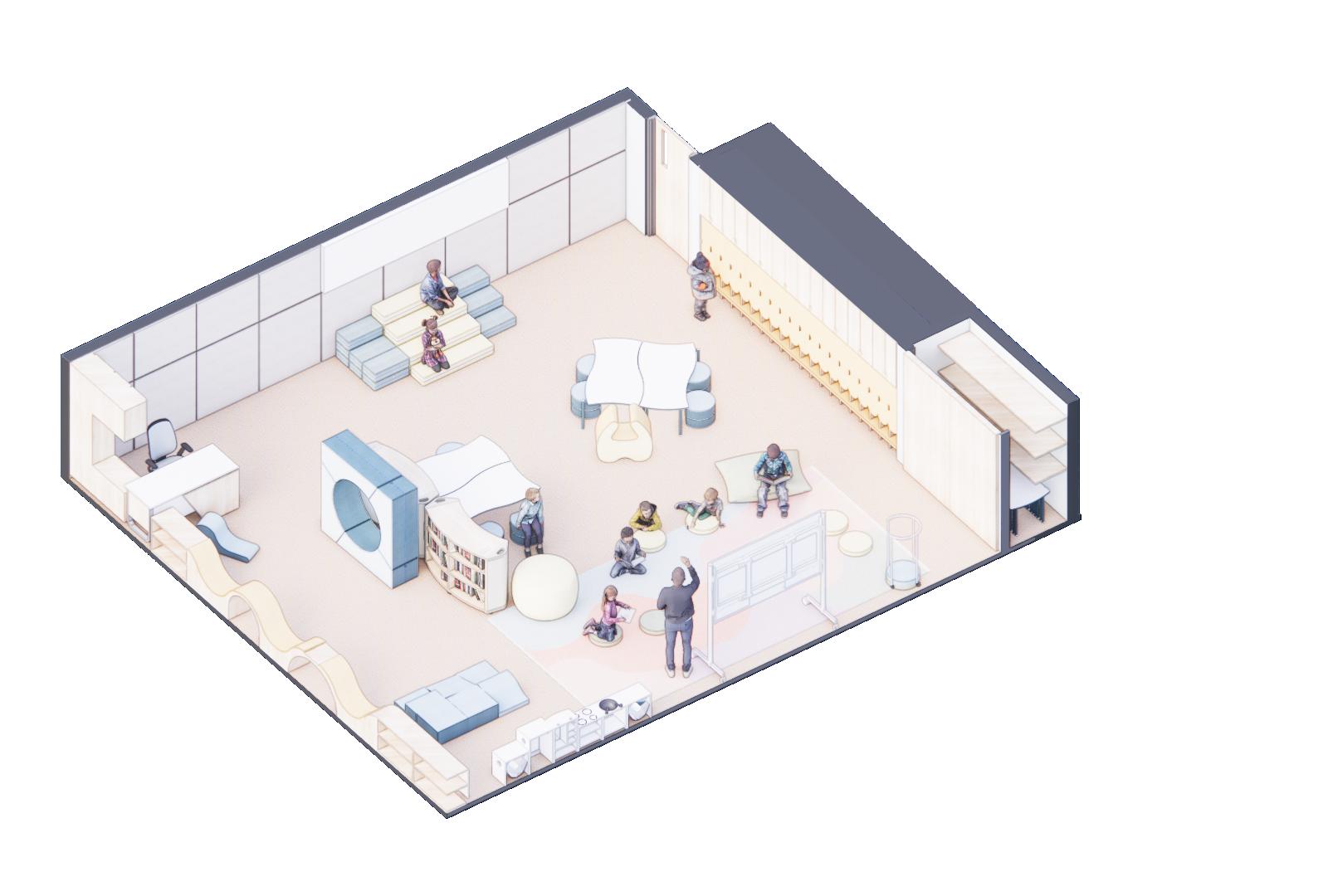
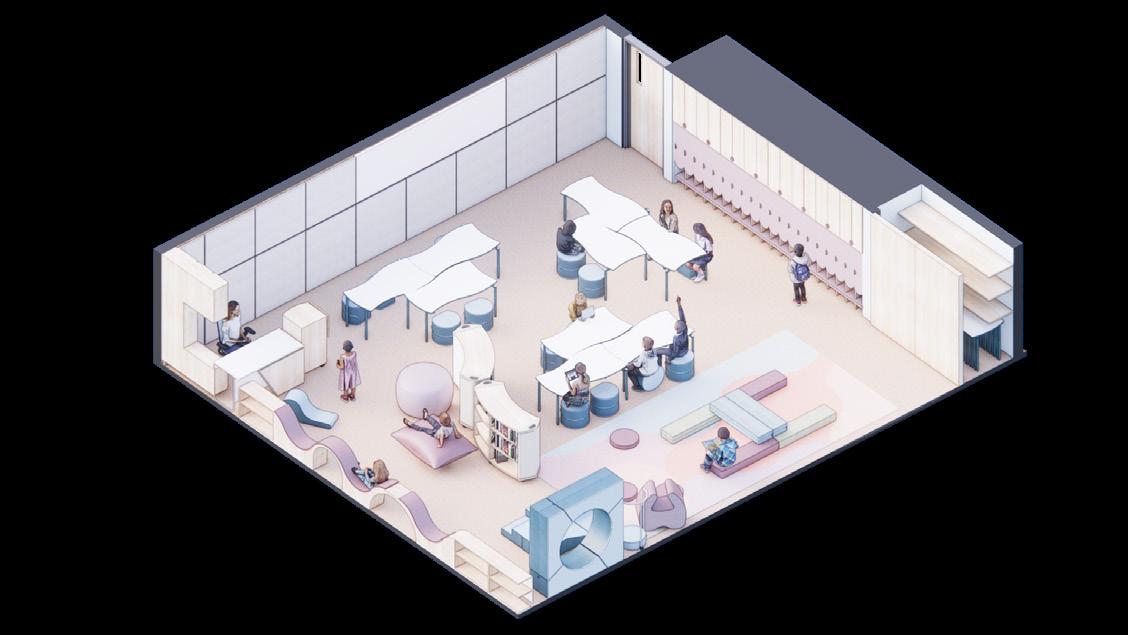
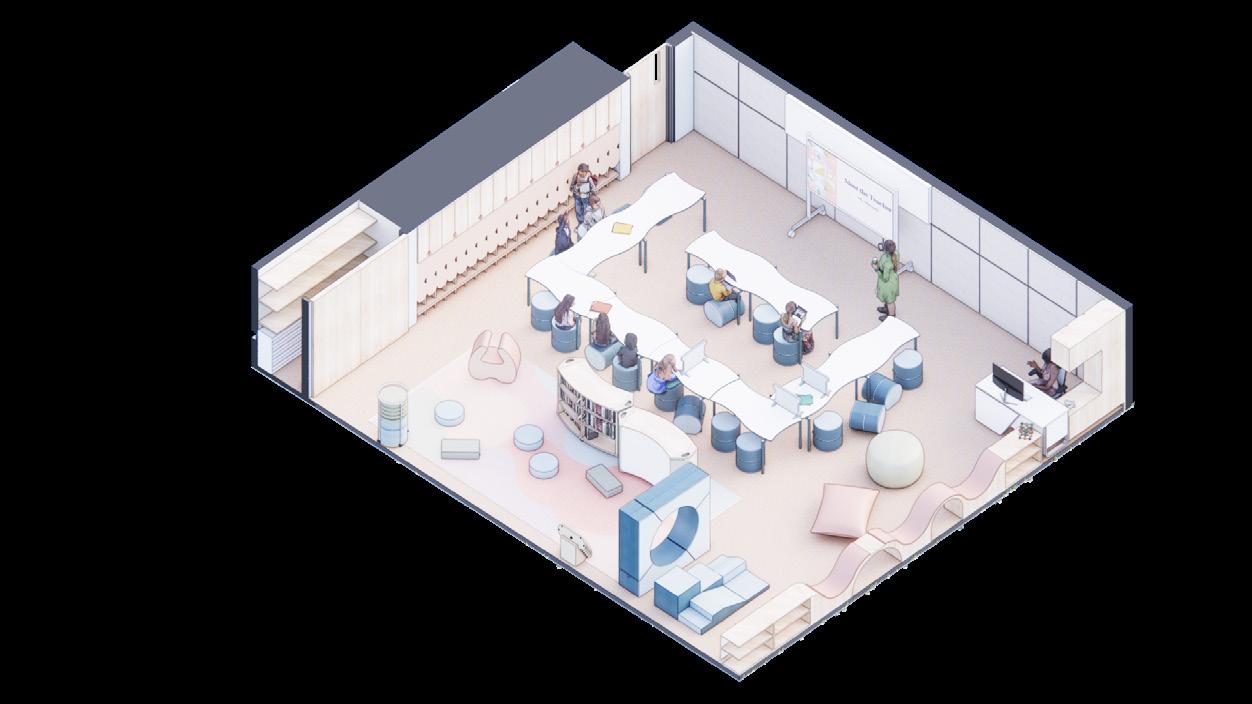
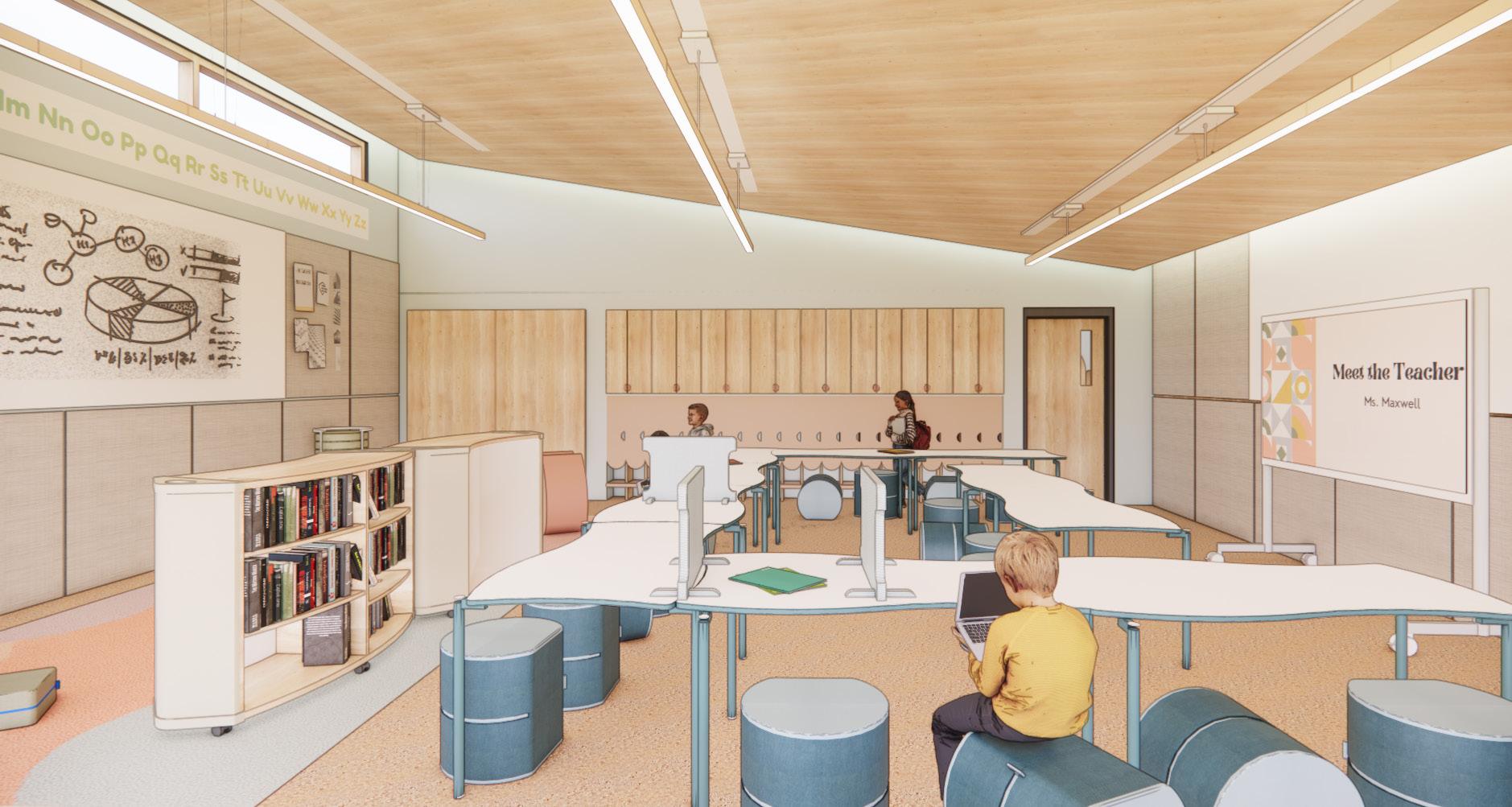
Kansas State University
Second semester, Second Year
Individual Work
2 months
Program Summary
The second semester of Studio 4 focused on healthcare design, offering an in-depth exploration of this specialized field. The assigned project focused on designing a pediatric clinic in Topeka, KS, with specific programming requirements to guide the process. A key component of the program was the incorporation of an on-stage and off-stage healthcare clinic model.
Project Statement
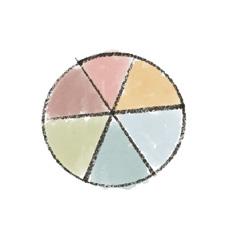
This clinic incorporates color theory to emotionally and conceptually connect with its users. Soft blues and greens are used to establish a calming, soothing atmosphere that fosters healing, while brighter hues like yellow, orange, and pink add a playful touch to appeal to children. Tree motifs and nature-inspired elements are woven throughout the space, creating a comforting and familiar environment that not only helps children feel at ease, but also inspires them to spend more time in nature. The color palette reflects the vibrant seasonal changes of flourishing trees, reinforcing this connection to nature. Through these intentional design strategies, the clinic creates a nurturing space where children can flourish in every season of life.
Skills Used: Revit, AutoCAD, Enscape
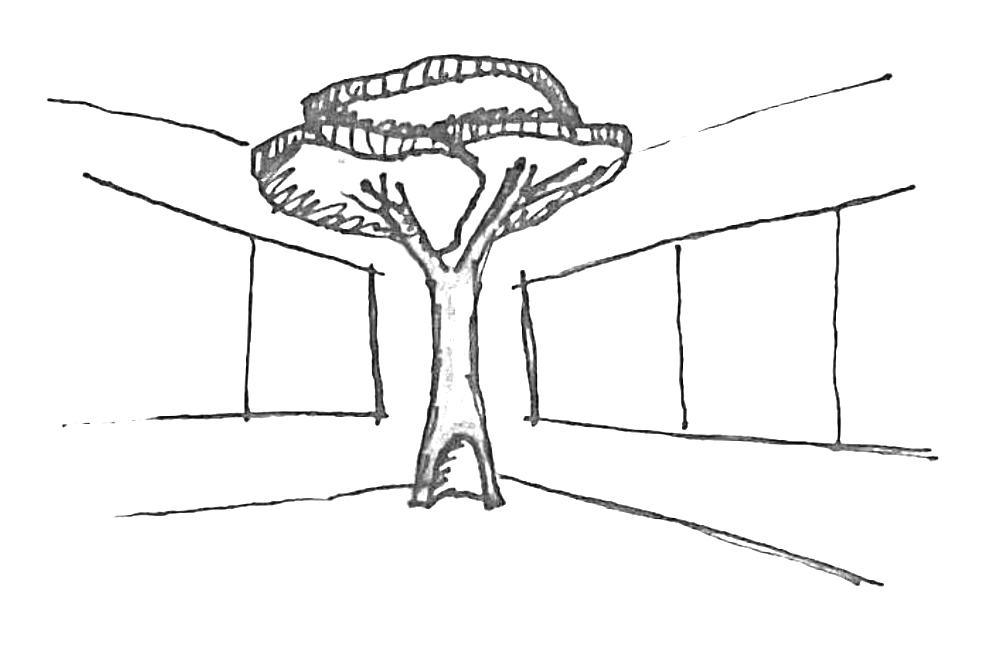
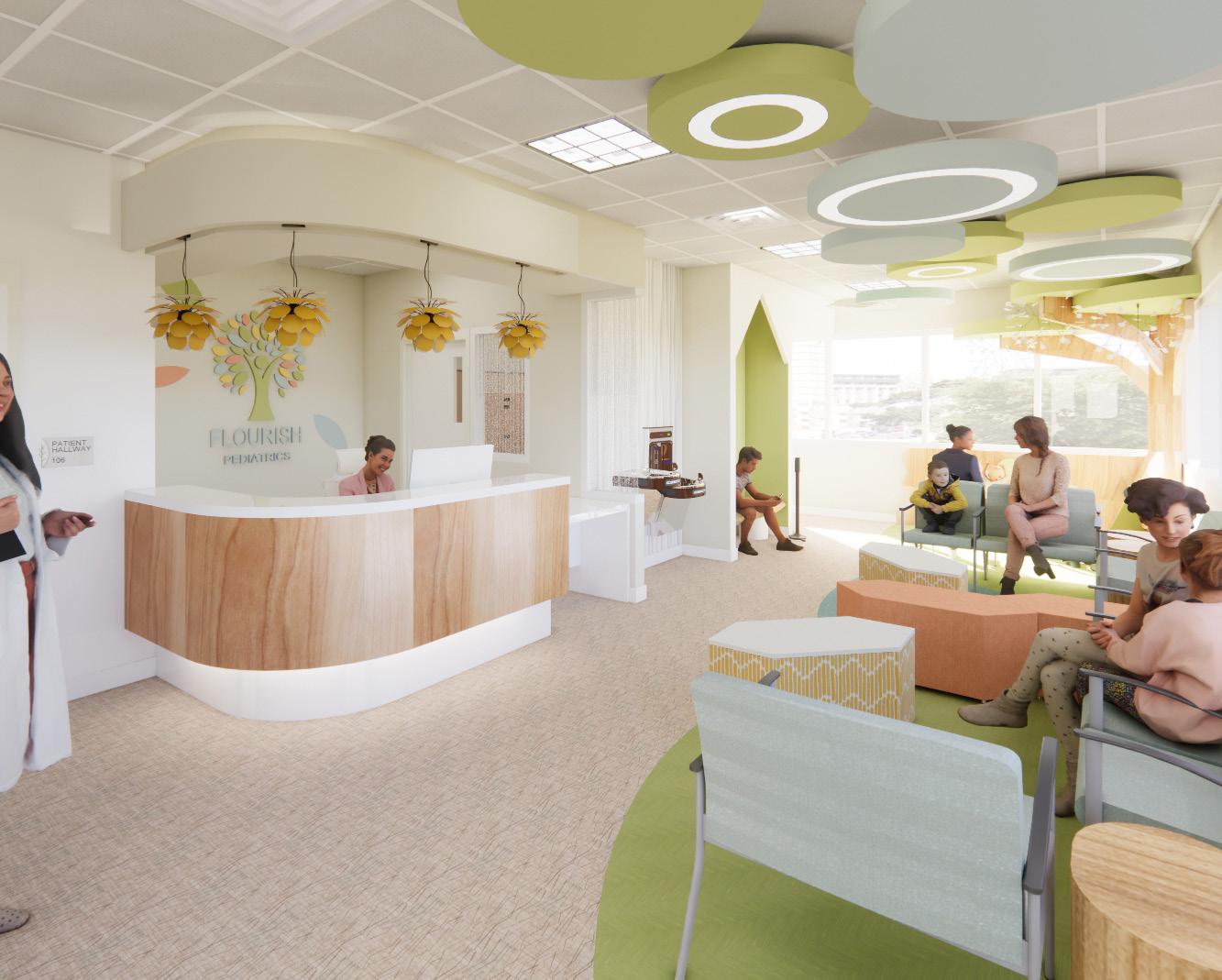


• “Tree” play area
• Branch like ceiling baffles in corridor
• Leaf references in waiting room
• Every exam room references a different season
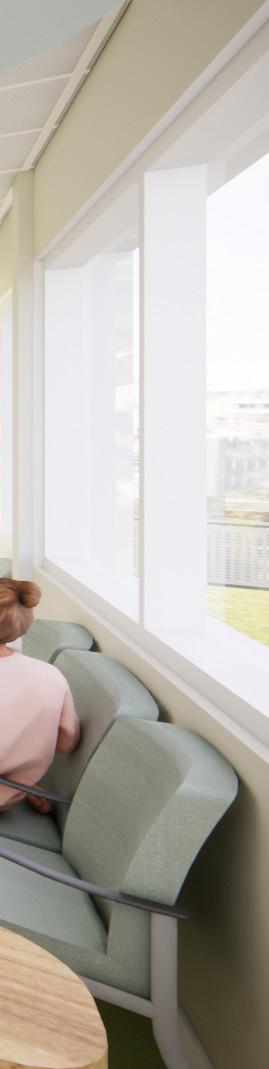
• Natural light, waiting room and collaboration areas close to windows
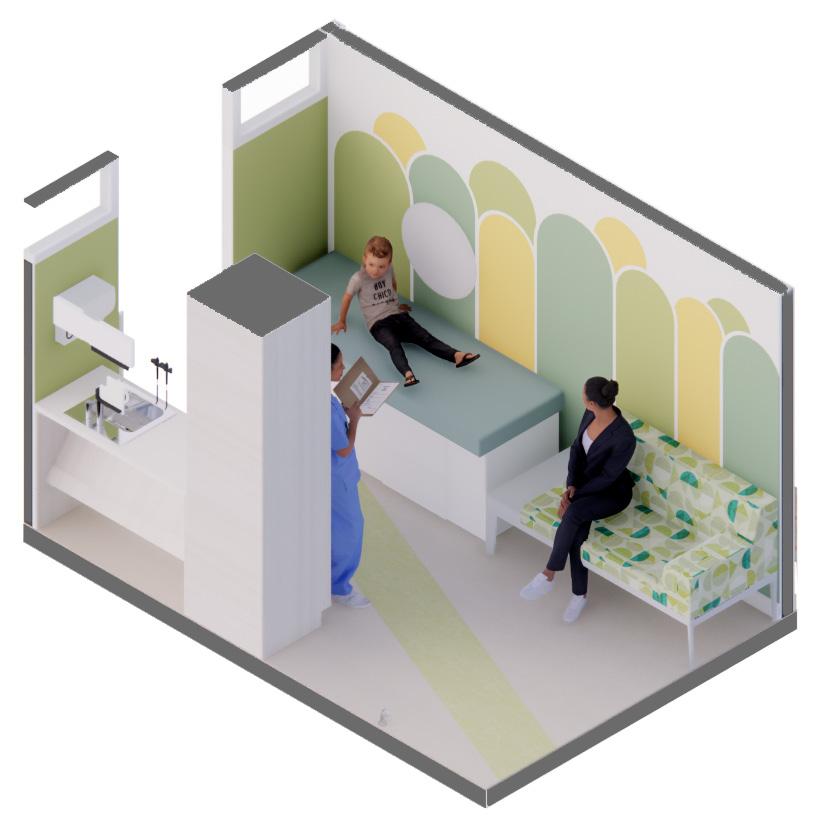
• Clerestory windows in each exam room
• Air purification systems, Atmos air and Puro UV Calming Healing Joyful Exciting Intriguing = Winter = Summer = Spring = Fall Colors creating these emotions in children
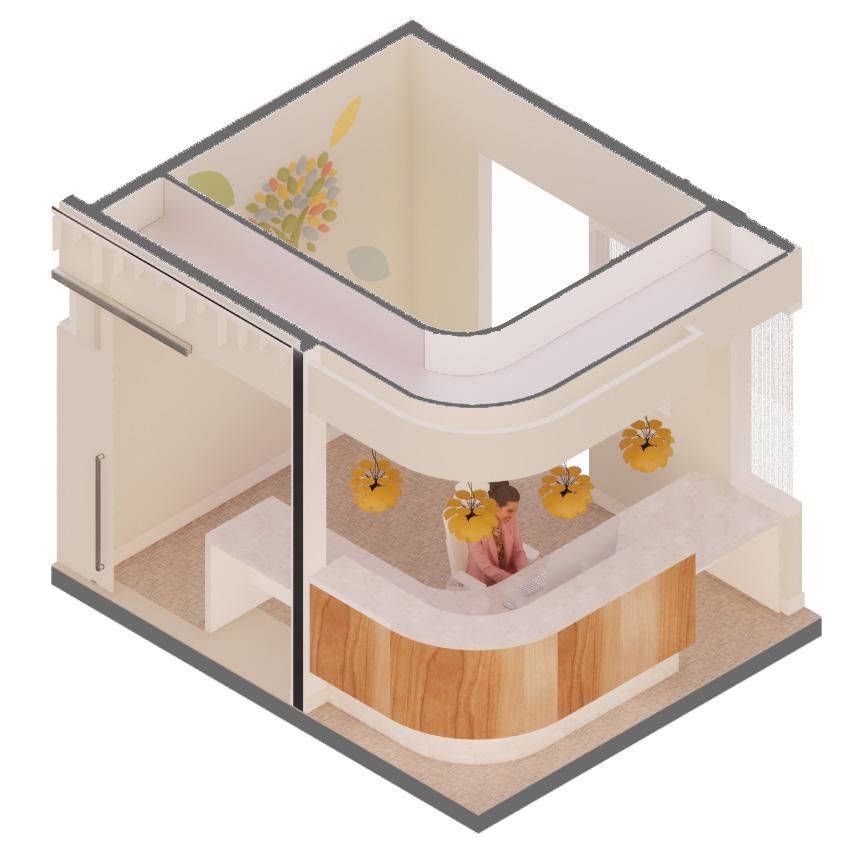
• Log inspired reception desk Nature inspired choices
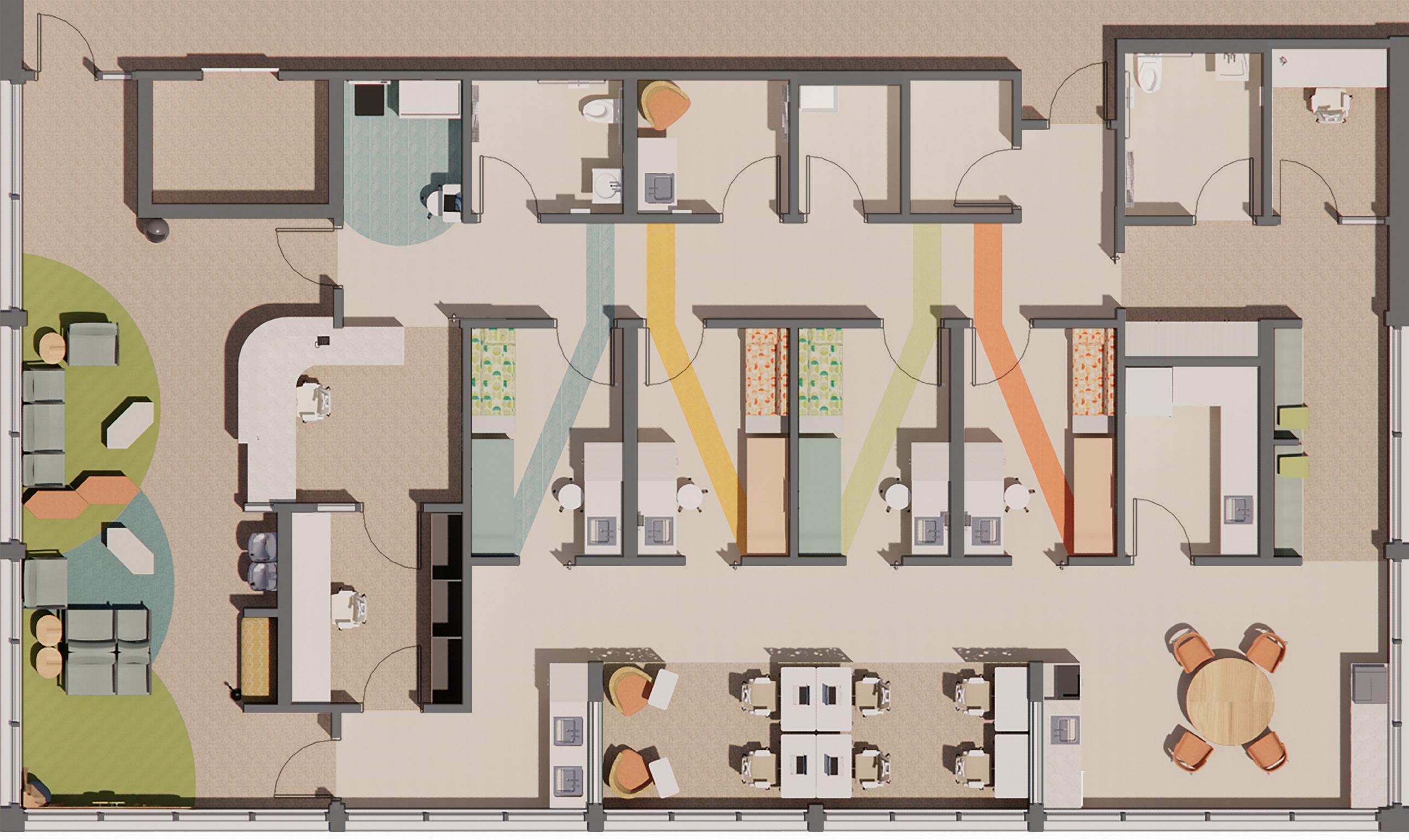
STAFF STORAGE
STAFF RESTROOM
HEADS DOWN WORKSPACE
• Green - soothing and promotes health
• Blue - promotes a tranquil ambience
• Yellow and orangejoy and laughter
• Pink - calming atmosphere, lowers heart rate Tree analogs
TRIAGE AND WEIGHING STATION
PATIENT CORRIDOR
PATIENT RESTROOM
MOTHERS’ ROOM
CLOSET
BREAK NOOKS
MEDICAL STORAGE
BREAK ROOM
STAFF CORRIDOR
BACK OF HOUSE WORKSTATIONS
HAND WASHING STATION
MEDICAL RECORDS
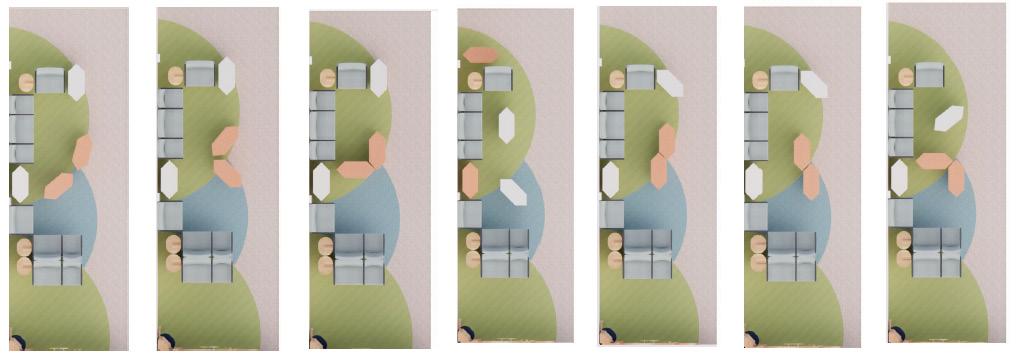
Through research, it was apparent that waiting rooms should be flexible and provide easily movable objects that can create boundaries or be taken away if needed. Here are a few possibilities.
• Sliding door creates boundary between public areas and reception, door stops at end of track.
• No floor change underneath ADA compliant counter.
• The soffit mirrors the shape of the reception desk, establishing a vertical relationship between the two elements.
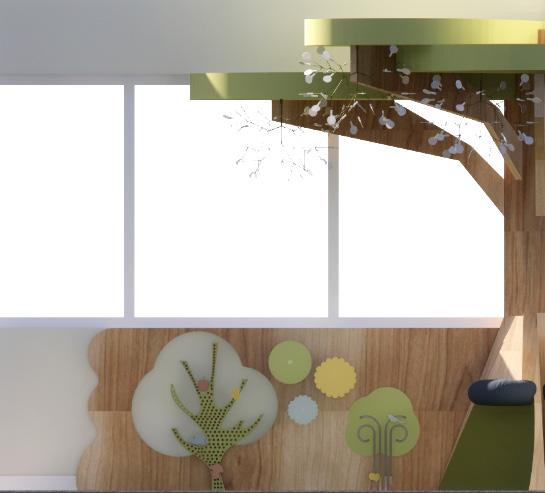
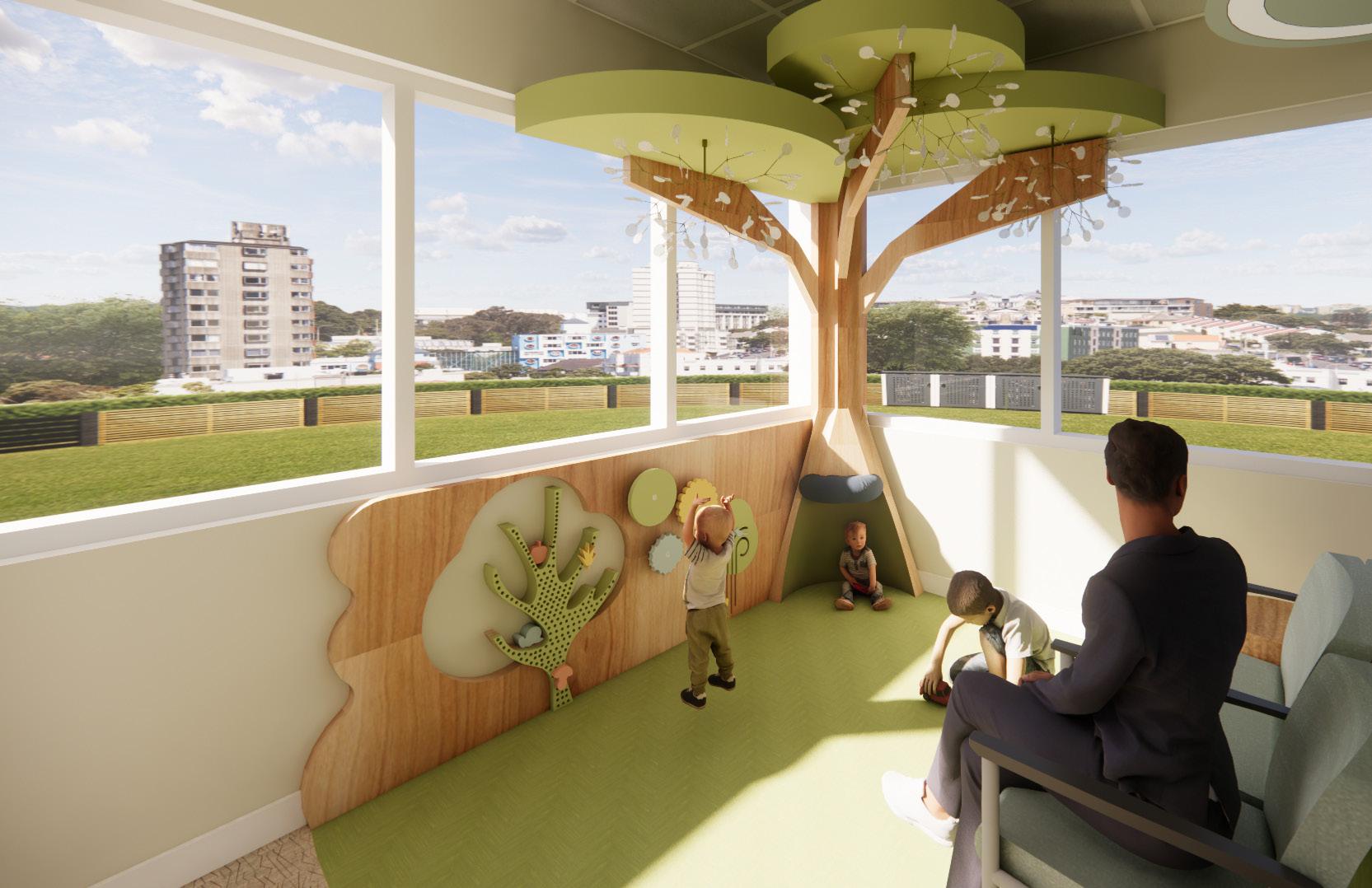
All colored materials shown here are made from antimicrobial plastics. This custom built play area includes;
• Peg board and shelves
• Spinning wheels
• “Climbing tree” game with interchangeable pieces
• Nook space for kids to crawl in with antimicrobial upholstered cushion above so kids don’t hit their heads
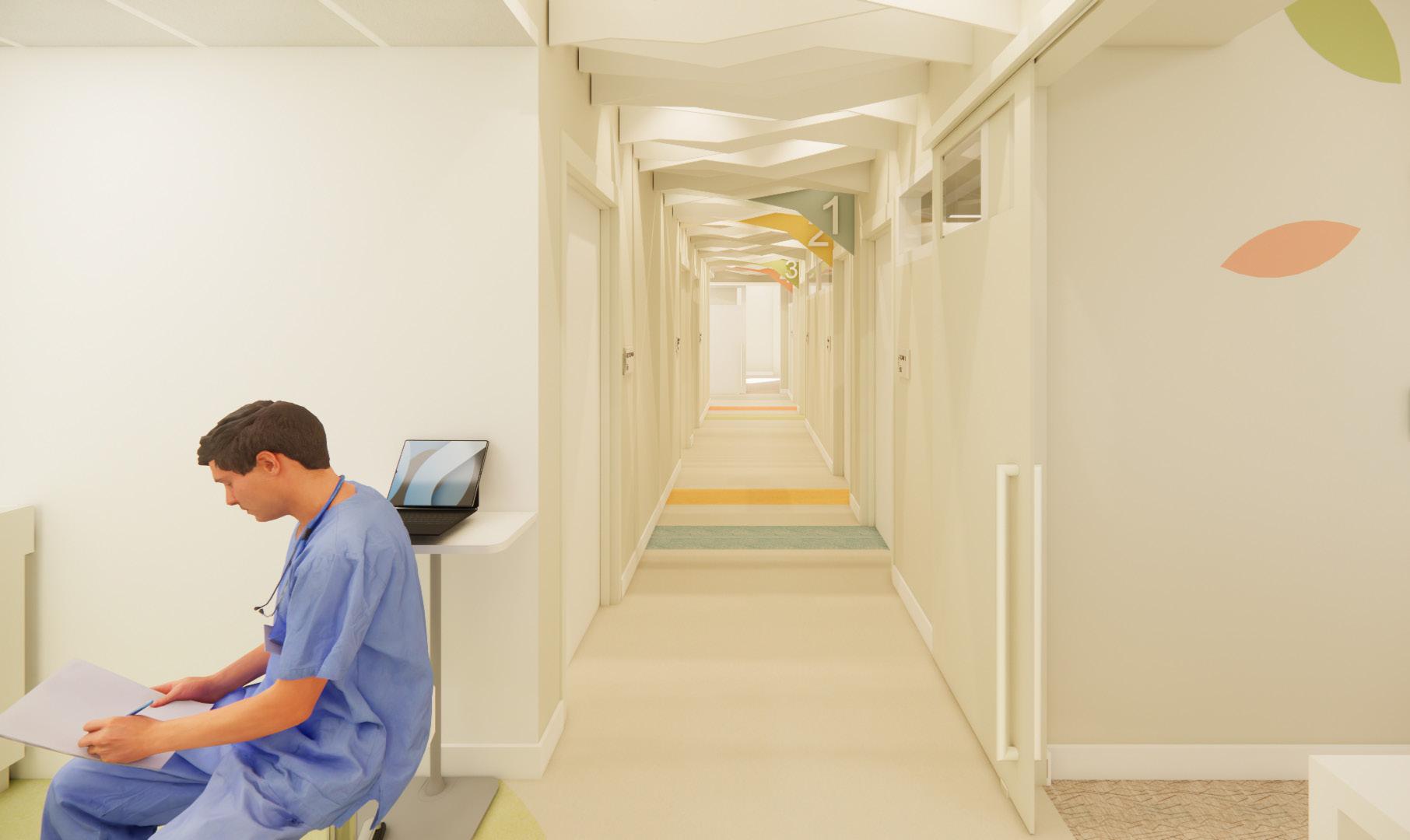
The patient hallway features ceiling baffles designed to resemble tree branches, creating a natural, calming atmosphere. Above these baffles, Solatube lighting allows sunlight to filter through, emulating the effect of light shining through treetops. Integrated into this system is Puro UV disinfectant lighting, which ensures the cleanliness of the baffles while mirroring nature’s inherent ability to purify. Additionally, the AtmosAir purification system is seamlessly incorporated into the HVAC system, enhancing air quality throughout the clinic. This integration not only prioritizes cleanliness and safety, but also mimics the clean air provided by trees in nature.
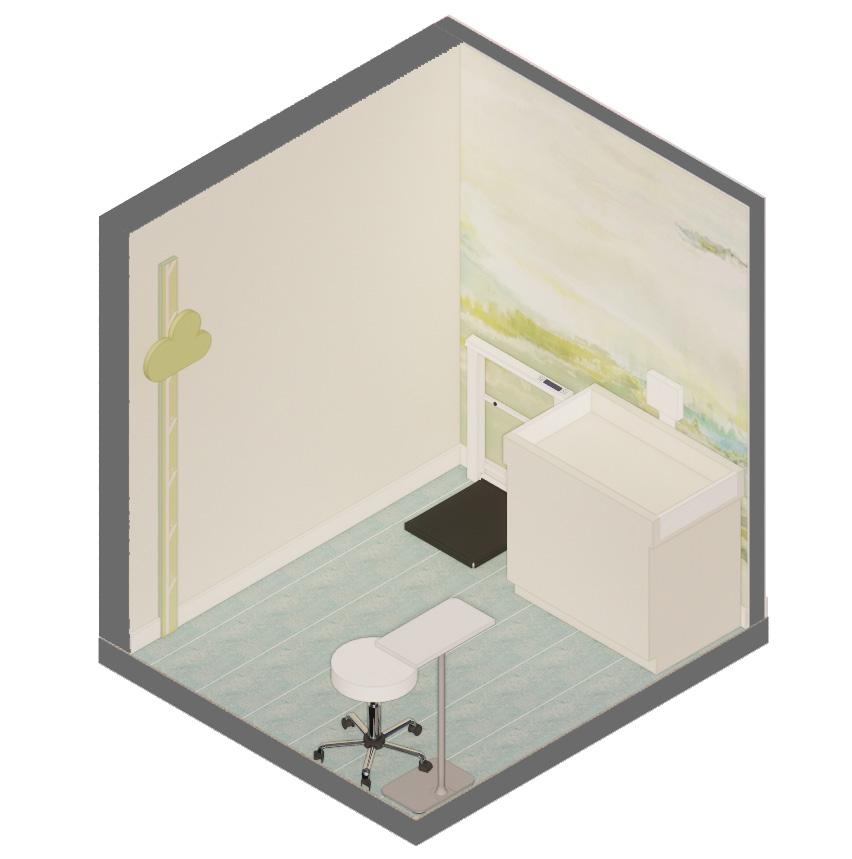
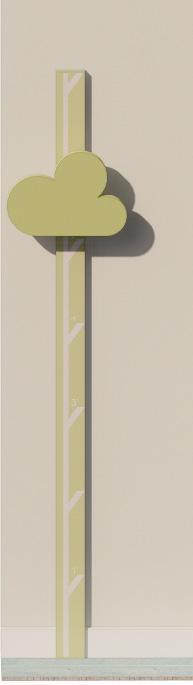
Triage Station includes;
• Medical scale that is also ADA compliant
• Medical scale designed for weighing babies with storage space underneath
• Spot for nurses to write down measurements
• Custom height measurement device
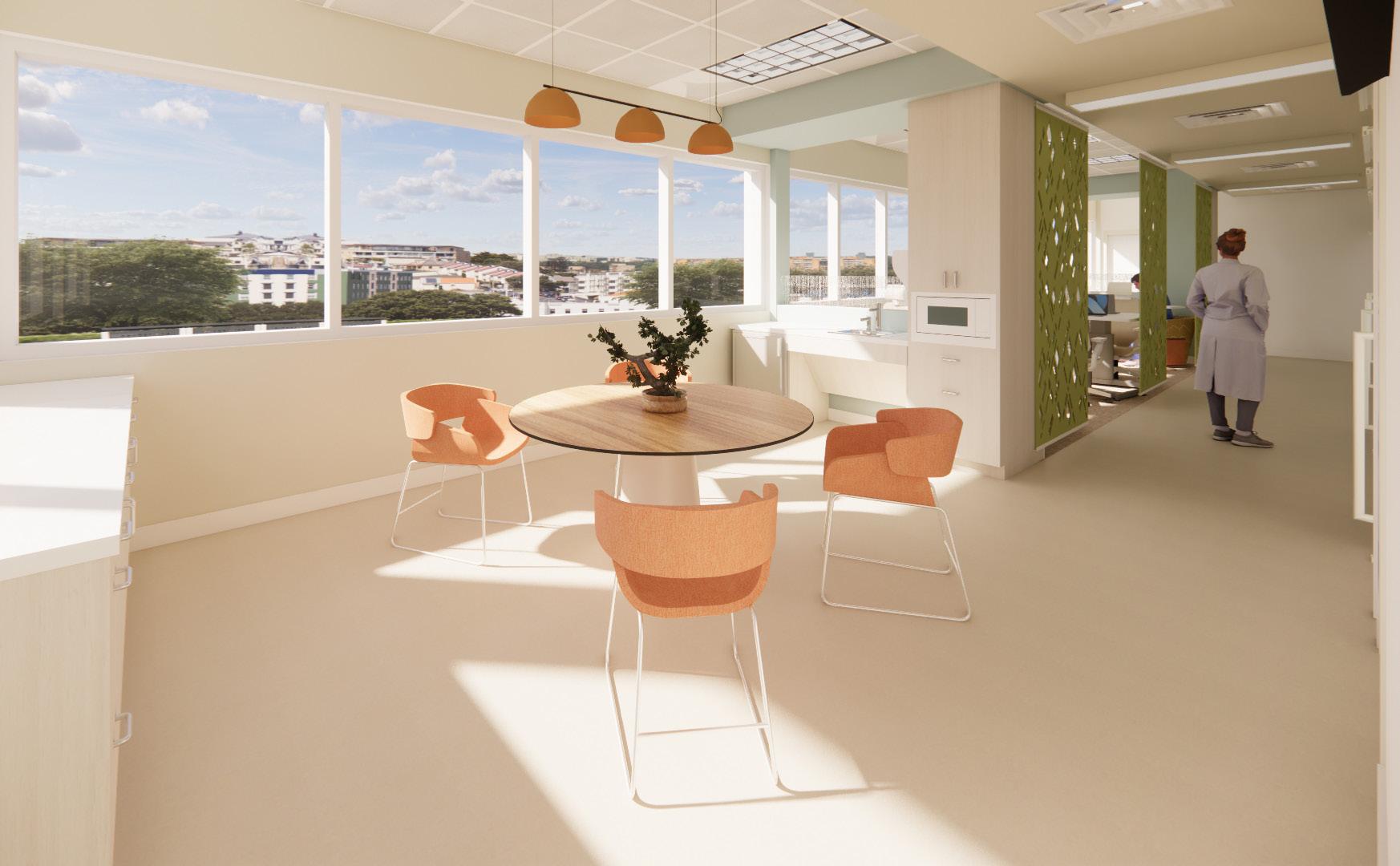
Incorporating biophilic-inspired design into the “off-stage” areas of the clinic was equally as important as it was for the “on-stage” areas. Break nooks strategically placed near large windows offer employees a dedicated space to relax and rejuvenate, benefiting from an abundance of natural light.
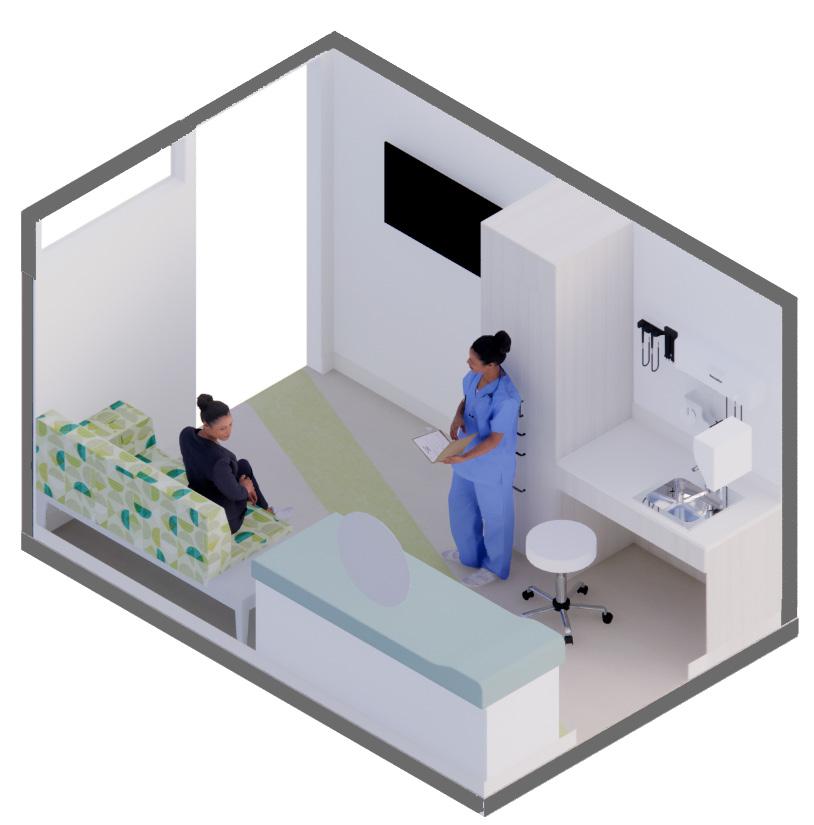
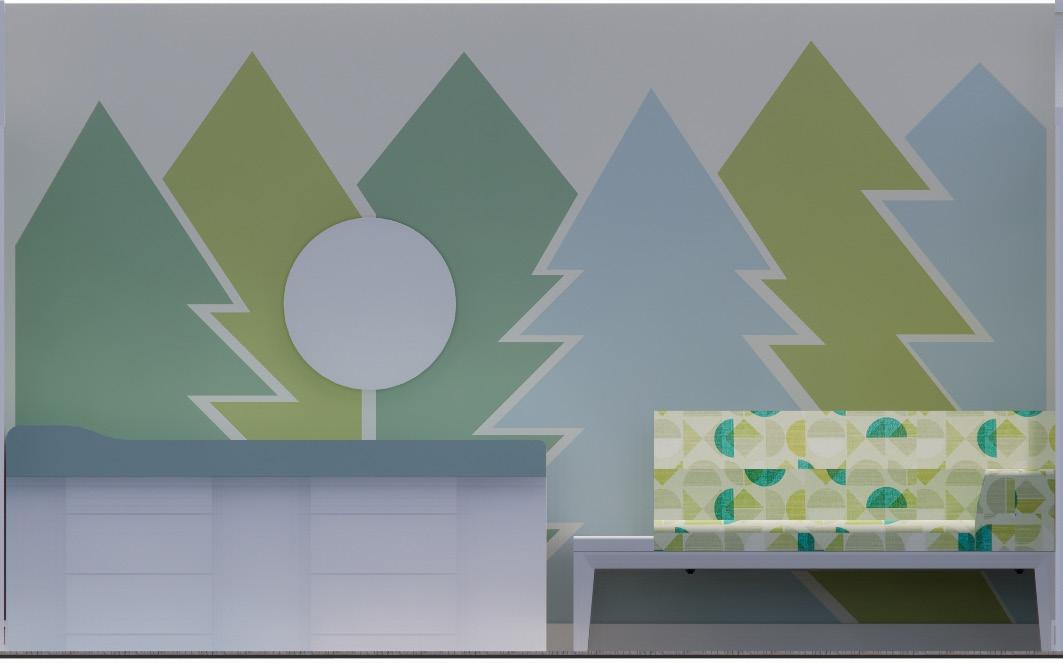
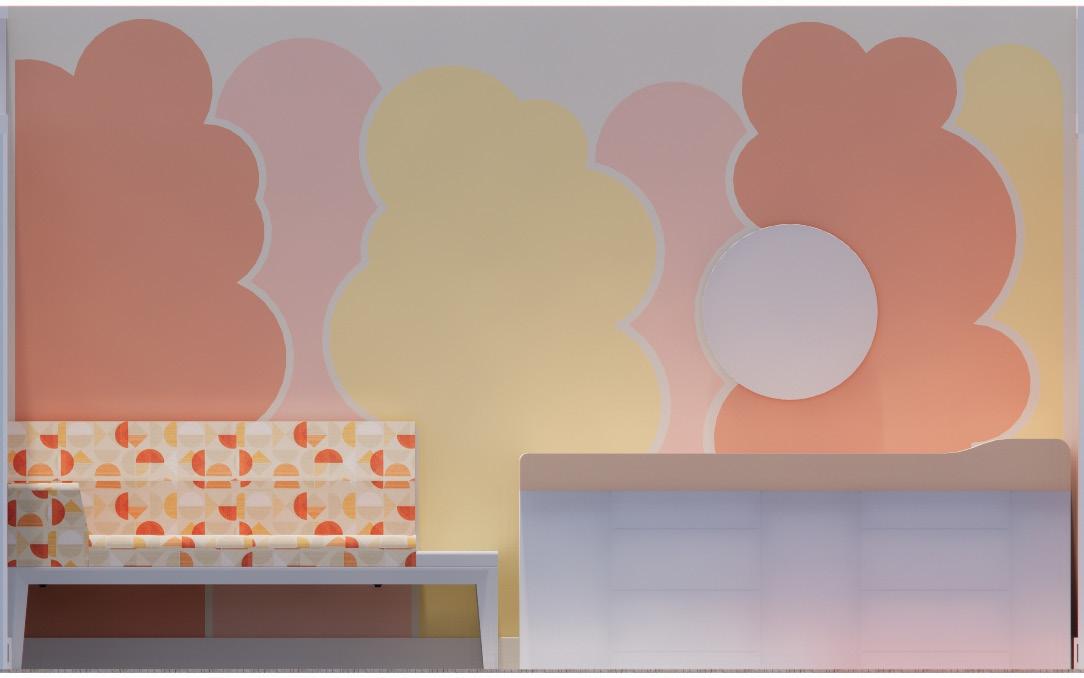
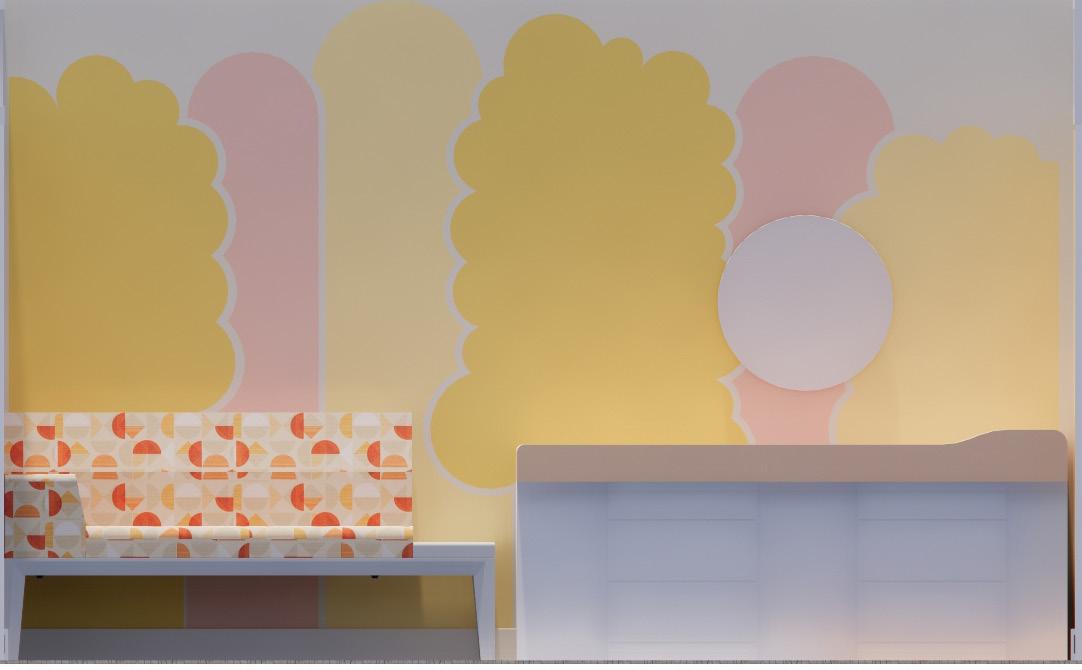
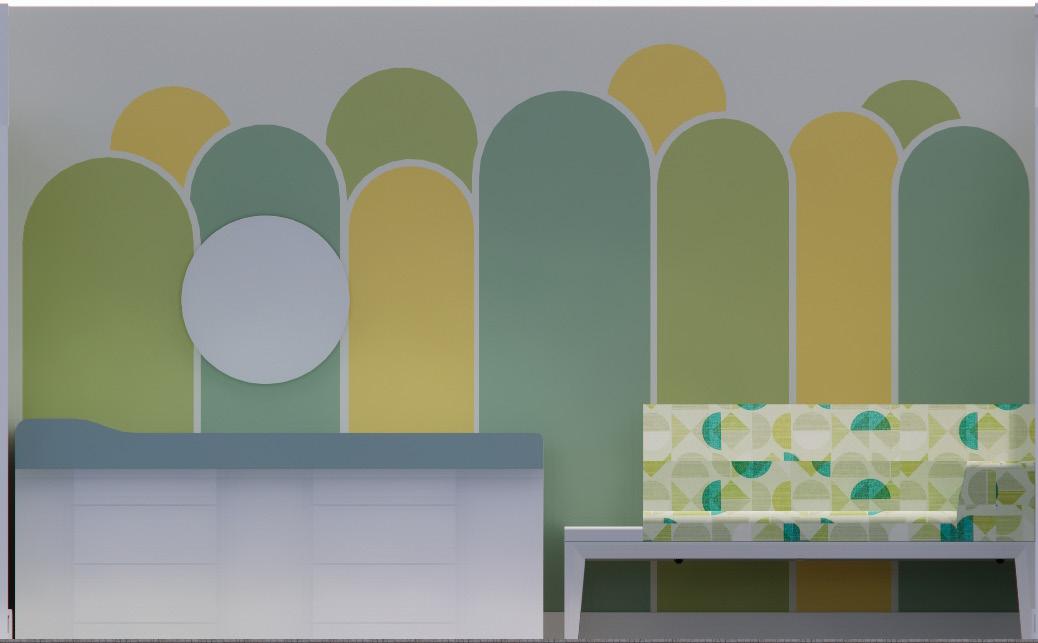
Each of the four exam rooms mimic trees flourishing in different seasons. These custom wall murals help to enforce this idea.
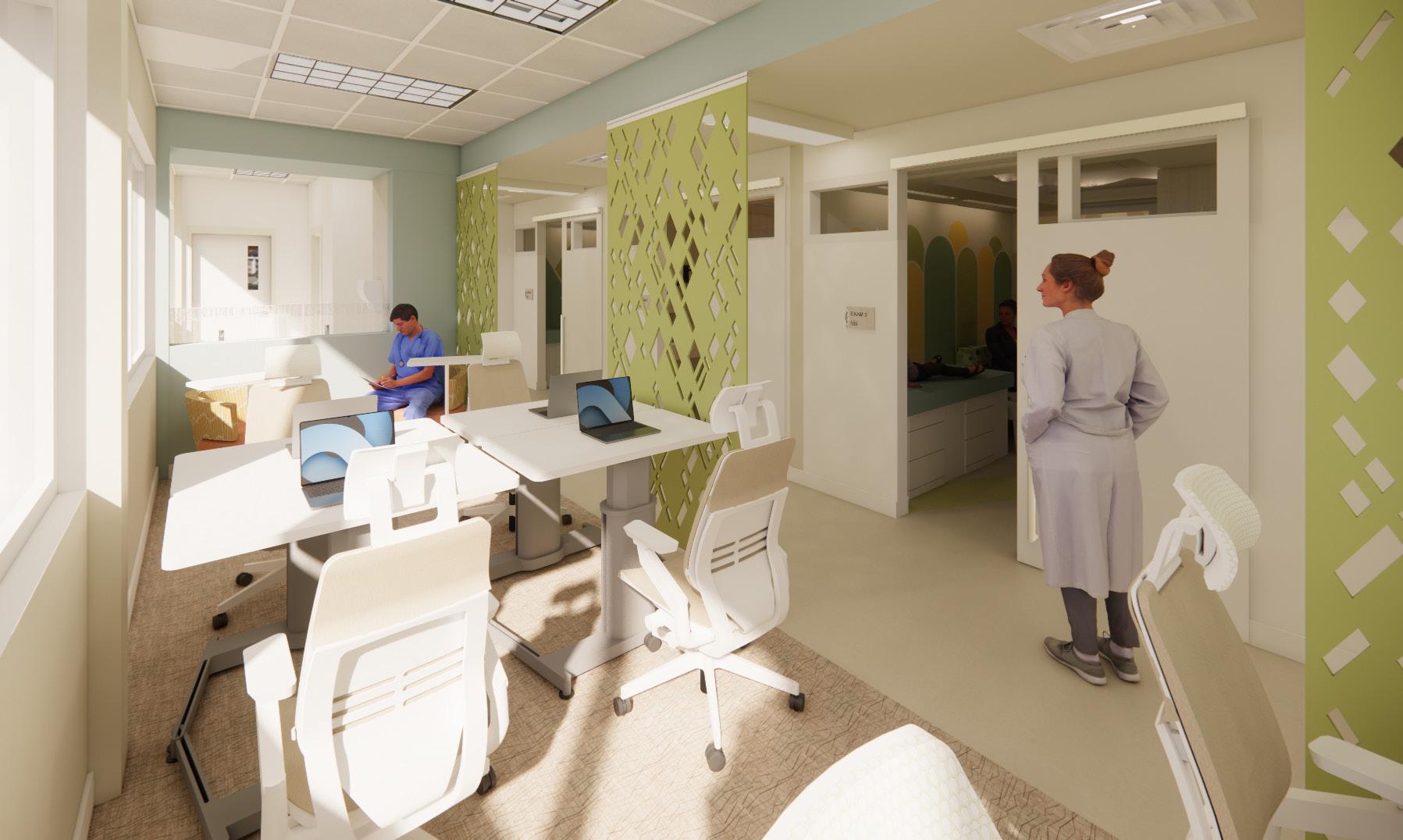
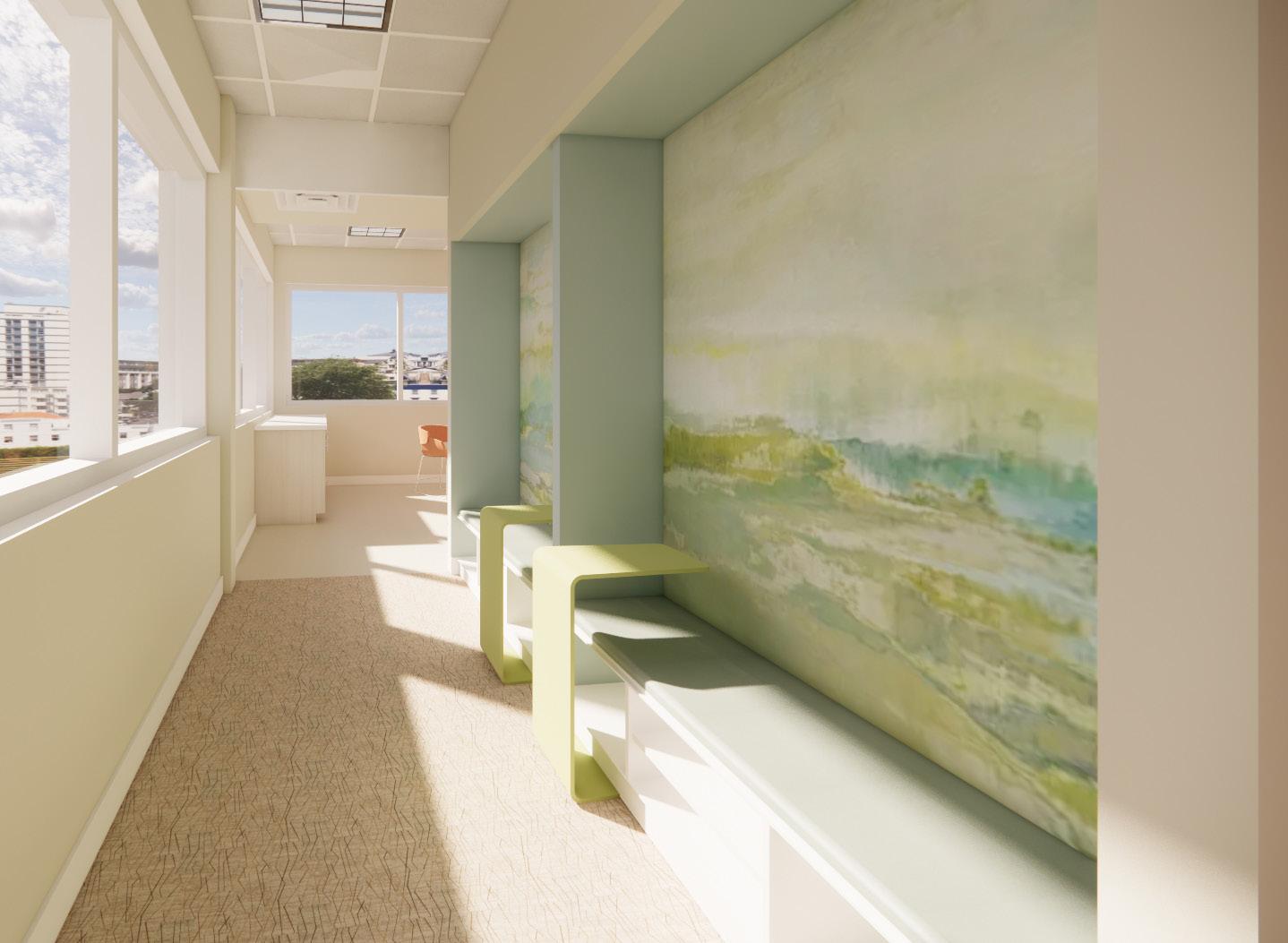
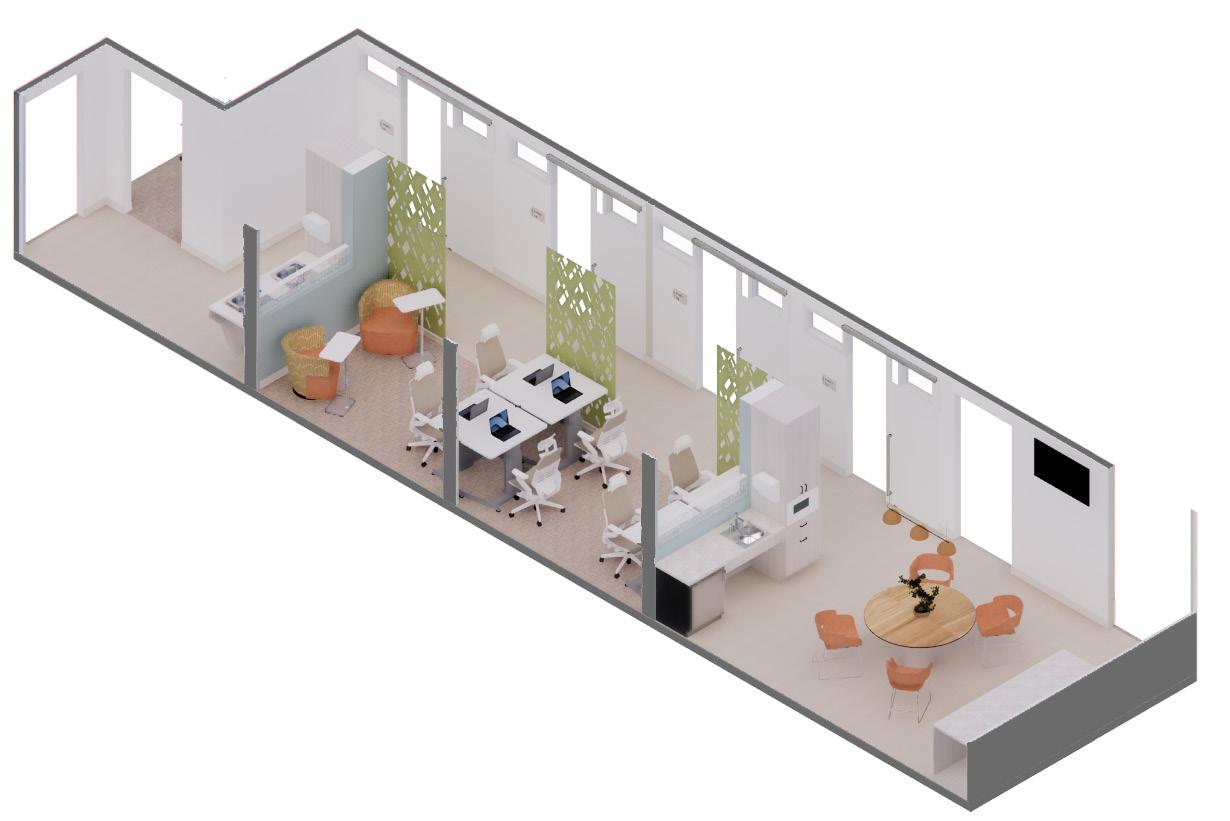
Variety of spaces to work are provided. In the workstation area multiple types of workspaces are provided; relaxing spaces, collaboration spaces and heads down spaces.
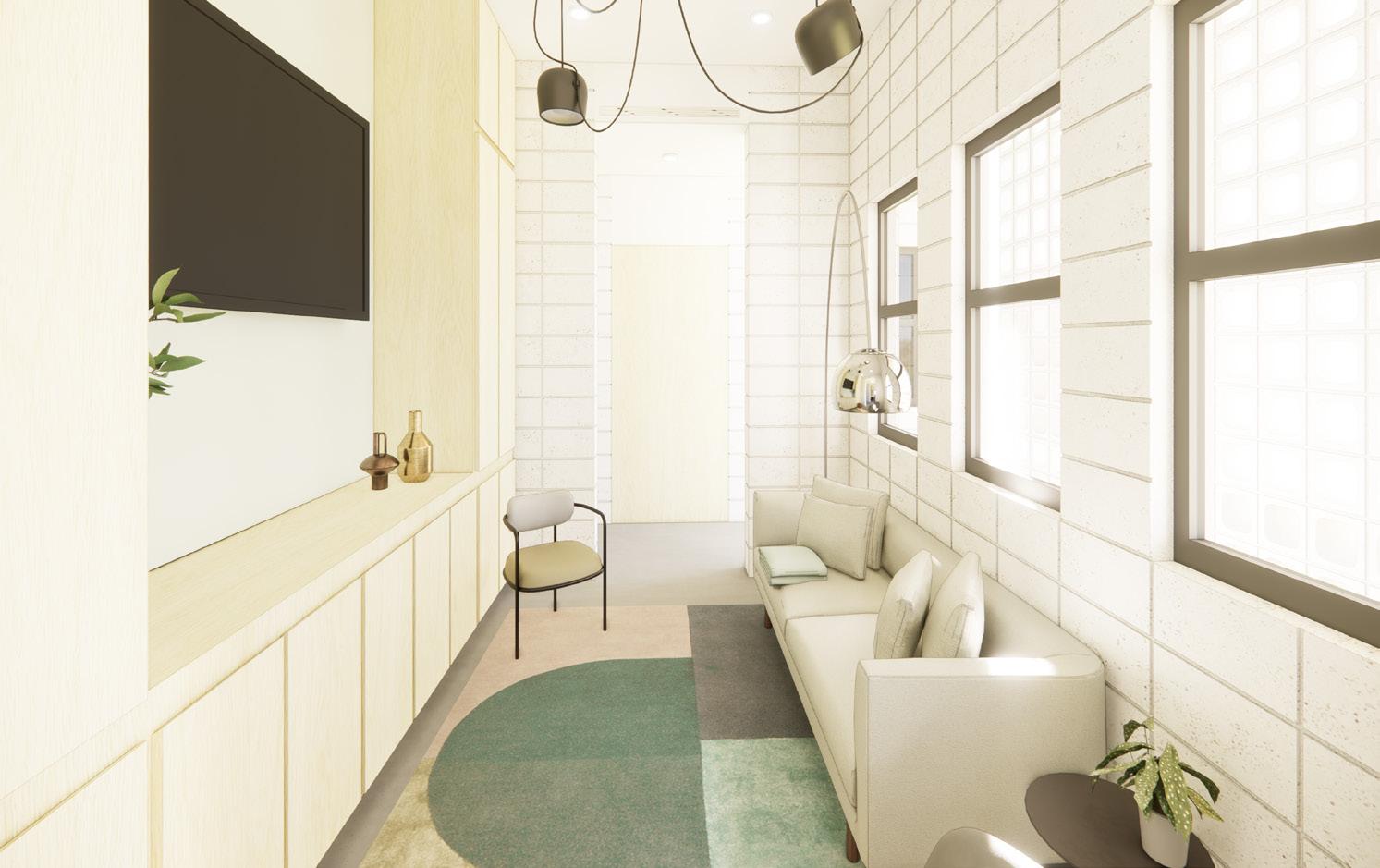
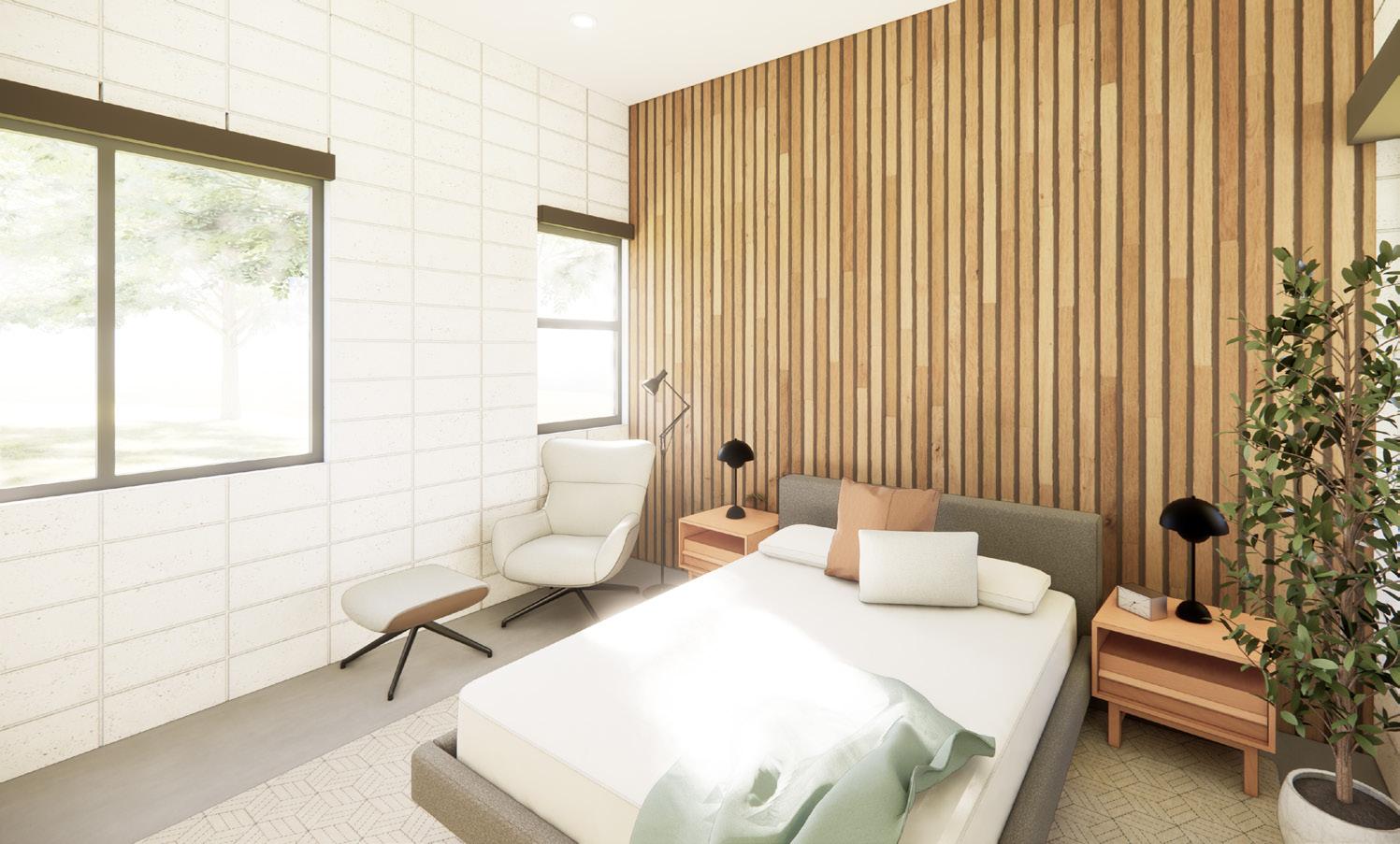
Program Summary
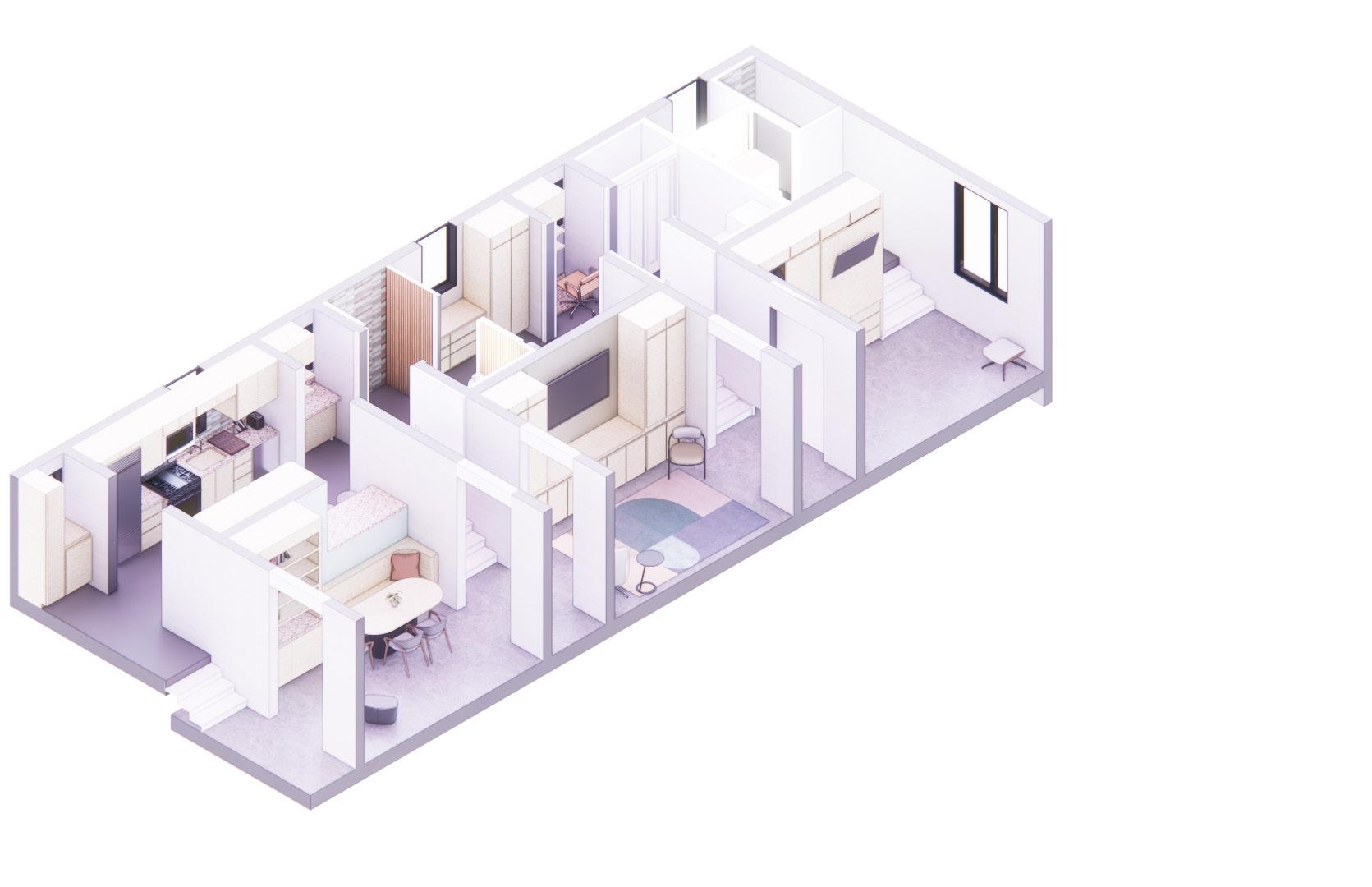
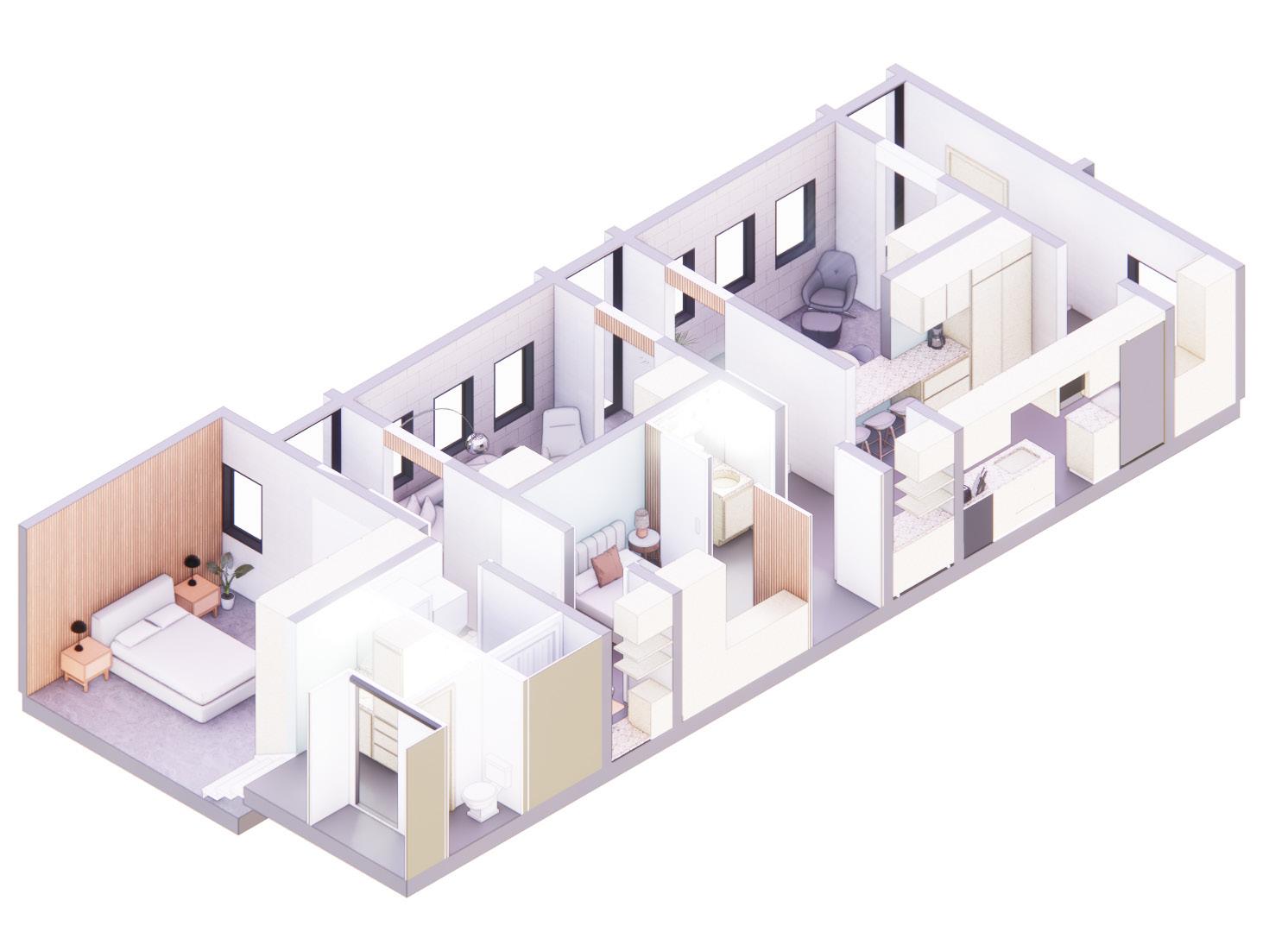
Architect Intern, Noah Kotlinski, and I created a schematic housing prototype that responds to real site conditions, community needs, and efficient construction methods.
Project Summary
This prototype was developed for Hufft, a firm known for its focus on craft, material clarity, and integrated design and fabrication. The goal was to design a flexible residential model that supports affordable living while maintaining high spatial quality.
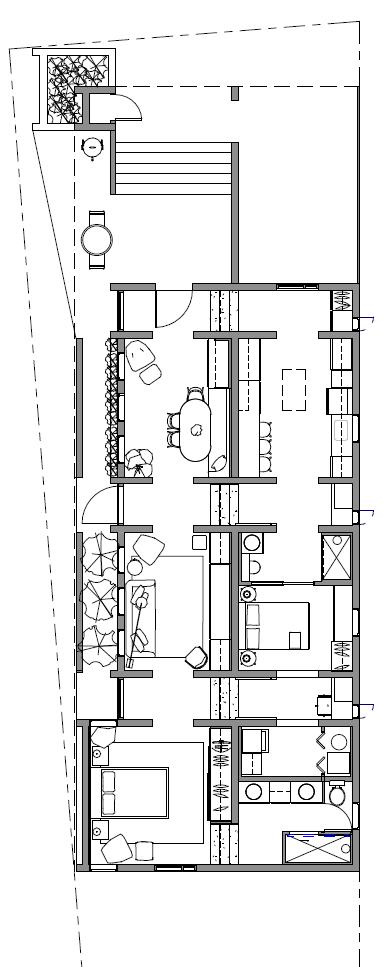
The concept focuses on simple forms, clear circulation, and strong connections to natural light. The plan can adapt to different family sizes and site conditions while keeping construction efficient. Material choices were guided by durability and the ability to be fabricated with consistency. The design uses framed views, varied ceiling heights, and controlled openings to create small moments of discovery within a simple layout.
The result is a repeatable housing prototype that feels thoughtful, livable, and grounded in place.
Skills Used: Revit, SketchUp, Enscape
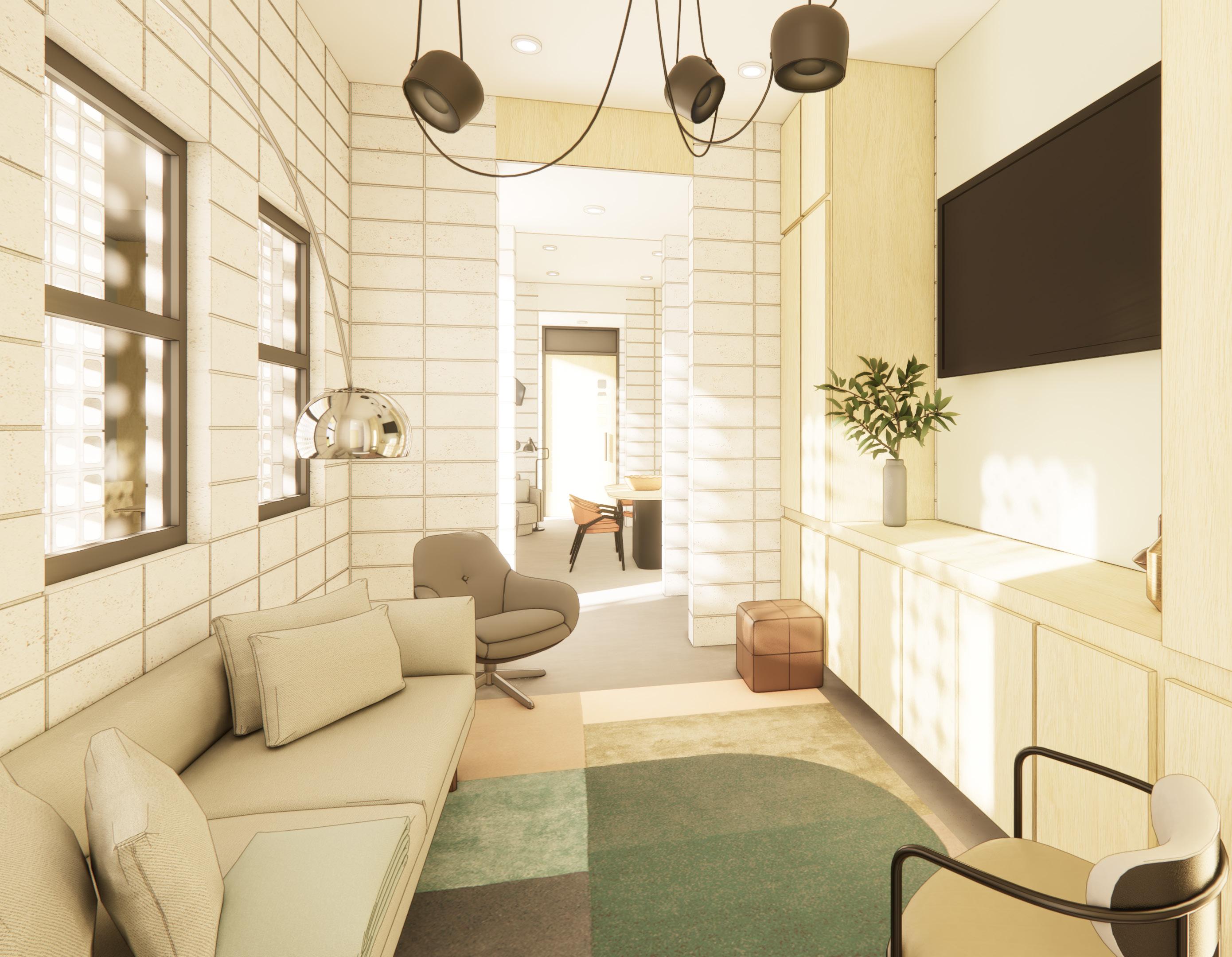
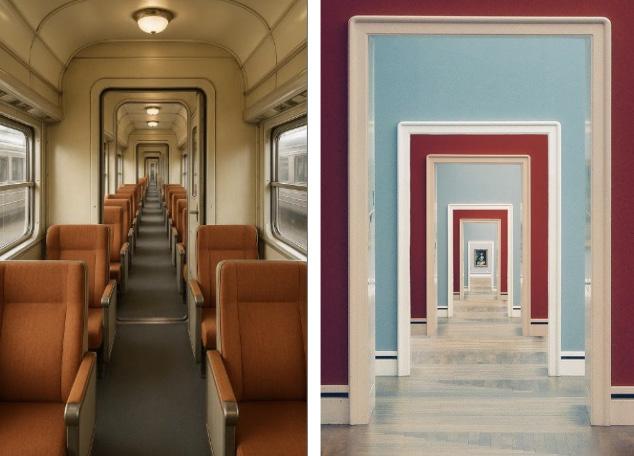
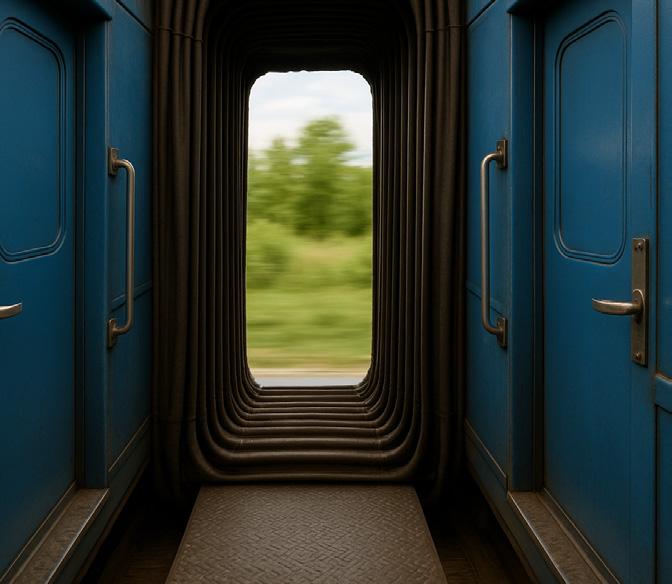
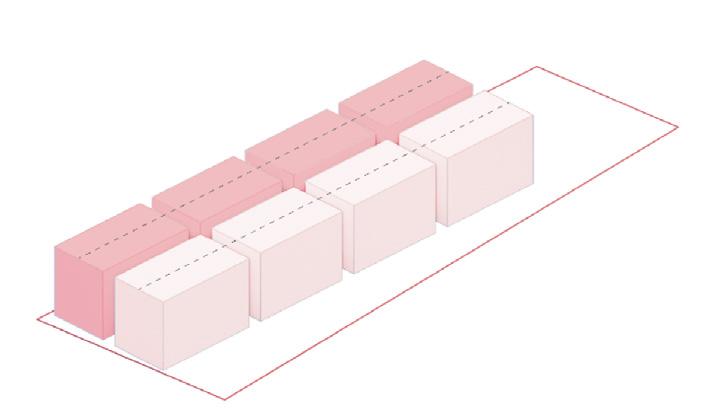
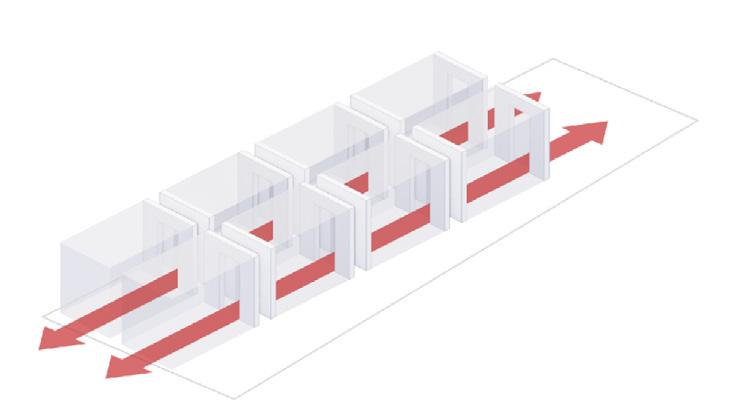
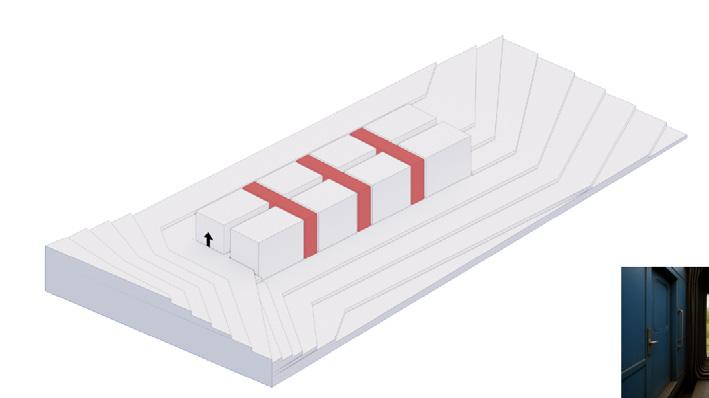
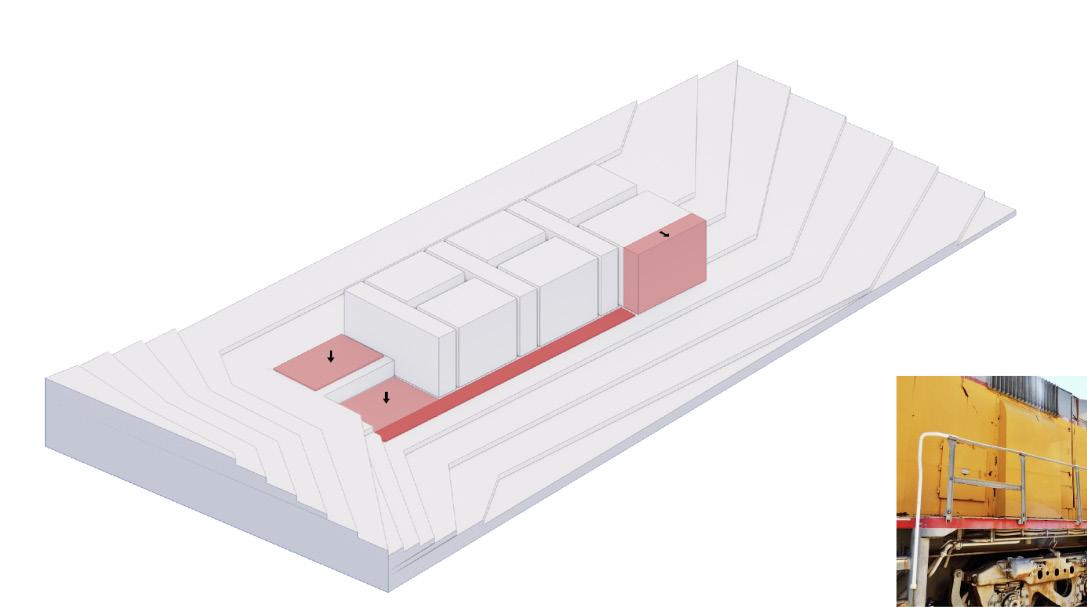
“Two trains passing in the night” reflects not only our site and its context, but is a phrase used to describe a chance encounter. Many people today face challenges finding affordable homes that meet their needs. When it happens, it’s a chance encounter.


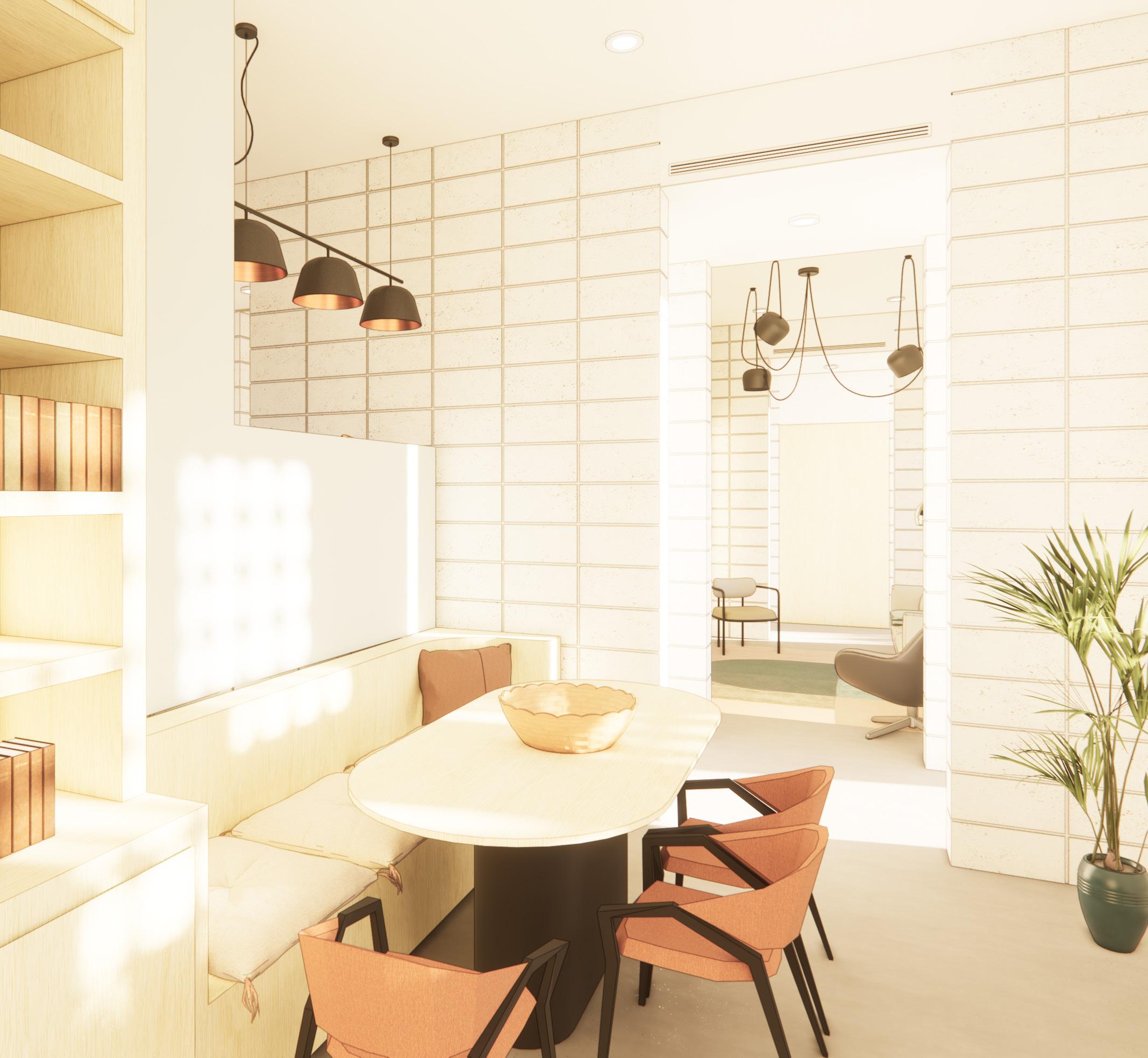
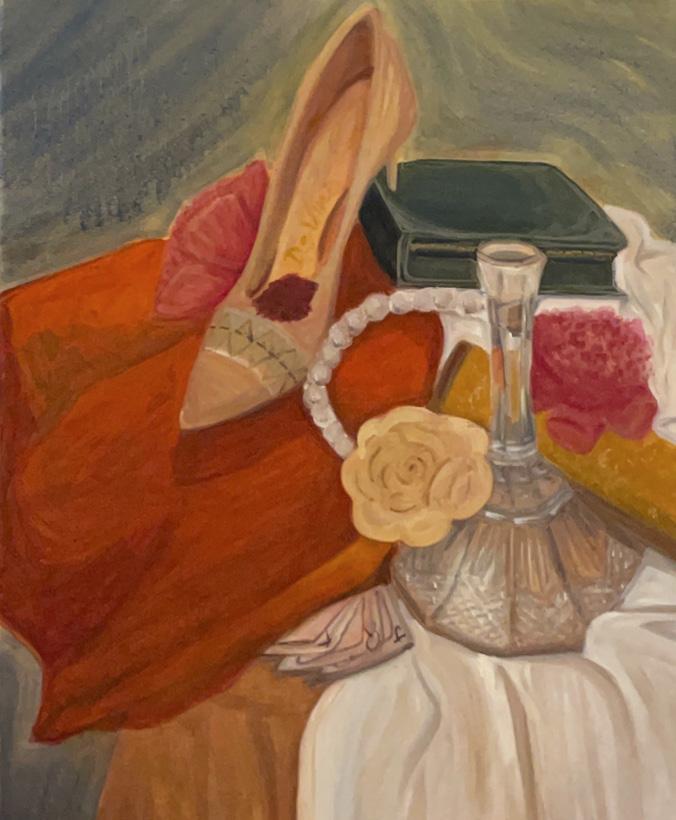
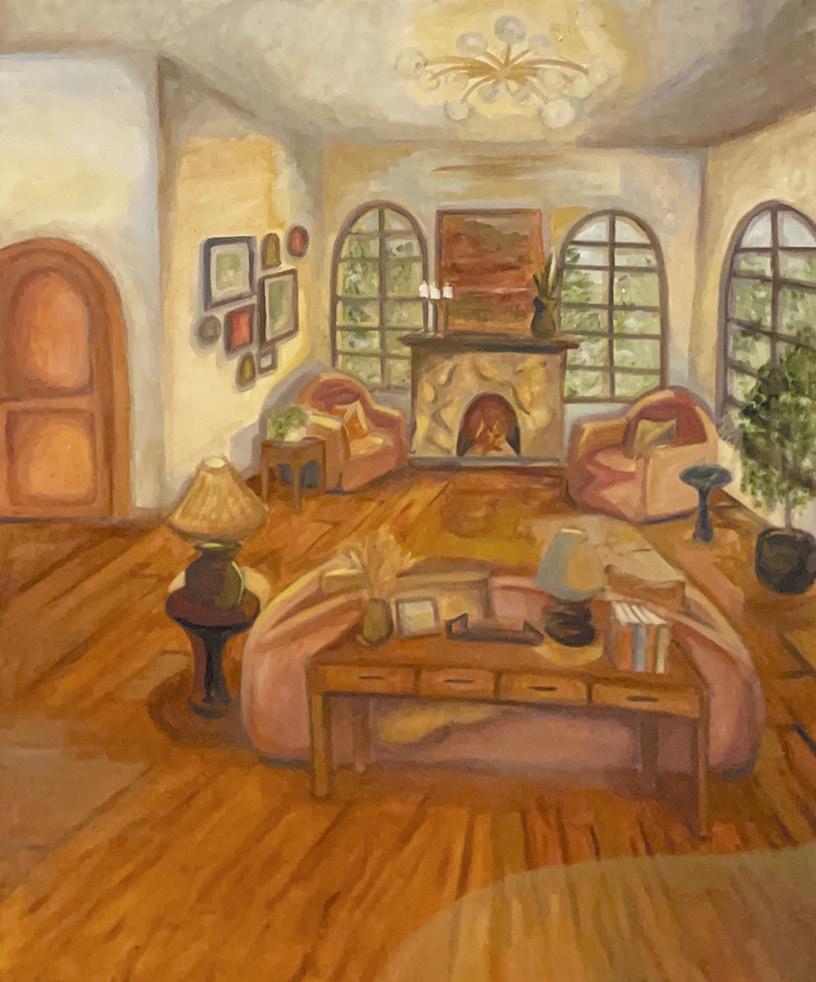
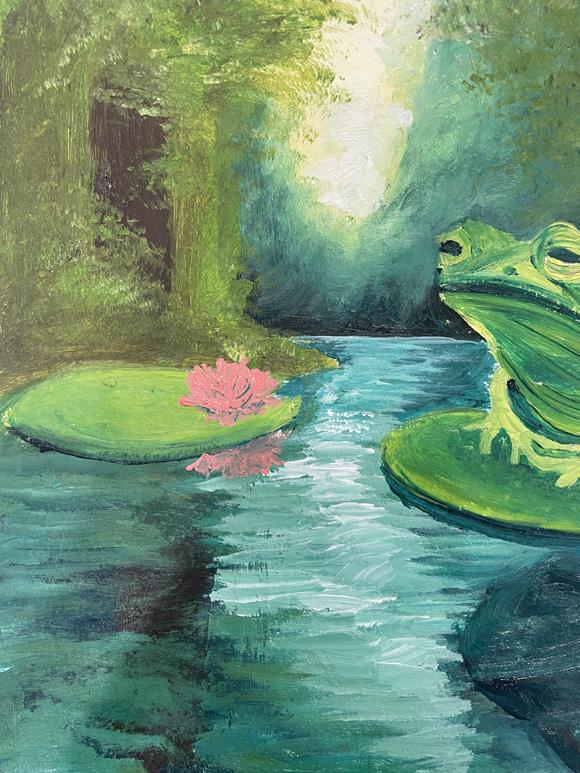
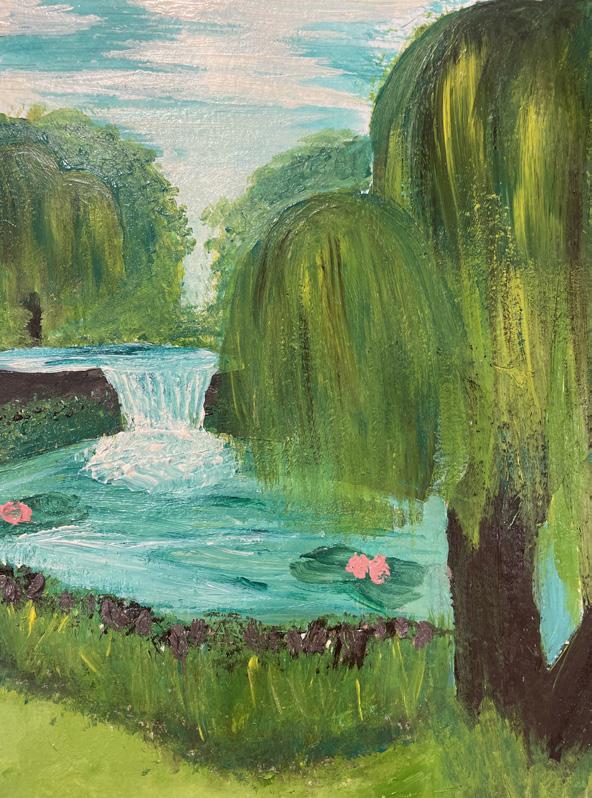
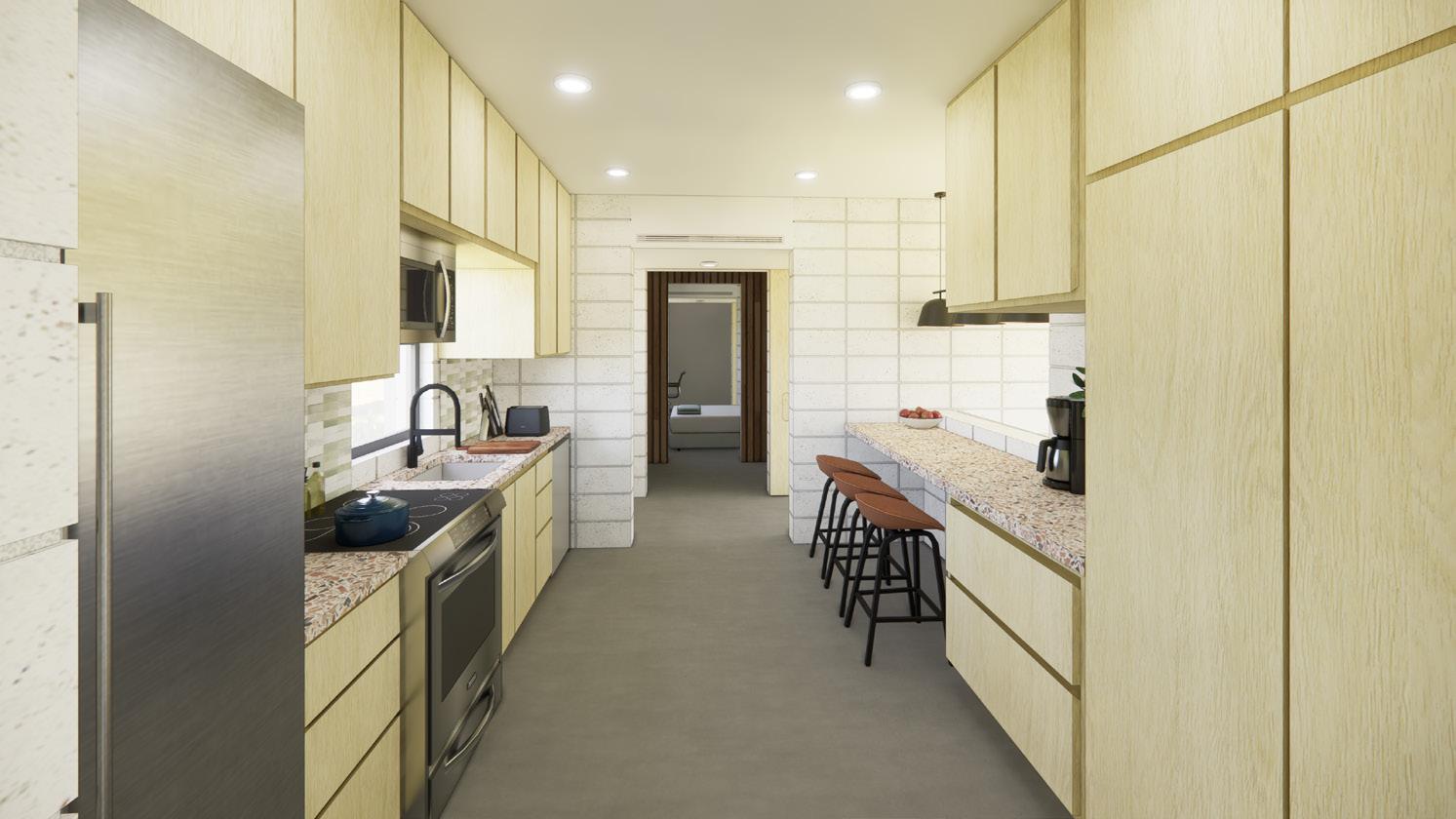
DINING ROOM
Highschool
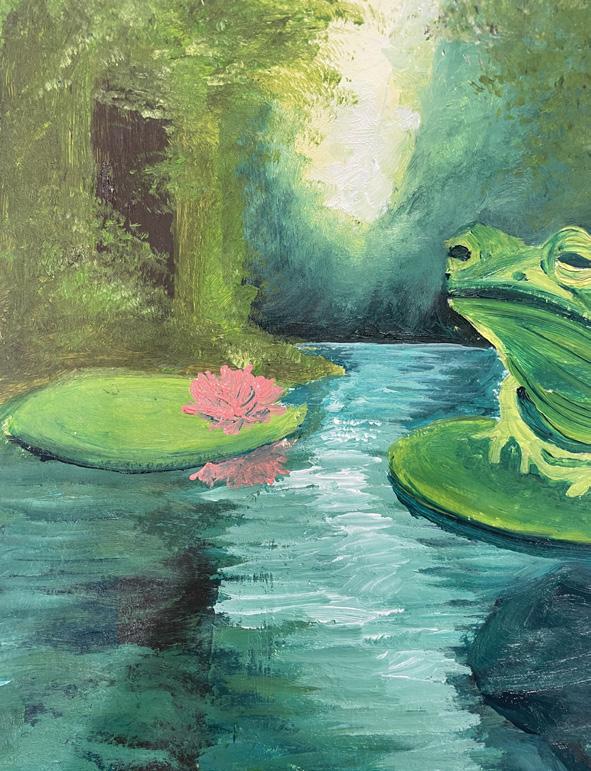
Drawing 1 + 2
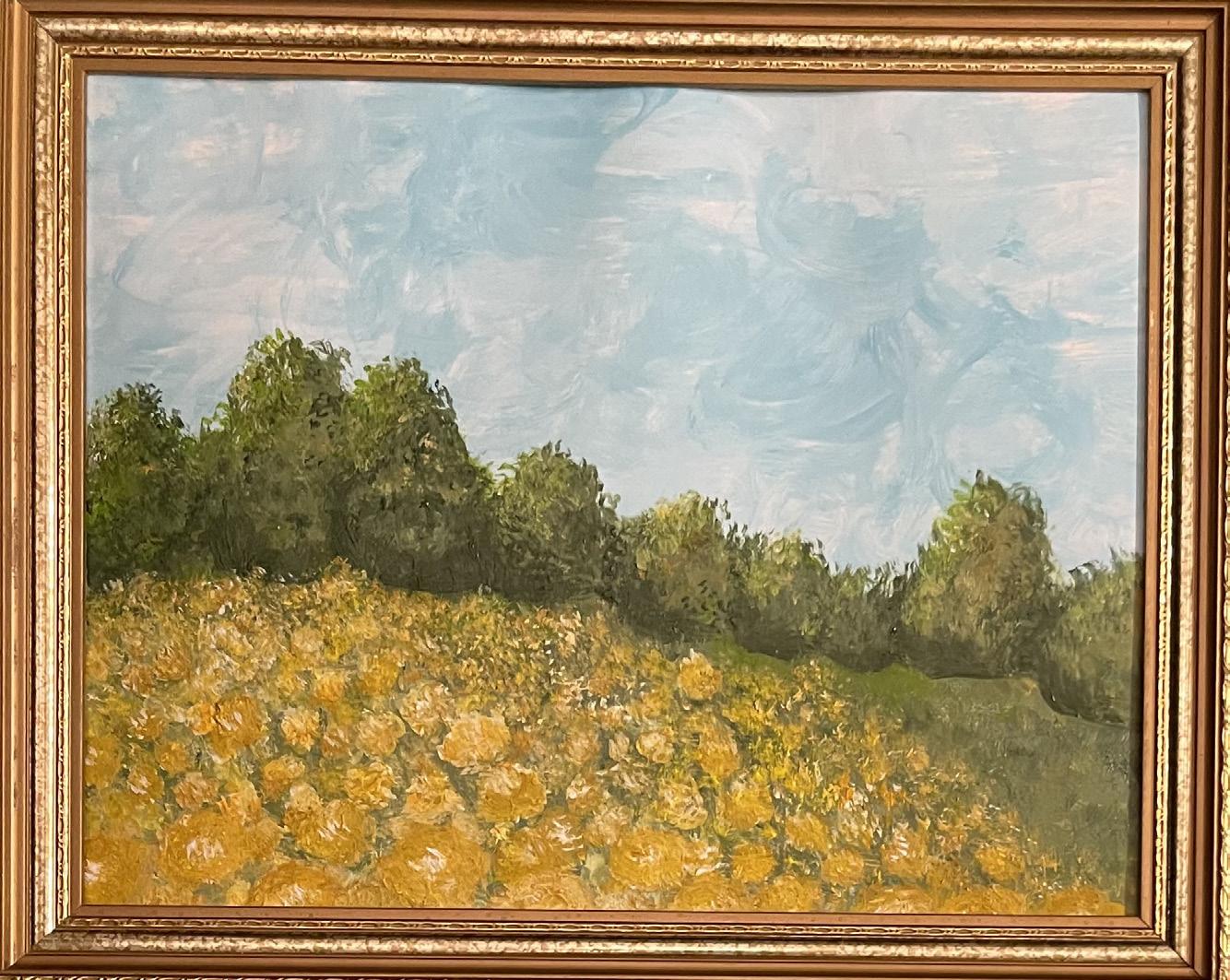
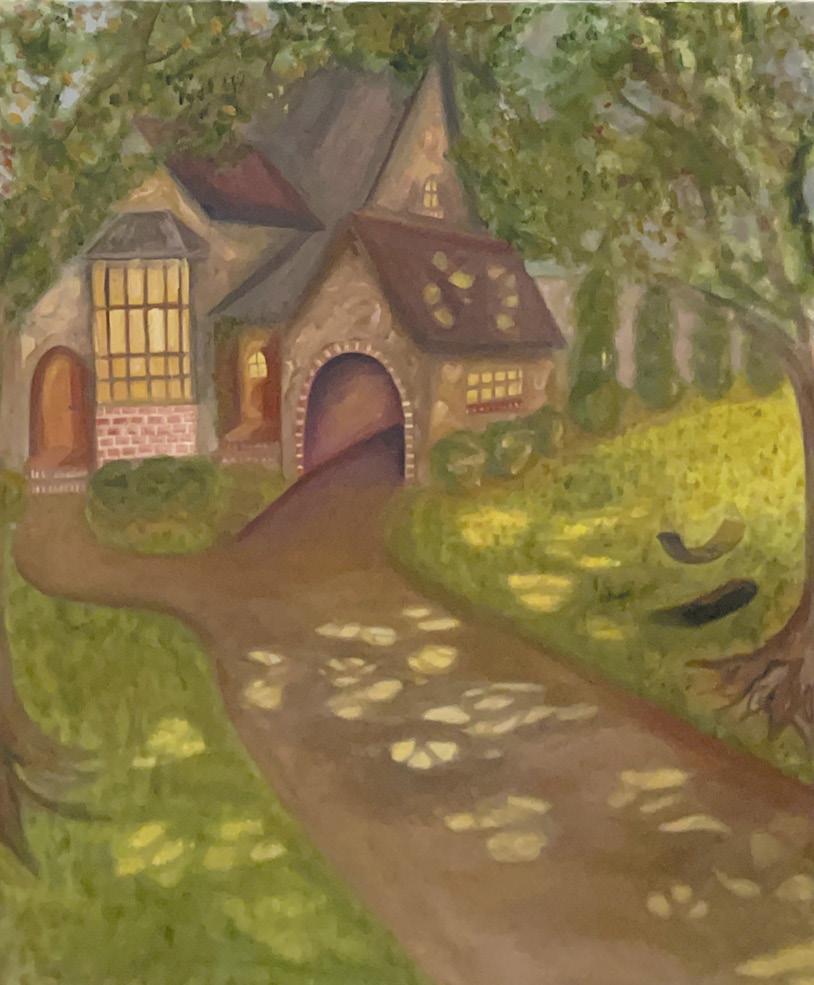
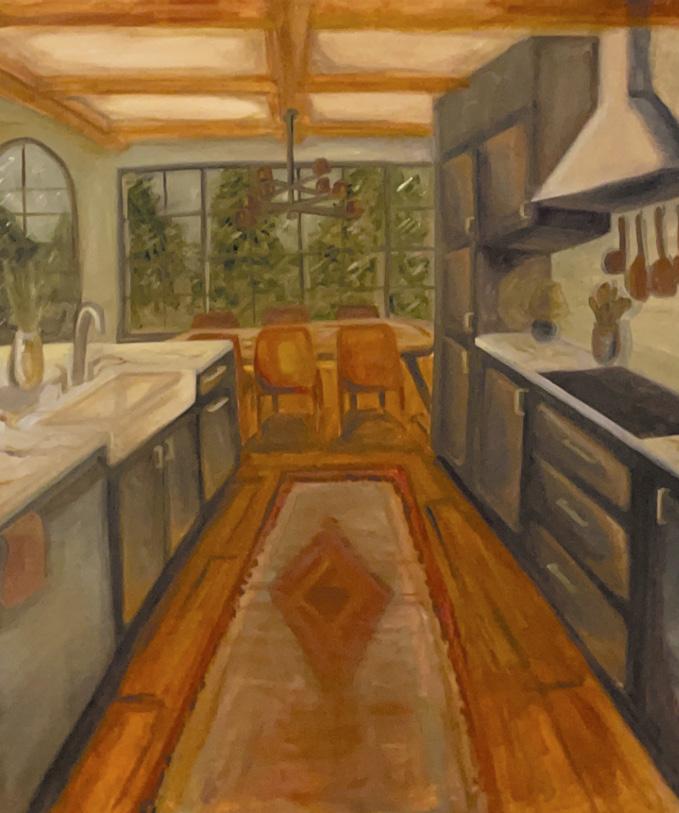
Painting 1 + 2
College
Intro to Oil painting
Etsy
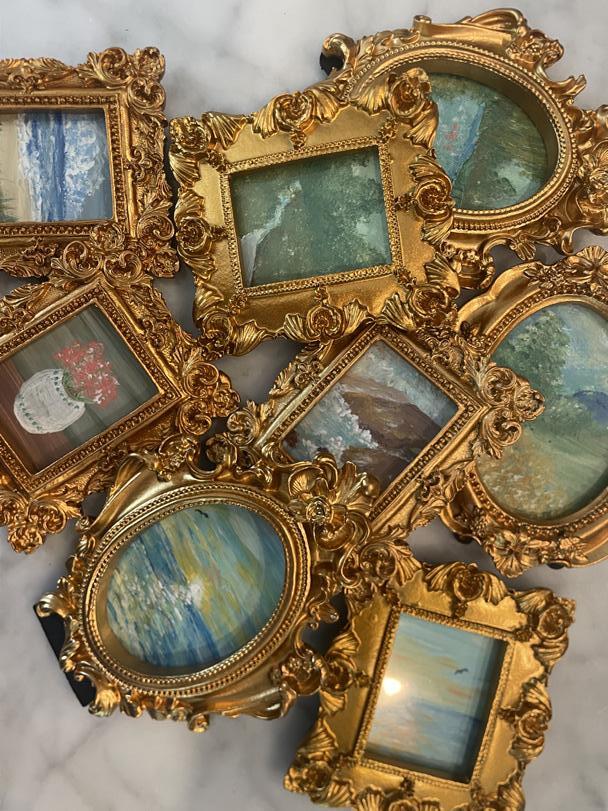
Selling small gold framed paintings on etsy
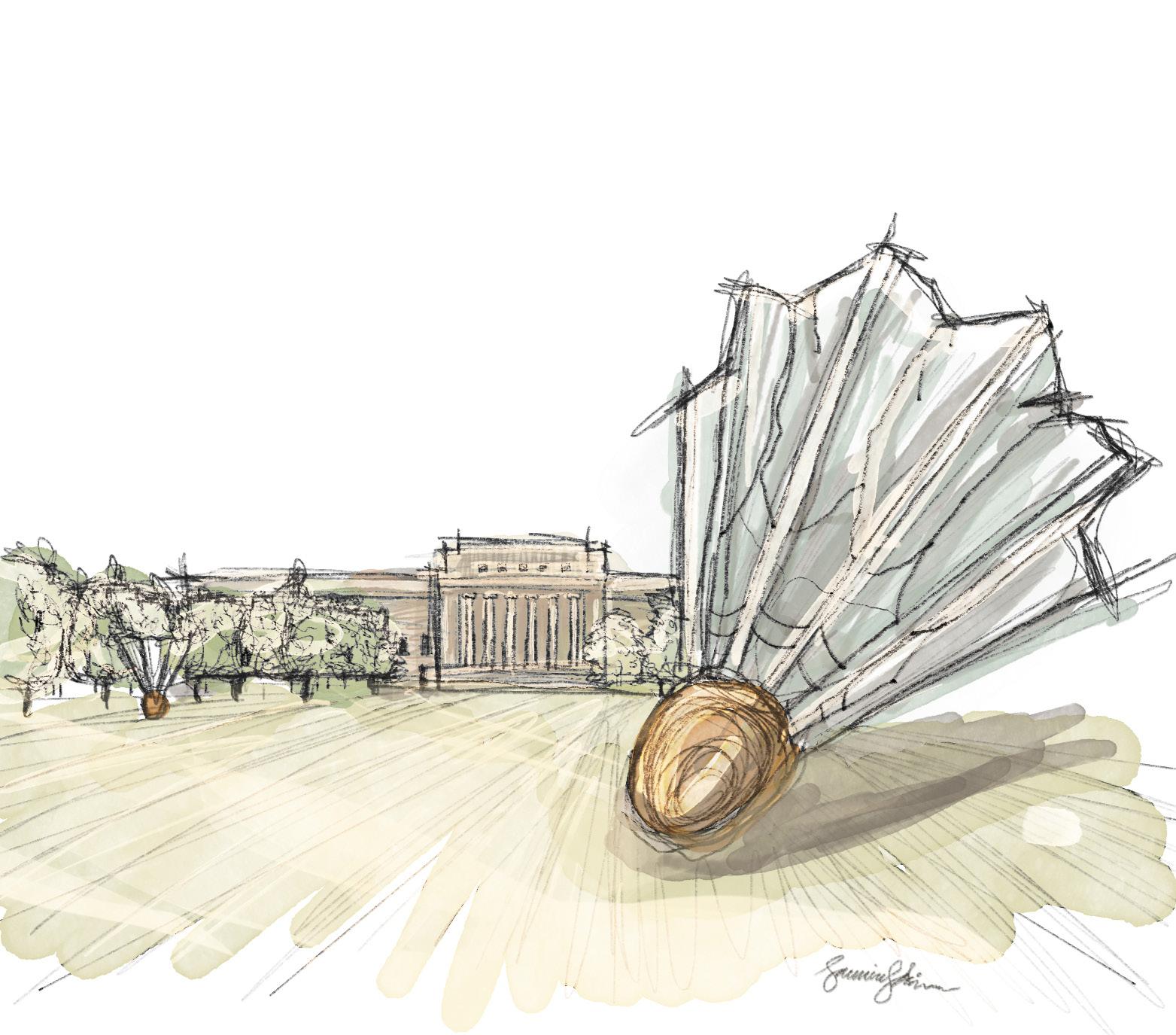
Illustrations
Illustrated for a poetry book written by Linda Lankford