SNOWY SCHEME THE SNOWY SCHEME
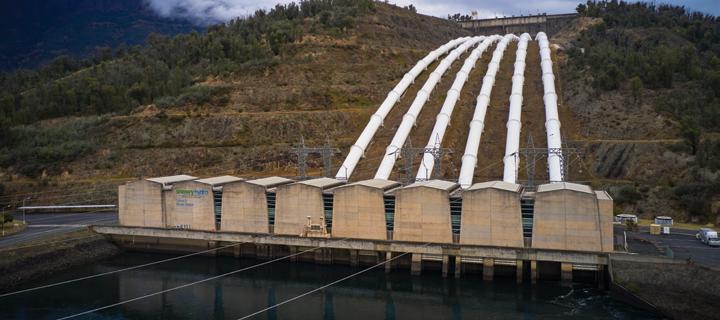
Tumut 2 Power Station
Tumut 1 Power Station
Tooma Reservoir
The Snowy Mountains Hydro-electric Scheme was built between 1949-74 and continues to be recognised as one of the civil engineering wonders of the modern world.
The Scheme currently has nine power stations (including pumped storage capability at Tumut 3 Power Station and a pumping station at Jindabyne), 16 major dams, 80 kilometres of aqueducts and 145 kilometres of interconnected tunnels.
Snowy Hydro is one the largest producers of renewable energy in the National Electricity Market.
Power Station
Murray 1 Power Station
Geehi Reservoir
Guthega Power Station
Jindabyne Pumping Station
ABOUT SNOWY 2.0
The Snowy 2.0 project is a major expansion of the Snowy Scheme that is linking two existing reservoirs (Tantangara and Talbingo) with tunnels and a new pumped-hydro power station to be located 800m underground.
Snowy 2.0 will provide on-demand power generation and largescale energy storage, increasing the generation capacity of the Snowy Scheme by almost 50%. It will deliver an additional 2,000MW of power and approximately 350,000 megawatt hours (MWh), or 175 hours of energy storage, to the National Electricity Market (NEM). This is enough capacity to power 500,000 homes simultaneously.
The Snowy 2.0 power station will house six reversible Francis pump-turbine and motor-generator units. Three of the units will be synchronous (fixed) speed and three will be asynchronous (variable) speed. A single inclined pressure shaft will divert water through six steel-lined penstocks and into the generating units.
Hydropower will be generated by falling water spinning Snowy 2.0’s giant reversible turbines. Water will be recycled between the upper reservoir (Tantangara) and lower reservoir (Talbingo) by the same turbines which can also pump the water in the opposite direction. This means the same water can be used to generate power more than once, making the most of available water.
The ability to store water and generate power on-demand means Snowy 2.0 can be switched on quickly. At times of low demand, Snowy 2.0 can pump water using the excess electricity in the system. When energy is needed most, the stored water will be used to generate electricity within minutes.
Snowy 2.0 is a major regional infrastructure project bringing significant investment and thousands of jobs to the Snowy Mountains region.
Jindabyne Mini Hydro
4 5 Snowy 2.0 MT KOSCIUSZKO JINDABYNE TALBINGO KHANCOBAN THREDBO ADAMINABY CABRAMURRA TUMUT COOMA VOIR TANTANGARA RESERVO NTAN Tumut 2 Power Station Tumut 1 Power Station Tumut 3 Power Station Jounama Small Hydro Blowering Power Station Jindabyne Pumping Station Murray 1 Power Station Guthega Power Station Jindabyne Mini Hydro Murray 2 Power Station SNOWY-MURRAY DEVELOPMENT SNOWY-TUMUT DEVELOPMENT ERVOIR TALBINGNGO RESSE S R LAKE EUCUMBENE EUCUMBE AKE JINDABYNE LA LOWERING RESERVOIR B BL L KHANCOBAN PONDAGE GE PO Island Bend Reservoir Geehi Reservoir Tumut Pond Tooma Reservoir KOSCIUSZKO NATIONAL PARK POWER STATION PUMPING CAPABILITY TUNNELS RESERVOIR PUMPING STATION E JOUNAMA PONDAGE GE CORRYONG TUMBARUMBA DALGETY
Snowy 2.0 MT KOSCIUSZKO JINDABYNE KHANCOBAN THREDBO
CABRAMURRA COOMA SERVOIR TANTANGARA RES AN S ESER
ADAMINABY
SNOWY-MURRAY
DEVELOPMENT
LAKE EUCUMBENE EUCUMBE
KHANCOBAN PONDAGE DAGE E N P
AKE JINDABYNE LA
Island Bend Reservoir
Tumut Pond
KOSCIUSZKO NATIONAL PARK POWER STATION PUMPING CAPABILITY TUNNELS RESERVOIR PUMPING STATION
Powe station 800 metres below ground HEADRACE TUNNEL TAILRACE TUNNEL UPPER STORAGE EL 1,220m LOWER STORAGE EL 40m TALBINGO INTAKE TANTANGARA NTAKE NOT TO SCALE ARTIST’S IMPRESSION GENERATING PUMPING Tantangara Reservoir Transmission o the grid Talbingo Reservoir
WHY WE NEED SNOWY 2.0
Snowy 2.0 is a nation-building renewable energy project and is the next chapter in the iconic Snowy Scheme’s history. It will provide on-demand energy and large-scale storage for many generations to come and will underpin Australia’s secure and stable transition to a low-carbon emissions future at the lowest cost for consumers.
The transition to renewable energy is well underway with new wind and solar farms being established across the country. Rooftop solar panels are becoming more affordable and households and businesses are increasingly looking for ways to help transition to a decarbonised economy.
The low cost and zero emission advantages of renewable energy such as wind and solar can only be realised if a sufficient amount of energy from these intermittent sources is able to be stored for later use. Snowy 2.0 will work alongside intermittent renewables and help fill the generation gaps in wind and solar. Its fast-start, clean hydropower and large-scale energy storage will mean energy is available when customers need it.
Snowy 2.0 and the existing Scheme will manage instability in the National Electricity Market by combining on-demand hydropower with wind and solar, creating ‘firm’, reliable and lower cost energy for Australian businesses and households. Snowy 2.0’s added supply of generation will also create extra competition in the NEM to help lower energy prices. It will support renewables and increase the efficiency of the NEM by buying surplus energy from the new renewable plants, storing it as water (potential energy) in the upper reservoir and releasing it when electricity demand is high. The water storage also ensures the stability and reliability of the NEM during prolonged wind or solar ‘droughts’. Snowy 2.0, along with the existing Snowy Scheme, will more efficiently deliver electricity to the major load centres of Sydney and Melbourne at times of high demand.
According to independent economic analyses prepared by leading financial and economic consultants, Marsden Jacob Associates, Snowy 2.0 is the least cost, large-scale energy storage solution for the NEM as the economy decarbonises.
PRINCIPAL CONTRACTOR
Snowy Hydro appointed Future Generation Joint Venture (FGJV) as principal contractor for the construction of Snowy 2.0 in April 2019. The FGJV partnership included the combined engineering expertise of Webuild (formerly Salini Impregilo) and Australianbased construction and engineering company Clough. Webuild announced in December 2022 that it had acquired Clough’s share of the Snowy 2.0 project contract.
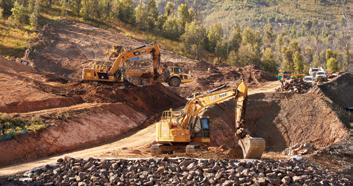
Future Generation is leading the Snowy 2.0 civil and tunnelling works, with subcontractor Voith Hydro delivering the latest hydro-generation technology for the new underground power station, including the pump turbines and motor generators.
EARLY SITE ACTIVITY
Along with an extensive feasibility study in 2017, geotechnical drilling along the project alignment collected more than 35,000m of drill core over three years. A major drill program was also conducted at key locations to provide critical information for the underground powerhouse cavern, the design of the Snowy 2.0 power station and the inclined pressure shaft. The drilling included a core hole of more than 2,000 metres in length, which took 111 days of continuous 24-hour operations to complete.
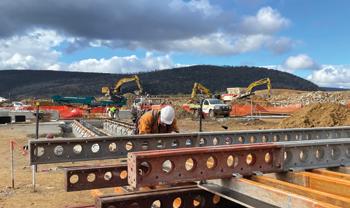
Exploratory Works began at the Lobs Hole construction site in 2019 to upgrade and build access roads and establish construction pads and supporting services infrastructure including two permanent bridges over Yarrangobilly River and Wallace Creek.
SAFETY
Safety is, and always will be, the number one priority for Snowy Hydro. Our safety vision and high expectations for the management of all safety risks has been adopted across the Snowy 2.0 project. We will not compromise safety on any aspect of the project, including schedule.
Snowy Hydro upholds a safety-first culture for the people working on Snowy 2.0 and for people living and travelling near our construction sites. We work with our contractor on a range of assurance activities to ensure the highest safety standards are maintained at all times.
6 7
CONSTRUCTION
Snowy 2.0 is unique in international terms, combining a high head differential of approximately 700 metres, long tunnels and reversible pump-turbines. About 27km of power waterway tunnels will be constructed to link Tantangara and Talbingo reservoirs, mostly excavated by tunnel boring machines. The tunnels will be 11 metres in diameter and lined with precast concrete segments manufactured locally in Cooma.
The power station complex will be located approximately 800m underground, with two very large main caverns excavated for the machine hall and the transformer hall. To reinforce the structure, 40,000 rock bolts typically 6-12m in length will be drilled into the rock at the top and sides of each cavern.
TUNNEL BORING MACHINES
Tunnels for the original Snowy Scheme were excavated using the drill and blast method, with some sections requiring picks and shovels. For Snowy 2.0, about 40km of tunnels are required, with three tunnel boring machines (TBMs) carrying out 27km of the underground excavation. The remaining excavation will be done by drill and blast, secured by rock bolting and shotcrete.
Each TBM has been specifically designed to manage the various factors they will encounter throughout construction, including the geology of the rock and the alignment and inclination of the tunnel. The inclined pressure shaft, for example, requires a tunnel boring machine that can excavate at steep angles uphill.
PRECAST SEGMENT FACTORY
The precast factory at Polo Flat, Cooma, with a workforce of around 200 people, is manufacturing the concrete segments that line the Snowy 2.0 tunnels. Around 130,500 segments will be used to create giant concrete rings to line 27km of waterway and access tunnels. The segments are installed by the tunnel boring machine as it excavates the rock.
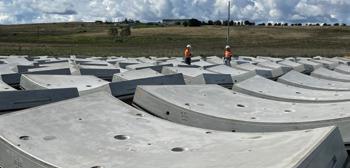
By ensuring the segment factory was built locally rather than import segments from overseas or interstate, Snowy Hydro was able to ensure more local jobs and more opportunities and investment for regional business.
The factory is operated by Future Generation Joint Venture. The first segments were produced in 2020, and by July 2023, about 75,000 segments had come off the production line, representing about 57% of the total required for the project.
TRANSPORTING SEGMENTS
TBM NAMESAKES
In keeping with engineering tradition, each TBM is given a name to bestow good luck on the project before tunnelling commences. Like ships and hurricanes, TBMs are named after women – a custom that dates back to the 1500s and St Barbara, the patron saint of underground workers.
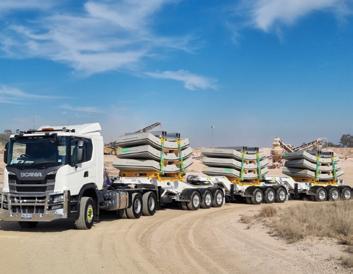
The concrete segments are being transported to site by custommade trucks. Each of the vehicles has a prime mover and three short trailers designed to distribute the weight of the segments and safely manoeuvre the steep, winding conditions on mountain roads.
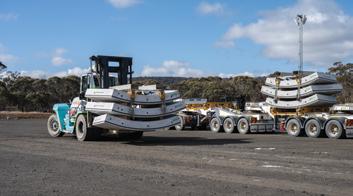
Fabricated by Parkes-based Midland Industries, the trailers have additional axles and are capable of transporting three times the number of segments compared with a regular semitrailer configuration.

Segment rings
TBM Lady Eileen Hudson honours the wife of the Snowy Scheme’s first commissioner, Sir William Hudson. Lady Eileen Hudson (1905-1998) was often the public face during the Scheme’s construction, welcoming everyone from Prime Ministers to the Royals during site visits.

TBM Kirsten is named after Kirsten Banks, a NSW astrophysicist and science communicator who uses influential social media platforms to explain astronomy and space to a broad audience, including curious school children.

TBM Florence recognises the remarkable contribution of Florence Violet McKenzie (1890-1982), Australia’s first female electrical engineer. Florence also founded the Womens’ Emergency Signalling Corps in 1939, training more than 3000 women and 12,000 servicemen in Morse code.

Each segment weighs 7 tonnes with 2.6 cubic metres of concrete poured into precast moulds.
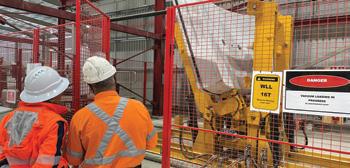
14,500 concrete rings, each made up of nine segments, are required for the project.
All nine segments vary in size and are interlocked in a sequence to suit the tunnel alignment.
A complete ring has a 10m internal diameter and weighs about 63 tonnes.
9 8
SNOWY 2.0 ONSITE
LOBS HOLE
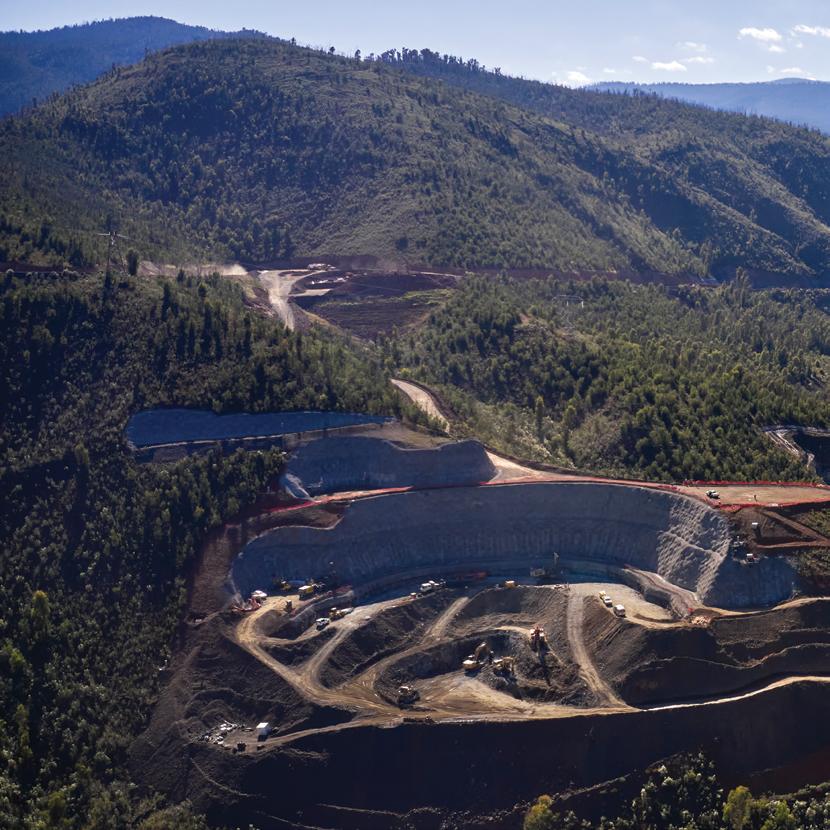
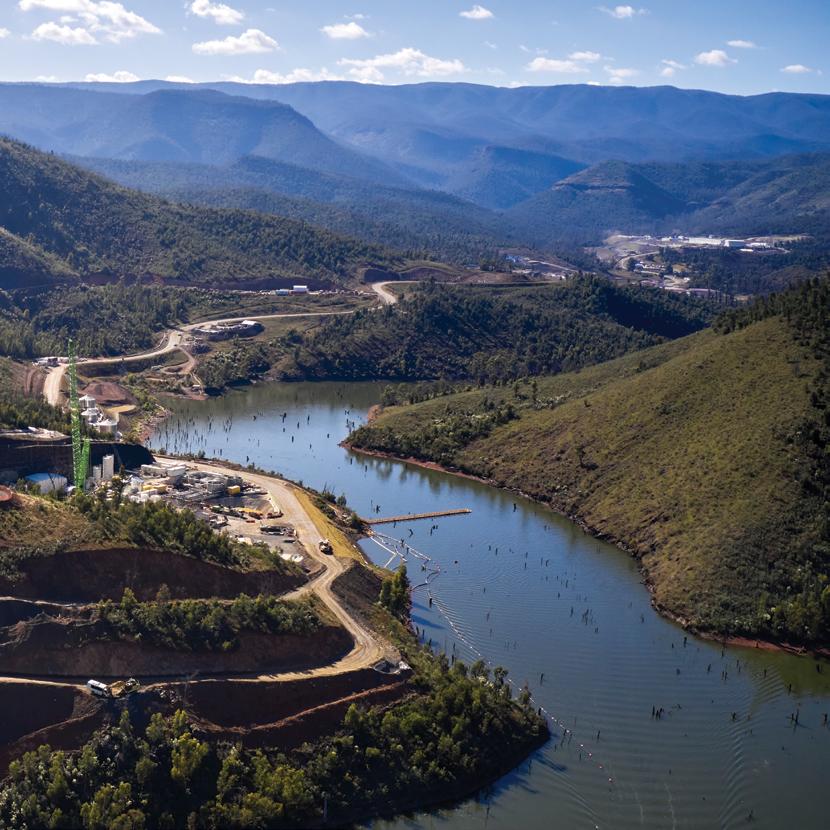
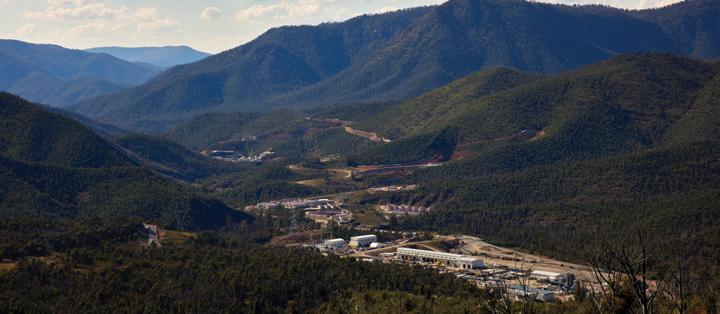
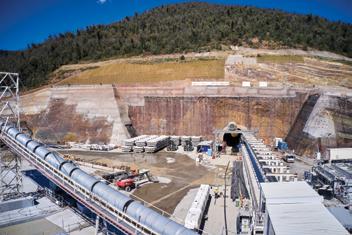
Lobs Hole is the construction heart of Snowy 2.0, with two portals established to facilitate entry points for the main access tunnel (MAT) and the emergency, cable and ventilation tunnel (ECVT). The MAT will be used for worker, vehicle and machinery transportation to the underground power station during construction and operation.
At the Lobs Hole main yard, temporary project infrastructure minimises disruption to the local community by locating construction support services on site. This includes warehouses, maintenance workshops and a concrete batch plant.
The main yard area has been created using excavated rock and material from the two tunnels. The onsite worker camps are close by and house more than 1,200 workers.
At the far end of Lobs Hole is the Talbingo Reservoir intake where water will exit the tailrace tunnel when the power station is in generating mode and enter when it’s in pumping mode. The excavation for this intake will be approximately 110m deep.
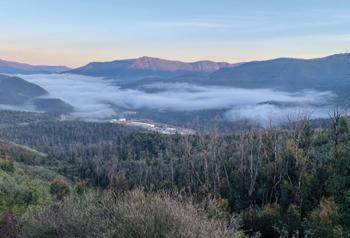
Lobs Hole is accessed via Ravine Road, a 15km road that has been permanently widened to two lanes and fully sealed for safe, allweather access. Ravine Road will be available for the public to use after the completion of Snowy 2.0 construction.
TBM LADY EILEEN HUDSON
The first of TBM Lady Eileen Hudson’s two tasks was to excavate the 2.85km MAT from the surface at Lobs Hole down to the power station complex.
Fabricated in China by CREG, TBM Lady Eileen is 137m long with a cutterhead diameter of 11m and is designed to deal with hard rock conditions.
The Lady Eileen was launched at the MAT portal at Lobs Hole in mid-2021. Her first mission was completed in November 2022 when she reached the location of the cavern for the new underground power station. Her second job, underway in 2023, is to excavate the tailrace tunnel at Talbingo.
Main access tunnel fast facts:
• 9.9 metres internal diameter
• Lined with 1,422 concrete rings installed by the TBM
• Has four cross-passages linking it to the adjacent ECVT
• Provides pedestrian and vehicle access into the power station
SNOWY 2.0 ONSITE
TBM KIRSTEN
TBM Kirsten’s first task from Lobs Hole was to excavate the emergency, cable and ventilation tunnel (ECVT) from the surface in Lobs Hole to a point just past the power station complex. From there, TBM Kirsten will excavate the inclined pressure shaft, linking the upper waterway tunnel (headrace) to the large turbines within the power station.
Constructed in Germany by Herrenknecht AG, TBM Kirsten is setting a global standard in tunnel boring technology. It is 211m in length, has a cutterhead diameter of 11m and is specially designed to tunnel uphill on a steep incline of 25 degrees.
TBM Kirsten was commissioned at the end of 2021 and has now completed excavation of the 2.9km ECVT. Tunnelling continued past the power station cavern, finishing past the southern side of the underground complex, before the TBM was modified to begin uphill excavation.
Modifications include altering the levels of the TBM’s tanks and mechanical equipment so they are level when travelling up the incline, and converting the walkways on the side of the machine into steps and ladderways.
Emergency cable and ventilation tunnel
The emergency cable and ventilation tunnel is an essential component of Snowy 2.0’s construction, providing secondary access to the power station complex.
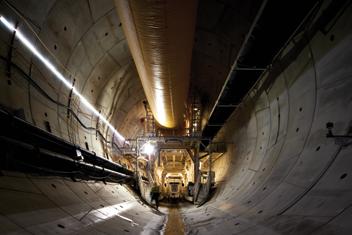
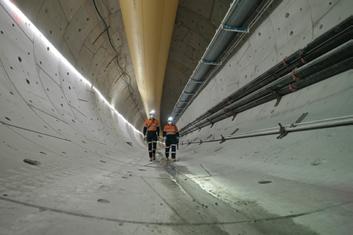
The ECVT will be used permanently for ventilation and cables, and intermittently for general access and maintenance. The tunnel will be divided into two sections by a concrete wall. One side will provide the emergency access or egress route from the power station complex. This section of the tunnel also acts as a secondary access suitable for pedestrians and light vehicles.
High voltage cables located on the other side of the wall will convey power generated by the six variable speed turbines through to the Gas Insulated Switchyard on the surface. The wall also acts as a safety separation barrier between personnel and exhausted hot air or smoke in an emergency.
10 11
SNOWY 2.0 ONSITE TANTANGARA
The Tantangara and Talbingo reservoirs were created with the original Scheme – Tantangara in 1960 and Talbingo a decade later, the last of the Scheme’s 16 dams, in 1970. The two reservoirs will be linked via a headrace tunnel, from Tantangara to the inclined pressure shaft and on to the underground power station. After passing through the turbines to generate electricity, the water is taken to Talbingo via the tailrace tunnel. The turbines can then be reversed and pump the same water back up to Tantangara to be stored, ready to repeat the process when required.
The construction of intake and outlet works at each reservoir along with an underground network of tunnels, caverns, shafts and supporting works is underway. The longest tunnel in Snowy 2.0 project will be the headrace tunnel from Tantangara reservoir.
TBM FLORENCE
The third tunnel boring machine on the project is 142m long with an 11-metre diameter cutterhead and was constructed in Germany by Herrenknecht AG. TBM Florence will excavate 15km of the headrace tunnel to link Tantangara Reservoir to the underground power station, providing water supply to drive the generators.
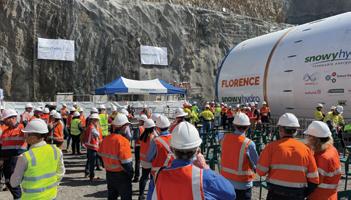
Early in the tunnelling process, a surface depression emerged in the ground above the TBM, temporarily delaying progress. The tunnel is supported by a concrete lining and steel ribs and its integrity has not been compromised.
The project team paused TBM Florence while the weak material ahead of it and above it was stabilised.
The machine has been converted to operate in ‘slurry’ or closed, pressurised mode, with an onsite slurry plant built at Tantangara. Slurry mode will deliver stable excavation and efficient progress through softer ground conditions, while enabling the TBM to switch back to open mode when in harder rock.
SNOWY 2.0 ONSITE MARICA UPSTREAM SURGE SHAFT
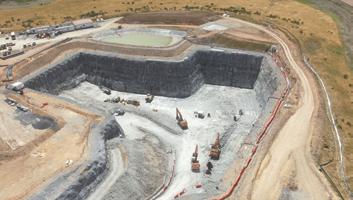
Snowy 2.0’s upstream surge shaft is located at Marica on the headrace tunnel, 2.7km upstream of the power station at 1,280m elevation. At 28m in diameter and 263m deep, the concrete-lined shaft will be one the largest diameter operational shafts in the world.
The surge shaft has two key purposes: it will provide additional water volume allowing a fast start of the power station, and absorb the momentum and pressure of water in the headrace tunnel when the station shuts down.
The structure acts as a pressure relief valve for the headrace tunnel, allowing the water to surge up within the shaft. At equilibrium, there will be about 200m of water in the shaft.
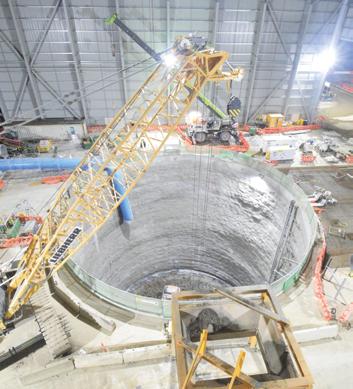
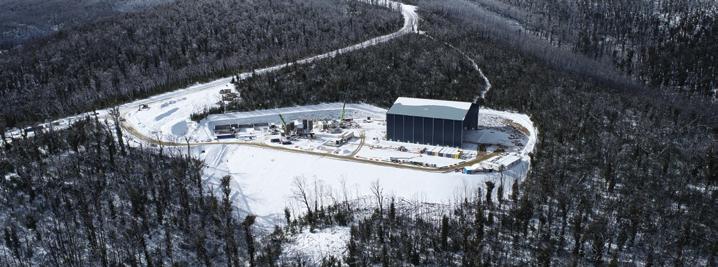
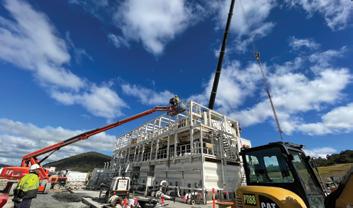
Located well above the snow line, the surge shaft site will be exposed to the alpine winter several times over during the construction phase. To minimise disruption, a temporary 28-metre high shed has been erected over the top of the shaft to facilitate construction in all weather conditions.
12 13
SNOWY 2.0 ONSITE TALBINGO
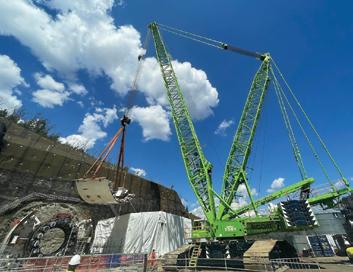
Following completion of the main access tunnel, TBM Lady Eileen Hudson has been dismantled underground, extracted and reassembled at Talbingo before being recommissioned. The supporting services are also being reassembled and recommissioned ahead of the TBM’s next mission: to excavate the 6km tailrace tunnel heading east from Talbingo to the power station.
Lady Eileen was the first TBM to be launched on the Snowy 2.0 project and is the only machine that will excavate two separate tunnels.
The Talbingo intake is the location on the lower reservoir where water exits the tailrace tunnel when the Snowy 2.0 power station is in generation mode. When it’s in pumping mode, water enters through the same intake to be pumped back up to Tantangara.
This permanent piece of infrastructure for Snowy 2.0 is under construction, with more than 200,000 cubic metres of rock moved by July 2023.
The intake excavation will be 110m deep and extend 35m below the Talbingo water level. The excavation is supported by rock bolts and shotcrete.
Rock re-use
The rock being cut by the three TBMs is about the size of railway ballast (about 6cm). This material is transported out from the TBMs via conveyor belts attached to the top of the segment-lined tunnels. After being removed from the tunnel, the rock is used to build up pad areas for additional facilities for project infrastructure such as warehouses and maintenance workshops.
Material from the TBMs will also be deposited in designated emplacement areas on land and in water to be landformed and fully rehabilitated, as part of the project’s conditions of approval.
UNDERGROUND POWER STATION
Following the excavation of the main access tunnel and completion of key drill and blast cross tunnels, work is due to begin on the development of the power station cavern complex in mid-2023.
Snowy 2.0’s pumped-hydro power station will be located approximately 800m underground. Two main caverns will be excavated to house the machine hall (251m-long, 52m-high) and the transformer hall (223m-long, 46m-high).
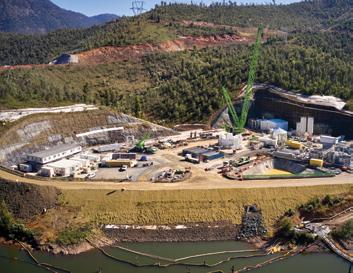
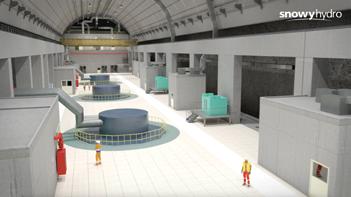
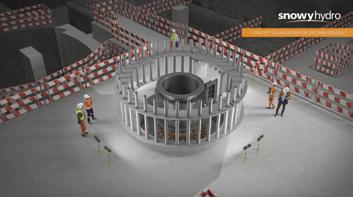
The power station caverns are about 1.5 times the length of the Melbourne Cricket Ground and the equivalent of a 20-storey building in height.
Voith Hydro, a 155-year-old German company, is delivering the power station technology for Snowy 2.0, including the pump turbines, motor generators, transformers, automation system,
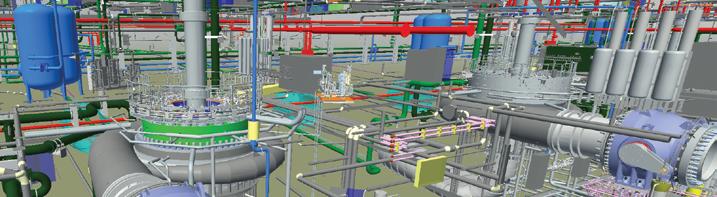
balance of plant, and the hydraulic steel structures, such as the intake gates and trash racks. These huge and complex components are being manufactured, with some components already shipped to Australia, ready to be installed when the power station caverns are constructed.
Engineering and design teams are making use of digital tools and sophisticated 3D modelling to visualise the many components of Snowy 2.0 as construction progresses. The immersive theatre and 14m widescreen at the Cooma Discovery Centre is ideal for Snowy 2.0 teams to visually review sections of the project using real time information modelling. For further immersion, using virtual reality goggles, teams can ‘virtually’ walk through the tunnels and explore the power station for a realistic view of the complex.
14 15
JOBS AND BUSINESS
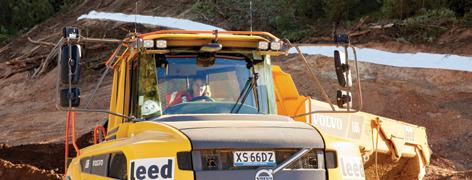
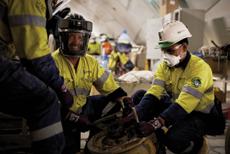
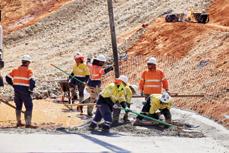
Snowy 2.0 is not only critical for the energy market and consumers, it is a major regional infrastructure project, creating around 4,000 jobs over the life of the project and thousands more roles in the supply chain and support services.
By July 2023, about 2,800 workers were employed on Snowy 2.0, including many locals. With four major worksites in operation, the project continues to be a huge economic booster for the Snowy Mountains and wider region.
4,000 jobs
4,000 jobs
OVER THE LIFE OF THE PROJECT PLUS THOUSANDS MORE JOBS THROUGHOUT THE SUPPLY CHAIN
OVER THE LIFE OF THE PROJECT PLUS THOUSANDS MORE JOBS THROUGHOUT THE SUPPLY CHAIN
JOBS with Snowy 2.0
Future Generation’s Snowy 2.0 Careers Centre is an online register for people seeking work on the project.
futuregenerationjv.com.au
GO TO: Work With Us > Job Opportunities
$100 million+
$100 million+
SPENT TO DATE WITH MORE THAN
SPENT TO DATE WITH MORE THAN
150 SNOWY MOUNTAINS BUSINESSES
150 SNOWY MOUNTAINS BUSINESSES
JOBS AND BUSINESS CONSTRUCTION CAREER PATH
Snowy Hydro is committed to providing career opportunities for the local community, from school age onwards, and the Snowy 2.0 project is now adding to the range of options available.
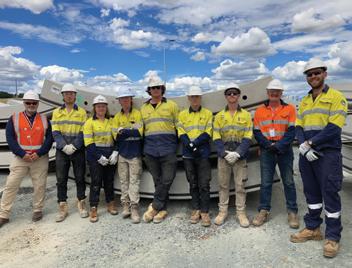
There are Future Generation JV training programs for apprentices and trainees of all ages and pre-employment programs to create pathways to job opportunities on the project. Upskilling is also provided to the broader Snowy 2.0 workforce, offering general skills training in first aid, working at heights, forklift driving, rigging and dogging and more specific project skills for the operation of components of the tunnel boring machines.
By early 2023, a total of 120 apprentices and trainees were studying tertiary certification while working on Snowy 2.0 across electrical, mechanical, plumbing and boilermaking trades, as well as business administration, surveying and project management. Of the apprentices and trainees in this group, 44 (37%) are women.
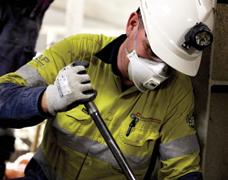
Future Generation also offers school-based apprenticeships and traineeships (SBAT) providing senior students the opportunity to enter the workforce part time while they complete their Higher School Certificate. The students earn an income for hours worked.
The first round of students completed the two-year SBAT program in late 2022 and joined the workforce. Six students achieved their HSC while simultaneously completing their studies at TAFE and five have secured full time employment.
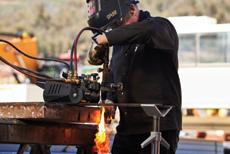
The second round of SBATs are due to complete the program at the end of 2023 after two years’ part-time work alongside their studies.
Women in engineering
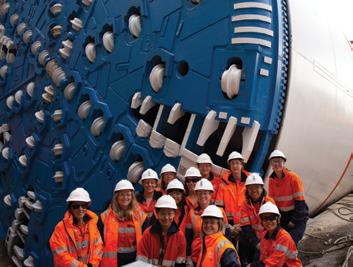
As with the pioneering Snowy Scheme constructed between 1949 and 1974, a diverse workforce is bringing Snowy 2.0 to life.
In 2023, 14 women at Snowy Hydro were working specifically in engineering roles for Snowy 2.0 across hydropower, spoil and water management, structural engineering and surface and road works. Engineers from a range of disciplines will help make Snowy 2.0 a reality, from managing design reviews inside the power station on the structural side, to what goes inside the cavern on the mechanical side, including all the turbines and power generation equipment.
16 17
LOCAL BUSINESS
Major infrastructure projects require substantial logistics and support systems to ensure operations run smoothly. Behind the scenes of Snowy 2.0, a network of local suppliers is involved in maintenance, transportation services and deliveries to work sites and accommodation camps on a daily basis.
MONARO MILK & JUICE
Monaro Milk and Juice has tripled its personnel and expanded their fleet of delivery trucks in the two years since Snowy 2.0 work began. The family-owned business now employs 15 staff members across administration, packing and deliveries and has upsized from rigid trucks to semi-trailers to keep up with demand. Their deliveries of fresh fruit and vegetables, milk, eggs and other goods have increased from two pallets a week in the early days of construction to 60-70 pallets today. With more than 2,700 workers on the Snowy 2.0 project and four accommodation camps now up and running, deliveries are also more frequent.
The business has provided deliveries for Snowy Hydro for 17 years, and owner Mick Johnson says the flow-on effect of Snowy 2.0 has been a windfall for businesses in the region and further afield.
RODDY ENGINEERING
For Tumut-based services company Roddy Engineering, the opportunity to work on Snowy 2.0 helped elevate their business to the next level.
Starting with smaller jobs during the construction phase of the segment factory, the business was soon involved with assembly of the tunnel boring machines, including welding work on the giant cutterheads, and building accommodation camps.
Roddy Engineering had up to 20 personnel working across a number of Snowy 2.0 sites providing services from design and certifying through to manufacture, onsite installation and commissioning.
WORKER ACCOMMODATION
As the workforce continues to grow across Snowy 2.0’s four main construction sites, the segment factory and a number of smaller sites, so too does the need to house workers.
More than 1,700 beds are now available at purpose-built camps at Lobs Hole, Tantangara and Marica, along with accommodation at Joule Ridge in Cooma, with almost 100% occupancy. The main construction sites are in remote alpine locations with limited vehicle access and at times, extreme weather conditions so workers are transported in and out. Buses onsite make up to 60 trips each day to collect workers from camp, deliver them to the various sites and take them back to camp at the end of their shift.
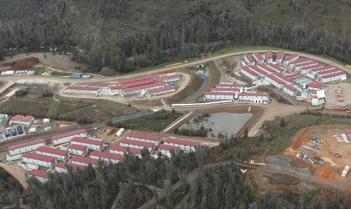
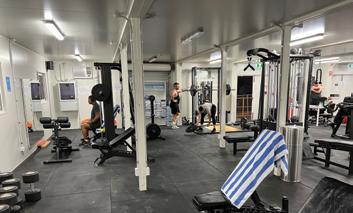
The accommodation camps resemble small, self-contained villages in the mountains, with a range of lifestyle amenities including a clubhouse, gymnasium, wet and dry mess, sports courts and laundries. Many local businesses are involved in the supply of goods and provision of services to the camps including catering, housekeeping and medical support. This has generated a direct economic boost to the contracted companies, as well as additional uplift in supply chains in Cooma, Tumut and beyond.
The Future Generation general services team charged with ensuring workers are fed, rested and transported has grown from a handful in the early days of construction to more than 200 people operating the camp facilities today.
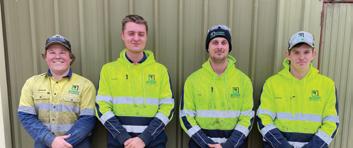
MIDLAND INDUSTRIES
The fleet of bespoke trailers transporting concrete segments from the Polo Flat factory will make around 15,000 trips along steep, winding mountain roads during the tunnel excavation stage of Snowy 2.0.
Midland Industries, a specialist truck trailer manufacturer from Parkes, expanded their workforce of welders, mechanics and administration by more than a dozen to meet the manufacture, assembly and fit out of the custom-made vehicles.
Each truck in the 14-vehicle fleet has a prime mover and three short trailers specially designed to evenly distribute the weight of the segments. The additional axles allow more manoeuvrability to help the long, heavy loads navigate tight turns and steep access roads into Lobs Hole and other tunnelling work sites.
1,700 BEDS to accommodate workers employed on Snowy 2.0 sites
200 STAFF
operating four worker camps and additional accommodation sites
HEALTH & RECREATION facilities including gyms, running tracks and sports courts
60 BUS TRIPS PER DAY taking workers between Snowy 2.0 sites and camps
BREAKFAST & DINNER in canteen-style dining halls + packed lunch to takeaway
18 19
ENVIRONMENT AND RECREATION
As a renewable energy project with broad-scale environmental benefits, Snowy 2.0 is critical to Australia’s transition to a low-carbon economy.
For almost 70 years, Snowy Hydro has responsibly operated the Snowy Scheme in Kosciuszko National Park (KNP) and we are equally committed to minimising potential impacts from Snowy 2.0.
The small, localised area temporarily impacted during construction is less than 0.1% of KNP and once operational, it will be only 0.01%.
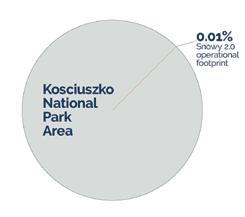
The unavoidable impacts will be offset and construction areas will be rehabilitated, in accordance with the approvals for the project. Around $100 million will be provided by Snowy Hydro to the offsets program for Kosciuszko National Park.
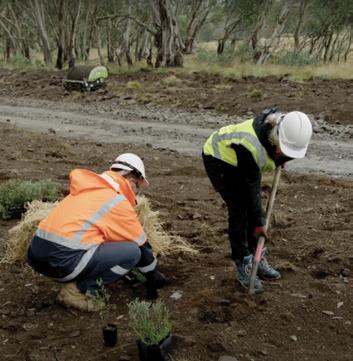
The majority of these funds will go to National Parks and Wildlife Services to directly contribute to the ongoing and long-term conservation and recreational use of the park.
Alpine trout
The iconic alpine trout fisheries of the Snowy Mountains will benefit from a $5 million funding package provided by Snowy Hydro to offset any potential risks to the trout fishery as a result of Snowy 2.0, and to ensure the long-term viability of the fishery.
Working closely with Monaro Acclimatisation Society and Fisheries NSW, Snowy Hydro will provide funding to upgrade and augment the existing Gaden trout hatchery in Thredbo Valley to grow fingerlings up to 20-30cm, along with long-term water security so the program can continue well into the future.
The investment from Snowy Hydro will add to the $8 million invested by the NSW Government in Gaden to provide a worldclass fish hatchery facility and tourism attraction.
WATER LICENCE
The Snowy Scheme operates under a strict water licence issued by the NSW Government. Snowy 2.0 will not in any way affect Snowy Hydro’s continued compliance with the water licence. As a pumped-hydro project, water is able to be recycled between two existing reservoirs.
There will be no change to Snowy Hydro’s water release obligations from both the Murray and Tumut developments, and no change to environmental release obligations, meaning Snowy 2.0 will not have any impact on downstream water users or environmental flows.
TRANSMISSION
The electricity transmission system plays a critical role in Australia’s transition to a less carbonised future and is currently undergoing a necessary transformation to ensure the grid is ready to meet the growing role of renewables.
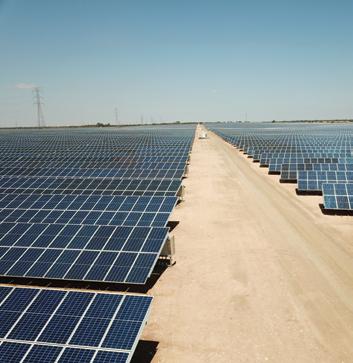
Transmission lines were traditionally built next to the coal-fired generators that until recently dominated the energy system. In a changing energy ecosystem, Australia’s renewable energy resources will make up an increasing source of electricity, but these wind and solar resources are geographically diverse and often located far from existing transmission lines.
As renewables replace coal as the country’s main source of electricity, there is a need to upgrade the transmission network to take advantage of these resources.
The Australian Energy Market Operator has developed the Integrated System Plan (ISP) to fill in the missing links in the transmission network and support all parts of the energy system.
NSW is creating five Renewable Energy Zones in the Central-West Orana, New England, South-West, Hunter-Central Coast and Illawarra regions to accelerate the growth of renewables, and more are planned in other states.
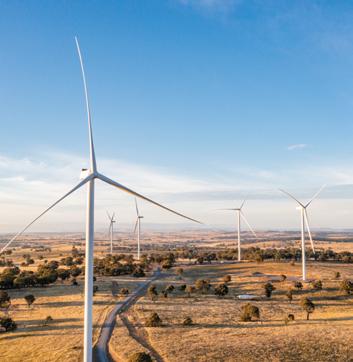
In the coming years the ISP will guide system planners to upgrade existing transmission lines and build more. This will allow surplus energy from one region to be exported to another, including to storage facilities like Snowy 2.0, making clean, renewable energy stronger and more resilient. Strengthening the transmission network will be a vital part of Australia’s low-carbon economy.
20 21
COMMUNITY LEGACY
As with the iconic Snowy Scheme, Snowy 2.0 will leave a lasting legacy for the local community during construction and into the operational phase. Snowy Mountains residents and visitors will benefit from improved roads and infrastructure as well as opportunities for small business owners and local manufacturers.
Snowy 2.0 is also providing a broad range of career opportunities for workers of all ages and experience.

RAVINE ROAD
Providing safe, all-weather access to the Snowy 2.0 construction sites is key to keeping workers safe and the project on track – and will also mean new and improved roads for the local community.
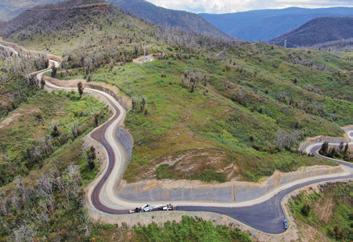
Ravine Road, the main access into Lobs Hole, is 15km long, with 850 metres of elevation difference from top to bottom. Upgrade works to improve vehicle access have included widening the road to two lanes, with 250,000 cubic metres of material excavated. The upper section of the road is above the snow line and often in the clouds.

The new asphalt surface will aid snow clearing and allow lines and snow poles/reflectors to be installed. This will help guide drivers of trucks and other vehicles in low visibility conditions.
When Snowy 2.0 is complete, the local community will enjoy the legacy of safe road access to Lobs Hole.
ADAMINABY TRUCK PARKING FACILITY
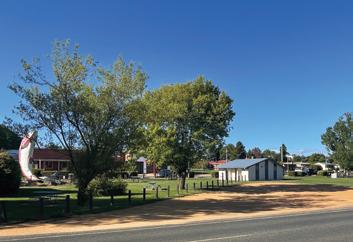
Snowy Hydro is contributing $188,000 to the provision of six truck parking bays in Adaminaby to enable drivers travelling between Cooma and Tumut, including to Snowy 2.0 construction sites, to pull off the road for rest and meal breaks.
The Snowy Monaro Regional Council will establish six 30-metre long parking bays that will be sealed and lit, providing safe parking for long loads in the region 24 hours a day, seven days a week.
COMMUNITY LEGACY
Snowy Hydro’s commitment to educating Australians about the iconic Snowy Scheme has expanded to incorporate new material on Snowy 2.0 along with bespoke learning modules for students of all ages.
The Next Generation Education Academy is focused on educating and fostering future innovators. The Academy includes the Next Generation Education Hub, an online learning platform with a comprehensive program dedicated to Snowy 2.0. The program’s digital pop-up book, fact sheets and printable activity sheets help students discover how Snowy 2.0 will deliver new energy for a new generation.
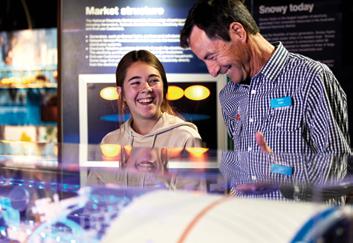
At the Discovery Centre in Cooma, visitors can view a scale model of a tunnel boring machine and learn about Snowy Hydro’s leading role in Australia’s transition to a renewable energy future.
Project information and feedback
Snowy Hydro will continue to work closely with stakeholders and local communities to provide information about the Snowy 2.0 project and to seek feedback.
Interested parties are invited to attend the ongoing series of community sessions held throughout the Snowy Mountains.
Contact details
You can contact Future Generation JV at: Phone: 1800 766 992
Email: community@futuregenerationjv.com.au or Snowy Hydro at:

Email: snowy2.0@snowyhydro.com.au
Mail: Snowy Hydro, PO Box 332, Cooma NSW 2630

22 23
Disclaimer: This booklet is for general use only and we give no warranty or representation regarding the booklet’s accuracy, completeness, reliability or suitability for any particular purpose. We completely exclude all liability to any person for loss or damage of any kind (however caused, including but not limited to by negligence) arising whether directly or indirectly from or relating in any way to the content in this booklet and use of that content, whether in whole or in part.
Copyright: Unless otherwise indicated, we reserve all copyright in the content and design of this booklet. We own all such copyright or use it under licence or applicable law. No copying, duplication, redistribution, reproducing, dissemination, derivative works or commercialisation of the material in this booklet is permitted without the prior written consent of us, except as permitted by applicable laws. snowyhydro.com.au