George McNeill, Geo McNeill
Shane McNeill,



So much more is on the horizon for SIMA and its members. I hope you’ll take an active role in helping bring the strategic initiatives to life.
It has been a great honor for me to serve as SIMA’s board chair this year.
As our industry continues to face challenges, the board of directors has crafted a dynamic and forwardthinking 3-year strategic plan to guide our association and the industry forward. The plan is the result of extensive collaboration, thoughtful consideration of industry trends, and invaluable input from our dedicated members, volunteer leaders, and staff.
Executive Director Martin Tirado and the dedicated SIMA staff are already acting on the important initiatives we identified:
Localizing member connections. Our interest groups and peer groups continue to gain momentum, and we welcomed the new Pacific Northwest & Western Canada groups to the lineup this year. The membership team will continue to explore ways SIMA can bring stakeholders together to encourage personal and professional growth.
Advancing industry standards. In 2026, we will begin a feasibility analysis for a national snow and ice services contract standard that should create a more level playing field, with shared responsibilities between customers and accountability for service.

Making a legislative impact. We established The Snow & Ice Legislative Council (SILC) to serve as a vital advocate for the snow and ice management industry at both state and provincial levels. Its primary mission is to monitor, influence and respond to legislative and regulatory developments that impact snow and ice professionals. Email martin@sima.org to learn more.
Growing SIMA’s training accreditations. The education team, with the help of a member-driven task force, has created new safety training for sidewalk teams and plow operators. It is the first step in bringing safety to the forefront that will eventually include a SIMA accreditation program centered on safety and insurability. A future phase will expand the program to include a formal safety audit that members can use to show insurance underwriters and brokers that the professional snow and ice management industry is a “good risk” worth insuring.
This industry is at its best when we come together to learn from each other and grow our professional networks—and that’s where our outstanding in-person events come in. The staff executed a successful Snow & Ice Symposium in Grand Rapids, where more than 2,000 snow pros and suppliers were in attendance. The Leadership Forum continues to gain momentum, and we hope you’ll join us in Savannah, GA, in 2026. Plus, more than 350 people attended one-day conferences in Milwaukee, WI, and Concord, NH.
We’re excited to see the journey 11 members are going on as part of SIMA’s new emerging leaders program, Accelerate. They started at the Leadership Forum in Nashville, where they began to explore leadership principles that will help them grow in their skills and to drive their companies forward. We look forward to celebrating them at the Snow & Ice Symposium in June 2026, when they wrap up their nearly year-long program. As I transition to a new role as the immediate past board chair, I know the association remains in good hands as Jeff Heller, CSP, takes the reins. A personal thank you to all the board officers and directors who’ve made this year an exceptional experience. So much more is on the horizon for SIMA and its members—I hope you’ll take an active role in helping bring the strategic initiatives to life.
The Board of Directors recently approved the addition of Matt Crinklaw from Granum as a supplier board member. His 3-year term begins January 1
The board thanks Dave Wescott, CSP and John Janes, CSP, ASM, who completed their board service in 2025

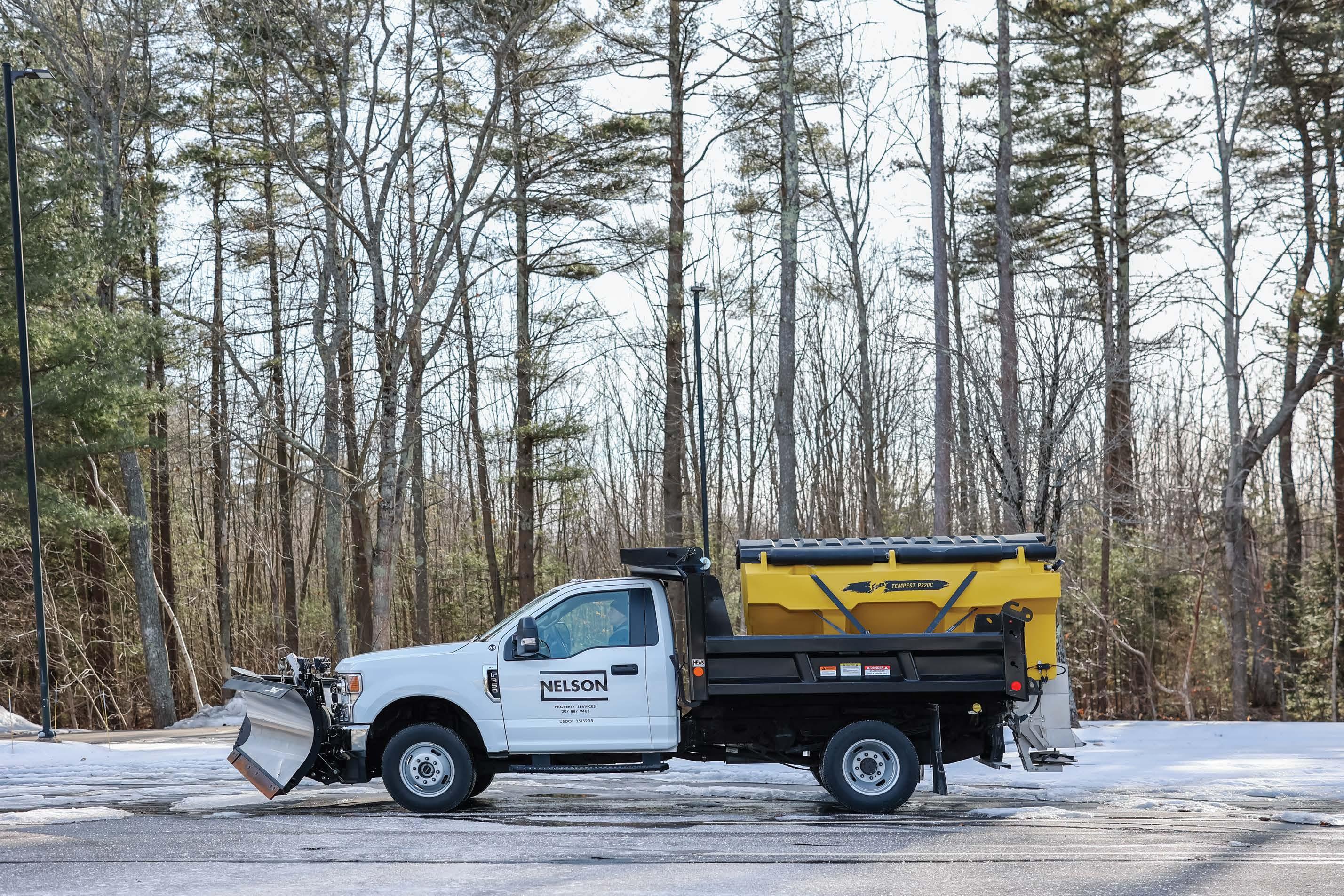
SIMA welcomes Andrew LaPorte as Education Sales & Membership Development Manager. In this new position within the SIMA ranks, Andrew will work with the membership and education teams to identify strategies on how SIMA members can best engage with our training and certifications to better map a professional development plan for themselves or members of their team. He brings experience from the real estate finance community and has a background in property and facility management that have prepared him to jump in and get involved in creating a more positive experience for SIMA members. Feel free to send Andrew a welcome message or schedule some time to get to know him by emailing Andrew@sima.org
The nomination portal for the annual SIMA Snow & Ice Awards opens January 26, 2026, and you’ll see some changes and additions to the awards that honor the important work SIMA member companies and their employees do every year. What’s new for 2026?

SIMA Foundation awards get an earlier deadline
The SIMA Foundation awards two scholarships each year: The Alan Steiman Symposium Scholarship and Dean Fisher Innovation Award. These awards open access to SIMA’s signature event for contractors and a supplier who might not otherwise have the opportunity to attend without financial support. To ensure the winners can make plans to attend, the deadlines are now earlier. The Steiman scholarship applications are due March 16 and the Dean Fisher applications are due February 1. Learn more about eligibility requirements for these opportunities at sima-foundation.org/awards
Download the State of SIMA

In case you missed it, all members were emailed the annual State of SIMA report. Scan the QR code to check out SIMA Board of Directors and staff initiatives and accomplishments and plans for 2026 and beyond.

As part of SIMA’s increased focus on workplace safety, we are bringing back the popular safety award. Judging will be based on meeting or exceeding the established threshold for safety performance and adherence to SIMA’s “Standard Practice for Implementing a Safety Program for Snow & Ice Companies” American National Standard accredited by ANSI.
We’re excited to announce a new addition to the 2026 All-Star awards: the Fleet Operations Professional of the Year. This award will celebrate the vital contributions of employees who ensure your snow fleets remain operational. Previously, these dedicated team members were recognized within the Snow Operations category. Given the consistent nominations for these essential maintenance professionals each year, we believe it’s time they receive their own distinct recognition.
In addition, a few awards are getting new names to better reflect the work being done in their respective categories:
• Sales Professional of the Year has been changed to Business Development Professional of the Year.
• Business Professional of the Year has been changed to Administrative Professional of the Year.
• Snow Operations Employee of the Year has been changed to Field Operations Employee of the Year.
This year, award winners will be invited to an exclusive Awards Luncheon on Thursday, June 25, during the 29th Snow & Ice Symposium.
The application packet, which includes all awards information and deadlines, will be available at sima.org/awards in January. If you have any questions about the awards, nominations process or recognition, please contact the Membership Services team at memberservices@sima.org

As the year winds down, take a moment to set yourself up for a strong start in 2026
• Be sure you’re subscribed to SIMA’s newsletters: Member Connect, SIMA Solutions and Test Drive. sima.org/emails
• Renew your subscription or subscribe for free to Snow Business magazine. resources.sima.org/magazine
• Verify your active member status. customer.sima.org
• Double-check that your company’s details are accurate and complete in the SIMA Directory. directory.sima.org
• Don’t leave value on the table: If you still have a training commitment credit, use it before the year ends to level up your team with SIMA’s Advanced Snow Manager or Certified Snow Professional courses. sima.org/getcsp or sima.org/getasm
A few small steps now will pay off all winter long. Thanks for your membership investment in 2025 we look forward to connecting in 2026! If you have any questions or need assistance, don’t hesitate to email memberservices@sima.org

Take control with the RoadMaster™—a versatile electronic control system for precise material application. Perfect for highway or turf maintenance, it regulates liquid de-icers, sprays, dust-control agents, and fertilizers with accuracy that boosts efficiency and profitability.
Key Features:
• Four Operating Modes
• Selectable Servo Drive Options
• Built-in Audible Alarm
• Keylock Switch
• Emergency Stop
• Blast Switch
• Extensive Downloadable Data List
• Built-in Alarm Messages
• Built-in VRA/AVL Communications
www.micro-trak.com trakmail@micro-trak.com 800.328.9613 • 507.257.3600


The SIMA Foundation welcomed three new members to its board of directors: Lisa Rose, CSP, ASM of Allin/Rose Consulting, Eric Dyba, CSP, ASM of The Bruce Co., and Wallecia Eley of Caterpillar. Thank you to our outgoing board members Debora Babin Katz, Paul Vanderzon, ASM and Jeff Heller, CSP, for their work in continuing to elevate the Foundation’s mission.



SIMA has several events planned for 2026 Mark your calendars now!
29th Snow & Ice Symposium Cincinnati, OH June 23-26
SIMA Leadership Forum Savannah, GA Aug. 16-18
NH Salt Symposium Concord, NH Sept. 15
Midwest Snow & Ice Conference Pewaukee, WI Sept. 23
ONLINE EVENTS & GROUP MEETINGS:
CSP Days
May 6, Oct. 14
Business Development Interest Group
March 3, May 5, Aug. 4, Oct. 6 at Noon EST
Residential Snow Interest Group
Feb. 5, May 7, Sept. 3, Nov. 5 at 4 pm EST
Women in Snow Interest Group
Feb. 19, May 21, Aug. 13, Nov. 19 at 12:30 pm EST
Pacific Northwest / Canada Regional Group
Feb. 25, Apr. 22, Aug. 12, Oct. 28 at 3 pm EST
NEW: Mountain Region Group
Apr. 1, June 3, Sept. 2, Nov. 18 at 2 pm EST
Not a member of an interest group? Visit www.sima.org/interest-groups


By JIM HORNUNG, JR., CSP
As the private snow and ice management industry expands, access to benchmarking data from peers is crucial. Enter The 2025 Snow & Ice Profitability Study, which contains updated and expanded data from the original study completed in 2022.
This study provides benchmarks that enable companies to assess their operations against industry standards and pinpoint areas for enhancement. Additionally, it creates an essential baseline for monitoring future shifts in costs and profits.
The benchmarking data compares financial metrics, contract structures, average costs of doing business, equipment owned vs. leased, average charges for services, and more. A comparative analysis from 2021-22 results to 2024-25 is also included. We hope you’ll find this report an invaluable tool for assessing your company’s profitability relative to your competitors.
Special thanks to lead study researcher Steve Wolf of WolfWorks Consulting and the SIMA Foundation board of directors for their work on completing this project.
This study would not be possible without the generosity of donors who support the SIMA Foundation, a 501(c)3 non-profit organization; and Caterpillar, for their financial support. If you have feedback or ideas on future research needs, email martin@sima.org.
For more information on the SIMA Foundation’s initiatives, to contribute, or to download this and all other SIMA Foundation research, please visit www.sima-foundation.org.
Jim Hornung, Jr., CSP, is board chair of the SIMA Foundation and owner/president of Elbers Landscape Service in Buffalo, NY.

$2.3M
Average snow and ice revenue reported, which is slightly less than half (45%) of total revenue earned ($5.137 million).
Stable (+/- 5% or break even) Growing (5%+ increase) Shrinking (6%+
12%
Average revenue growth reported from the 2023-24 to 2024-25 snow season. Nearly two-thirds of firms reported their businesses grew.


The profitability study is free to SIMA members. Nonmembers may purchase the report with a $395 tax-deductible donation to the SIMA Foundation. Download at sima-foundation.org.



BY
than a team: The strong bonds that drive G. McNeill & Son’s growth
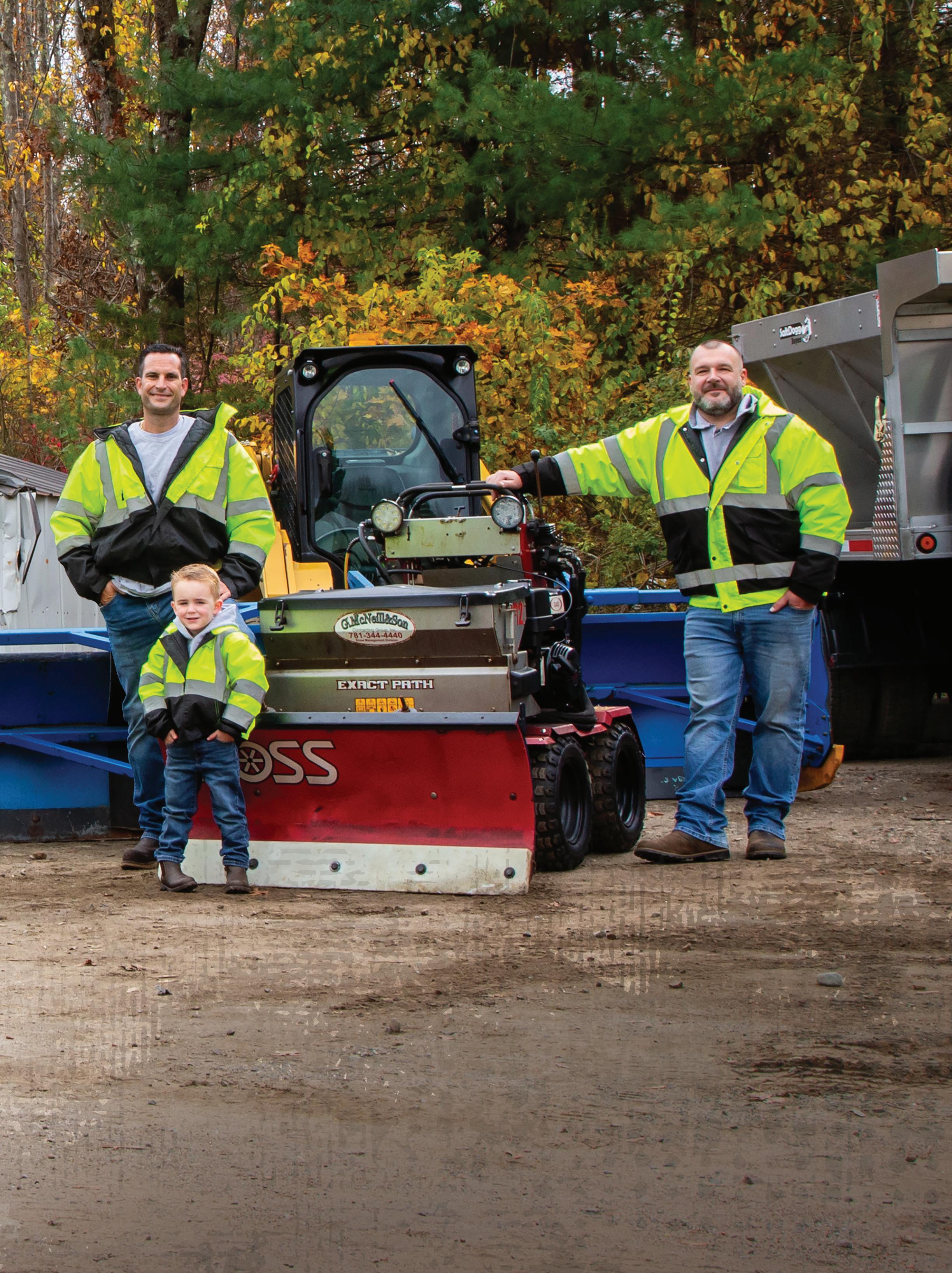
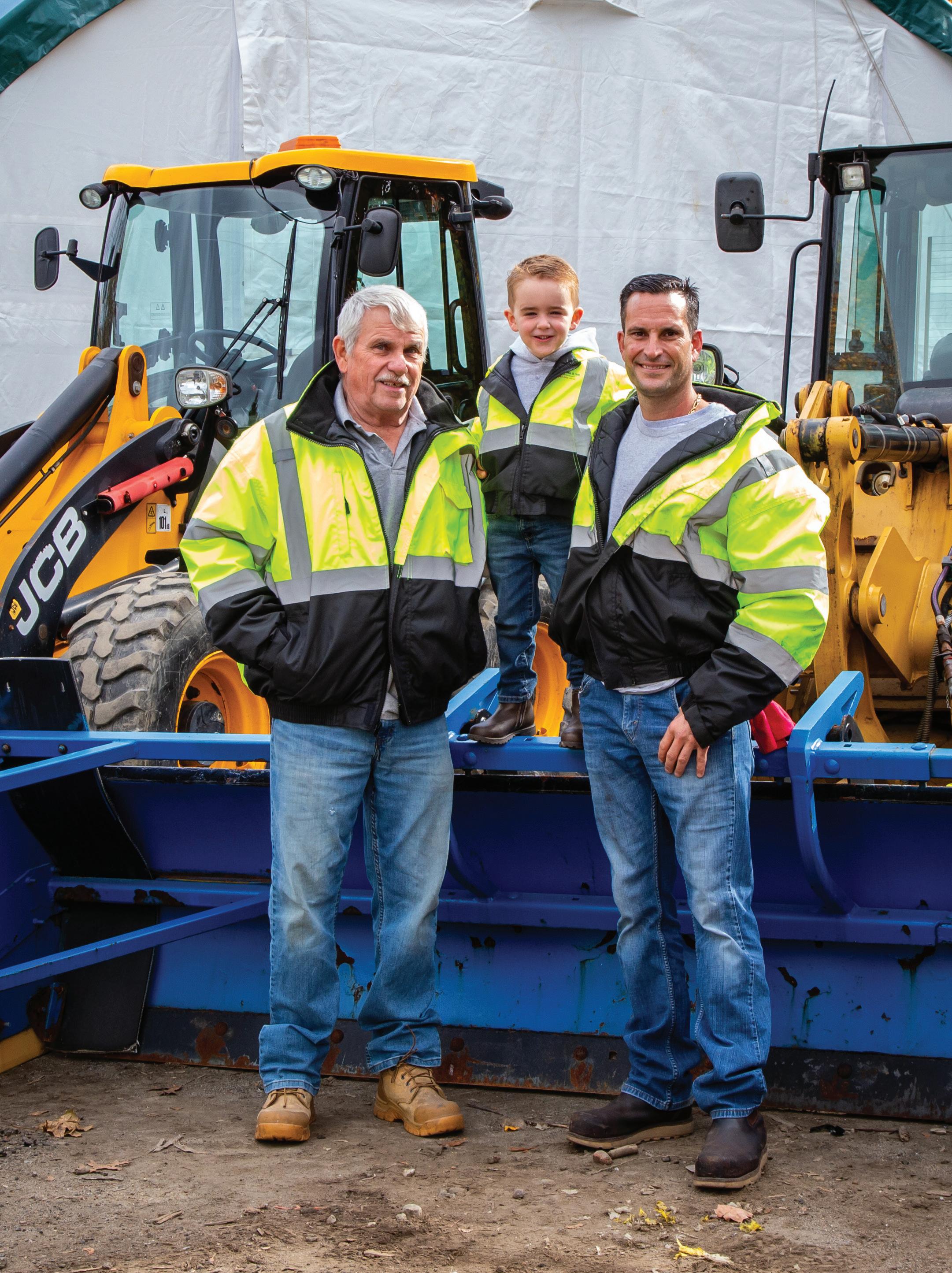
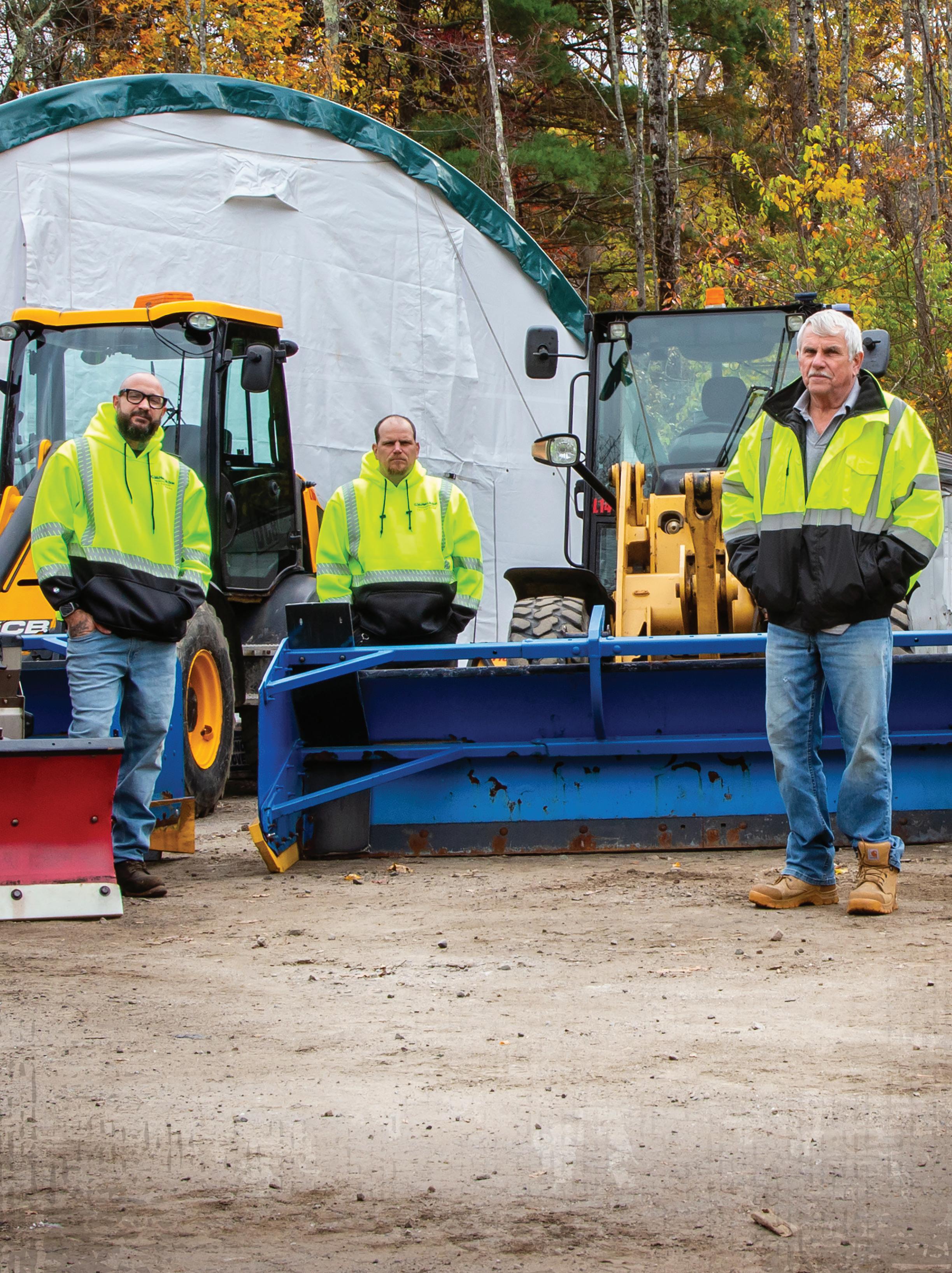
FAMILY FRIENDLY: Shane McNeill, CSP, ASM (second from right), fosters a family-first atmosphere started by his dad George (center). This aids in the retention of key team members like Steve Corey, ASM, Rich Dispirito and Nick Pupko, CSP, ASM.
+ REFINED FOCUS, TARGETED CUSTOMERS FUEL G. MCNEILL & SON’S GROWTH
Page 14
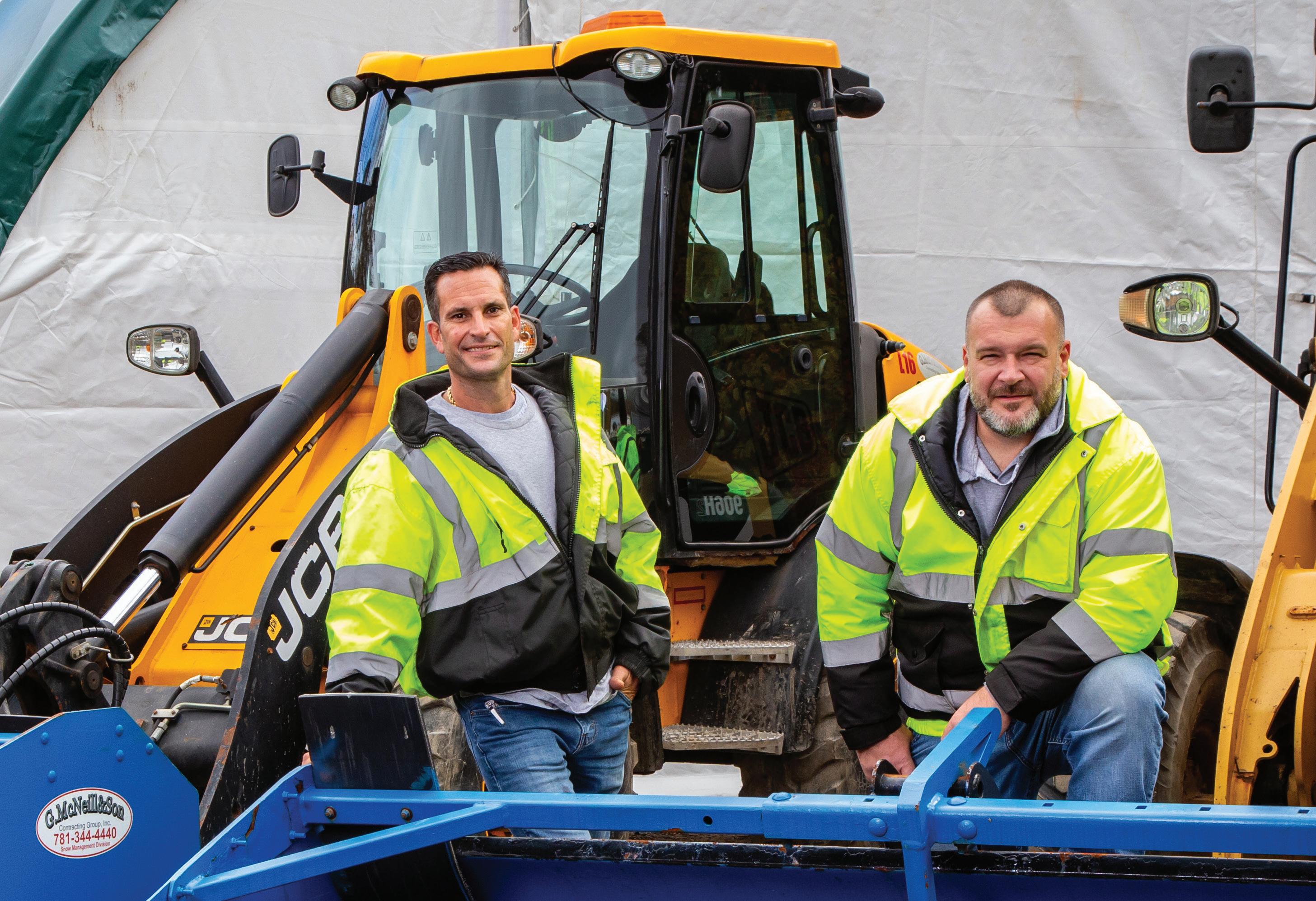
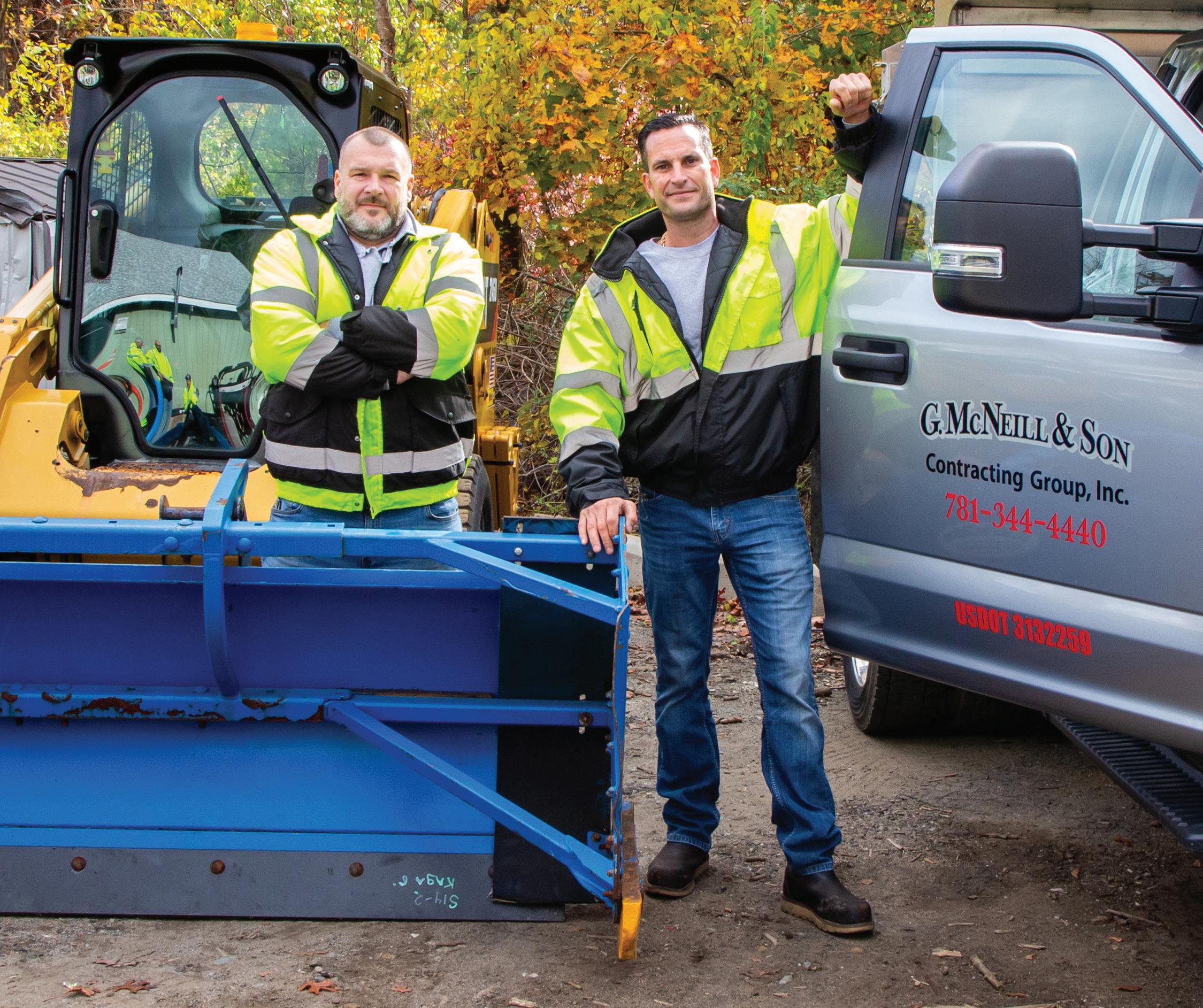
Shane McNeill, CSP, ASM, president and partner of G. McNeill & Son, a snow-focused property maintenance company based in Stoughton, MA, and his COO Nick Pupko, CSP, ASM just get along. “I joke that he’s my brother from another mother,” says Pupko. Truth be told, adds McNeill, as far as his parents are concerned, “Nick is probably their favorite son!”
The two met about 14 years ago, when Pupko signed on as a seasonal plow driver. McNeill was looking to grow the business his father, George, started, and Pupko, he recalls, was aggressive. The two just clicked. “We bonded instantly. It started as the work relationship, turned into a friendship, and now a brotherhood,” says Pupko.
“We spent many nights scaling the business, putting policies and procedures in place, and we’ve just kept growing it year after year,” says McNeill.
Perhaps the reason that their relationship has proven so successful, both in business and personal terms, is that they complement each other. McNeill says that Pupko is a lot like his father. “[He’s] more quiet; likes to sit back and think. I’m wilder, like
my mother.” (That means both have kindred spirits within the company since George McNeill, 73, is still active in the business and his wife, Deborah, is the company’s controller.)
The yin-and-yang dynamic makes things work. “Nick specializes in the back-end stuff. And I kind of come up with the ideas and just chuck them on his plate, where he gives them structure and runs with them,” says McNeill.
On a practical level, they each have their favorite parts of the job. McNeill is most at home managing the crews, maintaining the equipment and meeting with clients.
Pupko is the organizer, the communicator, the budgeter … and the one who takes McNeill’s ideas and turns them into actionable plans. He says his favorite time is during long shifts during the winter, when he’s working in
a quiet office at night—refining systems, implementing new technology and crunching numbers: “Shane will be down in the yard working on a truck, and I’ll be in the office with some tunes on, just cutting my way through paperwork,” he says. “I like the quiet time. I get more stuff done during eight hours of an overnight than I do during 40 hours of a normal work week.”
The sibling-like relationship that’s developed between them includes plenty of good-natured jabs, joshing and joking. It’s in keeping with the family-like culture that has marked the company from the beginning.
“We retain probably 95% of our employees and seasonal staff every year,” says Pupko. “That’s a testament to the culture that George and Shane have built since day one. There’s a family feel here that extends to the whole team.”
That focus on family means wives and kids are welcome, too. They’re invited to team-building exercises, and each year they rent a hall with a nice
Continued on page 16

The all-new Auto Speed Control from SnowEx® allows you to set the desired salt application rate to reduce wasted de-icing material—all with an interface your operators already know. And since the Auto Speed Control ties directly into the vehicle’s OBD-II port, the hopper instantly reacts to changes in speed, saving you material and money.
The Auto Speed Control will be available this fall. Call your local dealer to reserve your control today!

Snow is the primary focus today at G. McNeill & Son, but that wasn’t always the case. “My father [George] purchased a business from my mother’s father—a window and door company,” explains Shane McNeill, CSP, ASM. As George grew his business, it morphed into more of a general contracting enterprise, which is how Shane was introduced to the trades. “He basically taught me how to walk and then sent me up a ladder,” he laughs. “I always figured I was going to work for him, but my parents wanted me to go to college. I did my time there and then partnered up with my father.”
Snow was always a small part of the business—“even before I was involved, they always had a plow truck,” says McNeill.
But as he sought to scale the business, McNeill felt snow could be a major part of his growth plans. “About 20 years ago, I really started thinking, you know, “snow could be a big, big business, with a nice business model,” he recalls. At first, George wasn’t sold on the idea; but with enough research, Shane was able to persuade him to agree that it could be a viable business.
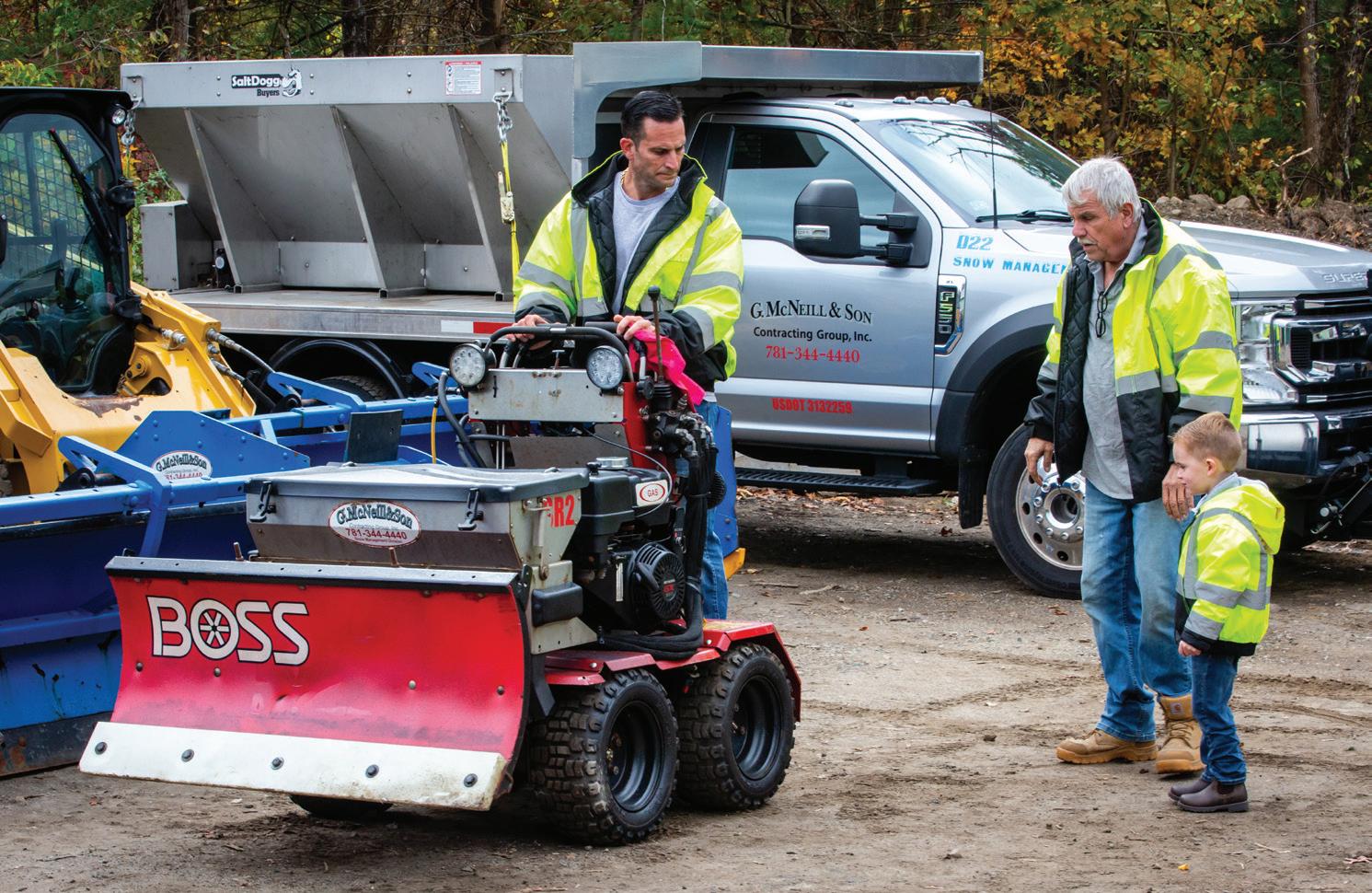
SHANE MCNEILL, CSP, ASM IS THE SECOND GENERATION in the business started by his father, George. Now, a third generation is getting a taste of snow work as his 4-year-old son, also George, is a frequent presence on the job. “He’s been coming to client meetings with me. Before he could even walk, I had him in a machine,” says McNeill. “He’s been out plowing with me. I’ve got photos of him out shoveling. He’s already hooked on the industry!”
As the company began taking on more snow work, the emphasis was still on general contracting. “We’d be doing kitchens and bathrooms in the winter, and then a snowstorm would hit and we couldn’t come back to those jobs for a week. We found that was really jeopardizing our reputation,” McNeill explains. “We kind of slowed down on the building, really focusing on that only in spring and summer.”
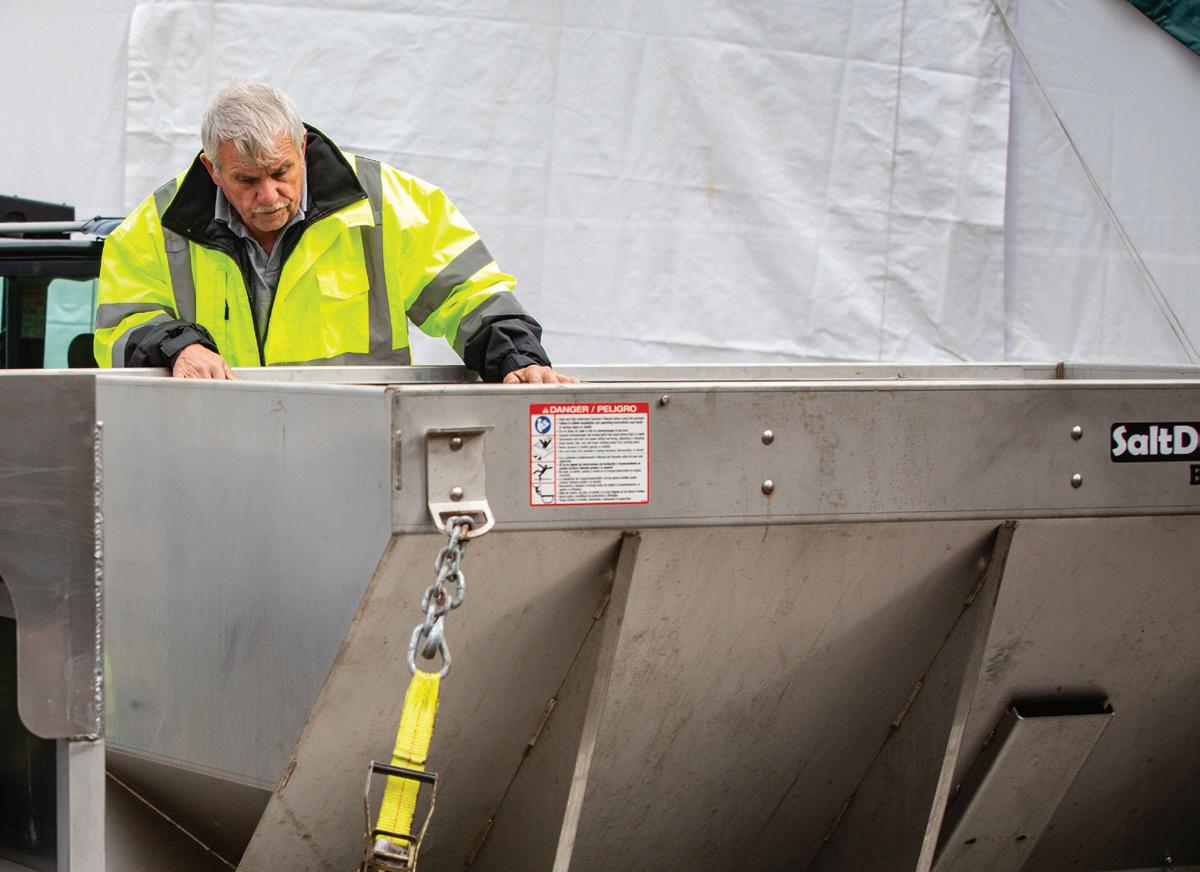
STILL INVOLVED:
George McNeill, 73, remains actively involved in the business.
During Covid, they found the home remodeling market becoming more difficult to compete in, with DIYers having plenty of time at home and “one-truck guys” getting into the business. “So we scaled that part of the business back even more and really put almost all our focus on snow. Snow is now about 85% of our portfolio,” says McNeill. “And we love it—we call it white gold.”
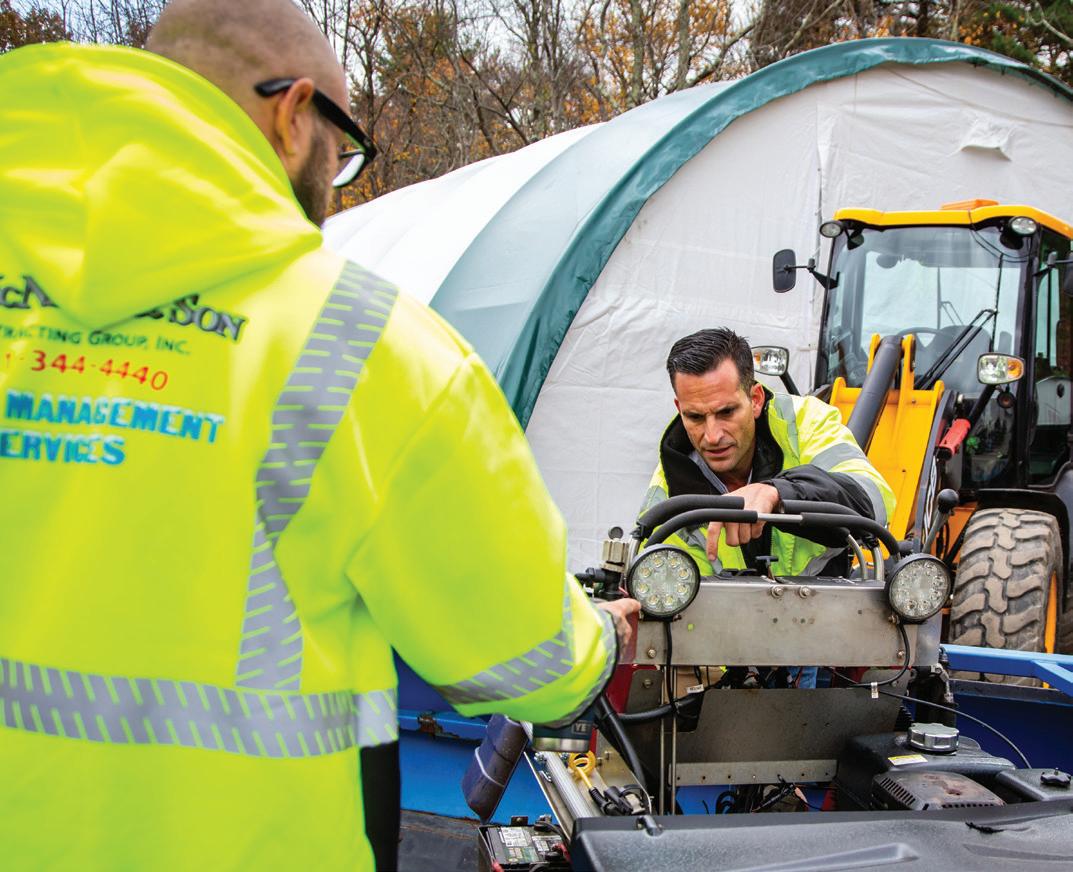
EQUIPPED FOR SUCCESS: Working for the teams and maintaining the equipment are Shane McNeil’s favorite winter tasks.

McNeill says his father’s early snow clients were mainly residential, but as the company grew there was an intentional shift toward commercial. “I started realizing that with fixed pricing on larger corporate properties, we could let go of residential,” he explains. Over time, they have zeroed in even more specifically on certain commercial segments that provide the best fit for their operation.
“When you specialize in certain markets, you can really invest time in them, versus trying to train guys on every different market,” notes COO Nick Pupko, CSP, ASM. “That then allows you to provide a better service at a lesser cost than being the jack of all trades, master of none.”
The company focuses its efforts on plazas, HOAs and hospitals. One reason these particular markets have proven to be a good fit is because they each require specific things that G. McNeill & Son can provide.
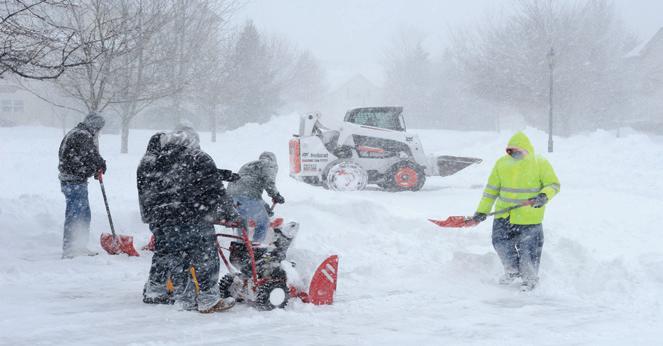
“HOAs are all about shovelers,” says McNeill. “We have an abundance of shovelers, and we know there’s not much competition out there because no one can find the labor.”
Hospitals require a lot of specialty equipment and experience that many snow contractors don’t have. “Most companies don’t know about what really goes into clearing a helipad, for example, or parking garage management, where there are only certain products you can use,” he notes.
“And plazas are really about production; with the right attachments on the right machine, we’ve found that these are our best margins. We’ve found that cutting certain things–like gas stations, that we serviced for many, many years–right out of our portfolio, has made us a lot more profitable. That and refining our systems a little bit better.”
As the company has become more specialized and more systems-driven, it has been able to confidently expand to cover a larger geographic footprint.
“We just keep scaling, trying to get the entire New England market,” says McNeill. “Now we’re up on the North Shore in Boston, over to Providence, Rhode Island.” He notes that the recent trend toward more volatile winters
is leading them to look further from the coast, to where snow is more reliable.
When they reach into a new area, their approach is to set up a seasonal hub and then look to service properties within a 10-mile radius. McNeill credits Pupko for his ability to handle all of the behind-the-scenes logistics to operate further from home. For example, if it’s necessary they will use vans to move shoveling teams in during events, putting them up in hotels to let them get some rest close to the action.
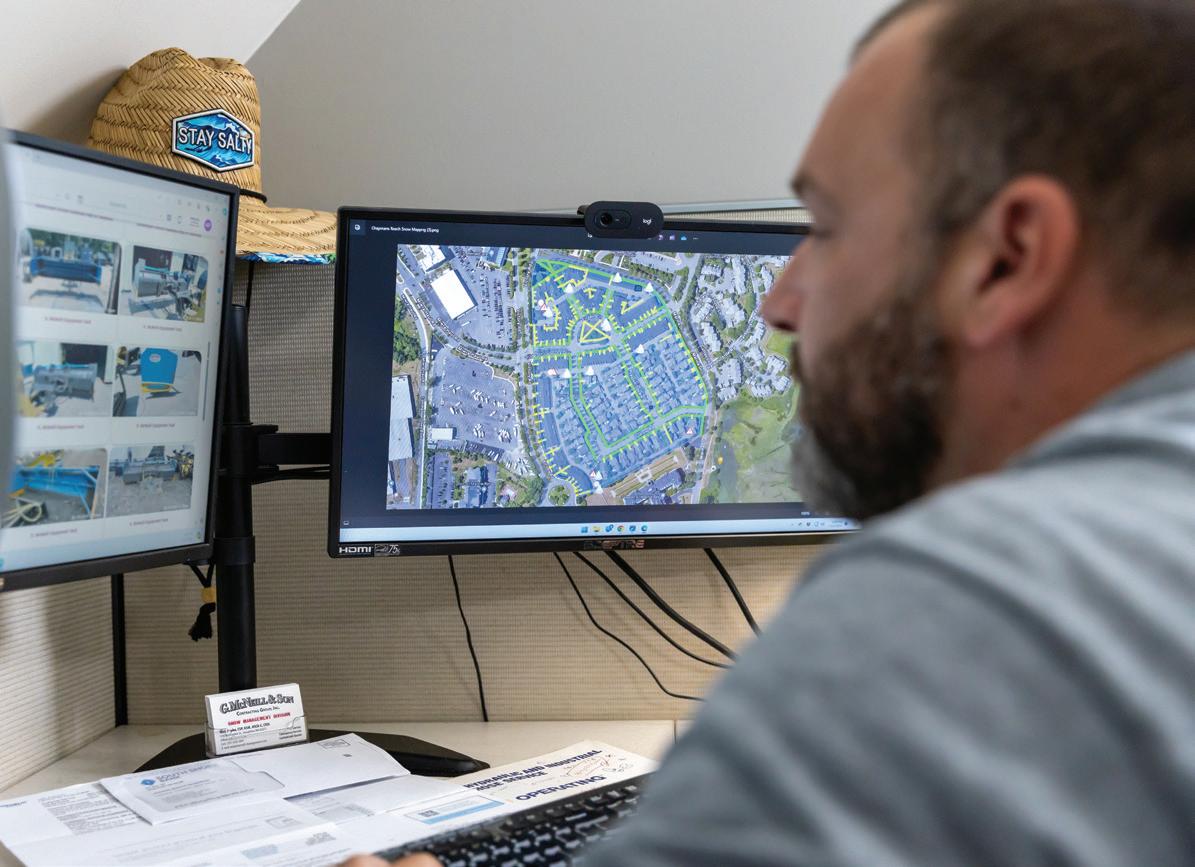
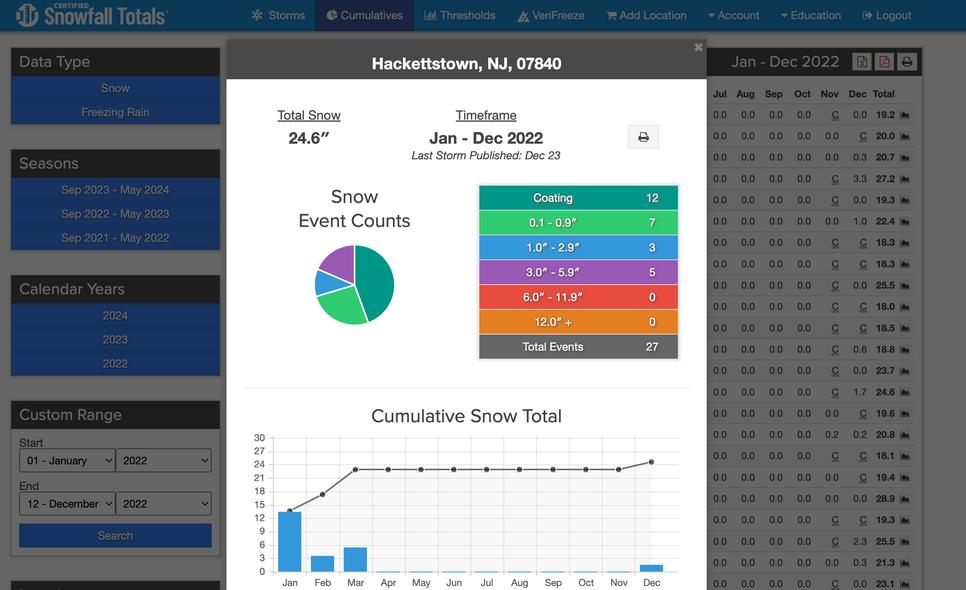
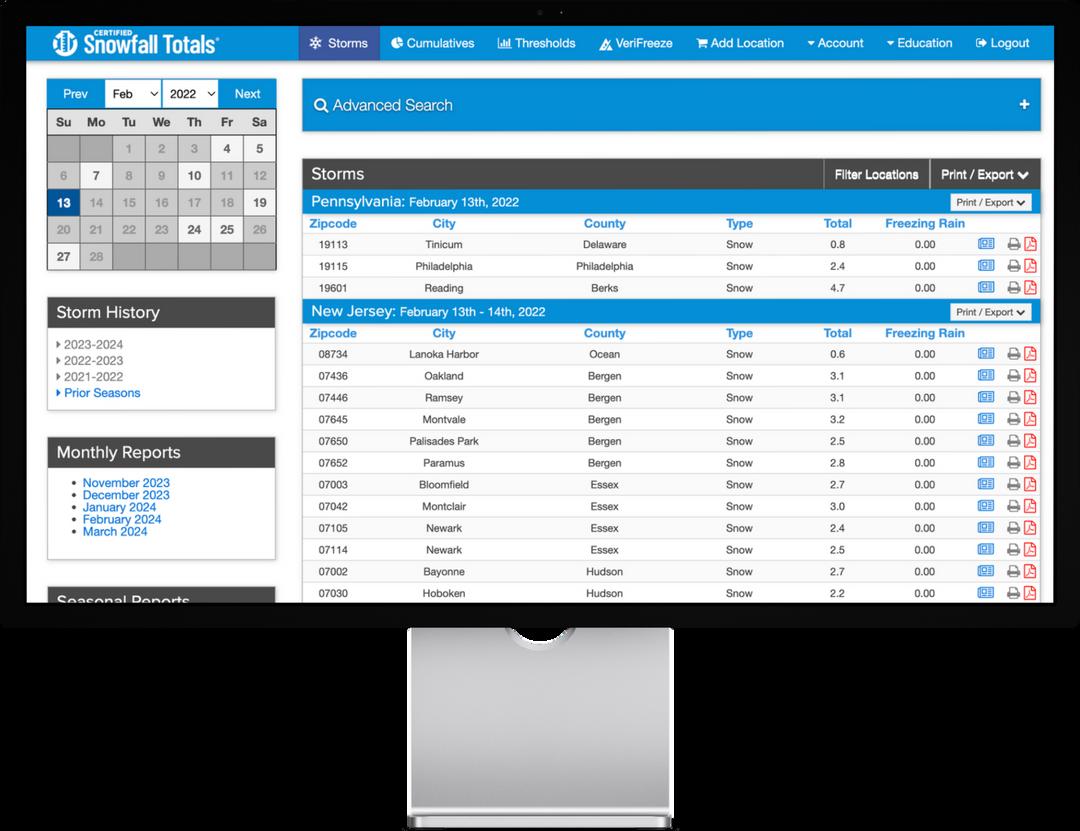
Technology, such as live-monitoring camera and weather systems, is helping G. McNeill & Son to monitor sites that are further afield. This allows for accurate, up-to-the-minute analysis of conditions, which can cut costs by reducing unnecessary callouts while allowing them to keep tabs on service quality regardless of location.
McNeill says the plan is to continue to grow the company 15% to 20% year over year. But he emphasizes that growth needs to be both profitable and manageable: “One year we grew over 40%, and it got too aggressive, so we had to step back and refine our approach. Since we’re more familyoriented, we want to be able to keep our core team together, with generous salaries and the ability to live happy lives without being too stressed out—having a good family/work





Continued from page 12
restaurant and arcade games for the kids for the season-end party. “There’s a lot of stress to what we do, and the families bear the brunt of it—the kids see that dad is not home a lot during the winter because he’s out plowing,” says Pupko. “We do appreciate the sacrifice that they make for us, and for the industry.”
McNeill knows that without the green light from their families, they

won’t come back the next season and that has shaped their business model and their mindset to always care for the team: “Your team is the backbone of any business; without them, what do you have? We want our guys to be able to make a profitable career and have a good work-life balance.”
Building a winter crew
G. McNeill & Son uses a quasisubcontractor model, with about 30 employees performing about half of their portfolio in-house and another 50 joining the team as seasonal workers
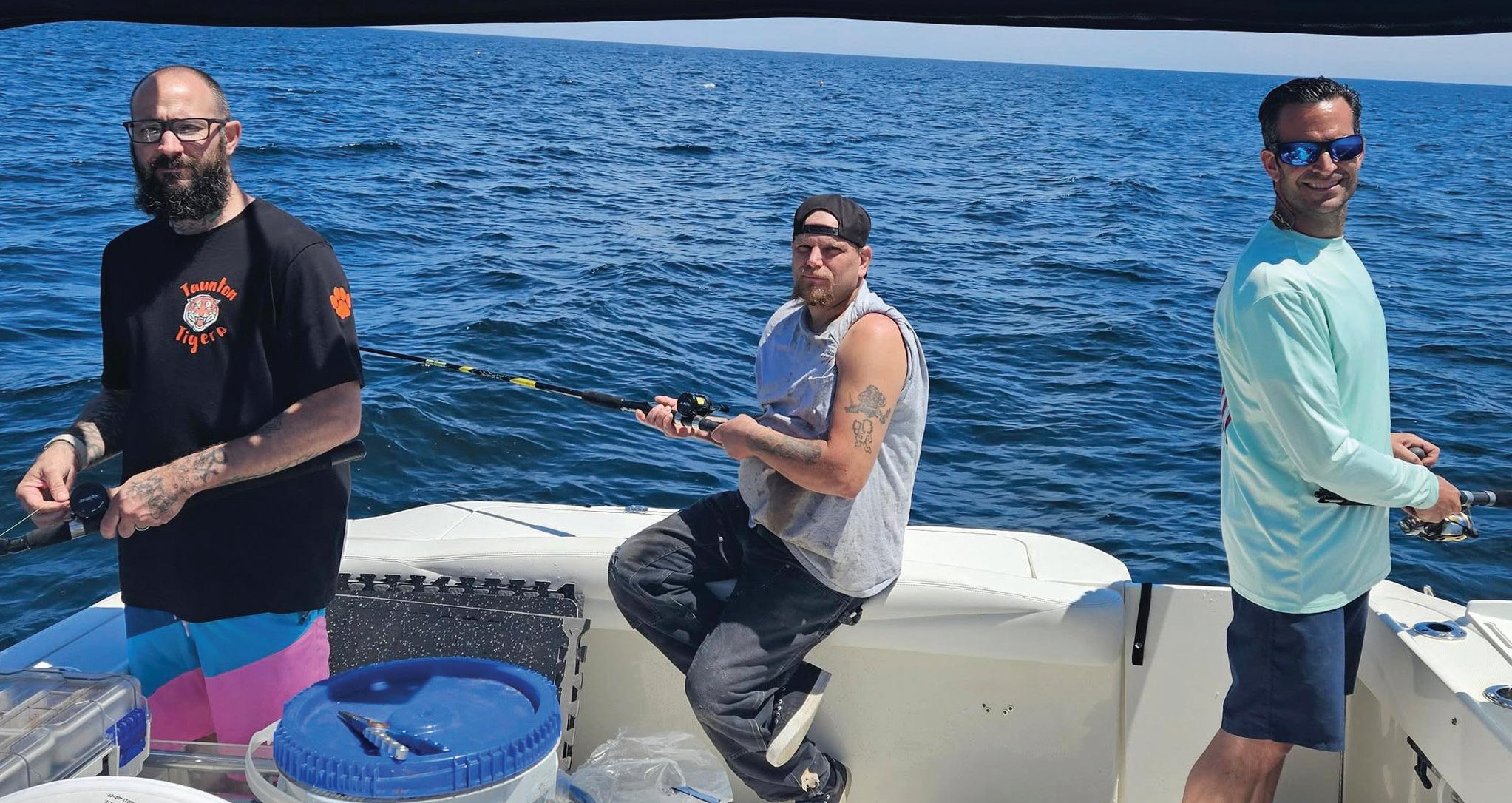
BOAT BONDING: Operating in coastal New England gives the company an extra way to show appreciation to their staff and clients. “We’re big boaters,” says McNeill. “So, we try to bring the guys out on the boat. And we trap lobsters, which we love to give to our clients and staff.”
who bring their own equipment. About 50 shovelers round out the winter team.
“We’re not directly subbing the work. They’re hourly and we’re managing them. It’s a different, hybrid approach that lets us keep our finger on the pulse, versus just subbing something out completely to another company,” McNeill says. “We did try that on a smaller scale many years ago, and it just felt like we lost control of everything. The number of complaint calls went up; we track every single phone call that comes in, and we noticed most calls were about sites with subs.”
This approach gives the company the ability to conduct in-depth training for all employees and allows them greater control over the quality of the work being done.
Field Operations manager Steve Corey, ASM, has been with the company since 2018 and has worked his way up from plowing/shoveling by investing time and effort into constantly conducting research, learning, attending SIMA events, and earning his ASM certificate and MA hoisting license. He has taken over field training for the seasonal staff, including overseeing preseason staking, safety trainings/meetings; and has transformed our mechanic yard into a smoothly operating system.
“We have seasonals who have been with us for years. We offer retainers, so we’ll pay them X-amount for the season, even if we get little or no snow, because we understand that they’ve got startup costs. And that keeps us being able to obtain good talent.”
— SHANE McNEIL

He is not afraid to jump right into repairing a truck or piece of machinery or attending a field meeting to walk a delicate property with a property owner.
The company recruits actively among lobstermen, roofers and others in industries that don’t typically work in the winter. And then they work to build long-term relationships with the best seasonal workers. “We have seasonals who have been with us for years,” explains McNeill. “We offer retainers, so we’ll pay them X-amount for the season, even if we get little or no snow, because we understand that they’ve got startup costs. And that keeps us being able to obtain good talent.”
McNeill says that the seasonal workers also tend to prefer the hybrid approach versus traditional subcontracting: “They can get guaranteed money, and we do an umbrella insurance policy, so they’ll fall under us, which makes it more attractive to them.”
Lowering the risk for these seasonal employees is key at a time when the costs and difficulty involved in obtaining insurance are proving insurmountable for some small contractors. “We now have two- and three-truck landscapers coming over,” he notes. “A lot of landscapers use snow just as supplemental income; it’s easier for them to come on as hourly with us and then get back into landscaping in the spring.”
Patrick White has covered the landscape and snow and ice management industries for a variety of magazines for over 25 years. He is based in Vermont. Contact him at pwhite@meadowridgemedia.com.



By DANNY KERR
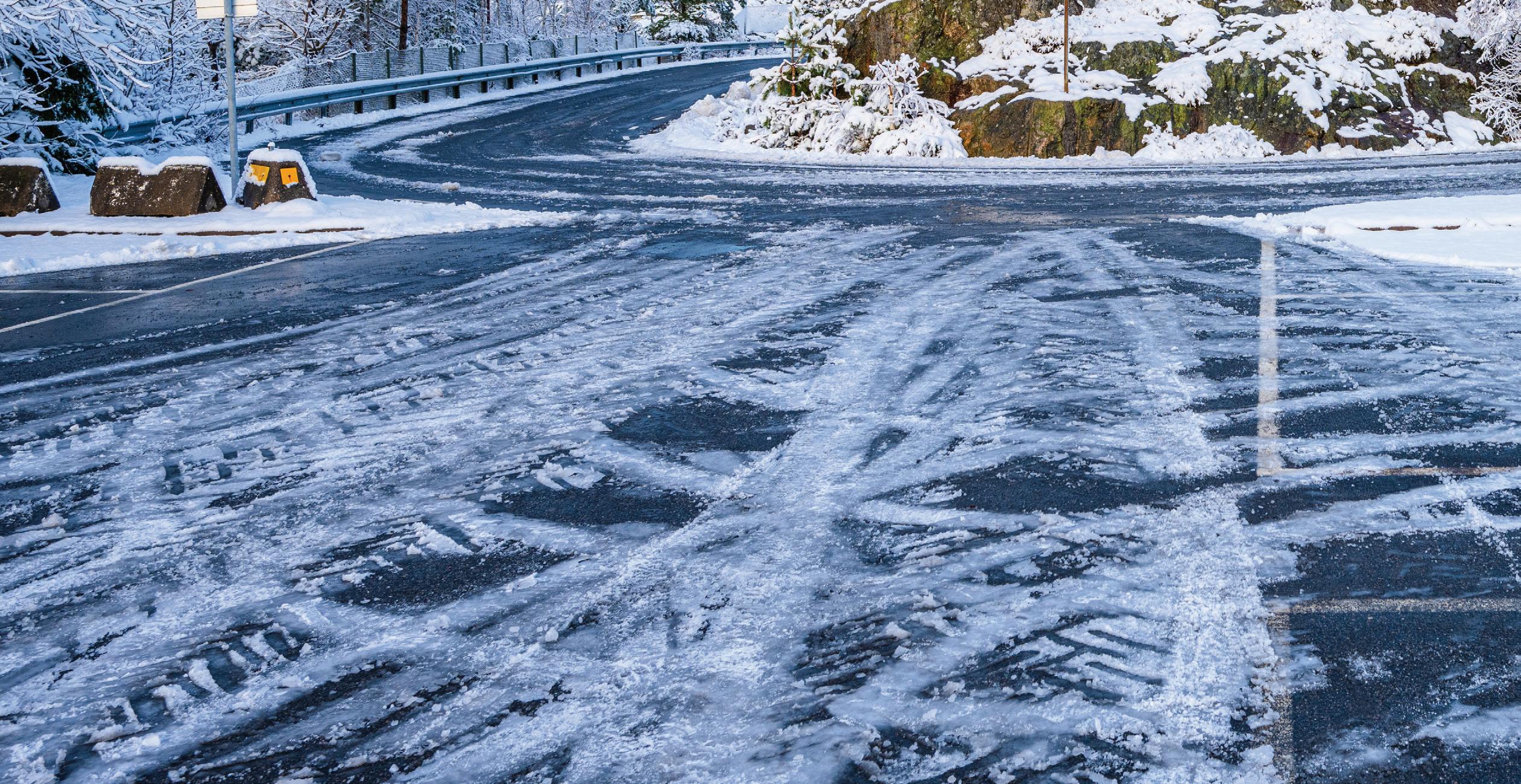
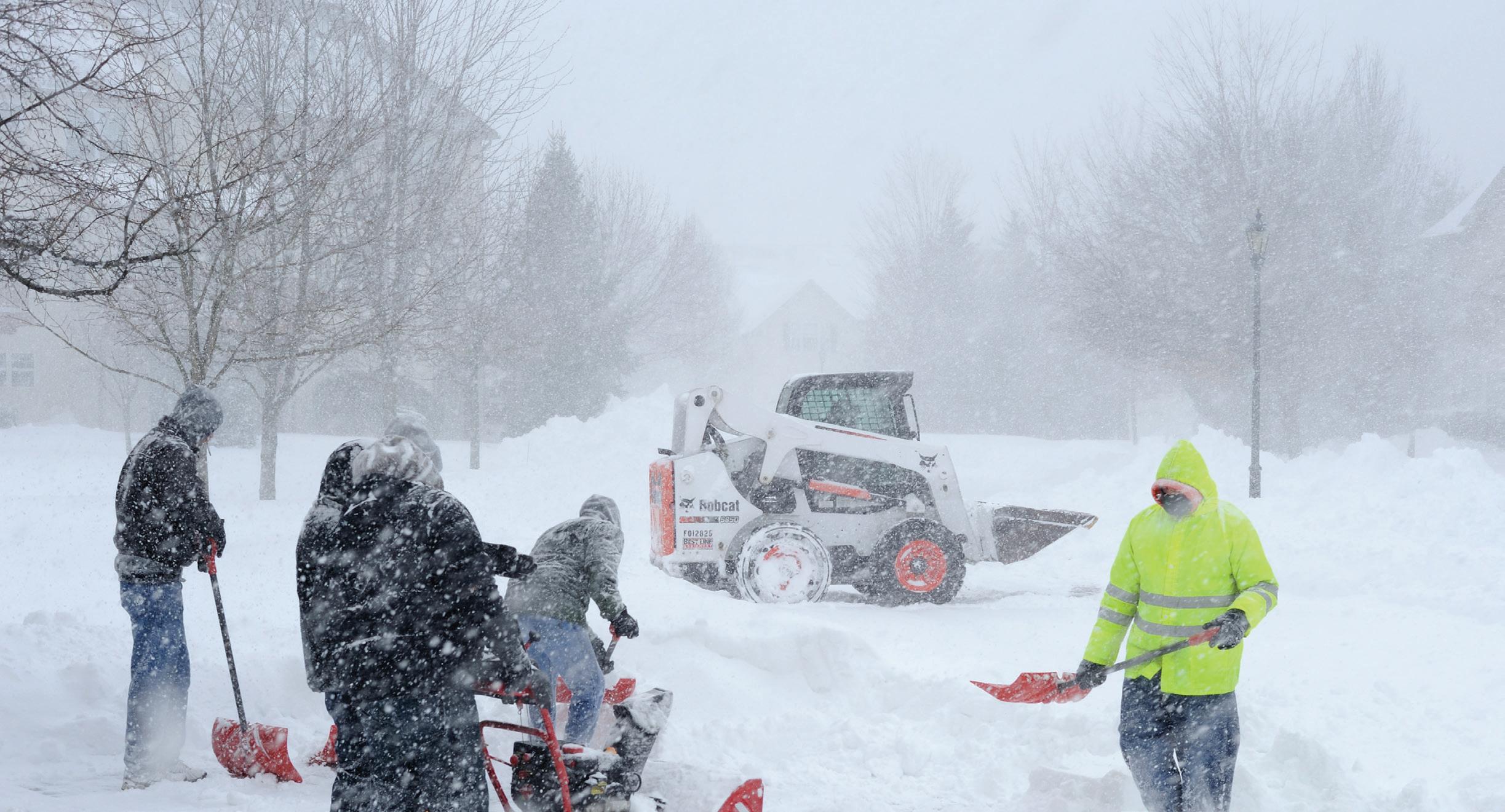
Before a winter storm, every snow and ice pro knows the drill. Routes are mapped, trucks are loaded, crews are scheduled, subcontractors confirmed, and safety protocols reviewed. You would never roll out trucks without prep, yet somehow, the future of your business is often handled like a mystery snowflake: invisible, random, and slightly terrifying.
Here’s the kicker: your team cannot follow a plan that lives only in your head. If your vision is invisible, every decision is reactive, and you spend more time putting out fires than leading. Leadership isn’t about who can plow the fastest or answer the 3 a.m. call without spilling their coffee. It’s about creating the conditions so your team knows where you’re going and why, and inspiring them to want to help get there.
Clarity = Action (Not guesswork)
Most “vision statements” are just ideas trapped in your skull. Without clarity, execution is messy. Teams guess. Priorities misalign. And every decision bounces back to you like a rogue snowball to the forehead. At Breakthrough Academy, we see the same pattern over and over. But operators who plan
effectively don’t just hope for growth; they engineer it. They know where they want the business to be in 3, 5, even 10 years, and then reverse-engineer exactly what needs to happen today to make that vision a reality.
fuzzy goal trap
Most owners want growth. Bigger team, more routes, more revenue. Sounds good, right? But “growth” without a plan is like tossing salt in the wind—you think you’re doing something, but mostly it just lands where you don’t want it.
Maybe you hire staff without knowing the roles you really need filled. Buy trucks without knowing which routes actually pay off. Offer services without thinking through the operational headaches.
Three- or five-year plans that are clear? They solve all that. They give your team a target, so each day actually moves you closer to where you want to go. No guessing, no chaos. No slipping on last year’s mistakes.
Team buy-in isn’t 0ptional
Rolling out a new route plan or staffing model without explaining the “why” is like handing your crew shovels and saying, “Good luck.”
Mistakes happen, morale drops, adoption is slow.
Make the vision tangible, communicate it, and watch the magic. Foremen start making decisions that actually support long-term goals. Seasonal staff understand how their work fits into the bigger picture. Admin staff can see why the emails they answer matter. Leadership suddenly stops being heroic firefighting and starts being…manageable.
Planning isn’t optional—it’s your operating system
Snow and ice management isn't forgiving. Liability, safety, equipment uptime, client expectations, staffing headaches—they all demand flawless execution.
Planning isn’t “nice.” It’s the operating system that lets the business run without you catching every snowflake. Documented plans remove ambiguity, clarify priorities, and align the team. Simply put: you cannot execute what you haven’t clarified.
Make the future vivid
Enter the Painted Picture. This is where abstract ideas meet actionable reality. It helps you map out:
• What your company looks like
Stop winging it. Start building the business you actually want. Give your team something they can follow. Set yourself up to tackle each season with confidence, clarity, and alignment.
in three years—team, trucks, routes, culture
• Operational processes that actually make growth stick
• Customer segments and service standards that bring repeatable revenue
• Financial targets that guide your daily decisions
Once it’s on paper, your vision becomes the “North Star” for your team. Drama decreases, engagement rises, and leadership stops being heroic chaos—it scales.
Review, refine, repeat
Planning isn’t a one-and-done. Top operators revisit their Painted Picture and Strategic Plan with coaches and their leadership teams. Teams provide input, identify gaps, and commit to action. Everyone is rowing in the same direction. Everyone is accountable. And suddenly, planning doesn’t feel like work; it feels like leverage.
Momentum comes from planning
Without a plan, every season feels like Groundhog Day. You’re reacting to client calls, managing equipment breakdowns, scrambling to cover routes.
With a plan? Every hire, every route, every investment is intentional. Momentum builds naturally. Decisions get easier because they’re measured against the vision, not your gut at 2 a.m.
Your future becomes real when you define it, communicate it, and actually put the systems in place for your team to carry it forward.
Stop winging it. Start building the business you actually want. Give your team something they can follow. Set yourself up to tackle each season with confidence, clarity, and alignment.
Resource:
Get your Painted Picture + Strategic Planning Resource
Bundle by scanning QR code or visiting:

https://trybta.com/Snow-Plan
Build the future before the storm hits Winter will test your systems, your team, and your leadership. The difference between scrambling and executing flawlessly is the plan you put in place.
When your team sees it, they help make it happen. When it’s written down, it stops being theory. When you plan intentionally, your business grows
predictably—season after season. Planning isn’t a luxury. It’s the difference between surviving the winter and thriving in it.
Danny Kerr is a founder of The Breakthrough Academy, created to help you evolve from a doer of all things to a builder of smart systems and a leader of great people. Learn more at btacademy.com.


BY EVAN TACHOIR
It is no secret that finding enough qualified seasonal employees is a challenge. Once you find good people, the next challenge is to keep them engaged. While we cannot eliminate every challenge and unpredictable element, we can build a more committed and engaged seasonal workforce.
To keep your team engaged, you must first understand what drives employee engagement. For this article, we’ll focus on two key factors that decades of Gallup research show most strongly engage employees and drive business results:
“I Have the Materials and Equipment, Including Information, Needed to Do My Job.”
Reliable equipment, adequate supplies, and proper PPE are essential, but so is information. Beyond tools and materials, your seasonal staff needs access to the right information to do their jobs effectively. Some examples include:
• How often they should check in to confirm updated availability.
• Priority areas based on time of day.
1 I know what is expected of me at work.
• Where snow piles should be placed.
• How to track and report completed services.
• The process for communicating about incoming weather and dispatching them to work.
• Ongoing weather updates during the storm.
• Any client-specific priorities or requests.
2 I have the materials and equipment, including information, needed to do my job.
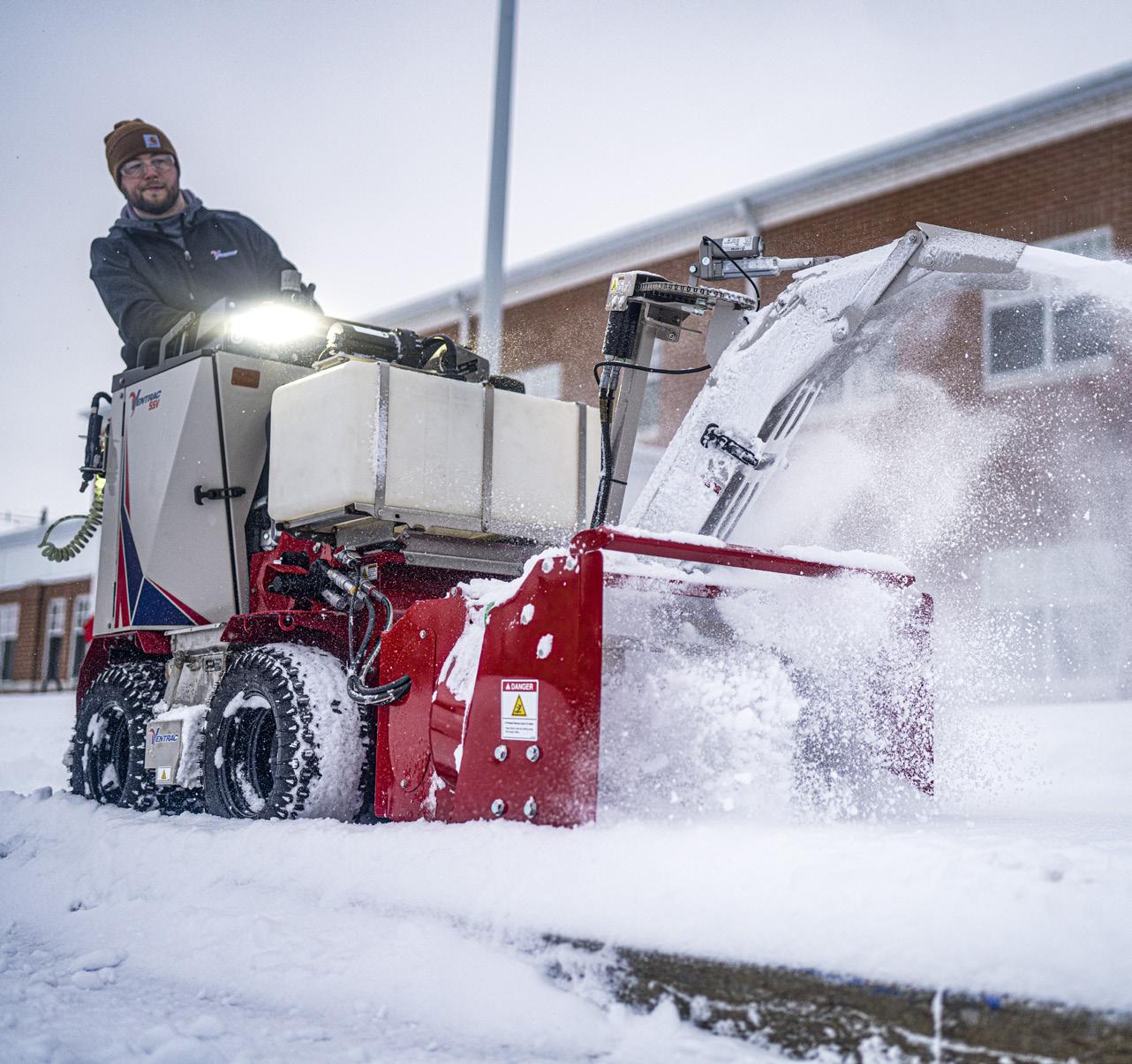
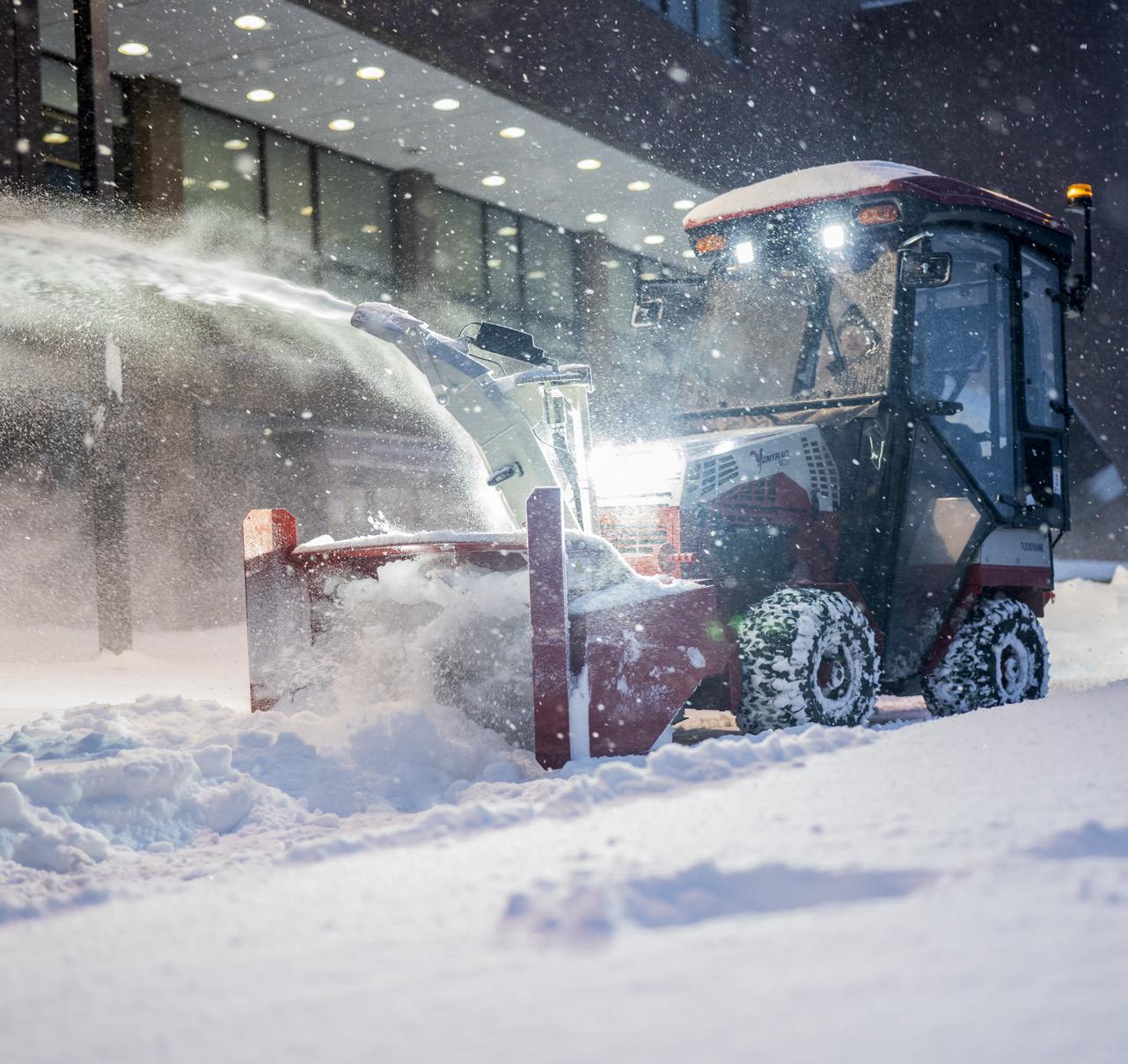
The most obvious way to keep people engaged is to offer additional work, such as cleaning machines or restocking supplies post-storm. You can also ask clients about offering value-added services like snow stacking or hauling. Beyond just providing more hours, there are other ways to engage your team.
Recognize good work: Recognition is one of the most powerful drivers of employee engagement. Ask employees whether they prefer public or private recognition, then make it a habit to acknowledge what they’re doing well, both during events and in post-event debriefs.
Foster relationships: Positive relationships at work increase retention. Consider hosting pre- and postseason cookouts or team gatherings. Use these opportunities to connect with your team outside of work. This builds trust that pays off in future events.
Provide opportunities to learn and grow: Engagement increases when employees can build skills. Offer operators additional “stick time” with your trainers, including
This goes beyond simply telling employees what to do. Setting expectations starts with painting a clear picture of success, both for the sites being serviced and for how each employee’s work makes a difference. For example, if your team services a retail complex with several busy storefronts, your sidewalk crews need to understand when foot traffic is heaviest and that their work directly keeps people safe, especially those most vulnerable to slip and falls.
Expectations should be communicated to seasonal employees multiple times, beginning as early as the interview process. Training should reinforce what is expected, and those expectations should continue to be revisited through
hands-on snow training. These experiences help new operators build confidence. When sending company communications, consider adding a short training tip.
Engaging your seasonal staff is possible; it just takes intentional effort. Small, consistent actions compound over
“I Know What is Expected of Me at Work.” Built for the Worst.
regular communication throughout the season. Here are some key expectations to make clear to your seasonal team: Weekly availability updates: Require staff to provide weekly updates on their availability. Designate someone on your team to collect and document this information in writing. This ensures that when winter weather is in the forecast, you’ll know exactly who is available to work.
Site priorities: Your team must understand the top-priority service areas based on the time of day. In addition to training, materials such as site maps, app notes, checklists, and written work instructions help reinforce these expectations.
time, building a team that feels valued, informed, and ready for whatever the season brings.
Evan Tachoir is the founder of Jack of All People Trades, HR/People Consulting to help snow companies recruit, develop and retain the best employees. He leads the monthly networking/ teaching series NET Gain. Email him at evan@ jackofallpeopletrades.com.






recovering payment
for completed work can be frustrating and time-consuming,
but you don't have to
accept nonpayment as the final outcome.
You’ve completed your end of the deal, but now your client refuses to pay up. What do you do? Your business almost definitely relies on that payment—but even if it doesn’t, you’ve put in time and effort to complete a service, and you deserve to be paid for your hard work.
There are several courses of action you can take to recover these funds. However, before pursuing any legal path, ask yourself:
1. How much money are you owed?
2. Is there a way to obtain the amount owed through informal means?
3. Do you want to maintain this business relationship?

Jared Nusbaum is an attorney with the law firm Zlimen & McGuiness, PLLC in Roseville, MN. His practice areas include business law, business litigation, collections, and bankruptcy. Email him at jnusbaum@zmattorneys. com. Elizabeth Sammon is an attorney with the law firm Zlimen & McGuiness, PLLC in Roseville, MN. Her practice areas include estate planning and estate administration. She recently passed the Minnesota bar exam and was sworn in as an attorney on October 31, 2025
For any business transaction, burning fewer bridges is better. It’s always smart to start by directly reaching out to the party that owes you money and asking them to pay. Sometimes nonpayment is the result of a misunderstanding or oversight. Keep your tone professional and document all communications—emails and texts can become valuable evidence later if things escalate.
If that initial conversation doesn’t work, as it frequently doesn’t, the next step depends on your situation. But as a general rule, if somebody won’t voluntarily pay what they owe, you must force them to pay through the courts and through judgments for money.
While I always recommend having an attorney involved, whether you are required to can be a matter of state law. In Minnesota, for example, companies are required to be represented by an attorney in District Court, but not in small claims court. Therefore, the amount of the debt owed matters. Your state law determines what claims can be brought in small claims court and generally has a dollar amount attached to it (e.g., no amounts owed over $20,000 can be brought in small claims court). And if you need to get an attorney involved, hopefully you have a contract that allows you to recover your attorney’s
If your contract structure is such that you are invoicing during the season (e.g., monthly installment plans, after each event, etc.), make sure you have language that addresses repercussions for nonpayment, such as late fees, suspension of service until the account is current, or termination of the account. The contract should include language that the client is liable for any incidents that occur onsite while service is suspended.
fees and costs in collecting the amounts owed.
Assuming you are forced to proceed in court, it’s important to keep in mind that some people and/or companies are challenging or impossible to collect from, even if you get a judgment. Remember, a judgment is, at its core, an order from the court allowing you to collect from the judgment debtor. But if the judgment debtor is insolvent or bankrupt, all these actions, time and money spent seeking to collect the funds owed can be for naught. So, it really takes a case-by-case analysis.
Recovering payment for completed work can be frustrating and timeconsuming, but you don’t have to accept nonpayment as the final outcome. You strengthen your chances of collecting what you’re owed when you stay professional, document your efforts, and follow the proper steps from directing communication to formal legal action. If you’ve held up your end of the agreement, you have a right to expect payment.
Before taking action on your own, you should consult with an attorney to ensure the steps you plan to take are appropriate given the specifics of your situation.

Manage the storm—and your business—with the new Auto Speed Control from Western Products, engineered and designed to optimize your de-icing material applications. Equipped with a familiar and user-friendly control interface, the Auto Speed Control automatically adjusts material flow rate based on truck speed to deliver controlled application—saving you time, material, and money.
• Set desired spread rate, material type, and hopper spreader delivery system and the control takes it from there
• Features an easy-to-use control layout similar to previous hopper spreader controls
• Uses OBD-II port to instantly adjust de-icing material flow to changes in vehicle speed, stopping the flow when the vehicle stops or exceeds travel speeds over 35 mph
• Compatible with WESTERN hoppers equipped with the FLEET FLEX electrical system INTRODUCING THE ALL-NEW AUTO SPEED HOPPER SPREADER CONTROL
Effective in-season documentation can be the crucial factor that distinguishes a defensible claim from an expensive lawsuit

By KEN BOEGEMAN, JR., CSP, ASM
Snow and ice management is a high-stakes business. When storms hit, every minute counts and every action your crew takes should be recorded. In the eyes of the court or an insurance adjuster, what is not documented is open for debate.
In-season documentation is not just busywork. It is a legal shield. Your logs, checklists and archives can be the difference between a defensible claim and a costly lawsuit when a slip-andfall, property damage, or customer dispute arises.
Your best defense is paperwork
You cannot rely on memory or verbal reports alone. Jurors, judges and insurance carriers require facts,
EDITOR’S NOTE:
This is the third article in a sixpart series focused on practical risk strategies across the snow season. Additional topics in the series:
9/25: Become a Favorite of Carriers
10/25: Train Like You Mean It
2/26: Managing Risk in Real Time
4/26: What to Keep and How to Store It
6/26: Contracts that Protect, Not Expose
Operations managers play a critical role in ensuring the company can demonstrate professional, consistent and legally defensible service across all properties. Their responsibilities include:
• Coverage verification. Confirm that all areas and properties are being serviced according to contract requirements and operational priorities. If a property cannot be serviced due to locked gates, unsafe conditions, or other obstacles, document the reason and any follow-up actions taken. This demonstrates accountability and proper management.
• Customer feedback tracking. Maintain notes from customer comments or complaints and ensure follow-up when needed.
• Weather monitoring. Track forecasts and changing conditions that may affect service plans or staffing.
• Quality control for logs. Review submitted logs to ensure completeness, consistency and accuracy.
Document, document, document. Thorough logging protects crews, clients, and the company.
timestamps and detailed records. Blank or incomplete logs create liability. It is not enough to know that a service was performed. You must prove when, where and how it happened. Even small omissions can weaken a legal position. Assume every detail may be scrutinized months or years later.
Not all observations or details belong in service logs. Avoid including information that is:
Subjective. Do not write personal impressions, guesses or comments like “this looks unsafe” or “the customer is difficult.”
Unverified. Do not record weather or conditions like temperature, precipitation or ice conditions unless you have a reliable and verifiable source or measurement.
Critical of staff. Avoid noting disputes or complaints about crew members in logs; use HR or internal channels instead.
Irrelevant. Skip observations that do not pertain directly to the service provided, such as unrelated landscaping issues or adjacent property conditions.
Speculation. Do not speculate about liability, negligence or potential hazards; logs should document only actions taken and facts observed.

Paper documentation is better than nothing, but it introduces delays and potential gaps. Digital systems offer advantages for documenting service:
• Submission speed. Electronic logs can be submitted in near real-time, so supervisors know immediately what work was completed, reducing gaps or missed follow-ups.
• Quality control. Digital logs allow supervisors to review and catch omissions quickly, ensuring that all entries are complete and consistent before they are archived.
A well-organized archive turns a pile of forms into a strategic asset. Once logs are collected, administration must maintain a structured archive:
• Digital storage. Centralized drives, cloud storage or operations software.
• Searchable records. Consistently organized year over year.
• Retention schedule. Keep at least three to eight years, depending on local laws and insurance requirements.
• Searchability. Digital records are easier to organize, search and retrieve, which is critical when responding to customer inquiries, insurance requests or legal demands.
• Timestamps. Automatic timestamping provides an objective record of when work was performed, minimizing disputes about timing or service frequency.
• Accountability. Digital systems provide an audit trail that paper cannot match.
Field crews are the frontline recordkeepers. A strong service log captures key elements that demonstrate professionalism and accountability. Logs should be:
• Concise but specific, including service type (e.g., snow plowing, shoveling, deicing, or inspection); location(s) serviced; and type and amount of materials used (e.g., salt, sand, brine, other chemical types).
• Time-stamped with arrival and departure times to the minute.
• Legible, whether handwritten or digital.
• Consistent, following a standard template.
Quick, factual micro-logs for unusual situations, adjustments or customer requests can capture actions that might otherwise be missed. Every log should be treated as if it might be requested in court. Messy or incomplete records will not provide a strong defense.
Courts and attorneys often request a chronological record of what was done onsite, not just general storm summaries. Rounds-based documentation shows frequency of service, responsiveness to changing conditions, and compliance with contract terms and industry standards. Without precise rounds, logs may appear incomplete, even if work was performed.
Logging information should not feel punitive. Encourage crews to view documentation as part of professional pride and legal protection. Field supervisors should model thorough logging, and office staff should maintain the integrity of the archive.
If a service is not recorded, it is as if it never happened. This principle is the simplest and strongest rule in snow and ice documentation. Thorough logging protects crews, clients, and the company.
Ken Boegeman is a snow and ice industry consultant and president of SG Advantage and Swinter Group. He has over 13 years of experience as a slip-and-fall expert and more than 30 years in the snow industry. Contact him at kenb@swintergroup.com.

By TOM MARSAN, CSP
Ever had to face down an irate client because their lot still wasn’t cleared, only to discover your ops team never received the critical details? That’s a gut-punch all too familiar to many in snow and ice management. The culprit is rarely a single person. It’s almost always a communication gap. In a business where a blizzard can roll in at 3 a.m., aligning sales, operations, and admins is mission critical.
Internal communication: Where alignment begins
When a promise slips through the cracks, blame rarely fixes the root cause. What does help is a system that moves the right information to the right people, at the right time.
Centralize the truth. Replace scattered spreadsheets, inbox hunts, and memory with a single CRM or operations platform. Quotes should convert to work orders, service notes should be visible to dispatch, and updates should flow in real time. If sales sold it, ops should see it automatically.
Standardize the handoff. Treat every signed agreement like a project kick-off. Put sales, account management, dispatch, and field leadership in one room (or on one call) to walk the scope: trigger depths, response windows, site maps, special hazards, salt preferences, escalation contacts. Confirm what was promised and who owns what. If you can’t explain the plan in five minutes, it isn’t ready.
Establish storm-day channels. Define how information moves during events: who sends route changes, how delays are communicated, where priority lists live, and what gets logged where. Whether it’s a radio protocol, group messaging, or a shared dashboard, the path for updates must be obvious before the first flake falls.
Cross-train for empathy. Have ops brief sales on real cycle times, equipment constraints, and crew safety limits. Have sales explain contract structures, client hot buttons, and renewal levers. When the sales team understands service realities and ops understands promise language, the “sales promised what?!” moment disappears.
Get these habits right and you trade post-storm finger pointing for real-time visibility. That’s the difference between a 3 a.m. complaint and a client who feels cared for even when conditions are brutal.
When it goes sideways: Turn pain into process
Big storms expose weak processes. It’s easy to blame the weather, but often the real issue is misalignment that began months earlier.
Do a root cause search, not a witch hunt. Was the promise unrealistic? Was dispatch overloaded? Did vague language invite conflicting interpretations? Identify the systemic cause and document it.
Fix the system, not just the incident. If the failure revealed missing roles, add them (e.g., a storm coordinator). If it exposed a planning gap, add a pre-event checklist. If it showed a contract flaw, update the template the next day.
You can’t control snowfall totals. You can control the machine that responds.
Train sales on operational limits. Ride-alongs, shop days, and preseason ops briefings turn estimates into promises based in reality. Salespeople

who can articulate the “why” behind pricing and response windows win trust and set ops up to succeed. Use templates, checklists, and SOPs. Create a preseason kickoff checklist (e.g., equipment readiness, staffing, site maps, contacts, SLAs). Build storm day checklists (e.g., activation, communications, deicing thresholds, post-storm inspections). Use a contract
Continued on page 28
A beautifully designed contract is worthless if it commits your team to the impossible. Write agreements that your operation can actually deliver on in the worst 30% of storms, not just on a good day.
1 Match service levels to capacity. Inventory your crews, machines, and materials before selling the season. Be conservative with response times, especially at cycle times that stack work quickly. Revenue that outpaces capacity becomes brand damage at the first major snowfall.
2 Precisely define expectations. Replace mushy words (“promptly,” “as needed,” “reasonable”) with objective terms: service triggers, measurement methods, response windows by daypart, service completion targets, and scope by area (e.g., lots, docks, entrances, sidewalks, stairs). If it can be misread, it will be, so make it measurable.
3 Detail scope and snow placement. Spell out what gets cleared, what gets treated, and where snow goes. Identify haul out thresholds and who authorizes them.
A great map with callouts for hazards and priority zones saves hours of snow time confusion.
4 Beware of absolute promises. Phrases like “keep clear at all times” or “continuous monitoring” sound elite but are operationally and legally dangerous. Replace absolutes with defined service standards you can meet storm after storm.
5 Protect both parties. Clarify liability, insurance expectations, extreme event provisions, pricing ranges, caps, and change order mechanics. Keep termination and renewal language fair and unambiguous. Review your template annually to scrub risky or unclear phrasing.
Do this well and you’ll stop inheriting chaos from the page. Clear, realistic contracts set up satisfaction for the ops team and your clients.
Continued from page 27
review checklist co-owned by sales, ops, and admin so no agreement advances with unanswered questions.
Align incentives and scorecards. Share a simple scorecard per account, including profitability, service KPIs and client feedback, and then review it jointly. Celebrate smooth contracts and dissect tough ones. Tie a portion of variable compensation to shared outcomes.
Schedule kickoffs. It can often be overlooked, but all companies should run a real kickoff meeting. Get the GM/owner, sales leadership, account managers, ops leaders, dispatch, route supervisors, and HR/payroll (if applicable) into one room. Review new and high-priority
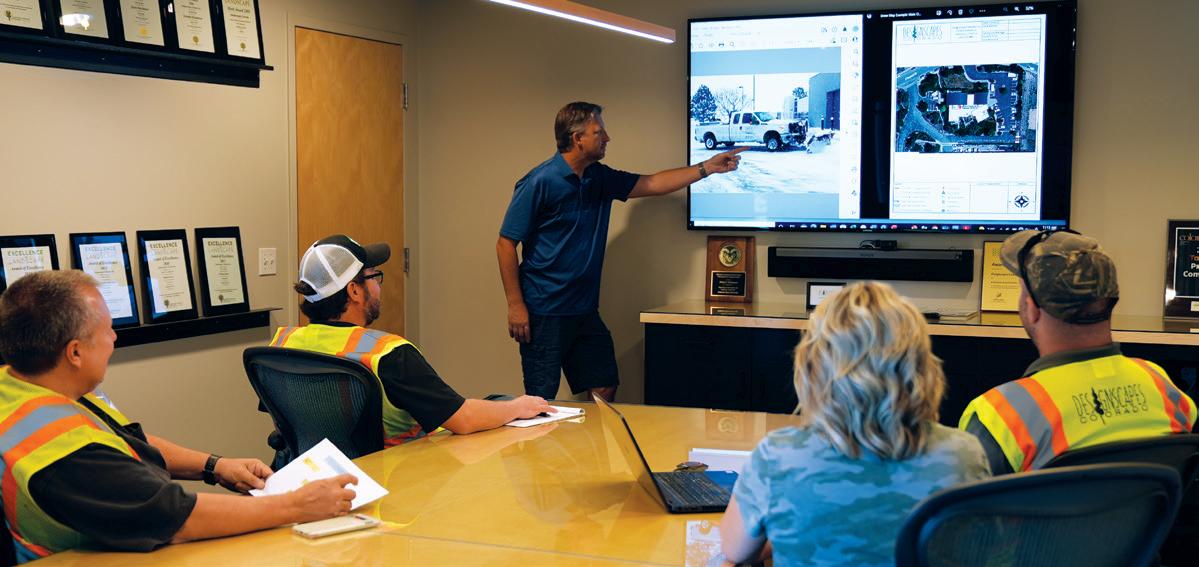
sites, staffing gaps, equipment assignments, route timing, communications, escalation paths, and post-storm debrief cadence. Hand out the reference packet with maps, contacts, SLAs, and priorities.
The bottom line
Seamless alignment between sales, operations, and contracts is a delicate balance, but it’s the difference between brandbuilding winters and cleanup seasons. Tight internal communication prevents the 3 a.m. surprises and makes for a reputable brand name in the snow removal industry. Precisely written contracts turn promises into playbooks. A healthy sales and ops partnership keeps commitments and capacity glued together. And repeatable processes make consistency possible when the weather refuses to cooperate. You can’t schedule the snow, but you can script your response. Fix the roof before it snows: break down silos, build the system, and let your team execute the plan. When sales, ops, and admin move in lockstep, you deliver what you sold. And that’s how reputations and renewals are won.
Tom Marsan, CSP, is general manager at Beverly Companies in Chicagoland. He has been in the landscaping and snow removal industry for nearly two decades and is an active member of SIMA and Landscape Illinois. Email him at tmarsan@beverlycompanies.com.

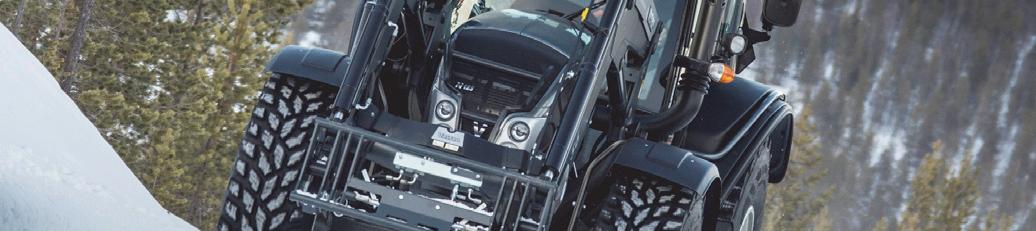
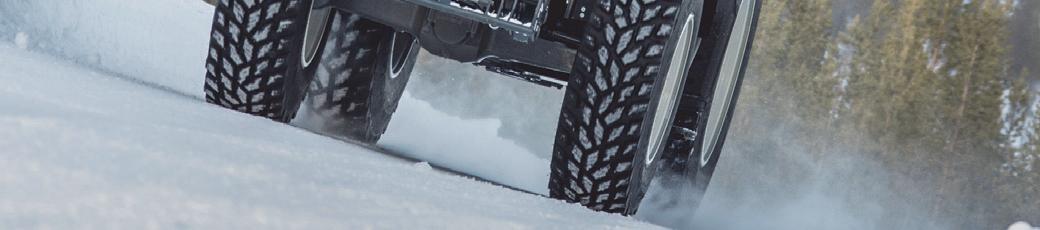
The first winter tire for tractors, Nokian Hakkapeliitta TRI , makes sure your winter contracting has all the grip and control you need –with or without studs.

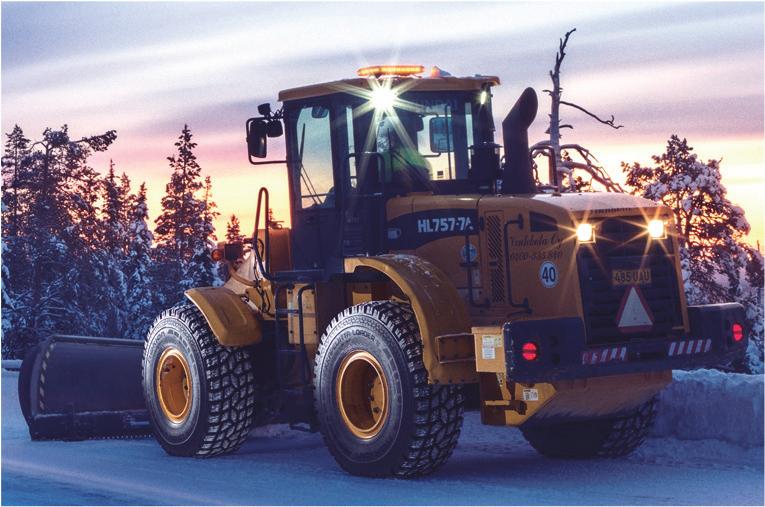
The first winter tire for wheel loaders, Hakkapeliitta Loader, offers you speed, stamina and control. Unmatched grip and durability in the market –both winter and summer.

By DAVID GALLAGHER
Snow and ice management is a critical service, ensuring safety and accessibility for businesses, residents and public areas. One common element in snow management contracts is the “trigger depth,” a specified snow accumulation threshold that determines when services such as plowing and salt applications are initiated. While this system may seem straightforward, it often introduces significant confusion, especially regarding when to apply salt.
I want to offer a perspective on why trigger depths should be removed from snow management contracts and advocate for a more flexible, safetyoriented approach. We are, after all, experts in the delivery of snow and ice services and should be able to decide how and when to deliver these services, especially when we are asked to hold liability for the outcomes.
A trigger depth is typically defined as a specific measurement of snow accumulation that must be reached before services are initiated. The intention is to standardize delivery of service and (most often) control
Eliminating trigger depths from snow management contracts offers several key benefits:
Improved safety: Without arbitrary thresholds, contractors can respond to hazardous conditions as they arise, applying salt when needed to prevent accidents and injuries.
Greater flexibility: Service providers can tailor their response to the weather, taking into account factors like temperature, precipitation type, and surface conditions, rather than relying solely on snow accumulation.
Reduced liability: Proactive salt application based on real-time hazards rather than trigger depths helps property owners and contractors avoid negligence claims related to slip and falls.
Cost efficiency: While it may seem that removing trigger depths would increase costs, in reality, targeted salt applications can reduce unnecessary treatments and focus resources where they are truly needed.
costs. However, weather conditions are rarely so predictable or uniform. Snowfall can be light but persistent, mixed with ice, or accompanied by freezing rain—all of which can create hazardous conditions long before the trigger depth is reached.
For example, a contract may specify salt application only after one inch of snow has accumulated. If there is a dusting of snow combined with freezing rain, the surface can become dangerously slick even though the trigger depth has not been met. In such cases, waiting for the specified accumulation can lead to slip-andfall accidents, vehicle collisions, and liability issues for property owners and providers.
Even in scenarios where the trigger is defined only to initiate plowing, it may be better to scrape the surface and apply less salt to achieve a safer surface. This can also reduce the amount of salt used, which is better for the environment.
Salt is a preventive and corrective measure used to reduce ice formation and improve traction on sidewalks, parking lots, and roadways. The timing of its application is crucial for effectiveness and safety. Trigger depths complicate this process. Contractors may hesitate to apply salt if the snow has not reached the contractually agreed threshold, even when conditions clearly warrant it. This leads to confusion, delays and potential harm.

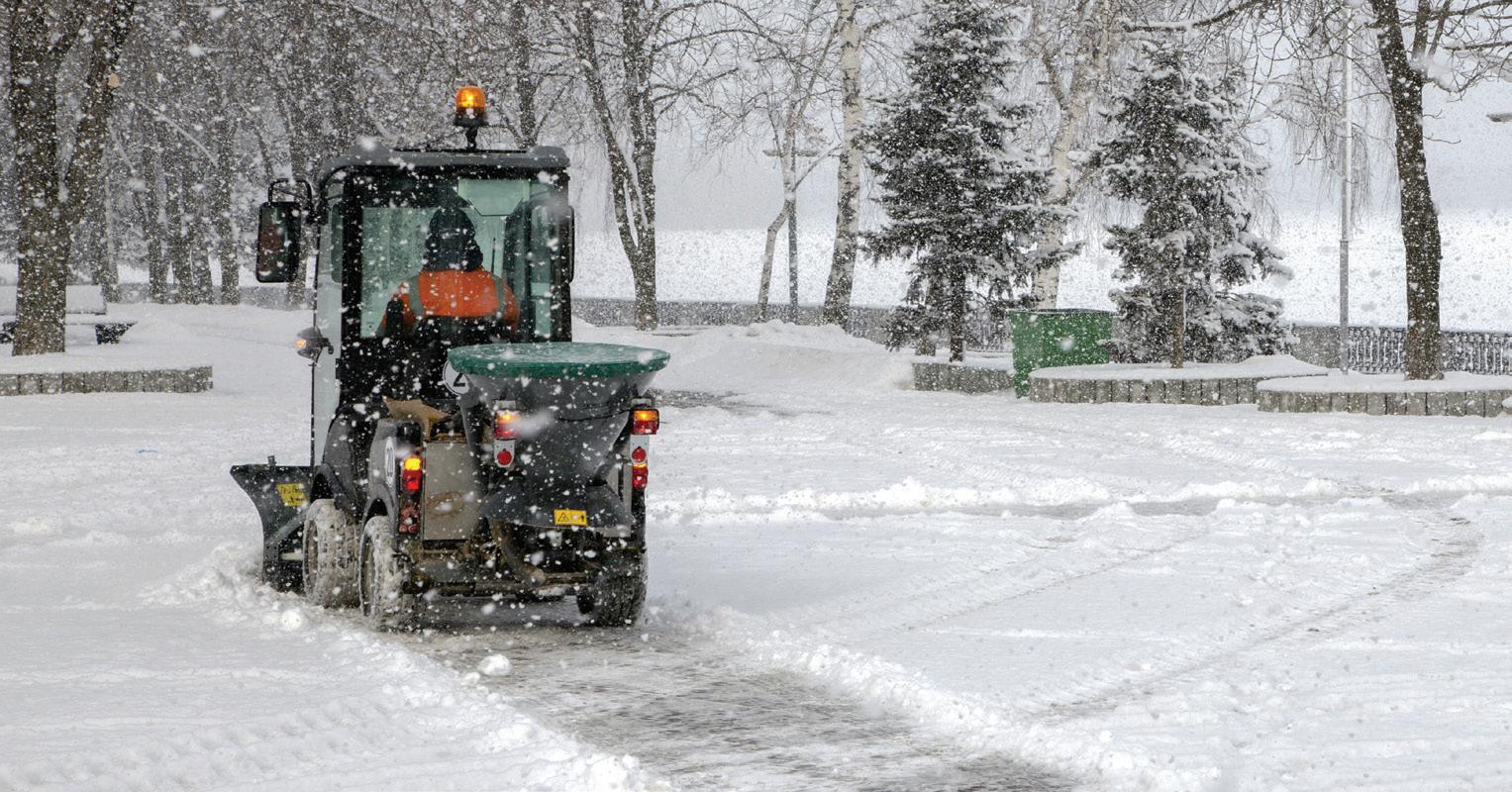
Clients may also misunderstand the contract terms, expecting salt to be applied whenever icy conditions arise, regardless of snow depth. The disconnect between contract language and real-world needs often results in disputes, dissatisfaction and increased risk. Ultimately, trigger depths are an imperfect metric for determining when salt should be used, as they do not account for the full spectrum of winter weather hazards.
Instead of relying on trigger depths,
FLEXIBLE APPROACH: Removing trigger depths from contracts allows contractors better control over how to respond to weather conditions as they change.
contracts should specify that salt will be applied when surfaces are icy or when weather forecasts predict freezing conditions. This approach allows for proactive service that prioritizes safety and minimizes risk. Contracts should also include clear communication protocols, such as regular weather monitoring and updates to clients about service actions.
Service providers can enhance decision-making through the use of technology, such as real-time weather data, surface temperature sensors, and predictive analytics. These tools help
determine the optimal timing for salt application, ensuring effective results without waiting for arbitrary snow accumulation.
Trigger depths in snow management contracts are outdated and often counterproductive, especially when it comes to salt applications. By removing these arbitrary thresholds and focusing on actual conditions and the provider’s expertise, contractors and clients can work together to enhance safety, reduce confusion, and ensure effective winter weather management. The result is a more responsive, transparent, and reliable system that protects people and property throughout the winter season.
David Gallagher is principal for Spiritus Business Advisors. He has over 25 years of experience as a senior service-oriented leader on all aspects of property service. Contact him at david@spiritusba.com.


By MICHAEL WAGNER, CSP, ASM
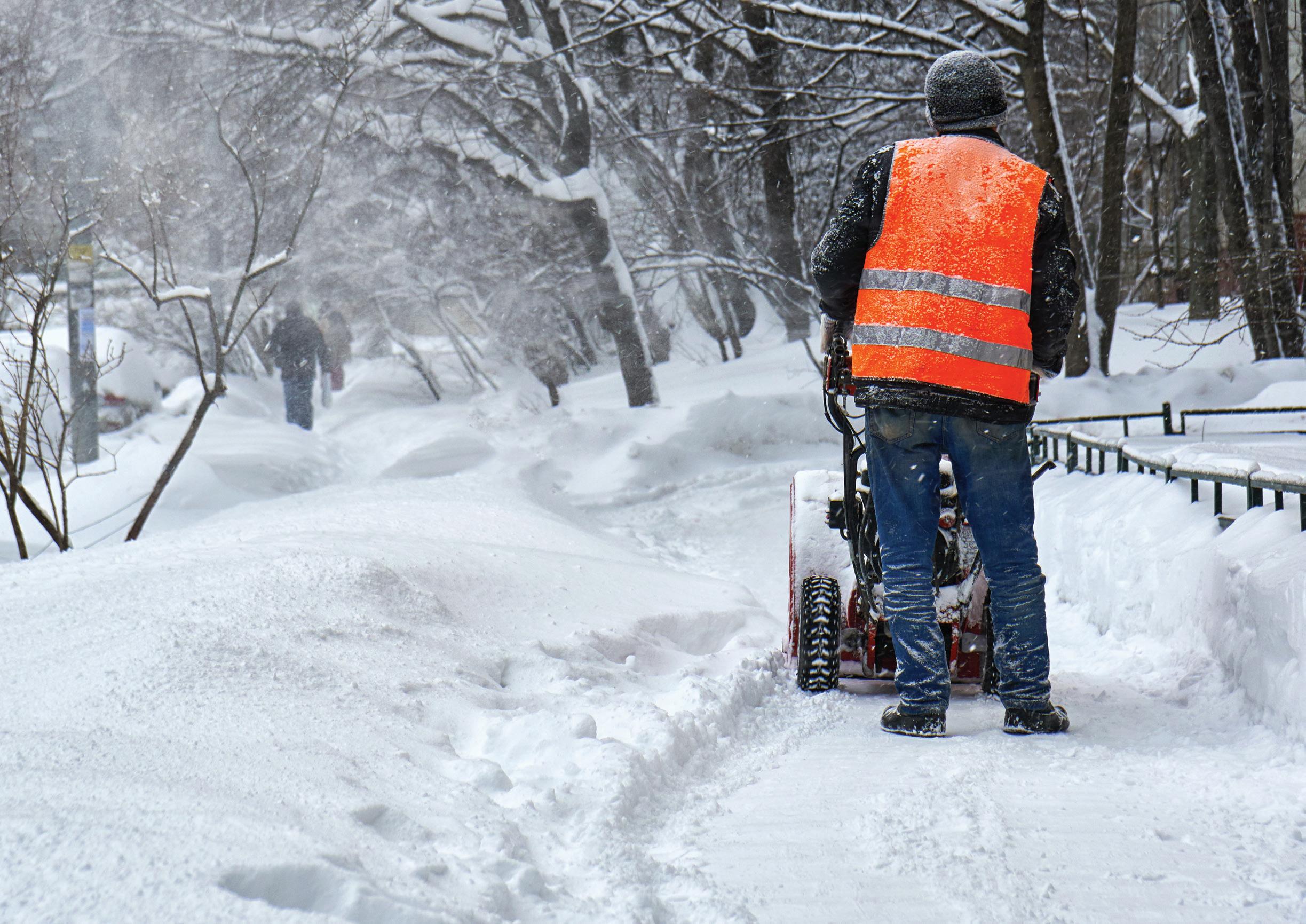
Choosing the right tools for working on walkways and sidewalks can seem straightforward, yet the selection process presents several challenges. Many factors influence your operations, including tool and equipment selection, familiarity with the property or site, and the most efficient and safest methods to get the work done properly. Below are operational characteristics to consider that will guide your equipment selection.
When you begin planning your winter operations, walk the property with your site contact, whether that’s a property manager or ownership team employee. This is a critical step because you will have a chance to learn about the property, as well as the client’s expectations, concerns and preferences. These can include:
• Where you place snow piles or move snow
• What obstacles you may face (e.g., fixtures, stairs, ramps, docks)
• If there are pre-existing safety concerns or pavement/ turf damage
• When the work will get performed, how quickly, and the facility’s hours of operation
This is the perfect time to take photographs, make notes, and discuss an operational plan with the client so they understand your expectations. For instance, you don’t
want to arrive to perform walkway services when there is substantial foot traffic in certain locations or at specific times. Plan the work with the client, because this will help you determine the proper equipment to use, how many people you need working, and when the work must be completed.
Also, take note of how much room you have and the types of areas where you’ll be working, so that you can answer the following questions:
• How am I going to efficiently and safely shovel and move snow to the proper location?
• Is walkway equipment such as ATVs, UTVs, or ride-on equipment effective for the property?
• Can we move snow with shovels or equipment to the parking lots or roadways for clearing?
• Where are the top priority emergency entrance and exit routes, and what tool or equipment should we use to clear them?
Remember, the work will get done the most efficiently and effectively with proper planning. If you miss this step or don’t invest the time accordingly, you’re setting your team up for unnecessary challenges or service failure!
While walkways and sidewalks may be thought of as “easy” in terms of knowing what to use and how to clear them, there is a detailed process of planning, selection, procurement, and safety that goes behind it. Since walkways are a higher risk area, and the safety of pedestrians, employees, and guests of the property are a top priority, it is vital to know how to properly plan so you can get the work done effectively!
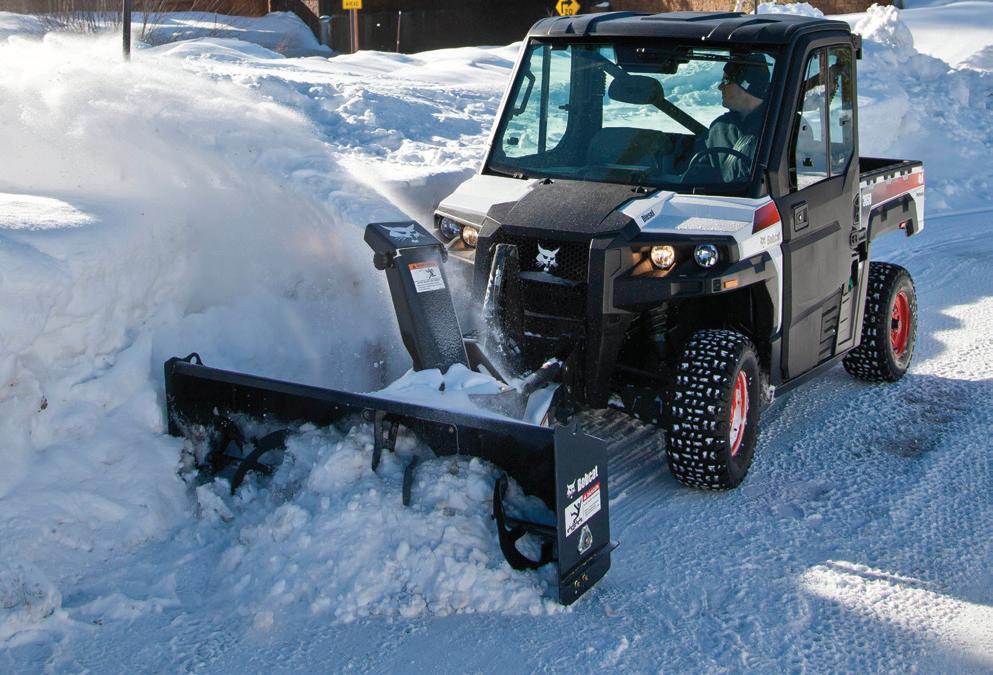
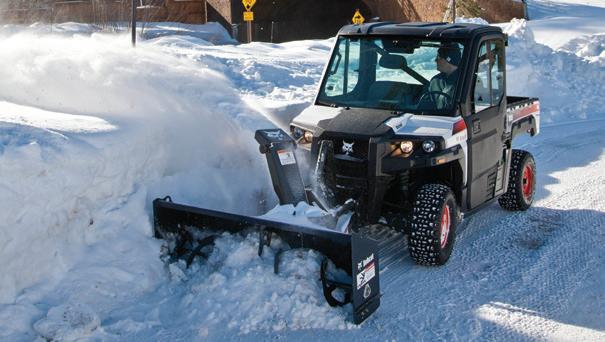
ATVs and UTVs are best used where you can fit snowplows with widths of 4 feet and up. Typically, these types of equipment are best used for trails and walkways with long runs, and areas where snow can be cleared to the side quickly and not piled in hard-to-access areas. ATVs and UTVs can be equipped with straight or V-Plow blades, depending on the need and width of the paths you are clearing.
SAFETY TIPS!
1 Make sure the equipment is equipped with hazard or warning lights, headlights, stop lights, and strobe lights if possible.
2 When working with equipment on walkways and paths, observe your surroundings, and mark off potential pedestrian access points to reduce foot traffic and the possibility of an incident until the area is cleared.
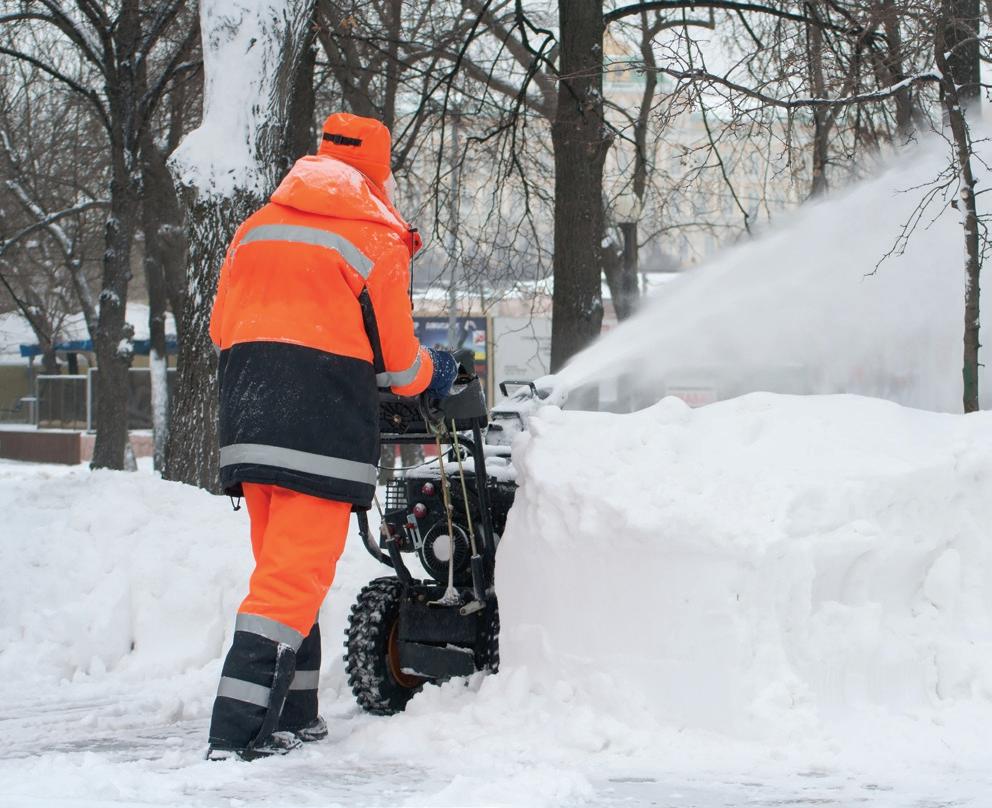
Handheld or backpack blowers are ideal for clearing light dustings of snow, while walk-behind snowblowers are great for smaller walkways that bigger equipment can’t access but where a lot of snow needs to be cleared quickly. Single-stage blowers should be used for lighter to moderate snowfall, and 2-stage snowblowers should be used for heavier, wet snow.
SAFETY TIP!
1 Direct chutes in the proper direction of where you want to move the snow, and never put your hand, arm, feet, or legs near the paddles or rotary assembly! Read the owner’s manual for safety precautions prior to use.
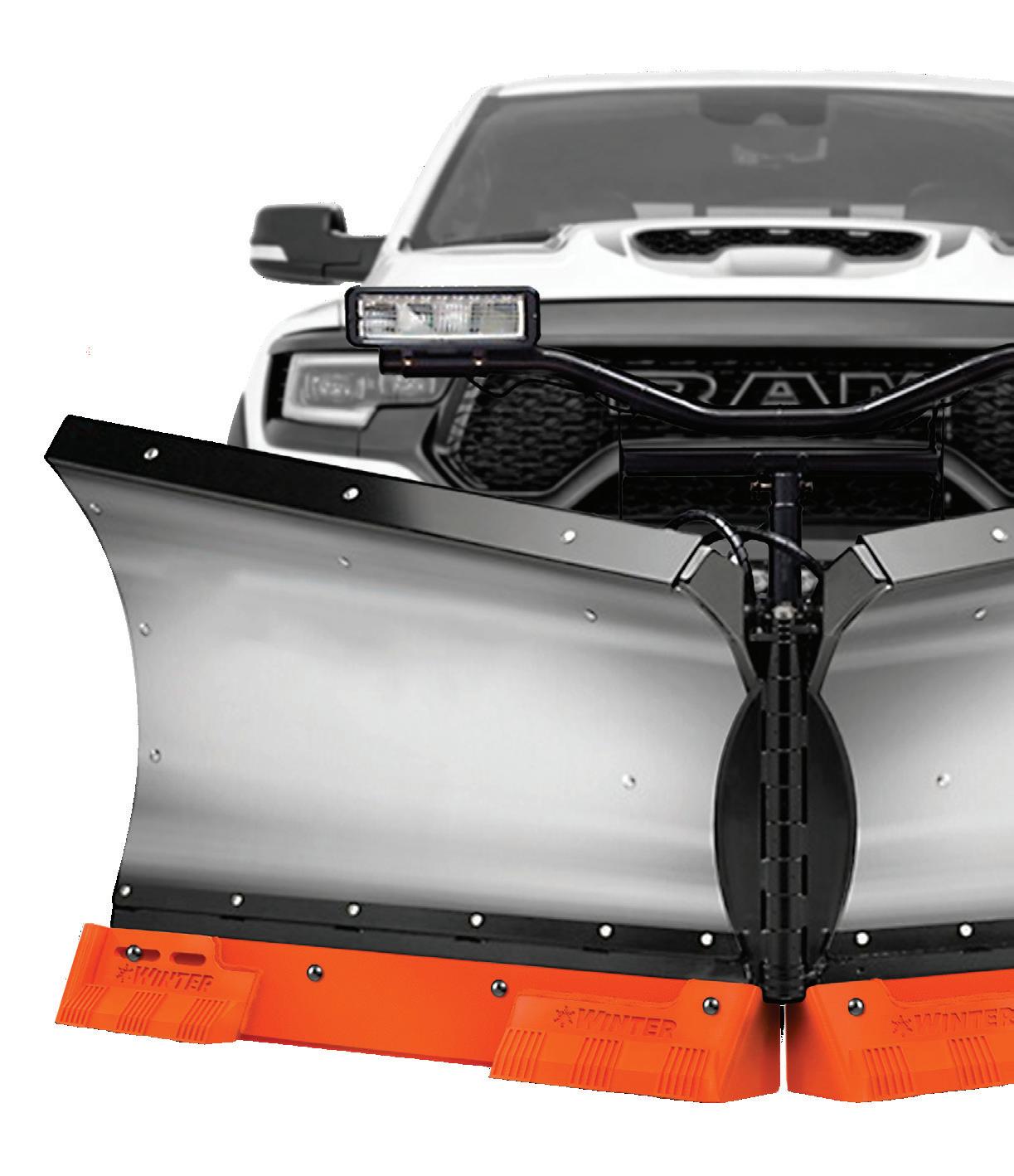
Vulcan® Edges Last 3X Longer—So You Can Plow Profitably on Every 2-3" Snow Event
Most contractors skip plowing light snowfalls (2-3") because factory edges wear out too fast. Instead, they dump expensive salt. That changes with Vulcan®
Our boron steel cutting edges with cast steel PlowGuards filled with Americanmade Winter Carbide™ last 3x longer than factory edges. Install once in fall, then plow confidently all season—even those light dustings that used to cost you in chemical treatments.
Stop leaving money on the table. Scrape the light snow. Save on salt. Make more profit per storm.
Fits BOSS, Western, Fisher, and SnowEx V-plows. American-made. 5-star rated by contractors. $1,285-$1,565 depending on plow size.
Continued from page 32
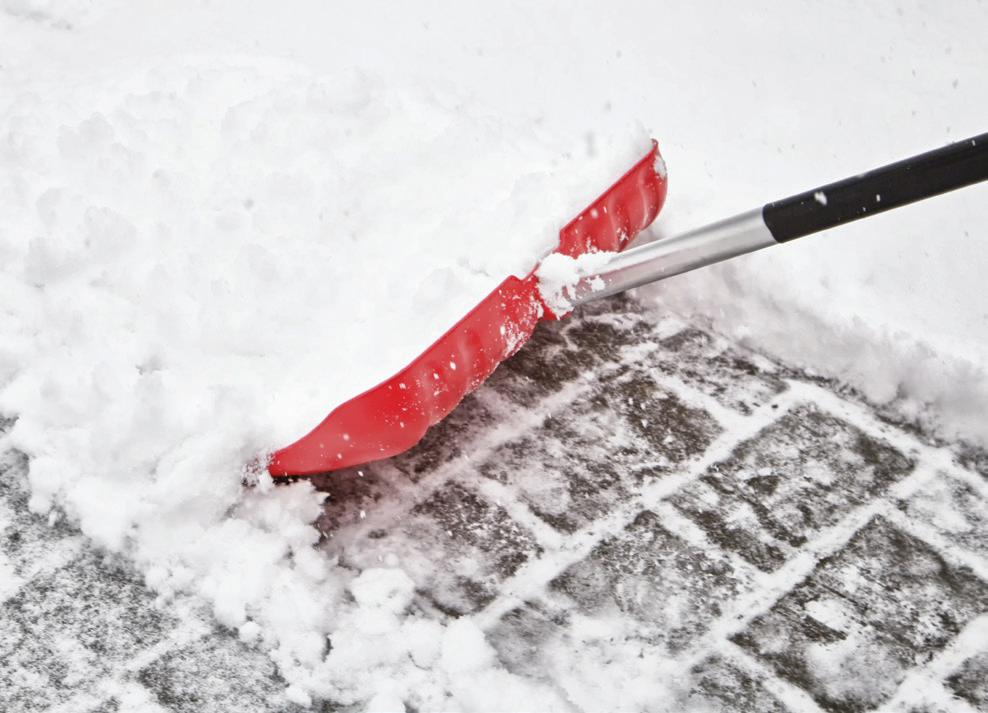
Shovels are most effective where detailed work is needed, such as near building entrances and doors, pavement transitions near roadways, near pedestrian travel paths, or on and around obstacles like stairs, railings, ramps, docks and fire hydrants.
A selection of shovels is available, including push, scoop, wheeled and spade. Whether you are pushing light snow, scooping heavy snow, or chipping ice, you must choose the right shovel for the job.
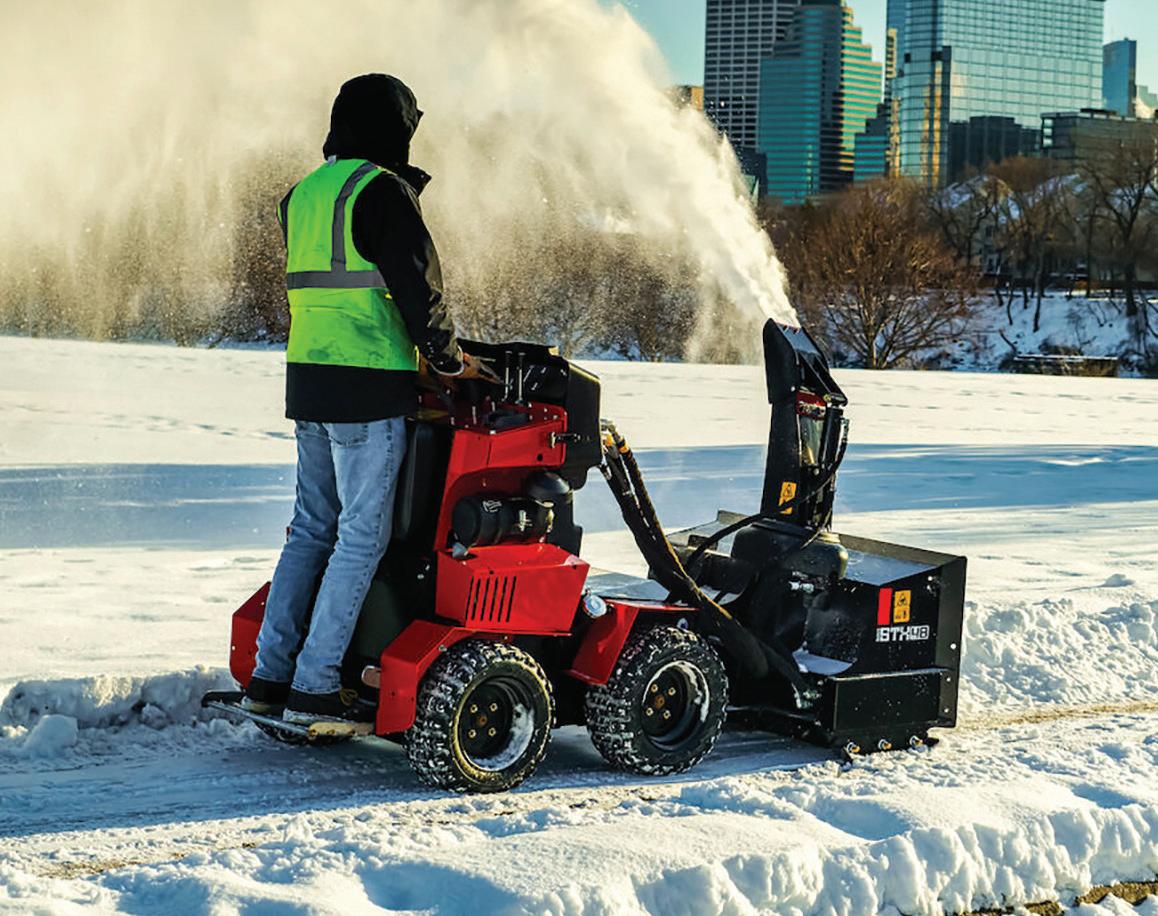
Ride-on equipment is best used on moderately sized walkways. This type of equipment utilizes attachments, such as plows, blowers, brooms and liquid or granular spreaders to properly perform the work.
SAFETY TIP!
1 Make sure you are fastened into the equipment, wear the proper PPE (including helmets, goggles and ear protection) and are visible to any pedestrians and vehicles that may be near the work area.
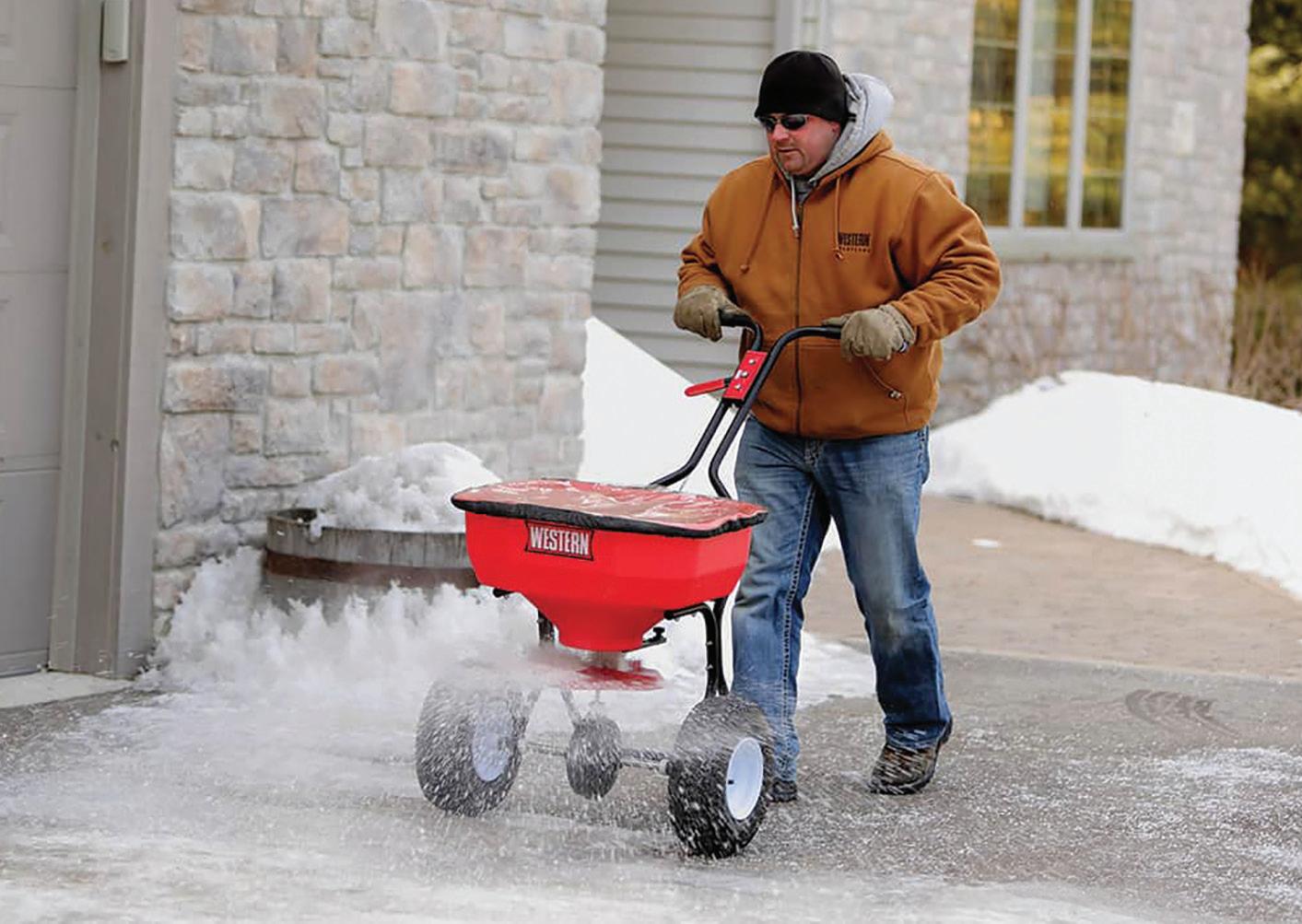
Granular and liquid spreading equipment, such as walk-behind spreaders and sprayers, are highly mobile pieces of equipment that can be used almost anywhere. Make sure the equipment is set to the proper calibration and don’t over- or under-apply the chemical. Read the manufacturer directions prior to use.
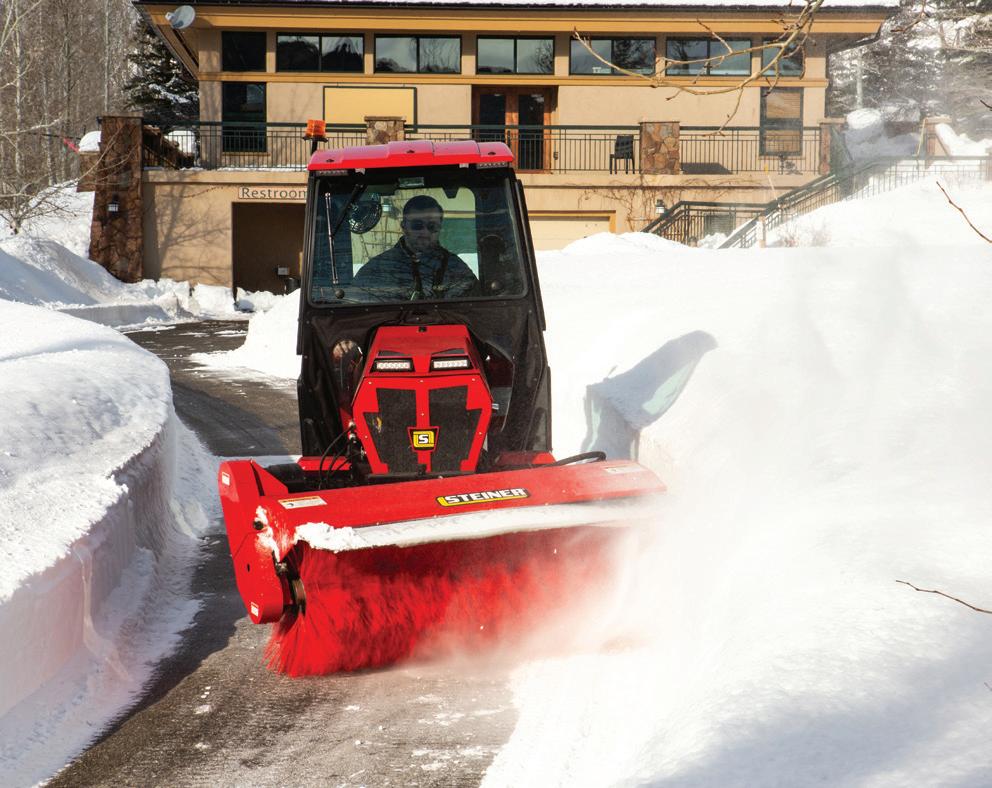
For larger, heavily constructed walkways and sidewalks, heavy equipment like skid steer and track loaders or tractors may be necessary. While there are not as many use cases, it is still important to know your options— including knowing whether the walkway can sustain the weight and size of the equipment.
SAFETY TIP!
1 Make sure all pedestrian and vehicle routes are clearly marked or blocked off prior to work being performed. Use all warning and hazard lighting to keep yourself and others safe!
Michael Wagner, CSP, ASM is Director of Operations at Designscapes Colorado Inc. Contact him at 303-328-5554 or mwagner@designscapes.org.


BY HANDO CHOI
Salt has long been the foundation of winter road safety. It is inexpensive, easy to deploy, and reliably aids in the snow and ice melting process. But as contractors, municipalities and private property managers increasingly reevaluate longterm costs, performance and environmental impact, the picture is shifting: salt may not be as cheap as it appears.
Conventional chloride-based deicers— such as rock salt (sodium chloride) and calcium chloride—carry significant indirect costs. The U.S. Federal Highway Administration (FHWA) estimates that direct corrosion damage to U.S. highway bridges alone costs approximately $8.3 billion per year, not accounting for indirect costs like accelerated pavement wear, vehicle damage, and traffic delays (FHWA Report 51611). Simultaneously, chloride concentrations in over 80% of urban streams studied by the U.S. Geological Survey have increased over time due to road salt runoff (USGS Chloride Study).
These environmental and structural costs have prompted operators and municipalities to invest in using less by properly calibrating spreaders, implementing liquid pretreatments, and optimizing routes. But despite these efforts, liability risks and customer expectations frequently lead to over-

application. It is safer to use too much than risk a slip-and-fall lawsuit.
In this context, the question is not only how can we apply less salt, but can we use better alternatives?
Many deicers seek to improve environmental friendliness by incorporating materials like calcium magnesium acetate (CMA), known for its low-corrosive properties. However, due to CMA’s high cost and limited melting power, inclusion rates in most commercial products are typically less than 1%. This is often too low to meaningfully reduce damage or improve sustainability performance.
Yet despite these limitations, customer appetite for alternatives is growing. According to market research data, more

than 40% of ice melt products sold at major US retailers fall under treated or premium formulations—often priced 2 to 3 times higher than standard rock salt. This signals a market shift with operators choosing products not just for melting speed, but for benefits like corrosion resistance, concrete safety, and pet or plant friendliness.
Rather than relying on trace additives, STAR’s Tech has taken a different approach. By upcycling marine waste— specifically invasive starfish or discarded sea urchin shells—we have developed a proprietary additive called ECO-ST and Starcrush (ECO-ST/Starcrush hereafter), used to enhance traditional deicers.
What makes ECO-ST/Starcrush unique is how it works: the starfish’s natural porous skeletal structure acts as a smart carrier. It absorbs and stores chloride ions and corrosion inhibitors, releasing them only when triggered by melting conditions. This targeted action helps buffer environmental stress and extend the lifespan of treated surfaces.
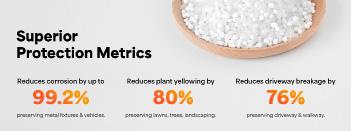
In lab and field trials, deicers treated with ECO-ST/Starcrush have shown: • Corrosion rates below that of drinking water
Rock Salt (NaCl)
Other Chloride-based (MgCl2/CaCl₂)
Beet Juice Blends
Acetates (e.g., CMA/ Potassium Acetate)
Sand
Heated Pavement Systems
ECO-ST/Starcrush
$2,200–$3,000/ton
Common but damaging to road pavement and concrete; large indirect costs
$1,500–$2,200/ton
$1,200–$1,700/ton
$1,900–$2,600/ton
$1,800–$2,300/ton
(MgCl2) High(CaCl2)
$4,500–$6,000/ton (equivalent) High (on-demand)
$465–$950/ton
(to −31°F / −35°C)
cleanup intensive; concrete safe
High capital cost; concrete safe; used in luxury or mission-critical facilities
Compatible with most brine/salt; concrete safe; ideal for premium or green sites
• Note: ECO-ST is designed as a salt additive and can be integrated into most existing equipment and brine systems. It may qualify for LEED credits and other sustainable procurement incentives.
• Note: The current Essential line is marketed under the Starcrush brand. Starting next year, all product lines, including ECO-ST, will be unified under the Starcrush name.
• Up to 70% less vegetation damage, thanks to reduced chloride shock
• 90% less concrete cracking and spalling, extending pavement durability
Importantly, these environmental benefits are delivered with materials that would otherwise be discarded—making the solution not only high-performance, but also carbon-negative by lifecycle analysis.
The snow and ice industry has made impressive gains in how salt is applied: salt brine, pre-wetting, calibrated spreaders, and smart dispatch are now widely adopted. These operational strategies will continue to play a vital role.
But as environmental expectations rise and the long-term costs of corrosion, vegetation loss, and water pollution become more evident, there is a growing
case for complementing these strategies with smarter material choices.
While premium materials like ECO-ST/Starcrush are not needed for every job, they offer a meaningful option for sites where durability, safety, and sustainability matter most. For snow and ice management professionals managing hospitals, schools, or high-end campuses, these benefits can help protect infrastructure, reduce
costs, and meet climate or
procurement goals. Recognizing the full lifecycle cost of winter maintenance, and staying informed about emerging material innovations, can transform environmental responsibility into a competitive business and operational advantage for snow and ice management professionals.
Hando Choi is president of STAR’s Tech. Learn more from their sales and distribution partner, Ultra Pro Products. Visit ultraproducts.com, email info@ultraproducts.com or call 215.264.2927

The Ariens MAMMOTH is a commercial stand-on snow removal behemoth with a 28.5-horsepower EFI engine, four-wheel drive, and intuitive joystick controls. Engineered for unmatched power, comfort, and versatility, it conquers snow and ice with quick-change attachments like plows, snow throwers, brooms, and deicing systems in the harshest winter conditions. www.ariens.com
Bobcat’s angle broom attachment is perfect for multi-directional sweeping of light snow from driveways, sidewalks and parking lots. The broom bristles have a waved design, creating a cleaner path and sweeping more in one pass. This attachment is compact, maneuverable and easy to operate, and comes in four sizes: 52”, 64”, 68” and 84”.
www.bobcat.com
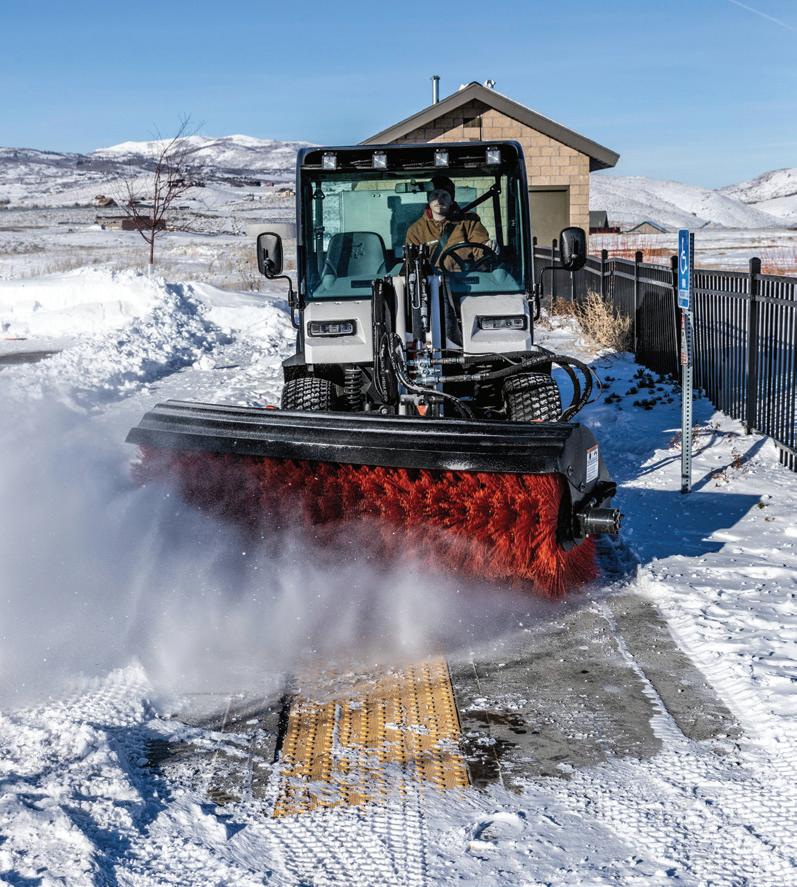




handle to save on fatigue. It also takes up very little storage space! www.kageinnovation.com
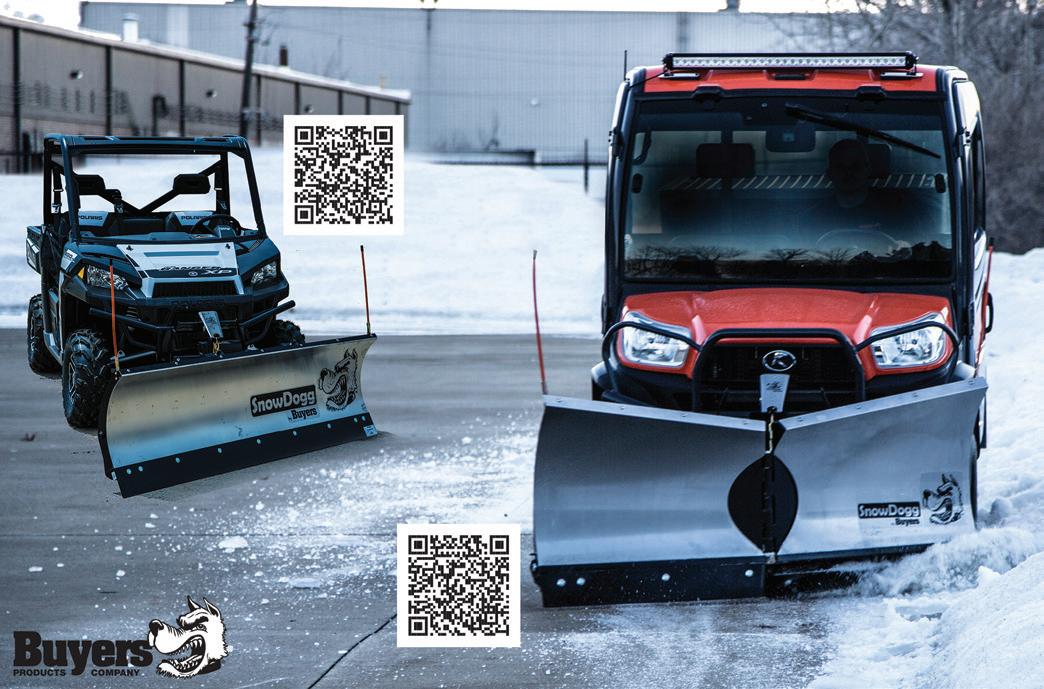
Tackle sidewalks, campuses, and tight spaces with SnowDogg UTV plows. The VUT offers versatile V-blade control, while the MUT delivers straight blade strength in a compact design. Built tough for year-round reliability, both plows mount easily to your UTV, giving you pro-grade performance wherever the job takes you. www.buyersproducts.com




Sponsored by


Sponsorship available!
✓ Focused—Short, role-focused lessons
✓ Real—Field-tested
✓ Consistent—A single safety standard
✓ Credible—Designed by SIMA experts
✓ Repeatable—Quick onboarding for new hires
✓ Comprehensive—Training and resources for all levels


Snow is no match for CASE CE’s ride-behind TL100 mini track loader. 10” tracks offer stability in snowy conditions, while wide-ranging attachment compatibility and a quick-attach system effortlessly pair with blowers, buckets, blades, plows or brooms, allowing operators to clear paths quickly and efficiently, even in tight, confined areas. www.casece.com/en-us

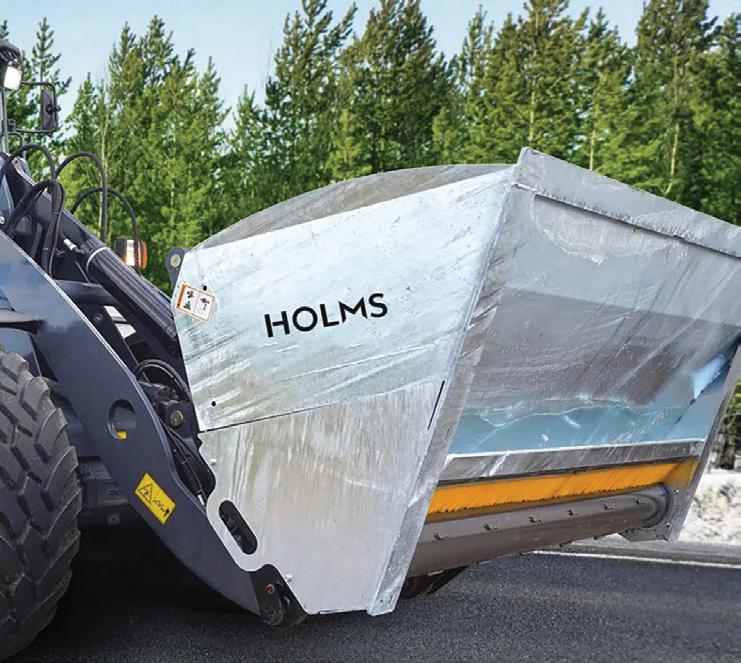
The Holms Spreading Bucket places material precisely. No more material being thrown into the grass or bushes and causing complaints. Using a rotating cylinder, the salt/sand/mix is dropped out of the selfloading galvanized bucket in small amounts to yield maximum efficiency. Three sizes available.
www.holms.com/en
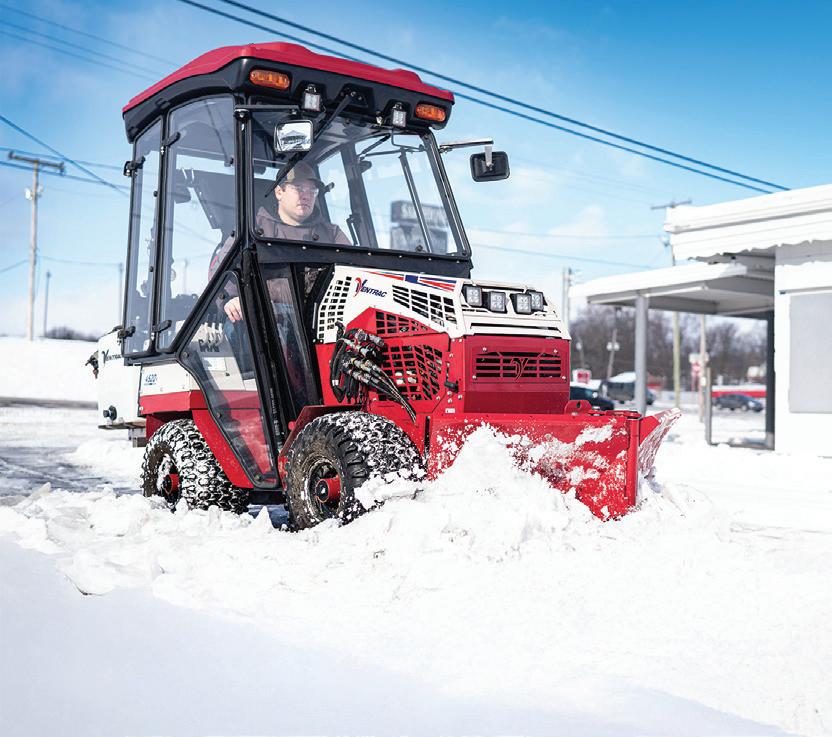
Boost your sidewalk snow removal game with the upgraded Ventrac V-Blade. Its patented trip-edge design delivers smooth, fast operation over uneven surfaces. Adjustable from 47 to 53 inches wide, with independently moving wings and accessory options, the V-Blade offers unmatched precision, power, and versatility. www.ventrac.com
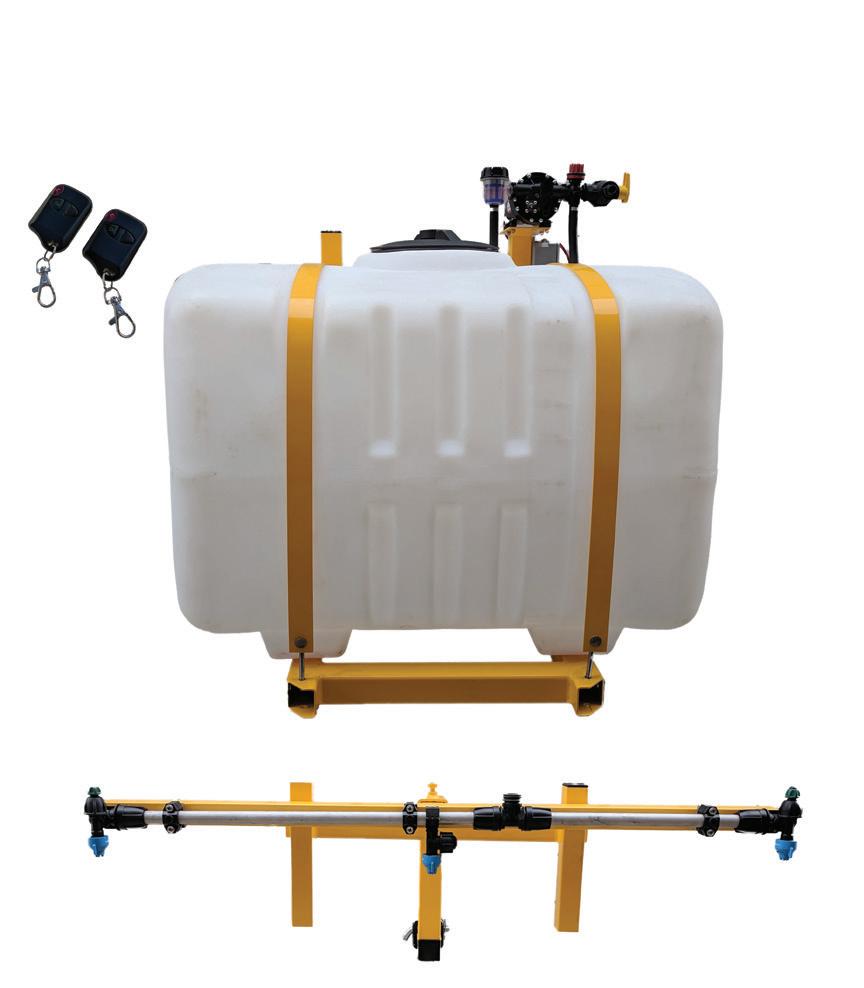
Stop tracking salt and sand into your buildings—switch to liquid deicing with Frost Inc. ATV & UTV Sprayer Kits are designed for sidewalks and winter conditions; these kits install in under a minute and come in 25-, 50-, or 100-gallon tank options. With powerful, upgraded nozzles, you’ll prevent ice more effectively and keep your operations clean and safe all winter long. www.frostserv.com
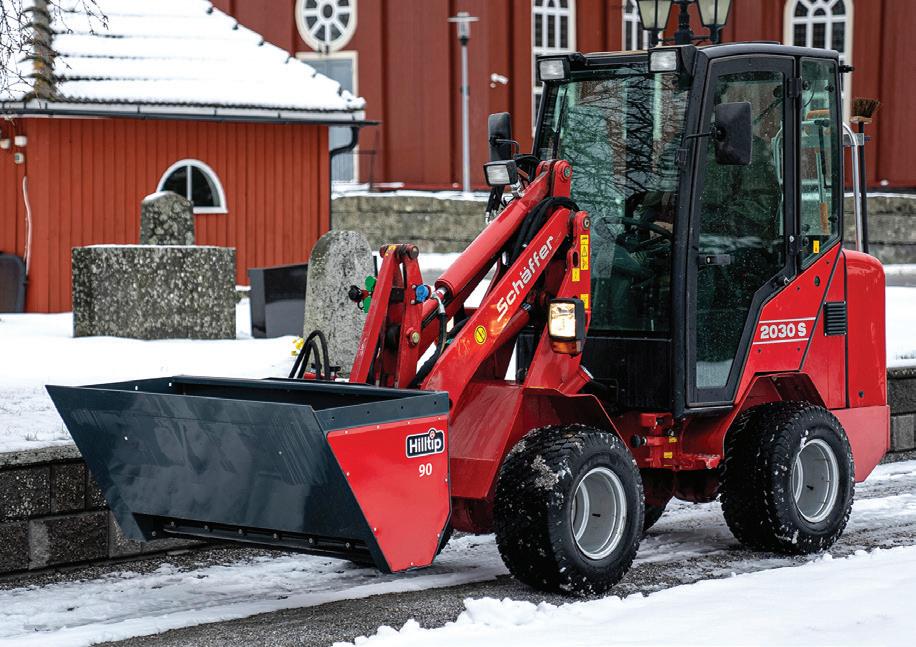
The Hilltip IceStriker DSB is an 8- to 18-cu.-ft. self-loading drop spreader for tractors and loaders. Available in hydraulic or 12V electric models, it spreads salt, sand, or gravel with precision. Ideal for parking lots, courtyards, walkways, and pedestrian paths, with easy control via the StrikeSmart app or hardwired controller.
www.hilltipna.com/en

The X4S Waterproof Boots are designed and produced for individuals who work outside in all conditions. From rain to snow to sunshine, these boots are perfect for hardworking individuals. Waterproof and lightweight to keep you dry and comfortable in all four seasons. Aggressive tread with non-slip coating. www.kujo.com

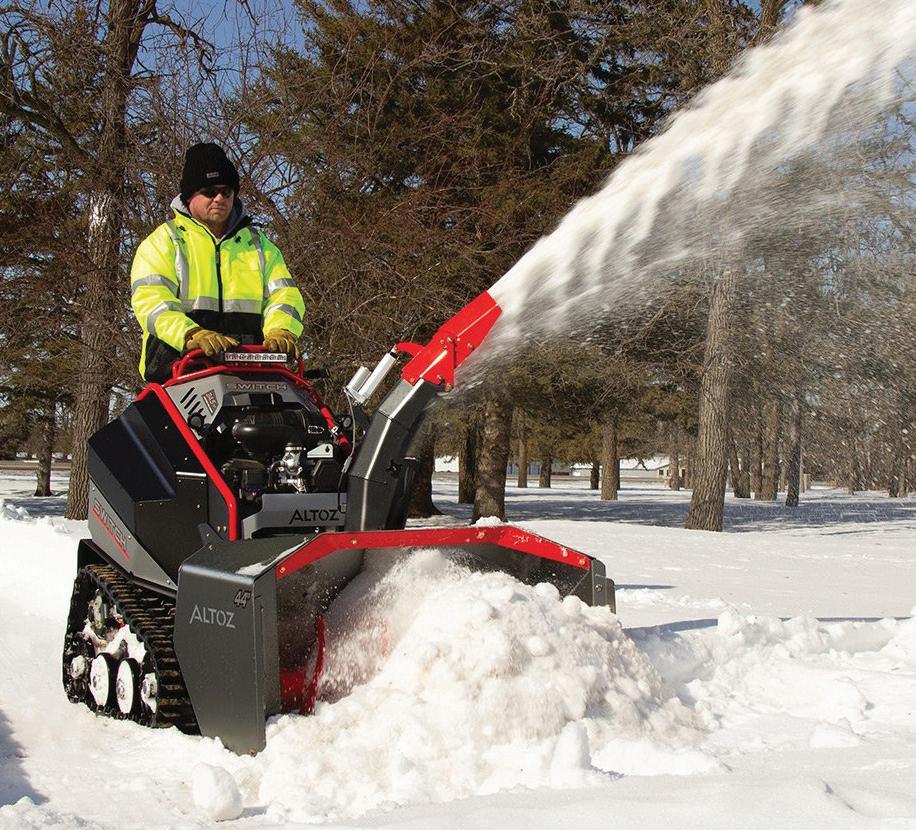
The Altoz Switch is a versatile compact tool carrier designed for all-season use with multiple attachments. Its tracked design provides superior traction on any terrain, while the variety of attachments make it ideal for landscaping, snow removal, and material handling.
www.altoz.com

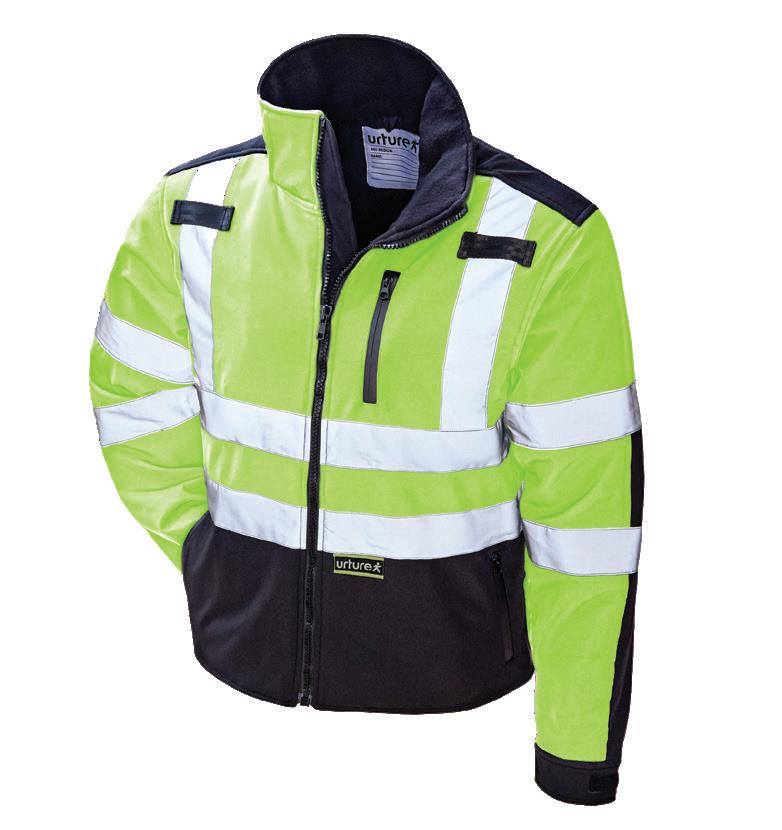
Built for the new generation of outdoor workers, NO VEST gear fuses visibility, comfort, and everyday style, no bulky vests required. Our winter jackets deliver rugged durability and protection, keeping crews safe and sharp through any season. Workwear evolved for grit and grind.
www.urture.com
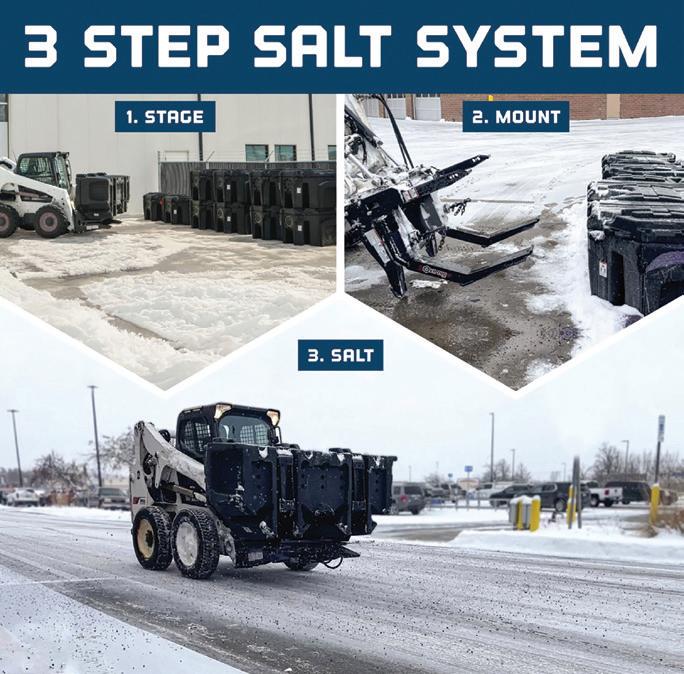
Preload, store and spread salt with a modular system built for any size site. Dual spinners deliver consistent coverage, while the front-mounted design improves visibility and safety. Durable poly totes keep material clean and dry, and dual augers ensure smooth flow for precise, efficient spreading in all winter conditions. www.virnigmfg.com








Special thanks to our Power Buy advertisers indicated in bold.



SIMA LEADERSHIP
Chief Executive Officer
Martin Tirado, CAE
martin@sima.org
Full SIMA staff contacts are available at sima.org/about-us
EDITORIAL MANAGEMENT
Education & Content Director
Cheryl Higley
262-236-9972
cheryl@sima.org
Design & Production
Lisa Lehman
216-798-1853
lisa@sima.org
Product Submissions
Ellen Lobello products@sima.org
ADVERTISING SALES & MANAGEMENT
Engagement & Development
Director
Kerri Joseph 614-557-3948
kerri@sima.org
Supplier Services Manager
Aimee Krzywicki
aimee@sima.org
Mention of products and their attributes does not constitute an endorsement by Snow Business, SIMA, its agents or staff. Snow Business assumes no liability for claims made in regard to products appearing in this magazine.
EDITORIAL ADVISORY COMMITTEE
Charmaine Allen
Allen Builders & Landscape
Nichole Ashton, CSP
North Country Snow and Ice Management
Jim Hornung Jr., CSP
Elbers Landscape Service
Rick Kier, CSP
Forge Ahead Consulting and Software LLC
William Moore, CSP, ASM
Executive Property Maintenance
Dean Outhouse, CSP, ASM
Piscataqua Landscaping
Jason Ostrander, CSP
Frost Solutions
Thomas Skuta, CSP USM
Robert Young, CSP
K.E.Y. Property Services
Michael Wagner, CSP, ASM
Colorado DesignScapes Co.
// www.sima.org
SIMA BOARD OF DIRECTORS OFFICERS
Board Chair
Chris Hinton, CSP, GRM Inc.
Immediate Past Chair
David Wescott, CSP, Evergreen Brands
Vice Chair
Jeff Heller, CSP, Innovative
Maintenance Solutions
Secretary / Treasurer
John Janes, CSP, ASM, Caterpillar
Directors
Ruben Diaz, ASM
Tom Fitzgerald, CSP
Connie Gaul, ASM
Andy McArdle, CSP, ASM
Robert Miller Jr., CSP, ASM
Dean Outhouse, CSP, ASM
Chris Thacker, CSP
Robert Young, CSP
By providing employees with a workplace that allows them to freely express their thoughts, ideas, and opinions, leaders create an environment that is conducive to innovation and bottom-line success.
Psychological safety within work teams is one of the most important aspects of ensuring that people are working efficiently and effectively. The concept of psychological safety at work isn’t new. Amy Edmondson coined the term back in 1999 and defined it as “a shared belief by members of a team that the team is safe for interpersonal risk taking.”
To be clear, psychological safety isn’t about being overly nice to one another all the time. It’s present when people feel safe enough among each other to be their full, authentic selves in front of each other. Employees in a psychologically safe environment can:
• Voice their thoughts and ideas candidly
• Challenge the status quo
• Work through disagreements
• Seek support
• Take intentional risks
• Present new ideas

Essentially, psychological safety enables people to invest themselves completely in what they are doing without the fear of consequences or punishment. They speak and act with authenticity, knowing that no matter what happens, their teammates and leaders will be honest with them, but won’t violate their personal dignity. They can proceed with confidence, knowing that their thoughts and opinions matter and will be considered.
Think of psychological safety as a key to opening the gates to an innovative company culture. Whether it’s implemented or not has a direct impact not just on how employees act and feel, but also on an organization’s bottom line. If an organization maintains a psychologically unsafe environment, innovation and performance will be stifled in more ways than one.
For example, people might feel less comfortable bringing up novel ideas that could have a positive impact. Or, people might disengage from their work after they’ve received consistent direct or indirect feedback telling them that their contributions and opinions aren’t being considered.
Overall, a psychologically unsafe environment holds people back from expressing their thoughts and talents as much as they can, which affects a company’s ability to get the most out of the talent they’ve hired.
Unfortunately, recent insights show a significant gap in the implementation of psychological safety. According to the Center for Creative Leadership:
• As of 2019, only 30% of employees strongly agreed that their opinions count at work
• 20% of female leaders feel overlooked or ignored during virtual meetings
So, what can leaders do to close this gap and create psychological safety for everybody in their teams and workplace? McKinsey suggests that leaders can work on various skills, such as:
• Open-dialogue skills (the ability to talk through disagreements and diffuse tensions, using concepts like rumble language);
• Sponsorship (enabling other peoples’ success ahead of one’s own); and
• Situational humility (the ability to express curiosity with a personal growthoriented mindset).
When things get challenging, they also suggest leaders focus on expressing four key qualities to avoid giving into fear and risk creating an unsafe environment. These qualities are awareness, compassion, empathy, and vulnerability.
Other steps that leaders can take to create psychological safety include:
• Being receptive to feedback
• Demonstrating engagement
• Including team members in the decision-making process
• Stopping negativity before it spreads
• Avoiding placing blame on people when a problem arises
Building psychological safety is one of the most important things a leader can do for their team. It’s just as important as physical safety. By providing employees with a workplace that allows them to freely express their thoughts, ideas, and opinions, leaders create an environment that is conducive to innovation and bottom-line success.

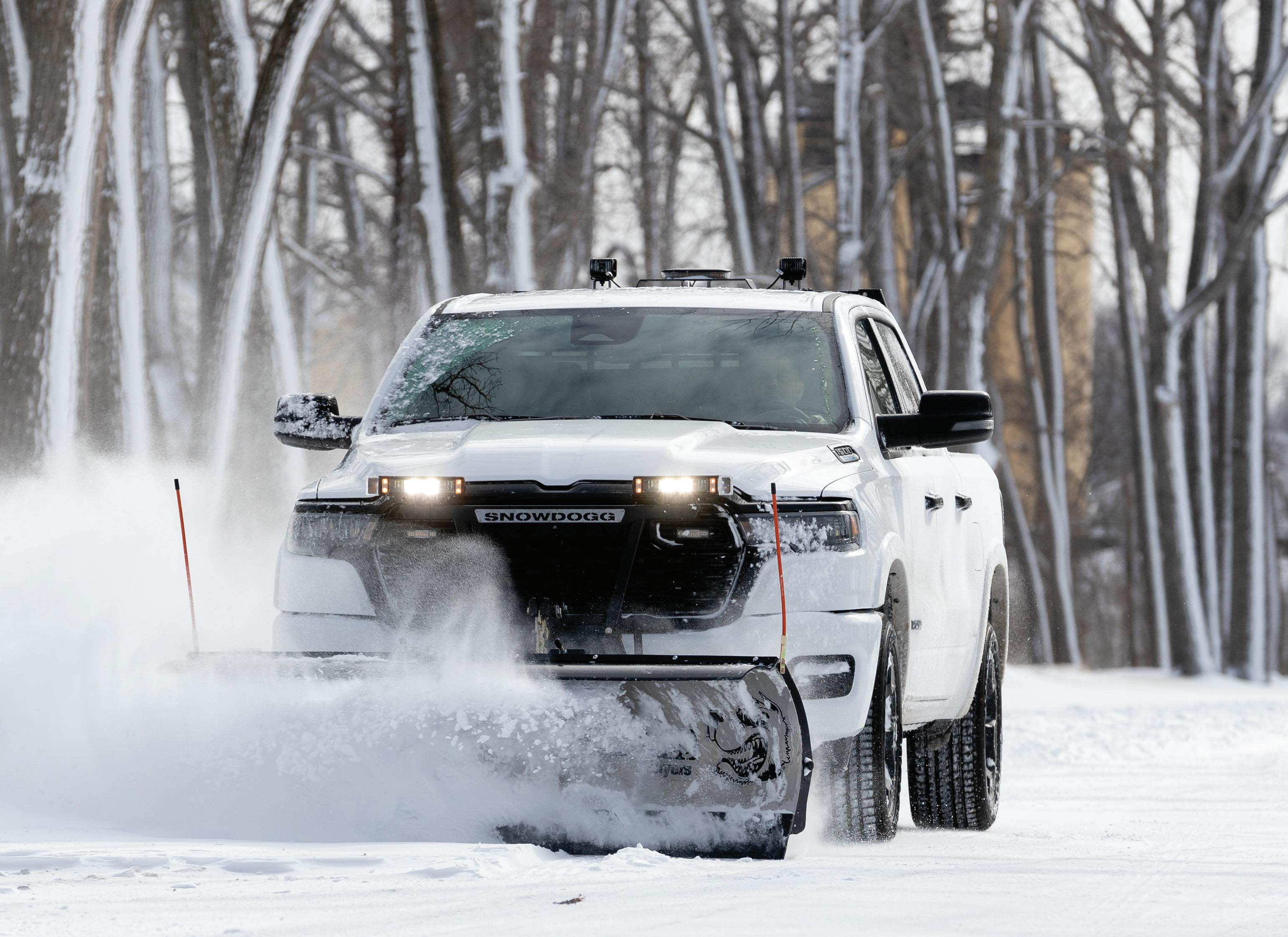
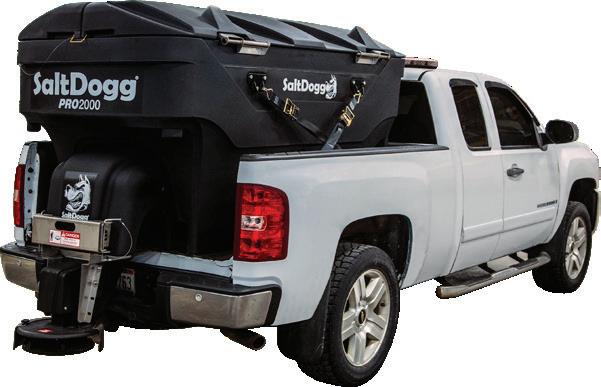




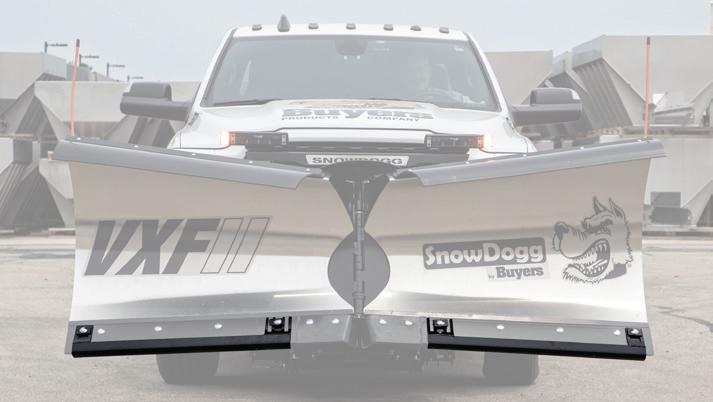





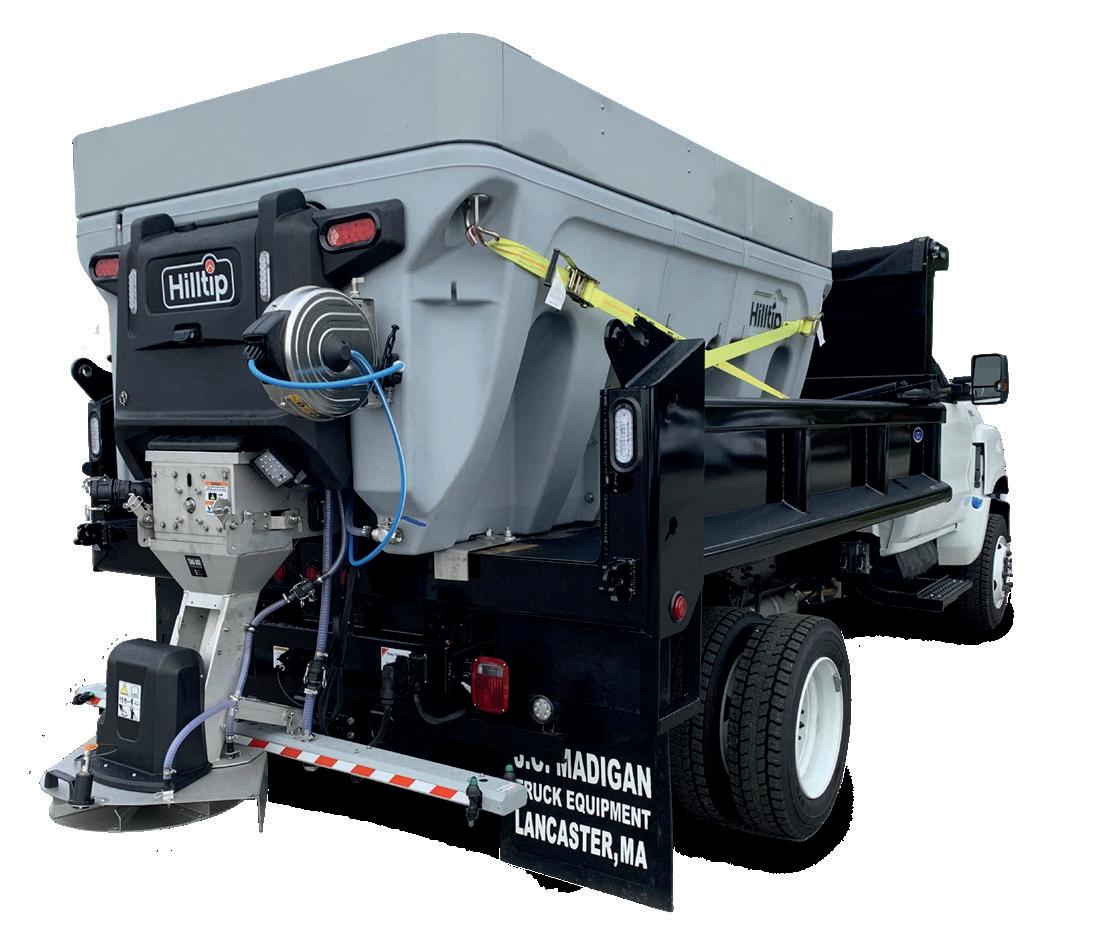
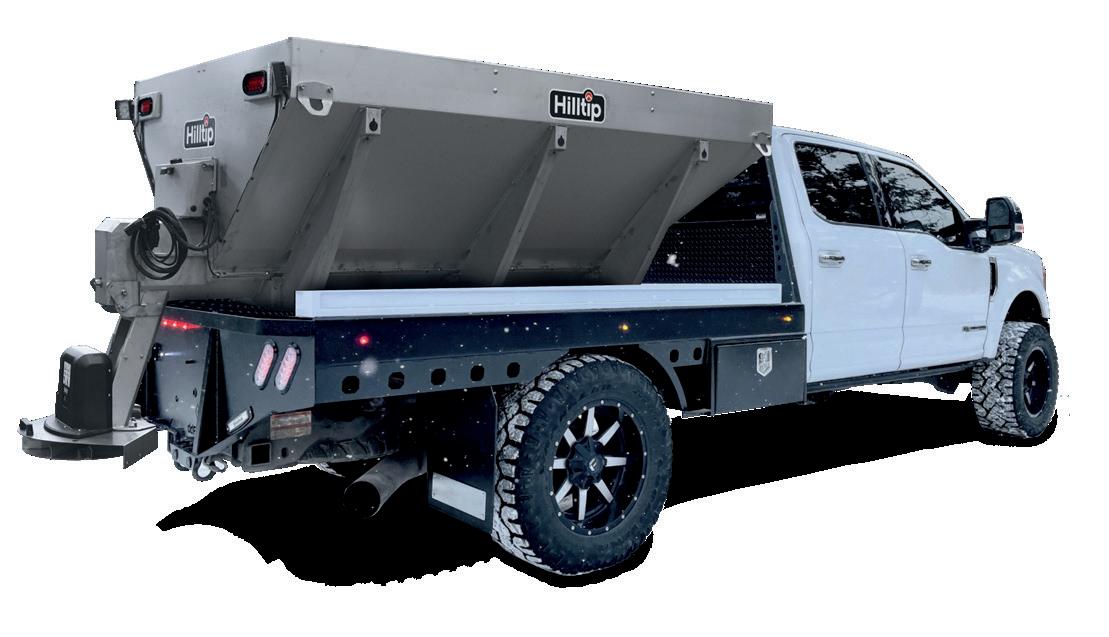
• Stainless steel hopper capacity: 1.0-5.5 cu yd
• Fully electric, 12V
• Feed mechanism: 6” auger or 14” pintle chain
• StrikeSmart™ controller with GPS speed control, standard
• HTrack™ 2-way online tracking & control system, standard
• Poly hopper capacity: 1.2-8.0 cu yd
• Fully electric, 12V
• StrikeSmart™ controller with GPS speed control, standard
• HTrack™ 2-way online tracking & control system, standard
• Integrated liquid tanks: 120-370 gal
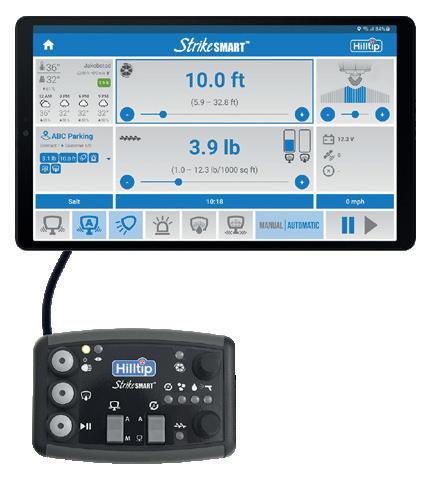
STRIKESMART™ PLUS CONTROL SYSTEM
Real-time weather forecast & spreading rate recommendations
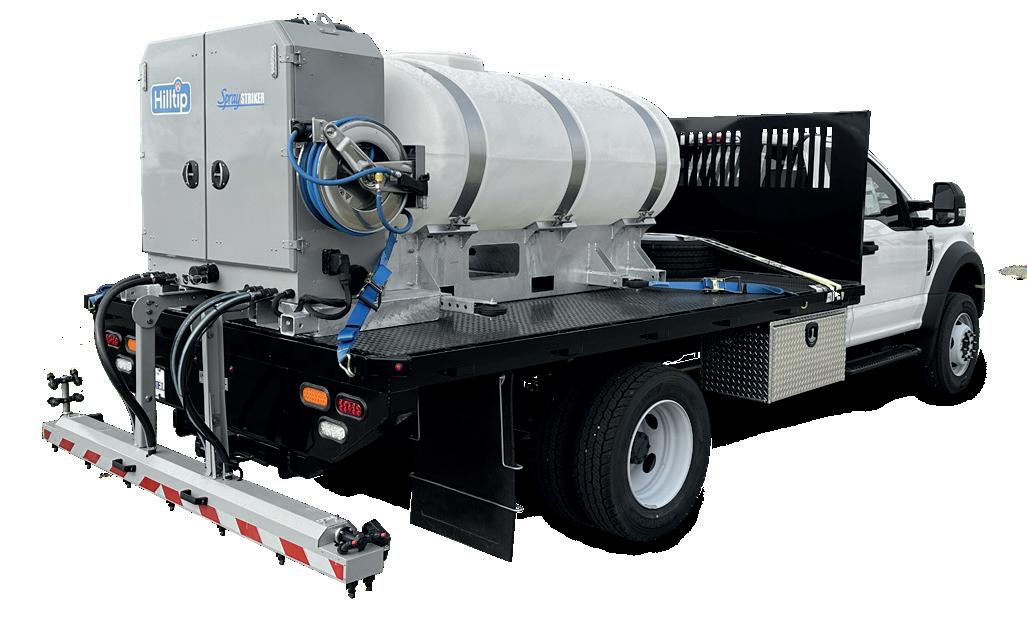
• Liquid capacity: 500-3250 gal
• Fully electric, 12V & 24V
• Dual HI-Flow pumps with spray bar output of 20-40 gal/ min
• StrikeSmart™ controller with GPS speed control, standard
• HTrack™ 2-way online tracking & control system, standard