After attending my first lecture at Smithsonian Associates, I was hooked. I'm proud to help ensure Associates can thrive for decades to come in a way that makes sense for my family and finances as a Legacy Society member.
“ “
After attending my first lecture at Smithsonian Associates, I was hooked. I'm proud to help ensure Associates can thrive for decades to come in a way that makes sense for my family and finances as a Legacy Society member.
“ “
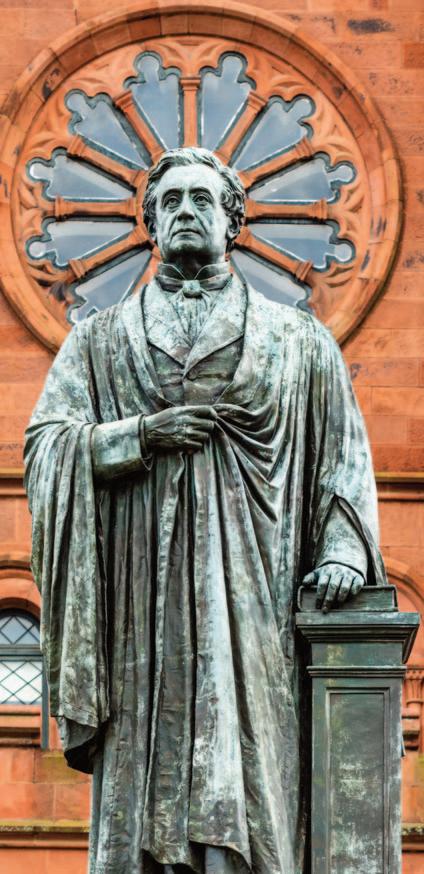
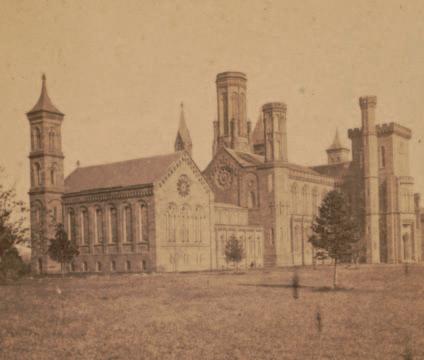
In the 1830s, a gift from a single benefactor led to the birth of the Smithsonian. Today, you can share the same visionary spirit and generosity embodied by James Smithson by becoming a founding member of the Associates Legacy Society.
Smithson saw the new institution as a place uniquely dedicated to learning. And from its founding 60 years ago, Smithsonian Associates has been committed to the same goal: creating opportunities for learning for people of all ages.
Your own legacy gift—of any size—will ensure that we are able to continue that vital work for current and future generations. And at the same time, you’ll be able to take advantage of income and tax benefits for yourself and your heirs.
By joining the Associates Legacy Society you can:
• Specifically designate your gift to support Smithsonian Associates.
• Retain control of your assets during your lifetime.
• Change your beneficiaries at any time.
• Provide for the people in your life.
• Make a gift in honor or memory of a loved one.
Members also receive invitations to special programs and Smithsonian Associates learning experiences.
We invite you to connect with us and learn more about how planned giving through the Associates Legacy Society can play a significant role in your future—and ours.
Please contact Elizabeth Moloney, Director of Advancement, at (202) 633-8697 or DonorServices@si.edu.
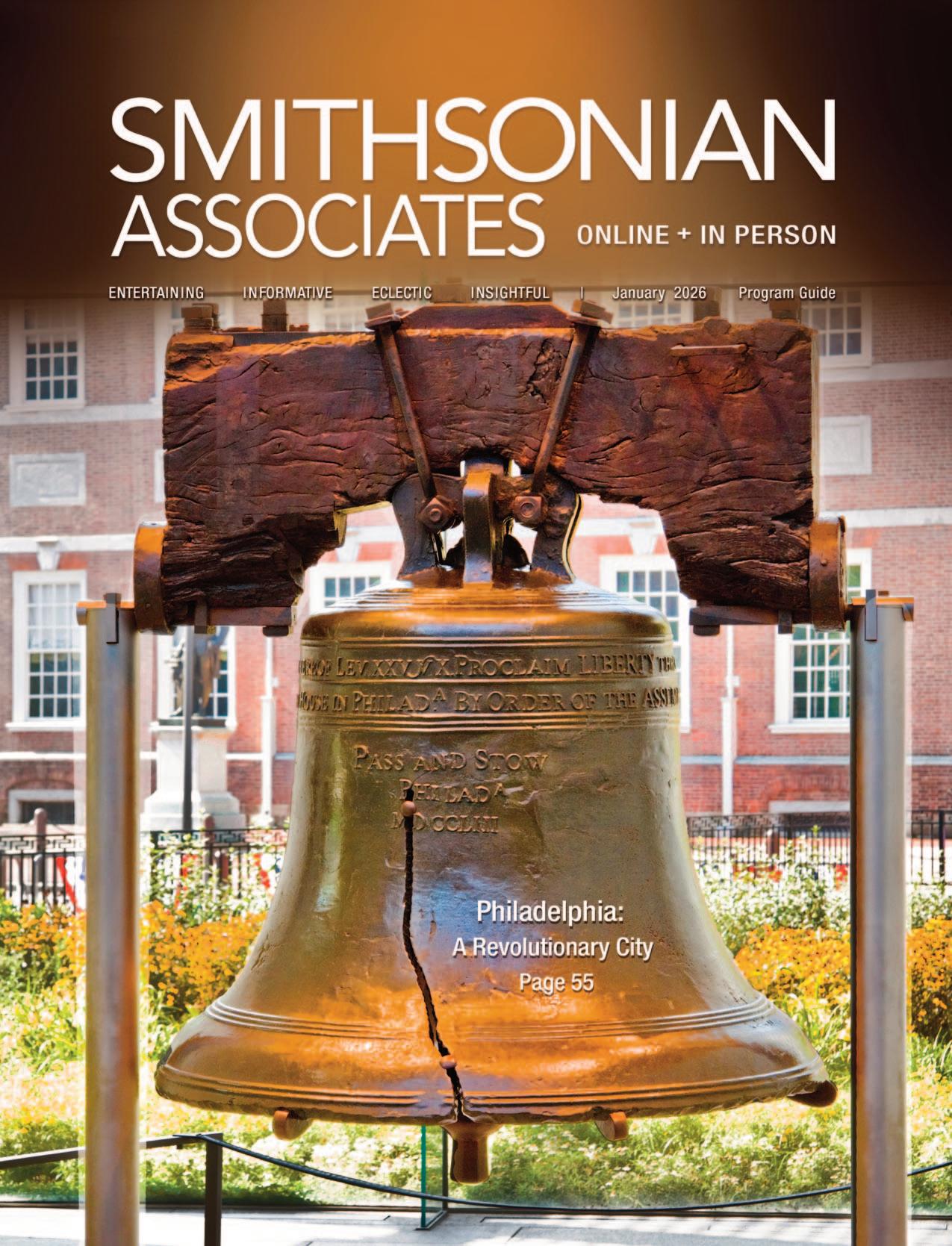
Philadelphia’s Liberty Bell appears on this month’s cover, ringing in a celebration of the year that forged America’s identity. As the United States commemorates 250 years of independence in 2026, the Smithsonian marks this milestone with Our Shared Future: 250. The sweeping initiative engages every part of the Institution, offering a dynamic exploration of America’s past, present, and future.
Smithsonian Associates will play a vital role in this effort throughout 2026, welcoming audiences to wide-ranging programs that illuminate the story of America and its people On the following pages, you’ll find offerings carrying the distinctive 250th logo—just a few among the many opportunities this year to discover, learn, and reflect together.
A foundational document in the nation’s birth, the Declaration of Independence is the topic of a full-day seminar led by a historian who explores its origins, creators, purpose, and global influence (p. 12).
The democracy robustly exalted by Walt Whitman’s poetry was transformed by the Civil War. Follow how Whitman’s optimistic voice came to mourn a nation’s suffering (p. 20). Two artists spotlighted in the newest Art + History series created paintings that captured scenes of American triumphs in 1776 (p. 35).
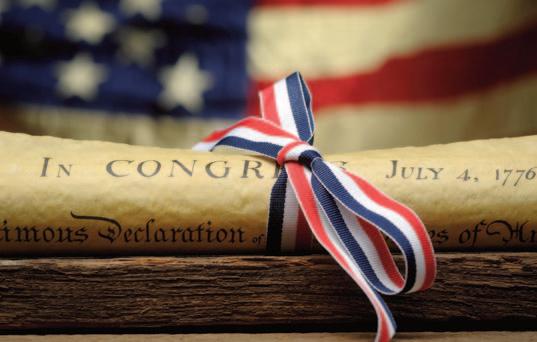
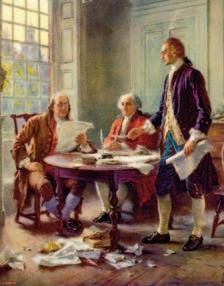
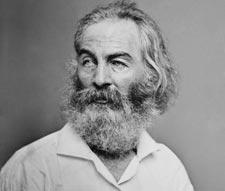
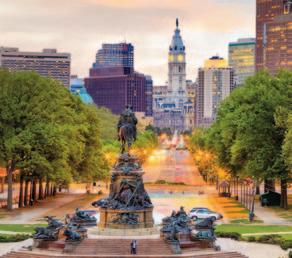
If the echo of the Liberty Bell is calling you to its hometown, we’ve got the ticket: an overnight visit that delves into Philadelphia during the Revolutionary era (p. 55).

America’s story continues to unfold. We invite you to experience it—and better understand it—through Associates’ programs.
And for Smithsonian-wide plans for Our Shared Future: 250, visit si.edu/250
Frederica R. Adelman, Director adelmanf@si.edu



Programs with this icon showcase the Smithsonian’s Our Shared Future: 250 initiative that celebrates 250 years of American independence in 2026

There are 1,248 UNESCO World Heritage Sites, each one offering a glimpse into the evolution of complex civilizations, empires, and religions. In this monthly series, historian Justin M. Jacobs gives an in-depth overview of both well-known and lesser-known locations.
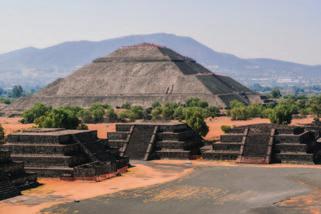
Located just outside of modern-day Mexico City, the ruins of Teotihuacan serve as a reminder that dense urban civilizations filled with grandiose monuments to wealth and power were not the exclusive preserve of Eurasian empires. Jacobs places the iconic pyramids and temple complexes of Teotihuacan into the history of the settlement of the Americas and development of distinct forms of agriculture and cultural traditions.
Wed., Jan. 7, 6:45 p.m.; CODE 1J0-513; Members $25; Nonmembers $35

The city of Lhasa is filled with monuments that are considered sacred by the religious traditions of Tibetan Buddhism. Jacobs provides an in-depth look at three of the most important: Jokhang Temple, Potala Palace, and Norbulingka Park. Jacobs’ virtual journey through these sites reveals the history of Tibet, its diverse cultural influences, and its complex relationship with China.
Wed., Feb. 4, 6:45 p.m.; CODE 1J0-518; Members $25; Nonmembers $35
During the first several centuries of the current era, the Syrian desert oasis of Palmyra was a crucial link in an overland trade network that stretched from Rome to India. The profits of this trade were invested in stunning monuments and works of art that fused Western and Eastern sensibilities. Jacobs explores the history of Palmyra, its monuments and sculptures, and its fate during the Syrian civil war.
Wed., March 4, 6:45 p.m.; CODE 1J0-527; Members $25; Nonmembers $35

Your programs...your time

Registered for a Smithsonian Associates online program but missed it because of a schedule conflict? Wish you could take a second look at a presentation you loved? Associates Encores offers the answer to these questions—and more.
Unless noted, all programs are presented on Zoom; listed times are Eastern Time. Online registration is required.
The name John Hay may not be a familiar one, but his impact on American history is profound. As a private secretary to Abraham Lincoln, Hay became more than a government aide—he was a close confidant and essentially Lincoln’s surrogate son during some of the nation’s darkest days.
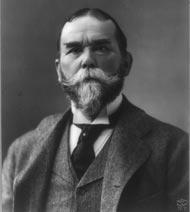
Hay went on to serve as secretary of state under William McKinley and Theodore Roosevelt, steering diplomacy at a pivotal moment, including ending the Spanish–American War and securing American control of the Philippines. He negotiated the treaties that granted the United States exclusive rights to build the Panama Canal and championed the Open Door policy, safeguarding equal trading rights in China amid growing imperial competition. Historian Ralph Nurnberger examines the life and legacy of a key architect of American power whose diplomatic vision propelled the nation onto the world stage.
Thurs., Jan. 8, 6:45 p.m.; CODE 1D0-133; Members $20; Nonmembers $30
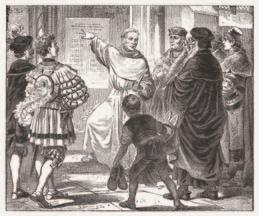
On October 31, 1517, Martin Luther famously (and perhaps apocryphally) nailed his
95 Theses condemning papal indulgences to the Wittenberg Castle Church door, giving the Protestant Reformation its official starting date. Five hundred years later, celebrations and evaluations of this historic event swept the globe, which seemed to solidify Luther’s enduring role as hero and exemplar of the Reformation. But the true story of reform is more complicated, and Luther the man more controversial. Historian Amy Leonard of Georgetown University provides an overview of the history and historiography of the Protestant Reformation and Luther’s place in it, also addressing his more polemical writings and the legacy of his rhetoric.
Thurs., Jan. 15, 6:30 p.m.; CODE 1H0-891; Members $30; Nonmembers $45
Live from the Long Island Museum
The Long Island Museum’s Carriage Collection
A little over a century ago, the sound of a horse-drawn carriage driving along cobblestone streets was the soundtrack of a nation on the move. The goal of the Carriage Museum housed in the Long Island Museum, a Smithsonian Affiliate, is to bring its collection of 185 horse-drawn vehicles from the past to life.
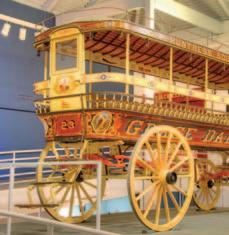
Live from the museum in Stony Brook, New York, curators share an overview of their collection and highlight some of the most interesting and important vehicles, including a horse-drawn streetcar used in Los Angeles and later as a prop in Hollywood films, including Hello, Dolly!; a Chariot D’Orsay once owned by the Vanderbilt family; and a Grace Darling omnibus.
Tues., Jan. 13, 12 p.m.; CODE 1T0-048; Members $20; Nonmembers $30
In the late 14th century, the Catholic Church became a house divided against itself when it was confronted with the problem of having two popes claiming to be the rightful heir of St. Peter. Each had a strong case and powerful royal backers, as well as his own line of succession. The crisis persisted for decades and even led to the election of a third pope.
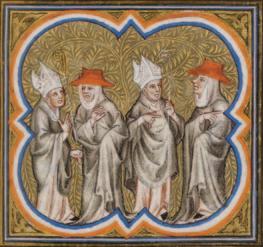
A 14th-century miniature symbolizing the schism
What has become known as the Papal Schism or the Western Schism gravely weakened the papacy and had long-lasting effects.
Historian John Freymann, a retired professor from the U.S. Naval Academy, examines the context and causes of the schism and highlights the theological and ecclesiastical consequences of this dangerous episode in the history of the Catholic Church.
Tues., Jan. 20, 6:30 p.m.; CODE 1H0-889; Members $20; Nonmembers $30
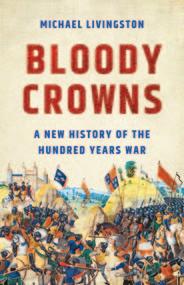
Henry V at Agincourt … Edward III at Crécy … the Black Prince at Poitiers … Joan of Arc at Orléans. The period called the Hundred Years War (1337–1453) was a cascade of violence filled with some of the most famous figures and fascinating fights in history. The central combatants, England and France, bore witness to deaths, tragedy, and glory. But there was more to this period than a struggle between two nations for dominance.
Drawing from his book Bloody Crowns, a critical revision of how modern Europe arose from medieval battlefields, military historian Michael Livingston describes a conflict that drove significant leaps forward in military technology and organization, political systems, and national identities and that laid the groundwork for the modern world.
Bloody Crowns: A New History of the Hundred Years War (Basic Books) is available for purchase.
Thurs., Jan. 22, 6:45 p.m.; CODE 1K0-659; Members $20; Nonmembers $30
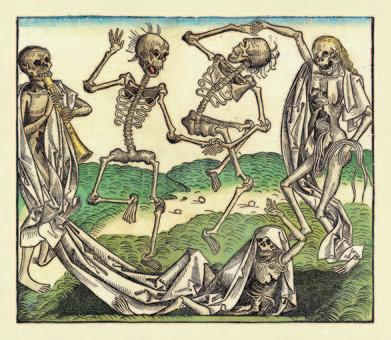
The pyramids at Giza, catacombs of ancient Rome, and cenotaphs around the world all commemorate the dead. Historian Roger Luckhurst delves into the often-unexpected visual culture surrounding these and other burial sites. Along the way, he explores the varied roles graveyards have played in literature, art, film, and television.
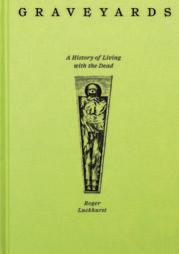
Luckhurst traces the journey from early burial practices and the rise of necropolises to the darker history of grave robbing and the creation of garden cemeteries. He also discusses the evolution of modern funerary customs.
Luckhurst’s new book, Graveyards: A History of Living with the Dead (Princeton University Press), is available for purchase.
Fri., Jan. 23, 12 p.m.; CODE 1CV-077; Members $20; Nonmembers $30
The reign of Queen Elizabeth II was exceptional for many reasons, including her remarkable longevity, her enduring marriage to Prince Philip, and her success in concealing her opinions on virtually any contentious subject. Much changed during her long life. During her reign, the United Kingdom ceased to be a great power in the world. And the country in which she died was a multicultural, multi-faith, multiethnic society that was very different from what it had been when she was born. Historian Sir David Cannadine puts the life of Elizabeth II in perspective, set against a broad domestic and international context.
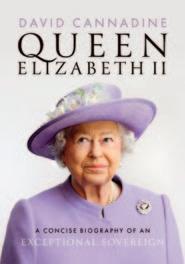
Cannadine’s new book, Queen Elizabeth II: A Concise Biography of an Exceptional Sovereign, is available for purchase.
Thurs., Jan. 22, 12:30 p.m.; CODE 1T0-053; Members $20; Nonmembers $30
The Council of Nicaea
The year 2025 marked the 1,700th anniversary of the Council of Nicaea, which met in 325 in the presence of Constantine, the first Christian Roman emperor. The gathering of some 250 bishops from across the eastern Mediterranean and beyond is remembered as the first ecumenical council, which composed the original Nicene Creed still used in modified form in many churches today.
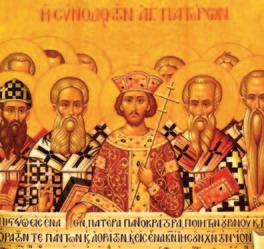
However, what really happened at the council remains controversial. The evidence is contradictory, reflecting the tensions that divided early Christianity. Historian David Gwynn explores Nicaea’s disputed legacy for both Christianity and the Roman empire.
Wed., Jan. 28, 12 p.m.; CODE 1J0-517; Members $20; Nonmembers $30
Read more about programs in this guide on our website. Search by code or date. Expanded program descriptions, presenters’ information, and more at SmithsonianAssociates.org.
Behind the doors of the royal courts of the Tudor dynasty, occult belief often played a role in the lives of some of England’s most significant and revered monarchs. Historian Cheryl White unlocks a hidden world where Henry VII, Henry VIII, Mary I, and Elizabeth I sometimes navigated political intrigue with the assistance of the dark currents of occult belief.
In this interplay between superstition and the sacred, predictions and omens were observed closely, with major events such as coronations, treaties, and military campaigns often timed according to favorable alignments of the stars. Drawing from historical accounts, letters, and rare texts on alchemy and witchcraft, White investigates how this culture of the occult and mysticism became deeply entwined with Tudor power.
Wed., Jan. 28, 6:30 p.m.; CODE 1M2-429; Members $25; Nonmembers $35
The Vikings have fascinated people for centuries, but new discoveries have transformed the view of the Viking world.
Historian Jennifer Paxton traces how archaeology and modern scientific techniques have revealed that the Vikings were just as good at trading as they were at raiding, though the trade they engaged in— human trafficking—was anything but benign. Learn how the Vikings were pioneers in creating an economic empire that reached from the far western Atlantic Ocean to the markets of Constantinople and Baghdad.
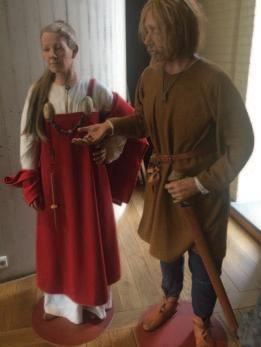
Around the year 1000, explorer Leif Erikson crossed west from Greenland and made his way down the coast to the Gulf of St. Lawrence. Viking activity in the Americas has been more precisely dated to 1021 by scientists examining a Norse settlement at L’Anse aux Meadows in Newfoundland. But there is more to the story of Norse exploration of North America.
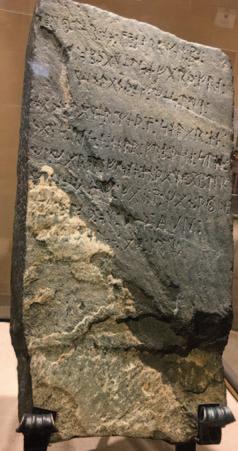
Paxton also discusses how new discoveries have transformed the view of women’s roles in Viking society. She reveals how archaeology and DNA studies show that women may have taken a more active part in trading, warfare, and settlement than previous scholars believed.
Sat., Jan. 31, 10 a.m.–3 p.m.; detailed program information on website; CODE 1M2-431; Members $80; Nonmembers $100
Historian Eleanor Barraclough digs into other evidence, such as an annal entry from the 14th century describing a ship that got blown by a storm from Labrador to Iceland. Barraclough also delves into the 19th-century afterlife of Viking adventures, when forgeries and fake Viking runestones, weapons, and armor turned up in areas where many people had Scandinavian roots.
Fri., March 27, 12 p.m.; CODE 1T0-057; Members $20; Nonmembers $30
What time does the program end? Unless noted, Smithsonian Associates programs run 1 hour 15 min.–2 hours, including Q&A
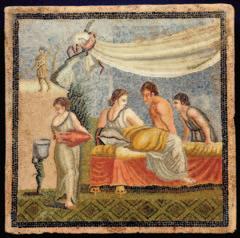
When it comes to sex and love, ancient peoples tell us a lot about what was forbidden; what men thought about women (it’s not easy to know what women thought about men because they’ve left us so little information in their own name); opportunities for premarital and extramarital sex; their ways of lovemaking; how members of the same and the opposite gender expressed love for one another; how sex workers plied their trade; and attitudes toward what we would identify as sexual abuse.
Drawing from a multitude of ancient cultures, including Greek, Roman, Egyptian, Hebrew, early Christian, Chinese, and Hindu, professor emeritus of classics Robert Garland discusses what we know and don’t know about sex and love in the ancient world.
Wed., Feb. 4, 12 p.m.; CODE 1J0-522; Members $20; Nonmembers $30
The Haitian Revolution and Its Legacy
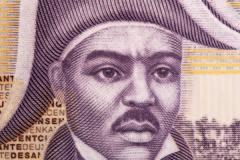
Scholars contend that the Haitian Revolution remains the only successful large-scale revolt in which enslaved people won their freedom, overthrew the existing colonial government, and established an independent state. Historian and author Alexander Mikaberidze traces the rebellion from its beginnings during the French Revolution through its course to culmination in 1804, when Haiti emerged as the first independent Black republic and the second independent nation in the Americas. In achieving freedom, Haitians overturned both the power of France’s colonial elite and the broader Atlantic system of racial slavery. Their struggle inspired enslaved and colonized peoples worldwide and reshaped ideas about race, freedom, and sovereignty across the region and beyond.
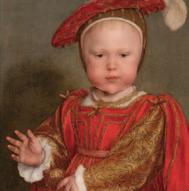
Expectations have always been high when it comes to the British line of succession, as the birth of a healthy royal baby could shape history. A few of these important infants became the casualties of political conflict, born to a kingship they never enjoyed, and one baby even sparked a revolution. For centuries, pregnancy and childbirth were shrouded by superstition, fear, and danger until modern medical advances improved survival rates for both mothers and their newborns.
Historian Siobhan Clarke explores the historical significance of royal babies from the 15th century to the present. She examines how the fertility, pregnancies, and childbirth experiences of queens have shaped politics as well as their personal relationships—and how history has often hung on one tiny heartbeat.
Thurs., Feb. 5, 6:30 p.m.; CODE 1M2-433; Members $25; Nonmembers $35

Mon., Feb. 9, 12 p.m.; CODE 1M2-435; Members $25; Nonmembers $35
For decades, says archaeologist and writer Mike Pitts, the history of Easter Island (Rapa Nui) has been wrongly told as a cautionary tale: Islanders felled their trees and destroyed their resources, causing society to collapse amidst war and tumbling statues. Drawing on his new book, Island at the Edge of the World, which explores early historic records and the latest archaeology, he illustrates the resilience of island communities.
An understanding of the roots of the ecological misconception allows Pitts to frame a new explanation for the hundreds of tumbled statues. Inspired by Polynesian mythology and Pacific archaeology, he reveals a world of beliefs and rituals that embraced the entire island in a powerful vision of creativity, life, and death.
Island at the Edge of the World: The Forgotten History of Easter Island (Mariner Books) is available for sale. Tues., Feb. 10, 12 p.m.; CODE 1NV-171; Members $25; Nonmembers $35
All Smithsonian Associates online programs are closed captioned
Thomas Smallwood, born into slavery in 1801 near Washington, D.C., bought his freedom, began organizing mass escapes from slavery by the wagonload, and wrote about the escapes in newspaper dispatches. Though he liberated hundreds and gave the Underground Railroad its name, Smallwood never got the credit he deserved, says Scott Shane, author of Flee North: A Forgotten Hero and the Fight for Freedom in Slavery’s Borderland. Shane recounts the exploits of Smallwood and his white colleague, Charles Torrey. He sets these men against the backdrop of the slave trade in the United States.
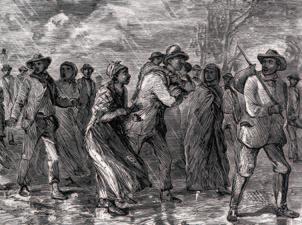
from The Underground Railroad, 1872
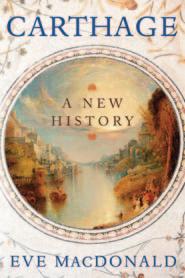
Founded in the 9th century B.C.E. as a small colonial outpost, the city-state of Carthage grew into the western Mediterranean’s largest and wealthiest empire. When it inevitably clashed with Rome for supremacy, the struggle spanned more than a century, three wars, and 43 years of active fighting. After Carthage ultimately fell and was destroyed in 146 B.C.E., its story was largely erased—leaving Rome to write the history books.
Tues., Feb. 10, 6:30 p.m.; CODE 1T0-055; Members $20; Nonmembers $30
Valentine’s Day is celebrated in more countries around the world than any other holiday. Andrew Roth, scholar-in-residence at the Jefferson Educational Society in Erie, Pennsylvania, traces the surprising evolution of February 14 from its origins in pagan fertility rituals to its transformation into a religious feast, then a secular celebration of romance and erotic love, and finally a holiday for school children.
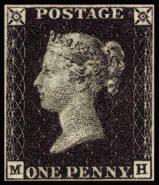
Along the way, he shares fascinating Valentine’s Day facts, such as how the introduction of Britain’s Penny Black one-cent postal stamp in 1841 shaped the holiday into one defined by exchanging greeting cards—moving Charles Dickens to dub the burgeoning card industry “Cupid’s Manufactory.” Roth also reveals how wine, roses, and chocolate came to symbolize one of our most beloved domestic customs and cultural traditions of saying “I love you.”
Wed., Feb. 11, 6:30 p.m.; CODE 1H0-894; Members $20; Nonmembers $30
Drawing on the latest archaeological discoveries and research, ancient historian Eve MacDonald restores Carthage’s story, reclaiming a culture long overshadowed by Roman mythmaking. She reveals this cosmopolitan city as one of wealth and brave warriors as well as of amazing beauty and technological sophistication. MacDonald’s newest book, Carthage: A New History (W. W. Norton & Company), is available for purchase.
Wed., Feb. 11, 12 p.m.; CODE 1D0-137; Members $20; Nonmembers $30
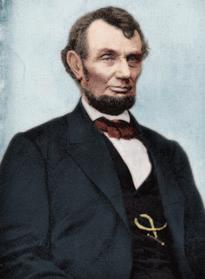
Abraham Lincoln is typically ranked as the nation’s foremost president. He possessed extraordinary leadership skills that he used to win the Civil War and preserve the nation. While most leaders may display a unique style, there is even more to learn from Lincoln, according to Louis P. Masur of Rutgers University, a Lincoln scholar. He used humor and storytelling to great effect and understood when to criticize and when to hold his fire. Lincoln worked deliberately and skillfully employed various tools of persuasion. Perhaps most important of all, says Masur, he was not afraid to change his mind.
Marking the 217th anniversary of his birth, Masur proposes that studying this remarkable president can offer insights into becoming better leaders. His books include Lincoln’s Last Speech, Lincoln’s Hundred Days, and The Civil War: A Concise History
Thurs., Feb. 12, 6:45 p.m.; CODE 1K0661; Members $25; Nonmembers $35
What time does the program end? Unless noted, Smithsonian Associates programs run 1 hour 15 min.–2 hours, including Q&A
How Food Shaped New Orleans
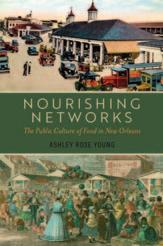
Gumbo and beignets may be the flavors most people know, but the real story of New Orleans food is one of struggle, resilience, and power, reveals historian Ashley Rose Young.
Young uncovers how, from 1800 to today, food in the Crescent City was never just about nourishment. Street vendors, cooks, and customers turned meals into weapons of influence—shaping taste, battling officials, and rewriting laws—and determining not just who got to eat but who got to thrive.
Beneath the powdered sugar and peppery roux lies a history of conflict and creativity, of ordinary people whose daily struggles over food helped shape the identity of one of America’s most captivating cities.
Young’s book, Nourishing Networks: The Public Culture of Food in New Orleans (Oxford University Press), is available for purchase.
Thurs., Feb. 12, 6:45 p.m.; CODE 1D0-138; Members $20; Nonmembers $30
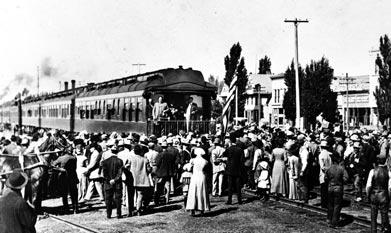
Curator Patricia LaBounty of the Union Pacific Railroad Museum leads a journey into an era long before Twitter and YouTube in which American presidents used railroads to bring their messages into communities across the United States. Beginning with Abraham Lincoln, presidents recognized that railroads were vital to the country’s growth. From the 1830s to the 1940s, if the head of state needed to travel in the United States, they went by train for business, to campaign, and, for some, en route to their final resting places. It wasn’t until the end of Franklin Roosevelt’s administration in 1945 that an aircraft was configured for presidential use.
Tues., Feb. 17, 7 p.m.; CODE 1NV-172; Members $25; Nonmembers $35
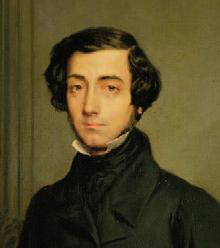
Alexis de Tocqueville (detail) by Théodore
Few books are so often quoted as Democracy in America, French writer Alexis de Tocqueville’s seminal assessment of both the American experiment and the implications of developing conditions of social equality for the future of democracy. He wrote the book after a visit to the United States in 1831 to study its prisons. He left having studied much more.
In examining Tocqueville’s impressions of 19th-century America, Georgetown University professor Joseph Hartman considers, among other things, Tocqueville’s account of the relationship between aristocracy and democracy; the instability of democracy and possible antidotes; the significance of habit in Tocqueville’s thought; and the importance of religion for democracy. Hartman delves into the way in which Tocqueville thought through democracy and its problems and what Tocqueville means for us today.
Wed., Feb. 18, 12 p.m.; CODE 1J0-523; Members $20; Nonmembers $30
On Aug. 6 and 9 of 1945, the United States detonated two atomic bombs over the Japanese cities of Hiroshima and Nagasaki, respectively, during World War II.
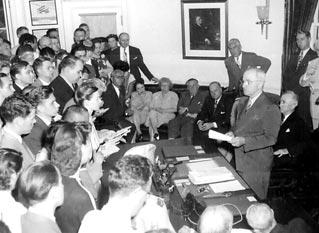
More than 80 years later, these acts remain the only instances of nuclear weapons being used in wartime and continue to stand as defining moments in history.
Historian Hiroshi Kitamura examines the factors leading President Harry S. Truman to take this decisive action during what turned out to be the final month of World War II. Kitamura explores the making of the atomic bomb via the Manhattan Project, takes a fresh look at Truman’s logic, analyzes why specific targets were chosen, and discusses a range of scientific perspectives.
Wed., Feb. 18, 6:30 p.m.; CODE 1T0-056; Members $20; Nonmembers $30
The Powerful
In the 16th century, the Medici family shaped much of the religious and political life of Western Europe. Into this world stepped young Catherine de’ Medici, who left her native Florence to marry into the French royal family. When her husband ascended the throne as Henri II, Catherine became queen consort—yet she spent years in the shadow of his powerful mistress.
Historian Carol Ann Lloyd-Stanger follows how Catherine rose to become one of the most influential figures in Europe. She examines how Catherine secured her strategic role in the French court through dynastic alliances, produced children who married into royal houses across the continent, and became a formidable political force during the reigns of her sons—Francis II, Charles IX, and Henri III—whom she once offered to Elizabeth I as potential husbands.
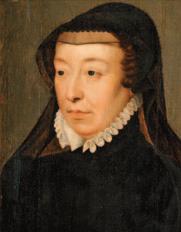
1560
Thurs., Feb. 19, 6:30 p.m.; CODE 1M2-436; Members $30; Nonmembers $45
St. Louis, California, and Paris on the Global Stage
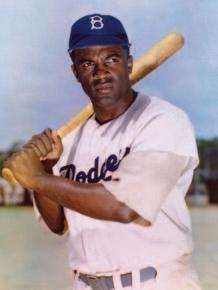
On April 15, 1947, Jackie Robinson made history with the Brooklyn Dodgers as the first Black player in Major League Baseball’s modern era, breaking the game’s long-standing color barrier. Robinson’s influence reached far beyond the diamond. He became a powerful voice in the civil rights movement, using his platform to challenge racial injustice. For example, in 1952 he called out the general manager of the New York Yankees because the team hadn’t signed up any Black players.
After his baseball career, he remained involved in the fight for equality, working with civil rights organizations and advocating for lasting change. Historian Fred Frommer and former Senators stadium announcer Phil Hochberg delve into Robinson’s journey as both a pioneering athlete and trailblazer.
Thurs., Feb. 19, 7 p.m.; CODE 1CV-078; Members $20; Nonmembers $30
World’s fairs have long captured the world’s imagination, bringing together nations to showcase breakthroughs in technology, art, and design. From St. Louis in 1904 to San Francisco and San Diego in 1915, and Paris in 1925, these iconic expositions dazzled millions of visitors, introducing inventions, bold architecture, and unforgettable spectacles that continue to influence aesthetics, technology, and culture today.
Art historian Jennie Hirsh delves into three pivotal fairs, revealing how each presented the latest innovations and shaped culture, design, and the world’s vision of the future.
FEB 23 St. Louis 1904: Meet Me at the Fair
MAR 30 California 1915: Two World’s Fairs, One Golden State
APR 27 Paris 1925: Art Deco on an International Scale
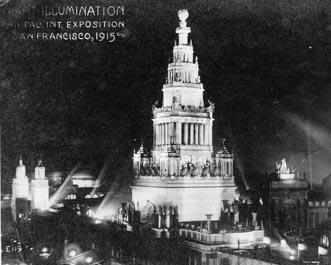
3-session series: Mon., Feb. 23, March 30, and April 27, 6:45 p.m.; detailed program information on website; CODE 1D0-140; Members $60; Nonmembers $75
Individual sessions: Mon., Feb. 23 (CODE 1D0-140A); Mon., March 30 (CODE 1D0-140B); Mon., April 27 (CODE 1D0-140C); 6:45 p.m.; Members $25; Nonmembers $35
Read more about programs in this guide on our website. Search by code or date. Expanded program descriptions, presenters’ information, and more at SmithsonianAssociates.org.
In 481 B.C.E., China stood at the brink of transformation, with the basic institutions that structured social and spiritual life in decay. The following 260 years saw the largest civilization on earth reinvent and recreate itself. Through war, diplomacy, debate, commerce, philosophy, literature, science, invention, and artistic expression, a new social order was born.
This dynamic era spanned the lives of Confucius, the Buddha, and Socrates and ended with the first emperor, famed for his tomb’s terra cotta army. Historian Andrew Seth Meyer, an expert in early Chinese history, provides an overview of one of the most fertile, significant, and lesser-known periods in world history.
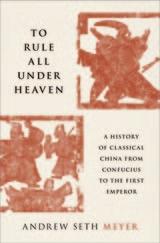
Meyer’s book To Rule All under Heaven: A History of Classical China, from Confucius to the First Emperor (Oxford University Press) is available for purchase.
Mon., Feb. 23, 6:45 p.m.; CODE 1K0-671; Members $20; Nonmembers $30
The Declaration of Independence paints King George III as one of the worst villains in history and justifies the Revolution as necessary to sever ties with him. In reality, says historian Patrick Allitt of Emory University, he was a sober, conscientious man, serious about his limited role in Britain’s constitutional monarchy. At the same time, he was eager to prevent the colonial rebellion and to defeat it when it began.
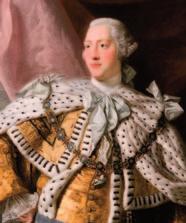
Poor British leadership and management, as well as difficult communications, made it impossible for his forces to prevail. Losing the American colonies was the bitterest chapter of his 60-year reign, which was otherwise studded with British achievements, culminating in the defeat of Napoleon. Allitt revisits the story of this complicated king and his American colonies.
Mon., Feb. 23, 12 p.m.; CODE 1H0-896; Members $20; Nonmembers $30
From the birthplace of George Washington to the train depot where Jimmy Carter launched his presidential campaign, travel journalist Bill Clevlen digs into his newest guide, Presidential Road Trips, to help travelers plan an unforgettable American history lesson.
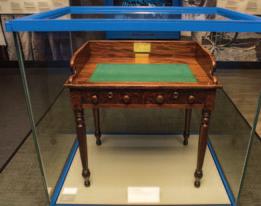
He opens the doors to the homes where future presidents spent their formative years and the retreats where they relaxed and made consequential decisions. Along the way, take in stops including the library where James Madison drafted the U.S. Constitution; the living room with Dwight Eisenhower’s favorite TV trays; the desk Lyndon Johnson used to sign the Voting Rights Act; Abraham Lincoln’s house in Springfield, Illinois; and George W. Bush’s childhood bedroom. Clevlen maps out the ultimate presidential road trip including unexpected locations along with mansions, museums, and memorials too numerous to mention.
Tues., Feb. 24, 7 p.m.; CODE 1NV-173; Members $25; Nonmembers $35
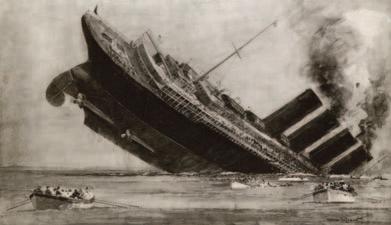
When World War I broke out in August 1914, most Americans favored President Woodrow Wilson’s pledge that the nation would remain neutral. But less than three years later, he announced that America had to enter the war “to make the world safe for democracy.” Historian Edward T. O’Donnell highlights the historical significance of this sometimes overlooked war and its aftermath.
He examines the causes of WWI, the sources of American isolationism, and the key events that drew the nation into the conflict. O’Donnell also explores the U.S. military mobilization, the leadership of the Wilson administration, and how American forces contributed to the victory over the Central Powers.
Wed., Feb. 25, 6:30 p.m.; CODE 1H0-895; Members $20; Nonmembers $30
Magna Carta originated as what was essentially a failed peace treaty between King John of England and his barons in 1215. Centuries later, it transformed into a document held by the Founding Fathers as a foundational cornerstone of citizens’ rights in this country. Thomas J. McSweeney, a law professor at William and Mary Law School, explores the document’s evolution. He surveys some of the major debates about Magna Carta: whether it should be seen as a statement of high-minded principle or of baronial self-interest; when and how political thinkers came to view it as fundamental law; and whether it privileged private property over common rights. McSweeney concludes with a look at whether Magna Carta was an effective model for the guarantee of rights in a republic.
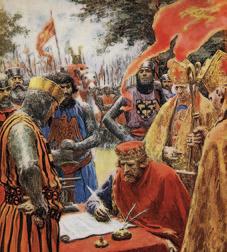
King John signing the Magna Carta by Arthur C. Michael
A devout Christian and abolitionist, John Brown gained national attention when he led anti-slavery volunteers in “Bleeding Kansas,” a state-level civil war over whether Kansas would enter the Union as a free or slave state. When he launched his raid on Harpers Ferry in October 1859 and died on the gallows on December 2 of that year, he garnered international acclaim and became a symbol of the anti-slavery cause.
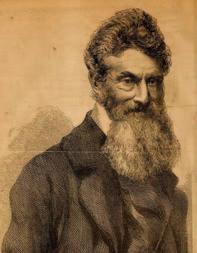
Historian and author Stephen Engle traces Brown’s journey from a young zealot to a radical revolutionary. Though chiefly remembered for his role in Kansas and at Harpers Ferry, some scholars consider the complicated Brown to have been the spark that ignited the Civil War.
Thurs., Feb. 26, 6:30 p.m.; CODE 1M2-442; Members $25; Nonmembers $35
Thurs., Feb. 26, 6:30 p.m.; CODE 1H0-893; Members $20; Nonmembers $30
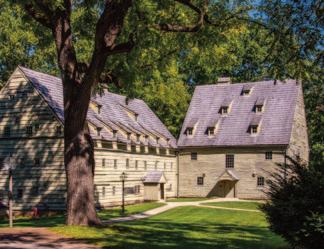
Tucked away in Lancaster County, Pennsylvania, Ephrata is living testament to William Penn’s “Holy Experiment,” his ambitious vision of a society built on religious freedom, tolerance, and communal living. Founded in 1732 by a German immigrant seeking religious refuge, Ephrata became a beacon of this ideal, where celibate and married members embraced spiritual devotion over material wealth.
Though the Ephrata Cloister dissolved in 1934, its legacy is remarkable: over 1,000 hymns; intricate Germanic calligraphy; and striking buildings that still stand today. The distinctive architecture of the cloister—featuring steep gabled roofs, stone walls, and intricate wooden structures—reflected the celibates’ deep spirituality and commitment to simplicity and beauty. Brad Smith, curator at the Ephrata Cloister, leads a virtual journey into its rich history.
Tues., March 3, 7 p.m.; CODE 1NV170; Members $25; Nonmembers $35
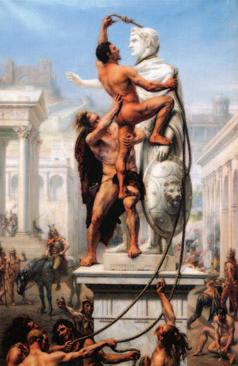
Between 350 and 750, western Europe underwent a profound transformation. The Roman empire, which had dominated the ancient world for more than half a millennium, collapsed. The last Western Roman emperor was deposed in 476, while new peoples competed with the Roman population and with each other. Historian David Gwynn traces the entangled stories of the Goths, Huns, Franks, and Anglo-Saxons, each of which interacted in different ways with the Roman empire and its legacy and together shaped the history of Christian Europe and Western civilization.
4-session series: Wed., March 4–25, 12 p.m.; detailed program information on website; CODE 1J0-526; Members $100; Nonmembers $125
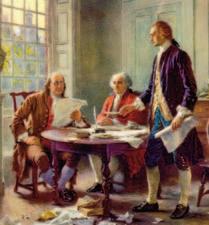
The Declaration of Independence is a peculiar document. It’s a literary masterpiece that was written jointly by a committee of five people. It’s short and punchy—just 1,310 words long—but still somehow daunting and difficult to fully understand.
In a full-day seminar, historian Richard Bell explores the declaration’s nature, questioning whether it serves as a birth certificate heralding a new beginning, a petition for divorce steeped in grievance and score-settling, or something entirely different. He considers its intended audience and reflects on whether it marked the first declaration of independence or followed a well-established genre. He examines how contemporaries perceived it, what transformations it triggered, and why it continues to hold significance.
Sat., March 7, 10 a.m.–4 p.m.; detailed program information on website; CODE 1M2-444; Members $100; Nonmembers $125
In 1871, Smithsonian-backed geologist Ferdinand Hayden led scientists into Yellowstone Basin, one of the last unmapped places on the continent, seeking proof of majestic landscapes and natural wonders. Hayden urged Congress to claim the land and place it under the Department of the Interior, an unprecedented extension of federal authority. On March 1, 1872, President Ulysses S. Grant signed the Yellowstone Act into law with little fanfare.
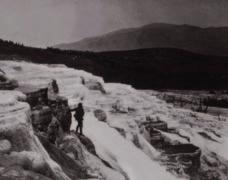
Megan Kate Nelson, author of Saving Yellowstone: Exploration and Preservation in Reconstruction America, traces its transformation from wilderness to national icon. She highlights conflicts, from Sitting Bull defending Hunkpapa Lakota rights to railroad magnate Jay Cooke seeking expansion. Nelson critically examines the Yellowstone Act, showing that while national parks are hailed as “America’s best idea,” support has never been unanimous.
Wed., March 11, 7 p.m.; CODE 1NV-179; Members $25; Nonmembers $35
In October 1964, a 19-car campaign train dubbed the Lady Bird Special left Washington, D.C., bound for New Orleans. Lady Bird Johnson made history as the first presidential spouse to take a leading role on the campaign trail. Her mission was to aid her husband, Lyndon B. Johnson, in territory roiling with animosity after his signing of the Civil Rights Act three months earlier. Her whirlwind tour, making 47 stops through eight states in four days, aimed not just to garner votes for Lyndon in the November election but to help bridge the divide.
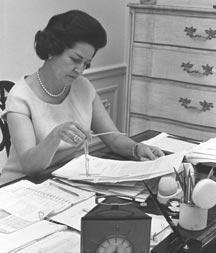
Historian Shannon McKenna Schmidt follows the Lady Bird Special’s journey into the Southern politics of the day. Schmidt’s new book, You Can’t Catch Us: Lady Bird Johnson’s Trailblazing 1964 Campaign Train and the Women Who Rode with Her (Sourcebooks), is available for purchase.
Tues., March 10, 6:30 p.m.; CODE 1CV-080; Members $20; Nonmembers $30
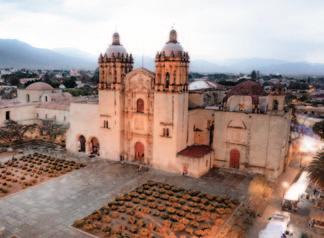
The state of Oaxaca in Mexico, and its Spanish colonial capital city of the same name, have been important cultural crossroads from pre-Columbian times to the present day. Cultural historian George Scheper surveys Oaxaca’s rich cultural history and the peoples—the Zapotecs and Mixtecs—who shaped it over the centuries.
He explores Oaxaca as a Spanish colonial capital and as a contemporary international arts center. Now a UNESCO World Heritage Site, Oaxaca and its hinterland are home to an array of Spanish colonial churches and palaces, making it one of the best-preserved capitals of New Spain. Today its vibrant cultural scene extends from galleries of fine art and folk art to exuberant street art.
Thurs., March 12, 6:30 p.m.; CODE 1M2-447; Members $30; Nonmembers $45
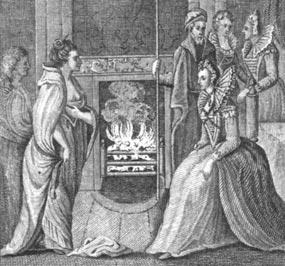
As Elizabeth I sought to tighten England’s grip on Ireland, Grace O’Malley, who commanded her own fleet and was one of the most famous woman sea captains of all time, led the fight against English rule. In a time of political and military struggle, these powerful women met face-to-face in an encounter that would shape the fate of Ireland.
Historian and author Carol Ann Lloyd-Stanger traces O’Malley’s remarkable life, from working alongside her father at sea to gaining wealth and land through marriage and battle to continuing to resist English authority. She explores O’Malley’s extraordinary political maneuvering in securing a personal audience with Elizabeth in 1593—and emerging victorious—and examines O’Malley’s enduring legacy as one of Ireland’s most legendary pirates.
Mon., March 16, 6:30 p.m.; CODE 1M2-446; Members $25; Nonmembers $35
The three voyages of maritime exploration undertaken by Captain James Cook from 1768 to 1779 were filled with high drama, tragedy, intrigue, and humor, and their stories have been retold for centuries. Justin M. Jacobs, professor of history at American University, places Cook and his world in historical context, highlights his substantive connections with the Polynesian world, examines his search for the “Great Southern Continent” and Northwest Passage, and analyzes social and political relationships both on board the ships and with the people of the many shores that were visited.
5-session series: Wed., March 18, 25, April 1, 8, and 15, 6:45 p.m.; detailed program information on website; CODE 1J0-530; Members $110; Nonmembers $135
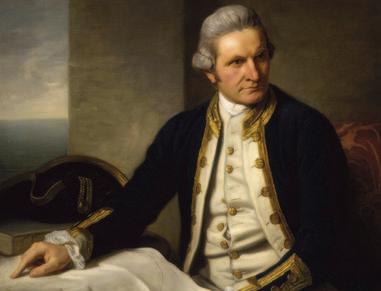
Individual sessions: Wed., March 18 (CODE 1J0-530A); Wed., March 25 (CODE 1J0-530B); Wed., April 1 (CODE 1J0-530C); Wed., April 8 (CODE 1J0-530D); Wed., April 15 (CODE 1J0-530E); 6:45 p.m.; detailed program information on website; Members $30; Nonmembers $45
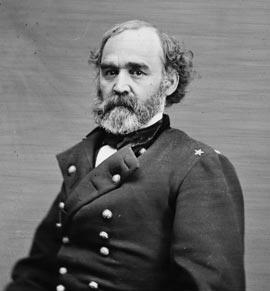
Montgomery C. Meigs was one of the most influential yet underrated figures of 19th-century America, observes Carolyn Muraskin, founder of DC Design Tours. Renowned for energy, precision, and prickly determination, his legacy is stamped across the nation’s capital.
As quartermaster general of the Union Army, Meigs was indispensable to Abraham Lincoln— supplying and equipping more than 2 million troops. He also proposed transforming the Lee family estate at Arlington into a burial ground for Union soldiers.
Before the Civil War, Meigs served in the Army Corps of Engineers, working with Robert E. Lee on river surveys, fort construction, and Washington’s infrastructure. He masterminded the aqueduct system and oversaw the U.S. Capitol expansion and the Pension Office (now the National Building Museum). His final design was his own monumental tomb at Arlington, marked with the epitaph he chose: “Soldier, Engineer, Architect, Scientist, Patriot.”
Wed., March 18, 7 p.m.; CODE 1NV-180; Members $25; Nonmembers $35; Related tour: Montgomery Meigs in Washington, p. 53
What time does the program end? Unless noted, Smithsonian Associates programs run 1 hour 15 min.–2 hours, including Q&A
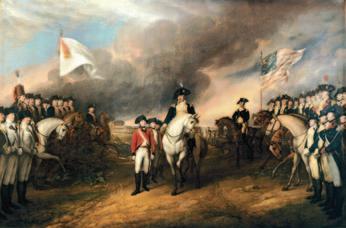
The American War of Independence freed the 13 British colonies in North America from British rule and set the stage for the United States’ bold experiment in self-government. Drawing on primary sources, historian Christopher Hamner traces the war from its roots in the crises of the 1770s to the first shots fired at Lexington and Concord, through the surrender of British troops under Gen. Charles Cornwallis at Yorktown and the Treaty of Paris that followed.
MAR 19 Opening Shots: The Boston Massacre, Lexington, Concord, and Bunker Hill
APR 23 Dunmore’s Proclamation: Freedom and Unfreedom in the War of Independence
MAY 21 Christmas 1776: Trenton and Princeton
JUNE 25 British Strategy in the American War of Independence
In the fall, a second 4-part series carries the Revolution through Saratoga, Yorktown, and the political and military challenges of the early republic.
4-session series: Thurs., March 19, April 23, May 21, and June 25, 6:45 p.m.; detailed program information one website; CODE 1D0-142; Members $100; Nonmembers $120
Individual sessions: Thurs., March 19 (CODE 1D0-142A); Thurs., April 23 (CODE 1D0-142B); Thurs., May 21 (CODE 1D0-142C), Thurs., June 25 (CODE 1D0-142D); 6:45 p.m.; Members $30; Nonmembers $40
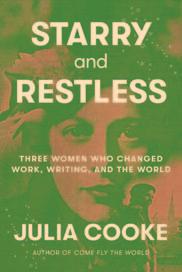
In the mid-20th century, three trailblazing women journalists bore witness to the great changes happening and transformed readers’ understanding of the world. Martha Gellhorn stowed away in the bathroom of a Red Cross hospital ship to report from Omaha Beach on D-Day. Emily “Mickey” Hahn filed stories from Japanese-occupied Shanghai that transported American readers into the wartime life of a Chinese family. Rebecca West interviewed the sister of Archduke Franz Ferdinand’s would-be assassin in 1930s Yugoslavia and then covered the Nuremberg trials. Journalist Julia Cooke shows how they not only found stories that others overlooked but also pioneered new ways of telling them.
Cooke's new book, Starry and Restless: Three Women Who Changed Work, Writing, and the World (Farrar, Straus, and Giroux), is available for purchase.
Thurs., March 26, 6:30 p.m.; CODE 1W0-001; Members $20; Nonmembers $30
On June 15, 1775, the Second Continental Congress appointed George Washington commander in chief of the Continental Army. He held the post throughout the Revolutionary War, resigning on December 23, 1783. While the title is common in U.S. history, Washington’s role was unique: Few leaders commanded both the nation’s principal field army and the military overall. Only Ulysses S. Grant briefly held a similar dual role during the Civil War. Washington’s tenure lasted eight and a half years, marked by unprecedented challenges. The year 1777 proved pivotal, framed by victories at Trenton and Princeton and ending with his leadership after Saratoga and the march to Valley Forge. These events tested and strengthened him as commander in chief. Historian Kevin Weddle highlights how Washington’s experiences in 1777 prepared him for ultimate success and ensured American independence.
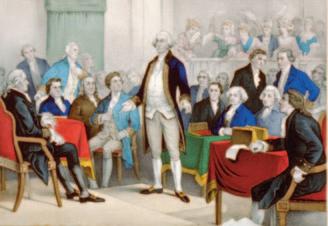
Tues., April 7, 6:45 p.m.; CODE 1K0-681; Members $25; Nonmembers $35
Unless noted, all programs are presented on Zoom; listed times are Eastern Time. Online registration is required.
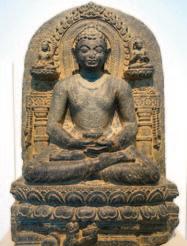
At the heart of Buddhism lies a deep concern with how individuals live— how their actions affect others and contribute to their own awakening. Steven M. Emmanuel, chair of the philosophy department at Virginia Wesleyan University, outlines the differences between Buddhist and Western approaches to ethics and offers a detailed discussion of Buddhist practice, focusing on the role that meditation plays in moral development. He examines the divine abodes, a series of meditative exercises designed to cultivate the virtues of loving kindness, compassion, sympathetic joy, and equanimity. Emmanuel also explores the use of narrative in Buddhism as a means of fostering moral development, particularly stories about the Buddha’s past lives, and examines ethical controversies surrounding the Buddhist doctrine of skillful means.
Tues., Jan. 6, 6:30 p.m.; CODE 1K0-655; Members $30; Nonmembers $45
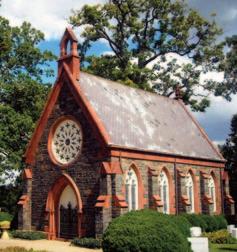
The Oak Hill Cemetery Chapel in Georgetown, designed by James Renwick Jr. in 1850
Locals in the Capital City often make a distinction between “Washington” and “D.C.” Washington is the federal city— grand government buildings, monuments, memorials, and the icons of America’s capital. But D.C. is where the real soul of the city lives. Each of the District’s neighborhoods has its own unique character, rooted in everything from the well-preserved 18th- and 19th-century architecture of Georgetown to the up-to-the-minute transformation of the Southwest Waterfront. Carolyn Muraskin, founder of DC Design Tours, explores far beyond the National Mall to find the real history of the District revealed in neighborhoods that also include LeDroit Park, Dupont Circle, and Mount Pleasant.
Wed., Jan. 7, 7 p.m.; CODE 1NV-167; Members $25; Nonmembers $35
Join Tim Dolan, an actor and owner of Broadway Up Close tours in New York City, as he leads a virtual stroll that takes in the theaters at the northern end of the Broadway Theater District from 47th Street to 54th Street. Along the way, discover how Broadway was transformed by the introduction of rock musicals with the landmark 1968 production of Hair and with the first million-dollar show, the short-lived Via Galactica from 1972. Learn how a dog named Sandy would change one Tony Award–winner’s life—and Broadway’s canine future—while Little Orphan Annie belted “Tomorrow” before thousands.
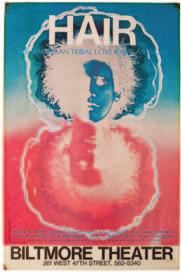
Videos and rarely seen photographs help set the stage. Spotlighting some of Broadway’s most notable shows and legendary performers that have called these theaters home, Dolan pulls back the curtain on backstage quirks and secrets that are seldom revealed.
Tues., Jan. 6, 7 p.m.; CODE 1NV-166; Members $25; Nonmembers $35
Contemporary
From the 1990s to today, Italian cinema has reflected a rapidly changing society through myriad genres and bold storytelling. Directors have turned inward to explore the personal and political dimensions of modern life.
Art historian Jennie Hirsh traces these developments through celebrated and lesser-known films. She highlights how contemporary Italian directors have experimented with innovative styles to reflect social history while focusing on marginalized figures and themes such as gender, race, incarceration, class, and alienation—offering a look at how Italian cinema continues to reinvent itself in the 21st century.
Sun., Jan. 11, 1 p.m.; CODE 1D0-120D; Members $25; Nonmembers $35
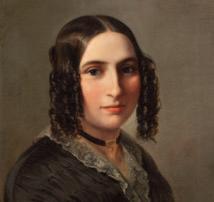
Throughout the history of Western music, men have claimed most of the spotlight and accolades as performers, composers, teachers, impresarios, patrons, and instrument makers. Less attention has been paid to the brilliant creative women who played these roles—along w ith many others—and who were relegated to the less brightly lit corners of the musical world.
Speaker and concert pianist Rachel Franklin places them center stage as she examines their talent, grit, intellect, and drive, without which many of the most celebrated musical figures might have been significantly less successful, and the musical repertoire far less rich. She brings these women and their often-untold stories to life, showcasing them with live piano performances and historical and contemporary media clips.
4-session series: Mon., Jan. 12 and 26 and Feb. 2 and 9, 12 p.m.; detailed program information on website; CODE 1K0-656; Members $100; Nonmembers $125
The Emperor Constantine’s conversion to Christianity in the year 312 made the young religion a permanent force in the late Roman Empire. Born four decades later in one of its remote provinces, Augustine of Hippo (354–430) would achieve for Christian thought an intellectual standing as enduring and dominant as the social and political influence conferred on Christian institutions by the first Christian emperor. Augustine found in Christianity a collection of authoritative texts, creeds, and doctrines passed down by the Church and accepted by faith. He harnessed that philosophical heritage of antiquity to express a new Christian philosophy that would eventually have a huge impact. Augustine scholar Scott MacDonald of Cornell University explores some of its compelling ideas as reflected in Augustine’s major works.
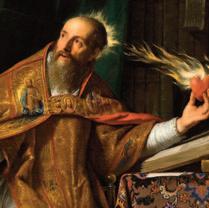
Sat., Jan. 17, 10 a.m.–4 p.m.; detailed program information on website; CODE 1M2-427; Members $100; Nonmembers $125
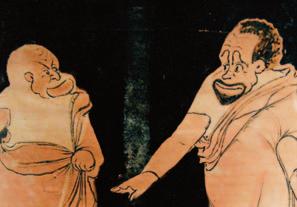
The comic poet Menander, who lived in Athens in the 4th century B.C.E., is not exactly a household name in the modern world, but he greatly influenced what people see when they go to the movies or watch TV shows. Starting in the 320s B.C.E., Menander (and perhaps a few of his contemporaries) wrote new types of plays that featured romance and familial relationships rather than politics, the usual theme. He thus set the course for dramatic comedy’s development over the next two millennia.
Classics professor Mitch Brown illustrates how, through his successors, Menander helped shape theater in the Renaissance— ultimately becoming responsible for domestic and relationshipfocused plays, movies, and sitcoms that are still popular today.
Tues., Jan. 20, 6:30 p.m.; CODE 1T0-049; Members $20; Nonmembers $30
Frank Sinatra’s 100 musical performances in motion pictures reveal a vocalist who almost from the start recognized how the camera could enhance his artistry as much as the microphone. Sinatra came to Hollywood right before he began his solo career, and within a few years he would be just as big at the box office as he was on stage and in recordings.
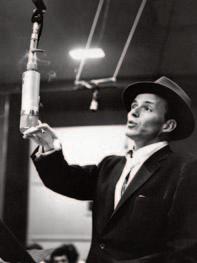
Though he would have his ups and downs, both professionally and personally, his ability to magically convey the inner heart of whatever he sang remained undiminished on film.
Media historian Brian Rose surveys Sinatra’s extraordinary Hollywood musical career, which began with uncredited appearances with the Tommy Dorsey Orchestra and continued through his famous days with the Rat Pack.
Wed., Jan. 21, 6:30 p.m.; CODE 1J0515; Members $25; Nonmembers $35
FEB 20 Outstanding Oregon
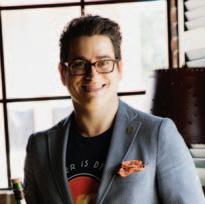
Spend three fascinating Friday evenings expanding your knowledge of the world of wine as you sip along with sommelier Erik Segelbaum in a series of delectable adventures. Each immersive program includes a curated personal tasting kit to enhance the experience.
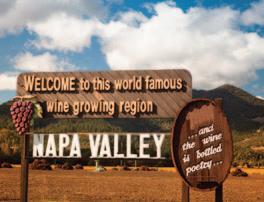
JAN 23 Night in Napa California’s Napa Valley is one of America’s most significant fine wine appellations. Producers there have helped pave the way for American wine on an international scale. The so-called Judgment of Paris blind tasting and other events in the 1970s brought Napa Valley wines to the attention of connoisseurs around the world. Explore the past, present, and future of Napa Valley, learning about some of the best new and classic wines.
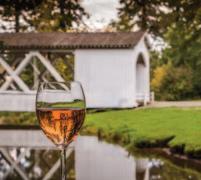
Oregon is synonymous with high-quality viticulture. Back in the 1970s, pioneering producers there were told they were crazy. However, the confluence of volcanic and glacial flood soils, along with the influence of the Pacific Ocean, make Oregon an incredible place to grow wines. This session features both classic and up-and-coming producers and varieties that are quickly solidifying Oregon wines as some of the best in the world.

20 Paso Perfection
Nestled halfway between Los Angeles and San Francisco sits Paso Robles wine country. The climate is perfect for the production of world-class wines, ranging from Bordeaux varieties to Rhône varieties. Whether rich, intense, and full-bodied; crisp, clean, and light; or somewhere in the middle, there’s likely a Paso Robles wine for every palate. This session explores the versatility of Paso Robles wines from some of the finest producers and subregions.
3-session series: Fri., Jan. 23, Feb. 20, and March 20, 6 p.m.; CODE 2WINE2026; Members $180; Nonmembers $225
Individual sessions: Fri., Jan. 23 (CODE 1T0-050); Fri., Feb. 20 (CODE 1T0-051); Fri., March 20 (CODE 1T0-052), 6 p.m.; Members $70; Nonmembers $85
Wine-tasting kit information: The cost includes a curated personal tasting kit with enough wine for one person to sample the full lineup of wines. Additional participants must register individually to receive their own tasting kit, which is an essential component of the workshop.
Update: Kits are available during two scheduled pick-up times the day before the program and the day of the program at Cowbell Seafood & Oyster (Union Market, 1309 5th St. NE, Washington, D.C.; Metro: NoMa–Gallaudet U station, Red line.)
NOTE: Patrons will receive additional wine tasting kit pick-up information by email prior to the program. Due to state and federal laws, Smithsonian Associates cannot ship wine kits. However, SOMLYAY may be able to provide kits to participants outside the Washington, D.C., area (who must cover shipping costs). Please contact erik@thesomlyay.com for more information.

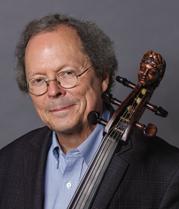
The 49th season of the Smithsonian Chamber Music Society (SCMS) features musical masterpieces from the early 17th century to the middle of the 20th, played on some of the world’s most highly prized musical instruments. Concerts (with one exception) take place in the National Museum of American History’s intimate Nicholas and Eugenia Taubman Hall of Music, with repertoire ranging from acclaimed masterpieces to undeservedly obscure gems by frequently overlooked composers. Veteran SCMS musicians are joined on many of the programs by emerging artists. Kenneth Slowik, SCMS artistic director and recipient of the Smithsonian Distinguished Scholar Award, curates a series of pre-concert talks one hour prior to most of the programs, shedding light on the glorious music and the lives and times of the featured composers.
For a full season overview visit SmithsonianAssociates.org/scms
Smithsonian Chamber Music Society audiences have the unparalleled experience of being able to hear two magnificent quartets of instruments—one made by Antonio Stradivari, the other by his teacher Nicolò Amati—in this popular four-concert series. The Axelrod Quartet welcomes its new violist, Joan DerHovsepian, principal violist of the Houston Symphony, whose distinguished career includes membership in the Everest Quartet. Upcoming concerts: Music of Haydn, Beethoven, and Dvořák; guest violinist James Dunham; Sat., Jan. 17, 7:30 p.m. and Sun., Jan. 18, 3:30 p.m.
Music of Haydn, Shostakovich, and Beethoven, Sat., Feb. 7, 7:30 p.m. and Sun., Feb. 8, 6:30 p.m.
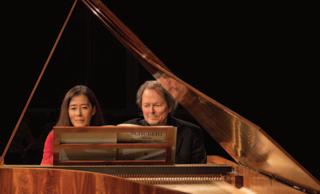




On Jan. 25, the four-hands fortepiano team of Naoko Takao and Slowik presents the first of the season’s two Schubertiads. Rescheduled to Jan. 31, members of the Smithsonian Academy Orchestra celebrate Antonin Dvorák with two captivating works of 1878 (pre-concert lecture at 6:30 p.m.). In late February, the full Smithsonian Academy Orchestra ventures into the second half of the 19th century with the D Major Serenade of Johannes Brahms, plus Haydn’s everpopular “Surprise” Symphony.
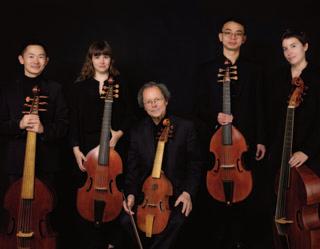
The Smithsonian Consort of Viols returns in March with a concert of music by John Ward, revered until the time Henry Purcell, and Purcell himself, who penned the last—and arguably some of the greatest—essays in the contrapuntal consort genre. Catherine Manson, concertmaster of the Amsterdam Baroque Orchestra, and Slowik perform sonatas of J. S. Bach in midApril. The season concludes mid-May with Schubert’s magnificent String Quintet in C Major, given by the Smithsonian Chamber Players on five Stradivarius instruments from the museum’s rich collection.
Upcoming concerts: Four-hands music of Franz Schubert, Sun., Jan. 25, 6:30 p.m., Naoko Takao and Kenneth Slowik, fortepiano; Dvorák: Serenade, Op. 44; Bagatelles, Op. 47, Sat., Jan 31, 7:30 p.m., winds of the Smithsonian Academy Orchestra, with Natalie Kress and Freya Creech, violins; Titilayo Ayangade, cello; Kenneth Slowik, harmonium and conductor; Music of Haydn and Brahms, Sat., Feb. 21, 7:30 p.m., Smithsonian Academy Orchestra
All programs and artists are subject to change. For complete concert schedules, repertoire, subscriptions and individual concert tickets, and bonus offerings for subscribers visit SmithsonianAssociates.org/scms
Poland has 23 national parks, ranging from very small to well-known throughout Europe. Tour guide Christopher Skutela leads a visual journey to several of them, as well as explaining how to visit them while traveling through Poland. The parks include Tatra, site of the country’s highest mountain; Bialowieza, a UNESCO World Heritage Site located in the midst of the old-growth Białowieża Forest; Slowinski, home to sand dunes and lakes; Biebrza, the largest national park in Poland at more than 220 square miles; and Pieniny, the country’s first national park and a comparatively petite 9 square miles.
Mon., Jan. 26, 12 p.m.; CODE 1J0-521; Members $20; Nonmembers $30
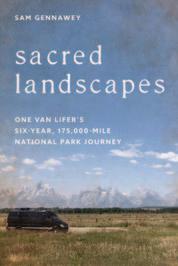

Sam Gennawey, a former urban planner and theme park historian, likens the National Park Service (NPS) to a meticulously curated museum that showcases the nation’s most culturally significant landscapes. The parks are categorized into three types—Nature, History, and Recreation—and within them are themes that unify and define their core values.
Gennawey focuses on the Nature Parks (encompassing volcanoes, geology, vignettes of primitive America, caves, deserts, and fossils), exploring the landscapes and the architecture that frames them. From the rustic “Parkitecture” lodges of the early 20th century to modern visitor centers, these structures embody the evolving identity of the parks. Gennawey, author of Sacred Landscapes: One Van Lifer’s Six-Year, 175,000-Mile National Park Journey, offers his unique perspective on landscape storytelling, his experience visiting nearly 390 parks, and his insight as a longtime NPS volunteer.
Tues., Jan. 27, 7 p.m.; CODE 1NV-169; Members $25; Nonmembers $35
For Haydn, Mozart, Beethoven, Brahms, Tchaikovsky, and others, their mastery of the symphony was the criterion by which they measured themselves—and the music by which they have been largely measured by music lovers ever since.
Opera and classical music expert Saul Lilienstein explores the breadth of the symphonic tradition with extended excerpts from some of the greatest works in the repertoire from the late 18th century through the end of the 19th. He provides a focus on contrasting methods of composition, revealing the essence of each composer’s individual contribution. Sessions are highlighted by recordings and film clips of notable orchestras and conductors.
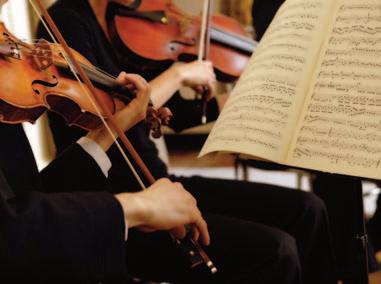
5-session series: Tues., Feb. 3–March 3, 12 p.m.; detailed program information on website; CODE 1M2-430; Members $110; Nonmembers $135
Read more about programs in this guide on our website. Search by code or date. Expanded program descriptions, presenters’ information, and more at SmithsonianAssociates.org.
When Confederate troops fired on Fort Sumter, Walt Whitman declared it “the volcanic upheaval of the nation”—the inception of a war that would dramatically alter the shape and character of American culture. Previously, America’s leading writers had been integral to helping the young nation imagine itself, assert its beliefs, and realize its immense potential.
The war demanded new frameworks for understanding the world and new forms of communication that could engage with the immensity of the conflict. It fostered both social and cultural experimentation. Scholar Randall Fuller of the University of Kansas uses Whitman as a case study to trace the changes in his poetry from idealism to realism, from exuberant democratic celebration to a more chastened view of America as a place where enormous suffering had occurred.
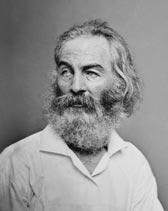
Tues., Feb. 10, 6:45 p.m.; CODE 1K0-662; Members $25; Nonmembers $35
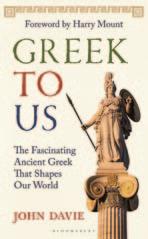
Ancient Greek echoes through our culture in unexpected ways—sometimes with humor, sometimes with beauty. The word for actor, “hupokrites,” gave us “hypocrite,” while “astronaut” translates poetically to “sailor of the skies.” Myths provided the Achilles heel and the Midas touch.
With humor and fascinating etymology, classical scholar John Davie, a lecturer at Trinity College, Oxford, provides an insightful journey through the world of the ancient Greeks, their extraordinary language, and its lasting influence.
Davie’s book Greek To Us: The Fascinating Ancient Greek That Shapes Our World (Bloomsbury Publishing) is available for purchase.
Fri., Feb. 20, 12 p.m.; CODE 1K0-676; Members $20; Nonmembers $30
Judy Garland was one of the most talented people to ever set foot in Hollywood. There wasn’t anything she couldn’t do, from breaking an audience’s heart with a song to dancing up a storm to delivering comic and dramatic performances that still enthrall us today.
While she was among the greatest live entertainers in show business history and one of the top recording artists of her time, her appearances in front of the camera remain her legacy. Media historian Brian Rose examines her remarkable Hollywood career, which began in her young teens at MGM and continued with such timeless classics as The Wizard of Oz, Meet Me in St. Louis, Easter Parade, and her stirring comeback in 1954’s A Star is Born.
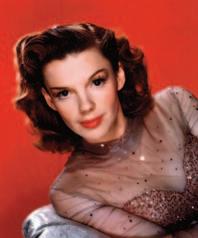
Wed., Feb. 11, 6:30 p.m.; CODE 1J0-520; Members $25; Nonmembers $35

In 1937, our perception of fairy tales was forever changed when Walt Disney Productions released its first full-length animated film, Snow White and the Seven Dwarfs, which reset expectations of what fairy tales are, who they’re for, and what they represent. Yet the film is only a part of a much bigger “Snow White” tradition. Every version of this fairy tale revolves around a deadly conflict between a mother figure and her daughter, and themes of beauty, jealousy, rivalry, cannibalism, and death remain prominent throughout its history.
Folklorists Sara Cleto and Brittany Warman do a deep dive into the fairy tale of “Snow White,” revealing folkloric and literary tales that provided the bedrock preceding Disney’s version and examining how the story has been retold in contemporary times. This lecture also includes prompts for audience interaction.
Mon., Feb. 23, 6:45 p.m.; CODE 1J0-525; Members $25; Nonmembers $35
All Smithsonian Associates online programs are closed captioned
What time does the program end? Unless noted, Smithsonian Associates programs run 1 hour 15 min.–2 hours, including Q&A
Under the artistic direction of maestro Charlie Young, the Smithsonian Jazz Masterworks Orchestra (SJMO) has celebrated some of the greatest jazz music as one of the crown jewels of the Smithsonian’s National Museum of American History. The orchestra’s 2026 concerts add to that tradition.
Sat., Feb. 28 | Jazz With a Cuban Tinge
Since the turn of the 20th century, Cuban musical sensibilities have enriched American music with vibrant rhythms and evocative textures. In the 1940s, Cuban musicians such as Mario Bauzá, Francisco “Machito” Grillo, and Luciano “Chano” Pozo electrified jazz by fusing it with Afro-Cuban musical elements and wove jazz improvisation into Cuban popular music. These artists and others pioneered a groundbreaking fresh style dubbed Afro-Cuban jazz. The fusion transformed jazz in the United States as it bridged cultures from across the African diaspora of the Americas. The concert honors that enduring legacy of “Cuban Tinge” with dynamic selections including Machito’s “Mango Mangue,” written by Francisco Fellove Valdés for Machito to perform with Celia Cruz, Bauzá’s “Cubauza,” and the classic “Manteca” by Chano Pozo, Gil Fuller, and Dizzy Gillespie.
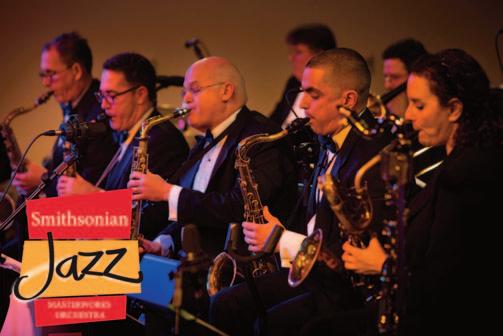

Fri., April 17 | Jazz Across America
Jazz Appreciation Month
Jazz is more than just music: It is a living cultural narrative that mirrors the complexities, struggles, and triumphs of American society. From its early roots in ragtime and on the streets of New Orleans to the expansive experimentation of the avant-garde, jazz has continually redefined itself, evolving with each generation to extend the boundaries of the genre. During Jazz Appreciation Month, SJMO invites audiences to experience this vibrant story in sound. Filled with variety, the concert celebrates jazz in all its forms—contrasting styles, expressive interplays, and musicians who hail from every corner of the country and every occupation. Selections include Jelly Roll Morton’s “Black Bottom Stomp,” Sun Ra’s “Kingdom of Not,” and Leonard Bernstein’s “Meditation #1.”
Fri., June 5 | Let Freedom Ring
Since 1776, generations of Americans have pursued life, liberty, and happiness—the “unalienable rights” enshrined in the nation’s founding document. These enduring ideals have been a source of inspiration, hope, and, at times, conflict, as Americans have wrestled with their meaning and struggled to bring them to life. In honor of the nation’s 250th anniversary, SJMO presents a powerful concert that explores the role of jazz as a guiding force in the national journey to “a more perfect union.” Jazz, with its roots in resilience, resistance, and reinvention, has long been a soundtrack to America’s evolving story. The program features stirring works that capture the spirit of protest, the hope of freedom, the depth of spirituality, and the pride of patriotism. Highlights include Billy Taylor’s poignant “I Wish I Knew How It Would Feel to Be Free,” Charles Mingus’ “Fables of Faubus,” and Max Roach’s “Freedom Day.”
Individual concerts: Sat., Feb. 28 (CODE 1P0-892); Fri., April 17 (CODE 1P0-893); Fri., June 5 (CODE 1P0-894); Members $30; Nonmembers $40
All concerts feature the full orchestra and take place at 7 p.m. in the Warner Bros. Theater, National Museum of American History. Program content is subject to change.

Stoic Wisdom for the Modern World
Written nearly 2,000 years ago, Marcus Aurelius’ Meditations remains one of the most profound, practical guides to living with integrity, resilience, and perspective and cultivating one’s self. Philosopher Samir Chopra leads an exploration of this foundational text of Stoicism through a historically embedded reading of passages, with a view to developing a practice of Stoic principles in daily life.
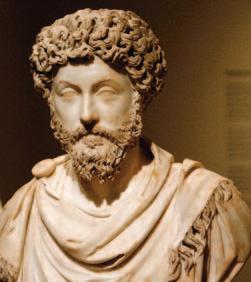
Lessons on Seeing, Thinking, and Living Wisely
Stoicism is an ancient Greek philosophy that teaches that virtue, reason, and living in agreement with nature are the keys to a happy and flourishing life. A foundational idea of Stoicism is that people appear to go through life reacting directly to events.
Sat., Feb. 28, 10 a.m.–3 p.m.; detailed program information on website; CODE 1CV-079; Members $80; Nonmembers $100
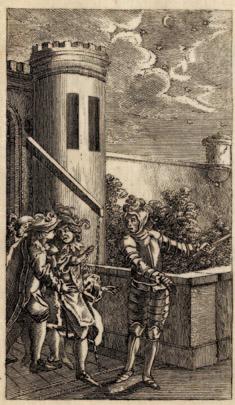
Shakespeare’s tragedy Hamlet is considered one of the greatest works in English literature. With such famous quotes as “To be, or not to be, that is the question,” “Something is rotten in the state of Denmark,” and “Brevity is the soul of wit,” this play about murder, revenge, and madness resonates with generations of readers (and viewers). Joseph Luzzi, a professor of literature at Bard College, leads participants through a detailed exploration of this extraordinary work, focusing on Shakespeare’s philosophical brilliance, linguistic inventiveness, and ability to capture the most complex—and often unsettling— human emotions. Luzzi highlights how and why Hamlet remains one of the most beloved and frequently performed of Shakespeare’s plays.
Thurs., March 5, 12 p.m.; CODE 1J0-528; Members $20; Nonmembers $30
That appearance is an illusion. Individuals react to their judgments and opinions—to thoughts about things—not to things themselves. Stoics seek to become conscious of those judgments, to find the irrationality in them, and to choose them more carefully.
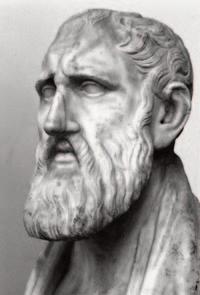
Drawing from his book The Practicing Stoic: A Philosophical User’s Manual, Ward Farnsworth, a professor at the University of Texas School of Law, presents the heart of Stoic philosophy, offering practical insights about seeing more clearly, living more wisely, and bearing the burdens of life with greater ease.
Tues., March 31, 6:45 p.m.; CODE 1K0-684; Members $25; Nonmembers $35
The Guinness company was founded by Arthur Guinness in 1759, marked by the signing of a 9,000-year lease on a rundown brewery at St. James’s Gate in Dublin. From these humble beginnings, the Guinness Brewery grew rapidly, becoming the largest brewery in the world by the 1880s.
Eibhlin Colgan, Guinness archive and heritage manager, traces the history of the company from the bold business decisions of its founder to the adoption of the Brian Boru harp as the official brand logo in 1862 to the pioneering social initiatives championed by later generations of management.
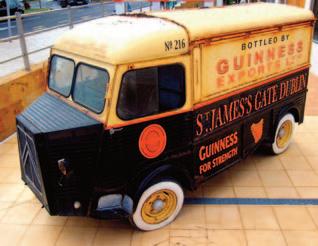
Thurs., March 5, 12 p.m.; CODE 1CV-082; Members $20; Nonmembers $30
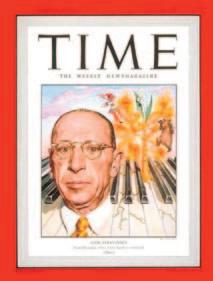
European Musical Artists Meet the United States
Beethoven never made it to America, but hundreds of important musicians and composers did. From early touring megastars like Paderewski to refugee émigrés such as Rachmaninoff, America has drawn renowned musical talents since its early years. Dvořák directed a music conservatory in New York; Korngold wrote scores for Hollywood; Tchaikovsky marveled at the warmth of American hospitality; and Schoenberg played tennis regularly with Gershwin.
In a unique course, speaker and concert pianist Rachel Franklin explores the siren call of America to musicians throughout the world.
4-session series: Mon., March 9–30, 12 p.m.; detailed program information on website; CODE 1K0-675; Members $100; Nonmembers $125

For more than 70 years, the adventures of secret agent James Bond have thrilled readers and left them wondering if any of his escapades are actually possible. Author Kathryn Harkup, a former chemist, investigates 007’s exploits and the weapons, technologies, tactics, and downfalls of his various foes. She assesses the practicalities of building a volcano-based lair; whether being covered in gold paint really would kill you; and if your plan is to take over the world, whether it is better to use bacteria, bombs, or poison. One thing is certain: When you are masterfully combining science and a larger-than-life charismatic hero who fights villains, nobody does it better than Bond—James Bond.
Thurs., March 12, 12 p.m.; CODE 1T0-058; Members $20; Nonmembers $30
Media historian Brian Rose examines the many ways the internet has radically transformed the old media of newspapers, magazines, the recording industry, film, radio, and television. Rose traces how this digital revolution took place in such a short time and what lies ahead in the continually changing era of new media.
He explores questions such as whether printed newspapers will exist 10 years from now; if newsstands and bookstores will disappear as fast as record stores did; if movie theaters will continue to exist in their present form; and whether broadcast and cable TV will vanish, replaced entirely by streaming.
Mon., March 23, 6:30 p.m.; CODE 1J0-531; Members $25; Nonmembers $35

Subscribe now to topic-based eAlerts to match your interests. You can look forward to receiving timely information about new programs, special Smithsonian offers, a monthly curated Digital Digest newsletter, and much more to spark your imagination and inspire learning. Explore a whole world of subjects—from art and architecture to history, culinary arts to science, travel to literature, and so much more!
Simply sign up at SmithsonianAssociates.org/eAlerts and you’re set.
Privacy Policy: We do not rent or sell our e-mail addresses.

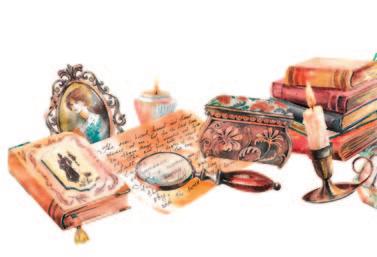
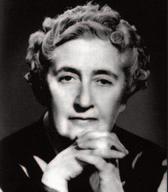
This year marks three major milestones for the Queen of Crime: the centenary of The Murder of Roger Ackroyd, the 50th anniversary of Agatha Christie’s death, and 100 years since her mysterious disappearance. Christie remains the best-selling novelist of modern times, with over 2 billion books sold. Renowned for her ingenious plots and unforgettable detectives Hercule Poirot and Miss Marple, she authored 66 novels, 14 short story collections, and enduring plays like Christie’s 1926 disappearance captivated the world, ending in a puzzling reappearance at a Yorkshire spa. Intensely private, she once observed, “People should be interested in books, not their authors.” Author Daniel Stashower explores her legacy, while actors Scott Sedar and Bari Biern bring Christie’s beloved characters to life. It would be a crime to miss them.
Thurs., March 26, 6:45 p.m.; CODE 1D0-143; Members $20; Nonmembers $30
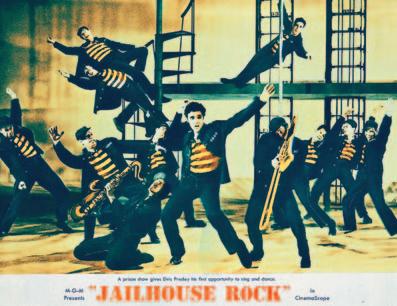
From 1956 to 1969, Elvis Presley made 31 films, starring in all but one. That’s an extraordinary achievement, and it helped make him one of the wealthiest performers in Hollywood. But Elvis’ dream of being taken seriously as an actor was never fulfilled, thanks to the crass commercial instincts of his manager, Col. Tom Parker. Media historian Brian Rose examines Presley’s Hollywood career, which started off with such promise in films such as King Creole and Jailhouse Rock but concluded with dozens of cheap, mediocre movies like Harum Scarum and Paradise, Hawaiian Style Rose also looks at the musical highlights of Presley’s movies, including “Love Me Tender,” “Return to Sender,” and “Viva Las Vegas.”
Thurs., April 2, 6:30 p.m.; CODE 1J0-533; Members $25; Nonmembers $35
A painter can create entire worlds on a flat piece of paper. But where is a composer to start when seeking to represent the natural universe through sound? Centuries of exquisite nature-inspired concert works show just how well it can be done through direct imitation, allegory, and symbolism. Over time, composers have fashioned powerful musical vocabularies that guide listeners to see harmony as visual image.
In a 4-session course, popular speaker and concert pianist Rachel Franklin uses her unique live piano demonstrations and fascinating film clips to explore how numerous composers from Vivaldi to Vaughn Williams found inspiration to create beloved works that conjure the natural world.
4-session series: Mon., April 6–27, 12 p.m.; detailed program information on website; CODE 1K0-680; Members $100; Nonmembers $125


Read more about programs in this guide on our website. Search by code or date. Expanded program descriptions, presenters’ information, and more at SmithsonianAssociates.org.
Unless noted, all programs are presented on Zoom; listed times are Eastern Time. Online registration is required.
Over the centuries, humans have developed a powerful and versatile set of tools to reveal what was once invisible. Daniel K. Sodickson, a physicist and pioneer in biomedical imaging, explores the rich history and surprising future of vision, from the evolution of sight in early organisms to the rise of high-tech devices that emulate human senses and minds. He traces the development of imaging tools that have revolutionized medicine, reshaped the global economy, and raised timely questions about privacy and perception.
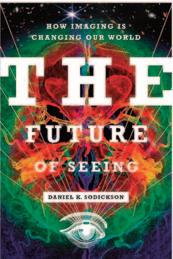
As these technologies increasingly integrate with artificial intelligence, Sodickson examines how they are changing the way individuals perceive the world, connect with one another, and understand who they are.
Sodickson’s book, The Future of Seeing: How Imaging Is Changing Our World (Columbia University Press), is available for purchase.
Tues., Jan. 6, 6:45 p.m.; CODE 1D0-132; Members $20; Nonmembers $30
Memory plays a major role in defining who we are. But what if it could be changed intentionally, precisely, and for the better?
Neuroscientist Steve Ramirez examines how memory manipulation shapes the imagination and sense of self and considers the question of whether erasing a deeply traumatic memory would change who a person is. Ramirez also discusses the ethics of artificially controlling memory, exploring how the process might be used responsibly for both personal healing and the greater good. Examples include memory manipulation that could help people suffering from posttraumatic stress disorder, anxiety, Alzheimer’s, addiction, and other neurological and behavioral disorders.
Ramirez’s book, How to Change a Memory (Princeton University Press), is available for purchase.

Wed., Jan. 7, 6:30 p.m.; CODE 1CV-075; Members $20; Nonmembers $30
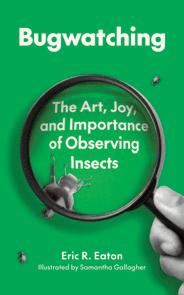
Insects are the most abundant animals on the planet—in both number of species and individual organisms— representing about 80% of all animal species and numbering in the quintillions. Oddly enough, they are also the least observed. Naturalist Eric R. Eaton aims to inspire you to watch more bugs and shares what you can do to keep these critters thriving. He highlights the basic tools for watching insects with all five senses, suggests best habitats and circumstances for seeing the most diversity, and offers tips for attracting desirable insects to your yard and garden. Eaton also addresses insect decline and how to help correct it.
Eaton’s new field guide, Bugwatching: The Art, Joy, and Importance of Observing Insects, is available for purchase.
Thurs., Jan. 8, 12 p.m.; CODE 1T0-047; Members $20; Nonmembers $30
The story of life is one of great transitions and of crossing new frontiers. Among the most dramatic were the moves from the sea to land, land to sky. It might seem there are no more realms for life to venture, but astrobiologist Caleb Scharf contends there is one: space. He proposes that journeying into space isn’t simply a giant leap for humankind—it’s life’s next great transition, an evolution of evolution itself in which he sees humans and technology as catalysts for an interplanetary transformation. Scharf is the senior scientist for astrobiology at NASA’s Ames Research Center. His book, The Giant Leap: Why Space Is the Next Frontier in the Evolution of Life (Basic Books), is available for purchase.
Tues., Jan. 13, 6:45 p.m.; CODE 1K0-657; Members $20; Nonmembers $30
For centuries, mariners spun tales of gargantuan waves in the open ocean, walls of water measuring 100 feet high or taller. Until recently, these stories were dismissed. But over recent decades, as more ships vanished and new evidence emerged, oceanographers have re-estimated how the seas behave at their most ferocious. One instance of proof came in 2000, when a British research vessel was trapped in a vortex of mammoth waves in the North Sea—including several that topped 100 feet.
Journalist and author Susan Casey looks at these ship-swallowing rogue waves, noting that as scientists scramble to understand this phenomenon, others—including extreme surfers who fly the world to ride the ocean’s most formidable monsters—view the giant waves as the ultimate challenge.
Thurs., Jan. 15, 6:45 p.m.; CODE 1K0-667; Members $25; Nonmembers $35
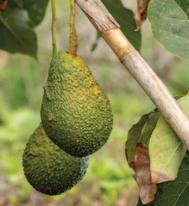
Avocados are one of today’s most beloved foods, valued for their rich flavor, healthy fats, and essential nutrients. Long before they became a global superfood, avocados evolved as nourishment for giant Ice Age animals like sloths and mammoths. When those creatures vanished, humans stepped in.
Ancient Hondurans were skilled forest managers and tree farmers much earlier than previously known and domesticated avocado, and likely other tree crops, long before the arrival of domesticated maize, beans, or squash. At the El Gigante site in the country’s southern highlands, evidence shows people tending avocado trees as early as 11,000 years ago. For millennia avocados were grown from seeds, and genetic variety still survives in the wild. Archaeobotanist Heather Thakar explores how the history of avocados can offer insights for modern agriculture.
Wed., Jan. 21, 7 p.m. CODE 1NV-168; Members $25; Nonmembers $35

Go on a voyage through the Southern Ocean to follow the lives of Antarctica’s penguins through an unforgettable season on the ice. Amanda Hunter, a marine biologist and polar expedition guide, explores their migrations, fierce challenges, and moments of new life as they navigate one of the harshest climates on Earth. Discover what makes these birds so remarkably resilient and why their story matters now more than ever.
Thurs., Jan. 22, 6:45 p.m.; CODE 1J0-516; Members $20; Nonmembers $30


Alzheimer’s disease, and the dementias in general, are among the most-feared consequences of being lucky enough to survive into older age. Between ages 65 to 74, about 3% of the population will show signs of Alzheimer’s, rising to 30% or higher among those 85 and older. Many others as they age will suffer from dementia from other underlying conditions, such as mini-strokes.
Barry Gordon, founder of the Memory Clinic at the Johns Hopkins Medical Institutions in Baltimore, draws on recent research to shed light on these debilitating conditions and provides guidance on what people need to know to take the most informed and active steps if faced with them—whether personally or in a family member or friend.
Tues., Feb. 3, 6:30 p.m.; CODE 1M2-432; Members $30; Nonmembers $45
Indulge in a colorful midwinter escape as horticultural expert Keith Tomlinson leads a series of virtual visits that highlight the beauty of notable botanical gardens in settings as varied as Singapore, the Arizona desert, and the American Midwest. In vibrant visuals he explores how each garden has taken a unique approach to design and interpretation as they all celebrate plant collections, conservation, education, and the distinctive environments and landscapes in which they bloom.
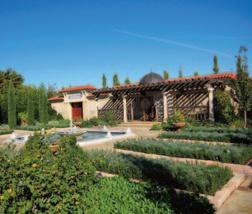

FEB 8 Gardens by the Bay, Singapore
FEB 15 Boyce Thompson Arboretum and the Desert Botanical Garden, Arizona
FEB 22 Missouri Botanical Garden, St. Louis
3-session series: Sun., Feb. 8, 15, and 22, 4 p.m.; detailed program information on website; CODE 1NV-BOT; Members $65; Nonmembers $90
Individual sessions: Sun., Feb. 8 (CODE 1NV-174); Sun., Feb. 15 (CODE 1NV-175); Sun., Feb. 22 (CODE 1NV-176); 4 p.m.; Members $25; Nonmembers $35

The search for planets outside our solar system has found more than 6,000 such worlds, known as exoplanets. Now the race is on to find Earth-sized temperate planets, understand their atmospheres, and discover any signs of life on them.
Learn how astronomers are carrying out this search and what they’ve been finding out along the way with Peter Plavchan, the NASA Landolt Space Mission’s principal investigator. He also discusses the NASA Landolt mission, slated for launch in 2029, and how it will improve our understanding of exoplanets.
Following the talk and a question-and-answer period, Rob Parks, director of the George Mason Observatory, brings the skies into your living room with remote control of the university observatory, weather permitting.
Fri., Feb. 20, 6:45 p.m.; CODE 1J0-524; Members $25; Nonmembers $35
This year promises to be a fantastic one for astronomers and stargazers alike. J. Kelly Beatty, senior editor at Sky & Telescope magazine, highlights exciting “what’s up?” celestial events in 2026. Beatty starts with the March 3 total lunar eclipse, the last one until 2028, which will be visible across the U.S. He also lets you know where and when to look for the five brightest planets—Mercury, Venus, Mars, Jupiter, and Saturn. And he gets you ready to see the Perseid meteor shower in August and the Geminids in December. Along the way he helps you track down the brightest stars of spring, summer, and fall.
Wed., Feb. 25, 6:45 p.m.; CODE 1J0-536; Members $20; Nonmembers $30
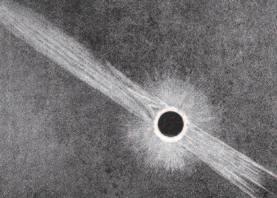
On a July afternoon in 1878, the moon’s shadow descended on the American West, darkening skies from the Montana Territory to Texas. This rare total solar eclipse prompted a clutch of enterprising scientists to brave the frontier in a grueling race to the Rocky Mountains. Drawing from his 2017 book American Eclipse, science journalist David Baron describes the jockeying that came to dominate late 19th-century American astronomy and the challenges faced by three of the most determined eclipse chasers: James Craig Watson, an asteroid hunter who fantasized about becoming a Gilded Age Galileo; Vassar astronomer Maria Mitchell, who fought to demonstrate that science and higher learning were not anathema to femininity; and young Thomas Edison, an irrepressible showman who braved the wilderness to prove himself to the scientific community.
Thurs., April 9, 6:45 p.m.; CODE 1K0-683; Members $25; Nonmembers $35
These programs are part of Smithsonian Associates

Naturalist and wildlife photographer Matt Felperin leads a visual journey across both coasts of Florida, among North America’s premier birding destinations. Explore the state’s range of habitats—from Gulf Coast estuaries and mangrove swamps to Atlantic beaches, wetlands, and inland prairies—and discover why more than 500 bird species have been recorded there.
Felperin showcases some of Florida’s top birding hotspots and parks that travelers can visit on their own, highlighting breeding species, wintering birds, and migrants that use the state as a critical stopover along the Atlantic Flyway. He also touches on memorable vagrants—unexpected visitors often pushed off course by storms or other weather events.
Florida’s distinctive specialties and endemics, including the Florida Scrub-Jay, Snail Kite, Limpkin, and Roseate Spoonbill, take center stage through Felperin’s photography and insights.
Wed., Feb. 25, 7 p.m.; CODE 1NV-177; Members $25; Nonmembers $35
Soundless but sentient, trees were absent for all but the last 10% of Earth’s history yet are essential to all air-breathing life on the planet today. They are the longest-living organisms on Earth, can communicate to one another through intricate underground soil networks, and even thermoregulate, all while rarely ever dying from old age.
Liana Vitali, a naturalist and educator at Jug Bay Wetlands Sanctuary in Maryland (and self-proclaimed tree-hugger), leads an immersive audiovisual journey into the fascinatingly complicated and connected life of trees—from their first tiny emergence through the topsoil as seedlings to their lasting value to forest life as fallen logs.
Thurs., March 5, 6:45 p.m.; CODE 1K0-673; Members $25; Nonmembers $35
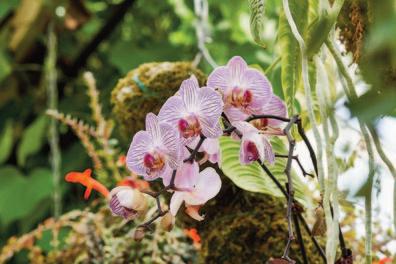

Learn about one of America’s favorite houseplants from orchid care expert Barbara Schmidt. She delves into the origins of our love for orchids, explains how they grow in their native environments, and provides beginner care instructions to keep your orchids blooming in your home. In a hands-on activity, repot a Phalaenopsis orchid, one of the easiest orchids to raise indoors.
Tues., March 3, 6:30 p.m.; CODE 1E0-ADL; Members $30; Nonmembers $40
These programs are part of Smithsonian Associates I N SI DE S C I ENCE
Read more about programs in this guide on our website. Search by code or date. Expanded program descriptions, presenters’ information, and more at SmithsonianAssociates.org.
Read more about programs in this guide on our website. Search by code or date. Expanded program descriptions, presenters’ information, and more at SmithsonianAssociates.org.
Insects began no more successful than spiders, millipedes, or centipedes. Their evolutionary breakthrough came with larvae—grubs, maggots, caterpillars—occupying niches distinct from adults. This innovation allowed more species to thrive in shared environments. Larvae specialized in rapid growth, efficiently converting food into biomass.
Yet vulnerability demanded inventive survival strategies. Evolution produced remarkable defenses: mimicry of snakes or alligators, complex social behaviors, and other adaptations. Emmy Award–winning filmmaker Steve Nicholls explores these extraordinary lives, their origins, and survival tactics. Some caterpillars are even deadly to humans, underscoring their evolutionary power.
Fri., March 6, 12 p.m.; CODE 1K0-677; Members $25; Nonmembers $35
A Naturalist’s Journey
The splendor of springtime in Washington is world-renowned, owing largely to the Japanese flowering cherry trees that have encircled the Tidal Basin for over a century. Yet the cherry blossoms are a single aspect of the city’s spectacular flowering spring—only one of the city’s vibrant seasons.
Tour guide, naturalist, and nature-book author Melanie Choukas-Bradley leads a virtual journey of seasonal transformation. Through beautiful photos captured across four seasons and her sensitive observations, she highlights beloved D.C.-area landmarks from downtown to suburban oases. She also shares thoughts of nature lovers who sojourned in the city, from presidents and politicians to naturalists.
Tues., March 10, 7 p.m.; CODE 1NV-178; Members $25; Nonmembers $35
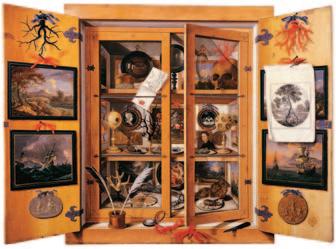

The Victorians prided themselves on their interest in technology and closely followed innovations in medicine and science. There was sometimes a fine line, however, between pseudo-science and academic knowledge and practices in the 19th century.
Historian Julie Taddeo examines such popular fads as mesmerism, phrenology, and spiritualism to show how broadly Victorians interpreted science and consumed it as entertainment. Their homes exhibited “trophies of empire”—exotic objects, artifacts, and specimens brought back from Britain’s colonies—in their cabinets of curiosities. Public shows featuring ethnographic exhibits and individuals with physical differences misused Darwin’s theories to justify imperial expansion and Britain’s “civilizing mission.” Even Queen Victoria followed the latest scientific sensations, while ordinary Britons used them to make sense of their uncertain world. From mummy unveilings to traveling “Zulu exhibitions,” science, empire, and entertainment were inextricably connected in the Victorian world.
Thurs., March 12, 6:45 p.m.; CODE 1K0-678; Members $25; Nonmembers $35
These programs are part of Smithsonian Associates
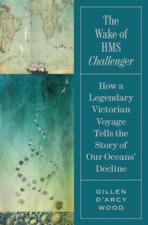
In December 1872, the HMS Challenger embarked on the first round-the-world oceanographic expedition. During the next 42 months, the naturalists on board identified major ocean currents and defining features of the seafloor; measured worldwide sea temperatures and chemistry, creating baseline data for ocean research; and collected nearly 5,000 sea creatures and plants new to science.
More than 150 years later, the expedition’s findings are also shining a light on the effects of climate change. Off Portugal, the scientists encountered a brilliant starfish now threatened with extinction by microplastics; in St. Thomas, they saw teeming coral habitats that today have been severely damaged by ocean warming. Author Gillen D’Arcy Wood considers this scientific odyssey and its legacy.
Wood’s new book, The Wake of HMS Challenger: How a Legendary Victorian Voyage Tells the Story of Our Oceans’ Decline (Princeton University Press), is available for purchase.
Thurs., March 12, 7 p.m.; CODE 1CV-081; Members $20; Nonmembers $30
Common bluetail, a widespread damselfly in Africa, the Middle East, and South and East Asia
The earliest flight evolved in insects, long before birds, pterosaurs, or bats took to the skies.
In fact, dragonflies and damselflies and their ancient relatives were the first to fly. Since then, over 400 million years of evolution have shaped the adaptations that support these insects’ aerial feats. While some use the power of flight to traverse the globe as long-distance migrants, others stay local, maneuvering around ponds, lakes, and rivers. Entomologist Jessica Ware explores the evolution of flight in dragonflies and damselflies, discussing the basis for their acrobatic and aerodynamic skills.
Thurs., March 26, 6:45 p.m.; CODE 1J0-532; Members $20; Nonmembers $30
A quirky 18th-century international dispute over natural history quickly took on political overtones. Thomas Jefferson wanted to refute the theory of French naturalist Georges-Louis Leclerc, the comte de Buffon, that all life in America was degenerate and weak, so he asked that a large dead moose be shipped to France. Jefferson believed that the giant moose would help demonstrate that a young America was every bit the equal of a well-established Europe.
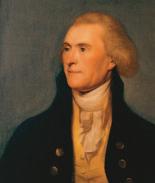
The theory, however, continued to have scientific, economic, and political implications for 100 years. Evolutionary biologist Lee Alan Dugatkin highlights this tale of both natural history and American history.
Thurs., April 16, 6:45 p.m.; CODE 1J0-534; Members $20; Nonmembers $30
These programs are part of Smithsonian Associates I N SI DE S C I ENCE
You love art. Now go deeper.
Art is all around us. It excites us, enriches our lives, and enlivens our imaginations. To truly appreciate any work of art, we need to understand the context and culture in which it was created. That’s why Smithsonian Associates offers a World Art History Certificate Program
The wide-ranging offerings are designed to provide a global perspective on art and architecture and draw on the Smithsonian’s world-class collections and the rich resources of other Washington institutions.

Look for World Art History Certificate throughout the program guide to see current listings. Get started today and complete the certificate requirements at your own pace. Registration is ongoing; Credits are counted from day of registration and are not given retroactively.
Unless noted, all programs are presented on Zoom; listed times are Eastern Time. Online registration is required.
Unless noted, all programs are presented on Zoom; listed times are Eastern Time. Online registration is required.
World Art History Certificate elective: Earn ½ credit for each
Elaine Ruffolo, a Florence-based Renaissance art historian, examines the rich heritage of Italian art and architecture
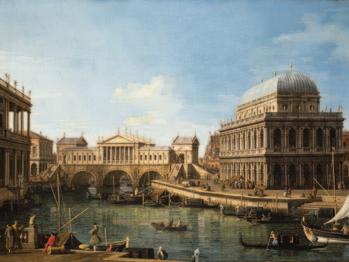
Renaissance Italian architect Andrea Palladio (1508–1580) is arguably the most influential architect in the Western world. Inspired by classical Roman architecture, he designed country villas, palaces, and churches for the nobility of the city of Vicenza that were known for their pleasing proportions, grace, and symmetry. He also left an indelible mark on Venice, introducing architecture designed along classical lines into a predominantly Byzantine-built environment.
Palladio’s neoclassical architectural language crossed borders and oceans, inspiring English country estates, shaping American civic buildings, and leaving its mark on the White House itself. Ruffolo explores Palladio’s life, works, and philosophy, revealing how a former stonemason came to shape the foundations of Western architecture.
Fri., Jan. 16, 12 p.m.; CODE 1D0-135; Members $25; Nonmembers $35
A crossroads of civilizations, Sicily has been shaped over millennia by Greeks, Romans, Byzantines, Arabs, and Normans, each leaving a distinctive mark on its art and architecture.
The Greeks introduced architectural innovations and philosophical ideas that laid the foundation of Sicilian culture. The Romans produced monumental structures and public works, while the Byzantine and Arab periods produced unique syntheses of style, merging a variety of traditions into forms of striking beauty. With the arrival of the Normans, Sicily achieved a remarkable fusion of artistic influences, giving rise to some of the most breathtaking churches, mosaics, and architectural achievements in the Mediterranean. Ruffolo leads a journey through this extraordinary artistic heritage.
Fri., Feb. 27, 12 p.m.; CODE 1D0-139; Members $25; Nonmembers $35
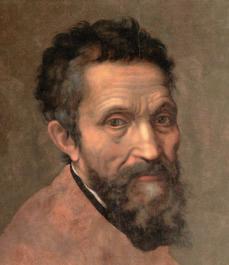
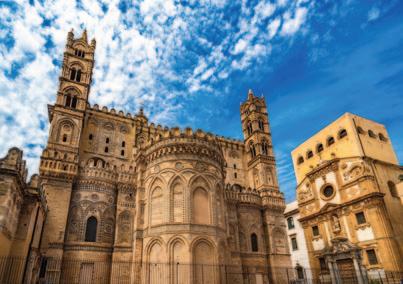
Celebrate Michelangelo’s 551st birthday by exploring the making of one of history’s most brilliant and complex artistic minds. Born on March 6, 1475, Michelangelo Buonarroti lived nearly 89 years, during which he transformed Western art through sculpture, painting, architecture, and poetry.
Many believed Michelangelo’s talent to be a miraculous product of divine genius—a myth the artist himself encouraged. Like all Renaissance apprentices, the young Michelangelo studied his craft by learning from masters, copying the ancients, and experimenting with materials and styles.
Ruffolo traces his journey from student to master, spanning his adolescence in the household of Lorenzo il Magnifico to the execution of his masterpiece, the “David,” completed when he was not yet 30 years old.
Fri., March 6, 12 p.m.; CODE 1D0-146; Members $25; Nonmembers $35
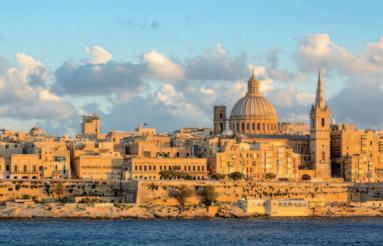
World Art History Certificate elective: Earn 1 credit
The Mediterranean island of Malta has a rich history that reaches back some 7,000 years, when Stone Age temple builders left structures, sculpture, and pottery that demonstrate feats in engineering and artworks of outstanding aesthetic beauty—a culture that thrived well before the pyramids of Egypt. The city of Valletta, a UNESCO World Heritage Site, was built by the Knights of St. John (Knights Hospitaller), who left behind palaces that today are used as museums, as well as a cathedral that houses works by Caravaggio.
Art historian Joseph Paul Cassar, who was born on Malta, surveys the island’s geography, history, and heritage through its prehistoric temples, outstanding Baroque architecture, and natural beauty; its connection to early Christianity; and its vibrant modern and contemporary art.
4-session series: Wed., Jan. 7–28, 10:30 a.m.; detailed program information on website; CODE 1K0-654; Members $100; Nonmembers $125
World Art History Certificate elective: Earn ½ credit
Best known for her mesmerizing wire sculptures that blur the line between drawing and sculpture, Ruth Asawa created a body of work that is deeply personal and universally resonant. A second-generation Japanese American, Asawa endured incarceration during World War II and emerged with a lifelong commitment to the transformative power of art and education. Influenced by mentors such as Josef Albers and Buckminster Fuller, she developed a visual language rooted in repetition, transparency, and organic form
Art historian Jennie Hirsh traces Asawa’s journey as an artist, activist, and educator, her impact on contemporary sculpture, and her role in reshaping American Modernism. In examining the artist’s life and work, she features the current retrospective at the Museum of Modern Art, which brings renewed critical attention to Asawa’s legacy.
Thurs., Jan. 8, 12 p.m.; CODE 1D0-134; Members $20; Nonmembers $30
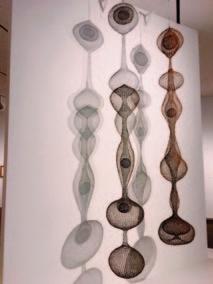
Art History Certificate elective: Earn 1/2 credit
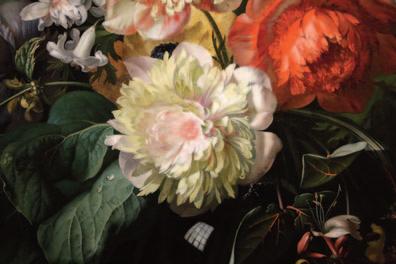
Organized to complement a landmark exhibition at the National Museum of Women in the Arts, this lecture by art historian Aneta Georgievska-Shine explores the extraordinary contributions of Dutch and Flemish women to the artistic culture of the 17th and early 18th centuries. From well-known painters like Judith Leyster and Rachel Ruysch to printmakers and sculptors whose names are less familiar, women were involved in every aspect of the art world of the Low Countries.
“Women Artists from Antwerp to Amsterdam, 1600–1750” is on view until Jan. 11, 2026, at the National Museum of Women in the Arts in Washington, D.C. The exhibition is organized in partnership with the Museum of Fine Arts in Ghent, Belgium. Fri., Jan. 9, 12 p.m.; CODE 1K0-674; Members $30; Nonmembers $45
Italy is a nation beloved by many for its layered history, artistic treasures, majestic landscapes, and renowned cuisine, all of which vary broadly from one region to the next. This variety is due in part to the fact that the Italian peninsula was once a mosaic of numerous smaller city-states, each of which added its own unique contributions to the cultural richness of the country, home to the highest concentration of UNESCO World Heritage Sites of any modern nation.
Art historian Sophia D’Addio of Columbia University, an expert in Italian Renaissance art and architecture, has traveled widely across the Italian peninsula over the past 20 years. In a series of illustrated talks, she explores a trio of distinctive regions of Italy, revealing their histories, mysteries, and pleasures.
Each session requires individual registration and carries ½ credit as a World Art History Certificate elective.
Venice’s Territories and Their Riches
The Veneto comprises the capital city of Venice, built on the waters of the lagoon, and many mainland cities including Padua, Vicenza, and Verona, all of which are important centers for art, culture, and history in the region. In the surrounding countryside visitors can explore elegant villas (including those designed by Renaissance architect Andrea Palladio) and viticulture, as winemaking is a major industry of the Veneto. Its range of microclimates allows for the cultivation of numerous varietals used to produce Prosecco, Soave, Valpolicella, and Amarone wines, among others.
Tues., Jan. 13, 6:30–8:15 p.m.; CODE 1M2-438; Members $30; Nonmembers $45
The Cultural Splendors of Milan and Beyond
Lombardy’s capital of Milan is one of the most cosmopolitan of the Italian peninsula, and the region is an important center for business, industry, media, fashion, design, and agricultural production, rendering it Italy’s wealthiest. It was also an important cultural center during the Renaissance—exemplified by Leonardo da Vinci’s contributions. Lombardy is filled with numerous other città d’arte, or cities with a high concentration of significant works of art, including Bergamo, Cremona, and Mantua, as well as the charming towns on Lake Como and the western coast of Lake Garda.
Tues., Feb. 10, 6:30–8:15 p.m.; CODE 1M2-439; Members $30; Nonmembers $45
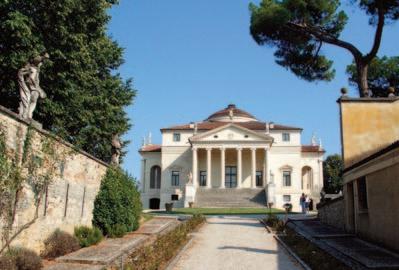
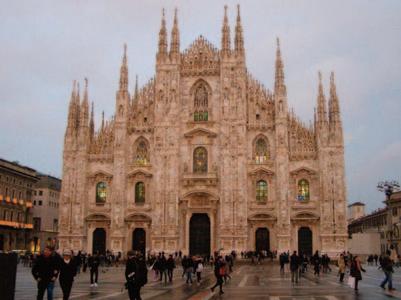
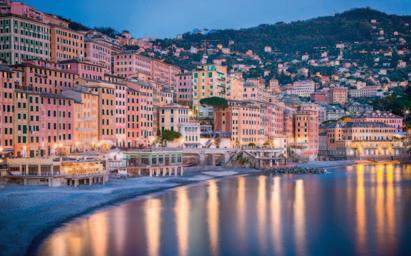
From Genoa’s Palazzi to the Riviera’s Timeless Charm
Liguria is best known for its idyllic seaside towns along the Italian Riviera, from such famed locales as Portofino and Rapallo to humbler fishing towns like Camogli. The capital city of the region, Genoa, was one of the major maritime powers of the Italian peninsula during the medieval, Renaissance, and Baroque periods, and there are many majestic monuments across the city that date from these eras. Genoa is also celebrated for its chief culinary achievement— pesto produced with locally grown basil, a simple yet flavorful delicacy.
Tues., March 10, 6:30–8:15 p.m.; CODE 1M2-440; Members $30; Nonmembers $45
World Art History Certificate elective: Earn ½ credit
Photography burst onto the scene in the mid-19th century and has since become one of the enduring forms of art. Art historian Matthew Palczynski traces the development of the earliest photo images with the introduction of the daguerreotype in 1839 and examines how Alfred Stieglitz and Edward Steichen championed for photography to become a recognized art medium in the first years of the 20th century. The Depression-era images of Dorothea Lange and Walker Evans documented the most destitute of the period, and their work profoundly impacted Americans’ understanding of that desperate time.
Palczynski examines some of the most notable Pulitzer Prize–winning photographs and examines the widespread role photography has played in the last 50 years.
Mon., Jan. 12, 6:30 p.m.; CODE 1H0-892; Members $30; Nonmembers $45

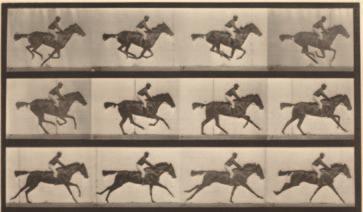
World Art History Certificate elective: Earn ½ credit
Beginning in the late 19th century, French artist Henri Rousseau (1844–1910) crafted a distinctive vision that brought a fresh, imaginative spirit to modern art. Rousseau’s lush jungle scenes and evocative landscapes bridged the gap between fantasy and reality, influencing a broad spectrum of artists and movements.
Barnes Foundation docent Joe Caliva leads a discussion of “Henri Rousseau: A Painter’s Secrets,” a special exhibition at the museum. Caliva delves into Rousseau’s career, highlighting how the artist often adapted his works to align with viewers’ tastes. He also explores the exhibition, which includes— for the first time in over a century—works from both art dealer Paul Guillaume’s collection that are typically housed at the Musée de l’Orangerie in Paris and Dr. Albert Barnes’ collection.
Wed., Jan. 14, 12 p.m.; CODE 1CV-076; Members $20; Nonmembers $30
Drawing on what is considered one of the greatest Post-Impressionist and early modern art collections in the world, Barnes Foundation educator Penny Hansen guides a series of online tours that examine in depth the paintings of eight artists who helped shape a revolutionary period in the history of art.
Using high-definition Deep Zoom technology developed by the Barnes, she leads participants through the Philadelphia museum’s galleries and provides remarkably close-up views of the canvases, revealing their paint surface, brushstrokes, and details in ways that bring the art and the artist vividly to life. All programs provide the chance to interact with Hansen in a Q&A session.
JAN 23 Cézanne
JAN 30 Matisse
FEB 6 Renoir
FEB 13 Modigliani and Soutine FEB 20 Van Gogh, Gauguin, and Seurat
5-session series: Fri., Jan. 23–Feb. 20, 12 p.m.; detailed program information on website; CODE 1NV-BAR; Members $125; Nonmembers $175
Individual sessions: Fri., Jan 23 (CODE 1NV-161); Fri., Jan. 30 (CODE 1NV-162); Fri., Feb. 6 (CODE 1NV-163); Fri., Feb. 13 (CODE 1NV-164); Fri., Feb. 20 (CODE 1NV-165); 12 p.m.; Members $30; Nonmembers $40

World Art History Certificate elective: Earn ½ credit each
Popular Smithsonian Associates speaker Paul Glenshaw returns to the Art + History series to look at great works of art in their historical context. He delves into the time of the artist and explores the present they inhabited and what shaped their vision and creations.
John Trumbull’s Declaration of Independence is an icon of American history reprinted millions of times in textbooks, commemorative posters, $2 bills, and much more. But is the painting accurate? What happened on July 4, 1776, and what event does the painting purport to show?
Like today’s movies “based on a true story,” Trumbull arranged the characters for maximum dramatic effect with Thomas Jefferson’s direct influence. Glenshaw presents two narratives in tandem: the story of the Declaration of Independence and the events preceding and directly after July 4 and how those events ultimately intersected with Trumbull’s multifaceted career.
Tues., Jan. 20, 6:45 p.m.; CODE 1K0-658; Members $25; Nonmembers $35
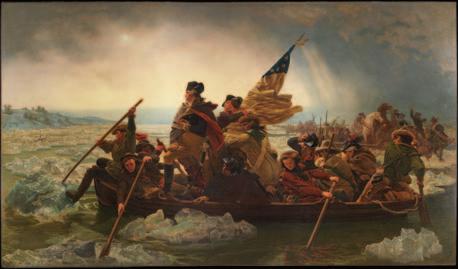
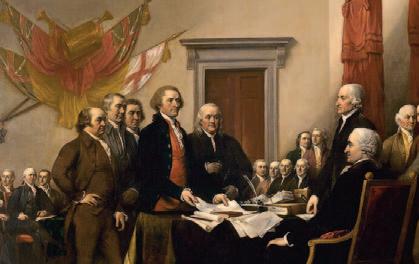
One of the most iconic and most reproduced images in American art, Washington Crossing the Delaware, has a surprising history. The most famous version is in the collection of the Metropolitan Museum of Art, but it’s not the original. Nor was it painted in the United States. The work was created in Germany, where the original was on display in Bremen before being destroyed in an Allied bombing raid in World War II.
What inspired Emanuel Leutze, who was raised in the United States, to paint the picture in Düsseldorf in 1851? Why is this crossing worthy of such an epic portrayal? How historically accurate is the painting? Glenshaw rolls back the clock to Germany in 1851 and Delaware in 1776 to find out.
Tues., Feb. 17, 6:45 p.m.; CODE 1K0-669; Members $25; Nonmembers $35
The African American soldiers of the Massachusetts 54th in Augustus Saint-Gaudens’ Shaw Memorial stride confidently toward battle for a cause they are willing to die for—freedom. Almost half the members of the regiment, including their white commanding officer, Col. Robert Gould Shaw, would be killed in the July 1863 attack on Fort Wagner, South Carolina. The original memorial stands in Boston Common, with a plaster version on display at the National Gallery. Saint-Gaudens took great pains to make sure each solider was a portrait. Who were the Massachusetts 54th and Shaw? What brought them together? How was the Civil War—and these soldiers in particular—being remembered in 1897 when the memorial was unveiled?
Tues., March 24, 6:45 p.m.; CODE 1K0-679; Members $25; Nonmembers $35
Creative Writing Inspired by Visual Art
Discover how visual art can inspire creative writing and how writing can offer a powerful way to experience art. Mary Hall Surface, the founding instructor of the National Gallery of Art’s Writing Salon, leads workshops that explore essential elements of writing and styles through close looking, word-sketching, and imaginative response to prompts.
The sessions spotlight a wide range of visual art chosen to inspire writers of all experience levels to deepen their process and practice. Each workshop has a limited enrollment to maximize interaction among the instructor and students.
FEB 3 Explore Place
FEB 4 Unveil Stories
FEB 5 Probe Perspective
MAR 3 First Person: Monologues and More
MAR 10 Collage and Poetry
MAR 17 Place and Perspective
3-session series: Tues., Feb. 3, Wed., Feb. 4, and Thurs., Feb. 5, 10 a.m.; detailed program information on website; CODE 1K0-665; Members $105; Nonmembers $125
3-session series: Tues., March 3, 10, and 17, 10 a.m.; detailed program information on website; CODE 1K0-685; Members $105; Nonmembers $125
Individual sessions: Tues., March 3 (CODE 1K0-686); Tues., March 10 (CODE 1K0-687); Tues., March 17 (CODE 1K0-688); 10 a.m.; Members $40; Nonmembers $50
Inspired by 19th-century French artist James Tissot’s painting Journey of the Magi and poetry across time, explore the notion of epiphany—those transformative moments in life that spark change and understanding.
Thurs., Jan. 8, 12 p.m.; CODE 1K0-663; Members $40; Nonmembers $50
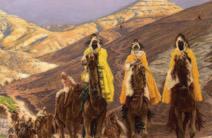
Inspired by 20th-century artist Georgia O’Keeffe’s paintings of the New Mexican desert, participants slow down, look closely, and reflect on the transformative power of place in our lives.
Tues., Feb. 24, 10 a.m.; CODE 1K0-670; Members $40; Nonmembers $50
Designed for writers of all levels, and for the curious, the reflective writing workshops led by Mary Hall Surface invite you to look outwardly at art and look inwardly through writing. These reflections can become creative fertile ground for memoir, poetry, and more.
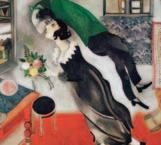
1915
Inspired by paintings of the visionary Belorussian-born French artist Marc Chagall and by poetry across time, participants slow down, look closely, and reflect to explore love as an animating force in their lives.
Fri., Feb. 13, 12 p.m.; CODE 1K0-664; Members $40; Nonmembers $50
In this workshop, participants explore the innovative compositions of the 20th-century Dutch printmaker M.C. Escher to discover how his interlocking forms and shifting patterns inspire creative reflection about the connections and transformations in our lives.
Wed., April 1, 10 a.m.; CODE 1K0-689; Members $40; Nonmembers $50
World Art History Certificate elective: Earn ½ credit for each
In this ongoing series, Renaissance art expert Rocky Ruggiero spotlights the significant collections of sometimes-overlooked museums and churches throughout Italy.
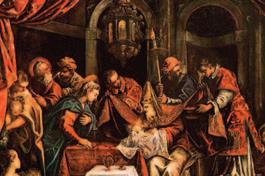
The Scuola Grande di San Rocco in Venice, situated next to the Church of San Rocco, is the seat of the religious society named for San Rocco established in 1478. Over the next decade, the scuola became the richest in the city, so its members decided to construct a monumental building and hire Tintoretto to decorate it. Ruggiero showcases several of the scuola’s more than 60 paintings, many done by Tintoretto and his workshop.
Wed., Jan. 14, 6:30 p.m.; CODE 1J0-514; Members $30; Nonmembers $45
Originally part of the residence of the Medici dynasty, the Palatine Gallery encompasses the entire second floor of the Pitti Palace in Florence, Italy. Its collection includes the largest concentration of paintings by Raphael in the world, as well as works by Titian, Tintoretto, Caravaggio, and Rubens. The paintings in their lavish frames entirely cover the walls. Ruggiero discusses the importance of this gallery and some of its most impressive works.
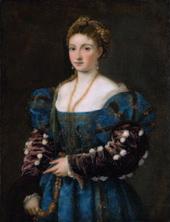
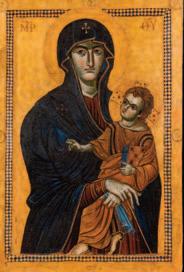
Santa Maria Maggiore is the largest Marian church in Rome and houses one of the most important icons of Mary, the Salus Populi Romani, traditionally attributed to Saint Luke the Evangelist, the patron saint of painters. Seven popes as well as Bernini are entombed in the basilica. Ruggiero highlights the importance of Santa Maria Maggiore through its history, architecture, and works of art.
Mon., Feb. 9, 6:30 p.m.; CODE 1J0-519; Members $30; Nonmembers $45
The Gallerie dell’Accademia in Venice contains a wealth of masterpieces of Venetian painting. The most notable piece in the collection, which is only rarely on display due to its fragile nature, is Leonardo da Vinci’s Vitruvian Man. The collection also includes works by Bellini, Carpaccio, Giorgione, Tintoretto, Titian, and Veronese. Ruggiero showcases gems from this treasure trove.
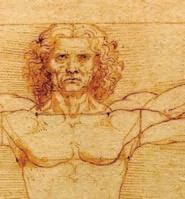
Mon., March 16, 6:30 p.m.; CODE 1J0-529; Members $30; Nonmembers $45
World Art History Certificate core course: Earn 1 credit
Mon., April 13, 6:30 p.m.; CODE 1J0-535; Members $30; Nonmembers $45
The ability to derive meaning from what is seen is an essential skill in a culture saturated with images. Much like other forms of communication, it is a way of making a statement—but visually, not verbally. Once this language is understood, reading images, particularly art, is simpler and more gratifying.
Using works from the history of art as well as images from popular culture, art historian Nancy G. Heller focuses on how art communicates, how to analyze and interpret it, and how it can be seen as a cultural product that reveals something about the society that produced it. Heller is professor emerita at the University of the Arts in Philadelphia.
4-session series: Mon., Jan. 26–Thurs., Jan. 29, 6:30 p.m.; detailed program information on website; CODE 1M2-428; Members $100; Nonmembers $125
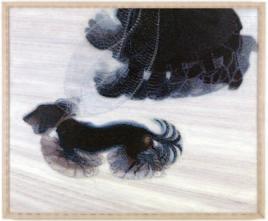
World Art History Certificate elective: Earn ½ credit
It’s no accident that the stunning art that fills St. Peter’s Basilica and the Sistine Chapel found a home within the confines of the Vatican walls. Artistic patronage was an important tool in a Renaissance pope’s arsenal, employed both to display power and to communicate and persuade.
Art historian Liz Lev looks at the connection between popes and art from the halcyon days of 15th-century Popes Sixtus IV and Julius II to the Enlightenment era, examining masterworks including the “Laocoön,” frescoes by Botticelli, and The Parnassus by Raphael, as well as the losses that took place along the way. She also considers the methods by which, despite vastly depleted financial resources, the papacy continues to sponsor and support the arts.
Fri., Jan. 30, 12 p.m.; CODE 1H0-890; Members $20; Nonmembers $30

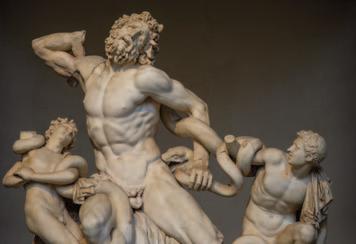
World Art History Certificate elective: Earn ½ credit
Few movements have defined a region’s identity as clearly as California Modernism. From the 1920s through the 1960s, architects, designers, and developers including Charles and Ray Eames, Joseph Eichler, Albert Frey, Pierre Koenig, John Lautner, Richard Neutra, and Rudolph Schindler transformed Los Angeles and its surroundings into a showcase of modern living. Using glass, steel, and concrete, they created homes, furnishings, and new perspectives on decorative schemes that embodied clarity, openness, and light.
Disseminated through architectural publications and immortalized by the lens of photographer Julius Shulman, California Modernism became more than a regional style—it became a symbol of innovation and elegance. Art historian Jennie Hirsh explores the architects and their training, influences, and legacy, tracing how a generation of visionaries reshaped the modern landscape of design across California and beyond.
Mon., Feb. 2, 6:45 p.m.; CODE 1D0-136; Members $20; Nonmembers $30
Secrets and Symbols in Art
World Art History Certificate elective: Earn ½ credit
The study of iconography—how symbols and allegories function in art—offers a way to understand masterpieces that have puzzled scholars for generations. In a series of programs, art historian Noah Charney reveals how decoding these visual cues can transform the way viewers interpret pre-modern Western art—turning enigmatic images into eloquent narratives.
When figures represent abstract concepts—such as justice, envy, or time—an artwork enters the world of allegory. Charney breaks down how allegories were constructed by artists, sometimes following conventions like those in Cesare Ripa’s book of symbols, Iconologia, and sometimes entirely original. He compares Titian’s relatively straightforward Allegory of Prudence with a brilliant and baffling painting by Bronzino, Allegory with Venus and Cupid, a complex riddle whose layers of eroticism, disease, deceit, and time have long fascinated scholars.
Mon., Feb. 2, 12 p.m.; CODE 1H0-897; Members $30; Nonmembers $45
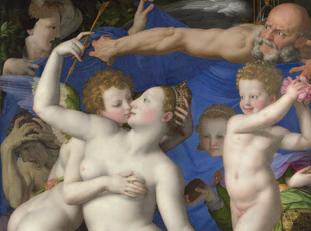
World Art History Certificate core course: Earn 1 credit
From the Greek “Dark Ages” to the Early Christian Period
Our modern world echoes and sometimes even replicates creative vestiges of the past—from the Arc de Triomphe in Paris to Wedgwood pottery, from the paintings of Pablo Picasso to the Washington Monument. One key to understanding our surroundings is through an overview of ancient material culture. Focusing on the Mediterranean region, art historian Renee Gondek surveys art from the Greek “Dark Ages” through the early Christian period of ancient Rome (ca. 11th century B.C.E. to the 4th century C.E.).
4-session series: Thurs., Feb. 5–26, 12 p.m.; detailed program information on website; CODE 1T0-054; Members $100; Nonmembers $125
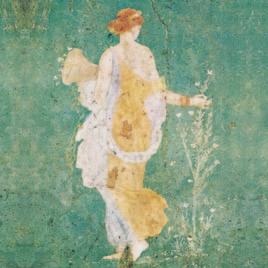
World Art History Certificate elective: Earn 1 credit

With the advent of the Jazz Age, the art world searched for modern forms and decorative motifs to reflect this exciting new era. They were found in bold geometric shapes such as chevrons, lozenges, zigzags, and sunbursts and in contemporary technology and materials. Drawing on a variety of historical sources, including ancient Egypt, the classical world, and Asian art, Art Deco soon reflected modern living, the machine age, and the skyscraper. Art historian Bonita Billman discusses this vibrant movement that used all major media, including glass, ceramics, metal, wood, textiles, paper, marble, and paint. In illustrated lectures, she highlights examples of Art Deco in architecture, furniture, interiors, fashions, advertisements, and films.
Sat., Feb. 7, 10 a.m.–4 p.m.; detailed program information on website; CODE 1M2-434; Members $100; Nonmembers $125
World Art History Certificate elective: Earn 1/2 credit
Deco Miami
Glamour, Tropical Modernism, and Preservation
Miami Beach boasts the world’s largest collection of Art Deco architecture— pastel-hued buildings with curves, glass block, and nautical motifs. Rooted in Streamline Moderne, this style embraced modernity and optimism. In the late 1920s, architects like Henry Hohauser and L. Murray Dixon tailored European Modernism to Florida’s climate, creating “Tropical Deco,” with Ocean Drive and Collins Avenue becoming showcases of American modern design.
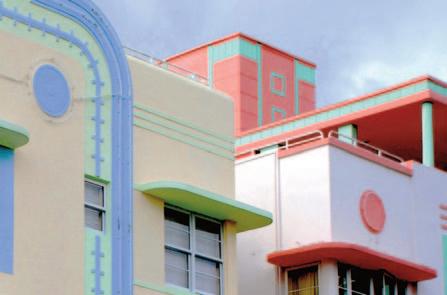
Urban historian Bill Keene traces the global rise of Art Deco and Miami’s unique evolution, spotlighting landmarks like the Colony Hotel, Carlyle Hotel, and Bass Museum. Postwar development and changing tastes led to decades of neglect, with many buildings threatened by demolition. But through preservation efforts, the Miami Art Deco District was officially designated a U.S. historic district in 1979, securing its legacy as a vibrant architectural treasure.
Tues., March 24, 7 p.m.; CODE 1NV-181; Members $25; Nonmembers $35
All Smithsonian Associates online programs are closed captioned
World Art History Certificate elective: Earn ½ credit Francis Bacon and Lucian Freud
Artistic Friends and Rivals
Art historian Aneta Georgievska-Shine explores the complex personal and artistic relationship between Francis Bacon and Lucian Freud—two key figures of postwar British art. Through a close look at their respective bodies of work, she traces how their intense mutual admiration fueled a competition that shaped their artistic trajectories.
She focuses on their early encounter, their shared fascination with the human figure, and their differing painterly approaches—Bacon’s expressive manner contrasted with Freud’s meticulous realism. She also discusses the artists’ mature years and the legacy of their intertwined careers. Wed., Feb. 11, 6:30 p.m.; CODE 1K0-660; Members $30; Nonmembers $45
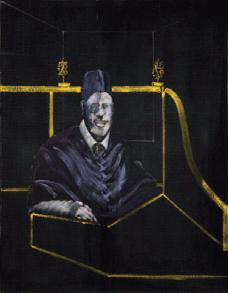
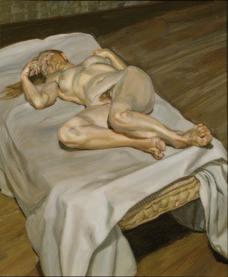
World Art History Certificate elective: Earn 1 credit
The Rebel Who Changed
Baroque Art
Michelangelo Merisi da Caravaggio, one of the most important and complex Baroque painters, revolutionized European painting with his stark naturalism and dramatic use of light and shadow. Notorious for his violent temper, culminating in exile after a fatal brawl, he was both criticized and admired in his time.
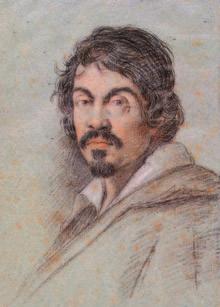
Art historian Joseph Paul Cassar takes a close look at Caravaggio’s life and the stylistic innovations and thematic complexity that made his paintings both celebrated and controversial.
4-session series: Wed., Feb. 18–March 11, 10:30 a.m.; detailed program information on website; CODE 1K0-672; Members $100; Nonmembers $125
World Art History Certificate elective: Earn 1 credit
Turkey, which stretches between the borders of Greece and Iran, possesses one of the world’s most fascinating histories and richest cultural heritages. It is at once both Eastern and Western, ancient and modern, Christian and Islamic, sensual and austere.
A seminar led by independent scholar Nigel McGilchrist pays tribute to this complexity, celebrating the dramatic beauty of Turkey’s landscapes and its wealth of historic monuments and archaeological treasures. He offers an appreciation of the myriad things associated with the country—from its coffee, rugs, and Turkish baths to its exquisite ceramics and magnificent architecture.
Sat., Feb. 21, 10 a.m.–4 p.m.; detailed program information on website; CODE 1M2-437; Members $100; Nonmembers $125
All Smithsonian Associates online programs are closed captioned

Smithsonian Associates’ Digital Digest is a lively monthly e-newsletter filled with information about programs and experiences that are entertaining, informative, eclectic, and insightful. Be sure to see the current issue at: smithsonianassociates.org/digital-digest

World Art History Certificate elective: Earn ½ credit
The Modern Era Begins
In mid-19th-century France, the important political, philosophical, economic, and cultural changes sweeping through Europe weren’t lost on that nation’s artists. Many painters rejected idealized classicism and romanticism, dominant in European art since the late 1700s, and began creating art that reflected what they saw around them in the modern world.
This style, championed by the controversial Gustave Courbet among others, became known as Realism. It focused on ordinary individuals engaged in seemingly mundane activities, forcing Salon audiences to view the lives of poor, working-class individuals.
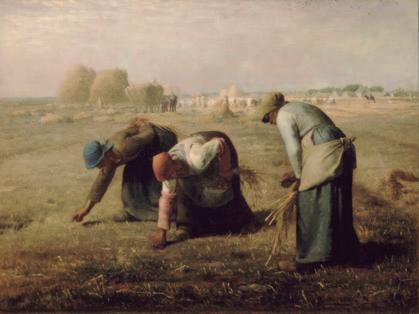
Art historian Nancy G. Heller examines the evolution, significance, and later influence of French Realism. She goes beyond France to consider Realism’s emergence in Germany, Italy, and especially the United States, where it informed the work of Thomas Eakins and members of what came to be known as the Ashcan School.
Tues., Feb. 24, 6:30 p.m.; CODE 1M2-441; Members $30; Nonmembers $45
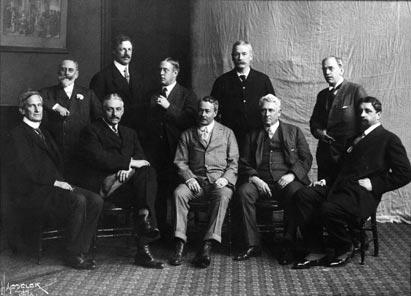
World Art History Certificate core course: Earn 1 credit
In the last quarter of the 19th century, American art students studying in Paris were deeply influenced by the work of the founding French Impressionists. Many returned to the United States to exhibit and teach the tenets of their style. A group of American Impressionists exhibited together for 20 years as “The Ten American Painters” or “The Ten.”
By the time of their last exhibition in 1918, the world had changed due to World War I, the formation of the Ashcan School of Painters, and the Armory Show. Modern European art became much more abstract, and Impressionism was now viewed as passé. Art historian Bonita Billman examines the defining style, subjects, and masterpieces of American Impressionists.
4-session series: Mon., March 2–23, 12 p.m.; detailed program information on website; CODE 1M2-443; Members $100; Nonmembers $125
World Art History Certificate elective: Earn ½ credit
Found in every region of the globe, embroidery is one of the most widely shared forms of creative expression—and one of the most varied. Gillian Vogelsang-Eastwood, director of the Textile Research Centre in Leiden, the Netherlands, guides audiences through this rich tapestry, from the quillwork and birch boxes of Indigenous North America to the matyó embroidery of Hungary, the intricate zardozi of India, and the elegant satin stitches of Han Dynasty China. She explores the materials, tools, designs, and symbolic meanings of embroidery, as well as the communities and individual makers who sustain these traditions.
Her book The Atlas of World Embroidery: A Global Exploration of Heritage and Styles (Princeton University Press) is available for purchase.
Tues., March 10, 12 p.m.; CODE 1D0-144; Members $20; Nonmembers $30
World Art History Certificate elective: Earn 1/2 credit
Toward the end of his long and prolific career, Claude Monet, one of France’s masters of Impressionism, created his enchanting Water Lilies series inspired by the ponds at his home in Giverny.
Monet’s intention for painting the luminous large-scale works was to provide an “asylum of peaceful meditation.” However, the calm and beauty of the paintings belie the personal turmoil, frustration, and anguish Monet endured in the last 15 years of his life: the deaths of his wife and eldest son, increasingly cloudy vision, and the horrors of the First World War. Despite these travails, he turned to his art once again—and continued until his death in 1926.
Author Ross King explores these celebrated paintings as he brings to life the extraordinary accomplishment of Monet’s later years.
Tues., March 17, 12 p.m.; CODE 1H0-899; Members $20; Nonmembers $30
World Art History Certificate elective: Earn 1/2 credit
A Fresh Look at Giotto, Dante, and Humanism in Art
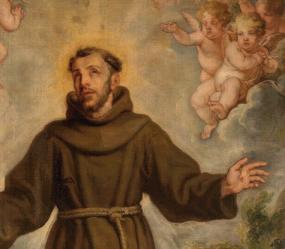
Historically the beginning of the Renaissance has been tied to the rediscovery of antiquity as the primary driver of the era’s artistic revolution. However, art historian Liz Lev proposes that it was the result of the new mendicant orders, which emphasized the human elements of the Gospel narrative and whose members committed to a vow of poverty.
Saint Francis of Assisi, founder of the Franciscans, demonstrated profound holiness, and when his “story went viral,” it inspired others including Giotto, Italy’s foremost painter, and Dante, its greatest poet. They reformed art to celebrate the human condition with its quirks, foibles, and heroic journeys.
Interweaving The Divine Comedy with frescoes from the Upper Basilica of Assisi and the Scrovegni Chapel in Padua, Lev argues Renaissance art was propelled more by spirituality than pagan ideals.
Fri., March 20, 12 p.m.; CODE 1H0-898; Members $20; Nonmembers $30
World Art History Certificate elective: Earn ½ credit
For centuries, the central Italian region of Abruzzo has quietly preserved some of Italy’s most exquisite and symbolic goldsmithing traditions. From the richly detailed presentosa, a star-shaped pendant given as a love token, to the intricate filigree work worn by women as markers of social status and regional identity, Abruzzese jewelry is more than adornment—it is a living chronicle of history, devotion, and craftsmanship.
Cultural historian Viviana Altieri, executive director of Istituto Mondo Italiano in Pittsburgh, explores the origins, meanings, and social significance of traditional gold jewelry from Abruzzo. Highlighting images of heirloom pieces, she traces how these ornaments reflect evolving customs, women’s roles, and the cultural pride of an often-overlooked mountainous region.
Wed., March 25, 6:30 p.m.; CODE 1M2-445; Members $25; Nonmembers $35
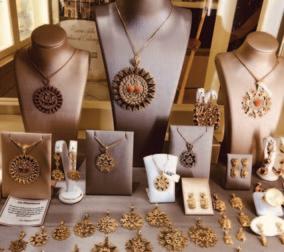
World Art History Certificate elective: Earn 1/2 credit
From the classical villas of ancient Rome to the landscaped estates of the Renaissance, artists and patrons have long sought to bring sculpture into dialogue with nature. The modern sculpture garden emerged in the mid20th century, when museums and collectors began creating outdoor settings designed for large-scale contemporary works—inviting visitors to experience art as part of the living landscape.
Art historian Jennie Hirsh traces the history and vision behind three of the world’s most inspiring contemporary sculpture gardens: Storm King Art Center in upstate New York, Glenstone Museum in Potomac, Maryland, and Château La Coste near Aix-en-Provence. These sites reveal how artists and architects continue to redefine the possibilities of sculpture, scale, and place—and the interplay between art and landscape.
Fri., March 27, 12 p.m.; CODE 1D0-141; Members $20; Nonmembers $30
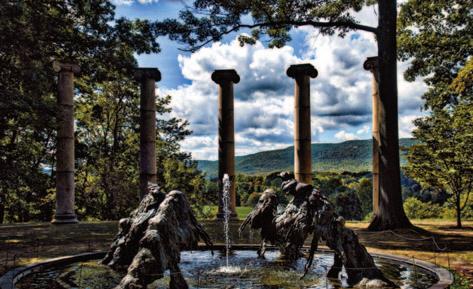
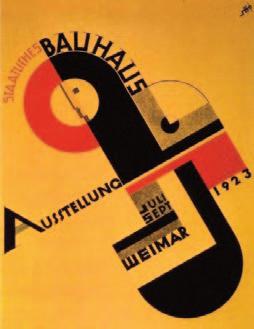
World Art History Certificate elective: Earn 1 credit
The Bauhaus, founded in 1919 in Weimar, Germany, by the young architect Walter Gropius, was part Modernist school of art and design and part dream factory. Its approach was a blend of practical work and theoretical teaching. Students were taught in workshops led by both craftsmen and artists and the curriculum included everything from fine art, typography, and graphic design to interior design and architecture.
Art historian Joseph Paul Cassar explores the importance and enduring influence of the Bauhaus, covering its origin and aims, unity of art and technology, teachers, and legacy.
4-session series: Wed., April 8–29, 10:30 a.m.; detailed program information on website; CODE 1K0-682; Members $100; Nonmembers $125
World Art History Certificate elective: Earn 1 credit
Gothic Grandeur
Soaring spires, glittering stained-glass windows, and sculpted figures that seem to breathe with life are the hallmarks of Gothic art, which transformed cathedrals, churches, and civic spaces across medieval Europe.
Beginning in the mid-12th century, the thick stone walls and small windows of Romanesque buildings gave way to soaring walls of unprecedented height, supported by innovations such as pointed arches and flying buttresses. Enormous stained-glass windows filled interiors with luminous scenes that instructed, adorned, and transformed sacred spaces. Gothic style extended its expressive reach from architecture to sculpture and painting, where figures conveyed human emotion with remarkable naturalism.
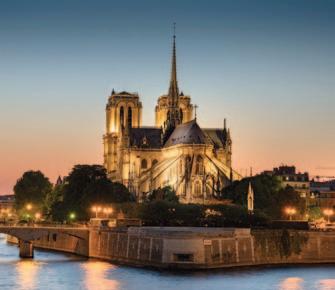
Art historian Janetta Rebold Benton, author of Art of the Middle Ages, explores this extraordinary period. 2-session series: Sat., April 11 and 18, 1 p.m.; detailed program information on website; CODE 1D0-145; Members $90; Nonmembers $110
Art Journaling for Self-Expression
INSTRUCTOR: Carter Umhau
IN PERSON: Wed., Jan. 14–Feb. 18, 10:30 a.m.; Ripley Center; CODE 1E0-ADN; Members $190; Nonmembers $225
ONLINE IN PERSON
Hues in Harmony
Color Mixing and Maximizing Your Palette
INSTRUCTOR: Nick Cruz Velleman
ONLINE: Tues., Jan. 13–Feb. 10, 10 a.m.; CODE 1E0-AFN; Members $190; Nonmembers $225
IN PERSON
Beginning Drawing
INSTRUCTOR: George Tkabladze
IN PERSON: Tues., Jan. 13–March 3, 10:30 a.m.; Ripley Center; CODE 1E0-ADW; Members $275; Nonmembers $310
By George Tkabladze
Intermediate Drawing
INSTRUCTOR: George Tkabladze
IN PERSON: Tues., Jan. 13–March 3, 2 p.m.; Ripley Center; CODE 1E0-ADV; Members $280; Nonmembers $315
Figure Drawing
INSTRUCTOR: Shahin Talishkhan
IN PERSON: Sun., Jan. 18–March 8, 2:15 p.m.; Ripley Center; CODE 1E0-AFY; Members $275; Nonmembers $310
Illuminating Positivity Transforming Inspirational Words into Art
INSTRUCTOR: Renee Sandell
NEW ONLINE DATES: Wed., Jan. 21–Feb. 18, 3 p.m.; CODE 1E0-AFS; Members $215; Nonmembers $240
Color Theory and Practice
INSTRUCTOR: Theresa Otteson
ONLINE: Wed., Jan. 14–Feb. 4, 6:30 p.m.; CODE 1E0-AGN; Members $165; Nonmembers $190
Creative Mind Mapping
INSTRUCTOR: Mïa Vollkommer
ONLINE: Thurs., Jan. 15 and 22, 7 p.m.; CODE 1E0-AFE; Members $80; Nonmembers $105
NEW CLASS
Introduction to Figure Drawing
Visual Journaling: Creativity Workout
INSTRUCTOR: Renee Sandell
TWO ONLINE OPTIONS: Sat., Jan. 31, 1 p.m. (CODE 1E0-AFT); Sat., March 7, 1 p.m. (CODE 1E0-AFU); Members $80; Nonmembers $95
Painting in the Key of Color
A Streamlined Approach to Color in Painting
INSTRUCTOR: Nick Cruz Velleman
ONLINE: Sat., March 7, 10 a.m.; CODE 1E0AFP; Members $60; Nonmembers $75
This six-session course is an introduction to live figure drawing. Working with charcoal and graphite on paper, become familiar with classical formats for figure drawing sessions.
INSTRUCTOR: Tom Kim
IN PERSON: Wed., Jan. 14–Feb. 25, 10:30 a.m., no class Feb. 18; Ripley Center; CODE 1E0-AGP; Members $210; Nonmembers $245
World Art History Certificate elective: Earn ½ credit
The Mark of van Gogh
INSTRUCTOR: Nick Cruz Velleman
ONLINE: Wed., Jan. 14–Feb. 11, 10 a.m.; CODE 1E0-AFR; Members $185; Nonmembers $220
Drawing Birds from Around the World
INSTRUCTOR: Marcie Wolf-Hubbard ONLINE: Wed., Jan. 14–Feb. 4, 1:30 p.m.; CODE 1E0-AFD; Members $155; Nonmembers $180
Shadows First
An Alternative Approach to Drawing Portraits
INSTRUCTOR: Nick Cruz Velleman ONLINE: Thurs., Jan. 15–Feb. 5, 10 a.m.; CODE 1E0-AFQ; Members $155; Nonmembers $180
Intermediate Drawing
INSTRUCTOR: Josh Highter
ONLINE: Thurs., Jan. 15–March 5, 10:30 a.m.; CODE 1E0-AEK; Members $275; Nonmembers $310
Creating with Chalk Pastels
INSTRUCTOR: Lori VanKirk Schue
ONLINE: Thurs., Jan. 15 and 22, 1 p.m.; CODE 1E0-AET; Members $95; Nonmembers $120
World Art History Certificate elective: Earn ½ credit
Drawing Light and How the Masters Did It
INSTRUCTOR: Nick Cruz Velleman
ONLINE: Sun., Jan. 18–Feb. 15, 10 a.m.; CODE 1E0AFL; Members $185; Nonmembers $220
Beginning Drawing
INSTRUCTOR: Josh Highter
ONLINE: Sun., Jan. 18–March 8, 10:30 a.m.; CODE 1E0-AEJ; Members $270; Nonmembers $305
INSTRUCTOR: Mike O’Brien
ONLINE: Wed., Jan. 21, 6:15 p.m.; CODE 1E0AFJ; Members $60; Nonmembers $75
NEW CLASSES
Get an introduction to works of Degas, Renoir, Cassatt, and other masters of pastel. Instruction in a variety of techniques helps you on your way to an inspired pastel art adventure.
INSTRUCTOR: Lori VanKirk Schue
ONLINE: Thurs., Jan. 29, 1 p.m.; CODE 1E0-AEX; Members $55; Nonmembers $70
Drawing with pen and ink is a versatile and inexpensive way to create art. Learn a variety of techniques in the medium, from hatching to washes.
INSTRUCTOR: Lori VanKirk Schue
ONLINE: Thurs., Feb. 5 and 12, 1 p.m.; CODE 1E0-AEU; Members $95; Nonmembers $120
NEW CLASS
Drawing Techniques Composition and Abstraction
INSTRUCTOR: Desarae Lee
ONLINE: Thurs., Jan. 22 and 29, 7:30 p.m.; CODE 1E0-ADR; Members $90; Nonmembers $115
Digital Drawing Advanced Techniques
INSTRUCTOR: Mike O’Brien
ONLINE: Wed., Feb. 25, 6 p.m.; CODE 1E0AFK; Members $60; Nonmembers $75
In this Masters and Mediums class, meet Botticelli, Michelangelo, Watteau, and other masters of trois crayon art and learn techniques that help you on your way to inspired three-chalk art.
INSTRUCTOR: Lori VanKirk Schue
ONLINE: Thurs., Feb. 26, 1 p.m.; CODE 1E0AEV; Members $55; Nonmembers $70
Studio Arts classes are taught by professional artists and teachers. View detailed class descriptions and supply lists at SmithsonianAssociates.org/studio
Painting from Photographs
Begin your watercolor portrait journey stress-free as you study photographs of well-known sculptures to practice monochromatic portraits and then build up to painting a portrait of your choice.
INSTRUCTOR: Sharon McKittrick Boyle
IN PERSON: Tues., Jan. 13–March 3, 10:30 a.m.; Ripley Center; CODE 1E0-AGD; Members $250; Nonmembers $285
INSTRUCTOR: Theresa Otteson
ONLINE: Thurs., Jan. 15–Feb. 5, 6:45 p.m.; CODE 1E0-AGM; Members $165; Nonmembers $190
Principles of Abstraction
INSTRUCTOR: Shahin Talishkhan
ONLINE: Tues., Jan. 20–Feb. 24, 6:15 p.m.; CODE 1E0-AFW; Members $240; Nonmembers $275
Romare Bearden−Inspired Compositions
Exploring Mixed Media Techniques
INSTRUCTOR: Sandra Gobar IN PERSON: Sun., Feb. 1–22, 11 a.m.; Ripley Center; CODE 1E0-AFV; Members $150; Nonmembers $175
Find out what masterpieces you can create with paper, paint, and scissors. Explore a multitude of possibilities using an assortment of handmade and found papers alongside acrylic paints and inks.
INSTRUCTOR: Sharon Robinson
IN PERSON: Sat., Jan. 17–Feb. 28, 1 p.m., no class Feb. 7; Ripley Center; CODE 1E0-AGG; Members $160; Nonmembers $185
By Sharon Robinson
INSTRUCTOR: Eric Westbrook
ONLINE: Wed., Jan. 28–March 4, 7 p.m.; CODE 1E0-ADT; Members $225; Nonmembers $260
Watercolor Journaling: Quick-Sketch for a Day
INSTRUCTOR: Cindy Briggs
ONLINE: Sat., Feb. 21, 10 a.m.; CODE 1E0ADQ; Members $160; Nonmembers $185
From Frustration to Flow Harnessing Wet Techniques in Watercolor
INSTRUCTOR: Nick Cruz Velleman
ONLINE: Sat., Feb. 28, 10:30 a.m.; CODE 1E0-AFM; Members $60; Nonmembers $75
Explore the charm and versatility of the accordion book form—perfect for storytelling, journaling, or simply experimenting with imagery. Using a mix of techniques, work with watercolors, acrylics, and other materials to bring your pages to life.
INSTRUCTOR: Marcie Wolf-Hubbard
ONLINE: Mon., Feb. 2 and 9, 1 p.m.; CODE 1E0-AFC; Members $85; Nonmembers $110
This class prepares you to create your next mixedmedia masterpiece. The techniques you learn can be applied to a variety of subject matter, styles, and surfaces to create your own artistic statement.
INSTRUCTOR: Jean Pederson
ONLINE: Sat., Feb. 7–28, 1 p.m.; CODE 1E0-AEB; Members $145; Nonmembers $170
INSTRUCTOR: Kate Lewis
ONLINE: Tues., Feb. 10–24, 10:30 a.m.; CODE 1E0-AEM; Members $165; Nonmembers $190

INSTRUCTOR: Marcie Wolf-Hubbard
ONLINE: Wed., Feb. 11–March 4, 1:30 p.m.; CODE 1E0-AFA; Members $145; Nonmembers $170
This class provides a wealth of imagery and ideas for executing your own photomontage. Take this opportunity to walk down the path of surrealism, political commentary, or any other subjects of your choosing.
INSTRUCTOR: Sharon Robinson
ONLINE: Tues., Feb. 17–March 3, 6:45 p.m.; CODE 1E0-AGE; Members $130; Nonmembers $155
INSTRUCTOR: Ann Richards
IN PERSON: Tues., Jan. 20–Feb. 24, 2 p.m.; Ripley Center; CODE 1E0-ADH; Members $165; Nonmembers $200 IN PERSON
In this six-session course, students who have the basics down review knitting vocabulary and fundamentals, then move on to cables, lace, circular knitting, reading charts, double stitching, and avoiding and fixing mistakes.
INSTRUCTOR: Ann Richards
IN PERSON: Tues., Jan. 20–Feb. 24, 6:30 p.m.; Ripley Center; CODE 1E0-ADJ; Members $145; Nonmembers $180
Learn the basics of hand embroidery, including how to best thread your needle, prepare your hoop, and begin stitching. You also learn about different types of embroidery thread, fabric, needles, and hoops.
INSTRUCTOR: Heather Kerley
IN PERSON: Sat., March 7, 10:15 a.m.; Ripley Center; CODE 1E0-ADX; Members $70; Nonmembers $85

Studio Arts classes are taught by professional artists and teachers. View detailed class descriptions and supply lists at SmithsonianAssociates.org/studio
The teacher introduces students to works of Matisse, Bearden, Braque, and other masters of collage. Learn a variety of techniques that help you on your way to creating inspired collage art.
INSTRUCTOR: Lori VanKirk Schue
ONLINE: Thurs., Feb. 19, 1 p.m.; CODE 1E0-AEW; Members $55; Nonmembers $70

INSTRUCTOR: Heather Kerley
ONLINE: Wed., Jan. 14–Feb. 18, 12 p.m.; CODE 1E0-AEA; Members $160; Nonmembers $195
Quilting Together
A Virtual Open Studio with Expert Guidance for Your Quilt Project
INSTRUCTOR: Lauren Kingsland
ONLINE: Sat., Jan. 17–Feb. 7, 11 a.m.; CODE 1E0-AES; Members $145; Nonmembers $170
Back-to-Basics Knitting Boot Camp
INSTRUCTOR: Ann Richards
ONLINE: Sat., Jan. 17 and 24, 12:15 p.m.; CODE 1E0-ADG; Members $80; Nonmembers $95
Mind-Body Centering Through Art and Handwork
INSTRUCTOR: Lauren Kingsland
ONLINE: Sun., Feb. 8–22, 3 p.m.; CODE 1E0-AER; Members $115; Nonmembers $140
Slow Stitch Fabric Journal
INSTRUCTOR: Heather Kerley
ONLINE: Tues., Feb. 10–March 3, 12 p.m.; CODE 1E0-ADY; Members $135; Nonmembers $160
Raw Edge Piecing and Appliqué
INSTRUCTOR: Lauren Kingsland
ONLINE: Tues., Feb. 17–March 3, 11 a.m.; CODE 1E0-AEQ; Members $115; Nonmembers $140 ONLINE
n n n n
INSTRUCTOR: Sharon Robinson
IN PERSON: Tues., Jan. 13–Feb. 3, 6:30 p.m.; Ripley Center; CODE 1E0-AGF; Members $140; Nonmembers $165 IN PERSON
ONLINE
Introduction to Italic Hand Calligraphy
INSTRUCTOR: Sharmila Karamchandani
ONLINE: Sat., Jan. 17–Feb. 7, 1:30 p.m.; CODE 1E0AGB; Members $145; Nonmembers $170
Introduction to White-Line Woodblock Printing
INSTRUCTOR: Sue Fierston
ONLINE: Sat., Jan. 24, 10 a.m.; CODE 1E0-AGJ; Members $80; Nonmembers $95

of Printing
INSTRUCTOR: Sue Fierston
ONLINE: Sun., Jan. 25, 10 a.m.; CODE 1E0-AGH; Members $80; Nonmembers $95
Carve and Create Learning to Love Linocuts
INSTRUCTOR: Kathy Beachler
ONLINE: Mon., Jan. 26–Feb. 23, 6:45 p.m., no class Feb. 16; CODE 1E0-AEN; Members $150; Nonmembers $175
Floral Design
INSTRUCTOR: Arrin Sutliff

ONLINE: Wed., Jan. 28–March 4, 7:30 p.m.; CODE 1E0-ADK; Members $160; Nonmembers $195
Wrap, weave, hammer, and bend your way to a new set of wire-working skills. Students are introduced to a variety of step-above-basic wire-working tools as well as household items that can be used to shape wire-based projects.
INSTRUCTOR: Mïa Vollkommer
ONLINE: Sat., Jan. 17–31, 12 p.m.; CODE 1E0-AFH; Members $145; Nonmembers $170
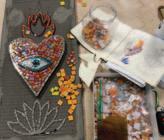

This workshop offers a comprehensive introduction to the art of mosaics that lets you build a strong foundation in materials, tools, and fabrication techniques.
INSTRUCTOR: Bonnie Fitzgerald
ONLINE: Tues., Feb. 3–17, 6:30 p.m.; CODE 1E0-ADM; Members $145; Nonmembers $170
Be both stylish and sustainable with a brooch you create from upcycled materials. The project takes the form of a wearable diorama made with an aluminum can, beads, wire, and any small special object that can be placed inside.
INSTRUCTOR: Mïa Vollkommer
ONLINE: Sat., Feb. 7, 11 a.m.; CODE 1E0-AFG; Members $125; Nonmembers $150


Connect with natural elements such as branches, leaves, and rocks as you explore a range of printmaking techniques including monoprints using both acrylic and gel plates, carved linocuts, and striking blue cyanotypes.
INSTRUCTOR: Kathy Beachler
ONLINE: Thurs., Feb. 19–March 5, 6:45 p.m.; CODE 1E0AEP; Members $125; Nonmembers $150
Bead Weaving Circles, Triangles, and Squares
INSTRUCTOR: Mïa Vollkommer
ONLINE: Sat., Feb. 21–March 7, 12 p.m.; CODE 1E0-AFF; Members $145; Nonmembers $170
White-Line Woodblock Printing Advancing Your Techniques
INSTRUCTOR: Sue Fierston
ONLINE: Sat., Feb. 28, 10 a.m.; CODE 1E0AGK; Members $80; Nonmembers $95
Studio Arts classes are taught by professional artists and teachers. View detailed class descriptions and supply lists at SmithsonianAssociates.org/studio
n n n n
Introduction to Photography
INSTRUCTOR: Andargé Asfaw
TWO IN-PERSON OPTIONS: Tues., Jan. 13–March
3, 3 p.m. (CODE 1E0-ADF); Tues., Jan. 13–March
3, 6:30 p.m. (CODE 1E0-ADE); Ripley Center; Members $250; Nonmembers $285
On-Location Photography
INSTRUCTOR: Joe Yablonsky
IN PERSON: Sun., Jan. 25–March 8, 1:45 p.m., no class Feb. 15; Ripley Center; CODE 1E0-AEF; Members $205; Nonmembers $240
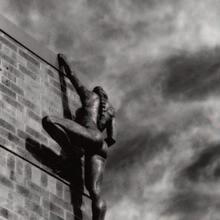
Indoor Macro Photography
INSTRUCTOR: Joe Yablonsky
ONLINE: Thurs., Jan. 15 and 22, 6:30 p.m.; CODE 1E0-AEE; Members $90; Nonmembers $115
Photography Next Steps: The Personal Project
INSTRUCTOR: Patricia Howard
ONLINE: Sat., Jan. 24–Feb. 14, 12 p.m.; CODE 1E0AGQ; Members $135; Nonmembers $160

Exploring classic winter scenes, strategize the best techniques to capture the season’s unique qualities. Then go outside and use what you’ve learned to take photos to share for review.
INSTRUCTOR: Joe Yablonsky
ONLINE: Thurs., Jan. 29 and Feb. 5, 6:30 p.m.; CODE 1E0-AEG; Members $90; Nonmembers $115


The technology of the new generation of mirrorless cameras can be overwhelming. Learn how to approach using your new DSLR camera, take it out for a photo shoot, and share your images for review.
INSTRUCTOR: Joe Yablonsky
ONLINE: Thurs., Feb. 12 and 19, 6:30 p.m., CODE 1E0AEH; Members $90; Nonmembers $115
Learn about using old school cameras, developing film, and creating images. Topics covered include inexpensive cameras, filters, film, and the developing and printing process.
INSTRUCTOR: Joe Yablonsky
ONLINE: Thurs., Feb. 26 and March 5, 6:30 p.m.; CODE 1E0-AED; Members $90; Nonmembers $115
Figure Sculpture
INSTRUCTOR: George Tkabladze IN PERSON: Tues., Jan. 13–March 3, 6 p.m.; Ripley Center; CODE 1E0-ADU; Members $315; Nonmembers $350
Small Sculptures in Wood
INSTRUCTOR: Jeremiah Gallay IN PERSON: Sun., Jan. 18–Feb. 22, 10:15 a.m., Ripley Center; CODE 1E0-AEC; Members $195; Nonmembers $230
3D Constructions in Mixed Media
Explore new approaches to artmaking while experimenting with a wide range of subjects. Start with quick sketches to refine your ideas, then build your work through layers of wet and dry media.
INSTRUCTOR: Marcie Wolf-Hubbard
ONLINE: Wed., Jan. 28–March 4, 6:45 p.m.; CODE 1E0-AFB; Members $165; Nonmembers $200
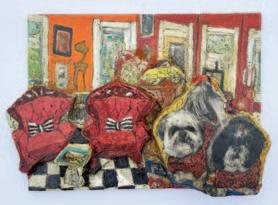
Note: All tour dates and content are subject to change.
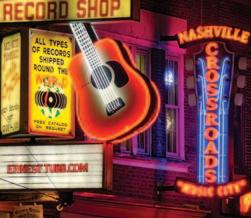
The Road to Nashville
Sun., March 15–Thurs., March 19 (on sale, see p. 54)
Trace the roots of country music from Bristol to Nashville with insider access to legendary venues like the Ryman Auditorium, Grand Ole Opry, and Johnny Cash Museum. A perfect blend of music history, Southern flavor, and cultural landmarks.
Leader: Richard Selden
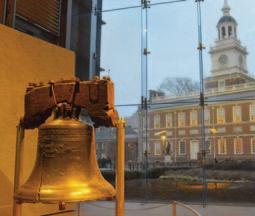
Revolutionary Philadelphia
Sat., April 18–Sun., April 19 (on sale, see p. 55)
America’s former capital city and its outskirts provide the backdrop to explore the stories, sacrifices, and enduring spirit that forged a nation’s pursuit of freedom and democracy.
Leader: Denver Brunsman
Associates’ study tours are designed for people who want more than just a getaway: They offer one-of-a-kind experiences combined with opportunities to gain new insights into the topics that fascinate you. Whether you’re a fan of history, art, music, nature, or architecture— or simply love exploring new places—these expert-led excursions offer a year’s worth of tempting travels.
New adventures that visit Newport, Rhode Island, St. Louis, and Boston have been added. By popular demand, several favorite destinations return to the schedule, including Arizona, Staten Island, and Buffalo, offering another chance to join these adventures before they sell out again.
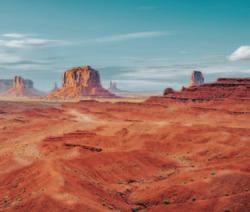
Outdoor Arizona
Sat., April 25–Thurs., April 30 (on sale, see p. 56)
From the desert gardens to the red rocks of Sedona, the northern mountains to the depths of the Grand Canyon, this six-day adventure offers trailblazing outdoor enthusiasts days filled with activity and scenic beauty.
Leader: Wayne Ranney
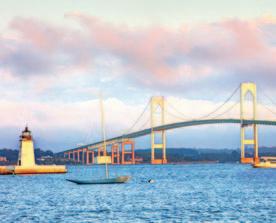
Sun., May 3–Thurs., May 7 (on sale, see p. 57)
Newport, Rhode Island, is the charming coastal city where historic mansions, scenic cliff walks, and a vibrant harbor await. Discover a rich maritime heritage and Gilded Age elegance on this five-day spring tour.
Leader: Fred Zilian
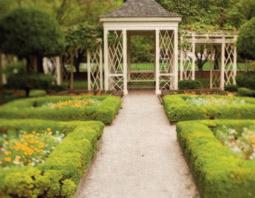
Pennsylvania Gardens
Wed., May 20–Thurs., May 21 (on sale, see p. 57)
Discover the beauty of spring in the Philadelphia region with a two-day tour featuring rare exclusive access to a pair of private estates in peak bloom, complemented by visits to two world-class public gardens.
Leader: Chelsea Mahaffey
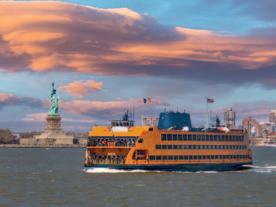
Staten Island
Sun., June 7–Mon., June 8 (on sale Feb. 1)
New York’s often-overlooked borough is packed with hidden gems and surprising treasures. Explore sites including the stunning Tibetan art museum and historic 19th-century Sailors’ Snug Harbor and take a ride on the Staten Island Ferry. And of course, savor some of the best local eats along the way.
Leader: Richard Selden

Artful Weekend in NYC
Sat., Aug. 22–Sun., Aug. 23
(on sale May 1)
An overnight escape to Manhattan that holds three art museums and an evening on your own in the city is the perfect late-summer retreat.
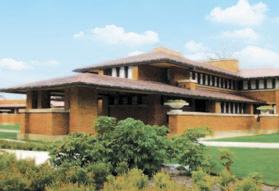
Wed., Aug. 19–Sun., Aug. 23 (on sale April 1)
In the early 20th century, Frank Lloyd Wright and his contemporaries turned Buffalo into a showcase for some of the most dazzling and innovative public and private architecture. A five-day tour surveys this rich heritage.
Leader: Bill Keene
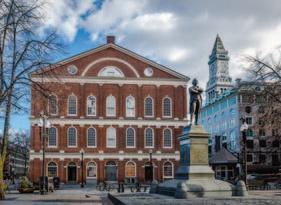
September 2026 (on sale May 1)
Boston is where history comes alive along the Freedom Trail and at legendary Revolutionary War landmarks. Mark America’s 250th anniversary year in the city where the fight for independence began.
Leader: Fred Zilian
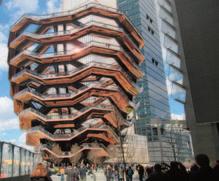
Sun., Sept. 13–Mon., Sept. 14 (on sale May 1)
Experience how New York transforms its past into the future with a tour of repurposed railways, reimagined waterfronts, and cutting-edge architecture—from the High Line and Little Island to Hudson Yards, the Vessel, and the Edge—culminating in a skyline architecture cruise.
Leader: Bill Keene
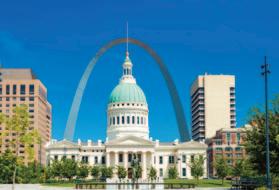
Louis Up Close
Sept. 2026 (on sale May 1)
Step into the heart of America for a three-day, in-depth exploration where history echoes through landmarks from the soaring Gateway Arch to the vibrant neighborhoods shaped by immigration, innovation, and art. Uncover stories of exploration, civil rights, world fairs, and artistic triumphs that continue to shape the city's soul.
Sun., Oct. 4–Mon., Oct. 5 (on sale June 1)
Explore the serene autumn landscapes of New York City’s most storied cemeteries on this two-day journey from Washington, D.C. From Green-Wood’s winding Victorian paths to Woodlawn’s grand mausoleums, uncover the legacies of artists, innovators, and notables laid to rest in these breathtaking outdoor museums.

Theodore Roosevelt’s North Dakota
Sat., Oct. 10–Wed., Oct. 14 (on sale April 1)
Fly west and experience the wild beauty of the Dakota Territory that shaped young Theodore Roosevelt’s course as a conservationist and naturalist. Follow the future president’s steps in these landscapes—filled with dramatic vistas, vividly colored canyons, and wandering herds of wild bison.
Leader: Melanie Choukas-Bradley

Scenic Shenandoah: Staunton, Shakespeare, and Steam
Sat., Oct. 17–Sun., Oct. 18 (on sale June 1)
The beauty and culture of Virginia’s Shenandoah Valley unfold as you ride the Virginia Scenic Railway, enjoy a performance at the American Shakespeare Center’s Blackfriars Playhouse, and wander through historic Staunton.
Leader: Lynn O’Connell
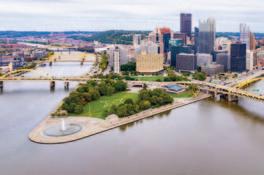
Sun., Nov. 8–Tues., Nov. 10 (on sale June 1)
Art and culture take center stage during three days of discovery in the Steel City. Dive into the vibrant scene with a visit to the 59th Carnegie International exhibition, the Andy Warhol Museum, the lively National Aviary, and the bustling Strip District.
Leader: Richard Selden
Smithsonian Associates expert-led Study Tours offer one-of-a-kind in-person experiences. They’re the perfect way to learn more about the places and topics that fascinate you, and you’re sure to discover plenty of new favorites along the way.
World Art History Certificate elective: Earn 1/2 credit
The Walters Art Museum and the Baltimore Museum of Art
Baltimore is a destination for art lovers, boasting world-class collections. Beat the winter blues and immerse yourself in the warmth of creativity at two of Baltimore’s cultural gems: the Walters Art Museum and the Baltimore Museum of Art.
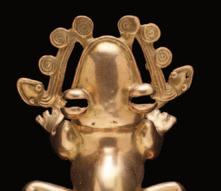
Begin at the Walters, whose collection spans more than seven millennia, from 5000 B.C.E. to the 21st century. A special tour of the “Latin American Art/Arte Latinoamericano” exhibition is led by curator Ellen Hoobler. The exhibition presents more than 200 artworks from the museum’s expansive collection of art from South, Central, and North America and the Caribbean in one contiguous space for the first time in the museum’s history. An educator-led tour explores the history of the museum’s collection and some of its newly acquired works.
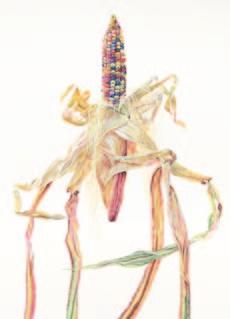
After lunch at a local restaurant, continue to the Baltimore Museum of Art, whose collections encompass 19th-century, modern, and contemporary art. The renowned Cone Collection is the museum’s crown jewel and focus of a docent-led tour. In the early 20th century, Baltimore sisters Claribel and Etta Cone forged close relationships with artists like Matisse and Picasso, ultimately amassing a collection of nearly 3,000 objects, including 500 works by Matisse. Once displayed in their Baltimore apartments, this collection now offers a deep look into the works. Free time is given to explore the special exhibition “Amy Sherald: American Sublime.” The exhibition tells the story of Sherald’s vision and practice through approximately 40 paintings, from early, rarely seen works to her renowned, larger-than-life portraits of Black Americans in everyday moments.
Fri., Feb. 13, 8:30 a.m.–6:30 p.m.; by bus; detailed tour information on website; CODE 1CD-006; Members $191; Nonmembers $255
Whether it’s the memory of a grandparent’s backyard garden or a beloved family recipe that starts with a homegrown herb or vegetable, our personal, cultural, and horticultural traditions help shape how we garden. A celebration of gardening origin stories inspires the theme of this year’s Philadelphia Flower Show, “Rooted: Origins of American Gardening,” and is captured by creative designers of floral arrangements, lush gardens, and landscapes for visitors from around the world. Experience memories and magnificence in a day spent at the show.
Started in 1829 by the Pennsylvania Horticultural Society, the show is both the nation’s largest and the world’s longest-running horticultural event, known for acres of beautiful displays. In addition, the 2026 Philadelphia Flower Show explores the traditions, practices, and personal journeys that shape our relationship with plants. Sustainable plant varieties and garden and design concepts are introduced at the show. It also offers horticulture and artistic floral arranging competitions, gardening presentations, lectures, demonstrations, and special events.
Horticulturist Chelsea Mahaffey leads the tour. A gourmet box lunch is provided. Participants purchase their own supper before departure in the evening.
Fri., March 6, 9 a.m.–8:30 p.m.; by bus; detailed tour information on website; CODE 1CD-004; Members $199; Nonmembers $260

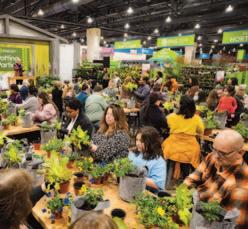
Discover the deep-rooted and multifaceted history of Jewish life in the nation’s capital during a tour of key landmarks and institutions led by Carolyn Muraskin, founder of DC Design Tours. The day begins at the Capital Jewish Museum, where visitors gain a comprehensive introduction to Jewish life in the city from the 18th century to the present day. A guided walking tour of the historic 7th Street corridor, once a bustling center of Jewish-owned businesses, offers insight into the enterprising spirit that helped shape the neighborhood. Enjoy a stop for lunch at Loeb’s NY Deli, a classic Jewish deli.
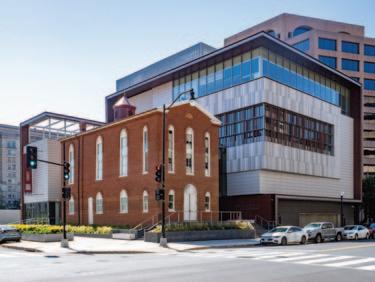
Capital Jewish Museum
The tour continues past the Albert Einstein Memorial at the National Academy of Sciences and the Oscar Straus Memorial, commemorating the first Jewish member of a U.S. presidential cabinet and a champion of religious liberty. At the historic Sixth & I Synagogue, explore one of the city’s oldest Jewish houses of worship, now a vibrant hub for spiritual and cultural events.
Ride through Southwest Washington, including a brief stop at Arena Stage, co-founded by pioneering theater director Zelda Fichandler, whose progressive vision helped shape modern American theater. A visit to the Museum of American Jewish Military History rounds out an illuminating look at Jewish life and its legacy in Washington’s historic corridors.
Thurs., March 12, 9 a.m.–5:30 p.m.; by bus; detailed tour information on website; CODE 1ND-002; Members $197; Nonmembers $260
Read more about programs in this guide on our website. Search by code or date. Expanded program descriptions, presenters’ information, and more at SmithsonianAssociates.org.
Montgomery Meigs is best known as the quartermaster general of the Union Army who played a key role during the Civil War. Less known, however, is that he also was an engineer, architect, inventor, patron of the arts, and regent of the Smithsonian. Delve into his life and legacy as you enjoy a full day of history and architecture with the Washington, D.C., area as your backdrop.
As an engineer, Meigs was responsible for the construction of the dome of the U.S. Capitol and the design and construction of the aqueduct bringing water to Washington. As an architect, he developed the original concept for the Smithsonian Arts and Industries Building and oversaw the design and construction of what is now the National Building Museum as well as numerous military buildings, including one that remains at Fort Myer. Meigs held 13 patents for his inventions. In addition, he was a patron of the arts and a member of the National Academy of Sciences and the American Philosophical Society.
The tour visits the Arts and Industries Building, the National Building Museum, Battleground National Cemetery, Fort Stevens, and the Commissary Sergeant’s Quarters at Fort Myer in Virginia. You also view other buildings and works by Meigs. Lunch is at a local restaurant. Bill Keene, a lecturer in history, urban studies, and architecture, leads the tour.
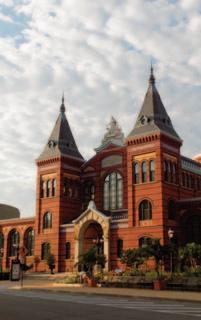
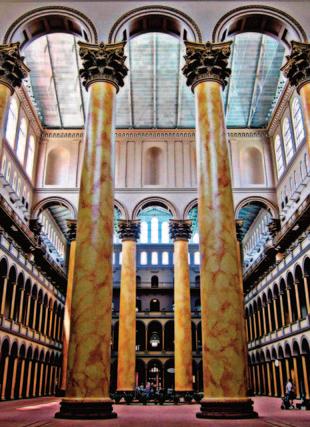
Fri., March 27, 8:30 a.m.–5:30 p.m.; by bus; detailed tour information on website; CODE 1CD-005; Members $184; Nonmembers $245; Photo ID is required for this program. Related program: Soldier, Engineer, Architect, Scientist, Patriot, p. 13
The capital of Tennessee and of country music, Nashville is a 21st-century boom town, a cultural melting pot that attracts residents from across the nation and around the world. If the Ken Burns documentary Country Music sparked an appetite to learn more about the form’s roots and influences, this tour led by arts journalist Richard Selden offers the perfect way to do it. Several key locations featured in the film are part of the itinerary.
The 5-day tour follows the road to Nashville through the twin cities of Bristol, Virginia, and Bristol, Tennessee, home of the Birthplace of Country Music Museum, with a stop at the Patsy Cline Historic House in Winchester, Virginia, on the return trip.
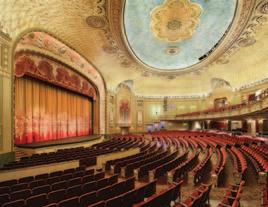
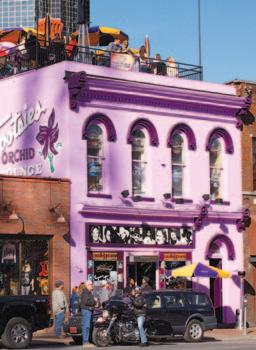
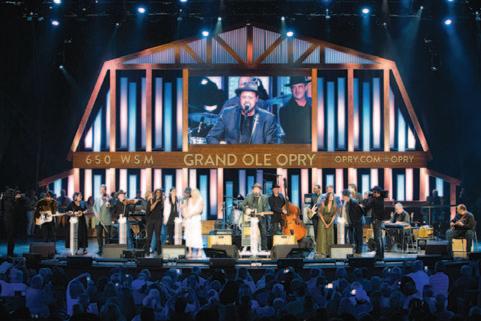
In Nashville, visit the Country Music Hall of Fame and Museum and enjoy a performance at the Grand Ole Opry from the best seats in the house. Explore beyond the music scene with a driving tour of the city’s architectural landmarks that includes the Tennessee State Capitol and Downtown Presbyterian Church, both by 19th-century architect William Strickland, and the Parthenon replica in Centennial Park. And it wouldn’t be a trip to Nashville without sampling both the traditional Southern food and contemporary cuisine for which the city is noted.
The group stays two nights in Nashville and one each in Bristol and Roanoke. The tour departs from Washington, D.C.
Sun., March 15, 8 a.m.–Thurs., March 19, 6 p.m.; by bus; detailed tour information on website; CODE 1NN-NAS; Members $2,234; Nonmembers $2,610
Other highlights of this one-of-a-kind visit include:
• A backstage tour of the Ryman Auditorium, dubbed the “Mother Church of Country Music”
• Access to the Opry’s exclusive Circle Room lounge before and during the show, where you can sample bites from some of Nashville’s favorite restaurants, enjoy complimentary drinks, meet one of the evening’s performers, and receive a commemorative photo to take home
• A driving tour along Lower Broadway, home of landmarks including the Ernest Tubb Record Shop and Tootsies Orchid Lounge, the legendary honky-tonk that’s a country music institution
• A visit to the Johnny Cash Museum, displaying a comprehensive collection of Man in Black memorabilia
• A group experience at Hatch Show Print, a working letterpress print shop founded in 1879 that has produced iconic posters for the Grand Ole Opry, fairs, circuses, and musical acts
• A visit to the Tennessee Theatre in Knoxville, the 1928 movie palace that helped launch the career of fiddler Roy Acuff
Read more about programs in this guide on our website. Search by code or date. Expanded program descriptions, presenters’ information, and more at SmithsonianAssociates.org.
Enjoy a morning walk on a natural oasis in the Potomac River with Melanie Choukas-Bradley, the author of Finding Solace at Theodore Roosevelt Island. The nearly 2-mile path follows Theodore Roosevelt Island’s shore and moves deep into the swamp and tidal inlet along the boardwalk where willows, bald cypresses, and cattails frame views of Washington, D.C.
Choukas-Bradley shares an overview of the landscape’s fascinating mix of trees, wildflowers, birds, and other wildlife and highlights the island’s history and the legacy of the naturalist and conservationist president it memorializes. The morning also includes pauses for moments of guided forest bathing to quietly soak up the beauty of this wild island near the capital city.
NEW DATES: Wed., April 8 (CODE 1CW-A04); Thurs., April 9 (CODE 1CW-B04); Fri., April 10 (CODE 1CWB06) 8:30–11:30 a.m.; detailed tour information on website; Members $60; Nonmembers $75
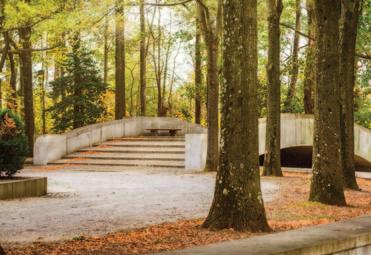
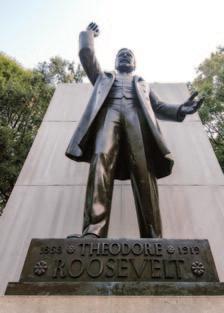
Founded in 1682, Philadelphia has long stood at the heart of American history and culture. As the meeting place of the First and Second Continental Congresses and the nation’s temporary capital, the city played a defining role in the fight for independence and the founding of the United States. Not far from the city lies Valley Forge, where 12,000 Continental soldiers under George Washington’s command endured the brutal winter of 1777–1778, a turning point in America’s struggle for freedom. Join historian Denver Brunsman for a two-day exploration of Philadelphia and its Revolutionary legacy.
Begin in Old City at the Museum of the American Revolution. A guided tour brings to life the experiences of soldiers, women, African Americans, Native Americans, children, and others whose lives were transformed by the war for independence. Enjoy a lunch-and-learn session with museum educators discussing Philadelphia during the revolution.
Inside Independence Hall, a National Park Service ranger leads you through the Assembly Room, where the Continental Congress declared independence in 1776 and the U.S. Constitution was debated and signed in 1787. Look for the Rising Sun Chair, which George Washington sat in as he presided over the Constitutional Convention.
Just blocks away, tour the Powel House, home of Samuel and Elizabeth Powel. Their soirées drew many of the era’s leading figures, including Washington. Elizabeth Powel—educated, insightful, and politically astute—became one of Washington’s closest confidants before, during, and after his presidency.
Continue to Christ Church, attended by many of the revolution’s most notable participants, including Washington, Benjamin Franklin, and Betsy Ross. Then visit Christ Church Burial Ground, where Franklin and the Powels rest among other prominent Philadelphians. Dinner is at Moshulu, a four-masted tall ship docked at Penn’s Landing, which formerly spent decades transporting cargo across the globe.
A morning walking tour through Old City immerses you in colonial history, winding along cobblestone streets such as Elfreth’s Alley, one of the oldest continuously inhabited residential streets in the United States. Conclude at Valley Forge National Historical Park, where the Continental Army transformed from a struggling militia into a disciplined fighting force. On a guided driving tour, trace the hardships and triumphs of the 6-month encampment that proved pivotal to America’s independence. Visit Muhlenberg’s Brigade, where regiments led by Brig. Gen. Peter Muhlenberg built their huts during the encampment, and Washington’s Headquarters, the stone house where George and Martha Washington, Alexander Hamilton, and other members of Washington’s “military family” lived.
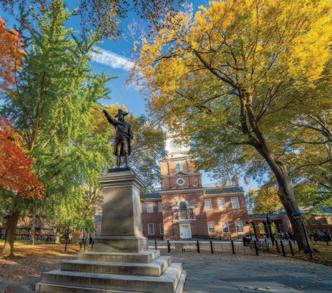
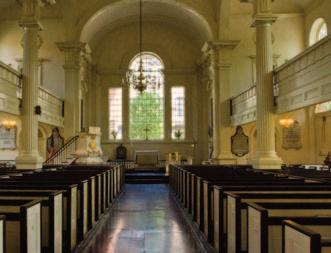
Sat., April 18, 7:15 a.m.–Sun., April 19, 9 p.m.; by bus; detailed tour information on website; CODE 1CN-PHL; Members $716; Nonmembers $960
Geology, Architecture, and Natural Beauty
Meet in Arizona and embark on a springtime exploration of some of the Grand Canyon State’s best-known sites (as well as hidden gems) that highlight its rich ecology, geology, stunning landscapes, and architectural masterworks. Wayne Ranney, a geologic educator, author, lecturer, and trail and river guide, leads the outdoor adventure.
DAY 1: Participants arrive in Phoenix. The tour opens with a welcome orientation and dinner at the hotel.
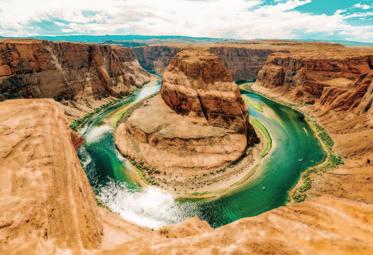

DAY 2: Start your Arizona explorations at Boyce Thompson Arboretum, the state’s oldest and largest botanical garden, set in a beautiful natural environment along Queen Creek Canyon in the Sonoran desert. Next, uncover the genius of Frank Lloyd Wright at Taliesin West. On a guided tour, learn about the innovative designs and philosophies that define this architectural masterpiece set against a desert backdrop.
DAY 3: Delve into geology and history in Sedona, where red-rock formations and vibrant landscapes inspire awe. Take a Jeep tour into the canyons; view the hilltop chapel inspired by Frank Lloyd Wright; travel scenic route 89A; and enjoy free time for lunch in the culinary mecca of Sedona. Move on to Flagstaff, your home base for the next three nights.
DAY 4: Travel to the Grand Canyon’s South Rim and set off on a 3-mile walk along the scenic Rim Trail with your study leader. Learn about the canyon’s formation and the unique ecosystems that thrive here and spend some free time at the visitor’s center. End the day with dinner in the park.
DAY 5: Visit Antelope Canyon X, known for its breathtaking light beams and swirling sandstone formations. This slot canyon is on Navajo land steeped in cultural significance. A guided tour includes insights into the nation’s traditions and the geology of the area. Stop at Horseshoe Bend, formed over thousands of years through erosion of the Colorado River, showcasing both natural beauty and geolog ical processes at work.
DAY 6: After a visit to Flagstaff’s Museum of Northern Arizona, share your tour experiences over a farewell meal at a local restaurant, followed by a transfer to the Phoenix airport for your flight home.
Sat., April 25, 6 p.m.–Thurs., April 30, 4 p.m.; detailed tour information on website; CODE 1NN-ARZ; Members $2,581; Nonmembers $3,300
NOTE: Flights are not included; participants make independent flight arrangements to Phoenix.

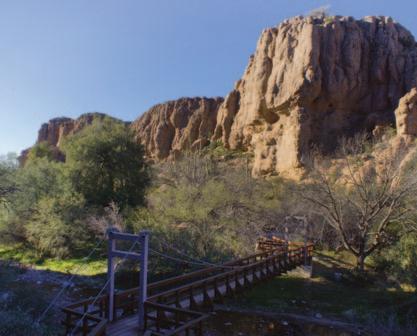
Colonial Roots to Gilded Grandeur
Newport, Rhode Island, is one of America’s earliest colonial seaports and a cradle of both freedom and fortune. Founded in 1639, Newport flourished as a center of trade, religious tolerance, and revolutionary thought before transforming into the summer playground of America’s elite during the Gilded Age. Participants in a 5-day tour led by historian and guide Fred Zilian discover Newport’s layered history—from its cobblestone colonial streets and harborfront wharves to its grand seaside mansions that stand as monuments to an era of opulence and innovation.
Highlights of the tour include self-guided visits to four Newport mansions: The Breakers, the grand palatial residence of the Vanderbilts; The Elms, inspired by an 18th-century French château; Marble House, a dazzling symbol of wealth and artistry; and Rough Point and estate gardens, the eclectic home of heiress Doris Duke.
Connect with Newport’s natural splendor on the Cliff Walk, a trail where the rugged Atlantic shoreline meets the manicured lawns of magnificent estates, offering sweeping views that capture Newport’s blend of wild beauty and refined elegance. Experience the coastline from a different perspective aboard a harbor cruise and take in some of Newport’s most recognizable lighthouses.
Beyond the mansions, immerse yourself in Newport’s colonial roots during a guided walking tour led by the study leader, exploring the city’s historic streets. A guided visit to the International Tennis Hall of Fame, housed in the 19th-century Newport Casino, celebrates a beloved American pastime.
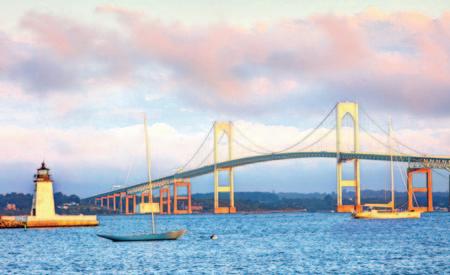
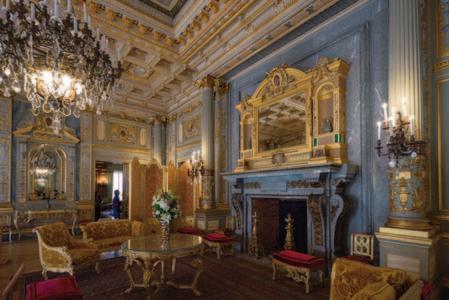
And during an evening at Newport Vineyards you’ll enjoy a tour of the winery and a tasting, followed by a farm-to-table buffet dinner.
Sun., May 3, 6 p.m.–Thurs., May 7, 3:30 p.m.; detailed tour information on website; CODE 1CN-NEW; Members $1,943 Nonmembers $2,590
Read more about programs in this guide on our website. Search by code or date.
Expanded program descriptions, presenters’ information, and more at SmithsonianAssociates.org.
Celebrate spring blooms with two days devoted to garden artistry. At Chanticleer—often called the most beautiful garden in America—discover a living masterpiece of horticultural imagination, where inventive plant combinations, bold color, and joy abound. Continue to Stoneleigh: A Natural Garden, a former Gilded Age estate reimagined as a sanctuary of native plants, historic trees, and graceful stonework honoring the past while embracing an ecological future.

Visit Jenkins Arboretum, a serene 48-acre oasis where native plants, woodland trails, and seasonal blooms create a vibrant sanctuary for nature lovers.
Led by horticulturist Chelsea Mahaffey, the tour also includes three private gardens opened exclusively for Smithsonian Associates. Each reflects the creativity and vision of its owner, offering meticulously curated collections, artful outdoor living spaces, and rare opportunities to engage directly with the gardeners.
Wed., May 20, 7:15 a.m.–Thurs., May 21, 7 p.m.; by bus; detailed tour information on website; CODE 1NN-PAG; detailed tour information on website; Members $748; Nonmembers $990
Effective April 1, 2025
Members-only priority program registration before programs go on sale to the public (some exclusions apply)
Ability to purchase one registration per program at the discounted member price
Subscription to the monthly Smithsonian Associates program guide
Subscription to the monthly Smithsonian Associates digital program guide
Access to members-only in-person and online programs
Access to free Associates in-person and online programs as available (notification sent via email)
3-day viewing access to Associates Encores recordings of online programs (some exclusions apply)
Subscription to the Smithsonian Associates Digital Digest
Ability to purchase up to four registrations per program at the discounted member price
Smithsonian magazine delivered to your home
Ability to purchase up to six registrations per program at the discounted member price
Member discounts on Art Collectors Program fine-art prints
Advance digital copy of the monthly Smithsonian Associates program guide
Two complimentary registrations for an online program, in-person lecture, or performance (value equal to $35 per registration or less)
Priority consideration for wait-listed programs (some exclusions apply)
Advance registration for high-demand programs (notification sent via email)
Ability to participate in Smithsonian Summer Camp registration lottery
Two complimentary registrations for a Smithsonian Insider event
No $3 phone order processing fees for program registrations conducted over the phone
Monthly donor preview digital communications for select upcoming programs
NEW: Registration access to complimentary Associates Insider Tours in Washington, D.C. (notification sent via email)
Copy of the Smithsonian’s annual report
Recognition on the Smithsonian Associates website, in the program guide’s annual donor list, and on the annual plaque at our headquarters in Washington, D.C.
One gift membership at the Explorer level to give to a family member or friend (restrictions apply)
Reserved seating at most Smithsonian Associates in-person programs
Invitations to backstage meet-and-greets at select Smithsonian Associates in-person programs
Dedicated concierge phone line for inquiries and program registration
Invitation for two to the prestigious annual Smithsonian Weekend
Recognition in the Smithsonian’s annual report
Four complimentary registrations for an online program or in-person lecture (value equal to $35 per registration)
Additional 20% discount on member prices for Art Collectors Program fine-art prints
Two gift memberships at the Explorer level to give to family members or friends (restrictions apply)
Special event invitations as available
Quarterly Director’s Roundtable digital communications (opportunities to gather in person when applicable)
Invitation to a private event with members of Associates’ leadership
Wed., Jan. 7–28
Art-Treasure Island: Malta’s Storied History 32
Mon., Jan. 12 and 26 and Feb. 2 and 9
Women Who Shaped the Musical World 16
Sat., Jan. 17, Sun., Jan 18, Sat., Feb. 7, and Sun., Feb. 8
The Axelrod String Quartet • 18 Fri., Jan. 23–Feb. 20
Masterworks at the Barnes Foundation
Sun., Jan. 25, Sat., Jan 31, and Sat., Feb. 21
Masterworks of Three Centuries •
Mon., Jan. 26–Thurs., Jan. 29
Visual Literacy: How To Look at Art
Tues., Feb. 3–March 3
Masterpieces of the Symphony ................................................................19 Tues., Feb. 3, Wed., Feb. 4, and Thurs., Feb. 5
Write Into Art: Creative Writing Inspired by Visual Art
Thurs., Feb. 5–26
Origins of Western Art: Greek to Christian
Sun., Feb. 8, 15, and
Mon., Feb. 23, March 30, and April 27
The Age of World’s Fairs
Sat., Feb. 28; Fri., April 17; Fri., June 5
Smithsonian Jazz Masterworks Orchestra •
Mon., March 2–23
Impressionist Painting in America
Tues., March 3, 10, and 17
Wed., March 4–25
Goths, Huns, Franks, and Anglo-Saxons
Mon., March 9–30
Coming to America: European Musical Artists
Wed., March 18, 25, April 1, 8, and 15 Captain Cook and the Pacific
Thurs., March 19, April 23, May 21, and June 25
The American Revolution: Part 1..................................................................14 Mon., April 6–27
Music Inspired by the Natural World
Wed., April 8–29
The Bauhaus
11 and
Please visit SmithsonianAssociates.org for more details
MEMBERSHIP Depending on your level of support, you will receive special benefits, including significant savings on most Smithsonian Associates program registrations and a monthly Smithsonian Associates program guide, and much more. Visit SmithsonianAssociates.org/join for more information. Become a member today!
Online.......................SmithsonianAssociates.org
Phone .........................202-633-3030, from 10 a.m. to 3 p.m. ET, Monday through Friday.
Phone registration orders are subject to a $3 handling fee.
Email CustomerService@SmithsonianAssociates.org
Mail Smithsonian Associates, P.O. Box 23293, Washington, D.C. 20026-3293
Phone 202-633-3030, from 10 a.m. to 3 p.m. ET, Monday through Friday.
Confirmed registrants receive an email from no-reply@zoom.us at least 24 hours prior to the program date that provides a link to join your session on Zoom.
All program registrations are subject to a 10% processing fee to defray administrative costs. Registrants will see this fee applied during the checkout process. Exclusions are transactions for Discovery Theater, Smithsonian Summer Camp, Studio Arts, and Study Tours.
Credit for cancellations or exchanges are only available for orders that cost more than $40. If in compliance with the specific guidelines below, credit is issued to your Smithsonian Associates account, not your credit card. Credits are non-transferable.
Important note: Cancelling your program in the Zoom personal link that you received does not initiate the Smithsonian Associates credit or refund process. Please contact Customer Service via email at least two weeks in advance to request a change to your registration
For all Smithsonian Associates online programs, study tours, and Studio Arts classes: If you wish to cancel or exchange an order costing more than $40, please contact Customer Service via email at least two weeks before the program date to request a credit. Please note that there is a $10 cancellation fee, as well as a cost adjustment when there is a price difference if you are applying your credit to another program.
Courses: To receive credit to your Smithsonian Associates account for a course, (excluding Studio Arts classes), please contact Customer Service via email at least two weeks before the first session. Credit will also be issued within two weekdays after the first session, provided that Customer Service is contacted within that period. Credit will be prorated to reflect the cost of the first session. No credit will be given after the second session.
REFUNDS are only issued when a program is cancelled or if it sells out before we receive your order.
CHANGES I N PUBLISHE D SCHE DU LES Smithsonian Associates reserves the right to cancel, substitute speakers and session topics within a course, and reschedule any program, if needed. Occasionally, a time or date of a program must change after it has been announced or registrations have been reserved. Participants are notified by email. Check SmithsonianAssociates.org for latest updates.
MOVING? If you are receiving our print publications, please email or write us with your new information and allow 6 weeks for the change of address to take effect.
PHOTOGRAPHY AND VIDEO Smithsonian Associates reserves the right to take photographs or videos (or audio) during programs for the educational and promotional purposes of the Smithsonian Institution or authorized third parties. By attending a program, the participant agrees to allow their likeness to be used by Smithsonian Associates or Smithsonian-authorized third parties without compensation to the participant. Participants who prefer that their voice and/or image not be used must notify us in writing prior to the beginning of the program.