
‘26
Generations Smiles
of Oral Health Means Better Health At Every Age and Every Stage

Quality care from sea to shining sea.



Diana Do -Yabut, DMD
Haley Southwick, Nurse Practitioner

Increased Risk of Heart Disease? Talk to Your Dentist.
That unsettling phrase, "increased risk of heart disease," often leads nearly half of patients to believe a heart attack is a looming certainty. It's natural to skip past the "risk" and jump straight to the worst-case scenario. However, it's crucial to understand: "increased risk" is a call to action. You can take the future of your heart health into your own hands by eating well, exercising, and maintaining strict oral hygiene.
Study after study reveals how oral inflammation affects high blood pressure, can lead to fatal infections of the heart valve, and increases the risk of cardiovascular disease and stroke. The data suggests that treating the bacteria associated with that inflammation significantly reduces a person’s cardiovascular risk.
In this issue of Generations of Smiles, my colleagues, Dr. Lulu Tang, DDS, and Dr. Harris Khakwani, MD, discuss the way healthy gums can help keep the heart healthy, too. It is a fascinating conversation about the MouthBody Connection® that highlights increasing collaboration between medical and dental fields, and I hope more people start having this conversation with their own providers.
With more than 42% of U.S. adults facing periodontal disease and heart disease acting as the leading cause of death, awareness is key. Because 90% of heart disease is preventable, dental checkups and treatment are essential components of maintaining a healthy heart.
Global medical organizations now advise doctors to inform hypertensive patients that managing periodontal disease lowers cardiovascular risk. Your dentist is an essential part of your care team. If your doctor mentions “increased risk,” do not respond with resignation. Instead, talk to your cardiologist about improvements you can make–and call your dentist. Your health starts with you, and your dentist can help.
Until next time,

Carolyn Ghazal, DDS



Heart-to-Heart: A Dentist and Physician Discuss the Role Oral Health Plays in Cardiac Wellness
Uncover the powerful link between oral health and heart wellness as a dentist and physician team up to reveal life-changing insights.
Why Blood Pressure Matters
A quick blood pressure check at your dentist’s office could reveal hidden risks. See how this simple step connects oral care and heart health.
Feed Your Heart and Smile: The Power of Superfoods
Boost your heart and smile with superfoods! Learn how these nutrient-packed foods support both.
From The Patient Files:
Could a Dentist Visit Save Your Life?
Read how a blood pressure check uncovered a heart blockage and why your next cleaning might just save your life.
Heart Heart: -to-
A Dentist and Physician
Discuss the Role Oral Health Plays in Cardiac Wellness

















By Lulu Tang, DDS, and Harris Khakwani, MD


Doctors and dentists are having a heart-to-heart about the MouthBody Connection®, particularly when it comes to heart disease and stroke. We–Lulu Tang, DDS, and Harris Khakwani, MD–recently discussed how our respective fields, dentistry and medicine, are coming together to prevent, identify and even treat heart disease by addressing the health of their patients’ mouths.
A little about ourselves: Dr. Tang practices dentistry at Sahara Modern Dentistry in Las Vegas, Nevada, while Dr. Khakwani is a physician at PDS Medical Group in Buckeye, Arizona.
Although our fields are different, we both believe that we play critical roles in heart health. In fact, studies have found that bacteria in the mouth have a significant effect on the development of heart issues.1 Addressing these issues through specialized testing and treatment can have a significant impact on a person’s heart health.

Dr. Tang: A patient was referred to my office by his cardiologist to explore potential causes of his cardiovascular condition. The cardiologist recommended salivary screening –a non-invasive lab test that identifies bacteria levels in the saliva to help detect periodontal disease and other health issues.
This patient was diligent about brushing, flossing, and attending routine dental visits, so he was skeptical that the test would reveal anything significant. However, the results showed elevated levels of bacteria associated with chronic periodontitis–a form of gum disease that affects nearly half of adults over age 30 in the U.S. 2 This was a wake-up call for him, as he had no symptoms and was unaware that this bacteria was triggering an inflammatory response, putting both his oral and heart health at risk.
Treating his periodontitis required a collaborative effort involving myself, our hygienist, and a periodontist–a dentist who specializes in gum disease. Together, we addressed the infection and inflammation. His cardiologist later shared that his stress test results had significantly improved, and they were even able to reduce his high blood pressure medication.



Dr. Khakwani: The reverse is also true. When a patient comes into my medical office, we can look and say, “Your cholesterol is great, and you’re otherwise healthy, but you've got a strong family history of heart disease and stroke.” We could then refer them to their dentist


to test for cardiac inflammatory markers that are normally not tested when you usually go to your primary care doctor.
One of these markers, myeloperoxidase, is an enzyme usually elevated if there is severe gum disease. This can be detected in a chairside saliva screening for periodontal disease at the dentist’s office. Elevations in myeloperoxidase cause inflammation in blood vessels. So, even if our patient has controlled cholesterol, if he has severe inflammation of the blood vessels, it can increase the risk for heart attacks and strokes.
Having the dentist do deep cleanings and periodontal evaluations reduces that risk. You end up having a much healthier patient overall.
Dr. Tang: It is exciting to see more of my peers on the medical side embracing this connection.
The biggest takeaway is that teeth are like an organ in your body. They’re connected by blood vessels, just like every other organ, and–for our overall health–we have to treat them that way.

Dr. Tang: It gets interesting when patients receive medical diagnoses in the dentist’s chair.
Dr. Khakwani: Yes. Take, for example, diabetic patients. They have a higher incidence of heart disease and stroke.

Lulu Tang, DDS, is a graduate of Oregon Health & Science University School of Dentistry and owner of Sahara Modern Dentistry. Known for her public advocacy, she’s a pioneer in dental-medical integration.

What we are seeing now on the dental side is that dentists are screening for A1C, the marker used to diagnose diabetes and prediabetes. So, essentially, dentists in these instances are acting as primary care providers, expanding the scope of dentistry and becoming part of the patient’s wholebody health. They refer their patients to doctors for the next steps in evaluating prediabetes or diabetes and treating these conditions. The earlier that these can be detected, the better. It’s very exciting to see this kind of referral system develop.
Harris Khakwani, MD, is a board-certified family medicine physician with over 20 years of experience, trained at King Edward Medical College and Michigan State University–KCMS, and affiliated with La Paz Regional Hospital.





Our bodies function best with the right balance between oral health and overall wellness. Tune in to see Smile Generation-trusted clinicians discuss this Mouth-Body Connection® on The Balancing Act with Montel Williams and Olga Villaverde.



Why Blood Pressure Matters
By Deepika Dhama, DDS
Checking your blood pressure during a dental visit might seem routine, but it’s more important than you might think. In fact, it’s truly a valuable and vital sign.
That’s because high blood pressure, also known as hypertension, affects nearly half of U.S. adults and is a leading contributor to heart attack and stroke, according to the American Heart Association (AHA)1,2 Detecting this condition early, whether at your doctor’s office or dentist’s, allows for timely intervention to manage high blood pressure before it becomes life-threatening.
Hypertension happens when blood flows through your arteries at higher pressure than normal. Many people with hypertension don’t realize they have it because there are often no symptoms – until it becomes a medical crisis.1
A blood pressure reading has two numbers. The top number, systolic pressure, measures the force as your heart pumps blood out. The bottom number, diastolic pressure, measures the resistance when your heart refills with blood between heartbeats. A normal reading is below 120/80.3 If your numbers are consistently higher, it may indicate hypertension. The higher the numbers, the more dangerous it is to your health.1
According to the AHA, uncontrolled hypertension can lead to serious health issues, including heart attack, stroke, heart failure, kidney disease, vision loss, and sexual dysfunction. It can also cause atherosclerosis, which is the buildup of plaque in the arteries.
Did you know your blood pressure and oral health are more connected than you might think? Research shows they affect each other in ways that go beyond the surface.
Gum disease can elevate your blood pressure.4
Inflammation and bacteria from infected gums don’t just stay in your mouth, they travel through your body, increasing blood pressure and putting your heart health at risk.
On the flip side, hypertension has been linked to a greater risk of gum disease and even reduced saliva production, which can leave your mouth more vulnerable. While more research is still needed, the connection is clear: your mouth and heart affect one another.5
Which brings us to that simple blood pressure measurement during your dental check-up. Two powerful numbers that can change your health and life.
That’s why a simple blood pressure check during your dental visit can reveal so much. Two small numbers could make a life-changing difference for your health. Take care of your smile – it’s connected to your whole body, especially your heart.

Deepika Dhama, DDS, is a seasoned clinician with nearly 30 years of experience and a leader in dental-medical integration (DMI).
KNOW your BLOOD PRESSURE LEVEL
The Power of
Superfoods
Heart-healthy eating has been recommended for decades. The good news: many heart-smart foods also support your teeth and gums. As a dentist, I think about nutrition through two lenses–inflammation and biofilm–because both affect oral and cardiovascular health.
Here are five double-duty superfoods with nutrients that help the heart and the mouth stay healthy:
AIM FOR ARGININE. Found in turkey, chicken, soybeans, chickpeas, peanuts (avoid if allergic), and other legumes.1 Emerging research suggests salivary arginine may support a healthier oral environment and may complement fluoride’s remineralization benefits, helping reduce cavity risk. 2 Lean proteins like poultry are generally better for heart health than many higher-saturated fat cuts of beef or pork. Some research also suggests arginine may support vascular function and inflammation balance.3
By Christopher K. Tolmie, DDS, MBA


GET CRUNCHY.
Crunchy vegetables like carrots, broccoli, and cauliflower help stimulate your gums and boost saliva, which naturally helps rinse away food particles. They don’t replace brushing, but they’re a great way to support oral health. Additionally, celery and carrots are rich in beta carotene, which your body converts into vitamin A–essential for maintaining healthy oral tissues.4
Higher-fiber, plant-forward eating patterns are also associated with healthier LDL (“bad”) cholesterol in some studies.5
GO GREEN.
Leafy greens (spinach, kale, lettuce) provide calcium, magnesium, vitamins A and C, and phosphorus–key minerals that support the tooth’s mineral structure.4 Vegetable-rich, plant-forward diets are also linked with cardiometabolic benefits and may support healthier LDL levels.5
FAVOR FISH.
Fatty fish like salmon provide omega-3s and can be a source of vitamin D, which supports calcium absorption for strong teeth and bones. Omega-3s are best supported for lowering triglycerides; effects on LDL/ total cholesterol can vary.7
BREW SOME TEA.
A 2025 Frontiers in Nutrition review suggests tea contains compounds that may support cardiovascular health (lipids, blood pressure, antioxidant/anti-inflammatory effects), though results vary by tea type, dose, and study design.8 Unsweetened green or black tea has polyphenols that can help fight bacteria in the mouth.
Note: Nutrition supports oral health and heart health, but it doesn’t replace dental care or individualized medical guidance. The real win is consistency.

Christopher K. Tolmie, DDS, MBA, is a multi-practice owner in South Florida, focusing on comprehensive oral health through his Mouth-Body Connection® philosophy. He holds dual doctorates in dental surgery (University of Maryland) and osteopathic medicine (Philadelphia College of Osteopathic Medicine), along with an MBA from the University of Miami.

The New Pyramid:

Guidelines for Healthy Eating
In January, the U.S. government introduced updated dietary guidelines with a focus on nutrient-dense, whole foods and reducing processed options.
Below is the New Pyramid. Talk to your doctor or nutritionist about healthy eating that’s right for you.
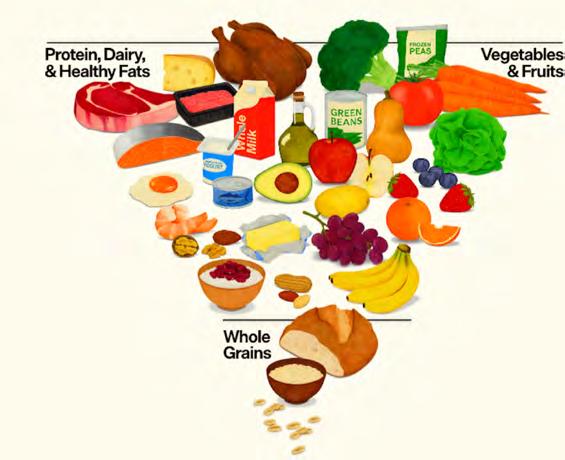
1. Protein: Choose high-quality protein from animal and plant sources–eggs, poultry, seafood, red meat, lentils, legumes, nuts, seeds, and soy.
Target: 1.2-1.6g per kg of body weight daily.
2. Vegetables & Fruits: Fill your plate with whole, colorful vegetables and fruits in their natural form.
Target: 3 servings of vegetables and 2 servings of fruits daily.
3. Whole Grains: Prioritize fiber-rich whole grains over highly processed carbs that displace real nourishment.
Target: 2-4 servings daily.
4. Healthy Fats: Incorporate wholefood fats like meats, poultry, eggs, omega-3-rich seafood, nuts, seeds, full-fat dairy, olives, and avocados. Limit saturated fats to 10% of daily calories.
5. Hydration: Drink water and unsweetened beverages throughout the day.
6. Alcohol: Consume less alcohol for better overall health.
7. Added Sugars & Processed Foods:
Minimize processed foods, refined carbs, and added sugars. Choose naturally occurring sugars from whole fruits and dairy. Target: No more than 10% of daily calories from added sugars.
Ultimately, everyone’s needs are different. How much you eat depends on your age, sex, height, weight, and activity level, so be mindful of portions, particularly when it comes to higher-calorie foods and drinks. You can learn more by reviewing the current federal dietary guidelines.
FROM THE PATIENT FILES

Most of us think of the dentist’s office as a place to care for our teeth, but what if it could also care for your heart? That’s exactly what happened for one patient, thanks to a simple blood pressure check during her dental visit.
A Routine Visit Revealed a Hidden Danger
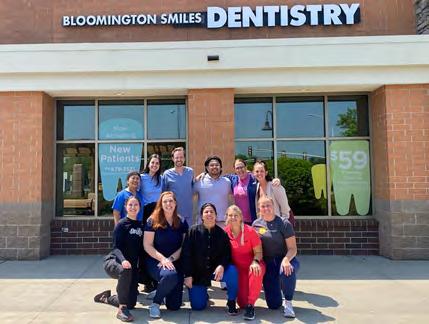
At Bloomington Smiles Dentistry in Minnesota, a female patient arrived for a root canal procedure. As part of the standard preprocedure routine, the dental team took her blood pressure. To their concern, the reading was alarmingly high–so much so that Dr. Jordan Gardner made the decision to postpone the procedure.
Dr. Gardner explained to the patient that high blood pressure, or hypertension, increases the risk of serious health issues like heart disease and stroke. She encouraged her to see a doctor immediately.
Recent studies underscore the seriousness of this connection. The American Heart Association has identified high blood pressure as a significant risk factor for heart disease, and a 2024 study in Stroke1 found that the risk for stroke increases the longer a person has hypertension.
A Life-Changing Discovery
The next day, the patient called the office with an update no one expected. She had been hospitalized due to a blockage in her heart valve. Thanks to the timely intervention, she received treatment and eventually returned to complete her dental procedure. She expressed deep gratitude to Dr. Gardner and the team, sharing how their quick action may have saved her life.

“She looked like a new person when she came back,” Dr. Gardner said. “She was healthy, glowing, and so thankful for our care."
“I didn’t even recognize her when she walked in the door,” Dr. Gardner said. “She was glowing. It was great to see her healthy again. She was also grateful that we were able to get her out of pain and had checked on her after her 11-day hospital stay. She is now a patient for life.”
Why Blood Pressure Checks Matter at the Dentist
This story is a reminder of the critical connection between oral health and overall health. It’s also the driving force behind the American Heart Association’s Healthy Smiles, Healthy Hearts™ initiative. The program encourages dental teams to screen for high blood pressure during visits, recognizing it as a key step in preventing heart disease and stroke.
Did you know how much blood pressure reveals about your health?
A normal reading is 120/80 or lower2 . If it’s higher, it could indicate hypertension, which increases the risk of heart problems or stroke. A quick check at your dentist’s office might uncover something important about your health.
Remember, caring for your smile also means caring for your overall well-being. Let’s keep those appointments and take charge of our health, one visit at a time.


Increasing Access to Care
Smile Generation partners with Special Olympics International to support athletes in their journey to finding great dental care and understanding the importance of good oral hygiene. Together we are bridging the gap that patients with intellectual disabilities have in receiving comprehensive oral healthcare. Join us in signing Special Olympics’ Inclusion Pledge.

Sources
Heart-to-Heart: A Dentist and Physician Discuss the Role Oral Health Plays in Cardiac Wellness
1. More Than Just Teeth: How Oral Health Can Affect the Heart
2. Periodontal Disease in Adults (Age 30 or Older)
3. Salivary Alterations of Myeloperoxidase in Patients with Systemic Diseases: A Systematic Review
Blood Pressure and Oral Health
1. What Is High Blood Pressure?
2. How High Blood Pressure Can Lead to Stroke
3. Understanding Blood Pressure Readings
4. Periodontitis, Blood Pressure, and the Risk and Control of Arterial Hypertension
5. Oral Manifestations in Hypertensive Patients: A Clinical Study
Feed Your Heart and Smile
1. Oral Health and Nutrition
2. Arginine: A New Paradigm in Preventive Oral Care
3. L-Arginine Enhances the Effects of Cardiac Rehabilitation on Physical Performance: New Insights for Managing Cardiovascular Patients During the COVID-19 Pandemic
4. Eat Fruits and Veggies for a Healthy Smile
5. Effectiveness of High-Fiber, Plant-Based Diets in Reducing Cardiovascular Risk Factors Among Middle-Aged and Older Adults: A Systematic Review
6. Crucial Facts About Health Benefits of Popular Cruciferous Vegetables
7. Association of Dietary Omega-3 Fatty Acids Intake With All-Cause and Cardiovascular Disease–Specific Mortality Among Individuals With Cardiovascular Disease
8. The Role of Tea in Managing Cardiovascular Risk Factors: Potential Benefits, Mechanisms, and Interventional Strategies
From the Patient Files:
1. Association of Duration of Recognized Hypertension and Stroke Risk: The REGARDS Study
2. Understanding Blood Pressure Readings

Happier Healthier Healthi Generations Smiles of
Smile Generation Magazine LET'S DO THIS AGAIN! Smile Generation exists to connect you with trusted dentists in your area and to offer education on the critical link between oral and overall health. We’d love to know what you think of our magazine.