Certified English-Spanish Translator Record No 5161 Vol. 14 Page 480
Member of Argentine Association of Certified Translators
CERTIFICATION OF TRANSLATIONS
I, Vanina A. Blocki, Certified English-Spanish Translator, registered with the Argentine Association of Certified Translators, City of Buenos Aires, under record no. 5161, vol. 14, page 480, do hereby certify that the foregoing translations have been translated from Spanish into English from the original documents I have had before me and to which I refer in the City of Buenos Aires, on June 4th, 2018.
Address: Rodriguez Peña 207 PB B Martinez 1640 Buenos Aires
e-mail: vaninablocki@gmail.com /FB VBTraducciones
Mobile: 054 11 40363341
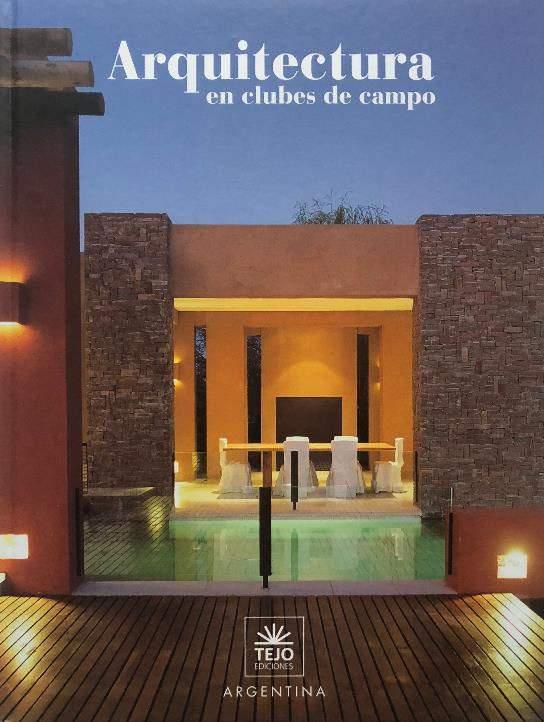
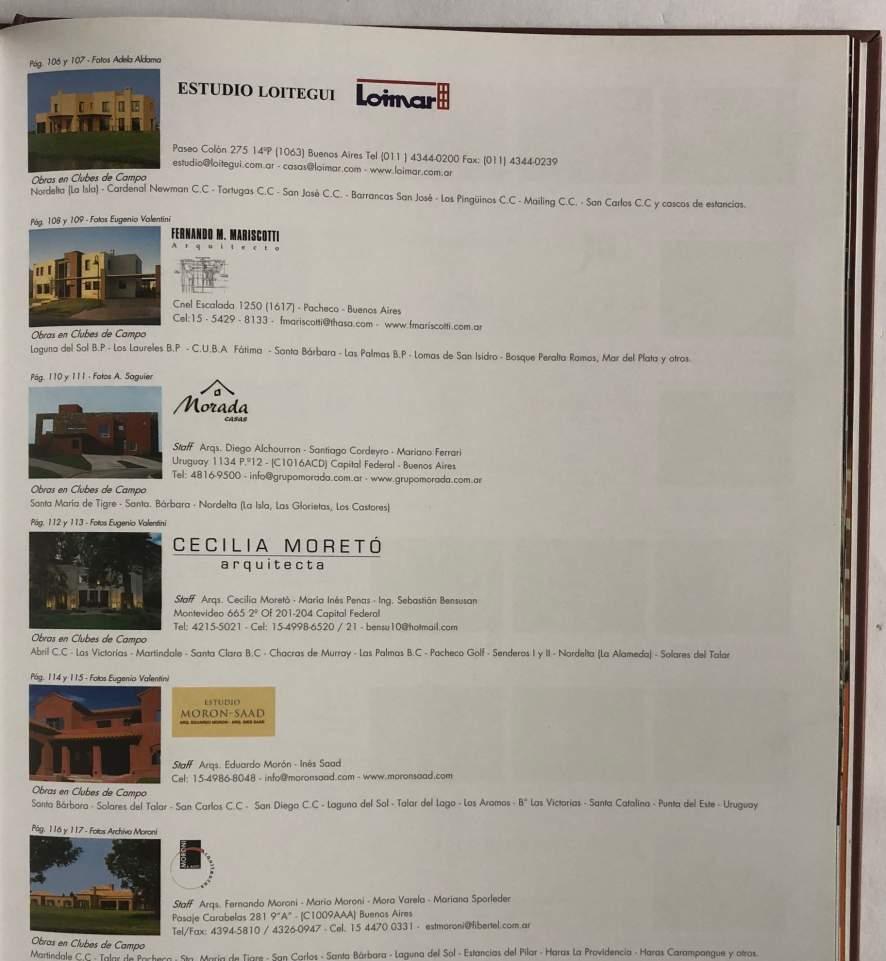
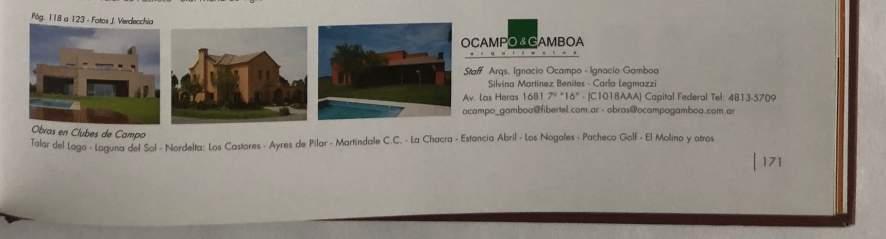
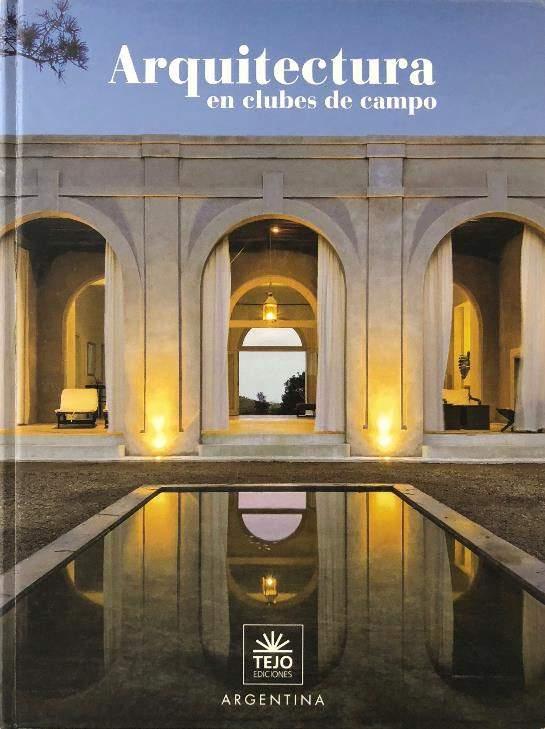
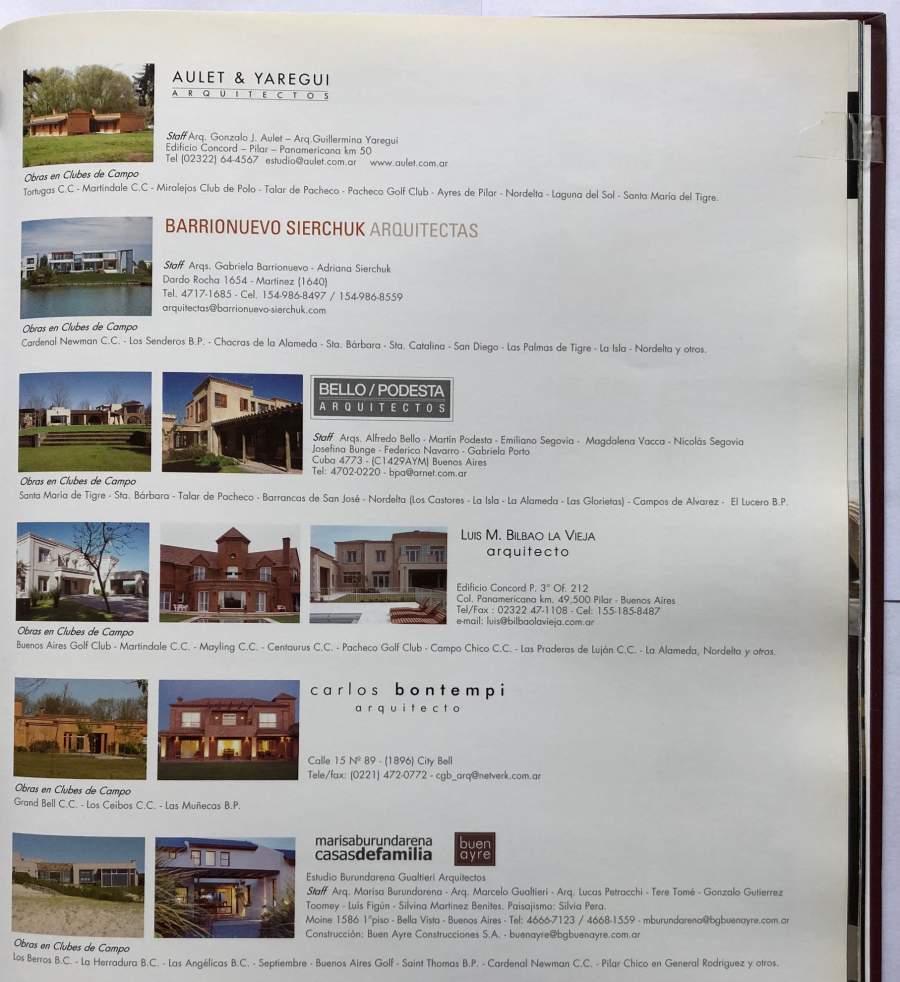
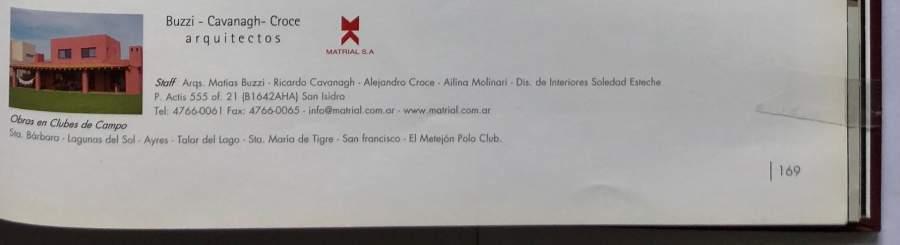
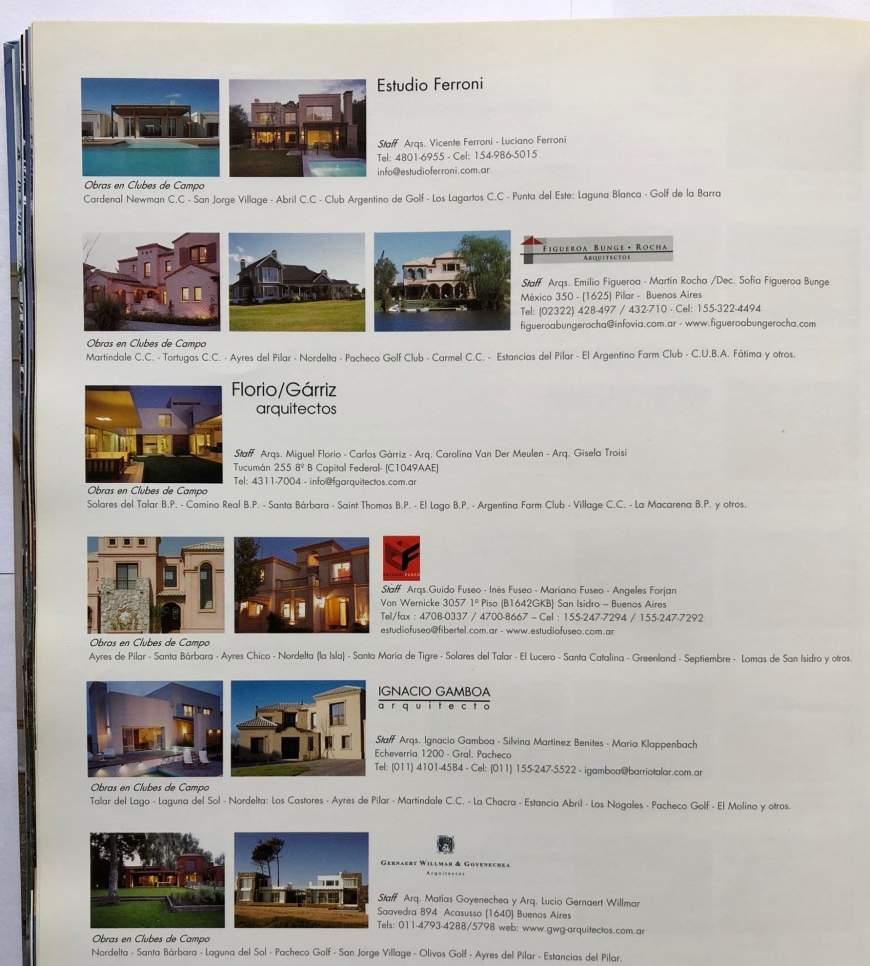
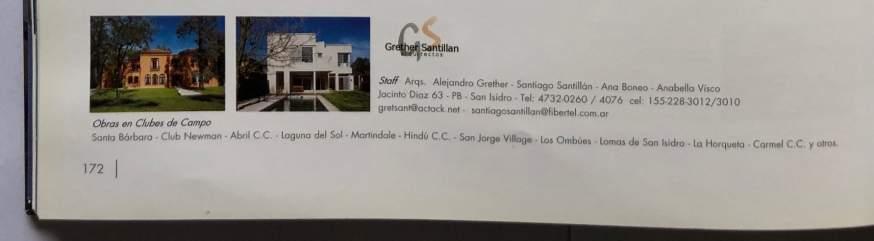
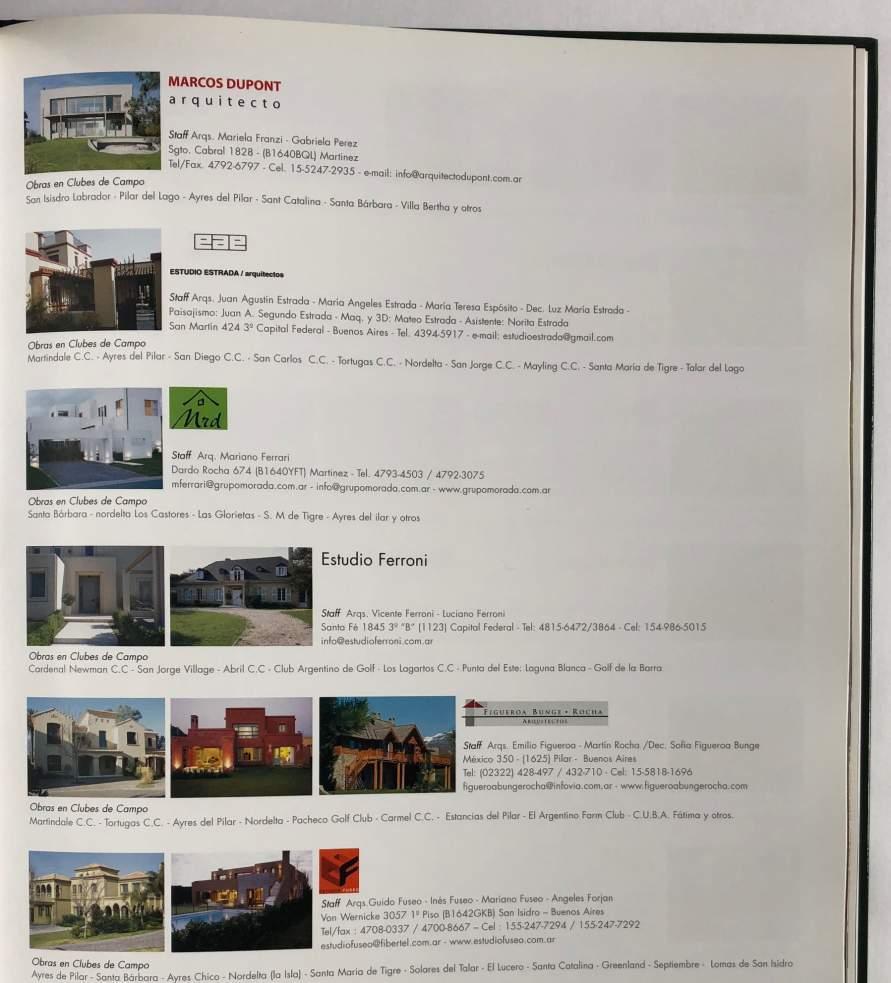
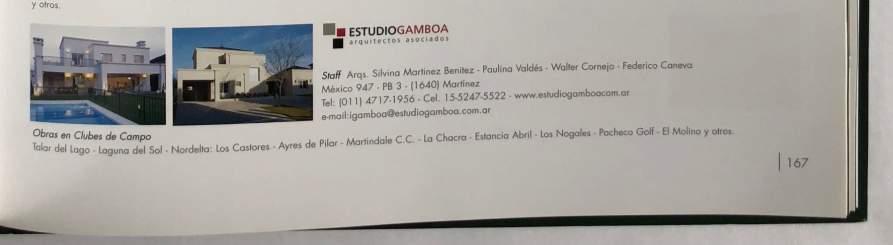
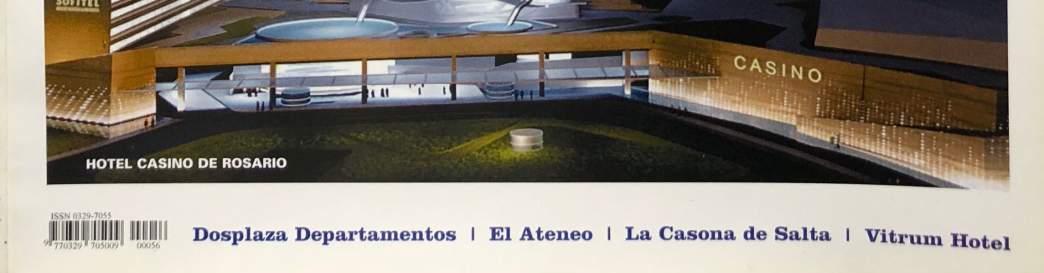
Book "Arquitectura en Clubes de Campo"| December 2004 | Tejo Editions | Argentina
Book "Arquitectura en Clubes de Campo"| December 2006 | Tejo Editions | Argentina https://www.instagram.com/tejo_ediciones/ https://www.facebook.com/p/Tejo-ediciones-100064037100352/?_rdr
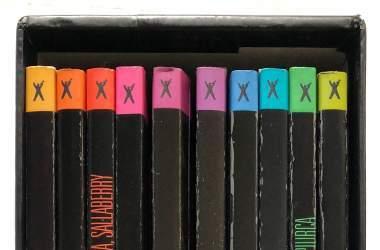
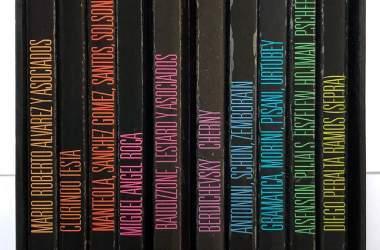
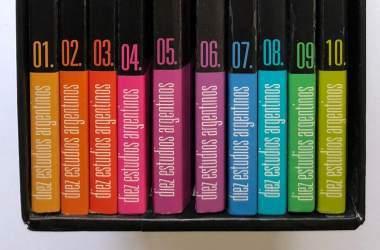
Clarin Newspaper "Los 10 Estudios Argentinos"Daily Supplement | November 6th 2007 | Argentina https://www.clarin.com/sociedad/obra-grandes-maestros-arquitectura-nacional_0_B1RVxkxJCKx.html
26/08/2007 - 00:00 Ι Clarin.com Ι Sociedad
NUEVA COLECCION DE DIARIO DE ARQUITECTURA
Una obra con los grandes maestros de la arquitectura nacional
A partir del martes, Diario de Arquitectura de Clarín presenta una nueva colección: 10 Estudios Argentinos, dedicada a las firmas más prestigiosas del país. Es un registro que no existía en la Argentina, ya que en cada tomo se compilará la producción histórica fundamental de los maestros de la arquitectura argentina contemporánea. La trayectoria de los estudios -elegidos en base al Ranking de Prestigio Clarín 06 - se reflejará en imágenes, planos, bocetos y perspectivas de los proyectos construidos y también de los elaborados para concursos. La producción de cada uno estará organizada por rubros como vivienda, trabajo, urbanismo, instituciones o comercio. Además, habrá un análisis del pensamiento y la ideología de cada firma, a cargo de especialistas. La colección comprende unas 500 obras que muestran soluciones a los problemas de nuestro hábitat, porque dan respuestas a nuestra forma de vivir, a nuestros variados climas, nuestras tecnologías y nuestra cultura. Son miles de dibujos y plantas que hasta ahora estaban desperdigados en múltiples publicaciones - o que no se habían difundido - que servirán como herramienta de estudio y de consulta. A través de ellos, profesionales y estudiantes podrán obtener rápidamente una idea cabal de las claves que sustentan a los grandes de la arquitectura local. El primer tomo está dedicado a Mario Roberto Alvarez y Asociados, autores del Teatro General San Martín y la ampliación del Teatro Colón, entre muchos otros proyectos. Quince días después será el turno de Clorindo Testa, diseñador de la Biblioteca Nacional. No faltarán obras como el reciclaje del Centro Cultural Recoleta, el ex Banco de Londres, el balneario La Perla de Mar del Plata y la Ciudad Cultural Konex. Las entregas siguientes harán foco en los estudios Manteola, Sánchez Gómez, Santos, Solsona, Sallaberry, autores del edificio de ATC y la ampliación del aeropuerto de Ezeiza, entre otros; Miguel Angel Roca, diseñador de la peatonalización del casco histórico de Córdoba. También habrá tomos de los estudios Baudizzone- Lestard, BerdichevskyCherny, Antonini-Schon-Zemborain; Gramática- Guerrero-Morini-Pisani-Urtubey, SEPRA, Peralta Ramos y Estudio Aisenson. Esta producción es un paso más en el compromiso de Diario de Arquitectura de formar una biblioteca sobre la disciplina, asumida hace cuatro años con la publicación del Archivo Clarín Arquitectura Siglo XXI, y luego con la edición de Diccionario de Arquitectura en la Argentina, Vanguardias Argentinas y Patrimonio Mundial.
NEW COLLECTION OF ARCHITECTURE NEWSPAPER
THE GREAT MASTERS OF NATIONAL ARCHITECTURE AND THEIR WORKS
Starting on Tuesday,the Architecture Issue of Clarin Newspaper presentsa new collection about the most prestigious firms in the countr y: 10Argentine Architecture Studios. This is an unprecedented material, since it will be the first time thateachvolume will compile the essentialhistorical production of the masters of contemporary Argentinearchitecture.The track record of suchstudios -chosenon the basis of Clarin'sPrestigeRanking 06 -will be reflected on images,drawings,sketches and perspectives of already built projectsand also those prepared for competitions.
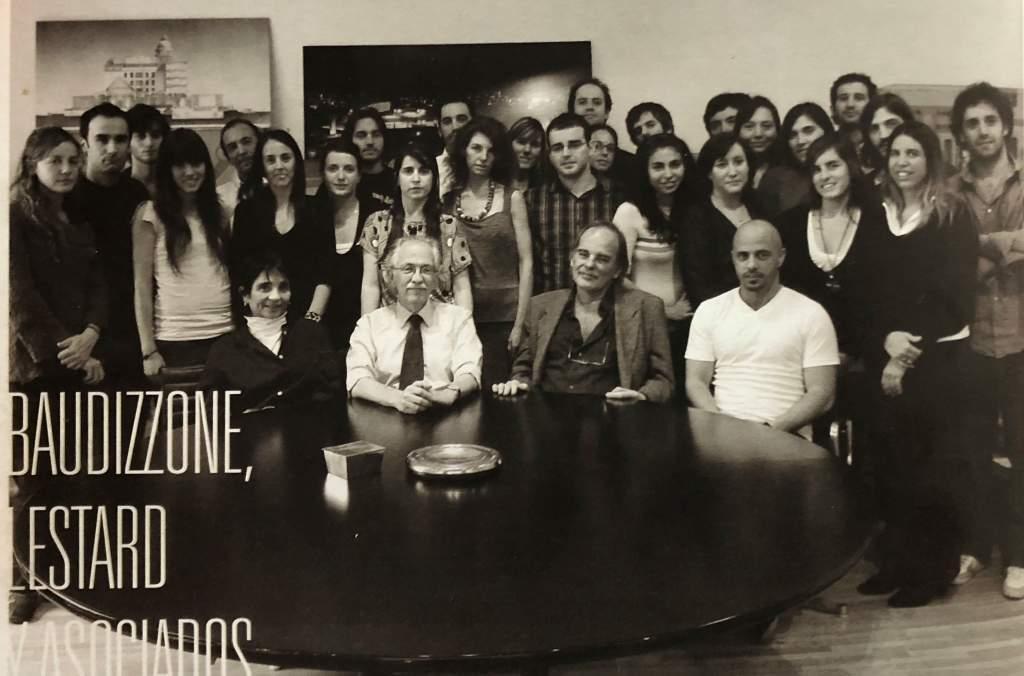
BAUDIZZONE, LESTARD AND ASSOCIATES
GOBIERNO DE LA CIUDAD DE BUENOS AIRES
CENTRO CULTURAL RECOLETA | BOOK PRESENTATION V EDITION OF THE CYCLE OF GREAT ARGENTINE ARCHITECTS
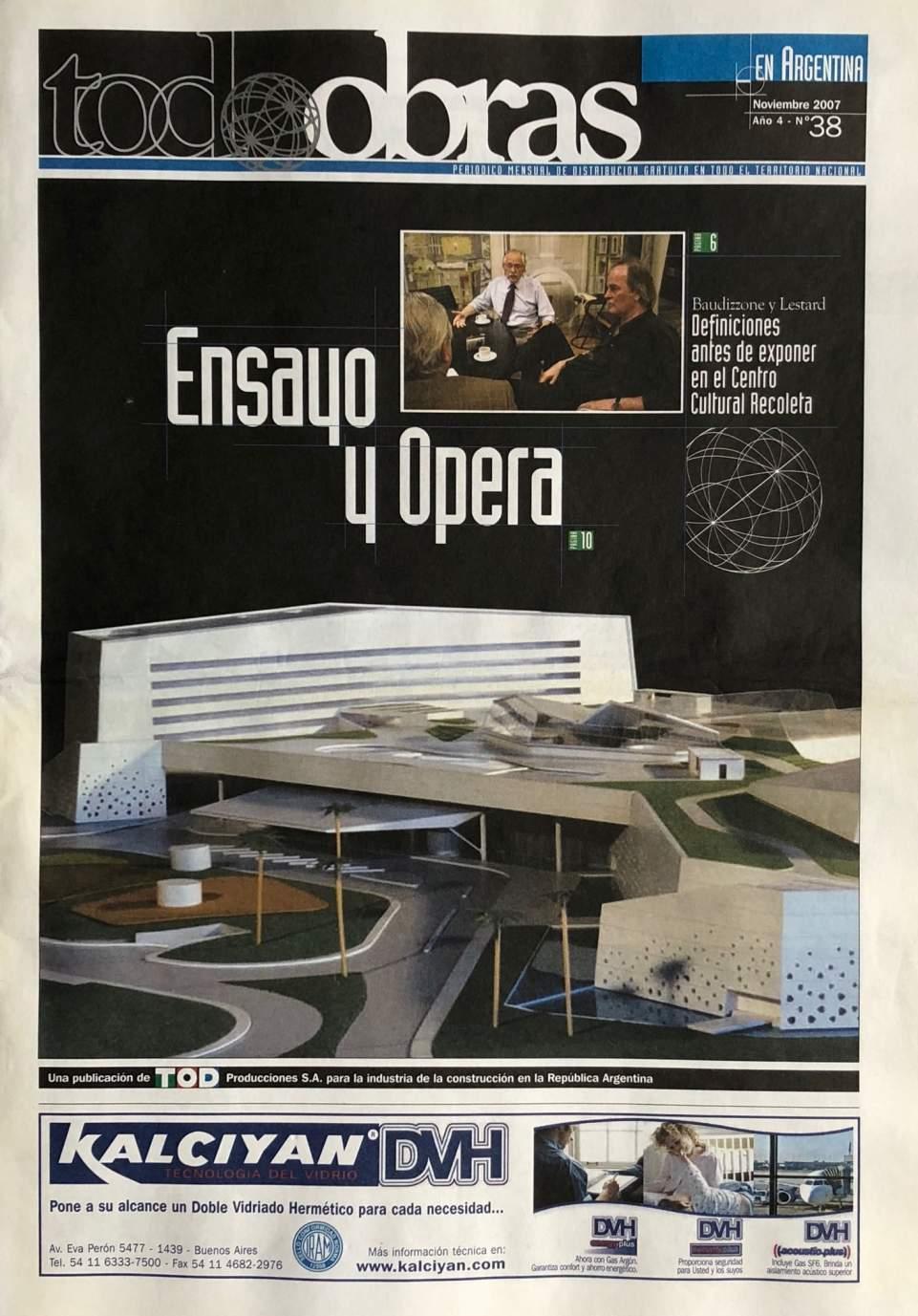
Centro Cultural Recoleta |V Edition of the Cycle of Great Argentine Architects | BaudizzoneLestard and Associates Studio | Book presentation “Ensayo y Opera” | BL Editions | November 14th 2007 | Argentina
http://www.blarqs.com/studio
PROJECT TEAM
HOTEL, CONVENTION CENTER & CASINO IN ROSARIO CITY
A MAGNIFICENT MONOCHROMATIC SCULPTURE
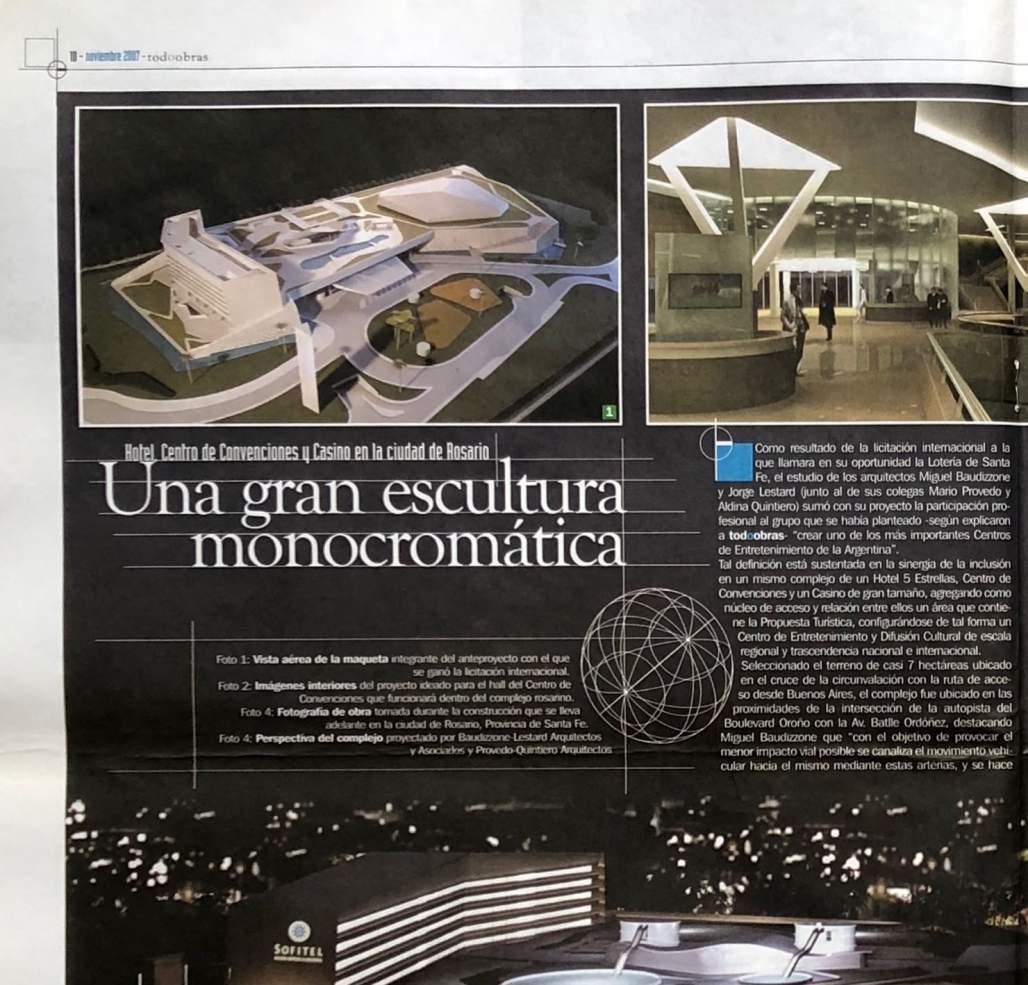
As the result of an international tender of bi ds called by Santa Fe Lottery, the architecture firm of Miguel Baudizzone and Jorge Lestard (together with that of their colleagues Mario Provedo and Aldina Quintiero) contributed to the project with their professionalism to the already formed group -as explained to Todo Obras. “Our aim is to create one of the most important Entertainment Centers in Argentina.”
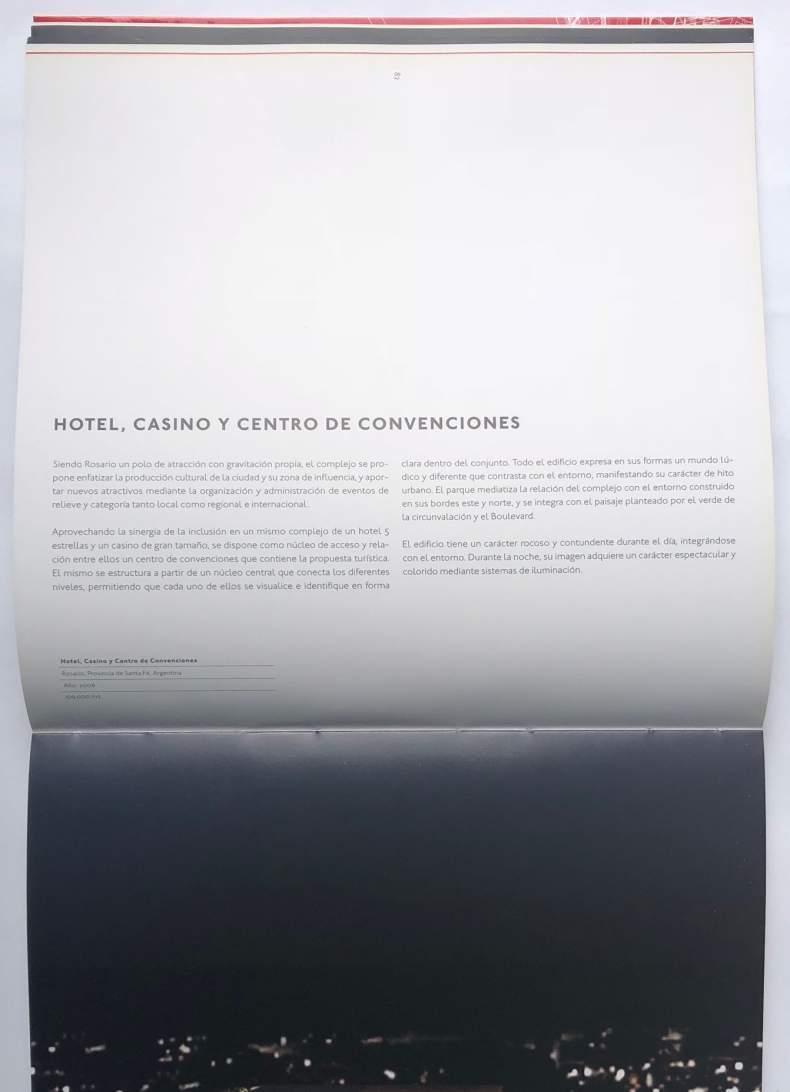
Such statement relies on the synergy of including, within one same complex, a 5-Star Hotel, a huge Casino, and a Convention Center, further offering as an access point, and relating one and other, an area containing a Tourist Proposal. In this way, a regional scale Entertainment and Cultural Center are conformed, both at a national and international level.
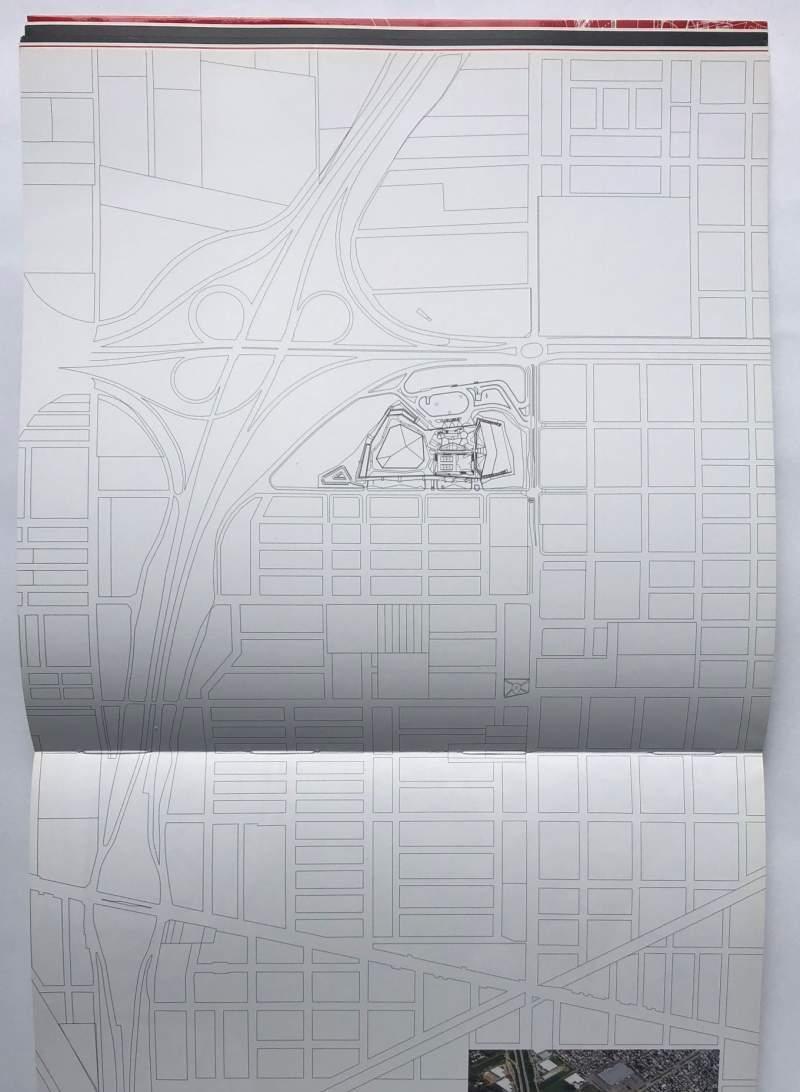
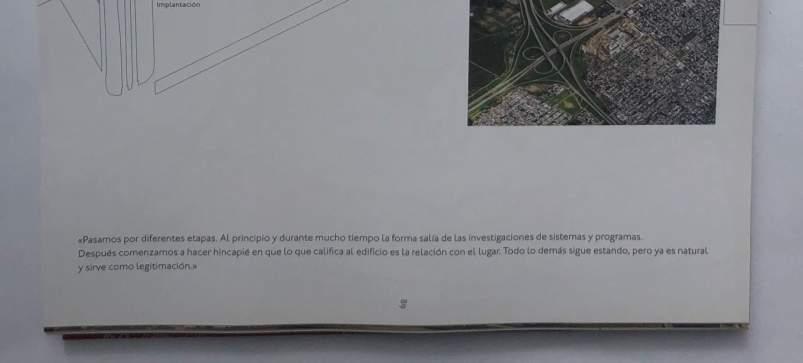
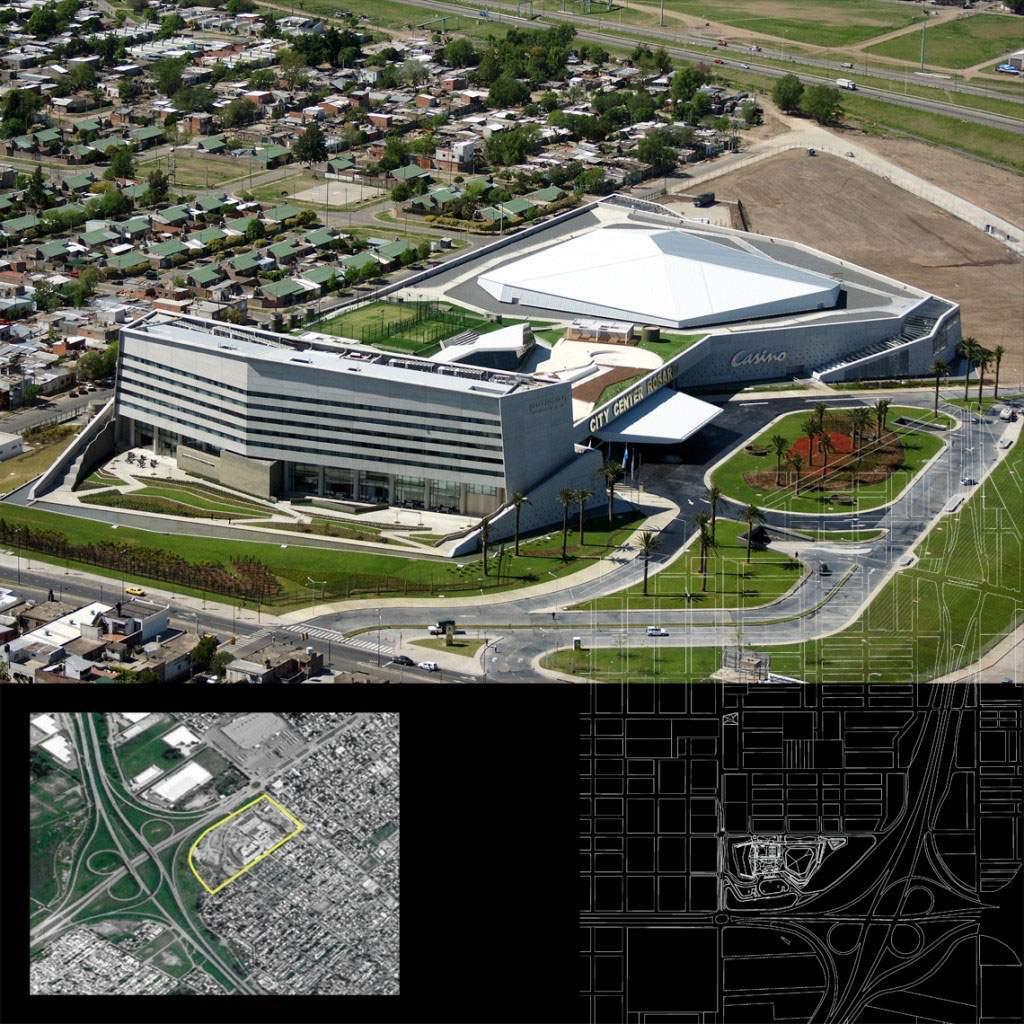
A plot of land of around 7 hectares was chosen, which was located at the crossing of the bypass and the access route from Buenos Aires. This complex was established in the surroundings of the intersection of the Or oño Boulevard Highway and Battle Ordoñez Avenue. Miguel Baudizzone remarked that “in order tominimize traffic burden, vehicles are channeled through these arteries and the interchanging lane at the existing intersection. This is supplemented by a roundabout located inside the complex. This proposal allowed to solve all movements without a transversal function and order traffic flow by means of traffic signals coordinated with the ones at the Oroño Boulevard.
The architectural project integrates all aspects in a single large-sized building, which emphasizes the integration of its activities driving its synergy. Speaking about the complexity of the interior space, Jorge Lestard said: “This is about an exciting set of situations unfolding between the access to the Casino and the street where the Hotel and Convention Center can be reached, and containing the Entertainment and Cultural Center, which shapes up the heart of the complex.”
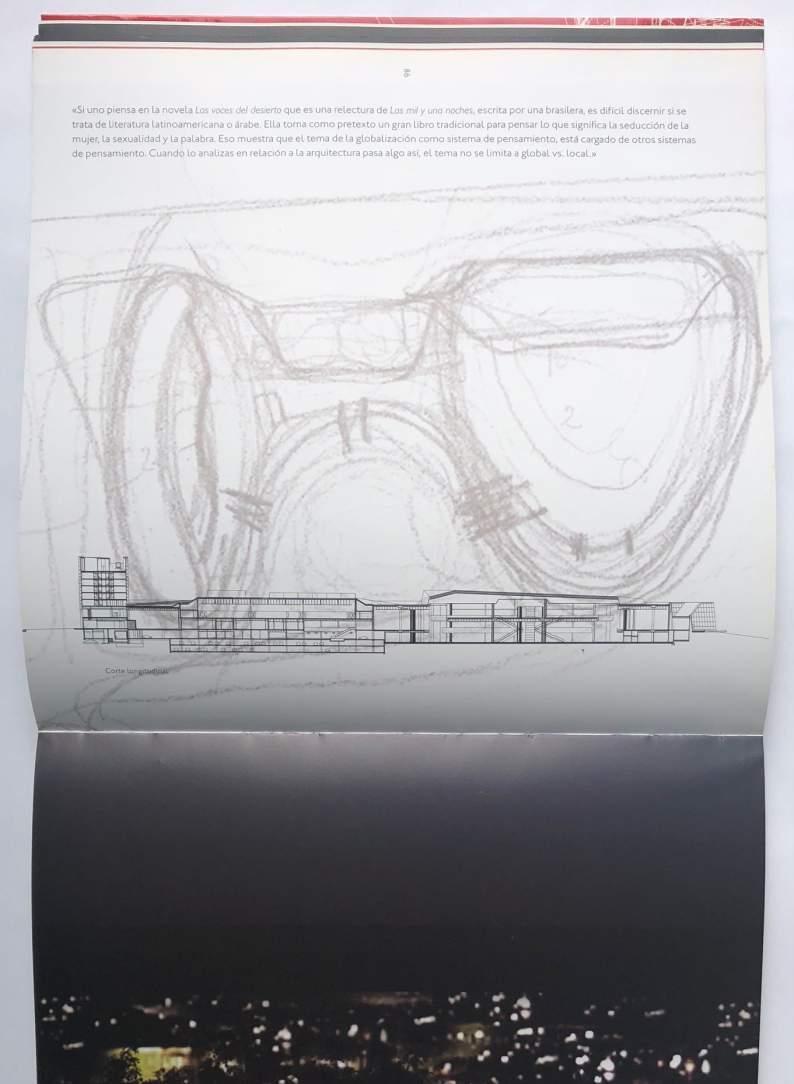
These last two are located at the core, between the Casino and the Hotel, functioning as a pivot, and a distribution corridor between both; this area is structured based on a main nucleus connecting different levels. In this regard, Baudizzone commented: “The reason for this display of volumes was that each of them could be told apart in a clear way and be seen and identified within the set, so that taken as a whole, it represents a solid embodiment of the relation among different volumes, heights, and materials typical of a project of this kind of significance.”
From the pictures, it can be clearly noticed how the rocky shape of the complex shows the Entertainment and Cultural Center through its contrasting transparency with the solid image of the Casino to the southern end, and the fo undations of the hotel, whose five floors of rooms arise in an integrated way to the northern end.
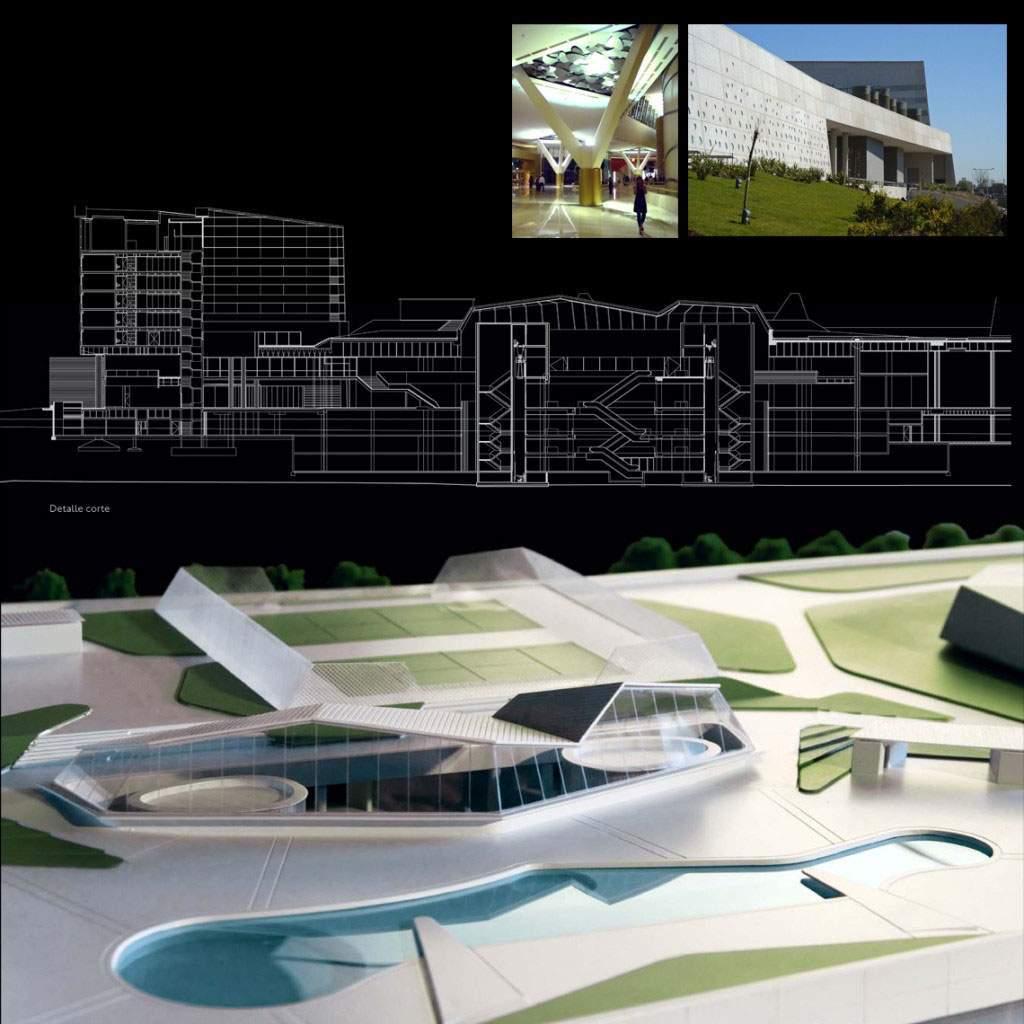
The roof was conceived as a fifth façade, where a large terrace containing a gymnasium and a set of swimming pools, apart from an esplanade with views to the surrounding parks from everywhere.
In the northwestern angle, from a point easily noticed from every access points of the building, a 25-meter structure (a totem) is erected. At the top of it, two video screens will showcase all the promoted events and activities that will take place in the complex.
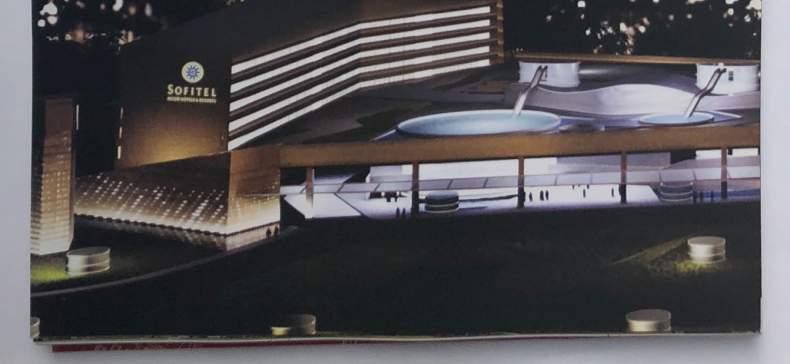
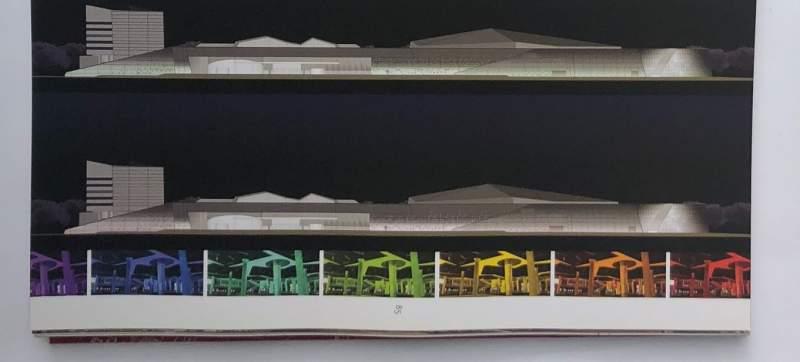
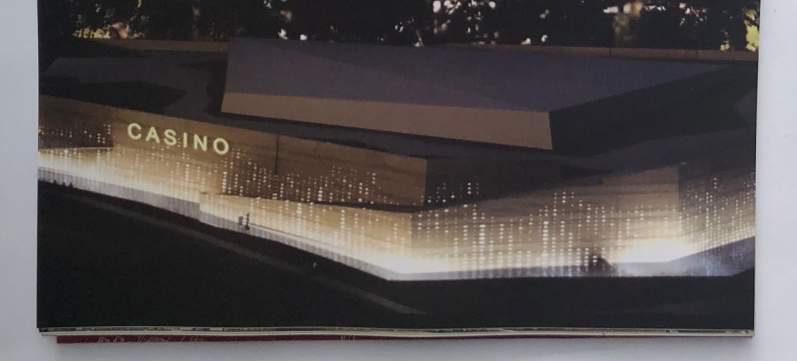
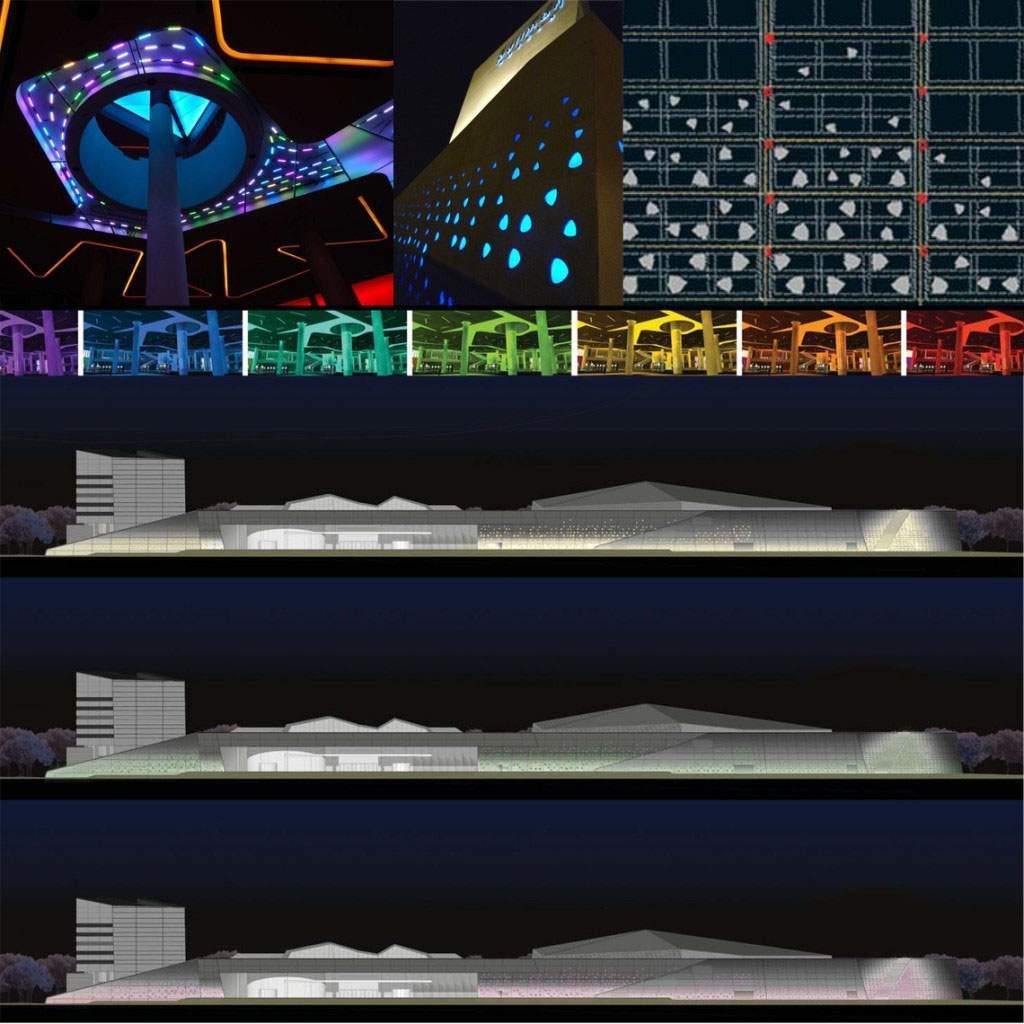
In Lestard’s words, the building was thought as a monochromatic light-colored sculpture, made of prevailing materials such as stone on reinforced concrete and glass, emerging from the water mirror and contrasting with the green color of gardens and parks around the area.” In relation to the complex lighting, he added: “At night, the perception of the building will be magically transformed thanks to a state-of-the-art sophisticated (LED) lighting system for facades, featuring several combinations of digital colors.”
The complex will offer a parking space for 2,000 vehicles displayed in three underground levels.
Regarding the Casino itself, Baudizzone remarked that, due to its large extension, it is not very high, and on the top of the building, the roof serves as a recreational area to walk around and has great views to the surrounding park and the hotel swimming pools area. Inside, the hotel was intended to take visitors to another dimension, to a magical world,” and was structured based on six different cores of vertical circulation connecting different levels, resulting in a seamless space where slot machines, traditional games, a bingo, pubs, coffee shops, VIP lounge areas, public restrooms, administrative areas, security staff, machinery rooms, and gastronomic point, sharing the drugstore and the buffet with the Tourist Proposal.
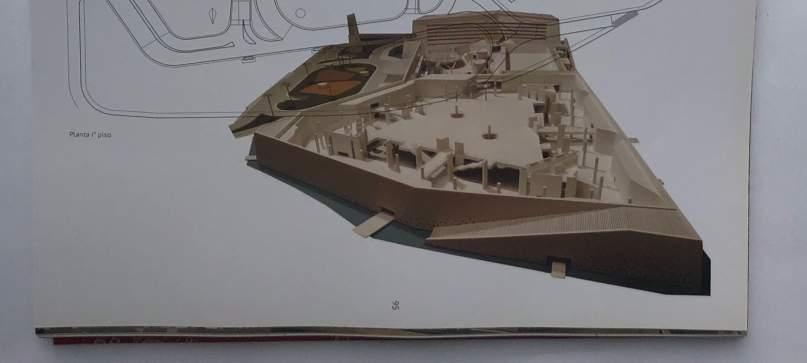
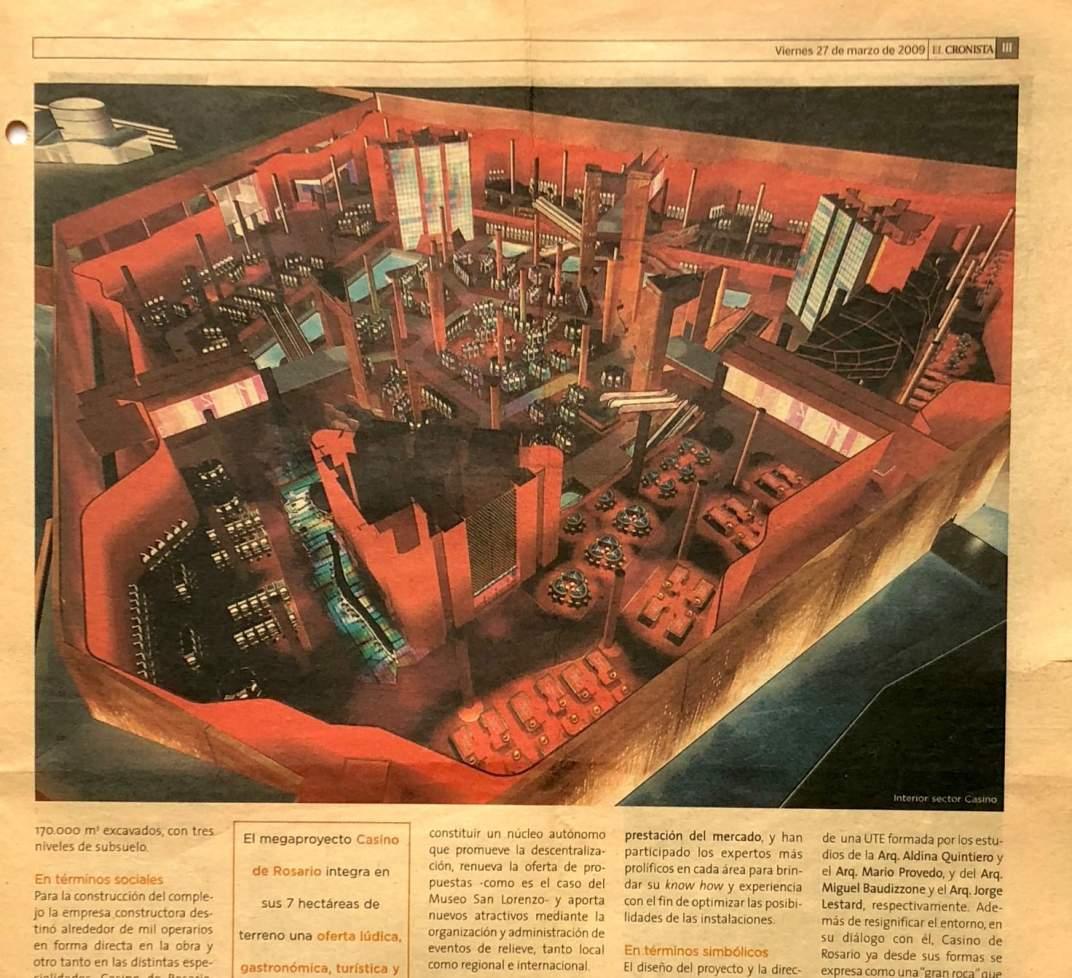
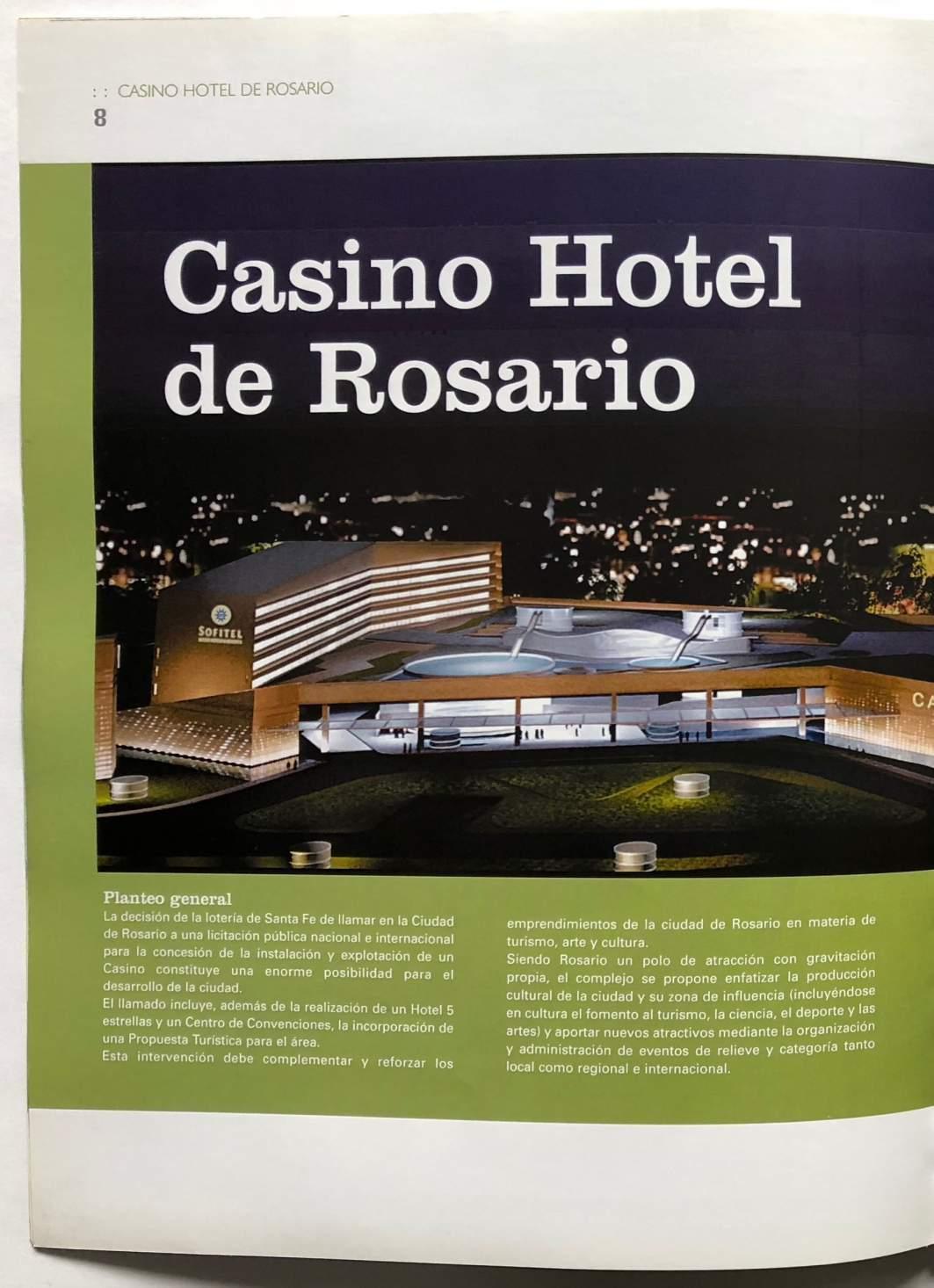
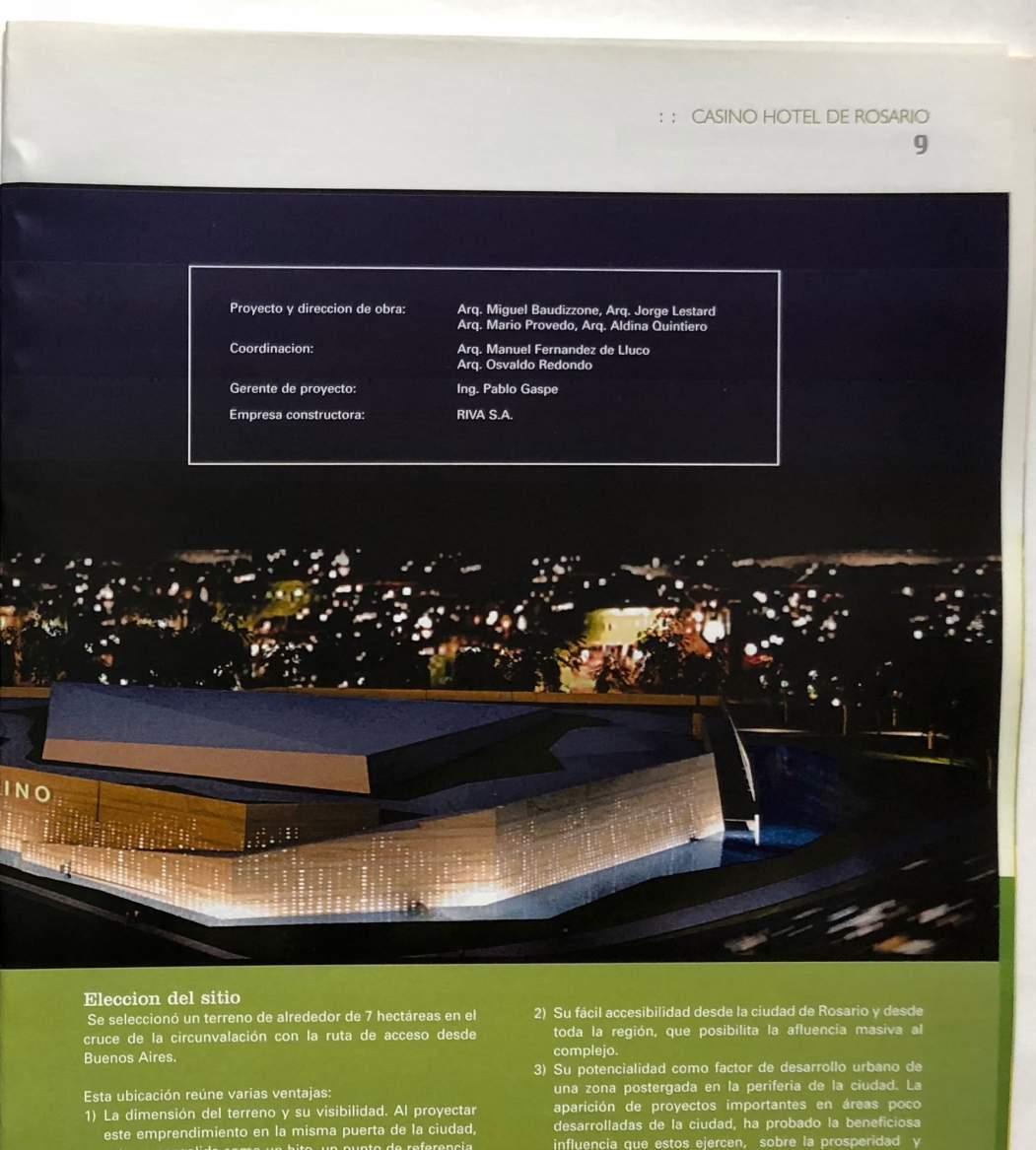
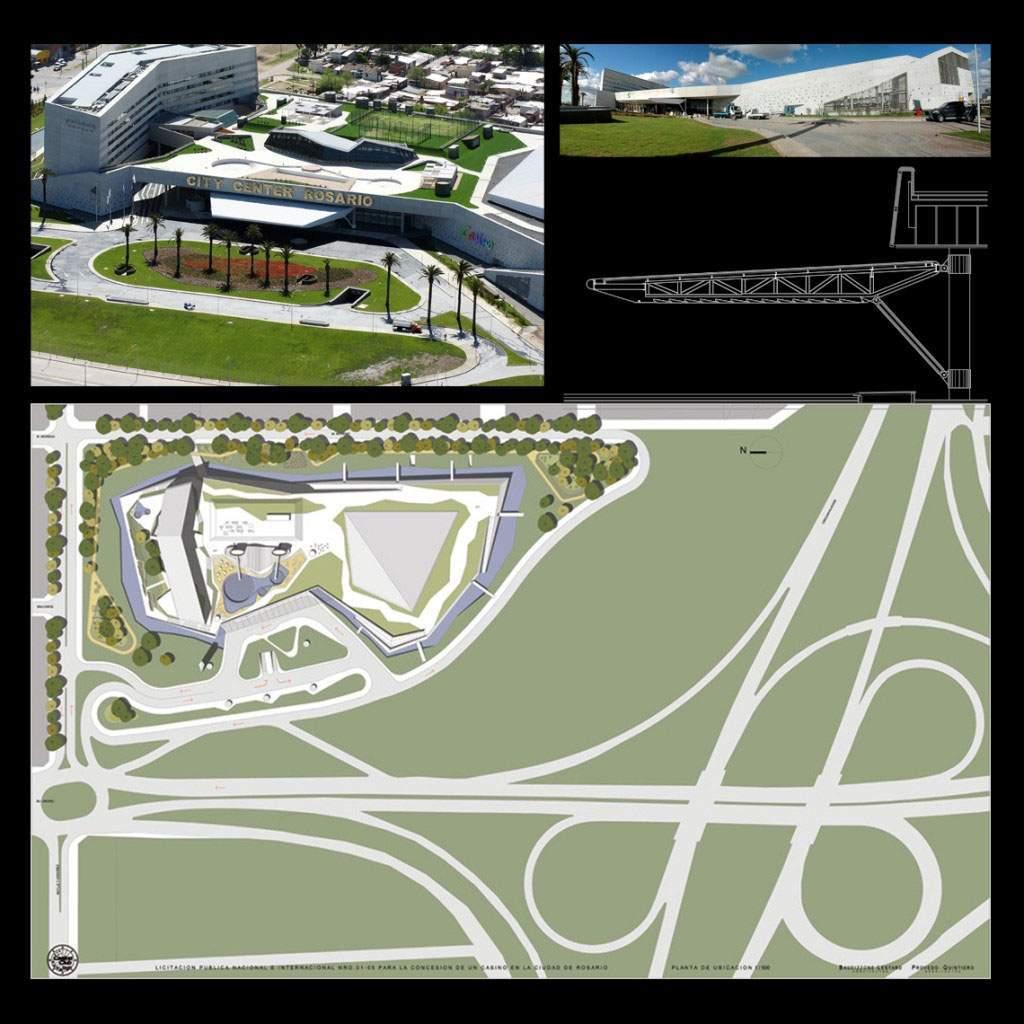
Photograph 1: Aerial View of the model involved in the draft project which won the bidding process.
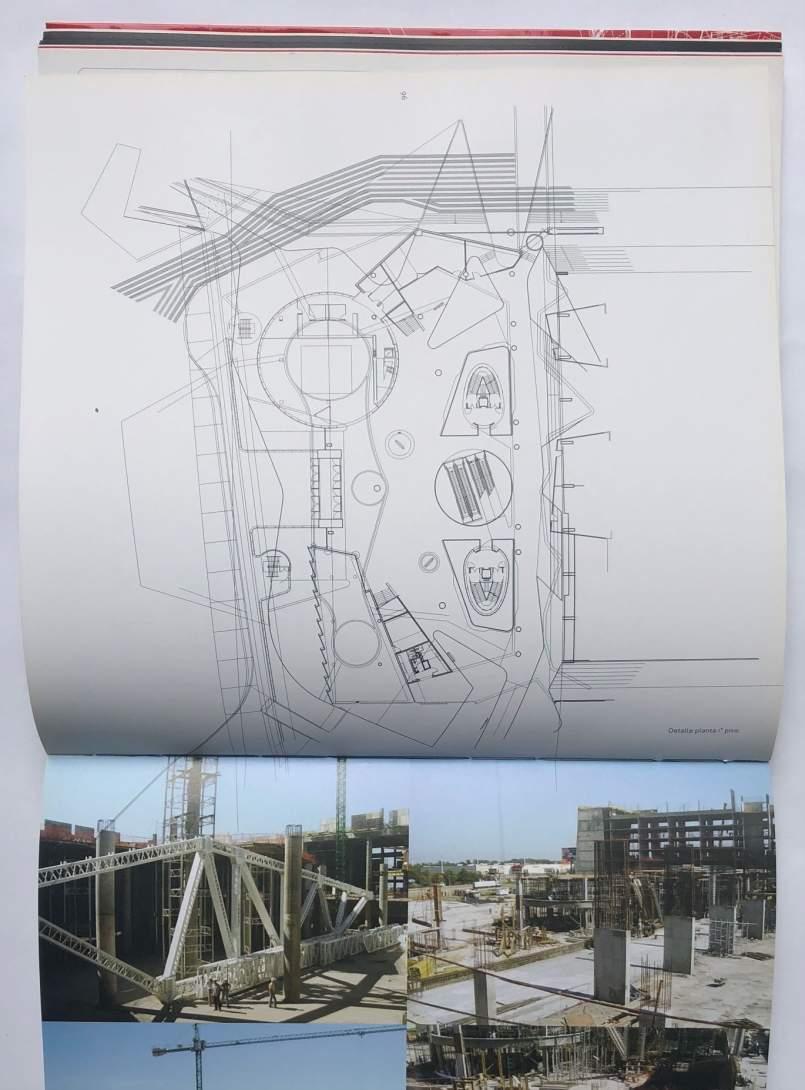
Photograph 2: Inside images of the project conceived for the Convention Center that will be inside the complex in Rosario.
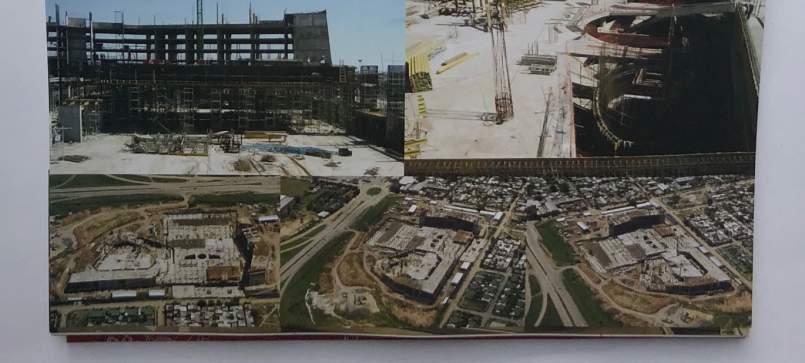
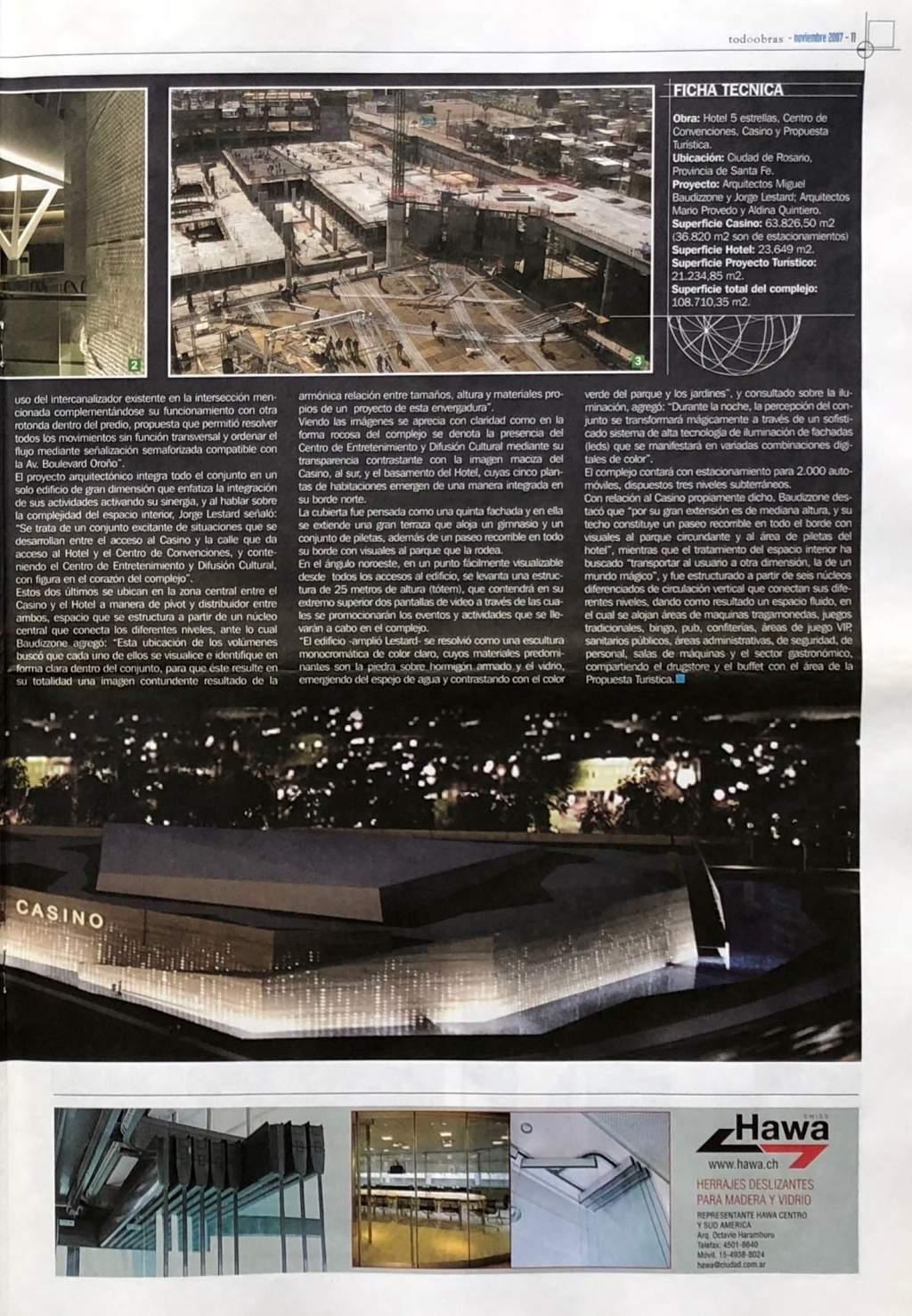
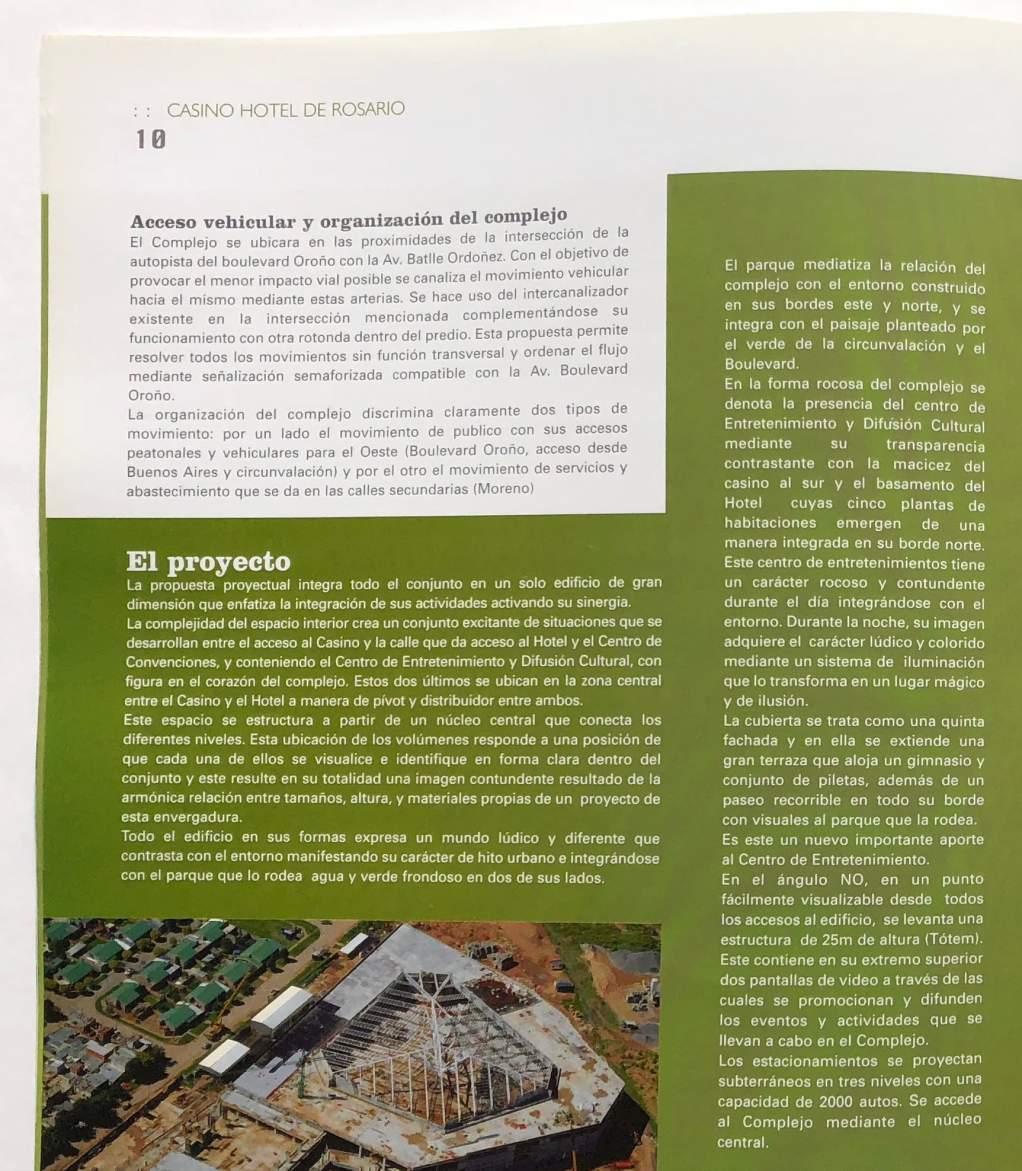
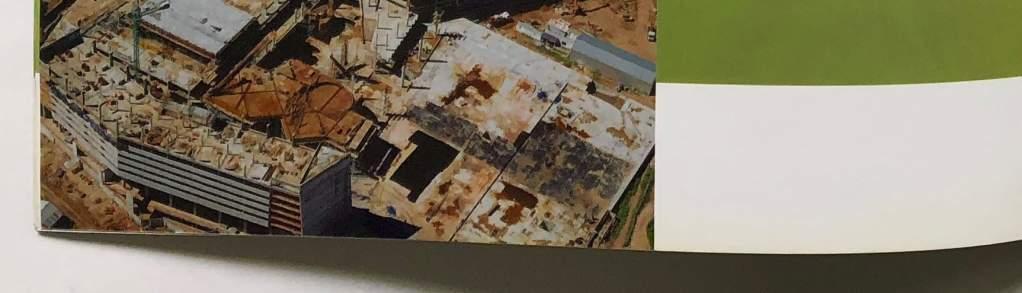
Photograph 3: Image of the worksite taken during the construction activities in Rosario City, Santa Fe Province.
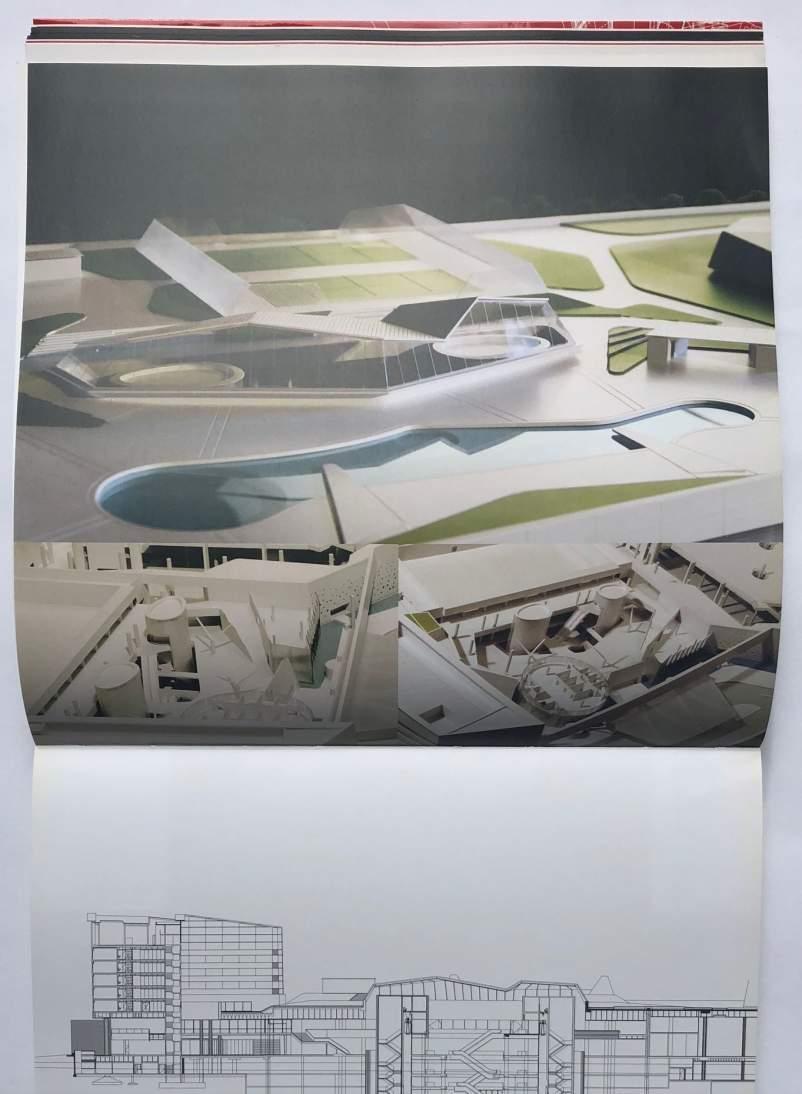
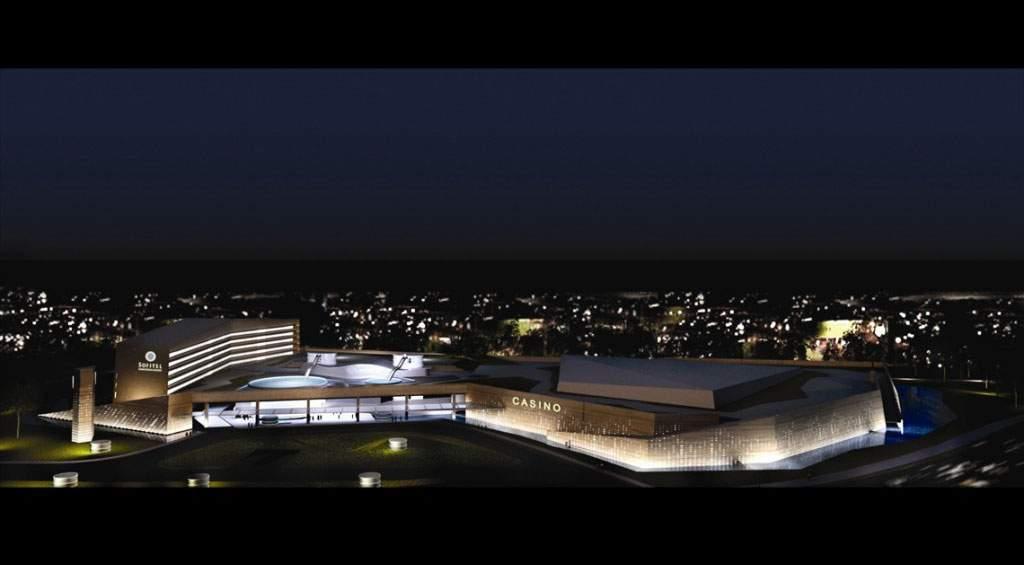
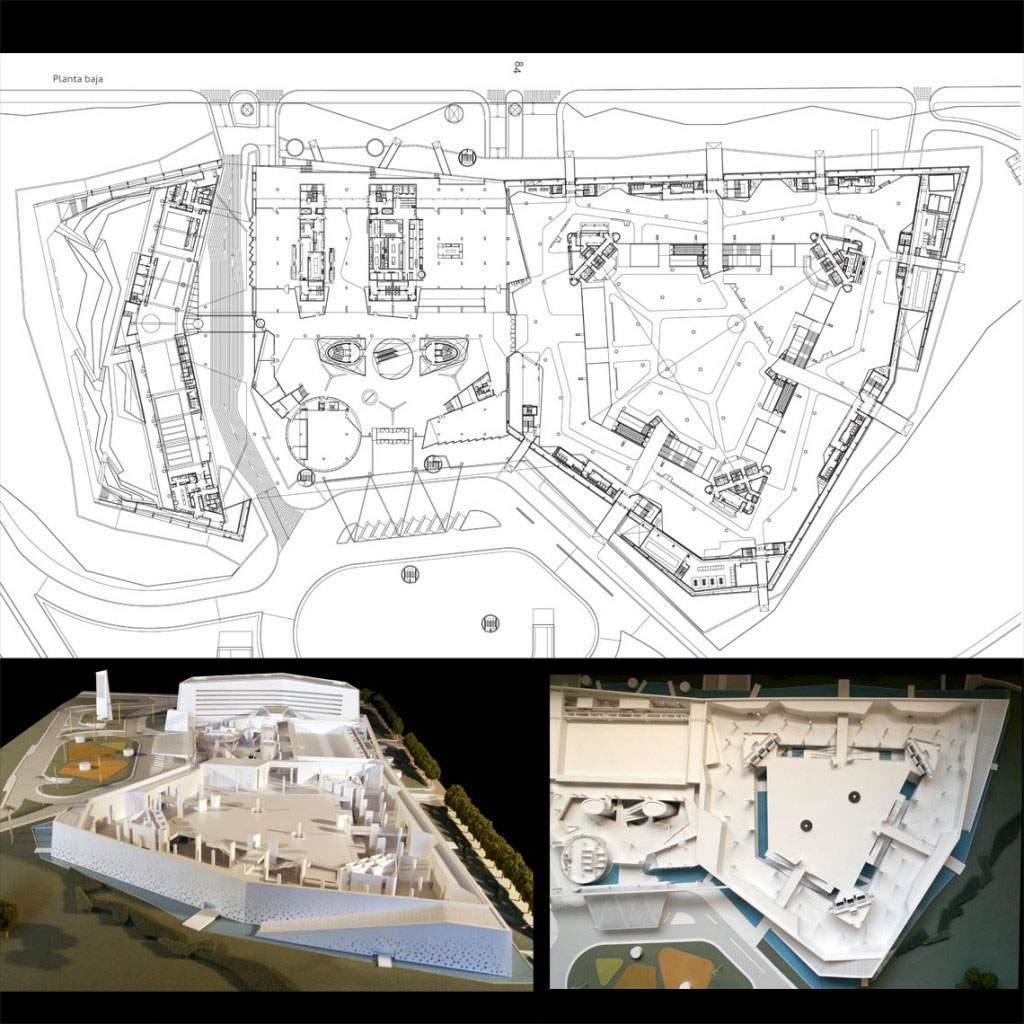
Photograph 4: Perspective of the complex projected by the architecture firm Baudizzone -LestardArchitects & Associates and Provedo-QuintieroArchitects.
TECHNICAL DATA:
Building construction: Hotel 5*, Convention Center, Casino and Tourist proposal.
Location: Rosario City, Provinciade Santa Fe.
Project: Arch. Miguel Baudizzoneand Jorge Lestard; Arch. Mario Provedoand AldinaQuintiero.
Casino built area: 687.022,7 sq.ft. (396.327,2 sq. ft. are from the garages)
Hotel built area: 254.555,7 sq. ft.
Tourist project builtarea: 228.570 sq. ft.
Total area: 1.170.148 sq. ft.
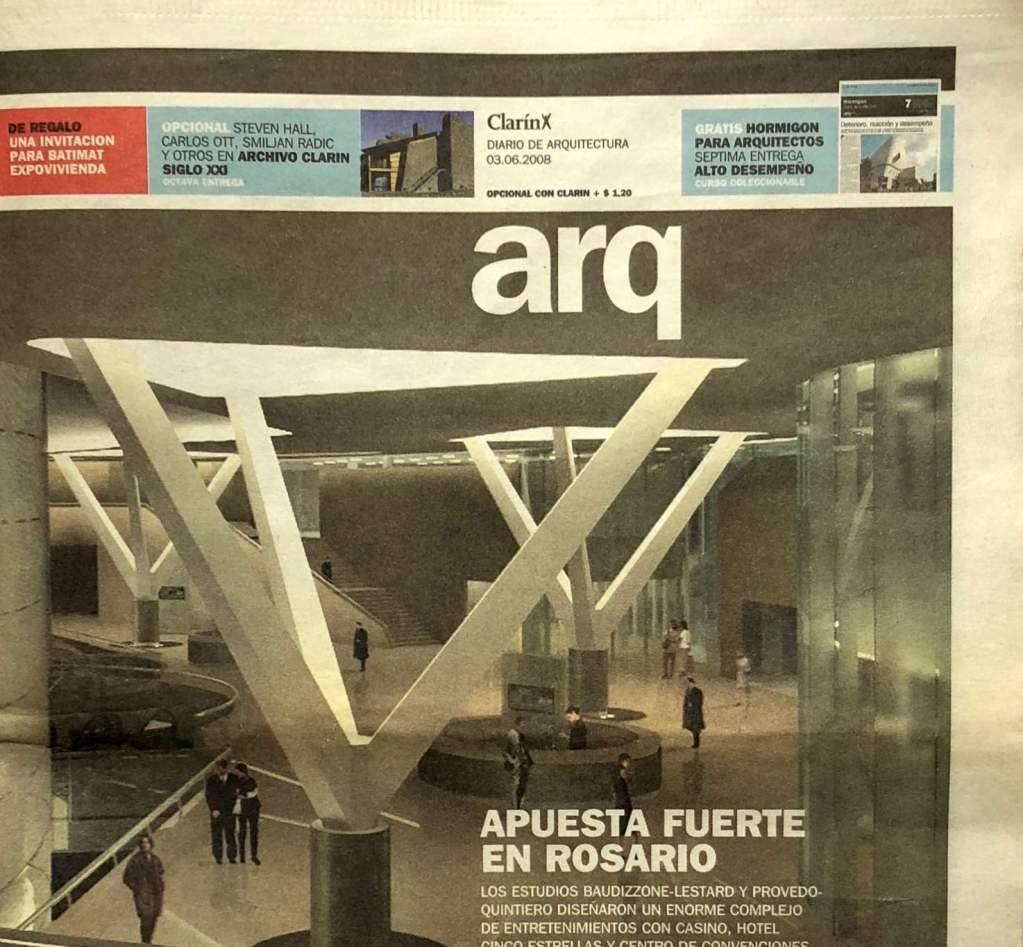
LAS VEGAS, IN THE HEART OF THE FLAG CITY
A STATE-OF-THE-ART CASINO, A 5-STAR HOTEL, AND A CONVENTION CENTER ALL WITHIN A COMPLEX MORPHOLOGY.
An architecture firm has bet high on a project in Rosario. The firms Baudizzone-Lestard and Provedo-Quintiero have just started to work on an entertainment complex that will comprise a casino, a 5-star hotel, and a convention center, just like in Las Vegas. The project was the result of a successful public bid tendered by the Santa Fe Lottery. The ideas conceived by the firms Baudizzone-Lestard and Provedo-Quintiero were submitted by the company Casinos de Rosario S.A., the successful bidder group. “This implies a lot more than gambling rooms,” says the architectAldina Quintiero. It’s a much wider entertainment concept, including ludic activities, accommodation, gastronomy, and a tourist alternative.”
The Convention Center and Casino will be located in Gran Rosario, at the cross of the bypass (the city access) and the route 9 (access from Buenos Aires), a highly downtrodden area. The project is intended to become an urban icon and a driving force for neighborhood rebound.
“Due to its scale and its large green surroundings, the complex will acquire great visibility and will be a must reference point, ”Jorge Lestard remarks.
Quintiero, a specialist in gambling halls, compares the Rosario Casino to the great international gambling centers. “The idea is that -just like in Las Vegas-guests can spend the whole day in the complex without needing to come back to the city.”
The program is made up of three different functional blocks integrated in a single building. Such three sectors, i.e.the casino, hotel, and convention center, will mingle and at the same time, differentiate one to the other in a complex morphology.”
Achieving coherence to an approx. 127,000 square-meter area was a strong bet. “Our challenge was that each of the three blocks could integrate each maintaining its own identity,” Lestard confesses.
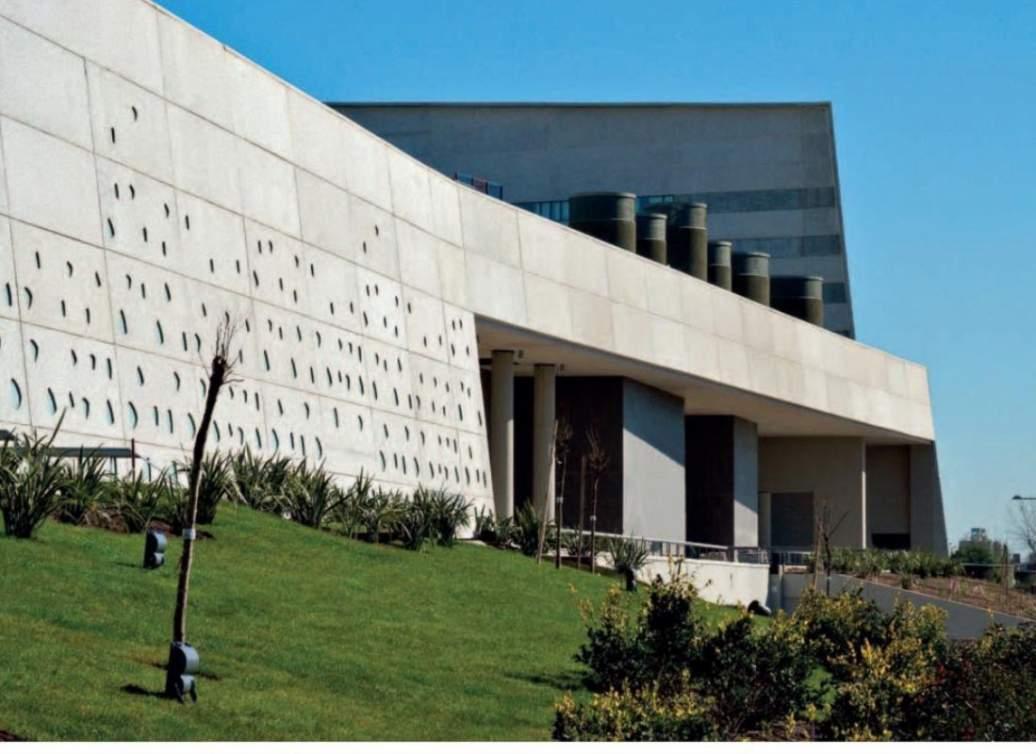
Facades were resolved with precast broken grey stone walls. The irregular geometry of the building contrasts with the urban grid of Rosario. “We wanted to emphasize the ludic aspect of the complex,” Quintiero comments.
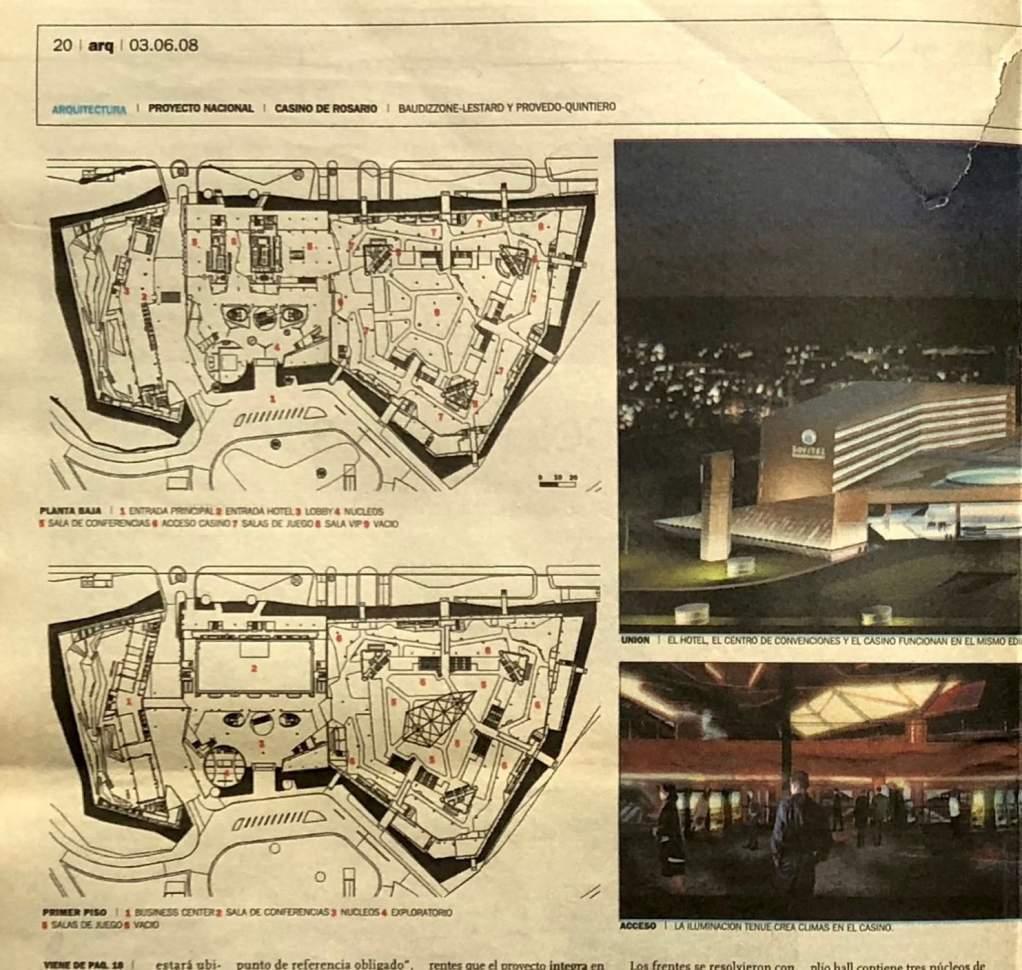
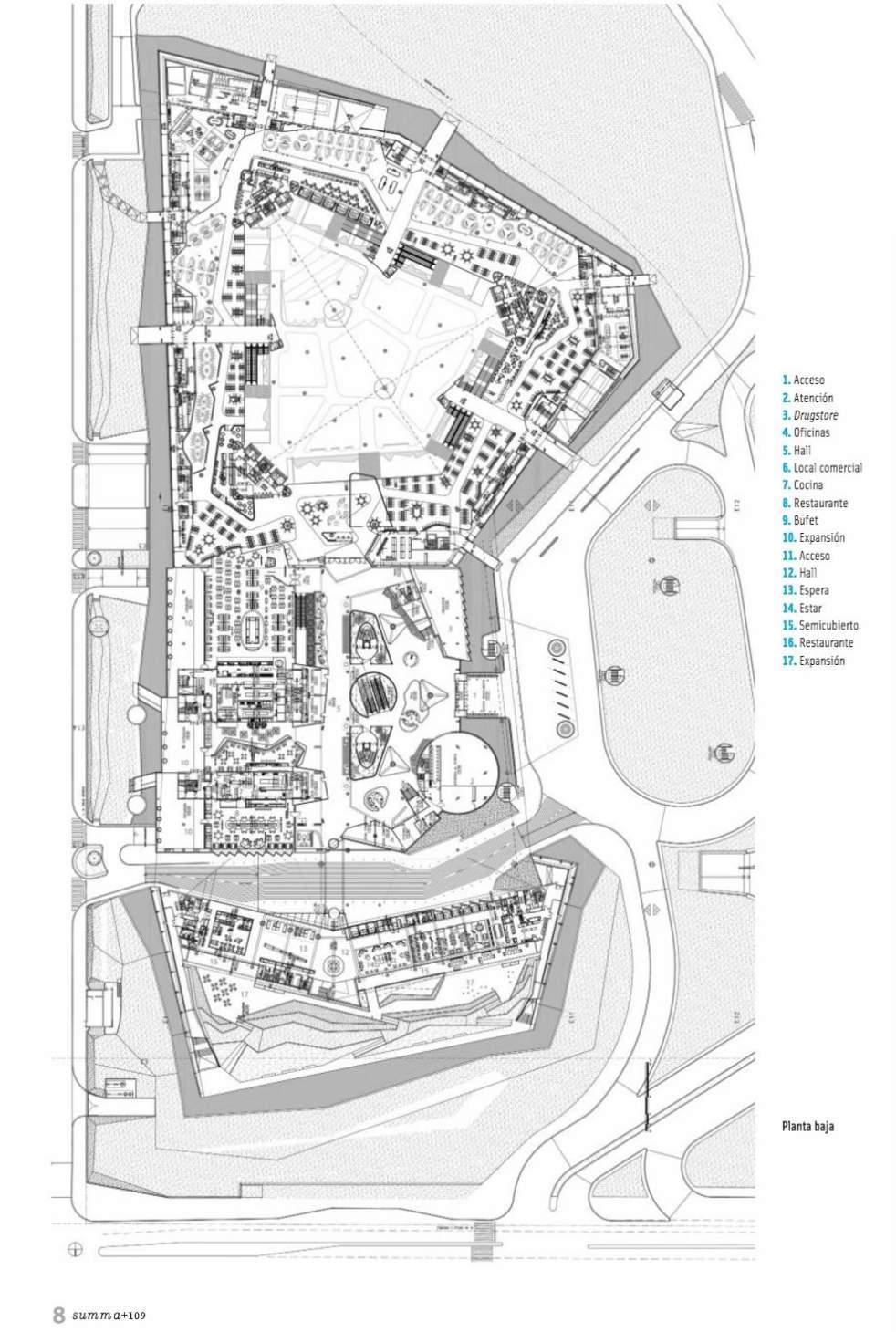
The main entrance to the building breaks up the construction into two. In the middle of it, where the convention center is, an ample hallway contains three cores of elevators and escalators leading to the conference rooms on the first floor. On the ground floor, two doors open to the hotel (to the left side) and to the casino (to the right side).
“In this way, the building gradually takes up different activities.” Lestard explains. The convention center in the middle of the block allows to set a limit, and provide hotel guests with their privacy, from the public gambling sector.
Covering an area of 18,000 square feet, the middle sector functions as the natural sequel of the hotel. For the ground floor, draftsmen developed a tourist information desk. Also, that area will also showcase different exhibitions of art works.
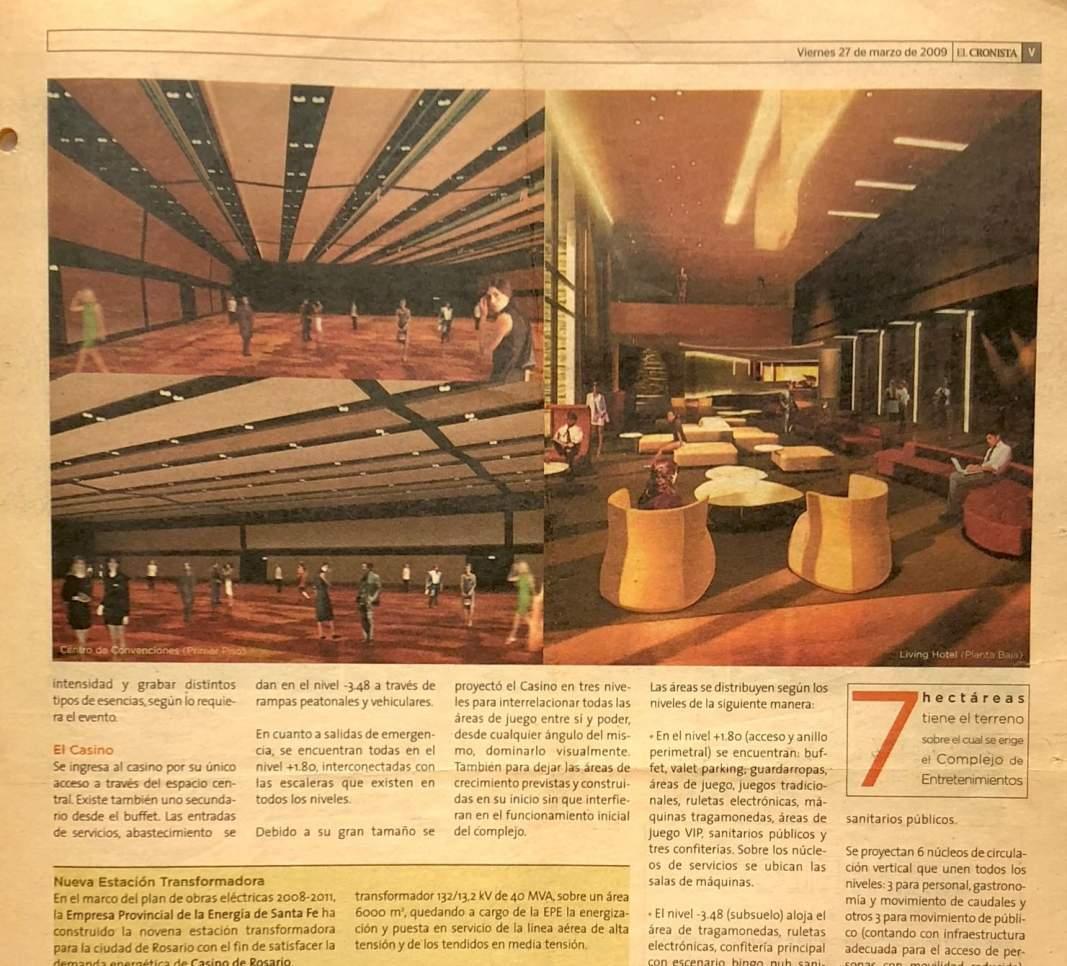
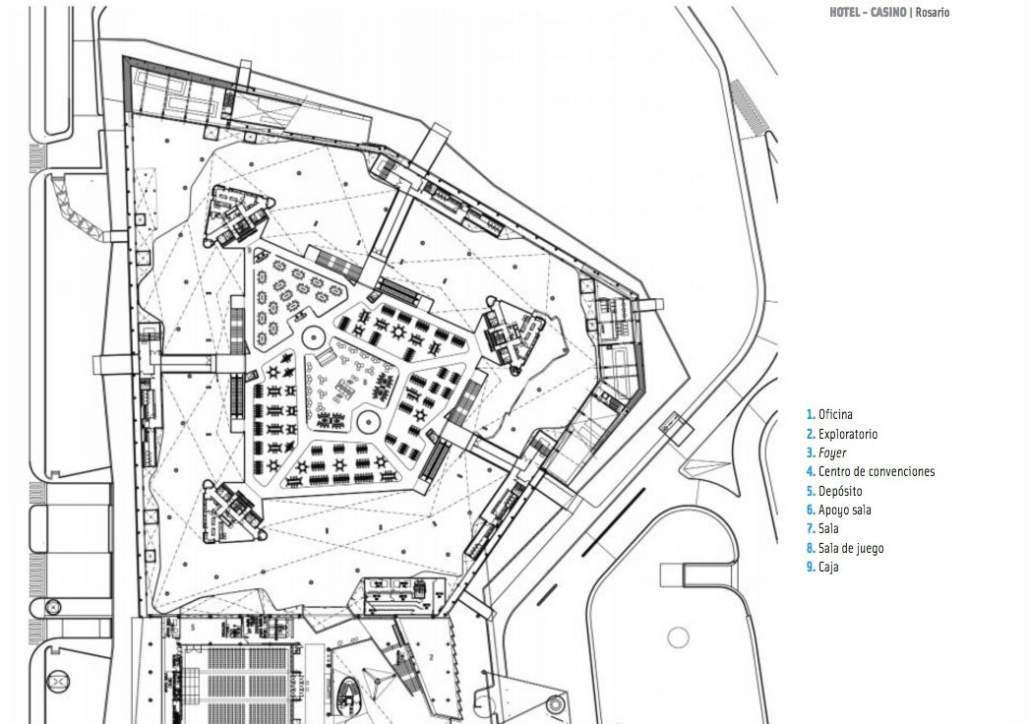
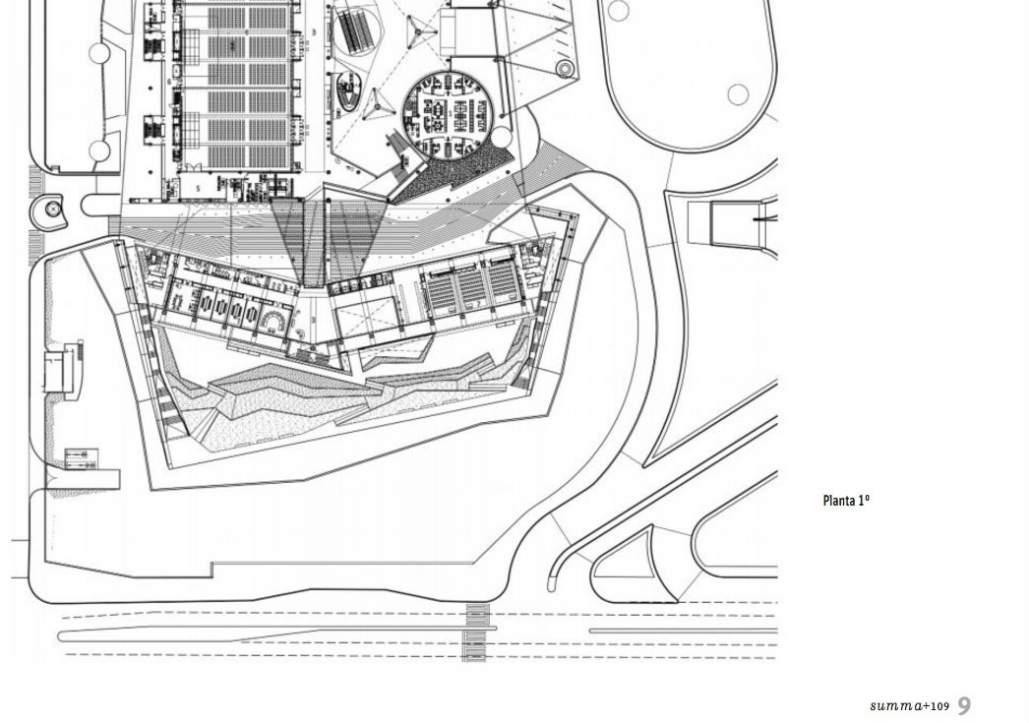
On the first floor, the convention area will be located. It will be a large room sitting 2,000 people. It will be possible to split it into three rooms, by means of a sliding acoustic partition wall system. The huge convention room will be connected through a door to the hotel business center. At this level, a children’s science museum will be arranged.
Baccarat. The casino is the largest sector of the building, covering an area of 35,846 square meters. Gambling rooms will only be accessed through the main entrance door, from the tourist and convention center.
The sector is projected in three open levels joined by a central atrium. This resource not only allows to relate all gambling rooms but also builds up a kind of panoptic that makes it possible to have a view of the casino from any of its angles.
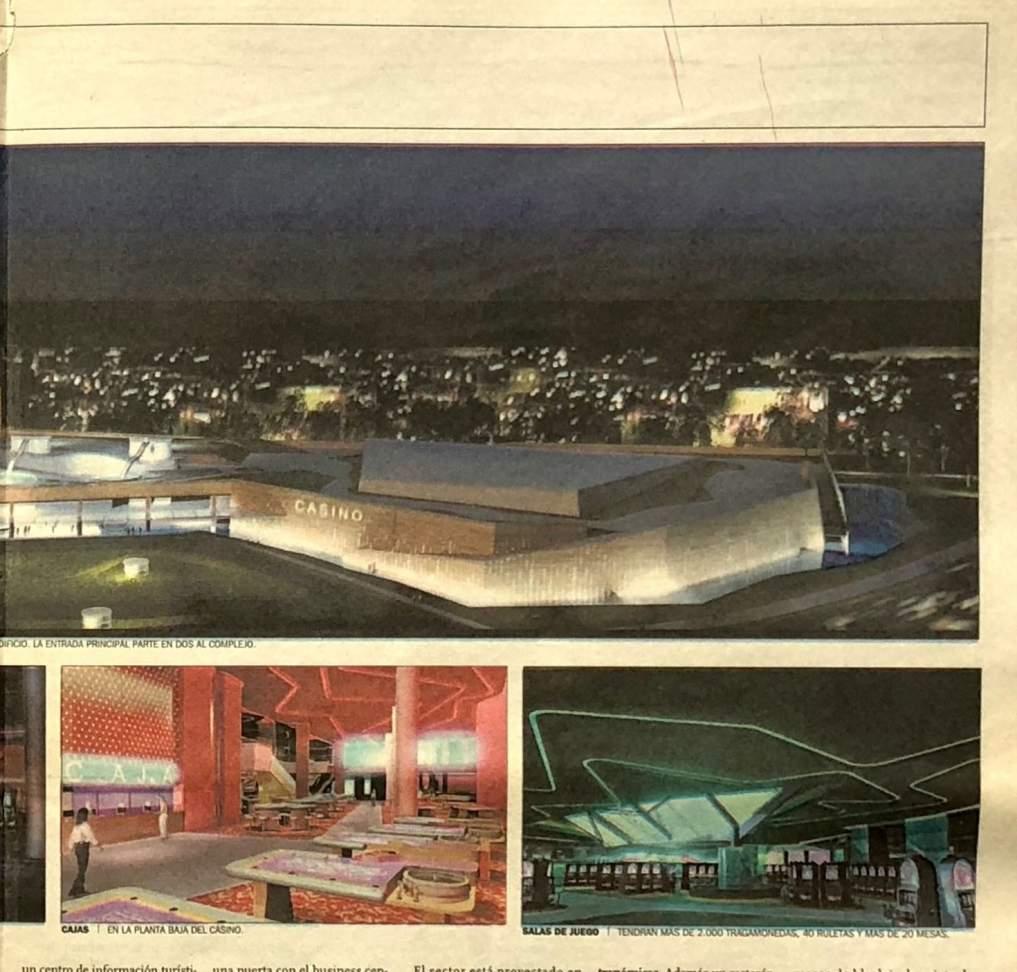
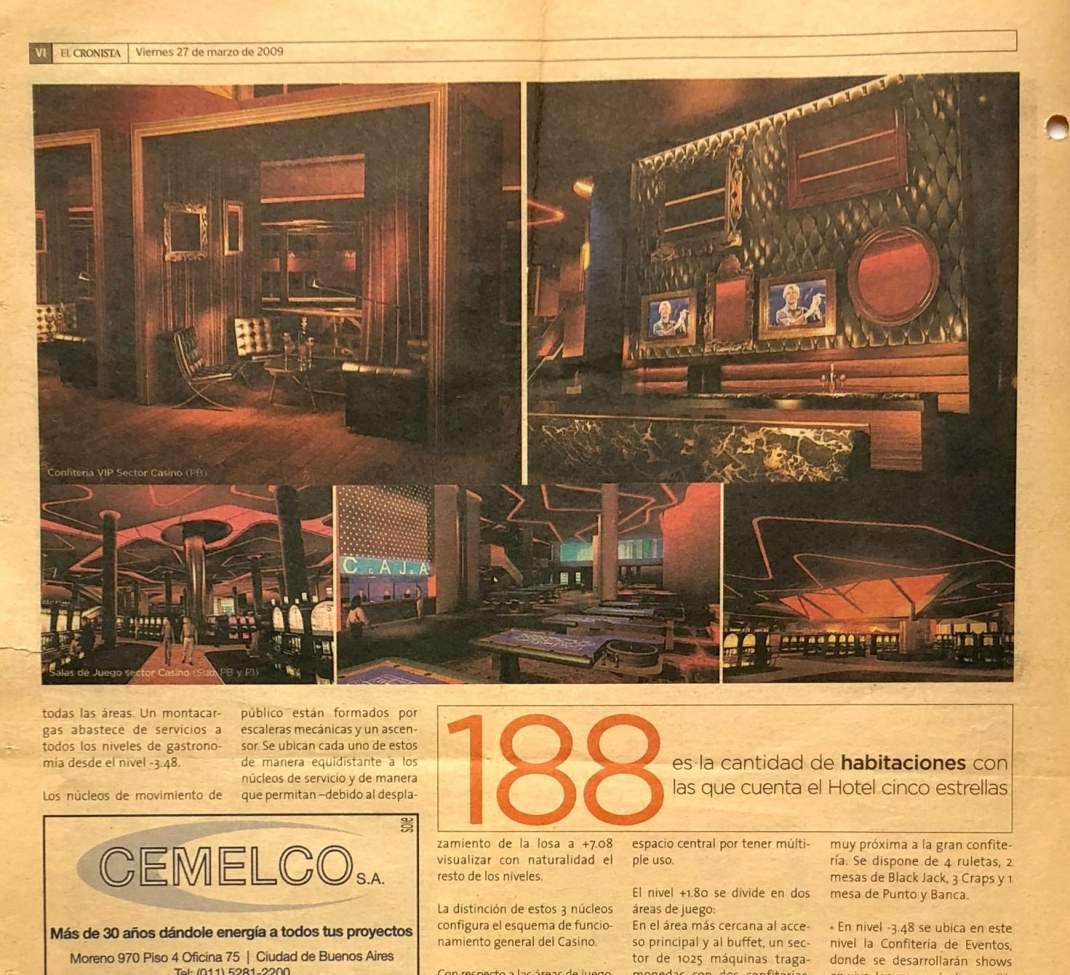
“People will come not just to bet,” Quintiero says. The casino area will count with five gastronomic bays and a restaurant which will be linked to the tourist information center. Gambling rooms will be introduced gradually. On the access level, slot machines and two coffee shops will be mounted. A bit retired from the main entrance, a reserved sector will house traditional games, such as 40 roulettes, 5 tables for baccarat, 9 tables for black jack, and 7 tables for poker games. This area will be integrated into another much larger coffee shop, sitting 300 people, in this way dividing the public gambling area from the VIP sector. The second floor will house 879 slot machines, electronic roulettes, and a bingo, a pun, and a coffee shop where shows will be performed. The top and last level will add another bar and more slot machines.
An original bet of the casino and convention center areas is their terraces, where the sports equipment of the hotel is. “Hotel rooms are lo cated above the rest of the complex,thus we didn’t want them to overlook to zinc rooftops and equipment. That’s why we turned terraces into the fifth façade of the building,” Lestard explains. The machinery room and airconditioning equipment systems are placed at the underground floor of the casino.
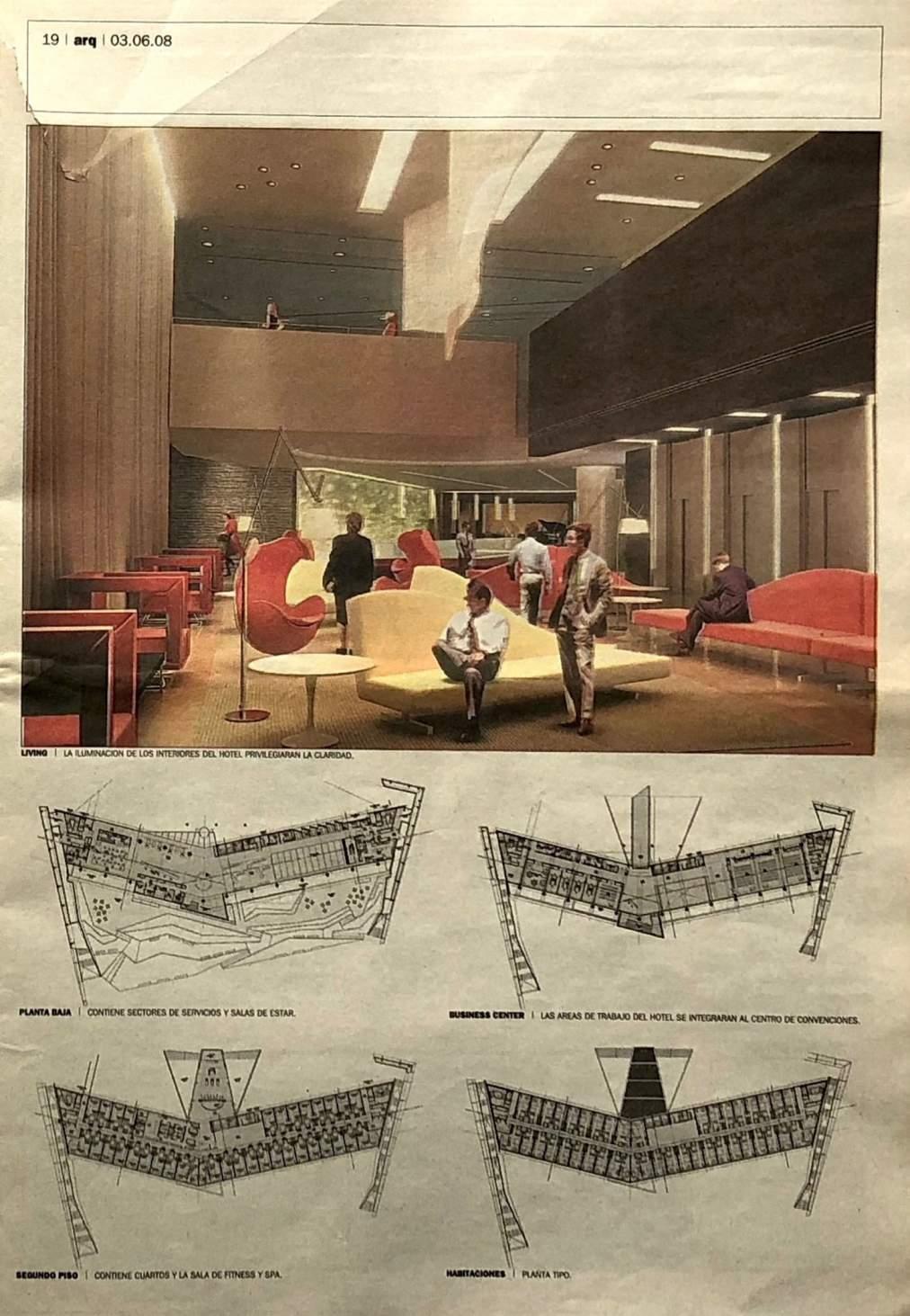
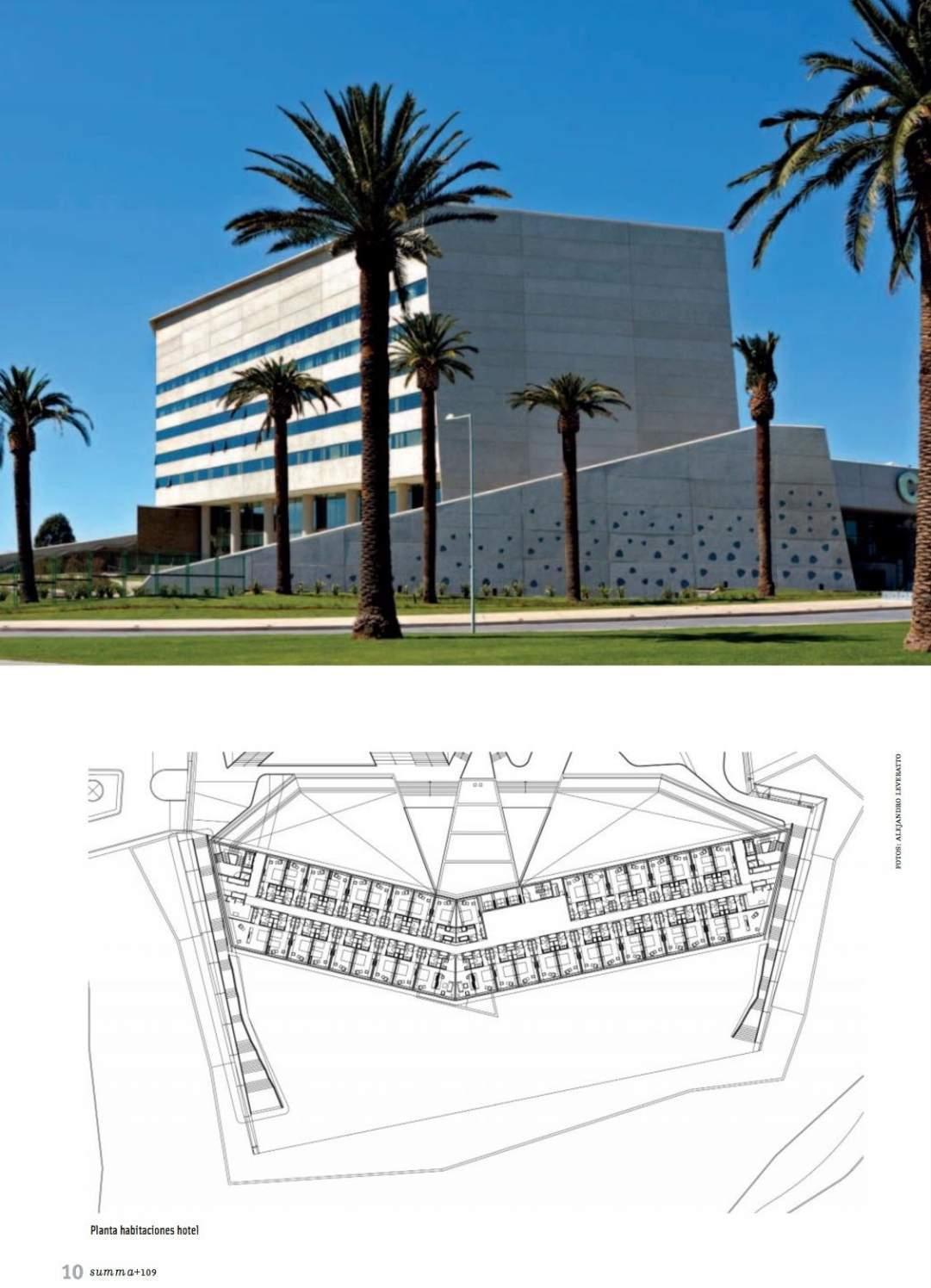
The hotel will be managed by the Accord hotel chain. One hundred eighty-eight rooms will be offered in 5 floors, covering an area of 20,000 square meters. Such five levels develop a double center line, standing out from the low roofs and domaining the entire complex within a surrounding green landscape.
The first two levels comprise the service area. On the ground floor you find reception halls, saloons, and al fresco restaurants. The business center is on the mezzanine, integrated to the convention room from the central sector. Almost 55,000 square meters are intended for parking lots; the machinery room will be located on the underground floor. Draftsmen expect the works to be finished by the second half of next year. There will be no partial ribbon cuts. All sectors will be opened at the same time. It is expected that when all three sectors are in full swing, the complex will have around 2,000 visitors every week-end. They will be able to sleep, work, and have f un all in the same place. This will offer a stay that will bring Las Vegas closer to the seat of the national flag.
WATER AND LIGHT TO CREATE AN ATMOSPHERE ZOOM
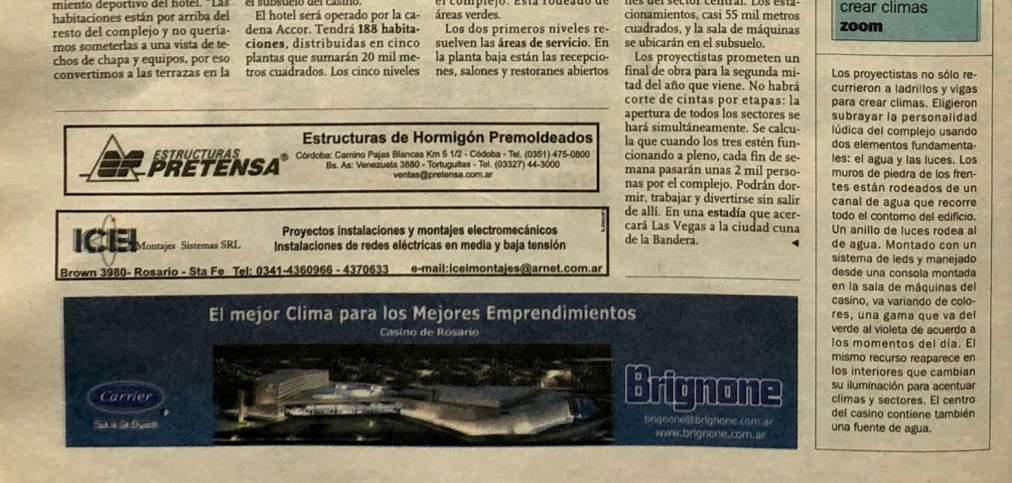
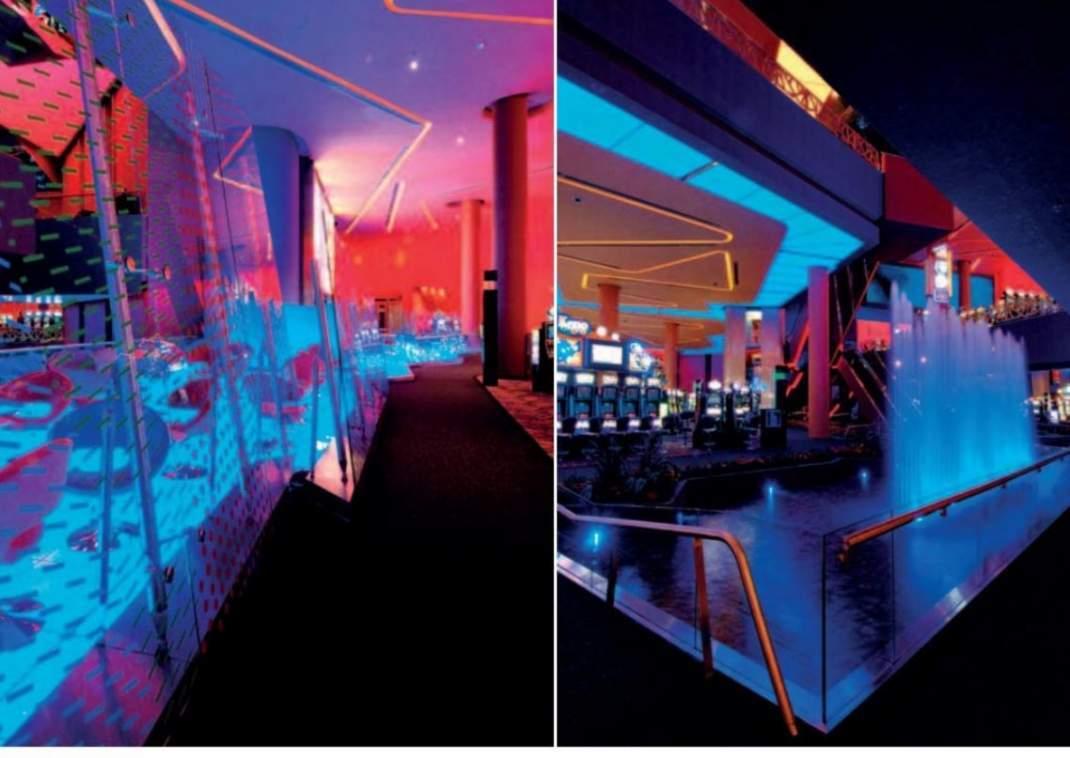
Draftsmen resorted not only to blocks of bricks and beams to create an atmosphere. Rather, they chose to highlight the ludic personality of the complex by making use of two essential elements: water and lights. Front stoned-walls are surrounded by a winding water channel around the whole building. A light ring lights up the water. A LED lighting system managed from a switchboard mounted at the casino machinery room changes colors from a shade of green to violet depending on the time of the da y. This same resource is repeated inside the building, where colors change to create different climates and tell sectors apart. At the heart of the casino, there is a water fountain.
[Photographs]
First Floor: 1. BUSINESS CENTER 2. CONFERENCE ROOM 3. CORES 4. EXPLORATORY ROOM
5. GAMBLING ROOMS 6. VACUUM
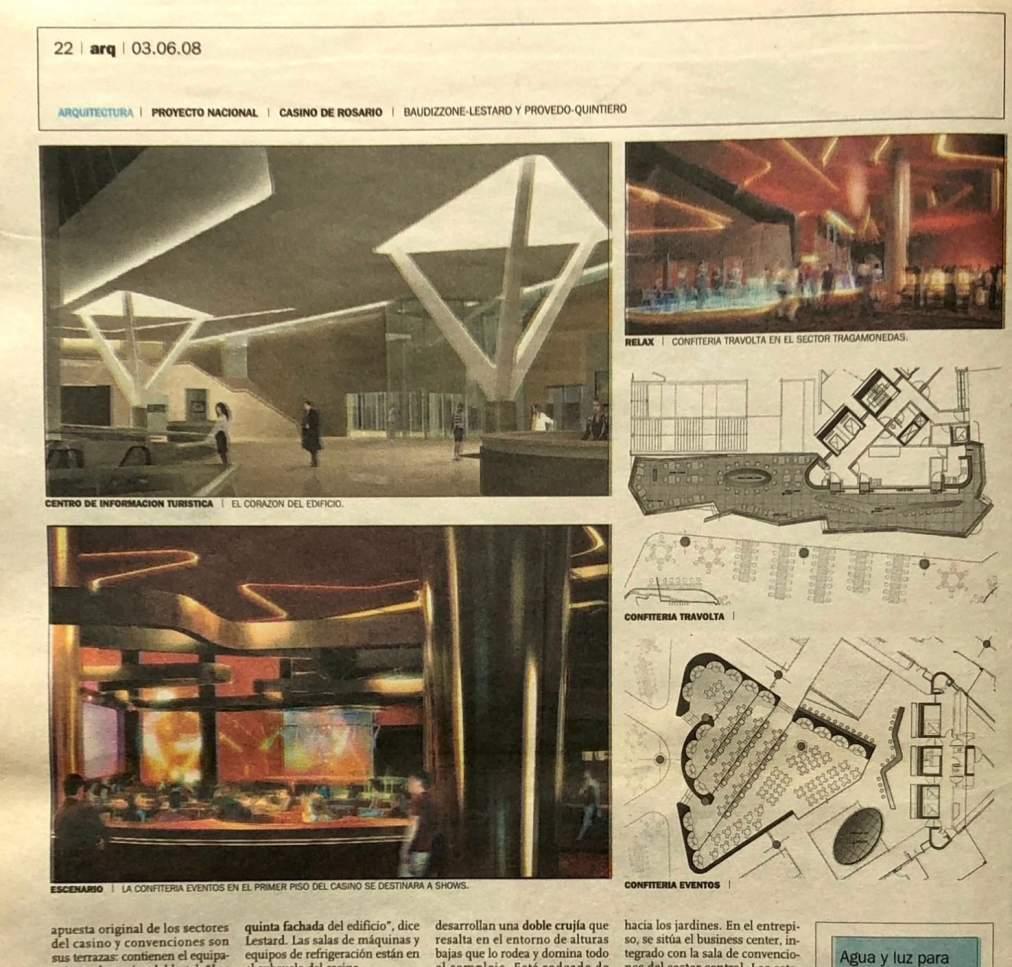
Access: The dim light creates themes at the casino.
Cashiers: At the ground-floor of the casino
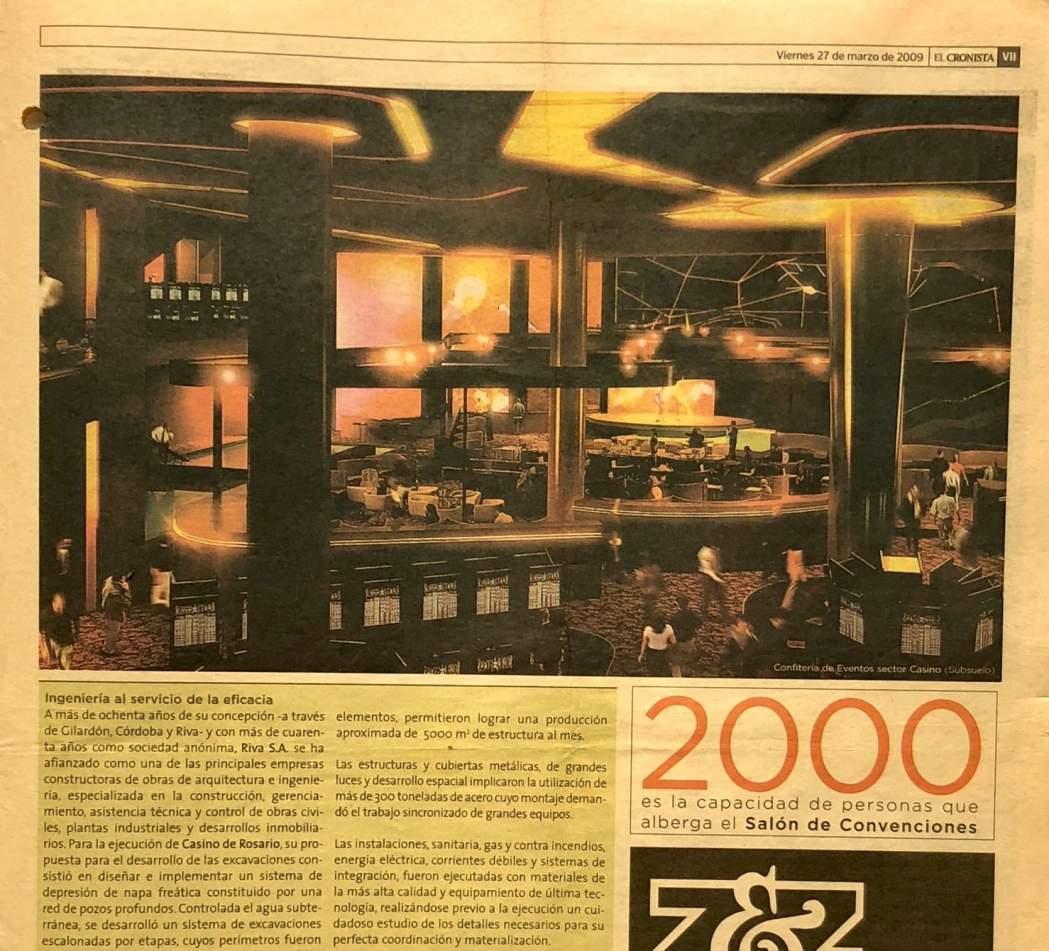
Gambling rooms: More than 2,000 slot machines, 40 roulettes, and over 20 gambling tables. Stage: The Event Coffee Shop, on the first floor of the casino, will be intended for live performances.
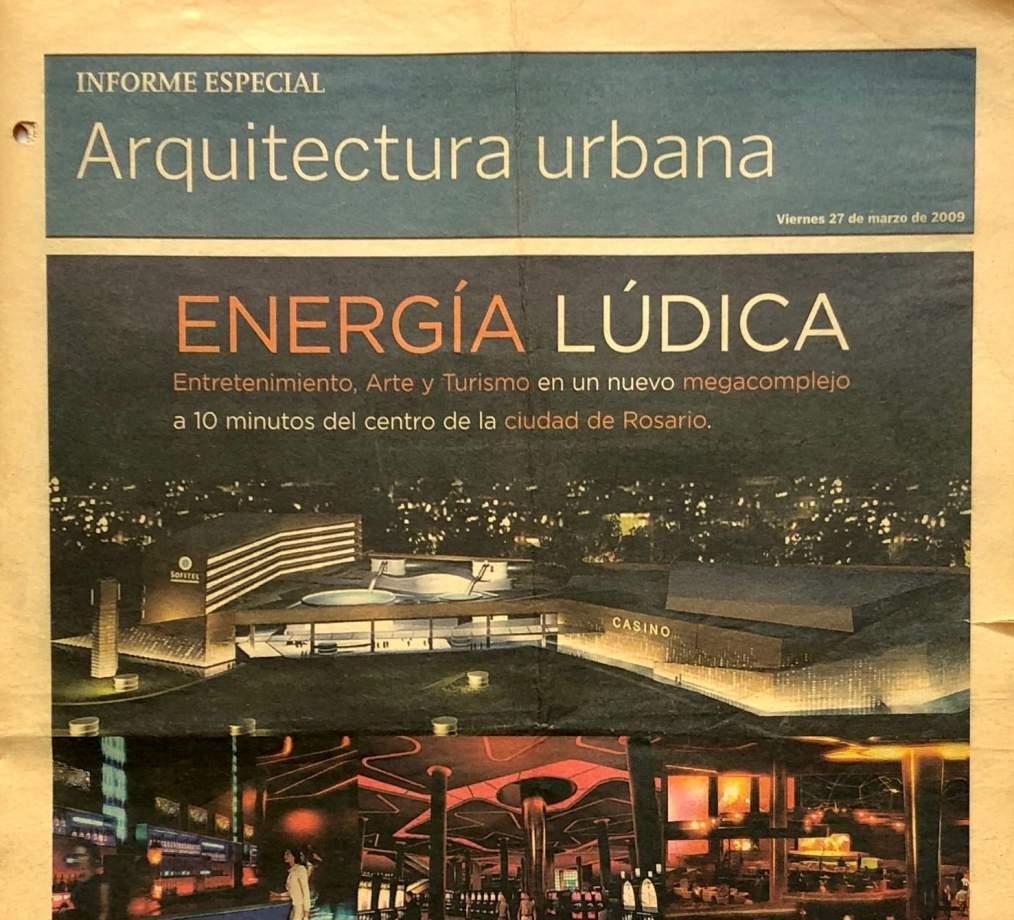
SPECIAL ISSUE - URBAN ARCHITECTURE LUDIC
POWER
A new mega complex: Entertainment, Arts & Tourism all in one. Just 10 minutes away from Rosario City center.
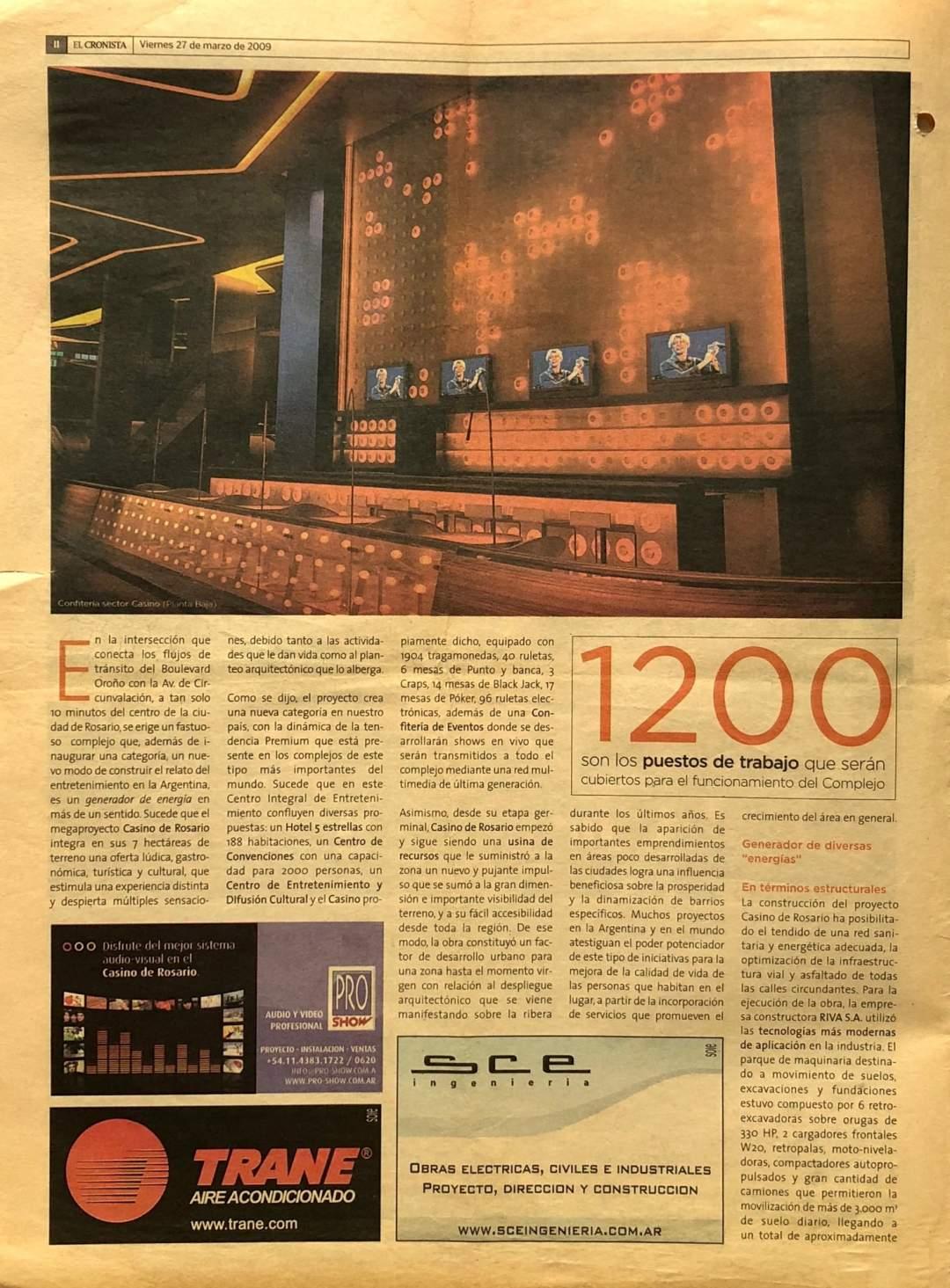
At the intersection connecting the traffic from OroñoBoulevard and Circunvalacion Avenue, just 10 minutes away from Rosario City center, a magnificent complex stands out, which apart from raising the bar within its category, and creating a new concept of entertainment in Argentina, serves a power generator, in more than one sense. The megaproject Casino de Rosario, covering an area of 7 hectares of entertainment, gastronomic, tourist, and cultural offer, encourages a different experience and triggers multiple feelings, both thanks to all possible activities that can be done there and the architectural layout that contains them.
As previously said, the project sets up a new category in our country, aiming at achieving Premium facilities, to keep up with the most important complexes of this kind worldwide. In this comprehensive entertainment center, several proposals converge: a 5-star Hotel with 188 rooms, a Convention Center, sitting 2,000 people, an Entertainment Center and Cultural Center, and the Casino itself, provided with 1,904 slot machines, 40 roulettes, 6 Baccarat tables, 3 Craps, 14 Black Jack tables, 17 Poker tables, 96 electronic roulettes, and a Live Show Bar, where live performances will take place and be broadcasted throughout the complex via a state-of-the art multimedia network.
Furthermore, from its inception, Casino de Rosario began as, and continues to be, a resource pool that extremely benefitted the city, giving it a new push, making the area more visible and allowing an easy access from the entire region. In this way, this work represented an urban factor development for an area that had not witnessed any architectonic advances so far, unlike the riverside area of the city over the last years. It is widely known that the development of major undertakings in poorly developed areas in a city drives significant progress and dynamizes particular neighborhoods. There are many cases in Argentina and the world that prove how this type of initiatives significantly improves the life quality of inhabitants, due to the facilities established in their surroundings.
Generator of myriad “energies”
In terms of structure
The construction of the complex has allowed to develop a suitable sanitary and power network, optimize road infrastructure, and paving of all surrounding streets. For the execution of this work, the company Riva S.A. us ed the most edgy technologies available in the industry. The machinery equipment devoted to soil excavation, movement, and foundations, involved 6 crawler excavators of 330 HP, 2 front loaders W20, backhoe excavators, motor graders, self-propellant compactors, and a great number of trucks that allowed to move over 3,000 m3 of soil on a daily basis, reac hing out a total of approx. 170,000 m3 excavated soil, with 3 underground levels.
In terms of social impact
For the construction of the complex, aro und one thousand operators were hired by the construction company and strictly assigned to the worksite, and alsoother people for specific areas. On the other hand, Casino de Rosario, which has its own Human Resources Department, will create 1,200 job positions, to cater for the complex requirements.
In terms of cultural issues
Despite the fact thatthe city of Rosario is itself an attraction pole, the complex is intended to emphasize the cultural production of the city and its surrounding areas, encouraging tourist and arts development. Apart from conforming a self-contained nucleus that proposes decentralization, it brings new breezes to the tourist proposal offers –like in the case of San Lorenzo Museum. Also, new attractions are added through the organization and management of prestigious events at a regional, domestic and international level.
In terms of real estate investment
“New winds” blow in Casino de Rosario, and the areas conforming its surroundings have also been revalued. An important new market has been created, where there used to be a barren land before, while attracting new business opportunities to catch new prospective investors.
In terms of technology
To bring this project to live, top-tier supplies and equipment available in the market have been used, and the most capable and renowned experts have taken part in each relevant division to contribute with their know-how so as tooptimize the chances of facilities.
In symbolic terms
The design of the project and work direction was in the hands of a joint venture comprised by the architecture firms of the Architect AldinaQuintieroand the Architect Mario Provedo, and the Architect Miguel Baudizonneand the Architect Jorge Lestard, respectively. Apart from resignifyingthe context, Casino de Rosario conveys through its shape as a huge rock, a ludic and different world that interestingly contrasts with the background, being an urban icon, and well integrating with the surrounding pa rk. There is an organic relation with water and the bushy green landscape emerging from its sides, outlining a smooth landscape transition. On the outside walls, fireproof linen hangs from the wall tops, where a LED system is projected, proposing a creative experience: The doors to an enchanting dimension are opened, where pleasure is the result of a global sum, rather than a combination of isolated parts. Undoubtedly, it can be stated that a new chapter has been written on the book of culture of entertainment in Argentina.
Technical Sheet
The Hotel
The Hotel with a Convention Center, has 188 rooms. It is a five-story building, with a double center line, which emerges in an integrated way from the construction complex and creates its own landscape. To the north, between the channel surrounding the complex and the bushy linear park of the Hotel, a magnificent garden area is deployed. To the south, a large terrace is located, conforming an entertainment park, housing the fitness and aquatic center.
At the two lower floors, facilities for hotel passengers are found. On the ground floor, a hall, reception desks, lounge rooms, restaurants and 4 coffee shops are located, all of them overlooking the northern gardens.
The business center is located on the mezzanine, as well as the necessary rooms for the ordinary activities of a 5-star hotel. Crossing the street, on the same level, a Convention Center for 2,000 people is on the first floor of the Tourist Proposal area, which is suitable for several events and can be subdivided into 3 smaller rooms. This room can offer an integrated performance to the Convention Center or used in isolation.
On the underground, all private services of the Hotel are located, the machinery room, and the parking lots for guests, offering a valet parking service.
Convention Center
This area is exclusively devoted to events and conventions, a service area and a foyer. This large-sized room annexed to the hotel, is fitted with a state-of-the-art audiovisual system to be at the level of any kinds of events, such as private parties, conventions, conference projections, job meetings, etc. It can be divided into three rooms by means of sliding acoustic partition walls, which allows for a maximum space optimization according to the kind of event. Service access is on the oppo site side to customers’ side, with its own circulation along the entire room.
The place is lit by a dim lighting system, thus lighting intensity can be dimmed and record different types of essences, as required by the event.
Casino
The casino is accessed through a single main access point at the center. But there’s a secondary access through the buffet area. Service and supply entries are located at the level -3.48 by means of pedestrian and vehicle ramps.
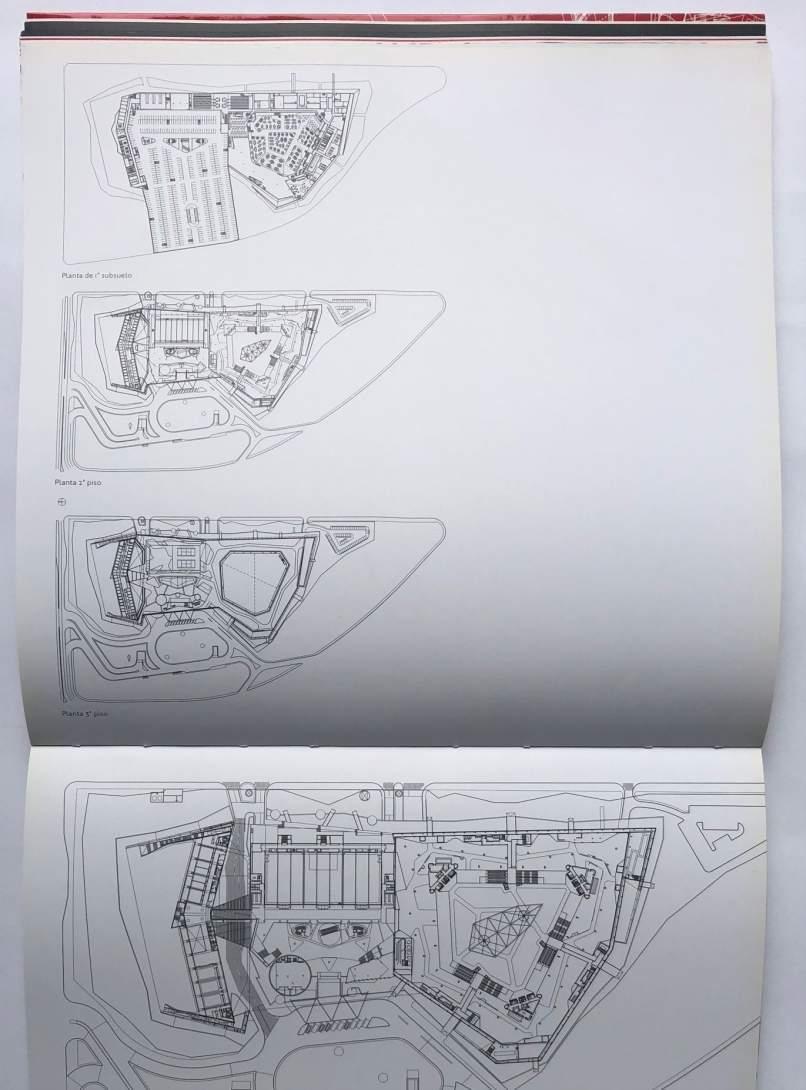
As regards emergency exits, they are all on level +1.80 interconnected with the ladders at all levels. Due to its large size, the casino was projected in three levels, so as to interconnect all ofthe three gaming areas, andbe able to have a panoramic view from all ofits corners. Also, this was intended this way to leave the areas to be constructed from the start, without interfering with the early activities of the complex.
Such areas are distributed in the following way: on +1.80 level, (access and surrounding ring) we can find: a buffet, valet parking, lockers room, gambling areas, traditional gaming, electronic roulettes, slot machines, VIP gambling rooms, public restrooms, and three coffee shops. On top of the service hub, there are the machinery rooms.
Level -3.48 (underground) contains the area of slot machines, electronic roulettes, main coffee shop with a performance stage, a bingo, restrooms, pubs, public restrooms, administration, food court, (warehouse and own manufacturing), staff area, lounge room, locker room, and restrooms.
On level +7.08, we can find the area of slot machines, coffee shops and public restrooms. Six hubs of vertical circulation are projected, which connect all three levels: 3 for the staff, gastronomy, and values transfer, and other three for public movement, (including access for handicap people). All casino levels are joined through these six hubs.
The service hub comprises staff and gastronomy elevators, intended only for staff movement along the entire building. A forklift supplies all gastronomic levels from -3.48 level.
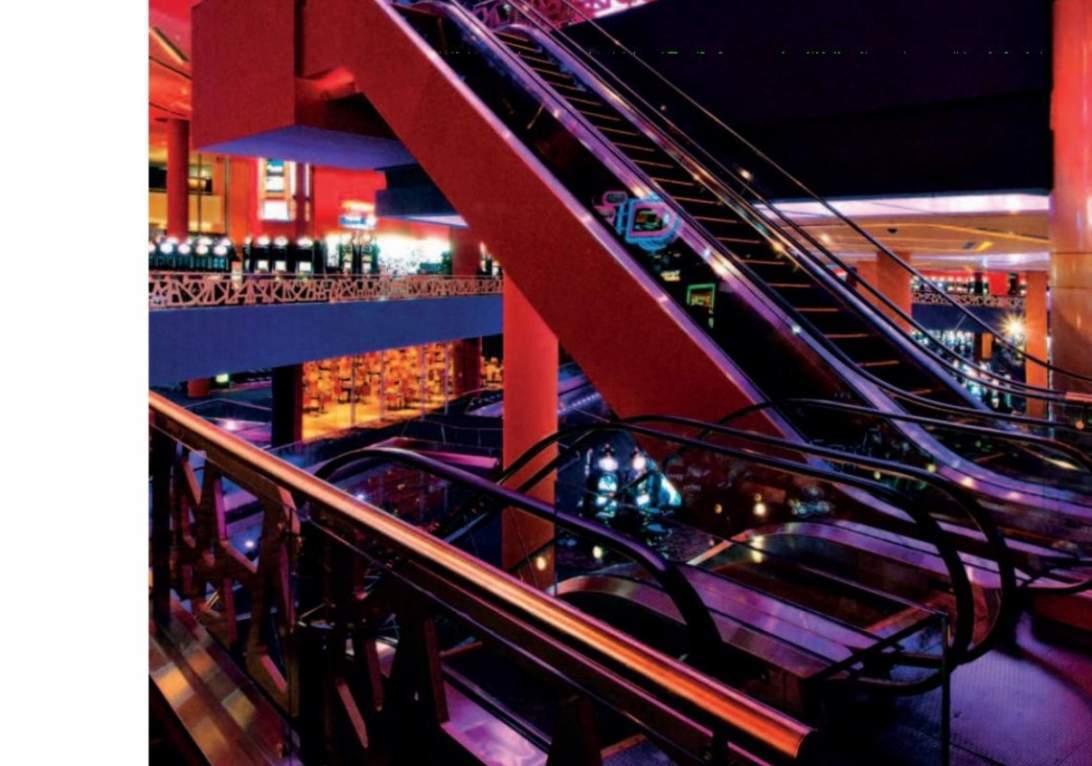
Visitors’ hubs involve escalators and an elevator. Each of them is located at an equal distance from service hubs, due to displacement of cement floor to +7.08 to be able to have a full view of the remaining levels.
The general scheme of performance of the Casi no is the distinction among these 3 levels. Regarding the gambling area, at the access level on +1.80, we can find the main entrance, to one side of the buffet. This level also connects the area of the Tourist Proposal.
The general scheme of performance of the Casino is the distinction among these 3 levels. Regarding the gambling area, at the access level on +1.80, we can find the main entrance, to one side of the buffet. This level also connects the area of the Tourist Proposal.
The drugstore, belonging to the casino, is located at the exit of the central space, considering its multiple purposes of use.
Level +1.80 is divided into two gambling rooms. In the area closer to the main entrance and the buffet, a sector of 1025 slot machines with 2 coffee shops. On the southern corner, traditional gambling machines are located inmore reserved areas, apart from a coffee shop sitting 300 people. To the southeastern end, the VIP area is destined for traditional games, and slot machines are on a corner, next to the great coffee shop. Four roulettes, 2 Black Jack tables, 3 Craps, and 1 Baccarat table are set up.
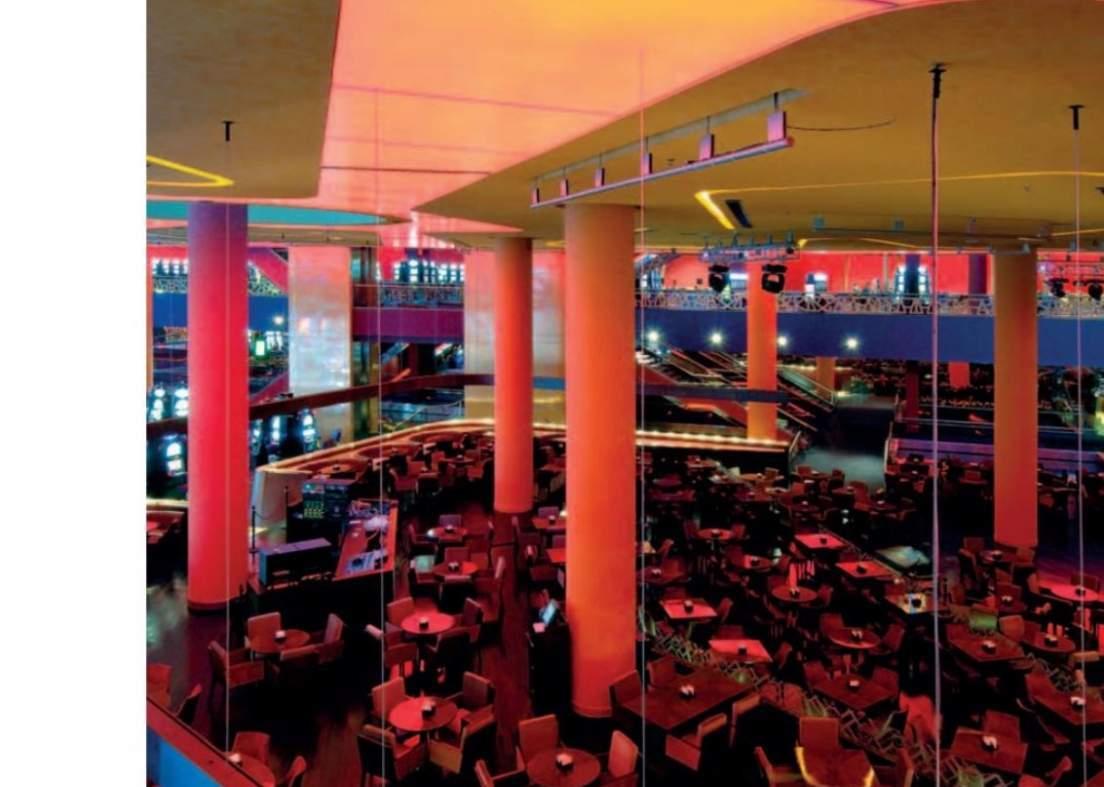
Level -3.48 houses the Live Show Coffee Shop, where live performances will take place and be broadcasted in the entire complex through a multimedia system. There are 879 electronic roulettes. And the bingo and pub generate their own atmospheres.
Level +7.08 offers slots machines and coffee shops.
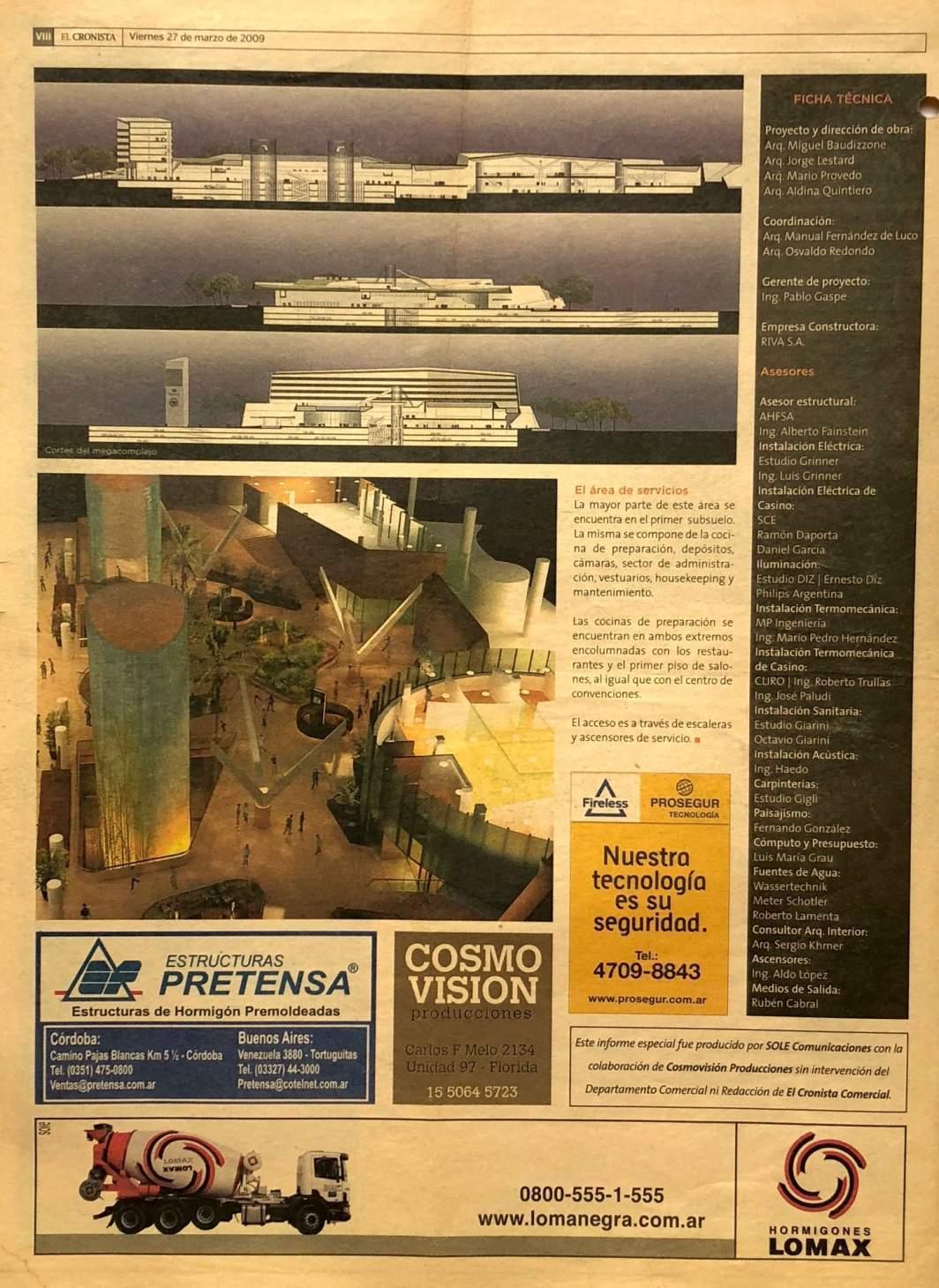
Service Area
Most part of this area is on the first underground level, comprising the kitchen, warehouse, chambers, administrative services, locker rooms, housekeeping and maintenance rooms. Kitchens are placed at both ends in line with the restaurants and the first floor of the lounge rooms, as well as with the convention center.
Access is through escalators and service elevators.
Lighting Touches create another experience
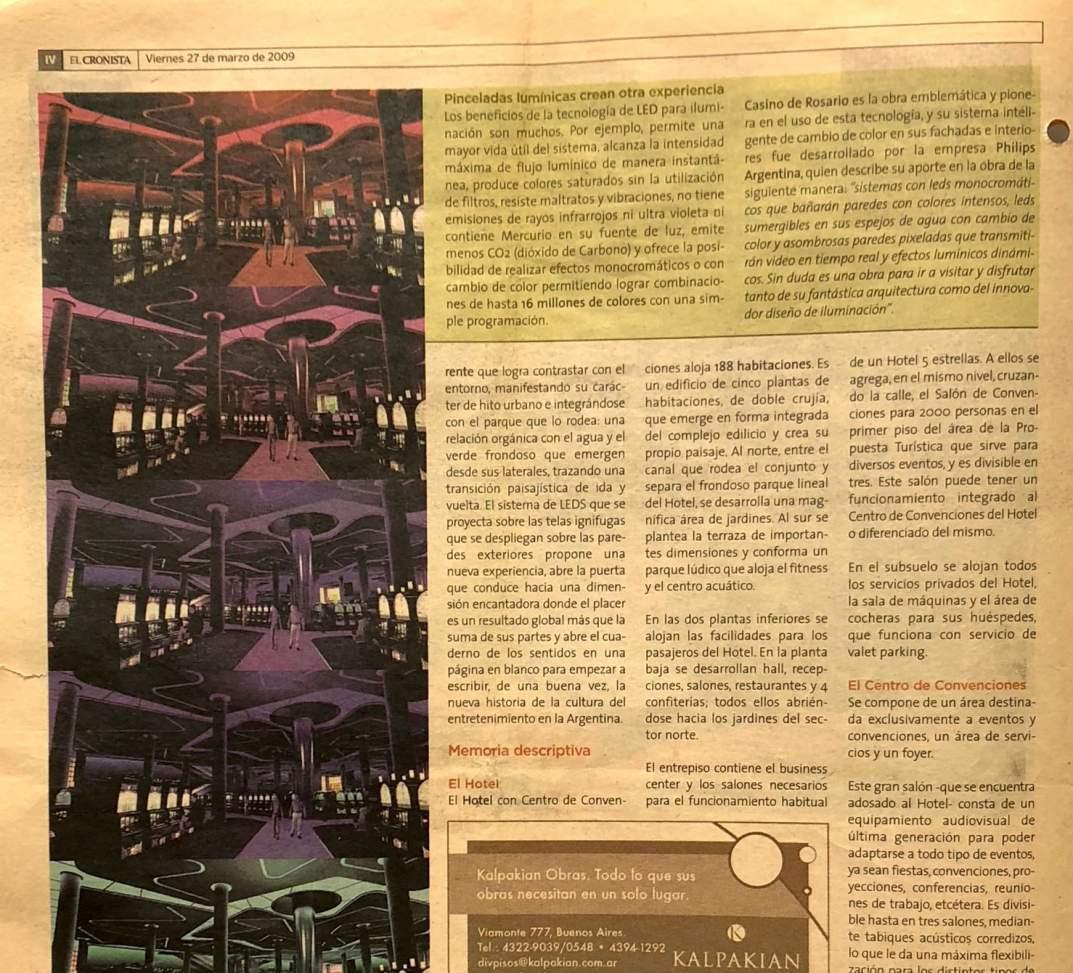
LED lighting advantages are countless. For instance, a longer life cycle of the system is allowed, while reaching the top lighting flow intensity in a matter of instants. Saturated colors are possible without any filters. It is da mage and vibration resistant. Neither infrared or ultra-violet emissions, nor mercury is contained in its source of lighting. CO2 emissions are low and allows for monochromatic effects or color changes with potential combinations of up to 16 million colors with a simple programming. Casino de Rosario is the emblematic and spearheaded work in the use of this kind of technology, and its intelligent system of changing colors on its facades and indoor areas was developed by the company Philips Argentina. Its contribution has been described as follows: “monochromatic LED systems that will bathe walls with vibrant colors; LED bulbs submergible in water pools with changing colors and stunning pixeled walls that will broadcast video in real time and dynamic lighting effects. No doubt this is a work worth visiting and enjoying, both due to its fantastic architecture and its innovative lighting design.”
New Power Station
Within the framework of electric works 2008-2011, the company EmpresaProvincial de la Energíade Santa Fe has managed to build the ninth po wer station for the City of Rosario with the aim of meeting the power demands of Casino de Rosario.
The project was about the construction of a power generator station called “ET Ovidio Lagos” with high to medium power lines, involving a high power line, with its related fields, and a medium power lines cabling required to supply the magnificent complex. Also, it is equipped with a 132/13.2 kV transformer, 40 MVA, over a 6,000 square meterarea. The power supply and start-up of such power station is managed by such EPE.
Currently, the City of Rosario holds eight po wer stations, apart from this one, where a $18,000,000 million investment has been injected, which is of the three that will become operative this year, significantly changing the electric one system of the City of Rosario and its suburbs.
Project Synergy
Provedo-QuintieroArchitects has over 18 years of experience in the field of hospitality and leisure works and has already completed 28 entertainment rooms in Argentina. Its distinctive touch in terms of architectural aesthetics is their self-awareness of their expertise and professionalism in the “creation of feelings” and extending the theme variety in the entertainment area.
Baudizzone-Lestardand Associates was established in 1964, working very hard ever since in the areas of work project and management of Architectural Works, Urban Design, and Interior Design. From its early beginnings, the firm has undertaken emblematic projects, such as the RetiroArea Urban Project, Mendoza Cultural Center, Mar del Plata racetrack, and the residential ChenautTowers, etc., taking pride in over 10.763.910 square feet built so far.
Engineering at the service of effectiveness
Over eighty years of conceiving it, through Gilardon, Cordoba and Riva, and with more than forty years of experience as a corporation, Rivas S.A. has managed to become one of the main key players in architectural and engineering works, specialized in building, managing, technical assistance and control of civil works, industrial plants, and real estate developments. For the execution of the project Casino de Rosario, its proposal for carrying out digging works involved designing and implementing a system of water table depression built by a network of deep wells. Once the water currents were controlled, a system of excavations developed in several steps, the perimeters of which were reinforced by reinforced concrete walls was also built at different stages.
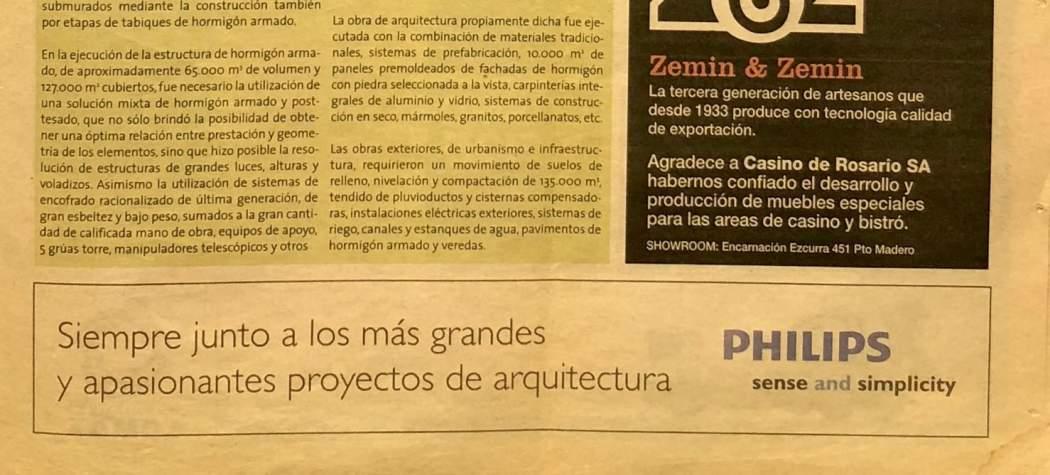
For executing the reinforced concrete structure of a volume of around 699.654 sq. ft., and 1.367.016 covered sq. ft., it was necessary to use a mixed solution of reinforced and post-stressed concrete, which not only achieved an optimal relation between element geometry and service but also made it possible to find a way to build large-scale lighting structures, very high and cantilevered constructions. Furthermore, using state-of-the-art light-weighted thin rationalized formwork systems, in addition to the great number of qualified workmanship, supporting equipment, 5 tower cranes, telescopic handlers, and other elements, allowed to produce an approx. 53.819 sq. ft. structure on a monthly basis.
Metallic structures and covers of large lighting devices and space development involved using more than 300 tons of steel, which demanded a great coordination work to assemble it.
Sanitary, gas, power, fire-fighting, weak current, and integration system installations were executed with top quality materials and state-of-the-art equipment, having previously studied every detail very carefully for their coordination and materialization.
The architectural work itself was constructed with a combination of traditional materials, pre-manufacturing systems, 107.639 sq. ft. of pre-molded panels of concrete facades with stone in sight. Indoor aluminum and glass carpentry, dry construction systems, marble, granite, and porcellanatotiles were used as well.
Exterior urbanism and architecture works demanded soil movement activities, such as excavation, leveling, and compaction of 1.453.127 sq. ft. of laying of pluvial ducts and reservoirs, exterior power installations, water channels and ponds, reinforced concrete pavement and sidewalks.
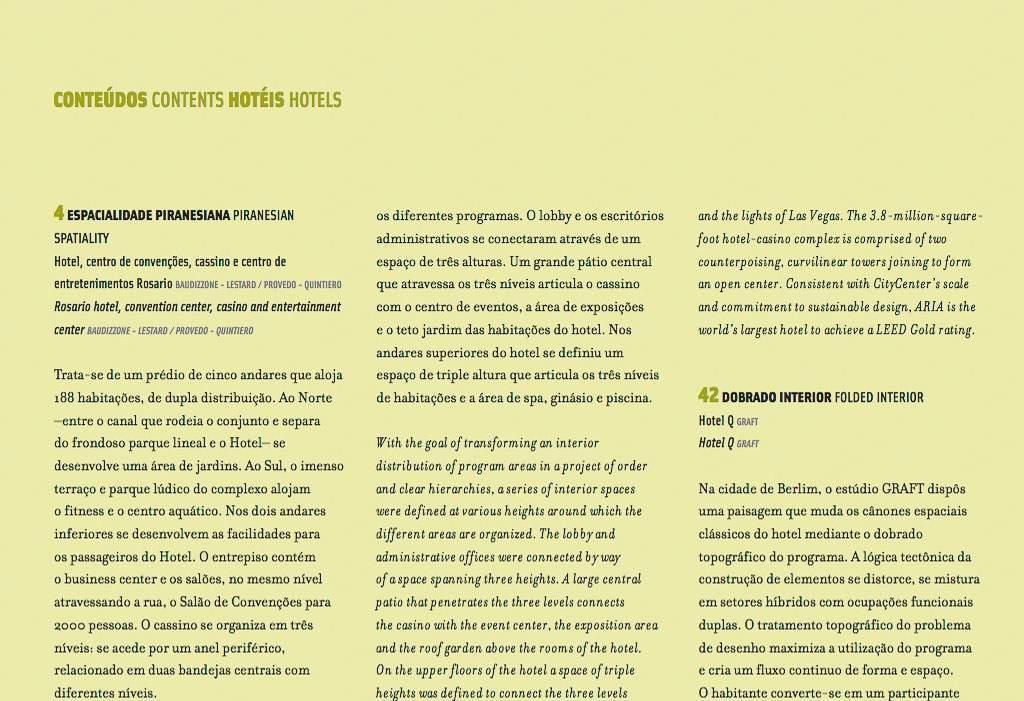
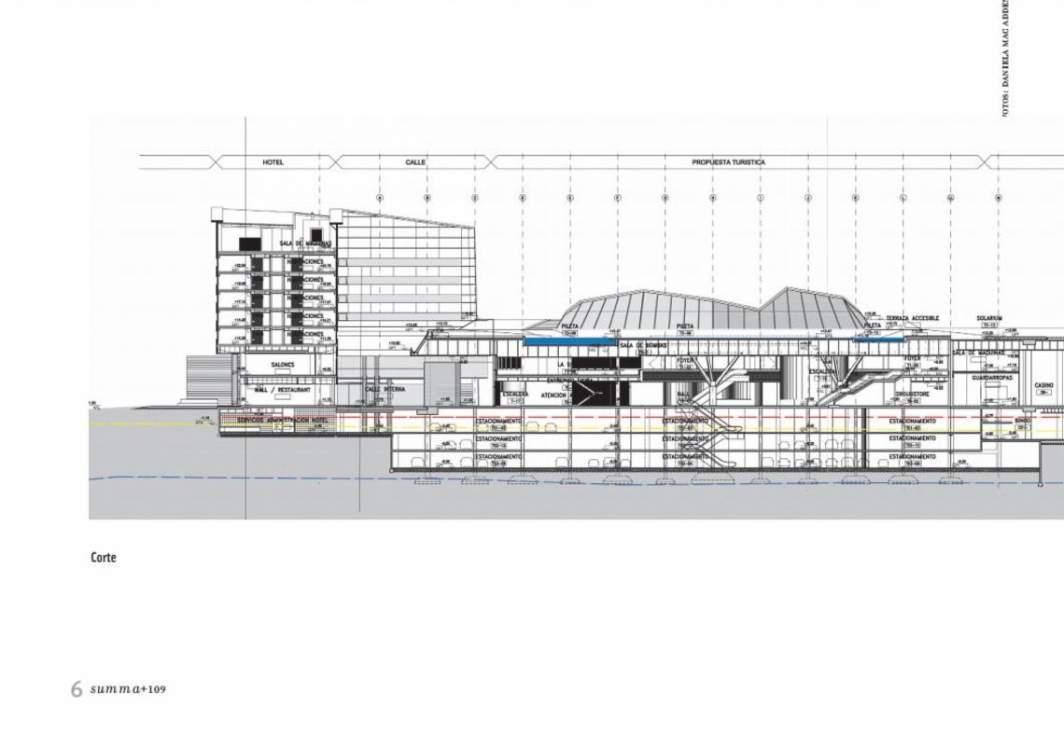
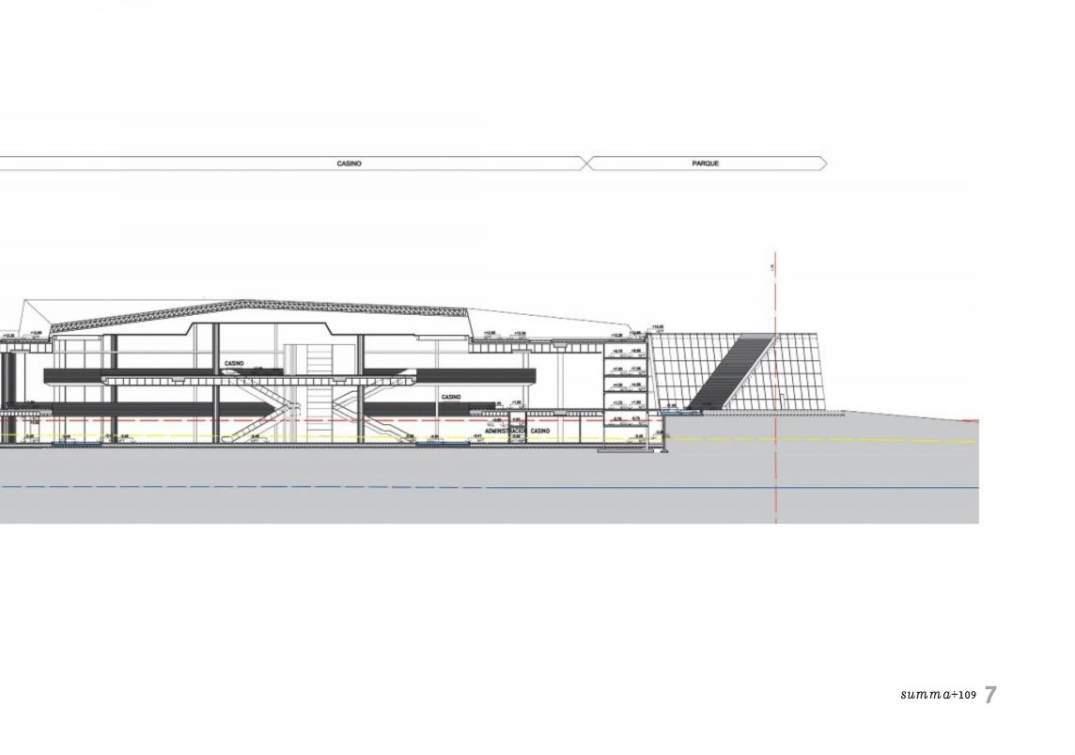
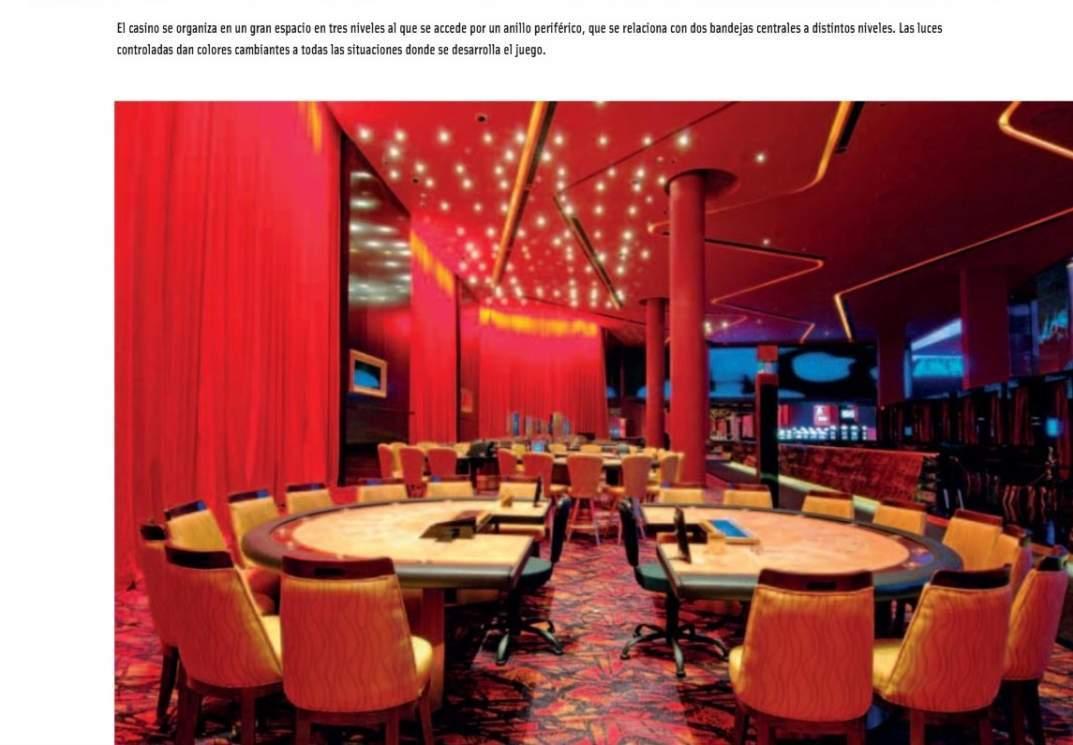
The building consists of five floors, that house 188 rooms, along double corridors. To the North, between the canal that surrounds the complex and separates the hotel from the lush linear park, a garden area unfolds. To the South, the complex’s immense terrace and playful park house the fitness and aquatic center. On the two bottom floors are located the facilities for Hotel guests. The mezzanine contains the businees center and meeting rooms, and on the same level across the street, the Convention Hall with its 2000-person capacity. The casino is organized on three levels, and is accessed by a peripheral ring, conected by way of two central walkways to the different levels.
EN Rosario hotel, convention center, casino and entertainment center BAUDIZZONE -LESTRAD / PROVEDO -QUINTIERO
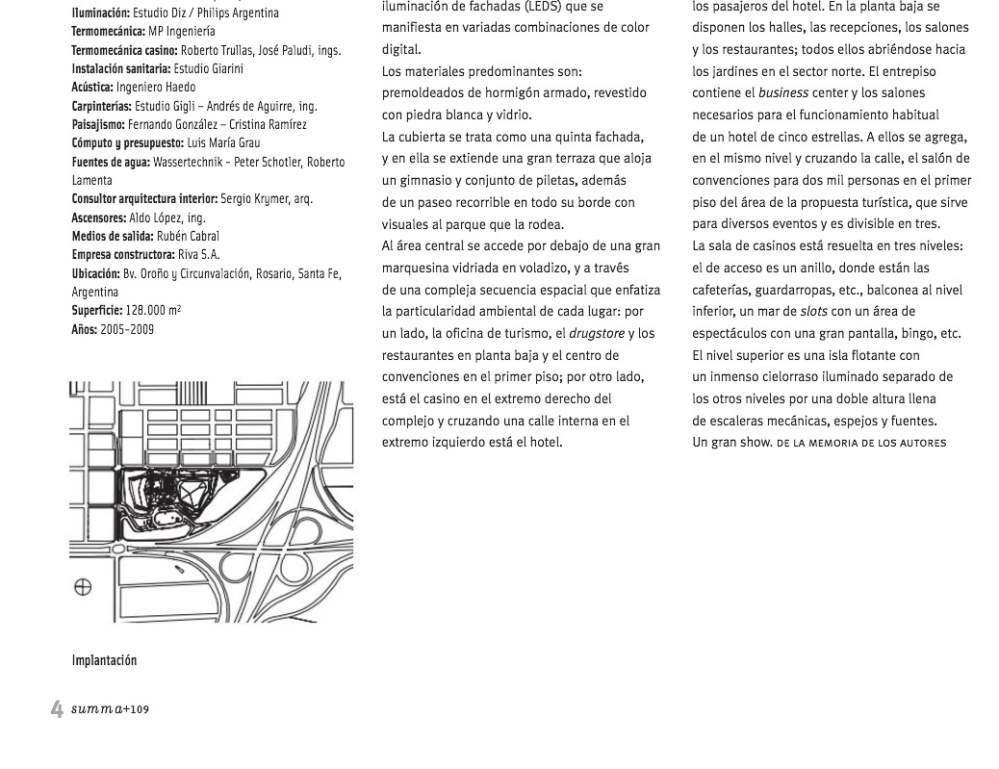
PIRANESIAN SPATIALITY
BAUDIZZONE-LESTARD/ PROVEDO -QUINTIERO
HOTEL, CONVENTION CENTER, CASINO, ENTERTAINMENT CENTER ROSARIO CITY
Project & Management: Miguel Baudizzone, Jorge Lestard, Mario Provedo, Aldina Quintiero, architects.
Work Coordination: Manuel Fernandez de Luco, Osvaldo Redondo, architects.
Work Management: Pablo Gaspe, architect.
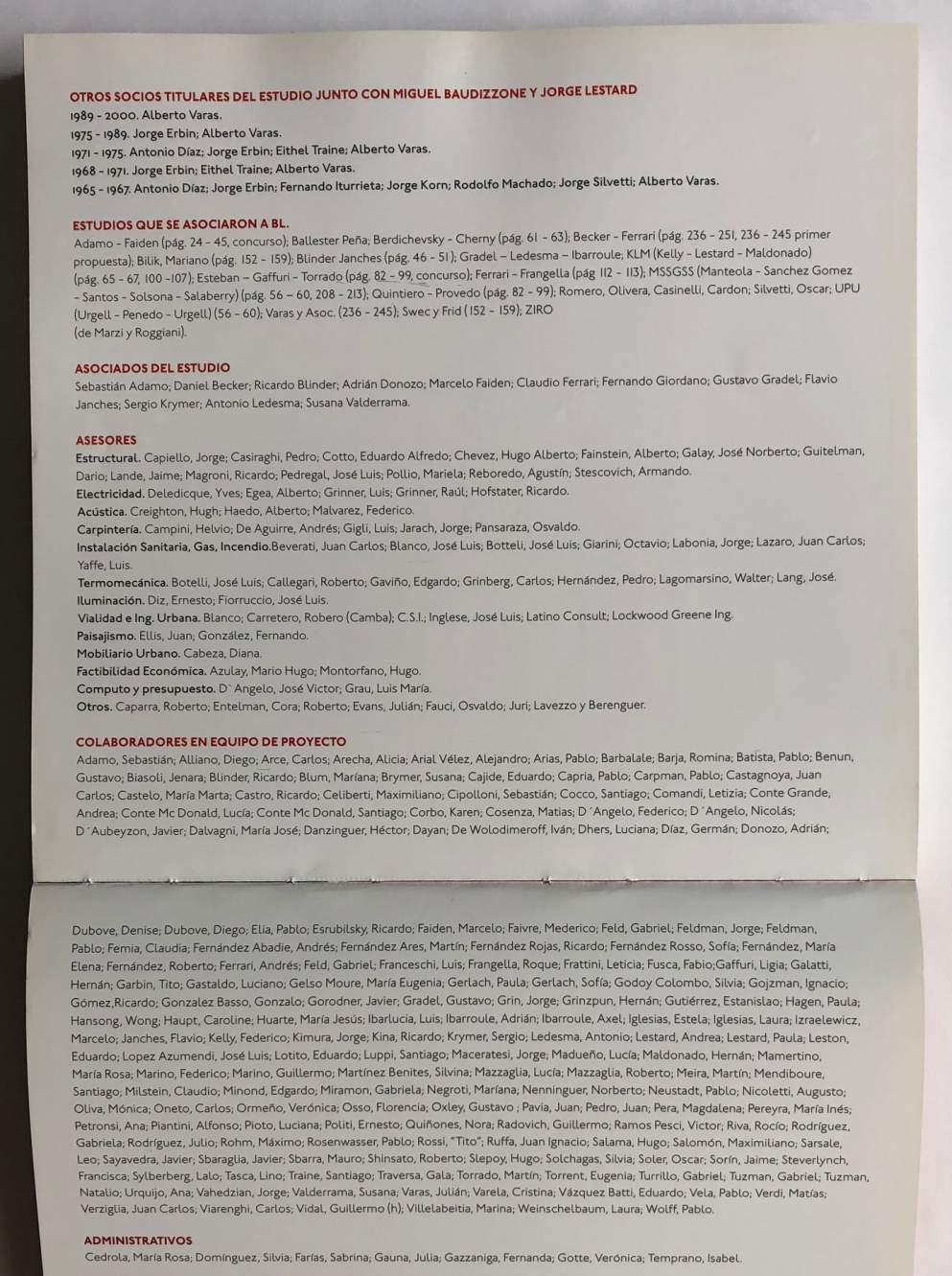
Project & Work: SusanaValderrama, Estudio KLM, Roberto Shinsato Andres Fernandez Abadie, Maria Eugenia Gelso Moure, Ricardo Gomez, Karen Corbo, Martin Meira, Sergio De Fino, Diego Dubove, Andrea Lestard, Ivan de Wolodimeroff, Henara Biasoli, Caroline Haupt, Luciana Piotto, Sogia Fernandez Rosso, Silvina Martinez Benites, Lucia Madueño, Ferico Marino, Luciana Dhers, Gala Traversa, architects. Diego Alliano.
Perspectives: Javier Gorodner, Miguel Cocco.
Structure: Alberto Fainstein, engineer.
Electric Installation: Luis Grinner, engineer.
Casino Electric Installation: Ramon Daporta, Daniel Garcia.
Lighting: Estudio Diz, Philips Argentina.
Thermo-mechanical: MP Ingeniería.
Our project proposal integrates the entire complex into a single large-sized building where activity integration is emphasized thus increasing the building synergy. Its shapes reflect a ludic and different world, contrasting with its environment and expressing its urban iconic image while mingling with the surrounding park. This park functions as a bond between the complex and the built constructions to the east and north and relates with the green spots of the boulevard and beltway. The building rises from the water mirrors, contrasting with the green color of the park and gardens and as a light-colored monochromatic sculpture. This perception of the complex is magically transformed by a sophisticated high-tech façade LED lighting system delivering different digital color combinations. The main materials used are:pre-molded reinforced concrete covered in white stone and glass. Its rooftop is treated as a fifth façade, where a large terrace accomodates the gym, a set of swimming pools, and an esplanade looking at the surrounding park. The central area is accessed through a large protruding glass marquee as well as a complex spacial sequence that makes the special features of each area stand out: on the one hand, the tourist information desk, the drugstore and restaurants at the groundfloor, and the convention center on the first floor. On the other hand, the casino is on the right wing of the complex, and the hotel is on the left wing, crossing and internal street.
Underground parking spaces are designed in three levels accommodating two thousand vehicles. From here, an access core is projected into the main hall with common elevators and escalators comprising a key element of the area lit by zenith lighting. The hotel, with a convention center, features 188 rooms. This is a five-story building with double corridors, sprouting from the main building thus creating its own scenery. To the north, between the channel surrounding the complex and which isolates it from the linear lush park and the hotel, a grand area of gardens develops. To the south, an extensive terrace and playground area of the complex is located, holding the fitness and aquatic center. On the two lower grounds, hotel passenger facilities are located. On the ground floor, halls, reception desks, lounge rooms and restaurants, which all overlook the gardens to the north side. The mezzanine contains the business center and the necessary rooms for running a 5-star hotel. Crossing the street, on the same level, we find the convention center with room for 2,000 people, on the first floor of the tourist proposal, which is suitable for different kinds of events and can be divided into 3 areas. The casino area is planned in three levels: the access level is ring-shaped, where coffee shops, and checkrooms, etc. are. A balcony overlooks the lower levels, a bay of slots and an area for shows with a large screen, bingo, etc. The upper level is a floating island with a huge lit ceiling, separated from the others from a double-height area full of escalators, mirrors and fountains. A great show. From the authors’ technical details.
HOTEL, CASINO AND CONVENTION CENTER IN ROSARIO A LUDIC & DIFFERENT WORLD
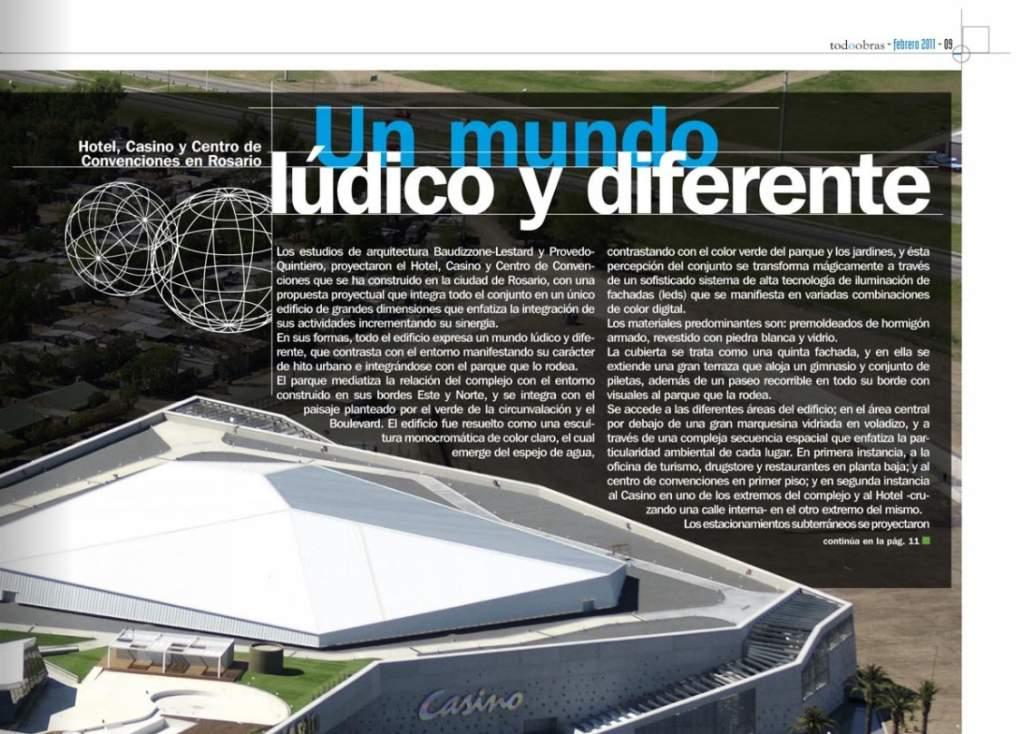
The Architecture Firms Baudizzone-Lestard and Provedo-Quintiero projected the hotel, casino, and convention center built in the Rosario City. Their project proposal involved integrating the whole complex into a single large-sized building, emphasizing the integration of its activities, thus increasing its synergy.
The building shapes feature a ludic and out-of-the-ordinary world, standing out from the city planning, and becoming an urban icon, while being part of the surrounding park. This park links the construction with the built complex to the east and north sides, andintegrates with the green landsca pe proposed by the bypass and Boulevard.
The building was conceived as a light-colored monochromatic sculpture, arising from a water mirror which contrasts with the surrounding green parks and gardens. This perception of the complex is magically transformed through a sophisticated system of edgy façade lighting technology(LEDS)showcasing different combinations of digital color.
The prevailing materials used are precast reinforced concrete coated with white stone and glass. The roof is treated as a fifth fa çade, and there is a large terrace that houses a gymnasium and a group of pools, as well as an esplanade along its edge with visuals to the surrounding park.
Different areas of the building are accessed as follows: At the central area, under a large glassed cantilevered roof, and through a complex spatial sequence, which emphasizes the special features of each room. Firstly, on the ground floor we have the tourist office, drugstore, and restaurant, while on the first floor, we can find the convention center. Secondly, in one of the corners of the complex, we encounter the Casino, and the Hotel, just across an internal street.
Underground parking lots were projected in three different levels with room for 2,000 people. From that point, moving on to the main hallway, there is a group of accesses containing common escalators and elevators, which make up a central core of the area lit by zenithal light.
The Hotel with a Convention Center offers 188 rooms. This building features five levels, with a double center line, that rises in an integrated fashion creating its own landscape. To the north, between the water channel surrounding the complex and the bushy lineal park and the Hote l, a magnificent garden area unfolds. To the south, a huge terrace and a ludic park houses the fitness and aquatic center. At the two lower plants, guests can enjoy the hotel facilities. On the ground floor, we can find halls, reception desks, rooms and restaurants; all of them overlooking the northern gardens.
The mezzanine contains the business center and the necessary rooms for the ordinary performance of a 5-star hotel. Just across the street, on the same level, a Convention Center for 2,000 people is located, on the first floor of the Tourist Proposal, which is a multi-purpose area and can be subdivided into three different rooms.
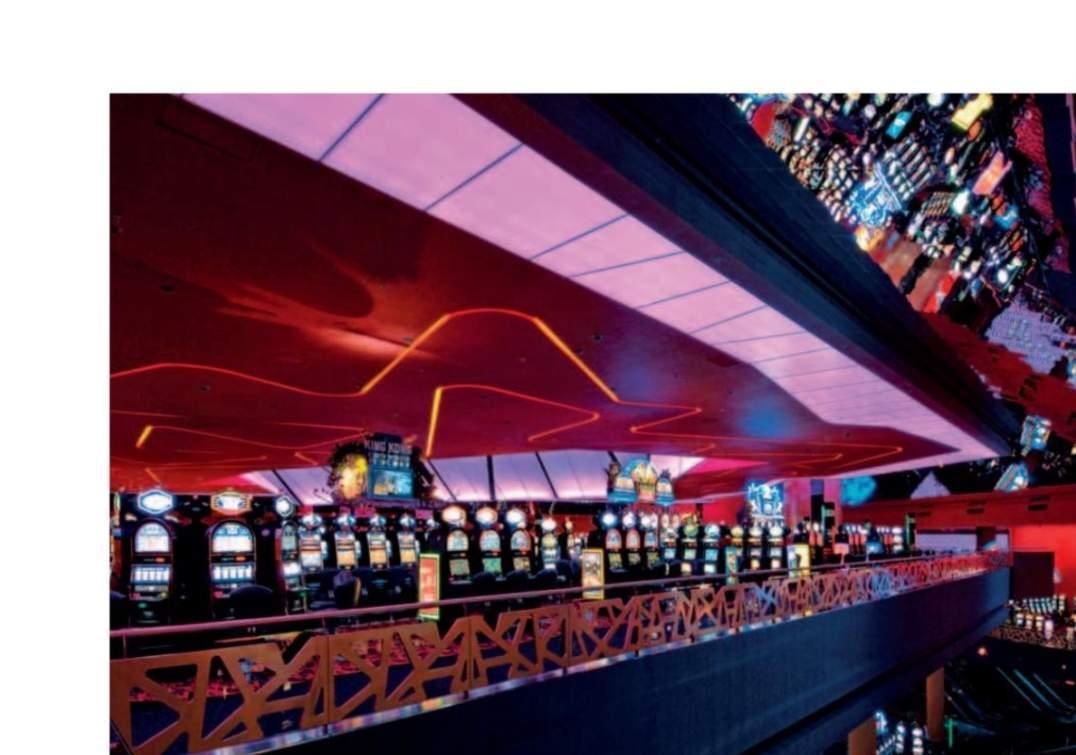
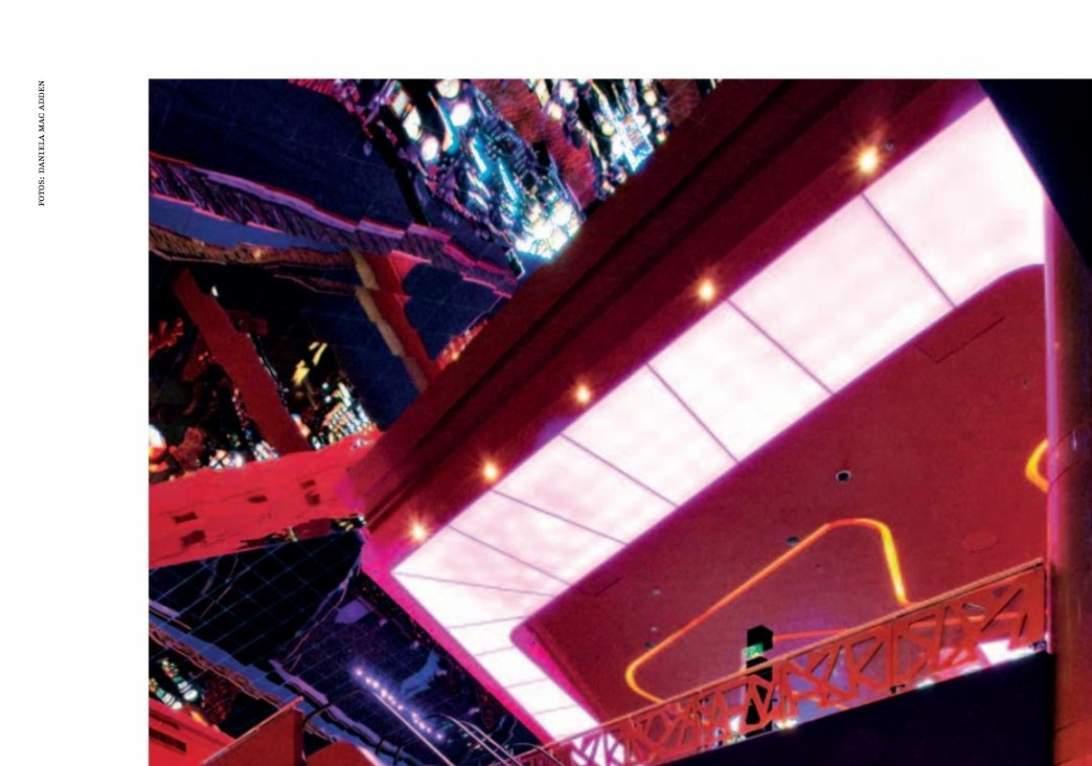
The Casino area is resolved in three levels: its access is ring-shaped, where coffee shops, wardrobe area, etc. are located. Overlooking the lower level, a slot machines bay with an area intended for live performances with a big screen, and a bingo are part of the proposal. The upper level is a floating island with a huge lit ceiling, separated from other areas by a double height full of escalators, mirrors, and fountains. To sum up, a big show!
TECHNICAL DATA:
Building construction: Hotel, Casino and Convention Center.
Location: Bv. Oroño and Circunvalación, Rosario, Provincia de Santa Fe.
Project & management: Arch. Miguel Baudizzone –Arch. Jorge Lestard
–Arch. Mario Provedo, Arch. Aldina Quintiero.
Work coordination: Arch. Manuel Fernandez de Luco, Arch. Osvaldo Redondo.
Work management: Eng. Pablo Gaspe.
Construction company: Riva S.A.
Project team & construction supervision: Arch. SusanaValderrama, KLM
Studio, Arch. Roberto Shinsato, Arch. Andrés Fernandez Abadie, Arch. María Eugenia Gelso Moure, Arch. Ricardo Gómez, Arch. Karen Corbo, Arch. Martín Meira, Arch. Sergio De Fino, Arch. Diego Dubove, Arch. Andrea Lestard, Arch. Ivan de Wolodimeroff, Arch. Jenara Biasoli, Arch. Caroline Haupt, Arch. Luciana Piotto, Diego Alliano, Arch. Sofía Fernandez Rosso, Silvina Martinez Benites, Arch. Lucia Madueño, Arch. Federico Marino, Arch. Luciana Dhers, Arch. Gala Traversa.
Perspectives: Javier Gorodner, Miguel Cocco.
Structural engineering: AHFSA Studio (Eng. Alberto Fainstein).
Electrical installation advisor: Grinner Studio (Eng. Luis Grinner).
Casino electrical installation advisor: SCE(Ramón Daporta, Daniel García).
Lighting advisor: Diz Studio (Ernesto Diz), Philips Argentina.
Thermo-mechanical installation advisor: MP Engineering (Eng. Mario Pedro Hernández).
Casino thermo-mechanical installation advisor: Cliro (Eng. Roberto Trullas, Eng. José Paludi).
Sanitary installation advisor: Giarini Studio (Octavio Giarini).
Acoustic installation advisor: Eng. Haedo.
Enclosures advisor: Gigli Studio (Eng. Andrés de Aguirre).
Landscaping: Fernando González, Cristina Ramírez.
Computation and budget: Luis María Grau.
Water sources: Wassertechnik (Peter Schotler, Roberto Lamenta).
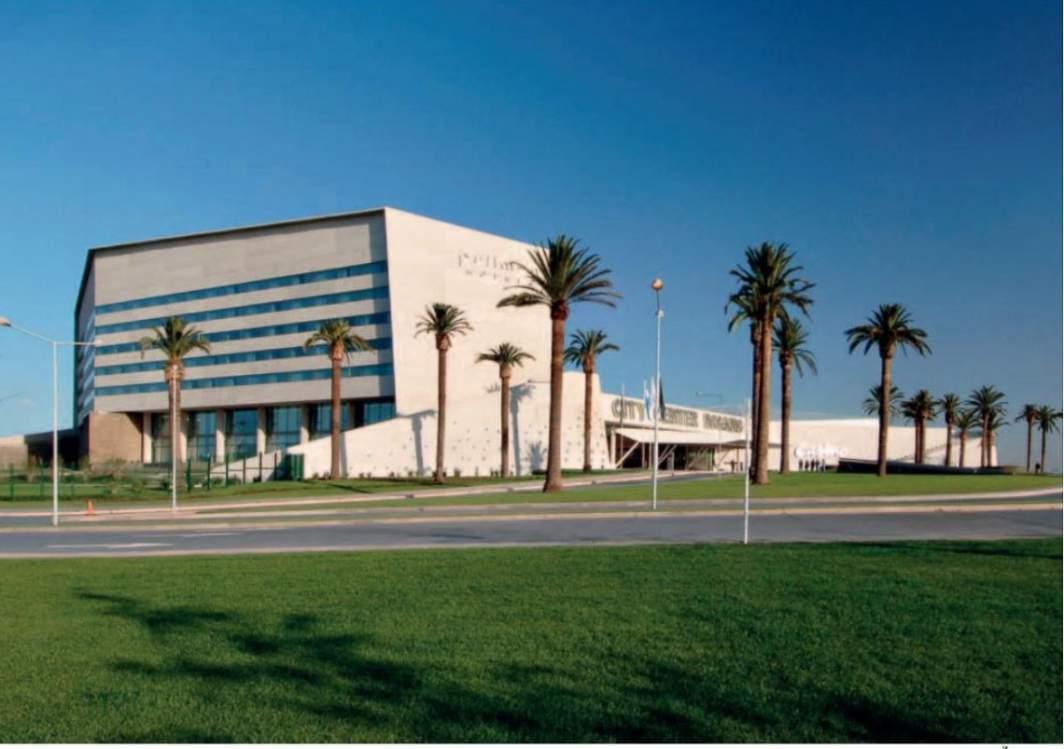
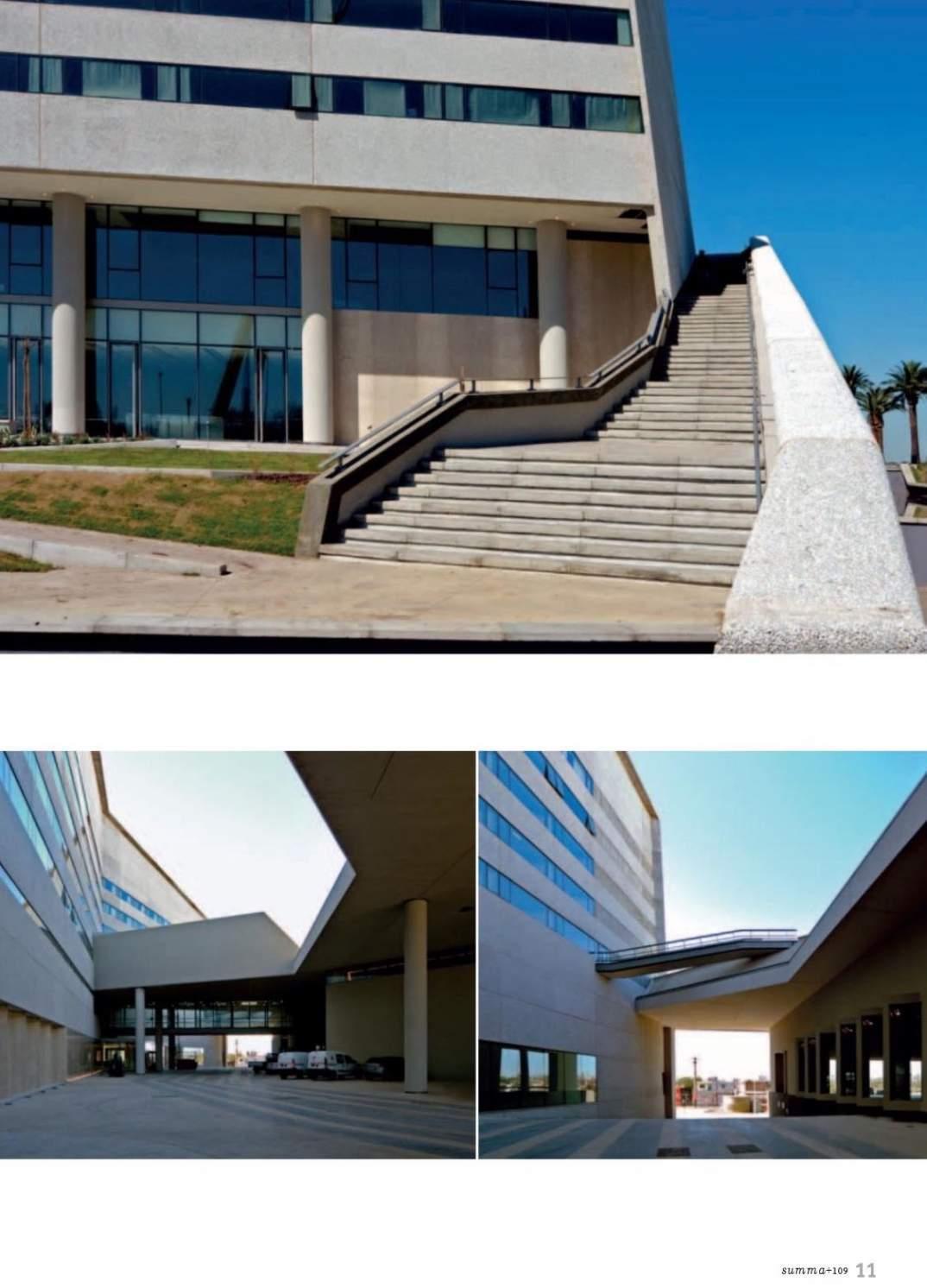
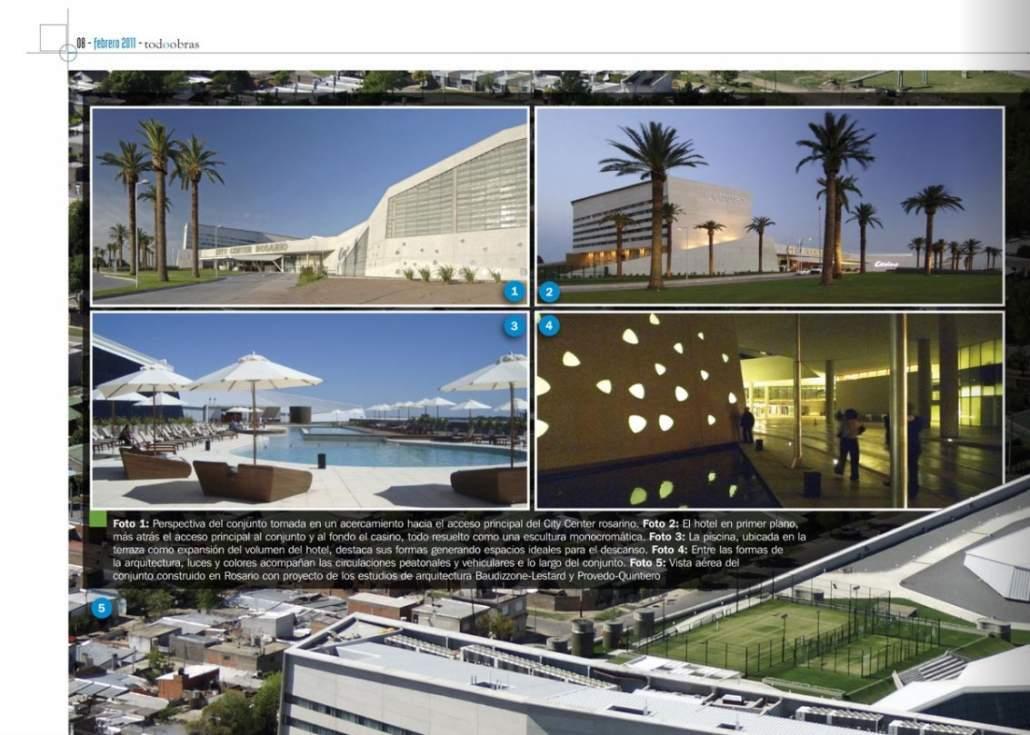
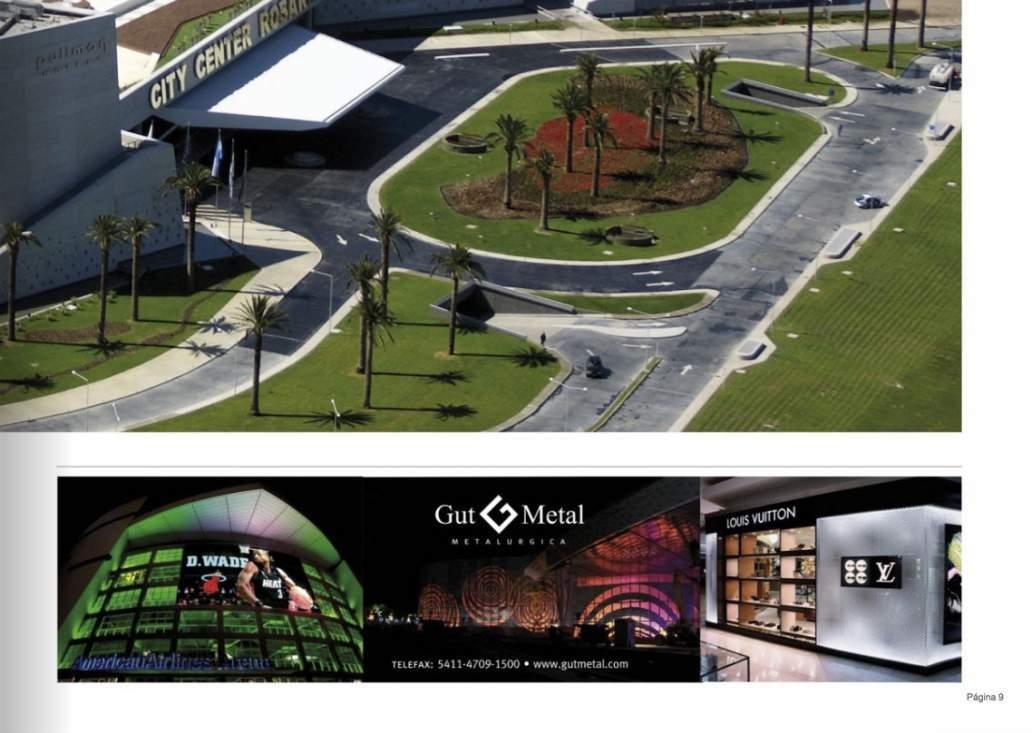
Photograph 1. Overview of the whole taken in an approach to the main access of the Rosario’s City Center.
Photograph 2. The hotel in the foreground, further back the main access to the set and to the back the casino, all resolved as a mochromatic sculpture.
Photograph 3. The pool, located on the terrace as an expansion of the hotel's volume, highlights its shapes generating ideal spaces for relaxation.
Photograph 4. Between the forms of the architecture, lights and colors accompany the pedestrian and vehicular circulations throughout the set.
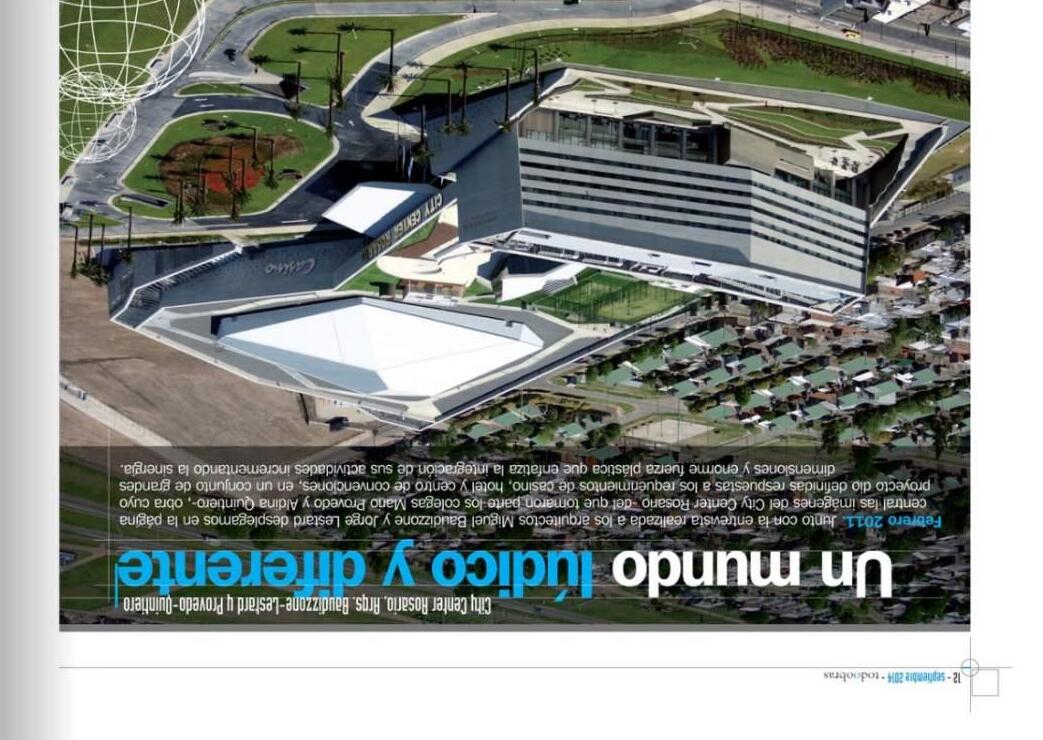
Photograph 5. Aerial view of the complex built in Rosario with a project by the Baudizzone-Lestard and Provedo-Quintiero architecture studios.
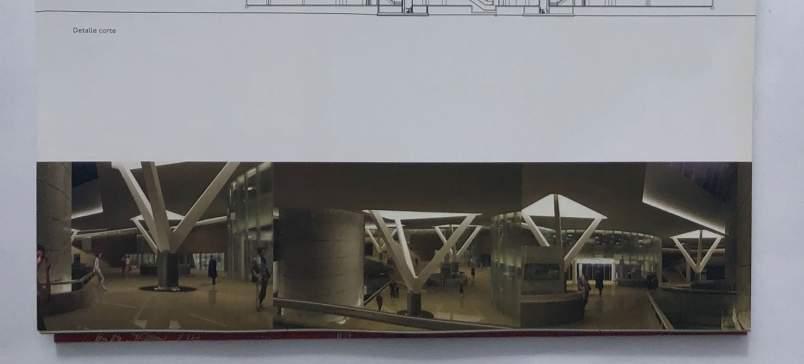
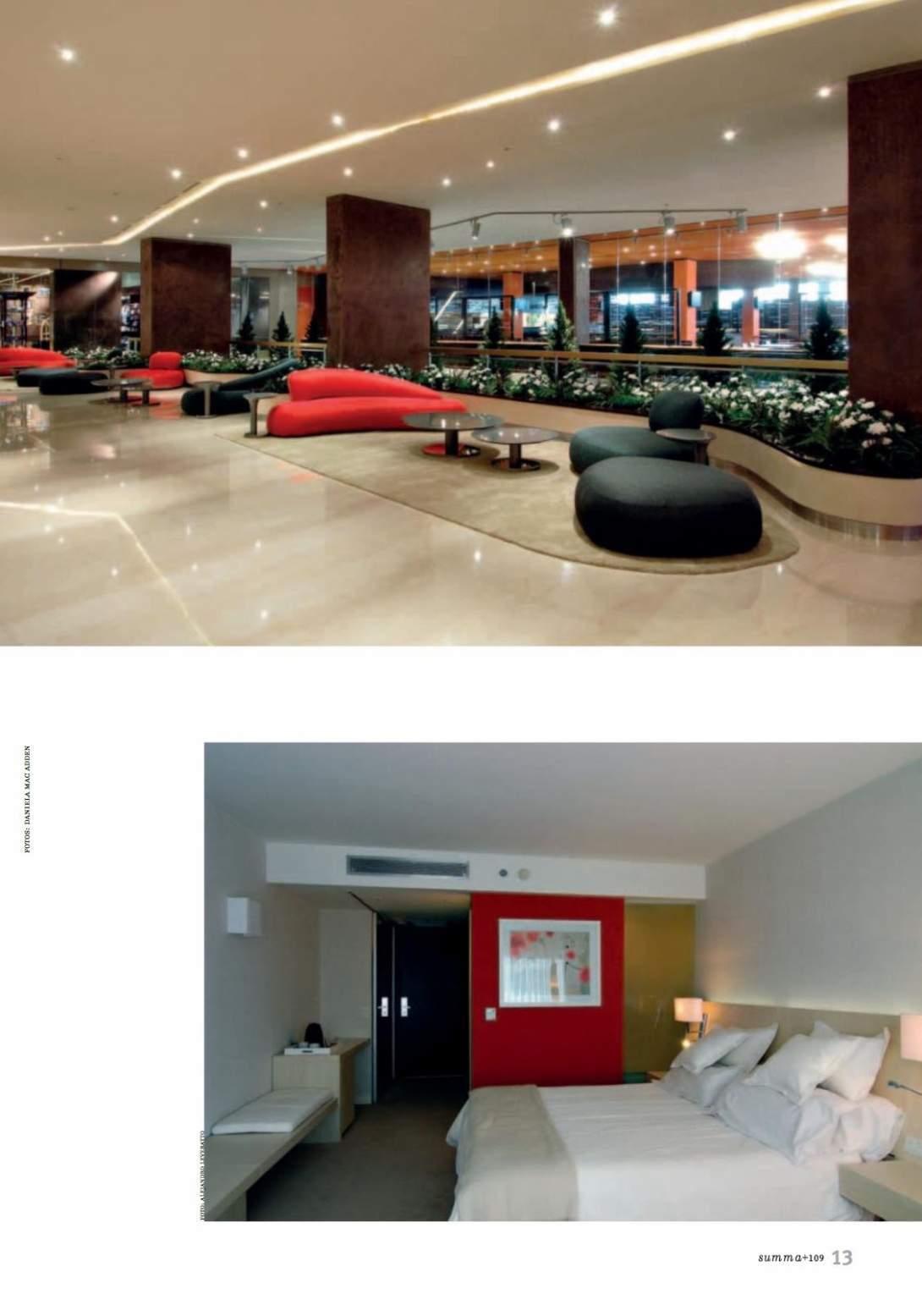
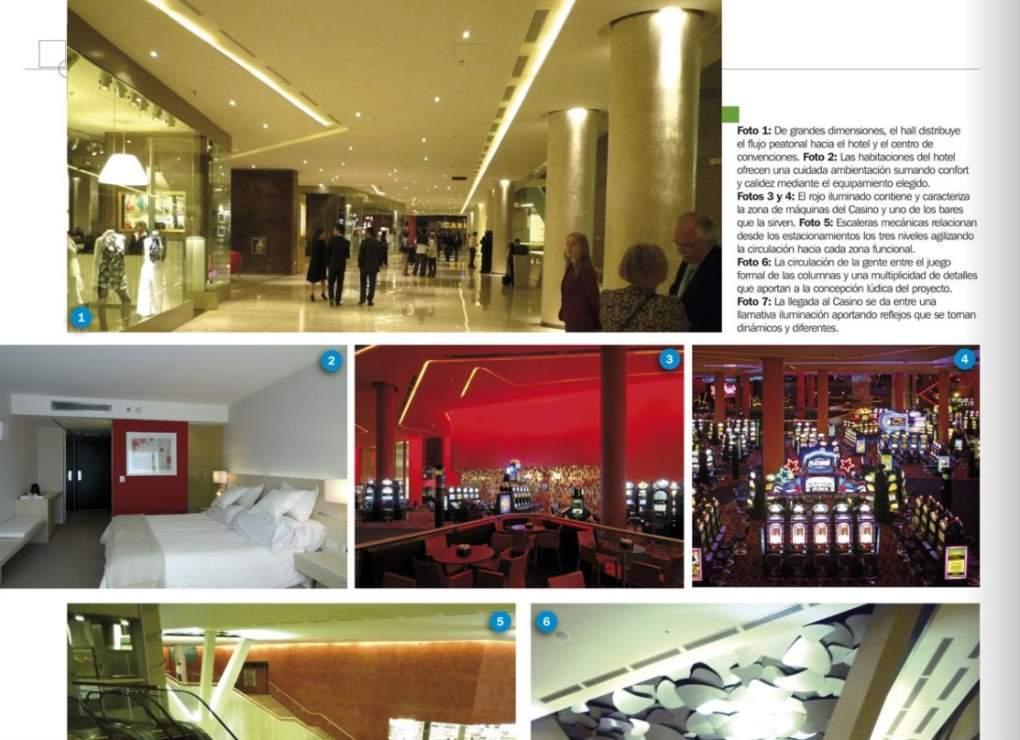
Photograph 1. With large dimensions, the hall distributes the flow of people to the hotel and the convention center.
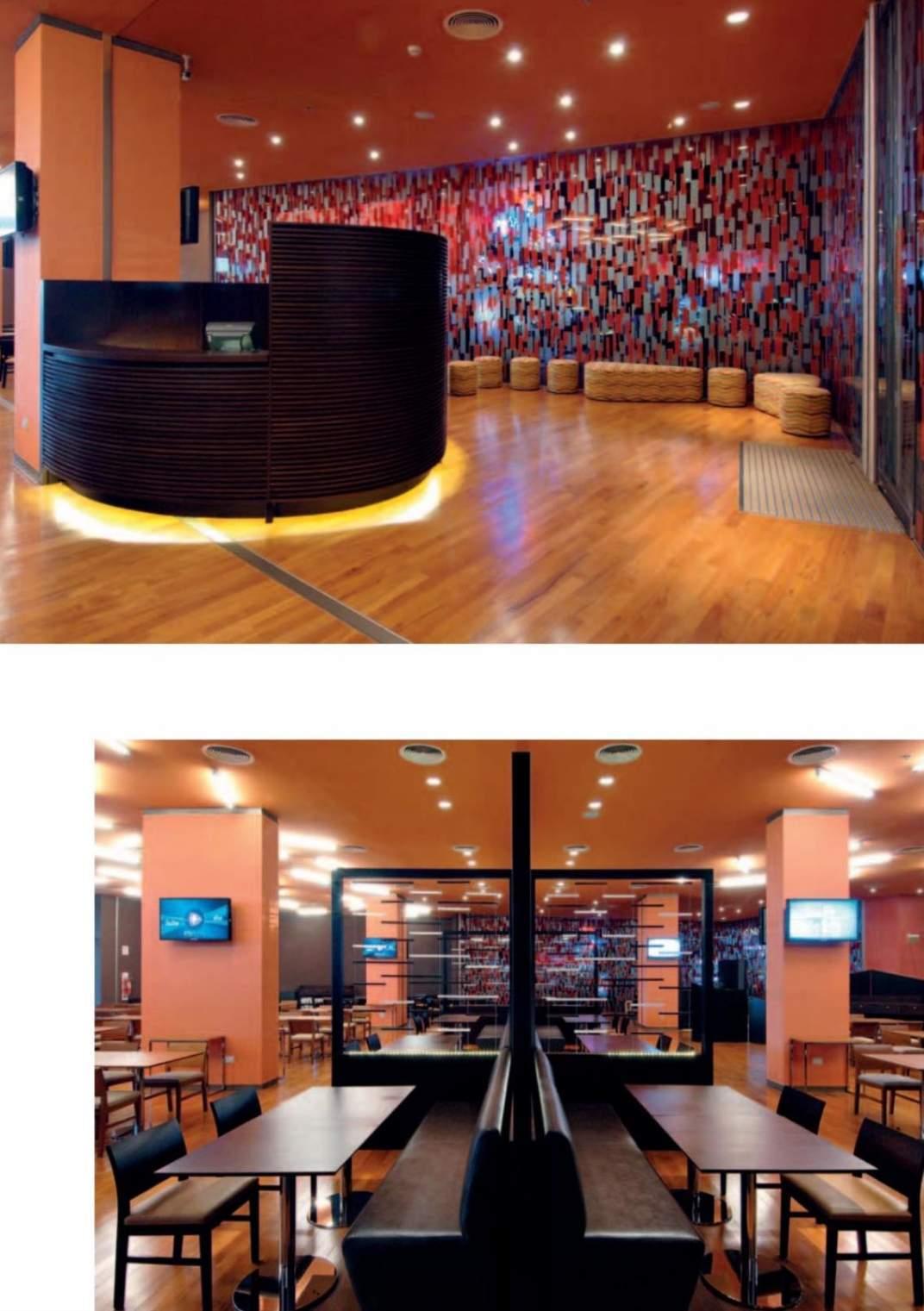
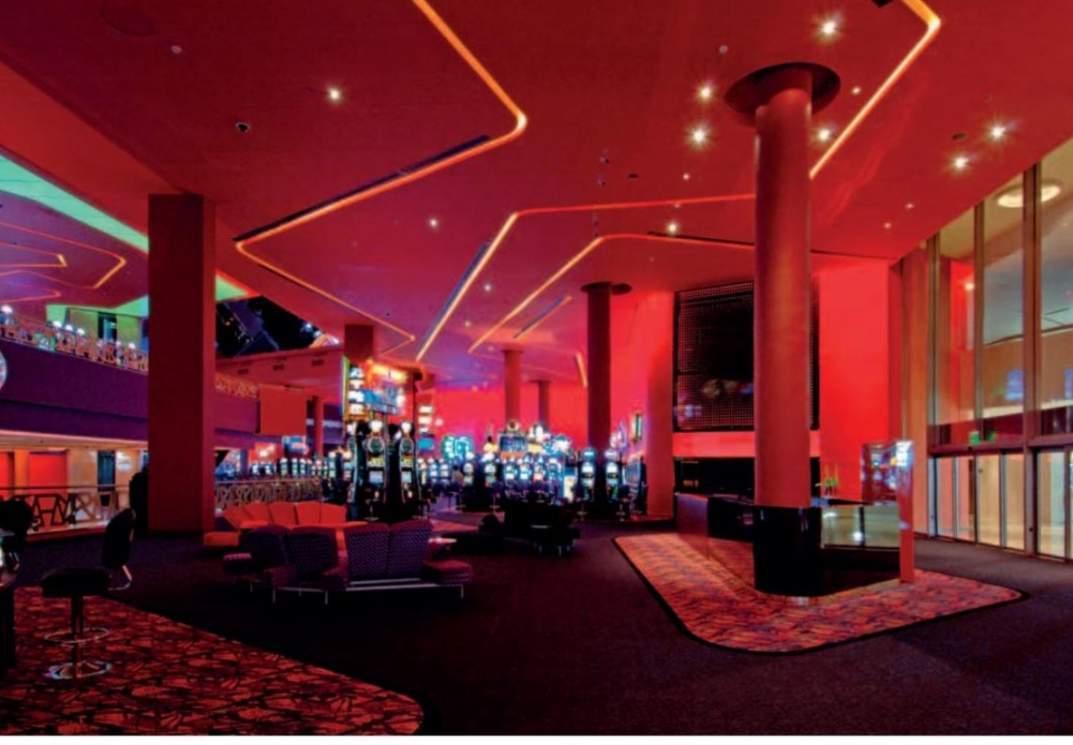
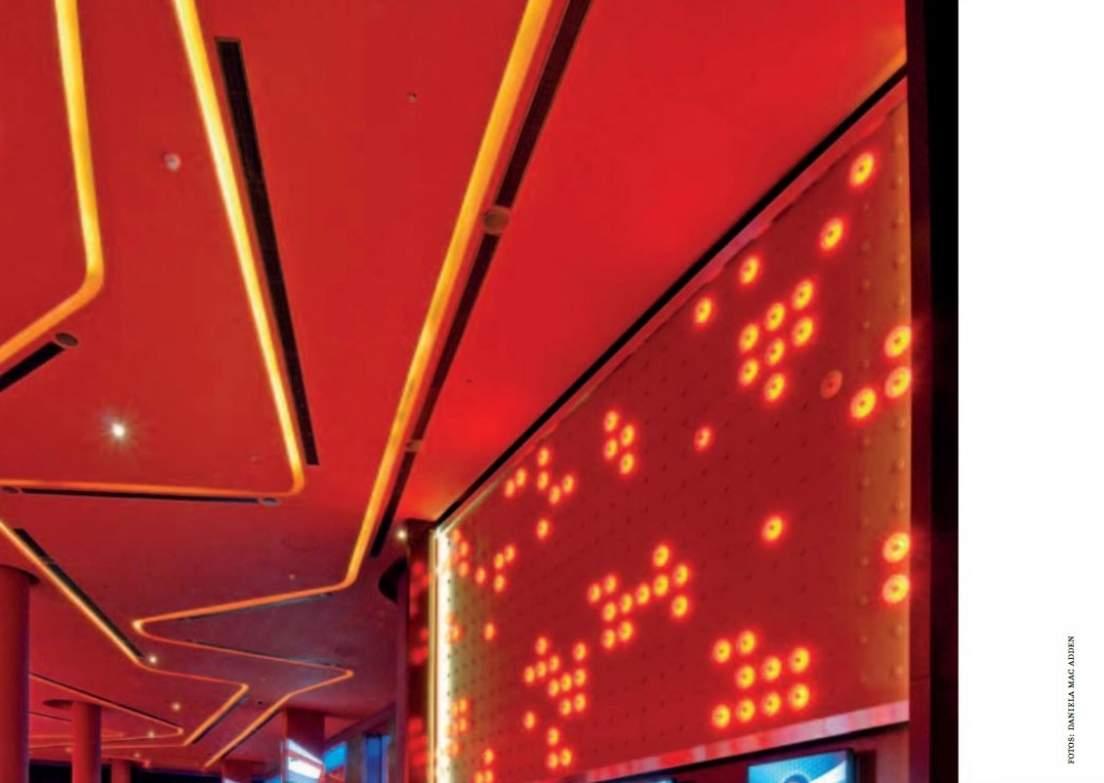
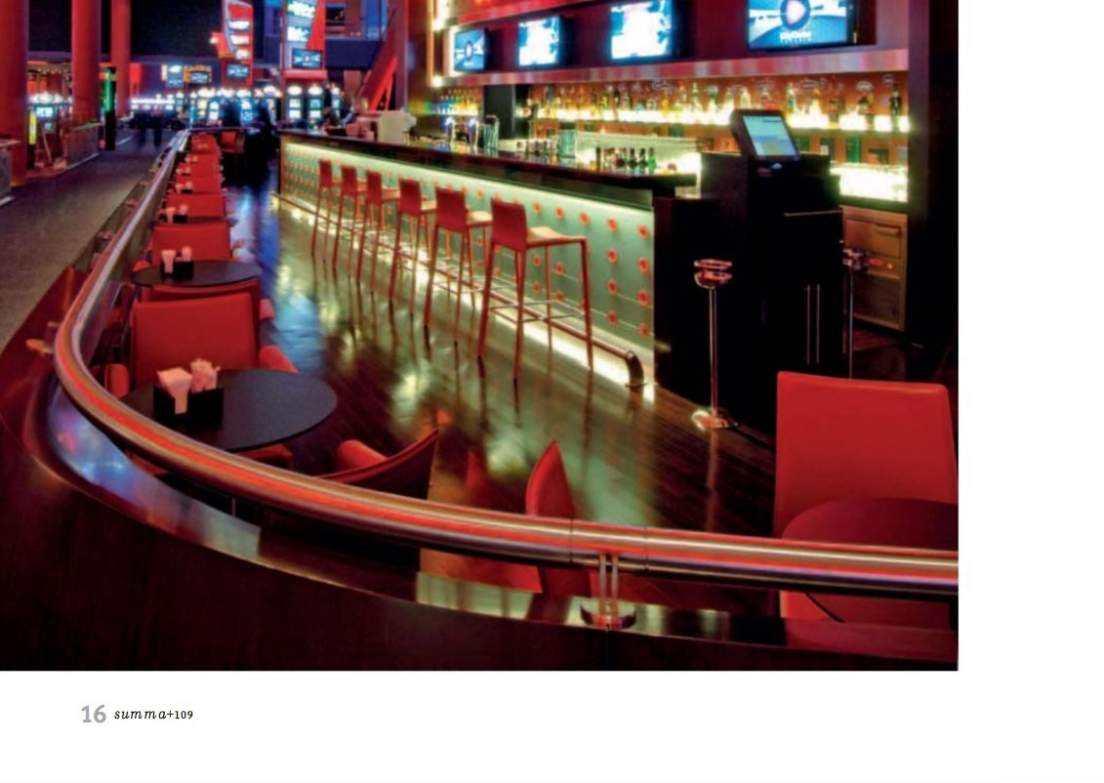
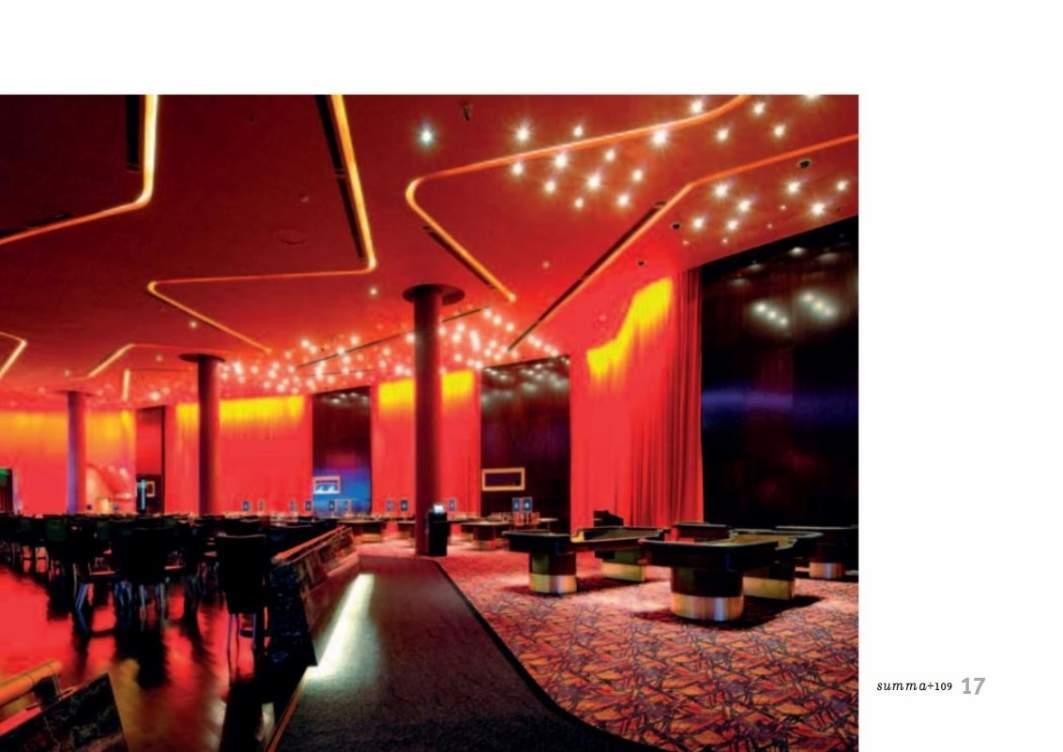
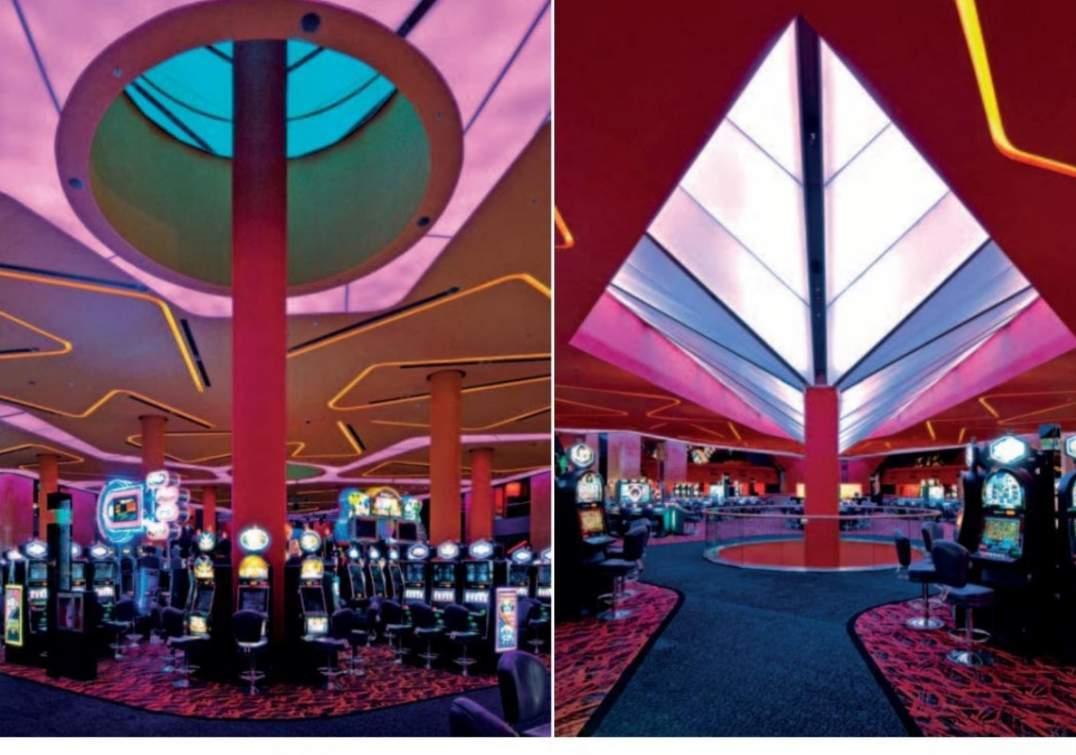
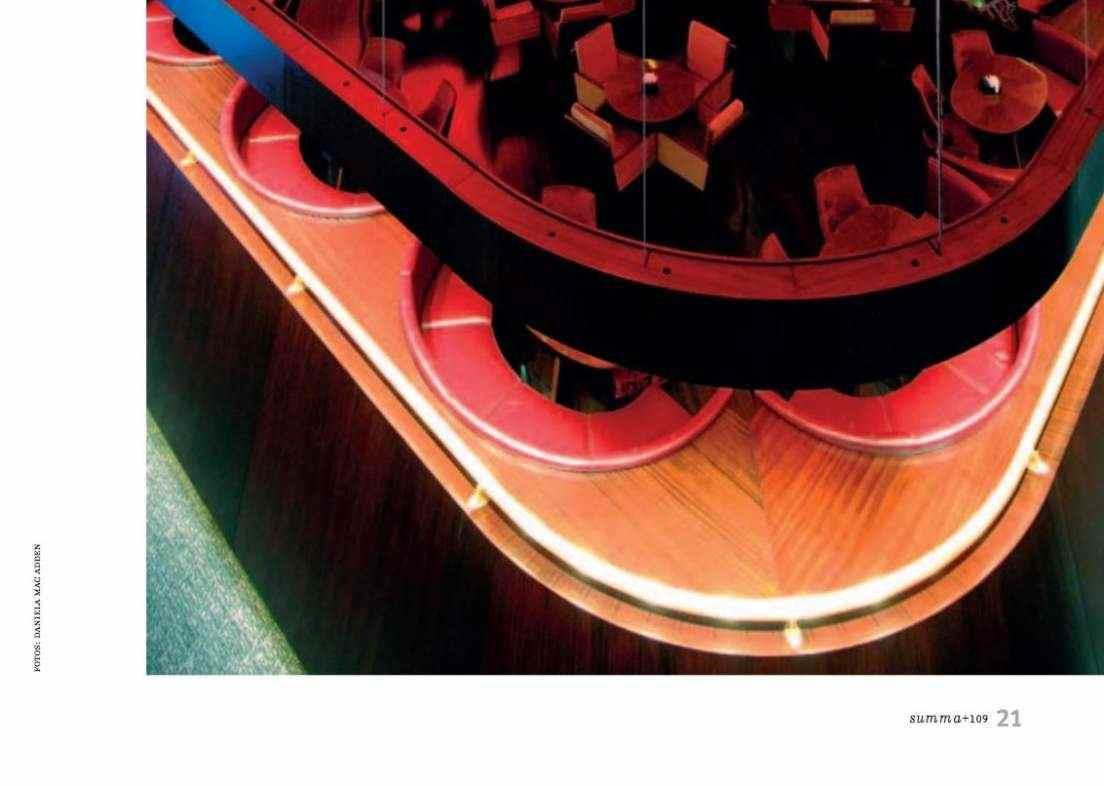
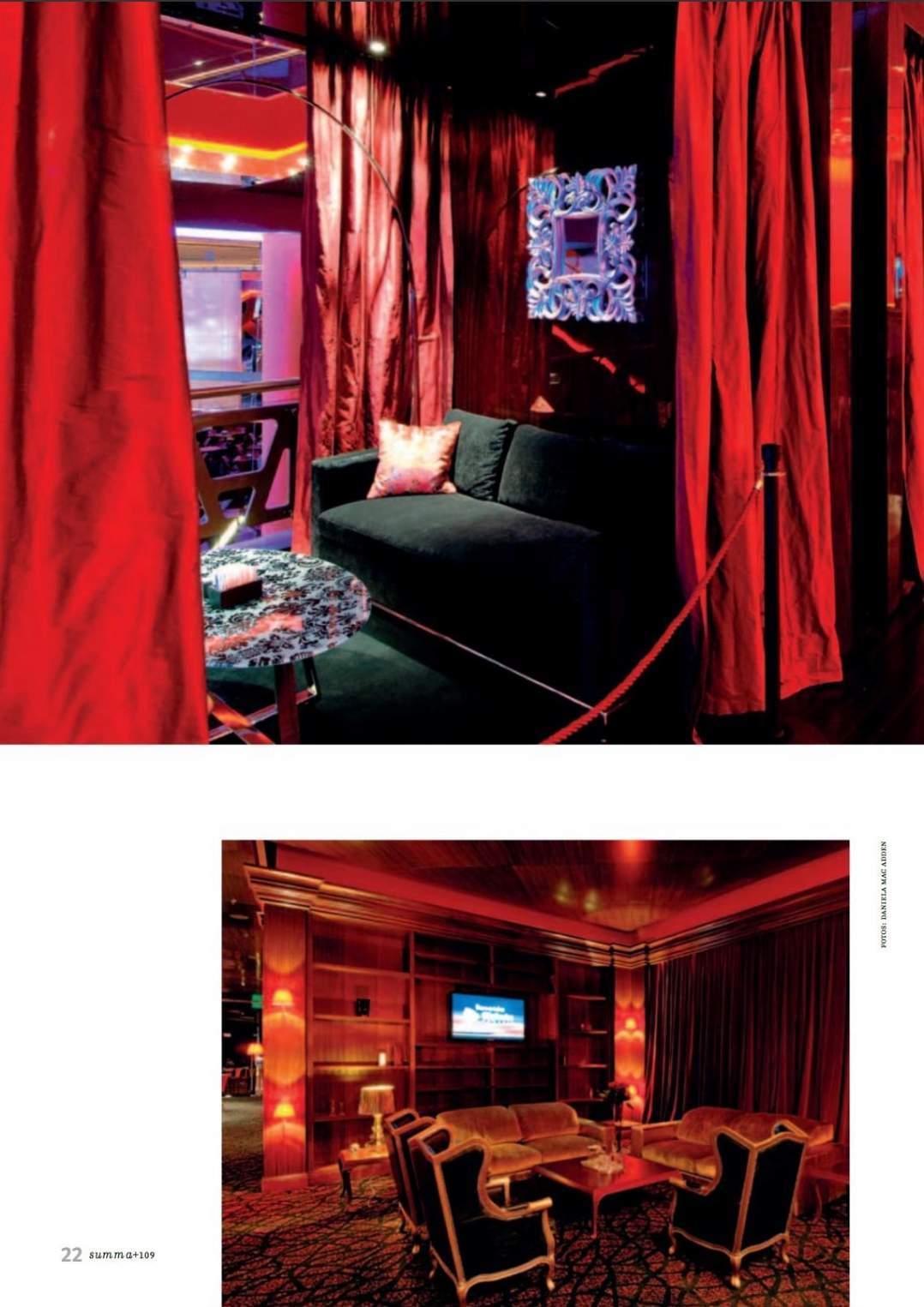
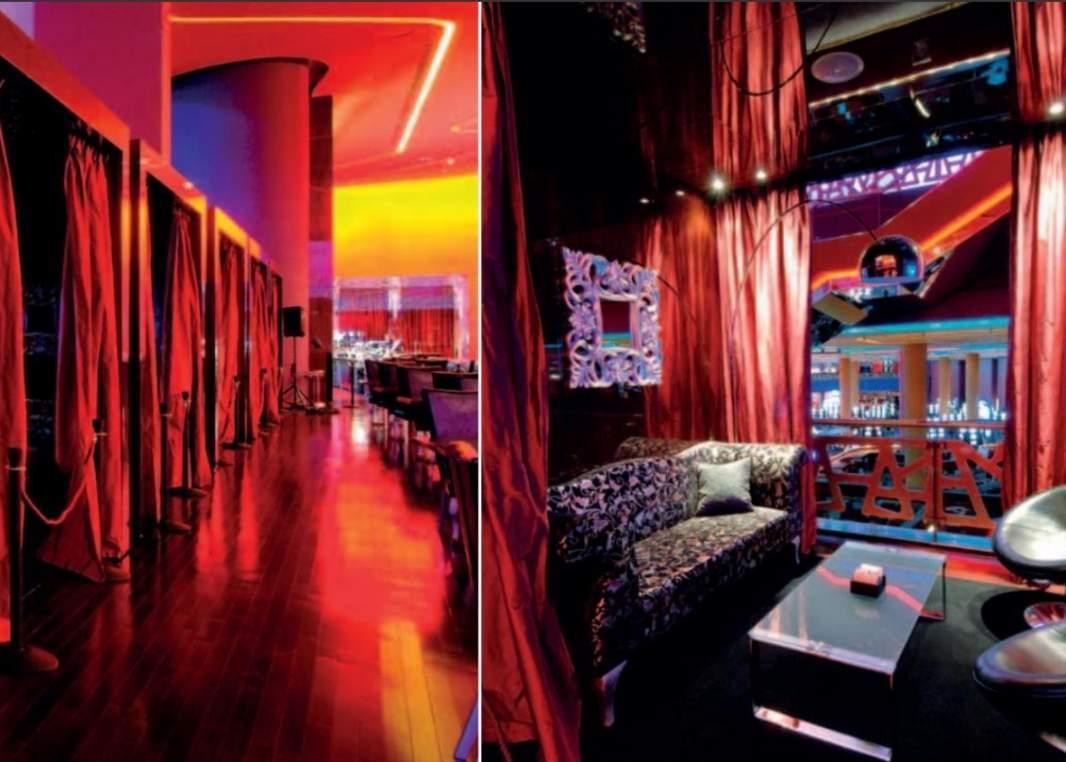
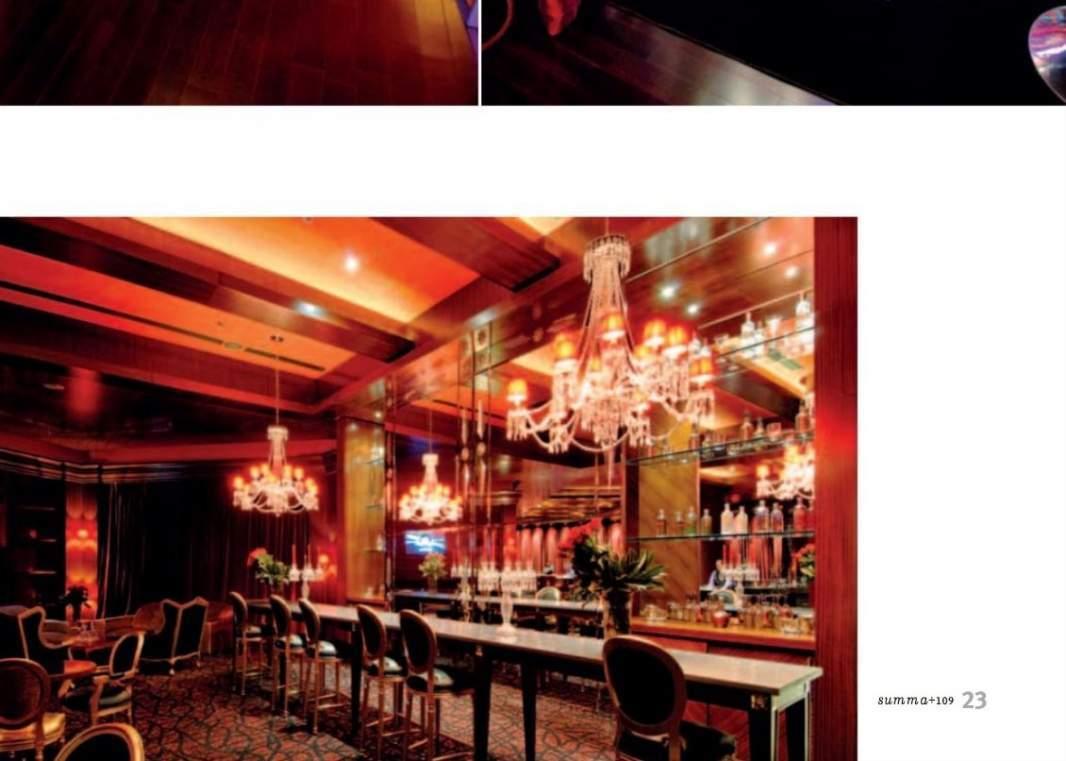
Photograph 3 and 4. The illuminated red contains and characterizes the machine area of the Casino and one of the bars that serve it.
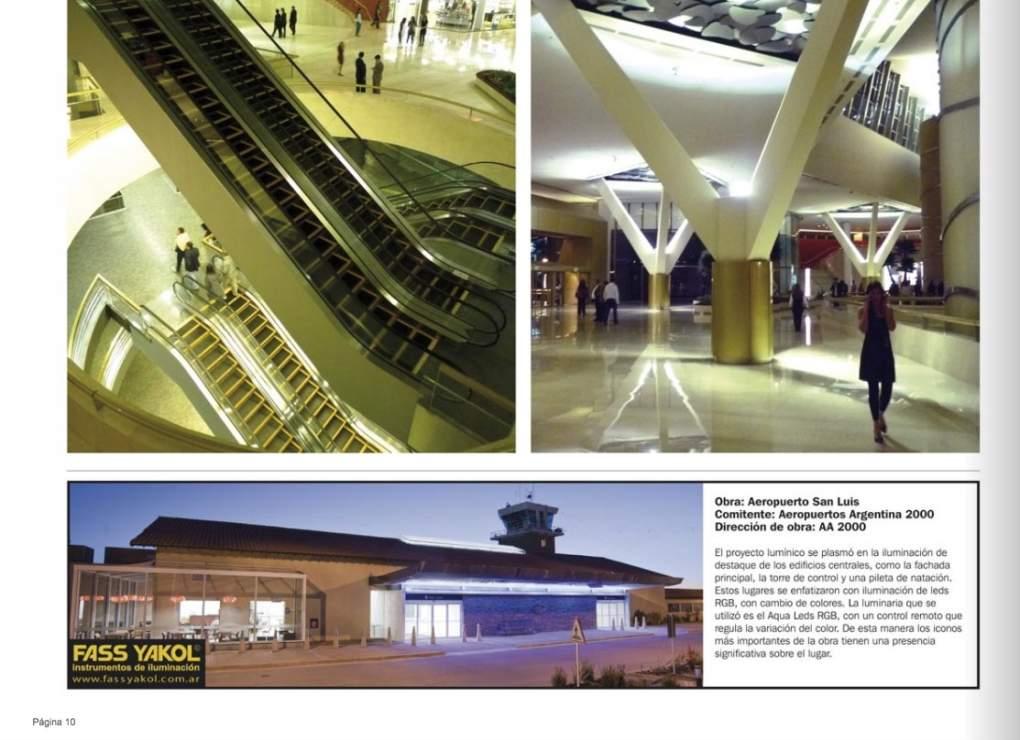
Photograph 5. Mecanical escalators relate the three levels from the parking lots, speeding up the circulation to each functional area.
Photograph 6. The circulation of people between the formal game of the columns and a multiplicity of details that contribute to the playful conception of the project.
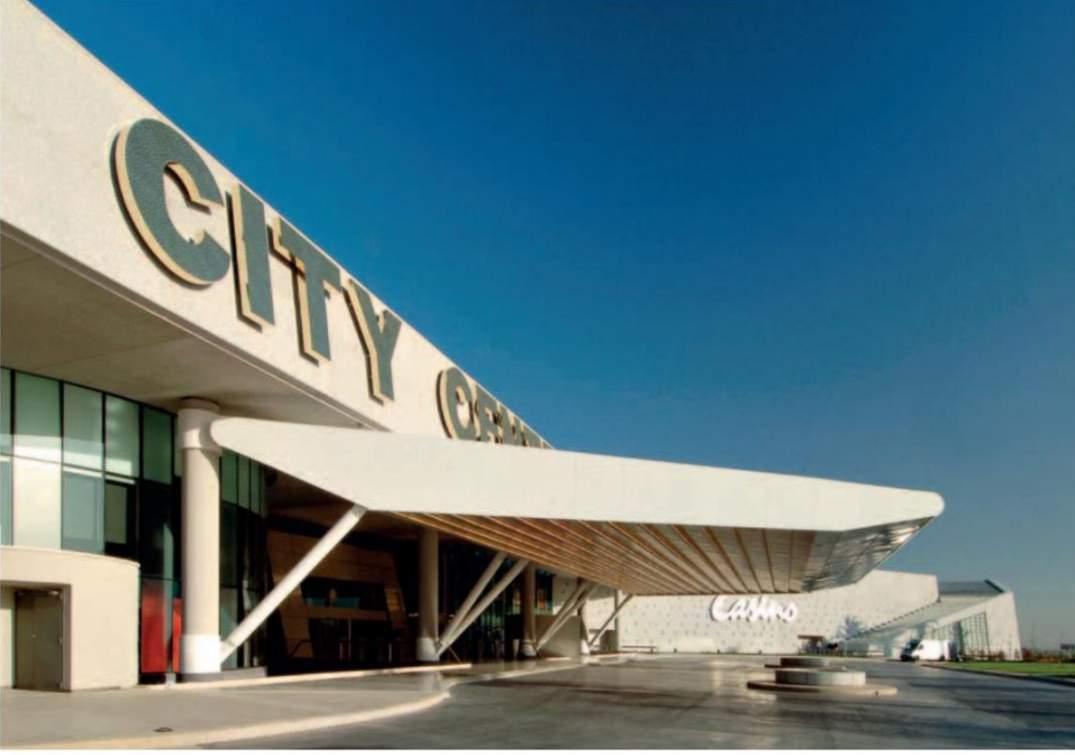
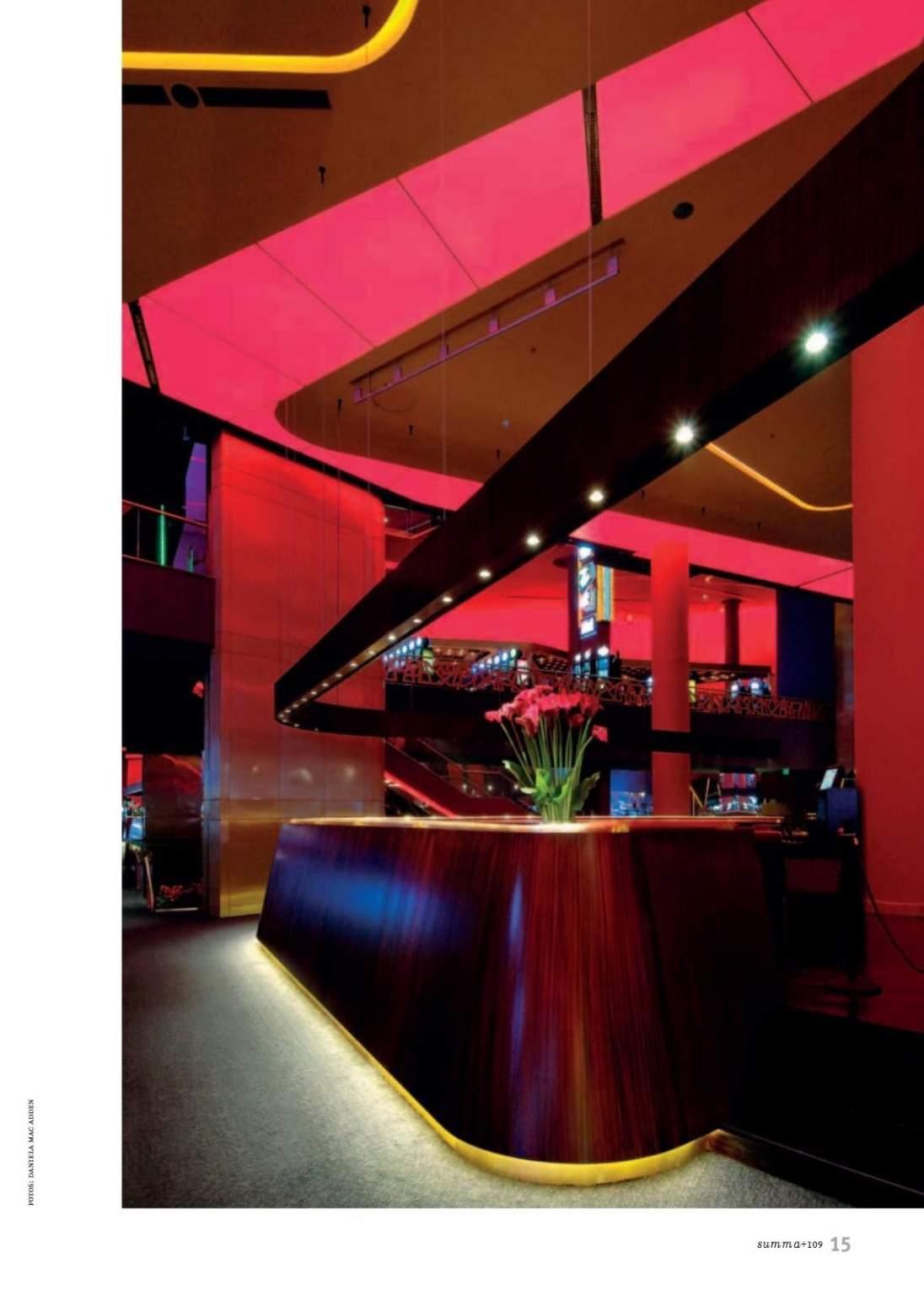
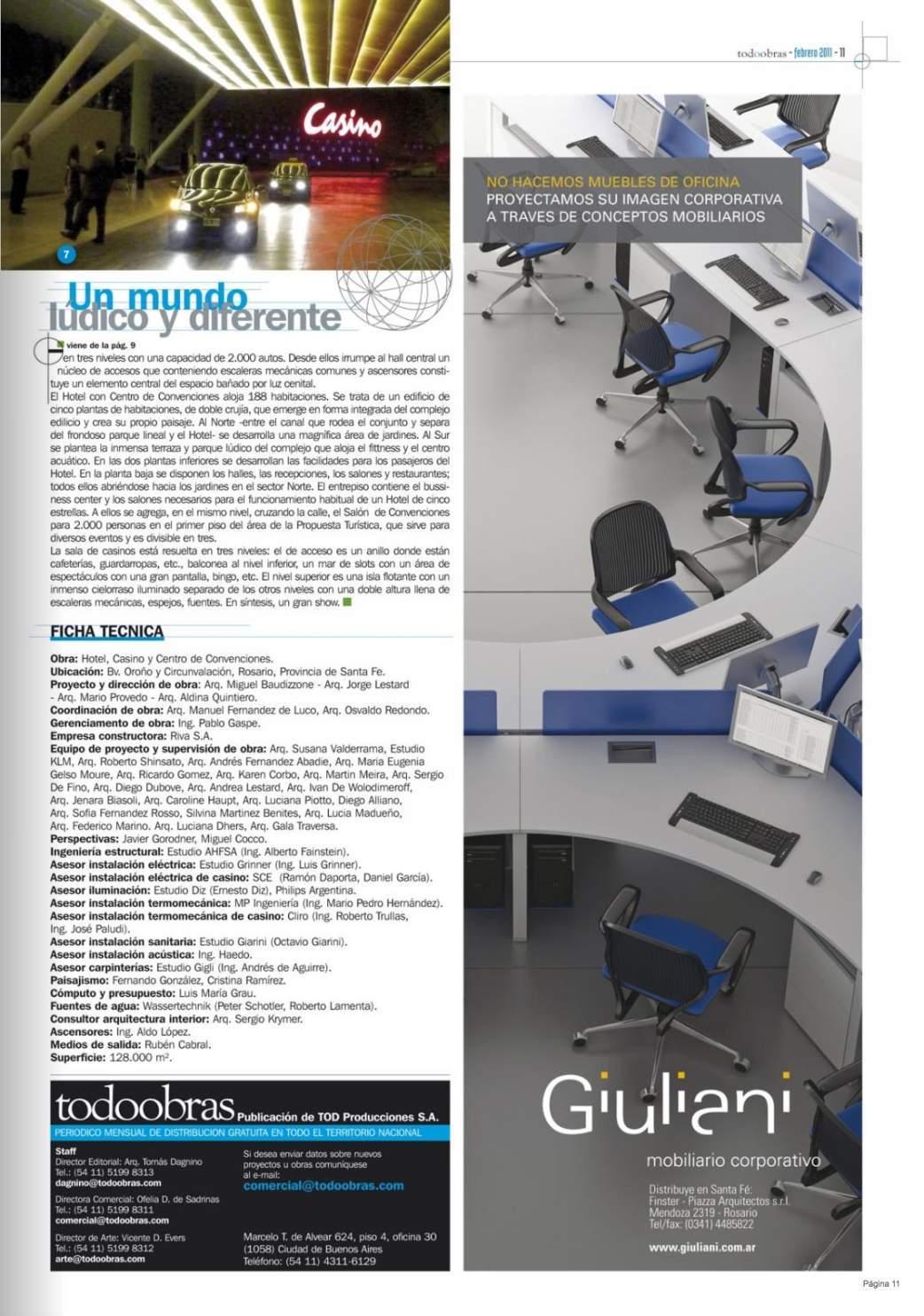
Photograph 7. The arrival at the Casino is between a striking lighting providing reflections that become dynamic and different.
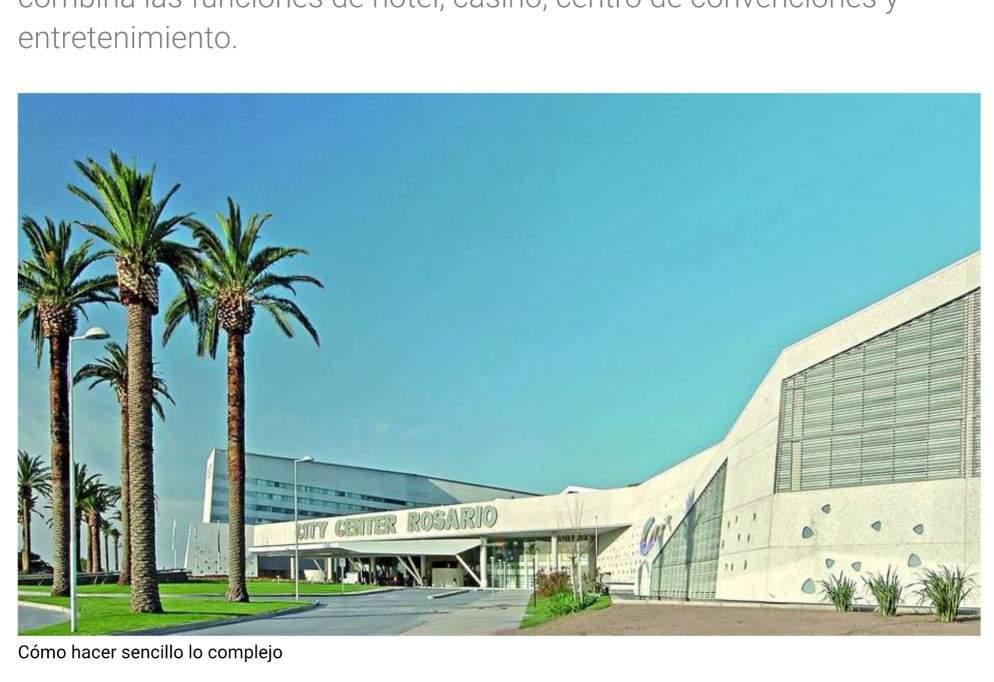
Clarin Newspaper Architecture Supplement -2º Prize in the category "Major Scale" of the ARQ awards | August 2011 | Argentina https://www.clarin.com/arquitectura/hacer-sencillo-complejo_0_SyBeRSR3vXl.html
HOW TO TURN COMPLEX THINGS INTO SIMPLE ONES
City Center Rosario, by Baudizzone-Lestard& Provedo-Quintiero, combines the facilities of a hotel, casino, convention and entertainment center.
[Picture]
Daniel Moya
A megacomplex which seems to unveil a ludic and different world, ranked 2nd in the category of the Top Scale of ARQ Awards, Santa Fe Category. This is a Hotel Casino and Convention and Entertainment Center, located in the City of Rosario, projected by the architecture firms Baudizzone/ Lestardy Provedo/ Quintiero.
“The complex contrasts with its surroundings expressing its urban iconic identity, while becoming part of the surrounding environment,” the authorscomment. The proposal integrates the whole program into a single large-sized building. “We intended to emphasize the integration among the several activities going on inside the building,” the architects explain. And they add that, in relation to the building location, the park serves as a link between the relation of the complex with the existing urban environment to the eastern and northern borders. Also, the outdoor area mingles with the landscape through the green space of the Bypass and Boulevard.
The building is conceived as a light monochromatic sculpture that appears to arise from a water mirror, contrasting with green garden spots. At night, perception shifts to a surrounding colorful landscape, thanks to a sophisticated lighting system.
Building materials are mainly pre-molded reinforced concrete (with white stone cladding) and glass. Besides, the ceiling was handled as a fifth facade, with a large terrace housing a gym and a set of swimming pools. Also, a perimeter promenade area unfolds looking over the surrounding parks.
The main access to the building is covered, in its central portion, by a large glassed cantilevered canopy. Entry ways to different program components are achieved through a complex space sequence focusing on the special features of each scenario. First, this sequence leads to the tourist office, the drugstore, and restaurants located on the ground floor, and the convention center located on the first floor. Secondly, we find the Casino, covering the right-wing of the complex. Finally, the hotel can be accessed by an inner street, located at the left-wing of the complex.
Underground parking lots were projected in three levels connecting the main hall through a large hub, integrating escalators, staircases, and elevators. A zenith lit area.
The 188-room hotel is described by the architects as a five-level hotel, with double structural centerline, arising in an integrated way with the complex and creating a landscape of its own. To the north, (betw een the channel surrounding the building and separating it from the bushy linear park), a wide garden area is deployed. To the south corner, a huge terrace and “ludic park” is located, where we find the fitness and aquatic center. On the ground floor, the hotel houses its halls, reception desks, lounge rooms, and restaurants; all of them overlooking the gardens on the northern sector. The Business Center and the Convention Room sitting 2,000 people, and able to be divided into three other rooms, are located on the mezzanine.
The Casino Room is a three-leveled space. It is accessed through a ring-shaped structure where coffee shops and locker rooms are found. This level overlooks another level where the slot machines, a live performance area with a large screen and bingo area are offered. The top level, in the authors’ words, is a “floating island” standing out for its skylike lit ceiling, separated from other levels by a double height.
The judge committee praised how the Project solved an extremely complex program in terms of functionality, organizing it into a single building where all activities are intertwined. It remarked that, from the outside, the articulation of different plans and areas with myriad quality and appearance give the building an abstract nature. Accordingly, this work is cut out from it s environment, intending to become a new landscape.
In relation to the indoor space, the judges’ decision was based on the fact thatareas acquire the value of places and gardens with ludic and varied views, in accordance with the specific program demands, gaining its own character, and creating a unique atmosphere that serves to soften the stress created by both circumstances. For the authors, their work is part of their intent to contribute to the planning of the City of Rosario, seeking to generate multiple attraction poles. In this case, the complex is located inthe Access from Buenos Aires and CircunvalacionAve., creating a wider green area and generating a landmark in Rosario.
CASINO HOTEL OF ROSARIO
General Proposal
The City of Rosario, Santa Fe, has been given a huge possibility of development thanks to the decision by Santa Fe Lottery to call for a public national and international bid in relation to the construction and operation of a Casino in the province.
Such call comprises, apart from a 5-Star Hotel and a Convention Center, the introduction of a Tourist Proposal for the area.
This intervention must supplement and strengthen the endeavors of the city of Rosario in terms of tourism, arts, and culture.
Considering the city of Rosario is itself an attr action pole, this complex proposes emphasizing the city cultural production as well as the surrounding areas’. By culture, tourism, science, sports, and arts encouragement is understood. This will also contribute with new attractions, through the organization and administration of both nati onal and international outstanding events.
Site Selection
Extending almost over 7 hectares, a plot of land was selected in the crossing of the by-pass with the access route from Buenos Aires.
This location meets several advantageous features:
1)Land size and visibility: by projecting this endeavor at the very doors of the city, it is consolidated as an urban icon, a reference point in one of the main city accesses.
2)Easy access: from the city of Rosario and the entire region, allowing mass flow to the complex.
3)Potential as an urban development factor of a forgotten corner in the outskirts of the city: The upraising of projects in poorly-developed areas of the city has shown how positive they are about their prosperity and dynamics of certain neighborhoods.
Vehicle Access Ways and Project Organization
The complex will be nestled near the intersection between the high-way of OroñoBoulevard and BatlleOrdoñezAve. Intending to cause the least visual impact possible, traffic is channeled through these arteries. The existing inter-channeling ways are used in such intersection, while another roundabout serves as a supplemental traffic way within the complex. This proposal is able tosolve all movements without a transversal function and order traffic flow by means of traffic light signaling compatible with those located at OroñoBoulevard.
The Complex organization clearly defines two types of movement: on the one hand, public movement, both pedestrian and traffic, are handled through access ways to the west (Oroño Boulevard, access from Buenos Aires, and By-Pass), and on the other hand, the movement related to services and supplies located at secondary streets (Moreno).
The Project
The project proposal summarizes the whole set into one single large-sized building, emphasizing the integration of the building, activating their synergy.
The inner space complexity creates an exciting set of situations developing between the access to the Casino and the street with access to the Hotel and the Convention Center, containing the Entertainment and Cultural Centers, which are the heart of the complex. These last two are in the central area of the building, between the Casino and the Hotel, serving as a pivot and distribution corridor between the two.
This area is structured based on a main core, connecting different levels. The outline of different volumes responds to the idea that ea ch of the areas are clearly identified and noticed within the complex, resulting in a robust image arising from their harmonic relation among different sizes, heights, and materials inherent to a such a large-scale project.
The entire shape of the building conveys a ludic world, contrasting with its surroundings, expressing its nature of an urban icon and becoming part of the surrounding park, water mirrors, and bushy green areas in two of its sides.
The park serves as a link between the complex and its background buildings, to the eastern and northern corners, and is integrated through the green spots of the boulevard and by-pass.
The rocky-shaped portion of the complex houses the entertainment and cultural center, with its contrasting transparency against the solid structure of the Casino, to the south, and the foundations of the Hotel, the five levels of room s of which are raised in a built-in fashion to the northern border.
This entertainment center features a rocky and robust nature. At night, it becomes a colorful and playful structure, through a novelty lighting system that turns it into a magical and fantasy place.
The roof-top has been conceived as a fifth façade, where a large terrace with a set of swimming pools and a gym can be found, apart from a winding walking path overlooking the surrounding parks. This accounts for a very significant contribution to the Entertainment Center.
In the northwestern angle, from an easily noticeable corner from all access areas of the building, A 25-meter structure (Totem) can be observed. At the top of this totem, two video screens advertise different coming events and activities of the Complex.
Parking space is offered in three underground levels, with room for 2,000 vehicles. The complex is accessed through the main core.
Facades and Lighting System
The building is thought as a light-colored monochromatic sculpture, with predominant materials such as reinforced concrete and glass, arising from a water mirror in contrast with the surrounding green area of the park and ga rdens. This perception of the complex is magically transformed through a sophisticated lighting LED system, translating into multiple digital color combinations.
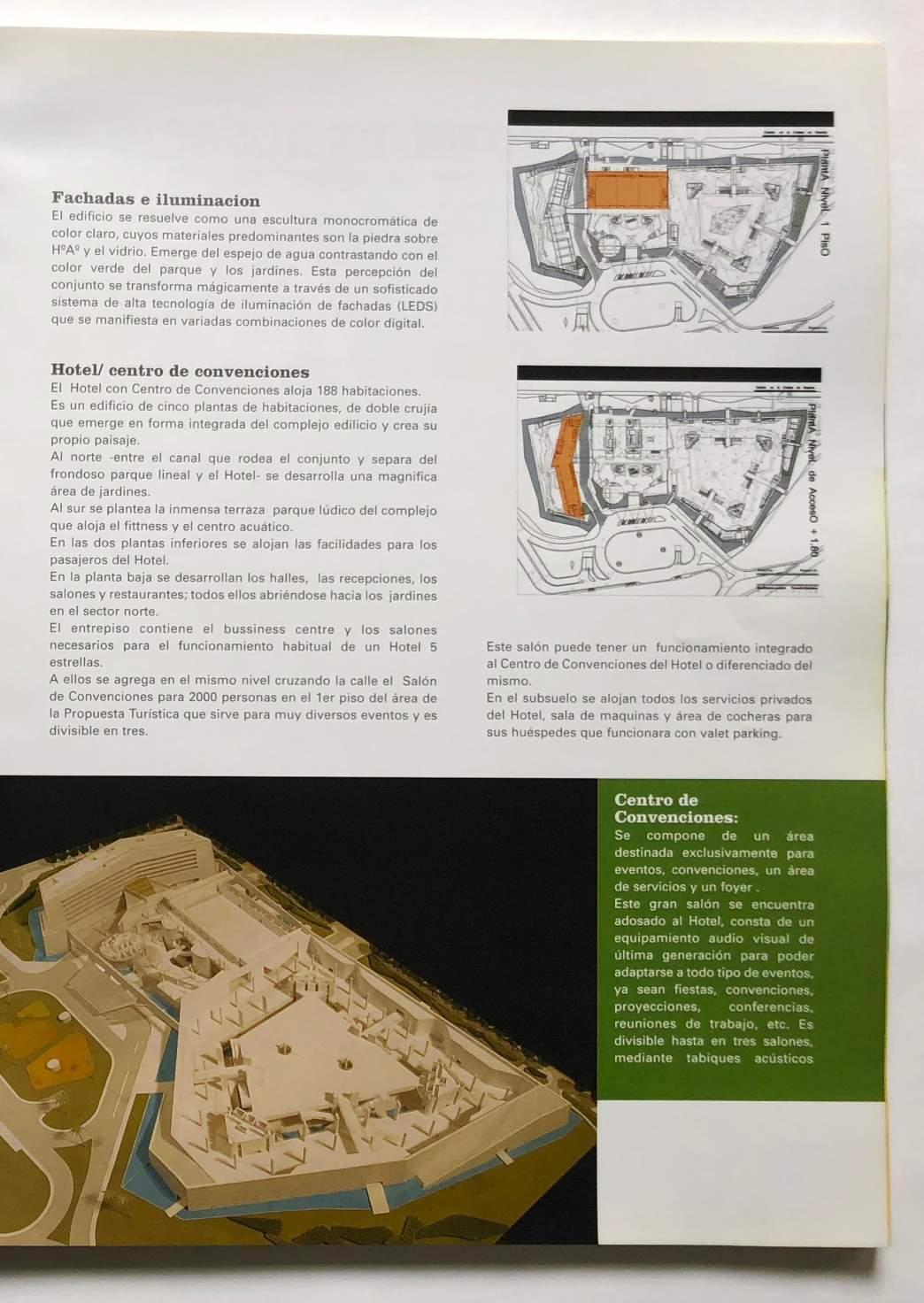
Hotel / Convention Center
The Hotel with a Convention Center has 188 rooms distributed in five levels with a double center line, emerging in an integrated way and creating its own particular landscape.
To the north, a magnificent green area of gardens unfolds between the channel surrounding the complex and separates it from the bushy linear park and the Hotel.
To the south, the huge complex terrace houses a fitness and aquatic center, conforming an entertainment park.
The two lower levels offer facilities for hotel guests.
On the ground floor, we can find the halls, recepti on desks, lounge rooms, and restaurants, all of them with views to the gardens located in the northern corner.
On the mezzanine, a business center and different rooms contain everything necessary for the ordinary activities of a 5-star Hotel.
On the same level, crossing the street, a Convention Center sitting 2000 people, on the first floor of the area of Tourist Proposal, intended for a wi de range of events and is divisible into three smaller rooms.
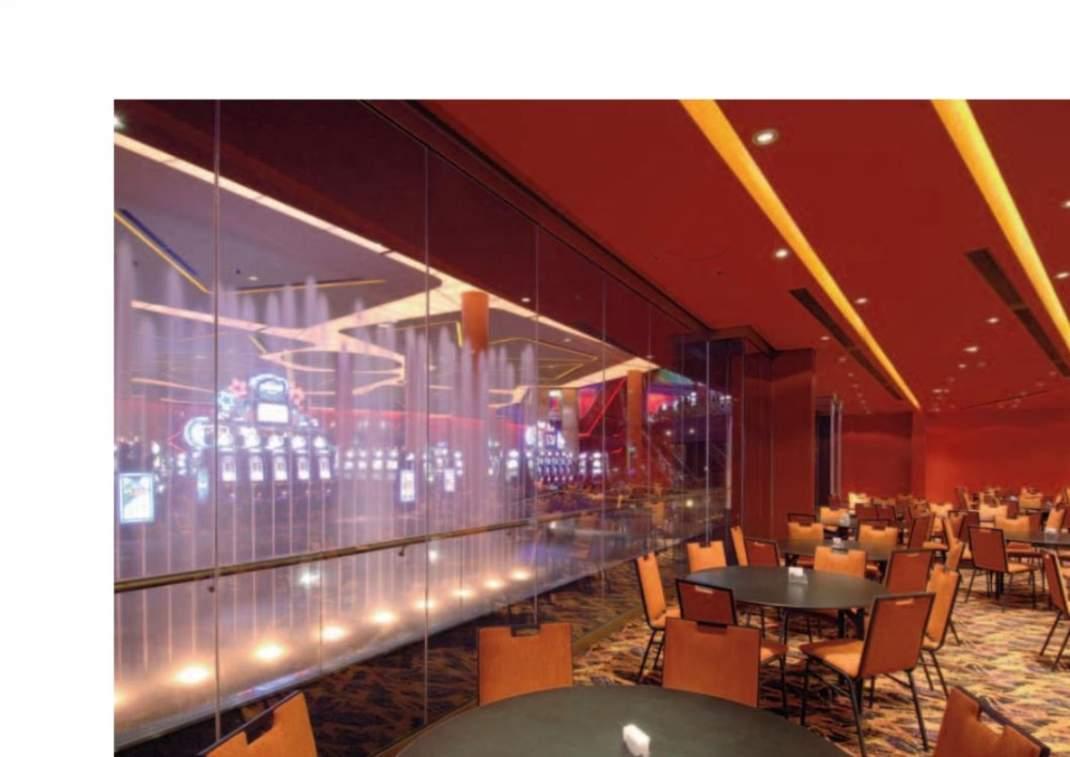
[Picture] This room can be integrated to the Hotel Convention Center, or function as an independent room.
On the underground level of the hotel, the machinery room as well as other private utilities of the hotel are located. Also, a parking space that will offer valet parking service.
Convention Center:
This is an area exclusively intended for events and conventions, a service area and a foyer. This large room is annexed to the Hotel, and is equipped with a state-of-the-art audiovisual technology to be able to adjust to all kinds of events, such as private parties, conventions, projections, conferences, work meetings, etc. It can be divided into up to three rooms, through acoustic partition walls, providing high flexibility for any event. Service access is outlined on the opposite side of guest access, having its own circulation throughout the entire room. The lighting system functions graduating light through a dimmer system, and it is possible to record different types of scenes as required by event demands.
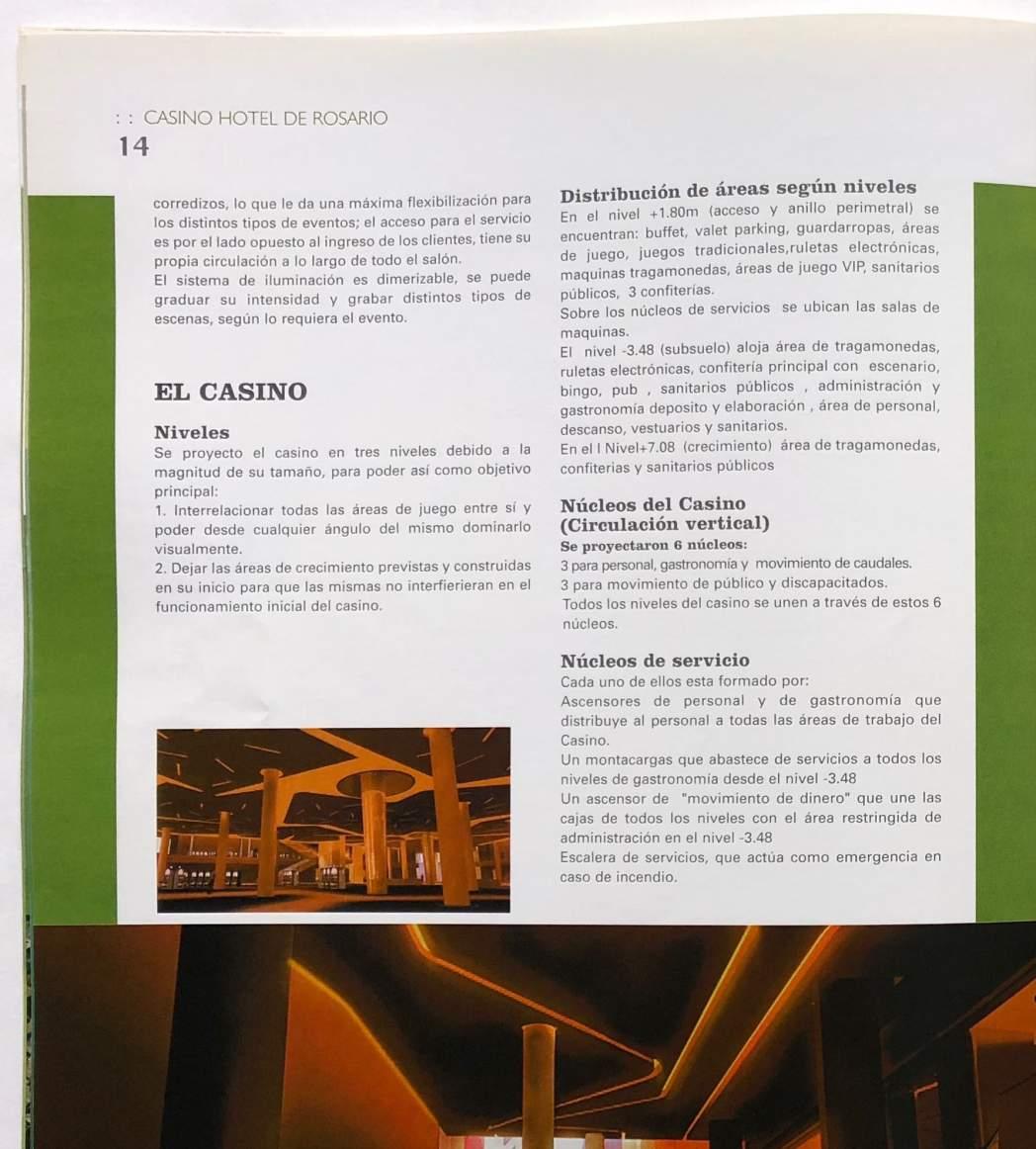
The Casino Levels
The Casino was projected into three levels, considering the large scale of the project, in order to be able to fulfil the following main goals:
1)Interrelate all gambling areas and have full view of all of them from anywhere inside the complex.
2)Leave the projected areas ready and built in place, so as not to interfere with the early activities of the Casino.
Distribution of Areas in different levels
On level +1.80 (access and perimeter ring) we can find the buffet, valet parking, lockers room, gambling sectors, traditional gaming rooms, electronic and traditional roulettes, slot machines, VIP gambling games, restrooms and 3 coffee shops.
Above service hubs, the machinery rooms are located.
On level -3.48 (underground), we find an area with slot machines, electronic roulettes, main coffee shop with a stage, bingo, pub, public restrooms, administration office, food sector with manufacturing and warehouse areas, staff area with lockers rooms, restrooms, and lounge rooms.
On level +7.08 (upper level), there are slot machines, coffee shops, and public restrooms.
Casino Hub (Vertical circulation)
6 hubs were projected: 3 of them for staff, gastronomy, and money transport. Three for circulation of general publicand disabled people. All casino levels are connected through these six hubs.
Service Hubs
Each of them comprises:staff and gastronomy elevators, connecting the staff to all work areas of the casino.
An electric forklift helps supplying the entire gastronomy levels beginning from level -3.48.
An exclusive elevator that “moves money” connects the restricted administrative area on level -3.48 with all cash counters of the casino.
A service staircase also functions as an emergency exit in case of fires.
Public Circulation Hubs
They comprise escalators, pedestrian way and an elevator; each of them is located at an equal distance from service hubs, so that the vi ew of the remaining levels flow naturally along the +7.08 level.
The distribution of these three hubs conform the general performance structure of the Casino.
Gambling Areas
The main access is on the access le vel, +1.80. Next to it, there is the buffet. This level also connects with the Tourist Proposal area.
The drugstore, which is part of the Casino, was placed at the exist of the main area to take advantage of its multiple uses.
Level +1.80 is divided into two gambling areas:
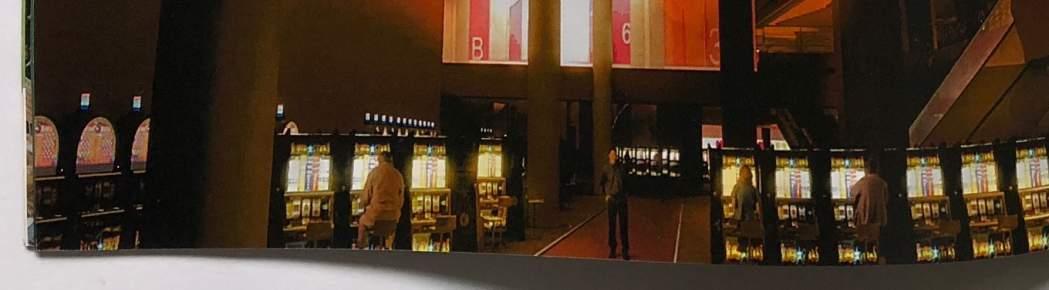
-The nearest area to the access area and the buffet, a 1025 slot machine area, with two coffee shops.
The southern sector houses the traditional gaming area in a more intimate corner, with a large coffee shop with room for 300 people.
-The VIP sector is located to the southeastern corner, with traditional games, and slots machines are located very near the large coffee shop, at an angle.
-There are 5 roulettes, 5 Baccarat tables, 8 Craps, 9 Black Jacktables, and 7 Poker tables.
Level -3.48
This level offers 879 machines, with a coffee shop featuring a stage for live performances, isolated from the rest of the complex to enjoy some music without disturbing others.
Also, electronic roulettes, a bingo and a pub propose their own particular atmosphere.
Level +7.08
This level offers slots machines and coffee shops.
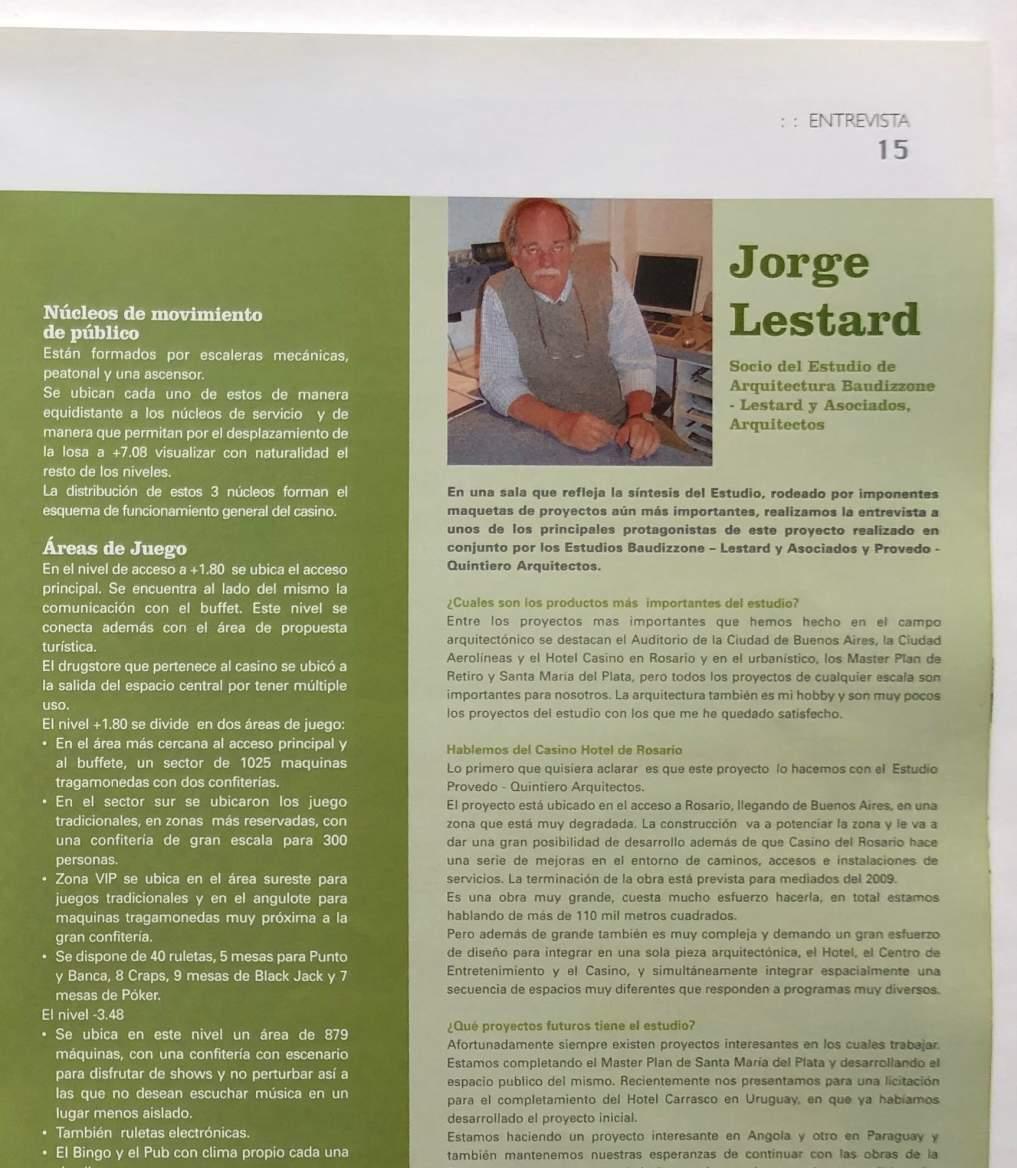
JORGE LESTARD
Associate member of the Architecture Firm Baudizzone-Lestard& Associates, Architects
An office reflecting the synthesis of the Firm, surrounded by paramount project models that speak of even more superb projects, was the setting for an interview of one of the main protagonists of this project undertaken together with the Firms Baudizzone-Lestard & Associates and Provedo-QuintieroArchitects.
What are the most important products of the Firm?
Among our most important projects in the field of architecture, I can name the Auditorium of the City of Buenos Aires, AerolineasCity, and the Rosario Hotel-Casino, and in urban development, I can think of the Master Plans of Retiroand Santa Maria del Plata. But every project, regardless of their scale, is really importantto us.
Let’s talk about Rosario Casino Hotel
First, I would like to say that this project is a joint work together with the Firm ProvedoQuintieroArchitects.
This project is located inthe access to Rosario, coming from Buenos Aires, in a very downtrodden area. I believe this construction will empower the area and offer a great development potential, apart from the improvement expected to be carried out in the surrounding roads, access ways, and service areas. The completion of this work is expected for 2009. It is a huge endeavor that will imply a lot of hard work; we are talking about more than 110,000 square meters (1,184,030 sq. ft.). Not only is it a huge work but also complex, demanding unwavering design efforts to be able to integrate a Hotel, Entertainment Center, and a Casino into one single architectural piece. And at the same time, also integrate very dissimilar space sequences responding to very different natures.
What are the coming projects of the firm?
Fortunately, there are always interesting projects to work on. We are currently finishing the Master Plan of Santa Maria del Plata and de veloping its public area. We have recently tendered for a bid to complete Carrasco Hotel, in Uruguay, since we had previously developed the initial project. We are now working on an interesting project in Angola and another one in Paraguay. We are also very hopeful in continuing the works in Aerolineas City, for which we completed the bidding process last year.
Furthermore, we talked about the four apartment buildings under construction in the Federal Capital City of Buenos Aires, and we recalled that it was the only architecture firm that built a projected neighborhood within the framework of the project of the new capital city in Viedma, Rio Negro.
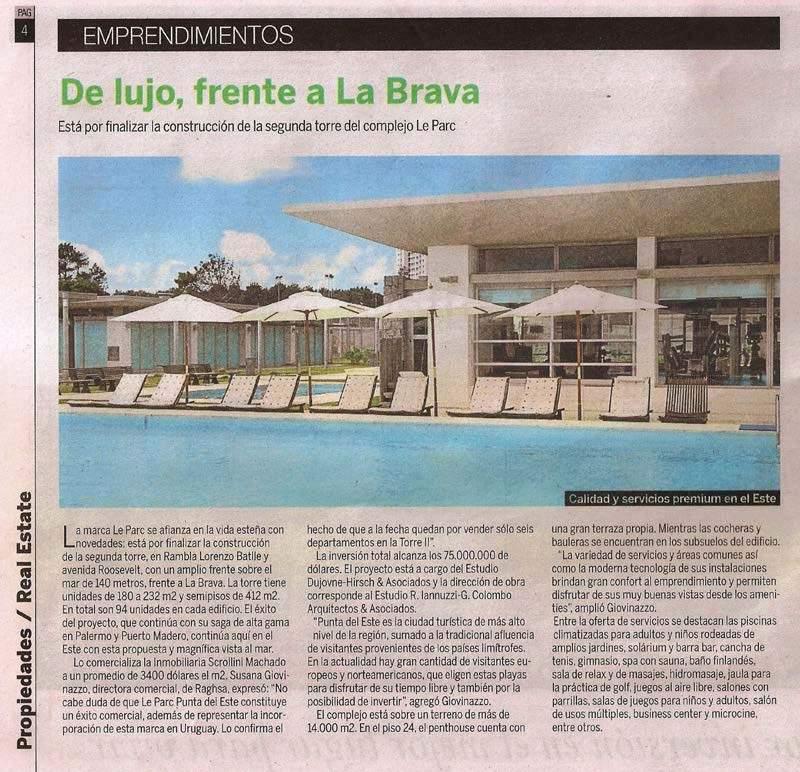
La Nacion Newspaper | October 8th 2011 | Argentina https://www.lanacion.com.ar/propiedades/de-lujo-frente-a-la-brava-nid1412841/
LUXURY APARTMENTS, FACING LA BRAVA
The construction of the second tower of Le Parc complex is about to be completed.
October 8th, 2011
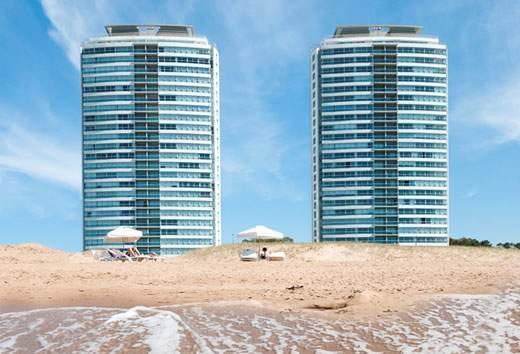
Le Parc Brand has managed to consolidate in the Punta del Este lifestyle, bringing up some news: the construction of the seco nd tower at Lorenzo BatlleEsplanade and Roosevelt Avenue is about to be completed, featuring a wide 140-meter seaside front view in La Brava beach. This tower offers units covering 180 to 232 m2 (1,937 to 2,497 sq. ft.)
and semi-floors of 412 m2 (4,434 sq. ft.). All in all, each building houses 94 units. This successful project, continuing its dynasty of luxury buildings in Palermo and Puerto Madero, Buenos Aires, Argentina, has disembarked here in Uruguay, Punta del Este, with this magnificent seaside view proposal.
The real estate firm ScrolliniMachado is responsible for marketing this endeavor offering units at an average price of USD 3,400 per square meter. Susana Giovinazzo, Raghsa business director, stated: "No doubt Le Parc Punta del Este has become a business success, apart from embodying the introduction of this brand in Uruguay. The evidence is that so far, there are only six apartments left for sale in Tower II.”
The total investment reaches USD 75,000,000. The project is in the hands of the Firm Dujovne-Hirsch & Associates, while the work management is the responsibility of the Firm R. Iannuzzi-G. Colombo Architects & Associates.
“Punta del Este is the most elegant tourist city with the highest purchasing power in the region, receiving visitors from neighboring countries. Currently, a great number of European and American visitors chose these beaches to spend their holidays, and as an investment opportunity as well,” Giovinazzo added.
The complex extends on an over 14,000 m2 land. On the 24th floor, the penthouse offers a huge private terrace. Parking space and storage rooms are located underground.
“Service diversity and common areas, as well as its state-of-the-art technology of its facilities offer great comfort to the endeavor and allows to enjoy delightful views from the amenities,” she added.
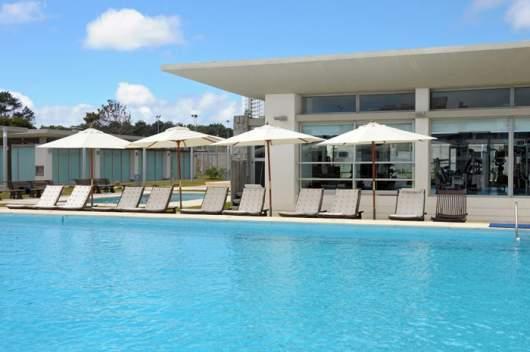
Among the services offered there are heated swimming pools for adults and children surrounded by large gardens, solarium and aquatic bars, tennis courts, gym, spa with sauna, Finnish bath, relaxation and massage room, hydro-massage, golf driving range, outdoor games, lounges with grills, games rooms for children and adults, multipurpose rooms, business center and microcinema, among others.
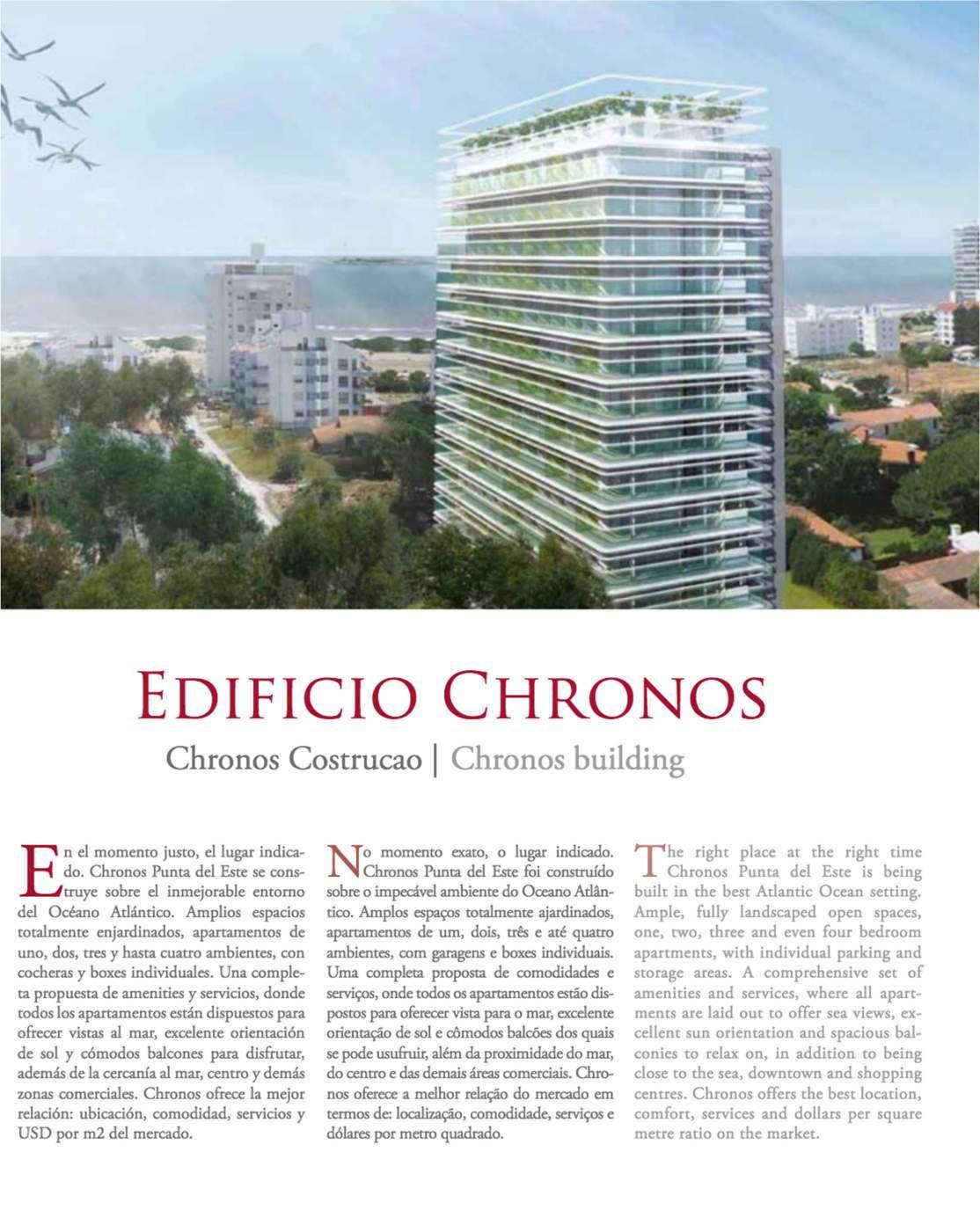
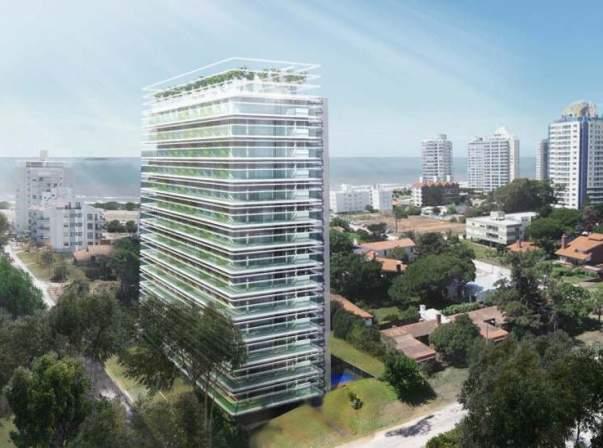
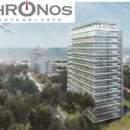
CHRONOS BUILDING
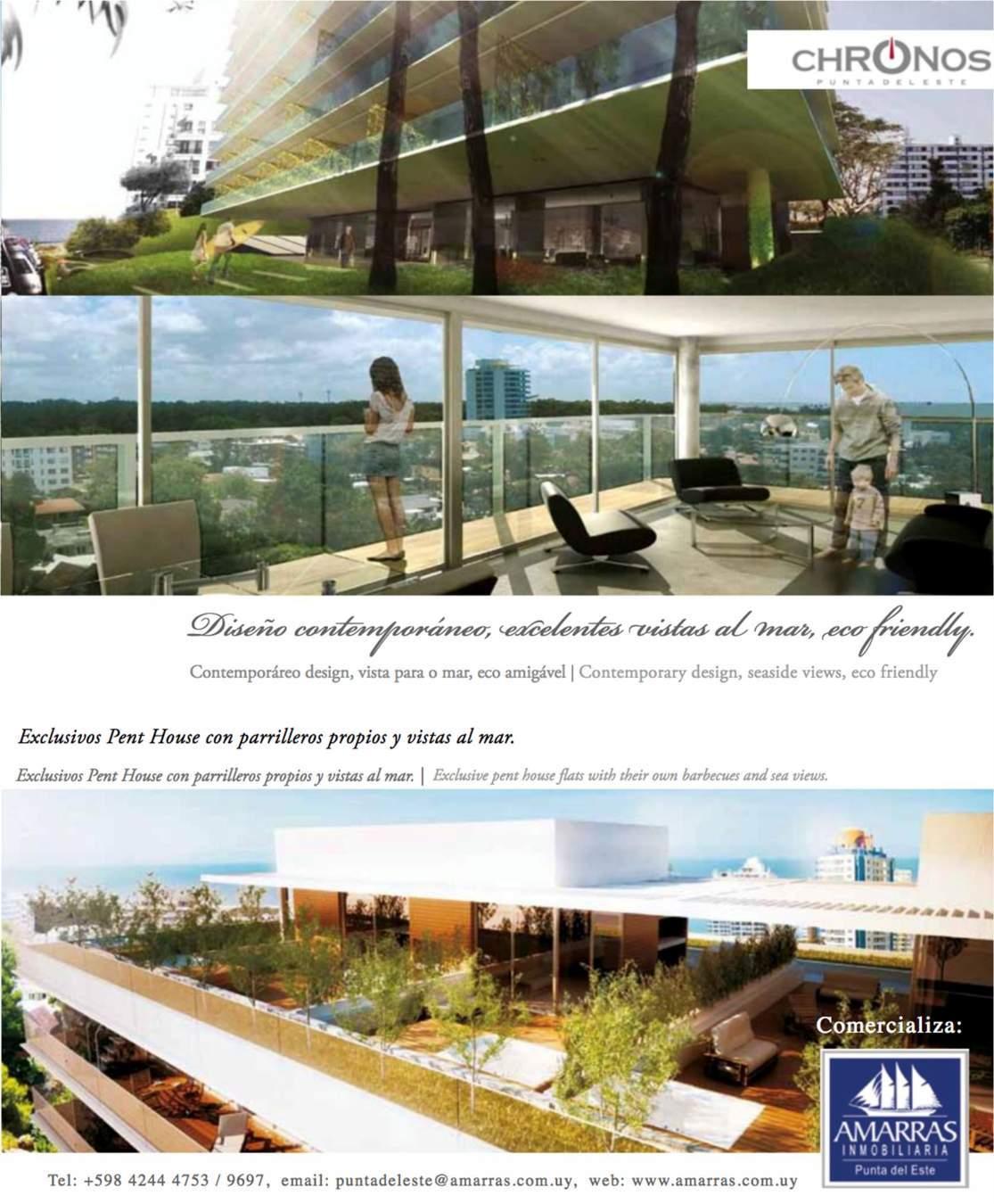
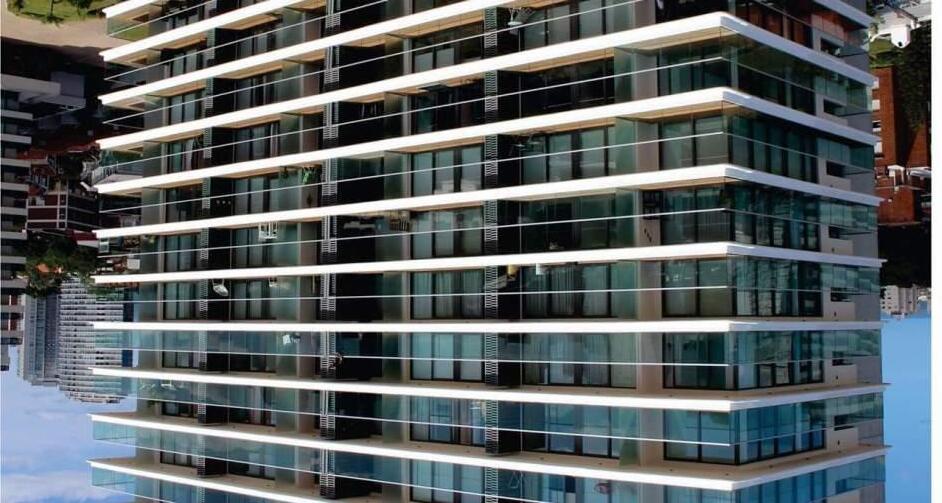
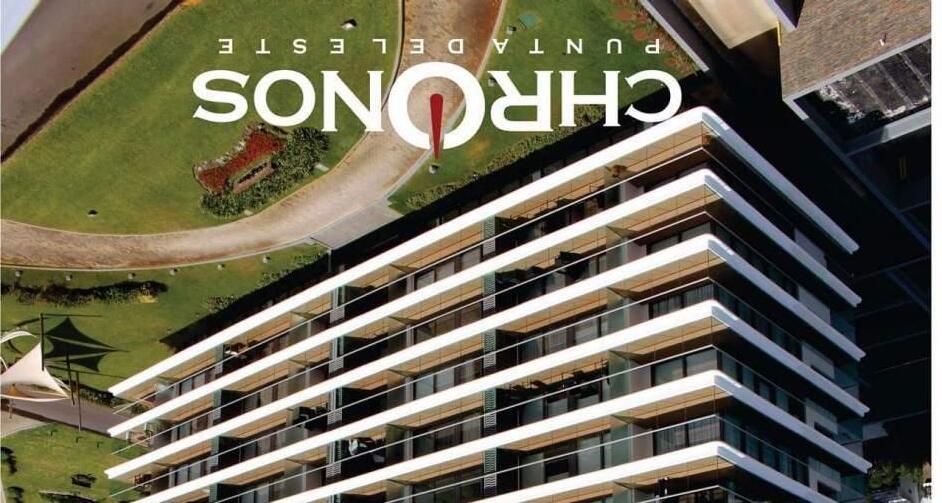
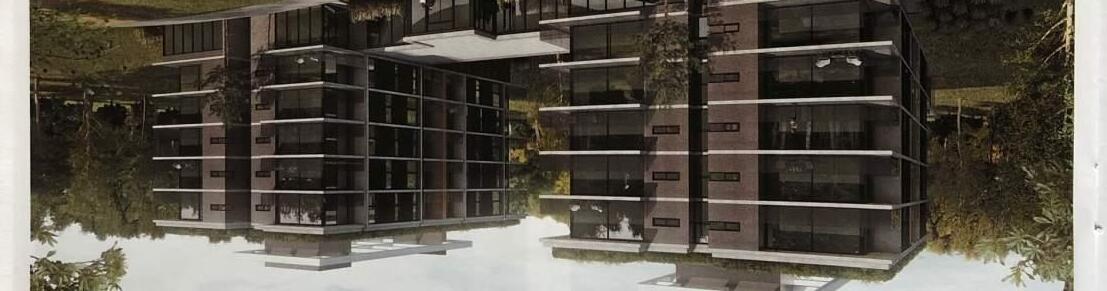
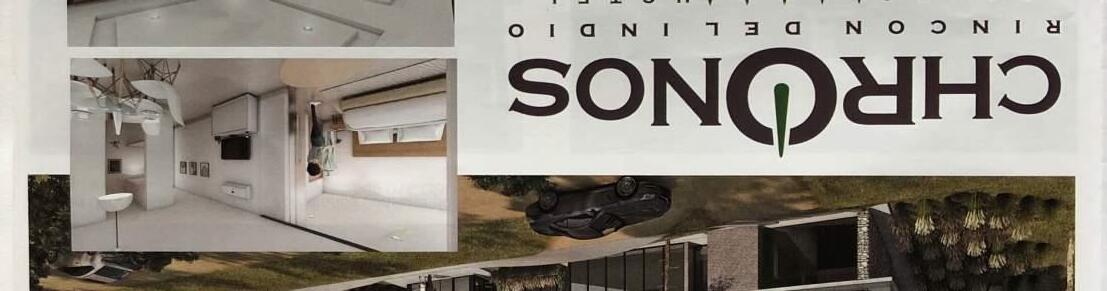
The right place at the right time Chronos Punta del Este is being built in the best Atlantic Ocean setting. Ample, fully landscaped open spaces, one, two, three and even four bedroom apartments, with individual parking and storage areas. A comprehensive set of amenities and services, where all apartments are laid out to offer sea views, excellent sun orientation and spacious balconies to relax on, in addition to being close to the sea, downtown and shopping centres. Chronos offers the best location, confort, services and dollars per square metre ratio on the market.
Punta del Este Internacional 2012 Magazine| December 2011 | Uruguay https://issuu.com/puntadelesteinternacional/docs/anuario_2012
EN
CHRONOS PUNTA DEL ESTE
Datos de Propiedad Datos de Inmobiliaria
Inmobiliaria: Amarras Inmobiliaria
País/Ciudad: Uruguay, Maldonado / Punta del Este
Zona: Playa Brava
Tipo de Propiedad: Apartamento
Tipo de Operación: Venta
Precio: Llamar para conocer precio
Dormitorios: 1, 2
Descripción:
¡ES TIEMPO DE CHRONOS! Continua avanzando a buen ritmo y ya se deja entrever lo interesante de esta obra!
Inversión segura, Calidad, Confort, Ubicación, Servicios, Vista al mar, Garage, Baulera y mucho “+”… Precios desde USD 197.000 con garage y baulera incluidas!, consulte forma de pago financiada.
TIME FOR CHRONOS! Construction is going strong, giving an interesting sneak-peak to this great building! Guaranteed investment. Quality, Confort, Location, Amenities, View on the sea, Garage, Storage Room and much more! Financing available.
En CHRONOS REGALAMOS: Calidad, categoría, confort, ubicación, servicios, vista al mar, garage, baulera y más…tan sólo con la llave de tú departamento.
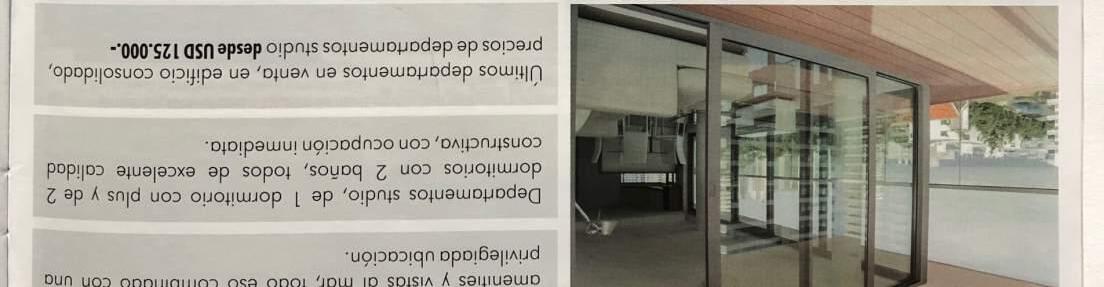
Una realidad a la vista. Solicite visita guiada a la obra. Monoambientes, 1 y 2 dormitorios + plus con balcones, cocheras y bauleras, completa área de servicios, excelente calidad y moderno diseño a pasos de la Brava en Parada 6.
EN
Declarado de interés por:
Unidades desde USD 197.000 con garage y baulera incluidos, pago financiado. Entrega Diciembre 2014! Studio apts, 1 & 2 bedrooms, w/ balconies, parking spots and storage areas. Full amenities area, excellent quality, modern design, just steps from Brava Beach on Parada 6. Occupy December 2014. Ask about the 12% discount offer. Appoint a guided visit to the construction site.
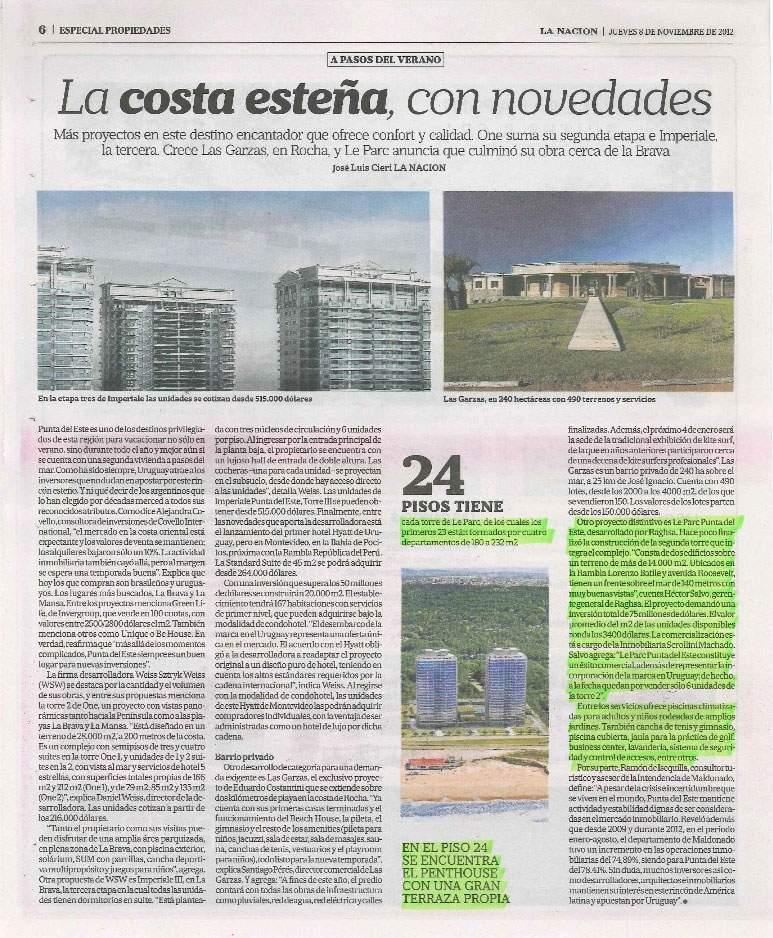
La Nacion Newspaper | November 8th 2012 | Argentina https://www.lanacion.com.ar/propiedades/la-costa-estena-con-novedades-nid1524585/
THE EAST COAST, WITH NEWS
…Le Parc announces that the work near the Brava Beach is now finished.
Each tower has 24 floors, the first 23 of which are four apartments ranging from 180 to 232 square meters (1,937 to 2,497 sq. ft.)
A PENTHOUSE IS LOCATED ON THE 24TH FLOOR, WITH A LARGE PRIVATE TERRACE.
Another outstanding project is Le Parc Punta del Este, developed by Raghsa. The construction of the second tower part of the project has been recently completed. “It involves two buildings covering an are of more than 14,000 square meters (150,695 sq. ft.), located at the intersection between Lorenzo BatlleEsplanade and Roosevelt Ave., facing the sea frontline with excellent 140-meter range views,” Hector Salvo, Raghsageneral manager remarks. The project required a total USD 75 million investment. The average price of the available unit square meters is USD 3,400. The project is marketed by ScrolliniMachado Realtors. Salvo adds: “Le Parc Punta del Este has become a business success, apart from embodying the introduction of this brand in Uruguay. In fact, there are only 6 units left for sale in the second tower.”
The complex offers amenities such as heated swimming pools for adults and children, surrounded by wide gardens. Also, tennis cour ts and gym, and indoor pool and a golf driving range, a business center, laundry, security system, and access control, among other things.
CAMARA EMPRESARIA DE DESARROLLADORES URBANOS
RAGHSA: LE PARC PUNTA DEL ESTE
POSTED ON Dic 11, 2012
La Torre II del emprendimiento presenta las últimas unidades disponibles.
Le Parc Punta del Este es un conjunto de 2 torres y 184 residencias de alta gama, de las cuales sólo quedan las últimas seis unidades disponibles. El emprendimiento premium Le Parc Punta del Este está emplazado sobre en un terreno de más de 14.000 m2 de superficie; ubicado en la Rambla Lorenzo Batlle y Av. Roosevelt.
El proyecto requirió una inversión total de U$S 75.000.000. Las últimas unidades disponibles pueden adquirirse en un valor que comienza en los U$S 3.200 el m2 y la comercialización está a cargo de la Inmobiliaria Scrollini - Machado.
Cada torre cuenta con 24 pisos, de los cuales los primeros 23 están formados por cuatro departamentos cuyas superficies oscilan entre los 180 m2 y los 232 m2, con la posibilidad de unir 2 departamentos y generar semipisos de 428 m2. En el piso 24 se encuentran los penthouses que poseen terraza propia. Las cocheras y bauleras se ubican en los subsuelos.
La variedad de servicios, áreas comunes y la tecnología de sus instalaciones, brindan un máximo confort desde sus amenities: piscinas climarizadas para adultos y para niños rodeadas de amplios jardines, solarium y barra bar; cancha de tenis y gimnasia; spa con sauna, baño finlandés, sala de relax, sala de masajes e hidromasajes; piscina cubierta; jaula para la práctica de golf; juegos al aire libre; salones con parrillas y salas de juegos para niñós y adultos; SUM; business center; microcine y lavadero de autos, entre otros.
La empresa desarrolladora del proyecto es la sociedad uruguaya Le Parc S.A., el gerenciamiento estuvo a cargo de RAGHSA S.A., el proyecto a cargo del Estudio Dujovne - Hirsch & Asociados , con la dirección de obra del Estudio R. Iannuzzi –G. Colombo Arquitectos & Asociados.
RAGHSA es una compañía con una trayectoria iniciada hace más de 40 años, dedicada al desarrollo de bienes raíces, especialmente a la construcción de oficinas y residencias de alta gama. Algunos de los edificios realizados por RAGHSA son: Edificio Nuevo Centro (18500m2); Edificio Plaza San Martín (35000 m2); 344 San Martín (48000 m2); Edificio Torre Blanca (30000 m2); Torre Florida y Tucumán (23200m2); Madero Office (63000 m2); Le Parc Residential Tower (68000 m2); Le Parc en Puerto Madero (105000 m2) y Le Parc Av. Figueroa Alcorta (79500 m2).
Fuente: CEDU
BUSINESS URBAN DEVELOPERS CHAMBER
RAGHSA: LE PARC PUNTA DEL ESTE
Posted on December 11th, 2012
The II Tower of this venture showcases its last available units.
LeParcPuntadelEsteis a complex involving 2 top-tier towers and184home residencies, only the last six of which are still availa ble. The premiumLeParcPuntadelEsteventure is nested on a plot of land covering an area of 14.000m 2 (150.694 sq. ft.), located at LorenzoBatlleEsplanade andRoosevelt Avenue.
A total U$S75.000.000 investment was required.These last units are offered starting from U$S3.200per square meter and are marketed by the realtors InmobiliariaScrolliniMachado.
Each tower comprises 24floors, the 23 first floors of which are four apartments ranging from 180m2 (1.937 sq. ft.) and232m2 (2.497 sq. ft.); it is possible to connect 2apartments and create semi-floors covering428m2 (4.606 sq. ft.).On the24th floor, we have thepenthouseswith their exclusive terraces. Parking spaces and storage rooms are located on the underground floors.
Maximum comfort is achieved thanks to the variety of services, common areas, technological facilities, through the amenities offered, such as: climatized pools for adults and children surrounded by wide gardens, a solarium andbar; tennis court and gymnasium; spa and sauna, Finish shower, relax room, massage and hydro-massage room; indoor swimming pool, golf driving ranches, outdoor games, barbecue areas and games rooms for adults and children; multip le purpose room; microcinema, car-wash, and so much more.
The Project developer is the Uruguayan companyLeParcS.A. The Project management was the responsibility of RAGHSA S.A.; while the project was in the hands of the Firm DujovneHirsch&Associates,with the work management of the FirmR.Iannuzzi–G.ColomboArchitects&Associates.
RAGHSA is a company with over 40 years of experience, engaged in the development of real estate projects, in particular, buildingof top-tier office rooms and home residences.Some of the buildings carried out byRAGHSAare:NuevoCentroBuilding (18.500 m2 –199.132 sq. ft.); PlazaSanMartinBuilding (35.000m2 –376.736 sq. ft.); 344San Martin(48.000m2 –516.667 sq. ft.); TorreBlanca Building (30.000m2 –322.917 sq. ft.); Floridaand Tucuman Building (23.200 m2 –249.722 sq. ft.); MaderoOffice(63.000m2 –678.126 sq. ft.); Le ParcResidentialTower(68.000m2 –731.945 sq. ft.); Le Parc PuertoMadero(105.000m2 –1.130.210 sq. ft.)andLeParcAv.FigueroaAlcorta(79.500m2 –855.730 sq. ft.).
SOURCE: CEDU
Ficha Técnica
Colaboradores
Arq. Susana Valderrama, Estudio KLM, Arq. Roberto Shinsato, Arq. Andrés Fernandez Abadie, Arq. Maria Eugenia Gelso Moure, Arq. Ricardo Gomez, Arq. Karen Corbo, Arq. Martin Meira, Arq. Sergio De Fino, Arq. Diego Dubove, Arq. Andrea Lestard, Arq. Ivan De Wolodimeroff, Arq. Jenara Biasoli, Arq. Caroline Haupt, Arq. Luciana Piotto, Diego Alliano, Arq. Sofia Fernandez Rosso, Silvina Martinez Benites, Arq. Lucia Madueño, Arq. Federico Marino. Arq. Luciana Dhers, Arq. Gala Traversa.
Asesores
Ingeniería Estructural: Estudio AHFSA - Ing. Alberto Fainstein. Instalación eléctrica: Estudio Grinner - Ing. Luis Grinner. Instalación eléctrica de casino: SCE - Ramón Daporta, Daniel García. Iluminación: Estudio Diz - Ernesto Diz / Philips Argentina. Instalación termomecánica: MP Ingeniería - Ing. Mario Pedro Hernández. Instalación termomecánica de casino: Cliro - Ing. Roberto Trullas, ing. José Paludi. Instalación sanitaria: estudio GiariniOctavio Giarini. Instalación acústica: Ing. Haedo. Carpinterías: Estudio Gigli – Ing. Andres de Aguirre Paisajismo: Fernando González – Cristina Ramírez Cómputo y presupuesto: Luis Maria Grau. Fuentes de agua: Wassertechnik - Peter Schotler, Roberto Lamenta. Consultor arquitectura interior: Arq. Sergio Krymer. Ascensores: Ing. Aldo López. Medios de salida: Rubén Cabral.
Ubicación
Bv. Oroño y Circunvalación – Rosario, Pcia. de Santa Fe
Fecha 2005
Superficie Total 128.000 m²
Technical Data
Project team
Arch. SusanaValderrama, KLM Studio, Arch. Roberto Shinsato, Arch. Andrés Fernandez Abadie, Arch. María Eugenia Gelso Moure, Arch. Ricardo Gómez, Arch. Karen Corbo, Arch. Martín Meira, Arch. Sergio De Fino, Arch. Diego Dubove, Arch. Andrea Lestard, Arch. Ivan de Wolodimeroff, Arch. Jenara Biasoli, Arch. Caroline Haupt, Arch. Luciana Piotto, Diego Alliano, Arch. Sofía Fernandez Rosso, Silvina Martinez Benites, Arch. Lucia Madueño, Arch. Federico Marino, Arch. Luciana Dhers, Arch. Gala Traversa.
Advisors
Structural engineering: AHFSA Studio -Eng. Alberto Fainstein.Electrical installation: Grinner Studio -Eng. Luis Grinner. Casino electrical installation: SCE-Ramón Daporta, Daniel García. Lighting: Diz Studio –Ernesto Diz / Philips Argentina.Thermo-mechanical installation: MP Engineering -Eng. Mario Pedro Hernández. Casino thermomechanical installation: Cliro -Eng. Roberto Trullas, Eng. José Paludi. Sanitary installation: Giarini Studio –Octavio Giarini. Acoustic installation: Eng. Haedo. Enclosures: Gigli Studio -Eng. Andrés de Aguirre. Landscaping: Fernando González -Cristina Ramírez. Computation and budget: Luis María Grau. Water sources: Wassertechnik -Peter Schotler, Roberto Lamenta. Interior architectural advisor: Arch. Sergio Krymer. Elevators: Eng. Aldo López. Emergency exits: Rubén Cabral.
Location
Bv. Oroño and Circunvalación -Rosario, Pcia. de Santa Fe.
Date
2005
Built area
1.377.780 sq.ft.
HOTEL, CONVENTION CENTER & ENTERTAINMENT CENTER –BIAARBIAAR
BIA –AR
HOME / CONSTRUCTIONS / HOTEL,CONVENTION CENTER & ENTERTAINMENT CENTER
The building was conceived as a light-colored monochromatic sculpture, arising from the water mirror, in contrast with the green parks and gardens. This perception of the complex is magically transformed through a sophisticated system of edgy façade lighting technology(LEDS)showcasing different combinations of digital color.
The building shapes features a ludic and out-of-the-ord inary world, standing out from the city planning, featuring an urban icon, and becoming part of the surrounding park. This park links the complex with the built complex to the east and north sidesand integrates with the green landscape proposed by the bypass andBoulevard.During the day, the building shows a powerful rocky character, mingling with the surrounding park, while at nighttime, it becomes a ludic and colorful complex, thanks to the lighting systems which turns it into a magical and fantasy place.The rocky cladding summarizes the different overlaid programs inside the complex(hotel+convention center +casino).
[photograph]
Perspectives:JavierGorodnerandMiguelCocco
Background
In a down-trodden area in the suburbs of Rosario, a landmark is set which serves as a driving force for the development of the place and points out one of the main access routes to the city. Rosario, being a buzzling attraction center, offers a place where the complex intends to make emphasis on the city’s culture production as well as the surrounding area’s, and contributes with new attractions through the organization and management of top-tier events, at a local, regional and international level.
[Photograph]
MYA Productions Research
In order toachieve the development of the expression of the rocky cladding of the building, its search and design, as well as the outline of drillings, it was necessary to carefully study different intents and expectations of the project.
All of this, in addition to the building lighting design, -both indoor and outdoor-influenced the decisions to create a sense of illusions and feelings demanded by the project.
[Photograph]
Perspectives: Javier Gorodner and Miguel Cocco / Photographs: Daniel Mac Adden
Material
The rock is conceived as a heavy material, through the use of"precast concrete," which includes contrasting glazed skylights backlit with LEDs, with changes of tones creating different scenes and general magical and illusion climates. The perimeter channel reflects this illumination with the side walls. Both natural and artificial lighting management clearly reinforces the expression of each one of the areas of the project. The predominant materials are:precast reinforced concrete, coated with white stone and glass. The roof is treated as a fifth façade, and there is a large terrace that houses a gymnasium and a group of pools, as well as an esplanade along its edge with visuals to the surrounding park.
[Photograph]
Alejandro Leveratto and Daniela Mac Adden
System
The project proposal integrates the whole complex in a single large building that emphasizes the integration of its activities, thus increasing its synergy. Taking advantage of the synergy of including a 5star Hotel and a large Casino into one single complex, a Convention Center serves as as the main artery of access and relation between them contained in the Tourist Proposal. It is structured in a central core that connects all the different levels, allowing each one of them to be visualized and identified clearly within the complex. Within the same scenario, different geometric-spatial and design systems that shape the different programs of the complex (hotel, casino and convention center) are juxtaposed as a sequence of contrasts. At the same time, different geometries create different spatial conditions. At one end of the project the casino shows its exuberance; on the contrary, the hotel shows its minimalist style, and mediating between the two, the convention center. In the casino the spatial complexity is surrounded by a Chinese red wall that unifies and allows to control the diversity of elements and situations involved. Within it, each room is different and takes on different climates.
[Photograph]
Liaisons
The project opens onto the avenue of access to the city of Rosario, while maintaining a neutrality towards the neighborhood, almost as marking the end of the urban grid. The perimeter water channel separates, and at the same time, generates a transition between the surrounding park and the building complex. New means of transport, even transport hub stations were placed in the perimeter of the venture, allowing an effective link with the urban system and in turn, evidencing the theory that these large centers of activity bring new life to areas.
[Photograph]
MYAProductions/DanielaMacAdden
HOTEL, CENTRO DE CONVENCIONES Y CENTRO DE ENTRETENIMIENTOS - BIAARBIAAR
HOME / REALIZACIONES / HOTEL, CENTRO DE CONVENCIONES Y CENTRO DE ENTRETENIMIENTOS
HOTEL, CENTRO DE CONVENCIONES Y CENTRO DE ENTRETENIMIENTOS
Arq. Miguel Baudizzone - Arq. Jorge Lestard - Arq. Mario Provedo - Arq. Aldina Quintiero
Ícono
El edificio se resuelve como una escultura monocromática de color claro, el cual emerge del espejo de agua, contrastando con el color verde del parque y los jardines. Esta percepción del conjunto se transforma mágicamente a través de un sofisticado sistema de alta tecnología de iluminación de fachadas (LEDS) que se manifiesta en variadas combinaciones de color digital.
En sus formas, todo el edificio expresa un mundo lúdico y diferente, que en su forma contrasta con la cuadricula de la ciudad, manifestando su carácter de hito urbano e integrándose con el parque que lo rodea.
El parque mediatiza la relación del complejo con el entorno construido en sus bordes Este y Norte, y se integra con el paisaje planteado por el verde de la circunvalación y el Boulevard.
Durante el día el edificio tiene un carácter rocoso y contundente, integrándose con el parque. Durante la noche, su imagen adquiere un carácter lúdico y colorido mediante un sistema de iluminación que lo transforma en un lugar mágico y de ilusión.
La envolvente rocosa sintetiza los diversos programas yuxtapuestos en el interior del complejo (hotel+ centro de convenciones+ casino).
Perspectivas: Javier Gorodner y Miguel Cocco
Contexto
En un rincón olvidado de la periferia de Rosario se impone un hito que sirve de catalizador para el desarrollo de la zona y marca uno de los accesos principales a la ciudad. Siendo Rosario un polo de atracción con gravitación propia, el complejo se propone enfatizar la producción cultural de la ciudad y su zona de influencia, y aportar nuevos atractivos mediante la organización y administración de eventos de relieve y categoría tanto local como regional e internacional.
MYA Producciones HOTEL, CENTRO DE CONVENCIONES Y CENTRO DE ENTRETENIMIENTOS - BIAARBIAAR
HOTEL, CENTRO DE CONVENCIONES Y CENTRO DE ENTRETENIMIENTOS - BIAARBIAAR
Investigación
El desarrollo para lograr la expresión de la envolvente rocosa, y la búsqueda, diseño, disposición de las perforaciones, generaron motivos de estudio que profundizaron las diferentes intenciones y voluntades del proyecto. Todo eso sumado al diseño de la iluminación, tanto exterior como interior, sumaron decisiones para la creación de sensaciones y de ilusiones que el tema requería.
Perspectivas: Javier Gorodner y Miguel Cocco / Fotos: Daniel Mac Adden http://2014.biaar.com/realizaciones/hotel-centro-de-convenciones-y-centro-de-entretenimientos/
Materia
HOTEL, CENTRO DE CONVENCIONES Y CENTRO DE ENTRETENIMIENTOS - BIAARBIAAR
Conformar la roca con un material pesado “hormigón premoldeados”, en el que se incluyen contrastando lucernarios vidriados retroiluminados con leds cuyo cambio de tonalidad crea escenas diferentes y genera climas mágicos y de ilusión. El canal perimetral refleja esta iluminación con la paredes laterales. El manejo de la iluminación (natural y artificial) refuerza claramente la expresión de cada una de las areas del proyecto. Los materiales predominantes son: premoldeados de hormigón armado, revestido con piedra blanca y vidrio. La cubierta se trata como una quinta fachada, y en ella se extiende una gran terraza que aloja un gimnasio y conjunto de piletas, además de un paseo recorrible en todo su borde con visuales al parque que la rodea.
La propuesta proyectual integra todo el conjunto en un único edificio de grandes dimensiones que enfatiza la integración de sus actividades incrementando su sinergia. Aprovechando la sinergia de la inclusión en un mismo complejo de un Hotel 5 estrellas y un Casino de gran tamaño, se dispone como núcleo de acceso y relación entre ellos un Centro de Convenciones que contiene la Propuesta Turística. El mismo se estructura a partir de un núcleo central que conecta los diferentes niveles, permitiendo que cada uno de ellos se visualice e identifique en forma clara dentro del conjunto. Dentro de la misma envolvente conviven diferentes sistemas geométrico- espaciales y de diseño que resuelven los distintos programas del complejo (hotel, casino y centro de convenciones) se yuxtaponen como una secuencia de contrastes. Las diferentes geometrías crean a su vez diversas condiciones espaciales. En un extremo del proyecto el casino muestra su exuberancia, en el opuesto, el hotel su minimalismo y mediando ambas condiciones espaciales se encuentra el centro de convenciones. En el casino la complejidad espacial se rodea de un muro rojo chino cuya presencia unifica y permite controlar la diversidad de elementos y situaciones que alberga. Dentro de él, cada lugar es diferente y asume diversos climas.
El proyecto se abre hacia la avenida de circunvalación de acceso a la ciudad de Rosario, mientras mantiene una neutralidad hacia el barrio, casi como marcando el fin d ela cuadricula urbana. El canal de agua perimetral separa y a la vez genera una transición entre el parque circundante y el complejo edilicio. Nuevos medios de transporte, hasta estaciones de trasbordo se dispusieron en el perímetro del emprendimiento, permitiendo un vínculo eficaz con el sistema urbano y a su vez verificando la teoría de que estos grandes centros de actividad revitalizan las áreas.
HOTEL, CENTRO DE CONVENCIONES Y CENTRO DE ENTRETENIMIENTOS - BIAARBIAAR
CITY CENTER ROSARIO, ARCH. BAUDIZZONE-LESTARD AND PROVEDO-QUINTIERO
A LUDIC & DIFFERENT WORLD
February 2011: In the interview with the architects Miguel Baudizzone and Jorge Lestard, we displayed on the central page the images of the City Center Rosario -of which the colleagues Mario Provedo and Aldina Quintiero took part -whose project gave definite answers to the requirements of the casino, hotel and convention center, together with large dimensions and enormous plastic force that emphasizes the integration of its activities increasing synergy.
TECHNICAL DATA:
Building construction: Hotel, Casino and Convention Center.
Location: Bv. Oroño and Circunvalacion, Rosario, Provincia de Santa Fe.
Project & management: Arch. Miguel Baudizzone –Arch. Jorge Lestard –Arch. Mario Provedo, Arch. Aldina Quintiero.
Work coordination: Arch. Manuel Fernandez de Luco, Arch. Osvaldo Redondo.
Work management: Eng. Pablo Gaspe.
Construction company: Riva S.A.
Project team & construction supervision: Arch. SusanaValderrama, KLM
Studio, Arch. Roberto Shinsato, Arch. Andrés Fernandez Abadie, Arch. María Eugenia Gelso Moure, Arch. Ricardo Gómez, Arch. Karen Corbo, Arch. Martín Meira, Arch. Sergio De Fino, Arch. Diego Dubove, Arch. Andrea Lestard, Arch. Ivan de Wolodimeroff, Arch. Jenara Biasoli, Arch. Caroline Haupt, Arch. Luciana Piotto, Diego Alliano, Arch. Sofía Fernandez Rosso, Silvina Martinez Benites, Arch. Lucia Madueño, Arch. Federico Marino, Arch. Luciana Dhers, Arch. Gala Traversa.
Perspectives: Javier Gorodner, Miguel Cocco.
Structural engineering: AHFSA Studio (Eng. Alberto Fainstein).
Electrical installation advisor: Grinner Studio (Eng. Luis Grinner).
Casino electrical installation advisor: SCE(Ramón Daporta, Daniel García).
Lighting advisor: Diz Studio (Ernesto Diz), Philips Argentina.
Thermo-mechanical installation advisor: MP Engineering (Eng. Mario Pedro Hernández).
Casino thermo-mechanical installation advisor: Cliro (Eng. Roberto Trullas, Eng. José Paludi).
Sanitary installation advisor: Giarini Studio (Octavio Giarini).
Acoustic installation advisor: Eng. Haedo.
Enclosures advisor: Gigli Studio (Eng. Andrés de Aguirre).
Landscaping: Fernando González, Cristina Ramírez.
Computation and budget: Luis María Grau.
Water sources: Wassertechnik (Peter Schotler, Roberto Lamenta).
A company wich leads in telecommunications and informatics follows the fast rhythm of globalization and guaranttes the best process to a unique and really accesible service.
Since 2003, Soluciones IT has been offering the most outstanding and cutting edge technology to companies, residences or people who are looking for a safe place in an increasingly more unstable market. Having the support of young experts, its wide range of products and services gives solutions related to informatics, home automation and safety, through closed-circuit television, IP telephone exchanges, Wifi systems, access and record systems, electric gates and structured cabling, among other supplies and accessories.
Besides, Soluciones It provides special local and remote support for restoring data service, back-up, network maintenance, virus removal and software and hardware failure correction, to ensure the maximun development in each process.
At the time of an accelerated technological revolution, this versatility and adaptability turn this company into the one to bring distinctive alternatives, wich enable to strengthen permanent communication to optimal results.
Partly, that is why Soluciones IT’s successful experience is based on the trust of recognized international brands, wich have chosen it as their agent in Uruguay, to concentrate their systems in just one supplier with unique technical service.
Punta del Este Internacional 2017 Magazine | December 2016 | Uruguay
A few meters away from La Brava Beach, Chronos, a new architectural venture with a modern design and a fully state-of-the-art technology equipped building has been developed.
Covering an area of 2,500 m2, with a wide northern front to the Street Lenguas de Diamante, this 14-storey tower offers 140 apartments with parking lots and individuals boxes, as well as a comprehensive package of amenities and services.
The building is totally constructed in noble materials, and finishings in particular, using renewable energies to respect and preserve the environment, thus encouraging significant general service and maintenance cost reductions. Plant and apartment layout has been intended for space simplification and optimization.
General East-West orientation results in top benefit of daylight and air circulation, further featuring spacious terraces with decks and several sectors with gardens for outdoor activities.
Technologically speaking, the building lighting system is equipped with led lights in all common areas, considerably saving energy.
The air coolingsystem is central, comprising stateof-the-art equipment, supplying a comfortable temperature in the lobby and leisure areas any time of the day.
Also, a telephone central is provided for internal owners’ communications and outbound calls. The building features a fire-fighting central system, a closed security cam circuit, air and cable TV, internet optic fiber in all apartments and an emergency power unit for supplying elevators and emergency lighting. For these reasons, Chronos building has become one of the first intelligent buildings in the city of Punta del Este.
Microcinema 5. Spa 6. Gym 7. Barbecue area 8. Indoor pool
Outdoor pool
EDIFICIOS SUSTENTABLES | CHRONOS PUNTA DEL ESTE
Edificio Chronos
Programa: Vivienda
Ubicación: Punta del Este | Uruguay
Arquitectura: OAP arquitectos
Director de Obra: Virginia Gayoso, arq.
Gerenciamiento de Obra: Thomas Henkel, ing.
Coordinación de Proyecto y Obra:
Silvina Martinez Benites, Ignacio Capellino, Maia
García, arqs.
Carolina Brun, Fernando Palavecino
Asesores:
Projecto Edificio Inteligente:
Silvina Martinez Benites
Estructura: Magnone -Pollio, ing.
Térmico -Eléctrico: Estudio Barbot Rocha
Sanitaria: Adolfo Ahlers -Sergio De León
Lumínico: Carlos Galante
Ingeniería del detalle: Fernando Barral, arq.
Mensura: Sergio Bonilla, ing.
Fecha de construcción: 2012
Fecha de entrega: 2016
Sup. construída: 16.000 m2
A metros de la Playa Brava se desarrolla Chronos, un nuevo emprendimiento arquitectónico de diseño moderno con toda la tecnología aplicada.
Con 2500 m2 de terreno, amplio frente norte sobre la calle Lenguas de Diamante, ésta torre de 14 pisos ofrece 140 unidades con cocheras y boxes individuales, y una completa propuesta de amenities y servicios.
Buenos materiales para toda la construcción y en especial en sus terminaciones, utilizando energías renovables de forma tal de respetar y preservar los temas medioambientales, promoviendo así, importantes reducciones de costos en los servicios y en el mantenimiento en general.
La distribución de plantas y la disposición de los apartamentos han tenido por objetivo la simplificación y optimización del espacio.
La orientación general Este-Oeste genera el máximo aprovechamiento de la luz solar y la circulación del aire, ofreciendo además, amplias terrazas con decks y varios sectores enjardinados para una vida al aire libre.
En cuanto a la tecnología, el edificio cuenta con iluminación led en todas las áreas comunes que aportan un considerable ahorro de energía. El sistema de aire acondicionado es central con equipos de última generación, permitiendo mantener el lobby y áreas de recreación con una temperatura confortable en cualquier momento del día.
Cuenta además con una central telefónica para la comunicación interna entre propietarios y hacia el exterior, central de incendio, circuito cerrado de cámaras de seguridad, instalación de TV y cable, fibra óptica para internet en todas las unidades y un grupo electrógeno para el abastecimiento de ascensores e iluminación de emergencia; convirtiéndolo así en uno de los primeros edificios inteligentes de la ciudad de Punta del Este.
CONTEMPORARY ARCHITECTURE IN URUGUAY CHRONOS
BUILDING
Chronos is a building of residential dwellings located in the important resort city of Punta del Este, the number one tourist city in Uruguay and one of the most exclusive in South America. Standing close to Playa Brava, this venture enjoys one of the peninsulas’ prime spots for living in ocean surroundings. The exclusive zone is a synonym for businesses, shows, fashion, fun, nature and good living. The project consists of a freestanding 15 storey high, residential use tower.
The building volume is made up of two rectangular based prisms aligned in parallel. Thusthe floor plan has a distinctly longitudinal axis following the line of Lenguas de Diamate street which serves as the building’s access road.
The two rectangles that form the volumes possess different areas and purposes, one of which dominates the other. The first one runs at the front of the lotand mainly houses the apartment’s social areas. The second stands at the back of the lot and holds the dormitories. The building contains one to four rooms apartments.
All units cover generous areasand have comfortable layouts and extraordinary panoramic views of the seafront.
With regards to it common spaces, the building offers a complete set of amenities and services: barbecues, micro cinema, in-out heated pool, sauna, spa, fitness centre, car berths and individual boxes. Its ground floor is a continuous garden in which the inner and outer areas merge in a single spatial experience.
Airiness is a fundamental feature of the project. With a stripped-down materiality, the outer shell suspends balcony floors in the air and conquers a sense of transparencyby means of a second façade through floor -to-ceiling windows. Thusthe outer environment penetrates each unit creating continuity with the surrounding landscape. On the ground floor the V-shaped piles-making direct reference to the piling under the Barra de Maldonado bridge -make the building seem to float. With its exceptional location, Chronos rises as an outstanding architectural piece. An exquisite combination of sophisticated architectural design and impeccable finishing’s that make a unique spatial experience. With its broad terraces providing city and sea views, this is without doubt one of the best residential options to live in Punta del Este.
http://issuu.com/lasrosas/docs/255
CHRONOS RINCON DEL INDIO CONDO-HOTEL YOUR
CHANCE TO EXPAND YOUR HORIZONS
Nestled in Rincon del Indio, Punta del Este, Uruguay, this is your projected income investment alternative. Here is your chance to drive your own growth.
Chronos Rincon del Indio, designed by Silvina Martinez Benites and Ignacio Capellino, is a Condo-Hotel building, comprised of totally flexible functional apartments, equipped with all that you need to enjoy a comfortable stay, offering a guaranteed income while adding value to your money through this new real estate investment method. When you invest your money in a Chronos Rincon del Indio Condo-Hotel unit, it becomes yours and you can sell it anytime, knowing that the value added for the buyer is linked to a management agreement with the Condo-Hotel managing company. Advantages are multiple, such as capital appreciation and high-level of income, trouble-free. This is the only available option for a 5-star building under construction, showcasing an investment where each buyer is able toget profits from their investment in the same currency as effected, in this case, in dollars. Your property will be managed by a company specialized in hotel management that will be responsible for the maintenance and permanent conditioning of the property, with the aim of preserving its conditions to be used by the Condo-Hotel. As an investor, you can purchase one or more units at Chronos Rincon del Indio Condo-Hotel and benefit from a hotel income equal to a hotel owner’son a pro-rata basis to your investment. You assign the use of your purchased units to a management company. Chronos Rincon del Indio Condo-Hotel is run under the pool system, i.e., profits are partaken among all units, no matter whether one particular unitis used or not for a certain period. All units share in the profits of Condo-Hotel, based on their investment. New investment alternatives are created having the highest quality standards and service offering variety in mid, in order toachieve greater comfort for our guests. At the same time, we are committed to our environment, respecting the surrounding natural scenery, and preserving its landscaping aesthetics, in a straight-forward contact with the user. You will be the owner of the first 5-star Condo-Hotel in Punta del Este, according to your level of investment. While guests enjoy their time off, your investment will be generating profits.
AVAILABLE FACILITIES
• 24-hour reception desk
• Indoor climatized swimming pool
• Outdoor swimming pool
• Solarium
• Dry and moist sauna
• Scottish shower
• Massage room
• Jacuzzi
• Gym
• Resto-Bar
• Room-service and laundry
• Beach service with in-out transfer
• Valet Parking
• Wi-fi in all areas
INDOOR FACILITIES
• Balcony
• Microwave
• Tableware
• Minibar
• Cold/Hot air conditioning
• T.V.
• Living-room set
• Linens
• Closet
• Safety box
• Curtains
• Sectorized toilet areas
PerfilNewspaper|ArtificialInteligencehasarriveinarchitecture| October2024 | Argentina https://www.perfil.com/noticias/opinion/la-ia-llego-a-la-arquitectura.phtml
AI Has Arrived in Architecture
By Silvina Martínez Benites
October 28, 2024 –11:00
Artificial Intelligence (AI) is transforming architecture through tools that enable an unprecedented level of personalization in design, adapting projects to the specific needs of each context.
One of the greatest challenges for architects in Argentina has been how to design buildings that respond adequately to the country’s diverse climate conditions. From the high temperatures of the north to the cold climates in the south, the geographic diversity demands specific solutions. This is where AI comes into play.
By analyzing climate data, AI can anticipate how a building will interact with its environment. For example, AI tools can analyze patterns of sunlight, seasonal temperatures, wind speed and direction, and other environmental factors to suggest optimal building orientations, the most suitable construction materials, and natural ventilation systems that reduce energy consumption. This predictive capacity is essential for long-term sustainability.
In Argentina, designing buildings that minimize dependence on heating or cooling systems is a key factor for sustainability, especially in a context where energy costs are difficult to predict.
AI is also revolutionizing the construction phase. In Argentina—where material costs and construction timelines can fluctuate—artificial intelligence proves its value as a tool to optimize logistics and resource use.
This technology predicts supply chain disruptions and suggests solutions to prevent delays. Additionally, through algorithms that analyze historical data from similar projects, it is possible to identify patterns that improve planning and time management on site. This helps minimize costs associated with delays or unforeseen events.
Another relevant aspect is AI’s ability to reduce material waste. Through detailed analysis of project plans and specifications, AI tools can suggest ways to optimize the use of resources, promoting more sustainable practices.
Personalization is one of the greatest advantages that artificial intelligence brings to architecture. Instead of following standard models, architects can now design buildings that adapt to the exact needs of end users—whether in terms of comfort, functionality, or aesthetics.
In the context of housing, for example, AI can analyze individual user preferences and suggest space layouts, window orientations, and energy solutions that improve quality of life. This is particularly relevant in a country like Argentina, where families seek homes that meet their specific needs while responding to the demands of a rich and diverse environment.
Although the adoption of artificial intelligence in Argentine architecture is still in its early stages, its potential is enormous. We are likely to see a shift toward more efficient, sustainable, and personalized buildings—ones that can meet the needs of both their environments and their users.
Infrastructure Designer
Smart
Informeconstrucción.com | AI EnhacesLivabilityin HousingDevelopments| October2024 | Argentina https://www.informeconstruccion.com/noticias/2024/10/28/8167-la-inteligencia-artificial-mejora-lahabitabilidad-en-los-desarrollos-de-viviendas
Artificial Intelligence Enhances Livability in Housing Developments
By Silvina Martinez Benites, Smart Infrastructure Designer
Opinion | October 28, 2024
Artificial Intelligence (AI) is transforming the way we design, build, and inhabit the spaces where we live. Advances in this technology are personalizing and optimizing the user experience while increasing safety and comfort.
Today, AI is the driving force behind many innovations in residential building development. Traditional automation systems have been replaced by more advanced solutions that allow buildings to “learn” and adapt to the needs of their occupants. This evolution enables us to offer residences that not only respond to pre-programmed commands but also anticipate user preferences. Algorithms allow for continuous improvement based on behavior, demand, and environmental conditions.
One of the most impactful applications of AI in this field is energy consumption management. Machine learning applications enable HVAC, lighting, and energy systems to automatically adjust according to residents’ habits. For instance, homes can learn when a resident is likely to be home or away, automatically adjusting the thermostat or turning off unnecessary lights. This approach not only improves energy efficiency—reducing costs—but also promotes sustainability, a key factor in the development of smart cities.
Comfort is another fundamental aspect in the design of intelligent residential buildings. AI systems make it possible to personalize every detail of the home according to individual preferences. From lighting and curtain control to ambient sound, everything can be automated to suit each person’s specific needs. For example, specific scenes can be created for different times of day. In the morning, curtains may open automatically while the temperature adjusts to create a pleasant environment for waking up. At night, the system prepares the home for rest, optimally regulating lighting and temperature. This level of personalization turns buildings into living spaces, adapted to the routines and preferences of their occupants.
AI systems enable full customization of every home detail based on individual preferences.
Security is another area where artificial intelligence is advancing. Security camera systems are no longer limited to recording events—they can now analyze behavioral patterns and detect potential threats in real time. Using computer vision algorithms, cameras can identify unusual situations, such as suspicious movement or intrusions, and alert residents or security personnel immediately. These systems can also recognize residents, eliminating the need for physical keys and providing safer, more personalized access. Additionally, AI can monitor activity inside the home to detect potential hazards, such as gas leaks or fires, adding another layer of safety.
Artificial intelligence in housing developments is evolving constantly. We're no longer just talking about automated homes but about intelligent spaces that learn, predict, and respond proactively to their inhabitants’ needs. Implementing these technologies allows us to offer a unique experience and enhance the livability of every space.
The future of residential buildings will be defined by the deep integration of AI, enabling homes to become more efficient and secure. At the same time, they will be more human—adapted to the habits and desires of their occupants. We are in an era where technology and design converge to create tailored solutions that improve our quality of life, and artificial intelligence is the key catalyst for this transformation.
El constructor Magazine | Smart Buildings: Innovationfor Well-Being| November2024 https://elconstructor.com/?r3d=el-constructor-5270#24
SMART INFRASTRUCTURE | ERGONOMIC DESIGN
Smart Buildings: Innovation for Corporate Well-Being
By Silvina Martinez Benites
(The author is a Smart Infrastructure Designer)
In the era of smart buildings, corporate well-being has taken center stage in the design of offices and workspaces. Today, developers aim to optimize building operational efficiency while enhancing the quality of life for employees. Both objectives are achieved through the integration of green spaces, natural light, and ergonomic furniture—among other design and technology innovations.
One of the most significant shifts in smart office design has been the inclusion of green areas. These spaces offer numerous benefits for employees’ physical and mental health. Numerous studies have shown that exposure to nature reduces stress, improves mood, and boosts productivity.
Smart buildings strategically incorporate these green spaces—whether in the form of vertical gardens, green roofs, or interior courtyards with plants. Bringing nature into the workplace has proven to be a powerful tool for improving employee well-being. In addition, these spaces promote sustainability, reduce a building’s carbon footprint, and enhance indoor air quality, creating a healthier environment for everyone inside.
Another key element in smart office design is the use of natural light. Instead of relying solely on artificial lighting, new developments are designed to maximize sunlight throughout the day. This not only has a significant positive impact on employee wellness but also reduces energy consumption.
In smart buildings, ergonomic furniture is designed to adapt to the individual needs of each employee. Adjustable chairs, height-regulating desks, and tools that support proper posture are just a few of the essential elements that improve comfort in the workplace. Furthermore, technology allows for even greater personalization: sensors and AI systems can automatically adjust lighting, temperature, and desk configurations based on each employee’s preferences.
The design of smart buildings that prioritize corporate well-being goes beyond technology alone. The combination of green spaces, natural light, and ergonomics creates a holistic environment where employees feel more connected to nature, more comfortable in their workspace, and ultimately, more productive.