Mikael Mölstad
Your complete guide to oenology.
Author, chief editor and concept
Mikael Mölstad
Translator
Anita Shenoi, Sarah Jefford
Graphic design
Tobias Kvant
Factual editor, proofreading
Sarah Jefford, K Felix G Åhrberg, Regina Olvander-Mölstad
Oenology and viticulture
consultant/factual editor
K Felix G Åhrberg
Cover Tobias Kvant
Photo: Petter Bäcklund
Illustrations
Mikael Mölstad
Photographers
Claes Löfgren, Holger Edström, Petter Bäcklund
Other photographs courtesy of Mikael Mölstad, Stellan Herner, Prowine Nordic, Wikipedia/ Wikimedia, Systembolaget, Kullabergs Vingård, Thora Vingård, Bibliothèque Nationale
(Paris), Unsplash, The British Museum, Magnus Elgqvist, Historische Museum (Pfalz), Landesmuseum (Trier), Musée des Arts décoratifs (Paris), California Wine Institute (San Francisco), Musée Cluny, Paris, Medelhavsmuseet (Stockholm), Museum des Antiker Kleinkunst (Munich), Pompeii collection (Naples).
© Millhouse Förlag AB Website: millhouse.se e-mail: info@millhouse.se
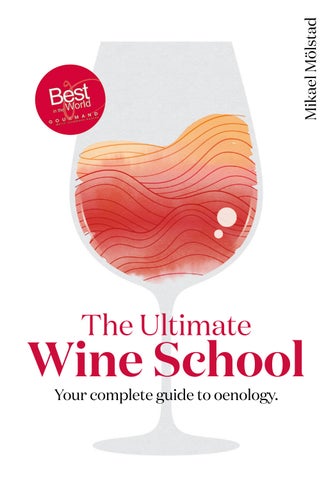
The Ultimate Wine School
© Millhouse Förlag AB, Stockholm 2026
English edition, first print
Original Swedish title: Stora Vinskolan, published in 2026
Printed via Italgraf Media AB, Stockholm 2026
All rights reserved. No part of this book, in whole or in part, may be reproduced without the express permission of the copyright holders.
ISBN 978-91-85759-18-7
Acknowledgements
Jane Sandström/Riedel Glass (J.A. Sundqvist AB), Johan Magnusson (Magnusson Fine Wine), Dan Palmberg/Lehman Glass/Expo Vinskåp (Prowine Nordic), Richard Tellström, Office International de la Vigne et du Wine (OIV, Paris), Apcor (Portugal), Lehr- und Versuchsanstalt für Weinbau (Wädenswil), Systembolaget.
And to those who have contributed to previous editions: Johan Edström, Bengt Frithiofsson, Michel Jamais, Ia Orre Montan, Sara Norell, Jan Rosborn, Jonas H. Röjerman, Mikael Söderström, Lars Torstenson, Erik Videgård.
The section Wine and Health is based on material produced by Dr Erik Skovenborg and Dr SveinErik Tronstad.

Best Wine Education book 2022
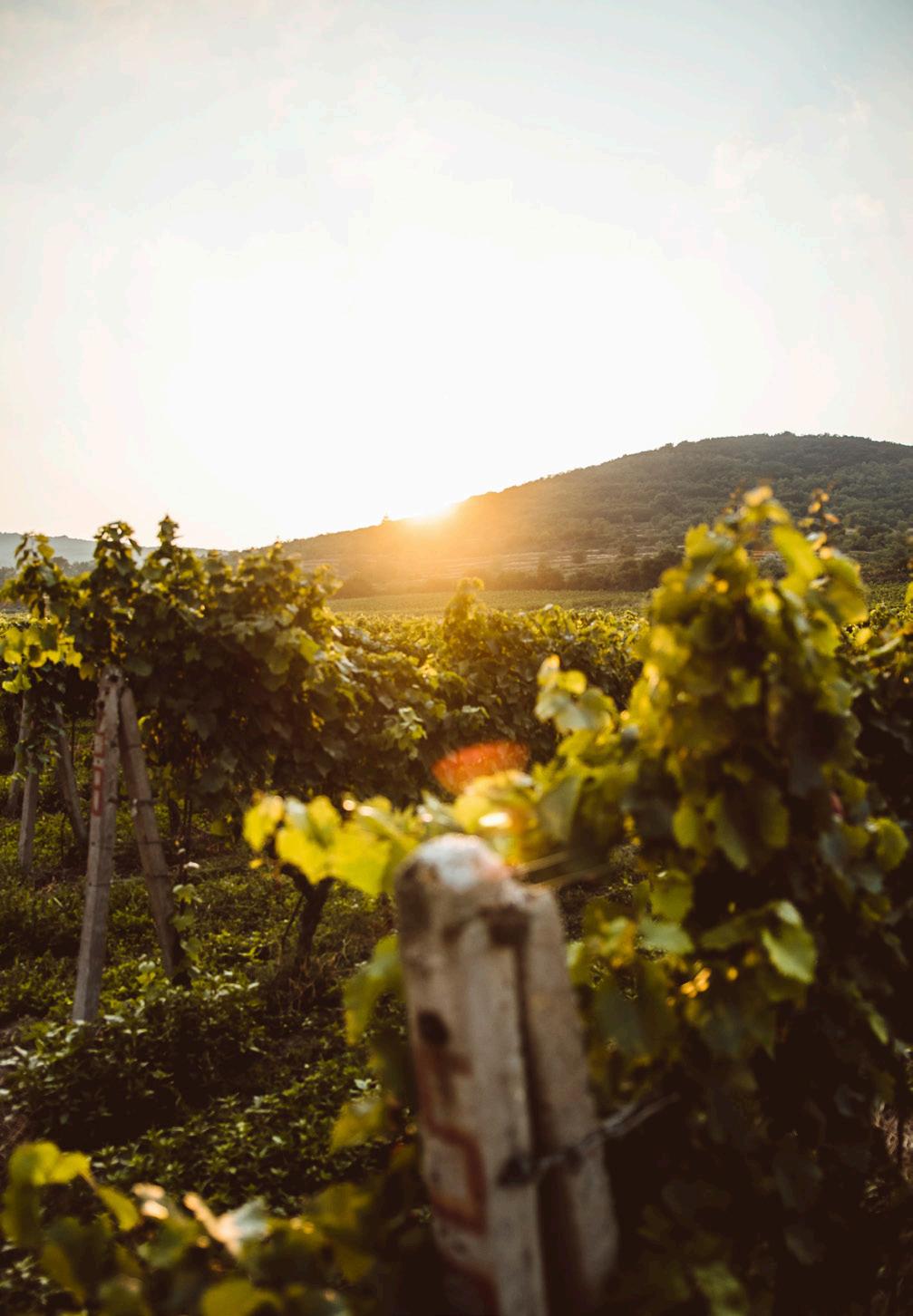
Interest I n w I ne I s grow I ng. In recent decades, more people have discovered the pleasure of drinking finer, slightly more expensive wines, and as a result they want to learn more. Those who have learnt more are the first to say how much more enjoyment they get from wine, whether it be a special celebratory bottle or an everyday table wine. With wine, many have found a hobby they can be passionate about. Exploring the world of wine heightens the experience.
Fascination with wine is a trend that has only arisen in recent generations. We talk about wine at work and at home, and wine courses and tastings are held up and down the country. For all of these wine enthusiasts, enjoyment is the aim – not intoxication.
So it’s my pleasure to welcome you to The Ultimate Wine School –probably the most comprehensive work of its kind. It contains completely new or revised material but the basic structure builds on the first comprehensive wine book published in 1996. The five editions produced are the most sold wine books in Scandinavia.
t he Ult I mate wI ne s chool is divided into twelve lessons, making it perfect for all kinds of wine courses. It can also just as easily be read in parts for entertainment or be used as a reference work, thanks to the vast amount of information it contains. Furthermore, with almost four hundred questions about wine, The Ultimate Wine School is also an entertaining wine quiz book.
I hope you will enjoy using this book and gain valuable insights into the world of wine. There are many hours of wonder to be had pondering this fermented grape juice that has been part of human life for so many thousands of years.
I must also thank everyone who has contributed to this book: my friends and family – and my wife in particular. Without their contributions, ideas and support it would never have been possible.
Wishing you great pleasure, Your wine friend,
mI kael m ölstad
Get in touch!
Please get in touch if you have any comments on the content of this book or any specific questions.
Write to: Mikael Mölstad, Millhouse Publishing. e-mail: info@millhouse.se
What is the use of wine knowledge? For many, it is about learning to enjoy finer wines.
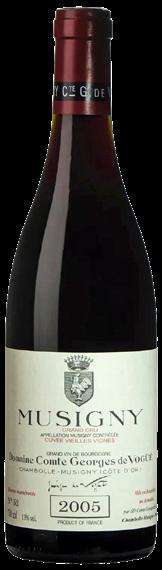
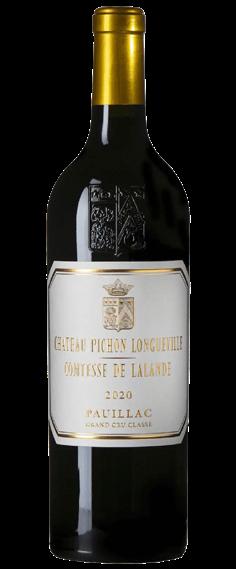
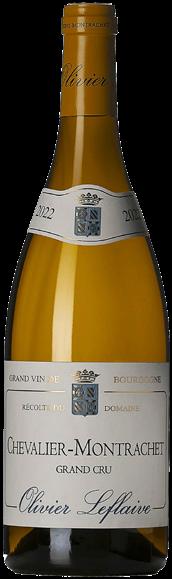
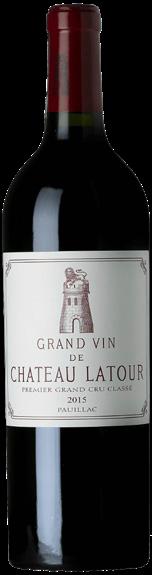
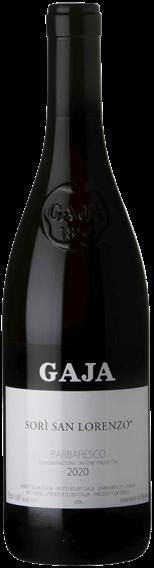
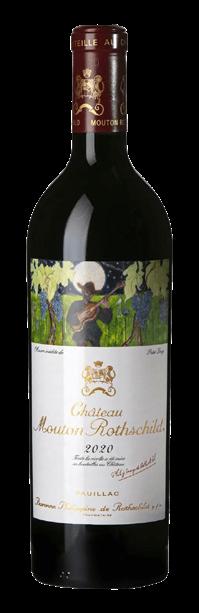
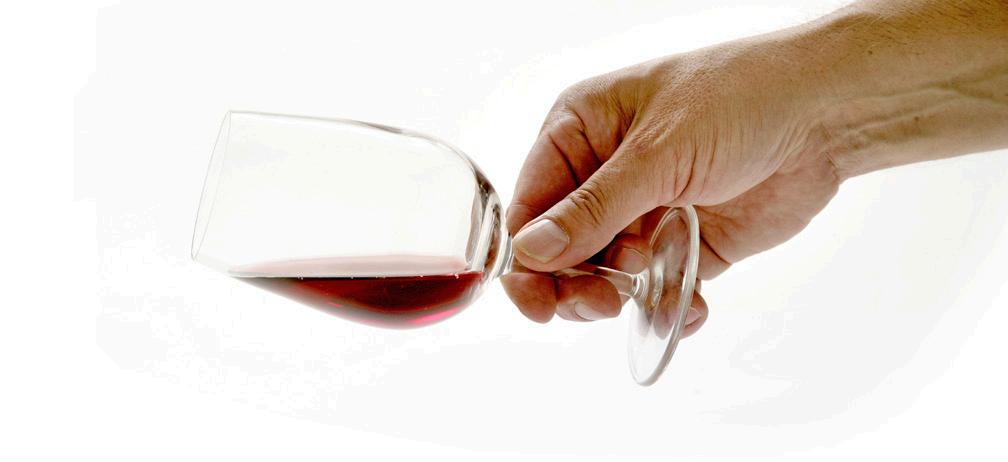
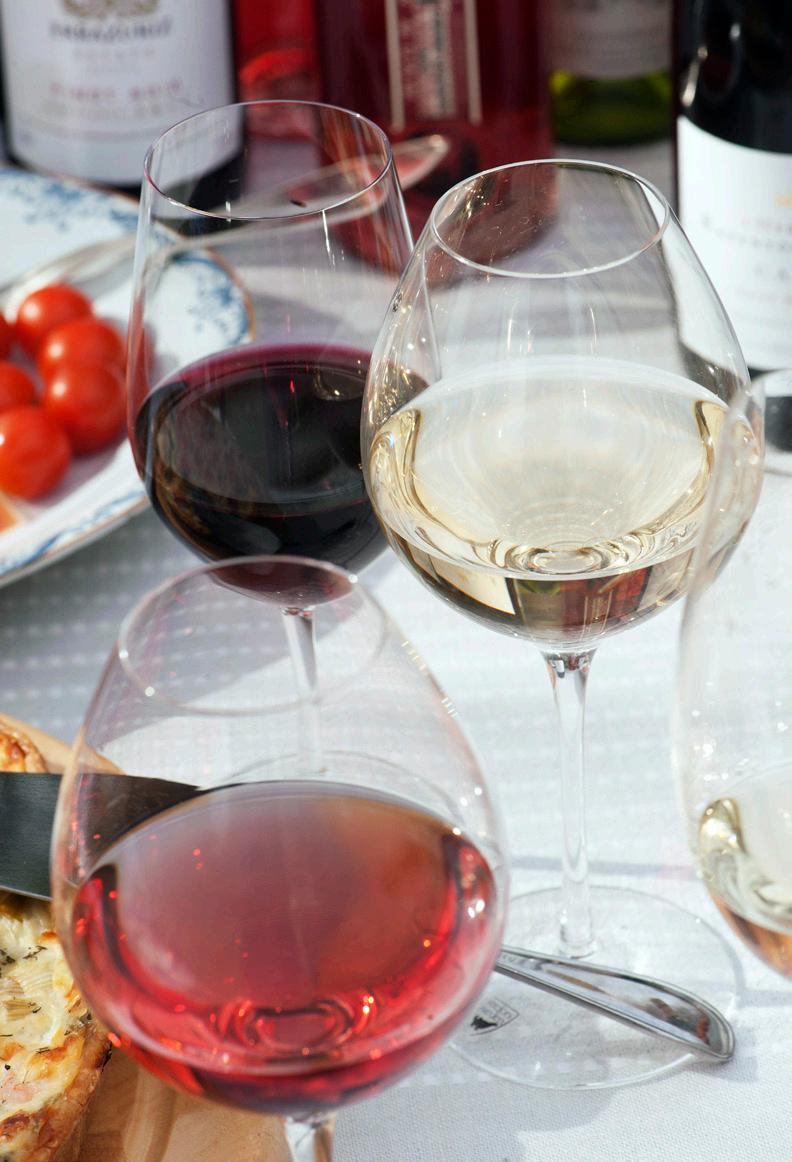
The wine’s appearance, primarily its colour, is far more interesting than you may think. In fact, the visual impression is often what heightens the experience of a fine wine. Without seeing its colour, it can be difficult to assess the wine correctly. In this section, we will look at some typical wines and their colours. With a little training, you will find the colour of a wine reveals a lot. When you look at the wine you should also assess the following:
Ω Clarity Is the wine crystal clear, transparent or unclear and hazy?
The outer edge
This is often almost transparent, with only a faint tinge of colour.
The inner edge
This reveals a lot about the wine’s age.
Ω A reddish purple tone tells you it is a very young wine.
Ω A bright red tone tells you it is a young mature wine.
Ω A brick red tone tells you it is a mature wine.
The older the wine gets, the more brownish orange the tone. A young, concentrated wine also has a thinner edge – it gets broader as the wine ages.
The middle part
Here you can see the wine’s intensity of colour.
By tilting the glass so it is almost horizontal, you form a tongue of the wine – this is where you primarily study the wine’s colour.
Ω Lustre Look at the surface of the wine. Is it mirror-like or matt?
Ω Depth of colour How deep is the colour? From dense to transparent.
Ω Carbon dioxide/sparkling How fine are the bubbles in a sparkling wine?
Ω Viscosity Viscosity or thickness is also part of a wine’s appearance. You can assess it by looking at how the wine runs down the inside of the glass. The more alcohol or sweetness the wine has, the higher the viscosity and the thicker the “tears” or “legs”. This has nothing to do with quality.
This shows the concentration of the wine and the intensity of colour. A light, young wine will be almost transparent, while the colour of a full-bodied, highly extracted wine will be almost black. Properly tilt the glass to have as large a wine surface as possible to look at.
The outer edge
The inner edge
The middle part
The core
A classified growth red Bordeaux after 1 year of barrel ageing
Ω The outer edge is relatively thin, with a weak bluish purple tone.
Ω The inner edge has a bright bluish purple tone.
Ω The middle part has an intense purplish red tone.
Ω The core is almost opaque, with a deep bluish red colour.
An 8-year-old classified growth red Bordeaux that has started to mature.
Ω The outer edge has a pale brown tone.
Ω The inner edge has a bright orange tone.
Ω The middle part has a deeper, ruby red tone.
Ω The core has a deep colour, but not opaque.
A fully mature, 18-year-old classified growth red Bordeaux
Ω The outer edge has a light mahogany tone.
Ω The inner edge has an almost luminous reddish brown tone.
Ω The middle part has a very mature red to orangey brown tone.
Ω The core has a medium intensity of colour and shows shades of brown
A 50-year-old, overly quality Bordeaux
Ω The outer edge is broad and very pale.
Ω The inner edge has no lustre and the colour is dull.
Ω The middle part has a brown, slightly unhealthy looking tone.
Ω The core has depth of colour due to oxidation.
A good 3-year-old red Burgundy from the Côte de Nuits, starting to mature
Ω The outer edge has a pale purple tone.
Ω The inner edge has a nice ruby to orange lustre.
Ω The middle part has an elegant burgundy red tone.
Ω The core has a beautiful deep colour.
A fully mature, 18-year-old quality red Burgundy
Ω The outer edge has a pale orange tone.
Ω The inner edge has a mahogany to orange tone.
Ω The middle part has a beautiful, deep, brownish red tone.
Ω The core has an elegant, deep burgundy colour.
A 1-year-old high quality Beaujolais wine – ready to drink
Ω The outer edge is almost colourless and fairly broad.
Ω The inner edge has a Christmas red to pale purple tone.
Ω The middle part has a healthy, bright red colour of little depth.
Ω The core rarely has a medium intensity of colour.
A 6-year-old quality Syrah wine from the Northern Rhône,
Ω The outer edge has a pronounced red tone.
Ω The inner edge has a slight blackcurrant coloured tint.
Ω The middle part has a deep, opaque blackcurrant colour.
Ω The core has a very deep dark red colour, resembling that of port.
A basic requirement of wine tasting is to be able to analyse what you are smelling and tasting. This is usually referred to as the wine sensory analysis. The illustrated chart shows all the basic types of aromas and flavours. Use it to find more precise descriptors for the flavours and aromas you detect. The chart is a good help to get a grasp of something that can otherwise be difficult.
Rubber, Mercaptan/ hydrogen sulphide
Rotten eggs
Burnt match
Onion juice
Wet paper
Acetone
Vinegar
Acetic acid
Fusel fuel
Sulphur
dioxide
Ethanol
Mothballs
Tobacco smoke
Fire smoke
Burnt toast
Outdoor fire
Charcoal
Glowing embers
Burnt sugar
Tar
Roofing felt
Cuprinol
Plastic
Diesel
Petrol
Wet cardboard
Old books
Flat, Maderized
Dough
Freshly baked buns
Fresh bread
Bakery
Yeast
Honey
Vanilla/custard
Soya
sauce
Chocolate
Molasses
Syrup
Candied
sugar
Caramel
Bubble gum
Jam
Sorbet
(Powdered) milk
Lactic acid
Butter
Butyric acid
Cat
Tomcat
Saddle
Heather
Hawthorn
Rosehip
Geranium
Broom
Aniseed
Liquorice
Paprika
Marzipan Cinnamon
Mushroom
Wet moss
Undergrowth
Rotting wood
Mouldy cork
Botrytis (noble rot)
Black pepper
Nutmeg
Clove
Cardamom
Apple
Plum, Pear
Black
White
Apricot
Peach
Melon
Banana
Lychee
Mango
Papaya
Pineapple
Passion fruit
Orange
Lemon
Grapefruit
Lime
Clementine
Nectarine
Grape
Blackcurrant
Raspberry
Blackberry
Strawberry
Raisin
Prune, Fig
Strawberry jam
Blueberry jam
Blueberry
Wild strawberry Cloudberry Gooseberry
Cranberry jelly
Cloudberry jam
Fruit compote
How to: Start in the middle and determine which basic different types of aromas you can detect. Then go through each of them, one by one, from the middle to the individual aroma. For example: You detect a fruity aroma. But what type of fruit is it? Tropical? Read the list of tropical fruits to find the best match.
Straw Hay
Tea leaves
Bay leaf
Tobacco leaf
Fennel
Onion/chives
Garlic
White cabbage
Mint
Eucalyptus, Freshly cut grass
Chestnut
Almond
Hazelnut
Walnut
Brazil nut
Globe artichoke
Tree resin
Spruce/ Pine needles
Cedarwood/ lead pencil
Sandalwood Oak
Turpentine
Phenol
Jerusalem artichoke
Sauerkraut
Beetroot
Tomatoes
Green beans
Asparagus
Green/black olives
Fresh nettles
Blackcurrant
leaves
Thyme
Rosemary
Sage
Oregano
You don’t have to analyse the colour, aroma and flavour of a wine to enjoy it – even if it is a fun learning exercise. But if you want to do wine tasting more professionally, it’s a must. Here is an overview of the most common types of grapes and their colour, aroma and flavour associations. You can read more about each type in the Grapes section.
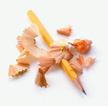
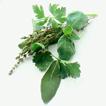
Typical character: Blackcurrants, green bell pepper
Colour: Dark bluish red (young). Brick to brownish red (mature). Aroma: Blackcurrants (berries and juice), fresh spices and cherries (young). Cedar wood, farmyard, leaves, violet and leather (mature). Flavour: Concentrated blackcurrants and liquorice, mint and tannins (young). Tobacco, leather, wet leaves and jammy sweetness (mature).
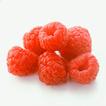
Typical character: Raspberry, spice. Colour: Pale cerise (young). Brick to reddish brown (mature). Aroma: Grassy/herby with raspberries and redcurrants (young). Dried herbs, hay and violet (mature). Flavour: Blackcurrants, raspberries and herbs (young). Herbs, morel mushrooms and leather (mature).
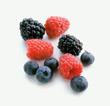
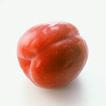
Typical character: Plum, dark cherry.
Colour: Dense bluish red (young). Dark brownish red (mature). Aroma: Plum jam and herbs (young). Leather and animal notes, plum jam (mature).
Flavour: Sweet plums (young). Complex soft fruits with blackberry/blueberry notes (mature).
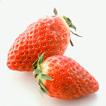
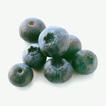
Typical character: Strawberries, violets.
Colour: Pale red with blue tones (young). Brick/ orange (mature). Aroma: Raspberries, blueberries and spices (young). Sweet forest fruits, raspberries, sun-warmed strawberries and violets (mature).
Flavour: Berries, fresh and spicy (young). Harmonious, raspberries, blueberries, blackberries, notes of violets and tannins (mature).
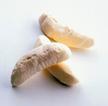
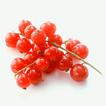
Typical character: Raspberries, redcurrants. Colour: Pale red with blue tones (young). Cerise coloured to brick (mature). Aroma: When very young, raspberries and banana chews – later berries, spicy with a bit of smokiness. When mature, starts resembling Pinot Noir with spicy violet notes. Flavour: Raspberries, cherries and fresh acidity (young). Pinot Noir-style with soft notes of violets (mature).
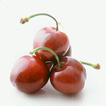
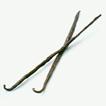
Typical character: Blueberry, cherry, dill.
Colour: Ruby red (young). Reddish brown (mature).
Aroma: Blueberry, cherry (young). In traditional styles: strawberry, spice and coffee. Flavour: Dark berries, cherry and blueberry. In traditional styles (with American oak) with vanilla and caramel. With French oak, somewhat more astringent. With age, marked dill and oak characteristics.
Typical character: Blackberry, white pepper. Colour: Dense bluish red (young). Dark red to reddish brown (mature).
Aroma: Blueberry, blackcurrant and wild raspberry, with some of white pepper (young). Complex mature notes of autumn leaves, liquorice root and violet (mature).
Flavour: When young, spicy, peppery, herby with concentrated dark berries. Intense blackberry, prune and pepper, tar, liquorice and violet (mature).
Typical character: Cherries, herbs. Colour: Dark violet/bluish red (young). Brick-red till reddish brown (mature).
Aroma: notes of autumn. Herbs, hints of raisins (mature).
Flavour: Herby, peppery, fruity with cherries and earthiness (young). Complex soft fruit with some dates, cherries and pepper (mature).
Typical character: Cherry, plum. Colour: Bluish red (young). Brick red (mature). Aroma: Pronounced cherry and fresh herbs (young). Black tea and tomato (mature). Flavour: In classic styles: cherries and herbs. In more modern styles: plums and new oak (vanilla). With age, more tomato/vegetable than fruity, with notes of dry, slightly bitter tea. Fresh, relatively astringent tannins.
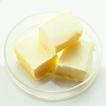
Typical character: Citrus, butter and tropical fruit. Colour: Golden yellow with hints of green (young, unoaked). Deeper yellow with barrel fermentation/ ageing (mature). Aroma: Fresh, with green apple and citrus (young, unoaked). Tropical fruit and toast, vanilla (young, oaked). Buttery, mineral (mature, unoaked). Caramel and roasted notes (mature, oaked). Flavour: High acid, green apple (unoaked). Buttery, with tropical fruit, nuts and toast (mature oaked).
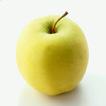
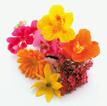
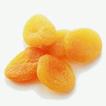
Typical character: Green apple, petroleum. Colour: Clear with a green tinge (young). Golden (mature). Aroma: Floral, green apple, mineral and often petroleum (young). Instense petroleum with honey (mature). Some notes of rubber in New World Riesling. Flavour: High acid, fruit and minerality (young). Intense, complex with fruit and honey (mature).
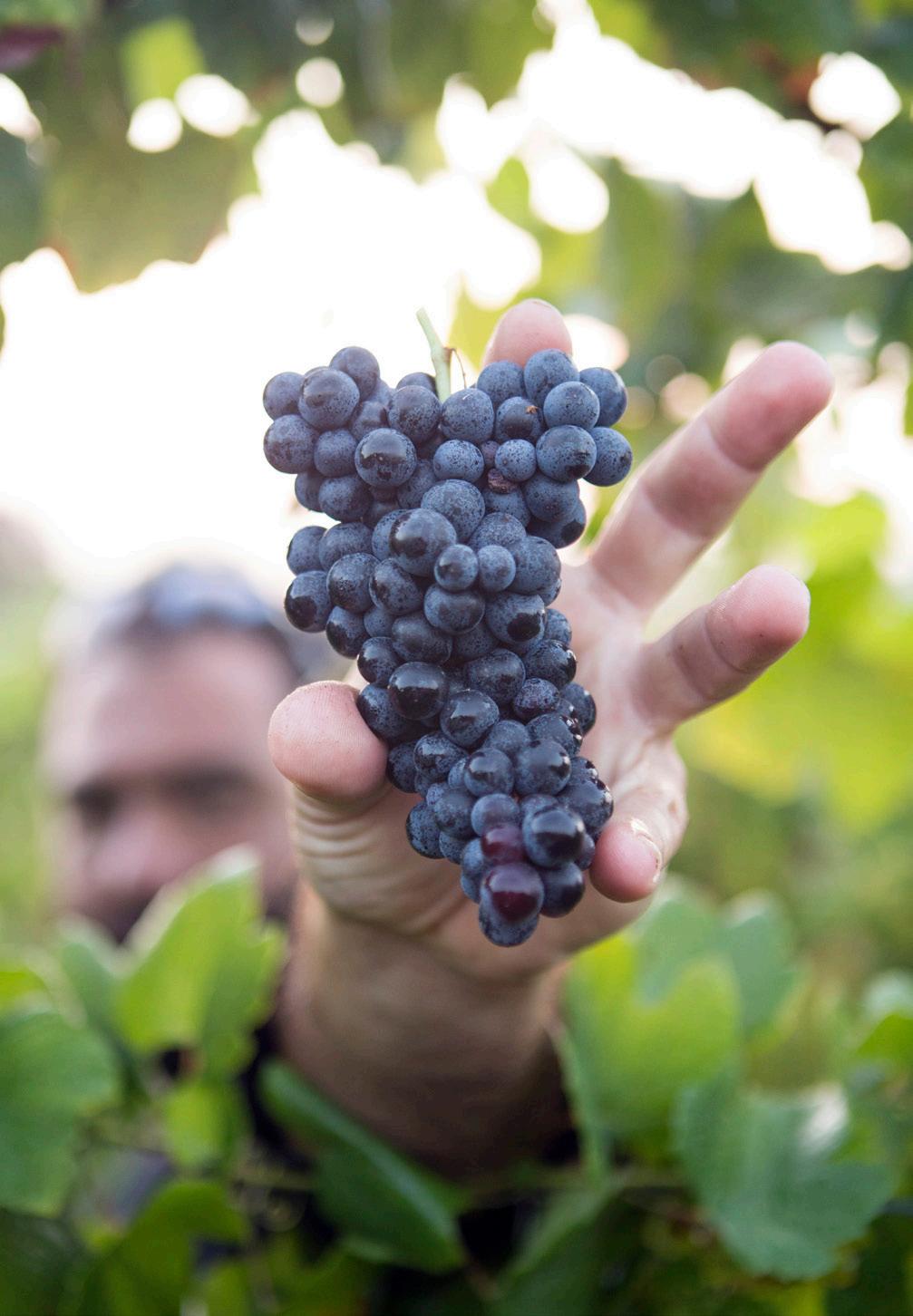
Grapevines are some of the oldest cultivated plants. They originally grew wild in many areas of the world. The beverage produced from grapes has been part of people's diet ever since the first clay pots were made. Over the course of time new grape varieties appeared through natural mutations and cross breeding. Today, crossbreeding is actively carried out to obtain grapes with greater tolerance to heat and disease. At the same time, the interest in old grape varieties is greater than ever.
lared for several decades, as Syrah often develops a Bordeaux-like complexity.
Cabernet Franc The cousin of Cabernet Sauvignon, the king of grapes. Cabernet Franc possesses a little less of its relative’s qualities. It makes lighter wines with less colour and tannins. It has less concentration of fruit and a quicker maturation time. The aroma is greener than Cabernet Sauvignon, with herbs and grass.
The best Cabernet Franc wines are blended with Merlot on the Right bank of Bordeaux. In St Emilion and Pomerol, it is Cabernet Franc (along with Merlot) rather than Cabernet Sauvignon, that accounts for the highclass wines. In wines like those from Château Cheval Blanc, it accounts for nearly sixty percent of the cuvée.
The other major region for Cabernet Franc is the Loire valley, which makes light, charming wines in a style reminiscent of Beaujolais. Today there are also more ageworthy wines with fine complexity, especially from Chinon. In Anjou, they even make a rosé: Cabernet d’Anjou. In Italy, there is more Cabernet Franc produced than Cabernet Sauvignon. It is closer in style to the Loire than to Bordeaux. In the north of Italy it is often sold under the name of Cabernet.
There is little Cabernet Franc cultivated in the New World. Most producers use it to replicate the Médoc blend of Cabernet Sauvignon, Cabernet Franc and Merlot.
Gamay produces some of the most popular wines in the world – those from Beaujolais. This grape is right at home in the most southerly part of Burgundy, where the combination of granite and clay in the soil make a delightful wine. Cultivation in Beaujolais is more than 90% Gamay. One reason Gamay wines are successful is as a result of the traditional
way in which they are produced. The method is known as macération carbonique and its variant macération semi-carbonique. The latter involves placing whole grapes into a closed tank. The bottom layer of grapes are crushed by the weight of the top layer and starts to ferment. The carbon dioxide that forms during fermentation completely covers the berries, which begin fermenting on the inside, resulting in the extraction of lots of pigments but little tannin. After a few days, the grapes are pressed and finish fermentation in the usual way. The product is a fruity wine, with a certain sweetness and not much astringency. At the end of the 20th century, Beaujolais started a natural wine movement which attracts a lot of enthusiasts to the region. Today, a number of ageworthy wines are made from Gamay, notably Morgon and Moulin-à-Vent.
Gamay is common in Touraine, in the Loire. It is also grown in Oregon, USA and is becoming more widespread in California, although Napa Gamay is actually another grape (Valdiguié). A Gamay blend with Pinot Noir (max two thirds Gamay) is known as Bourgogne Passe-tout-grains.
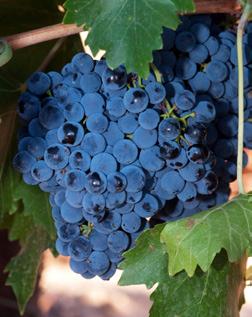
The grape is also the base for Mâcon Rouge. In Switzerland, Dôle wine is traditionally a blend of Gamay and Pinot Noir.
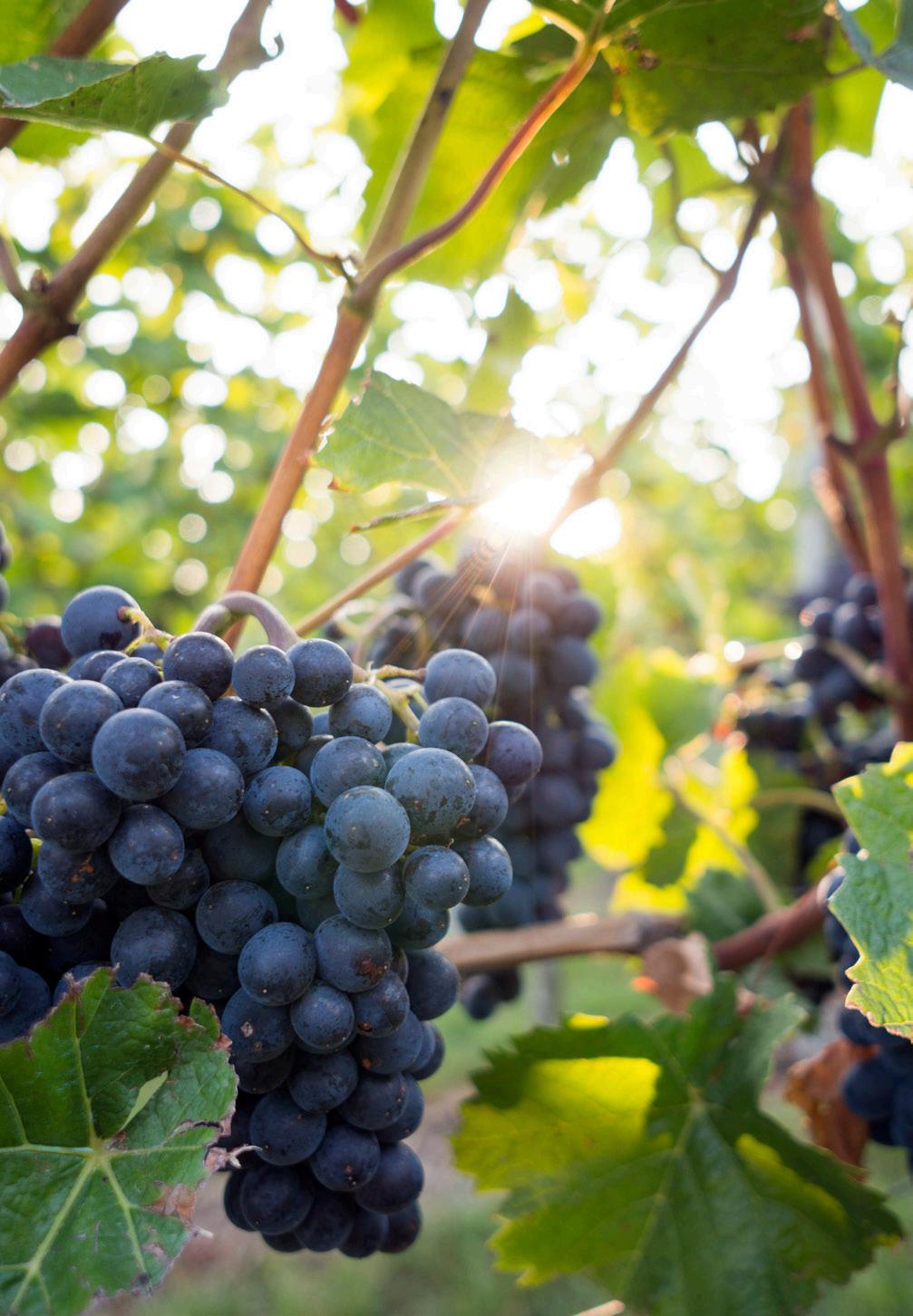
Grenache/Garnacha Grenache is one of the most cultivated red grapes in the world. It produces big yields and thrives in tough climates with a lot of sun and wind. Grenache has a reputation for being low on pigments and for that reason is suited to making rosé wines. One of the top rosé wines in the world, Tavel from southern Rhône, is 100% Grenache. Wines from southern Rhône are usually dominated by grape blends.
With hard pruning and controlled extraction, Grenache can produce really dark wines. In Châteauneuf-duPape, Grenache is the most important grape. There are producers who make red wines with close to 90% Grenache, such as in Languedoc, where it is very commonly added to Syrah and Mourvèdre in the grape blend trio GSM. In Banyuls, on the Spanish border, Grenache is used to make portlike fortified wines.
The biggest plantings of Grenache are in France and in Spain, its country of origin. There it is called Garnacha. In Rioja it is blended with Tempranillo, while in Navarra and Catalunya it makes increasingly interesting concentrated wines from low yielding vineyards. Traditional pale coloured Garnacha wines made from high cropping grapes need to be blended with more aromatic variteties. In Sardinia, the grape is called Cannonau and makes powerful wines of the same name.
Grenache is also widespread in the New World. It is one of the most popular red wine grapes in California, even though historically it was mostly added to nameless grape blends. In Australia, it is one of the most cultivated grapes after Shiraz. Common aroma associations include black-
The Greek world spanned the entire Mediterranean for hundreds of years before Christ – but their inland seas were between Greece and Asia minor (present-day Turkey). (Modern-day wine cultivation areas in dark green).
When the Greeks of antiquity colonised the Mediterranean c.a. 1,000 BC they took their vines with them. In some regions, however, wine cultivation had already been started by the Phoenicians. In others, such as in Provence, the Greeks were surprised to find that vines grew wild.
Wine cultivation took place in ancient Greece on both the mainland and the islands but it was only when presentday Italy and the South of France were colonised that the Greeks found their ideal place to grow vines. They named Italy Enotria – the land of grapevines – and the wine made there became an important ‘colonial product’. Several grape varieties that became famous during the heyday of Greek civilisation are still grown today and on the same slopes as they did then. Wellknown examples
are South Italian Greco (the Greek) and Aglianico, probably the Greek grape Hellenic.
The wines were conveyed across the Mediterranean in special clay transportation amphoras. These stood upright, stuck into a thick layer of sand during sea voyages. Pine resin was commonly used as a sealant and that could have been the origin of the characteristic resinous aroma of Retsina wines.
Wine was drunk eagerly and in copious amounts throughout Antiquity. Quality mattered just as much as quantity, and wine districts and vintages were discussed enthusiastically. The wine was always mixed with water – most often one part wine to two parts water. It was also almost always spiced with different medicinal herbs and other flavourings.
The 4th century BC witnessed the birth of the cult of Dionysus, the god of wine, and the many rituals in his honour. One of these took place on the eastern slope of the Acropolis, with singing, games, dancing and a lot of herbblended wine. The wealthy would meet in their homes for symposiums – a drinking party, equivalent to our modern day wine tasting.During the celebrations, winetasting accessories decorated with images from the cult of Dionysus were laid out. Wine was poured from a carafe (amphora) into a large vessel (crater) in which it was mixed with water from another vessel (hydria). Drinking undiluted wine was considered barbarous and uncivilised. Wine was then poured with a serving vessel, the oinochoe, into a shallow drinking cup on a foot, the kylix. Each one of these actions made for an important ritual.
Symposiums were an opportunity to play games such as kottabos (see below) and also to discuss human relationship with life as well as Dionysus’ divine drink. To quote the philosopher Socrates: “wine does of truth moisten the soul and lull our griefs to sleep, at the same time awakening kindly feelings as oil quickens a flame.”
Wine was often used curatively and not least recommended by the father of medicine, Hippocrates, who was born on the island of Kos in approximately 460 BC . He considered wine to be feverreducing, a disinfectant and a diuretic. There was however, an awareness of the dangers of wine
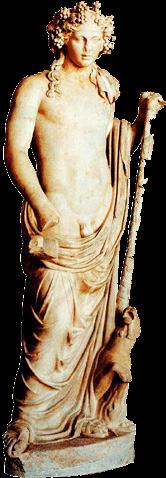
Dionysus is a mythical figure who was greatly influential throughout Antiquity. His Roman name is Bacchus. Dionysus was a god of nature and fertility, almost always associated with wine, intoxication and ecstasy. He was considered to be a son of Zeus. The cult of Dionysus created concepts such as ecstasy, enthusiasm and orgies, which appealed to many. It also lay the foundations of ancient theatre.
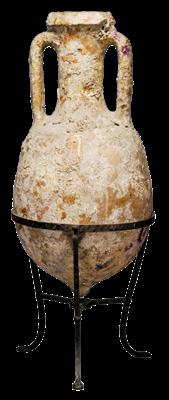
The Greek amphoras made it possible to transport and store wine. By sealing the wine with a resin-dipped cork, good wines could be stored for several decades. Later, this was not possible until the bottle became commonplace in the 17th Century.
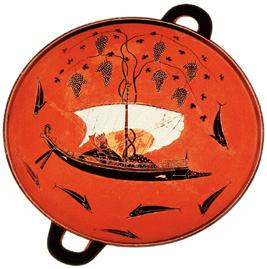
Dionysus on a sea voyage, after miraculously getting a vine to grow on the ship mast, portrayed on the bowl of a Kylix drinking vessel (viewed from above) from 500 BC.
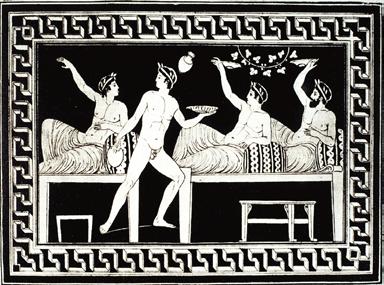
Wine was an important ingredient in the Greeks’ symposiums, which often finished with a game of kottabos.
too. Plato, for example, had definite views about drinking at a young age: “no boy under the age of eighteen should touch wine, for it is wrong to pour fire upon fire.”
At Dionysus celebrations and symposiums, guests often amused themselves with the game of kottabos, a social activity that involved throwing splashes of wine at a metal plate balancing on a special stand. Whoever got the plate to topple won providing they did it in the right style. Kottabos was invented in southern Italy around 600 BC and spread through cultural exchange. It was a popular sport for three hundred years along with wrestling, discus and running.
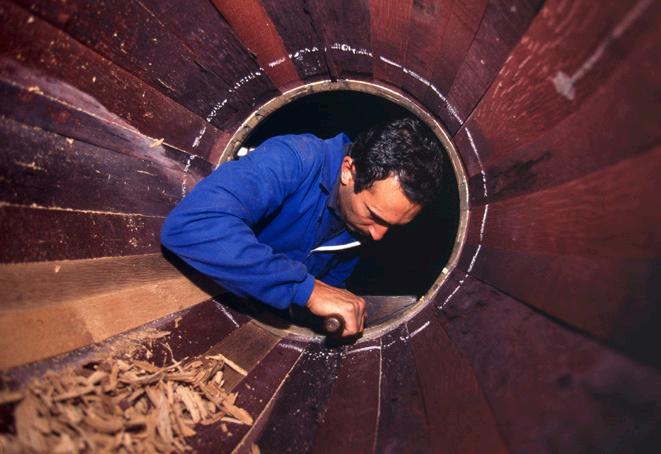
The types of oak used for wine maturation primarily come from different parts of France, such as Nevers, Allier, Limousin and the Vosges. Other main sources are Slovenia, Slavonia (part of Croatia) and the United States. Many winemakers are also experimenting with oak from other countries.
The choice of oak is of great significance for wine. For example, white oak from the USA (Quercus alba) is more aromatic than French oak (Quercus robur robur and Quercus petraea). The way wood is treated is equally important. One big difference is that the staves for American oak barrels are sawn and dried under light heat whereas for French oak barrels the staves are hand-split and dried outdoors (seasoned) for several years.
A sawn oak stave has open fibres and a rougher surface, which imparts more aromatics (often vanillin). A split stave has more closely knit fibres, which makes it easier for the tannins to come through. In other words: American oak makes more aromatic wines, French oak makes more tannic wines.
American oak is mostly favoured in the United States but also in Spain, traditionally in Rioja. French oak barrels are used all over the world including the United States.
Old oak barrels can be reconditioned to be almost like new.
Due to the production method, a French oak barrel is almost twice as expensive as an American one. A new 225-litre barrel (barrique) from a reputable cooperage in France can cost upwards of EUR 1,000, a high price considering that it will only serve to make 300 bottles.
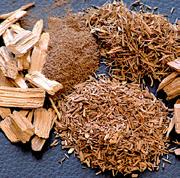
When New World wines became popular at the end of the last century, many people were surprised that they seemed to have been aged in oak barrels despite the low price. This was because the impression of oak was created through the addition of products in the wine – small toasted oak cubes, oak chips or powder. These go directly into the fermentation or maturation tank. Oak staves and essences are other options. Adding oak products is now a common method all over the world for mass produced wines.
When the maturation process is over, the wine is transferred to its final storage container: the bottle. The time of year at which wine gets bottled depends on the type of wine and its length of maturation.
Normally, the bottling of white wines takes place between March and April – approximately six months after harvest. High quality red wines often spend eighteen months in barrel and are bottled in late spring – approximately one and a half years after harvest. Winemakers aim to have finished with bottling before harvest time, when there is not time for anything other than grape processing and winemaking.
Bottling nowadays is mostly carried out by an automatic bottling line. Many wineries have their own bottling facility. Those that don’t can make use of a mobile bottling line that can be rented when needed. For many small wine growers installing a
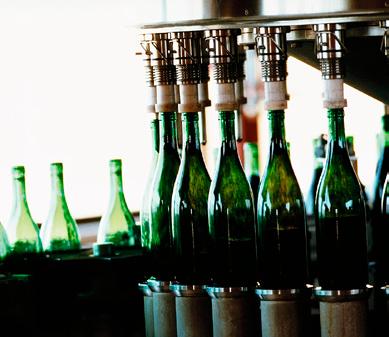
A bottling facility is an amazing display of stainless steel, hygiene and efficiency.
bottling line or renting a mobile one might not be financially possible. They will resort to bottling their wine by hand.
The wine bottle (1) (always new) is placed on a conveyor belt. First it is washed with steam then dried (2). Clean and dry, the bottle moves to the filling station – a rotating system which continuously fills many bottles simultaneously (3). The wine comes directly from large tanks in which the finished wine has been blended to
achieve its final flavour. A membrane filter stands between the tank and the filling pipe to remove unwanted particles. Once the bottle is back on the conveyor belt, it is sealed with a cork or screw cap. The corks are pressed down into the bottles with air pressure (4). A screw cap is placed on the bottle and sealed with
heat (5). The next station is labelling (6). Here the bottle spins to receive a label and neck label indicating, for example, vintage. The finished bottles advance to the end station (7) where they are packed automatically into cardboard boxes or manually into wooden crates.
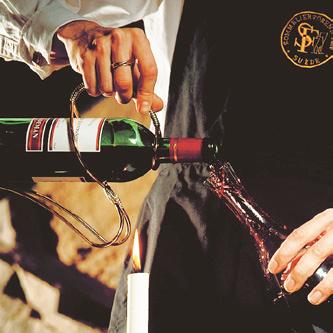
Decanting a wine means pouring it from a bottle into a carafe, and only exceptionally directly into the glass. This is done for three reasons:
Ω With young wines, to allow them to come into contact with the oxygen in the air so they can start developing a little more quickly.
Ω With older wines, to separate them from lees or sediments (dépôt) that precipitate during ageing.
Ω A wine decanted in a beautiful carafe elevates the whole experience of drinking it – an important enough argument.
The accessories you need are a good corkscrew with a knife, a napkin, a light (or pocket torch), a carafe and a glass. The bottle can be decanted upright, if it has been standing upright a few days to allow the sediment to fall to the bottom. If the bottle is taken directly from horizontal storage, it must be decanted horizontally to prevent the sediment from floating around in the wine.
Which wines should be decanted?
Almost all young wines benefit from decanting –and it looks nice.
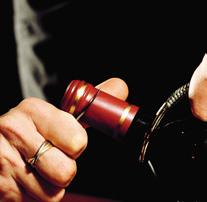
Old wines should naturally be decanted to remove any closed aromas and sediment. But be careful not to decant the wine too early – if the wine is old and mature, the fine aromas may disappear more quickly than you’d like. Old red Bordeaux of good quality, however, should be decanted 2–4 hours before serving. Red port can be decanted up to 10 hours in advance.
Ω Old red Burgundy is best decanted straight from the bottle to the glass, as the wine is delicate and most of its aroma comes straight after it is opened. Pour it carefully so that the sediment does not get into the glass – a finely meshed household sieve can be of help.
Ω Vintage port contains a lot of sediment. The bottle is also black, so candlelight will be of no use. Put the carafe on the table and decant the port with a funnel and strainer (port funnel). If that doesn’t work, you can use an ordinary coffee filter. If you can’t remove the cork, there are special tongs that turn red hot to break off both the glass and the cork.
5. If the bottle contains sediment, put a light under the bottle neck. Take the carafe in one hand and the bottle (wine cradle) in the other and pour the wine at a steady, even rate. Look through the bottle with the help of the light to see when the sediment reaches the neck to stop decanting. 1 2 3 4 5 Classic decanting
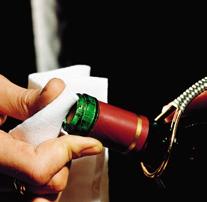
1. Cut the foil under or above the lip on the neck of the bottle – or to be on the safe side, remove all of it.
2. Thoroughly clean around the cork – there can often be a small amount of inconsequential mould from dried wine.
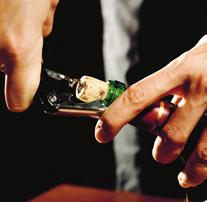
3. Twist the corkscrew down as far as it will go. If you have a waiter’s style corkscrew you will do this in two stages.
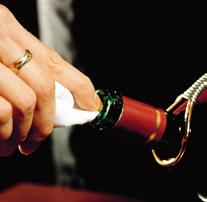
4. Clean around the mouth of
the bottle. If the wine is young and without sediment you can decant directly.
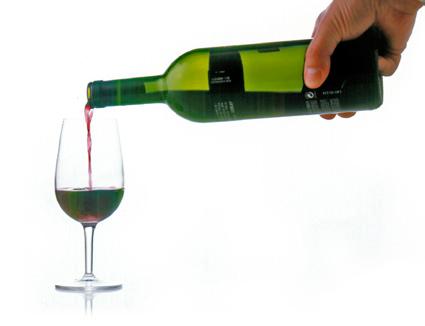
How do you hold the bottle? Of course, the easiest way is to grip around the middle. The disadvantage of this is you won’t be able to reach far if you are going to serve guests correctly at a dinner.
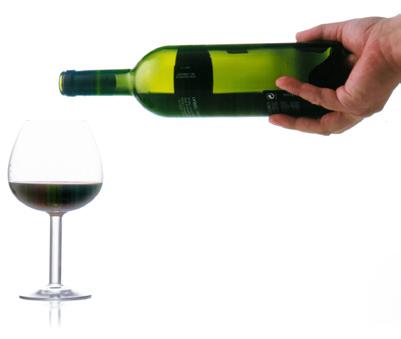
Here are two good ways to hold the bottle in order to reach far. The first is to get support from your little finger in the dimple of the bottle, whereas the second uses your middle finger to give stability.
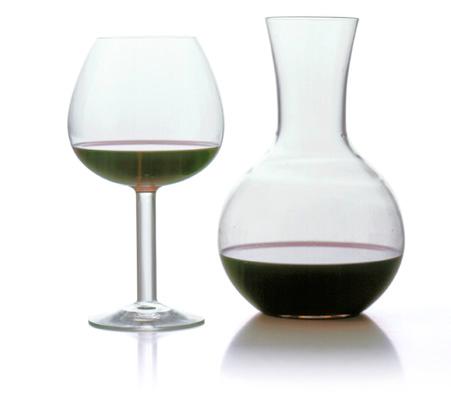
A wine carafe greatly elevates the experience of the wine. It is also a good way of being able to just have ‘a glass of wine’ with your meal, because the rest of the bottle can be immediately put in the fridge.
A good way of holding a wine glass steady (especially when you are mingling) is to put one finger under the foot. Always avoid holding the bowl of the glass.
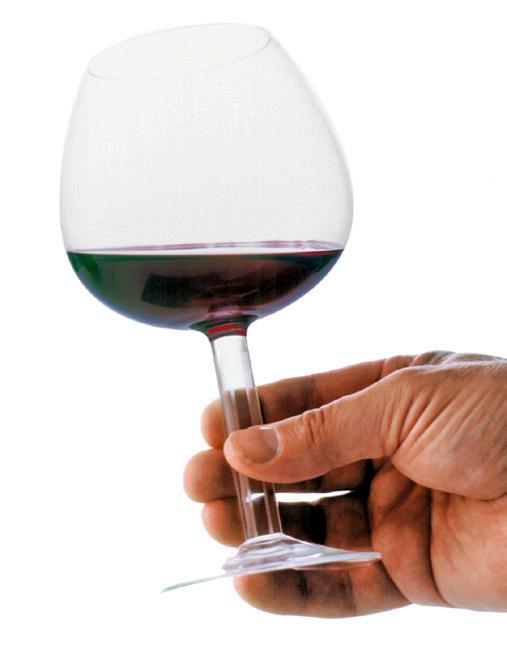
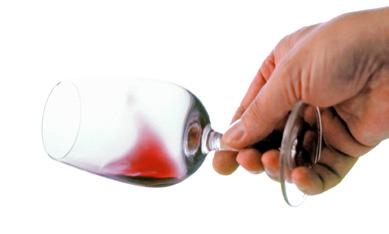
If you are serving a new wine but want to use the same glass, it’s a good idea to ‘winify’ the glass. This involves putting a few centilitres of the new wine in the glass and swilling it around before pouring it out.
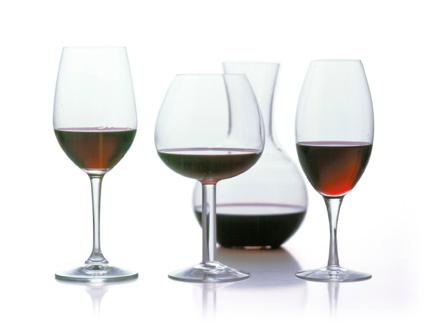
A misconception – even in restaurants – is that the glass should be filled almost to the brim. A wine lover knows how much better the experience will be if there is also room for air.
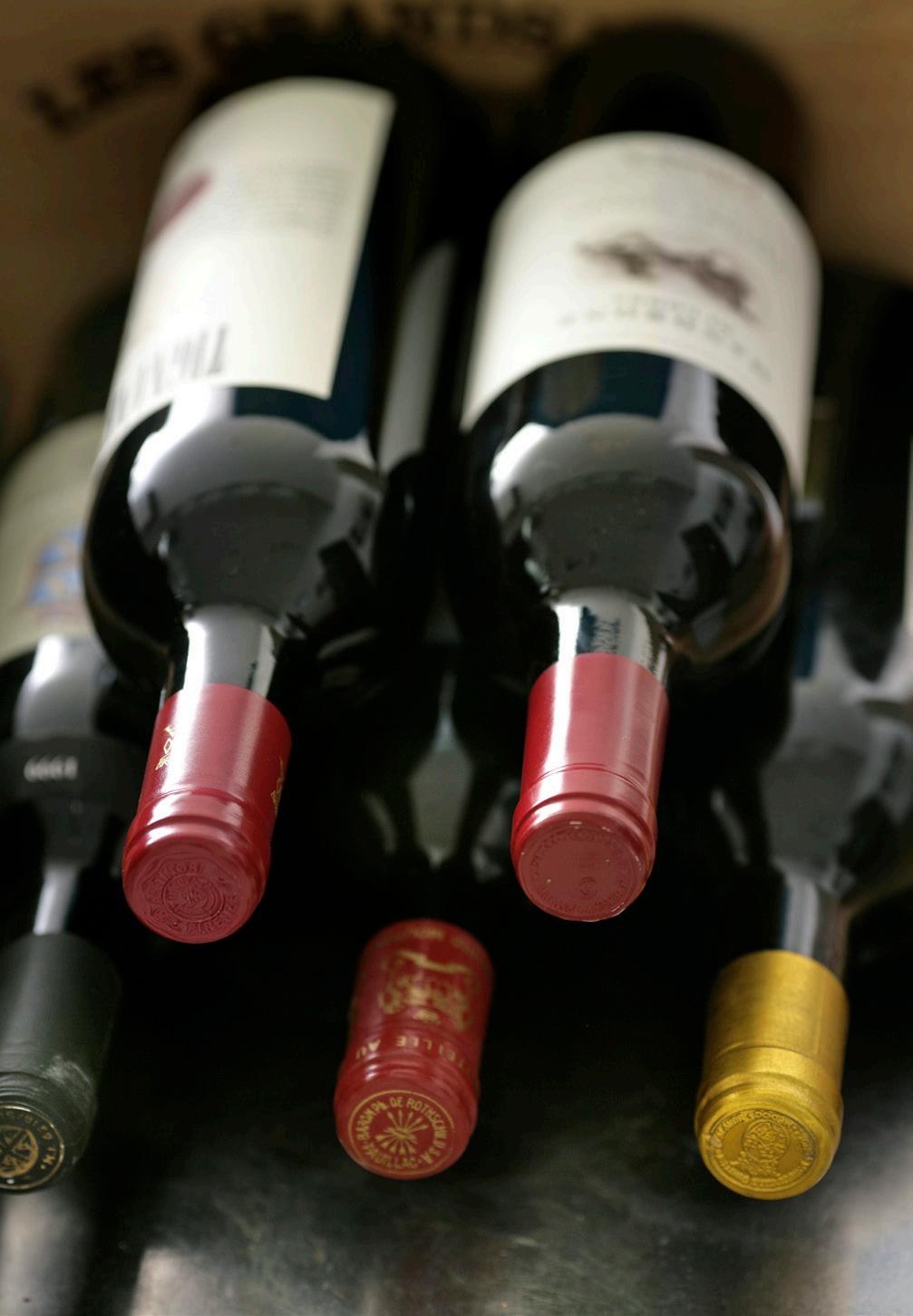
It is said that all wines benefit from ageing. Is that true, and if so, why? It is all about wine developing in the presence of tiny amounts of oxygen left in the bottle – in the space between the wine and the cork. What happens is a complicated cascade of biochemical reactions that gives the wine a more exclusive flavour. For this reason, many people decide to invest in wine to make money. But which wines should I buy, and where and how should I age them? And last but not least – how do I know when it is ready to drink? Whatever you do, the best advice is to buy more bottles than planned, so you can try them to avoid opening the last bottle too early.
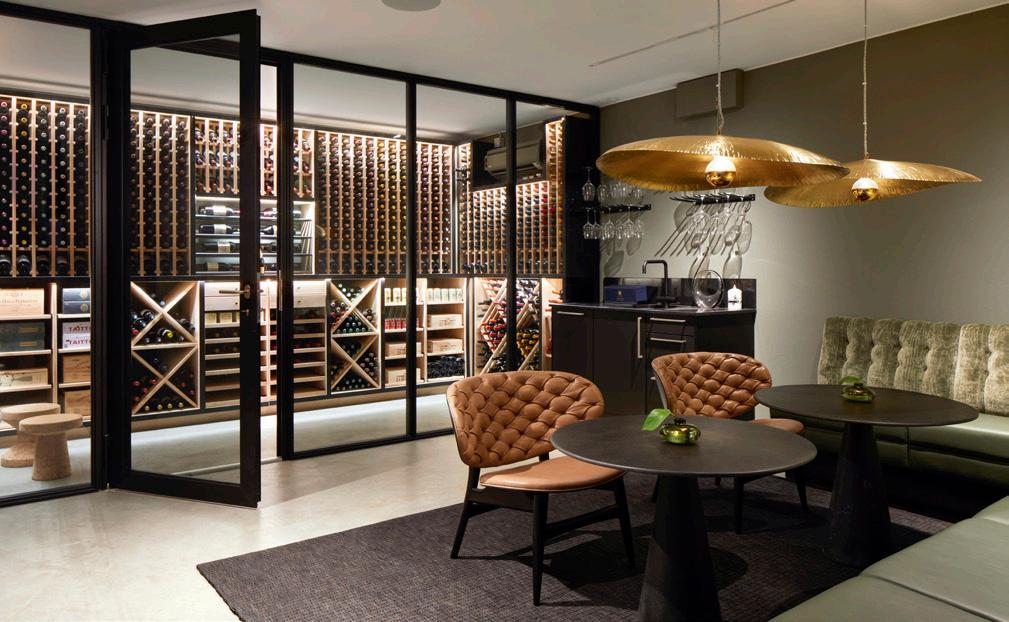
A personal wine cellar comes at the top of most oenophiles’ wish lists but few can realise the dream of having a special room filled with exciting wine bottles where they can sit in candle light with an aged Bordeaux and contemplate.
Many homes generally will have space for wine storage. Examples of poor storage spaces include the little wine rack above the fridge or kitchen cupboards – although these can work temporarily for everyday wines.
A wardrobe is an option for wines that don’t need to be aged for a long time, as is space under the stairs. The general requirement for those types of spaces is that they should be dark and maintain a relatively even temperature throughout the day. If you are not ageing expensive wines long-term, you can dispense with perfect humidity, total stability and an ideal temperature.
Wine cabinets and wine coolers
If you cannot build your dream wine cellar but would still like perfect ageing conditions, a wine cabinet is the right choice. In contrast to a common wine cooler, a proper wine cabinet is built to provide the ideal conditions for long ageing of wine.
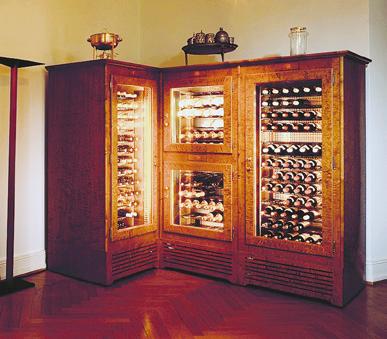
For some, a hardwood wine cabinet in the living room is the ultimate luxury.
Temperature and humidity can be set to your exact requirements.
Wine cabinets come in many different styles, from stainless steel to the finest jacaranda. Some function as elegant display cabinets and are made to adorn dining or living rooms – and this is reflected in their
price. Most other wine cabinets are less fancy and also have a lot more bottle capacity in relation to their size. Some are part of a modular system and can function as room dividers. Wine cabinets can also be custom built to fit in a kitchen, for example. You can buy prefabricated wall modules with space for shelves and compartments for crates. No matter how you decide to build it, you will find a cooling unit that will fit.
A wine cooler, on the other hand, is simply a kind of refrigerator for wine that should be placed in the kitchen. You can put in it wines from the wine cellar or cabinet that are going to be drunk in the near future. There are many models, with different designs and specifications. A budget alternative is to get hold of a second-hand fridge, which can work equally well. But avoid the old types with compressors that vibrate.
Many wine collectors who are not able to have a wine cellar or a large wine cabinet opt to rent space for their wines. In many cities it is possible to rent storage space in large shared cellars that have the ideal conditions for ageing wine. The storage units, or rather cages, have space for some ten to several hundred bottles. Many of these wine cellars also offer wine tasting opportunities and help with the purchase of interesting collectors’ wines.
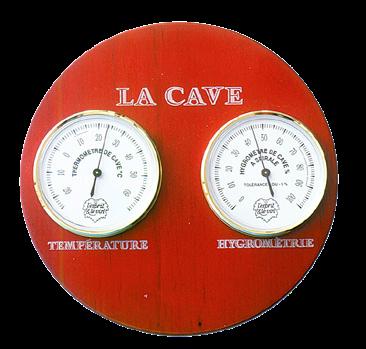
A thermometer and hygrometer have their place in all wine cellars.
Ω Remember that cardboard (e.g. wine boxes) quickly attracts moisture, and disintegrates.
Ω Always have a thermometer and hygrometer (humidity gauge) in your cellar.
Ω Labels you are worried about can be sprayed with ordinary hairspray for protection.
Ω Lots of LED lights are guaranteed to heighten the effect of sparkling bottles.
Ω Best cover the floor with washed shingle – it evens out humidity.
Ω Make records of your wines – there are many different systems, from books to apps.
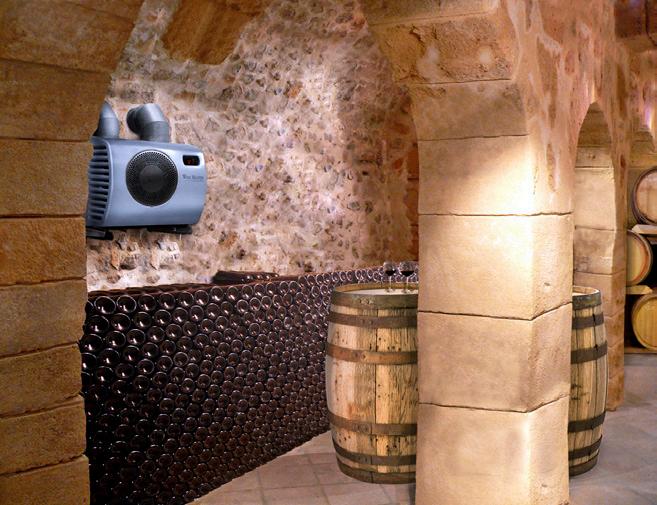
A small climate control system is a good investment for the wines to age slowly and surely.
Flavouring food with wine is no new idea. Already in antiquity wine was an important element in cooking. In all likelihood it is one of the oldest flavouring agents. Wine doesn’t just impart flavour – it also contributes acidity, which, for example, can bring balance to fish. For game, the acidity in a red wine-marinade tenderises the meat.
The alcohol in wine is good for preserving cooked food, providing it hasn’t been boiled off during cooking. A large casserole can easily keep without refrigeration if a bottle of wine is poured into it before it is put away. Similar methods were already used in ancient times. When you fry food, a splash of wine in the pan afterwards performs miracles – the alcohol and acids bring out flavours.
You don’t need to drink the same wine with your meal that you used for cooking. It can be similar but should be of a higher quality. Nevertheless, don’t buy bad wines ‘just to put in the sauce’. Some of the flavours from the wine will remain in the dish, especially one that leaves a bad aftertaste.
Wines can be kept in the fridge a long time if you have them in a well-sealed container or bottle, with no remaining air. Left over wine can be frozen into ice cubes and then used for making sauces.
Dry white wine Needed for white wine sauces, Beurre Blanc (butter sauce), Bouillabaisse and other classic fish dishes. Also perfect for marinating pale meats and fish. A genuine sauerkraut is better when it has been allowed to cook in white wine, preferably Riesling.
Sweet white wine Often used for marinating or cooking fruit and berries. In sorbets, granité or jelly, they are an exciting flavour enhancer. Desserts like zabaglione are best made with sweet white wine. For a luxurious sauerkraut, cook it in a Sauternes.
Sherry and vermouth Used as spicy flavour enhancers in marinades, sauces and soups. A classic fish sauce is flavoured with the French vermouth, Noilly Prat.
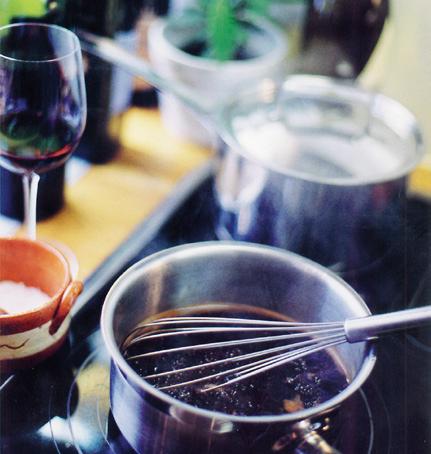
Wine generally enhances the flavour of a sauce, giving it a nice wine character, depending on the wine chosen.
Port Well suited to thick mushroom sauces, fruit salads and sauces for game.
Madeira The dry styles are used in the same way as sherry. In France, ‘sauce madère’ is a classic accompaniment for some meat dishes. Sweet madeira is also good in fruit marinades.
Marsala Strong marsala wine from Sicily is Italy’s number one cooking wine. It is used in sauces and, of course, in the dessert, zabaglione.
Red wines A given in classic dishes like coq-au-vin and boeuf bourguignon. A red wine sauce will not only be delicious with lamb or beef fillet but also with fried turbot – or cod, as in Norway. Marinating any game or other meat in red wine both tenderises and flavours it. An exciting flavouring for strawberries is a marinade of red wine and sugar.
Champagne and sparkling wines The classic soup, crème Ninon should always be topped with a splash of champagne just before serving. A real champagne sauce with sole is a delightful accompaniment.
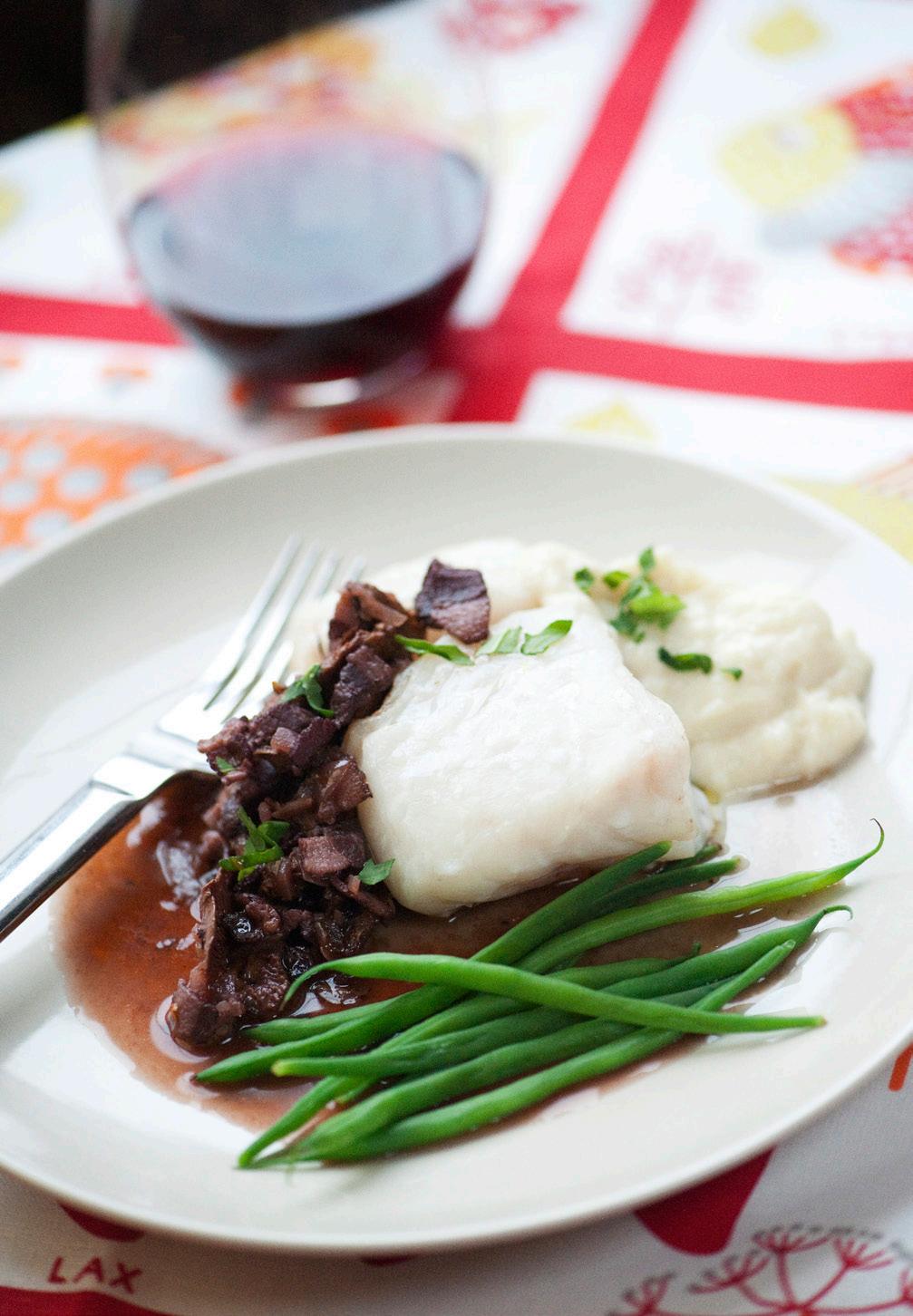
Cod with red wine sauce – why not? The wine’s acidity and bitterness contrasts nicely with the tenderness of the fish.
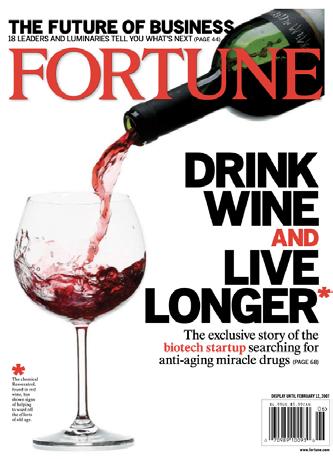
The first time health aspects of wine were given a lot of attention in the media was in 1991. The American programme 60 Minutes featured a major health investigation, which revealed that people in the South of France exhibited a much lower risk of dying from cardiovascular diseases than Americans on the East coast who exercised and ate reasonably well. The French ate a lot and drank red wine without thinking too much about exercise.
The results of the study famously came to be called The French Paradox and are still very much debated. It was the first time red wine and a Mediterranean diet were highlighted as healthy in light of the western world’s number one problem with luxury living: cardiovascular disease. The TV programme had a huge impact, and the next day, quickthinking American wine merchants put signs up outside their shops that said: Drink red wine –live longer. The French Paradox study has been followed by many others that have come to similar conclusions.
Wine and health have a long history together. Clay tablets from ancient Babylon dating back approximately 4,600 years have been found, that describe a Sumerian doctor’s prescription for his patient’s cough: wine sweetened with honey.
In Egypt of the Pharaohs, many medicines contained wine. The Ebers Papyrus, written some 3,500 years ago, mentions wine as an ingredient in four out of ten prescriptions for lack of appetite. Even in Palestine in the time of Jesus, wine was consumed as a medicine. It was, of course, also regularly drunk at celebrations and public festivals.
In the New Testament, Paul writes to his friend Timothy: “Drink no longer water – but take a little wine for the sake of your stomach and your frequent infirmities”. The Roman writer Pliny agreed: “There are two liquids that are especially agreeable to the human body – wine inside and oil outside”.
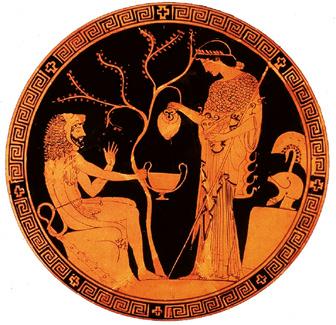
A love of wine and respect for it as a medicine was widespread in Antiquity. Noone has expressed this better than the Father of medicine himself, the Greek Hippocrates, born 2,400 years ago and famous for formulating the Hippocratic oath. About wine he said: “Wine is a wonderfully appropriate thing for man if, in health as well as in disease, it is administered wisely and justly.”
For many thousands of years, wine has been part of medical practice – many doctors saw it as a miracle medicine.
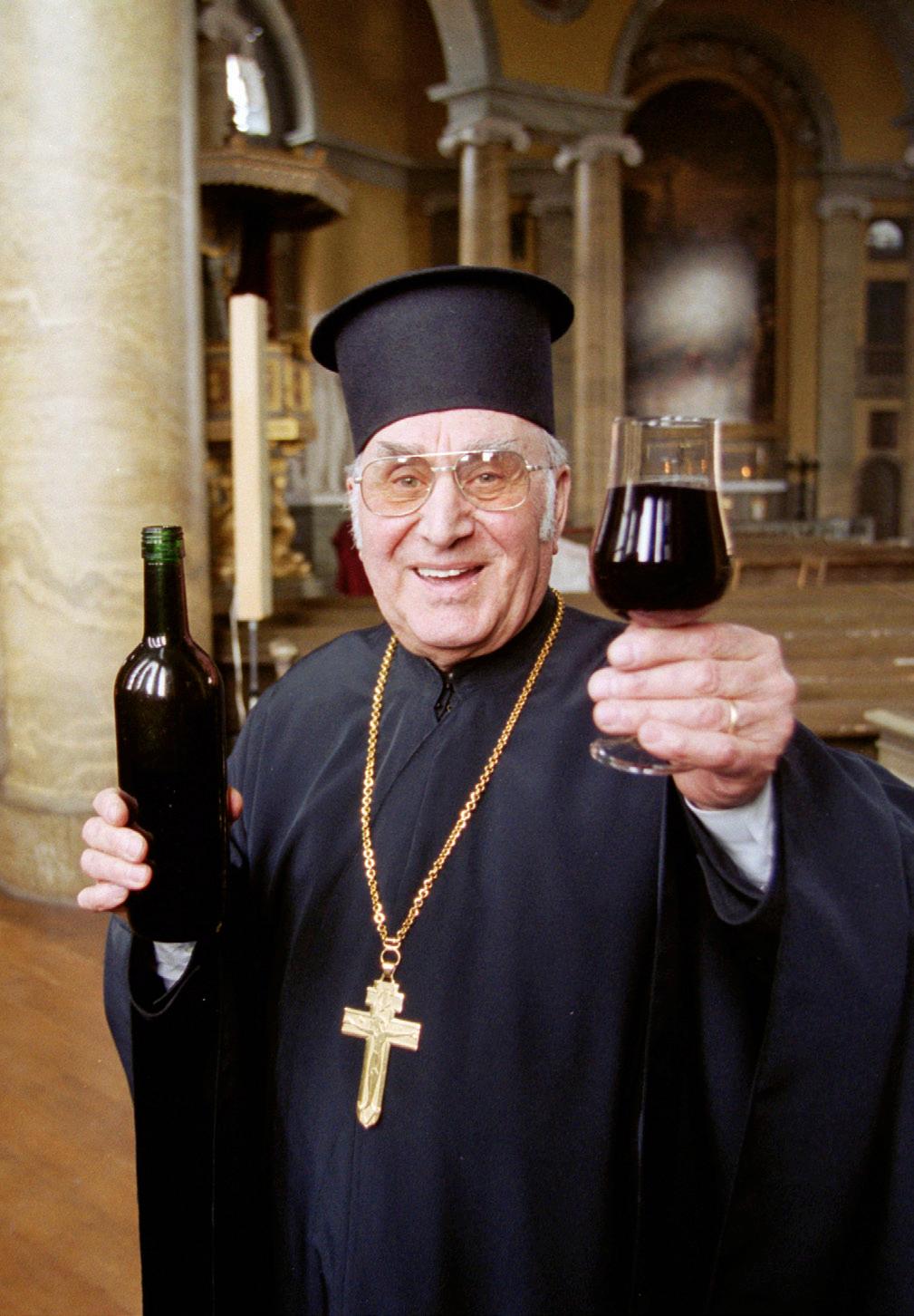
All over the world, wine has been holy for the Christian church – it is said there are over 400 references to wine in the Bible.
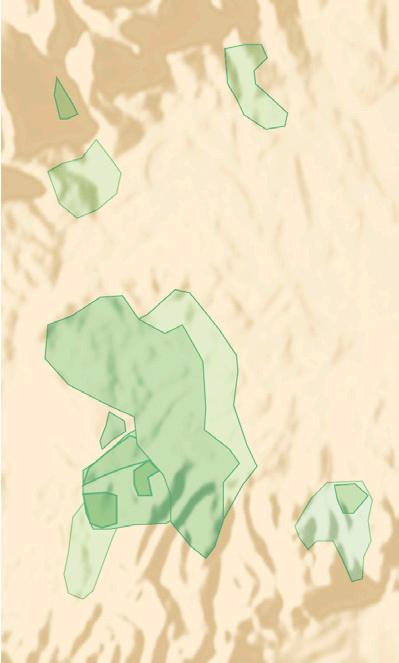
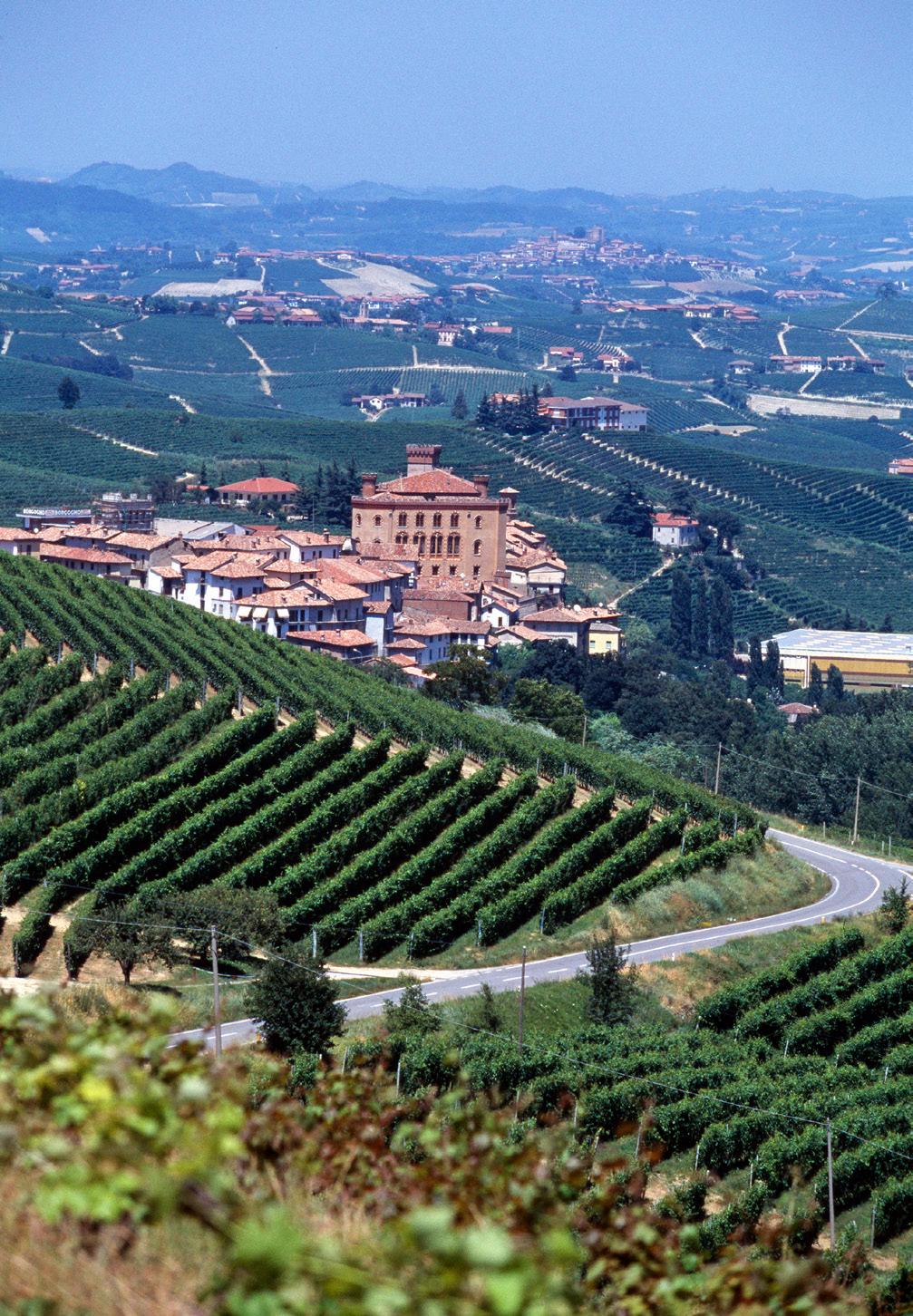
History The Romans were already drinking wine from Piedmont – the country ‘at the foot of the mountain’. The region has been shaped by its royal history and medieval castles. Piemonte has long been a prosperous part of Italy, where the food and wine has been some of the best in the country.
Geography The hilly landscape rolls out as an enormous valley between the Alps to the south and the Apennines in the east. The grapes are mostly cultivated on south-facing slopes.
Climate The relatively cool climate, often with morning mists, allows the grapes to ripen slowly. The grape Nebbiolo is named after nebbia (mist).
Wine types Largely red wines like the powerful Barolo, one of Italy’s leading wines, the lighter, more elegant Barbaresco (both made from Nebbiolo) and the more robust Barbera. Dolcetto and Grignolino are other red wines in a lighter style. The sweet, orange- and floral-scented sparkling Muscat wine, Asti Spumante, is a big success. Dry white wines are made in Gavi. Vermouth is successful all over the world.
Grapes Red: Nebbiolo, Barbera and Dolcetto, Grignolino and Freisa. White: Arneis, Moscato Bianco and Pinot Grigio.
Acreage/prod. Ca. 45 000 ha, about 2.5m hl/ year. There are more than 50 000 producers, mostly small.
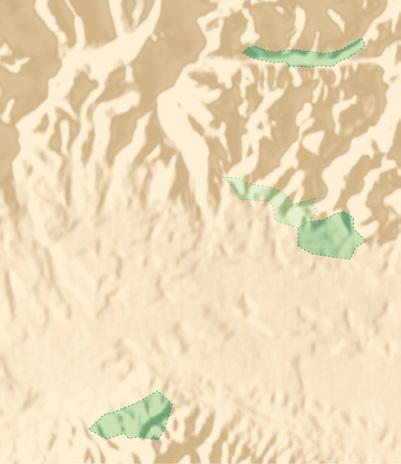
History Wine har always been produced in this region, regardless of who controlled this rich part of Italy. Milan is a centre for the wine trade.
Geography The vineyards are located in the long valleys of the Alps in the north or on the Po Plains in the south.
Wine types Most red wines are made in Valtellina–Inferno and Sassella are the most famous. In Oltrepò Pavese, both red and white wines are made, while in Franciacorta sparkling wines are made in the traditional method.
Grapes Red: Nebbiolo (Chiavennasca), Barbera and Pinot Nero. White: Chardonnay, Pinot Bianco and Pinot Grigio.
Acreage/prod. 23 000 ha, ca. 1.3 mil. hl/year. Approximately 30 000 producers, most small family businesses.
In the alpine areas of north-western Italy, the vineyards are located on the slopes and on steep terraces. One of Europe’s highest vineyard is located at an altitude of 1,200 m in Morgex, at the foot of the Mont Blanc. The production is dominated by the strong Donnas wines, made from Nebbiolo. Enfer d’Arvier is a wine made from the most cultivated grape, Petit Rouge. There are a further ten varieties.
Acreage/prod. 450 ha, ca. 19 000 hl/year.


You can test your knowledge here. The first section consists of 111 questions of five levels of difficulty, from easy to very difficult. You should be able to answer the easy questions with just a little basic understanding of wine but the most difficult ones require specialist knowledge. Why not use the questions for a team quiz with your wine friends? At the end of this section you will find some wine trivia questions – these are tricky and the answers may surprise you.

This is a complete course – whether you’re an inquisitive amateur or work in the industry. Here you will learn about everything, from wine tasting to facts about the wine producing world. With over four hundred photographs, maps and illustrations, this course has a clear and easy to follow teaching structure and is entertaining too!
The Ultimate Wine School is presented as a course of twelve practical lessons, for self-study or as a group course. You can also use it as a reference guide or simply as reading material for the wine enthusiast. Whether wine is your hobby or your work, this is the perfect book for anyone who loves wine!
The Ultimate Wine School, in its original edition, has been awarded the prize as The World’s Best Educational Book about wine in the Gourmand World Cookbook Award 2022. This in competition with wine books from 60 countries.