

©Liina Talvik 2026
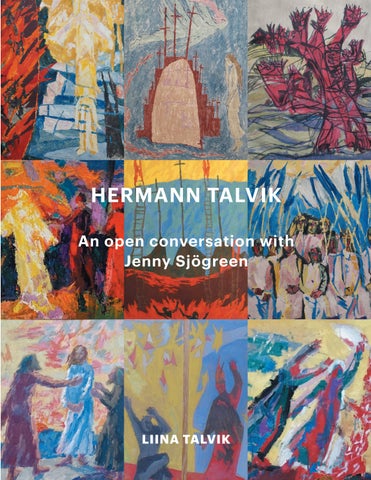
Original title: HermannTalvik- Öppetsamtalmed JennySjögreen
Translated from SwedishbyJaneDavis
Cover: Collageofartworks-Hermann Talvik Holy Bible, NewInternational Version®
Anglicized,NIV® Copyright © 1979,1984, 2011 by Biblica, Inc.®
Used by permission
Förlag:BoD ·Books on Demand,Östermalmstorg1, 11442Stockholm,Sverige,bod@bod.se
Tryck: LibriPlureos GmbH,Friedensallee 273, 22763Hamburg,Tyskland
ISBN:978-91-8134-996-2
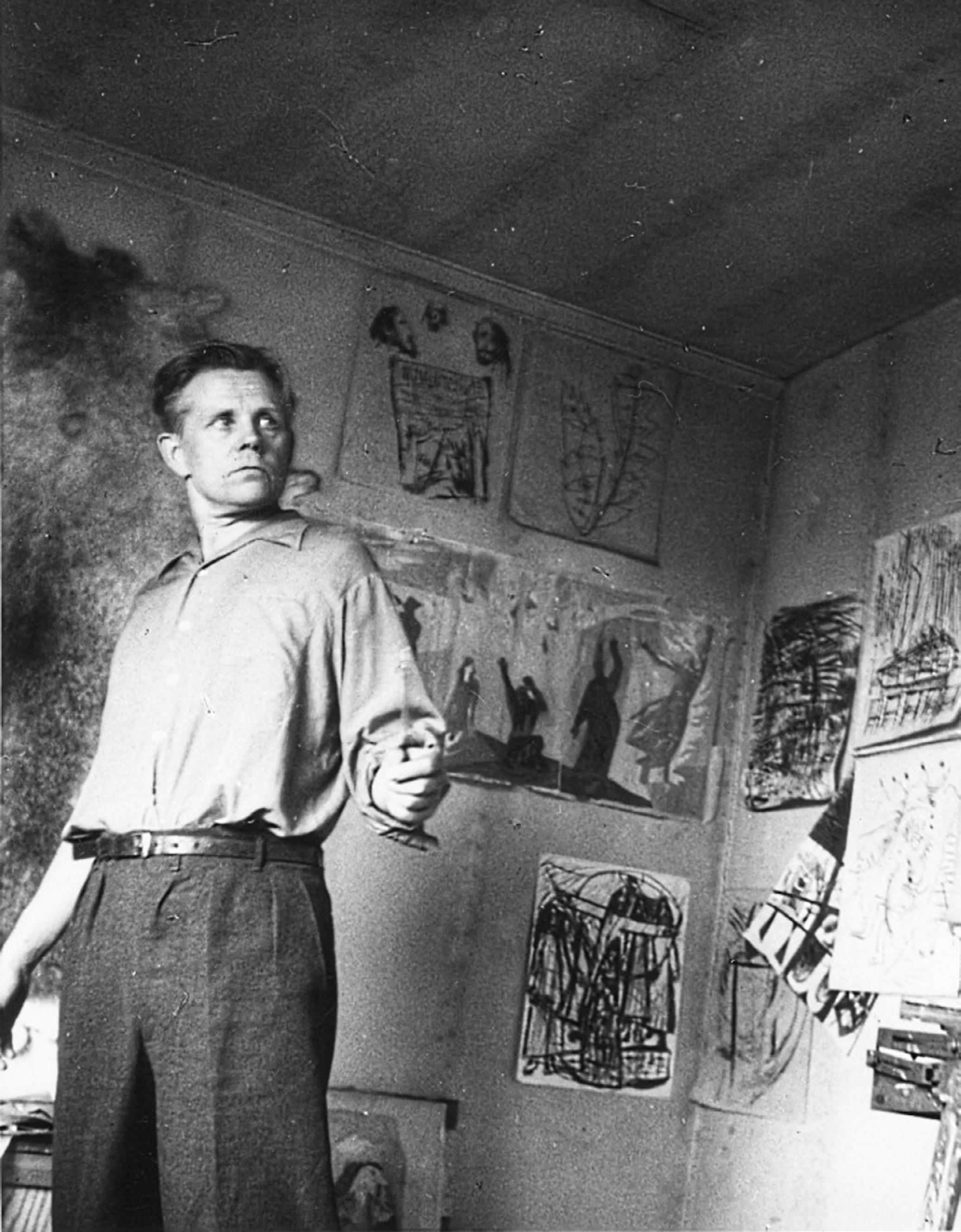
On thewallbehindHermann Talvik is oneofhis triptychs. 1960. Photograph:SvenGillsäter.
31 May1906–11 January1984
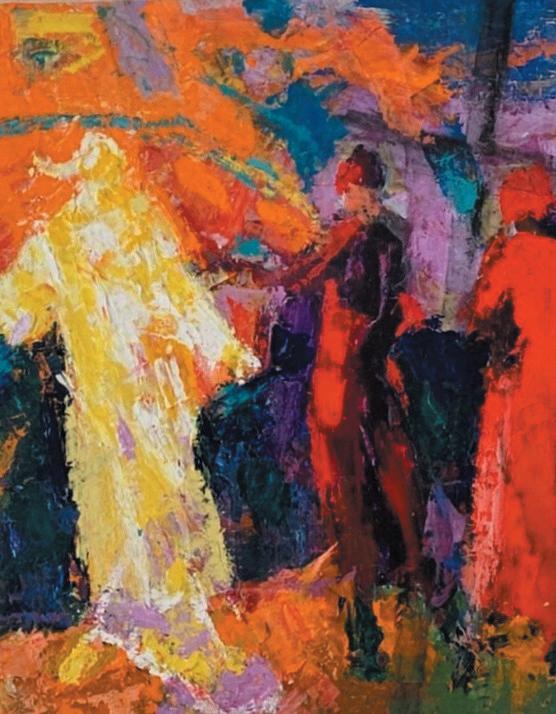
Onenight in thelate1930s,he wassuddenlyabletoconveyhis profound spiritualexperiencesthrough hisart.Inhis longingfor freedom, hisspiritual andartisticworld had merged,fertilising andenriching each other. Theexperiences took shape, flowinglike rhythms, shapes andsymbols over thepaper before himonthe floor. In this limitless dimensionhefeltasifhewerewithout skin.A spiritualvisuallanguageunfoldedlikean ethereal pilgrim’sway.Sometimes like fragilepoetry, at others with dramatic violence. He fell in love with themonotypeatanearly age– this techniquethatcombines theuniquepossibilities of both painting andprintmaking.Withthe experiencesof thenight stillfresh andalive as vibrations within him, he paintedona sheetofglass andmadea single print. Andsohecontinued,for severalnights, with severaldifferent artworks.Mostlyincolour, butevenatsuchanearly stageofhis career as themasterof themonotype, he also createdblack-and-white monotypes.
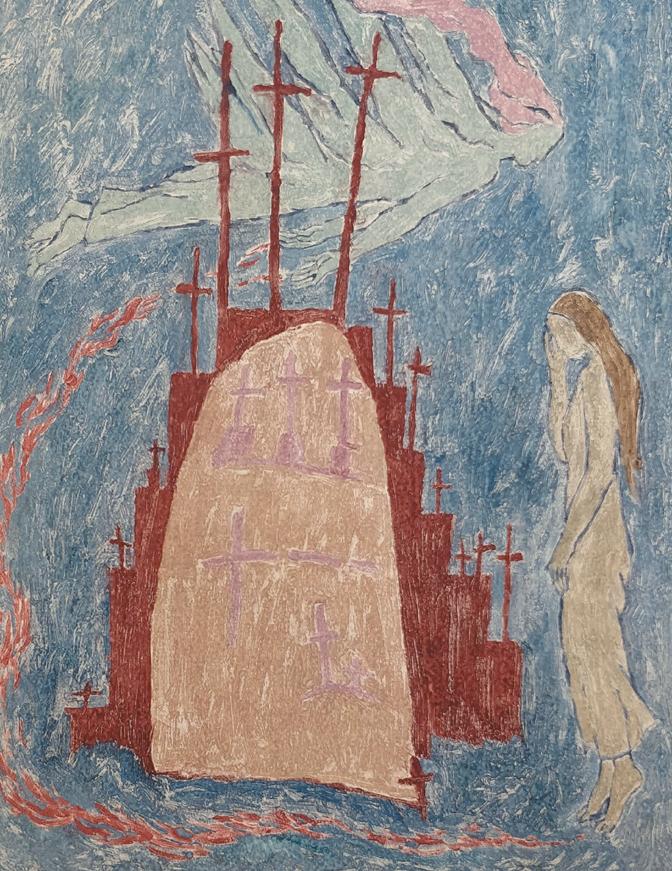
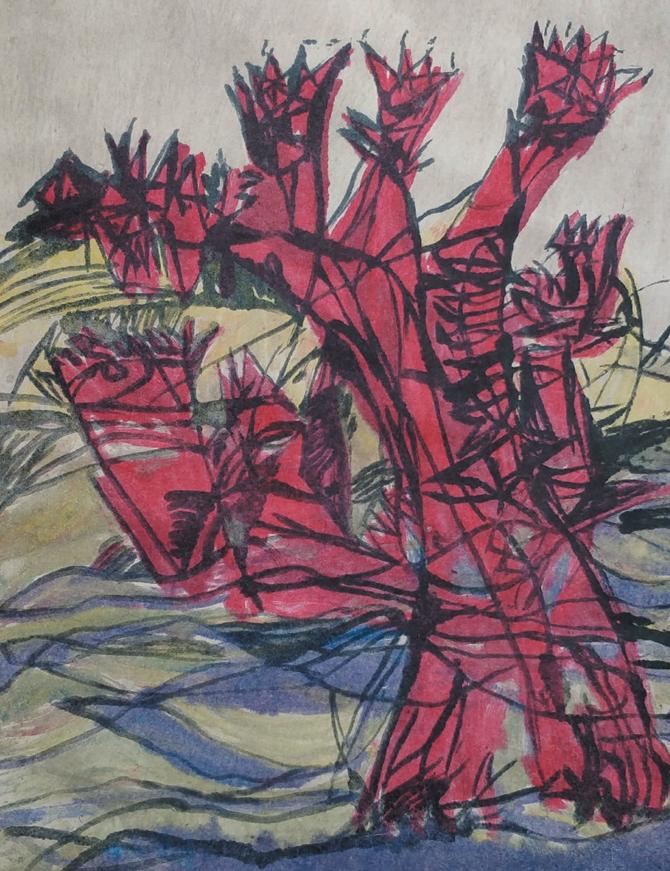
Theinteraction betweenblack andwhite wasaninstrumentfor hisartisticexpression.Asachild he mixedcharcoalfromthe stovewitha fewdrops of rainwater, painting with sensitive fingersinsilky grey shades andpowerfulcoal-blacklines.His love of printmakingwas born from this musicalexperience. He wouldchoosehis technique to suit thesubject:linocutsfor powerful fields balancingeachother;etchingsfor light, depthand saturatedchasms; drypointsgivingmicroscopic variations in line anddark places of concealment; andmonotypes andpaintings offeringcosmicenvironments bathed in colour.
Landscapes,his conversationswithnature, hadpreviouslybeenhis most common subject. Butlandscapestoo hadsouls –theywerenot merely depictions. They were sensitiveinterpretationofthe encounterbetween hisidentityasanartistand thesilent freedomoffered by nature,which gave himstrength. He felt freedomjustasstronglyin thecascadesof dazzling sunlight as in thescent of newly-fallen snow.
At theage of just thirteen,hewas accepted throughspecial dispensation by theTallinn StateArt School.Attwenty-two, he movedtoHelsinkitostudy at theart school in theAteneum.Soonstudy tripsinEuropealsoinspiredand expanded hisknowledge.Hehungered formore, andParis became hissecondhome. Butthe followingperiodofviolent upheavals in Europe wastoobstructhis freedom. Afflictedbysightsthatwould remain with himfor decades, andafter fleeingfor hislifetoavoid thefront,hewas forced to leavehis homeland.
In 1944 Sweden became hisnew home.Hesoughtout themountains wherethe crystalclear airwas saturatedonlybysilence andwhere thecurrent moment wasno longer athreat.
He didnot seek outthe companyofpeople. Aconstantdialoguewithnatureand proximitytoanastralworld were theonlycompanionship he required.Inpeoplehesaw thespiritasa light, andthatlight as part of God. Butheobservedwithsorrowthatthe individual rarely understood theirown spiritualwealthand competence,thatpeople lacked thetools to embark on theirown innerjourney,and that they were unawareof theirown role in agreater whole.
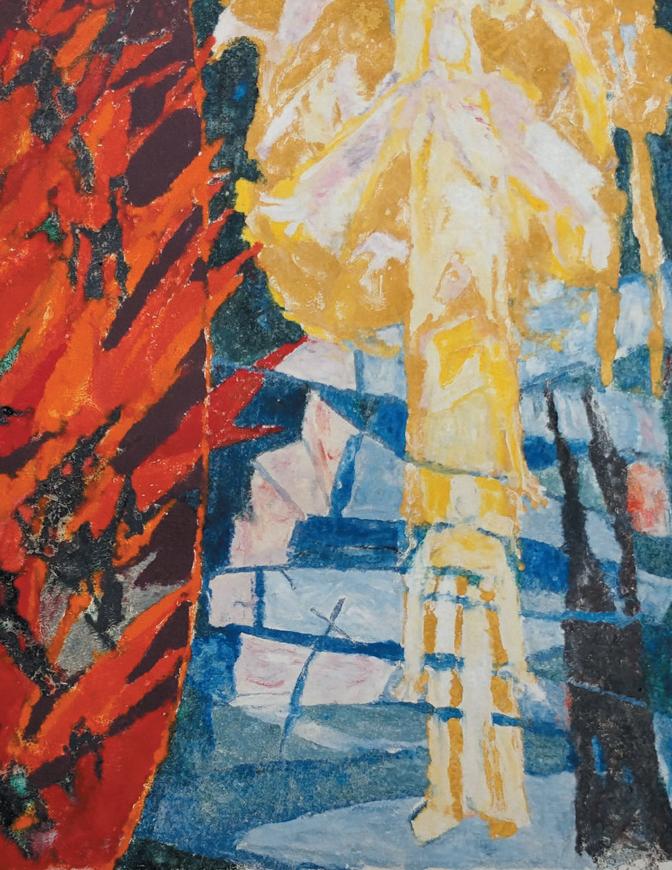
He hopedhis spiritualcompositionscould be thekey that opened emotionaldoors. In thesensitive observer’s eye, thegazecould be turned inwards. Inwardsfromthe proffered imageand into theindividual’sown spiritualpresence. Theaim of hiswork wasnot forthe viewer to gettoknow him better. Theaim wasfor them to gain agreater understanding of themselves.
He hopedhis artwould form an oasisfor meditation whereall experienceswere equallyvalid,where allpeoplehad thesamevalue andall languagesgainedthe same respect. Languagesbased on words,onrhythms,colour, shapeortones.
He knew that thelanguageof images is oneofunrestrictedinstantaneous communication,where theexperienceisbornfroma closerelationshipbetween thevisible and theinvisible,between theobjectand thevoid.
He knew that thewordcan causethe shimmerofexperiencetopaleand existential claritytodissolve.
He wanted us to approach hisart as we do music. In thesameway that we allowthe notes of musictoenfoldus, he wanted us to become seekersinhis work.
He wanted us to show each otherrespect in ourclumsyattemptstodescribeinwords thepaths we wander on foreignsoil– wordsdesignedtofunctioninthe concrete reality in whichwe find ourselves, this realitythatiscomprehensibleand viewable over time, whereeverythinghas abeginning andeverythinghas an end.
‘What do yousee?’ he asked.Often.
The question wasdirectedatour innermost being. Because what dowe see? What do yousee,and what do Isee?Who arewe? Do we truly knowwho we are? Youand I?
In the series An open conversationwith..., Italk to people who,invarious ways,have been affected by my fatherHermann Talvik’s highly personal and sensitivecompositions.
My hopeisthat, as areader, youwill feel invited to mentally take partinthis conversation. That youwillpermit yourself to reflect, questionand accept your own thoughts as well as my own–and ours. In this book,Imeet priestJennySjögreen fora long conversation about the Bible’s influence on Hermann Talvik’sart
Hermann Talvik (1906–1984)was aversatile artist, both in terms of techniquesand subjectmatter. His painting runs from lyrical landscapestospiritual compositions. His
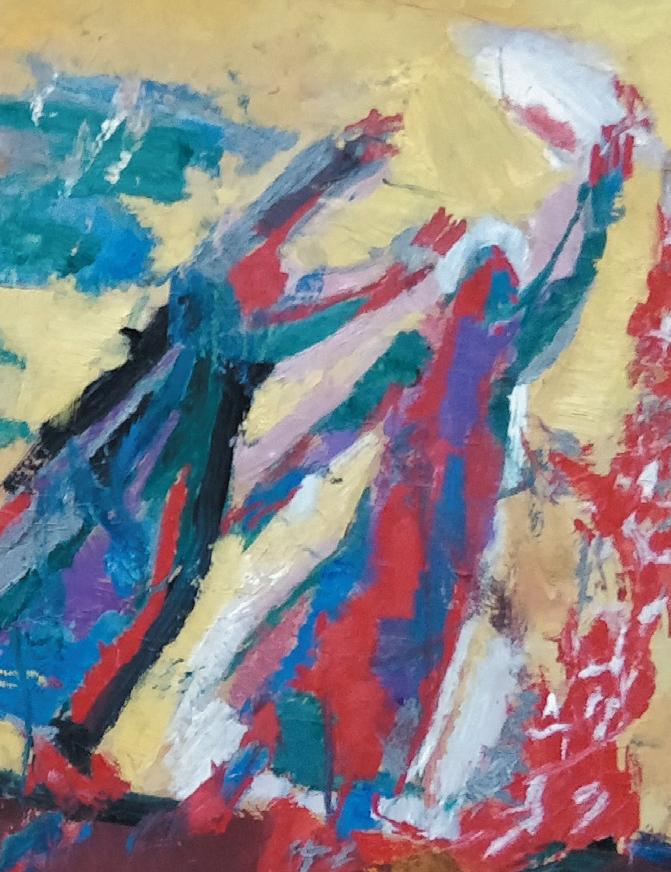
prints span therange from woodcuts and linocutstodrypoints and etchings.He wasalso themasterofthe monotype –a technique in which asingle copywas made fromapaintingona flatsurface.
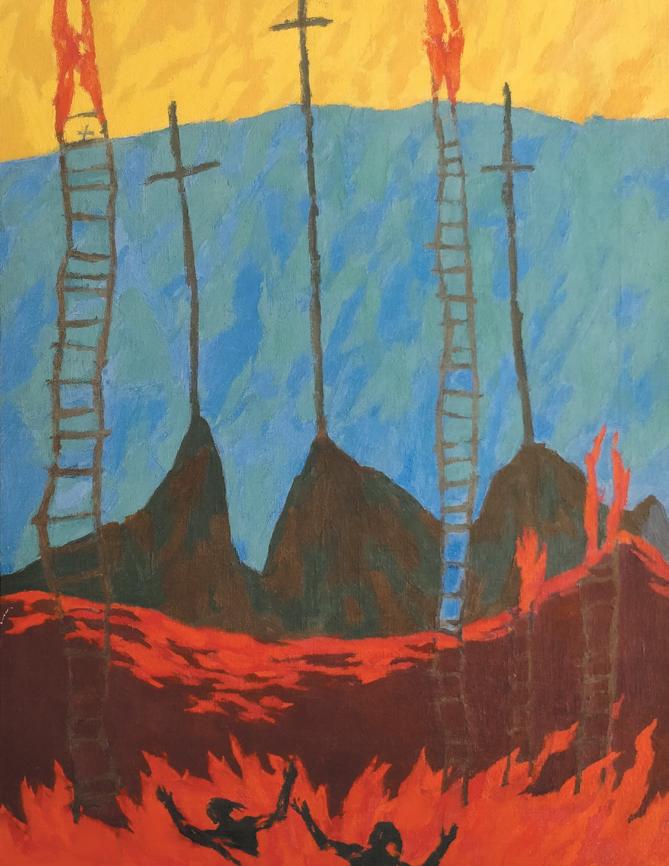
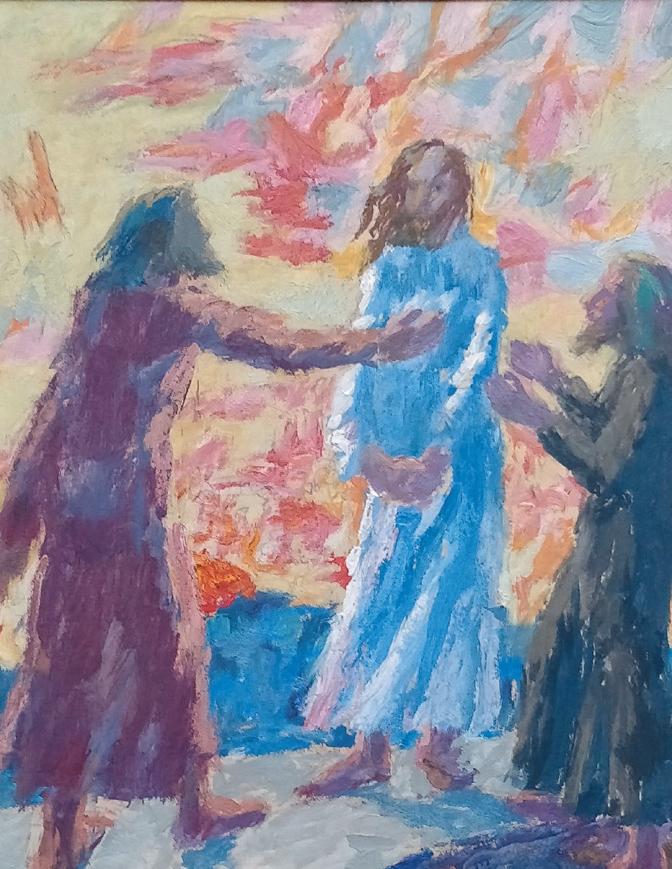
Much of hisart hasits origins in experiences from aworldbeyondthe physical one. The compositionsare loaded with acomplex symboliclanguage –sometimes the depiction of aviolentevent,sometimesan encounter in dazzlinglight– while others illustrateBiblicalstories.
He wasreluctant to talk abouthis own vision and what laybehindhis works. He preferrednot even to namehis artworks, as he felt this would get in the wayofour personal interpretations. Interpretations that can be colouredbyour unique experiences andwhichare linkedtoour ownspiritual presence.
