.
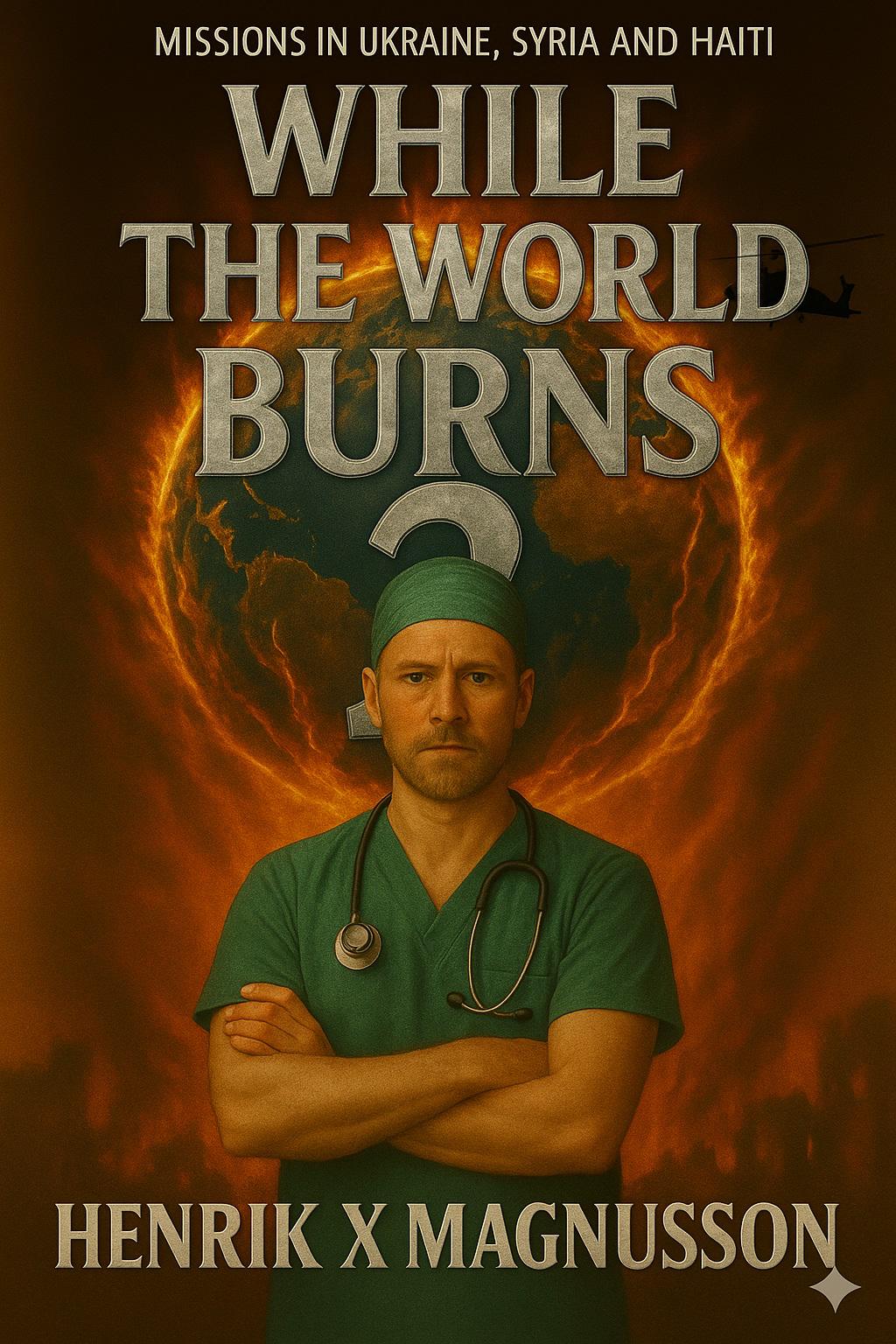
Henrik XMagnusson
.
Henrik XMagnusson
Assignments in Ukraine, Syriaand Haiti
Automatedtechnology used to analyse text anddataindigital form forthe purpose of generating information, in accordance with Sections 15a, 15b and15c of the Copyright Act (textand data mining),isprohibited.
©2025 Henrik XMagnusson
Publisher: BoD· Books on Demand,Östermalmstorg1,114 42 Stockholm, Sweden, bod@bod.se
Printed by: Libri Plureos GmbH, Friedensallee 273, 22763 Hamburg, Germany
ISBN: 978-91-8097-211-6
by
Henrik XMagnusson
Winter came earlytoKharkiv.Not becausenaturewanteditto, but becausethe heatinghad stoppedworking. Thechildrenfell asleep with theirhatsonand theelectricity cameand went, mostly went.Whenitcame, peoplerushedtochargetheir phonesbeforedarkness took overagain.
It hadbeenfour yearssince Russialauncheda large-scalewar. Thefront line ranthrough easternUkraine.Donbasnolonger meantmines andindustry; now it meantdestroyedcitieswhere no one lived anymore. Artilleryfireechoedthrough thenight, andchildrenhad learnedtodistinguish between different types of explosions
Russiaheldthe southern andeastern partsofthe country,and Crimeahad been occupied since2014. Theborders were redrawnmetre by metre. Theground wasfertilised with fallen soldiers.Youngmen whocouldhavebeen more useful at home in Russiaand Ukraine, at homeinfactories,onfarms,inoffices or at homewiththeir wivesand children.Thiswar waslikeall otherwars, ahuge wasteofhuman life. Thewar hadbecomea contestofendurance, with twoarmiesstaring at each other across
devastated land,waiting forthe othertotirefirst.
SevenmillionUkrainianshavefledtoPoland, Germany, Sweden andother countries.Millions more have fled within the country,alwaysawayfromthe war. In Lviv,there were flatsfull of peoplefromMariupol whonever returned home.
Hospitals struggled.Insulin ranout.Cancerpatientsdid not receive chemotherapy.Childrenwoke up screaming, andthere weren'tenough psychologiststohelpthem. When theheating failed, elderlypeoplediedofcoldintheir flats. Children contracted pneumoniaindamphomes.But teachersbravely continuedtoholdlessons in basements. Doctorsperformed operations with head torches. Andfarmers sowedtheir fields even though they were full of landmines.
Whydid it continue?Putin couldnot back downwithout admittingthatthousands haddiedfor nothing. Ukrainecould not give up land that belongedtothem. TheWestcouldnot abandon an ally.Sothe warcontinuedbecause no one knew how to stop it.
Viktor Segerwas back on dutyfor Médecins Sans Frontières andhad onceagain chosen to servewithElin Hammar. Viktor becamechief physician, but he andElinsharedthe responsibility, as they didnow when they operatedona soldier whosestomach hadbeentornapart by agrenade.
Hisblood pressure droppedagain.Viktorsaw thenumbers flash from85/50 to 78/45 on themonitor. Hishands continuedto work as he noddedtothe nurse whowas alreadyonher way with thenextbag of Ringer's lactate.
Elin stood on theother side of theoperatingtable with her hands deep inside theopenabdominal cavity. Herplastic gloveswerered up to herwrists. Through thethinfabricofher surgical gown, Viktor couldsee hershoulders tenseasshe worked,her fingers moving methodically through thetissue. TheMédecinsSansFrontièreslogoonher shirtwas now almost completely coveredinblood. He recognisedevery movement,havingseen them hundredsoftimesbefore, andhe couldpredict what shewoulddonext.
Thepatient wasa Ukrainiansoldier,perhaps twenty-two years old. Shrapnel froma grenadelauncherhad torn openhis right side.Theyhad brought himintwentyminutes ago, unconscious andbleeding. Hispulse hadbeen 140 on arrival. Nowitwas 155 andclimbing.
Viktor leaned closer.The operatingroom wasactually a classroom in an oldschool.Theyhad setupscreens andhung surgical lightsfromthe ceiling, but thewalls were still yellow with thealphabetpainted in arow along thetop. А, Б, В, Г in child-friendlycolours. It smelledofdisinfectantmixed with somethingold anddamp, ascentofmouldthatcouldnever be completely removed. TheMFS's white flag with thered logo hung on one wall, attached with silver tape that hadstarted to peel away at thecorners.
Elin pushedaside anothercompressorfilledwith blood. Herface wasconcentrated in theway he hadcometorecognise –a small wrinklebetween hereyebrowsand herlipspressedtogether behind herfacemask.
"I can't seethe source," shesaidbriefly.
Viktor handedher thesuction catheter.Their hands metinthe wound as shetook it, fingertip to fingertip underthe warm blood. That littleelectricshockcameasitalwaysdid.Hepulled hishandawayand concentrated on thetissueinfront of him.
Thesuction cathetersuckedawaythe blood andrevealed the anatomybeneath. Theliver wasintact,atleastthatwas something. So wasthe spleen.But somethingwas stillbleeding heavily, avesseltheyhadn'tfound.
Elin packed in newcompressesand worked quickly with the precision that camefromexperience rather than training. Herhands were smallerthanhis but more resilient;she could maintain pressure forlonger. They hadbeen servingherein Ukrainefor four months by this point.Four months of this.Of blood andpriorities.
Themonitorbeeped awarning. 72/42.
Ivan,the anaesthesiologist,increased thefluid supplywithout beingasked.Hewas alocal doctorwho hadstayedbehind when most others hadfledeastoracrossthe border.
Médecins Sans Frontièreshad hiredhim as aconsultant,and he hadacceptedwithout hesitation. Tall andquiet,withhands that nevershook, no matter what happened. Viktor hadseen himstand hisground anddohis jobwhile explosions shook thebuilding.
Viktor inserted twofingers alongthe wall of thelarge intestine andfelthis way. Thetissuewas warm andtough between his fingertips. Somewhereinherewas an artery pumping the soldier'slifeout in asteadystream. He found it by touchbefore he sawit– apulsationunderhis fingertip,rhythmic andstrong.
"Mesenterica superior," he said."Ineed ahaemostatic clamp."
Ivan handedhim theinstrument. Viktor took it andclamped downgently.The bleedingstoppedimmediately. Not completely,but enough.
"Good," Elin mutteredand begantowipeupthe blood.
Sheworkedmethodically,tying offsmallervessels with 3-0 vicryl andflushing. Viktor held theclampssteadyand felt his back ache.Theyhad been standing therefor twohoursalready. Before that,there hadbeenanotherpatient,a young girl with a gunshot wound through hershoulder. Andbeforethat, an elderly manwith afemur fracture. This wasthe eleventh operationthat day.
week.Lastweekithad been fourteen.Médecins Sans Frontièresreports required exact figures,patient records, complications,mortality rates. Viktor filledtheminevery eveningand wonderedwho read them.Someone in an office in Geneva or Paris, probably. Someonewho hadnever smelled burnt fleshorseen theintestines of anineteen-year-old hanging out of aholeinhis stomach.
Thegenerator outsidecoughedand thelightsflickered.Viktor held hisbreath, buthis hands continuedtowork. Youcould neverstop. Thelight stabilised andIvanmutteredsomething in Ukrainianthatsoundedlikea curseora prayer,itwas hard to tell which.
Themonitorbeeped again, but this time with betternumbers. 90/55. Then 95/60.
Elin lookedupand theireyesmet overthe face mask.Her eyes were dark andtired,but therewas aslight reliefinthem.
"We're winning," shesaidquietly andsmiled. Even though hermouthwas hiddenbehindthe face mask,the smilewas visibleinher eyes andcheeks.
Herhairhad creptout fromunderher hatindampcurls.She had asmall scar just above herlefteyebrow,which he knewwas froma bicycleaccidentwhenshe wasnine. He knewtoo much about her. Toomuchfor them to be just colleagues. Toomuch fortwo peoplewho worked forthe same organisationand could be forced to separate at anytime if headquartersdecidedso.
"Think about thewound," shesaidwithout looking at him.
It took anotherforty minutes to geteverythingundercontrol. When they were finally able to startclosing theperitoneum, compresses, bloody scissors andusedneedleswerescatteredall overthe instrument table. Thefloor wasbloody despite the plastic sheet.The airwas thickwithheat fromthe lampsand thesmell of blood.
Viktor stitched theouter suture with automaticmovements. His fingers knewwhattodowithout hisbrain having to give orders. Next to him, Elin didthe same on herside. They worked like a synchronisedorganism, mirroring each other'smovements perfectly.Thatwas whyMédecins Sans Frontièresoften triedto pair surgeons whohad worked together before.Itsaved lives.
When thelastthread wascut,Elin pulledoff hergloveswith a flickand droppedtheminthe bin. Viktor sawher hands tremble slightly as shewiped herforehead with herforearm.The patient wastaken to therecovery room,or"Uppvaket" forshort, for post-operative care– anearbyroom with sixbedsand anurse namedOksanawho smokedtoo much.Viktorwenttothe sink andbegan scrubbing.
Theblood turned thewater pink before it randownthe drain. Elin came andstood next to him. Theirelbowstouchedwhen shereachedfor thesoap.
They washed theirhands in silence. Viktor scrubbedharder than necessary, feelinghis skin become redand sore.Elin driedherself firstand remained leaningagainst thesink.
"Wehavetostopthis,"she said quietly.
Viktor continuedscrubbing.
"With what?"
"You know what."
He knew. They hadsaiditbefore. Five timesbefore. Doctors Without Bordershad strict guidelinesabout professional relationships in thefield.Itwasn'tforbidden, but it wasstrongly discouraged.Feelings made peoplevulnerable. Feelings made peoplemakereckless decisions.And here,where deathwas closer than at home, it washardertokeep them at bay.
"I know."
Shesaidnothing more.Hedried himselfoff andwentout into thecorridor.Itwas cooler there, almost cold.Through abroken window,cool February aircameinalong with thesound of the generatorand distantengines. Somewherefar away,muffled explosions couldbeheard. Artillery,perhaps tenkilometres away.Close enough forthemtohear it,far enough away for them not to have to care.
Viktor pulledout hisphone;itwas 3:47 p.m.Hehad promised to call thechildrenat4 p.m.Swedish time,which was5 p.m. here.Inthirteen minutes, Mira andJoelwouldbesittingatthe kitchentable at homeinStockholm, waitingfor thephone to ring. They knewthattheir dadworkedfor DoctorsWithout Borders. They thought it wascool andtoldtheir friends at school about it.But they didn'tunderstand what it meant. Not really.
Elin followed hisgaze to thephone.She knewwhatthe time meant. Shekneweverythingwithout himhavingtosay it.She turned andstarted walkingtowards herroom furtherdownthe corridor.Viktorwatched heruntil shedisappeared around
thecorner. Then he walked in theopposite directiontothe small office wherethe satellite phone waslocated
Theroom wascoldand damp.Someone hadtaped ablanket overthe window to keep theheat in,but it didn'thelpmuch. On thewallhung aposterfromMédecins Sans Frontières headquarterswiththe text "MédecinsSansFrontières–Providing medical aidwhere it'sneededmost".Viktorstaredat it sometimesand wonderedifthoseatheadquartersreally understood what "where it'sneeded most"meantinpractice.
He satdownatthe brokendeskand picked up thereceiver. His fingers hadjuststarted dialling thenumberwhenheheard it.
Abuzzing sound, likea largeinsect in thesummerheat. DRONES!
He recogniseditimmediately. Hisbody reactedbeforehis brain hadtimetothink. He threwhimself to thefloor andhad time for just one thought:Not now.Not when Iwas just about to make thecall.
Theexplosioncameasecond later.
Thesound wasdeafening. Theshockwaveblewout the windowsand thewalls shook as if in an earthquake.Viktorlay on hisstomach with hisarmsoverhis head andfeltconcrete dustraining down on him, glassshattering andmetal screeching. Someone wasscreamingtoo, ahuman sound that cutthrough theroar.
Then everything went strangely quiet,asifhis earshad shut downtoprotect themselves
Viktor laythere fora second, twoseconds.His body took stock without himaskingitto–armsmobile,legsokay, nothing wet on hisback to indicatemajor injuries.Herolledontohis side andtried to getup. Hislegscarried him, but he wasdizzy.The worldwas swaying.
Through thedustand smoke,hesaw that half thecorridor was gone.Where thewallhad been facing thecourtyard, therewas now aholegapingout into thewintersky. Snow swirledinand melted on contact with thewarmconcrete.Wires hung from the ceiling likebrokennerves. Afirealarm beeped insistently somewhere. TheMédecins Sans Frontièresflaghad been torn from thewalland laybrokenonthe floor.
Hisvoice soundedstrange,muffled by thestrange ringing in his ears. He ranwithout thinking. Over debris andglass and somethingsoftthathedidn'tlook downat. Theheat fromthe explosionlingeredinthe air, adry heat that burnedhis lungs. Thedustmadeitdifficult to see.
He found herfurther downthe corridor.She wasleaningagainst awallwitha cutacrossher forehead.A thin trickleofblood ran downher face. Viktor knelt downbesideher andquickly checked her. No majorinjuries, just superficial cuts fromglass. Herpupils reactednormally. No signs of concussion. Shewas aliveand shewas okay, andsomething in hischest released its grip.
"I'm alive,"she said,but quickly becamealert andexclaimed, "Wakeup!"
They got up together andran.The recovery room wasintact, but thewindow hadcracked andglass waseverywhere. Theyoung soldiertheyhad just operatedonwas stilllying on thecot, unconscious fromthe anaesthetic.Oksanabentoverhim and carefully removedthe glassshardsfromhis skin.
Buttwo otherpatientshad not been so lucky.
An elderlyman with heartproblemslay undera fallenceiling lamp.Ivanwas alreadythere,liftingitawaywith agrunt,but Viktor lookedatthe man'sface before even checking hispulse. Theman wasdead.
Theother wasa womanwithfractures in bothlegs. Shehad been lyingona stretchernearthe window.Glass shards hadhit herneck andsevered hercarotid artery.Blood hadsprayed acrossthe wall in an arcbeforeitbegan to flow.Elinwas alreadythere with compresses,but it didn'thelp. Herhands turned redinseconds. Thewoman stared up attheceilingwith emptyeyes. Elin continuedtopress anyway.Viktorwalkedover andput ahandonher shoulder. Sheshook herhead and continuedtopress. He left hishandthere until shefinally letgo andstood up.Her hands were now shaking, not slightly but violently. Thespirithad left thewoman's body, leavingbehind an emptyshell.
Viktor stood therestaring at thetwo dead bodies.Two more to reporttoheadquarters. Twomorenames in thestatistics. His earswerestillringing from theexplosion. Around them,people were trying to gettotheir feet,check
Field doctor Viktor Seger has sworn to save lives, but in the shadow of war,collapse and corruption, his promise is put to the hardest possible test. From the front lines in Ukraine to the refugee camps in Sudan and the streets of Haiti, he encounters the manyfaces of human evil. Different places, different enemies, but the same suffering, the same fight for hope. At his side is Elin Hammar,the colleague who shares his courage, doubts and dreams. Together theyfaceafrontier where duty
Astrong, realistic and gripping story about courage, morality and humanity in the darkest corners of the and love merge and where every choice can cost alife. world.