














Fiona Miller * Maria Olsson





RUN AHEAD




1. Write the title:
a)
b)
c)
d)
e)




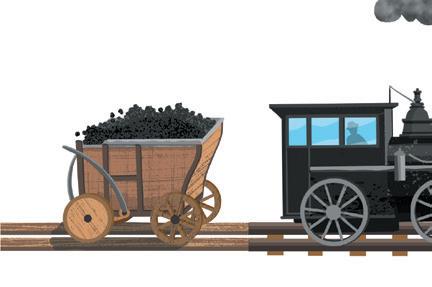
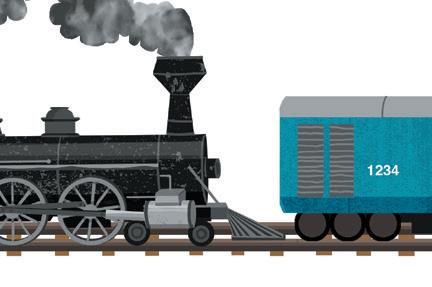

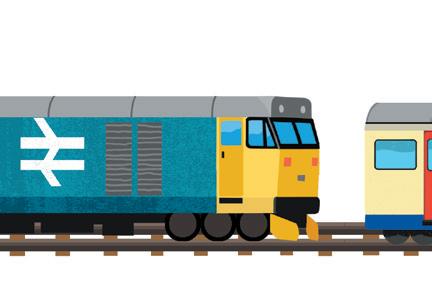

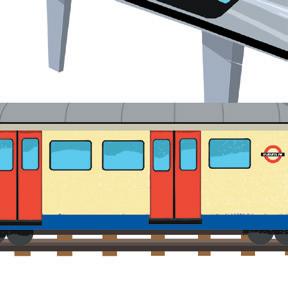
2. Write the subheadings:
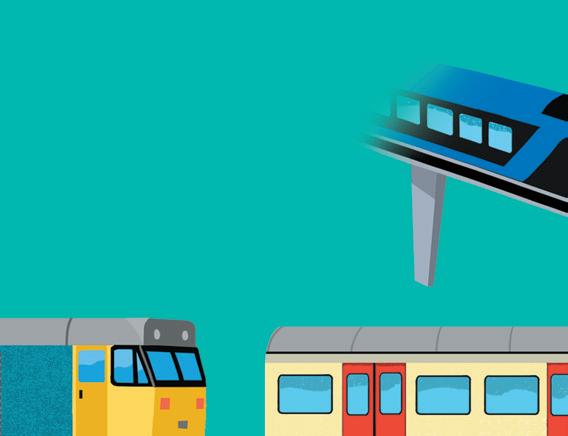
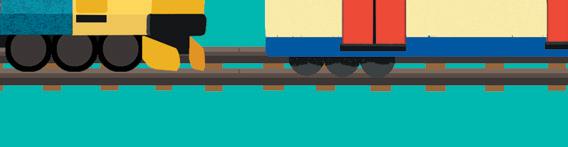
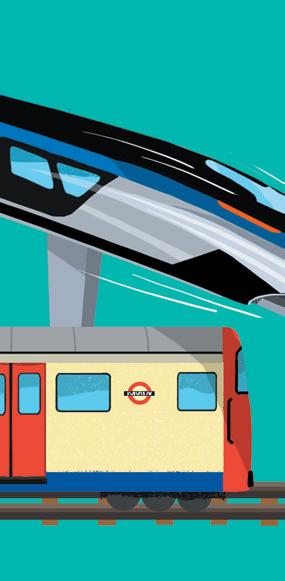
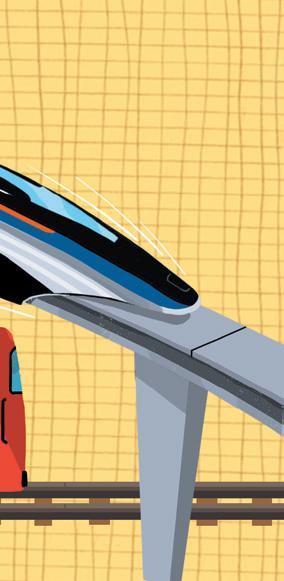
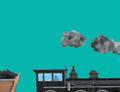
3. Describe the picture on pages 12–13 in a few words.
4. What is the oldest and most modern type of train?
5. What do you think the text will be about?

1. My sister is afraid of heights. 2. This material is hard.
3. G. Stephenson is a well known inventor.
4. The new road is fantastic. 5. One car only weighs about 1 500 kg.
6. My sister has a quick bike. famous tough scare� a single fast amazing
3 Match definition with word 1. Trains run on these. They are made of metal. 2. To move something closer to you. 3. When you move air in and out of your lungs. 4. A small piece of metal used as money. 5. A motor in a car. 6. A person who works underground.

Let’s take a ride through train history.

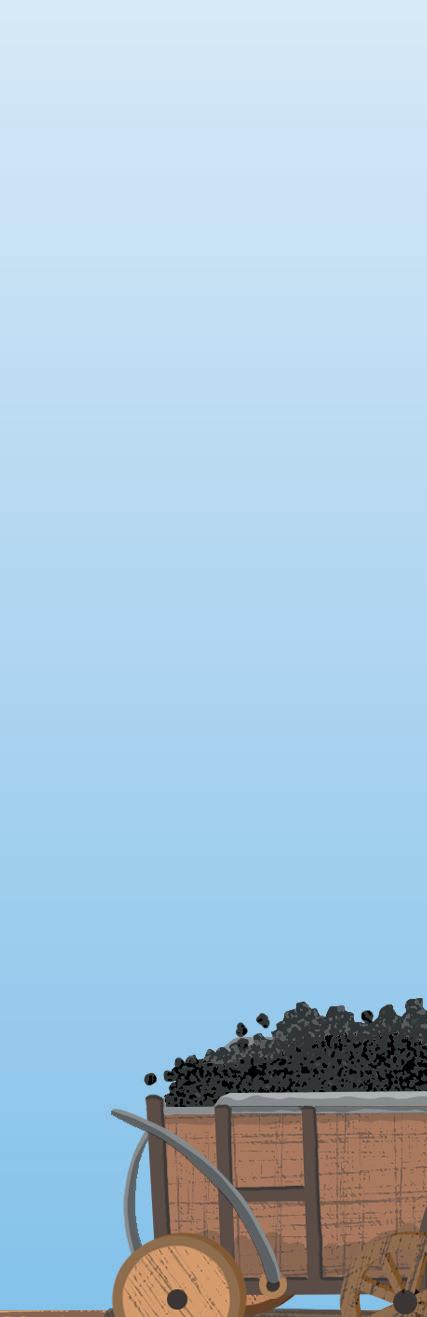
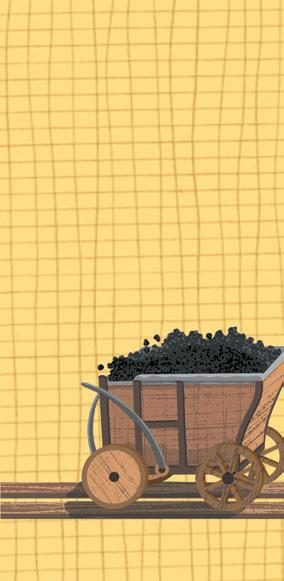
In the 1500s, miners in Germany and England used horses to pull wagons on wooden rails. These wooden rails were not very strong. Today, we use steel tracks.

Steel rails are tough and can handle a billion train wheels!





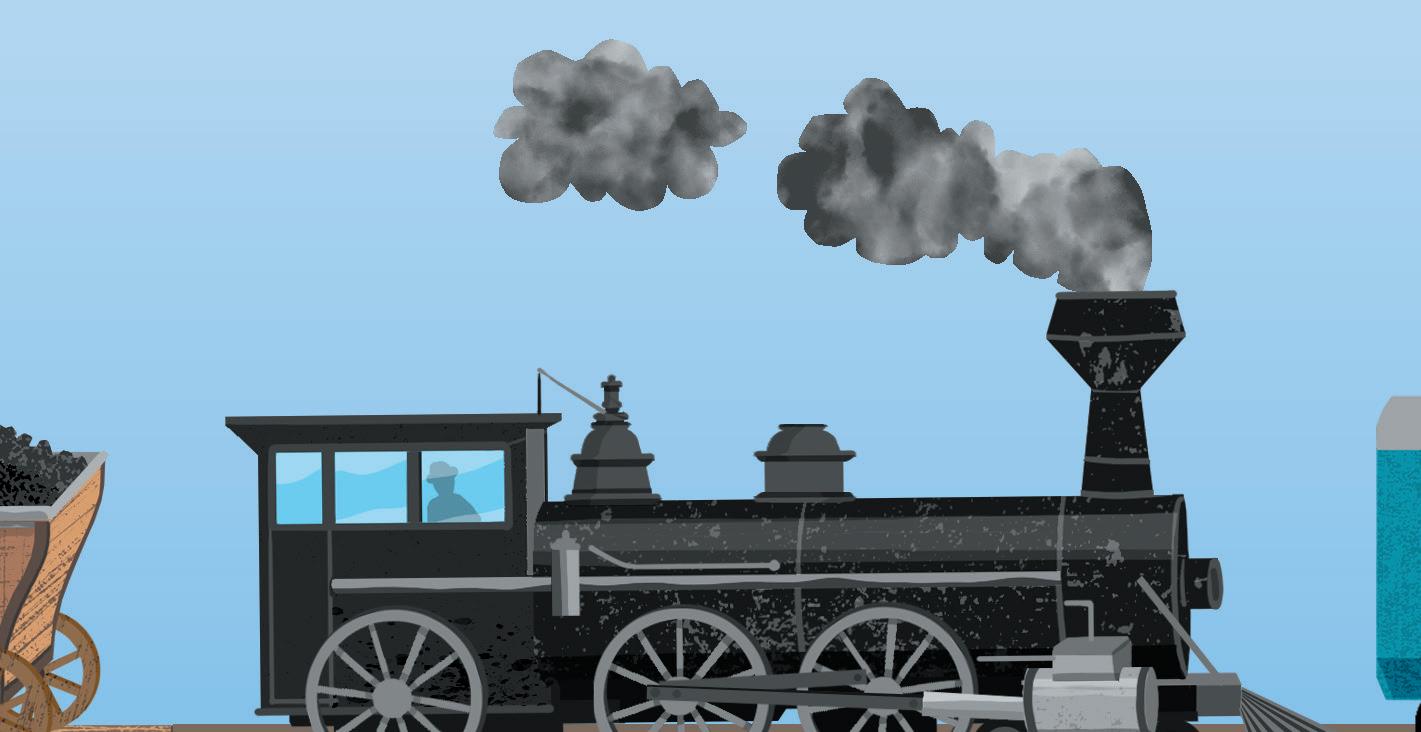





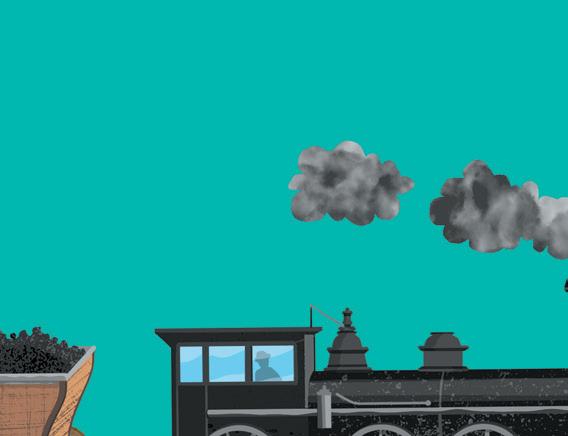
In 1825, the world’s first passenger train hit the tracks! It was a steam train called Locomotion
No. 1, which was built by George Stephenson.

Stephenson’s most famous steam train went 48 km/h and people were scared they wouldn’t be able to breathe!







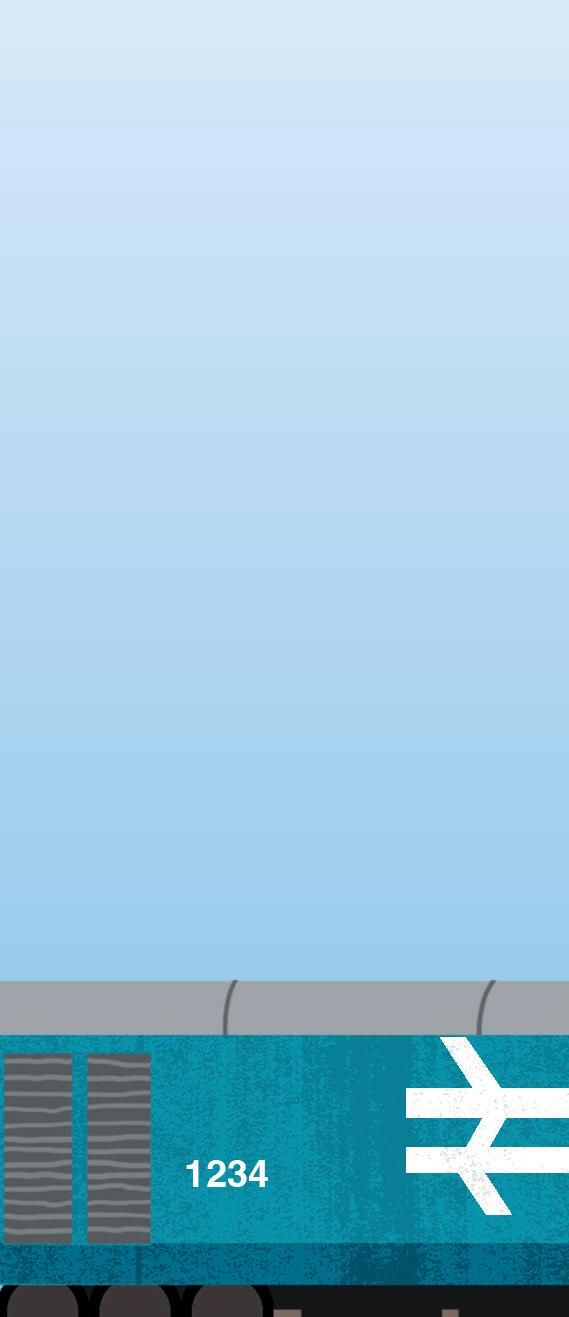
Diesel engines came along in the early 1900s and by the 1950s, they were everywhere.
A single diesel engine can pull a train that weighs more than 1,600 elephants!




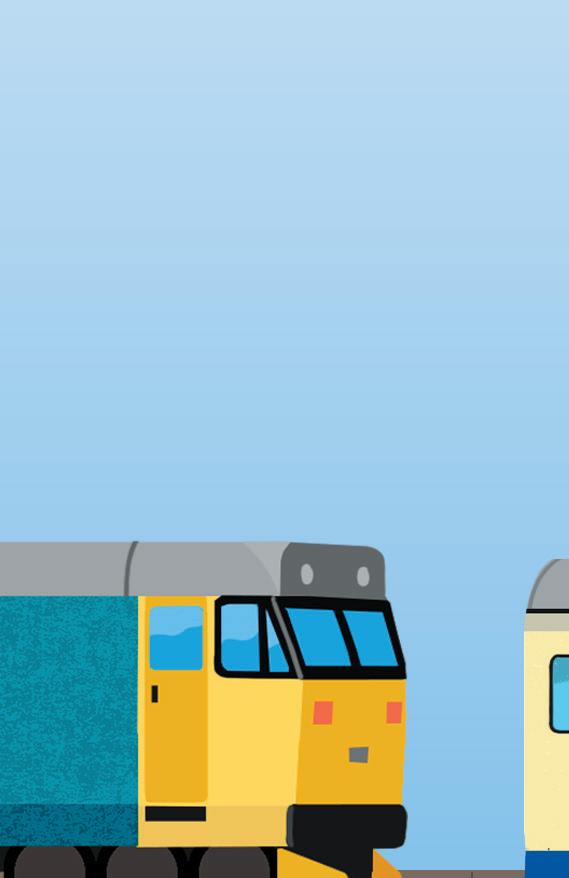

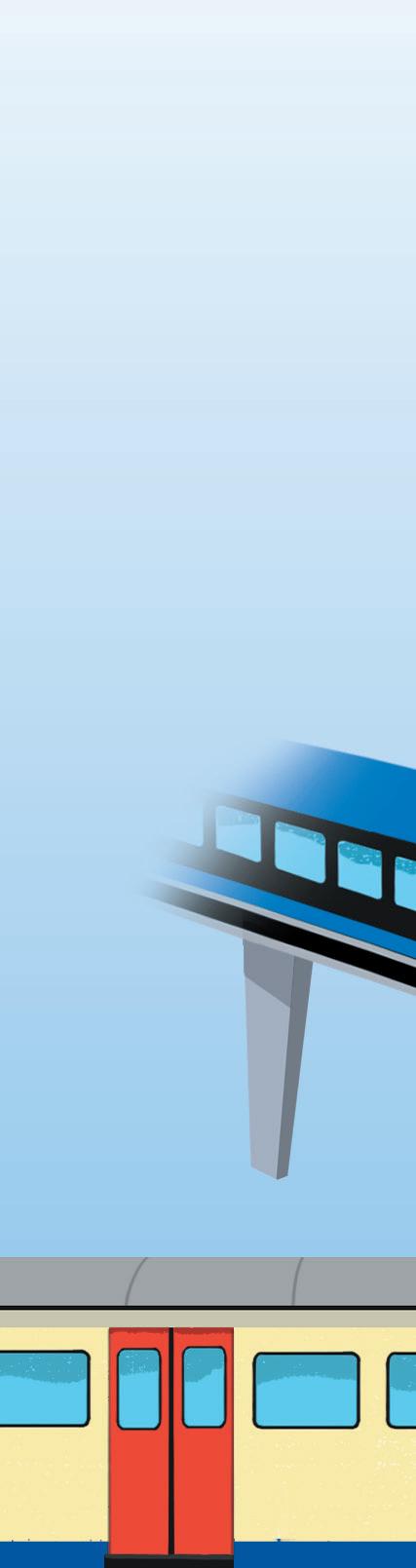

Maglev trains don’t touch the tracks – they float above them using strong magnets! Amazing, right?
Maglev trains don’t have wheels.



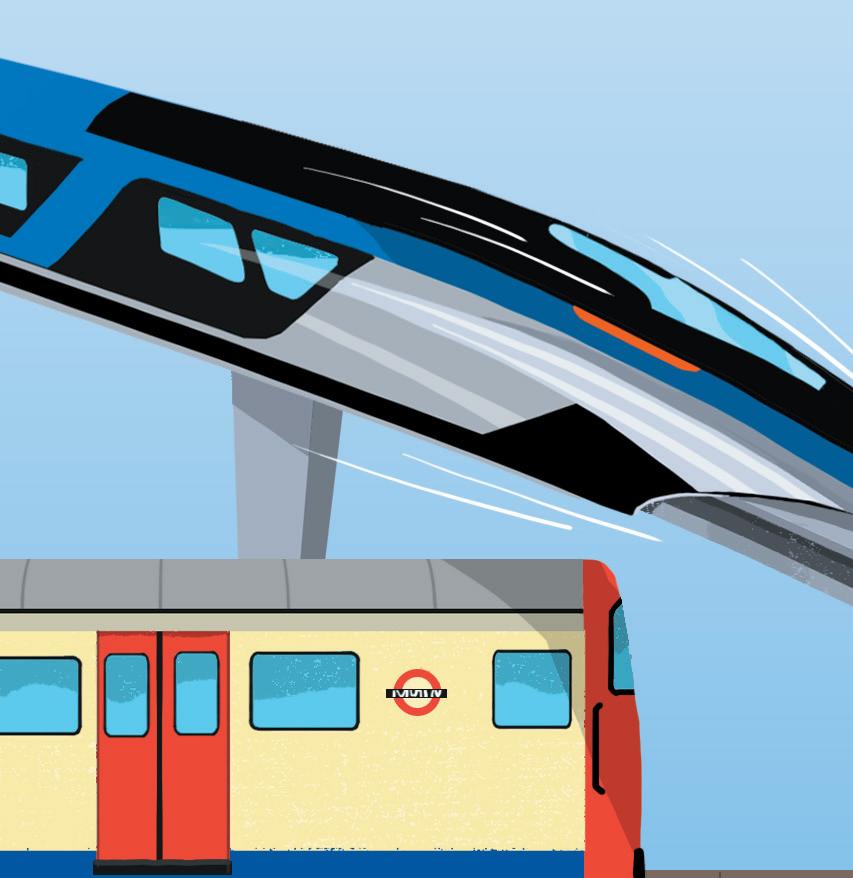





The world’s first electric underground (the Tube) opened in London in 1890. Soon, other cities like Paris and New York built their own underground systems.
In 1964, Japan launched the electric Shinkansen – a super fast bullet train that runs above the ground.

The Shinkansen is so smooth, you can balance a coin on its edge inside the train while it is going very quickly.







1. The first rails were made of steel. wood. steam.
2. Steel rails are weak. soft. strong.
3. George Stephenson was famous because he built trains. drove trains. was the first passenger.
4. The London underground is called the Tunnel. the Tube. the Snake.
5. The Shinkansen goes under the ground. above the ground. in the ground.
6. The Shinkansen moves smoothly. slowly. bumpily.
7. Maglev trains float because they run on water. have wings. use magnets.
8. Trains can be powered by steam and air. electricity and magnets. steel and steam.


This is my scooter. That bike over there is my sister’s. These sneakers are mine. Are those headphones over there yours?

Circle the correct form

1. Is this /these your pencil?
2. Are that /those your parents?
3. This /These is my new coach.
4. That /Those are his trousers.
5. Can you see that /those stars?
6. This /Those apple is sweet.
7. Do this/these shoes look good?
8. I will share that /these information with everyone.
The house, which is old, has a green roof. Mr. Bell, who teaches French, is nice.

Near: this (singular) these (plural)
Further away: that (singular) those (plural)

Who for people
Which for things and animals
1. Jack, is older now, spends a lot of time with his grandchildren.
2. The dog, is standing in front of the door, is beautiful.
3. The woman, is standing by the whiteboard, is our teacher.
4. The big park, we usually go to, has closed down.
5. Their house, is very big, is also very cold.


to ... Yesterday I ... I have ... jump jumped jumped hit hit hit come came come take took taken hear heard heard begin began begun
Use the verbs from the list above.
Regular verbs jump + ed = jumped Irregular verbs follow no rules

1. Have you that there is a new roller coaster at the fair?
2. The roller coaster went so fast when we a ride yesterday!
3. We were so excited when we the tracks.
4. I screaming in the first loop.
5. When we to the exit I was so happy.
Write
Use three verbs from the list and write three sentences in the past tense.







Läsförståelse och ordträning i engelska åk 6
Skills Practise More är en serie arbetsböcker med fokus på läsning och ordträning. Fyra intresseväckande faktatexter är utgångspunkten för arbete med läsförståelse och ord. Texterna är skrivna på två nivåer vilket ger möjlighet till differentiering.





























Varje kapitel innehåller varierade läsförståelseuppgifter, språkutvecklande övningar och grammatikövningar. Arbete med varje kapitel avslutas med en aktivitet som främjar kommunikation. Till båda nivåerna finns hörförståelseövningar på Practise More Elevwebb.






Elevwebb ingår I Elevwebben ingår ljudfiler och digitala hörövningar. För läraren finns även Facit. Läs mer på nok.se.