
Rachel Joyce is the author of the Sunday Times and international bestsellers The Unlikely Pilgrimage of Harold Fry and The Love Song of Miss Queenie Hennessy Her most recent novel, Maureen Fry and the Angel of the North, completes this trilogy. She is also the author of bestsellers Perfect, The Music Shop, Miss Benson’s Beetle and a collection of interlinked short stories, A Snow Garden & Other Stories Her books have sold over five million copies worldwide and been translated into thirty-six languages.
.
The Unlikely Pilgrimage of Harold Fry was shortlisted for the Commonwealth Book prize and longlisted for the Man Booker Prize. It is now a major film starring Jim Broadbent. Rachel was awarded the Specsavers National Book Awards Writer of the Year’ in 2012 and shortlisted for the ‘UK Author of the Year’ 2014.Rachel lives with her husband Paul and family nearrachel-joyce.co.ukStroudpenguin.co.uk
‘New
.
title
BLACK SWAN THE LOVE S ONG of M I S S QUEENIE HENNES S Y R A C H E L J O Y C E title page_Layout 1 05/08/2014 15:35 Page 1 PENGUIN BOOK S
Penguin Random House is committed to a sustainable future for our business, our readers and our planet. This book is made from Forest Stewardship Council® certified paper. 1
First published in Great Britain in 2014 by Doubleday an imprint of Transworld Publishers Black Swan edition published 2015 Copyright © Rachel Joyce 2014 Illustrations by Andrew Davidson
TRANSWORLD PUBLISHERS
Printed and bound in Great Britain by Clays Ltd, Elcograf S.p.A.
9781784160302ISBN
The authorized representative in the EEA is Penguin Random House Ireland, Morrison Chambers, 32 Nassau Street, Dublin D02 YH68.
This book is a work of fiction and, except in the case of historical fact, any resemblance to actual persons, living or dead, is purely coincidental. Every effort has been made to obtain the necessary permissions with reference to copyright material, both illustrative and quoted. We apologize for any omissions in this respect and will be pleased to make the appropriate acknowledgements in any future edition. A CIP catalogue record for this book is available from the British Library.
www.penguin.co.uk
Typeset in 11.25/15.5pt Berkeley Old Style by Falcon Oast Graphic Art Ltd.
Penguin Random House, One Embassy Gardens, 8 Viaduct Gardens, London SW11 7BW
Rachel Joyce has asserted her right under the Copyright, Designs and Patents Act 1988 to be identified as the author of this work.
Transworld is part of the Penguin Random House group of companies whose addresses can be found at global.penguinrandomhouse.com
For my sisters, Amy and Emily, and in memory of a garden in Roquecor
All journeys have secret destinations of which the traveller is unaware. Martin Buber, The Legend of the Baal-Shem
THE FIRST LETTER
Monday, 11 April Dear Harold, This may come to you as some surprise. I know it is a long time since we last met, but recently I have been thinking a lot about the past. Last year I had an operation on a tumour, but the cancer has spread and there is nothing left to be done. I am at peace and comfortable but I would like to thank you for the friendship you showed me all those years ago. Please send my regards to your wife. I still think of David with fondness. With my best wishes, Q h 11
13 St Bernadine’s Berwick-upon-TweedHospice
THE SECOND LETTER
So here it is Long ago, Harold, you said to me: ‘There are so many things we don’t see.’ What do you mean? I asked. My heart gave a flip. ‘Things that are right in front of us,’ you said. We were in your car. You were driving, as you always did, and I was in the passenger seat. Night was falling, I remember that, so we must have been on our way back to the brewery. In the distance, streetlamps sprinkled the blue velvet skirts of Dartmoor, and the moon was a faint chalk smudge.
It was on the tip of my tongue to tell the truth. I couldn’t bear it any longer. Pull over, I almost shouted. Listen to me, Harold Fry— You pointed ahead with your driving glove. ‘You see? How many times have we come this way? And I’ve never noticed that.’ I looked where you were indicating, and you laughed. ‘Funny, Queenie, how we miss so much.’
While I was on the edge of a full confession, you were admiring a roof extension. I unclipped my bag. I took out a handkerchief.
17 St Bernadine’s Berwick-upon-TweedHospice 13 April
15
‘Do you have a cold?’ said you. ‘Do you want a mint?’ said I. Once again, the moment had passed. Once again, I had not told you. We drove on. This is my second letter to you, Harold, and this time it will be different. No lies. I will confess everything, because you were right that day. There were so many things you didn’t see. There are so many things you still don’t know. My secrets have been inside me for twenty years, and I must let them go before it is too late. I will tell you everything, and the rest will be Outsidesilence.Isee the battlements of Berwick-upon-Tweed. A blue thread of the North Sea crosses the horizon. The tree at my window is pointed with pale new buds that glow in the dusk.Let us go then, you and I. We don’t have long.
18
16
Your letter arrived this morning. We were in the dayroom for morning activities. Everyone was asleep. Sister Lucy, who is the youngest nun volunteering in the hospice, asked if anyone would like to help with her new jigsaw. Nobody answered. ‘Scrabble?’ she said. Nobody stirred. ‘How about Mousetrap?’ said Sister Lucy. ‘That’s a lovely game.’Iwas in a chair by the window. Outside, the winter ever greens flapped and shivered. One lone seagull balanced in the‘Hangman?’sky. said Sister Lucy. ‘Anyone?’ A patient nodded, and Sister Lucy fetched paper. By the time she’d got sorted, pens and a glass of water and so on, he was dozing again. Life is different for me at the hospice. The colours, the smells, the way a day passes. But I close my eyes and I pre tend that the heat of the radiator is the sun on my hands and the smell of lunch is salt in the air. I hear the patients cough, and it is only the wind in my garden by the sea. I can imagine all sorts of things, Harold, if I put my mind to it. Sister Catherine strode in with the morning delivery. ‘Post!’ she sang. Full volume. ‘Look what I have here!’ ‘Oh, oh, oh,’ went everyone, sitting up. Sister Catherine passed several brown envelopes, for warded, to a Scotsman known as Mr Henderson. There was a 17
All you have to do is wait!
19
20 card for the new young woman. (She arrived yesterday. I don’t know her name.) There is a big man they call the Pearly King, and he had another parcel though I have been here a week and I haven’t yet seen him open one. The blind lady, Barbara, received a note from her neighbour – Sister Catherine read it out – spring is coming, it said. The loud woman called Finty opened a letter informing her that if she scratched off the foil window, she would discover that she’d won an exciting prize.‘And, Queenie, something for you.’ Sister Catherine crossed the room, holding out an envelope. ‘Don’t look so frightened.’Iknewyour
writing. One glance and my pulse was flapping. Great, I thought. I don’t hear from the man in twenty years, and then he sends a letter and gives me a heart attack. I stared at the postmark. Kingsbridge. Straight away I could picture the muddy blue of the estuary, the little boats moored to the quay. I heard the slapping of water against the plastic buoys and the clack of rigging against the masts. I didn’t dare open the envelope. I just kept looking and looking and remembering. Sister Lucy rushed to my aid. She tucked her childlike finger under the flap and wiggled it along the fold to tear the envelope open. ‘Shall I read it out for you, Queenie?’
I tried to say no, but the no came out as a funny noise she mistook for a yes. She unfolded the page, and her face seeped with pink. Then she began to read. ‘It’s from someone called Harold Fry.’ She went as slowly as she could, but there were a few 18
Sister Lucy folded the letter carefully and tucked it back inside the envelope. Then she placed my post in my lap, as if that were the end of it. A warm tear slipped down the side of my nose. I hadn’t heard your name spoken for twenty years. I had held the words only inside my head. ‘Aw,’ said Sister Lucy. ‘Don’t be upset, Queenie. It’s all right.’ She pulled a tissue from the family-size box on the coffee table and carefully wiped the corner of my closed-up eye, my stretched mouth, even the thing that is on the side of my face. She held my hand, and all I could think of was my hand in yours, long ago, in a stationery cupboard. ‘Maybe Harold Fry will come tomorrow,’ said Sister Lucy. At the coffee table, Finty still scratched away at the foil window on her letter. ‘Come on, you little bugger,’ she grunted.‘Didyou say “Harold Fry”?’ Sister Catherine jumped to her feet and clapped her hands as if she was trapping an insect. It was the loudest thing that had happened all morning, and everyone murmured ‘Oh, oh, oh’ again. ‘How could I have forgotten? He rang yesterday. Yes. He rang from a phone box.’ She spoke in small broken sentences, the way you do when you’re trying to make sense of something that essentially doesn’t. ‘The line was bad and he kept laughing. I couldn’t understand a word. Now I think about it, he was saying the same thing. About waiting. He said to tell you 19
21 words only. ‘I am very sorry. Best wishes. Oh, but there’s a PS too,’ said Sister Lucy. ‘He says, Wait for me.’ She gave an optimistic shrug. ‘Well, that’s nice. Wait for him? I suppose he’s going to make a visit.’
A few of the volunteers laughed, and I nodded as if they were right, they were right to laugh, because it was too much, you see, to show the consternation inside me. My body felt both weak and hot. Sister Catherine studied her yellow note. ‘He said to tell you that as long as he walks, you must wait. He also said he’s setting off from Kingsbridge.’ She turned to the other nuns and volunteers. ‘Kingsbridge? Does anyone know where thatSisteris?’
Lucy said maybe she did but she was pretty sure she didn’t. Someone told us he’d had an old aunt who lived there once. And one of the volunteers said, ‘Oh, I know Kingsbridge. It’s in South Devon.’ ‘South Devon?’ Sister Catherine paled. ‘Do you think he meant he’s walking to Northumberland from all the way down there?’ She was not laughing any more, and neither was anyone else. They were only looking at me and looking at your letter and seeming rather anxious and lost. Sister Catherine folded her Post-it note and disappeared it into the side pocket of her robe. ‘Bull’s-eye!’ shouted Finty. ‘I’ve won a luxury cruise! It’s a fourteen-night adventure, all expenses paid, on the Princess Emerald!’
20
22 he was walking.’ She slipped a yellow Post-it note from her pocket and quickly unfolded it. ‘Walking?’ said Sister Lucy, suggesting this was not some thing she’d tried before. ‘I assumed he wanted directions from the bus station. I told him to turn left and keep going.’
‘You have not read the small print,’ grumbled Mr Henderson. And then, louder: ‘The woman has not read the small print.’ I closed my eyes. A little later I felt the sisters hook their arms beneath me and lift my body into the wheelchair. It was like the way my father carried me when I was a girl and I had fallen asleep in front of the range. ‘Stille, stille,’ my mother would say. I held tight on to your envelope, along with my notebook. I saw the dancing of crimson light beyond my eye lids as we passed from the dayroom to the corridor and then past the windows. I kept my eyes shut all the way, even as I was lowered on to the bed, even as the curtains were drawn with a whoosh against the pole, even as I heard the click of the door, afraid that if I opened my eyes the wash of tears would never stop.
Harold Fry is coming, I thought. I have waited twenty years, and now he is coming.
21
23
An unlikely plan
The nun shifted from the window, taking with her a small potted cactus plant from the sill. She said she’d heard about your very exciting message. She knew that you were walking from Kingsbridge to Berwick-upon-Tweed and that all I had to do was wait. She stooped to rescue the cactus from the floor.
24
‘Queenie? Queenie HennessY?’ When I woke, a new volunteer was standing against my window. For a moment he seemed made of light.
‘You were crying,’ he said. ‘In your sleep.’ Only now that I looked properly, I found he was not a man after all. He was a tall and big-boned she, dressed in a nun’s habit, a wimple and a knitted navy-blue cardigan. I shot up my hand to hide. But the stranger didn’t stare and neither did she drop her gaze, as people usually do, to my fingers or my feet or any bit of me that was not my face. She just smiled.
‘I don’t know Mr Fry personally, of course, but it appears you called into the void and an echo came back. What a good man.’ She smiled at the cactus as if she had just blessed it.
‘Are you upset about this man called Harold Fry?’ she said. I remembered your news. That you were walking to see me. But this time I couldn’t see the hope in it, I could see only the miles. After all, I’m at one end of England and you’re at the other. The wind has a softness in the south, but up here it’s so wild it can chuck you off your feet. There’s a reason for this distance, Harold. I had to get as far from you as I could bear.
22
25
‘By the way, I am Sister Mary Inconnue.’ She pronounced it An-con-noo, like in the French. ‘Pleased to meet you.’
I’d thought I would never see you again. Even though I’ve spent twenty years in exile, even though I’ve lived with a piece of my life missing, I thought you had forgotten me. When I sent you my first letter, it was to put my affairs in order. It was to draw a veil for myself over the past. I didn’t expect you to post a reply. I certainly didn’t expect you to walk with it. There is so much to confess, to atone for, so much to mend, and I can’t do it. Why do you think I left Kingsbridge and never came back? If you knew the truth, I’m afraid you’d hate me. And you must know the truth, you see. There cannot be a meeting between us without it.
The nun drew up the chair and sat beside my bed. Her hands lay in her lap, large and red. A washing-up set of hands. Her eyes were a sharp, clear green. ‘But look at me,’ I tried to say. It was no good. Instead, I reached for my notebook and HB pencil. I wrote her a mes sage: How can I do this? How can I wait for him? I tossed the pencil aside.
I remembered the first time I spotted you in the yard of the brewery. Then I pictured your son in my red wool mittens and I saw Maureen too, her eyes blazing, beside a basket of washing in your garden at 13 Fossebridge Road. Don’t walk, I thought. The nun with a funny name was right: you’re a good man. I had the chance to speak twenty years ago and I failed. Over and over, I failed. I am words without a mouth. Don’t come now. I wrote, It’s too late. 23
Sister Mary Inconnue read the message in my notebook and said nothing. For a long time she remained with her hands in her lap, so still that I began to wonder if she’d dropped asleep. Then she rolled up her sleeves like a nun who means business. Her arms were smooth and weather-tanned. ‘Too late? It’s never too late. It seems to me you have something else to say to Harold Fry. Isn’t that why you’re upset?’ Well, that did it. I was crying again. She said, ‘I have a plan. We’re going to write him a second letter. Don’t forget, you opened this can of worms when you sent your first one. So now you need to finish. Only this time, don’t give him the sort of message he might expect from a gift card. Tell him the truth, the whole truth. Tell him how it really was.’
24
26
I looked to the window. Black gossamer scraps of cloud chased across a weak sky. The sun was a thimble of light, and the dark branches of the tree trembled. I pictured you at one end of England, walking down a country lane. I pictured myself at the other, sitting in a bed in a small room. I thought of the miles between us: the railway tracks, the bus routes, the roads, the rivers. I pictured the steeples and towers, the slate roofs and tin roofs, the stations, the cities, the towns, the villages, the fields. And so many people. People sitting on platforms and passing in cars and staring from buses and trudging down roads. Since I left Kingsbridge, I’ve remained single. I made my home in a derelict timber beach house, and I tended my heart in a garden by the sea. My life has been small, it has been nothing to speak of. But the past is still inside me, Harold. I have never let it go.
‘Well,nodded.there you are. We will write, you and I, until Harold Fry gets here. I’ll do it in the first person, as if I am you. I’ll transcribe everything. I won’t miss out one word. Your letter will be waiting for Harold Fry when he arrives.’
I remembered how long it had taken me to spell out my first letter in order for Sister Lucy to copy it on her laptop.
Already there was something appealing about her idea. Already I was composing the opening sentences. I think I closed my eyes, because when I opened them, Sister Mary Inconnue had moved again and this time she was seated beside the slight bump of my feet. She had put on a pair of blue plastic-framed reading glasses that gave her a gog gle-eyed look, and she held up a battered leather carrying bag the size of a briefcase. Its key was tied to the handle with a loop of string. She laughed. ‘You fell asleep. So I nipped to the office and 25
But Sister Mary Inconnue was still talking. ‘Every day we’ll do it. You can make notes and I’ll type them. I don’t suppose you know shorthand?’ I
And you promise he will read it before he sees me? ‘I give you my word.’
‘You don’t have to write this letter on your own,’ said Sister Mary Inconnue. ‘I will help. There’s an old portable typewriter in the office.’
And I suppose you noticed the mess I made of both my signature and your address on the envelope. What with all the shenanigans getting that letter in the post, a carrier pigeon might have been quicker.
27
28 took the liberty of borrowing the typewriter.’ She opened my notebook to a fresh page. She replaced it on my lap alongside the‘Youpencil.see how it is?’ said Sister Mary Inconnue, unlocking the leather bag and removing the typewriter. It was a cream Triumph Tippa. I had the same model once. ‘Harold Fry is walking. But in another way, even though you’re here, even though you’ve done your travelling, you’re starting a journey too. It’s the same and not the same. You see?’ I nodded. And if I’m not here at least my letter will be.
26
Sister Mary Inconnue settled herself and rested the type writer on her knees. ‘Now then,’ she said, flexing her red fingers. ‘Where’s the tab set key?’
We worked for the rest of the morning and then after lunch and into the dusk. Once I’d started, I couldn’t stop. I pointed to my writing. Does it make sense to you? ‘Perfect sense,’ she said. I tore out sheets as I finished, numbering each one, and Sister Mary Inconnue picked them up and typed. I kept telling myself I’d go as far as the next page, and then the next page came and I filled that too. I wrote everything you have read so far, while Sister Mary Inconnue clacked and slapped at her keys. And this is what we are still doing. I am writing and she is typing. ‘Good,’ she says. ‘This is good.’

29*
Tonight the duty nurse performed our evening rituals. She cleaned my mouth with mouthwash and a tiny sponge on a stick. She applied jelly where my lips have cracked, and she changed the dressings. Dr Shah, the palliative care consultant, asked if I had more pain, but I told him no, it was only the same. There was no need for me to be in discomfort, he said. If anything troubled me, a change could be made to my medication.
27
Once the nurse had applied my new pain patch, Sister Lucy massaged my hands. Her smooth, plump fingers travelled my stiff ones, easing the joints and stroking. She fetched her sparkly polish and painted my nails. In my sleep I saw your son. ‘Yes, David,’ I said. ‘Yes.’ I took a blanket and tucked it round him in case he was cold.
30 Sssh now tHe nigHt is not good. It’s David. David. In my head. I can’t sleep.Every time I close my eyes, I see him. In the armchair beside my electric heater. Black overcoat. Shouting for things. I ring for help. SISTER PHILOMENA: What is it? ME: I have nightmare. SISTER P: Take this. Morphine. (Sip, SISTERsip.)P: Put down your pencil, Queenie. Put down your notebook. Sleep now. 28
The last stop
After mY disturbed night, I slept until midday. When I woke, I had a visitor. She had a grapefruit on her head. She’d also brought her horse. The two of them left only when Sister Mary Inconnue arrived with her typewriter. I wrote for her that I’d had strange guests who belonged to a circus, not a hospice, and she smiled. ‘People pay good money for drugs like yours.’ Her eyes went skew-whiff behind her reading glasses. Do you have a problem with your vision? I spelled out the words. ‘Not at all,’ she said. ‘I was winking at you. How do you feelThetoday?’starched cornette on her head shone milk white, as did her habit beneath her belted black tabard apron. She wore sandals over white socks, and the socks bunched a little under the Velcro straps. She pulled a fresh packet of A4 paper from her bag, and also a Tipp-Ex correction pen. ‘I see you have another message,’ she said, pointing at a postcard propped beside your letter on the bedside table. I had no idea what she was talking about. I’d gone and forgotten again, you see. I had forgotten in the night about the walking. ‘Oh, Queenie. You’re not going to cry?’ Sister Mary Inconnue laughed, and I knocked back my head to show I wasn’t going to make a fool of myself. ‘Let’s see what Harold Fry has to tell us,’ she said.
29
31
32
Sister Mary Inconnue put down her typewriter and took my hands in hers. She rubbed my fingers and lifted them to her mouth. Then she blew on them as if she expected them to inflate. ‘Look at you, Queenie,’ she said. ‘With your nails all sparkly now.’ She laughed. Sometimes a person can smile when you are feeling only the difficulty of a thing and the problem unravels before your eyes and becomes straightforward. 30
There was a picture of Bantham Beach. One of the nuns must have left the postcard while I was sleeping. Sister Mary Inconnue showed me the writing on the back. ‘Keep faith, Harold Fry.’ You may not know this, Harold, but I’m not a religious person. I hear the nuns pray, their songs from the chapel, but I do not join in. And since when did you know about faith? So far as I remember, you never entered a church. The last time I saw you, well . . . you did not look like a man who’d found God. So far as I remember, you never walked very far, either. I can think of only one occasion. But maybe now is not the time. ‘We’d better get back to your letter,’ said Sister Mary Inconnue.Sheopened my notebook and passed the pencil. Cramp. I could barely move my right arm. My hand poked solid from the wrist. It must have been all the writing I did yesterday. I’m not used to working with my hands any more. My fin gers trembled like anemones in the rock pools of my garden in Embleton Bay. I made it on a clifftop by the sea, and so I called it a sea garden. ‘Help me,’ I honked. ‘I can’t write.’
‘Once a thing is kaput,’ my mother used to say as she snatched up a cracked piece of china and dumped it in the bin, ‘it can never look the same. Get rid of it.’ I can still hear the words, her throaty accent. Chipped plates and glassware, ripped stockings, buttonless cardigans, plaster ornaments lacking heads or feet – nothing met her mercy. My parents were never wealthy – we lived on my father’s salary as a carpenter in a small rented house at the end of a Kent village – and my mother was a large Austrian woman with chunky hands that seemed permanently smeared with goose fat. She was con stantly dropping things. It was a wonder we had anything left. My father checked the bin when she wasn’t looking, retrieving what could be fixed and slipping the pieces out to his workshop. Somehow it rarely happened, the fixing, and when it did my mother would only gaze accusingly at a glued-backtogether plate as if to say, ‘You? I thought I was done with you.’
‘Let’s try again,’ she said. She slotted the pencil into my hand. She curled my fingers round it, one by one.
31
I remember Bantham Beach. I went there when I first arrived in Devon. This was nearly twenty-four years ago. It was before you and I met. It was also Christmas, and I had a lot to think about.Ihadn’t intended to come to Kingsbridge. All I knew was that I couldn’t stay in Corby. Things had gone wrong for me there, and so I was doing what I always did when something went wrong. I was running away.
33
‘What do you want to tell Harold Fry?’
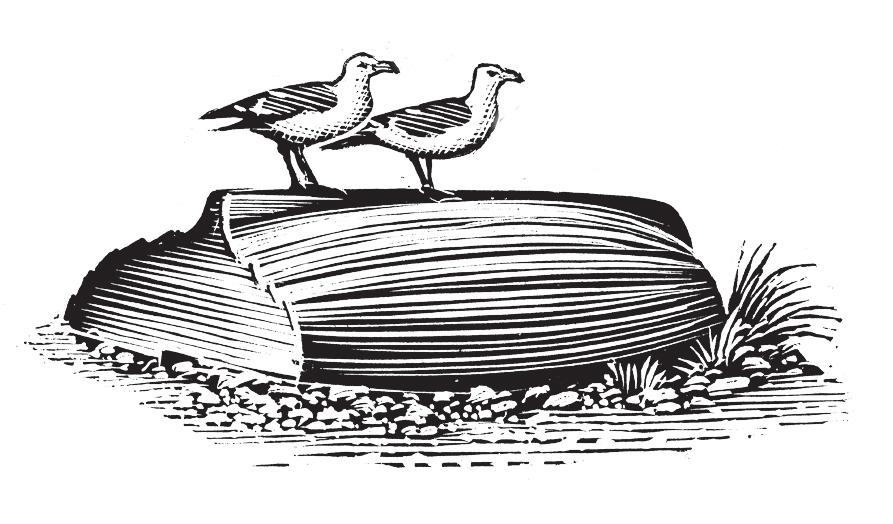
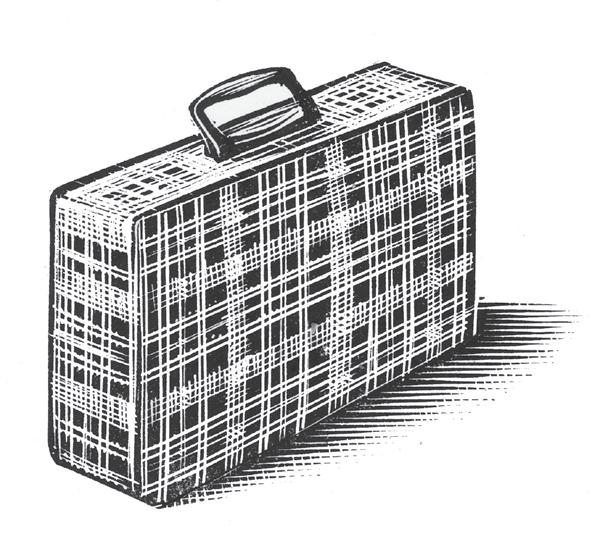
Perhaps I took my mother more literally than she intended, but I applied her rule to my life; after all, we are all searching for them, the rules. We pick them up from the strangest places, and if they appear to work once we can live a whole lifetime by them, regardless of the unhappiness and difficulty they may later bring. So when I failed a dance exam, I refused to continue. It was simpler to walk away than face my teach er’s disappointment. When a friend badly hurt my feelings at holiday camp, I did the same: I insisted on returning home. Years later I applied for Oxford University, and I suppose you could say that in this way I escaped from my parents. Being their sole child had become too complicated. Since Corby, I’d been travelling for days. A night here. A night there. Sometimes only hours. Nowhere long enough to know anyone. Nowhere long enough to become known. I barely unpacked my suitcase. I just kept moving and moving until the little bus stopped and I saw the sea. It was the last stop, said the driver. He switched off the lights. He switched off the engine. And what happens at the last stop? I thought. I made my way past the sand dunes and tall spikes of marram grass. A battering wind blew up from the Channel, and I had to bow my head in order to push forward, grip ping my collar to my throat with one hand and dragging my tartan suitcase with the other. The case contained everything I owned. My books, my clothes. My dance shoes. I reached the water’s edge and I felt the terrible despair of someone who is used to running because that is what she has always done, and now she faces a brick wall.
32
34
33
Why didn’t I keep walking forward? I had little money. No job. No place to stay. The water tipped my toes. In very little time it could be as high as my ankles. Once a thing is broken—Andthen I felt a small flutter in my belly. I turned my back on the sea and dragged my suitcase towards the sand dunes. By the time I was up at the road, the wind had dropped and the sun was gone. The sky was a chalky mauve, almost silver, and so was the land. The first of the evening stars pierced the dusk.
35
I still remember the winter sky that evening. Whenever I worked in my sea garden and I saw a sunset like that, I’d think back to Bantham Beach. It was as if the sun had been torn open. Everything was scarlet. The clouds were flames, so wild and vibrant that blue didn’t look like a colour any more. The sea and land served as a mirror. The ribbed sand was on fire. So were the stones and maroon rock pools. The pink crests of the waves. The burning hump of Burgh Island. The red even shone in my hands.
I am starting again, I thought. Because that is what you do when you reach the last stop. You make a new beginning.
Sister Mary Inconnue clasps her fingertips above her head and performs a short series of stretches for her neck. My pages are spread at her feet. The light has gone from the window, and the moon is back, a white cuticle.
‘Look how much you’ve done, Queenie. It’s only your second day of writing, and see how many pages you’ve filled. There is so much to tell. You remember so much.’ Of course I remember. Songs from the past fill my head. I will confess everything. I will not be afraid.
‘How’s the hand?’ asks Sister Mary Inconnue. ‘Not too sore?’Itry to smile, only it comes out as something else and I need a tissue. I turn to a fresh page.
34
36
‘But I don’t want to go there,’ I tried to say to the GP. This was after my last operation, when I could still manage a few sounds that people recognized as words. I returned the leaflet to his desk. I knew St Bernadine’s. It was a low black flint building on the edge of town. I passed the hospice on the bus if I had to mend tools for my garden and needed the large hardware store in Berwick-upon-Tweed. I always felt a tenderness for my tools and treated them like friends. But passing the hospice, I’d turn my back on the building to look at the sea instead. I pulled out my notebook. I want to stay in my home, I wrote. The GP nodded. He picked up a pen and rolled it between his fingers. ‘Of course you don’t have to go to St Bernadine’s if you don’t want to, Queenie.’ He kept his eyes fixed on that pen of his, and every once in a while a sigh slipped from his mouth as if an explosion had gone on somewhere deep inside his chest. ‘The cancer is advanced. There’s no more surgery we can do now. You know the prognosis is not—?’ he whispered. ‘You do know?’
St Bernadine’S HoSpice is a charitable nursing home that offers skilled and compassionate care to patients with any life-limiting illness, said the leaflet. The nuns who live and work here are trained nurses and volunteers. A medical team from the hospital is on hand to offer further support
Let’s get this bit over and done with, shall we?
35
37
.
‘Yes,’ I said. I reached for my walking sticks, though I wasn’t going to leave. I didn’t want him to have to say any more, and holding on to my sticks was about the best thing I could think of. ‘I’m not forcing you to go to St Bernadine’s. Of course I’m not. But they can make sure you’re comfortable there. I’m concerned about you in that beach house. No one else spends the winter on Embleton Bay. I know you have electricity but you don’t have proper heating. And the coastal path is almost inaccessible in this weather. We couldn’t get an ambulance to you. If we needed one.’
38
I have Simon. The hospital volunteer. He comes. ‘But only three times a week. You need full-time care.’ The air seemed so thick that I had to concentrate in order to breathe. I sort of didn’t hear any more, or if I did I heard only select words, like ‘complicated’ and so on. Nevertheless, I would have stuck to my guns. I would have stayed in my wooden home, but my whole face began to drop and shift shape. My mouth wouldn’t work, and my eye wouldn’t open. It was difficult to eat. It was difficult to speak. I stopped my daily walk and I stopped going to the shop. I didn’t want people to see me. I was so ashamed. If visitors came, I didn’t answer the door. I even avoided working in my sea garden, for fear they’d find me. I thought, I will sleep now, sleep, sleep, but it never came, the sleep. I didn’t want to trouble anyone. I just wanted to be able to let go. But every time I thought of letting go, I wanted only to hold on. I admit I cried. The rain kept coming, and so did the wind. I watched my sea garden from the door, the gales upending the 36
37
39 driftwood figures, the rain drowning the rock pools. Winter seemed to have no end. When Simon, the volunteer, heard I’d chosen St Bernadine’s he said, Oh, his aunt went there. ‘It’s a very special place,’ he promised. ‘You don’t have to be religious. They do all sorts. Music and art and stuff. And there’s a nice garden. You’ll like that. My aunt was happy right until the—’And then he smiled as if he had completely forgotten how to speak.Simon is a bear of a person, and he wears a duffel coat with toggles that don’t quite reach. I sat very still while he packed my nightclothes, slippers, towels. We have been everywhere together, that suitcase and I. Simon asked if there was anything else I would like to take and I couldn’t think because it was too strange to think I was leaving. I had lived in that beach house for twenty years, ever since I left you and Kingsbridge. The place was a part of me in the same way that the past was a part of me and you were a part of me and so were my bones. I looked at the painted grey walls, the bare board floors, the second-hand paisley throws I had found in thrift shops and the multi-coloured rag rug I made one winter. The old cooker, the copper pans, the blue wood shutters, the glass bottles and books on the windowsill. The pea-green china cups and saucers with gold rims I’d bought all those years ago in Kingsbridge in case you ever visited and stayed for tea. Already it was so cold without the heat of the woodburner that Simon’s breath was a great cloud of smoke above his head. Mine was only a trickle.