

The Epic True Story of the Jet that Changed the World. From the Flight Deck.

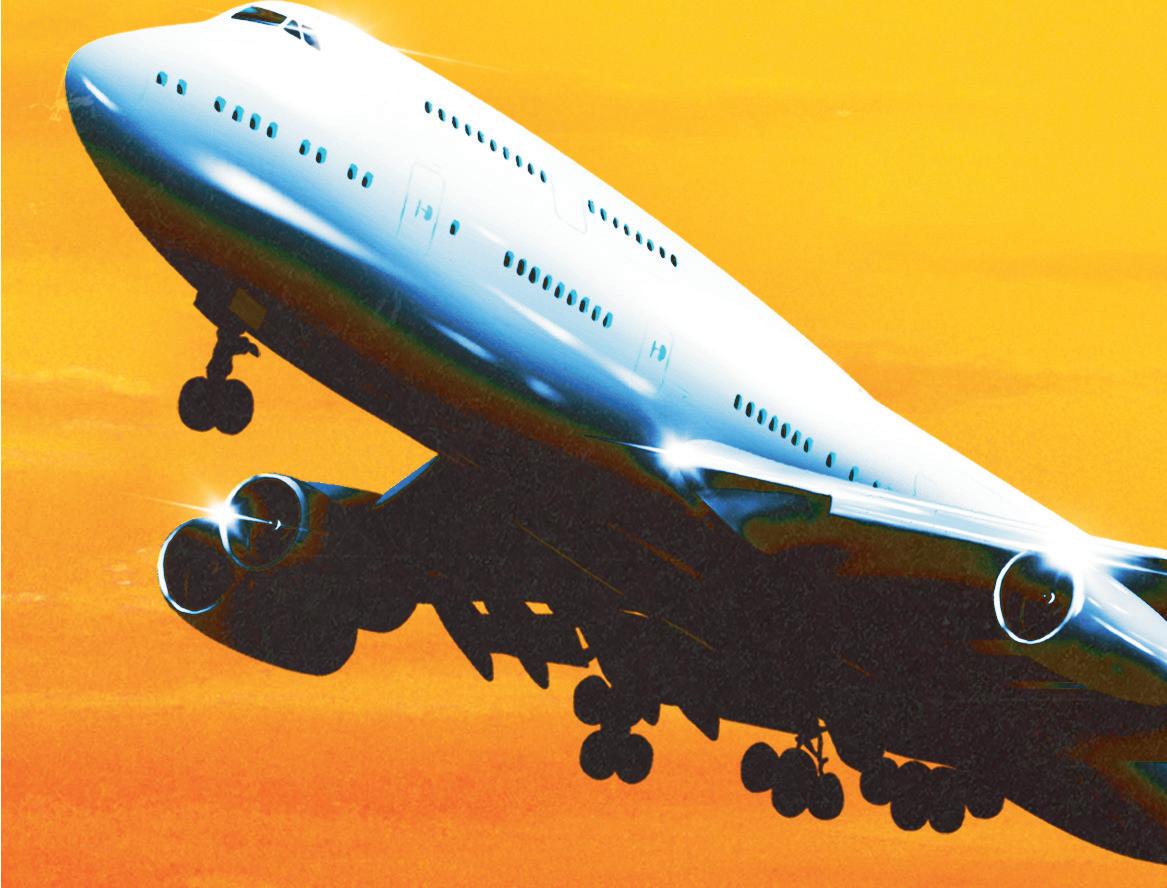

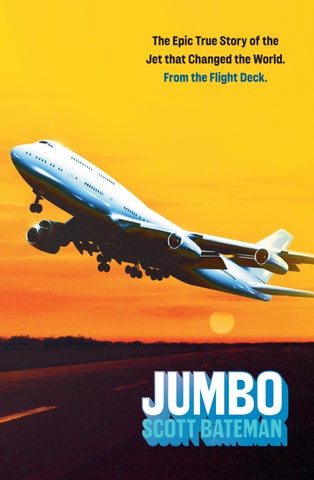
The Epic True Story of the Jet that Changed the World. From the Flight Deck.
UK | USA | Canada | Ireland | Australia India | New Zealand | South Africa
Penguin Michael Joseph is part of the Penguin Random House group of companies whose addresses can be found at global.penguinrandomhouse.com
Penguin Random House UK , One Embassy Gardens, 8 Viaduct Gardens, London sw 11 7bw penguin.co.uk
First published 2026 001
Copyright © Scott Bateman & Lynne Barrett-Lee, 2026
The moral right of the author has been asserted
Penguin Random House values and supports copyright. Copyright fuels creativity, encourages diverse voices, promotes freedom of expression and supports a vibrant culture. Thank you for purchasing an authorized edition of this book and for respecting intellectual property laws by not reproducing, scanning or distributing any part of it by any means without permission. You are supporting authors and enabling Penguin Random House to continue to publish books for everyone. No part of this book may be used or reproduced in any manner for the purpose of training artificial intelligence technologies or systems. In accordance with Article 4(3) of the DSM Directive 2019/790, Penguin Random House expressly reserves this work from the text and data mining exception
Set in 13.5/16pt Garamond MT Std Typeset by Six Red Marbles UK , Thetford, Norfolk
Printed and bound in Great Britain by Clays Ltd, Elcograf S.p.A.
The authorized representative in the EEA is Penguin Random House Ireland, Morrison Chambers, 32 Nassau Street, Dublin d 02 yh 68
A CIP catalogue record for this book is available from the British Library hardback isbn: 978–0–241–67328–7 trade paperback isbn: 978–0–241–67329–4
Penguin Random House is committed to a sustainable future for our business, our readers and our planet. This book is made from Forest Stewardship Council® certified paper.
To the aviation visionary, Joe Sutter, and all the ‘Incredibles’ who made this possible
By Ray Conner, former Boeing Commercial Aeroplanes CEO & President
Every day, millions of people get on and off aeroplanes around the globe and the convenience of flying is largely taken for granted, but there was an earlier time when this was not the case. In the 1950s, a trans-Atlantic roundtrip ticket could cost the equivalent of an annual income, putting air travel beyond the reach of most people. Aeroplane performance was limited and to get between distant destinations required multiple stops, with flying times measured in days!
In February 1969, an altogether different shape took to the wintery skies over Seattle and marked the start of a new era that changed the face of commercial air transportation forever. The plane, christened the City of Everett, was the prototype 747 and the first of 1,574 Super Jets to be built by 2023. For many of the 7.5 billion people that have flown on the plane over the last half century, she became the ‘Queen of the Skies’.
The Queen was created by the men and women of Boeing, from brilliant engineers to highly skilled machinists using imagination, courage, hard work, dedication and, above all, passion. They numbered some 50,000 people in total and sacrificed much over long hours to create something that the world said could not be done. They were called the ‘The Incredibles’ and their dedication, pioneering spirit and amazing accomplishment are an inspiration for Boeing employees to this day.
The 747 was the product of great leadership, in particular from Joe Sutter, who headed the design team and who in time became known as the ‘Father of the 747’. It started with the brilliant direction of Boeing CEO William Allen and his decision to take great financial and technical risk on a plane that many said had no future and were instead placing their bet on supersonic transportation.
It was Allen’s friendship with Juan Trippe, the legendary leader of Pan American Airways, that brought the 747 to life. Together they had ushered in the jet age in 1958, when Pan Am took delivery of its first Boeing 707-120 and inaugurated daily transatlantic jet services. Air travel quickly ballooned, and Trippe was soon in search of an aeroplane that would carry more people and fly further.
Following an agreement with Trippe, Boeing in April 1966 embarked on developing an aeroplane more than twice the size of the 707. Less than twemty-eight months later, the first giant jet rolled out Boeing’s equally new and gargantuan plant at Everett in Washington. Constructed as the first 747 was assembled within, the building remains, to this day, the world’s largest by volume.
The 747 heralded many technological and aviation firsts, the most significant being the wide body design able to accommodate 350 passengers across two aisles. With an eye to a future freighter and ease of loading through the nose, it featured an upper deck giving the plane its distinctive hump. It marked the first commercial use of high-bypass turbofans, delivering a huge leap in power and fuel efficiency. Most importantly, the design was anchored around safety, introducing quadruple hydraulic systems, redundant structures and quadruple main landing gear, as well as revamped pilot training.
It did not take long for the 747 to make its mark, carrying over a million passengers in the first six months of
1970 – twice the total traffic for all types flown for the same period in 1958. With the failure of supersonic transport as a commercial proposition, the 747 became the flagship for more than 100 airlines around the world. The appeal was not simply its size, but world-shrinking range and operational efficiency, making it affordable for everyday people to fly anywhere on the globe.
Over more than fifty years, the 747 family evolved into many different versions: the SP, −100, −200, −300, −400 and finally the −8. The body length was both shortened and increasingly lengthened, more powerful engines added, weights increased, flight deck avionics modernized and the wing refined, enabling greater numbers of passengers and freight to be carried over longer distances.
Specially modified variants have carried heads of states, the Space Shuttle, airborne command posts, lasers and even a giant telescope to gaze into the heavens. The 747 remains the finest cargo plane in the air today and along with the new VC -25B Air Force One now in development, the Queen will be with us for decades to come. This is testament to a design built to last and serves as a reminder of the power of the human spirit and what can be accomplished with vision and the collective application of ingenuity and labour.
It is a warm summer’s evening in August 2008 and before I kiss my wife goodbye and put my suitcase in the car I doublecheck my smaller bag for the tenth time that afternoon. Do I have all I need for the trip? After so many years as a member of the military, it seems strange to swap essentials such as flying suits and body armour for a packing list that includes shorts and flip-flops.
I am simultaneously excited and petrified. This is such a big moment, in both my life, and my professional career. I am on my way to Heathrow Airport, which for the last three months has been my place of work, and I am about to achieve what has become one of my greatest ambitions: to pilot a Boeing 747 Jumbo Jet.
This evening will see a few firsts for me. It will be my first time flying a real 747 as opposed to a simulator, my first time flying a jet aircraft, and my first flight for my new employer. And all this with an accompaniment of 299 paying passengers who are expecting to wake up in Hong Kong tomorrow morning.
I drive down the motorway without my usual company of Radio One, choosing to spend the entire time engaged in rehearsals in my head of all the procedures and briefings I will be expected to carry out this evening if I’m to get the 747 safely airborne. By the time I’ve surfaced from those thoughts I am already coming off the M4, and as I turn on to the M25, bound for the staff parking area at the western end of the airport, I see what I hope is a personal good-luck
message: a 747 gliding gracefully into the air from the northern runway at Heathrow. Its lights, shape and size are all so easily recognizable. Good lord, I think. In a couple of hours that’ll be me. Despite years piloting Hercules transporters for the RAF, it’s like I’m seventeen again, and I’m feeling slightly sick.
I pull up in the car park adjacent to the runway and just sit for a few moments, gathering my thoughts. I accept that I am feeling nervous, and not without reason. I’ve been in the air force the entirety of my adult life. It’s all I’ve ever known. I was comfortable in that environment. I felt at home in that environment. I also knew my aircraft inside out, almost as if it was a part of my own body. This is very different, and I feel like I’m the new boy at school – where everyone knows the drill apart from me.
Leaving the car, finally, I follow the crowd of chattering crew on to a bus which will take us to the recently opened Terminal 5. The terminal is quite a sight and as we drive along the perimeter road it looks vast and resplendent against the dark sky. A newly built edifice, a sea of glass and light and LED s, its sensuous shape now entirely dominates the Heathrow skyline.
I have already agreed to meet the training captain who is going to take me through my paces in the cafe on the departures level shortly, to guide me through navigating the terminal and check-in procedures. When I arrive, it is packed, with both travellers and crew.
‘You must be Scott,’ the captain says as he approaches. My heart sinks just a little. I clearly stick out as a newbie, like the veritable sore thumb, so it seems the confident demeanour I’m trying to channel isn’t quite as effective as I’d imagined.
A coffee and the reassuring words of the training captain calm me down; just what I need to make me feel I can do
this, even if a part of me still can’t quite believe I am. I am now ready to start my first day as a commercial airline pilot, flying the largest and most iconic of all airliners, the famous ‘Queen of the Skies’. The Jumbo Jet.
I’m travelling to an equally iconic location. For all the travelling I’ve done in the military, which amounts to many thousands of miles, I’ve never flown into Hong Kong in my life, either as a pilot or a passenger – unlike the crew, who I meet in a small glass cube off the main briefing area. They all look very experienced, and I am introduced as the new guy, although that must be already obvious, as there aren’t many pilots on the Jumbo with only two silver stripes on their arm. Most go through several years on short-haul aircraft before moving to the big jets and long haul, because they need to have four years of flying under their belts before graduating to the three stripes of senior first officer, like the other co-pilot on this trip.
My RAF experience, however, means that although I am the most junior pilot in the aircraft today I already have sufficient experience flying large transport aircraft to have gone straight to long haul, and the coveted Jumbo Jet. I am also doubly blessed. Assuming everything goes okay today, my mandatory four years flying with the airline, to earn my third stripe, will be completed on the 747.
The briefing for the flight is given by the training captain and is very different to those I have been used to in the RAF. The operation is of a different kind, and so is the approach, and I am beginning to realize how much I have to learn, and how little my RAF training counts here. The fuel required for the trip, for example, at over 110T, is a whopping forty tons heavier than the maximum total weight of the Hercules. This is when I begin to grasp the sheer scale of this aircraft – everything is enormous and therefore difficult to comprehend.
This evening our departure is from Terminal 4, so we get on another bus and the chatter on the way is all about what’s likely to be happening post-flight; from favoured restaurants for our layover to the best place to buy cheap electronics. It’s a very different world to the one I’m used to. My thoughts, however, are very much in the here and now. Can I actually do this? I will very soon find out.
As the bus pulls up alongside our ride for tonight – a Boeing 747-436, registration G-BNLG – I marvel anew at the size of the aircraft. Like the C-5 transporter – the biggest aircraft I’ve ever been this close to – this thing needs a whole new definition of the word ‘big’. It is over 250 feet long and 244 feet wide, and to the top of the fin it stands at 63 feet, as high as a six-storey building. Tonight, we will be close to the maximum take-off weight of almost 400 tons, and I am in awe of the engineering miracle I am gazing up at, devised in Seattle over forty years previously.
I go up the two flights of steps to the entry door and as I do so take a look back at the wing. For a moment, I am tempted to turn around and wave, in the style of US presidents as they board Air Force One. Happily, the urge passes, so I avoid looking ridiculous, and instead, once inside, climb the further eleven stairs that will take me up on to the upper deck. This part of the aircraft is famously big. Bigger even than the entire cabin space of another Boeing icon, the 737. I jump into the right-hand seat for the first time, and what strikes me immediately is just how high up we are. We are a long way off the ground, a very long way indeed.
The next forty minutes are predictably busy, as we get the aircraft ready for departure, doing everything from entering the route into the flight management computer to working out the performance and speeds required for take-off. These vary, depending on destination, volume of cargo and
number of passengers. And, of course, the massive amount of fuel we have on board.
Tonight, we are extremely heavy, even for a Jumbo. We will therefore be using almost all the 237,600 pounds of available power, from the four Rolls-Royce RB -211 engines.
The customers are boarding as we go through the final briefing, which is led by the training captain. Though I am essentially going to be the pilot flying tonight, he will guide me through it all from his seat to my left. The briefing now complete, we are finally good to go and, as we finish the checklist and I am putting my straps on I realize it’s been an incredibly long time since I’ve been this nervous flying an aircraft. Right back to my first ever solo flight, in fact – which was in a single-engine piston aircraft, the Slingsby Firefly. The contrast in size could hardly be more different. The species of stomach-dwelling butterflies are just the same.
I try to still them as the instruction comes in from air traffic control: clear to push to face north. I relay this to the ground team who are waiting to push us away from the terminal and, with the parking brake making a reassuring clunk as it disengages, we begin to move back from the gate. We are underway.
When cleared by the ground crew, we start each of the four engines in turn and, having been so used, for so long, to the massive noise made by a Hercules, I’m astonished that we can hardly hear these jets up on the flight deck – almost the only indication that they are working is the dials all being nicely aligned on the instruments. This is a jet airliner. Shouldn’t it be even noisier than a Herc? It all adds to the sense of disconnected unreality.
The pushback complete, the ground crew detach the tug, then make their way from the aircraft. Another checklist and we are ready to taxi this block of flats around the airport. We
call ready for taxi, and the instructions come back: ‘Speedbird 25, Taxi Tango, Sierra, hold short of runway two-seven left at Sierra One, call ready.’
The time has at last come; we are off.
As a teenager, I never saw myself flying big aircraft. Like many other wet-behind-the-ears would-be pilots, I initially set my sights on the more obviously macho planes. I wanted to be a fighter pilot – at least for a bit. A day spent on a search and rescue helicopter put paid to all that. Search and rescue seemed the pinnacle of career options for me now; exciting flying, great views and a chance to feel heroic. At the end of that day, it was yellow-painted paraffin-fuelled canaries all the way.
So I was not at all happy when, early in my RAF career, I was selected to become not a pilot but an air loadmaster. And not on a helicopter either (pretty obviously, to be fair), but on the RAF ’s trusty transport aircraft, the Hercules. I was crushed. A transporter aircraft just seemed so, well, boring. No exciting aerobatics, no heroic rescues, just lumbering about the place delivering troops and equipment. I was going to become a loadie on the aircraft colloquially known in the forces as a flying Pickfords Removals van.
How naïve I was. I not only fell in love with the transporter aircraft widely recognized as one of the finest in the world – first and last out of any conflict, or skirmish, or humanitarian aid mission you could think of – but I was also now on a trajectory that would see me set to become a pilot on one too, which meant I would be well placed, after my years in the forces, to make the leap into the pilot’s seat of the incomparable Jumbo Jet. And as we prepare to taxi, something occurs to me. I owe that RAF selection guy a pint.
I’m also here, I know, due to an unfortunate event – one
that happened in Kabul, back in 2004. We were three weeks into a six-week detachment in Afghanistan at the time and, as the only UK -operated fixed-wing asset in theatre, our beloved Hercules was the go-to heavy-lift workhorse for both the SAS and all the regular troops. And since both were engaged in a cycle of constant operations against the Taliban, the workload had been reliably intense.
I started that particular morning by being given a mug of coffee by my room-mate, Barry. We shared a 10-foot-square room in downtown Kabul, which, apart from us, contained nothing but a set of iron bunk beds. Bar the fan, there was nothing as fancy as actual furniture. And were it not for the fact that the window was boarded up rather than barred (in case of an explosion and shards of glass being rained down all over us), it would have felt more like a prison cell. As it was, at least compared to most field accommodation I’d experienced, it was as palatial as one could reasonably expect. It was also a haven from the heat of the fierce Afghan sun, which, at that time of year, was relentless.
The coffee having done its work, I was feeling almost human, a transformation which would only become fully complete once I’d taken a much-needed shower. So I swung my legs out of bed, grabbed my towel and my sunglasses and emerged from the room into the cooler air of the corridor wearing nothing bar my flip-flops and a pair of shorts.
It was then time to open the door and face the meteorological onslaught. Going from the chill of the air con to the intense morning heat was always an assault on the senses. It was already in excess of 30°C out there, and the next breath I took, as I quickly closed the door behind me, filled my lungs with a sickly cocktail of heat and dust. Squinting and grimacing as my eyes tried to adjust to the intense morning light, I donned the shades and set off for the showers.
What with the shorts, sunshine and Aviators, you could almost imagine I was in Ibiza. Except for the fact that I was immediately passed by two guys in full body armour, which, along with their weapons, did make things feel a bit more ‘war zone’. Plus, the place I was now approaching – the nearby shipping container which housed the ‘facilities’ – meant there was absolutely no doubt. But I didn’t mind. I was a proud Hercules pilot, from 47 Squadron, RAF, and right there was precisely where I should be.
Not that I’d want to over-romanticize things. RAF banter suggested, and with a fair degree of licence, that with some 300 young soldiers using the same 20x40-foot space, the toxicity of the stench that greeted anyone who entered could rival the worst of Saddam’s chemical weapons. And in that kind of heat, it was a reliably potent recipe. Take all those men, all those ablutions, mix in a few dicky tummies, seal tightly, then let everything marinate. What resulted, and intensified with every passing hour, was probably against the Geneva Convention. Still, the water was clean, and I needed to be likewise.
After a quick shave, done mostly blind as the steel ‘mirrors’ were so scratched, it was off with the shorts and, still in my flip-flops, a careful manoeuvre into the nearest shower cubicle. I say ‘careful’ because the greatest care needed to be taken to avoid one’s shorts or, indeed, any part of one’s body making contact with the gloop on the floor, which had long since caked on and was supplemented daily, and too much of a biohazard to risk.
Still, the feeling of tepid water coursing over my dusty, salty skin represented a few moments of pure bliss. Yes, I knew the whole sweaty cycle would repeat once I was dressed and off to work, but for a couple of precious minutes I could wash it all away and enjoy perhaps the most rewarding of life’s simple pleasures.
At least in theory, because that morning, as was sometimes the case, the water went off without warning. So that was it. My shower was over. I had no choice but to take it on the chin, though, so I did, reaching for the towel I’d placed so carefully on the nearby hook and taking that first flipflopped step out of the cubicle.
But my best-laid plans for the day conspired to fall apart. I’m not sure how, I’m not sure why – I’d done this so many times before – but my foot slipped on something treacherous on the floor and I was suddenly, shockingly, frighteningly airborne.
I landed hard, half a second later, on my back and my side, right across the lip of the metal shower tray. God, I remember thinking. Jesus, that really, really hurt. But there was work to be done, so I took two paracetamol and two ibuprofen, and, like the military man I was then, I soldiered on. After all, what’s a little back ache when you’re in a war zone?
Over the following four years, a realization slowly dawned. Though an operation down the line went some way to fix the problem, I was now faced with a painful reality. Though I was still fine to fly, I was no longer able to fly combat missions; I could no longer run, I couldn’t shoot, and I couldn’t wear full body armour, so I would have to see out my military career far away from any front line. It was with the heaviest of hearts, then, that I made the decision to end that career prematurely and, with that, my decades-long affair with the iconic Hercules.
But I was obsessive about aircraft. An avgeek. An addict. If I couldn’t fly on the front line, I needed to find a new passion. But what possible new aviation challenge could compare?
There was only one, really.
The one I’m about to taxi across London Heathrow. The Jumbo.
The C-130 Hercules is not a small aircraft to taxi around an airport, but the 747 is on a whole different level. Operating it from three storeys up makes it very difficult to judge speed, and with the nose wheel, your steering point, quite a distance behind you, it is not uncommon for the pilot to be over the grass at the edge of the taxiway before turning. No doubt about it – the whole thing feels very alien.
Taxi lights on now, and we are moving, and the first thing that strikes me is the power needed to get the almost-400T aircraft moving in the first place. Nothing is happening fast, which I reflect is probably for the best when, just like a ship manoeuvring in an ocean, we are so vast and have so much momentum. We come to the first turn, which the captain is going to talk me through. In my head, I think ‘turn now’, because we seem to have gone so far, but the captain says nothing. Then, having noticed my obvious discomfort, he reassures me. ‘Stick with it,’ he says.
He only says ‘turn now’ after what feels like a lifetime, so I pull the tiller towards me and the aircraft responds with all the grace of a cruise liner. We go around the corner and straighten on the centre line, and I feel pride that I have done my first turn. I’m anxious too, though, in anticipation of doing the next one, which will be on to the runway and all my own work.
We stop short of the runway to allow the cabin crew to complete their checks and prepare for departure, and while they are doing this I am mentally running through all the possible scenarios in my head – from a high-speed abort to an engine failure at rotate. I know that all these anomalies are extremely rare, but, still, I’m steering this monster, and I need to be prepared. A ding in the flight deck signals that we are ready to go, and the captain lets air traffic control know. The instruction is to line-up runway two-seven left.
The clunk of the parking brake again, and we are moving forward on to the runway. I am judging the turn, and I almost get it right, only a little to the right of the centre line, something I can sort out as we roll down the runway. Then it happens. ‘Speedbird 25 cleared for take-off.’ We are ready. I advance the thrust levers a little and allow the engines to stabilize, then press the TOGA button in front of them, which commands the predetermined take-off power. There is a whirring noise as the motor of the auto-throttle advances the levers, and the noise builds, though it’s nowhere near as loud as I had expected. I definitely feel a pressure in the base of my back, however, as the four rollers push out everything they have and we begin to accelerate down the runway. I am totally focused on getting safely airborne now, but, in the background my brain is still going through every scenario. We go through V1 (the speed where we can no longer stop safely in the given conditions) and I take my hands off the thrust levers to prevent me reducing power by accident, then the command comes from the training captain: Rotate! I pull back on the aircraft. It feels a little heavier than in the simulator, but it pivots nicely, and then it happens – I have done it. We are off the ground.
And I am a Boeing 747 pilot!
It’s one hell of a feeling. Meanwhile, the gear comes up and the autopilot is engaged, and it’s almost as if I can feel the aircraft gently remonstrating with me. See? I can hear her say. Easy!
As we soar into the night sky I feel a great surge of joy. I’ve just experienced the most amazing twenty minutes of my professional life and am now part of an elite band of 747 pilots. And I see why they love it. To have lifted this colossus off the tarmac and into the air feels incredible, and I could not be more besotted. Even now, I already know it. This is
the start of another love affair. With an oversized aluminium tube with four engines.
With the autopilot engaged, ready to take over flying duties for the next eleven or so hours, I look out and down. I can’t help but wonder how those first test pilots must have felt some forty years before today. What must it have been like for that very first pilot, flying that very first Jumbo? As he roared down that runway, back in 1969, wouldn’t his overarching feeling be one of profound disbelief that such a behemoth could ever get off the ground?
And then another thought might have edged into his mind. How on earth was he going to get it safely back down again? How am I ? It’s going to be a long flight.
Conventional wisdom might suggest that an aircraft as well loved and successful as the Boeing 747 must have been the natural outcome of an industry- wide push for design excellence. That the idea was mooted, that billions were thrown at it, and that a landmark in aviation history was the result.
That’s not how it happened. Far from it.
It’s 2023, and I’m standing outside an unassuming building on the edge of Paine Field International Airport in Everett, Washington State. I’m here as the producer of a documentary about the construction of the very last Boeing 747 for the Smithsonian, and though the film is in the can now, I was invited to return here, to watch as the last ever Jumbo rolled off the production line.
For a superfan like me, it’s been an obvious pinch-yourself moment, but it’s also given me the opportunity to poke around the place a bit, and one of my personal must-sees is sitting inside this building and is, arguably, where the 747 story began.
Dwarfed by the Everett assembly-line buildings which dominate the skyline around these parts, this nondescript building isn’t currently used by Boeing. It’s on long-term loan to the Museum of Flight, which is based in nearby Seattle, and here, run and staffed mostly by passionate volunteers, is where they work on various restoration projects.
I am met outside by John, one of the docents who is based here. A cheerful man in what I judge to be his sixties, he
greets me warmly before guiding me through a modest gift shop and, via a short corridor, into a bustling hangar – for me a very familiar-feeling place.
There are some interesting aircraft in here. A De Havilland Comet 4 that, due to John’s loving ministrations, looks almost immaculate, and a Lockheed Jetstar business jet that was apparently used by Kelly Johnson of Skunk Works fame. The centre of the building is dominated, however, by the aircraft I have come to see, its highly polished blue- and- white livery with a single red stripe shimmering under the bright halogen lights. To any avgeek like me, its sleek lines and presence are unmistakeable. This is the last remnant of a project that back in 1967 cost a staggering $1.44 billion (about $35 billion today), produced no flyable aircraft, and famously (or, rather, infamously) ‘almost ate Seattle’. It is the Boeing 2707 Supersonic Transport, or SST.
The metal in front of me isn’t an actual aircraft, however. And it’s not even whole. It’s just the remaining forward 80 feet of the final configuration mock-up, and it’s had a life story, John tells me, equally as complex as the finished aircraft it was meant to represent.
‘Boeing sold the model to a museum in Florida in 1973,’ he explains, ‘who displayed it until they went bust in 1981. The building then got bought by the Faith World Church, and for the next seven years they held services beneath it.’
Okay, I’m thinking, a church that prays under an aircraft. I’m obviously not against that per se. ‘It was then sold on a few times,’ John continues, ‘eventually ending up back in Seattle in 2013. It’s been here ever since.’ He pats it fondly. ‘Have a look around, and if you have any questions just holler.’
While John gets back to his restoration work on the
Comet I stand and gaze upon this half-century-old lump of metal. I am taken aback by the size of it. This is no ‘lawn dart’, the narrow aluminium tube otherwise known as Concorde. No, it looks so obviously what it is – the front end of a much bigger aircraft, one designed to carry up to 300 people. And to carry them at Mach 3, three times the speed of sound, easily outstripping what would turn out to be Concorde’s 128 passengers, carried at a slightly less impressive Mach 2. It was not to be. This model is all that is left of that endeavour and, with its signature drooping nose removed, what is left of this mocked-up SST looks a little sorry for itself.
When I tap the aluminium a hollow sound echoes through the hangar. And I can’t help but wonder if that’s how the designers might have felt, seeing all their hopes and dreams reduced to this shell.
Because that’s what happened. They had backed the wrong horse.
Though generally seen as an exciting and innovative time, the late 1950s and early ’60s were awful in terms of aviation safety. It seemed that not a month would go by without at least one fatal air accident. One of them, a mid-air collision between a TWA Super Constellation and a United Airlines DC -8 over Staten Island, New York, in December 1960, proved particularly notable. It was the first accident where details for the investigation were provided from a flight recorder, or ‘black box’, as they are colloquially known today. (Actually, they are orange. The term ‘black box’ derives from the Second World War, when sensitive aircraft components were kept safe in black metal boxes.) And, it was the deadliest US commercial aviation accident to date, with a loss of 134 lives, 128 aboard, and 6 on the ground.
The following month, January 1961, when John F. Kennedy was sworn in as the thirty-fifth President of the United States, that devastating crash was at the forefront of his mind, along with the whole future of aviation safety. This is why, when Najeeb Halaby was appointed as the second ever director of the Federal Aviation Administration (FAA ),* Kennedy gave him a mandate to start Project Horizon, an exploration of what advancements could be made in civil aviation over the next decade.
The resulting report came to twenty-four conclusions, one being that to keep the USA at the forefront of aerospace technology the nation would need to develop a supersonic air-transport aircraft. This bold assertion was met with scepticism by many, including JFK ’s then vice-president, Lyndon Johnson, who had been given the Supersonic Transport (SST ) portfolio. Halaby countered that he was aware of a European collaboration on SSTs between the British Aircraft Corporation and Sud Aviation. They were already working on a project, so the race was truly on, and to Halaby’s mind, if the USA failed to enter this emerging market it would be what he termed a ‘stunning setback’ for its entire aviation industry.
And, for the Boeing Company, incidentally, not the first. Boeing had been exploring SST designs since the early 1950s and in 1958 had established a permanent committee to look at the possibilities in further depth. Under the code name ‘Model 733’, many options were considered internally, and in early 1960 a design for a new Boeing SST was chosen. This was to be a swing-wing airliner, with origins in the Boeing Defense military TFX programme, but
* The first was Elwood Richard Quesada, who served from 1 November 1958 to 3 March 1961.
as it turned out the US government purchased the General Dynamics F-111 rather than the Boeing jet. This left Boeing with a design they had invested time and effort into but had no customer for – not unusual for military programmes, but still a blow. However, they could now return to that concept and re-purpose it. This would give them a head start over their competitors, and JFK ’s big push might actually deliver them a bigger prize.
Halaby duly pressed ahead with Project Horizon, but in November 1962 there was another setback for the US when the European consortium announced the results of its labours. Concorde, as its new SST was christened, was going to lead the way! And in a flurry of publicity, the consortium grandly announced what Halaby had felt to be true all along – that the future of all air travel would in time be supersonic. And that Europe (well, Britain and France in this instance) was going to be at the vanguard.
This was bad enough, but things very soon worsened. Through classified intelligence, it became clear that the Soviets were also well advanced with designs for SST. Halaby wrote in earnest to JFK . If they didn’t act, he pointed out, and resurrect their own programme, both jobs and income would be lost to foreign suppliers, as US airlines would of course opt for Concorde, or, worse, choose the Soviet aircraft.
Halaby’s letter went further, advocating for an audacious design, one that had Mach 3 performance and that suited the domestic market rather than the transatlantic one – in this, he believed, the ship had already sailed. Being so far ahead, the Europeans would surely dominate.
This was a crucial point in aviation development but, like so many political hot potatoes, decisions were driven not by pure economics but also by industry and public perception.
And so it transpired here. It would be industry that gave the US government the push it so plainly needed. And one business in particular.
Pan American Airlines, by this time generally seen as the USA’s unofficial flag-carrying airline, all but dominated the skies over America, and from offices high up in the iconic Chrysler Building it was run by one of its founders, the entrepreneur and airline pioneer Juan Trippe.
In May 1963, Trippe, who’d run the airline since the early 1930s and was never one to stand still when he could push his airline forward, was quick to see the new technology’s potential. It was leaked that he had secured six options for Concorde, making no bones about the fact that he really had no choice: Pan Am needed to be at the forefront of the supersonic revolution, but if America’s failure to join the race meant he needed to buy from Europe, then so be it.
JFK was reported to be furious. ‘Did you see what Juan Trippe did?’ he said to Halaby during a meeting in the Oval Office. ‘He put out an announcement this afternoon that he’s going to buy six planes from the British and the French. How could he do that, when he knew we were about to go ahead? We think that this is a deliberate thing, to beat us when we are about to announce a programme. This looks to the President [himself] as a deliberate act and I’m really going to spend our time screwing Pan Am. If he’s so indifferent to what the United States government is doing, I think,’ he told Halaby, ‘that you ought to call up and stick it right up his ass. We’ll give him all the trouble he wants. There isn’t going to be anything that’s going to make me more excited than doing that.’
Trippe obviously wasn’t privy to those words at the time, but as his son Ed Trippe later told me, during our interview
for the documentary, his father was subsequently threatened with repercussions by the White House; if he went ahead, Trippe knew he couldn’t count on any kind of future government support.
Shortly afterwards, during a visit to the USAF Academy on 5 June 1963, the President announced the National Supersonic Transport programme. And, despite the continuing clamour both from naysayers within his own administration and the wider industry, in February 1964 he supported his VP ’s request for SST development funding, to the tune of $100 million. The USA had finally joined the race.
They were far behind, so they had to get their skates on.
With this in mind, the government placed requests for proposals with three airframers and three engine manufacturers, making it abundantly clear how ambitious their aims were: all the documents supplied carried the bold market estimate of 500 SSTs being needed by 1990.
With time of the essence, they were not given long, now having less than six months to deliver. The chosen airframers, Boeing, Lockheed and North American, all duly produced designs to meet the specifications. Boeing went with the one it had developed in 1960, the swing-wing Model 733 that resembled the yet to be built B-1 Lancer Bomber. Lockheed had gone with a scaled version of the Concorde, using the work already underway with European partners to cut down on the development time. North American chose to take its proven design for the B-70 Valkyrie and scale this up for passenger service. Boeing and North American obviously had one eye on the defence market and applications for this platform, hence the militaristic look and feel of their designs.
This first round saw the removal of North American and its NAC -60 aircraft from the competition – a sad end to
what was a truly stunning-looking concept. It also saw one of the engine manufacturers dropped. As a result, Boeing and Lockheed were now competing head to head, with General Electric and Pratt and Whitney the preferred engine manufacturers.
Both airframers now had until September 1966 to develop the plan in detail, including full-scale mock-ups of the aircraft they envisioned, and undergo lengthy review before the winner was chosen. The stakes could not have been higher, or the potential rewards greater, so Boeing and Lockheed naturally placed their most experienced engineers and innovators on the projects. And there was little doubt that this was exactly where everyone wanted to be. This was, after all, and as everyone agreed, going to be the future of all air travel.
Or was it?
Let me now take you to Hood Canal, Washington State, a scenic waterway on the edge of the Olympic National Forest a little to the west of Seattle. It’s the place where, back in August 1965, a 44-year-old Boeing engineer called Joe Sutter had recently purchased a holiday cabin.
Buying the cabin, it should be noted, was not Joe’s idea. Being something of a workaholic, he was rarely keen on taking a holiday, but his wife, Nancy, always conscious of the punishing hours he worked at Boeing, had finally put her foot down. And with their two kids away at summer camp, she was adamant about the two of them taking a break.
Joe’s job was a busy one. Now in a management role within the company, overseeing the engineering team responsible for the 737 programme, he was doing work he assumed would occupy him for the next two or three years. And though he was aware of the work going on to try to secure that precious
SST contract, he knew, as a relatively junior engineer within Boeing, that even were that not so he was unlikely to be chosen to land a role in the biggest game in town.
That was just fine by Joe. Yes, he had ambitions, but he was settled where he was, and, right now, also happy to disconnect from any stresses and strains. Heck, as he admitted to his wise and tolerant wife, he was even beginning to enjoy himself. He was close to the water, the air was crisp and fragrant, and with no phone line yet installed in the notquite-finished cabin, he was finding the enforced isolation surprisingly restorative.
Joe’s dedication to his job, however, meant that he couldn’t properly relax unless he knew he could be contacted in the case of an emergency, so, before leaving work, he had taken the trouble to give his assistant, Ruth Howland, the number of his nearest neighbour.
A couple of days into the couple’s week-long vacation, Joe received a call. Nancy was out with friends and he was cutting wood into logs for the cabin fire at the time; despite it being summer, the evenings were often cool, and the fire really did help take the chill off. He was in full flow with his axe when he was interrupted by the sound of his neighbour calling him.
‘Hey, Sutter!’ the man yelled as he approached. ‘They’re calling you on my phone!’
By ‘them’ Joe could only assume his neighbour meant his employer, since he’d already asked him if he could give Ruth the number. It also seemed the neighbour was a little irritated to have his peaceful afternoon interrupted by someone else’s problems. So Joe apologized profusely as he followed him up to his cabin, wondering what kind of crisis might have taken place.
Lifting the phone, though, Joe quickly established that
the person on the end of the line wasn’t Ruth. It was Dick Rouzie, chief engineer of Boeing Commercial Airplanes, with whom Joe had recently been discussing how Boeing might improve the 707 – an aircraft he’d previously worked on and which was, all agreed, becoming too small to be fit for purpose, and difficult to adapt. Was this call about that? Surely not.
After apologizing to Joe for interrupting his holiday, Dick explained that it was something bigger. Much bigger. He explained that Pan Am was pressing Boeing to design something that would be way larger than the 707. So,’ Dick finished, while Joe was trying to take everything in, ‘do you fancy leading on that project?’
Joe didn’t need to think about it. A request from his boss was, after all, effectively an order. Plus, this would be an opportunity to head up a project of his own.
‘Of course,’ he confirmed immediately. The deal was, it seemed, sealed.
After once more making his apologies to the neighbour for disturbing his peace and quiet, Joe walked slowly back to his own cabin, deep in thought. Despite the tranquillity of his surroundings and the gentle hissing of the water as it lapped against the oystershell-strewn shore, his mind was already racing. He had just been given a project of his own, and not just any project, either. It was a programme involving a dream he’d had since childhood; being at the forefront of the development of a long-range airliner – actually being the one to head the project that might bring it into being. By the time he’d returned to the cabin and picked up his abandoned axe, he was already thinking about the details. About size, features, range, powerplant. In short, Joe was doing what Joe was so good at: beginning to design the aircraft in his head.
He had no idea, however, just how enormous the consequences of the decision he had just made would be. And nor would he. At least, not for another five years.
When, I think it’s fair to say, he would end up saving Boeing.