

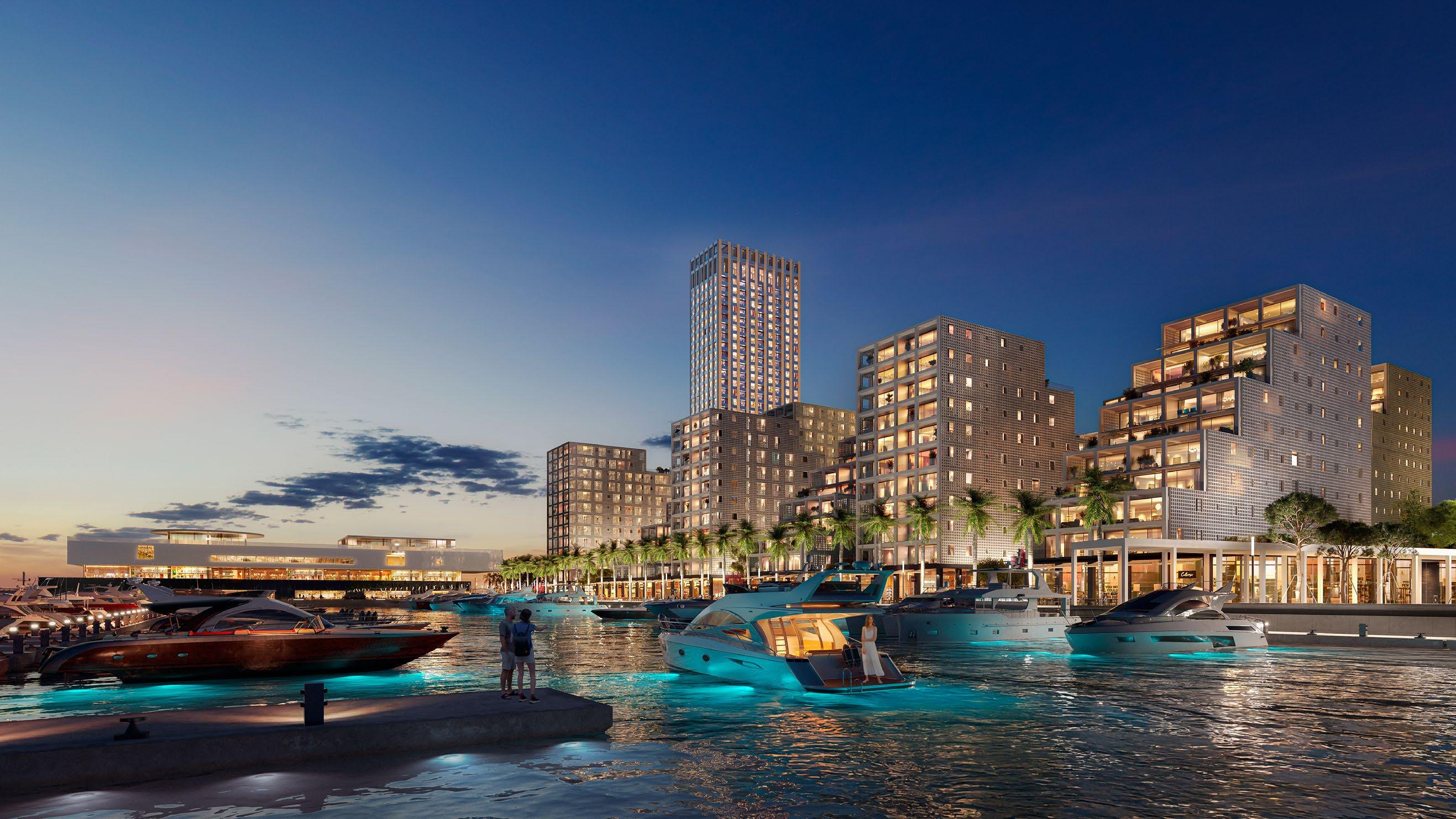
Inspired by the sea, guided by the winds
Vlora, Albania



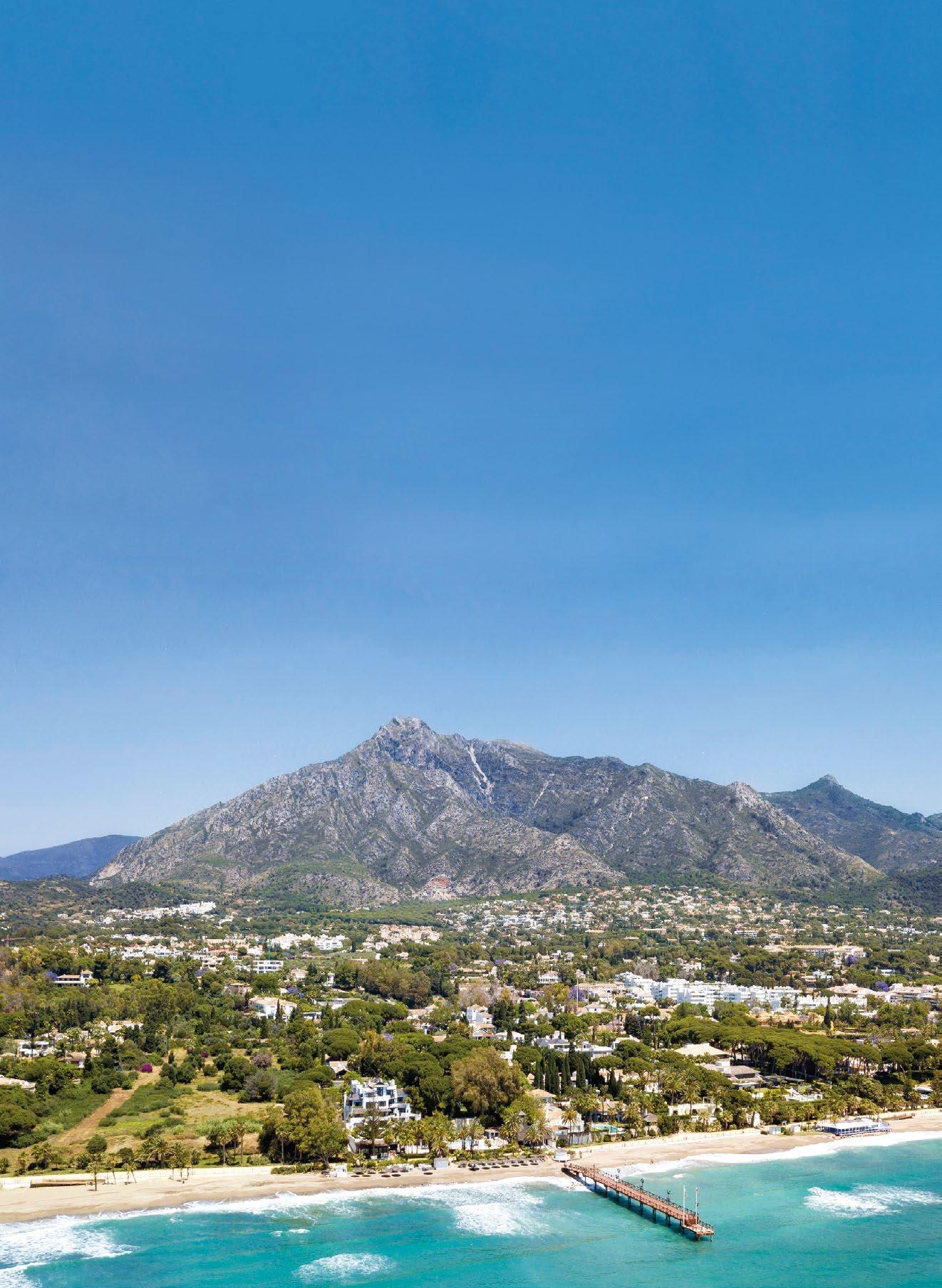
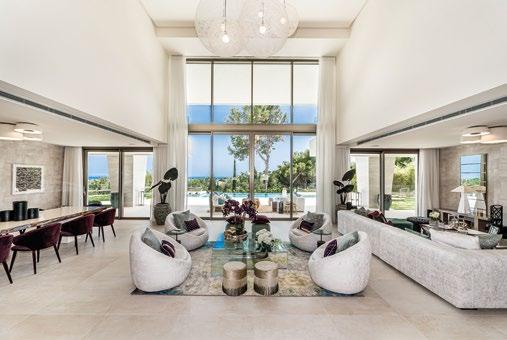
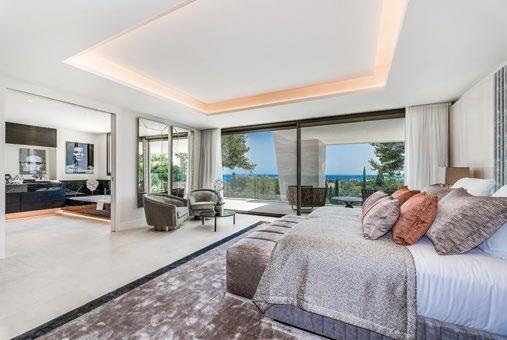
VERSACE, LAMBORGHINI, KARL LAGERFELD, DOLCE & GABBANA, BENTLEY
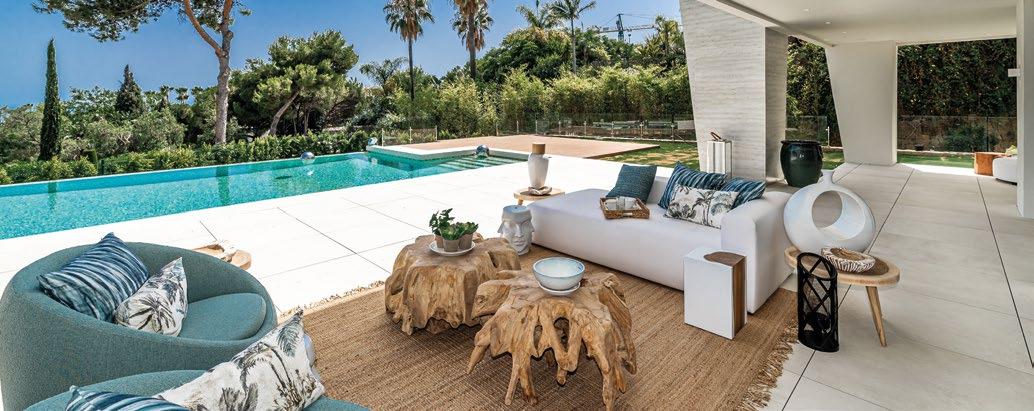
These are just a few of the world class brands who have chosen to make significant investments in branded real estate developments in Marbella, Spain: the luxury property capital of the Mediterranean.
Not surprising given that Marbella offers over 300 days of sunshine pa, golden beaches, a rich cultural heritage, world class golf courses and infrastructure, plus numerous five star hotels and Michelin starred restaurants.
They know a good thing when they see it.
Now you too can also own a piece of this iconic resort, and these iconic brands.
Branded Residences from €2 million - €30 million plus.




HEALTH IS THE NEW WEALTH
ZEM Wellness Clinic Altea shows how vitality, clarity, and balance have become today’s true markers of privilege.
OF MYTHS & MINUTES
From meteors to mythology, Jaeger-LeCoultre’s latest timepieces transform hours and minutes into tales of wonder.
IGNITE YOUR APPETITE
Five chefs, eleven stars, one cigar: introducing Davidoff’s Chefs Edition 2025.
18
24
28
34
38
COOL FACTOR
Inside Rainer Bolsinger’s vision for turning cryotherapy into the coolest ritual in high-end living with Art of Cryo’s cutting-edge products.
RARE BY NATURE
A look at how SHAMBALLA JEWELS honours diamonds for their individuality, celebrating the beauty of the unrepeatable.
SKYLINE TO SLOPES
Skip the long transfers and touch down closer to the mountains—GlobeAir delivers direct access to Europe’s most exclusive ski resorts.
A WORLD OF WELCOME
How Lauren Berger built a global portfolio of extraordinary homes where every guest is treated like family—and a tour of some of these spectacular properties.
THE ISLAND THAT ENDURES
From its house reef to its iconic Lighthouse Restaurant, Baros Maldives proves that simplicity, authenticity, and care never lose their appeal.
LUXURY LAYOVER
With gardens by Madison Cox, interiors by Jacques Grange, and a newly reborn Guerlain Spa, Cheval Blanc St-Barth has turned a stretch of Caribbean sand into a sanctuary.
44
46
48
54
58
62
67
70
CAPE TOWN’S PASTEL PARADISE
Steeped in history yet alive with wit and warmth, we discover why the Mount Nelson remains the city’s most beloved icon beneath Table Mountain.
ALL AGES, ALL SEASONS
Ski slopes, spas, kids’ clubs, and fine dining— we discover how Familux Resorts make every season a reason to celebrate family.
KWANDO CALM
Anchored on the Kwando River, Gondwana Collection Namibia’s hidden waterside retreat offers couples a front-row seat to Africa’s untamed beauty.
BETWEEN LAKE & PEAK
Whether overlooking Lac Léman or the sunlit slopes of Courchevel, Ultima Collection crafts private retreats where five-star hospitality and the comforts of home converge.
Embrace the circle of island life.
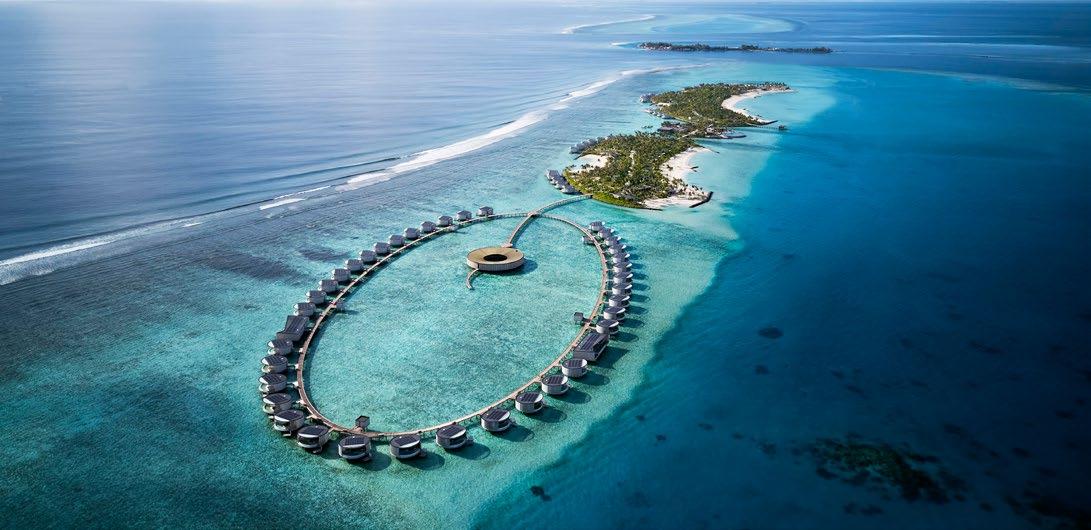
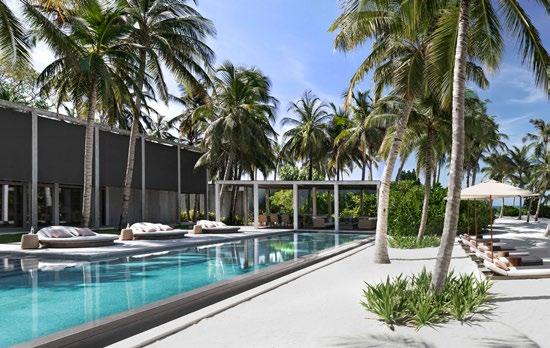
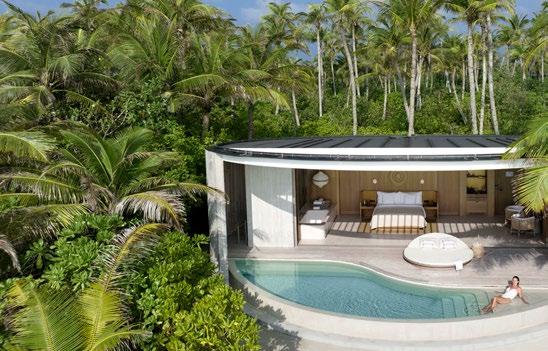
The Ritz-Carlton Maldives, Fari Islands takes a minimalist approach to luxury. Modern waterfront villas, a culinary journey through seven restaurants and bars, wellness guided by directional energy in a ring-shaped overwater sanctuary, and natural wonders explored with respect. ritzcarlton.com/maldives
JAMES GOODYEAR
Restaurant Gordon Ramsay High, London, United Kingdom
HIMANSHU SAINI
Trèsind Studio, Dubai, United Arab Emirates
WINE CRUSH
Domaine Clarence Dillon’s Château Quintus brings together three historic vineyards to craft a new Saint-Émilion star that bridges past and future.
106
BUILDING BEYOND BORDERS
Herzog & de Meuron Partner Simon Demeuse shares how global ideas and local roots converge in Austin’s landmark Sixth&Blanco project.
MOUNTAINS & THE MEDITERRANEAN
Alpine winters and Mediterranean summers—Maura Wasescha’s portfolio of exceptional properties invites clients to embrace the best of both.
74 82 90
NORBERT NIEDERKOFLER
Atelier Moessmer, Brunico, Italy
98
MARCEL TAUSCHEK
Mountain Hub Gourmet, Munich, Germany
112
118
125
128
PERSPECTIVES OF PLACE
In the Gulf, luxury living finds a new horizon— homes designed as vantage points over cityscapes, coastlines, and coral seas.
THE HEART OF THE HOME
Poliform’s Phoenix proves the kitchen is no longer just a space for cooking meals—it’s where design and daily life simmer together.
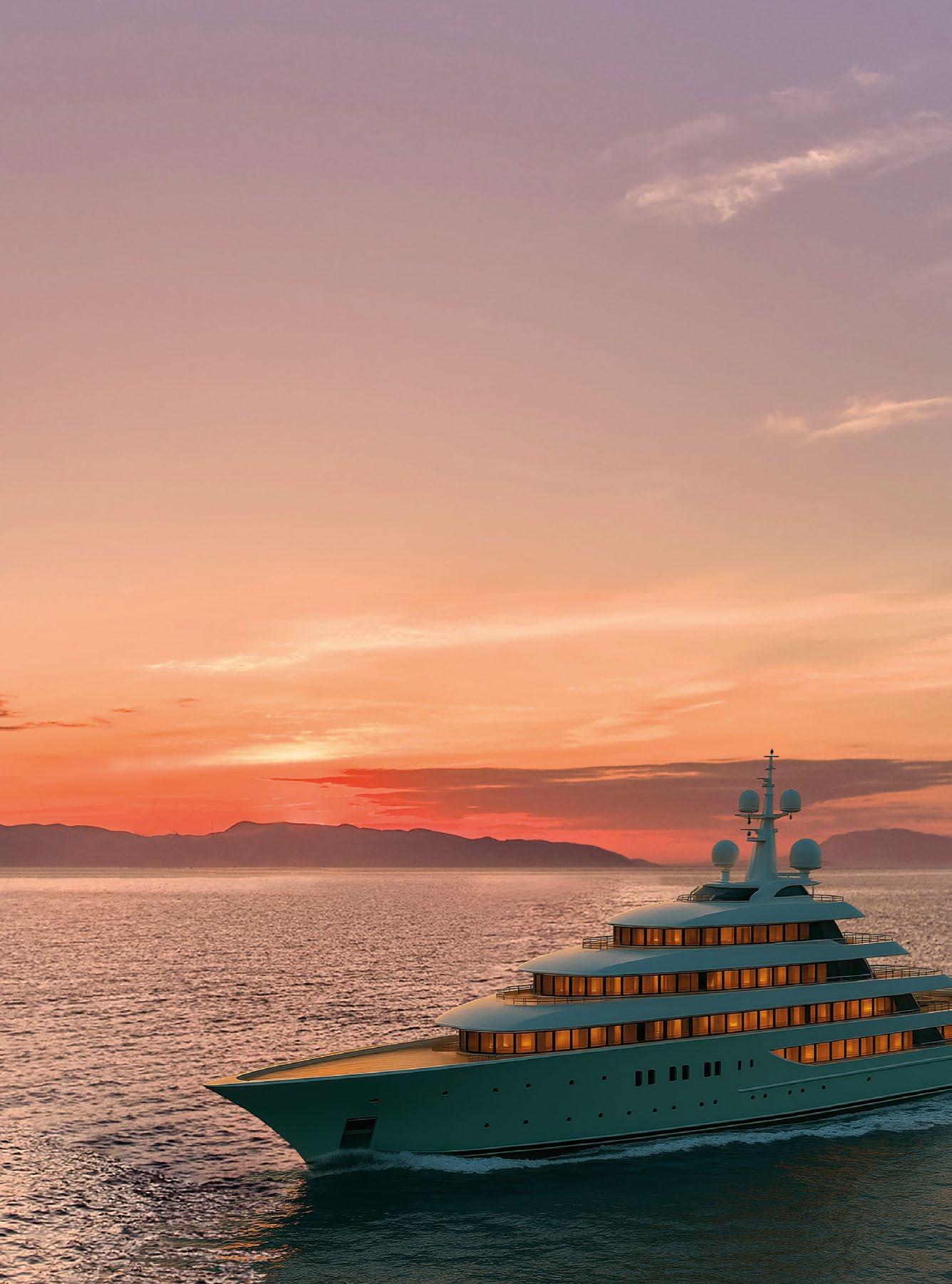
From sun-drenched getaways to crafting your own masterpiece at sea, we’re here to make your yachting dreams effortlessly real. Whether you‘re chartering, buying, selling, or building, our world-class team and trusted network guide you with style, care, and insider expertise.

One of the best parts of putting a magazine together is spotting unexpected connections between stories. A Swiss watchmaker and a South Tyrolean chef, a Maldivian resort and a Namibian river villa—on the surface, they couldn’t be more different.
Yet each of them is chasing the same thing: creating emotionally moving experiences that last long after the moment has passed.
Our lifestyle section captures this idea perfectly. Kicking off on page 18, ZEM Wellness Clinic Altea demonstrates how medicine can be both humancentred and high-tech, while Art of Cryo introduces a new frontier in wellness technology that brings together science, sensation, and serenity. JaegerLeCoultre reminds us that the measure of time is as much about skill and artistry as it is about mechanics, and with its latest Special Creations, SHAMBALLA JEWELS continues to weave meaning into beauty using Earth’s rarest and most remarkable diamonds.
In our travel section, starting on page 43, the theme widens as we take to the skies with GlobeAir, where private aviation is reframed as seamless simplicity, and land first in Cape Town, where the legendary Belmond Mount Nelson shows why it remains one of the world’s great hotels. From there, the journey spans continents: we explore the Lauren Berger Collection’s deeply personal approach to hospitality, experience the family-first philosophy of Familux Resorts, bask in the barefoot bliss of Baros Maldives, and revel in a riverside retreat with Gondwana Collection Namibia. There’s also a dose of Caribbean glamour in St-Barth with Cheval Blanc, and contemporary elegance across the Ultima Collection in Europe—destinations that all tell their own tales, yet share a common spirit of care and character.
Our chefs take us further still, reminding us that across disciplines, borders, and mediums, the best stories are united by intention. Beginning on page 73, we uncover how James Goodyear is pushing haute cuisine to new heights at the new Restaurant Gordon Ramsay High in London, and in Italy, Norbert Niederkofler tells us all about his “Cook the Mountain” philosophy and how he continues to shape the culinary language of the Dolomites at his threestar restaurant, Atelier Moessmer. We then hear how Himanshu Saini turns every plate at Trèsind Studio in Dubai into a story of modern India, before heading to Munich’s Michelin-starred Mountain Hub Gourmet, where Marcel Tauschek proves that even airport dining can be an epicurean affair. We finish with a toast to Domaine Clarence Dillon’s Château Quintus, whose legacy reminds us that wine, like life, is best savoured slowly.
Meanwhile, on page 111, our property and design section turns its focus to spaces that shape how we live. Herzog & de Meuron’s Simon Demeuse shares insights into architecture that respects both the past and the future, while Maura Wasescha reveals why mountain- and lakeside living remain the pinnacle of European luxury. We also spotlight new residential developments across the GCC that put the view front and centre, and discover how Poliform continues to raise the bar with kitchens that merge Italian craftsmanship with the needs of everyday life.
Across each page and every feature, creating this issue has been a reminder of why I love what we do: discovering people and places that make the world feel richer, more meaningful and, above all, more connected. I hope you enjoy exploring these pages as much as I enjoyed bringing them together. Happy reading, and see you next time…
Clarisse Beeby Chief Editor
Don’t forget to stay up-to-date with news, recipes, and features on our website at four-magazine.com or via Instagram at @four_magazine.
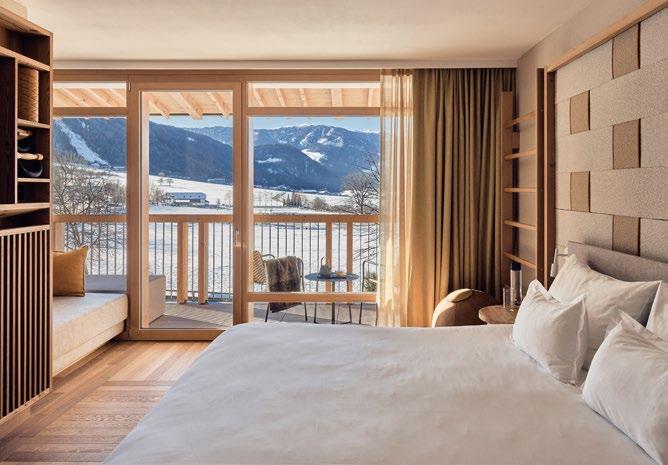
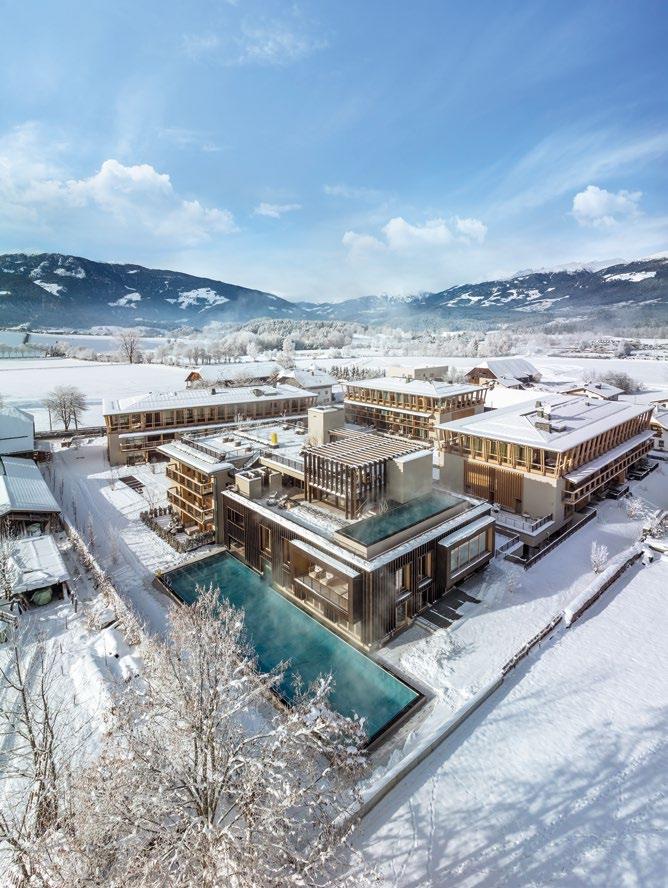
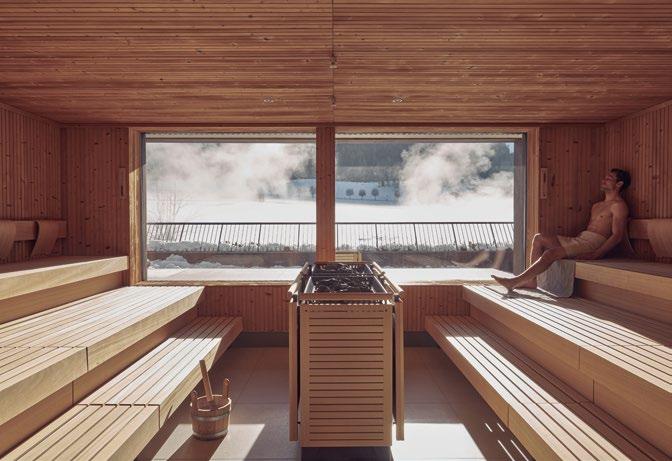
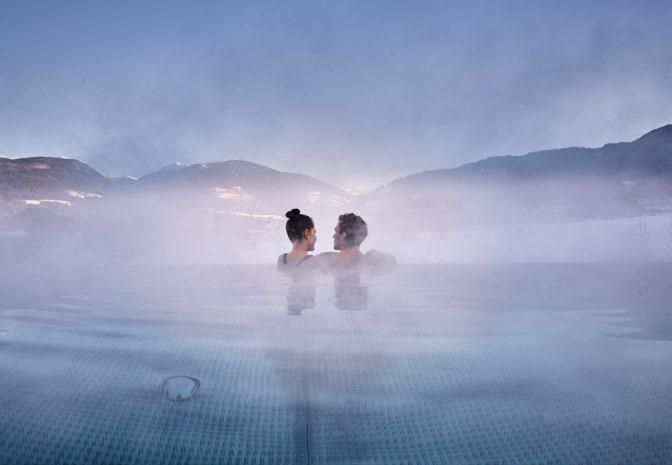
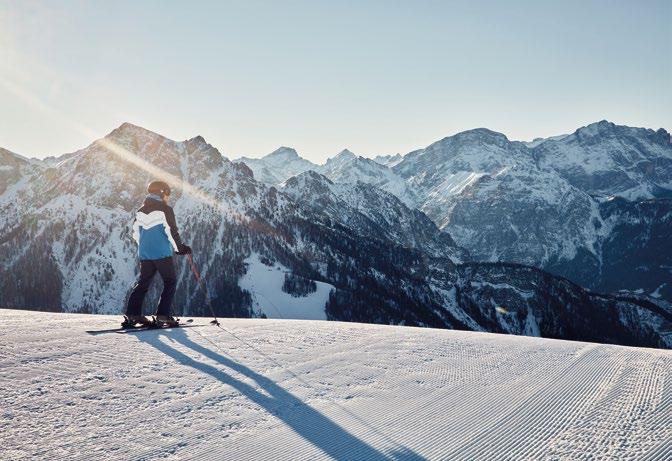
Experience the magic of winter at the Falkensteiner Hotel Kronplatz, a proud member of The Leading Hotels of the World.
Nestled at the foot of Kronplatz, the five-star mountain retreat invites you into a world of skiing, wellness, and alpine elegance. Spend your days gliding across 120 kilometers of perfectly groomed slopes and journey to the summit of Kronplatz, where breathtaking views of the Dolomites unfold before you. It is a panorama that captures the very soul of South Tyrol’s winter charm.
After an invigorating day on the mountain, immerse yourself in the soothing tranquility of the Acquapura Summit SPA, where warmth and serenity embrace you. Indulge in the refined flavors of 7Summits cuisine, relax by the fire, and let the pure alpine atmosphere restore harmony to body and soul.


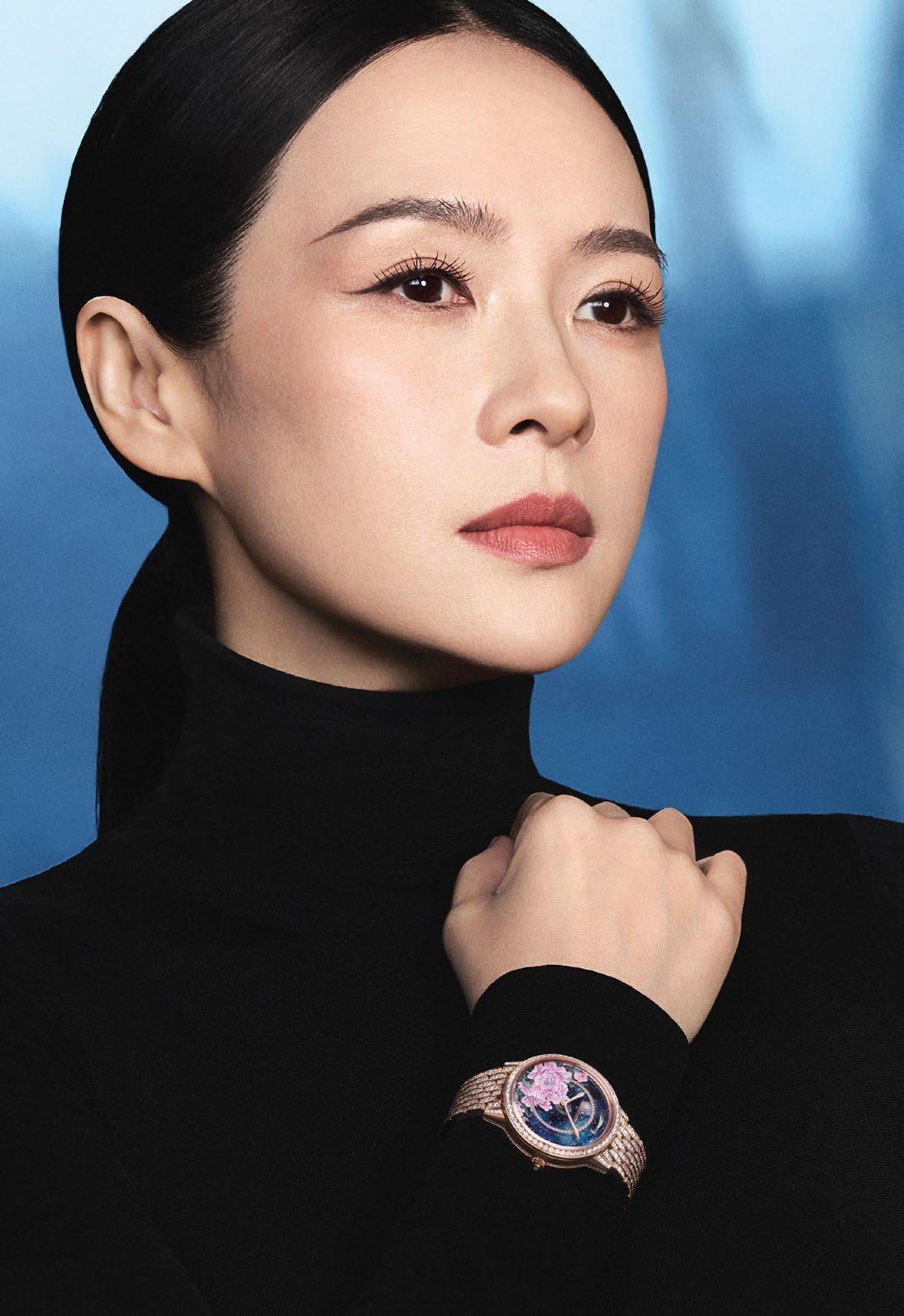

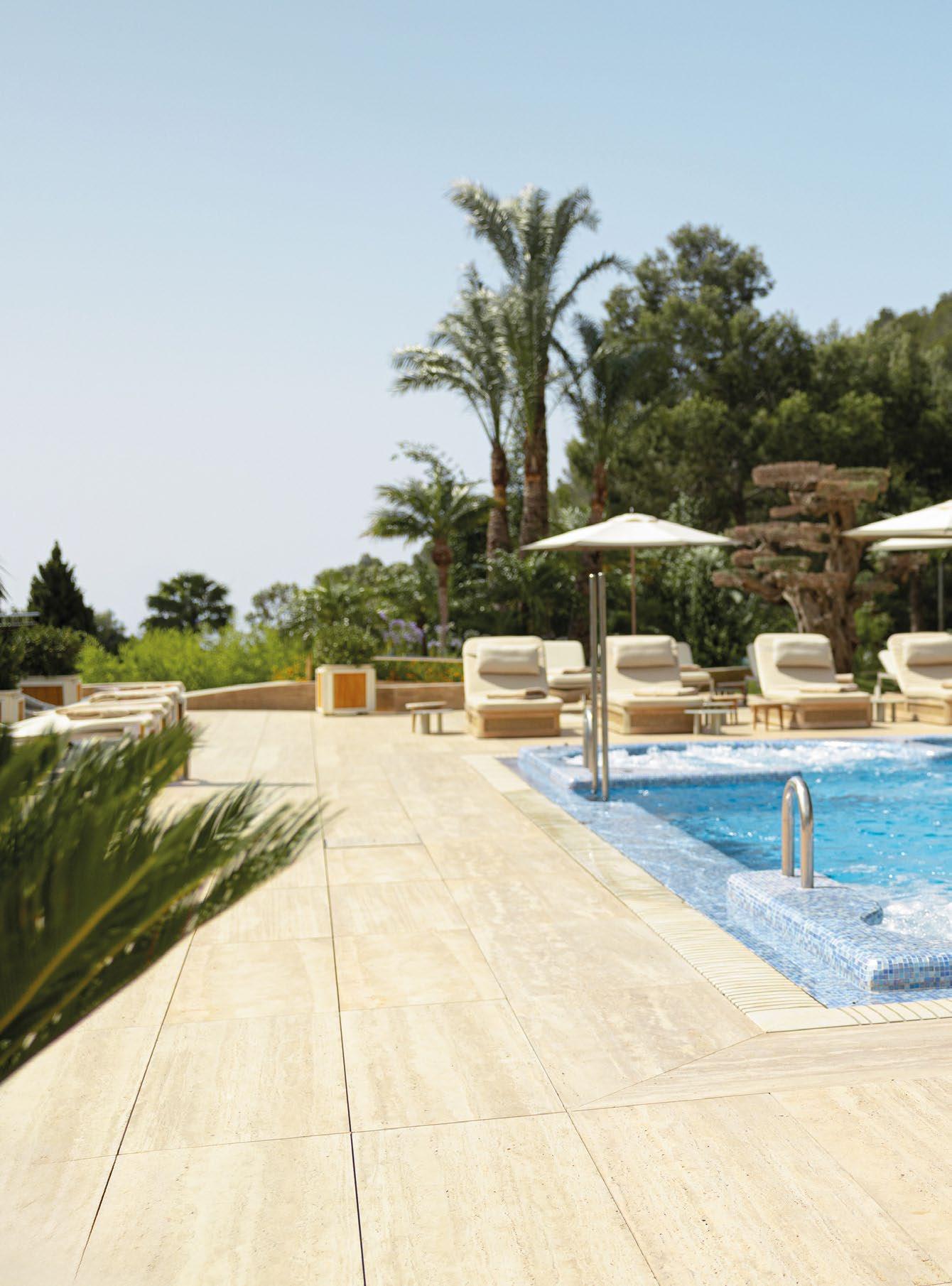
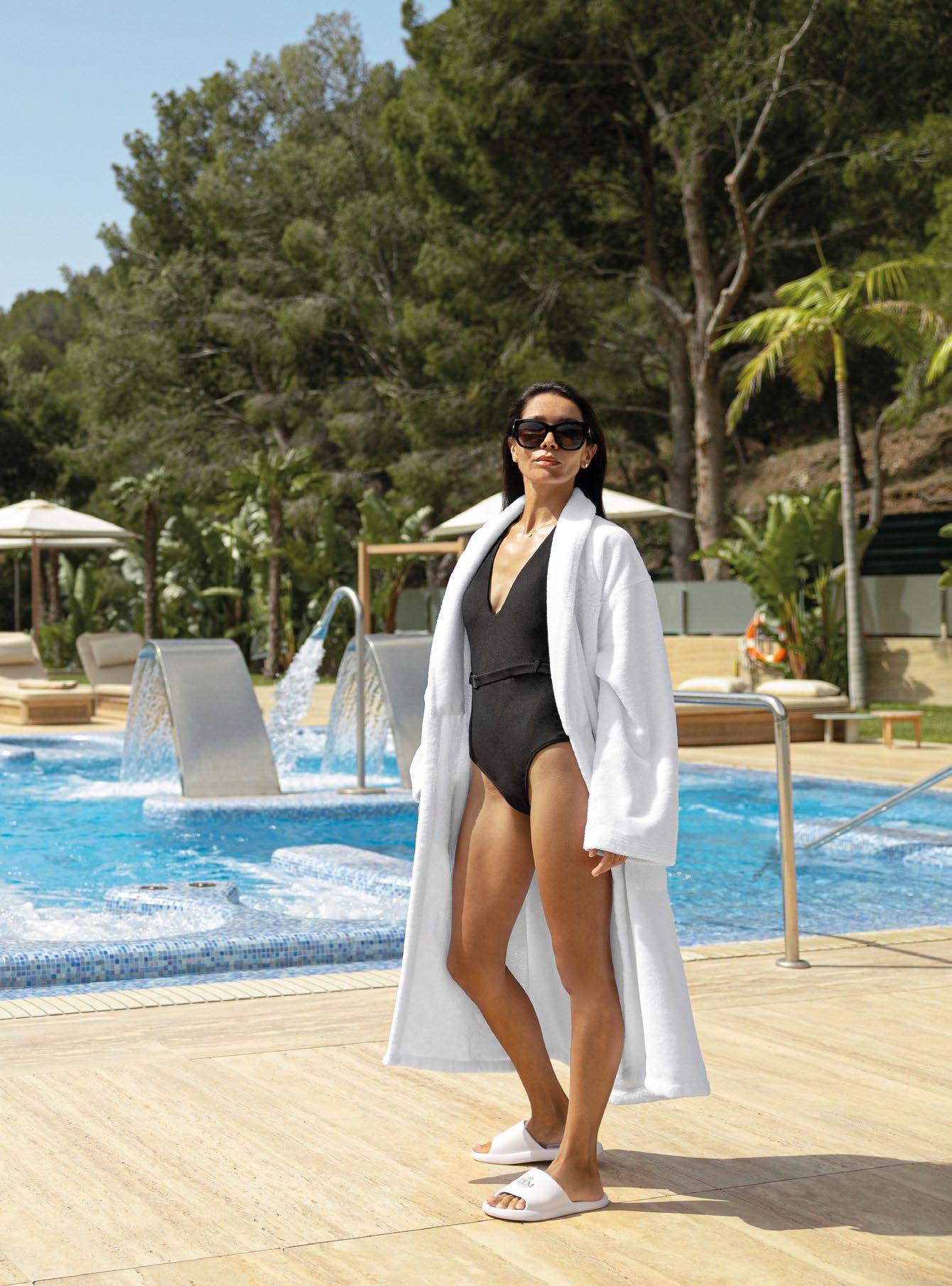
With its Mediterranean-inspired longevity programmes, ZEM Wellness Clinic Altea strives not only to add years to your life but life to your years.
There was a time when the ultimate markers of status were objects that could be worn or displayed. An exclusive handbag, a car with a pedigree, the quiet weight of a watch on the wrist. Today, the most sought-after symbols of privilege are measured less by wardrobes and more by how we feel, how we move, and how we age. The new currency of luxury is vitality, clarity, and balance. It’s the power to live fully and the privilege of adding quality years to life.
This is the promise of ZEM Wellness Clinic Altea, a new haven on Spain’s Mediterranean coast. Here, the discreet elegance of a Grand Luxury Hotel meets advanced medicine, personalised nutrition, restorative spa rituals, and state-of-the-art fitness. More than a destination, ZEM is a philosophy, a way of living rooted in the wisdom of Mediterranean culture and elevated by the science of longevity.
Here, wellbeing is believed not to be an accessory to life but its foundation. The world’s most discerning travellers no longer seek to own more; they seek to live more. They invest in energy, resilience, focus, and vitality. And they come to ZEM Wellness Clinic Altea because it does more than preserve years—it enhances them.
The Mediterranean has long been celebrated for its art of balance. It is a culture that knows how to celebrate food without excess, how to move the body without strain, and how to live at a rhythm that honours work and rest alike. Conversations are shared at the table, walks unfold by the sea, and seasonal ingredients are drawn from the earth with
PREVIOUS SPREAD ZEM
Wellness Clinic Altea draws on its Mediterranean setting to inform its wellness practices.
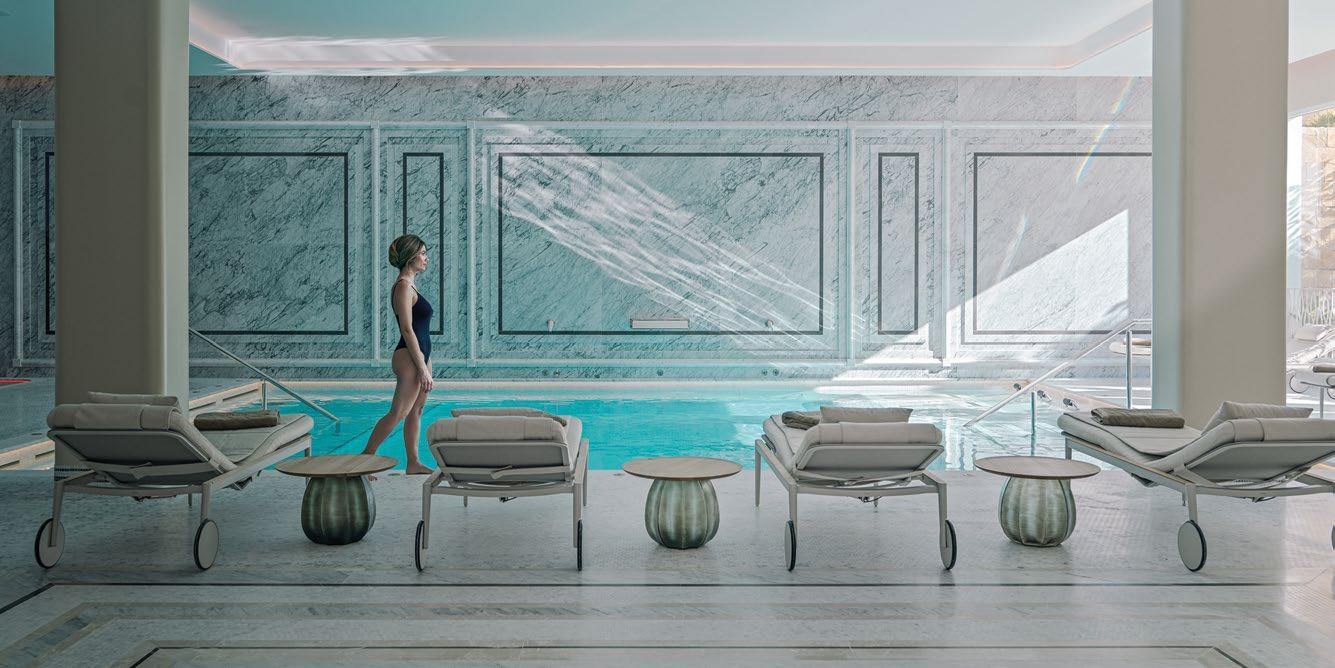
ABOVE Indoor pool at ZEM Wellness Clinic Altea.
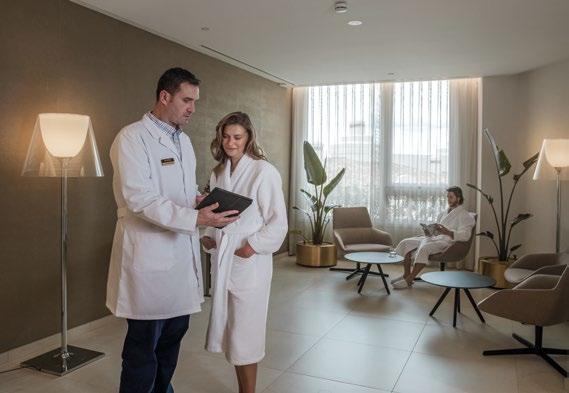
BELOW At ZEM Wellness Clinic Altea, advanced medicine is combined with personalised nutrition, restorative spa rituals, and state-of-the-art fitness to achieve optimum results.
respect and prepared with simplicity. The result is a way of life at once abundant and measured, refined yet rooted. Every detail of ZEM reflects this harmony.
Mediterranean Longevity is ZEM’s philosophy: the marriage of evidence-based medicine with the ease and joy of life by the sea. It translates ancient wisdom into a contemporary approach to longer, healthier living. A way of living that feels aspirational yet attainable, grounded in tradition yet open to innovation.
The setting matters. Altea, regarded as one of Spain’s most picturesque Mediterranean enclaves, offers a landscape that seems designed for vitality itself. The sea »
« here is a constant presence: shifting light, salt in the air, and a horizon shaped by the meeting of water and peaks. From their suites, guests witness this rhythm of nature and are invited to take part in it—to contemplate the view in stillness or to embrace movement, whether swimming in sheltered bays or walking the hills that rise behind the coast. This interplay between sea and mountain creates an atmosphere of renewal—a reminder that balance is not an abstract idea but something nature performs daily. Many guests remark that even before beginning a programme, they feel restored simply by living in this environment.
From the moment a person steps into ZEM, it becomes clear that luxury here is defined differently. Beyond the architecture and design—remarkable as they are—lies an experience shaped by people: in the attentiveness of a doctor who takes the time to listen, in a nutritionist who remembers your biomarkers as well as your preferences, in a therapist whose hands convey as much care as knowledge. It is the rare sensation of being truly seen, understood, and guided. The experience is elevated by its surroundings, but it is defined by its people. This human dimension transforms clinical precision into comfort and turns wellness into something deeply personal. Guests leave restored and touched by an authenticity that is increasingly scarce in a world where luxury is too often reduced to surfaces.
One of the clearest expressions of this approach is found at the table, where health and pleasure meet in perfect balance. Each menu is adapted to the individual but designed around Mediterranean principles, crafted by clinical experts and chefs who understand that flavour is essential to sustainability. Much of the produce comes from the nearby Finca Althaya, where the land itself provides the freshest ingredients, ensuring that every dish is seasonal and authentic.
ZEM’s medical clinic is advanced and precise, yet it speaks the language of humanity, offering guidance rather than restriction, conversation rather than prescription. In the spa, science meets sensorial experience: therapies that restore function also restore calm. In fitness, the goal goes beyond appearance; it is about the freedom to keep moving—to travel without hesitation, to live without limitation. Even silence is curated as a form of luxury: the
LEFT ZEM Wellness Clinic
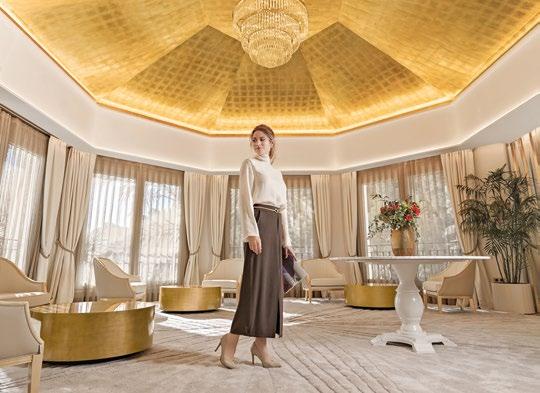
Altea’s design takes cues from the surrounding sunsoaked landscape.
Food is integral to the ZEM philosophy, with each menu adapted to the individual.
stillness of a yoga deck overlooking the sea, the quiet privacy of suites designed for restorative sleep.
At the heart of ZEM are seven specialised programmes, each one designed with precision to extend healthspan and enhance vitality. They are more than treatments—they are pathways to a longer, better life.
ZEM Essential offers a foundation—the beginning of balance, the entry point into a healthier rhythm. ZEM Detox is the recalibration, a gentle but profound cleansing that restores clarity to body and mind. For those seeking to reshape how they look as much as how they feel, ZEM Weight Management and ZEM Weight Management & Detox provide structured, medically supervised routes to equilibrium, whether through focused metabolic optimisation or through a more comprehensive renewal.
Within these walls, ageing is something to be refined, not resisted. ZEM Pro-Ageing takes a forward-looking approach, slowing the processes that diminish vitality while enhancing the qualities that allow us to age with strength and grace. Our immune systems, too often compromised by modern life, are reinforced through ZEM ImmuneRevitalisation—a pathway that strengthens resilience at the most fundamental level. Finally, vitality is not only internal; it deserves expression. ZEM Rejuvenating/Aesthetics integrates advanced medical aesthetics with wellness, ensuring that the vibrancy one feels within is reflected in the way one is seen by the outside world.
Together, these programmes embody the ZEM philosophy. They are guided by physicians and wellness experts yet infused with the Mediterranean spirit of joy and pleasure. Longevity is not only measured in data points and biomarkers; it is lived in the ability to savour a meal, to move with freedom, and to rest without anxiety. It is found in the curiosity that keeps us discovering the world with delight, and in a healthy way of life that is both enjoyable and enduring. Luxury, in its most evolved form, is time. Not just time added but time deepened.
To discover more, visit zemaltea.com
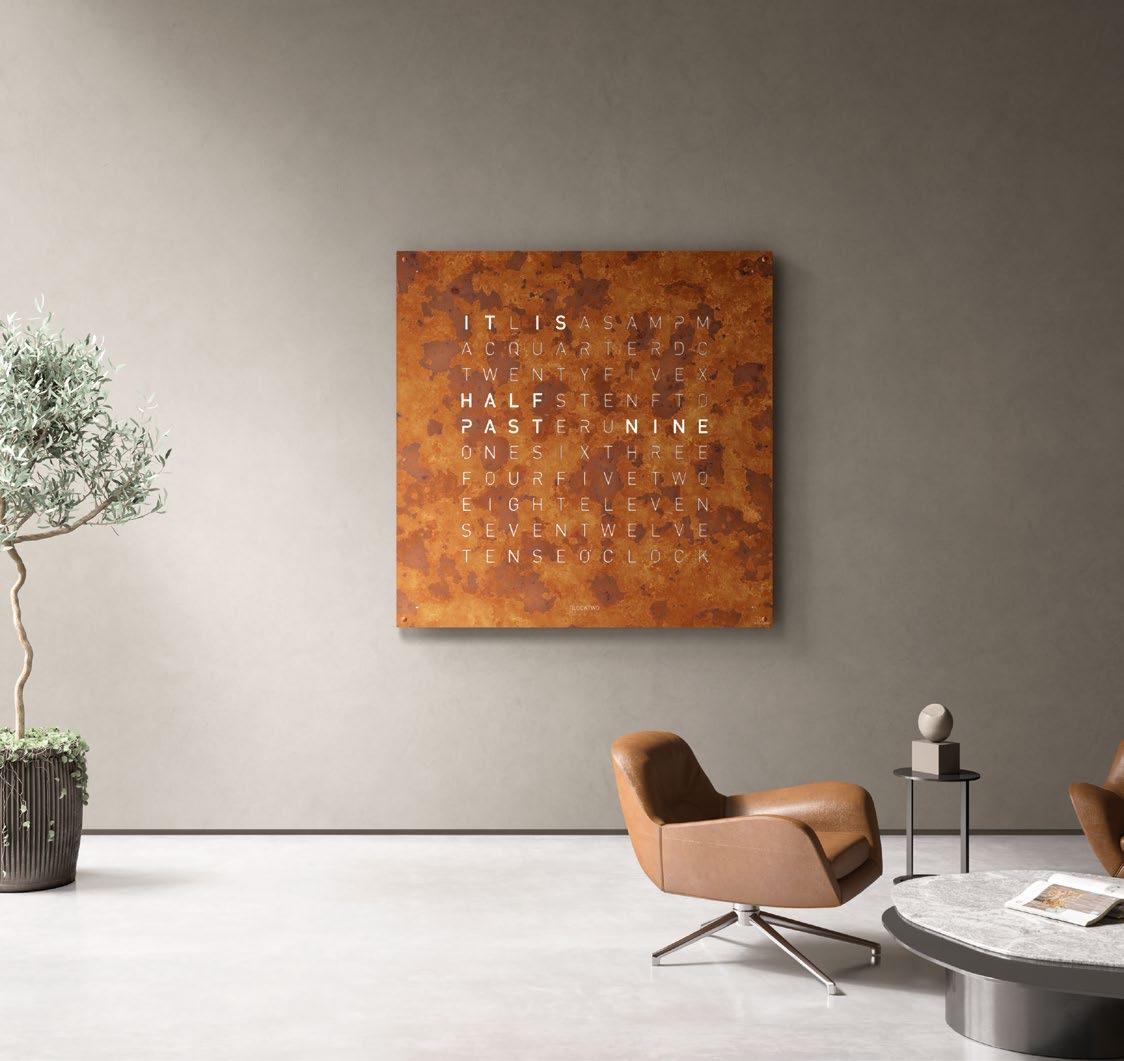
We envision a world where time is perceived as a precious resource. Therefore, we create objects that allow people to experience time more consciously. With our two iconic timepieces QLOCKTWO EARTH and MOON we bring the most personal time displays to your home.
www.qlocktwo.com

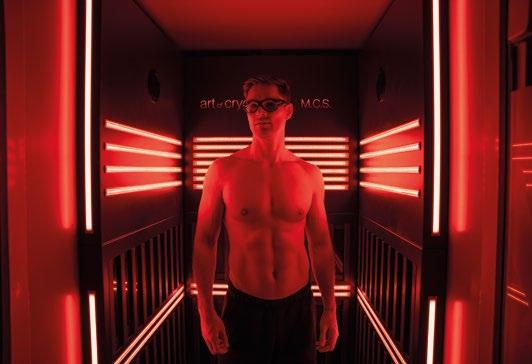
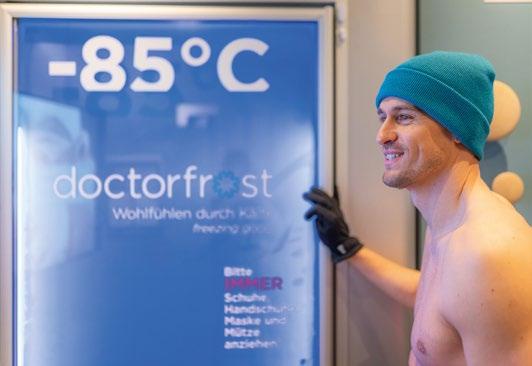
In conversation with Rainer Bolsinger, the man driving Art of Cryo’s global expansion, we explore how ultra-low temperatures, elegant design, and scientific precision are shaping the next frontier of wellbeing.
Cryotherapy may be having its moment in the wellness spotlight, but Rainer Bolsinger is determined to take it beyond hype. As the CSO and CMO of Art of Cryo and Chair of the Cryotherapy Initiative at the Global Wellness Institute, he is shaping a new era where design, science, and longevity converge, and where a three-minute plunge into extreme cold becomes as routine as a morning espresso.
With Rainer at the helm, Art of Cryo has transformed cryotherapy from a niche practice into a design-led lifestyle experience. From private villas in Madeira to exclusive mountain resorts and premium yachts, its striking and scientifically precise Vaultz M.C.S. smart saunas, and Flow
CLOCKWISE FROM TOP
LEFT Far-infrared and red-light therapy in Art of Cryo’s M.C.S. multi-level wellbeing chamber; single Vaultz V1 lux highperformance fully electric whole-body cryotherapy chamber; the largest cryochamber in the world, the unical Vaultz V12 by Art of Cryo.

Systems are changing the way wellness integrates with architecture, travel, and daily life—ensuring wellbeing is no longer an afterthought but a defining marker of luxury.
MANY LUXURY EXPERIENCES FOCUS ON INDULGENCE, YOU FOCUS ON REGENERATION. DO YOU SEE THESE CONCEPTS MERGING IN THE FUTURE OF LUXURY TRAVEL AND LIVING?
Why choose one when you can have both? We never separate joy from regeneration—the vision we share, the products we create, all unite the two. The future is already here, and it belongs to those who embrace prevention, who invest proactively in long-term vitality, energy, and resilience rather than waiting for problems to appear.
CRYOTHERAPY HAS BECOME QUITE THE BUZZWORD, BUT YOUR APPROACH IS NOTICEABLY DIFFERENT. WHAT IS THE PHILOSOPHY BEHIND ART OF CRYO?
Cryotherapy is indeed enjoying a moment of heightened attention—and rightly so. When done properly, it is an extraordinary treatment. We sometimes call it “legal doping” for the way it boosts performance and recovery. Yet, our decades of experience also make us smile at certain market trends—for instance, you cannot simply plug a cryo chamber into a household socket and expect true performance, nor can you deliver authentic cryotherapy without real, stable, and evenly distributed ultra-low temperatures. Without this, it’s not a cryo chamber—it’s an expensive refrigerator.
At Art of Cryo, we do things differently. We never compromise on the user experience or on results. We invest
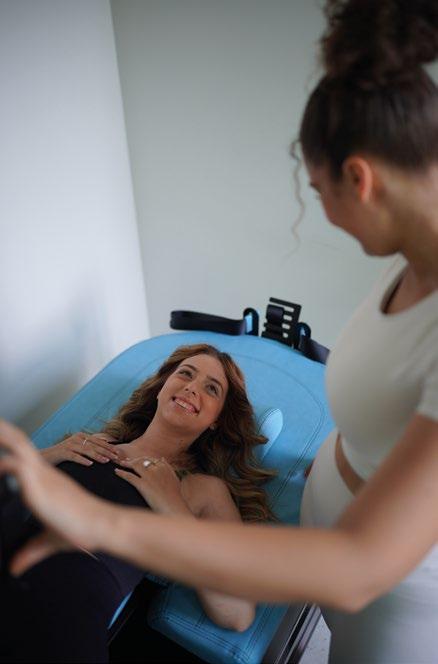
in precision engineering, innovative design, and premium materials. Every Vaultz cryo chamber, every M.C.S. smart sauna, every Flow System is fully crafted and programmed by us. These are not just machines—they are market-leading, eye-catching pieces of design that make people feel and look youthful, vibrant, and alive. Bringing joy into daily life is our ultimate goal.
THE VAULTZ CRYO CHAMBERS ARE AS VISUALLY STRIKING AS THEY ARE TECHNICALLY ADVANCED. HOW DO YOU BALANCE LUXURY DESIGN WITH SCIENTIFIC PRECISION?
Our Vaultz chambers are as bold as they are beautiful. At first glance, you see a sculptural art object—expansive triple-glass windows for comfort, seamlessly integrated doors, continuous exterior panels in warm silver, and a Capristo-designed control panel in carbon or black chromeplated stainless steel. Inside, you’ll find details that seem simple but require advanced engineering: a countdown timer and light-guided breathing system that operate flawlessly at a true –110°C, far beyond the –50°C limits of standard components.
Precision is at the heart of every Vaultz: perfectly stable, evenly distributed ultra-low temperatures. And yet, we elevate the experience to pure luxury—choose a soft hemlock wood interior for warmth, or go for a full stainless steel Capristo interior for an intense, exhilarating atmosphere. Vaultz are spacious, whether for one guest or 12, allowing free movement—stretch, dance slowly, do yoga—all while receiving the most effective cryotherapy available.
CRYOTHERAPY IS OFTEN ASSOCIATED WITH ATHLETES. HOW DOES ART OF CRYO EXPAND THE CONVERSATION INTO BEAUTY, LONGEVITY, AND ELITE LIFESTYLE?
In a world of relentless noise, rushing schedules, and glowing screens, the ultimate luxury is not speed—it’s stillness. Few experiences offer a reset as profound as whole-body cryotherapy. In just three minutes, the mind quiets, the breath deepens, and the body awakens.
The cold is not just a shock—it’s a dialogue with your own resilience. As the body adapts, endorphins surge, leaving you calm, focused, and subtly euphoric. Skin emerges fresh and luminous; circulation improves, eyes brighten. Beneath the surface, repair processes linked to longevity activate, from collagen synthesis to metabolic balance.
For some, cryotherapy is a beauty ritual; for others, a longevity investment. In the age of rush, the cool cold becomes an anchor—a place to return to yourself, radiant and renewed, ready for whatever comes next.
COULD YOU TELL US MORE ABOUT THE TOTAL SYSTEMIC METHOD (TSM) AND HOW IT REVOLUTIONISES CRYO AS A HOLISTIC EXPERIENCE?
TSM is a longevity roller coaster—what begins as stimulation evolves into sensation. At its heart are the Vaultz, complemented by the M.C.S. smart sauna and the Flow System. One to awaken, one to reset, one to restore.
TSM—our Tec-Spa Module—integrates up to 16 treatment variations into just 21 minutes, making it effortless to include in a wellness routine. It’s a complete, holistic approach to balance, performance, and vitality.
YOU OFFER TECHNOLOGIES FAR BEYOND JUST “COLD”. FROM INFRARED AND IONISED AIR TO YOUR FLOW SYSTEM. HOW DO YOU CURATE THESE ELEMENTS INTO A SYMPHONY OF PERFORMANCE AND WELLBEING?
It began with care, support, and long-term relationships with our clients—and evolved into the creation of experiences far beyond cold. Hot and cold have complemented each other for centuries—think of a frigidarium that the Romans used after warm baths. We take that contrast to the highest level, from 60°C to -110°C, unlocking exceptional benefits. »
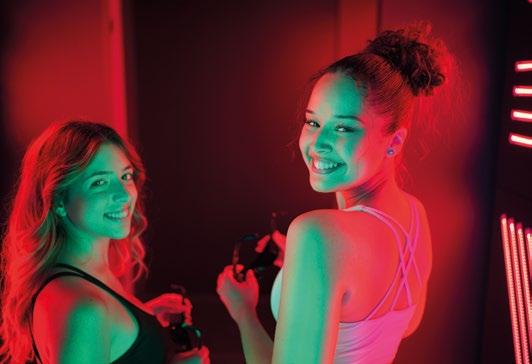
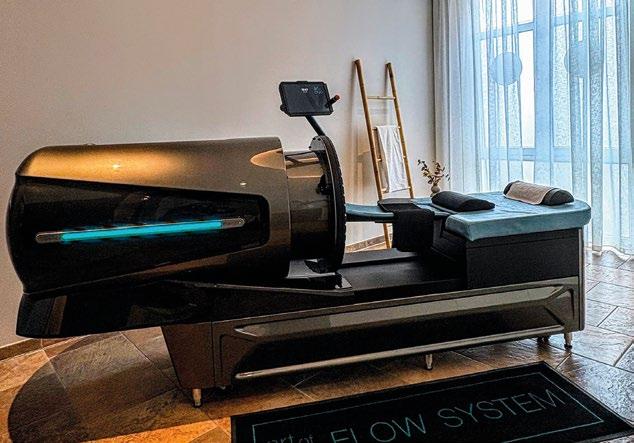
« Our Flow System, with its Alternating Deep Flow Technology, is the most powerful internal recovery system available. By rhythmically pulling and releasing circulation, it acts like a deep internal massage, leaving you with a sense of lightness that lingers.
The beauty lies in the lifestyle: our treatments are dry, require no preparation or post-session rest, and fit seamlessly into daily life. The more frequently you do them, the greater the rewards—balance of body and mind, improved mood, enhanced vitality, health prevention, and optimised energy.
YOUR CRYO CHAMBERS HAVE BEEN INSTALLED IN EXCLUSIVE HOTELS, PRIVATE YACHTS, AND EVEN MOUNTAIN RESORTS. WHAT’S THE MOST EXTRAORDINARY SETTING YOU’VE SEEN A VAULTZ CHAMBER IN?
The most thrilling projects are in a private luxury property environment about which you do not talk. There are many prestigious, unique destinations where you can find Art of Cryo, each of which has its own character and charm.
On the island of Madeira, you find the most avant-garde set-up: a unique Vaultz V12, the first walk-through cryo in the world and the most spacious, alongside the one-ofa-kind M.C.S. Experience Tunnel with 12 stations and two Flow Systems and other nice complementary treatments at the Coolzoone within the Longevity Square. You have to try it; it’s unbelievable!
IF YOU COULD INSTALL A VAULTZ CHAMBER ANYWHERE IN THE WORLD—SYMBOLIC, LEGENDARY, OR REAL—WHERE WOULD IT BE, AND WHY?
I am inspired by how a non-invasive, medication-free, effortless, and very brief treatment—whether it is Vaultz cryotherapy, the deep multi-sensory experience of M.C.S., or the revitalising Flow System—can truly upgrade human beings. When I witness those sparkling eyes, the renewed vitality, and how these technologies inspire a healthier lifestyle, I wish I could “install” that feeling everywhere. Energy is contagious—and we make people radiate joy.
WHAT IS YOUR VISION FOR THE FUTURE OF PERSONAL WELLNESS TECHNOLOGY? ARE WE HEADING TOWARD CRYOTHERAPY AS A DAILY RITUAL, LIKE BRUSHING TEETH OR DRINKING COFFEE?
Absolutely! Wellness technology is moving from the occasional indulgence to the daily habit. Cryotherapy, in particular, is simple, quick, and profoundly effective— it’s a perfect fit for a busy, high-performance lifestyle. We envision a future where stepping into a cryo chamber is as routine as a morning coffee: a small, energising act that sets the tone for the day.
With innovations like our Total Systemic Method, the barrier to entry becomes even lower—luxury wellness will not just be about retreat destinations but frequent rituals that keep you strong, clear, and energised, wherever you are.
FINALLY, WHAT DOES LUXURY MEAN TO YOU— IN A SINGLE WORD?
Freedom. The freedom to choose how you spend your time, where you focus your energy, and how you care for your body and mind. True luxury is not about excess; it’s about the ability to live in alignment with what makes you feel most alive—real joy.


At the intersection of astronomy, art, and mechanical ingenuity, Jaeger-LeCoultre unveils new timepieces that embody both rarity and refinement, affirming its place at the zenith of haute horlogerie.
For almost two centuries, Jaeger-LeCoultre has held a place apart in the world of fine watchmaking. Nestled in Switzerland’s Vallée de Joux, the Maison is often called the Watchmaker of Watchmakers™—a title earned not through marketing bravado but through an unbroken lineage of invention, artistry, and mechanical mastery. More than 1,400 calibres and 430 patents later, the brand remains as restless and visionary as it was in 1833, fusing tradition with innovation under one roof.
In 2025, that spirit has once again found form in a series of extraordinary timepieces: the Rendez-Vous Shooting Star, the Reverso Tribute Enamel Horse, and the Reverso Tribute Enamel Xu Beihong. Together, they capture the Maison’s exceptional ability to move fluidly between celestial phenomena, cultural narratives, and artistic collaborations—each watch a testament to horology elevated to the level of poetry.
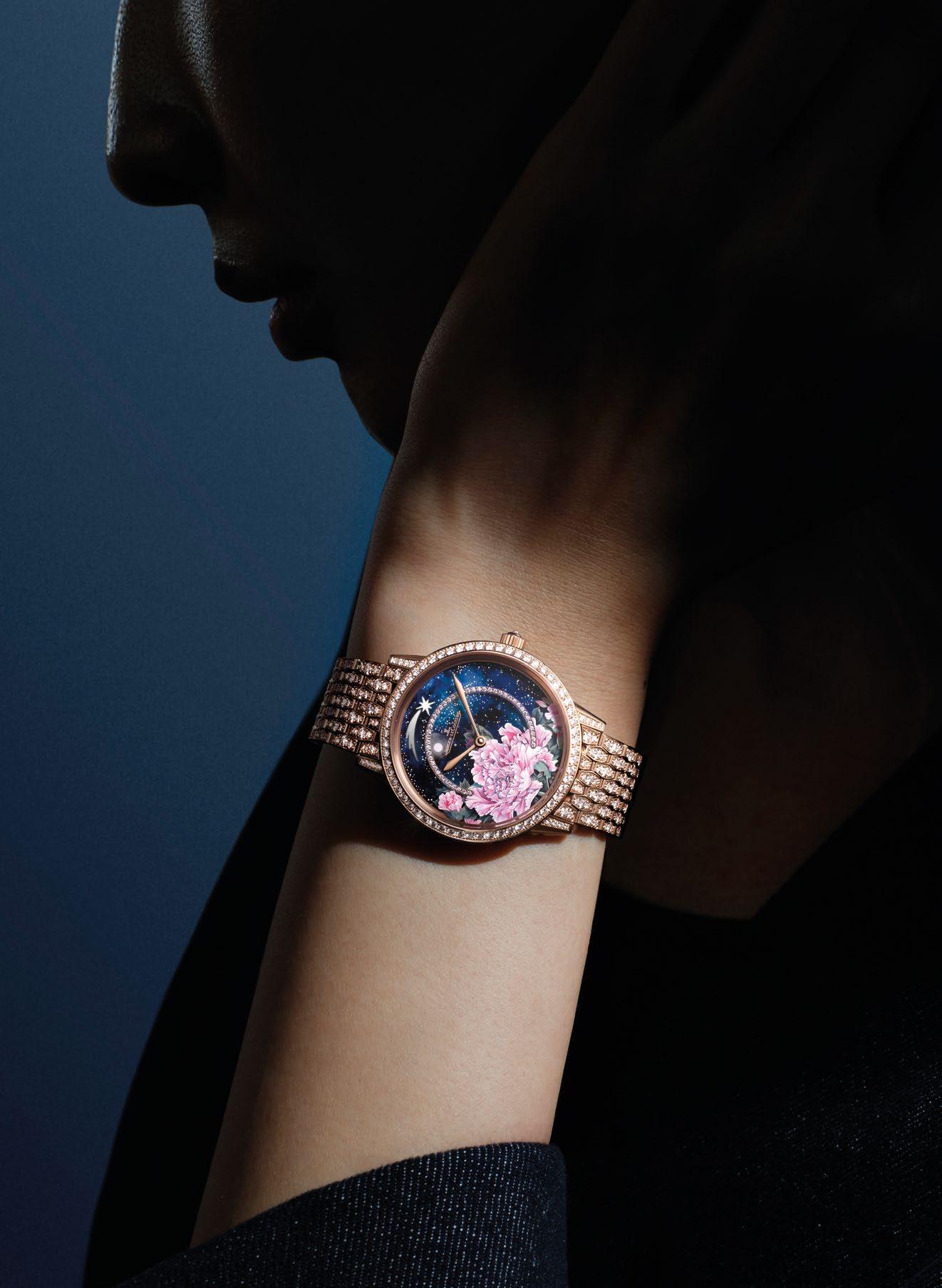
When Jaeger-LeCoultre first unveiled the Rendez-Vous Shooting Star in 2022, it startled collectors with its daring premise: a complication designed not around predictable celestial mechanics but the fleeting, random magic of a shooting star. Three years on, the Maison revisits this creation with two new interpretations, each as radiant as the heavens they depict.
At its heart lies the in-house Calibre 734, a movement of 335 components engineered to capture the essence of the ephemeral. Activated by the motion of the wrist, the
shooting star darts across the dial at unexpected moments— an ingenious feat in a discipline defined by precision and predictability. To make randomness mechanical is, in a way, to bend the very logic of watchmaking.
But at Jaeger-LeCoultre, mechanics are inseparable from artistic sensibility. For this edition, the upper sapphire disc has been transformed into a canvas of hand-painted peonies, each blossom realised with an almost uncanny naturalness. On the pink variation, nine shades of lacquer are deployed to shape the petals, requiring 110 hours of unbroken labour; on the blue version, twelve shades, 80 hours, and the same unerring meticulousness. Every line is drawn freehand and every surface painted without margin for error. The effect is profound: the flowers both conceal and reveal the meteor’s passage, nature’s abundance meeting the cosmos in perfect harmony.
Below the sapphire dial, a rotating mother-of-pearl disc, airbrushed into a star-strewn night sky, releases the flash of light across a silvery gradient plane, creating the illusion of a meteor’s incandescent trail. Diamonds arc across the dial, tracing the star’s path, while the bezel and lugs shimmer with further stones. On the pink-gold bracelet version, more than six carats of diamonds envelop the watch entirely; on the blue model, the visual and textural richness of a deep alligator strap underscores the dial’s novelty.
The Rendez-Vous Shooting Star is at once a complication, a jewel, and a metaphor. It speaks of rarity, of chance encounters, and of beauty that cannot be programmed. In capturing the elusive, Jaeger-LeCoultre has created a mechanical wonder imbued with romance. »
If the Rendez-Vous Shooting Star looks to the heavens, the Reverso Tribute Enamel Horse turns towards cultural heritage, marking the upcoming Year of the Horse in 2026. Since its invention in 1931, the Reverso has embodied duality at its core: a blend of functionality and creativity, utility and decoration. Conceived for polo players needing to shield their dials mid-match, its swivelling case soon became the perfect backdrop for enamel, engraving, and personal expression.
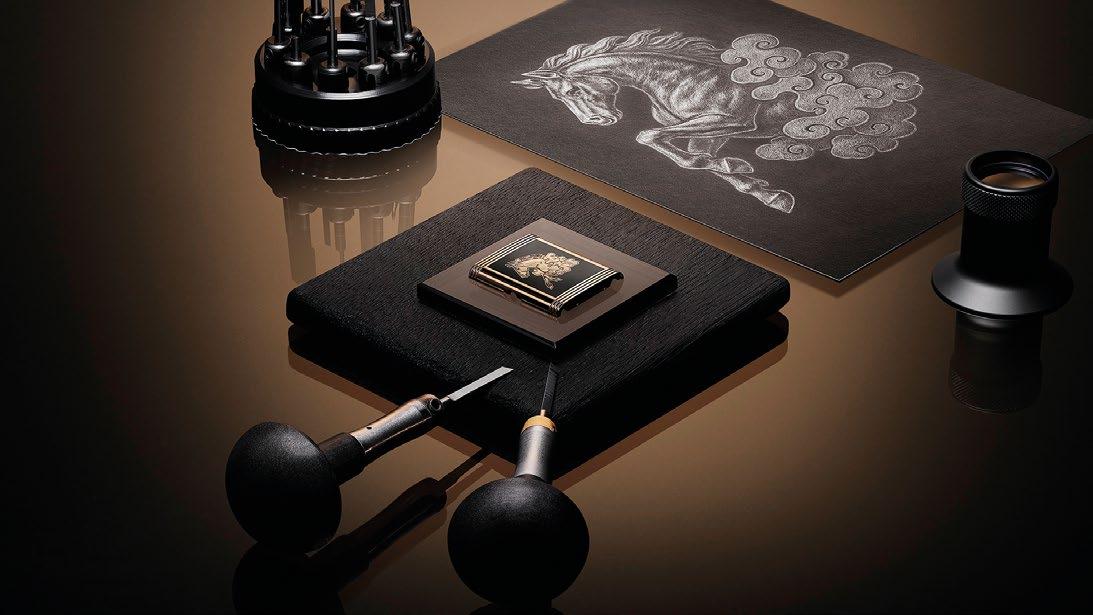
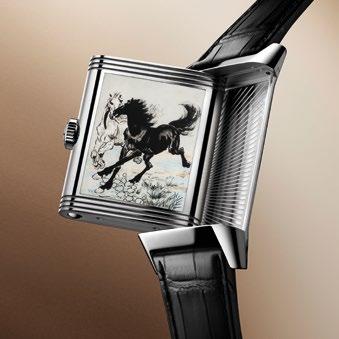
The Tribute Enamel Horse continues this tradition with a commanding presence. On its reverse side, an engraved horse emerges from golden clouds, its polished surfaces and rhodium-black details rendered with startling realism.
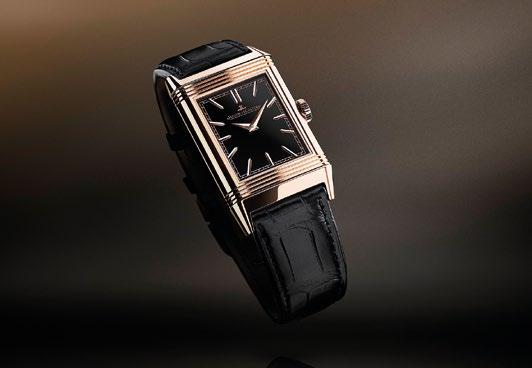
ABOVE A feat of horological skill, the Reverso Tribute Enamel Horse celebrates the upcoming Year of the Horse in 2026.
BELOW The Reverso Tribute Enamel Horse features a striking black Grand Feu enamel face.
The technique is modelled engraving, a demanding skill requiring 80 hours of labour and near-perfect control, made even more challenging by the fact that the canvas is not bare metal but an already-enamelled surface. 10 chisels, countless gestures, and absolute concentration: the result is an equine figure that seems to leap into motion.
Framing this engraving is a field of black opaque Grand Feu enamel, a deep, lustrous surface that mirrors the dial itself. What appears deceptively simple is, in truth, one of the most unforgiving enamelling feats: multiple layers fired and cooled over successive days, each firing a test of precision. Achieving a black so pure and uniform, then matching it flawlessly between dial and caseback, speaks to a mastery few ateliers still possess.
Turn the watch back over, and the face is quintessential Reverso: the chemin de fer minutes track, faceted hour markers, Dauphine hands—all signatures of the Tribute series. Within beats the manually wound Calibre 822 provides hours and minutes with 42 hours of reserve. Only 10 examples will be made, each one a talisman of virtuosity, horology, and cultural resonance.
While the Tribute Enamel Horse celebrates mythology and symbolism, the Reverso Tribute Enamel Xu Beihong pays homage to one of the great figures of modern Chinese art. Xu Beihong (1895–1953), often hailed as the father of contemporary Chinese painting, was famed for his dynamic ink renderings of horses—animals that embodied strength, vitality, and perseverance. His works, often monumental in scale, conveyed motion and spirit with just a few bold strokes. »


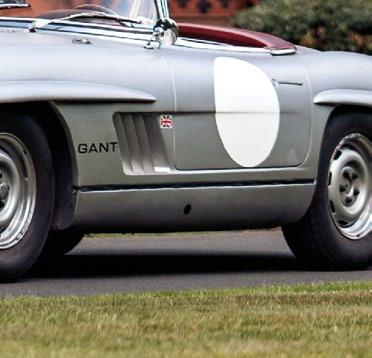
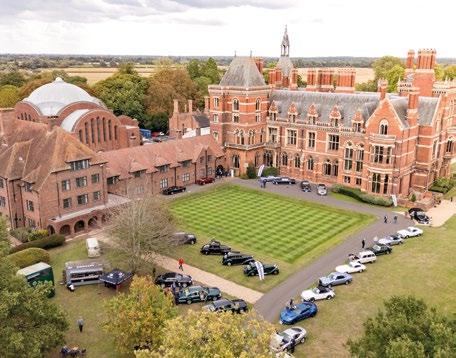
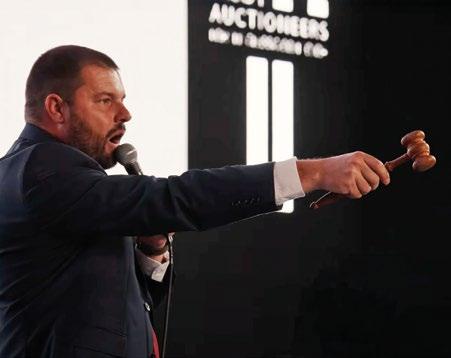
One of just two UK auction houses to sell a car for more than $10m and a motorcycle for more than $500k.
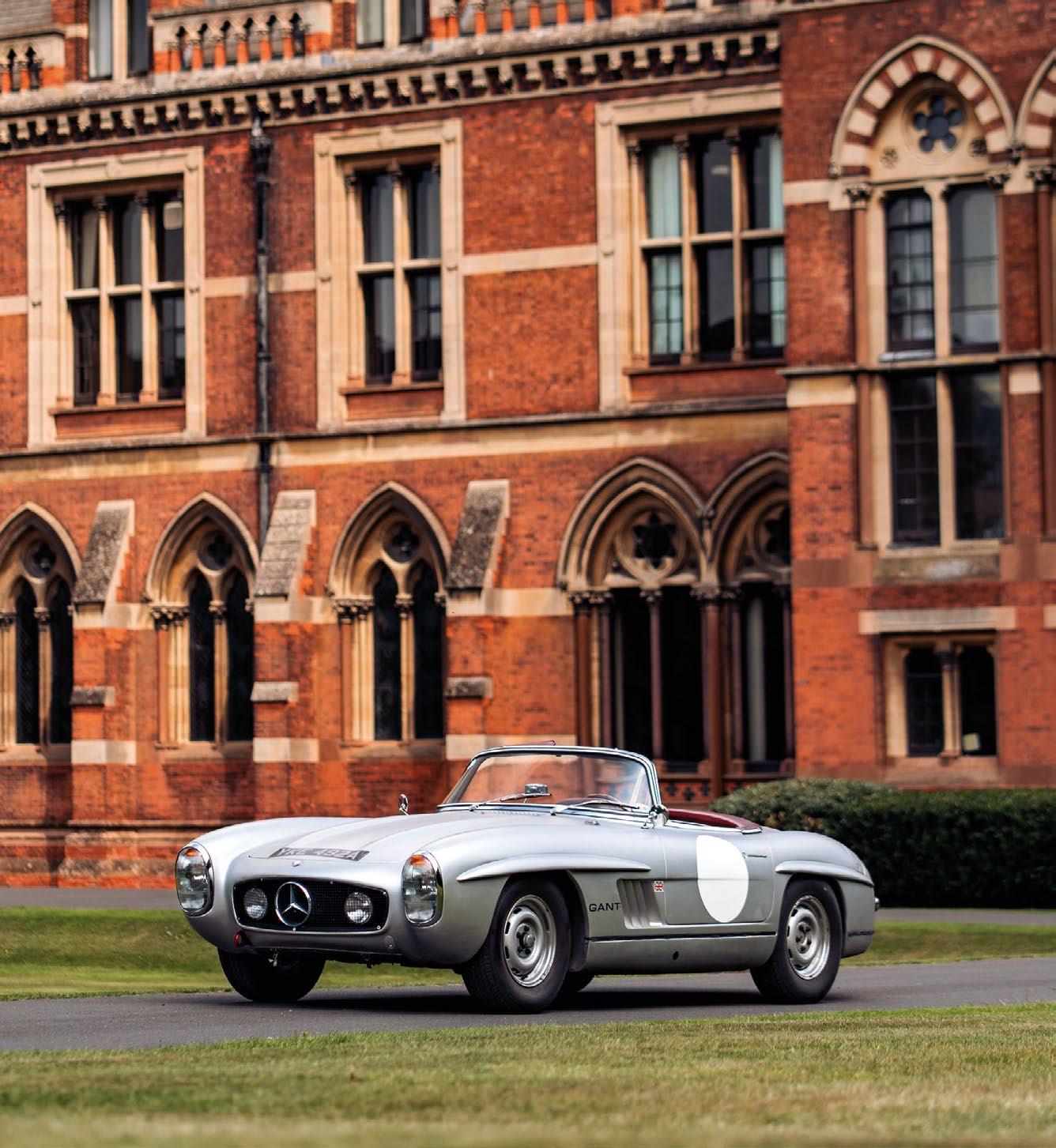
1963 Mercedes-Benz 300SL Roadster, sold for £745,312 including buyer’s premium at the Kelham Hall Sale, 10 September 2025
Consign Your Classic and Performance Car Contact



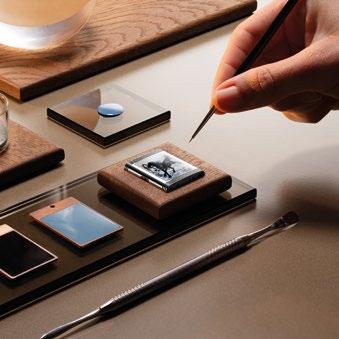
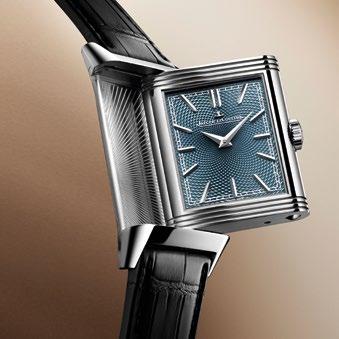
« Jaeger-LeCoultre’s Métiers Rares™ atelier has undertaken the near-impossible task of translating these works, some over a metre wide, onto casebacks barely two square centimetres in size. Each miniature enamel painting demands 80 hours of work, every brushstroke condensed yet faithful, every detail compressed without losing energy. The result is astonishing: galloping horses that still seem to breathe, their manes swept by invisible wind, captured forever in enamel.
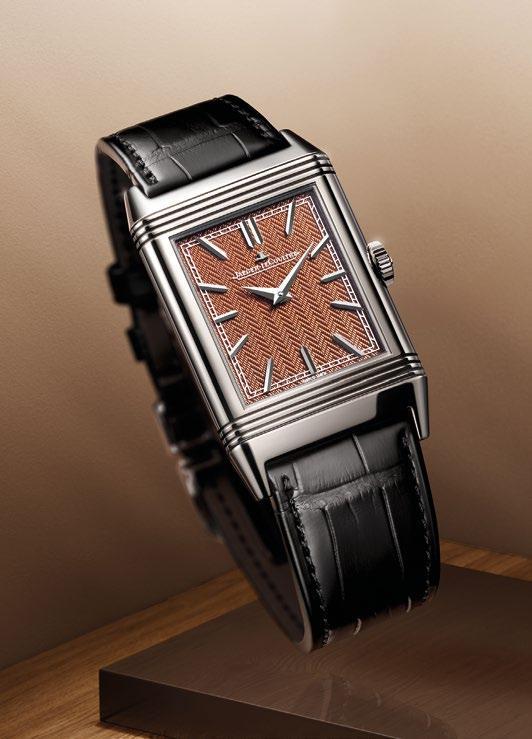
Three interpretations have been created. The Running Horse depicts a single steed in full stride, paired with a dial of pine-green Grand Feu enamel laid over a sunray guilloché pattern. Two Horses, inspired by Xu’s celebrated Running Together (Six Horses), shows a black and a white horse galloping in tandem, its dial shimmering in distant mountain blue over a barley-seed guilloché. Finally, The Standing Horse, a portrait of quiet nobility, is matched with crimson dawn orange enamel on a herringbone guilloché ground, evoking the glow of sunrise.
Inside each model lies the Calibre 822, the same handwound movement as the Tribute Enamel Horse, tying these works of art to the Maison’s horological heritage. Limited to just 10 produced per design, these timepieces are as much cultural artefacts as watches: collaborations across centuries, continents, and disciplines.
What unites the Rendez-Vous Shooting Star and the Reverso Tribute Enamels is not only Jaeger-LeCoultre’s mechanical expertise but its philosophy: that watchmaking is at its highest form when it bridges the measurable and the immeasurable, the rational and the poetic.
The Shooting Star transforms a fleeting celestial event into a complication of random beauty. The Tribute Enamel Horse takes a zodiac symbol and engraves it into permanence. The Xu Beihong series preserves an artistic legacy in miniature, enamelled form. Each reflects the Maison’s ability to weave technical ingenuity with cultural narratives, making timepieces that are not only instruments but also stories.
For almost 200 years, Jaeger-LeCoultre has stood in its remote valley, surrounded by forests and lakes, quietly pursuing excellence. Here, more than 180 métiers coexist— watchmakers, engravers, enamellers, and guillocheurs—
CLOCKWISE
each contributing to a symphony of craft. It is this holistic ecosystem, this integration of skills, that allows such horological feats to be conceived and realised.
As horology enters the 21st century’s third decade, the Maison shows no sign of resting on its laurels. Instead, it continues to stretch time itself—capturing the random, preserving the symbolic, and honouring the artistic. In these latest creations, Jaeger-LeCoultre reminds us that a watch can be more than a measure of hours: it can be a universe, a myth, a brushstroke, and a meteor across the sky.
The god of skiing traced his perfect line through the Alps and found his perfect home at ULLRHAUS - ST. ANTON AM ARLBERG.
Where authentic family spirit meets world-class hospitality. The ULLR team is ready to indulge you.
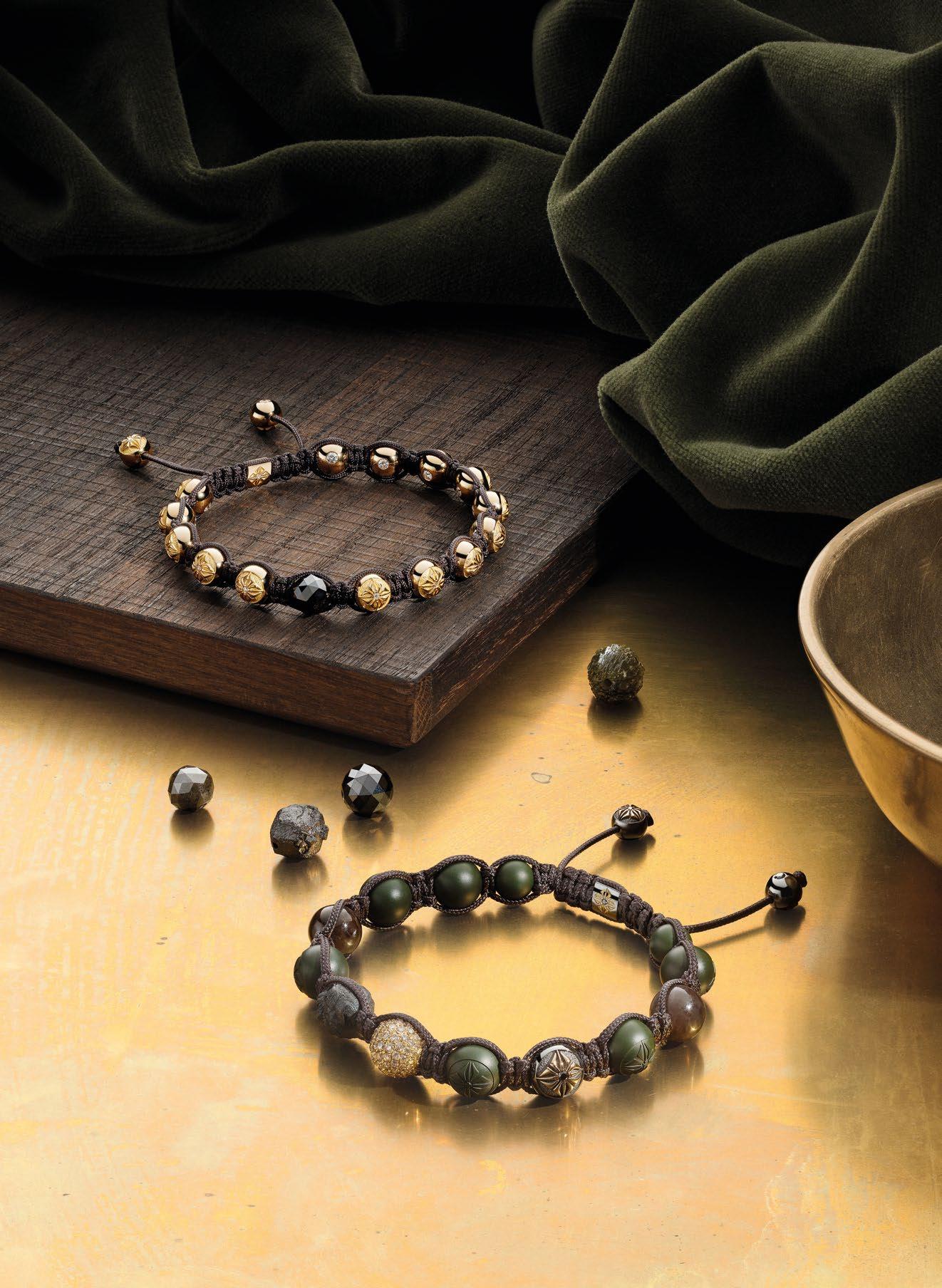
At SHAMBALLA JEWELS, diamonds are chosen not for size or perfection but for their soul, with each Special Creation celebrating rarity, individuality, and the beauty of the unrepeatable.
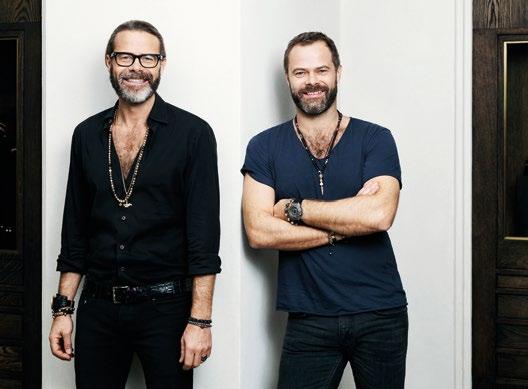
There are diamonds, and then there are diamonds that seem to hold a story within their enigmatic crystal lattices. At SHAMBALLA JEWELS, the Copenhagen-based house founded by brothers Mads and Mikkel Kornerup, it is the latter that matters most. Their work has always straddled a fine line between design and philosophy, drawing inspiration as much from ancient spiritual traditions as from contemporary Nordic craftsmanship. But in their most exceptional creations, the diamonds themselves take centre stage: raw, rare, faceted, or left in their natural form, each one a singular fragment of Earth’s history.
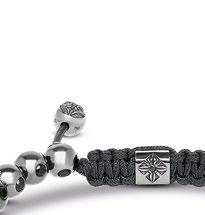
Since its beginnings in 2005, SHAMBALLA JEWELS has forged a distinctive language in jewellery. The braided bracelet, inspired by Buddhist prayer beads, became an instant icon, copied often but never matched. It set the tone for everything that followed: jewels conceived not only as adornments but as symbols, talismans, and carriers of personal meaning. “We believe the value of jewellery lies not just in the gems but in the emotions they evoke and represent,” the founders say. Their vision has always superseded luxury; it’s about connecting the wearer to values they choose to live by.
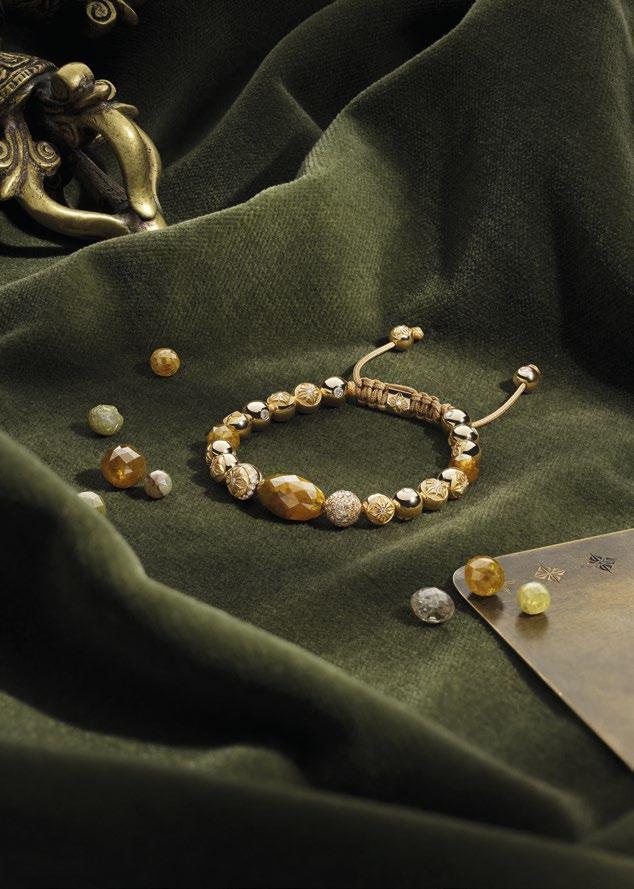
Nowhere is this clearer than in the brand’s Special Creations. These aren’t collections in the traditional sense but one-off pieces, each anchored by extraordinary diamonds sourced and handpicked by the founders themselves. A rough green diamond flecked with shadows, a champagne-hued stone with a soft glow, a faceted ovalcut gem that flashes light from its depths—these aren’t interchangeable commodities but singular specimens that cannot be replicated. The Kornerups select them not for size or conventional perfection but for texture, character, and the sense of individuality they radiate.
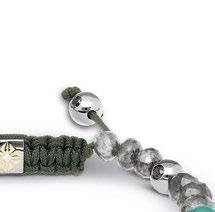
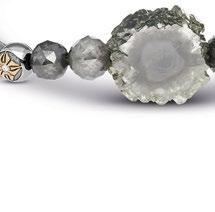
Once chosen, the stones are woven into the brand’s visual language: braided into macramé and paired with sapphires or emeralds, or mounted alongside SHAMBALLA JEWELS’ iconic 18K gold beads. The results are jewels that feel at once ancient and contemporary. A bracelet might juxtapose a rough black diamond with a brilliant-cut white one, the raw and the refined amplifying each other’s power. A necklace may string together light yellow, grey, and
CLOCKWISE FROM OPPOSITE The Special Creation bracelets feature SHAMBALLA JEWELS’ signature macramé braiding; SHAMBALLA JEWELS’ flagship store in Copehagen; non-braided bracelet with a central oval faceted red-brown diamond bordered by faceted black and multicoloured diamonds; founders Mads and Mikkel Kornerup source rare raw and solid-faceted diamonds and combine them with SHAMBALLA JEWELS’ iconic 18K gold beads and other precious stones to create unique pieces.


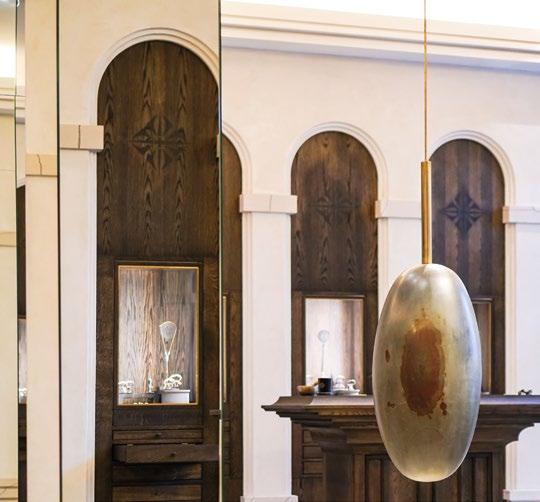

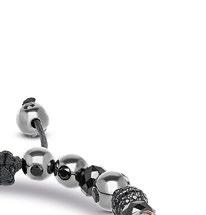



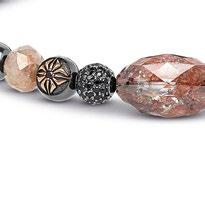
champagne diamonds like a constellation, telling a story of contrast and harmony. Each piece is, quite literally, unrepeatable.


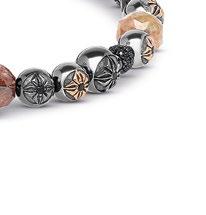
There is, of course, precedent for this fascination. For over 20 years, Mads Kornerup has been captivated by rough diamonds—their unpolished forms, their textured surfaces, the way they carry the scars of their millennia underground. “They are as distinct and irreplaceable as a fingerprint,” he has said. Where a polished stone represents human mastery, a rough diamond still carries the mystery of the earth. SHAMBALLA JEWELS’ Special Creations set the two in dialogue: the untamed and the refined, nature and craft, chance and intention.
That duality speaks to the larger philosophy of the brand. The very name Shamballa comes from an ancient Tibetan legend of a hidden kingdom, a place of enlightenment and »



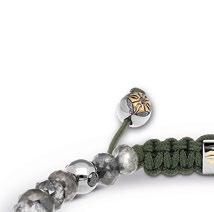
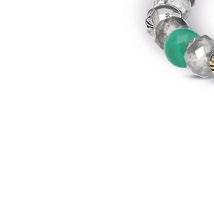


« harmony. Its symbols—the STAR OF SHAMBALLA® and the use of prayer bead form —run through the house’s designs as a reminder that jewellery can be more than decoration. To wear a piece of SHAMBALLA JEWELS is to carry values with you, to mark a connection not only with beauty but with meaning.
However, while the brand draws deeply from Eastern philosophies, its execution is firmly rooted in the precision of Nordic craft. Every piece is assembled, set, and polished by hand in the Copenhagen atelier, where jewellers and artisans work bead by bead and stone by stone. The result is jewellery that carries an unmistakable tactility: the weight of a bracelet plaited from macramé and gold, the texture of stones chosen for their individuality rather than uniformity. Even the act of wearing a SHAMBALLA JEWELS piece feels ritualistic, a daily gesture that connects the physical to the symbolic.
Collectors know this, and it explains the loyalty the brand inspires. For them, acquiring a Special Creation is not just about rarity, though the scarcity is undeniable. It is about resonance—finding a stone whose texture, hue, or history feels aligned with their own. Just as no two


diamonds are alike, no two lives are alike, and SHAMBALLA JEWELS’ most exceptional pieces acknowledge that truth.


The brand has also embraced technology to expand its philosophy. The Creator platform allows clients to design their own bracelets, choosing stones, beads, and cords from a broad palette to build something incredibly personal. It is an extension of the same ethos: jewellery as a mirror of individuality, a co-creation between artisan and wearer.

But when it comes to the rarest diamonds, there is no digital substitute. These are stones that must be encountered directly, chosen with instinct as much as expertise. They are sourced from around the world, yet their journey always ends in Copenhagen, where they are given purpose in a way that preserves their singular character. Once completed, they are not marketed as part of a line or season. They simply exist, each as a one-off testament to the art of seeing value where others might not.
SHAMBALLA JEWELS has, in under two decades, cultivated a niche that few can rival. It’s a house that honours tradition without being bound by it, that creates jewellery which is luxurious but never empty, that insists on the individuality of stones in a world often obsessed with uniform sparkle. To encounter one of its Special Creations is to be reminded that diamonds are not just geological phenomena but emotional ones—that they can, in the right hands, become storytellers. Under SHAMBALLA JEWELS’ touch, diamonds are not simply worn; they are lived with, carried, and cherished as singular companions.

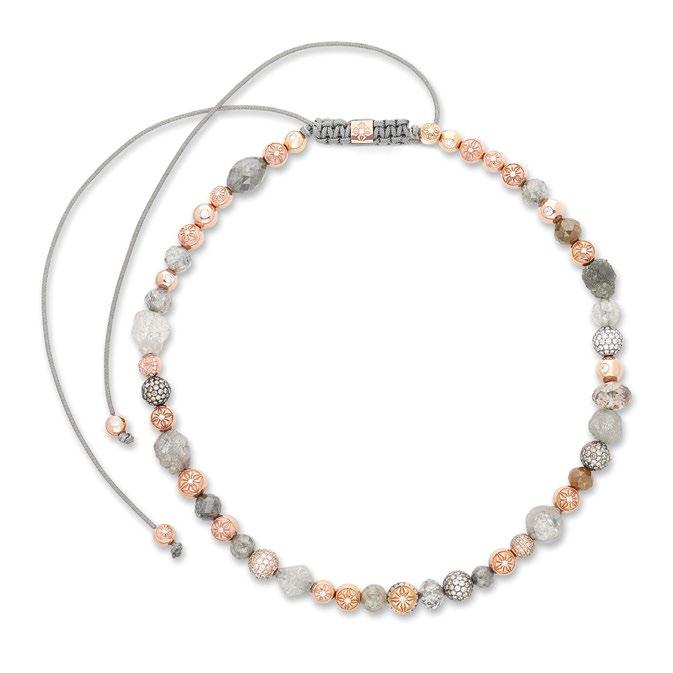
CLOCKWISE FROM TOP LEFT Each Special Creation celebrates the duality of nature’s wild forces and human skill; non-braided bracelet with a focal rough green diamond flanked by oval Zambian emeralds and grey, salt and pepper, and black diamonds; SHAMBALLA® Choker with a rustic white diamond set alongside both rough and faceted white, grey, green, orange, brown, and light champagne diamonds.
When expertise from the world of haute cuisine meets the artistry of cigar making, the result is something truly distinctive. The Chefs Edition 2025 by Davidoff Cigars is the fourth release in a celebrated series that brings together
some of the world’s most renowned chefs and the brand’s own Master Blenders. The outcome is a limited-edition toro cigar that reflects shared values: attention to detail, balance, craftsmanship, and refinement.
This edition continues Davidoff’s long-standing exploration of the connection between culinary excellence and cigar craftsmanship—a journey that began in 2005 and was formalised with the first Chefs Edition in 2016. Since then, the series has become a sought-after release among aficionados, praised for both its concept and its blend.
The Chefs Edition 2025 is the result of a collaboration with five globally respected chefs: Paolo Casagrande (Spain), Christian Bau (Germany), Kirk Westaway (Singapore), Nick Bril (Belgium), and Michael Beltran (USA). Collectively holding 11 Michelin stars, these chefs are known for their modern, light approach to fine dining—and for being discerning cigar lovers.
Their individual palates and culinary philosophies helped shape the cigar’s profile, working closely with Davidoff’s Master Blenders to refine the blend. What unites them with Davidoff is a shared drive to innovate, a respect for craft, and a commitment to delivering a multilayered experience. »
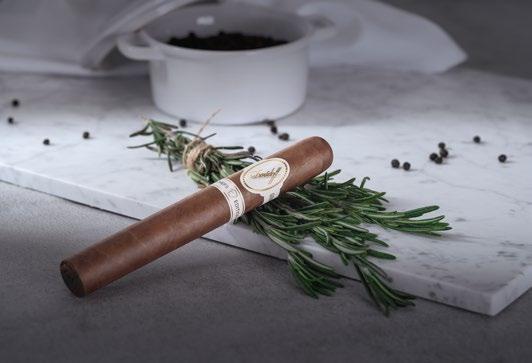
The Chefs Edition 2025 is blended with tobaccos from Davidoff’s White Band Collection—chosen for their elegance and balance. Among the highlights is a Dominican San Vicente tobacco aged for 15 years, offering exceptional depth. A Dominican hybrid leaf adds brightness with a fresh citrus note, while a Dominican Piloto tobacco aged for five years in Yagua palm leaves lends smoothness and a layered sweetness. This traditional ageing method—used here for the first time in a Davidoff cigar—allows for a slow, refined fermentation that enhances both complexity and aroma.
From the first draw, the cigar presents notes of cayenne pepper and soft whipped cream. The Yagua-aged Piloto brings floral undertones that appear early and evolve steadily. As the cigar develops, rosewood and leather come into play, supported by a subtle trace of lemon. In the final third, the intensity builds slightly, introducing fresh spice, roasted coffee, and oak. The result is a medium-intense cigar with a medium to full body, designed to be enjoyed over 60 to 80 minutes.
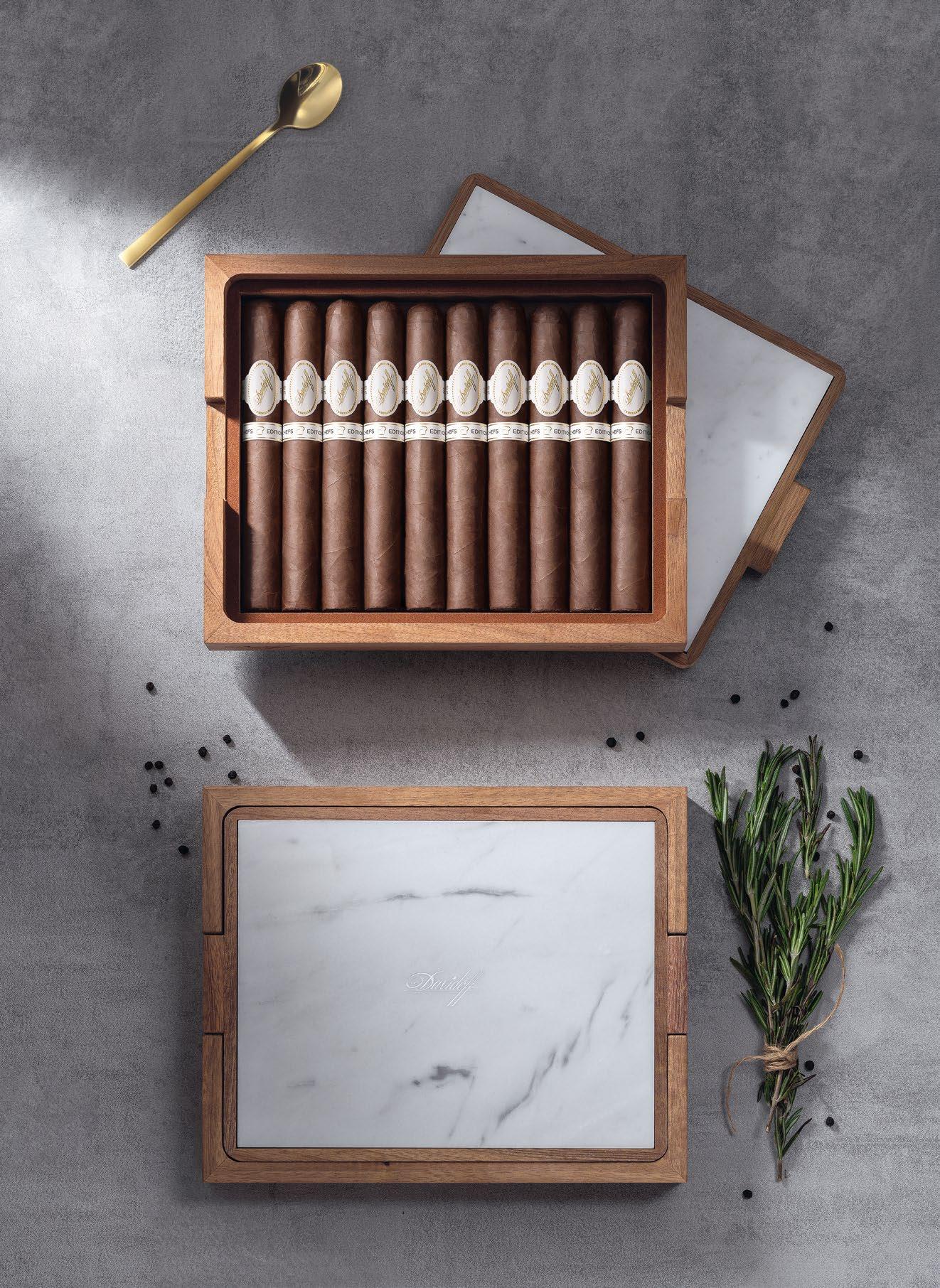
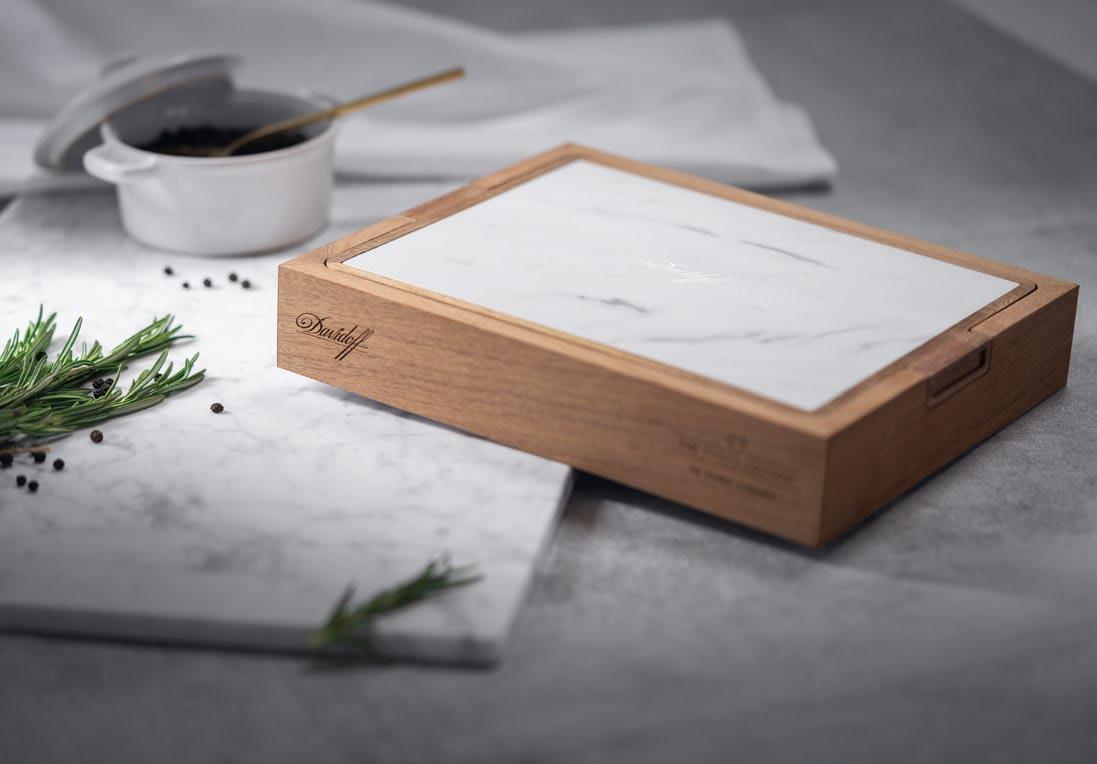
The presentation of the Chefs Edition 2025 is rooted in the same thinking that defines the blend. The cigars come in a substantial wooden box inspired by a professional kitchen.


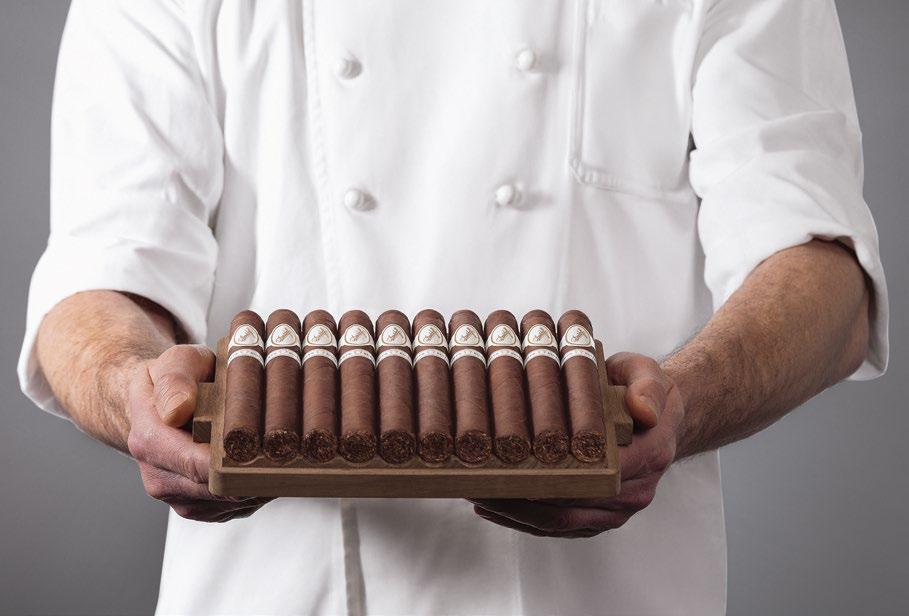
A piece of natural marble sits in the lid, recalling the texture and tone of a chopping board. Inside, 10 toro cigars are held securely in carved grooves—a practical and elegant design that nods to Swiss precision.
A cigar shaped by culinary minds and cigar masters, the Davidoff Chefs Edition 2025 is crafted for those who appreciate fine craftsmanship—whether on the plate or on the palate. This limited edition is made to elevate the moment and fill time beautifully.



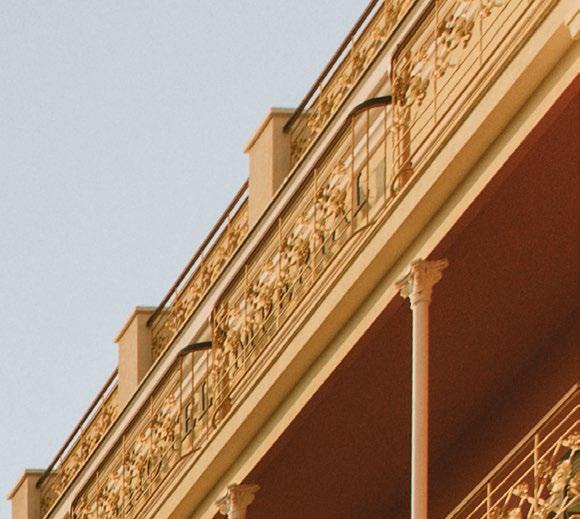
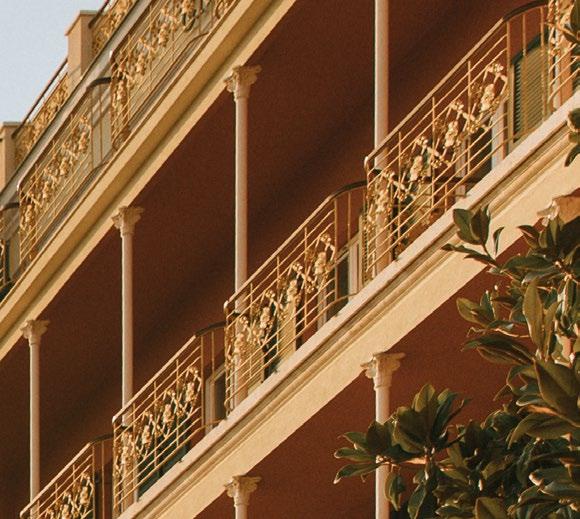
At the gates of Dubrovnik’s UNESCOprotected Old Town, Hilton Imperial Dubrovnik blends 19th-century grandeur with today’s refined luxury.
From sweeping views of the Adriatic and the city’s storied rooftops to signature dining and exclusive experiences, every stay reflects a legacy of hospitality since 1897. Discover why Dubrovnik’s first luxury hotel remains its most iconic.

Experience the essence of Dubrovnik. Book your stay.











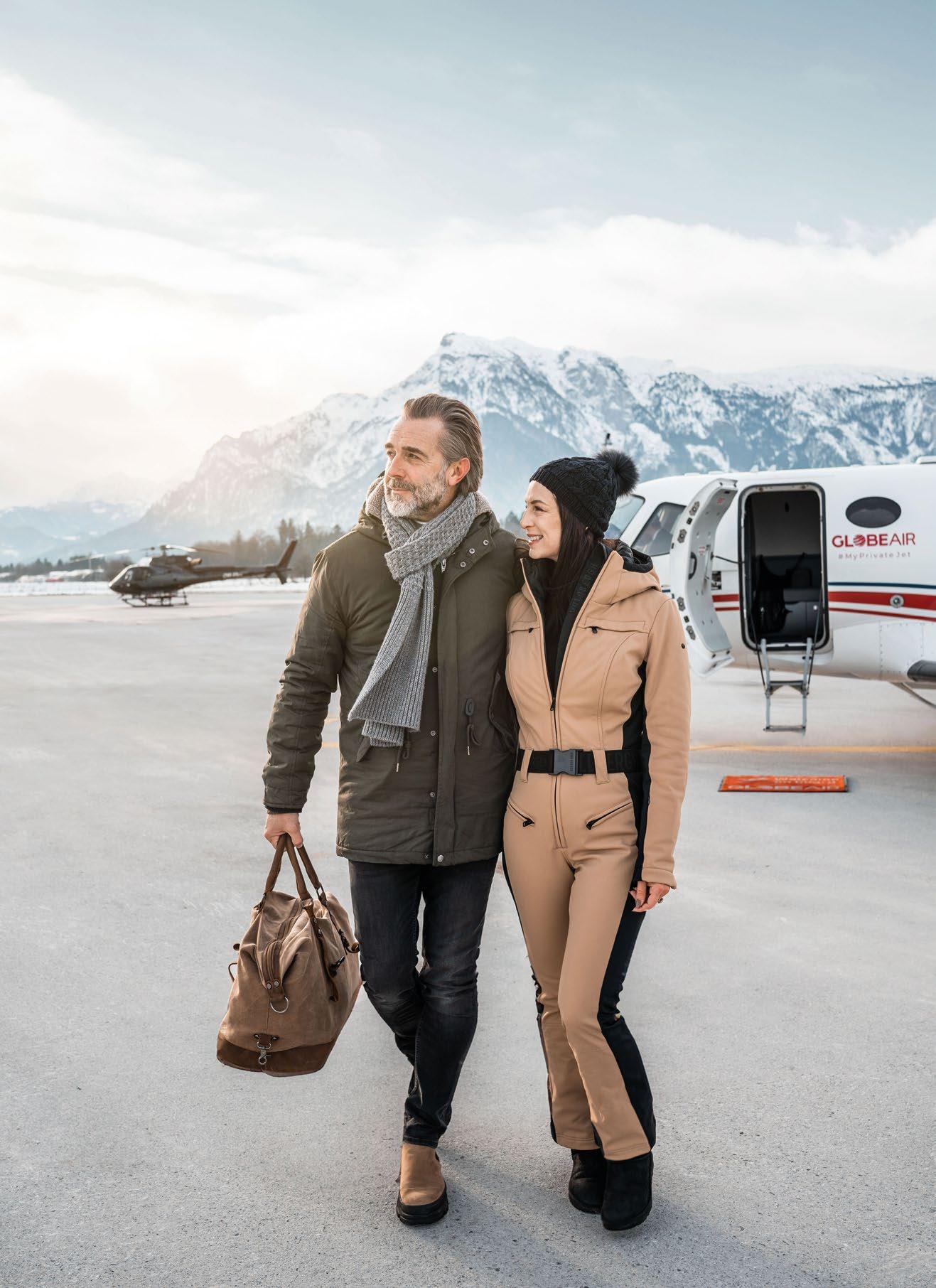
From Swiss peaks to Alpine luxury, discover how GlobeAir connects discerning travellers to winter’s most sought-after destinations.
As the first snowfall dusts Europe’s Alpine peaks, a new season of refined adventure begins. For travellers seeking seamless access to the slopes, GlobeAir offers curated winter journeys to the most exclusive ski destinations across Switzerland, France, and Austria. With direct access to over 1,200 airports—including some of the world’s most remote Alpine runways—GlobeAir makes even the most secluded resorts effortlessly accessible.
SWISS ELEGANCE IN FULL ASCENT
Few destinations capture the spirit of winter luxury quite like Switzerland. From the storied slopes of St. Moritz to the off-piste paradise of Verbier, each resort blends thrilling Alpine sport with sophisticated leisure. GlobeAir’s Cessna Citation jets land conveniently in Samedan, Sion, and Geneva, putting travellers within minutes of their final destination.
St. Moritz, a birthplace of winter tourism, remains synonymous with glamour. Its legacy of hosting two Winter Olympics is matched only by its five-star hotels, designer boutiques, and world-class pistes. Verbier, on the other hand, caters to those in search of adrenaline, with its dynamic terrain and vibrant après-ski scene. For those who prefer panoramic views and an atmosphere of serenity, Crans-Montana offers broad, sunlit slopes and fine-dining restaurants perched above the Rhône Valley.

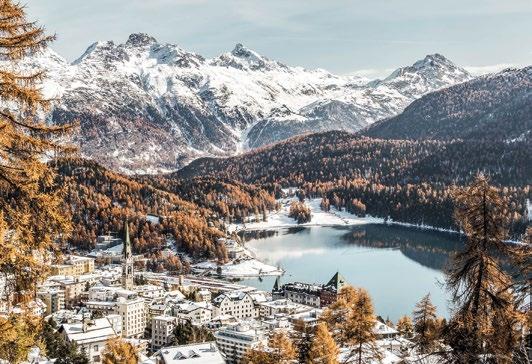
OPPOSITE GlobeAir’s Cessna Citation jets can access some of the world’s most remote Alpine runways.
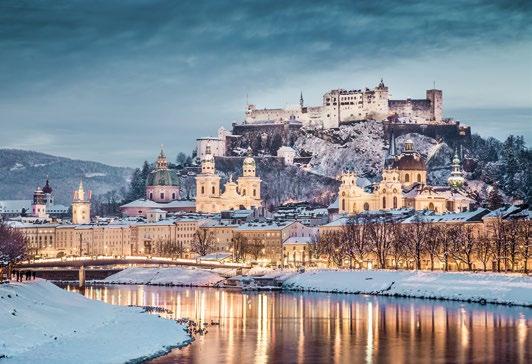
CLOCKWISE FROM TOP LEFT GlobeAir flies directly into Salzburg, shortening the distance between city and slope © bluejayphoto; GlobeAir grants travellers easy access to the beloved winter wonderland that is St. Moritz © Getty Images/ iStockphoto; GlobeAir’s streamlined operations mean less time spent travelling and more time spent on the mountains.
REFINED ACCESS TO COURCHEVEL AND BEYOND
In the heart of Les Trois Vallées, Courchevel stands as the jewel of the French Alps. Courchevel 1850, in particular, is a byword for winter sophistication, with luxury chalets, Michelin-starred cuisine, and designer boutiques lining its snow-covered promenades. Travellers arriving aboard a GlobeAir flight into Courchevel Altiport—one of Europe’s most iconic mountain airfields—skip lengthy transfers and begin their Alpine escape the moment they step off the aircraft.
Beyond Courchevel, GlobeAir offers smooth access into Nice or Chambéry, opening the door to other French ski gems such as Megève, Val d’Isère, and Chamonix. Whether indulging in a private spa, joining a heli-ski excursion, or dining by candlelight after a day on the slopes, every detail is tailored to elevate the Alpine experience.
Austria’s resorts bring a distinctive blend of tradition and warmth to the winter season. In Lech, understated elegance meets Tyrolean charm, while Kitzbühel’s cobbled streets and Medieval architecture frame a world-class ski destination. St. Anton, renowned for its challenging slopes and vibrant après-ski scene, draws a loyal following of seasoned skiers. With flights arriving directly into Innsbruck, Salzburg, or Linz, GlobeAir shortens the distance between city and slope—often bringing travellers within an hour of their Alpine retreat. On request, GlobeAir’s concierge team arranges every detail—from private jet flights and helicopter transfers to ground transportation and exclusive chalet stays—ensuring a truly bespoke journey.
As winter unfolds, timing becomes essential. GlobeAir’s streamlined operations—15-minute boarding, flexible departure times, and direct access to hard-to-reach airports—allow travellers to maximise their time in the mountains. With a reputation for reliability, discretion, and safety, GlobeAir sets a new standard in private aviation. This season, experience the Alps as they were meant to be: pristine, peaceful, and perfectly within reach. With GlobeAir, your winter escape begins long before the first run—it begins the moment you take to the skies.
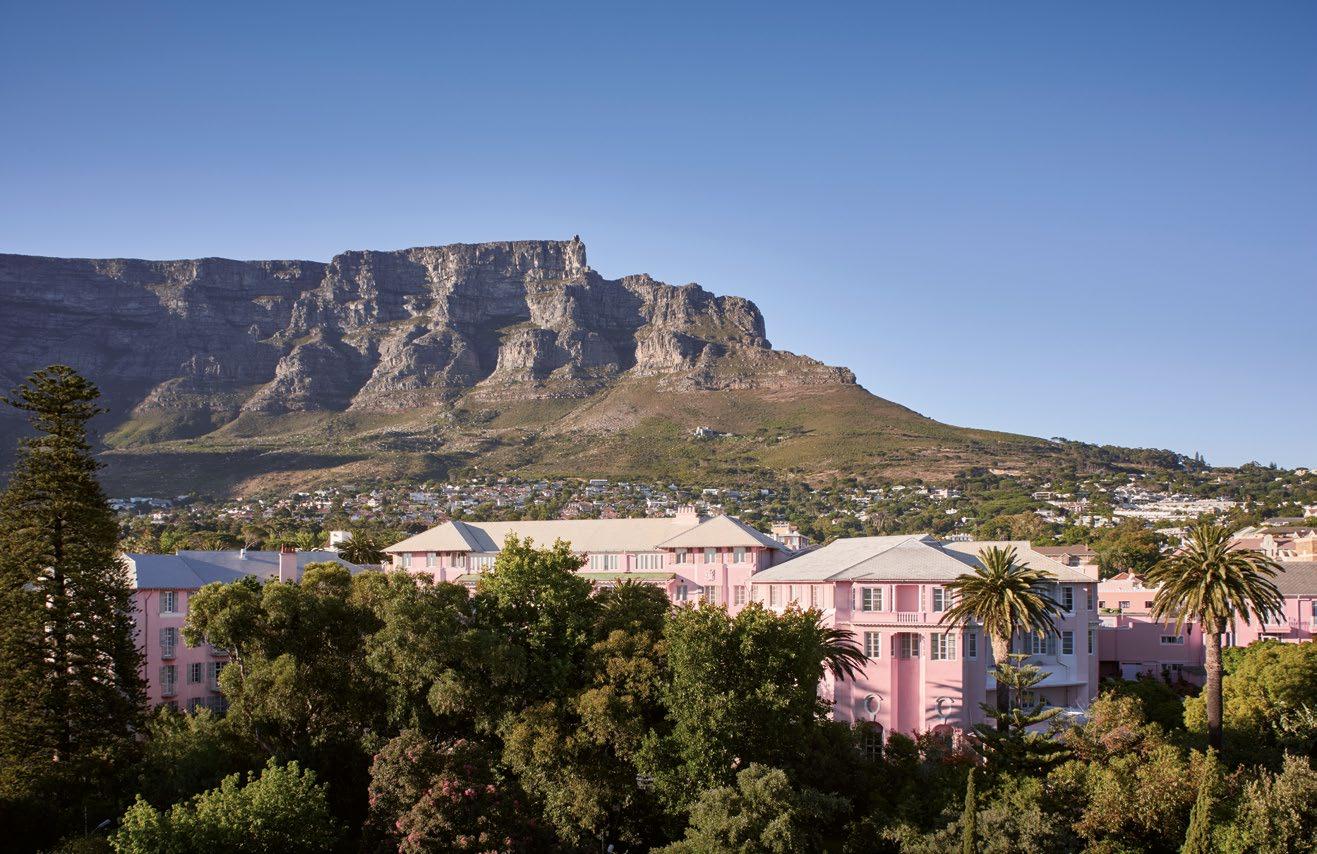
Cape Town’s grande dame has worn her rosy façade for over a century, but it’s her warmth, wit, and timeless elegance that keep the Mount Nelson forever in style.
Nestled at the foot of Table Mountain, Cape Town’s grande dame blushes a very particular shade of cheerfulness. Painted pink to herald the end of the First World War in 1918—an embellishment by the hotel’s then Italian manager, Aldo Renato—the Mount Nelson has kept its distinct rosy hue ever since, a colour that has become a calling card for the city and an entire mood in itself: one that not only embodies peace and joy but celebration, generosity, and elegance, all hallmarks of the Mount Nelson herself—or “The Nellie” as locals affectionately call her.
Opened in 1899 and long favoured by statesmen, writers, royals, and rock stars, The Nellie has weathered empires and fashions without losing her manners. The stately driveway, lined with 101-year-old Canary Palms that rise like sentinels behind the Prince of Wales Gate, gives way to nine acres of rolling lawns, rose beds, veg patches, and shaded corners—an improbable pocket of country calm in the middle of the Mother City. It’s here that
the hotel’s character reveals itself: staff sharing anecdotes with giggling guests, children chasing Egyptian geese across the grass, and locals and tourists alike soaking up the sunshine on sprawling verandas. This is a city hotel that behaves like a garden estate, with two swimming pools,
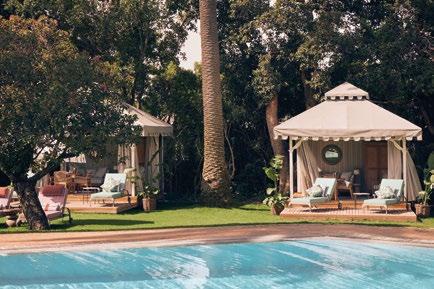
tennis courts with mountain views, and a spa pavilion tucked into beautifully restored Victorian houses—a blend of activity and repose that perfectly captures Cape Town’s charisma.
But the Mount Nelson has always been more than just a hotel. From the moment it opened its doors all those years ago, it was hailed for its modernity, the first in South Africa with hot and cold running water, a rarity then. It hosted officers during the Boer War, dazzled the Prince of Wales in the 1920s, and over the decades has counted Winston Churchill, John Lennon, and Nelson Mandela among its admirers. In the old sailing days, when ships would anchor in the harbour, it was here that first-class passengers would wander straight through the Company’s Garden, tree-framed avenues ushering them into the Pink Lady’s embrace. And while Cape Town has changed around her, The Nellie has held onto her charm—and her signature pastel hue—carrying her history as lightly as the fragrance of jasmine that drifts through her gardens.
This history is also kept alive in the rooms and suites— of which there are 198 in total, spread across various structures on the property. Each accommodation is unique, its personality shaped by the wing or historic home it occupies. In the main building, high ceilings and marble bathrooms recall Edwardian grandeur, while the Garden Cottage Suites—once the homes of the hotel’s managers and ground staff—offer romantic seclusion behind picket fences and rose trellises, complete with fireplaces and Venetian mirrors. In the Green Park building, balconies frame Table Mountain or the city skyline; some suites keep relics from the hotel’s opening days, like antique desks or
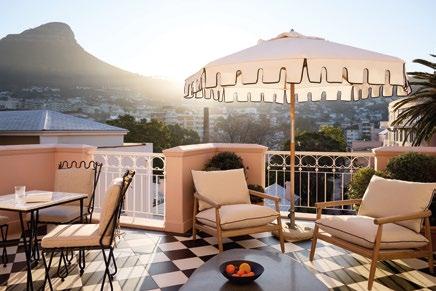
opulent crystal chandeliers, serving as a reminder that time moves but The Nellie remains constant. Of course, modern amenities abound, but the appeal isn’t just comfort; it’s context. You wake to birdsong rather than traffic, yet step outside the gates and you are minutes from Kloof Street’s award-winning restaurants, the V&A Waterfront’s shopping mecca, and the cablecar that sweeps you above the clouds onto the Tabletop.
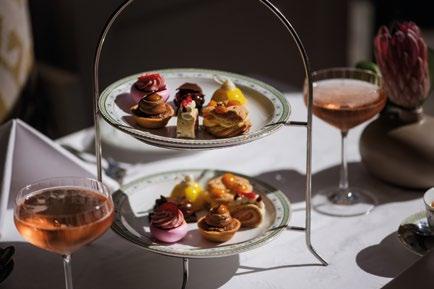
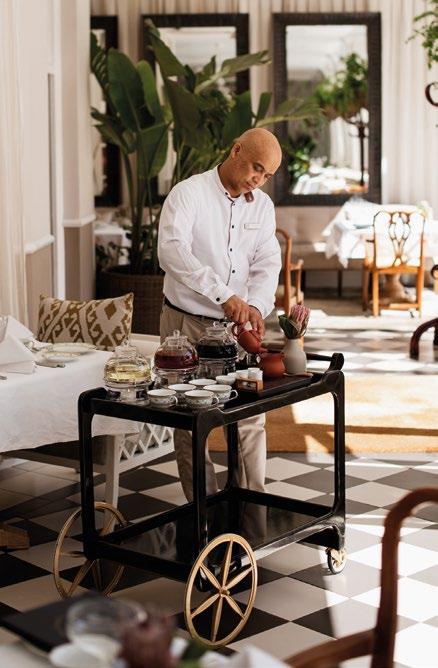
If you instead decide to spend the day at The Nellie— and you should—there’s a ritual that can’t be missed: the afternoon tea. In the lounge or on the patio, as live piano music fills the air, silver trays arrive stacked with sandwiches, scones, and delicate pastries. Champagne glasses clink with porcelain cups holding fragrant teas from around the world, from local rooibos and honeybush to rare Japanese specialities and even the house’s own blend, laced with rose petals in homage to its pink façade. The tradition is treated with proper seriousness and a wink of play—there’s a vegan menu and even a canine counterpart—serving as a reminder that heritage here is something to be enjoyed not encased.
But a hotel, however grand, is only ever as special as the people within it, and here the Mount Nelson excels. It is the staff who greet you by name and recall your stories, who explain the origins of a clever cocktail name or surprise you with thoughtful tokens at your bedside, that leave you beaming as radiantly as the Pink Lady herself. For all its legend, it’s clear that Mount Nelson’s great trick is its modern outlook: it remembers that travel is as much about how a place makes you feel as what it offers to see. And here, both are true.
From Midtown Manhattan penthouses to French Riviera pied-àterres, Lauren Berger’s collection of extraordinary homes is built on one simple ethos: treating every guest as if they were family.
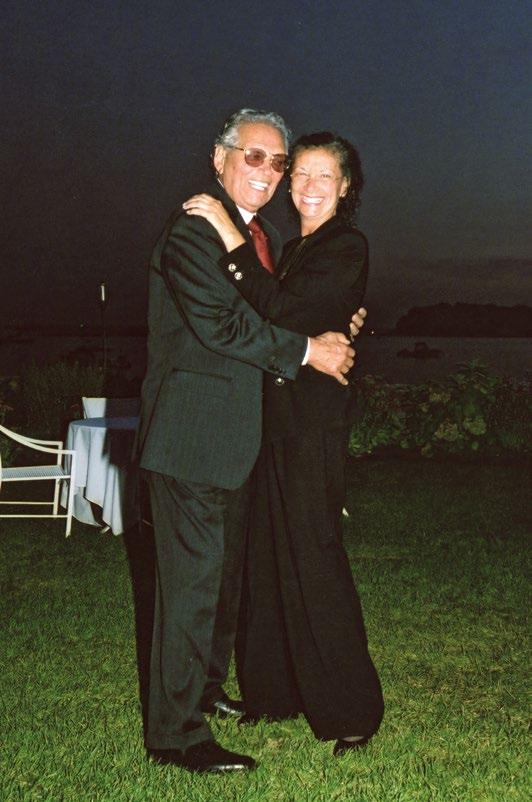
For Lauren Berger, hospitality has never been about business alone—it has always been about people. She never set out to create a hospitality empire; it grew, as she tells it, organically, built not on transactions but on trust, warmth, and exceptional attention to detail. In the early years of her marriage, her husband—a renowned dental implantologist—had patients who travelled from around the world to see him. Hotels were an option, but Lauren preferred to open her own home, welcoming her guests “as if expecting the Queen”. What began as a gesture of kindness spiralled into something much larger: one guest referred another, and then another. Soon, she was hosting hundreds of people, each cared for with the same love and devotion.
That sensibility still underpins her work today. After four decades, thousands of properties, and an unshakable reputation among royalty, celebrities, and loyal families
ABOVE Lauren Berger and her husband, Dr. Sidney Berger.
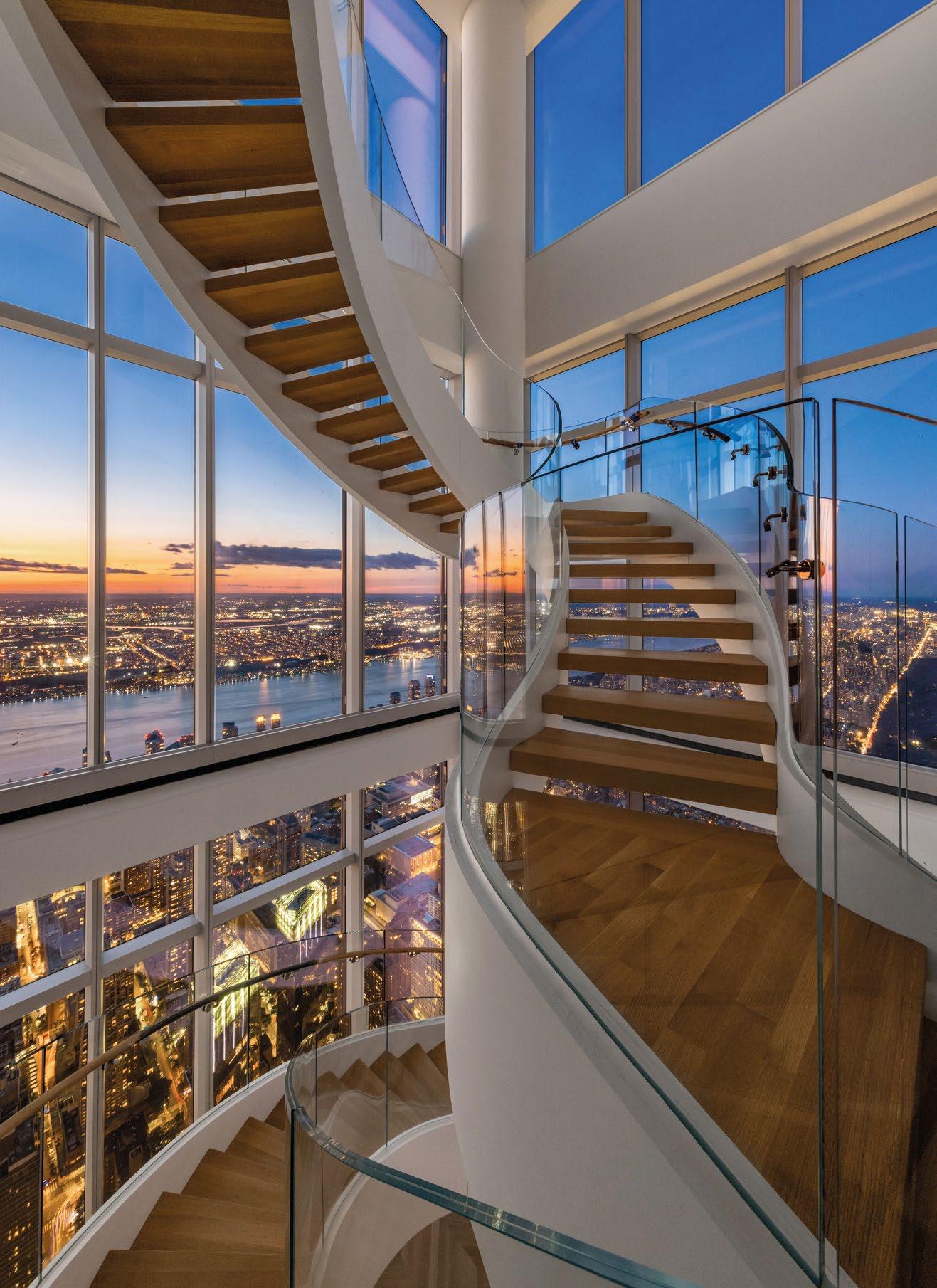
OPPOSITE View from the Central Park Tower Penthouse.
alike, the Lauren Berger Collection remains defined by a singular guiding principle: to treat guests like treasured friends. Privacy, beauty, and a sense of belonging remain her non-negotiables. Every residence she represents is one she would gladly live in herself, a place chosen not for market value or flashy amenities but for light, views, and the feeling of joy it inspires.
It is this philosophy that distinguishes her international portfolio, which includes some of New York City’s most coveted penthouses, capped by a record-setting triplex atop Central Park Tower, as well as exclusive retreats abroad, such as Villa Oxygène in France. Each has been selected with the same care she once reserved for family, and all bear the Lauren Berger hallmark: meticulous curation, thoughtful service, and a sense that you are not renting a space but entering a home where every detail has been anticipated. Here’s a glimpse into five of the Lauren Berger Collection’s crown jewels… »
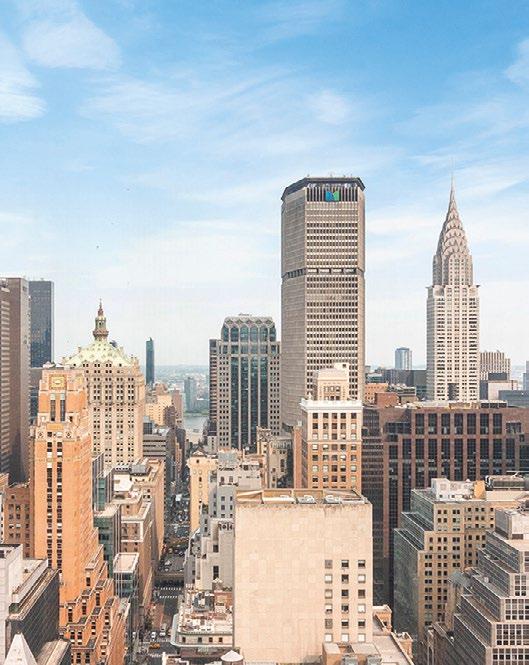
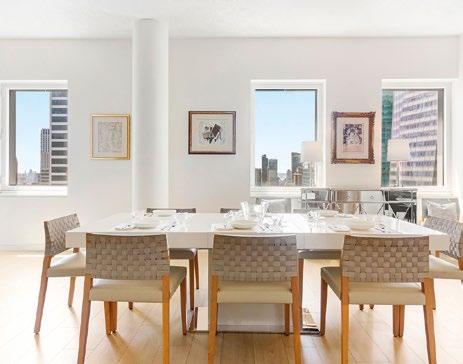

In the heart of Midtown Manhattan, just steps away from all the excitement of Broadway, Penthouse One occupies an entire floor, its 232 square metres of space unfolding like a gallery of light and glass. Every room opens to sweeping city views, while interiors favour natural textures and subtle tones, complete with bespoke furnishings. All four bedrooms offer double exposures, with the master suite boasting a beautiful bathroom with a large soaking tub. Although the penthouse embodies privacy and elegance, convenience is never far away: guests enjoy access to concierge services, a celebrated restaurant, and a wellequipped gym, all within the building.
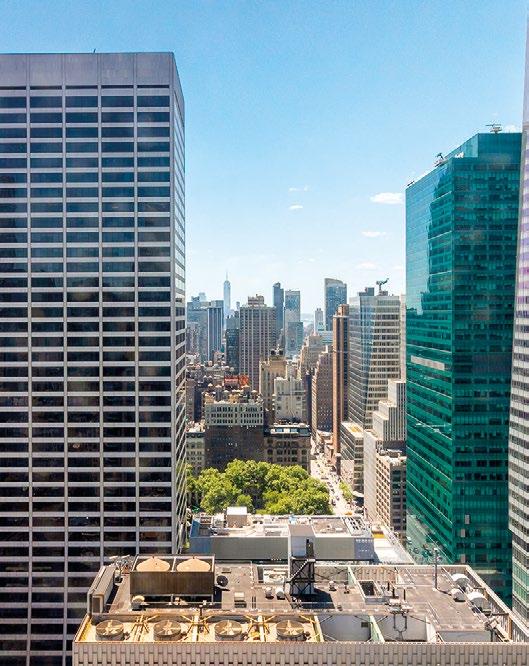
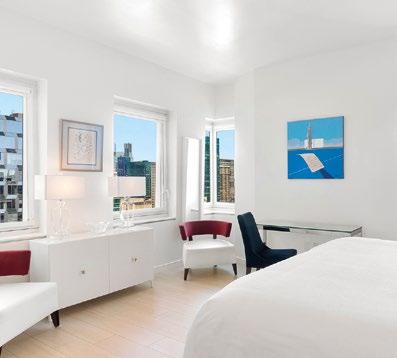

Neighbouring its counterpart, Penthouse Two mirrors the drama of Penthouse One with an equally expansive floor plan. Here, too, walls of glass draw the city inside, turning every window into a living frame. The design aesthetic continues the Lauren Berger Collection’s trademark polish, with carefully curated furnishings and natural light flooding every corner. Each of the four bedrooms is generously proportioned, with the master suite offering double exposures that capture Manhattan from multiple directions at once—a reminder that this is a city of endless perspectives. It’s the perfect base from which to explore all that Broadway has to offer.
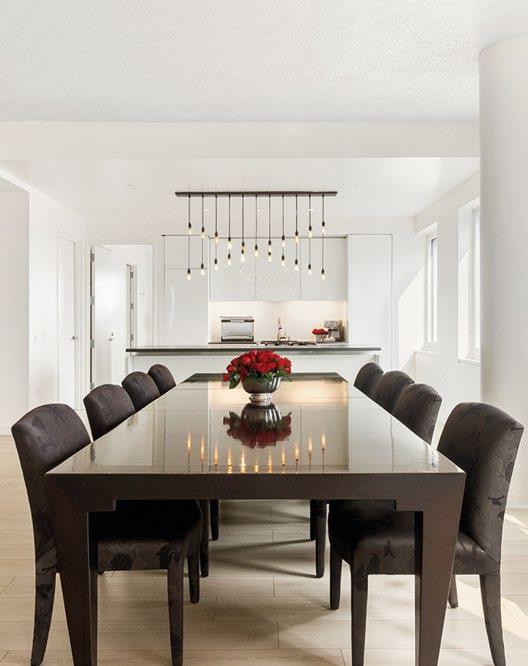
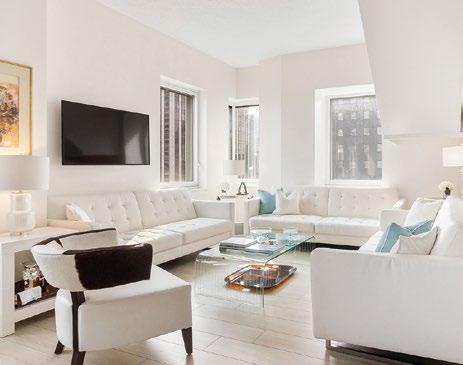

Slightly larger at 325 square metres, Penthouse Three raises the bar with five bedrooms and a 12.5-metre great room that fulfils every entertainer’s dream. Clean, modern lines dominate the design—featuring Pietra Bedonia countertops, oversized windows, and mirrored accents that refract light throughout the interiors. Technology and comfort—fast WiFi, climate control, a deep soaking tub in the main en-suite— blend seamlessly with tactile details. And beyond the front door lies the same effortless service structure: concierge, fitness, and dining at the ready. With three penthouses in the same building, this Lauren Berger trio is ideal for families wanting to have privacy while staying closeby.
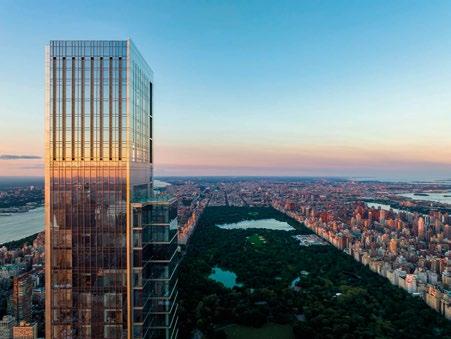
Then there is the pinnacle, quite literally, of the Lauren Berger Collection. Atop Central Park Tower, the world’s tallest residential building, sits a triplex penthouse that has redefined what is possible in urban living. Priced at $250 million, it is the most expensive residence currently on the market in the United States—and with good reason.
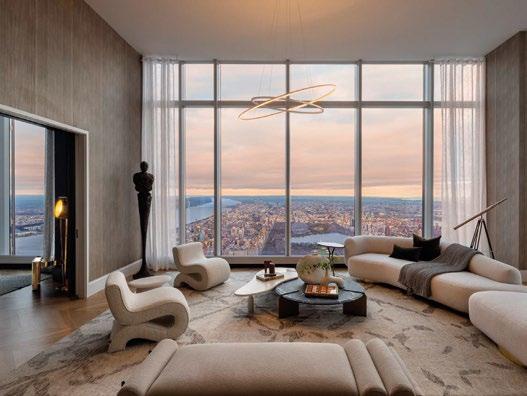
Spanning 1,630 square metres across three stories, from the 129th to 131st floors, this remarkable property is a masterstroke of scale and spectacle. Seven bedrooms, eight bathrooms, and multiple kitchens are framed by floor-to-ceiling windows that offer 360-degree views of Manhattan. A sculptural spiral staircase rises through the core, connecting floors that shift from private refuges to grand entertainment areas, including a ballroom that crowns the upper level. Rottet Studios has shaped the interiors with a refined touch, keeping the rooms stylish and inviting despite their grand scale.
Outside, a 133-square-metre terrace looks down upon Central Park, the Hudson and East Rivers, and the city’s glittering sprawl. Residents also enjoy access to the Central Park Club, an exclusive enclave spread across three floors with pools, dining, a wine bar, lounges, a spa, a squash court, a private cinema, and a ballroom on the 100th floor. »
SAINT-JEAN-CAP-FERRAT, FRANCE
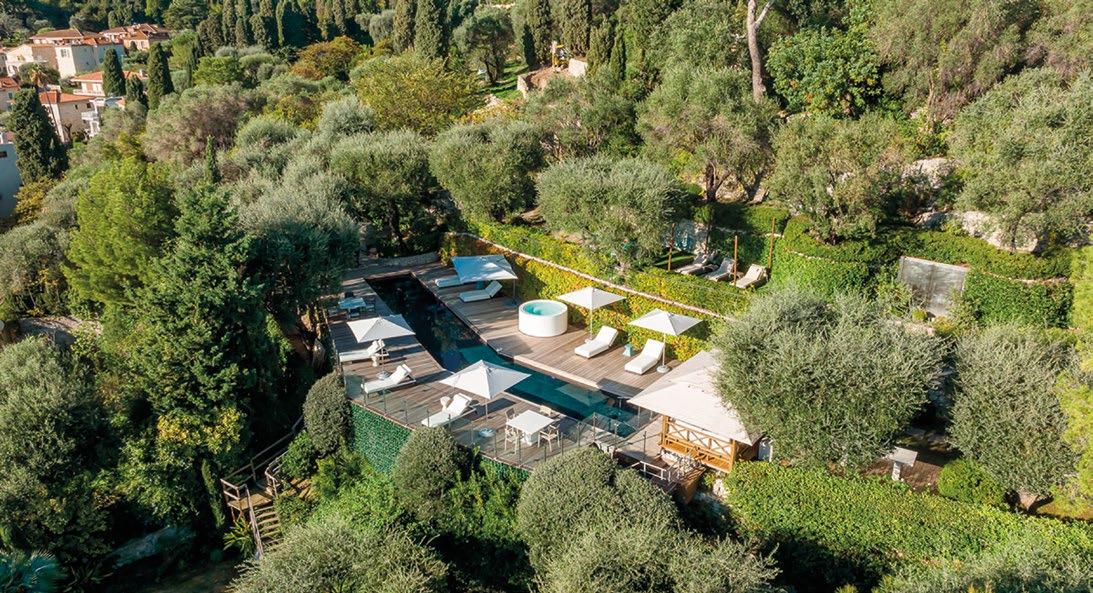
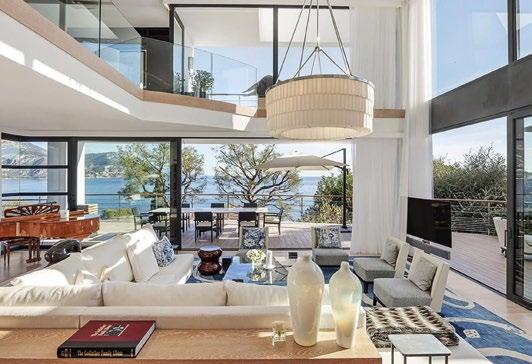
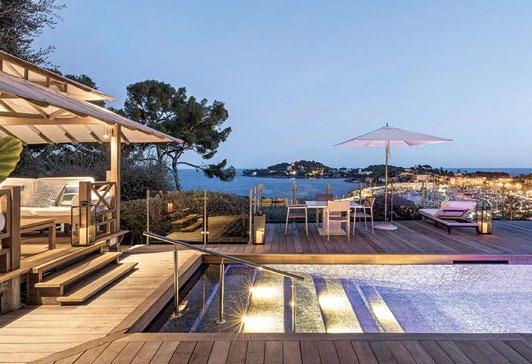
If New York is about light, height, and momentum, then Villa Oxygène offers its counterpoint: Mediterranean ease. Nestled between Nice and Monaco on the storied peninsula of Saint-Jean-Cap-Ferrat, this 4,500-square-metre hilltop estate epitomises Riviera glamour with a sense of discretion. Approach is by a winding coastal road past harbours and villas steeped in history. Arrival reveals terraces that step down toward the sea, with white walls set against a pine green backdrop and a cobalt blue sky. The rooftop terrace, perched 100 metres above the coast, holds an infinity pool with views that sweep from east to west, while a Balinesestyle pool house provides shade for long summer afternoons. Inside, the villa offers four main suites, each with its own bathroom. The master suite opens to sea views through floor-to-ceiling glass, its bathroom warmed by an open fire
beside a rain shower and a freestanding tub. Additional suites continue the motif: walk-in wardrobes, fossil granite finishes, Bang & Olufsen sound systems, and terraces that flood with morning light. Tucked away in the lush garden, a two-bedroom guest house accessed via a footbridge is ideal for extended families or close friends. Communal spaces are designed for both gathering and retreat: a gallery lounge doubles as a bar and study; a gym and hammam bring wellness into focus; and a dedicated cinema with a film library delivers moments of shared relaxation
To find out more about these properties, contact Lauren Berger on +1-646-629-9669 or email lb@laurenbergercollection.com

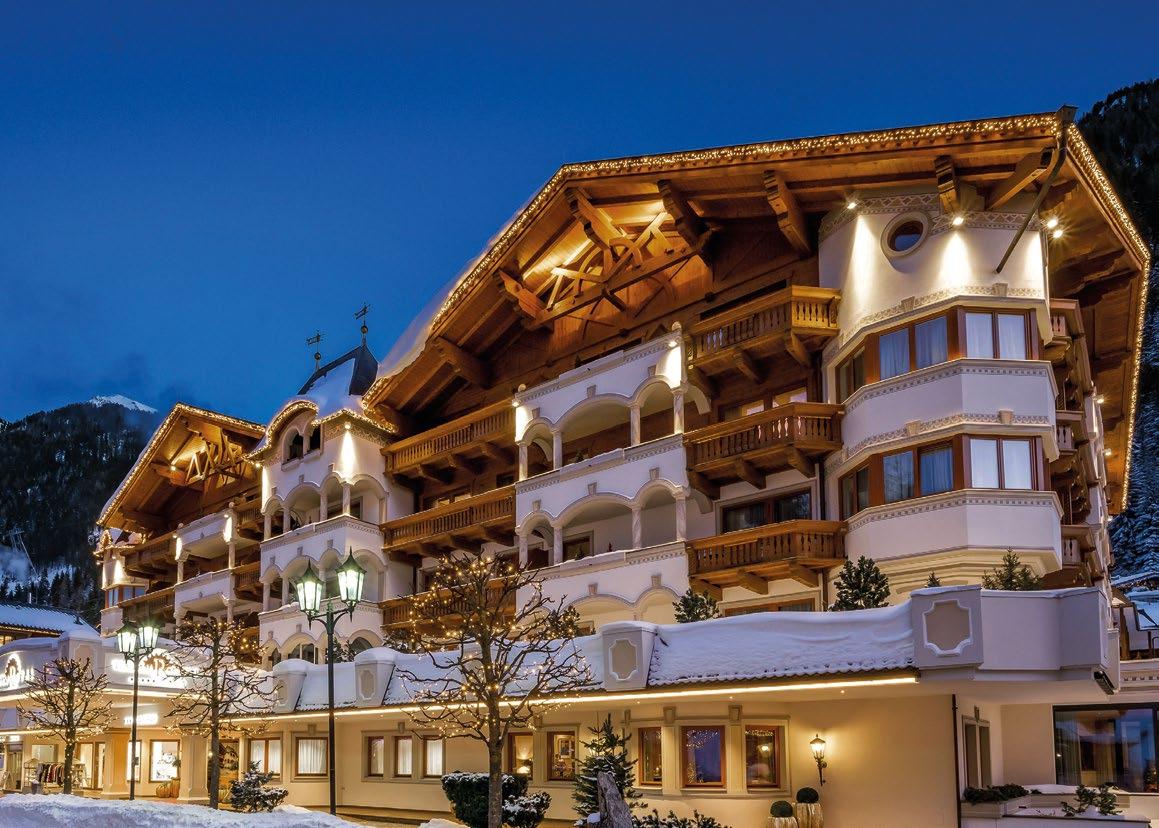
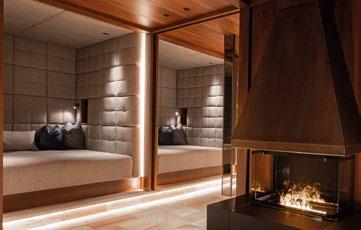

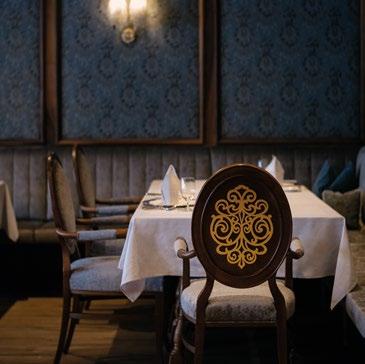
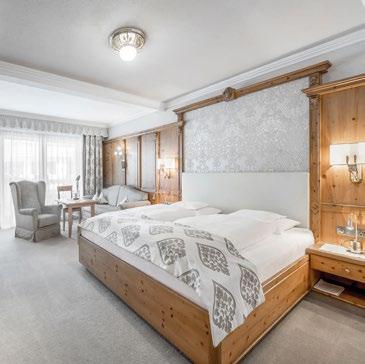


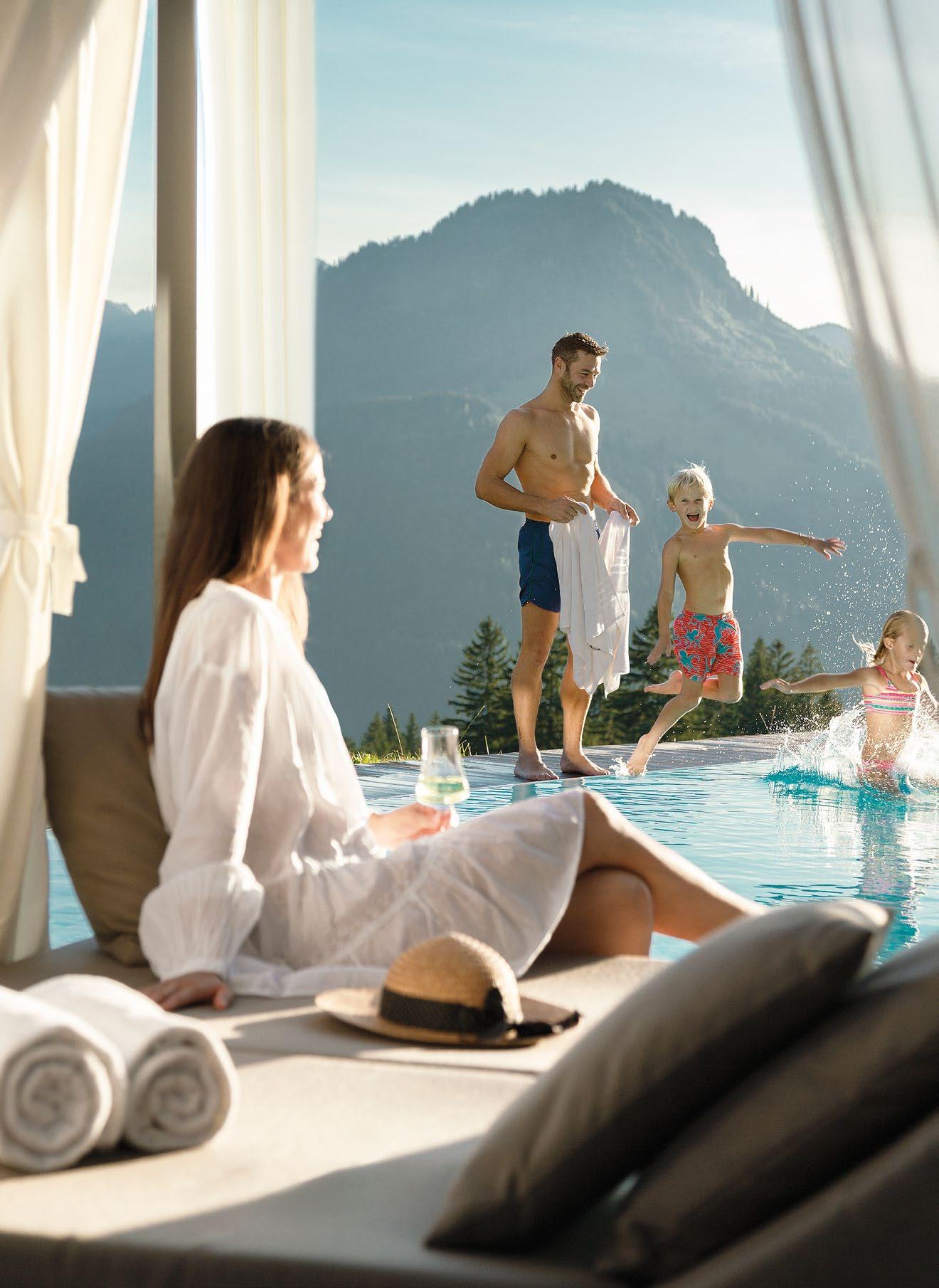
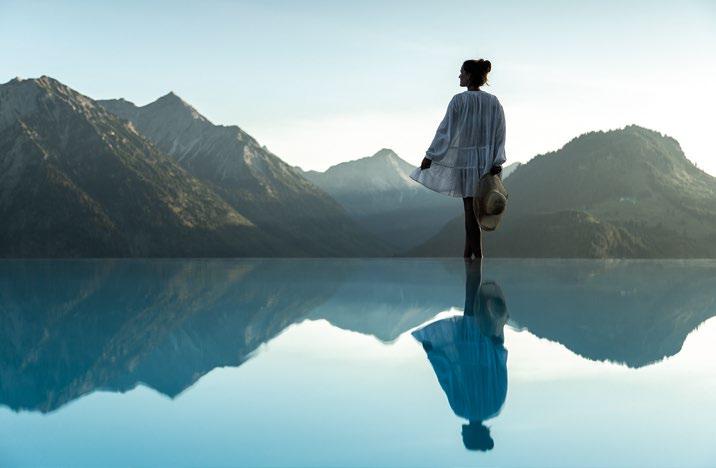
Set among Europe’s most scenic landscapes, Familux Resorts gives families space to unwind together—in the spa, on the slopes, or in the comfort of their sumptuous suites.
Owned by hotelier Ernst Mayer, Familux Resorts is an exclusive collection of luxurious family-oriented properties in Germany and Austria that offer an exceptional holiday experience for travellers of all ages. Guided by the core principle of nurturing family togetherness while celebrating individuality, these resorts have swiftly gained a reputation for being the epitome of familyfriendly indulgence.
“We help families to feel their freedom and uniqueness. We create spaces of experience that allow togetherness in an elegant atmosphere while giving everyone their welldeserved right to enjoy a piece of personal fulfilment. That is our idea of luxury,” says Ernst.
At the heart of all four of the Familux Resorts lies a vision to create a harmonious space where families can escape the pressures of everyday life and immerse themselves in a world of joy, adventure, and relaxation. Whether you’re a new parent with a little one, an adventurous teen seeking thrilling experiences, or a couple yearning for quality time together, Familux Resorts caters to the diverse needs of every family member.
A defining characteristic of Familux Resorts is its commitment to ensuring that every person—newborn, toddler, teen, or parent—is well-cared-for and entertained. Each resort offers an array of carefully curated programmes, amenities, and activities specially designed
CLOCKWISE FROM OPPOSITE Familux Resorts are all about fostering togetherness and creating shared memories © Daniela Jakob; infinity pool at Oberjoch – Familux Resort in Allgäu © Daniela Jakob; indoor pool area at Alpenrose – Familux Resort in Lermoos © Robert Eder.
to cater to different age groups, ensuring everyone feels valued and engaged.
No matter which location you visit, whether you’re destined for the Lermoos slopes or the Thuringian Forest, there is no age limit on excitement at Familux Resorts. Each property welcomes even the tiniest of guests, just a few days old, with special care and attention. At the same time, older kids seeking adventure and excitement will be spoilt for choice—not to mention the elation when »
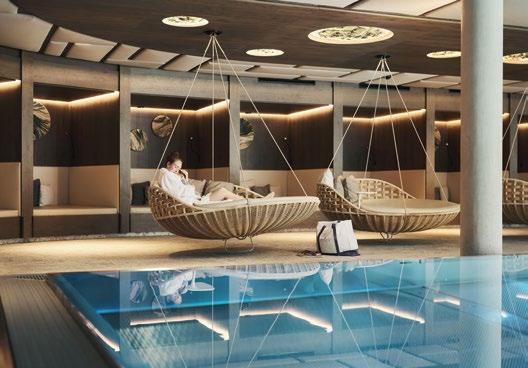
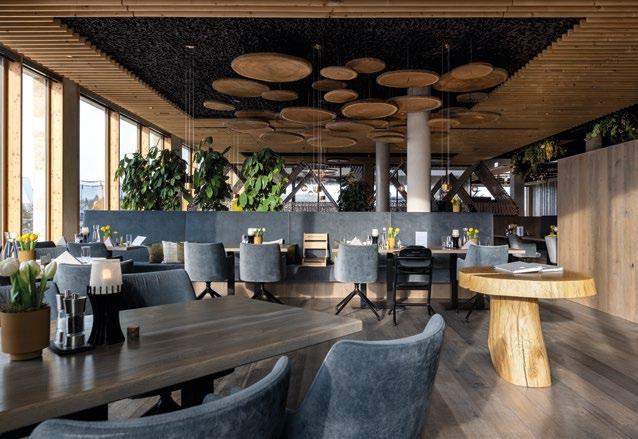
« they reunite with friends from previous visits! Here, fun knows no bounds, and each Familux Resort offers an allencompassing experience that caters to every age group, from zero to very, very experienced, leaving even the most defiant teenagers longing for more.
The secret lies in the genuine care and understanding provided by the 25 or more well-trained kids’ coaches in every resort, ensuring that the children’s safety and enjoyment are always prioritised. From becoming pirates, cowgirls, or Formula 1 drivers on the go-kart track to creating their own Champions League in the sports hall, kids are immersed in unforgettable moments that make each vacation truly special.
Meanwhile, Familux Resorts’ Feel Good Spas offer adults the rare opportunity to reconnect with their partner, rediscover themselves, unwind in tranquillity, and delight in some precious alone time. In 10 oasis-like treatment rooms, far from the hustle and bustle of daily life, parents can indulge in comprehensive wellness offerings and tailored experiences where the mind, body, and spirit are harmonised. Luxurious pampering treatments, from massages to scrubs and facials, accompanied by professional care and advice, transform family vacations into a time of miraculous contemplation and revitalisation.
Imagine relaxing on a gently rocking water bed, surrounded by the soothing scents of essential oils and the serene sounds of meditative music: this is a world of true indulgence and letting go. As parents revel in a welldeserved time-out, their children are just a stone’s throw away, having a blast at the fun-filled kids’ club or splashing joyously in the pool, complete with an endlessly long water slide, all under the watchful eye of expert Familux kids’ coaches. Knowing their children are in the capable hands of attentive caregivers allows parents to fully decompress and treat themselves to some all-important self-care while creating cherished memories with their loved ones.
Such magical moments aren’t just reserved for daytime at Familux Resorts; as the sun sets, each property continues to enchant guests with its evening adventures. After a delicious meal, the in-house theatre comes alive with
captivating shows that enthral the entire family. And what better way for parents to wind down the night than with a wine-tasting session at the Vinotheque featuring the finest vintages from the world’s most sought-after winegrowing regions?
What’s more, all four Familux Resorts are located in dream holiday destinations with direct access to ski areas and pristine nature. From spring to summer, autumn, and winter, there’s fun on the doorstep in every season, making these resorts the perfect year-round escapes. Warmer temps welcome hiking and biking in the lush outdoors, while cooler weather transforms the properties into snowy wonderlands, offering a variety of winter activities to satisfy all interests. The small slopes and ski lifts situated directly on the resort premises are the ideal practice grounds for toddlers and young children aged two to four. Extensive year-round adventure playgrounds add to the excitement, while numerous ski slopes at nearby resorts promise a thrill for all skill levels.
At the Oberjoch – Familux Resort in the Allgäu, ski passes are also included free of charge for the entire stay. From skiing and snowshoeing to tobogganing, the winter magic at Familux Resorts is boundless. The resort’s close proximity to lifts and impeccable in-house ski rentals make planning the perfect ski vacation a breeze. Even the little ones attending ski school are ushered to and fro by the hotel’s own shuttle service, promising an effortless experience for the whole family. Safety is paramount, of course, with complimentary sledges and helmets for children readily available.
The first and only premium hotel group in the world dedicated exclusively to families with children, Familux is a beacon of family-oriented luxury, where the true essence of togetherness is celebrated with passion and dedication. Familux Resorts offers much more than just a run-of-themill family holiday. Every aspect, from the attentive staff to the thoughtfully designed accommodations, envelops guests in a warm and welcoming embrace. From providing a safe haven for newborns to creating captivating experiences for temperamental teenagers, Familux Resorts redefines the art of family vacations. Here, family bonds are strengthened, lifelong memories are cherished, and freedom finds its true meaning.
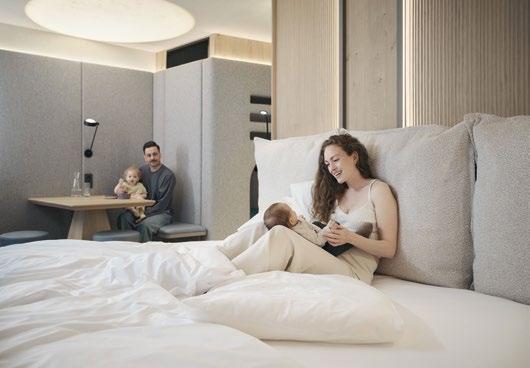
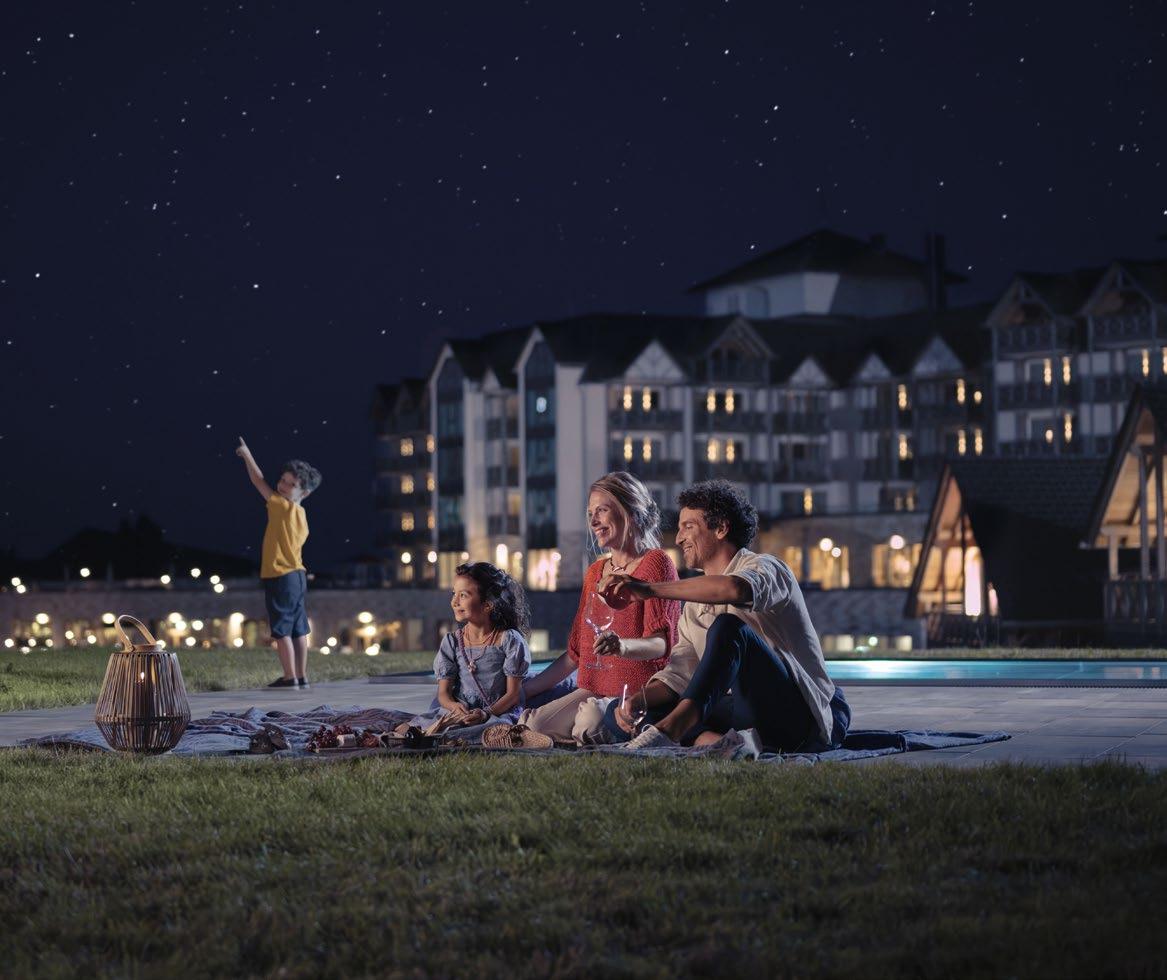
At familux resorts , dreams unfold in every detail. Parents unwind in serene spa retreats, indulging in ultimate relaxation, while gourmet cuisine delights every taste. For the youngest guests –from babies to teens – dedicated Kids Clubs spark joy and curiosity. Together, families create moments of pure happiness, bringing home a treasure trove of cherished memories to last a lifetime.








In an archipelago of show-stopping resorts, Baros Maldives has endured by staying true to itself: a small island with a big reputation, where the reef is on your doorstep, the service is superlative, and simplicity is elevated into something extraordinary.
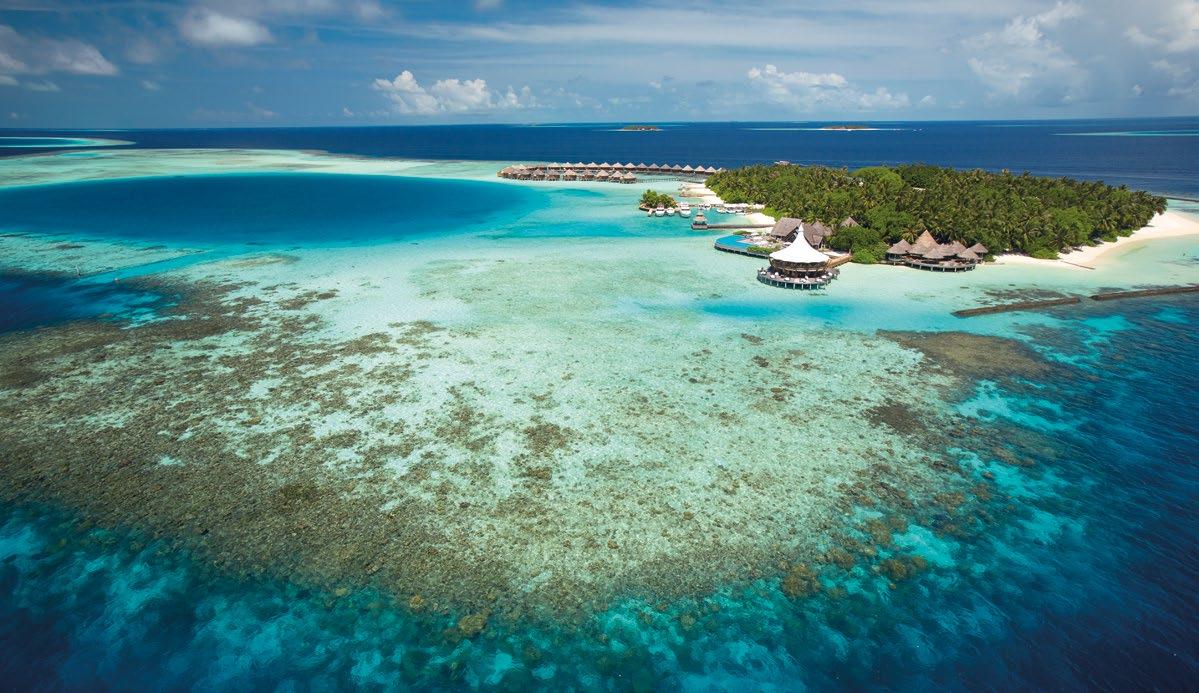
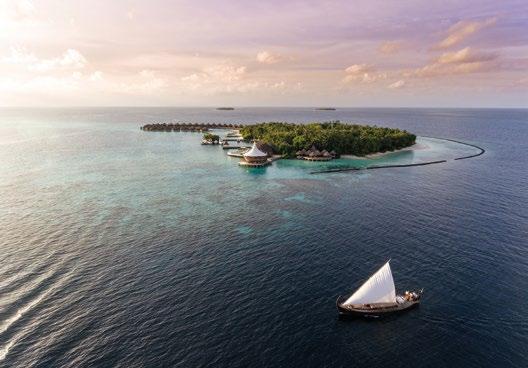
Set among the cerulean swathes of the North Malé Atoll, just 25 minutes by speedboat from the capital, Baros was among the very first (the third, to be exact) resorts to open in the Maldives back in 1973. Half a century later, this small coral island still feels like the blueprint for what Maldivian hospitality should be: intimate, effortless, and deeply in tune with its surroundings.
Arrivals today are smoother than in those early years— guests step directly onto the jetty rather than leaping into the surf from a dhoni—but the essence of the island has never been polished away. Baros has spent decades refining its craft, not reinventing it, and the result is an atmosphere that balances nostalgia with laid-back sophistication. The welcome may be understated, but the sense of place is
immediate. Powder-soft sand rings the island, coconut palms rise in loose symmetry, and the lagoon shimmers with the same impossible hues that first lured divers here half a century ago.
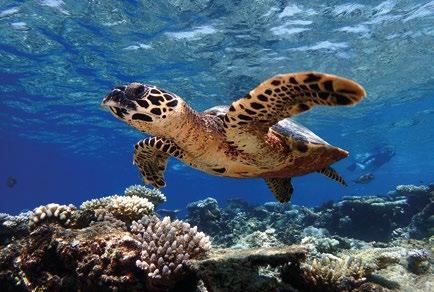
Much of Baros’s legend lies in its marine life. Just metres from the beach, the house reef is a living halo of colour: parrotfish grazing on coral, eagle rays gliding across the current, and sea turtles lazily surfacing. For many guests, mornings begin with a mask and snorkel, slipping into an underwater world that feels both untamed and reassuringly accessible. The island’s marine biologists are a constant presence, guiding snorkelling tours and running coral restoration projects where guests can take part in planting new life onto the reef. It’s an experience that is as much about giving back as it is about discovery.
Like everything at Baros, the accommodations pay homage to the beauty of the Maldives. Timber, stone, and thatch keep the architecture rooted in place, while expansive decks and pools invite the outside in. Choices range from simple beach abodes set in tropical gardens to sprawling overwater pool villas and, most recently, the two-bedroom Baros Retreat—a 280-square-metre hideaway launched earlier this year with its own butler, sprawling pool, and direct access to the sand. The design feels simultaneously indulgent and natural, blending into a fringe of jungle and sea as if it has always belonged there.
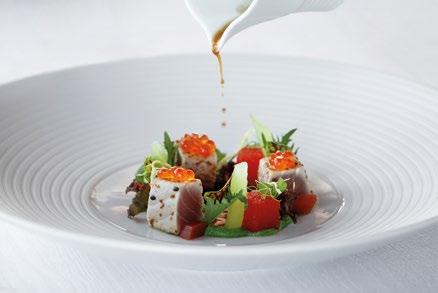
Dining is another of Baros’s drawing cards. The iconic Lighthouse Restaurant, its white pinnacle roof visible for miles, has been setting the standard for fine dining in the Maldives since it opened two decades ago. Perched over the lagoon, it is as much a landmark as it is a restaurant. Guests linger first in the Lighthouse Lounge, watching the sun dip behind the horizon with a glass of Champagne, before moving down to tables where lobster bisque is flambéed tableside and tuna is paired with foie gras—a little theatre to accompany the spellbinding Indian Ocean backdrop.
Not every meal at Baros comes with fanfare, however. Lime Restaurant offers casual all-day dining with views across the pool to the sea, serving dishes that lean on the island’s fishing heritage and fresh local produce. Cayenne Grill, set by the water, is more relaxed still, specialising in seafood and grilled meats with a hint of spice. And then there are the private dining experiences that have become
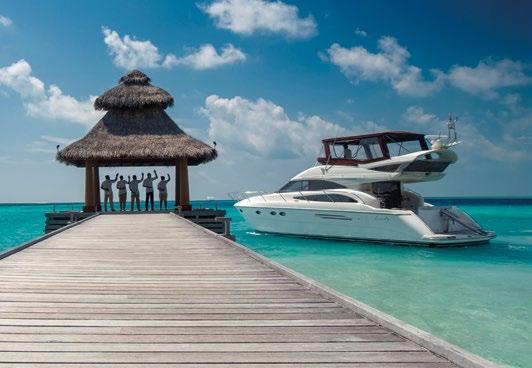
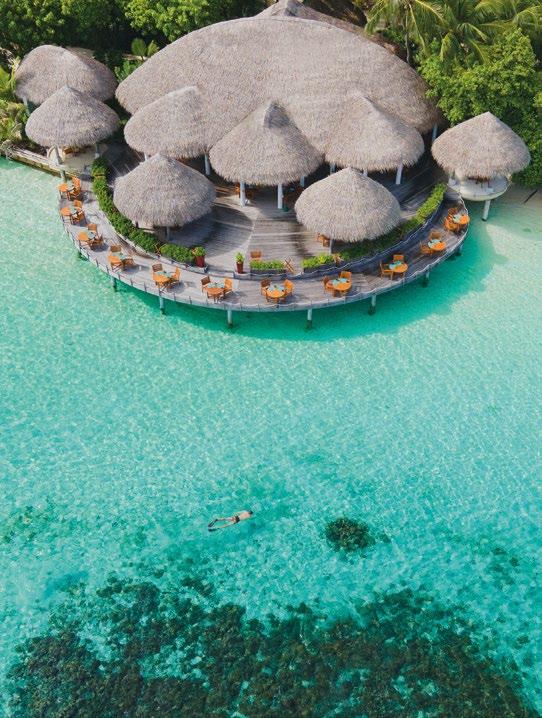
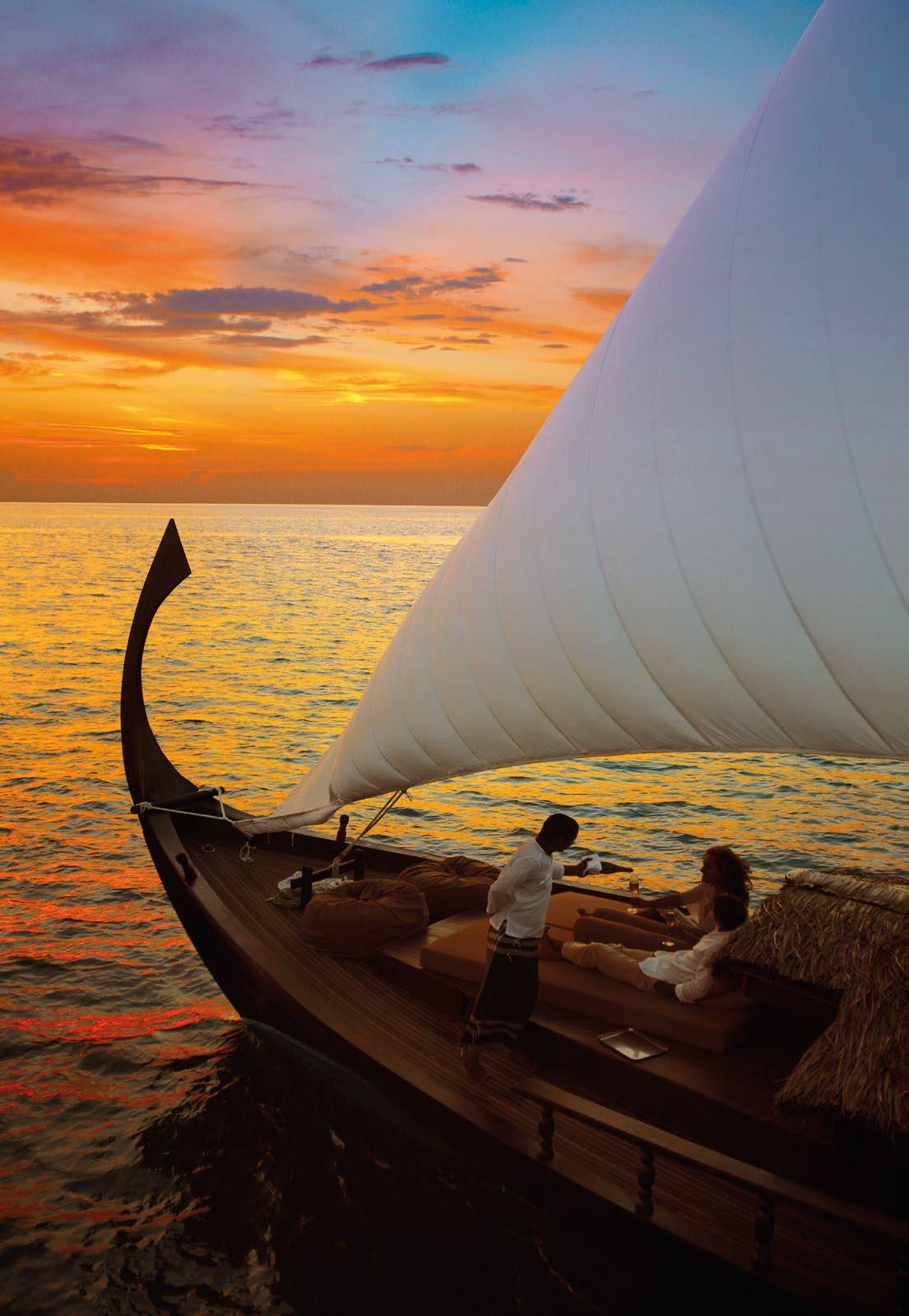
part of Baros lore: a beachside dinner for two under the stars, the lagoon’s Piano Deck transformed into a stage for supper, a traditional dhoni carrying guests into open water for a feast beneath the Milky Way. These are moments made to be cherished for a lifetime.
Naturally, romance is woven into the fabric of the island. Voted the “World’s Most Romantic Resort” multiple times, Baros has mastered the ability to set the scene for connection. Floating breakfasts in private pools, vow renewals on palm-lined beaches, candlelit dinners along the shore—the ingredients are familiar, but Baros delivers »
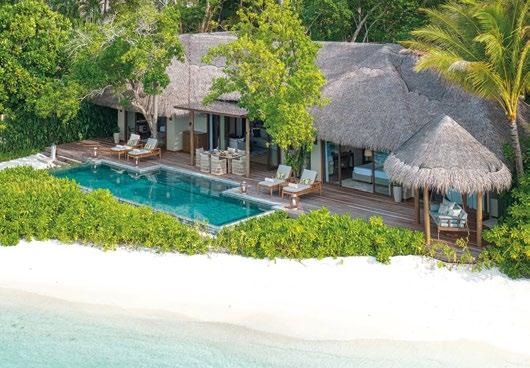
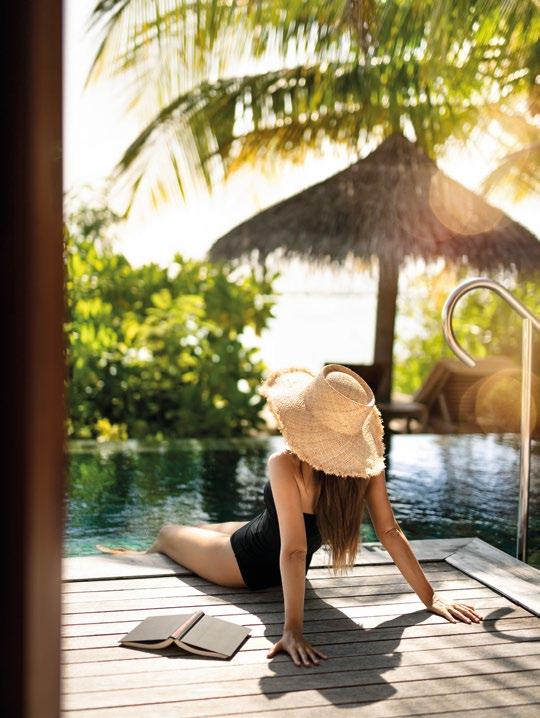
« them with a lightness of touch that makes them feel personal rather than prescribed. It helps that the resort is adults-oriented, welcoming only guests aged eight and above.
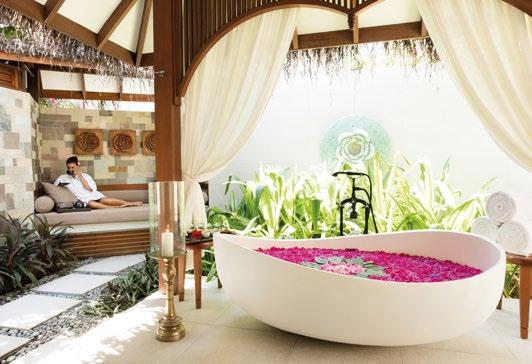
The property’s wellbeing offerings are another highlight. The Serenity Spa sits tucked among dense foliage, its wooden pavilions open to the breeze and the sound of the ocean. Expert therapists tailor treatments to each individual, drawing on both global wellness traditions and the scents of the tropics. Yoga is often held at sunrise on the Lighthouse deck, where the horizon sharpens with light, or
CLOCKWISE FROM LEFT Baros is all about creating memorable, authentic Maldivian experiences; togarashi-marinated pan-seared Yellowfin tuna at the Lighthouse; a sailing trip aboard a traditional dhoni is the perfect way to soak up the resort’s beauty; the Serenity Spa is surrounded by lush foliage.
at dusk on the soft shore as the sea turns glassy and still. Everything is done in tune with the rhythm of the island.
What sets Baros apart most of all, though, is its sense of continuity. While many Maldivian resorts are defined by their avant-garde architecture or latest concept, Baros has been shaped instead by people and memory. Some team members have been here for decades—legends in their own right, known by returning guests on a first-name basis. That longevity speaks to something deeper than service: a sense of belonging that passes between staff and visitors alike. It explains why more than 30% of guests return, some dozens of times, treating the island not as a resort but as a second home.
Even as it has evolved—introducing the Maldives’ first desalination plant in the 1980s, pioneering overwater villas, or most recently unveiling its new Baros Retreat—the island has resisted the temptation to become something it is not. Its 374 palm trees are still standing, its reef is still within swimming distance, and its architecture is still woven into the vegetation. In a destination that has become synonymous with extravagance, Baros holds its line: elegance, yes, but rooted in authenticity and nature.
To arrive here today is to step into a place that is both timeless and current, shaped by 50 years of careful evolution. It’s why Baros is more than just another Maldivian resort. It is, quite simply, the original island dream—and five decades on, it still shows how powerful simplicity, delivered with care, can be.
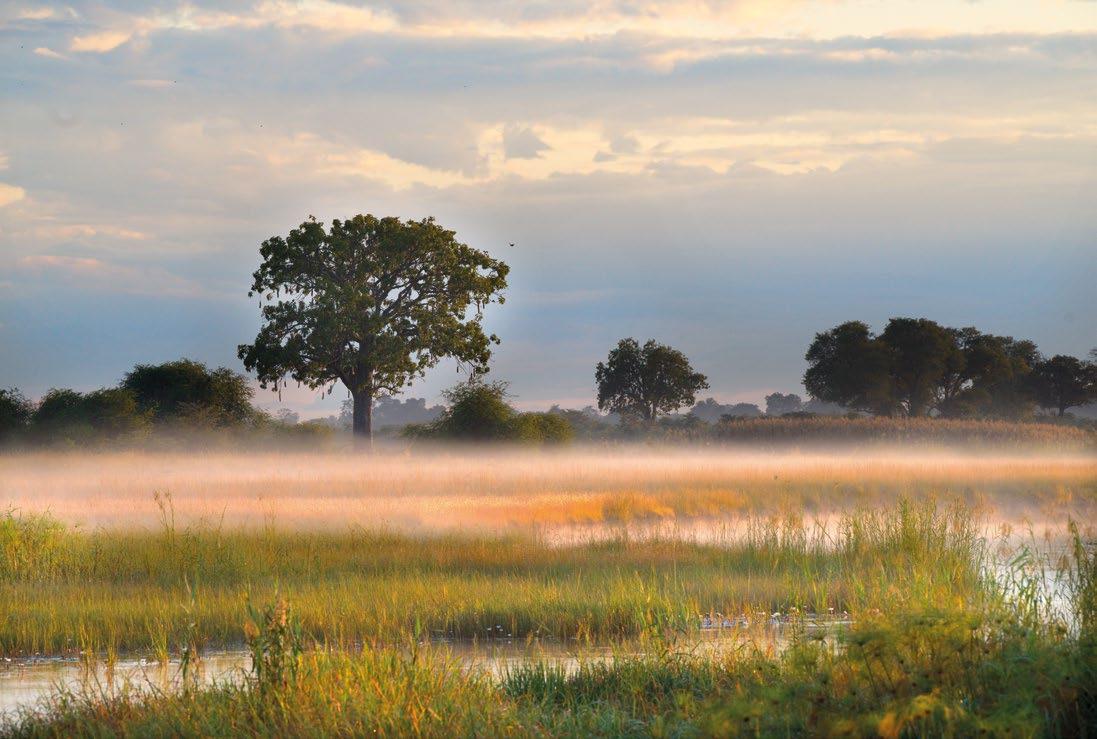
Hidden among reeds and waterlilies in Namibia’s Zambezi region, Namushasha River Villa is a floating sanctuary designed for immersion into both wilderness and stillness.
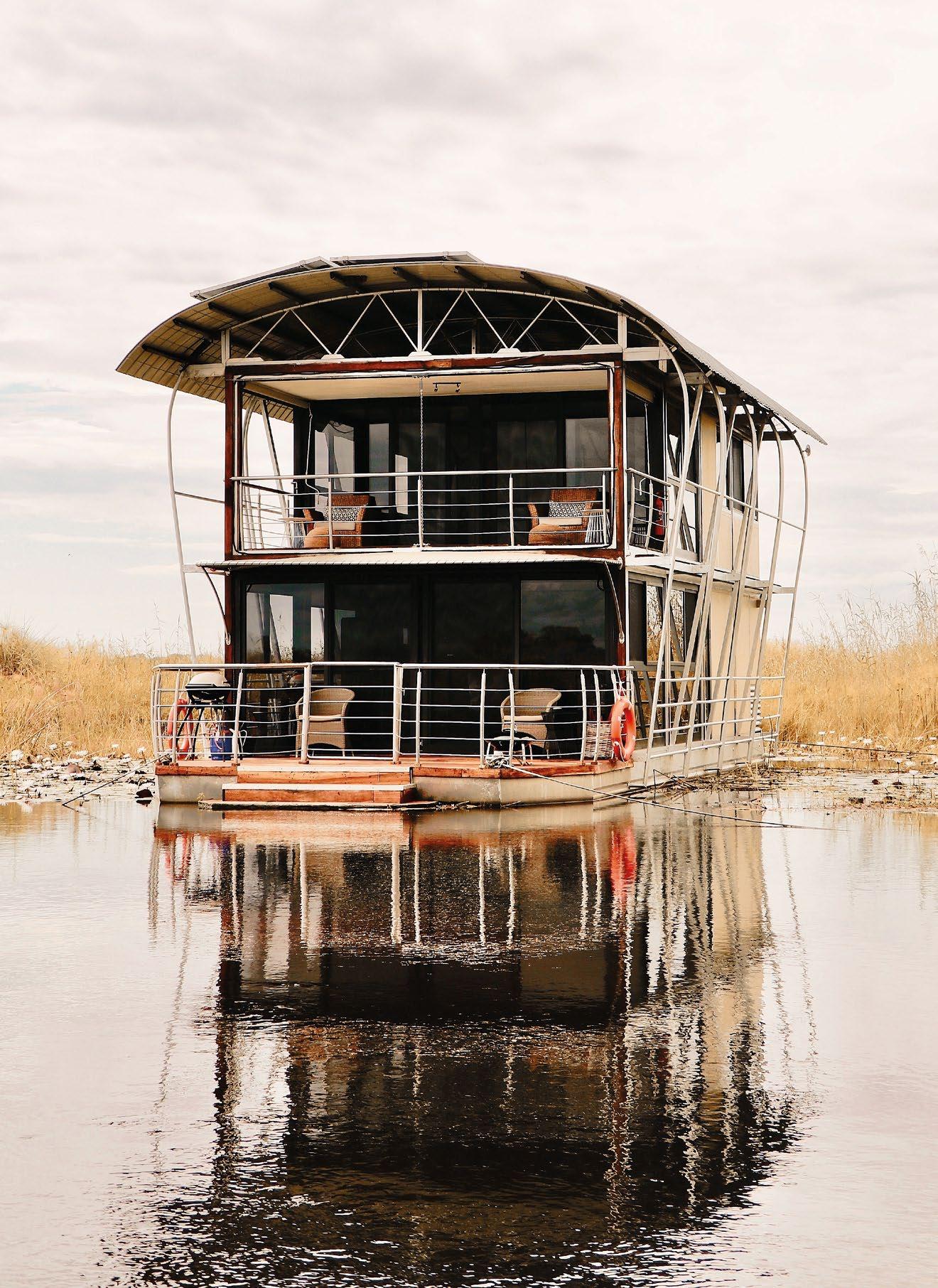
The Namushasha River Villa does not announce itself. It waits. Anchored in its own private channel of the Kwando River, hugged by reeds and dotted with waterlilies, it reveals its presence only as you approach, a sleek, glass-walled retreat afloat in Namibia’s untamed Zambezi region. Light dances across the water, bee-eaters wheel overhead, and hippos drift like ancient sentinels, halfhidden, half-glimpsed. In this landscape, the Villa does not compete with nature; it amplifies it.
Affectionately named Masheli—meaning “water lily” in Silozi, a local Bantu language—the Namushasha River Villa is a sanctuary designed for just two guests. This is not accommodation created to host many; it is crafted for intimacy, privacy, and indulgence. It is a retreat built for couples who want to step outside the ordinary and experience Africa as both revelation and refuge.
ABOVE The Namushasha River Villa gives guests unparalleled access to the Kwando’s breathtaking riverine habitat.
OPPOSITE The Namushasha River Villa is anchored in its own private channel of the Kwando River, offering the ultimate in seclusion and privacy.
Inside, the design speaks in a language of restraint. Polished floors, minimalist pronunciations of character, and floor-to-ceiling glass windows dissolve the line between indoors and out. The open-plan lounge, dining space, and fully equipped kitchen flow effortlessly onto a terraced deck that seems to hover over the water. Here, a private barbecue setup invites you to grill under southern skies freckled with stars. Meals are pre-prepared to your preferences, while a fully stocked private bar ensures evenings are as indulgent as they are unhurried. Nights become ritual: firelight dancing on the water, hippos grumbling in the dark, and frogs orchestrating a chorus that is uniquely African. Upstairs, an en-suite bedroom feels like a throne of perspective, with a four-poster bed framing the river and a balcony for unbroken reflection. The walk-in shower opens to a horizon shared with reeds and passing birds—proof that even in seclusion, you remain part of the wilderness. »
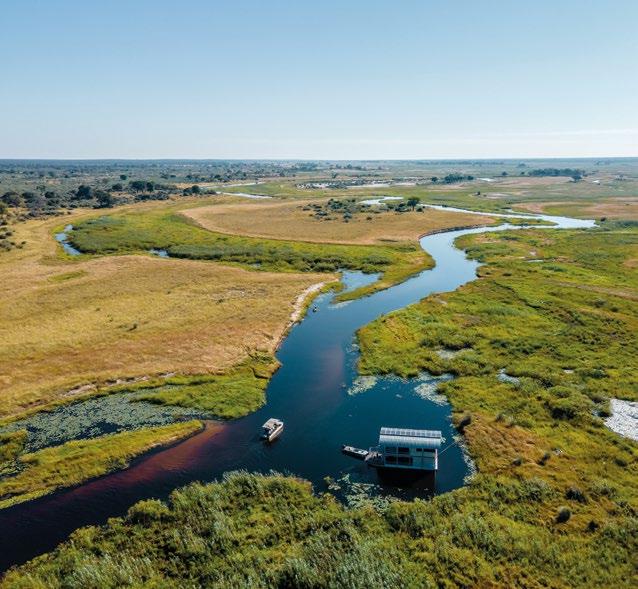
« Namushasha River Villa is all-inclusive by design. Every element—meals, drinks, and curated activities—is seamlessly woven into the experience so that nothing distracts from immersion. Despite its solitude, the Villa maintains a quiet tether to Namushasha River Lodge. Guests are transferred by boat, enjoy lodge services when needed, and remain connected by radio at all times. It is privacy without isolation, indulgence without interruption.
Days unfold at the pace of the river. Each stay includes an exclusive guided game drive into Bwabwata National Park, where elephants, buffalo, and sable antelope roam across floodplains alongside thriving local communities. Here, conservation and culture are inseparably linked, a reflection of Gondwana Collection Namibia’s ethos: travel that sustains, empowers, and respects. Park fees, refreshments, and transfers are also included, making the experience feel effortless while supporting the communities that call this land home.
Water, too, sets the rhythm of life at the Villa. Guests can embark on sunrise or sunset boat cruises. For the adventurous, guided fishing trips test patience and skill against the fierce tigerfish, or the more delicate tilapia and nembwe, all on a catch-and-release basis, ensuring the river remains as abundant for tomorrow’s visitors as it is today. For others, tranquillity is the greatest luxury: afternoons spent reading on the deck, sketching the silhouette of reeds, or listening to the timeless murmur of water as it drifts past. Every sense is nourished. Days carry the warmth of the sun balanced by the refreshing river breeze. Nights are cooled by crisp linen sheets accompanied by the sounds of nocturnal Africa—the fish eagle’s haunting cry and the hippo’s guttural grumble echoing through the darkness. Even silence itself has texture here: weighty, enveloping, and luxurious in a way no spa treatment can replicate.
Namibia, in this light, defies expectation. Beyond its famed deserts and shifting dunes lies a riverine world of floodplains, channels fringed with papyrus, and skies so vast they appear to fold into eternity. The Namushasha River Villa distils this essence into a single, unforgettable sanctuary. A private suite that reveals Africa as intimacy and luxury redefined.
But perhaps what sets Namushasha River Villa apart most is the hand (both literally and figuratively) of Gondwana Collection Namibia. With a portfolio spanning desert, savannah, and river landscapes, Gondwana Collection is not just a hospitality brand but a custodian of sustainable storytelling through uniquely tailored experiences. Its lodges and secret location offerings are not built to impose on their surroundings but to honour them. At the Villa, that philosophy is lived daily: through partnerships with local conservancies and through opportunities for guests to engage with culture in authentic, meaningful ways. To stay here is not only to experience luxury but to contribute to a cycle of preservation and empowerment. It is travel that leaves behind more than footprints; it leaves behind possibilities.
ABOVE Despite its seclusion, Namushasha River Villa is easily accessible by boat and is just a stone’s throw from Namushasha River Lodge.
BELOW Namushasha River Villa’s glass-fronted construction bathes the space in beautiful views.
For discerning travellers who measure indulgence not by chandeliers but by experience, Namushasha River Villa offers something rare. It is not luxury defined by excess but by space, stillness, and intimacy. It is sensory richness wrapped in silence; exclusivity bound to authenticity. It is the promise of a story that begins quietly on a river in northern Namibia and lingers long after the journey home.
Namushasha River Villa is not simply a place to stay. It is an invitation: to slow down, to listen, and to let luxury take the shape of silence. To visit is to float between worlds of contemporary elegance, raw wilderness, and enduring human tradition. Come to the river. Stay for the silence. Leave with a story only Africa can help you tell. Leave with Gondwana Collection Namibia in your heart.
If you would like to book a romantic getaway for yourself and your significant other, contact Gondwana Collection Namibia at travel@gcnam.com or visit gondwana-collection.com
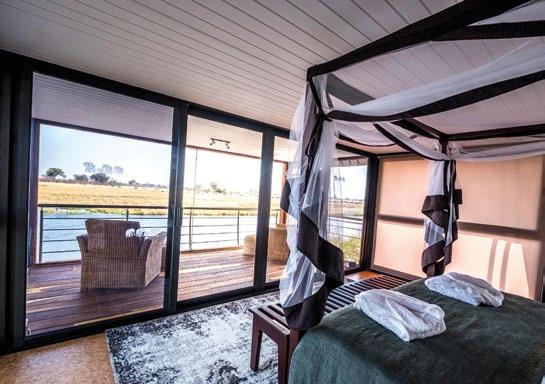
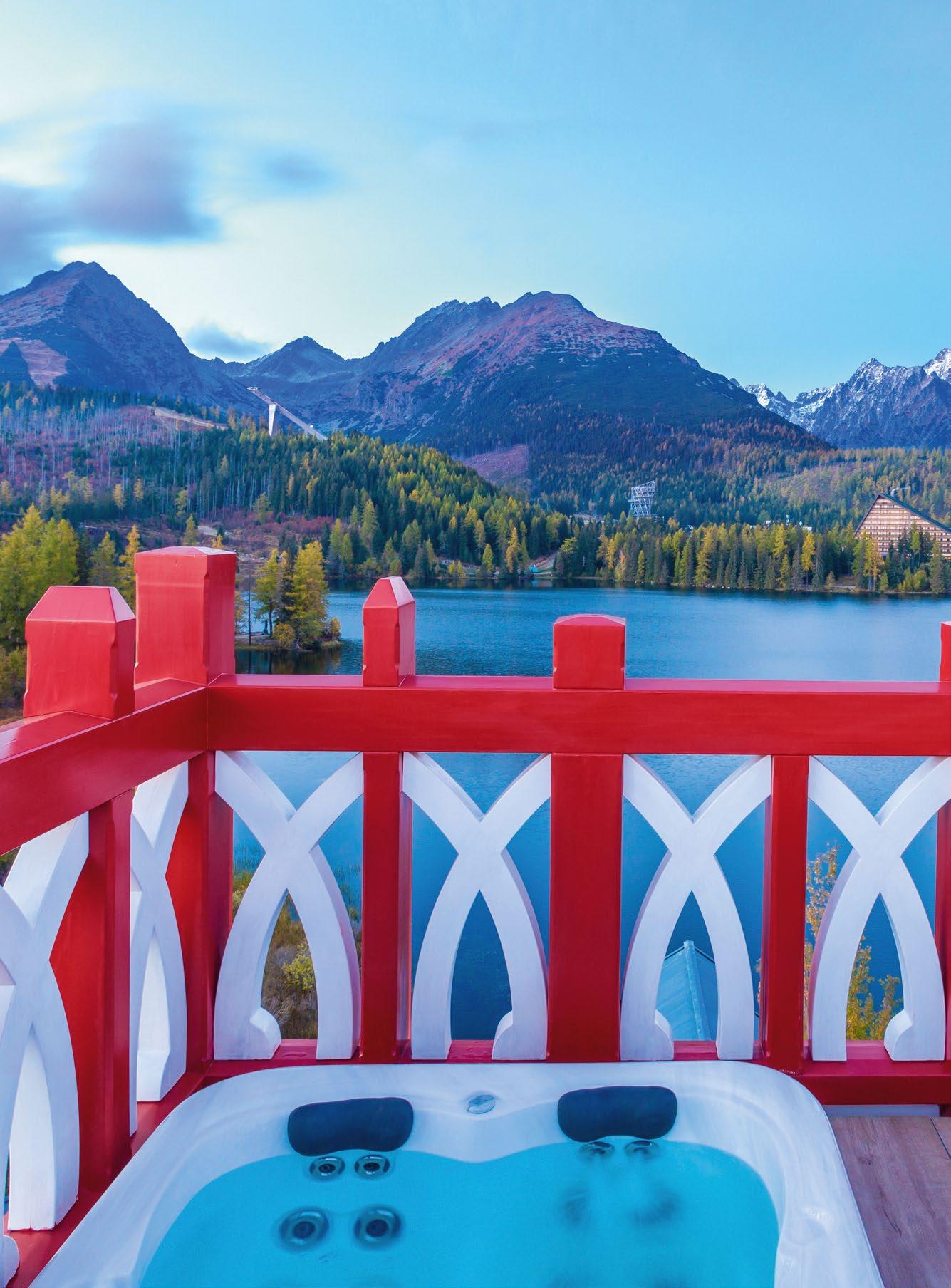
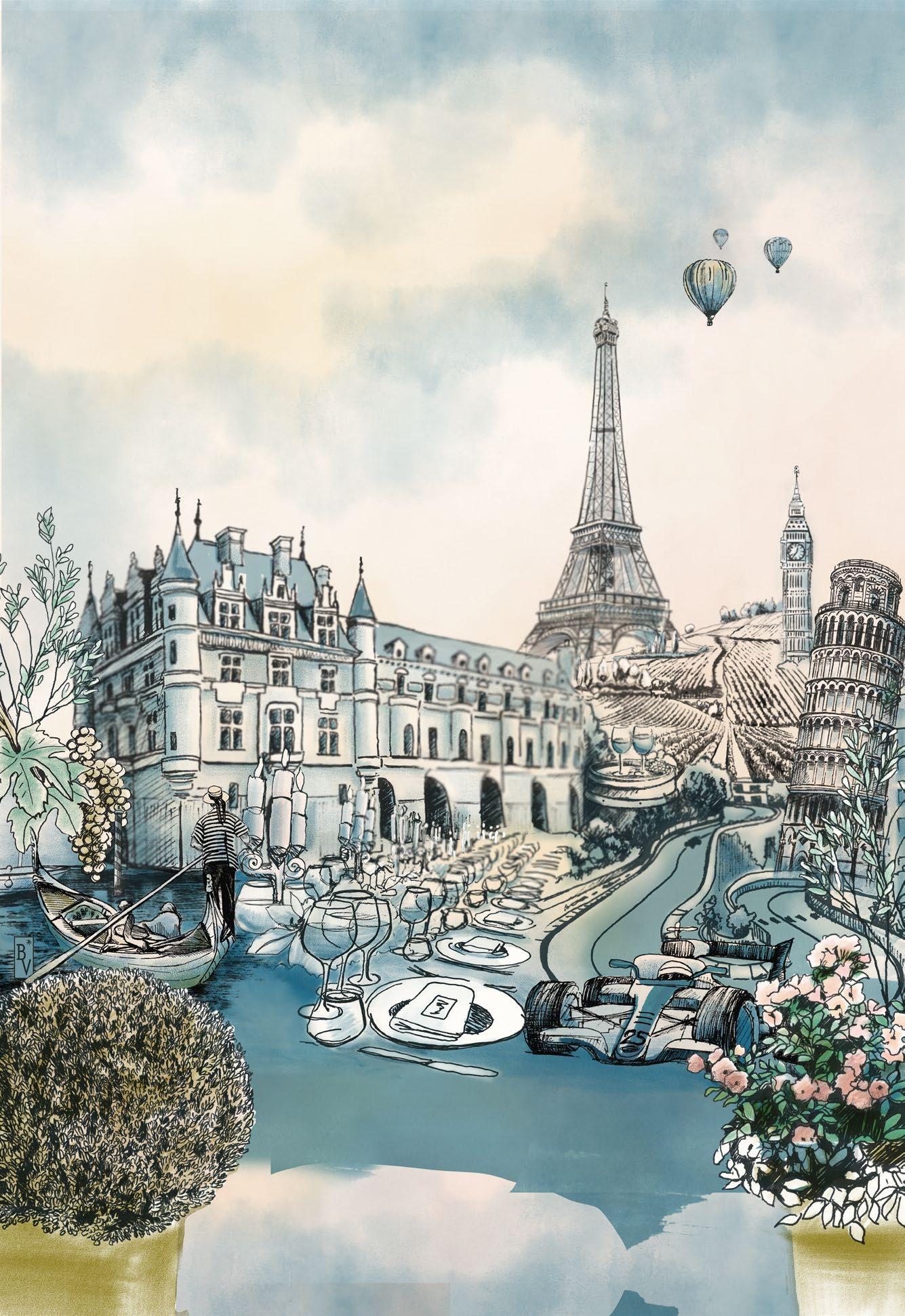


At Cheval Blanc St-Barth, design, nature, and imagination converge on one of the Caribbean’s most beautiful beaches, offering the perfect balance of elegance and ease.
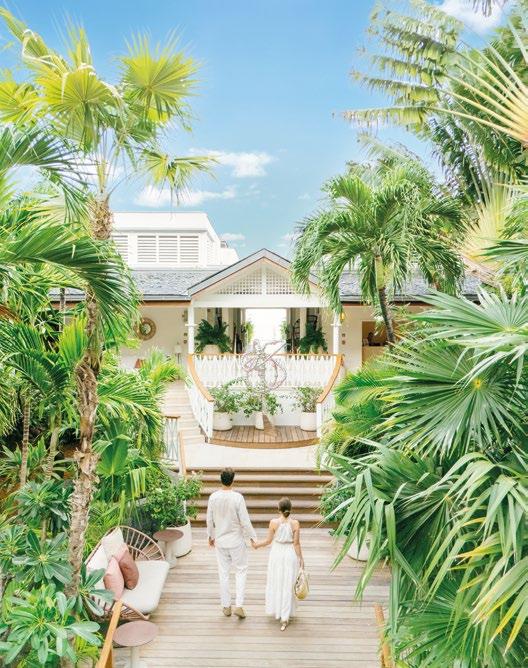
Flamands Beach on the picturesque island of Saint Barthélemy is one of those places that seems to have slipped out of a postcard and into real life—a crescent of pale sand, long and wide, with nothing but the Atlantic stretching out in front. At its quiet northern end, half-hidden by tropical gardens, lies Cheval Blanc St-Barth. The entrance is modest, marked only by greenery and the scent of bougainvillaea, but once inside, the sense of retreat is immediate.
Cheval Blanc has made a name for itself by creating Maisons that mirror their surroundings, and here the language is distinctly Caribbean. 61 rooms, suites, and villas are scattered across the hillside and gardens, each designed by Jacques Grange with the relaxed elegance of a beach house. White fabrics and sand-washed wood are softened with rattan chairs, wicker baskets, and flashes of colour that nod to the island beyond the windows. Walkways lead
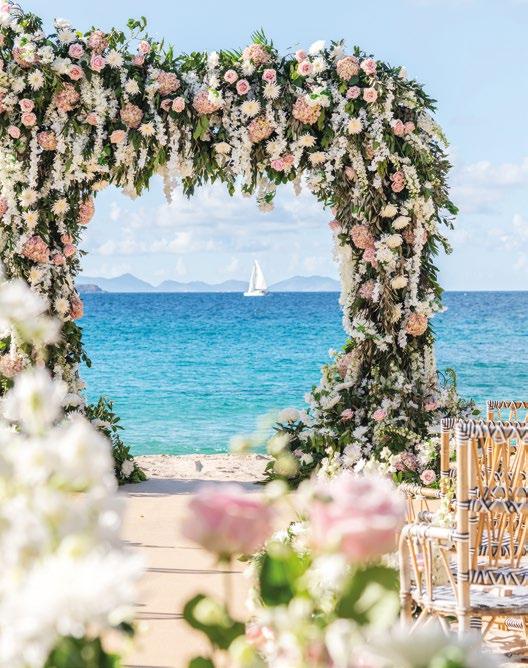
through hibiscus and palm groves, down to the beach or the saltwater pool, where the pace of the day naturally drifts between sun, sea, and shade.
Art plays its part, too. At the centre of the property, Jean-Michel Othoniel’s glass sculpture, Constellation of Pegasus, glimmers among the foliage, echoing the starlit skies above Flamands. Landscape designer Madison Cox shaped the gardens to feel more like a natural extension of the island than a creation imposed on it. Together, they ensure the Maison is more than a hotel—it’s a place where design, nature, and imagination are allowed to overlap.
Even the meals here celebrate the locale. At La Case, chef Jean Imbert builds his menus from the island’s larder— fish pulled straight from the sea in the morning, herbs from the gardens, fruit that tastes of the sun. French technique underpins it all, but dishes carry the brightness and cadence of the Caribbean. La Cabane, by contrast, is deliberately »
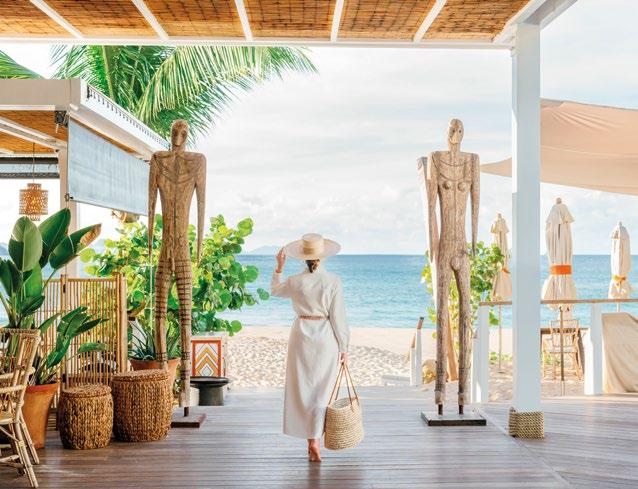
« laid-back: lunches eaten with bare feet in the sand, generous platters meant to be shared, and cocktails shaken at the Tiki Bar as the breeze rolls off the bay. Between the two, plus lighter bites and drinks at the White Bar beside the pool, guests can move from sophistication to informality without ever feeling a shift in quality.
The Cheval Blanc Spa by Guerlain, unveiled in its new form at the end of 2024, has given the Maison an even deeper sense of place. Parisian architect Isabelle Stanislas has reimagined it as a sanctuary within the gardens, using pale woods, raffia, and golden tones that pick up the island light. Five treatment rooms—including a double suite and an open-air pavilion—sit among hibiscus and palm trees where tortoises wander through the undergrowth. Treatments are exclusive to St-Barth: a vanilla-scented massage, a sculpting facial, and romantic rituals for two. Each draws on Guerlain’s signature Art de Toucher but feels rooted in the island, its aromas, and its languid tempo.
For all the comfort within the Maison, the pull to leave and explore the rest of the island is strong—and the team
CLOCKWISE FROM TOP
LEFT Cheval Blanc St-Barth holds a prime position on the beautiful Flamands Beach © Oliver Fly; the Maison’s restaurants take inspiration from the Caribbean, both in cuisine and aesthetic © Oliver Fly; Two-Bedroom Beach Suite © J. Le Menn; the Maison’s lush gardens are home to various plants and animals, including tortoises © Oliver Fly.
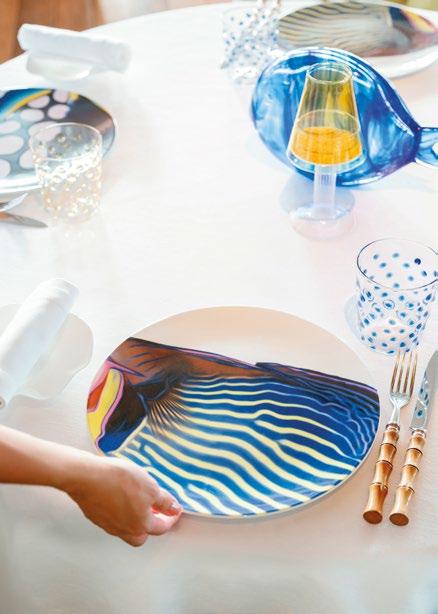
makes this easy. The Alchemists—the resort’s resident connoisseurs of fun—curate everything from pink-painted Moke rides to secret beach missions, shopping sprees in Gustavia’s chic boutiques, sunset sails, and snorkelling excursions where reefs reveal their shoals of bright fish and slow-moving turtles. Pick your perfect day in paradise and watch it unfold: nothing is out of the question here.
Cheval Blanc St-Barth was the first property outside mainland France to be awarded Palace status but the label hardly does it justice. Palace suggests formality, even grandeur; here, the spirit is softer, more elemental. It is about slowing down to the beat of the island—the barefoot rhythm of the French West Indies, as the Maison calls it— where the luxury lies in space, stillness, and the stress-free sense of belonging.
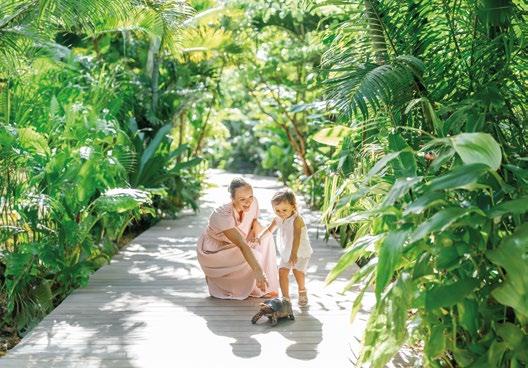
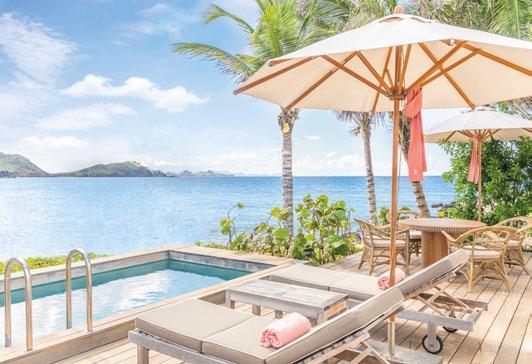



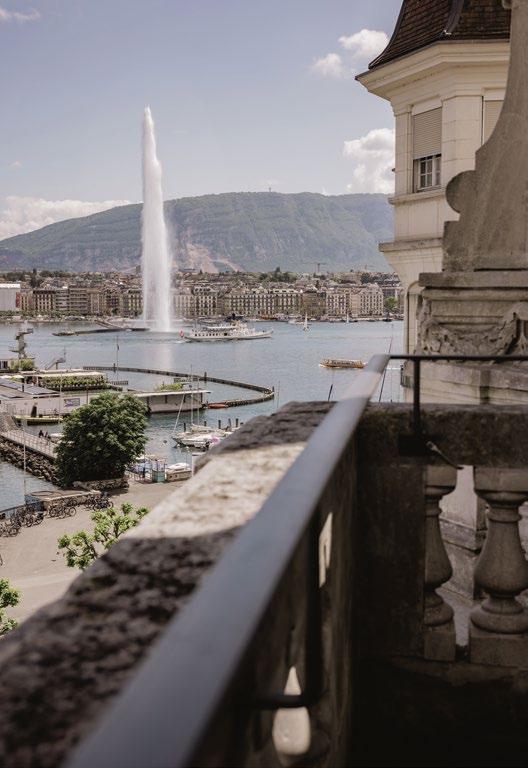
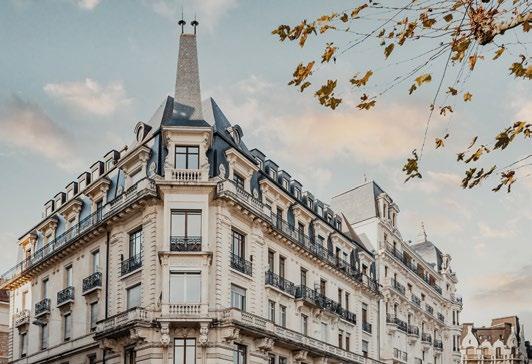
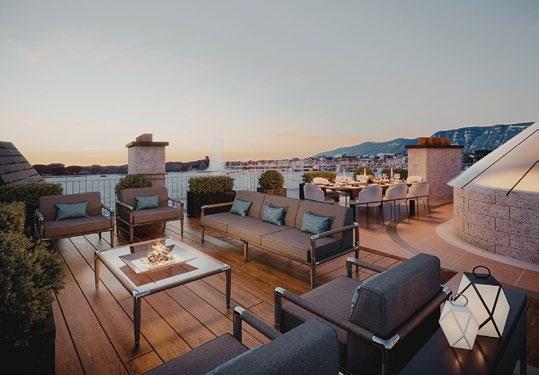
From discreet lakefront apartments in Geneva to ski-in, ski-out chalets in Courchevel, Ultima Collection shows how contemporary luxury can be both intimate and indulgent.
There are few names in European hospitality that have so quickly carved out a clear identity as the Ultima Collection. Less than a decade since its founding, the Ultima Collection has grown into a constellation of ultra-luxury residences, hotels, and chalets across the continent. Its ethos concentrates around creating environments where guests feel both indulged and at ease without relying on over-the-top designs or heavy-handed gestures. Instead, it focuses on hospitality that is personal and thoughtful. Two of its most compelling addresses—Ultima Quai Wilson in Geneva and Ultima Hotel Courchevel—show that philosophy from two very different perspectives: one urban and lakeside, the other etched into the French Alps.
In Geneva, Ultima Quai Wilson feels like an insider secret. Tucked along the lake’s southwest shore, just minutes from the city centre, it offers the intimacy of a
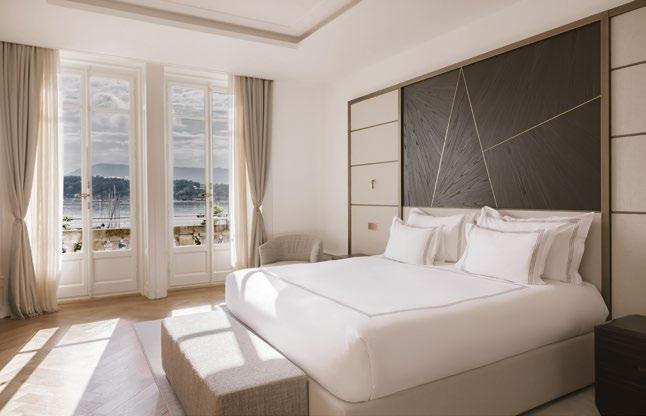
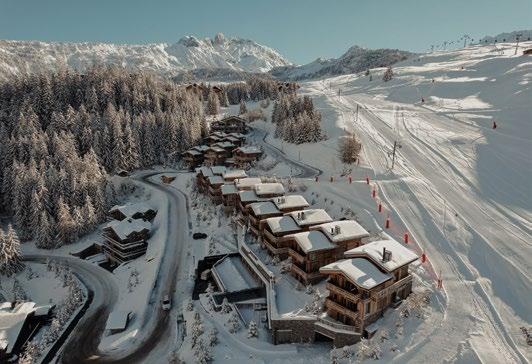
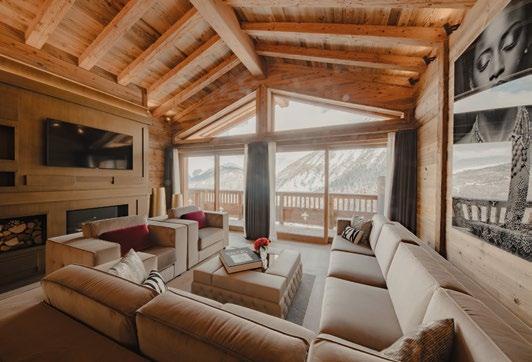
private residence with the polish of a palace. Behind a grand 19th-century façade are five full-floor apartments, available only by the week and only as buy-outs. Each comes with three to six bedrooms, sweeping living spaces, and terraces that look out across Lac Léman to the Jet d’Eau. The interiors boast rich Italian finishes, warm wood, and curated lighting, creating a cultivated townhouse aesthetic.
Over and above its beauty, what makes Ultima Quai Wilson stand out is its flexibility. Guests can choose to keep things understated, with daily housekeeping and the freedom to live much as they would at home, or they can elevate the experience with a full team of staff: private chefs, house managers, spa therapists, and drivers who make the city and the Alps equally accessible. A wellness floor, with its hammam, sauna, and treatment rooms, is there when a pause is needed. In short, this is a property that adapts to its guests rather than the other way round, and in Geneva’s mix of diplomatic formality and lakefront leisure, that discretion feels especially well-judged.
Up in Courchevel Belvédère, the atmosphere shifts with the altitude. At 1,750 metres, in the sunlit valley just above La Rosière forest, sits Ultima Hotel Courchevel, an extraordinary Alpine retreat with 13 freestanding residences designed for ski-in, ski-out ease. From the outside, they resemble classic chalets softened into the landscape; inside, they are multi-level private homes where service is built into the fabric of daily life. Each morning begins with a skier’s breakfast laid out by a butler, skis ready and waiting at the door. After a day on the pistes, dinners freshly prepped by private chefs await to be savoured among friends and family still in their ski gear.
Two spa areas anchor the après-ski mood, with pools steaming against the snow and hammams easing out the miles clocked on the slopes. The design here, too, is confident but not garish—marble bathrooms, mountainfacing terraces, and fireplaces made for long conversations. The hotel’s location means guests can dip into the energy of Courchevel 1850 within minutes yet retreat to Belvédère’s quiet as soon as they’ve had their fill.
This winter adds a new dimension to that experience: a culinary residency with Zuma, the globally acclaimed Japanese restaurant brand. From December, Zuma chefs will be taking over private dining at Ultima Hotel
OPPOSITE
Courchevel’s chalets, preparing bespoke izakaya-style lunches and dinners for residents and their guests. It’s a meeting of two worlds—Zuma’s precise, contemporary cooking and Ultima Collection’s commitment to privacy. Seen together, Ultima Quai Wilson and Ultima Hotel Courchevel capture the Ultima Collection’s distinctive stance in luxury travel. These are not hotels in the traditional sense, nor residences entirely given over to self-sufficiency. They occupy the space between, offering the comfort of home layered with the precision of five-star hospitality, always on the guest’s terms. Whether lakeside in Geneva or on the Alpine pistes, Ultima Collection builds the stage and lets its visitors set the scene.
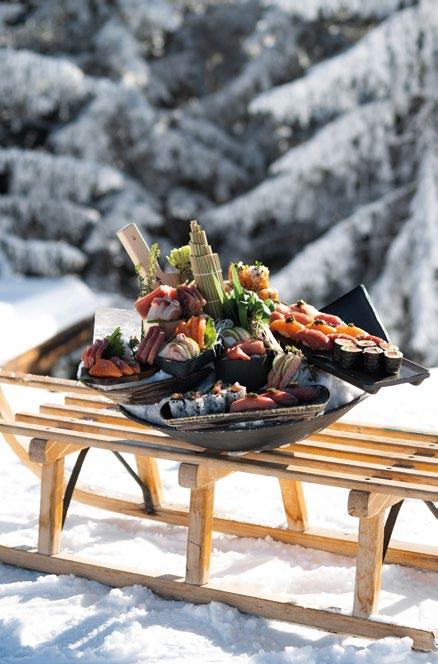
































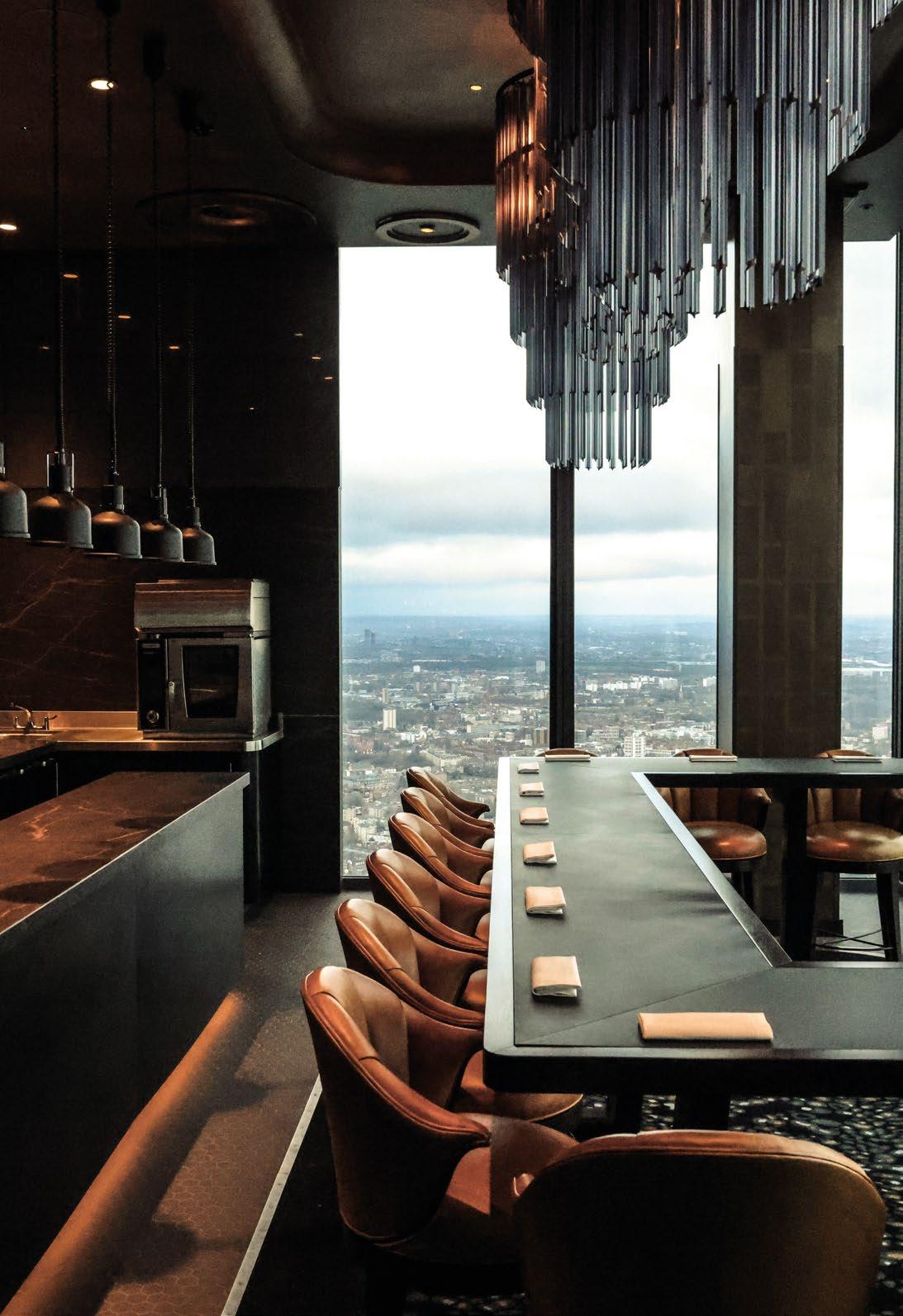
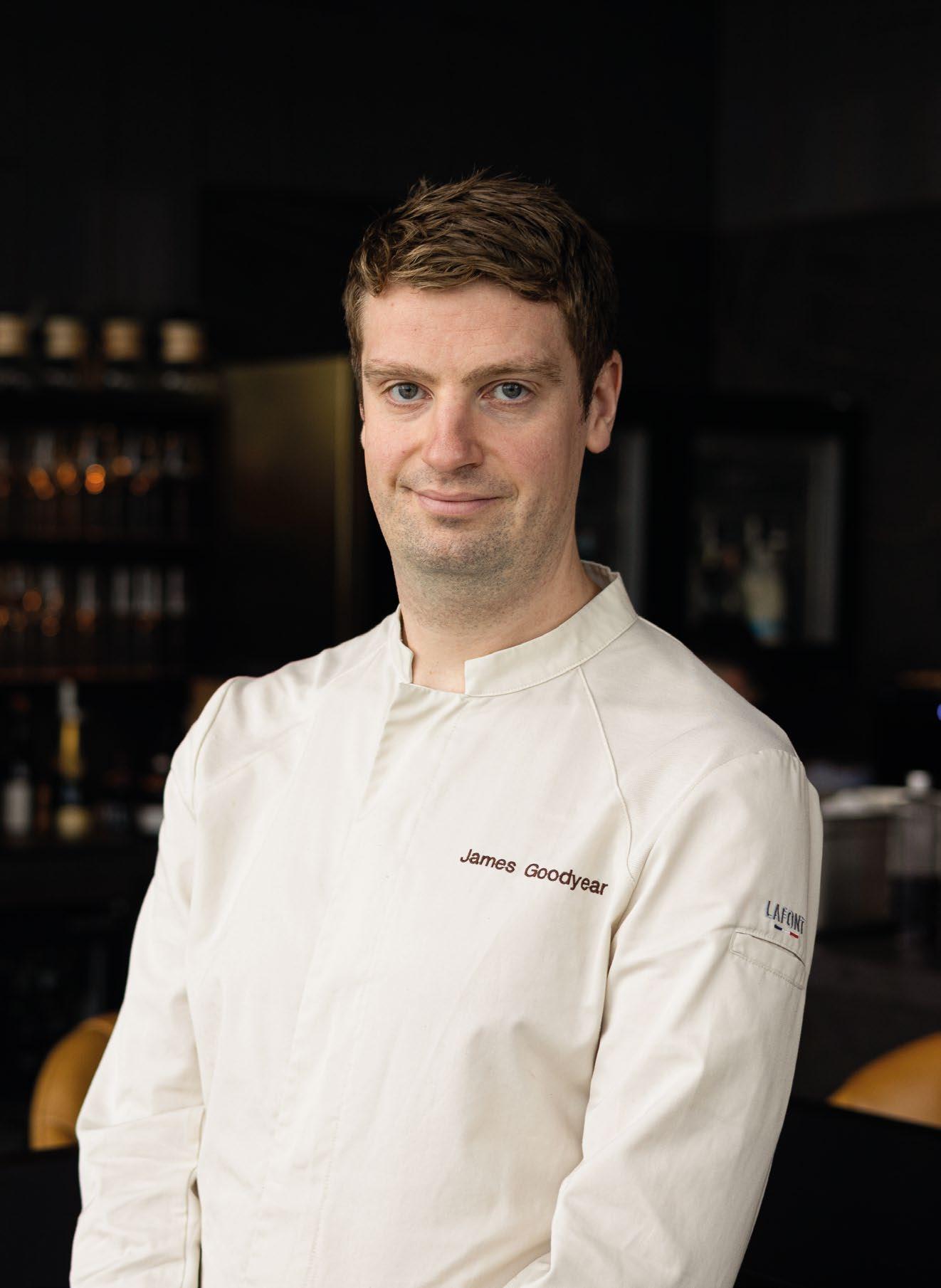
At Restaurant Gordon Ramsay High, a 12-seat chef’s table soaring 60 floors above London, James Goodyear distils Gordon Ramsay Restaurant at Royal Hospital Road’s legacy into a nature-rooted, season-led menu with French bones, Neo-Nordic restraint, and Japanese clarity.
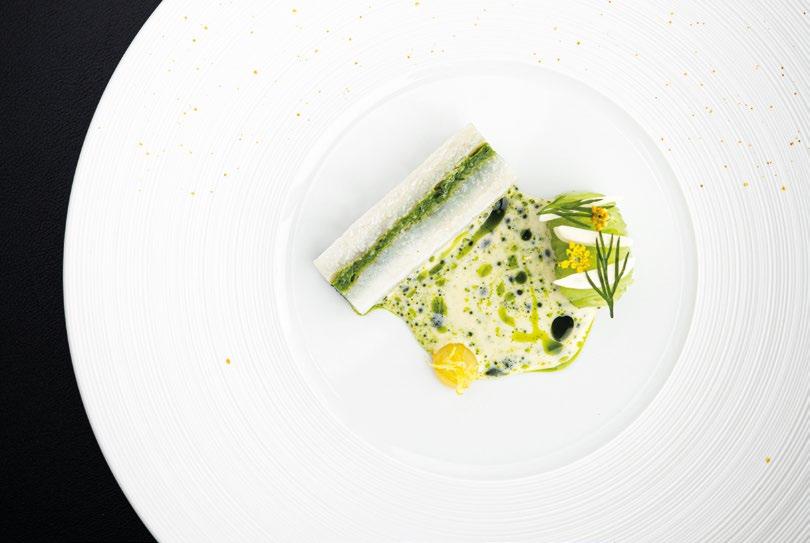
There’s no mistaking James Goodyear’s intent. In a sleek, glass-clad room set 60 floors above the city, where London’s landmarks unfurl before the naked eye—spires, shards, and bridges flickering beneath the night sky—he leads his team with exacting grace. Intimacy is the point. Precision, the means. And flavour, always the message. At Restaurant Gordon Ramsay High—the 12-seat chef’s table that crowns 22 Bishopsgate, the capital’s tallest building — Goodyear has been asked to do something both audacious and explicit: take the DNA of three-Michelin-starred Restaurant Gordon Ramsay at Royal Hospital Road and express it in a more immersive space, where every move is visible and every decision is audible.
Goodyear might have to ascend Europe’s fastest elevators every day to enter his workplace, but the chef was raised a long way from the skyline he now surveys. “I grew up in Warwickshire, surrounded by nature, which has always been a huge source of inspiration for me,” he says. “From an early age, I loved being outdoors, and that connection to the natural world sparked my creativity. I also spent a lot of time in the kitchen helping my mum, which gave me an early sense of joy in cooking. Those moments eventually grew into a real passion, and it felt natural to follow that path into becoming a chef.” The combination—woods and fields on one side, flame and pans on the other—threads through
his work even now: an instinct to keep things “clean and natural, without overcomplicating”, anchored by a classic French foundation.
If Warwickshire set the compass, Oxfordshire drew the first map. Five formative years spent under Raymond Blanc at Le Manoir aux Quat’Saisons taught Goodyear the building blocks of French fine dining. Those years gave him the discipline, technical ability, and creative ambition that would carry him abroad and back again, including stints at two-star Mugaritz in San Sebastián and threestar Maaemo in Oslo, where he learned about foraging, preservation, and the characteristic Nordic temperance. Stages at Per Se and WD-50 in New York, Relæ and Amass in Copenhagen, and Brae in Australia further broadened his perspective, giving him a global vocabulary to draw from —a lexicon of influences that still find their way into his plates to this day.
Then came his homecoming: to Evelyn’s Table, an intimate 12-seat restaurant in Soho where Goodyear served as Head Chef and Partner, earning national recognition and being lauded with a Michelin star. “Evelyn’s Table was a pivotal moment in my journey, as it revealed just how naturally I thrive in a chef’s table setting,” he explains. “It gave me the confidence to see that this intimate style of dining is where I feel most inspired and connected with guests.” The lesson was reinforced in Scandinavia, »
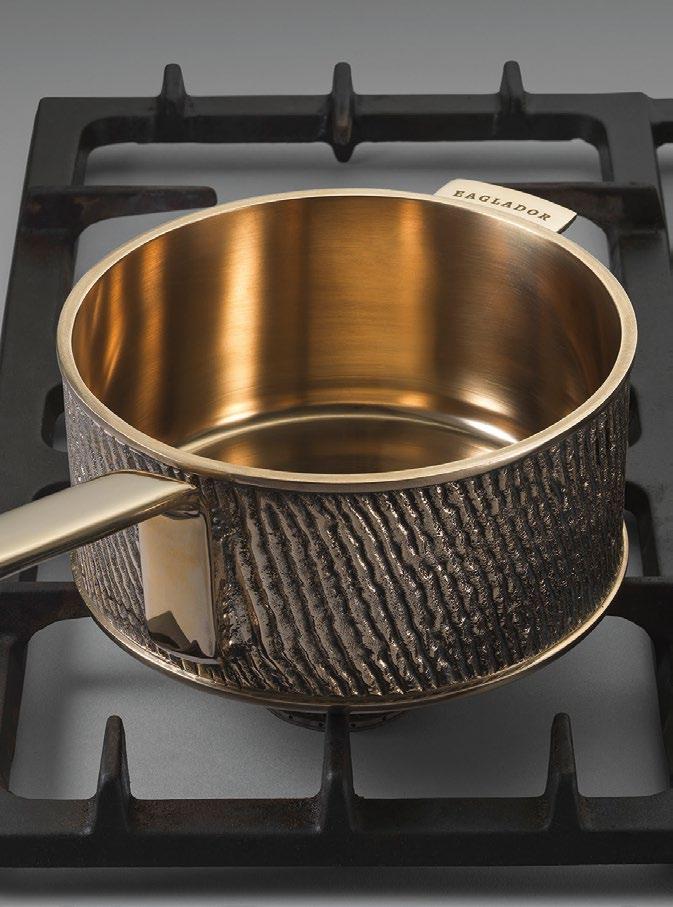
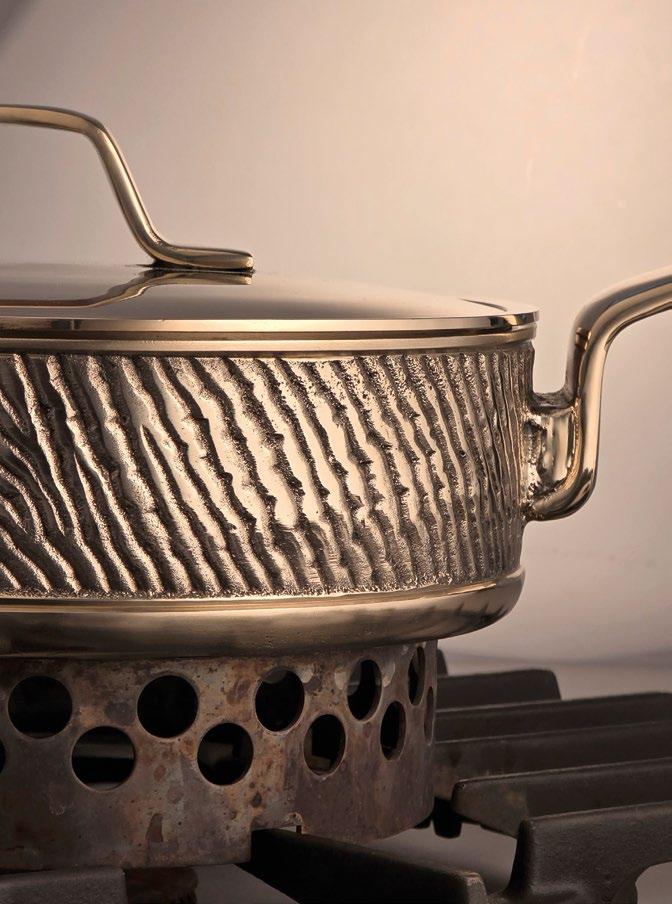
Legatum Culinæ meaning legacy of the kitchen embodies Eaglador’s vision of bronze cookware as a treasured heirloom, designed to bridge generations, carrying forward the love of cooking from your hands to your children’s and their descendants a�ter them. Kansa bronze (78% copper 22% tin) is o�ten referred to as the divine ratio due to its ideal balance of metals for cookware. This composition creates a durable, non-toxic metal that o�fers health benefits, protects nutrients, neutralises acidity, and enhances �lavour. Kansa bronze is highly functional for cookware as tin is naturally non-stick and non-reactive, whilst copper is ultra conductive.
www.eaglador.com

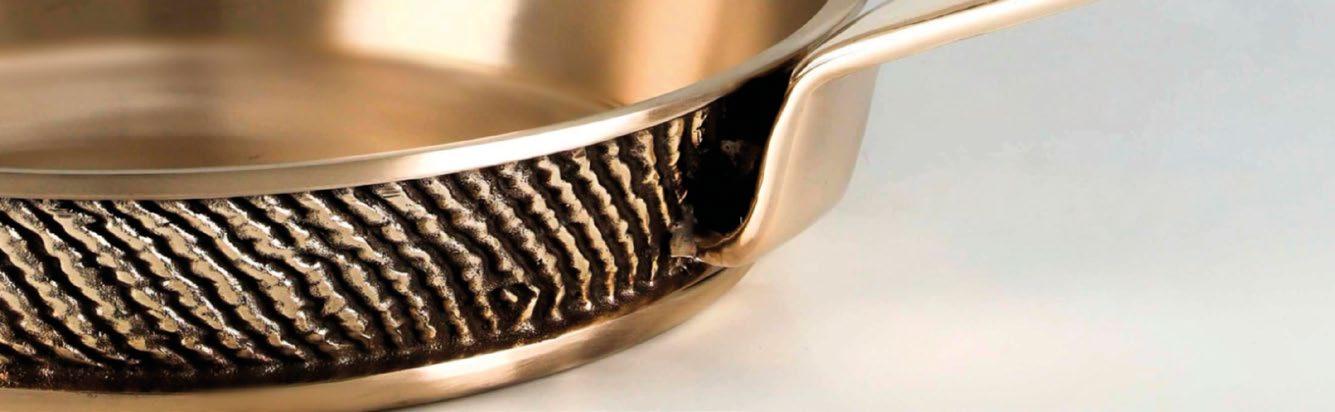
« “where open kitchens are a way of life”, setting him up perfectly for his next challenge: Restaurant Gordon Ramsay High. Here, the audience is close enough to see the flames kissing a squab and smell the smoke as it rises, to hear a sauce sizzle as it hits hot copper, and to watch a garnish land exactly where it should. Goodyear’s recipe for perfect execution in this high-stress, high-stakes setting is composure: “Preparation is everything. Almost all of the work is done in advance so that the kitchen during service is clear and engaging for guests to watch. We focus on precision and presentation so that what they see is a spectacle. With the open view and close interaction, we are always on show, which demands discipline and calm. There is no kitchen drama here, only theatre in the best sense.”
The restaurant itself exemplifies how the environment can be an ingredient. Purposefully designed by Russell Sage Studio to let the view do the heavy lifting, the darktoned, softly lit space comes complete with carefully selected materials that minimise reflections, allowing the cityscape beyond to stay in focus. “The view from the restaurant is one of the most breathtaking in London, stretching east toward Canary Wharf and Greenwich, sparkling beautifully at night,” Goodyear says. “Because the windows create reflections, we designed everything from uniforms to crockery with that in mind. Instead of
“We look at everything, from the sourcing of ingredients to the way dishes are served and presented, which is very different from a traditional restaurant. That process allows us to find a balance between heritage and innovation, and to forge our own identity as we evolve.”
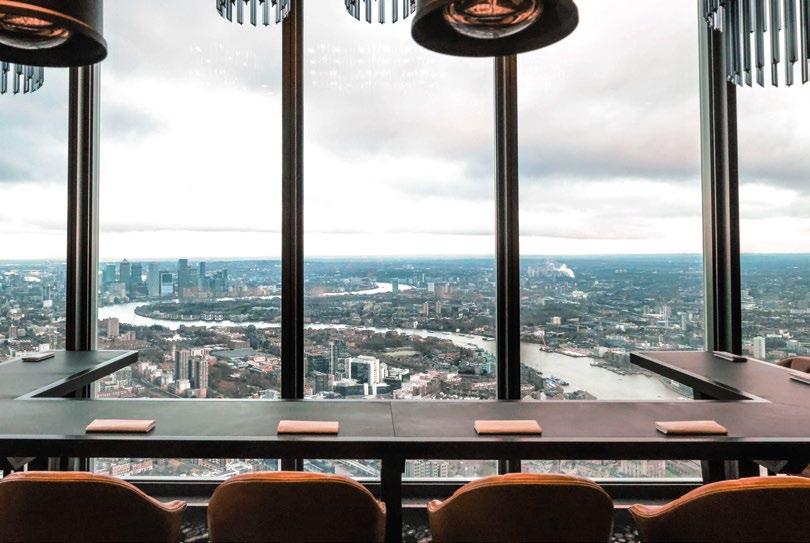
bright whites, we chose darker tones with subtle gold details, which complement rather than compete with the vistas. The crockery almost feels like a reflection of the skyline itself.”
On the plate is Carte Blanche—“Complete freedom to act as one wishes,” as the menu frames it—a format that refuses to set anything in stone. Goodyear describes why it matters. “It gives us the freedom to be truly creative. We can work with the very best produce available each day, responding to the moment rather than being fixed. That spontaneity brings a real sense of excitement to the experience.” But that doesn’t mean that past favourites are forgotten. “One dish that I am incredibly proud of is our bread course,” says the chef. “We took the much-loved Parker House roll, which has been served at Chelsea for decades, and elevated it into its own course. By adapting the flavours and accompaniments with each season, we allow it to shine as something to be celebrated, rather than just a side.”
At Restaurant Gordon Ramsay High, legacy is the scaffold. The task is to build something recognisably new upon it. Which James does “with a modern twist, incorporating Neo-Nordic and Japanese-inspired flavours and techniques”. The phrasing matters: not fusion but a dialogue—a willingness to let Japanese clarity and Nordic restraint refine French architecture rather than smother it.
That’s why you might meet a silky-smooth chawanmushi rich with deep onion flavour, or find that an olive oil sabayon, instead of cloaking a dish, elegantly lifts it with a delicate peppery edge. It’s also why desserts carry exactly the kind of tension between sweet and savoury that Goodyear enjoys, culminating in masterstrokes like candied figs with toasted vanilla, coconut, and fig leaf. “The DNA of Restaurant Gordon Ramsay is so strong and provides a remarkable foundation to build from. Every dish we create is carefully considered so that it respects that legacy while also reflecting our own vision,” he says. “We look at everything, from the sourcing of ingredients to the way dishes are served and presented, which is very different from a traditional restaurant. That process allows us to find a balance between heritage and innovation, and to forge our own identity as we evolve.”
Naturally, Goodyear always lets the produce lead the charge when it comes to dreaming up his dishes: “It always begins with the ingredient. Finding the best produce and honouring its natural essence is everything. From there, we add personality and identity, which creates a sense of place.”
Seasonality is strict but not doctrinaire; the team works with the suppliers Ramsay’s restaurants have trusted for decades, giving Restaurant Gordon Ramsay High access to the finest produce available. “We are very fortunate to work with the outstanding suppliers that Restaurant Gordon »
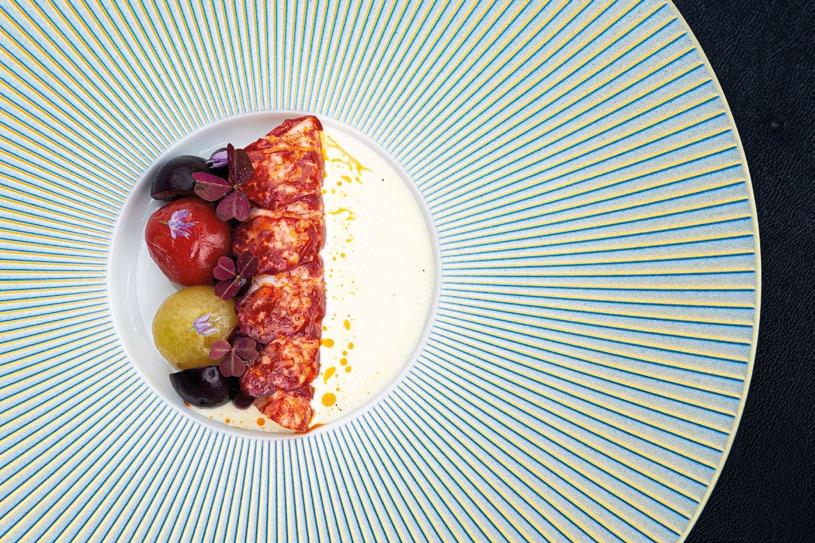
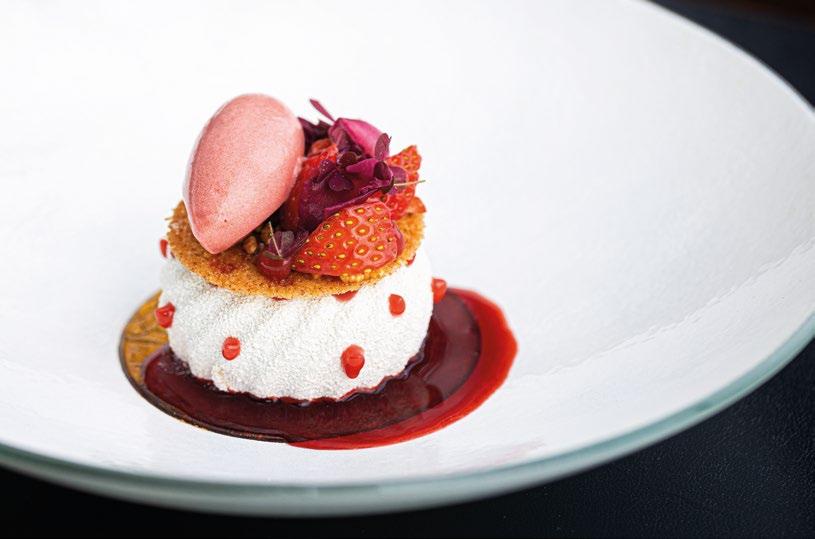
« Ramsay has partnered with since its opening in 1998. Their quality is second to none, and the trust built over decades is invaluable.”
Seafood, unsurprisingly, is a constant. “I have a real love for seafood, particularly British seafood, which I truly believe is among the best in the world,” says Goodyear. “Shellfish, in particular, plays an important role in our menus, and it appears throughout the year in different forms.” The line tracks from a cured sea bream set atop a crisp buckwheat shell to oyster ice cream sweetened with plum, and a perfectly poached native lobster brightened by sauce américaine. When fish gives way to fowl and field, the plates are equally considered: pigeon with bitter woodland notes of juniper and cep; Cornish turbot flanked by artichoke and smoked bone velouté; and a creamy St. Jude cheese balanced with verjus and golden raisins. Through every course, impeccably timed and expertly portioned, Goodyear’s love for the natural world and its bounty of gourmet gifts shines through. “Everything we do feels grounded in nature. Our dishes are seasonal, natural, and often feature floral garnishes or ultra-fresh produce, connecting us to the land. A classic French foundation underpins my style, but I love to celebrate simplicity and the beauty of ingredients in their purest form. It is about keeping everything honest and rooted in the environment.”
The service, too, feels honest, with Goodyear and his brigade of chefs taking turns to present each course, adding a personal touch to the dining experience. “My philosophy is to treat food as both a creative outlet and a way of connecting with the environment,” Goodyear says. “At Restaurant Gordon Ramsay High, we not only celebrate the quality of the produce but also the experience of dining. Each dish is carefully designed, but just as much thought goes into how we interact with guests and create a sense of theatre, so that the food, service, and atmosphere come together as one. We want the atmosphere to feel positive, warm, and enriching. Our aim is that guests leave feeling uplifted, not only from the food and drink but from the entire experience. Creating that lasting memory for each guest is what drives our team.”
Just a few months old, Restaurant Gordon Ramsay High may still be in its infancy, but James Goodyear speaks of its future with conviction. “My goal is always to reach new heights, both creatively and technically, while continuing to push the boundaries of guest experience. I see Restaurant Gordon Ramsay High as a place that will keep evolving, finding new ways to inspire and delight everyone who walks through our doors.” His words carry both reverence and resolve, an acknowledgement that legacy must be honoured even as new ground is broken—something the chef is achieving with incredible poise and humility.
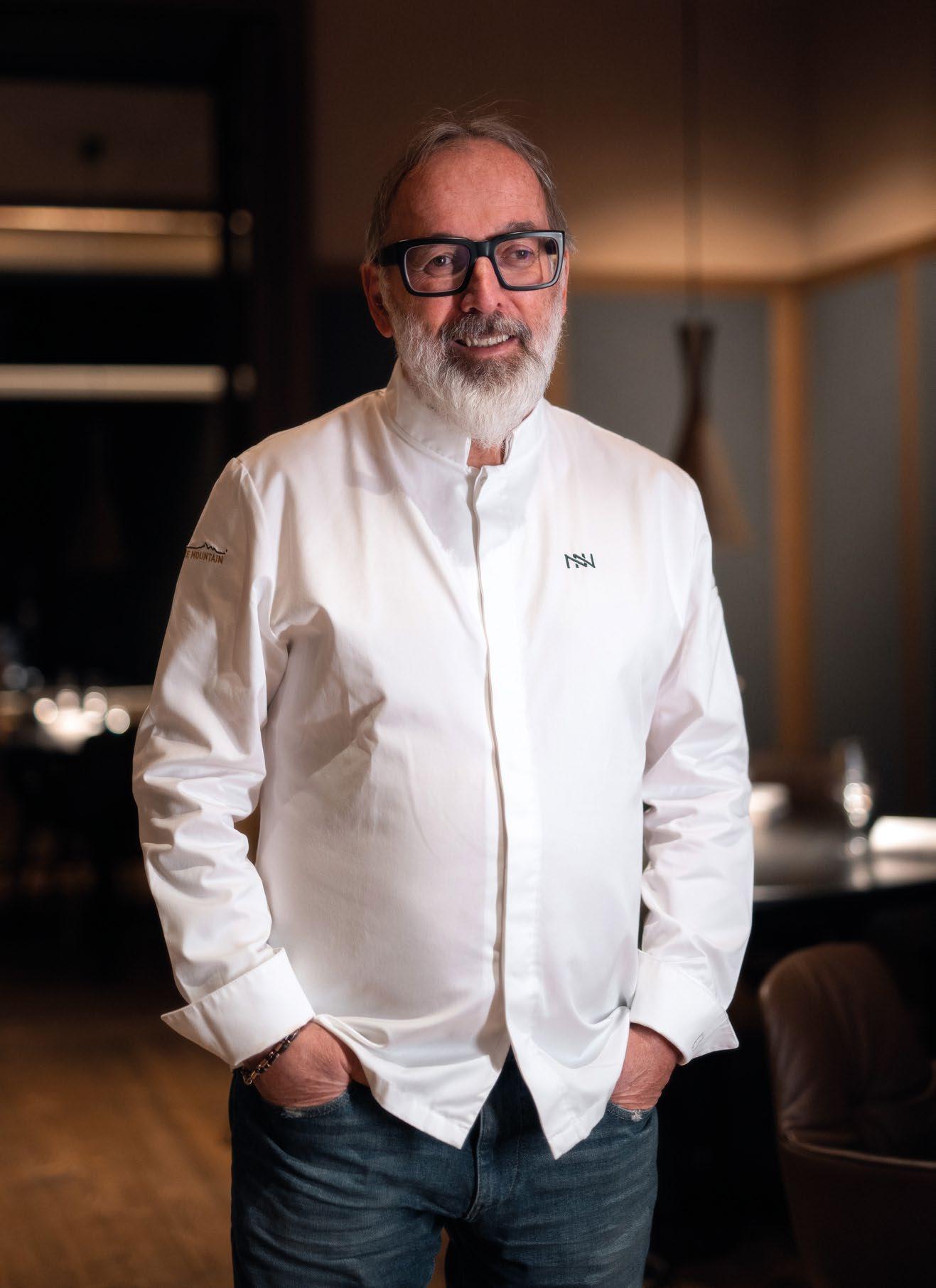
For Norbert Niederkofler, cooking is more than craft—it’s culture, connection, and conscience. From simple family meals in South Tyrol to three Michelin stars, his career is a testament to food with purpose, built on a philosophy rooted in nature, community, and respect.
In the shadow of the Dolomites, where jagged limestone peaks rise like cathedrals against the sky,
Norbert Niederkofler found both his beginnings and his destiny. Born in South Tyrol, the chef spent his childhood immersed in nature, enjoying homecooked meals made using local produce. “I grew up in a small village in the Dolomites. My family and I always lived with the seasons. We didn’t have so much, but we had good, simple food—what the garden gave us, what we could preserve. I remember my mother cooking in the kitchen, using everything, no waste. The kitchen was always the most important room for me. There were always people around, laughing, chatting; it was warm and a great atmosphere. These memories stayed with me,” he recalls.
Today, that memory has evolved into a philosophy known around the world as “Cook the Mountain”—a way of cooking and living that values seasonality, locality, and respect for nature. “With Cook the Mountain, I try to bring back this way of thinking—using local ingredients, respecting nature, not just cooking but telling the story of the land and the people behind it.”
Unlike many of his peers, Niederkofler didn’t spend his childhood aspiring to don chefs’ whites or attain Michelin stars. His passions were outdoors—skiing, climbing, and
breathing the mountain air. “To be honest, I didn’t dream of becoming a chef when I was young. I wanted to ski and be outside! But then I started working in a kitchen in Germany, and there was one chef who really believed in me. He gave me responsibility, pushed me. That was the moment when I thought, ‘maybe I can do this’. Then I travelled, worked in many countries—America, Switzerland, Austria—and I fell in love with this job. Cooking is not only a technique for me— it’s emotion, connection, culture. My years in the US and Germany taught me discipline, precision, and the courage to think differently. When I returned to South Tyrol, I saw my home with fresh eyes—its culture, its ingredients, and its people. My mentor in Germany, Eckart Witzigmann, pushed me to respect the craft above all, and that has stayed with me.”
The return to his native mountains was a turning point. After years of seeking inspiration abroad, he realised that the answers were rooted in the valleys, forests, and traditions he had known all along. “I worked in many kitchens, always trying to learn and grow. I think it’s important for a chef to travel, to see different styles, different ingredients. However, the biggest change for me was when I returned to South Tyrol. I understood that what I was looking for was actually already here—in the traditions, in the people, in the »
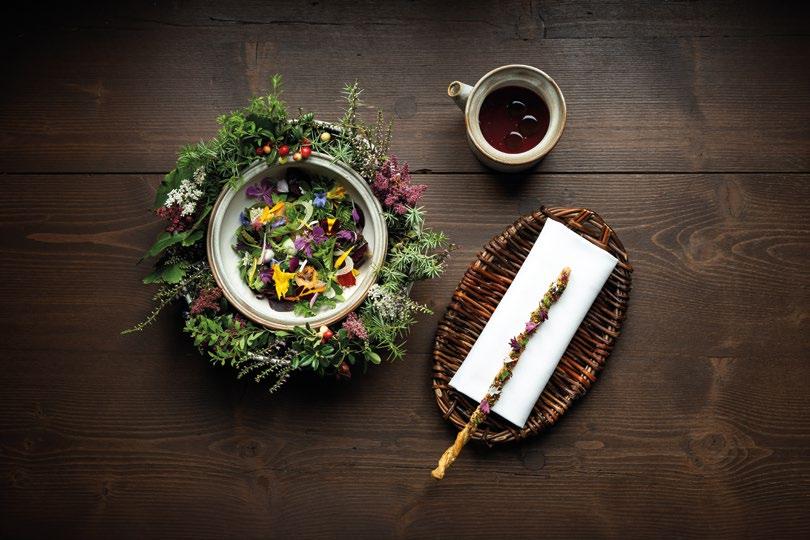
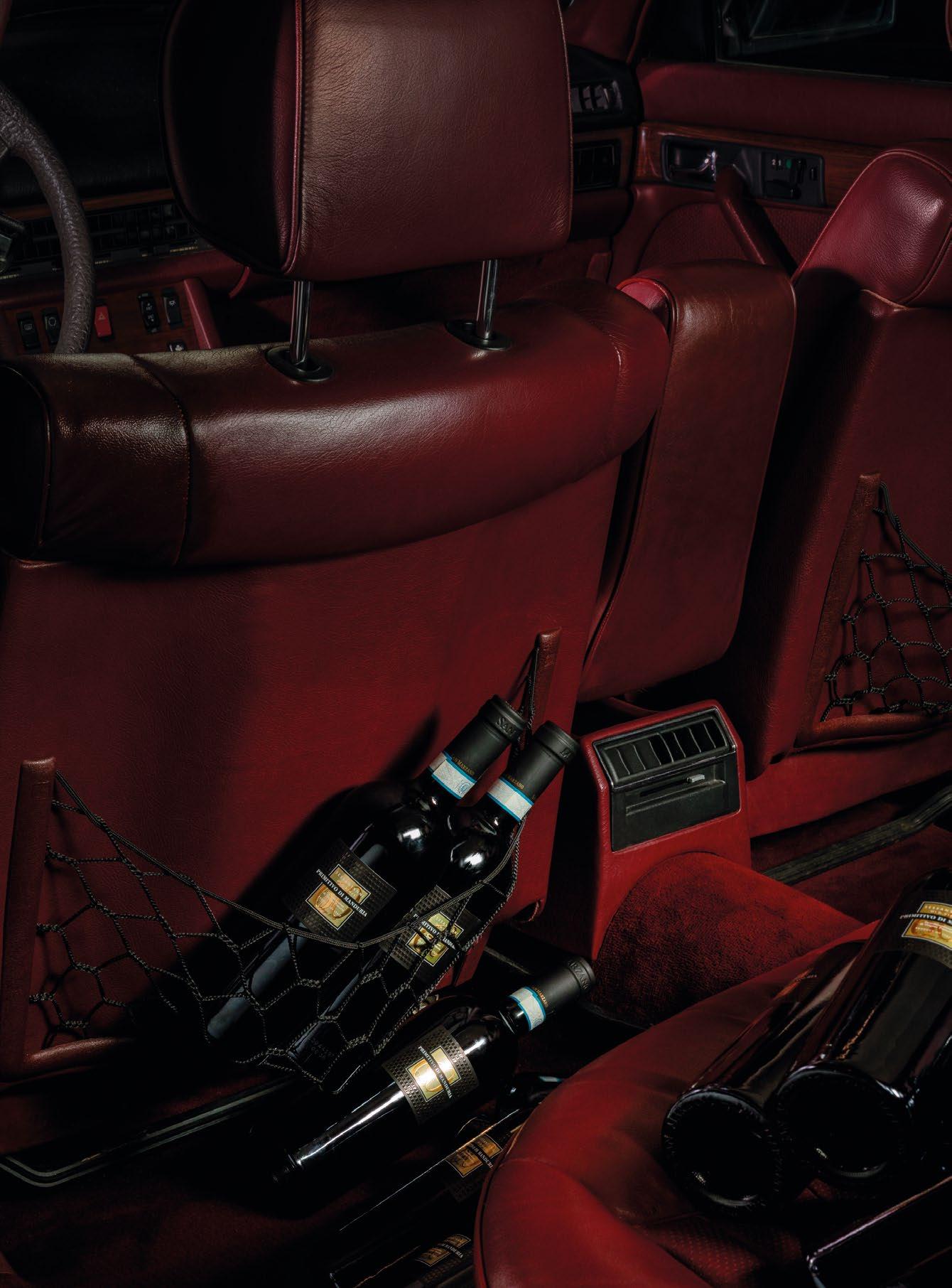
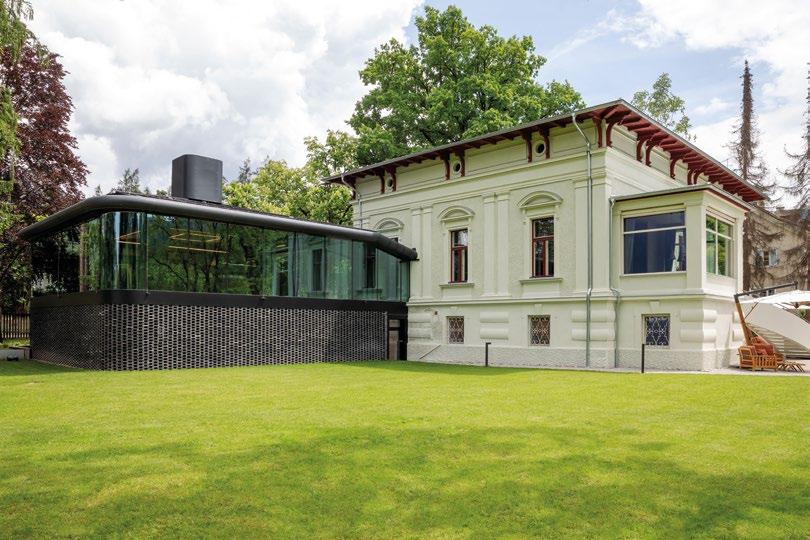
“Alpine cuisine is not just recipes—it’s a way of life. It’s about living with the seasons, valuing local resources, and respecting traditions while keeping them alive in a modern context.”
« products of the mountains. Cook the Mountain was born from this. It was not something I planned—it came step by step, very naturally. It’s not only about food but about how we live, how we respect what we have.”
At its heart, Cook the Mountain celebrates the challenge of working within limits—self-imposed boundaries that force creativity, authenticity, and resourcefulness. Niederkofler refuses to use tropical fruit, out-of-season vegetables, or ingredients that can’t be grown or preserved in the Alpine environment, such as olive oil or any products requiring a greenhouse. And, as he admits, it was initially quite difficult: “Cook the Mountain started as a simple idea: cook only what the mountain gives you, in season. Over time, it became a philosophy—about respect, sustainability, and telling the stories behind the ingredients. In the beginning,
it wasn’t easy; we started the project in the summer. Of course, having all different kinds of produce was great, but we didn’t think ahead to how winter would be. When we arrived at the winter season, we realised we had nothing and hadn’t preserved anything from the warmer months. So we had to step back and rebuild the supply chain.”
Today, that network includes dozens of farmers and producers across South Tyrol. “We work with about 2030 farmers—directly—without a middleman. We sit down, plan together, think together, and collaborate in a great way. Alpine cuisine is not just recipes—it’s a way of life. It’s about living with the seasons, valuing local resources, and respecting traditions while keeping them alive in a modern context.” For Niederkofler, quality, transparency, and a commitment to sustainability are non-negotiable, and he
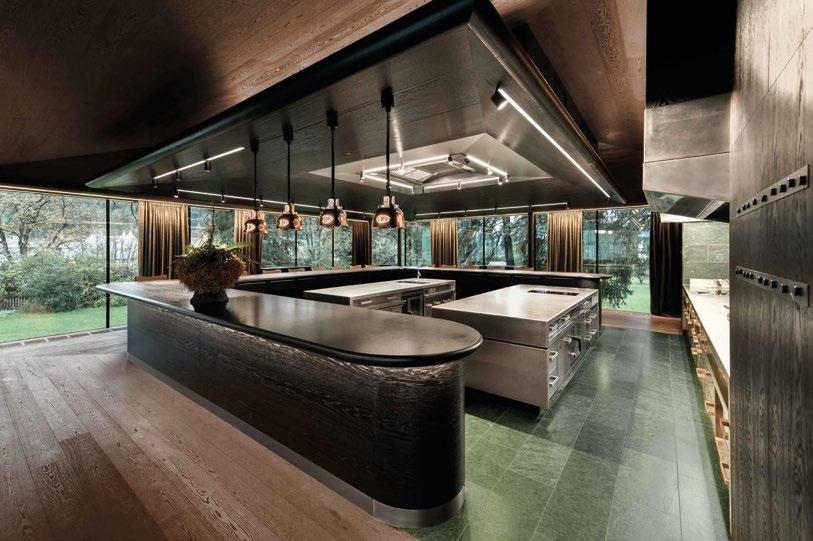
has put great effort into fostering partnerships with farmers built on trust, respect, and shared values.
Likewise, he places great value on the relationship he has with his brigade, always striving to be a good role model to those around him. “Without my team, including Atelier Moessmer’s Executive Chef Mauro Siega and Restaurant and Wine Director Lukas Gerges, I would be no one, and I would not be in this position today. So I want to motivate and inspire them every day as much as I can and be an example for them.” The same goes for the wider community.
“As chefs, we influence how people eat and think about food. That comes with environmental, cultural, and social responsibility. I especially care a lot about young people and kids. It’s important that they grow up with a thoughtful mindset on how to deal with food.”
Notably, his commitment to this overarching ethos has earned Niederkofler many accolades. He received his first Michelin star at St. Hubertus in 2000, a second in 2007, and the ultimate third in 2017. He has since added Green Stars for sustainability and founded AlpiNN, a high-altitude restaurant where mountain flavours are made accessible to a broad audience. Atelier Moessmer, his most personal project, quickly rose to three stars and a Green Star, becoming a benchmark for sustainable fine dining. Yet, for
the now world-renowned chef, success is no longer gauged by stars alone. “Awards are an honour, but today I measure success by impact—on the land, the people I work with, the guests who leave inspired, and especially to see my family more often than before. Early on, I often felt traditional fine dining was too far removed from the land and the people producing the food. I wanted something more honest and connected.” And he has certainly achieved this feat.
More than just his craft, the culinary arts has become Niederkofler’s identity. “Cooking is my way of expressing who I am and where I come from. It’s creativity, culture, and connection in one act.” It was also a way for him to see the world and experience the different cuisines and cultures that lay beyond his doorstep. “In the beginning of my career, I became a chef not because I was passionate about cooking itself but because I wanted to see the world. I didn’t have money to travel, so I chose my working places based on destinations which I wanted to explore. I now always like to quote J.R.R. Tolkien, who once wrote: ‘The world is not in your books and maps, it’s out there’; this, I think, reflects my personality very well.”
Although guided by the mountains, for Niederkofler, creative stimulation can come from anywhere. “Inspiration can start with an ingredient, a memory, or even a »
« conversation. But the dish must tell a story—otherwise it has no soul.” Herbs and apples from his homeland also hold a special place in his heart. “I couldn’t live without the mountain herbs of my region—they carry the taste of the place in every leaf. One underrated ingredient for me is old varieties of apples—full of character and history.” Likewise, the seasons still excite the chef, with each year bringing something different.
From the cuisine to the aesthetic of the restaurants, each facet aims to build on a shared shared credo that puts Mother Earth front and centre. “The design of Atelier Moessmer Norbert Niederkofler reflects the same philosophy as the food—natural materials, harmony with the landscape, and a feeling of authenticity and warmth. Walter Angonese and Klaus Hellweger—the two architects—did a great job.” The goal is that “guests leave with a sense of place—the taste, the people, the stories—and a deeper appreciation for the mountain”.
His latest project, Ansitz Heufler, extends this concept into the hospitality sector. A meticulously restored Renaissance residence in the Anterselva Valley, it blends history with forward-looking values. “Ansitz Heufler is a natural extension of our Cook the Mountain philosophy. It is a place where hospitality becomes a vehicle for promoting
culture, identity, and authentic relationships with the territory. It is a living space, one that speaks of history and of the future, and that reflects our vision of respect for both nature and local communities.”
For Niederkofler, the building’s authenticity—its carved stube, frescoed ceilings, and historic open-hearth kitchen—aligns perfectly with his outlook. “Ansitz Heufler is a historic jewel in the Anterselva Valley. I fell in love with its history, its character, and its potential to become a place of true hospitality. There is a culinary element, but it is more relaxed and rooted in the local community. We serve very traditional South Tyrolean dishes like cheese dumplings from my valley called ‘Pressknödel’, pasta with mushrooms, or also ‘Kaiserschmarren’—a typical dessert from our region. It’s a place where we like to have sharing-style dishes—as it’s at home—with a pot in the middle of the table and everyone takes as much as they want.”
From the warmth of his mother’s kitchen to the global stage of gastronomy, Niederkofler’s journey has come full circle. Rooted in Alpine traditions but shaped by international experience, he has redefined what it means to cook with integrity. In his food, as in his life, the mountain speaks with clarity and conviction—season after season, and plate after plate.
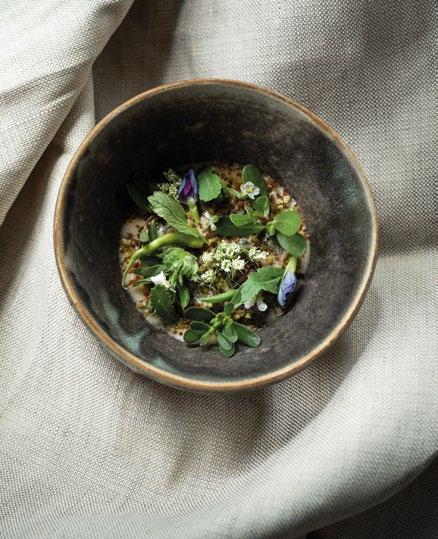
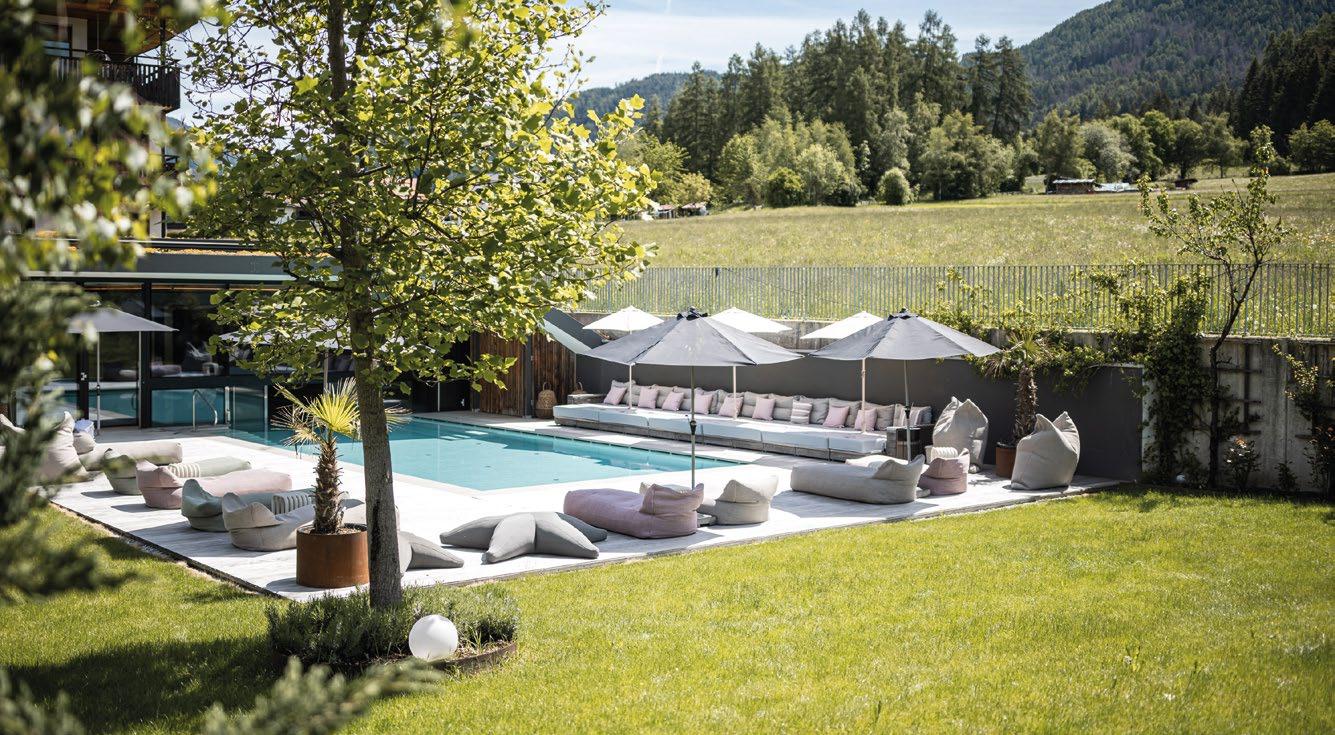
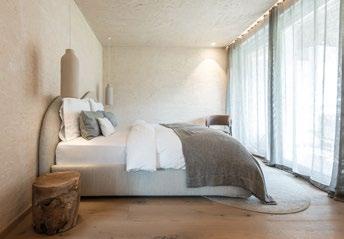
Rooted in South Tyrol’s soil and spirit, Hotel Petrus blends design, gastronomy, and family warmth into a handcrafted hospitality o ering with heart.
Nestled in Bruneck, South Tyrol, Hotel Petrus is a family-run retreat where creativity, style, and heartfelt hospitality converge. The hotel is led by three sisters—Christina, Brigitte, and Daniela—who embody the philosophy of “Handcrafted Hospitality”, creating a space where every detail reflects personal care and artistic vision.
Guests begin their day with the signature Breakslow breakfast, a leisurely, freshly served meal featuring warm dishes, house-made jams, bread from the village baker, and herbs from the garden, designed to nourish both body and mind. Culinary experiences extend outdoors through the Petrus.Secret.Picnic, a guided tasting journey in nature, combining Brunch and Aperitivo with handcrafted delights. The hotel’s Lechnerhof vegetable garden, just five minutes away, supplies fresh herbs, colourful tomatoes, Berg artichokes, and more, ensuring a direct farm-to-table connection.
The hotel’s design mirrors its hospitality philosophy: local wood, handcrafted furniture, Loden fabrics from
Bruneck, and linen from neighbouring farms create suites and public spaces that are authentic, warm, and timeless. The Petrus.Restaurant has been honoured with the German Design Award 2025 for its seamless integration of nature, gastronomy, and atmosphere.
From thoughtfully crafted interiors to sustainably grown produce, every corner of Hotel Petrus reflects the sisters’ dedication to personal, handcrafted experiences. It’s a place where nature, design, and culinary artistry meet—inviting guests to slow down, savour, and connect.
www.hotelpetrus.com

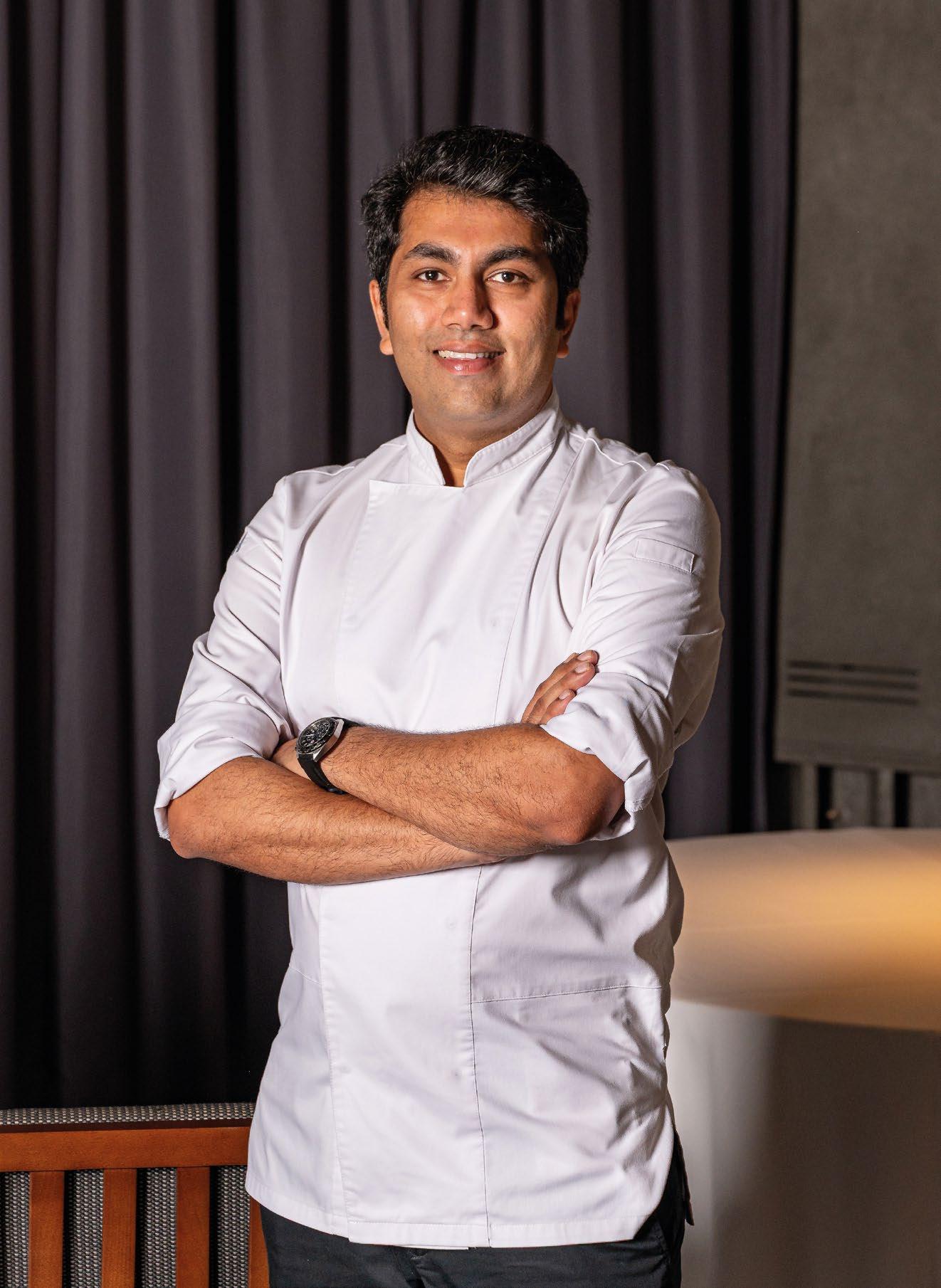
Guided by memory, passion, and a desire to challenge clichés, Himanshu Saini has transformed Indian cuisine into an experience of connection and discovery at Trèsind Studio, his celebrated three-star restaurant on Palm Jumeirah.
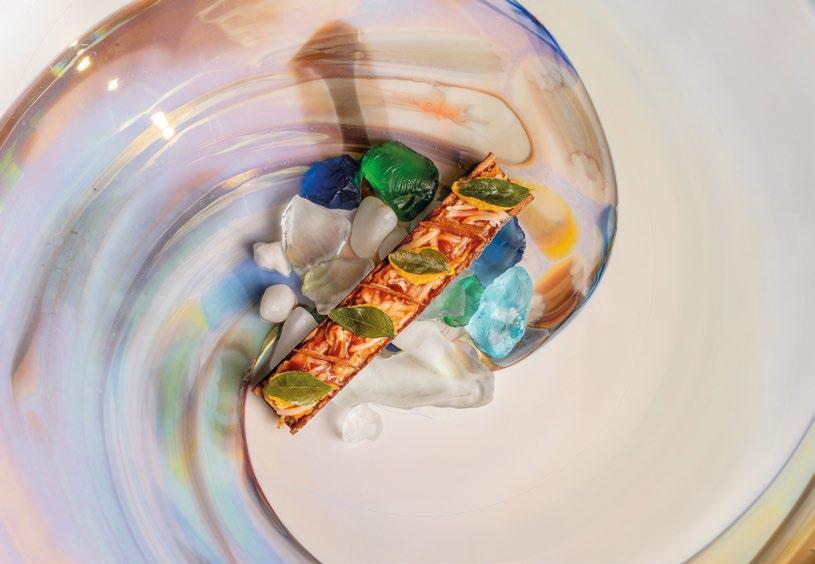
Set in the serene surroundings of the St. Regis Gardens on Palm Jumeirah in Dubai, Trèsind Studio has become one of the world’s most acclaimed dining expereinces. Behind the restaurant’s meteoric rise to fame is Chef Patron Himanshu Saini, whose ambition has always been to change the way Indian cuisine is perceived by presenting it through a contemporary, refined, and deeply personal lens. Today, the three-Michelin-starred restaurant is both his stage and his canvas, a place where every plate tells a story in colour, texture, and flavour.
For Saini, his culinary journey began in Sui Walan, an area in Old Delhi famous for its century-old shops and markets, historical Mughal landmarks, and authentic cuisine. A place where food was inseparable from memory and emotion. “My passion for the culinary arts is deeply rooted in my upbringing in Delhi. The sensory memories of cooking with my grandmother and mother, learning the magic of spices and the joy a meal brings, ingrained in me that food is a powerful medium for love, heritage, and identity,” he recalls. Those early moments, combined with his family’s agricultural roots, gave him a respect for produce that remains central to his cooking today.
From there, the path was clear: formal training in hospitality studies and then stages at various renowned restaurants, including time spent at Indian Accent under chef Manish Mehrotra—a mentorship that sharpened
Saini’s outlook, showing him that Indian food could be playful, inventive, and modern without losing its essence. “What has continued to inspire me is the challenge of redefining perceptions. Indian food has such incredible depth and diversity, yet it’s often boxed into clichés. I aim to showcase to the world how refined, expressive, and contemporary my cuisine can be, all while preserving its soul.”
His arrival in Dubai in 2014 was the moment aspiration met opportunity. With the support of Bhupender Nath, CEO and Founder of Passion F&B, Saini took the reins at Trèsind and quickly established a new language for Indian food in the UAE—one that honoured its heritage while embracing innovation. Yet, he still longed for something more intimate and focused, a place where he could push boundaries further. In 2018, that dream became Trèsind Studio, a small, immersive dining room designed for just 20 guests, where carefully crafted degustations could take diners on a journey across India’s geography and history. “Opening Trèsind Studio allowed me to refine my vision on a global stage, balancing bold Indian tastes with modern techniques and storytelling to make the cuisine both accessible and unforgettable,” he says. Over the years, Trèsind Studio has built on this ethos by welcoming collaborations with international chefs, encounters that Saini believes “continually bring new energy into the kitchen” and push the team to keep evolving. »
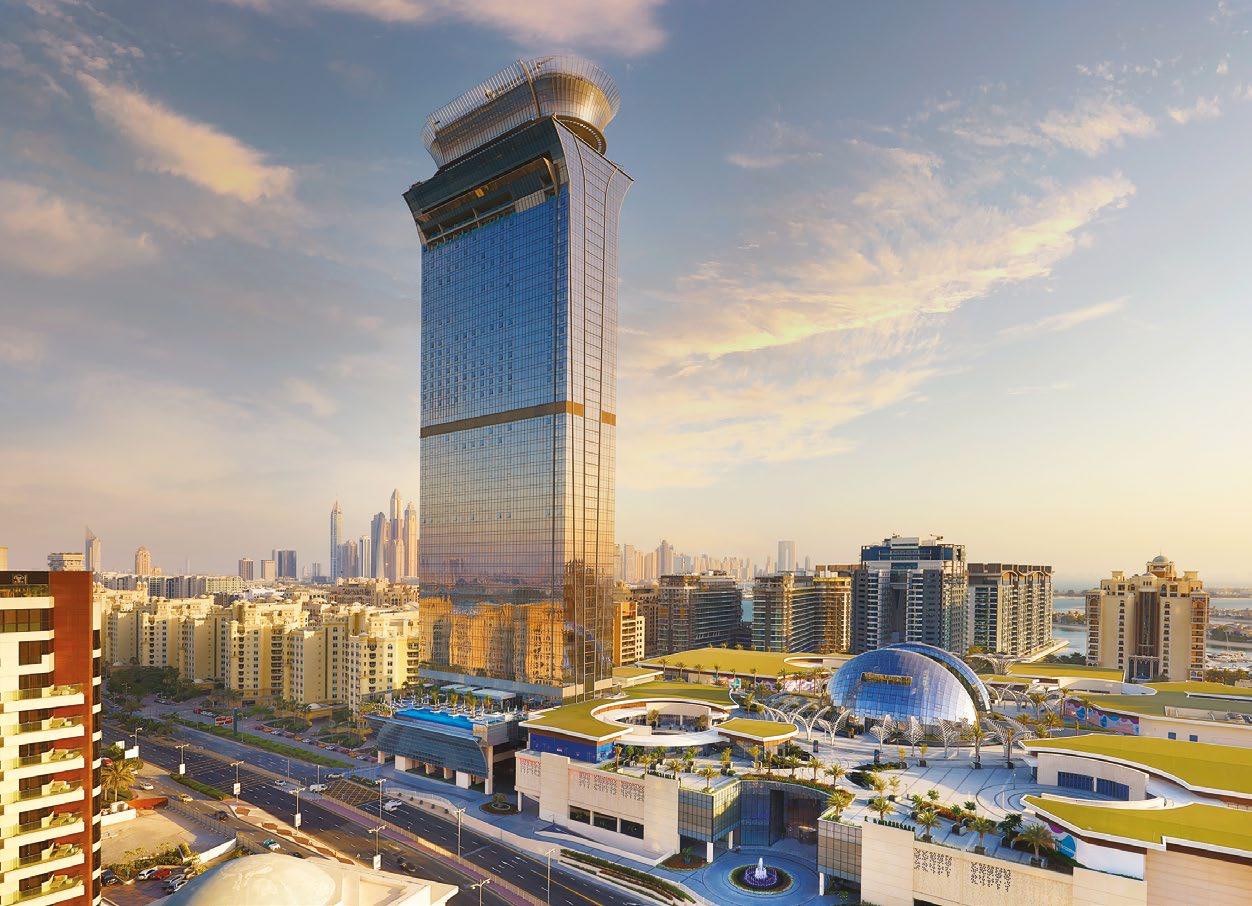
« Everything about the restaurant is conceived as part of a larger narrative. The minimal yet elegant interiors, the custom crockery that frames each dish, and the open kitchen that turns cooking into a theatrical experience—all are orchestrated to draw attention back to what’s on the plate. Dining here is not meant to be static; it is intended to awaken the senses and stir the soul. “We aim to create an ambience that feels almost like stepping into a story, one where every course is a chapter and every flavour is a memory. Dining at our restaurant is not just about luxury or refinement, it’s about emotion,” Saini says. “We embrace the Indian philosophy of Atithi Devo Bhava—the guest is like God—a belief that guides our authentic expression of hospitality and cultural respect. We cook with sentiment, and I think that’s what people feel when they dine with us. The goal is for them to leave not just with a full stomach but with a full heart—carrying an emotion they may not have expected to find in a fine-dining space.”
Through his cuisine, Saini acknowledges and celebrates Indian cuisine’s versatility, and how it can be used to unite different perspectives, tastes, and techniques. “We aim to create dishes that are a thoughtful blend of tradition and innovation. I believe Indian food is in the process of continuously evolving, absorbing new influences while staying rooted in deep, bold flavours. At Trèsind Studio, flavour is always the priority when creating dishes. No matter how modern the technique or refined the presentation,
“We aim to create an ambience that feels almost like stepping into a story, one where every course is a chapter and every flavour is a memory.”
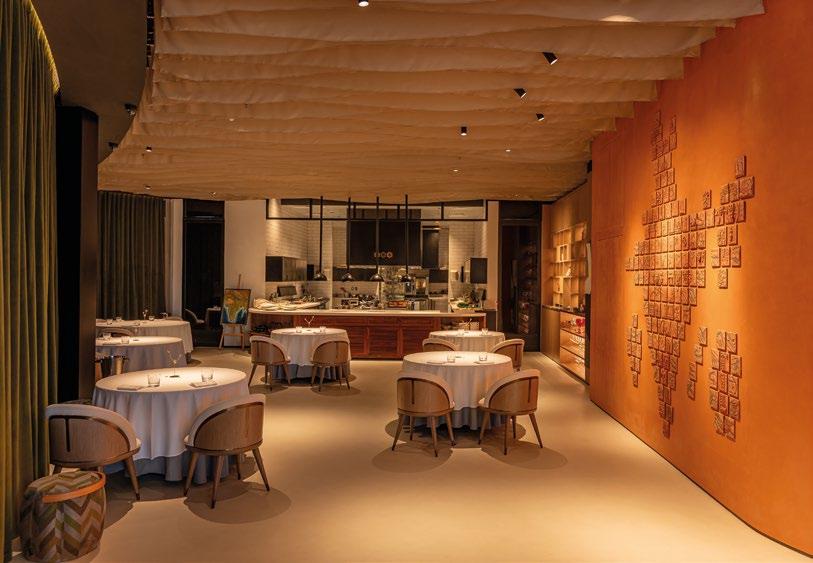
a dish must deliver authenticity and depth,” he explains. Every menu is conceived as a multisensory journey, with flavours that are both familiar and surprising. “For me, the key to a successful dish is emotion. It’s not just about technique or presentation; it’s about creating a connection. A successful dish should make you feel something, whether it’s nostalgia, curiosity, or even surprise. It should tell a story and leave a lasting impression beyond just taste. Balance is also essential. Flavour, texture, temperature, and visual appeal must all work in harmony. But above all, there has to be intention behind every element on the plate.” Inspiration could come from a childhood snack, a festival, or even a conversation with the team. “Staying creative is about staying curious,” he adds, describing how each service is treated as “an opportunity to evolve”.
As a result, the dish-creation process at Trèsind Studio is collaborative, thoughtful, and multi-faceted. “It always begins with an idea, one usually inspired by a memory, an ingredient, or a regional Indian tradition. I work closely with my entire team. From the first tasting or concept, we begin experimenting with flavour profiles, textures, plating, and how the dish fits within the narrative of the menu: where it will be placed, what beverage we might serve with it,” he explains. Feedback flows from all sides, with chefs and service staff alike contributing until the dish feels complete. “From conception to the moment the dish is served to the guest, it’s a journey of passion, discipline, and respect for
the cuisine. When a dish has soul and purpose, that’s when it truly resonates with the guest.”
Among the dishes that embody this ethos most clearly is the Onam Sadya Celebration of Flavours. Inspired by Kerala’s ritual feast, it began as a late-night conversation about payasam with his team and evolved into a 12-component course presented on banana leaves, blending coconut mousse-filled pineapple empanadas, tomato rasam, mango curry, and banana vinegar into a richly layered homage. “While some diners find it profoundly moving, even weeping from nostalgia, others question its place in haute cuisine. Yet, its power lies in evoking emotion, connecting guests—Indian and non-Indian alike—to a story far greater than the ingredients on the plate,” says Saini. Other menu highlights include ghee-roasted crab infused with burnt cinnamon, a dish that honours Kerala’s spice legacy by placing the masala, not the crustacean, at centre stage, creating something at once rooted and revelatory.
Whenever possible, ingredients come from UAE farms, complemented by produce from the restaurant’s own rooftop garden during Dubai’s cooler months. “For me, the key elements in choosing a supplier are consistency, transparency, and shared respect for the ingredient. I want to know where something comes from, how it’s grown or raised, and whether it’s handled with care. I’m also drawn to producers who are passionate, who treat what they do as a craft, not just a business. That energy becomes part of the »































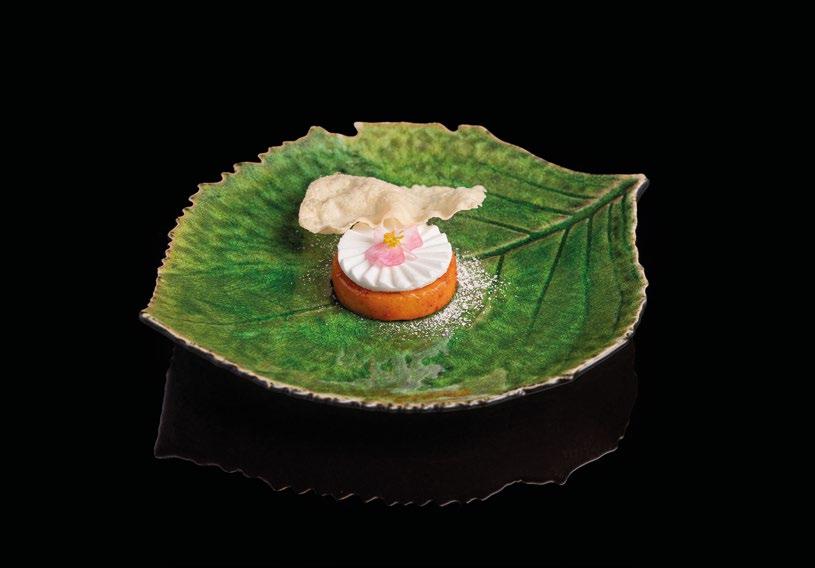
« dish. When you start with exceptional ingredients, half the job is already done,” Saini notes. International suppliers are brought in only when necessary to tell a particular story, but local roots remain essential. “Without our producers and farmers, Trèsind Studio’s menu would not be as successful.”
More than produce itself, it’s Saini’s ability to coerce flavour and emotion from these ingredients that makes him a true master of his craft. “I don’t believe in having just one favorite ingredient—India is too diverse for that— but I do find myself drawn to humble ingredients that are often overlooked. I love the challenge of taking something traditional or straightforward and presenting it in a way that surprises people. Spices, of course, are central to everything we do. However, rather than overpowering, we use them to layer and build depth, much like telling a story through aroma and heat,” he explains.
Unsurprisingly, accolades have followed in quick succession. Trèsind Studio has risen into the upper echelons of The World’s 50 Best Restaurants, garnered recognition from Gault&Millau, and earned three Michelin stars— one of Saini’s proudest achievements. “Winning the third Michelin star for Trèsind Studio has been one of the most significant moments of my career. Not just because of the recognition itself but because of what it represents—for me, for my team, and Indian cuisine as a whole. It’s a reminder that staying true to your roots while pushing boundaries can have a lasting impact on a global scale. But beyond awards,
what matters most to me is the trust of our guests—when someone tells me that a dish reminded them of home or gave them a new perspective on Indian food, that’s the real achievement. Those are the moments that stay with me.”
Looking ahead, Saini is focused on both continuity and evolution. Trèsind Studio’s menus will continue to explore lesser-known regions of India, pairing tradition with innovation in ways that remain both bold and thoughtful. Collaborations with international chefs will continue to bring excitement into the kitchen, while travel to Italy, India, and beyond will enable him to share his work with new audiences. On the horizon is the publication of his first cookbook with Phaidon in 2026, an endeavour that promises to capture his vision for Indian cuisine in print.
Despite a future filled with global pursuits, Saini insists that his focus remains on spotlighting the flavours of his homeland. “If I could convey one message through Trèsind Studio and my cuisine, it would be this: Indian food is limitless. It’s not confined to stereotypes or expectations— it’s as refined, progressive, and deserving of the global stage as any other cuisine. Through every dish, I want to celebrate the depth, diversity, and emotion of Indian culture, while also challenging how people perceive it. I hope that guests leave not just full but moved. I hope that they discover something new about India. At its core, my cooking is a love letter to where I come from, and an invitation to see Indian cuisine in a whole new light.”
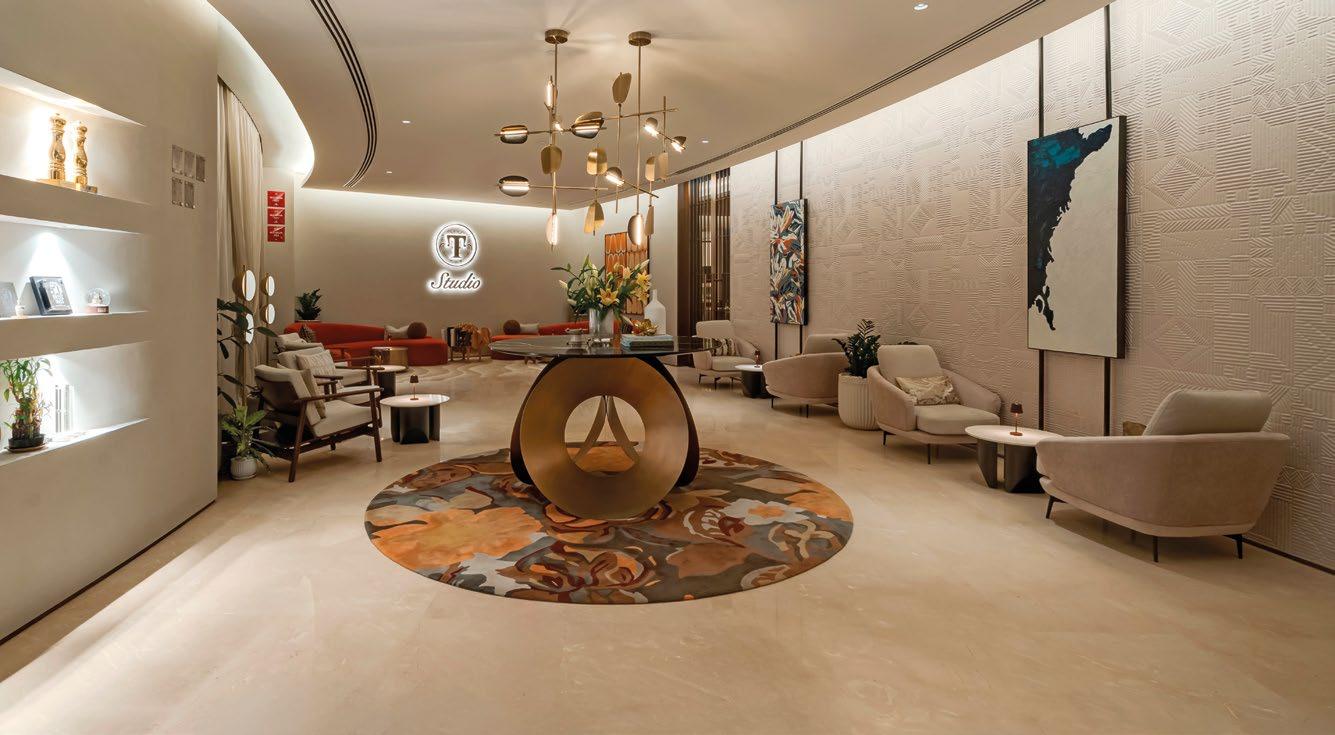
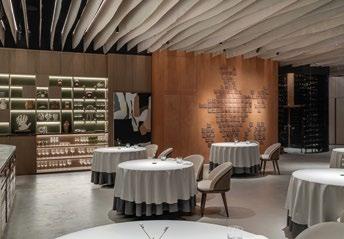
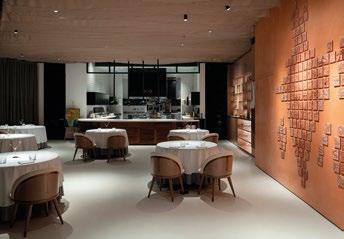
At Trèsind Studio, VS Design Studio crafted a space where every corner, every texture, and every detail tells a story worth savouring.
Nestled at the Palm Jumeirah, Dubai, Trèsind Studio is a landmark collaboration between VS Design Studio and the three-MICHELINstarred restaurant—the fi rst Indian fi nedining concept at this level. Here, dining transcends food; it becomes an unfolding narrative crafted by Chef Himanshu Saini, where every plate and every pause form part of a larger story.
VS Design Studio shaped the interiors as an active participant in this experience, not just a backdrop. The entrance lounge sets the tone, designed more like an intimate living room than a waiting space, cocooning guests in comfort and anticipation. The dining area then opens up with intention—modern India reframed for the world through form, colour, and light.
The Rising India mural, in earthy terracotta hues, evokes cultural roots while setting a contemporary tone. Deep green velvet curtains soften the atmosphere and connect the space to nature. Lighting adds intimacy and drama, spotlighting the food yet preserving a sense of mystery.
Each table becomes its own island of experience, weaving comfort with spectacle.
Among its striking features, the custom circular glass wine cellar is a statement of both craftsmanship and function. Suspended like a jewel within the space, it offers a 360-degree view of the collection, transforming storage into art. Transparent yet commanding, it anchors the dining room while showcasing the restaurant’s carefully curated wines—a symbol of precision, elegance, and the blending of tradition with innovation.
At Trèsind Studio, design and cuisine merge seamlessly into memory. Not just a memory of what you saw or ate, but also how you felt.
www.vsdesignstudio.me

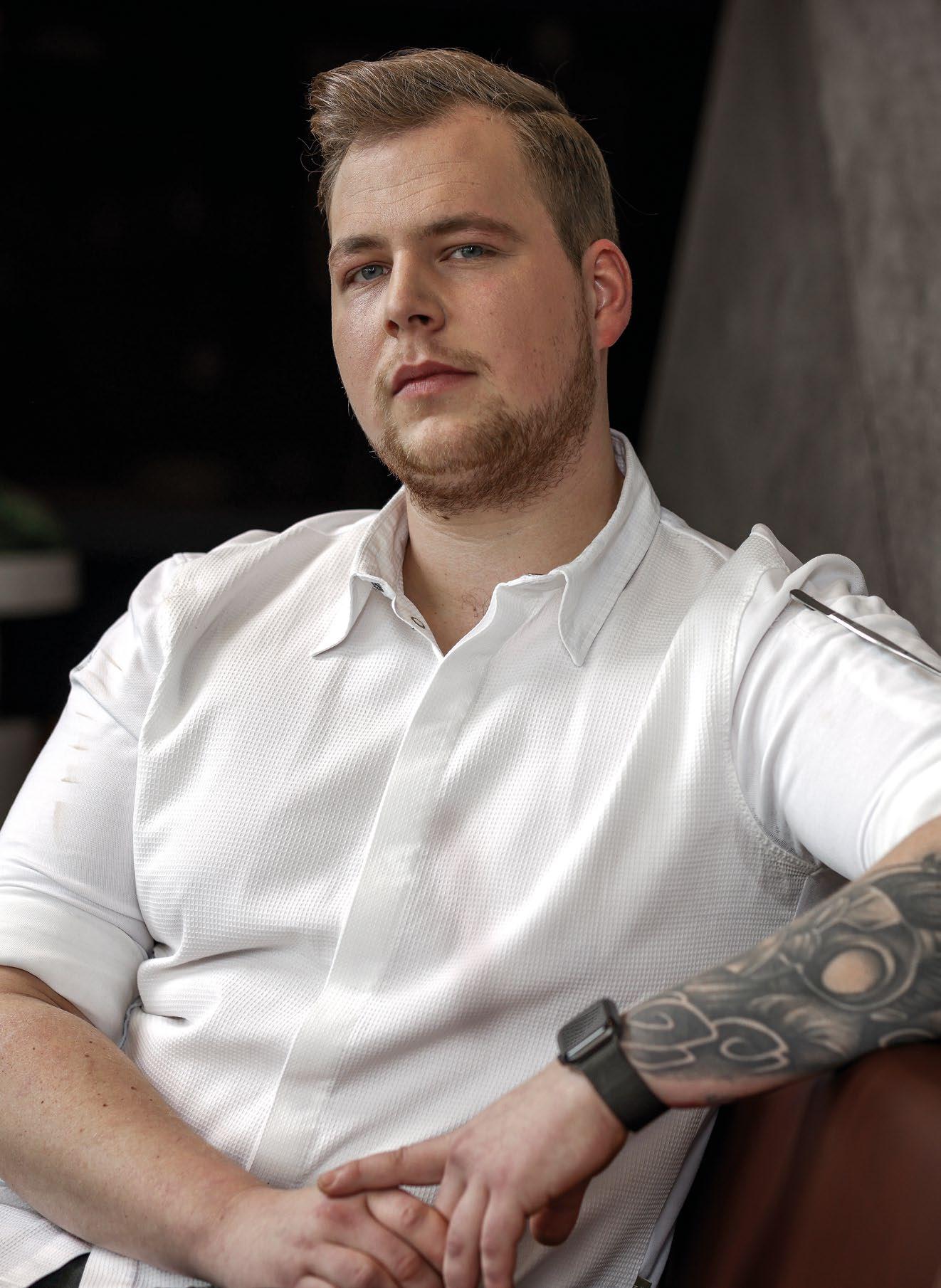
Much more than just a layover spot for travellers, Hilton Munich Airport is an epicure’s delight. Here, within the soothing confines of Michelin-starred Mountain Hub Gourmet, chef Marcel Tauschek serves as a culinary ambassador for the Alpine foothills, offering guests a tantalising taste of the region’s natural bounty.
Although the thought of an airport might not conjure up images of high-end cuisine and elegant dining rooms, that’s exactly what you’ll get when you visit Mountain Hub Gourmet at Hilton Munich Airport. This Michelin-starred restaurant, overseen by Marcel Tauschek, one of Germany’s youngest top chefs, has redefined airport dining. A refuge of gustatory bliss hidden a world away from the troops of travellers, Mountain Hub Gourmet is garnering worldwide attention for its impressive take on seasonal and sustainable regional cuisine.
Unsurprisingly, Marcel Tauschek’s journey to becoming a celebrated chef began in the pastoral expanses of southwest Germany. Growing up surrounded by nature, his connection to fresh, homegrown produce, along with his passion for cooking, was nurtured from early on. His family’s kitchen was a place of culinary exploration, and this instilled in him an appreciation for the simplicity and richness of local flavours, which he continues to carry with him to this day.
“I come from Baden-Württemberg. I grew up in a rural area and have always been involved with nature and ingredients from the garden and the fields, including in my parents and grandparents’ kitchens. The inspiration to become a chef also came from there—because the story goes in my family that even when I was five or six years old, I always said: ‘I’m going to be a knight—or a chef!’”
After completing his professional training, Tauschek embarked on the classic culinary pilgrimage, expanding
his gastronomic horizons and honing his skills in several Michelin-starred kitchens. His dedication and talent eventually led him to the role of Sous Chef at Hilton Munich Airport in 2020. Here, he worked under the guidance of Mountain Hub Gourmet’s then Head Chef, contributing to the restaurant’s success and reputation. When the opportunity arose to take the restaurant’s reins, Tauschek embraced it, keen to steer the gastronomic offering towards more local, fresh, and pure flavours—a vision that resonated deeply with his culinary values.
“In the time leading up to my current position, I have seen and cooked many different styles of cuisine and experienced the use of various ingredients, but it was always clear to me that naturalness and regionality are what I like most. So I was all the more pleased when the general management of Hilton Munich Airport told me that the concept of the fine-dining restaurant was going to change and be geared towards regionality... and that I would be responsible for this as Head Chef. And we have been doing this for nearly three years now, with great success.”
With his cooking philosophy firmly grounded in using local ingredients that reflect the seasons and the area’s rich culinary heritage, Tauschek brings the flavours of the Alpine foothills to life at Mountain Hub Gourmet. Naturally, this means that sustainability is also a cornerstone of his ethos, and this approach not only supports domestic producers but also ensures that the freshest, most flavorful produce lands up on his plates. »
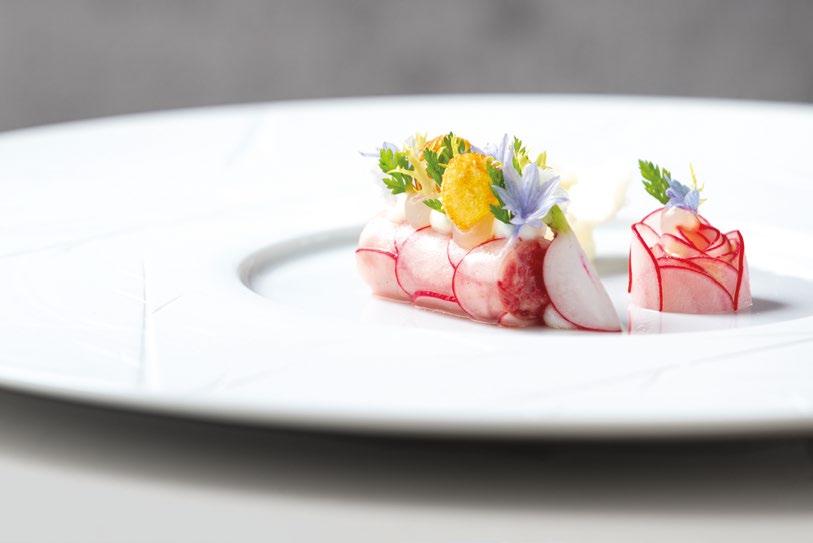

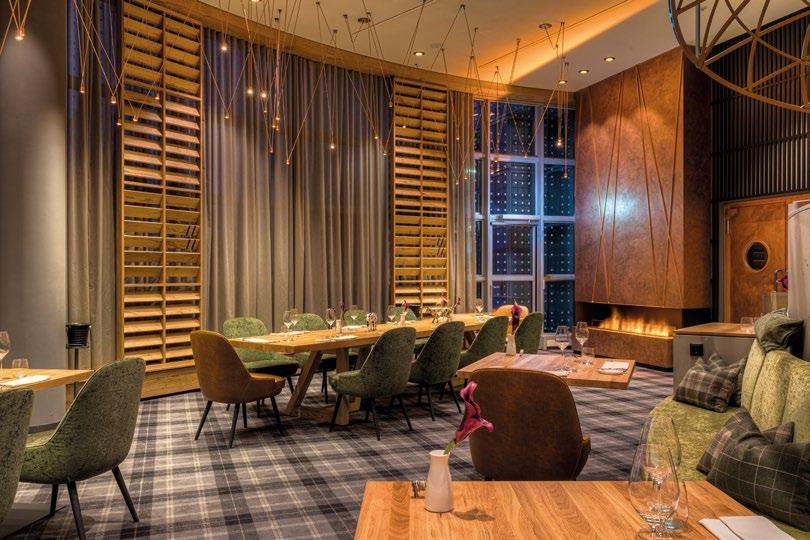
“Using an ingredient that grows or is raised as close to my kitchen as possible, that is native to where we cook, in such a way that it tastes perfect in its season, is the basis of all my cooking.”
« “Using an ingredient that grows or is raised as close to my kitchen as possible, that is native to where we cook, in such a way that it tastes perfect in its season, is the basis of all my cooking. We source our products from regional partners—because the shorter the delivery route, the better the freshness and, of course, the sustainability. We are at home in Bavaria, a region where you can find everything you need for fine-dining cuisine. So, we take advantage of our location and its seasonal diversity.”
“At Mountain Hub Gourmet, we cook for locals as well as guests from all over the world, and we show them what the Alpine foothills taste like. But for me, it is also quite natural to cook like this because I think we should all appreciate our nature and our Earth, what it offers in our latitudes, and use it to nourish ourselves.”
Like the cuisine, the ambience at Mountain Hub Gourmet is designed to reflect the serene and inviting Alpine landscape. The light-drenched interior features organic materials and hues representing the surrounding nature, such as brown wood and felt for the forests, blue for the running streams, and green for the rolling meadows. This creates a warm and welcoming space where guests can unwind and savour their meal, whether they are locals, international travellers, or business guests.
“At Mountain Hub Gourmet, you can enjoy the cuisine of the Alpine foothills in a relaxed atmosphere that provides peace and quiet, where you feel comfortable, no matter how old you are and no matter whether you eat lunch or dinner, à la carte or set menu. Our guests should simply take home good memories of a wonderful time with us.” »
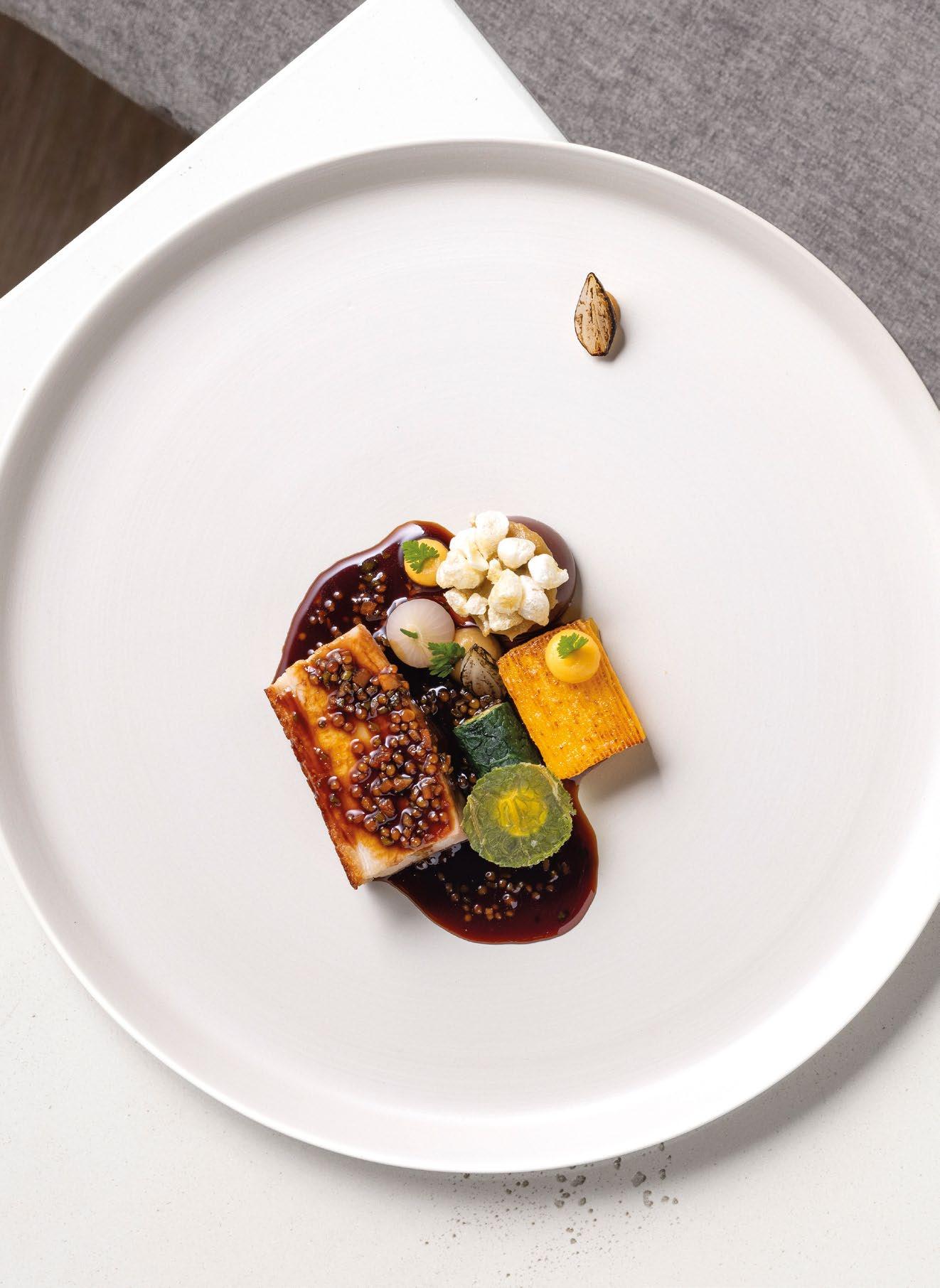
« Nature is, too, the muse for Tauschek’s culinary creations. His inspiration for dishes often comes from his time spent outdoors, observing the changing seasons and the bounty they bring. This bond with Mother Earth fuels his creativity and dedication during his dish-creation process, ensuring that his cuisine is always evolving and in harmony with the environment. Although different every time, developing new menu items is a collaborative effort with the brigade involving brainstorming, testing, and refining. Every detail is taken into consideration, from taste to presentation and guest satisfaction, until the perfect balance is achieved.
“For me, cooking is the most beautiful craft. And the most beautiful art. And it is simply what I have a talent for. I enjoy developing and cooking dishes. When I have an idea, I discuss it with my team, we test it, we discard it, we combine it in new ways, we tinker, we see how it looks, how it works on the plate, how the guest will like it, how it will fill them up... it’s a very long process that’s a lot of fun.”
The restaurant’s menu is regularly updated to highlight the freshest ingredients, guaranteeing that diners always have something new and exciting to look forward to. The current autumn offerings include comforting Alpine-fusion dishes using fish from Bavarian lakes, regionally reared beef, and locally grown fruit and veg like cherries, apples, pumpkin, carrots, and plums, showcasing the best of the season’s produce.
Mountain Hub Gourmet is unique not only for its highquality cuisine but also for its setting within an airport. Despite the challenges of maintaining such high standards in a bustling environment, Tauschek and his team manage to deliver an exceptional dining experience that rivals the best restaurants in the world. Under Tauschek’s leadership, Mountain Hub Gourmet has not only maintained but also enhanced its Michelin-starred status. The restaurant’s dedication to sustainability and regionality has been recognised and celebrated by the Michelin Guide for four consecutive years, describing its cuisine as “aromarich” with a “regional touch”. This commendation is a testament to Tauschek’s vision and the hard work of his entire team.
However, the chef is not driven by accolades. Instead, with every dish he serves, his ultimate goal is to make people happy and to demystify the fine-dining experience. He wants Mountain Hub Gourmet to be a place where guests of all ages and backgrounds feel welcome and excited to explore the culinary arts. The restaurant’s Young Stars offer, a four-course tasting menu designed for diners under the age of 30, is part of this inclusive approach. It aims to make fine dining accessible to younger guests and encourage them to discover the joys of haute cuisine without any trepidation. As Marcel continues to innovate, inspire, and delight, guests, no matter their age, can look forward to many more memorable meals that honour the natural beauty and flavours of the Alpine foothills.
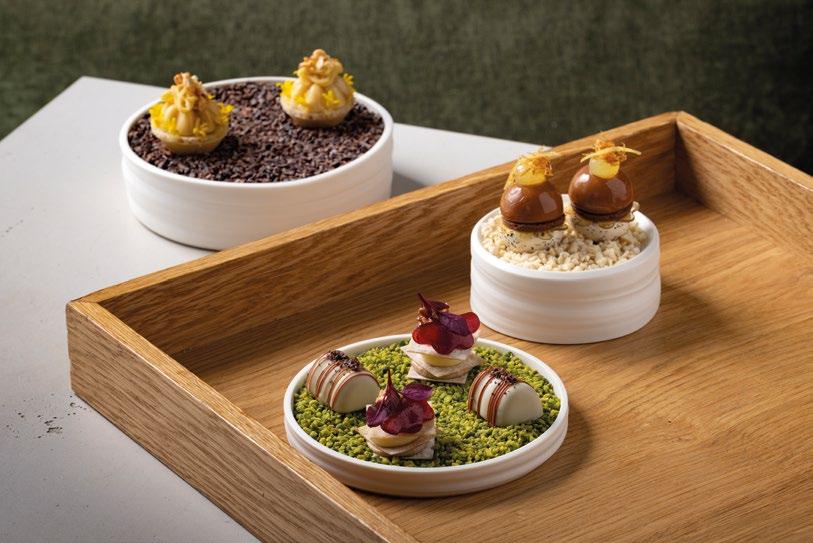
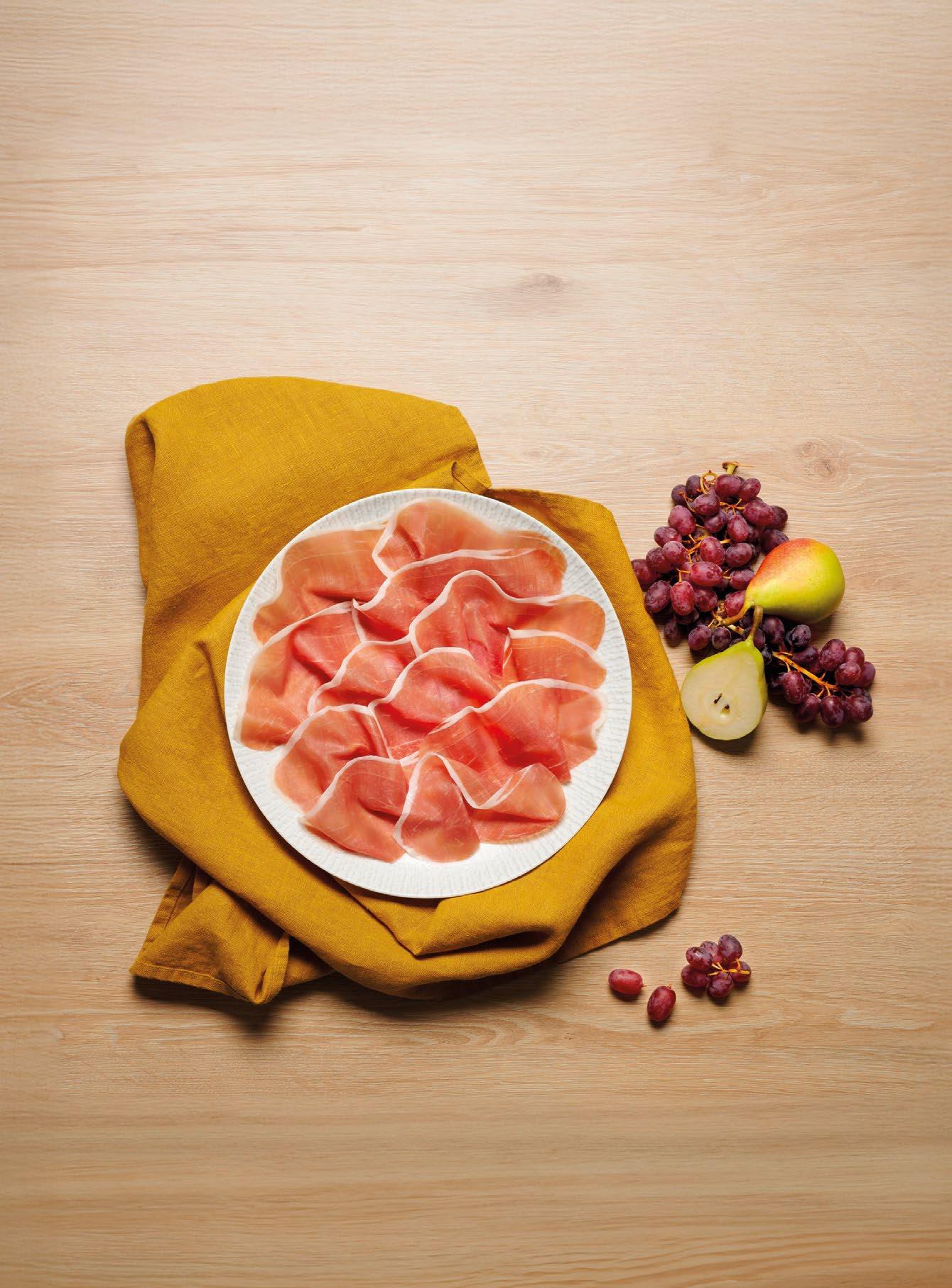
Perched high on a limestone promontory, Château Quintus is Domaine Clarence Dillon’s ambitious creation: a Saint-Émilion estate that unites history, terroir, and innovation in a bid to craft some of the Right Bank’s best wines.
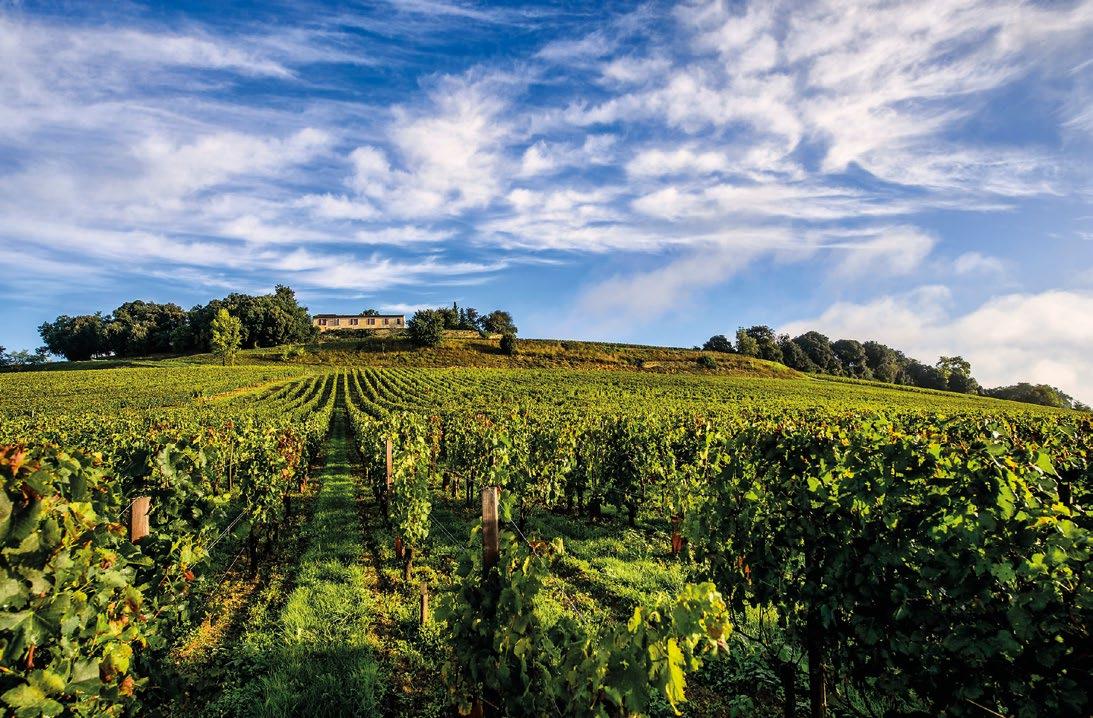
When Domaine Clarence Dillon acquired an outstanding Saint-Émilion estate in 2011, it marked the beginning of a bold quest: to shape one of the Right Bank’s future icons. Two further acquisitions, in 2013 and 2021, expanded this vision, uniting three historic vineyards under a single banner. The reborn estate, now one of the largest in the region, was named Château Quintus, a tribute to the Gallo-Romans who once gave their fifth child the name “Quintus”. Fittingly, the number five now threads through the property’s identity, nodding to its topography with its slopes facing the four cardinal points and bowing toward the sky.
At first glance, Quintus appears as a newcomer. Yet, its roots run deep. Each of the three estates that now form its 45-hectare domain are considered among Saint-Émilion’s oldest and most reputed, regularly referenced as Premier Cru de Saint-Émilion in the Féret Wine Guide, published between 1908 and 1949. By bringing this trifecta together, Domaine Clarence Dillon—already the custodian of illustrious Bordeaux names such as Haut-Brion and La Mission HautBrion—wove a new chapter of continuity and renewal.
As Prince Robert of Luxembourg, Chairman and CEO, explains: “In 2011, my family, our team, and I expressed our ambitious goals, with our communicated desire to craft one of the very finest wines possible in Saint-Émilion.
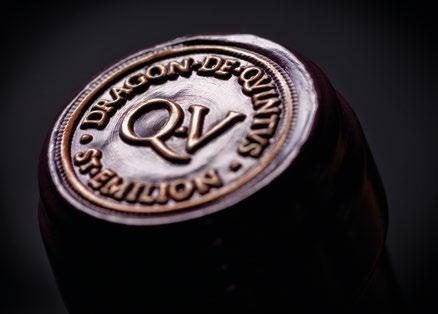
By assembling some of the most promising parcels and terroirs, we would attempt to create a new star of the Right Bank: Quintus. After more than 10 vintages, I am proud to say that our exceptional winemaking team is excelling at meeting this challenge.”
Château Quintus is perched dramatically on a limestone promontory at 62 metres above sea level, commanding a 360-degree panorama over the Dordogne valley. This elevated plateau, with its mix of north-, west- and southfacing slopes, provides an enviable range of microclimates and clay-limestone soils—the very conditions that coax Merlot and Cabernet Franc to their most eloquent expressions. In uniting neighbouring terroirs, the estate now holds one of the broadest viticultural palettes in SaintÉmilion, enabling the winemaking team to craft blends of remarkable depth and nuance.
This sense of guardianship over the land is not only geological but ecological. Quintus is distinguished by its so-called “Mediterranean Green Belt”—a mosaic of hedgerows, escarpments, holm oaks, and stone walls that shelter thriving biodiversity. More than 200 species of fauna and 80 wildflowers have been catalogued here, from black-capped chickadees to bats and beneficial insects. To nurture this living community, the estate has eliminated insecticides, planted ecological corridors, installed nesting boxes and “bug hotels”, and embraced a philosophy of minimal intervention. These efforts have earned Quintus dual certification for High Environmental Value (HEV) since 2018 and ISO 14001 since 2019.
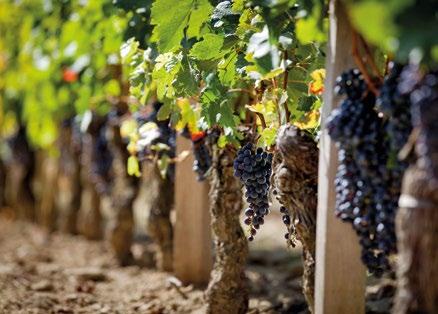
CLOCKWISE FROM LEFT Dragon de Quintus is the estate’s second wine, after its flagship © Deepix Studio Bordeaux; Château Quintus’s bottles are inspired by those of Château Haut-Brion from the mid-19th century; once ripe, the grapes at Château Quintus are harvested by hand © Deepix Studio Bordeaux.
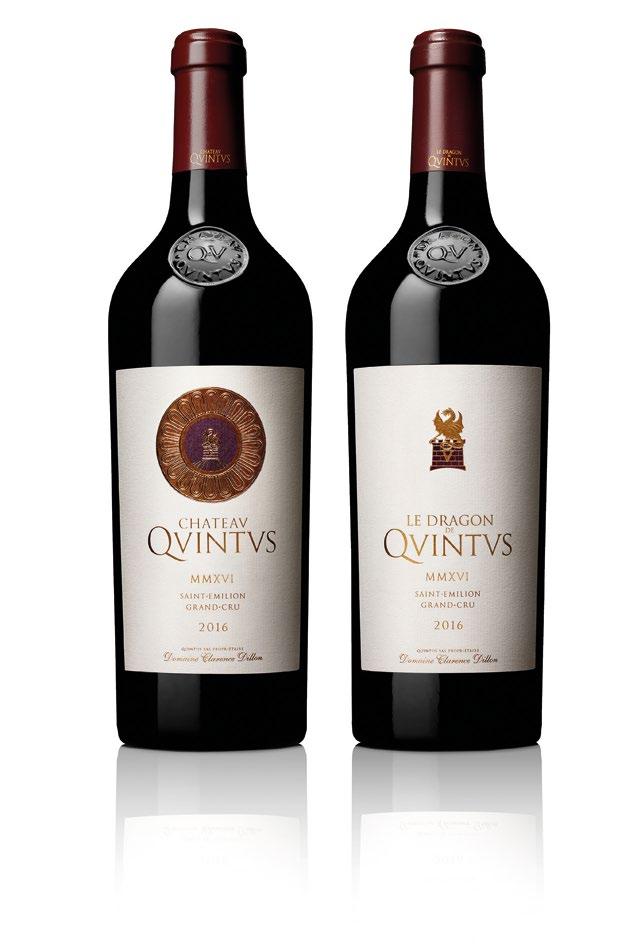
The estate’s vineyard and cellar teams share the same guiding principle: to assist and protect the terroir without ever obscuring its voice. Hand harvesting is the rule, with meticulous selection at every stage ensuring that only the most pristine fruit reaches the vats. Fermentations take place in both wood and stainless steel, with gentle extractions achieved by pumping over. Each parcel— whether from the crest, middle, or foot of the slope—is vinified separately, then blind-tasted to allow instinct and sensory judgment to guide the blending.
Estate Manager Mariette Veyssière, Cellar Master Claude Diligeart, and Vineyard Manager Pauline Comin work in concert with the wider Clarence Dillon team to shape each vintage. Once the assemblage is complete, the wine rests patiently in French oak for 12 to 18 months, its tannins smoothing and its aromas sharpening. The goal is to achieve balance, crafting wines with a distinct elegance and minerality that reflect their clay-limestone birthplace.
The character of the Quintus wines is rooted in the fruit: supple, aromatic, and refined. However, each vintage tells its own story. The 2019 release, a blend of 55.4% Merlot and 44.6% Cabernet Franc, brims with blackcurrant, spice, and silk-fine tannins, earning recognition as one of the estate’s triumphs. The 2020 vintage, marked initially by excessive rainfall in spring and then a heatwave and drought in summer, produced a Quintus of impressive concentration and complexity. Juicy tannins with rich aromas of ripe red and black fruits characterise this superb wine, its fresh yet structured taste stretching out on the palate with »
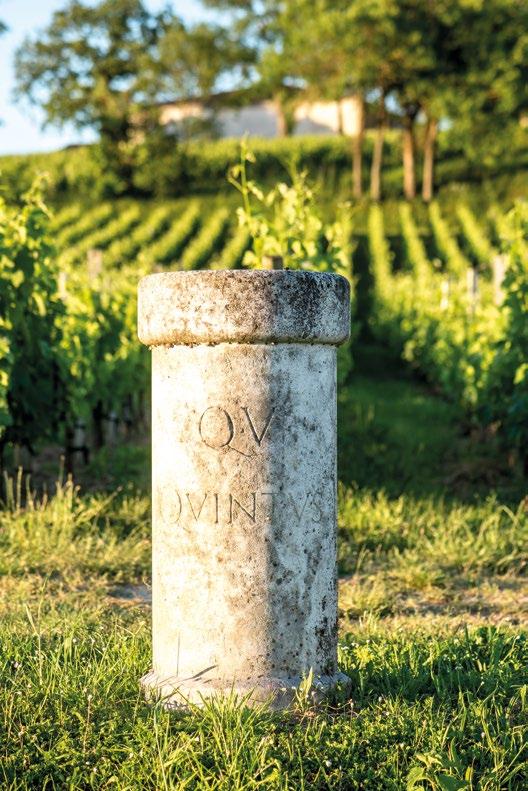
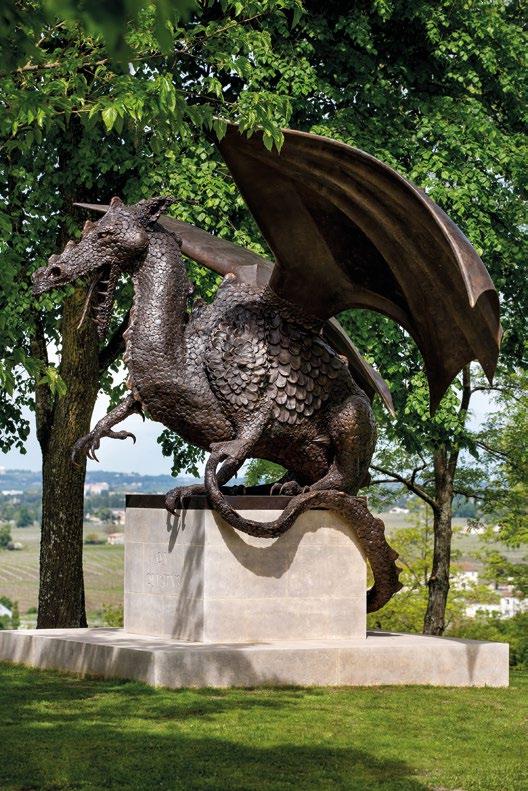
« incredible length. In 2021, a more classic Bordeaux vintage was produced, resulting in an exquisite ruby-red wine bursting with fruity lightness and controlled concentration, courtesy of the tightly-knit tannins.
Alongside the Grand Vin stands Dragon de Quintus and Saint-Émilion de Quintus, the estate’s other two expressions. More immediately approachable with less tannins and shorter time spent in oak than their elder sibling, these wines nonetheless share the same precision of fruit and fidelity to terroir, making them favourites among those discovering Château Quintus for the first time.
While the estate looks resolutely to the future, incorporating sustainability initiatives and producing wines that are both prestigious and accessible, it remains anchored in the broader legacy of Saint-Émilion—the first wine-growing landscape to be inscribed by UNESCO as a World Heritage Site. The estate’s vineyards, with their limestone ridges and rolling slopes, form part of this cultural tapestry where nature and man have coexisted for centuries.
That continuity is essential to the ethos of Château Quintus. Much more than just an assemblage of parcels or a brand, it’s the embodiment of a long lineage, revitalised for a new era. Every harvest reaffirms the promise set out in 2011—to create one of Saint-Émilion’s greatest wines, a benchmark for elegance, balance, and authenticity.
CLOCKWISE FROM TOP LEFT Château Quintus spreads across 45 hectares in Saint-Émilion © Michaël Boudot; created by British sculptor Mark Coreth, Quintus’s bronze dragon statue watches over the estate and its treasured wines © Deepix Studio Bordeaux; the 2011 Château Quintus vintage © Deepix Studio Bordeaux.
With more than a decade now behind it, Château Quintus stands not as an upstart but as an emerging emblem of excellence whose roots intertwine past and future. Its wines are finding their place in cellars and on tables across the globe, while its limestone slopes continue to yield fruit that speaks with clarity and conviction.
In Saint-Émilion, where history and innovation often walk hand in hand, Quintus is living proof that new stars can indeed be born—provided they shine with the light of their terroir.
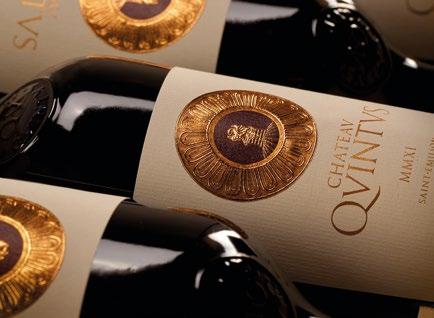






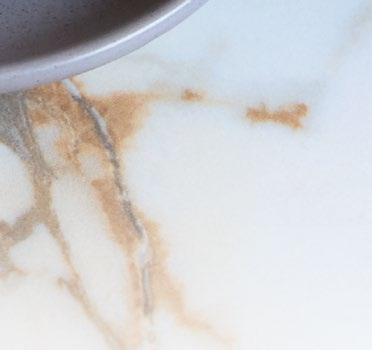












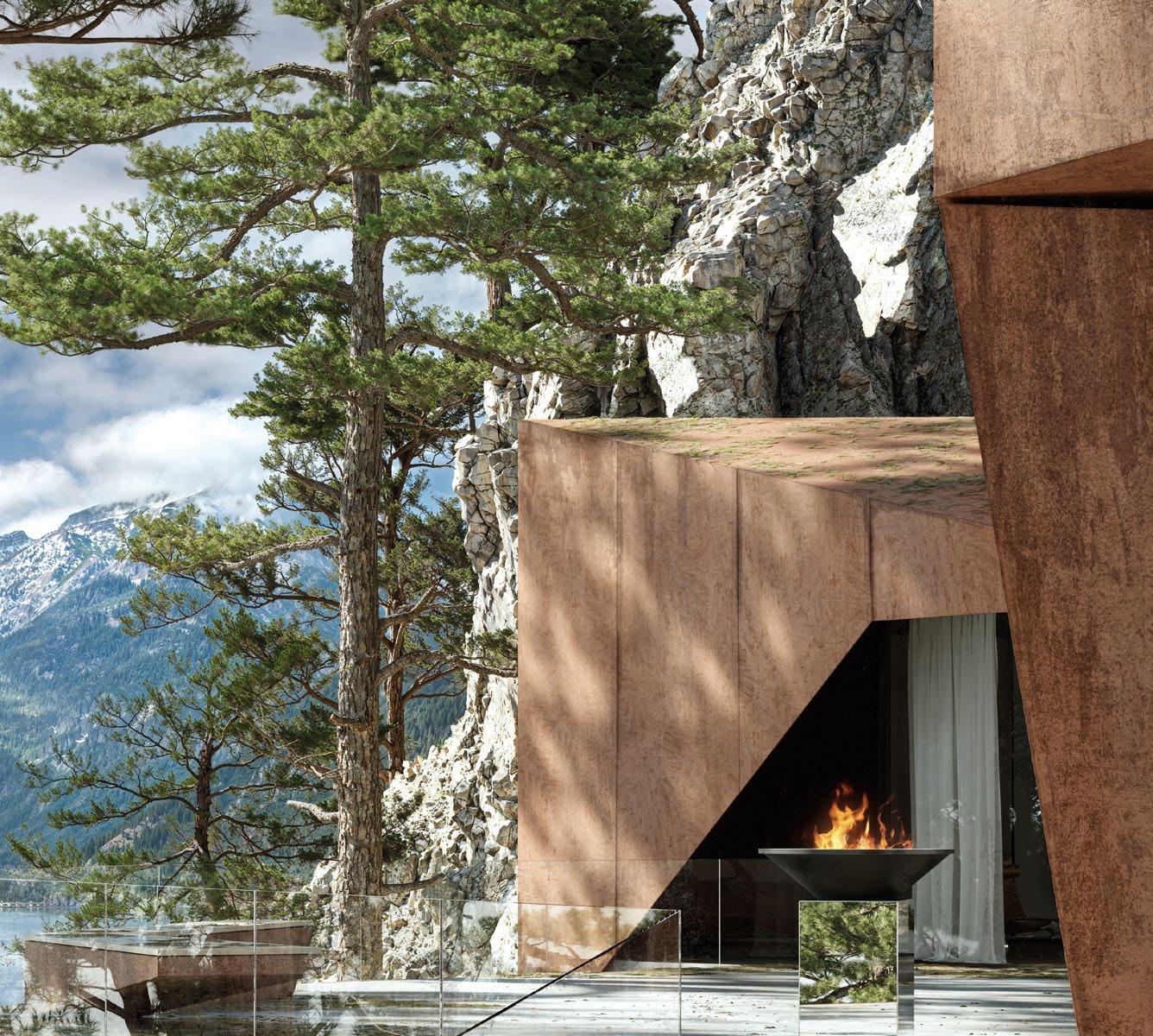

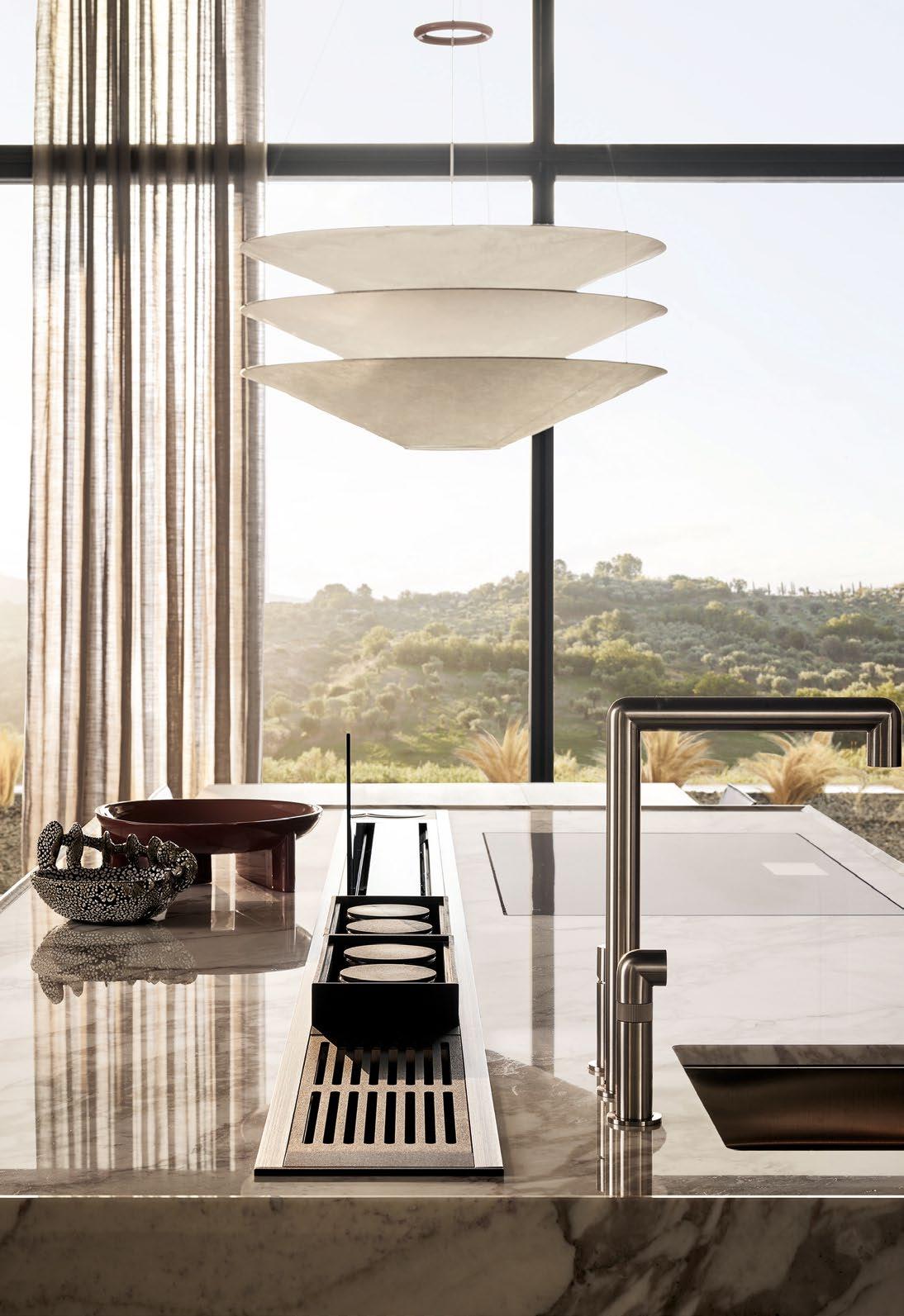
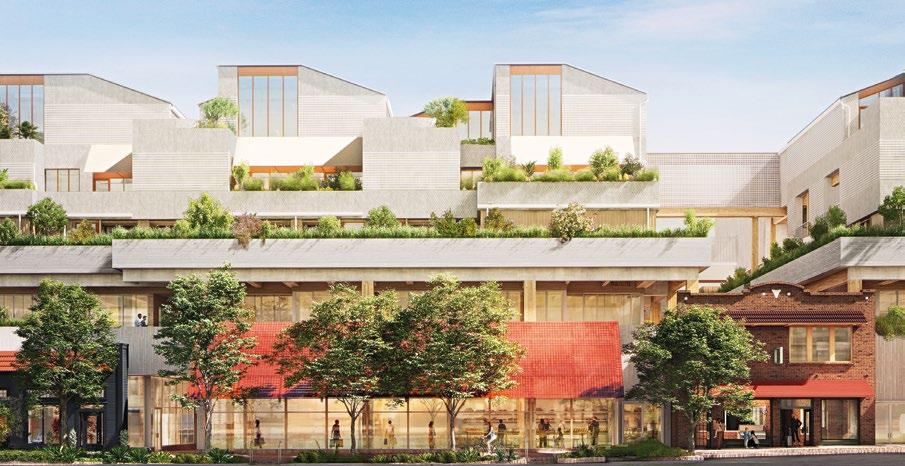
As Partner at Herzog & de Meuron, Simon Demeuse has helped shape projects across three continents. His latest, Austin’s ambitious Sixth&Blanco, is a mass timber development that reimagines a full city block as a village of homes, gardens, galleries, and gathering spaces.
During my teenage years in Belgium, my parents remodelled our house. I listened in on the meetings with the architect and was fascinated with all the choices and consequences that emerged from simply moving a stair or adding a room. At the time, I had an art history teacher with great slides of modernist and brutalist architecture. I chose to go into architecture school straight after high school, and today, when approaching new design problems or learning about architecture—new and old—I still experience that early pleasure and excitement. It also helped that my parents’ architect drove a cool car.
WHAT SHAPED YOUR ARCHITECTURAL PHILOSOPHY AND HOW IS THIS REFLECTED AT HERZOG & DE MEURON?
In my twenties, I studied and worked in Southern California, where architectural education was very open and experimental. Architecture was approached conceptually, as a thinking discipline, rather than a stylistic pursuit. Discussion was integral to the design process.
At Herzog & de Meuron, we also promote exchange and discussion while developing a design. Jacques Herzog and Pierre de Meuron’s approach of asking key questions
OPPOSITE Architect
Simon Demeuse, Partner at Pritzker award-winning Swiss architectural firm Herzog & de Meuron © Gina Folly.
ABOVE Sixth&Blanco, tucked just a stone’s throw from Austin’s Lady Bird Lake, is the first development of its kind in the region, featuring a collection of premium retail and restaurant outlets, a boutique hotel, and an exclusive selection of private residences.
and openly exploring various solutions together without any preconceived notions leads to unique design responses fitting to a specific client, brief, community, climate, and site. This approach results in an architecture which does not rely on a signature style. An open exchange also allows our clients, collaborators, and various stakeholders to participate in a meaningful way and ultimately to feel coownership of the project.
HERZOG & DE MEURON HAS A LONG HISTORY OF CREATING ICONIC ARCHITECTURAL PROJECTS AROUND THE WORLD. HOW DOES THE NEW SIXTH&BLANCO DEVELOPMENT FIT IN?
Our projects always try to find a synthesis between our client’s ambitions and the specific conditions, the local culture, existing buildings, way of living, way of building, available materials, and, very importantly, the local climate.
The Sixth&Blanco project encompasses a full city block and will be a single horizontal wood-framed structure which weaves and connects existing and historic buildings into the new development.
All circulation is provided in covered exterior spaces, courtyards, gardens, terraces, and porches. They seamlessly connect the public spaces, stores, galleries, and residences »
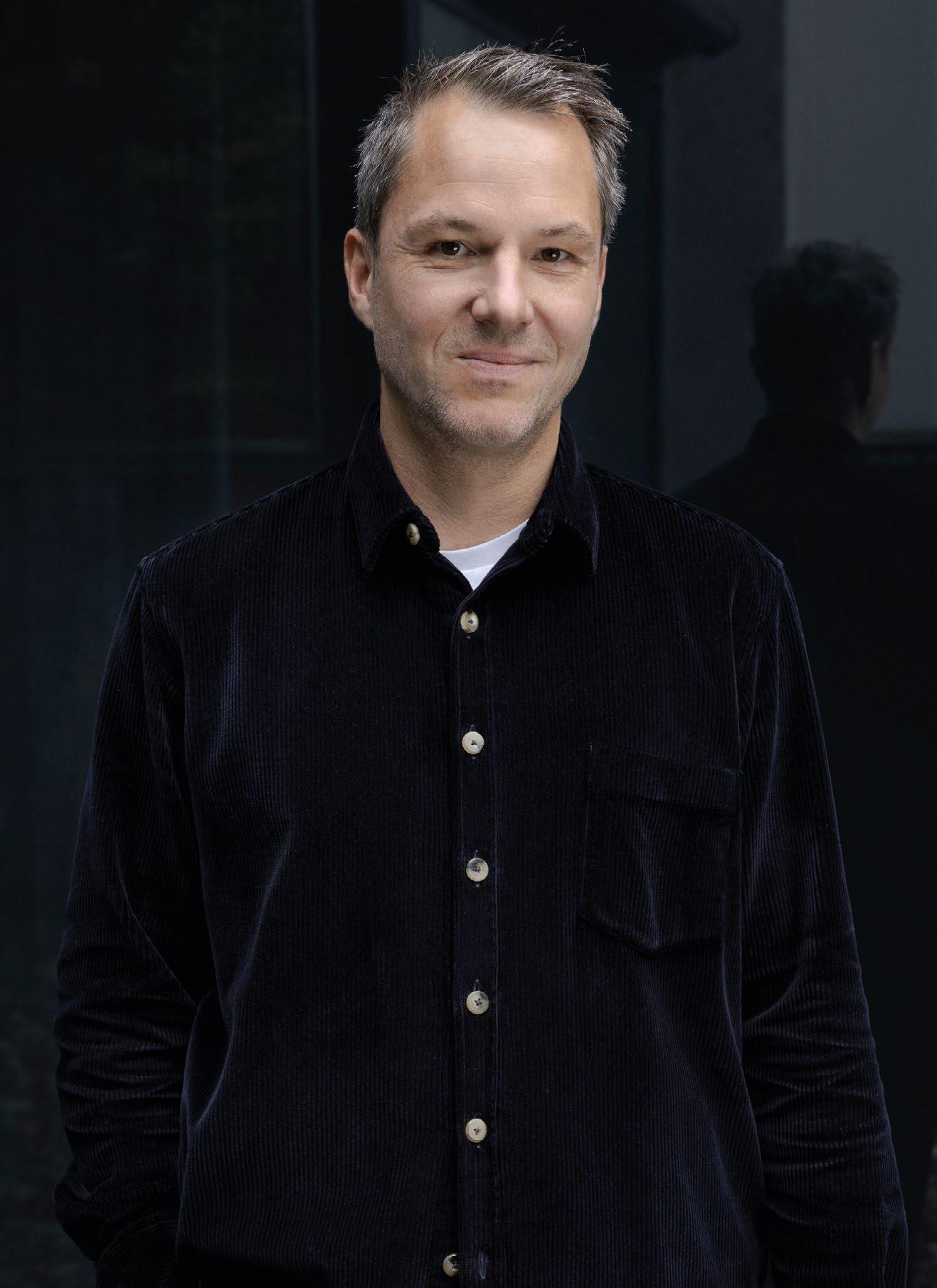
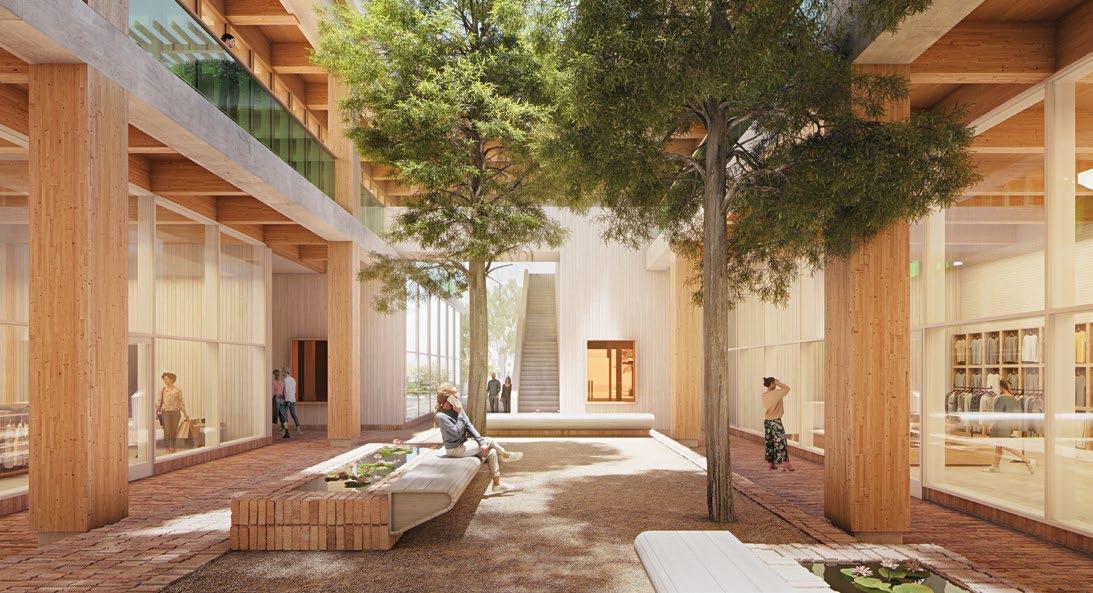
« together. In collaboration with Christy Ten Eyck, landscape architect, the exterior spaces are filled with planting; the exterior is given equal importance to the interior. A true inside-outside architecture responds to the Austin climate as many of the historic Austin bungalows do with their expansive porches.
The wooden structure is clad with materials seen in the project’s adjacent historic neighbourhoods—natural wood, painted siding, and brick. The project, in essence, is the sum of its many individual parts and spaces rather than a singular iconic gesture. Varied interior and exterior spaces, each with a carefully detailed material palette, make this dense and large development very approachable and human-scaled.
SIXTH&BLANCO IS A MULTIPURPOSE
SPACE WITH RESIDENTIAL, COMMERCIAL, AND CULTURAL ELEMENTS. HOW DID YOU INTEGRATE THESE DIVERSE FUNCTIONS INTO A COHESIVE DESIGN?
Not dissimilar to a dense village, the development offers its inhabitants an awareness of all the simultaneous activities going on in the project: squares with active terraces, people on their way to a store, and others enjoying some time in a group together on the planted hotel terraces above. There will be a sense of liveliness and activity, yet, at the same time, the project provides much-needed privacy and quiet spaces. All hotel rooms have their own planted porches, and all residences on top have several private gardens and terraces.
The planting and landscape design is key in tying together all the private and public functions. The orientation and planting of individual spaces allow for maximum connectivity of the interior to the exterior but also avoid potential uncomfortable adjacencies.
ABOVE Sixth&Blanco will boast an array of beautifully landscaped common areas and terraces designed by Christy Ten Eyck.
BELOW The hotel at Sixth&Blanco boasts a lush private terrace suspended amongst the treetops of Clarksville, Austin’s most desirable nieghbourhood.
HOW DO YOU ENSURE EACH FACET—PRIVATE RESIDENCES, HOTEL, MEMBERS’ CLUB, RETAIL SPACES, AND ART GALLERIES—CONTRIBUTES TO A UNIFIED EXPERIENCE FOR BOTH RESIDENTS AND VISITORS?
Most clients might have opted for a few separate buildings, such as a condo tower and a hotel tower with some shopping functions below. We were lucky that our fantastic clients, MML, were convinced from the start that our proposal of a single horizontal approach would provide the most unique yet unified environment, both for the local neighbourhood and the individual residents alike.
The exposed wooden structure, the unifying material palette, and the abundant planting throughout the project create a seamless and unexpectedly relaxed, human-scaled environment. This is particularly unusual for a mixed-use commercial development of this size, making it welcoming for neighbours, visitors, guests, and residents alike.
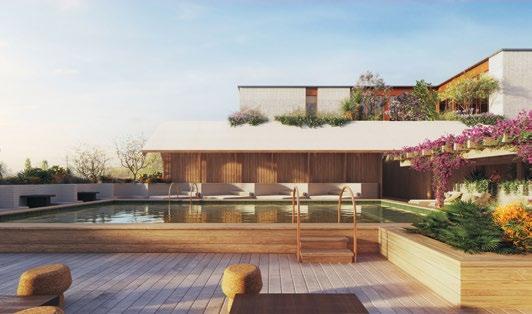
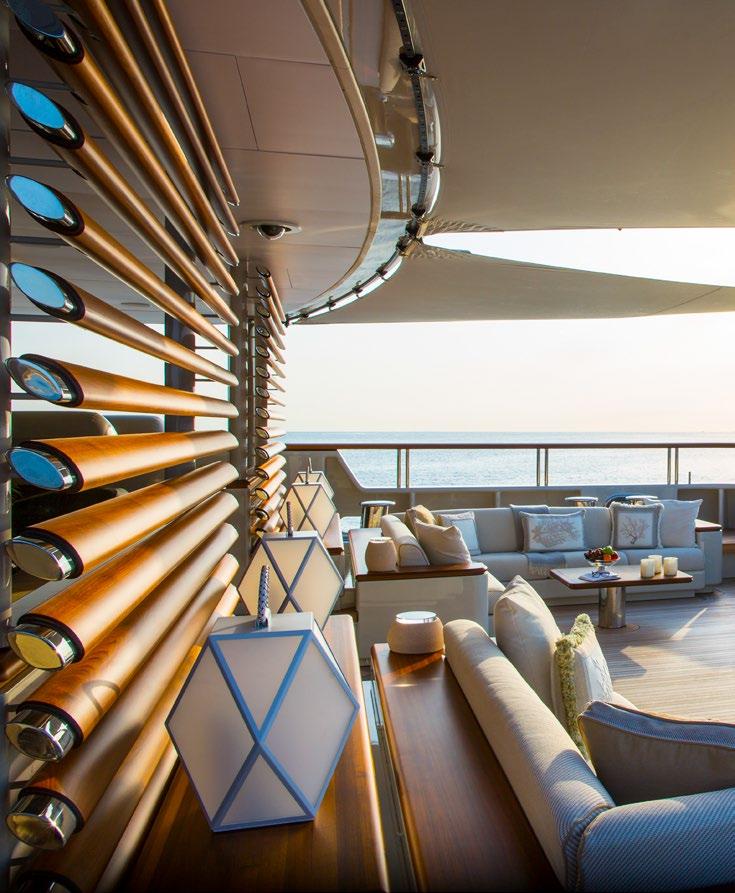
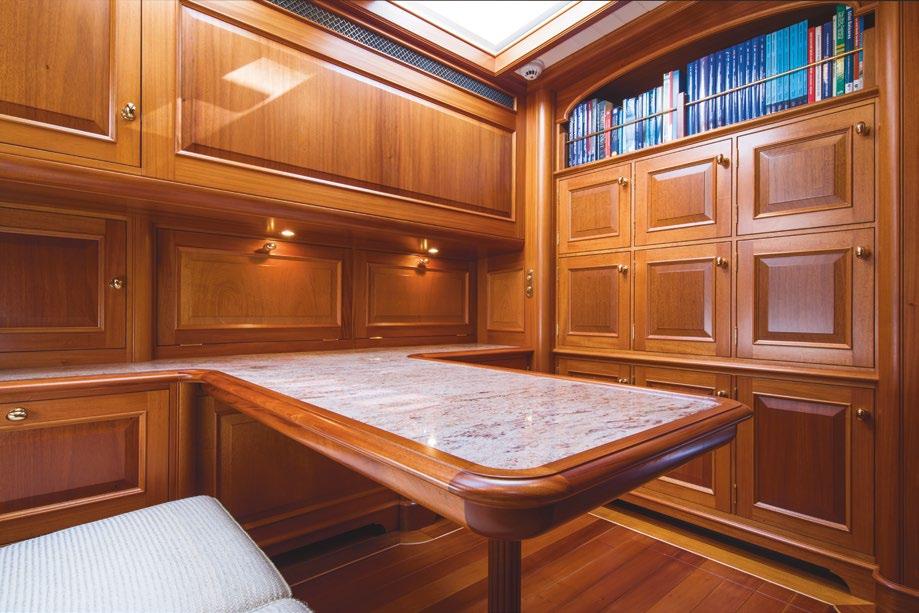
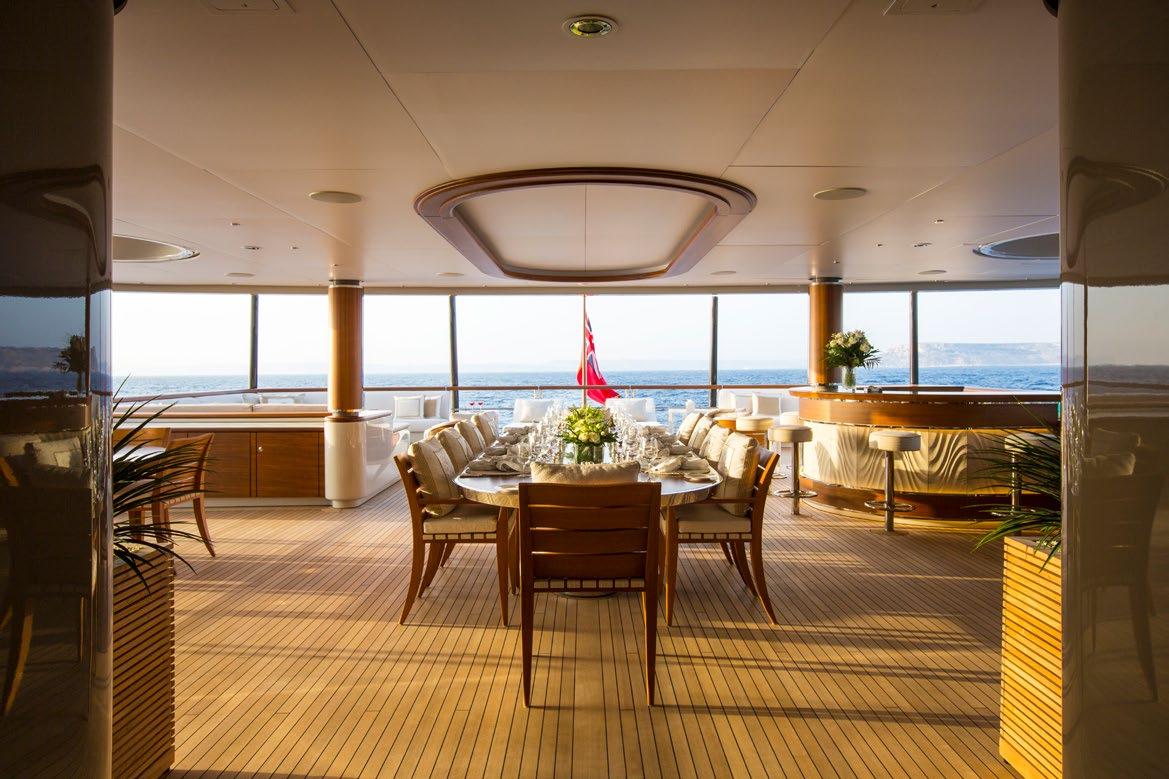
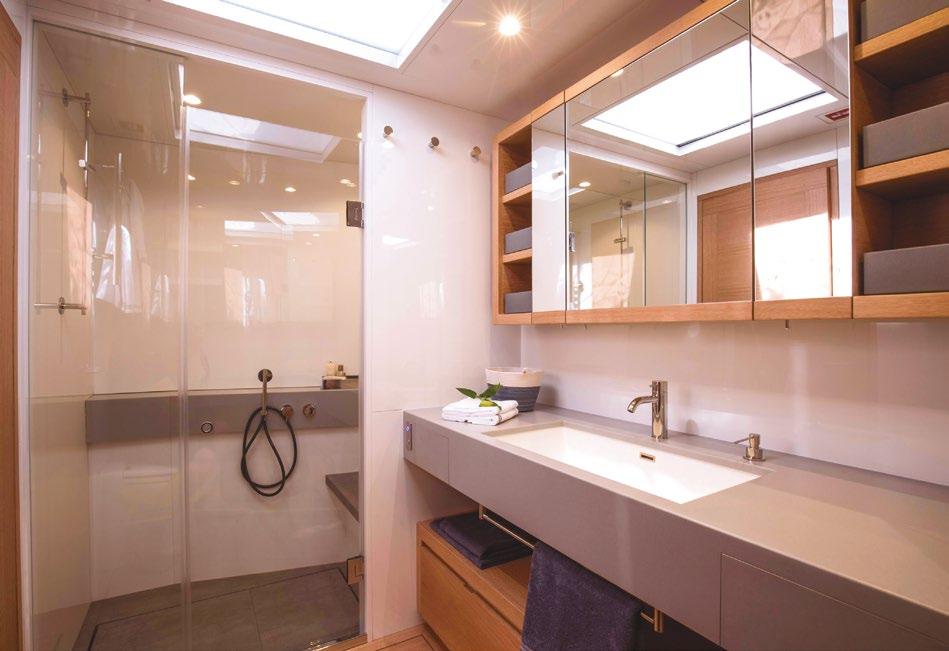
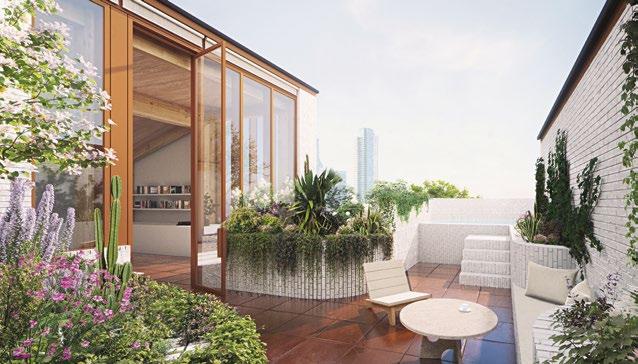
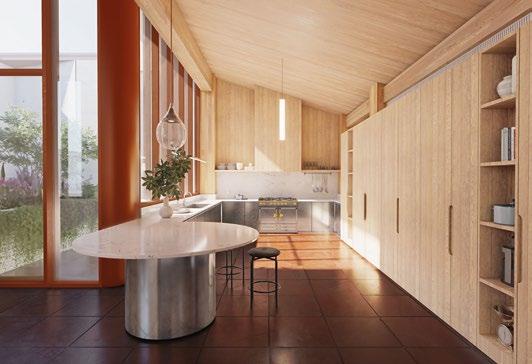
CAN YOU ELABORATE ON THE DESIGN PROCESS FOR THE EXCLUSIVE PRIVATE RESIDENCES AT SIXTH&BLANCO?
10 individual two-storey residences are located at the summit of the structure. The houses are entered from the upper, more communal floor, and the bedrooms are a floor below. All residences have individual gardens, terraces, and light courts, making for bright, open, and varied layouts. The spaces are loft-like in character, with exposed wood, pitched ceilings, and beams. Each house is unique in its arrangement.
The overall material palette of natural plaster, wood, terracotta, ceramic, and stone is distinct yet understated enough so that each resident can bring in their own personal style and desired character. The homes have a generosity and material quality normally only found in individual purpose-built homes. It’s truly unique to discover such an elevated architecture in such proximity to all the services, activities, and liveliness that the Sixth&Blanco urban environment will offer.
AS SOMEONE WHO OVERSEES PROJECTS ACROSS CONTINENTS, HOW DO YOU ADAPT THE FIRM’S DESIGN PRINCIPLES TO DIFFERENT CULTURAL AND ENVIRONMENTAL CONTEXTS?
While working around the world, Herzog & de Meuron’s projects are rooted in creating spaces that respond to their
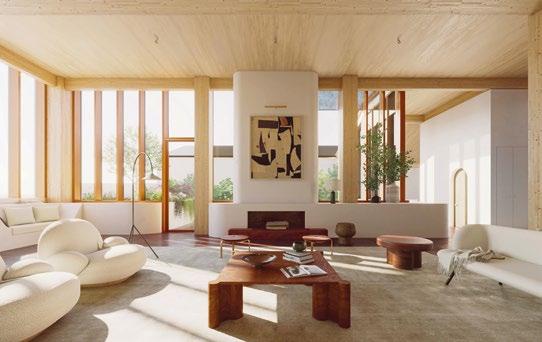
CLOCKWISE FROM TOP LEFT Sixth&Blanco will be home to 10 refined residences spread across its fourth and fifth floors, each complete with multiple plant-filled outdoor spaces; the residences will feature soaring timber ceilings and top-class finishes; space and natural light are integral to the design at Sixth&Blanco.
cultural and environmental contexts. We spend a lot of time on-site getting to know the context. From the start, our teams work closely with our local design and engineering partners and ultimately even move to the site during the detail and construction phases.
This closeness to the local realities helps us in making relevant designs which fit in their context and are ultimately well-crafted and built to enhance the capabilities of the local skills available. In this case, it helped that my wife was born and raised in Austin, Texas, so I had a familiarity with the context.
HOW DO YOU STAY INSPIRED AND CONTINUE TO INNOVATE IN YOUR DESIGNS? DO YOU HAVE A SIGNATURE STYLE OR FAVOURITE CHARACTERISTICS TO INCLUDE?
We believe each project has its own set of unique challenges and potential. Finding the limitations and opportunities together with the clients and a team of experts makes each project exciting and a new learning experience.
Within our practice, we have experience in many different types and sizes of buildings, which we continually reference and draw upon. We nevertheless always try to avoid creating a copy. Rather, we attempt to make our designs responsive, designing spaces which function well and effectively enrich the life of its users and community.
Architecture’s role will become even more critical than it has been. In order for an urban plan or a building to make sense, it has to function from social, economic, and environmental perspectives. Only then can we speak of sustainable architecture built to make a lasting contribution.
Our practice has a long tradition of approaching projects which, over the decades, have continued to make a positive impact, function well, attract visitors, and allow for transformation when needed. We hope that the Sixth&Blanco project will set new standards for sustainability in Austin.
Inspired by Queenstown’s alpine majesty, Coco Wolf’s Coronet Collection brings sculptural beauty, durability, and versatility to the art of outdoor living.
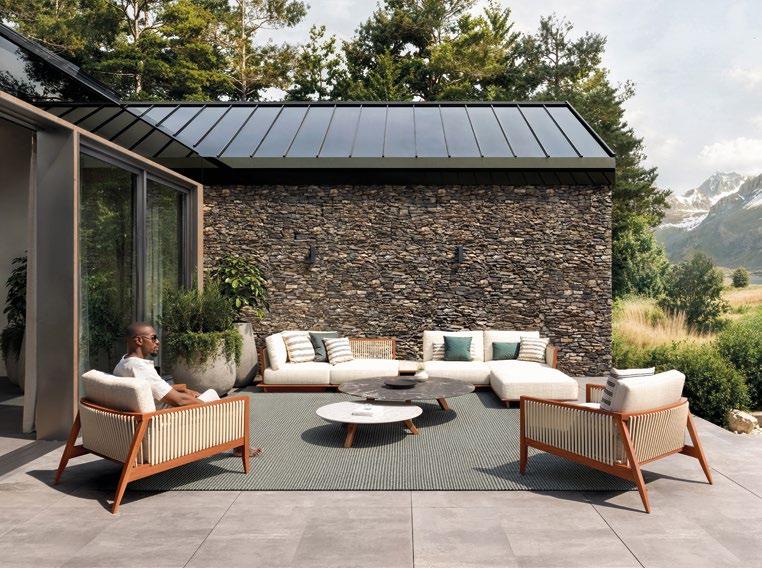
From the snow-capped peaks of Queenstown, New Zealand, to the terraces of the world’s most exclusive resorts, Coco Wolf’s Coronet Collection captures the essence of outdoor living at its most elevated. Inspired by Coronet Peak and its spirit of adventure, the collection translates the drama of alpine landscapes into sculptural furniture that marries contemporary design with timeless elegance.
Crafted in Britain at Coco Wolf’s Derbyshire factory, each piece is engineered for beauty and endurance. Frames are made from Iroko wood, porcelain tops, and precisionengineered finishes that ensure resilience in the harshest climates. The Coronet Collection also offers thoughtful flexibility: interchangeable seat bases, five rope colours to choose from, and fabrics that carry a five—to sevenyear guarantee. Every piece is backed by Coco Wolf’s five-year furniture warranty, a mark of confidence in its craftsmanship.
A defining feature of the collection is the marine-grade rope, meticulously hand-woven and threaded along the backrests of chairs and sofas. This artisanal detail introduces texture and character, softening the sculptural lines while showcasing the craftsmanship at the heart of Coco Wolf.
While Coronet shines on its own, it is also part of a family of eleven Coco Wolf collections, each with its own
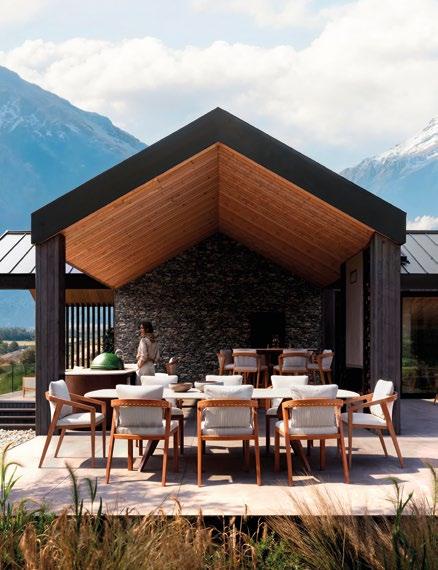
character yet designed to mix and match effortlessly. This versatility allows designers to curate outdoor environments that feel both cohesive and individual.
At the heart of this achievement lies advanced production: two five-axis CNC machines and a four-axis machine support a seventy-strong team of artisans. This union of innovation and craftsmanship has earned Coco Wolf the trust of clients, including Rosewood, Four Seasons, and The Ritz-Carlton.
The Coronet Collection embodies more than design. It is an invitation to live adventurously and elegantly outdoors, with the assurance of British excellence.
Coco Wolf – British Luxury Outdoor Furniture +44 (0) 20 7262 8614 | enquiries@cocowolf.co.uk cocowolf.co.uk

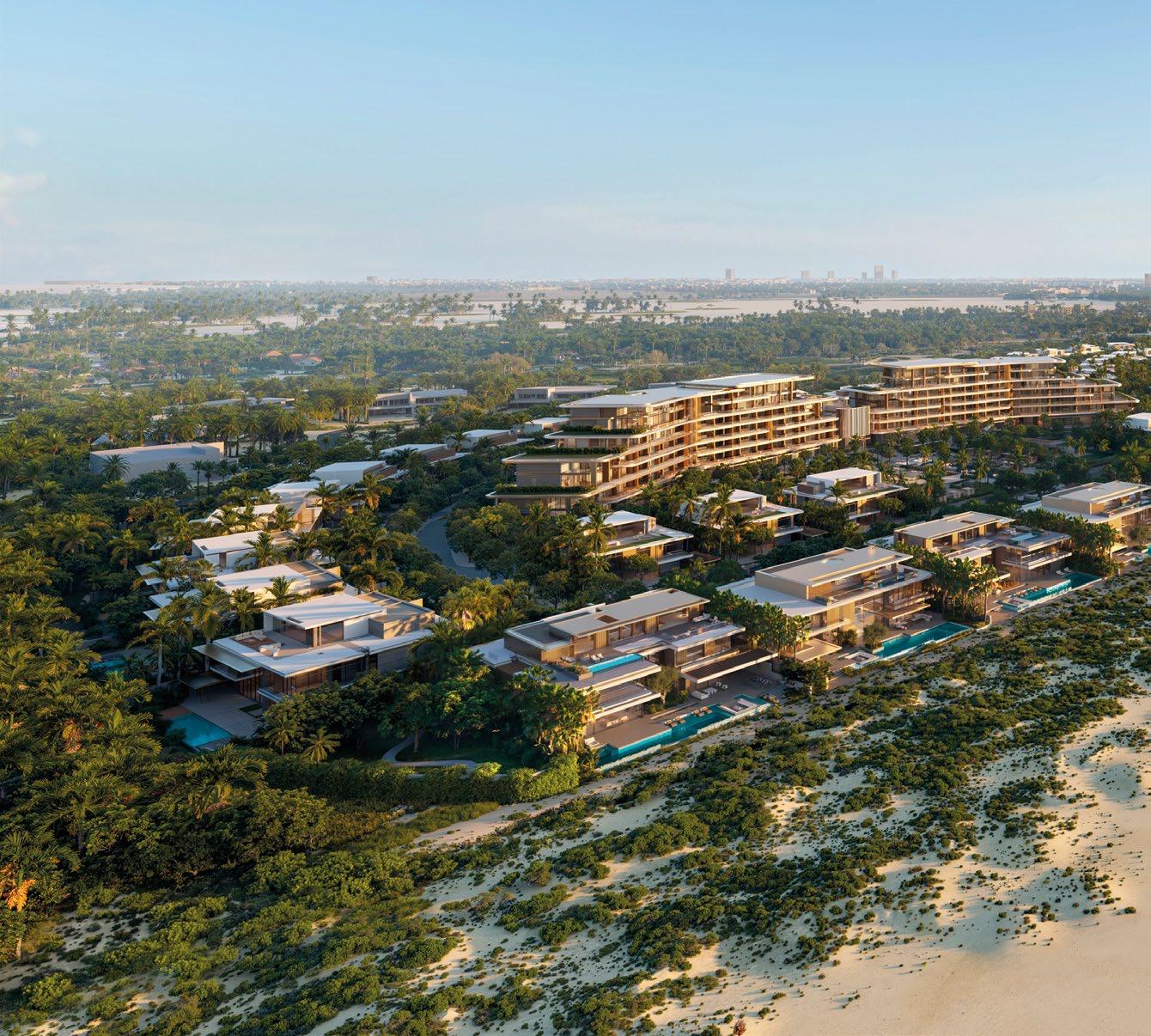
In the GCC, the horizon itself has become the ultimate amenity, as a new generation of luxury branded residences reimagine coastal and city living, putting the view front and centre.
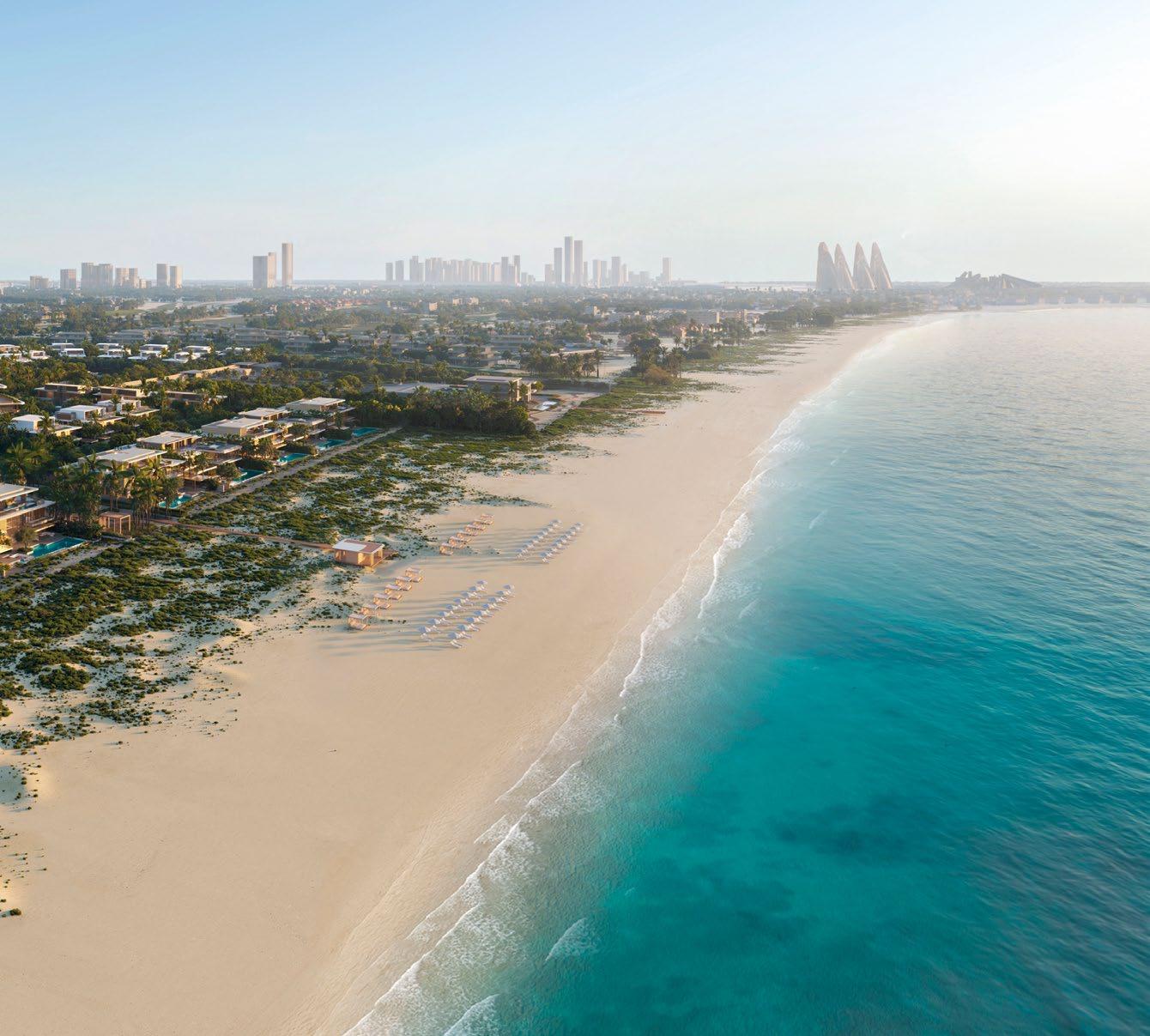
In the Gulf, where architectural ambition has long shaped skylines and coastlines, the idea of home is being rebuilt once again. The region’s latest residential launches are not just places to live but vantage points—frames through which life, leisure, and landscape are experienced. From Abu Dhabi’s pristine Saadiyat shoreline to the reefs of the Red Sea and the bustling energy of Dubai Marina, a collection of new developments is setting a fresh standard for how the most discerning residents will live.
At the heart of this movement lies a convergence of global design talent, hospitality expertise, and the idea that homes should elevate whatever lies beyond their walls— heightening the awareness of the surrounding sea, city, or horizon. In a region where waterfronts, islands, and skylines are part of everyday life, the newest addresses are amplifying these views into defining home features.
Few locations capture the spirit of coastal luxury quite like Saadiyat Island. Already home to the Louvre Abu Dhabi and a string of white-sand beaches, the island is poised to welcome one of its most significant residential projects to date: Four Seasons Private Residences Abu Dhabi at Saadiyat Beach.
Set for completion in 2029, the development marks Four Seasons’ first standalone residential project in the capital. Partnering with Abu Dhabi-based Al Ain Asset Management (ALAIN), the company will bring its globally renowned branded living model to one of the world’s most coveted beachfronts. Envisioned as a gated community, it will offer just 56 villas—including rare beachfront mansions—and 60 suites, penthouses, and royal residences.
Designers have drawn inspiration from the island’s natural environment, ensuring architecture and interiors »
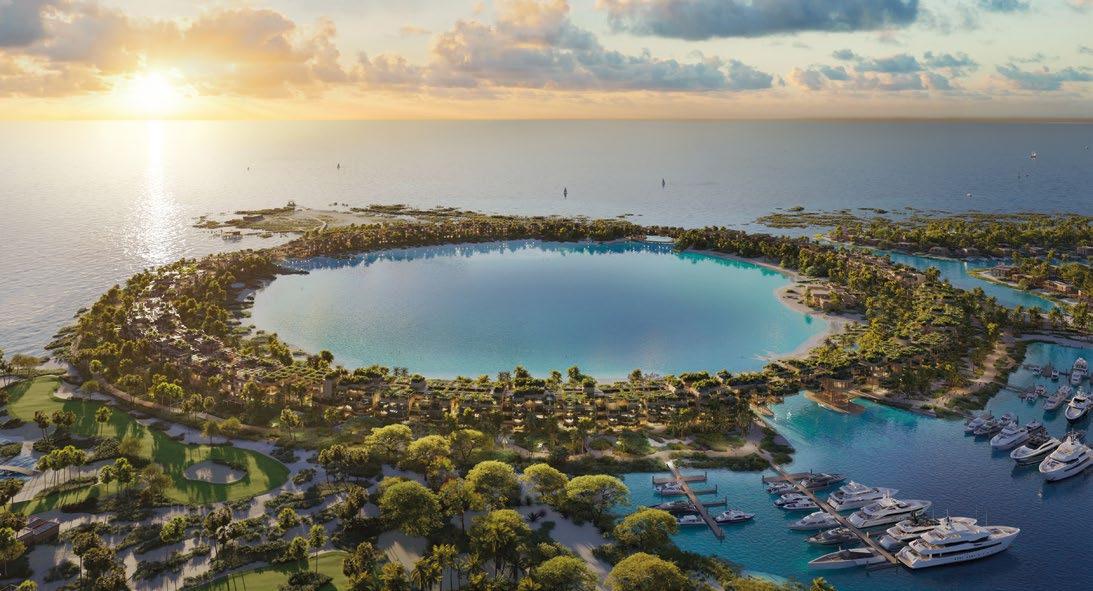
« blend seamlessly with the dunes and shoreline. Residents will find more than just a home: the community promises direct beach access, pools, tennis and padel courts, a residents’ lounge, a yoga and meditation studio, spa and fitness facilities, a golf simulator, cinema, and children’s play spaces. A dedicated Four Seasons team, led by a Residences General Manager, will oversee every detail of daily life, from housekeeping to property management.
As Bart Carnahan of Four Seasons put it, the project extends the company’s “exceptional coastal living experience” in the UAE while complementing its urban offerings. For ALAIN’s Khaled Haji Al-Khoori, the residences represent “a commitment to enrich Abu Dhabi’s premier residential landscape and reinforce its global appeal”. Together, their vision suggests a new benchmark: privacy, elegance, and the signature service of Four Seasons, set against Saadiyat’s cultural and natural backdrop.
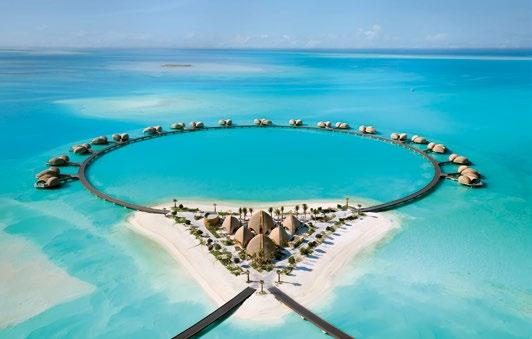
While Saadiyat offers exclusivity at the shoreline, across the GCC, a broader trend is reshaping the residential landscape: the elevation of views as the defining quality of a home. In new developments across Dubai, the Red Sea, and beyond, terraces, courtyards, and balconies are no longer secondary features but the heart of the living experience.
Take Laheq Residences at The Red Sea, the first island development in the area designed primarily for ownership. With Foster + Partners behind the masterplan, the project embraces its extraordinary setting which hugs 400 hectares of coral reefs and beaches. Homes are positioned either around a vast lagoon—encircled by the striking 800-metre Ring, a mixed-use architectural landmark—or toward the open sea. The design threads indoor and outdoor life together, weaving shaded gardens and breezy courtyards with views that shift throughout »
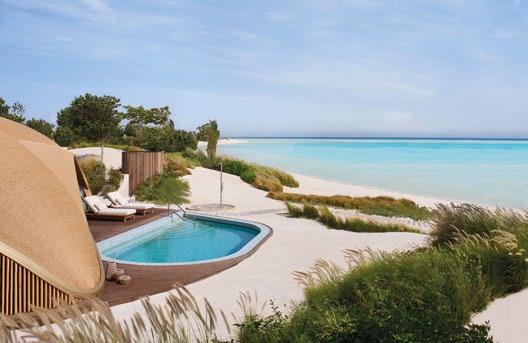
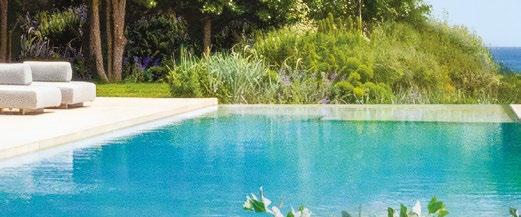
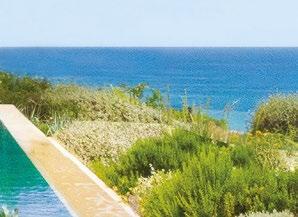


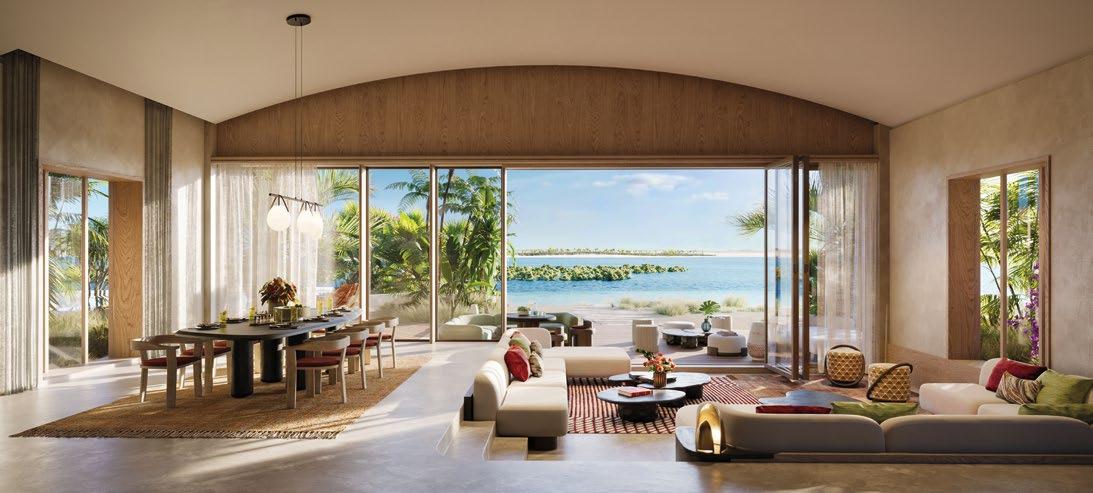
« the day, from bright morning light to evening reflections across the marina.
For those who prize seclusion above all else, few offerings rival Nujuma, a Ritz-Carlton Reserve Residence. Located on the outer edge of Ummahat Island, the 21 villas represent some of the rarest real estate in the Red Sea. Accessible only by chartered boat or seaplane, every villa is framed by horizons of pure sea and sky, offering panoramic views unobstructed by human intrusion.
On nearby Shura Island, the concept of view-driven living is taken even further. With 305 branded residences by names such as Four Seasons, Jumeirah, SLS, and Miraval, homes are designed with terraces that function as openair living rooms. Sweeping decks overlook reefs, fairways, and marinas, transforming natural and man-made vistas into permanent backdrops. Again, Foster + Partners’ architectural hand ensures privacy while maximising airflow and orientation—making the indoors feel inseparable from the outdoors.
In Dubai, where vertical living often defines the city, a new development is bringing balance to urban intensity. The Chedi Private Residences, rising along Sheikh Zayed Road, embody the duality of Dubai itself: cosmopolitan pace alongside coastal calm. With expansive terraces and interiors by Bruno Guélaff, the residences are oriented to capture both skyline and sea, offering a choice between the drama of towers and the tranquillity of water. Upper-floor duplexes and penthouses also include private plunge pools with panoramic views.
Nearby, Résidences Du Port at Dubai Marina adopts an entirely different perspective. Here, the marina itself becomes a source of entertainment, its daily rhythms transforming into the theatre of home. Inspired by yacht design, the architecture emphasises light and openness, with floor-to-ceiling windows and broad balconies overlooking the harbour. Residents witness the
choreography of boats, the ebb of light across the water, and the life of the promenade unfolding below. The result is a Riviera-like ease that makes it the perfect place to call home.
Collectively, these projects illustrate how the GCC’s luxury residential market is evolving. Beyond square footage and finishes, the new measure of desirability is perspective— what one sees and how that view is woven into daily life. Developers are increasingly working with leading architects and hospitality brands to ensure homes are more than addresses: they are stages for landscape and lifestyle alike.
In Abu Dhabi, that means beachfront villas managed with the exactitude of a five-star resort. On the Red Sea, it means island homes designed around coral reefs and lagoons. In Dubai, it means urban apartments that bring skyline drama and waterfront serenity into perfect alignment. For the global buyer, the appeal is clear. These homes offer more than permanence; they offer a way of living where the horizon is not distant but integral, inviting owners to inhabit the view itself.
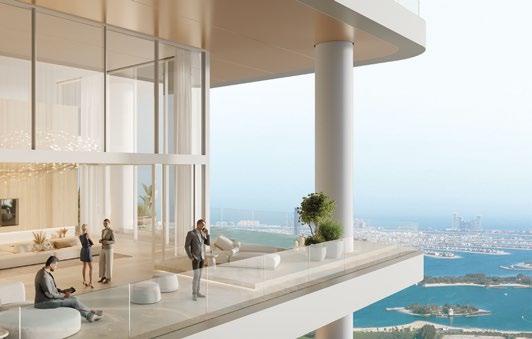


























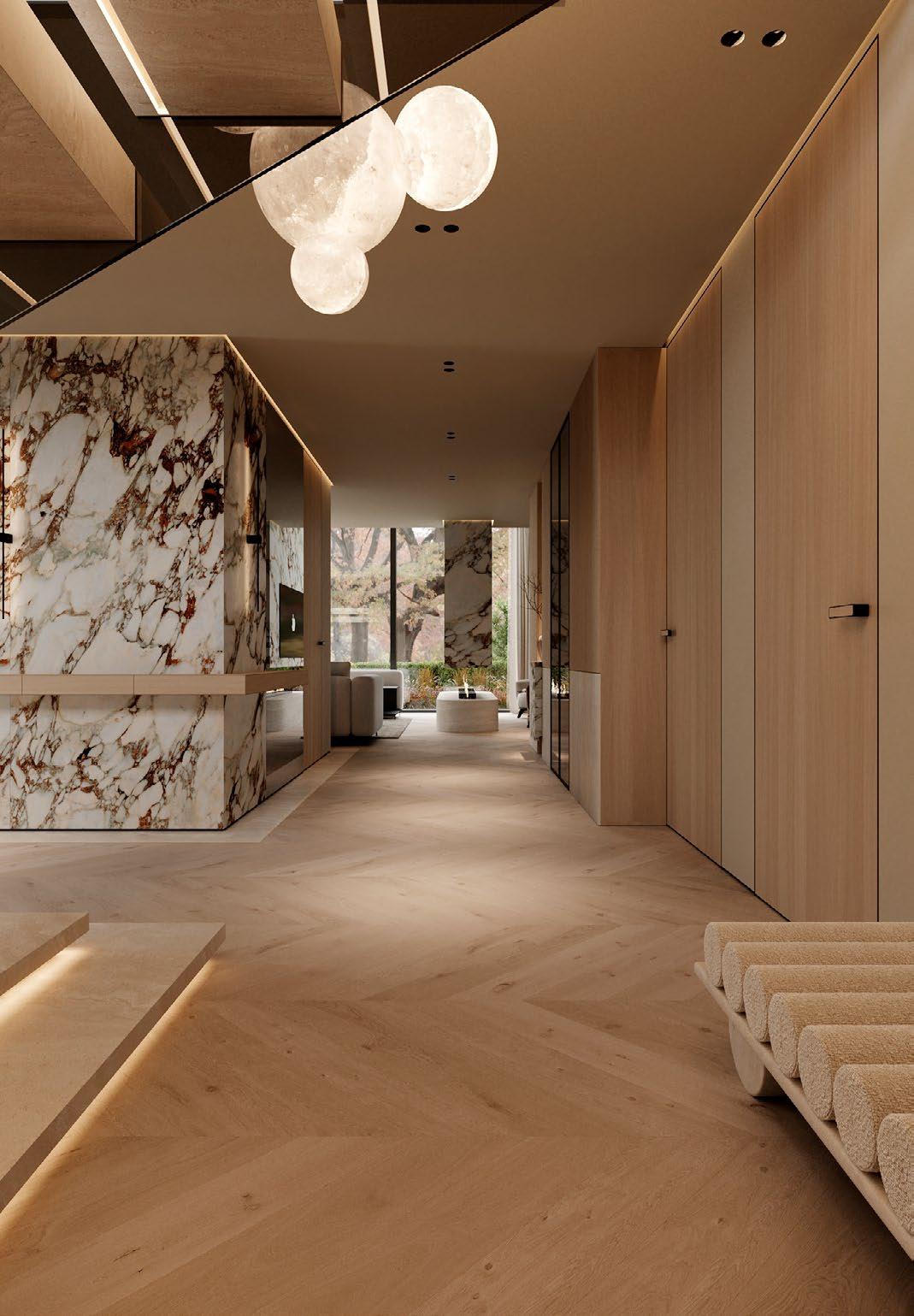

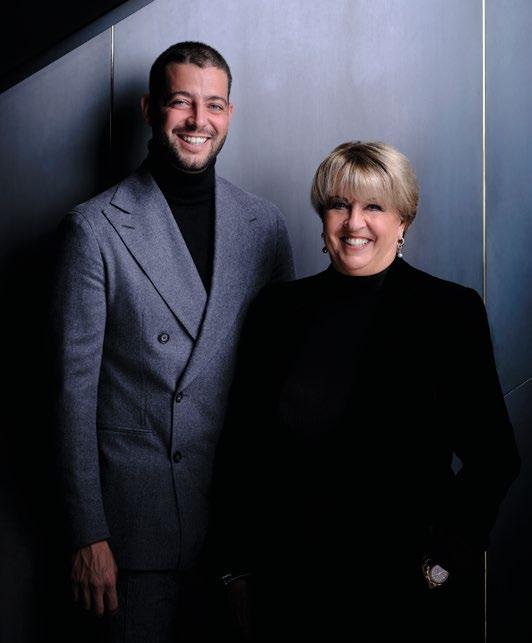

Winter in St. Moritz, summer in Italy: two seasons, two landscapes, one way of living. Maura Wasescha’s curated properties invite clients to experience the best of both worlds.
There are places that reveal their true character in winter. St. Moritz and the Engadin are among them. At 1,800 metres, the air sharpens, the snow settles like silk across the mountains, and the valley takes on a clarity that feels almost otherworldly. Days here are bright and crisp, nights glitter under endless stars, and life seems to slow into a rhythm shaped by the season. For those who know it well, the Engadin is more than a destination—it’s a way of living.
While winter elsewhere can feel harsh, this Alpine valley offers something different: exhilaration and calm in equal measure. Skiers carve through powder on Corviglia, horsedrawn sleighs glide across the frozen Lake St. Moritz, and evenings are spent fireside with a glass of Barolo or hot mulled wine. Luxury here lies not in extravagance but in the purity of the landscape and the understated refinement of mountain life.
This is what draws Maura Wasescha’s clients. They come for beauty, yes, but also for the discretion and authenticity that have grown rare elsewhere. For Maura Wasescha, property is never simply about bricks and beams—it’s about finding
homes and creating spaces where life naturally unfolds. Perhaps in an elegant chalet in Suvretta with windows that catch the morning light on Piz Margna, in a historic Engadin house in Zuoz with centuries of warmth built into its walls, or in a contemporary residence in St. Moritz where architecture and mountain views merge effortlessly. Each property is chosen for its spirit as much as for its structure. Materials that speak to the senses, design that breathes, and locations that offer both privacy and presence—these are the hallmarks of the Maura Wasescha approach.
Beyond the Engadin, Italy also calls. Just across the border lie lakefront villas, Tuscan farmhouses, and Mediterranean retreats, each with a heritage and lifestyle all their own. For many, the combination is irresistible: Alpine winters spent among the peaks of Switzerland, summers steeped in Italy’s warmth, culture, and sea air. Together, they represent the very best of European living.
In this, Maura Wasescha is more than a guide to real estate—she is a curator of lives well lived. For those ready to do more than visit, the key is waiting. Here are some of the highlights in Maura Wasescha’s exceptional portfolio… »
Nestled in the soul of St. Moritz, where the Alps meet the sky, this 1,250-square-metre private retreat offers a spa with a pool, cinematic lake views, and the rare privilege of calling the Engadin’s beauty your own.
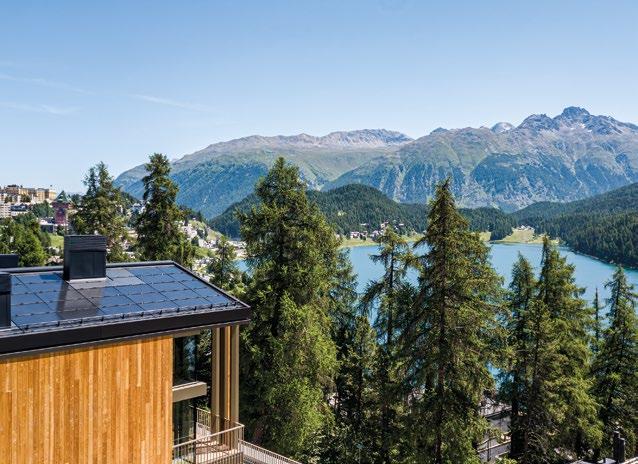
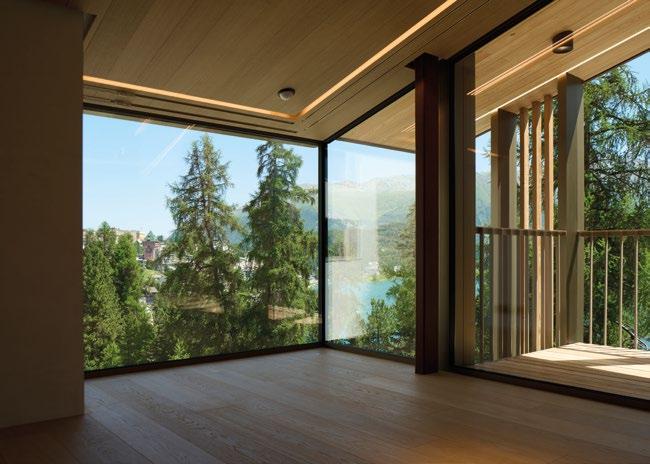
Overlooking the lake and mountains of St. Moritz, this 1930s gem offers panoramic lake and mountain views, accompanied by 800 square metres of refined living space, grand social areas, and the promise of a private cinema and spa—an Alpine retreat where elegance meets elevation.
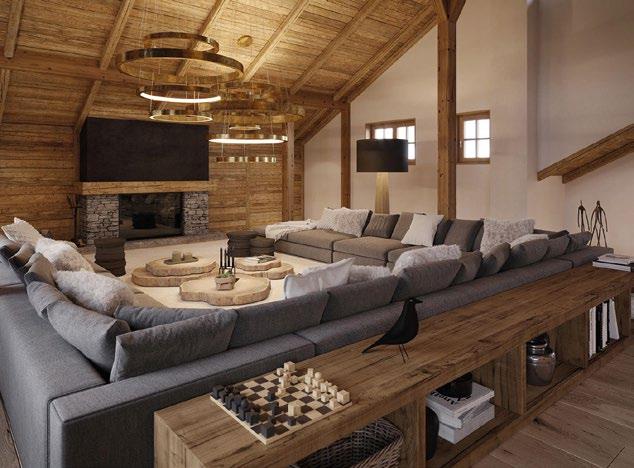
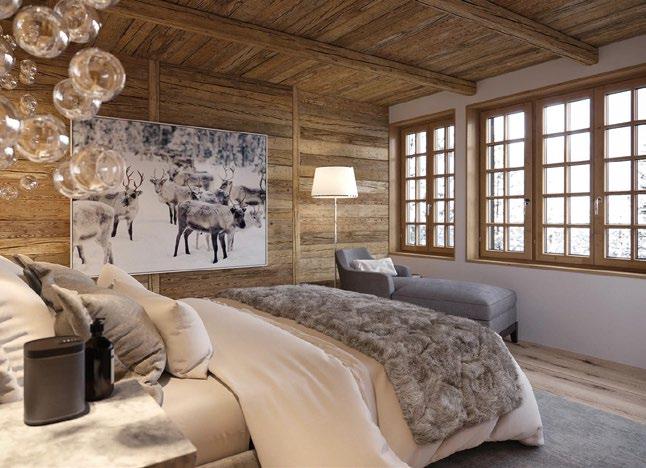
In the sun-kissed heart of Apulia, this historic masseria unfolds across seven hectares of lush gardens, with a shimmering pool, serene courtyards, and stunning stone walls that whisper centuries of Italian charm. Here, every sunrise and sunset is pure magic.
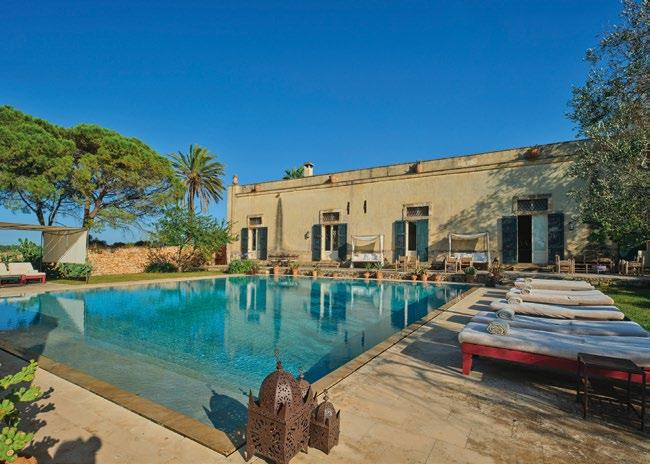
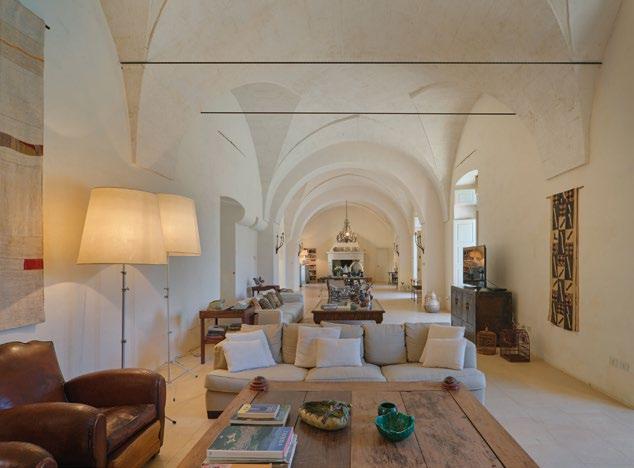
Amid Ravenna’s enduring charm, this masterfully restored estate unites history and design. With Gae Aulenti’s touch, vast gardens and grandiose interiors echoing epochs of art and culture come together beautifully, offering an Italian sanctuary of sophistication.
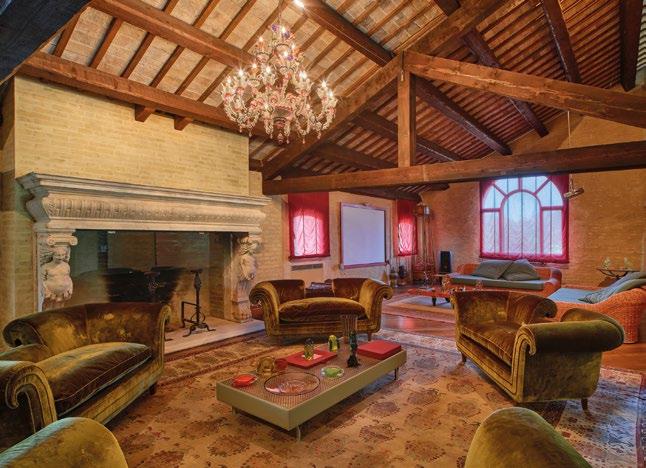
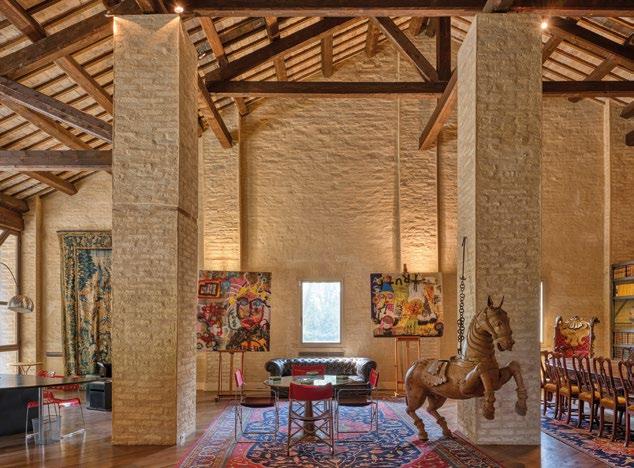
With its Phoenix design, Poliform strips the kitchen down to its purest form—elegant lines, intelligent details, and materials that age as beautifully as they perform.
In the modern era of home design, the kitchen has become a room that says a lot about how we live. No longer hidden away or treated purely as a utility, it’s where people gather, talk, eat, and work—a space that now competes with the living room for pride of place. Few companies understand this transformation better than Poliform, and its Phoenix design is one of the most complete answers to what a contemporary kitchen can, and should, be.
Poliform has built its reputation on a certain kind of elegance: understated but never timid, worldly yet firmly rooted in the Italian tradition of craftsmanship. Its furniture and systems have always balanced form with functionality, but Phoenix takes that balance into an even more refined territory. Conceived as a modular system, it’s designed to adapt to different lifestyles and interiors, while, at the same time, delivering a clear point of view: that a kitchen can be as architectural as it is practical.
The first impression of Phoenix is its calm geometry. Built for strength and longevity, the design is stripped
BELOW
of excess; handles are cut directly into cabinetry fronts, tabletop channels run discreetly, and surfaces extend without interruption. It’s a minimalism that isn’t cold but warm, thanks to the way materials are used—thermo-treated Canaletto Walnut wood paired with glossy Calacatta Oro marble, or embossed lacquer offset by bronzed metallic panels.
At the centre of the configuration is the island, and this is where Poliform’s design approach comes into sharp focus. The lowered base units, clad in richly hued wood, create a visual foundation. Above them, the Bold top in goldenveined Calacatta Oro marble becomes the workhorse and the showpiece at once. Its thickness adds weight and drama, while its chamfered drip edge is more than just aesthetically pleasing: it’s engineered to contain liquids, a reminder that beauty in Poliform’s designs is never devoid of utility. Integrated into the marble is a Deep Shaker Plain channel, equipped with an invisible hood, retractable sockets, and modular accessories in PaperStone® nero and glass. Cooking, serving, and entertaining all play out on this stage with no clutter crowding the space. »
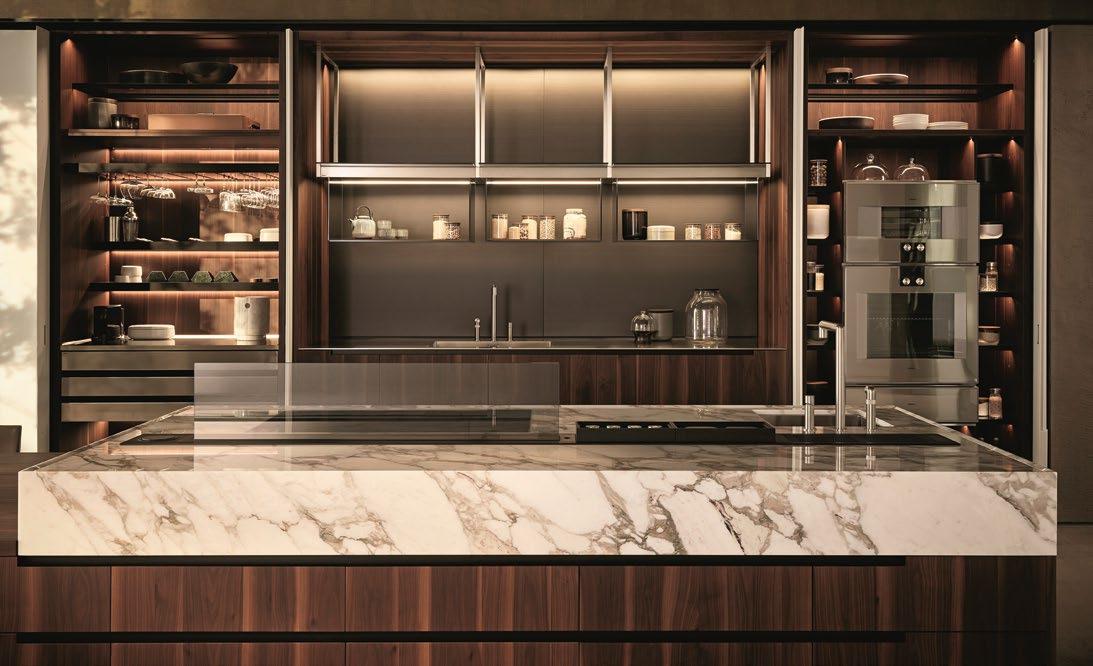
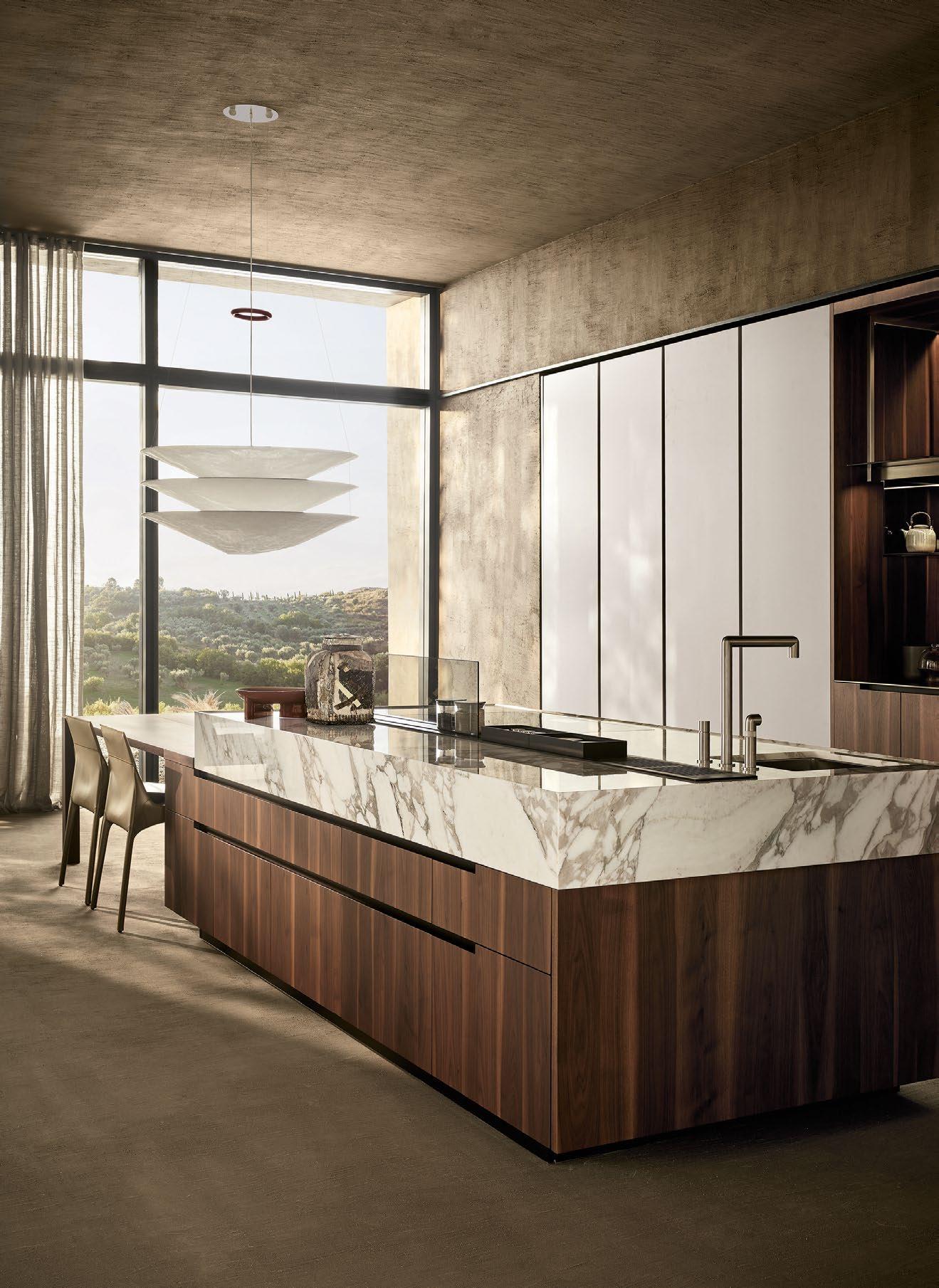
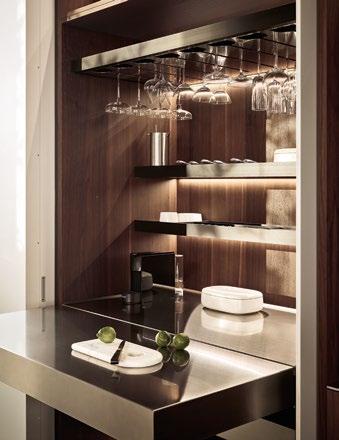
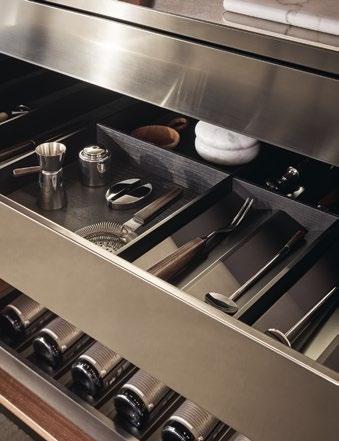
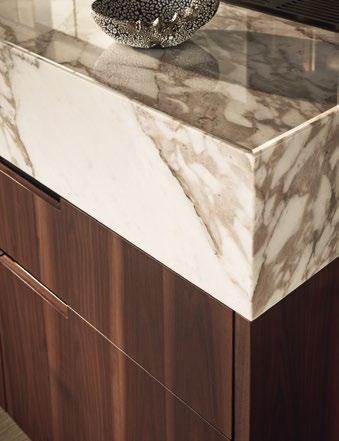
« Attached to one side of the island, the walnut Blade snack top extends like a bridge between work and leisure. It’s here that the kitchen opens itself to conversation, inviting guests to sit, eat, or simply watch as meals take shape. Paired with Poliform’s Seattle chairs, upholstered in removable hide, it softens the transition between the act of cooking and the rituals that follow.
Around the perimeter, tall units carry the same language of contrast and discretion. Behind retractable doors finished in Ghiaccio lacquer and walnut detailing, storage becomes something of an experience in itself. One cabinet transforms into a fully equipped bar, its walnut interior fitted with anodised shelves, Scotch-Brite steel drawers, a wine set, and dedicated holders for glasses and bottles. Integrated lighting turns the act of mixing a drink into a small piece of theatre. It’s this kind of attention to detail—luxury that reveals itself in use—that has always set Poliform apart.
The modularity of Phoenix extends further than the big gestures. Inside the drawers, cutlery rests in carved walnut trays, partitions in anodised aluminium keep everything
CLOCKWISE FROM TOP
LEFT One of the Phoenix cabinets transforms into a fully equipped bar; the Scotch-Brite steel drawers are fitted with separation trays and bottle holders; the marble worktop has a chamfered edge to prevent liquid spills; Poliform’s Deep Shaker Plain channel encases an invisible hood, retractable sockets, and modular accessories in PaperStone® nero and glass.
in order, and hidden lighting ensures nothing disappears into shadow. Even spice jars and storage containers have been designed to fit seamlessly into the Infinity system, their materials echoing the steel, glass, and wood used throughout the kitchen.
What makes Phoenix particularly impressive is the way it integrates into the wider architecture of a home. Open panelling in bronzed metallic lacquer allows the kitchen to merge with adjacent spaces, while bridging shelves with concealed LEDs connect tall units into continuous horizontal lines. Rather than treating the kitchen as a sealed-off room, Poliform envisions it as part of a larger landscape of living, one that should flow as naturally as the people moving through it.
There is, of course, a deeper story behind this inspiration. Poliform was founded in the Brianza region of Italy, an area long known for its cabinet-making tradition. Over decades, the company has combined this local heritage with industrial capability, allowing it to achieve a rare mix of craftsmanship and scale. The Phoenix kitchen is an expression of that legacy: hand-finished walnut alongside highly engineered systems and traditional materials used in ways that feel undeniably modern.
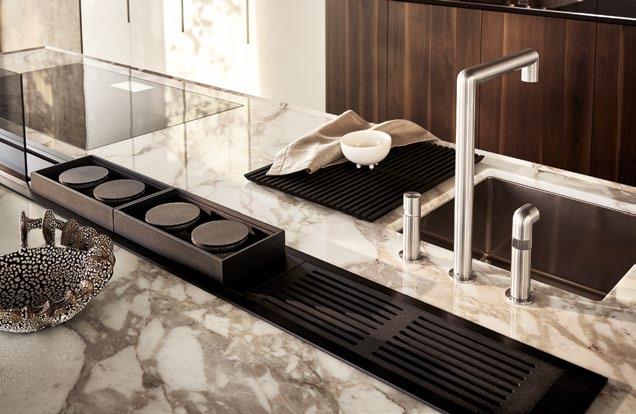
What makes Phoenix even more special is its resonance on an emotional and social level. In addition to its technical prowess, it acknowledges that a kitchen today must be both a sanctuary and a stage—somewhere to make coffee in solitude, and somewhere to host a dinner that lasts into the early hours. It has to work hard every day but still look effortless—and Phoenix manages this with ease. Its marble tops, bronzed lacquers, and walnut panels carry enough presence to make a statement, but the design itself stays subdued, letting life animate the space.
In this sense, the name Phoenix feels apt. It’s a kitchen that reinvents the familiar, rising from the conventions of what a kitchen once was into something more fluid and more attuned to how we live now. For those who choose it, Phoenix is less about owning a product and more about inhabiting a philosophy of design—one where beauty, function, and experience are indivisible.
For over 70 years, Belo Inox has combined tradition and innovation to create cutlery of excellence, where each piece reflects our precision craftsmanship and guarantees incomparable quality.




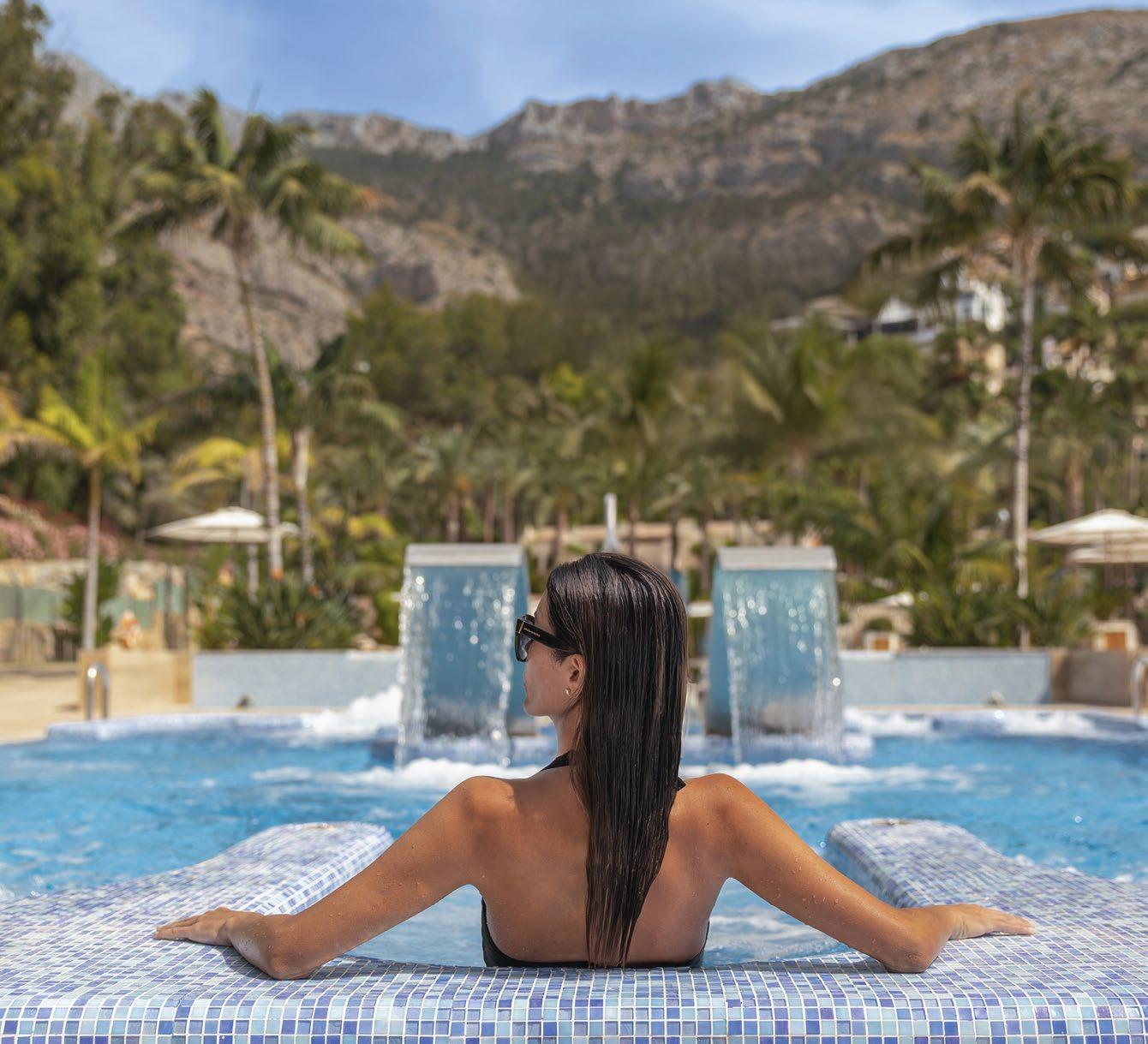
Where time deepens. At ZEM Wellness Clinic Altea, advanced medicine, personalised wellness, seasonal nutrition and the discreet elegance of a Grand Luxury Hotel come together — helping you live longer and better.