city design from existing urban conditions from urban conditions
CASE STUDY: THE HOUSE IN THE FOREST THE IN THE component analysis of home by Go Hasegawa of home Go THE HANGING HOUSE
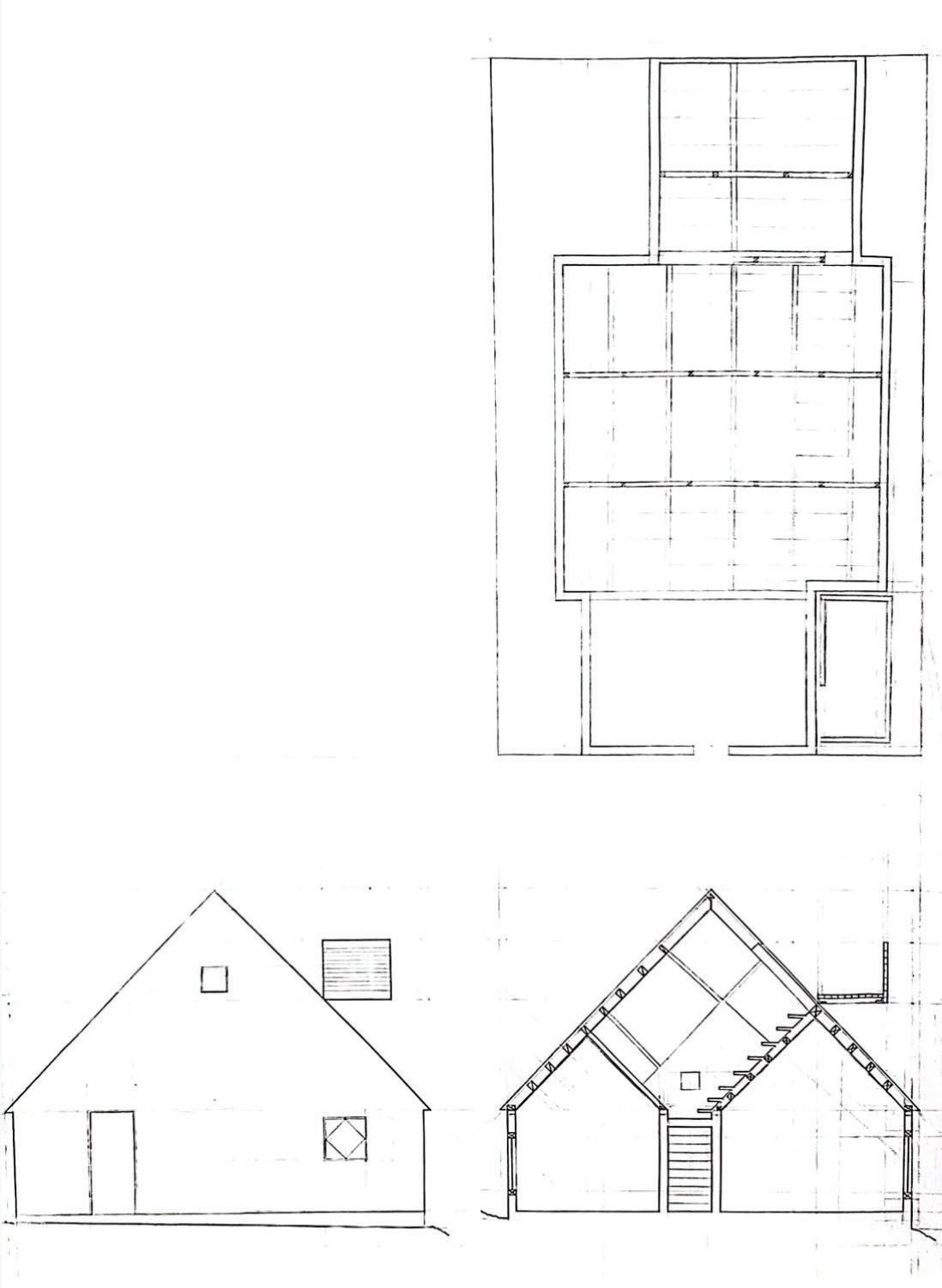
blind design of Orinda House by Charles Moore
blind of Orinda House Charles Moore
PEEL pavilion for an urban space pavilion for an urban space
TECHNICAL DRAWINGS PERSONAL
SABRINA KERR
Seeking summer internship 2025 summer 2025
skerr5@iastate edu skerr5@iastate.edu artbyslk com artbyslk.com
EXPERIENCE
EDUCATION IOWA STATE UNIVERSITY (ISU) IOWA STATE UNIVERSITY
College of Design
Master of Architecture (August 2024 - anticipated May 2027) Ames, IA
UNIVERSITY OF ILLINOIS AT CHICAGO (UIC) Chicago, IL
3.97/4.00 Summa cum laude with college honors
Bachelor's of Arts in Architectural Studies (August 2018 -May 2024)
AWARDS
ALA STUDENT MERIT AWARD ALA MERIT AWARD
Faculty nominated award to one graduating student, Associated with UIC
May 2024
TALENT TUITION AWARD
Awarded to students to display academic success, Associated with UIC May 2022-24
YEAR END SHOW PARTICIPANT
One of 120 students selected to represent the Spring -23 studio, associated with UIC May 2023
MERIT TUITION AWARD
Faculty nominated award to one graduating student, Associated with UIC August 2018-24
SKILLS
GRADUATE TEACHING ASSISTANT
Iowa State University
August 2024 - current position
Responsibilities include reviewing/grading assignments and helping to teach material Ames, IA
SUSTAINABLE RESEARCH INTERN INTERN
The Plant
January 2024 - May 2024
Conduct sustainable design research and make Modifications to facilities functions Chicago, IL
ASSEMBLY INTERN
Moglea
January 2024 - May 2024
Assembled thousands of stationary items per day according to company protocol Des Moines, IA
RHINO 3D
AUTOCAD
ILLUSTRATOR
PHOTOSHOP
INDESIGN
REVIT
VRAY
AN ARTISTS APPROACH AN
My interest in architecture stems from my life long dedication to drawing. To me architecture is less concerned with building and has everything to do with the production of images. Drawing is the ability to see beyond what is immediately there. I hope to convey through my architectural work, an artists’ approach to designing and seeing the world.
PURSUIT OF SUNLIGHT
Architectural Urbanism, UIC
Julia Turner
Arch 106 - Spring ‘23
ARCH 106 introduces the city as a locus of ideas, aesthetics, and experiences, manifested predominantly through architecture and landscape. Critical observations, modes of representation, and design methodologies are introduced and developed through a series of assignments that focus on concepts and techniques fundamental to architecture and urban design processes.
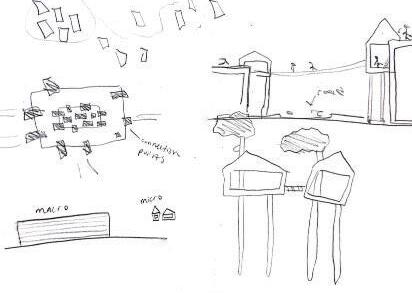
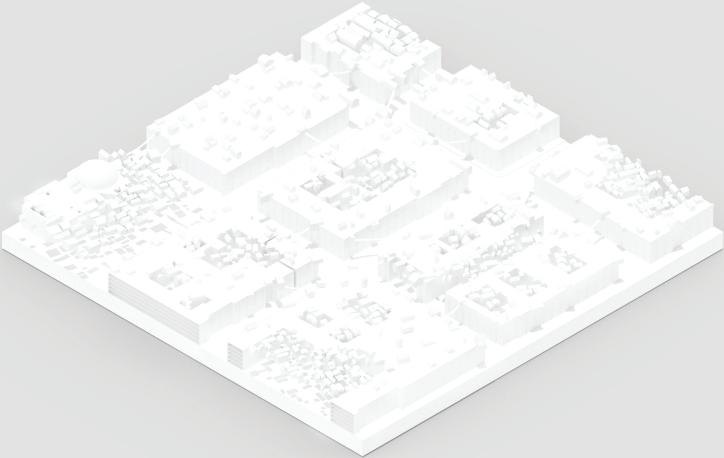
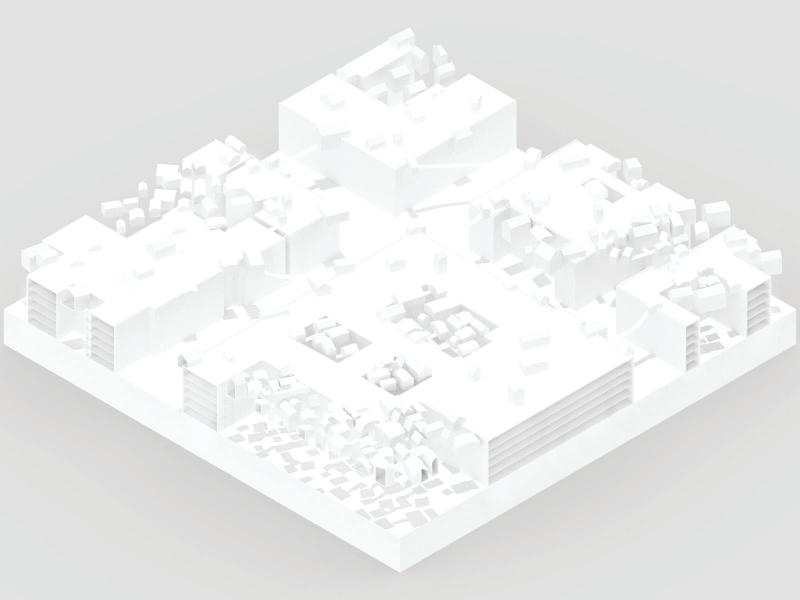
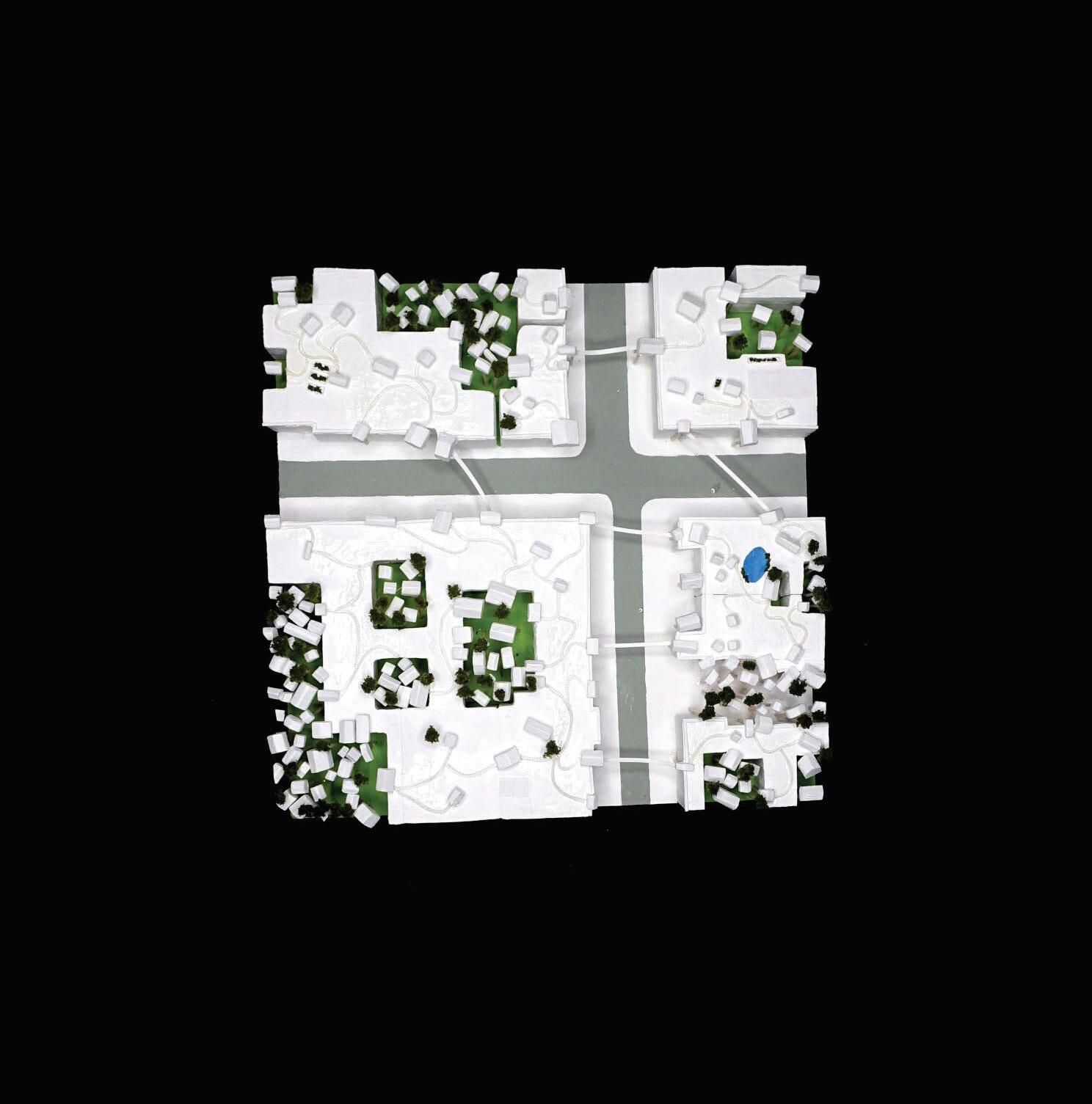
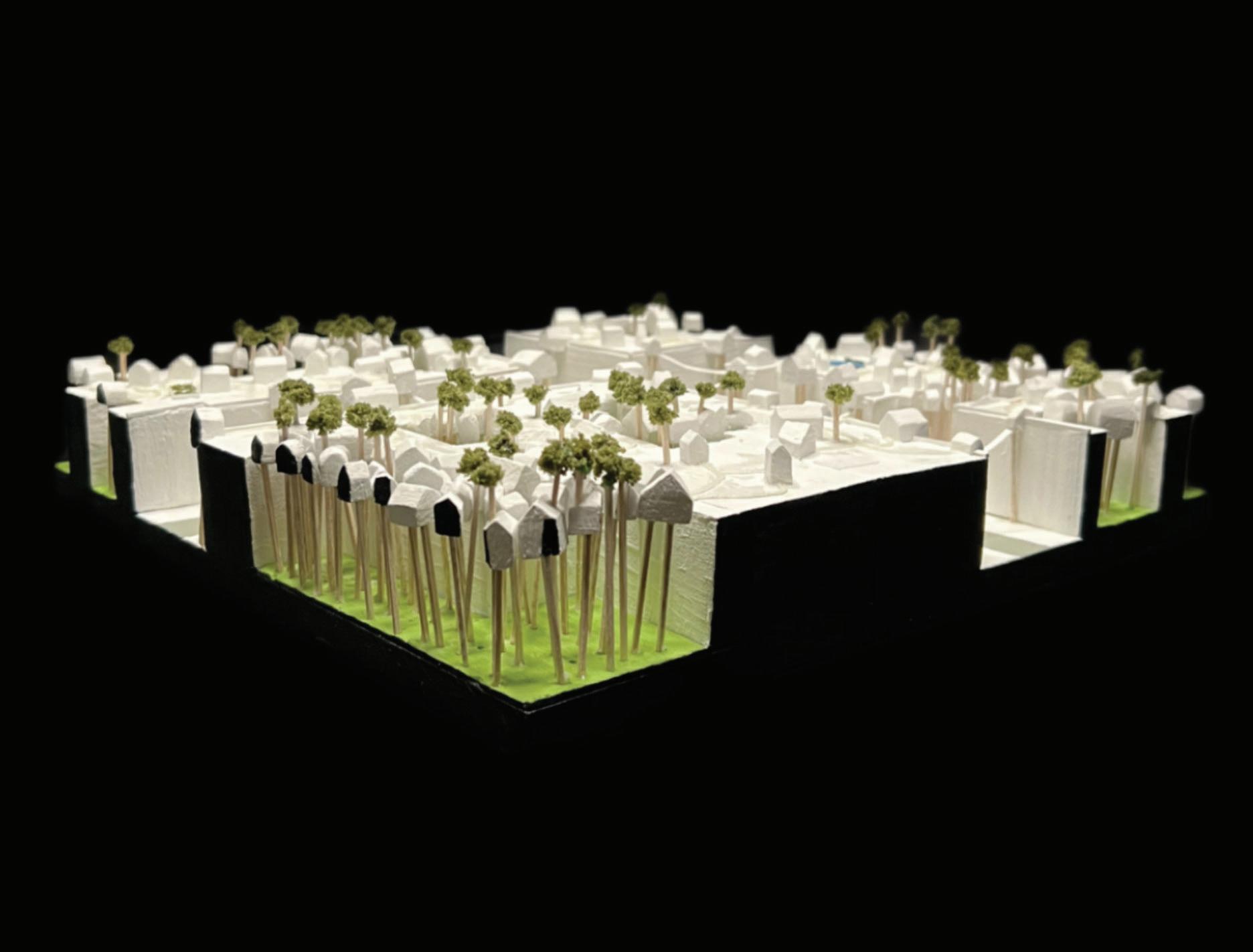
The initial design process for this project began with a collaging of figures from different urban environments. Through this process I developed a juxtaposition between the micro buildings of Lagos and the mega structures of Berlin. The new layered city I established separate’s structure and ad hoc living. Above, the buildings of Lagos sprout upward from the courtyards of Berlin and form a new layer of life across the rooftops. The Lagos structures serve as residential living where unpredicted interactions and recreation occur. The Lagos structures are connected through a network of bridges flowing across the rooftops. Below, the mega blocks of Berlin become the location for structured work life in contrast to the unobscured life which occurs above.
Collage Plan
2640’ x 2640’ block which is a demonstration to the widespread condition of the city
1320’ x 1320’ block displaying the intensity of life on the rooftops
Striation of density
CTop view model 1:110 scale
Axonometric view model
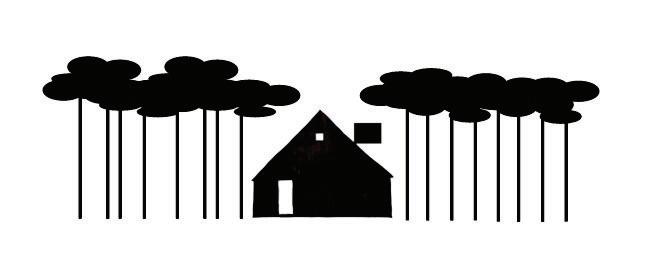
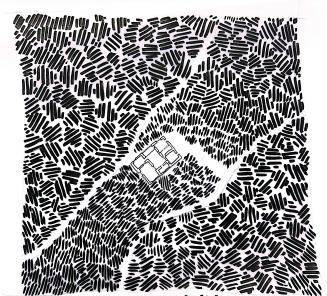
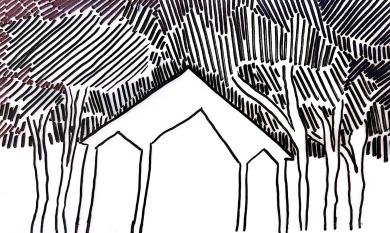
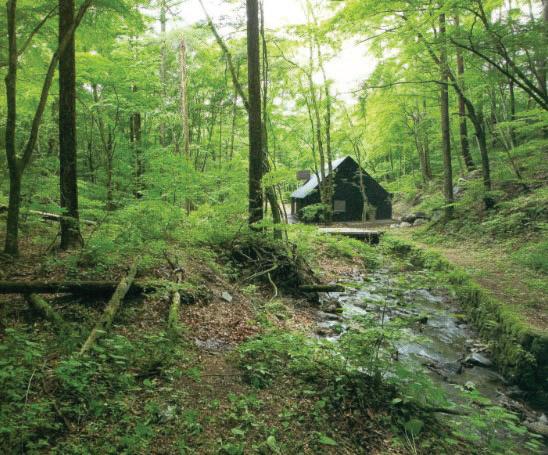
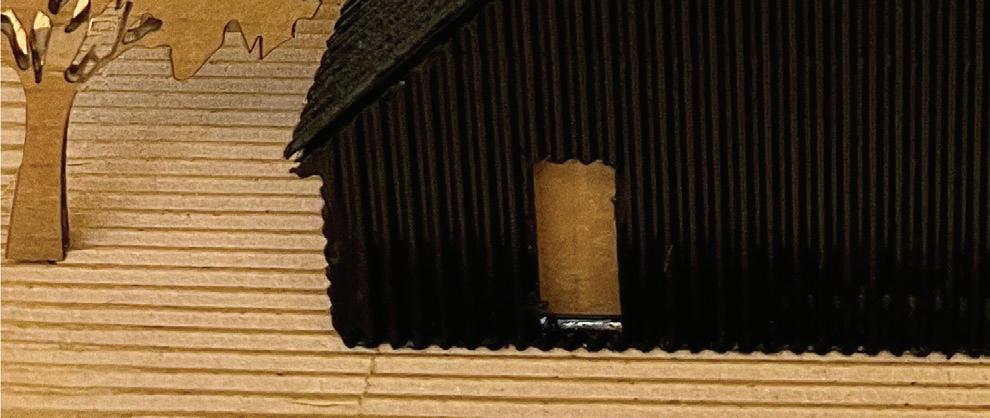
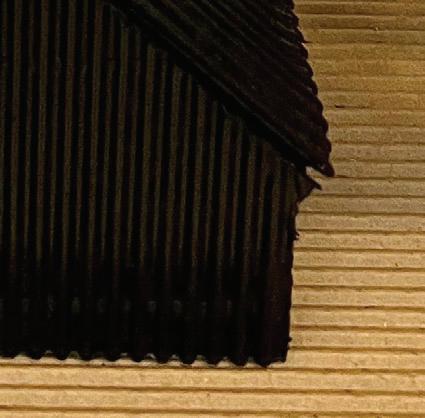
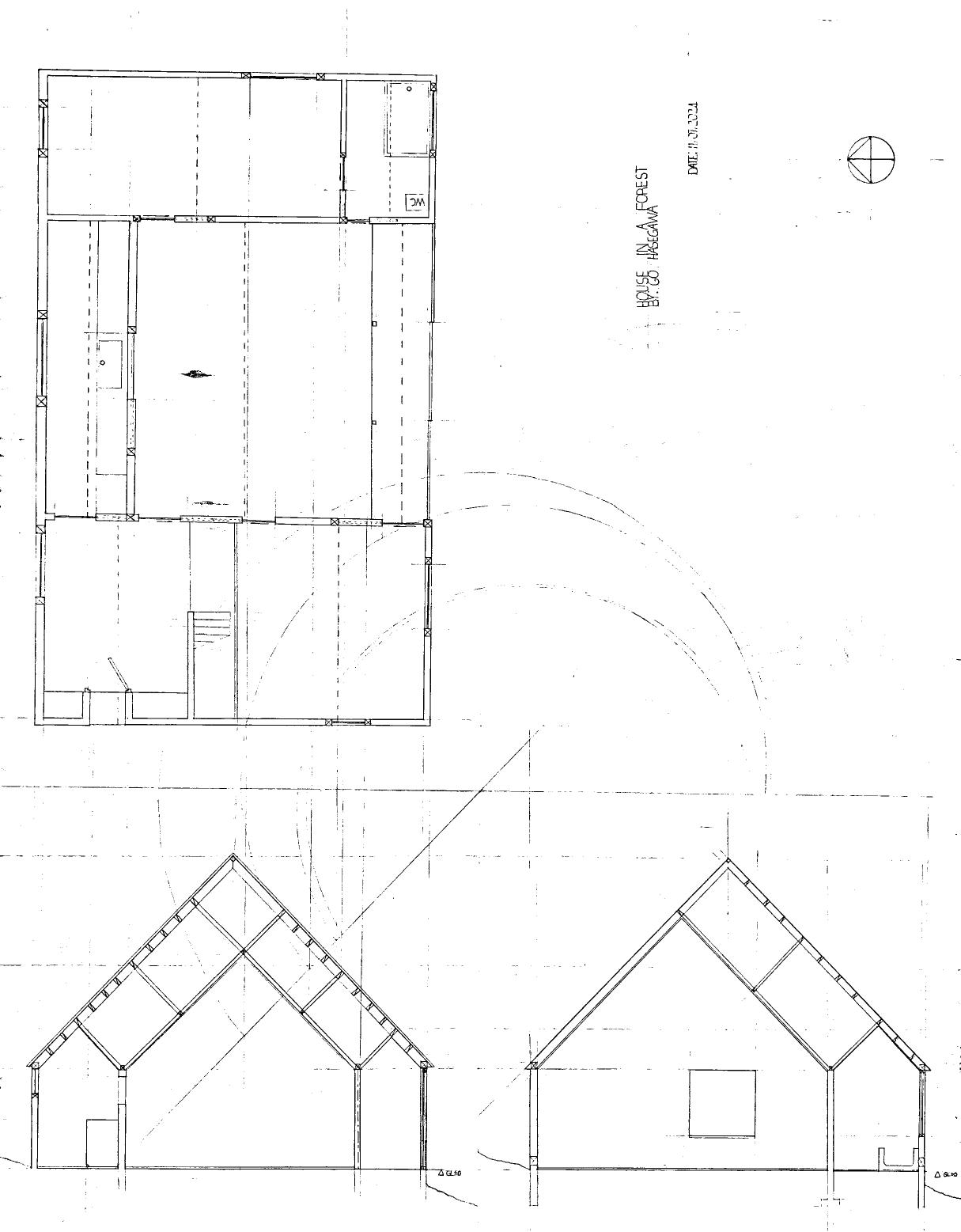
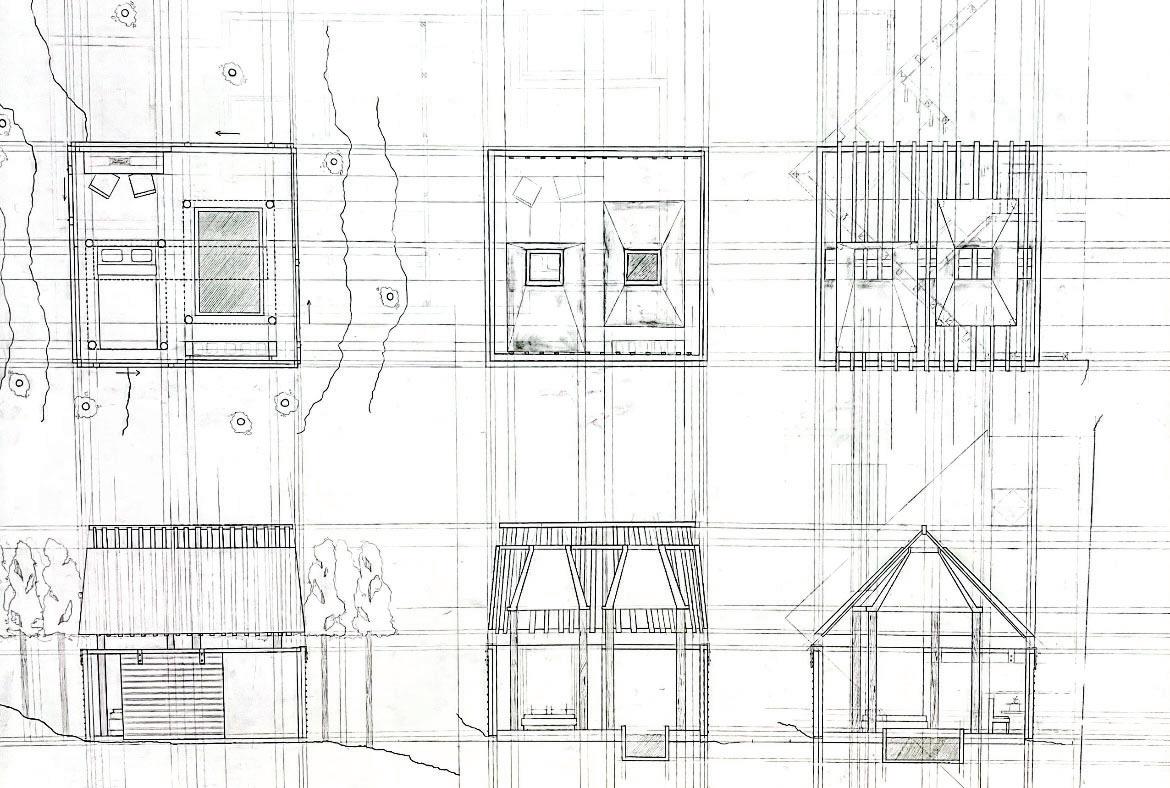
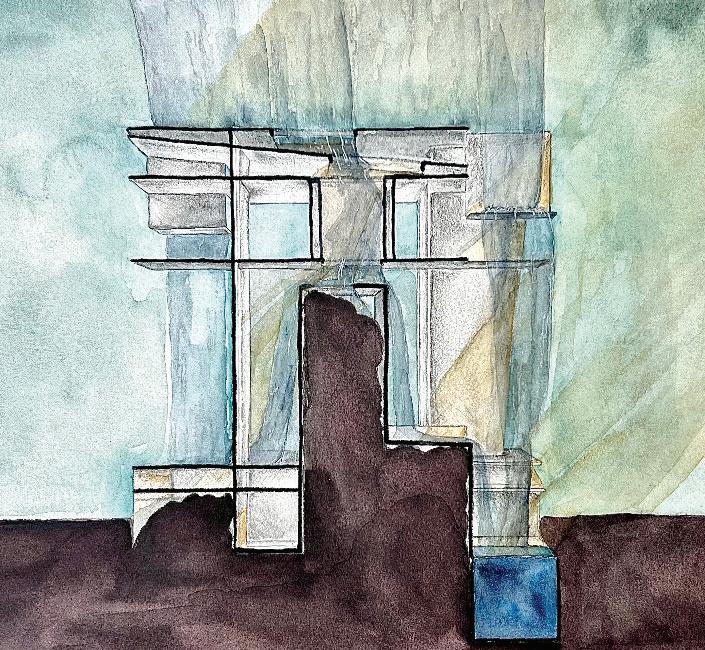
The house is located in a dense forest in Nagano, Japan constructed in 2006 by Go Hasegawa. The house acts as a clearing within a dense forest. The sense of being nestled beneath a canopy is echoed within the interior of the building with interior roofs underneath the exterior one.
THE HOUSE IN THE FOREST
Analytic Operation
Firat Erdim, ISU Arch 5050 - Fall '24 with Tumisang Leshoeli
Research the work of architecture you have been assigned, use orthographic projection to construct the plans, sections, and elevations critical to understanding the building. Fabricate a “component model” of the case study. This model must define the architecture as a assembly of discrete components based the analytic reading developed in the earlier phase. One must be able to disassemble the model into these discrete components. Each stage of disassembly/assembly must present an analytic reading of the architecture.
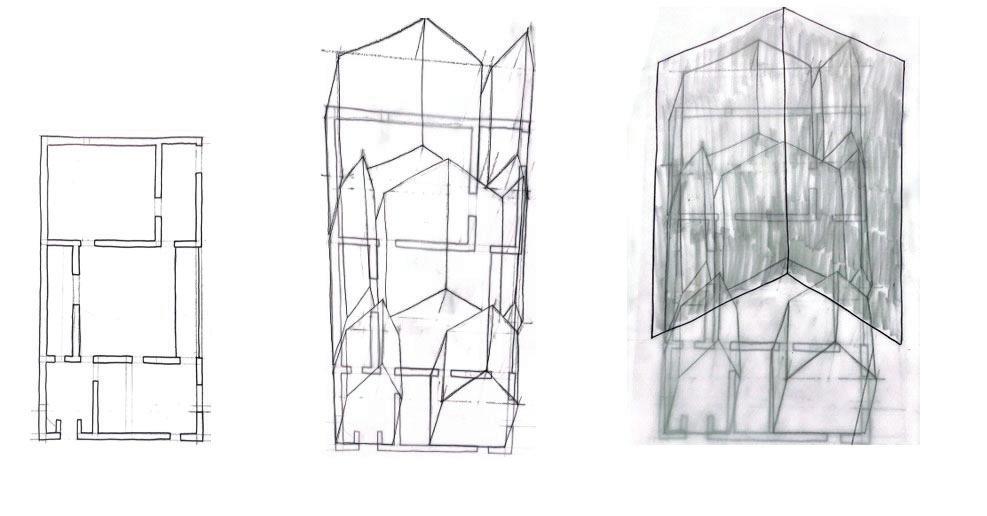
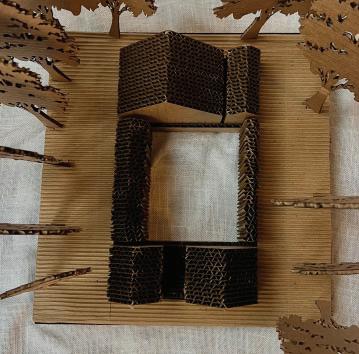
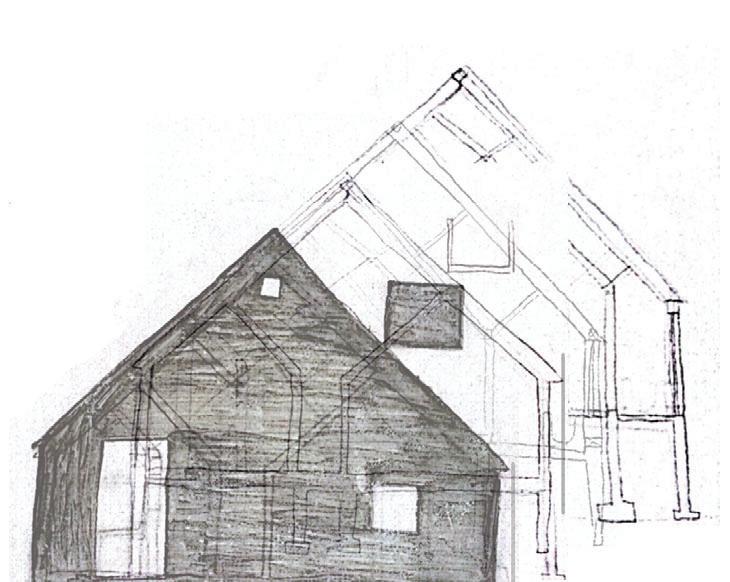
As a team, Tumisang Leshoeli and I analyzed The House in the Forest by Go Hasegawa. We discovered two readings of the buildings both with striking differences represented separately in the model and drawings. Both the model and the drawings, delaminate the building into discrete elements.
clearing
canopy
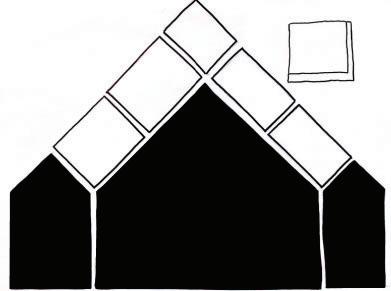
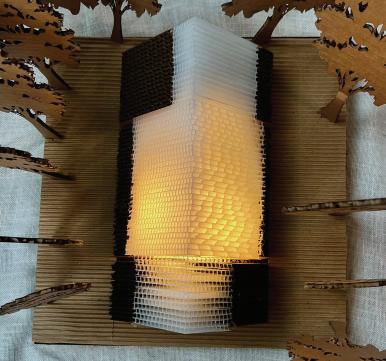
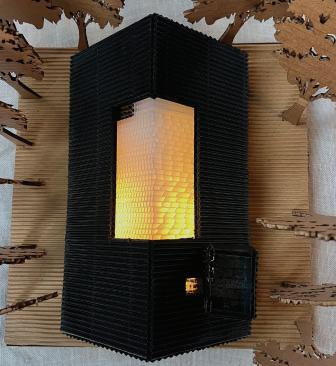
The model can be deassembled into three discrete elements: the rooms, the attic space, and the exterior shell. The components model is an explicit representation of the house as being a russian nesting doll of composed elements.
Model
The house is the architectural equivalent to a russian nesting doll.
The model represents the house as something which is felt - an increasing sense of enclosure. enclosure.
The drawings represent the house as how it is seen - a series of slices which dictate the arrangement of its elements.
Drawings on 30” x 40” gessoed wood panel
THE HANGING HOUSE
Confabulations
Firat Erdim, ISU
Arch 5050 - Fall '24
We may not know, simply by looking at an architectural drawing, if the space it depicts has ever been built. Case study drawings and models can be said to be one form of the re-collective, or past tense, in architecture. For the analytic drawings and model you just produced, you had some general information on the case study buildings and a few views. To make the drawings and models, you had to fill in the gaps in this information with best guesses informed by the study of photographs and a consideration of the design intentions of the architecture. In secret, write a passage based on a file you have received then exchange texts with someone.
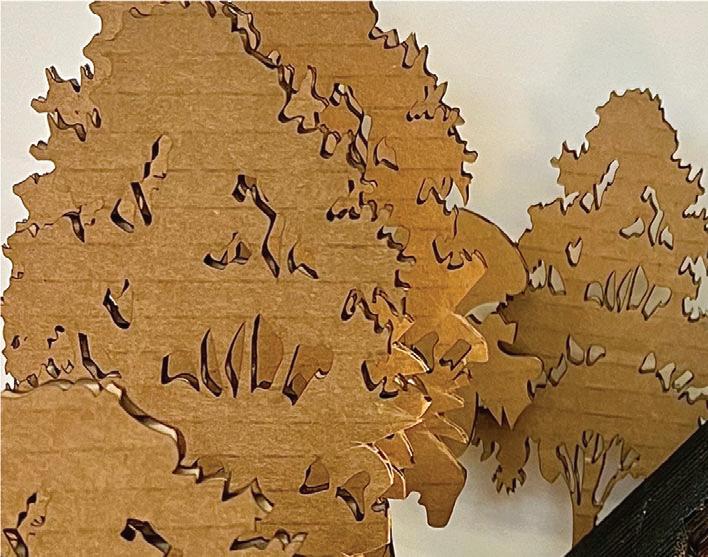
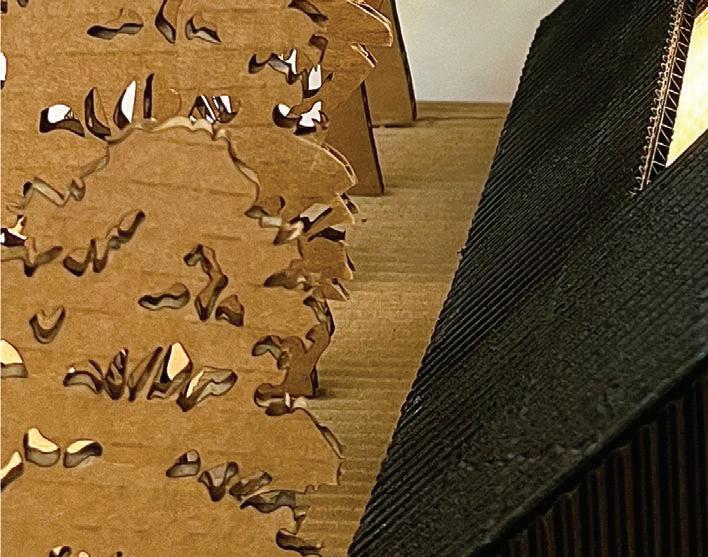
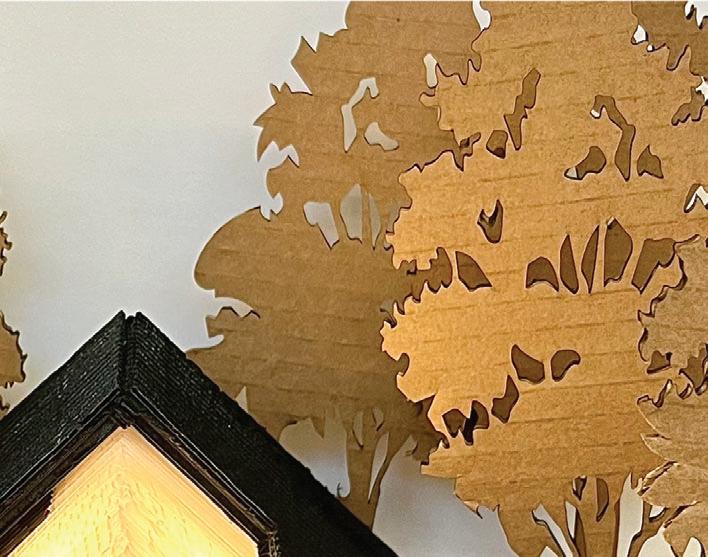
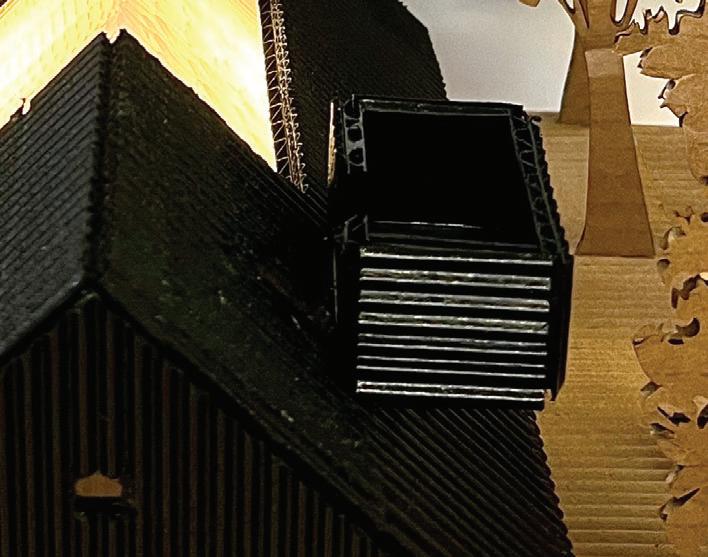
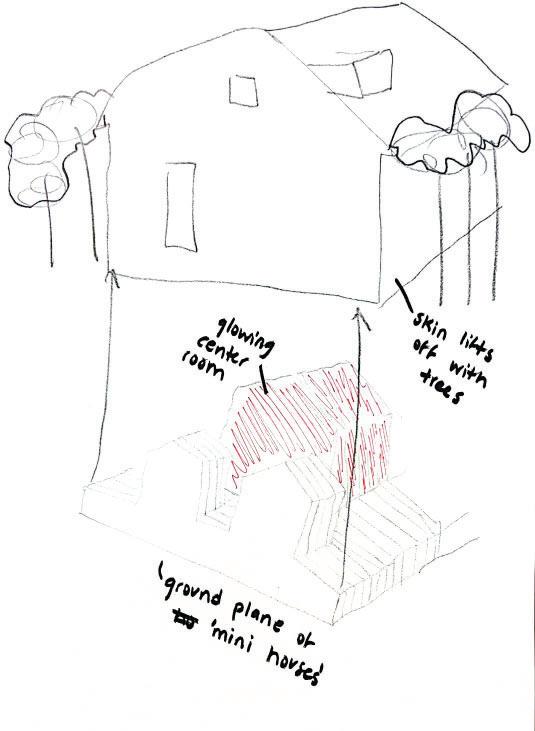
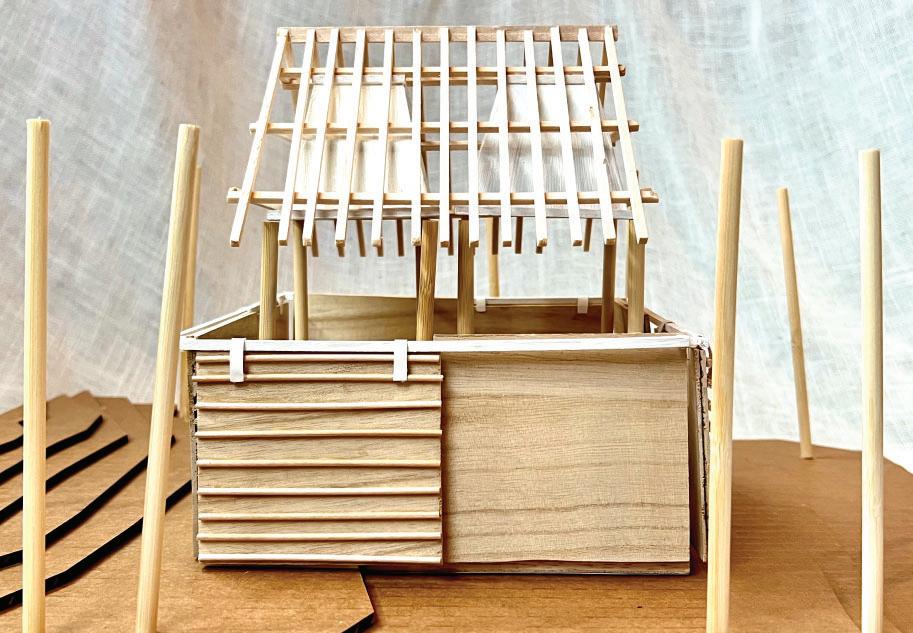
With the text I was given, I designed a dwelling from the exploration of description and what it means to read between the lines. My design prerogative became designing an architecture which hangs from the room and is integrated into its surrounding environment.
The process of designing architecture which hangs from the roof. (on left - design sketches, on right - roof prototype)
Key words from the passage I was given which guided my design decisions
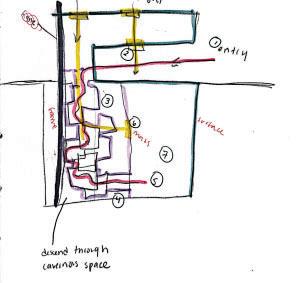
Along with following a passage given to me by a colleague, my design process was dictated by a series of quick schematic diagrams that have the ability to summarize the aspects of the project.
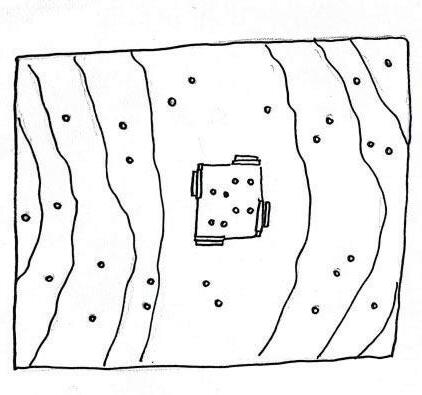
A key diagram (to the left) connected the house to the surrounding site. This diagram expresses the continuation of the forest location into the house. This continuation is made possible through the use of wooden columns both as trees and the supporting interior columns.
Drawings on 30” x 40” gessoed wood panel
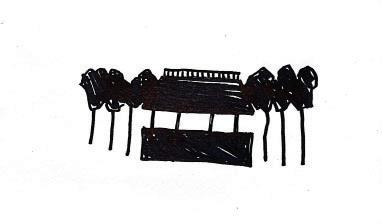
PEEL
BASIC/EXTRA, UIC
Abigail Chang
Arch 105 - Fall '22
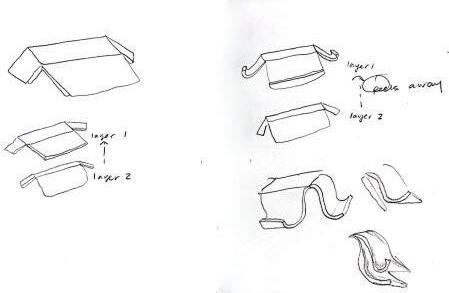
As a foundational studio in architecture, ARCH 105 first began with understanding the geometric, formal, and organizational principals of architecture’s building blocks: Columns, Beams, Walls, Roofs (BASIC). Second, the translation and abstraction of these objects in the form of a small building (EXTRA).
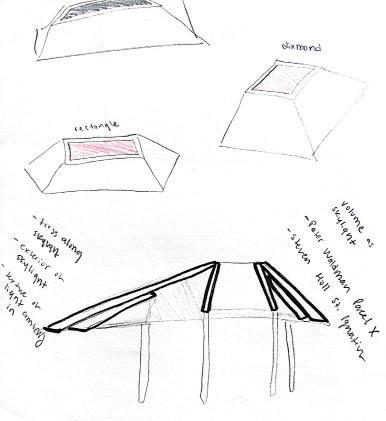
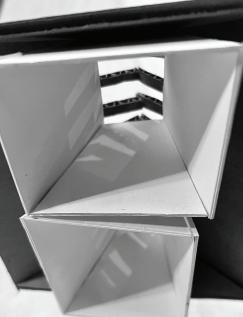
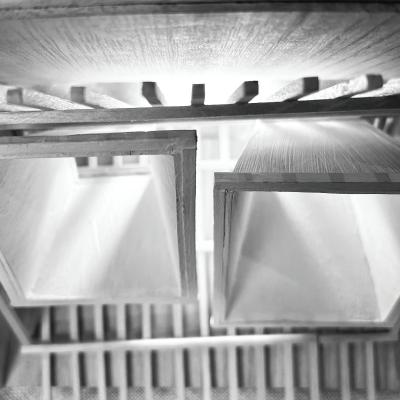
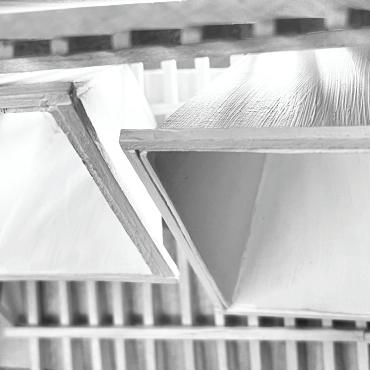
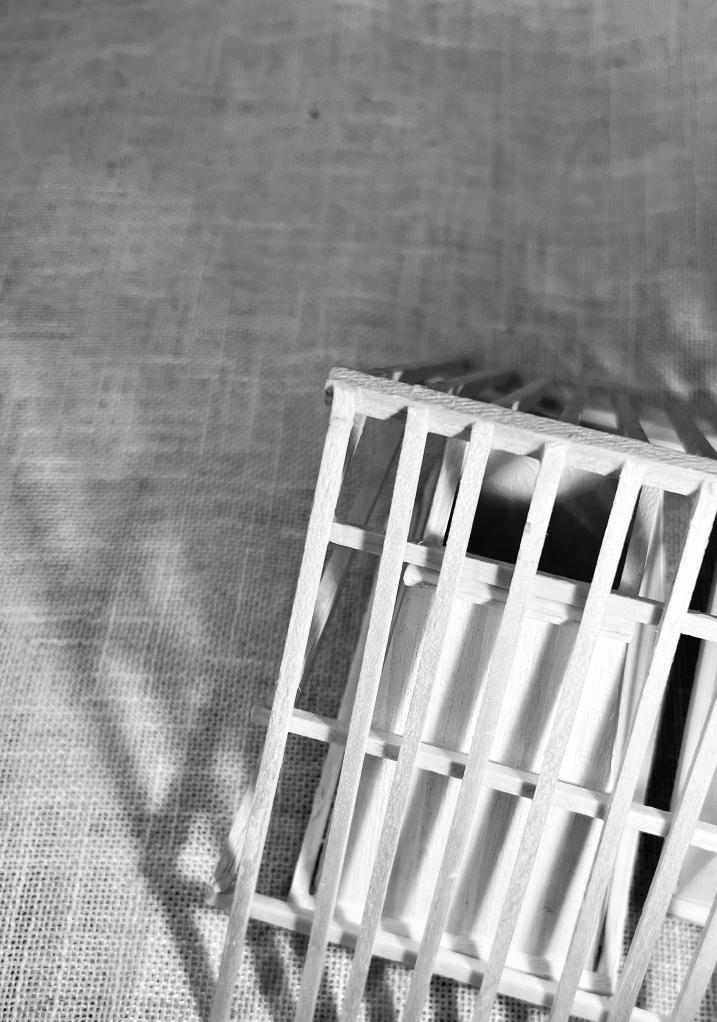
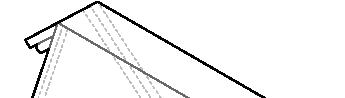
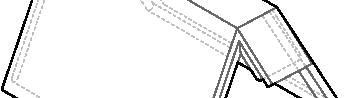
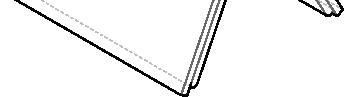
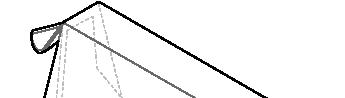
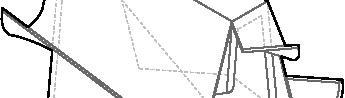
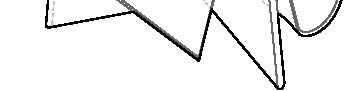
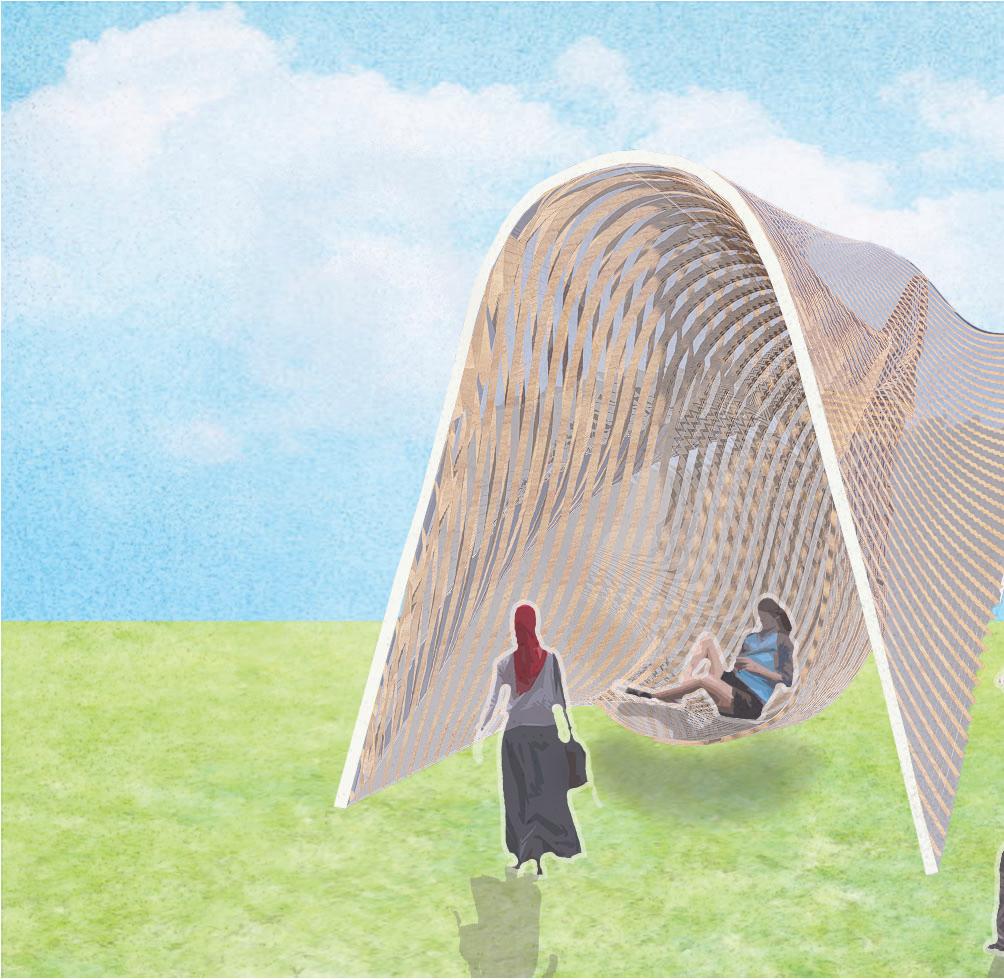
Peel began with the development of a design condition from an initial layered wall/roof form. Through this exercise, I developed the peeling condition where the outer layer of the precedent form peels away from the internal layer. I then applied this condition to a pavilion design. My goal was to develop a pavilion which met certain functional criteria through a totalizing design element - the peel. In this design, the peel is something which is experienced in different ways: as something to walk under, to sit on, to look at, to lean on. The pavilion is the peel.
The peel becomes something to sit on, to lean on, to look at, it is something one can observe, explore engage.
Circulation
Peel on site
TECHNICAL DRAWINGS
ARCH 5440
Ayodele Iyanalu
Synthesis of building technologies and design processes to understand the impacts of building technologies on occupants and the natural/ urban environment. Lectures and labs cover active environmental control systems, fire safety, transportation, constructed building assemblies and details, multi-story structural design, and the utilization of computational simulations.
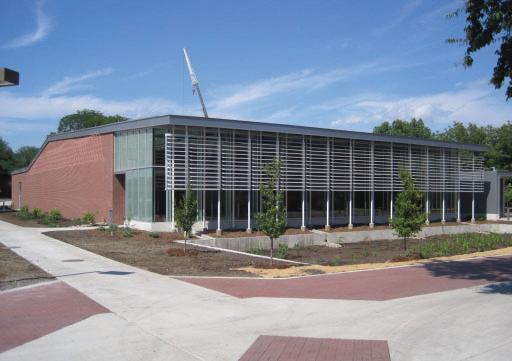
As an introduction to technical drawing and formal building technology, we were tasked with examining a building in Iowa State Universities campus . This precedent, Troxel Hall, was then taken apart to examine its wall assembly.
Troxel Hall & brick cavity wall assembly
Exterior Brick Wall
3-5/8" MODULAR BRICK VENEER (SIZE OF STANDARD BRICK 7-5/8" x 2-1/4" x 3-5/8")
3/8" MORTAR JOINTS
1" AIRSPACE
Z-FURRING CHANNEL
2" R10 MINIMUM RIGID INSULATION
0.006" PERMEABLE WATER RESISTANT MEMBRANE (WRB)
5/8" TYPE 'X' FIBERGLASS MAT SHEATHING
6" GALVANIZED METAL STUDS @ 16" O.C.
6" R-19 BATT INSULATION
0.006" CLASS II VAPOR RETARDER
5/8" CLASS II GYPSUM WALLBOARD
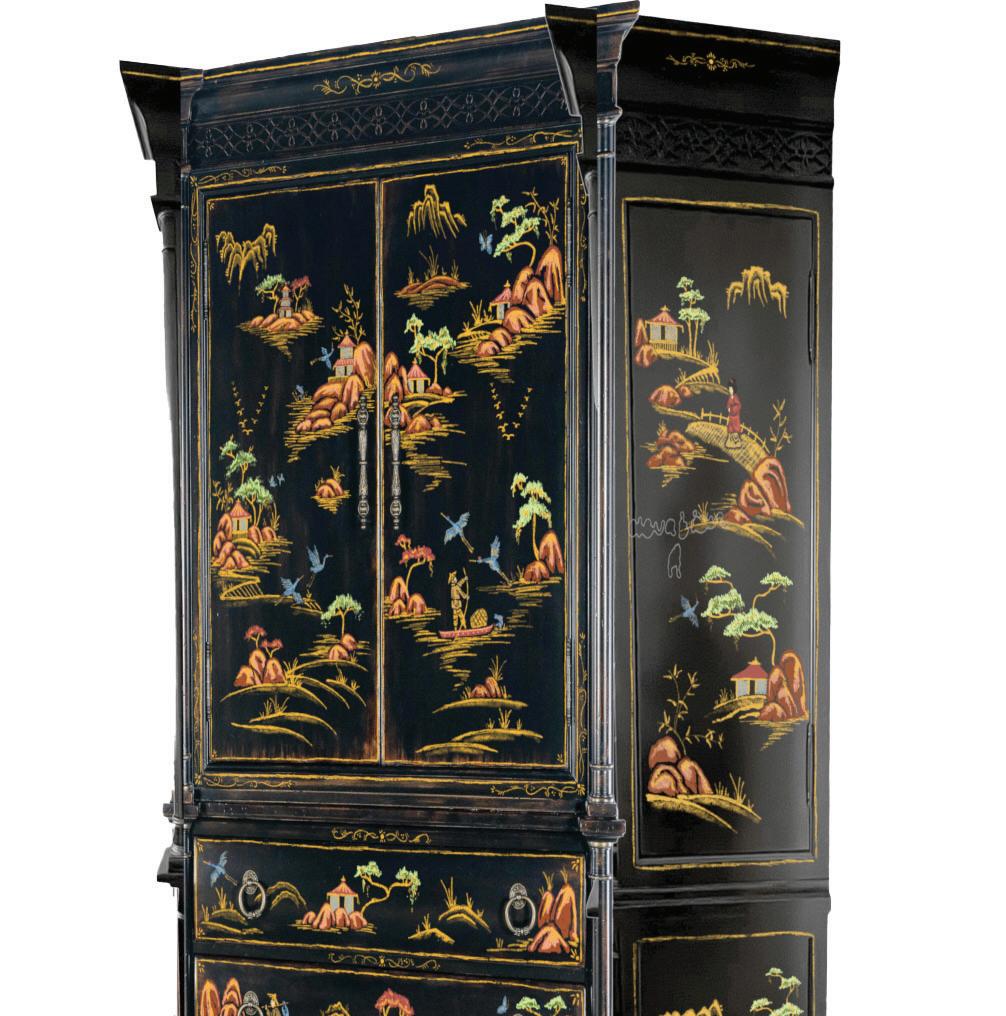
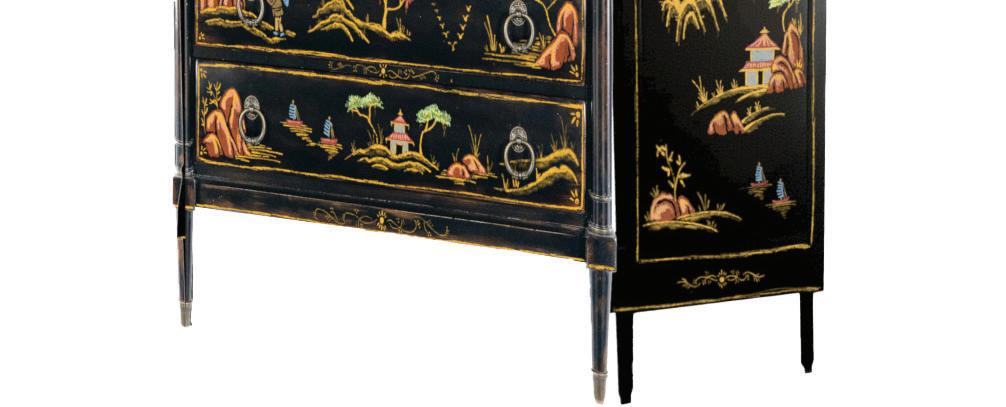
THE PAPILLION ARMOIRE THE
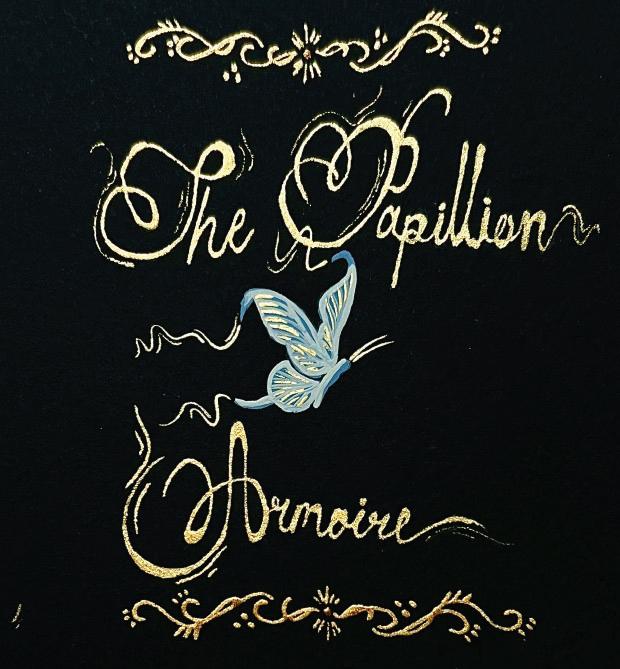
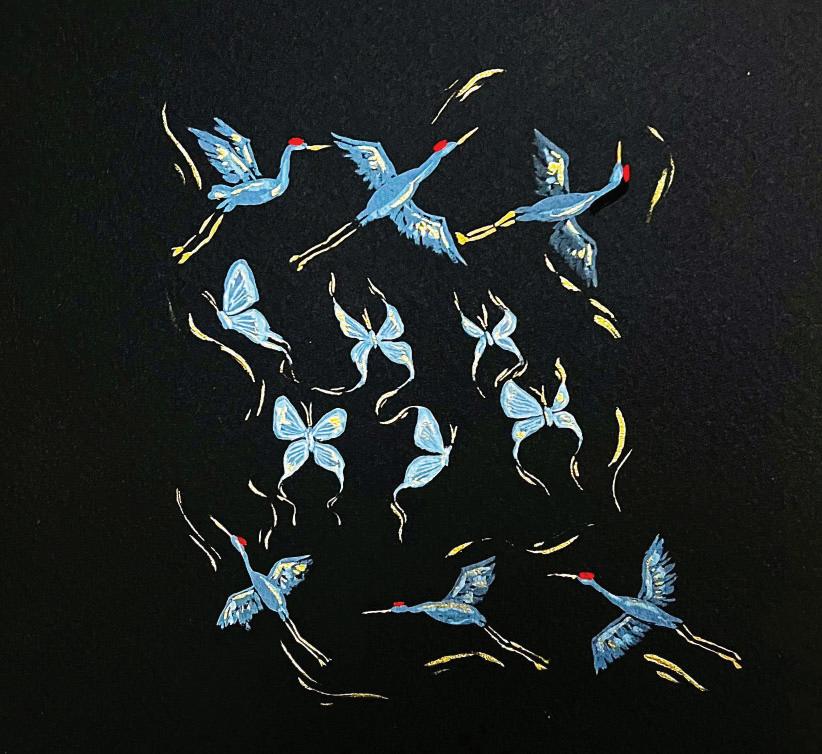
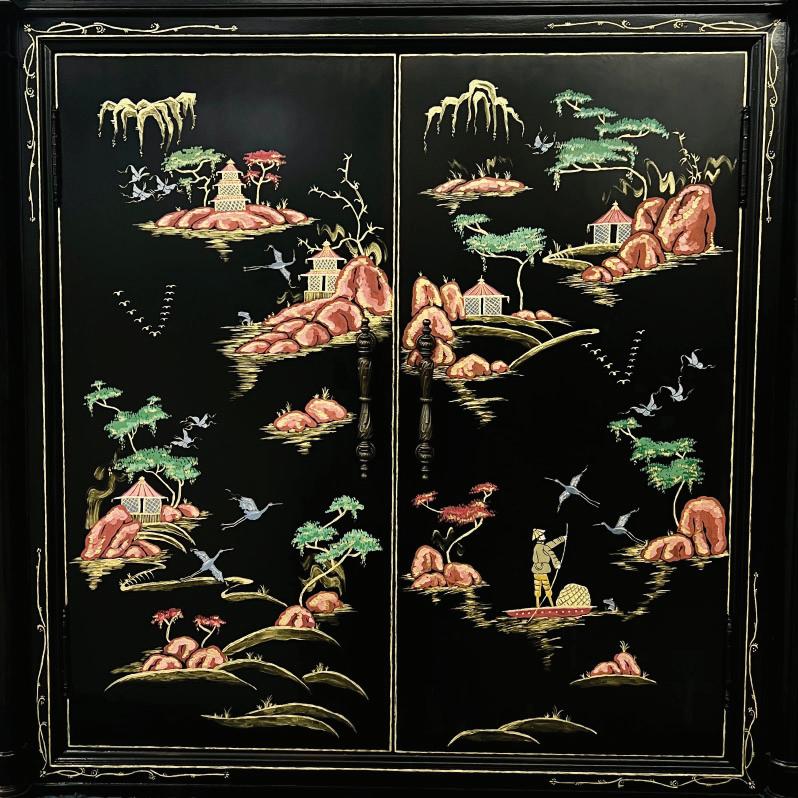
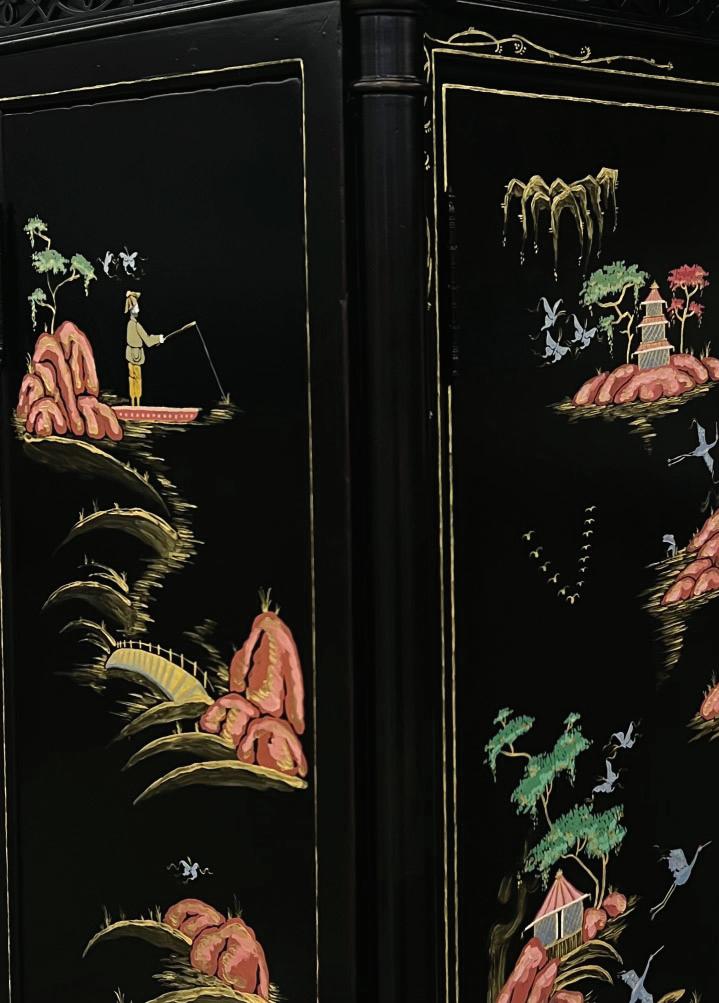
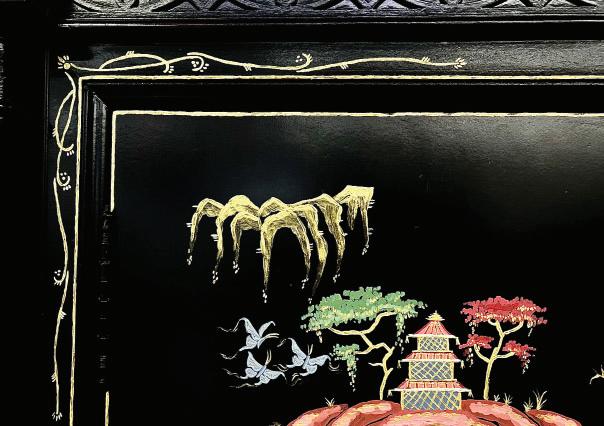
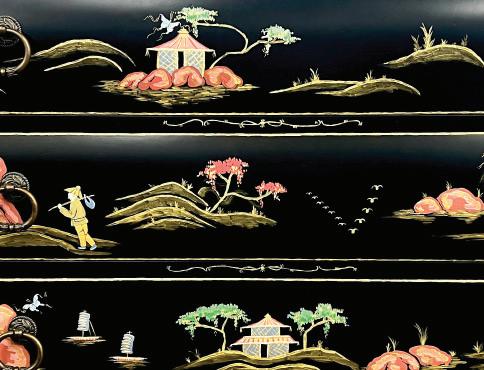
Chinoiserie furniture is a style which became popular in Europe in the 18th century. It is an imitation and a recreation of oriental aesthetics. Alongside an interior designer, I completed a commission of a chinoiserie painting true to this iconic style. The client requested something unique, yet something true to the time period. The piece is titled Papillion Armoire due to a butterfly being placed on every panel of the piece. Butterflies are not excluded to chinoiserie, but rare which leaves the client with something unique and unlike any other piece.
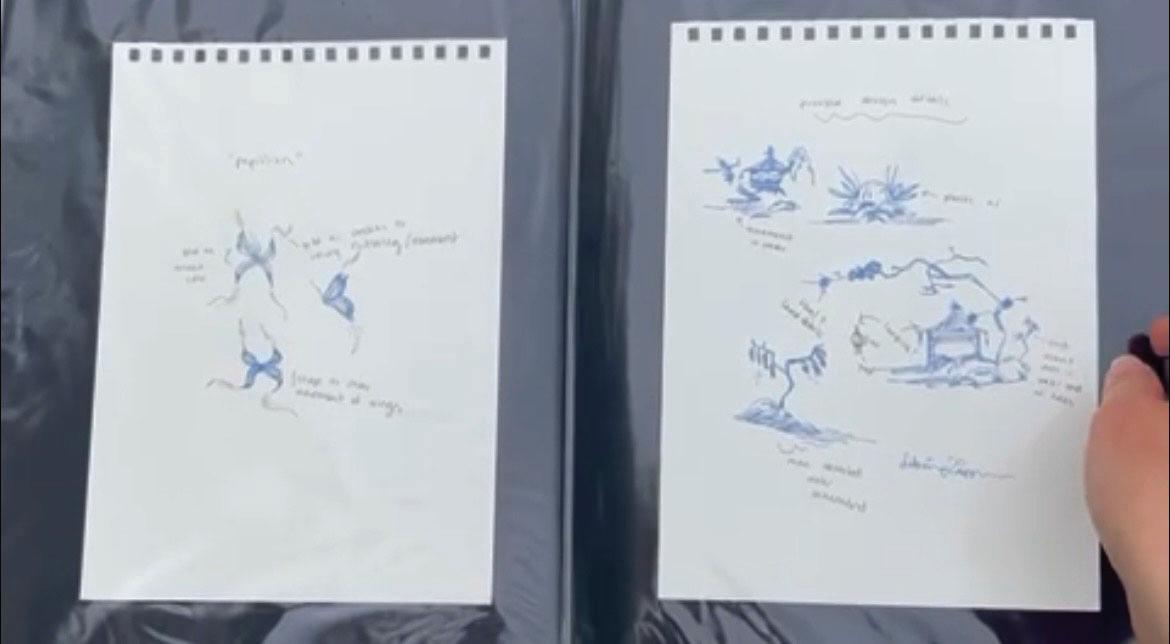
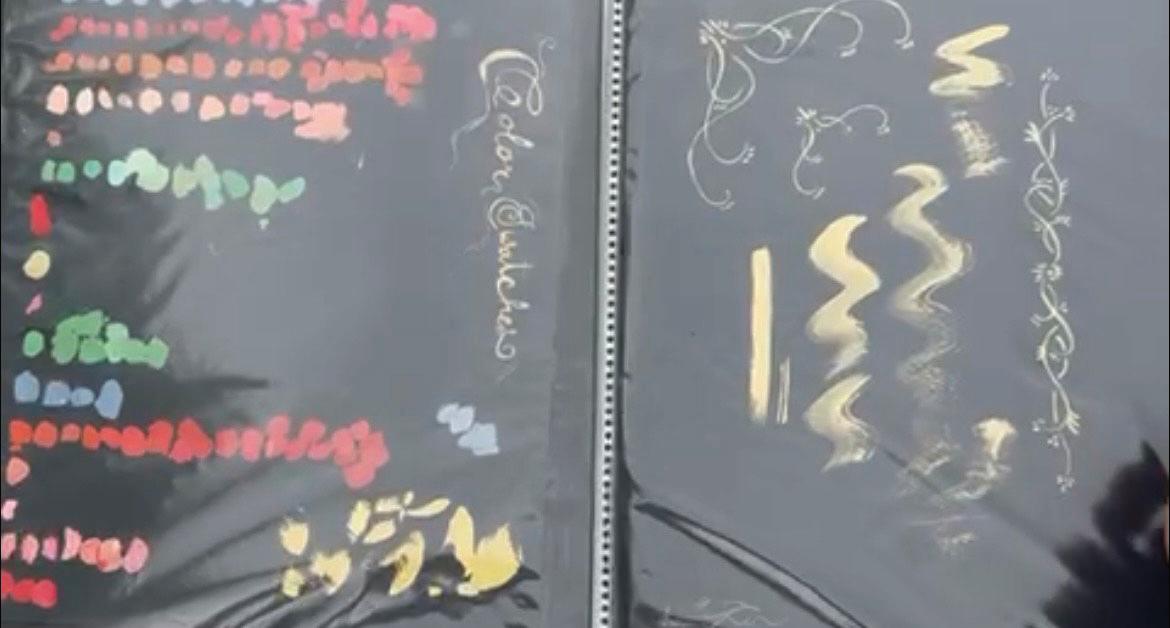
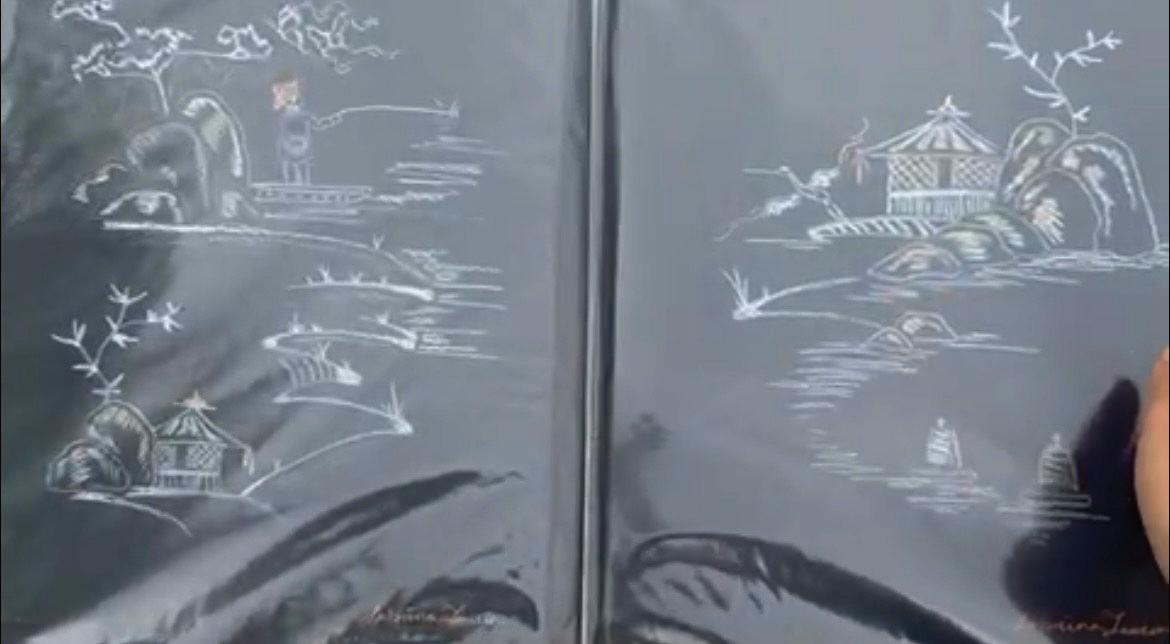
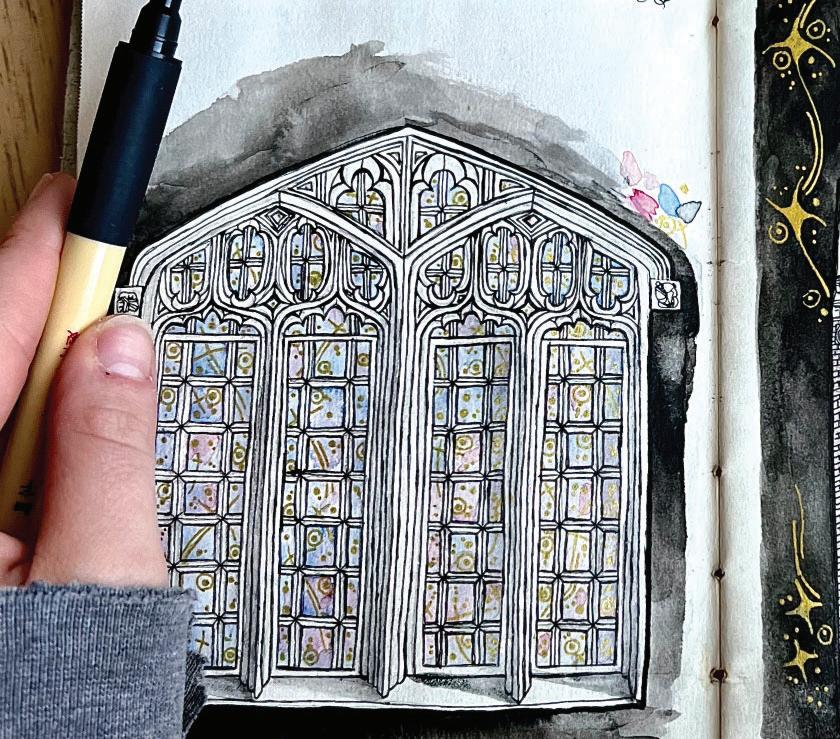
The design process was The process was commemorated for the commemorated the client in an heirloom book an - a bound notebook with all - a design notes and sketches notes and sketches.
Full rendering of the com-
Full of the commissioned painting
Sample paintings of the of the compositions presented to to the client
Heirloom book bound and gifted to the client to the client
DAILY ART PRACTICE DAILY ART
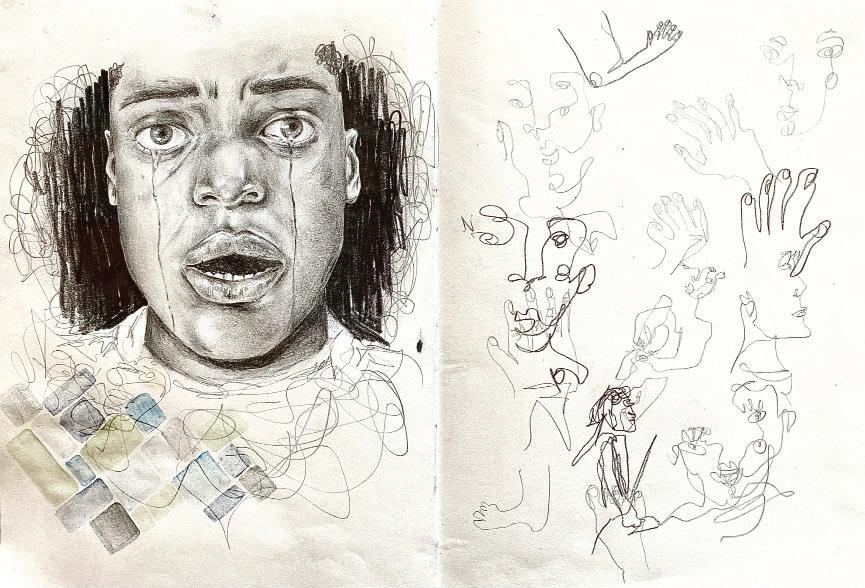
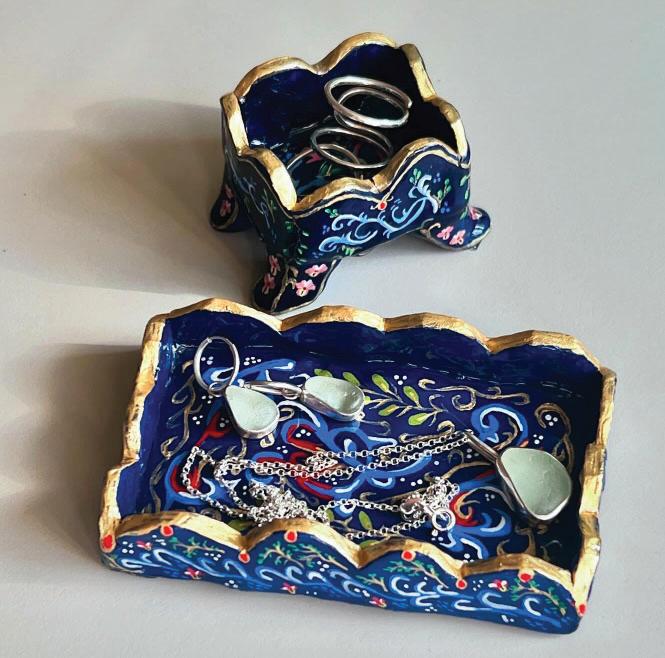
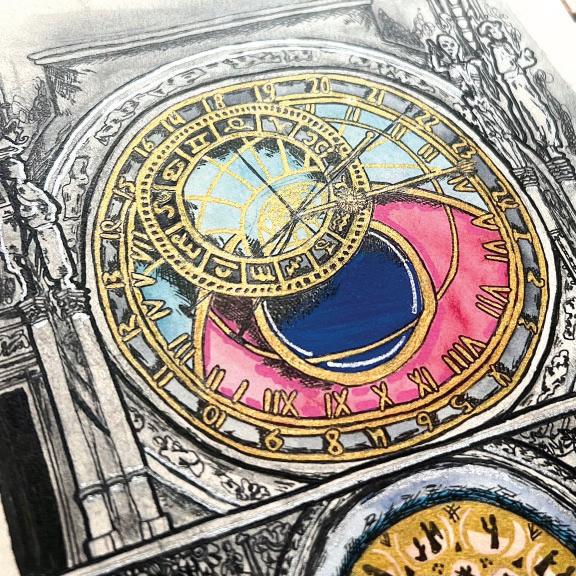
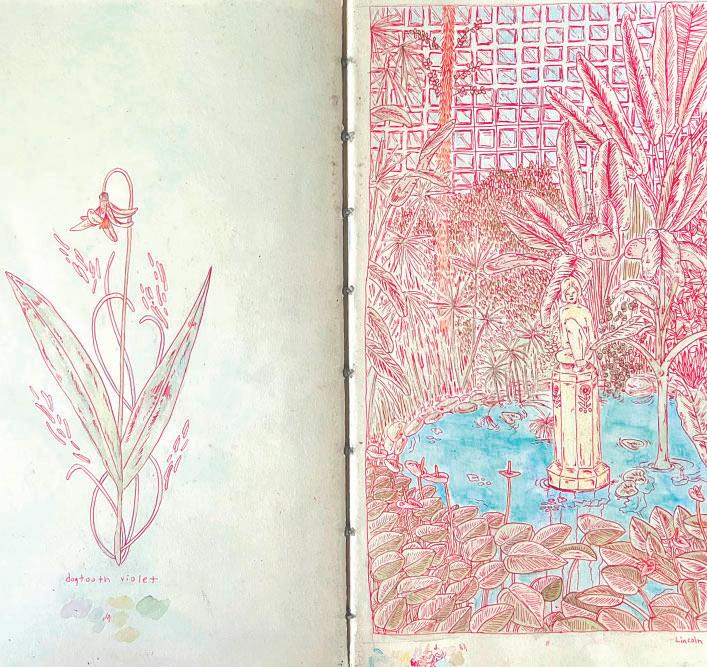
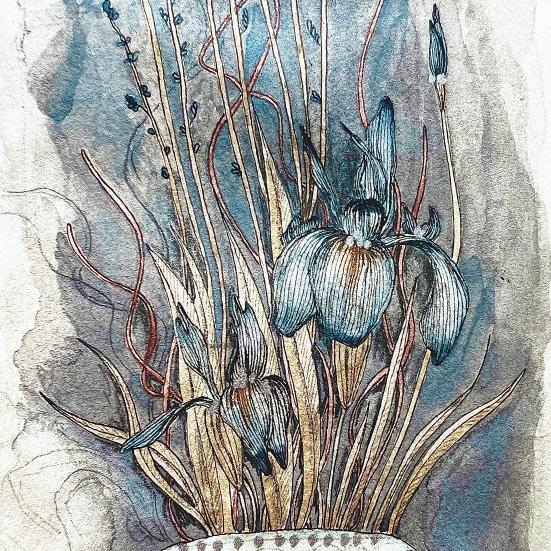
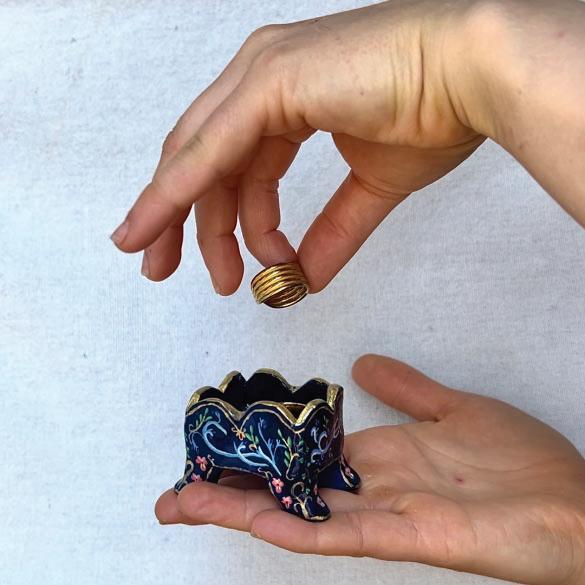
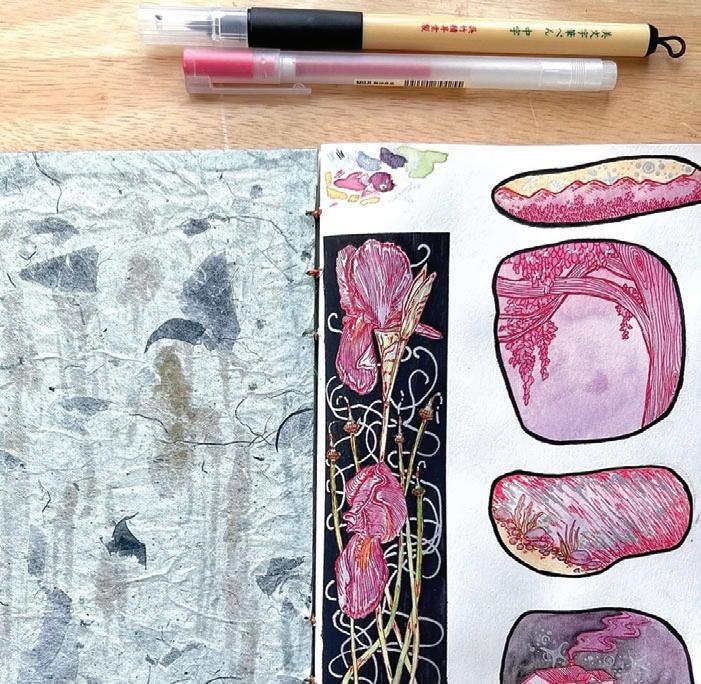
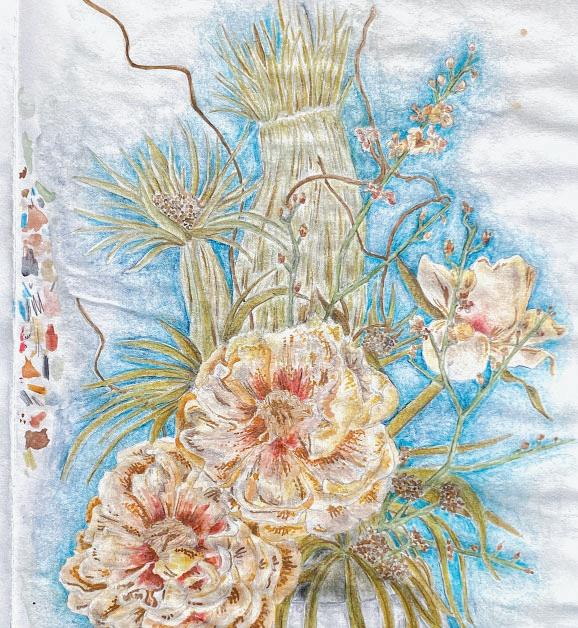
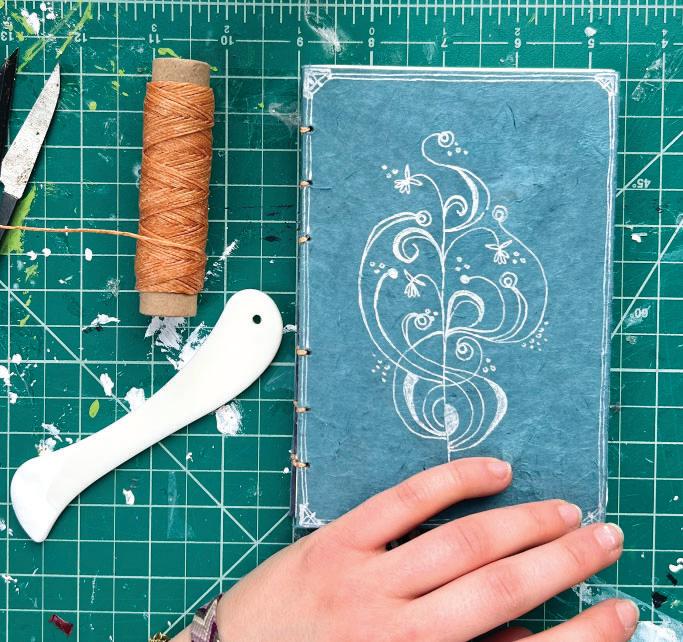
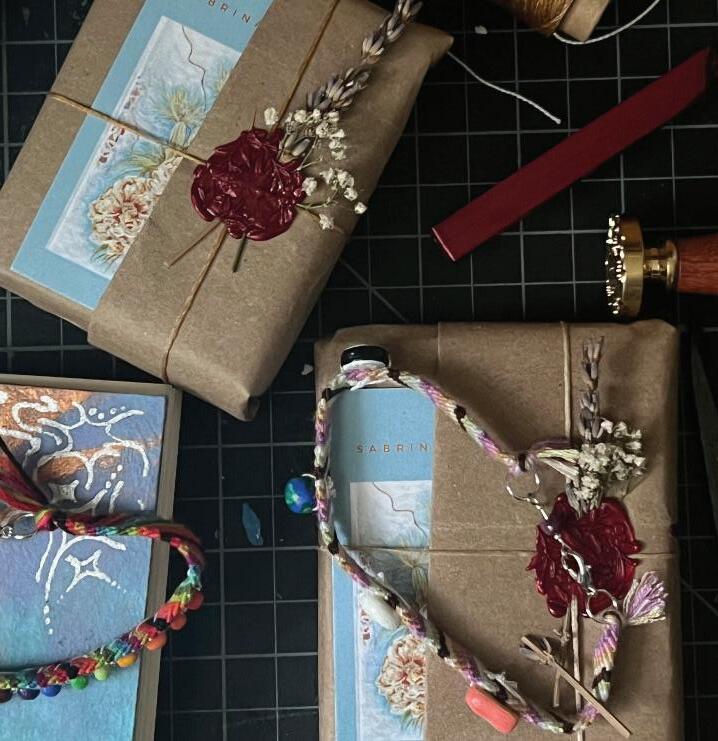
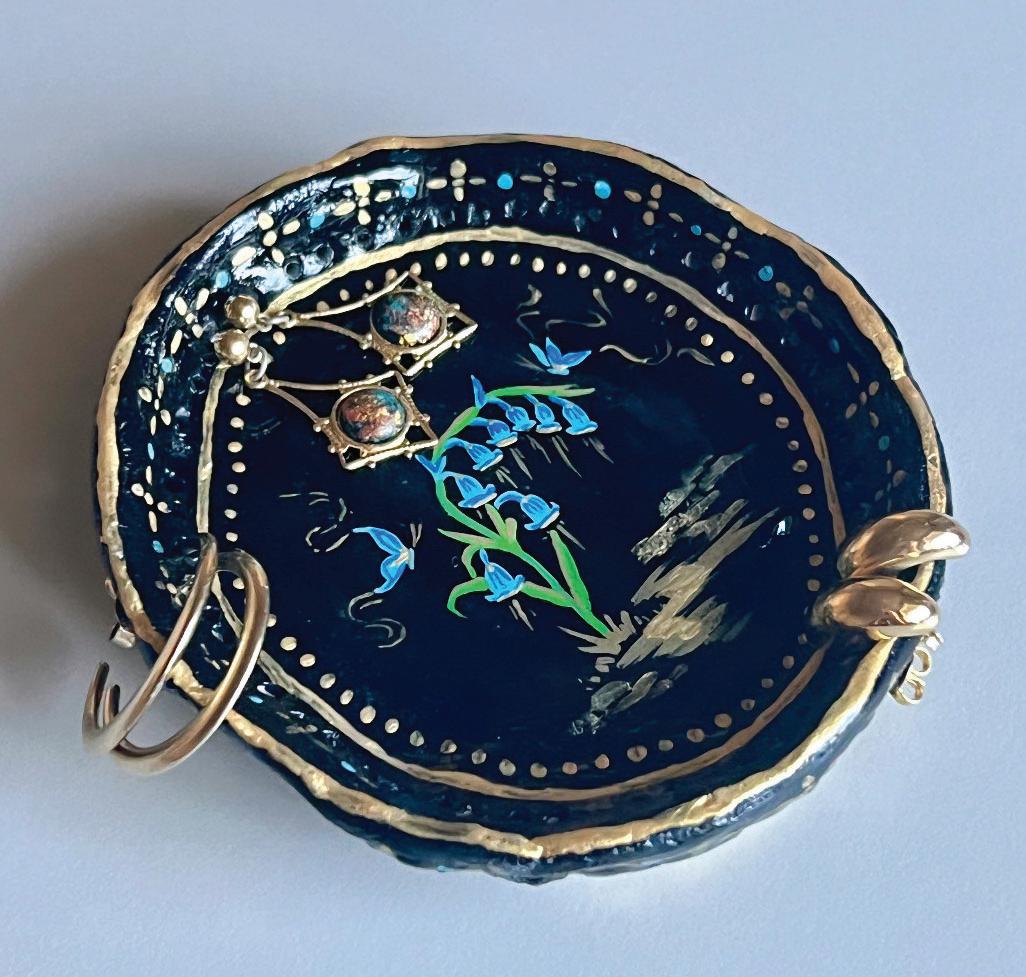
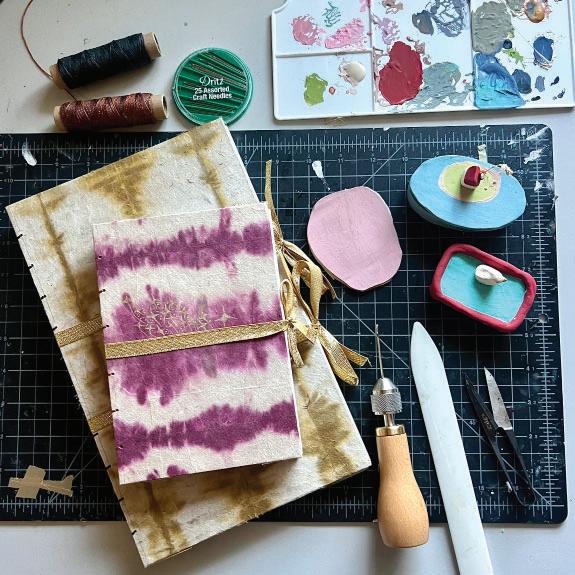
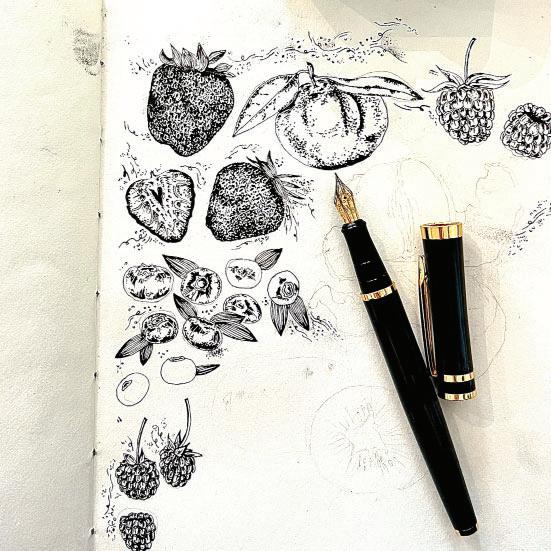
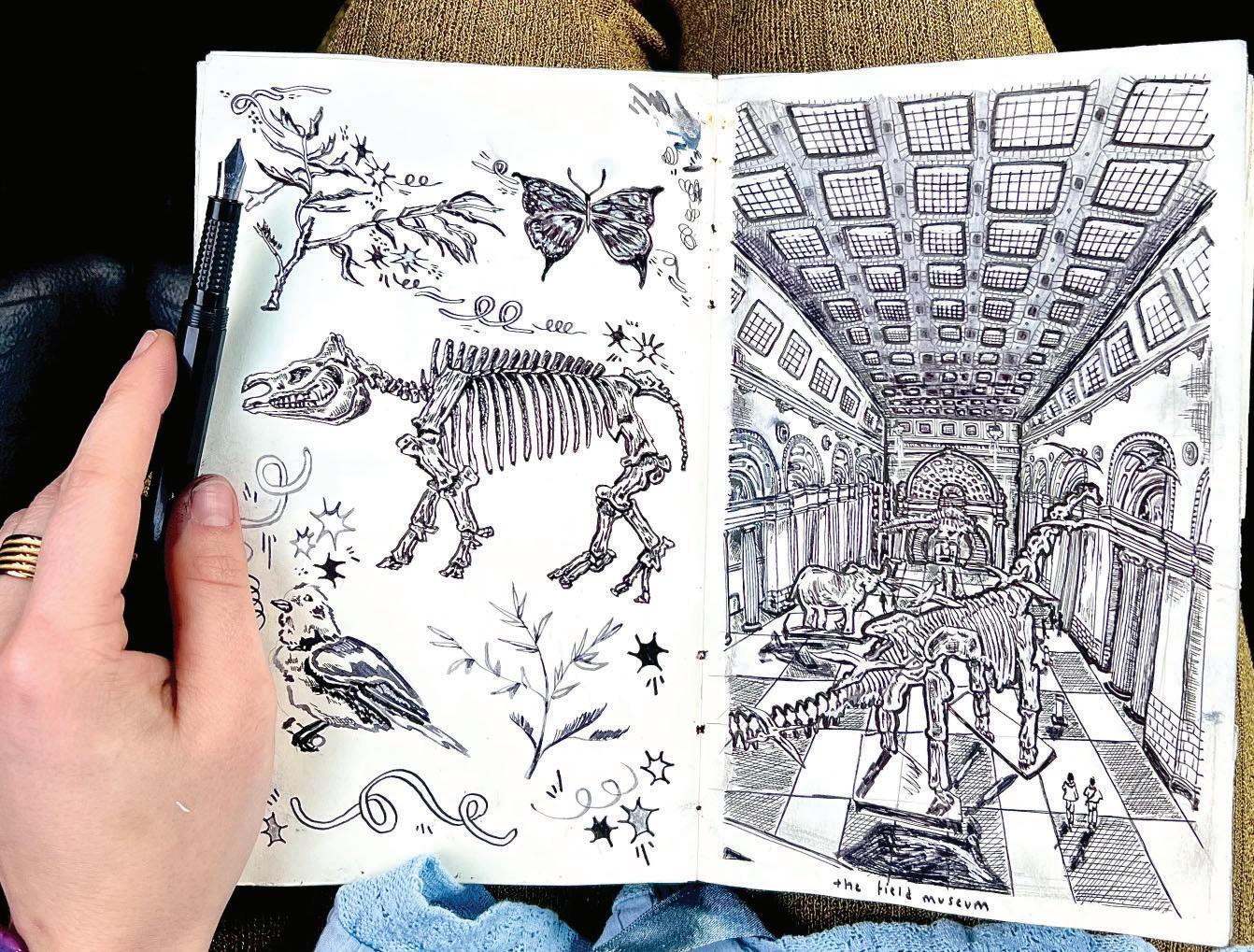
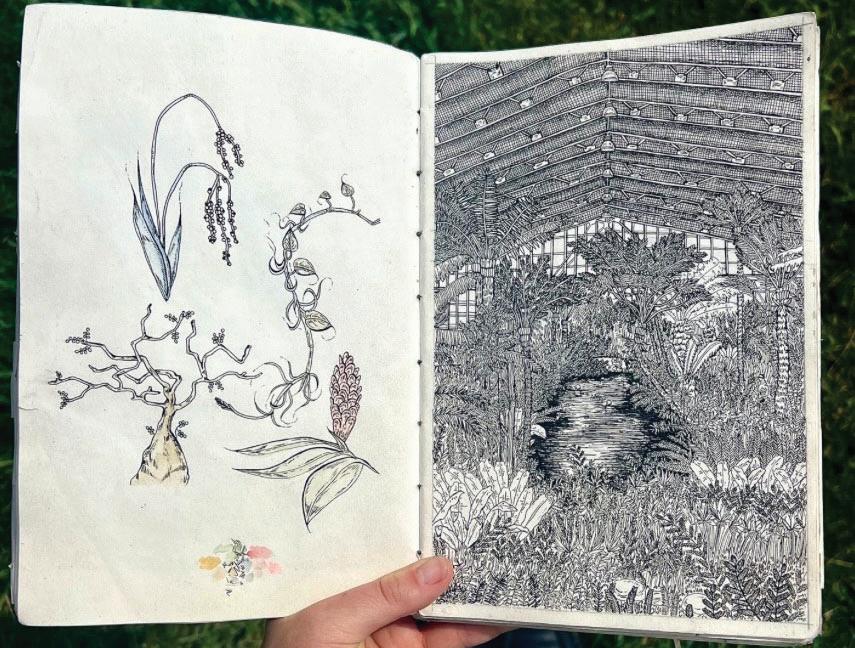
In general I would consider myself a sketchbook artist and maintain my daily practice of drawing everyday. My sketchbook habit increases my appreciation and presence while sketching my way through life. To increase my artistic dexterity, I engage in a variety of methods of making and representing things. Outside of my sketchbook I enjoy bookbinding, clay modeling, and anything that allows me to exercise my creativity through making.