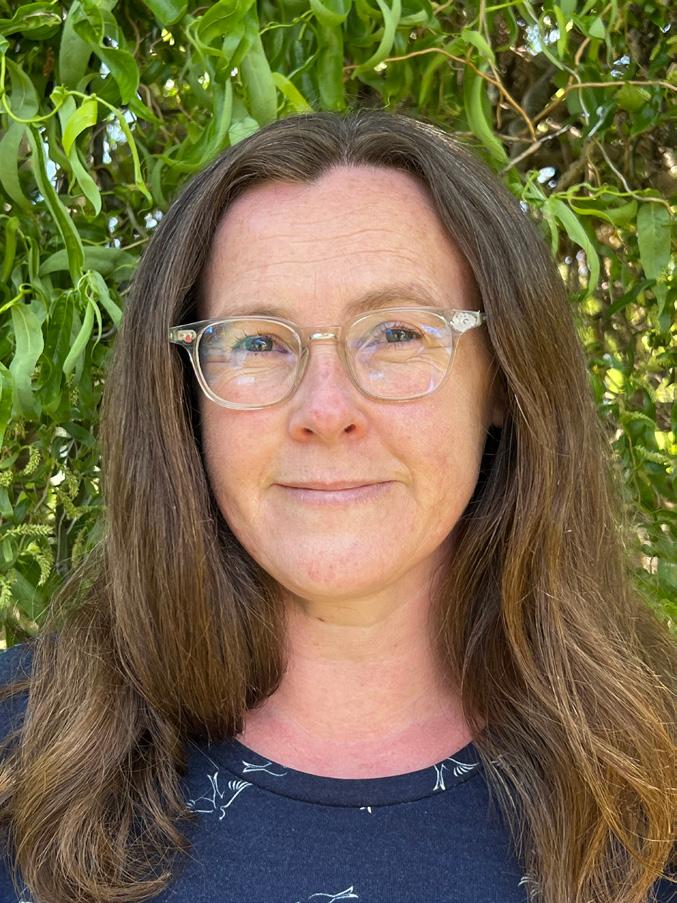
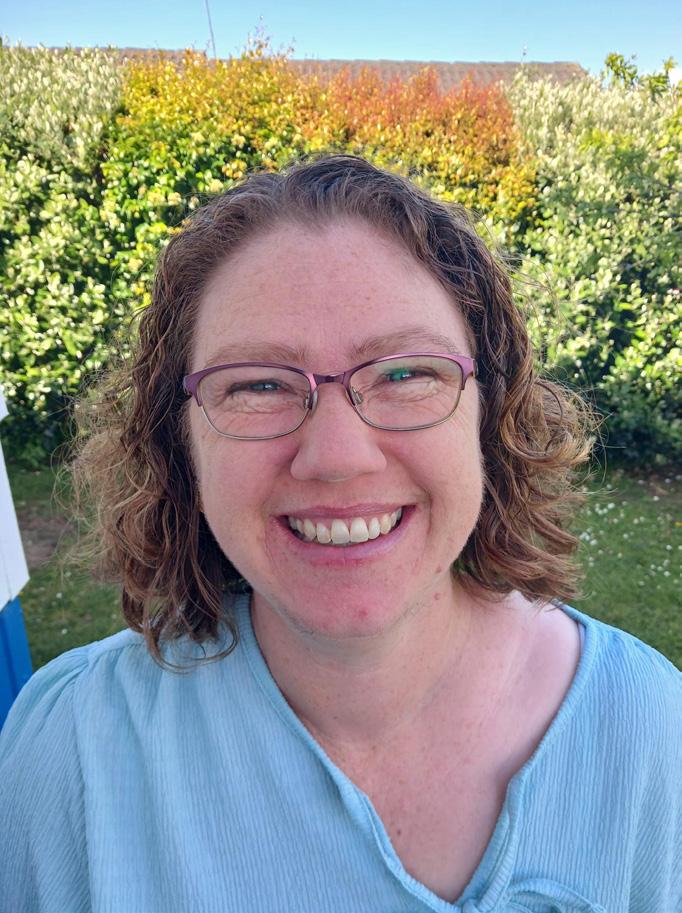
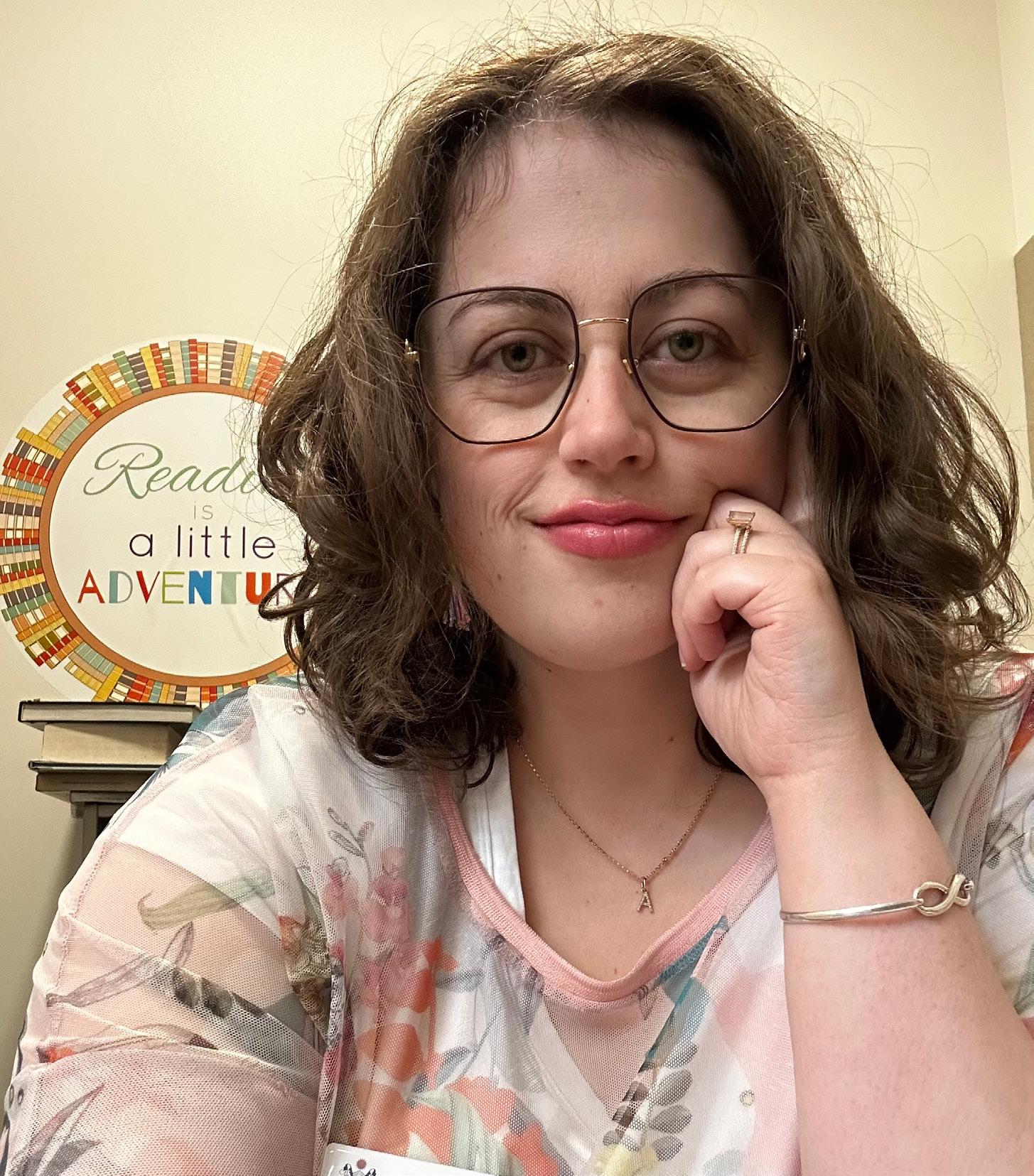
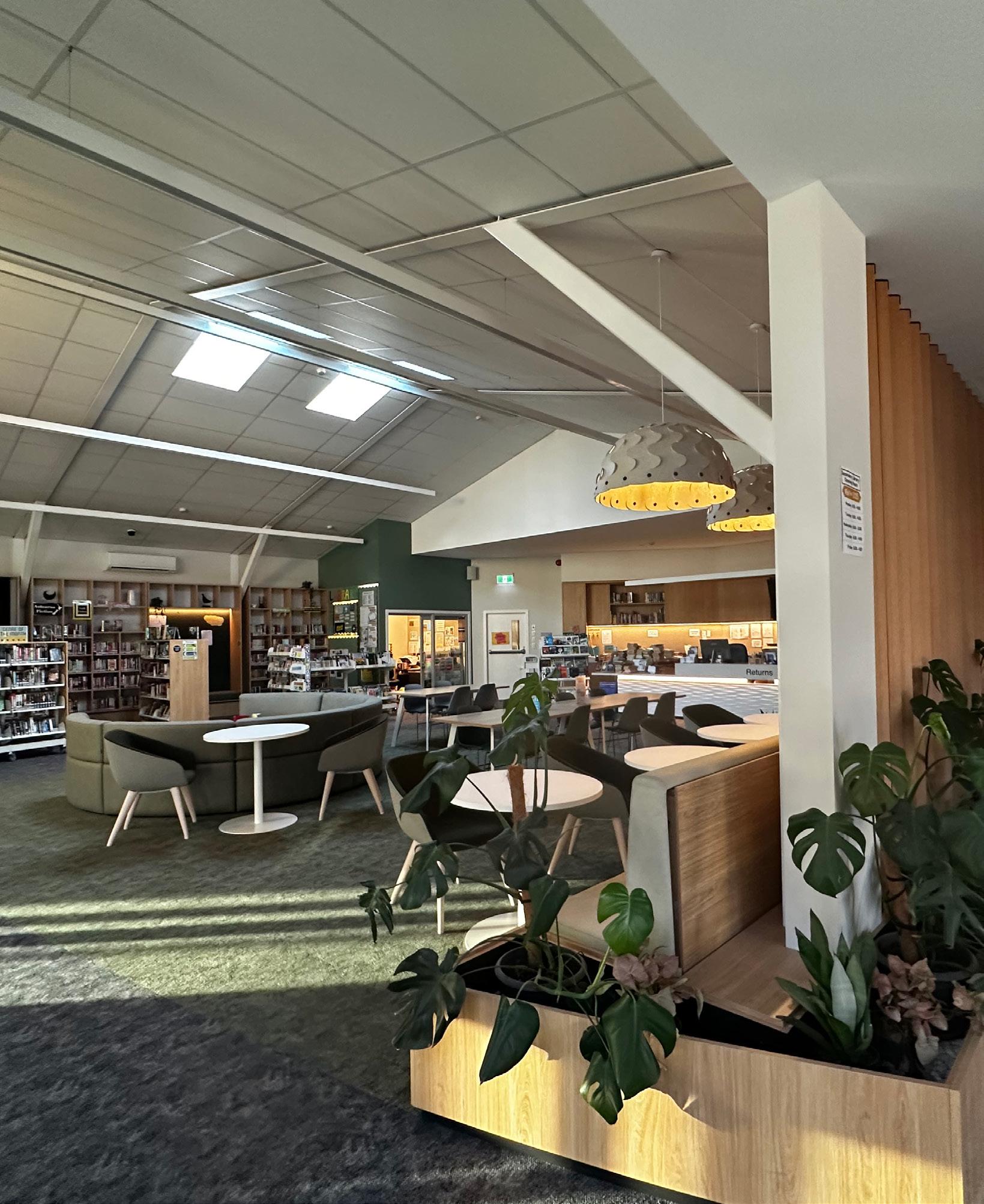
Welcome to Collected #36! I’ve really enjoyed putting this issue together; not only is it a momentous milestone for SLANZA, but a celebration of the dedicated mahi we all contribute each day. Reading through these articles it’s inspiring to see that we’re not going to rest on our 25-yearold laurels, we are already thinking about the next 25 years and where we are all heading.
This issue we welcome our new-ish Manukura | President, Trena Lile, who comes with a wealth of experience in both public and school libraries - this lady knows her stuff! She has already been building relationships throughout the sector during her past two years on NE, and is now working tirelessly to future-proof SLANZA so that it will continue to serve our members well.
Trena isn’t the only new face around here; you might have noticed that our magazine has had a bit of a refresh. This is to reflect our new logo which was launched at Horowhenua Hui in September. I think we can all agree that this new branding with its vibrant colour story and five key pou are set to provide direction and vision as we begin our next chapter.
If you weren’t at the hui, the highlights and the Future Focus Member ideas will make you feel like you were. There’s a lot of passion for the future amongst those who commented, I think you will feel that passion and be inspired yourself. Becky Ross has been inspired by the kindness and value she felt when she started out in school libraries, she is the first
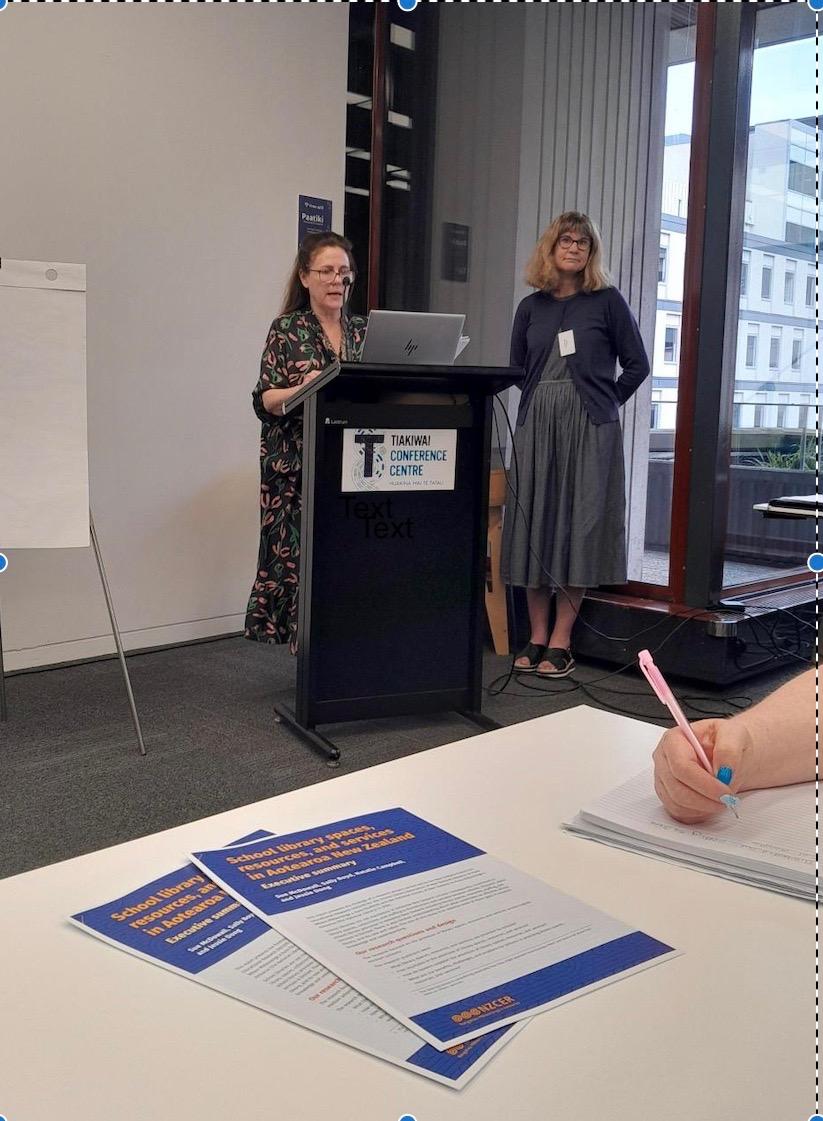
in our new Member Spotlight column, we hope you’ll enjoy reading about her experiences as a new school librarian and what she believes is important for the future of school libraries. The future of school libraries has been in the spotlight recently at the Aotearoa School Libraries Research Steering Group Hui in Wellington where the research group disseminated their findings to library stakeholders. It is heartening to see so many people invested in school libraries, this report will most definitely give you an end-ofyear uplift.
Two more people who are passionate about the future of libraries and students are Marie, who is striving to be an innovator by keeping her library evolving and relevant as technology changes, and Penny, who is not giving up on the simple pleasure of reading for the benefit of students themselves, and how beneficial it is for their overall learning.
Books are the main resource that we serve up to our customers, so it is timely that Marlies and Relda have conducted research into Aotearoa’s secondary school book challenges. This makes for interesting reading and will give you food for thought about your library policies and how you can future-proof them. As we look to the future we also need to think about information and how it is disseminated, Mandy paints a vivid picture of how we, as librarians, are the key to the information system, the ones to help students navigate the storm, the ones to model how the system works. If this all sounds utterly terrifying, don’t fret; Michele will quiet your mind with a plethora of
Editor’s Note – COLLECTED 36
learning networks that you can access, as well as some good advice about getting involved and connected with SLANZA’s committees and PD.
We all need connection; it is one of the most important things in our jobs as sometimes lonely school librarians. Heather has experienced this first-hand as a newly-minted school librarian; she has spent most of this year making connections as she ‘dips her toes’ into the pool of school and SLANZA life. After reading about what she has achieved already, I would say that she’s positively wading into the pool!
Connections with people are what drives Alan, and after his reign as Te Awhi Rito Reading Ambassador, he’s not relaxing by the pool, he’s already out there working on his new and exciting future plans, and most importantly, continuing to build New Zealand’s reading culture. In hindsight I should have asked him the secret to his boundless energy!
You might think that in order to build a reading culture you need to be ‘out there’ and have the ability to hold a room of readers in the palm of your hand, not true, (although it’s a great skill!) Lizzie is proof that connecting with people and working on a future vision gets the mahi done. You will love peeking into her newly built library at Halfway Bush School where she has transformed the space and the reading culture throughout the whole school through her own passion, what an absolute hero!
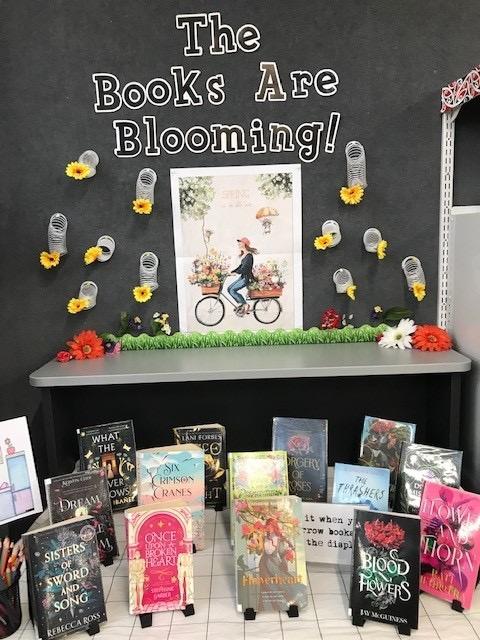
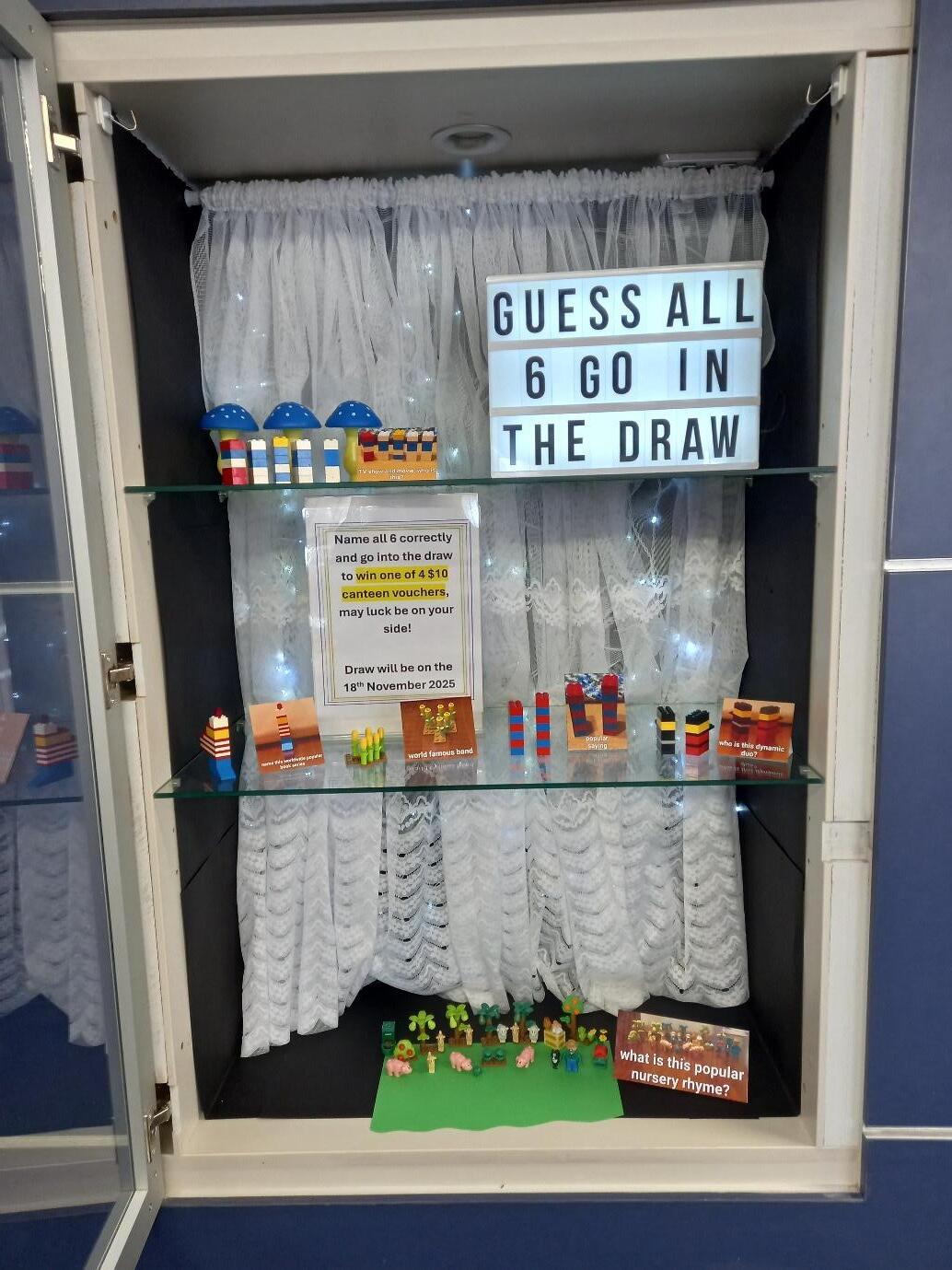
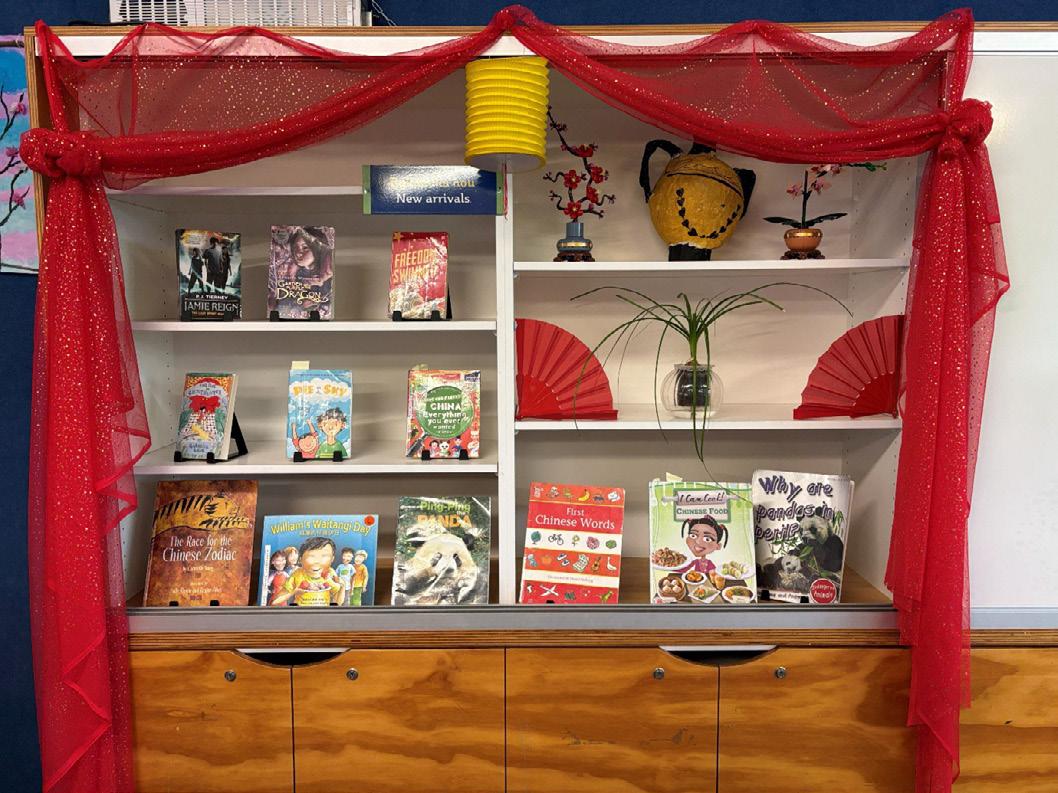
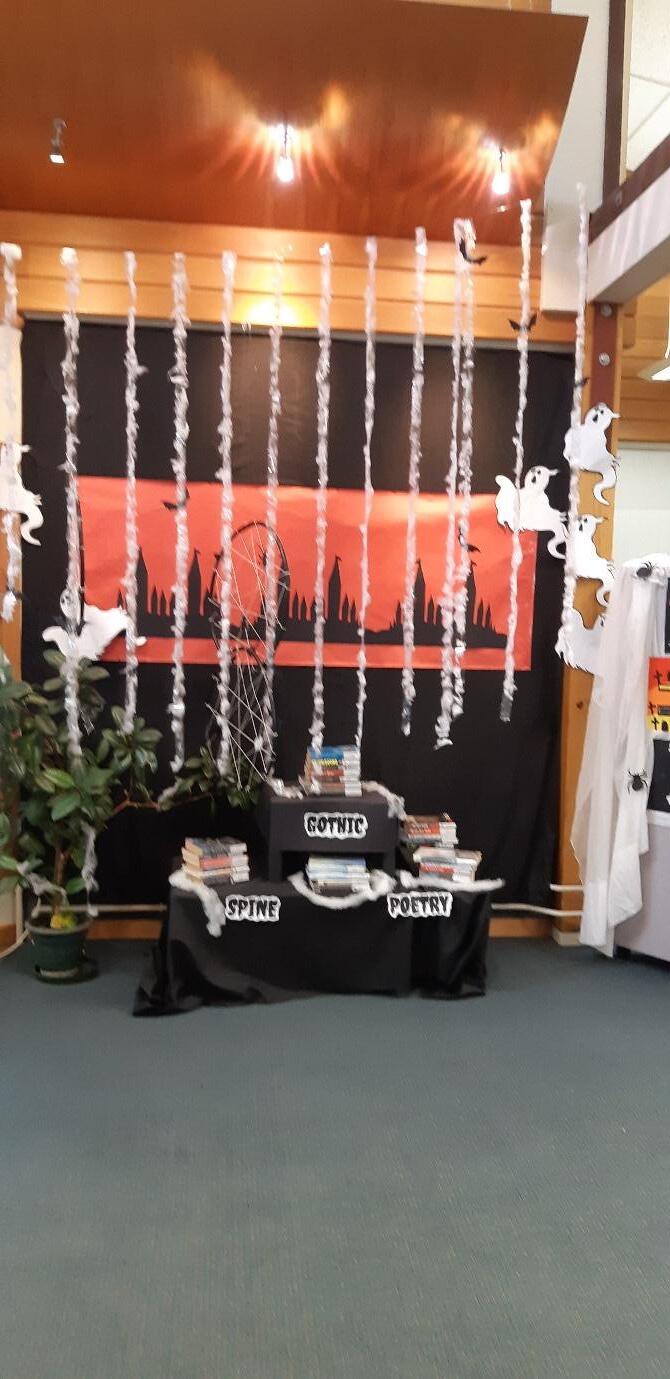
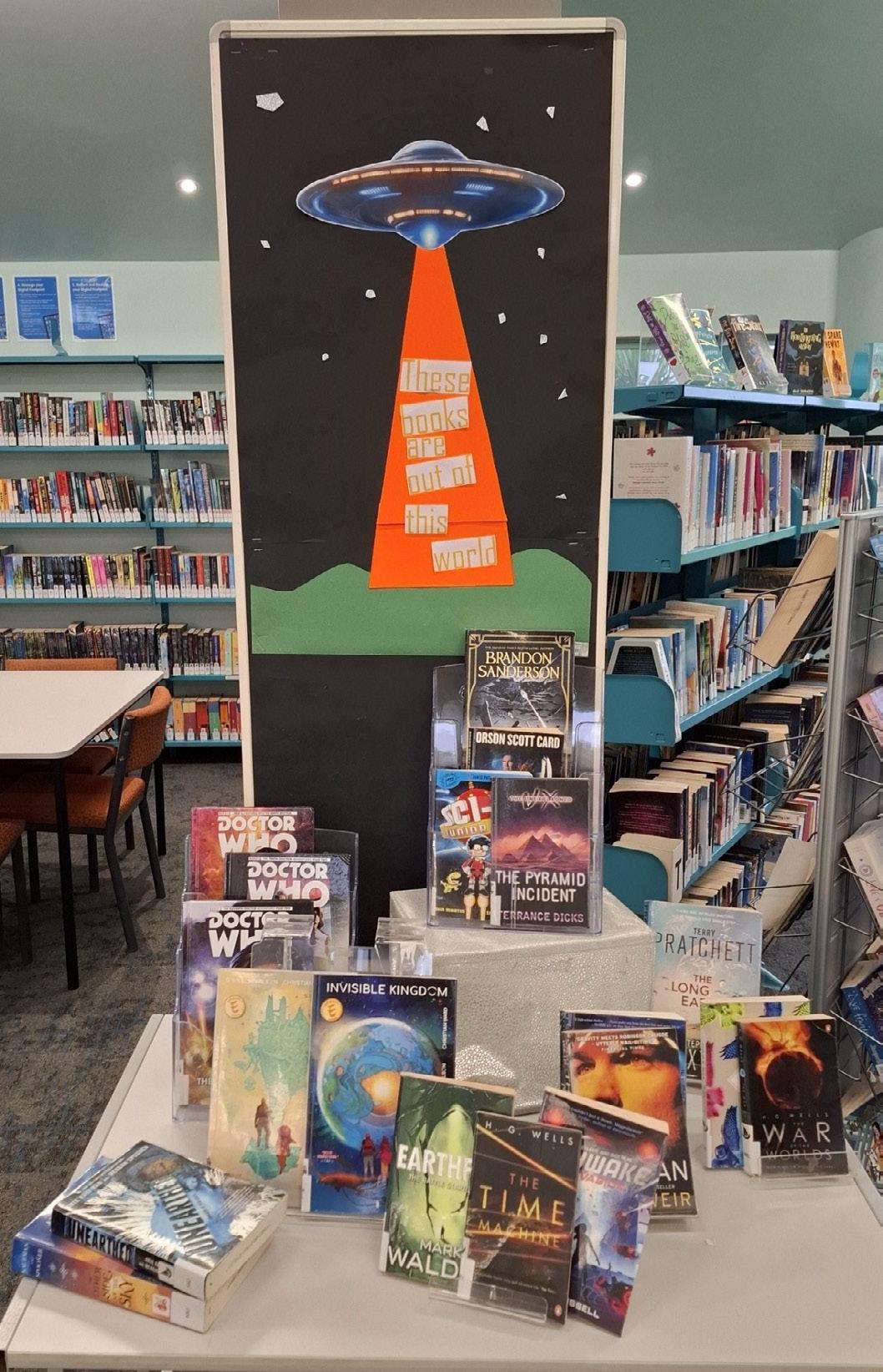
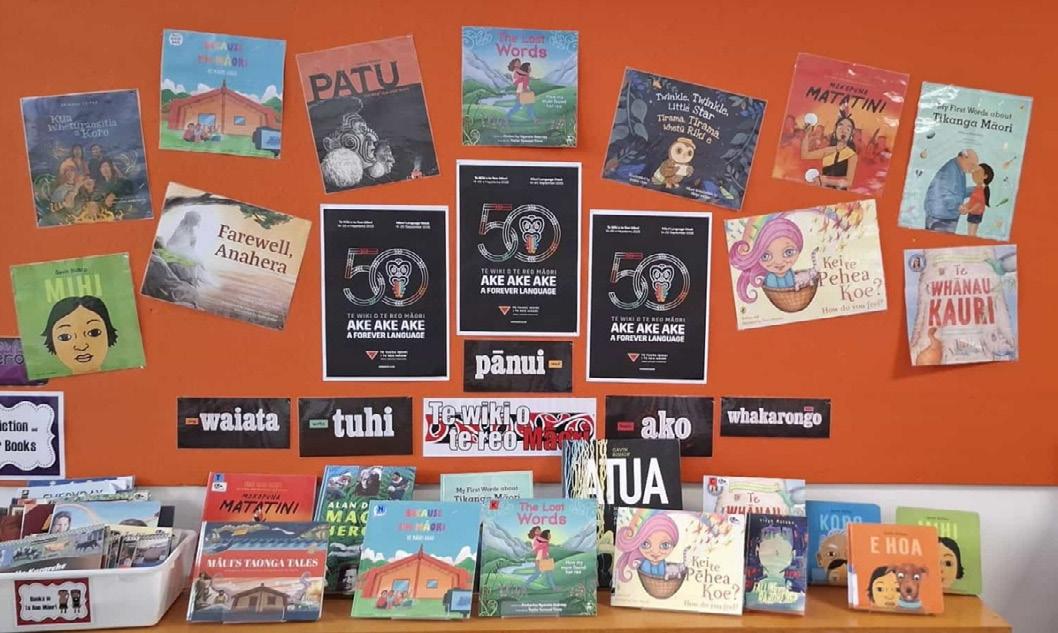
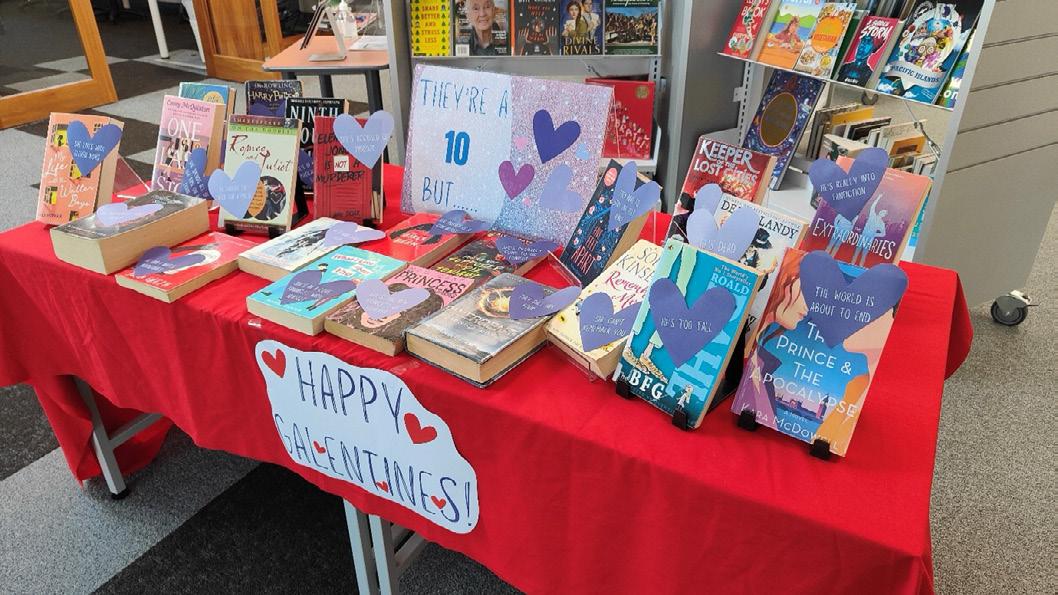
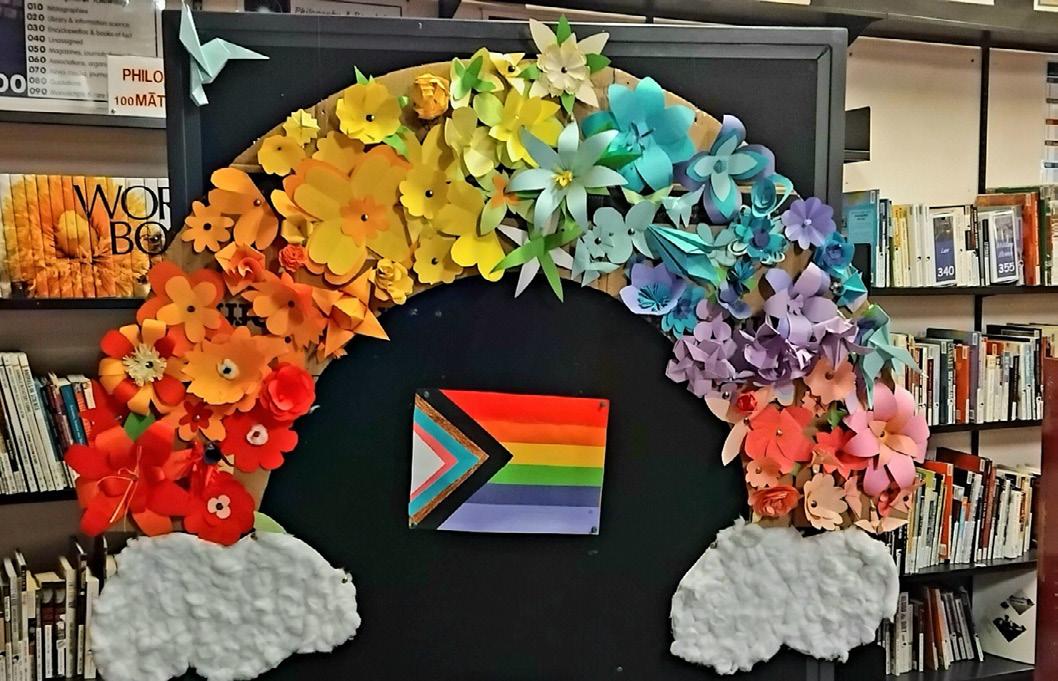
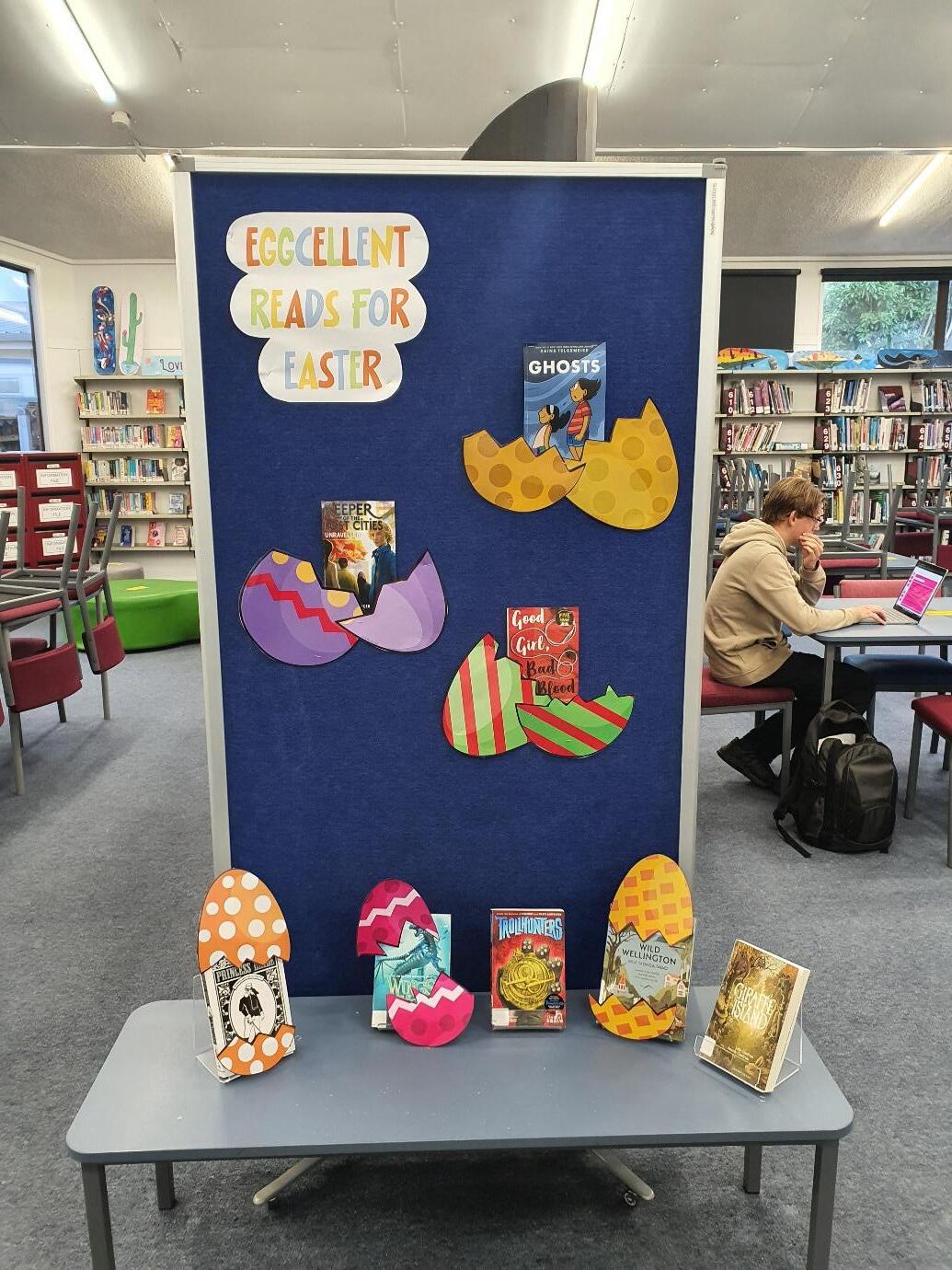
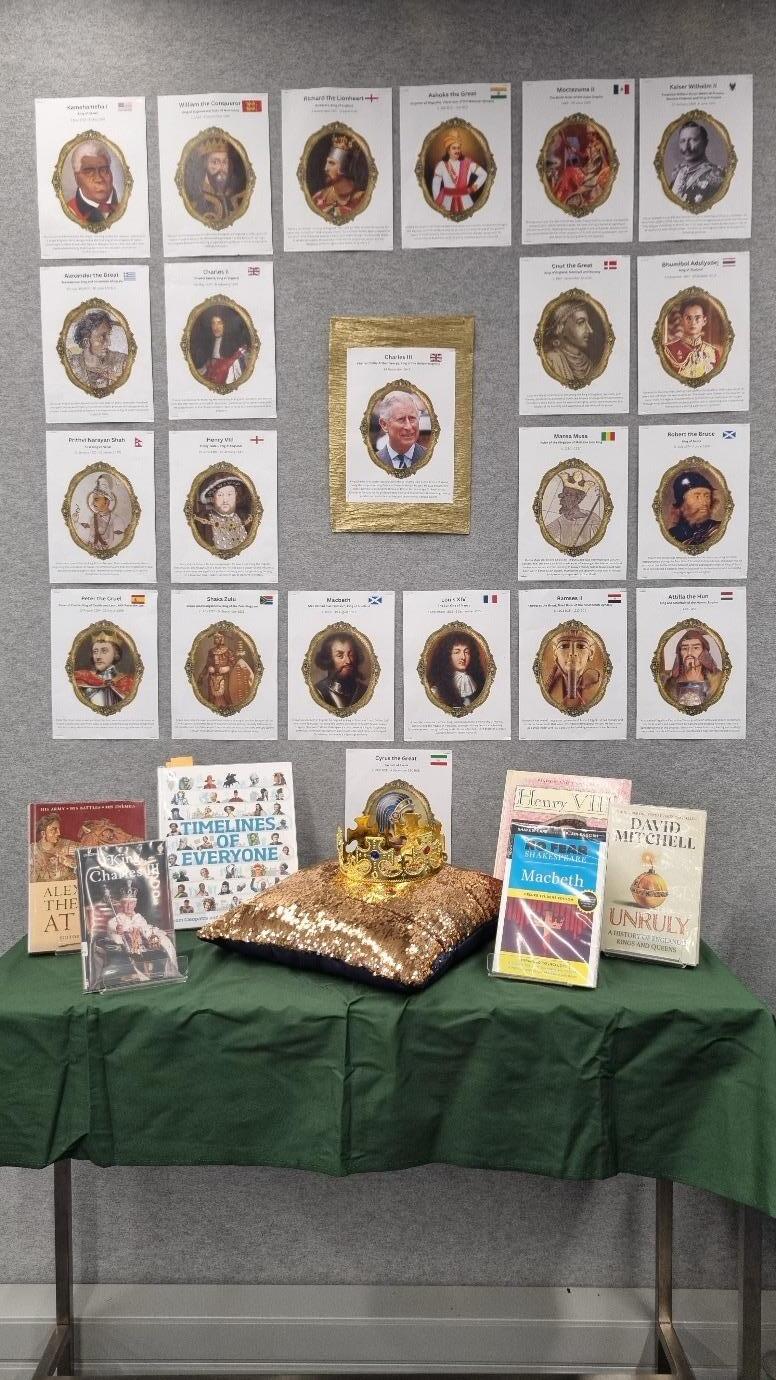
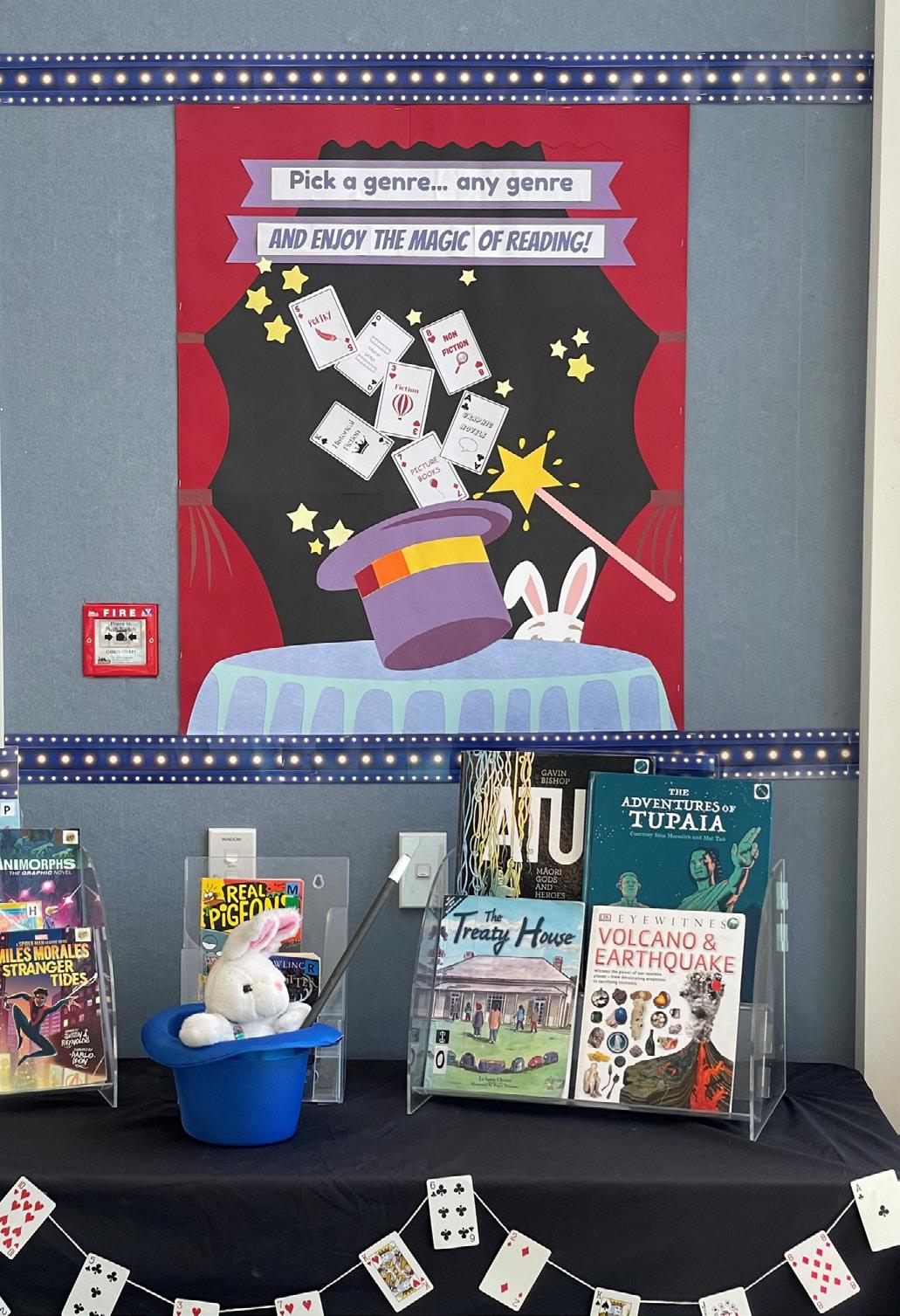
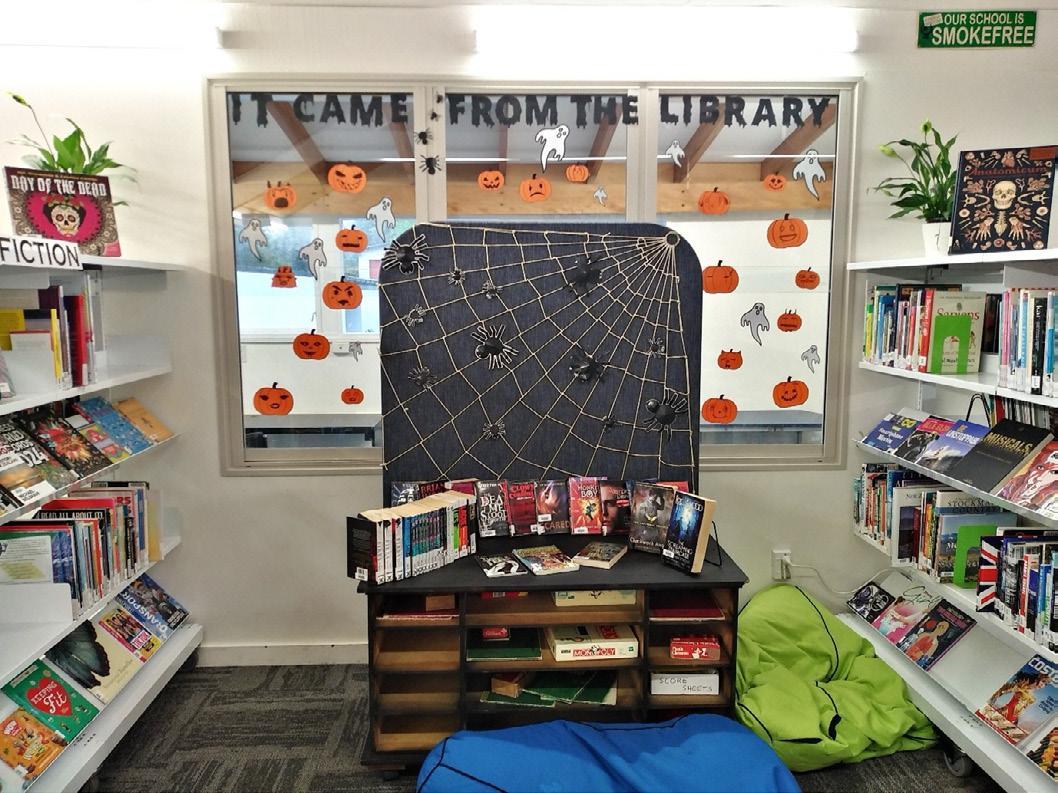
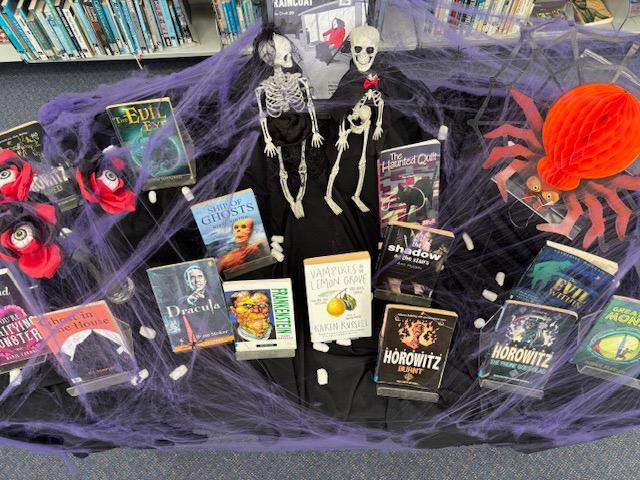
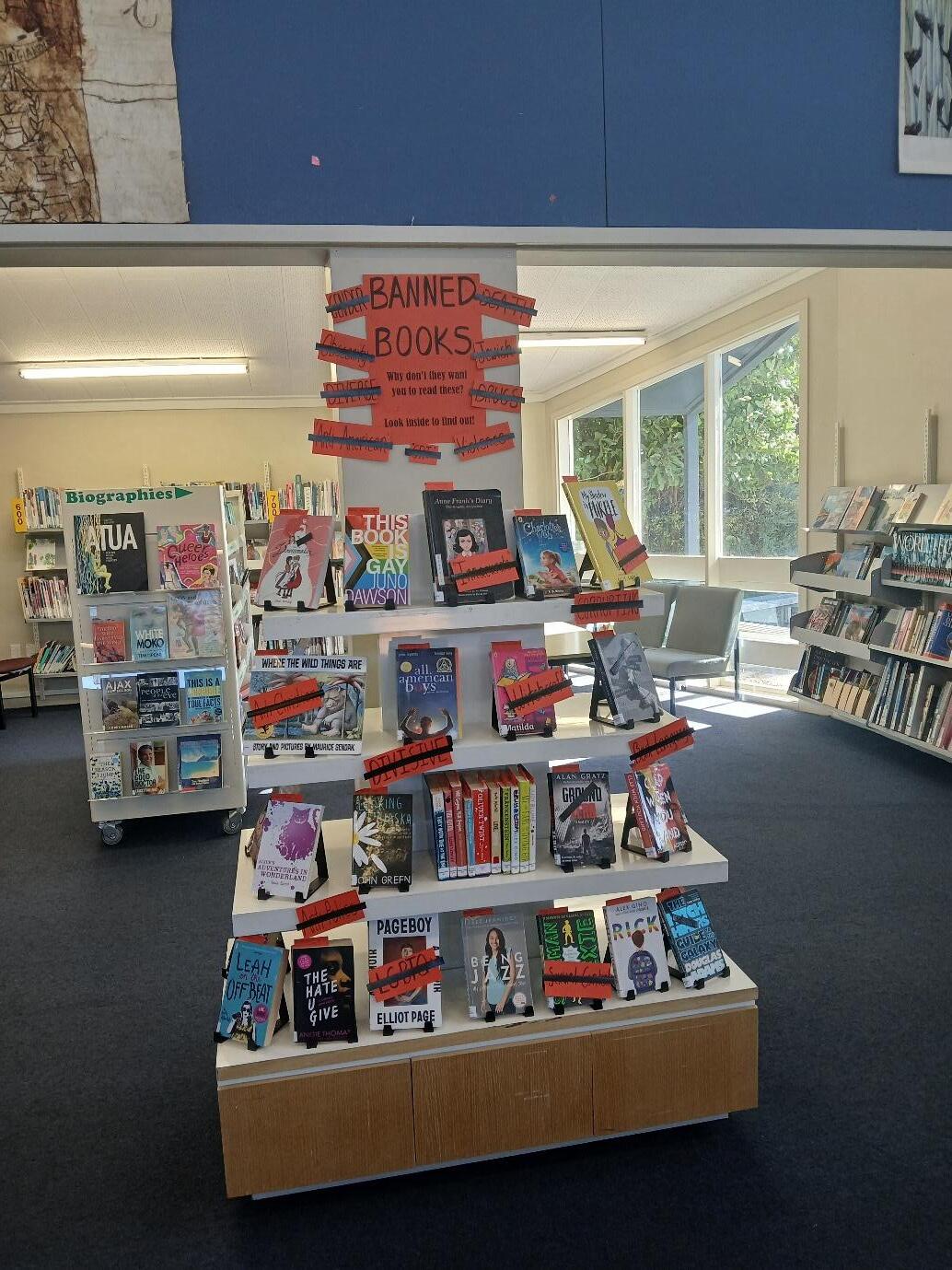
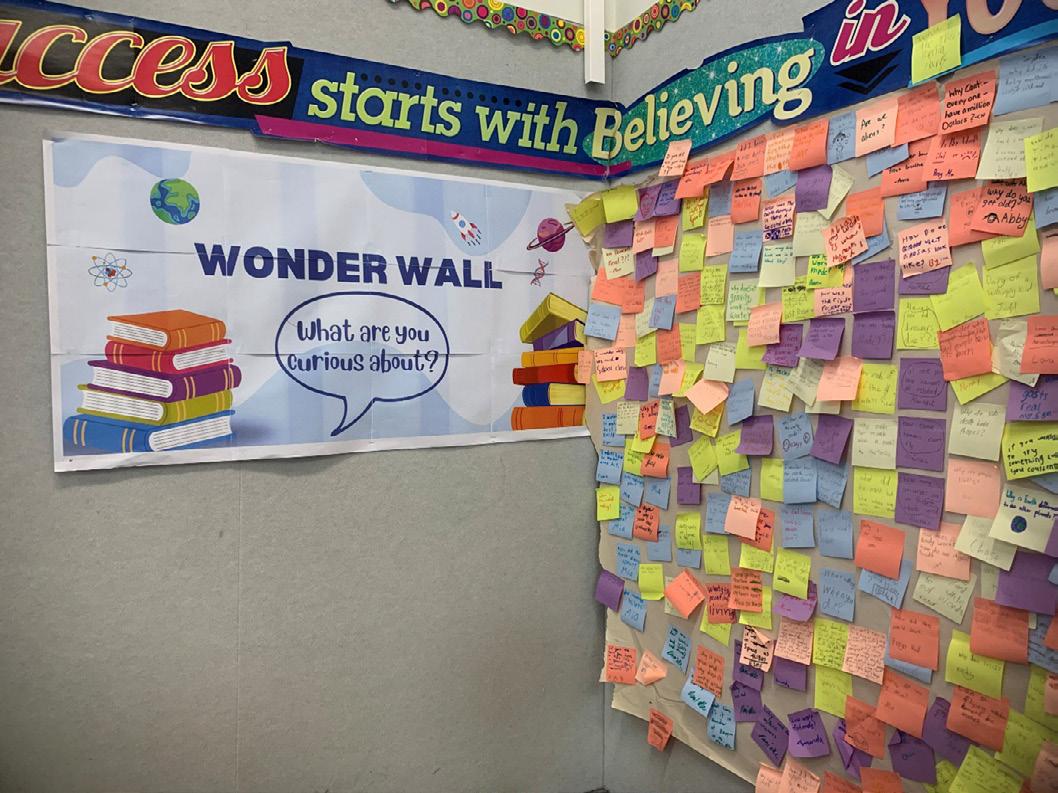
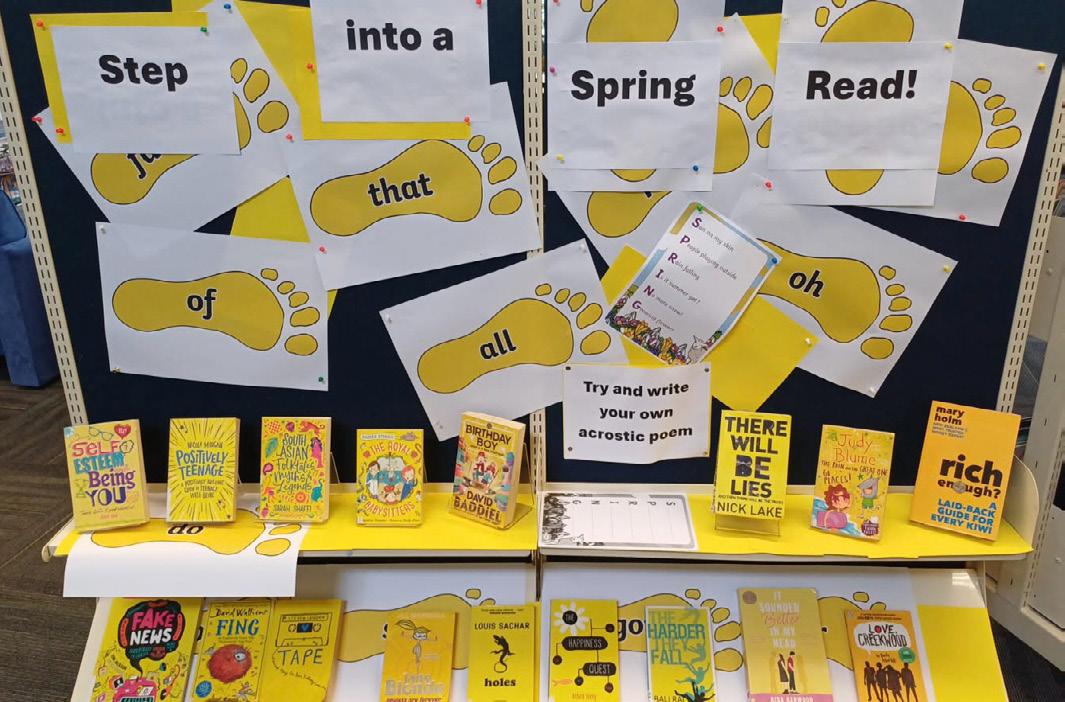
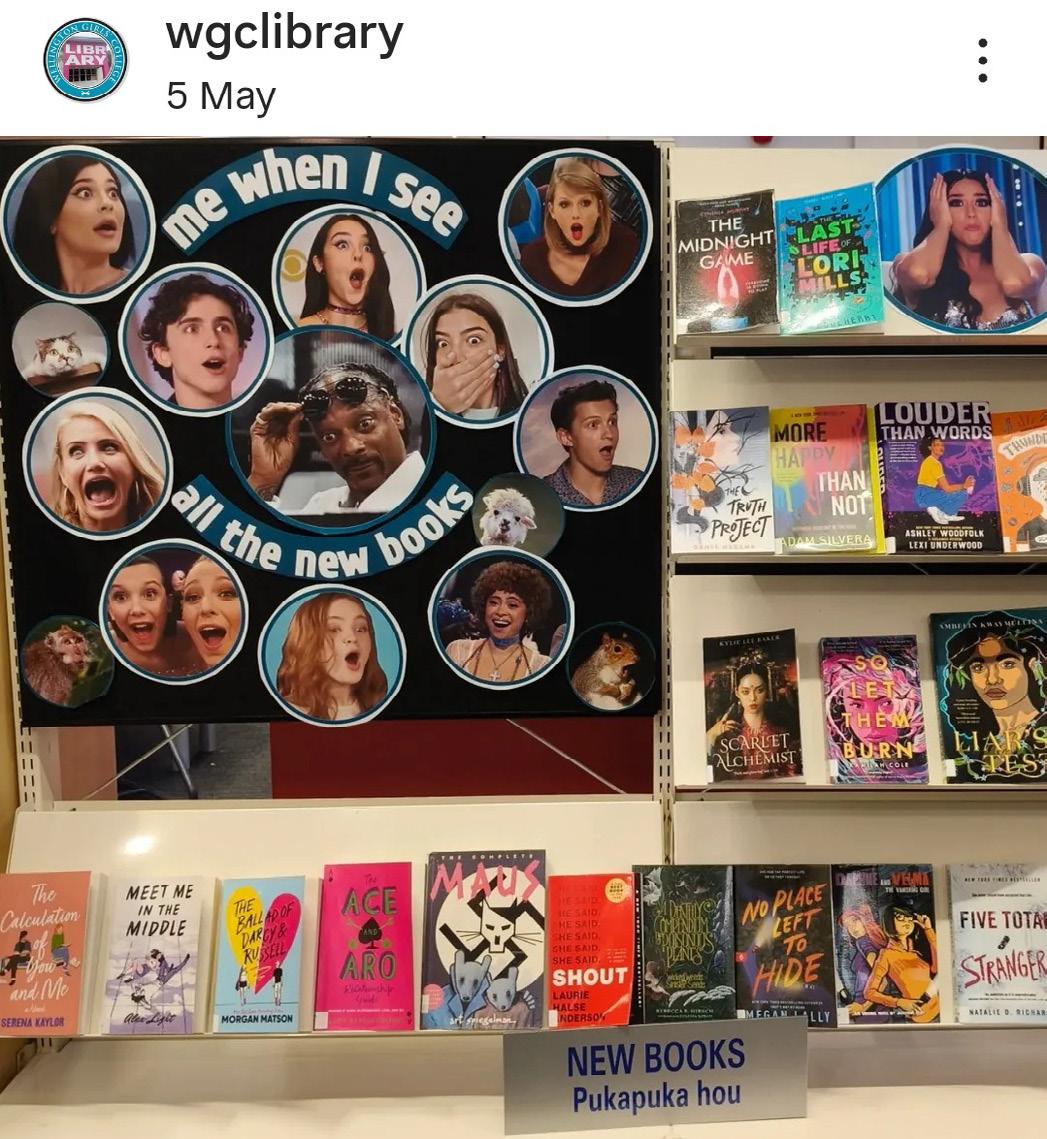
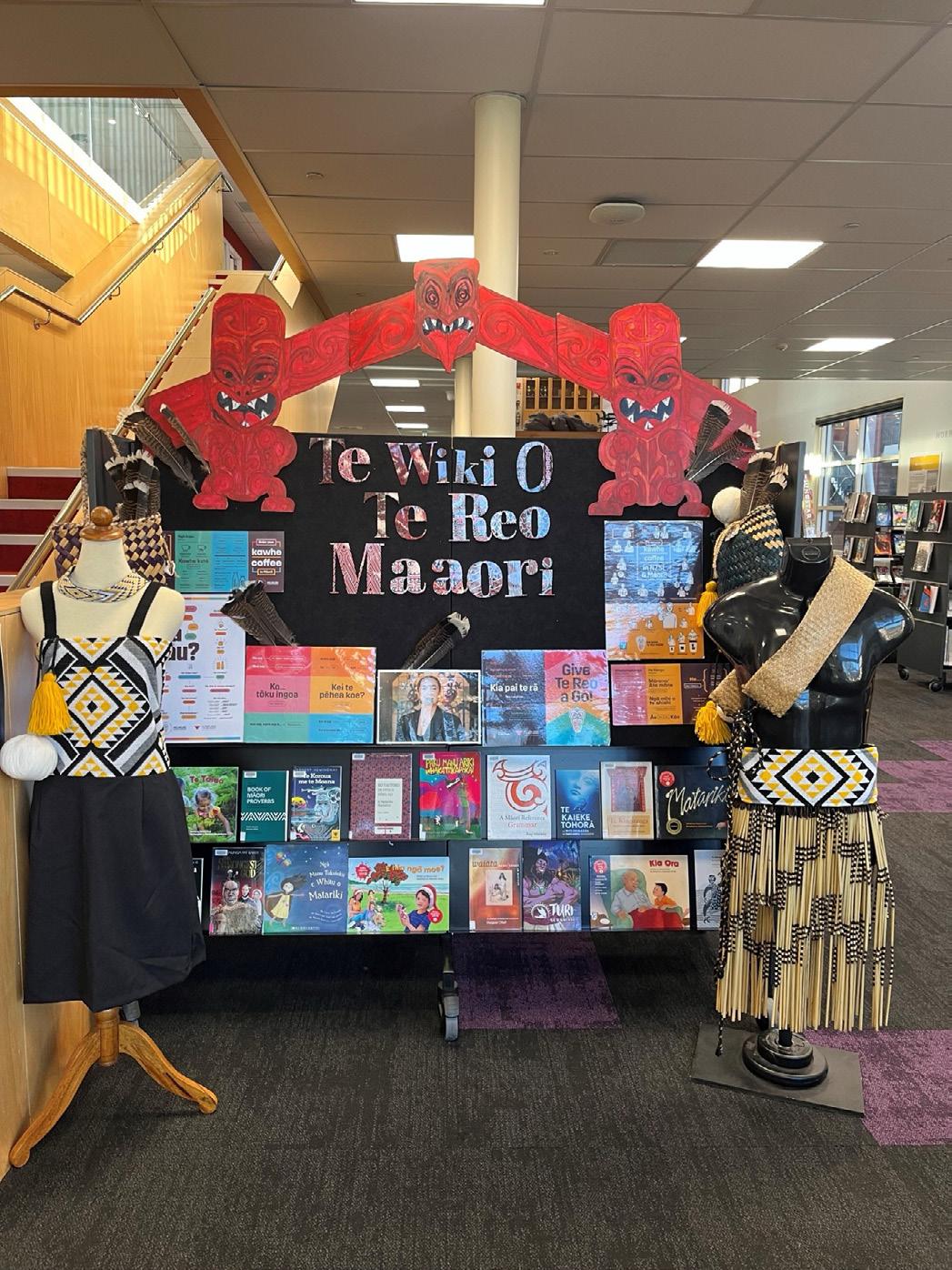
Finally in this issue, we’re delighted to showcase the passion that has gone into displays this year with a wonderful collection of photos from all over the motu collated by Sally, along with some students’ comments - perhaps a good starting point for your 2026 display plan. And for those of you who are passionate about poetry, we have included a lovely poem by Melinda Szymanik from Poets XYZ, look out for another poem next issue, we’re so pleased to have them on board and showcase their work.
A heartfelt thank you to those who have volunteered their time to contribute to this issue; article and review submitters, the eagle-eyed proof-readers, the encouragement from sideline-supporters, our graphic designer, and especially our business members, we thank you for your continued support and interest in SLANZA, we would not be able to publish this magazine without you.
How fortunate that we belong to such a passionate and forward-thinking sector, it’s so inspiring to see what is going on throughout Aotearoa as we invest in our rangatahi and our future.
We wish you a safe and happy summer with quality time to rest and refresh for 2026.
President’s Column – COLLECTED 36
Kia ora koutou
It is a joy to be writing my first presidential column in SLANZA’s 25th year. In the last issue of Collected, we focused on how far SLANZA has come in the last 25 years; now we have the opportunity to look forward to the coming years and see where SLANZA is going.
School librarians are often future focused people, the first to embrace new technology, new systems, and new trends. We can pride ourselves on being flexible changemakers with an eye on both the past and the future. As we navigate the next set of changes in the education sector, we must also keep an eye on the library sector and our colleagues there. Working together with LIANZA, Public Libraries NZ and Te Rōpū Whakahau will strengthen our ties and build a robust library sector which will carry all of us through the years to come.
Attending the Horowhenua Hui in Levin, Stronger Together, filled my cup with connection and community. There is nothing better than a room full of school library kaimahi sharing ideas, concepts and viewpoints with each other so that we can all grow in our practice. I would like to thank the hui committee for their time and thoughtfulness in organising such an array of speakers and workshops for everyone to take part in.
We were proud to unveil SLANZA’s new logo to the members gathered at the hui. Much thought, along with a culmination of 18 months of kōrero, aroha and decisions
has gone into this logo. The fresh new colours create a complementary logo whānau alongside the School Libraries Transform logo. When SLANZA started 25 years ago, the colours picked were green, purple and white to align with the Suffragette movement - wāhine toa standing up for a better future for our tamariki. As the years went by, the purple was removed and only the green and white remained. In this new colour palate, the purple is back, alongside a fresher green and other complementary colours.
The hui was followed for me by a day-long meeting with National Executive to work on our strategic plan. We looked at the blue skies of what we would like to do and the reality of the situation in the school library landscape at the moment. How can we turn what we are all living every day into what we would like to see for the future of school libraries? How can we use the research done in partnership with The National Library of NZ as a lever to make real change? How do we manage capacity of all the amazing ideas when apathy is so rife in the world?
The LIANZA conference came next along with a full week of library meet-ups. Two full days of bringing together library kaimahi from across the motu and the sector, I spoke to prison librarians, public librarians, law librarians, and everyone in between. We had kōrero around similarities and differences and how we can each support each other, our differing perspectives and when brought together, how unique our solutions could be.
WORDS
Trena Lile
Some of you will know that my library career started in Public Libraries, shelving at my local library after school. I became a weekend library assistant next, then years later I was seconded into a role with eLGAR (Libraries for a Greater Auckland Region) the predecessor to the Super City. During my time with eLGAR I provided administration support to the city librarians for all the cities within Auckland and worked with amazing librarians from across the libraries to create real change within the LMS used by and joining all seven library systems in Auckland. To see some of these colleagues again at the LIANZA conference was a privilege, to be reminded of how huge changes can be made for the betterment of the library sector by being together in one place, having tough conversations about the future and the best route to take to get there.
In the same way that eLGAR brought together the city librarians of Auckland to create change for them, the sector and the public, SLANZA brought together the library and dducation sectors to create a route for change for school libraries in Aotearoa.
On November 5th at The National Library of NZ in Wellington, the Aotearoa School Libraries Research Steering Group hosted a hui to discuss the future of school libraries and how we can use that research as a lever for change. We were fortunate enough to have a wide array of people in attendance covering libraries, education, literacy research and publishing support. The discussions and commitments from the organisations involved filled us with hope for a future where all students can access a school library with a specialist library kaimahi.
As SLANZA moves into its 26th chapter, I am filled with excitement and anticipation. I am looking forward to this chapter being filled with hope and determination. We will continue to advocate for you, our members, your libraries, your tamariki and rangatahi at a national level. We will provide resources and allies for you to advocate for your libraries, your tamariki and rangatahi within your schools and with the knowledge to be the best library kaimahi for your library and your tamariki and rangatahi. We will be your community when you need us, to celebrate the highs and commiserate the lows.
Get involved with your regional PD, what can you learn, or what can you impart to others. None of us really think we’re doing something outstanding in our library that someone else isn’t already doing, but the reality is that we are all doing something outstanding in our libraries, and that something is different for everyone. Share your something, someone will be grateful to hear it, and someone will be grateful for the reminder, and someone will say “Hey, I do that too, but this way”. It is all valuable, and it is what makes SLANZA the best community for us all.
Ngā mihi nui
Trena
REGIONAL REPORTS
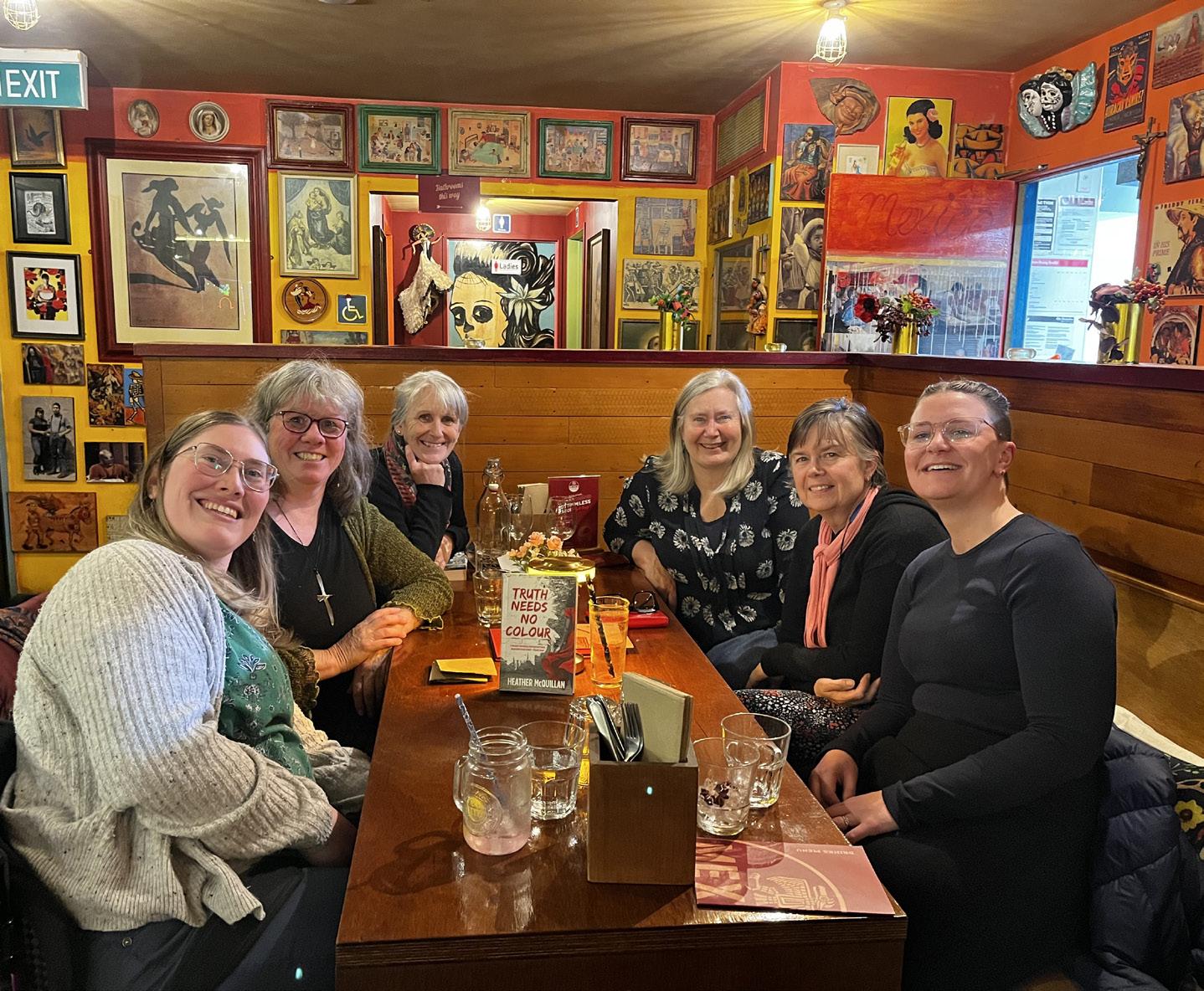
PHOTO Aoraki members enjoy catching up with Heather McQuillan.
AORAKI UPDATE FROM SALLY BROWN
Congratulations to Abanti Antara, School Librarian at Christchurch Girls’ High School for winning a 2025 Teacher Award. This award is for school staff who run initiatives which instil a love of language in their students.
Further congratulations to the Aoraki schools and their school librarians who did so well in the recent Battle of the Bibliophiles Year 10 reading competition.
Our SLANZA Aoraki Book Club meets up once a term in Ōtautahi Christchurch. We always have a great time chatting about books and what’s happening in our school libraries. If any of you would like to see the list of books we chat about, please do get in touch. Attached is a photo from our Term 3 catch up where we were joined by author Heather McQuillan.
Later this month we will celebrate 25 years of SLANZA with an event at Villa Maria College. We will celebrate with our life members and school librarians retiring this year, two of whom are Helen Duckworth from Darfield High School and Liz Jones from Hagley College.
CENTRAL UPDATE FROM SASHA EASTWOOD
It has been a busy year in Central which we finished off by having the Stronger Together Hui in Levin at our doorstep held at the beginning of the September school break and our end of year PD day Central Connects which was recently held at Whanganui Collegiate.
Central closes the year with 45 members spread from Taranaki through Whanganui, Rangitikei, Horowhenua, Manawatū across to Hawkes Bay and northern Wairarapa. We are delighted to have a 10-person strong committee who enjoy coming together to organise relevant events for our members.
Here are responses to some questions I put to our Central committee members to reflect on the recent Stronger Together hui and plans for next year and beyond:
What was your most valuable moments/takeaway(s) from our SLANZA Hui?
• Glen Colquhoun’s performance was inspiring; I want to get him back to work with students. Also seeing examples of other librarians’ work e.g. fun displays etc. shown in the quickfire slides session. The buzz of everyone sharing their experiences / problems / ideas together showed how valuable meeting up is.
• My most valuable takeaway from the hui would be the mihi whakatau as it was an informative introduction to Waiopehu College and the Horowhenua.
• The session by Sasha and the Principal of Manchester Street School, Jared Fretwell, described a positive Principal and Librarian working relationship, using the servant leadership model. This was encouraging and gave us time to reflect on our own school environments and interactions with staff.
• It was also special to acknowledge 25 years of SLANZA on Saturday night with bubbles and cake!
• The drop-in/drop-out nature of the Sunday afternoon session around the tables in the library. Watching librarians share knowledge, advice, and encouragement was heartening to see.
• Being in the same space as my school library peers and colleagues, learning and sharing knowledge together.
What are the top projects/changes you’ll be working on in your library or role next year?
• I want to create a Pasifika fiction area, to make it easier for students to find these stories. I already have a Pasifika non-fiction collection which has been a successful change. Also, increasing staff and student awareness of digital resources, by creating short videos and releasing them at regular intervals.
• Changing the Student Librarian structure, trialing rearrangement of Library hours during Term 1, labelling Fiction by genre.
• I am creating a new International Languages collection, a much bigger piece of work than anticipated. It is all planned and set to launch next year for Chinese New Year.
• Be more focused and ‘present’. Take small steps instead of trying to eat the elephant in one bite!
How do you see your library (the sector) changing over the next five years?
• Reducing non-fiction books, increasing fiction - to reflect the borrowing trends. An even bigger push to grow reading for pleasure in our school. This is dependent on staff buy-in as it is not a one-person job.
• An increase in teaching of responsible AI use. Increasing the academic success of students by supporting study.
• Libraries becoming ‘hubs’, hosting more classes and events they/we may have had in the past.
Our last face-to-face event of the year was held at Whanganui Collegiate library, where we held a successful day of presentations and workshops bringing together 20 school librarians from around our rohe. Sessions included how we develop our engagement with our school staff to profile our role and collection, the importance of advocating within our wider school community, how to make our library screens come alive with book promotion slideshows and easy to make videos, and author illustrator Sandra Morris talked us through the Art of a Picture Book. We also took the opportunity to celebrate SLANZA’s 25th year with activities and a yummy morning tea. It was another fantastic day of connecting, sharing, and learning together.
OTAGO UPDATE FROM LAURYN URQUHART
Otago SLANZA members are eagerly anticipating the end of the year so that we can get together and celebrate 25 years of our organisation and all the great mahi that has been done this year. Alongside the activities, there will be a round of Stealing Santa which is our new favourite Christmas game, thanks Kristy and Wellington for the idea!
It has been a productive and rewarding year for us all in Otago, in the latter half we have enjoyed another Day of Goodness put on by National Library where some great display ideas were shared and our minds were opened to how we can support Indigenous Literacy in our libraries.
A group of us ventured to Queenstown where we enjoyed some combined PD with Southland SLANZA members. It was a great day to connect and get to know others in the area as well as rekindle friendships. We had some interesting discussions regarding
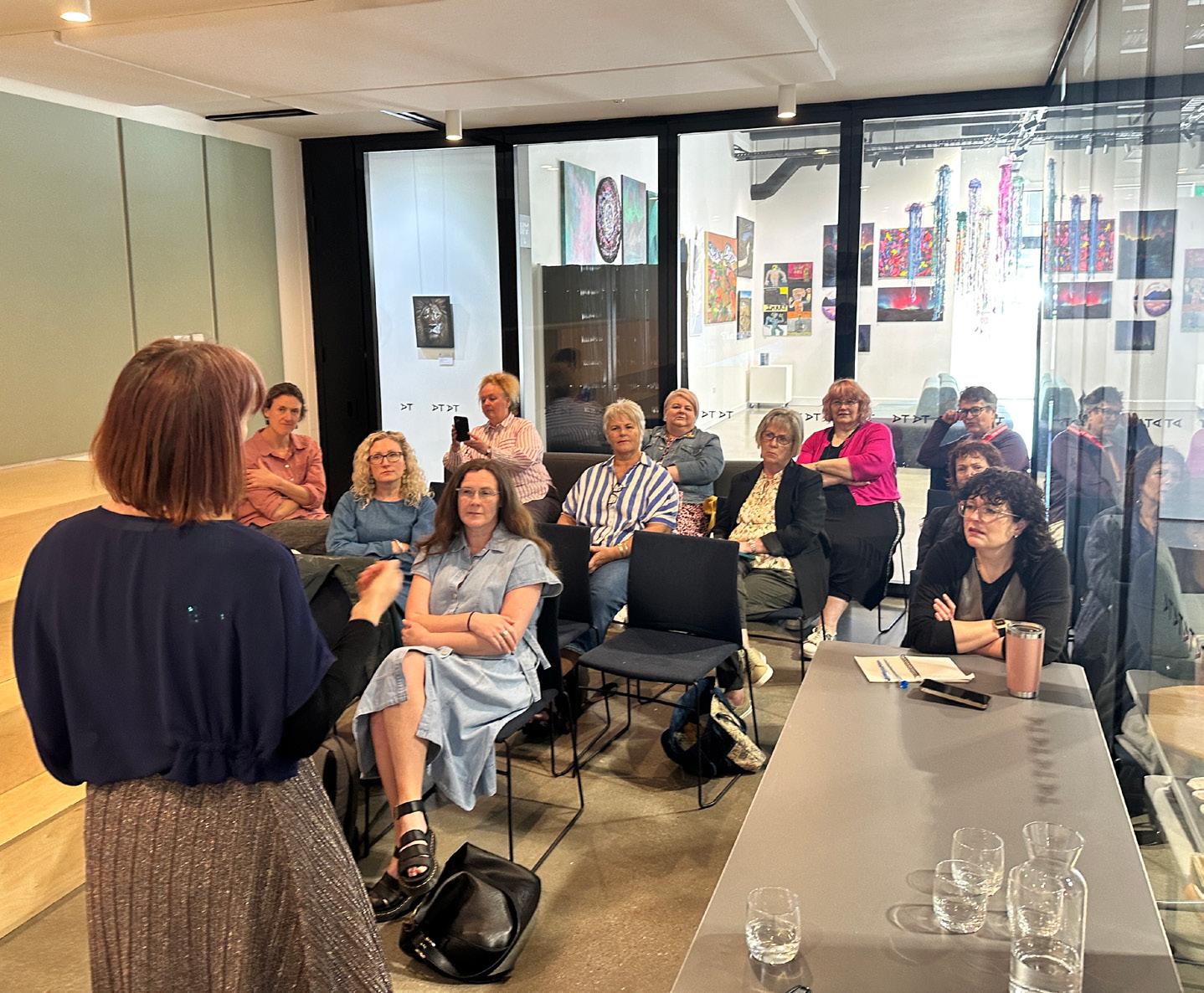
book challenges, a very informative presentation on A.I. by teachers from Wakatipu High School which helped many of us to understand the positives of that new landscape. Also, an enlightening insight from Kate Whitaker, the Senior Advisor from the Classification Office as to how classification works in Aotearoa, and where school librarians can go for support.
It’s not all hard work down here, for some light relief a group of us toured Hocken Library and were awed by the breadth of the collection of books, ephemera, records, paintings and so much more! We recommend a tour if you’re ever in Dunedin.
Our committee sadly farewells Bridget Schaumann whose commitment to SLANZA and school libraries is an inspiration to us all. Her contribution has left a legacy and will continue to be felt throughout our membership. Thank you Bridget, you will be missed.
SOUTHLAND UPDATE FROM KIRSTY ADAM
To change things up from the ‘traditional’ PD, the Southland librarians headed to the movies in Term 3 to see The Roses, starring Benedict Cumberbatch and Olivia Coleman, which was based on the novel, The War of the Roses. This was a great movie and a really enjoyable evening!
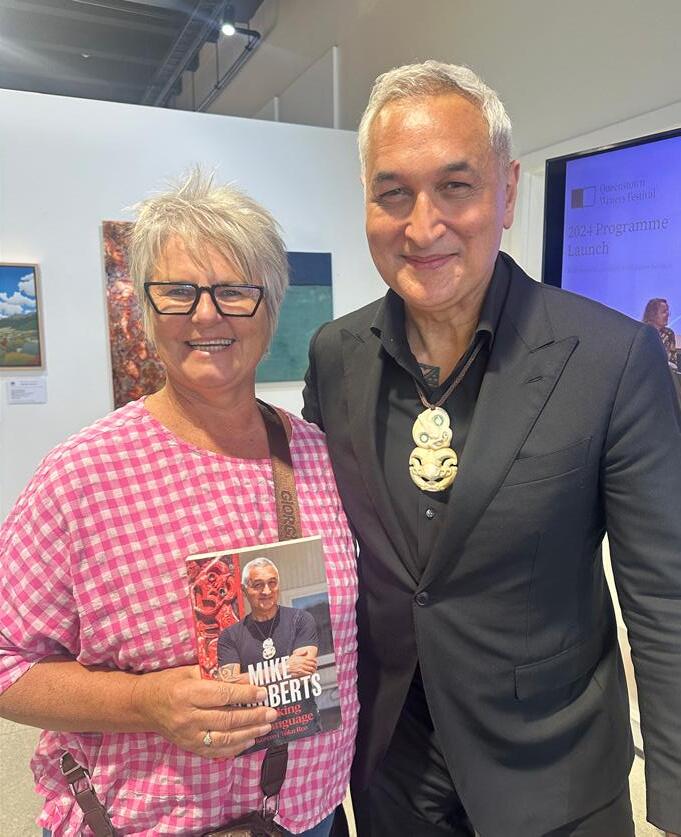
In Term 4, a group travelled to Queenstown for the Queenstown Writers Festival. It was extremely hard to pick the events to attend but we landed on Brodie Kane discussing her life and book, Woman Interrupted, Chanelle Moriah’s very informative discussion on how they manage their diagnoses and their book ‘I am Dyslexic. We heard Mike McRoberts on his journey learning te reo Māori and writing Speaking My Language | Te Kōrero i Tōku Reo and last but not least, Grant Robertson and his book Anything Could Happen - a very optimistic and positive way to end the day.
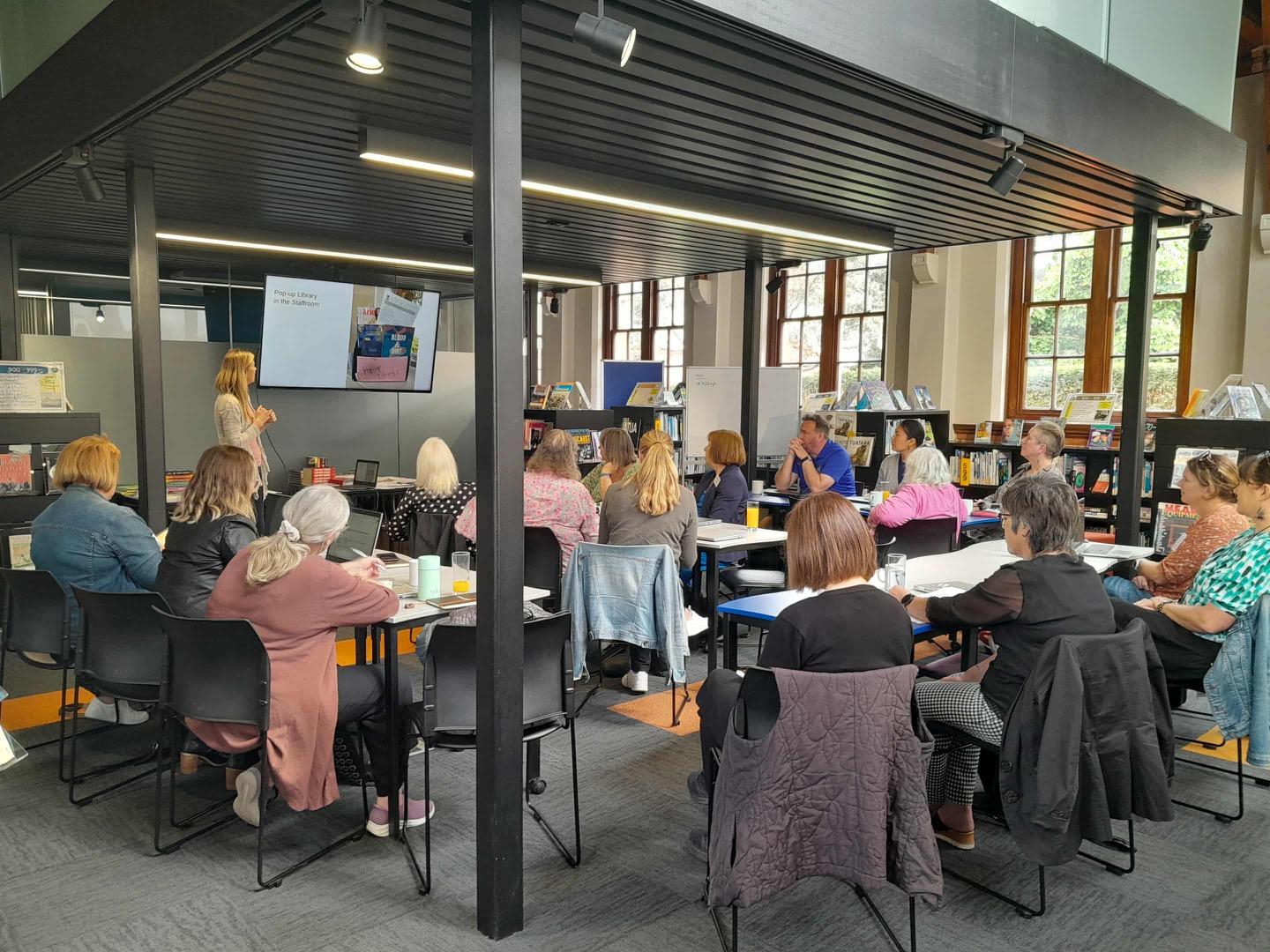
LEFT Otago and Southland members listen to Kate Whitaker.
BELOW Keri Cochrane with Mike McRoberts.
The next day the Southlanders joined with some Otago SLANZA members for a PD Day on a variety of topics ranging from challenged books to library policies to AI. It’s always a bit special to have the chance to connect with our SLANZA neighbours.
We are hoping to hold our SLANZA 25-year celebrations by the end of the year. Watch this space!
TĀMAKI MAKAURAU AUCKLAND
UPDATE FROM TRENA LILE
Tāmaki Makaurau Auckland has had a great year of events. Earlier this year we said farewell to our Chairperson of the last seven years, Michele Coombridge. Michele guided the committee through the tumultuous time that was Covid-19 and into the recovery years we are in now. Always guided by compassion and passion, Michele lead with knowledge of SLANZA being the Learning Network we, as school library kaimahi, needed. We thank Michele for her leadership and wish her well in her next adventure in library land.
We started the year off with our Libcafe, which is such a great way to start the year sharing and learning from each other and talking about conversations that happen with students and the discussion they provoke.
This was followed by The Art of Letting Go – Weeding with Purpose. A webinar on the weeding in your space, the conversations that it lends itself to and the questions we all face when we need to remove a book from the library.
At the end of Term 2 our Y9 Readers Cup competition was held. Normally Auckland would have two regions; North & West and East & South with Central schools going to which ever was geographically closer. However, this year we saw a bourgeoning of teams and decided to add a Central region. Each region was a hard-fought race with Takapuna Grammar School taking out North & West, Dilworth School taking out Central, and Sacred Heart School taking out East & South.
Term 3 saw us at Dorothy Butler Children’s Bookshop for a publisher and buying evening. It was lovely to be able to socialise together in such a librarian-friendly environment where we talked about our ups and downs, what to buy next and which authors are great in front of a bunch of kids. I know a number of us walked away with an armful or two of books afterwards.
Term 4 is always busy in a school library, so we all look forward to being able to celebrate the coming of summer and Christmas with a social event to round the year off. We hope to be able to celebrate SLANZA’s 25th birthday with one of SLANZA’s founding members and Tāmaki Makaurau Auckland’s Life Members.
trips to Kaitaia, Kerikeri, Whangārei and library tours, including a virtual one, to the Alexander Turnbull Library with Paul Diamond. There has been laughter, and tears, new members, retirements, library closures and births, but over the years nothing has changed the core essence of the group - a collection of bibliophiles who are passionate about sharing their love of reading and libraries.
During 2025 there were a few committee changes; our last founding member Jeannie Skinner (Life member) retired as our longserving secretary, with Anne Dickson stepping into the role. Julia Smith, who became our second Life Member at the Horowhenua Hui in Levin, side stepped from being the Te Tai Tokerau Representative on the National Executive to being Chairperson and Imogen McLeod was nominated to replace her on the NE. Lynne Petty remains the Treasurer.
TE TAI TOKERAU
UPDATE FROM IMOGEN MCLEOD
From Jeannie Skinner’s Dining Room to The Whangārei Arts Museum, the Te Tai Tokerau SLANZA members have travelled the rohe (and the motu) doing all things library over the past 25 years. One just needs to take a peek into the archives to discover the experiences of a quarter century.
There have been visits from authors such as David Riley, Glenn Colquhoun, Apirana Taylor, Mal Peet and Elspeth Graham. There have been workshops about genrifiying and gamification of libraries, accessing digital Māori resources, running successful promotions and making zines. There have been trips to conferences and hui in Christchurch, Auckland, Wellington and even Levin. There have been road
After the Term 1 AGM, we held a book buying evening at Whitcoulls Whangārei, with Guest Speaker Joan McKenzie. Term 2 was an open online discussion: Collection Confidencefrom Wishing to Weeding. Term 3 was another successful school library tour in Whangārei with visits to Whangārei Intermediate, HoraHora Primary School, the newly reinstated Morningside Primary and the surprisingly clever container library at Haunui College.
As part of the #25yearsofSLANZA celebrations, the Whangārei Art Museum opened their stacks and archives to show us “behind the scenes”. With a lot of discussion, the Drummond Collection and the Adele Younghusband collections were
the main focus of the tour, with the pinnacle being C.F. Goldie’s portrait of Harata Rewiri Tarapata.
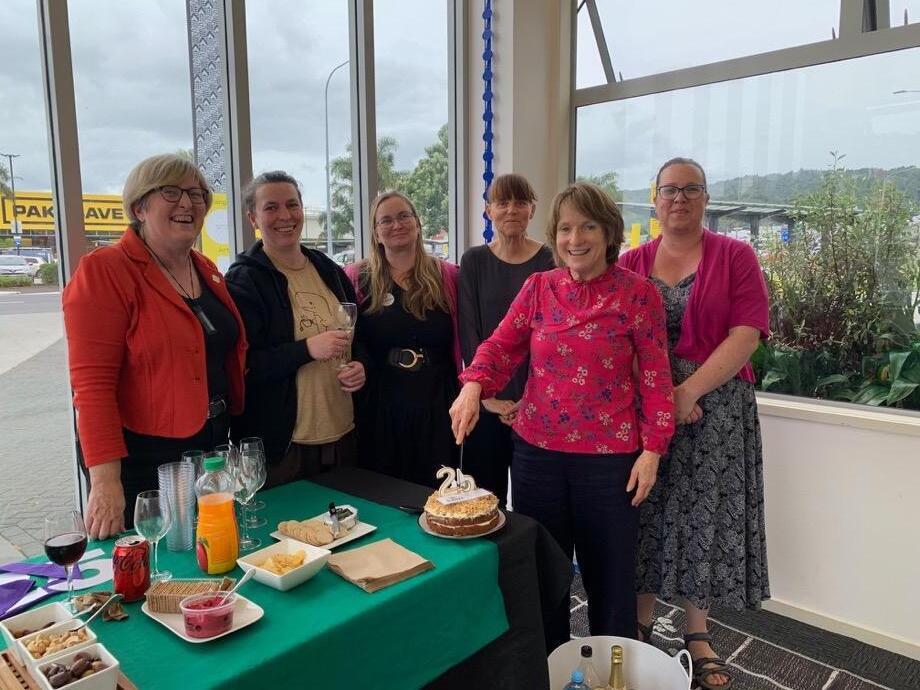
It was an enjoyable evening for all those who attended the final event of 2025. Starting at 4pm in the museum’s Block Room, there was much laughter as a ‘SLANZA’ was built. Teamwork was the order of the day with problem solving when the blocks kept falling over. It was a great way to fill in time while everyone arrived for the ‘official festivities’ and tour. Our Chairperson, Julia Smith, officially opened the event with a very emotional speech about what SLANZA has meant to her as a member since 2003. We then enjoyed a tour and a quick perusal of the museum’s books after which cake, certificates, and a delicious spread were eenjoyed. With the evening closing in, plans for 2026 were put in place and farewells were made.
From these 25 years to the next, ka mua, ka muri.
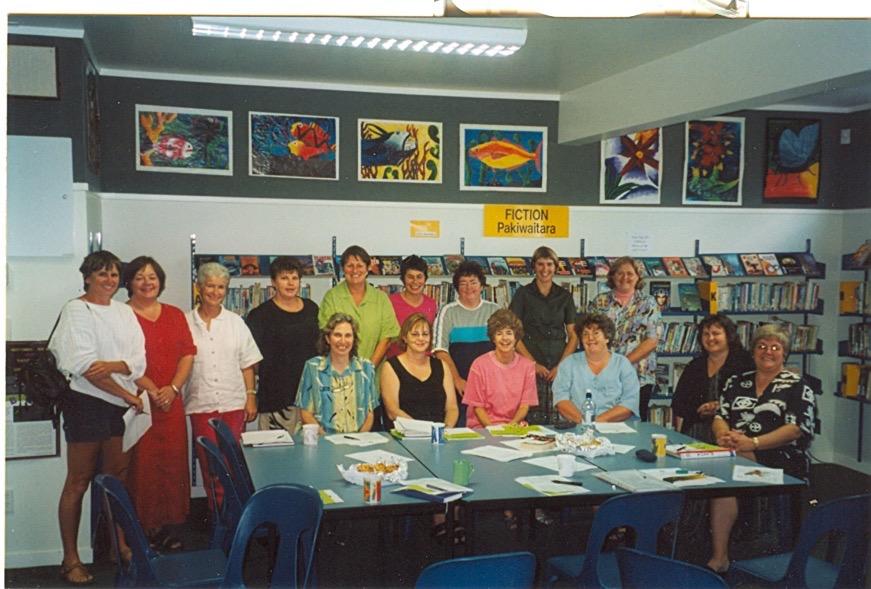
TOP Te Tai Tokerau SLANZA Members 2003.
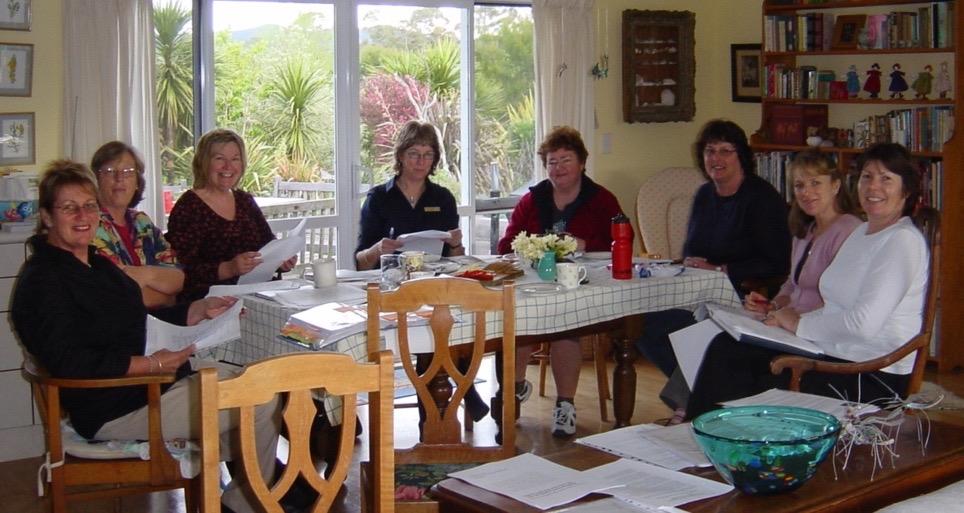
MIDDLE Committee Meeting, Kerikeri, 2003.
BOTTOM Cake cutting, 2025.
WELLINGTON
UPDATE FROM KRISTY WILSON
Wellington members have had access to some amazing in-person professional development over the last couple of months. In Term 3, the Wellington committee ran a one-day PD event From Page to Practice: Real World Tools for School Librarians at St Oran’s College in Lower Hutt where we were joined by 27 school librarians from around the wider region. We discussed utilising student librarians, Reinvigorating our Nonfiction sections, Dynamic Shelving and Displays and ended with practical presentations to create Digital PowerPoint Book Displays and use Canva to create library marketing and resources. Our thanks go to Melina Gilbert, Ellie Nicholson and Kristy Wilson for fronting these discussions. Unfortunately, George Garnett’s presentation on Excel Spreadsheets had to be postponed as he was unwell on the day. Feedback was very positive with people commenting on how relevant, well-paced and inspiring the day was.
The end of term also saw a number of Wellington members attend the SLANZA Regional Stronger Together Hui.
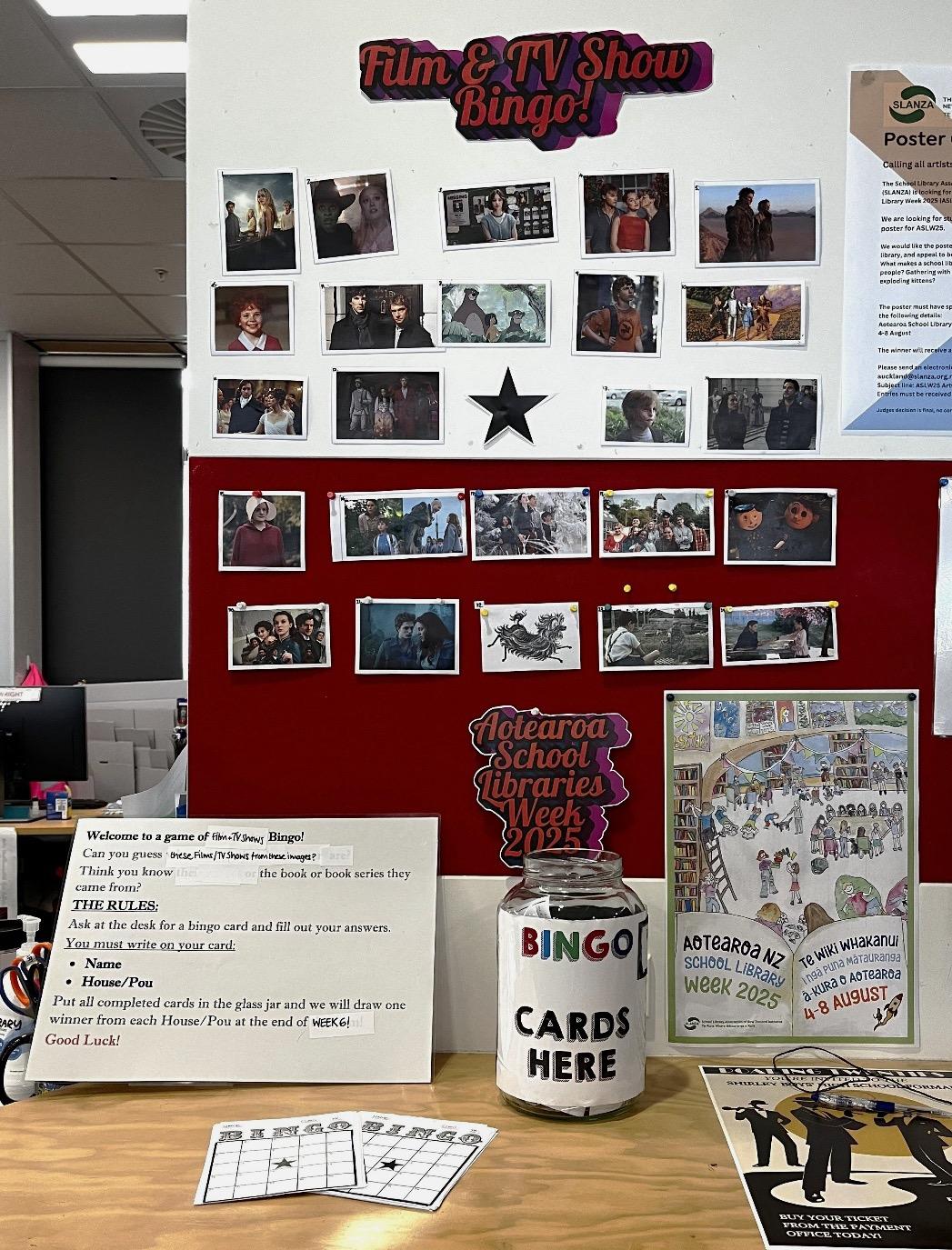
Term 4 and our annual festive end-ofyear function will also double as our chance to celebrate SLANZA turning 25. We have several activities planned, including a Kahoot and Bingo, to have some relaxed fun and a chance to win prizes. We will also be holding the Stealing Santa game again, where all participants come away with a book for their summer reading - it just may not be the one they were originally hoping for!
Featured – TURNING OVER A NEW LEAF
TURNING OVER A NEW LEAF
You might have noticed that the SLANZA | Te Puna Whare Mātauranga ā Kura logo has had a facelift, after 25 years it was time for something new.
You might have noticed that the SLANZA | Te Puna Whare Mātauranga ā Kura logo has had a facelift, after 25 years it was time for something new. Our vision and mission remain the same and are now enhanced with five principles to provide direction and focus for our organisation.
Our Māori title translates generally as The Pool of Schools-based Knowledge.
He puna wai e mimiti i te rā, he puna mātauranga e kore e mimiti.
A pool of water may recede, but not a pool of knowledge
The unifying idea speaks to the enduring nature and importance of knowledge. Mātauranga is one of the key principles that underpins the direction and focus of
SLANZA Te Puna Whare Mātauranga ā Kura.
Within the logo design, the principles represent individual pages of a book. From a Māori conceptual space, they also represent the fingers and thumb of a hand that reach out to grasp Mātauranga contained within a book.
AN OPEN BOOK A PLACE OF CONNECTION, AND GROUNDING
INDIVIDUALITY, CONFIDENCE AND HAPPINESS
TAUAWHI
SUPPORT
Manaia is the tohu of protection, balance and the messenger of spiritual kaitiaki.
TŪHONONGA CONNECTIONS MĀTAURANGA KNOWLEDGE
Te Takarangi spirals represent past knowledge and experience linking through time and space with the present. It can also depict the connection of man with Wairua.
The three kete of knowledge which Tāne journeyed to gather and bring to earth. Knowledge for all mankind.
HAPORI
COMMUNITY KŌKIRI ADVOCACY
Pikorua embodies togetherness no matter where our journeys take us.
Mangopare symbolises strength, determination, strong will and fighting spirit
MĀTAURANGA Ā KURA
SLANZA
TE PUNA WHARE
Featured – FUTURE FOCUS MEMBER IDEAS
FUTURE FOCUS MEMBER IDEAS
If you weren’t at the hui, the highlights and the Future Focus Member ideas will make you feel like you were. There’s a lot of passion for the future amongst those who commented, I think you will feel that passion and be inspired yourself.
I think advocacy continues to be a huge priority for SLANZA. We are still battling cuts to budgets and hours, and there are far too many schools without libraries or library staff. Given the declines in reading for pleasure and literacy levels, we need to be vocal and loud about the huge importance of properly resourced school libraries.
Conferences that are accessible and affordable.
Being an organisation that is on the ground, connecting people, being part of the big conversations at national level, and being member focused in its local regions, creating excellent opportunities for its members which support their growth and enable them to find others who do what they do. It is such a valuable organisation for school library staff in Aotearoa.
Good communication with members.
To keep spreading the positive impacts that school libraries and SLANZA members have on our students every day.
Promoting the industry and our regional groups needs to be very ‘out there’ in every communication option possible. Never presume everyone knows what SLANZA is. Promote, Promote, promote - as we have to in our libraries.
We need to be lot more engaged with discussions of literacy issues in schools, new literacy engagements and critical literacy.
Keep remaining visible.
Relevance. While I’m fortunate to work in a school where the library is well supported, I’m aware that this is not the case everywhere. Finding library champions is critical to our success. With increasing economic pressures that create funding restraints, more and more schools are reducing or removing dedicated school librarian roles. I’ve heard of teachers processing books over their breaks, to the admin staff doing library work between tasks in the office. This makes it increasingly difficult to provide consistent, high-quality library services. At the same time, school librarians must continuously advocate for the value of their work — challenging the misconception that the internet can replace a well-resourced library and a skilled professional.
At a time of budget cuts, SLANZA needs to continue to raise the profile of the library sector. Also to engage more with new librarians and talk to their schools about the benefits of becoming SLANZA members.
I believe we have several significant responsibilities:
• close analysis and scrutiny of the implementation of AI technology in schools;
• boosting literacy outcomes through promoting (and insisting upon) reading for pleasure during students’ library sessions;
• advocating for more stories to be commissioned that serve the interests of both our passionate and our developing readers in 2025;
• advocating for every school in Aotearoa to have at least one full time permanent Librarian on their staff, with a sufficient budget, space, time and support from SLT to provide essential reading and information services.
Maintaining and growing membership. We are stronger together.
Featured – STRONGER TOGETHER
STRONGER TOGETHER
Words from our members who attended Stronger Together - Horowhenua Hui 2025
WORDS
Izzy Cresswell
Ahuge thank you to the hui organisers, the speakers, the exhibitors, and all those who welcomed us with waiata, fed us, and cleaned up. Meeting librarians willing to share their ideas, provided me with a vital boost of inspiration and motivation which, to be honest, was starting to wane after a long Term 3.
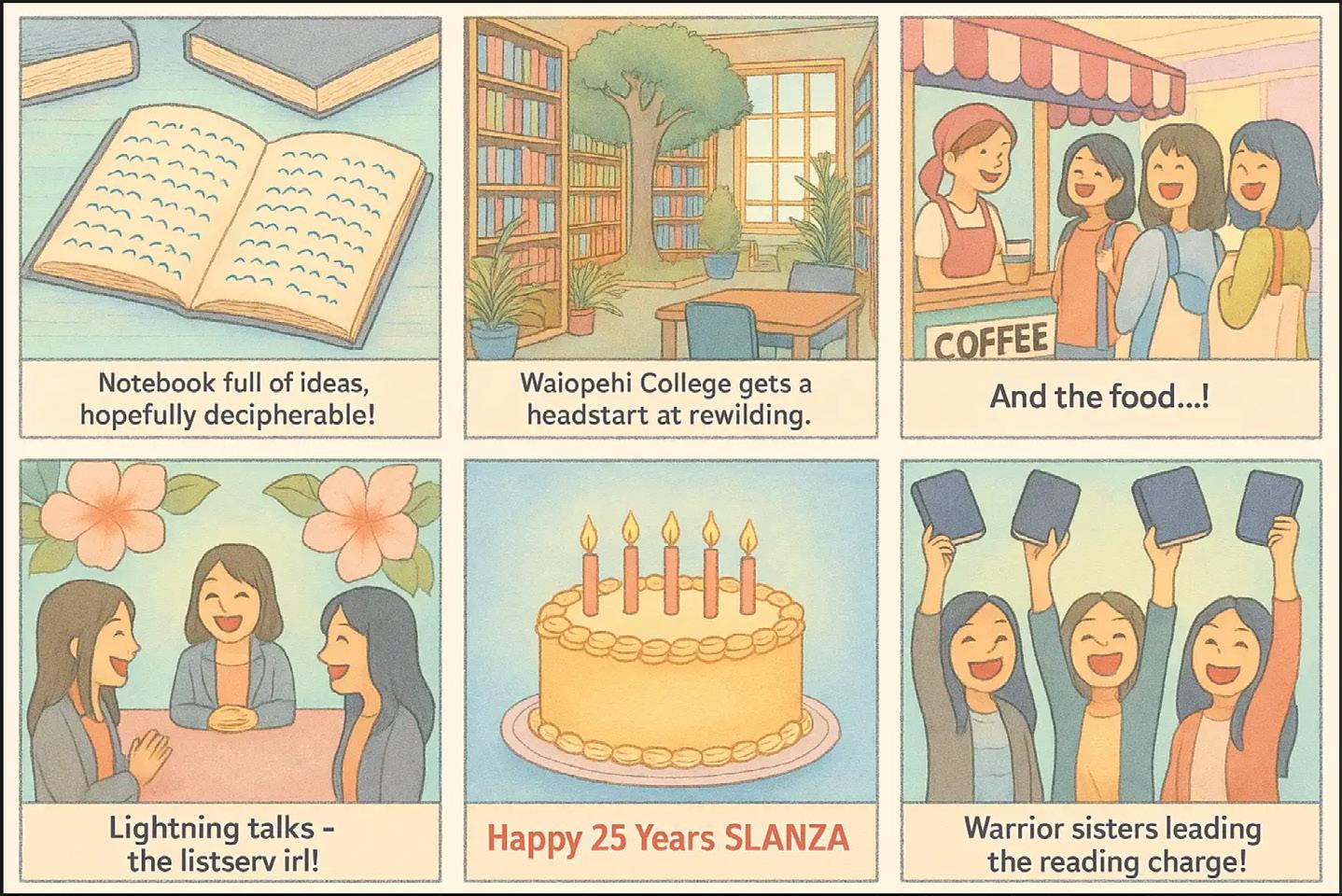
The use of AI was a prominent topic over the weekend so I thought it would be fun to use it to generate a comic strip summing up the conference. Some presenters spoke of AI as a time-saving tool and showed how to use it to create lesson plans or generate display ideas. Whatever AI produced would always need tweaking - some sort of human intervention - but was excellent at providing a starting point. Other presenters showed ways to teach students the ethics around it – promoting transparency and examining algorithmic bias. More warned of AI’s potential to rob students of fundamental cognitive abilities like attention and creativity, of students giving away the very traits - the critical thinking skills, they will need
as adults. By outsourcing to AI, they risk withering their brains in a ‘use it or lose it’ scenario.
Whether you believe AI to be Holmes or Moriarty, Potter or Voldemort, it will shape the way we run our libraries. We need to be champions of equitable access, not only to AI itself, but also to the literacy skills that enable students to use it wisely. But we also need to be mindful of tipping the balance too far. Libraries should always be more than a technology hub. They need to remain a port in the storm, safeguarding and promoting all the human activities that exercise the brain and nurture real connection.
So, back to my comic strip. It was not fun. In fact, it was an amazing lesson in the limitations of generative AI and the importance of precise prompts. The future may be AI, but it’s not ready to take over our jobs just yet!
The comic strip was generated using ChatGPT 5.
PREVIOUS SLANZA NE Representatives celebrating 25 years of SLANZA at Horowhenua Hui.
LEFT Comic by Izzy Cresswell generated using ChatGPT5.
WORDS Lynsey Webb
This was my first year attending the SLANZA Hui, and as a new school librarian, I found the workshops incredibly helpful. They gave me lots of practical ideas and inspiration to take back to our library. I particularly enjoyed the Library Linkups session at the beginning — it was such a great way to connect with my peers from all around New Zealand. The speakers were all so inspirational, especially Steve Mushin, whose creativity and energy really stood out. And of course, all the goodies and giveaways were very much appreciated!
I came away with great energy and lots of new ideas to implement back in the library. SLANZA events are always so worthwhile, and the Hui was a supercharged weekend of learning, connection, and inspiration.
Featured – MEMBER SPOTLIGHT
MEMBER
SPOTLIGHT
WORDS
Becky Ross SCHOOL
Middleton Grange School
Becky Ross
Libraries Manager, Middleton Grange School. Composite School (Year 0-15), Co-ed, roll approx. 1400.
SLANZA Region: Aoraki.
SLANZA Committee position: Member (since August 2022) and Secretary (March 2023 – March 2025).
Length of time on committee: Almost 3 years (and counting).
What’s your best memory regarding SLANZA?
I can remember the first SLANZA PD day I attended as a fresh-faced 22-yearold Library Assistant in 2017. I had just started my first proper job at Riccarton High School working in their joint-use school and community library. I was completely amazed (and admittedly overwhelmed) at how much was involved in working in a school library. There was so much to learn, so many areas of responsibility to get used to and new concepts to wrap my head around. Walking up the library steps at Cashmere High School (where I had, funnily enough attended) into this Professional Development environment, I had no idea what to expect. And now, I honestly couldn’t tell you a single thing that was discussed at the course that day! But I can tell you how passionate everybody was about their work; how expertise and experience oozed from every word that came out of their mouths, and how welcoming to me they were, how excited they were to see a newbie like me join their cause. What surprised
me the most I think, and continues to surprise me, was how eager they all were to hear my ideas, and to get my perspective on literacy trends as a youngster. I realised that day that I did indeed have a perspective worth sharing, I just hadn’t known until I was prompted for it. I felt valued and welcomed that day, surrounded by such kind and educated colleagues. I left feeling utterly amped and very much daunted that I had scored a role in a sector that has such an important impact in the lives of our youth. Eight years later, I am the Libraries Manager at Middleton Grange, continually working towards better stewardship and kaitiakitanga of this gift, this role I have been given in the lives of our tamariki and rangatahi.
What does SLANZA mean to you or how has it helped you?
For me, SLANZA is a warm community of passionate professionals who exist to help not just each other, but all communities we have contact with. Ultimately, the belief that school libraries transform lives isn’t just a statement; it’s a way of living, of talking, of existing. You want help
getting eBooks? Oh, I can help you with that. You wish you had a place to go and craft? Well, did you know that the library has a space for that? You need a place to connect, to mentor, to read, to ponder, to decompress, well the library, the library, the library…
Yes. SLANZA is a place obsessed with libraries. But why wouldn’t we be? The work we do is crucial, and it is not simply scanning books and shushing people. We connect people, we strengthen students’ education and provide endless opportunities for teachers’ professional development. But we couldn’t do all of this as well if we didn’t have each other. Beyond all of this, SLANZA has enabled me to further my study through their connection with Open Polytechnic. In 2021 I took advantage of two papers I could do for free, and as a recipient of the SLANZA/LIANZA tertiary studies grant, am in the last leg of a Level 7 Graduate Diploma in Library Leadership. SLANZA cares about its members, and cares very deeply that school librarians are an educated sector.
What do you think is the biggest priority for SLANZA going forward?
It’s hard to identify just one priority for SLANZA going forward.
I believe we have several significant responsibilities: close analysis and scrutiny of the implementation of AI technology in schools; boosting literacy outcomes through promoting (and insisting upon) reading for pleasure during students’ library sessions; advocating for more stories to be commissioned that serve the interests of both our passionate and our developing readers in 2025; and advocating for every school in Aotearoa to have at least one full-time permanent Librarian on their staff, with a sufficient budget, space, time and support from SLT to provide essential reading and information services. I suppose it
could be summed up as: Let’s get loud. Librarians are known as the quiet ones, the shushers, the workers who’ll say yes because we foresee the disadvantages to vulnerable people if we say no. Our work is important. It’s vital.
Let’s get loud about school libraries.
PREVIOUS Becky Ross from Middleton Grange School.
LEFT Middleton Grange Library
Featured – SCHOOL LIBRARIES STAKEHOLDER HUI
SCHOOL LIBRARIES STAKEHOLDER HUI
On 5th November, the project steering group hosted a stakeholder hui at the National Library of New Zealand, in Wellington. The hui brought together representatives from across the education, library and literacy sectors
Featured
– SCHOOL LIBRARIES STAKEHOLDER HUI
On 5th November, the project steering group hosted a stakeholder hui at the National Library of New Zealand, in Wellington. The hui brought together representatives from across the education, library and literacy sectors. It was an opportunity to talk about the future of school libraries in Aotearoa and how we can work together to make sure every student has access to effective school library services.
The research project so far
In 2024, SLANZA and the National Library commissioned NZCER to research school library provision in English-medium schools. The key findings from their report, presented at the hui by lead researcher Sue McDowall, gave us plenty to think about.
School libraries aren’t compulsory in New Zealand schools, so investment in spaces, collections, and staffing varies hugely.
The NZCER research found that:
• Most responding schools have a library space (81%) and offer services to students (97%), but the quality and scope differ.
• Equity is a major issue: small, rural, and low-decile schools are less likely to have a dedicated library space, qualified staff, or strong collections.
• Leadership matters. While 90% of respondents said their senior leaders value libraries, only half said the library is included in the school’s strategic plan.
• Libraries support wellbeing, reading for pleasure, and curriculum learning – but funding and changing attitudes to reading are big challenges.
One quote from the research summed up the challenge:
“Our library is seen as an optional ‘nice to have’ amenity, and its value as the school’s heart of literacy is not recognised.”
And the contrast, from a school where leadership gets it right:
“The SLT has explicitly built a reading culture—a whole-school approach—for teachers and students. They encourage staff reading and book recommendations. Books are promoted in assemblies, the SLT is an active presence in the library, and we have a great budget!”
The atmosphere in the room
The hui felt collaborative and energising. From the opening karakia to the final reflections, there was a strong sense of shared purpose. People came ready to listen, learn, and contribute. The mix of perspectives – from principals, teachers and librarians to publishers, researchers, and advocacy groups – made for rich discussion.
People wanted to know more about the role of boards of trustees, the impact of librarian expertise, and how school libraries – and library services – can support diverse learners and learning needs.
There was urgency, too. As one participant said:
“We can’t keep waiting. Every year we delay, more kids miss out.”
Post-it notes filled the walls with ideas, and conversations spilled over into breaks. It was clear that while the challenges are real, there’s also a collective will to make change happen.
The conversations that followed
The hui wasn’t just about listening – it was about sharing. Each session of the hui helped build a shared understanding of the school library landscape in Aotearoa, including some of the unique features influencing school library provision here, from the long-established policy settings to the large number of very small schools. We heard from school librarians about their day-to-day work, from managing collections to supporting wellbeing and technology. We listened to Manchester Street School’s story of building a whole-school reading culture, even under tight budgets.
Small group discussions dug into the big questions:
• How do we shift the narrative so that libraries are seen as essential, not optional?
• What needs to change in policy and funding?
• How do we make the value of school libraries visible to principals, boards, and government?
There was strong agreement that we need a roadmap for change – one that tackles inequity head-on. As a steering group, we reinforced the importance of collective and aligned effort to achieve improvement.
Some themes about what’s needed kept coming up: clear shared messaging, data and evidence, national advocacy, and role models of good practice.
One participant described the mindset shift we need:
“We need to stop thinking of school libraries as a cost and start seeing them as an investment.”
Top priorities identified at the hui
By the end of the day, the group agreed on several priority areas for action:
• Leadership: Engagement with principals, boards, and cross-sector leaders.
• Equity: Advocate for changes that will help reduce disparities.
• Visibility and messaging: Share clear, consistent messages backed by research.
• Role models and exemplars: Showcase schools whose libraries are doing well.
• Workforce development: Invest in building library staff capability.
• Data and research: Collect and share evidence of impact to strengthen the case for change.
Why this matters
Kate De Goldi, Te Awhi Rito NZ Reading Ambassador, reminded us why this work is urgent. Reading is under pressure, and for many children, the school library is their only consistent access to books. As Kate put it:
“Access to books for children within the education system should be a sine qua non.”
What’s next?
The research project will continue, expanding in 2026 to include Kura Kaupapa Māori.
Organisations at the hui committed to working together on advocacy, capability building, and shifting the thinking about school libraries from ‘nice to have’ to ‘essential infrastructure for learning and wellbeing.’
If you haven’t read the NZCER report yet, you can find it here
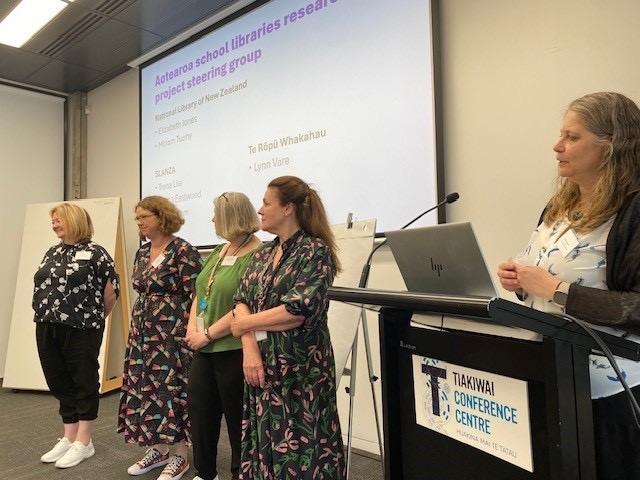
LEFT Steering Group - from left Kirsty Adam (SLANZA), Trena Lile (SLANZA), Miriam Tuohy (NLNZ), Elizabeth Jones (NLNZ), Sasha Eastwood (SLANZA), Absent - Lynn Vare (Te Rōpū Whakahau).
BELOW Elizabeth Jones and Sue Sutherland (NZCER) presenting
SCHOOL LIBRARIES AS THE INFORMATION BRIDGE TO THE FUTURE
WORDS
Marie Fernando SCHOOL
St Mary’s College, Wellington
With the fast-moving revolution of technology, the education system will evolve significantly over the next decade, transforming the school environment in many ways. This article explores what the school library might look like in the future and explains why it will continue to be an essential space for learning.
In the future, while digital materials, including academic databases, will play a significant role in supporting students’ learning, a balanced collection of both print books and digital resources will continue to accommodate diverse learning preferences. Additionally, librarians will become increasingly tech-savvy, equipped to meet the varied needs of the school community and serve as central facilitators of digital learning.
Libraries will be enhanced with advanced technology such as smart devices, interactive screens, AIpowered search tools, and more. Although these innovations will make learning more engaging and accessible, the invaluable human guidance provided by librarians
cannot be replaced and will require ongoing support to keep our tamariki safe in the cyber world. School librarians will continue to play a vital role by teaching students research and reference skills, supporting digital literacy and critical thinking, and promoting reading for pleasure, which is an essential part of childhood development, regardless of how technology evolves. Furthermore, physical books will help students take necessary breaks from screen time, fostering concentration and wellbeing.
Looking ahead, school libraries will transform into innovative spaces similar to modern public libraries, where wider, diverse learning activities such as makerspaces for creativity and hands-on learning are promoted. Beyond their physical presence, school libraries will increasingly expand into virtual platforms providing students with 24/7 access to resources and support.
As Dickey (2023) highlights, school librarians have always been innovators. She further describes that in the 1990s, they were early adopters of eBooks and worked thousands of
hours cataloguing their collections into OPACs, enabling patrons to access library materials from their personal computers. Therefore, school librarians will continue to play a critical role as integral members of the school’s IT and educational teams. Furthermore, Rehman (2019) argues that modern technology enhances the relevance of libraries, as the increased access to information also spreads misinformation and fake news.
In summary, despite technological advancements, school libraries remain vital hubs of knowledge, creativity, and support. Far from becoming obsolete, they are continuously evolving to meet the changing needs of students by integrating digital resources, promoting critical thinking and providing safe and inclusive spaces for learning. Ultimately, school libraries will remain essential in inspiring and empowering students in their educational journeys and beyond.
REFERENCE:
Dickey, S. (2023). School Librarians as Innovators. The Tradition Endures and Expands. Knowledge Quest, 51(3), 28–33.
Rehman, M. (2019, November 14). Libraries - the good (third) place [Video]. YouTube. https://www. youtube.com/watch?v=D6b_a7FMLz4
JUST READ: A WORK IN PROGRESS
WORDS Penny Walch
Looking Forward: Innovating, Growing, and Building for the Future - let’s give it a go!
In Collected #34 I waxed lyrical about the amazingness that was the 2024 SLANZA Conference in Christchurch.
At that conference we had the absolute pleasure of listening to Gabrielle Mace talk about her Just Read initiative - essentially 20 minutes a day timetabled for just reading for pleasure.
I have been to plenty of PD where I have been genuinely motivated and have resolved to give a new idea a go, but nothing has been quite so inspiring as the idea of initiating a Just Read programme at my school. To assist with this, and to give me the shove I needed, we have had a perfect storm this year as we embark upon converting to an International Baccalaureate curriculum, which means that our SLT are taking a long, hard look at our timetable. What better time to try and fit in daily, whole school reading? Gabrielle Mace is the real innovator in this scenario - I am just stealing her idea - but she seemed pretty keen to spread the word!
Southwell School
Now - spoiler alert, it hasn’t been approved - yet. And it may still fall at the final hurdle. But I am giving it a jolly good go. It is an area of growth which I believe is fundamental to our school, our students and our community.
I interact with students from Year 0 to Year 8 on a daily basis and it is becoming increasingly obvious that reading for pleasure is on the decline - particularly amongst our older students. There just don’t seem to be the same expectations from home as there once might have been and children have so many distractionsnot least the devices that so many of them have access to.
I absolutely see the benefit of devices, and I am not against them, within reason, BUT giving young minds access to something so powerful has its problems (that is a whole other conversation!) Not only is their use taking them away from other activities, but the incessant scrolling is reducing their ability to focus and persevere with day-to-day tasksincluding reading.
To introduce a daily 15-20 minutes of reading for pleasure at school would
help mitigate this… and to me it seems like an absolute no-brainer. I have come across nothing in my own ponderings that suggests this idea is a bad thing. The main argument against it is time, particularly when we consider all the other curriculum elements we are being asked to cover. But, in my humble opinion, we need to see past this and wrestle with the fact that this use of time will ultimately benefit all other areas of the curriculum, not to mention each child’s health, well-being and ability to empathise. We are essentially enabling our students to be the best possible versions of themselves. (Or, as I tell them - reading makes you a better person!) If this isn’t building for the future, nothing is.
However, we do have to understand that we are playing the long game with this - miraculous changes will not happen overnight. But, by implementing Just Read (in whatever form suits your environment) in a school day, it puts us, as educators, in control, as well as levelling the playing field a bit for those children who are not being encouraged to read regularly at home.
SCHOOL
I am, of course, speaking from a position of privilege. My school has a well-resourced library, staffed by 1.4 qualified humans, which means that we are able to realistically consider implementing a Just Read programme, as our students can replenish their reading material when required, and they can be encouraged in different directions by the 1.4 of us in the library - the onus does not fall totally on their teacher, who has a million and one other things to worry about.
BUT, this only puts another spotlight on the need for every school in New Zealand to have a well-resourced library so that every child in the motu has the opportunity to read for pleasure on a daily basis. So once again (I used the same quote in my previous piece), I will reference an oft-used quote by Amy Herman of the School Librarians United podcast - “a rising tide lifts all boats.” We all need to continue to advocate for school libraries in all schools and not just the privileged minority.
In the meantime, I will continue to push for a Just Read programme in my school and hopefully, I will then be able to cheer on other librarians as they do the same - or something similar which works in their community. Watch this space.
BIBLIOGRAPHY:
Queenwood School - Just Read, Final Report by Gabrielle Mace
National Library of NZ - Teachers Creating Readers, Examples of Practice
National Library of NZ - Purpose of the School Library
SCIS - Leading Whole School Literacy from the Library by Dr Margaret Merga
Gabrielle Mace - Pro Reading Solutions
Gabrielle Mace - Teens and the Book Slump
The Need to Read : Alan Dingley and Sally Rippin in Conversation
Library Research Service of Colorado State Library - School Libraries Impact Study
Anecdotal evidence taken from Year 5, 7 & 8 students at Southwell School about their holiday reading experience.
End of 2024 reading survey taken from Year 5-8 students at Southwell School.
School Librarians United Podcast - Episode 260 Project Lit
School Librarians United Podcast - Episode 287 Just Read It
School Librarians United Podcast - Episode 307
District Reading Culture (from approx. 27-31 mins)
Your Kids Next Read Podcast - Episode 188 Real Talk About Reading (importance of parents talking to their children about what they’re reading - and the importance in general of students talking about what their reading which backs up the Just Read book chat/club day.)
National Library NZ - Reading Culture Boosts Literacy and Classroom Connections
National Library NZ - Creating a Reading Community
Schools Need Libraries - Advocating for School Libraries
RNZ - How author school visits can boost kids’ reading and writing
The Sapling - keeping the Lions in the Meadow : Samantha Montgomerie examines New Zealand’s literacy crisis
Curiosity Weekly Podcast - How to Not Raise an iPad Baby
Featured – UPHOLDING THE FREEDOM TO READ
UPHOLDING THE FREEDOM TO READ
WORDS
Marlies Zyp – van der Laan & Relda Matthews
At the beginning of 2024, when I began looking at the issue of banned and challenged books for my MIS research project, most of the available information was coming from the United States, and there was plenty of cause for concern. Data from the American Library Association showed the number of recorded challenges had more than trebled in the space of just three years, and the number of individual titles being challenged was increasing at an even more rapid rate. Challenges tended to disproportionately target literature by, or about, already marginalised groups, such as racial or cultural minorities or members of the rainbow community.
Consolidated data from other parts of the world wasn’t so readily available but there were still plenty of examples of challenges and censorship activities in other countries, and there was clearly professional concern that they were becoming more frequent occurrences both here and overseas. LIANZA had just published the Freedom to Read toolkit and SLANZA had also recently compiled resources to assist school library staff to handle challenges and complaints.
With challenges apparently on the rise overseas, and no mechanism here for capturing data about the local situation, it seemed timely to conduct some research, even if just as a snapshot of the current situation that could be used for comparative purposes in the future. I chose to focus on secondary school libraries mainly because literature for children and young people often features heavily on lists of banned and challenged books.
I created an anonymous online survey to collect data about secondary schools’ experiences of book challenges over the preceding five years: whether they’d experienced any, and if so, how many and whether they were willing to share further details. I’d like to acknowledge SLANZA’s kind assistance with distributing the survey via their mailing lists and thank all the school librarians who took the time to respond.
Of the 63 schools that completed the survey, 18 said they’d experienced at least one book challenge in the previous five years. A few said they’d experienced more than one, but not all were specific about how many, so as best as I could calculate, the total
number of challenges in that fiveyear period was at least 31. Are there likely to have been more? Absolutely! My survey definitely didn’t capture everything because it was just too small.
But do I think challenges are a significant issue for New Zealand secondary school libraries? I don’t.
The number of schools that hadn’t experienced a challenge was much greater than the number that had. Even amongst the schools that had experienced a challenge, most of them had only had one challenge in the fiveyear period, suggesting they’re still relatively infrequent occurrences.
I didn’t find any evidence to suggest that challenges here are targeting marginalised groups. There was one title challenged for the way it portrayed a particular racial group, and nothing to suggest complaints of ‘sexually explicit’ or ‘family values’ were really objections to LGBTQIA+ content.
Being a small-scale survey some of the figures were too low to make generalisations or assumptions, but there were a few things that stood out.
As has been the case in other studies here and overseas, the most common reason given for a challenge was that the book is ‘sexually explicit’. Parents were the single biggest initiators of challenges, closely followed by students themselves. Most of the challenges resulted in the book being retained, though in about half the cases it resulted in some restriction being placed on it – where it was kept, who was allowed to borrow it, etc.
Over 80% of the schools said they have a collection development policy and nearly 70% have a documented policy or guidelines for handling challenges. Not just having a policy, but following it, seemed to make a difference during a challenge, with books more likely to be retained when this happened.
The data was interesting, but the real gold came from the comments and feedback that librarians were willing to share. Whilst some mentioned understandable negative effects of experiencing a challenge – loss of confidence, decisions about acquisitions or access being influenced by the fear of future challenges – I was surprised at how many positive comments there were. Some schools had used it as an opportunity to create or update policies. Other librarians saw it as an opportunity for education, for example letting students know that it is OK to have diverse perspectives, but it is still important to be respectful,
or to engage directly with students when issuing books with challenging themes.
What came through clearly for me in the comments was that our school librarians are strongly committed to upholding the principle of freedom to read. However, sometimes it’s a fine line between supporting students to choose books appropriate to their individual needs and interests and ensuring they don’t access material that they might not be ready for.
My research project, barely a year since I completed it, has already been superseded with the launch of the LIANZA Library Challenges Register. We can’t prevent challenges and nor do we want to – people have the right to express an opinion and to have their voice heard – but we do need to be prepared in how we respond. I encourage every librarian to make use of the great resources available, particularly the Freedom to Read toolkit, and if you do receive a challenge, report it.
Report to the Library Challenges Register
Observing the rise in challenges overseas, and hearing anecdotal evidence of challenges escalating locally, LIANZA’s Standing Committee on Freedom of Information created the Library Challenges Register to capture our own data about challenges occurring in New Zealand.
Collecting local data on challenges will aid LIANZA in supporting staff with preparedness and management of challenges and inform our advocacy efforts.
Most challenges reported in the first six months were about content aimed at young people, with 60% of challenges received regarding an audience of children and teens, 37% challenges about age appropriateness, and 30% made by parents.
While a young audience is dominating the challenges, this data is predominantly reported by public libraries, with only one report received from a school library. Through the reports from the secondary schools survey and anecdotal evidence from the Freedom of Information Committee connecting with school librarians at the SLANZA Hui in Levin, we know that school libraries are receiving challenges and we invite librarians to report these to the register. Challenges may come from students, parents, the board or school staff, and the librarian themselves may choose to enact a degree of restriction, or remove something based on fear of controversy, a misalignment with school values, age appropriateness or concerns over the content.
School library collections are a nuanced business; creating a diverse and inclusive collection that balances freedom of access to information,
the curriculum, and the values of the school. Censorship and access are a sliding scale and school librarians can make choices about access to strike a balance if their various priorities are conflicting. Having robust polices and processes in place is essential for making and defending collection choices. Selection occurs in consultation within a professionally informed collection management policy, whereas we risk selfcensorship in absentia of a policy, or without consulting the policy to guide the decision. The Freedom-to-Read Toolkit has more detail about polices and processes to have in place, as well as a Quick guide for school library staff
Recently we’ve seen reports from two separate libraries receiving challenges about Roblox books. The reports are basically identical, indicating this could be a coordinated effort, or perhaps the same person or organisation challenging multiple libraries. This is something for libraries to be aware of given the risks of Roblox being recently publicised.
Contact the Freedom of Information committee at freedom@lianza.org. nz for any further information or questions.
LIBRARIANS : BULWARKS IN THE DISINFORMATION STORM
WORDS Mandy Henk ORGANISATION PLNZ Executive Director
I’m writing this on the day on which the New Zealand media have declared the ‘mega-strike.’
Projected to be the largest industrial action in 40 years, 100,000 public service workers are planning to take to the streets. These workers are unified in calling on this government to offer fair pay and build the kinds of services that all New Zealanders need to thrive. It’s an inspiring show of solidarity and community care.
But this is also the day when fierce winds are sweeping the motu. Red warnings abound and heavy rains are forecast. In Wellington, flights have already been cancelled, and Radio New Zealand is reporting that tens of thousands are without power.
The winds and storms we are facing are not only coming from Mother Nature. Our information environment too is facing a storm, one that has continued to grow since the earliest days of the pandemic. Disinformation, and its organic partner misinformation, continue to endanger our communities and our own unity.
Like the winds whipping the capital city as I write this, disinformation is whipping around our information system.
And like the ever-worsening storms that we face due to unmitigated climate change, disinformation is now, tragically, more than ever the direct result of elected officials and their dangerous policy and communications decisions. Leaving aside tricky and uncomfortable questions about our own government, the reality is that as a country where most of the people speak English, we are vulnerable to the mind-boggling ridiculousness that spews from Donald Trump’s, and his government’s, mouth. From completely unsubstantiated and untrue claims about Panadol causing autism to vile and hateful lies about immigrant communities, there are no borders online and no dam to stop the tide.
The re-election of Mr Trump is not the only storm facing our information system. A range of new developments are acting together
to create an ever more challenging information environment for us and for our reading communities. The past few years have seen the rise of synthetic text, images, and video created by large language models, colloquially called AI. Before AI, creating disinformation took at least a modicum of effort and investment, but now with a short prompt and click, anyone can create plausible sounding and looking fact-free content. And perhaps even worse, the machine has an orthogonal relationship to truth, so even those acting in good faith and using the tools as marketed still risk the introduction of new untruths and false narratives.
I started my career as interloan librarian with a special knack for tracking down the most convoluted citations and I despair for my contemporary colleagues facing a mountain of confabulated AI generated citations to materials that simply do not exist.
And the risks created by AI don’t stop there. AI products controlled by bad
faith actors, such as Elon Musk, create their own vortex of horrors. Earlier this year, Musk’s AI, Grok dubbed itself Mecha Hitler and unleashed a stream of profoundly racist, misogynistic, and antisemitic text. Given the serious risks to vulnerable and lonely people seeking artificial companionship, and even romance, from these machines, their ability to turn on a dime from sycophantic to overtly Nazi presents tremendous risks to our communities and our information system.
And then there are the increasing disinformation driven attacks on experts and public figures. From Tory Whanau to Benjamin Doyle to a whole range of public health and environmental experts, online hate and bullying campaigns fuelled by disinformation are driving good people from public life and service. Combined with the collapse in international cooperation, as evidenced by the shuttering of the US State Department’s Global Engagement Center and the cancelling of the MOUs that drove that cooperation, it’s no wonder the public is losing trust in institutions of all kinds.
But as always, there is a bright spot: school and public libraries. We remain trusted partners in helping our readers navigate the storm. With our expertise in people and information – and our solid professional ethics – librarians hold the keys to an information system that protects freedom of expression and supports a healthy democracy.
To deliver on that promise, we need to ensure that our own skills are upto-date, and that we are making time in our programmes to teach these crucial skills in a developmentally appropriate way. Focusing on skills-based and evidence-backed interventions like lateral reading positions our students well to face the onslaught they encounter in their online spaces.
If it has been a minute since you last thought about lateral reading as a skill, a quick recap is all you need. The process is straightforward and not hard to learn or to teach. I prefer the version developed by the Stanford History Education Group, but a method like SIFT might work better for you. They are both effective, so choose the version that you prefer. For the SHEG version there are three simple questions we teach our students to ask when they encounter new information.
1. Who is behind the information?
2. What is the evidence? Is it relevant? Is it reliable?
3. What do others say?
By having students work through these simple questions they can become comfortable interrogating what they see online. You can practice this with students using news stories, websites, and social media posts. The more practice students get, the more adept they will become.
The skills that underlie lateral reading also help to build another key part of a truth-based information system, social norms. People do as the people around them do. So, working within your school and community to set shared norms around fact checking, issuing corrections, and sharing truthful information makes a huge difference. Ensuring that students see us making corrections when we share incorrect information, see us citing what we share, and questioning when we aren’t quite certain where a bit of information came from is crucially important to setting the standard that we hope our students will rise to.
This also goes for countering the division that so much disinformation creates. The more support they see from us for our rainbow and targeted immigrant communities, the less power those attempts at division will have for our own students. Through collections and programming, we can make clear that all are welcome in our libraries. We can’t single handedly fight back against the tide of hate. But if we all pull together and support each other, we can stand as a bulwark against disinformation and hate in our schools and our communities.
REFLECTING ON A CAREER IN LIBRARIES AND THE POWER OF LEARNING NETWORKS
WORDS Michele Coombridge SCHOOL Pinehurst School
Over the past two decades I’ve had the privilege of working in some of the most exceptional school libraries across Tāmaki Makaurau, Auckland. This year, I have made the decision to step away from a fulltime role to explore new directions, both professionally and personally. This transition has prompted some nostalgic reflection on the many opportunities I’ve had, the roles I’ve held, and—most importantly—the people I’ve met along the way.
Throughout my career, I’ve been fortunate to connect with passionate and knowledgeable colleagues who have shaped my professional path. These connections have often come through Learning Networks—spaces where I have found like-minded and inspirational librarians who have helped me on my journey.
Kay Oddone, a lecturer and researcher at Charles Sturt University whose research focus is Information and Digital Literacies, completed her PhD research exploring the concept of Learning Networks and Connected Learning. Oddone states that this type of Connected Learning is social and
it acknowledges that we have created far too much knowledge for any one person to hold in their head at any one time. Therefore, we need each other - our own cognitive capacity is limited in comparison to the amount of content that is available to us.
(K. Oddone, 2018)
Definition of Learning Networks
Learning Networks refer to various collaborative frameworks that enhance educational experiences and professional development.
Professional Learning Networks (PLNs): These networks help educators connect, share resources and support each other, combating isolation and promoting growth.
Educational Learning Networks: Some organisations partner with schools to implement technology and foster communities among students, parents and educators. (School Management Systems and commercial Professional Development groups).
Personal Learning Networks (also called PLNs!): These are informal, selfdirected networks where individuals
learn together by connecting with others—online or face-to-face. They share ideas, remix knowledge, and grow through active engagement. (Your people, your flock mates, your learning orchestra).
So… what counts as a Learning Network (PLN)?
A Personal Learning Network (PLN) is a self-directed, informal network of people, resources, and communities that support ongoing learning and professional growth. PLNs will often include:
• Colleagues and mentors
• Professional associations
• Online communities e.g. X (formerly Twitter), LinkedIn, library forums like our Schoollib listserv
• Blogs, webinars, podcasts, and conferences (the people whose work you are drawn to)
PLNs are dynamic and evolve based on your interests, needs, and goals. They allow professionals to share ideas, ask questions, collaborate, and stay current with trends and innovations.
PLNs in the Library Context
For librarians, PLNs are especially valuable because we are often working alone in the field. Networking groups can help us adapt - and keep up with emerging trends and changes such as:
• Technological changes (e.g., digital literacy, AI tools, eResources)
• Curriculum shifts and educational priorities
• Community needs and cultural developments
• Advocacy for reading, access, and equity
Through our self-directed networks librarians can discover new programming ideas and resources and share best practices for library management and engagement. When we reach out and connect, we often find colleagues whose skills enrich our own and help us grow in areas we feel less confident. PLNs help us feel connected with others who understand the unique challenges of library work.
This is the paradox of the PLN. It is based upon social learning, but the learning is driven by the individual.
Kay Oddone
So, where do we go to find places that allow us to network and meet likeminded library professionals? The events and meetings run by SLANZA have been for me, the number one place I found other librarians I could share learning with and gain support from.
SLANZA is, by definition, a Professional Learning Network, and through it I have met some of the best-people-ever. And I’ve made Personal Learning Networks of my own as a result; librarians I admire, whose work I follow with interest and learn from.
SLANZA has been around a long time - 25 years to be exact. I can remember being a bit terrified at the first SLANZA gathering I went to. It must have been circa 2006! (Surely that can’t be true, I hear you say!).
I was a school library newbie, so I tried not to open my mouth in case I said the wrong thing. I had stepped into a foreign but enviable world and found that these librarians were quite inspiring. They had the skills and the knowledge of all that was going on in libraries at that time - and they had the jobs I wanted!! I looked up to them, and I soaked up everything I could there.
Over the years I have met many innovative and inspiring people in school libraries. Our National Librarians (Services to Schools) also form part of this network for me. Many of them have previously been ‘school library super-stars’ and have been snapped up by National Library for Services to Schools’ roles. There is a lot of collective wisdom in the networking that their teams offer –we are so lucky to have them walking alongside us as professionals.
One aspect of School Librarianship in New Zealand that I especially admire, is the tenacious way school librarians, who do not have a Teacher Librarian degree available to them, gain their library qualifications and hone their own skills, so that they emerge as librarians who can teach Inquiry and Research Skills. I am one of these – it was my flock mates who helped me get there.
Staying connected with librarians who inspire us is what I mean by Learning Networks. After a while these networks become friendships. Especially when we remain open about our own successes AND failures. Looking like you always have the answers is never an appealing quality.
Nowadays I am following librarians, mostly online, with interests in wellbeing and values-based leadership, as this is currently where I feel myself pulled. It seems to be an emerging field, and I shall be scanning the horizon for flock mates.
SLANZA is the Professional Body for New Zealand School librarians. So, it is important that we be connected to it. If you are a library manager or in charge of your library, you should be attending SLANZA meetings and events. At the very least – attending the AGMs. You will learn so much about what’s going on in the wider world of school libraries through doing so.
SLANZA organises our Schoollib listserv, professional development courses, and national conferences that host incredible overseas speakers - who stretch our learning network even further. I am no longer on a SLANZA committee, but I recently stood down from one as the chairperson. I can confidently tell you that SLANZA needs and wants your commitment. To lead our profession into the future with strength, SLANZA will need your skills and diversity of perspective.
Why Librarians Should Be Connected to Their Professional Body
Being connected to a professional body (like SLANZA in New Zealand, or ASLA in Australia) offers several key benefits:
1. Professional Development
Access to training, workshops, grants and certification programs that enhance skills and career progression.
2. Advocacy and Representation
Professional bodies advocate for the value of libraries and librarians at national and policy levels.
3. Networking Opportunities
Conferences, regional meetups, and online forums help librarians build relationships and collaborate. They also help you become known. Being involved can build your profile among other library professionals.
4. Access to Resources
Members stay connected with journal articles (Collected), newsletters, toolkits, and research that support evidence-based practice. Access to the SLANZA social networks is also part of membership.
PLNs and professional bodies are essential for librarians to stay informed, inspired, and connected. They foster a sense of community, encourage innovation, and ensure librarians are equipped to meet the evolving needs of their schools and communities.
Perhaps it is your turn to go along and be the newbie at the meeting, afraid to speak but keen to listen. Perhaps it will be there that you will hear about an emerging technology or professional experience that will become your passion project –the direction that will shape your professional path?
Librarians all over this beautiful motu; SLANZA is missing your voice. Please get in there and commit to being part of SLANZA events next year. The Christmas events are the next offering – and these are always great for networking. But I challenge you as a representative of school libraries, to think of the future of our vocation and get yourself involved in our professional body: SLANZA
If you seek the treasures of the ocean, you’d better get wet. Dear Moko by Dr Hinemoa Elder
As I was browsing through some of our new non-fiction books, I flipped open Dear Moko by Dr Hinemoa Elder and this whakataukī really resonated with me. Coming in as a fresh school librarian at the start of this year (after 14 years in public libraries), I was feeling energised and excited to see what I could bring to my school’s library, but also hesitant and nervous to do anything not knowing how the school year worked or special idiosyncrasies of school libraries.
I’m in the enviable position of not having to start cold in the library – our existing librarian is job-sharing with me while I transition to full-time work with a one day overlap for handover for us. This has allowed me to start slowly this year and take in the ebb
SCHOOL Morrinsville College
and flow of the terms, learn from her how the collection, accounts and interactions with staff work, and dip my toes into being the best school librarian I can be.
Thanks to National Library’s online courses and webinars, several library tours and networking events hosted by our regional facilitators, SLANZA’s schoollib listserv and the recent SLANZA Hui in Levin, I have spent a year absorbing the wealth of knowledge and experience of school librarians from around the motu. I’m feeling ready to start bringing my energy and passion for libraries and their role in schools into 2026.
What does that look like for me?
There are four areas that I’ve identified that help shape a library: Policy, Collections, Services, Space. However, as I’ve been spending my time doing professional development this year, I keep coming back to one key theme: connections. Listening to Delilah Malaeulu’s inspirational speech at the SLANZA hui in September, we were encouraged to repeat the phrase ‘teu le vā’ – to cherish/nurture
the relationships/connections between people. This year has been a gift in that regard, allowing me to begin building strong, respectful relationships with students, staff, and colleagues.
Policy – with support from the National Library’s collection development templates and alignment with our school’s strategic plan, I’m excited to refresh our policy documents around Collection Development as I see this as an opportunity to showcase the professionalism and expertise that librarians bring to the table. By working on these in collaboration with teaching staff, support staff and leadership, I know that my knowledge of school policies and vision will be enhanced as well.
Collections – with a solid policy in place, I can continue the ongoing refresh of our collection - reducing clutter, updating outdated materials, and ensuring our shelves reflect the diverse interests and curriculum needs of our students. This year, we’ve continued to make small but impactful changes, like reorganizing our graphic
novels and picture books by genre, which has made browsing more intuitive and inviting.
Services – our junior English class visits have highlighted an opportunity to further engage students during library time. I’m looking forward to collaborating with the English department post-exams to co-design some sessions that introduce students to our online catalogue and reading for pleasure. Knowing that coming to the school library is potentially the only interaction many students will have with a library, makes this area a passion of mine. The ideas shared by colleagues at the SLANZA hui and on the listserv have been incredibly inspiring, and I’m especially excited about expanding our student librarian programme to foster further leadership and ownership of the library by our students.
Space – we’re fortunate to have our
library housed in a Nelson block, which provides a spacious and welcoming environment with high ceilings, fresh carpet, comfortable seating and ample shelving. The walls proudly display the school’s taonga, adding a strong sense of identity and connection. While elements like updated paintwork and modern signage typically fall outside our current budget, I’m keen to explore ways to incorporate these enhancements over time to further enrich the space.
What else am I up to?
Only working part time this year has given me some extra hours in the week that I can put towards professional development and building a network of peer support around the Waikato/Bay of Plenty. When I jumped in on the AGM for the SLANZA WaiBoP region earlier this year I heard
LEFT Heather Furniss
that our region needed some people to step up onto the committee to keep it going. I put my hand up to take on the Chairperson role (because I’m a sucker for keeping causes I believe in going!) and am looking forward to getting a few other librarians to join me in revitalising this essential support and learning network for us in our region.
As summer approaches, I’m looking forward to a well-earned break— and to returning in 2026 with fresh energy and a deepened commitment to our school library. With the strong foundation laid by my colleague, the support of our school community, and a shared vision for the future, I’m confident that together we can continue to grow our library into a true treasure.
THEN & NOW: A CONVERSATION WITH ALAN DINGLEY
What has been happening in the six months since you handed over your mantle to Kate de Goldi?
I won’t deny there was a wee period of mourning! Transitioning away from such a meaningful position but staying in the same field was hard as I didn’t
feel I had the same ‘pulpit’, or perhaps the same gravitas, after passing the crown. Then I remembered that I hadn’t changed, just the title had. I still have the same knowledge, the same drive, and the same belief in the message. Reading is crucial to helping people make sense of the world around them and providing both escape and safe haven.
How did your time as Reading Ambassador influence your next projects?
It reinforced for me the power of face-to-face ‘boots on the ground’ interactions, which is exactly what we school librarians do on a daily basis. So, I want to continue visiting schools, whether it’s Storybuilding, Literacy and Library advocacy, or just being a cheerleader for books in hands.
I am pretty excited about a couple of projects as I move forward. For years I have tinkered with my idea of Prescription Pad Literature, which is basically the knowledge that for any theme, issue, or hardship that children (and adults alike) are facing, that there is a book that can help them navigate whatever it may be.
For example, Mel Szymanik’s beautiful My Elephant is Blue is a brilliant book to introduce the idea of anxiety/ depression to any audience.
Mum and Dad Glue by Kez Gray for separation/divorces.
The Suitcase by Chris NaylorBallesteros for refugee/immigrant/ prejudice.
Bear by Kiri Lightfoot or A Monster Calls by Patrick Ness for anger/loss/ neurodivergence.
And the list goes on. The wonderful thing about this is that brilliant authors and illustrators are revelling in being able to write about and express issues that were too taboo to discuss many years ago, so the list of these books grows longer each year.
I would love to be able to share the Prescription Pad Literature concept far and wide. I think it’s another example of how dynamic libraries are; they are the homes and providers of these powerful tales.
The next big change is that in 2027 I will be taking over the Kids’ Lit Quiz from Wayne Mills. I am very excited about this as I have been a huge fan of this amazing competition for so many years. Taking my Palmerston North Intermediate Normal School team to Singapore for the World Finals in 2019 was just an amazing experience, and I look forward to enabling so many other young passionate readers to do the same. I’m looking to raise engagement in the ‘off season’ when the actual Lit Quiz is not active by keeping the momentum going with social media interaction and regular updates so that schools, teachers, librarians and students can continue to foster the connections they may have made on their journey. I also see it as a huge responsibility, as I am inheriting a 30-year-long legacy from Wayne, so I shall bring my normal positivity and passion to it. Watch this space!
Looking back, what’s one thing you want to amplify from your experience as Reading Ambassador as you move forward?
The knowledge that there are no small libraries, no small schools, no small audiences. I developed the mindset that any person I talked to was important and in need of the message I was trying to convey.
When I told audiences I see books as either a doorway or a mirror, it wasn’t a cliche or a pithy line, I meant it. That is why whenever I talked about that concept, I told them which books I saw as doorways or mirrors therefore making myself open and vulnerable
and enabling them to feel they could share the same back. My favourite part by far of the talks I gave, was without fail at the end when I would be encircled by students wanting to tell me about their favourite books, and the effect they had on them.
I want to amplify that; make every librarian or educator who works in our literacy field feel that power, that joy, that connection when they see that they have lit a spark in their students. I want to amplify that spark in any way, shape, or form.
I also want to advocate for shelving any snobbery we may have about
what is suitable, appropriate or quality for our rangatahi to read. They are reading. That is the spark. Just be ready with that next book, that next step up that will enable that spark to catch fire.
Being Te Awhi Rito involved partnership building, which kinds of organizations or people were you able to collaborate with, and who do you look forward to continuing that relationship with in the future?
Being a role that was created through partnership, I of course spent most of my time working with National
LEFT Alan Dingley
Libraries, Storylines and READ NZ. Using my library and school library contacts, I was able to collaborate with SLANZA, Books in Homes and the Mitey Foundation. It was amazing to see the hard mahi that is being put in all over the motu. I firmly believe there are ways we can all work together more fluidly, communicating together so we can get the best result from that mahi!
Going forward I really would love to build on the passion I saw when visiting all these people and places, and if that means I am building on being a cheerleader who is willing to
stand up the front and say, ‘This is important’, then that is what I shall continue to do.
These are big picture ideas, what are the little things that bring you joy in an advocacy space?
People. Simple as that.
I love creating our SLANZA SESSIONS podcast, with Sasha Eastwood and Chris Auer. We give ourselves a bit of stick that we talk a load of rubbish, but upon re-visiting and listening to them, I think our little podcast is honest, warm, and aimed at people, not concepts. I am proud of it.
LEFT Alan Dingley
Visiting schools to do my StoryBuilding workshops brings me great joy. The discussion constantly throws up brilliant ideas and concepts that continually blows the kids away to think that THEY created amazing story-starters. It’s fun, and it’s fast and goodness, it keeps your brain firing.
The little things like reading peoples’ questions, comments and concerns on listserv! Everyone is just so ready to share their knowledge and resources with each other, and of course everyone loves a bit of FFF action on a Friday. Highlight of the Librarian week!
Do you have any advice for school librarians going forward?
We’re all paddling the same waka, sometimes through stormy seas, unsure of what the destination looks like. Just remember that we are all advocates for what we do, what we are passionate about, and how we do it. The great thing is that although we all have that same ethos, we all do it in different ways, and all of those differences make us what we are.
We are knowledgeable. We are Passionate.
We are Legion.
LIBRARY OF THE ISSUE
Last year I was daydreaming about what I would do if I won $100 million...
WORDS Lizzie Kennedy SCHOOL Halfway Bush School, Dunedin
Last year I was daydreaming about what I would do if I won $100 million. This was not a new daydream, but the meme If I won Lotto there would be signs was doing the rounds on TikTok and I was thinking a lot about what my ‘signs’ would be. I had just started working in my dream job as a Library Assistant at the Dunedin Public Library and thought ‘If I won Lotto, I would build a school library at my children’s school.’
In 2017 the Halfway Bush Primary School library had been boxed up for classroom refurbishments and for multiple reasons they had made the decision to move to having individual classroom libraries.
In November 2024 I didn’t win Lotto, but I figured, why not? and I approached the Principal, Mr Brian Filipo, to ask if I could become the volunteer school librarian and rebuild the school library. I had the time and passion (and maybe naïve delusion) to give it a go. Mr Filipo was immediately on board and together we came up with a bit of a plan. He showed me the room that I could use, a recently refurbished blank slate classroom that still had the old Library sign on the door, and also the old library collection.
I had my work cut out for me, but I was really excited to get stuck in.
The library needed furniture. After looking at different brochures and websites, I could see that our furniture budget wasn’t going to stretch very far. I spoke with my partner, Joe, about what we were looking for and showed him my plans for what I wanted the space to look like. He drew up the plans on his computer for us, and, with the help of a local builder worked out what the materials would cost. Joe agreed to build the shelves, probably not entirely knowing what he was getting himself in for. In March 2025 he began work on the shelves in our garage and worked hard for the next six months fitting in what he could around parenting, work and the weather.
While Joe was building our shelves, I worked on the collection. I looked through the existing books and identified where I thought there were gaps. While fresh new books were needed for the whole collection, I needed to focus on updating the non-fiction collection, and sourcing new graphic novels and early readers specifically. We were very lucky to have support shown to us in a
myriad of ways: fundraising from local businesses; donations from the National Library, support from local school librarian, Lauryn Urquhart and local author Swapna Haddow; a very generous donation from Joy Cowley at the launch of her new book, Twigs and Stones; a Mitre10 sausage sizzle, and donations from friends and family based on my book wishlist on my Facebook page. It was clear how much people believe in the importance of school libraries and I was very lucky they wanted to help.
In June 2025 the sunshine yellow picture book bins and purple fiction shelves were finished and put into place. The library was starting to take shape!
With books on shelves, we soft launched the library, and the children were very excited to start using it. Thursday lunchtimes became library day, and the queue began forming as soon as the bell rang as children clamoured to return books and almost immediately grabbed new books to check out. I overheard one child showing her parent around she was so proud of the space, it really reinforced why I was doing this.
PHOTOS Halfway Bush School Library featuring pou and the hand-built library display shelves
For Matariki, the children created beautiful big pou. Imagine my surprise and delight when I walked into the library for Thursday library lunchtime and the walls were adorned with the children’s incredible and bright artwork.
Finally, the time came in the October school holidays - the bright green wall shelves (complete with booknook and corner seat) were finished. We spent a couple of days installing them in the library and organising the books and displays. It looked incredible. I couldn’t stop smiling and showing everyone I spoke to photos of the beautiful new library. I was so excited to see the reactions of the children and teachers when they returned to school, and I wasn’t disappointed. When the children came into the library there were lots of exclamations and delight at the new comfy reading spaces, the new displays and new library furniture. They immediately got stuck in finding books and reading together in the booknook. They responded so well to my ‘Meet someone new, read a biography’ display that multiple biographies were checked out. As a librarian it’s hard to compete with a beautiful sunny day (especially
in Dunedin) but that first library lunchtime back in Term 4, the library was full.
It was such a privilege to have been given this blank canvas and the trust of the school to create something beautiful. I have been able to share my love of libraries with the school, and increase access to beautiful books for the awesome, kind kids at Halfway Bush School. Now starts the fun stuff - the New Year brings new library management software, and further fundraising and grant applications. The school has a great reading culture already but I’m proud that the library can be another tool for the teachers to use to build on that. But mostly I’m excited to keep having library lunchtimes and talking with the kids about what they’re reading.
Their excitement over the new library is contagious and I can’t wait to see what 2026 will bring.
Featured – 25 DISPLAYS TO CELEBRATE 25 YEARS OF SLANZA IN 2025
25 DISPLAYS FOR 25 YEARS
This began as an idea to collate 25 displays, but I was inundated with so many beautiful, unique, inspiring, out-of-thebox displays, that I really couldn’t make this only 25. So, included are all the displays that I received.
WORDS
Sally Brown
SCHOOL
Riccarton High School
Featured – 25 DISPLAYS TO CELEBRATE 25 YEARS OF SLANZA IN 2025
I asked students from schools around Ōtautahi to tell me what they thought of the displays, and they have added their bit.
Thank you to everyone who sent me a display. I have a large number of ideas now for next year. Grab a cuppa and settle down to peruse this colourful array of school library inspiration.
“Awesome”
Hamilton Girls’ High School.
St Bernard’s College, Lower Hutt.
Marlborough Girls’ College, Blenheim.
“Most cool flowers”
“Eye catching”
“Thoughtful and impressive”
Macleans College, Auckland.
Howick Intermediate, Auckland. Library turned upside down for April Fools Day.
Gisborne Boys High School. Memorial display to remember students’ lives who died in WWII.
“Fun and different!”
St Margaret’s College Girls’, Christchurch.
Pinehaven School, Upper Hutt.
Kaikoura High School. May Music Month.
“Cool”
“Versatile display”
Central Southland College, Winton.
Lynfield College, Auckland
Botany Downs, Auckland.
“Most unique”
St Oran’s College Girls’, Lower Hutt.
Hutt International Boy’s School, Upper Hutt. King’s Birthday display.
Paraparaumu College Library.
“Best original idea”
Tararua College, Pahiatua.
Motueka High School.
Campbell Bay Primary, Auckland. Wonder Wall Display to kick off non-fiction exploration for years 4-6.
Hillmorton High School, Christchurch.
Villa Maria College Girls’, Christchurch.
“Best LOL”
Wellington Girls’ College.
St Pauls’ Collegiate School, Hamilton
Avonside Girls’ High School / Shirley Boys’ High School, Christchurch.
Albany Junior High School, Auckland.
St Patrick’s College, Wellington
Wairoa College. Happy Diwali.
Selwyn House, girls’ primary, Christchurch.
Riccarton High School, Christchurch.
Papanui School.
Regular – THE POETS XYZ
THE POETS XYZ
Melinda Szymanik is an award-winning AotearoaNew Zealand author of picture books, short stories, novels and poetry for children.
Her poem Night Craft was highly commended by judge Kate Wakeling for the UK-based Caterpillar Prize in 2025. Other poems have appeared on the Dirigible Balloon and NZ Poetry Box websites, in the NSW School Magazine, in several collections published here, and in overseas children’s poetry magazines.
Along with children’s poets Elena de Roo and Kathryn Dove, Melinda formed the group The Poets XYZ, after chatting together at the 2022 Storylines Children’s Writers and Illustrators Hui about the lack of a local children’s poetry community, and opportunities for their work.
They set up a dedicated Facebook page and decided to run an annual competition (now in its third year) specifically for children’s poetry by Aotearoa-New Zealand poets in conjunction with National Poetry Day.
They also share poetry news and opportunities on the page and arrange in-person and online meet ups.
Reading
First you need a tree (this equipment is free!) not too young or too small with roots that have been here longer than you a broad green canopy throwing dappled shade perfect for the task at hand so you make your nest in a crook at the foot and then you go hiding riding, gliding, sliding from family and robbers on horses down hills or planes into clouds on big adventures through the leaves of your book
Melinda
Szymanik
First published in The Toy: Hobbies Edition, The Toy Press, July 2025
BOOK REVIEWS
Our Book Review section is a space for readers across the motu to share their insights, favourites, and hidden gems. From new releases to timeless classics, we hope these reviews help you find books that excite, challenge, and inspire you.
BEAR
BY KIRI LIGHTFOOT
Reviewed by Alan Dingley
A Monster Calls by Patrick Ness is one of my favourite two books of all time.
In that book the Conor is plagued by nightmares, and they want the truth, so when I heard the premise of Kiri Lightfoot’s new book Bear, I got very excited because they were definite A Monster Calls parallels.
Jasper Robinson-Woods is not OK. His name is too long, his mum has an annoying boyfriend, he never sees his Dad, and he cannot sleep because of a terrifying nightmare.
Oh and to top it off, his goldfish is dying.
Bear was the manuscript that won the 2024 Tessa Duder YA Award for an unpublished manuscript, and Kiri admits she is a lover of that very same Patrick Ness book.
Jasper can be a hard protagonist to like for the first parts of the book. He is a cliché teen. Whiny, self-absorbed, belligerent, and uncommunicative, he finds solace hiding in a tree in his front yard, watching the world happen around him, but not to him. Regular – BOOK REVIEWS
Lightfoot uses short, rapid-fire delivery with Jasper, his brain obviously spinning in and out of control, as he battles with the growing shadow of the bear that he sees in his dreams, but now, he sees at the edges of his vision, in dark corners, filling him with dread.
Jasper struggles with the concept of loss. His absent father and his recently passed grandmother, and now his slowly dying goldfish, fills Jasper with a lack of hope.
Trouble at home, then at school, all weighs on Jasper, and the bear slowly becomes a more formidable shadow.
Jasper asks the reader “What are you scared of? At night, what haunts you in the darkness? Is there anything that comes to you in your dreams to turn them into nightmares? I know mine. He’s been there a long time.”
It does feel that it takes a long time for Jasper to move into some selfreflection, and that is when the book takes flight.
Some brilliant metaphors and language peek out at regular intervals, and the Chris Riddell-esque illustrations are perfect to fill out the story we are watching unravel in front of us.
Jasper’s journey through anger, loss, and isolation through to acceptance, and self-reflection means that this is a great book for the young men of today to be reading.
I will leave you with passage which gave me A Monster Calls goosebumps.
“My thoughts can turn into monsters,” I say.
‘Yeah,’ said Callum, ‘So tell that monster to get lost. It’s spoiling all the fun.”
HOOKED: LEARNING TO FISH BY AL BROWN, ILLUSTRATED BY HOPE MCCONNELL
Reviewed by Alan Dingley
If you’ve ever wanted to learn how to fish—or just wanted to feel like you’re sitting beside a river spending time in that zen mode fishing can bring—Al Brown’s Hooked: Learning to Fish is the book for you. This isn’t just a how-to guide; it’s a celebration of fishing, food, and the stories and history that bind them together.
From the moment you crack open the cover, you’re greeted by the bright, vivid illustrations of Hope McConnell. Her artwork brings the pages to life with splashes of colour and whimsy, perfectly capturing the joy and nostalgia that fishing evokes. Whether it’s a sun-drenched coastline, bright deep-sea fish, or a quirky depiction of a classic fishing hat, McConnell’s illustrations make the book feel like a treasured scrapbook of fishing memories.
Al Brown’s writing is warm, conversational and full of personality. He doesn’t just teach you how to cast a line, he takes you on a journey through the history of fishing in Aotearoa and beyond. The historical pages are fascinating, offering fascinating
titbits about traditional techniques, legendary catches and the evolution of fishing gear over the decades. It’s clear Brown has a deep respect for the craft and the culture that surrounds it.
One of the standout sections is the ode to fishing hats. Yes, fishing hats. Brown dives into their practical uses, their fashion faux pas and their sentimental value. It’s a quirky detour, but one that perfectly sums up the book’s relaxed approach. This is a book that knows fishing is as much about the stories and the characters as it is about the fish.
And then there are the recipes. Oh, the recipes. Al Brown is a renowned gourmet chef, and he doesn’t hold back here. From beer-battered snapper to smoked kahawai pâté, each dish is crafted with care and designed to elevate your catch into something truly special. The recipes are approachable, delicious and infused with Brown’s signature flair. Even if you never pick up a rod, you’ll want to try these in your kitchen.
Hooked is more than a fishing manual—it’s a love letter to the outdoors, to good food and to the simple pleasures of life. Whether you’re a seasoned angler or someone who’s just curious about the culture, this book welcomes you with open arms and a cheeky grin.
THE LAST JOURNEY
BY STACY GREGG
Reviewed
by Alan Dingley
Stacy Gregg has always had a gift for writing stories that pull you in and don’t let go, The Last Journey is no exception. This is a book that manages to be heartfelt, thought-provoking and action-packed all at the same time. On the surface, it is the tale of a housecat called Pusskin, but as the story unfolds, it becomes something much bigger: a journey of survival, hope and courage.
At the beginning, life seems simple. Pusskin has a happy home with his girl, Lottie, and a quiet cul-de-sac to roam around in. But when birds begin disappearing from the skies, the finger of blame is pointed firmly at the cats. Suddenly, Pusskin and his kind are no longer welcome and the world he knows turns hostile overnight. What follows is part adventure, part fable and part emotional rollercoaster as Pusskin, along with his feline friends, is forced to leave safety behind and venture toward the mysterious Cat Island—a place whispered about in legend as a sanctuary, though no one is sure if it truly exists.
What is impressive is the way in which Gregg tells the story from a cat’s perspective. The little details, like the way Pusskin notices smells, sounds and shadows makes it feel so authentic. At the same time, Gregg weaves in touches of mythology and destiny which give the story an almost magical quality. It never feels over the top though; it’s always grounded in real emotions like loyalty, fear and love.
The relationship between Pusskin and Lottie is the heart of the book. Even though Pusskin must leave her, the bond between them shines through every page. Readers will recognise that sense of unconditional love we often feel for our pets, and it’s impossible not to be moved by it.
Alongside that personal story, Gregg also nudges us to think about bigger issues like how quickly societies can turn against a group, or how fragile the balance of nature can be when humans interfere. It’s all done gently, through the lens of Pusskin’s journey, but it lingers with you after you finish reading.
The writing itself is beautiful but never heavy. Gregg has a knack for painting vivid pictures—you can almost feel the chill of a night prowl, or the tension in the air as Pusskin leads his friends across dangerous ground. The pacing is spot-on too, with just enough suspense to keep you hooked, balanced with quiet, tender moments that make you stop and think.
The Last Journey will appeal to animal lovers, adventure seekers and anyone who enjoys a story with real heart. It reminded me a little of Michael Morpurgo’s animal stories or Hannah Gold’s The Last Bear - books that stay with you because they combine adventure with something deeply human.
Overall, this is a moving, memorable book that shows how even the smallest creature can rise to greatness when love and courage are at stake. It’s one of those stories that makes you see the world a little differently, and that’s the mark of a truly great read.
THE WRITING DESK
BY DI MORRIS
Reviewed by Alan
Dingley
This book is an absolute Taonga.
On page 10 we find this line,
“The writing desk was the most beautiful thing I had ever seen. It was full of treasures I longed to touch and explore… but all I could do was stare in wonder”
This is somewhat how I feel about this stunning graphic novel from Di Morris.
It is the sweeping time-travelling epic of two sisters, Elsie and Margaret Balfour, whose family emigrated to New Zealand and ended up working on a farm in South Canterbury. Elsie
aspires to be a doctor, but of course discrimination of woman in any role other than domestic is the norm, and she is laughed at. Fortunately, Elsie is fiercely intelligent and strong. She follows her dream to study medicine, first in Dunedin, then in Edinburgh, following the footsteps of female doctoring pioneers such as Sophia Jex-Blake.
Margaret, on the other hand, is of the notion that being head of a home is the place to be, and after Elsie leaves, she stays to help care for the younger siblings - 12 in total! It appears her story may be the bland, boring backdrop to Elsie’s, but as their tale moves forward through time, it is Margaret who come to the fore.
Being in graphic novel form, this provides Morris (and typographical design by David Bateman) so much scope to change the form and medium to its full, glorious possibility.
It is interspersed with family letters, documents, research and photos of inherited antiques and heirlooms which allows you to pore over every little document and letter, delighting in the powerful story. The way this family history and items are presented pulls you into their story, and you will find yourself taking pause and reflecting often. I found myself sometimes rifling back through pages to make connections as the family’s story unfolded.
This is a great New Zealand book, but anyone, from anywhere, will be able to connect with the power of hope and the strength of family.
I believe this book is completely one of a kind.
BENEATH OUR FEET
BY JACK HARTLEY
Reviewed by Oliver, 14, Riccarton High School
After reading the blurb, I wasn’t totally sure what to expect, but once I started reading the first few chapters, it became clear that the story was set in Christchurch. The strong hook at the start intrigued me and the first few chapters really drew me into the plot of the book.
The plot of Beneath Our Feet incorporates senses of second chances and new beginnings, as shown by Alfie’s journey at the start of the book. Love is also a prominent theme throughout the novel, as demonstrated by the close relationship between Alfie and Dani. This book had a strong build-up to the climax, and it made me feel engaged and eager to find out what would happen next.
The author created realistic, believable characters that struggled with real problems in today’s world, making their journeys more relatable and impactful. Readers can see some
reflections and relatabilities to their everyday lives, further deepening their connection and understanding of the characters.
I would highly recommend this book to mature readers who are interested in realistic fiction, self-discovery, and friendship. Due to some mature themes and the use of coarse language, I would suggest it for older teens or adult readers. Overall, a great read.
Reviewed by Zaina, 14, Riccarton High School
When I first saw the cover and title, I thought it might be a serious book about earthquakes, and it is, but it’s also way more than that. It mixes real life disaster with magical moments and teen feelings, which made me want to read on. The story felt like something I’d enjoy because it has action, mystery, and characters my age with real problems. I definitely wanted to keep reading after the first pages.
The story follows two teenagers, Alfie and Dani who meet after the Christchurch earthquake. They form a close friendship and discover a secret place called Evermore where their pain disappears. At first it feels like an escape, but it also forces them to face hard choices about life and whether running away can really help.
What stands out most in the story is how it shows two very different people coping with their struggles in their own ways. Watching them open up to each other makes you think about how important connection and support can be when life feels impossible. The book made me feel a mix of sadness and hope.
I would recommend this book because it’s emotional, exciting, and makes you think. It’s the kind of story that keeps you turning pages because you want to know what choices the characters will make. I think people who enjoy stories that mix real struggles with a bit of mystery, would really like it.
This book is a great example of ‘don’t judge a book by its cover’; at first it looks like a straight disaster story, but it turned out to be so much more, a story about surviving, second chances, and a strange, beautiful place called Evermore. It’s a unique and powerful book that leaves a lasting impression.
Reviewed by Charlotte, 13, Riccarton High School
When I first heard about reading this book the only thing that motivated me was that there might be a prize. As I got deeper into the book, I realised that the book has a very deep meaning and wasn’t just about two people in love. It’s about two people finding hope when all is lost and figuring out who they are inside.
What I found most interesting about the book was that Dani and Alfie’s relationship worked so well. At first, they were both unsure but realised that they had a lot more in common that they thought. Reading this book made me feel that the world can be a cruel place, but if Alfie and Dani can push through, then anyone can.
I would definitely recommend this book to other people. This is a mix of romance and sadness. Overall, I think this book is really good because it has a brilliant balance of fantasy and reallife experiences.
Reviewed by Maggie, 14, Riccarton High School
When I first saw this book, I thought it was a dystopian book, based on the cover. When I started reading it, I realised it was different, I was intrigued. As the story progressed it turned more into a romance, which I thoroughly enjoyed.
I think there is a pretty strong story in this book. I found it kept me interested straight till the end. I was hooked in by the first sentence, up until the last. It was so descriptive, and the plot just so engaging. I thought it had a good ending.
What I like about the characters is that they are so easy to connect with. Another thing I like is that they have justifications about the things they do. Most books I read people do things without reason or purpose, but Alfie and Dani do. It is really clear how strong their relationship is, it’s so sweet reading about them, and it just feels so comforting. I think the characters are really believable, I think that I could find someone just like Alfie, or Dani in the real world. They even sound like some people I know already. I care so deeply about them, and felt a deep connection to them, and identify with certain parts of them.
I would absolutely recommend this book to other people! This is hands down one of the best books I have read for a while. I would describe it as a heartwarming, bittersweet, romance with a hint of magic in the sense of being able to stop time. I think any romance lover will like this book, I also think anyone who likes a bit of a tearjerker book will enjoy it.
THE COMPOUND
BY STACY GREGG
Reviewed by Sam @whatsinatitle
What’s your guilty pleasure? Do you watch any reality TV?
The Compound is like a twisted (and not in a good way) version of Love Island meets Lord of the Flies, set in what we are led to believe is a dystopian world. Ten women wake up inside the compound, later joined by a group of men who have had to make their own way through the desert. Unlike Love Island, the house is in disrepair and they have to complete tasks to win rewards, like food or a front door! And all this playing out while the world watches.
As the story progresses you start to realise this is not a fluffy story but one of survival. The winner will have endless rewards but what do they have to sacrifice to get to the end?
Such a novel concept. We know that reality TV is all about the drama and viewership. This really dives into that, what length the contestants will go to win a reward but also the insatiable appetite the viewers have. So much to think about and a great discussion book for adults.
PLAY BY LUKE PALMER
Reviewed by Izzy Cresswell, St Patrick’s College, Kilbirnie
I really only bought this because I liked the cover, but what a gem inside it was too! This is a YA novel about four boys growing up in England. Despite their different backgrounds, they become firm friends competing, sparring, and supporting each other as they navigate adolescence and grapple with what it means to be a man.
Our young men get bombarded with messages about masculinity - some quite toxic - with an emphasis on wealth, dominance, aggression, risk-taking, and winning. No sissy stuff allowed. These messages influence each of the boys in Palmer’s book, providing the catalyst for some devastating behaviour… and consequences.
The writing is beautiful and the symbolism and motifs are clear. It’s well-crafted without feeling obvious. But it’s the characters that make the story so special; they are an amalgam of so many of the students I see every day - authentic and vulnerable. I
wasn’t just reading about these boys; I was with them on their journey.
I hope parents and teachers won’t shy away from this book as it contains swearing, drug-taking, sexual harassment, parental neglect and bullying. As Palmer said in an interview about his previous novel, Grow, “…the necessary conversation is neither a short nor an easy one. But by neglecting to have these conversations, we run the risk of pushing young people towards the simplistic world view, a world that makes sense if only in the context of click-bait solutions and toxic black and white ideologies.”
Unfortunately, it’s a particularly topical conversation. Only yesterday the headline from RNZ was “13-yearold girl changes schools due to misogynistic bullying in class”. (Louise Ternouth, 13.10.2025).
I hope I haven’t made the novel sound dry and earnest because it’s not. It’s clever and funny and riveting and real. And I’m so glad I read it.
RADICAL SCHOOL LIBRARIANSHIP: A GLOBAL RESPONSE
BY JUDI MOREILLON (EDITOR)
Reviewed by Lauryn Urquhart
This book excites me! I think it should be essential reading for all librarians, no matter what kind of library you work in. All around the world library processes and programming differ according to community needs and librarians are sometimes caught up in following traditional systems with the ‘we’ve always done it this way’ mindset. As someone who is very people-centred and practices a growth mindset, this book absolutely resonated with me, it was so refreshing to read about people rather than processes, and the way each section ends with questions to discuss or ponder makes this a valuable learning tool.
This book is a call to becoming a radical in your own library; it takes you through five sections containing ten essays on the subjects of Equity, Diversity, Inclusion, Intellectual Freedom, and Learning Communities. These are not your dry boring textbook-like discourses, these are written by people who have been there and experienced it firsthand, there are case studies and examples and short vignettes throughout which
expand the information and help you to see how you could emulate such a practice in your own library.
My mind has been broadened by reading about other librarians’ experiences, particularly towards immigrant students, educating on empathy and why we should be luddites when it comes to new technologies, and I was also excited to see our friends from across the ditch, ASLA contributing a wonderful piece about the DANZ Awards (which is also close to my heart).
I was also excited to see SLANZA getting a mention in the editor’s afterword when describing radical learning communities, our organisations seem to be unique in the world!
Moreillon includes this quote: Great leaders dare to be different. They don’t just talk about risk-taking. They actually do it. (Torres 2013)
If you want to become a radical leader in your library or school, I implore you to get your hands on this book, I promise you it will provide you a window, or maybe a huge glass bifold that will help you to gain the confidence to step out and change your own library practice.
Like all good library professional development material, this book is a little on the costly side. I’ve found the best price at Wheeler’s and if you are a Kindle reader, you can get it for a little less on Amazon.
We recently opened our Writers Posters up for public purchase; but considering that school libraries are the ideal location to inspire young minds with NZ books, we wanted to make a permanent discount for SLANZA. Use the secret discount code on the order form and you will only pay $135 + postage for the 5 posters instead of the normal $150. The discount code is: SLANZAlovesbooks
Collected | slanza.org.nz
LOOKING FORWARD: GENERATIVE AI IN CLASSROOMS
WORDS
Laurence Zwimpfer MNZM
For many librarians and teachers, generative AI is not something to look forward to; it is already here. Recent research by NZCER gave us a glimpse into how generative AI tools are already being used in New Zealand primary schools.1 69% of the 226 primary school teachers participating in the research use generative AI tools at least weekly, mostly for lesson planning, designing assessments and personalising learning for students. Nearly all the 147 students who participated in the research had heard of AI, but less than 20% used AI weekly. It was also evident that students were not getting any adult guidance on when or how to use AI. The NZCER report suggested “a need for centrally supported professional learning, better privacy-protected access to premium LLMs, culturally supportive school and national policies, and iterative integration of age-appropriate AI critical literacy in the curriculum.”
These findings reminded me of early research into the use of computers in learning. Thirty years ago, in the 1990s, researchers like Derek Hodson2 , Patrick Nolan3 and Judy Parr4 were calling for clear national policies,
greater focus on the pedagogy instead of the hardware, professional development for teachers and most importantly, reminding us that technology implementation is a change management challenge where school leadership, teacher roles, pedagogy and infrastructure must evolve in tandem.
Since then we have witnessed two other major technological developments impacting schools and student learning – the internet and smartphones. Decades on, we are still debating the merits of these technologies in schools, with the current Government introducing a ban on smartphones in schools in 20245 and more recently considering a ban on social media for under 16-yearolds.6
Before these issues are fully resolved, we are now adding AI to the mix. We need to listen to the wisdom of our digital technology pioneers and heed the advice from NZCER in their most recent research.
But on a more immediate level, what can schools and school librarians do about this? The NZCER research concluded that even with a disproportionately interested
teacher sample for their survey, fewer than half felt confident teaching responsible AI use, and most (85%) wanted more training in the use of generative AI tools.
Well, for $99 and 40 hours of your time, there is a solution. Earlier this year The Open Polytechnic, with support from Spark NZ, launched a new micro credential – Introduction to Generative AI. This is a Level 3 accredited NZQA online course that attracts 4 credits. New courses start every two weeks, and you have 2 months to complete. We have enrolled 80 Digi-Coaches in this programme so far this year. DigiCoaches are jobseekers getting work experience in mainly public libraries; their 13-week work placements involve helping members of the public with their digital challenges.
Is there a Digi-Coach in your school? If not, is this something you can take on. Sign up for the Gen AI course and not only give yourself a boost, but also provide the much-needed leadership for your school in navigating this new digital challenge. If the $99 is a barrier, send me an email at GenAI@ diaa.nz and I’ll put you in a draw for a free registration.
REFERENCES:
1 Coblenz, D., Dong, J., & Gibbs, B. (2025). Generative artificial intelligence in Aotearoa New Zealand primary schools—Teacher and student survey findings. NZCER. https://doi. org/10.18296/rep.0077
2 Hodson, D. (1990). Computer-based education in New Zealand: A time of transition and uncertainty. Computers in New Zealand Schools, Nov 1990
3 Nolan, P. C. J. (1992). Achieving Equitable Access and Use. Journal of Research on Computing in Education, 1992
4 Parr, J. M. (1995). Factors affecting implementation of computers in NZ schools. Paper presented at the American Educational Research Association Conference, San Francisco, April 18th-22nd, 1995.
5 Janhavi Gosavi, Five months into the school phone ban, here’s how students are finding it. 1news. co.nz 27 September 2024
6 NZ Herald, Social media restrictions for under16s: Work to be part of Government’s agenda. 10 May 2025
IMAGE Digi-Coach PhoebeEllen with customer at Dinsdale Library in Hamilton.
GALE SUPPORT HUB FOR NEW ZEALAND SCHOOL LIBRARIES
The Gale Support Hub is designed to help New Zealand Schools get the most out of your EPIC Gale subscriptions. Scan the QR code below to access or go to: www.gale.com/intl/anz-epic-schools
Materials include:
• Training videos & Documents
• Technical Support (access, support, statistics, MARC records)
• Marketing (newsletters, guides, posters, social media images)
New support materials & videos are added regularly to the hub.
Contact Lynette Lewis & Alison Foster, Gale ANZ Tech Support for more information about the Gale Hub.
A butterfly brings news of people and equipment disappearing in a forest.
The Life and Times of Eddie McGrath - Brigid Feehan 9781990035609 | $25.00 | 10+ | AUDIO
available soon on
LIBRARY FUTURE-PROOFING
WORDS
Bonnie Campbell
When St Peter’s College in Palmerston North undertook a school-wide technology upgrade, the library saw an opportunity to modernise. Librarian Tracy Grayson shares how moving to Oliver v5 has streamlined daily tasks, improved access to data, and given the library a more modern, engaging presence within the school.
TIME FOR CHANGE
When Tracy Grayson first stepped into her role as librarian at St Peter’s College 15 years ago, she inherited a long-standing library management system. As the school roll grew and technology advanced, the limitations of the system began to show.
“The time had come to move forward. The school was upgrading all of its software and hardware, and it made sense for the library to be part of that change.”
THE BETTER CHOICE
The decision to change library systems was not taken lightly. Tracy began by researching options, seeking feedback from other schools, and compiling a detailed proposal for the board.
“I looked at Oliver v5 and another well-known LMS. I wanted something that would be intuitive for students and efficient for a sole-charge librarian ... Oliver just felt right. It was visually appealing, easy to navigate, and I could see how it would significantly improve Library processes.”
Softlink’s reputation for support was another big deciding factor.
“We’d always had positive experiences with them, and having a New Zealand representative available as another point of contact also gave us confidence.”
AN EASY TRANSITION
Once approved by the board, the migration to Oliver v5 was scheduled for the Term One holiday break to minimise disruption.
“It was a very smooth process,” Tracy says. “Softlink assigned a project manager who guided us through every step, and the communication was excellent.”
“Every aspect of my daily work became simpler. Circulation, cataloguing, reporting, it’s all faster and far more intuitive.”
RELIABLE CLOUD HOSTING
St Peter’s chose a cloud-hosted setup, which has removed the need for local servers and software updates.
“We no longer have to worry about backups or maintenance. Everything is secure, automatically updated, and accessible from anywhere. It’s reliable and effortless.”
SUPPORT AND TRAINING
Before launch, Tracy completed several hours of online training with Softlink’s education consultants.
“The training was excellent. It covered everything I needed to get started. When questions arise, Softlink’s helpdesk has been quick to respond. They’re always available, whether by phone or email and it’s reassuring to know that support is there, and they want to help me make the most of the system”
ADVICE FOR OTHERS
Looking back, Tracy says the transition to Oliver v5 has been overwhelmingly positive.
Find out how St Peter’s College is “Future-proofing” their library
erston North undertook de, the library saw an arian Tracy Grayson has streamlined daily and given the library a within the school. pped into her role as e 15 years ago, she y management system. hnology advanced, the to show. orward. The school was and hardware, and it e part of that change.” systems was not taken ching options, seeking
“My only regret is that we didn’t move sooner. It’s made my workday so much smoother and given me tools that genuinely support what I’m trying to achieve as a librarian.”
Her advice to other schools considering an upgrade is simple.
“Don’t be afraid to make the change. Talk to a Softlink representative, and ask for a demonstration, or visit another school using Oliver. For us, it’s been about future-proofing the library, streamlining library functions and providing enhanced services to our school community. Oliver v5 helps us do that beautifully.”
Interested in finding out more?
If you would like to discuss your school library needs or arrange a demonstration of Oliver v5, contact Bonnie Campbell, Softlink Education Consultant for New Zealand, at sales@softlinkint.com
RELIABLE CLOUD HOSTING
St Peter’s chose a cloud-hosted setup, which removed the need for local servers and softw updates.
“We no longer have to worry about backups maintenance. Everything is secure, automatic updated, and accessible from anywhere. It’s relia and effortless.”
WHY SHOULD YOU JOIN SLANZA?
THE BENEFITS OF MEMBERSHIP INCLUDE:
Connection and networking with other school library staff locally Discounted conference and professional development registrations
Support for school libraries at a national level Opportunities to gain skills and professional development from people who do what you do
Opportunity to apply for the SLANZA awards
Opportunity to apply for study grant assistance with library–related studies
Permission to use the cover images of publications of major publishing houses
Access to the LIANZA professional registration scheme
Access to our collection of Professional Development eBooks
Fee-free study opportunities with the Open Polytechnic
NEWS + CONTACT
If you’re not sure who does what or who can help you, check out our Contact page on our website. It links to all region representatives. Follow our blog for up to date information. Check out our Facebook page. SLANZA Members can also join our group or follow us on X
BUSINESS MEMBERSHIP
Business members support the work of SLANZA. Current members are:
Book Protection Products Limited
Accessit Software Limited
Bridget Williams Books
Britannica Digital Learning
Cengage
Digital Inclusion Alliance Aotearoa
EDU SER AUS LTD SCIS
Education Television and Video Communications Trust eplatform
Harper Collins
Hachette Aotearoa NZ
Int.workspaces
KOWHAI LIMITED (NZ Geographic)
Library Tech NZ
The Library Supply Company
One Tree House
Overdrive
Perform Education
Softlink Pacific Limited
Wheelers
SLANZA is committed to providing quality professional development opportunities to its members, and we are very grateful for the ongoing sponsorship of professional development provided by Book Protection Products.
This sponsorship is invaluable and greatly appreciated by the National Executive as it significantly broadens options for regional committees. The funding provided by The Book Protection Products team goes to the regional committees so they can organise professional development sessions that will ulfill your personal learning needs.
Please continue to support Book Protection Products as they are SLANZA’s major sponsor, and if you have an idea or topic for professional development in your area, let your committee know!