STEINAR GOHEEN
architecture student | washington state university | regents scholar
4th year
Education
Washington State University
2021-2025 - B.S Architectural Studies - Pullman, WA
Senior
4.0 Cumulative GPA
Employment
Manuscripts, Archives, Special Col.
August 2024 - current
Proficient in A/V digitization, oversees the accession and storage of a variety of archival projects. Currently in the process of recording oral histories of WSU architecture faculty.
South Puget Sound Community College
2020-2021 - Tumwater, WA
Regents Scholar Class of 2021
4.0 Overall GPA
Publications
Goheen, Steinar. “His Name Was Arthur.” Eunoia, vol. 5, 2024, p. 36-37.
Goheen, Steinar. “F**k Safe, Shoot Clean.” Eunoia, vol. 5, 2024, p. 38-39.
Goheen, Steinar. “His Name Was Arthur: Disintegration in Architecture.” LandEscapes, 2024, p. 12-31.
Goheen, Steinar. “Lost in Skagit Valley.” LandEscapes, 2024, p. 66-67.
Goheen, Steinar. “Dreaded Americana.” LandEscapes, 2024, p. 84.
Goheen, Steinar. Zeng, Cindy. “New Roots Community Workshop.” Eunoia, vol. 4, 2023, p. 48-49.
Accolades
Simpson Strong-Tie Fellow (2024)
WTFHP PLACES Advancing Leader (2024)
Editor’s Choice in Photography, LandEscapes (2024)
Outstanding Junior in Architecture (2024)
Regents Scholar (2021-current)

Tovani Hart
May 2023 - July 2023, May 2024 - July 2024
Lending a helping hand around the office, assisting with applicable tasks for my skill level. Largely worked in AutoCAD in addition to sketches and models.
Facilities and Space Management
May 2022 - September 2023
Looked after all 17 buildings that comprise Voiland College of Engineering and Architecture. Keeping space inventory current and proposing/ designing space improvements was a main objective of this position.
Extra-Curriculars
Design Activism Society Co-Chair (2023-current)
AIA Spokane/Integrus Queer Theory Lecture (2023)
AIAS Freedom By Design Member (2021-2024)
WSU Jazz Combo, Drums (2021-2022)
AIAS Member (2021-current)
Experience
Rhino
Revit
AutoCAD
Photoshop
Illustrator
InDesign
Lightroom
Hello! My interests in the built environment lie at the intersections of historical preservation and reclamation. Some research specialties of mine include how architecture can be compared to an organic process, and how humans can reuse collapsing spaces. Overall, one could say that I am trying in infuse sociology, anthropology, and architecture together within my work. After earning my M.Arch from WSU, I plan to earn a PhD in historic preservation or curatorial studies.
My hobbies include reading, taking photos, working on cars, and playing/ listening to music. As an employee, I will approach each problem with a unique lens and complete each task with urgency and careful thought.
CONTENTS
Curricular
Mind The Gap - A formula for radical housing.
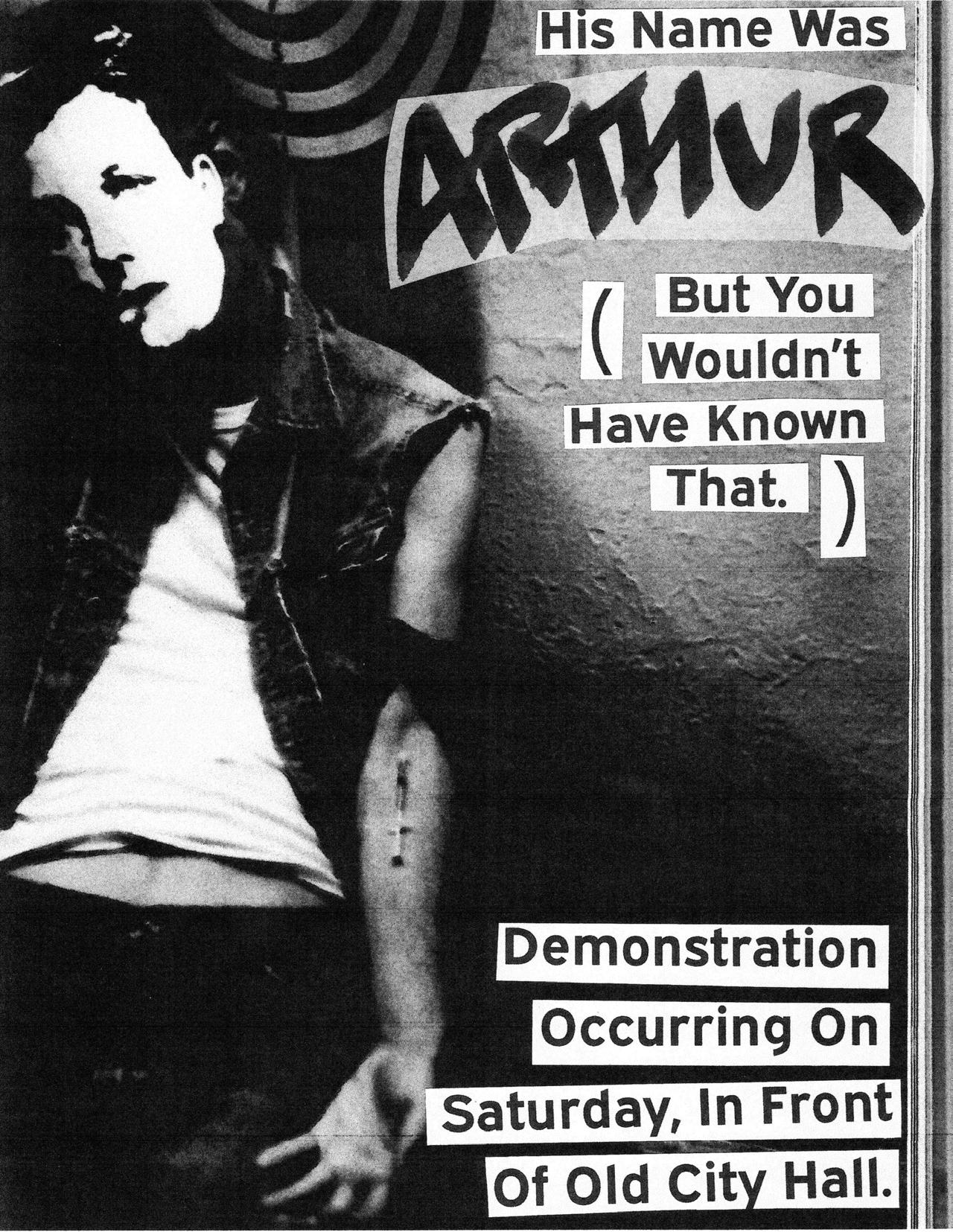
“His Name Was Arthur” - Architectural critique/activism.
All Remains In Dust - What does it mean to “sustain”?
I Am A Lover - Design as a tool for passion.
Extra-Curricular
Design Activism Society - Students rethinking pedagogy.
Lamps - For a well lit apartment.
Photography - Composition and documentation.
MIND THE GAP
Steinar Goheen and Antonio Castillo | ARCH 303 | Professor: Taiji Miyasaka
“We want to see an architecture that exists in contradiction with its previous self, exposing the underbelly.”
“We want to see an architecture that raises up the non-ideal client.”
“We want to see an architecture that seeps up between the cracks, like a weed.”
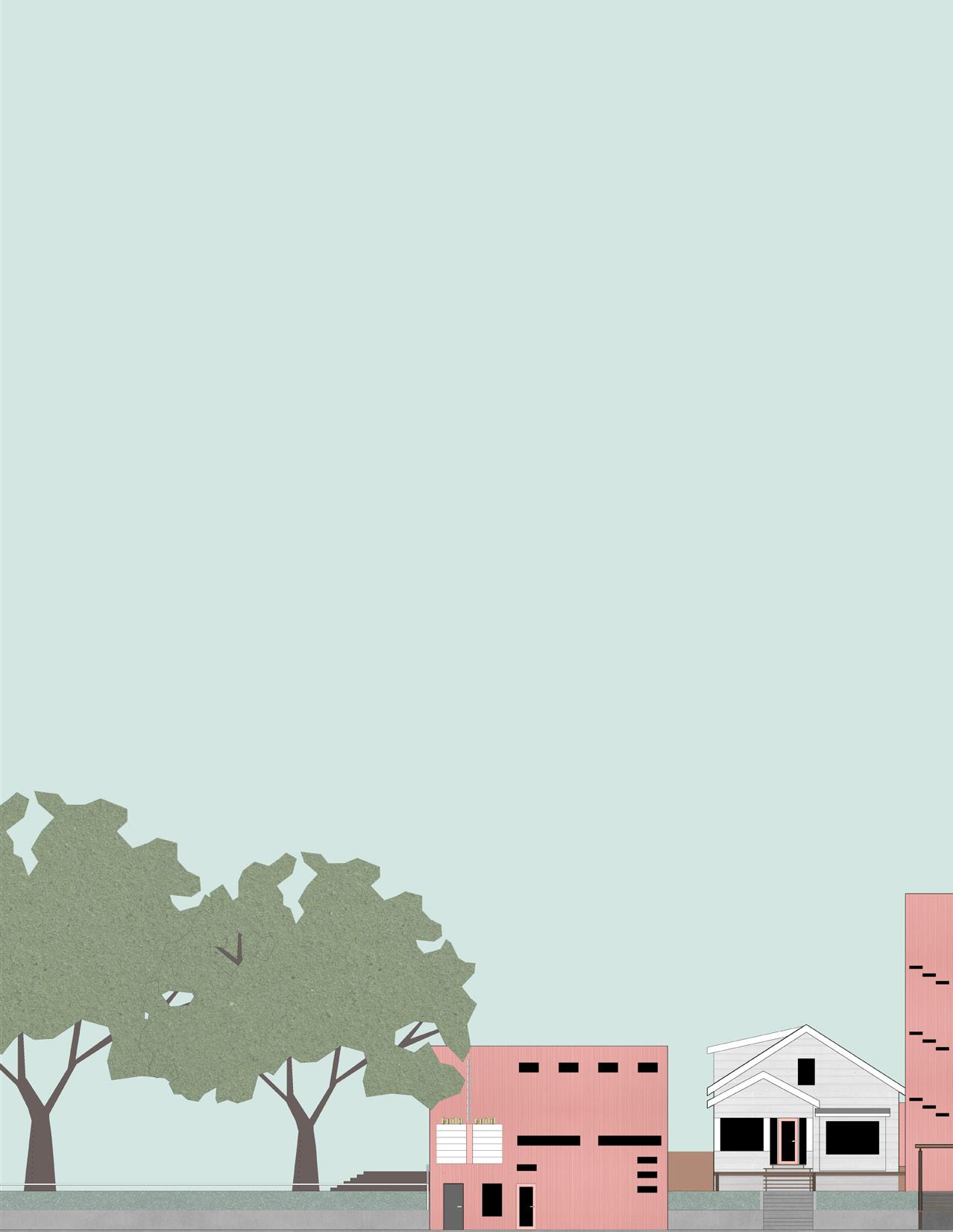
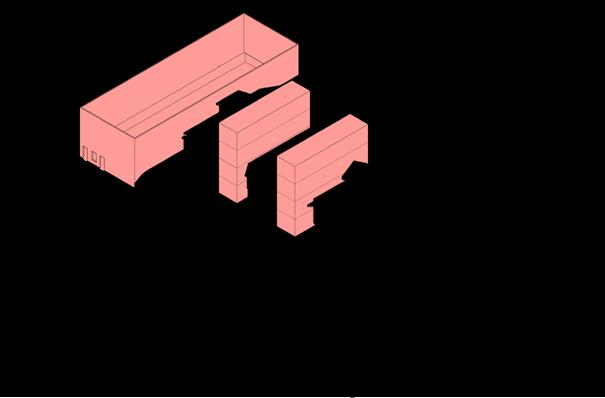
“Mind The Gap” is a critique of the current state of housing stock. Housing in the be inaccessible to a growing demographic, while also breaking apart communities. the non-ownership model of a community land trust for the formerly privately held individual houses with modular CLT rowhouses,
“We want to see an architecture that works with what it has on hand, adding to it, creating bricolage.”
“We want to see an architecture that engages in conversation with the past in order to fully understand it’s present context.”
“We want to see an architecture that crosses the private line and consolidates land into a collective non-commodity.”
the modern day has been turned into a commodity. This in turn causes housing to communities. To aid in de-commodifying housing, this project proposes the application of held properties. This is done by bridging the gaps between the formerly separate, rowhouses, creating one continuous, communal complex.
Elevation drawn by Antonio.
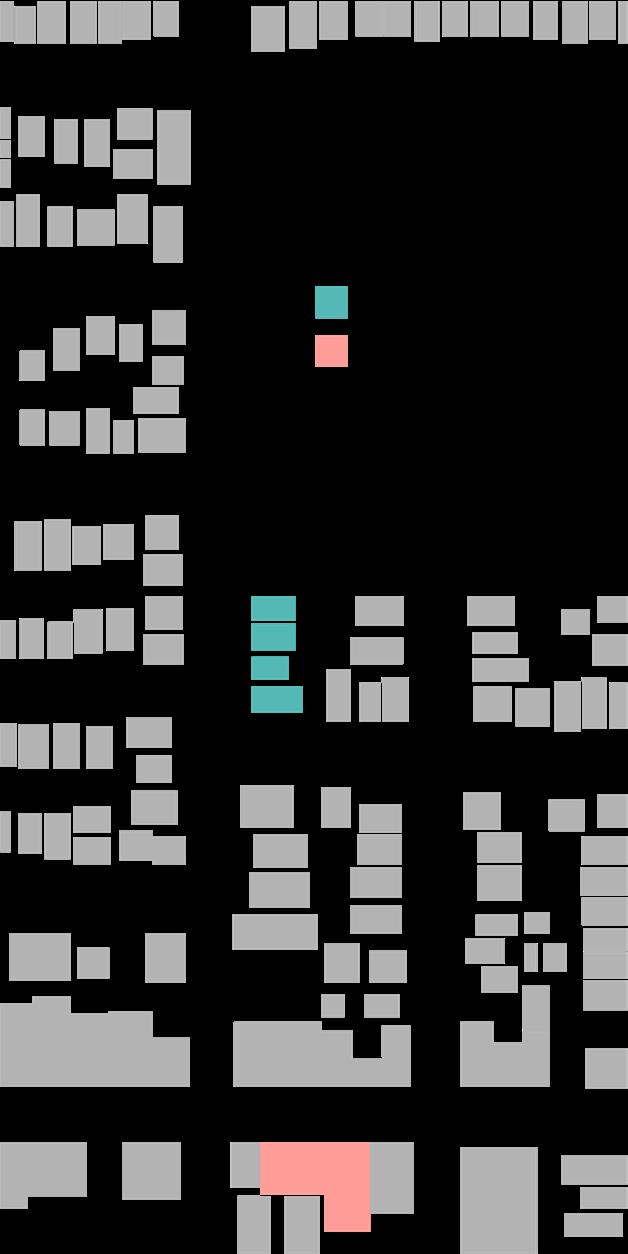
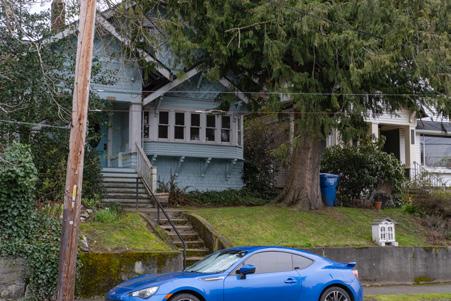
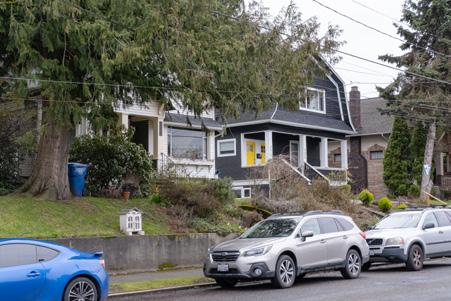
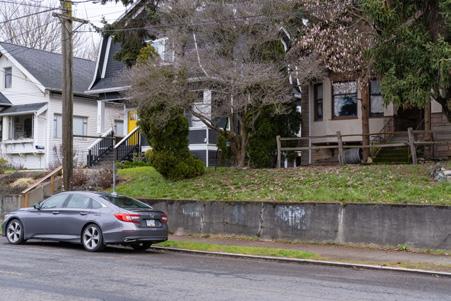
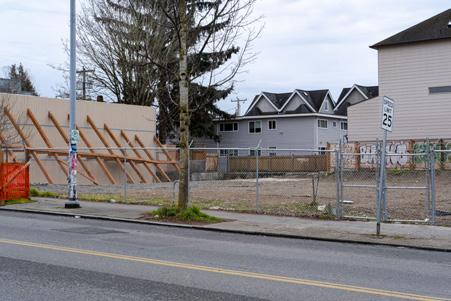
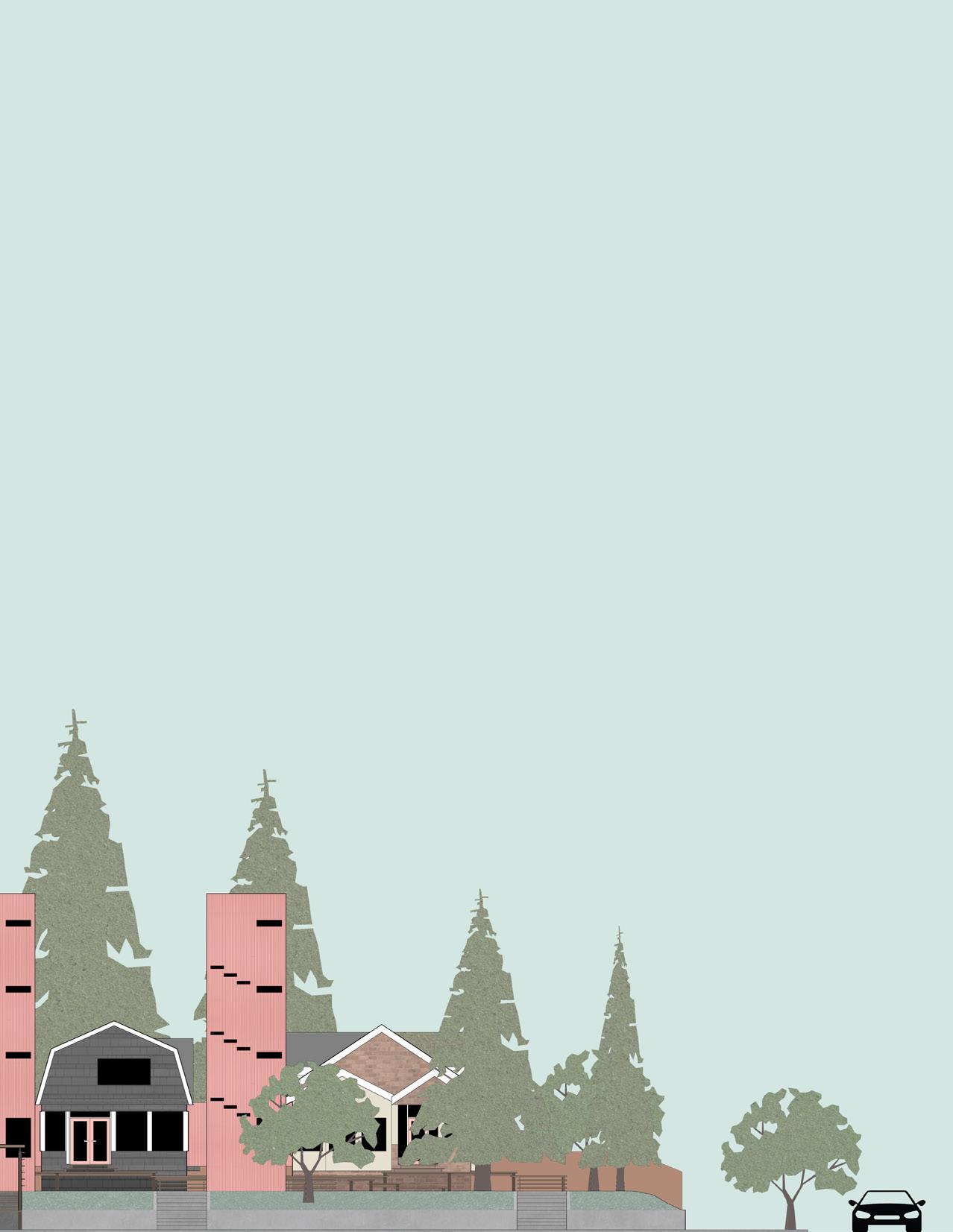
The site is in the Wallingford historic district. The mostly pre-1940s housing stock represents are being priced out. As developers seek to densify Wallingford, this is being imposed housing typology that instead densifies with
Site Context drawn by Antonio Photos taken by Steinar.
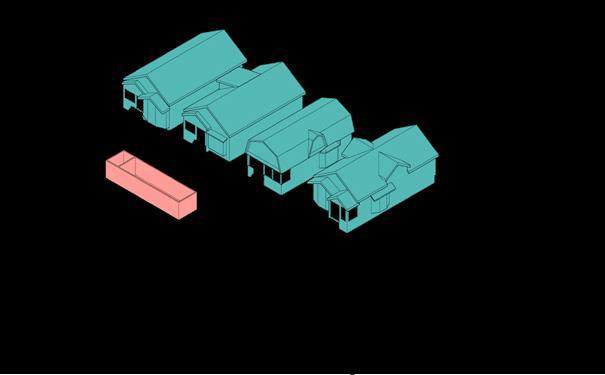
1.
3.
2.
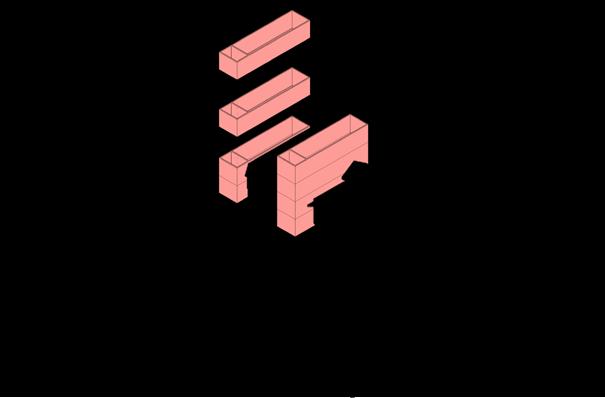
4. CLT Unit Delivered Theatre Constructed CLT Unit Stacked Hallway Cut
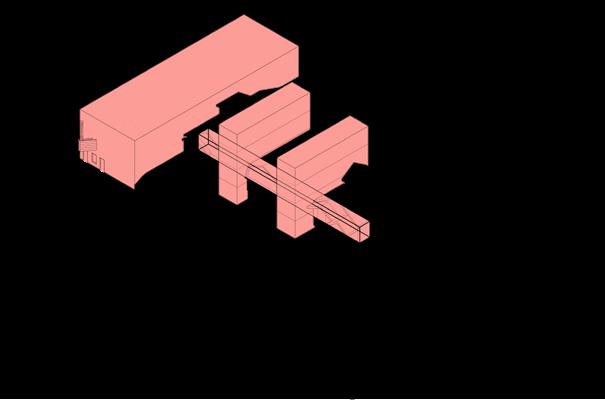
represents its history and development. Its residents are aging, and their children imposed upon the historic character of the neighborhood, so we are proposing a the existing character of the neighborhood.
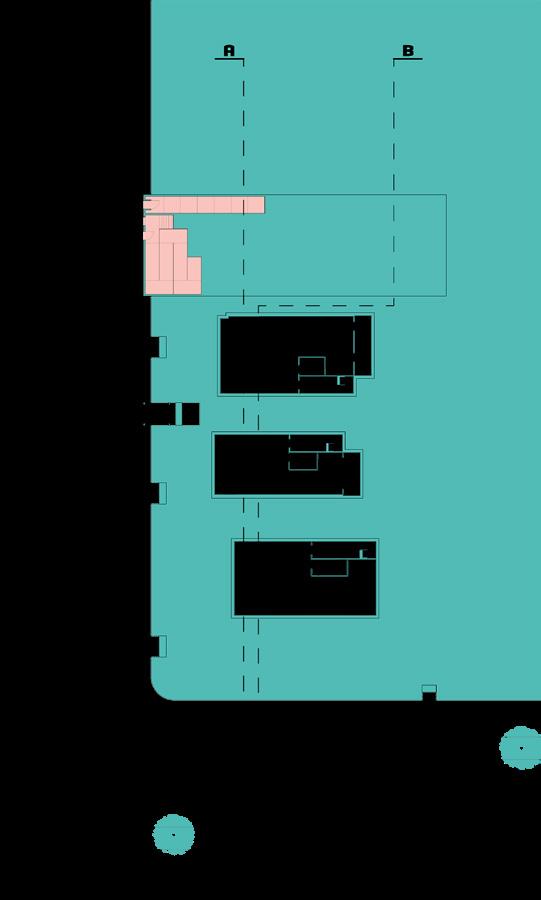
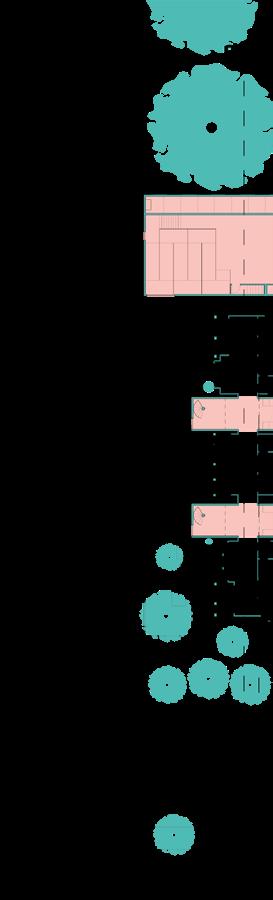
The modular capabilities of CLT are used to situate new typologies with the old, allowing do so. This also opens up the opportunity to inhabit a space that was formerly out has been done while existing historic houses are retained and respected. An on-site via film, which was lost through the demolition of the historic Guild Theater, while connects the complex
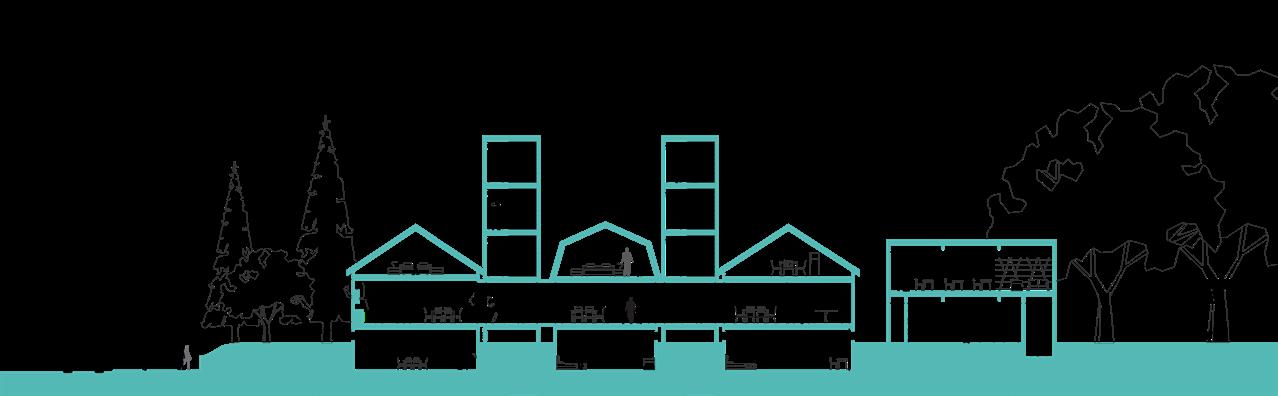
2: Communal Kitchen
3: Bike Storage
4: Communal Dining Area
5: Laundry and Storage
6: Communal Living Area
7: Outdoor Patios
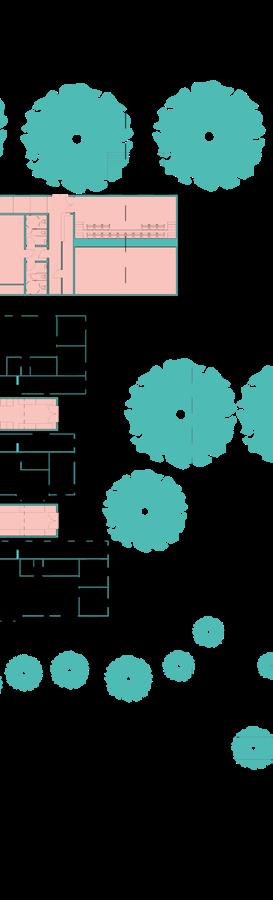
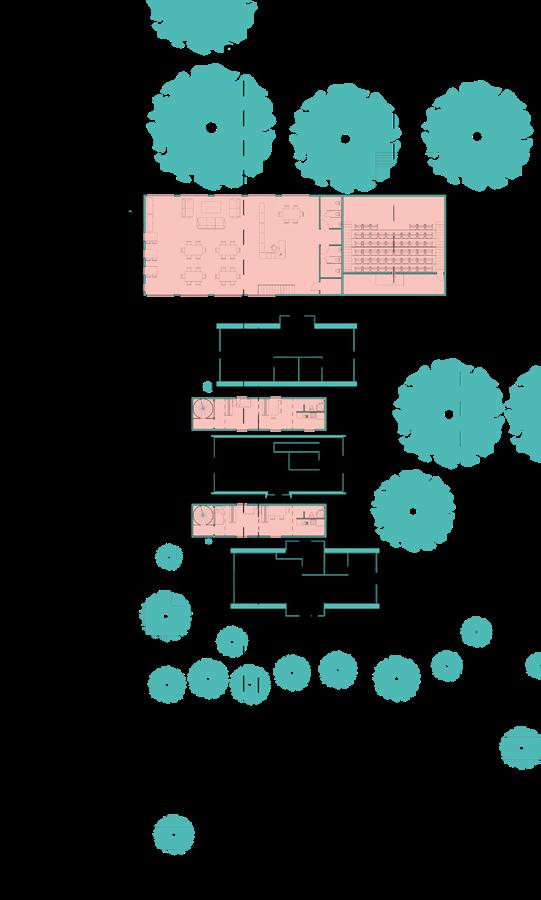
allowing a diverse set of tenants, who may not normally live next to each other, to out of reach for tenants who have been priced out of this neighborhood. All of this on-site community center brings back a physical space for community connection while also providing a space for the Historic Wallingford organization. This building complex with Meridian Park.
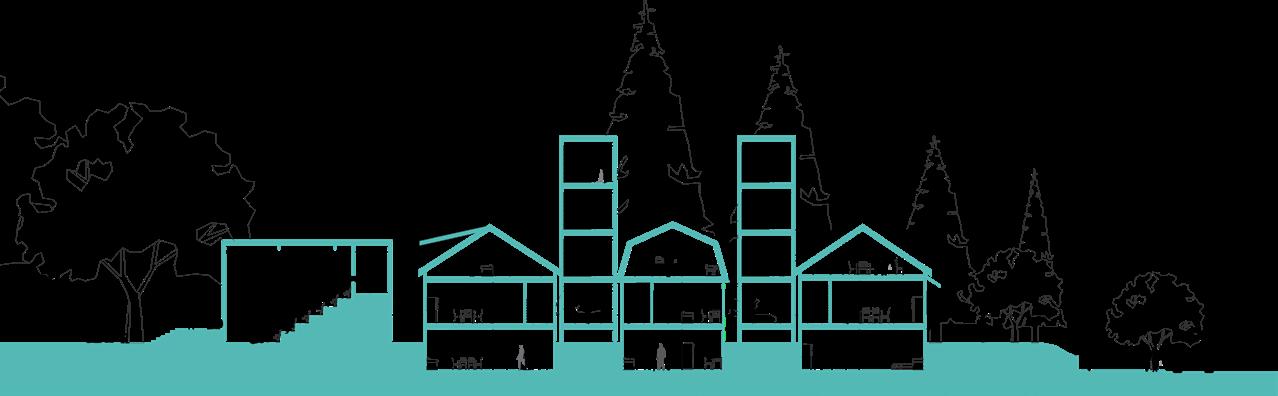
drawn by Antonio.
drawn by Steinar.
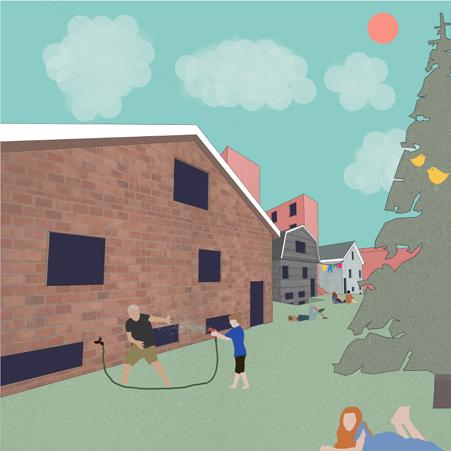
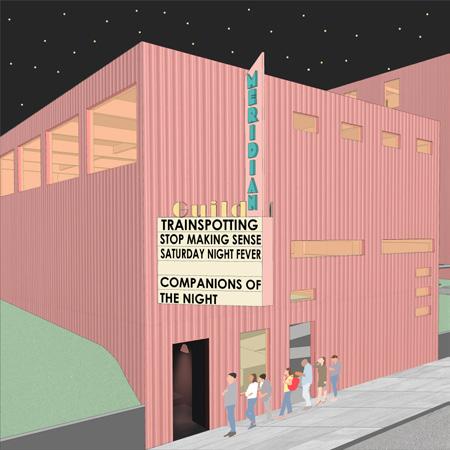
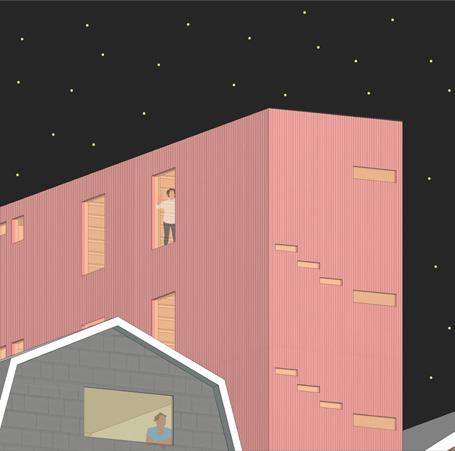
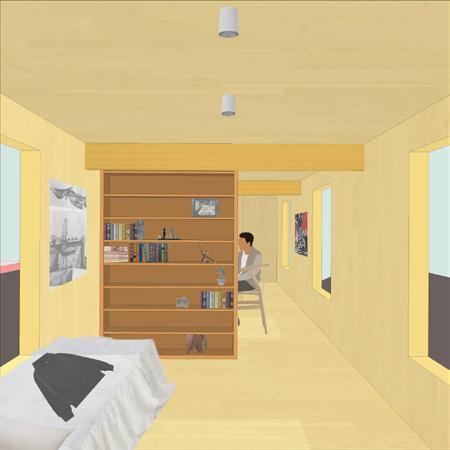
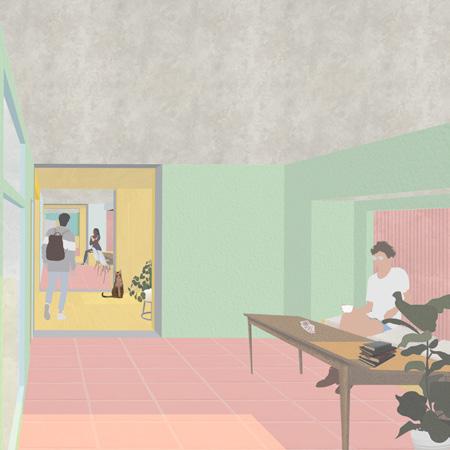
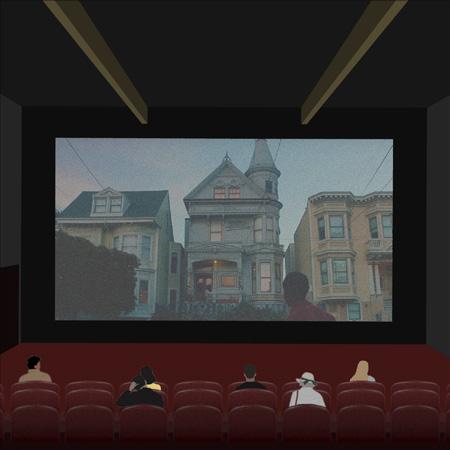
Right renders by Antonio. Left renders by Steinar.
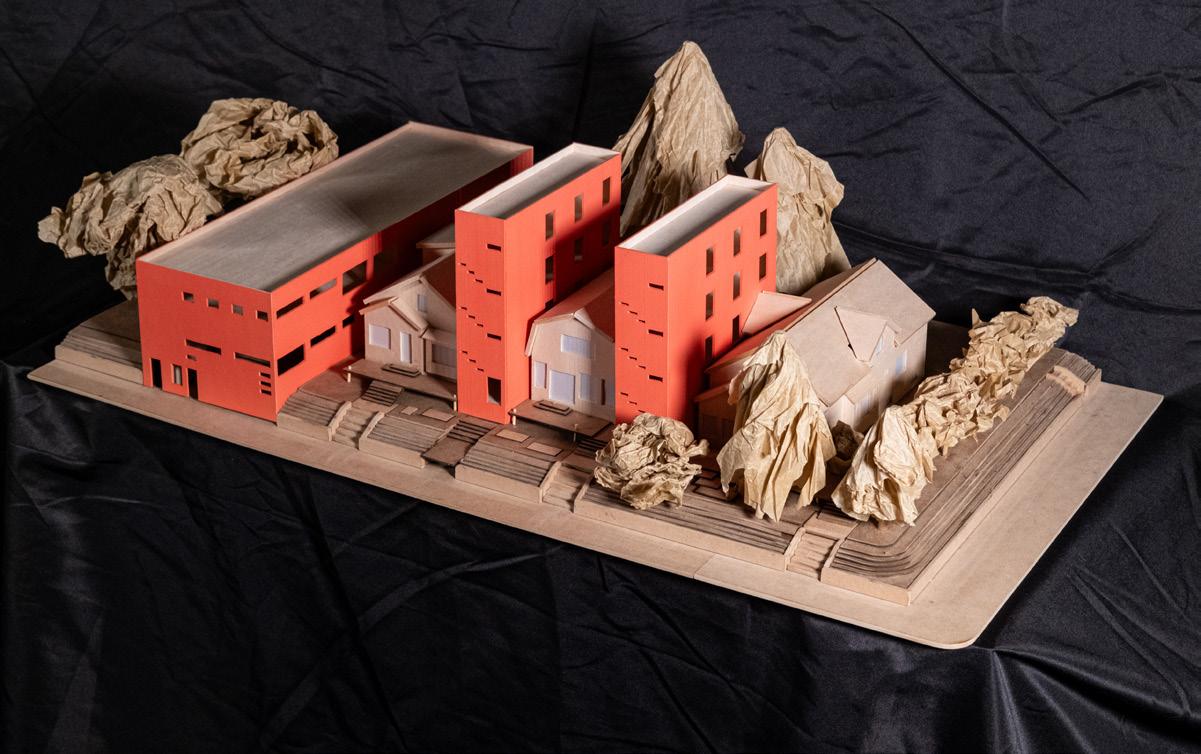
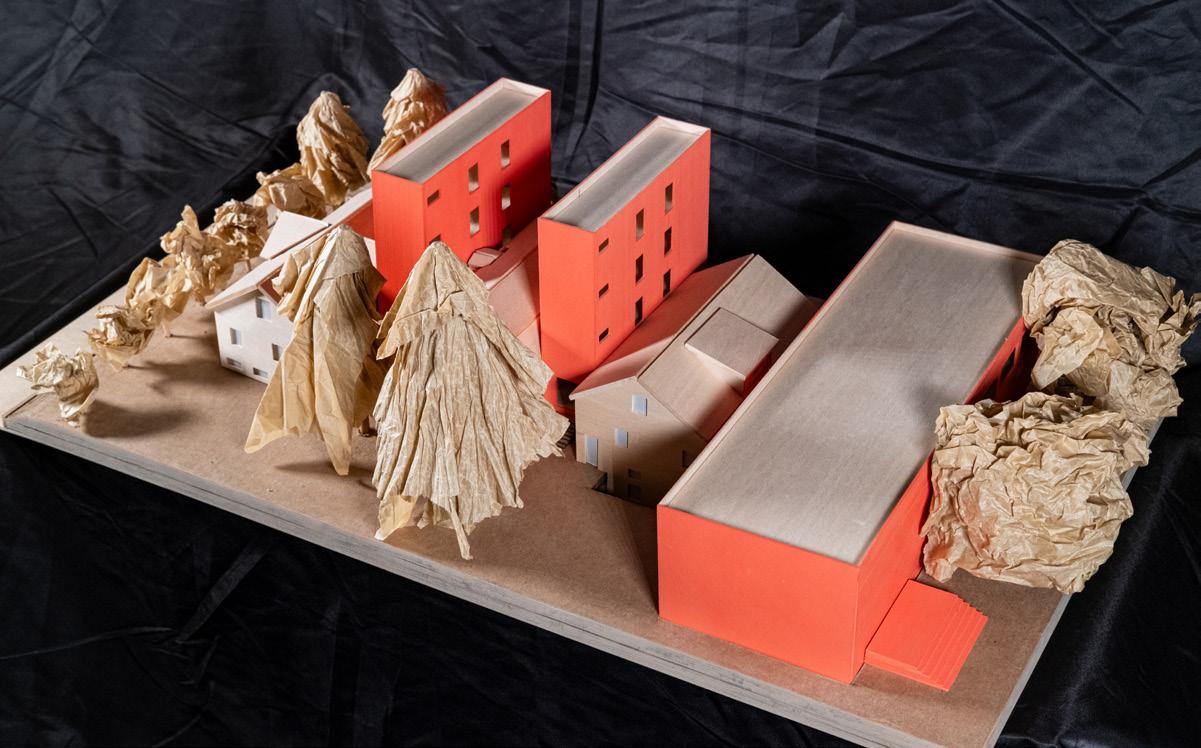
Model Photos by Steinar.

HIS NAME WAS ARTHUR
Steinar Goheen | ARCH 301 | Professor: Ayad Rahmani
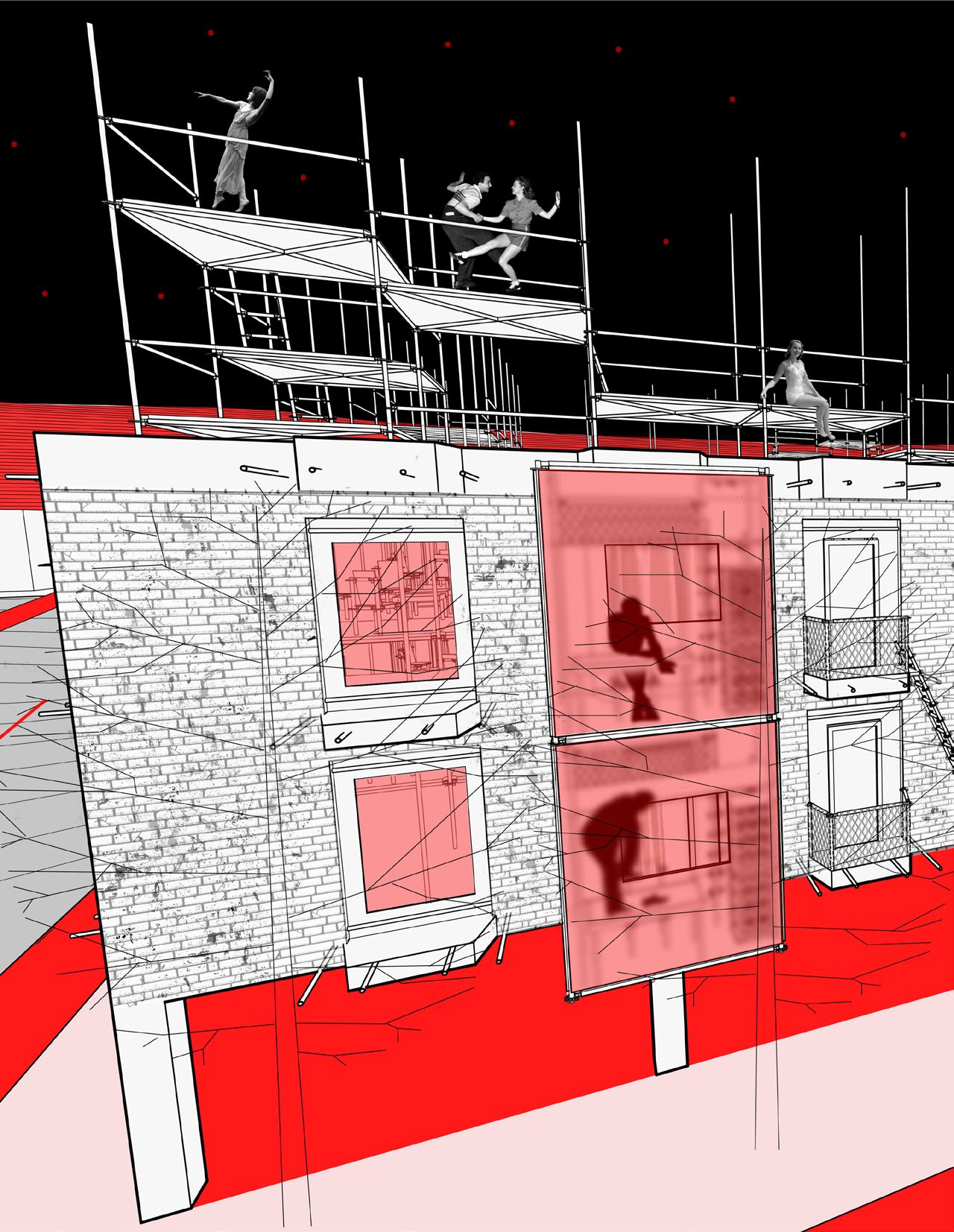
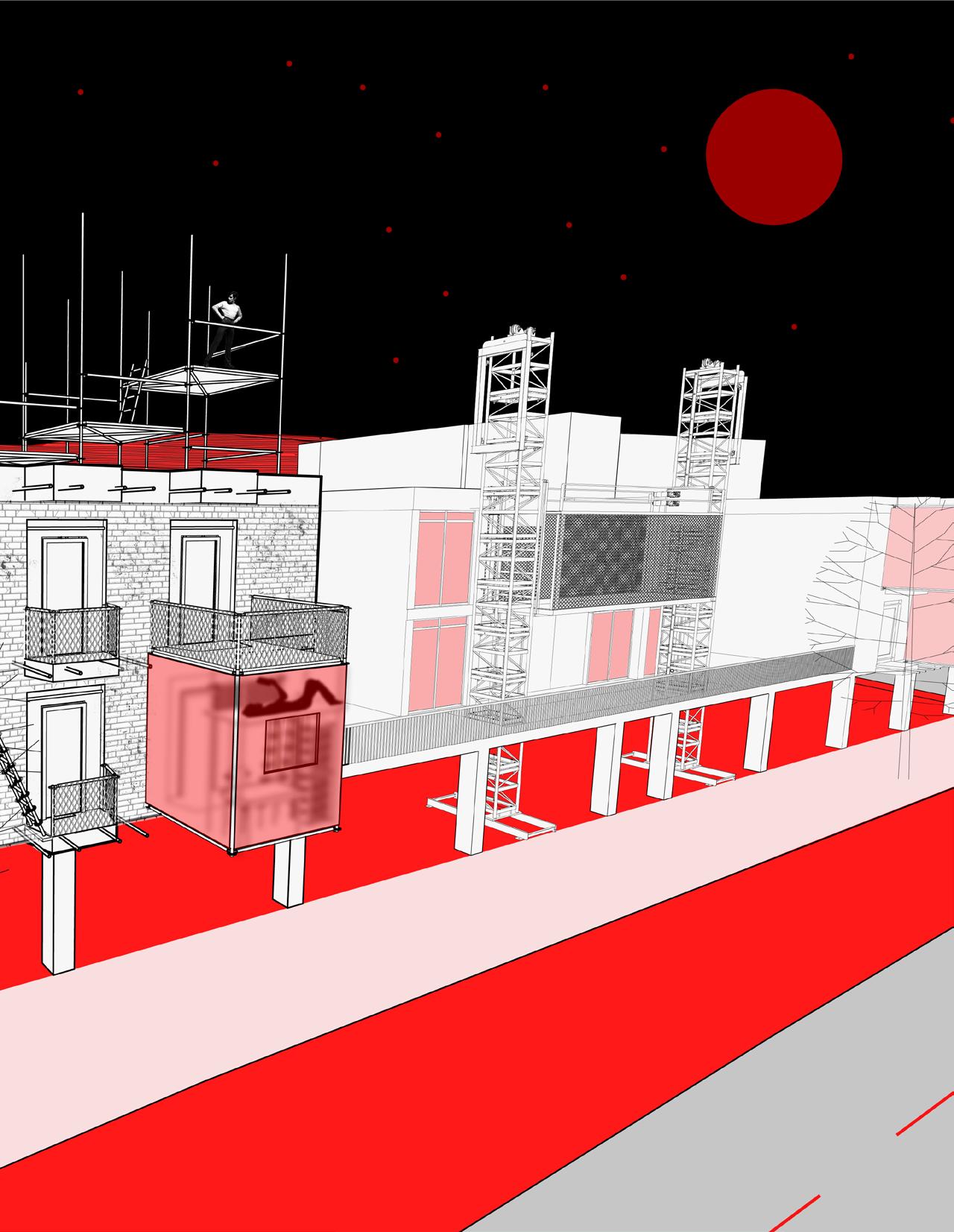
Architecture is always political; the built environment is often unknowingly used as a tool to enforce dispositifs onto those who can feel the effects most readily. In direct opposition, this project explores what architectural activism could look like given modern issues. Specifically, the destigmatization of intravenous drug users. “His Name Was Arthur” was inspired by a series of photographs by artist and AIDS activist David Wojnarowicz. Nuances of his work appear throughout this project. Arthur is a fictional presence that represents everyone who has battled or is currently battling drug addiction. More so, he represents everything that we choose to ignore. You’ve probably stepped over Arthur at some point on a city street or seen him trying to find something to eat in an alleyway. The goal of this project is not to appropriate drug users. In fact, it is quite the opposite. We need to demand access to resources for those who use. We need to rally for their visibility and lift their voices. We should love drug users, and this project is an attempt to explain why.
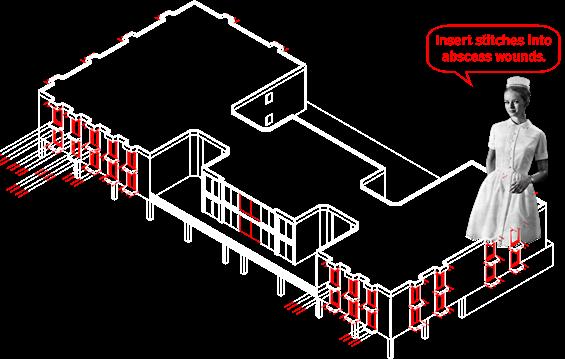
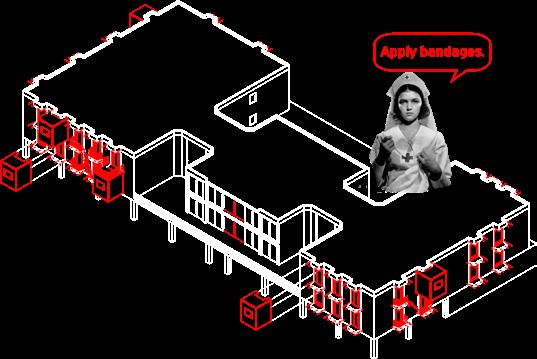
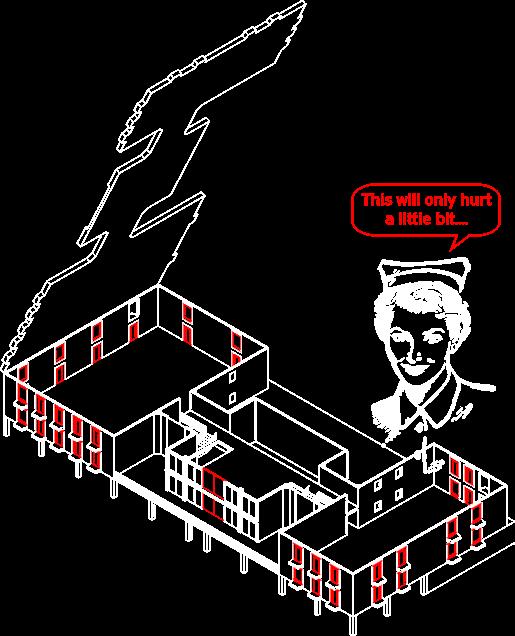
This occurs in three
steps: 1. Protest Pavilion Building 2. 3.
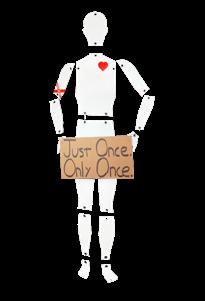
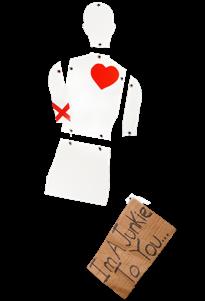
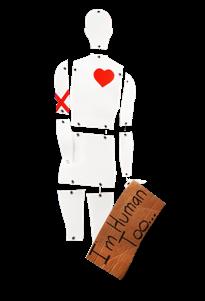
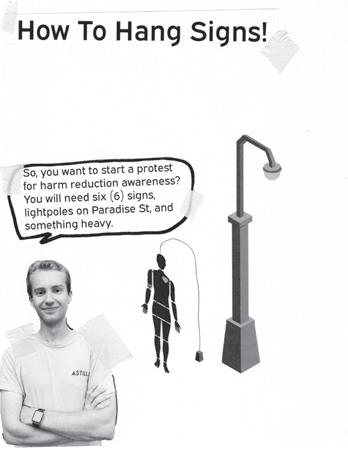
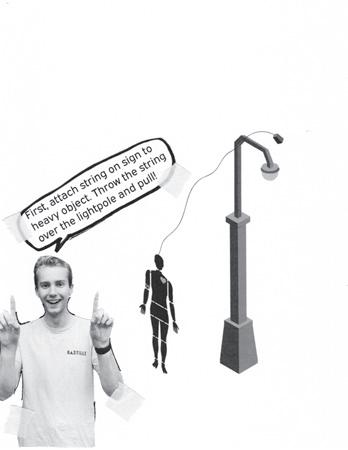
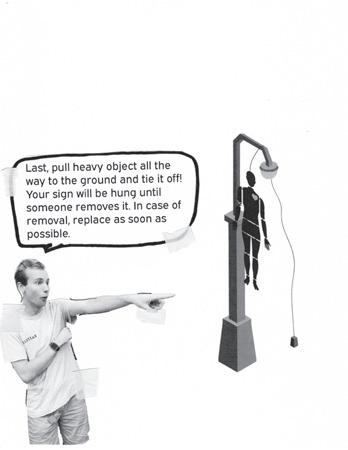
Protest signs are to be hung in the night along Paradise Avenue, over the course of a week. The goal is to create shock and awe within the Pullman community, as many people chose to ignore people who use. The signs along a one-way road force the populous to pay attention.
Monday


Tuesday
Wednesday
Saturday 1 2 3 4 5 6
Friday


Old Pullman City Hall GrandSt.
Kamiacken
Needle Mark
PAVILION
1st Floor Plan
2nd Floor Plan
After a protest, a pavilion is created. The site
The pavilion itself is made up of four units, while the second level is where clean supplies forming walls have varying levels of transmissibility, and this forces
site is the US Bank in downtown Pullman. It is near the site of the last protest sign. units, each made of scaffolding. The first level is used for the education of the public, supplies and support materials are handed out for those who need them. Meshes transmissibility, making the top floor more public. People fear what they can’t see, forces them to be slightly uncomfortable while learning about this lifesaving process.
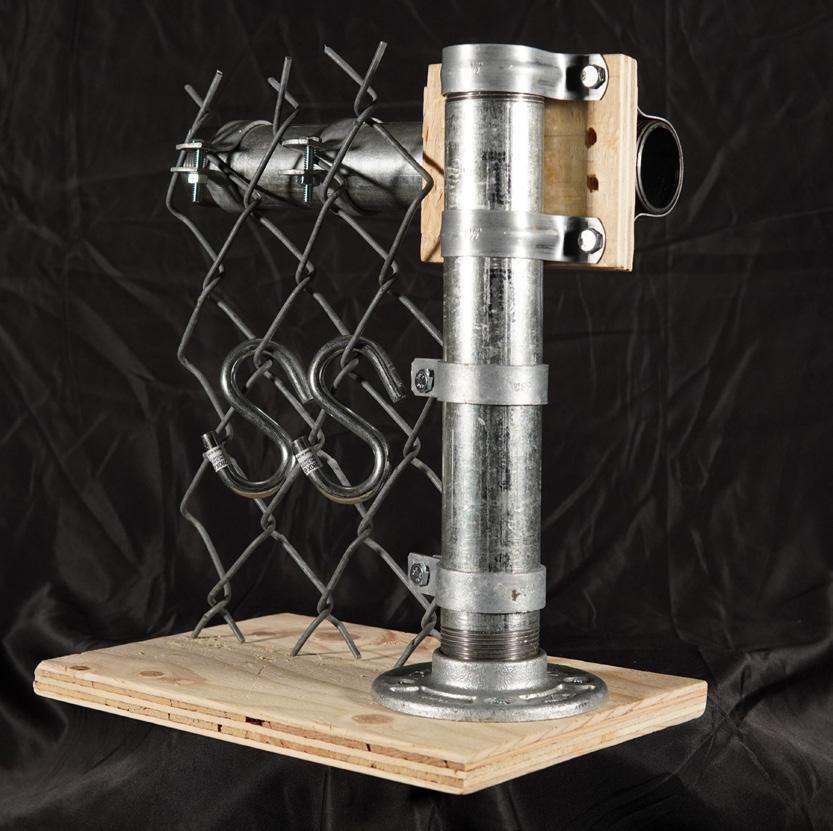
1:1 Joint Model, made to be disassembled quickly.
“Love People Who Use Drugs!”
“Clean Works For All!”
“End Stigma!”
B
Learn Care
Section
BUILDING
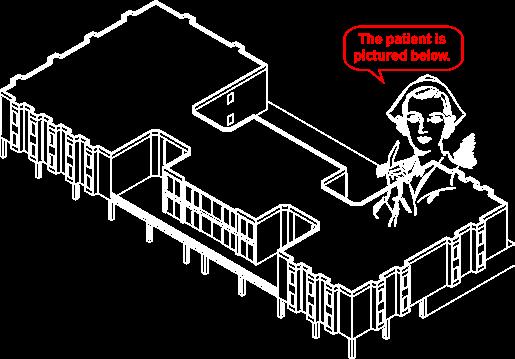
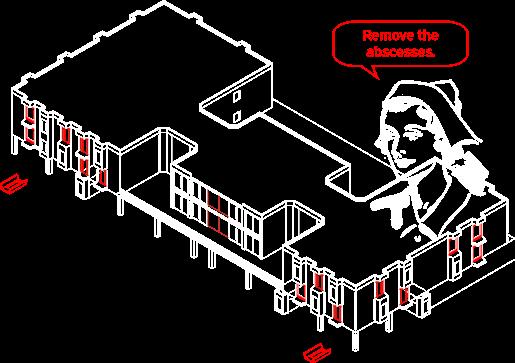
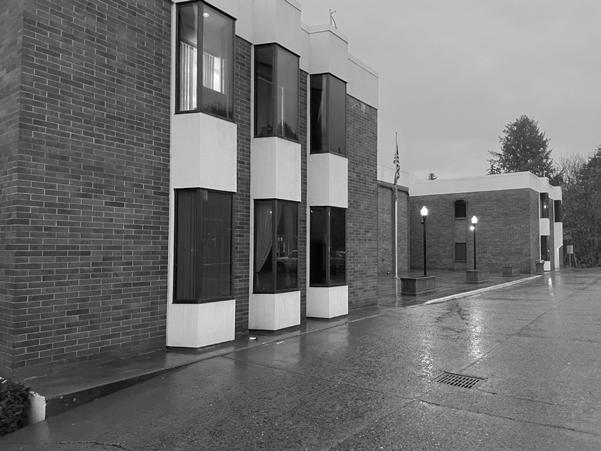
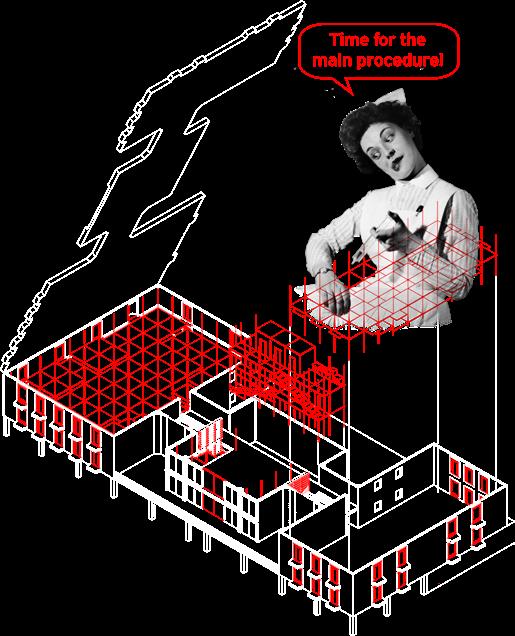
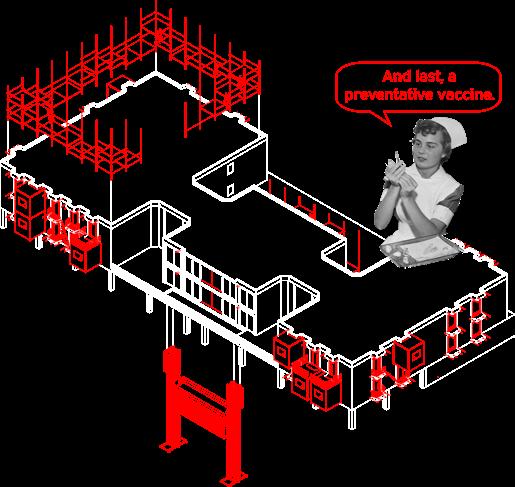
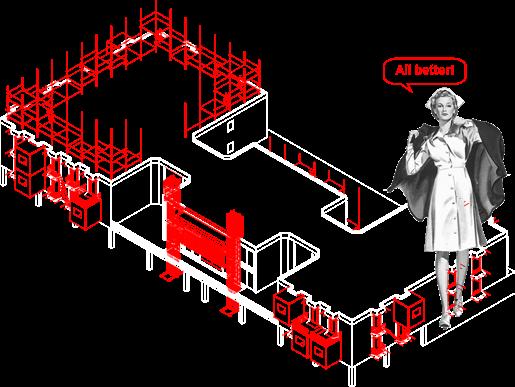
At this point, a building should be occupied. For this case study, the Old Pullman City Hall building was reclaimed for anti-institutional harm reduction. Foucault, Debord, and Nieuwenhuys were studied extensively. Bay windows were removed, and replaced with modular scaffold sleeping pods. Floorplates were removed and replaced with a load-bearing scaffold system as well. Visitors and volunteers alike will be able to define their own programming in this building.
1.
2.
5.
6.
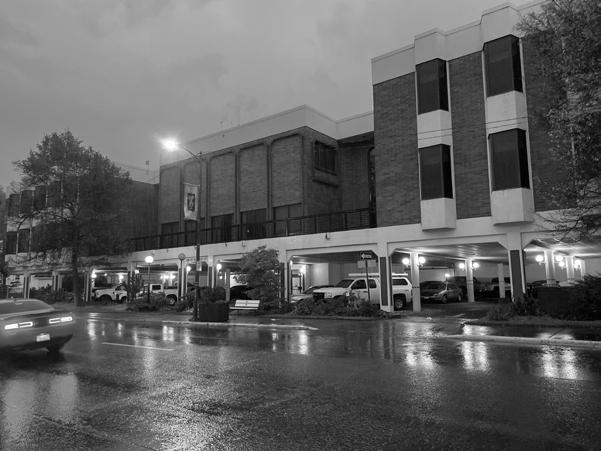
As-Built Photos
3.
7. 4. 8.
ALL REMAINS IN DUST
Steinar Goheen | ARCH 203 | Professor: David Drake
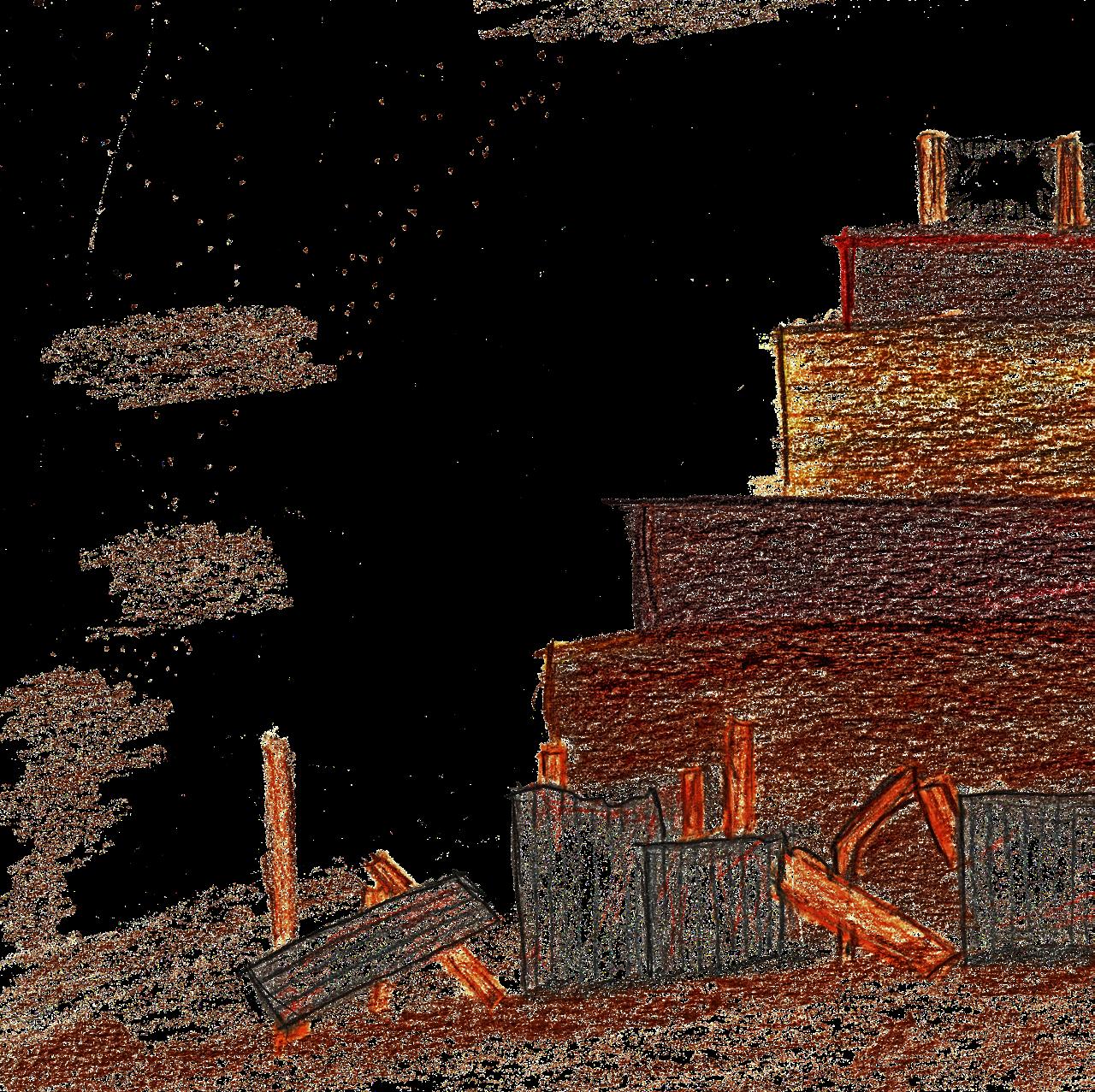
1938 The box is opened and photographed. The Great Storm begins.
1939 An artist rendition of the event is created.
1940 A mask is created to help.
1942 The Storm is too damaging. People must flee their homes.
1943 Elberton is discovered and settled.

1950 Fortifications are created.
The term “sustainability” implies “to sustain”. “To sustain” is defined by an ability to last a long period of time given a set of resources. Sustainability in architecture has been boiled down to figuring out how to produce “low carbon” buildings as cheaply as possible. In this narrative architecture project, sustaining is explored in the most literal sense. In the process, a new monument is created.
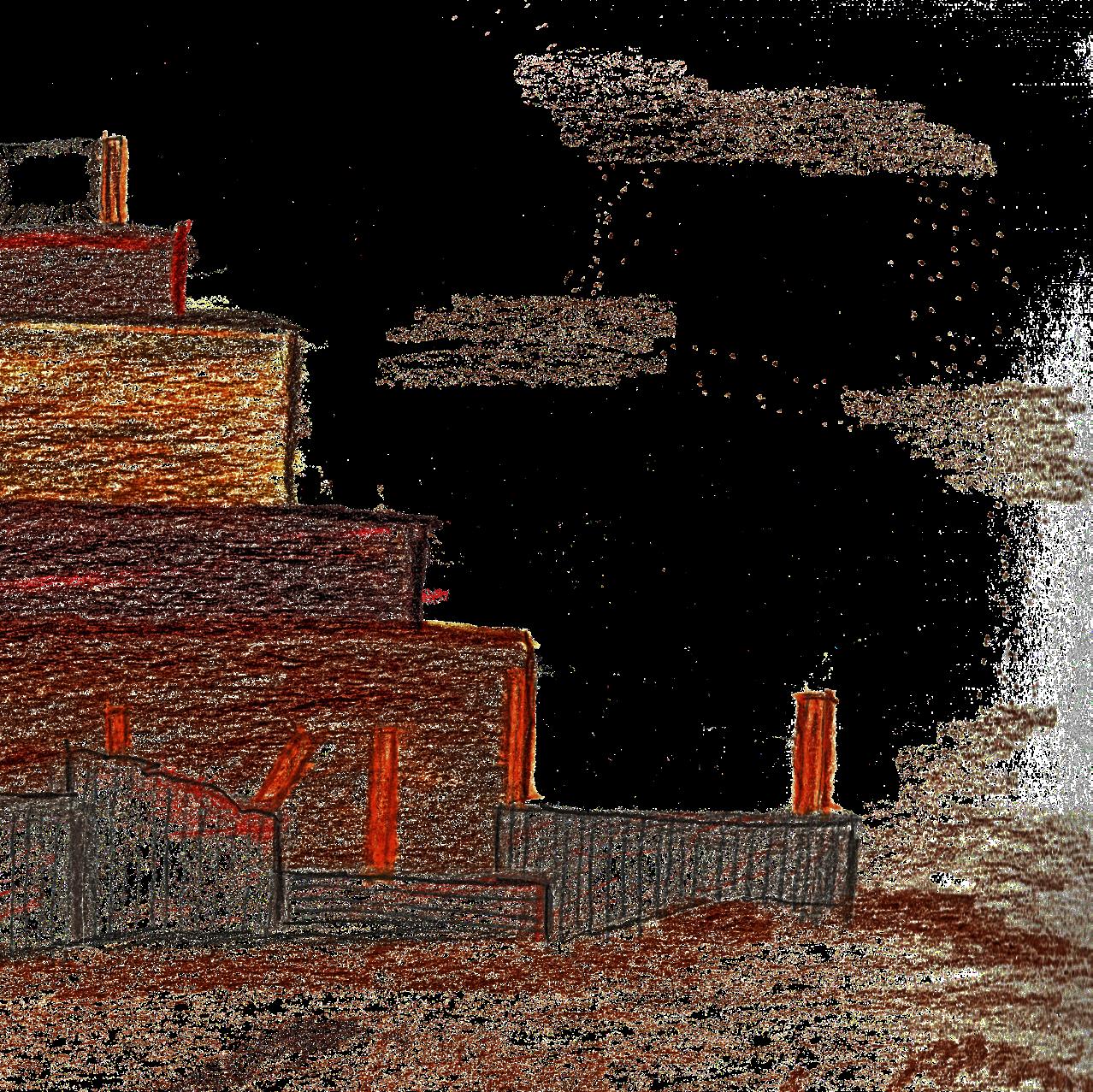
1950 Fortifications created. 2023 The town begins to move up.
3023 The Palouse is leveled.
Kern County, California.
Dorothea Lange, 1938
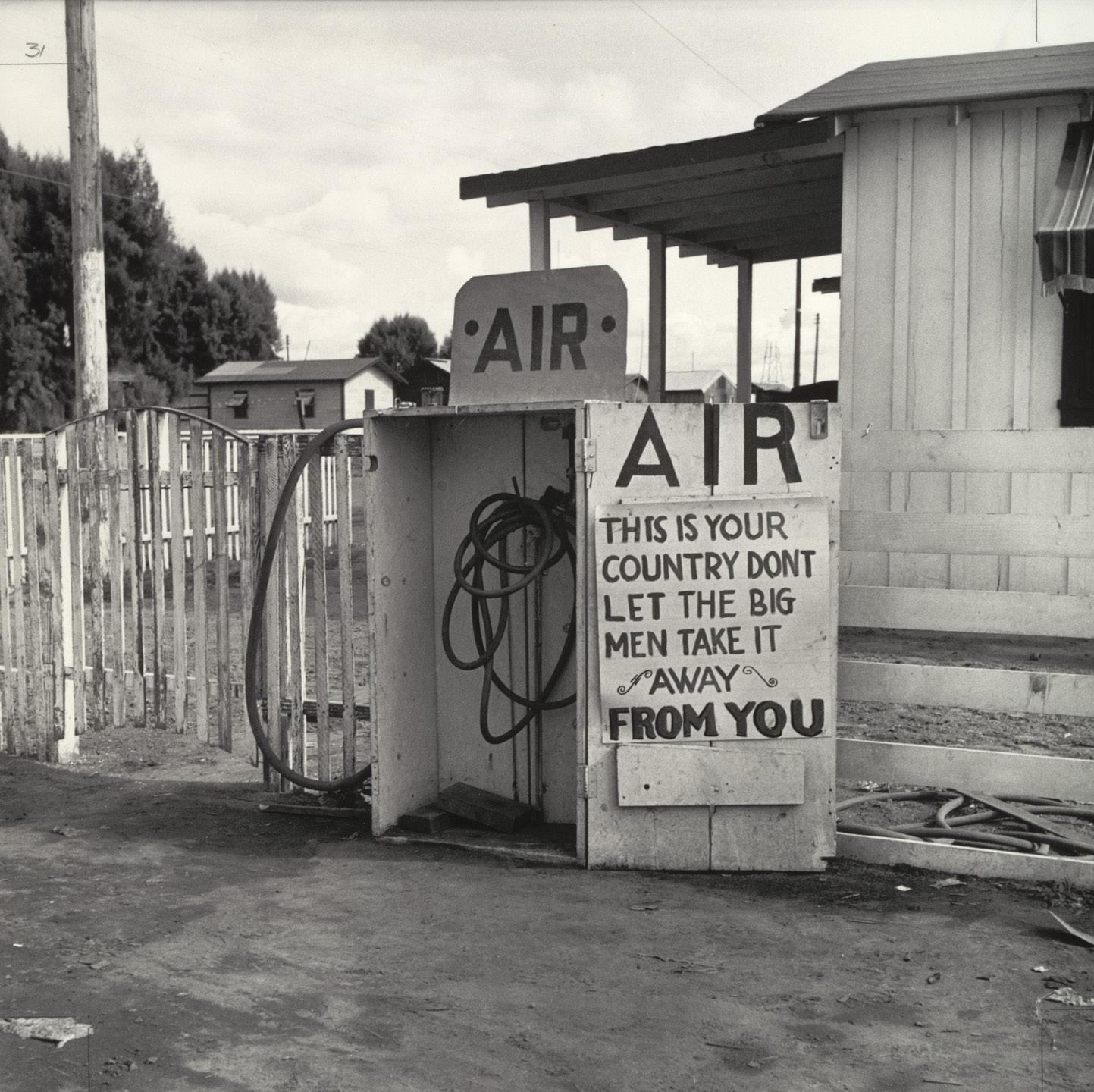
Kern County, California. The year is 1938. The box is opened.
A humble farmer opened an air compressor box to fill up his truck tires. A short time later, photographer Dorothea Lange came around and snapped this photo. She is drawn in by the distinct message on the inside of the door. Intrigued, she looks to the trees behind the box. They are failing to stand as a hellish cloud of dust and debris is formed behind them. The Storm has begun.
Artist’s Book
Made with wood and paint.
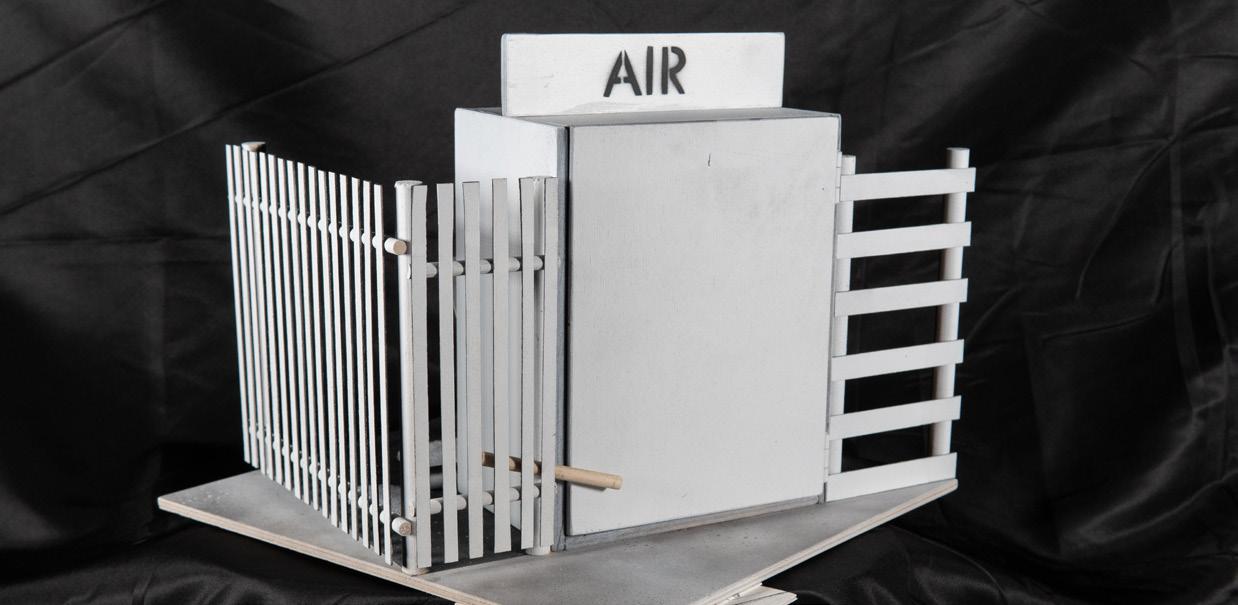
Artist’s Book, Opened Drawings fold out.
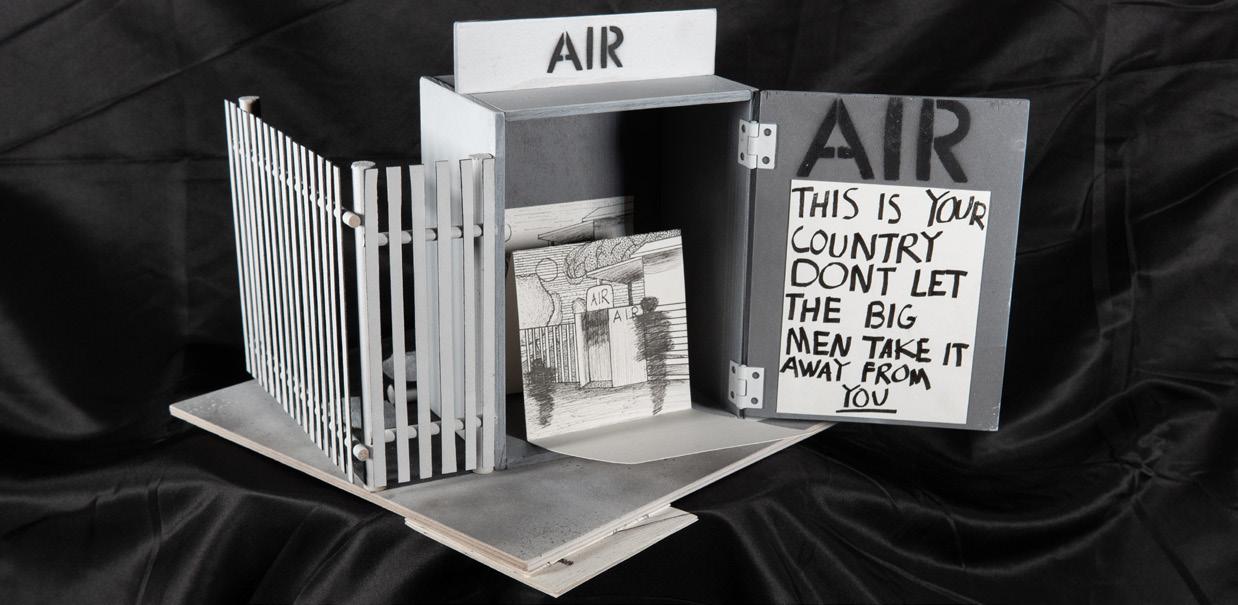
In 1939, an artist makes a rendition of the past year’s events.
To the dismay of farmers in Kern County, the opening of this vernacular air box created an unrelenting dust storm in the region. Soon after, it spread to the entirety of the state. Hurricane force winds turned the lowlands into enormous sandblast chambers. The wooden dwellings of the region began to fall apart. Nonetheless, the farmers persevered through the storm. An artist creates a set of drawings for the event, recounting the past and predicting the future.
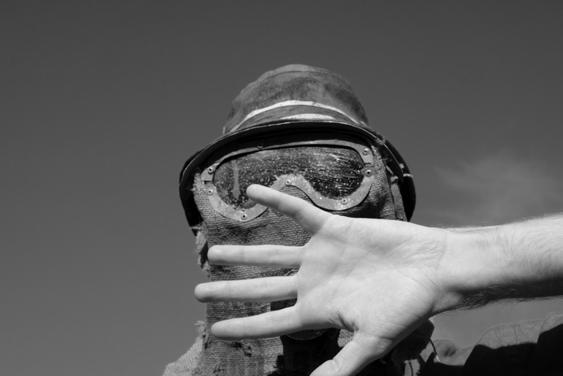
A forcefully venerated mask.

Farmers fashioned their own masks. This one was made in 1940.
Despite the storm, the residents of Kern County still had a job to do. They fashioned masks out of materials laying around the house. The one pictured above was created with burlap, goggles, scrap tin, and a cinnamon shaker used as a filter. All of this was attached to a boater hat, which was presumably used at one point to compliment someone’s Sunday best. In it’s current state, the getup now looks like it went nowhere close to Heaven.
Reference
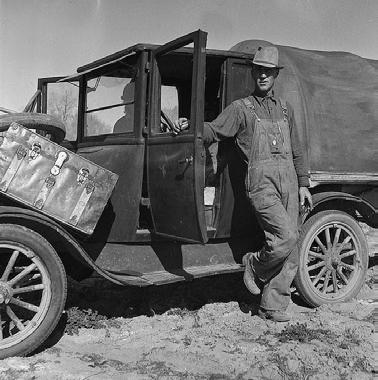
Reference
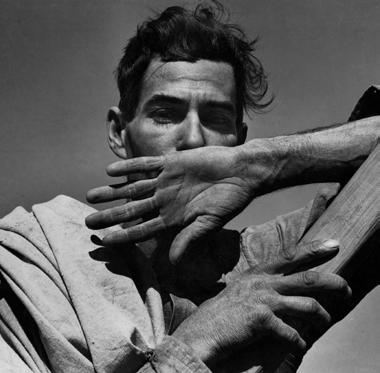
Reference
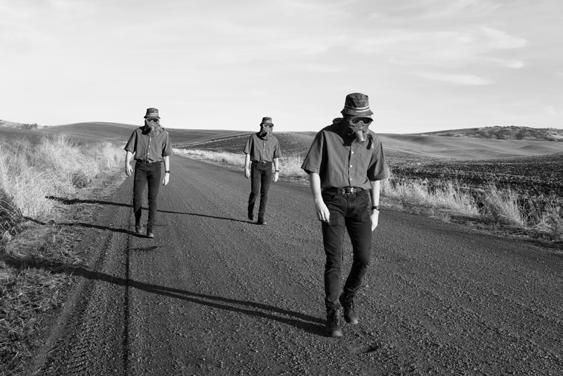
Recreation
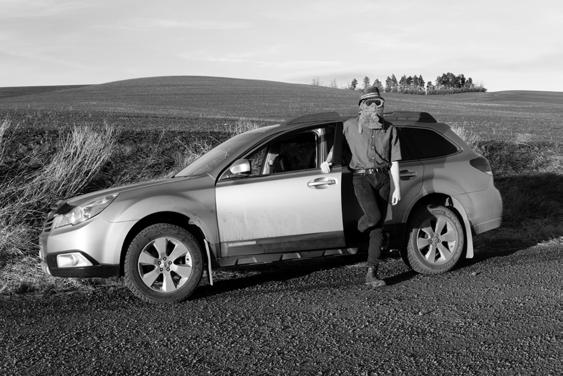
Recreation
Recreation
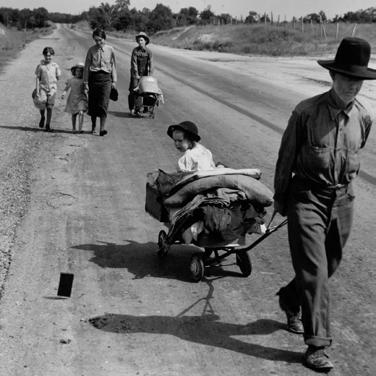
The years wear on. In 1942, communities must evacuate.
The dust had been storming for four years now. The people of Kern County were getting fed up. Children dressed head to toe in burlap to play outside. Farmers were becoming ill from excess dust inhalation. Houses needed to be rebuilt frequently, as the dust eroded through the thin wood shacks in a matter of months. Communities had no choice but to leave. They headed North, in search of a new area to settle. Dorothea Lange captured this process as well.
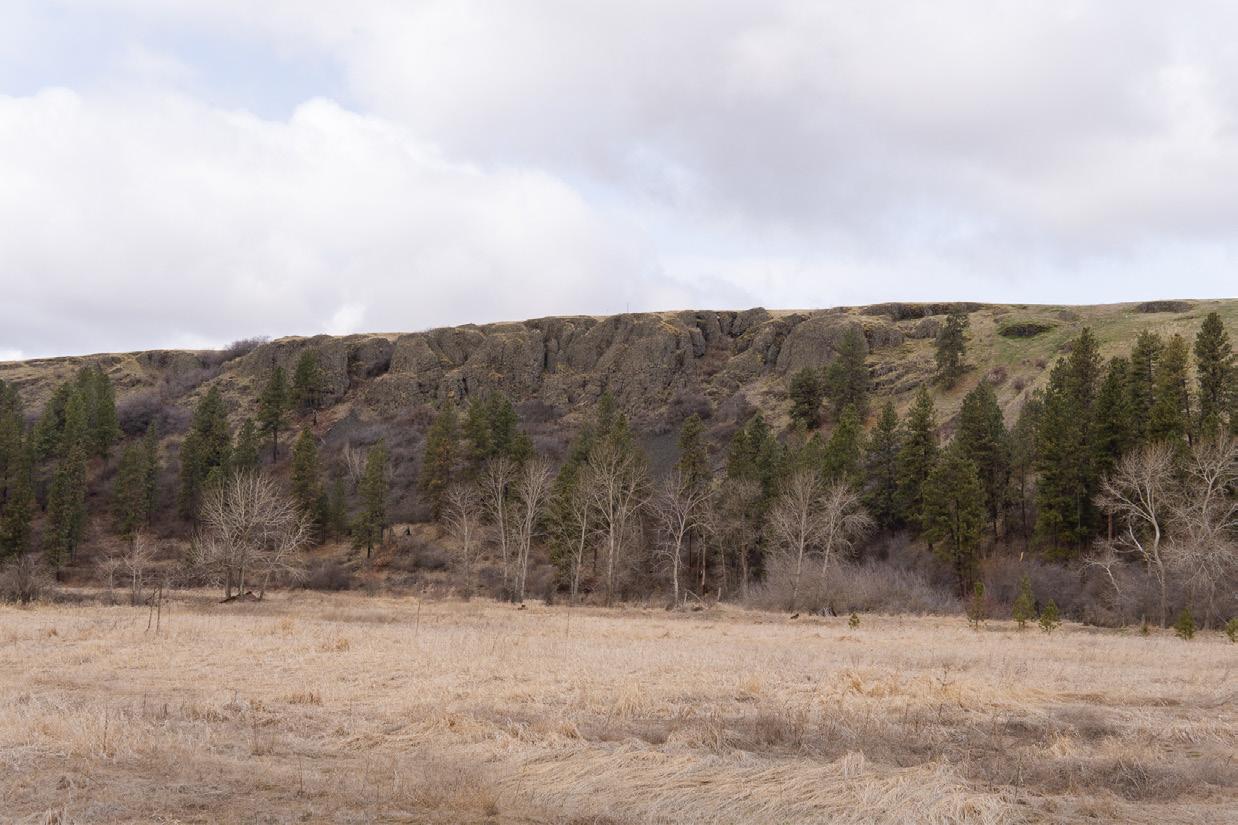
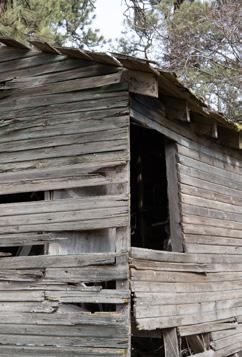
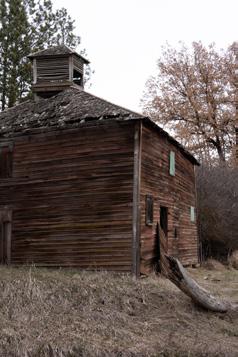
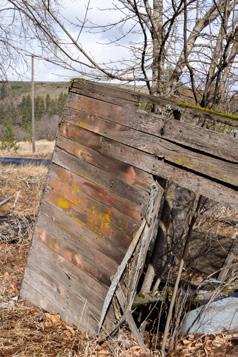
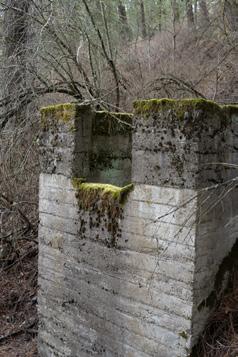
After a year on the road, Elberton is discovered. Elberton
Photographed in 2023. Dwelling Storage Stability Access Sustenance
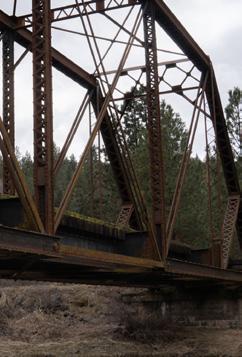
1,100 miles later, the residents of Kern County discovered the area which is now known as Elberton, WA. Located in a Palouse valley, the region is protected on all sides by forest and large basalt cliffs. Along their travels, the nomads collected various wood, concrete, and steel pieces. They were able to create the infrastructure pictured above. Life was seemingly back to normal.
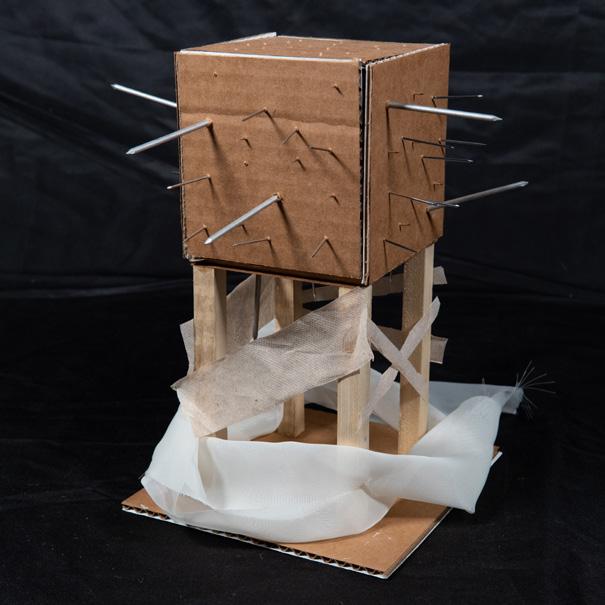
Dependency
Demountability
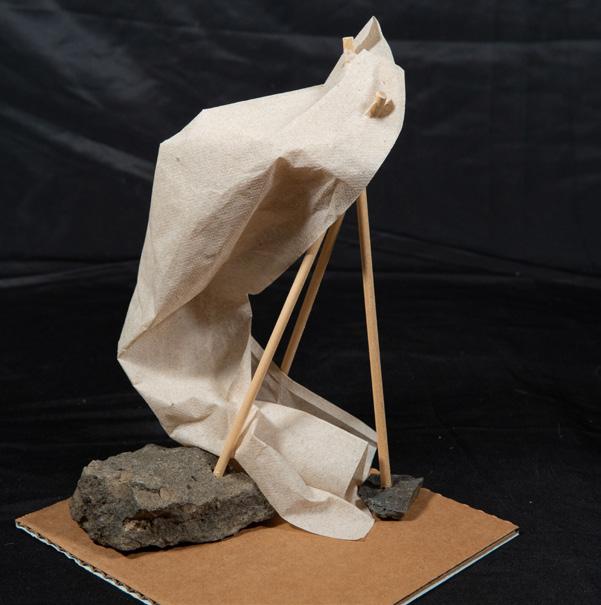
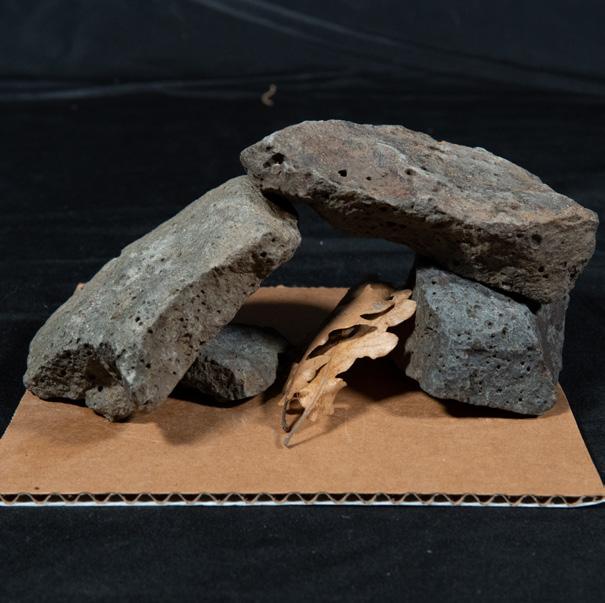
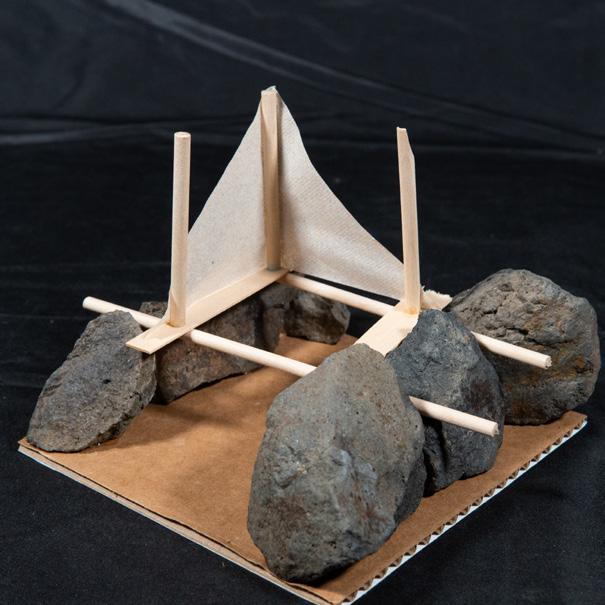
1950 brought a new decade with new challenges.
Someone within the community reported a large dust cloud on the Southern horizon. The Great Storm had followed them to Washington. Quickly, residents of the valley had to brainstorm fortifications for their community. Pictured above are some of the ideas they had. Tensile structures made of burlap and wood were chosen due to their ease of assembly, disassembly, and replacement.
Ascending Structure
Upwards Communal Experience
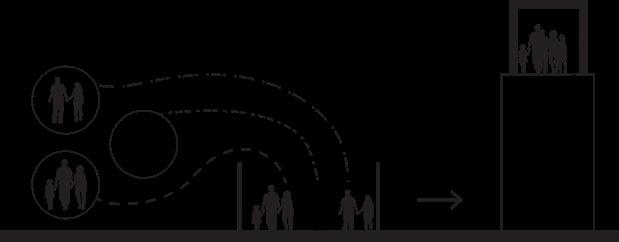
Upwards Temporal Experience
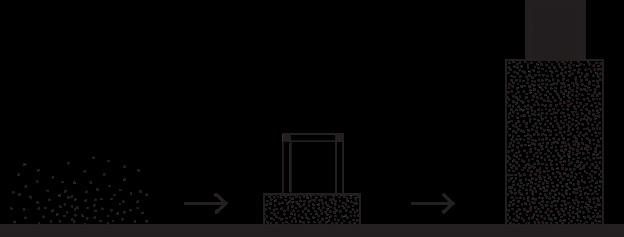
Model of Elberton Rammed earth pushes the town upwards.
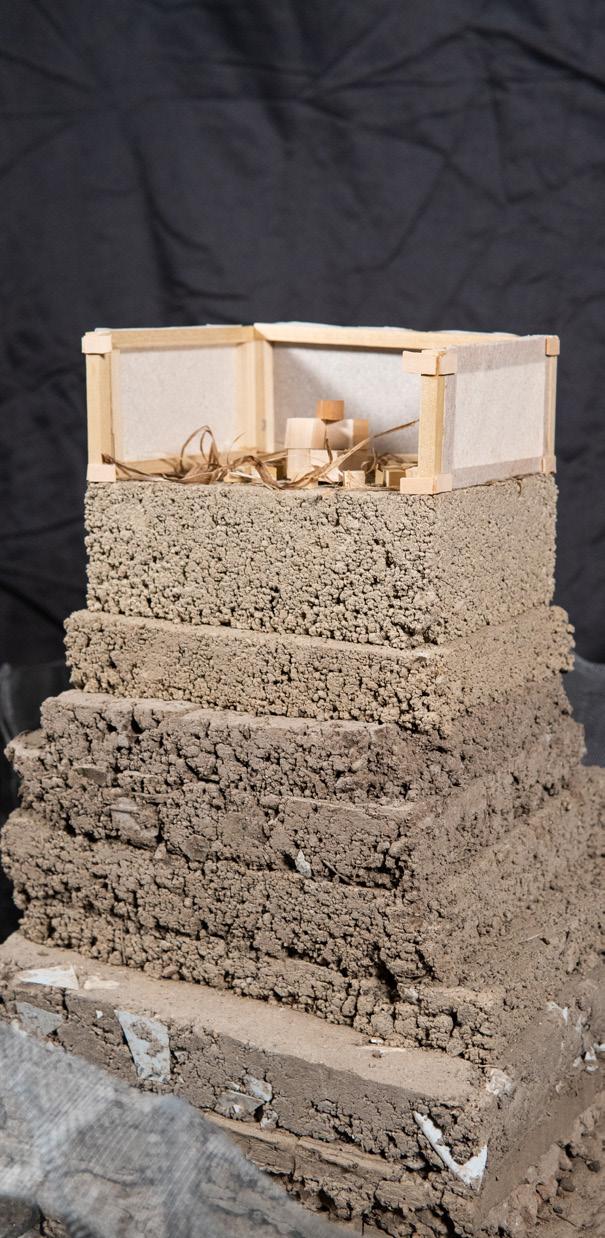
Between 1950 and 2023, they found a new way to persevere.
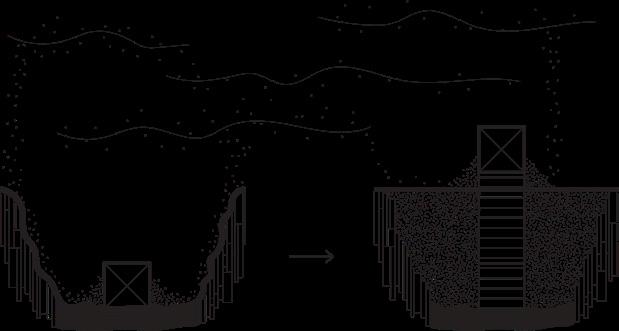
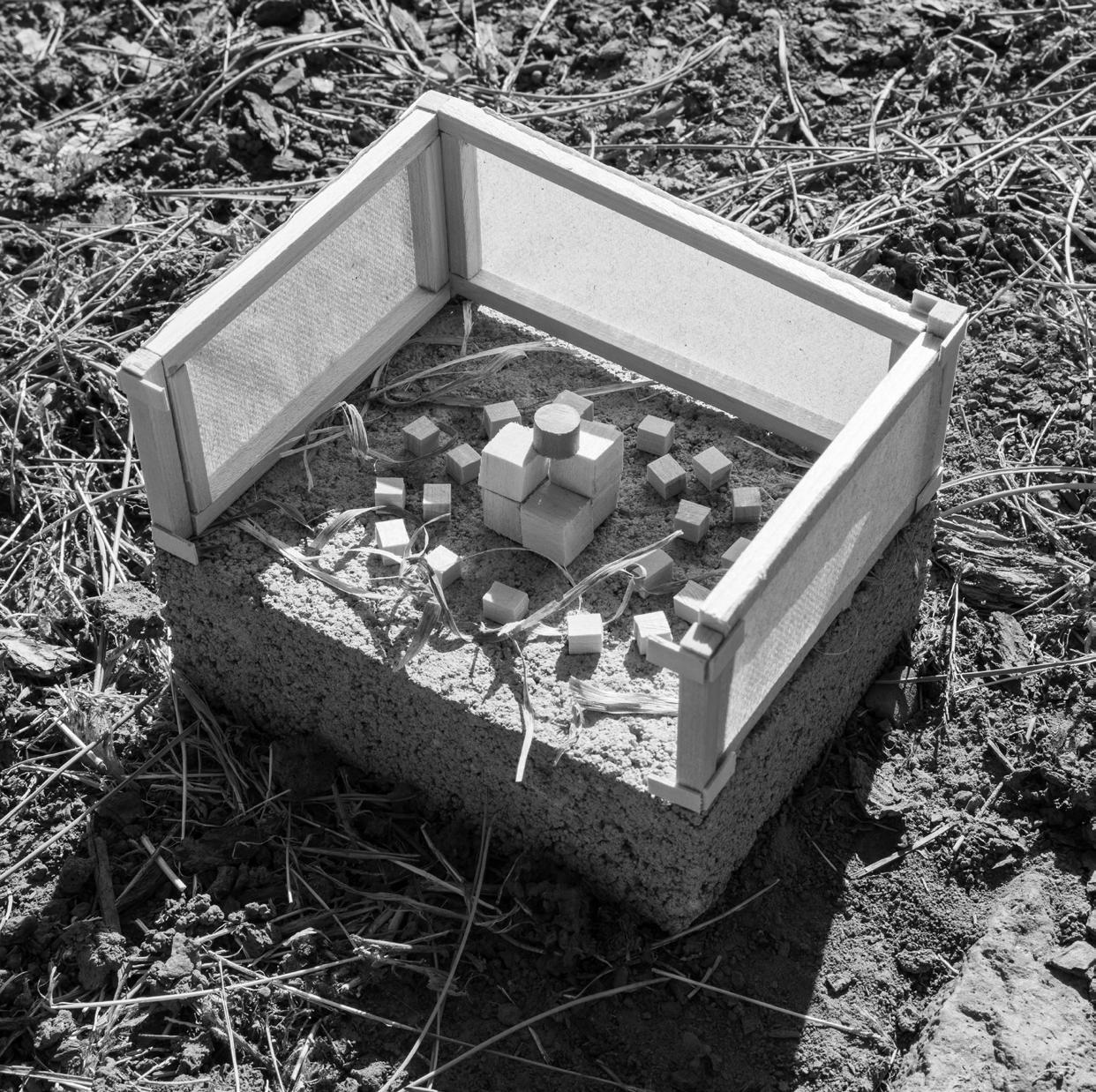
As the storm wore the Palouse away, dust began to fill in the nomad’s safehaven. In order to not be displaced yet again, the community decided to work with the dust. As debris filled in the Elberton valley, it was packed down into rammed earth lifts. This slowly raises the town out of the valley.
1000 YEARS LATER...
1,000 years later, the town is thriving.
As The Great Storm continues, the peaks and valleys of the Palouse loess is averaged out. The people of Elberton do not need build up anymore. Ultimately, the town has overcame the landscape. Now, Elberton sits as a monument in the Palouse. Visitors in the year 3023 marvel at the journey of the town.

I AM A LOVER
Steinar Goheen | ARCH 401 | Professor: Marti Cowan
“I am a voyeur!.. If a photographer says he is not a voyeur, he is an idiot!”
-Helmut Newton
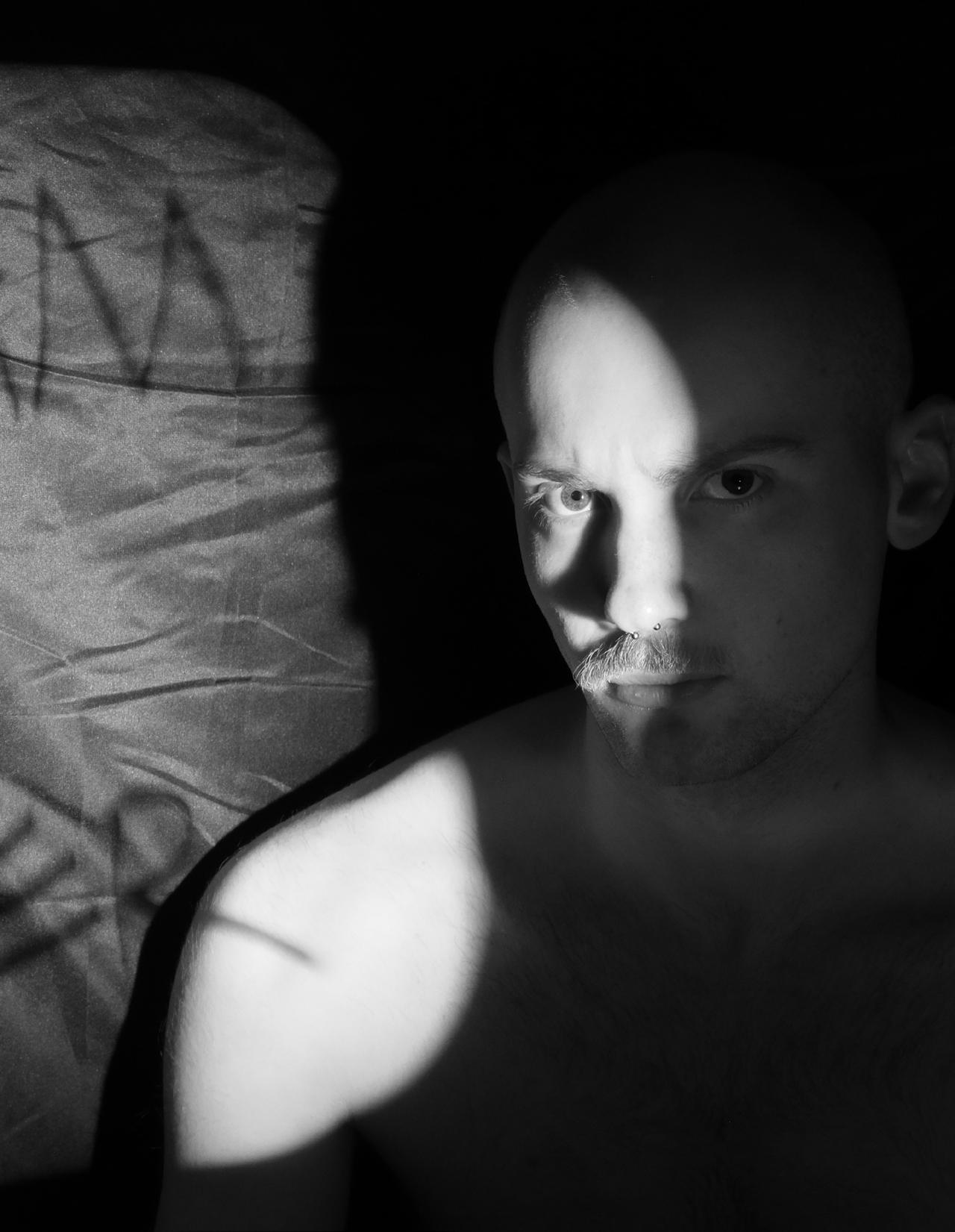
THE INHABITABLE CAMERA
“Modern design was never straightforward…” states Beatriz Colomina and Mark Wigley in their book Are We Human?. This is preceding a chapter discussing the anti-rational and downright unethical ways that the dominant modernists viewed the built environment. Between Loos’s hyper-masculine ‘theatre box’ and Corbusier’s parasitic infatuation with Eileen Grey, an interesting through point is discovered. Modernists were obsessed with the view. More specifically, the view that of seeing humans in salacious scenarios. This act of voyeurism was prevalent within many of the modernists’ works. They were obsessed with the camera. The act of picking up a camera, and capturing an image, is like how architecture was envisioned: space is just a carefully orchestrated set of views.
The Modernists were mixing photography, eroticism, and buildings at the same time the Surrealists were exploring sexuality in visual and literary arts. In an era where erotic media was becoming increasingly popular and critiqued, sexuality started to change. Sex was no longer needed as purely a survival tactic. Sex could now be explored by the masses, whether it be in photographs, books, film, or in the bedroom. Therefore, there is nothing natural about modern sex. It is shaped by exposure to media in our social systems, instead of an innate need to reproduce. In that, the best way to relate sex to architecture is via the camera (the very thing we find ourselves supposedly inhabiting). Whether it be Baltrop, Newton, Goldin, or Mapplethorpe, a sense of space is an inexcusable element of the camera lens.
Despite this, eroticism in architecture is still seen as a taboo. We hide our bodies behind walls and closed doors, using our spaces as intimacy inhibitors. Maybe this is in part due to social norms, or because of the sour taste the modernists have left on our tongues.
I call that we embrace the erotic qualities that space can provide.
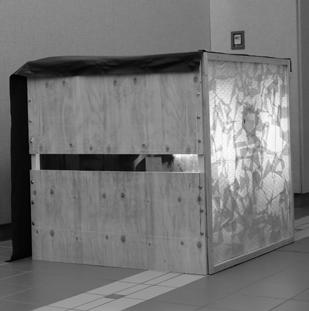
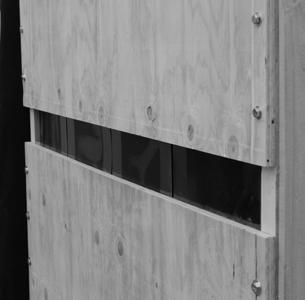
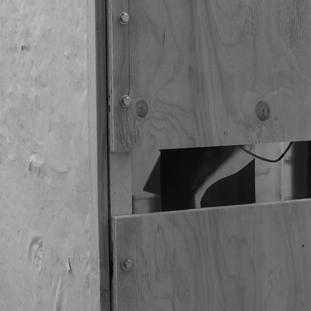
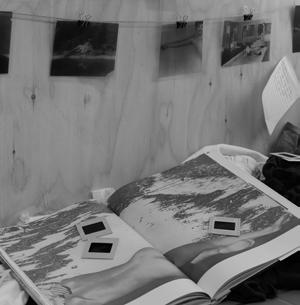
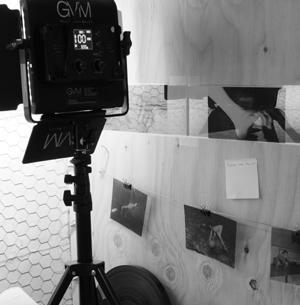
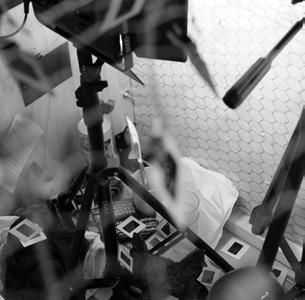
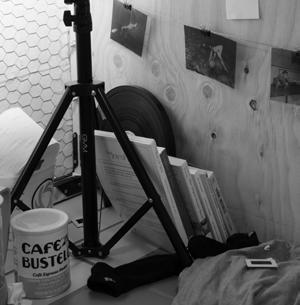
A wooden box was built in Carpenter Hall’s 4th floor hallway... It appeared to have been inhabited by a photographer.
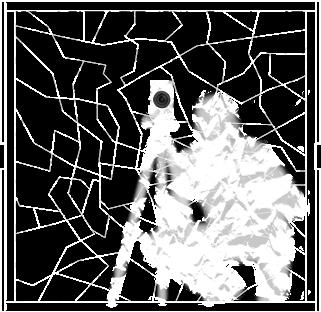
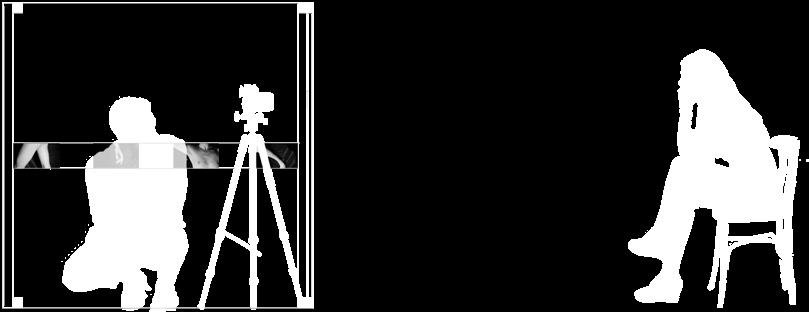
Camera POV
Photos Strung Up Side View Photo Lights Ribbon Window
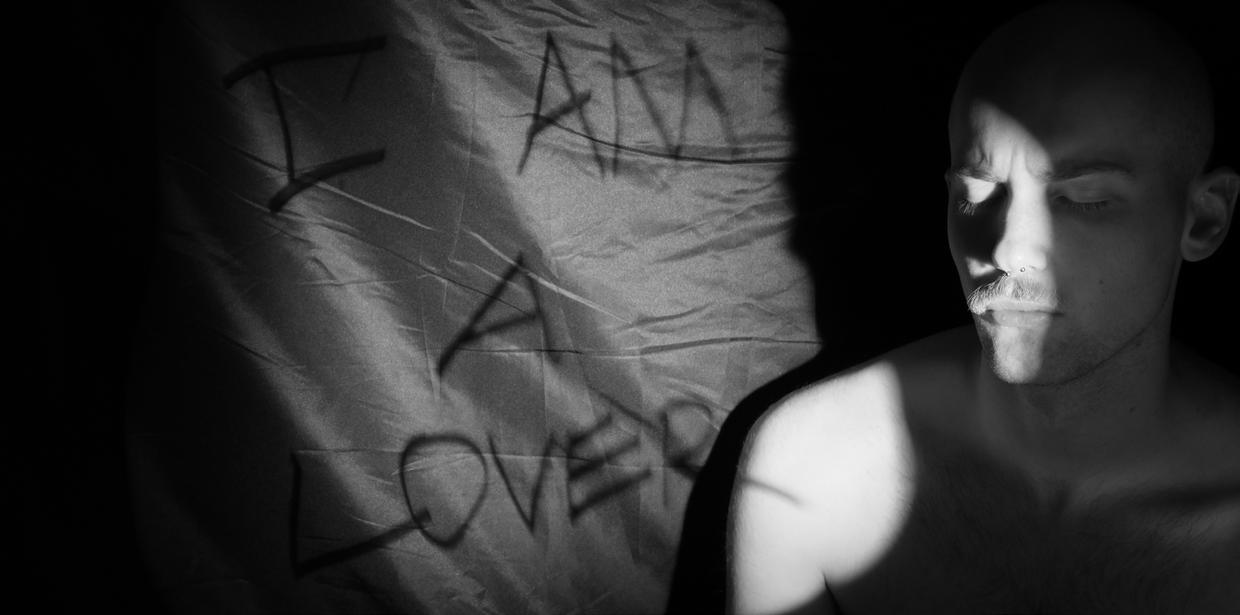
A drawing of my personal view out of the camera.
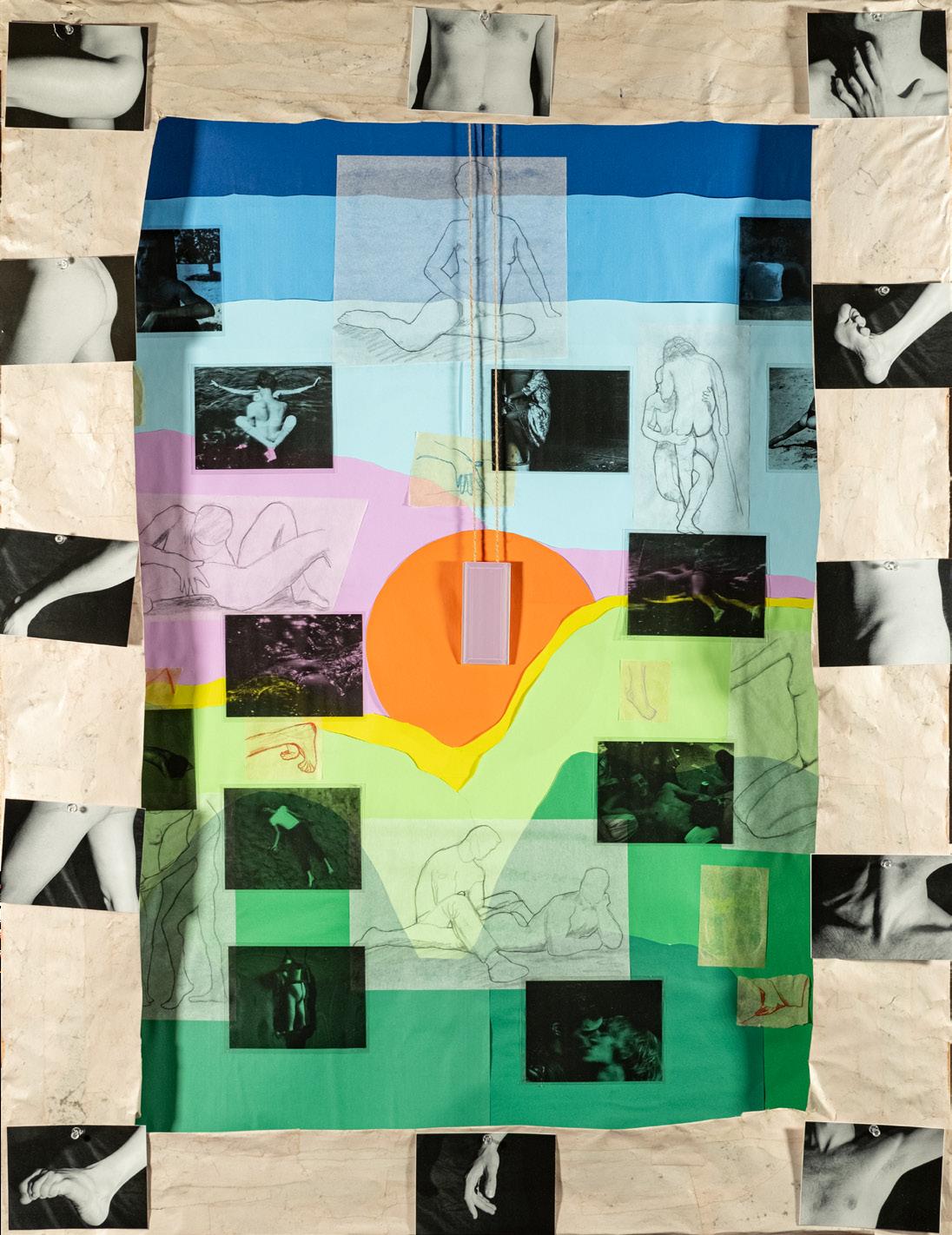
My queer experience on the Palouse.
DESIGN ACTIVISM SOCIETY
Design Activism Society is a student organization dedicated to exploring the capacity recognizes that design is not just a technical exercise, but a practice with a high is actively critical of how the built environment has been utilized to further greater societal institutions. Therefore, designers have the responsibility as both professionals believes that design activism is fundamentally informed by grassroots activism nuanced discussion and debate in the realm of these ideas. We supplement community, and provide opportunities for community members to further
Incentives:
Queering The Built Environment:
Queer theory presented for AIA’s Pride Month. We also presented this personally for the Spokane Integrus office.

Exhibition:
We fielded student work to showcase in the CUB Junior Ballroom. In partnering with the SDC EJB committee, we were able to have a workshop pertaining to what resources students need out of school.
capacity of built environment and design to implement social change. Our group high potential and capacity of creating societal and environmental progress. DAS greater systems of oppression. We recognize that there is designed inequality in professionals and citizens to participate in making the world more equitable. DAS activism movements created by those impacted most by oppression. We encourage curriculum by scheduling guest speakers, educating members in the design further equitable design initiatives through service and fundraising.
Incentives:

Exhibition Zine:
To disseminate the findings of the exhibition, we created a zine to distribute to students and faculty.
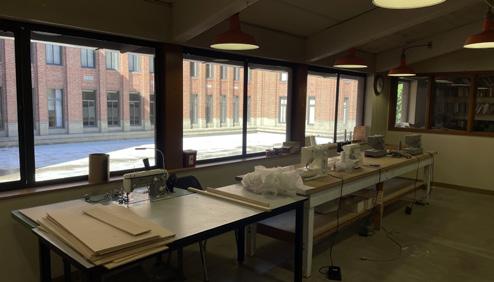
Resource Library:
One thing that we all know about design school is that materials can get expensive. We plan to rework a room in Daggy Hall in order to create a Resource Library for students.
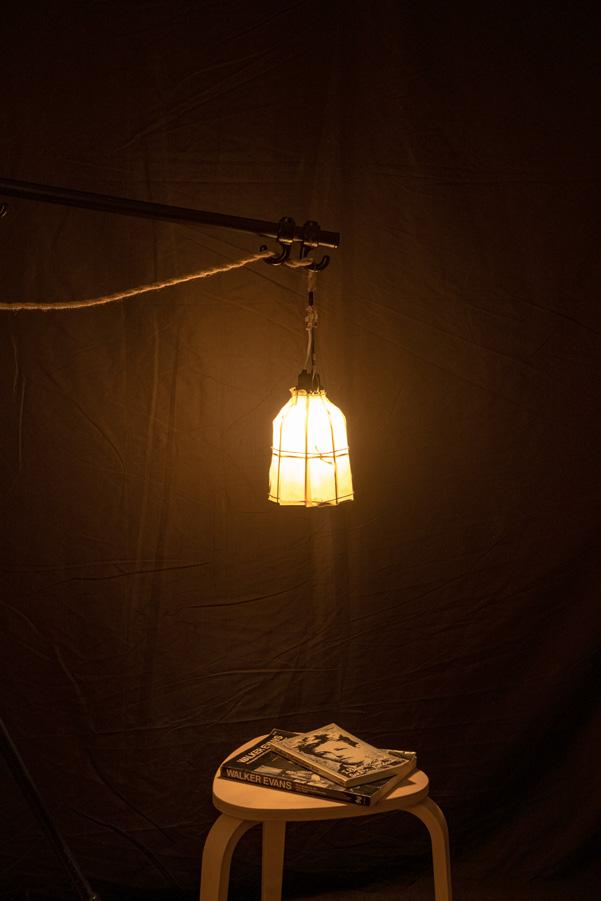
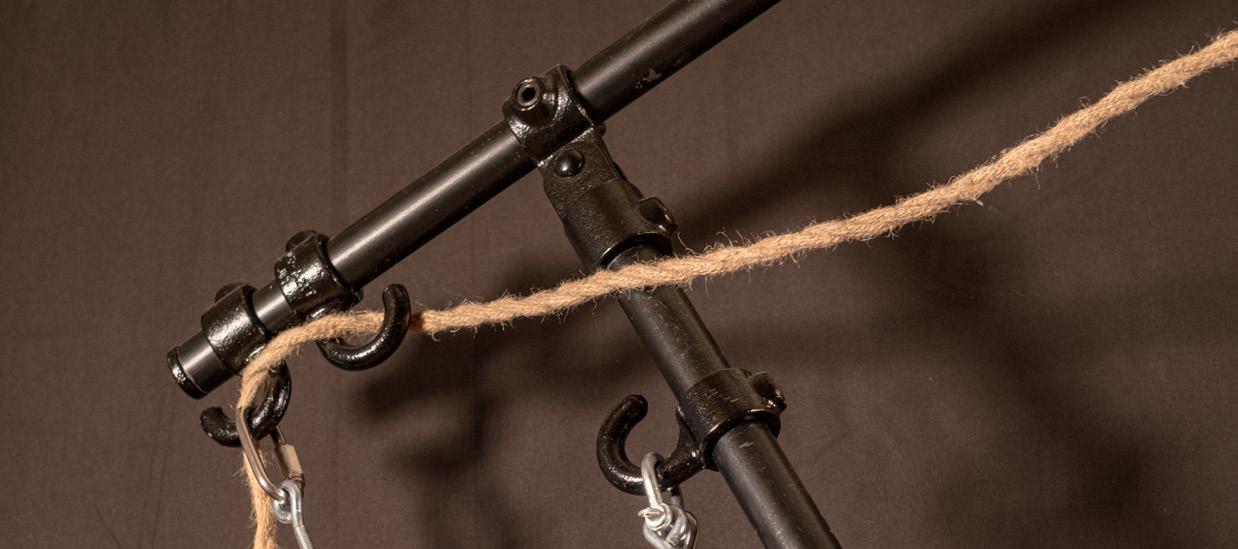
FLOOR LAMPS
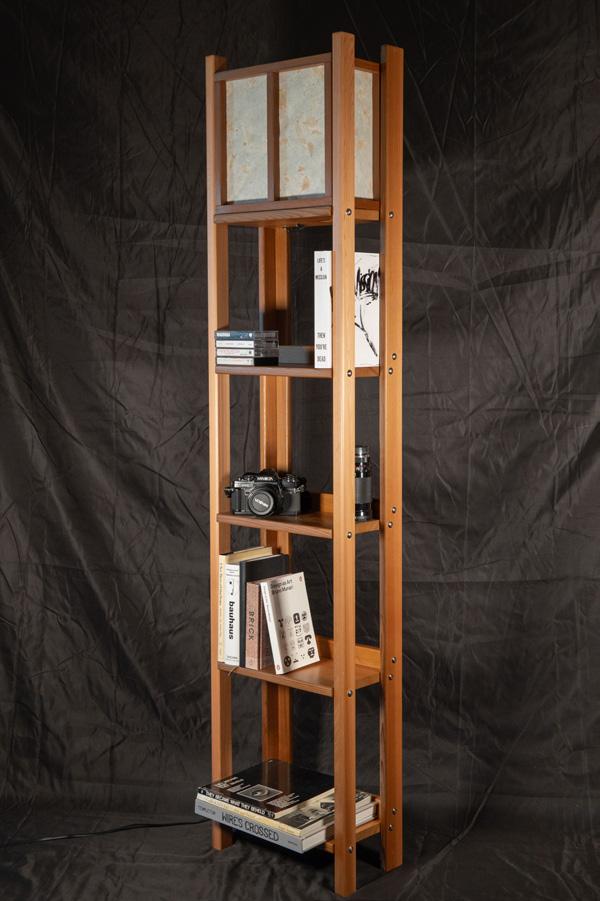
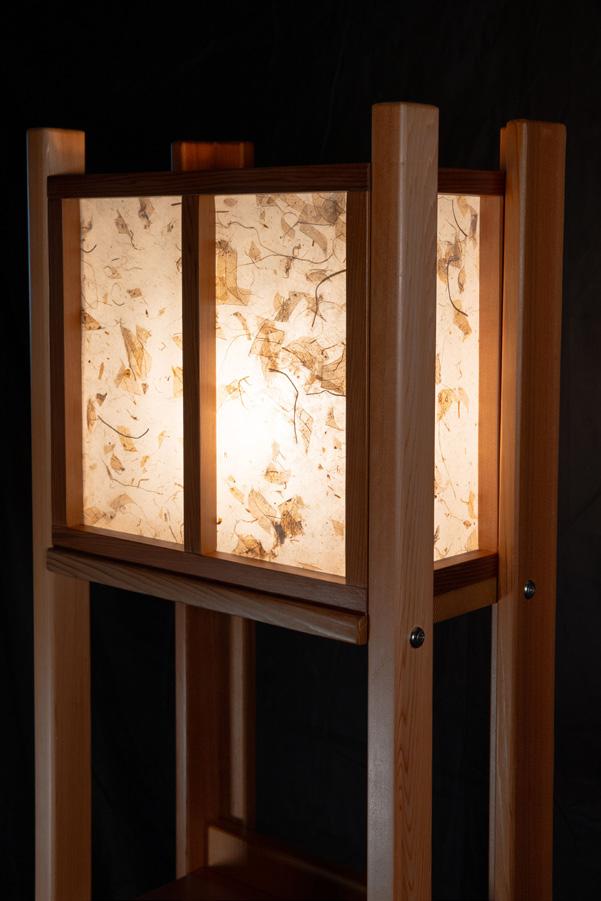
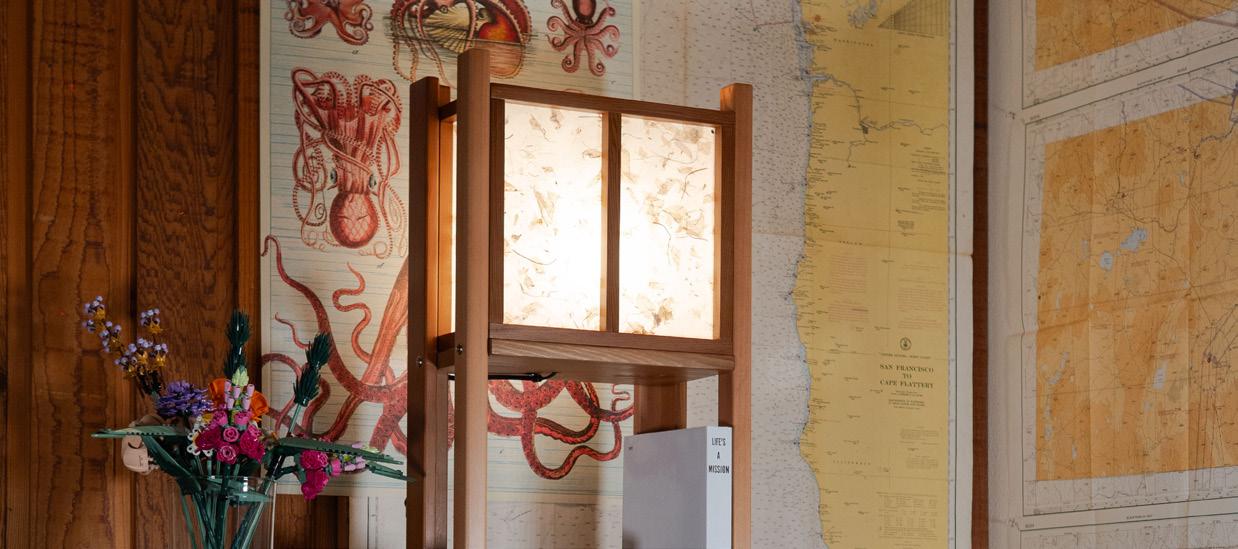
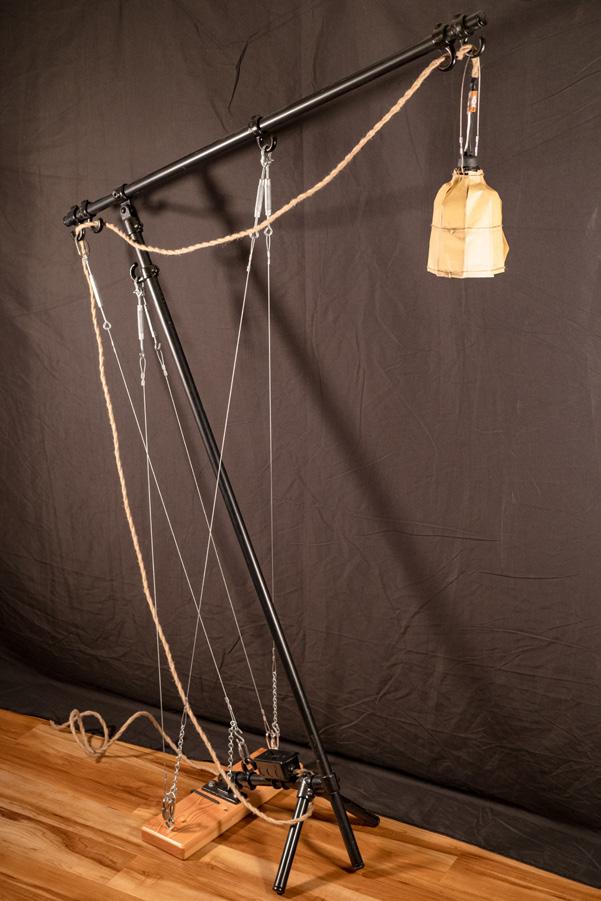
A pair of floor lamps that I have made for my apartment. Why buy a lamp from Target when you can make one yourself?
PHOTOGRAPHY
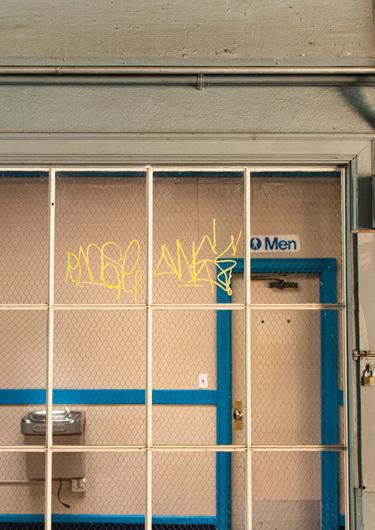
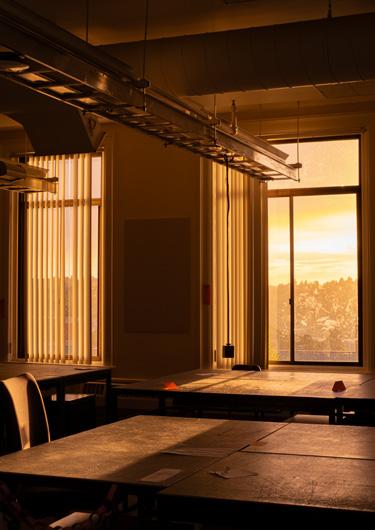
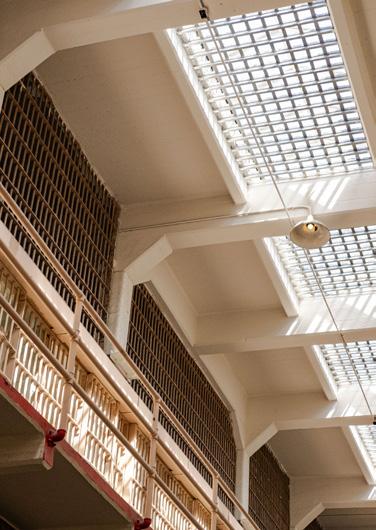
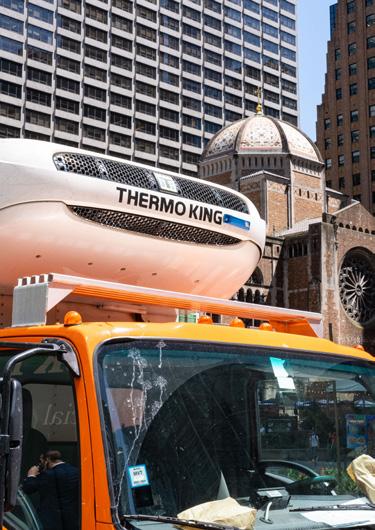
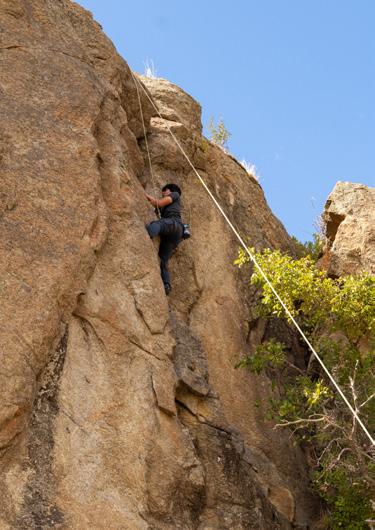
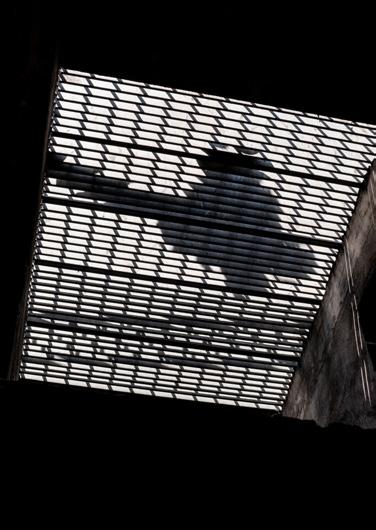
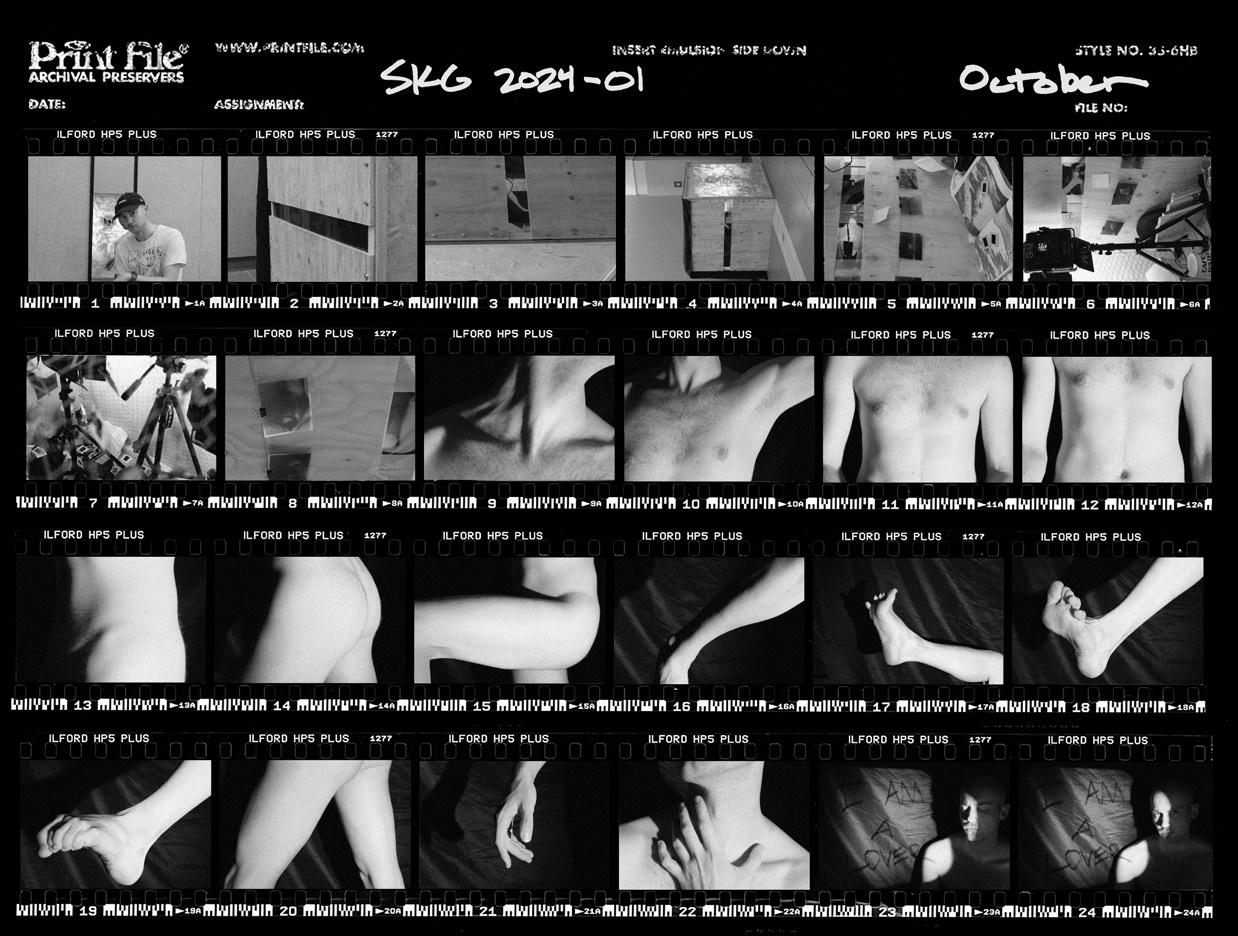
Some of my favorites from the