Designed to leave a luxurious impression, the allelectric BMW i7 offers a whole new take on elevated style, substance and innovative design.
Stateoftheart features like the BMW Curved Display, Automatic Doors, 31'' BMW Theater Screen, and Panoramic Sky Lounge LED Roof, as well as a 298–321 mile range* on a single charge; just a few details that make the BMW i7 undeniably alluring.
In the allelectric BMW i7, you can expect the exceptional and experience the extraordinary.
This is the Ultimate Driving Machine. ®
Contact a Client Advisor at BURDICK BMW to learn more about the i7 today.
Burdick BMW
5947 East Circle Drive
Cicero, NY 13039
(315) 4596000
burdickbmw.com
SHORTEST WAIT TIMES.
Our team is one of the fastest, most efficient in treating urgent, complex medical conditions. This adds up to the best in emergency care at the hospital you trust. In an emergency call 911. Then say, “Take Me to Crouse.”
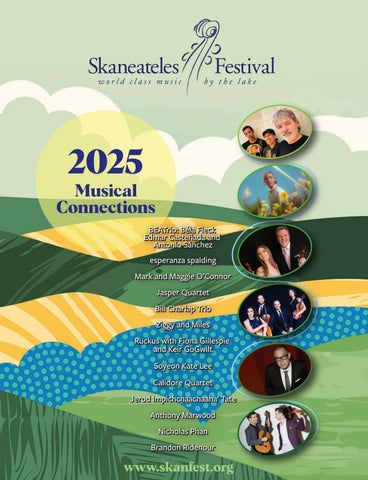
From the Artistic Directors
Welcome to the 46th season of the Skaneateles Festival! We hope your time here will be magical. The lake, the performers, the music, and the community—which includes you—are what elevate the experience. Thank you for being a part of it.
This season, we widen our view to include the natural world around us. As part of “Listen to the Wind,” we celebrate the natural beauty of Central New York, honor and learn from the Onondaga people who have long been stewards of this land, and support efforts to preserve and protect this land and natural resources. You may note that music on our programs was inspired by, or celebrates, Nature, including selections by Vivaldi (Four Seasons), Schubert (Die schöne Müllerin), Gabriela Lena Frank (Leyendas: An Andean Walkabout), and Chickasaw composer Jerod Impichchaachaaha' Tate (Woodland Songs and Pisachi, accompanied by projected images of the American Southwest).
Here are a few other highlights from this season:
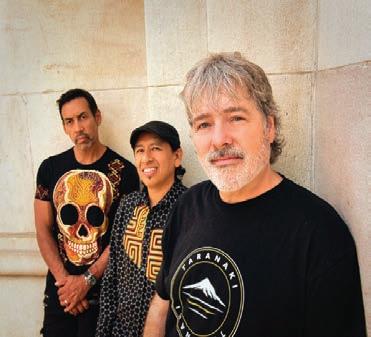
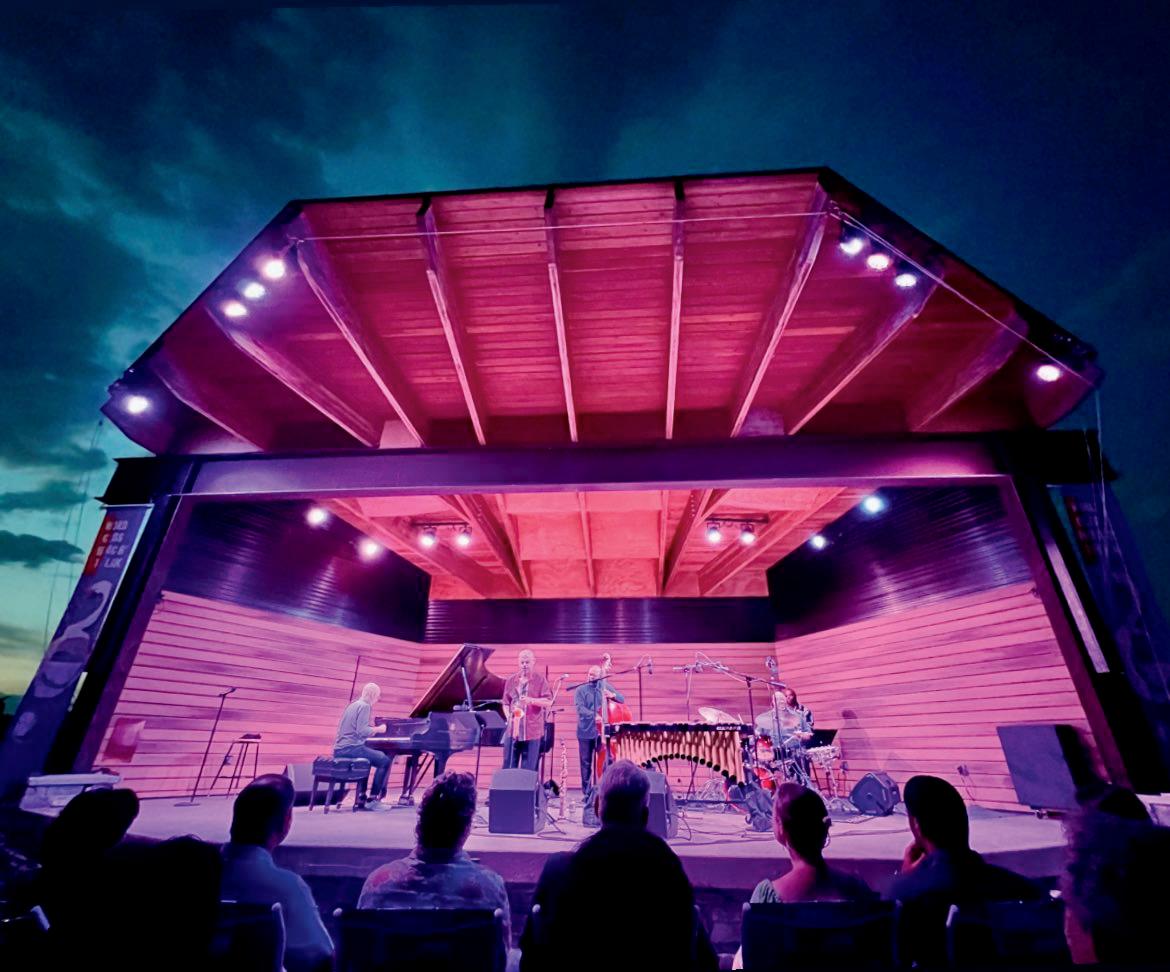
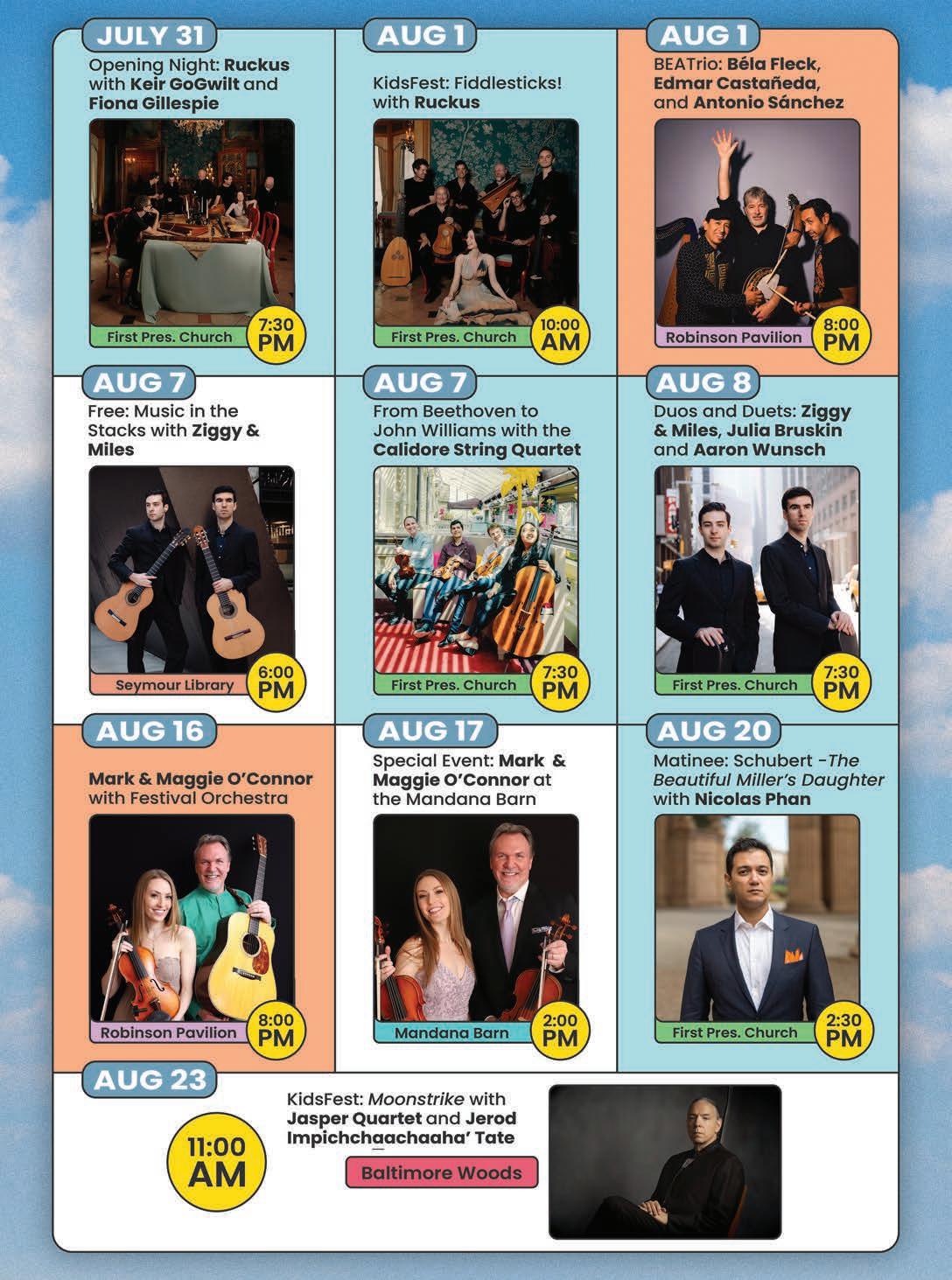
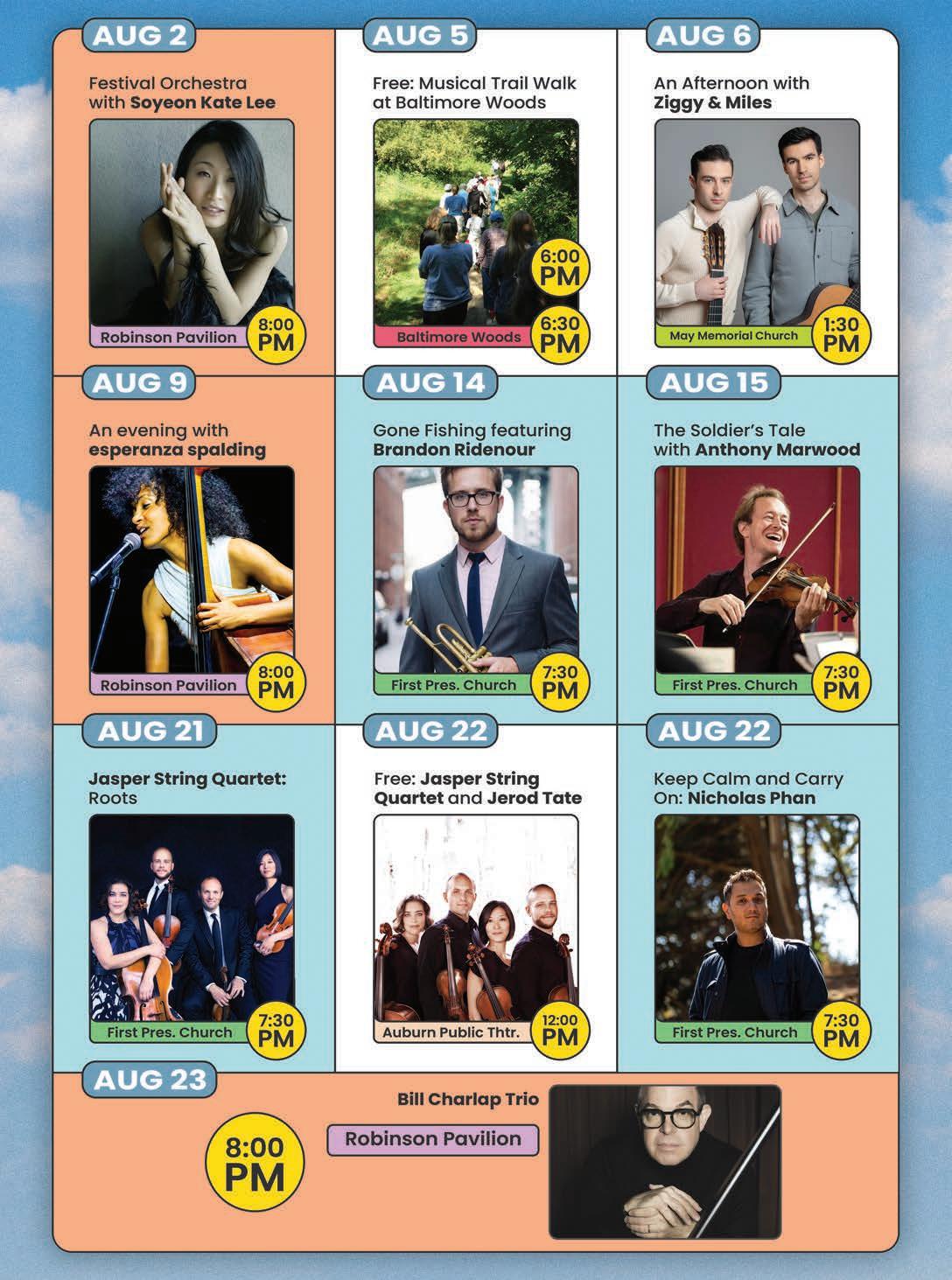
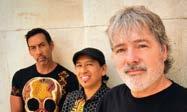
Béla Fleck, Edmar Casteñeda, and Antonio Sánchez (BEATrio) – The 46-time Grammy nominee returns (August 1), this time with a brand new project featuring virtuoso Columbian harpist Edmar Casteñeda and sensational Mexican jazz drummer Antonio Sánchez.
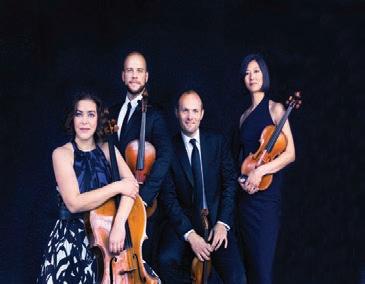
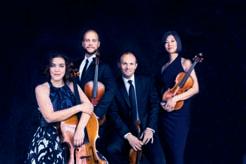
The Calidore Quartet – Appearing at the Festival for the first time (August 7), this celebrated quartet recently performed all of Beethoven’s quartets at Lincoln Center.
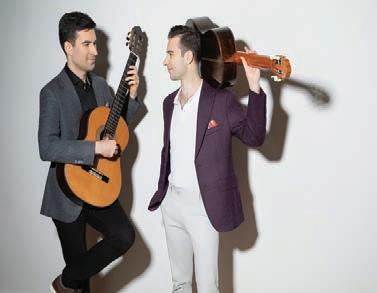
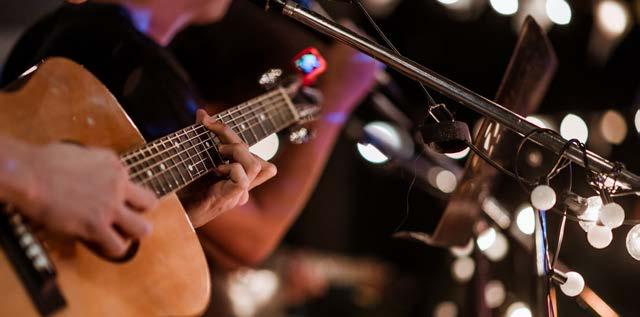
Guitar duo Ziggy & Miles – These Australian brothers are this season’s Emerging Artists in Residence performing several outreach events and at the First Presbyterian Church (August 8). Their sensitivity is extraordinary—and you’ll enjoy their banter, too!
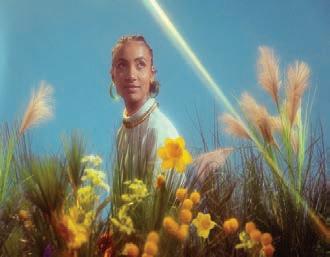
esperanza spalding – The groundbreaking bassist and vocalist has a special sound and charisma all her own, and she truly thinks outside the box. As she says, “Jazz has always been a melting pot of influences, and I plan to incorporate them all.”
The Jasper Quartet with Jerod Impichchaachaaha' Tate – Join us at Baltimore Woods for a special KidsFest performance (August 23)—Tate narrates Moonstrike, which interweaves three American Indian legends about the moon, set to music.
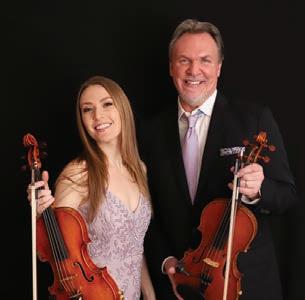
Of course, there are many more outstanding artists, including fiddlers Mark and Maggie O’Connor, tenor Nicholas Phan, and the incomparable jazz pianist Bill Charlap. Our goal is to make you want to attend all the concerts. Invite your friends and family, too! Sharing music with each other is a privilege and a joy. We hope this music connects with you, and we’d like to connect with you as well—introduce yourself to us, to a fellow audience member, and to a performer.
See you at the Lake!
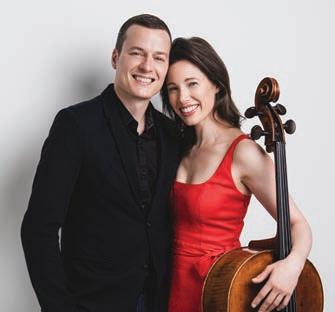
Aaron Wunsch and Julia Bruskin
Artistic Directors
Skaneateles Festival
Board of Directors
Steve Scheinman, President
Doug Whitehouse, Vice President
Miki Bangs
Kitty Bersani
Dave Birchenough
Donald Blair
Heather Carroll
Joan Christy
Barb Connor
Elijah Conte
Amy Fairchild
Brendan Ferretti
Administration
Susan Mark, Executive Director
Edward Conan, Treasurer
Carrie Scholz, Secretary
Leanna Fischer
Koko Fuller
Chris Johnson
Daniel Kringer
Jill Marshall
Julia Bruskin & Aaron Wunsch, Artistic Directors
Reese Nesbitt, Project and Outreach Manager
Ellen Sorber, Marketing & Digital Communications Manager
Katherine Feeney, Ian Potter, Allyson Vail, Jack VanBeveren, Marketing Interns
Ainslee Santa Croce, Event Coordinating Intern & Music Librarian
Sarah Paduano-Moth, Operations Manager
Eric Booth, Event Coordinator
Corey Riley, Technical Manager
Jason Guo, Emma Hill, Stage Assistants
Sarah Midgeley Scuderi, Crew Supervisor
Diane Plumley
Ben Sio
Bridget Wynne
Advisory Council
Thomas Bersani
Judith Bryant Somak
Chattopadhyay
Mary Cotter
William Davis
Kim Driscoll
Michael P. Falcone
Steve Frackenpohl
Lindsay Groves
Claire Howard
Andrea Latchem
Sharon Magee
Doug Sutherland
Daniel Kringer, Jonathan Paduano, Jeremy Scuderi, Maureen VanVechten, Crew
First Presbyterian Church, Anyela’s Vineyards – Concert Locations
Koko Fuller – Ticket Sales
Skaneateles and Westhill School Districts –Music Stands & Percussion
Many thanks to the generous Skaneateles residents who open their homes to the Festival’s visiting musicians.
Thank you to all the Skaneateles Festival Donors – 2025
Gifts received as of July 16, 2025
Platinum Guarantor
Andromeda Foundation
Tom Bersani and Joan Christy
CNYArts
Joan Christy, in memory of Carolyn Stein
Gold Guarantor
1911, Beak & Skiff
Artist Piano
Helga Beck
Somak Chattopadhyay and Pia Sawhney, Armory Square Ventures
Guarantor
Roland and Tacie Anderson
George S. Bain
Donald Blair and Nancy Dock
Bousquet Holstein, PLLC
The Bonadio Group
David Bowser and Diane Stebbins
Sam and Debby Bruskin
Benefactor
Miki and Dan Bangs
Dave Birchenough and Carrie Lazarus
Maryellen Casey and Bruce Keplinger
Lynn Cleary and David Duggan
Paul and Linda Cohen
Barb Connor and Doug Wood
Charley and Kim Driscoll
Gold Patron
Ivan and Mimi Ace
Craig and Kathleen Byrum
Patti Carey
Haefele Design
Bob and Terry Dewitt
Dave and Peggy Dickman
Karen Elkins and Jerry P. Weir
Elizabeth Etoll
Gretchen’s Confections
Chris Johnson
Sally Neumann
New York State Council on the Arts
Gretchen and William
Christenson, in honor of Louise and David Robinson
Ed and Paula Conan
Mary Cotter
Franklin Lofts, LLC
Sarah and Kevin Goode
Virginia Bryce Cayuga County Tourism
Stephen and Linda Chow
Elizabeth and Evan Dreyfuss
Amy Fairchild and Gretchen Ritter
Christopher and Jennifer Feeney
Onondaga County
Tom and Camille Potter
Daniel and Linda Scaia
Elsa and Peter Soderberg
Vic and Debbie Duniec
Guy and Nancy Easter
Linda and Jeremy Euto
Anne Gordon
David Graham
Joseph and Marie Grasso
Jackie Jones, Lake Life Real Estate Agency
John and Peggy Manring
Ed and Brenda Evans
Alison and Brendan Ferretti
Hamilton and Fran Fish
Frank and Frances Revoir
Foundation
Craig and Barbara Froelich
Randy and Meg Green
Georgina Gregory
Scott Heinekamp
Grossman St. Amour CPAs
PLLC
Donna Himelfarb
Robert Lieberman, RAV Properties
Pete and Betsy McKinnell
David and Jan Panasci
Patricia Lynn-Ford and Steven Ford
Koko Fuller
David Graham
Holly Gregg and Patience Brewster
Dana and Susan Hall
Andrea Latchem
Jill and Todd Marshall
Susan Mark and Mary Knepper
Fred and Ginny Marty
Brendan McGinn and Rebecca Cohen
Edward and Charlene McGraw
Steve and Jackie Miron
Jane and Robert Morse
Sean and Laura O'Keefe
Lawrence Jerome and Linda Gifford
Darlene Kerr and John Cowin
John and Maren King
Robin Kinnel
Roger and Anna Krieger
James MacKillop
Marshall and Sharon Magee
David and Norma McCarthy
Doug Sutherland and Nancy Kramer
Sieglinde Wikstrom
Lawrence and Tracy Sala
Steven and Kelly Scheinman
Juliette Klein Sharpe Fund, the CNY Community Foundation
Sherwood Inn & Appetites
Donald and Chacea Sundman
Jennifer Sutherland
Jim and Julie Moore
Judy Robertson
Linda and Dan Roche
Don Scholl
James Gregg, Managing Director/Investments, Stifel
Sutton Real Estate
Doug and Peg Whitehouse
Dan Fisher and Lori Ruhlman
Alisa and Joseph Salibra
Helen Tai and John McDevitt
The Hennfam Fund
Salli and James Tuozzolo
Judy Varney
Robert and Jenifer Weisenthal
Carolyn C. Winkelman
Brian and Krystyna Owen
Diane and Peter Plumley
Dan and Linda Roche
Al and Vicky Sabin
Kelly and Tony Scalzo
Deirdre Stam
Bruce and Jan Wood
Thank you to all the Skaneateles Festival Donors – 2025
Gifts received as of July 16, 2025
Patricia DeAngelis
Christy and Steve Del Colliano
Alan and Linda Dolmatch
Abigail Duggan and Christopher Short
Contributor
Allan and Susan Abravanel
William and Alice Allen
Bernard and Lilian Asher
Peggy and Lee Bennett
Kitty Bersani
Jane and Donald Blake
Barbara Bloom
Cynthia Blume
Hal and Peggy Brown
Carol Bryant
Brian and Romy Callahan, in memory of Jean Shook
Jim and Sharon Cirincione
Martin and Deborah Hubbard
Jackie Keady
Alfred Kelly and Sharon Burke
Ted Kinder and Ellen Leahy
Modern Kitchens of Syracuse
Bruce and Margaret Osborne
John Pulos
Greg and Debbie Quick
Dr. and Mrs. Geoffrey Wickwire
Eleanor Williams
Joseph and Maureen Wilson
Bridget and Dan Wynne
Barbara Egtvedt
Anne Fairbanks, in honor of Julia Bruskin & Aaron Wunsch
Paul and Erika Fiutak
Diane Forney
Jean Forster
Lisabeth Frarey
Alex and Donna Giambartolomei
Mary Giroux
Nancy Graham
Deborah Geer
Ruth Hancock
Jeffrey Kirshner and Lorraine Rapp
James and Jane Lanshe
Jacques Lewalle and Paula Rosenbaum
Edward and Carol Lipson
Smiles of Skaneateles
Dawn and Guy Mackenzie
Bobbi and Cliff Malzman
Fran and Kevin McCormack
Tom and Linda McKeown
Diane McRae
Gary and Carolyn Mucci
Dick and Kim Poppa
Nancy Rice
Michael and Teresa Rogus
John and Laura Rooney, in memory of Jean Shook
Mark Rosenman
Yilei Shi, in memory of Jean Shook
Sharon Slater
Ross and Janet Stefano
Peter and Florence Swartz
Eugene and Joan Tarolli
Nancy E. Tiedemann
David and Patricia Urban
Community Outreach Events
The Skaneateles
Festival is proud to present Listen to the Wind
“Listen to the wind, it talks. Listen to the silence, it speaks. Listen to your heart, it knows.” – Native American Proverb
Listen to the Wind is a project that celebrates the natural beauty of Central New York and recognizes and supports efforts to preserve and protect this land and natural resources. Honoring the Onondaga people who have long been stewards of this land and stood firm for its restoration, we hope to learn from their example and work with representatives from the nation to inspire our community to be better caretakers in the years to come.
Highlights from this season will include Woodland Songs a world premiere arrangement by Chickasaw composer Jerod Impichchaachaaha' Tate on Saturday August 16th. A program called ROOTS on Thursday, August 21 includes music inspired by local and indigenous cultures, performed by the Jasper String Quartet, featuring an additional piece by Tate that gives homage to Hopi and Pueblo music in Pisachi, accompanied by projected images of the American Southwest.
Jerod and the Jasper String Quartet also perform a KidsFest concert on August 23rd at 11:00 AM at Baltimore Woods Nature Center. Children are free and adults are $5.
The Skaneateles Festival acknowledges with respect the Onondaga Nation, firekeepers of the Haudenosaunee, the Indigenous people on whose ancestral lands we now stand.
Community outreach events will highlight music inspired by the natural world and its preservation, as well as music by Native American composers.
Monday, August 4 • 7:00 PM
Featuring Guitar Duo Ziggy & Miles
Kendal at Ithaca
This event is NOT open to the public.
Tuesday, August 5 • 1:00 PM
Featuring Guitar Duo Ziggy & Miles
Upstate Golisano Children’s Hospital
This event is NOT open to the public.
Thursday, August 7• 6:00 PM
Featuring Guitar Duo Ziggy & Miles
Seymour Library
176 Genesee St, Auburn, NY
This event is FREE and open to the public. Children and families are welcome.
These events are made possible with support from:
Tuesday, August 5 6:00 PM & 6:30 PM
A Musical Nature Walk at Baltimore Woods
For complete details – see page 26 This event is FREE and open to the public. Children and families are welcome.
Friday, August 22 • 12:00 PM
Featuring Chickasaw musician Jerod Impichchaachaaha' Tate and the Jasper String Quartet
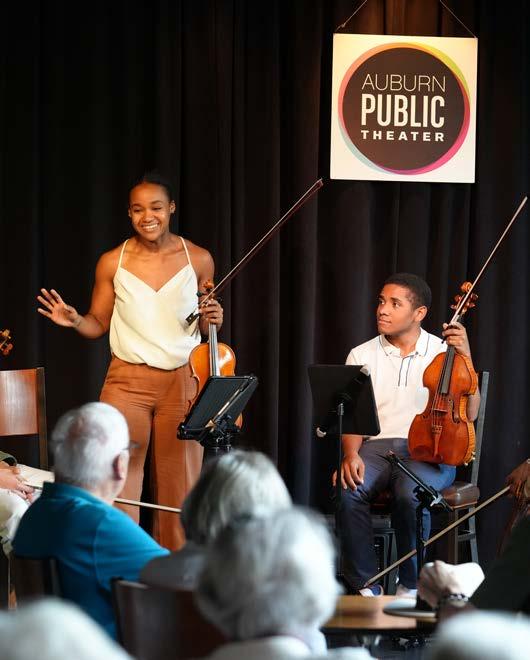
Auburn Public Theater
8 Exchange St, Auburn NY
This event is FREE and open to the public. Children and families are welcome.
Educational Initiative
First Presbyterian Church 97 E. Genesee St, Skaneateles
SkanFest U is sponsored by:
The Julie Sharpe Fund
Music and Nature
Since ancient times, music has been heard to reflect the resonances of the natural world. Over time, composers of many cultures have taken inspiration from Nature and found ways of expressing it through sound. Get inside the music, including several Nature-inspired works to be heard on Festival programs this season by Vivaldi, Mendelssohn, Schubert, Dvorˇák, Vaughan-Williams, Gabriela Lena Frank, and Chickasaw composer Jerod Impichchaachaaha' Tate. Explore how an appreciation of Nature enhances musical understanding, enjoy live performances and connect with fellow music enthusiasts and Nature lovers afterward over a glass of wine.
SkanFest U is led by Co-Artistic Director Aaron Wunsch, who teaches music at The Juilliard School.
Weekly Sessions
Tuesday, July 29, August 5, 12, and 19 4:00 – 5:00 PM
The Skaneateles Festival’s educational sessions are FREE and open to all. For more information: 315-685-7418 or www.skanfest.org
Aaron Wunsch is sponsored by The Skaneateles Consortium: George Bain, Sam and Debby Bruskin, Dana and Susan Hall, and Judy Robertson
“ This fund will serve as a vehicle that reflects my deep appreciation for what the people of this area have meant in my life.”
– Juliette Klein Sharpe
Longtime Skaneateles resident Julie Sharpe felt blessed by her friends and community and enriched by several local nonprofits. Before her passing in 2014, Julie designated a provision in her will to establish a fund at the Central New York Community Foundation. The Skaneateles Festival will benefit in perpetuity from Julie’s thoughtful legacy of generosity.
SkanFest U is performed in grateful memory of Julie and all that she did as a Festival volunteer and supporter.
Photo provided by the Central New York Community Foundation
Skaneateles Festival Behind the Scenes Team
The Skaneateles Festival is a unique experience for our musicians and audience members. This is facilitated by community members like you who contribute their time and enthusiasm.
If you are interested in helping, please visit the “Get Involved” section of our website www.SkanFest.org
for so many memorable musical performances.
-Patience Brewster & Holly Gregg
Fun at the Festival
For all ages
Kids FREE
Adults $5 at the door
kidsfest is presented in memory of Faye Panasci
with additional support from the Fletcher Foundation
Fiddlesticks! with
Ruckus
Friday, August 1, 10:00 AM
First Presbyterian Church, 97 East Genesee St, Skaneateles
Ruckus takes young audiences on a fun, educational journey exploring the origins of fiddling.
Meet Neil Gow, 18th-century Scottish fiddler, and Italian violinist Arcangelo Corelli to whom he was often compared. This fascinating musical journey will engage kids of all ages.
Maggie Cox, bass
Rami El-Aasser, percussion
Elliot Figg, harpsichord & synthesizer
Fiona Gillespie, voice & pennywhistle
Keir GoGwilt, violin & hardanger d’amore
Paul Holmes Morton, guitar & theorbo
Clay Zeller-Townson, baroque bassoon & percussion
“Moonstrike”
with Jerod Impichchaachaaha' Tate and the Jasper Quartet
Saturday, August 23, 11:00 AM
Baltimore Woods Nature Center, 4007 Bishop Hill Rd, Marcellus
Jeffrey Myers, violin; Ryan Meehan, violin; Jeremy Berry, viola; Estelle Choi, cello
Chickasaw musician Jerod Impichchaachaaha' Tate leads his own captivating tale, Moonstrike, interweaving three American Indian legends about the moon. This evocative story is set to original and traditional music performed by the Jasper String Quartet, including the Calusa Corn Dance, sung by Southeast American Indians during the harvest moon.
ARTIST SPONSORSHIPS
Jasper String Quartet is sponsored by Kim & Charley Driscoll and Joe & Marie Grasso
Ruckus is sponsored by Jennifer Sutherland
Jerod Impichchaachaaha' Tate is sponsored by Holland Gregg and Patience Brewster
Week 1
Thursday, July 31
7:30 PM
First Presbyterian Church
97 E. Genesee St, Skaneateles
Tonight's concert is sponsored: Larry and Tracy Sala
Opening Night: Folk meets Baroque
with Ruckus & Keir GoGwilt
TRADITIONAL SCOTTISH GAELIC
CORELLI
Dh’èirich mi moch, b’fheàrr nach d’ dh’èirich
Sonata in G minor, Op. 5, No. 5
Adagio – Vivace
Adagio – Vivace
Giga (Allegro)
NEIL GOW The Forrest Set from Books of Strathspey Reels
Sets compiled from Neil Gow’s Books of Strathspey Reels
ARTIST SPONSORSHIPS
Ruckus is sponsored by Jennifer Sutherland
Fiona Gillespie is sponsored by Linda and Dan Roche
Kier GoGwilt is sponsored by Lake Life Realty, Jackie Jones
Ruckus appears by arrangement with Alliance Artist Management.
579 West 215th Street, #2B New York, NY 10034
The Skaneateles Festival is made possible by the New York State Council on the Arts with the support of the Office of the Governor and the New York State Legislature.
Program Notes
Dh’èirich mi moch, b’fheàrr nach d’ dh’èirich
TRADITIONAL SCOTTISH GAELIC
Sonata in G minor, Op. 5, No. 5 (1700)
ARCANGELO CORELLI (1653-1713)
The Forrest Set from Books of Strathspey Reels
NEIL GOW (1727-1807)
Sonata in A Major, Op. 5, No. 6 (1700)
ARCANGELO CORELLI (1653-1713)
The Jenny Sutton Set
NEIL GOW (1727-1807)
Lord Gregory
TRADITIONAL SCOTTISH FOLK SONG
Folia in D minor, Op. 5, No. 12 (1700)
ARCANGELO CORELLI (1653-1713)
The Lady Helenora Set
NEIL GOW (1727-1807)
Sets compiled from Neil Gow’s Books of Strathspey Reels
When it comes to the violin, Italy is king. 288 years after his death, the name Antonio Stradivari is still synonymous with the world’s finest fiddles, and the foundational names in violin technique (Corelli, Vivaldi, Paganini) all end in “-i,” like your favorite pastas. If you had been an 18th-century violinist, one can imagine this superiority might go to your head, as the Scottish say, just a wee bit. Renowned violinist Francesco Geminiani, who settled in the British Isles in 1714, grew fond of Scottish folk melodies but assumed that Scottish music must have been “rude and barbarous” until Italian musicians could “civilize and inspire it with all the native gallantry of the Scottish Nation,” to which the Scottish might say, “Haud yer wheesht!”
In truth, Scotland had its own musical traditions going back centuries. In the 13th century, Scottish Gaelic grew distinct from the Irish version, and folksong followed its own path. “Dh’èirich mi moch, b’fheàrr nach d’ dh’èirich” takes on the voice of each-uisge, a fearsome water spirit who lives in the Scottish Highlands and typically takes the form of a horse. This plaintive tune, however, renders the spirit sympathetic, for his human lover has born him a child and then abandoned it to his care, which the spirit cannot give. Gradually, Scottish folk song transitioned to English along with spoken language, even as the severity of its storytelling remains. The ballad “Lord Gregory” (or “The Lass of Roch Royal”) tells of a young woman carrying Gregory’s baby at the door of his castle; Gregory’s mother lies, telling the woman he is at sea. She sets out for him but dies by shipwreck.
Meanwhile, in Italy, violin music gained expressive power, inspired in part by opera singers and enabled by advances in violin building. Biagio Marini (1594-1663) sought to invest the violin with specific emotions in his Affetti musicali (Musical Affections), but such raw emotions were later restrained by Arcangelo Corelli in favor of grace and good humor. It would be difficult to overstate Corelli’s influence on the history of music. He was the first European composer to gain international renown exclusively for his instrumental works. His earliest music teacher was a priest, and Corelli later settled in Rome, which may partially explain why he crafted his own musical rules and harmonic procedures, a kind of musical canon law that he then religiously followed. The next generations of violinist-composers stepped right into his style, and his influence spread far and wide.
In Rome, Corelli served Christina, the eccentric former Queen of Sweden, who ought not to be there at all; a Protestant by birth, she abdicated, converted to Catholicism, and moved to Rome, much to the Pope’s pleasure. She loved the sensuous beauty of Catholic art and music, and Corelli obliged with violin chamber music for her high-minded artistic salon at the Palazzo Farnese. Christina was apparently a woman of passionate intensity; after her favorite cardinal didn’t show up for a romantic liaison, she launched a cannonball into his palace gate, offering him a new kind of can(n)on law.
Corelli organized his music according to two categories: da chiesa (for church), and da camera (for the chamber). Corelli’s Sonata in G minor, Op. 5, No. 5, for violin, bass instrument, and continuo (harpsichord), is supposedly for church, but the last movement ought to raise some eyebrows: it’s a gigue, descendent of the Irish jig. The sonata is otherwise typical of Corelli’s style: clear melodic ideas, harmonic sequences, and frequent cadence (resting) points. The music may sound serious at first, but its gentler nature lies around every corner. Listen for dialogue between the violin and bass line; while the violin is generally in charge, the lower part can go toe to toe with the violin when called upon. The mournful central Adagio releases into a spritely Vivace and the vigorous Gigue.
Dance music may not have been welcomed in Roman churches, but it was part of daily life in the Scottish countryside. Every town needed a local fiddler, and in Dunkeld, that was Neil Gow. Gow was self-taught, but by age 18 even the blind judge in a fiddling competition could “distinguish the stroke of Neil’s bow among a hundred players.” Soon he was in demand all over Scotland, but that never went to his head; he lived most of his life in the cottage where he was born, back in Dunkeld. The poet Robert Burns visited Gow there in 1787 and noted his open heartedness and lack of affectation.
You trust your heart with life’s biggest decisions. When something’s off, trust the team that brings it back on track. St. Joseph’s Health offers the most advanced cardiac care in Central New York—we’re named among the top 10 hospitals in the country for the lowest bypass surgery mortality rates* and recognized by U.S. News & World Report as a High Performing Hospital in Heart Attack, Heart Failure and Heart Bypass Surgery. Your heart takes care of you; we take care of your number-1 decision maker. Cross our hearts.
Shortly before Burns’ visit, Gow had published A Collection of Strathspey Reels, a bible of fiddle tunes. Gow was so modest, he didn’t even identify which ones he composed himself, an ongoing headache for musicologists. He did provide titles, however, and most are also labeled as either strathspeys or reels. Named after the region in the Scottish Highlands, the strathspey is typically slower and features the “Scotch snap,” a quick rhythm that falls on the beat. The reel refers to a faster tune with flowing eighth notes. To keep you (literally) on your toes, Gow himself would famously startle the dancers with a sudden shout.
Gow did for Scottish violin music what Corelli did for Italian violin music, so it seems apt that Gow was called “the Scottish Corelli.” There are musical points of overlap: Gow’s collection includes a few jigs, analogous to Corelli’s gigues, and some slower, more expressive tunes like “Lamentation for Abercarney,” a memorial for his friend and patron, James Moray, which bears some resemblance to the gentle first movement of Corelli’s Sonata, Op. 5, No. 6. The lively third movement of Corelli’s sonata could almost be one of Gow’s reels, and the last movement might as well be a jig, though not labeled as such. Corelli frequently asks the violinist to play two notes at a time (“double stops”), some fancy footwork that creates the illusion of a second violinist.
In his final Sonata, Op. 5, No. 12, Corelli sets foot in Gow’s territory: folk music. The Sonata consists of 23 Variations on the widely known tune, “La Folia” (Follies). It is essentially the 12-bar blues of its time: a simple tune over a pleasing chord progression that serves as a basis for improvisation or variation. “La Folia” originated in Portugal or Spain, giving it a pleasingly exotic flavor in the rest of Europe. Corelli’s colorful variations inspired later composers including Liszt and Rachmaninoff to take their turn at the same tune. As for Gow’s legacy, no less than four of his fiddler sons took up his music, but whether they continued to surprise their listeners with a shout can neither be confirmed nor denied. HEY!
Week 1
Friday, August 1
8:00 PM
Robinson Pavilion at Anyela’s Vineyards
Rain Location: Auburn Jr. High School 191 Franklin Street, Auburn
Tonight’s concert is made possible with generous support from:
The Bob and Sally Neumann Fund for Jazz & Innovative Programming
BEATrio
Béla Fleck, banjo
Edmar Casteñeda, harp
Antonio Sánchez, drums
With 46 Grammy nominations and 19 wins, Béla Fleck continues to redefine what the banjo can do. In his latest project, Béla joins with virtuoso Columbian
harpist Edmar Casteñeda, and sensational Mexican jazz drummer Antonio Sánchez, composer of the score for the Oscar-winning film Birdman.
Together, they explore the intersections of bluegrass and Latin American styles in ways that audiences are finding irresistible.
ARTIST SPONSORSHIPS
Selections to be announced from the stage.
Béla Fleck is sponsored by Don and Chacea Sundman, and The Physicians Consortium: Tom Bersani, Donald Blair, Paul Cohen, Barb Connor, Brendan McGinn, Steven Scheinman, Oleg & Anna Shapiro, and Robert Weisenthal
Edmar Casteñeda is sponsored by Donna Himelfarb
Antonio Sánchez is sponsored by Chris Johnson
FEATURED ADVERTISER: Stifel
The Skaneateles Festival is made possible with funds from the General Operating Support program, a regrant program of the County of Onondaga with the support of County Executive, J. Ryan McMahon II, and the Onondaga County Legislature, administered by CNY Arts.
The Physicians Consortium
We are grateful to the members of the consortium for their support of the Festival, as well as their love of music.
Tom Bersani
Donald Blair
Paul Cohen
Barb Connor
Brendan McGinn
Steven Scheinman
Oleg & Anna Shapiro
Robert Weisenthal
“From the late 14th Century on, each medical student had to complete a course in music theory.
Rooted in this centuries-old connection between music and medicine is the striking fact that greater than average numbers of medical doctors have had a special fondness for music and music making down through the ages.”
Music & Medicine, by Anton Neumayr
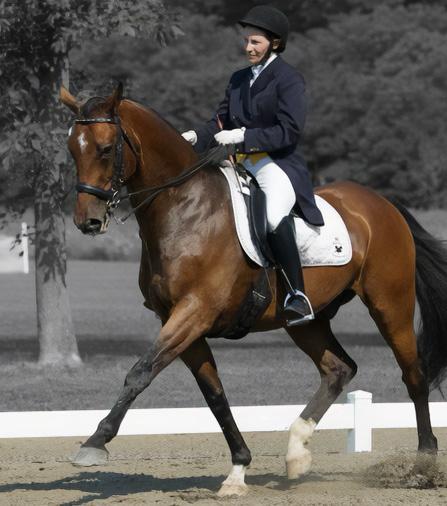
Sundman Stables
Specialized training in Dressage, Hunt Seat, and Eventing
Valerie McCloskey, a passionate and accomplished horse rider, trainer, and teacher. Her training philosophy is rooted in understanding the natural instincts and needs of horses.
From intro to Grand Prix all breeds and disciplines encouraged and welcomed. Valerie has ridden internationally.
Having made her own horses and competing through FEI, Valerie offers the unique insights to developing horses from backing to Grand Prix.
FACILITY INCLUDES
• 80 by 160 indoor arena with Tru-stride dust free footing
• 120 by 220 outdoor arena with Tru-stride dust free footing
• Five acre well maintained jump field with water, ditch, and bank complexes
• 30 acres of lush pasture with wood fencing
• Just 15 minutes from Syracuse
Catering to the discriminating rider and owner. 1695 Stump Rd, Marcellus, NY sundmanstables.com
Chacea Sundman, Owner/Manager 315-382-2790
SUNDMAN STABLES
Week 1
Saturday, August 2 • 8:00 PM
Robinson Pavilion at Anyela’s Vineyards
Rain location:
Skaneateles High School
49 East Elizabeth St, Skaneateles
Tonight’s concert is sponsored by:
Peter and Elsa Soderberg
Listen to the Wind
Skaneateles Festival Orchestra • Louis Lohraseb, conductor
VIVALDI Concerto No. 2 in G minor, RV 315, “Summer” from The Four Seasons
Allegro non molto
Adagio e piano – Presto e forte
Presto
THEOFANIDIS
CHOPIN
Muse for Strings and Harpsichord
Piano Concerto No. 2 in F minor, Op. 21
Maestoso
Larghetto
Allegro vivace
INTERMISSION
MENDELSSOHN Symphony No. 3 in A minor, Op. 56 (“Scottish”)
Andante con moto – Allegro un poco agitato
Vivace non troppo
Adagio
Allegro vivacissimo – Allegro maestoso assai
Edson Scheid, violin
Soyeon Kate Lee, piano
Skaneateles Festival Orchestra
VIOLIN 1
Edson Scheid, concertmaster
Claire An
Noemi Miloradovic
Benjamin Mygatt
VIOLIN 2
Amy Christian
Edgar Tumajyan
Liviu Dobrota˘
VIOLA
Melissa Matson
Olita Povero
Neil Miller
ARTIST SPONSORSHIPS
CELLO
Julia Bruskin
Rosemary Elliott
Lindsay Groves
BASS
Edward Castilano
FLUTE
Juliana May Pepinsky
OBOE
John Lathwell
Erica Howard
CLARINET
Allan Kolsky
Eric Butler
BASSOON
Jessica
Wooldridge-King
Lisa Seischab
Julia Bruskin is sponsored by the Skaneateles Consortium: George Bain, Sam and Debby Bruskin, Dana and Susan Hall, and Judy Robertson
Soyeon Kate Lee is sponsored by Bousquet Holstein, PLLC
Louis Lohraseb is sponsored by Vic and Debbie Duniec
Steinway Piano is sponsored by Sarah and Kevin Goode
HORN
Nathan Ukens
Madison Warren
Claire Tuxill
McKenney
Mira Vanchiswar
TRUMPET
Eric Lofgren
Kyle Jones
MEDIA SPONSOR
TROMBONE
Benjamin Dettelback
TIMPANI
Michael Cirmo
HARPSICHORD
William Cowdery
The Skaneateles Festival is made possible by the New York State Council on the Arts with the support of the Office of the Governor and the New York State Legislature.
Program Notes
Concerto No. 2 in G minor, RV 315, “Summer” from The Four Seasons (ca. 1725)
ANTONIO
VIVALDI (1678-1741)
Antonio Vivaldi was the Elvis Presley of the 18th century. Like Elvis and rock n’ roll, Vivaldi didn’t invent late-Baroque style, but he went a long way in making it popular. His hit album (er, sheet music) was L’estro armonico, Op. 3 (1711), which translates as Harmonic Heat or Harmonic Frenzy. The critics gave his music a mixed reception. Englishman Sir John Hawkins found the music “wild and irregular” but admitted “a peculiar force and energy.” Vivaldi’s virtuosic violin playing caused similar reactions to Elvis’s hip gyrations; one critic said he had “too much mercury in his constitution.” Therefore, like Elvis, Vivaldi was controversial, and your opinion of his music—and his morals—depended on what generation you were in. One youngster to copy Harmonic Heat out by hand was an organist in an obscure region of Germany named Johann Sebastian Bach.
At about the same age Elvis joined the army, Vivaldi joined the Italian service—the priesthood. Nicknamed “Red Priest” for his long red hair, Vivaldi never much enjoyed celebrating mass and was censured by the Church for un-priestly conduct, presumably for taking music as his mistress. In 1703, he was appointed violin teacher at a Venetian orphanage for girls, where he helped turn the unwanted children into concerto-performing virtuosos, an unlikely feat that captivated Venice’s high society. The concertos he wrote for them launched his career as a composer.
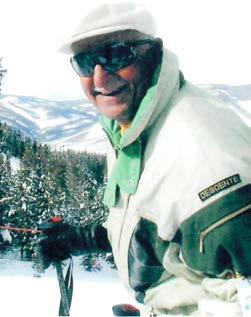
In memoriam
Henry Beck (1934-2025)
Today, the most famous of his 500+ concertos (in this he outpaced Elvis) are his vivid depictions of the great outdoors, The Four Seasons, the first four in his collection Contest Between Harmony and Invention (ca. 1725). In the movement heard tonight, it’s summer, and it’s hot. Everything is lazy and still—that is, until a wind whips through. The solo violin sings the songs of various birds. The uneasy second movement foreshadows the coming of a summer storm, which finally erupts in a downpour mixed with hail. This driving rhythmic energy and virtuosic finger-play is Vivaldi’s trademark: it forever changed Baroque music, like R&B’s transformation into rock n’ roll.
After his death, Vivaldi’s music languished for nearly 200 years, until its popularity resurged in the 1950s—right there with Elvis.
Muse for Strings and Harpsichord (2007) CHRISTOPHER THEOFANIDIS (B. 1967)
Leading American composer Christopher Theofanidis dazzles listeners with his painterly command of orchestral color and through his compelling musical narratives. A native of Houston, Texas, he is currently a professor at Yale University, and composer-in-residence and co-director of the composition program at the Aspen Music Festival. His style typically draws upon American musical traditions going back to Aaron Copland, and he has a knack for using instruments in a soloistic context, including in his many concertos; his Concerto for Viola received the 2021 Grammy for Best
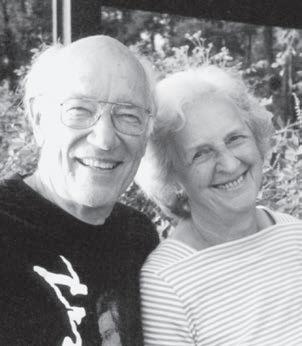
Henry Beck was deeply beloved by the Skaneateles Festival community. If you ever spoke with him, you know how easily he could warm your heart. His gentle good humor was guaranteed to make you smile. He was filled with good will toward those around him.
We met Henry the very first time we visited Skaneateles, during which Henry and Helga generously hosted us in their home. Henry poured us an authentic German beer and showed us the Lake, which he loved deeply; "Isn't it fan-TAS-tic?" he would say. Years later, our son caught his first big fish on their dock, which greatly impressed Henry. He took us on a full factory tour of Tessy Plastics in Elbridge, the great business he founded in 1973 that flourishes today under the leadership of his son, Roland. He was proud of its great success but modest about his pivotal role. Even as the company flourished and grew, he still maintained that it was like a family, that it was the people who mattered most.
Henry loved the Skaneateles Festival, which he and Helga attended many times each summer, both indoors and outdoors. We always look for them from the stage. Henry understood both the beauty of music and also the way it brings people together. His spirit touched us profoundly, and we dedicate this concert to his memory with deep admiration and gratitude.
~ Aaron & Julie
Classical Instrumental Solo. In Muse, he takes inspiration from J. S. Bach’s Brandenburg Concerto No. 3. About it, he writes:
I wrote Muse in 2007 for the Orpheus Chamber Orchestra as part of their series called “The New Brandenburgs,” in which that ensemble commissioned six composers to write new works based on the instrumentation of Bach’s Brandenburg Concertos. Given the idea of having each of us write a work with Bach at the heart of it, the title Muse seemed appropriate. Bach wrote these pieces as a kind of job audition for a post in Brandenburg—a post which he ironically did not get, but these pieces have become a part of the repertory in any case. They each have a distinctive orchestration because of the peculiar make-up of the Brandenburg court orchestra, which had benefited from the disbanding of a great orchestra in Berlin and had received some of their star players. Each of them can be played as a kind of large chamber ensemble or as a small orchestra piece.
I was given the Third Brandenburg Concerto instrumentation, which is for strings and harpsichord, though the strings are not divided in the standard orchestral division of five parts, but rather in ten — 3 violins, 3 violas, 3 cellos, and contrabass. Bach used this breakdown to great effect by thickening each of the principal lines in 3, using
a broader paintbrush for each of the parts of the counterpoint. Despite this, he remarkably achieves a light and transparent sound, and I tried to move toward this way of working in my piece. The general sound world is also quite closely Baroque in harmony and rhythm.
The first movement has a running sixteenth-note figure, which is actually a minor triple-meter version of the main melodic line in the first movement of the Bach. This is balanced by a short motive of three repeated notes followed by a single lower note. The second movement is highly ornate with a long-lined melody always in the background. The third movement is based on one of my favorite Bach chorale tunes (though he himself adapted it from a Medieval-period chant), Nun komm’ der Heiden Heiland.
Piano Concerto No. 2 in F minor, Op. 21 (1829)
FRÉDÉRIC
CHOPIN (1810-1849)
Giving a public concert in the early 19th century could be a little like performing as a comedian today, but without being able to tell any jokes. The audience was not expected to sit quietly. It might ignore you—which, after all, is not the worst possible outcome—or it might actively express disapproval, or approval, in real time. Not even this last outcome was always appreciated; Chopin, upon performing his signature work for piano and orchestra (the Don Giovanni Variations) in Vienna in 1829, reported that “everyone clapped so loudly
after each variation that I had difficulty hearing the orchestra.” Well, the orchestra likely didn’t sound particularly good anyhow; it was so under-rehearsed that Chopin had to cancel a second work from the program.
Such experiences led Chopin to doubt whether life on stage was really for him. His first major performance in his hometown, Warsaw, on March 17, 1830, should have brought Chopin immense satisfaction. Yet he disliked the self-aggrandizing publicity it required, and the new work he chose for the occasion, his Piano Concerto in F minor, begins unconventionally: both softly and seriously, as if to invite you to listen closely and stop chattering. There will be no laughs.
Chopin chose for this work the stormy key of F minor, now associated with Beethoven’s hellraising “Appassionata” Sonata but also explored by Chopin’s contemporaries, Hummel and Weber. This key seems to encourage Halloween-like whispers and outbursts. After three minutes of sitting in silence, the pianist enters with a chilling cascade of notes followed by a gloomy rumination. Its increasingly intense expression leads into a flurry of 16th notes that gradually settle down and give way into a lyrical theme, marked “con anima” (with soul). Here Chopin shows how much he learned from listening to opera singers, whose strengths and weaknesses he tracked like some do the Yankees. His ability to channel the singers’ tone, legato, and ornamentation into a style that suits the piano may be his
signature achievement. Yet Chopin balances this lyricism with an equal ambition to wow you with sheer virtuosity.
Chopin admitted composing the second movement “under the influence” of the singer Konstancja Gladkowska, a fellow conservatory student. While much has been made of this romantic attachment, one of the few in Chopin’s short life, he apparently never spoke to her of his feelings; she later called Chopin “temperamental, full of fantasies, and unreliable.” Kismet it was not. The music, in any case, is truly special, a pure and tender emotional vehicle for the pianist. Some have criticized Chopin’s orchestral accompaniments as, well, too accompanimental, but they fit the spirit of the music perfectly. Here the gently sustained strings offer a golden glow to the piano melody, as if the piano had a fourth pedal to press down: the orchestra. This sustained beauty, ever more fanciful in its ornamentation, seems like it could go on forever, but an emotional storm cloud suddenly casts over. The piano speaks the troubled language of operatic recitative, atop volatile, pulsating tremolos from the strings. Once the storm passes, listen for the solo bassoon, now intertwined in a love duet with the piano.
LISTEN. LEARN. LOVE.
Our Classic FM hosts live and work in the heart of our community.
They know classical music and know how to bring you the best of it every day.
In the final movement, Chopin shows the “temperamental” nature of which Gladkowska spoke. It begins in somewhat of an identity crisis, marked “semplice” (simply) yet “graziosamente” (as graciously as possible); stormy outbursts interrupt the graceful yet proud dance. This uneasy state finally gives way to a lighthearted and rustic mazurka, a Polish country dance, which is exactly what the concerto needs at this point; Chopin rewards you for all your serious listening. The violins and violas signal their desire to charm you by tapping their strings with the wood side of the bow, and the pianist lets loose with an increasingly acrobatic activity up and down the keyboard. Trust Chopin: You’ll know when to clap.
Symphony No. 3 in A minor, Op. 56 (“Scottish”) (1842) FELIX MENDELSSOHN (1809-1847)
Long before the days of Eurail passes and Viking River Cruises, if you wanted to see the world, you more or less had to use your own two feet. Such walking tours got the full romantic treatment by the poets Wordsworth and Keats, whose tales inspired Felix Mendelssohn and his poet-friend Karl Klingemann to undertake their own such tour in Scotland. The glamor of such trips, of course, greatly depended on the scenery; 20-year-old J. S. Bach left no glowing account (nor fitbit log) of his 250 miles spent on the flat roads of Saxony to go hear Dietrich Buxtehude perform. It also helps to be young, with knees in good working order: like Bach, Mendelssohn was also just 20 when he and his friend visited Glasgow, Edinburgh, Perth, Inverness, Loch Lomond, and the Hebrides islands of Iona, Mull, and Staffa. Leaving his recent London concert successes behind, his road trip began.
Letters by Mendelssohn and Klingemann document the trip’s amusements and frustrations. The rustic food and lumpy beds did not go over well, nor did the
celebrating the arts that bring us together.
Whether on the page, on the screen, on the stage, or anywhere else, art brings life to life. KeyBank is grateful for the passion and creativity that inspire and enrich all our lives, and we’re proud to support the arts.
Thank you, Skaneateles Festival | World Class Music by the Lake, for making a difference.
ear-splitting bagpipes, which left Mendelssohn running for cover. However, historical sites captivated the bookish Mendelssohn, including Holyrood Palace, in Edinburgh, where Mary Queen of Scots had once lived. Shortly before Mendelssohn’s visit, her rooms were preserved, but the romantic ruins elsewhere in the palace deeply stirred Mendelssohn, including the altar where Mary had been crowned: “The chapel…has lost its roof and is overgrown with grass and ivy, and at that broken altar Mary was crowned Queen of Scotland. Everything there is ruined, decayed and open to the clear sky. I believe that I have found there today the beginning of my Scottish Symphony.”
The dark, sad story of Mary’s life, which included a heavy dose of murder, betrayal, and decapitation, may infuse this start of Mendelssohn’s “Scottish” Symphony. Yet he made it not much further than the opening bars; by the time he was in Rome, in 1831, he “couldn’t manage to return to the Scottish fog mood,” so he wrote his sunny “Italian” Symphony instead. The “Scottish” Symphony would have to wait another decade.
By that time, Mendelssohn was at the height of his career. On his seventh visit to England, he dedicated the new-old symphony to Queen Victoria; one could say the symphony was inspired by one queen and dedicated to another. Its regal, dignified opening might express as much, even if its dark tone tends more toward Queen Mary. Her role in the Scottish Reformation likely resonated with Mendelssohn, a devout Lutheran from a prominent converted Jewish family. Themes of pain and struggle intermingle with more charming allusions to Scottish folk music, yet as a whole, the
symphony transcends mere travelogue and stands as one of the greatest of all Romantic-Era symphonies. We may call this Symphony “Scottish,” but it doesn’t wear a kilt.
The opening bars are like the ghost of an ancient hymn, to which the violins express wonder and palpitation. The violins eventually stir the whole orchestra to life, but quietly, in tense agitation. Outbursts of anguish quickly fade back to quiet intensity. Mendelssohn shows himself a master of instrumental energy, which seems to propel his feet and ours across Scotland. The ghost of Queen Mary turns the music ever darker, appearing to us in the hair-raising coda. She fades away as the ancient hymn returns.
A blast of fresh air from the highlands propels the entire second movement, which surely belongs outdoors as we (hopefully!) hear it tonight. The third movement begins as a gentle reflection on our journey’s experiences. A solemn, regal march again seems to announce a monarch from centuries past, but living in the present remains the preferable option.
As it bursts out of the gate, the final movement promises adventure. Mendelssohn indicates the movement should be played guerriero, war-like, though more with courage than malevolence. The religious wars of preceding centuries were now legends that seemed to lead toward a more peaceable present. After a solemn and solitary rumination, Mendelssohn’s optimism shines through in a glorious, sunny conclusion. Those hoping for bagpipes will have to look elsewhere, but Mendelssohn gives us what we secretly hope for from our best travels: gratitude for the life we already have.
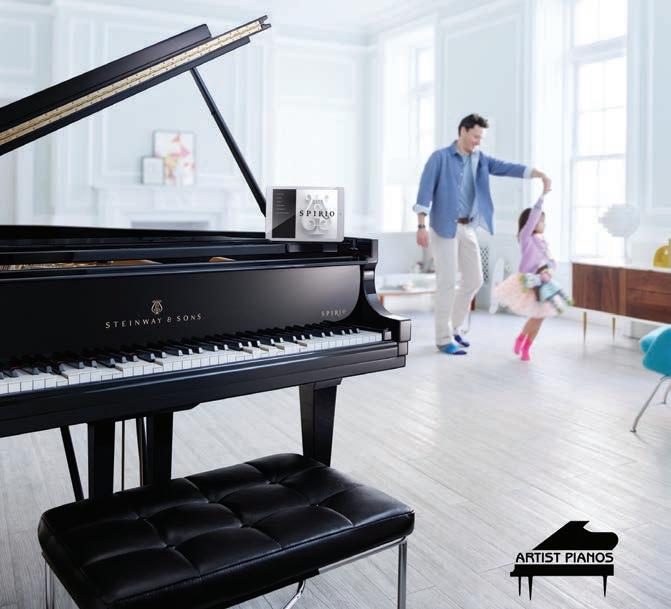
ARTIST PIANOS is the proud PIANO SPONSOR for this and many local fine-arts organizations. We invite you to visit us and experience the all new SPIRIO HD player piano by STEINWAY & SONS. With SPIRIO, the worlds finest pianists are ready to play just for you.
5780 CELI DRIVE, EAST SYRACUSE, NY 13057 PH(315) 446-5660.
Nestled in the heart of the Finger Lakes region of New York State, our property, part of the Curio Collection by Hilton™, delivers a scenic escape designed for relaxation and play. With thoughtfully curated amenities, we provide modern and memorable culinary, leisure, and wellness experiences.
SAVE THE DATE | Wednesday, October 15, 2025
Join us for
a fundraiser in support of the Skaneateles Festival
Generously hosted by
Featuring an evening of seasonally inspired cuisine and cocktails, along with an exclusive tour of the brand-new Skaneateles Fields Resort & Spa.
Space will be limited. For more information scan the QR code or visit SkanFest.org
Week 2
Tuesday, August 5
FREE Community Event
6:00 & 6:30 PM
Baltimore Woods
4007 Bishop Hill Rd, Marcellus
The Skaneateles Festival is proud to present tonight’s community events
In Tune with Nature
Special Event – A Musical Nature Walk
For all ages.
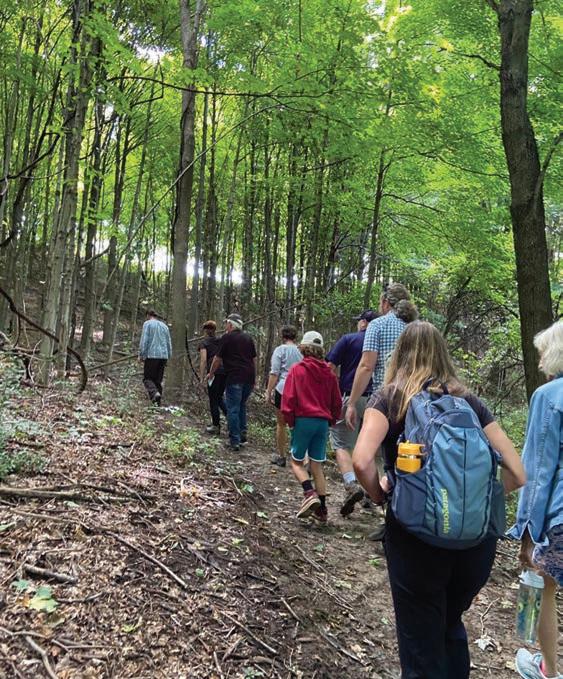
Immerse yourself in the serenity of nature’s song as you take a stroll through a 1/4 mile trail featuring musicians who will be stationed along the way. Don’t miss out on this free event, and be sure to bring your walking (dancing) shoes for this unique experience in the trails of Baltimore Woods!
Featuring short performances from guitar duo Ziggy and Miles
Onondaga wood flutist Curtis Waterman cellist and 2025 Robinson Award winner, Abigail Feng.
There will be two opportunities to begin the walk through the trail, the first at 6:00 PM and the second at 6:30 PM
ARTIST SPONSORSHIP
Ziggy and Miles, the 2025 Emerging Artists in Residence, are sponsored by the Andromeda Foundation
The Skaneateles Festival is made possible with funds from the General Operating Support program, a regrant program of the County of Onondaga with the support of County Executive, J. Ryan McMahon II, and the Onondaga County Legislature, administered by CNY Arts.
Baltimore Woods Nature Center
Let nature inspire you in all seasons.
• Over seven miles of trails open dawn to dusk every day for multiple abilities through forests, meadows, streams, and ponds
• Year-round nature education programs offered for all ages
• Visit the Fox’s Den - an imaginative Nature Play area for children!
• Nature day camps, field trips, homeschool adventures, and preschool explorations
• Enjoy exhibits, bird watching, gift shop, and rotating nature-inspired galleries in the John A. Weeks Interpretive Center
• Rental space available for your next event
4007 Bishop Hill Rd. Marcellus, NY (315) 673-1350 Scan the QR code to visit our website at baltimorewoods.org and plan your next visit!
Facebook: Baltimore Woods Nature Center Instagram: @baltimorewoods
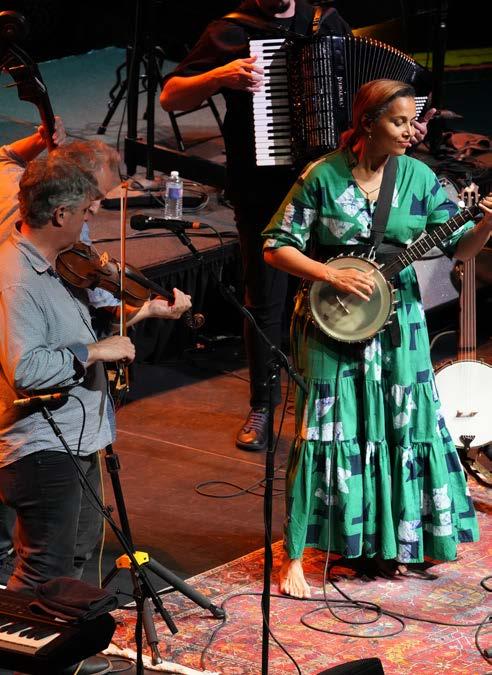
Rhiannon Giddens and her band
Today’s concert is sponsored by: Week 2
Wednesday, August 6
1:30 PM
May Memorial Church
3800 E Genesee St, Syracuse
An Afternoon with Guitar Duo, Ziggy and Miles
Join the Australian duo, brothers Ziggy and Miles, for a special matinee performance in Dewitt.
“Their performances blend virtuosity with emotion, and every note they play resonates with the audience.” (The Guardian)
PIAZZOLLA Tango No. 1: Deciso from Tango Suite
WESTLAKE Mosstrooper Peak
Burning Point
Mosstrooper Peak
Nara Inlet
Tangalooma
Butterfly Bay
Smokey Cape
GNATTALI Suite Retratos
Ernesto Nazareth (Valse)
Chiquinha Gonzaga (Choro)
ARTIST SPONSORSHIP
Ziggy and Miles, the 2025 Emerging Artists in Residence, are sponsored by the Andromeda Foundation
The Skaneateles Festival is made possible with funds from the General Operating Support program, a regrant program of the County of Onondaga with the support of County Executive, J. Ryan McMahon II, and the Onondaga County Legislature, administered by CNY Arts.
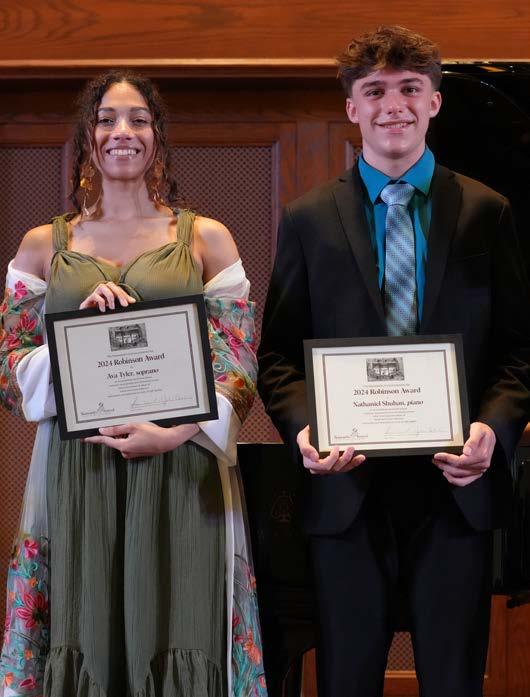
2024 Robinson Award winners Ava Tyler and Nathanial Shuhan
Week 2
Thursday, August 7
7:30 PM
First Presbyterian Church 97 E. Genesee St, Skaneateles
Tonight’s concert is sponsored by:
Armory Square Ventures, and Somak Chattopadhyay and Pia Sawhney
Calidore String Quartet: From Beethoven to John
Williams
Jeffrey Myers, violin; Ryan Meehan, violin; Jeremy Berry, viola; Estelle Choi, cello
BEETHOVEN String Quartet No. 12 in E-flat Major, Op. 127
Maestoso – Allegro
Adagio, ma non troppo e molto cantabile Scherzando vivace Allegro
JOHN WILLIAMS With Malice Toward None from the film Lincoln
INTERMISSION
KORNGOLD String Quartet No. 3 in D Major, Op. 34
Allegro moderato
Scherzo: Allegro molto
Sostenuto: Like a folk tune
Finale: Allegro
ARTIST SPONSORSHIP
The Calidore String Quartet is sponsored by Joan Christy in memory of Carolyn Stein
The Skaneateles Festival is made possible by the New York State Council on the Arts with the support of the Office of the Governor and the New York State Legislature.
Program Notes
String Quartet No. 12 in E-flat Major, Op. 127
LUDWIG VAN BEETHOVEN (1770-1827)
So central are Beethoven’s quartets to concert life today, a professional string quartet could hardly survive without them. Mounting the complete cycle of 16 quartets is the marker of maturity for professional quartets who have “arrived.” As Ryan Meehan of the Calidore Quartet puts it, “Performing the Beethoven cycle is the musical equivalent of scaling Mount Everest.” (The Quartet recently performed the cycle for the Chamber Music Society of Lincoln Center and are in the process of recording it.)
Given the prevalence of Beethoven’s quartets today, one might wonder how professional string quartets ever survived prior to Beethoven. Well, they didn’t. There were no professional string quartets prior to Beethoven. String quartets generally had been sightread for pleasure in private, more spontaneous than rehearsed. As one London visitor to Vienna noted, “A gentleman wishing to play a quartet or quintet in the evening walks out in the morning for the purpose of inviting any friends he may chance to meet; and as the slightest acquaintance is sufficient, one can find players without difficulty.” In part, the professional quartet came about so that Beethoven’s difficult quartets could be played
better, by a foursome that toils together through blood, sweat, and tears, prior to performing a single note.
You’re unlikely to hear any of this behind-the-scenes effort in Beethoven’s sunny and tender String Quartet, Op. 127, the first of his so-called late quartets (as if age 55 were geriatric). It is in the same key as his “Eroica” Symphony, but the heroic ambitions of middle age had given way to a more introspective, even spiritual search for meaning within. Beethoven had lately taken an interest in Hindu philosophy, copying out the phrase “God [Brahm] alone is free of all desire or passion.” This music isn’t entirely free of desire, but perhaps it would like to be.
A brassy series of chords announce the work’s convocation, but this fanfare quickly dissolves into an easy-going theme that floats downward without anything to prove. Its pathway through the movement will not be without some anxiety and struggle, but together, the four players help each other find their way like true friends. At the end of the movement, this theme simply closes its eyes with a smile.
The second movement unfolds with patience and will take some from you, too; it is typically Beethoven’s longest single movement for string quartet, depending also on the
Fueling Innovation in Unexpected Places
Armory Square Ventures is a venture capital firm headquartered in Skaneateles, NY with additional offices in Syracuse, NY and New York City. ASV invests in B2B software companies and has catalyzed over 2,500 jobs across its portfolio. The fund has returned hundreds of millions of dollars of capital primarily to non-profits and institutions with ties to Central New York and New York state. We like to say we are an optimism engine and community catalyst for innovation clusters and cities outside Silicon Valley. For more information, please contact anthony@armorysv.com or jin@armorysv.com.
performers’ patience. This movement shows how profoundly his style had shifted in the quarter century that elapsed since his earliest string quartets. That change bewildered many listeners; even the Beethoven devotee Louis Spohr called this music “indecipherable, uncorrected horror.” However, if you find the patience, it can become like a religious experience. The prayerlike theme aspires slowly upward, with a calm but steady heartbeat. The theme’s first variation introduces some yearnings of the heart that do not disturb our outward calm. The second variation is a gentle, winking march; it becomes a bit giddy before subsiding into a deeply expressive hymn. With its eyes on the horizon, the fourth variation resumes its upward aspirations, and in the fifth variation we reach a realm of true mystery. The gentle prayer resumes, now floating away into the unknown.
Back to earth for the third movement’s friendly game of musical Four Square; note how the instruments pass the ball around, and then later, chase each other around. In the final movement, our four friends are bound for home. Following no trodden path, they roam free. This freedom eluded the first performers in the Schuppanzigh Quartet, who apparently did not rehearse enough to render this work’s difficulties sufficiently effortless. Beethoven persuaded Joseph Böhm and his quartet to give it a try and insisted upon attending the numerous rehearsals himself, though, now deaf, he could not hear them. We are fortunate to hear this music in a way that Beethoven never could.
With
Malice Toward None from the film Lincoln
JOHN WILLIAMS (B. 1932)
One cannot really say that there is only one John Williams, since a multitude share that common name, including a renowned classical guitarist. However, there is only one savior of orchestral film music. By the late 1970s, orchestral scores had entered a decline, replaced by cheaper electronic and pop-influenced scores targeted toward younger audiences. The one-and-only John Williams completely bucked
this trend with his compelling (and now iconic) maximalist orchestral scores for Star Wars (1977), Raiders of the Lost Ark (1981), and E.T. (1982). Williams, once a piano student at Juilliard, proved himself a deft synthesizer of styles and techniques from classical orchestral wizards such as Richard Strauss, Sergei Prokofiev, and Igor Stravinsky. Yet his approach in the film Lincoln, starring Daniel Day Lewis as the 16th president, was one of restraint. As he had shown in his score for Schindler’s List, sometimes less is more, even if more is usually more (see: the Harry Potter soundtrack). This sentimental yet dignified musical reflection recalls Aaron Copland’s Fanfare for the Common Man and early American hymns like “Amazing Grace.” Williams himself made this arrangement for the Calidore Quartet.
String Quartet No. 3 in D Major, Op. 34 (1945) ERICH KORNGOLD (1897-1957)
Let’s say you’re a cultured, cosmopolitan composer from an imperial European capital, used to riding in carriages and dining al fresco in cafés. One day, you wake up and find yourself in Los Angeles, the world’s greatest parking lot. This is not a book by Kafka, but rather the real-life story of many of Europe’s leading composers, including Igor Stravinsky, Arnold Schoenberg, Kurt Weill, and Erich Korngold. World War II forced them to emigrate, and, amidst the Great Depression, the only town that wanted composers was Hollywood. As Austrian film director Otto Preminger told some recently arrived Hungarians, “Don’t you know that you’re in Hollywood now? Speak German!”
Once the world’s leading film composer, Erich Korngold’s favorite of his own scores was Between Two Worlds (1944), a title that might sum up his own life. Korngold started out at the very center of Vienna’s musical culture, the son of that city’s leading music critic. He was so precocious that Gustav Mahler declared the nine-year-old Korngold a genius upon hearing him perform a new cantata. By age 23, he had penned one of Europe’s most oft-performed operas, Die tote Stadt. In 1934, famed Austrian theater director Max Reinhardt invited Korngold to give Hollywood a try, and Korngold proved remarkably deft at working with studio executives there. As Stravinsky put it shortly after being persuaded to compose a march for circus elephants, each Hollywood studio “is a kind of principality, with its own borders, trenches, police, cannons, machine guns, as well as its ministers for the various technical and artistic operations.” Composers beware.
Korngold was reluctant to enter the commercial film world and very nearly turned down the offer that led to his Academy Award for best score, The Adventures of Robin Hood (1938), telling the producer: “Robin Hood is no picture for me…I am a musician of the heart, of passions and psychology; I am not a musical illustrator for a 90-percent action picture.” His ‘no’ turned to ‘yes’ only when he learned that the Nazis had overtaken Austria; Korngold was Jewish and his music declared “degenerate.” He was to live the rest of his life in Hollywood; the Vienna of his childhood was
forever lost. Yet Korngold’s lavish and exuberant scores soon set the standard for Hollywood. Indeed, John Williams still cites him as a primary influence.
When Korngold returned to concert music in the mid1940s, his experiences scoring films left their mark. In the case of his String Quartet No. 3, that mark was quite literal: Korngold reused themes from two of his recent films. Yet this music also has a narrative tone, as if it tells a story that might well be Korngold’s own. The first movement begins tentatively, as if in search of a theme. The composer’s depression at the darkness of World War II, which included bombings in Vienna, casts a shadow from which the movement struggles to emerge. Yet it concludes on a note of hope.
The second movement, a scherzo, is full of absurdist humor, the kind one needs to survive in times of absurdity. A glowing and sincere theme emerges in the middle section, drawn from the film Between Two Worlds. At heart, Korngold remained a true romantic. The love theme from The Sea Wolf (1941) initiates the third movement, which proceeds through increasingly intense, heart-wrenching, and then tender variations that Gustav Mahler might appreciate. The final movement is full of vitality and even optimism, as evident in the second theme, later used in the film Devotion (1946). To suffer, to search, to strive, to persevere: Korngold’s Quartet tells a tale of resilience that many needed to hear in 1945, including the composer himself. It may have been composed in Hollywood, but the story is true.
First Presbyterian Church 97 E. Genesee St, Skaneateles
Tonight’s concert is sponsored by:
Doug and Peg Whitehouse
Prelude Concert
Featuring the 2025 Robinson Award Winner Abigail Feng, cello
SHOSTAKOVICH Sonata for Cello and Piano in D minor, Op. 40
Allegro non troppo
CASSADÓ Dance of the Green Devil
Duos and Duets
J. S. BACH Sinfonia from Gottes Zeit, ist die allerbeste Zeit, BWV 106
DEBUSSY Suite bergamasque
Prélude
Menuet
Clair de lune Passepied
GNATTALI Suite Retratos
Pixinguinha (Choro)
Ernesto Nazareth (Valse)
Anacleto de Medeiros (Schottisch)
Chiquinha Gonzaga (Corta Jaca)
INTERMISSION
BRAHMS Sonata No. 2 in F Major for Cello and Piano, Op. 99
Allegro vivace
Adagio affettuoso
Allegro passionato
Allegro molto
Abigail Feng, cello Aaron Wunsch, piano
PIAZZOLLA Zita from Suite Troileana for Two Guitars, Cello, and Piano
ARTIST SPONSORSHIPS
Ziggy and Miles, the 2025 Emerging Artists in Residence, are sponsored by the Andromeda Foundation
Julia Bruskin and Aaron Wunsch are sponsored by the Skaneateles Consortium: George Bain, Sam and Debby Bruskin, Dana and Susan Hall, and Judy Robertson
Steinway Piano is sponsored by Sarah and Kevin Goode
Ziggy and Miles, guitars
Julia Bruskin, cello
Aaron Wunsch, piano
Ziggy and Miles, guitars
Julia Bruskin, cello Aaron Wunsch, piano
MEDIA SPONSOR Steinway Piano generously donated by Artist Pianos
The Robinson Award
In 1980, David and Louise Robinson opened their hearts and their home to Festival musicians, their families, and the audiences who came to hear them perform. Their lakeside home, Brook Farm, was a gathering place and rehearsal space for musicians, and the performance venue for the Festival’s outdoor Saturday evening concerts for 36 seasons.
Created in 2002, The Robinson Award recognizes a young musician who exemplifies the values cherished and embodied by Festival co-founders, David and Louise. It is presented annually to a young musician whose character, musicianship, and community service reflect the Robinsons’ values—enthusiasm and dedication to music of high quality.
Applications for the Robinson Award are available January 15 – March 15. Visit skanfest.org for details.
2025 Robinson Award Winner
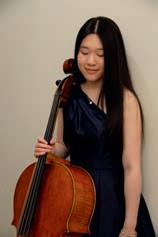
Abigail Feng, a cellist and Jamesville-DeWitt High School alumna, has served as principal cellist in numerous ensembles including the Syracuse Young Artists Orchestra, JamesvilleDeWitt Orchestra, and NYSSMA Area All-State and All-County festivals. She was assistant principal of the 2023 NYSSMA All-State Symphonic Orchestra and principal cellist of The Syracuse Orchestra’s Side-bySide Masterworks Concerts in 2022, 2024, and 2025. She has won multiple competitions, including the Syracuse Friends of Chamber Music Youth Competition, CNYAMT
Instrumental Competition, and Civic Morning Musicals Youth Concerto Competition, where she performed with The Syracuse Orchestra. Abigail studied with former Skaneateles Festival artistic director David Ying. She earned her Honors Diploma in Cello Performance from Eastman Community Music School in 2025. Abigail is passionate about music’s power to connect and serve. As co-president of Mending Melodies, she organized performances at local hospitals and senior homes. She also plays in worship teams, volunteers through chamber music, and has worked with refugee children through The Hopeprint Association. She has received numerous honors, including the OCMEA Scholarship and National School Orchestra Award. Abigail will begin her Cello Performance studies at The Juilliard School this fall.
Our thanks to those who have contributed to the Robinson Award
Anonymous Brenton and Mary Bradly
Barb Connor
Fletcher Foundation
David and Louise Robinson
Skaneateles Area
Council for the Arts
Frank and Jan Smith
Karl and Peggy Smith
Dr. and Mrs. Kenneth Spitzer
If you would like to contribute to the Robinson Award Fund, please call 315-685-7418.
Diane Walsh and Dick Pollak
Suzanne Weitz
Welch Allyn
David and Louise Robinson
Program Notes
Sinfonia from Gottes Zeit, ist die allerbeste Zeit, BWV 106
J. S. BACH (1685-1750)
Bach composed his funeral cantata at the tender age of 22, but he already knew a fair amount about death: his mother had died when he was nine, and his father the following year. The title alone says a fair amount (“God’s time is the best of all possible times”), but before the choir can sing those words, Bach allows the instruments a short introduction. Originally scored for two flutes, viols, and continuo, this music simply yet profoundly conveys both consolation and quiet joy, the harmony of life, death, and life again.
Suite bergamasque (1905)
CLAUDE DEBUSSY (1862-1918)
You might well wonder what the heck a “bergamasque” is, and perhaps that’s just the point. The poet, Paul Verlaine, applied the mysterious term, possibly an ancient dance from the Italian town of Bergamo, in his famous poem, “Clair de lune” (“Moonlight”), and one would be hard pressed to explain what the poem is about, either. If you had gone down to the local Montmartre café, you could find Verlaine drinking absinthe and staring off into the distance, but
even he probably couldn’t have explained the poem to you. Verlaine (and, arguably, Debussy himself) was a symbolist, believing that truth lies hidden deep beneath any such tidy explanations; vérité is best searched out through symbols, vague signposts that provoke contemplation. Their essence is enigma.
Debussy, too, longed to create a sound world both elusive and enchanting. Just as Verlaine rebelled against naturalism and realism, Debussy sought to overturn musical conventions. He rejected orderly formulas and employed parallel fifths, a compositional no-no that annoyed his teachers at the Paris Conservatoire. However, he wasn’t convinced that he had achieved this goal in his 1890 version of Suite bergamasque, which he cast aside. Fifteen years later, he returned to it, revising it for publication. Little did he know that the third movement, Clair de lune, would turn out to be his greatest hit.
If the word “bergamasque” leans toward the avant-garde, “suite” throws us back 200 years to the French Baroque Era. While Debussy wanted his music to be new, he also desired it to be distinctly French. Camille Saint-Saëns and Gabriel Fauré (who fought the Germans in their invasion of Paris in 1871) had helped to revitalize and reinvent the French
suite, and Debussy follows in their footsteps here. The grand Prélude is both regal and charming, a fete at the court of Louis XV reimagined through new and surprising harmonies. The delicate and coy Menuet is an outdoorsy dance for aristocrats pretending to be peasants.
The iconic Clair de lune takes its title directly from Verlaine’s mysterious poem, in which “the calm moonlight, sad and lovely…sets the birds in the trees to dreaming, and the fountains to sobbing in ecstasy.” The coexistence here of sadness and a quiet kind of ecstasy conveys exactly what Debussy described as the genius of French music: “a fantasy for the senses.” The final Passepied (“pass your foot”), is another French courtly dance, elegant and sophisticated. Yet it is danced in a shimmering dreamworld from which you hope not to wake, such is its pleasure. As Debussy wrote, “The aim of French music is, above all, to please.”
Suite Retratos (1958)
RADAMÉS GNATTALI (1906-1988)
Opera lovers may well note that Radamés Gnattali, along with his siblings, Aida and Ernani, came from a family of Verdi fans. His parents were Italian musicians who had settled in Brazil. Like his mother, Radamés was a pianist, and he performed Tchaikovsky’s famous Piano Concerto No. 1 with orchestra in his early 20s. However, he felt himself drawn to popular Brazilian music, including choro, the AfroBrazilian and European blend more often played by guitars. He made a living conducting, orchestrating, and arranging popular music, but he also composed original works infused by sounds from the streets. In Suite Retratos (“Suite of Portraits”), Gnattali draws musical portraits of four famed Brazilian popular composers. You’re unlikely to hear any traces of Verdi.
The first movement inhabits the pioneering choro style of Alfredo da Rocha Vianna (1897/98-1973), better known by his nickname, Pixinguinha. Although many choros are up-tempo, the word itself means “cry” or “lament,” and one hears it in this highly expressive outpouring. While in Rio de Janeiro, Gnattali met fellow pianist Ernesto Nazareth (1863-1934), a fan of Chopin’s music who had integrated that composer’s style into popular Brazilian music. This is evident in Gnattali’s waltz, which spins us around the ballroom, or perhaps the town square in the moonlight. The third movement, dedicated to saxophonist-composer Anacleto de Medeiros (1866-1907), is also a European dance, the schottische, a kind of leisurely polka. Gnattali’s bewitching arrangement has the two guitars dancing with one another in parallel thirds, following each other’s steps up and down. The lively final movement is in the style of Chiquinha Gonzaga (1847-1935), Brazil’s first female conductorcomposer, and even quotes her most famous work, “O Gaúcho.” This feisty and restless movement is a Brazilian tango, a quick two-step marked by Afro-Brazilian rhythms.
Gnattali’s brilliant suite was originally for mandolin and strings, but the famed Brazilian classical guitarists Sérgio
and Odair Assad convinced him to arrange it for guitar duo, in which form it remains enormously popular.
Cello Sonata No. 2 in F Major for Cello and Piano, Op. 99 (1886)
JOHANNES BRAHMS (1833-1897)
As part of a string quartet, the cello can sail free: it either plays the bass line, nimbly carrying the other instruments on its deck, or floats with a beautiful melody on top of the waves they provide. But anchored by a piano, the cello might just as easily drown. It takes considerable effort to swim on the Nordic Sea of chords and arpeggios that are the pianist’s natural habitat, and a simple left-hand octave can easily sink the cello’s rich low sound. Cellists try to mitigate such dangers by sitting at a distance from the storm-cloud-black piano lid that threatens to engulf it, by closing that lid altogether, or by just sticking to string quartets.
Not Robert Hausmann, the dedicatee of Brahms’ Cello Sonata No. 2, Op. 99. Hausmann was best known as the cellist of the Joachim Quartet, led by Brahms’ close friend, violinist Joseph Joachim. Hausmann did not fear the piano: His “unusually powerful” sound was once compared to a trombone. Presumably he fared better than another cellist who played the work with Brahms, who, when the cellist complained that she couldn’t be heard, supposedly quipped, “that’s lucky.”
The Sonata begins with a tidal wave of tremolos from the piano, casting the cello up and down as it struggles to stay afloat. None of this adds up to an actual melody, which apparently bewildered even a young Arnold Schoenberg when he first heard it in Vienna. Composer-critic Hugo Wolf called it “Tohubawohu,” referring to the Biblical chaos prior to God’s creation. Once the waves subside, however, both instruments gain footing on solid ground for a confident and heroic theme. Plenty of storm still lies
Board member Don Blair and his wife Nancy
ahead, and the cello, too, takes its turn at the tidal waves, shaking the bow from one string to another, a technique known as bariolage.
Calm descends upon the sonorous second movement, or, more accurately, ascends: Brahms set this movement a whole step higher, in F-sharp major, an unusual key with six sharps (but who’s counting). The cello begins with some plucked notes that a jazz bassist might play, but eventually it sings with the passionate intensity of an opera singer. Dark thoughts briefly threaten to engulf the movement, but calm prevails. The third movement, however, is a filled with passionate intensity. Brahms labeled it “Allegro passionato” and cast it in F minor, the same key as Beethoven’s famous “Appassionata” Sonata. The sun shines on the easygoing, jovial final movement, which easily dispatches a few lingering moments of pessimism and defiance. Brahms composed this work lakeside in Thun, Switzerland, a place where it is impossible to remain gloomy when the weather cooperates. Perhaps you, too, know such a lakeside village?
Zita from Suite Troileana for Two Guitars, Cello, and Piano (1975)
ASTÓR PIAZZOLLA (1921-1992), arr. SÉRGIO ASSAD
Like almost any folk dance, the origins of the Latin American tango are murky. Perhaps it comes from the
old Spanish word taño, “to play” the drums, as black slaves did in colonial Argentina; perhaps the word is African in origin, referring to a dance; or perhaps it is Cuban for a carnival parade. One thing is for certain: the tango is well traveled. It wouldn’t be the vibrant dance it is today without having come via England, France, Spain, African countries, Cuba, Brazil, and Argentina, evolving as it went. As we know it today, the tango is distinctly urban and Argentine, with direct ancestors in the Andalusian tango and the Cuban habanera. Of course, all this means little to you when caught up in the dance itself: its rhythms entrance, and its sensuality ensnares.
The tango has never been the same since Astor Piazzolla got hold of it. A prodigy on the bandoneón (Argentine accordion), he surprisingly learned to play the instrument in the United States before his family returned to Argentina, in 1937—kind of like a bluegrass musician going to China to learn the banjo. Perhaps for this reason, his perspective was always unique. His dissonance-laden strain of the dance became known as Tango Nuevo, and purists were not happy about the way he integrated elements of classical music and jazz into the dance. But Piazzolla’s international successes eventually led to his embrace at home as well, from the 1980s onward.
Zita is from Piazzolla’s Suite Troileana, composed in 1975 as a tribute to Anibal Troilo, Piazzolla’s mentor, who had recently died. Zita is dedicated to Troilo’s wife.
Week 2
Saturday, August 9 • 8:00 PM
Robinson Pavilion at Anyela’s Vineyard
Rain location:
Skaneateles High School
49 East Elizabeth St, Skaneateles
Tonight’s concert is made possible with support from: Joan Christy & Tom Bersani, and Mary Cotter
esperanza spalding is sponsored by Tom and Camille Potter
An Evening with esperanza spalding
esperanza spalding, bass and vocals
Leonardo Genovese, piano
Groundbreaking bassist and vocalist esperanza spalding made history as the first jazz musician to win the Grammy for Best New Artist. With four more Grammy wins, her collaborations with such legends as Herbie Hancock, Chick Corea, and Stevie Wonder cement her place among the greats.
esperanza is a defining musician of our time. This singer, songwriter, bassist, and guitarist moves fluidly through style and genres, using jazz as a springboard to other musical places.
As she says, “Jazz has always been a melting pot of influences and I plan to incorporate them all.”
Selections to be announced from the stage.
ARTIST SPONSORSHIP
Steinway Piano is sponsored by Sarah and Kevin Goode
aneateles Festival is made possible y the New York State Council on the Arts with the support of the Office of the Governor and Delmonico Insurance
Week 3
Thursday, August 14
6:30 PM Backstage Pass (for ticket holders only)
7:30 PM
First Presbyterian Church
97 E. Genesee St, Skaneateles
Tonight’s concert is sponsored by:
Backstage Pass : Caring for Nature
Professor Charles T. Driscoll from Syracuse University discusses the restoration of Onondaga Lake and concerns for our environment
Gone Fishing
NINO ROTA Trio for Clarinet, Cello and Piano
Allegro Andante
Allegrissimo
DEBUSSY arr. RIDENOUR
BARTÓK arr. RIDENOUR
The Girl with the Flaxen Hair, Heathers, Minstrels from Préludes
Romanian Folk Dances
Jocul cu bâta (Stick Dance)
Brâul (Peasant Costume)
Pe loc (Standing Still)
Buciumeana (Horn Dance)
Poarga Româneasca (Romanian Garden Gate)
Maruntel (Fast Dance)
BONGANI NDODANA-BREEN
Intlanzi Yase Mzantsi (The Fish from South Africa)
Anoush Pogossian, clarinet
Julia Bruskin, cello
Aaron Wunsch, piano
Brandon Ridenour, trumpet
Aaron Wunsch, piano
Anoush Pogossian, clarinet
Brandon Ridenour, trumpet
Tal First, violin
Julia Bruskin, cello
Edward Francis-Smith, bass
Anthony Marwood, violin
Tal First, viola
Julia Bruskin, cello
Edward Francis-Smith, bass
Aaron Wunsch, piano
INTERMISSION
SCHUBERT Quintet in A Major, D. 667 (“Trout”)
Allegro vivace Andante
Scherzo. Presto – Trio
Theme & Variations. Andantino
Finale. Allegro giusto
Anthony Marwood, violin
Tal First, viola
Julia Bruskin, cello
Edward Francis-Smith, bass
Aaron Wunsch, piano
ARTIST SPONSORSHIPS
Julia Bruskin and Aaron Wunsch are sponsored by the Skaneateles Consortium: George Bain, Sam and Debby Bruskin, Dana and Susan Hall, and Judy Robertson
Anthony Marwood is sponsored by Andrea Latchem
Brandon Ridenour is sponsored by RAV Properties
The Skaneateles Festival is made possible with funds from the General Operating Support program, a regrant program of the County of Onondaga with the support of County Executive, J. Ryan McMahon II, and the Onondaga County Legislature, administered by CNY Arts.
Program Notes
Trio for Clarinet, Cello, and Piano (1973)
NINO ROTA (1911-1979)
One could call Nino Rota the godfather of film music—both for his 16 film scores with Federico Fellini, one of the great artistic partnerships between a director and composer—and because he literally wrote the score for The Godfather, Francis Ford Coppola’s mafia epic. But Rota neither started nor ended his musical career as a film composer. A prodigy, by age 12 his music had been performed in Rome and Paris. The famed conductor, Arturo Toscanini, recommended Rota go to the Curtis Institute in Philadelphia to study with Samuel Barber’s teacher, Italian composer Rosario Scalero. And one didn’t say “No” to Arturo Toscanini.
While in the US, Rota developed a passion for American movies, popular song, and the music of Gershwin. American popular styles may seem incompatible with Italian classical traditions, but Rota’s genius was to prove that they weren’t: both his classical and film scores blend classical craftsmanship with catchy and charming tunes, much to the chagrin of “serious” composers whose music was increasingly dissonant and anti-commercial. Rota himself remained sanguine in the face of their criticism. As he once said, “Look, when they tell me that in my works I am only concerned with bringing a little bit of nostalgia and a lot of good humor and optimism, I think that this is how I would like to be remembered: with a little bit of nostalgia, a lot of optimism and good humor.”
His Trio for Clarinet, Cello, and Piano shows its good humor right from the outset, bouncing along with a jaunty exchange between the clarinet and cello. The piquant flavor of this music has some modern bite, but its humor is neither dry like his friend Stravinsky’s, nor caustic, like Prokofiev’s. The piano introduces a smoother melody, bewitched by kaleidoscopic harmonies underneath. Rota shows himself a master of the dialogue principle so often at the heart of chamber music: every instrument gets its turn to say something witty and something pretty.
The second movement takes a melancholic turn. Its lyrical theme, split between the clarinet and cello, recalls Rota’s most famous melody, the love theme for The Godfather. In the very same year that he composed the Trio, his theme seemed a sure bet for an Oscar until the Academy discovered that Rota had adapted it from his earlier score for Fellini’s Fortunella and withdrew the nomination. (Rota won out the following year, however, receiving the Oscar for The Godfather, Part II, which included the very same theme.) The Trio’s raucous third movement could be out of a Fellini film; it teeters on the border of the absurd. The clarinet plays a braying donkey one moment and a voluptuous heroine the next. A hot-blooded, romantic melody sings right next to a spiky dance. This may not be la dolce vita, exactly, but it is life in living color.
Steinway Piano generously donated by Artist Pianos
The Girl with the Flaxen Hair, Heathers, and Minstrels from Préludes (1909-1912)
CLAUDE DEBUSSY (1862-1918), arr. BRANDON RIDENOUR (B. 1985)
By definition, a “prelude” ought to lead to another movement, like an appetizer followed by an entrée. Bach’s preludes, the prototypes for most later preludes, are followed by lengthier fugues. Chopin, not one to write fugues, upset this formula by composing 24 preludes only: preludes to nothing but more preludes. Sometimes, one just prefers appetizers. Not long before, the French poet Alphonse de Lamartine framed such an approach in more philosophical terms when he wrote in his Méditations poétiques: “What is life but a series of preludes…?”
By the time Claude Debussy followed Chopin’s playbook with 24 of his own preludes, mystery and incompletion were in vogue; French symbolism held that, in the words of poet Stéphane Mallarmé, “To name is to destroy.” Thus, Debussy included his captivating titles for his preludes only at the end of each one, preceded by three dots (“…”). Nevertheless, it’s hard to hear this music without seeing the images Debussy has provided us.
La fille aux cheveux de lin (The Girl with the Flaxen Hair) is the name of a simple yet sensuous poem by Leconte de Lisle. Like the music, the poem seems to be in slow motion, determined to linger: “Do not say no, cruel maiden. / Do not say yes. Better to know / The long-lasting gaze of your eyes / And your rosy lips, oh, my belle.”
Bruyères (Heathers) portrays an outdoor landscape and the feelings of freedom it evokes. According to Debussy’s favored pianist, Marguerite Long, it conjures the smell of sea mist mixed with coastal pines.
Minstrels takes its name from the blackface (or black) American comedians that Debussy saw perform in Parisian music halls. While the racist nature of such performances became apparent by the mid-20th century, he here conveys the humor and delight the audience felt at the time. Debussy himself transcribed this prelude for violin and piano, giving Brandon Ridenour license to do the same.
Romanian Folk Dances (1917)
BÉLA BARTÓK (1881-1945), arr. BRANDON RIDENOUR (B. 1985)
To risk stating the obvious: Béla Bartók was not Romanian. Yet by 1918, this Hungarian composer had collected 3,404 Romanian melodies, mostly by going village to village with an Edison phonograph and coaxing reluctant residents to sing into it. Again, the obvious: Bartók had a passion for collecting, categorizing, and analyzing authentic folk music. After graduating from conservatory, he had heard a Transylvanian (Romanian) maid singing a folk song in the next room, and, gifted with a phenomenal ear, quickly jotted
it down; soon after, with his colleague and friend, composer Zoltan Kodály, Bartók undertook “a complete collection of folk songs, gathered with scholarly exactitude.” Eleven years later, he had nearly reached the 10,000 mark. For you he selected just six, harmonized them, and accentuated some of their properties through speed, articulation, and (later) orchestration.
Bartók recorded two violinists playing the opener, a “Stick Dance,” characterized by vigorous jumps; at the end, the dancer ought to try to kick the (presumably low) ceiling. Bartók heard the second and third dances played on the folk flute, an elegant “Sash Dance” followed by the trance-like “In One Spot,” which has a distinctly Middle Eastern flavor. Bartók slowed down the fourth number, a “Horn Dance,” imbuing it with nostalgia. The final two dances, a vigorous polka and a foot-stamping fast dance, flow one into the next, building seamlessly toward a euphoric conclusion. Originally for solo piano, Bartók orchestrated the dances in 1917.
Brandon Ridenour arranges them here for chamber ensemble; like Bartók, Ridenour puts his own spin on these rustic dances (he calls them Romanian Funk Dances), which then seem to spin on their own.
Intlanzi Yase Mzantsi (The Fish from South Africa) BONGANI NDODANA-BREEN (B. 1975)
As a Black South African, native to the Xhosa clan, Bongani Ndodana-Breen navigates a culturally complex environment both in life and in his music. South Africa’s struggle for
freedom is a recurring theme in his work, including his opera about Nelson Mandela’s wife, Winnie, and her fight against apartheid. He completed his PhD in Composition at Rhodes University in Makhanda (formerly Grahamstown), which is blessed with a large sound archive of African music in which Ndodana-Breen immersed himself. NdodanaBreen often integrates indigenous South African drumming and pitch patterns into his works without bending them to European classical formulas, which may initially strike listeners as chaotic until their ears start to adjust. However, he writes for European instruments and sometimes alludes to the classical repertoire, as in Intlanzi Yase Mzantsi (The Fish from South Africa), where he quotes Schubert’s “Trout Quintet.”
If this music depicts a “fish from South Africa,” it is probably not a trout. Perhaps it’s a galjoen, the national fish, which is typically black but can change itself to a bronze color when in lighter waters near the coast. While one can eventually hear the fish jumping out of the water, as in Schubert’s music, much of this music takes place on land; Ndodana-Breen indicates in the score the rhythms of the Umxhentso, a traditional Xhosa dance characterized by shoulder movements and barefoot stomping. Here the drumming patterns start to overlap, creating a dense web of energetic motion. Suddenly, the fish jumps out in the piano part, joining the dance, a direct allusion to the piano accompaniment in Schubert’s “Die Forelle.” Melodic fragments coalesce into the folk song “Shosholoza” (“Go forward”) sung by South African mine workers to keep their spirits up. The song is sometimes called South Africa’s second national anthem, a symbol of solidarity and the triumph over adversity. The players here must struggle, too, but with some determination, they will reach their goal together.
Quintet in A Major, D. 667 (“Trout”)
FRANZ SCHUBERT (1797-1828)
It seems unlikely that Franz Schubert had much experience fishing, but he understood a thing or two about fish. First, we know he liked to eat it; three weeks before he died, he ate some fish that disagreed with him. He may have related to fish as well; the composer spent most of his life swimming upstream. After he abandoned a teaching post in his father’s
school, Schubert devoted his life to composition, but his operas found none of the success recently showered upon Rossini (who packed listeners “like herring in a barrel,” according to one Viennese reviewer). His songs Schubert dedicated primarily to his friends, such as “Die Forelle” (“The Trout”), to Josef Hüttenbrenner, “because trout flourished where I lived” (Judenburg, in Styria). Schubert noted in the dedication that he had written the song “in the middle of the night,” which does seem a bit fishy.
In the song, the pianist (originally Schubert himself) plays the trout, leaping up out of the water into the air, 65 times in all, to the chagrin of the frustrated fisherman. Finally, he thinks to muddy the water so that the fish can no longer see properly, and thus he “cheats” the fish, catching it and angering the poet, who looks on at this injustice with “blood boiling.” The fish is clearly the protagonist here, not the fisherman.
One fan of Schubert’s song was Sylvester Paumgartner, amateur cellist and assistant to the manager of the iron mines in Steyr, Upper Austria. Paumgartner was friends with retired court opera tenor Johann Michael Vogl, Schubert’s greatest champion during his lifetime. On their walking trip in Upper Austria in 1819, Paumgartner organized a musical soiree in his home and had an unusual request for Schubert: a new quintet that would incorporate music from the song, “Die Forelle.” Schubert’s party piece turned out to be one of the most beloved classics in all chamber music.
The first movement is teeming with life, like an underwater ecosystem. The grand opening chord sends the pianist upward, trout-like. Soon, all five instruments are in motion, joyfully darting this way and that. Schubert shows himself a master of texture, the layers of activity within music, and later composers like Antonín Dvorˇák would learn much from him. Yet the music never sounds overly heavy or needlessly complex; it remains effervescent and exuberant: fish without fishermen.
The tender, yearning melody of the leisurely second movement is in no hurry to swim off. A Hungarian-flavored episode in minor soon dissolves into a charming dance (for those with legs). The Scherzo, on the other hand, is one of Schubert’s most vigorous. Its rustic rhythms remain good humored, however, especially as eyelids flutter in the middle section. The fourth movement consists of ingenious variations on Schubert’s song, “Die Forelle.” Our fish goes through a series of increasingly lively adventures, until we reach the minor-key moment where, presumably, the fisherman muddies the water. Thereafter, the cello reflects wistfully on the fish’s apparent demise, but it reappears in the final variation, essentially a transcription of the song itself. It seems our fish has escaped the fisherman after all. The final movement begins in a jaunty Hungarian style, gaining momentum and exuberance as it flows along. This music ultimately transcends its party origins and tells us how good will, persistence, and friendship can help us leap right over life’s dams and our own inhibitions. Go Fish!
Week 3
Friday, August 15
7:30 PM
First Presbyterian Church
97 E. Genesee St, Skaneateles
Tonight’s concert is sponsored by:
David Graham, Fred & Ginny Marty, Peter & Betsy McKinnell
The Soldier’s Tale
ADÈS Märchentänze (Dances from Fairytales)
I II
III A Skylark for Jane IV
SCHUMANN Märchenerzählungen (Fairy Tales) for Clarinet, Viola and Piano, Op. 132
Lebhaft, nicht zu schnell (“Lively, but not fast”)
Lebhaft und sehr markit (“Fast and wvery accentuated”)
Ruhiges Tempo, mit zartem Ausdruck (“Calm tempo with delicate expression”)
Lebhaft und sehr markit (“Lively and very marked”)
INTERMISSION
STRAVINSKY L’Histoire du soldat (The Soldier’s Tale)
Marche du soldat / The Soldier’s March
Petits airs au bord du ruisseau / Airs by the Stream
Reprise: Marche du soldat
Pastorale
Reprise: Petits airs
Reprise: Marche du soldat
Marche royale / Royal March
Petit concert / Little Concert
Trois danses / Three Dances: Tango, Waltz, Ragtime
Danse du diable / Dance of the Devil
Petit choral / Little Chorale
Couplets du diable / The Devil’s Couplets
Grand choral / Great Chorale
Marche triomphale du diable / The Devil’s Triumphant March
ARTIST SPONSORSHIP
Julia Bruskin and Aaron Wunsch are sponsored by the Skaneateles Consortium: George Bain, Sam and Debby Bruskin, Dana and Susan Hall, and Judy Robertson
Anthony Marwood is sponsored by Andrea Latchem
Brandon Ridenour is sponsored by RAV Properties
Walter van Dyk is sponsored by Steven Ford & Patricia Lynn Ford
Anthony Marwood, violin
Aaron Wunsch, piano
Anoush Pogossian, clarinet
Tal First, viola
Aaron Wunsch, piano
Walter van Dyk, narrator
Anthony Marwood, violin
Edward Francis-Smith, bass
Anoush Pogossian, clarinet
Matthew McDonald, bassoon
Brandon Ridenour, trumpet
Lisa Albrecht, trombone
Michael Cirmo, percussion
Steinway Piano generously donated by Artist Pianos
The Skaneateles Festival is made possible by the New York State Council on the Arts with the support of the Office of the Governor and the New York State Legislature.
Program Notes
has a Britten-esque blend of lyricism and daring, indepen dent spirit, and connection to English traditions. Fittingly, he has been named Britten Professor of Composition at the Royal Academy of Music in London. His operas, The Tempest and The Exterminating Angel, both received great acclaim at New York’s Metropolitan Opera.
The German title Märchentänze alludes to such similarly titled (and equally difficult-to-pronounce) works by Robert Schumann, Märchenbilder, Märchenerzählungen (next on our program), and Davidsbündlertänze, all of which seek to bewitch the listener with Grimms-like echoes of the supernatural. Adès achieves something similar here using more modern techniques. About the work, he writes:
“I composed these four Märchentänze (Dances from Fairytales) in 2020, originally for violin and piano, then a year later made this orchestral version. The first
Many themes grapple, twining around each other like otters, towards a decisive conclusion.”
Märchenerzählungen (Fairy Tales) for Clarinet, Viola and Piano, Op. 132 (1853)
ROBERT SCHUMANN (1810-1856)
Where would Disney be without German fairy tales? Cinderella, Snow White, and Rapunzel all originated in backwater German towns, collected by the Brothers Grimm in the early 19th century. By the time Schumann composed his Märchenerzählungen (Fairy Tales), Op. 132, the Grimms were at work on their seventh edition and had collected some 200 tales. Their title, Kinder- und Hausmärchen (Child- and House tales), suggested a G-rating, but several tales shocked the middle-class readers accustomed to sheltering their children from the world’s cruelties. Thus, in later editions, the neglectful mothers became stepmothers, even if the violent ends to villains remained intact.
Schumann prefers gentler tales, describing these as “predominantly cheerful pieces, written with a light heart.” His own seven children were on his mind, and he had recently focused on their music education with works like Sonatas for the Young and A Child’s Ball, also composed in 1853. As for the plots of his tales, he preferred not to disclose them, so you’ll have to invent your own. The clarinet often plays the role of an eccentric character, while the viola lends a darker hue to the trio’s sonority. Many of the Grimms’ tales are set in the forest, in dim, half-lights. Schumann was pleased with his effort; as Clara noted when he finished, “Today Robert completed 4 pieces for piano, clarinet, and viola and was very happy about it. He thinks that this compilation will appear highly romantic.”
The opening movement may follow a trail of breadcrumbs, but it expresses no hint of darkness ahead. Sincerity and whimsy seem to coexist in this gentle and fanciful music. The second movement begins seriously, with knitted brow, but some laughter eventually accompanies this argument in the village square, which can’t be far from the local pub. The third movement appears to be a love story, one lovingly told by all three instruments. Like a good storyteller, they linger here and there for emphasis before flowing onward. If well told, this music casts a spell one doesn’t mind being under. The final movement is full vim and vigor. Goldilocks seems
Former Board President Kim Driscoll with Aaron & Julie
to frolic through a lighter episode until the woodcutter returns, chopping away joyfully. Unfortunately, this would be the end of Schumann’s career as a composer; he soon lost touch with reality altogether, believing that he had been visited both by angels and a chorus of hyaenas. Four months later, he was committed to an asylum for the mentally ill, where he continued to live in his own dreamworld until his death in 1856.
L’Histoire du soldat (The Soldier’s Tale) (1918)
IGOR STRAVINSKY (1882-1971)
One might be wary of any soldier’s tale, given what soldiers tend to see. When Igor Stravinsky composed his L’Histoire du soldat, in 1918, almost everyone in Europe had seen too much, and 10 million soldiers hadn’t lived to tell any such tale. Like many, Stravinsky felt anger, frustration, and disillusionment at the cataclysm that unfolded around him during World War I. The war also seemed to have ruined his blossoming career: there were no orchestras to perform his lavish scores, and he couldn’t collect royalties. Furthermore, the Russian Revolution deprived him of income from his
Time to make lemonade. Stravinsky approached Charles Ramuz, a Swiss novelist the composer had befriended, suggesting they create a musical theater piece that could travel from town to town. Stravinsky carefully selected seven instruments, one high and one low from each family (violin and bass; clarinet and bassoon; trumpet and trombone), plus percussion. He worked with Ramuz on the libretto, based on a Russian folk tale about a runaway soldier who unwittingly sells his soul to the devil. They limited the characters to the soldier, the devil, and the narrator, with a fourth (optional) silent role, the princess. An expert actor can play all the roles, as we’ll hear tonight.
We first meet our Soldier as he marches home, on leave and in high spirits. Stravinsky’s style here is lean and angular, full of rhythmic vitality. Like the Soldier’s fiddle, “the tone’s not rich,” and that’s part of its appeal: the music is stripped to its essence. But look out, here comes the Devil. He convinces the Soldier to sell the fiddle (his musical “soul”) in exchange for a magic book that predicts the future. When the Solider reaches his village, he finds that time is passing faster than it should: three years are gone, everyone assumes he is dead, and his fiancée is already married with two children. Stravinsky’s moody “Pastorale” is anything but carefree,
SKANEATELES FESTIVAL AD
book to strike gold, which he does. However—could you have guessed?—riches don’t buy happiness. The Soldier reflects on
Convenient, comprehensive & world-class cancer care now in Camillus!
A new 21,000 square foot Cancer Center and Community Wellness Center is now open in Camillus at 5490 Cobbler Way! This modern, spacious new office replaces our Onondaga Hill location and Camillus Community Wellness Center – and offers a comprehensive range of services under one roof, with plenty of free parking. Use the QR code to learn more and see the services at our Camillus location! 7.25” WIDE X 4.75” HIGH
CROP MARKS INDICATE TRIM.
all that he has lost. Finally, he finds his old violin for sale, but it won’t play a single note, so he throws it away, along with all his lavish belongings. He seeks to regain a sim life, following the road to a new land. Here he finds that the king’s only daughter is gravely ill, and whoever can cure her can marry her. Off he goes to see the king, and for that Stravinsky offers us a deliciously eccentric Royal March, led by the trumpet. Here the Soldier meets the Devil once again and challenges him to a game of cards, which (naturally) the Soldier loses. In getting the Devil drunk, however, the Soldier manages to win back his violin, now playing for the sick princess. He offers her a tango, a waltz, and some ragtime (hm, that one must be from some other distant kingdom). The music cures her, and they embrace.
Unfortunately, the story doesn’t end there. Several pon derous, Bach-like chorales offer a heavy moral: “No one can have it all, that is forbidden; You must learn to choose. One happy thing is every happy thing; two, is as if they had never been.” Wanting still more, the Soldier decides to go back to his homeland with the princess to find his mother. As stated, that is forbidden, and the Devil reappears to take eternal possession of the Soldier and give us a triumphant final dance. The instruments drop out one by one, until only the drumbeat is left. The premiere of L’Histoire du soldat a triumph, too, but now it was the cast who dropped out one by one, as the Spanish Flu epidemic came to Switzerland. Talk about an ironic ending.
Week 3
Saturday, August 16 • 8:00 PM
Robinson Pavilion at Anyela’s Vineyard
Rain location:
Skaneateles High School
49 East Elizabeth St, Skaneateles
Tonight’s concert is generously sponsored by:
Dan & Linda Scaia
Mark and Maggie O’Connor are sponsored by
Mark and Maggie O’Connor
Skaneateles Festival Orchestra • Daniela Candillari, conductor
MOZART Eine kleine Nachtmusik, K. 525
Allegro Romance: Andante
Menuetto: Allegretto Finale: Rondo Allegro
MARK O’CONNOR Spring and Summer from American Seasons
JEROD IMPICHCHAACHAAHA' TATE
INTERMISSION
Abokkoli' Taloowa' (Woodland Songs)
World premiere arrangement for string orchestra
I. Fani' (Squirrel)
II. Bakbak (Woodpecker)
III. Issi' (Deer)
MARK O’CONNOR
Skaneateles Festival Orchestra
VIOLIN 1
Sarah Crocker Vonsattel, concertmaster
Shannon Nance
Edgar Tumajyan
ARTIST SPONSORSHIP
IV. Nani' (Fish) V. Shawi' (Raccoon)
Strings and Threads Suite
Fair Dancer Reel
Sailor’s Jig
Captain’s Jig Off to Sea
Pilgrim’s Waltz Road to Appalachia
Shine On
VIOLIN 2
Susan Spafford
James Zabawa-Martinez
Charles Loh
VIOLA
Grant Rieke
Bryce Bunner
Neil Miller
Cotton Pickin’ Blues
Pickin’ Parlor Rag Queen of the Cumberland
Texas Dance Hall Blues
Swing 11:11
Sweet Suzanne
CELLO
Julia Bruskin
Rosemary Elliott
Lindsay Groves
MEDIA SPONSOR
Mark O’Connor, violin
Mark O’Connor, violin
Maggie O’Connor, violin
BASS
Edward Castilano
GUITAR
Lynn McGrath
Julia Bruskin is sponsored by the Skaneateles Consortium: George Bain, Sam and Debby Bruskin, Dana and Susan Hall, and Judy Robertson
Daniela Candillari is sponsored by Steven Ford and Patricia Lynn
Jerod Impichchaachaaha' Tate is sponsored by Holland Gregg and Patience Brewster
The world premiere arrangement is made possible with the Creative Endeavors Fund sponsored by Doug Sutherland and Nancy Kramer
We are grateful to 2 W Lake B&B for their generous spirit and hospitality toward our Festival family.
The Skaneateles Festival is made possible with funds from the General Operating Support program, a regrant program of the County of Onondaga with the support of County Executive, J. Ryan McMahon II, and the Onondaga County Legislature, administered by CNY Arts.
Program Notes
down the aisle. Imagine how the temperamental Beethoven would react to news that his trifle Für Elise gets more airtime than his Missa solemnis. And Mozart, author of well over 600 works in his 35 years, could scarcely have guessed that this diminutively titled work would capture public fancy the most, 238 years later. There is no sign he even intended to have it published, and it wasn’t, until long after his death.
To be fair, Mozart’s evening serenade is as good as an evening serenade gets. This is a mature, skillfully composed work, at once familiar and inventive, quickly drafted in 1787 alongside his operatic masterpiece, Don Giovanni. No one expected such high-quality Nachtmusik, essentially disposable party music for a certain (in this case, unknown) occasion, but Mozart couldn’t help himself. In the famous first movement, Mozart gives us the impression that music is a language we all speak: the upward swing of the opening phrase
Spring and Summer from American Seasons (2000)
MARK O’CONNOR (B. 1961)
Mark O’Connor is without a doubt one of the most celebrated fiddlers of all time. Yet the three-time Grammy winner has continued to expand his own horizons into folk, classical, jazz, and bluegrass. He composes for orchestra, string quartet, and all manner of folk and bluegrass ensembles, and his recordings with Yo-Yo Ma, Edgar Meyer, and Béla Fleck have reached millions of listeners. Oh, he also plays the guitar and mandolin. In fact, he first learned guitar, until his parents could buy him a violin and by age 13, he astonished the music world by winning several major professional fiddling competitions. He later developed his own string instrument method, and he mentors budding fiddlers at his string camp in North Carolina.
Commissioned Works Series
We are delighted to present the world premiere string arrangement of Abokkoli' Taloowa' (Woodland Songs) by Chickasaw composer Jerod Impichchaachaaha' Tate. The piece will be performed by the Skaneateles Festival orchestra on August 16. This is the sixth commission made possible by the Skaneateles Festival’s exciting Commissioned Works Series. This series provides talented composers across the globe the opportunity to introduce our Festival audiences to the art and magic of musical composition. With generous support from Nancy Kramer and Doug Sutherland through their Creative Endeavors Fund, the Skaneateles Festival will, on a biennial basis, host a Composer-in-Residence program and, in alternating years, premiere Festivalcommissioned works by those composers.
American Seasons is a shining example of O’Connor’s ability to meld classical and bluegrass styles. Inspired by Vivaldi’s Four Seasons, O’Connor brings Vivaldi’s flair to a distinctly American idiom. About the work, he writes:
American Seasons (Seasons of an American Life) is a Concerto for Violin and Chamber Orchestra. Composed in 1999, the music celebrates the various stages of an American life at the waking of the 21st century. Constructed in four movements and representing four stages of life—birth, adolescence, maturity, and old age—the music also pays homage to Shakespeare’s “Seasons of Man” speech, “His acts being seven ages,” incorporated throughout the work.
Spring introduces the ideas of birth and infancy. After the principal theme has been stated, there is a violin cadenza encountering all twelve major keys and a 13/8 time signature, representing the ancient golden ratio. These elements recall birth with all the possibilities a new life offers. Ending the movement, the principal theme is repeated with more complexity, as if posing life’s questions.
Summer represents the excitement and bravado of youthful adolescence and young adulthood. For the style of this movement, I use a happy-go-lucky Blues voice which melds into Swing. I identify swing rhythm in all
of 20th-century American musical culture as a common thread that runs through Ragtime through Rock ’n Roll on to Rap. Swing means testing the waters and pushing the envelope for lovers and soldiers.
Abokkoli’ Taloowa’ (Woodland Songs) (2024)
World premiere arrangement
JEROD IMPICHCHAACHAAHA' TATE (B. 1968)
Jerod Impichchaachaaha' Tate is a classical composer and citizen of the Chickasaw Nation in Oklahoma, dedicated to the development of American Indian classical composition. The Skaneateles Festival is honored to feature his music this season and welcome him to the Festival to speak about his music on August 21 and perform on August 23 (KidsFest). In 2021, Jerod was appointed a Cultural Ambassador for the US Department of State. His “rich, provocative and moving” music (The New York Times) draws upon themes in his cultural heritage, including Woodland Songs. This suite was originally composed for the Dover Quartet last year and now arranged for string orchestra, heard tonight for the first time. It blends traditional Chickasaw melodies with classical string techniques.
About it, he writes:
Abokkoli’ Taloowa’ (Woodland Songs), commissioned by Dover Quartet, is a modern Chickasaw composition about woodland animals from our Southeastern homelands. Our traditional woodland animals are so revered that our
family clans are named after them. My family is Shawi’ Iksa’—Raccoon Clan. Each woodland animal has a special ethos and there are many traditional stories about them. In this work, five woodland animals are represented: Squirrel, Bird, Deer, Raccoon and Fish. Each movement is like an epitome—a deep, dramatic and rhapsodic expression of my feelings of being a Chickasaw man from a beautiful and robust culture. I love our animals and I love composing works about them.
Abokkoli’ Taloowa’ (Woodland Songs) is full of Chickasaw melodies, rhythms and musical structure. Sometimes these elements appear very clearly, where the melody may romantically soar above the ensemble. Sometimes they are abstracted into the texture of the quartet and hidden inside the spirit of the animal. I allow myself to fluidly dance between cultural clarity and modern expressionism. I am deeply inspired by our modern Native artists, choreographers, authors and film makers—each proudly expressing their individual identity within rich ancestry. I encourage each listener to create their own emotional story of each animal and imprint these legends into their hearts.
Strings and Threads Suite (1986)
MARK O’CONNOR (B. 1961)
As a champion of the American musical tradition and its multiplicity, Mark O’Connor takes a keen interest in
the threads that lead from one musical style to another, across time.
Therefore, the strings are what play this Suite, but the threads are what hold it together. The individual tunes highlight various folk styles, which appear in a chronological order. This chronology represents the evolution of American folk music and mirrors the O’Connor family’s migration from Ireland and Holland to America. It traces the family’s route through the thirteen colonies, and then eventually West, during World War I, nearly 300 hundred years later.
O’Connor wrote the pieces in a manner and style he felt his ancestors could have heard along the way. The Suite begins with Irish music, similar to music O’Connor’s family could have brought with them overseas. Then, in a thoughtful progression, he reveals music they may have encountered living in early America. Strings and Threads musically describes how folk styles hundreds of years apart are interconnected, from an old Irish reel all the way to jazz.
More information on Mark and Maggie O’Connor can be found at: www.markoconnor.com | www.markandmaggieoconnor.com
The O’Connor Method for violin and strings is distributed by Shar Music. www.oconnormethod.com.
For Mr. O’Connor’s downloadable sheet music and recordings on his own OMAC Records label, please visit www.markoconnor.com and www.omacrecords.com
Mark and Maggie O’Connor use D’Addario Strings and Equipment
Special Event with Mark and Maggie O’Connor
Join Mark and Maggie for an exclusive bluegrass performance at the historic Mandana Barn featuring an open bar and catering from Program to be announced from the stage.
More information on Mark and Maggie O’Connor can be found at: www.markoconnor.com | www.markandmaggieoconnor.com The O’Connor Method for violin and strings is distributed by Shar Music. www.oconnormethod.com.
For Mr. O’Connor’s downloadable sheet music and recordings on his own OMAC Records label, please visit www.markoconnor.com and www.omacrecords.com
Mark and Maggie O’Connor use D’Addario Strings and Equipment
WITH ADDITIONAL SUPPORT FROM David Graham, Fred & Ginny Marty, Peter & Betsy McKinnell
We are grateful to 2 W Lake B&B for their generous spirit and hospitality toward our Festival family.
The Skaneateles Festival is made possible by the New York State Council on the Arts with the support of the Office of the Governor and the New York State Legislature.
WNY neighborhoods – restaurant reviews – arts & entertainment – regional attractions – dining guide – style & living –area architecture – food & drink – people to know – home & garden – daytrips & getaways – WNY life – area architecture – what’s new – movers & shakers – local events calendar – since 1967 – WNY neighborhoods – restaurant reviews –arts & entertainment – regional attractions – dining guide – style & living – area architecture – food & drink – people to know – home & garden – daytrips & getaways – WNY life – area architecture – what’s new – movers & shakers – local events calendar – since 1967 – since 1967 – WNY neighborhoods – restaurant reviews – arts & entertainment – regional attractions – dining guide – style & living – area architecture – food & drink – people to know – home & garden – daytrips & getaways – WNY life – area architecture – what’s new – movers & shakers – local events calendar – since 1967 – WNY neighborhoods – restaurant reviews – arts & entertainment – regional attractions – dining guide – style & living – area architecture – food & drink – people to know – home & garden – daytrips & getaways – WNY life – area architecture –what’s new – movers & shakers – local events calendar – since 1967 – WNY neighborhoods – restaurant reviews – arts & entertainment – regional attractions – dining guide – style & living – area architecture – food & drink – people to know – home & garden – daytrips & getaways – WNY life – area architecture – what’s new – movers & shakers – local events calendar – since 1967 – WNY
Get the best of Western New York delivered to your door all year long for only $12 — use code
– people to know – home & garden – daytrips & getaways – WNY
–
– what’s
– movers & shakers – local events calendar – since 1967 – WNY neighborhoods – restaurant reviews – arts & entertainment – regional attractions – dining guide – style & living – area architecture – food & drink – people to know – home & garden – daytrips & getaways – WNY life – area architecture – what’s new – movers & shakers – local events calendar – since 1967 –
2025 - 2026
October 17-19
Darpana: Mirroring Traditions of Raga & Harmony
December 12-15
The Holly, the Ivy, & the Rose: Carols for the Season from Medieval England
February 6-8
Dowland Mini-Festival 1: Songs and Ayres
February 20-22
Dowland Mini-Festival 2: Paul O’Dette, lute
April 17-19
Resurrexit! Music for Cornetto and Voice
Wednesday, August 20
Fuller Week 4
2:30 PM
First Presbyterian Church
97 E. Genesee St, Skaneateles
Matinée: Schubert’s
The Beautiful Miller’s Daughter
SCHUBERT Die schöne Müllerin (The Beautiful Miller’s Daughter), D. 795
Das Wandern Wohin?
Halt!
Danksagung an den Bach
Am Feierabend
Der Neugierige
Ungeduld
Morgengruss
Des Müllers Blumen
Tränenregen
Mein!
Pause
Mit dem grünen Lautenbande
Der Jäger
Eifersucht und Stolz
Die liebe Farbe
Die böse Farbe
Trockne Blumen
Der Müller und der Bach
Des Baches Wiegenlied
ARTIST SPONSORSHIP
Nicholas Phan is sponsored by Roland and Tacie Anderson
Steinway Piano is sponsored by Sarah and Kevin Goode
Aaron Wunsch is sponsored by Skaneateles Consortium: George Bain, Sam and Debby Bruskin, Dana and Susan Hall, and Judy Robertson
generously
The Skaneateles Festival is made possible with funds from the General Operating Support program, a regrant program of the County of Onondaga with the support of County Executive, J. Ryan McMahon II, and the Onondaga County Legislature, administered by CNY Arts.
Nicholas Phan, tenor Aaron Wunsch, piano
Steinway Piano
donated by Artist Pianos
Program Notes
Die schöne Müllerin (The Beautiful Miller’s Daughter), D. 795 (1823)
FRANZ SCHUBERT (1797-1828)
Most songs are love songs, but a love story will require more than one song—20, to be exact. Love stories were traditionally the province of opera, where emotional arias are linked by dialogue and action. Schubert’s innovation in Die schöne Müllerin (The Beautiful Miller’s Daughter) was to tell a love story through the eyes of a single character, to whom we, as listeners, are asked to relate. Most likely, you’re not much like him, at least on the surface: our young, hired hand is naïve, overly sensitive, stubborn, and willingly delusional. He’d rather drown than admit what he knows to be true: She loves me not.
By the time Schubert composed Die schöne Müllerin, his first so-called song cycle, he had already written hundreds of songs. No one asked him to compose such songs in German—certainly not his composition teacher, Antonio Salieri (the same one rumored to have poisoned Mozart, but who didn’t). Salieri spoke little German and preferred that Schubert set Italian and Latin, the languages of serious opera and the church. Yet Schubert had an extraordinary sensitivity to German Romantic poetry and a special ability to translate its subtle feelings into music. One of his greatest innovations is to enhance the vocal melody with a distinctive piano accompaniment. This accompaniment typically portrays the outside world, with which the singer interacts.
In Die schöne Müllerin, the piano often portrays the babbling brook that beckons the young miller toward his fate and becomes his only friend. And if a stream is your only friend, it might be time to seek psychiatric help.
Like most Romantic art, this story has an autobiographical component. The poetry here was written by Wilhelm Müller (1794-1827), and from his own name you might well guess that he is some version of our protagonist (der Müller = the miller). Müller was active in a circle of artists in Berlin that included the painter Wilhelm Hensel, future husband to Felix Mendelssohn’s sister, Fanny; and Hensel’s sister, Luise, a poet in whom Müller had fallen in love. Together the three of them created and enacted a Liederspiel, a play with music, about a love triangle between the daughter of an older miller, the hunter to whom she is attracted, and the young miller who loves the older miller’s daughter but whose love is spurned. As you might guess, Müller played the young miller. Afterwards, he went home and poured out his heart in twenty poems, all told from the miller’s perspective.
These poems are Wanderlieder, wandering songs: they take place outdoors, they are based in discovery, and whatever is discovered causes an emotional reaction. The love story is not told directly, but rather through lyric moments with everyday objects: the stream, the mill wheel, the moon, the flowers, the lute and its green ribbon. The language is deliberately simple, in the style of folk poetry, for our miller
Family picnic at the Robinson Pavilion
is young, rural, and naïve. Yet lurking beneath this surface is a world of meaning that the miller can scarcely understand. Schubert’s genius is to bring it out for us. The more we understand, the more we sympathize with this poor, lost soul.
As the cycle begins (“Das Wandern”), our young miller is in high spirits: “To wander is the miller’s joy, to wander!” This vigorous, slightly annoying song shows us that our protagonist has room for growth. When he comes upon a stream (“Wohin?”), he immediately calms down, wondering “Is this my path to follow?” The stream, with its steadfast forward flow, provides him the only answer. By the third song (“Halt!”), he has already decided to trust the stream; here, he discovers the mill and decides to stay and offer to work there.
In the fourth song, our miller meets “die schöne Müllerin,” the beautiful daughter of the head miller. Our protagonist immediately assumes the stream deliberately brought him to her (“Did she send you here?”). However, he struggles to gain her attention amidst the other young millers and realizes that he is not the strapping beau he’d like to be (“Am Feierabend”). The sixth song (“Die Neugierige”) is a classic question of “She loves me, she loves me not,” but the miller would prefer not to know the answer, so he asks the brook rather than a flower. With a ravishing harmonic twist, Schubert tells us what we need to know: the answer will lead the miller on a very different path.
Hotter emotions set in with the seventh song, “Impatience,” as the miller becomes desperate to secure the maiden’s love. In the next three songs, he begins to suffer as she continues to treat him in a trivial manner, worthy of no special interest. The joy of his love intermingles with the pain of it remaining unrequited; only hope keeps him from despair. Now the tide shifts; the miller’s daughter reveals that her favorite color is green (“Mit dem grünen Lautenbande”) because it is worn by her new crush, the hunter (“Der Jäger”). The hunter has all the physical strength and charisma that the young miller lacks. After a fit of jealousy (“Eifersucht und Stolz”), depression starts to set in, and his thoughts turn morbid (“Die liebe Farbe”): “Dig me a grave and cover me with green grass.” He tries to escape, but everywhere he goes he sees green (“Die böse Farbe”); he imagines himself “stripping every green leaf from every branch.” Finally, after fixating upon his own death, he hears the brook calling to him; in the final song, a lullaby sung by the brook (“Des Baches Wiegenlied”), he (presumably) joins his only friend, drowning himself.
What moral might we possibly gain from such a story? Learn to swim? No, morals are beside the point here; our protagonist embodies a romantic hero, for he is willing to go to the death for his ideals. His unfolding reality mirrors our own, and Schubert teaches us that the greater our sensitivity, the more we understand. What we do with that understanding is up to us.
Include the Festival in your will or estate
Help keep the future bright
How to word it
Ensuring the music of the Festival will continue to enrich our community for years to come is as easy as naming the Skaneateles Festival in your will, or designating it as a beneficiary of your retirement plan, IRA, or other financial account.
An easy way to give...
• There is no minimum amount for the gift.
• You can change your plans at any time.
• Help keep world class music by the lake.
I give, devise, and bequeath to the Skaneateles Festival, Inc., a 501(c)3 non-profit located in Skaneateles, New York [written amount or percentage of the estate or description of property] for [designate the purpose, if desired, or leave blank for gifts to be used to address the greatest need].
www.SkanFest.org
315-685-7418
Week 4
Thursday, August 21
6:30 PM Backstage Pass (for ticket holders only)
7:30 PM
First Presbyterian Church
97 E. Genesee St, Skaneateles
Tonight’s concert is sponsored by:
Gladys Krieble Delmas Foundation
Backstage Pass: A Conversation with Chickasaw Composer Jerod Impichcha_achaaha' Tate
American Indian (Chickasaw) composer Jerod Impichchaachaaha' Tate joins Festival Artistic Directors Aaron Wunsch and Julia Bruskin for a conversation about how he expresses his native culture through his music.
Jasper Quartet: Roots
Jeffrey Myers, violin; Ryan Meehan, violin; Jeremy Berry, viola; Estelle Choi, cello
The Jasper String Quartet is sponsored by Kim & Charley Driscoll and Joe & Marie Grasso
Jerod Impichchaachaaha' Tate is sponsored by Holland Gregg and Patience Brewster
The Skaneateles Festival is made possible by the New York State Council on the Arts with the support of the Office of the Governor and the New York State Legislature.
Program Notes
Leyendas: An Andean Walkabout (2001) GABRIELA LENA FRANK (B. 1972)
Gabriela Lena Frank’s evocative music takes the listener far away in place and time. Her works often lead down paths of self-discovery, since her family ancestry is rich and remote from the Berkeley, California, where she grew up. Her parents blessed her with a remarkably rich Peruvian-ChineseLithuanian-Jewish background, and it is the Peruvian culture that takes the spotlight in her Leyendas: An Andean Walkabout. About the work, she writes:
Leyendas: An Andean Walkabout (2001) mixes elements from the Western classical and Andean folk music traditions, drawing inspiration from the idea of mestizaje as envisioned by the Peruvian writer José María Arguedas, wherein cultures coexist without the subjugation of one by the other.
“Toyos” depicts one of the most recognizable instruments of the Andes, the panpipe. One of the largest kinds is the breathy toyo which requires great stamina and lung power, and is often played in parallel fourths or fifths.
“Tarqueada” is a forceful and fast number featuring the tarka, a heavy wooden duct flute that is blown harshly in order to split the tone. Tarka ensembles typically also play in fourths and fifths.
“Himno de Zampoñas” features a particular type of panpipe ensemble that divides up melodies through a technique known as hocketing. The characteristic sound of the zampoña panpipe is that of a fundamental tone blown fatly so that overtones ring out on top, hence the unusual scoring of double stops in this movement.
“Chasqui” depicts a legendary figure from the Inca period, the chasqui runner, who sprinted great distances to deliver messages between towns separated from one another by the Andean peaks. The chasqui needed to travel light. Hence, I take artistic license to imagine his choice of instruments to be the charango, a high-pitched cousin of the guitar, and the lightweight bamboo quena flute, both of which are featured in this movement.
“Canto de Velorio” portrays another well-known Andean personality, a professional crying woman known as the llorona. Hired to render funeral rituals even sadder, the llorona is accompanied here by a second llorona and an additional chorus of mourning women (coro de mujeres). The chant Dies Irae is quoted as a reflection of the comfortable mix of Quechua Indian religious rites with those from Catholicism.
“Coqueteos” is a flirtatious love song sung by gallant men known as romanceros. As such, it is direct in its harmonic expression, bold, and festive. The romanceros sing in harmony with one another against a backdrop of
guitars which I think of as a vendaval de guitarras (“storm of guitars”).
Pisachi
JEROD
(Reveal) (2013)
IMPICHCHAACHAAHA' TATE (B. 1968)
Jerod Impichchaachaaha' Tate is a classical composer and citizen of the Chickasaw Nation in Oklahoma, dedicated to the development of American Indian classical composition. The Skaneateles Festival is honored to feature his music this season. In 2021, Jerod was appointed a Cultural Ambassador for the US Department of State. His “rich, provocative and moving” music (The New York Times) frequently draws upon themes in his cultural heritage.
About Pisachi (Reveal), he writes:
Pisachi (Reveal) is composed in six epitomes (sections) and was originally commissioned to be performed within a slide show exhibit for ETHEL’s touring project entitled Documerica. For this project, Pisachi was assigned to accompany images of the American Indian Southwest. In doing so, the work draws specifically from Hopi and Pueblo Indian music, rhythms and form. The opening viola solo is a paraphrase of a Pueblo Buffalo Dance and becomes material throughout the work. Later, the work refers to Hopi Buffalo Dance and Hopi Elk Dance music. It is the composer’s intent to honor his Southwest Indian cousins through classical repertoire.
Pisachi is the Chickasaw word for “reveal” and is pronounced pee-sah-chee.
While string quartet composers Mozart and Beethoven hailed from distinguished musical families in the employ of princes and archdukes, Antonín Dvorˇák’s family literally chopped liver. The son of a butcher-innkeeper, he was one of eight children, born in a rural Czech village, where he picked up the violin at the local village school. By age 17, he had switched to viola and joined a dance band, which played in restaurants. Appropriately, therefore, it was with the composition of Slavonic Dances that Dvorˇák burst on to the international scene. Since the composer himself was “Slavonic,” to him, these were just…dances.
Until this point, however, the composer had no intention of writing in a “Slavonic” style. His aspiration was to walk in the footsteps of Beethoven, Schumann, and Wagner, whose works his early compositions dutifully follow. Yet when Johannes Brahms recommended Dvorˇák to his own publisher, the work Simrock requested was a set of dances for piano, four-hands, a popular household genre guaranteed
to sell at least a few copies. These dazzling dances, at once sophisticated and rustic, so far surpassed everyone’s expectations, including the composer’s own, that they became the cornerstone of his reputation and shaped the rest of his career. When Jean Becker of the Florentine Quartet approached Dvorˇák to ask for a new string quartet, he stipulated that it also ought to be “Slavonic.” And from now on, despite an “American” detour in the United States, his music remained so, more or less.
Calling this music “Slavonic,” however, only tells part of the story. The initial popularity of Dvorˇák music in Germany could be attributed to German listeners’ taste for something a bit spicy and exotic, like goulash on a biergarten menu. His music’s staying power there, however, was also due to its seamless integration of German forms, classical counterpoint, and imaginative textures. This integration is immediately evident in his “Slavonic” Quartet. The rich opening bars could easily be mistaken for music by Brahms, until the violins offer a piquant Czech rhythm. This increasingly lively rhythm leads us in the direction of a polka, and soon the cello bounces as if leading a dance band. Dvorˇák keeps the dance impulse in check, however, with a gentler, more reflective attitude that fits the concert hall.
The second movement proclaims itself Slavonic with the title “Dumka,” a moody lament of Ukrainian origin that became a symbol of Slavic solidarity across Eastern Europe. Here the viola, Dvorˇák’s own preferred instrument, is in its element, answering the violin’s cries and lending a darker hue to the movement’s overall sonority. A delightful village dance provides some relief. These two contrasting sections alternate twice, providing a window into the psychic state of the Slavs still under foreign control.
The third movement, Romanze, gives up dance rhythms in favor of a relaxed daydream. It sounds truly free, moving from peaceful feelings (major) to melancholic thoughts (minor) and back again, at will. In the last movement, it’s time to dance again. This giddy two-step features a syncopated rhythm that keeps the music driving forward, aside from a couple of tuneful interludes. At the end, listen for a Dvorˇák trademark: the music seems as if it might just drift off to sleep before it suddenly jumps for joy.
Carrie Scholz, Kim Driscoll, Susan Mark, Heather Carroll –
The Pink Ladies get the job done!
Week 4
Friday, August 22
7:30 PM
First Presbyterian Church 97 E. Genesee St, Skaneateles
TRADITIONAL ENGLISH
arr. RICHARD
RODNEY BENNETT
Steven and Kelly Scheinman
Keep Calm and Carry On
Selections from Six Country Dances
All in a Garden Green Buskin
Chelsea Reach The Czar of Muscovy
REBECCA CLARKE Three Irish Country Songs
I Know my Love I know where I'm Going As I was Going to Ballynure
ELGAR Salut d’Amour Op. 12 for Violin and Piano
VAUGHAN-WILLIAMS On Wenlock Edge
On Wenlock Edge
From Far, from Eve and Morning Is My Team Ploughing
Oh, When I Was in Love with You Bredon Hill Clun
INTERMISSION
BRITTEN Three Divertimenti for String Quartet
March: Allegro maestoso
Waltz: Allegretto Burlesque
VIVIAN FUNG “O” from Lamenting Earth
PAUL M cCARTNEY “Blackbird”
ARTIST SPONSORSHIPS
Julia Bruskin and Aaron Wunsch are sponsored by Skaneateles Consortium: George Bain, Sam and Debby Bruskin, Dana and Susan Hall, and Judy Robertson
Jasper String Quartet is sponsored by Kim & Charley Driscoll and Joe & Marie Grasso
Nicholas Phan is sponsored by Roland and Tacie Anderson
Julia Bruskin, cello
Aaron Wunsch, piano
Nicholas Phan, tenor
J Freivogel, violin
J Freivogel, violin
Aaron Wunsch, piano
Nicholas Phan, tenor
J Freivogel, violin
Karen Kim, violin
Andrew Gonzalez, viola
Rachel Henderson Freivogel, cello
Aaron Wunsch, piano
J Freivogel, violin
Karen Kim, violin
Andrew Gonzalez, viola
Rachel Henderson Freivogel, cello
Nicholas Phan, tenor
J Freivogel, violin
Karen Kim, violin
Andrew Gonzalez, viola
Rachel Henderson Freivogel, cello
Aaron Wunsch, piano
The Skaneateles Festival is made possible by the New York State Council on the Arts with the support of the Office of the Governor and the New York State Legislature.
Program Notes
Selections from Six Country Dances (2000)
RICHARD RODNEY BENNETT
(1936-2012)
Perhaps you were a disco king in the ‘70s, or a breakdancer in the ‘80s. But if you had lived in England in the ’60s—1660s, that is—you would have danced country style. The English country dance grew enormously popular throughout Europe in the 17th century, thanks in part to John Playford’s The Dancing Master, which provided both music and choreography for those eager to learn. First printed in 1651, this must-have manual ran to 18 subsequent editions.
Why “country”? Well, whose London apartment has room enough for dancing. Country houses, however, had long galleries suitable to dancing in rain or shine. Country dances came in many varieties, so a “caller” might give you some guidance while you danced, too. This smashing good fun continues to flourish in dancing societies even today, and English composer Richard Rodney Bennett bids you keep the tradition going, too; he has arranged several of the original tunes notated by Playford.
“All in a Garden Green” sounds like a perfect setting for our first dance. Playford’s 1651 edition for this song suggests: “First man shake his own woman by the hand.” Yes, do that. Church bells ring in the distance over this lovely,
lilting tune. Now that we’re warmed up, “Buskin” takes us spinning; it can be danced “longways for as many as will.” “Chelsea Reach” also goes by the nickname “Buckingham House,” the palace then recently inhabited by the Queen of England. (She, too, liked to dance.) This dignified dance has intricate instructions, so it’s not for beginners. But anyone can dance “The Czar of Muscovy,” which doesn’t even sound very English, does it? It will have you letting loose as you “go the hey,” weaving through the other dancers in joyous euphoria.
Three Irish Country Songs (1926)
REBECCA CLARKE (1886-1979)
Of all the reasons to drop out of music school, “my professor proposed marriage to me” seems one of the least likely. Yet such were the challenges Rebecca Clarke faced as a woman heading toward a man’s profession. She switched schools, to the Royal Academy of Music, and tried composition instead of violin, becoming the first female student of Charles Villiers Stanford. With composition prizes and teaching positions reserved for men, she found work as an orchestra violist, one of the first female players in a professional orchestra. She also frequently performed chamber music, including for BBC radio broadcasts.
Clarke’s interest in Irish folk songs might reflect the Irish heritage and enthusiasms of her composition teacher, Stanford, who had composed both an Irish Symphony and six Irish Rhapsodies. Presumably the violin part was intended for Clarke herself, and she does not subordinate it to the voice; rather, the two are like equals. The restless first song reflects the Irish girl’s legitimate concern that her lover isn’t altogether attentive to her, yet “Bonny boys are few, and if my love leaves me what will I do?” In the second song, the Irish girl imagines her perfect married life (“a ring for ev’ry finger”); in Clarke’s setting, she sings with such faithful devotion, she might just will her dream into reality. In the lively third song, from Northern Ireland, a traveler discovers two young sweethearts. The lad is all too eager to kiss the lass, but she won’t give her kisses away so easily. The violin plays the impetuous lad, but whether he gets his kiss remains open to question.
For the record, Clarke did eventually wed a professor, but one of her own choosing. In 1944, at the age of 58, she married pianist James Friskin, professor at Juilliard.
Salut d’Amour, Op. 12 for Violin and Piano (1888)
SIR EDWARD ELGAR (1857-1934)
As the “Sir” in his name indicates, Edward Elgar’s music is English not by design, but by general acclamation. Of low birth and Roman Catholic, he started his career as an office clerk. He never studied music at an English conservatory, taking only a few violin lessons with a Hungarian-born
violinist. He had little interest in English folk music, and his musical tastes were decidedly German. Yet the public acclaimed his music as typically English, even if he himself was not. His Enigma Variations (1899) were a bona fide hit, and his popular success led to gradual if begrudging acceptance by the critics.
Salut d’Amour was an engagement present for his fiancée, English writer Caroline Alice Roberts. She had already presented him with a poem, so it was his turn. While on vacation in Yorkshire, Elgar penned this delectable and heartfelt musical love letter, dedicating it to “Carice,” an elision of her two names, Caroline and Alice. One could say the love letter worked: Elgar and Roberts married the next year, and they named their first and only child Carice.
On Wenlock Edge (1909)
RALPH VAUGHAN-WILLIAMS (1872-1958)
When Ralph Vaughan Williams composed On Wenlock Edge, he was knee-deep in English folk song. “The folk song has now taken its place side by side with the classical songs of Schubert,” he wrote. “… Is not folk song the bond of union where all our musical tastes can meet?” His own collection stretched to nearly 800, and he had become a leading activist for an “English musical renaissance.” Therefore, it might surprise us that at this very moment (1908), he went to study
with a quintessentially French composer, Maurice Ravel— as if to say, “I want to learn better English, so I’m going to France.”
Vaughan Williams had larger goals in mind. He was determined to overcome what he saw as his “amateurish technique” and wanted a teacher who was an undisputed master. (Edward Elgar turned him down.) Ravel called him “my only pupil who does not write music like mine.” But Vaughan Williams felt that Ravel had helped him “escape” from writing in a heavy Germanic style, and this new clarity and focus can be heard in the song cycle composed shortly thereafter, On Wenlock Edge.
Not surprisingly, Vaughan Williams chose poetry that was proudly English, but contemporary, not folk: five verses from A Shropshire Lad (1896) by A. E. Housman. Like Vaughan Williams’ music, the poetry draws upon folk characteristics without feeling bound to them. These verses were increasingly popular in England, especially among young men; according to W. H. Auden, “no other poet seemed so perfectly to express the sensibility of a male adolescent.” The lyric of the first song begins, “On Wenlock Edge the world’s in trouble,” drawing a comparison between a Shropshire storm brewing and the tumultuous feelings of a young man who (presumably) stands upon the craggy ridge outside of town. In the musical setting, the string quartet and piano create a “gale” of which Debussy and Ravel might be proud, blowing tremolos and shifting harmonies all around. Since
the instruments have the storm covered, the singer can communicate more directly, singing one syllable per note. The poet muses that such an outer and inner storm could well have brewed in Roman times, and look at Rome now: all blown away.
In the second poem, “From far, from even and morning,” the poet briefly escapes the storms of life for a quiet moment, set to shimmering chords, to listen to you: “Take my hand quick and tell me, What you have in your heart.” The third poem, “Is my team ploughing,” is a conversation between two friends, one dead, one alive; the dead friend wants to know if all goes on as before, and if his girlfriend has been consoled. Indeed, but the living friend would rather not admit who her new boyfriend is. In the cheeky fourth poem, “Oh when I was in love with you,” the poet tells his former girlfriend that he has reverted to the knave he once was, no longer forced to be on his best behavior. The fifth poem is an elegy for love lost to tragedy. Church bells that once pealed in the distance, which seemed to herald their future wedding, now peal for the beloved’s funeral. In the final poem, “Clun,” the poet has grown old, now reflecting on the accumulated cares of life. Can one ever fully escape them, in city or countryside? There is a place (the great beyond), but none of us are quite sure we want to go there. The music takes us wistfully away, floating in that general direction, suspended between earth and heaven.
Three Divertimenti for String Quartet (1936)
BENJAMIN BRITTEN (1913-1976)
Benjamin Britten, who found himself “absolutely incapable of enjoying Elgar for more than two minutes,” felt a new path in English music was needed. Decrying German influence on English composers, he pondered where such a path might lead—one based firmly in England’s musical traditions yet open to the freedoms modernist composers like Bartók and Stravinsky had initiated. Among his first works to walk this new path were three movements for string quartet, composed upon his graduation from the Royal College of Music, at the age of 20. Britten had initially planned five movements, a collection to be called Alla Quartetto Serioso: ‘Go play, boy, play’. This mocking reference to Beethoven’s intense “Serioso” Quartet, Op. 95, followed by a quote from Shakespeare’s A Winter’s Tale, suggests that this music will be anything but serious, and anything but German.
Britten intended each movement as a musical portrait of his friends from school. The first movement portrays David Layton, a fellow violist at Gresham’s School, in Norfolk. Later called “March,” Britten’s music is mock serious, frequently sticking out its tongue along the way. The viola leads the march (naturally) with a plucky solo. The second movement is without question a waltz; it leaves the more provocative humor of the outer movements behind for sounds gentler and more insinuating. The viola, which appears not to know how to waltz properly, interrupts with a wild attempt, and the others show the viola that the waltz is all curves. The final movement, a burlesque, was originally called “Ragging,”
2025 2026 SEASON
09.20.25 Le Vent du Nord 10.26.25 Orpheus Chamber Orchestra with James Ehnes
12.05.25 Cécile McLorin Salvant
02.06.26 Garifuna Collective
02.27.26 Tigran Hamasyan
03.20.26 Sir Stephen Hough
04.11.26 Flamenco Vivo
Carlota Santana
and it certainly does appear to tease in the manner of boys at the playground. However, this music transcends such origins; it is filled with inventive sounds that Britten threads together into a compelling and expressive fabric—one that is deliberately, and thrillingly, original.
“O” from Lamenting Earth (2024) VIVIAN FUNG (B. 1975)
Born in Edmonton, Canada (part of the British Commonwealth), Vivian Fung has long had a keen awareness of the natural world around her. Fung’s extended family lived in Phnom Penh, Cambodia, in the 1970s as part of the overseas Chinese diaspora in Southeast Asia. Driven out by the Khmer Rouge, they fled to Vietnam and eventually moved to Paris and Canada, where she was born and raised. She received her doctorate from The Juilliard School, where she then joined the faculty, and she currently lives in California with her husband Charles, their son Julian, and dog Coco. Her eclectic musical style reflects a keen imagination and her multicultural background.
Fung’s powerful new song cycle, Lamenting Earth, centers around poet Claire Wahmanholm’s prize-winning poem “O,” a cry (“O” as in “Oh!”) for all the world’s O- based creatures, including an “oratorio of orioles.” In her musical setting, these O’s emerge from a primordial ether, as if we see the beautiful earth evolve in rapid time lapse. This virtuosic outpouring of the earth’s O’s calls attention to their abundance; yet once there were even more, with oarfish and opaleyes now at risk. As the poem shifts to a vision of future extinction, the music darkens and descends. This emotional outpouring laments the fragile state of the earth’s environment as if it hopes to wake us from our complacency.
“Blackbird” (1968)
PAUL McCARTNEY
Where would English music be today without the Beatles? In the 1960s, the tidal wave of their popularity washed right over the musical divisions between popular and classical genres; today, many university music departments have a musicologist studying their art alongside Bach’s and Beethoven’s. Although they could be a loud, proud band like many others, their greatest mastery lay in songwriting—an English art dating back to the Renaissance English madrigal. However, there is no formula for a Beatles song because their musical interests and influences were so diverse: Broadway, blues, gospel, Indian r–aga, Motown, and experimental electronics, among others.
“Blackbird,” for example, is a blend of folk guitar fingerpicking and the harmonies from J. S. Bach’s Bourrée for Lute (a favorite of Lennon and McCartney). Interpretations of the song are even more diverse: Is it a romantic ballad? A response to the band’s meditation retreat in India? An anthem about racial tensions in the US? McCartney himself still seems unsure, which allows us each to find our own meaning in its ambiguous yet poetic lyrics. Whatever you hear in it, keep calm, and carry on.
Week 4
Saturday, August 23 • 8:00 PM
Robinson Pavilion at Anyela’s Vineyard
Rain location:
Skaneateles High School
49 East Elizabeth St, Skaneateles
Tonight’s concert is sponsored by:
Chris Johnson and Ed & Paula Conan
Bill Charlap is sponsored by Doug Sutherland and Nancy Kramer
Bill Charlap Trio
Bill Charlap, piano
David Wong, bass
Dennis Mackrel, drums
Grammy-winning pianist Bill Charlap is a champion of classic jazz and the American Songbook. He is known for his collaborations with legends like Wynton Marsalis, Tony Bennett, and Barbra Streisand. “Bill Charlap is one of the most lyrical and expressive pianists playing today. His playing reaches deep into the tradition of jazz while keeping the sound contemporary. Seeing him live is a revelation.” (Wynton Marsalis) Jazz selections to be announced from the stage.
ARTIST SPONSORSHIPS
The Bill Charlap Trio is sponsored by Steinway Piano is sponsored by Sarah and Kevin Goode
The Skaneateles Festival is made possible with funds from the General Operating Support program, a regrant program of the County of Onondaga with the support of County Executive, J. Ryan McMahon II, and the Onondaga County Legislature, administered by
Musician Profiles
Lisa Albrecht, trombone
Currently second trombonist with the Rochester Philharmonic Orchestra, Lisa Albrecht previously held positions with the New York Philharmonic, Minnesota Orchestra, and Honolulu Symphony. She has performed with the London Sinfonietta, Los Angeles Philharmonic, Metropolitan Opera, Lucerne Festival Orchestra, Santa Fe Opera, Mostly Mozart Festival, and Deutsche Kammerphilharmonie Bremen. She also performed regularly at Lincoln Center and in over 20 Broadway productions. Lisa has been a featured artist at the International Trombone Festival, Lieksa Brass Week (Finland), Eastern Trombone Workshop, and the New York Brass Conference. She will join the faculty of Nazareth University this fall. Her solo album, Sound & Resound, was released in 2020. Lisa is an avid hiker, canoeist, and Adirondack 46er.
Jeongwon (Claire) An, violin
Rochester Philharmonic Orchestra first violinist Jeongwon (Claire) An is also a founding member of Trio Menil, the Grand Prize and Odyssey Chamber Music Series Award winner of the 2023 Plowman Chamber Music Competition. She performed the U.S. premiere of Yevhen Stankovych’s Almost Serenade for Two Violins in recital with Oleh Krysa. She has participated in numerous international festivals including Mozarteum Sommerakademie, IMS Prussia Cove, and Aspen Music Festival. A recipient of the Korean Embassy’s Korean Honor Scholarship, Jeongwon has served principal positions in the Eastman Philharmonia and Aspen Festival Ensemble and performed as acting concertmaster of Symphony S.O.N.G. (Seoul, South Korea). She currently plays a 1703 G.B. Rogeri violin, on loan from the Maestro Foundation.
BEATrio
Playing original repertoire, this new all-star trio embarks on fearless explorations rich with strong melodies, gorgeous harmony and grooves that twist and turn. Despite the surplus of virtuosity among the trio, assembling a repertoire came with challenges. Certain melodic and harmonic moves that are manageable on banjo definitely are not on the harp, and vice versa, so Fleck and Castañeda wrote together in addition to bringing in their own pieces. Sánchez contributed original music too, testing the viability of his work using composition software before showing it to his bandmates. In the end, the composition process was intensely collaborative, ensuring that each piece offered an orchestral scope despite the unusual instrumentation.
Béla Fleck, banjo
Over the past half-century, genre-blurring virtuoso Béla Fleck has expanded the possibilities of the banjo with inspired blends of bluegrass, fusion, folk, jazz, classical, global music and more. In the process he’s won 19 Grammy Awards. From writing three banjo concertos for
full symphony orchestra to exploring the banjo’s African roots with the award-winning 2009 documentary Throw Down Your Heart, many tout that Béla Fleck is the world’s premier banjo player. Those familiar with Béla know he just loves to play the banjo, and put it into unique settings. Last year, he released an inspired reimagining of Gershwin’s Rhapsody in Blue on the centennial of the work’s premiere. For over 30 years, he has led the groundbreaking quartet Béla Fleck and The Flecktones. Béla’s Grammy-winning project My Bluegrass Heart, is named in honor of his friend, mentor, and hero Chick Corea (My Spanish Heart). Béla and Chick toured for many years as a duo and released three acclaimed albums, including their latest and final duo project, Remembrance (2024).
Edmar Casteñeda, harp
Upon arriving in the US in 1994, Colombian-born Edmar Castañeda made a name for himself as a preeminent jazz harp virtuoso. He was ushered into the jazz community by Paquito D’Rivera, who took the young harpist under his wing. NPR’s Fresh Air touts, “his technique is the real astonishment. Castañeda juggles lead, rhythm and bass lines, using a variety of hard and soft string attacks to keep those voices distinct — all without giving up the groove.” Edmar follows up seven acclaimed albums with his latest recording, Viento Sur, with a nine-person ensemble of acclaimed global musicians from Switzerland, Brazil, Cuba, Israel, Chile, USA, Argentina, and Colombia. An array of the album’s compositions were commissioned by American Chamber Music from the New Jazz Works Grant. Edmar’s albums as a bandleader are interchanged with symphonic and big-band works with Wynton Marsalis Jazz at Lincoln Center Orchestra, Clássica de Espinho and the São Paulo Jazz Symphony Orchestra, as well as chamber pieces for the Israel Camerata Jerusalem and the Orquestra Sinfónica Nacional de Colombia.
Antonio Sánchez, drums
Four-time Grammy Award winner Antonio Sánchez performed professionally in his early teens in Mexico’s rock, jazz and Latin scenes. He pursued a degree in classical piano at the National Conservatory in Mexico and later graduated magna cum laude in jazz studies from the New England Conservatory. In 2014 Antonio’s popularity soared when he scored Alejandro González Iñárritu’s Birdman (or The Unexpected Virtue of Ignorance), which received four Academy awards, including best picture, and for which Antonio won a Grammy Award. Additional film/TV projects include EPIX network’s Get Shorty and Hippopotamus. He turned his upset over social injustice into a tribute to every immigrant’s journey in his epic musical statement Lines in the Sand. Antonio has thrice been named Modern Drummer’s Jazz Drummer of the Year and has been featured on the covers of
Musician Profiles
DownBeat, JazzTimes, JAZZIZ, Modern Drummer, Drum! and Musico Pro, among others. His new album SHIFT (Bad Hombre Vol. II) on Warner Music features Antonio playing virtually every instrument on the album, in addition to being its producer.
Bryce Bunner, viola
Violist Bryce Bunner currently serves as principal violist of the Erie Philharmonic and performs with the Cayuga Chamber Orchestra, the Five Mile Chamber Players, and as an extra musician with the Rochester and Buffalo philharmonic orchestras. Bryce spent 21 years with the Air Force Strings/USAF Band in Washington, DC. As principal violist of the Air Force Strings, he played concerts across the US, and in Constitution Hall, the Kennedy Center, Lincoln Center, and the Washington National Cathedral and performed at diplomatic events and on tour across the globe. He also served as the USAF Band’s assistant director of auditions and managed the Band’s education outreach program that reached 20,000 students annually. Bryce has also coached several youth orchestra and chamber music programs.
Julia Bruskin, cello, Co-Artistic Director
Cellist Julia Bruskin made her concerto debut with the Boston Symphony Orchestra at age 17, has performed Samuel Barber’s Cello Concerto with conductor Jahja Ling at Avery Fisher Hall, and was soloist with the Nashville, Utah, Virginia, and Pacific symphony orchestras, among others. Her CD of music by Beethoven, Brahms, and Dohnanyi was praised by Fanfare Magazine for its “exquisite beauty of sound and expression.” Julia won first prize in the Schadt String Competition and was a prizewinner in the International Johannes Brahms Competition in Austria. A founding member of the Claremont Trio, Julia plays frequent solo recitals with her husband, pianist Aaron Wunsch, including tours in China and concerts in New York, Massachusetts, New Jersey and Texas. She has performed at La Jolla Summerfest, Mostly Mozart, Caramoor, Saratoga, Bard, and Norfolk festivals, and toured with Musicians from Ravinia. She has given numerous master classes and currently teaches at the Juilliard Pre-College and is on the cello faculty of the Aaron Copland School of Music at Queens College.
Calidore String Quartet
Jeffrey Myers, violin; Ryan Meehan, violin; Jeremy Berry, viola; Estelle Choi, cello
For more than a decade, the Calidore String Quartet has enjoyed performances and residencies in the world’s major venues and festivals, released multiple critically acclaimed recordings, and won numerous awards. The Los Angeles Times described their playing as “approaching the kind of sublimity other quartets spend a lifetime searching [for].” The New York City-based ensemble has appeared
in prestigious venues throughout North America, Europe, and Asia, and at major festivals such as the BBC Proms, Verbier, Ravinia and Music@Menlo. The Quartet has given world premieres of works by Caroline Shaw, Anna Clyne, Gabriela Montero, Sebastian Currier, Han Lash, Mark-Anthony Turnage and Huw Watkins. In their most ambitious recording project to date, the Calidore released Beethoven’s complete String Quartets in two volumes for Signum Records. Volume I earned the quartet BBC Music Magazine’s Chamber Award in 2024. The Calidore String Quartet serves as the University of Delaware’s Distinguished String Quartet in Residence.
Daniela Candillari, conductor
Daniela Candillari serves as principal conductor at Opera Theatre of Saint Louis. In celebration of their recent 50th anniversary season, she led the world premiere of This House, with music by Ricky Ian Gordon and libretto by Pulitzer Prize-winner Lynn Nottage and her daughter, Ruby Aiyo Gerber. Earlier in the year, she led the St. Louis Symphony Orchestra in the world premiere of Nina Shekhar’s Accordion Concerto featuring accordionist Hanzhi Wang. She has also served as principal opera conductor at Music Academy of the West since 2022 and is an active composer. Daniela grew up in Serbia and Slovenia. She holds a Doctorate in Musicology from the Universität für Musik in Vienna and is a Fulbright Scholarship recipient.
Edward Castilano, bass
Edward Castilano is a member of the Rochester Philharmonic Orchestra and an instructor at the Syracuse University Setnor School of Music. He served as principal bass in the Syracuse Symphony Orchestra until its demise in 2011, and appeared as soloist with that organization numerous times. A graduate of the Eastman School of Music, Ed participated for six seasons in Gian Carlo Menotti’s Spoleto Festivals in Italy and Charleston, South Carolina, where he made several appearances with the Lincoln Center Chamber Players. He has performed annually with the Skaneateles Festival since its inception in 1980. Additionally, he has appeared in concert with the Philadelphia, Savannah, and Spokane symphony orchestras.
Bill Charlap Trio
Bill Charlap, piano
Grammy Award-winning pianist Bill Charlap has performed with many of the leading artists of our time, from Phil Woods and Benny Carter to Gerry Mulligan and Wynton Marsalis. He is acclaimed for his interpretations of the American popular songbook, and has recorded numerous albums featuring that repertoire. Last summer, Bill celebrated his 15th year as artistic director of the 92nd Street Y’s Jazz in July festival. He has produced concerts for Jazz at Lincoln Center, New Jersey Performing
Musician Profiles
Arts Center, the Chicago Symphony Center and the Hollywood Bowl. He is director of jazz studies at William Paterson University in New Jersey. Founded in 1973, the program is one of the longest-running and most respected jazz programs in the world. Bill’s collaboration with Tony Bennett, The Silver Lining: The Songs of Jerome Kern, on the RPM/ Columbia label, won the 2016 Grammy Award for Best Traditional Pop Vocal Album. It features Mr. Charlap and Mr. Bennett together and in collaboration with The Bill Charlap Trio and in duo piano performances with Bill’s wife, renowned jazz pianist and composer Renee Rosnes.
David Wong, bass
New York City native David Wong graduated from the Juilliard School in classical music in 2004. He has studied with Orin O’Brien (New York Philharmonic) and legendary jazz bassist Ron Carter. He is currently a member of Roy Haynes’ Fountain of Youth band, the Charles McPherson Quintet and The Vanguard Jazz Orchestra. He was also the last bass player in the Heath Brothers Quartet led by Jimmy Heath and Albert “Tootie” Heath as well as Hank Jones' Great Jazz Trio, and is featured on the piano master's final recording. David is on faculty at Temple University, Purchase College, The New School, and The City College of New York.
Dennis Mackrel, drums
Dennis Mackrel began playing drums when he was two, and became a professional musician at the age of ten when he performed in the Anchorage Community Theater's production of A Funny Thing Happened on the Way to the Forum. While attending the University of Nevada, Las Vegas, his drumming and arranging skills caught the attention of legendary jazz vocalist Joe Williams. In 1981, at 19 years of age, Dennis moved to New York City and landed a gig as a drummer on Broadway. Two years later he joined the Count Basie Orchestra on the personal recommendation of Mr. Williams. He has been guest conductor, arranger and/ or soloist for such ensembles as the Metropole Orchestra in Amsterdam and the Danish Radio Big Band in Copenhagen. He served as leader and chief conductor of the Count Basie Orchestra from 2010-2013, and in 2015 was named chief conductor of the Jazz Orchestra of the Concertgebouw in Amsterdam. He is currently director of jazz studies and associate chair of the Aaron Copland School of Music at Queens College in Flushing, NY.
Amy Christian, violin
Amy received music performance degrees from Indiana University, Eastman School of Music, and CUNY Graduate Center. She studied under Franco Gulli, Charles Castleman,
Musician Profiles
and Daniel Phillips. She enjoys both teaching and performing and serves as a Visiting Lecturer on the faculty of Cornell University. She performs as principal second violin of the Syracuse Orchestra, is acting concertmaster of the Tri-Cities Opera in Binghamton, and principal second violin of the Binghamton Philharmonic. She also plays solo and chamber music performances, and substitutes regularly with the Northeastern Pennsylvania Philharmonic. She plays on a Sgarabotto violin from 1911 that has been in her family for decades.
Michael Cirmo, percussion
Michael Cirmo performs regularly with the Glimmerglass Opera Orchestra, Syracuse Orchestra, Skaneateles Festival, Catskill Symphony, Albany Symphony, and Binghamton Philharmonic, as well as the orchestras of Hamilton College and Colgate University. In 1988 he was principal percussionist / assistant principal timpanist of the Civic Orchestra of Chicago, the nation’s premier training program for young professional musicians. He studied percussion with Michael Bookspan and Donald Liuzzi of the Philadelphia Orchestra, James Ross of the Chicago Symphony Orchestra, Gary Olmstead, James Petercsak, among others. A frequent guest conductor and clinician throughout New York State, Michael taught instrumental music in Whitesboro and Marcellus schools and has held long-term adjunct positions at Hamilton College and Colgate University. He currently serves as lecturer in music/percussion at Hamilton College.
Benjamin Dettelbeck, trombone
Ben Dettelback is currently principal trombone of The Syracuse Orchestra and instructor of trombone at Syracuse University. Ben also serves as principal trombone of the Cayuga Chamber Orchestra and has performed with the Buffalo Philharmonic, Rochester Philharmonic/Oratorio Society, Princeton Symphony, National Orchestral Institute, and American Institute of Musical Study in Graz, Austria. Ben recently appeared as soloist with The Syracuse Orchestra performing the final movement of Launy Grondahl’s Trombone Concerto. He was named a finalist in the 2018 International Trombone Association’s Alto Trombone Competition. Ben holds degrees from the Eastman School of Music and Yale University.
Liviu Dobrotaˇ, violin
Liviu Dobrota ˇ is a member of the first violin section of The Syracuse Orchestra. His background includes serving as concertmaster of the Lucca Opera Festival (Italy), assistant concertmaster of the Bach and Beyond Festival (US) and assistant principal second in the I Sedici Chamber Orchestra (Germany). This marks Liviu’s first appearance at the Skaneateles Festival.
Rosemary Elliott, cello
Rosemary Elliott is assistant professor of cello at the Eastman School of Music, as well as principal cellist of the Cayuga Chamber Orchestra. She serves on the artistic advisory board of that organization. She is a core member of the orchestra’s chamber music ensemble and has twice performed as soloist with the orchestra. Since 2005, she has been artistic director of Morning Chamber Music at Eastman. Rosemary has served on the cello staff at the Royal College of Music in London and performed regularly with notable chamber orchestras including the London Mozart Players, the City of London Sinfonia, and the Orchestra of St. John’s Smith Square. She has also been a member of the National Symphony Orchestra of Ireland and toured with the Halle Orchestra of Manchester, England.
Edward Francis-Smith, bass
Edward Francis-Smith is a bassist in the Metropolitan Opera Orchestra in New York City. The Cornwall native studied at the Royal Birmingham Conservatoire until 2016, when he gained a place at the Curtis Institute of Music. Edward has performed and toured with the London Symphony Orchestra, the Philharmonia, and the Royal Philharmonic Orchestra. He has recorded extensively with the Sinfonia of London for Chandos Records. He was a member of the European Union Youth Orchestra from 2013 to 2016. As a chamber musician, he has participated at the International Musicians Seminar, Prussia Cove (UK). He has performed frequently on the Metropolitan Opera Orchestra’s Chamber Music Series at Carnegie Hall and is a member of the Ensemble 132 Chamber Music Collective.
Fiona Gillespie, soprano
Fiona Gillespie is a folk and classically-trained singer, music creator, instrumentalist, and educator. Raised in a family of traditional Celtic musicians, Fiona grew up Irish step dancing, singing ballads, and playing the Irish whistle and bodhran. She holds degrees in voice performance from Westminster Choir College and the University of North Texas. Fiona is the founder and manager of the Celtic/early music band The Chivalrous Crickets and historical Scottish classical-crossover ensemble Makaris, with which she has released several albums. Her nonprofit Hearthsong Folk Arts hosts cultural events that promote seasonal celebration, community connection, nature awareness and individual well-being. She enjoys doing (and sometimes calling) ceilidh and English Country folk dancing, attending shape note sings, studying Scottish Gaelic singing, and going to fairs and festivals.
Keir GoGwilt, violinist
Keir GoGwilt is a violinist, composer, and musicologist who was born in Edinburgh and grew up in New York City. His work combines historical research and collaborative experimentation. A founding member of the American Modern
Musician Profiles
Opera Company, he has composed and performed original, collaboratively-devised music, dance, and theater works at 92NY, Baryshnikov Arts Center, Luminato Festival, PS 122 COIL, Stanford Live, American Repertory Theater, Carolina Performing Arts, Momentary, Monday Evening Concerts, and the Ojai Music Festival. This year he released The Edinburgh Rollick, with Ruckus Early Music, featuring Scottish fiddle music from the Niel Gow collections. The album has been noted for its "dynamic, improvisatory spirit" (The Strad), and his playing for its "deep stylistic understanding of the Scottish trad sound" (Early Music America).
Lindsay Groves, cello
As co-founder and music director of the Skaneateles Festival, Lindsay Groves programmed and often performed in approximately 140 concerts during the Festival’s first 11 years. Lindsay joined the Syracuse Symphony Orchestra as assistant principal cellist after graduating from Northwestern University in Chicago, where she studied with Chicago principal cellists Dudley Powers and Frank Miller. She has been a member of the North Carolina Symphony, JFK Center Opera House Orchestra, Chicago Civic Orchestra, and Hawaii Symphony Orchestra (principal) and performed with numerous other orchestras across the country. Her summer festival participation as chamber musician, orchestral cellist and soloist has taken her to North Carolina, Alaska, Colorado, California, Florida, Maine, China, Italy, and Switzerland.
Erica Howard, oboe
Erica Howard is a visiting lecturer at Cornell University and Ithaca College. Erica previously played English horn with the Alabama Symphony and taught at the Alabama School of Fine Arts. Erica is also principal oboe of the Columbus Symphony Orchestra (Georgia), with whom they have been featured as a soloist on several occasions, and former principal oboe of the Atlanta Ballet Orchestra.
Jasper String Quartet
J Freivogel, violin; Karen Kim, violin; Andrew Gonzalez, viola; Rachel Henderson Freivogel, cello
Recipient of Chamber Music America’s prestigious Cleveland Quartet Award (2012), the Jasper String Quartet has released eight albums. Its most recent release, Insects and Machines: Quartets of Vivian Fung (2023) was praised by Strings Magazine as being “intensely dramatic throughout, demonstrating both their advocacy of new music and their transcendent mastery.” The Quartet regularly collaborates with some of today’s leading artists and composers and has commissioned several new works for its upcoming 20th Anniversary in 2026-27. The Quartet is the professional quartet-in-residence at Temple University’s Center for Gifted Young Musicians, director of the annual Saint Paul Chamber Music Institute, and is in the 14th year of its residency at Arlington High School in New York state. Their
Jasper Chamber Concerts is a Philadelphia series dedicated to encouraging curiosity, community, and inclusivity through world-class chamber performances. The Quartet is named after Jasper National Park in Alberta, Canada.
Allan Kolsky, clarinet
Principal clarinet of the Syracuse Orchestra, Allan Kolsky held positions with the Louisiana Philharmonic Orchestra and the Utah Symphony before joining the Syracuse Symphony Orchestra (SSO) as principal clarinet in 2002. He has appeared as soloist with Symphoria and the SSO in clarinet concertos by Mozart, Nielsen, Finzi and Weber. He received a Tanglewood Fellowship in 1989, and holds music performance degrees from Temple and DePaul universities. A co-host and performer at the 2001 International ClarinetFest, Allan currently teaches clarinet at Hamilton College. He has also performed with the Cincinnati Symphony Orchestra, North Carolina Symphony, Buffalo Philharmonic, Skaneateles Festival, Glimmerglass Opera, and Colorado Music Festival.
John Lathwell, oboe
John Lathwell currently serves as principal oboe of the Binghamton Philharmonic, the Tri-Cities Opera and the Cayuga Chamber Orchestra. He is also active as a chamber musician in Central New York and has appeared as a soloist with the Syracuse Society for New Music, the Binghamton Philharmonic and on numerous occasions with the Cayuga Chamber Orchestra. He has been an active freelance performer in the New York City area and in the Washington, DC, area, where he now lives. John taught at Ithaca College and was on faculty at Binghamton University for 27 years. His primary teachers have been Joseph Robinson, principal oboist of the New York Philharmonic, and Richard Killmer, professor of oboe at the Eastman School of Music.
Soyeon Kate Lee, piano
First prize winner of the Naumburg International Piano Competition and the Concert Artist Guild International Competition, Korean-American pianist Soyeon Kate Lee has appeared at the National Gallery, Library of Congress, Gina Bachauer Concerts, Music@Menlo, Chamber Music Society of Lincoln Center on tour, Camerata Pacifica tour, Chamber Music Chicago, and the Cleveland Art Museum. She is a regular participant in numerous chamber music festivals including Great Lakes, Santa Fe and Music Mountain. She has commissioned and premiered numerous works by prominent composers and, as a Naxos recording artist, her discography spans a wide range of repertoire. In 2022, Soyeon Kate Lee became the first woman of Asian descent to join the illustrious piano faculty at The Juilliard School. She also serves on the piano faculty at the Bowdoin International Music Festival.
Musician Profiles
Charles Loh, violin
Charles Loh currently attends the University of Michigan School of Music, Theatre & Dance where he is pursuing a master’s degree in violin performance. He studies with David Halen, concertmaster of the St. Louis Symphony Orchestra. Previously, he attended Brown University from which he holds bachelor of arts degrees in Music and Chemistry. At Brown, Charles was concertmaster of the Brown University Orchestra and an active chamber musician, as well as financial director of Healing Through Harmony, an organization committed to sharing music at hospitals, nursing homes, and prisons.
Louis Lohraseb, conductor
Since his professional debut at the Teatro dell'Opera di Roma in 2019, Louis Lohraseb quickly established himself on the international stage, leading the Semperoper Dresden, Los Angeles Opera, Staatsoper Hamburg and Komische Oper Berlin, among others. In 2022 Louis received the prestigious Solti Foundation U.S. Career Assistance Award. An alumnus of the Domingo-Colburn-Stein Young Artist Program at the Los Angeles Opera, he served as assistant conductor to music director James Conlon for numerous productions. Louis graduated summa cum laude from SUNY Geneseo, where he was an Edgar Fellow. He has been a Conducting Fellow at the Yale School of Music;
with post-graduate coursework at Indiana University. An accomplished pianist, he is also a regular recitalist and chamber musician.
Anthony Marwood, violin
Anthony Marwood enjoys an international career as a soloist, director and chamber musician. He regularly collaborates with leading chamber orchestras, including the Australian Chamber Orchestra, the Scottish Chamber Orchestra, the Amsterdam Sinfonietta, the Norwegian Chamber Orchestra, Les Violons du Roy, Orchestre de chambre de Paris, and the Academy of St. Martin in the Fields. Many leading composers have written concertos for him and he is a prolific recording artist, with nearly 40 albums on the Hyperion label alone. Anthony is co-artistic director of the Peasmarsh Chamber Music Festival in East Sussex, UK and was appointed as a William Lawes Chair of Chamber Music at the Royal Academy of Music in London in 2022. He uses a bow by Joseph René LaFleur and plays a 1736 Carlo Bergonzi violin and a 2018 violin made by Christian Bayon.
Melissa Matson, viola
Melissa Matson has been a member of the Rochester Philharmonic Orchestra since 1983 (principal violist 1999-2019). She was a founding member of both the prizewinning Chester String Quartet and the Amenda Quartet,
Perfect weather for a Robinson Pavilion concert!
Musician Profiles
whose acclaimed Project Ludwig presented the complete string quartets of Beethoven in the Rochester area. Her solo appearances with the RPO have included Berlioz’s Harold in Italy and Mozart’s Sinfonia Concertante. She performs regularly with the Skaneateles Festival, and was founding artistic director of First Muse Chamber Music in Rochester. Melissa released Exploring Excerpts: A Violist’s Guide to Developing Skills for Orchestral Playing, which joins her popular One-Position Finger-Pattern Scales, an infinitely-variable approach to lefthand versatility. She also pursues visual arts and has built homes with Habitat for Humanity's Women Build program.
Matthew McDonald, bassoon Principal bassoon of the Rochester Philharmonic Orchestra since 2013, Matthew McDonald has also served as principal bassoon of the Louisiana Philharmonic Orchestra and co-principal bassoon of the ProMusica Chamber Orchestra in Columbus, Ohio. He has performed as soloist with the Louisiana Philharmonic Orchestra, Huntsville Symphony Orchestra, Curtis Symphony Orchestra, Shepherd School Chamber Orchestra, and The Cleveland Orchestra, as well as at the International Double Reed Society conference. He has appeared with festival orchestras such as the SchleswigHolstein Festival Orchestra and the Tanglewood Music
Center. Born in Huntsville, Alabama, McDonald is a graduate of the Young Artist Program at the Cleveland Institute of Music and the Curtis Institute of Music. With soprano Susanna Phillips, McDonald co-founded Twickenham Fest, a chamber music festival in Huntsville, Alabama, in 2010.
Lynn McGrath, guitar
Described as “a tour-de-force of artistic multi-tasking” (Richard M. Long, Soundboard Magazine), guitarist Lynn McGrath has performed, presented, and conducted ensembles across four continents and more than half of the states in the continental US. A dedicated pedagogue (now at the Eastman Community Music School in Rochester), her students have been accepted to some of the best undergraduate and graduate schools in the nation, place in international and domestic competitions, and have been featured on NPR’s From the Top.
Claire Tuxill McKenney, horn
Hornist Claire Tuxill McKenney resides in Syracuse and is a member of the Clinton Symphony of the Mohawk Valley, the Catskill Symphony, and the MostArts Festival Orchestra. She has also performed with many other ensembles in the greater Upstate New York area. Claire is often called upon
2025-2026 PIANO SERIES
Chris Hyde-Hall & Kyle Ramey, piano duo
Vassily Primakov
Musician Profiles
to play for Syracuse Stage and Syracuse University Drama musical productions, and enjoys performing chamber music with Alliance Classical Players in Rome, NY, as well as the Storied Winds trio.
Neil Miller, viola
Neil Miller has been with the viola section of the Rochester Philharmonic Orchestra since 2016, only a few months after beginning his master’s degree. He holds both a Bachelor of Music degree in violin performance and a Master of Music degree in viola performance from the Eastman School of Music. He was awarded the coveted Performer’s Certificate and was the recipient of the Robert L. Oppelt Viola Prize at Eastman. Neil has performed with the Skaneateles Festival and Finger Lakes Opera. He spent several summers at the Charles Castleman Quartet Program both in Boulder, CO, and Fredonia, NY. In 2024, Neil joined the faculty of the Eastman Community Music School (ECMS) teaching viola and chamber music.
Noemi Miloradovic, violin
Born in Belgrade, Serbia, violinist Noemi Miloradovic earned her violin performance degrees from Longy School of Music in Boston and Kansas University. She is a former member of the Kansas City Symphony Orchestra, Kansas City Chamber Orchestra and the Rhode Island Philharmonic Orchestra under Maestro Larry Rachleff. She was featured soloist with the Lawrence Chamber Orchestra, the National Symphony Orchestra of the Dominican Republic, the Kansas University Orchestra, the Endless Mountain Festival Orchestra and the Binghamton Philharmonic Orchestra. Noemi is currently a member of The Syracuse Orchestra. She serves as associate concertmaster of the Binghamton Philharmonic, is a concertmaster of the MostArts Festival Orchestra and is adjunct violin professor at Binghamton University.
Benjamin Mygatt, violin
Violinist Benjamin Mygatt completed a master’s in Classical Performance with a minor in Historical Performance Practice in 2023 at the Hochschule der Künste in Bern, Switzerland. Benjamin received his Bachelor of Arts in Music and Mathematics from Williams College in 2020, studying under Joanna Kurkowicz. In 2018, he was a winner of the Berkshire Symphony Soloist Competition, playing the Shostakovich Violin Concerto in A minor. An avid chamber musician, Benjamin has had quartet engagements at venues including Lincoln Center and BargeMusic in NYC. In addition to a performance career, he works part-time at the North Carolina Chamber Music Institute, a non-profit providing chamber music education and performance opportunities to students in central North Carolina.
Shannon Nance, violin
Shannon Nance, assistant concertmaster of the Rochester Philharmonic Orchestra, has been a member of the RPO violin section since 1993. She has appeared as soloist with the RPO, the Masterworks Festival Orchestra, and the Greater Rochester Women’s Philharmonic, among others. She has also served as associate concertmaster of the Arizona Musicfest in Scottsdale. Shannon frequently performs on the recital series of Society for Chamber Music in Rochester, Morning Chamber Music at Eastman, the Finger Lakes Chamber Ensemble, the Canandaigua Lake Chamber Festival, and WXXI’s Live from Hochstein series. A frequent faculty member at the Masterworks Festival, she has directed its String Intensive Study Program for several years. She also coaches advanced chamber groups for the Hochstein School.
Maggie O’Connor
Violinist and American fiddler Maggie O'Connor and her husband Mark have performed violin duos around the world, including at the Leopold Auer Music Academy Hungary and the Berlin Konzerthaus celebration of the centennial birthday of the great violinist Yehudi Menuhin. Maggie grew up in Atlanta playing with her family’s band, where she developed skills in arranging, recording, group playing, and improvisation. Concurrently, she took classical violin lessons. In her early years, she was a member of numerous bluegrass and rock bands while also performing with Atlanta's top three youth orchestras. She went on to earn bachelor’s and master’s degrees from the Peabody Institute of Music. Maggie serves as co-director with Mark at O'Connor Method String Camps featuring his lesson book series that includes American music styles, creativity, cultural diversity and western classical technical training. Maggie was a member of the O'Connor Band, whose debut album Coming Home won the 2017 Grammy for Best Bluegrass Album, the same year the band performed at the Skaneateles Festival.
Mark O’Connor
Mark O'Connor began his creative journey at the feet of American fiddling legend Benny Thomasson, and iconic French jazz violinist Stéphane Grappelli. Mark has won three Grammys and seven CMA awards as well as several national fiddle, guitar and mandolin champion titles. His distinguished career includes representing the United States Information Agency in cultural diplomacy to six continents and performing in front of several US presidents. His recordings for Sony Classical with Yo-Yo Ma, Appalachia Waltz and Appalachian Journey, sold a million CDs and gained O'Connor worldwide recognition as a leading proponent of a new American musical idiom. Mark’s Fiddle Concerto released on Warner Bros. has become the most-performed violin concerto composed in the last 50 years. On his own OMAC Records label, the Baltimore Symphony Orchestra
THE HELLO GIRLS
September 10 – 28, 2025
A heroic new musical about connection in a time of conflict.
THE 39 STEPS
October 22 – November 9, 2025
A Hitchcock spoof with hair-raising hijinks.
A CHRISTMAS STORY
November 25 – December 28, 2025
The beloved holiday film, live onstage!
RELENTLESS
February 4 – 22, 2026
A knockout new play about loyalty and legacy.
JOE TURNER’S COME AND GONE
March 11 – 22, 2026
August Wilson’s mystical and heartbreaking masterpiece.
DISNEY’S FROZEN THE BROADWAY
MUSICAL
May 13 – June 21, 2026
Sisterhood, stirring songs, and spectacular adventure.
Musician Profiles
recorded his sweeping Americana Symphony while his The Improvised Violin Concerto was recorded in Boston Symphony Hall. Mark’s memoir, Crossing Bridges: My Journey from Child Prodigy to Fiddler Who Dared the World, was the subject of an in-depth Morning Edition piece on NPR.
Juliana May Pepinsky, flute
Juliana Pepinsky is a senior lecturer at Cornell University and flute instructor at Opus Ithaca. Since arriving in Ithaca in 2008, Juliana has performed regularly at Cornell and with the Ithaca Flute Duo, Ensemble X, Skaneateles Festival, Orchestra of the Southern Finger Lakes and the Fingerlakes Flutes. Prior to that she played with the New Britain Symphony and the Waterbury Symphony, and taught at the University of Colorado, Boulder, Metro State College, Regis University, and Southern Connecticut State University. In 2003, she performed in the inaugural concert of Zankel Hall, the then-new concert space at Carnegie Hall, under composer John Adams. She received her master’s degree from Yale University and her bachelor’s degree from the Oberlin Conservatory.
Nicholas Phan, tenor
American tenor Nicholas Phan won the 2025 Grammy Award for Best Opera Recording for his starring role on the world premiere recording of Kaija Saariaho’s Adriana Mater with the San Francisco Symphony. A five-time Grammy nominee, his most recent album, A Change Is Gonna Come, was also nominated for the 2025 Grammy Award for Best Classical Solo Vocal Album. Nick performs regularly with the world’s leading orchestras, opera companies, and festivals. An avid recitalist, in 2010 he co-founded the Collaborative Arts Institute of Chicago, where he serves as artistic director, to promote art song and vocal chamber music. Building the vocal chamber repertoire, new song cycles have been composed for him by many of today’s pre-eminent composers, including Gabriel Kahane, Aaron Jay Kernis, Missy Mazzoli, Nico Muhly, and others. Nick has also served as guest curator for projects with the Bravo! Vail Music Festival, Laguna Beach Music Festival, Philadelphia Chamber Music Society, Merola Opera program, WQXR, and San Francisco Performances, where he served as the vocal artist-in-residence from 2014-2018.
Anoush Pogossian, clarinet
A 2020 U.S. Presidential Scholar in the Arts, clarinetist Anoush Pogossian was featured on a WQXR Young Artist Showcase as recipient of the 2025 Robert Sherman Award for Music Education and Community Outreach for Komitas and Friends: Armenian Folk Music, Then and Now, a cultural exchange project to commission, record, and perform five pieces for clarinet based on Armenian folk songs. Her recent chamber music festival performances include Yellow Barn, Norfolk, Sebago-Long Lake, and Apple Hill Center for Chamber Music. A member of the AGAPE Quartet
at Juilliard and an upcoming fellow in Carnegie Hall’s Ensemble Connect, Anoush will soon begin her Artist Diploma at Juilliard under the tutelage of Anthony McGill and Alan R. Kay.
Olita Povero, viola
Rochester Philharmonic Orchestra violist Olita Povero previously served as principal viola with the Dallas Opera and was a member of the Dallas Ballet Orchestra and Dallas Chamber Orchestra. She currently plays with Finger Lakes Opera and Rochester Chamber Orchestra. She is also a faculty member at the Hochstein School of Music and Dance and mentors violists in both the RPO and Hochstein Youth Orchestras. Povero is happy to be returning to the Skaneateles Festival, where she has performed in many concerts over the years.
Brandon Ridenour, trumpet
Brandon Ridenour began learning about the wonders of music at age 5, studying piano under the tutelage of his father. This morphed into “tootelage” when he picked up the trumpet in 5th grade band class in Grand Rapids, MI. Upon graduating from The Juilliard School, he immediately began touring with the Canadian Brass and embarked on a solo career. Brandon has won competitions ranging from the International Trumpet Guild Solo Competition to the American Composers Forum. In 2014, he was the first trumpeter to win the Concert Artist Guild competition in 30 years. In 2023, Brandon joined the American Brass Quintet as well as the Juilliard. He is also on faculty at The New School and the Manhattan School of Music, where he is passionate about developing a new model of education for a well-rounded, progressive musician of the future.
Grant Rieke, viola
Grant Rieke is a freelance violist living in Rochester, NY. Since 2017 he has been active in Western New York, subbing with both the Rochester Philharmonic Orchestra and the Buffalo Philharmonic Orchestra. He is also a member of the Binghamton Philharmonic Orchestra and the Glens Falls Symphony Orchestra. Grant enjoys his experience outside the classical world as well, performing with groups such as the Trans-Siberian Orchestra and the Rochester-based Delmonico String Quartet. He also teaches privately out of the Kanack School of Music. This will be Grant’s eleventh year in Rochester after relocating from the Seattle area, where he grew up. He obtained both his bachelor’s and master’s degrees in Viola Performance from the Eastman School of Music.
Ruckus
Described as “the world’s only period-instrument rock band” (San Francisco Classical Voice), Ruckus’ core is a continuo group, the baroque equivalent of a jazz rhythm section: guitars, keyboards, cello, bassoon, and bass. The NYC-based
Musician Profiles
ensemble aims to fuse the early-music movement’s questing, creative spirit with the raw energy of American roots music. Ruckus’ debut album, Fly the Coop, a collaboration with flutist Emi Ferguson, was Billboard’s #2 classical album upon its release. This year the band will release The Edinburgh Rollick, bringing new life to the tunes of Neil Gow, one of the most influential figures in traditional Scottish music. Ruckus is the “house band” for R.B. Schlather’s acclaimed Handel series at Hudson Hall. In February, the band premiered a co-commissioned large-scale work by pioneering artist and NEA Jazz Master Roscoe Mitchell in Houston.
Edson Scheid, violin
A native of Brazil, violinist Edson Scheid performs with some of in New York City’s leading ensembles, including the Trinity Baroque Orchestra, Orchestra of St. Luke's, American Classical Orchestra, Musica Sacra New York, The Clarion Orchestra, and the Oratorio Society of New York. He frequently performs throughout the United States, on both modern and period instruments, and in Europe, Asia, North and South America with such ensembles as Il Pomo d’Oro and Les Arts Florissants. His many performances of Paganini’s 24 Caprices, on both period and modern violins, have been received with enthusiasm around the world and his recording of the Caprices on the baroque violin for the Naxos label has been critically acclaimed. Since 2020 Edson has been a member of the Il Pomo d'Oro Academy, offering master classes on period instruments.
Lisa Seischab, bassoon
Lisa Seischab is a graduate of the Eastman School of Music and former member of the Charlotte Symphony Orchestra. As an arts administrator and fundraising professional, she has held development positions with the Eastman School of Music, Baltimore Symphony Orchestra, and Rochester Philharmonic Orchestra. She is currently the George Eastman Museum’s vice president of development in Rochester and serves on the Advisory Board of the Collaborative Arts Institute of Chicago, an organization dedicated to the study and performance of art song and vocal chamber music repertoire.
Susan Spafford, violin
Susan Spafford is a member of the Richmond Symphony, Cayuga Chamber Orchestra, and Lancaster Festival Orchestra in Ohio. She has played regularly with the orchestras in Allentown and Harrisburg (PA), as well as Albany, Binghamton, and the Skaneateles Festival. Solo engagements include the Erie Chamber Orchestra and recitals at Mansfield University, Library of Congress, throughout the US and in South Korea. Spafford has been faculty guest artist for the String Institute at Ithaca College and presented hundreds of educational workshops throughout the country. She has been featured in the Philadelphia Orchestra’s Family Series and at Music Educators Association conferences. She
is an adjudicator for NYSSMA, completed Suzuki teacher training courses, and graduated from the LAO Essentials of Orchestra Management course.
esperanza spalding, vocals, bass
Born in 1984 in Portland, Oregon, esperanza spalding is an eaabibacliitoti* artist, trained and initiated in the North American (masculine) jazz lineage and tradition. Her work interweaves through various combinations of instrumental music, improvisation, singing, composition, poetry, dance, therapeutic research, storytelling, teaching, regenerative agriculture, urban land & artist-sanctuary custodianship, and growing in love as a daughter, sister, cousin, niece, auntie, great-auntie, friend, while collaboratively decolonizing within and through her hometown community. She founded and serves as co-director of Prismid Sanctuary, a non-profit that creates and stewards free artist residency, performance, and workshop space in Portland, Oregon. With her dance project Off Brand gOdds and her therapeutic music incubator Songwrights Apothecary Lab she co-leads performance, teaching, workshop, and therapeutic-arts research residencies in collaboration with colleges and arts venues across the Americas and throughout the world. She is a 2024 recipient of the Doris Duke Foundation Artist Award and a 2016 Ford Foundation Art of Change Fellow.
*European-African ancestored being influenced by American cultures living in Indigenous Territories of Turtle Island
Jerod Impichchaachaaha' Tate, composer Jerod Impichchaachaaha' Tate is a Chickasaw-American father, classical composer, and citizen of the Chickasaw Nation in Oklahoma, dedicated to the development of American Indian classical composition. He is a 2022 Chickasaw Hall of Fame inductee and a 2022 Distinguished Alumni Award recipient from the Cleveland Institute of Music. In 2021, he was appointed a Cultural Ambassador for the US Department of State. In 2025, Tate won the Wise-Hinrichsen Award in Music from the American Academy of Arts and Letters. His compositions have been commissioned by major North American orchestras, ballet and opera companies, choral groups, and other ensembles. His works are performed throughout the world.
His music was also featured in the HBO series Westworld. In fall 2024, Oklahoma’s Canterbury Voices performed the world premiere of Tate’s Loksi' Shaali' (Shell Shaker), the first opera written by an American Indian composer in their native language. Tate won an Emmy Award for his work on the Oklahoma Educational Television Authority documentary The Science of Composing. He has numerous recording credits including his Metropolitan Museum of Art commission Pisachi (Reveal), featured on ETHEL String Quartet’s album Documerica. His middle name, Impichchaachaaha', means “their high corncrib” and is his inherited traditional Chickasaw house name.
Musician Profiles
Edgar Tumajyan, violin
Now a member of the Syracuse Orchestra, Edgar Tumajyan previously served as assistant concertmaster at the Armenian national Academic Theater of Opera. He has taught at the Sarajev Music School and the Babajanyan Music College. After moving to the US, he was a fellowship awardee at Aspen Music Festival. He performs regularly with the Rochester Philharmonic and Society for New Music, and has performed with the Cheyenne, Fort Collins, Mobile, Tuscaloosa, Binghamton, Allentown and Huntsville symphony orchestras. Solo and chamber music touring ensemble travels have taken him to Belgium, Greece, Russia, Bolivia, Lebanon, Jordan and Turkey. Edgar was co-recipient (with his wife) of the 2022 Tiffany Award for outstanding contributions to music and music education in Central New York.
Nathan Ukens, horn
Nathan Ukens currently holds the position of third horn in the Rochester Philharmonic Orchestra. He spent much of his career as an active chamber musician, soloist, and orchestral performer throughout the Southwest. Before moving to Rochester, Nathan held the positions of fourth horn in the Sarasota Orchestra, principal horn in the Santa Fe Symphony and second horn in the New Mexico Philharmonic. As a soloist, Nathan has appeared with
the Santa Fe Symphony, New Mexico Philharmonic, New Mexico Symphonic Chorus and Albuquerque Philharmonic. When not on stage, Nathan, an avid bird watcher, can be found in local, state, and national parks looking for and photographing rare birds.
Walter van Dyk, narrator
Actor, singer and narrator Walter van Dyk studied acting with Uta Hagen at the Herbert Berghof Studios in New York and at the Royal Academy of Dramatic Arts in London. He later studied singing at Trinity College of Music in London. A performer on London’s West End stage, Walter also appears frequently on screen. He recently starred in the BBC series Steeltown Murders and The Gold and played opposite Jodie Foster in the feature film The Mauritanian. As narrator he has performed with orchestras including the Mahler Chamber Orchestra, Academy of St. Martin in the Fields, Royal Liverpool Philharmonic, and Irish Chamber Orchestra. He has performed as narrator at the Aldeburgh Festival, the Cheltenham International Music Festival, and for Collage New Music in Boston as well as with the Peabody Trio.
Support for the Skaneateles Festival
Donate for Music Today
Donate today and support the 2025 season. Your gift will be recognized in next year’s program.
o
o
o
o
o
o
o
o
........................
.................................
Online www.SkanFest.org
Mail Skaneateles Festival 97 E. Genesee Street Skaneateles, NY 13152
Call 315-685-7418
Sponsorship for 2026
Sponsor a concert or musician for the 2026 season. Your gift of $1,500 or more can sponsor a musician or an entire concert in 2026. Your gift will be recognized in next year’s program and you will be invited to meet the musicians.
Endowment for the Future
Your gift can provide beautiful music forever when you donate to the Festival Legacy Fund.
Planned Giving Forever
Your planned gift can demonstrate your love of music and your continued commitment to the community that is the Skaneateles Festival.
RUCKUS
Musician Profiles
Sarah Vonsattel, violin
Metropolitan Opera Orchestra violinist Sarah Crocker Vonsattel is active as a soloist, chamber musician, and orchestral musician. As a founding member of the Verklärte Quartet, she was a Grand Prize Winner of the 2003 Fischoff National Chamber Music Competition, leading to concert tours in the US and Italy with the ensemble. She has appeared as concerto soloist with several orchestras and can be heard on the Bridge Records label performing music of Poul Ruders and Tod Machover. She has served as faculty at student festivals including the Orfeo International Music Festival (Italy), the Wellesley Composers Conference (Massachusetts), and the Musical Friends Academy (Tunisia). She holds degrees from the Cleveland Institute of Music and The Juilliard School.
Madison Warren, horn
Madison Warren is a freelance horn player based in Rochester, New York. She is a graduate of Oberlin Conservatory and the Eastman School of Music and regularly performs with several ensembles including the Rochester Philharmonic, the Buffalo Philharmonic, the Cayuga Chamber Orchestra, the Syracuse Orchestra, and the Binghamton Philharmonic, and she performs as principal horn with the Orchestra of the Southern Finger Lakes.
Curtis Waterman, Onondaga wood flute
A member of the Beaver Clan of the Onondaga Nation, Curtis Waterman is a self-taught musician on harmonica and Native Wooden Flute. Curtis won a NAMMY (Native American Music Award) performing on harmonica with Corn Bred, an all Native American blues band. He also won a SAMMY (Syracuse Area Music Award) with The Westcott Jugsuckers and played flute at the Syracuse Haudenosanee Festival. He currently plays flute for the Witness to Injustice Blanket Exercise, a role-playing exercise developed by Kairos Canada, a joint ecumenical program that promotes human rights and ecological justice. Curtis’ sound soothes the soul, helping participants contemplate the history they just heard.
Jessica Wooldridge-King, bassoon
Jessica Wooldridge-King has played the bassoon for Symphoria and The Syracuse Orchestra since 2011. She has played in master classes for Christopher Millard, Gilbert Audin, and Whitney Crockett and has performed on the Zankel Hall stage at Carnegie Hall with the new music ensemble Broadband. Jessica has taught bassoon and music courses at Waynesburg University in Pennsylvania and at SUNY Buffalo. Currently she is enjoying playing music composed for bassoon and electronics by Hungarian composer Miklos Maros. She believes that music has the power to move people and build communities, and supports living composers who can leave a legacy for future generations.
Aaron Wunsch, piano, Co-Artistic Director
Currently co-artistic director of the Skaneateles Festival with his wife, cellist Julia Bruskin, Aaron Wunsch enjoys a multifaceted career as an artist, presenter, and educator. Especially regarded for his chamber music performances, he has appeared at the Norfolk, Bowdoin, Sarasota, Great Lakes, and Yellow Barn chamber music festivals. Wunsch is a full-time faculty member at The Juilliard School, where he teaches graduate studies, chamber music, music history, and keyboard studies, and directs Juilliard PianoScope, the Piano Department’s performance series. He teaches piano master classes and lectures at conservatories and universities in the US, Europe, and Asia. His awards for written work in musicology include the Henry Hart Rice and the Richard F. French prizes. Wunsch is also artistic director of the Music Mondays concert series in New York City.
James Zabawa-Martinez, violin
A native of Austin, Texas, violinist James Zabawa-Martinez has performed concerts and recitals throughout the US and Europe. Before joining the Rochester Philharmonic Orchestra in 2024, James was a member of the second violin section of the Kansas City Symphony and also served as a violin fellow at the New World Symphony for two seasons, where he performed frequently as concertmaster under the baton of Michael Tilson Thomas. James has performed with such orchestras as The Cleveland Orchestra, Minnesota Orchestra, Utah Symphony, and the Indianapolis Symphony Orchestra. James’ primary teachers include Sally O’Reilly, Brian Lewis, and Zoya Leybin.
Ziggy and Miles
Australian guitarist brothers Ziggy and Miles are the Skaneateles Festival’s 2025 Emerging Artists-in-Residence. They won the Young Concert Artists Susan Wadsworth International Auditions in 2023, becoming the first guitar duo and second guitarists to receive this prestigious award in the organization’s 63-year history. Actively involved in community engagement and increasing access to music education, Ziggy and Miles have collaborated with organizations across Australia and the US. One highlight was their Music Always tour, partnered with Melbourne Recital Centre, which saw the brothers travelling to aged care facilities, community centers, medical facilities, and psychiatric wards. Ziggy and Miles regard this as one of their most emotionally challenging yet rewarding experiences as musicians to date. Graduates of The Juilliard School, Ziggy and Miles were the first Australians and first guitar duo accepted into the school’s prestigious Artist Diploma program, where they also received the Norman Benzaquen Career Advancement Grant.
Host a musician
Since the beginning of the Skaneateles Festival in 1980, Skaneateles community members have provided their homes as a place to stay for the performing musicians. This unique tradition continues today and many of the families in our community enjoy this experience and have hosted for many years. Each season new families step forward to share in this experience.
We invite you to consider becoming an important part of this season by hosting musicians and sometimes their families. This is a rare opportunity that requires very little! The musicians will need a bedroom, breakfast, and not much else. In return, you and your family will get a special peek into the life of the performer, make a new friend, and if you are very lucky, get to hear their beautiful music in your home while they practice.
FAQs
Tickets
Tickets can be ordered at www.skanfest.org or by calling 315-685-7418.
Concerts
Doors open for all concerts 30 minutes prior to concerts.
Please note: Anyela’s Vineyards has a NO SMOKING policy and no pets are allowed on the property with the exception of certified service dogs.
Anyela’s offers a variety of wines, beers and snacks for purchase; visit www.anyelasvineyards.com to read about their wine selections. Outside alcohol is not permitted.
To confirm the use of the Rain Location for Saturday Concerts: check skanfest.org or social media after 3:00 PM.
Ticket Exchanges
Ticket exchanges may be made up to 24 hours prior to concerts. Unused tickets returned more than 24 hours before the performance may be acknowledged as a contribution to the Skaneateles Festival
Festival News & Updates
Follow the Festival on social media and sign up for email updates.
Photography and Cell Phones
We would love for you to take lots of photos before and after the concerts and tag us on social media!
Remember to silence all devices.
Cameras and recording equipment may only be used with the permission of the Skaneateles Festival.
Eating and Lodging in Skaneateles
Skaneateles offers restaurants ranging from fish fry to gourmet French cuisine, and a variety of lodgings. Visit skanfest.org/tourism for more information.
Please tell businesses listed in the program that you appreciate their support of the Skaneateles Festival.
Skaneateles Festival 97 East Genesee Street Skaneateles, NY 13152 315-685-7418 • www.skanfest.org
Sponsored by The Falcone Family Presented by Skaneateles Festival
featuring live music, along with cocktails and dinner.
Sponsorships are available starting October 11 and individual tickets go on sale November 1.
For more information visit www.SkanFest.org or call 315-685-7418.
The event typically sells out, please respond as soon as possible.
Thank you to the 2024 Sponsors The Falcone Family
GUARANTORS
Sherwood Inns and Appetites
1911 Established, Beak and Skiff
James Gregg, Managing Director/Investments & Elijah Conte, Financial Advisor, Stifel
Armory Square Ventures
Tom Bersani and Joan Christy
David Bowser and Diane Stebbins
Ginny Bryce, CC Sand Dollar Foundation
Somak Chattopadhyay and Pia Sawhney
Evan and Elizabeth Dreyfuss
Linda & Jeremy Euto and Alisa & Joe Salibra
Eye Plastic and Reconstructive Surgeons of CNY
Christopher and Jennifer Feeney
Todd and Jill Marshall
Don and Chacea Sundman
Don Scholl
PATRONS
Mary Cotter
Dana and Susan Hall
Edward and Charlene McGraw
Patisserie
SUPPORTERS
Henry and Helga Beck
Dave Birchenough and Carrie Lazarus
Don Blair and Nancy Dock
Barbara Connor and Doug Wood
Dave and Peggy Dickman
Ed and Brenda Evans
Haefele Design
Larry Jerome and Linda Gifford
Darlene Kerr and John Cowin
Brian and Krystyna Owen
Linda and Dan Roche
Dan and Linda Scaia
Kelly and Tony Scalzo
Steven and Kelly Scheinman
Bruce and Jan Wood
Hobbit Hollow Farm • 3061 W. Lake Rd, Skanealeles, NY