




Our team is one of the fastest, most efficient in treating urgent, complex medical conditions. This adds up to the best in emergency care at the hospital you trust. In an emergency call 911. Then say, “Take Me to Crouse.”

Welcome to the 45th season of the Skaneateles Festival!
For four and a half decades, beautiful music has flowed from here into the community. This season’s roster of artists may be bigger than ever, but this is your festival: a place where you can hear the classics, explore new sounds and genres, and meet other listeners. We hope you’ll make it your musical summer home and keep coming back for more. Here are a few highlights to consider:
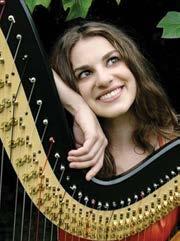
Bridget Kibbey – The brilliant harpist has remade the classical harp repertoire with her voracious musical appetite for everything from the classics to world music. You will want to hear her dynamite performance of Argentine composer Alberto Ginastera’s glittering Harp Concerto. (July 31 matinee and evening, August 3)
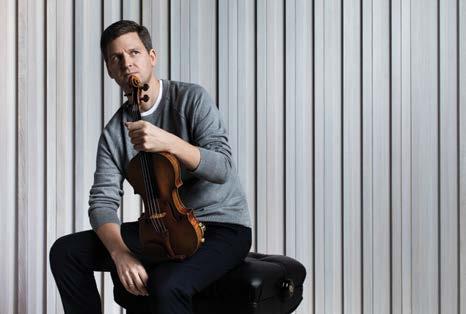
James Ehnes – Don’t miss the chance to hear all three of Brahms’ beloved violin sonatas performed by one of the great violinists of our time, known equally for his eye-popping virtuosity and heart-melting lyricism. This one is a big deal! (August 1)
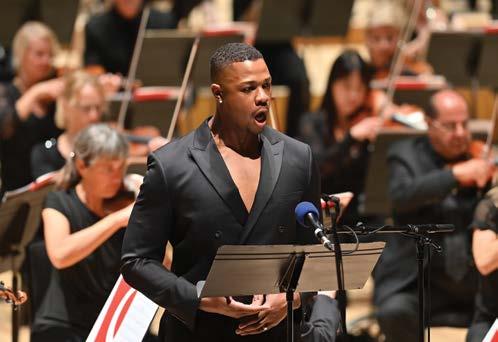
Davóne Tines – A performer of thrilling intensity and power, this bass-baritone is a groundbreaking artist who tells a deeply personal narrative as he sings. He was a sensation at the Metropolitan Opera’s recent El Niño. (August 9)
Kinan Azmeh – A wizard on the clarinet as well as a brilliant composer, don’t miss hearing his improvisational tour de force, Suite for Improvisor and Orchestra (August 10), and world premiere collaboration with the Claremont Trio. (August 15)
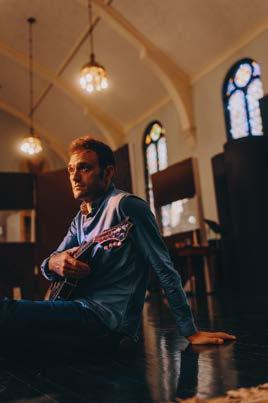
Chris Thile – Best known for his work with the trio Nickel Creek, as well as his work as an NPR radio host (Live from Here), this singer and mandolin magician is one of the most creative and charming artists performing today, equally at home playing Bach or his own original tunes. (August 17)
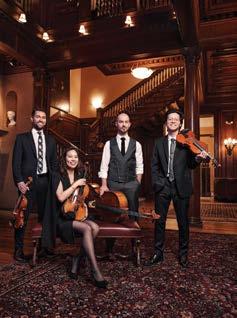
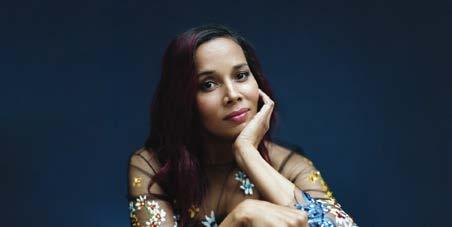
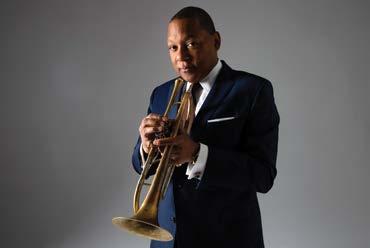
This is just a start – of course, you can also hear singer-multi-instrumentalist Rhiannon Giddens, the Dover Quartet, jazz legend Wynton Marsalis, and so many others. When you join us, introduce yourself to us, the Festival’s dedicated board and staff, to other audience members, and even to the performers. Live music connects us and creates a bond. Our lives are better for it, and we want to share it with you.
See you at the Festival!
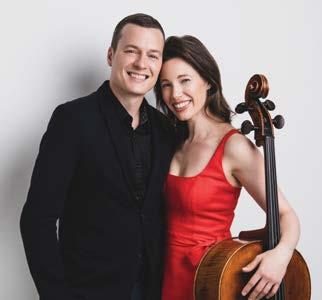
Aaron Wunsch and Julia Bruskin Artistic Directors
Kim Driscoll, President
Steve Scheinman, Vice President
Miki Bangs
Dave Birchenough
Donald Blair
Heather Carroll
Edward Conan, Treasurer Carrie Scholz, Secretary
Somak Chattopadhyay
Barb Connor
Alison Ferretti
Leanna Fischer
Susan Mark, Executive Director
Julia Bruskin & Aaron Wunsch, Artistic Directors
Koko Fuller
Chris Johnson
Daniel Kringer
Jill Marshall
Ellen Sorber, Marketing & Digital Communications Manager
Reese Nesbitt, Project and Outreach Manager
Grace Bailey, Bridget Carroll, Ryan Myers, Marketing Interns
Romy VanAlmen, Event Coordinating Intern
Sarah Paduano-Moth, Operations Manager
Corey Riley, Technical Manager
Sarah Midgeley Scuderi, Crew Supervisor
Daniel Kringer, Parking General
Owen Wilmot, Technical Manager’s Assistant
Doug Whitehouse
Bridget Wynne
Thomas Bersani
Judith Bryant
Joan Christy
Mary Cotter
William Davis
Michael P. Falcone
Steve Frackenpohl
Lindsay Groves
Claire Howard
Andrea Latchem
Sharon Magee
Doug Sutherland
Jason Guo, Amelia Yengo, Caitlyn Yengo, Stage Assistants
Kosta Georgiadis, Jonathan Paduano, Jeremy Scuderi, Crew Supervisors
Walker Barnes, Oliver Butler, Jocelyn Caputo, Zak Goodwin, Phoebe Gumaer, Emma Hill, Isaiah Hill, Claire Kelly, Kayleigh King, Mary Kinney, Clara Kuhns, Nate Patterson, Anna Smorol, Leah Tidd, Liv VanZandt, Jena Wilbur, Crew
Betsy Carter, Bookkeeper
Doug Whitehouse, Creative Director
Nancy Boyce, Graphic Designer
A special thank you to our 2023 volunteers and hosts
Laurie Attridge
Miki and Dan Bangs
Connie Barnat
Ruth Bates
Debbie Bearg
Henry and Helga Beck
Dave Birchenough and Carrie Lazurus
Deb Bogan
Barbara and Bolt
Bolton-Smith
Holly Gregg and Patience Brewster
Bill and Corinne
Buterbaugh
Kathy and James Byers
Patti Carey
Kathryn Carlson
Beth Carpenter
Colin and Corrie Carroll
Heather and Tim Carroll
Carol and William
Stokes-Cawley
Robert Gilfoil and Michele Chandler
Joan Christy and Tom Bersani
Ed and Paula Conan
Barb Connor and Doug Wood
Andrea Cosachov
Chris Cresswell
Heidi H. Cross
Stephen DiBiase
Sophie Dickinson
Alan and Linda Dolmatch
Deborah Bogan and Emily Dopkowski
Evan and Elizabeth Dreyfuss
Natalie Dreyfuss
Charley and Kim Driscoll
Joanne Dusel
Amanda Elmy
Katherine Feeney
Ham and Fran Fish
Paul and Erika Fiutak
Molly Fontana
Alysssa Franciamone
Pam Freeman
Artist Pianos, Trinity Concert Series – Steinway Pianos
Koko Fuller
Dominic Gambaiani
Bob Gilfoil
Sarah and Kevin Goode
Becky Goodell
Jennifer Groff
John Helgren
Evelyn Hellstern
Beckie and Brian Hidy
Tom Higgins
Donna Himelfarb
James Horan
Christian Huddleston
Don Hughes
Deborah Hurley
Mark and Diane Kaminski
Maryellen Casey and Bruce Keplinger
Mary Knepper
Kay Kraatz
Pat and Chris Mack
Debra Maloney
Brendan McGinn and Rebecca Cohen
Heather & Tim Carroll, Maryellen Casey & Bruce Keplinger, Ed & Paula Conan, Liz & Evan Dreyfuss, Kim & Charley Driscoll, Koko Fuller, Ellen Leahy – Musician Dinners
Joan Christy – Musician Dinners & Guarantor Reception
First Presbyterian Church, Anyela’s Vineyards, Westhill High School, and The Vine at Del Lago – Concert Locations
Programs and artists subject to change. © The Skaneateles Festival 2024
Susan McNamara
Madonna and Jeffrey Meyer
James and Nancy Mion
Maura Molnar
Kristi Newton
Michael and Bethany
Quattrociocchi
Patricia Ruggero
Dan Fisher and Lori Ruhlman
Alison Rutter
Linda Santanam
Steven and Kelly Scheinman
Caryn Scuderi
Marianne Sherman
Bill Eberhardt, Sherwood Inn
Jean Shook
Peter and MaryBeth Sorber
Joanne Speicher
Anita Sterns
Jay Stith
Daniel Kringer – SkanFest podcast
Koko Fuller – Ticket Sales
Don and Chacea
Sundman
Peggy Surdam
Brenda Switzer
John McDevitt and Helen Tai
Patty Weisse and
George Thomas
Margaret Thomsen
Dave Tobin
Patty Troisi
Sekai Turner
Gail Vanderlinde
Geri Wagner
Mark Bostick and Connie Walters
Adam and Kim Weitsman
Doug and Peg Whitehouse
Jessie Wingfield
Bill Witter
Sheryl Woodmansee
Bridget and Dan Wynne
Skaneateles High School – Music Stands & Percussion
Arthur Nick Smith – Piano Tuning
Many thanks to the generous Skaneateles residents who open their homes to the Festival’s visiting musicians.


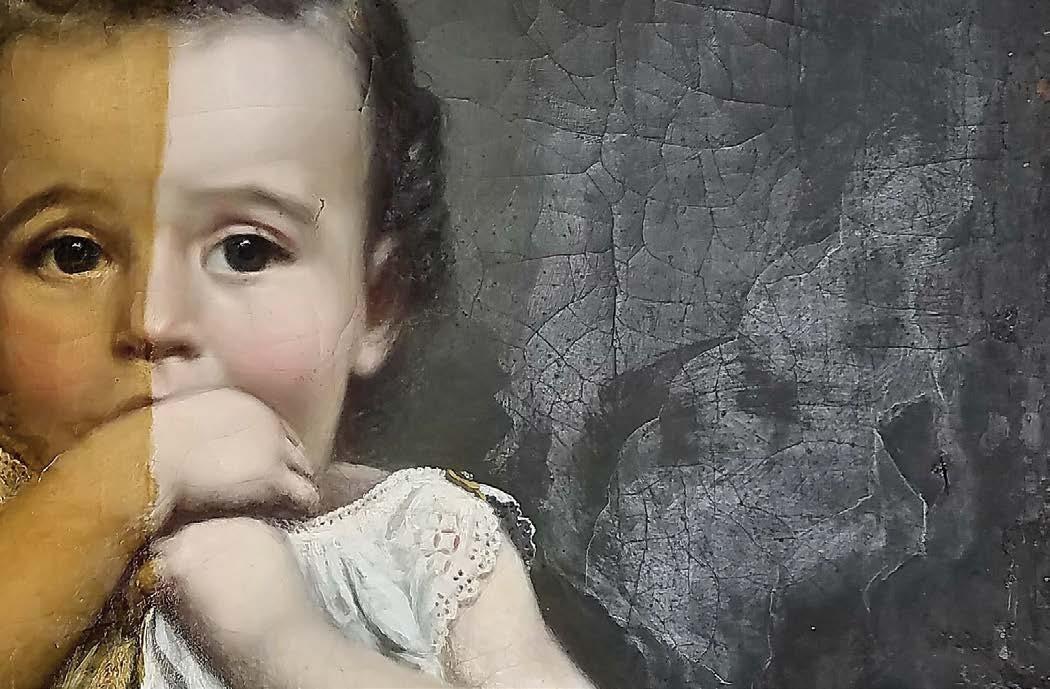
Gifts received as of July 17, 2024
Platinum Guarantor
Andromeda Foundation
Armory Square Ventures
Tom Bersani and Joan Christy
Somak Chattopadhyay and Pia Sawhney
Joan Christy, in memory of Carolyn Stein
Gold Guarantor
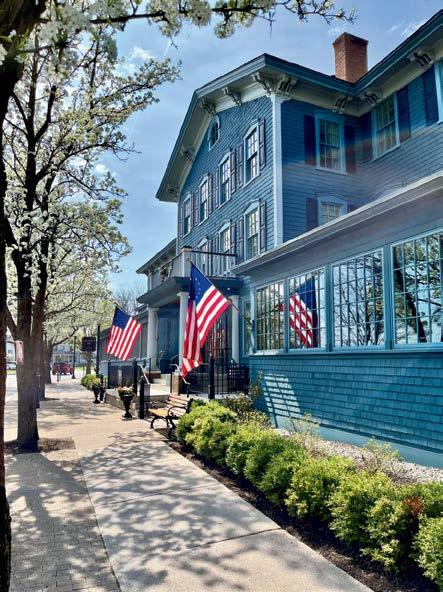
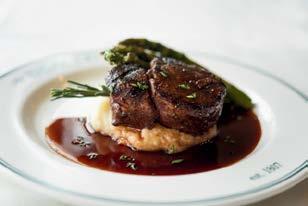
1911, Beak & Skiff
Artist Piano
Franklin Lofts, LLC
Sarah and Kevin Goode
Guarantor
Ivan and Mimi Ace
Roland and Tacie Anderson
George S. Bain
Henry and Helga Beck
Dave Birchenough and Carrie Lazarus
Donald Blair and Nancy Dock
The Bonadio Group
Corey Bond-Bauman, The Bond 1835
Bousquet Holstein, PLLC
Benefactor
Anonymous
Miki and Dan Bangs
Maryellen Casey and Bruce Keplinger
Cayuga County Tourism
Nancy and Joe Clayton
Lynn Cleary and David Duggan
Paul and Linda Cohen
Vic and Debbie Duniec
Gold Patron
Irv Beimler
Judith Bryant
Elet and John Callahan
David and Jennifer Campanile
Patti Carey
Bob and Terry Dewitt, Lakeview Auto & Marine
Karen Elkins and
Jerry P. Weir
Central New York Community Foundation
CNYArts
The Falcone Family Fund
National Endowment for the Arts
Grossman St. Amour CPAs PLLC
Donna Himelfarb
Jackie Jones, Lake Life Real Estate Agency
Sam and Debby Bruskin
Columbian Foundation
Ed and Paula Conan
Barb Connor and Doug Wood
Donna and Bill Davis
Alice M. Ditson Fund of Columbia University
Elizabeth and Evan Dreyfuss
Kim and Charley Driscoll
Christopher and Jennifer Feeney
Guy and Nancy Easter
Alison and Brendan Ferretti
Joseph and Marie Grasso
Chris Johnson
Joyce and Robin Jowaisas
Darlene Kerr and John Cowin
John MacAllister and Laurel Moranz
John and Peggy Manring
Elizabeth Etoll
Ed and Brenda Evans
Hamilton and Fran Fish
Karen Fitzgerald
Frank and Frances Revoir Foundation
Craig and Barbara Froelich
Georgina Gregory
Doug and Kayla Hill
Sally Neumann
New York State Council on the Arts
Onondaga County
Daniel and Linda Scaia
Steven and Kelly Scheinman
Edward and Charlene McGraw
Pete and Betsy McKinnell
David and Jan Panasci
Juliette Klein Sharpe Fund, the CNY Community Foundation
Patricia Lynn-Ford and Steven Ford
Koko Fuller
David Graham
James Gregg, Managing Director/Investments, Stifel
Holly Gregg and Patience Brewster
Dana and Susan Hall
Andrea Latchem
Susan Mark and Mary Knepper
Jill and Todd Marshall, in memory of Bob Neumann
Brendan McGinn and Rebecca Cohen
Steve and Jackie Miron, in memory of Bob Neumann
Jane and Robert Morse
Sean and Laura O’Keefe
Lawrence Jerome and Linda Gifford
John and Maren King
Robin Kinnel
Shannon Langton
Rebecca Maestri and Jean Hacken
David and Norma McCarthy
Dan and Kathleen Mezzalingua
Elsa and Peter Soderberg
Doug Sutherland and Nancy Kramer
Jennifer Sutherland Sieglinde Wikstrom
Sherwood Inn & Appetites
Donald and Chacea Sundman
Doug and Peg Whitehouse
Robert Lieberman, RAV Properties
Marshall and Sharon Magee
Fred and Ginny Marty
Metcalf Foundation
Madonna and Jeffrey Meyer
Jim and Julie Moore
Dan and Linda Roche
Kelly and Tony Scalzo
Jary and Julie Shimer
Sutton Real Estate
Judy Robertson
Dan Fisher and Lori Ruhlman
Joseph Strodel Jr. and Therese Verley Strodel
Salli and James Tuozzolo
Margaret Usdansky
Judy Varney
Robert and Jenifer Weisenthal
NBT Bank
Bill and Sandy Nichols
Brian and Krystyna Owen
Kathleen Rey
Al and Vicky Sabin
Sieglinde Schwinge, in memory of Horst
Charles and Nancy Williams
Carolyn C. Winkelman
Patron
Eric Allyn and Meg O’Connell
Richard Bennett
Mary Bradly
Andres Cardenes, in memory of David and Louise Robinson
Edward P. Castilano
Carol and William Stokes-Cawley
Alan and Joan Coates
Robert and Jane Corcoran
Tim and Margie Creamer
Frank and Lynda DeOrio
Alan and Linda Dolmatch
Eggleston and Krenzer Architects, PC
Frederick and Janet Fagal
Leanna Fischer
Paul and Erika Fiutak
Wanda Fremont and Nanette Dowling
Contributor
Allan and Susan Abravanel
William and Alice Allen
Bernard and Lilian Asher
Peggy and Lee Bennett
Jane and Donald Blake
Cynthia Blume
Hal and Peggy Brown
Sharron Camp-Reed
Heather and Timothy Carroll
Jim and Sharon Cirincione
Bill Coppard
Lynn K. Cornachio
Paul and Gail Cowley
Heidi and Don Cross
Jane and Bill Cummings
Terry and Bill Delavan
Thomas Eldred
In Memory of Jean Shook
George S. Bain
Walter Benson and Kate Cogswell
David and Kathleen Bossert
Paul G. Brown and Susan M.
Loevenguth
Diane Buell
Nancy and Joe Clayton
Lynn Cleary and David Duggan
Samuel and Carolyn Clemence
Cornell Women’s LAX Class of 2012
Eileen and Jim Daley, Ann and Paul Kleintop, Kevin and Claire Shook, and Cathy and Keith Shook
Kathleen Deters-Hayes
Naomi Frost
Dane and Debbie Gist
Melvin and Dorothee
Goldman
Anne Gordon
Judith and Bryce Hand
Brian and Maureen Harkins
William and Karen Havens
Scott Heinekamp
Sally Holben
Martin and Deborah Hubbard
Jackie Keady
Alfred Kelly and Sharon Burke
Jeffrey Kirshner and Lorraine Rapp
Stephen and Theresa Kline
Wendy and John Kopley
Judy Krieger
Roger and Anna Krieger
Mary Giroux
Deborah Geer
Ruth Hancock
Dorothy Hauk
Richard and Deborah Hole
Tom and Gretchen Jeffers
Nancy Karapin
David and Sherrill Ketchum
Ted Kinder
Ellen Koskoff and Robert Morris
Agnes and Max Kunz
Jacques Lewalle and Paula Rosenbaum
Peggy Liuzzi and David Michel
Smiles of Skaneateles
Nancy Marquardt
JD and Danielle Dieterich
Disbatch Bio
Julia Donnontunono and Marissa Russell
Charley and Kim Driscoll
Lisa Eddy
Kent and Lisa Eshleman
Carol Faulkner
Susan Finkelstein
Patricia Lynn-Ford and Steven Ford
Joe and Mary Gaffney
Jeff Giocondi and Lizzie Shand
Joan and Phillip Giocondi
Erin Jaeger
Anne Jamison and Peter Vanable
Carol Krumhansl and Jeffrey Roberts
Daniel and Grace Labeille
David and Stacia Landsberg
Edward and Carol Lipson
Anne Lynn
Clifford MacBroom and Lucille Solana
James MacKillop
Bill and Miki Mahood
Bobbi and Cliff Malzman
John and Candace Marsellus
Susan Martineau
Victoria Meyer
Bruce and Margaret Osborne
Susan and David Palen
John Pulos
Greg and Debbie Quick
Patrick and Kuni Riccardi
David and Susan Rossi
Joseph McCaffrey and Jackie Bays
Fran and Kevin McCormack
David and Janet Muir
Chris and Amy Neumann
Ellen and Martin Nodzo
Andy Nye
Paul Oakley
Michael and Pam Odlum
Nancy Oplinger and Tomas Arias
Cathy Palm
Larry Palmieri
Judy and Arnie Poltenson
Susan Poniatowski
Dick and Kim Poppa
Howard and Ann Port
Theodore and Lisa Jeske
Roberta Jones
Norah Kennedy
Wendy and John Kopley
Shannon Langton
Susan Mark and Mary Knepper
Alan and Joyce Methelis
Jim and Julie Moore
Sue Morley
Patty Orr
Adam Purdy and Katie Schad
Andrew and Sherie Ramsgard
Rhonda Richards
Max and Rebecca Rosenman
Carrie and Chris Scholz
Thomas Schwartz
Carrie and Chris Scholz
Judith Stoikov and Richard Miller
Dan and Peggy Surdam
Frank and Rose Swiskey
Paul and Mary Torrisi
Jaime Tuozzolo
Richard and Ann Wasiewicz
Robert Wayne, in memory of Edith & Charles Wayne
The Leah Weinberg
Charitable Fund
Jo Werner
Joseph and Maureen Wilson
Carol Wixson
Susan Wolstenholme
Maureen Wopperer
Bridget and Dan Wynne
John and Carol Young
Joel Potash and Sandra Hurd
Nancy Rice
Rhonda Richards
Donnaline Richman
Susan and Steven Shaw
Sharon Slater
Eugene and Joan Tarolli
Nancy E. Tiedemann
David and Patricia Urban
Linda Van Buskirk
Ben and Eleanor Ware
Lynne Weiler
Sara Wong
Olwen Wright
Joyce Zadzilka
Alan Ziegler and Emily Neece
Karen Settembre
Keith and Catherine Shook

Skaneateles Class of 2007
Carol and William Stokes-Cawley
Helen Tai and John McDevitt
Lucille Teufel
The Arizona Tobin Family
Jamie Traver and Peggy Conan
Paul Traver, Anthony Traver, Edward Traver
Upstate Medical University, Department of Psychiatry
Margaret Usdansky
Elisabeth and Joseph Wood
Richard and Mary Eileen
Wood


The Skaneateles Festival is proud to present
This season Searching for Home invites performers, composers, and audiences to reflect on the nature of home and consider what it means to those who must search out a new one, as well as how to support those who do so. Searching for Home will highlight performers, composers, and musical traditions from among those who have resettled in Central New York: Syrians, peoples from east and central Africa, Afghans, and Ukrainians.
Onondaga County has the 3rd highest refugee intake rate in the country. Syracuse has welcomed over 10,000 refugees from Syria, Somalia, Sudan and, most recently, 400 families from Afghanistan and new refugees from Ukraine. According to the New American Economy, immigrants now comprise 8% of the county population.
The Festival Orchestra recognizes this population of CNY refugee communities with a world premiere by young Afghan composer Arson Fahim and performances by Syrian clarinetist Kinan Azmeh (“spellbinding” performer, New Yorker), including a new work commissioned by the Festival.

Monday, August 19 • 3:00 pm
Upstate Golisano Children’s Hospital
This event is NOT open to the public.
These events are made possible with support from the following:
concerts featuring the Ivalas Quartet
The Ivalas Quartet has been changing the face of classical music since its inception and seeks to enhance the classical music world by consistently spotlighting past and present composers who are Black, Indigenous, and people of color.
Currently, the Ivalas Quartet is the Graduate Resident String Quartet at The Juilliard School in New York City, where they study under the Juilliard String Quartet. Through the Sphinx Organization, Ivalas has presented educational programming with an emphasis on community engagement in schools with Black and Latinx communities.
The Ivalas Quartet is the Festival’s 2024 Emerging Artists in Residence and is generously sponsored by the Andromeda Foundation.

Tuesday, August 20 • 7:00 pm
Seymour Library
176 Genesee St, Auburn, NY 13021
This event is free and open to the public, no ticket is required. Children and families are welcome.

Wednesday, August 21 • 7:00 pm
Center for the Arts of Homer
72 S. Main St, Homer, NY 13077
This event is free and open to the public, no ticket is required. Children and families are welcome.
Wednesday, August 21 • 2:00 pm
Menorah Park of CNY
4101 E. Genesee St, Syracuse, NY 13214
This event is NOT open to the public.


Thursday, August 22 • 1:00 pm
Auburn Public Theater
8 Exchange Street, Auburn, NY 13021
This event is free and open to the public, no ticket is required. Children and families are welcome.


Educational Initiative
First Presbyterian Church 97 E. Genesee St, Skaneateles

SkanFest U is sponsored by:
SkanFest U is the Festival’s educational initiative, open to all. This year’s topic will be Music and Home. It will explore how composers express a sense of home in their music; how they bridge the cultural gap between their country of origin and their new homelands; and how music can address themes of dislocation, rupture, and healing. Get to know music by Chopin, Dvorˇák , Rachmaninoff, Stravinsky, Korngold, and Tania León, and prepare to hear music to be performed at the Festival, including Festival commissions by Kinan Azmeh (Syria), and Arson Fahim (Afghanistan).
Hear exclusive interviews and live performances by Festival artists and mingle with your fellow music enthusiasts afterward over a glass of wine.
The program will be led by Co-Artistic Director Aaron Wunsch, who teaches music at The Juilliard School.
Weekly Sessions
Tuesday, July 30, August 6, 13, and 20 4:00 – 5:00 PM
The Skaneateles Festival’s educational sessions are FREE and open to all. For more information: 315-685-7418 or www.skanfest.org
Aaron Wunsch is sponsored by The Skaneateles Consortium: George Bain, Sam and Debby Bruskin, Dana and Susan Hall, and Judy Robertson
“ This fund will serve as a vehicle that reflects my deep appreciation for what the people of this area have meant in my life.”
– Juliette Klein Sharpe
Longtime Skaneateles resident Julie Sharpe felt blessed by her friends and community and enriched by several local nonprofits. Before her passing in 2014, Julie designated a provision in her will to establish a fund at the Central New York Community Foundation. The Skaneateles Festival will benefit in perpetuity from Julie’s thoughtful legacy of generosity.
SkanFest U is performed in grateful memory of Julie and all that she did as a Festival volunteer and supporter.
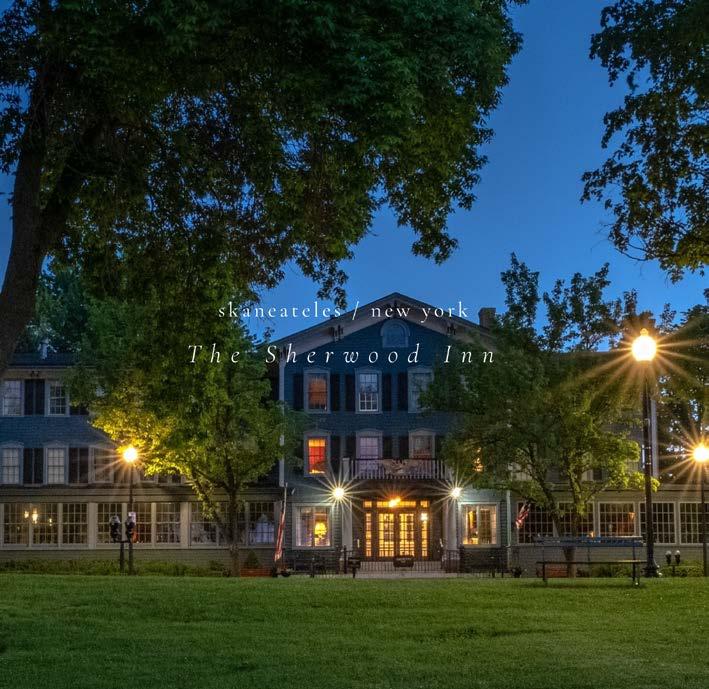
Congratulations Bill Eberhardt on 50 years of owning and operating

Thank you for all you do for this community!

Fizz
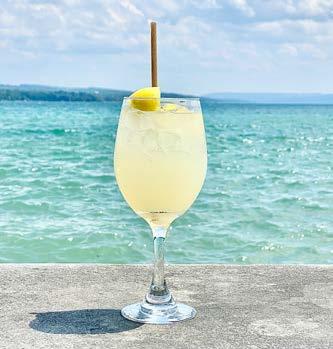
This refreshing summer cocktail is being featured at the Sherwood Inn and Bluewater Grill. $1 from each drink will be donated to the Skaneateles Festival.
Fun at the Festival
For all ages
Kids FREE
Adults $5 at the door
ARTIST SPONSORSHIPS
kidsfest is presented in memory of Faye Panasci
with additional support from the Fletcher Foundation

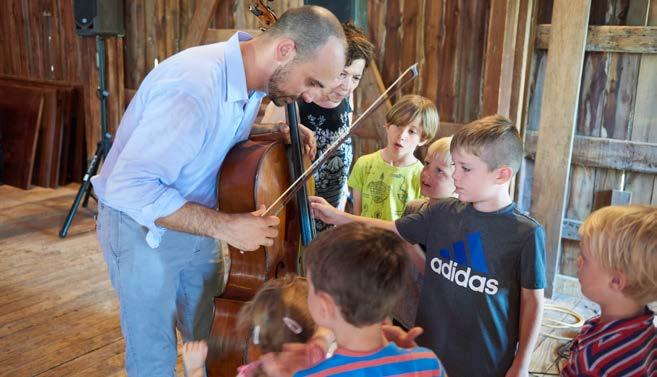
Thursday, August 1, 11:00 AM
First Presbyterian Church, 97 East Genesee St, Skaneateles
Featuring harpist Bridget Kibbey
Friday, August 23, 11:00 AM
Mandana Barn, 1274 Lacy Road, Skaneateles
Featuring The Westerlies
Riley Mulherkar and Chloe Rowlands, trumpets
Andy Clausen and Addison Maye-Saxon, trombones
Bridget Kibbey is sponsored by Donna Himelfarb
The Westerlies are sponsored by Ed and Paula Conan
Week 1
Wednesday, July 31
1:00 PM
First Presbyterian Church 97 E. Genesee St, Skaneateles
Today’s concert is sponsored:
memory of Marilyn
by her friends
Judy Bryant, Andy Latchem, Maryellen Casey and Bruce Keplinger, and Susan Mark and Mary Knepper
SAINT-SAËNS Fantasy for Harp and Violin, Op. 124
FAURÉ Serenade, Op. 98
Romance, Op. 69
Papillon (Butterfly), Op. 77
DEBUSSY arr. Kibbey
J. S. BACH
arr. Kibbey
Arabesque No. 1
Toccata and Fugue in D minor, BWV 565
Joseph Genualdi, violin
Bridget Kibbey, harp
Steven Doane, cello Aaron Wunsch, piano
ALBÉNIZ Granada from Suite española No. 1, Op. 47
KIBBEY Bards and Griots
D’RIVERA Bandoneon
ARTIST SPONSORSHIPS
Steven Doane is sponsored by Linda and Dan Roche
Joseph Genualdi is sponsored by Jeff and Madonna Meyer
Bridget Kibbey is sponsored by Donna Himelfarb
Aaron Wunsch is sponsored by The Skaneateles Consortium: George Bain, Sam and Debby Bruskin, Dana and Susan Hall, and Judy Robertson
Bridget Kibbey, harp
The Skaneateles Festival is supported in part by an award from the National Endowment for the Arts.
Marilyn Lerman
Marilyn was a bright light in the Festival audience — and not only because of her megawatt smile. She always arrived early enough to sit right up front. Not only did she not want to miss a note from the musicians, she didn’t want to miss a glance, a breath, or a gesture, either. She was captivated by the music – by all the arts, really –and her curiosity and thoughtful listening enabled her to enjoy music of all types, including more challenging new music. Her enthusiasm for a wonderful performance was boundless — and contagious. The joy she always exuded from her front-row seat will be deeply missed.
Fantasy for Harp and Violin, Op. 124 (1907)
CAMILLE SAINT-SAËNS (1835-1921)
Music for an unusual combination of instruments often leads us back to the performers for whom it was composed – in this case, a pair of musical Moravians, sisters Clara and Marianne Eissler. They enjoyed a career performing together for various heads of state, including Queen Victoria, returning in between engagements to their shared London home, where they played billiards and enjoyed the company of their (apparently Wagnerian) dog, Tristan. Saint-Saëns had promised the accomplished sisters a duo some 10 years earlier, and he finally delivered it in 1907. It became their signature piece.
Saint-Saëns composed the music at Bordighera, Italy (Skaneateles on the Mediterranean). He had recently returned from a successful tour of the United States, which feted him as the greatest living French composer – a claim with which many back in Debussy’s Paris now disagreed. However, no one could dispute the prolific achievements of this 72-year-old over the six decades since his sensational piano debut at age 10.
One of history’s greatest child prodigies, Saint-Saëns had published works in philosophy, astronomy, and archeology. Oh yes: and music. By the time he came to the Fantasy, his 124th published work, Saint-Saëns had composed continuously for over 60 years, in every conceivable genre.
This fantasy by this most French of composers featuring the most French of instruments begins in a most French manner – not with a Germanic declamation, but by wafting a few arpeggios and an insinuating melodic sigh through the air. Who knows where they might lead? Soon the violin steps into the spotlight, showing off all it can do, from
fast-charging scales to full-throated crooning. Not to be left in the dust, the harp sends its own ravishing cascades into the stratosphere. The harp gives these up, however, to start a somber dance, tentatively joined by the violin. The dance dissolves back into the original fragrant atmosphere, which the listener is in no hurry to leave. What’s that final sound? Neither the harp nor the violin – it is the collective sigh of the audience.
Serenade, Op. 98 (1908)
Romance, Op. 69 (1894)
Papillon (Butterfly), Op. 77 (1885)
GABRIEL FAURÉ (1845-1924)
What’s in a title? Not much, according to Gabriel Fauré. When his publisher suggested his delightful piece for cello and piano, Op. 77, be called “Dragonfly,” and later “Butterfly,” Fauré responded, “Butterfly or Dung-Fly, call it whatever you like.” Fauré generally preferred generic titles that allowed freedom of interpretation to both composer and listener. Like Chopin, whose nocturnes might contain hints of waltz, mazurka, and ballade, Fauré’s music seeks to open the imagination, rather than close it off. The vehicle, in this case, is the cello, for which the composer had a special affection.
His Romance, Op. 69, was originally for cello and organ, bringing some secular intimacy to the churchiest of instruments; Fauré worked as a church organist but felt little religious fervor, regularly escaping sermons to smoke cigarettes outside. A serenade, however, is expected to be flirtatious, and Fauré had plenty of amorous experience to draw upon for his Serenade, Op. 98. His prodigy for music was matched by his abilities in the Parisian salons, and the Serenade has the energy, confidence, charm, and wit of someone who
can attract and retain attention. As for the aforementioned Butterfly, Op. 77, this charming showpiece is salon music at its best: light, sophisticated, tender, and charismatic. Call it what you like, but there can be no doubt who penned it.
Arabesque No. 1 (1890)
CLAUDE DEBUSSY (1862-1918)
arr. Bridget Kibbey
The voluptuous beauty contained in Debussy’s music can distract the listener from how radical it really is for its time. Debussy would surely chuckle at finding his subtly provocative works, which once divided French society into heated debates, on a CD compilation called The Most Relaxing Classical Music in the Universe. In his greatest-hit Arabesque No. 1, Debussy draws upon the ornate curvature of Arabic design (also used in French Baroque architecture) to create his own intricate, intertwining musical lines. The opening curlicues float gently downward and upward, in alternation, always evading the traditional climaxes found in Romantic music. The effect is cool rather than heated, which might explain why some find it “relaxing” – but Debussy aimed to produce a sense of wonder rather than slumber. In the second section, the Arabesque takes on its alternate meaning: a ballet move like those painted by Edgar Degas. Here Debussy adopts the musical grammar and poise of Baroque dances but filters these through the pastel harmonies of his own time. After a return to the opening arabesques, the movement fades away, as so many of Debussy’s works do. As the fictional alter-ego Debussy created for his music criticism, Monsieur Croche, explained, “A genuine appreciation of beauty can only result in silence…Tell me, when you see the daily wonder of the sunset, have you ever thought of applauding?”
Toccata and Fugue in D minor, BWV 565 (ca. 1705)
JOHANN SEBASTIAN BACH (1685-1750)
arr. Bridget Kibbey
Bach’s most iconic work, sending chills down your spine every Halloween, may not actually be by Bach. Without an authenticated manuscript, some scholars believe this music is too wild for good old J. S. On the other hand, preeminent Bach scholar Christoph Wolff believes it is an early work by Bach, “refreshingly imaginative, varied, and ebullient as it is structurally undisciplined and unmastered.” With gusto, Bach took up the stylus phantasticus (“fantastic style”) of north-German organ music, with its ear-popping highs and lows, and wedded this to south-German recitative-like passages. The spooky result rendered it useful for the 1931 film version of Dr. Jekyll and Mr. Hyde, and it has been haunting us ever since. Conductor Leopold Stokowski’s transcription for full orchestra, used in the film Fantasia, cemented its status in popular culture.
Of course, one thing is for sure: if he composed it at all, Bach did not compose this music for solo harp. A working
theory, however, is that its original form may have been for solo violin, then transcribed for organ. Violin versions ensued, and Italian composer Salvatore Sciarrino even arranged it for solo flute in 1993, at which point one might as well play it on tuba. Bridget Kibbey’s harp transcription deftly maintains the virtuosic effects from the organ version, and her fleet-fingered fugue pulsates toward a dramatic and satisfying conclusion.
Granada from Suite española No. 1, Op. 47 (1886)
ALBÉNIZ (1860-1909)
One could call Isaac Albéniz the greatest guitarist of all time who never played the guitar. He played it only in his imagination while strumming chords at his own instrument, the piano. A phenomenal child prodigy, he made his way around the world performing in the manner of his idol, Franz Liszt, who he apparently met in 1880. When he settled down in Spain he increasingly took up the folk and popular idioms of his homeland and integrated these into classical compositions.
Like many of his works, Granada depicts the guitar in action, strummed here as a lover sings from the heart. The contrasting, minor-key music may reflect the lover’s mental state, exuding a Chopin-like melancholy. Perhaps this love remains unrequited. Today, Granada is a cornerstone of the classical
guitar repertoire, and its transfer to harp is a comparatively small step. A harp may not be the most practical instrument to carry out for a serenade under your lover’s window at dusk, but it certainly beats a piano.
Bards and Griots (2024)
BRIDGET KIBBEY
Bridget Kibbey is an ambassador for the harp as well as one of its great practitioners. She has enlarged the harp repertoire through her own transcriptions, as heard on this program, as well as in this original work. About it, she writes:
“Throughout history, the harp has been tasked to accompany and proclaim – from sharing the stories of the people, to the annals of the kings! From the Turkish Kanun, to the Kora of Mali, from King David’s lyre, to the Celtic Clarsach – the harp has morphed and bended into the modern concert harp you see before you today. Bards and Griots pays homage to each of these cultures and brave harpers who traveled and proclaimed their truth throughout the centuries, as we hear them traveling from East to West via cultural snapshots.”
Bandoneon (2009)
PAQUITO D’RIVERA (B. 1948)
Cuban American saxophonist-clarinetist-composer Paquito D’Rivera is a musical force: he has won a combined 16 Grammy and Latin Grammy Awards and is celebrated both for his artistry in Latin jazz and his achievements as a classical composer. If you’d like to know more about his fascinating life and work, seek out his memoir, published by Northwestern University Press, with the eye-catching title My Sax Life. About Bandoneon, he writes:
“When the harpist Bridget Kibbey asked me to write for the instrument, I immediately thought of “Bandoneon,” an Argentinean Milonga that recreates the nostalgic sound of the exotic instrument that, in the opinion of many, represents the very soul of the Tango. Just try to imagine Astor Piazzolla playing the harp instead of his legendary bandoneon at a very dark Tango joint in old Buenos Aires and you might get the image.” SAVE THE



Week 1
Wednesday, July 31
7:00 PM Backstage Pass (for ticket holders only)
8:00 PM
First Presbyterian Church
97 E. Genesee St, Skaneateles
Tonight’s concert is sponsored In memory of Jean Shook by Koko Fuller and Steve and Patti Lynn Ford
Joseph Genualdi, violin; Steven Doane, cello; Lindsay Groves, cello; Andrew Russo, piano; and Artistic Directors Aaron Wunsch and Julia Bruskin
BEETHOVEN Cello Sonata No. 3 in A Major, Op. 69
Allegro ma non tanto
Scherzo: Allegro molto
Adagio cantabile – Allegro vivace
MARC MELLITS David
In memory of David Stam
BALAKIREV Islamey
DEBUSSY Danses sacrée et profane for Harp and String Quartet
Julia Bruskin, cello
Aaron Wunsch, piano
ARENSKY String Quartet No. 2 in A minor, Op. 35
Moderato
Variations on a Theme by P. Tchaikovsky: Moderato Finale. Andante sostenuto
Joseph Genualdi, violin
Julia Bruskin, cello
Aaron Wunsch, piano
Andrew Russo, piano
ARTIST SPONSORSHIPS
Julia Bruskin and Aaron Wunsch are sponsored by The Skaneateles Consortium: George Bain, Sam and Debby Bruskin, Dana and Susan Hall, and Judy Robertson
Steven Doane and Rosemary Elliot are sponsored by Linda and Dan Roche
Joseph Genualdi is sponsored by Jeff and Madonna Meyer
Bridget Kibbey is sponsored by Donna Himelfarb
Andrew Russo is sponsored by Joe and Marie Grasso
Bridget Kibbey, harp
Joseph Genualdi, violin
Yuri Namkung, violin
Kyle Armbrust, viola
Rosemary Elliott, cello
Joseph Genualdi, violin
Kyle Armbrust, viola
Steven Doane, cello
Rosemary Elliott, cello
The Skaneateles Festival is made possible by the New York State Council on the Arts with the support of Governor Kathy Hochul and the New York State Legislature.
In memory of Festival board member and beloved friend Jean Shook
Jean brought a smile to our faces and joy into our hearts. A good listener, wise and grounded, she was a bright star at the core of her many friend groups and associations. Her Intelligence, energy and humor were the hallmarks of her beautiful character. Nurse, Counselor, Teacher, Mother, Friend, Teammate, Board Member and Volunteer… the many organizations and lives that she touched benefited from those attributes.
She was welcoming, authentic, and always greeted those she met with a big smile, speaking and listening with sincerity. Our Jean was quick to embrace her playful side and immerse herself in a fun adventure, unleashing her infectious laugh so readily. A Mother and Wife, it was clear that her beloved family was the foundation and source of her greatest pride and happiness.
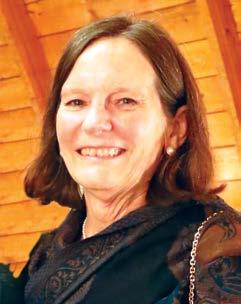
Jean loved the opportunity to help bring the Skaneateles Festival to us – enjoy this wonderful performance in her honor.
– Emily Gregg and Beth Estes
Cello Sonata No. 3 in A Major, Op. 69 (1808)
LUDWIG VAN BEETHOVEN (1770-1827)
The recent revelation that Beethoven’s hair carried some 300 times the average level of lead (along with arsenic and mercury) finally helps us understand why his hearing deteriorated so early in life, causing him to withdraw from social functions by the age of 30. By 1808, his physical suffering was compounded by personal and professional problems, such as his disastrous love life and the tepid reception of his only opera, Fidelio. The dedication copy of his Cello Sonata, Op. 69, bears the inscription “inter lachrymae et luctus,” “amid tears and sorrows.” However, you’d never guess that from the music, which is among Beethoven’s sunniest creations. It seems that Beethoven’s latest works were not so much autobiographical as a kind of music therapy for himself – and for us, as well.
One of this Sonata’s greatest achievements was to elevate the cello out of its traditional role as chauffeur of the bass line. Since the Baroque Era, the cellist’s motto was typically “You go high, I’ll go low.” Beethoven’s earlier cello Sonatas already attempted to alter this formula, but the piano still dominates the texture, with cascades of notes for every peep from the cello. Here, however, the cello begins all alone, a radical departure from any previous cello Sonata. The piano merely joins in, reflecting on the cello’s statement, before it has a chance to sing the theme itself. Beethoven has thereby framed the instruments as equals, two partners in
conversation. This requires the cellist to explore the instrument’s uppermost range, like an elephant on ballerina’s tiptoes – possible, but a real challenge.
The first movement unfolds more patiently than willfully, a departure from Beethoven’s earlier works. While there are occasional arguments to be had, both instruments find plenty of room for contemplation, including several moments where time seems to stop for a fanciful flurry of little notes. Clouds pass over the middle section of the movement, however, a dolorous, operatic cantilena. The movement also has movements of characteristic Beethovenian vigor, but a quiet moment is never far behind. Even the triumphant return of the opening theme dissolves once again into reverie before the final chords.
The second movement is a jaunty scherzo, which is funny by pretending to be too serious. Beethoven requires both instruments to play stubbornly on the upbeat what sounds like it ought to be played on the downbeat. One wonders if Beethoven might be making light of his own legendary gruffness, which intermittently eases into a more jocular major-key dance. In place of a slow movement is a tender, songful introduction to the final movement. This Allegro vivace glides forward vivaciously with infectious good humor. If you allow yourself to be carried along, Beethoven’s achievement in music therapy will be yours as well.
David (2023)
MARC MELLITS (B. 1966)
Composers have long dedicated their works to specific individuals. In the Classical Era, works by Mozart and Beethoven were usually dedicated to Countess Someone-or-Other, lending prestige and (one hoped) a payment. In the Romantic Era, dedications turned more personal, a sign of affection. For example, Schumann dedicated works to his future wife, Clara, and to his fellow composers, Chopin and Liszt. (Liszt reciprocated, but Chopin stuck with Countess Someone-orOther.) Unheard of, however, would be a work titled for its dedicatee, as is the case here. The dedicatee would need to be someone quite special – and that was certainly the case with David, a tribute to David Stam, who passed away on February 7, 2023. David was University Librarian Emeritus for Syracuse University, and the former Andrew W. Mellon Director of the Research Libraries of The New York Public Library. He also was a beloved father, friend, and supporter of the arts, including the Skaneateles Festival.
David’s gentle spirit hovers over and in the music, first in flowing phrases and then in delicate pizzicatos. The music has elegiac overtones but never wallows; it flows on, as David always did. The pulsating chords and pizzicatos brighten as the music gains momentum, ultimately leading to a poignant violin melody over hymn-like chords. This music was “written in fond memory of David Stam,” and it will be played that way, too.
Islamey (1869, rev. 1902)
MILY BALAKIREV (1837-1910)
What is the most difficult piece ever written for piano? Pianists will happily argue with you about this, but sure to come up in the discussion is Mily Balakirev’s Islamey, subtitled “Oriental Fantasy.” The Russian composer went on holiday to the Caucasus Mountains in the 1860s and found himself captivated. He recalled, “the grandiose beauty of the luxuriant natural surroundings in that region and the commensurate beauty of its inhabitants, all of this taken together left a deep impression on me.” Balakirev sought out the local Circassian folk music and transcribed a dance tune called Islamey, the foundation for what became a Lisztian showpiece for piano. It was important to Balakirev that the work offer something new and innovative. He distrusted the European-style conservatories in Moscow and St. Petersburg (where Tchaikovsky was in the first graduating class) and founded his own Free School of Music in 1862. When the great Russian pianist, Nikolai Rubinstein, visited there to give a recital in 1869, Balakirev dedicated Islamey to him and asked him to play it. Rubinstein was taken aback by the difficulty, commenting that “few would be able to master it.” This turned out to be true. Balakirev himself finally declared it “unplayable.” Many others would try anyhow, including Scriabin, who injured his hand in the attempt. Note to pianists: Enter at your own risk.
Islamey’s energetic melody requires the pianist to play a string of repeated notes distributed between the two hands. Each variation demands new acrobatic feats, until a lyrical love theme (from the Crimean Tatars) offers some respite. After a grandiose statement of this melody, Islamey is back with ever more devilish difficulties. Balakirev’s goal here was not so much to showcase the pianist as to show the musical power latent in local folk music – but, to its credit, Islamey does both.
CLAUDE DEBUSSY (1862-1918)
Debussy’s Danses sacrée et profane was composed for an instrument that no one played. At least, not yet. It was commissioned to help market Gustave Lyon’s new chromatic harp, one in a long line of optimistic French musical inventions that included the tuba-like ophicleide, the accordion-guitar melophone, and the practically unfathomable piano-oven, marketed to “cook a meal while the owner relaxed at the keyboard.” (Like the hydrogen blimp, this seemed like a great idea until it clearly wasn’t). Lyon felt the chromatic harp would be necessary as repertoire became increasingly chromatic, requiring sharps and flats at every turn. Normally, the harpist depends on seven cumbersome pedals to raise and lower the pitch by half step. Since very few harpists have seven feet, Lyon saw he could eliminate the pedals altogether by intersecting one set of strings by another


September 27-29: The Three Ladies
October 25-27: Knight Music: Bach and Telemann
February 21-23: The Wonder Chamber Project
April 4-6: Monteverdi Vespers of 1610
May 9-11: Baroque Wind Band 2024 -
Fridays in Syracuse, Saturdays in Ithaca, Sundays in Rochester
pegasusearlymusic.org nysbaroque.com
in a giant X; this allowed the harpist access to all chromatic notes, a bit like the black and white keys on the piano. Voila! But what music to play on it?
By 1904, Debussy was known as far as Constantinople for his Prelude to the Afternoon of the Faun, which included two prominent harp parts. Who better to pen a new work for the chromatic harp? Debussy accepted the challenge, composing two exquisite dances for harp and strings. Danse sacrée carries an air of the ancient, with a chant melody from the strings followed by the harp’s parallel pentatonic chords. There is no chromaticism in ancient music, however, so Debussy offers his own modern commentary in a sensual melody marked très expressif (very expressively). The mysterious denouement dissolves into the Danse profane, which is by no means profane – merely secular, rather than religious. Its hip-swaying lilt might depict the Ancient Greek dancers from Delphi who Debussy later incarnated in his piano prelude, Danseuses de Delphes. The harp at first plays a Puck-like role, impishly prancing around the orchestra’s undulating dance. In a series of increasingly intricate and sensual passages, the harp entrances the listener before dancing toward a final joyous outpouring of scales.
Alas, the chromatic harp did not catch on. Tuning a regular harp already requires the patience of a saint, and increasing the number of strings from 47 to 78 excluded even saints. Harpist Henriette Renié, who, ironically, had inspired Lyon to pursue the chromatic harp in the first place with a comment about the difficulty of pedaling, made the first transcription of Debussy’s Danses for pedal harp, in 1910. The poor chromatic harp, like the piano-oven, has yet to make a comeback.
ANTON ARENSKY (1861-1906)
The string quartet has often been called the most perfect genre of chamber music, a democratic expression of equals. But then why two violins and only one viola and cello? They tilt the balance of power toward the upper register; the poor cellist must toggle between the bass line and the melody, like Buffalo Bob and Howdy Doody. Anton Arensky to the

rescue: He subtracted a violin and added a second cello for his darkly lyrical String Quartet No. 2. His publisher, in disbelief, demanded an arrangement for regular string quartet. (No one thought to solve the imbalance by adding a second violist since it was apparently hard enough to find a single good one.) Arensky obliged, but here we present the original version in its richly hued glory.
Arensky himself was somewhat caught in the middle, too. A power struggle brewed in Russian music, pitting the conservatory-trained followers of Tchaikovsky against the conservatory-disdaining “Mighty Five,” who felt their music to be more authentically Russian. Arensky studied with Mighty-Fiver Nikolai Rimsky-Korsakov, but he took a position at the new Moscow Conservatory (where his students included Rachmaninoff and Scriabin) and came under the influence of his friend Tchaikovsky, who died in October 1893. He dedicated the new Quartet “To the memory of Tchaikovsky,” paying overt tribute in the middle movement, a set of variations on a tune from Tchaikovsky’s Songs for Children, Op. 54.
At the same time, the work is infused by Russian Orthodox chant, evident right from the start where the first cello plays a psalm melody. All instruments play with mutes, as if this music travels across time from long ago. Arensky became director of the Imperial Court Chapel shortly after he composed this work, putting his passion for church music to work; yet he did not renounce the romantic passion that most defines his music. The violin takes up the chant but leads the quartet into more heated earthly feelings, which include self-doubt, gloom, consolation, and hope. Thoughts settle back to eternity as the movement ends with a return of the chant.
The variations on Tchaikovsky’s theme are justly the most beloved movement. The tune, “Legend,” tells a solemn story, but for children, with an air of simplicity. The seven variations become gradually more adult-appropriate, however, including a sultry, yearning fifth variation. In the later variations, Arensky shows what he learned from Tchaikovsky’s masterful orchestration as he explores intricate textures and allows each instrument its turn at the melody. Finally, the psalm chant from the first movement resurfaces, a wider view of Russian culture that connects the secular with the religious. The Finale initially continues in this solemnity before launching into a jocular version of a famous Russian national chant, also used by Modest Mussorgsky for the coronation scene in his opera, Boris Godunov. Arensky unites the various strands of Russian musical culture in an effort to uplift it, and in so doing uplifts the listener as well.
Week 1
Thursday, August 1
8:00 PM
First Presbyterian Church
97 E. Genesee St, Skaneateles
Tonight’s concert is sponsored by:
James Ehnes, violin
Andrew Armstrong, piano
BRAHMS Violin Sonata No. 3 in D minor, Op. 108
Allegro
Adagio
Un poco presto e con sentimento Presto agitato
BRAHMS Violin Sonata No. 2 in A Major, Op. 100
Allegro amabile
Andante tranquillo
Allegretto grazioso, quasi andante
INTERMISSION
BRAHMS Violin Sonata No. 1 in G Major, Op. 78
Vivace ma non troppo
Adagio
Allegro molto moderato
ARTIST SPONSORSHIPS
James Ehnes is sponsored by Armory Square Ventures, and Somak Chattopadhyay and Pia Sawhney
Andrew Armstrong is sponsored by Bousquet Holstein, PLLC
The Skaneateles Festival is made possible by the New York State Council on the Arts with the support of Governor Kathy Hochul and the New York State Legislature.
Violin Sonata No. 3 in D minor, Op. 108 (1888) JOHANNES
(1833-1897)
Two years after his Violin Sonata No. 2, Brahms returned to the genre. All three Sonatas were the product of summers spent by mountain lakes, but this one speaks in the tones of autumn’s fading light. This time, Brahms had again rented a villa on the shore of Lake Thun, in the shadow of the immense Bernese Alps. “The mountain is right in front of my window as if it were deliberately placed there,” wrote Brahms to his publisher. “In the sunshine, it radiates a spectacular beauty, but in the twilight, an ominous shadow.”
The shadowy world of the first movement admits little sunshine. The violin begins “sotto voce”, in a hushed voice, set to an uneasy piano accompaniment. This music seeks but does not find. In a letter to Clara, Brahms spoke of its “maze of organ points,” a reference to the technique by which organists hold down one low note with their foot while they play shifting chords above it. Traditionally, these build tension that lead to a resolution, but here the resolution never quite comes. The music becomes increasingly desperate but only manages to end on a note of resignation, in D Major.
The second movement, by contrast, is one of Brahms’s most peaceful utterances. Its chords sway slowly like the waves of the calm lake outside his window. Its melody may be faintly tinged with loneliness, but it is content. The third movement is back in the shadows, but “con sentimento,” with sentiment. It fleets past with regret, aside from a couple moments of whimsy.
The final movement, Presto agitato, is different from the others – a fiery, heroic tragedy. It is the loudest of all Brahms’s movements for violin, a reminder of how forceful and orchestral his chamber music can be. Both instruments roar from the outset, a display of strength that subsides into a noble hymn. Our two heroes desperately try to escape their fate, but danger looms at every turn. Whereas the First Violin Sonata communicated the wistful nostalgia of later life, this one is full of vigor and refuses to give up. Defiant, our heroes are finally engulfed in flames.
This final Sonata was dedicated to “my friend, Hans von Bülow,” the pianist-conductor whose stormy temperament somewhat mirrored the music. This was to be the last of his works Brahms dedicated to anyone; the rest would be only for himself.

Armory Square Ventures (ASV) is a returns-oriented, mission-focused technology venture capital firm based mainly in the Finger Lakes region of New York State. ASV has catalyzed thousands of jobs and generated top decile returns to our investors which include nonprofits, endowments, foundations, and business leaders primarily based in Upstate New York. We like to say we are an optimism engine and community catalyst for innovation clusters and cities outside Silicon Valley. As a firm, we are also enriched and nourished by individuals from a range of backgrounds.
Violin Sonata No. 2 in A Major, Op. 100 (1886) JOHANNES BRAHMS (1833-1897)
Though Brahms was a city-dweller in Vienna during most of
rate composer, pointing out that the main quality of his music was a “yearning…felt by all who are full of…dissatisfaction of any kind.” While Nietzsche surely underestimated the subtle beauties contained in the music, his point was not entirely wrong: Brahms’s Violin Sonata is full of a


the nostalgia, wistfulness, and resignation of mid-life, much like the life Brahms himself was living. The confirmed bachelor had recently finished his Violin Concerto, had just grown out his now-iconic beard, and settled down to com pose on the banks of Lake Worth in Austria, where he said, “The melodies fly so thick here that you have to be careful not to step on one.”
Indeed, melodies fly right from the start, where the violin sings a wistful tune that seems to emerge effortlessly from the piano’s opening chords. The opening rhythm is a seed from an earlier plant, a song called “Regenlied” (“Rain Song”), which expresses nostalgia for lost youth. This rhythm becomes a motto for much of the Sonata, until the song melody fully emerges in the third movement. The first move ment unfolds and expands with an unhurried lilt, exploring a wide range of emotions from longing to struggle to dejec tion, summoning a spirit of triumph for its glorious coda.
The second movement begins nobly with a piano solo, but the violin enters with doubt and regret. The two struggle to reconcile with each other in a proud middle section but work through their differences as the opening melody returns, and they subside together in a peaceful conclusion. The third movement begins in a mood of nostalgia laced with sadness, as the violin sings the words of “Regenlied”: “Cascade, rain, cascade down, wake for me those dreams again, that I dreamed in youth.” This minor-key melancholy is the opposite of the vigor found in most Sonata finales, which may disappoint some listeners. Not Clara Schumann, however. “You can imagine my rapture when in the third [movement] I once more found my passionately loved melody,” she wrote to Brahms. “I say ‘my,’ because I do not believe that anyone feels the rapture and sadness of it as I do.” Indeed, the movement contains both rapture and sad ness, looking for a way to resolve the two. In walks the theme from the second movement, offering some wisdom. The vio lin and piano take this to heart, allowing their sadness and rapture to dissolve into a peaceful acceptance that listeners of a certain age will recognize as a truth more precious than rousing final chords could ever be.


Week 1
Friday, August 2 • 8:00 PM
Robinson Pavilion at Anyela’s Vineyard
Rain Location:
The Vine at Del Lago 1133 NY-414, Waterloo, NY 13165
Tonight’s concert is made possible with support from:
Rhiannon Giddens – vocals, banjo, viola
Francesco Turrisi – keys, accordion, percussion
Dirk Powell – keys, guitar, violin, accordion, vocals
Jason Sypher – bass
Niwel Tsumbu – guitar
Attis Clopton – drums
Two-time GRAMMY Award and Pulitzer Prize-winning singer and multi-instrumentalist
Rhiannon Giddens is a true musical explorer: she brings together folk, bluegrass, country, gospel, classical, jazz, and Celtic traditions into a voice all her own.
An advocate for the neglected byways of American musical history, her soulful performances bring traditions alive in new ways.
Don’t miss your chance to hear why “Rhiannon Giddens is the 21st Century’s revelator.” (NPR)
Selections to be announced from the stage.
ARTIST SPONSORSHIPS
Rhiannon Giddens is sponsored by Don and Chacea Sundman, and Joan Christy, in memory of Carolyn Stein
FEATURED ADVERTISER
Delmonico Insurance
The Skaneateles Festival is supported in part by an award from the National Endowment for the Arts.
Michael Falcone
Michael Falcone was a sincere and generous supporter of the Skaneateles Festival for decades. He and his wife Noreen established the Artistic Excellence Fund, ensuring future programming with the finest of musicians. For 25 years they hosted the Festival’s annual Christmas Suite at their magical Hobbit Hollow farm, and manifested their generosity to the Festival in many other ways as well, both seen and unseen.
Beyond the Festival, Michael was an engaged champion of Skaneateles Lake and the area. He served as a mentor to many who volunteered their time and energy with him to protect our natural resources. He was one of the Founders of the Skaneateles Lake Association’s Legacy Fund which supports efforts to promote a clear lake and pure water, and protection from harmful algae blooms.


The Festival and the community are grateful for Michael’s leadership and his legacy.
– Fran Fish
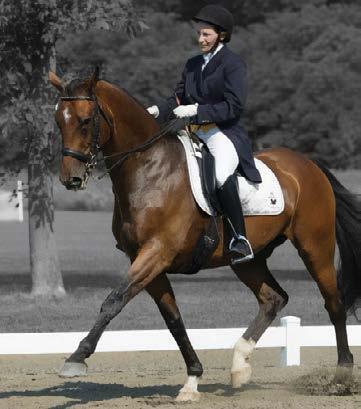
Specialized training in Dressage, Hunt Seat, and Eventing
Valerie McCloskey, a passionate and accomplished horse rider, trainer, and teacher. Her training philosophy is rooted in understanding the natural instincts and needs of horses.
From intro to Grand Prix all breeds and disciplines encouraged and welcomed. Valerie has ridden internationally.
Having made her own horses and competing through FEI, Valerie o ers the unique insights from developing horses from backing to Grand Prix.
FACILITY INCLUDES
• 80 by 160 indoor arena with Tru-stride dust free footing
• 120 by 220 outdoor arena with Tru-stride dust free footing
• Five acre well maintained jump eld with water, ditch, and bank complexes
• 30 acres of lush pasture with wood fencing
• Just 15 minutes from Syracuse

Catering to the discriminating rider and owner. 1695 Stump Rd, Marcellus, NY sundmanstables.com
Chacea Sundman, Owner/Manager 315-382-2790
Week 1
Saturday, August 3
8:00 PM
Westhill High School 4501 Onondaga Blvd, Syracuse
Tonight’s concert is sponsored by:


The Skaneateles Festival is made possible with funds from the General Operating Support program, a regrant program of the County of Onondaga with the support of County Executive, J. Ryan McMahon II, and the Onondaga County Legislature, administered by CNY Arts.
Skaneateles Festival Orchestra
Nicholas Hersh, conductor
MÁRQUEZ Danzón No. 4
GINASTERA Harp Concerto, Op. 25
Allegro giusto
Molto moderato
Liberamente capriccioso – Vivace
GERSHWIN
arr. Atkinson Rhapsody in Blue
JOHNSON arr. Rimelis/Hersh
VIOLIN 1
Guillaume Pirard, concertmaster
Jeremy Mastrangelo
Jeongwon (Claire) An
Amy Christian
Edgar Tumajyan
VIOLIN 2
Sara Mastrangelo
Susan Spafford
Olivia Walberger
VIOLA
Melissa Matson
Olita Povero
Neil Miller
CELLO
Julia Bruskin
Lindsay Groves
Rosemary Elliott
BASS
Charleston
FLUTE
Juliana Pepinsky
Sean Marron
OBOE
John Lathwell
Erica Howard
CLARINET
Allan Kolsky
Eric Butler
Edward Castilano
ARTIST SPONSORSHIPS
SAXOPHONE
Eric Troiano
BASSOON
Matthew McDonald
Lisa Seischab
HORN
Nathan Ukens
Emily Britton
Julia Bruskin and Aaron Wunsch are sponsored by The Skaneateles Consortium: George Bain, Sam and Debby Bruskin, Dana and Susan Hall, and Judy Robertson
Nicholas Hersh is sponsored by RAV Properties
Bridget Kibbey is sponsored by Donna Himelfarb
Bridget Kibbey, harp
Aaron Wunsch, piano
TRUMPET
Paul Shewan
Herb Smith
TROMBONE
Lisa Albrecht
Heather Buchman
TUBA
Ethan Millington
TIMPANI
Michael Cirmo
PERCUSSION
Anthony Calabrese
John Allis
Betsy Easson
Rob Sander
PIANO
Thomas Feng

Steinway Piano generously donated by Artist Pianos
MEDIA SPONSOR

FEATURED ADVERTISER
Manlius Pebble Hill School
Danzón No. 4 (1996)
ARTURO MÁRQUEZ (B. 1950)
Put on your dance shoes, we’re going out. Let’s head for Salon Los Angeles, the Mexico City ballroom that dates to 1937. On the black-and-white checkered floor are the pachuchos, dressed in fancy suits, glancing around for a partner. The orchestra strikes up in rhythm. Your hips begin to sway, slowly at first, now faster, and your center of gravity drops. You can’t stop. This is danzón!
Before it reached its heyday in Mexico City in the ’40s and ’50s, danzón found its way from Cuba, where it evolved from the Afro-Cuban habanera, to Veracruz, in Southeast Mexico. Its slow, seductive, yet sophisticated and formalized atmosphere, reflects the urban environments of Havana and Mexico City. Mexican composer Arturo Marquéz discovered danzón in the 1990s. He is the son of a mariachi musician, from northwestern Mexico, but he moved to California for middle and high school and now lives in Mexico City. Once he started composing his danzónes, he couldn’t stop; the latest is No. 9, dedicated to conductor Gustavo Dudamel, who popularized No. 2, which some call Mexico’s “second national anthem.”
In Danzón No. 4, the bassoon walks onto the dance floor first, swaying to the syncopated beat of the claves. The oboe and then the flute-clarinet partners take a turn, with the brass and strings joining the band. More instruments take their turn on the floor, goaded by an increasingly raucous ensemble. After catching its breath, the band whips up a frenzy. At last, the night is over, releasing us into the open air and the empty streets.
The story of this quintessentially Argentine concerto began in the land of cheese steaks. The first female member of the Philadelphia Orchestra, harpist Edna Phillips, had recently retired but wanted to continue her longtime project of expanding the harp repertoire for future generations. Argentine composer Alberto Ginastera accepted her proposal for a harp concerto in 1956, and Phillips planned the premiere for the International American Music Festival in 1958, which gave him two years to complete the new work. It would take him eight. (That’s 2,920 cheese steaks, at one per day.)
The commission came to Ginastera at a tumultuous time. In 1952, the Perón dictatorship had demanded that Ginastera rename the new music conservatory he had founded near Buenos Aires for Eva Perón, but he refused and was fired. By 1956, he was reinstated but soon left to direct another school and then a Center for Latin American Music, leaving the Harp Concerto simmering on a back burner. The notes
themselves didn’t come easily, either. Ginastera’s style was in transition from a folk-based idiom to a more wide-ranging international modernism, and the Harp Concerto was caught in between. Then there was the problem of figuring out the harp. He later called it “the most difficult work I have ever written…writing for the harp [is] a harder task than writing for piano, violin or clarinet. My creative work was therefore slow and painful.” But when it finally emerged at the premiere in Philadelphia on February 18, 1965, the work was a triumph. Today it is the harp concerto, played by almost every serious harpist.
Ginastera’s music is by turns raucous, mysterious, and magical. His orchestral colors are vivid and ravishing. From the start, percussion instruments (including tambourine, cymbals, and xylophone) take a leading role, providing the rhythmic spine for Argentine dances. Ginastera realized that the harp itself can be astonishingly percussive, and he grants it a machismo rarely associated with that instrument. After a rousing start, the harp takes a mysterious and nocturnal turn, only to lead the orchestra into a brusque malambo, a dance associated with the defiant Argentine cowboy (gaucho). Night falls once again at the end of the movement, which is where the second movement remains. This evocative, initially calm reflection sets the solo harp and orchestra in alternation, until the harp leads the orchestra deep into the forest, a place of wonders – and terrors.
The final movement emerges from a lengthy, bewitching harp cadenza, which involves such wizardry as glissandi from one hand and ethereal harmonics played by the other. The orchestra enters with a thrilling dance that sets the harp and percussion in a dance-off. To say the harp is outnumbered would be an understatement; the percussion here includes timpani, bass drum, bongos, claves, cow bells, crotales, glockenspiel, güiro, maracas, triangle, snare drum, suspended cymbals, tam-tam, tambourine, tom-toms, triangle, whip, wood block, and xylophone. Yet somehow the harp holds its own, dancing into a frenzy. You can decide who wins.
Escaramuza (2010)
GABRIELA LENA FRANK (B. 1972)
Gabriela Lena Frank’s evocative music takes the listener far away in place and time. Her works often lead down paths of self-discovery, since her family ancestry is rich and remote from Berkeley, California, where she grew up. Her parents blessed her with a remarkable Peruvian-Chinese-LithuanianJewish background, and it is the Peruvian culture that takes the spotlight in her Escaramuza. About the work, she writes:
Escaramuza, which signifies “skirmish” in the Spanish language, is inspired by the kachampa music of Andean Perú. Celebrating the pre-Hispanic Inca warrior, the kachampa dance is performed by athletic men who convey a triumphant, even joyful, spirit. Inspired by the kachampa dances
done with fast-snapping ropes that I’ve witnessed in Perú, especially in Paucartambo during the Virgen de la Carmen festival, I’ve created a brightly chiseled romp in an asymmetrical 7/8 rhythm that is launched after an extended bass drum solo. Through most of Escaramuza, no section of the ensemble is allowed to rest for long, maintaining the high energy typical of kachampas.
GEORGE GERSHWIN (1898-1937), arr. Michael P. Atkinson
For a 100-year-old, Rhapsody in Blue remains remarkably youthful. The cross-pollination of a Romantic piano concerto with 1920s jazz may no longer be a novelty, but audiences around the world still find Rhapsody fresh and thrilling. Its wide-eyed optimism does not fit the origins of the blues, but who couldn’t use a dollop of optimism, then as now? From the start, Gershwin intended it “as sort of a musical kaleidoscope of America,” at once a reflection of the vibrant society in which he flourished and a utopian vision for the future.
Although the name itself links a classical form (rhapsody) with a jazz idiom (the blues), Gershwin came to both jazz and classical music as an outsider. He started as a Tin Pan Alley song plugger while still a teenager, in 1914. Gershwin’s
musical interests were wide, however, and he quickly gained familiarity with the latest classical and vernacular styles. He amazed and amused his piano teacher by stirring up stylistic cocktails, such as his blend of ragtime with Robert Schumann’s music in Ragging the Träumerei. He hit the big time in 1920 with Swanee, recorded by then-superstar singer Al Jolson. Around the same time, jazz burst upon New York City.
In 1924, bandleader Paul Whiteman organized a public effort to synthesize the sound of jazz with the classical orchestra, a concert at New York’s grand Aeolian Hall called “An Experiment in Modern Music.” Whiteman publicly declared that George Gershwin would compose a “jazz concerto” for his ensemble, which Gershwin himself first learned about in the New York Tribune. Fortunately for Whiteman, and for us, this fake news came true, and Gershwin drafted a piano version to be orchestrated by Whiteman’s arranger, Ferde Grofé. Although jazz had some roots in the classical tradition, this was among the first efforts to “orchestrate jazz” and bring it into a concert hall. Sergei Rachmaninoff and violinist Fritz Kreisler were among those who attended the performance. Rhapsody in Blue became an American classic and made Gershwin, in the words of Irving Berlin, “the only songwriter I know who became a composer.”
Rhapsody in Blue begins with one of the most distinctive gestures in all of music: a clarinet sliding from a trill upwards
all the way into the sky. It floats downward in what appears to be an improvisation but turns out to be the work’s opening theme. This is one of many examples of Gershwin’s outstanding ability to turn that which appears casually into a structural necessity. Where other composers announce their own themes’ entrances, Gershwin’s seem somehow already to be in the room. By the time the piano appears, almost every theme of the piece has been embedded into our subconscious, so that each new section appears like a friend we had already expected to ring the doorbell.
Gershwin makes his way through various styles, including the blues of W. C. Handy and Jelly Roll Morton, the stride piano of James P. Johnson, and the melodious richness of Tchaikovsky. The latter appears halfway through the piece in the form of a heartwarming melody played by the strings. “Playing at parties is one of my notorious weaknesses,” remembered Gershwin. “Well, as I was playing, without a thought of the Rhapsody, all at once I heard myself playing a theme that must have been haunting me inside, seeking outlet. No sooner had it oozed out of my fingers that I realized I had found it.” A toccata follows, consisting of the “steely rhythms” Gershwin heard on the train to Boston, where he started composing the work. The glorious coming together of the themes at the end of Rhapsody may once have been co-opted by United Airlines (“Come fly the friendly skies”), but now that we book our tickets online, we can enjoy its pure euphoria once again. This music has been uplifting listeners for 100 years, and why shouldn’t it do so for 100 more?
Charleston (1922)
JAMES P. JOHNSON (1894-1955), arr. Rimelis/Hersh
James P. Johnson is not as famous as some of his more attractively nicknamed peers, like Jelly Roll Morton or Duke Ellington, but his influence is as crucial to the development of jazz. And you have heard of the Charleston, the dance based on a smash hit song of the same name composed by Johnson in 1922 and used in the Broadway show Runnin’ Wild, in 1923. It premiered at the New Colonial Theater in the San Juan Hill neighborhood where Johnson had lived as a teenager, at 62nd St. and Broadway, exactly where Lincoln Center now sits.
Although originally a song with lyrics by Cecil Mack, Johnson recorded a piano version of the song in 1923. The rich chords and full sonority of his playing influenced later luminaries Count Basie, Art Tatum, and even Thelonious Monk. Charleston, meanwhile, became emblematic of the 1920s, used in films since that time to represent the era. Ginger Rogers and perhaps many of you have danced to it as well: hands flapping, knees knocking, it roars with the spirit of the Jazz Age.












Hosted by Ben and Kathleen Tarantino
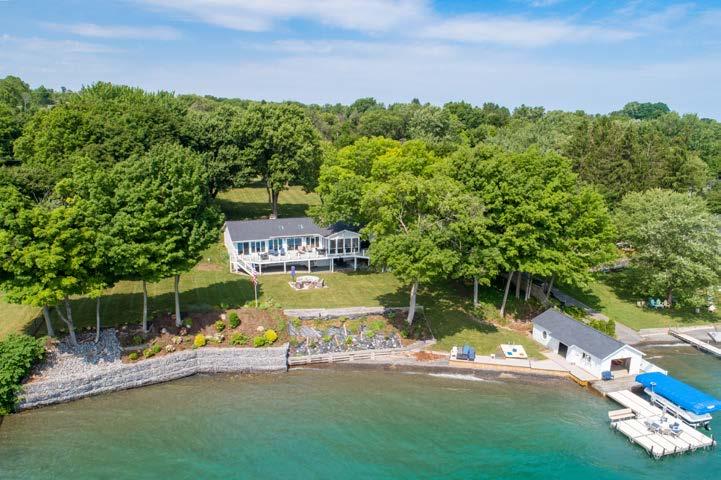

Wednesday, August 7 • 6:30 – 8:30 pm
An evening of gourmet food and drink, amazing lakeside views, and even better company.
Thank you to all the area businesses and volunteers who make this event possible.
THANK YOU TO OUR GENEROUS DONORS
1911, Beak & Skiff
Bluewater Grill
Buttonwood Winery
Café 108
The Cake Shop CNY
Clover’s
Elephant & Dove
Folls Flowers
Gilda’s
GOOD Eats & Sips
The Help
Joelle’s French Bistro
The Krebs
LakeHouse Pub
Last Shot Distillery
Mirbeau Inn & Spa
Pascale’s Liquor Square
Patisserie
Pure Catering
Scratch Farmhouse Catering
Sherwood Inn
SkanCake Lady
Vine and Voyage









Week 2
Thursday, August 8
8:00 PM
First Presbyterian Church 97 E. Genesee St, Skaneateles
Tonight’s concert is sponsored by: David Graham, Fred and Ginny Marty, and Pete and Betsy McKinnell
Joel Link, violin; Bryan Lee, violin; Julianne Lee, viola; Camden Shaw, cello
JESSIE MONTGOMERY Strum
DVOR ˇÁK
Quartet No. 12 in F Major, Op. 96 (“American”)
Allegro ma non troppo
Lento
Molto vivace
Finale: vivace ma non troppo
TCHAIKOVSKY
Quartet No. 1 in D Major, Op. 11
Moderato e semplice
Andante cantabile
Scherzo: Allegro non tanto e con fuoco
Finale: Allegro giusto – Allegro vivace
The Dover Quartet appears by arrangement with the Curtis Institute of Music, where it serves as the Penelope P. Watkins Ensemble in Residence.
ARTIST SPONSORSHIP
Dover Quartet is sponsored by Tacie and Roland Anderson
The Skaneateles Festival is made possible by the New York State Council on the Arts with the support of Governor Kathy Hochul and the New York State Legislature.
MEDIA SPONSOR

Strum (2012)
JESSIE MONTGOMERY (B. 1981)
Jessie Montgomery is a native of New York City’s Lower East Side, where her parents worked in music and theater. She studied violin at Juilliard and composition at New York University, building a career in both fields as a founding member of PUBLIQuartet and later the Catalyst Quartet, which appeared at the Skaneateles Festival in 2022. Many of her works feature stringed instruments and blend elements of classical music, vernacular music, improvisation, and themes of social consciousness. She has long been a leading light of the Sphinx Organization, which supports young African American and Latinx string players.
Strum is one of Montgomery’s most widely performed works. About it, she writes:
Strum is the culminating result of several versions of a string quintet I wrote in 2006. It was originally written for the Providence String Quartet and guests of Community MusicWorks Players, then arranged for string quartet in 2008 with several small revisions. In 2012 the piece underwent its final revisions with a rewrite of both the introduction and the ending for the Catalyst Quartet in a performance celebrating the 15th annual Sphinx Competition.
Originally conceived for the formation of a cello quintet, the voicing is often spread wide over the ensemble, giving the music an expansive quality of sound. Within Strum I utilized
textural motives, layers of rhythmic or harmonic ostinati that string together to form a bed of sound for melodies to weave in and out. The strumming pizzicato serves as a texture motive and the primary driving rhythmic underpinning of the piece. Drawing on American folk idioms and the spirit of dance and movement, the piece has a kind of narrative that begins with fleeting nostalgia and transforms into ecstatic celebration.
String Quartet No. 12 in F Major, Op. 96 (“American”) (1893)
ANTONÍN DVORÁK (1841-1904)
When wealthy socialite Jeanette Thurber founded the National Conservatory of Music in New York City, in 1885, she sought the perfect music educator to instruct aspiring young composers how to compose distinctly American music. If you’d imagine yourself in her shoes, your first choice might not be a Czech viola-playing son-of-a-butcher who had never even set foot in the United States. The trouble was that no one quite knew what American music in the European tradition was supposed to sound like. Thurber sent pianist Adele Margolies to Europe to persuade Antonín Dvorˇák to travel across the ocean so he could figure it out. Armed with a gigantic paycheck, she prevailed. On September 26, 1892, Dvorˇák arrived in New York with his entire family, and now he had to figure it out: What is American music?
Forty years later, jazz would have provided a convenient answer. But in 1893, Dvorˇák felt the answer likely resided in Native American music and the African American spiritual. While he was neither fully able to plumb those art forms nor integrate them with his own, he did adjust his own musical vocabulary during his time in the United States to reflect what he heard while here. He called it “melodious and simple,” but one might more accurately call it melodious and plain-spoken, if not always simple. Dvorˇák’s “American” music is optimistic and openhearted, if only a few degrees less Bohemian than his Slavonic Dances.
The String Quartet in F Major, Op. 96 is at the very least American in the sense that he composed it on American soil. Although Dvorˇák spent most of his American sojourn in New York City, he composed the Quartet in a town that is as small as it sounds: Spillville, Iowa. Like most every town in the Midwest at some point in the 19th century, it was filled with immigrants – in this case, Czech ones. So in the heart of America, surrounded by fellow Bohemians, Dvorˇák composed his “American” music, or whatever you’d like to call it. Upon arriving in Spillville, the notes spilled right out: the quartet was sketched within three days and finished in twelve. “Thank God. I am pleased,” Dvorˇák wrote. “It all went so quickly!”
Dvorˇák gave the quartet’s sunny opening theme to his own instrument, the viola, accompanied by shimmering tremolos. As in his other chamber music, Dvorˇák shows himself a master of both melody as well as texture, the often-intricate halo of sound surrounding the melody. Like his “New World” Symphony, the Quartet’s pentatonic melodies have an air of American folk music, alternately peppy and plaintive. These are developed into a grand narrative, a canvas more national than local.
The second movement sings with a solitary voice of the hardship endured on the empty prairie, which Dvorˇák referred to as “the Sahara.” “Everything is so wild here,” he wrote to a Bohemian friend. “Sometimes it is extremely bleak, enough to make a person despair.” The third movement introduces a new character, the scarlet tanager, a bird whose song Dvorˇák recorded on walks near Spillville; listen for its insistent calls in the highest notes of the first violin. The rollicking Finale is the Quartet’s most famous, and smile-inducing, movement. It seems to capture the optimistic mindset and vigorous work ethic of an emergent American idealism that is still attractive today. Dvorˇák would return to Europe permanently in 1895, but he did not regret his time here. “I would have never written…the String Quartet in F Major,” he later said, “if I had never seen America!”
OPEN THURSDAY, FRIDAY & SATURDAY SEATING FROM 5:30-8:30 P.M. FOR RESERVATIONS CALL 315-685-3063 4423 STATE STREET ROAD, SKANEATELES

String Quartet No. 1 in D Major, Op. 11 (1871)
PYOTR ILYICH TCHAIKOVSKY (1840-1893)
Prior to Tchaikovsky, Russian composers had taken little to no interest in the string quartet. Tchaikovsky didn’t feel much interest at first either, preferring the emotional drama of orchestral music evident in his recently completed concert overture, Romeo and Juliet. However, circumstances forced him to reconsider. His recent appointment as Theory professor at the Moscow Conservatory paid only a paltry salary of 50 rubles, and he was encouraged by the school’s founder, Nikolai Rubinstein, to give a concert of his works to raise some cash. With no money to hire an orchestra, he turned to a violinist-friend who had offered to play for free and bring his quartet. Well, Tchaikovsky thought, I’d better write a quartet, and quickly: the concert was scheduled for the following month.
These circumstances may not seem likely to yield a masterpiece, and no one had high hopes. When Tchaikovsky’s publisher asked impresario Anton Rubinstein whether the quartet should be considered for publication, Rubinstein told him, “No, it is certainly not worth it.” Against the odds, the quartet steadily gained fans at home and abroad. Five years later, legendary author Leo Tolstoy heard it performed in Moscow and was visibly moved. Tchaikovsky wrote, “Never in my life have I felt so flattered and proud of my

creative ability as when Leo Tolstoy, sitting next to me, heard my andante with tears coursing down his cheeks.”
Both primary themes in the first movement are warm and full bodied, with all four instruments playing together. Tchaikovsky frequently directs the quartet to “sing” (“cantabile”), as if members of a choir. One or more of the instruments will occasionally break free to fly around the singers like a fanciful cupid, a technique often used by Schubert. Listeners of Tchaikovsky’s symphonies, however, will recognize his fingerprints in the movement’s exuberant, orchestral coda.
If you were to set to words the sublime Andante cantabile that so moved Tolstoy, you might not pick “Vanya sat on the couch pouring himself a glass of vodka,” but such were the lowly origins of the folk song on which the movement was based, which the composer heard a carpenter sing during a visit to his sister in Ukraine. Tchaikovsky’s harmonization of this tune with muted strings is lovely, but still more charming is the following theme, of his own invention, sung by the first violin over a serenade-like plucked accompaniment. Next comes a minor-key Russian dance full of earthy syncopation, the tension of which is released in the rousing and good-humored finale. The viola (and later the cello) has its moment in the sun, singing a noble second theme to a bouncing accompaniment. The bouncing continues, resting briefly prior to a giddy coda.
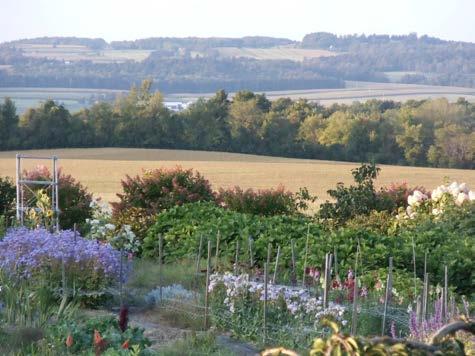
Week 2
Friday, August 9
1:00 PM Matinee
May Memorial Unitarian
Universalist Society
3800 E. Genesee St.
Syracuse, NY 13214
Today’s concert is sponsored by:
Dover Quartet: Joel Link, violin; Bryan Lee, violin Julianne Lee, viola; Camden Shaw, cello with special guest Davóne Tines, bass-baritone
JESSIE MONTGOMERY Strum
CAROLINE SHAW selections from MASS
TRADITIONAL SPIRITUAL
arr. Moses Hogan and Eric Byers
DVOR ˇÁK
“Give Me Jesus”
Quartet No. 12 in F Major, Op. 96 (“American”)
Allegro ma non troppo
Lento
Molto vivace
Finale: vivace ma non troppo
The Dover Quartet appears by arrangement with the Curtis Institute of Music, where it serves as the Penelope P. Watkins Ensemble in Residence.
ARTIST SPONSORSHIPS
Dover Quartet is sponsored by Tacie and Roland Anderson
Davóne Tines is sponsored by Jary and Julie Shimer
The Skaneateles Festival is supported in part by an award from the National Endowment for the Arts.
ARTIST PIANOS is the proud PIANO SPONSOR for this and many local fine-arts organizations. We invite you to visit us and experience the all new SPIRIO HD player piano by STEINWAY & SONS. With SPIRIO, the worlds finest pianists are ready to play just for you.
5780 CELI DRIVE, EAST SYRACUSE, NY 13057 PH(315) 446-5660.

Week 2
Friday, August 9
7:00 PM Prelude Concert (for ticket holders only)
8:00 PM
First Presbyterian Church 97 E. Genesee St, Skaneateles
Tonight’s concert is sponsored by:
Featuring the 2024 Robinson Award winners, Ava Tyler, soprano and Nathaniel Shuhan, piano
PRICE Hold Fast to Dreams
J. STRAUSS Adele’s Laughing Song from Die Fledermaus
CHOPIN Ballade No. 3 in A-flat Major, Op. 47
KAPUSTIN Concert Etude Op. 40, No. 1
Ava Tyler, soprano
Aaron Wunsch, piano
Nathaniel Shuhan, piano
Dover Quartet: Joel Link, violin; Bryan Lee, violin
Julianne Lee, viola; Camden Shaw, cello with special guest Davóne Tines, bass-baritone
MOZART From String Quartet No. 16 in E-flat Major, K. 428 II. Andante con moto
TURINA The Bullfighter’s Prayer, Op. 34
Dover Quartet MASS
IGEE DIEUDONNÉ “The Storm of Life”
KYRIE
CAROLINE SHAW From MASS, I. Kyrie
HÄNDEL “Leave Me, Loathsome Light” from Semele, HWV 58
AGNUS DEI
CAROLINE SHAW From MASS, II. Agnus Dei
TYSHAWN SOREY
arr. Eric Byers From Songs for Death, I. “After ‘Were You There’”
CAROLINE SHAW From MASS, III. Credo
J.S. BACH “Mache dich, mein Herze rein” from St. Matthew Passion, BWV 244
CAROLINE SHAW From MASS, II. Gloria
TRADITIONAL SPIRITUAL
arr. Moses Hogan and Eric Byer “Give Me Jesus”
CAROLINE SHAW From MASS, II. Sanctus
JULIUS EASTMAN Prelude to The Holy Presence of Joan d’Arc
IGEE DIEUDONNÉ and DAVÓNE TINES Vigil
The Dover Quartet appears by arrangement with the Curtis Institute of Music, where it serves as the Penelope P. Watkins Ensemble in Residence.
Davóne Tines, bass-baritone Dover Quartet
ARTIST SPONSORSHIPS
Davóne Tines is sponsored by Jary and Julie Shimer
Dover Quartet is sponsored by Roland and Tacie Anderson
The Skaneateles Festival is made possible with funds from the General Operating Support program, a regrant program of the County of Onondaga with the support of County Executive, J. Ryan McMahon II, and the Onondaga County Legislature, administered by CNY Arts.
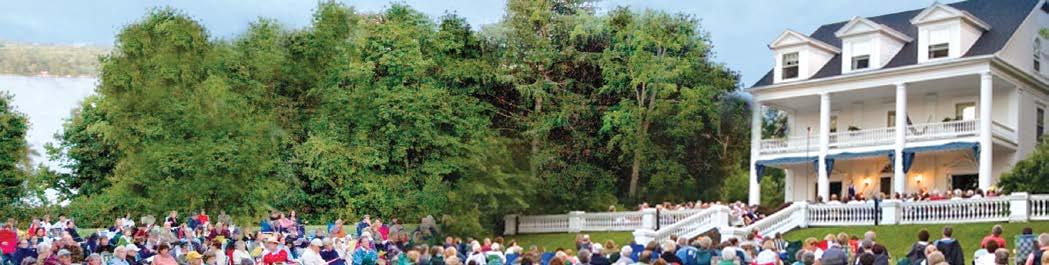
In 1980, David and Louise Robinson opened their hearts and their home to Festival musicians, their families, and the audiences who came to hear them perform. Their lakeside home, Brook Farm, was a gathering place and rehearsal space for musicians, and the performance venue for the Festival’s outdoor Saturday evening concerts for 36 seasons.
Created in 2002, The Robinson Award recognizes a young musician who exemplifies the values cherished and embodied by Festival co-founders, David and Louise. It is presented annually to a young musician whose character, musicianship, and community service reflect the Robinsons’ values – enthusiasm and dedication to music of high quality.
Applications for the Robinson Award are available January 15 – March 15. Visit skanfest.org for details.
Pianist Nathaniel Shuhan is a rising junior at Ithaca High School. An enthusiastic member of the IHS Wind Ensemble and IHS Jazz Band, he is also pianist for the Cayuga Chamber Orchestra Youth Orchestra. He is currently a piano student at Opus Ithaca School of Music and for five summers studied piano at Luzerne Music Center where he won the Luzerne Music Center’s 2023 Concerto Competition. In 2023 he placed second in the Nazareth University Piano Competition and won the Diversity in Music award at the same competition and was runner-up in the Senior Piano Division of the 2023 Heddy Killian Empire State Competition. This summer he will spend six weeks studying at the Piano Institute program at Brevard Music Center.
Ava Tyler, soprano, recently graduated from CNS High School and will attend college at the Manhattan School of Music. She was a participant in NYSSMA All-State Vocal Jazz as one of six sopranos in 2023 and is a member of Tri-M Music Honor Society. She has sung the national anthem at the NYS Fair and Syracuse Mets Stadium, most recently on the day of the Total Eclipse 2024. Ava was profiled three times by Carrie Lazarus of News Channel 9 as an “Extraordinary” talent and was recognized as a Rising Star through Society for New Music. In the Civic Morning Musicals Vocal Competition, she won the Neva Pilgrim Award and the David Ross African American Song Award. In addition to singing, Ava has studied many forms of dance and will pursue a career in musical theater.
Our thanks to those who have contributed to the Robinson Award
Anonymous Brenton and Mary Bradly
Barb Connor
Fletcher Foundation
David and Louise Robinson
Skaneateles Area
Council for the Arts
Frank and Jan Smith
Karl and Peggy Smith
Dr. and Mrs. Kenneth Spitzer
If you would like to contribute to the Robinson Award Fund, please call 315-685-7418.
Diane Walsh and Dick Pollak
Suzanne Weitz
Welch Allyn
From String Quartet No. 16 in E-flat Major, K. 428, II. Andante con moto (1783)
(1756-1791)
In the late-eighteenth century, string quartet evenings were something like a cross between a book club, poker night, and a karaoke party. Composer Carl Dittersdorf recalled that in between sight-reading quartets, he and his friends “drank rare good coffee, and smoked the finest tobacco.” Irish baritone Michael Kelly attended one such evening with Dittersdorf where the players were “tolerable,” though “not one of them excelled on his instrument”; these included Haydn on first violin and Mozart on viola. “There was a little science among them,” he said, in the understatement of the year 1783.
Soon after, Mozart composed a set of six quartets dedicated to his friend and karaoke partner, Joseph Haydn, the so-called “father of the string quartet”. Here Mozart both shows what he learned from the elder composer and carries the string quartet forward to a new level of sophistication. He went too far for many, including Dittersdorf, who called Mozart’s new quartets “overwhelming and unrelenting in their artfulness.” It seems they did not quite fit the relaxed atmosphere of the drawing room then, but a movement like the Andante from this Quartet, K. 428, does just fine in the concert hall now. It begins as a hymn-like prayer, which serves as an invocation to tonight’s concert. It’s soaring beauty is a Mozartian trademark. The cello keeps the music aloft with patiently flowing eighth notes; these moving notes later find their way to the other instruments, lending a gentle, earthly lilt to the heavenly melody. It seems that heaven and earth might, for once, be in harmony.
The Bullfighter’s Prayer, Op. 34 (1925)
Of all the situations in which one might want to say a prayer, facing down a snarling bull ranks fairly high. For the Spanish toreadors who did this repeatedly, a regular prayer was in order. When the Spanish composer Joaquín Turina happened upon the Madrid chapel where these prayers were said, he was deeply moved by the scene: “Behind a small door, there was a chapel, filled with incense, where toreadors went right before facing death. It was then that there appeared, in front of my eyes, in all its plenitude, this subjectively musical and expressive contrast between the tumult of the arena, the public that awaited the fiesta, and the devotion of those who, in front of this poor altar, filled with touching poetry, prayed to God to protect their lives.”
Turina set out to convey this scene in music, a kind of psychological portrait of the bullfighter about to enter the arena. He originally scored his work for four laúd, Spanish folk lutes more akin to the Arabic oud than the central European lute. Since Spanish laúd players are not abundant in Central New York, we can be glad he also rescored this music for string quartet. It begins full of anxiety and anticipation as our bullfighter makes his way to the altar for supplication, muy intenso. Here he catches a glimpse of heavenly calm. This restores his confidence for a moment as he imagines himself in the arena, but he struggles to quash his persistent anxiety. The prayer continues and finally achieves him a benediction and a slower pulse. The Spanish folk flavor of the work shows how Turina, in his own bullfighting words, would “fight bravely for the national music of our country.” Olé!
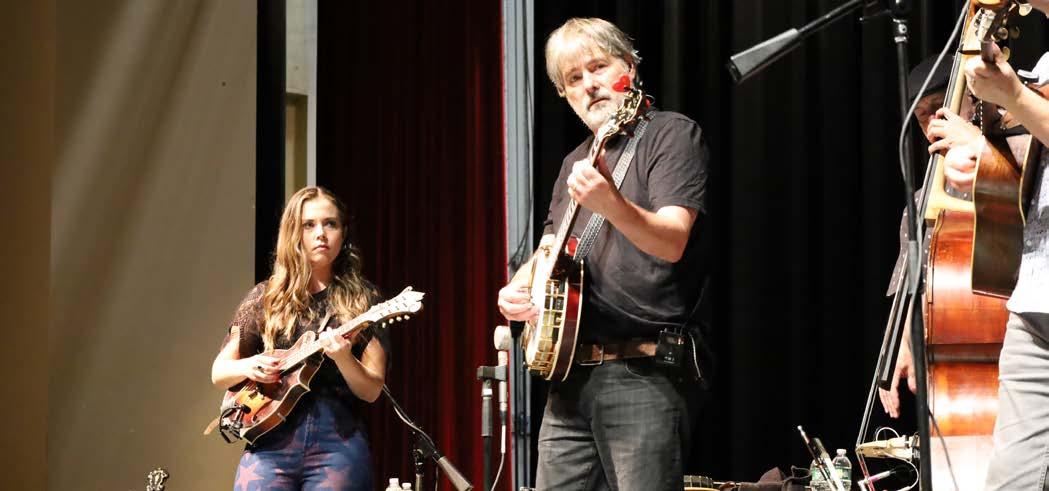


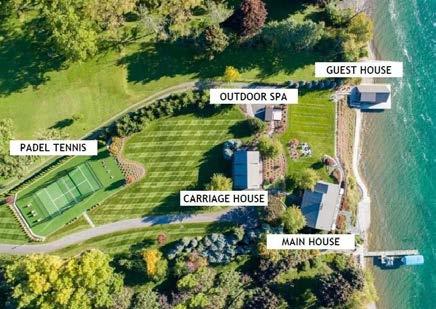
The musical mass is an important starting point for composed music in the European tradition. It is a unified, multi-movement design with an overarching emotional trajectory. From the anonymous writers of Gregorian chant to Palestrina, J. S. Bach, Britten, and Arvo Pärt, composers have applied their art, skill, and fervor to the genre. But the mass is also a ritual that invites participation. As the Christian tradition has spread throughout the world, people from numerous cultures have engaged the ritual of the mass, carrying themselves and their own diverse backgrounds into it. The uniformity of a composed mass by a single author provides one kind of beauty, but what if the music of the mass could reflect the individual perspective of the person experiencing the ritual?
For his MASS program, Davóne Tines has selected and commissioned works that speak to his own lived experience, inviting the listener to join him on a spiritual journey through cultures and time. In a conversation with New Yorker staff writer, Fergus McIntosh, Tines explained how his own life experiences have shaped his goals for this MASS program:
“There’s always been a prominent religious thread through my music making. As a child, singing was all religious or liturgical and all in a choral setting with close family and friends. Everyone in my family participated in choir, including my grandfather, who was in the Navy for 30 years and now directs two church choirs. He’s the one who noticed I had a unique voice and thought I should do something further to develop it and figure it out. In high school, I did musicals, and in college at Harvard I sang in a choir and conducted an a cappella group—we did a lot of Renaissance polyphony, which was a bit nerdy even for Harvard, but really fun at the time. And then, before and during grad school, I had church choir jobs: first at the National Shrine in Washington, and then at the Greek Orthodox Holy Trinity Cathedral here in New York. So I’ve had this long association with being able to support myself through music making, which is part of the larger

musical tradition in terms of musicians, like Bach, being connected to and patronized by the church, especially in the Baroque period. In some ways, my involvement in music is just a continuation of that larger world tradition.
My actual lived and multivalent experience with liturgical music is composed of so many things: early music, folk song, Bach, contemporary gospel, spirituals, new music, and beyond. When you put these seemingly different things together and acknowledge the connections between them, you have to acknowledge that there’s something shared among these composers; and thus there’s something that is shared among all people. This program is an opportunity for me to marry all those flavors together and have the conversation of cohesive juxtaposition in front of people.
In setting familiar spirituals, Tyshawn Sorey’s task was to break the songs out of the aesthetic within which we commonly engage them, so that the text and the ideas behind the text could become more apparent. I had this realization that many spirituals are essentially code for suicide notes. “Swing Low, Sweet Chariot,” for example, is someone begging God to kill them, to “carry me home.” I think a lot of times spirituals are misunderstood and opaquely heard as happy songs. But these are songs created by people in extraordinary and horrifying circumstances; they’re amazing, metaphorical expressions of real faith, and inexorable humanity created in response to humanity’s most inhumane atrocities: the denial of the humanity of the perceived other. It is my goal to show that Bach wrote about God with the same depth, complexity, and fervor as slaves.
The order I’m using here—and which Caroline Shaw has followed in her miniature mass—accords with my own understanding of a spiritual journey. It’s a very personal journey about crying out for release from pain (Kyrie); making and holding space for the cause of the pain to be engaged (Agnus Dei); allowing the power of your conviction to destroy that cause (Credo); exalting in the release (Gloria); and transferring the energy of the destruction into the fuel for rebirth (Sanctus). The text of the last piece in the Sanctus section is “Where there is darkness, we’ll bring light.” That’s the entire recital right there: Present the darkness and show the change into light.”






Week 2
Saturday, August 10 • 8:00 PM
Robinson Pavilion at Anyela’s Vineyard
Rain Location:
Westhill High School
4501 Onondaga Blvd, Syracuse
Tonight’s concert is made possible with support from:
Skaneateles Festival Orchestra
Tito Muñoz, conductor
ARSON FAHIM Memories from a Place I’ve Never Been
World Premiere, commissioned by The Skaneateles Festival
FAHIM Forbidden Dances (2023)
TRADITIONAL AFGHAN
arr. Fahim En Gham Be Haya
World Premiere, commissioned by The Skaneateles Festival
KINAN AZMEH Suite for Improviser and Orchestra
INTERMISSION
BEETHOVEN Symphony No. 6 in F Major, Op. 68 (“Pastoral”)
Allegro ma non troppo: Awakening of cheerful feelings on arrival in the countryside
Andante molto mosso: Scene by the brook
Allegro: Merry gathering of country folk
Allegro: Thunder, Storm
Allegretto: Shepherd’s song. Cheerful and thankful feelings after the storm
Kinan Azmeh, clarinet
VIOLIN 1
Sarah Vonsattel, concertmaster
Jeongwon (Claire) An Asher Wulfman
An-Chi Lin
Edgar Tumajyan
VIOLIN 2
Susan Spafford
Jonathan Hwang
Olivia Walberger
VIOLA
Melissa Matson
Olita Povero
Neil Miller
ARTIST SPONSORSHIP
CELLO
Julia Bruskin
Lindsay Groves
Rosemary Elliott
BASS
Edward Castilano
FLUTE
Juliana Pepinsky
Leanna Ginsburg
OBOE
John Lathwell
Erica Howard
Kinan Azmeh is sponsored by CNY Community Foundation
Julia Bruskin is sponsored by The Skaneateles Consortium: George Bain, Sam and Debby Bruskin, Dana and Susan Hall, and Judy Robertson
CLARINET
Allan Kolsky
Eric Butler
BASSOON
Matthew McDonald
Daniel Hane
Tito Muñoz is sponsored by the Alice M. Ditson Fund of Columbia University
Skaneateles Festival commissioned works are supported by Doug Sutherland and Nancy Kramer
HORN
Alexander Shuhan
Tyler Ogilvie
TRUMPET
John Raschella
Jared Wallis
TROMBONE
Lisa Albrecht
Benjamin Dettelback
TIMPANI
Michael Cirmo
PERCUSSION
Jennifer Vacanti
FEATURED ADVERTISER
Parson’s & Associates The Skaneateles Festival is supported in part by an award from the National Endowment for the Arts.
Memories from a Place I’ve Never Been, World Premiere, commissioned by the Skaneateles Festival
ARSON FAHIM (B. 2000)
“When smoke from the violence, destruction, and devastation finally settles, will we recognize what’s left behind?”
– Arson Fahim
Forbidden Dances (2023)
ARSON FAHIM (B. 2000)
Arson Fahim was born in the year 2000 as a refugee in Pakistan, where his family had fled due to the war in Afghanistan. In 2012, he started taking piano lessons and, a few months later, he received admission at Afghanistan’s only music school, the Afghanistan National Institute of Music. Here he composed and arranged music and eventually became the conductor of the Afghan National Youth Orchestra and the Afghan National Symphony Orchestra. In 2021, only two weeks before the Taliban took control and once again banned music, Arson arrived in Boston and started his studies on scholarship at the Longy School of Music. He hopes to help young, underprivileged Afghans discover music and help them change their lives through learning music.
Afghanistan has been home to a rich and vibrant tapestry of awe-inspiring traditional art forms that captivate all who experience them. From exhilarating dances that radiate sheer joy to breathtakingly beautiful dresses adorned in a kaleidoscope of colors, to mesmerizing music that resonates with profound emotion, our cultural heritage has flourished for centuries, intertwining with our very identity. Tragically however, these vital forms of self-expression are all but forbidden under the Taliban’s inhumane regime. As a symbol of perseverance and defiance, “Forbidden Dances” draws inspiration from the traditional dances and music of Afghanistan that I so deeply cherish, infused with the pain of being robbed of these artistic and expressive freedoms.
En Gham Be Haya, World Premiere, commissioned by the Skaneateles Festival
TRADITIONAL AFGHAN, arr. Arson Fahim (B. 2000)
“En Gham Be Haya,” meaning “this shameless sorrow” in Farsi, is a beloved Afghan song originally performed by Ustad Sarban during the country’s so-called “Golden Age of Music” in the 1960s and 70s. The song narrates a man’s plea to his unrelenting sorrows, lamenting how they cling to him, unashamed of his cries.
for Improviser and Orchestra (2019)
KINAN AZMEH (B. 1976)
Clarinetist-composer Kinan Azmeh is an ambassador for the clarinet, for the musical culture of his native Syria, and for the bridges between cultures that music can build. A longtime member of, and composer for, the Silkroad Ensemble, he has also performed for the U.N. General Assembly and serves on the National Council for the Arts at the invitation of President Biden. His Arab-Jazz Quartet, CityBand, spotlights his gifts as an improviser, also on display in his Suite for Improviser and Orchestra. About it, he writes:
“I have always loved to compose, always loved to play as a soloist with orchestra and I have always loved to improvise, so I decided to write a piece that would allow me to do it all at once! The three movements, Love on 139th Street in D, November 22nd, and Wedding, were originally written in 2005 for my project Hewar, an ensemble made of clarinet, oud (Middle Eastern lute), and voice, and what began simply as three lead-sheets ended up becoming a full orchestral work and my most performed work.
The suite tries to blur the lines between the composed and the improvised, which comes from my belief that some of the best-written music is one that sounds spontaneous and improvised, and some of the best improvisations are the ones that sound structured as if composed. This work is meant to both turn an orchestra into a band and to give a great room for the soloist to improvise and to “composer on the spot” and to play freely within the larger structure of the work.
Love on 139th Street in D, is inspired by New York City’s neighborhood of Harlem where I lived for few years, a simple homage to its cultural mix and a dedication to my downstairs neighbor who blasted reggaeton all day long!
November 22nd is a meditative work that tries to depict that ambiguous emotion one encounters by feeling at home somewhere far from one’s original home. I wrote this piece in the US inspired by the sonic memory of a marketplace that used to exist behind my parents’ apartment back in Damascus, it seemed to have a slow and steady pulse to it similar to the rhythm of life which keeps moving forward regardless of our emotions about it.
Wedding is made of two contrasting sections, a relatively calm one followed by a fast and energetic dance. It tries to capture the general mood found in a Syrian village wedding party usually held in the public square for everyone to attend. These parties are always exciting and never predictable.”
Symphony No. 6 in F Major, Op. 68 (“Pastoral”)
LUDWIG VAN BEETHOVEN (1770-1827)
At the time it was composed, this outdoorsiest of Beethoven’s works could only be performed indoors.
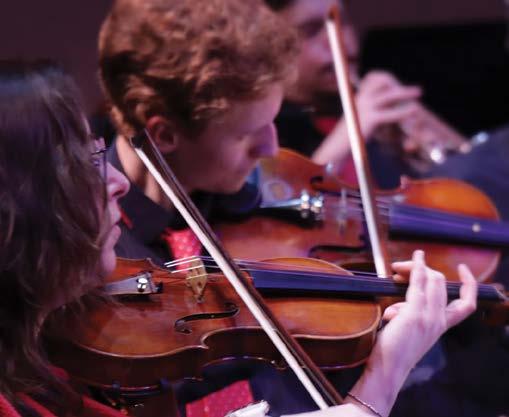


Outdoor music in Vienna was reserved for festive and funeral processions, and marching with a cello, as Woody Allen tried to do in Take the Money and Run, not to mention with timpani, was an ergonomic nightmare even Beethoven couldn’t demand. His new symphony was hard enough to play indoors, where the summery weather it conjured was notably in contrast with the freezing conditions in the unheated Theater an der Wien on December 22, 1808. Nevertheless, the Symphony enables the listener to feel what only the beauty of Nature can bloom inside us.
While it couldn’t be played outdoors, there is little question that Beethoven composed at least some of his symphony there. Beethoven spent the summer of 1808 in Heiligenstadt, a suburb of Vienna that retains its bucolic charm even today. Here in 1802, Beethoven had penned his famous “Heiligenstadt Testament,” an emotional letter to his brother explaining that he had contemplated suicide but now determined not to allow his encroaching deafness to inhibit his art. For Beethoven, this was a place of healing, where the tears and the notes flowed freely.
Beethoven’s symphonies tend to begin noisily, but this one communicates calm right from the start. The listener feels warmth from the strings, like rays of sunlight falling upon closed eyelids. In Beethoven’s own words, “Cheerful feelings awaken upon arriving in the country.” This opening music is

neither a statement nor a melody, but rather an unfolding of the notes and rhythms that will permeate the whole movement, like drops of water in the nearby brook. The five notes of the second bar repeat more than 75 times in a row at one point. With comparatively little harmonic drama, this music is content to luxuriate in its surroundings. “How happy I am to be able to wander among the bushes and grass, under trees and over rocks,” Beethoven wrote to his future love interest, Therese Malfatti, in 1810. “No one can love the country as I do.”
Beethoven’s tone-painting becomes more explicit in the second movement, “Scene by the Brook.” Here muted strings constitute the murmuring brook, while the flute, oboe, and clarinets eventually play the nightingale, quail, and cuckoo, respectively. Yet, as Beethoven jotted casually in the score, “The hearers should be allowed to discover the situations,” rather than have the scenery forced upon them. This music is thoroughly gentle, amiable, and generous.
Joining the animals for the next movement is a rustic “Merry Gathering of Country People.” Beethoven’s jovial caricature of the village wind band is a highlight here: listen for the rhythmically challenged oboist accompanied by the tipsy bassoonist. Alas, the merrymaking is cut short by the heavy raindrops (from the violins) of a sudden storm. The timpani soon bring thunder, and a whirl of wind and rain is upon us. Weather also has a psychic effect, and the disjointed rumblings of this movement remind us of life’s capacity for unexpected tragedy and violence.

Fortunately, the storm passes without any damage, leading directly into the final movement, a “Shepherd’s Song,” expressing “joy and thankfulness after the storm.” This music has a contented lilt that expresses the union of Nature and humankind, an ideal envisioned in Beethoven’s time by the philosopher, Jean-Jacques Rousseau. True harmony among people and with Nature has remained elusive during the two centuries since Beethoven’s Sixth Symphony; yet we remain capable of hoping that such a future exists, whether here or in the great beyond. As a brass choir takes over the theme, we feel for that enduring hope what Beethoven wrote over his sketch for this final movement: Gratias agimus tibi, “We give thanks."










Week 1
Thursday, August 15
7:00 PM Backstage Pass (for ticket holders only)
8:00 PM
First Presbyterian Church
97 E. Genesee St, Skaneateles
Tonight’s concert is sponsored by:
Ivan and Mimi Ace
Composer and clarinetist Kinan Azmeh joins Festival Directors
Aaron Wunsch and Julia Bruskin for a conversation about Syrian culture and how his music draws upon its musical traditions, including in his new work for the Claremont Trio.
Claremont Trio: Emily Bruskin, violin; Julia Bruskin, cello; Sophiko Simsive, piano
KHACHATURIAN Trio for Clarinet, Violin and Piano
Andante con dolore, molto espressione
Allegro
Moderato
KINAN AZMEH Gravitas
World Premiere, commissioned by the Skaneateles Festival
AZMEH On Solitude and Other Ambiguous Emotions
INTERMISSION
BRAHMS Trio No. 2 in C Major, Op. 87
Allegro moderato
Andante con moto
Scherzo
Allegro giocoso
ARTIST SPONSORSHIPS
Kinan Azmeh is sponsored by CNY Community Foundation
Claremont Trio is sponsored by The Skaneateles Consortium: George Bain, Sam and Debby Bruskin, Dana and Susan Hall, and Judy Robertson
Skaneateles Festival commissioned works are supported by Doug Sutherland and Nancy Kramer
Kinan Azmeh, clarinet
Claremont Trio
Claremont Trio
The Skaneateles Festival is made possible by the New York State Council on the Arts with the support of Governor Kathy Hochul and the New York State Legislature.
Trio for Clarinet, Violin, and Piano (1932)
ARAM KHACHATURIAN (1903-1978)
Aram Khachaturian’s bridging of cultures was not merely a compositional project, for he walked across that bridge every day of his life. Of Armenian heritage, he grew up in Tbilisi, Georgia, raised on the local folk music. He played recreationally in a wind band before shipping off to study biology at the University of Moscow. Khachaturian couldn’t stay away from music, however, and managed to enroll in the Moscow Conservatory at age 26. Biology would have been the safer bet: what for 200 years had been the Russian Empire woke up one morning as a socialist republic, and to say the sands of cultural life were shifting would be an understatement. For the next 40 years Khachaturian managed to shift with them – of the three premiere Soviet composers, Prokofiev, Shostakovich, and Khachaturian, he did so most skillfully of all.
Although a student work, Khachaturian’s Trio is typical of the neo-folkloric direction in which his music would continue. Here and elsewhere (such as in his eyeball-rollingly famous Sabre Dance, from 1942) Khachaturian made modernist techniques such as repeated dissonances and complex polyrhythms sound like logical outgrowths of folk music, rendering them palatable to both audiences and to the Soviet culture ministry. Unlike some of his later works, the Trio manages to do all this and remain wonderfully sincere, alternately enthusiastic and tender. It also pioneers this unusual combination of instruments; Bartók’s better-known Contrasts were composed six years afterward.
The Trio starts off in the fantasy realm of improvisation, with the violin and clarinet each doing entirely its own thing at the same time, creating a wonderfully florid polyphony. The piano manages to keep them more or less together with its steady rhythm but veers off into its own flights of fancy now and again. In the impish second movement, the threesome seems to realize something can be gained from uniting in purpose and together explores the many sides of a single folk melody, from the comic, to the contemplative, to the grandiose. In his music, Khachaturian brought together folk idioms from many regions under the Soviet umbrella, including Azerbaijan, Georgia, Turkmenistan, and Uzbekistan. The final movement presents an Uzbek melody, at first completely unadorned and lonely, and sends it, like a nomad, on a remarkable journey. A showcase for his imaginative variation technique and virtuosic treatment of the instruments, the movement repeats the same melody countless times without seeming repetitive. The three instruments are in tremendously high spirits, but rather than shutting the book with a final chord, Khachaturian allows his story to trail off gently, into the listener’s imagination, where it journeys on.
Gravitas, World Premiere, commissioned by the Skaneateles Festival
KINAN AZMEH (B. 1976)
Clarinetist-composer Kinan Azmeh is an ambassador for the clarinet, for the musical culture of his native Syria, and for the bridges between cultures that music can build. A longtime member of, and composer for, the Silkroad Ensemble, he has also performed for the U.N. General Assembly and serves on the National Council for the Arts at the invitation of President Biden. About his new work for piano trio, Gravitas, commissioned by the Skaneateles Festival, he writes:
“In the world of physics, gravity (from Latin gravitas, or ‘weight’) is the fundamental interaction which causes mutual attraction between all things that have mass. I have always associated the famous Arabic rhythm Mafluf () with having the most weight and gravity among grooves used in Arabic music. Additionally, this rhythm seems to have a universal “weight” to it and is probably the most commonly used rhythm in a variety of world cultures.
This concise work attempts to play with the weight/lightness/seriousness that this groove carries, and in turn, allows the trio to become and enjoy being a grooving band, even if for just a mere five minutes.”
“Essays on Solitude and other Ambiguous Emotions was written in the spring/summer of 2021, an incredibly unique time in my life during which the personal and the professional got mixed up in the most contrasting yet beautiful of ways; The pandemic with all its effects on everyone’s life which grounded my wife and I in our apartment in Brooklyn on one side, and the arrival of our baby son Shams with all the light he brought with him into our lives on the other.
I have always believed that we go to the arts to experience emotions that we do not have the luxury of experiencing in real life. And while this piece is not an attempt at describing solitude, nor it is a work that celebrates stillness; writing it has been a wonderful way to be in touch with and to embrace the complexity and ambiguity of my mindset during times of stillness and solitude in a world that is no longer the same.
These three short movements are inspired by a wondering mind in a seemingly shrinking real world and an ever-expanding imaginary one.”
– Kinan Azmeh



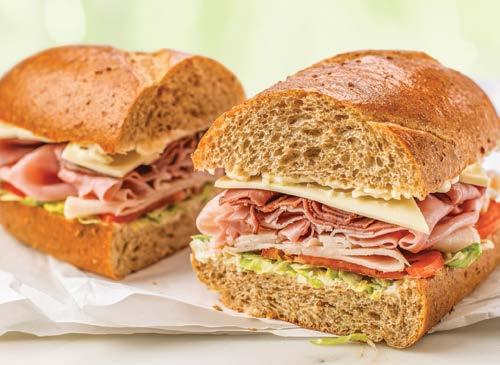
Trio No. 2 in C Major, Op. 87 (1882)
(1833-1897)
Chamber music can be wonderfully light and effervescent, but not this high-calorie Trio by Johannes Brahms. More dark chocolate Häagen Dazs than low-fat frozen yogurt, its richness reflects the gilded opulence of Imperial Austria, where it was composed, as well as the emergence of chamber music designed for the concert hall rather than merely for the “chamber” at home. The magnificent new Musikverein (1870), the gilded Viennese musical temple where the Vienna Philharmonic still performs today, also has a hall for chamber music. Brahms had recently completed his First Symphony, and the Trio has both the fullness and grandeur of a symphony as well as the sophisticated dialogue expected from chamber music. Brahms was famously critical of his own works, but even he felt he got this Trio right. “You have not yet had such a beautiful trio from me and very likely have not published its equal in the last ten years,” he bragged to his publisher, accurately.
This Trio begins in the ballroom. After Brahms moved to Austria, he showed a predilection for triple meter (in 3), rather than common time (in 4), which better matches
Austrian dance rhythms. The first movement speaks with the grammar of the waltz, buoyantly unfolding from the start with a theme for the strings alone. The piano, on the other hand, plays in 2, rather than in 3, typical of the movement’s rhythmic interplay. Rich, luxurious textures abound, alternately graceful and grand, with an ardent version of the main theme in the middle of the movement.
The second movement moves a hundred miles to the east of Vienna, to Hungary. The folk-like theme cries its way through five variations: solemn, reflective, defiant, accepting, and haunted. The ghostly scherzo movement emerges out of this darkness, as if torn from a book of Grimms’ Fairy Tales. In a middle section, the music steps out into the light, at first open-hearted and then heroic.
The jolly final movement (Allegro giocoso) sometimes reminds listeners of Danny Elfman’s theme song to the longestrunning TV show, The Simpsons (though not since 1882). The piano laughs its way through the strings’ lively theme, and a series of musical games ensue. The sophisticated humor here harkens back to Haydn, the father of musical wit, but the virtuosity and wide dynamic range of the movement belong to the late-nineteenth century. A brief lyrical outpouring carries us down before a thrilling coda lifts us back up and sends us out for ice cream.

We are delighted to premiere three new works this season, Memories from a Place I’ve Never Been and En Gham Be Haya by Arson Fahim on August 10 and Gravitas by Kinan Azmah on August 15. These are the fourth, fifth and sixth compositions made possible by the Skaneateles Festival’s exciting Commissioned Works Series. This series provides talented composers across the globe the opportunity to introduce our Festival audiences to the art and magic of musical composition. With generous support from Nancy Kramer and Doug Sutherland through their Creative Endeavors Fund, the Skaneateles Festival will, on a biennial basis, host a Composer-in-Residence program and, in alternating years, premiere Festival-commissioned works by those composers.
Week 3
Friday, August 16
8:00 PM
First Presbyterian Church
97 E. Genesee St, Skaneateles
Tonight’s concert is sponsored by:
Emily Bruskin, violin; Julia Bruskin, cello; Sophiko Simsive, piano
MENDELSSOHN-HENSEL Trio for Piano and Strings in D minor, Op. 11
Allegro molto vivace
Andante espressivo
Lied: Allegretto
Allegretto moderato
KATI AGÓCS Queen of Hearts
SCHUBERT Trio No. 2 in E-flat Major, D. 929
Allegro
Andante con moto
Scherzo: Allegro moderato
Allegro moderato
ARTIST SPONSORSHIP
Claremont Trio is sponsored by The Skaneateles Consortium: George Bain, Sam and Debby Bruskin, Dana and Susan Hall, and Judy Robertson
The Skaneateles Festival is made possible with funds from the General Operating Support program, a regrant program of the County of Onondaga with the support of County Executive, J. Ryan McMahon II, and the Onondaga County Legislature, administered by CNY Arts.
MEDIA SPONSOR

Trio for Piano and Strings in D minor, Op. 11 (1847)
FANNY MENDELSSOHN-HENSEL (1805-1847)
If you’ve never heard of Fanny Mendelssohn-Hensel, that’s in large part because her family didn’t want you to hear about her. Her entire family, including her famous brother, Felix, were firmly convinced that publishing music, or doing anything that resembled a profession, was socially inappropriate and unbecoming of a woman. After composing more than 460 works, she finally published a single opus the year before she died at age 41. Imagine if the only known work by Charles Dickens were chapter 37 of Nicholas Nickelby.
Her musical gifts were never in doubt. At age 13, she performed all 48 Preludes from Bach’s Well-Tempered Clavier from memory for her father’s birthday. But as her brother’s music appeared in print, hers went in a drawer. Her father summed up the situation: “For Felix music may become a profession, while for you it will always remain but an ornament; never can nor should it become a foundation of your existence and daily life.” Her brother’s dismissal was even more discouraging. “I would say that she has neither inclination nor vocation for authorship,” he wrote in 1837. “She is too much all that a woman ought to be for this.” Essentially: You’re a better woman for concealing your gifts.
Fanny turned to songs and short piano pieces, thought most appropriate for women to perform in private salons. She organized Sunday afternoon concerts in the garden house behind her family’s home, a stand-in concert hall where she could take the spotlight. It was here, on April 11, 1847, that she performed her ambitious Trio in D Minor, a gift for her younger sister’s birthday. She cast herself in the starring role; the piano part is a whirlwind of speed and virtuosity. Good luck finding, in this stormy and serious yet heartfelt work, any sign of what would traditionally have been considered feminine.
The opening sounds may reflect the tumult swirling right outside the gates of the Mendelssohns’ home: Berlin was convulsed by a political uprising and riots over insufficient food. The lyrical second theme offers a brief respite from the outside world, as the piano’s simmering arpeggios turn into shimmering tremolos. More drama lies ahead, however, and thundering piano octaves lead to a terrifying return of the opening theme. Fanny’s brother, Felix, also composed a tumultuous Trio in D minor, but tragedy looms larger here.
Listeners of Felix Mendelssohn’s music will recognize the “song without words” archetype of the middle movements,
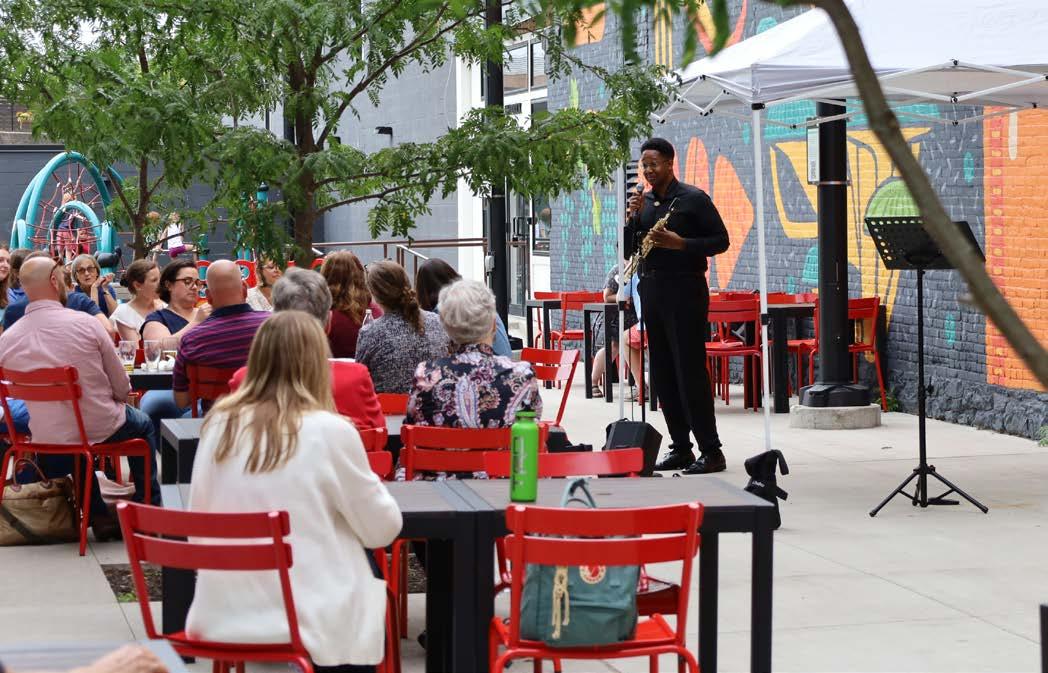
which are played without pause. The second movement is more hymn-like in character, while the third is more personal. Fanny entitled the third movement Lied (song), a genre in which she excelled. Here, her textless melody communicates a poised and poignant emotional honesty.
The final movement courageously breaks the mold, beginning with a Baroque-style improvisation for the piano alone. A fiery outburst suggests tragedy lies ahead, but this music perseveres on a difficult road; as the theme from the first movement reappears, a triumphant spirit ends the work. Unfortunately, art did not imitate life, in this case. Fanny died just a month later of a stroke. At least now you’ve heard of her – and, more importantly, you’ve heard her music.
KATI AGÓCS (B. 1975)
Born in Canada of Hungarian and American parents, Kati Agócs composes sophisticated and eclectic music that speaks to the heart. A recent Guggenheim Fellow, she also is a winner of the prestigious Arts and Letters Award, the lifetime achievement award in music composition from The American Academy of Arts and Letters. She is on the composition faculty at the New England Conservatory and maintains a work studio in Flatrock, Newfoundland. About her work for the Claremont Trio, Queen of Hearts, she writes:
“My piano trio Queen of Hearts was commissioned by Chamber Music Northwest in Portland, Oregon for premiere by the Claremont Trio in Summer 2017. Cast in a continuous form with no separate movements, the piece is based on a chaconne (a repeating pattern of notes). In the beginning a simple, elegant chaconne theme is followed by a songlike tune. The piece alternates these two ideas, varying them each time that they appear. Sometimes the song-like tune is meditative and calm; sometimes it is fugue-like: syncopated and rhythmically complex. Each time that the opening chaconne theme returns, it grows in scope and intensity but also clearly references the beginning. The two ideas are separate for most of the piece, alternating in a binary configuration, but they are finally juxtaposed (heard simultaneously) near the end. The piece starts from a place of humility and reverence, builds musically and dramatically over the course of its trajectory, and ends in a grand and rapturous tone which embodies transcendence and strength, even a regal character. Queen of Hearts is 16 minutes in duration.”
Hopefully you’ve visited the restroom prior to hearing Schubert’s Trio No. 2. Trios are not supposed to be this long; at nearly 50 minutes, it outlasts all Beethoven’s symphonies aside from the Ninth. Performers frequently cut out a portion of the last movement, sanctioned by Schubert

himself, to help you get to bed on time (which is the case tonight). If this disclaimer has you a bit concerned, please rest assured, this Trio is great in both scale and quality, and your time will be well spent. Its emotional range is wider than most symphonies, a journey that both scales heights and plumbs depths.
Why the grand proportions? One could cite inclination as well as ambition. Robert Schumann famously described the “heavenly lengths” of Schubert’s music, a reference not only to duration but also to the angelic aspirations of Schubert’s more patiently unfolding passages. If in heaven, why would one want to come back down to earth? But for this particular work, there was also undeniable ambition. Schubert lacked the financial resources and personal connections available to Beethoven, which made symphony performances unlikely. Chamber music, on the other hand, was emerging as a genre not only for the home but also for public concerts. When Schubert had an opportunity to present a concert of his music on March 26, 1828, he chose this new Trio to anchor the program. It was the one-year anniversary of Beethoven’s death, and Schubert, at age 30, would last only another year himself. This is the final music of his own that Schubert would hear in public.
Like Beethoven’s Fifth Symphony, Schubert’s first movement begins with a purposeful statement played by all instruments in unison. While Schubert’s music also has a propulsive
energy, its harmonic twists and turns are more unexpected; after a violent convulsion, we suddenly find ourselves thrust into a minor-key forest. The middle section of the movement takes us even deeper, a modulation maze of more than 200 measures. Here we confront our own fears of mortality, fortunate to eventually escape back into the light.
The second movement is a kind of fantasy on a Swedish folk tune, “The Sun has Set.” True to the title, this fantasy is nocturnal, and it contains terrors that can cause one’s hands to clench one’s chair. These are set in relief both by moments of gentle repose and of proud defiance. A brief scherzo movement provides some much-needed relief in the form of village humor, a contrapuntal game of “you lead, I’ll follow.” The final movement begins charmingly, without visible signs of the tremendous journey ahead. A bewitching Hungarianstyle fiddle tune lures us on a dark byway from which we may never return. This road is a psychological journey that leads back to the Swedish tune from the second movement, now overgrown with piano arpeggios and violin pizzicatos. Like the wanderer in Schubert’s song cycle, Winterreise, one can’t tell where this future leads, but it is clearly haunted by the past. When it seems we can go no further, sun suddenly shines on our Swedish tune from the second movement, turning it from minor to major. We step out into that sunshine, grateful for new life – however long it lasts.
Include the Festival in your will or estate
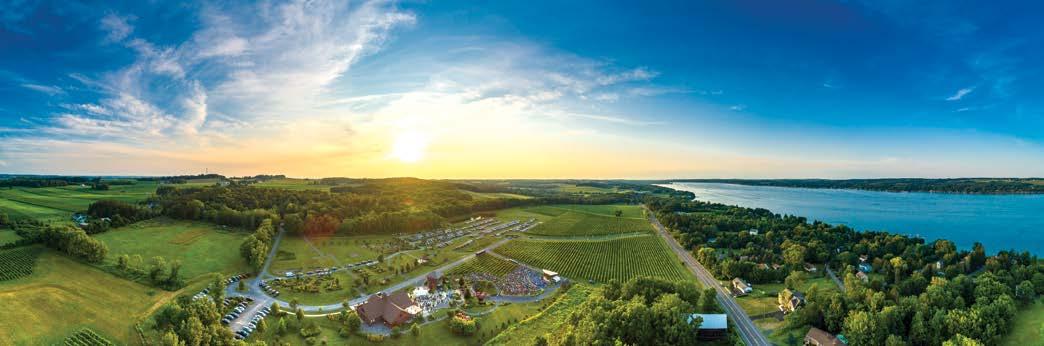

Ensuring the music of the Festival will continue to enrich our community for years to come is as easy as naming the Skaneateles Festival in your will, or designating it as a beneficiary of your retirement plan, IRA, or other financial account.
An easy way to give...
• There is no minimum amount for the gift.
• You can change your plans at any time.
• Help keep world class music by the lake.
I give, devise, and bequeath to the Skaneateles Festival, Inc., a 501(c)3 non-profit located in Skaneateles, New York [written amount or percentage of the estate or description of property] for [designate the purpose, if desired, or leave blank for gifts to be used to address the greatest need].
www.SkanFest.org 315-685-7418
Week 3
Saturday, August 17 • 8:00 PM
Robinson Pavilion at Anyela’s Vineyard
Rain Location: The Vine at Del Lago 1133 NY-414, Waterloo, NY 13165
Tonight’s concert is sponsored by:
Tom Bersani, Donald Blair, Paul Cohen, Barb Connor, Brendan McGinn, Steven Scheinman, and Robert Weisenthal
Making his Festival debut, MacArthur Fellow and GRAMMY Award-winning mandolinist, singer, songwriter Chris Thile is “that rare being: an all-round musician who can settle into any style, from bluegrass to classical” (Guardian). The “genre-defying musical genius” (NPR) hosted public radio favorite Live from Here with Chris Thile (formerly known as A Prairie Home Companion) and is a founding member of the critically acclaimed bands Punch Brothers and Nickel Creek.
Program to be announced from the stage.
ARTIST SPONSORSHIPS
Chris Thile is sponsored by Steven and Kelly Scheinman WITH ADDITIONAL CONCERT SUPPORT FROM Dave Birchenough and Carrie Lazarus, and Holland Gregg and Patience Brewster

The Skaneateles Festival is supported in part by an award from the National Endowment for the Arts.
FEATURED ADVERTISER
Linda and Dan Roche
MEDIA SPONSOR



We are grateful to the members of the consortium for their support of the Festival, as well as their love of music.
Tom Bersani
Donald Blair
Paul Cohen
Barb Connor
•
•
•
Brendan McGinn
Steven Scheinman
Robert Weisenthal
“From the late 14th Century on, each medical student had to complete a course in music theory.
Rooted in this centuries-old connection between music and medicine is the striking fact that greater than average numbers of medical doctors have had a special fondness for music and music making down through the ages.”
Music & Medicine, by Anton Neumayr
Week 4
Thursday, August 22
8:00 PM
First Presbyterian Church 97 E. Genesee St, Skaneateles
Tonight’s concert is sponsored by:
David Graham, Fred and Ginny Marty, and Pete and Betsy McKinnell
with George Meyer, violin
The Westerlies: Riley Mulherkar and Chloe Rowlands, trumpets
Andy Clausen and Addison Maye-Saxon, trombones
TRADITIONAL
arr. The Westerlies Fight On
DUKE ELLINGTON Echoes of Harlem
WOODY GUTHRIE Two Good Men
JUDEE SILL The Kiss
JOHN PRINE Way Back Then
CHLOE ROWLANDS Kerhonkson
ANDY CLAUSEN The 5:10 to Ronkonkoma
RANDY NEWMAN When She Loved Me
Four Selections from The Golden Gate Quartet: Golden Gate Gospel Train Remember Me Born Ten Thousand Years Ago Do Unto Others
TRADITIONAL
arr. George Meyer and The Westerlies St. Anne’s Reel
ANDY CLAUSEN New Berlin, New York
TRADITIONAL
arr. Sam Amidon and Nico Muhly Saro
ARTIST SPONSORSHIP
George Meyer and The Westerlies are sponsored by Ed and Paula Conan
George Meyer, violin
The Skaneateles Festival is made possible by the New York State Council on the Arts with the support of Governor Kathy Hochul and the New York State Legislature.
MEDIA SPONSOR

Every songbook is defined by its contents – but this “Songbook” is an open-ended project that would rather not be defined at all. And why should it be? The Westerlies have made resisting definition a signature, and they are openeared to influences far and wide. Their “Songbook” weaves strands together from folk, gospel, jazz, and contemporary classical into a vibrantly colored fabric.
The blind African American banjo player Jimmie Strothers recorded Fight On for Alan Lomax from the Virginia state penitentiary in 1936, but its folk origins probably date to the 19th century. Its lyrics draw upon Biblical stories of Moses’s perseverance and Peter’s discipleship, with the refrain “Fight on, fight on, Children, and don’t turn back. We are almost down to the shore.” Strothers himself was fighting on; an explosion while working in a mine took his eyesight, and then he was convicted of murdering his wife. The Weavers recorded the song in 1963.
In the same year Strothers sang Fight On, Duke Ellington composed his moody Echoes of Harlem. Also known as “Cootie’s Concerto,” it spotlighted trumpeter Cootie Williams and his expressive “jungle style.” With his plunger mute he enthralled Harlem’s Cotton Club, where he played in Ellington’s band. Instead of the usual verse and refrain structure, this through-composed work is in a classical threepart ternary form.
Two Good Men refers to Nicola Sacco and Bartolomeo Vanzetti, two Italian immigrant laborers convicted of murder during an armed robbery and executed in 1927. The swift verdict on flimsy evidence convinced people around the
world of their innocence, and protests on their behalf took place as far and wide as New Zealand, Tokyo, and Dubai. Woody Guthrie composed a series of songs about the trial, including this ballad. Guthrie upholds Sacco and Vanzetti as victims in a larger fight for workers’ rights and dignity.
Judee Sill (1944-1979) was a phenomenally talented singer-songwriter who drew upon the experiences of her short, turbulent life in sensitive and sophisticated ballads. She once described her style as “country-cult-baroque,” and The Kiss draws upon both the secular imagery of romantic love as well as the religious imagery of “sweet communion” and a “crystal choir,” merged over a Bach-like harmonic progression. In her own words, “The Kiss” “is about the union of the opposites we all have, and the kiss is a symbol of the union.”
John Prine (1946-2020) also penned country-folk songs defined by real-life experience but tempered by a gentle good humor. In Way Back Then, he gives up a longstanding feud with a one-time friend (or possibly lover): “You are acting just like me, I’m acting just like you. Do you remember when you were my friend? That’s the way I’d like things, just like way back then.” Sadly, Prine’s life was cut short in 2020 by the COVID-19 pandemic.
New songs by Westerlies’ Chloe Rowlands and Andy Clausen are titled for places: Kerhonkson, after time spent in a scenic hamlet in the Hudson Valley, and The 5:10 to Ronkonkoma, an early-morning train to another scenic hamlet, on Long Island. In this case, however, the real destination was JFK Airport and the skies beyond.
Fans of Pixar’s Toy Story movies may recognize When She Loved Me, composed by 22-time Academy Award winner





Randy Newman. Although Newman often sings his own songs, this melancholy ballad was sung by Canadian singer-songwriter Sarah McLachlan for a scene where the toy cowgirl, Jesse, is loved and then abandoned by her owner, guilty only of growing up. The song conveys an aching beauty that readers of Shel Silverstein’s The Giving Tree might recognize.
If you had tuned into your local radio broadcast in the 1930s, you might well have heard the sweet sound of The Golden Gate Quartet. Listeners found their integration of barbershop, blues, and jazz styles into the African American spiritual repertoire irresistible, and after just a few years the Quartet had sung at Carnegie Hall and for FDR’s presidential inauguration. Their pitch-perfect harmony and incisive rhythm are certainly on display in Golden Gate Gospel Train, a virtuosic imitation of an approaching train that drives home the words: “The train’s gonna be here tonight!” Remember me is a prayer with musical accompaniment. With low, vibrating, hummed tones, the first half of the song prepares the listener to truly mean the spoken words: “When our souls are crossing Jordan, Remember us.” The humorous song Born Ten Thousand Years Ago is sung by a man so old he can remember Noah’s ark: “I saw him when he nailed it, saw him hoist a sail and sail it – and I’ll lick the guy who says it ain’t so.” The song includes an astonishingly accurate imitation of trumpets and trombones, as if intended to be played by The

Westerlies someday. Do Unto Others brings alive the Golden Rule with infectious syncopations and twinkling lyrics: “The good book said ‘love thy neighbor,’ and make everyone your pal / The good book said ‘love thy neighbor,’ but it don’t mean your neighbor’s gal!”
One probably wouldn’t want to sing St. Anne’s Reel, an acrobatic Quebecois tune meant to be fiddled. Folk-dance “reels” such as this are designed to raise the spirits and made their way across the ocean from Scotland along with immigrants who truly needed their spirits raised. This reel was popularized by Canadian fiddler, Don Messer, who recorded and frequently performed it.
Most likely you’ve never been to New Berlin, New York, near Cooperstown, a barn which inspired Andy Clausen to compose the jaunty, blues-inflected music by the same name. Its stylistic blend and effervescent wit is vintage Westerlies.
The folk ballad Saro dates to early 18th-century England but found new life in Appalachia, where folk-song collector Alan Lomax heard it. Judy Collins, Pete Seeger, and Bob Dylan picked it up, and more recently, Rhiannon Giddens. At first, this arrangement by composer Nico Muhly and singer-songwriter Sam Amidon laments the heartbreaking loss of “pretty Saro” to someone more well-to-do, but as the lover starts to wander through the wide world, the music starts to pulse with the uplifting motion of an equally powerful emotion: Hope.


Week 4
Friday, August 23
8:00 PM
First Presbyterian Church
97 E. Genesee St, Skaneateles
Tonight’s concert is sponsored by:
Doug and Peg Whitehouse
Reuben Kebede, violin; Tiani Butts, violin; Marcus Stevenson, viola; Pedro Sánchez, cello
OSVALDO GOLIJOV Tenebrae
BEETHOVEN Cavatina from Quartet No. 13 in B-flat Major, Op. 130
CARLOS SIMON Warmth from Other Suns
Rays of Light Flight Settle
GEORGE WALKER Lyric for Strings
INTERMISSION
SCHUMANN Piano Quintet in E-flat Major, Op. 44
Allegro brillante
In modo d’una marcia: Un poco largamente
Scherzo: Molto vivace
Allegro ma non troppo
Ivalas Quartet
Aaron Wunsch, piano
ARTIST SPONSORSHIPS
Ivalas Quartet, the 2024 Emerging Artists in Residence, is sponsored by the Andromeda Foundation
Aaron Wunsch is sponsored by The Skaneateles Consortium: George Bain, Sam and Debby Bruskin, Dana and Susan Hall, and Judy Robertson
The Skaneateles Festival is made possible with funds from the General Operating Support program, a regrant program of the County of Onondaga with the support of County Executive, J. Ryan McMahon II, and the Onondaga County Legislature, administered by CNY Arts.
MEDIA SPONSOR

Tenebrae (2000)
OSVALDO GOLIJOV (B. 1960)
Of Eastern European Jewish descent, Argentine composer Osvaldo Golijov finds inspiration in diverse sources: Argentine tango, Classical chamber music, and Jewish klezmer and liturgical music. His opera, Ainadamar, about poet-playwright Federico García Lorca, will open at the Metropolitan Opera in October. About Tenebrae, he writes:
“I wrote Tenebrae as a consequence of witnessing two contrasting realities in a short period of time in September 2000. I was in Israel at the start of the new wave of violence that still continues today, and a week later I took my son to the new planetarium in New York, where we could see the Earth as a beautiful blue dot in space. I wanted to write a piece that could be listened to from different perspectives. That is, if one chooses to listen to it “from afar”, the music would probably offer a “beautiful” surface but, from a metaphorically closer distance, one could hear that, beneath that surface, the music is full of pain.
I lifted some of the haunting melismas from Couperin’s Troisieme Leçon de Tenebrae, using them as sources for loops, and wrote new interludes between them, always within a pulsating, vibrating, aerial texture. The compositional
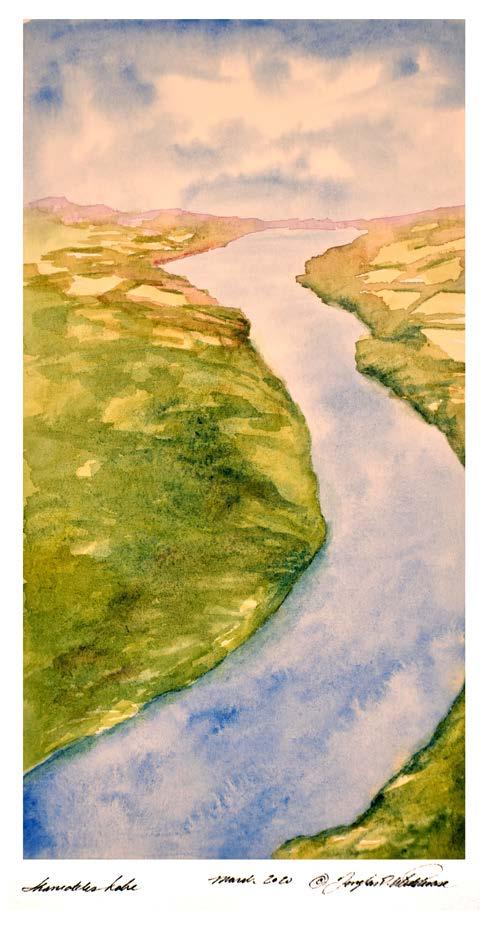
challenge was to write music that would sound as an orbiting spaceship that never touches ground. After finishing the composition, I realized that Tenebrae could be heard as the slow, quiet reading of an illuminated medieval manuscript in which the appearances of the voice singing the letters of the Hebrew Alphabet (from Yod to Nun, as in Couperin) signal the beginning of new chapters, leading to the ending section, built around a single, repeated word: Jerusalem.”
Cavatina from String Quartet No. 13 in B-flat Major, Op. 130 (1826)
LUDWIG VAN BEETHOVEN (1770-1827)
The fifth movement from String Quartet, Op. 130, is one of Beethoven’s most heartfelt creations; musicians adore it, and it even concludes NASA’s Voyager golden record, perhaps now playing somewhere in outer space. It speaks with a language that is at once hymnlike and highly personal. Beethoven called this movement “Cavatina,” a name for a melodious opera aria that probes the emotional state of a leading character. Beethoven said this movement affected him greatly, suggesting he may be that leading character. In the middle section, he indicates that the first violinist is “beklemmt,” overcome with heavy emotion and barely able to play the notes. Such personalized expression is rare in the Classical Era and paved the way for later composers to open themselves in emotionally vulnerable ways.
Warmth from Other Sun s (2020)
CARLOS SIMON (B. 1986)

Carlos Simon is a native of Atlanta, Georgia, who composes concert music for large and small ensembles and film scores with influences of jazz, gospel, and neo-romanticism. Simon is currently the Composer-in-Residence for the John F. Kennedy Center for the Performing Arts and was nominated for a 2023 GRAMMY award for his latest album, Requiem for the Enslaved. About his [reflective and heartfelt] string quartet, Warmth from Other Suns, Simon succinctly writes:
“Between 1916 and 1970, the mass exodus of African Americans leaving the rural South, seeking homes in the urban West, Midwest, and Northeast became known as the Great Migration. Inspired by Isabel Wilkerson’s book The Warmth of Other Suns, I chose to bring these stories to life through the voice of a string quartet.”
Members of the Ivalas Quartet, the first to record the work, offer their own perspectives on the music. Cellist Pedro Sánchez gives the following overview:
“Carlos Simon tells a story of these three families that make their way from the South to the North during the great migration. The first movement, Rays of Light … captures the feeling that we have to depart home, depart the known. The second moment, Flight, uses the blues scale … It’s filled with
anxiety and the feeling of running. And the third movement, Settle, brings us a little bit back to those same things in the first movement. We will let the audience decide whether the final harmonies feel like settling down or not.”
Violinist Tiani Butts speaks to the ambivalent feelings the work expresses about starting over in a new place, trying to find a new home:
“Trying to start somewhere new, hoping that it’s going to be a little bit better, at least a little bit better than what you just left. and never really understanding, or never really knowing, if it’s going to feel like home. You’ve made the journey, and you’re there. But is this as good as it gets? Or is there going to be another flight? I don’t really know. It’s quite interesting to think about whether it’s been settled or not, and I think that’s exactly what continues to go on today.”
Lyric for Strings (1946)
GEORGE WALKER (1922-2018)
George Walker’s résumé reads much like his famed contem poraries, Aaron Copland and Samuel Barber: accomplished pianist, studied at the Curtis Institute of Music, and with Nadia Boulanger in Fontainebleau, awards and honors. But one major difference was instantly noted by anyone in the classical music world who met him: he was Black. While

we hope to live in a world where this is no longer a major difference, that world was certainly not 1950s America. He composed numerous concert works, and finally received the Pulitzer Prize at age 74, in 1996, but his works found relatively little traction in concerts. “I just wish more people would play my music,” he told a friend of mine, shortly before he died. Many of us are now trying to grant him his wish, if belatedly.
Walker’s Lyric for Strings is the slow movement from his String Quartet No. 1. He composed it while he was still a student at Curtis, where he studied with the same teacher as his illustrious predecessor, Samuel Barber. Its musical language certainly has elements in common Barber’s more famous and similarly titled Adagio for Strings, but Walker’s music has a gentle sincerity that feels more personal than universal. This aching tenderness may speak to the movement’s origins: Walker originally entitled the movement Lament and composed it as a memorial for his grandmother. Grief breaks out in the viscerally intense middle section,


Piano Quintet in E-flat Major, Op. 44
ROBERT SCHUMANN
(1810-1856)
Chocolate and jalapenos, peanut butter and bananas, caramel and sea salt: they don’t seem to belong together, and yet (arguably) they do. We might add piano and string quartet to the list. The two have completely different sound palettes. The string quartet is perfectly balanced on its own, so why allow a lumbering, imperfectly tuned beast to stomp all over it? You can blame Robert Schumann, whose Piano Quintet in E-flat Major, Op. 44, was the first of its kind.
The combination of piano and string quartet could have been a real disaster, a mix of baking soda and vinegar. In the mid-nineteenth century, audiences at piano performances expected to cheer the virtuosic fireworks of a charismatic soloist, while those at chamber concerts expected to sit quietly and hear sophisticated and tasteful music. Furthermore, Schumann had trouble pleasing either audience with his eccentric works. Clara Schumann, the exceptional pianist and dedicatee of her husband’s Piano Quintet, complained to him in 1839: “Listen Robert, couldn’t you just once compose something brilliant, easily understandable, and without inscriptions—a completely coherent piece…?”
Schumann labeled the opening movement “Allegro brillante,” a sign that the work is intended to please the more fun-loving members of the audience. Yet after its vigorous opening chords, the music quickly moves to more private,

tenderly yearning themes played by the piano alone and then picked up by the others. Schumann maintains this alternation of public and private throughout the movement, until the public wins out in a brilliant coda.
A somber, darkly hued funeral march follows. In two contrasting episodes sandwiched in its middle, Schumann explores related but contrasting emotions—first, a rosy reminiscence, in which all five instruments are beautifully blended; and second, an agitated outburst of anger. These feelings all come to terms with each other in the remainder of the movement, where they are skillfully interconnected.
We return to brilliance for a heated scherzo, a dazzling game of “what goes up must come down.” The final movement is surely one of Schumann’s most inspired creations. A swaggering, vigorous theme guides the listener through varied emotional terrain, until it lands in a double fugue; then, in a stroke of genius, the theme from the first movement appears and combines with the theme from the last. One might think this brainy contrapuntal concept wouldn’t be much fun—but it truly is. Schumann wrote in 1837, “The best fugue will always be the one that the public takes for a Strauss waltz.” The enthusiastic conclusion wins over any skeptics.
Unlikely as it first seemed, Schumann’s Quintet turned out to be a smashing success, which it remains today. Clara, for once, was entirely pleased by this new concoction, which she called “splendid, full of vigor and freshness,” she even added it to her otherwise solo piano recitals. Schumann’s Quintet combo piqued the taste buds of many other composers after him, including Brahms, Dvorˇák, and Shostakovich. Perhaps you, too, will agree that the two taste good together, after all.

Week 4
Saturday, August 24 • 8:00 PM
Robinson Pavilion at Anyela’s Vineyard
Rain Location:
The Vine at Del Lago 1133 NY-414, Waterloo, NY 13165
Tonight’s concert is made possible with support from:
Wynton Marsalis, music director, trumpet
Ryan Kisor, trumpet
Kenny Rampton, trumpet
Marcus Printup, trumpet
Vincent Gardner, trombone
Chris Crenshaw, trombone, The Golkin Family Chair
Elliot Mason, trombone
Sherman Irby, alto and soprano saxophones, flute, clarinet
Ted Nash, alto and soprano saxophones, flute, clarinet, piccolo
Victor Goines, tenor and soprano saxophones, clarinet, bass clarinet
Walter Blanding, tenor and soprano saxophones, clarinet
Paul Nedzela, baritone and soprano saxophones, clarinet, bass clarinet
Dan Nimmer, piano, The Zou Family Chair
Carlos Henriquez, bass, The Mandel Family Chair in honor of Kathleen B. Mandel
Obed Calvaire, drums
Program to be announced from the stage.
ARTIST SPONSORSHIPS
Jazz at Lincoln Center Orchestra is sponsored by Kevin and Sarah Goode
Wynton Marsalis is sponsored by Doug and Nancy Sutherland


Bob Neumann
Bob Neumann was a loyal and generous friend to our Festival. Bob and Sally rarely missed a Saturday night concert at Brook Farm or the Robinson Pavilion.
Bob especially loved jazz – his favorite artist was Béla Fleck. He told me he wished we could get Béla to Skaneateles. That wish came true with the creation of the Neumann Fund for Jazz and Innovative Programming which enables us to bring world class jazz artists here every summer. One of my favorite Festival moments was on August 3, 2019 when Béla Fleck took the stage at the Robinson Pavilion. I looked over at Bob and Sally, and they were beaming. They made it happen!

For years to come, every time a jazz great plays the Skaneateles Festival, be it Wynton Marsalis, Joshua Redman, Christian McBride, or the next young phenom, we have the Neumanns to thank.
We miss you, Bob! Tonight’s concert is dedicated to our friend Bob Neumann. – Dave Birchenough
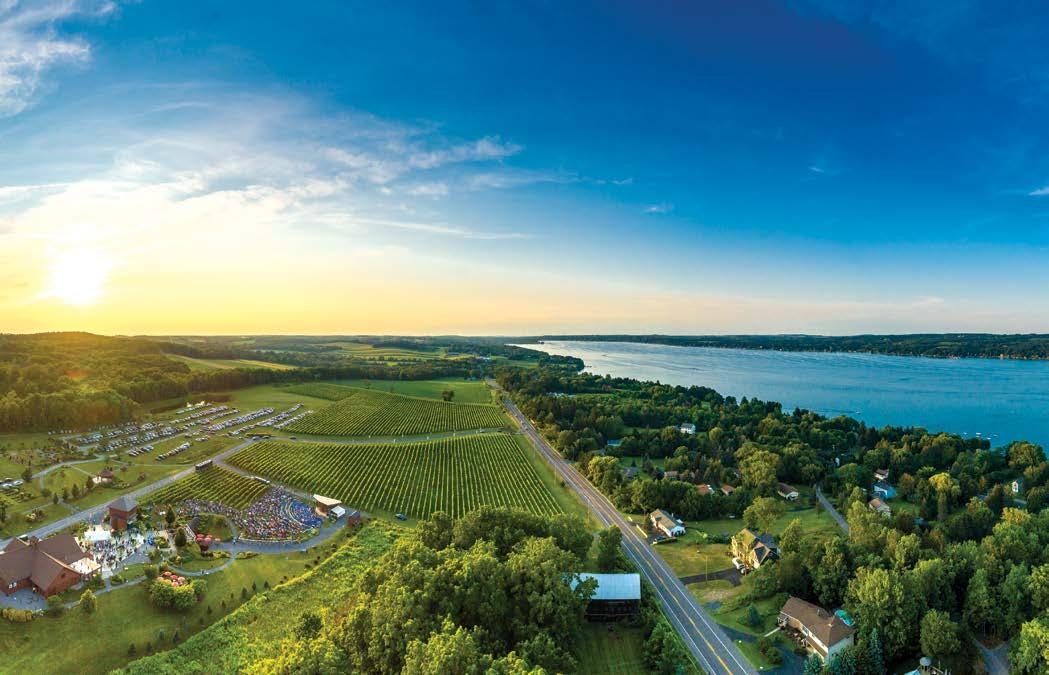






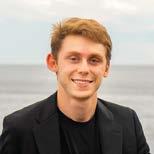
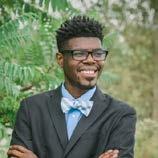
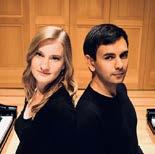










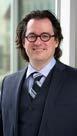
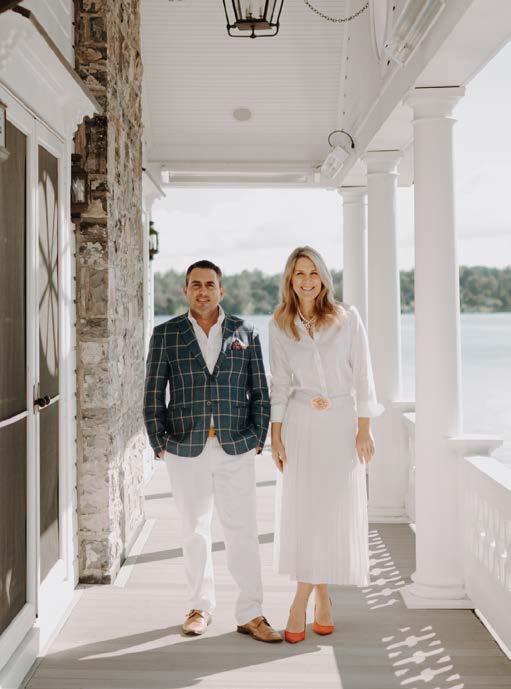




Lisa Albrecht, trombone
Currently second trombonist with the Rochester Philharmonic Orchestra, Lisa Albrecht previously held positions with the New York Philharmonic, Minnesota Orchestra, and Honolulu Symphony. She has performed with the London Sinfonietta, Los Angeles Philharmonic, Metropolitan Opera, Lucerne Festival Orchestra, Santa Fe Opera, Mostly Mozart Festival, and Deutsche Kammerphilharmonie Bremen. She also performed regularly at Lincoln Center and in over 20 Broadway productions. Lisa has been a featured artist at the International Trombone Festival, Lieksa Brass Week (Finland), Eastern Trombone Workshop, and the New York Brass Conference. She will join the faculty of Nazareth University this fall. Her solo album, Sound & Resound, was released in 2020. Lisa is an avid hiker, canoeist, and Adirondack 46er.
John Allis, timpani and percussion
Returning artist John Allis has performed with the Binghamton Philharmonic, the Orchestra of the Southern Finger Lakes, Glimmerglass Opera, Syracuse Symphony Orchestra, Utica Symphony, and Catskill Symphony Orchestra. He has also performed on timpani with local chamber music and choral groups and has played drum set and percussion for local and traveling shows.
Jeongwon (Claire) An, violin
Rochester Philharmonic Orchestra first violinist Jeongwon (Claire) An is also a founding member of Trio Menil, the Grand Prize and Odyssey Chamber Music Series Award winner of the 2023 Plowman Chamber Music Competition. She performed the U.S. premiere of Yevhen Stankovych’s Almost Serenade for Two Violins in recital with Oleh Krysa. She has participated in numerous international festivals including Mozarteum Sommerakademie, IMS Prussia Cove, and Aspen Music Festival. A recipient of the Korean Embassy’s Korean Honor Scholarship, Jeongwon has served principal positions in the Eastman Philharmonia and Aspen Festival Ensemble and performed as acting concertmaster of Symphony S.O.N.G. (Seoul, South Korea). She currently plays a 1703 G.B. Rogeri violin, generously on loan from the Maestro Foundation.
Andrew Armstrong, piano
Andrew Armstrong’s active performance schedule includes orchestral engagements, featuring a repertoire of more than 60 concertos, as well as solo recitals and chamber music concerts with the Ehnes, Elias, Alexander, American, and Manhattan string quartets, and as a member of the Caramoor Virtuosi, Boston Chamber Music Society, Seattle Chamber Music Society, and the Jupiter Symphony Chamber Players. Andrew also serves as artistic director of two flourishing chamber music series in South Carolina and in 2020, he founded New Canaan Chamber Music in
Connecticut where he serves as artistic director. His solo recordings have been met with critical acclaim, as were several award-winning recordings with his longtime recital partner James Ehnes.
Kinan Azmeh, clarinet, composer
Winner of the 2019 Opus Klassik award, Syrian-born Kinan Azmeh has gained international recognition for his distinctive voice across musical genres. He has appeared as a soloist with numerous orchestras and shared the stage with such musical luminaries as Yo-Yo Ma, Daniel Barenboim, Francois Rabbath, and Jivan Gasparian. Kinan has composed solo, chamber, and orchestral music, as well as music for film, live illustration, and electronics. In addition to his own Arab-Jazz Quartet CityBand and his Hewar trio, he has been performing with the Silkroad Ensemble since 2012; their 2017 GRAMMY Award-winning album Sing Me Home features Kinan as a clarinetist and composer. His first opera, Songs for Days to Come, which is fully sung in Arabic, premiered in Germany in 2022 to great acclaim.
Emily Britton, horn
A resident of Louisville, Kentucky, Dr. Emily Britton currently serves as principal horn of the Owensboro Symphony Orchestra and Indianapolis Chamber Orchestra and frequently performs with the Louisville Orchestra and Nashville Symphony Orchestra. She is on the faculty of Western Kentucky University, Campbellsville University, and the Kentucky Governor’s School for the Arts. She previously taught at the University of Louisville and University of Evansville. Emily was a member of the USAF Heritage of America Band from 2010 to 2015, stationed at JB LangleyEustis in Hampton, Virginia. She holds degrees from Roberts Wesleyan University, the Eastman School of Music and Florida State University.
Julia Bruskin, cello, co-artistic director
Cellist Julia Bruskin made her concerto debut with the Boston Symphony Orchestra at age 17, has performed Samuel Barber’s Cello Concerto with conductor Jahja Ling at Avery Fisher Hall, and was soloist with the Nashville, Utah, Virginia, and Pacific symphony orchestras, among others. Her CD of music by Beethoven, Brahms, and Dohnanyi was praised by Fanfare Magazine for its “exquisite beauty of sound and expression.” Julia won first prize in the Schadt String Competition and was a prizewinner in the International Johannes Brahms Competition in Austria. A founding member of the Claremont Trio (see below), Julia plays frequent solo recitals with her husband, pianist Aaron Wunsch, including tours in China and concerts in New York, Massachusetts, New Jersey and Texas. She has performed at La Jolla Summerfest, Mostly Mozart, Caramoor, Saratoga, Bard, and Norfolk festivals, and toured with Musicians from Ravinia. She has given numerous master
classes and currently teaches at the Juilliard Pre-College and is on the cello faculty of the Aaron Copland School of Music at Queens College.
Eric Butler, clarinet
Eric Butler has participated in the Round Top Festival Institute, Texas Music Festival, Boston University Tanglewood Institute and Brevard Music Center. Currently he is pursuing his master’s degree at the Eastman School of Music. He has been a member of the Chicago Youth Symphony Orchestra and the Midwest Young Artists Conservatory. He has earned numerous accolades in chamber music, including recognition as an Eastman Honors Chamber Musician, winner of the Round Top “Best of” chamber music competition, and winner of the Texas Music Festival wind chamber music competition. He has been featured in concerts for the Chamber Music Society of Rochester. For the past three summers Eric has been the Wind Fellow at the Pacific Crest Music Festival in California.
Anthony Calabrese, marimba Anthony Calabrese performs with the Rochester Philharmonic Orchestra (RPO), the RPO Marimba Band, Syracuse Orchestra, Geneva Light Opera, and Binghamton Philharmonic. He is past grand prize winner of the Italy Percussive Arts Society’s Days of Percussion competition as a marimba soloist, and has served on the Percussive Arts Society’s keyboard committee. Anthony has taught at West Chester University and Nazareth University, and currently teaches at Hobart and William Smith Colleges.
Edward Castilano, bass
Edward Castilano is a member of the Rochester Philharmonic Orchestra and an instructor at the Syracuse University Setnor School of Music. He served as principal bass in the Syracuse Symphony Orchestra until its demise in 2011, and appeared as soloist with that organization numerous times. A graduate of the Eastman School of Music, Ed participated for six seasons in Gian Carlo Menotti’s Spoleto Festivals in Italy and Charleston, South Carolina, where he made several appearances with the Lincoln Center Chamber Players. He has performed annually with the Skaneateles Festival since its inception in 1980. Additionally, he has appeared in concert with the Philadelphia, Savannah, and Spokane symphony orchestras.
Amy Christian, violin
Amy received music performance degrees from Indiana University, Eastman School of Music, and CUNY Graduate Center. She studied under Franco Gulli, Charles Castleman, and Daniel Phillips. She enjoys both teaching and performing and serves as a Visiting Lecturer on the faculty of Cornell University. She performs as principal second violin of the Syracuse Orchestra, is acting concertmaster of the
Tri-Cities Opera in Binghamton, and principal second violin of the Binghamton Philharmonic. She also plays solo and chamber music performances, and substitutes regularly with the Northeastern Pennsylvania Philharmonic. She plays on a Sgarabotto violin from 1911 that has been in her family for decades.
Michael Cirmo, percussion
Michael Cirmo performs regularly with the Glimmerglass Opera Orchestra, Syracuse Orchestra, Skaneateles Festival, Catskill Symphony, Albany Symphony, and Binghamton Philharmonic, as well as the orchestras of Hamilton College and Colgate University. In 1988 he was principal percussionist / assistant principal timpanist of the Civic Orchestra of Chicago, the nation’s premier training program for young professional musicians. He studied percussion with Michael Bookspan and Donald Liuzzi of the Philadelphia Orchestra, James Ross of the Chicago Symphony Orchestra, Gary Olmstead, James Petercsak, among others. A frequent guest conductor and clinician throughout New York State, Michael taught instrumental music in Whitesboro and Marcellus schools and has held long-term adjunct positions at Hamilton College and Colgate University. He currently serves as lecturer in music/percussion at Hamilton College.
Claremont Trio
Emily Bruskin, violin; Julia Bruskin, cello; Sophiko Simsive, piano
First winners of the Kalichstein-Laredo-Robinson International Trio Award and the only piano trio ever to win the Young Concert Artists International Auditions, the Claremont Trio has performed the Beethoven “Triple” Concerto with numerous orchestras and appears regularly at the major festivals. In 2022 the Trio released Queen of Hearts, an album of music composed especially for them by six of today’s leading composers – Gabriela Lena Frank, Sean Shepherd, Judd Greenstein, Helen Grime, Nico Muhly and Kati Agócs. Their discography also includes trios by Mendelssohn, Shostakovich and Arensky, and American trios by Leon Kirchner, Ellen Zwilich, Paul Schoenfield, and Mason Bates. Formed in 1999 at the Juilliard School, the Claremont Trio features twin sisters Emily and Julia Bruskin and pianist Sophiko Simsive. The Claremonts are all based in New York City near their namesake: Claremont Avenue.
Ben Dettelbeck, trombone
Ben Dettelback is currently principal trombone of The Syracuse Orchestra and instructor of trombone at Syracuse University. Ben also serves as principal trombone of the Cayuga Chamber Orchestra and has performed with the Buffalo Philharmonic, Rochester Philharmonic/Oratorio Society, Princeton Symphony, National Orchestral Institute, and American Institute of Musical Study in Graz, Austria. Ben recently appeared as soloist with The Syracuse Orchestra
performing the final movement of Launy Grondahl’s Trombone Concerto. He was named a finalist in the 2018 International Trombone Association’s Alto Trombone Competition. Ben holds degrees from the Eastman School of Music and Yale University. When not playing trombone, Ben can be found baking bread, cooking or hanging out with his cat, Kimchi.
Steven Doane, cello
Steven Doane’s international concert schedule has recently taken him to Scotland, Ireland and Sweden for orchestral appearances, and to London for a recital in Wigmore Hall. At the Eastman School, he received the Eisenhardt Award for Excellence in Teaching. The New England Conservatory awarded him the Piatigorsky Commendation for teaching. Steven also teaches at the Royal College of Music in London and has given master classes and served as guest teacher at the International Cello Festival in Manchester, and at most of the major music colleges in England. His recording of Faure’s complete works for cello and piano with Barry Snyder received the Diapason d’Or. Steven plays on a David Tecchler cello, dated 1720.
Dover Quartet
Joel Link, violin; Bryan Lee, violin; Julianne Lee, viola; Camden Shaw, cello
Named one of the greatest string quartets of the last 100 years by BBC Music Magazine, the two-time GRAMMYnominated Dover Quartet holds residencies at the Curtis Institute of Music, the Bienen School of Music at Northwestern University and the Walton Arts Center’s Artosphere festival. The group’s awards include a stunning sweep of all prizes at the 2013 Banff International String Quartet Competition, as well as other major prizes and prestigious honors. Their recordings are equally acclaimed. The Dover Quartet was formed at Curtis in 2008; its name pays tribute to Dover Beach by fellow Curtis alumnus Samuel Barber.
Betsy Easson, percussion
Betsy Easson is a graduate of Syracuse University’s School of Music with a major in Percussion Performance. An active freelancer in the Central New York area, Betsy performs regularly with the Catskill Symphony Orchestra and Clinton Symphony of the Mohawk Valley and has appeared with the
Mistaken identities, misadventures, mystery, and mayhem— don’t miss a moment of the 2024 season!
July 22 - August 19, 2024
THE PIRATES OF PENZANCE | Gilbert & Sullivan
Set sail on a delightfully absurd adventure of swashbuckling fun for the whole family.
July 23 - August 17, 2024
LA CALISTO | Cavalli / Faustini
Nymphs and satyrs cavort with the gods in this bawdy comedic caper.
July 27 - August 18, 2024
PAGLIACCI | Leoncavallo
The shocking tale of jealousy and revenge which blurs the line between art and reality. Arrive early to picnic while enjoying a preshow performance on the new outdoor stage!
July 28 - August 20, 2024
ELIZABETH CREE | Puts / Campbell
Music Hall murder mystery becomes modern masterpiece.
Syracuse, Utica, Schenectady, and Binghamton symphony orchestras. Other engagements have included the national touring performances in Syracuse of Spamalot and The Three Tenors. She has had the pleasure of appearing with Merry-Go-Round Theater, Catskill Chorale Society, Oneida Area Civic Chorale and the Mohawk Valley Chorale Society, among others.
James Ehnes, violin
Gifted with a rare combination of stunning virtuosity, serene lyricism and unfaltering musicality, James Ehnes is a favorite guest of many of the world’s most respected conductors. He has appeared with the orchestras of Boston, Chicago, Los Angeles, New York, London, Vienna, Munich and the Czech Republic, among others. In 2017, James premiered the Aaron Jay Kernis Violin Concerto with the Toronto, Seattle and Dallas symphony orchestras, and gave further performances of the piece in Germany and Australia. He maintains a busy recital schedule, performing all over the world, including a 2018 recital tour to the Far East. In 2010, he formally established the Ehnes Quartet, with whom he has performed all over Europe. James is also artistic director of the Seattle Chamber Music Society.
Rosemary Elliott, cello
Rosemary Elliott is assistant professor of cello at the Eastman School of Music, as well as principal cellist of the Cayuga Chamber Orchestra. She serves on the artistic advisory board of that organization. She is a core member of the orchestra’s chamber music ensemble and has twice performed as soloist with the orchestra. Since 2005, she has been artistic director of Morning Chamber Music at Eastman. Rosemary has served on the cello staff at the Royal College of Music in London and performed regularly with notable chamber orchestras including the London Mozart Players, the City of London Sinfonia, and the Orchestra of St. John’s Smith Square. She has also been a member of the National Symphony Orchestra of Ireland and toured with the Halle Orchestra of Manchester, England.
Arson Fahim, composer Afghan pianist, composer and conductor Arson Fahim was born in 2000 as a refugee in Pakistan where his family had fled due to the war in Afghanistan. In 2012, he began piano lessons and just a few months later was admitted to Afghanistan’s only music school, the Afghanistan National Institute of Music, where he also composed and arranged music and eventually became conductor of the Afghan National Youth Orchestra and the Afghan National Symphony Orchestra. In 2021, only two weeks before the Taliban took control and once again banned music, Arson arrived in the US and started his studies at the Longy School of Music of Bard College. Arson believes in the power of music to bring social change and
considers music a vital weapon against fundamentalists and radicals who try to silence it. His music is inspired by the tragedies in Afghanistan and beyond. His compositions such as Farkhunda, Freedom, Dreams of Peace, and The Lost Dove are a way for him to raise his voice for justice through music. Arson hopes to help young, underprivileged Afghans discover music and change their lives through learning music.
Joseph Genualdi, violin
Beginning his formal training at age 11, Joseph Genualdi won the audition as associate concertmaster of the San Francisco Symphony at just 22. Soon after, he became a founding member of the Muir Quartet, which captured international attention by winning the first prizes of Le Concour’s D’Evian and the Naumburg Award. With the Muir, then later the Los Angeles Quartet and Chicago Chamber Musicians, Joseph performed extensively throughout North America and Europe, including at many festivals. As artistic director of the Chicago Chamber Musicians for 17 years, Joseph worked closely with numerous composers including John Corigliano, Pierre Boulez, Augusta Read Thomas, John Harbison, Aaron J. Kernis, Joan Tower, David Del Tredici, Ned Rorem, William Bolcom, Ellen Zwilich, and others.
Rhiannon Giddens, banjo
A MacArthur “Genius Grant” recipient, Rhiannon Giddens co-founded the GRAMMY Award-winning Carolina Chocolate Drops and has been nominated for six additional GRAMMYs for her work as a soloist and collaborator. Rhiannon has performed for the Obamas at the White House, served as a Carnegie Hall Perspectives curator, and received an inaugural Legacy of Americana Award from Nashville’s National Museum of African American History. Featured in Ken Burns’ Country Music series, which aired on PBS in 2019, Rhiannon spoke about the African American origins of country music. She is also a member of the band Our Native Daughters with three other black female banjo players. Named artistic director of Silkroad in 2020, Rhiannon is developing several new programs for the organization, including one inspired by the history of the American transcontinental railroad and the cultures and music of its builders. She wrote the music for an original ballet, Lucy Negro Redux, for Nashville Ballet, and the libretto and music for an original opera, Omar, based on the autobiography of the enslaved man Omar Ibn Said for the Spoleto USA Festival. As an actor, she had a featured role on the television series Nashville.
Leanna Ginsburg, flute and piccolo
Leanna Ginsburg is acting principal flute of the Syracuse Orchestra for the 2023-2024 season. A native of upstate New York, she was previously rotating principal flute and piccolo with The Orchestra Now in the Hudson Valley. Leanna has

























































also performed with the Britt Festival Orchestra, Louisville Orchestra, Albany Symphony and Orchestra NEXT. She attended the Chautauqua Summer Music Festival, National Music Festival, and Eastern Music Festival. Leanna holds a Master of Music from Northwestern University and a Bachelor of Music from Purchase College Conservatory. When she’s not playing flute, she can be found hanging out with her tortoiseshell cat, Cider.
Lindsay Groves, cello
Lindsay Groves joined the Syracuse Symphony Orchestra as assistant principal cellist after graduating from Northwestern University in Chicago, where she studied with Chicago principal cellists Dudley Powers and Frank Miller. As founder and music director of the Skaneateles Festival, she programmed and often performed in approximately 140 concerts during its first 11 years. She has been a member of the North Carolina Symphony, JFK Center Opera House Orchestra, Chicago Civic Orchestra, and Hawaii Symphony Orchestra (principal) and performed with numerous other orchestras across the country. Her summer festival participation as chamber musician, orchestral cellist and soloist has taken her to NC, AK, CO, CA, FL, ME, China, Italy and Switzerland.
Daniel Hane, bassoon
Daniel Hane is a member of Fenimore Chamber Orchestra, Tri-Cities Opera Orchestra, Cayuga Chamber Orchestra, and the Catskill Symphony Orchestra. He performs frequently with the Catskill Choral Society, Binghamton Philharmonic, Syracuse Orchestra, Hartford Symphony, and Glimmerglass Festival. Daniel teaches at Binghamton University, Hartwick College, and OpusIthaca. He was awarded the Prix de Ravel at the Conservatoire Americaine in Fontainebleau, France, and was a winner of the Carmel Chamber Music Competition with the Pyramus Trio. He can be heard on the Phoenix Ensemble’s 2017 premiere recording release (Navona Records) of Henri Marteau’s Serenade op.20 for woodwind nonet. He has appeared in the Bregenz and Algarve music festivals with the New York Kammermusiker, and In December 2012, was a guest artist on NPR’s A Prairie Home Companion.
Nicholas Hersh, conductor
Nicholas Hersh has conducted the Utah, Colorado, Baltimore, Houston, North Carolina and New Jersey symphony orchestras as well as the Florida Orchestra, Rochester Philharmonic, and New World Symphony. Nicholas is in demand as an arranger and orchestrator, with commissions
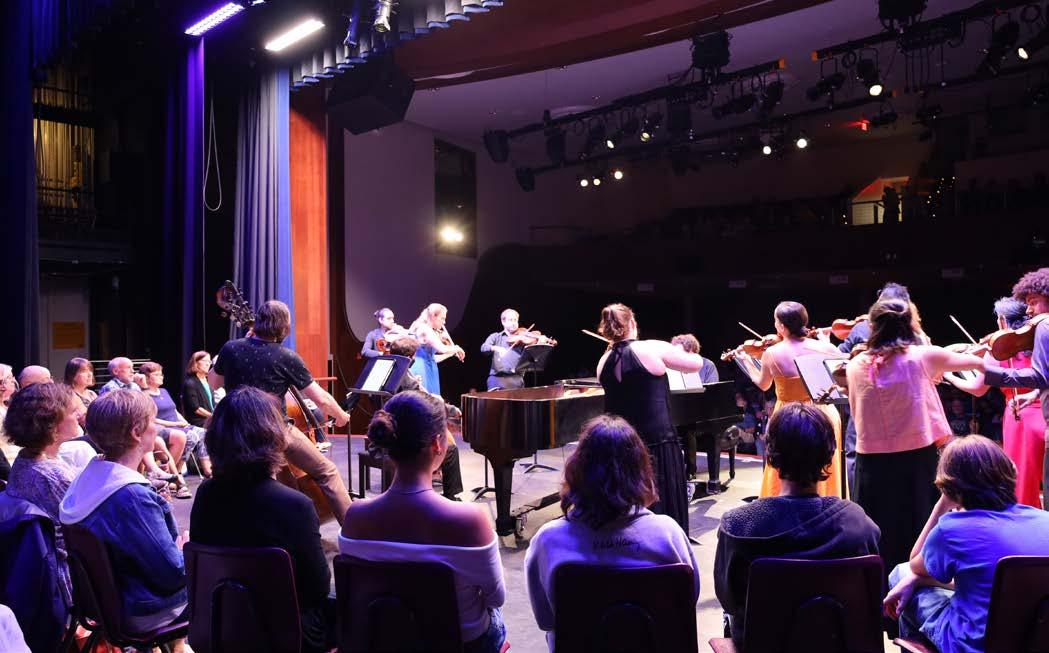
for orchestral adaptations of everything from classical solo and chamber music to popular songs. His orchestration of Beethoven’s Cello Sonata Op. 69 was premiered by the Philharmonie Zuidnederland in 2022, while his symphonic arrangement of Queen’s Bohemian Rhapsody continues to see worldwide success as a viral YouTube hit. An avid educator, he served from 2016 to 2020 as artistic director of the Baltimore Symphony Youth Orchestras, and continues to be a frequent collaborator and guest faculty at the Peabody Institute of Johns Hopkins University.
Erica Howard, oboe
Erica Howard is a visiting lecturer at Cornell University and Ithaca College. Erica previously played English horn with the Alabama Symphony and taught at the Alabama School of Fine Arts. Erica is also principal oboe of the Columbus Symphony Orchestra (Georgia), with whom they have been featured as a soloist on several occasions, and former principal oboe of the Atlanta Ballet Orchestra.
Ivalas Quartet
Reuben Kebede, violin; Tiani Butts, violin; Marcus Stevenson, viola; Pedro Sánchez, cello
The Ivalas Quartet is currently the Graduate Resident String Quartet at The Juilliard School, where they study under the Juilliard String Quartet. Dedicated to the celebration of BIPOC (Black, Indigenous, People of Color) voices, the Ivalas Quartet performed George Walker’s Lyric for Strings at Carnegie Hall in 2020 and collaborated with Walker’s son to program his String Quartet No. 1 with Friends of Chamber Music Denver and the Colorado Music Festival. In 2021 they created the first recording of Carlos Simon’s Warmth from Other Suns for string quartet under Lara Downes’ digital label Rising Sun Music. Ivalas has presented educational programming in Metro Detroit and with El Sistema Colorado and the Aspen Music Festival Musical. In NYC, they enjoy working with the Chamber Music Society of Lincoln Center on their Chamber Music Beginnings program.
John Lathwell, oboe
John Lathwell currently serves as principal oboe of the Binghamton Philharmonic, the Tri-Cities Opera and the Cayuga Chamber Orchestra. He is also active as a chamber musician in Central New York and has appeared as a soloist with the Syracuse Society for New Music, the Binghamton Philharmonic and on numerous occasions with the Cayuga Chamber Orchestra. He has been an active freelance performer in the New York City area and in the Washington, DC, area, where he now lives. John taught at Ithaca College and was on faculty at Binghamton University for 27 years. His primary teachers have been Joseph Robinson, principal oboist of the New York Philharmonic, and Richard Killmer, professor of oboe at the Eastman School of Music.
Jazz at Lincoln Center Orchestra with Wynton Marsalis
Wynton Marsalis, music director, trumpet
Ryan Kisor, trumpet; Kenny Rampton, trumpet; Marcus Printup, trumpet; Vincent Gardner, trombone; Chris Crenshaw, trombone, The Golkin Family Chair; Elliot Mason, trombone; Sherman Irby, alto and soprano saxophones, flute, clarinet; Ted Nash, alto and soprano saxophones, flute, clarinet, piccolo; Victor Goines, tenor and soprano saxophones, clarinet, bass clarinet; Walter Blanding, tenor and soprano saxophones, clarinet; Paul Nedzela, baritone and soprano saxophones, clarinet, bass clarinet; Dan Nimmer, piano, The Zou Family Chair; Carlos Henriquez, bass, The Mandel Family Chair in honor of Kathleen B. Mandel; Obed Calvaire, drums
Jazz at Lincoln Center Orchestra
The JLCO has been the Jazz at Lincoln Center resident orchestra since 1988. Led by Wynton Marsalis, Jazz at Lincoln Center managing and artistic director, this remarkably versatile orchestra performs a vast repertoire ranging from original compositions and Jazz at Lincoln Center-commissioned works to rare historic compositions and masterworks by Duke Ellington, Count Basie, Fletcher Henderson, Thelonious Monk, Mary Lou Williams, Dizzy Gillespie, Benny Goodman, Charles Mingus, and many others. Alongside symphony orchestras, ballet troupes, local students, and an ever-expanding roster of guest artists, the JLCO has toured over 300 cities across six continents.
Jazz at Lincoln Center
Jazz at Lincoln Center is dedicated to inspiring and growing audiences for jazz, advancing a unique vision for the continued development of the art of jazz by producing a year-round schedule of performance, education, and broadcast events for audiences of all ages. These productions include concerts, national and international tours, residencies, weekly national radio programs, television broadcasts, recordings, publications, an annual high school jazz band competition and festival, a band director academy, jazz appreciation curricula for students, music publishing, children’s concerts and classes, lectures, adult education courses, student and educator workshops, a record label, and interactive websites. Under the leadership of Managing and Artistic Director Wynton Marsalis, Chairman Robert J. Appel, and Executive Director Greg Scholl, Jazz at Lincoln Center produces thousands of events each season in its home in New York City and around the world.
Wynton Marsalis
Wynton Marsalis is the managing and artistic director of Jazz at Lincoln Center. Born in New Orleans, Marsalis began his classical training on trumpet at age 12, entered The Juilliard School at 17, and then joined Art Blakey
and the Jazz Messengers. He has recorded more than 110 jazz and classical recordings, which have won him nine GRAMMY awards. In 1983 he became the first and only artist to win both classical and jazz GRAMMY awards in the same year, a feat he repeated in 1984. Marsalis is also an internationally respected teacher and spokesman for music education. In 1997 he became the first jazz artist to be awarded the Pulitzer Prize in music for his oratorio Blood on the Fields, which was commissioned by Jazz at Lincoln Center. In 2001 he was appointed Messenger of Peace by Kofi Annan, then-Secretary-General of the United Nations. He was instrumental in a Jazz at Lincoln Center-produced relief concert that raised more than $3 million to benefit musicians, music industry-related enterprises, and others from Greater New Orleans who were affected by Hurricane Katrina. Also a prolific composer, his monumental 1999 work All Rise was performed with the Tulsa Symphony Orchestra as part of the remembrance of the centennial anniversary of the Tulsa Race Massacre in June 2021.
Bridget Kibbey, harp
Bridget Kibbey recently made her solo NPR Tiny Desk Debut, is a winner of a prestigious Avery Fisher Career Grant, the Journées de les Harpes Competition in France, and is the only harpist to win a place in the Chamber Music Society of Lincoln Center’s Bowers Program. Her solo performances have been broadcast on NPR’s Performance
Today, as well as radio stations in New York, Washington and Philadelphia, and on television in A&E’s Breakfast with the Arts. For her newest solo recording, Crossing the Ocean, to be released later this year, Bridget asked six composers from six countries to write for the harp based on music they grew up hearing. Soprano Dawn Upshaw is special guest.
Allan Kolsky, clarinet
Principal clarinet of the Syracuse Orchestra, Allan Kolsky held positions with the Louisiana Philharmonic Orchestra and the Utah Symphony before joining the Syracuse Symphony Orchestra (SSO) as principal clarinet in 2002. He has appeared as soloist with Symphoria and the SSO in clarinet concertos by Mozart, Nielsen, Finzi and Weber. He received a Tanglewood Fellowship in 1989, and holds music performance degrees from Temple and DePaul universities. A co-host and performer at the 2001 International ClarinetFest, Allan currently teaches clarinet at Hamilton College. He has also performed with the Cincinnati Symphony Orchestra, North Carolina Symphony, Buffalo Philharmonic, Skaneateles Festival, Glimmerglass Opera, and Colorado Music Festival.
An-Chi Lin, violin
Born and raised in Taiwan from a family of musicians, An-Chi Lin is currently a member of the Rochester Philharmonic Orchestra. She has performed with the Rochester Chamber Orchestra, Cayuga Chamber Orchestra,
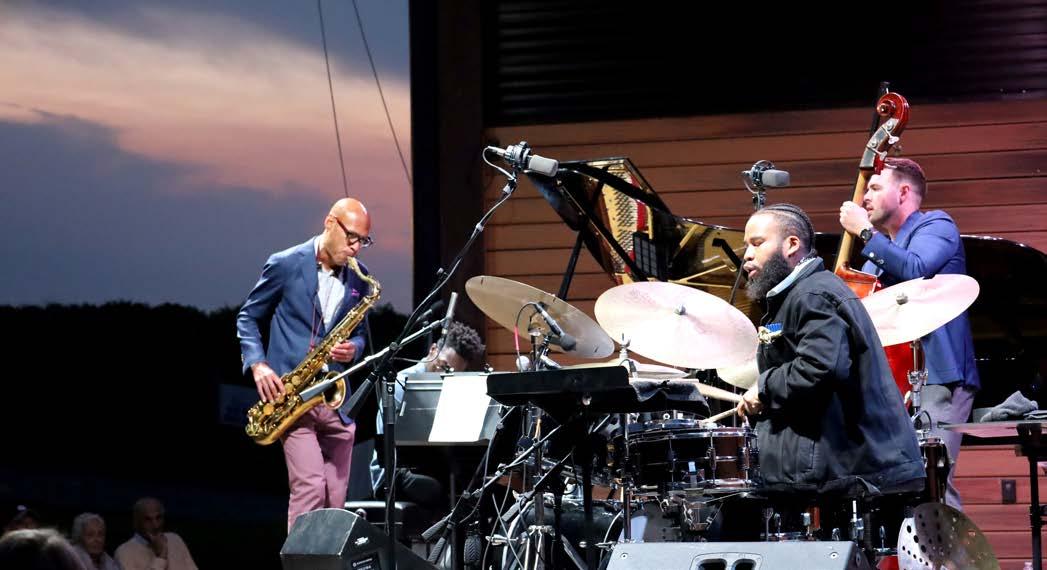
and Rochester Oratorio Society, and served as concertmaster with the Greater Rochester Women’s Orchestra. An-Chi has appeared as soloist with the Roberts Wesleyan Orchestra, the SUNY Geneseo Orchestra, and the Greater Rochester Women’s Orchestra. As a chamber musician, she has performed in the RPO’s Educational String Quintet, which brings classical music to elementary school children in Rochester City Schools. Her violin-guitar group, Red Creek Duo, has performed in western New York, Illinois, and California. Lin serves on the violin faculty of Roberts Wesleyan College and SUNY Geneseo.
Sean Marron, flute and piccolo
Sean Marron joined the Rochester Philharmonic Orchestra as second flute/piccolo in 2022. He is currently a graduate student at the Eastman School of Music, where he teaches secondary lessons and runs the flute orchestral excerpt class. Sean has appeared at numerous festivals, including Tanglewood Music Center, National Symphony Orchestra Summer Music Institute, Aspen Music Festival, and Bravo! Vail Music Festival, where he performed with the Philadelphia Orchestra. Sean attended the Juilliard Pre-College Division. His principal teachers include Bonita Boyd, Anne Harrow, and Bart Feller.
Jeremy Mastrangelo, violin
Jeremy Mastrangelo has performed with Ottawa’s National Arts Centre Orchestra since late 2011. Prior to that he served as associate concertmaster of the Syracuse Symphony Orchestra for ten years. He has been guest concertmaster with the Kalamazoo Symphony Orchestra, Fort Wayne Philharmonic, Omaha Symphony, Oregon Symphony, and National Ballet of Canada. Prior to his work in Syracuse, Jeremy was co-concertmaster of the New World Symphony in Miami. Jeremy has been featured on the Syracuse Friends of Chamber Music series and has also performed with the Chamber Players of Canada and Kathleen Battle. With his wife Sara, also a violinist, Jeremy spent seven summers performing in festivals in Colorado, first at the Steamboat Springs Strings Music Festival, and then with the Breckenridge Music Festival Orchestra.
Sara Mastrangelo, violin
In Ottawa, Ontario, Sara Mastrangelo is a member of Thirteen Strings and plays regularly with the National Arts Centre Orchestra. She has been a member of the Syracuse Symphony Orchestra and New World Symphony. An active chamber musician, Sara performs regularly at Music and Beyond (Ottawa) and the Skaneateles Festival. Past summers have included the Breckenridge Festival Orchestra, Tanglewood, Banff, Schleswig Holstein (Germany), Bach and Beyond (NY) and Domaine-Forget (PQ). As a teacher, Sara is a performance instructor at Carleton University and the founding director of Suzuki Violin West Ottawa. She has
held teaching positions at Hamilton College and Hobart and William Smith Colleges, St. Peter’s Arts Institute (NY) and has taken Ottawa’s Stellae Boreales violin ensemble on tour to China, Argentina, Boston, and New York City.
Melissa Matson, viola
Melissa Matson has been a member of the Rochester Philharmonic Orchestra since 1983 (principal violist 19992019). She was a founding member of both the prize-winning Chester String Quartet and the Amenda Quartet, whose acclaimed Project Ludwig presented the complete string quartets of Beethoven in the Rochester area. Her solo appearances with the RPO have included Berlioz’s Harold in Italy and Mozart’s Sinfonia Concertante. She performs regularly with the Skaneateles Festival, and was founding artistic director of First Muse Chamber Music in Rochester. Melissa released Exploring Excerpts: A Violist’s Guide to Developing Skills for Orchestral Playing, which joins her popular One-Position Finger-Pattern Scales, an infinitely-variable approach to left-hand versatility. She also pursues visual arts and has built homes with Habitat for Humanity’s Women Build program.
Matthew McDonald, bassoon
Matthew McDonald has been principal bassoon of the Rochester Philharmonic Orchestra since 2013. Prior to that, he held similar positions in the Louisiana Philharmonic Orchestra and the ProMusica Chamber Orchestra, and has appeared as a guest with the Atlanta Symphony Orchestra,
Houston Symphony, and Saint Paul Chamber Orchestra. Born in Huntsville, Alabama and a graduate of the Curtis Institute of Music, Matt was co-founder and co-artistic Director from 2012-2022 of Twickenham Fest, a chamber music festival in his hometown. An avid vegan, parent, and husband, Matt also loves to cook and be with his family.
George Meyer, violin, composer George Meyer is equally interested in classical music and fiddle music, and in what they have in common; these interests inform his composing. He has been commissioned by Chamber Music Northwest, Bravo! Vail, Astral Artists and the Tribeca New Music Festival, among others. He has performed his own compositions at the 92nd Street Y, Stanford Live in Bing Concert Hall, and at University of Florida, University of Denver, Auburn University, and Vanderbilt University, among many others. Festival appearances performing his own compositions include the Aspen Music Festival, Bravo! Vail, Chamber Music Northwest, the Rome Chamber Music Festival, and the Telluride and RockyGrass Bluegrass festivals. He recently announced a new violin-piano duo project, Upstream, with composer-pianist Will Healy; they co-compose their repertoire.
Neil Miller, violin
Neil Miller performs with the Rochester Philharmonic Orchestra. He holds both a Bachelor of Music degree in violin performance, and a Master of Music degree in viola performance from the Eastman School of Music. He was awarded the coveted Performer’s Certificate and was the recipient of the Robert L. Oppelt Viola Prize at Eastman. Summer festivals have included the National Repertory Orchestra in Breckenridge, CO, where he performed in over 20 concerts playing 120 orchestral works. Neil has also participated in LyricaFest in Boston as well as Charles
Castleman’s Quartet Program both in Boulder, CO, and Fredonia, NY.
Ethan Millington, tuba
Tuba artist and educator Ethan Millington has appeared on stage with the Lincoln Municipal Band, Omaha Symphony Orchestra, Toledo Symphony Orchestra, and most recently, The Syracuse Orchestra. Ethan is currently pursuing a doctor of musical arts in Tuba Performance and Literature at the Eastman School of Music. He received his Bachelor of Music in Education from the University of Nebraska-Lincoln and Master of Music in Tuba Performance from Bowling Green State University.
Tito Muñoz, conductor
Now in his ninth season as the Virginia G. Piper Music Director of the Phoenix Symphony, Tito Muñoz previously served as music director of the Opéra National de Lorraine in France and held assistant conductor positions with the Cleveland Orchestra, Cincinnati Symphony Orchestra, Cincinnati Chamber Orchestra and the Aspen Music Festival. Tito has appeared with many of the most prominent orchestras in North America and in Europe, Australia and South America. Tito champions composers of our time and conducted the critically-acclaimed staged premiere of Gerald Barry’s opera The Importance of Being Earnest while in France. A great advocate of the music of Michael Hersch, he most recently led the world and European premieres of I hope we get a chance to visit soon at the Ojai and Aldeburgh festivals.
Tyler Ogilvie, horn
Freelance musician Tyler Ogilvie performs regularly with the Syracuse Orchestra, the Binghamton Philharmonic, the Northeastern Pennsylvania Philharmonic, the Catskill Symphony, and the Cayuga Chamber Orchestra. He
is currently principal horn for the Clinton Symphony Orchestra, and formerly held this position in the Orchestra of the Southern Finger Lakes. Tyler teaches horn at Colgate University while maintaining an active private studio in the Syracuse area. He has previously served on the faculty at Dickinson College, Susquehanna University, and Ithaca College, where he continues to instruct horn at the college’s Summer Music Academy.
Juliana Pepinsky, flute
Juliana Pepinsky is a senior lecturer at Cornell University and flute instructor at Opus Ithaca. Since arriving in Ithaca in 2008, Juliana has performed regularly at Cornell and with the Ithaca Flute Duo, Ensemble X, Skaneateles Festival, Orchestra of the Southern Finger Lakes and the Fingerlakes Flutes. Prior to that she played with the New Britain Symphony and the Waterbury Symphony, and taught at the University of Colorado, Boulder, Metro State College, Regis University, and Southern Connecticut State University. In 2003, she performed in the inaugural concert of Zankel Hall, the then-new concert space at Carnegie Hall, under composer John Adams. She received her master’s degree from Yale University and her bachelor’s degree from the Oberlin Conservatory. Guillaume
Guillaume Pirard, violin
Guillaume Pirard is a founding member and former co-concertmaster of The Knights. He has toured extensively throughout the United States and Europe with performances in Zurich, Hamburg and Vienna, and festival appearances at Tanglewood, Ravinia, Caramoor, Skaneateles, the Festival-dePaques in France and the Salzburg Festspiele. He has played in various period ensembles and chamber music series in Europe and the US, such as the Helicon Foundation, the Smithsonian Chamber Players, the Staunton Festival, Les Muffatti and the Context series at Rice University. The Belgian native studied at the Brussels Royal Conservatory of Music and the Juilliard School. He is music director of the Cayuga Chamber Orchestra.
Olita Povero, viola
Rochester Philharmonic Orchestra violist Olita Povero previously served as principal viola with the Dallas Opera and was a member of the Dallas Ballet Orchestra and Dallas Chamber Orchestra. She currently plays with Finger Lakes Opera and Rochester Chamber Orchestra. She is also a faculty member at the Hochstein School of Music and Dance and mentors violists in both the RPO and Hochstein Youth Orchestras. Povero is happy to be returning to the Skaneateles Festival, where she has performed in many concerts over the years.
John Raschella, trumpet
John Raschella is currently principal trumpet with The Syracuse Orchestra. For 30 years prior, he was principal
trumpet and associate principal trumpet of the Syracuse Symphony Orchestra. He has performed as co-principal trumpet with the Pittsburgh Symphony and has performed with the Philadelphia Orchestra and the orchestras of Houston, Minnesota, Buffalo, Rochester and Jacksonville. He has also been a featured performer at the International Trumpet Guild Conference and has recorded with the Pittsburgh and Syracuse symphony orchestras. In the summers he has performed as principal trumpet of the Eastern Music Festival in North Carolina and the Spoleto Festival in Italy. When not playing the trumpet you will find John with his wife Bonnie aboard their boat “High C’s” where they love to cruise the Erie Canal and the great lakes!
Andrew Russo, piano
Syracuse native Andrew Russo is known for the diversity of his interests and experiences, whether it be business, music or politics. Following graduation from The Juilliard School he pursued post-graduate studies in Leipzig and Paris, then spent his early career as an advocate of American composers and American music. He has performed in the world’s cultural capitals, including Paris, London, Moscow, Rome, Brussels, Tokyo, New York, Los Angeles, Chicago, and Buenos Aires. As a finalist in the 2001 Van Cliburn International Piano Competition, he was the first pianist to perform a significant work using alternative techniques requiring the inside and frame of the piano as well as the keys. His Black Box Records release of music by John Corigliano received a 2007 GRAMMY nomination. His most recent recording on Naxos featured Three Flavors for piano and orchestra, commissioned from Aaron Kernis.
Lisa Ann Seischab, bassoon
Lisa Ann Seischab is a graduate of the Eastman School of Music and former member of the Charlotte Symphony Orchestra. As an arts administrator and fundraising professional, she has held development positions with the Eastman School of Music, Baltimore Symphony Orchestra, and Rochester Philharmonic Orchestra. She is currently the George Eastman Museum’s vice president of development in Rochester and serves on the Advisory Board of the Collaborative Arts Institute of Chicago, an organization dedicated to the study and performance of art song and vocal chamber music repertoire.
Paul Shewan, trumpet
A member of the Rochester Philharmonic Orchestra’s trumpet section since 1998, Paul Shewan is also a frequent guest conductor with the RPO, including its inaugural side-byside concert with community members in 2014. He completed the doctoral degree in conducting from the Eastman School of Music in 2004 where he has returned as a visiting associate professor of conducting and ensembles. Now on the faculty at Roberts Wesleyan College, Shewan has
also performed frequently with the Buffalo Philharmonic Orchestra. Solo appearances have included performances of Haydn’s Trumpet Concerto with the Equinox Symphony, J. S. Bach’s Brandenburg Concerto No. 2 with members of the RPO and live broadcasts on WXXI Classical 91.5 FM radio’s Noontime at Hochstein.
Alexander Shuhan, horn
Professor of horn at Ithaca College, Alexander Shuhan is principal horn of the Binghamton Philharmonic Orchestra and the Fort Smith Symphony Orchestra (AR), and was principal horn of the Cayuga Chamber Orchestra from 2000 to 2010. The Shuhan-Luk Trio of flute, horn and piano has performed across the U.S. and has been featured at International Horn Symposium and National Flute Association conventions. He has taught on the faculty of several summer music camps. Shuhan performs frequently with the Rochester Philharmonic Orchestra and has played with the Syracuse Symphony Orchestra and the Skaneateles Festival. As a founding member, hornist, pianist and composer of Rhythm & Brass, Alex has performed extensively throughout the US, Canada, Japan, and the Middle East.
Herb Smith, trumpet
Voted Best Instrumentalist of Rochester 2022 by City Magazine, Herb Smith is currently third trumpet in the Rochester Philharmonic Orchestra and principal trumpet in the Gateways Festival Orchestra, which made its Carnegie Hall debut in April 2022. He is also principal trumpet in the Gateways Brass Collective brass quintet. As a composer, Herb was commissioned by Tony Award-winning choreographer Garth Fagan to write a ballet for his children’s ensemble. Herb recently conducted and curated an RPO Brass performance of Copland’s Fanfare for the Common Man at a Black Lives Matter rally and a concert honoring Harriet Tubman for her bicentennial celebration. He co-founded Herb’s City Trumpets, a program that mentors and teaches trumpet to Black students aged 8 to 17, in partnership with the Rochester City School District.
Susan Spafford, violin
Susan Spafford is a member of the Richmond Symphony, Cayuga Chamber Orchestra, and Lancaster Festival Orchestra in Ohio. She has played regularly with the orchestras in Allentown and Harrisburg (PA), as well as Albany, Binghamton, and the Skaneateles Festival. Solo engagements include the Erie Chamber Orchestra and recitals at Mansfield University, Library of Congress, throughout the US and in South Korea. Spafford has been faculty guest artist for the String Institute at Ithaca College and presented hundreds of educational workshops throughout the country. She has been featured in the Philadelphia Orchestra’s Family Series and at Music Educators Association conferences. She is an adjudicator for NYSSMA, completed Suzuki teacher
training courses, and graduated from the LAO Essentials of Orchestra Management course.
Davóne Tines, bass-baritone
Named Musical America’s 2022 Vocalist of the Year, Davóne Tines’ sang last season in John Adams’ El Niño on multiple stages, including his Metropolitan Opera debut performing the fully staged opera-oratorio version. He has premiered operas by today’s leading composers including John Adams, Terence Blanchard, and Matthew Aucoin. Davóne is co-creator of The Black Clown, a music theater experience commissioned and premiered by American Repertory Theater and presented at Lincoln Center. He recently served as Artist-in-Residence at Detroit Opera, culminating in his performance in the title role of Anthony Davis’ X: The Life and Times of Malcolm X in spring 2022. Tines is featured on the GRAMMY-nominated world premiere recording of the opera.
Chris Thile, mandolin
Acclaimed GRAMMY Award-winning mandolinist, singer, songwriter, composer, and MacArthur Fellow “Genius” grant recipient Chris Thile is a founding member of the highly influential string bands Punch Brothers and Nickel Creek, and has collaborated with countless luminaries from
Yo-Yo Ma to Fiona Apple to Brad Mehldau. For four years, he hosted public radio favorite Live from Here with Chris Thile (formerly known as A Prairie Home Companion). With his broad outlook, Chris gives the listener “one joyous arc, with the linear melody and vertical harmony blurring into a single web of gossamer beauty” (New York Times). Over the last year, Chris has been touring with Nickel Creek in support of the critically acclaimed 2023 release Celebrants, and captivating audiences with a playfully ambitious biographical composition entitled ATTENTION! (a narrative song cycle for extroverted mandolinist and orchestra). Additionally, he has been focused on the production of a new musical variety show, The Energy Curfew Music Hour. Created with Claire Coffee and featuring Punch Brothers, the series will be released on Audible later this year.
Eric Troiano, Saxophone
Eric is Assistant Professor of Saxophone at Ithaca College. As an in demand performer and educator, he has been invited to give performances, masterclasses, and lectures both nationally and internationally. He is one of the founding members and baritone saxophonist in the Viridian Saxophone Quartet which received awards at the Fischoff, Coleman, Music Teachers National Association,
and North American Saxophone Alliance Chamber Music Competitions. Eric received his Bachelors degree at Ithaca College and his Masters and Doctorate at Michigan State University.
Edgar Tumajyan, violin
Now a member of the Syracuse Orchestra, Edgar Tumajyan previously served as assistant concertmaster at the Armenian national Academic Theater of Opera. He has taught at the Sarajev Music School and the Babajanyan Music College. After moving to the US, he was a fellowship awardee at Aspen Music Festival. He performs regularly with the Rochester Philharmonic and Society for New Music, and has performed with the Cheyenne, Fort Collins, Mobile, Tuscaloosa, Binghamton, Allentown and Huntsville symphony orchestras. Solo and chamber music touring ensemble travels have taken him to Belgium, Greece, Russia, Bolivia, Lebanon, Jordan and Turkey. Edgar was co-recipient (with his wife) of the 2022 Tiffany Award for outstanding contributions to music and music education in Central New York.
Nathan Ukens, horn
Nathan Ukens currently holds the position of third horn in the Rochester Philharmonic Orchestra. He spent much

of his career as an active chamber musician, soloist, and orchestral performer throughout the Southwest. Before moving to Rochester, Nathan held the positions of fourth horn in the Sarasota Orchestra, principal horn in the Santa Fe Symphony and second horn in the New Mexico Philharmonic. As a soloist, Nathan has appeared with the Santa Fe Symphony, New Mexico Philharmonic, New Mexico Symphonic Chorus and Albuquerque Philharmonic. When not on stage, Nathan, an avid bird watcher, can be found in local, state, and national parks looking for and photographing rare birds.
Jennifer Vacanti, percussion
Jennifer Vacanti teaches instrumental music in the Baldwinsville Central School District and is an adjunct faculty member at Onondaga Community College. In 2015, she received the President’s Award for Excellence in Teaching and Librarianship. For nine years she directed the Baldwinsville High School Percussion Ensemble, winning two world championships in scholastic concert percussion. Jennifer enjoys world music, and has studied doumbek, frame drum, riq, mbira, Bata and djembe. Jennifer has performed for the Society for New Music, Symphoria, the Windham Chamber Orchestra, and Central Winds. She also plays for musicals throughout the region and has performed with the West Point Marimba Orchestra under the baton of Dr. Frederick Fennell, and in Nice, France for Showbiz Inc.
Sarah Vonsattel, violin
Metropolitan Opera Orchestra violinist Sarah Crocker Vonsattel is active as a soloist, chamber musician, and orchestral musician. As a founding member of the Verklärte Quartet, she was a Grand Prize Winner of the 2003 Fischoff National Chamber Music Competition, leading to concert tours in the US and Italy with the ensemble. She has appeared as concerto soloist with several orchestras and can be heard on the Bridge Records label performing music of Poul Ruders and Tod Machover. She has served as faculty at student festivals including the Orfeo International Music Festival (Italy), the Wellesley Composers Conference (Massachusetts), and the Musical Friends Academy (Tunisia). She holds degrees from the Cleveland Institute of Music and The Juilliard School.
Olivia Walberger, violin
Syracuse native Olivia Walberger has attended music festivals such as Bowdoin International Music Festival, Interlochen Arts Camp, and Ascent Music Festival. She has played in masterclasses with the Ying Quartet, Brentano Quartet, Rachel Barton Pine, and James Buswell, among others. She has been first prize winner of both junior and senior divisions of the CNYAMT Instrumental Competition, the Syracuse Friends of Chamber Music Youth Competition, Gold Prize winner of the London Young Musician
Competition, and a finalist of the London International Music Competition. She has also been featured on Carrie Lazarus Extraordinary Talent. Olivia currently studies at the Eastman School of Music.
Riley Mulherkar, trumpet; Chloe Rowlands, trumpet; Andy Clausen, trombone; Addison Maye-Saxon, trombone New York-based brass quartet The Westerlies has performed from Carnegie Hall to Coachella. Formed in 2011, the self-described “accidental brass quartet” takes its name from the prevailing winds that travel from the West to the East. The ensemble has produced numerous critically acclaimed albums of genre-defying music. One of their multiple releases in 2021 was Bricolage on Westerlies Records, a collaborative album of improvisations with pianist/composer Conrad Tao. In 2021, The Westerlies were named the inaugural small ensemble-in-residence at the School of Jazz and Contemporary Music at The New School. The group also produces an annual music festival in Seattle called Westerlies Fest.
Asher Wulfman, violin
Asher Wulfman performs with the Syracuse Orchestra and Cayuga Chamber Orchestra and as concertmaster of Opera Ithaca. Asher has soloed with the Livingston Symphony Orchestra and the Oberlin Sinfonietta. Summer music festivals include Spoleto Festival, Yellow Barn Music Festival YAP, Round Top Festival Institute, and Methow Valley Chamber Music Festival. He is regularly featured in Cornell University’s contemporary music concert series, Ensemble X, and in 2022, was invited to participate in Creative Dialogues, an international composer-performer workshop sponsored by the Sibelius Academy. He is on the faculty at the Opus Ithaca School of Music, a visiting lecturer at Cornell University, and has given guest classes to music students at Ithaca College.
Aaron Wunsch, piano, co-artistic director
Currently co-artistic director of the Skaneateles Festival with his wife, cellist Julia Bruskin, Aaron Wunsch enjoys a multifaceted career as an artist, presenter, and educator. Especially regarded for his chamber music performances, he has appeared at the Norfolk, Bowdoin, Sarasota, Great Lakes, and Yellow Barn chamber music festivals. Wunsch is a full-time faculty member at The Juilliard School, where he teaches graduate studies, chamber music, music history, and keyboard studies, and directs Juilliard PianoScope, the Piano Department’s performance series. He teaches piano master classes and lectures at conservatories and universities in the US, Europe, and Asia. His awards for written work in musicology include the Henry Hart Rice and the Richard F. French prizes. Wunsch is also artistic director of the Music Mondays concert series in New York City.
Donate today and support the 2024 season. Your gift will be recognized in next year’s program.
o
o
o
o
o
o
o
o
..................................
......................................
Online www.SkanFest.org
Mail Skaneateles Festival
97 E. Genesee Street
Skaneateles, NY 13152
Call 315-685-7418


The Festival is made possible by volunteers... like you! We are always looking for help with concerts, food for musician dinners, musician housing, and more. If you are interested in helping, please visit the “Get Involved” section of our website www.SkanFest.org
Sponsor a concert or musician for the 2025 season. Your gift of $1,500 or more can sponsor a musician or an entire concert in 2025. Your gift will be recognized in next year’s program and you will be invited to meet the musicians.
Your gift can provide beautiful music forever when you donate to the Festival Legacy Fund.
Your planned gift can demonstrate your love of music and your continued commitment to the community that is the Skaneateles Festival.
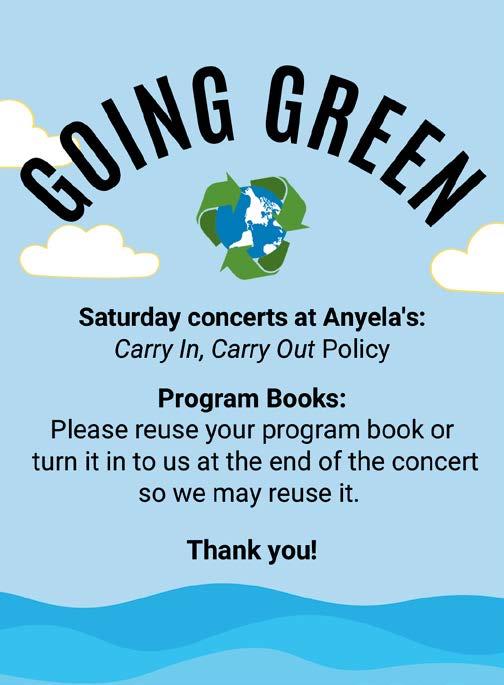
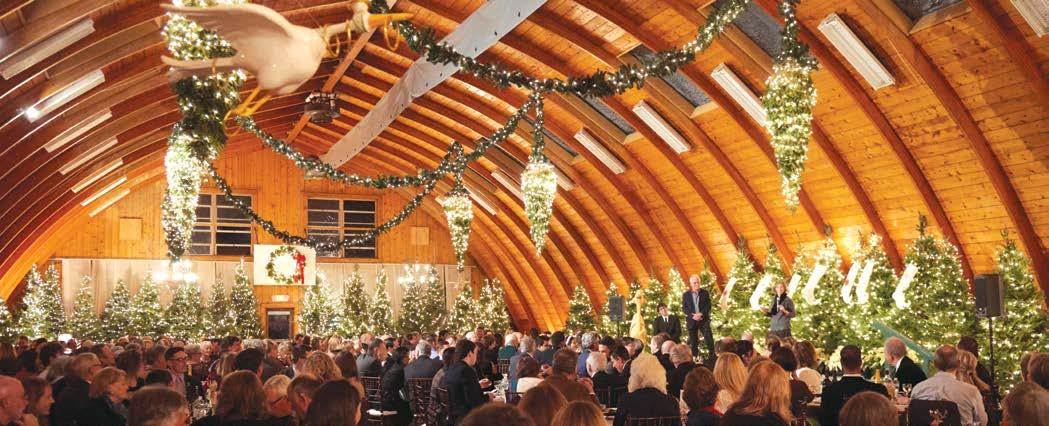
featuring the Mere Mortals along with cocktails and dinner.
Sponsorships are available starting October 11 and individual tickets go on sale November 1.
For more information visit www.SkanFest.org or call 315-685-7418.
The event typically sells out, please respond as soon as possible.
Thank you to the 2023 Contributors The Falcone Family
GUARANTORS
1911 Established, Beak & Skiff
Armory Square Ventures
Evan and Elizabeth Dreyfuss
Marshall and Sharon Magee
Todd and Jill Marshall
The Bond 1835
Jennifer Buchanan and Christopher Feeney
Somak Chattopadhyay and Pia Sawhney
Ed and Paula Conan
Bill and Donna Davis
James Gregg, Managing Director/ Investments, Stifel
Don Scholl
Don and Chacea Sundman
PATRONS
Vic and Debbie Duniec
Joan Christy and Tom Bersani
Darlene Kerr and John Cowin
KeyBank
Sherwood Inns & Appetites
Joe and Therese Strodel
SUPPORTERS
Kelly and Tony Scalzo
Henry and Helga Beck
Ed and Brenda Evans
Kevin and Sarah Goode
Larry Jerome and Linda Gifford
David and Jennifer Campanile
Barb Connor and Doug Wood
Ethan Allen
Elizabeth Etoll
Dana and Susan Hall
Doug and Kayla Hill
Charlene and Ed McGraw
Manlius Pebble Hill
Brian and Krystyna Owen
Daniel and Linda Scaia
Steven and Kelly Scheinman
Since the beginning of the Skaneateles Festival in 1980, Skaneateles community members have provided their homes as a place to stay for the performing musicians. This unique tradition continues today and many of the families in our community enjoy this experience and have hosted for many years. Each season new families step forward to share in this experience.
We invite you to consider becoming an important part of this season by hosting musicians and sometimes their families. This is a rare opportunity that requires very little! The musicians will need a bedroom, breakfast, and not much else. In return, you and your family will get a special peek into the life of the performer, make a new friend, and if you are very lucky, get to hear their beautiful music in your home while they practice.

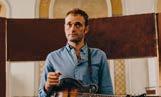
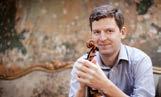
Tickets can be ordered at www.skanfest.org or by calling 315-685-7418.
Doors open for all concerts 30 minutes prior to concerts.
Please note: Anyela’s Vineyards has a NO SMOKING policy and no pets are allowed on the property with the exception of certified service dogs.
Anyela’s offers a variety of wines, beers and snacks for purchase; visit www.anyelasvineyards.com to read about their wine selections. Outside alcohol is not permitted.
To confirm the use of the Rain Location for Saturday Concerts: check skanfest.org or social media after 3:00 pm.
Ticket exchanges may be made up to 24 hours prior to concerts. Unused tickets returned more than 24 hours before the performance may be acknowledged as a contribution to the Skaneateles Festival
Follow the Festival on social media and sign up for email updates.
Photography and Cell Phones


We would love for you to take lots of photos before and after the concerts and tag us on social media!
Remember to silence all devices.
Cameras and recording equipment may only be used with the permission of the Skaneateles Festival.
Eating and Lodging in Skaneateles
Skaneateles offers restaurants ranging from fish fry to gourmet French cuisine, and a variety of lodgings. Visit skanfest.org/tourism for more information.
Please tell businesses listed in the program that you appreciate their support of the Skaneateles Festival.
Skaneateles Festival 97 East Genesee Street Skaneateles, NY 13152 315-685-7418 • www.skanfest.org