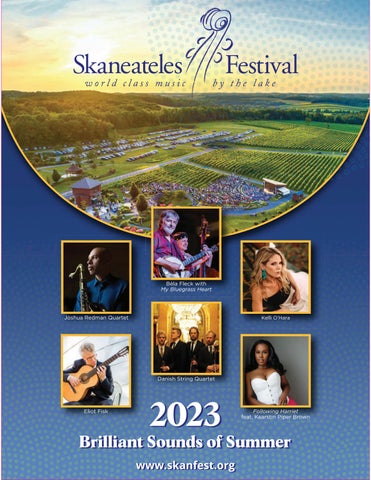
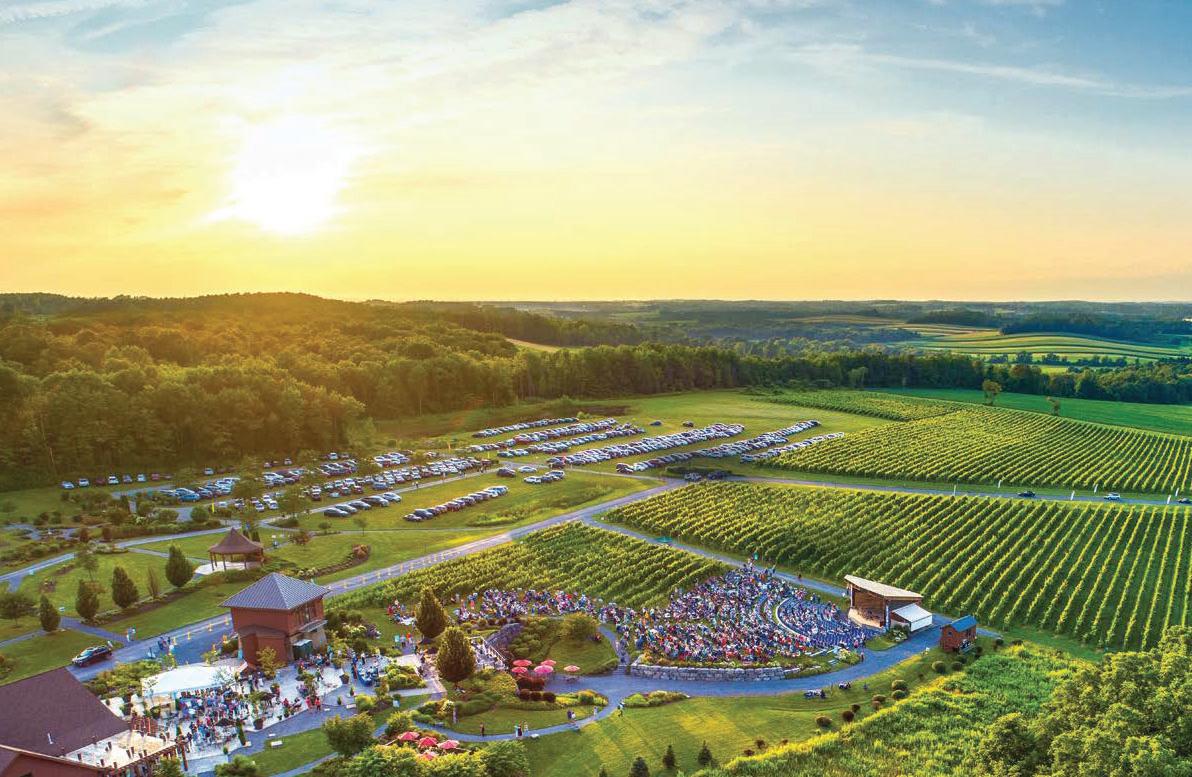
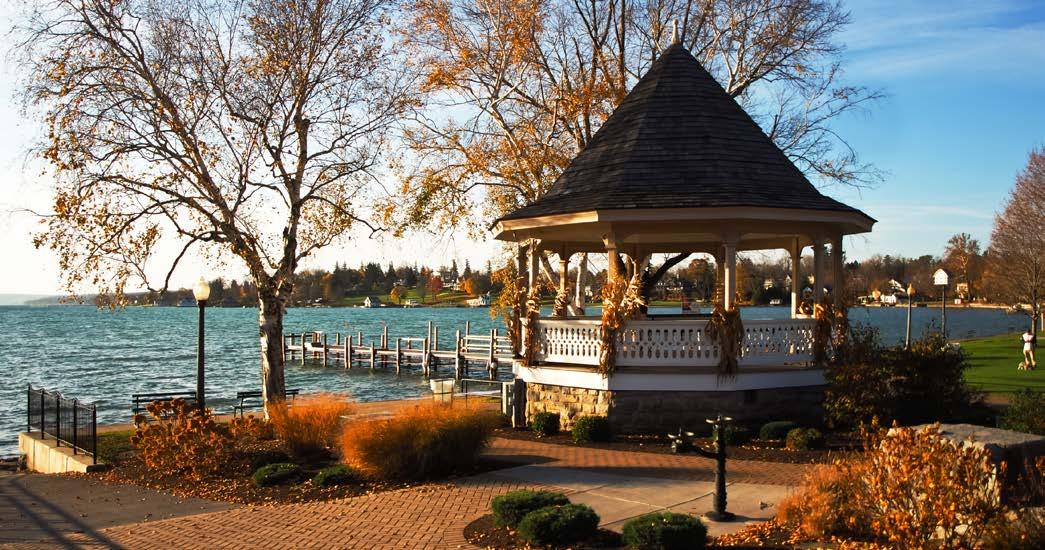
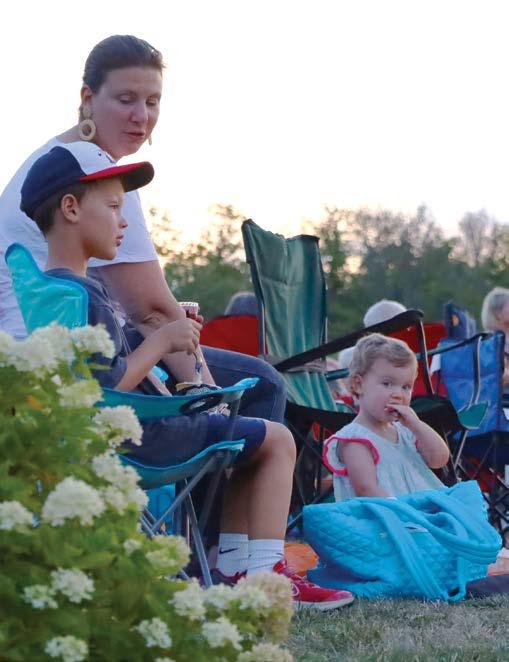
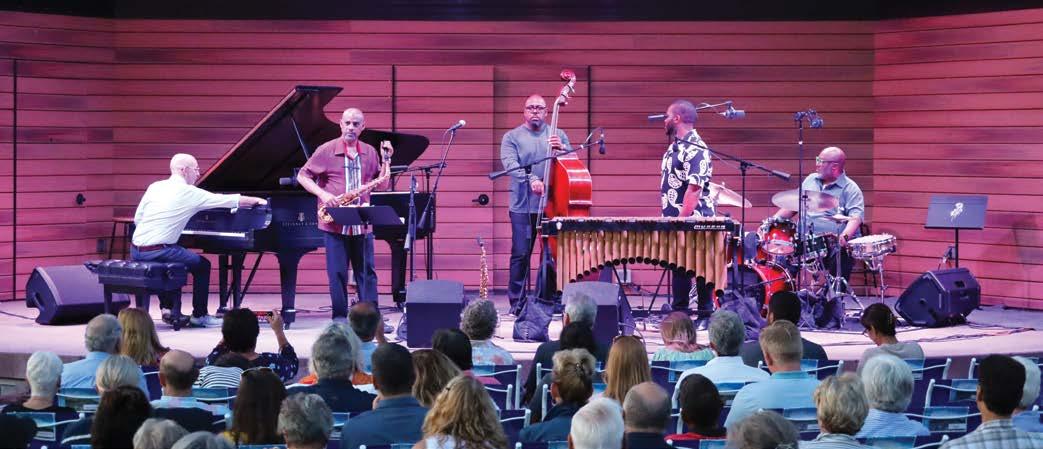
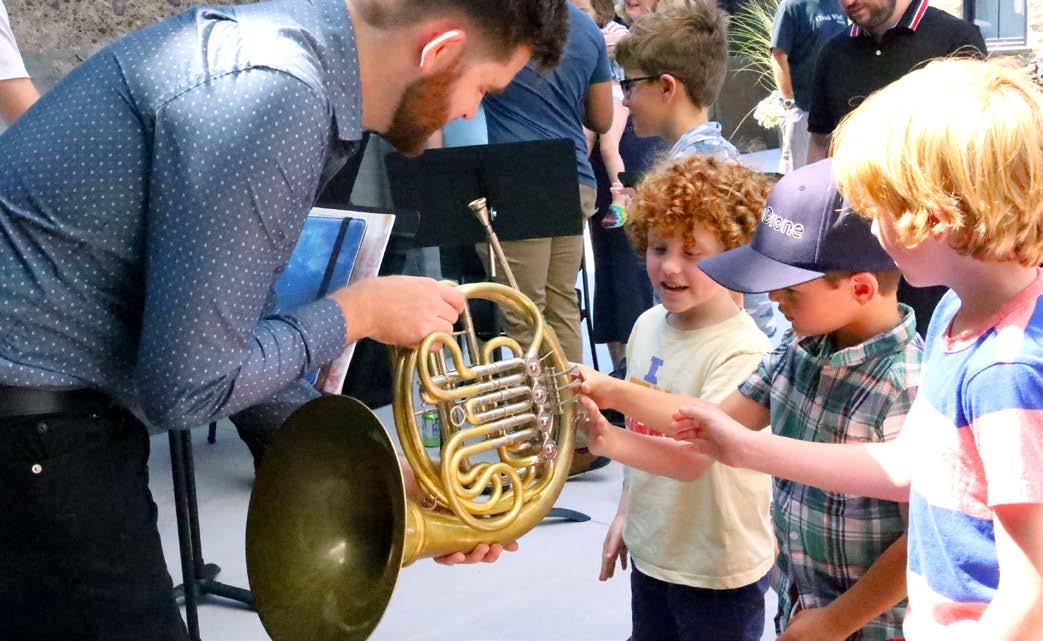
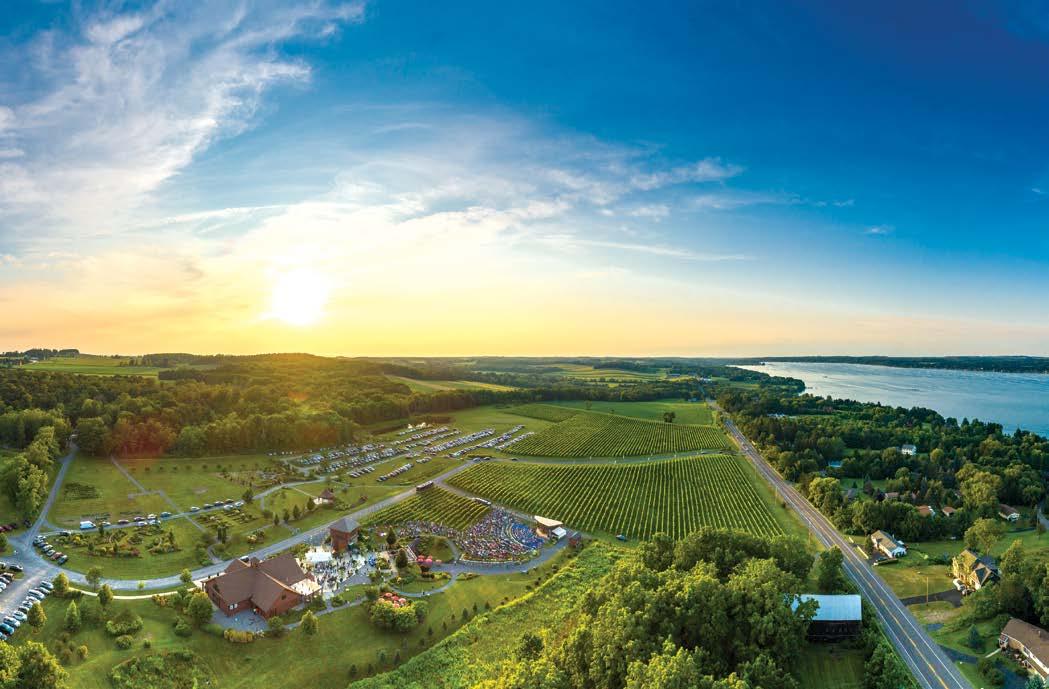
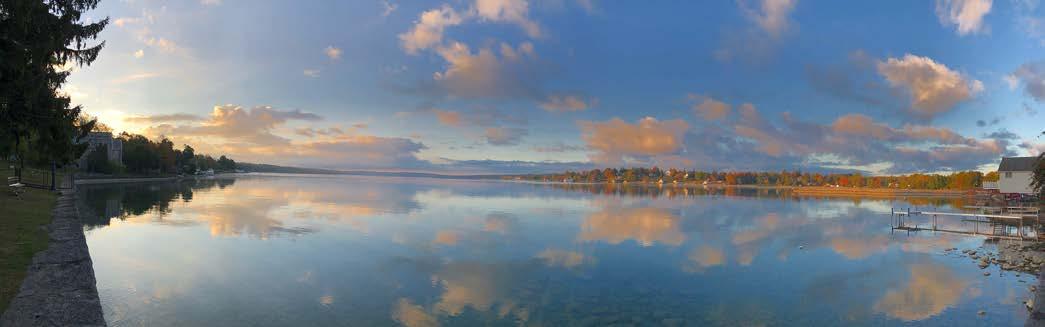
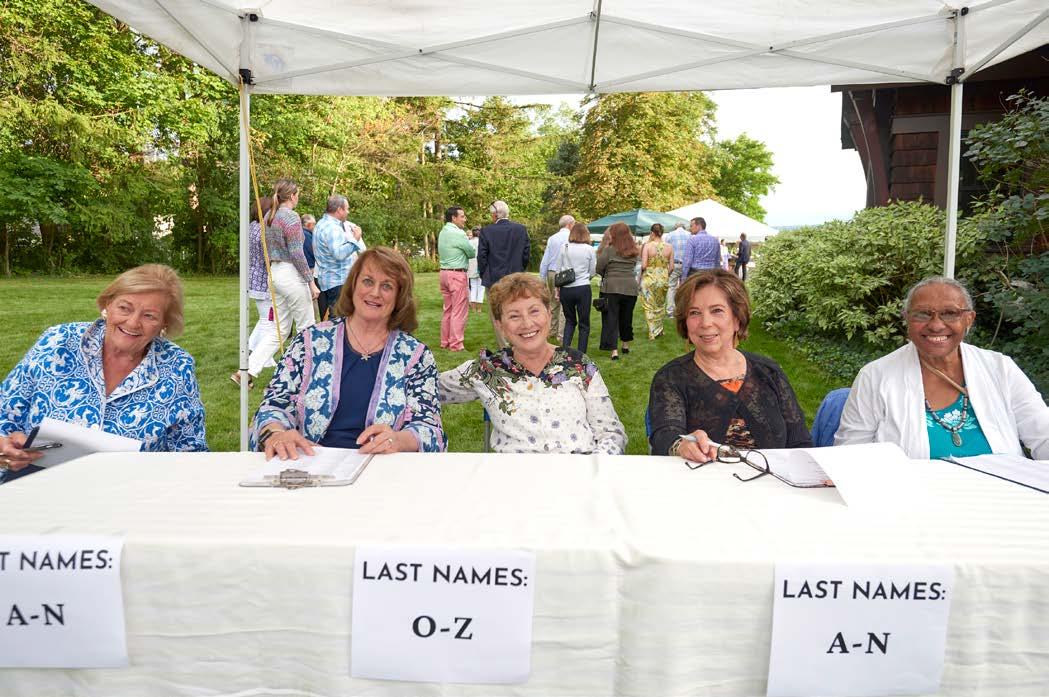
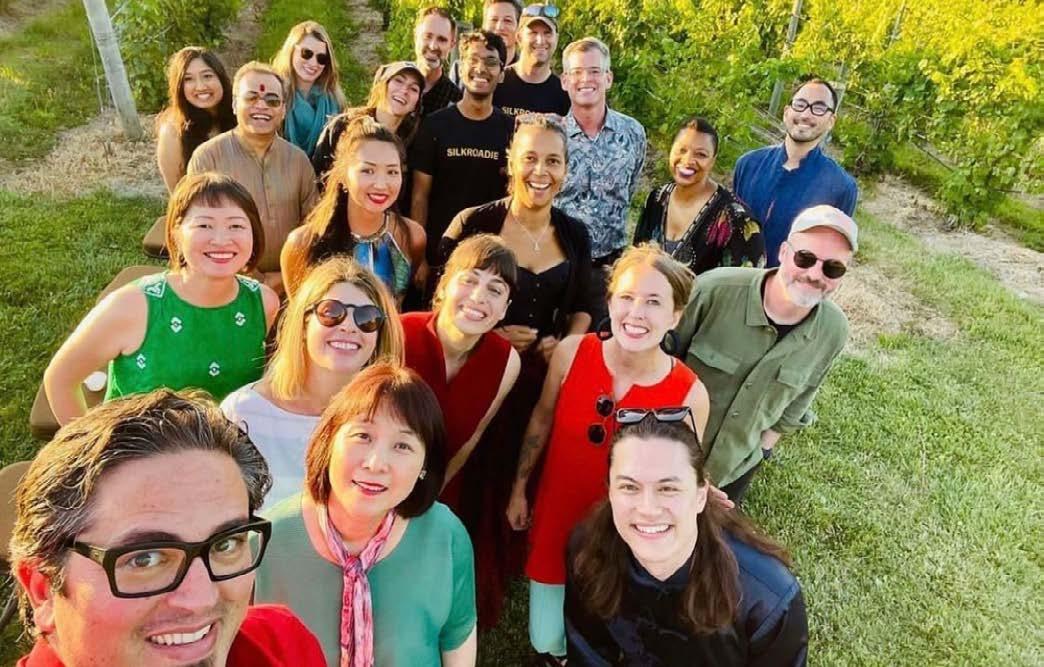
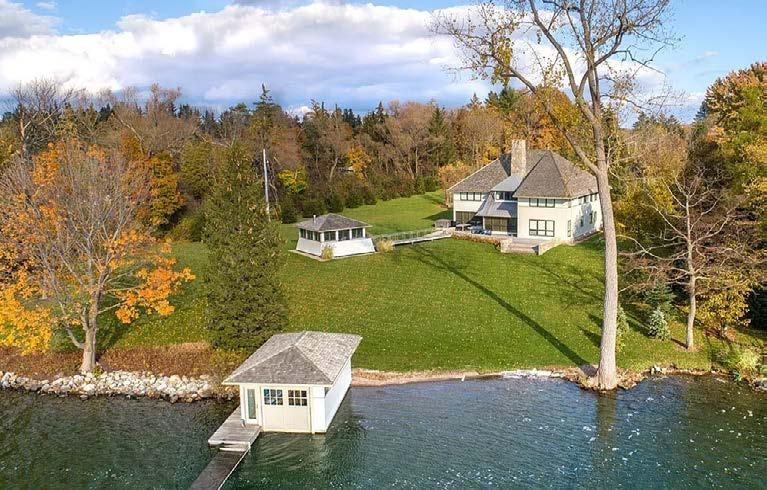
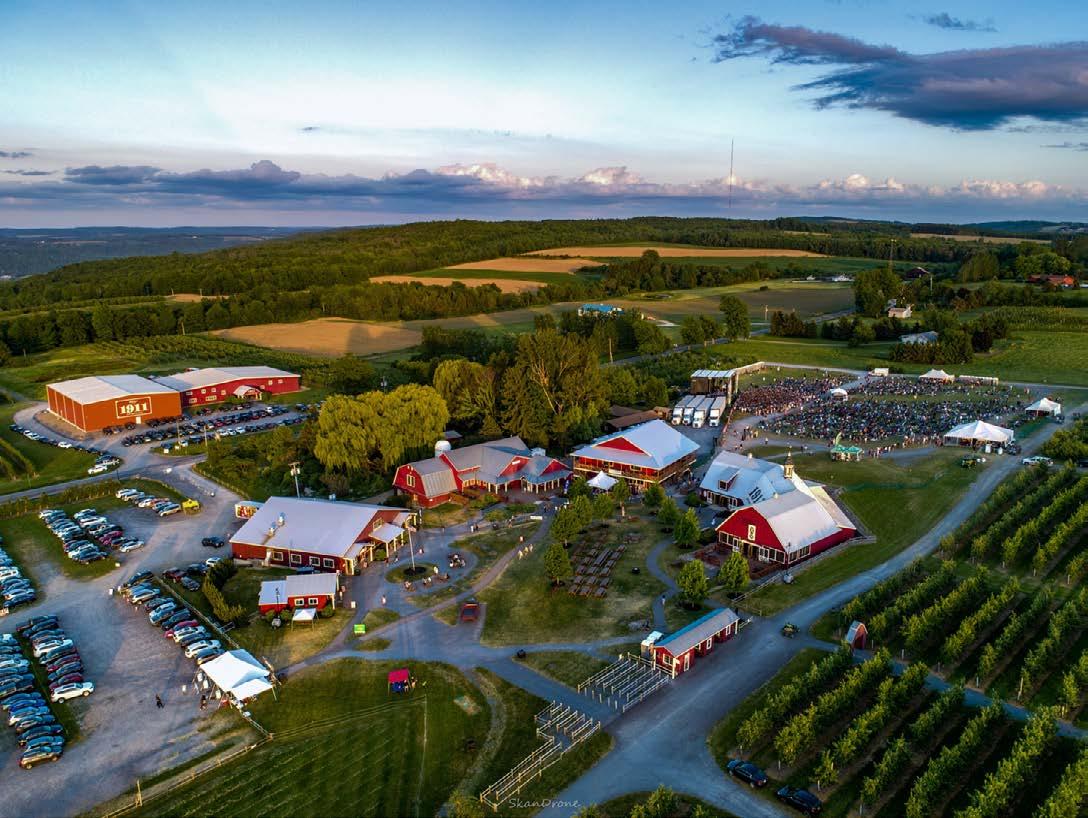
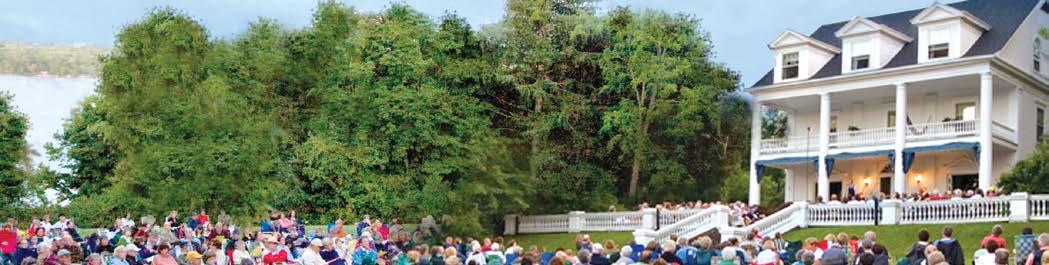
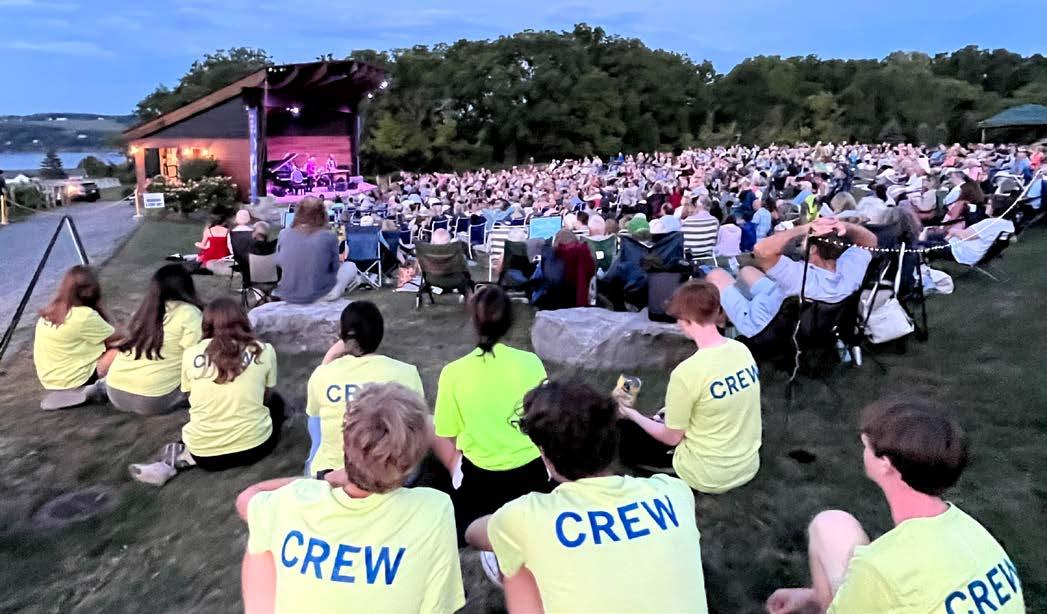
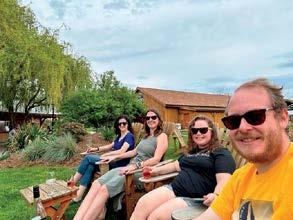
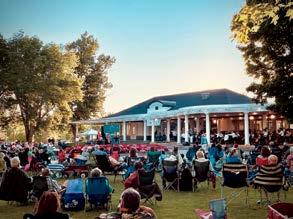
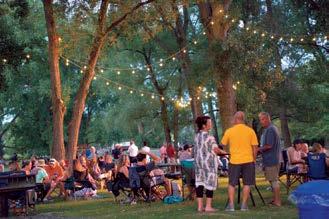
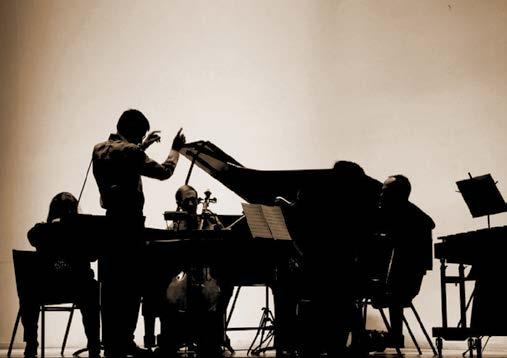
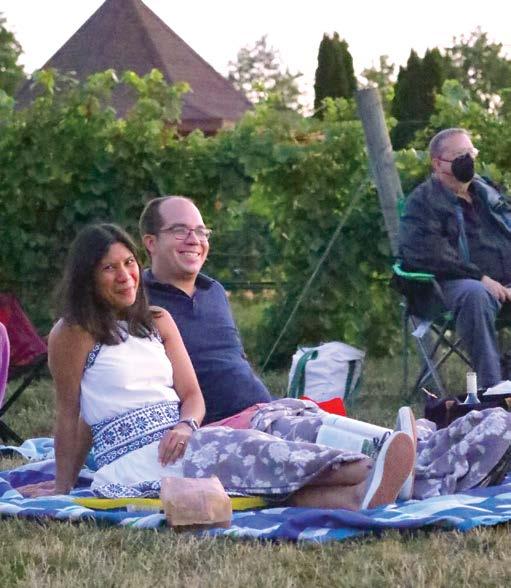
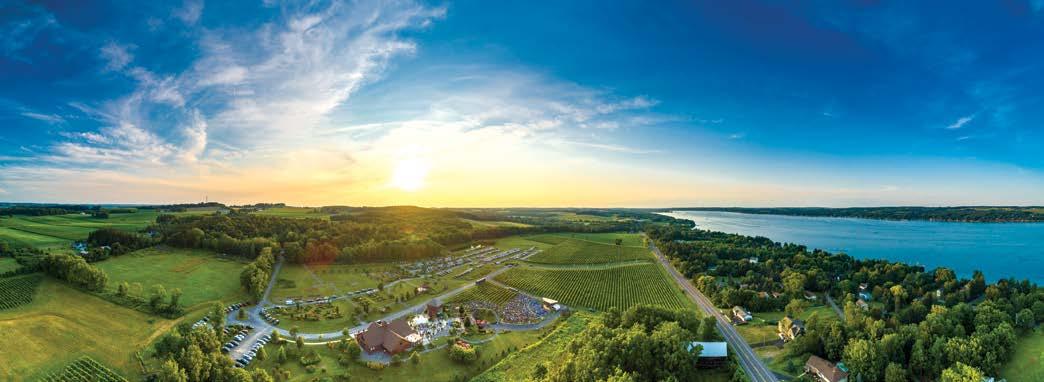
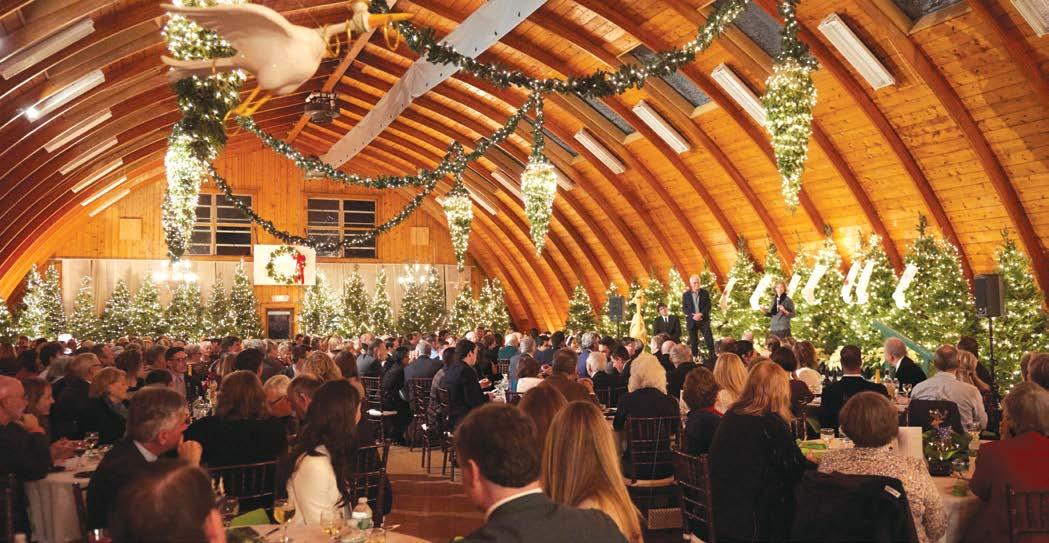
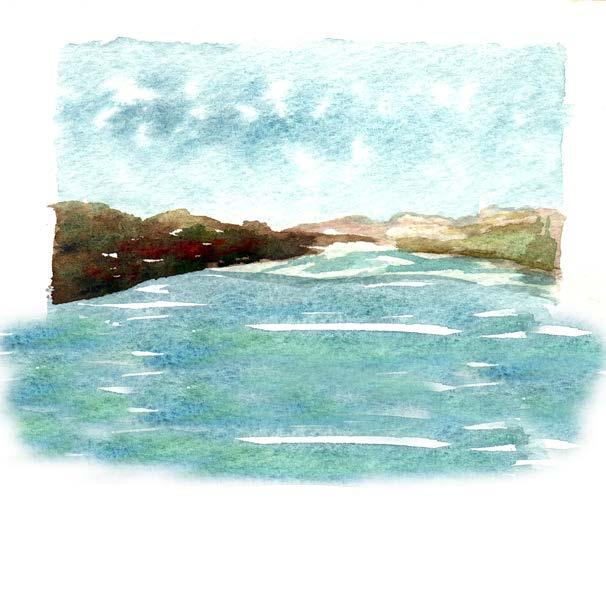
We are happy you are here. In joining us, you become part of this vibrant musical community. You join over 5,000 listeners, 50 performers, 30 families hosting performers in their homes, 100 volunteers, 20 staff members & interns, and 28 board & advisory members. At any given moment, they are planning, organizing, tuning, practicing, rehearsing, setting up, cooking, directing traffic, moving pianos, setting up chairs, and much other hustle and bustle. It all happens around one beautiful lake. The combination of the music, the community, and the setting can be truly magical, and we hope it will be for you.
We’ve planned and programmed the concerts, so we’d like to think you can’t go wrong with whatever you choose to attend. Go for a season pass! Invite friends and family to join you. We’ll highlight just a few events for you here:
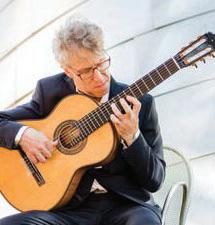
Eliot Fisk – The brilliant, world-renowned guitarist, a Syracuse native, finds his own unique way to play it all on the guitar, from Bach to Paganini. (July 26 and 27)
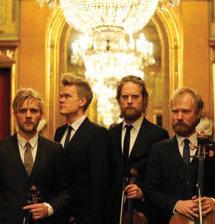
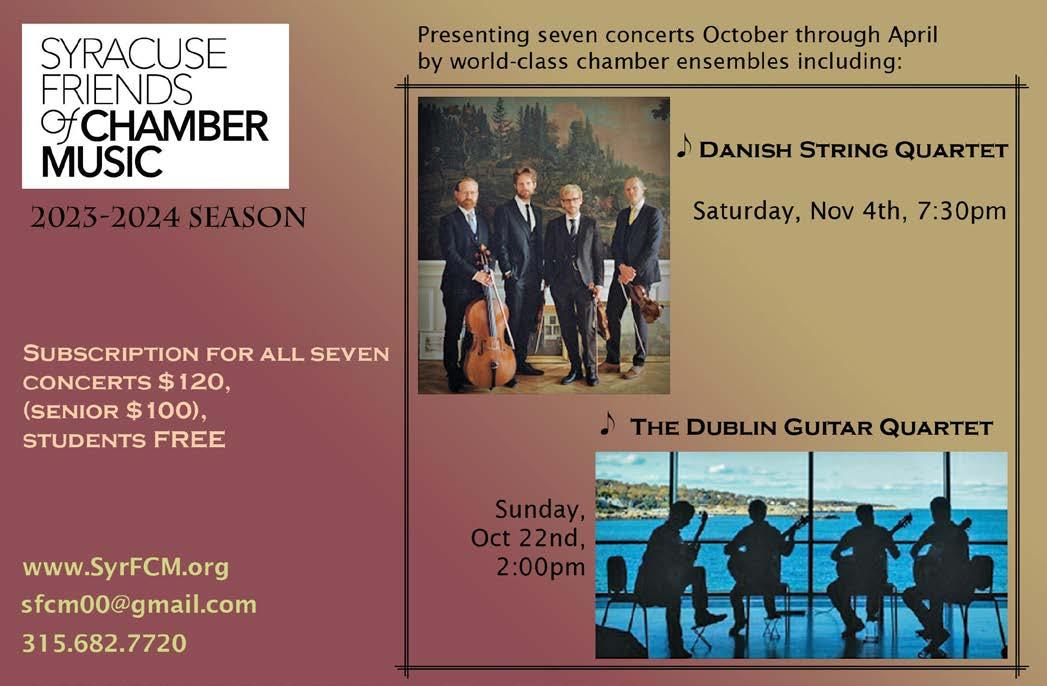
Danish String Quartet – This foursome, here all the way from Denmark, is in demand throughout the world for their suave and natural playing. (July 28)
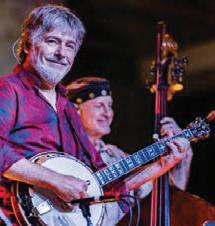
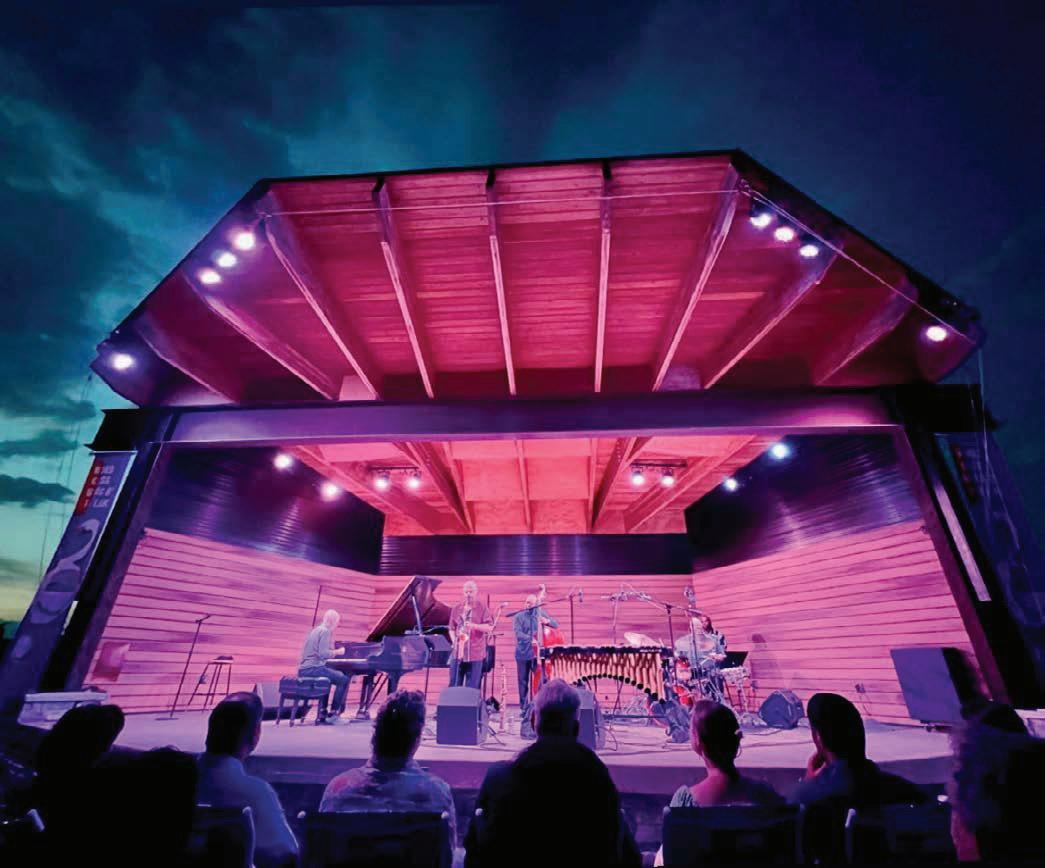
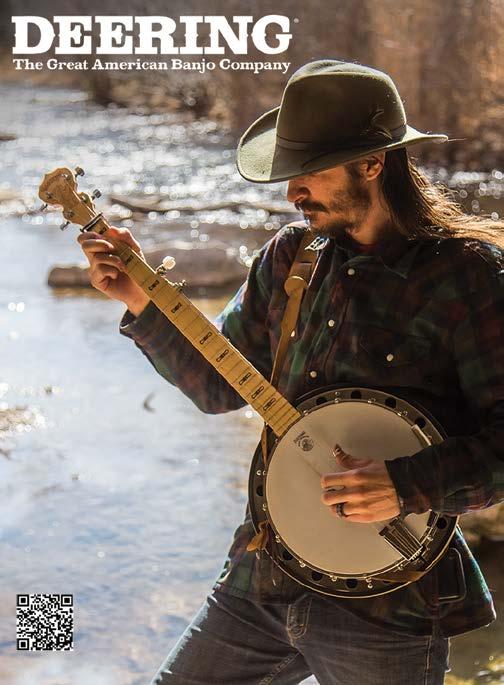
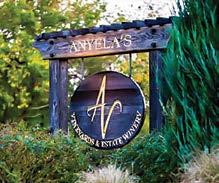
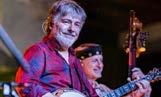
Béla Fleck & My Bluegrass Heart (July 29) – The banjo king leads an all-star bluegrass band, a perfect fit for the outdoor Robinson Pavilion at Anyela’s Vineyards.
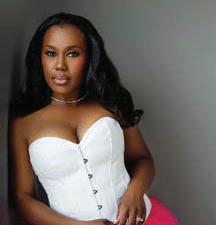
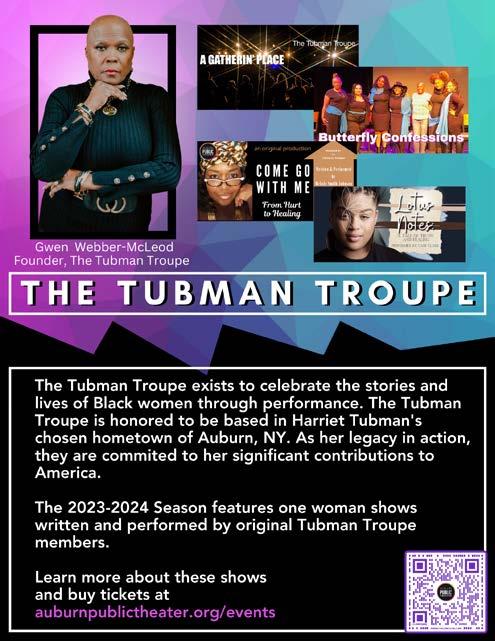
“Following Harriet” program (August 4) – We celebrate Auburn luminary Harriet Tubman with an American program of music by Barber, Porter, Still, and the world premiere of Fortitude by Nailah Nombeko. Rising opera star Kearstin Piper Brown, to make her Met debut next season, plays Harriet Tubman.
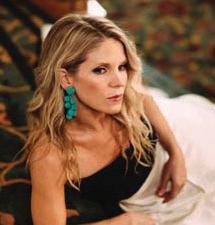
Kelli O’Hara: Songs from My Heart (August 5) – Tony-winning Broadway and opera star Kelli O’Hara makes her Festival debut! She shares a selection of her favorite Broadway and classical songs.
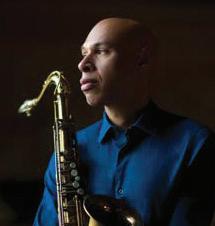
Joshua Redman Quartet (August 19) – Since the start of his career, the ultra-charismatic saxophonist has kept everyone guessing about what he will play next – and he seems to hit a new kind of home run every time.
While you’re with us, we hope you will get to know someone new – introduce yourself to a fellow audience member, to a performer, or to us. Music uplifts us and brings us together.
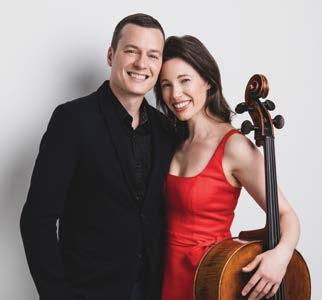
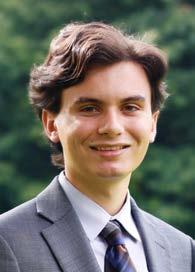
Aaron Wunsch & Julia Bruskin
Artistic Directors
Skaneateles Festival
Board of Directors
Heather Carroll, President
Doug Whitehouse, Vice President
Dave Birchenough
Somak Chattopadhyay
Barb Connor
Kim Driscoll
Alison Ferretti
Leanna Fischer
Steve Frackenpohl
Administration
Susan Mark, Executive Director
Edward Conan, Treasurer
Katie Peck, Recording Officer
Kathleen Haddock
Jessica Millman
Steve Scheinman
Carrie Scholz
Paige Williams
Bridget Wynne
Julia Bruskin & Aaron Wunsch, Artistic Directors
Ellen Sorber, Marketing & Digital Communications Manager
Reese Nesbitt, Project and Outreach Manager
Anna Bender, Molly Dolan, Owen Taylor, Office Interns
Sarah Moth, Operations Manager
Corey Riley, Technical Manager
AnnRae Martin, Stage Manager
Kosta Georgiadis, Ryan Hefferna, Assistant Technical Managers
Advisory Council
Thomas Bersani
Judith Bryant
Joan Christy
Mary Cotter
William Davis
Michael P. Falcone
Jack Patterson, Stage Assistant
Lindsay Groves
Claire Howard
Andrea Latchem
Sharon Magee
Doug Sutherland
Oliver Butler, Katie Combs, Kelly Goldberger, Natalie Hale,
Emma Hill, Kayleigh King, Nathan MacLachlan, Joe Meaney, Jack Van Epps, Jena Wilbur, Owen Wilmot, Amelia Yengo, Caitlyn Yengo, Crew
Betsy Carter, Bookkeeping
Doug Whitehouse, Creative Director
Nancy Boyce, Graphic Designer
A special thank you to our 2022 volunteers and hosts
Mary Allen
Scott Allyn
Miki and Dan Bangs
Henry and Helga Beck
Dave Birchenough and Carrie Lazarus
Barbara Bolton-Smith
Nancy Boyce
Judy Bryant
Maryellen Botsford
Holly Gregg and Patience Brewster
Patti Carey
Kathryn Carlson
Colin Carroll
Heather and Tim Carroll
Carol and William
Stokes-Cawley
Joan Christy and Tom Bersani
Kip Coerper
Brendan McGinn and Rebecca Cohen
Ed and Paula Conan
Barb Connor and Doug Wood
Mary Pat Cottrel
Susie Dailey
Sidnie and Salvatore D’Amelio
Holly Dorsch
Kim and Charley Driscoll
Alison and Brendan Ferreti
Leanna Fischer
Fran and Ham Fish
Paul and Erika Fiutak
Steve and Sandi
Frackenpohl
Pam Freeman
Koko Fuller
Mary Germain
Acknowledgements
Artist Pianos, Trinity Concert Series, Hamilton College
– Steinway Pianos
Michele Chander and Robert Gilfoil
Sarah and Kevin Goode
Becky and Bart Goodell
Kathleen Haddock
Scott Heinekamp
Thomas Higgins
Donna Himelfarb
Deborah Hole
Don Hughes
Pamela Jenkins
Mark and Diane Kaminski
Maryellen Casey and Bruce Keplinger
Mary Knepper
Kay Kraatz
Gail van der Linde
Christopher and Pat
Mack
Ginny and Fred Marty
Jessica Millman
Colin & Corrie Carroll, Heather & Tim Carroll, Maryellen Casey & Bruce Keplinger, Barb Connor & Doug Wood, Ed & Paula Conan, Liz & Evan Dreyfuss, Kim & Charley Driscoll, Koko Fuller, Don & Chacea Sundman – Musician Dinners
Joan Christy – Musician Dinners & Guarantor Reception
First Presbyterian Church, and Anyela’s Vineyards – Concert Locations
Bill Mercer, Skaneateles, West Genesee, and Westhill Central Schools – musical instruments and equipment
Arthur Nick Smith – Piano Tuning Many thanks to the generous Skaneateles residents who open their homes to the Festival’s visiting musicians.
Thank you to all the Skaneateles Festival Donors – 2023
Gifts received as of July 14, 2023
Platinum Guarantor
Somak Chattopadhyay and Pia Sawhney
Central New York Community Foundation
Joan Christy and Sharon Ryan, in memory of Carolyn Stein
Gold Guarantor
1911 Established, Beak & Skiff
Anonymous
Artist Piano
Joan Christy and Tom Bersani
Guarantor
Ivan and Mimi Ace
George S. Bain
Henry and Helga Beck
Dave Birchenough and Carrie Lazarus
The Bonadio Group
Bousquet Holstein PLLC
Sam and Debby Bruskin
Cayuga County Tourism
Benefactor
Eric Allyn and Meg O’Connell
Donald Blair and Nancy Dock
Craig and Kathleen Byrum
Maryellen Casey and Bruce Keplinger
Ed and Paula Conan
Susie Dailey
Michael and Fouad Dietz
Charley and Kim Driscoll
Gold Patron
Miki and Dan Bangs
Irv Beimler
Patti Carey
Paul and Linda Cohen
Abigail Duggan and Christopher Short
Karen Elkins and Jerry P. Weir
Ed and Brenda Evans
Hamilton and Fran Fish
CNY Arts
The Falcone Family
National Endowment for the Arts
Bob and Sally Neumann
Juliette Klein Sharpe Fund, CNY Community Foundation
Mary Cotter
Franklin Lofts, LLC
Sarah and Kevin Goode
Lynn Cleary and David Duggan, in memory of David & Louise
Robinson
CNY Arts – Sen. John W. Mannion & Sen. Rachel May
Young Artist Scholarship Program
Bill and Donna Davis
The Gladys Krieble Delmas Foundation
New York State Council on the Arts
Onondaga County
Daniel and Linda Scaia
Jary and Julie Shimer
David Graham
Grossman St. Amour CPAs PLLC
Donna Himelfarb
KeyBank
Patricia A. Lynn-Ford and Steven J. Ford
Alice M. Ditson Fund of Columbia University
Elizabeth and Evan Dreyfuss
Koko Fuller
James Gregg, Managing Director, Stifel
Holly Gregg and Patience Brewster
Vic and Debbie Duniec
Guy and Nancy Easter
Elizabeth Etoll
Michael P. Falcone and Nicole Ruvo
Alison and Brendan Ferretti
Firefly Fund
Randy and Meg Green
Inns of Aurora
Frank and Frances Revoir Foundation
John V. Frank
Craig and Barbara Froelich
Good Eats & Sips
Georgina Gregory
Joe and Mary Ellen Hennigan
Tom and Gretchen Jeffers
Larry Jerome and Linda Gifford
Joyce and Robin Jowaisas
John MacAllister and Laurel Moranz
Susan Mark and Mary Knepper
Brendan McGinn and Rebecca Cohen
Steve and Jackie Miron
Jane and Robert Morse
Sean and Laura O’Keefe
John and Maren King
Rebecca Maestri and Jean Hacken
Marshall and Sharon Magee
John and Peggy Manring
David McCarthy
NBT Bank
Michael and Eileen Nelson
Bill and Sandy Nichols, in honor of Doris S. Hill
Elsa and Peter Soderberg
Doug Sutherland and Nancy Kramer
Sieglinde Wikstrom
Pete and Betsy McKinnell
David and Jan Panasci
Steven and Kelly Scheinman
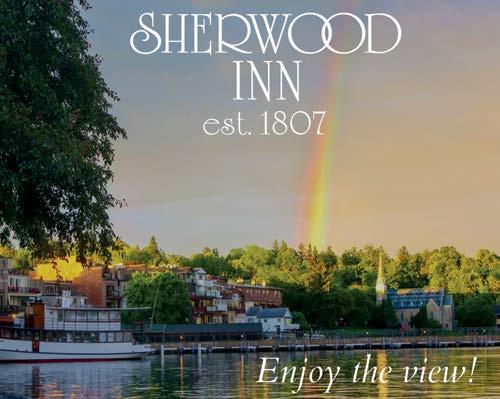
Sherwood Inns & Appetites
Donald and Chacea Sundman
Dana and Susan Hall
Jacqueline Jones, Finger Lakes
Sotheby’s International Realty
Andrea Latchem
Fred and Ginny Marty
Toby and Jessica Millman
Morrisroe Lynn Development
Sutton Real Estate
Doug and Peg Whitehouse
Woodbine Group
Brian and Krystyna Owen
Judy Robertson
She Rents Vintage
Helen Tai and John McDevitt
Salli and James Tuozzolo
Judy Varney
Robert and Jenifer Weisenthal
Hal and Martha Wentworth
Dan and Linda Roche
Dan Fisher and Lori Ruhlman
Al and Vicky Sabin
Sieglinde Schwinge
Lisa Seischab
Charles and Nancy Williams
Carolyn C. Winkelman
Thank you to all the Skaneateles Festival Donors – 2023
Gifts received as of July 14, 2023
Patron
Bernard and Lilian Asher
Richard and Lynne Bennett
Mary Bradly
Ron Butchart and Amy Rolleri
Elet and John Callahan
Andrés Cárdenes
Heather and Timothy Carroll
Edward P. Castilano
Carol and William Stokes-Cawley
Katherine Compagni
Tim and Margie Creamer
Bill and Bobbi Dean
Patricia DeAngelis
Alan and Linda Dolmatch
Barbara Egtvedt
Leanna Fischer
Paul and Erika Fiutak
Steven and Sandi Frackenpohl
Wanda Fremont and Nan Dowling
Contributor
Allan and Susan Abravanel, in honor of Aaron Wunsch and Julia Bruskin
William and Alice Allen
Peggy and Lee Bennett
Jane and Donald Blake
Cynthia Blume
Lynne Boles and John Priest
Hal and Peggy Brown
Brian Brundage and Pamela Foresman
Carol Bryant
Andrea Calarco
Elaine and Greg Ceresko
Phyllis Clark
William and Martha Cole
Bill Coppard
Lynn K. Cornachio
Paul and Gail Cowley
Heidi and Don Cross
Jane and Bill Cummings
Terry and Bill Delavan
George and Vicki Dornberger
Thomas Eldred
Naomi Frost
Gary and Maureen Germain
Dane and Debbie Gist
Michael and Helen Glowacki
Melvin and Dorothee
Goldman
Kathleen and Marcus Haddock
David Harvey
Dorothy Hauk
William and Karen Havens
Sally Holben
Martin and Deborah Hubbard
Anne Jamison and Peter Vanable
Jackie Keady
Ted Kinder
Robin Kinnel
Jeffrey Kirshner and Lorraine Rapp
Wendy and John Kopley
Judy Krieger
Frederick and Janet Fagal
Diane Fellerman
Diane Forney
Alex and Donna Giambartolomei
Mary Giroux
Susan Greenbaum
William and Ann Griffith
Ruth Hancock
Judith and Bryce Hand
Brian and Maureen Harkins
Jim and Patty Hertz
Richard and Deborah Hole
Mary B. Horan
Perry and Dottie Howland
Peter and Mary Huntington
Susan Keefe and Michael Tutor
Alfred Kelly and Sharon Burke
David and Sherrill Ketchum
Bernard and Peggy King
Stephen and Theresa Kline
Jacques Lewalle and Paula Rosenbaum
Robert Lindsay
Roger and Anna Krieger
Carol Krumhansl and
Jeffrey Roberts
Kaitlin Kyi
Daniel and Grace Labeille, in memory of David Stam
David and Stacia Landsberg
Don and Christy Lemp
Edward and Carol Lipson
Anne Lynn
James Mac Killop
Bobbi and Cliff Malzman
John and Candace Marsellus
Susan Martineau
Modern Kitchens of Syracuse
Bruce and Margaret Osborne
Susan and David Palen
Katie and Mark Peck
John Pulos
Greg and Debbie Quick
Patrick and Kuni Riccardi
Nancy Rice and Mary Lee Miller
Kelly and Tony Scalzo
Carrie and Chris Scholz
Jean Shook and Chris Johnson
Judith Stoikov and Richard Miller
Dan and Peggy Surdam
Frank and Rose Swiskey
Paul and Mary Torrisi
Jaime Tuozzolo
Fred Van Sickle
John and Jean Vincent
Jo Werner
Dr. and Mrs. Geoffrey Wickwire
Eleanor Williams
Joseph and Maureen Wilson
Bridget and Dan Wynne
Jeff and Kate Youle
John and Carol Young
Peggy Liuzzi and David Michel
Clifford MacBroom and Lucille Solana
Bob and Betsy Madden
Nancy Marquardt
Fran and Kevin McCormack
Edward and Charlene McGraw
Tom and Linda McKeown
Diane McRae
David and Janet Muir
Richard Naughton
Marjorie Nelson
Ellen and Martin Nodzo
Andy Nye
Paul Oakley
Nancy Oplinger
Cathy Palm
Susan Poniatowski
Dick and Kim Poppa
Joel Potash and Sandra Hurd
Donnaline Richman
Anne Roth
Marilyn and James Seago
Susan and Steven Shaw
Sharon Slater
Smiles of Skaneateles
Martha Sutter and David Ross
Anne Sveen
Peter and Florence Swartz
Eugene and Joan Tarolli
Nancy E. Tiedemann
David Urban
Richard and Ann Wasiewicz
The Leah Weinberg
Charitable Fund
Stephen and Marilyn Westlake
Stephen and Ellen Wikstrom
Carol Wixson
Howard and Karen Wolhandler
Susan Wolstenholme
Sara Wong
Olwen Wright
Duane and Ann Wunsch
Joyce Zadzilka
Alan Ziegler and Emily Neece
Warren Zwicky
Educational Initiative
First Presbyterian Church 97 E Genesee St, Skaneateles
SkanFest U is sponsored by:
The Julie Sharpe Fund
Why Mozart?
Mozart’s music remains a cultural touchstone, even in today’s pluralistic world. What gives Mozart’s music its staying power, and how does it continue to inspire both listeners and composers? Get inside the music, including several works to be heard on Festival programs this season, and learn how Mozart’s music inspired those who followed him, including Chopin, Rossini, Tchaikovsky, and even contemporary artists from diverse backgrounds, such as Chick Corea and Vijay Iyer (whose Mozart Effects will be heard August 3).
Hear exclusive live performances by Festival artists and mingle with your fellow Mozart enthusiasts afterward over a glass of wine.
The program will be led by Co-Artistic Director Aaron Wunsch, who teaches about Mozart’s music at The Juilliard School.
Weekly Sessions
Tuesday, July 25, August 1, 8, and 15 4:00 - 5:00 PM
The Skaneateles Festival’s educational sessions are FREE and open to all.
For more information: 315-685-7418 or www.skanfest.org
Aaron Wunsch is sponsored by The Skaneateles Consortium: George Bain, Sam & Debby Bruskin, Dana & Susan Hall, and Judy Robertson
“ This fund will serve as a vehicle that reflects my deep appreciation for what the people of this area have meant in my life.”
– Juliette Klein Sharpe
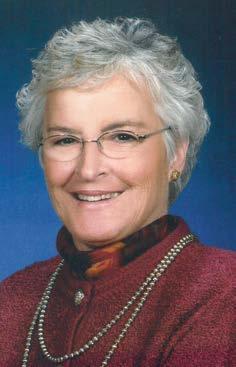
Longtime Skaneateles resident Julie Sharpe felt blessed by her friends and community and enriched by several local nonprofits. Before her passing in 2014, Julie designated a provision in her will to establish a fund at the Central New York Community Foundation. The Skaneateles Festival will benefit in perpetuity from Julie’s thoughtful legacy of generosity.
SkanFest U is performed in grateful memory of Julie and all that she did as a Festival volunteer and supporter.
Photo provided by the Central New York Community Foundation
2023 T-shirt Artwork Winner
We are excited to announce the winner of our annual graphic artwork contest for the 2023 SkanFest T-shirt: Marietta Bolster
Fun at the Festival
For all ages
Kids FREE
Adults $5 at the door
kidsfest is presented in memory of
The Fletcher Foundation
Sizzling Strings with ECCO
Friday, August 11, 11:00 AM
Mandana Barn, 1274 Lacy Road, Skaneateles
ECCO (East Coast Chamber Orchestra) leads a sonic exploration of strings, including the violin, viola, cello, and double bass. Learn about the many sides of stringed instruments, from sweet singing to fiery fiddling! The virtuoso members of ECCO share music by Mozart and Grieg, as well as some musical surprises.
Steven Banks: Meet the Saxophone!
Steven Banks, saxophone
Xak Bjerken, piano
Wednesday, August 16, 11:00 AM
First Presbyterian Church, 97 East Genesee Street, Skaneateles
Find out how the saxophone can sing, talk, laugh, and everything in between, with Steven Banks, the classical saxophonist who has taken the music world by storm. Hear diverse music for saxophone and piano by Saint-Saëns, tango master Astór Piazzolla, and others.
ARTIST SPONSORSHIPS
Steven Banks is sponsored by
Xak Bjerken is sponsored by Bousquet Holstein, PLLC
ECCO is sponsored by Armory Square Ventures, Somak Chattopadhyay & Pia Sawhney, and Jessica & Toby Millman
Nick Kendall is sponsored by Kevin & Sarah Goode
Week 1
Wednesday, July 26
3:00 PM
First Presbyterian Church 97 E Genesee St, Skaneateles
An Afternoon with Eliot Fisk
FERNANDO SOR Introduction and Variations on a Theme from Mozart’s The Magic Flute, Op. 9
J. S. BACH arr. Fisk
AGUSTÍN BARRIOS MANGORÉ
Cello Suite No. 1 in G Major, BWV 1007
Prelude Allemande Courante Sarabande Menuet I Menuet II Gigue
Three pieces for Solo Guitar Vals in D minor, Op. 8, No. 3
Danza Paraguaya Sueño en la Floresta
INTERMISSION
5 Pieces from Latin America: Homage to Alirio Diaz (1923-2016) (on occasion of his centenary)
ANTONIO LAURO Vals Venezolano (“Angostura”) Vals Venezolano (“Maria Luisa”)
MANUEL M. PONCE “Por ti mi Corazón”
ANTONIO LAURO Vals Venezolano (“Tatania”)
Seis por Derecho: Joropo Eliot Fisk, guitar
ARTIST SPONSORSHIP
Eliot Fisk is sponsored by Andrea Latchem
The Skaneateles Festival is made possible with funds from the General Operating Support program, a regrant program of the County of Onondaga with the support of County Executive, J. Ryan McMahon II, and the Onondaga County Legislature, administered by CNY Arts.
Program Notes
Introduction and Variations on a Theme from Mozart’s The Magic Flute, Op. 9 (1821)
FERNANDO SOR (1778-1839)
Unless one counts Falco’s 1985 pop hit “Rock Me Amadeus,” Mozart and the guitar make unlikely bedfellows. Mozart’s soaring “cantabile” melodies seem unfit for plucking and strumming. But if anyone could bridge that gap, it was Spanish composer-guitarist Fernando Sor. He had fought Napoleon’s superior army upon its invasion of Spain in 1808, proving he was not one to shy away from a challenge. Like Mozart himself, Sor composed operas, symphonies, and string quartets, but, unlike Mozart, the guitar was his personal weapon of choice. He pioneered a way to simultaneously play melodies and chords, as outlined in his seminal guitar method book, called by one scholar “easily the most remarkable book on guitar technique ever written.” His Introduction and Variations have become a rite of passage for aspiring guitar-virtuosos who seek to show that they, too, can make Mozart’s music sing with a guitar.
Sor’s Variations spin out from a charming tune, originally sung by evil minions. Since evil minions don’t sing charming tunes, opera audiences usually laugh out loud during this scene in The Magic Flute, as Papageno casts a spell upon Sarastro’s hordes with magic bells. In his Variations, Sor casts his own musical spell, first with a grand and somber introduction. The tune is thereby rendered more charming when it finally appears, and, as German is not the world’s most charming language, Sor sets the tune’s rhythm to the Italian translation of Mozart’s original (“O cara armonia” instead of “Das klinget so herrlich”). Next, Sor applies charms specific to the guitar: fanciful flourishes decorate the tune, combined with melodious, Italianate thirds and sixths. The simpler second variation laments in the style of Pamina’s aria, “Ach, ich fühl’s,” but the charms return in repeated notes (Variation 3), strumming (Variation 4), and finally triplets (Variation 5), which launch directly into a joyful coda. By the end, Sor has convinced us that Mozart and the guitar are compatible after all. Rock me, Amadeus.
Cello Suite No. 1 in G Major, BWV 1007 (ca. 1720)
JOHANN SEBASTIAN BACH (1685-1750), arr. Fisk
J. S. Bach’s music for solo cello is one of the great unsolved mysteries of music history. Why did he write six cello suites? For whom, and when? It could be that the mystery surrounding these works enhances the mystery of hearing them, for the music seems to exist apart from the world, inhabiting a soundscape that no other music has ever quite replicated. Naturally, musicologists have applied their powers of deduction to the problem, ever since Catalan cellist Pablo Casals found an obscure edition of the works in a Barcelona thrift shop, in 1890. Thanks to his performances, the suites found their way into the hearts of many and, eventually, in the case of Prelude from Suite No. 1, into Verizon commercials.
In the Baroque Era, the cello was primarily a bass instrument, usually heard with at least one treble instrument above it, plus harpsichord. The only surviving manuscript source, in the hand of Bach’s second wife, Anna Magdalena, calls attention to the cello’s unusually solitary pose with the special indication “senza basso,” without bass. (That didn’t stop Robert Schumann from adding his own fanciful piano accompaniments, 130 years later.) Because the suites take the cellist far outside the bass range and through forests of chords and interweaving melodies, they are still among the most difficult works cellists play. Bach himself transcribed one of the suites for lute (No. 5, in C minor), and so the transfer to guitar follows a path forged by the composer himself.
In Baroque music, G Major typically signals a pastoral sound world: delightful, outdoorsy, free of conflict. Sun radiates from the famous opening notes. The cello dances with a special kind of peaceful enthusiasm that has rendered this Prelude among the most iconic three minutes in classical music. (Yo-Yo Ma’s recent rooftop video performance with a view to the hardly pastoral Empire State Building has garnered 15 million views.)
As in all Bach suites, the unaccompanied instrument has absolute freedom over timing, which allows for the performer’s highly individual sense of how this dance suite should ebb and flow. So dance at your own risk. Although
Following Harriet
Very few women have national park sites dedicated to them… Harriet has two.
The Harriet Tubman Underground Railroad National Historical Park in Dorchester County, Maryland
Music, festivals, & Food
The Harriet Tubman National Historical Park in Auburn, New York
Explore the Tour Cayuga website
Here, you can follow in the footsteps of Harriet Tubman and experience her history – and her legacy – in a whole new way.
stylized, Bach knew the dances first-hand from his days at the Knight’s Academy in Lüneburg, where noble boys gathered to learn them from a French dancing master. (Guess who played in the band for these lucky fellows.) In the Allemande (the French word for German), the Prelude’s bouncy arpeggios have given way to the more reflective and lyrical scales that bring our hypothetical couple together, arm in arm. By contrast, the Courante is all hopping and jumping; according to a leading theorist at the time, every courante should convey “a mood of sweet expectation.” The heartwarming Sarabande gives way to two tender and graceful minuets and finally the Gigue, French relative of the Irish jig. Bach’s Gigue is light-footed and genial, the musical equivalent of a smile – which you may well note on the faces of those seated around you.
Vals, Op. 8, No. 3 (1928)
Danza Paraguaya (1928)
Sueño en la Floresta (1917)
AGUSTÍN BARRIOS MANGORÉ (1885-1944)
Agustín Barrios was born to perform. First, probably, for sheep. Of indigenous Guaraní heritage, he grew up in the remote, agrarian Misiones district of Paraguay, where he
criollo, a blend of the European waltz and Peruvian folk music. Danza Paraguaya (Paraguayan Dance) is a galopa, a lively version of the Paraguayan polka. Here the guitarist must negotiate two melodies plus a bouncing accompaniment with apparent ease and charm. Sueño en la Floresta (A Dream in a Forest) is an enchanting, extended work full of romantic fantasy and feeling. In the hands of a guitarist like Mangoré or Eliot Fisk who can master its atmospheric repeated notes, it casts a truly mesmerizing spell.
5 Pieces from Latin America: Homage to Alirio Diaz (1923-2016) (on occasion of his centenary)
“Por ti mi Corazón” (1912)
MANUEL M. PONCE (1882-1948)
Vals Venezolano (“Angostura”)
Vals Venezolano (“María Luisa”)
Vals Venezolano (“Tatiana”)
Seis por Derecho: Joropo
ANTONIO LAURO (1917-1986)
A composer’s name perches permanently atop a musical score, but the performer who may have instigated, motivated, or popularized that work rarely gets any billing at all. Mozart, for example, never would have penned his famous Queen of the Night aria if he hadn’t known for a fact that his sister-inlaw, Josepha Hofer, could sing well into the stratosphere. But even if the performer doesn’t inspire a work’s composition, they can compel people to listen to it. Venezuelan guitarist
Alirio Diaz did that for a swath of guitar music played today. He would have turned 100 this year.
Diaz first learned the cuatro, a four-stringed folk instrument, giving him valuable insight into folk styles. After picking up the classical guitar, repeated successes led him toward studies in Siena with the great Andrés Segovia, who he succeeded as professor in 1965. Mexican composer Manuel Ponce had arranged his song “Por ti mi Corazón” (“For you my heart”) as a solo guitar piece for Segovia in the ‘20s; Diaz later assumed Segovia’s mantle, performing and promoting Ponce’s music around the world. This is a deeply felt song of love and loss: “You were my passion and brightened my pathway like a song.” But now, “You will not return…and I die of love.”
Diaz was especially crucial in popularizing the music of fellow Venezuelan Antonio Lauro, whose music he edited, performed, and recorded. Lauro excelled at the Vals, a Latin American blend of the European waltz (à la Chopin) and local folk music. While the folk influence is palpable, these are often intricate, challenging pieces. They also have a personal dimension: he dedicated each to an important person in his life. He told a student that the one dedicated to his wife, María Luisa, is “as difficult as she is.” Others went to his daughter, his son, his niece (“Tatiana”), and his hometown (“Angostura”, Ciudad Bolívar’s ancient name). Fisk’s set ends with a Joropo, an exhilarating dance from the plains of Venezuela.
Dancing at Christimas Suite
Week 1
Thursday, July 27
7:00 PM Backstage Pass (for ticket holders only)
8:00 PM
First Presbyterian Church
97 E Genesee St, Skaneateles
Tonight’s concert is sponsored In memory of Carolyn Stein by her dear friends Joan Christy and Sharon Ryan
Backstage Pass: Season Preview
with Eliot Fisk and Artistic Directors Aaron Wunsch and Julia Bruskin
Opening Night: Eliot Fisk and Friends
PAGANINI Sonata Concertata for Guitar and Violin
Allegro spiritoso
Adagio assai espressivo
Rondeau: Allegretto con brio, Scherzando
GEORGE ROCHBERG Selections from American Bouquet (Dedicated to Eliot Fisk)
“My Heart Stood Still” (Richard Rodgers)
“I Only Have Eyes for You” (Harry Warren)
“Deep Purple” (Peter DeRose)
“Notre Dame Blues” (George Rochberg)
Eliot Fisk, guitar Asher Wulfman, violin
Eliot Fisk, guitar
J. S. BACH arranged and transcribed for guitar by Eliot Fisk
Chaconne from Partita in D minor, BWV 1004
Eliot Fisk, guitar
ENRIQUE GRANADOS arr. Fisk
ARTIST SPONSORSHIPS
INTERMISSION
“La Maja de Goya” from 12 Tonadillas en estilo antiguo
Julia Bruskin is sponsored by The Skaneateles Consortium: George Bain, Sam & Debby Bruskin, Dana & Susan Hall, and Judy Robertson
Eliot Fisk is sponsored by Andrea Latchem
MEDIA SPONSOR
The Skaneateles Festival is made possible with funds from the General Operating Support program, a regrant program of the County of Onondaga with the support of County Executive, J. Ryan McMahon II, and the Onondaga County Legislature, administered by CNY Arts.
ERNESTO HALFFTER
arr. Fisk Habanera
ISAAC ALBÉNIZ arr. Fisk
Sevilla from Suite española, No. 1, Op. 47
LUIGI BOCCHERINI Quintet for Guitar and Strings, G. 448 (“Fandango”)
Pastorale
Allegro maestoso
Grave assai
Fandango
Program Notes
Sonata Concertata for Guitar and Violin (1804) NICCOLÒ PAGANINI (1782-1840)
So associated is Paganini with the violin, one could easily overlook his prodigy on the guitar: some 140 solo works, nearly 40 duets with violin, and various other ensemble works featuring the instrument. As a child, he had learned mandolin from his music-loving father, a dock worker, and made a quick leap to guitar. Paganini composed this first sonata for guitar and violin not long after he set out on his own in the town of Lucca; here he astonished the locals with his violin facility, which apparently included using it to imitate the sounds of nearby farm animals. Don’t expect any such hee-haws in his elegant Sonata Concertata, nor the demonic, supernatural qualities later ascribed to Paganini’s playing; this sunny, charming work is closer in style to Mozart than to Liszt.
Paganini generously shares his melodies between violin and guitar; this is by no means a violin showpiece with guitar accompaniment. The genial but sophisticated dialogue between the instruments would have been appreciated by his dedicatee, Emilia, married to Paganini’s Genoa patron, Gian Carlo di Negro. Negro was a nobleman and poet who loved to host literary salons, where he enjoyed improvising verses, kind of like early Italian hip hop. (What rhymes with ‘salami’?) Paganini may well have played the work here. Following the sunny first movement, a deeply felt Adagio draws upon the expressive vocabulary of opera. The third movement lightens up for a spritely rondo, which gives us an inkling of Paganini’s later, more brilliant style. He had just recently started the caprices for solo violin on which his fame would ultimately rest. For today, at least, he was content to share a spotlight with the guitar.
Eliot Fisk, guitar
Eliot Fisk, guitar
Asher Wulfman, violin
Sarah Berger, violin
Melissa Matson, viola Julia Bruskin, cello
Selections from American Bouquet (1997)
GEORGE ROCHBERG (1918-2005)
“My Heart Stood Still” (Richard Rodgers)
“I Only Have Eyes for You” (Harry Warren)
“Deep Purple” (Peter DeRose)
“Notre Dame Blues” (George Rochberg)
If you’d aspired to be a respectable composer in the mid20th century, you’d better make sure the public hated your music. Popularity was treated with suspicion, and dissonance had become a prerequisite of intellectual rigor. “The twelve-tone composers are the only ones who have a discipline I respect,” Igor Stravinsky said in 1952. By this time, George Rochberg had already established himself as a brilliant twelve-tone composer, but in the 1960s he became dissatisfied with what he saw as dissonant music’s limitations. “Modernism ended up allowing us only a postagestamp-sized space to stand on,” he later said, in 1983. “We cut the rest away.”
The catalyst for his reorientation was the tragic death of his teenage son in 1964, from a brain tumor. When Rochberg reintegrated a post-romantic tonal lyricism into his works to express his grief, he caused heated controversy among musical circles. Rochberg was unapologetic. “If I want to contrast dissonant chromaticism cheek by jowl with a more accessibly tonal style, I will do so. All human gestures are available to all human beings at any time.” His approach proved prophetic; today, he is seen as a proto postmodernist, among the first to draw from multiple musical styles within a single work. His Nach Bach (After Bach), for example, quotes J. S. Bach one moment and dissolves into pungent dissonances the next. In American Bouquet, composed for Eliot Fisk, his source material is American popular songs of the 1920s and 30s. How dare he!
Rochberg ruminates upon his source material rather than merely transcribing it; as he explained, “I have not made ‘arrangements’ but ‘compositions’ in which the tunes are embedded as the essential melodic thread.” His starting point is Richard Rodgers’s 1927 hit, “My Heart Stood Still,” later recorded by Ella Fitzgerald, Frank Sinatra, and even Rod Stewart. This wistful tune creates a lover’s haze: “I took one glance at you, that’s all I meant to do, and then my heart stood still.” The haze becomes even thicker in Harry Warren’s 1934 “I Only Have Eyes for You”: “Are the stars out tonight? I don’t know if it’s cloudy or bright. I only have eyes for you.” Rochberg’s music is both achingly tender and virtuosic at the same time; it often seems to float off in the air. Nostalgia reigns in Rochberg’s take on Peter DeRose’s 1934 “Deep Purple (Dreams),” but Rochberg brings us back to earth with his stomp-worthy “Notre Dame Blues,” music entirely of his own invention. Who knows, you might even clap at the end.
Chaconne from Partita in D minor, BWV 1004
JOHANN SEBASTIAN BACH (1685-1750), arr. Eliot Fisk
There are few works that fascinate professional musicians like Bach’s Chaconne for solo violin. “The Chaconne is, in my opinion, one of the most wonderful and most incomprehensible pieces of music,” Johannes Brahms reflected. “Using the technique adapted to a small instrument, the man writes a whole world of the deepest thoughts and most powerful feelings. If I could picture myself writing, or even conceiving, such a piece, I am certain that the extreme excitement and emotional tension would have driven me mad.” The work’s allure has not abated; today, musical scholars often treat it like a puzzle in need of figuring out. They give lectures to highlight its proportional adherence to Fibonacci’s “golden section”; discuss whether one should play it more briskly, like a dance, rather than a grand statement; and speculate on whether it could be a musical monument to his late first wife, Maria Barbara.
The circumstances of its composition are indeed puzzling. Why would Bach end a dance suite of short movements with a 15-minute psychological tour (de force) of over 60 different emotional states? The chaconne is, technically speaking, a dance, but Bach’s theme could hardly be less dance-like: grand and somber, it spreads across all four strings with full chords, as if Bach’s organ was condensed into a small wooden box. He applies his theme’s underlying harmony to variations, exploring the limits of violin technique and expression, as Brahms noted. But the ultimate triumph of the work is not its cleverness but its narrative continuity. The emotions naturally lead from one to the next, through sadness, contemplation, struggle, relief, celebration, awe, and resignation. In short, it encapsulates the human experience.
Brahms did take up the challenge of transcribing it for his own instrument (the piano), a path followed by at least 200
others, including Eliot Fisk. The guitar offers six strings to the violin’s four, a considerable advantage in negotiating Bach’s simultaneous melodies, or counterpoint. Yet the challenge remains, as Brahms said, to express “a whole world of the deepest thoughts and most powerful feelings.” And performers love a good challenge.
“La Maja de Goya” from 12 Tonadillas en estilo antiguo (1912)
ENRIQUE GRANADOS (1867-1916), arr. Fisk
Enrique Granados called the painter Francisco Goya “the representative genius of Spain.” After the 150th anniversary of Goya’s birth, in 1896, Spanish intellectuals asked whether the cultivation of Spanish traditions should or should not be central to modern life. Granados believed Goya had already provided an emphatic yes in his paintings of majos and majas – residents of Madrid who paraded their Spanish pride before their Napoleonic French occupiers by wearing flamboyant anachronistic costumes, with defiant attitudes to match. Granados’s tonadilla, originally for voice and piano, is a musical tribute to Goya. Because he portrayed the Spanish maja in all her beauty and strength, the singer imagines Goya himself as her lover: “If I could find someone to love me like Goya loved me, I would no longer yearn for better luck.” Granados’ Goya project culminated in a monumental set of seven piano pieces, Goyescas, and finally in an opera of the same name, premiered in 1915 at the Metropolitan Opera in New York. On the way home, his passenger steamship was torpedoed by a German U-boat, rendering him a victim of another country’s desire to occupy Spain. Yet his music remains a monument of Spanish culture, alongside Goya’s paintings.
Habanera (1945)
ERNESTO HALFFTER (1905-1989), arr. Fisk
Although Ernesto Halffter took his surname from his father, a Prussian jeweler, he was Spanish through and through. His mother, Rosario, was a gifted pianist, and, naturally, his teacher. He later studied with Manuel de Falla, who influenced much of his music. This jewel of a Habanera is so painfully charming (especially in Fisk’s
own transcription), its final sound is almost guaranteed to be the audience sighing.
Sevilla from Suite española No. 1, Op. 47 (1886)
ISAAC ALBÉNIZ (1860-1909), arr. Fisk
Isaac Albéniz was one of the greatest composers for guitar, which is truly impressive given that he never composed a single note for guitar. He didn’t even play it, yet his piano pieces work so beautifully for the instrument that he might as well have. Although Albéniz was a pianist, he frequently entered the world of flamenco guitar music via his imagination. A gifted improviser, he could hold forth in almost any style of Spanish music. In Sevilla, he evokes the noisy flamenco guitars. The commotion clears out for the flamenco singer’s free and soulful cante jondo (“deep song”) and then the revelry returns. French composers Debussy, Ravel, and Fauré all marveled at how Albéniz could produce such guitar-like sounds from the piano. However, his music most truly sounds like the guitar…when played on the guitar.
Quintet for Guitar and Strings, G. 448 (“Fandango”) (1798)
LUIGI BOCCHERINI (1743-1805)
A name like Luigi Boccherini leaves no one in doubt as to his national origins, but the man certainly got around. At age 15, he left his native Lucca to study in Rome, then off to Vienna for his solo cello debut, proceeding next to the salons of Paris (where most of his music would be published), and then to Spain to join the ranks of an opera orchestra in Aranjuez. The patron of the opera there happened to be the King of Spain’s brother, Crown Prince Luis; he took to Boccherini’s music and hired him full-time to compose music for the Spanish court. Compose he did: Boccherini was extraordinarily prolific, completing nearly 100 string quartets, 30 symphonies, and 12 cello concertos. But his favorite genre of all (100+) was the string quintet
with two cellos, which allowed him to tag along with the resident string quartet on a second cello. The Quintet for Guitar and Strings heard tonight draws upon material from two of these quintets and refashions it into a quintet with one cello and guitar, penned at the behest of the guitarplaying Marquis of Benavente.
The players in Boccherini’s music are often in agreement, with two playing the same melody together in thirds or sixths. Not surprisingly, his music is highly agreeable. Boccherini preferred the idioms of the galant style: short, melodious snippets, bouncing repeated notes, and gallivanting arpeggios. To these he brought a daredevil’s sense of antigravity, sending the cello, in particular, far above its typically bass-bound register. (Boccherini purportedly enjoyed playing violin music on the cello at its original high pitch.) His Guitar Quintet begins with a Boccherini specialty, imported from Italy: the pastorale. Listen for the harmoniously chirping lovebirds (violins) and a rustling brook (guitar). Once this soothing daydream comes to an end, the cellist, who seems to have just benefited from a double espresso, cries “Wake up!” at the start of the energetic Allegro maestoso. The cello plays well above the violins in this movement, eventually rousing the whole ensemble into high spirits.
In a slow introduction to the final movement, the guitar comes to the fore as if to say, “Now, let’s go to Spain.”
A Spanish fandango ensues. This sensual and lively dance for couples drew consternation from the Catholic Church until in 1764 the pope himself heard one, which he enjoyed well enough not to condemn it. Part of the fandango’s attraction is that it always seems to last longer than one expects, becoming wilder and wilder. The cellist starts to bounce the bow while playing a glissando (outrageous!), and finally, here come…the castanets! Luigi Boccherini may have started out an Italian, but this movement proves he ended up a Spaniard.
Christian McBride & Inside Straight
Week 1
Friday, July 28
8:00 PM
First Presbyterian Church 97 E Genesee St, Skaneateles
Tonight’s concert and artists are sponsored by:
David Graham, Fred & Ginny Marty, and Peter & Betsy McKinnell
The Danish String Quartet
HAYDN String Quartet, Op. 20, No. 3
Allegro con spirito
Menuetto. Allegretto
Poco Adagio
Allegro molto
J. S. BACH
arr. Danish String Quartet
SHOSTAKOVICH
Selections from The Well-Tempered Clavier and The Art of Fugue
TRADITIONAL
arr. Danish String Quartet
String Quartet No. 7 in F-sharp minor, Op. 108
Allegretto
Lento
Allegro – Allegretto
INTERMISSION
Nordic Folk Music
Selections will be announced from the stage.
Frederik Øland, violin
Rune Tonsgaard Sørensen, violin
Asbjørn Nørgaard, viola
Fredrik Schøyen Sjölin, cello
Exclusive Representation: Kirshbaum Associates Inc. 307 Seventh Avenue Suite 506 New York, NY 10001 www.kirshbaumassociates.com
The Danish String Quartet is currently exclusive with ECM Records and has previously recorded for DaCapo and Cavi-Music/ BR Klassik.
Program Notes
The Danish String Quartet may well be the world’s most in-demand string quartet. The foursome from Denmark has captivated audiences worldwide with its blend of apparent ease and wild abandon. Their program showcases both their mastery of classics by Bach, Haydn, and Russian composer Dmitri Shostakovich, as well as their inimitable, joyful renditions of Nordic folk music. Hear why the Danish Quartet is “the string quartet’s best hope.” (Wall Street Journal)
String Quartet, Op. 20, No. 3 (1772)
FRANZ JOSEPH HAYDN (1732-1809)
Haydn’s String Quartets, Op. 20, are the bedrock of chamber music, composed at a time when the chamber was truly where one wanted to be. Today, so-called chamber music has long since migrated to the concert hall, and the chamber itself calls to mind stiff manners and the uncomfortable outfits that the cast of Bridgerton would prefer to remove as soon as possible.
Joseph Haydn, on the other hand, dressed up just to compose, and he longed to get into a chamber. In the 1770s, he was stuck in the remote Hungarian countryside in the employ of the Esterházy family, far away from the chambers of London, Paris, and Vienna, places of lively social interaction where group conversation was considered an art
form. One might discuss the latest controversial musings of Rousseau or serious political ideas, but also have a good laugh; wit was essential, but only to move the conversation forward, not merely to attract attention. Madame de Staël, the famous Parisian salon hostess-with-the-mostest, compared a good conversation to strong liquor, and especially to music: it animates the spirit. Haydn’s quartets are the kind of conversations we long for today but rarely get: four people with different viewpoints actually listening to each other with respect and good humor.
The initial topic of conversation in the first movement of this quartet is serious, posed vigorously by the first violin and viola. Lively commentary ensues, guided by the first violin (the hostess), and all seem convinced that the situation is not as bad as initially feared. Further inquiry, however, exposes the weaknesses of this more optimistic view. By the end of the movement, the first violin retreats to a pensive and troubled state, where she remains for the second movement, a minuet. A minuet is typically a light, outdoorsy dance, but the first violin’s dark rumination repeatedly brings the entire group to a halt; the others try to console her, but she ends up troubling them as well. In the middle section of the same movement, a street fiddler lightens the mood, providing welcome relief. The warm, gentle third movement is the kind that made Haydn’s quartets so beloved by players
in his lifetime: it feels good to be in harmony with other people. The final movement is volatile and unpredictable, as lively conversations often are – but the general spirit remains good-natured. The question under consideration here is represented by a quivering five notes that all players consider up down and sideways; none can provide a definitive solution, but they all feel better off for having tried.
Selections from The Well-Tempered Clavier and The Art of Fugue
JOHANN SEBASTIAN BACH (1685-1750), arr. Danish String Quartet
The exact selections will be announced from the stage.
In transferring these beloved keyboard pieces from one player to four, a string quartet might be accused of cheating. We keyboard players have long tied our fingers into pretzels trying to play up to five distinct parts with only two hands; our copies of The Well-Tempered Clavier are filled with ridiculous fingerings like “4-3” (slide your fourth finger to your third without lifting the note). On the other hand, the logic of assigning each voice to one string player can’t be denied. Mozart first realized this, arranging several of Bach’s fugues for string quartet, given at Baron van Swieten’s Bach-centric
Bach himself, who gladly improvised five-voice fugues on the spot, didn’t seem to mind such intellectual and physical pretzel tying. His prowess in counterpoint was so legendary that it apparently caused Louis Marchand, a superb French composer, to skip town in the middle of the night rather than face Bach in a fugue-off the next day. In a German’s methodical manner, he composed fugues in all 24 major and minor keys, preceded by preludes (Book 1, 1722). Always one to be thorough, he did the whole thing again 20 years later (Book 2, 1742). Together, these 48 preludes and fugues frequently have been dubbed the bible of keyboard music. This double grand tour of all keys was designed to demonstrate that a “well-tempered” keyboard rendered every major and minor key beautiful, each in its own way. This has to do with how the keyboard is tuned, so that each key is smooth and pleasing, but retains a slightly different sound than all the others. (String quartets can adjust their tuning as they go, for better or for worse.) Bach searches out a special emotional character for each prelude and fugue to match its key.
At the end of his life, Bach undertook a new project to showcase his contrapuntal skills, The Art of Fugue. Here, he did not specify an instrument, composing on four separate staves, as if for four separate instruments. However, Bach clearly rendered it playable on the harpsichord, and even today, the work is most often played on a single keyboard. String quartets have taken it on with increasing frequency, driven in part by the joy of getting inside it, like riding the
gears inside a magnificent clock. Bach did not quite finish the work, nor can we be certain about the order of the movements. In any case, the concentration it demands from both players and listeners leads many to perform only selected movements. While there is a high intellectual component here, to say the least, one can find a simple pleasure in following the work’s theme as Bach sends it in and out of the four voices, turns it upside down, speeds it up, slows it down, and makes it disappear and reappear, like a magician with a mischievous rabbit.
String Quartet No. 7, Op. 108 (1960)
DMITRI SHOSTAKOVICH (1906-1975)
No one can say exactly what Shostakovich’s string quartets are about, but every listener knows they are about something. In Soviet Russia, the string quartet turned out to be the perfect medium for Shostakovich to express his most private thoughts and intense feelings. Since string quartets bore no titles and served no official function, they couldn’t get the composer into hot water with Soviet censors. These unenviable civil servants had the job of declaring whether music upheld the slippery state doctrine of “socialist realism.” Hm, does that G# shout socialism, to you? (Hard to say.) Ever since his opera, Lady Macbeth of Mtsensk, was condemned by Stalin himself, Shostakovich depended upon what historian Richard Taruskin calls “his capacity for maintaining a poker face.” Outwardly, he espoused Soviet doctrine, a necessity for survival. Inwardly, he gathered kindling for the fire of musical expression.
One clue to the thoughts and feelings expressed in his String Quartet No. 7 is its dedication to his first wife, who had died six years earlier from colon cancer. Yet this quartet is more a psychological state than an outpouring of longing or lament. Shostakovich’s tumultuous second marriage had just ended, health problems mounted, and he was under increasing state pressure to officially join the communist party. This music sounds closed in, like someone caught in a room that is shrinking. It is the shortest and tersest of all his quartets, much of it played with rubber mutes added to the strings. The first movement’s laconic, straight-faced main theme returns several times; its increasing impishness is punctuated by a few sinister moans. A nervous energy develops (which Shostakovich himself embodied), but this ultimately dissolves into resignation. The eerie second movement seems to express a yearning from deep within that is almost overcome by hopelessness.
The final movement begins suddenly with a fierce shout of the work’s original
Following Harriet She was born ‘Araminta Ross’ sometime between 1820 and 1821. She adopted her mother’s name after escaping slavery, and her surname came from her first marriage in 1844, to a free black man, John Tubman.
theme, now turned upside down. The viola, unmoved, at first continues its desolate moan from the second movement but then initiates a furious fugue (a perversion of Beethoven’s finale from Op. 59, No. 3). Fear, paranoia, and obsession reign until the quartet’s opening theme returns, first shouted and then in the form of a delicate, impish dance. There is a glimmer of underlying humor that seems to represent one’s ability to cope with bleak circumstances. It provides the catharsis that brings the work to a close on a major chord.
FOLK MUSIC
TRADITIONAL
NORDIC SELECTIONS,
arr. Danish String Quartet
Selections to be announced from the stage.
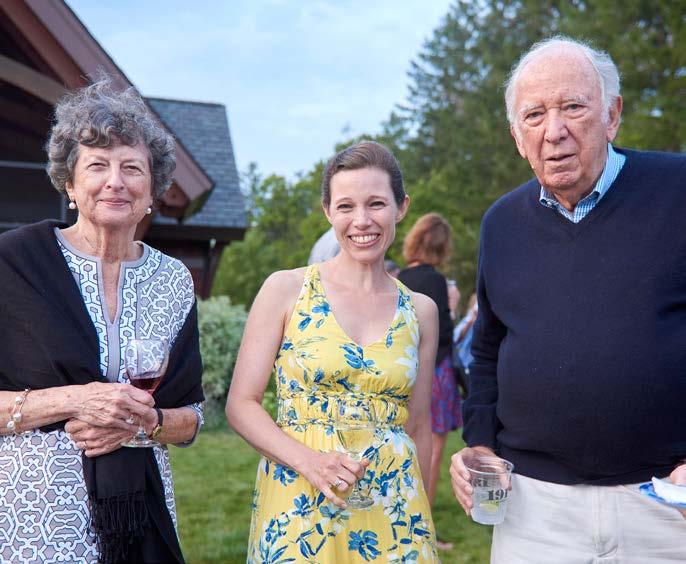
Supporters Sally & Bob Neumann join Julie Bruskin at Summer Suite.
SHORTEST WAIT TIMES.
Our team is one of the fastest, most efficient in treating urgent, complex medical conditions. This adds up to the best in emergency care at the hospital you trust. In an emergency call 911. Then say, “Take Me to Crouse.”
Week 1
Saturday, July 29
8:00 PM
Robinson Pavilion at Anyela’s Vineyard
Rain Location: TBA
Tonight’s concert is made possible with support from:
The Bob & Sally Neumann Fund for Jazz and Innovative Programming
Béla Fleck: My Bluegrass Heart
Featuring: Michael Cleveland, Sierra Hull, Justin Moses, Mark Schatz, Bryan Sutton
My Bluegrass Heart is the return that the 15-time Grammy winner has been talking about –the third chapter in a decades-spanning trilogy which, by his counting, started with 1988’s Drive and continued with The Bluegrass Sessions, released eleven years later. Over the long and lauded course of his unique creative run, Béla Fleck – the world’s premier banjo virtuoso and a celebrated musical adventurer – has both dug deep into his instrument’s complex global history and unlocked the breadth of its possibilities.
Béla Fleck, banjo
Michael Cleveland, fiddle
Sierra Hull, voice and mandolin
Justin Moses, multi-instrumentalist
Mark Schatz, bass
Bryan Sutton, guitar
Program to be announced from the stage.
ARTIST SPONSORSHIPS
Béla Fleck is sponsored by Jary & Julie Shimer
Bluegrass all-star musicians are sponsored in memory of Penny Allyn WITH ADDITIONAL SUPPORT FROM
MEDIA SPONSOR
FEATURED ADVERTISER
Parson’s & Associates
The Skaneateles Festival extends its appreciation to Bob and Sally Neumann
Their love for great music and leadership giving are helping to secure the Festival’s future and allowing us to bring the highest caliber musicians to our lakeside community.
Festival Future
R Y I S E VO LV I N G . E VO LV E W I T H I T.
LUXU
Week 2
Thursday, August 3
8:00 PM
First Presbyterian Church 97 E Genesee St, Skaneateles
Tonight’s concert is sponsored by:
Sieglinde Wikstrom
Inventing Mozart
MOZART Eine kleine Nachtmusik, K. 525
Allegro
Romanze: Andante
Menuetto: Allegretto
Finale: Allegro
VIJAY IYER Mozart Effects
Itamar Zorman, violin
Anna Elashvili, violin
Kyle Armbrust, viola
Julia Bruskin, cello
Edward Castilano, bass
Anna Elashvili, violin
Itamar Zorman, violin
Kyle Armbrust, viola
Julia Bruskin, cello
MOZART Exsultate, jubilate for Soprano and Strings, K. 165
Exsultate, jubilate – Allegro
Fulget amica dies – Secco Recitative
Tu virginum corona – Andante
Alleluja – Molto allegro
INTERMISSION
BRAHMS Piano Quartet in C minor, Op. 60
Allegro non troppo
Scherzo
Andante
Allegro comodo
ARTIST SPONSORSHIPS
Kyle Armbrust is sponsored by Patricia A. Lynn-Ford and Steven J. Ford
Julia Bruskin and Aaron Wunsch are sponsored by The Skaneateles Consortium: George Bain, Sam & Debby Bruskin, Dana & Susan Hall, and Judy Robertson
Kearstin Piper Brown is sponsored by Mary Cotter
Itamar Zorman is sponsored by KeyBank
Kearstin Piper Brown, soprano
Anna Elashvili, violin
Itamar Zorman, violin
Kyle Armbrust, viola
Julia Bruskin, cello
Edward Castilano, bass
Itamar Zorman, violin
Kyle Armbrust, viola
Julia Bruskin, cello
Aaron Wunsch, piano
The Skaneateles Festival is made possible by the New York State Council on the Arts with the support of Governor Kathy Hochul and the New York State Legislature.
Program Notes
250 years later, Mozart’s music continues to uplift and entrance us, as well as a new generation of composers. Hear Mozart’s joyous Exsultate, jubilate for soprano and strings (featuring Kearstin Piper Brown); the ultra-famous Eine kleine Nachtmusik; a new work by jazz polymath Vijay Iyer based on Mozart’s music; and Brahms’ lyrical passionate Piano Quartet in C minor, in a genre invented by Mozart.
Eine kleine Nachtmusik, K. 525 (1787)
WOLFGANG AMADEUS MOZART
(1756-1791)
For a work that calls itself “little,” Mozart’s Eine kleine Nachtmusik certainly has a big reputation. Mozart’s title (A Little Night Music) proves that composers never can tell what will turn out to be their greatest hit. Johann Pachelbel would surely be amazed to find that one of his least ambitious works, a certain Canon in D, accompanies millions of brides down the aisle. Imagine how the temperamental Beethoven would react to news that his trifle Für Elise gets more airtime than his Missa solemnis. And Mozart, author of well over 600 works in his 35 years, could scarcely have guessed that this diminutively titled work would capture
public fancy the most, 236 years later. There is no sign he even intended to have it published, and it wasn’t, until long after his death.
To be fair, Mozart’s evening serenade is as good as an evening serenade gets. This is a mature, skillfully composed work, at once familiar and inventive, quickly drafted in 1787 alongside his operatic masterpiece, Don Giovanni. No one expected such high-quality Nachtmusik, essentially disposable party music for a certain (in this case, unknown) occasion, but Mozart couldn’t help himself. In the famous first movement, Mozart gives us the impression that music is a language we all speak: the upward swing of the opening phrase (question!) quickly finds its downward partner (answer!), like witty, genial party conversation. The delicate second movement passes onward to a jovial minuet. A rondo with a laughing theme of “ha-ha-ha-ha” brings Mozart’s musical diversion to a close.
Oh, and if you ever feel you’ve heard Mozart’s greatest hit one too many times, surely P. D. Q. Bach’s A Little Nightmare Music will cure you.
one open door can open doors across a community.
Our most important work happens outside the four walls of our bank. KeyBank gets involved to help keep our communities full of hope and opportunity.
Thank you, Skaneateles Festival, for making a difference.
Mozart Effects (2011)
VIJAY IYER (B. 1971)
Son of Indian Tamil immigrants, American pianist-composer Vijay Iyer was born in Albany and grew up outside Rochester. After completing a degree in math and physics at Yale, he pursued a PhD in Physics at UC Berkeley but shifted his studies toward music cognition, an interest that has some bearing on Mozart Effects, composed for the Brentano Quartet (which appeared at the Skaneateles Festival in 1994). In the meantime, Iyer has grown into one of the most outside-the-box musicians of our time: a brilliant and successful jazz pianist, he also composes fully notated music for the likes of the Los Angeles Philharmonic and the Silkroad Ensemble. His music brings together the rhythms of South Asia, idioms of Duke Ellington and Thelonious Monk, and an awareness of classical music.
In his commission for the Brentano Quartet, Iyer was tasked with “completing” a one-minute unfinished sketch by Mozart, K. 417d. About the new work and its title, he writes:
In 1993, a short research article was published in Nature claiming that listening to Mozart could induce a shortterm IQ boost in the area of ‘spatial task performance.’ The control conditions in the experiment were ‘relaxation’ and ‘silence,’ not ‘Brahms’ or ‘Ellington,’ so there
was nothing in the study to show that this effect was unique to Mozart. (On the other hand, for all they knew, the effect could have been wholly specific to the Sonata for Two Pianos in D Major, K. 448, the only piece used in the study.)
Nonetheless, sensationalized news about ‘the Mozart effect’ touched off a nationwide Mozart frenzy. Something about that brazenly Eurocentric claim ‘Mozart makes you smarter’ seemed to offer a quick fix for everything wrong in America. Adding to the furor, the governor of Georgia at the time decreed that every baby born in the state would receive a Mozart CD upon leaving the hospital. The self-help industry had a field day: You too can touch the untouchable genius of a great master! Unlock your true potential while you sleep! It was good old-fashioned snake oil – let’s call it Wolfgang’s revenge.
Finally, in 2007 a Requiem for the Mozart effect arrived, in the form of a thorough scientific review published by the Federal Ministry of Education and Research in Germany. The conclusion: if we experience any cognitive boost at all from passive listening, it is very brief, very small, and equal for all types of music. But null results are never newsworthy, so word didn’t quite get around; the story was buried in a pauper’s grave. Few have been disabused of the idea of the Mozart effect today, and those who have still wish it to be true anyway. For a composer,
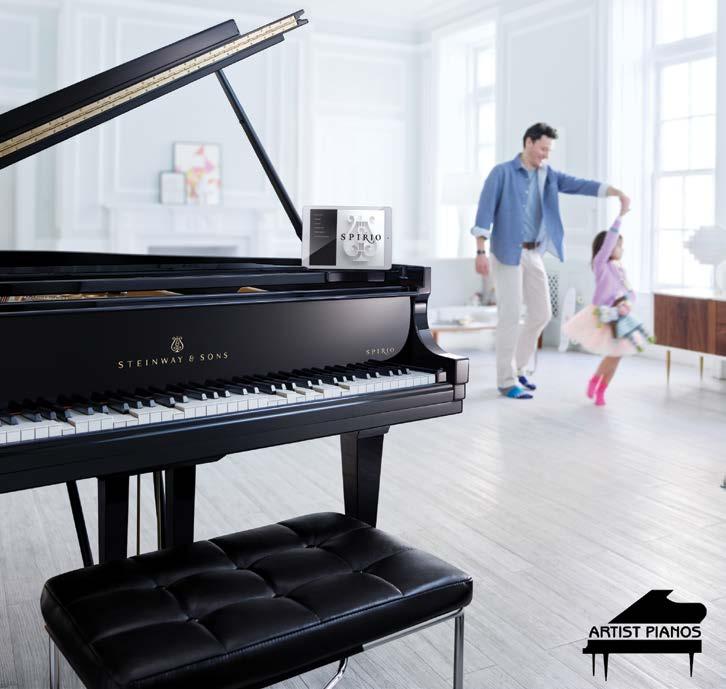
ARTIST PIANOS is the proud PIANO SPONSOR for this and many local fine-arts organizations. We invite you to visit us and experience the all new SPIRIO HD player piano by STEINWAY & SONS. With SPIRIO, the worlds finest pianists are ready to play just for you.
5780 CELI DRIVE, EAST SYRACUSE, NY 13057 PH(315) 446-5660.
to be tasked with ‘finishing’ an unfinished piece by Mozart is to serve as the punchline to a joke. There was no one I told about this commission who didn’t burst out laughing. Perhaps we are all Salieri, still haunted by those infernal cackles – Wolfgang’s revenge, yet again.
Exsultate, jubilate for Soprano and Strings, K. 165 (1773) WOLFGANG AMADEUS MOZART (1756-1791)
Mozart loved sopranos. Quite literally: after meeting the four soprano sisters of the Weber family in Mannheim, he flirted with three of them, proposed to two of them, and married one of them (Constanza). Mozart had also been a soprano himself, performing several times in public until his voice broke at age 13. By that time, he had already composed four operas with soprano leads, and when he composed his Latin motet, Exsultate, jubilate, he had just finished his eighth, Lucio Silla, at age 16. However, this new motet was not composed for a soprano, technically speaking. While in Milan for his opera production, he composed the motet for the leading man in the opera, Venanzio Rauzzini. Yes, leading man (primo uomo): Rauzzini was a castrato. A (shall we say) biological alteration allowed him a ravishing yet powerful high vocal range, and Mozart greatly admired his musicianship. Exsultate, jubilate was a gift of sorts for Rauzzini, who gave its premiere in church on January 17, 1773, performing Mozart’s opera later that same day.
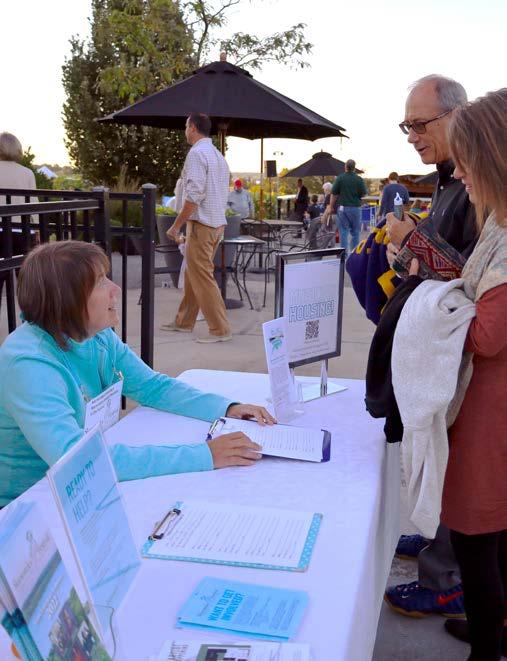
Thank you to our Housing Chair, Kim Driscoll and musician hosts Dan Fisher and Lori Ruhlman. Stop by and learn how you can help the Skaneateles Festival.
Exsultate, jubilate is essentially a concerto for voice, one of Mozart’s most virtuosic creations. The text is of somewhat secondary importance; Rauzzini himself may have penned it, but Mozart altered it for performances in Salzburg several years later. The first word, “rejoice,” sums up the overall spirit of the work. Like an instrumental concerto, the ensemble plays first, establishing an exultant atmosphere. Mozart saves the real rejoicing for the singer, however, who emits exhilarating flurries of sixteenth notes that flow through the full soprano range.
A serioso recitative briefly tells of storms and night, followed by “unexpected calm” and joy for a “fortunate dawn.” The lyrical second section, a prayer to the Virgin Mary, is the emotional heart of the work. Here the 16-year-old Mozart shows just how far his gift for melody had already developed; his greatest opera arias are only a hop, skip, and jump from here. The concluding “Alleluia” is so brilliant, sopranos keep it in their back pocket (so to speak) in case they need a showstopper. Mozart loved sopranos, and, thanks to music like this, sopranos love Mozart.
See page 35 for text and translation.
Piano Quartet in C minor, Op. 60 (1875)
JOHANNES BRAHMS (1833-1897)
Anyone looking for a genial, easy-going piece of chamber music should avoid Brahms’ Piano Quartet in C minor. “On the cover you must have a picture of a head with a pistol to it,” Brahms wrote to his publisher. “Now you can form some conception of the music! I’ll send you my photograph for the purpose.” Brahms was only half joking. He had started the work 20 years earlier, at the age of 22, during a time of romantic fervor and personal tumult. He had become infatuated with Clara Schumann, wife of his mentor, Robert Schumann; Robert recently had been committed to an asylum with “psychotic melancholia” after a suicide attempt. Meanwhile, Brahms had immersed himself in romantic literature by Goethe and E. T. A. Hoffmann, including Goethe’s tale of a suicidal young man in love, Sorrows of the Young Werther. Now, 20 years later, Brahms cast his younger self in the role of Werther; he suggested his publisher to paint Werther’s costume, a blue coat and yellow breeches, over his own photograph.
Brahms had a clear model for his tragic piano quartet: Mozart’s Piano Quartet in G minor, composed in 1785 at a time when almost all chamber music was genial. But whereas Mozart relented his tragic tone after the first movement, Brahms maintains it through much of his quartet. By the 1870s, chamber music had largely migrated from the chamber to the concert hall and demanded a more serious tone, virtuosity from the players, and a thicker overall sound. Brahms himself performed the premiere of this work in Vienna’s newly completed, temple-like Musikverein; today, the chamber music auditorium there is fittingly called Brahms Hall.
Brahms establishes the gun-to-the-head atmosphere with severe octaves from the piano; the strings respond with despairing, two-note sighs. These turn into a longer melody that some scholars believe spells out Clara’s name (C-B[L]-AG#[R]-A, here transposed to Eb-D-C-B-C). However autobiographical, its tragedy quickly amplifies with an outbreak of crashing chords. Once these dissipate, a noble and lyrical second theme reveals the true character of our protagonist. Both conflict and heroism lie ahead in the central section of the movement. A tumultuous coda crashes into the same note that opened the movement, and finally the music sinks back into sorrow and despair. The second movement bears the title “Scherzo,” the Italian word for joke, but good luck finding a single moment of humor in it. A fierce battle is
Exsultate, jubilate, O vos animae beatae exsultate, jubilate, dulcia cantica canendo; cantui vestro respondendo psallant aethera cum me.
Fulget amica dies, jam fugere et nubila et procellae; exortus est justis inexspectata quies. Undique obscura regnabat nox, surgite tandem laeti qui timuistis adhuc, et jucundi aurorae fortunatae. frondes dextera plena et lilia date.
Tu virginum corona, tu nobis pacem dona, tu consolare affectus, unde suspirat cor. Alleluja.
immediately underway, with only a few moments of respite to come. Unlike the first movement, however, this one ends in triumph, with three C Major chords.
Cellists everywhere dream of playing the third movement, which begins with one of the most heartrending cello melodies in the entire repertoire. This can only be music of love, alternatingly ardent and tender. Brahms wisely chose the peaceful key of E Major for it, a welcome respite from tragic C minor. The final movement returns to that key, beginning uneasily with a four-note rhythmic motive borrowed from Beethoven’s Fifth Symphony (also in C minor). After a struggle, a heavenly chorale descends, played by the strings with a halo provided by the piano. Alas, our protagonist cannot, or will not, be redeemed, and the work ends in resignation.
Exsultate, jubilate
Text and translation
Rejoice, be glad, O you blessed souls, Rejoice, be glad, Singing sweet songs; In response to your singing Let the heavens sing forth with me.
The friendly day shines forth, both clouds and storms have fled now; for the righteous there has arisen an unexpected calm. Dark night reigned everywhere [before]; you who feared till now, and joyful for this lucky dawn give garlands and lilies with full right hand.
You, o crown of virgins, grant us peace, console our feelings, from which our hearts sigh. Alleluja
you are and wherever you are on your journey in faith,
2023 Community Outreach Events
Friday, August 4 • 1:00 PM
Seward House Museum
33 South Street, Auburn NY
Premiere of Fortitude, a Festivalcommissioned dramatic portrayal of Harriet Tubman, featuring rising opera star Kearstin Piper Brown.
This event is free and open to the public, no ticket is required.
Tuesday, August 15 • 3:30 PM
Redhouse Arts Center
Solo performance featuring saxophonist and former professor Steven Banks. Located in Redhouse Arts Center
This performance is dedicated to the summer students at Redhouse and with the hopes of bringing inspiration to a new generation of musicians.
The Skaneateles Festival is proud to present Following Harriet
the theme of our 2023 Community Outreach events.
2022-23 marks the 200th anniversary of the birth (exact date unknown) of Harriet Tubman, famed abolitionist and Underground Railroad conductor. Tubman touched the lives of many who fought for freedom. Yet the journey continues today as American society debates what freedom means for individuals and society at large. We began the celebration of her legacy in 2022 with our Freedom Sounds theme. In 2023, the Following Harriet project invites composers, performing artists, longtime and new listeners of the Festival to learn from Tubman’s vision, courage, fortitude, and civic responsibility. This is a critical juncture as we emerge from the pandemic with focus, clarity, and vigor about the potential for music to move the needle towards wholeness and inclusion in the Central New York region and beyond.
Monday, August 14 • 5:30 PM
Salt City Market
484 S Salina St, Syracuse, NY 13202
Solo performance featuring classical saxophonist Steven Banks. Located outdoors in the “alleyway” in front of the mural
This event is free and open to the public, no ticket is required.
Wednesday, August 16 • 1:00 PM
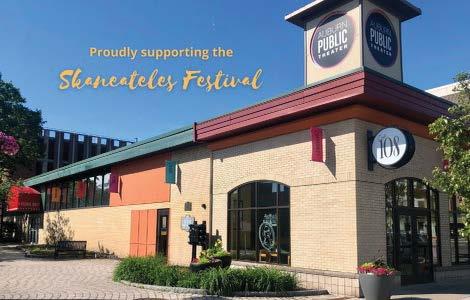
Auburn Public Theater
8 Exchange St, Auburn, NY 13021
Saxophonist Steven Banks is joined by pianist Xak Bjerken.
Located on the main stage of Auburn Public Theater
This event is free and open to the public, no ticket is required. Children and families are welcome.
These events are made possible with support from the following:
Tuesday, August 15 • 11:30 AM
Upstate Cancer Center
750 E Adams Street, Syracuse NY
Saxophonist Steven Banks is joined by pianist Xak Bjerken. Located in the Upstate Cancer Center atrium
This event is dedicated to Upstate Cancer Center’s patients and hard-working staff.
Thursday, August 17 • 6:30 PM
Seymour Library
176 Genesee St, Auburn, NY 13021
Solo performance featuring saxophonist Steven Banks. Performance will take place on the front lawn (will move indoors if weather conditions require)
This event is free and open to the public, no ticket is required. Children and families are welcome.
A Harriet Tubman Events Grant from Cayuga County Tourism
The Senator John W. Mannion & Senator Rachel May Young Artist Scholarship Program administered by CNY Arts.
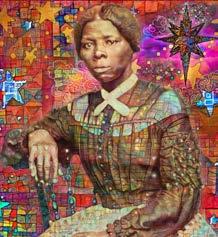
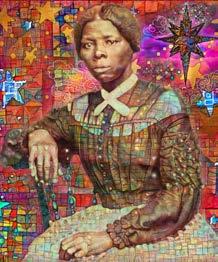
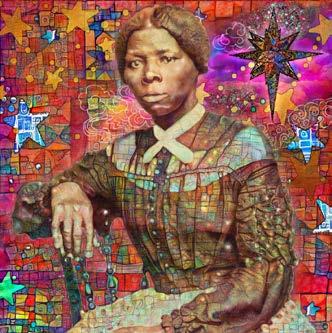
Credit for new Harriet Tubman image: “Beacon of Hope” by Nettrice Gaskins (2021).
Week 2
Friday, August 4
7:00 PM Backstage Pass (for ticket holders only)
8:00 PM
First Presbyterian Church 97 E Genesee St, Skaneateles
Tonight’s concert is sponsored by:
Doug and Peg Whitehouse
Backstage Pass
Join composer Nailah Nombeko; soprano Kearstin Piper Brown; Harriet Tubman’s great-great-grandniece, Judith Gladys Bryant; and the Festival’s Artistic Directors for a conversation about Harriet Tubman’s life in the area, her enduring influence, and Fortitude, the new work about her which premieres tonight.
Following Harriet
BARBER Sonata for Cello and Piano, Op. 6
Allegro ma non troppo
Adagio
Allegro appassionato
MARGARET BONDS Troubled Water
WILLIAM GRANT STILL Suite for Violin and Piano
African Dancer
Mother and Child Gamin
INTERMISSION
NAILAH NOMBEKO Fortitude
(World Premiere, commissioned by the Skaneateles Festival) Text by Alicia Haymer
Julia Bruskin, cello
Aaron Wunsch, piano
Aaron Wunsch, piano
Itamar Zorman, violin
Aaron Wunsch, piano
Kearstin Piper Brown, soprano
Itamar Zorman, violin
Anna Elashvili, violin
Kyle Armbrust, viola
Julia Bruskin, cello From the Great American Songbook:
HAROLD ARLEN A Sleepin’ Bee
JEROME KERN Can’t Help Loving That Man
COLE PORTER So In Love
HAROLD ARLEN Over the Rainbow
ARTIST SPONSORSHIPS
Kyle Armbrust is sponsored by Patricia A. Lynn-Ford and Steven J. Ford
Julia Bruskin and Aaron Wunsch are sponsored by The Skaneateles Consortium: George Bain, Sam &
Debby Bruskin, Dana & Susan Hall, and Judy Robertson
Kearstin Piper Brown is sponsored by Mary Cotter
Itamar Zorman is sponsored by KeyBank
Kearstin Piper Brown, soprano
Aaron Wunsch, piano
MEDIA SPONSOR
FEATURED ADVERTISER
NYS Equal Rights Heritage Center/ Auburn Community Center
Steinway Piano generously donated by Artist Pianos
Program Notes
The Festival celebrates the 200th anniversary of Harriet Tubman’s birth with a program of American music on themes of struggle and hope. Samuel Barber’s intense Cello Sonata (with Artistic Directors Julia Bruskin and Aaron Wunsch), William Grant Still’s Violin Suite based on Harlem Renaissance art and spirituals, and selections from the Great American Songbook are preludes to a Festival-commissioned dramatic portrayal of Harriet Tubman by Nailah Nombeko, featuring rising opera star Kearstin Piper Brown.
Sonata for Cello and Piano, Op. 6 (1932)
SAMUEL BARBER (1910-1981)
In the 1920s and 30s, young artists found inspiration in the new kinetic metropolis; George Gershwin, for example, said the steely rhythms of a train inspired Rhapsody in Blue. Not so for Samuel Barber. “Skyscrapers, subways, and train lights play no part in the music I write,” Barber told a music critic in 1935. Ideas for his Cello Sonata came to him on a hiking trip from Switzerland to Italy, and when he arrived at the family villa of his hiking (and romantic) partner, composer Giancarlo Menotti, he quickly started composing. “I wrote it entirely without [a] piano,” he proudly explained to his parents in a letter.
One can imagine the opening of the Cello Sonata was inspired by the craggy mountain peaks he had just crossed. Its opening themes are powerful and elemental, as if carved from granite. Yet the core of Barber’s music is always emotional. “I write what I feel,” Barber later said to explain his compositional method. Sincerity became a hallmark of his music at a time when grand emotions were treated with suspicion and irony was in. The lyrical second theme here is unabashedly romantic, pure, and heartfelt – as if from a modern Brahms. The structure of the movement, too, is Brahmsian, with well-ordered themes that convey a clear narrative.
At the opening of the second movement, the cellist steps fully into the role of a singer. Barber studied voice and was an accomplished baritone, and this expertise lent itself to the cello’s lyrical gifts. As one critic put it, in 1936, “the composer…never forgets that the instrument he is writing for was intended to sing and he gives it ample opportunity to do so.” This sad song is interrupted by a sparkling scherzo, which dances like beams of sunlight glittering on Lake Lugano beneath the villa where Barber composed the Sonata. The time he spent in Europe with Menotti was some of the happiest and the most musically productive of his life. The final movement is oceanic. Barber marked it “appassionato,” which applies to a darkly hued melody buoyed on a sea of arpeggios. Barber’s lyricism is modern in that it tends toward the darker end of the emotional spectrum, as his famous Adagio for Strings (to be heard on August 12) attests. The Sonata ends defiantly as the cello belts out its lowest note.
Troubled Water (1967)
MARGARET BONDS (1913-1972)
The African American spiritual tradition provided a wellspring of inspiration for pianist and composer Margaret Bonds. Not only did she recognize the latent musical possibilities of this source material, but she could personally relate to its themes of adversity, persistence, and spiritual triumph. Her father, a successful doctor, was denied admission to the American Medical Association based on his race, so he proceeded to form an association for black doctors. Growing up in Chicago, she was fortunate to study with Florence Price, who had already started to integrate the spiritual with classical forms. A formidable pianist, Bonds was the first black soloist to appear with the Chicago Symphony Orchestra, at age 20, performing Florence Price’s Piano Concerto. She was also one of the few black students admitted to Northwestern University, where she faced discrimination; at a low moment, she discovered a volume of poetry by Langston Hughes in the Library basement and resolved to meet and work with him, which she did. After coming to New York to study at Juilliard, she moved to Harlem and collaborated with Hughes on numerous projects. She also formed a music society to promote the works of black composers.
Fortitude
NAILAH NOMBEKO
Text by Alicia Haymer
Property
Involuntary servitude
1849
My life is not mine
In my mind I’ve decided
It’s liberty or death
God put the North Star in the heavens
Just for me
He meant I should be free
Follow the North Star
That’s my way through
Running towards freedom
For life anew
Ruthless masters
Hard working life
I question the Lord
About the daily strife
Horrors in the house
And whips in the field
My soul cries out for freedom
My spirit can’t keep still
Follow the North Star
That’s my way through
Running towards freedom
For life anew
Deep into midnight
Way before dawn
When the North Star rises
That’s when I’ll run
No second guessing
There is no time
God, lead me over
Freedom is mine
Follow the North Star
That’s my way through
Running towards freedom For life anew
Deep in my spirit
I hear God’s voice
Leading me back to you
I have no choice
Trouble the waters
Hide in the trees
I can’t live a free life
If you are not free
I’ll follow the North Star
As you follow me
Away from the pain
And sins of slavery
There are dangers in the darkness
Slave catchers here and there
Dragging free folks into slavery
A life that just isn’t fair
Masters promised freedom
Then snatched it back from my kin
I’ll lead this holy crusade
Against America’s darkest sin
I’ll follow the North Star
As you follow me
Away from the pain
And sins of slavery
If you are tired
Keep going
If you are hungry
Keep going
If you are scared
Keep going
If you want to taste freedom
Keep going
If you hear the dogs
Keep going
If you see torches behind you
Keep going
If they’re shouting after you
Keep going
Don’t ever stop
Keep going
If you want to taste freedom
Keep going
I’ll follow the North Star
As you follow me
Away from the pain
And sins of slavery
Every great dream
Begins with a dreamer
And thank God I believed I looked at my hands
To see if i was the same person
Now that I am free
Thank God for the lives that were saved
Thank God for the work I’ve done
With my God, my faith, and my pistol
I’ve never lost a one
Me and the Lord freed thousands
Everything I had I gave
I could have freed thousands more
If only they knew they were slaves
Here I am with a new life
And there’s so much work to do
From Army raids
To housing the aged
And I’m nowhere near through
I held steady to the Lord’s hand
And He saw me through
All the way to freedom
A blessed life anew
Commissioned Works Series
Nailah Nombeko’s piece Fortitude is the third premiere made possible by the Skaneateles Festival’s exciting new Commissioned Works Series, where talented composers from across the nation will introduce our Festival audience to the art and magic of musical composition. With generous support from Nancy Kramer and Doug Sutherland through their Creative Endeavors Fund, the Skaneateles Festival will, on a biennial basis, host a Composer-in-Residence program and, in alternating years, premiere Festival-commissioned works by those composers.
Troubled Water, based on the spiritual “Wade in the Water,” dates from the height of the Civil Rights Era, in which Bonds took an active role. She had played a version of it in the 1950s designed for audiences to sing along, and now she refashioned it as a powerful and virtuosic solo work. The refrain, “Wade in the water…God’s a gonna trouble the water,” likely refers to enslaved people who sought a path to freedom through clouded river water that leaves footprints untraceable. Civil Rights leader John Lewis drew another meaning out of it, however, with the phrase “Make good trouble.” The spiritual melody here is always front and center, but Bonds integrates it with modern harmonies and knuckle-busting virtuosity, infused with a spirit reflective of the 1960s. A reflective middle section draws from the sensuous harmonies of French music, while the coda presses fast and furious with stark parallel fifths. It is fearless, persistent, and determined to win you over.
Suite for Violin and Piano (1943) WILLIAM GRANT STILL (1895-1978)
Though music is invisible, we often speak about it as if it has three dimensional properties: surface, thickness, structure. In his Violin Suite, William Grant Still renders these qualities more palpable by tying each movement to an actual sculpture by Harlem Renaissance artists: Richmond Barthé’s African Dancer, Sargent Johnson’s Mother and Child, and Augusta Savage’s Gamin. The music brings these frozen figures to life.
Still grew up in Little Rock, Arkansas, where his early exposure to music included RCA classical records brought home by his stepfather and African American spirituals sung by his formerly enslaved maternal grandmother. He had a knack for teaching himself to play instruments, including the cello and oboe, but his greatest proficiency was on the violin. Still’s mother preferred he study law, but he chose to study classical music at Oberlin College. In the following year, he was hired by W. C. Handy, “the father of the blues,” as an arranger. Still, who followed Handy to New York City, where Still worked with poet Langston Hughes and other artists of the Harlem Renaissance (including our three sculptors). His Afro-American Symphony, premiered by the Rochester Philharmonic in 1931, became the most frequently performed American symphonic work of its era by a composer of any race.
The athletic joy in the first movement of the Violin Suite reflects the ecstatic “African Dancer” depicted in Barthé’s sculpture. Still’s skillful treatment of the violin here demonstrates his expertise on the instrument he formally studied from age 15. Relief from the hard charging dance comes in a lyrical episode that brings the African dancer to America, via the blues. Still came to believe that the blues, rather than the spiritual, provided a compass for the future of African American music. The soulful second movement, “Mother and Child,” however, does show some influence of
Following Harriet She was an active proponent of women’s suffrage working alongside women suffragettes such as Susan B. Anthony and Emily Howland.
lullaby-like spirituals, such as “Steal Away to Jesus,” even if its rich, chromatic harmonies are more contemporary. It also reflects the smooth, modern lines of Johnson’s sculptures. The third movement captures the mischief and cleverness visible in Augusta Savage’s sculpture of a street urchin, Gamin, now in the Smithsonian Museum. Despite untold hardships, this boy makes the best of the hand he’s been dealt. Still’s infectious, virtuosic music persuades us to hope he can succeed beyond the expectations we’ve set for him based on his social status and race – as Still himself did.
Fortitude (2023)
NAILAH NOMBEKO (B. 1976)
World Premiere, commissioned by the Skaneateles Festival
Nailah Nombeko is from (and currently lives in) New York City, where she studied at the LaGuardia High School of Music and Art and the Mannes College of Music. Her vocal settings of diverse poetry from William Blake to Mahzi Kane are especially sensitive to the text, and she recently composed a string quartet for Ethel, premiered at National Sawdust in Brooklyn. She brings both song and quartet genres together in Fortitude, commissioned by the Skaneateles Festival for the 200th anniversary of Harriet Tubman’s birth. About the new work, Nombeko writes:
“The opening violin solo marks the uncertainty of what Harriet Tubman was about to embark on. Although she was confident that this was a godly mission, the outcome was still unknown. All throughout this section Harriet was summoning the strength to escape.
There are two refrains that mark a bright spot where Harriet gathered her strength. Both refrains are woven between painful recollections of life as a slave and her escape. It was important for the melodic material in both refrains to be memorable. This helps to give the listener something to be anchored into as they follow this story. Refrain #1 marks the first place where I commit to a key. The sections where Harriet recalled life as a slave are intentionally keyless. This helps to highlight the level of uncertainty and distress that she felt.
A Sleepin’ Bee
HAROLD ARLEN
When a bee lies sleepin’ in the palm of your hand
You’re bewitched and deep in love’s long looked after land Where you’ll see a sun-up sky in the mornin’ dew Where the days go laughin’ by as love comes callin’ on you
Sleep on, bee, don’t waken, can’t believe what just passed He’s mine for the takin’, I’m so happy at last Maybe I dreams, but he seems sweet, golden as a crown
A sleepin’ bee done told me I’ll walks with my feet off the ground When my one true love I has found
When you’re in love and you are wond’rin’ If he really is the one There’s an ancient sign should tell you If your search is over and done Catch a bee, and if he don’t sting you
You’re in a spell that’s just begun It’s a guarantee to the end of time Your true love you have won Have won
Sleep on, bee, don’t waken, can’t believe what just passed He’s mine for the takin’, I’m so happy at last Maybe I dreams, but he seems sweet, golden as a crown
A sleepin’ bee done told me
I’ll walks with my feet off the ground
When my one true love I has found
Can’t Help Loving That Man
JEROME KERN
Oh, listen sister, I love my mister man And I can’t tell you why There ain’t no reason for me to love that man It must be somethin’ that the angels done plan
Fish gotta swim, birds gotta fly I gotta love one man ‘til I die Can’t help lovin’ that man of mine
Tell me he’s lazy, tell me he’s slow Tell me I’m crazy, maybe I know Can’t help lovin’ that man of mine
When he goes away, that’s a rainy day But when he comes back that day is fine The sun will shine!
He can come home as late as can be Home without him ain’t no home to me
Can’t help lovin’ that man of mine
So In Love COLE PORTER
Strange dear, but true dear, When I’m close to you, dear, The stars fill the sky, So in love with you am I.
Even without you, My arms fold about you, You know darling why, So in love with you am I.
In love with the night mysterious, The night when you first were there, In love with my joy delirious, When I knew that you could care
So taunt me, and hurt me, Deceive me, desert me, I’m yours, till I die... So in love... So in love... So in love with you, my love... am I...
Over the
Rainbow
HAROLD ARLEN
Somewhere over the rainbow Way up high
There’s a land that I heard of Once in a lullaby
Somewhere over the rainbow
Skies are blue And the dreams that you dare to dream Really do come true
Someday I’ll wish upon a star And wake up where the clouds are far behind me
Where troubles melt like lemon drops
Away above the chimney tops
That’s where you’ll find me
Somewhere over the rainbow
Bluebirds fly
Birds fly over the rainbow
Why then, oh, why can’t I?
Somewhere over the rainbow
Bluebirds fly
Birds fly over the rainbow
Why then, oh, why can’t I?
If happy little bluebirds fly
Beyond the rainbow
Why, oh why can’t I?
The middle section is the point of no return. No matter what slaves faced, if they wanted to be free, they had to keep going. The rhythm carries this portion of the piece. The first violin drives the intensity from the opening of this section, followed by the cello. Refrain #2 returns towards the end of this section before the violin solo from the beginning of the piece reappears. I thought it was important to close this section with the violin solo from the beginning because it marks how everything started, a point of reflection.
In the last section of the piece there is no uncertainty in the music. This section is triumphant as Harriet reflects on what she accomplished.”
From the Great American Songbook:
Can’t Help Loving That Man (1927)
JEROME KERN (1885-1945) / OSCAR HAMMERSTEIN II (1895-1960)
So In Love (1948) COLE PORTER (1891-1964)
A Sleepin’ Bee (1954) Over The Rainbow (1939)
HAROLD ARLEN (1905-1986)
The so-called Great American Songbook is great enough not to be containable in any one book. Its boundaries are loosely defined as influential songs from Broadway musicals, Tin Pan Alley, and Hollywood films, from the 1920s to the 1960s. They often transcend their source material and are adaptable as both jazz standards and as concert pieces. Jerome Kern’s 1927 musical Show Boat is a familiar starting point, proving that the American musical need not be merely comedic. “Can’t Help Loving That Man” is a love song of sorts, but not only: Kern and Hammerstein apply it to a larger dramatic purpose in Show Boat, reprising it several times. Julie sings it to younger Magnolia as proof that once one has fallen in love, climbing out of it won’t be easy. But the song is framed as familiar only to African Americans, and through the boat’s black cook, the audience realizes that Julie is passing as white. Even aside from the plot, this song can be heartbreaking, as anyone who has heard Lena Horne sing it can attest.
By the 1940s, comedic musicals had transcended vaudeville, thanks in part to lyrics like those from Cole Porter in Kiss Me, Kate. The title lyric “So In Love” sounds simple enough, but Lilli (playing Shakespeare’s Katherine, the “shrew”) reveals that she is still in love with her divorced husband, the egotistical Fred (playing Petruchio), so the situation in this play-within-a-play is considerably more complicated. Porter’s brilliant lyrics bear out these complexities: “Taunt me, and hurt me, deceive me, desert me, I’m yours ‘til I die: so in love am I.” The song has been recorded by everyone from Ella Fitzgerald to Julie Andrews to Plácido Domingo.
Kiss Me, Kate’s producer went on to mount House of Flowers in 1954; never heard of it? It was a flop, but not for lack of talent. Truman Capote wrote the story on which it’s based, about bordellos battling for business in Haiti, and Harold Arlen provided the calypso-blues score. Its use of the steel pan drew attention, but Diahanne Carroll stole the show with her rendition of “A Sleepin’ Bee,” a song about her “one true love,” who, by the way, has yet to be found. The first line already shows her naivete: “When a bee lies sleepin’ in the palm of your hand....” (No chance that bee will sting you, surely.) Carroll went on to become the first black woman to win a Tony award for best actress, in 1962.
Hollywood learned early on that an extra musical asset to a film, beyond its score, can be a single good song. The prototype, which has yet to be improved upon, was Harold Arlen’s “Over the Rainbow,” composed for The Wizard of Oz (1939). Of course, it also helps if Judy Garland is the one singing it. Arlen was on his way down Sunset Boulevard to a Chinese restaurant when the tune hit him; he pulled over and wrote out the melody, which itself resembles a rainbow, rising upward an entire octave before floating back down. Studio head Louis B. Mayer felt the song slowed down the movie and had it deleted; the director and others lobbied for it to be included and eventually prevailed. Who knows what other great songs may have actually died via the editor’s guillotine? At least the stories these songs tell are safe with you, in the concert hall.
International Soprano, Kearstin Piper Brown, is also a host on WXXI Classical!
Summer Suite with the Festival’s Finest!
Week 2
Saturday, August 5
8:00 PM
Robinson Pavilion at Anyela’s Vineyard
Rain Location: TBA
Tonight’s concert is made possible with support from:
The Noreen and Michael Falcone Fund for Artistic Excellence
Kelli O’Hara:
Songs From My Heart
Star of stage and screen, Kelli O’Hara, has established herself as one of Broadway’s greatest leading ladies. Her portrayal of Anna in The King and I garnered her the 2015 Tony Award for Best Leading Actress in a Musical; she recently starred in HBO’s The Gilded Age and at the Metropolitan Opera in The Hours; she has numerous Grammy, Emmy, and Olivier nominations. Tonight she shares a selection of her favorite Broadway and classical songs.
Kelli O’Hara, soprano
Dan Lipton, pianist/musical director
Selections to be announced from the stage.
ARTIST SPONSORSHIP
Kelli O’Hara is sponsored by Steve and Kelly Scheinman
Dan Lipton is sponsored by Koko Fuller
MEDIA
SPONSOR
FEATURED ADVERTISER
MacKenzie Hughes
Steinway Piano generously donated by Artist Pianos
The Skaneateles Festival extends its appreciation for the legacy gift from Noreen and Michael Falcone
Their love for great music and leadership have helped to secure the Festival’s future and allowing us to bring the highest caliber musicians to our lakeside community.
Festival Future
The Silkroad Ensemble gather before their concert.
Summer Suite
Hosted by Todd and Jill Marshall
Wednesday, August 9 • 6:30-8:30 pm
An evening of gourmet food and drink, amazing lakeside views, & even better company.
Thank you to all the area businesses and volunteers who make this event possible.
Week 3
Thursday, August 10
8:00 PM
First Presbyterian Church
97 E Genesee St, Skaneateles
Tonight’s concert is sponsored by:
Holly Gregg & Patience Brewster and Dave Birchenough & Carrie Lazarus
ECCO Plays Schubert
ELEANOR ALBERGA Remember
GRIEG Holberg Suite, Op. 40
Praeludium
Sarabande
Gavotte
Air
Rigaudon
INTERMISSION
SCHUBERT arr. Mahler
String Quartet No. 14, D. 810 (“Death and the Maiden”)
Allegro
Andante con moto
Scherzo: Allegro molto
Presto
VIOLIN
Karla Donehew Perez
Rebecca Fischer
Emma Frucht
Nick Kendall
Min-Young Kim
Siwoo Kim
Li-Mei Liang
Kobi Malkin
ARTIST SPONSORSHIPS
East Coast Chamber Orchestra
VIOLA
Paul Laraia
Jessica Thompson
Dov Scheindlin
ECCO is sponsored by Armory Square Ventures, Somak
Chattopadhyay & Pia Sawhney, and Jessica & Toby Millman
Nick Kendall is sponsored by Kevin & Sarah Goode
CELLO
Gabriel Cabezas
Michael Katz
Julia Yang
BASS
Nate Farrington
The Skaneateles Festival is made possible by the New York State Council on the Arts with the support of Governor Kathy Hochul and the New York State Legislature.
Program Notes
ECCO (East Coast Chamber Orchestra) fills the stage to share music of remembrance, nostalgia, and the will to live life to its fullest. The program features Edvard Grieg’s heartrending Holberg Suite “in the olden style”; Jamaican composer Eleanor Alberga’s tender elegy for her mother; and Franz Schubert’s searing, intense “Death and the Maiden” Quartet, heard here in Gustav Mahler’s unforgettable arrangement for string orchestra.
Remember (2000)
ELEANOR ALBERGA (B. 1949)
For most musicians, the experience of becoming one is bound up with their parents. When a child plays an instrument, parents play the roles of practice coach, cabby, caddy, publicity agent, and applauder in chief. Eleanor Alberga’s mother did this for her in Kingston, Jamaica; from age five, she studied piano and soon after composed her first piece, Andy, named for her family’s golden Labrador retriever. As a teenager she joined the Jamaican Folk Singers but soon after received a scholarship to study at the Royal Academy of Music in London, where she now teaches. After the passing of her mother, she composed this tender, loving tribute to the person who first fostered her musical gifts. It is subtly based on a Jamaican folk song (later recorded by Harry
Belafonte), “Come back, Liza,” which goes: “Ev’ry time me remember Liza, water come a’ me eye.” Like the folk song, Remember is emotional, and not without grief, but it also seems to quietly say what we rarely tell our parents soon enough: “Thank you.”
Holberg Suite, Op. 40 (1885)
EDVARD GRIEG (1843-1907)
If Grieg’s Holberg Suite doesn’t quite sound like his famous Peer Gynt, well, that’s entirely the point. To commemorate the 200th birthday of philosopher-playwright and fellow Bergen native Ludvig Holberg (1684-1754), Grieg composed this suite “in the olden style,” as the score declares. This was as much an act of imagination as historical practice. Grieg applied his knowledge of French and German Baroque music to the work, but the spirit of Norwegian folk music prevails, as if Handel ended up frolicking in the fields outside Bergen.
Grieg was indeed commissioned to compose an outdoor work for Holberg’s bicentenary: the town council specifically requested a cantata for male voices that could be performed next to the new Holberg statue as it was unveiled. Unfortunately for Grieg, Holberg’s birthday was
Thank you, Skaneateles Festival, for transporting us every summer.
PATIENCE & HOLLY GREGG
on December 3. As anyone who has wintered in Norway knows, an outdoor performance in December could be less than optimal. Grieg complained to a friend: “I can see it all before me, snow, hail, storm and every kind of foul weather, huge male choir with open mouths, the rain streaming into them, myself conducting with waterproof cape, winter coat, galoshes, and umbrella.... Oh well, it’s one way of dying for one’s country!” After this ill-fated cantata, Grieg proceeded to pen a suite “From Holberg’s time” for piano; it sounds more outdoorsy than the cantata but could be safely performed inside, on the piano. In the following year, after audiences were consistently charmed by it, he arranged it for string orchestra, and it remains one of his most popular works.
The opening Prelude is surely music of springtime, not winter. The violins and viola rustle and bustle with energy as an optimistic, lyrical theme soars above. The gentle Sarabande, a slow Baroque dance, reminds one of Bach’s sarabande for solo cello in the same key (performed by Eliot Fisk on July 26), but the harmonic inflections point toward Grieg’s own Norwegian idioms, and the texture is richly romantic. A rustic Gavotte follows, marked by the drone bass typically associated with folk music. A songful, minor-key Air comes next, which Grieg marks “Andante religioso.” J. S. Bach’s spirit hovers over this dignified yet emotional lament. The
final movement, Rigaudon, takes its name from a lively French Baroque dance. While this movement’s poised middle section might take its cue from a courtly French ballroom, the beginning and ending sound more like a hardanger fiddle playing to a Norwegian field. In summer, of course.
String Quartet No. 14, D. 810 (“Death and the Maiden”)
FRANZ SCHUBERT (1797-1828), arr. Gustav Mahler (1860-1911)
In Schubert’s Vienna, death was visible in ways foreign to our society, which tends to hide it. The reasons were both cultural and circumstantial. A local tradition known as “schöne Leich’,” or “beautiful corpse,” consisted of dressing the corpse of a beloved deceased person in finery and parading it through the streets for all to see. Public funeral processions were therefore common, as Schubert himself could tell you; he was a torchbearer at Beethoven’s funeral parade in 1827, which drew some 30,000 spectators. Death was also visible in ways more horrific than honorific. Mortality rates were on the rise; Vienna had no modern hospital, no sewer system, nor any reliable source for clean water, and pollution rose dramatically due to sudden industrialization. Nine of Schubert’s siblings died in infancy, while only four survived, and that was hardly atypical.
Schubert’s preoccupation with death was also personal. He had secondary syphilis, which turned his thoughts increasingly morbid. In 1824, the year he composed his “Death and the Maiden” Quartet, he wrote to his friend, Leopold Kupelwieser: “I find myself to be the most unhappy and wretched creature in the world. Imagine a man whose health will never be right again, and who in sheer despair continually makes things worse and worse instead of better…I ask you, is he not a miserable, unhappy being? …Upon retiring to bed each night I hope that I may not wake again, and each morning only recalls yesterday’s grief.” Despite this dramatic pronouncement, his quartet expresses the will to live far more than it wallows in misery.
Schubert chose to anchor his new quartet with variations on the chordal accompaniment from his own song, “Death and the Maiden,” composed when he had just turned 20. The text by Matthias Claudius depicts death gently embracing a young woman who struggles to stay alive. Whereas musical expressions of death are almost invariably in the minor mode, the skeletal embrace here is warm and comforting, in a major key – rendering it equally terrifying. Schubert’s variations in the second movement are a kind of psychological rumination on his theme – anxious, defiant, terrified, and finally, accepting. Given his health condition, one can’t help but imagine Schubert working through his own emotions in this music.
Preceding the variations is a highly dramatic opening movement; it starts with a dynamic of fortissimo (very loud), as if to shout, “I wish I were a symphony!” The great Viennese composer/conductor Gustav Mahler got the message, adapting the quartet for string orchestra some 75 years later. After the variations comes a short but extremely stubborn Scherzo; a delicate trio section tries to look back to a happier time, with mixed success. The final movement is in the style of an Italian saltorello, a fast dance in triple meter that typically involves jumping and convulsive arm motions. The relentless quality here suggests a totentanz (dance of death). It is punctuated by a grand chorale that offers a glimpse of redemption, but the earthly struggle ensues with ever more determination. Death may be lurking, but Schubert refuses to embrace it.
Week 3
Friday, August 11
7:00 PM Prelude Concert (for ticket holders only)
8:00 PM
First Presbyterian Church
97 E Genesee St, Skaneateles
Tonight’s concert is sponsored by:
Don & Chacea Sundman
Prelude Concert
Featuring the 2023 Robinson Award winner, Paul Di Folco, piano
LOWELL LIEBERMAN Gargoyles, Op. 29
Presto
Adagio semplice, ma con molto rubato
Allegro moderato
Presto feroce=
SHOSTAKOVICH Sonata for Cello and Piano, Op. 40
Allegro
DEBUSSY L’isle joyeuse
J. S. BACH
arr. György Kurtág
J. S. BACH
arr. György Kurtág
KURTÁG
Angels & Ghosts
Gottes Zeit ist die allerbeste Zeit, BWV 106
Trio Sonata No. 1 in E-Flat Major, BWV 525, I.
Selections from Jatékok (Games)
Hommage à J. S. B.
Beating – Quarreling
Play with Infinity
J. S. BACH
arr. György Kurtág
Aus tiefer Not schrei ich zu dir, BWV 687
KURTÁG Selections from Jatékok (Games)
Furious Chorale
One more voice from far away
J. S. BACH
arr. György Kurtág
Gottes Zeit ist die allerbeste Zeit, BWV 106
Paul Di Folco, piano
Julia Bruskin, cello
Paul Di Folco, piano
Paul Di Folco, piano
Shai Wosner, piano
Aaron Wunsch, piano
BEETHOVEN Piano Trio in D Major, Op. 70, No. 1 (“Ghost”)
Allegro vivace e con brio
Largo assai ed espressivo
Presto
INTERMISSION
BRUCH Octet for Strings
Allegro moderato
Adagio
Allegro molto
Kobi Malkin, violin
Michael Katz, cello
Shai Wosner, piano
Min-Young Kim, violin
Karla Donehew Perez, violin
Rebecca Fischer, violin
Li-Mei Liang, violin
Jessica Thompson, viola
Dov Scheindlin, viola
Julia Yang, cello
Nate Farrington, bass
ARTIST SPONSORSHIPS
ECCO is sponsored by Armory Square Ventures, Somak Chattopadhyay & Pia Sawhney, and Jessica & Toby Millman
Nick Kendall is sponsored by Kevin & Sarah Goode
Shai Wosner is sponsored by Jacqueline Jones, Finger Lakes Sotheby’s International Realty
Aaron Wunsch is sponsored by The Skaneateles Consortium: George Bain, Sam & Debby Bruskin, Dana & Susan Hall, and Judy Robertson
Sundman Stables
Boarding and Training, Specializing in Dressage and Eventing
FACILITY INCLUDES
• 80 by 160 indoor arena with Tru-stride dust free footing
• 120 by 220 outdoor arena with Tru-stride dust free footing
• Five acre well maintained jump field with water, ditch, and bank complexes
• 30 acres of lush pasture with wood fencing
• Just 15 minutes from Syracuse
SUNDMAN STABLES
Catering to the discriminating rider and owner. 1695 Stump Rd, Marcellus, NY sundmanstables.com
Chacea Sundman
Owner/Manager 315-382-2790
The Robinson Award
In 1980, David and Louise Robinson opened their hearts and their home to Festival musicians, their families, and the audiences who came to hear them perform. Their lakeside home, Brook Farm, was a gathering place and rehearsal space for musicians, and the performance venue for the Festival’s outdoor Saturday evening concerts for 36 seasons.
Created in 2002, The Robinson Award recognizes a young musician who exemplifies the values cherished and embodied by Festival co-founders, David and Louise. It is presented annually to a young musician whose character, musicianship, and community service reflect the Robinsons’ values – enthusiasm and dedication to music of high quality.
Applications for the Robinson Award are available January 15 – March 15. Visit skanfest.org for details.
2023 Robinson Award Winner – Paul Di Folco
Paul Di Folco is a graduate of Manlius Pebble Hill School and has been a student in Russell Posegate’s studio in Ithaca for 9 years. His pianistic accomplishments include participation in the 2022 Forte/Piano Summer Academy at the Cornell-Westfield Center for Historical Keyboards, 4-time participation in the Ithaca College Summer Piano Institute, 2022 Claudette Sorel Fellow, runner-up in the 2022 CCO Youth Concerto Competition, 1st prize in the 2023 Civic Morning Musicals Youth Concerto Competition, and a live performance of the Goldberg Variations in 2021. Paul also plays the viola for his school orchestra and has participated in NYSSMA and regional festivals several times. He will be attending Stanford University in the fall to study mathematics.
Our thanks to those who have contributed to the Robinson Award
Anonymous
Brenton and Mary Bradly
Barb Connor
Fletcher Foundation
David and Louise Robinson
Skaneateles Area
Council for the Arts
Frank and Jan Smith
Karl and Peggy Smith
Dr. and Mrs. Kenneth Spitzer
If you would like to contribute to the Robinson Award Fund, please call 315-685-7418.
Diane Walsh and Dick Pollak
Suzanne Weitz
Welch Allyn
David & Louise Robinson
Program Notes
Pianist Shai Wosner, known for his “remarkable blend of the intellectual, physical and even devilish sides of performance” (Chicago Sun Times), joins members of ECCO for a program of music from the spiritual to the spooky: J. S. Bach’s heavenly chorale preludes; Hungarian composer György Kurtág’s alternately serene and demonic miniatures; and Beethoven’s hair-raising “Ghost” Trio. The program ends back on earth with Max Bruch’s lush, romantic Octet for Strings.
Gottes Zeit ist die allerbeste Zeit, BWV 106
Trio Sonata No. 1 in E-Flat Major, BWV 525, I.
JOHANN SEBASTIAN BACH (1685-1750), arr. György Kurtág (b. 1926)
Selections from Jatékok (Games):
Hommage á J. S. B.
Beating – Quarreling
Play with Infinity
GYÖRGY KURTÁG (B. 1926)
Aus tiefer Not schrei ich zu dir, BWV 687
JOHANN SEBASTIAN BACH (1685-1750), arr. György Kurtág (b. 1926)
Selections from Jatékok (Games):
Furious Chorale
One more voice from far away GYÖRGY KURTÁG (B. 1926)
Gottes Zeit ist die allerbeste Zeit, BWV 106
JOHANN SEBASTIAN BACH (1685-1750), arr. György Kurtág (b. 1926)
György Kurtág is one among a remarkable generation of Hungarian performers and composers for whom music is far more than an entertainment, even more than a passion – it is an essential anchor of meaning in a life splintered by war and conflict. This generation witnessed both the Nazi and Communist occupations, as well as the failed revolution of 1956. Kurtág recalled: “I realized to the point of despair that nothing I had believed to constitute the world was true.” In the 1950s, Kurtag visited a psychologist, who suggested exploring all the relationships that are possible between just two notes. This exploration resulted in a new, distinctive compositional style: very short pieces of typically 30 seconds to 3 minutes in length that highlight the beauty of expressive musical gestures.
Armory Square Ventures (ASV) is a returns-oriented, mission-focused technology venture capital firm based mainly in the Finger Lakes region of New York State. Created to seed greater opportunities and jobs in our region and beyond, over the past decade ASV has catalyzed over 2,500 new jobs in Upstate New York alone. We like to say we are an optimism engine and community catalyst for innovation clusters and cities outside Silicon Valley. As a firm, we are also enriched and nourished by individuals from a range of backgrounds.
At the same time, Kurtág studied the music of J. S. Bach, the model of integrity and purity, arranging selections from his large-scale public works for the intimate genre of piano four-hands, thereby enshrining the music in private. In recent years, however, Kurtág has frequently performed these transcriptions in public with his wife, Marta, usually on an upright piano where the keyboard faces the audience, as if to invite the listeners in on the intimate experience of playing in private.
Beginning and ending our set is Kurtág’s signature Bach transcription, Gottes Zeit ist die allerbeste Zeit (“God’s time is the best of all possible times”), the first movement of Bach’s funeral cantata, originally scored for two flutes, viols, and continuo. It simply yet profoundly conveys both consolation and quiet joy, the harmony of life and death: a view of the world as it should be, not as it is. The inviting first movement of Bach’s Trio Sonata in E-Flat Major follows, originally for hands and feet (organ). Counterpoint, the name for multiple independent melodies heard at the same time, can often seem “difficult” to listeners, but Bach’s miracle here is to render it delightful and even charming.
Next is Kurtág’s own flight of contrapuntal whimsy, Homage to J. S. B. (guess who). These pieces are called Games (Jatékok), so expect some playing. The childish Beating – Quarreling, for example, reminds us that adults are perfectly capable of fighting like children. Yet some of these “games” are also mystical; Play with Infinity depicts the fleeting events of life against the backdrop of the eternal ‘tick tock’ of time. After this contemplation of mortality follows Bach’s searching chorale, Out of the depths I cry to you, where a lone anguished voice rises, searching for answers. In Bach’s world, at least, those answers could be found. This search comes to the present with Furious Chorale, which combines an argumentative idea with a Bach-like chorale, a strange intersection of anger and serenity. One more voice from far away allows us to hear the distant voice from beyond that we yearn to hear, and the return of our opening number, Gottes Zeit, brings us home.
Piano Trio, Op. 70, No. 1 (“Ghost”) (1808)
LUDWIG VAN BEETHOVEN (1770-1827)
The opening of Beethoven’s “Ghost” Trio might scare you, but it won’t be the haunting you’d expect from the Trio’s nickname. Whereas classical chamber music usually begins with a genial gesture, Beethoven’s Trio goes off like an accidentally ignited pile of firecrackers. This upward launch has all three instruments playing at top speed and volume. The cello hovers longer than the others, and after a surprising low note from the piano, the trio relaxes into a more comfortable pose with a sunny disposition. This music won’t settle down for long, however; Beethoven marks it “Allegro vivace e con brio,” which one could loosely translate as “Fast, energetic, and did I say energetic?”
This level of hyperkinetic energy is usually associated with a symphony, which is what Beethoven had been composing. The Trio followed on the heels of his “Pastorale” Symphony, with which it shares a bustling activity and overall good humor. The Trio’s second movement, however, is notably contrasting, and here is where things get spooky. Beethoven indicates “very slowly and expressively” but also “sotto voce” (whispering), as if a voice cries out from the beyond. Beethoven’s student, Carl Czerny, wrote that this movement reminded him of the father’s ghost in Shakespeare’s Hamlet; apparently enough listeners agreed for the nickname to stick. Beethoven requires the strings to move their bows extremely slowly and sustains the uncanny atmosphere with a tremulous piano part. The sun shines again, and good humor returns in the third movement. The opening of this movement is a little like a game of freeze tag, charging forward and immediately coming to a halt. Such games are all in good fun, even its maneuvers are increasingly elaborate, like meandering, blindfolded melodies and bouts of harmonic hide-and-seek.
Beethoven dedicated his two Trios, Op. 70, to Countess Anna Maria Erdödy, with whom he was sufficiently close to call her “father confessor.” She offered him lodging during the time he composed the trios and went on to negotiate an annuity for him from his greatest (and richest) supporters so that Beethoven could have a regular income. If this Trio is largely in a good mood, perhaps it is in part because Beethoven was, too.
Octet for Strings (1920)
MAX BRUCH (1838-1920)
One can either think of an octet as big, or small: a string quartet on steroids, or a miniature symphony. Felix Mendelssohn, the octet’s progenitor, managed to treat the octet as both at once, with moments of quartet-like intimacy broadening into the full sound of a string symphony. Ninety-five years later, Max Bruch found a similar balance in his Octet. This work was an expansion of an earlier string quintet, a chamber genre championed by his friend, Johannes Brahms. But because Bruch’s Octet includes the double bass, an orchestral instrument, it was long assumed this work was actually intended for string orchestra.
Whether you hear it as a large chamber work or a small symphony, there is no question the work is entirely Romantic. Composed in 1920, at a time when the most influential composers were the modernists Schoenberg and Stravinsky, his Octet appeared to many a little like bringing oil paints to a computer-aided design conference. The Octet was Bruch’s final major composition before he died in the same year at age 82. This octogenarian Octet is such an effusion of romantic feeling, however, one would think it pours from the heart of a 20-year-old. Bruch’s most famous work remains his Violin Concerto, composed when he was 28, and his style remained essentially unchanged for the following six decades.
Bruch’s mastery of melody and thematic development, however, show his age and wisdom. He was unapologetic about his emphasis on melody at a time when romantic lyricism had gone out of fashion; the violin, in particular, remained the greatest instrument of his affection for this reason. The violin “can sing a melody better than a piano,” Bruch said, “and melody is the soul of music.” Like Mendelssohn’s Octet, the first violin often steps into a concerto role, or singer-in-chief.
The Octet begins with a warm blanket of sound from the lower strings, echoed by a more angelic version from the violins. Soon all the strings join forces for a rich and ardent outpouring.
Despite one lyrical theme after another, Bruch sustains the music’s forward momentum and finds textural variety through bustling cross rhythms (2-against-3, like Brahms). The scope of this first movement is grand and symphonic. The second movement begins in a somber, almost funereal mood, from which a noble melody emerges. Bruch had recently lost his wife, Clara, and was already struggling with the poor health that would soon take his own life. Nevertheless, he was determined not to wallow; the Octet provided a music therapy of sorts, and the second movement charts a path from the chill of grief to a warm serenity. The final movement resumes a youthful enthusiasm, an echo of Mendelssohn’s Octet (composed at age 16). The rich, upward-reaching second theme ultimately raises the spirits into an exuberant coda.
Week 3
Saturday, August 12
8:00 PM
Robinson Pavilion at Anyela’s Vineyard
Rain Location: TBA
Peter and Elsa Soderberg
Mozart Under the Stars
MOZART Divertimento for Strings, K. 136
Allegro Andante Presto
BARBER Adagio for Strings
WILLIAM GRANT STILL Danzas de Panamá
Tamborito
Mejorana y Socavon
Punto
Cumbia y Congo
INTERMISSION
MOZART Piano Concerto in A Major, K. 414 Allegro Andante Allegretto
East Coast Chamber Orchestra
VIOLIN
Karla Donehew Perez
Rebecca Fischer
Emma Frucht
Nick Kendall
Min-Young Kim
Siwoo Kim
Li-Mei Liang
Kobi Malkin
WITH ADDITIONAL SUPPORT FROM
VIOLA
Paul Laraia
Jessica Thompson
Dov Scheindlin
Shai Wosner, piano
CELLO
Gabriel Cabezas
Michael Katz
Julia Yang
BASS
Nate Farrington
The Physicians Consortium: Tom Bersani, Donald Blair, Craig Byrum, Barb Connor, Randy Green, Brendan McGinn, Steven Scheinman, and Robert Weisenthal
ARTIST SPONSORSHIPS
ECCO is sponsored by Armory Square Ventures, Somak Chattopadhyay & Pia Sawhney, and Jessica & Toby Millman
Nick Kendall is sponsored by Kevin & Sarah Goode
Shai Wosner is sponsored by Jacqueline Jones, Finger Lakes Sotheby’s International Realty
Program Notes
The Skaneateles Festival welcomes back the “exciting conductor-less band of strings” ECCO (New Yorker). Joined by founder-violinist Nick Kendall of Time for Three, the orchestra performs beloved music by Mozart as well as American composer William Grant Still’s joyous Danzas de Panamá. Eminent American pianist Shai Wosner, who has a “keen musical mind and a deep musical soul” (NPR) joins ECCO to bask in the orchestra’s signature “warm glow” of sound. (New York Times)
Divertimento for Strings, K. 136 (1772)
WOLFGANG AMADEUS MOZART (1756-1791)
Should you happen to bring teenagers to a classical concert, a divertimento is not a bad repertoire choice. The movements are shorter than a symphony, generally hyperactive, and deliberately aim to divert (i.e., away from that iPhone). Dance to it, and one could post it on TikTok. The divertimento is also a good choice for teenage composers, as Mozart discovered. He was just 16 years old when he composed his Divertimento for Strings, K. 136. He had his first romantic encounters around the same time, and this music contains a share of fluttering eyelids and jokes designed to impress. Call it “Di-flirt-imento.”
The Physicians Consortium
We are grateful to the members of the consortium for their support of the Festival, as well as their love of music.
Tom Bersani
Donald Blair
Craig Byrum
Barb Connor
Randy Green
Brendan McGinn
Steven Scheinman
Robert Weisenthal
“From the late 14th Century on, each medical student had to complete a course in music theory.
Rooted in this centuries-old connection between music and medicine is the striking fact that greater than average numbers of medical doctors have had a special fondness for music and music making down through the ages.”
Music & Medicine, by Anton Neumayr
This music bounces along from the beginning, grabbing attention with grace notes, trills, and fast scales. These briefly get moody and minor in the middle of the movement, an inkling of Mozart’s later gifts for expressing darker emotions. The second movement is pure pastorale, like two sweethearts out for a walk, holding hands, represented by the two violin parts playing in thirds. The final movement is pure athletic fun. If one can’t be young again, at least one can enjoy being diverted by someone who is.
Adagio for Strings (1936)
SAMUEL BARBER (1910-1981)
Like Pachelbel and his Canon, Samuel Barber scarcely could have anticipated the extraordinary fame his Adagio would attain. For starters, the 26-year-old composed it as part of his first (and only) String Quartet, and there wasn’t (and isn’t) a string quartet on earth as well-known as this Adagio has become. Second, the circumstances that propelled it to become the universal embodiment of grief in America – the assassination of Kennedy and the Vietnam War – were far off. When he penned it, in 1936, Barber wasn’t even in the United States; he was traveling in Italy and Austria. Yet he did have a sense from the start that it was one of his best works. On September 19, he wrote to cellist Orlando Cole, “I have just finished the slow movement of my quartet today – it is a knock-out!” Popularity aside, the Adagio has few detractors. Bernstein and Copland, generally cool towards Barber’s more conservative musical vocabulary, expressed admiration for it (Bernstein both conducted and recorded it, one of only two of Barber’s works in his repertoire). As Copland put it, “It comes straight from the heart.”
Barber indicates to the players that the Adagio should be played “very slowly, expressively singing.” It’s simple, stepwise melodic line is emotional but dignified, like a mourner maintaining outward (if not inward) composure. The darkly shaded harmonies underneath are perhaps the most essential and masterful part of the work – hymn-like and comprehensible, but not familiar. The melody leads ever forward, phrase after phrase, to a climax that cries out in anguish. From here, the melody starts to find catharsis, if not comfort. Whether or not Barber intended this music as an expression of grief, it’s certainly easy to hear it that way.
Arturo Toscanini popularized the work in its string orchestra version by performing it during an NBC Symphony broadcast, in 1938. From then on, it was a radio piece; it played immediately after the deaths of Franklin Delano Roosevelt (1945) and John F. Kennedy (1963). Barber arranged it again in 1967 as an “Agnus Dei” for choir, popular today despite the propensity of its long melodies to turn singers blue in the face. But the more famous it became, the less Barber wanted to hear it. “Everybody always plays that!” he complained. Its fame did not abate after his death, either;
it proved integral to the Academy Award-winning movie Platoon (1986) and was often heard after the attacks of September 11, 2001. Through all this, it never seems to lose its effect. In the interest of diversity of opinion, however, here’s a postscript from fellow American composer and influential music critic Virgil Thomson: “I think it’s a love scene.”
Danzas de Panamá (1948)
WILLIAM GRANT STILL (1895-1978)
We tend to measure artists by their independence and originality, but every artist needs a role model. Before Beethoven developed his reputation as an obstinate genius, he idolized Mozart, attempting to study with Mozart in Vienna, copying out his music, and modeling his own works on Mozart’s. As a black composer growing up in Little Rock, Arkansas, William Grant Still didn’t have such a clear role model at hand. However, he found one abroad: the extraordinary Afro-European composer Samuel Coleridge-Taylor, who had given three successful tours of the United States and had been received by Theodore Roosevelt in the White House. Coleridge-Taylor composed works on Native American, African, and African American themes (including the world-famous Song of Hiawatha) even though he had grown up in London without direct exposure to any of these cultural traditions; Coleridge-Taylor cited Brahms’ Hungarian Dances as a precursor to his deliberately multicultural approach. Still’s Danzas de Panamá follow a similar pathway.
Still had never been to Panama, but he came across a collection of Panamanian melodies collected by violinist Elisabeth Waldo, who had toured extensively in Central and South America before settling in Mexico City. The dances draw from Panama’s rich multicultural traditions, indigenous, Spanish, and African. The first dance, Tamborito, shows the influence of African drumming, asking the players to tap on the wood of their instruments, while the melodic idiom is noticeably Latin American. Mejorana y Socavon brings together the plucked sound of the Panamaian guitar, the
mejorana, with the three-stringed violin, the rabel. Punto is a gentle zapatea, a Spanish flamenco-influenced shoe-tapping dance, followed by a paseo (promenade). Cumbia y Congo returns to African influence, this time from the Kongo (Bantu) people. The cumbia was traditionally danced by couples in a circle, with the women holding lighted candles and accompanied by drums. Near the end, Still allows his own modern sensibility to guide an exhilarating coda.
Piano Concerto in A Major, K. 414 (1782)
WOLFGANG AMADEUS MOZART (1756-1791)
The perennial focus on Mozart’s vast musical abilities can obscure the fact that “genius” is not a profession. The hustle required to make a living as a freelance musician in Vienna was a bit like selling new cars (or carriages). To that end, Mozart brought to the sales floor his Piano Concerto in A Major, K. 414, advertising it in the local newspaper. Selling its virtues, Mozart wrote about himself in the third person (advertising tip #1: summon a fictional expert), referring to himself as “Kapellmeister Mozart,” which he wasn’t (tip #2: exaggerate your qualifications), he declared that this new music could be performed with full orchestra or with string quartet alone (tip #3: showcase your product’s many uses). Finally, he said the concerto (along with two others) would be issued “only to those who have subscribed to them beforehand” (tip #4: make your product appear “exclusive”). Despite this deft advertisement, sales were abysmal. This
was the first and the last time Mozart published a piano concerto.
The real appeal, it turned out, was to hear Mozart perform his piano concertos himself. This, too, required him to hustle – and this time, he succeeded. Mozart’s Viennese piano concertos constitute one of the great entrepreneurial acts of music history: he composed the music, hired the performers, arranged the rehearsals, rented the venues, printed the tickets, invited the guests, performed, and conducted – not necessarily in that order. If he didn’t finish composing his own part, no matter – he improvised a bit. (And not for the first time; in 1784, the Emperor, armed with some newfangled binoculars, noticed Mozart playing in the court theater from a blank page of music paper on the piano desk.) The whole enterprise involved considerable daring and risk, and the piano concertos themselves are full of the same qualities.
When Mozart penned this concerto, he was fresh off a recent operatic success, The Abduction from the Seraglio. Like his opera, this concerto overflows with melodies, one after another. Mozart’s contemporaries felt there were just too many of them. His colleague Dittersdorf complained that Mozart “gives his hearers no time to breathe; as soon as one beautiful idea is grasped, it is succeeded by another and a finer one, which drives the first from the mind; and so it goes on, until at the end not one of these beauties remains in the memory.” Well, you be the judge. The first movement’s melodies are all amiable and charming, but not merely; they express good will, camaraderie, even a vision
CRAFT BEER MADE RIGHT HERE!
Following Harriet
She was nicknamed ‘Moses’, she never lost a single one of the many slaves she guided to freedom.
of social harmony for the players on stage and the audience Mozart worked hard to assemble.
The second movement begins intimately, but with a feeling more spiritual than amorous: a prayer-like chorale played by the strings and echoed by the piano. But the pianist’s chords soon dissolve into an operatic arioso with accompaniment, the emotional response of a single individual. Thoughts turn gloomy in the middle of this movement, the only shadow cast in this entire sunny concerto. A free cadenza allows the pianist to chart a way back to the opening prayer. In the jovial third movement, Mozart delights in surprising the listener as to who will play which theme when. By the end, the orchestra and pianist have shared them equally, almost as if to say to his audience: Go and do likewise.
Come visit our tasting room and see our brewhouse! Outside seating available. Flights, Pints, Crowlers & Cans to go. 4022 Mill Rd. Skaneateles, NY • 315-975-1 SIP (1747) www.skanbrewery.com • Dogs are welcome
Week 4
Thursday, August 17
8:00 PM
First Presbyterian Church
97 E Genesee St, Skaneateles
Tonight’s concert is sponsored by:
Doug Sutherland & Nancy Kramer
Tonight’s concert is presented in memory of David Stam
Parker Quartet: Beethoven Illuminated
BEETHOVEN String Quartet in F minor, Op. 95 (“Serioso”)
Allegro con brio
Allegretto ma non troppo
Allegro assai vivace ma serioso
Larghetto espressivo – Allegretto agitato
WANG LU Motion
ANTHONY CHEUNG rondo relay
MICHI WIANCKO Cosmic Visitation
INTERMISSION
BEETHOVEN Quartet in B-flat Major, Op. 130
Adagio ma non troppo – Allegro
Presto
Andante con moto, ma non troppo. Poco scherzoso
Alla danza tedesca. Allegro assai
Cavatina. Adagio molto espressivo
Grosse Fuge
ARTIST SPONSORSHIP
Parker Quartet is sponsored by The Gladys Krieble Delmas Foundation
Parker Quartet
Daniel Chong, violin
Ken Hamao, violin
Jessica Bodner, viola
Kee-Hyun Kim, cello
Program Notes
The Grammy-winning Parker Quartet (“something extraordinary,” New York Times) leads a Beethoven-based program that includes a work by Beethoven’s teacher, Haydn; three short works inspired by Beethoven’s Quartets, by Wang Lu, Anthony Cheung, and Michi Wiancko (also heard at the Festival as violinist); and Beethoven’s monumental String Quartet, Op. 130 (with the epic Grosse Fuge). The Parker Quartet illuminates Beethoven’s quartet with an engaging verbal introduction to the work.
String Quartet, Op. 95 (“Serioso”) (1811)
LUDWIG VAN BEETHOVEN (1770-1827)
Applying the nickname “Serioso” to a work by Beethoven is a little like applying “cold” to ice cream: it could describe most of his famous works, not to mention the man himself. Yet the so-called “Serioso” Quartet has a serious claim to this title. First, Beethoven himself wrote the words “quartetto serioso” at the top of his manuscript and used the word again to define the third movement (“Allegro assai vivace ma serioso”). Secondly, this music is almost unrelentingly intense and concentrated, the shortest of all his quartets. Finally, Beethoven was having a serioso kind of year. The tumult of Napoleon’s recent attack on Vienna; financial insecurity from the rapid devaluation of the currency;
The Skaneateles Festival is missing one of its most familiar faces this season.
Dr. David Stam was a renowned librarian, scholar, philanthropist, community volunteer, and an ardent patron of the arts. He was an enthusiastic fan and devoted supporter of the Festival.
We appreciate all he did for the Festival and miss his wonderful spirit.
ongoing hearing and other health problems; and the rejection of his romantic overtures to Therese Malfatti each marred Beethoven’s life at the time. Predictably, he could be a downer to those around him. When the poet Goethe met Beethoven in the same year, he said that Beethoven “is not altogether in the wrong in holding the world to be detestable but surely does not make it any the more enjoyable either for himself or for others by his attitude.”
Beethoven himself realized that the serious bent of this new work would not immediately appeal to those who prefer their chamber music sunny and pleasurable. He told English impresario George Smart, “The Quartet [Op. 95] is written for a small circle of connoisseurs and is never to be performed in public.” (Oops.) The first movement begins with a white-hot intensity, as if the four instruments are already amidst a struggle. There is an almost immediate, somewhat disorienting shift to lyrical music, a sudden retreat toward the ideal over the real. This kind of change is a compositional freedom that Beethoven would allow himself in his later music; it may closer approximate actual human experience but requires a willingness in the listener to accommodate such sudden shifts. Struggle marks the remainder of the brief first movement, which like a captive tries repeatedly to escape its confines, without any lasting success.
The second movement begins peacefully, but darkness lies around every corner. Instead of a melody and its development, Beethoven gives us a rumination, with the four instruments like various trains of thought within a single troubled mind. An ominous chord ends the movement, launching a third movement back into a vigorous struggle. Twice during the movement, a wandering contemplation offers a hopeful vision but fails to transcend the circumstances at hand.
A brief Adagio lament leads into the final movement, an outpouring of anxiety. This music seems to herald a tragedy, like Beethoven’s recent music for Goethe’s tragic play, Egmont, in the same key of F minor. However, Beethoven
Following Harriet
She was the first woman to lead an armed assault in the Civil War.
counts on our capacity for catharsis, the release of emotional tension, and grants us instead an uplifting, major-key coda. Circumstances may be bad, but life retains a capacity to improve. As he composed the quartet, he wrote in a funk to his oldest friend, Franz Wegeler, “Oh, life is so beautiful, but for me it is poisoned forever.” The end of this quartet proves he didn’t quite believe his own words.
Motion (2023)
WANG LU (B. 1982)
Wang Lu is from Xi’an, the ancient capital of China. Brought up in a musical family, her works grow from an identification with Chinese opera and folk music traditions, yet through the prism of contemporary instrumental techniques and with a desire to explore new sonic possibilities. Her music often reflects urban environmental sounds, linguistic intonation and contours, traditional Chinese music, and free improvisation. She is currently an Associate Professor of Music at Brown University.
About her short new work for the Parker Quartet’s
The Beethoven Project, she writes:
When I was asked to write this short piece for the Parker Quartet’s Beethoven cycle, I had it in mind to follow the ending of the Quartet, Op. 59, No. 3, continuing the tempo and momentum directly from the thrilling the C Major fugue that concludes the piece. My work
celebrates the exuberant energy of the Beethoven with rich, sonorous chords and rhythmically compressed contrapuntal materials, dashing towards a gratifying chordal tutti at the end.
rondo relay (2022)
ANTHONY CHEUNG (B. 1982)
Composer Anthony Cheung writes music that explores the senses, improvisational traditions, and multiple layers of textual meaning. His music reveals an interest in the ambiguity of sound sources and constantly shifting transformations of tuning and timbre. He is currently an Associate Professor of Music at Brown University.
About his short new work for the Parker Quartet’s
The Beethoven Project, he writes:
rondo relay is short piece that plays with repetitions, ruptures, and returns, written for the Parker Quartet as it embarks on a complete Beethoven cycle in 2023. After the opening establishes a flowing, steady pulse, interruptions become a familiar presence, sometimes leading to detours and derailments. Short motivic strands with loose tie-ins to the Op. 131 quartet, particularly the 2nd and 5th movements, take on rhetorical significance, with the opening music never far away as it comes back in cycles. I’ve always been attracted to the qualities of obsessiveness, unpredictability, and extreme contrasts in Beethoven; the ground under your feet is never as stable as you think it will be, even as you anticipate its return.
Cosmic Visitation (2023)
MICHI WIANCKO (B. 1976)
Composer-violinist Michi Wiancko crosses many musical currents in her wide-ranging career, from playing with indie rock bands and the Silkroad Ensemble, to classical chamber music concerts and orchestras (including at the Skaneateles Festival), to composing opera. A native of California, Michi shares her time between New York and a small farming community in western Massachusetts, where she and her husband, composer Judd Greenstein, have created a music festival and artistic retreat.
About her short new work for the Parker Quartet’s The Beethoven Project, she writes:
String Quartet No. 16 in F Major, Op. 135, was the last string quartet as well as the last complete opus that Beethoven ever composed, and he knew it was his last as he was writing it. It was the piece I studied and performed as a student that had the most impact on my inner artistic life, the piece that cemented the notion for me that music was, ultimately, about returning us to our humanity.
This short work is a transparent homage to the quick and playful second movement of Op. 135, repurposing its architectural blueprint but using different materials and colors and design. I may be just a squatter,
PROUD SUPPORTER OF THE SKANEATELES FESTIVAL
temporarily living in a house that Beethoven built, but it is my way of trying to bond with him in his old age, bringing him pudding, listening to stories of heartbreak and hardships past, binging dumb shows together. Ultimately, I feel a kind of cosmic reassurance when I’m inside the humanistic universe of 135 – for a piece so historically hallowed, it will never *not* wear its heart on its sleeve. It playfully and humbly takes on death and embraces sadness with a generosity so complete that it starts to feel like joy.
String Quartet in B-flat Major, Op. 130 (1826) LUDWIG VAN BEETHOVEN (1770-1827)
“Indecipherable, uncorrected horror” is how violinist-composer Louis Spohr referred to Beethoven’s late quartets, with the String Quartet, Op. 130, as Exhibit A. Spohr had been a great admirer of Beethoven and had moved to Vienna in part to follow in his footsteps. But who would compose a six-movement quartet ended by a bewildering 20-minute fugue? No one who likes their players, nor their audience, reasoned Spohr. The first players required an unheard-of 11 weeks of rehearsal to prepare for the premiere; the first violinist, exhausted, fell asleep during a break because this music had made him “kaput.” The players begged Beethoven to allow them to take home the manuscript parts to practice, but that wasn’t enough to convince the audience, nor the publisher, who requested an alternative ending to replace
the monstrous fugue. Beethoven typically did not relent on such matters but did in this case. He provided an optional short and light replacement, which suggests that he believed he had truly reached the limits of the string quartet. But perhaps that was his goal all along.
In its quest to probe the limits of musical expression, however, this quartet has an immense amount to express. The first movement poses more questions than it answers but remains good natured throughout. Whereas a slow introduction of the type heard here usually prepares the listener for an ensuing allegro, Beethoven keeps returning to this opening music, dissolving our sense of it as introductory. While this unpredictable process unfolds, the music itself expresses an amiable contentment on one hand, and spritely joy on the other. By the end of the movement, you may feel convinced this musical push and pull transcends both, attaining a deeper meaning than either could on its own. (Or you may feel like Spohr did and just give up.)
After this lengthy first movement, a series of shorter essays follow. The brief Presto begins straight-faced but quickly interrogates its own seriousness with a series of flighty gestures from the first violin, like the Wright Brothers trying to get off the ground. It falls back to earth, returning the quartet to the opening music, now considerably more mischievous if still laconic.
The comedy (of sorts) continues in the Andante, marked “poco scherzoso” (joking, a little). This music manages to be both flirtatious and spiritual, a strange and wonderful combination, as if one angel in heaven were to ask another out on a date. Back to earth for the Alla danza tedesca, a German dance. Its opening notes are soothing and simple, but Beethoven spins increasingly fanciful variations out of it until it dissolves into pieces.
The Cavatina that follows is one of his most heartfelt creations; musicians adore it, and it even concludes NASA’s Voyager golden record, perhaps now playing somewhere in outer space. It speaks with a language that is at once hymnlike and highly personal. Beethoven called this movement “Cavatina,” a name for a melodious opera aria that probes the emotional state of a leading character. Beethoven said this movement affected him greatly, suggesting he may be that leading character. In the middle section, he indicates that the first violinist is “Beklemmt,” overcome with heavy emotion and barely able to play the notes.
Finally comes the “Babylonian confusion” of the Grosse Fuge, as the first review put it. The movement begins with a fragmentary “overture,” unlike any opera overture before or since. Soon, the double fugue begins, with each instrument blasting fortissimo, like trumpets. Beethoven writes forte, fortissimo, or sforzando 50 times in the first 16 bars, as if to shout in the players’ ears never to let up. Realizing how easily this movement can sound like a woodchopper, Gustav Mahler arranged it for string orchestra. Yet the quartet is more capable of conveying the apocalyptic atmosphere Beethoven seeks; the players strike out with all their might at the limits of the possible, like prophets heralding a new era beyond current understanding. Igor Stravinsky called it “an absolutely contemporary piece of music that will be contemporary forever.” Perhaps he is right that it will never lose its capacity to astonish and bewilder, as it was designed to do. The reviewer of the first performance was less quick to judge than Spohr: “Perhaps the time is yet to come when that which at first glance appeared to us dismal and confused will be recognized as clear and pleasing in form.” Perhaps, if not yet. In the meantime, our awe remains.
Week 4
Friday, August 18
8:00 PM
First Presbyterian Church 97 E Genesee St, Skaneateles
Tonight’s concert is sponsored by:
Henry and Helga Beck
Steven Banks & Friends
SAINT-SAËNS Sonata for Oboe (Saxophone) and Piano, Op. 166
Andantino
Ad libitum – Allegretto – Ad libitum Molto allegro
CARLOS SIMON hear them
SCHULHOFF Hot-Sonata
I. II. III. IV.
STEVEN BANKS Cries, Sighs, and Dreams
MOZART arr. for saxophone by Steven Banks
Quartet for Oboe (Saxophone) and Strings, K. 370
Allegro
Adagio
Rondeau: Allegro
ARTIST SPONSORSHIPS
Steven Banks is sponsored by
Xak Bjerken is sponsored by Bousquet Holstein, PLLC
Parker Quartet is sponsored by The Gladys Krieble Delmas Foundation
Steven Banks appears by arrangement with Young Concert Artists, Inc. www.yca.org
Steven Banks, saxophone Xak Bjerken, piano
Steven Banks, saxophone Xak Bjerken, piano
Steven Banks, saxophone Xak Bjerken, piano
Steven Banks, saxophone Parker Quartet
Daniel Chong, violin
Ken Hamao, violin
Jessica Bodner, viola Kee-Hyun Kim, cello
Steven Banks, saxophone Parker Quartet
Program Notes
Steven Banks is a charismatic ambassador for the classical saxophone. Winner of the prestigious 2022 Avery Fisher Career Grant, he captivates audiences with his balance of refined lyricism and virtuosic flair. Traversing classical, contemporary, and popular repertoire, he leads a program that includes a Saint-Saëns Sonata (with Xak Bjerken, piano), jazz inspired music by Schulhoff, and Banks’ own quintet for strings and saxophone, Cries, Sighs, and Dreams, with the Parker Quartet.
Sonata for Oboe (Saxophone) and Piano, Op. 166 (1921)
CAMILLE
SAINT-SAËNS (1835-1921)
One could say that French composers have done more than any others for wind instruments. Today, woodwind recitals are filled with names like Roussel, Dukas, Taffanel, and Milhaud. Camille Saint-Saëns came rather late to compose for winds – 80 years late, to be exact. He composed his sonatas for oboe, clarinet, and bassoon in the final year of his life, at age 86. However, in another sense, his contribution to the wind chamber literature was still rather early; the most brilliant works for winds were yet to be composed and followed his lead. As he wrote on April 15, 1921, “At the moment I am concentrating my last reserves on giving rarely considered instruments the chance to be heard.” He was not able to complete the planned sonatas for flute and English horn, but fortunately for the oboe (and saxophone), this one he finished. He dedicated it to Louis Bas, oboist at the Paris Opera, who in a read-through had proven to Saint-Saëns that this work, though challenging, could be played with élan.
The Sonata begins in a dignified, neo-Baroque style, harkening back to a time when the oboe was central to ensemble music. Although Saint-Saëns affords himself some dreamy, romantic piano flourishes in the middle of the movement, it retains a Handelian spirit. For much of this work, SaintSaëns treats the piano as a fellow melodic instrument, placing it on equal footing with the oboe. The second movement is like a call of Nature; the oboe plays the bird and the piano, the field. A gentle pastoral dance follows, punctuated by a few bird calls. The challenging third movement is Classical in idiom but its sparkling virtuosity is of its own time. After some delightful passagework, a brief romantic outpouring gives way to an ebullient coda.
hear them (2021)
CARLOS SIMON (B. 1986)
Carlos Simon is a native of Atlanta, Georgia, who composes concert music for large and small ensembles and film scores with influences of jazz, gospel, and neo-romanticism. Simon is currently the Composer-in-Residence for the John F. Kennedy Center for the Performing Arts and was nominated for a 2023 GRAMMY award for his latest album, Requiem for the Enslaved. About hear them, Simon succinctly writes:
I have been constantly aware of the presence of my ancestors in my life. This piece is inspired by the following poem by Nayyirah Waheed: if you can not hear them. ask the ancestors to speak louder. they only whisper so as not to frighten you. they know they have been convinced. coerced. spooked. from your skin.
– communication, from the collection, salt., by Nayyirah Waheed
Hot-Sonata for Alto Saxophone and Piano (1930) ERWIN SCHULHOFF (1894-1942)
No jazz musician would mistake Erwin Schulhoff’s Hot-Sonata for jazz, but a roomful of strait-laced German Classical music lovers might. Schulhoff delighted in subversive irony and frequently filtered jazz idioms through classical forms, kind of like sending jazz through a spaetzle maker. Schulhoff himself had been through the spaetzle maker of World War I; the Czech composer (of GermanJewish descent) somehow survived four years of conscription in the Austrian Army. Like many artists, he felt disillusioned, alienated, and adrift. He fell in with the Dadaists in Berlin and applied their anarchic ideas to music, including an astonishing piece that you, too, could play, consisting only of 421 rests without a single note. But when the painter and fellow Dadaist George Grosz shared some jazz records with Schulhoff, he was hooked. In this “hot” music, as the Following Harriet
She refused anesthesia when undergoing brain surgery in 1898.
Americans called it, Schulhoff found a pathway beyond the Wagnerian romanticism that had dominated German music prior to the war. When he received a commission from Berlin Radio, he joined forces with American saxophonist and bandleader Billy Barton to delight and/or confuse the ears of whomever was listening to the airwaves on April 10, 1930.
Since jazz musicians don’t play sonatas, Hot-Sonata is a kind of jumbo shrimp, a delicious contradiction. The saxophone starts suavely and seductively, but the piano will not be charmed; it plays dryly and exactly, “staccatissimo” at one point. The saxophone must contend with its own contradictions, like “forte ma sempre dolce” (loudly, but always tenderly). Eventually, the two instruments get on the same page, trading jagged syncopations and mellifluous cascades. The jaunty and terse second movement serves up Gershwinlike snippets, mixed into a slightly sardonic salad. Schulhoff was “boundlessly fond of nightclub dancing,” which he told fellow composer Alban Berg provided “phenomenal inspiration” for his concert music. The third movement’s crooning saxophone could only come out of such an environment. Marked “lamenting but very grotesque,” the saxophone hogs the spotlight; the piano accompanies with dry blues chords.
The increasingly raucous final movement begins as a Charleston, but in floats a smoky haze of themes from the earlier movements. After more wild dancing, a climactic statement of the first movement’s theme draws the sonata to an abrupt close. An avid ironist, Schulhoff was fond of abrupt endings, as three of the four movements attest. Unfortunately, Schulhoff’s life was subjected to one as well; he tragically perished in a Nazi concentration camp in 1942. In recent years, his music has seen a resurgence; it testifies compellingly to the creative delirium that marked the interwar years, dancing on the edge of a cliff.
Cries, Sighs, and Dreams
STEVEN
BANKS (B. 1993)
(2021)
Steven Banks performed the premiere of his quintet for saxophone and string quartet in Carnegie Hall last year alongside the Borromeo Quartet (last heard at the Skaneateles Festival in 2016). About this new work, composed during the pandemic, the composer writes:
Cries, Sighs, and Dreams references a quote by Hector Berlioz in which he said of the saxophone: “It cries, sighs and dreams. It possesses a crescendo and can gradually diminish until it is only an echo of an echo. I know of no other instrument that possesses this particular capacity to reach the outer limits of audible sound.” At its core, this is a piece about isolation, the chaos of our own inner worlds, and the struggle to find peace in a world that seems to be anything but peaceful.
Quartet for
Oboe (Saxophone) and Strings, K. 370 (1781)
WOLFGANG AMADEUS MOZART (1756-1791)
The string quartet has often been proclaimed the most perfect form of chamber music. Why go and ruin it by replacing one of the violins with an oboe, a second violinist might wonder after receiving a pink slip. Oboes are less agile, and their reedy tone is essentially incapable of blending with the strings. Also, frankly, good oboists are not so easily come by. But Mozart met one, and therein lies the origin of his Oboe Quartet. In 1777, Mozart was job hunting in Mannheim where he met the first oboist in the court orchestra, Friedrich Ramm, who he told his father had a “delightfully pure tone.” Four years later, he found Ramm in Munich, where Mozart was rehearsing his opera, Idomeneo. Ramm inspired Mozart to devote some of his free time to a new quartet. Mozart, who preferred to play viola in string quartets, presumably got to keep his job in this new quartet for oboe and strings.
Earlier oboe quartets, such as one composed just a few years earlier by Johann Christian Bach (J. S. Bach’s youngest son), were like miniature symphonies, with the strings pretending to be more than they are and the oboe playing an occasional melody, as it does in an orchestral setting. Here, however, Mozart treats the oboe as a full partner, immediately engaging in dialogue with the strings. The oboe’s timbre marks it as different from the others, but their relationship is democratic and mutual, rather than hierarchical. This requires true agility from the oboist (saxophonist). The first movement is perky and jovial, with frequent, lively exchanges of melody. Mozart engages the oboe’s ability to lament in the darkly hued second movement; here, it plays the role of opera singer with the strings as the supporting orchestra from below. The sun shines again in the third movement, a delightful rondo. Here, Mozart allows the oboe to step into the role of a concerto soloist, front and center. It prances and dashes. Out-of-work second violinists might not appreciate it, but the right oboe player, or saxophonist, deserves a seat in the quartet.
Week 4
Saturday, August 19
8:00 PM
Robinson Pavilion at Anyela’s Vineyard
Rain Location: TBA
Tonight’s concert is sponsored by:
Daniel & Linda Scaia
Festival Finale: Joshua Redman Quartet
The Festival welcomes back saxophonist, Joshua Redman for an extraordinary night of jazz.
In over 20 albums he has garnered top honors from critics and audiences alike, including a 2023 Grammy nomination for his album LongGone. Enjoy tonight’s opportunity to hear a jazz great at the top of his game!
Jazz selections to be announced from the stage
Joshua Redman, saxophone
Paul Cornish, piano
Philip Norris, bass
Nazir Ebo, drums
ARTIST SPONSORSHIPS
Joshua Redman is sponsored by
Steinway Piano generously donated by Artist Pianos
We Are Proud to Support the 2023 Skaneateles Festival
CELEBRATING THE FUTURE OF MUSIC
2023-2024 season (52st)
Multi-award winning Society for New Music produces new music programs year-round (winter season, plus Cazenovia Counterpoint in July, and Fresh Ink every Sunday). SNM features composers young and old, regional and international, commissions, PREMIERES several works each year, and records them.
SNM is the only year-round new music organization in New York state outside of NYC.
JOIN US AS WE CREATE FUTURE CLASSICS!
FRESH INK airs Sundays at 4 p.m. on WCNY-FM, WJNY, WUNY, online at WCNY.org
www.societyfornewmusic.org
Musician Profiles
Kyle Armbrurst, viola
Violist Kyle Armbrust has performed as soloist with The Academy of St. Martin in the Fields, the St. Petersburg Philharmonic, Lake George Chamber Orchestra, Maple City Chamber Orchestra, and Musica Bella Orchestra of New York. Kyle was awarded first prize in the Chicago Viola Society, Midwest Young Artists, and Rembrandt Chamber Players Competitions, and the Faber Prize at the 2003 Lionel Tertis International Viola Competition. As winner of the 2002 Juilliard Concerto Competition, Kyle performed the Bartok Viola Concerto with the Juilliard Orchestra under the direction of Kurt Masur in Avery Fisher Hall. An active chamber musician, Kyle has participated in the Marlboro and Ravinia Festivals, toured with Musicians from Ravinia’s Steans Institute, and was invited to perform with Itzhak Perlman and Yo-Yo Ma at the Neue Gallery in New York City in 2005.
In addition to his solo and chamber music activities, Kyle was recently named Assistant Principal Violist of the New Jersey Symphony. He performs with the Mahler Chamber Orchestra, the Knights Chamber Orchestra and is a substitute member of the New York Philharmonic and Philadelphia Orchestra. Kyle received his BM (’03), MM (’06), and Artist Diploma (’08) from The Juilliard School.
Steven Banks, saxophone
Winner of the prestigious 2022 Avery Fisher Career Grant, Steven Banks is an ambassador for the classical saxophone, establishing himself as both a compelling and charismatic soloist, dedicated to showcasing the vast capabilities of the instrument, as well as an advocate for expanding its repertoire. Steven is also the first saxophonist to capture First Prize at the Young Concert Artists Susan Wadsworth International Auditions (2019). He was also recently chosen to join WQXR’s 2022 Artist Propulsion Lab, a program designed to advance the careers of artists and support the future of classical music.
An emerging composer, the music of Steven Banks showcases “a unique and ambitious blend of feelings and sounds” and portrays “a deep intimacy” and “a sense of vulnerability” (Cleveland Classical). Steven’s original composition for alto saxophone and string quartet titled Cries, Sighs and Dreams premiered at Carnegie Hall alongside the Borromeo String Quartet and was performed again this past summer at the Aspen Music Festival and School. He has also recently completed commissions for the Project 14 initiative at Yale University and the Northwestern University Saxophone Ensemble.
Steven is an advocate for diversity and inclusion in music education, performance, and newly commissioned works in the classical realm. He presented at the TEDx Northwestern
U 2017 conference presenting his dynamic approach to overcoming institutionalized prejudices against women and people of color, and he has written and given lectures on the history of black classical composers. He also collaborated with flutist Anthony Trionfo and violinist Randall Goosby to create the Learning to Listen roundtable, a discussion on the nuances of the Black experience in classical music and beyond. In partnership with the Sphinx Organization, they also created the Illuminate! series, which opened three essential conversations on the subject of music education, artist activism, and the LGBTQIA+ community in classical music.
Having previously served as Assistant Professor of Saxophone at Ithaca College, in the coming season Steven will hold the Jackie McLean Fellowship at the University of Hartford and also serve as a Visiting Faculty member at the Cleveland Institute of Music.
Steven has recently appeared as soloist with the Orchestre Symphonique de Montréal, Aspen Festival Orchestra, Oregon Mozart Players, Colorado Music Festival, Colorado Symphony, Utah Symphony, the Mostly Mozart Festival Orchestra, and the Cleveland Orchestra, performing with such conductors as John Adams, Peter Oundjian, Earl Lee, Xian Zhang, Nicholas McGegan, and Rafael Payere. Upcoming orchestral engagements include the Kansas City Symphony, Cincinnati Symphony, Detroit Symphony, New World Symphony, National Symphony Orchestra, and the Minnesota Orchestra. He can be heard on a Naxos recording as baritone saxophonist of the award-winning Kenari Quartet.
Sarah Berger, violin
Originally from Denver, Colorado, Sarah Berger is a violinist passionate about orchestral performance and contemporary music. She frequently plays with the Fairfax Symphony, Alexandria Symphony, New World Symphony, Rochester Philharmonic, and Colorado Symphony Orchestras. As a Spoleto Festival USA Fellow, Sarah performed in the premiere of the Pulitzer Prize-Winning opera, “Omar,” and most recently, she served as the concertmaster of Spoleto’s featured opera, “Vanessa.”
Xak Bjerken, piano
Pianist Xak Bjerken has appeared with the Scottish Chamber Orchestra, Spoleto Festival Orchestra, Thailand Philharmonic Orchestra, the Schoenberg Ensemble, and the Los Angeles Philharmonic in Disney Hall. He has performed at the Concertgebouw in Amsterdam, Glinka Hall in St Petersburg, the Konzerthaus in Berlin, and for many years performed throughout the US as a member of the Los Angeles Piano Quartet. He has held chamber music residencies at the Tanglewood Music Center, Spoleto Festival and Olympic Music Festival. He is the director
Musician Profiles
of Ensemble X, a new music ensemble at Cornell, and has served on the faculty of Kneisel Hall, the Eastern Music Festival, and at the Chamber Music Conference at Bennington College. Bjerken has worked closely with composers György Kurtag, Sofia Gubaidulina, Steven Stucky, and George Benjamin, and has premiered piano concertos by Stephen Hartke, Elizabeth Ogonek, and Jesse Jones, a recording of which was released by Naxos in September, 2021. He released his first solo recording on CRI in 2001, and has since recorded for Koch International, Chandos, Albany Records, Artona, and has recently released his third recording for Open G Records, presenting solo and chamber works by Steven Stucky. Xak is Professor of Music at Cornell University where he co-directs Mayfest, an international chamber music festival with his wife, pianist Miri Yampolsky. He studied with Aube Tzerko at the University of California at Los Angeles and received his Master’s and Doctoral degrees from the Peabody Conservatory as a student of and teaching assistant to Leon Fleisher.
Kearstin Piper Brown, soprano Kearstin Piper Brown, praised for her “thrilling singing” (Opera Now), and recognized as “a rising talent to watch” back in 2007 (The Cincinnati Enquirer) has become one of the most sought-after lyric sopranos in the US. In 2023, she made her debut at the Lyric Opera of Chicago in the world premiere of The Walkers by Daniel Bernard Roumain, sang Wendy Torrance in The Shining by Paul Moravec with Opera Parallèle, and Norina in Don Pasquale with the Lakes Area Music Festival. Later this season, she will reprise Wendy Torrance with Opera Atlanta and also make her company debut with Indianapolis Opera as Micaëla in Carmen. In 2024, she will make her debut with Florida Grand Opera as Nedda.
In 2022, she resumed performances in the lead role of Esther in Ricky Ian Gordon’s opera Intimate Apparel with Lincoln Center Theater (as part of the joint Metropolitan Opera’s New Works Program), for which she won
several awards, including the World Theater Award for “Outstanding Debut Performance in an Off-Broadway Production.” Intimate Apparel is featured on PBS’ Great Performances series.
Other career highlights of her recent past were Musetta in La Bohème and Bess in Porgy and Bess, both with New Orleans Opera, Dorothy Jean Hamer in Chandler Carter’s This Little Light of Mine with Santa Fe Opera as well as Clara in Jake Heggie’s It’s a Wonderful Life with San Francisco Opera.
Ms. Brown has performed her signature role Bess with numerous companies such as Utah Festival Opera, Opera Kazan, Skylight Music Theatre, Dayton Opera, Virginia Opera, and the Belarusian Philharmonic Orchestra Minsk. In addition, the European Porgy and Bess tour of the New York Harlem Productions brought her Bess to prestigious venues throughout Europe. On the concert stage, Kearstin Piper Brown has had resounding successes with repertoire often dedicated to the music of Black composers. Most recently, she performed with the Rochester Philharmonic, the Dallas Symphony, the National Philharmonic as well as with Steven Blier’s New York Festival of Song, the Berkshire Opera Festival, and the Cecilia Chorus of New York at Carnegie Hall. Upcoming are her returns to the Rochester Philharmonic and the Atlanta Symphony as well as her debut with the Oregon Symphony.
Julia Bruskin, cello, co-artistic director
Since her concerto debut with the Boston Symphony Orchestra at age 17, cellist Julia Bruskin has established herself as one of the premiere cellists of her generation. She performed Samuel Barber’s Cello Concerto with conductor Jahja Ling at Avery Fisher Hall and has also been soloist with the Nashville Symphony, Utah Symphony, Virginia Symphony, and Pacific Symphony among others. Her recent CD of music by Beethoven, Brahms, and Dohnanyi was praised by Fanfare Magazine for its “exquisite beauty of sound and expression.”
Capstone Contracting Group is Proud to Support
The Skaneateles Festival
Thank you for bringing more than 40 years of beautiful music to the Finger Lakes!
Musician Profiles
A founding member of the critically acclaimed Claremont Trio, Ms. Bruskin won 1st prize in the 2001 Young Concert Artists International Auditions and was awarded the first ever Kalichestein-Laredo-Robinson International Trio Award. The trio tours extensively, including recent concerts for the Library of Congress, New York’s Lincoln Center and a four concert series featuring Brahms’ trios at the Isabella Stewart Gardner Museum in Boston. The trio has recorded the complete trios of Mendelssohn and Shostakovich as well as a CD of trios written for the Claremonts including works by Gabriela Lena Frank, Nico Muhly, Helen Grime, Judd Grenstein, Kati Agocs and Sean Shepherd. Bridge Records released the Claremont Trio’s recording of the Beethoven “Triple” Concerto with the San Francisco Ballet Orchestra and Beethoven’s Trio Op. 1 No. 1 to rave reviews.
Ms. Bruskin plays frequent solo recitals with her husband, Aaron Wunsch, including tours in China and concerts in New York, Massachusetts, New Jersey and Texas. She has also performed with Joseph Kalichstein, Miriam Fried, Gilbert Kalish, Ida Kavafian, Sharon Robinson, and Yannick Nézet-Séguin. A frequent guest at summer music festivals, she has performed at La Jolla Summerfest, Mostly Mozart, Caramoor, Saratoga, Bard, and Norfolk, and toured with the Musicians from Ravinia. Sought after as a teacher, Ms. Bruskin has taught at the Juilliard Pre-College and the Aaron Copland School of Music at Queens College and given master classes at the Eastman School of Music, the Peabody Conservatory, the Conservatory at SUNY Purchase, the Boston Conservatory, Duke University, NYU and Middlebury College. Born in Boston, Massachusetts, Ms. Bruskin began cello lessons at age four. Her teachers have included Timothy Eddy, Joel Krosnick, Andres Diaz, Norman Fischer, and Nancy Hair. She completed the five-year double degree program at Juilliard and Columbia University. She is a member of the Metropolitan Opera Orchestra and helps to program the Met Orchestra Chamber Ensemble series at Carnegie’s Weill Hall.
Ed Castilano, bass
String bass player Edward Castilano is a member of the Rochester Philharmonic Orchestra and an instructor at the Syracuse University Setnor School of Music. He played principal bass in the Syracuse Symphony Orchestra until its demise in 2011, and he appeared as soloist with that organization numerous times. A graduate of the Eastman School of Music, he participated for six seasons in Gian Carlo Menottis Spoleto Festival in Italy and Charleston, South Carolina, where he made several appearances with the Lincoln Center Chamber Players. He has performed annually at the Skaneateles Festival since its inception in 1980. Additionally, Edward has appeared in concert with the Philadelphia, Savannah, and Spokane Symphonies.
Michael Cleveland, fiddle
From an early age, Cleveland heard old-time and bluegrass music at local jams and festivals, and at age four he began playing the fiddle. He attended the Kentucky School for the Blind in Louisville, where he learned the Suzuki method of violin. While he practiced the violin at school, he played fiddle at home. At the age of 12 he met music historian Dave Samuelson who, recognizing the his interest and talent, curated several Braille-labeled tapes which served as Cleveland’s essential listening guide to bluegrass music. Cleveland’s repertoire and musicianship grew, and in 1993 he played the International Bluegrass Music Association (IBMA) awards show with the Bluegrass Youth All-Stars.
Since he was young, Cleveland had dreamed of leading his own band and in 2006 he formed Flamekeeper, the seven-time recipients of the IBMA’s “Instrumental Group of the Year” award. In addition to touring with his band, Cleveland has performed with a legendary list of bluegrass greats. Widely considered the bluegrass fiddler of his generation, Cleveland has been recognized 12 times as the IBMA’s “Fiddler of the Year” and in 2018 was inducted into the National Fiddler’s Hall of Fame. His recording Fiddler’s Dream was nominated in 2018 for a Grammy for Best Bluegrass Album, and in 2019, he won a Grammy for his album Tall Fiddler. In 2019, Cleveland’s amazing life of adversity and achievement was featured in the documentary film Flamekeeper: The Michael Cleveland Story.
Danish String Quartet
Frederik Øland, violin; Rune Tonsgaard Sørensen, violin; Asbjørn Nørgaard, viola; Fredrik Schøyen Sjölin, cello
The Danish String Quartet celebrates its 20th Anniversary in 2022-23, and the GRAMMY®-nominated quartet continues to assert its preeminence among the world’s finest string quartets. Formed when they were in their teens, they are renowned for impeccable musicianship, sophisticated artistry, exquisite clarity of ensemble, and, above all, and an
Musician Profiles
unmatched ability to play as one. Performances are characterized by a rare musical spontaneity, and they exude a palpable joy in music-making that has made them one of today’s most highly acclaimed and in-demand classical quartets, performing sold-out concert halls around the world.
This season, the Danish String Quartet continues its DOPPELGÄNGER series, an ambitious four-year international commissioning project that pairs world premieres with late major chamber works by Schubert. This season’s new work, by Anna Thorvaldsdottir, premieres in April 2023. DOPPELGÄNGER is commissioned by the Danish String Quartet with the support of Carnegie Hall, Cal Performances, UC Santa Barbara Arts & Lectures, Vancouver Recital Society, Flagey in Brussels, and Muziekgebouw in Amsterdam. The Quartet performs 28 concerts in North American this season over the course of three separate tours and they are Artist in Residence at London’s Wigmore Hall.
The Danish String Quartet’s most recent recording project is PRISM, a series of five discs on ECM New Series that explores the symbiotic musical and contextual relationships between Bach fugues, Beethoven string quartets, and works by later composers. The most recent release is PRISM IV (2022), which was an “Editor’s Choice” in Limelight magazine. Slated for release on ECM in 2023 are a disc of traditional Scandinavian folk music and PRISM V.
The Quartet was named Musical America’s 2020 Ensemble of the Year; awarded the Borletti-Buitoni Trust in 2016; named BBC Radio 3 New Generation Artists in 2013; appointed to The Bowers Program (formerly CMS Two); and received the Carl Nielsen Prize, Denmark’s highest cultural honor.
ECCO
The critically acclaimed East Coast Chamber Orchestra (ECCO) is a collective of dynamic like-minded artists who convene for select periods each year to explore musical works and perform concerts of the highest artistic quality. Drawing from some of the world’s finest orchestras, chamber groups, and young soloists, ECCO strives for vitality and musical integrity; a self-governing organization, each member is equal and has a voice in every step of the artistic process, from programming to performance. ECCO believes that the best musical experience can speak to all audiences regardless of age or socioeconomic background and performs accordingly across a wide range of venues.
ECCO is also firmly committed to sharing educational experiences with the communities it visits. Through interactive children’s concerts, small group master classes, and one-on-one lessons, ECCO continually seeks out opportunities to connect with young people. Doing so creates a much more engaging concert experience, illustrating through living
examples the ways in which classical music can be accessible to the modern listener. Performance opportunities also allow the members of ECCO to share the musical knowledge gained during their individual and unique lifetimes of music. The same energy that is contagious in ECCO’s performances is presented and shared without the boundaries of the stage to those interested in learning.
Eliot Fisk, guitar
Guitarist and Syracuse native Eliot Fisk is known worldwide as a charismatic performer famed for his adventurous and virtuosic repertoire. He is also celebrated for his willingness to take art music into unusual venues (schools, senior centers, and even logging camps and prisons). After nearly 50 years before the public, he remains as his mentor Andres Segovia once wrote, “at the top line of our artistic world.”
In 2022, Fisk was inducted into the Guitar Foundation of America Hall of Fame. In 2018, Fisk broke new ground for the guitar with marathon performances of his transcriptions of all 6 Bach solo cello Suites. Other recent highlights also include: LINN records release of Robert Beaser’s Guitar Concerto dedicated to Eliot which received rave reviews; the 2017 premiere of Son Dementes Cuerdas with the famed Arditti String Quartet, including a performance at Wigmore Hall in London.
Another beautiful evening at the Robinson Pavilion.
Musician Profiles
Eliot Fisk has performed as a soloist with symphonies around the world, including the Los Angeles Philharmonic, Houston Symphony, Orchestra of St. Lukes, Orchestra, and many others. He returns regularly to concert series such as Lincoln Center, The Metropolitan Museum of Art, and the 92nd Street Y in NYC, and at numerous guitar festivals. He has performed with array of colleagues including clarinetist, Richard Stoltzman; cellist Yehuda Hanani; violinist Joshua Bell, the Shanghai, Juilliard, and Miro Quartets.
Described by one New York Times headline as a “Fiery Missionary to the Unconverted”, Fisk is Professor at the Universität Mozarteum in Salzburg, Austria, where he teaches in 5 languages, and in Boston at the New England Conservatory where in 2010 he received the Krasner Award as “Teacher of the Year.”
Anna Elashvili, violin Violinist, Anna Elashvili, hailed as “riveting” by the New York Times has appeared as a soloist, chamber musician and concertmaster around the world. Alex Ross of The New Yorker wrote, “Anna Elashvili all but transformed the early, nondescript [Britten] Suite for Violin and Piano, maintaining ferocious accuracy far into the upper register.” She has collaborated with renowned artists such as, Maxim Vengerov, Dawn Upshaw, Daniel Hope and Lynn Harrell. Anna is a violinist of Decoda, an Affiliate Ensemble of Carnegie Hall and also performs with the East Coast and Orpheus Chamber Orchestras, NOVUS NY, Musicians of Lenox Hill and the Mark Morris Orchestra. She has been a guest artist at several universities including Princeton, Vassar, Skidmore, DePauw, Lawrence, Johns Hopkins and Cornell Universities. Her international travels include concerts in England, Mexico, Germany, Canada, Israel, Iceland and Abu Dhabi among others.
Ms. Elashvili is currently violin faculty at Yellow Barn’s Young Artist Program and at the Special Music School in Manhattan. She formerly served as adjunct faculty at Vassar College. Ms. Elashvili received her Bachelors and Masters Degrees from The Juilliard School, and is an alumna from the Ensemble Connect fellowship, a program of Carnegie Hall, The Juilliard School and the Weill Music Institute. She has attended Yellow Barn, Perlman Music Program, Tanglewood and the Verbier Music Festival, where she served as concertmaster for several European tours. Ms. Elashvili performs on a Sam Zygmuntowicz violin on a generous extended loan.
Béla Fleck, banjo
Just in case you aren’t familiar with Béla Fleck, there are many who say he’s the premiere banjo player in the world. Others claim that Béla has virtually reinvented the image and the sound of the banjo through a remarkable
performing and recording career that has taken him all over the musical map and on a range of solo projects and collaborations. If you are familiar with Béla, you know that he just loves to play the banjo, and put it into unique settings.
Born and raised in New York City, Béla began his musical career playing the guitar. It wasn’t until his grandfather bought him a banjo in September of ’73, that it became his full time passion. Living in NYC, Béla was exposed to a wide variety of musical experiences.. One of the most impressive was a concert by “Return to Forever” featuring Chick Corea and Stanley Clarke. This concert encouraged further experimenting with bebop and jazz on the banjo, signs of things to come.
In 1981, Béla was invited to join the progressive bluegrass band New Grass Revival, where national and international touring exposed Béla’s banjo playing to the bluegrass/ acoustic music world. Later Béla put several musical sounds together with his banjo, a string quartet, his Macintosh computer and also the more jazz based combo, which ultimately led to Béla Fleck and the Flecktones. Famed for a non-stop touring schedule, the Flecktones have garnered a strong and faithful following among jazz and new acoustic fans.
Any world-class musician born with the names Béla (for Bartók), Anton (for Dvorˇák) and Léos (for Janáˇcek) would seem destined to play classical music. Béla at last made the classical connection collaborating with his longtime friend and colleague, bassist Edgar Meyer on “Perpetual Motion”, his critically acclaimed recording that went on to win the Grammy Award for Best Classical Crossover Album. The recipient of Multiple Grammy Awards going back to 1998, Béla Fleck’s total Grammy count is 15 Grammys won, and 30 nominations. He has been nominated in more different categories than any instrumentalist in Grammy history.
Musician Profiles
Sierra Hull, voice and mandolin
In her first 25 years alone, singer/songwriter/multiinstrumentalist Sierra Hull hit more milestones than many musicians accomplish in a lifetime. After making her Grand Ole Opry debut at the age of 10, the Tennessee-bred virtuoso mandolinist played Carnegie Hall at age 12, then landed a deal with Rounder Records just a year later. Now 28-years-old, Hull is set to deliver her fourth full-length for Rounder: an elegantly inventive and endlessly captivating album called 25 Trips.
Revealing her profound warmth as a storyteller, 25 Trips finds Hull shedding light on the beauty and chaos and sometimes sorrow of growing up and getting older. To that end, the album’s title nods to a particularly momentous year of her life, including her marriage to fellow bluegrass musician Justin Moses and the release of her widely acclaimed album Weighted Mind – a Béla Fleck-produced effort nominated for Best Folk Album at the 2017 Grammy Awards.
Dan Lipton, pianist/musical director
Dan Lipton conducted The Band’s Visit and Sting’s musical The Last Ship on Broadway. He’s arranged music and led bands for Audra McDonald, Brian d’Arcy James and Judy Kuhn, performing at The White House, Carnegie Hall, Lincoln Center, Kennedy Center and on Live with Kelly Ripa, PBS Great Performances, Today and Late Show with David Letterman. Music supervision and/or orchestrations: An Officer and a Gentleman (2021-22 US tour), The Other Josh Cohen (off-Broadway), The Drama Desk Awards. Onstage musician: The Coast of Utopia by Tom Stoppard (Broadway), The Bridge Project (BAM, Old Vic) directed by Sam Mendes. He scored the feature film All These Small Moments (Orion Classics 2019) starring Molly Ringwald and was recently heard on piano in The Marvelous Mrs. Maisel and Rebecca Hall’s film Passing (Netflix 2021). Pianist on three Grammy-nominated albums, his latest collection of jazz-pop covers with singer Colby Beserra, Jukebox Saloon Vol. 2, is streaming everywhere.
Melissa Matson, violin
Melissa Matson is a versatile chamber musician and has been a member of the Rochester Philharmonic Orchestra since 1983 (principal violist 1998-2019). She was a founding member of both the prize-winning Chester String Quartet and the Rochester-based Amenda Quartet, whose acclaimed Project Ludwig recently presented the complete string quartets of Beethoven in the Rochester area. Her solo appearances with the RPO have included Berlioz’s Harold in Italy (conducted by Andreas Delfs) and Mozart’s Sinfonia Concertante (conducted by Christopher Seaman). A native of Chico, CA, Melissa received Bachelor and Master of Music degrees from the Eastman School of Music (studying with Martha Katz), where she was also awarded the coveted Performer’s Certificate. Additional studies were with Heidi Castleman and Karen Tuttle. She performs regularly with the Skaneateles Festival, and was the founding Artistic Director of First Muse Chamber Music (Rochester). Melissa’s upcoming book Exploring Excerpts: A Violist’s Guide to Developing Skills for Orchestral Playing joins her popular OnePosition Finger-Pattern Scales, an infinitely-variable approach to left-hand versatility. She also finds time to pursue the visual arts, and in the past five years has built homes with Habitat for Humanity’s “Women Build” program in Rochester.
Justin Moses, multi-instrumentalist
Justin Moses is an award winning multi-instrumentalist celebrated as one of the most versatile musicians in all of acoustic music. A prominent Nashville session musician, he has appeared on stage or in the studio with an endless list of diverse artists such as Alison Krauss, Del McCoury, Garth Brooks, Emmylou Harris, Brad Paisley, Vince Gill, Bruce Hornsby, Béla Fleck, Peter Frampton, Rosanne Cash, Marty Stuart and Barry Gibb among many others. In 2018 and 2020 he was named Dobro Player of the Year by the International Bluegrass Music Association. Moses began his musical journey at the age of six after becoming interested in the mandolin. He soon developed a lasting passion for making music. He has toured with bands such as The Dan Tyminski Band, Ricky Skaggs & Kentucky Thunder, Blue Highway and The Gibson Brothers and realized an early dream of playing the Grand Ole Opry.
Justin has been no stranger to the television screen performing on prominent national shows such as The Late Show, Conan, The Today Show and Grand Ole Opry LIVE. He performed alongside Hall of Famer Ricky Skaggs on the CMA Awards in 2018 and appeared with an all-star cast of artists on the PBS special Country Music: Live at the Ryman in conjunction with Ken Burns’ Country Music documentary in 2019. In 2017, Justin married
Musician Profiles
acclaimed mandolin player, singer-songwriter Sierra Hull. The two now often perform together as a duo, showcasing their instrumental prowess and close vocal harmonies. He recently signed with Mountain Fever Records and released his full-length album “Fall Like Rain.”
Kelli O’Hara
Kelli O’Hara, star of stage and screen, has established herself as one of Broadway’s greatest leading ladies. Her portrayal of Anna in The King and I garnered her the 2015 Tony Award for Best Leading Actress in a Musical, along with Grammy, Drama League, Outer Critics, and Olivier Nominations. She reprised the role while making her West End debut, and performed a limited engagement at Tokyo’s Orb Theatre. Kelli received an Emmy Award nomination for her portrayal of Katie Bonner in Topic’s hit web series, The Accidental Wolf, and can currently be seen as Aurora Fane on HBO’s critically acclaimed series, The Gilded Age.
Other film and television credits include 13 Reasons Why, All the Bright Places, Peter Pan Live!, Sex & The City 2, Martin Scorsese’s The Key to Reserva, Showtime’s Master of Sex, The Good Fight, Blue Bloods, N3mbers, and the animated series Car Talk.
The Times has hailed her as “Broadway musical’s undisputed queen” and she was awarded the prestigious Drama League’s Distinguished Achievement in Musical Theatre Award in 2019. Kelli recently returned to off-Broadway starring in the critically acclaimed new musical, Days Of Wine And Roses at The Atlantic Theatre Company. “This may be O’Hara’s best role ever.” said The Washington Post. Other Broadway credits include Kiss Me Kate (Tony, Drama League, OCC nominations), The Bridges of Madison County (Tony, Drama Desk, Drama League, OCC nominations), Nice Work if You Can
Get It (Tony, Drama Desk, Drama League, OCC nominations), South Pacific (Tony, Drama Desk, OCC nominations), The Pajama Game (Tony, Drama Desk, OCC nominations), The Light in the Piazza (Tony, Drama Desk nominations), Sweet Smell of Success, Follies, Dracula and Jekyll & Hyde.
In 2015, she made her Metropolitan Opera debut in Lehar’s The Merry Widow opposite Renee Fleming and in 2018 returned as Despina in Mozart’s Cosi Fan Tutte. She was last seen at The Metropolitan Opera in the world premiere of Kevin Puts’, The Hours, as Laura Brown. Her concerts have gained international acclaim, spanning from Carnegie Hall to Tokyo. She is a frequent performer on PBS’s live telecasts, Kennedy Center Honors, and performs often alongside The New York Philharmonic and The New York Pops. Along with her two Grammy nominations, her solo albums, Always and Wonder in the World, are available on Ghostlight Records. Season 3 of The Accidental Wolf is now streaming on Topic. Upcoming, season 2 of The Gilded Age on HBO.
Parker Quartet
Daniel Chong, violin; Ken Hamao, violin; Jessica Bodner, viola; Kee-Hyun Kim, cello
Internationally recognized for their “fearless, yet probingly beautiful” (The Strad) performances, the Grammy Awardwinning Parker Quartet has rapidly distinguished itself as one of the preeminent ensembles of its generation, dedicated purely to the sound and depth of their music. Inspired performances and exceptional musicianship are hallmarks of the Quartet, having appeared at the world’s most illustrious venues since its founding in 2002.
This season the Quartet marks their 20th anniversary with The Beethoven Project, a multi-faceted initiative that includes performances of the complete cycle of Beethoven’s string
Musician Profiles
quartets; the commissioning of six composers to write encores inspired by Beethoven’s quartets; the creation of a new video library spotlighting each Beethoven quartet; and bringing Beethoven’s music to non-traditional venues around the Quartet’s home base of Boston, including homeless shelters and youth programs.
Recent seasons included performances around the United States and Europe, including Wigmore Hall, Konzerthaus Berlin, Music Toronto, Philadelphia Chamber Music Society, Strathmore, San Antonio Chamber Music Society, University of Chicago, the Schubert Club, and Kansas City’s Friends of Chamber Music.
Founded and currently based in Boston, the Parker Quartet’s numerous honors include winning the Concert Artists Guild Competition, the Grand Prix and Mozart Prize at France’s Bordeaux International String Quartet Competition, and Chamber Music America’s prestigious Cleveland Quartet Award.
The members of the Parker Quartet serve as Professors of the Practice and Blodgett Artists-in-Residence at Harvard University’s Department of Music. The Quartet also holds a visiting residency at the University of South Carolina and spends its summers on faculty at the Banff Centre’s Evolution: Quartet program.
Joshua Redman, saxophone
Joshua Redman is one of the most acclaimed and charismatic jazz musicians to have emerged in the 1990s. A Bay Area native born and raised in Berkeley, CA, Redman is the son of renowned saxophonist Dewey Redman and dancer Renee Shedroff. After graduating summa cum laude from Harvard in 1991 with a B.A. in Social Studies, he deferred his admission to Yale Law School for one year so that he could indulge his passion for making music. Five months after his arrival in New York City, he won the prestigious Thelonious Monk International Saxophone Competition, which marked the beginning of what would become an illustrious career spanning nearly three decades.
Often lauded for his ability to perceive and develop prodigious talent early on, Redman formed his first permanent quartet as a bandleader in 1994, which resulted in his seminal work MoodSwing, with Brad Mehldau on piano, Christian McBride on bass and Brian Blade on drums. These musicians have gone on to become some of the most illustrious and influential musicians and bandleaders in modern jazz. The group recently reunited for the newly released RoundAgain.
Redman has released more than 20 albums, which have earned him multiple Grammy nominations. A perennial favorite amongst critics’ and readers’ polls alike, his work
with other prominent musicians includes jazz legends like McCoy Tyner, Pat Metheny, Herbie Hancock, Charlie Haden, Chick Corea, Ornette Coleman and Elvin Jones; popular music artists like Stevie Wonder, Quincy Jones, The Rolling Stones, The Roots, and Dave Matthews Band; and classical music luminary Yo-Yo Ma.
Mark Schatz, bass
With his summer 2021 release of Grit & Polish Mark Schatz once again proves he’s true a ‘renaissance man’ of the acoustic music world. A two-time winner of the IBMA Bass Player of the Year Award, Mark is best known for his contributions on some of the most iconic recordings in bluegrass by artists such as Tony Rice, Béla Fleck, John Hartford, Claire Lynch, Tim O’Brien, Sara Jarosz, and Nickel Creek. But Mark is also a master of the clawhammer banjo and is featured playing his own compositions on two solo projects on Rounder Records, Brand and New Old Tyme Way and Steppin’ in the Boiler House. Mark is always ready to cut loose with some Southern Appalachian clogging and hambone, and his stagecraft was honed through a long association with the acclaimed Footworks Percussive Dance Ensemble, for whom he still serves as Musical Director.
In early 2020 Mark called on his friend and ace multi-instrumentalist and singer, Bryan McDowell, to tour together as a duo. Live in Mark’s studio they recorded Grit & Polish, an acoustic tour de force that moves effortlessly from original fiddle tunes and songs to Louis Jordan Boogie Woogie and Bob Dylan. It garnered the #1 spot on the Folk DJ charts in June of 2021, and came in at #9 for the year.
After the great personal loss of his partner in 2019, Mark sought to connect more intimately with his audience. As a result he created Mark Schatz – Different Hats. He pulls out all of the stops on banjo, bass and guitar, presenting songs, stories, and tunes, tapping on a board, dancing, and reciting poetry, offering a vaudevillian feast for the eyes and ears.
Bryan Sutton, guitar
Bryan Sutton is the most accomplished and awarded acoustic guitarist of his generation, an innovator who bridges the bluegrass flatpicking traditions of the 20th century with the dynamic roots music scene of the 21st. His rise from buzzedabout young sideman to first-call Nashville session musician to membership in one of history’s greatest bluegrass bands has been grounded in quiet professionalism and ever-expanding musicianship. Grammy Award winner and a nine-time International Bluegrass Music Association Guitar Player of the Year, Sutton supplements his instrumental work as a band leader, record producer, mentor, educator and leader in online music instruction.
Musician Profiles
Born near Asheville, North Carolina, in 1973, guitarist
Bryan Sutton picked up the guitar at the age of eight and immersed himself in rock and jazz playing, but the rhythms and melodies of bluegrass pickin’ held his attention the strongest. He studied some jazz guitar in North Carolina, but his plans to attend the Berklee College of Music were set aside by invitations to record as a sideman. Sutton relocated to Nashville in 1994 to play sessions, which led to job playing guitar for Ricky Skaggs and Kentucky Thunder.
Today his discography includes credits on albums by Garth Brooks, Taylor Swift, Blake Shelton, Eric Church, Brad Paisley, Carrie Underwood and many more. Sutton took selective advantage of invitations to play live in the 2000s, the most meaningful being a tour supporting banjo player Béla Fleck’s Tales From The Acoustic Planet album.
Shai Wosner, piano
Pianist Shai Wosner (BM ’99, MM ’01, piano) has attracted international recognition for his exceptional artistry, musical integrity, and creative insight. His performances of a broad range of repertoire – from Beethoven and Schubert to Ligeti and the music of today – reflect a degree of virtuosity and intellectual curiosity that has made him a favorite among audiences and critics. Wosner is a resident artist with the New York-based Peoples’ Symphony Concerts (2020-23). He has received Lincoln Center’s Martin E. Segal Award, an Avery Fisher Career Grant, and a Borletti-Buitoni Trust Award.
In addition to his work as a solo recitalist and chamber musician, he has performed with major orchestras across the U.S., including the Chicago and San Francisco symphonies, Cleveland and Philadelphia orchestras, and Los Angeles Philharmonic, and he has performed abroad with the Staatskapelle Berlin, Vienna Philharmonic, and WestEastern Divan Orchestra, among many other ensembles. He records principally for Onyx Classics, and his acclaimed recordings range from sonatas by Schubert and Sciarrino to chamber works by Bartók and Kurtág and concertos by Haydn and Ligeti. His most recent release on the label comprises four late sonatas by Schubert. Released in 2020, this double album marked the completion of his recorded series of the composer’s final six piano sonatas. Born in Israel, Wosner studied piano with Opher Brayer and Emanuel Krasovsky and composition, theory, and improvisation with André Hajdu. He later studied at Juilliard with Emanuel Ax.
Asher Wulfman, violin
Asher Wulfman is a violinist in Symphoria and performs regularly with Cayuga Chamber Orchestra and as concertmaster of Opera Ithaca. As a soloist, Asher has performed with the Livingston Symphony Orchestra and the Oberlin Sinfonietta. He has performed in summer music festivals
including Spoleto Festival, Yellow Barn Music Festival YAP, Round Top Festival Institute, and Methow Valley Chamber Music Festival.
He is regularly featured in Cornell University’s contemporary music concert series, Ensemble X, and in 2022, was invited to participate in Creative Dialogues, an international composer-performer workshop sponsored by the Sibelius Academy. Asher is a dedicated pedagogue to a large studio of talented young violinists. He is on the faculty at the Opus Ithaca School of Music, a visiting lecturer at Cornell University, and has given guest classes to music students at Ithaca College. Asher holds a Master’s Degree in Violin Performance from the University of Southern California Thornton School of Music, and Bachelor’s Degrees in Violin Performance and English from Oberlin College and Conservatory.
Aaron Wunsch, piano, co-artistic director
Pianist Aaron Wunsch enjoys a multifaceted career as a performer, presenter, and educator. He has performed on concert stages throughout the US, Europe and Asia, including in Avery Fisher Hall at Lincoln Center, Weill Hall at Carnegie Hall, Duke’s Hall in London, at the Verbier Festival in Switzerland and as soloist with symphonies in the US and China. Lauded for his “masterful” chamber music performances (Hartford Courant), he has appeared at the Norfolk, Bowdoin, Sarasota, Great Lakes and Yellow Barn chamber music festivals, collaborating in performance with cellist Lynn Harrell, clarinetists Charles Neidich and Anthony McGill, violinists Miranda Cuckson and Jennifer Koh, and the Miró and Parker Quartets, among others. He has worked closely with many composers, including Thomas Adès, Nico Muhly, and Kaija Saariaho and has performed new works by Saariaho and John Adams during Tanglewood’s Festival of Contemporary Music. His performances have frequently been heard nationally on Performance Today.
He studied at Yale University (B.A., cum laude), the Mozarteum in Salzburg (Fulbright Fellowship) and at the Juilliard School (M.M. and D.M.A.). He was formerly Assistant Professor of Piano at William Paterson University and is currently the Director of Keyboard Studies and Piano Curriculum at Juilliard, where he teaches piano literature, graduate studies, chamber music, and directs Juilliard PianoScope, the Piano Department’s performance series. He gives piano master classes and lectures at conservatories and universities in the U. S., Europe, and Asia, and he was 2010 Visiting Professor at Shanghai Normal University. His awards for written work in musicology include the Henry Hart Rice Prize and the Richard F. French Prize. His principal teachers in piano included Peter Frankl, Karlheinz Kämmerling, and Robert McDonald, and he also worked
Musician Profiles
with Andras Schiff, Jerome Lowenthal, and Claude Frank; his history and theory studies were with Allen Forte, Robert Morgan, L. Michael Griffel, and Maynard Solomon.
He is also Artistic Director of the acclaimed Music Mondays concert series in New York City.
Itamar Zorman, violin
Born in Tel-Aviv in 1985 to a family of musicians, Itamar Zorman began his violin studies at the age of six at the Israeli Conservatory of Music. He graduated in 2003 with his Bachelor of Music from the Jerusalem Academy of Music and Dance and received his Master of Music from The Juilliard School in 2009. Since his emergence with the top prize at the 2011 International Tchaikovsky Competition, he has wowed audiences all over the world with breathtaking style, causing one critic to declare him a “young badass who’s not afraid of anything.” His “youthful intensity” and “achingly beautiful” sound shine through in every performance, earning him the title of the “virtuoso of emotions. Awarded the Borletti-Buitoni Trust Award for 2014, violinist Itamar Zorman is the winner of the 2013 Avery Fisher
Career Grant, and the 2011 International Tchaikovsky Competition in Russia.
Mr. Zorman has performed as a soloist with such orchestras as the Israel Philharmonic, New World Symphony, Saint Paul Chamber Orchestra, Atlanta Symphony, KBS Symphony Seoul, Frankfurt Radio Symphony, German Radio Philharmonic, and American Symphony. He has worked with esteemed conductors including Zubin Mehta, Michael Tilson-Thomas, David Robertson, Valery Gergiev, James DePreist, Karina Canellakis, Yuri Bashmet, and Nathalie Stuztmann. Described as a “poet of the violin”, Itamar Zorman is also a committed chamber player. He is a founding member of the Israeli Chamber Project and a member of the Lysander Piano Trio, with which he won the 2012 Concert Artists Guild Competition, the Grand Prize in the 2011 Coleman Chamber Music Competition, 1st prize in the 2011 Arriaga Competition, and a bronze medal in the 2010 Fischoff National Chamber Music Competition.
Mr. Zorman is currently on faculty at the Eastman School of Music. He plays on a 1734 Guarneri del Gesù, from the collection of Yehuda Zisapel.
Include the Festival in your will or estate
Help keep the future bright
How to word it
Ensuring the music of the Festival will continue to enrich our community for years to come is as easy as naming the Skaneateles Festival in your will, or designating it as a beneficiary to your retirement plan, IRA, or other financial account.
An easy way to give...
• There is no minimum amount for the gift.
• You can change your plans at any time.
• Help keep the world class music by the lake.
I give, devise, and bequeath to the Skaneateles Festival, Inc., a 501(c)3 non-profit located in Skaneateles, New York [written amount or percentage of the estate or description of property] for [designate the purpose, if desired, or leave blank for gifts to be used to address the greatest need].
www.SkanFest.org
315-685-7418
Support for the Skaneateles Festival
Donate for Music Today
Donate today and support the 2023 season. Your gift will be recognized in next year’s program.
o
o
o
o
o
o
o
o
........................
Online www.SkanFest.org
Mail Skaneateles Festival, 97 E. Genesee Street Skaneateles, NY 13152
Call 315-685-7418
Sponsorship for 2024
Sponsor a concert or musician for the 2024 season. Your gift of $1,500 or more can sponsor a musician or an entire concert in 2024. Your gift will be recognized in next year’s program and you will be invited to meet the musicians.
Endowment for the Future
Your gift can provide beautiful music forever… when you donate to the Festival Legacy Fund.
Planned Giving Forever...
Your planned gift can demonstrate your love of music and your continued commitment to the community that is the Skaneateles Festival.
Volunteer
The Festival is made possible by volunteers... like you! We are always looking for help with concerts, food for musician dinners, musician housing, and more. If you are interested in helping, please visit the “Get Involved” section of our website www.SkanFest.org
Friends & Festival supporters Bill Allyn and Barb Connor.
Sponsored and Hosted by The Falcone Family Presented by Skaneateles Festival
A collection of Christmas Stories and Music, along with cocktails and dinner.
Reservations start November 1 For more information visit www.SkanFest.org or call 315-685-7418.
GUARANTORS
Thank you to the 2022 Contributors
1911 Established, Beak & Skiff
Armory Square Ventures
Somak Chattopadhyay and Pia Sawhney
Bill and Donna Davis
Evan and Elizabeth Dreyfuss
James Gregg, Managing Director/ Investments, Stifel
Morrisroe Lynn Development
Don and Chacea Sundman
Woodbine Group
PATRONS
Eric Allyn and Meg O’Connell
Inns of Aurora
Joan Christy and Tom Bersani
KeyBank
Bob and Sally Neumann
She Rents Vintage
Sherwood Inns & Appetites
Hal Wentworth
SUPPORTER
Barb Connor
Ed and Brenda Evans
Good Eats & Sips
Dana and Susan Hall
Larry Jerome and Linda Gifford
Eileen and Michael Nelson
Brian and Krystyna Owen
Dan and Linda Roche
Dan and Linda Scaia
Steven and Kelly Scheinman
Hollow Farm
Become a host to musicians
Since the beginning of the Skaneateles Festival in 1980, Skaneateles community members have provided their homes as a place to stay for the performing musicians. This unique tradition continues today and many of the families in our community enjoy this experience and have hosted for many years. Each season, we are always looking for new families to share in this experience.
We invite you to consider becoming an important part of this season by hosting musicians and sometimes their families. This is a rare opportunity that requires very little! The musicians will need a bedroom, breakfast, and not much else. In return, you and your family will get a special peek into the life of the performer, make a new friend, and if you are very lucky, get to hear their beautiful music in your home while they practice.
https://skanfest.org/volunteer/
FAQs
Tickets
Tickets can be ordered at www.skanfest.org or by calling 315-685-7418.
Concerts
Doors open for all concerts 30 minutes prior to concerts.
Please note: Anyela’s Vineyards has a NO SMOKING policy and no pets are allowed on the property with the exception of certified service dogs.
Anyela’s offers a variety of wines, beers and snacks for purchase; visit www.anyelasvineyards.com to read about their wine selections. Outside alcohol is not permitted.
To confirm the use of the Rain Location for Saturday Concerts: check skanfest.org or social media after 3:00 pm.
Ticket Exchanges
Ticket exchanges may be made up to 24 hours prior to concerts. Unused tickets returned less than 24 hours before the performance may be acknowledged as a contribution to the Skaneateles Festival
Festival News & Updates
Follow the Festival on social media and sign up for email updates.
Photography and Cell Phones
We would love for you to take lots of photos before and after the concerts and tag us on social media!
Please remember to silence all devices.
Cameras & recording equipment may only be used with the permission of the Skaneateles Festival.
Eating and Lodging in Skaneateles
Skaneateles offers restaurants ranging from fish fry to gourmet French cuisine, and a variety of lodgings. Visit skanfest.org/tourism for more information.
Skaneateles Festival 97 East Genesee Street Skaneateles, NY 13152 315-685-7418 www.skanfest.org
Mackenzie Hughes Office Tower, Suite 704 | Syracuse, New York