The award-winning independent student newspaper of St. John’s University
THE T RCH
St. John’s ACM: The Code For Success in Tech
There s a stereotype that goes around that comp sci majors and tech majors in general are known to be anti-social, introverted, locked in their rooms coding all day long, senior Tomas Santos Yciano, President of the St. John s chapter of the Association for Computer Machinery (ACM)... P.7
Harry’s Finally Back, and So is Disco
Singer-songwriter Harry Styles is officially back after a three year hiatus with his fourth studio album: Kiss All the Time. Disco, Occasionally. In his new album, Styles departs from his usual pop tracks, embracing a new, funky, electronic sound. This 12-track album is short, yet... P.12
About two years ago, the Opinion Editor Emeritus Elizabeth Kaufmann wrote an article for The Torch on the importance of the humanities. The two of us being English majors, it felt important to emphasize to people the good that liberal arts can bring tars as an English major, I feel this mo... P.10
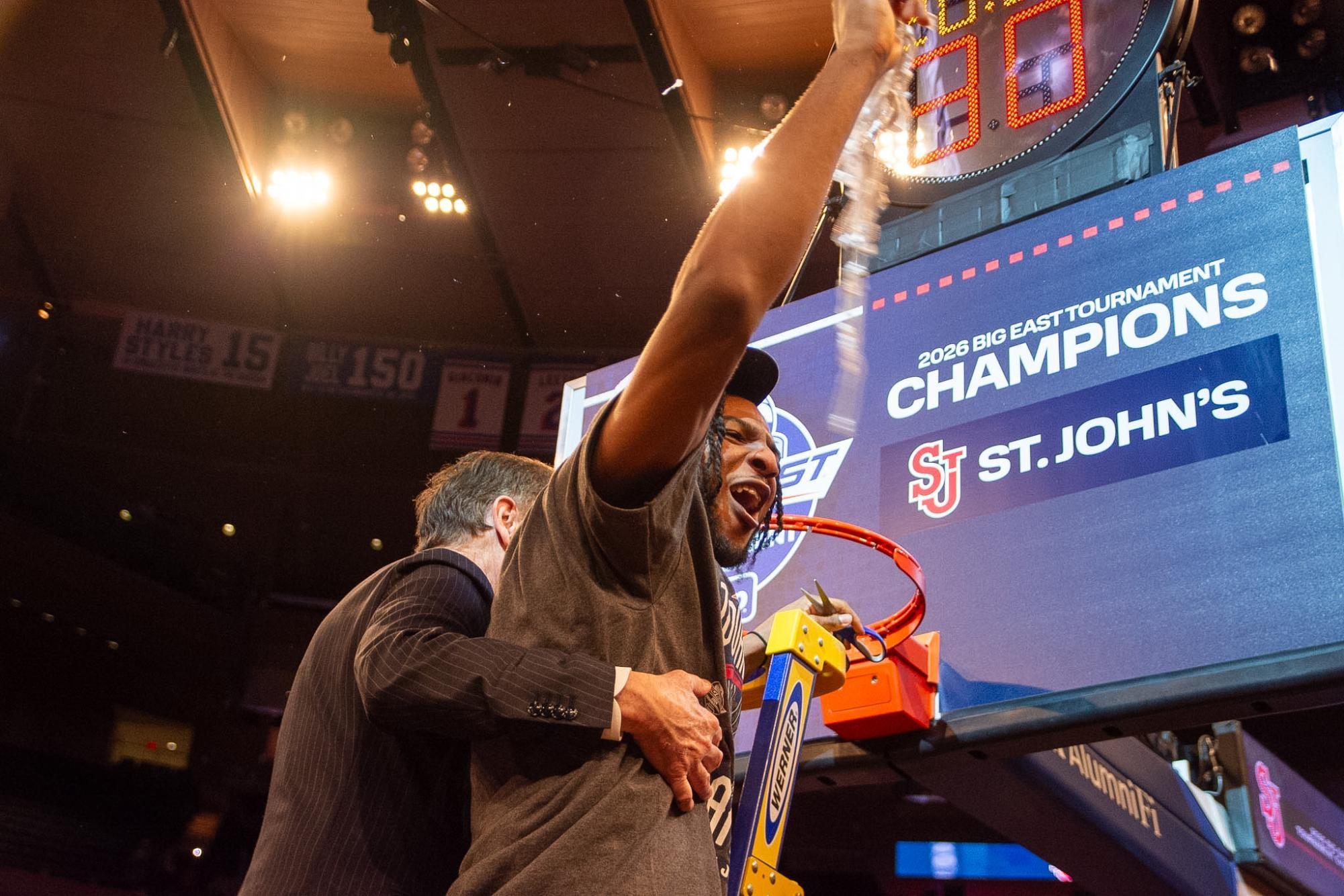
St. John’s Becomes First Team Ever to Win Back-To-Back Tournament and Regular Season Titles p. 16
Torch Photo / Sebastian Zelaya
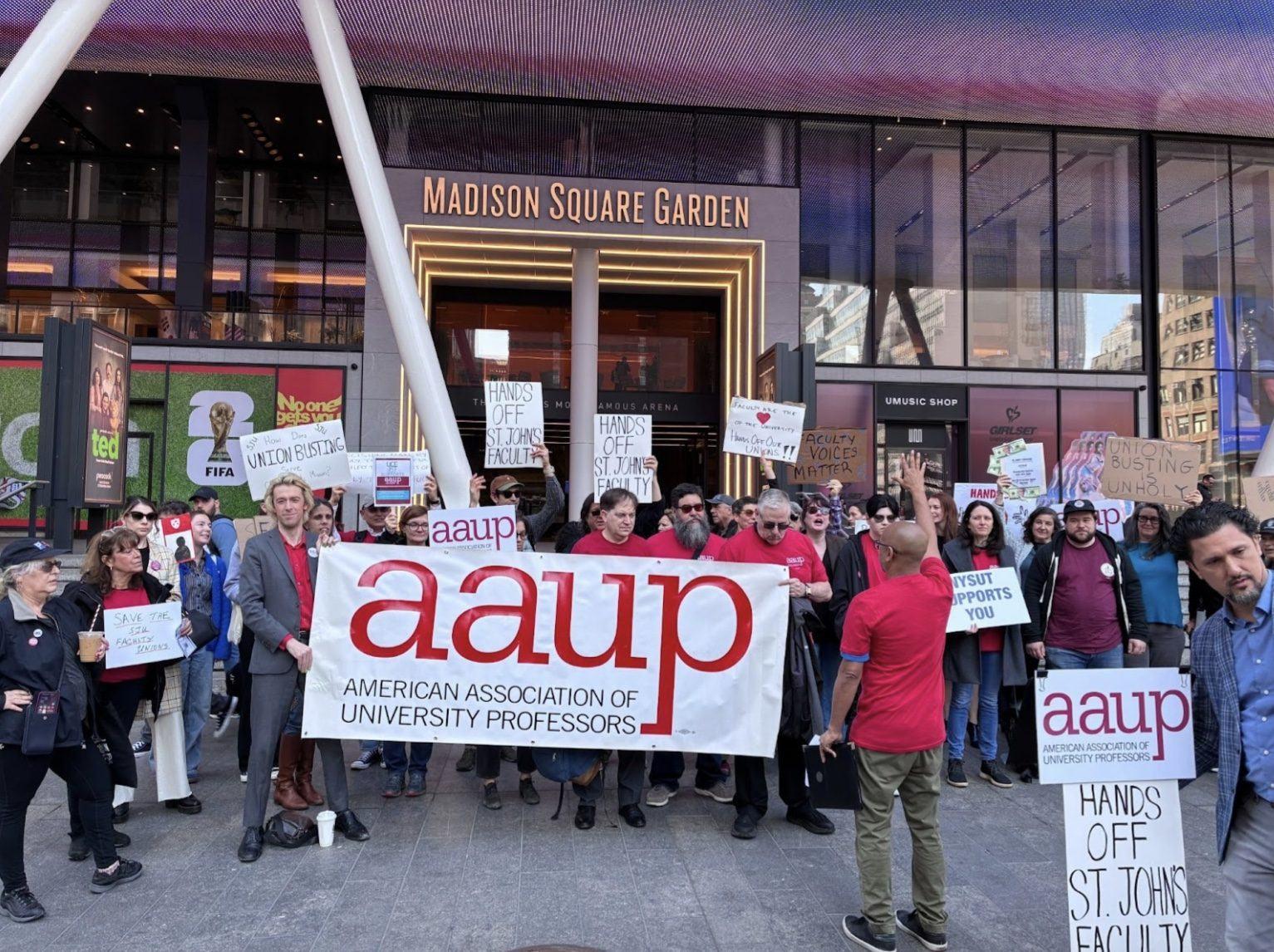
Hands Off St. John’s Faculty Unions Rally Held on Campus
Rally organized in response to President Shanley’s union-busting message.
After Rev. Brian J. Shanley’s announcement to unrecognize the St. John’s University chapter of the American Association of University Professors (AAUP), union members took it upon themselves to organize a rally and press conference in retaliation.
“I was shocked, I was devastated, but I can’t say I was entirely surprised.” Acting President of the St. John’s AAUP Sophie Bell said in an interview with The Torch. “Within five hours, we were having an emergency town hall deciding what we were gonna do, what’s the plan?” She continued. “We have been so energized by this outrageous act,” Bell concluded.
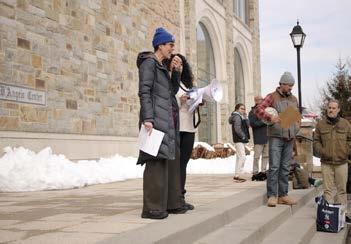
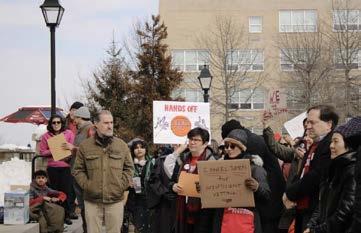
Faculty, staff and students gathered in front of the D’Angelo Center on Feb. 25 from 12 p.m. to 1 p.m. to show their support for the union’s efforts and express their discontent with the actions of the University administration.
The crowd heard from a diverse group of speakers, including professors from each college on campus, undergrad students representing their clubs and graduate students who have had their fellowships cancelled.
Throughout the crowd, there were signs that read “UNION BUSTING IS UNHOLY.”
Crowds were passing around flyers with helpful links and basketballs adorned with union information.
nicholAs st cyr | Feb. 25, 2026
The sentiment amongst the speakers was that the administration had overstepped by ending negotiations on the recent collective bargaining agreement.
“They keep taking things away from us, they keep stripping things away from us little by little,” College of Pharmacy & Health Sciences Representative Hira Shafeeq said. “I was so disheartened because the President is underestimating all of us. They don’t think we have the patience, the time and the skill to organize,” she concluded.
“Upon hearing the news that they were busting the unions for professors and doing these blatant violations of worker rights, I think it’s something that needs to be addressed,” St. John’s graduate and adjunct faculty member Daniel Orozco said in an interview with The Torch.
Speakers from allied university AAUPs were scheduled to deliver remarks at the rally, but Public Safety prevented them from participating.
The union composed a petition urging the administration to return to the bargaining table that garnered over 2,000 signatures. The rally marched towards the Tobin School of Business to hand-deliver the petition to the Board of Trustees. The group made their way to Bent Hall, chanting multiple messages about the
importance of their fight for union power and freedom in higher education.
Public Safety prevented the union from entering the building and offered to take the petition on behalf of the Board of Trustees, but the rally declined.
Union representatives did not take this rejection as a sign of defeat but instead acknowledged how today was a meaningful step in the right direction.
“To see this many people standing together, standing up for themselves, ready to say we’ve had a 56-year-long right to collectively bargain and you can’t take it away from us, is very powerful,” said Bell.
“I really hope that Father Shanley is gonna come back to the bargaining table, as he should, and they will recognize our decades-long contract and that the Board of Trustees will meet with faculty unions,” she stated in an interview with The Torch.
For St. John’s faculty, this rally is an important part of their bargaining story, as they continue to work without a contract for the 240th straight day.
Students Combine Service and Networking at Protiviti Meal
Over 100 students, staff and Protiviti employees joined together to give back.
On March 10, over 100 St. John’s University students and staff collaborated with consulting firm Protiviti for a meal packing and networking event. The event was open to all students to register for on Handshake, advertising the event to students across all majors.
It began at 2 p.m. in Marillac Terrace with welcoming remarks from University President Rev. Brian J. Shanley, O.P. He emphasized the University’s Vincentian roots and dedication to charism.
He also mentioned that the issue of food insecurity is not a distant concern; Fr. Shanley highlighted the food pantry on campus, a recent addition to student resources. Some of
AlexAndrA Prettitore | MArch 12, 2026
the meals packed at the event will remain at the University to nourish struggling students.
“It’s cool to see the energy from students and hear from the president and CEO about their goal to end world hunger,” said Resident minister Elvria Garcia.
Rev. Shanley’s sentiment was echoed by Protiviti CEO Joseph Tarrantino, who joined the St. John’s community for the event. He explained that in addition to consulting, the firm is dedicated to a mission of service. Tarrantino shared information about the company’s i on Hunger initiative, which has allowed for over 17 million meals to be packed around the world.
Following the introductory speeches, volunteers were instructed to gather around one of five assembly lines in order to quickly prepare hundreds of bagged breakfasts.
After an hour of productive packing, volunteers were invited to reflect on their service experiences. They also had the opportunity to network with Protiviti employees.
Sophomore Justin O’Flaherty, a member of the St. Vincent DePaul Society, was eager to volunteer and happy with his experience. He simply encapsulated the purpose of the event, explaining that “It’s nice to see that we, as a Vincentian school, can gather to help the community.”
Torch Photo /Jack Bulik
Torch Photo /Jack Bulik
Students Go Bald for St. Baldrick’s at Greek Life Fundraiser
Monday’s Fraternity and Sorority Life fundraiser brought in more than $12,000.
Members of the Fraternity and Sorority Life (FSL) community gathered at the D’Angelo Center on March 9 during common hour to cut their hair and raise funds for the St. Baldrick’s Foundation, a nonprofit charity co-founded in 2000 by John Bender (a Tobin alumnus from the class of 1987) that supports children with cancer.
According to the fundraiser’s organizers, the head-shaving event generated more than $12,400 for the foundation. St. Baldrick’s will use the money raised at the FSL fundraiser to support potentially lifesaving cancer research around the world.
FSL Director Nicole Torres said the amount raised exceeded the initial fundraising goal of $10,000.
“We had high expectations going into the event, and we’ve definitely met those expectations today,” Torres told The Torch during a post-event interview. “Events like these are what make the St. John’s community special,” she added.Jack Flynn, assistant dean of stu-
Jack Bulik| March 10, 2026
dents, director of student conduct and Torch Managing Editor Emeritus, said the fundraiser also exceeded expectations in turnout.Flynn said hundreds of students showed up for the event at the D’Angelo Center, leaving organizers “stunned by the support.”
One of those students was St. John’s Men’s Basketball center Zuby Ejiofor, who was seen at the fundraiser wearing a St. Baldrick’s T-shirt and posing with the barbers for a photo later posted to the St. John’s FSL Instagram page.Other students, like junior film major Brendan Blomquist, were initially unsure whether they were willing to participate in the head-shaving event. But according to Blomquist, who ultimately shaved his entire head, the sacrifice was worth it.
“You know, we all take pride in our hair, but in this situation that all goes out the window,” Blomquist told The Torch after exiting the stage. Blomquist explained that children with cancer lose their hair during treatment, and seeing others without hair might bring them
comfort.
That idea is central to the mission of the St. Baldrick’s Foundation, which, according to its website, has shaved more than 627,000 heads and raised approximately $369 million in donations since its inception.
As the event drew to a close, Torres and Flynn took the stage to thank the crowd of participants and supporters while also announcing that donations had resulted in a five-figure final total.
“What we do is really important work,” Flynn told The Torch. “It brings the community together, shows solidarity, and we have fun doing it.”

St. John’s Journalism Alumnus Questions Trump in Viral Exchange
New York Times reporter Shawn McCreesh pressed the president at a press conference.
Shawn McCreesh, a St. John’s University journalism alumnus and White House correspondent for The New York Times, drew national attention after questioning President Donald Trump during a March 9 press conference in Miami.
The exchange took place at Trump National Doral, where Trump spoke with reporters about the ongoing conflict involving Iran. During the press conference, McCreesh asked the president about a claim that Iran bombed one of its own elementary schools using a U.S. Tomahawk missile.
McCreesh noted that other officials in the administration had not publicly made the same claim.
“Hi Mr. President,” McCreesh started. “You just suggested that Iran somehow got its hands on a Tomahawk and bombed its own elementary school on the first day of the war. But you’re the only person in your government saying this. Even your defense secretary wouldn’t say that when he was asked, standing over your shoulder on your plane on
Saturday.”
“Why are you the only person saying this?” McCreesh asked.
Trump responded that he did not yet have full information about the situation.
“I just don’t know enough about it,” Trump said. “I think it’s something that I was told is under investigation, but Tomahawks are used by others. As you know. Numerous other nations have Tomahawks, they buy them from us. But I will certainly — whatever the report shows, I’m willing to live with it.”
The exchange circulated widely on social media following the press conference. Political Twitch streamer Hasan Piker shared a reaction to the clip to his 1.6 million TikTok followers on March 9, which has received more than 2.6 million views and 408,500 likes. The clip also circulated on other social media accounts. McCreesh also reported on the issue in a New York Times article published the day of the exchange, March 9, with national security correspondent John Ismay.The article reported that Trump continued to suggest
without evidence that Iran bombed an elementary school in the southern part of the country on the first day of the war, killing 175 of its own citizens, a lot of them children. McCreesh joined The New York Times in May 2024. Before that, he worked as a feature writer at New York Magazine, where he covered media and politics.
He returned to speak with students about his career in journalism in November 2024 for a virtual Journalist Series panel on Webex. The St. John’s Division of Mass Communication hosted the panel featuring a conversation between McCreesh and Michael Rizzo, director of the journalism program. Journalism students were able to ask pre-selected questions during the session.
Also during the discussion, McCreesh spoke about maintaining editorial standards when covering politics.
“We’re not supposed to be the resistance. We’re not supposed to be the cheerleaders, — no matter who’s in office.”
isaBella athanasiou | March, 11 2026
Torch Photo / Jack Bulik
St. John’s University Decides To Longer Recognize Faculty Unions
St. John’s Administration responds to announcement with petition and rally.
St. John’s University will no longer recognize the American Association of University Professors (AAUP) or the Faculty Association as representatives of its faculty, according to an email from Rev. Brian J. Shanley sent to the university faculty, including professors, administrative assistants and other staff members on Feb. 19.
Shanley cited a National Labor Relations Board ruling that provides religious institutions with exemptions from the NLRB jurisdiction in the email.
In response to this decision, a petition was created on behalf of the members of the SJUAAUP, seeking support to urge the Board of Trustees and Shanley to reverse the decision.
The second union is the Faculty Association, which was a part of a collective bargaining unit with the SJU-AAUP. Both have been legally recognized by New York State and St. John’s administration since 1970.
The most recent requests from the SJUAAUP and Faculty Association have included
Celina Mullady | Feb. 23, 2026
a 3.85% pay increase for full-time faculty, a reduction in health insurance premiums and a 25%-30% pay increase for part-time faculty, which aligns with the pay of part-time CUNY staff.
The SJU-AAUP argues the University failed to provide faculty with the proper information regarding the University’s health care premium calculations.
“The SJU-AAUP uncovered strong evidence that administrators violated previous contracts by charging faculty for health insurance, but the administration continues this practice,” according to SJU-AAUP’s website.
“Withdrawing recognition from the faculty union was not something we did lightly, but it is necessary to be able to advance our organizational mission,” St. John’s spokesman Brian Browne said.
Rev. Brian J. Shanley stated that the University must “make decisions that are in the best interests of St. John’s if collective bargaining burdens the university’s goals that advance the
common good.”
For faculty, the goal of the rally is to urge the administration to rethink their decision and speak directly with the Board of Trustees.
Professor Sophie Bell echoed that sentiment, telling The Torch, “Father Shanley has made a devastating choice, to use our Catholic Vincentian identity to try and make a legal case.”
“Our main point of the rally is to send the administration back to the bargaining table immediately, and to reaffirm their commitment to our collective bargaining agreement. We want to meet with the Board of Trustees and have a direct line of communication between the Board of Trustees and the faculty, because of our shared concern of making sure St. John’s values are enacted in the University. We all care about this institution a lot,” Bell said.
Johnnies Day Food Trail Brings Business to Nearly 100 Restaurants
96 locations participate in a University-sponsored restaurant scavenger hunt.
The St. John’s University community competed in the Johnnies Day Food Trail from Feb. 15–21, scanning QR codes at restaurants and businesses predominantly in New York City and Nassau County. The competition included 96 participating locations in the region.
Community members who collect the most QR scans will receive prizes, featuring St. John’s apparel and a pair of tickets to the Red Storm’s men’s basketball game against Villanova at Madison Square Garden on Feb. 28, which includes exclusive access to a pregame reception
The competition is split into five categories — students, faculty, alumni, business owners and fans — winners will be awarded within each group. In the business-owner category, winners are determined by which participating location draws the most Food Trail visitors.
St. John’s University alumni own some of the businesses, like Stout NYC Hospitality Group, headed by Martin Whelan, who graduated from St. John’s in 1984, and currently serves on the University’s Board of Governors. Stout NYC owns several of the locations that were listed on the Food Trail.
Whelan described the turnout from the promo-
tion as “underwhelming,” except for the final day of the promotion which brought in St. John’s fans heading to the Red Storm men’s basketball game at Madison Square Garden.
“We really didn’t see all that much from the Food Trail,” Whelan told The Torch. “Many of our locations are in the city and students didn’t want to make the trip,” he continued.
Instead, students went to locations more local to campus, like QDOBA Mexican Eats on 188th St. in Fresh Meadows.
“I think it’s a good system since many of these are places me or my friends already enjoy going to. QDOBA is my favorite of those,” sophomore Jackson Lamanna explained. As a resident student who does not always want to eat at on-campus dining halls, he found the Johnnies Day Food Trail to be both a fun and practical initiative.
“I always thought the school should get deals with off-campus restaurants to better help their students,” Lamanna continued.
Businesses and students alike benefited from the restaurant scavenger hunt, as it promoted the exploration of unfamiliar spots, and offered incentives for visiting local favorites.
Miranda Maligno, another sophomore, was ex-
cited to see one of her favorite restaurants, Tutto Calcio, on the expansive list of businesses participating in the Johnnies Day Food Trail.
The Italian espresso bar is located in Whitestone, Queens—about 20 minutes from the main campus. Maligno hoped that the Food Trail inspired students to check out the unassuming restaurant. Some were unaware of or unenticed by the prospect of the Johnnies Day Food Trail. Junior Nicholas Keefer told The Torch that he has “been to some of the restaurants before,” but was “unsure about the promotion because he would have to visit too many restaurants to win.”
Keefer added that he found it to be a “cool idea,” but overall felt the effort to visit several restaurants was not ultimately worth the prize.
JaCk bulik & alexandra Prettitore | Feb. 24, 2026
Torch
Photo / Jack Bulik
LinkedIn: A Useful Career Tool or An Uninspired Way to Flex?
St. John’s students discuss their perspectives on the popular professional development app.
AlexAndrA Prettitore | Feb. 26, 2026
Landed a new job? Got a promotion? Learned a new skill? The natural response: Share it on LinkedIn.
The career-based social network launched in 2003 and has since grown in popularity. There are over one billion LinkedIn accounts globally, with over 200 million in the United States alone.
College students in particular have been encouraged to begin docu- menting their professional journeys via LinkedIn. St. John’s University Career Services even has an entire page dedicated to assisting students with their profiles.
But does LinkedIn actually provide the potential for professional ad- vancement? Or is it a meaningless app meant purely for overly polished updates? Students have had various experiences, ranging from enjoy- ment to finding it entirely pointless and even harmful.
Second year pharmacy student Adrianna Preiss told The Torch that LinkedIn is “a fun way to see what other people are up to and congrat- ulate them on accomplishments.”
She jokingly added that “the games are fun,” referencing the log- ic-based mental exercises that are available.
The interactive aspect of LinkedIn is what connects it to other social media apps — users can like, comment and repost others’ content. This allows for community, support and, most importantly to LinkedIn us- ers, networking opportunities.
Having countless resumes at the click of a button could be harmful for your mental health though, as junior Natasha Mungai suggests.
“When I scroll through other people’s profiles, I sometimes get im- poster syndrome,” she revealed. Mungai views LinkedIn as an exacer- bator of negative emotions that college students are already prone to.
A research article in the National Library of Medicine supports this idea; according to the study, young adults who visit LinkedIn more
than once a week are at a higher risk for depression and anxiety.
Mungai acknowledges, however, that many of her peers find the app to be a useful career tool: “Most of the people I respect for their work ethic swear by [LinkedIn] though, so it must be valuable in ways I ha- ven’t explored yet,” she explained.
It is true that high-achieving students gravitate towards LinkedIn; it allows for career advancement early on, making it an attractive plat- form for those who are looking to get ahead.
Sophomore Evan Abreu, an aspiring lawyer, believes that there are other avenues to lay the groundwork for professional success, however.
“One way I make connections is through family members that I have in the field. Or through one of the courses I’m taking which allows for work experience,” he suggested.
Abreu believes that real-world connections can be just as, if not more valuable than ones you can find on LinkedIn. It ties back to the clichè: it’s not about what you know, it’s about who you know.
Mungai reinforced the benefits of in-person interactions, citing career expos as a fruitful way to connect with employers. She also recommend- ed Handshake, another job hunting platform, as a useful resource.
“It has a variety of job opportunities and internships. You can also easily get into contact with people you want to. It feels much more straightforward,” she emphasized.
This sentiment is shared by many, as an article by the Financial Re- view discusses a surge in AI posts and other filler content on LinkedIn. It is largely an algorithm game it appears; posting frequently, even if it is not substantial or intelligent, is what gets traction.
The insights of St. John’s students reveal that LinkedIn may not be the answer to career advancement – genuine connections are.
Bonds Beyond Miles: A Guide to Maintaining Long-Distance Friendships
For when seeing each other in person isn’t always an option.
With a student population of over 503,000 as of 2024, New York City houses students from all over the world. Whether or not New York City is your home, you likely know someone who is a long way from it. From Boston to Madrid, staying in touch with friends is tricky no matter the distance. By implementing some of these tips, closing those gaps might become a little easier.
Phone Calls and Videos
Home is people, not a place; and there’s no place like home, but when home is miles away, the easiest way to keep in touch is by phone.
When asked about long-distance friendships, sophomore Olivia Ne- drick mentioned her twin sister who attends school in Maryland. “We go through periods when we call every day, but we also go through periods where we don’t talk as much; and that’s okay because we both have busy lives.”
In a study from the University of Texas at Austin, researchers found that participants felt stronger social connections when having online interactions, including voice, such as phone calls, compared to interac- tions only using text.
Calling consistently might not fit in everyone’s schedule, especially for friends living in a different time zone. Therefore, an alternative op- tion is to send daily update videos.
Set aside one minute every day to record a short video about any life updates you may have and send it to your long-distance friends. Al- though it isn’t quite the same as calling, it gives you an opportunity to see and hear your friends’ voices whenever you get the chance.
Doing a Joint Hobby
Another way friends can stay connected is by doing a joint hobby. This can be something as simple as a book club or as complex as learn- ing a new skill like knitting.
The possibilities are endless when it comes to picking a hobby and many of them don’t require a lot of funds.
The best part about doing a joint hobby is that you can work at your own pace. If you are unable to talk to your friend about your hobby while apart, it gives you something to talk about when you finally reunite.
Sending Physical Mail
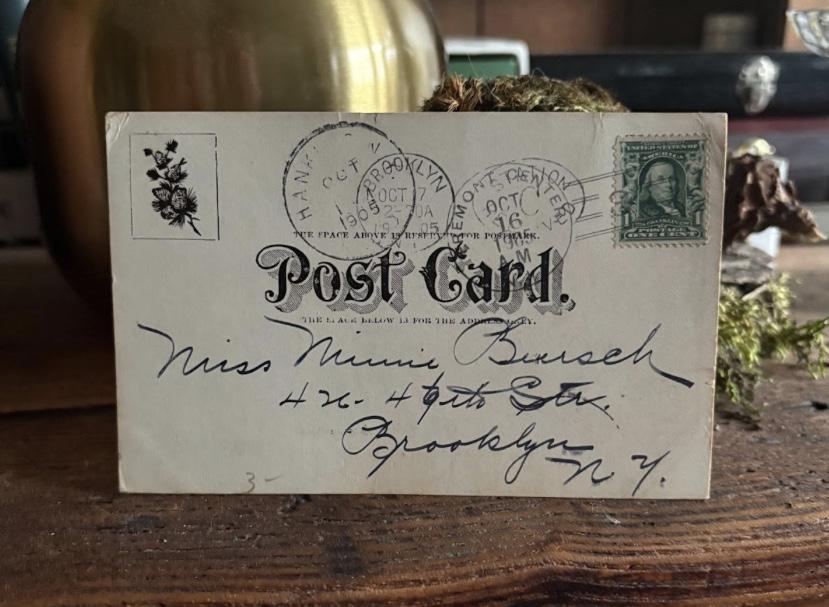
Take a stab at a tried and true method by sending letters and post- cards to your friends. Writing is an outlet to express your own creativi- ty, while also allowing you to send a nice message to your friend. These mementos make for the perfect decoration or memorabilia to look back on.
With a little bit of effort on both parts, your friendships can last a lifetime even when you’re miles apart.
Torch Photo / Syriana Pazmino
SyriAnA PAzmino | mArch 14, 2026
Digital or Analog Organization: What’s the Best Approach?
As midterms draw near, what is the most beneficial way for students to stay organized?
AlexAndrA Prettitore | MArch
Midterm season is rapidly approaching at St. John’s University — midterm grades are due by March 18. This means that in the upcoming week, students across all majors will likely be flooded with various assignments to complete, papers to write and exams to study for.
Organization is key during this hectic time of the semester, and is extremely helpful throughout the semester as a whole. Planning your workflow in advance is especially beneficial. Having time slots dedicated to your assignments in advance helps curb procrastination and ease feelings of anxiety about your schoolwork.
There are countless ways to plan your assignments though, ranging from a traditional paper planner to detailed and personalized platforms such as Notion.
This can lead to the question: Which method of planning is most conducive to a structured study schedule?
Physical Planners
Traditional planners that allow you to take pen to paper are ideal for students who value a hands-on approach to organization and want to decrease their screentime.
There are several forms that physical planning can take. For a portable and convenient option that you can utilize during class, consider a small weekly or daily planner. You can easily slip this into your bag and jot down upcoming due dates as you hear about them in class.
If you want a more premium, aesthetic planner, the viral brand Papier has many offerings. But a simpler, more affordable planner will accomplish the same goals.
For at home planning, a wall calendar is also helpful. You can get one that features photos of a cute animal or your favorite artist to motivate you to continue using it. Whiteboard calendars are another great alternative if you would like to customize further and include additional notes.
Physical planning is especially useful because it pushes you to prioritize handwritten reminders, which boost retention, making it more likely that you’ll remember your assignments. It also limits distractions from technology.
However, physical planning might not be for you if you need more flexibility in your organizational process.
13, 2026
Digital Planners
Digital planning is a convenient option since technology is constantly at the tips of our fingers. It might be a smoother transition for students who already rely heavily on their devices for schoolwork.
Simple apps like Apple Calendar and Google Calendar provide features that you would find in a physical planner in a user-friendly interface. You can add events and tasks, as well as schedule reminders as they approach. There is also the option to share your calendar with others, which can help hold you accountable for deadlines.
For a more advanced planning system, the AI-based platform Notion is available. It has a learning curve, but it is much more customizable than other planning apps. You can design a setup that suits your needs best.
Digital planning can be easily integrated into the lives of students who already do much of their work online; however, it can promote distractions and can quickly become overcomplicated.
If you have an iPad or a similar tablet, you can make a custom digital planner on a note-taking app. This allows you to physically write your tasks while keeping them online.
Both analog and digital planning have pros and cons —it ultimately comes down to what works best for you, and it might be best to incorporate a mixture of the two for the best planning experience.

Conquering Imposter Syndrome
Why is feeling like a fraud most common among college students?
SofiA GuAStellA | feb. 17 2026
According to a study by Merrimack Valley Psychological Studies from 2024, 82% of college students have experienced imposter syndrome. Imposter syndrome is a frequent yet commonly overlooked struggle among college students. A study by Stanford University (Imposter Syndrome | Center for Teaching and Learning) points out that the syndrome known as the “Imposter Phenomenon,” (imposter syn- drome), which dates back to a study from 1978, is rooted in self-doubt and constant comparison.
This research, which was first finalized by the philosophers Pauline Rode Clance and Suzanne Imes, summarized that these feelings and symptoms of doubt come from sudden changes or challenges in one’s life. Whether it be advanced studies or starting from square one, when things do not go according to “plan”, the syndrome kicks in.
So why is it so common amongst college students in particular? One main reason stems from the format that colleges/universities have, which is the common four year credited terms. This can lead to feel- ings of being lost if a student has a shortened or extended version of this standard.
It can also come in forms of racial and sexual discrimination, age and environment biases that can make the journey all the more difficult.
The Torch spoke to two St. John’s University students to get an au- thentic look at why imposter syndrome can be common among college students throughout their academics to show that you are never alone in this path designed for you.
“I can’t stress this enough: limiting your screen time is vital to avoid- ing a cycle of self-doubt… this helps me stay grounded and not let the algorithm take control of me and fuel my anxiety about my career,” explained sports management student Bill McVey.
McVey has just returned back to St. John’s University this semester for his junior year after taking a medical leave of absence from his studies back in the fall semester of 2024.
He also delved into how he stays balanced during times of relapsing into uncertainty and stress.
“As a Christian, I always go to God to ease my anxieties. Many peo- ple don’t think of it as a form of meditation, but prayer most certainly is.”
Catching and acknowledging these feelings early on is vital for knowing how to navigate your emotions.
Communication Arts major, Mary Herbert, shares her story on finding her purpose through her classes at the University as she faced setbacks regarding her studies her sophomore year. “Take full advan- tage of your campus resources, know you have time.”
She also emphasizes frequently meeting with your academic advisor for any and all questions regarding your studies.
“Comparison is honestly the thief of joy, also putting too much pres- sure on yourself and worrying too much about having the perfect GPA can be such a setback. Learning how to overcome those obstacles is the best thing you can do for yourself.”
Feeling like a fraud and de-valuing all your achievements can really hurt your motivation and cloud your mind with pushbacks.
To end with some insight from a professional, Assistant Vice Presi- dent for Equity and Inclusion/ Student Belonging at St. Johns Univer- sity, Sharod L. Tomlinson/’21 Ed.D encourages students in a recent University article about conquering those feelings of not belonging or fitting in.
Torch Design / Megan Chapman
Photo Courtesy / Unsplash Marten Bjork
St. John’s ACM: The Code For Tech Success
St. John’s ACM chapter offers professional skills and personal connections to those entering the tech field.
AlexAndrA Prettitore | MArch 1, 2026
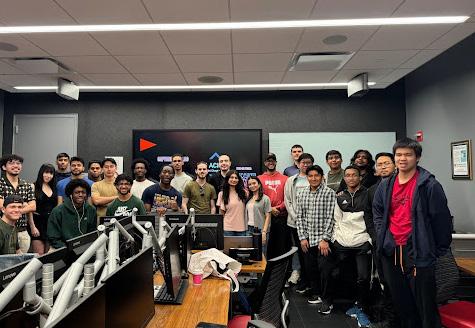
“There’s a stereotype that goes around that comp sci majors and tech majors in gener- al are known to be anti-social, introverted, locked in their rooms coding all day long,” senior Tomas Santos Yciano, President of the St. John’s chapter of the Association for Computer Machinery (ACM), stated.
In their conversation with The Torch, the members of the ACM e-board made it clear that this couldn’t be further from the truth. Collaboration, mentorship and support are at the center of their organization’s mission.
Vice President, senior Gabriel Paredes emphasized that he specifically “wanted to find a community that is interested in the same field as [him] and build relationships with like-minded people,” when he joined ACM in his sophomore year. Connection among members of their field is the priority for the organization.
Senior Alyssa Meczkowska, ACM’s Social Media Coordinator, shared a similar introductory experience: “I actually became friends with the previous social media coor- dinator, and she was really welcoming and friendly. I ended up going to a meeting and realized everyone else was also really friendly.”
Lauren Rodriguez, a senior and the Infor- mation Officer for ACM, cited the Fireside Chat, a social event that rounds off the fall semester, as an example of the organization’s dedication to building bonds within the tech field.
“It’s like a step away from normalcy where [the members] get to reflect and connect with other members. Being able to network with people in the same field and interests, and getting to sit down and relax is great every year,” she explained.
ACM hosts several events each semester, ranging from their competitive Hackathon (which recently took place from Feb. 7 to 8) to more casual meetups.
Paredes shared that the annual Capture the Flag (CTF), a cybersecurity-focused contest, is his favorite event he has participated in as
an ACM member: “It really exposed me to a lot of the cybersecurity environment, espe- cially competition wise. I absolutely love it. We build community based around this fun event.”
He added that this year he is running the event himself, a prospect he is extremely excit- ed about.
Meczkowska echoed Paredes’ sense of enjoy- ment about CTF, sharing that it was one of the first ACM events she attended: “I realized that I really do like cybersecurity, and I actu- ally joined our competitive cybersecurity team afterwards. It made me realize I like an entire realm of tech I didn’t know I was into before that.”
Santos Yciano also emphasized that ACM opened doors for him that he previously did not consider, especially in terms of career goals. He discovered his recurring internship at consulting company EY through an ACM/ Tobin collaboration event his sophomore year, which has reshaped his career goals.
“It’s literally because of ACM that I have that internship. After interning at EY, I’m heavily considering technology consulting as a career path. I’m always going to be grateful for that, and it’s something ACM has done for me,” he Rodriguezexplained. shared a similar story, revealing that “ACM kind of gave [her] first intern- ship.”After winning the 2024 Hackathon, she was able to intern at Headstarter that summer.
“That was the first ever internship I ever got. I got hands-on software engineering experi- ence, which led me to get my second intern- ship the next summer. I treat ACM as the foundation for my growth,” she explained.
Networking, career opportunities and skill building are plentiful in ACM, which tech students would not find from simply attend- ing their classes.
“In ACM, we expose students to a variety of new technologies and skills that you wouldn’t normally see in the classes themselves, which
can open many new pathways for them,” ParedesRodriguezemphasized. added that mentorship is a major part of her experience at ACM: “Everyone on the e-board is so willing to help anybody who comes into the club. I always want to be for somebody else, the person I wish I had as a freshman or sophomore looking to break into the tech field.”
Meczkowska agreed with the emphasis on mentorship: “I do a lot of machine learn- ing and artificial intelligence, which is what students are interested in now, so I love that I’m able to give them advice. I think it’s great that we can help students with whatever they mightDirectneed.”connections with companies are also possible through ACM. Santos Yciano told The Torch that their office visit to Amazon Web Services was especially successful.
“We got the e-board and 25 other ACM members to come with us. It was awesome from all the techy things they showed us, and the office itself was really beautiful,” he described. ACM allows students to get a glimpse into what the tech world is like beyond the Rodriguezclassroom. clarified that ACM is open to students of all majors to gain skills and build connections: “It’s not only for tech majors. Learning these skills will help you advance in the workforce, especially as AI becomes more prevalent. It’s open to everyone, and we try to make it inclusive.
ACM is a guidepost for those interested in tech, providing both pro fessional and per- sonal resources.
As Santos Yciano explained, “ACM pres- ents members with the opportunity to meet people like them who are going through the exact same thing, and get together, learn and grow together. That’s the biggest part, community.
Photo Courtesy / Thomas Santos Yciano
Why the Removal of Faculty Unions Matters to St. John’s Students.
The administration is looking to set a dangerous precedent, one that will further hurt the university’s quality of education.
Micah Grayson | Mar. 3, 2026
In an era of growing corporate consolidation, labor power is as important as ever.
The statistics are clear: not only do unionized workers, especially those of color, make more money, but they also receive benefits such as healthcare at higher rates.
And while constant mergers and growing austerity may seem separate from the realm of higher education, the same principle applies to private universities. At the end of the day, they also place profitability at the top of their priorities.
This is at the core of why St. John’s University President Rev. Brian J. Shanley announced the school’s termination of both the American Association of University Professors Chapters (AAUP) and its partner association, the Faculty Association (FA).
His written statement following last Wednesday’s rally and the broader community’s response, which was sent in an email to student leaders, further lent credence to this notion.
Its sheer vagueness, evidenced through statements such as “Yet the traditional collective bargaining model, established over a half century ago, has proven too rigid to allow for the rapid innovation our students and faculty deserve,” shows that the administration doesn’t have a clear or justifiable reason for the decision.
The closest thing to a coherent, connected point centered around growing issues in the field of higher education as a whole. These included fewer college students in general, federal funding cuts and increased competition to gain nontraditional learners for a college setting.
If the presence of a faculty union relates to these in any way, it would further justify the necessity of one to maintain and gain strong instruction, hopefully reinvigorating the importance of college for young people. The same goes for the nontraditional learner competition.
This is why the best we can go off of is the recent 243-day-long contract stalemate they’ve engaged in, following demands from the AAUP chapter to increase professor pay to match the rising costs of living, and to improve adjunct faculty salaries to match CUNY standards.
Despite the understandability of the demands, they clearly were unacceptable within the Board of Trustees’ grand design.
They faced a choice: either to lose profit for themselves, their glorious basketball team and any other non-academic endeavor, or take the nu-
clear option by eliminating the union issue entirely.
They chose the latter. They observed a community that they played a role in demobilizing and believed, “We [don’t] have the patience, the time and the skill to organize,”said College of Pharmacy & Health Sciences Representative, Hira Shafeeq.
They got away with abandoning the Staten Island Campus, closing the DAC Taco Bell, demolishing the gate 4 parking lot and a plethora of other cost-cutting initiatives. So in their eyes, why not go full tilt and do away with any problems non-admin-connected organizations might bring?
This spells a dark future for the University, not only for the already underpaid faculty, but especially for us, the students.
Strengthening the basketball team and ridding excess campuses fattens the pockets of the admin and brings outside eyes onto the University, but what about the other 99% of those within the community?
If they’re not allowing professors to bargain and improve their work conditions, the quality of instruction will decline. And if they’re willing to worsen the quality of instruction, why would they care about improving academic facilities or programs as a whole?
It fell under the radar amidst the union news, but it was recently announced that those in combined degree programs can no longer become GAs in any department, a job that previously covered 50% of the cost of a master’s degree.
Developments such as these will continue to happen. That’s why Wednesday’s rally and the continued organizing of the AAUP chapter were important then, and are increasingly important now.
Just as in traditional industries, which have seen consistent wage stagnation amidst increases in rent, groceries, etc., late-stage capitalism is worsening the conditions of students and workers in higher education.
But another similarity, one that the administration and corporate executives bank on us forgetting, is that without the workers, students, professors and all who make up a company or university, their power is nothing.
We must use this reality to disrupt and organize at a mass scale.
Sign the petition set up by the AAUP chapter, share it with your friends and participate in any pro-union initiatives you can on campus.
We won’t all be in Jamaica, Queens, forever, but to live up to our mission and to leave this place better than we found it, action is essential.
Torch Photo/ MJ Henderson
Torch Photo/ MJ Henderson

103RD EDITORIAL BOARD
JAMES WILLIAMS EDITOR-IN-CHIEF
CELINA MULLADY MANAGING EDITOR
NICHOLAS ST. CYR
NEWS EDITOR
JACK BULIK
ASST. NEWS
EDITOR
JASON PETRUCCI
SPORTS EDITOR
DEAN
KOUTOURATSAS
ASST. SPORTS
EDITOR
PARKER SONGCO
CULTURE EDITOR
SAM AGOURSALIDIS
ASST. CULTURE
EDITOR
CARLYANN CAREY
OPINION EDITOR
MICAH GRAYSON
ASST. OPINION EDI-
TOR
SUZANNE CIECHALSKI
ADVISER
ALEXANDRA PRETTITORE
FEATURES EDITOR
SYRIANA PAZMINO
ASST. FEATURES
EDITOR
SEBASTIAN ZELAYA
PHOTO EDITOR
MEGAN CHAPMAN CREATIVE
DIRECTOR
ANDRES CORTES
DESIGN EDITOR
ISABELLA ATHANASIOU
SOCIAL MEDIA
MANAGER & CHIEF
COPY EDITORY
CATIE PASCAL
SOCIAL MEDIA MANAGER
NIVANA NAIPAUL
OUTREACH MANAGER
STAFF & CONTRIBUTERS
Katherine Garlisi Sofia Guastella
EDITORIAL POLICY
Editorials are the opinions of the Editorial BOARD of the TORCH. Columns and other content are the opinions of the authors(s) and are not expressed in editorials, columns, letters or cartoons are not necessarily those of the student body, faculty or adminstration of St. John’s University. All contents are the sole responsibility of the editors and the editorial board and do not necessarily represent the views of the administration, faculty or students of St. John’s University unless specifically stated.


CONTRIBUTIONS
All letters submitted for publication must include the author’s name, email, and affiliation to St. John’s. Limit letters to 350 words. Submissions may edited for clarity. Please submit letters to torchopinion@gmail.com
ABOUT THE TORCH
The TORCH is the official, independent student newspaper of St. John’s University. The Torch is written, edited, designed and produced by students of the University. The TORCH is published throughout the week at torchonline.com. There is a weekly newsletter on Wednesday afternoon, as well as a full digital publication each month
ADVERTISING
To advertise in The TORCH, contact torchads@gmail.com. Adverstisements can be purchased for placement on our website, in our newsletter and within our full digital publication. For more information, please see The TORCH Media Package located on our website.
Profit-Based Thrift Shops Are Missing the Point
The rise of thrift resellers defeats the purpose of secondhand shopping.
AlexAndrA Prettitore | Feb. 25, 2026
During one of my late-night Depop scrolls, I came across a generic branded, somewhat damaged coat that was listed for $50. I checked the seller’s account; they had hundreds of similar items on their storefront. “Another overpriced reseller,” I thought to myself, as I closed the app in frustration.
New York City is one of the epicenters for thrifting in the United States, containing over 400 businesses that sell secondhand and vintage pieces.
Thrifting originated as a largely environmentally friendly and affordable way to shop, allowing for both lower prices and a second life for clothing that would otherwise be tossed into a landfill.
Thrifting was not seen as a luxury; instead it was a way for donated pieces to be purchased and appreciated by people who could not necessarily afford new clothing.
It is now a trendy pastime to visit such stores, in addition to being a generally cost-effective, eco-conscious way to shop. There are countless thrift hauls online, which present thrifting as an entertaining hobby rather than a practical way for those of various economic situations to shop.
For those who do not live near a thrift store, there are countless online platforms that sell secondhand clothing such as the aforementioned Depop, ThredUp and eBay. Individual sellers can create and manage their own virtual storefronts, putting millions of items at consumers’ fingertips.
Although this seems like it would be a convenient and discounted way to thrift, the rise of digital independent secondhand businesses lends itself to inflated prices and sometimes even misleading product descriptions.
The items that resellers purchase are typically marked up, justified
with labels such as “vintage” and “Y2K” to entice buyers into paying pretty high prices for pieces that were likely purchased for significantly less.
Furthermore, such business owners typically are not selling personal clothing items that they no longer use. Instead, many of them stock up at their local thrift stores and relist the pieces they found at much higher prices. This practice leads to cost hikes and a lackluster inventory of remaining pieces.
The most desirable pieces are quickly bought by resellers, limiting the options available to everyday consumers. Thrift resellers often visit stores in lower-income neighborhoods specifically in order to optimize their profits, which is especially harmful to their local buyers.
Of course, there are some high-quality vintage items that are objectively worth higher prices than they are sold for at thrift stores. Designer pieces are often hidden and can be found if you diligently search. Resellers want to be rewarded with profitable sales after taking the time and putting in the effort to discover them.
Oftentimes, however, the items that are sold by online thrift resellers simply are not worth their listed price. Secondhand clothing is meant to be significantly less expensive than new items — at least 25 to 50% cheaper.
Thrift resellers tend to ignore this principle, championing convenience and profit over the actual value of the product.
If resellers continue to dominate the thrifting landscape, accessibility and affordability will plummet further. A shopping technique that was meant to benefit low-income communities is on track to become unattainable and gentrified.
The TORCH. St. John’s University O’Conner Hall - B Level
Hey Father Shanley, The Humanities Matter!
The quiet defunding of the humanities will hurt the university long-term.
Carlyann Carey | MarCh 11, 2026
About two years ago, the Opinion Editor Emeritus Elizabeth Kaufmann wrote an article for The Torch on the importance of the humanities. The two of us being English majors, it felt important to emphasize to people the good that liberal arts can bring to education and how it can enrich a person’s life.
After spending four years as an English major, I feel this more strongly than ever, yet St. John’s and my generation are doing less and less to support it.
Father Brian Shanley quietly closed the door on necessary programs for students and faculty, specifically regarding the humanities. Not only did he end the recognition of St. John’s faculty unions, but he also shut down the art history major and the Global Language and Culture Center, according to an email sent to students and faculty.
We live in a world where literacy is dying. Nicholas Dames, a professor at Columbia, wrote an article in 2024 discussing how kids are coming to college not being able to read. The author writes about kids going to elite universities and being unable to focus on reading a sonnet.
The humanities and the arts teach students how to critically analyze forms of media, texts and works of art. When these skills are not being utilized or encouraged by institutions, people fail to develop the skills needed to do well in the world post-grad.
Without the humanities, my generation will fail to form a nuanced understanding of the world around them. At best, they won’t be able to enjoy or critique music and art. At worst, they take underdeveloped critical thinking skills to the voting booth or the dinner table.
Most of us assumed that the rise of AI would make majors like the English major obsolete. I can’t help but feel as though that is the driving force in Father Shanley’s decisions. However, the opposite seems to be happening.
Business Insider suggests that the rise of AI is making the humanities more of a driving force in the job market. While technology is developing improvements in technical skills, businesses still need good
communicators to keep their companies running.
I’ve found that each time I log into LinkedIn or Handshake to look for internships and jobs, regardless of what field I apply for, each job description requires the same thing. “Must have good written and oral communication skills.”
So what happens when our University’s president decides that these skills don’t matter so much anymore because they’re not bringing in money for a new basketball court? He stops funding them and the professors who have dedicated their lives to them.
A big mistake is being made by the university. If Father Shanley and the others in St. John’s who signed off on these changes can’t see this mistake based on the academic value of the humanities, they will definitely see it monetarily in the next few years.
The humanities are necessary, now more than ever. Businesses know this, humanities students understand this, when will it start to click for university leaders?

What’s Being Pretentious, Anyway?
Social media gets the “pretentious English major” wrong every time.
Emerald Fennell’s take on the beloved classic “‘Wuthering Heights’” released on Feb. 13 to mixed reviews.
Some of the main issues people take to the film are the lack of accuracy to the book to the point of bastardization. Race, a central theme in Emily Brontë’s story, plays no role in the film. The character Heathcliff, a person of color in the books, is played by a white man.
What’s shocking isn’t just that the director would whitewash a role that was meant for someone else to project her own fantasies, it’s that people are actively supporting her in doing so.
Online, people have taken to TikTok to share how much they love the film, especially when there isn’t a “pretentious English major” in their ear telling them it sucks.
This took me aback a bit. As an English major, I hated the movie. But what I know about being pretentious is completely different to the online discourse’s definitions of it.
TikTok seems to think that anything challenging anti-intellectualism is “pretentious” when it’s not.
In English classes, there is always the occasional student or professor who thinks anything that isn’t Shakespeare or white, European and male, isn’t to be taken seriously.
We all know the type of guy to tell you he “only reads the classics” and recommend “Crime and Punishment.”
When I was a freshman, I had this kind of idea in my head, too. It wasn’t until I took classes on de-colonialism and read books and theory centering minorities that I was able to deconstruct this concept in myWhathead.Fennell did was the exact type of thing that the “pretentious” English major these people are discussing online would do. Taking a narrative and restructuring it without paying any respect to the central ideas of the text.
To make a long story short, it lacks respect.
You can love the new movie, or any form of media. Personally, I love “Vanderpump Rules” and I’m the last person to hate on someone for
enjoying something, that’s totally fine! But it gets concerning when we turn against genuine criticisms from people who are getting degrees that teach them how to engage critically with literature and media.
One of my favorite things to do is “be trashy” and like silly and trashy things. Beyond “Vanderpump Rules,” I also watch “Below Deck” and spend most of my time listening to music you’d find at a club. But I do that with a critical eye and an awareness that all media, no matter how smutty or camp, is sending a message.
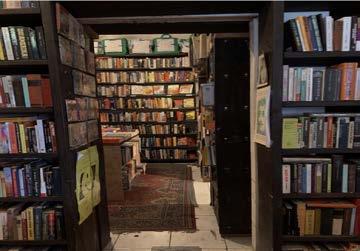
Carlyann Carey | MarCh 1, 2026
Photo Courtesy / Iñaki del Olmo
Torch Photo/ Carlyann Carey
‘Wuthering Heights’ Lacks Substance, Failing to Create a New Narrative
The film adaptation of Emily Brontë’s critically acclaimed novel falls flat.
Celina Mullady
The director of “Saltburn” and “Promising Young Woman,” Emerald Fennell has released her third film titled “’Wuthering Heights.’” The film—which attempts to be an adaptation of the classic Emily Brontë novel of the same name—fails to capture any of the main themes of the novel, and doesn’t reinvent any themes either, ultimately falling flat.
Fennell, known for her disturbing and uncomfortable visuals, carried out this reputation in her newest film. The film is filled with somewhat shocking and unnerving scenes, like a public execution, for what appears to be pure shock value. These visuals add essentially nothing to the actual issues at play.
Our two main characters, Heathcliff (Jacob Elordi) and Cathy (Margot Robbie), engage in a toxic romance—one that should not be romanticized. The novel clearly urges audiences to understand that their love is not something to yearn for. Brontë includes the abusive tendencies of both characters, evolving the novel into a cautionary tale, rather than a romance.
The novel follows three generations, which examines the lasting effects of abuse and generational trauma. In the film, the other generations are wiped from the plot, stripping the story of its deeper meaning of how Heathcliff and Cathy’s actions had lasting consequences.
“’Wuthering Heights’” attempts to rewrite the story, making it appear as if Heathcliff and Cathy have an epic romance. While this decision remains irresponsible due to the severity of the subject matter discussed in the novel, like abuse, alcoholism, sexual assault and revenge, if done well, it could have been reinvented into a new story. Unfortunately, the film lacks any quality that would make this relationship appear as a great love story. Healthcliff and Cathy lack
| Feb. 19, 2026
any real chemistry, aside from lust. The film moves quickly past their youth and skips right to their separation. The characters appear to have a weird infatuation with each other, but it’s not explored and is just expected to be taken as truth.
Aside from the relationship issues in the film, it also has a glaring issue regarding Heathcliff. In the novel, it is clearly stated that he is a person of color. While his explicit place of origin is not stated, he is not at all white. The racism that Heathcliff faces in the novel is one of the most significant reasons why he becomes abusive. Removing this poignant point of the novel and casting Elordi completely undermines the character and how the audience should understand him.
The film’s side characters, like Edgar (Shazad Latif) and Isabella Linton (Alison Oliver), are reduced to mere placeholders for Heathcliff and Cathy. In the novel, each character has their own individual arc— this aspect is completely lost in the film, and even goes as far as degrading Isabella, arguably the strongest female character in the novel.
One quality that redeems the film is the young Heathcliff (Owen Cooper) and young Cathy (Charlotte Mellington). The two actors perfectly convey the childlike wonder, curiosity and love the characters have for one another; however, the innocent and captivating part of their relationship seems to be lost as time passes.
Adaptations do not need to be 100% truthful to their literary counterparts; however, they should remain true to the messages and themes. The issue with “’Wuthering Heights’” is that it actively avoids the harsh realities of the novel to create a lackluster alternate reality.
From the casting to the erasure of important characters and plotlines, the film fails to address the important aspects of the novel and is completely disrespectful to its source material.
What the Oscars Have To Say About Art and Politics
Asking a room full of artists not to be political is like asking a fish not to swim.
When awards season rolls around, the same online discourse gets recycled year after year.
Should celebrities speak about politics? When celebrities like Billie Eilish and Finneas get on stage to talk about stolen land, is it using their platform for the betterment of the world or is it a tone-deaf approach towards people who actually have to face the consequences of this harsh reality?
The answer is more difficult than the takes we might see on social media would suggest.
Two things can be true at once. It might be irritating to see celebrities get on stage to share sentiments and truths about the world that money might prevent them from truly understanding.
However, all artists engage with politics in some way. It’s important to know this and expect voices to emerge when given a platform at awards shows.
During the Oscars, a few things happened. Jimmy Kimmel went on stage and made a joke about CBS and the spinelessness of media corporations, something that affected him personally. The winners for “Best Documentary” went on stage and compared the realities of what is happening in Russia to what is happening in the United States.
Sometimes, looking at Hollywood celebrities on our screens talking about politics feels dystopian, but it would be even more dystopian if they didn’t say anything at all.
This is because all art is political. It’s always sending a social and cultural message.
Take “Sinners,” for example. The film takes place in the 1920s, but it draws on themes we can see emulated in our present reality such as racism, an immigrant diaspora and social hierarchies.
You can watch movies like “Sinners” and documentaries like “Mr. Nobody Against Putin” without a political lens, but to do that is to refuse to genuinely engage with the media the way the cast and crew intended you to. You would be doing a disservice to yourself and the films’ creators.
Now take that understanding and apply it to awards shows. A room full of artists making work that is inherently political calls for those same artists to use a world stage to share the same messages inherent in their work.
If you don’t think politics has a place in art, you’re mistaken. Although it might be hard to digest, each piece of media you enjoy is saying something necessary about the times we’re in.
Carlyann Carey, | MarCh 17, 2026
Three Songs That Define Mitski’s ‘Nothing’s About to Happen to Me’
Mitski’s devastating, near-folk album focuses on isolation and codependency.
Samantha agourSalidiS | march, 9, 2026
Released on Feb. 27, Mitski’s eighth studio album, “Nothing’s About to Happen to Me,” is a relatively quick listen, sitting at 34 minutes and 27 seconds. Through just 11 tracks, Mitski delivers an emotionally loaded piece that absolutely lives up to her previous albums. Centered around themes of isolation and silence, Mitski tells the story of a woman who holds her tongue, can’t bear to leave, fears being alone and welcomes the dark.
Some songs are more relatable than others, with “If I Leave” telling the story of being afraid to leave a relationship because you don’t think anyone will love you as they do. This album is filled with songs about codependence and self-doubt, and that’s where its strengths lie. The tracks are definitely emotionally damaging, but they can also be healing for the right audience. Overall, Mitski hits the mark with her album, blending a fresh mix of jazz, blues and folk. Here are my top three tracks from the album.
Track One: “In a Lake”
Starting the album off strong, ”In a Lake” is a beautiful ballad that draws on elements of both Blues and Appalachian music. “In a Lake” feels like a reflection on regrets and facing the consequences of one’s own actions. The song hints at the idea that living in a small town condemns you to a small life, haunted by guilt. Mitski’s lyrics claim she doesn’t want this—who would—especially in the first verse, “I’d never live in a small town / I’ve made too many mistakes.”
The one place she feels like she can be free from judgment is the lake. The line “But in a lake you can backstroke forever / The sky before you, the dark right behind,” shows us how comfortable nothingness is for her and how calm she would be in a faraway place. Even feeling alone in a city sounds comforting for her when she says, “And in a big city, you can start over / The lights all around you, the dark safe in the
sight.” This opening track is easily one of the best on the album and sets the tone for the rest of the piece.
Track Two: “Where’s My Phone?”
The second track, Where’s My Phone, is a bit more chaotic and dives into the classic sad rock sound that Mitski is best known for. Kicking the album up a notch, “Where’s My Phone” feels desperate and full of yearning. The repeated questions of “Where’s my phone? / Where’s my phone? / Where did I leave? / Where’d I go? / Where’d I go?” directly tie Mitski to her phone.
She strongly implies that she wants a clear mind, to think about nothing, and to live in the nighttime forever. When she says, “If night is like you punched a hole into tomorrow / I would **** the hole all night long,” she means she would love nothing more than to stay in that moment of nighttime: an engaging and humorous metaphor, but a thought-provoking one nonetheless. And yes, it is even bleeped out in the song.
Track Three: “Cats”
Right back into the acoustic folk sound, “Cats” is soft and heartbreaking. Mitski explains the painful experience of loving someone so much that you feel like you can’t leave them. This over-reliance on a person’s presence is co-dependent, and her only comfort is the two cats who sleep with her.
She knows she will be alone if she leaves, so she would rather be unhappy. When she sings, “I won’t leave you ‘cause I still love you / So it’s up to you if you choose to go / In the meantime, sleeping by my side / Our two cats, making sure I’ll be alright,” she knows she won’t leave the relationship, so it’s up to her partner to leave her first. This song captures the album’s main tone, sinking into the idea of reliance on others and the craving for their love.
Harry’s Finally Back, and So Disco Is Back
Styles has returned with his fourth studio album, embracing disco and music reminiscent of the 1970s. celina mullady | march, 14, 2026
Singer-songwriter Harry Styles is officially back after a three-year hiatus with his fourth studio album: “Kiss All the Time. Disco, Occasionally.” In his new album, Styles departs from his usual pop tracks, embracing a new, funky, electronic sound.
This 12-track album is short, yet comprehensive. Styles brings listeners on a unique experience, encouraging them to embrace emotions like love while also having fun.
The lead single, “Aperture,” gave fans a glimpse into how the album would sound. The track embraces electronic sounds while still incorporating traditional instruments like the piano. The lyrics encompass feelings of love and anxiety, and how quickly they can intertwine.
“I don’t know these spaces / Time won’t wait on me / I wanna know what safe is” sings Styles.
The album is full of fun, funky baselines, almost reminiscent of Donna Summer and other disco legends of the 1970’s. Possibly the most reminiscent of its predecessors is track 10, “Dance No More.” This track is full of fun background call-outs, with the main catchline being “DJ’s don’t dance no more.”
Hidden behind these electric sounds, Style’s main themes continue to trace back to romance and relationships. “It was tough with the time, but you called me back / And you know that you can tell me, I can take that / Did you get your taste back? Or do you just need a little love?” sings Styles in “Taste Back.”
With each album, Styles continues to evolve his sound. Compared to his first, self-titled studio album, released in 2017, his sound has transformed from soft-rock to pop to this new electronic dance music.
Some of the tracks depart from the electric sounds like “Coming Up Roses” and “Paint by Numbers.” Both tracks feature melancholy instrumentals that serve as an intermission to the dancing.
When discussing the album, Styles emphasises the aspect of closeness and community.
“There is this inherent vulnerability in people where we are all coming together, and there’s this admittance of, like, we’re gathering to something we can’t see and we can’t feel all the time and isn’t necessarily as tangible as the things that are always around us.” He continued, “There is vulnerability in admitting that we all believe in something, whether that is music, whether that is religion, whatever that is.”
His sentiments are reflected in his one-night-only show in Manchester on the day of the album’s release. The concert, which was recorded by Netflix, Styles performed for 1 hour and 37 minutes, focusing on the crowd, their energy and their experience.
With each track, Styles encouraged fans to get on their feet, dance and sing along — if they were able to memorize the lyrics in less than 24 hours.
“Kiss All the Time. Disco, Occasionally,” is about self-exploration, relationships and most importantly, dancing any chance you get.
Torch Photo / Parker Songco
Five Classic Books Every College Student Should Read
These installments in the literary canon should be on every student’s “TBR.”
AlexAndrA Prettitore | Feb. 20, 2026
In English classes throughout high school and college, teachers and professors typically encourage—and require—students to read “classic” literature. The feeling of being forced to engage with classic books can leave a negative impression on students, pushing many away from reading them by choice.
Classic books do not belong to a specific, boring genre, however. It isn’t really a genre at all.
The term “classic” means that a novel has stood the test of time and has made a significant impact on literary studies. There is a diverse catalog of classic literature, much of which contains both universal lessons and an interesting plot, while also being accessible to those who are not avid readers.
“East of Eden”
Photo Courtesy / Instagram Ray Mock
Considered John Steinbeck’s masterpiece, the American classic “East of Eden” was published in 1952. On the surface, it is a retelling of the biblical story of Cain and Abel in early 20th century California. It goes far beyond this though, creating some of the most compelling characters in modern literature.
“East of Eden” follows two families, the Hamiltons and the Trasks, as their lives intersect. It is a largely character-driven novel, containing championable heroes, a chilling yet captivating villain and many morally ambiguous figures.
At its core, the book is an examination of what it means to be good and evil—a question that isn’t always clearly answered.
“East of Eden” contains ideas about morality that can be applied to almost anyone at any time. Its timeless nature has led to a recent resurgence in popularity; Netflix is set to release a limited series adaptation in the coming year. Now is the perfect time to pick up the novel before the show comes out.
“The Secret History”
A page-turner about eccentric and sometimes reprehensible college students, “The Secret History” by Donna Tartt redefines what it means to be a classic.
It was published in 1992, quickly gaining the title of a modern classic for its conniving, complex characters and electric plot.
The story follows a tight-knit group of Classics students at a liberal arts college, their unconventional professor and their bizarre, sometimes murderous antics. This is told from the perspective of Richard, an outsider who quickly becomes immersed in this madness.
Following the structure of a Greek tragedy, “The Secret History” provides moral dilemmas (like in “East of Eden”) in a more haunting, unsettling context. It doesn’t necessarily contain any lovable characters, but they will still compel you to find out what happens next, and stay with you long after you finish reading.
“The Picture of Dorian Gray”
In less than 300 pages, “The Picture of Dorian Gray” by Oscar Wilde contains one of the most gripping downfalls in literature. It was published in 1890, yet it remains relevant in the digital age.
It is about the title character Dorian, who makes a deal with the devil to stay young and beautiful, while a portrait of himself ages instead. He is surrounded by contrasting characters, some of whom encourage goodness, while others push him towards evil. Throughout the novel, he gradually becomes more and more hideous on the inside, even as his exterior remains spotless.
“The Picture of Dorian Gray” is still important in today’s society, which is largely affected by unrealistic beauty standards and an epidemic of vanity. The moral decline of Dorian is disturbingly memorable because of its relevance.
“Jane Eyre”
“Jane Eyre” by Charlotte Brontë contains the original 1847 “girl boss.” It is a foundational Gothic novel, but above all, it is a timeless example of a coming of age story.
We follow Jane across 20 years of her life, from her time at an oppressive boarding school to ultimate self-discovery. She encounters several obstacles along the way, but consistently prioritizes her freedom. A romance is a major plotline in the novel, but it is always clear that it is primarily Jane’s story as an individual.
“Jane Eyre” serves as an inspiring tale of perseverance and growth, encouraging women to choose themselves when necessary. She is a relatable heroine that modern readers will love and get to know deeply.
“A
Raisin in the Sun”
Lorraine Hansberry’s 1959 play “A Raisin in the Sun” introduced audiences to the idea of the “American Dream” from the perspective of a Black family. Its title was taken from Langston Hughes’ poem “Harlem,” which discusses the aspirations that Black Americans were forced to give up due to racism.
“A Raisin in the Sun” follows the Youngers, a Black family living in Chicago. It is very domestic, taking place within their crowded apartment and focusing on their complicated interpersonal dynamics. Its scope goes far beyond the Younger household though, as it weaves in social commentary on race, class and the American Dream throughout the play.
“A Raisin in the Sun” is deceptively simple in language, allowing it to be read by a wide audience, while also containing thought-provoking themes and dynamic, memorable characters.
Reading classic literature can seem intimidating, especially if you’ve only been exposed to it in school. It is meant to be read by everyone, and it is fulfilling once you get started.

Torch Photo / Alexandra Prettitore
Zuby Ejiofor’s Absence From The All-American Team is Appalling
Ejiofor swept Big East awards, but failed to receive National recognition
Dean Koutouratsas | March 19, 2026
Zuby Ejiofor caught the attention of the Big East this past week.
To close out a standout final regular season campaign at St. John’s, the big man took home the conference’s three most prestigious awards. The Defensive Player of the Year, Player of the Year and Big East tournament Most Outstanding Player are all in Ejiofor’s possession.
But what’s not in his possession is a spot on any of the three All-American teams, unlike his former teammate turned NBA prospect RJ Luis Jr, who made the All-American second-team last season.
Credentialed media outlets, including the Associated Press, select 15 players to represent a group of players who they think are the best in the country. Ejiofor received a mere honorable mention alongside potential first overall selection Darryn Peterson.
Unlike his Kansas counterpart, who missed 11 games due to injury, Ejiofor was on the court for all 34 games. His health, motor and longevity are irreplaceable for a St. John’s team that won 13 and six straight en route to clinching consecutive regular season and tournament titles. However, that didn’t seem to matter when it came time for the beat writers to select their All-Americans for this season. During their voting process, they selected Caleb Wilson and JT Toppin to the second team.
While this is not intended to discredit either player, this is a glaring example of how the committee tends to select positional players over big men.
Take Wilson, for example, who averaged an impressive 19.8 points and 9.4 rebounds per game. The freshman was on a roll until he went down with an injury and missed the last month of the season. He was ruled out of the ACC and NCAA tournaments due to another devas-
tating injury.
If a player can play in just 24 games and make the All-American team, then why couldn’t Ejiofor be included? Leading the Johnnies in points (16.3), rebounds (7.1), assists (3.5) and blocks (2.1) per game wasn’t enough to impress the committee.
Ejiofor’s exclusion from the All-American team is, therefore, appalling and gut-wrenching in many ways. He transferred schools only once, in an era when players constantly entered the portal. In his three seasons in Queens, he became the embodiment of the St. John’s program, as the fan base rallied behind him in every game.
Whether you were sitting in the bleachers of Carnesecca Arena or the stands of Madison Square Garden, you were bound to hear a “Zuuu” as Ejiofor took the court alongside his teammates. Maybe how others perceive that player should be taken into consideration over just their status and statistics?
One could only guess why Ejiofor was excluded from any All-American team. But if one thing is certain, this likely won’t do much to his confidence ahead of the NCAA tournament.
St. John’s is set to face Northern Iowa in the first round on March 20. They will need a big performance from Ejiofor to reach the second round and beyond.
With another reason to prove the doubters wrong, Zuby Ejiofor can lead the Red Storm to postseason glory.
St. John’s Women’s Lose to Pirates in BET
Three Johnnies scoring in double figures wasn’t enough to beat Seton Hall
Dean Koutouratsas | March 10, 2026
The No. 6-seeded St. John’s Red Storm’s season came to a premature end on March 7, as they fell to the No. 3-seeded Seton Hall Pirates, 63-61.
Despite sweeping the regular season series, St. John’s could not overcome a dominant performance from Jordana Codio, who led the Pirates with 35 points.
Jailah Donald was at the top of the Johnnies’ stat sheet, scoring 15 points with four assists and four rebounds. Brooke Moore and Shaulana Wagner were the supporting cast, tallying 11 points in a losing effort.
“I think a game that we felt obviously you can win, not to get shot at the end, is a difficult way to go out,” said St. John’s head coach Joe Tartamella following the loss.
“Certainly disappointed with the outcome, but I think in terms of what these guys have done throughout the year, we’ll see what happens in terms of post-season, but I’m proud of how they played this year.”
If St. John’s won the conference tournament, they could have solidified a spot in the upcoming NCAA tournament. But after faltering against Seton Hall, the Red Storm can find themselves outside of the tournament.
Wins over No. 18 Oklahoma State, Marquette and Villanova can help their record stand out come March 15’s “Selection Sunday.”
“We’re really resilient to come back from being down. We played hard. I give my teammates all the props for that. It’s a hard loss, but we’ll get back,” forward Sa’Mya Wyatt said.
Wagner and Moore put St. John’s on the board early in the first quarter. Codio scored Seton Hall’s first 10 points, with six points coming
off consecutive triples. Wyatt matched Codio’s next basket, as four points from Moore and Grant brought the Pirates’ lead down to two.
Seton Hall went on an 11-2 scoring run to start the second quarter, with nine points coming from long range.
A pair of threes from Donald and Ariel Little kept the Johnnies afloat, while they faced a nine-point deficit. Kylie Lavelle’s five points and a three-pointer from Donald brought the Pirates’ lead down to five.
Still, St. John’s would have to play from behind entering the second half. Outscoring their opponent by close margins in the first two quarters gave the Pirates a 37-32 lead.
Long-range shots from both teams got the third quarter underway. Codio scored Seton Hall’s next six points, while six from Wyatt and Donald kept the Johnnies from falling behind.
Codio and Grant matched each other on three-point attempts to open the fourth quarter. Wagner scored St. John’s next nine points, bringing them within one point of reclaiming a lead.
However, Wagner would single-handedly end the Red Storm’s evening by turning the ball over. She was then forced to foul Codio, who made both free throw attempts.
Wyatt brought the Red Storm back into the affair on a turnaround jump shot. But it was too late for the Johnnies to make a comeback against Seton Hall.
St. John’s journey to the NCAA tournament might have come to an end against Seton Hall, but the final verdict won’t come until after the Big East tournament’s conclusion.
Torch Photo / James Williams
Torch Photo / James Williams
St. John’s Are Dual Big East Champs
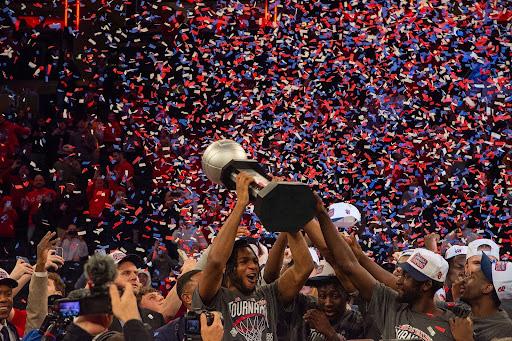
“There’s no tournament, there’s just tomorrow night,” Rick Pitino said following No. 13 St. John’s victory in the semifinals of the Big East Tournament, the night before the Johnnies’ second straight year playing in the conference championship.
“We played the regular season like our lives were on the line, we will play tomorrow the same,” Pitino finished, emphasizing the life or death nature of the Red Storm’s final test before the NCAA Tournament.
Everyone likes a sequel, but a trilogy is the perfect way to close out a good story. Think of the first three Star Wars films, the Dark Knight Trilogy or the Lord of the Rings – the final fight is always the most memorable.
For the third time this season, the titans atop the big east do battle. The UConn Huskies traveled south to face St. John’s in a matchup for all the marbles.
Shirking the embarrassment of their 72-40 loss in Hartford a month ago, the Johnnies came out of the gates connecting on multiple haymakers. A rare Zuby Ejiofor (18 pts, 9 rebs, 7 blks) midrange shot began the scoring on the first possession, giving the Red Storm an early lead they continued to extend.
St. John’s started with 10 unanswered points posted on the scoreboard, creating an avalanche of momentum that the Huskies struggled to sift through. Ejiofor’s interior defense smothered
UConn’s paint offense, sealing off Tarris Reed Jr. (17 pts, 7 rebs, 8-17 FG) from the flow of offense.
Forced to rely on perimeter shooting and second chance points, the Huskies were limited to just 14 points through the first 10 minutes of play, as the Johnnies maintained a double digit lead at 25-14.
By a 40-27 advantage, St. John’s had to hold on to their 13 point lead for only 20 more minutes to sustain the glory they achieved a year ago. The key to suppressing UConn for the second half would be more stifling paint defense, as they held the Huskies to an abysmal 9-25 (36%) shooting split from the field while eliminating the three-ball (2-8, 25%).
A 9-0 scoring run brought the Red Storm lead to under 10 for the first time since nine minutes remained in the first half, now they only trailed 47-38.
The sold out crowd of Madison Square Garden began to rally behind the Huskies, fueling the intensity of the moment and the continued struggles of St. John’s, as a cacophony of UConn chants crescendoed after a Reed layup brought the score to a manageable 49-42.
After a necessary timeout from Pitino, Hopkins nailed a clutch midrange shot to stop the bleeding. His partner in the front court, Ejiofor, responded to Dylan Darling’s (8 pts, 5 asts) heads-up steal with a three-pointer.
Odds Of Creating Perfect Bracket
One of the most improbable feats in sports is creating a perfect March Madness bracket. The chances of achieving this are 1 in 9.2 quintillion, assuming every game is a 50/50 coin flip. Because of how unlikely this is, Warren Buffett has famously offered $1 billion to anyone who creates a perfect bracket — a prize that has yet to be claimed.
The closest anyone has come was in 2019, when an Ohio man predicted 49 straight games correctly, entering the Sweet 16 with a perfect bracket. Will someone finally crack the code and complete the coveted “perfect bracket” this year?
Mitchell then made his presence known by turning defense into offense as well, driving coastto-coast for a flashy double pump slam to increase the lead back to 13 at 58-45.
St. John’s coasted to a final score of 72-52, raising a second trophy and solidifying themselves as rulers over the Big East for a second straight season. For the first time in program history, the Johnnies have won dual conference championships in back-to-back years (the first team to ever do so), amassing themselves as a dynasty within the NCAA’s toughest conference.
Ejiofor was unsurprisingly named the most outstanding player of the tournament: averaging 19.7 points, 8.0 rebounds and 4.0 blocks. He joins Mitchell and Hopkins on the all-tournament team, adding more accolades to a historic season.
“All you can do is approach every day in the best way possible,” Ejiofor said after the victory. “
A tournament championship officially stamped their ticket to the NCAA Tournament, but their spot was reserved long ago, this victory just increases their potential seeding. The final step before St. John’s journey to the tournament will be Selection Sunday on March 15 to determine their seed and who they will face in the first round.
So, here are some things that are more likely to happen than creating the perfect bracket.
Guessing a specific grain of sand: You are 23% more likely to randomly pick one specific grain out of all the sand on the planet than you are to pick a perfect bracket.
Winning the Powerball twice: Finding a 10-leaf clover: Finding a specific acorn: you are three million times more likely to randomly find one specific acorn.
Lightning & Sharks:You are 15,000 times more likely to die from a shark bite and 4 million times more likely to be struck by lightning.
Vending machine accidents: (1 in 112 million)
Bowling a 300 game: 1 in 11,500
Becoming a Movie Star: 1 in 1.5 million.
Becoming an Astronaut: 1 in 7.7 million.
Becoming President of the United States: 1 in 32.6 million.
Giving birth to sextuplets: 1 in 3.9 billion.
A family of four all getting hit by lightning: Hitting two holes-in-one in the same round: 1 in 67 million.
An average pitcher throwing a “perfect game” in the MLB: Roughly 20,000 to 1.
Being dealt a Royal Flush: 1 in 649,739
James Williams | march 14, 2026
Jason Petrucci | march 19, 2026
Rick Pitino has pushed this program over the top.
Torch Photo/Sebastian Zelaya
SPORTS
St. John's Makes History
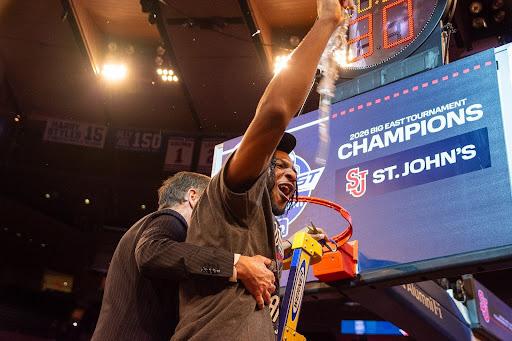
Champions.
The story writes itself — like Rocky Balboa entering the 15th round against Apollo Creed. St. John’s took years enduring hits, being counted out, staying against the ropes. The idea of the Red Storm atop the Big East felt like a grainy flashback to a lost era. Now, for the first time in Big East history — a team has won back-to-back regular season and tournament titles.
It was the ultimate rubber match — pulling away the title of “Fight of the Century” from Mohammed Ali and Joe Frazier, capping off a fairytale trilogy in the World’s Greatest Arena. Back in October, when St. John’s received more votes to finish first place in the conference over UConn (by four), it almost felt like destiny that the two powerhouses would face again in March, for all the stakes.
The matchup between the powerhouses was the first-ever Big East conference championship game where both teams had 17+ Conference victories.
But just as it happened in 2024-25, The Johnnies hoisted the Big East trophy, confetti fluttering over centercourt — Zuby Ejiofor likely cemented himself into the rafters of Carneseca Arena, Rick Pitino became the first coach ever to win back-to-back conference tournament titles with two different programs. It sounds like the perfect ending to a movie, one with
“Heroes” by David Bowie echoing in the background.
Every player and coach in the program deserved this moment, but for Ejiofor — the moment was even more special. Ejiofor transferred to Queens after a single season with Kansas, joining Rick Pitino in his first season at St. John’s. Since the day of his arrival, Zuby has grown into a leader, and a man as he explains himself.
“This place was dead,” said Rick Pitino just 24 hours before senior night. “Like Mashburn helped turn around Kentucky, Zuby Ejiofor helped the turnaround at St. John’s.”
Ejiofor’s resume has earned the retirement of the No.24, two Big East First-Team honors, Big East Player Of the Year in 2025-26, Big East Defender Of the Year in 2025-26, along with two Big East regular season and conference tournament titles.
The scene on the floor at the Garden was electric, families joined players, celebrations commenced, Big East champion shirts flashed to the crowd, a deserving party for a 72-52 victory over UConn. The Dan Hurley — Rick Pitino matchup lived up to its hype.
The moment the ball tipped, the atmosphere in the Garden was like a shaken soda bottle waiting to pop — Johnnies’ nation showed up loud, helping to propel St. John’s to an outstanding 10-0 run. Otherworldly was the way
to describe the perfect play from the Red Storm, passing around the ball, taking the right shots, and holding UConn to a 28.6% start from the field while forcing four turnovers, and a Dan Hurley technical foul.
Like Rick Pitino said after the hard-fought victory over Seton Hall — the Johnnies bent, but never broke. UConn was able to cut into the St John’s lead, trailing 49-40 with 12 minutes left, but as they did all season, Pitino’s crew fought through the adversity, jumping out to a 69-49 lead with three minutes left, victory on the horizon.
At the podium, Pitino’s ear-to-ear grin said it all: he was proud of his men, a group that fought tooth and nail to earn a 20-point victory over the Huskies. During the festivities, Zuby Ejiofor was awarded the Most Outstanding Player in the Big East Tournament, scoring 18 points in the victory, along with nine rebounds and seven blocks.
“It was bittersweet. We’ve had a target on our backs,” said Ejiofor. On playing at MSG for one last time. “We’ve had to battle through adversity. Nobody believed we could get to this moment but us.”
After a night of celebration, there’s still more work to do. The Red Storm will return to Carnesseca Arena tomorrow night for a school-sanctioned Selection Sunday watch party, where they anxiously await who’s next.
Jason Petrucci | March 14, 2026
Torch Photo / Sebastian Zelaya