Sitar-e-Kaaghaz
Sitar-e-Kaaghaz
themeaningbehindit
themeaningbehindit
Kashmir was never just about its mountains, gardens, or wazwaan. It’s also about the stories that we hear from our grandparents, as they tuck us in blankets to protect us from the cold winter breeze.
I remember the story my grandmother once told me
The one about my great-grandfather and his peaceful afternoon by the Dal Lake He was singing in the shikara gazing at the Pari Mahal, the beautiful terraced garden overlooking the Dal Lake, looked beautiful as ever But this afternoon, there were ethereal beings flying over the monument They heard him sing, and were mesmerised by his voice
This was the afternoon his voice lost its magic And a few days later, death embraced him
There’s this tale of the Raantas, who misguides the passerby in the mountains She comes in front of your car, leaving you lost in her beauty After you pass her, you have this urge of looking back And if you do, just know that this was your final mistake
Every story I’ve heard of the raantas ended with the person meeting a miserable fate after a few days of making the mistake of looking back
There’s this belief that old Chinar trees are living witnesses These trees are home to creatures one has never seen before I’ve heard this story of a Musafir, who used to rest under an old Chinar tree every evening He shared his stories, grief and joy, with the tree, and watered it every time One night the traveler didn’t return and villagers say that the tree mourned, turning its leaves red earlier than usual Maybe this is why our elders tell us to never harm an old Chinar, because it remembers every story it hears and the memories of its people
These stories remind us that the Kashmir that lives is not just about its beauty, but also about the stories that are being passed on from one generation to another
These stories are a way of connecting us to our roots, leaving a trace of Daastaan-e-Kasheer in our minds long after the cold winter nights have passed
Jazaan
Javed Lead, Creative Writing
Building Sitar-e-Kaaghaz has been an entirely new kind of experience for me, one that began inside my head, with an idea, and slowly unfolded into something far more beautiful than I could have ever imagined What started as a thought soon became pages, conversations, late night coffees, excitement, and a vision learning how to stand on its own
There was something deeply moving about watching this magazine take its first step towards life. Every step felt strange but unfamiliarly right. , choosing a theme, shaping stories, imagining how words would sit beside one another It taught me patience, trust, creativity, and the joy of letting things grow naturally instead of forcing them
Gathering a team was one of the most exciting parts of this journey Seeing people want to work for Sitar-e-Kaaghaz, bringing their own voices, and care for this idea as if it were their own made the process feel breathing What could have been solitary turned into something warm, shared and exhilarating
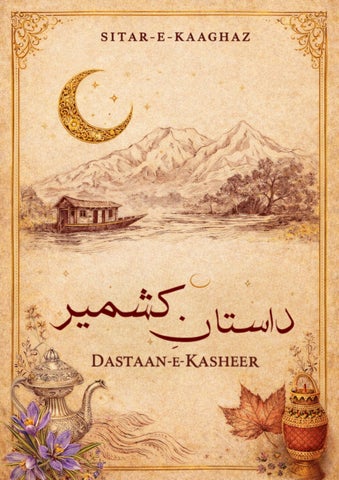
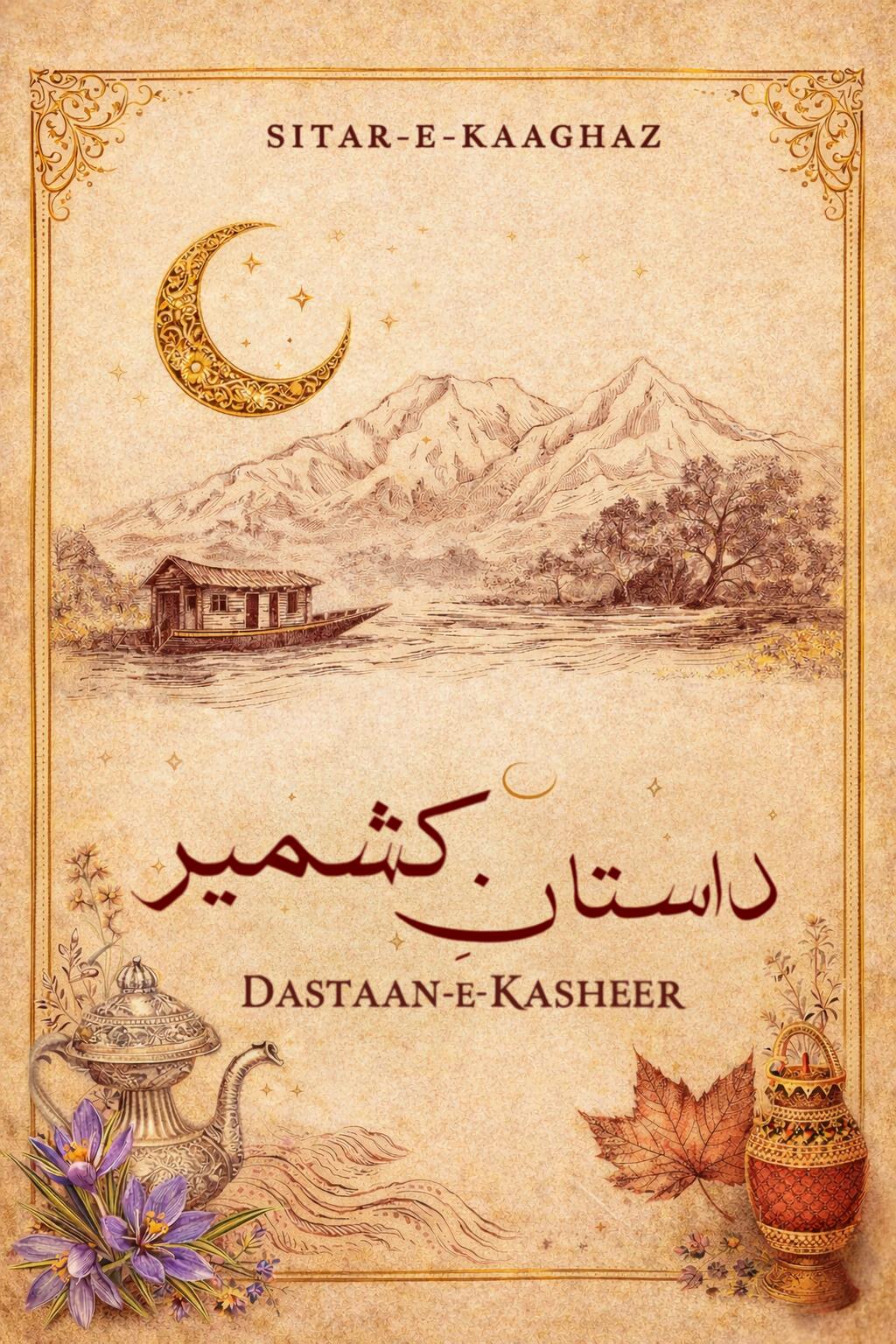
And now, here we are, holding our very first issue, Kashmiri Folklore. Daastan-e-Kasheer is more than a publication, it is a beginning, a collection of thoughts, stories, and stars pressed gently onto paper. I hope the magazine feels honest, thoughtful, and comforting to you, the way creating it has felt to us Thank you for being here at the start
The Chinar stands still, it does not speak, but somehow it knows everything
It has seen snowfall, and wars of the heart and children who once ran under it now walking with tired eyes
The leaves turn red in autumn, but they do not scream
They fall quietly, and the earth takes them in.
The wind moves through the branches, carrying questions that nobody seems to ask
What do we want, really?
Not noise, not promises, not words
Just a life that is soft.
A morning that feels like a morning.
A home that stays a home
The Chinar stands as it always has, silent, saying not a word.
But we?
We want to grow, to watch, to feel the seasons come and go, to know that someone notices our shade.
Just like the tree wants
In spring, its light comes back.
It stretches its arms, welcoming the wind, welcoming the love, fear, and hope.
Sometimes, I sit under it, and I feel Kasheer breathing through its trunk, quiet and always watching
The Chinar does not speak, yet it tells me everything I need to remember.
Urooja Altaf
Beneath the valley lingers a dark truth, It’s a place where you can’t set foot.
People have lost the ones seeking the truth,
Be it a brother, a father, a mother, yet the world refused to shook.
The rivers flow as fast as flood,
But look closely, and you’ll find specks of blood.
Water gushing through houses left everything in pieces,
The sound of screams still screeches
Tayyab Bhat, Hashir Banday
SyedaFatima
ShortLogs
When I was younger, I used to spend a lot of my time at my Nanihaal My Nani used to tell me all sorts of stories that she had heard of from her Dadi A lot of the stories were repeated all the time but I was young and I used to love every time she repeated the stories. One of the stories that used to haunt me was of Bram Bram Chowk Bram Bram Chowk is a Kashmiri legend who used to have a candle planted on his head and he only came during the snow. His usual targets of kidnapping were children who didn’t eat or sleep at time. Rumor was that he took children with him while the parents were asleep, and those children were then made to do all his work This story used to terrify me and I went to bed as quickly as possible when it snowed. But now that I’m older, I have mentioned these stories to a lot of younger children and it turns out that none of them have heard about neither Bram Bram Chowk nor of Wai Wouf (another legend.) If you think of it on the surface, it would seem as if Grandparents have stopped telling these tales because children have grown up in a much more logical space than times before. But is that really the case? Kids these days know all sorts of stuff, say astrology, explicit music, inappropriate words, TV shows that we wouldn’t dare to even speak of in front of the adults, and what not Is this modernism, or is it just the loss of interest in our Kashmiri culture? There are a lot of kids who speak using better English Vocabulary than me, but there are very less of those who I have heard speaking in Kashmiri. Yes, knowing English and speaking the language fluently is a necessary skill in times today but forgetting our mother tongue is just upsetting I keep recalling times spent with my Nani just talking about folklore, and then I keep getting consumed by the nostalgia that it won’t ever be like that time again.
Falah Mumtaz Founder, Sitar-e-Kaaghaz
My nani once told me about the origin of ‘Tehar' In winters, especially during ’chillai kalaan'kashmir would be covered with snow and ice. The leftover rice that was used to feed birds was left unnoticed due to the similarity in color.
To fix this conundrum, ‘Kaeshir' started adding turmeric to rice while cooking to make it visible to the poor birds
This marked the beginning of 'Tehar' that later became an integral part of the Kashmiri culture.
Taiba Masoodi
Sahil
I remember my grandmother, “Amma ji” telling me this while the Nun Chai boiled slow the stove, the smell of milk and tea leaves mixing with the cold air of the room She sat beside me, close enough for her warmth to reach through my pheran. Her face carried the marks of many winters, lines carved gently by snow, time, and waiting When she spoke, her voice cracked the way old wood does in the cold, but every word held weight. She told me about the Rantas.
She said the Rantas is a creature born of deep cold and an older loneliness than the mountains themselves. She looks like a woman at first, almost human, almost familiar. But Amma ji told me never to trust what the eyes see too quickly because yet again looks may fool one. She said that, “Fayez, you must look closer. Her hair is not like ours. It is long and wild, a tangled black silk that drags behind her as she walks through the forest, hiding the most frightening part of her ” Her feet.
ways look at the feet,” Amma ji said, her eyes steady on mine s feet turned completely backward. Her heels face the world while her toes point wn spine. This is how she tricks men. Hunters see her footprints in the snow and walking away, when in truth she is standing right behind them, close enough for touch their necks.
pulling the blanket tighter around myself, sinking deeper into its warmth Fear my chest, but curiosity held me still. I could not look away from Amma ji. the Rantas is powerful, but deeply sorrowful. People say she wanders the forests lost woman, sometimes like a child calling out in the dark She is drawn to he glow of homes and the sound of human life, though she can never truly enter a ji warned me not to let my heart soften too much.
s a thief of hearts.
for the most handsome young men in the village. With her singing, soft and pulls them towards her until they follow her willingly into the woods She takes eneath the glaciers, to her cave, and calls them her husbands. There she feeds ots and honey, keeping them alive but never free Any man who tries to escape mself further, trapped in the confusion of her backward footprints.
ji lowered her voice.
hat the Rantas is not invincible ves in her hair and in an enchanted comb she carries with her. Amma ji spoke of rom long ago who found a Rantas sleeping near a mountain spring. He did not close and cut her hair with his wool clippers. When her hair fell away, so did her cried and begged, offering to serve him if he would return her locks. Amma ji y was passed down to remind us that even the darkest fears carry a weakness I got scared and hugged Amma ji.
i Kalan settles over Kashmir and the cold tightens its grip on the valley, is, she told me. If you hear scratching at the window that sounds like a branch a fingernail, stay quiet. Do not answer the call from the forest.
s only a lonely soul searching for a light to steal re burning. Stay close to your Kangri and never follow footprints in the snow checking which way the toes are pointing.
Suha Khan
ayaanabbas
ayaanabbas
RoohZahoor
FaizAhmedFaiz
AqilMir
Writing and Editing: Falah Mumtaz, Jazaan Javed, Suha Khan
Writing and Editing: Falah Mumtaz, Jazaan Javed, Suha Khan
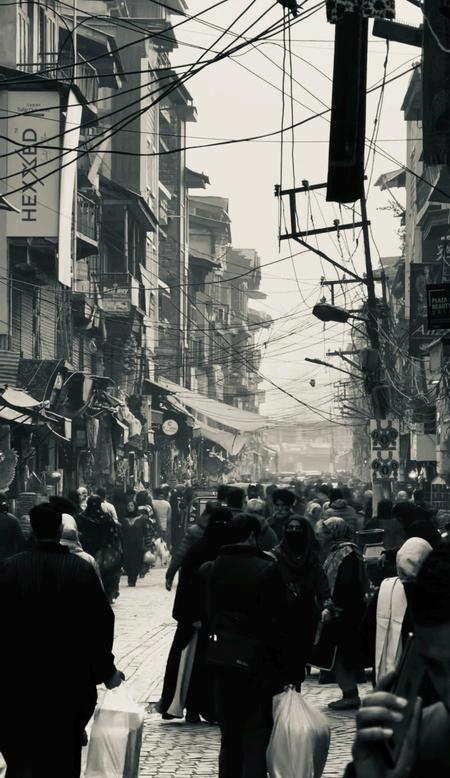
Photographs: Aqil Mir, Rooh Zahoor, Syeda Fatima, Hafsa Syed, Sheikh Zaynab, Ayaan Abbas, Sahil Shafi, Nairain
Photographs: Aqil Mir, Rooh Zahoor, Syeda Fatima, Hafsa Syed, Sheikh Zaynab, Ayaan Abbas, Sahil Shafi, Nairain
Mumtaz, Maham Ashraf
Mumtaz, Maham Ashraf
Front Page Illustration: Rahat Sajad
Front Page Illustration: Rahat Sajad
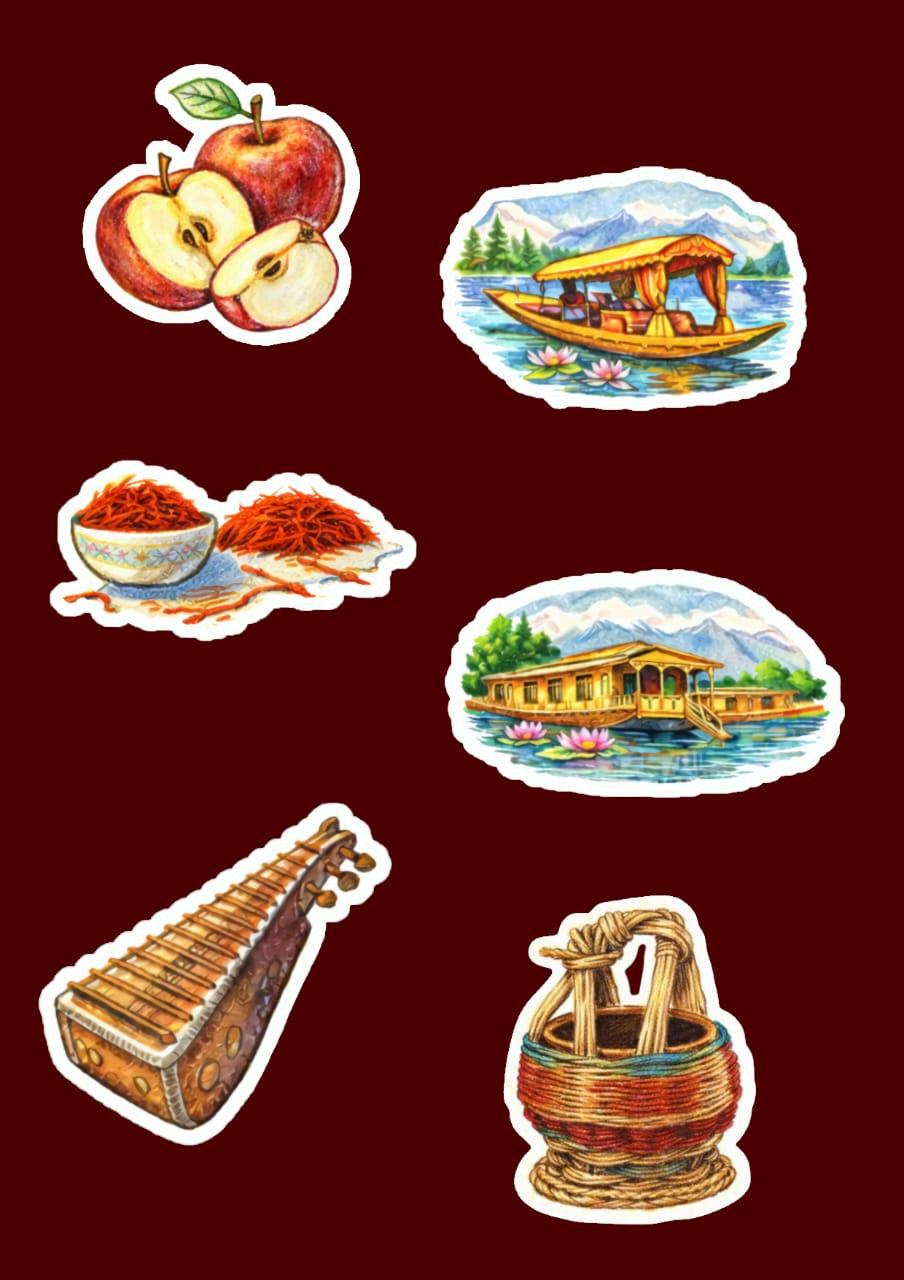
Stickers: Rahat Sajad
Stickers: Rahat Sajad
Arts and Design: Rahat Sajad
Arts and Design: Rahat Sajad
Layout and Graphics: Falah Mumtaz, Taiba Masoodi, Sheikh Zaynab
Layout and Graphics: Falah Mumtaz, Taiba Masoodi, Sheikh Zaynab
Communications and Submissions: Rida Parvaiz
Communications and Submissions: Rida Parvaiz