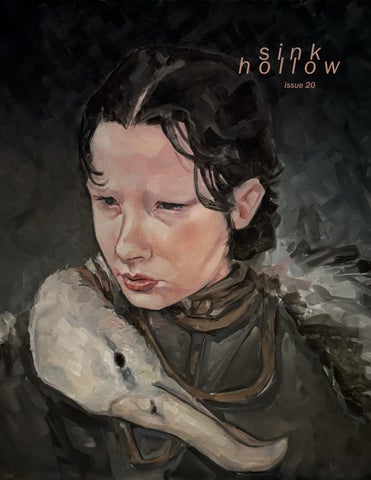
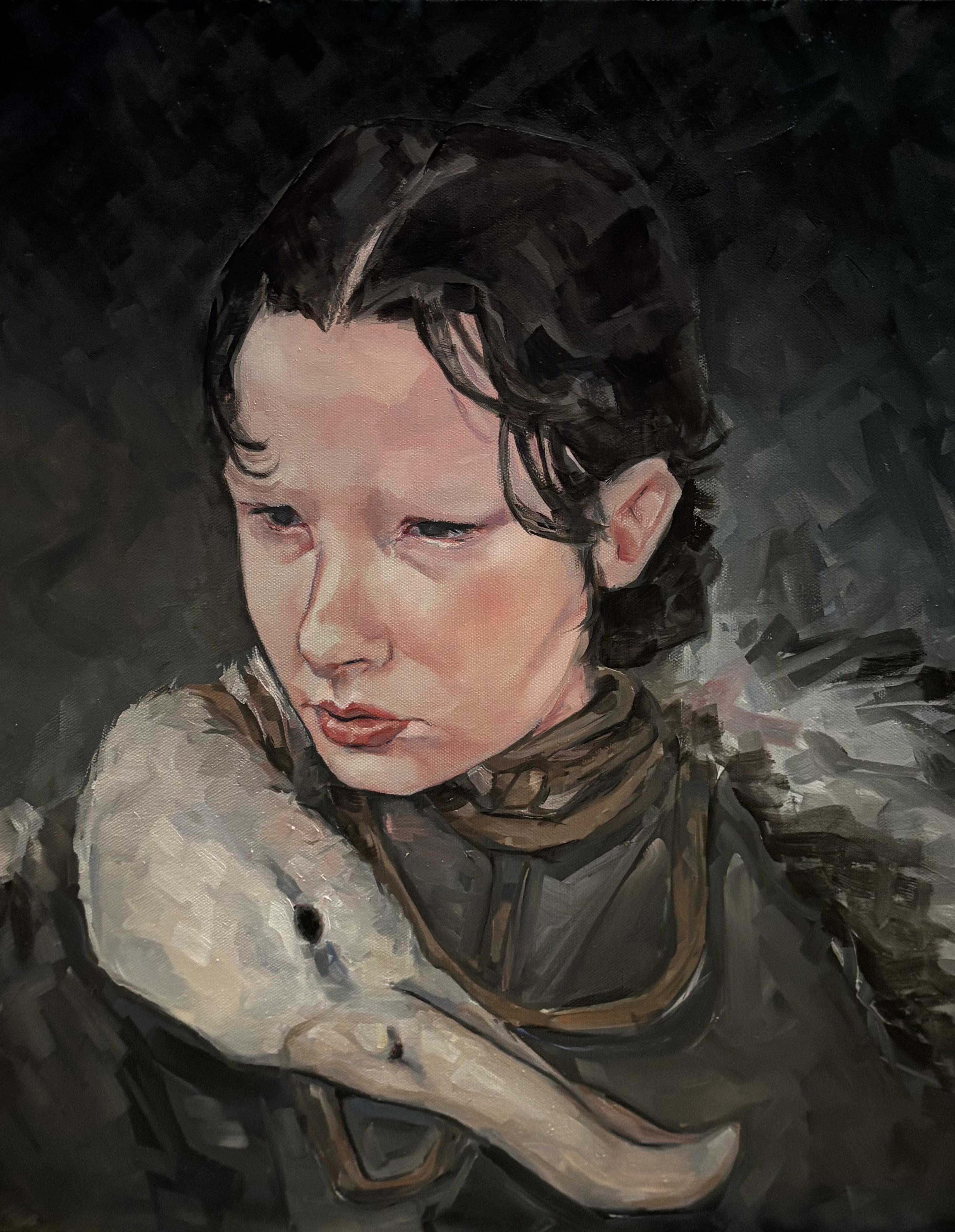
From The Editor
I’m reading Richard Brautigan again. I always come back. He has an immediacy: that unique view of life, an angle of perception which cannot be inculcated in a classroom. It’s a profane mix of anti-vocabulary and unlearnedness that defined him, that permitted him to see our cybernetic future and doomscroll pastorals—that the top of a skinny thing seen often belies an ample ass.
There’s always been a good bit of these Brautiganesque qualities in Sink Hollow: appreciation for and obsession with the human form, a predilection for the economic application of vulgarity, a perceptive fondness for animals and insects, and a deep, jawbreaking sadness that transforms people into persons.
In this issue, poets grapple with life’s incoherence by means of rough hands and split selves; the body and its faculties, the varied ways it translates thought into action, feature prominently. Fiction writers find meanings for small lives in gardens and bugs, blurring motherhood and monstrosity with surprising tenderness. Our nonfiction contributor draws a poignant portrait of blue-collar loss, investigating the actual value of our backgrounds. And our artists, among their gloried ranks the fabulous Beatrice Austin, mortar the bricks with purposeful technique, inquisitively employing pastels and jewel tones in a search for something ethereal-made-terrestrial. All seek answers and have none.
His feet in a joyful stream’s waters, Socrates told his lover Phaedrus that a cohesive collection of ideas has a head, guts, and legs, each as relevant to each other as to the whole. Without playing out the metaphor, I’m pleased as punch to present an issue that our editors feel does just that.
My deep gratitude to our tireless (and volunteer) readers, editors, and designers for crafting this strange body with such care.
With love, Zachariah Baker

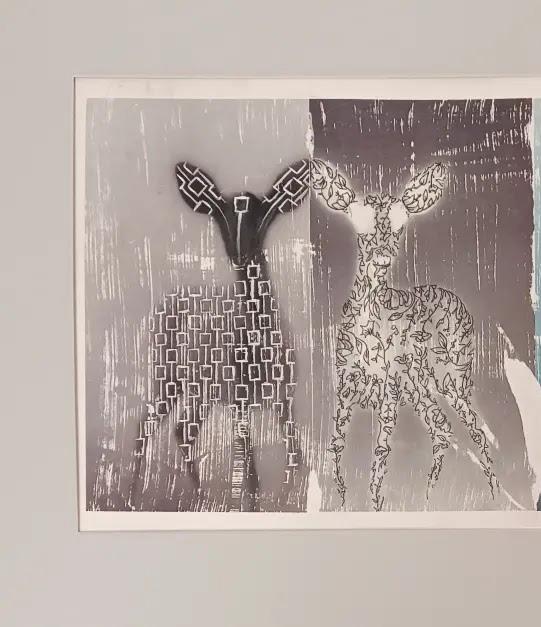
Kiera Fisher Doe
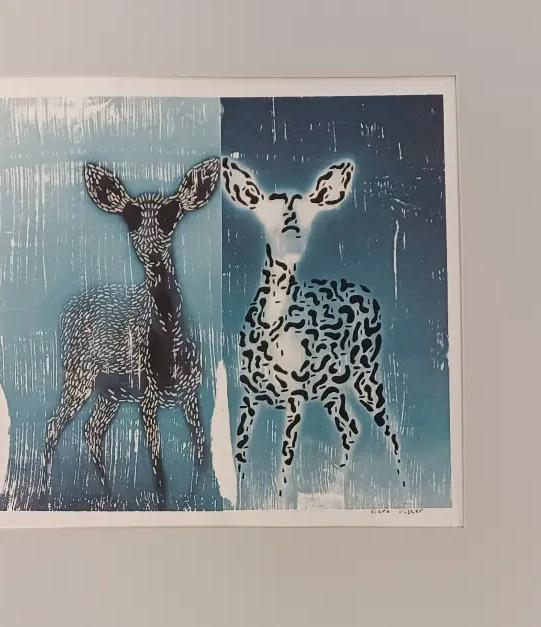
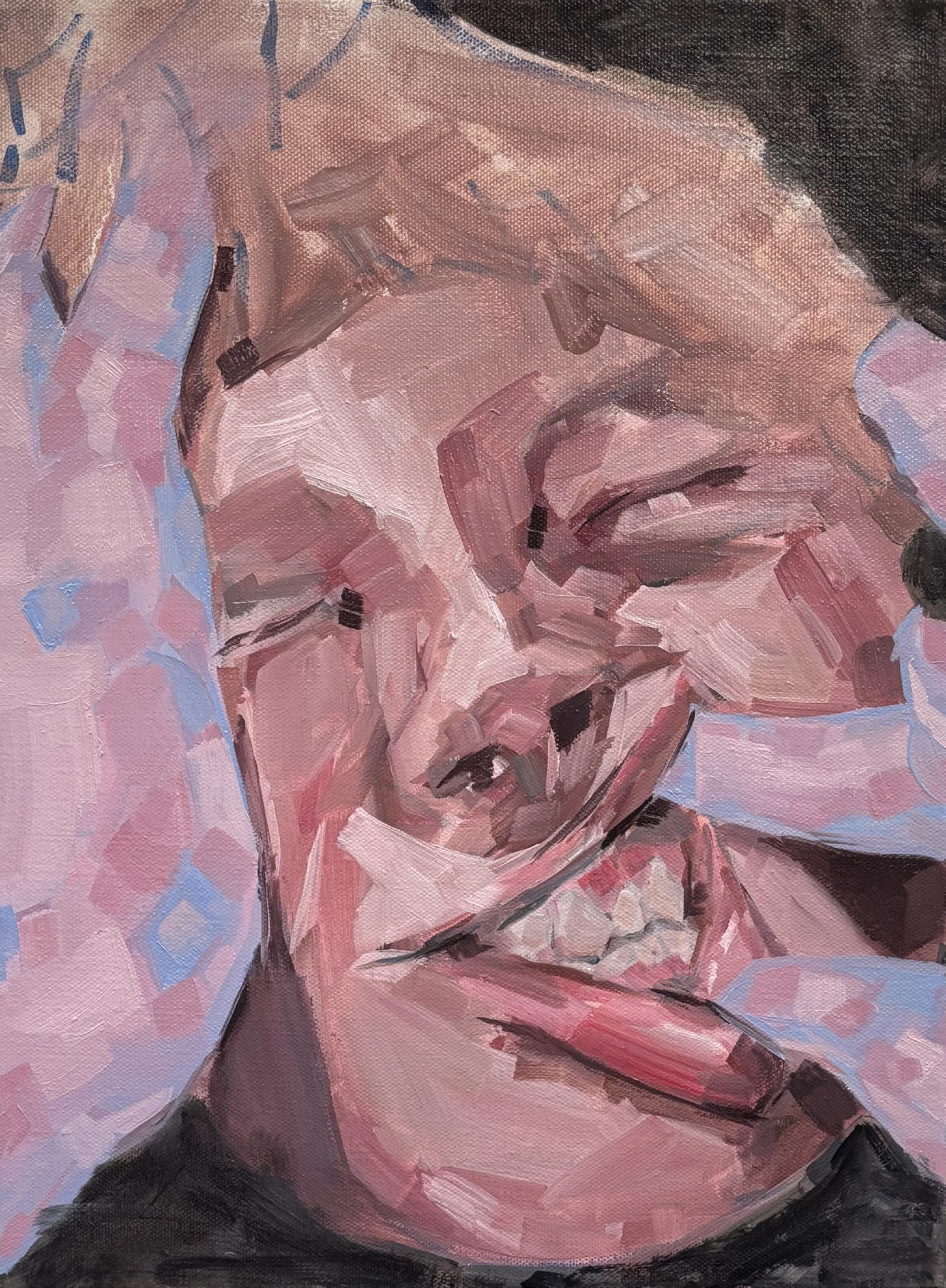
Beatrice Austin Push and Pull
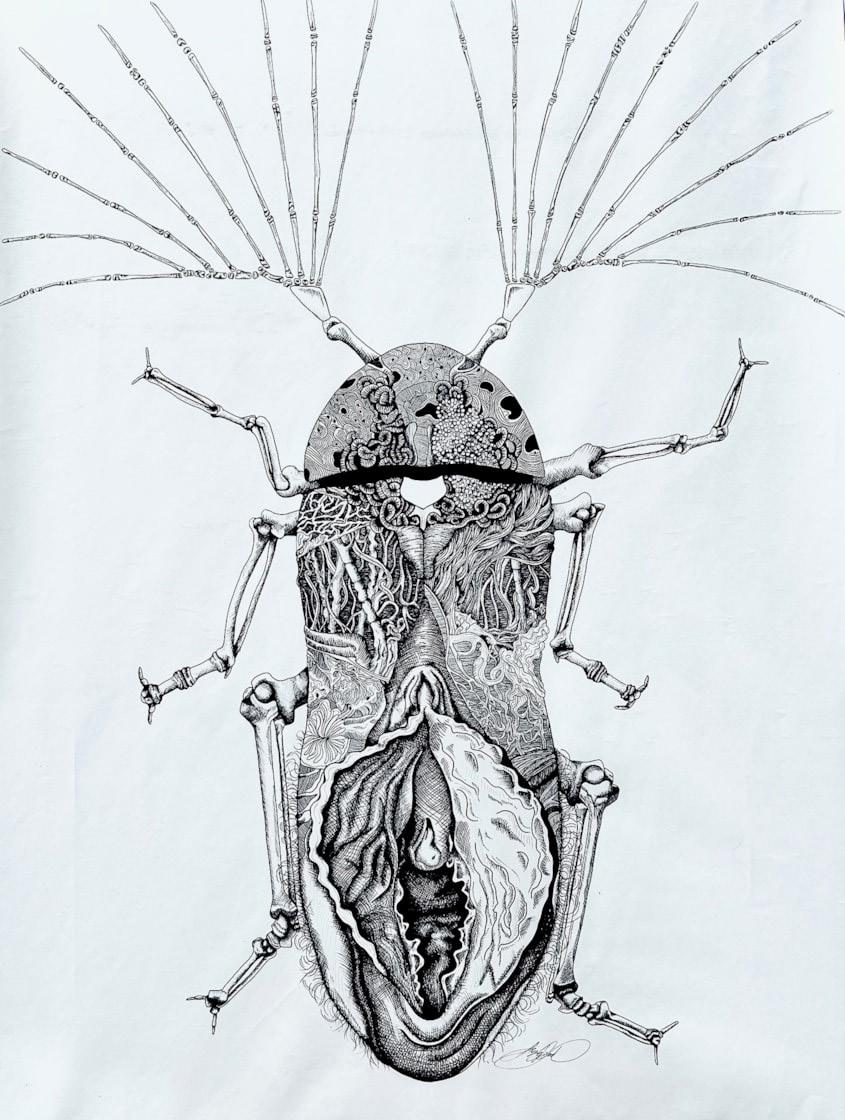
Jeffs Just a Pest
Saige
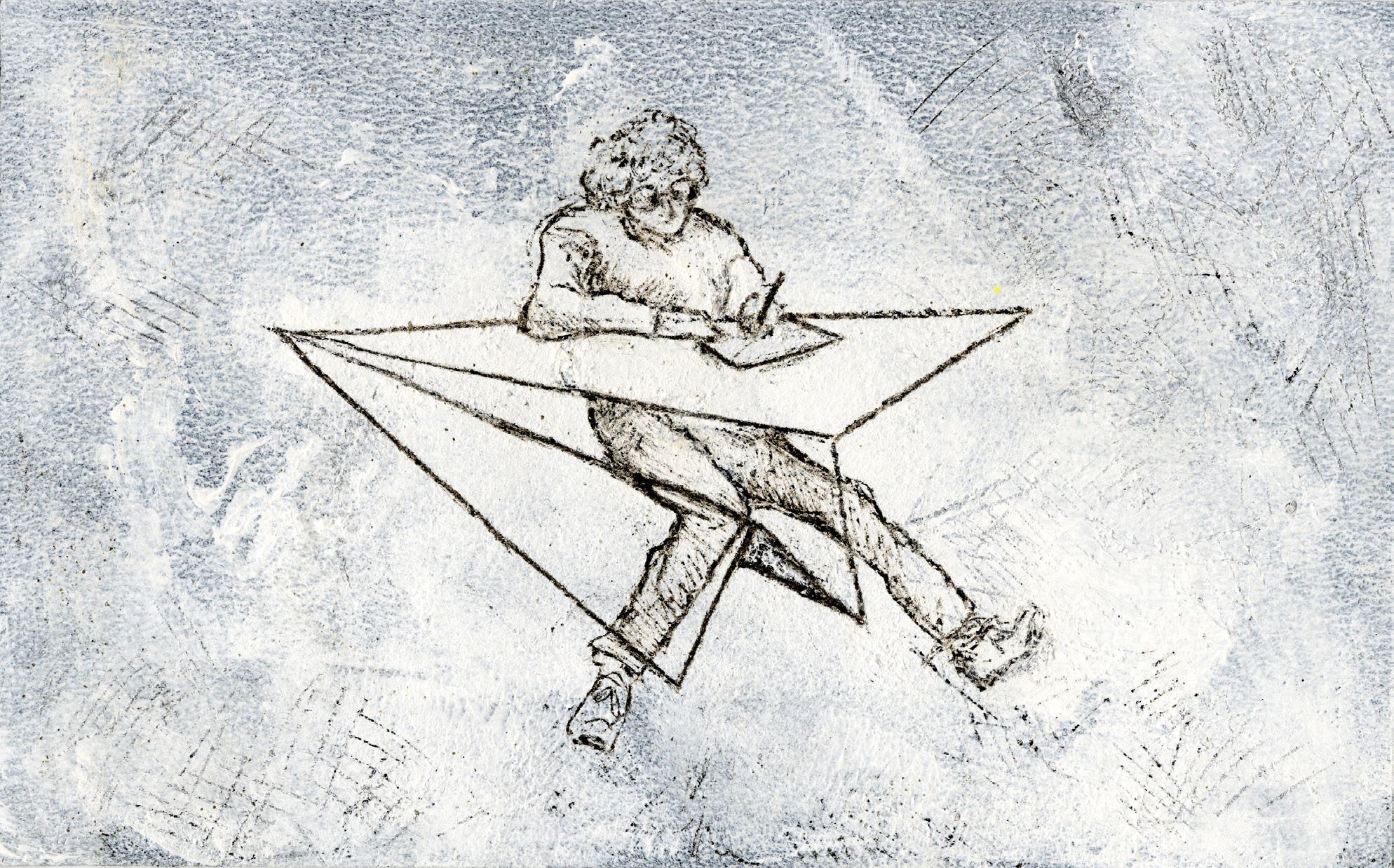
Do You Ever Want to Fly Away
Kiera Fisher
My Brother The Broken Window
Kailey Buettner (Nonfiction)
Dear Brother,
I am sitting on the sandy shores of Lake Superior when I think about your call. The sand is damp from last night’s rain, the kind that settles low and gray over the water until the horizon vanishes. Your voice cracked through the line as you told me you prefer solitary confinement. The word prefer lodged in me—it seemed impossible, like choosing to hold your breath. As the waves bent and broke, I thought about what makes a man crave absence, what makes him fold himself into a room without corners to lean on.
I remember the exact tone of your voice: vulnerable, not from weakness but from surrender, as if you hoped to return somewhere through the act of naming it. Solitary doesn’t ask anything of me, you said, and I imagined the relief of silence covering you like a second skin.
I know the traumas that carried you there, though they come less as memories and more as a series of reflections. The shadow of a father’s hand. A mother still a child herself, only fifteen when she bent her body to love you. The drugs that hollowed out whole years. The genetics that wrote their own hunger inside your blood.
I try to visualize the night that finally broke the window through.
You said once your 2007 Honda Civic was surrounded, you were
too afraid to move. When they shattered the driver’s side window, I picture not a clean break but a thousand small cries at once. I can see your shoulder caught in the frame, the window gripping you the way the world always has: tight enough to draw blood, never tight enough to hold. For a moment, you and the glass were the same: whole and ruined at once.
The lights pulsed against the dark, and the street bruised itself in their glow. I think of how often we’ve lived inside bruises, carrying them forward the way other families pass down recipes, heirlooms, names.
Mary Oliver once wrote about how attention without feeling is only a report. Maybe that’s why I try to picture every detail of that night—because brokenness demands its own kind of attention. It insists on being witnessed, even when it cuts. I have always given more attention to your wounds than to your joys, not out of choice, but because wounds speak louder.
When I think of you, I also think of Dad’s letters from jail. You reading them out loud in the yard, grass sticking to our legs. The paper soft at the folds. His handwriting small and tentative, as if afraid of its own arrival. You’d stumble, squinting, and when the words blurred, you invented the rest: I am strong. I am sorry. I am fermenting fruit in my toilet. We laughed then, but I see now that you were trying to make him bigger than the walls around him. You were trying to give us a father who could still speak.
Sometimes, I picture him younger. Sometimes, I let myself imagine that he finished high school, that one small shift could have rewritten all of this. There are statistics that try to explain it—how reading failure links to incarceration, about children who grow up visiting their parents in cells—but numbers only frame what’s visible. They don’t show a brother inside a cell, calling solitary confinement peace. They don’t show a sister sitting at the lake’s edge,
watching Superior swallow the shoreline. I want to tell you something soft here, Brother. I want to end this letter with hope the way people in books do: with blessing, with benediction, with the belief that windows can stay whole. I want to believe the glass holds, the letters arrive unmarred, the light spills in unbroken. But there is no softness in solitary. No softness in glass slicing skin. No softness in the word mercy collapsing before it reaches the tongue.
So instead I leave you the truth, Brother: there is something very broken, and you are still inside it.
With love,
swainson’s thrush
Eamon Vasko
Have you ever held a still-warm dead thing its blood beading black onto your blue-gloved hands? It flew into my grandmother’s window and broke its neck, fell. There, dying in her ivies, it opened its eyes to see me.
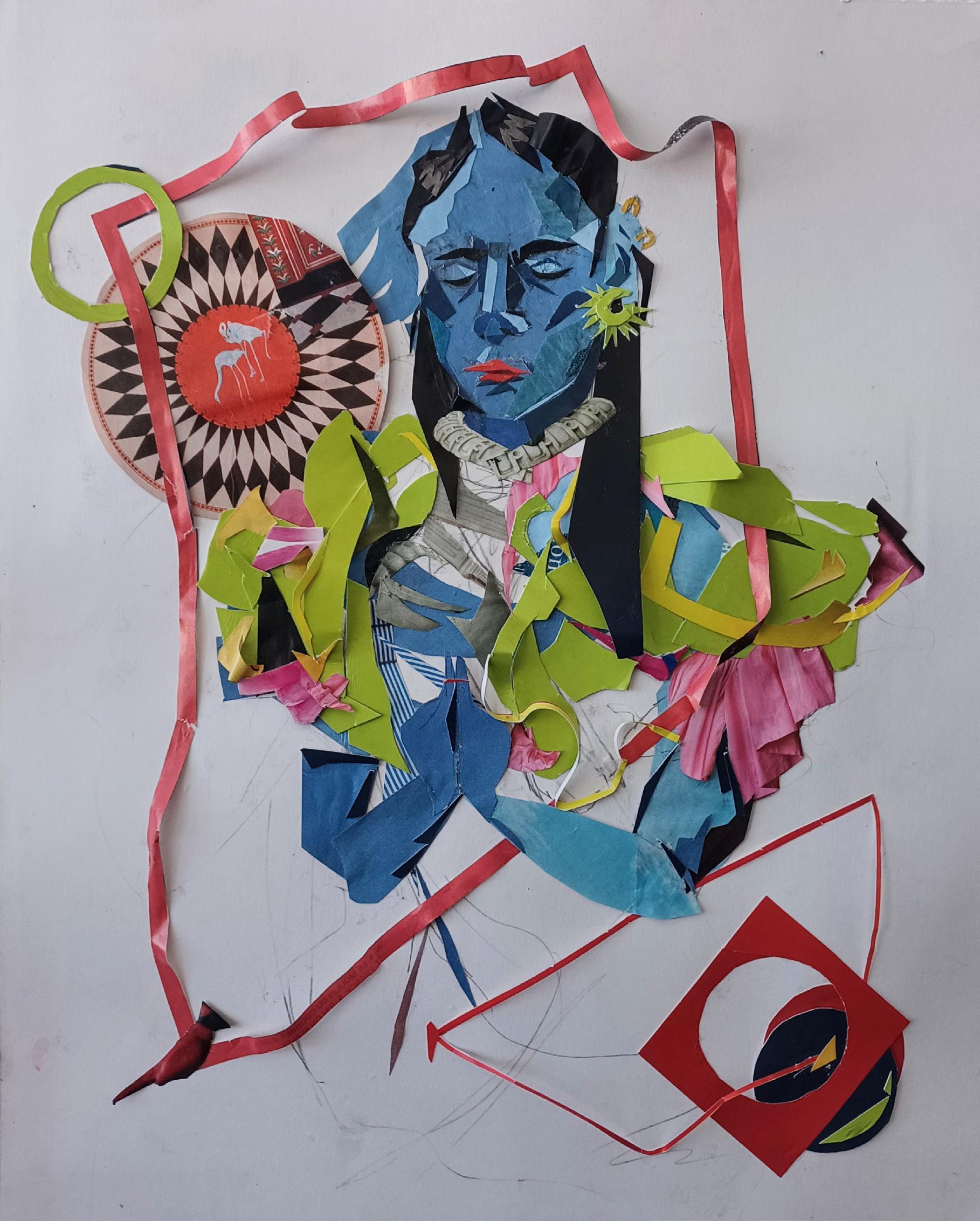
The
Red String
Kiera Fisher
My Spine Was Harvested on a Bed of Nails
Ellery Bailey
In the echo chamber of her choosing her neurotic eroticism had grown palpably off-putting and I’d been kissed mostly above the belt, admittedly.
We got high off of synthetic shit using wires from decrepit phone chargers;
Through the praxis of astral projection I felt my presence fracture and I asked her if she meant to crack every bone in my body.
I laid there, waiting for an answer in my underwear while she fantasized about how it might feel to finally eviscerate me.
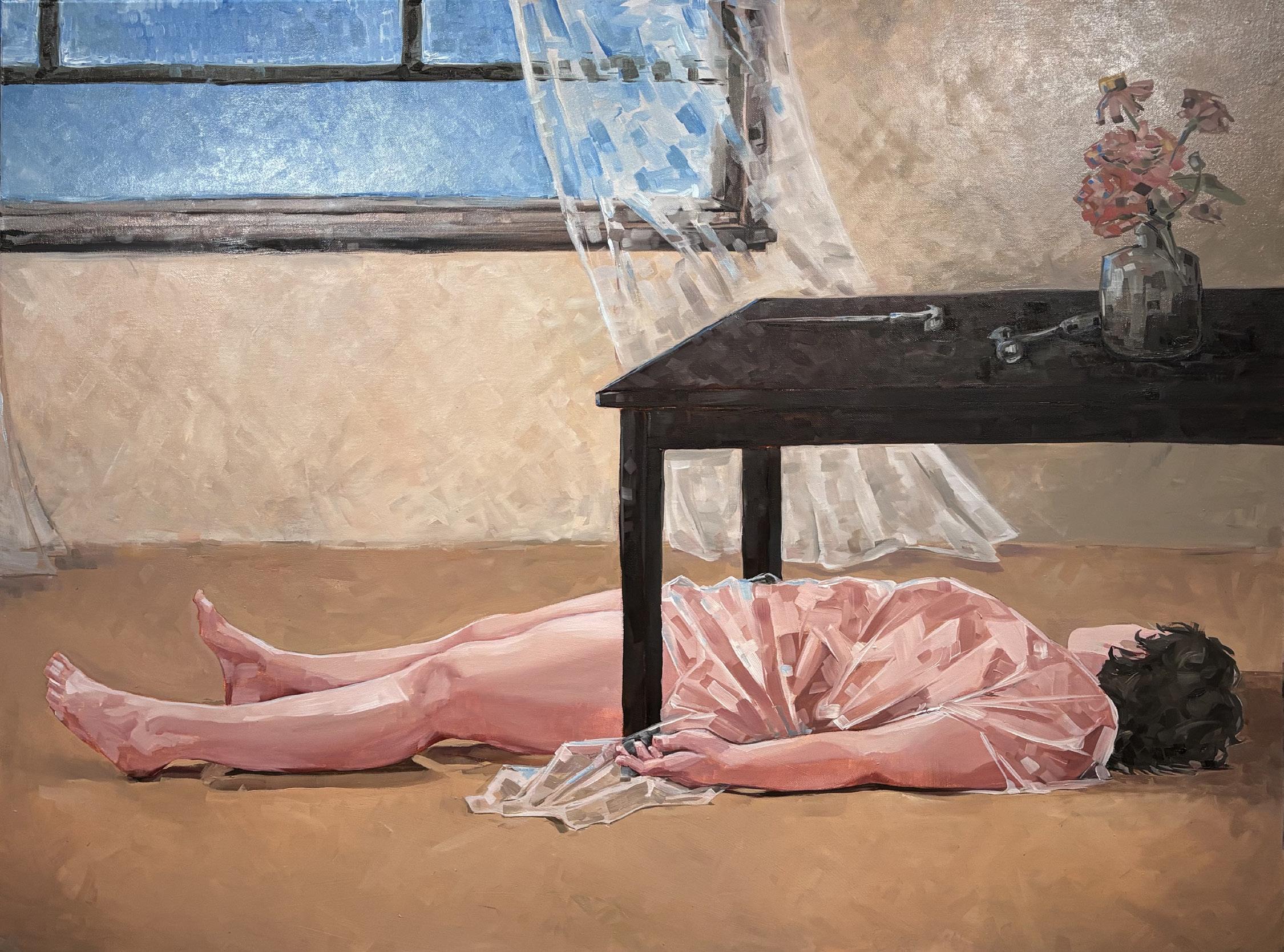
Beatrice Austin Supine
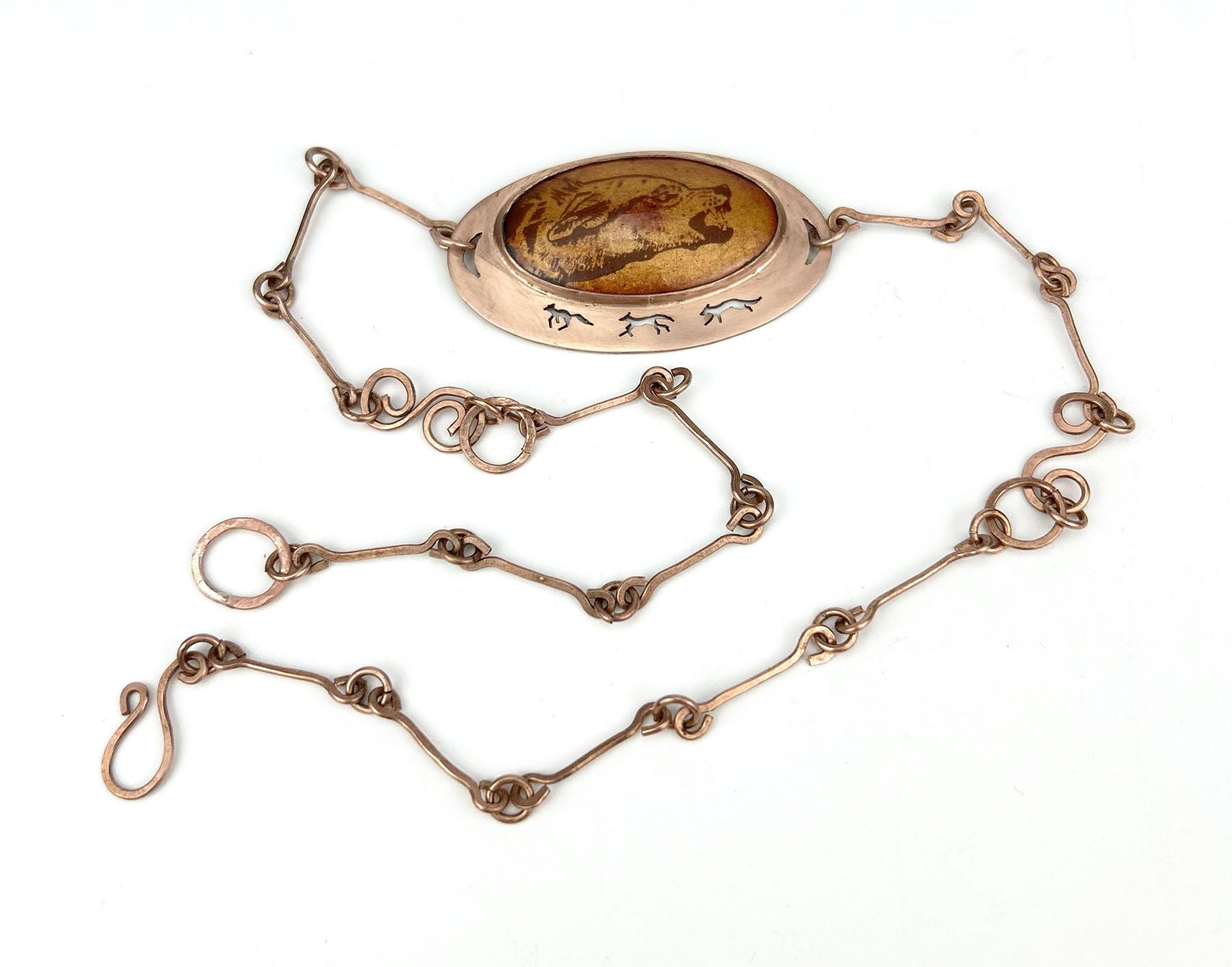
Adaptability 2.1
Saige Jeffs
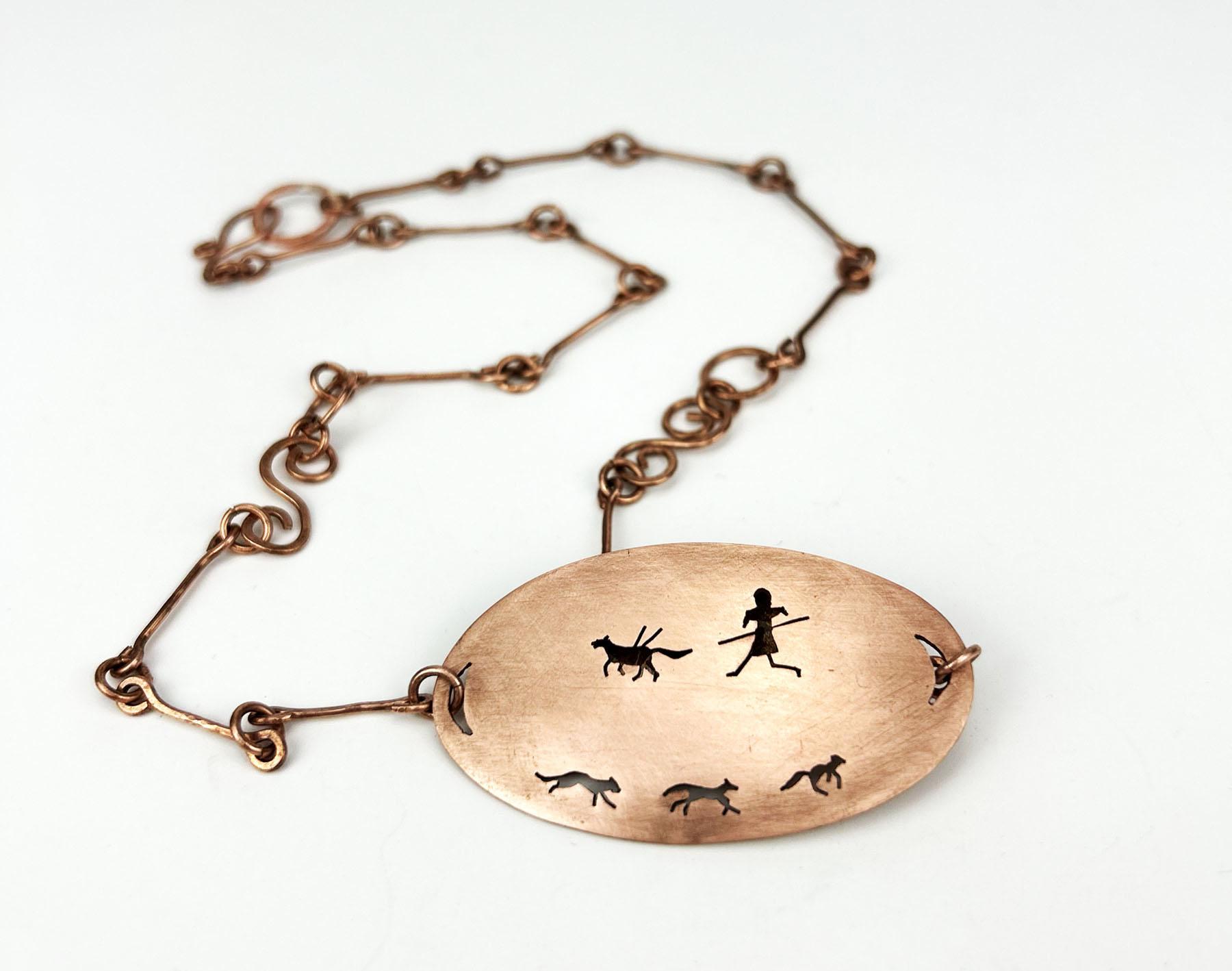
Adaptability 2.2
Saige Jeffs
a promising young man
CD Mangal
i buried the ingenue and never cried for her i ran a dandelion bath to make myself sick and lay there surrounded by heady gold and the taste of a wild summer alone i never cried but i did mourn with the doves, with the cicadas i woke up one morning with a dandelion crushed under my cheek, against the floor it had raised red welts along the side of my face
rhythm had always been mine someone else’s tongue against my teeth i made figure-fractals, in movement i opened and opened and opened and the sea rose against my neck i felt its salt in every kiss and because it is called by the mood it is desperate and because it is desperate so was i and because i was desperate i let the moon white out my eyes and exhaled into someone else
i cut the last of summer out of me and the blood was sweet and righteous and nothing like falling in love i took myself to dinner, wore something low-cut, and begged for a night of tenderness, just one night i promised i would deliver and passed myself the pepper and after, i knelt with my jaw pressed against the side of the building and let the asphalt-grit and broken glass tear into the skin of my knees i let anyone have me drowning for i am always the one above water it felt like the crimson hurt that it was there is no more blood except what the sunset can imitate
i am becoming another seasons tick on, i pick glass from my skin i remember choking on the dandelions of my own soaking innocence in the mirror i look like my father in the mirror i look like a promising young man he has bruises below his eyes and kiss-lips and hips that move smooth and he sees blood in blooming things, he sees blood in the lines of his palms and the creases of his sheets in the morning and he stands on his own and he stands on his own
A Queer Southern Boy on His Own Crucifixion
Aidan Parks
It’s called the McFly effect, I think, when my daddy’s feet get lighter ‘round Sheriff Hudson, when his smile comes quick and his hands don’t land half as heavy on Jones’s back as they do mine. He gets happier, kinder, for a second, under those stained glass windows. He smiles real wide, like a cottonmouth ready to strike, and his hands’re a vice at the back of my neck. The purple thistles are growin’ in thick ‘round this time of year - reachin’ purple blossoms and spines sharper than knives towards the sun. Oh, daddy, you ain’t never looked as angry as you do now, pickin’ up your hammer and drivin’ thistle nails through my palms, old oil rag stuffed in my mouth so I don’t scream. The moonlight through the stained glass don’t look red on my blood spreadin’ cross the church floors, sneakin’ through the pews like Johnny and I used to. Y’all found us in the back field, his arms ‘round my waist and his lips on mine like a divine blessin’ from Michael himself. It hurt like hell when they dragged us through the thistles, blood streakin’ his arms like a paintin’. Lord, how it hurts. Lord, are You my father? You sent Your only Son here to die, and here I am. Dyin’ the same way He did, holes in my palms and feet. Did Your only Son pray to You, Lord? As He was dyin’? I don’t think I’d ever pray to my daddy. And You, Lord, ain’t never heard my prayers. Maybe I’ll pray to the purple thistle out there, where the edges of its blossom are redder than blood.
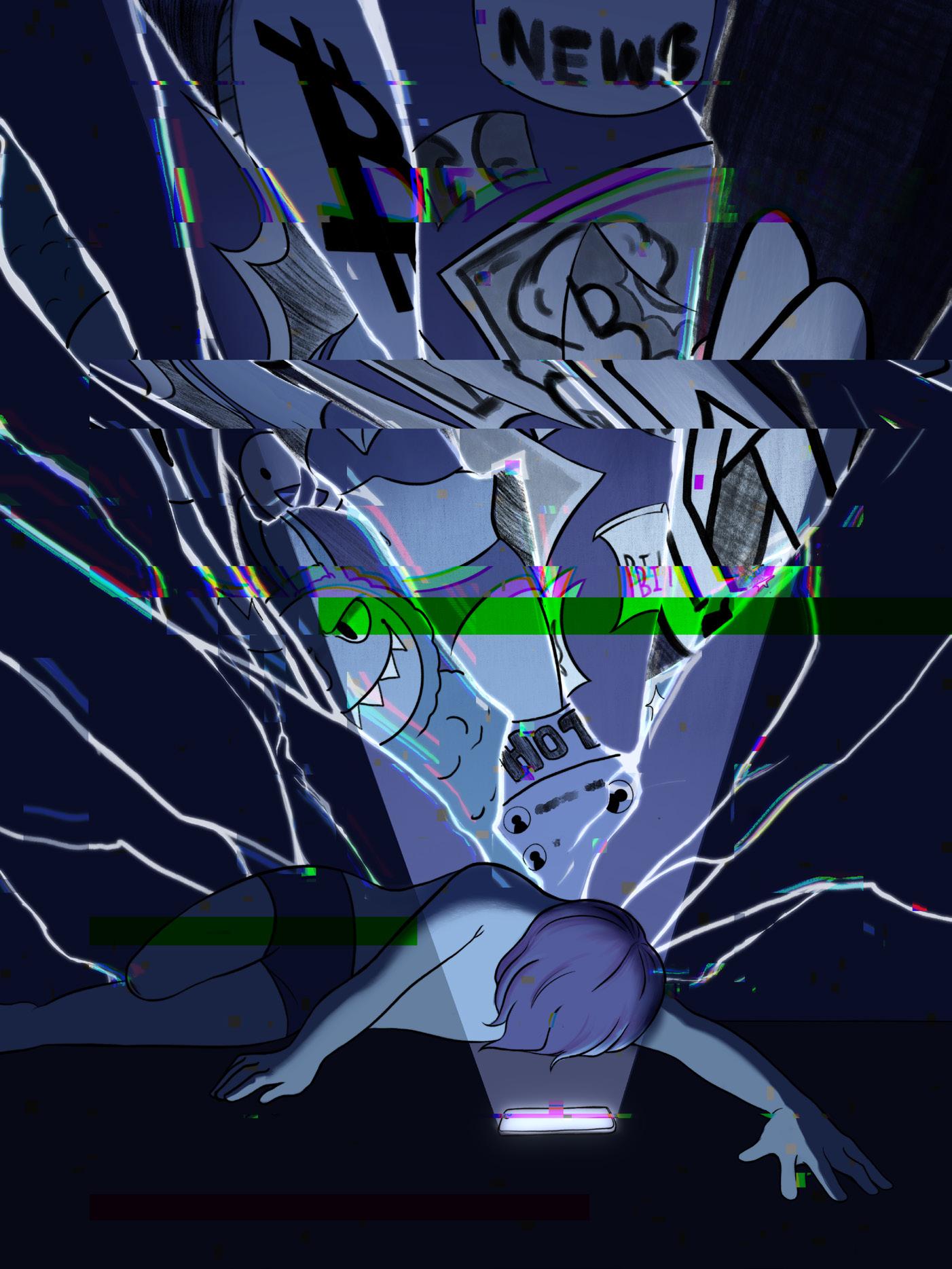
Veronica Luna Doomscroll
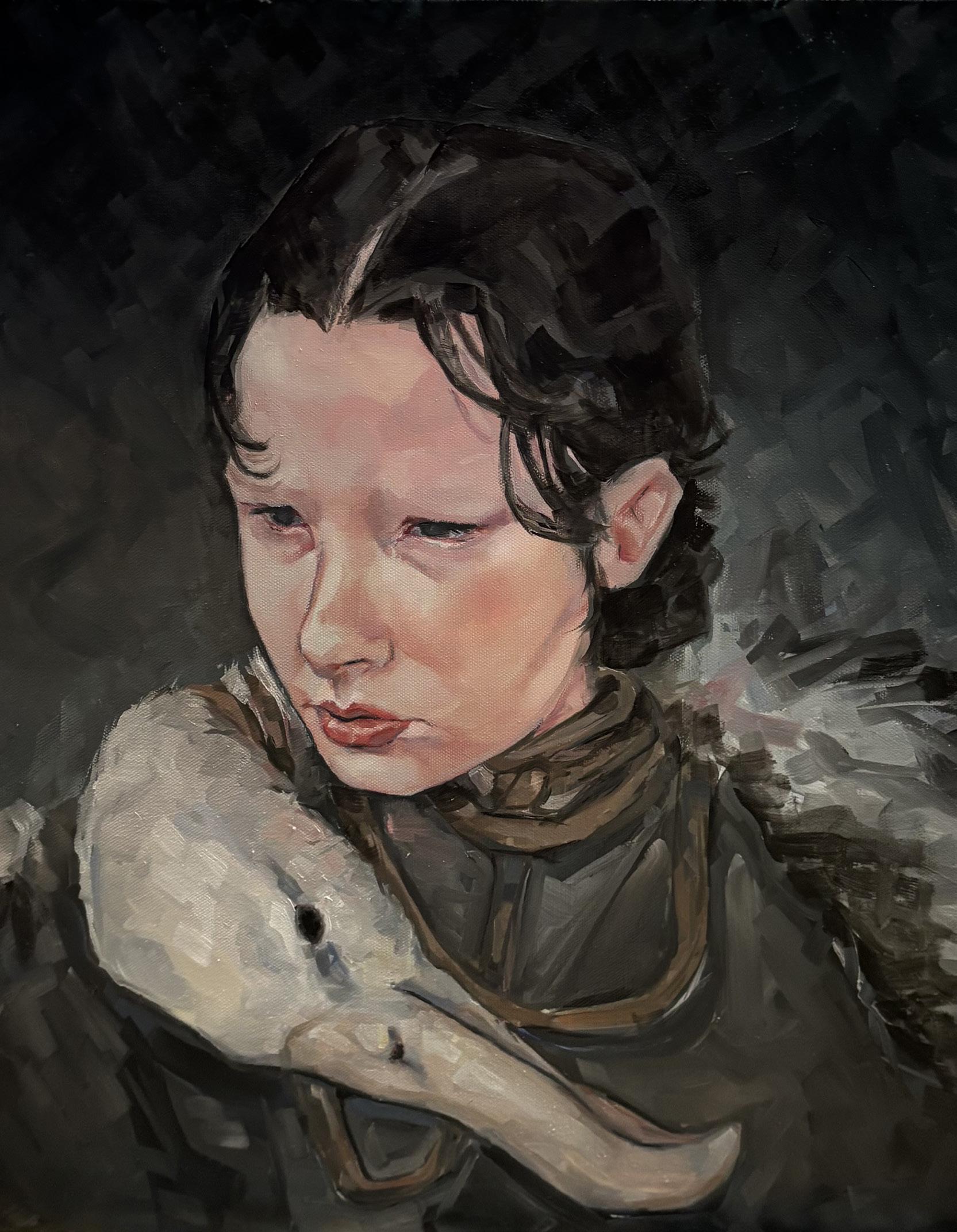
Beatrice Austin
The Albatross
The Body Forgets the River
Pravy Jha
The doctor says the body is seventy percent water, but mine has been evaporating since childhood. Once, I drank from a hand pump near my grandfather’s grave— iron taste, rust, memory. That water never left. It sits behind my ribs, patient, listening to thunder the way old men listen to gossip.
Last night, rain came after months, and for a moment, I felt my veins pulse like gills. When I opened my mouth to breathe, the air was a current, pulling me somewhere older than grief. Maybe I was once a river, and I’ve been drying ever since.
Garden Audit
Waverly Vernon (Fiction)
Each morning, the dew signs, the soil provides a receipt. Ladybugs arrive, red and shiny, auditors of order. The garden thrives on rules: eat with permission, move with proof, leaf by leaf.
A low-moving creature drags itself along, silent, watching. Hunger aches. It remembers a place where earth fed freely, before contracts and pesticides and hierarchies of utility.
The ladybugs speak: “You are unclassified. This is not your jurisdiction.” The creature asks: “If all belong to the earth, why beg to touch it?”
They call for enforcement. Questions bloom: Who sent you? What do you consume? What is your contribution? The creature has no answers but its own needs. Hunger is older than law.
Night comes. The auditors retreat. The creature hides beneath an imported leaf, dreaming of soil without ownership, where growth and hunger are one.
Morning returns. The dew signs again. The soil stamps approval. The creature is gone. Only a slick trail remains—a signature unapproved, yet unyielding.
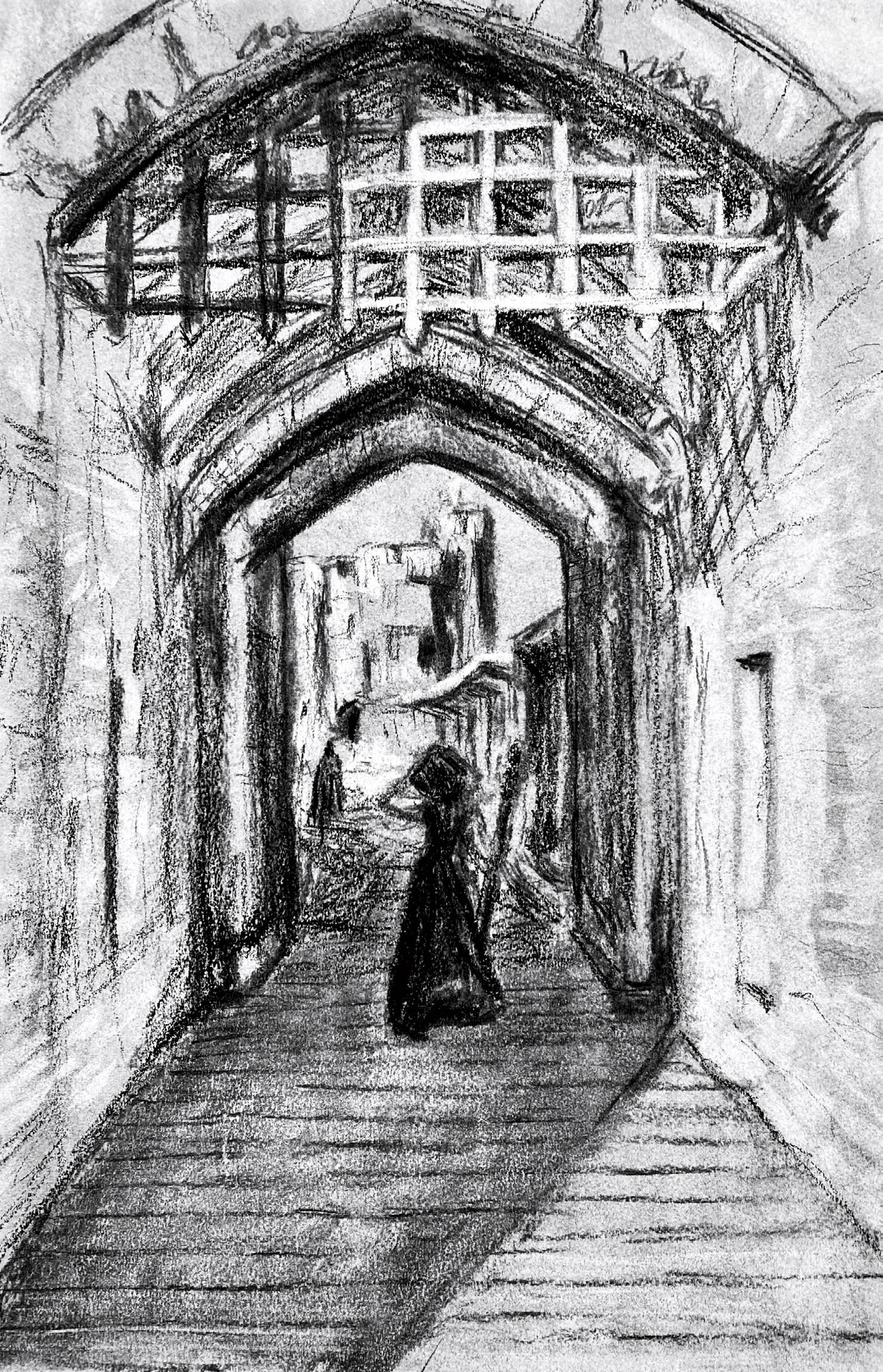
Midday
Sarah Monsen
we have always been here
CD Mangal
spidering across onionskin pages in fragile, thin hand
or etched into clay, fired on accident, preserved on accident
hovering on either side of the cut of the first film ever edited
humming in the circuits shimmering at the bottom of the ocean
Judas laid his bleeding lips on the wool, the skin of Jesus
and my neighbors pick cherries, two women staining pink and red
I fold down my denim collar where my sweat stains it, wears it golden and I look at you and your mouth, and think of where it’s been
Contributor Bios
Beatrice Austin is an undergraduate art student attending Idaho State University working towards her BFA. She works primarily in painting and metalworking, and enjoys incorporating themes of intimacy, femininity, and nature into her work.
Ellery Bailey is a writer from Cincinnati, Ohio, and a current student at Kenyon College, where she is completing a B.A. in English with a concentration in creative writing and a second major in gender and sexuality studies.
Kailey Buettner is an undergraduate at Northern Michigan University studying secondary English education with a minor in writing. Based in Michigan’s Upper Peninsula, her poetry explores rural life, memory, and place through fluid, image-driven free verse. You can find her work in Muzzle Magazine and upcoming in Oakland Arts Review.
Kiera Fisher is an undergraduate student at the Columbus College of Art and Design. She is a muralist and mixed media artist who embraces bold colors and imagery to create art inspired from her surroundings, incorporating her lived experiences into her work--with themes of love, home, and self identity. She works with a variety of media and materials, including anything from illustration, to textiles, to fine arts.
Saige Jeffs is an undergraduate student at Idaho State University. She loves metalsmithing, drawing, and embroidery. When she’s not making art she is outside spending time with her three dogs.
Pravy Jha is an undergraduate student at Kalinga Institute of Industrial Technology, India. Her work has appeared or is forthcoming in Bloodletter magazine, Last Syllable, Brilliant Flash Fiction and anthologies like Upon Learning That and Rooted In: Rite. She loves sea lights, slow mornings, and stories that linger long after reading.
Veronica Luna is an illustration major at the Minneapolis College of Art and Design. She specializes in digital art focusing on characters and storytelling.
CD Mangal is an undergraduate student at St. Olaf College studying economics and dance. CD loves to write poetry and plays and is inspired by nature and a love for gardening. CD’s poetry can also be found in The Words Faire, Moonstone, and Defunkt Magazine’s Field Notes.
Sarah Monsen is an undergraduate art and design student at Utah State University. She loves folklore and the stories found in it, and often uses it as an inspiration in her works of art.
Aidan Parks is a junior at Southeastern Louisiana University, working on his Creative Writing degree. When he isn’t working or daydreaming, he can be found trying new teas, reading with his cats, writing about new, fantastical worlds, and adventuring with his friends.
Eamon Vasko is an undergraduate student at Bowling Green State University studying creative writing and history. He writes both poetry and fiction, and, predictably, is especially interested in the intersection of art and historical narratives.
Waverly Vernon (she/they) is a writer and interdisciplinary artist from Florida currently studying at the School of the Art Institute of Chicago. Their work explores politics, religious deprogramming, and trauma, transforming personal experience into connection and dialogue. They are the author of the micro chapbook “soft-skinned”, published by Bottlecap Press. Their poetry has also been published by Wildscape Literary Journal, Creation Magazine, Arcana Poetry Press, among others.
Staff
Editor-in-Chief
Zachariah Baker
Managing Editor
Woodrow Walters
Poetry Genre Co-Editors
Brook Haight
Indigo Aves
Poetry Readers
Addie Hemsley
Brady Parsons
Ellie Fallows
Emmalynn Erard
Eva Nelson
Kat Fletcher
Fiction Genre Co-Editors
Bee Pickering
Chloe Scheve
Fiction Readers
Abby Huber
Baden Chipping
Brooklyn Hibshman
Dylan Jensen
Izzy Telford
Jake Casper
Jessica Lindhart
Mikkel Ohene-Opare
Jonathan Walker
Ellie Carlson
Nonfiction Genre Co-Editors
Eli Moss
Ella Unguren
Nonfiction Readers
Dhanai Anthimidou-Friel
Kayleigh Kearsley
Sadie Olsen
Magazine Layout and Design
Cade Taylor
Faculty Advisors
Russ Beck
Robb Kunz
Charles Waugh
Ashley Wells