
Frequency-Stabilized Lasers for R&D
Hasanyoneinyourteamevertriedtobuildapreciseexperimentjusttowatchthelaser driftlikeithasweekendplans?Onetinyfrequencyalteration,andsuddenlythedatalooks inrecognizable, and this isn’t just your team, because every day research labs face this dilemma,andthisisexactlywherefrequency-stabilizedlaserscomeintosavetheday. Evenspecializedsystemslike all solid-state ultraviolet raman lasers dependontight frequencycontroltokeepexperimentsreproducibleinsteadofmysterious.
So, without further ado, let’s talk about what makes these lasers so special without complicatedjargons.
The Epicenter of Modern Experiments
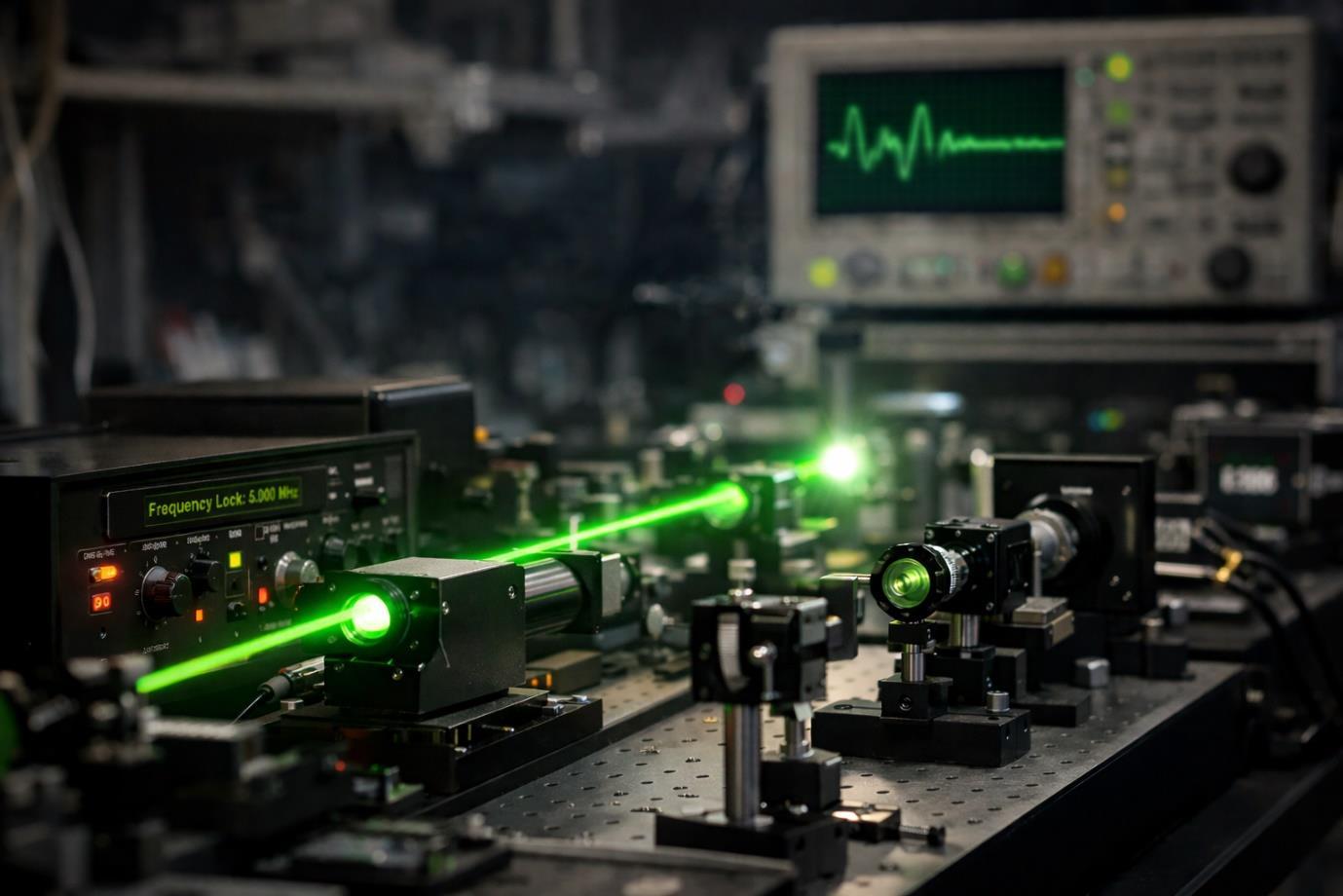
The best part of frequency-stabilized lasers is that they are engineered to maintain a constantopticalfrequencyoverextendedperiodsbylockingthelaseroutputtoastable reference,suchasanopticalcavityoratomictransition,andthisprocessreducesthedrift causedbytemperaturevariations,mechanicalvibration,andelectronicnoise.Theresult ofallthisisalightsourcecharacterizedbylong-termcoherence,spectralpurity,andhigh repeatability, which are qualities that form the foundation of modern experimental science.
The narrow-linewidth semiconductor laser isacriticalcomponentinmanystabilized architectures. With spectral widths reaching the kilohertz range or below, these lasers provide the clarity necessary for high-resolution measurements and fine spectral discrimination. Their compact design, low phase noise, and efficient operation make them one of the most incredible seed sources for spectroscopy, optical metrology, and quantumtechnologyplatforms.
Key Research Applications Enabled by Stable Frequencies
Thebenefitsoffrequencystabilizationextendwayacrossnumerousscientificdisciplines, whichdirectlyinfluencesdataqualityandexperimentalreliability.Thisincludes:
Research Domain
Quantum optics
Atomic physics
Spectroscopy
Atmospheric LiDAR
Impact of Frequency Stability
Sustainscoherentlight-matterinteraction
Enablesprecisecoolingandtrapping
Resolvesfinemolecularandatomicfeatures
Improvesrangingaccuracyandvelocitydetection
Beyond stability, tunability is often essential. A single-frequency tunable semiconductor laser also enables controlled wavelength scanning, as it maintains narrowlinewidthand coherence, and thisisindispensablein absorptionspectroscopy, biomedical diagnostics, and optical sensing, where both spectral precision and operationalflexibilityarerequired.
The reliability of frequency-stabilized systems is inseparable from the engineering expertise behind them, and in such a scenario, renowned names in the industry specializing in advanced solid-state and fiber laser technologies are dedicated to the research,development,andproductionofhigh-performancelasersystems.
Withsolutionslikeseed lasersources, integrated frequency-stabilized modules,singlefrequencyhigh-energy solid-state lasers,and ultra-narrow-linewidthfiberlasers, some providersdeliversolutionsthatsupportapplicationsinatmosphericLiDAR,biomedical research,andquantumoptics.
Conclusion
Amodern frequency-stabilized laser source isnolongeraspecializedaccessory;itis somuchmorethanthat.It’sratherafoundationalinstrumentforcredibleresearch,and by providing exceptional spectral purity, long-term stability, and dependable performance,thesesystemsallowscientiststopursueincreasinglysensitiveexperiments withconfidence.
Therealtruthisthisisjustthebeginning,andasscientificinquirymovestowardgreater precisionandcomplexity,frequency-stabilizedlaserswillremaincentraltotransforming theoreticalconceptsintoreproducible,high-impactdiscoveries.