Tuesday April 21: VIA Luncheon – The Future of Your Business: Succession, Sale or Legacy?
Education Center, Child & Family Center 21544 Centre Pointe Parkway 11:45 - 1:30
Thursday April 23: VIA After Five, Hosted by Samuel Dixon Family Health Center, 25115 W. Avenue Stanford, Suite A-104, Valencia, CA 91355 5:30-7:30
Investing in Tomorrow’s Workforce
For more than two decades, the Santa Clarita Valley has benefited from a unique partnership between business and education—one that continues to shape the future of our local workforce.
The Connecting to Success (CTS) program, developed by the Valley Industrial Association (VIA), was created in response to a clear need identified by local business leaders: students were graduating academically prepared, but often lacking the practical skills needed to succeed in the workplace.
Launched in 2003, CTS began as a one-day program serving a single high school. Today, it has grown into a regional initiative reaching more than 43,000 students across seven Santa Clarita Valley high schools. Each year, high school juniors participate in interactive sessions focused on professional communication, decision-making, personal branding, and financial literacy—skills essential for navigating both work and life.
The strength of Connecting to Success lies in its connection to the business community. By incorporating real-world workforce insight, the program helps ensure that students are introduced to the expectations and realities of today’s professional environment before they enter it.
What many may not realize is that CTS is fully funded through local support. The VIA Education Foundation raises approximately $70,000 annually to deliver the program, covering venues, transportation, materials, and coordination—at a cost of about $35 per student.
As the program continues to grow, so does the opportunity for the business community to play a larger role.
Workforce readiness is not just an educational priority—it is an economic one. The students participating in CTS today will soon become the employees, leaders, and innovators who shape Santa Clarita’s future. Their preparedness directly impacts the strength of our workforce and the long-term success of our region.
Programs like Connecting to Success help bridge the gap between education and the workplace, but their continued success depends on strong collaboration between schools and industry.
Santa Clarita has already demonstrated what is possible when business and education work together. Looking ahead, deeper engagement from the business community will help ensure that workforce readiness efforts continue to evolve and meet the needs of a changing professional landscape.
Local business leaders who are interested in strengthening the future workforce of Santa Clarita are encouraged to connect with VIA and explore ways to support initiatives like Connecting to Success. For more information, to volunteer or to donate www.via.org/donate Because investing in the next generation is, ultimately, an investment in the future of our entire community.
Thursday May 28: VIA After Five, Hosted by TASC (The Adult Skills Center) SANCTUARY NATURE ASSISTED THERAPY 27803 Lorjen Road, Canyon Country, CA 91387 5:30-7:30
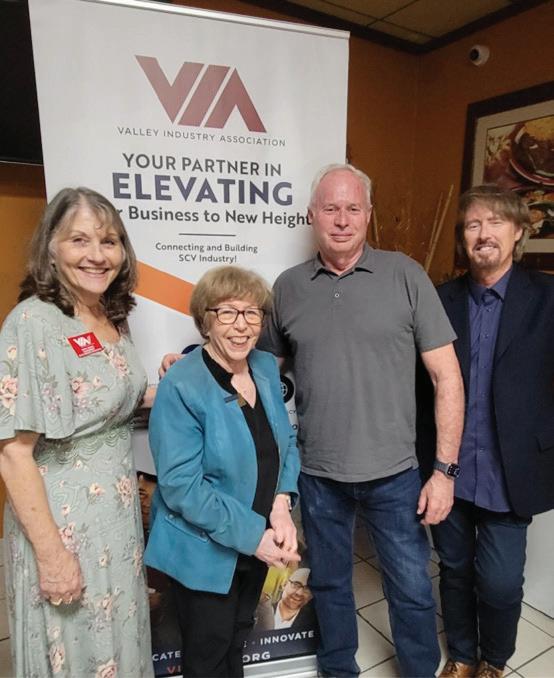
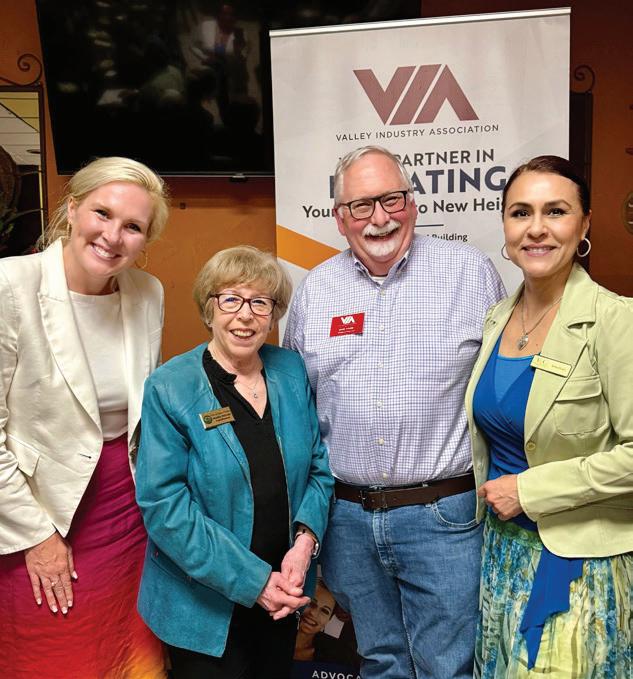
Right: VIA was proud to host Councilwoman Marsha McLean as the keynote for our March 19 Cocktails & Conversation event. Pictured: Kathy Norris, Marsha McLean, Tim Burkhart and Ed Masterson. Left: Young & Chic, LLP joined VIA for the March 19 Cocktails & Conversation event. Pictured: Kristen Chic, Marsha McLean, Mark Young, Erika Flores.
The Best Types of Exercise for Knee Pain
TBy Patrick Moody Henry Mayo Newhall Hospital
he discomfort, stiffness and limited mobility that accompanies knee arthritis is no joke. These symptoms may make you feel less inclined to exercise. After all, your knees already feel strained, so taking it easy could be good for you, right?
Not quite. It may seem counterintuitive, but research shows that regular aerobic exercise is a great therapy for knee pain. In fact, says the American Council on Exercise (ACE), a recent study in The BMJ concludes that it›s probably the best way to maintain knee joint health and quality of life.
The researchers compared data from 217 controlled trials to see which type of exercise was best for knee pain. Aerobic exercise was the overall winner. It was linked to reduced pain, improved function, increased gait performance and better quality of life.
FIVE WAYS EXERCISE BENEFITS YOUR KNEES
Your body was made to move, even when you have joint pain. According to the Arthritis Foundation, exercise offers several benefits, such as:
Building up the muscles, tendons and ligaments around your knees. This protects and reduces the amount of pressure on your knee joint.
Increasing blood flow. When you’re active, your heart pumps nutrient- and oxygen-rich blood through your body that helps to repair your joints and flush out damaged cells. Lubricating the joints. The synovial membrane, a soft tissue surrounding your knees, produces fluid to help your bones move smoothly and easily. Exercise boosts synovial fluid production and reduces joint stiffness. Lowering inflammation. Over time, chronic inflammation can damage your joints and cause pain. Cytokines, which combat inflammation, are released during exercise.
Helping you maintain a healthy weight. Exercise contributes to weight loss, which reduces the amount of pressure on your knees. It doesn’t take much weight loss to achieve this benefit, says the foundation. For instance, losing just one pound can reduce four pounds of pressure on your knees.
WORKOUTS TO TRY
Walking outdoors. Stick to dirt paths rather than asphalt. Uneven trails and walking downhill may worsen knee pain.
Cycling. This low-impact exercise puts your knee through its full range of motion, which produces more joint-lubricating synovial fluid.
Water aerobics and water walking. Exercising in chest- or waist-deep water greatly reduces the amount of pressure on your joints—and it’s an excellent whole-body and
cardiovascular workout.
Running. There’s a misconception that if you have knee pain, you shouldn’t run. In fact, recreational running could help you avoid knee and hip replacement. Visit a running shoe store to be fitted for the right pair of shoes.
Yoga. Yoga is a great low-impact, musclestrengthening exercise, and you can modify poses if you feel pain. Choose a teacher who emphasizes correct form.
When You Wait for Business to Come In, It Doesn’t
BY KEN KELLER SCVBJ Contributing Writer
There is a quiet belief many business owners carry, often without realizing it, that if the business is good enough, if the product or service is well received, work will eventually show up.
Sometimes it does. And sometimes, it doesn’t.
I’ve worked with owners for decades, and I’ve seen this pattern repeat itself across industries, company sizes and economic cycles. When revenue softens, many owners don’t stop working. They stay busy. They tighten expenses. They wait. They tell themselves, “Things will pick up.”
But waiting is not a strategy.
In fact, waiting is often the most expensive decision an owner makes.
When business slows, the instinct is to retreat inward, to operations, to efficiency, to things that feel productive and are controllable. Prospecting, relationship-building, and visibility often get pushed aside because they feel uncertain or uncomfortable. After all, owners are builders, not salespeople; at least that’s the story many tell themselves.
One of the most important shifts an owner can make is this: stop viewing revenue generation as something that happens after everything else is done. It is not a reward for good operations. It is a leadership responsibility.
Here’s the reality: business doesn’t come to you because you’re competent. It comes to you because you’re visible, relevant, and engaged in conversations that matter.
best are not necessarily the smartest or the hardest working. They are the ones who stay outward facing when others turn inward. They keep showing up in front of customers, referral partners, and prospects, even when it feels awkward, even when the timing feels off.
Waiting assumes momentum will magically return. Action creates momentum.
Another hard truth from the owner’s chair: many owners confuse “being ready” with “being active.” They update the website. They further refine the message. They rethink the offer. All useful things, but none of them replace direct engagement with the market.
Revenue is not generated by preparation alone. It is generated by contact. By conduct.
This doesn’t mean panic selling or chasing bad business. It means intentional outreach. It means picking up the phone. It means asking current clients how else you can help. It means renewing relationships that have gone silent. It means reminding the market —calmly and confidently — why you exist and who you serve.
Owners who wait often say, “I don’t want to look desperate.”
But visibility is not desperation. Silence is.
The market does not assume you’re
busy when it doesn’t hear from you. It assumes you’re irrelevant.
One of the most important shifts an owner can make is this: stop viewing revenue generation as something that happens after everything else is done. It is not a reward for good operations. It is a leadership responsibility.
When owners step back into that role, consistently, not reactively, something interesting happens. Confidence returns. Conversations take place. Opportunities appear that were invisible while waiting. Business responds to movement.
From the owner’s chair, the lesson is simple but not easy: If you wait for business to come in, it usually won’t.
If you go out and engage it, and you know how: thoughtfully, steadily, and with intention, it often does.
And more importantly, you stay in control of your future instead of hoping for it.
Ken Keller is an executive coach who works with small and midsize B2B company owners, CEOs and entrepreneurs. He facilitates formal top executive peer groups for business expansion, including revenue growth, improved internal efficiencies and greater profitability. Keller’s column reflects his own views and not necessarily those of the SCVBJ. Email: Ken. Keller@strategicadvisoryboards.com.
Waiting isn’t a strategy. In fact, waiting is often the most expensive decision an owner makes.
Growing up, Ryan Shaver — executive director of the North Carolina Masonry Contractors Association — hadn’t planned on pursuing a career in the trades. But everything changed in 1989 when he enrolled in a high school masonry class.
“From that moment, I knew I wanted to be out there building things with my hands, and I’m proud to say, I’ve never looked back,” said Shaver.
What started as a random elective changed the course of Shaver’s life. Now, he’s using his years of experience in concrete masonry to give back, acting as an educator, mentor and advocate for the masonry trade.
“I want to see this industry grow in ways we have never seen,” Shaver said. “Masonry has always been about building things that last. If we get people excited and organized, the impact will last, too.”
After spending decades working across every side of the concrete masonry industry, Shaver wanted to do more to nurture the next generation of masonry. With the support of the Concrete Masonry Checkoff, he established the Junior Blocklayer program, which offers youth, regardless of their skill set, fun hands-on challenges and competitions that expose them to the joy and pride of masonry.
Students aren’t the only ones who benefit from the program. Junior Blocklayer gives the industry a practical way to create awareness while strengthening the next generation of the masonry and design industry. Shaver built the program around his core belief that engagement in a trade starts with experience.
“Once you get a few blocks in someone’s hands, that’s when buy-in really starts,” Shaver said.
An American Trade Renaissance
Ryan’s story isn’t unusual; his experience reflects a larger career shift in the U.S. More and more students are shying away from traditional four-year degrees in favor of learning a trade like concrete masonry, electric and plumbing, among others.
According to a 2023 study by the National Center for Education Statistics, U.S. undergraduate enrollment declined by approximately 15% between 2010 and 2021, falling from about 18.1 million to 15.4 million students. On the other hand, fall enrollment at trade schools grew at an estimated compound annual rate of 3.2% from 2019 to 2024 and is expected to grow even faster from 2024 to 2030 at a projected rate of 6.6%.
But why are younger generations joining the trades? Perhaps one of the most compelling reasons is that young people are rethinking what makes a good job.
Debt-laden, desk-bound jobs without a clear impact or purpose are less appealing to younger generations. A recent Deloitte report found that roughly nine in 10 Gen Zers (89%) and millennials (92%) consider a sense of purpose to be important to their job satisfaction and well-being. Similarly, another Deloitte study found that 44% of Gen Z report rejecting employers whose values did not align with their own, signaling that meaning and contribution influence job choice. By contrast, trade jobs like concrete masonry offer hands-on, purposeful and financially secure vocations that communities rely on every day.
With a registered apprenticeship, workers can expect to be paid from the day they start and can expect their wages to increase as their skills advance.
As far as earning potential goes, these young tradespeople in construction and extraction jobs can expect to earn a median annual wage of $58,360, exceeding the median wage across all U.S. occupations, including white-collar roles.
Paving the Way for the Next Generation
To capitalize on the renewed interest in the trades, industry leaders need to create a tangible connection — not just for students but for professionals as well. The success of Shaver’s Junior Blocklayer program is a clear example of how the industry needs to shift and meet young people where they’re at.
“We have to teach adults how to work with students,” he said, “not the other way around.”
That’s why the program’s events encourage direct interaction between participants and instructors, emphasizing simple actions like walking table to table, asking questions and building relationships that can turn curiosity in masonry into a long-term career.
Shaver’s Junior Blocklayer program isn’t the only way industry groups like CMC have been expanding awareness of the masonry trade and supporting educational opportunities for potential tradespeople. In fact, after years of limited exposure in collegiate settings, CMC has been instrumental in bridging the gap between the classroom and real-world craftsmanship.
CMC’s programming has introduced or reestablished partnerships with more than a dozen leading colleges and universities to restore concrete masonry’s presence in the classroom through research, scholarships and hands-on learning. (BPT)
BY ONDRÉ SELTZER PRESIDENT & CEO OF
DEVELOPMENT CORPORATION
The Santa Clarita Valley Economic Development Corporation’s 2025 Annual Report tells a story larger than job numbers alone. In a year marked by economic uncertainty, the Santa Clarita Valley continued to advance through coordinated action by business leaders, the City of Santa Clarita, Los Angeles County, educators, commercial brokers, and regional partners. That collaboration helped SCVEDC support 896 jobs attracted, retained, or expanded across 19 companies and 44 assistance projects, far exceeding the 164 net new jobs projected for the region in the California Economic Forecast.
Several of the year’s most important business wins reflected that hands-on, partnership-driven approach, reinforcing the valley’s strength in bioscience, aerospace, and advanced manufacturing. Boston Scientific retained 650 jobs through its acquisition of Valencia Technologies and relocation into the former Scorpion building. ASC Process Systems retained and expanded 276 jobs, while Woodward HRT added 49 positions and Element U.S. Space & Defense expanded by more than 20 jobs. DrinkPAK continued growing its local footprint with a new 172,843-square-foot lease, and Logix Federal Credit Union increased its workforce by about 25%, adding roughly 170 positions.
Workforce development remained another major focus. Through the High Roads Training Partnership, SCVEDC and College of the Canyons convened employers, workforce agencies, and education partners to better align training with industry needs. The Spring and Fall SCV Job Fairs, held in partnership with workforce, government, and education partners, connected over 900 job seekers with more than 80 employers per event, while the SCV Job Board continued to serve as a free platform for local hiring.
For the full report with all economic data and updates from 2025, visit our blog at https:// www.scvedc.org/blog.
The Santa Clarita Valley Economic
Development
The
businesses in the Santa Clarita Valley, especially those in key industry clusters, by offering competitive business services and other resources. For more information, visit SCVEDC. org.
Expanded State Leave Policies Help Families Thrive
When a child is born or serious illness strikes, workers need time off, but for millions of Americans, it’s not that simple.
The United States is one of the only developed countries in the world that does not guarantee paid family and medical leave and currently, just 13 states and Washington, D.C. do, covering just a quarter of private-sector workers and a third of people who work for state and local governments. While advocates say that it’s time for that to change, they are celebrating recent progress made in certain states.
In particular, Tennessee recently expanded on its previous six-week paid family leave policy to include workers caring for family members at the end of their lives, becoming the first southern state to expand its paid family leave policy beyond parental leave. In Mississippi, a new law grants state government employees up to six weeks of paid parental leave and in Alabama, recently passed
legislation provides up to eight weeks of paid leave for state employees and K-12 educators.
“Paid leave is good for families, workplaces and communities,” says Robyn Hyden, executive director of Alabama Arise. “Not only is this expanded leave policy helping ensure more Alabama parents can be healthy and provide the care and stability infants, toddlers and their families need to thrive, it provides the added benefit of enabling the state to better recruit and retain teachers and state employees.”
While these advances are noteworthy, they are limited, and there is still much
With Heart Marketing helps businesses gain clarity on who they are at their heart and soul and how they show up in the world.
work to be done, say experts at A Better Balance, a national nonprofit legal advocacy organization dedicated to promoting justice in the workplace.
“Paid family and medical leave supports lasting financial security for everyone, including those in low-wage and hourly jobs, and addresses the needs of communities that have long been under-served and under-protected,” says Jared Make, vice president of A Better Balance. “Our goal is to ensure that all workers can care for themselves and the people they love without worrying about how to pay the bills.”
To learn more about PFML policies and progress, visit ncit.org/.
“The expansion of leave policies being made by state governments is encouraging. We will continue our efforts until every worker, regardless of where they live or who they work for, has access to paid family and medical leave,” says Lori Fresina of the National Collaborative for Infants & Toddlers.
Through The With Heart Approach™, a heartcentered brand strategy framework, I help turn that clarity into authentic communication, meaningful connection, and intentional growth
CLARITY
Get clear on who you are as a brand, what you stand for, and who you are here to serve.
CONSISTENCY
Communicate clearly and consistently across every part of your brand.
ALIGNMENT
Align every decision with your values so you can lead and grow with confidence.
CONNECTION
Build meaningful connections that deepen trust and support lasting growth
Founder Talie Knutson brings 15+ years of experience developing marketing strategies for brands like Disney, Princess Cruises, and MTV.
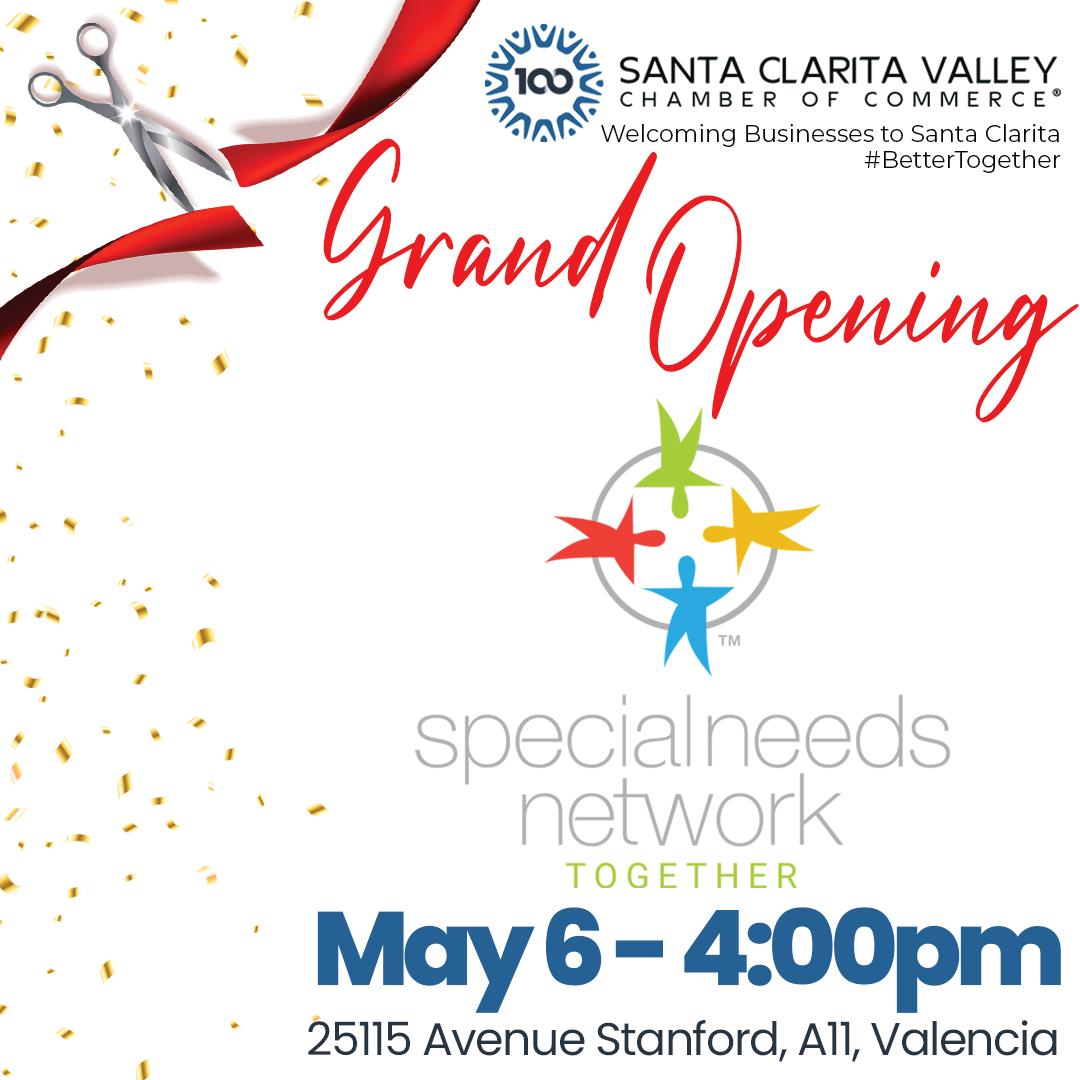
We’re thrilled to invite you to join us in celebrating the exciting new businesses opening in our community! Each grand opening is not just a milestone for these businesses but also a chance for all of us to come together and support our local economy.
From marking special occasions to recognizing remarkable achievements, we feel honored to share in your celebrations. Our grand opening and ribbon-cutting events are FREE and open to everyone to attend! It’s a wonderful opportunity to connect with fellow community members, meet the passionate individuals behind these new ventures, and explore what they have to offer.
Let’s show our support and make these celebrations unforgettable! Bring your friends and family, and let’s celebrate the growth and vibrancy of our community together. We can’t wait to see you there!
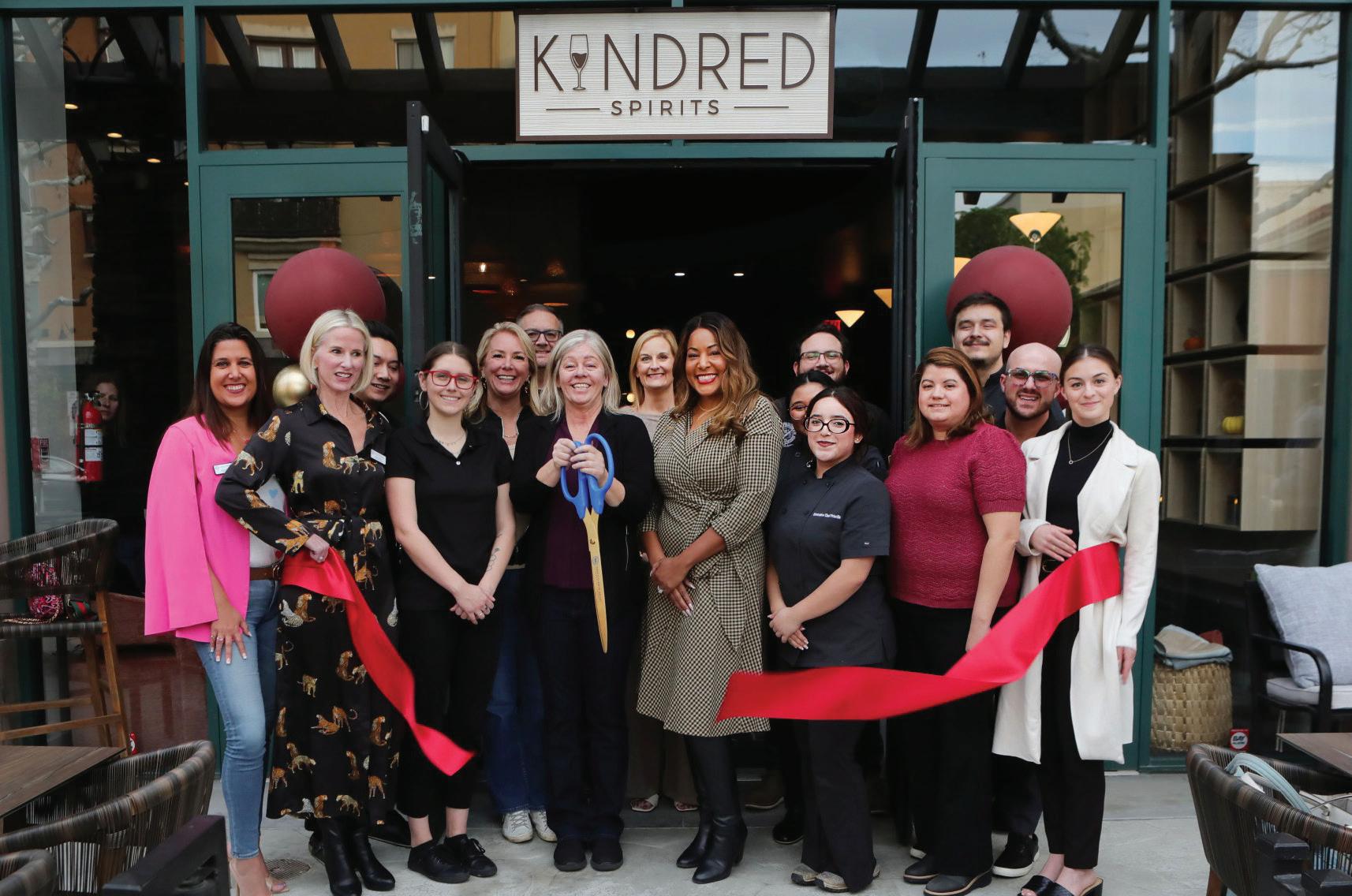
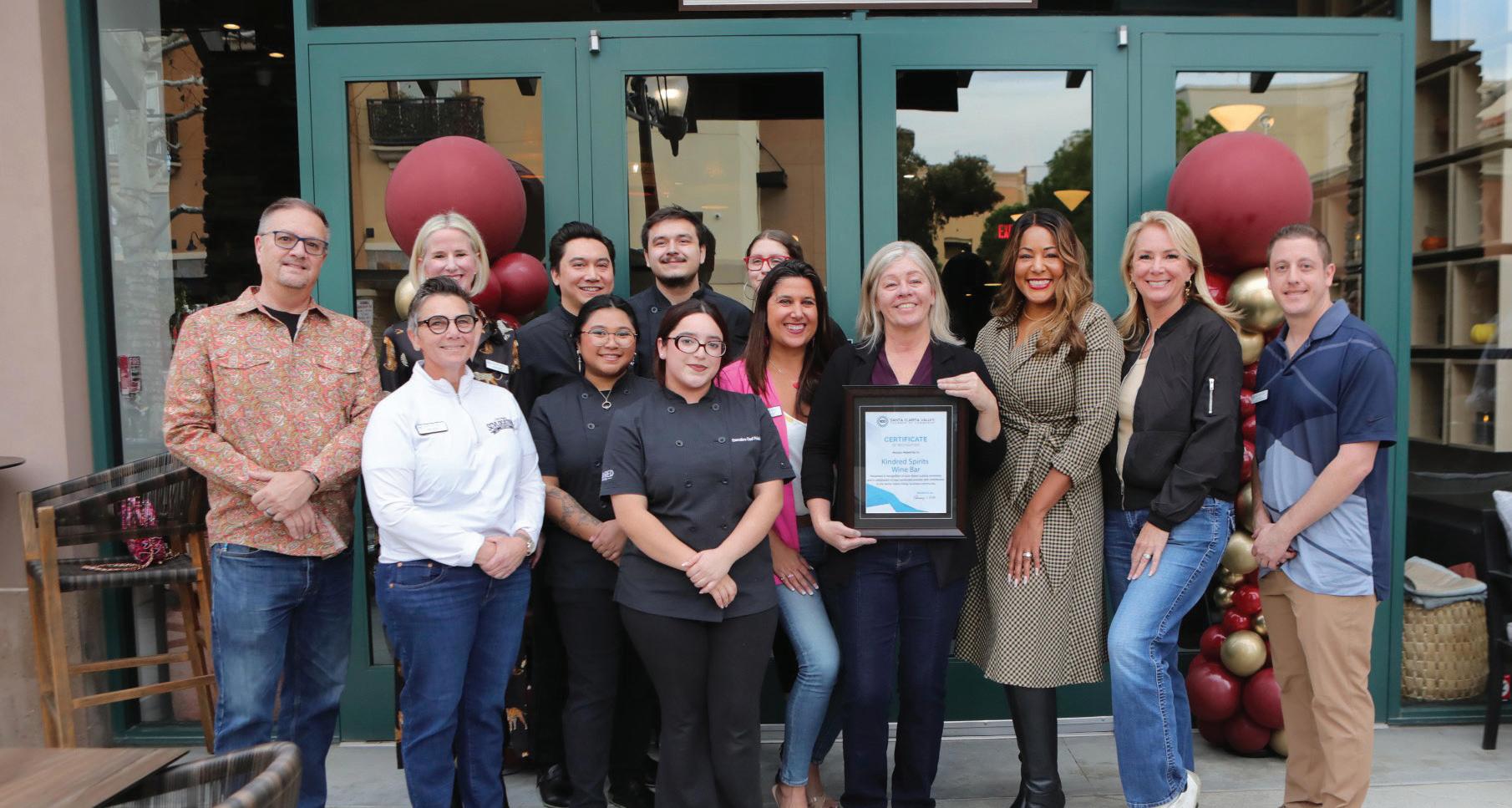
Congratulations to Kindred Spirits Wine Bar on your ribbon cutting celebrating your new 2026 menu in February. Go visit them at 24510 Town Center Dr., #120, Valencia. Thank you to everyone who came out to celebrate and support them. Photo credit: Joie de Vivre Photographie
Celebrating our Community
Mark your calendars and come be part of the excitement as new businesses open their doors right here in our community! These grand openings are more than ribbon cuttings — they’re celebrations of growth, local spirit, and fresh beginnings.
Everyone is welcome to join the festivities, connect with fellow community members, and show support for the entrepreneurs investing in the Santa Clarita Valley.
Board Members congratulate
Whether you’re launching a brand-new business or celebrating an important anniversary, we’d love to celebrate you with a memorable ribbon cutting ceremony.
This is the perfect opportunity to showcase your business, connect with fellow entrepreneurs, and celebrate your hard work and success.
Email us at hello@scvchamber.com to learn more about how we can assist in organizing your ribbon cutting or grand opening.
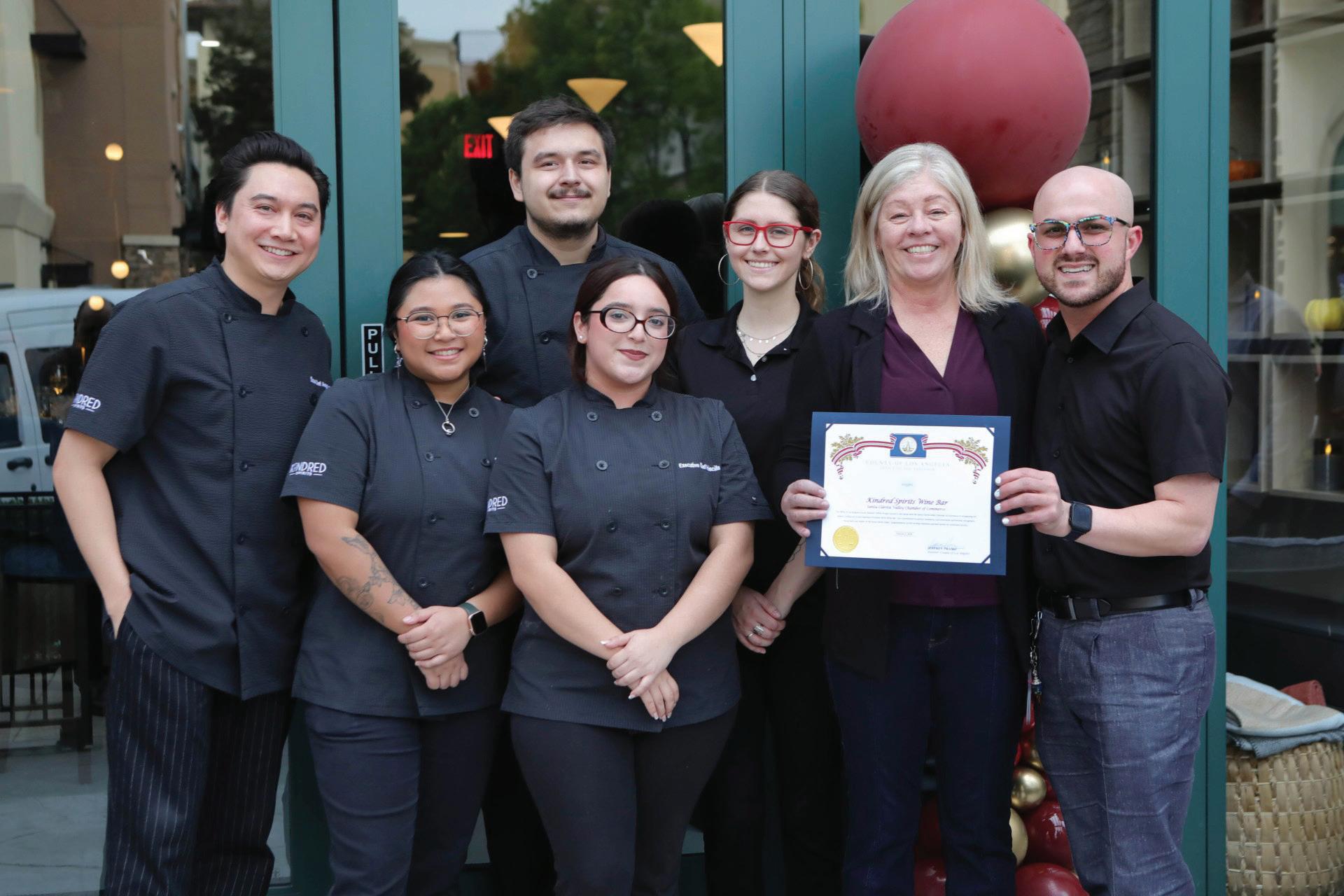
Andrew Taban, Special Assistant for Los Angeles County Assessor Jeffrey Prang, congratulates Diane Kiger, owner of Kindred Spirits Wine Bar on her ribbon cutting. Photo credit: Joie de Vivre Photographie
Chamber
Kindred Spirits Wine Bar on their ribbon cutting. Photo credit: Joie de Vivre Photographie
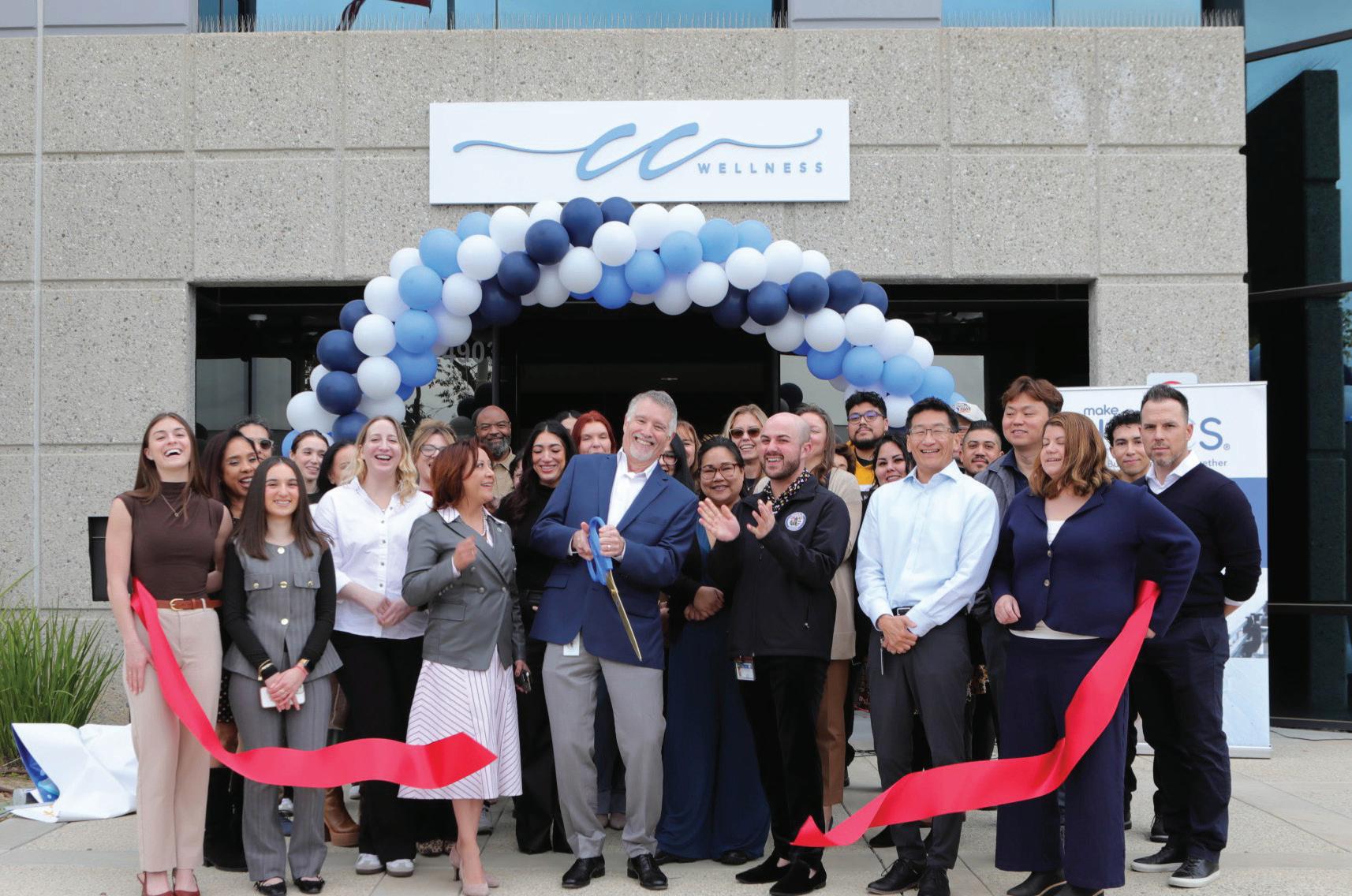
Congratulations to CC Wellness on your facility expansion and ribbon cutting in February. Go visit them at 24903 Avenue Kearny, Valencia. Thank you to everyone who came out to celebrate and support them. Photo credit: Joie de Vivre Photographie
Pro
CC
their
Celebrating SCV Businesses
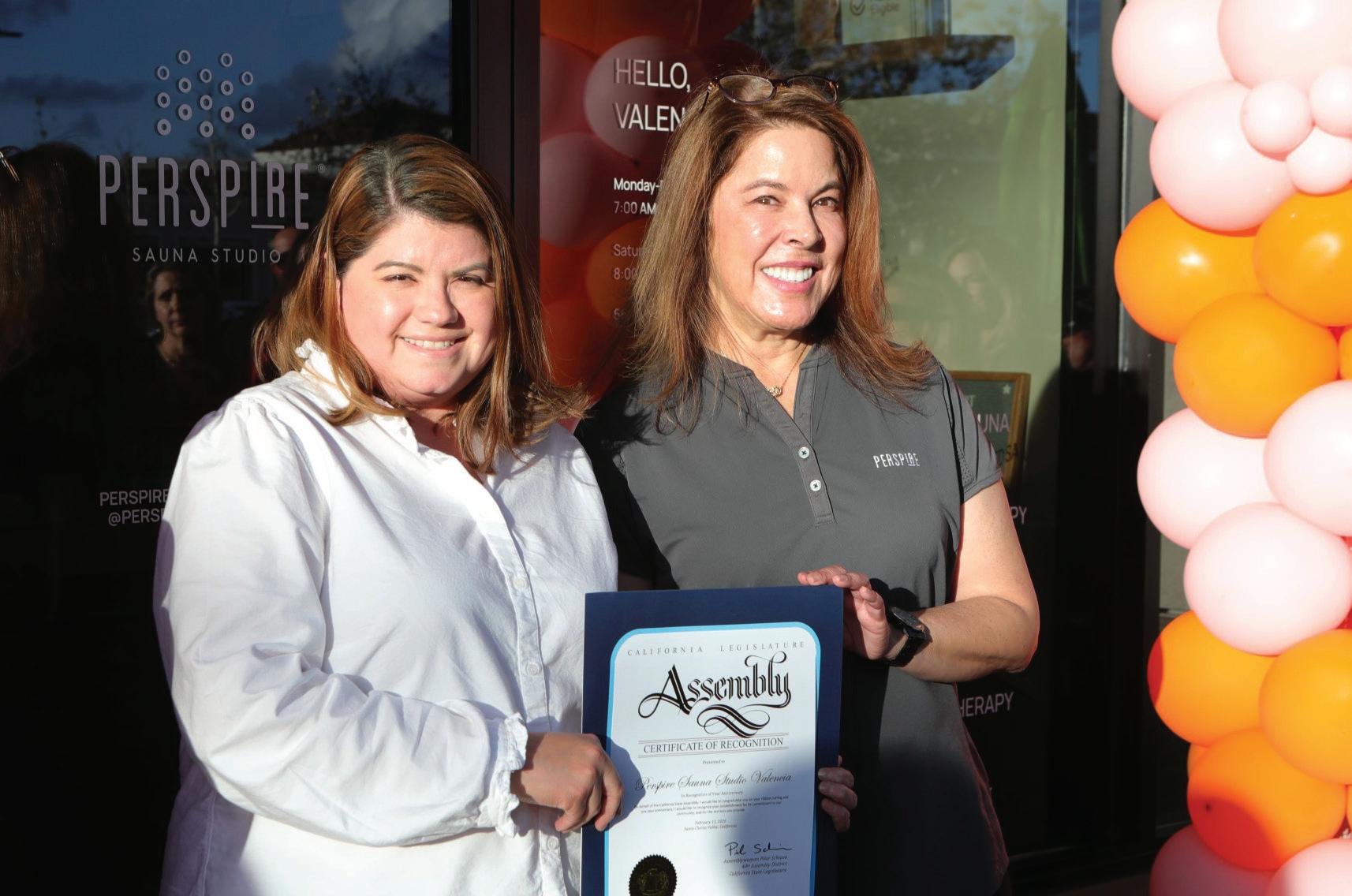
Crystal Carr, Field Representative for Assemblywoman Pilar Schiavo, congratulates Robin Litvak, Franchise Owner of Perspire Sauna Studio on her one-year anniversary. Photo credit: Joie de Vivre Photographie
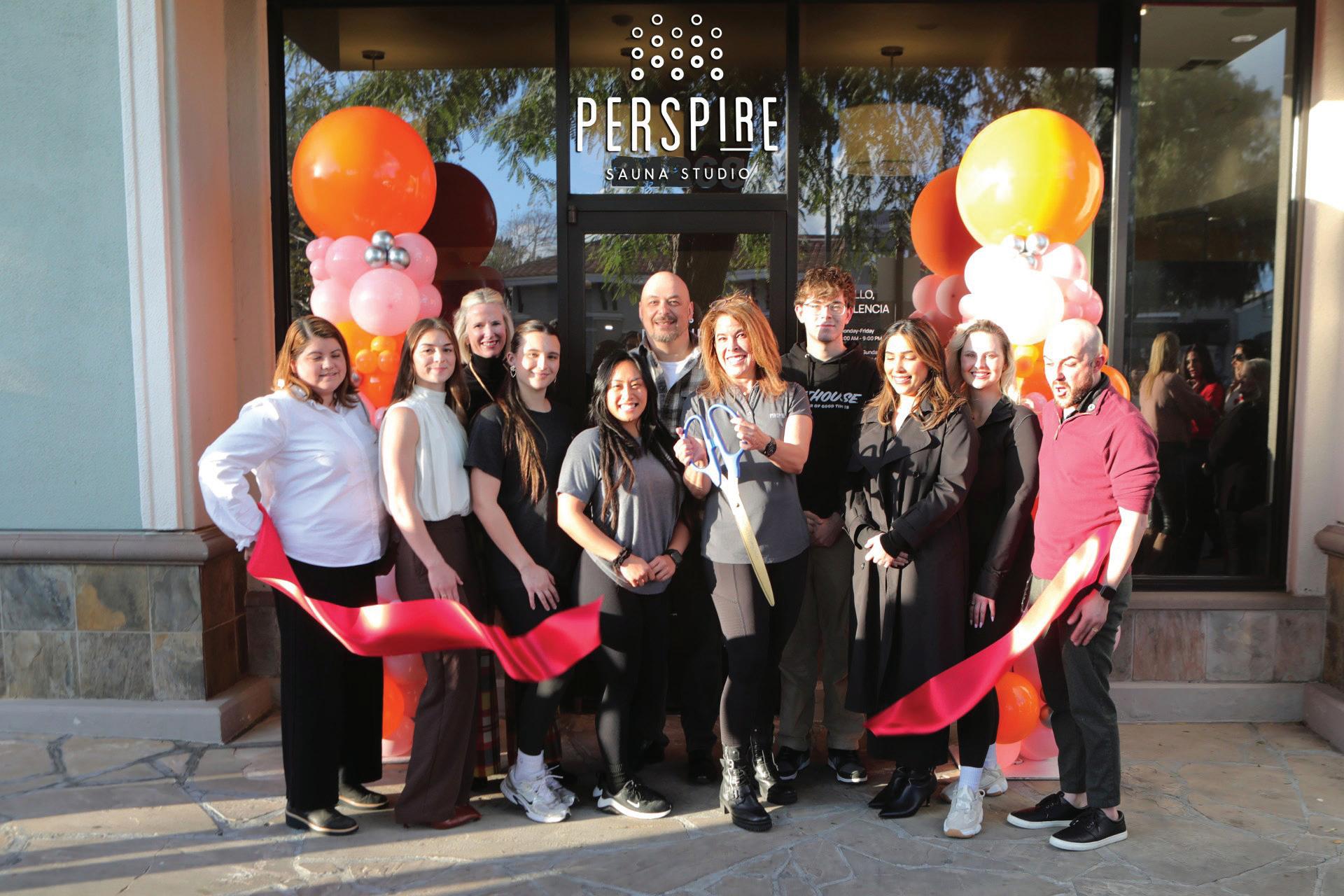
Congratulations to Perspire Sauna Studio on your one-year anniversary ribbon cutting in February. Go visit them at 24268 Valencia Blvd, Valencia. Thank you to everyone who came out to celebrate and support them. Photo credit: Joie de Vivre Photographie
To view our full calendar and event details go to www.SCVChamber.com or scan the QR Code below.
Mayor
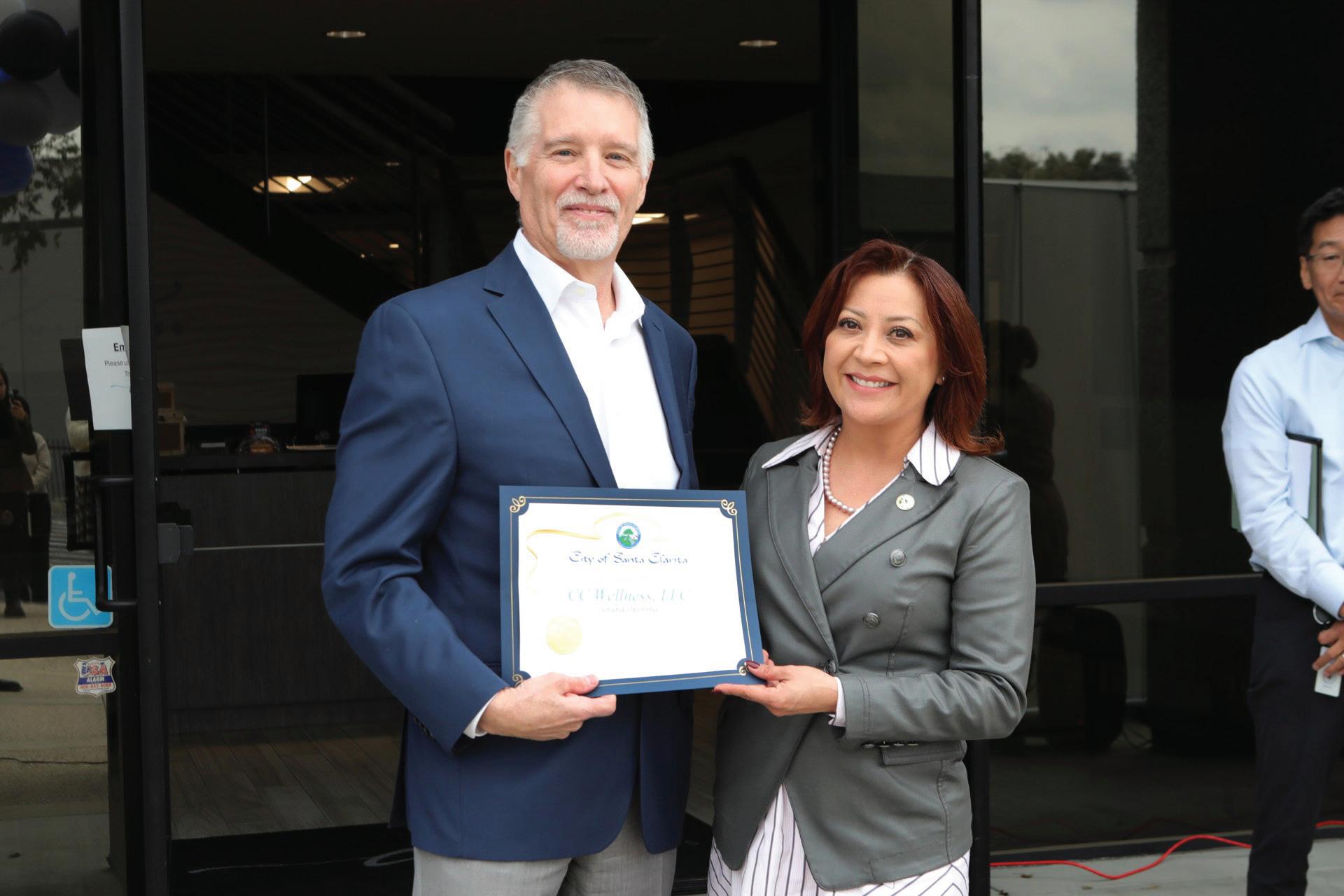
Tem Patsy Ayala congratulates Mark Walsh, CEO of
Wellness on
facility expansion. Photo credit: Joie de Vivre Photographie
Could new ADU rules change the game?
BY PERRY SMITH SCV Business Journal Editor
The biggest development news in the entire Santa Clarita Valley could have come from Santa Clarita’s City Hall this past month.
The city made a number of changes to its housing policy, spurred by a number of changes to state law and a lawsuit from a pair of housing-advocacy organizations based in Northern California.
And the city has already started to see an increase in the number of permits related to the change.
The city’s latest efforts at “maximum local control over development standards” had to do with what are commonly known as “granny flats,” for ADUs ran afoul of the state’s latest guidelines, with the city promising the state it would draft a revised ordinance for the City Council by July 1.
The state has seen the add-ons as a great way to address the housing crisis, and what it sees as a multimillion-unit shortage when it comes to housing.
As proof, the units have seen an exponential increase in their approval over the last 10 years.
The data on the long-term impacts of these efforts is mixed.
ADU advocates report that In California, the median appraised value for homes with ADUs rose from $550,000 in 2013 to over $1,064,000 in 2023, with an annual growth rate (9.34%) higher than properties without them (7.65%). However, housing data from just 2019 to 2026 from the Southland Regional Association of Realtors shows that in Valencia, for example, the median sales price just from that period represented a more than 50% increase in value.
To date, the city of Santa Clarita has seen a number of ADU applications, but officials could only recall one such developer project with multiple ADUs that has gone through the city’s approval process. That could change with these new laws.
The new rules mean the city has to, for one single-family property, allow up to: one conversion ADU, which is one created within an existing home’s foot-
print; one JADU, or junior ADU, which are generally attached and no more than 500 square feet; and one detached ADU, up to 800 square feet, with 4-foot side and rear setbacks.
A city planner said state law did not allow for the city to create rules that could infringe on the ability to put up an ADU, i.e. if an oak tree needed to be removed in order to build an ADU, the city could not stop the property owner, he added.
There are a number of other business changes being discussed by the city of Santa Clarita’s Planning Division, according to the permits available at City Hall.
After a well-documented drama in the press, the operators of the restaurant at 28561 Railroad Ave., the former home of The Original Saugus Cafe, are still battling things out, now in federal court. But the new restaurant is seeking a liquor license.
Hugo’s Gym Fitness is looking make some tenant improvements in the 24800 block of De Anza Drive for its new location.
The Ivy Santa Clarita is looking to move into 27200 Tourney Road Santa Clarita. “The Ivy at Santa Clarita is a thoughtfully designed, three-story assisted living and memory care community consisting of 100 units (107 beds),” according to a plan submitted to the city of Santa Clarita near the end of January. “Spanning approximately 103,000 square feet, the
project is intended to serve the growing senior population in the city of Santa Clarita with high-quality care, tailored programming, and an inviting, residential environment.”
The project would go into the parking lot of the work-share rental office building there.
The operators of Lima Limon, a popular longtime local restaurant in Saugus at 26845 Bouquet Canyon Road, is looking to expand into Main Street.
Their potential new location is the former home of the Newhall Press Room. That business has a note on its website that thanks its customers for eight years of patronage and states that its under new patronage.
There’s also a new gas station being proposed for 18717 Soledad Canyon Road.
The closure on Bouquet Canyon Road is just a little over a month old, and a handful of business owners just north of the closure have already said they’re fighting for their professional lives as business owners.
The convenience stores north of Plum Canyon Road on Bouquet Canyon Road have been particularly hard hit, as our a few of the local restaurants, who have reported declines of anywhere from 30% to 70% of their revenue after just one month. There’s more information about the closure and the businesses at bit. ly/4mlELYt.
The State of California sees “granny flats” or accessory dwelling units, or ADUs, as a great way to address the housing shortage. The city sees the recent state laws as one more way local control has been taken away. PHOTO COURTESY STATE OF CALIFORNIA
Three Levels of Service: Bronze, Silver, Gold
BY PAUL BUTLER SCVBJ Contributing Writer
Iremember my Mom and Dad saying to me as a teenager, when I was unsure about my future career: “Whatever you do, do it to the best of your ability.” It was years later before I truly understood the foundational wisdom behind that advice, but it has served me well in my service to others — both professionally and personally.
Since we only have one life, why not go for greatness? Why not strive to be the best version of yourself? My observation, having worked in both Europe and North America, is that organizations never want to lose people who give their best effort — those who “put their shoulder to the plow” to provide superb internal and external customer service.
At Newleaf Training and Development, we have a staff training program called Customer-Centered Service. Within that program, we present a concept called the “3 Levels of Service: Bronze, Silver and Gold.” It is a simple concept to understand, yet we find it is not commonly practiced.
As an employee, you have a choice as to how much of yourself you give to your work. Here are what I believe are the three levels of service:
Bronze Level (Meeting the Need)
This is simply doing what is on the job description. We’ve all interacted with a colleague who does the bare minimum. Someone once cynically said that most employees do “just enough not to be fired.” At this level, the customer isn’t necessarily unhappy—they are simply satisfied. Nothing more, nothing less.
Example In my previous role as a Regional Finance Director for Hilton International, a «Bronze level» Controller would present accurate, clear reports where the balance sheet balanced. They did their job, but offered no further insight.
Silver Level (Exceeding Expectations)
This is when a person goes above and
As an employee, you have a choice as to how much of yourself you give to your work. Here are what I believe are the three levels of service:
Bronze • Silver •Gold
beyond. It’s “service with a smile” or the “bells and whistles.”
Example A «Silver level» Controller would interpret the numbers for us. They would save the regional team time by identifying exactly where a problem was (e.g., «The banqueting department is behind budget, which is pulling down the overall results»). This was incredibly helpful and exceeded my expectations.
Gold Level (Anticipating Needs)
This is what we all truly desire from one another. Gold level service is about anticipating needs before they are even expressed. It often comes down to a personal decision to go the extra mile; it is difficult to institutionalize because it comes from the human heart.
Example These were the rare Controllers who provided numbers I could rely on, identified the issues, and then offered solutions. They anticipated what I would need to know to make a decision. In summary, teams and organizations
need “Gold level” employees, especially in a world where change is the only constant and competition is ever-increasing. If you supervise others, ask yourself how you can turn the organizational pyramid upside down and provide Gold level service to your direct reports. If you are a business owner, how can you engage the hearts and minds of your employees to move beyond the minimum? My experience is that people tend to support what they help create. Start by asking for their ideas on how the organization can provide Gold level service to customers, vendors, and each other.
Whatever you do, do it to the best of your ability. See? I was listening after all, Mom and Dad.
Paul Butler is a Santa Clarita resident and a client partner with Newleaf Training and Development of Valencia (newleaftd.com). For questions or comments, email Butler at paul.butler@newleaftd. com.
The List: Top Employers
SCV Home, Condo Sales Post Big Gains
BY DAVID WALKER Southland Regional Association of Realtors
Single-family home and condominium sales in the Santa Clarita Valley during February posted sizable increases even as the active inventory of both categories of housing remained flat, the Southland Regional Association of REALTORS® reported today.
A total of 141 single-family homes closed escrow last month, up 17.5% from the 120 sales of February 2025. It was the best tally for the month since 2022. Similarly, condominium closed escrows totaled 49 for a 40.0% increase over a year ago. It too was the highest total for the month since 2022.
“With interest rates across the nation averaging under 6% and a substantial active inventory here in the Santa Clarita Valley, we fully expect to see a busy spring homebuying season,” said Nicole Stinson, president of the 10,000-member Southland Regional Association of Realtors. “We’ve been building momentum for the last couple of years, but the Iran war, effects of tariffs, higher costs for home building materials, and a sense of economic uncertainty may put a damper on the market.”
The Association reported an active inventory of 417 single-family homes, which was down 19.8% from a year ago. There also were 236 active condominium listings, up 0.9%.
The median price of homes that changed owners last month came in at $879,000, up 3.5% from a year ago, but well below the record high median $910,000 set in March
2024. Since then, only two months have posted a median price above the $900,000 benchmark.
Similarly, the median price of condominiums that closed escrow during February was $565,000, up 6.2%. That too, was well below its record high of $650,000 established in June 2024, and only three months since then had the median price above $600,000.
“Until recently, many economic indicators suggested the economy was beginning to find its footing and consumers were feeling confident,” said Valerie Biletsky, the Association’s Chief Executive Officer. “We’re hopeful those trends continue in the coming months.”
The 657 combined home and condo listings in Santa Clarita represented a 3.5-month supply at the current pace of sales.
Combined residential pending escrows — a measure of
future resale activity — totaled 151 for a year-over-year increase of 25%.
SRAR’s Income-to-Loan guide for February found that an income of $220,168 was needed to qualify for an 80% loan of $703,200 on a Santa Clarita Valley median-priced single-family home of $879,000. With the national average interest rate at 6.21% during February – the lowest since December 2024’s 6.31% and well below the 7.79% of October 2023 – the income needed to qualify increased 0.3% compared to a year ago.
The monthly PITI — principal, interest, taxes and insurance payments — totaled $5,504. Stevenson Ranch still had the most expensive homes in the Santa Clarita Valley, with a median list price of $985,000 for 30 active listings. The value of homes for sale in Newhall is down about $70,000 in a year-over-year price comparison.
Statewide, the data shows that home prices dipped 1.2% year-over-year in February. At the same time, the total volume fell 1.8% and the number of homes on the market dipped 4.7%, according to data from Redfin.
The median sale price for the state remained about $820,000. The number of homes sold was just over 18,500 statewide, which also is slightly down compared to the same time in 2025.
In February, there were just over 91,000 homes on the market in California, which was down a little over 5%.
Chartered by the National Association of Realtors in 1920, the SRAR is the voice for real estate in San Fernando and Santa Clarita valleys. With nearly 11,000 members, SRAR serves as a trusted resource and partner to the real estate profession and the community at large.
Southland Regional Association of Realtors President Nicole Stinson speaks at the Tiffany’s Champagne & Shopping Brunch for local women real estate agents at the Canyon Country Community Center on Tuesday, April 22, 2025, in Canyon Country. PHOTO BY KATHERINE QUEZADA / THE SIGNAL
Important Deadlines For Businesses With Personal Property
BY JEFF PRANG Los Angeles County Assessor
Iwant to remind the business community about two important deadlines each year that can sometimes be overlooked but should not be: the April 1 filing deadline for the Business Property Statement, and the final May 7 deadline to avoid penalties.
By the time this column appears, the April 1 deadline will likely have already passed. However, businesses can still file their Business Property Statement through May 7 without incurring a penalty. That is an important point worth repeating: filing after April 1 does not automatically trigger a penalty, as long as the statement is postmarked by 5 PM on May 7.
Most businesses are aware of these deadlines and file on time. But occasionally a new business, or even an established business, overlooks the requirement and faces an unnecessary additional cost. My goal is to provide clear information so that does not happen.
Here is what this filing requirement involves: each year, Business Property Statements, also known as Form 571-L, are mailed by my office to most commercial, industrial, and professional firms in Los Angeles County. These forms provide the basis for determining assessments on fixtures, equipment, and other taxable personal property. Businesses that own business personal property and fixtures with an aggregate cost of $100,000 or more are required to file the statement, even if they did not receive a mailed-out statement.
Businesses may mail their completed Business Property Statement to their assigned district office, which can be located at the top of the pre-printed form or by searching an Assessor Identification Number (AIN) as well as your business address. The statement may also be filed electronically, if they qualify. Additional filing information is available on the Los
Angeles County Assessor’s website at assessor.lacounty.gov/businessowners/ business-prop-statement-filing.
So, what exactly is business personal property?
In general, business personal property includes all property owned or leased by a business, excluding inventory, land and structures. It includes machinery, computers, office equipment such as copiers and telephones, furniture such as desks and chairs, and business supplies.
Tangible property that is owned, claimed, possessed, or controlled in the conduct of a profession, trade, or business may be subject to property tax. Business personal property is valued annually as of January 1.
Although April 1 is the filing deadline established under state law, businesses are granted until May 7 ( by 5:00 p.m.) to file without penalty. If not postmarked by 5:00 p.m. on May7th , a 10 percent penalty will be applied. If May 7 falls on a weekend or holiday, the deadline moves to the next business day. In 2026, May 7 falls on a Thursday, making close of business (5:00 p.m.) that day the final deadline to avoid the penalty.
Businesses with personal property and fixtures costing less than $100,000 are generally not required to file annually unless requested by the Assessor. In-
stead, a value is established through an initial filing or an on-site appraisal, and that value may later be adjusted through subsequent appraisals.
If a business owner disagrees with an assessed value, the first step should be to contact my office to review the assessment. If the issue is not resolved satisfactorily, a formal appeal may be filed with the Assessment Appeals Board by November 30. That appeal right exists independently of the Assessor’s review process.
One final point is especially important: if the Assessor’s Office mails you a Business Property Statement, you are required by law to return it, regardless of the amount of personal property involved.
Los Angeles County Assessor Jeff Prang has been in office since 2014. Upon taking office, Prang implemented sweeping reforms to ensure that the strictest ethical guidelines rooted in fairness, accuracy and integrity would be adhered to in his office, which is the largest office of its kind in the nation and provides the foundation for a property tax system that generates about $20 billion annually. Assessor Prang was the 2025 president of the California Assessors’ Association.
How Adults Can Navigate Going Back to School
An ever-changing employment landscape is compelling many adults to go back to school. According to a February 2026 report from the American College of Education ® , roughly one in three adults who chose to return to school within the previous two years did so out of concerns related to automation and artificial intelligence.
Education is an undeniable asset when confronting an uncertain job market. Data from the U.S. Census Bureau indicates that workers with a bachelor’s degree have an employment rate that is roughly 7 percentage points higher than the rate for workers who have some college education but did not earn a bachelor’s degree. In an era when so many adults fear automation and AI, that 7 percentage point disparity seems even more significant.
Adults planning to return to school may find such a return exciting but also a little bit intimidating. But adults need not be intimidated, and some might even find they enjoy school more as adults than they did when navigating academia years earlier. As adults prepare to return to the classroom, keeping a few things in mind can ease their concerns and lay a foundation for success.
You’re not alone As the ACE report indicates, many adults are going back to school. Knowing there will be others your age and with similar life experienc-
es should calm concerns and make the classroom less intimidating. In fact, data from the National Center for Education Statistics indicates that 74% of students have at least one nontraditional characteristic, a notable statistic that should eliminate adult students’ fears that they don’t belong.
Recognize you’re bringing a unique and insightful perspective When returning to school, many adults bring a unique perspective that their younger classmates cannot provide. Having navigated professional and personal challenges, which may include raising a family, adult students challenge the status quo, which can contribute to more engaging and more nuanced classroom discussions. When viewed through that lens, it’s hard to dispute that adult students are assets. Prepare for change It’s vital that adult students recognize academia has changed. But change should be embraced and not seen as a hurdle or deterrent. Many schools now use e-books instead of traditional print books, which may require some adjustment for adult students. And applications that might not have been around the last time adults were in a classroom may be the standard now. Using e-books and new applications may require a learning curve, but educators, many of whom also had to adapt to the growing emphasis on tech over the last couple of decades, recognize adult
students will need time to adjust, and many are more than willing to afford that time and offer advice on how to adjust. Prepare to enjoy education more this time around Many adults who return to school report enjoying academia more the second time around. Some who have tried college before might have lacked direction the first time around, and that undoubtedly affected their motivation and enthusiasm. When adults return to school, they do so knowing exactly what they want and why they’re back in school, which makes the experience more enjoyable and engaging.
Adults have much to gain from going back to school. And as millions who have returned to school as adults can attest, those gains greatly outweigh the fears adults may have as they begin this exciting chapter in their lives. (MC)
Economic DEvElopmEnt corporation
26455 Rockwell Canyon Road | UCEN 263 | Santa Clarita, CA 91355 | (661) 288-4400 | www.scvedc.org
Econo Watch
SCV
Employment Development
The BUZZ
NEWS • TALK • SPORTS • MUSIC • EVENTS
Basic Television Commercial Spot
The spot will be yours to run on The Buzz, trade fairs, your website and to use as a promotional video wherever you want.
30 second basic television commercial spot includes:
• Up to 3 hours of on location filming time.
• 2 hours of editing time.
• Voice over, royalty free music, address, logo and graphics.
Only $895
Purchase of 40 thirty second spots and sponsor mentions for $645 a month with 4 months minimum. FREE basic commercial spot with: FREE basic commercial spot with:
Purchase of 60 thirty second spots and sponsor mentions for $745 a month with 3 months minimum.
When Your Brand is Clear, Everything Else Follows
BY TALIE KNUTSON Founder, With Heart Marketing
There are moments in business where things start to feel harder than they should, even when everything appears to be working. You are making decisions, but second-guessing more than before. Priorities are unclear. Messaging shifts depending on where it shows up, and marketing does not create the connection or momentum you expected. Internally, things may feel slightly misaligned. Nothing is broken, but something feels slightly off.
It is often not a marketing problem. It is a brand clarity problem that impacts far more than marketing.
This is where brand strategy comes in. It goes deeper than tactics. At its core, brand strategy is about getting clear on the heart and soul of your business — who you are, what you stand for, who you serve, and how you show up. When that foundation is clear, it creates align-
ment, consistency, and stronger connection. Without clarity, it affects decision-making, communication, direction and connection.
What this can look like in a business?
Decisions become harder without a clear filter for alignment. Communication is inconsistent. Teams are not always speaking the same language, and marketing becomes reactive instead of intentional. Over time, this creates friction. Things take more energy. Messaging feels less aligned. Connection with your audience is harder to build.
Why clarity changes everything.
When clarity exists at the foundation, everything begins to shift. Decisions become easier and more confident because they are rooted in something real. Communication becomes more natural and consistent. Marketing becomes more intentional, and connection deepens in a way that builds trust over time. Clarity shapes decisions, communication, and relationships. It creates alignment,
strengthens consistency, and deepens connection. Clarity changes everything. This is the work I do through With Heart Marketing.
With Heart Marketing helps businesses gain clarity on who they are at their heart and soul and how they show up. Through The With Heart Approach™, a heart-centered brand strategy framework, I help businesses turn that clarity into authentic communication, meaningful connection, and growth with intention. I bring 15+ years of experience developing brand and marketing strategies for companies like Disney, Princess Cruises, MTV, and Jada Toys. Today, I help businesses clarify who they are so everything they build feels aligned and true. If your business feels slightly misaligned, it may be time to pause, reconnect with your foundation, and move forward with clarity.
Learn more at withheart-marketing. com or email talie@withheart-marketing. com.
The Three Pillars For You And Your Family
BY JONG LEE, ESQ., PARTNER Thompson Von Tungeln
Most people come to us with a single question. “Do I need a trust?” Or: “How do I lower my taxes?” Or: “How do I protect what I’ve built from a lawsuit or a bad business deal?” These are the right questions. But here is what nearly five decades of practice have taught us: asking any one of them in isolation is like asking a doctor to treat only one symptom while ignoring others or the underlying condition. Estate planning, tax strategy, and asset protection are not three separate conversations. They are three dimensions of a single, integrated picture — and the decisions
you make in one area profoundly shape the outcomes in the others.
April, more than any other month, brings this truth into sharp relief. Tax Day sharpens our focus on what we owe the government. Spring often coincides with business transitions, real estate activity, and life changes that put asset protection back on the agenda. And the approach of summer — with its family milestones, graduations, and life events — tends to surface questions about legacy and what we leave behind. For these reasons, there is no better time of year to step back, look at all three dimensions together, and make sure they are working in harmony.
When They’re Misaligned,
the Cost Is Real
Consider the business owner who has a beautifully drafted revocable living trust — but whose company is titled or operated in a way that exposes personal assets to business creditors. Or the high-income professional who funds an irrevocable trust for estate planning purposes, unaware that the structure creates unintended income tax consequences. Or the real estate investor whose properties are held in entities that make perfect asset protection sense, but are completely uncoordinated with the rest of her estate plan and her tax basis strategy.
These are not hypothetical edge cases. They are patterns we see regularly when new clients come to us after working with advisors who specialize or have experience in only one piece of the puzzle. Our experience and multidisciplinary approach also allows us to work effectively and efficiently with your CPA, financial advisors and partners as part of your winning team.
What Being “Trilingual” Looks Like
When estate planning, tax strategy, and asset protection are handled together by a team that speaks all three languages fluently, the results are materially and qualitatively different. A well designed and drafted trust isn’t important just to avoid probate – that’s just the beginning. Your estate plan is arguably more important to you while you are alive and must also ensure that you’ve done everything you can to minimize estate and income taxes and to shield assets from creditors or risks in a way that is realistic and reflective of your
life, family and goals. Whether you are employed by a company, have your own business, actively invest in everything from real estate to crypto or are retired with multiple streams of retirement income, it is increasingly important to understand how active and passive income as well capital gains taxes impact you today and tomorrow is increasingly important to ensure that you legally are keeping more of what you earn and protecting what you have. Whether you are buying, selling or just transferring real estate into LLCs, it’s a very good idea to work with a team that is up to date on the latest laws, rules and regulations that could impact you and fit the broader succession plan. Finally revisiting decisions made years or decades ago which made perfect sense back then but no longer reflect your reality today or don’t make sense given subsequent tax and legal changes can be priceless. This kind of integration is not just more efficient. It is, frankly, a different quality of counsel — one that most Santa Clarita families and business owners have never experienced, because it is genuinely rare.
A Unique Combination in the Santa Clarita Valley
Thompson Von Tungeln is, to our knowledge, the only firm in the Santa Clarita Valley that combines board-certified estate planning specialists, Wall Street–caliber finance and transactional expertise, sophisticated tax planning and compliance counsel, dedicated asset protection strategy, and full-service litigation support — all under one surprisingly affordable roof. We are
Supporting Youth Education and Community Well Being in Santa Clarita Valley
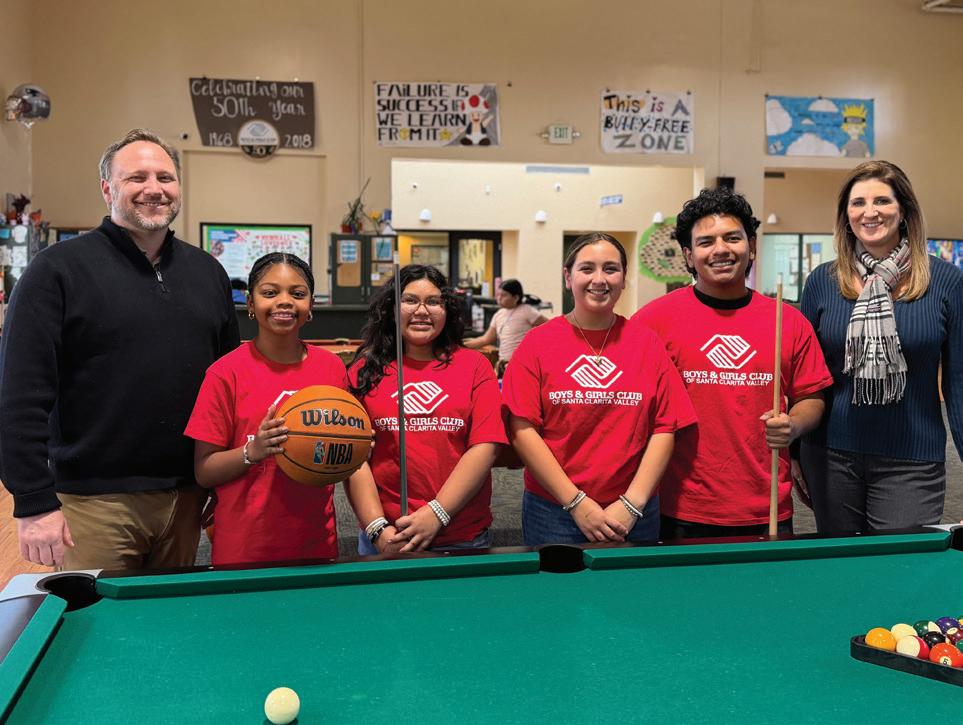
Kaiser Permanente recently reinforced its commitment to youth education and community wellbeing in the Santa Clarita Valley with a $10,000 community health grant to the Boys & Girls Club of Santa Clarita Valley. The grant was celebrated at the organization’s Newhall clubhouse, highlighting continued investment in education and enrichment programs that serve local families.
The funding will support programs across the Boys & Girls Club’s 13 locations throughout the Santa Clarita Valley, including Canyon Country, Newhall, Castaic, and Val Verde. Grant dollars will help fund two Education Coordinators, one Education Assistant, and a Tech Coordinator, expanding the organization’s capacity to provide academic support, homework assistance, and access to educational resources for youth across the region.
Kaiser Permanente’s support reflects its broader commitment to Total Health—body, mind, and spirit—and its recognition that education plays an important role in shaping longterm health and community outcomes. For Kaiser Permanente, supporting education is not separate from health care, it is foundational to it. By partnering with trusted
TVT
Continued from previous page
not a collection of generalists or glorified paralegals filling out forms. We are a team of specialists who have graduated from some of the best law schools, worked at top law firms and financial institutions and have a track record of business success both domestically and internationally. Don’t Take Our Word For It — Come See For Yourself
We understand that choosing a law firm is a significant decision. You should not have
local organizations, Kaiser Permanente works to address the social factors that influence wellbeing, including access to learning opportunities and supportive environments for young people.
Education-focused initiatives supported by Kaiser Permanente and delivered through community partners such as the Boys & Girls Club have demonstrated improvements in academic performance, including gains in reading, math, and overall grade point averages among participating students. These outcomes underscore the importance of sustained investment in youth education as part of a comprehensive approach to community health.
In addition to the financial grant, Kai-
to take a leap of faith. So this April, we invite you to hear us and see us in action at no cost and no obligation.
On Saturday, April 11, we host our monthly free estate planning seminar at our Valencia office — a practical, substantive session on trusts, titling, powers of attorney, asset protection and important tax and legal changes.
And on Saturday, April 25, join us at the Hyatt Regency Valencia for our signature annual event: “Your Trust Is Set. Is Your Successor Trustee Ready?” This seminar — a $500 value, offered completely free to the public — is our
ser Permanente donated a pool table to enhance the recreational space at the Boys & Girls Club’s Newhall location. The donation recognizes the value of safe, engaging spaces where young people can build social connections, confidence, and a sense of belonging, factors that complement academic learning and personal development.
Kaiser Permanente serves tens of thousands of members in the Santa Clarita Valley and employs hundreds of physicians and staff who live and work locally. Since opening its first medical office in the area in 1994, the organization has remained actively engaged in the region through community partnerships, volunteerism, and ongoing support for nonprofit organizations focused on health, education, and family stability.
Since its founding in 1945, Kaiser Permanente has maintained a strong commitment to improving the health of the communities it serves. In the Santa Clarita Valley, that commitment continues through sustained collaboration with organizations like the Boys & Girls Club, helping ensure young people have access to educational support and positive environments where they can learn, grow, and thrive.
most comprehensive educational event of the year. We will cover 2026 tax and law changes, the legal duties and personal liability of successor trustees, Proposition 19 and your home, trust funding, and practical strategies for keeping families out of conflict when it matters most.
We pride ourselves on avoiding sales pitches. We strive to deliver insightful, helpful and actionable information — the kind our clients tell us they wish they’d had years earlier. Come with questions. Leave with answers and a clearer picture of where you stand. If you decide after-
ward that you’d like to work with us, we will be delighted and will schedule a free design consultation. If not, we are confident that you will still walk away better informed than when you arrived.
Seating is limited. To reserve your place at either event — or to schedule a free initial consultation on any estate planning, tax, or asset protection matter - call (661) -945-5868 or visit www. TrustTVT.com. At Thompson Von Tungeln, we have been helping Santa Clarita families and businesses build lasting security since 1977. We would be honored to help yours.