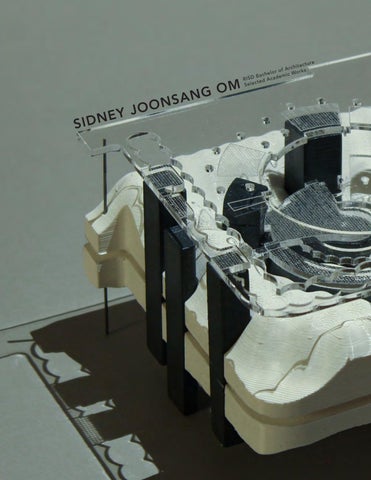
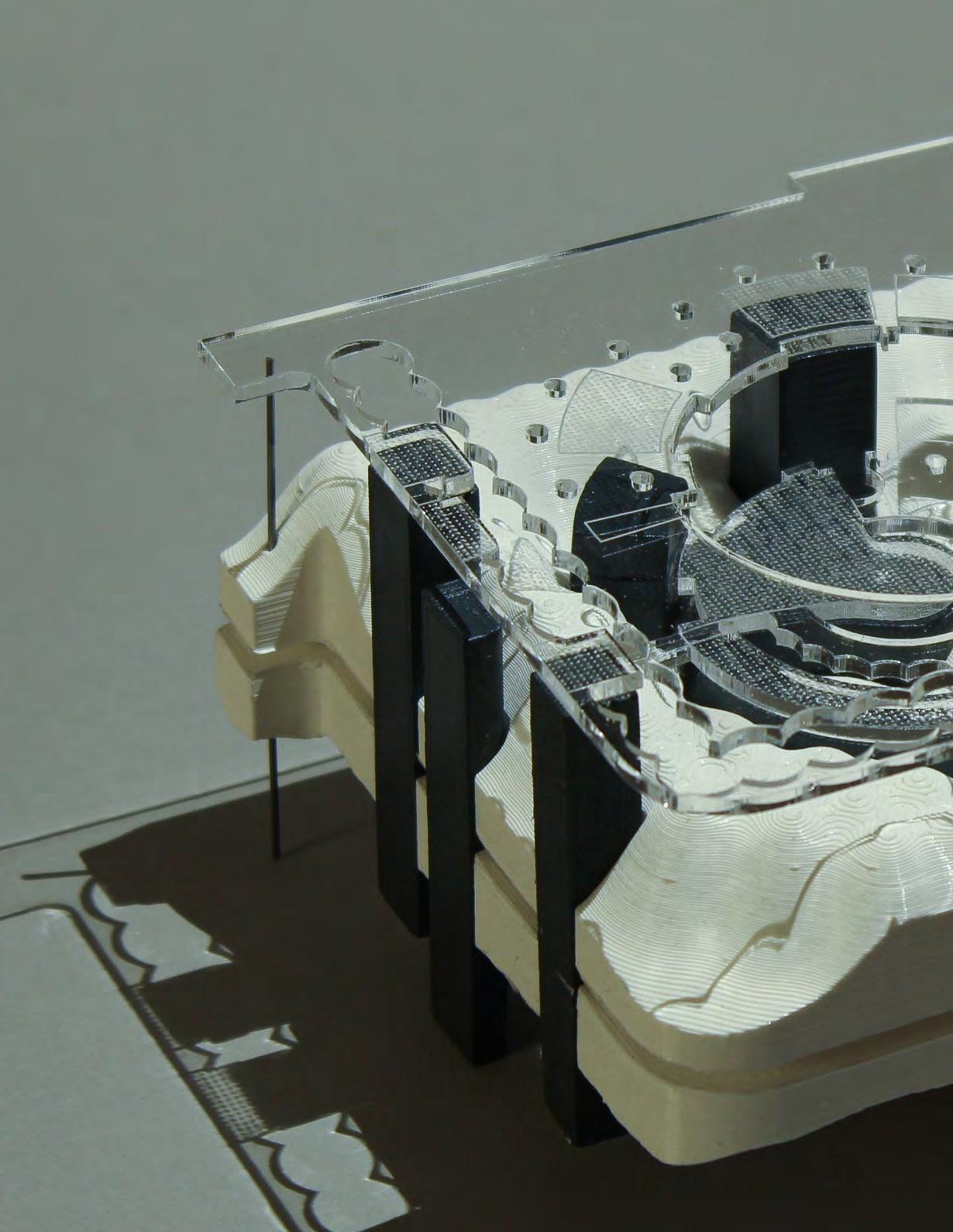
SIDNEY JOONSANG OM
RISD Bachelor of Architecture Selected Academic Works
Seoul Foreign High School International Baccalaureate Diploma
Rhode Island School of Design Bachelor of Architecture
[Infra]Structure 40 Providence, RI
2019
EXPERIENCE
2020 2021 2022
American Express Inc.
Seoul, South Korea
Marketing Internship
Danu A&A
Seoul, South Korea
Architecture Internship
Multi-Planar Waves 28
Lisbon, Portugal
Rehabilitation of Corridor 18
Coquimbo, Chile
Architectural Association School of Architecture (AA) Visiting Student Programme
Work Life 04 Seoul, South Korea
EDUCATION
2022 2023 2024 2025
Woods Bagot New York City, NY
Architecture Internship
HK Architects & Associates Seoul, South Korea
Architecture Internship
Build Block Inc. Los Angeles, CA Project Lead
Build Block Inc. Los Angeles, CA Project Manager
01 Work Life
Thesis Project with Critic Lafayette Cruise and Stephanie Choi // Spring 2024
Thesis Research
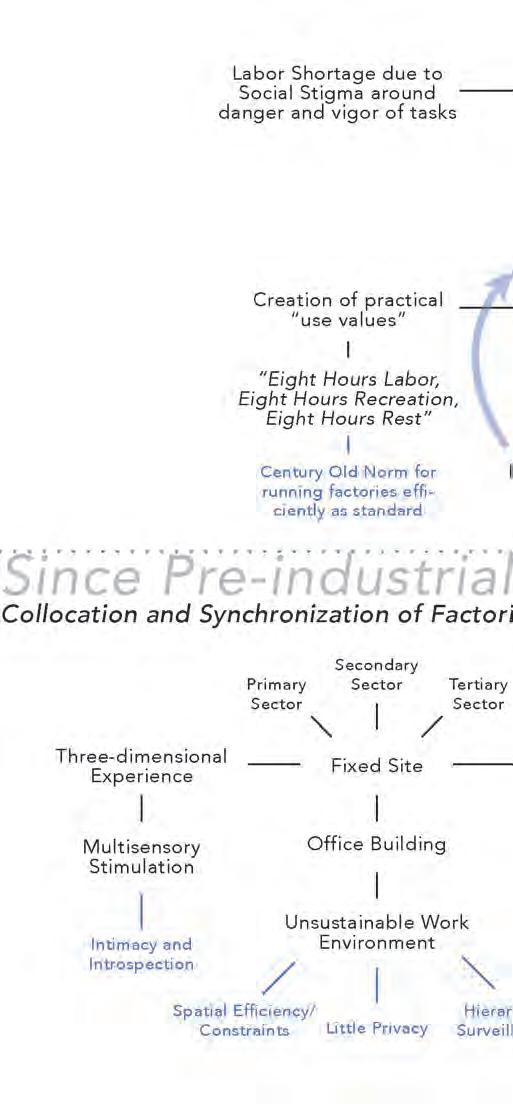
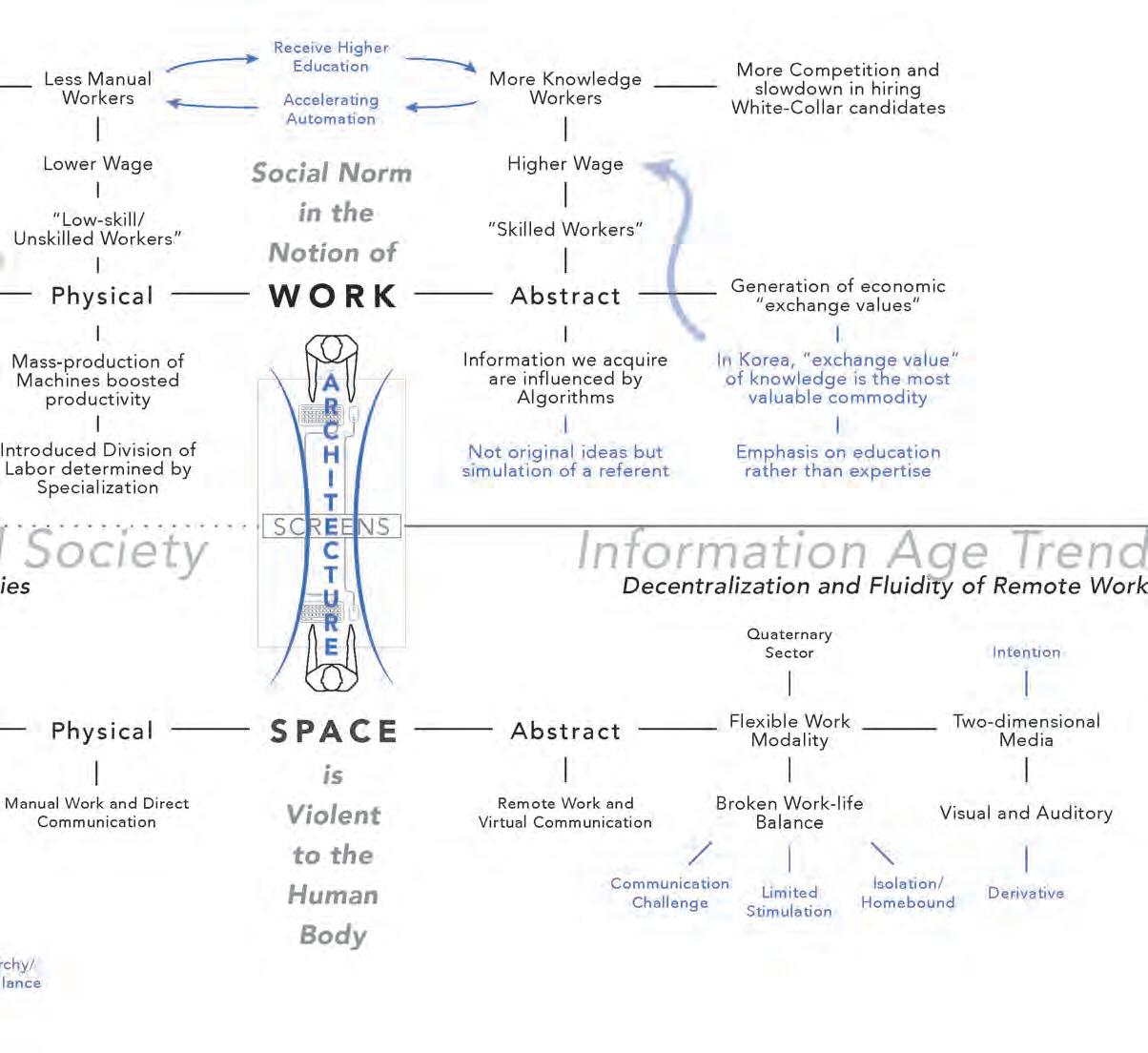
Since pre-industrial times, collective knowledge has driven civilization’s growth. Work—whether hunting, farming, or manufacturing— took place in shared spaces where processes were visible, results tangible, and human connection instinctive.
The information age has replaced these communal settings with screens. While they allow us to connect across continents, they also act as WALLS, distancing us from the sensory and social richness of the physical world.
In today’s workplace, abstract, screen-based labor fragments teams and erodes well-being. The traditional office offers little incentive for in-person work: people remain fixed at identical desks, under constant observation, with limited opportunities for spontaneous interaction. Creative work, which thrives on diverse perspectives and productive friction, is instead constrained by a uniform, homogenized environment.
So-called “flexible” work models often translate to decentralization, isolating workers in their homes. Architecture holds the power to counter this drift.
“How can architecture reweave the fabric of workplace connection—sparking creativity, fostering intimacy, and liberating people from the tyranny of the screen?”
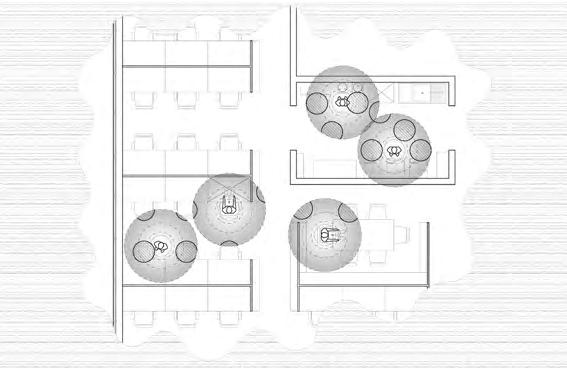
Building Typology Analysis
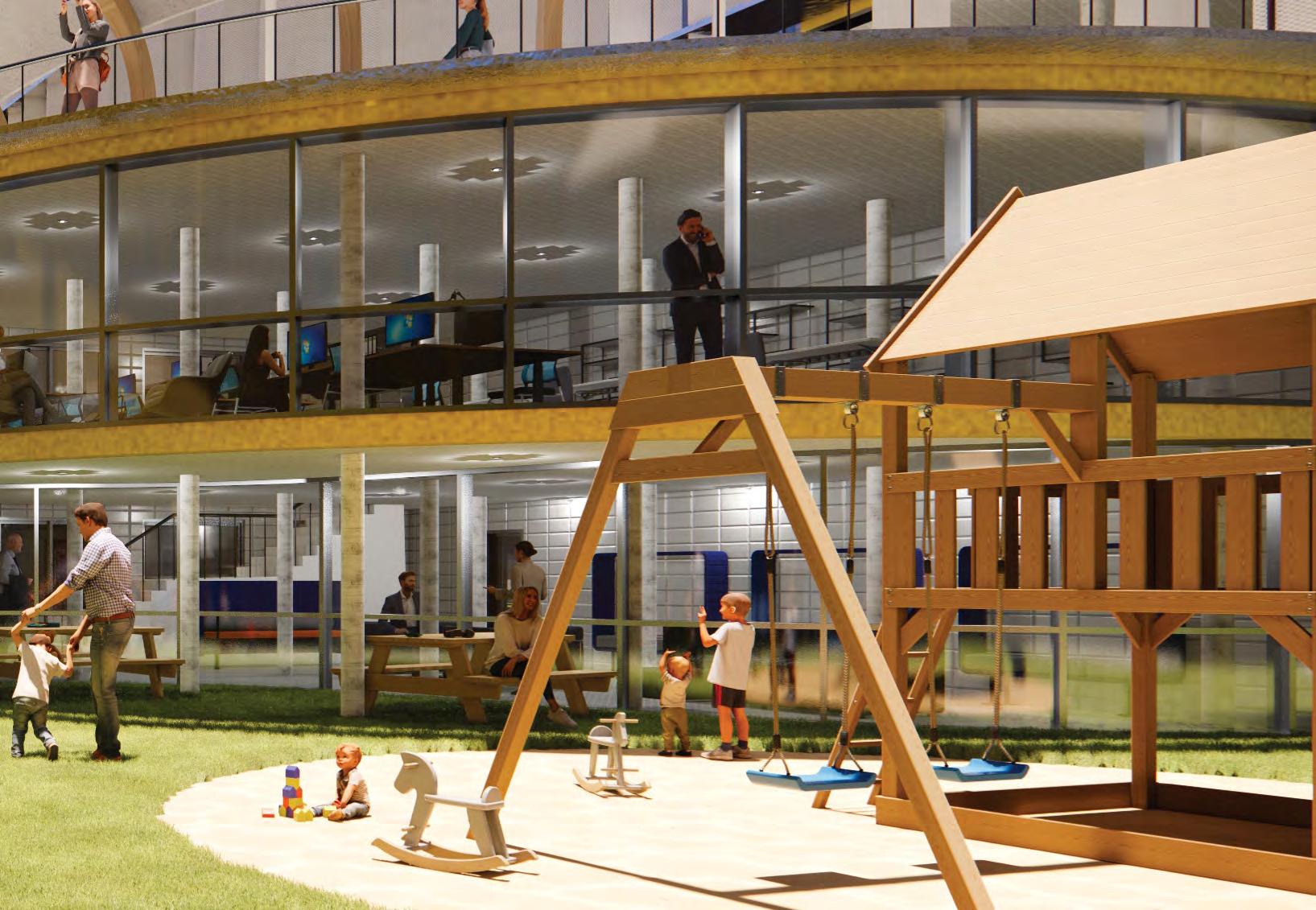
A Knowledge Industry Center (KIC) is a multi-story complex unique to Korea, designed to house small- to mid-sized companies in manufacturing and knowledge-based industries.
Their rapid proliferation from 350 buildings in 2017 to 1,180 by the end of 2022 was fueled by zoning flexibility: KICs can be built in Type 3 general residential and semi-residential zones, bypassing certain industrial district restrictions. When large urban plots intended for housing projects stalled, developers seized the opportunity to build KICs instead. The overconcentration of population in Seoul and Gyeonggi Province intensified this trend, as demand for metropolitan workspaces outstripped the supply of traditional industrial sites.
But the boom has led to oversupply and high vacancy rates. The majority of these centers function as closed, compartmentalized facilities, where workers remain isolated from one another. The spatial design often mirrors the digital age’s disconnection—people work side-by-side yet remain detached, with little chance for spontaneous exchange.
“How can Knowledge Industry Centers become collaborative ecosystems, from current standard compartmentalization?”
Design Response
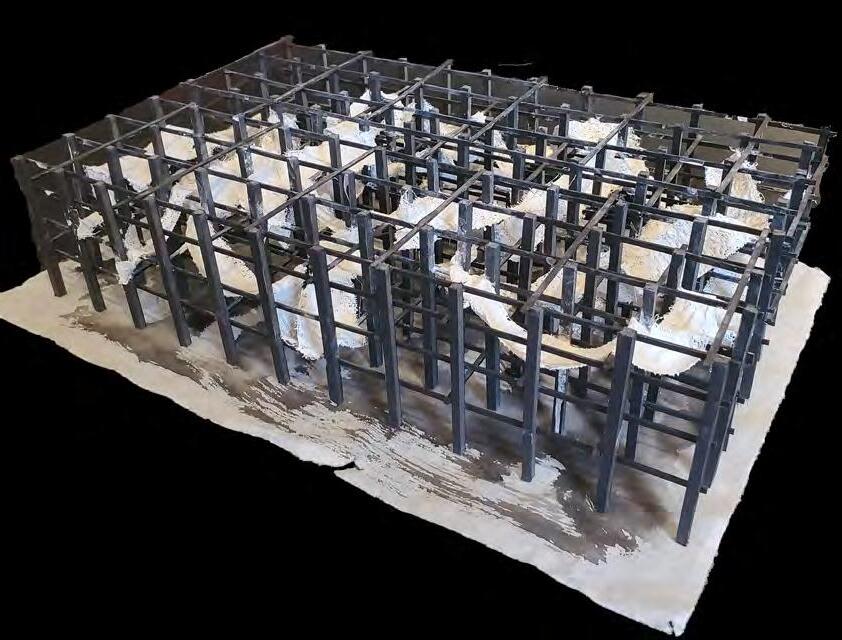
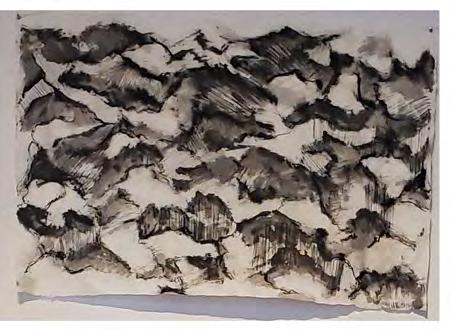
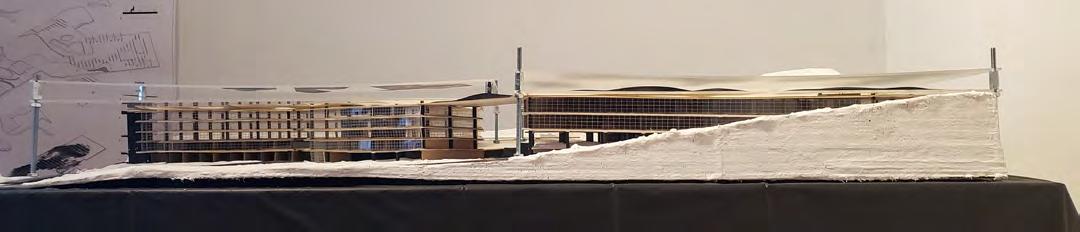
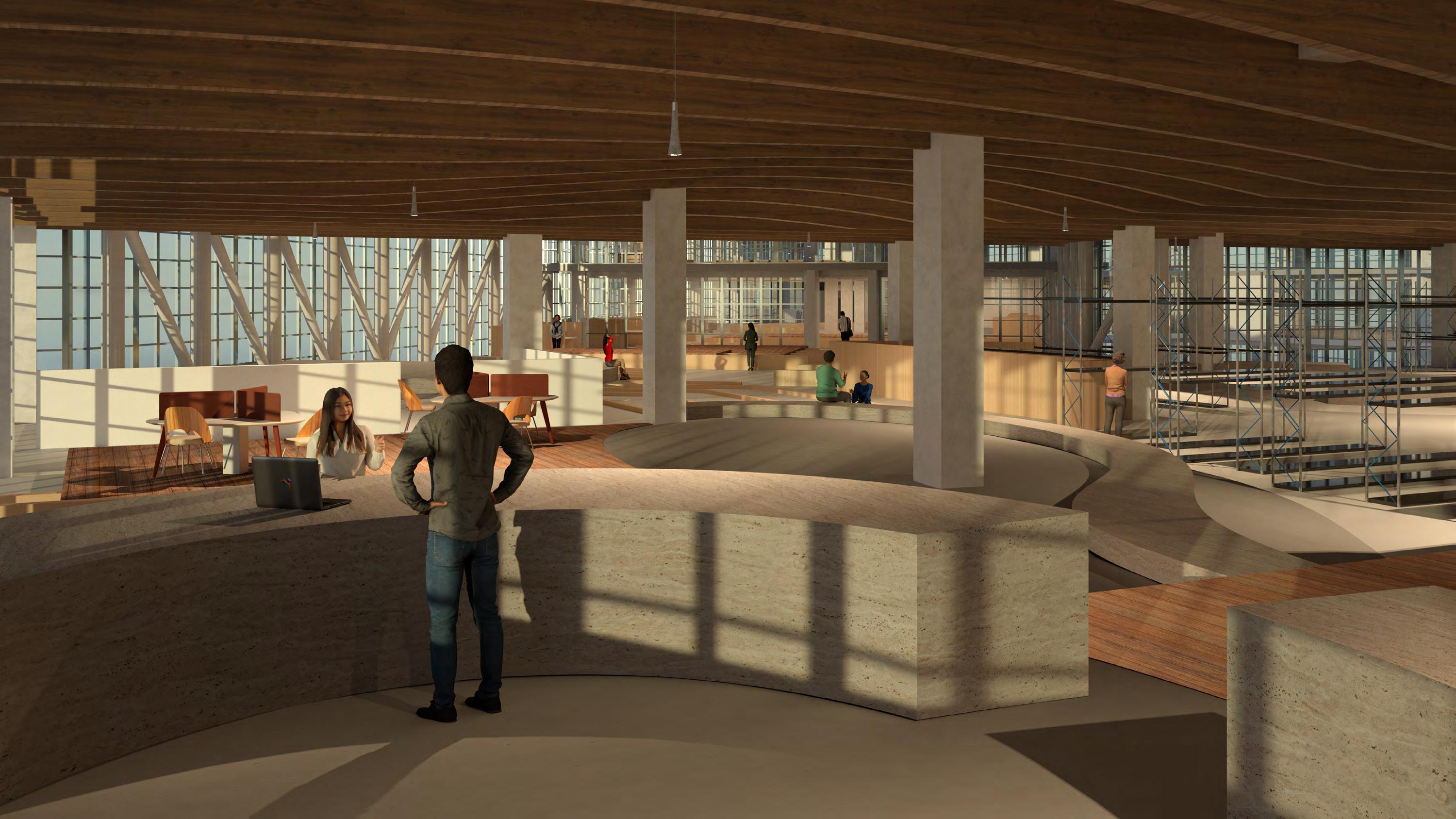
Mak 막, which represents imperfect spontaneity and Bium 비움, which denotes poignant emptiness and gaps, is a valued temperament for Korean aesthetics. In Korean architecture, mak and bium are not merely aesthetic gestures but creative conditions that can foster expressive and sensual nature of spaces.
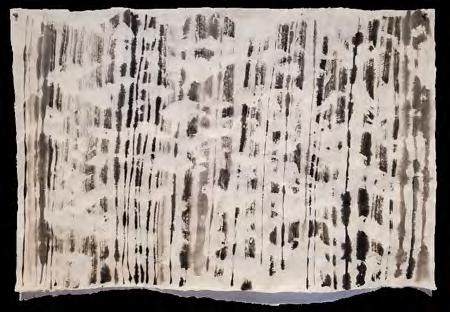
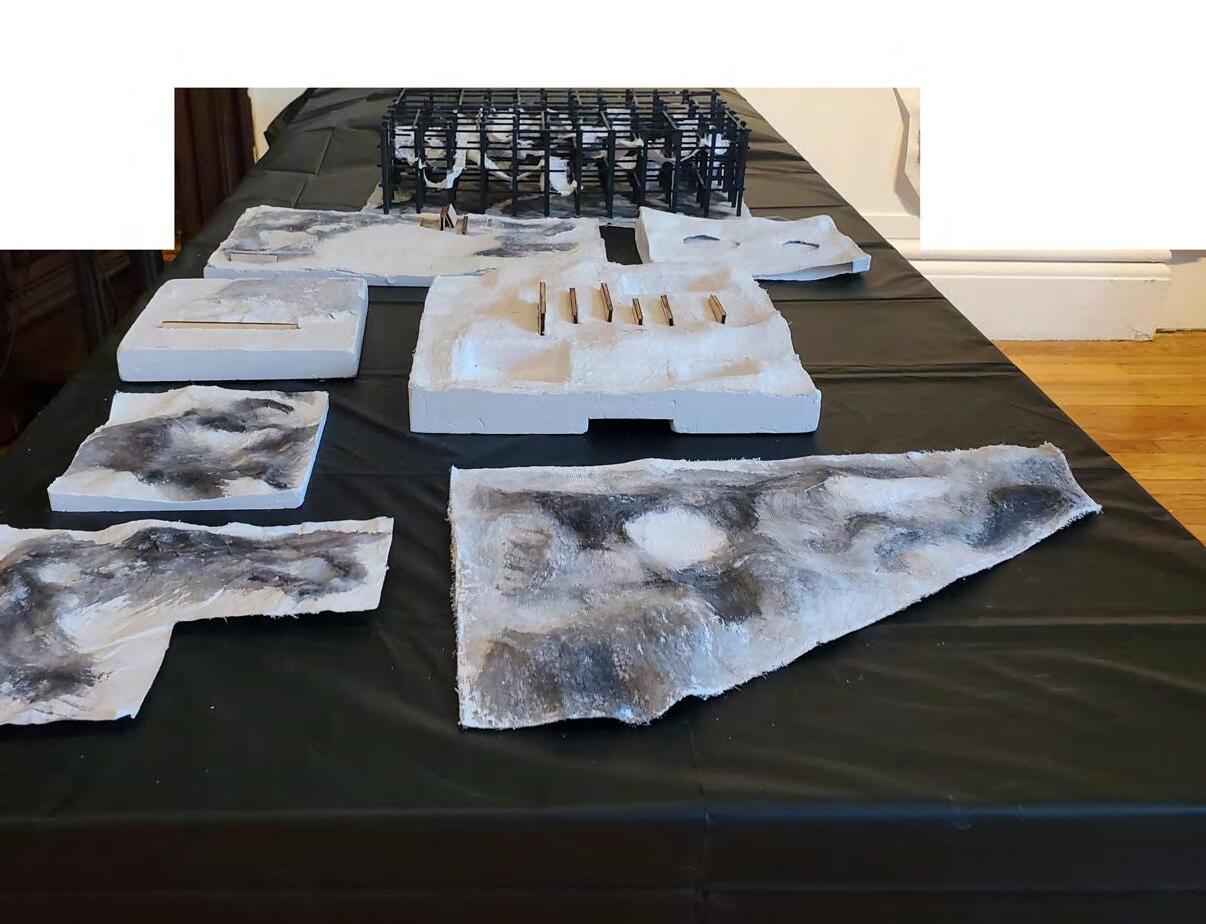
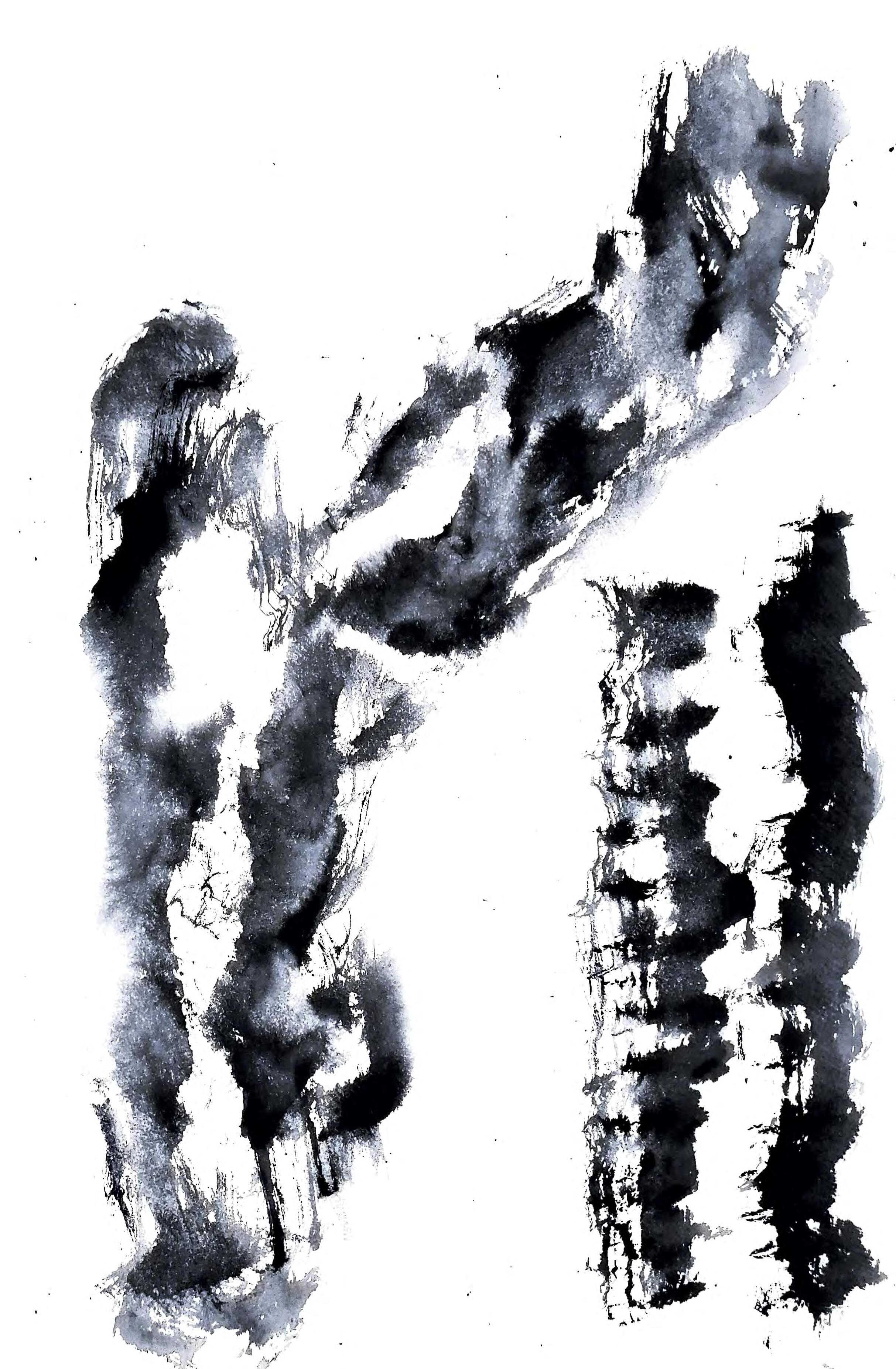
Through traditional ink-wash painting, the office environment is not planned according to real estate value but merely splatters that inform communal presence. It is reliant on a process that exceed artist’s control.
Brush pressure, ink dilution, and speed of movement are preset conditions. However, once the gesture is made, the ink spreads in unpredictable ways that reacts to the medium. Especially with the use of Hanji 한지, the bleeding and pooling is more dynamic, fully emboding the immediacy of gesture.
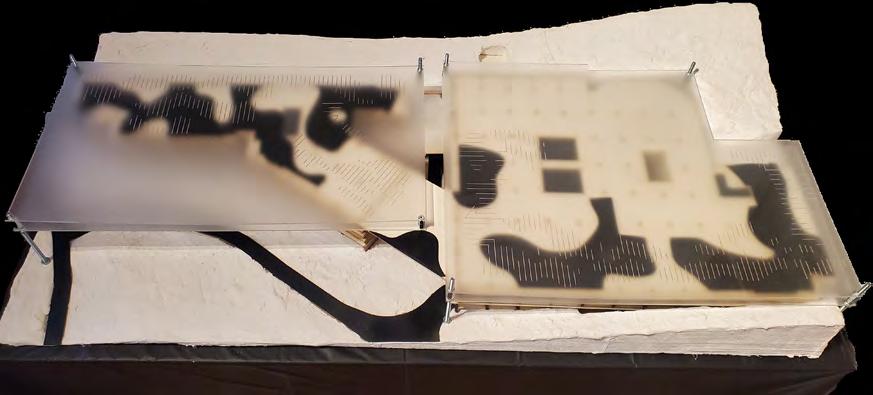
This process-driven design ethos inspired by mak is translated digitally through grasshopper “random” components. It operates a generative force outside of artist’s control. The parameters are set through domain, range, and number of values, but output is determined algorithmically, introducing variance that is purely random.
Space between intention and accident creates a spontaneous outcome that is bounded by initial conditions. Analogy rests on a shared method of constrained unpredictability that allows space to breathe.



EL 39.4m



Guiding Lines as Control of Flow
Proposed Manufacturing Building
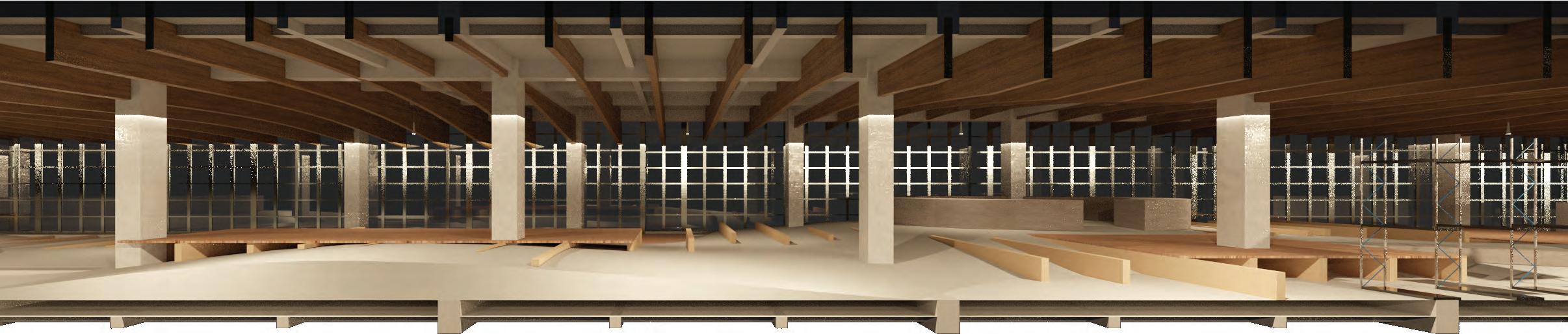
Proposed Knowledge Building

02 Rehabilitation of Corridor
Studio Coquimbo: Ironbelt with Critic Naiara Vegara and Others // Spring 2023
The Architectural Association (AA) Visiting School Semester Programme
Site Analysis
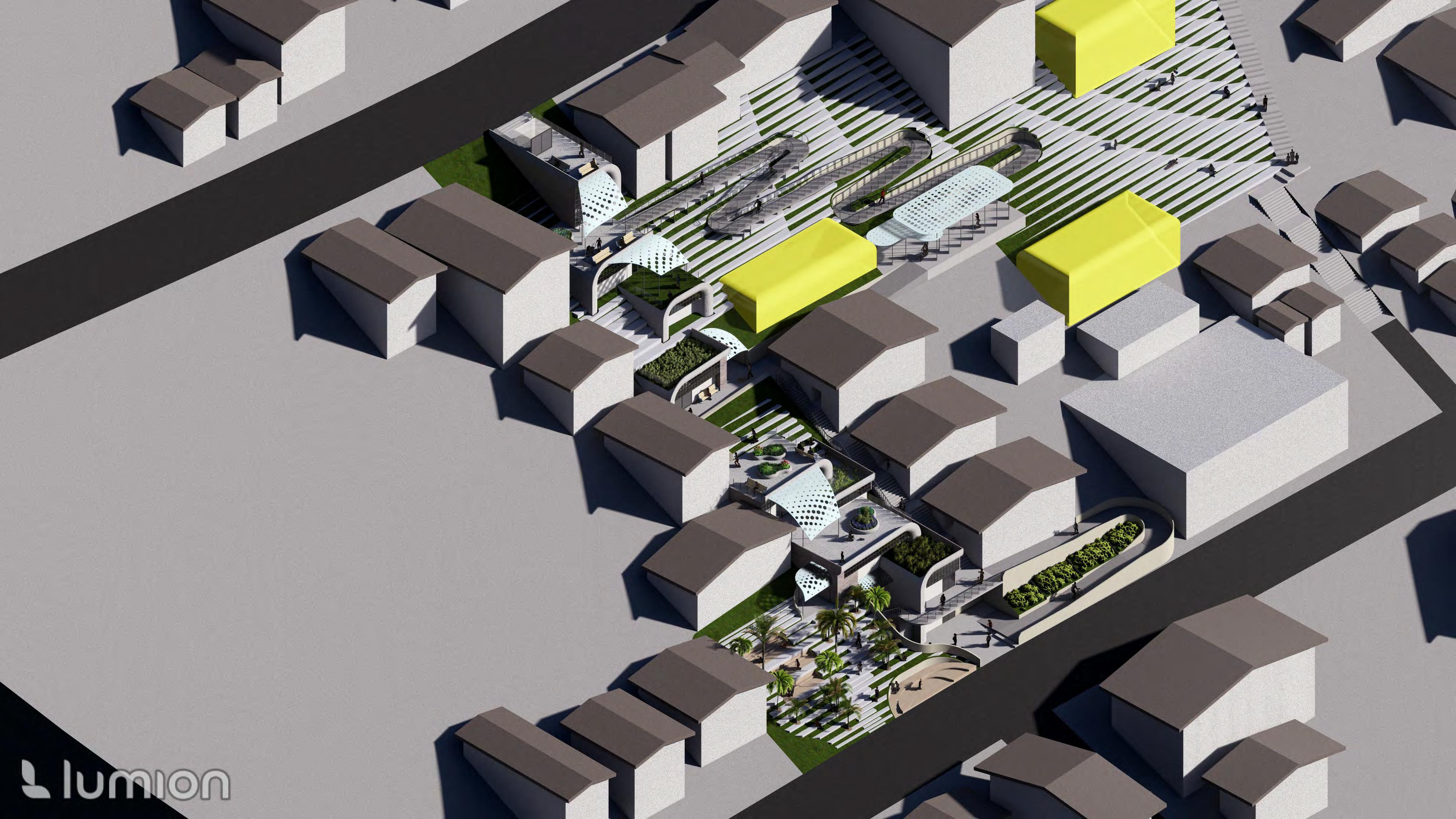
Coquimbo is a coastal city in Chile that has numerous attractions for both tourists and local residents. From the 260-feet monument, Cruz del Tercer Milenio; to malls, multi-purpose stadium, and plazas, there is a wide range of activities available throughout the neighborhood.
However, these destinations are not linked to one another. Only method of travelling from one point to the other are through buses, the main public transit of travel locally and regionally.
Due to steep elevation of the terrain, certain routes are disconnected and not accessible on Google Maps. While the infrastructure does exist in combination of ramps and stairs, it is an intimidating and dangerous path with very limited artificial lighting. Detour of 15~20 minutes on the bus is not available after 10:25 PM local time.
“Can this obsolete corridor of travel be revitalized by the public as an attraction point?”
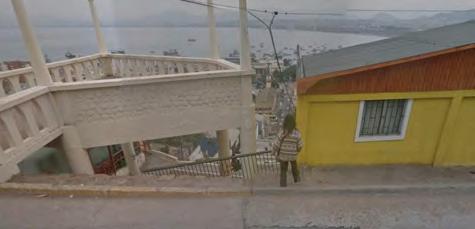
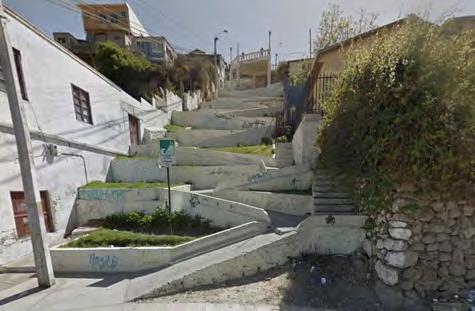
Domo Cultura Ánimas (Museum)
View from Point B (Top); View from Point A (Bottom)
Design Response
Through massing of volumes aligned with the angle of slope, the necessity of retaining walls and pier foundation is reduced. Roof of one volume becomes a terrace space for the other volume that offers an incredible oceanview. With pockets of greenery available on every terrace, it mitigates the urban heat island impact of the built environment.
1. Recover public amenities through programmatic journey.
2. Redesign an accessible route for vertical circulation.
3. Reconstruct lighting infrastructure for safer travel during nighttime.
4. Rehabilitate not just the corridor but the entire block for an improved interaction among visitors and inhabitants.
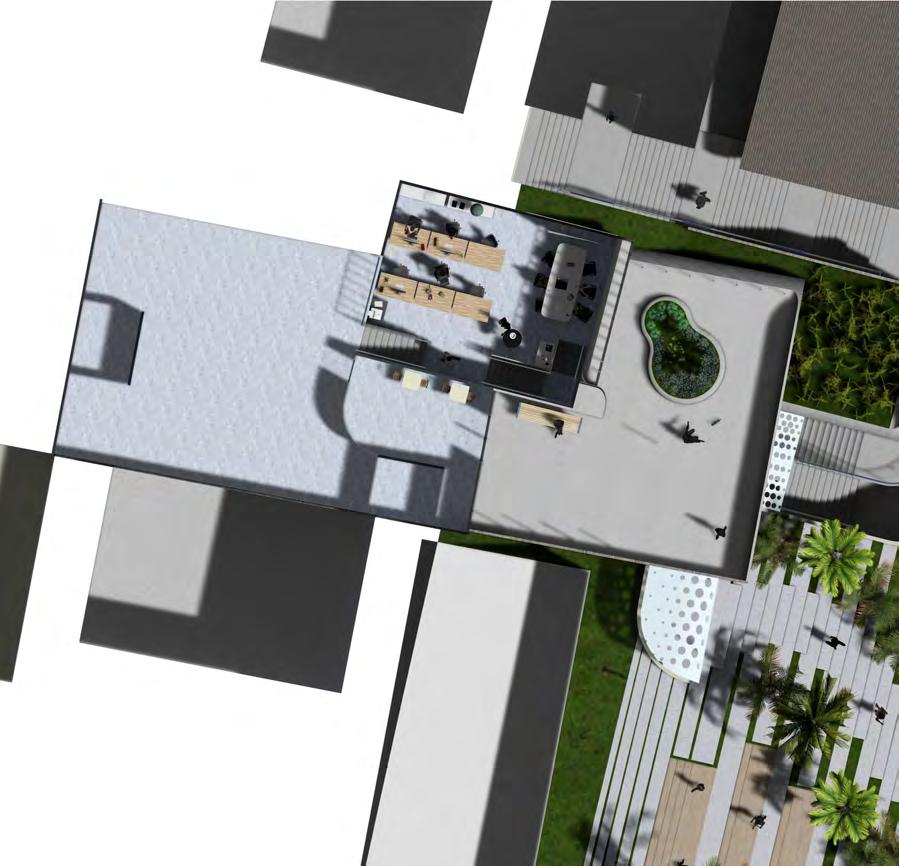
Building Complex serves as a physical bridge that connects attraction points of Coquimbo and a cultural bridge that offer possibilities of intercultural communication.
Various circulation routes lead the inhabitants in and out, up and down the volume. All spaces are accessible through a combination of ramps and elevator.
Sectional Sequence Diagram illustrates how a typical day can be outlined for tourist, Sarah, and a resident of Coquimbo, Benjamin, within this complex.
2. Benjamin reserved a Private Meeting Room to receive feedbacks for his work from a client.
3. Benjamin grabs himself coffee at the Cafe before heading out to receive a call from his girlfriend, Kate.
4. Benjamin visits Kate at Co-working Space to answer her questions for the university assignment, but ends up failing and disappointing her.
6. Benjamin stops by the Local Farmers’ Market Event to check if there are any groceries to buy to cook them for his girlfriend during dinner.
Sarah enters the Merchandise Store to escape from the harsh midday sun of Coquimbo.
2. With nothing planned for the day, Sarah visits the Studio Space and decides to join the Chilean dance, Cueca class for fun.
3. Sarah, sweating from the intense exercise, goes out on to the Terrace for some fresh air, making sure to stay under the Canopy
4. Sarah visits the Local Event Space to see what is happening but quickly loses interest when she finds out it is Farmers’ Market Event
5. Sarah decides to rest inside the Cafe and cool off all the sweat.
6. Sarah can’t contain her excitement as she finally reaches the Observation Deck after her long walk up the sloped, winding path.
Sarah’s Journey
03 Multi-Planar Waves
Advanced Studio with Professor Jonathan Knowles // Fall 2022
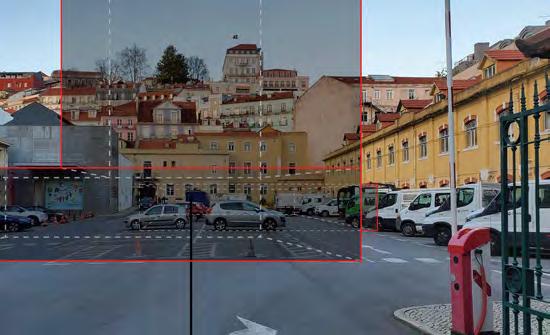
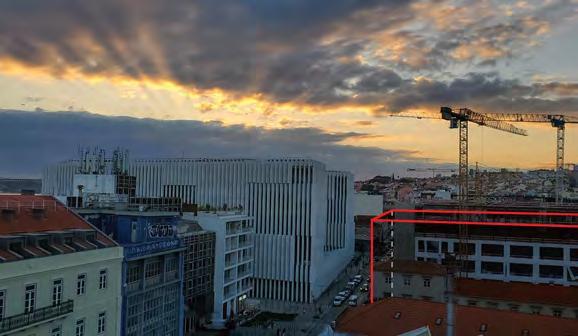
Existing
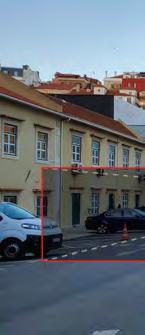
Rua da Boavista
Cafetaria
Design Response
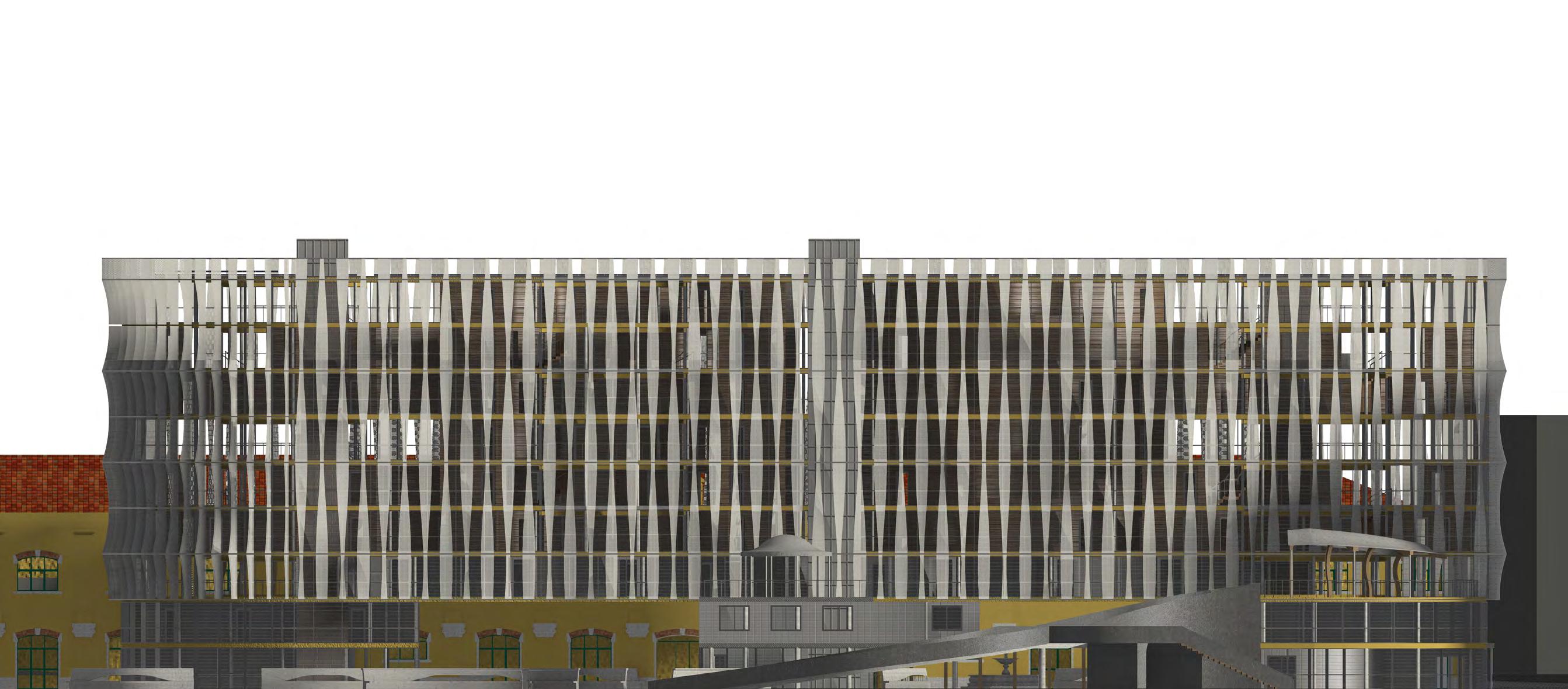
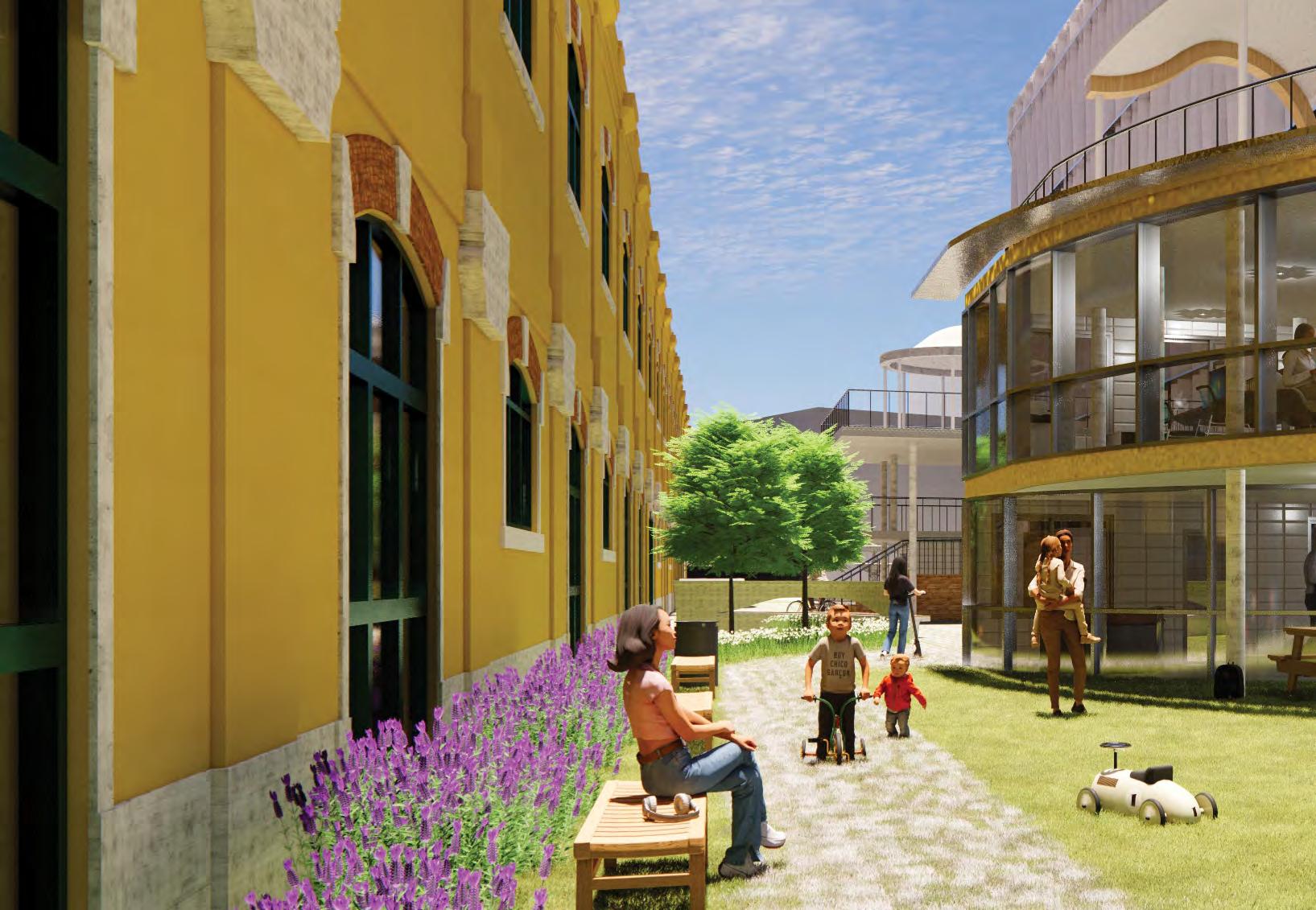
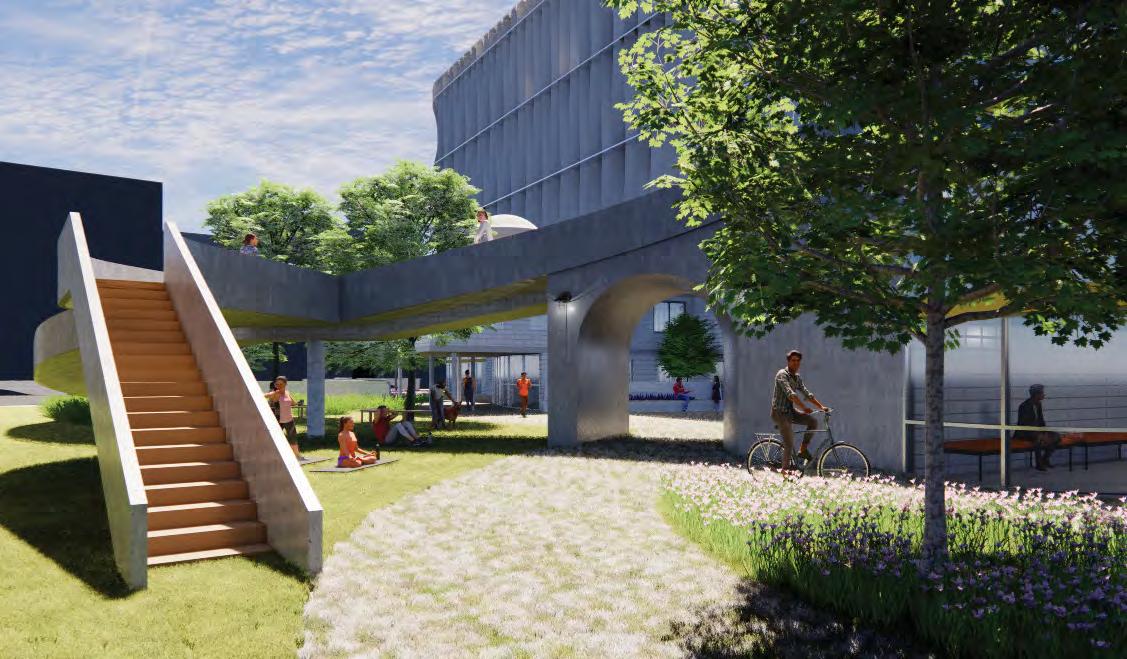
In addition of considering historical context to maintain the aesthetics of the neighborhood, the buildings should adapt to local environmental conditions to enhance comfort of inhabitants and minimize enviornemntal footprints of new construction. This is quanitifed through Life Cycle Assessment (LCA) tool which covers building’s entire lifespan from manufacturing, maintenance, to eventual deconstruction.
Building Envelope: Vertical profiles that direct windflow by channeling breezes into the building. Horizontal profiles that prevents direct sun penetration but allows diffused daylight into interior spaces.
Ground: Volumes and In-Between Passages that control the circulation and flow of pedestrians to naturally congregate in communal areas.
Winter
Solstice
Summer Solstice
South-facing Louver System
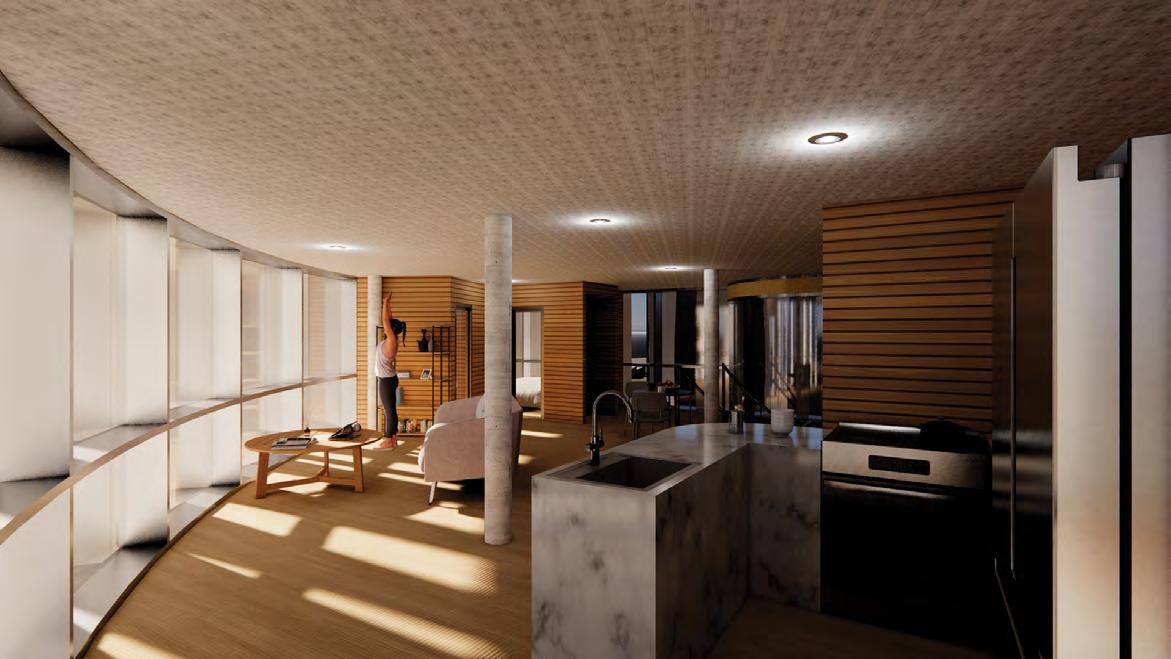
Interior Rendering of 2BR Loft Unit facing South East/West-facing Louver System
Interior Rendering of 2BR Loft Unit facing South
South-facing Louver System East/West-facing Louver System
Radiant Heating System ERV Exhaust Piping ERV Intake Piping Brise Soleil with Fabric Membrane Energy Efficiency Total Energy Production
kWh per year
Section A–A"
Section A–A"
Building A Building B
Building A
Building B
Section Detail of Building B
Detail Material and Specifications
1.Fiberglass and PTFE
2.Architectural Membrane
3.Triple Glazing Operable System
4.Metal Mullions
5.Concrete Spandrel Panels
Detail Material and Specifications
6.Firesafing Insulation
7.Metal Plate and Screws for Connection
1.Fiberglass and PTFE
1.Steel Studs for Bench Structure
2.Wool Insulation
3.Wood Panels
Section Detail of Building B
4.Stiebel Eltron Hydro Shark Radiant Heating
5.6” ERV Pipes
6.Acoustic Wall Panels
8.1/2” Cork Underlay
2.Architectural Membrane
3.Triple Glazing Operable System
9.1/2” Cork Floating Floor
10.Wood Floor Finishing
4.Metal Mullions
11.4“ Radius Concrete Columns
5.Concrete Spandrel Panels
12.6” Concrete Slab
6.Firesafing Insulation
7.Metal Plate and Screws for Connection
8.1/2” Cork Underlay
9.1/2” Cork Floating Floor
10.Wood Floor Finishing
11.4“ Radius Concrete Columns
12.6” Concrete Slab
13.Longitudinal Steel Bar
12.Drainage Pipes 14. 15. 16. 17. 18. 19. 20. 21. 22. 23. 24. 25.
1.Steel Studs for Bench Structure
7.5/8” Gypsum Board
8.16” Concrete Beam
2.Wool Insulation
9.Wooden Platform
3.Wood Panels
4.Stiebel Eltron Hydro Shark Radiant Heating
10.Sloped Gravel
11.PVC Raised Floor Pedastal
5.6” ERV Pipes
6.Acoustic Wall Panels
13.Longitudinal Steel Bar East-facing Wall
7.5/8” Gypsum Board
8.16” Concrete Beam
9.Wooden Platform
10.Sloped Gravel
12.Drainage Pipes 14. 15. 16. 17. 18. 19. 20. 21. 22. 23. 24. 25.
11.PVC Raised Floor Pedastal
Section Detail of Building A
1.Ceramic Tile Wall Finishing
2.5/8” Gypsum Board
3.Wool Insulation
4.Acoustic Wall Panels
5.Wood Stud Isolators
6.Wool Insulation
7.Air Spac
8.1/2” Cork Floating Floor Detail Material and Specifications
04 [Infra]Structure
Urban Ecologies with Critic Leeland McPhail // Fall 2021
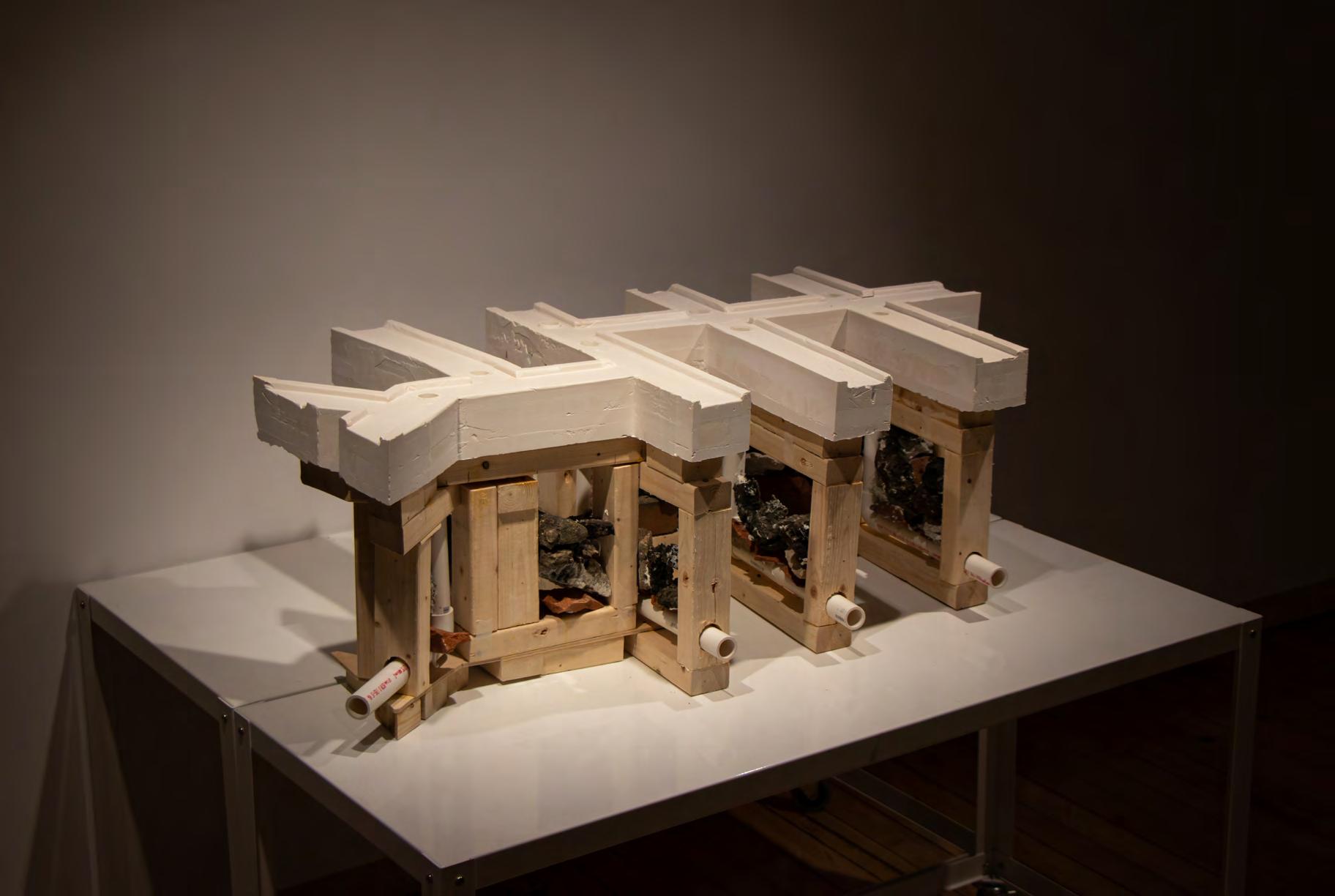
Work in collaboration with Samuel Leung (RISD B.Arch ‘24) // Responsible for Affordable Housing Concept Design and Drawings, Physical Model-making,
Site Analysis
Within the West End neighborhood of Providence, Rhode Island, there is a boundary of watershed that runs on Fuller Street and Gilmore Street that disconnects the sewage system. The same water system was utilized since 1884. Higher levels of lead contamination becomes an inherent concern as instead of digging down to tackle the root of the problem, there is constant resurfacing of pavement to move further away from the piping system.
From the pedestrian standpoint, the pavement is not merely a boundary that separates blocks from roads but a wall. The pavement serves cars and is dangerous for pedestrians to be on. There is private ownership of roads by the government that does not owners to park their cars in front of their own property.
“Is the public right of way designed to serve the public?”
74% of the West End neighborhood is covered in impervious surfaces.
Inspired by the Nolli Map, this graphic representation depicts the positive spaces as impervious surfaces, which are asphalt of the roads, concrete of the sidewalks, and claddings of building roofs. It not only addresses the public realm within the neighborhood fabric but the street conditions that makes it unwalkable.
Diagram
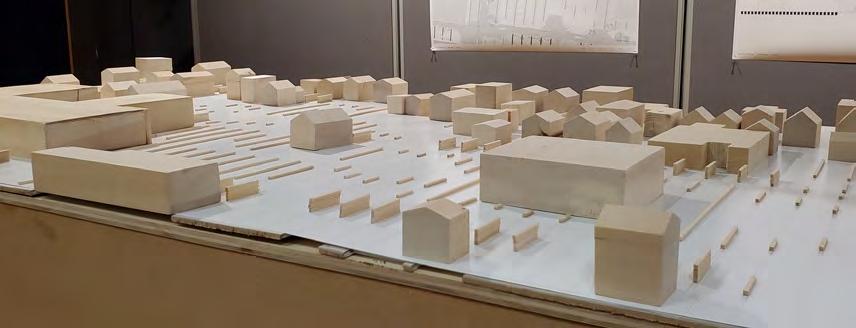
Phasing Diagram
Design Response
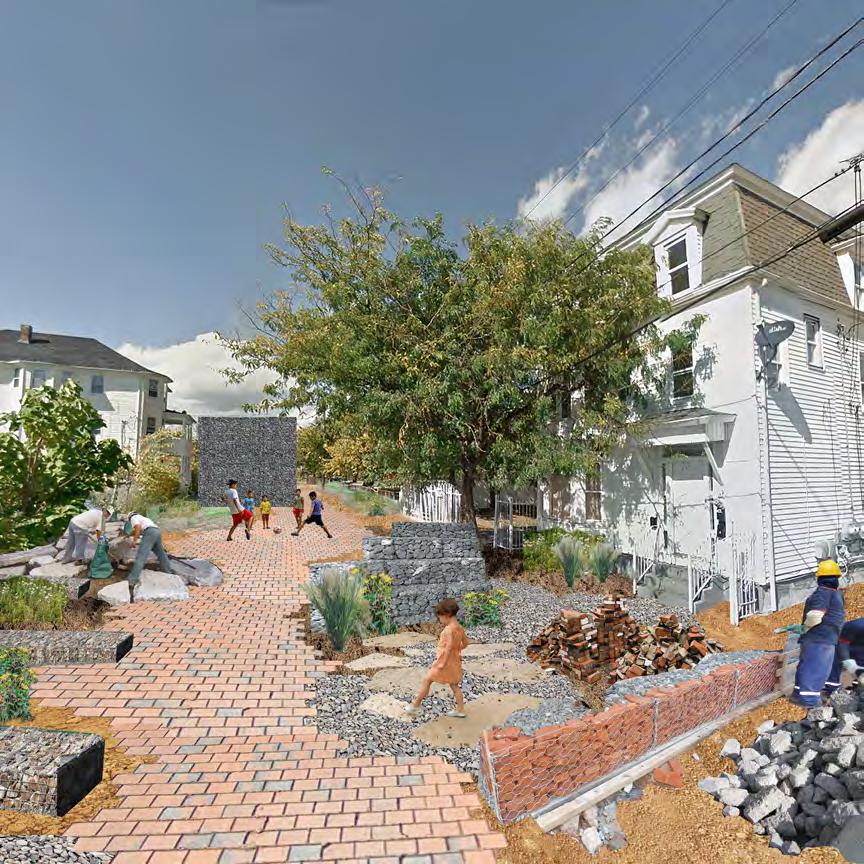
[Infra]structures are not “underground” or “hidden” anymore.
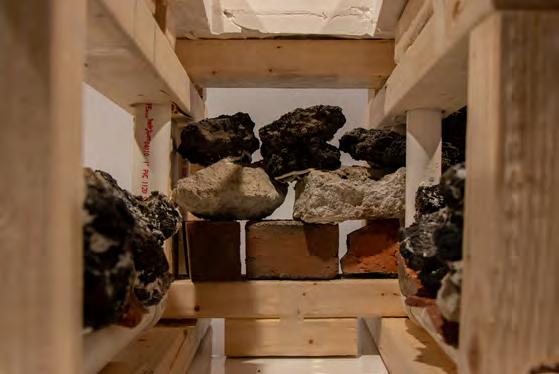
Whether the gabion walls become a topographical structure to create paths or social structure to create spaces, it encourages a sense of community within the neighborhood that is no longer interrupted by the pavement. After the decentralization of accessibility and excavation of surface, it becomes a project of the neighborhood with a design framework for guidance. The possibilities are endless.
Housing Typology
The ground floor of the structure is a privately owned public space by the landlord of the existing building in proximity. It becomes an activated public space thorugh farmer’s market or becomes privatized as a dedicated parking space or lounge for residents to accomodate personal needs.
The offset A-frame roof structure prefers southern face to allow natural light into spaces on the north side as well as the lower level of existing buildings The north-south orientation utilizes solar geometry to maximize solar heat gain, hence reducing the load on mechanical heating systems.
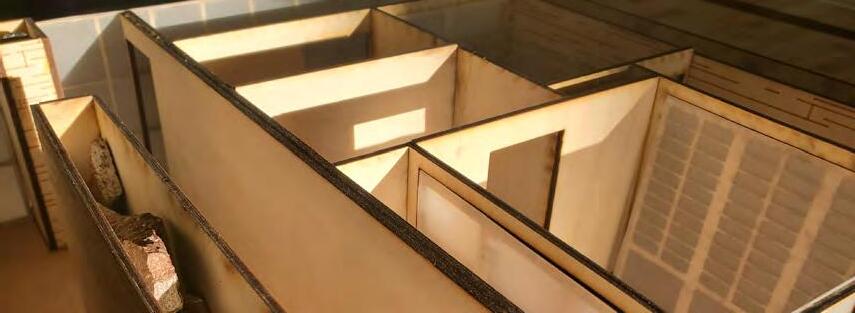
The residentials units are designed to be a multi-family apartment accommodating one to four-family residencies. Sleeping space utilizes layout of a traditional tatami room to reduce the humidity during warmer, continental climate of Providence. The translucent sliding doors are large removable walls that can open up the space as needed and large closet space to store futons, or Japanese mattresses.