PORTFOLIO SHRUTI TENDULKAR Kamla Raheja Vidyanidhi Institute of Architecture and Environmental Studies Selected Undergraduate Works 2020 - 2023

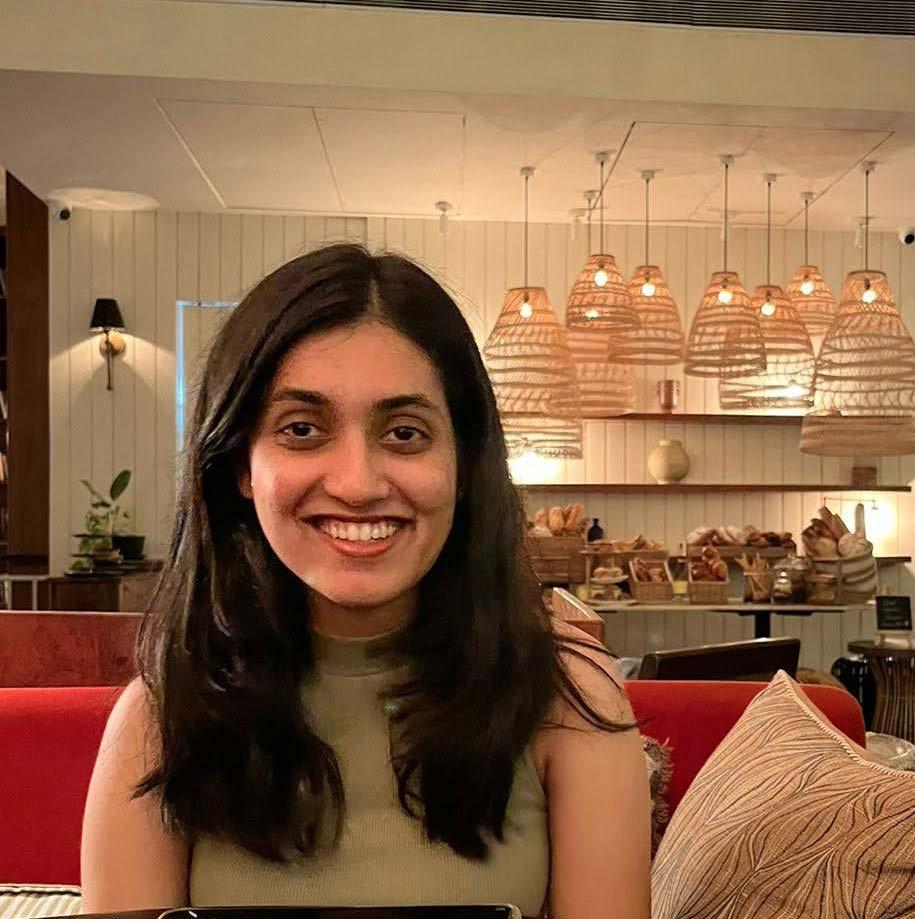
As a fourth-year architecture student, I’ve learned the significance of exploring diverse avenues and discovering one’s true passion within the field. This realization has been a foundation of my academic pursuits throughout my years in architecture school and which is what I have tried presenting in my portfolio. Beyond sharpening my creative skills, architecture has provided me with a unique platform for self-expression, both as an individual and through my work. As I transition into the professional realm, I’m excited to further explore this fusion of personal and professional growth.
16th December, 2002 Mumbai, Maharashtra
Contact Info : +919820901392
Email : shrutitendulkar.work@gmail.com
Kamla Raheja Vidyanidhi Institute for Architecture and Environmental Studies, Mumbai
Currently in the Fourth Year B.Arch | 2021 - Present
Ramnivas Ruia Junior College, Mumbai
HSC | 2018 - 2020
Gokuldham High School and Junior College, Mumbai
ICSE | 2008 - 2018
Autocad
Sketchup
Adobe Photoshop
Adobe Indesign
Rhino
Adobe Illustrator
Canva
Chidambaram
Hand Drafting
Physical Model Making
Sketching
Writing
Photography/ Videography
Video Editing
Graphic Design
KSA Architects | Internship | May 2022
3D Model making and drawings
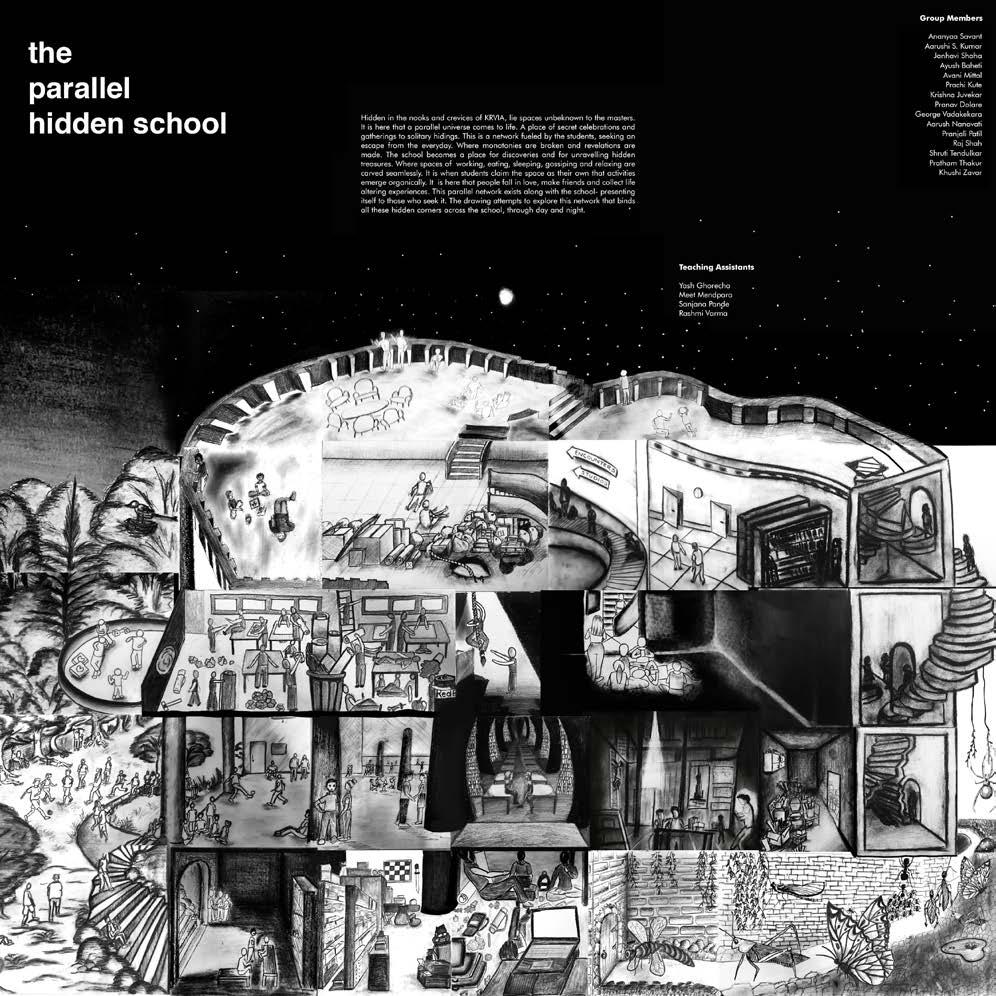
The Parallel Hidden School | Introductory Workshop
January 2021
Tracing History through Documentaries by Jamshid Bhiwandiwala
March 2021
Selfie Atmosphere (beholding a place) by Mansi Bhatt
Sepetember 2021
Narratives of Images by Ritesh Uttamchandani
February 2022
Image | Music | Time | Film | City by Avijit Mukul Kishore
June 2022
Exits to Eslewhere by Sahej Rahal
February 2023
Architectural Writing by Pallavi Narayan
July 2023
Introductory Speaker | Graphics and Curation | Semester VI
26 ways of seeing Bhopal
Introductory Speaker | Semester V
Decoding Beauty
Tectonic Studies | Semester V
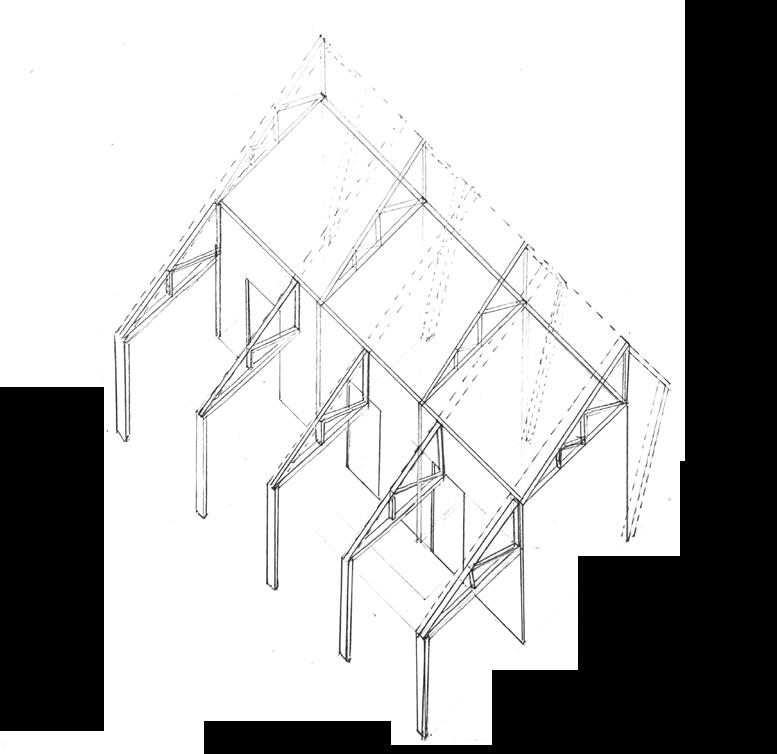
Drawing as Building : A study of technology through documented material
Technology Studio | Semester IV
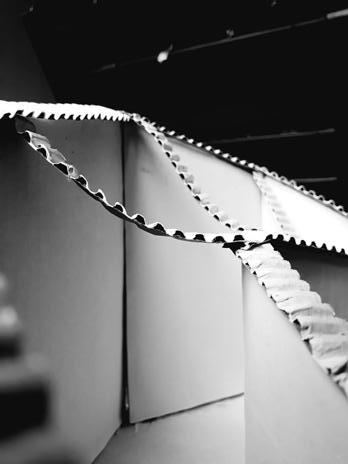
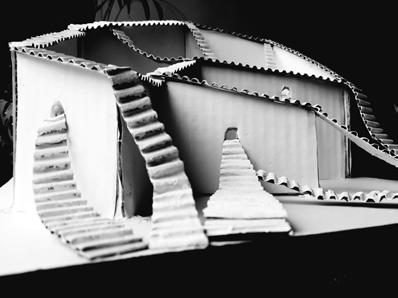
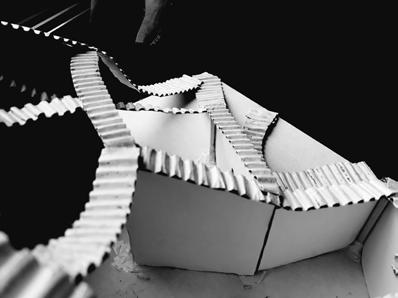
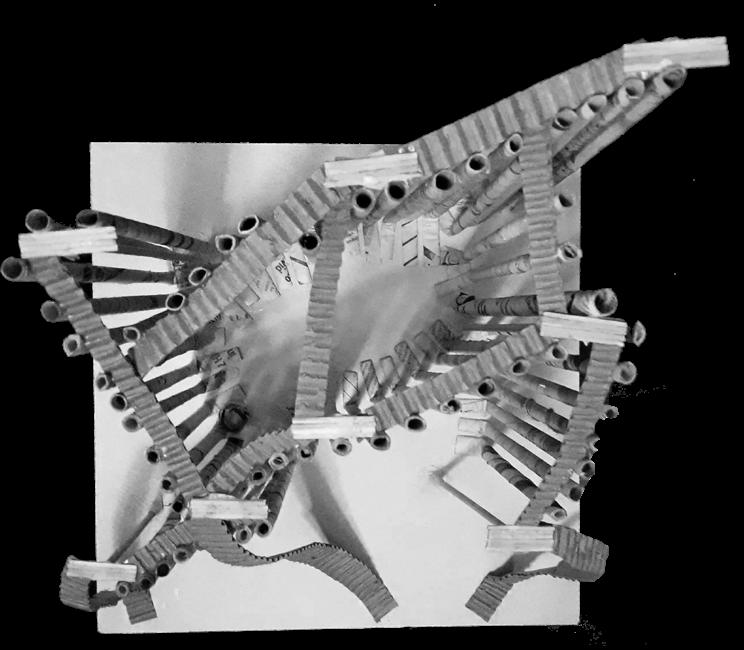
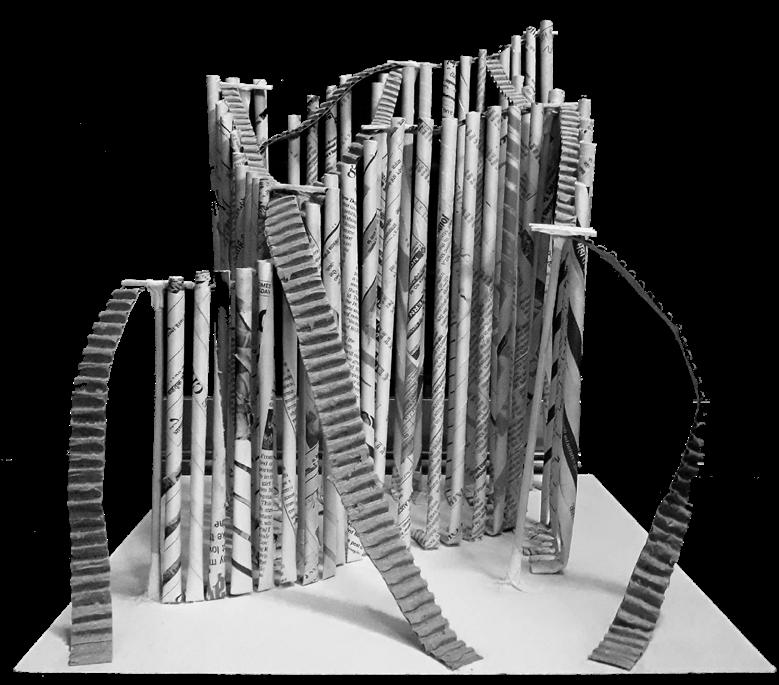
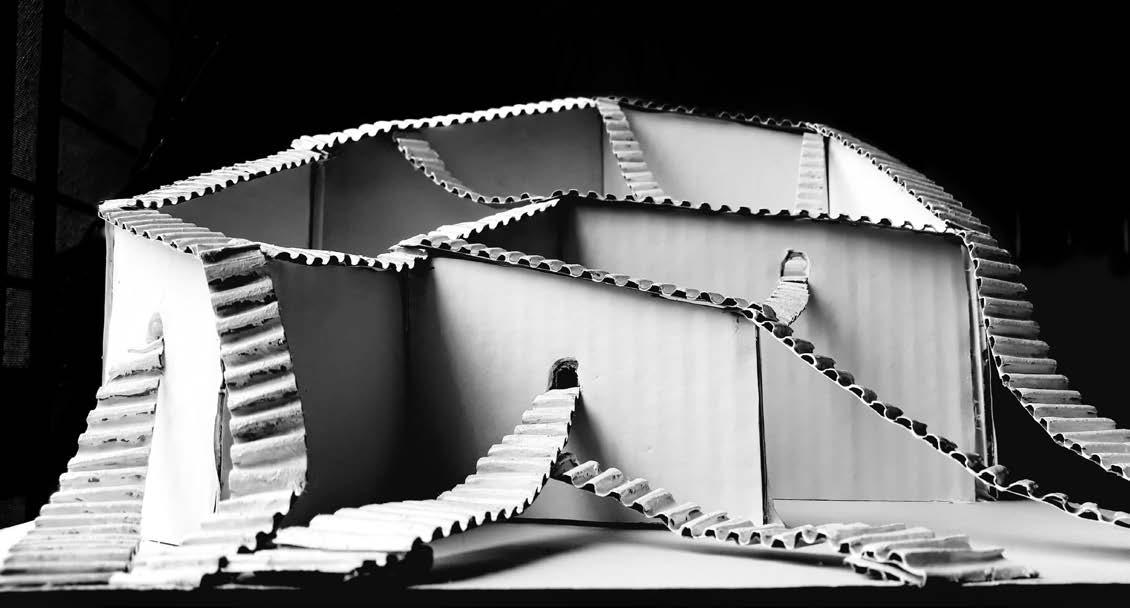
Staircase : Explorations in Form and Materiality Technology Studio | Semester IV
English - Proffesional
Marathi - Native
Hindi - Bilingual
Editorial Head | Student Council 2022 - 23
Editorial Secretary | Student Council 2021 - 22
Study Trip Committee - Bhopal (Semester V) | 2022
Work published in KRVIA Newsletter | 2021-22
Editorial CompilationsOne Object, Many Histories | Semester V Architectural History Book
Narratives: Celestial and Terrestial | Chidambaram Exhibition
Curatorial Teams -
KRMLS : Dissertation Colloquium | 2022-23
Representing the Sacred | Exhibition 2023
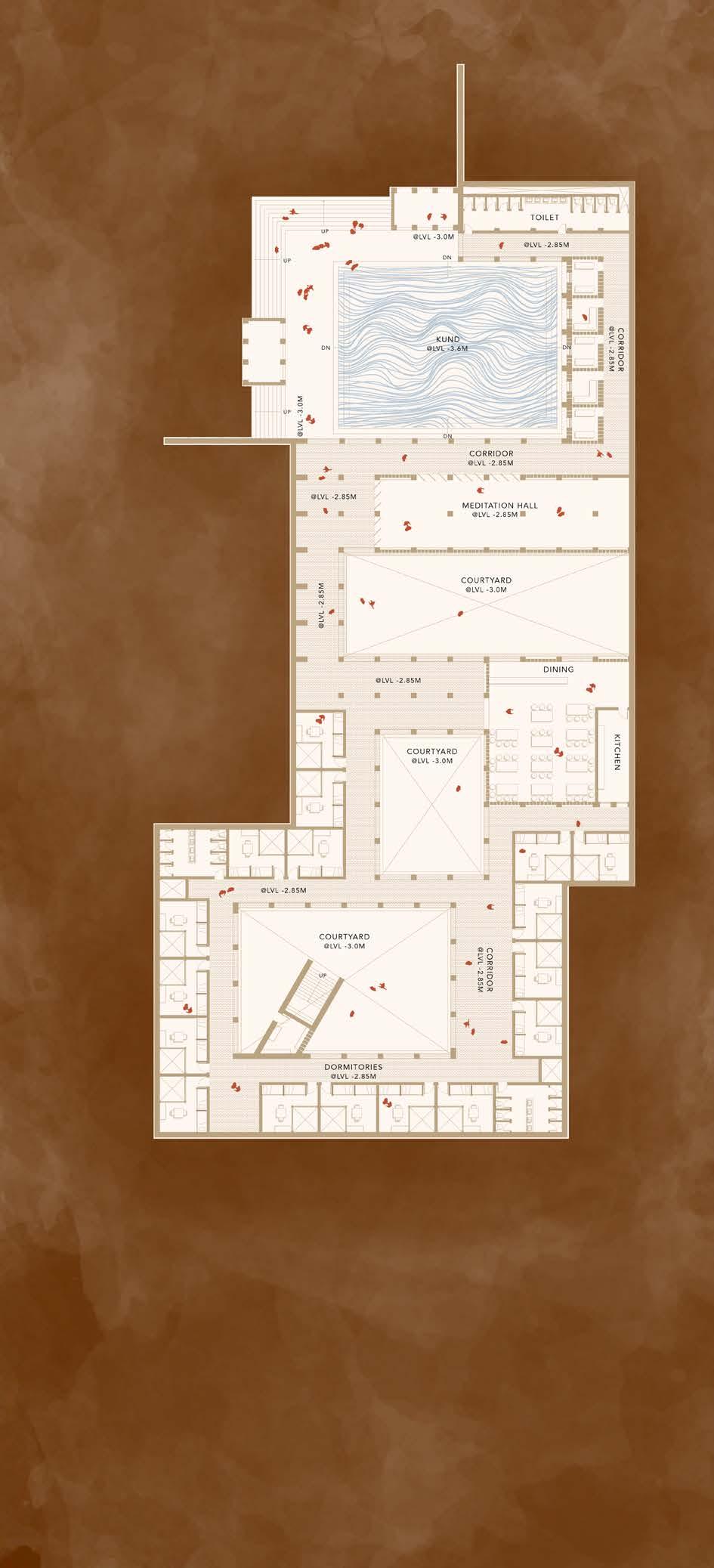
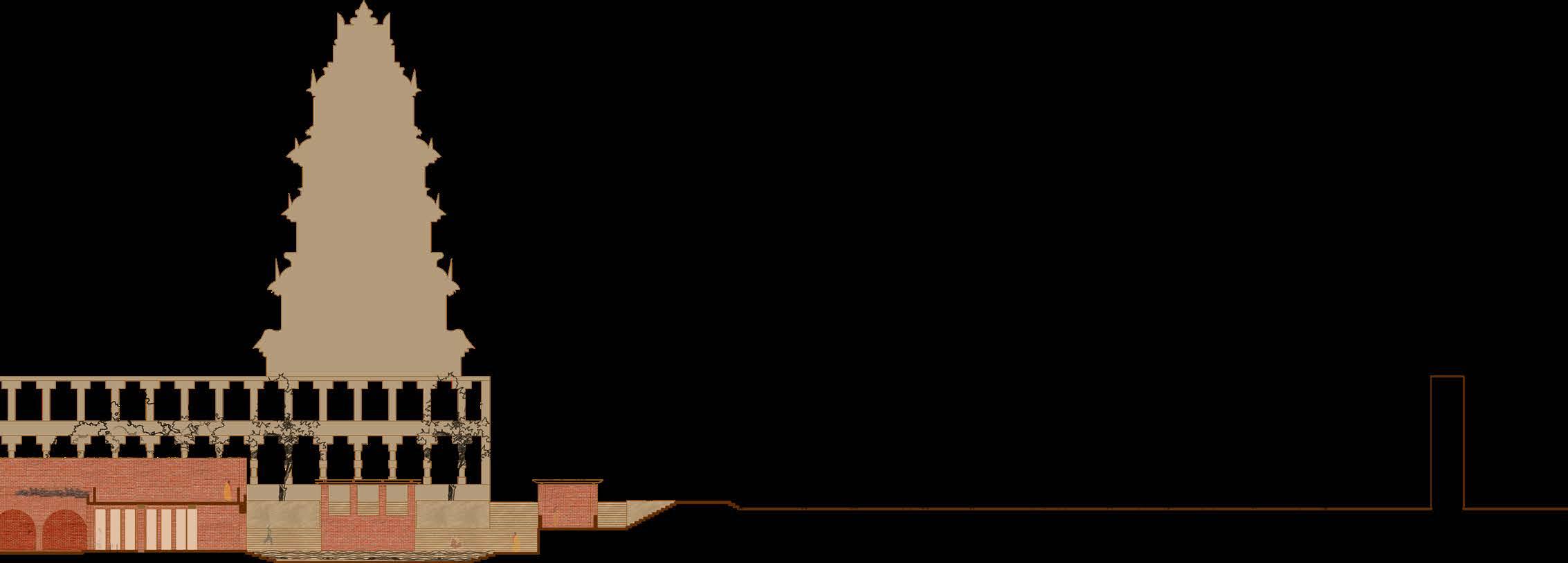
This project takes a deep dive into Chidambaram, a place famous for its Natraj temple and lively Chariot festival. Instead of following the usual interpretations that treat temples as mere symbols, this initiative aims to reveal the complex social traditions and power dynamics interwoven into the town’s physical layout. Drawing inspiration from the innovative “Oblique Strategies” approach popularized by individuals like Brian Eno and Peter Schmidt, the guiding principle given to me is to ‘Discover the recipes you are using, and abandon them.’
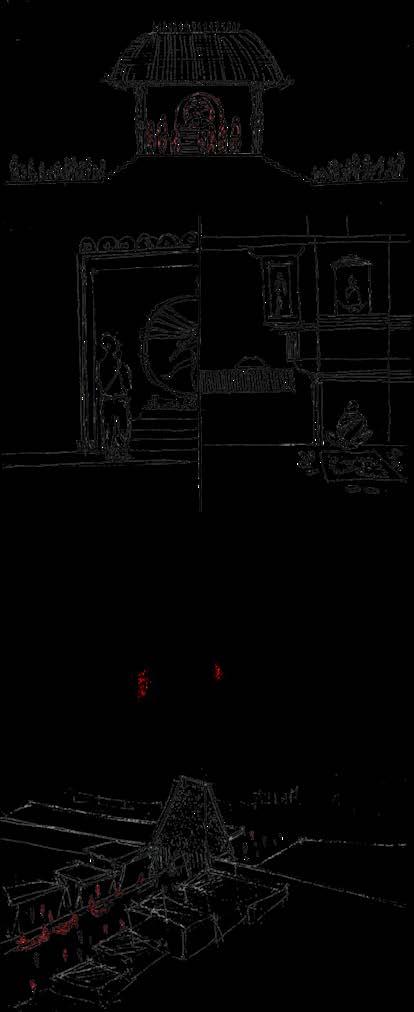
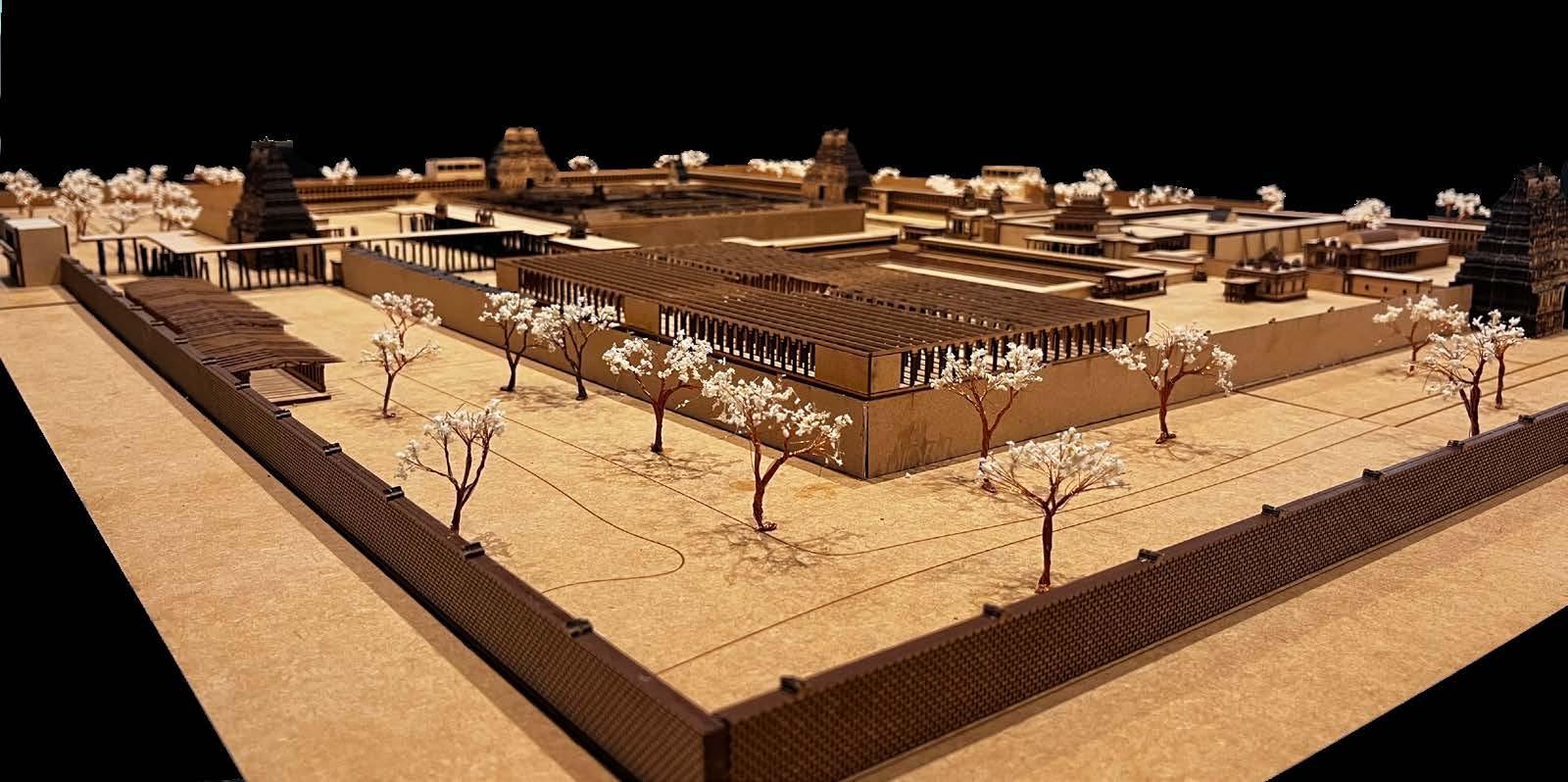
In numerous Hindu temples, historical norms and religious beliefs have led to the imposition of limitations on women’s access and involvement in particular sections of the temple premises. These restrictions stem from the perception of specific areas as sacred, demanding a certain level of purity. Unfortunately, this practice can be perceived as discriminatory, curtailing women’s opportunities for active participation in religious practices.
The core objective of this project is to question these traditional restrictions and conceive alternative, more inclusive spaces within temple complexes and to find ways to establish women’s presence and engagement with the spiritual essence of the temple.
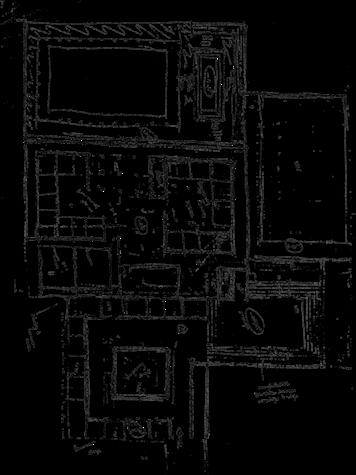
Site Plan
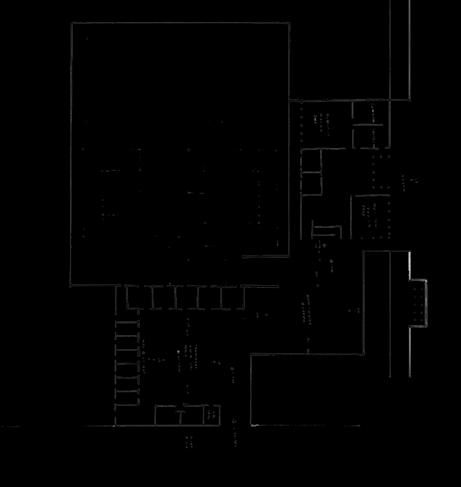
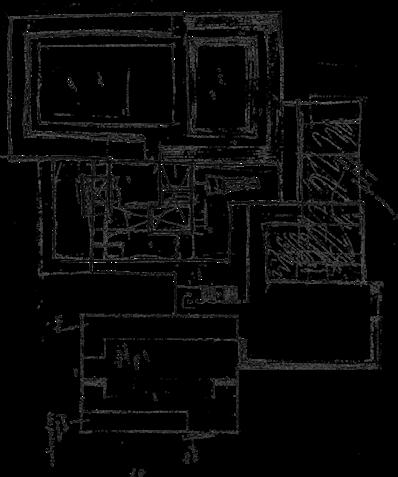
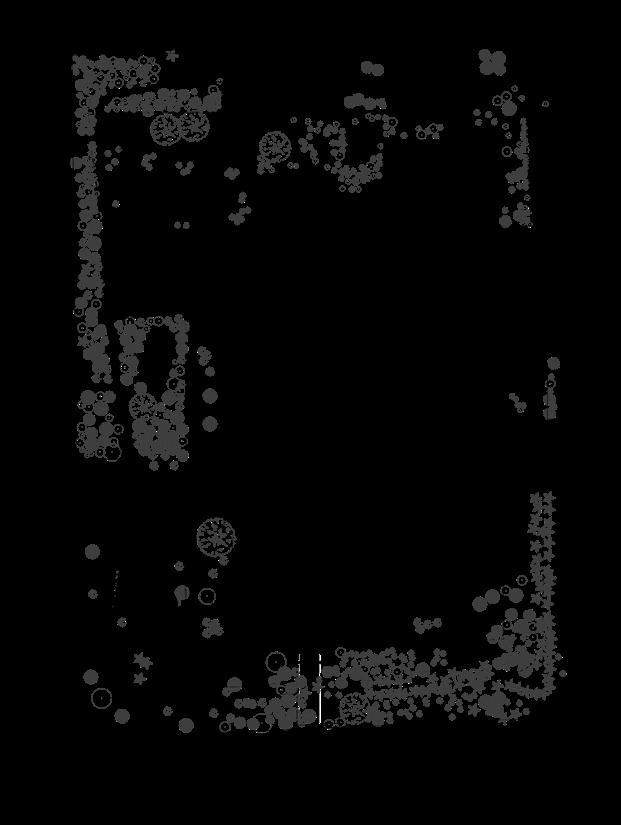

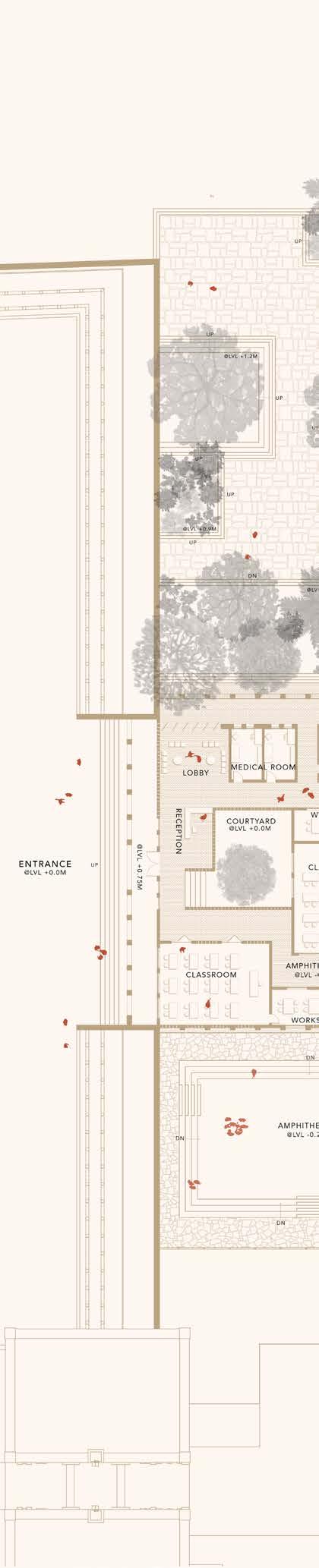
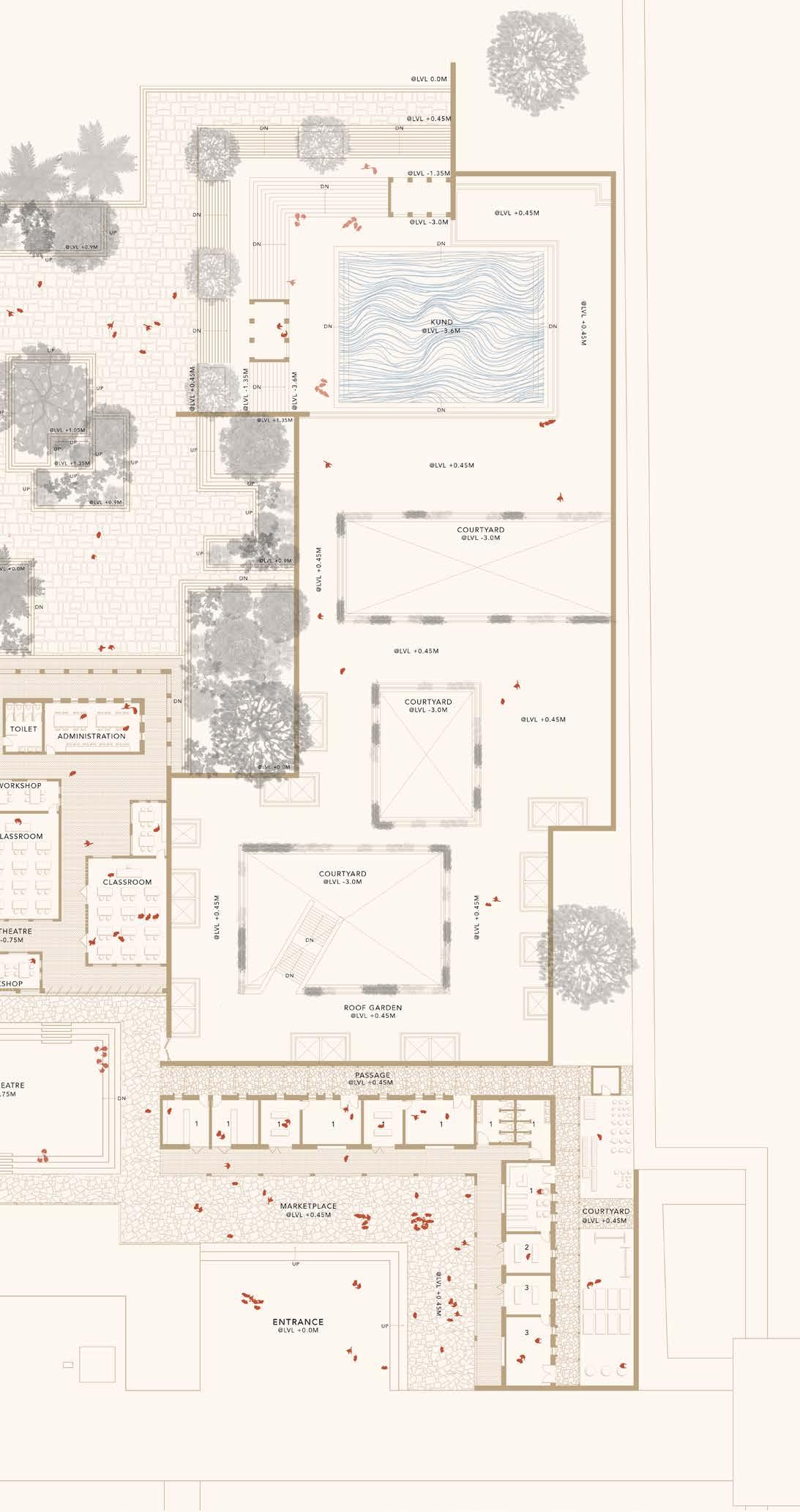

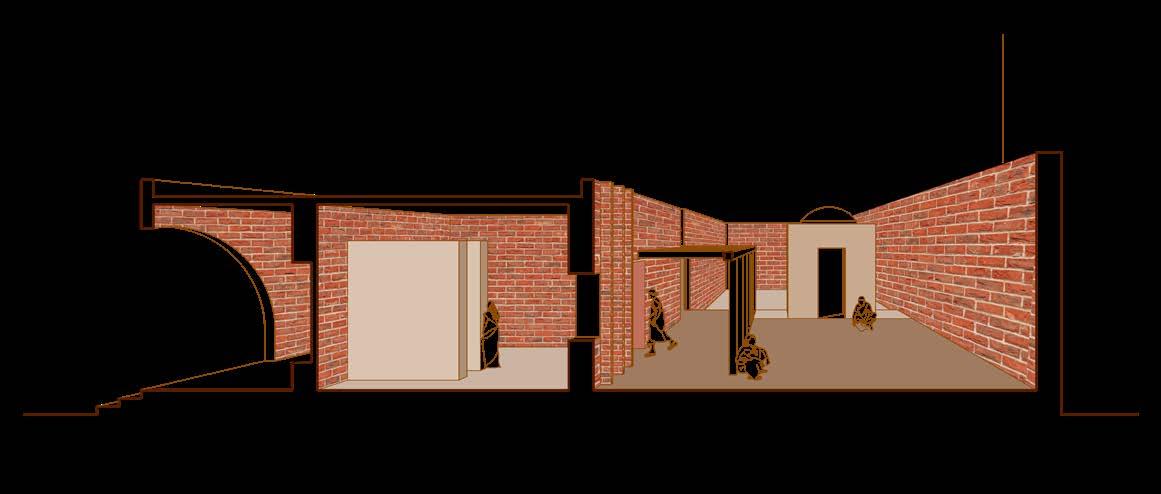
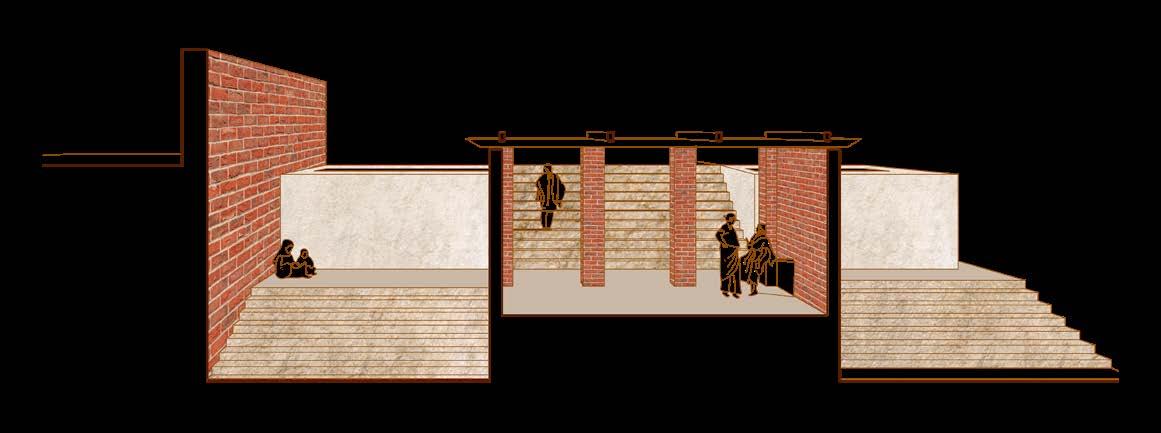
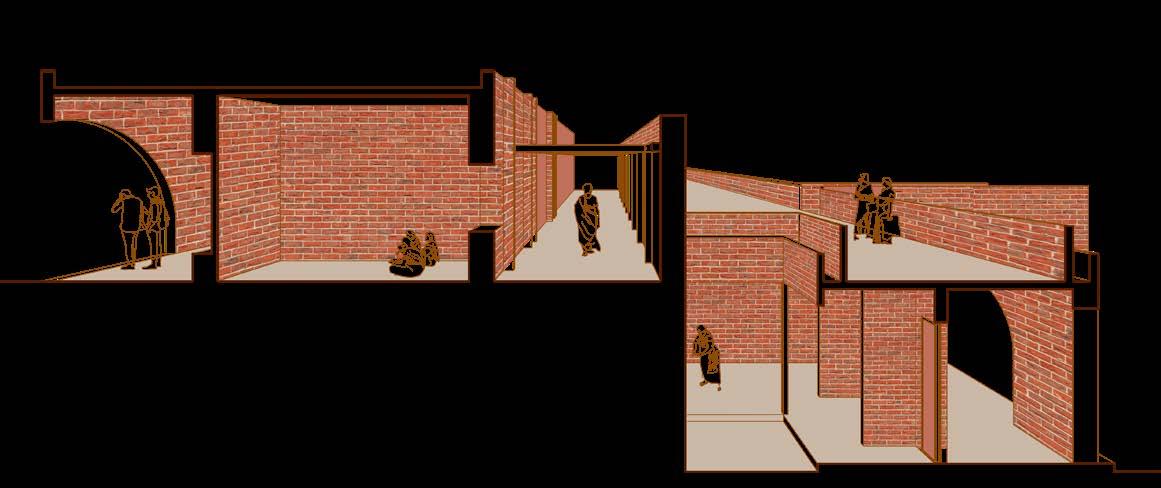
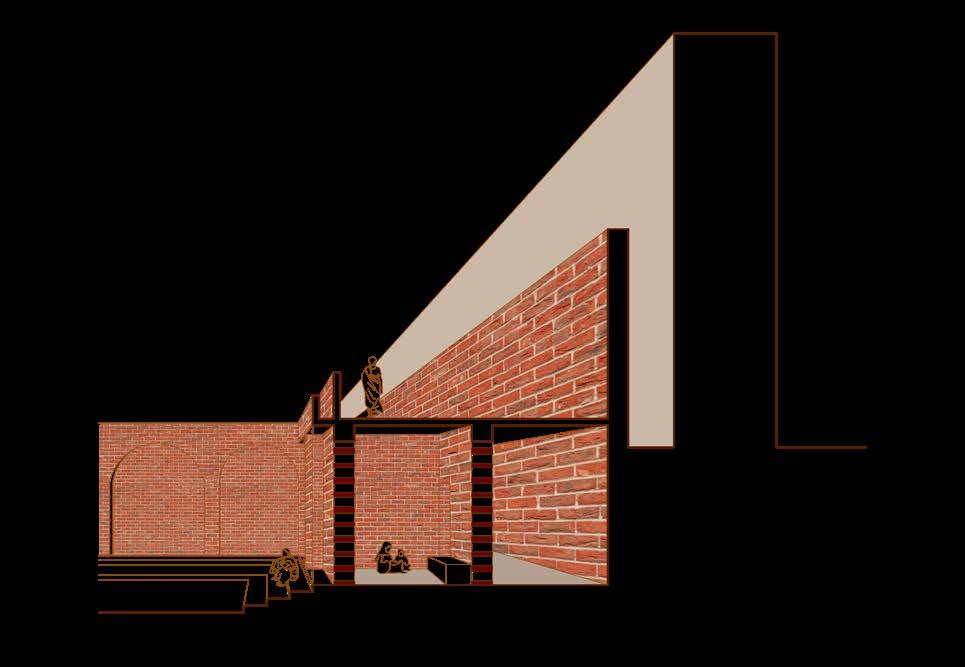
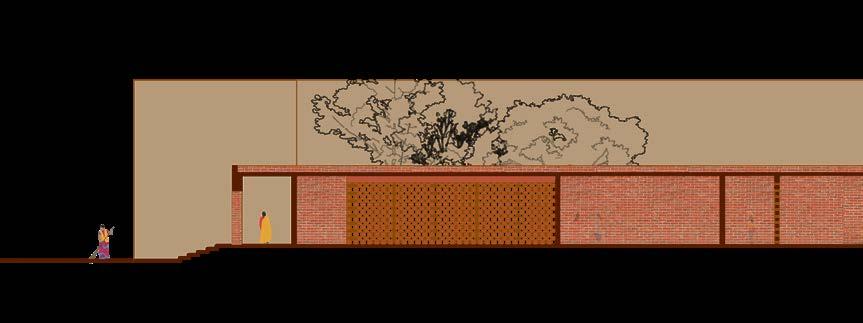

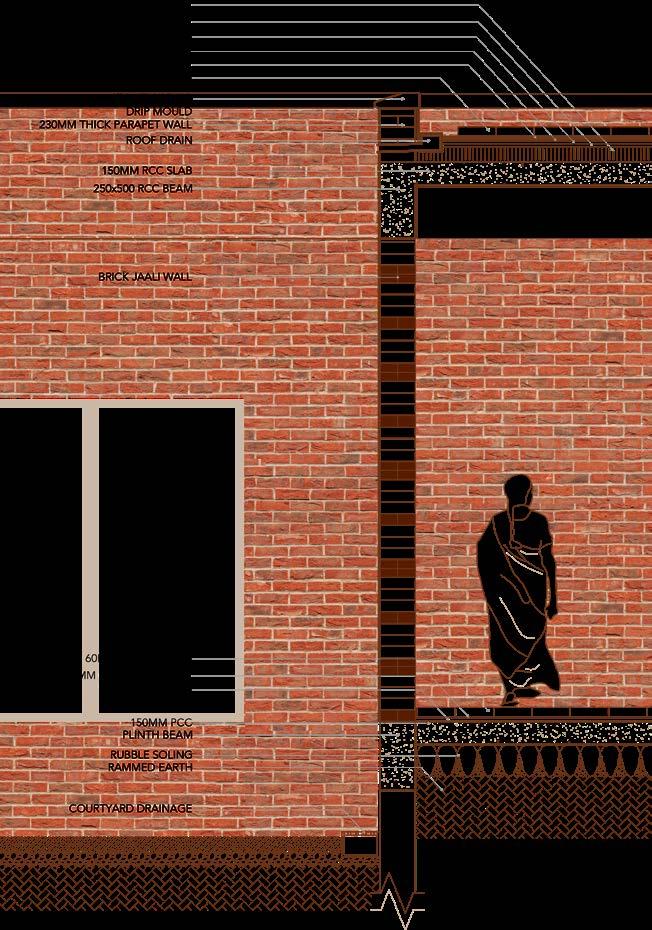
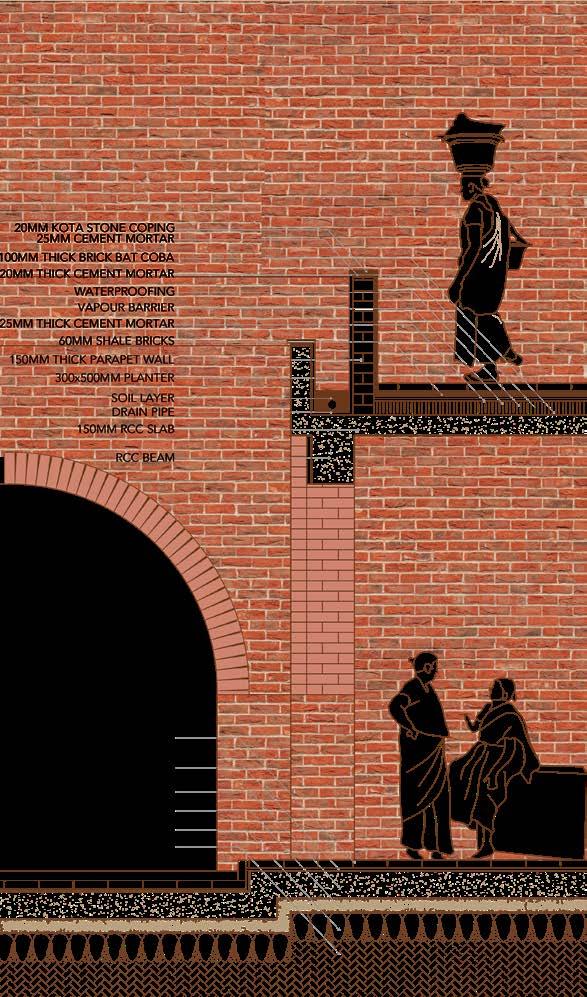
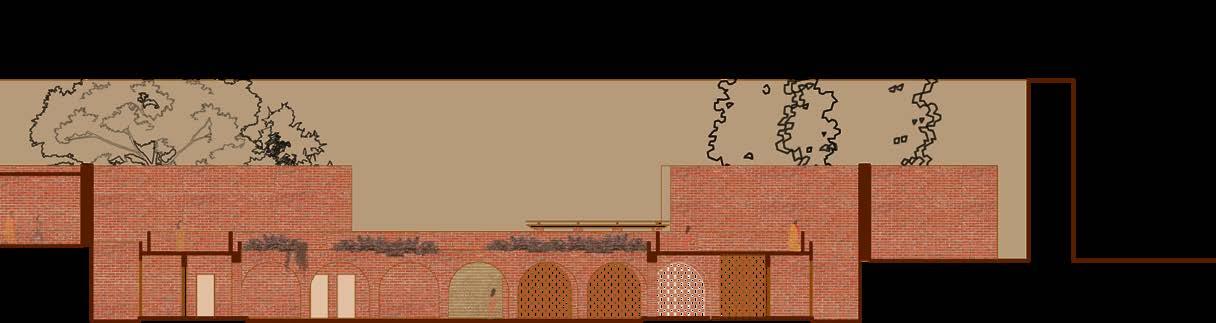
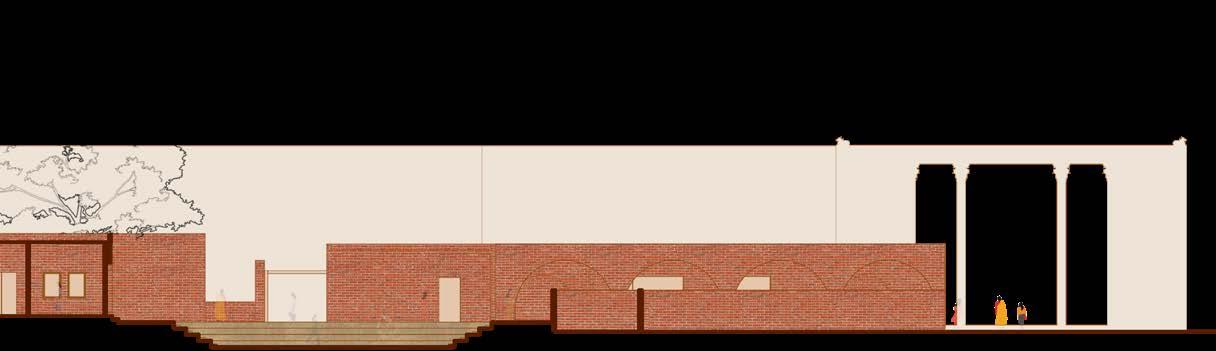
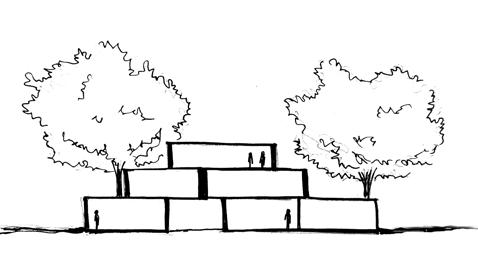
The project was centered around a children’s center located in Shivaji Nagar, in the M East Ward, Mumbai. The idea was to improve the lives of local children beyond their usual school hours. It sought to address the challenges of crowded living conditions in the area by creating open spaces for movement and activity. One noteworthy aspect of the project was its innovative use of materials, incorporating a combination of concrete and timber, which was experimental within the context of the local slum typology. This experimentation with materials was used keeping in mind factors like including durability, aesthetics, and potentially serving as an example for future urban development projects in similar environments.
Wall section through courtyard
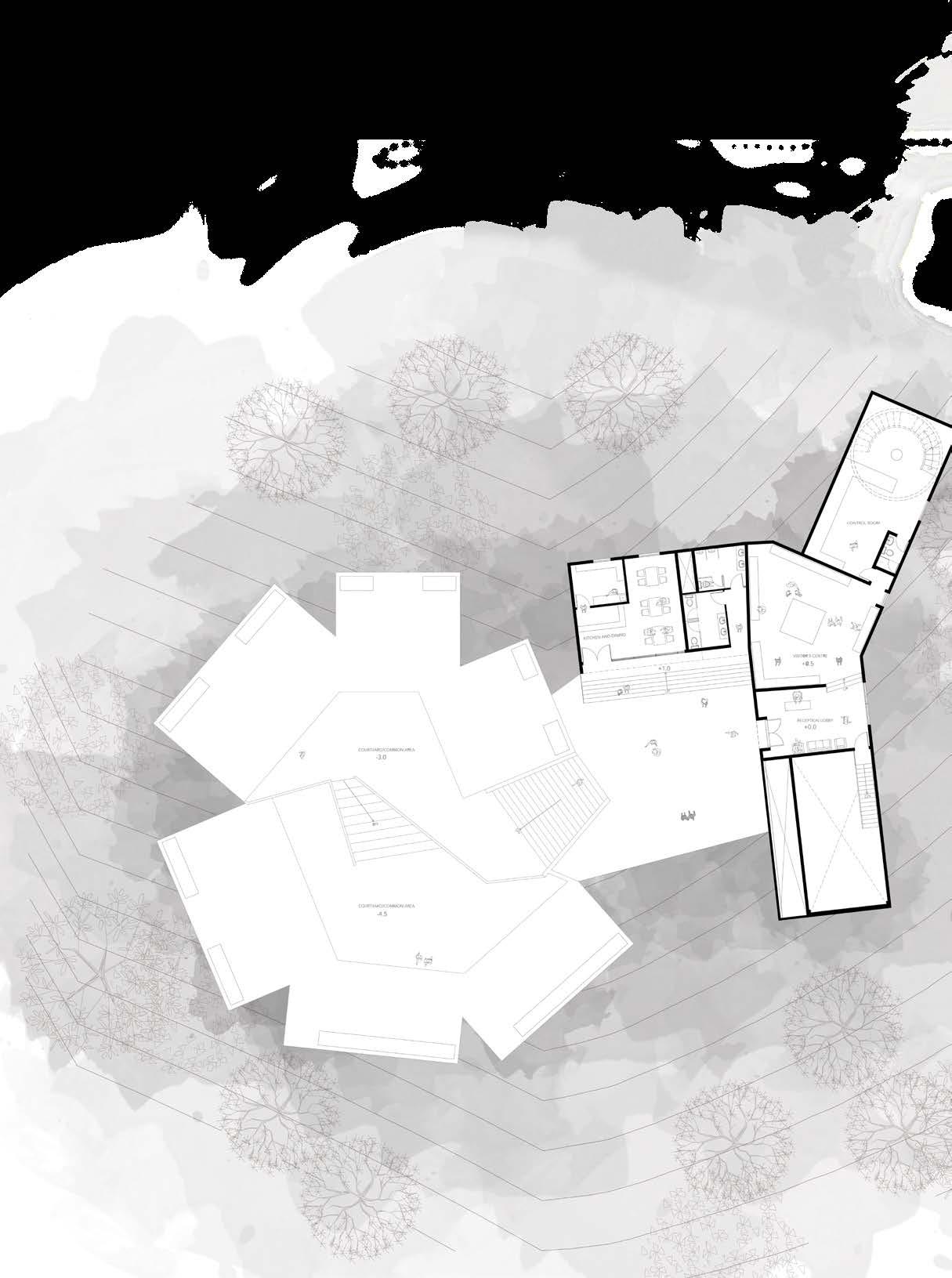
The studio sought to renew old and create new connections between the physical and metaphorical, human and natural, community and context through ‘New Geographies’. It aimed to balance survival needs with conservation desires.
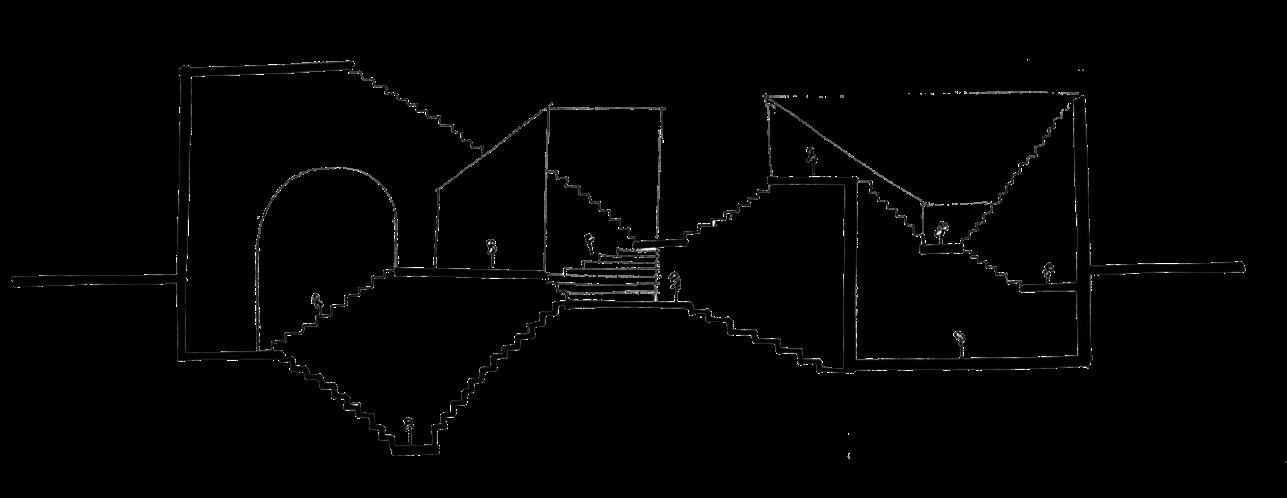
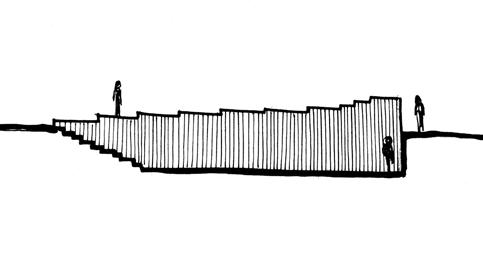
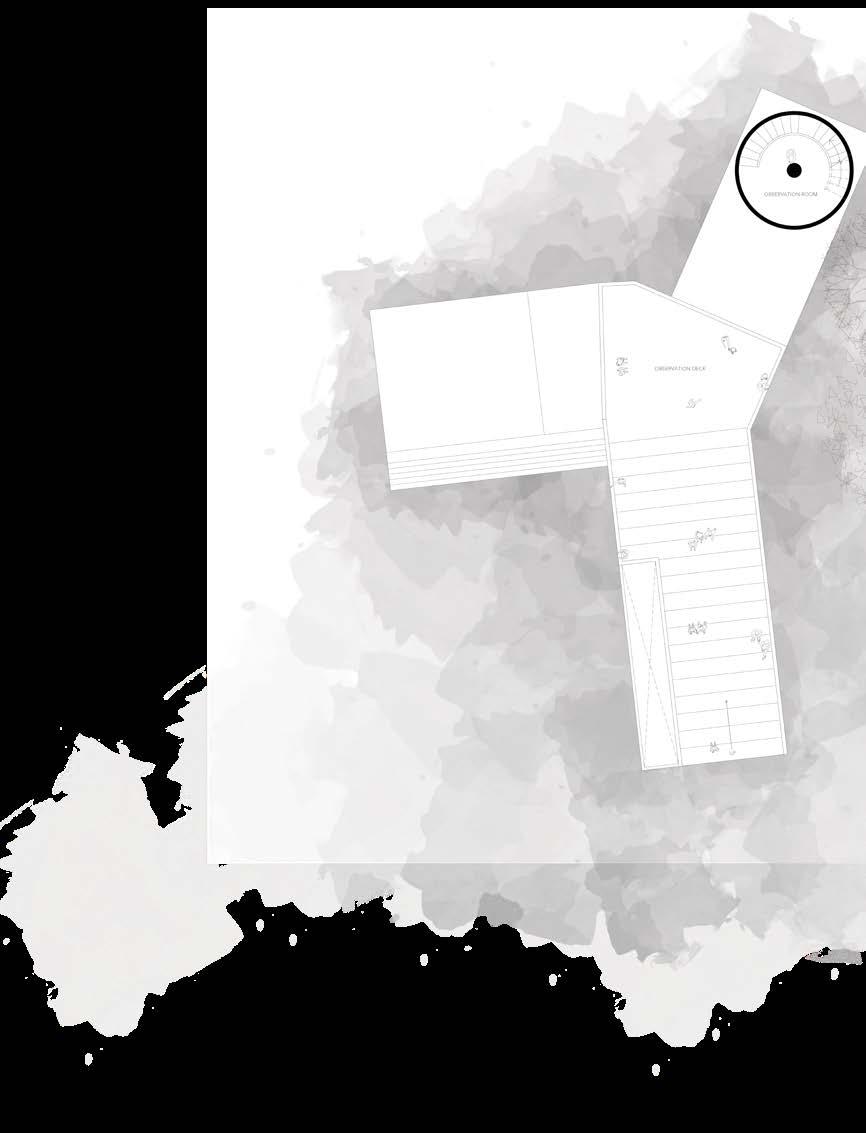
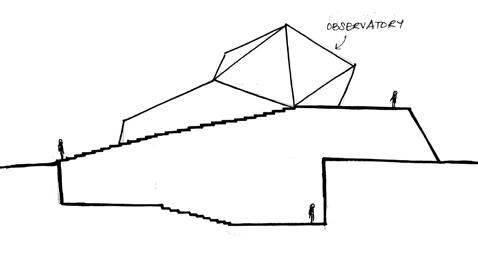
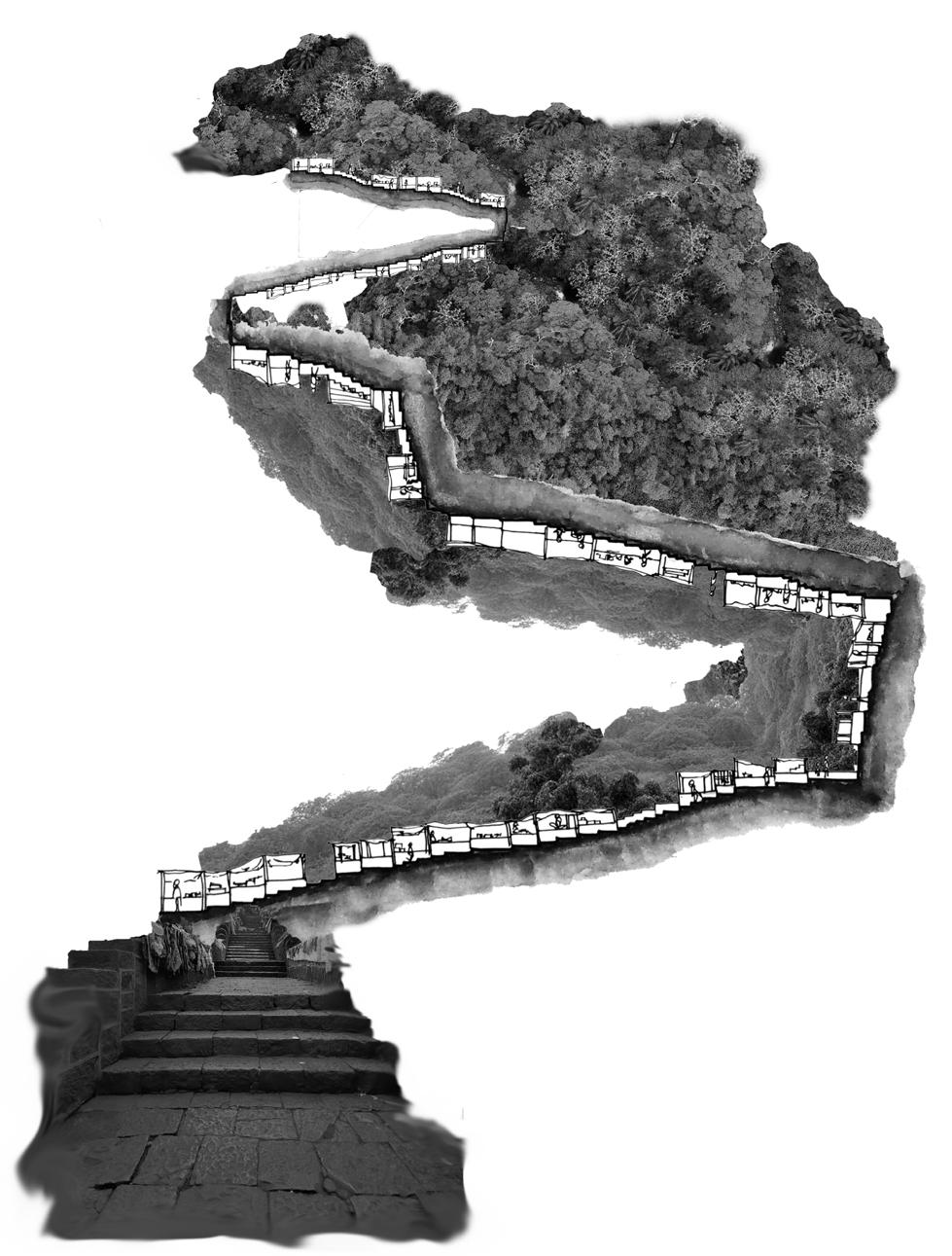
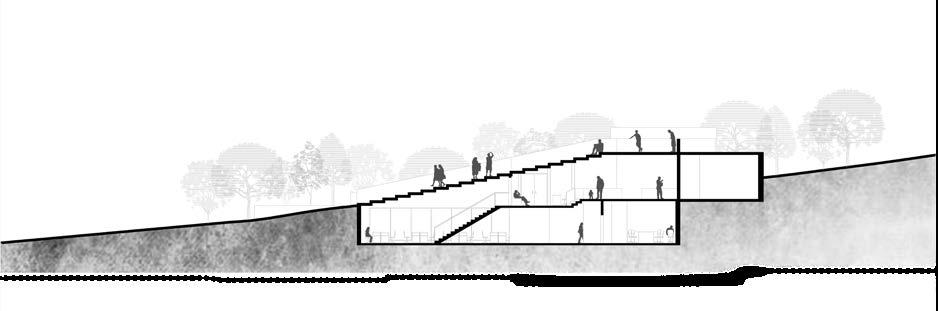
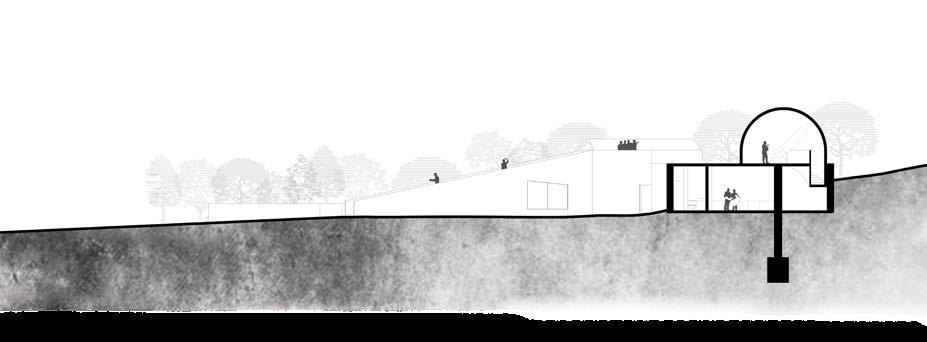
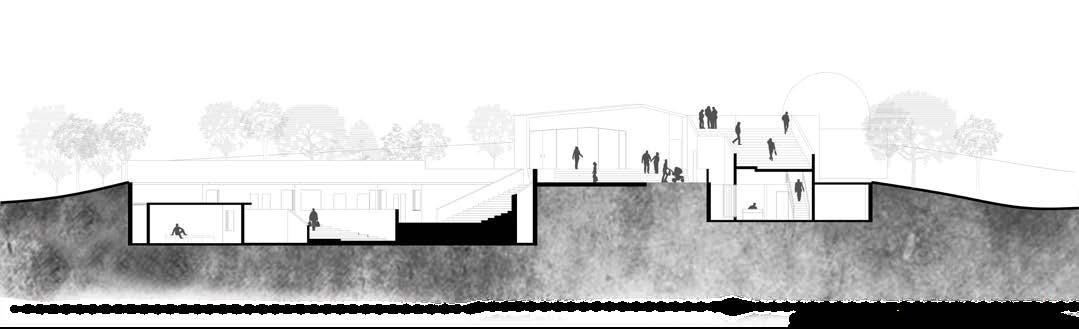
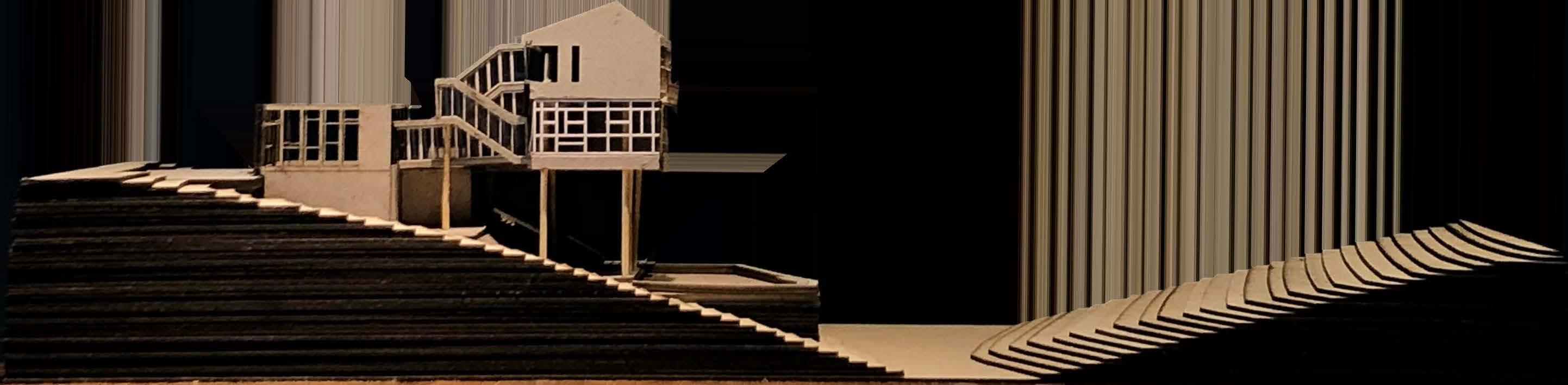
The project is situated in Gharapuri, commonly referred to as Elephanta Island, near Mumbai. The concept emerged from the 120 steps which lead to the Elephant caves, a popular tourist spot on the top of the island. The essence of the design was rooted in the idea of ascension as one travels up these series of steps. This ascent mirrors a person’s journey through different stages in life.
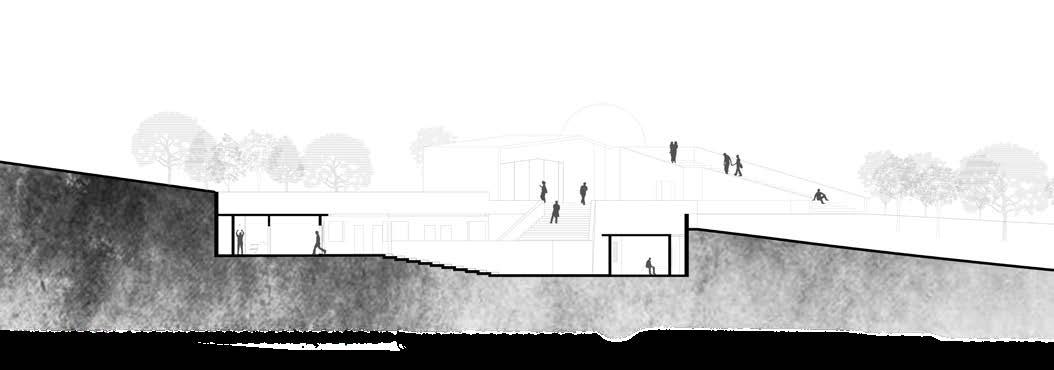
Climbing the steps brings anticipation, and at different levels, you find various experiences. These stages represent the island’s history, culture, and nature. These ideas were the focal point for the formal explorations of the project that was an observatory situated on one the highest points on the Gharapuri Island.
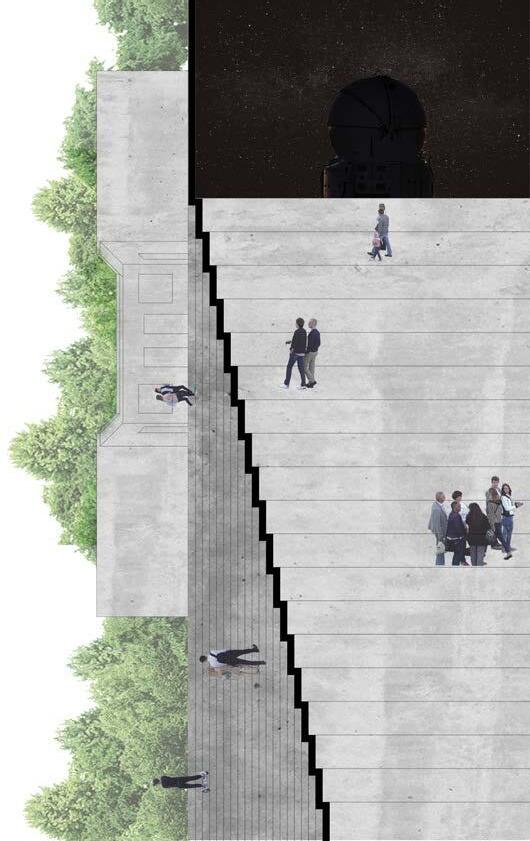
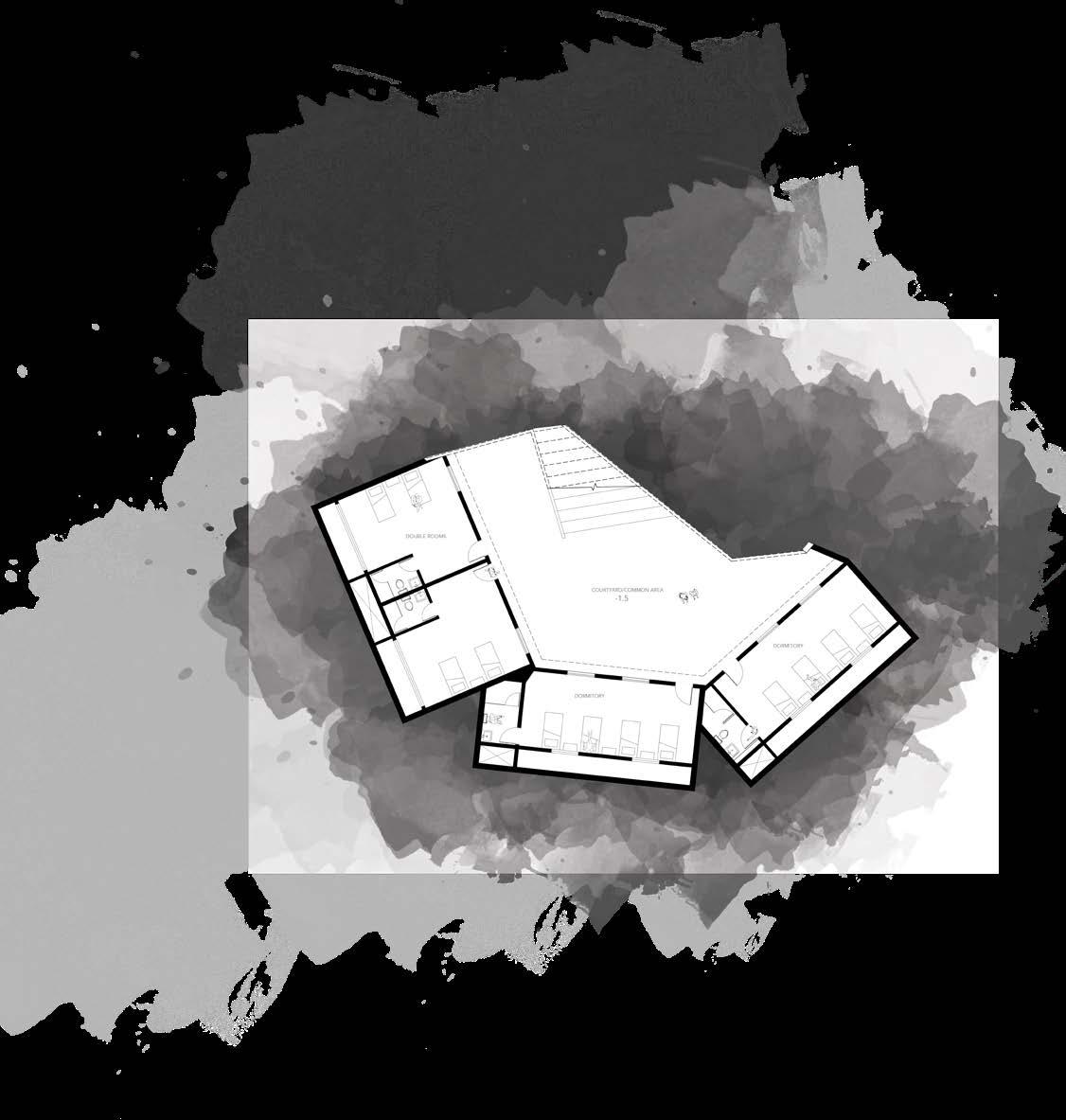
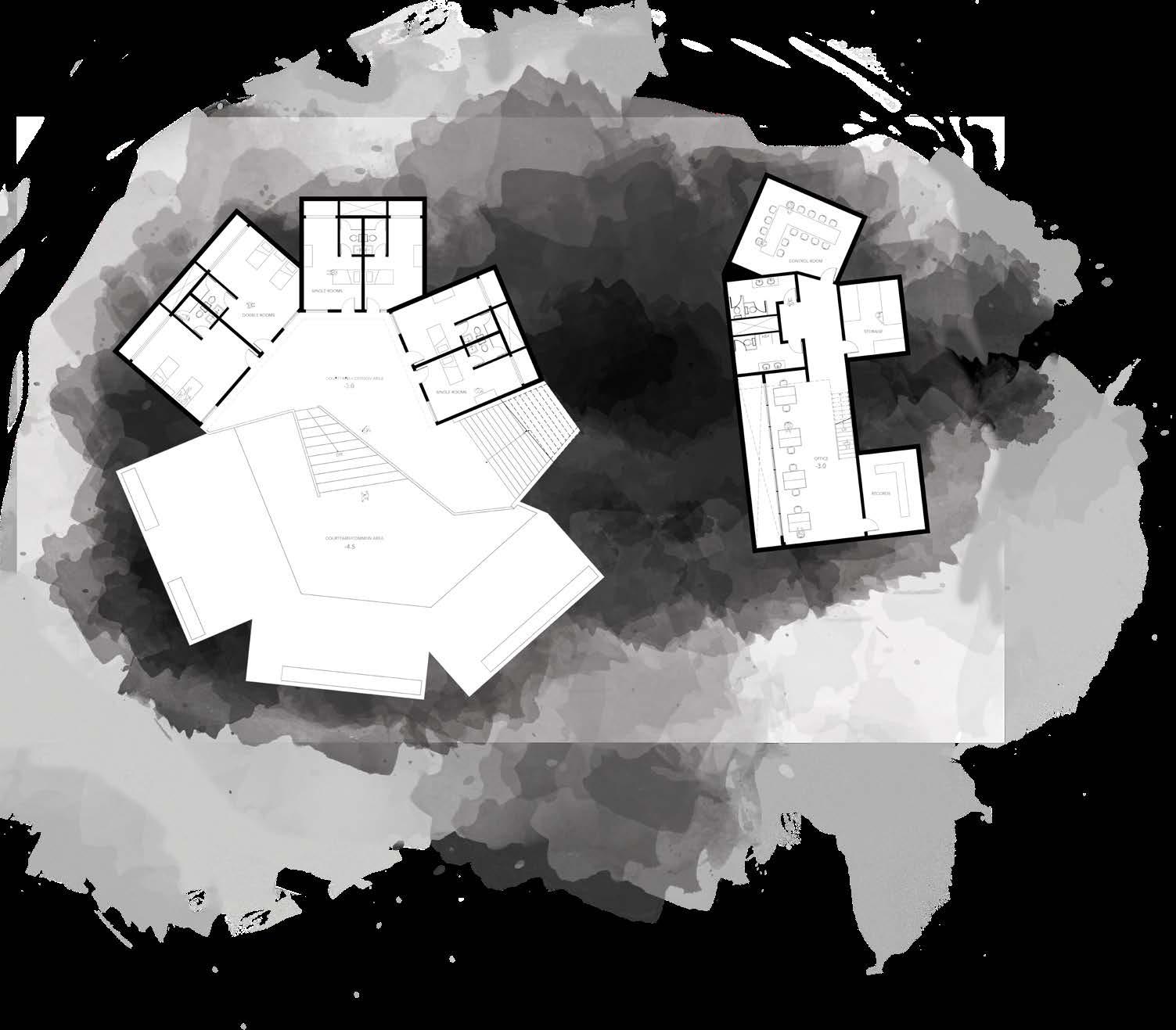 Plan at -1.5M
Plan at -3.75M
Section AA’
Project Synthesis
Section BB’
Section CC’
Plan at -1.5M
Plan at -3.75M
Section AA’
Project Synthesis
Section BB’
Section CC’
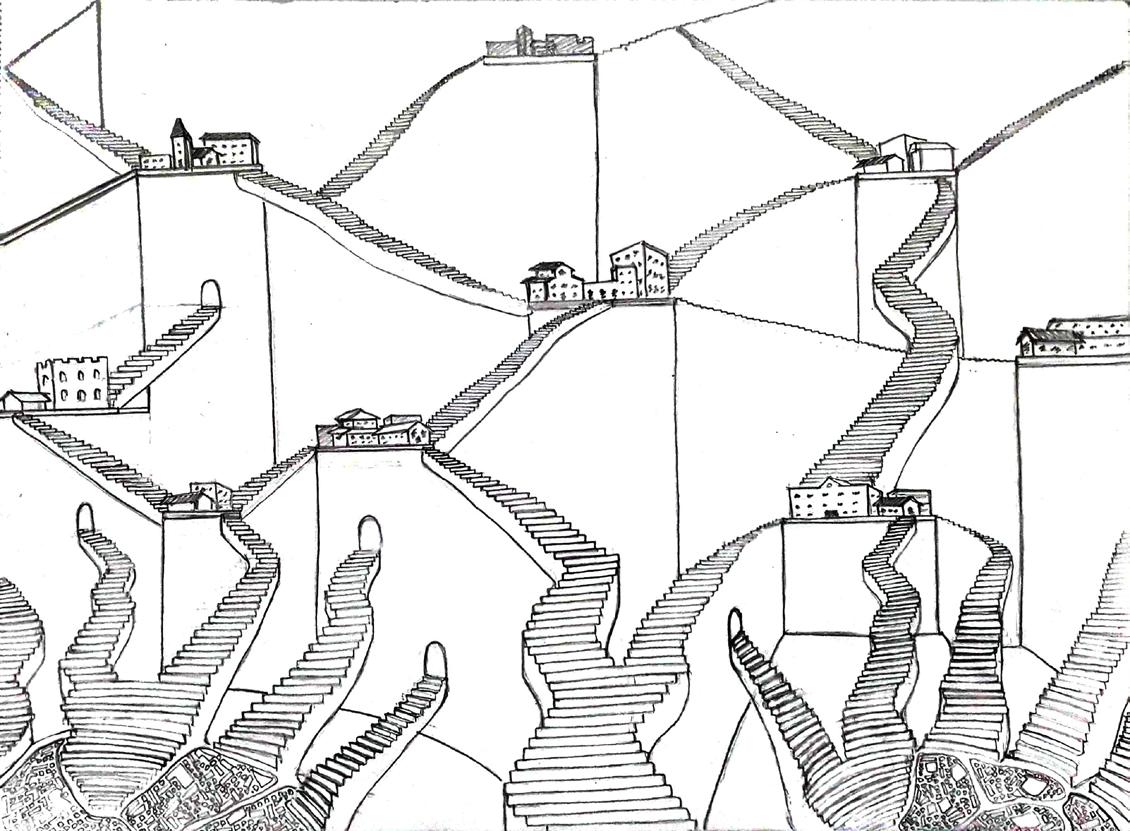

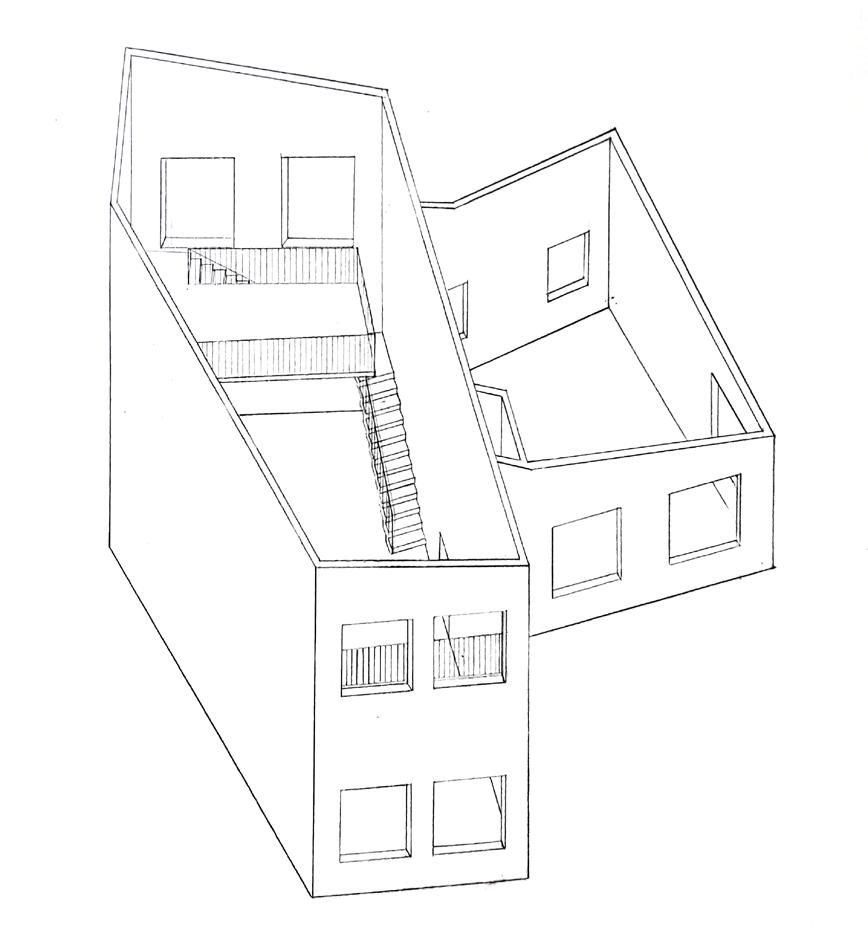
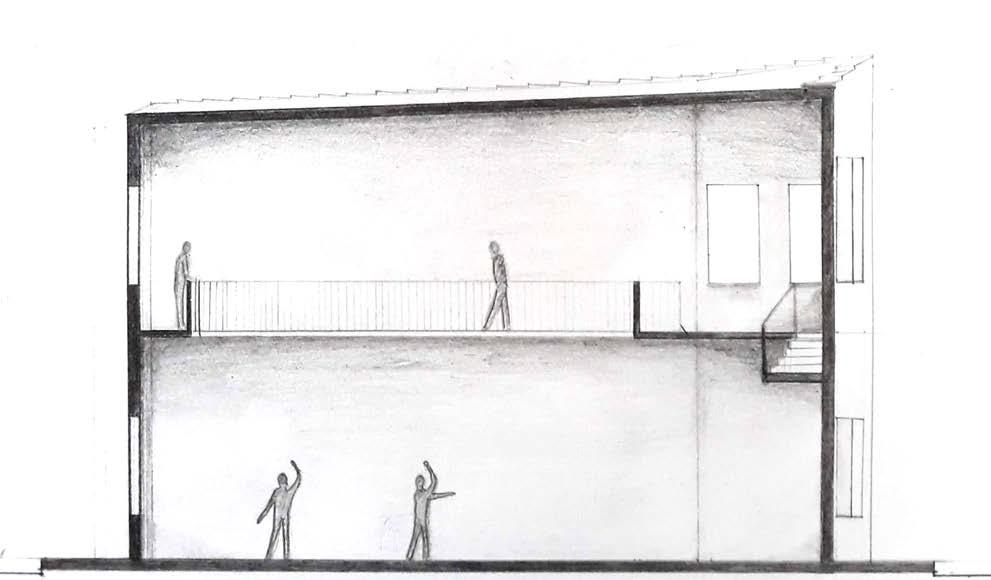
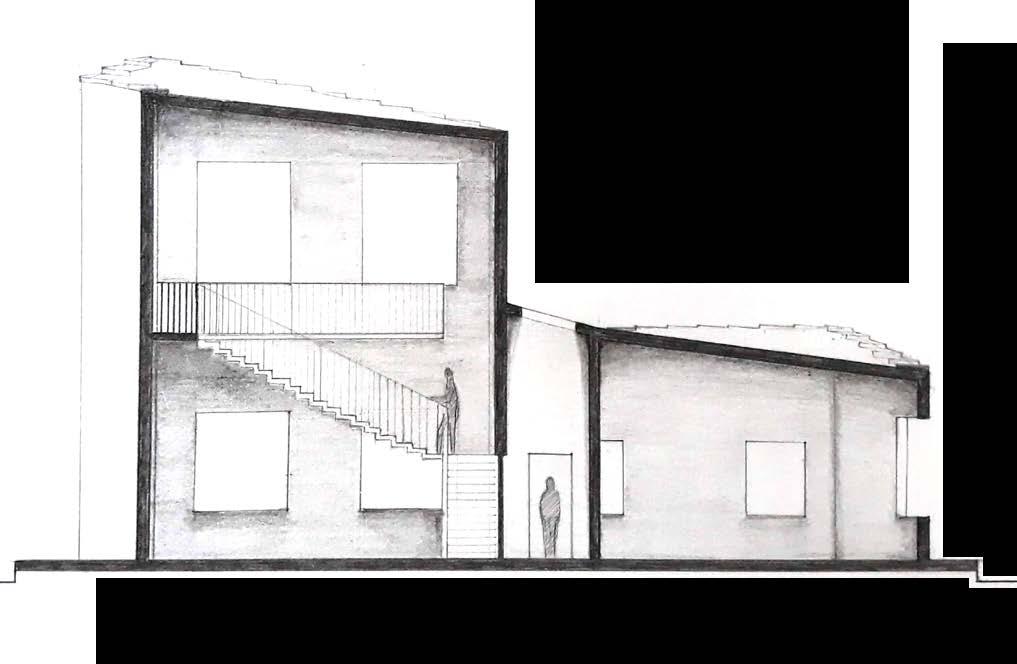
Invisible Cities” is a novel by Italo Calvino, and it explores the imaginary cities of the world through the eyes of Marco Polo as he describes them to Kublai Khan. The book explores the concept of cities, memory, and imagination. It weaves a rich tapestry of fictional cities, each with its own unique characteristics and symbolism, to examine the complex relationship between people, their environments, and the stories they create about them.
In the book, Zaira is one of the cities that Marco Polo recounts. Zaira is a city characterized by its precise and orderly layout. Every street and building in Zaira is meticulously designed to align perfectly with the cardinal points, resulting in a harmonious and symmetrical urban landscape. The city’s inhabitants are deeply committed to preserving this geometric perfection, and any deviation from it is considered a sacrilege. Zaira embodies the idea of a city governed by strict principles of order and geometry, emphasizing the human desire for structure and control in the urban environment.
In the city of Zaira, a prominent Kathak dancer both performs for the Queen and the public on various occasions and dedicates her spare time to teaching this classical dance form. Recognizing the need for a spacious area for practice, the architectural design incorporates an expansive dance studio with high walls and strategically placed windows for ample natural light and ventilation. Adjacent to the studio, a residence is connected via a well-designed lobby, ensuring the dancer’s ability to seamlessly balance her rigorous practice regimen with her living space, thereby facilitating her continuous pursuit of artistic excellence.
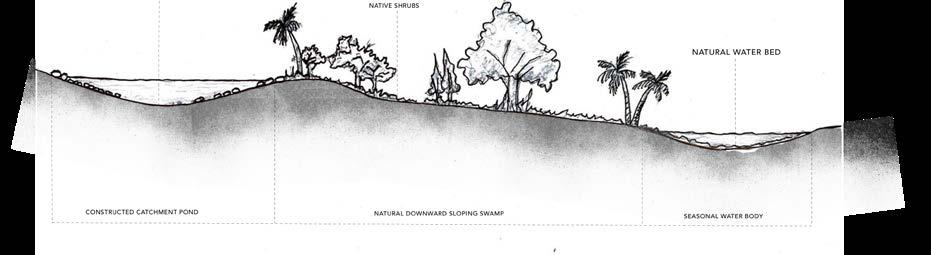
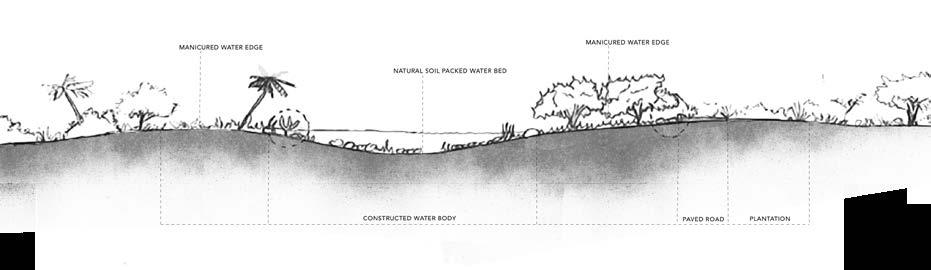
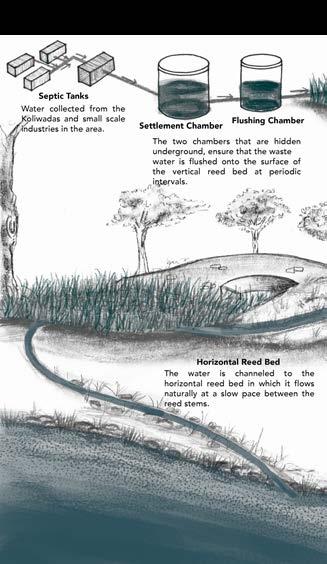
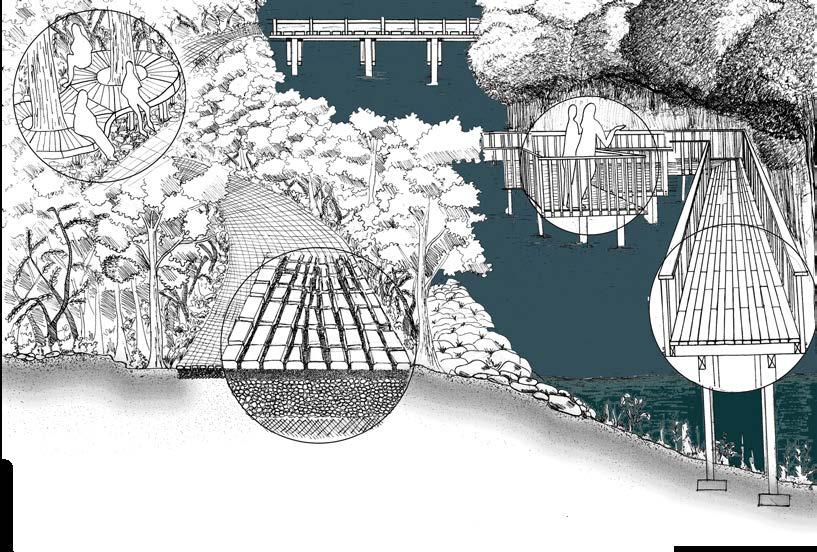
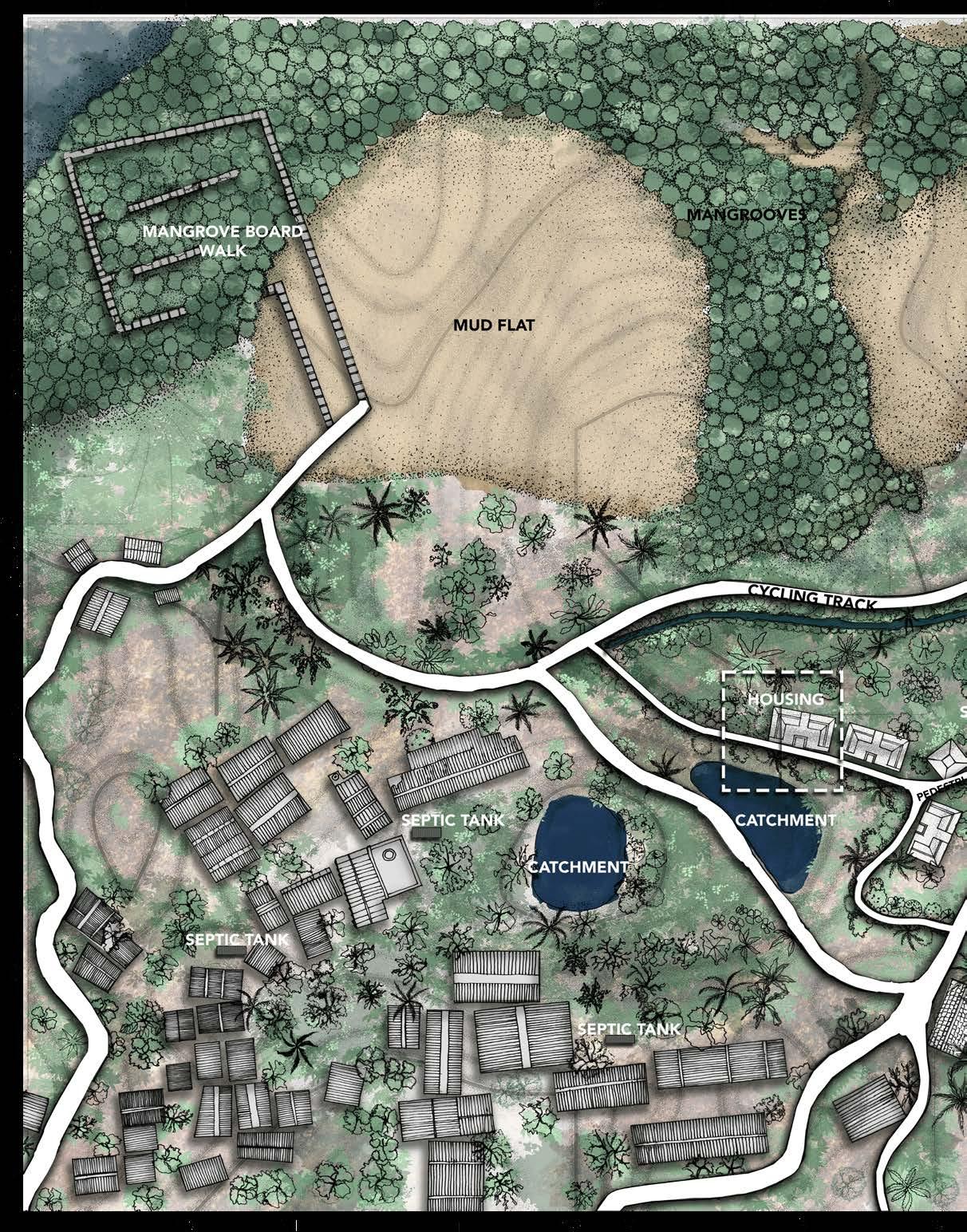
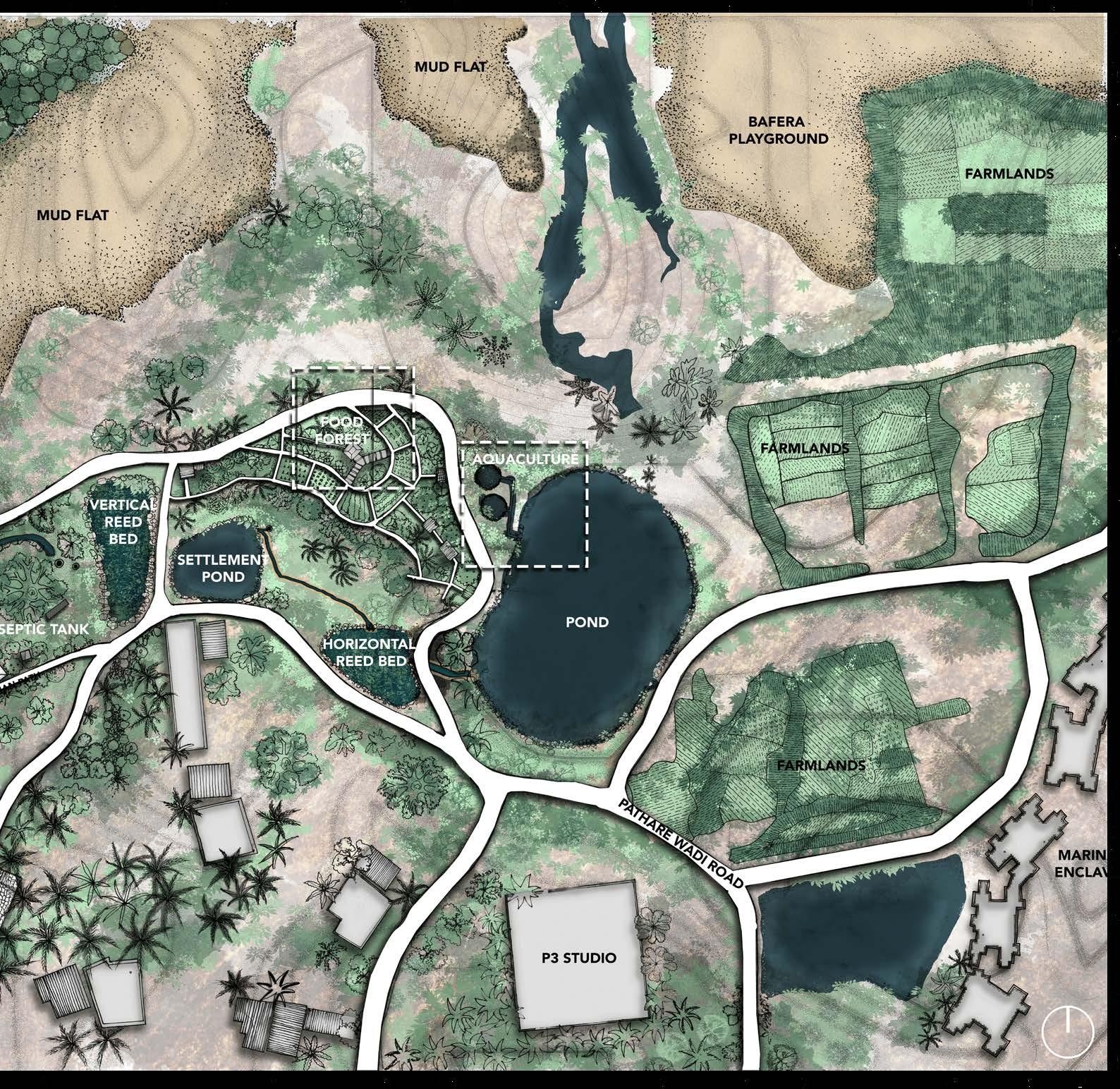
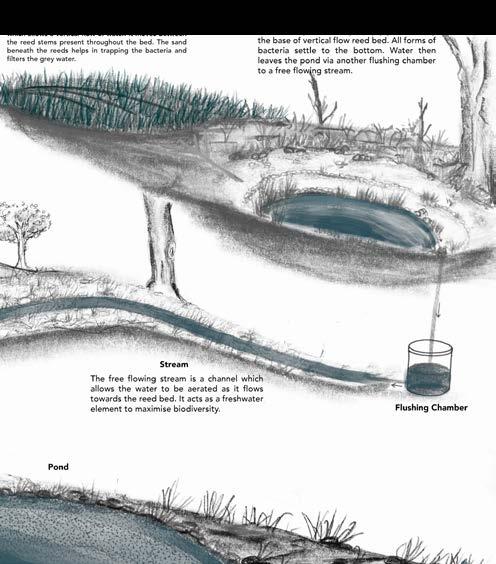
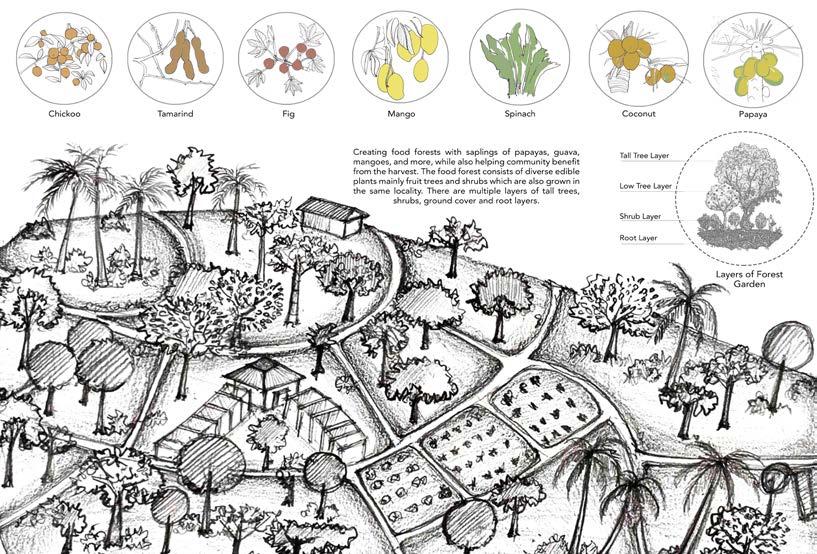
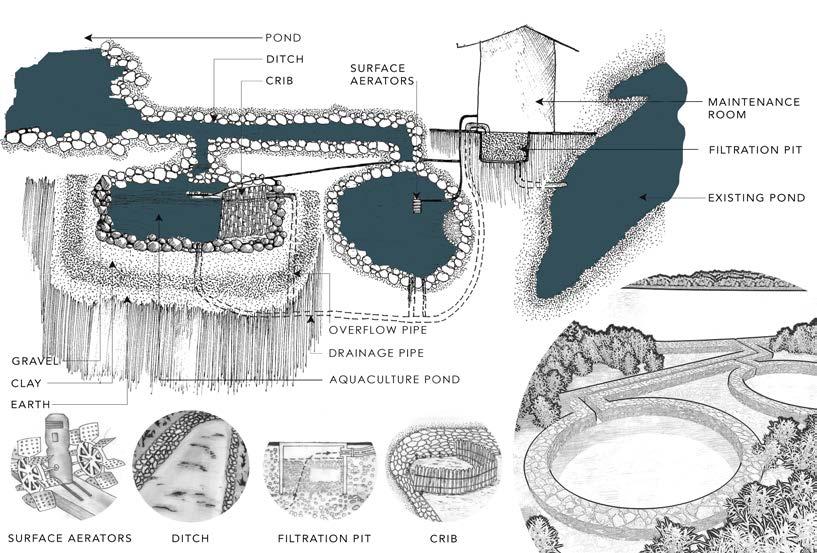
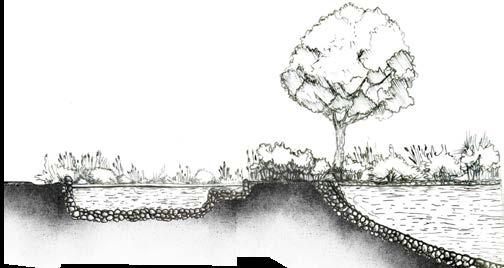
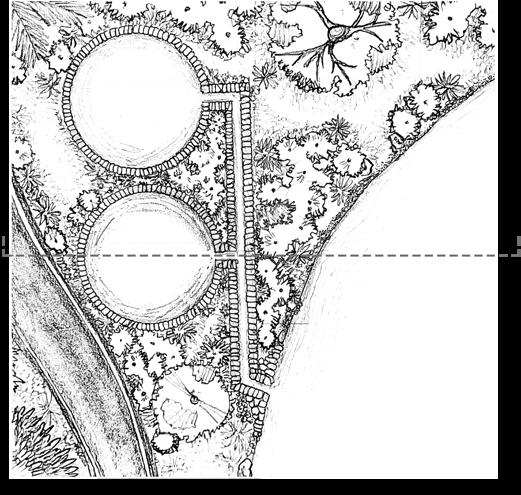
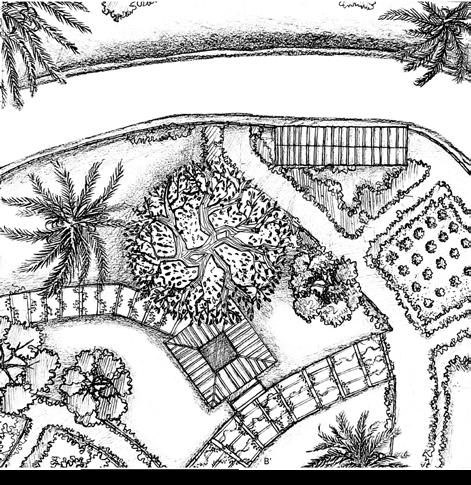
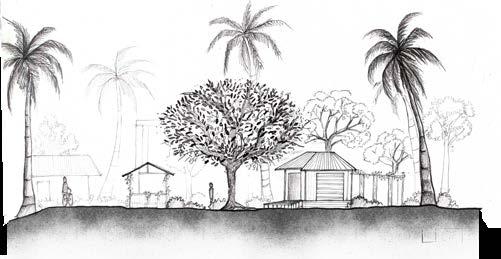
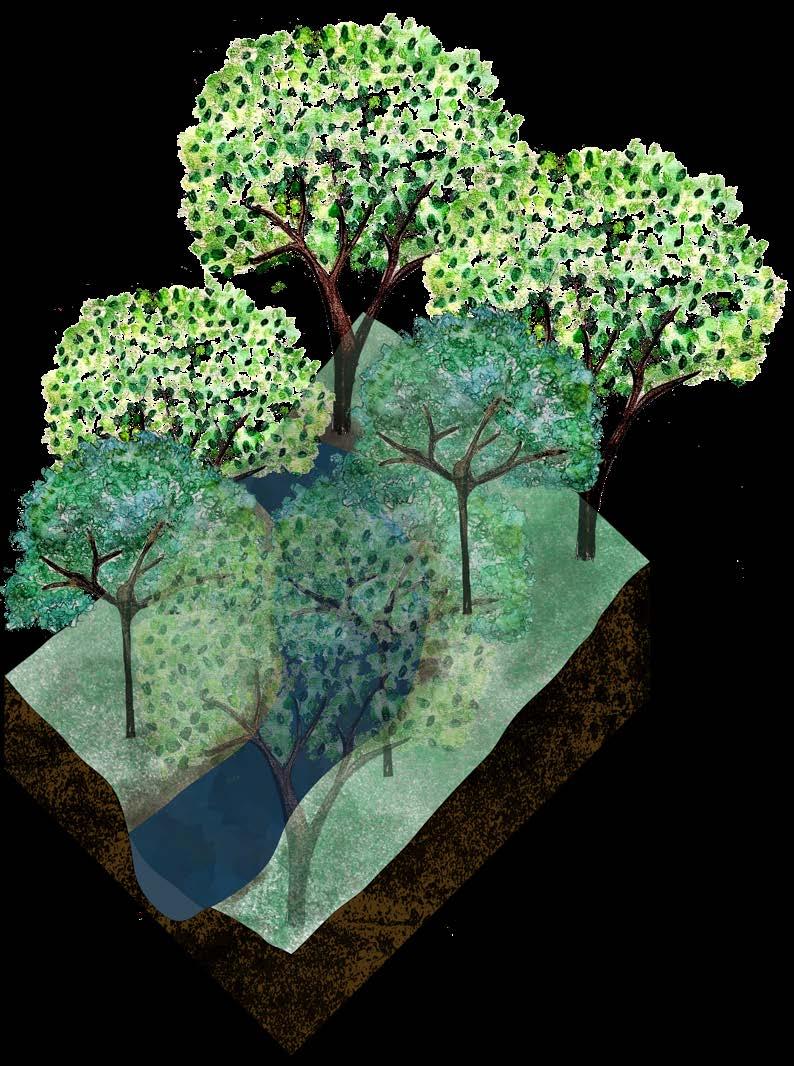
The aim of the project is to create a sustainable commune for twenty-four residents within Charkop’s wetland area. The core idea involves integrating constructed wetlands into housing for eco-friendly wastewater treatment. Sustainability is central, with eco-materials and renewable energy sources reducing the carbon footprint. A mangrove boardwalk adds value for residents and tourists while protecting the ecosystem. A unique feature is the native-focused food forest, ensuring sustainable nourishment with minimal environmental impact. Thoughtful road design enhances accessibility with minimal disruption, and the project’s water management strategy incorporates diverse water bodies to recycle greywater and enhance biodiversity. Overall, the project strives for an eco-conscious, integrated community in harmony with the wetland environment.

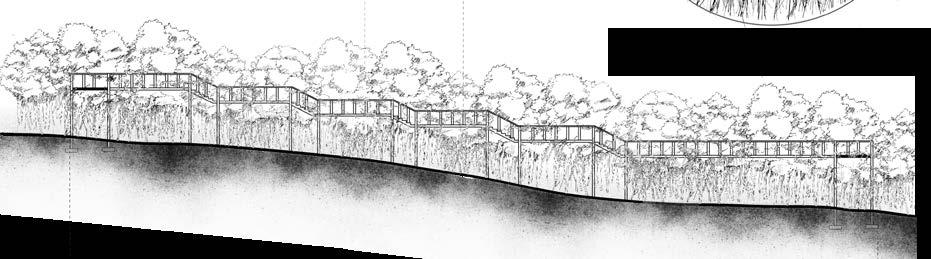
 Mangroves
Mangrove Wetland Swamp
Manicured Landscape
Manicured Water Edge Manicured Water Edge Soil Packed Water Bed
Natural Water Bed
Native Shrubs Catchment Bed
Constructed Catchment Pond Natural Downward Sloping Swamp Seasonal Water Body
Constructed Water Body Paved Road Plantation
Slope Directing Surface Runoff Slope Directing Surface Runoff
Constructed Catchment Constructed Catchment
Manicured Landscape
Catchment Rubble Bed Catchment Rubble Bed Cemented Road
Mangroves
Mangrove Wetland Swamp
Manicured Landscape
Manicured Water Edge Manicured Water Edge Soil Packed Water Bed
Natural Water Bed
Native Shrubs Catchment Bed
Constructed Catchment Pond Natural Downward Sloping Swamp Seasonal Water Body
Constructed Water Body Paved Road Plantation
Slope Directing Surface Runoff Slope Directing Surface Runoff
Constructed Catchment Constructed Catchment
Manicured Landscape
Catchment Rubble Bed Catchment Rubble Bed Cemented Road
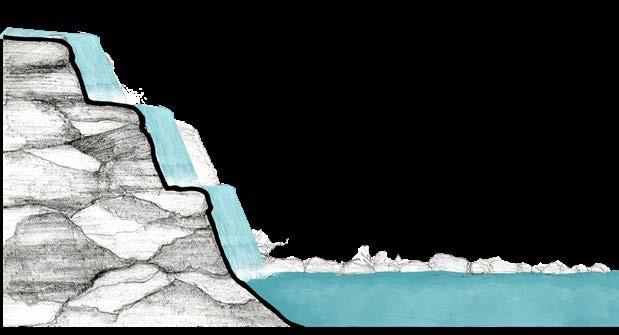
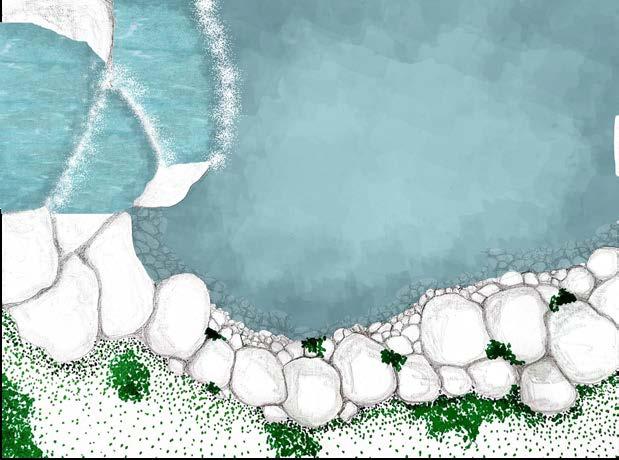
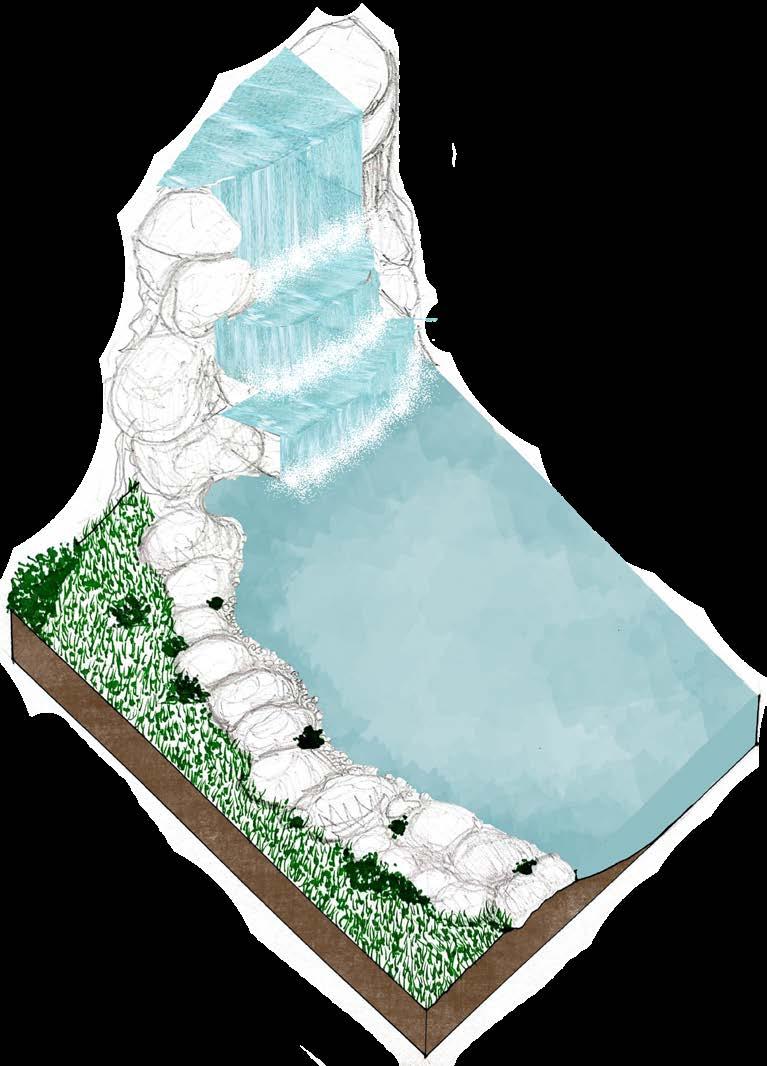
The concept of light is represented by showing how different movements of water create a difference in its light quality. Here, the water cascading down to the water body appears to be lighter than the slow moving water in the pond due to the difference in its position as well as the pattern of moving.
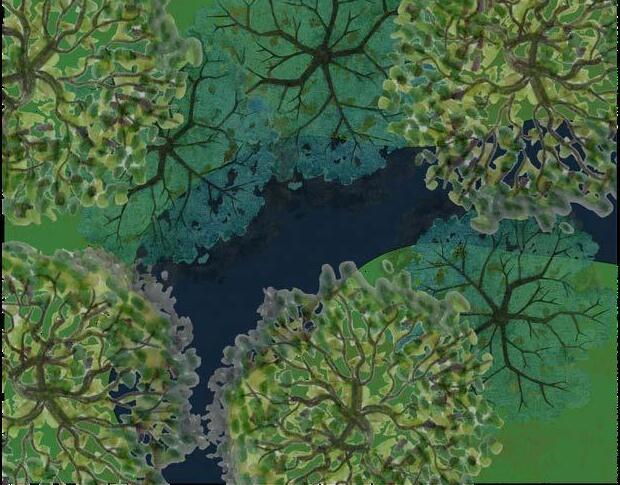
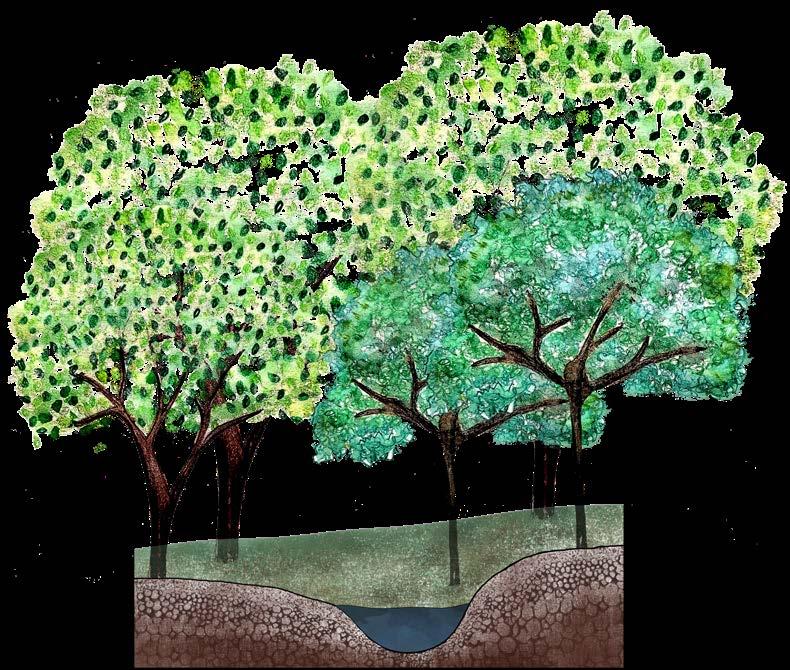
The idea is to represent ‘dark water’ as a circumstance created by its surroundings. The vegetation, shadows and textures that ecompass the water body are the ones to visually create the experience of darkness within the entity. The experience is everchanging, since these surroundings change with changes in geographical parameters.
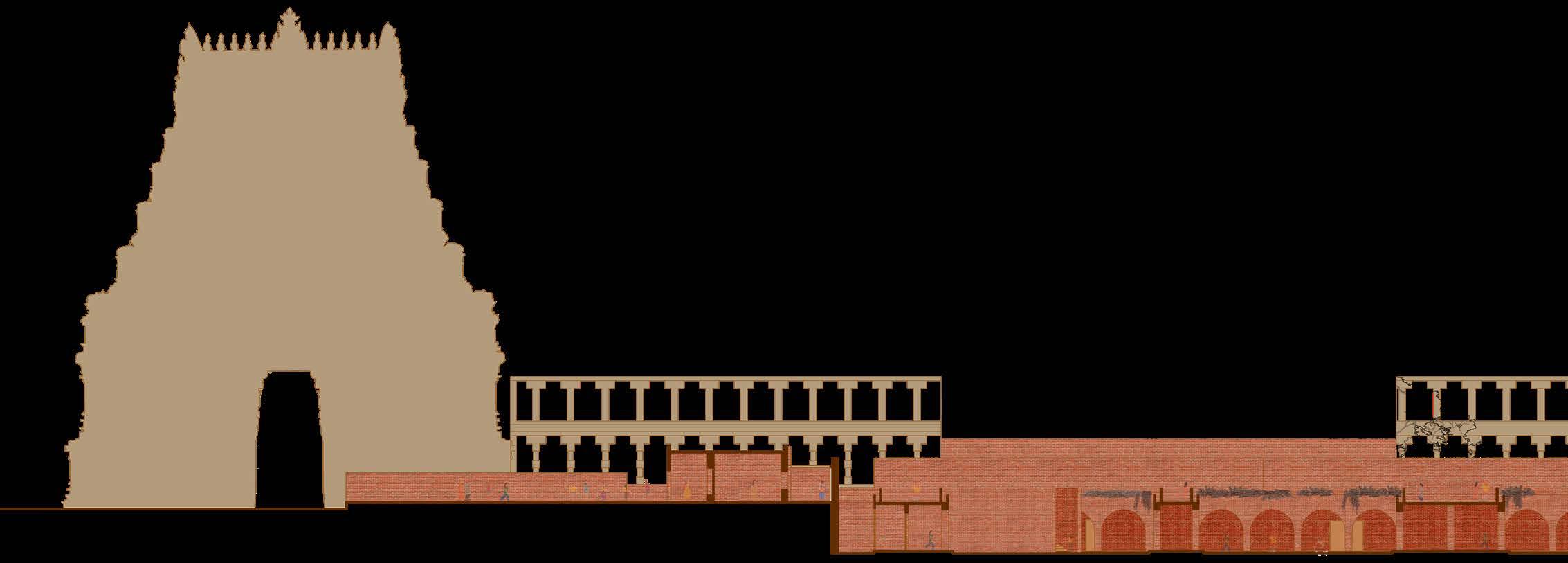
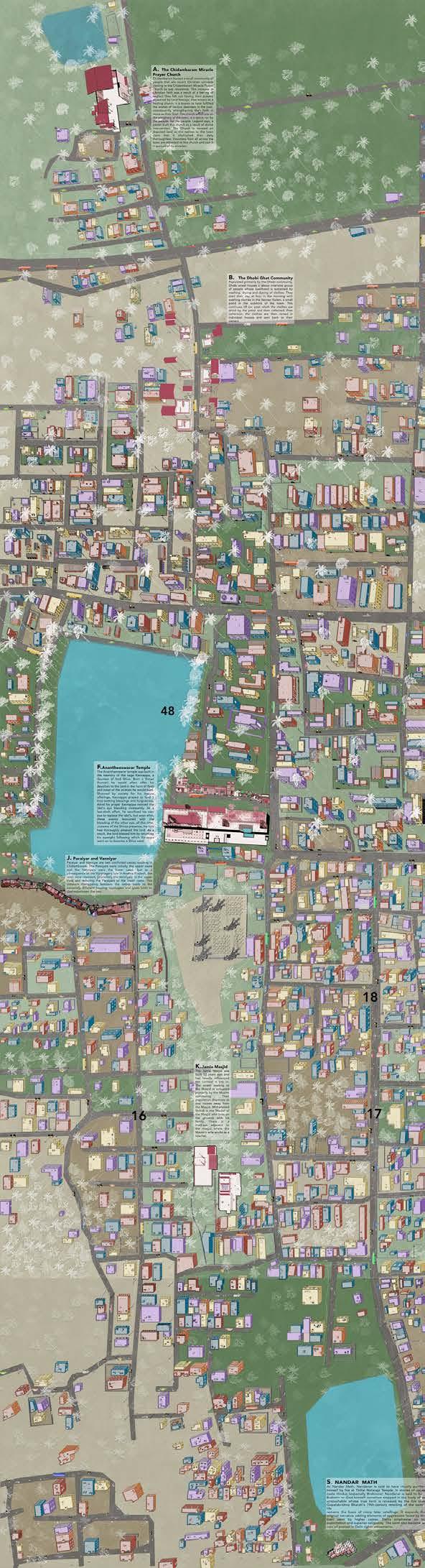
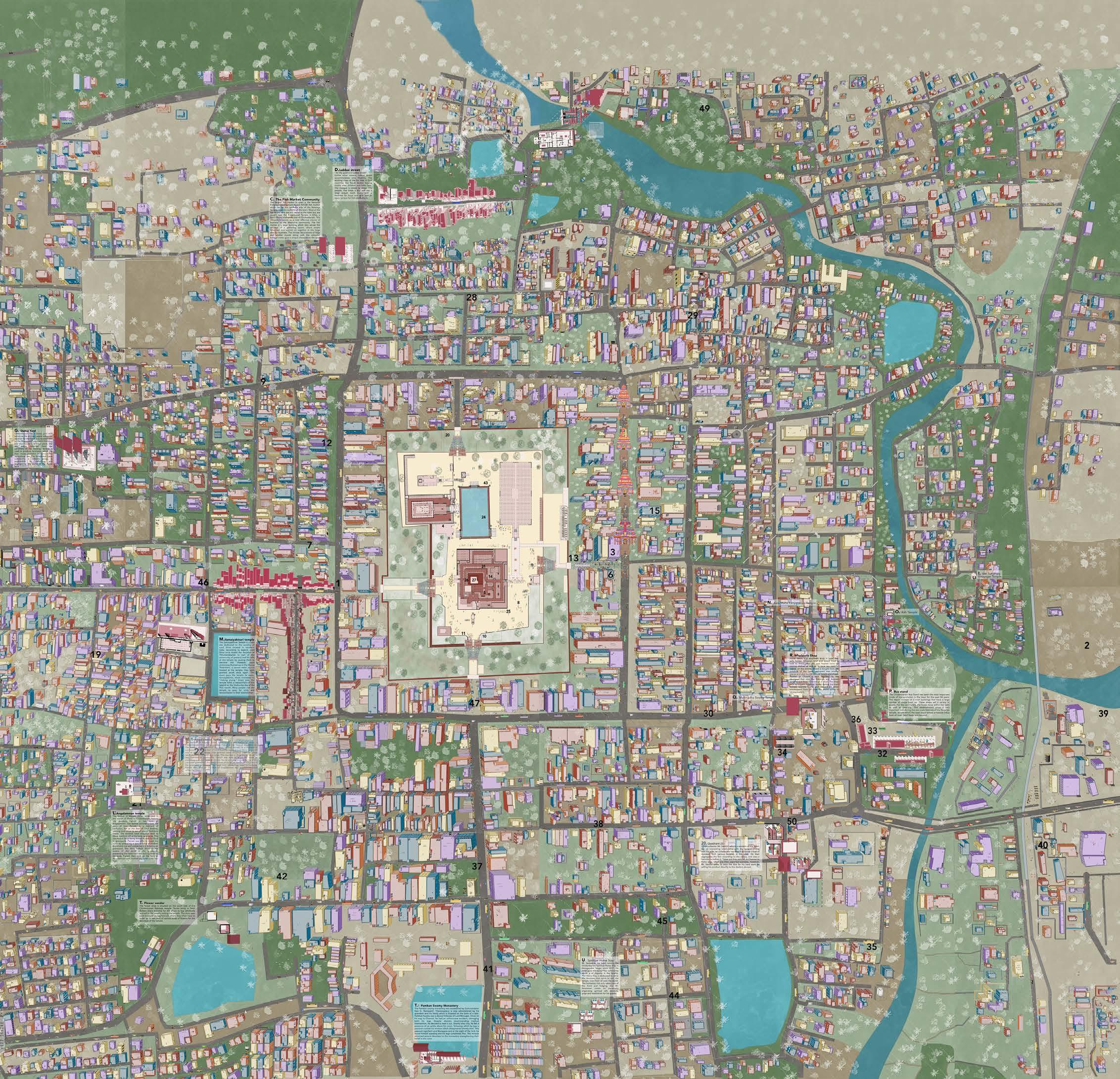
The Third Year study of institutions focused on understanding how the architecture and spatial systems of the temple town of Chidambaram in Tamil Nadu created and structured a community. It examined the roles and functions of various institutions within the town, considering both their programmatic and architectural aspects, and their intersections with daily life.
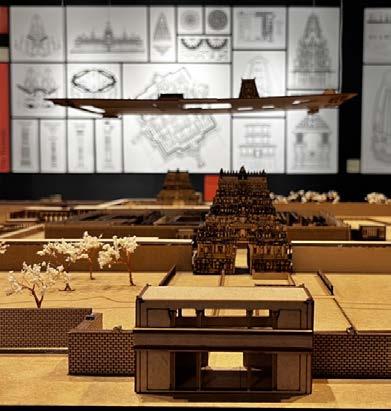
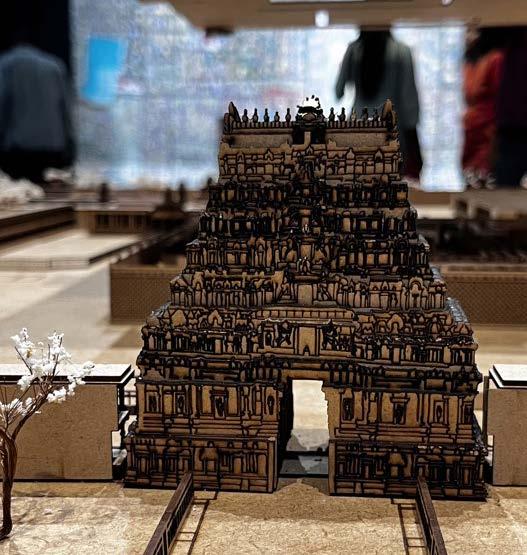
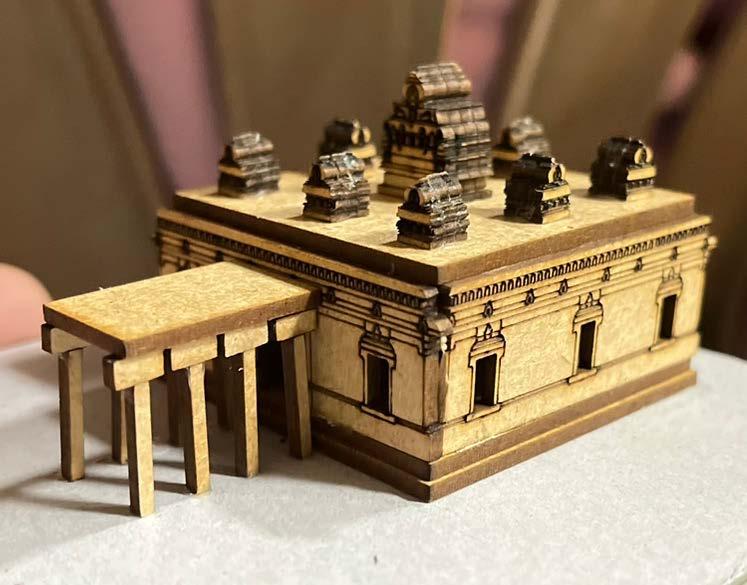
The study also explored the dynamics that arose when the community encountered challenges from alternative value systems, including instances of resistance and subversion, and whether these led to the emergence of new forms of community or identity. Additionally, it investigated how institutions at different intersections adapted or resisted change, ultimately shedding light on the complex interplay between tradition, architecture, and evolving societal needs in a culturally significant context.
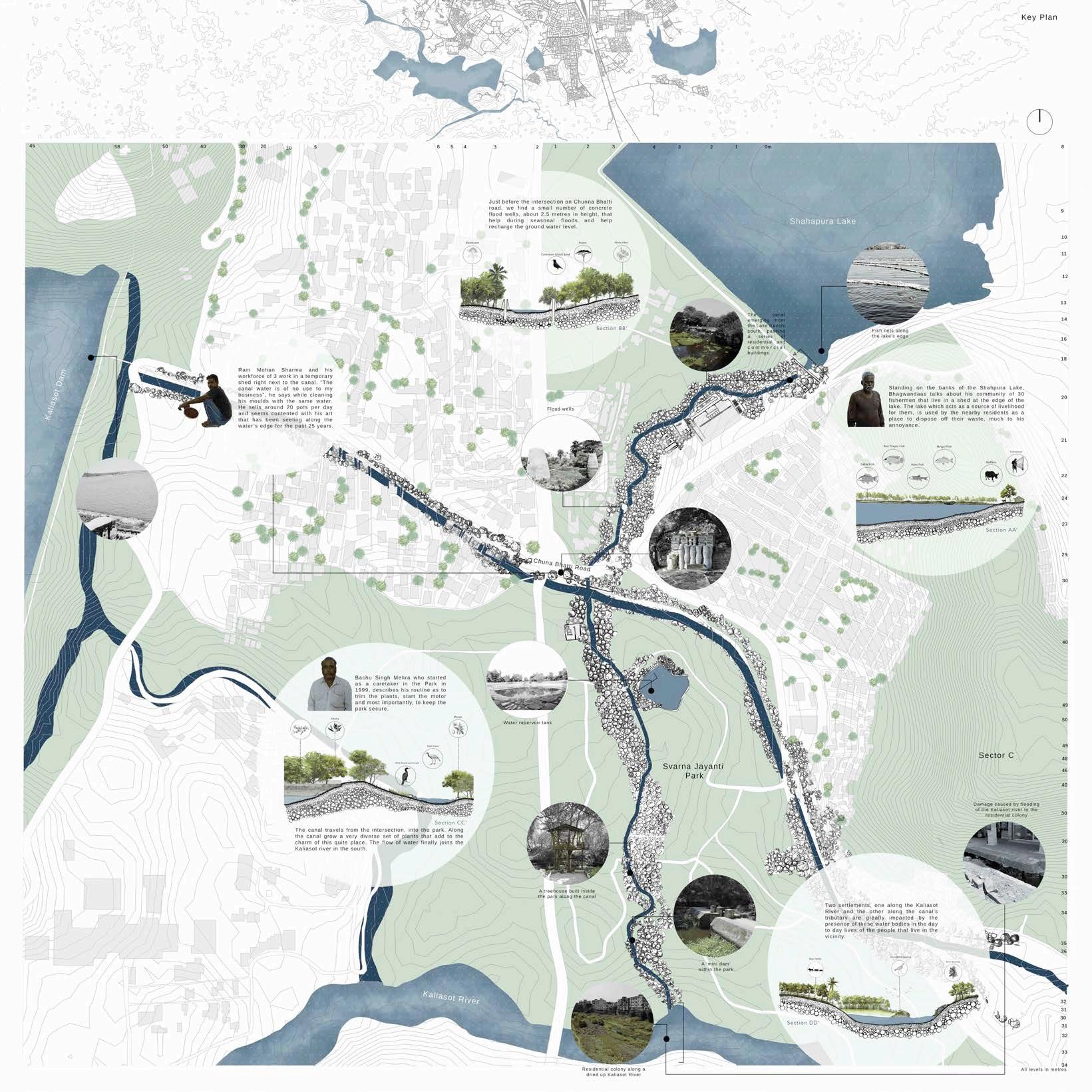
During the journey through a small area in the bustling city of Bhopal, the discovery of an intersection of smaller water channels in the midst of the city led us to follow the water, as it travelled along the main roads, parks and residential colonies before merging with major water bodies. The study maps the activities along the water and the impact it has on the public, tracing it from the Shahpura Lake to the Kaliasot River and from the Kaliasot Dam to the outskirts of the city through the images and sections.
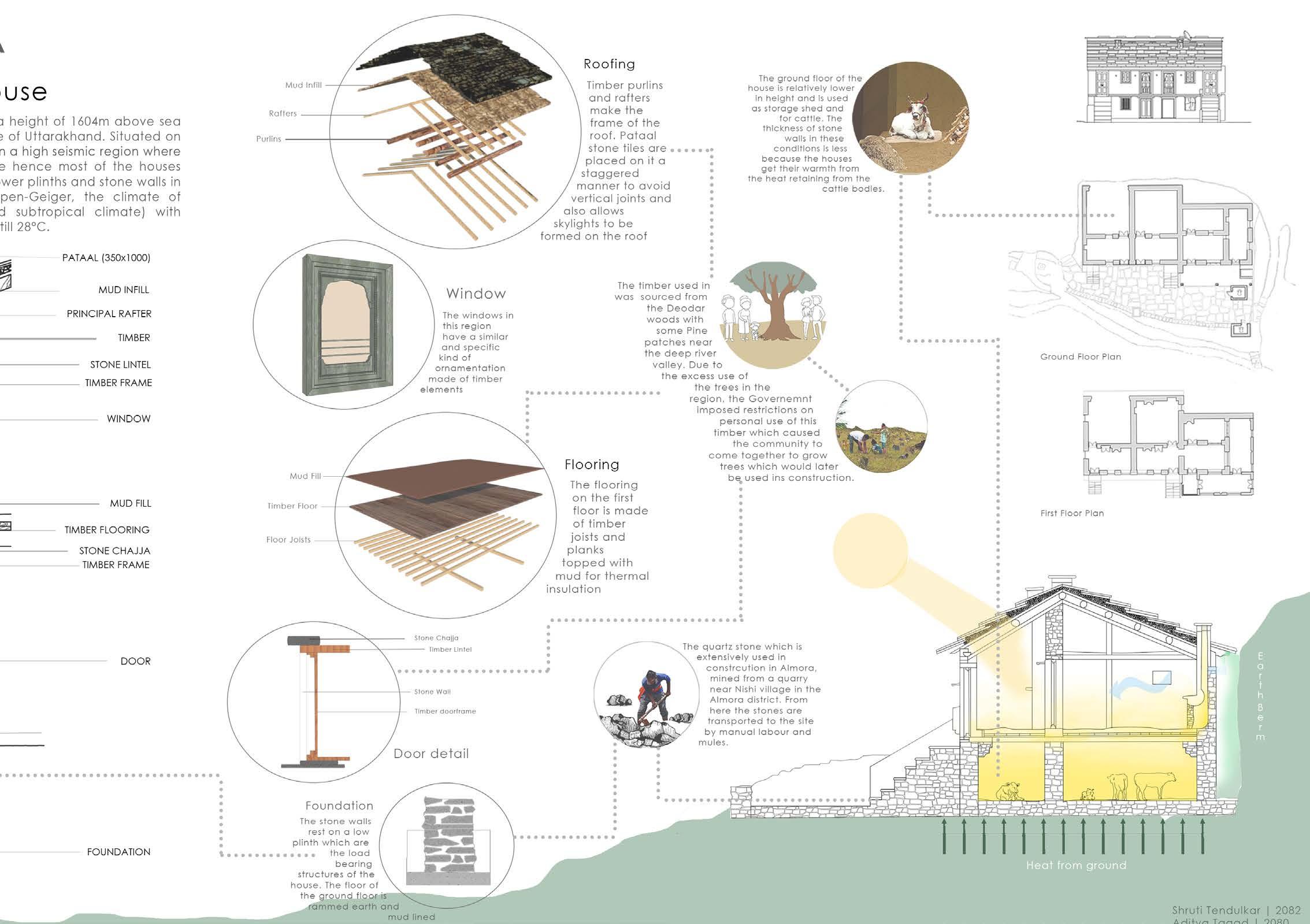
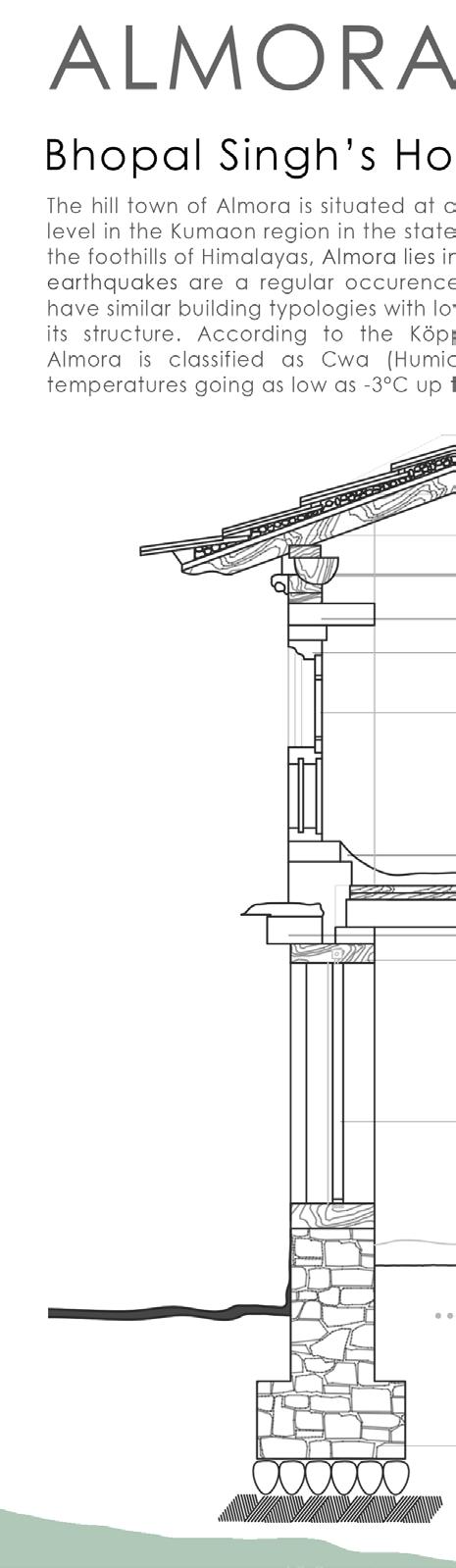
Almora, nestled in the Himalayas, showcases a diverse architectural heritage, with traditional wooden and stone houses as its quintessential features. These traditional homes are characterized by intricately carved wooden beams and pillars or locally sourced stone construction, designed to withstand the region’s harsh climate, including steep, snowshedding roofs for winters. These dwellings beautifully blend with their natural surroundings, embodying a harmonious union between architecture and nature. Bhopal Singh’s House is one such example of these traditional methods of building and use of material within the region driven by climatic factors.
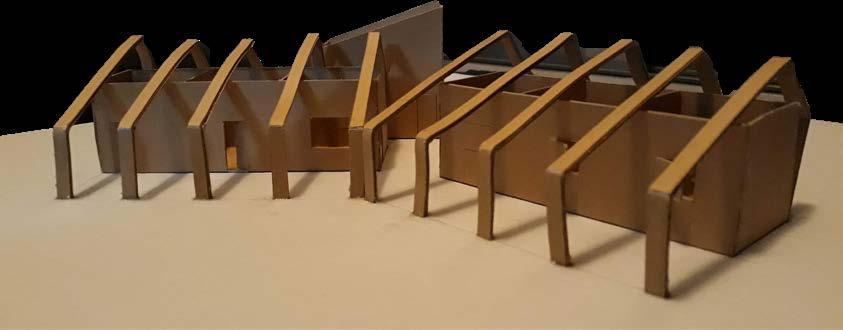
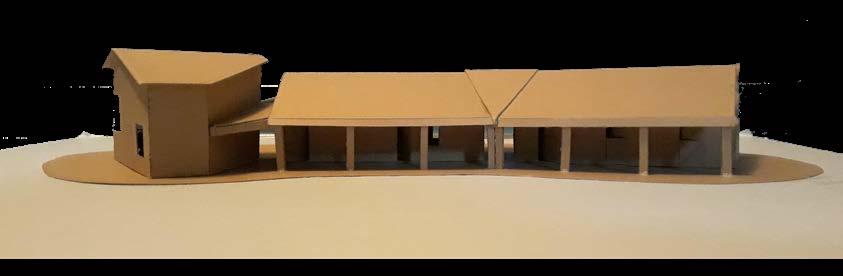
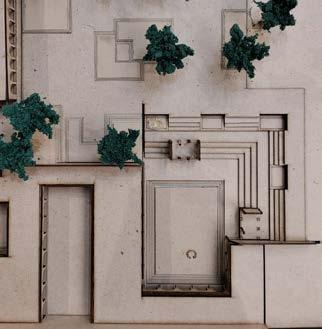
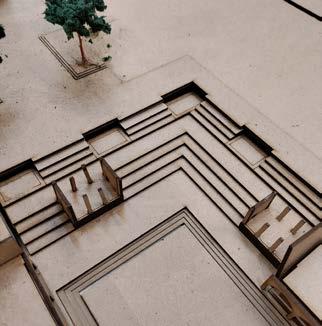
I’ve had the opportunity to explore a variety of materials in different studio subjects. From concrete and wood to glass and steel, I’ve learned how to use these materials for creative model-making.
Platonic Solids
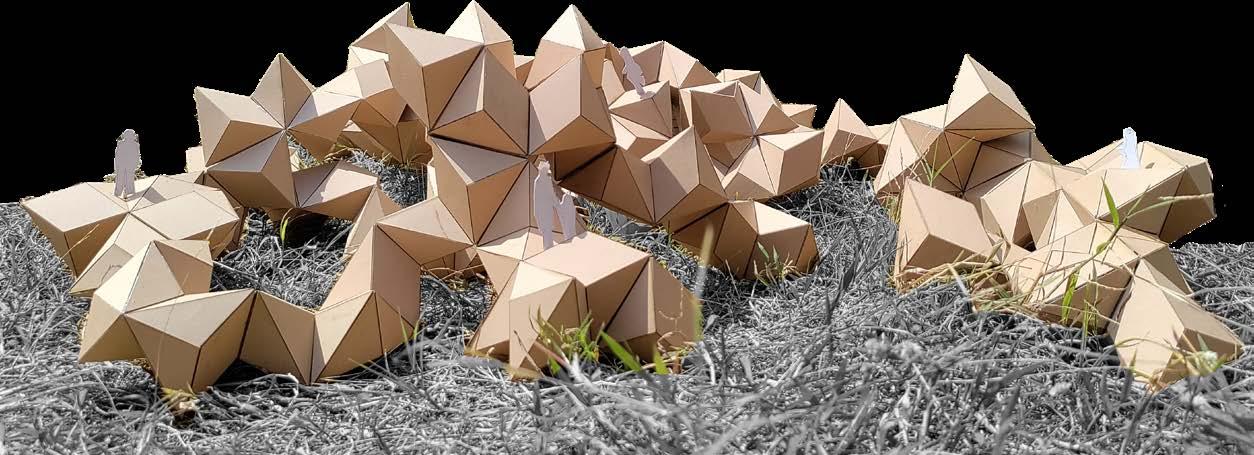
Allied Design Studio
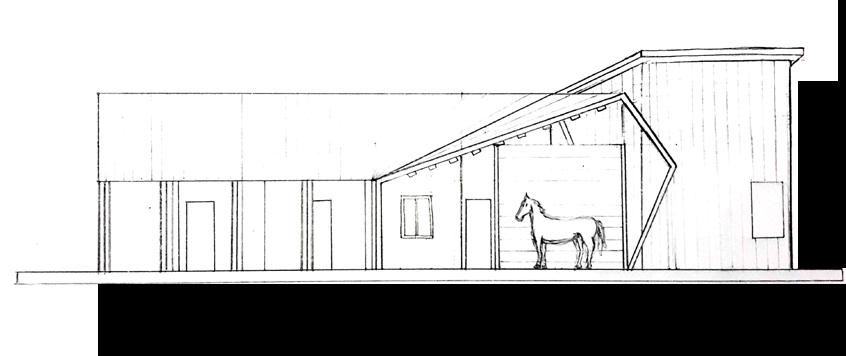
Semester IV
Semester I
Semester VI
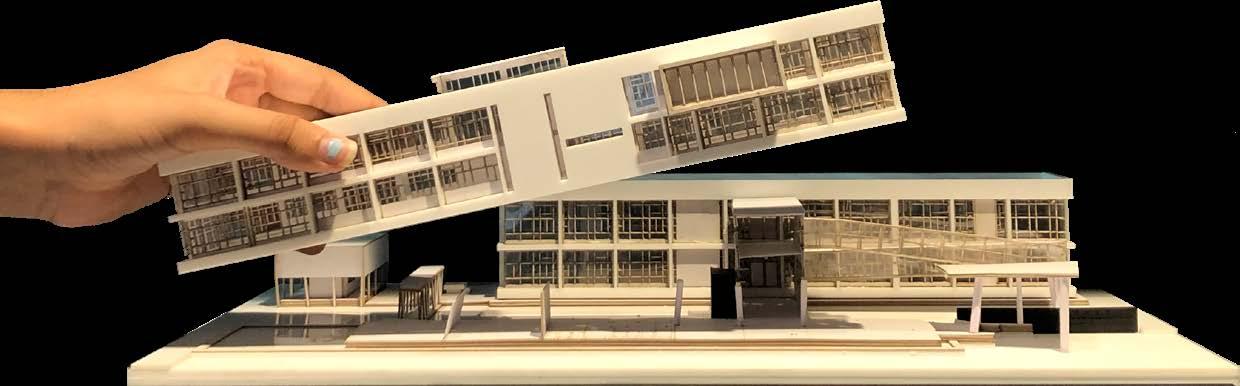
Building model
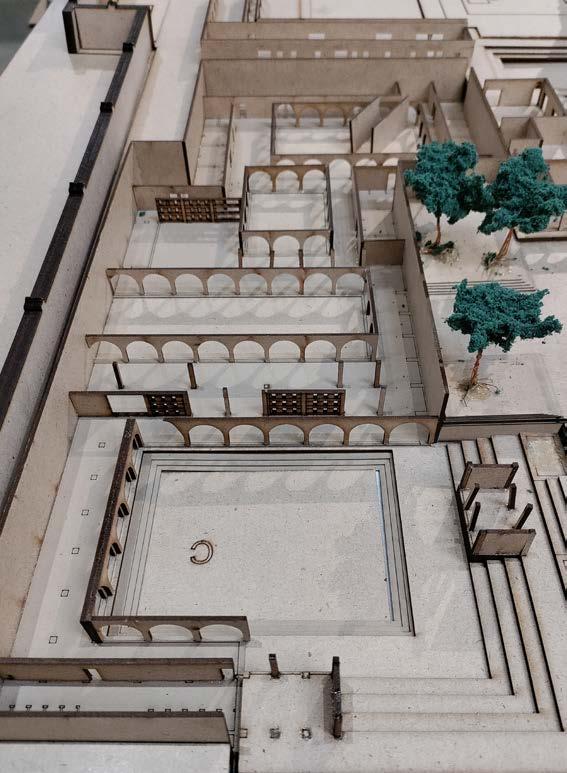
Garden of Memories
Semester I
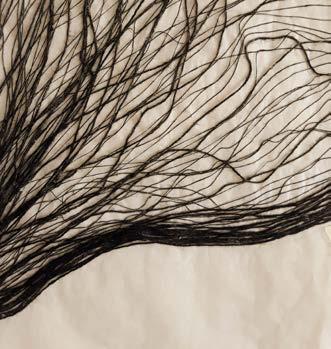
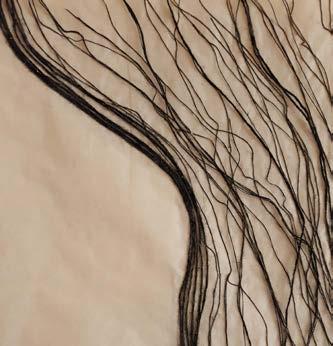
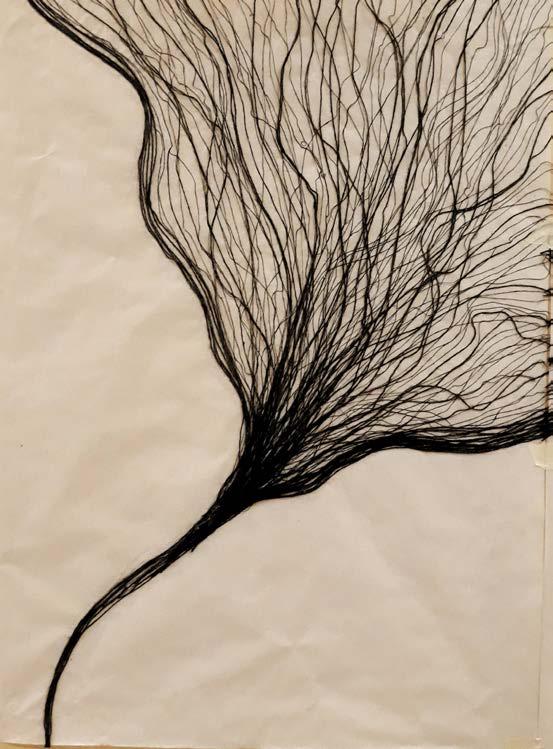
Exploration with Thread
 Horse Stable Integrated Design Studio
Architecture Design Studio
Horse Stable Integrated Design Studio
Architecture Design Studio
IIM Bangalore
Tectonics Studio
Building Study

Semester V
Display Models
Internship | KSA Architectts
May 2020
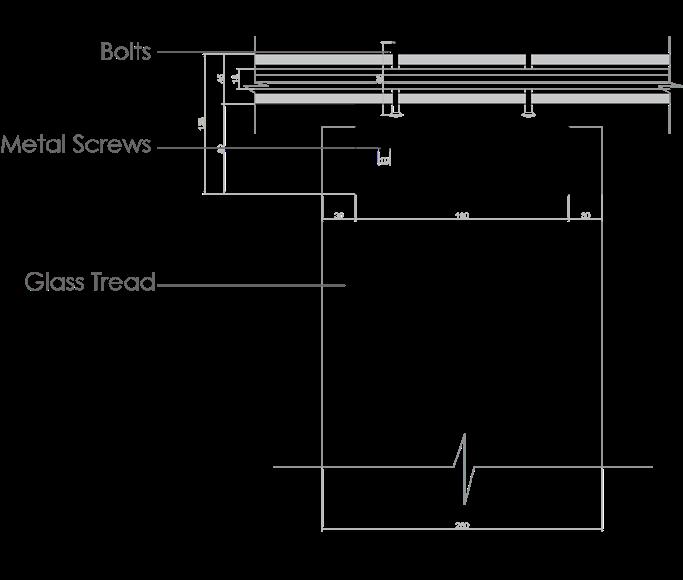
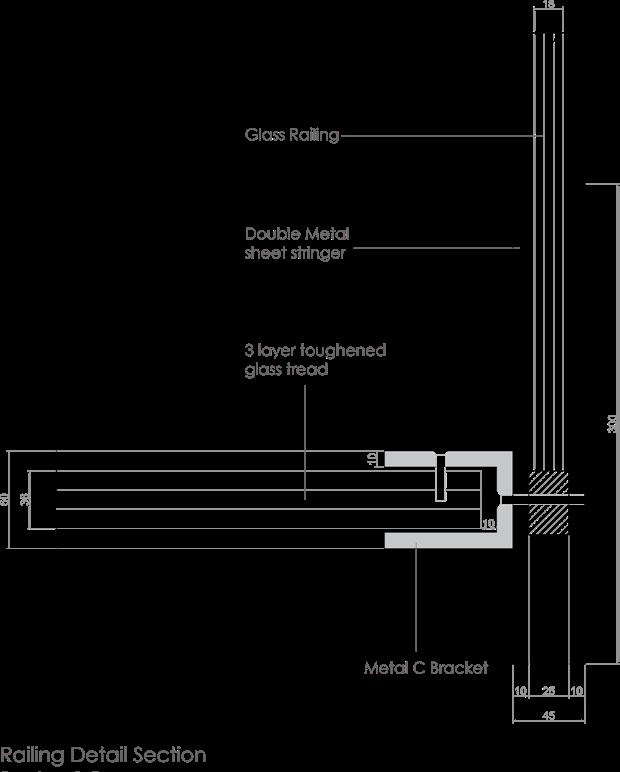
Glass Straight Flight Staircase Technology Studio | Exhibition
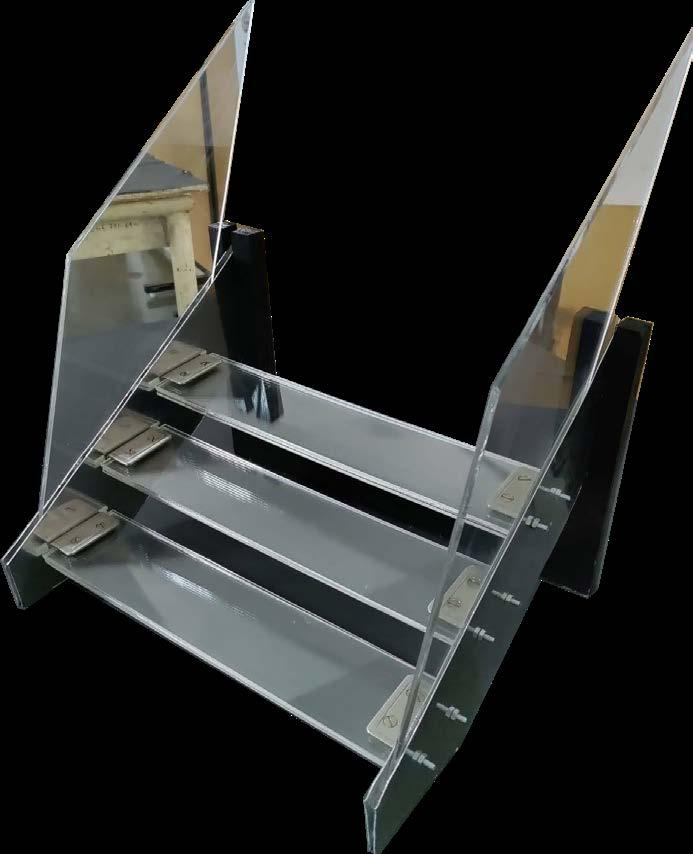
Semester IV
The Parallel Hidden School
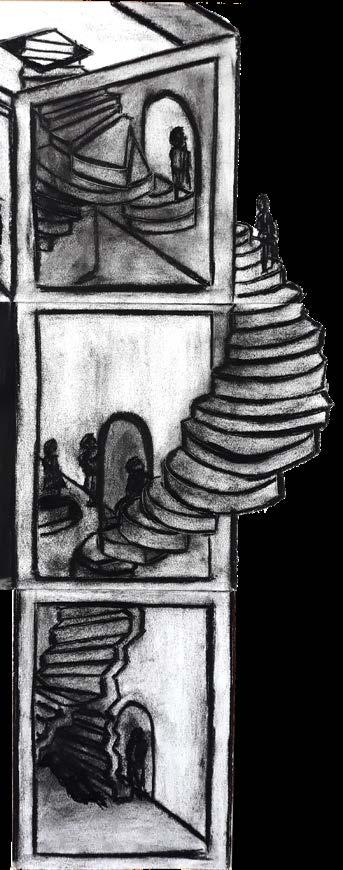
Semester I | Introductory Workshop


Collaborative Work
Comparison of settlements in Greek and Indus Valley Civilizations
Architectural History
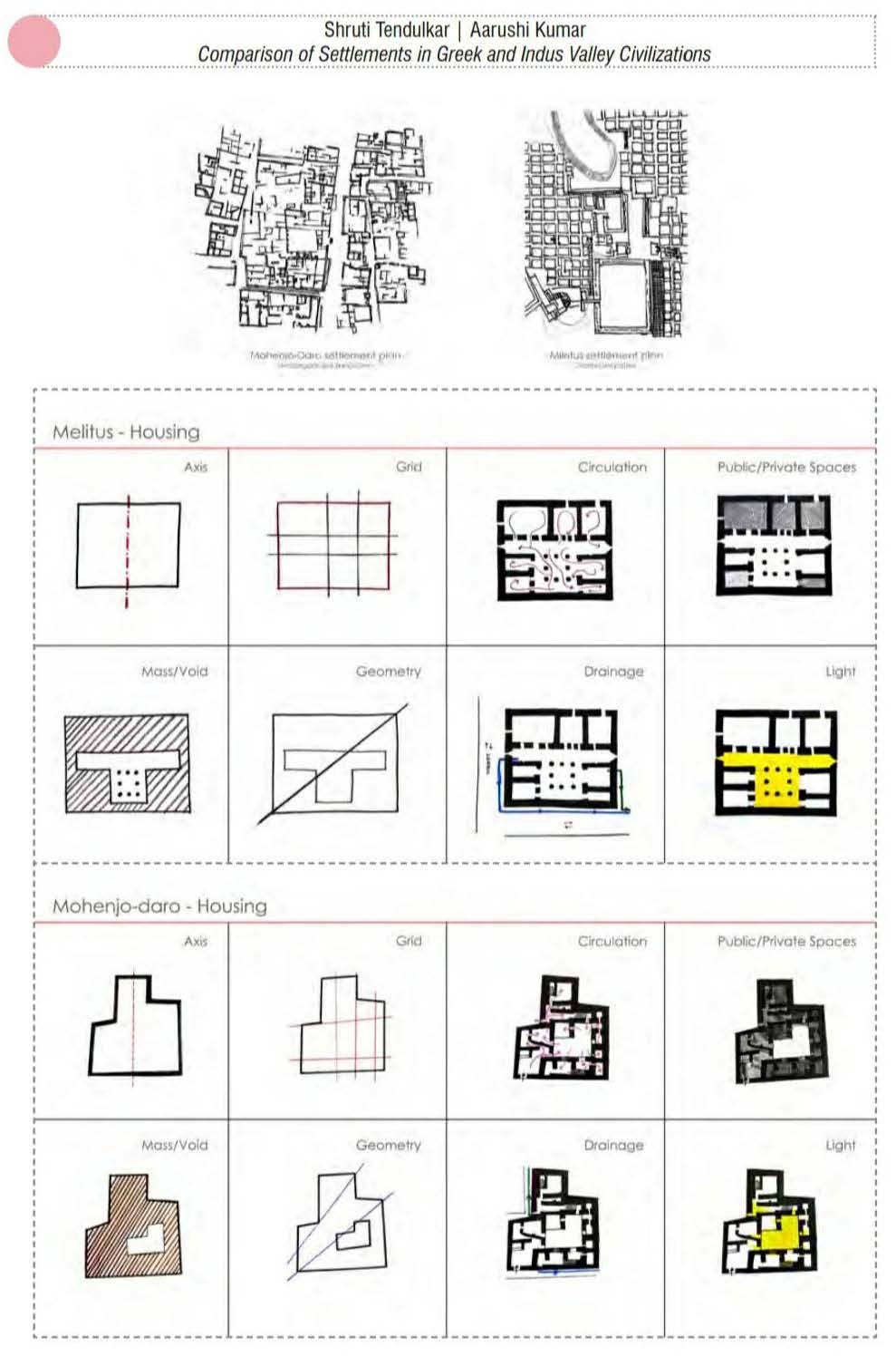
Semester IV
Collaborative Work
Glance : A series of Views
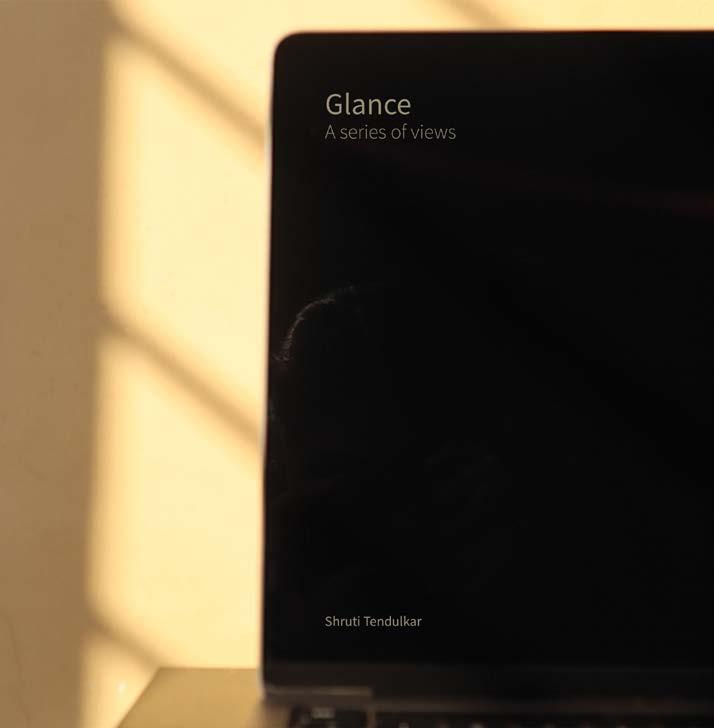
Photobook
Semester IV | Elective
Narratives | Series of Postcards
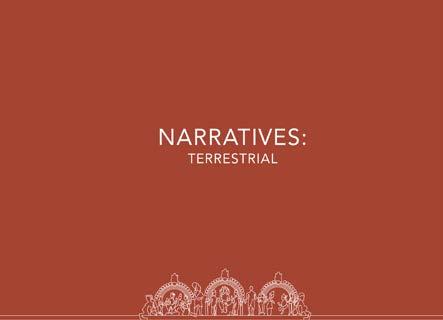
Chidambaram Exhibition
Semester VI
Collaborative Work
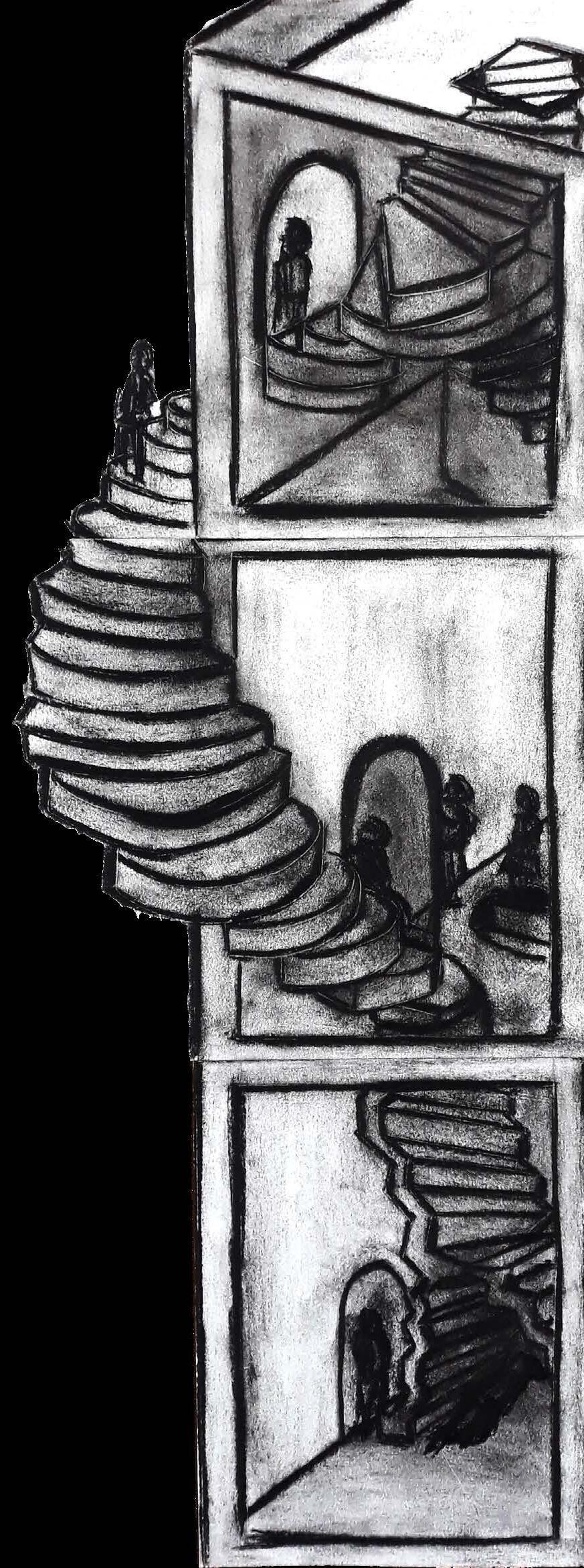
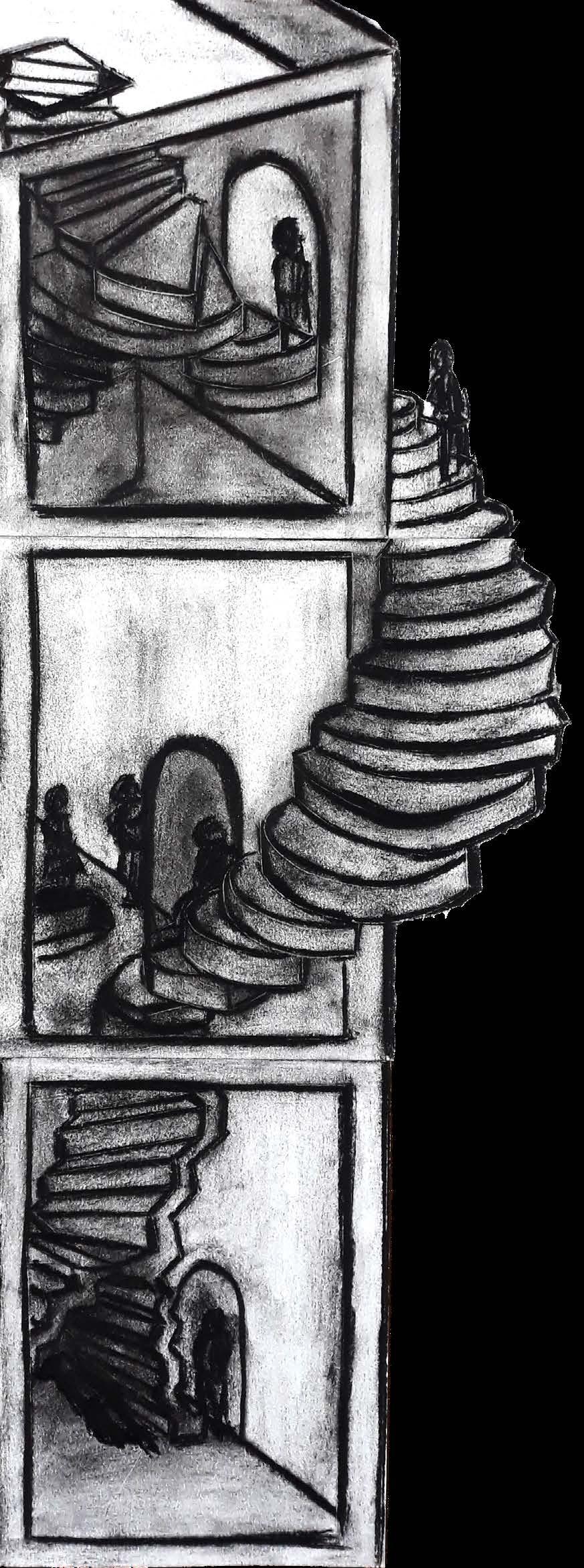
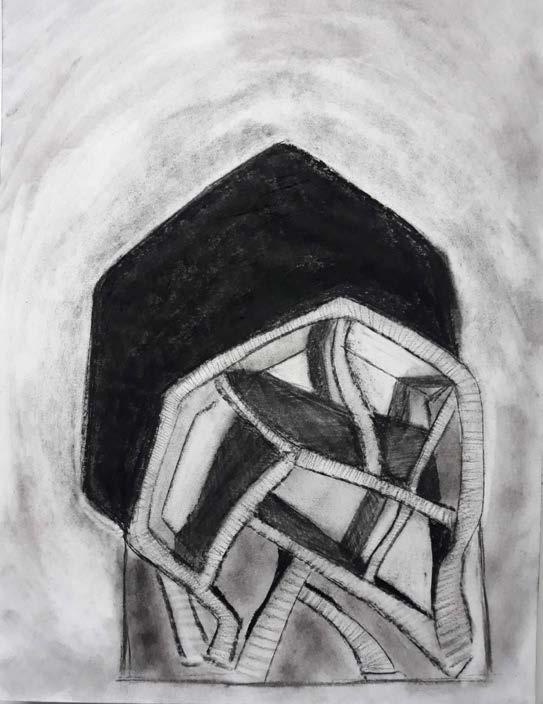
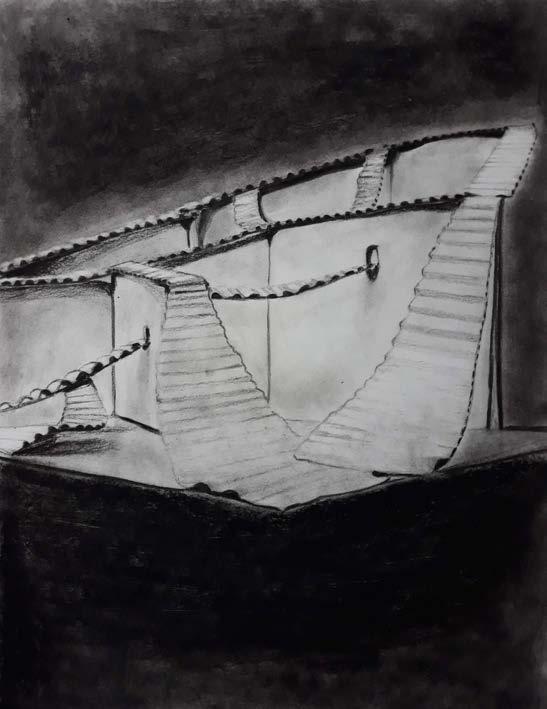
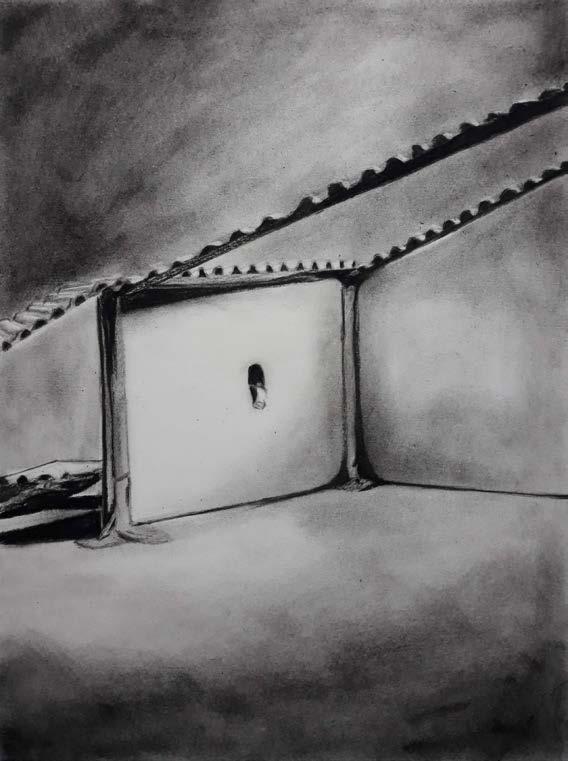
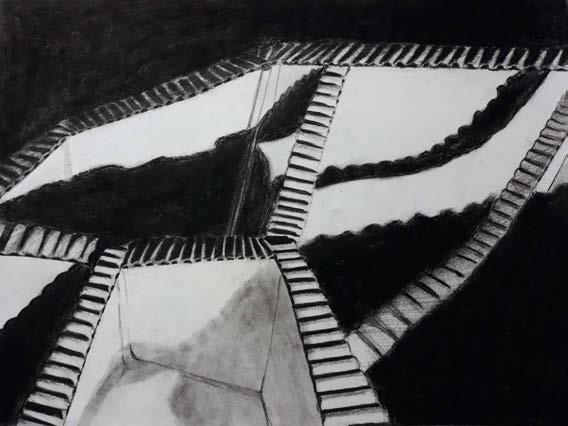
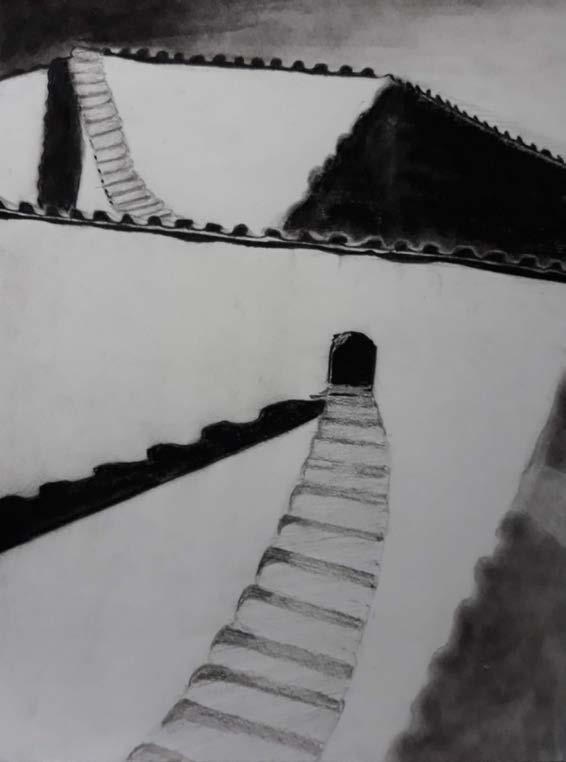
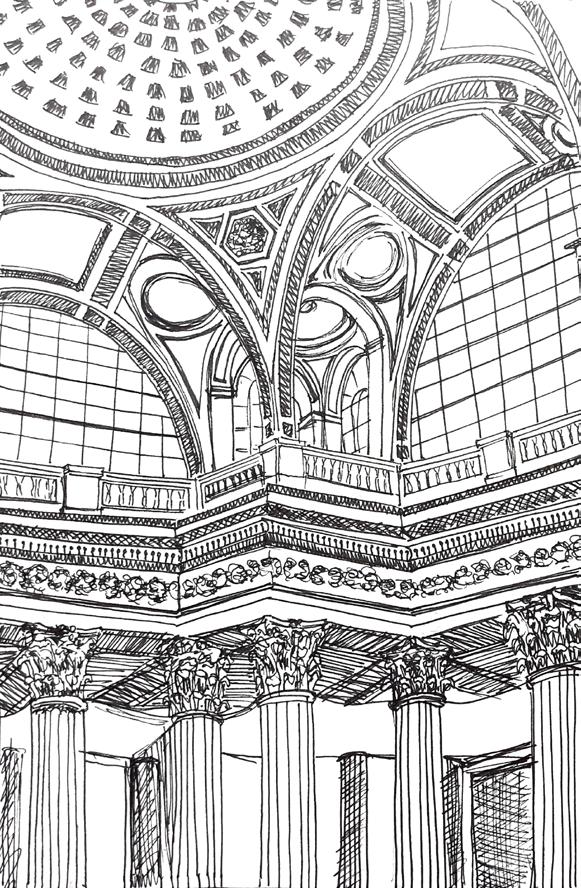
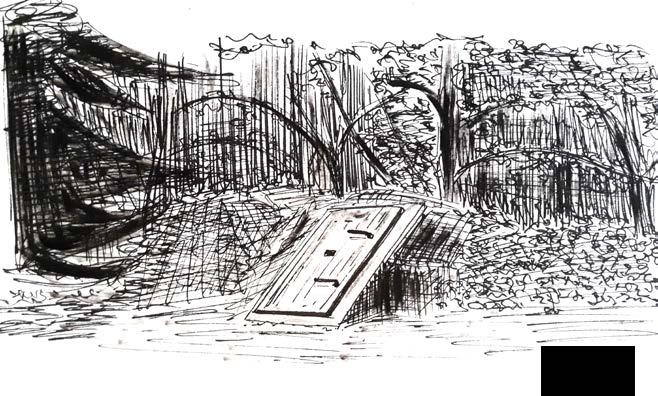
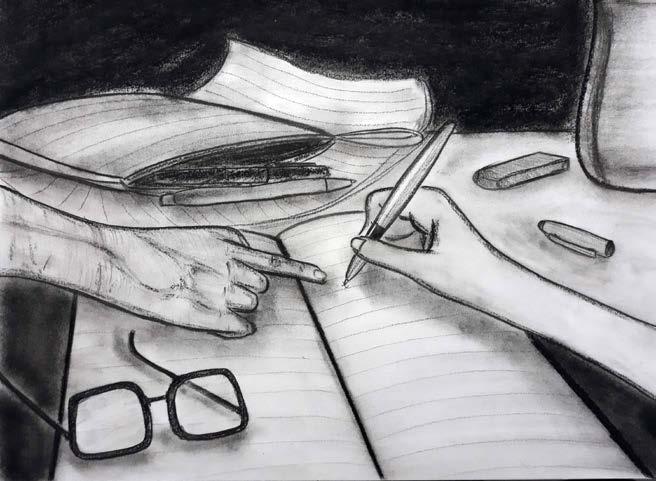
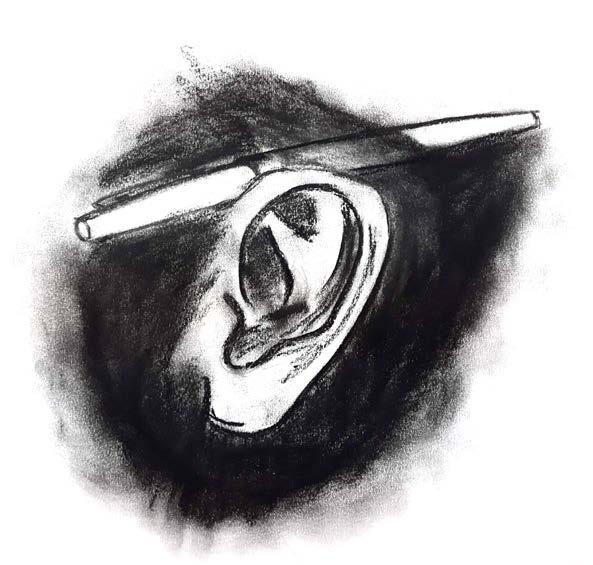
Charcoal on paperSketches

+91 9820901392
shrutitendulkar.work@gmail.com