
ARN – 2 PRINCIPLESOF ARCHITECTURE DESIGNINGEDUCATIONALENVIRONMENT SUBMITTED BY SHREYES GUPTA (19110025) PRANAY AMASA (19110002)

The design of learning environments is the systematic analysis, planning, development, implementation, and evaluation of physical or virtual settings in which learning takes place.
Learning environments are physical or virtual settings in which learning takes place. Learning theory provides the fundament for the design of learning environments. However, there is no simple recipe for designing learning environments .

Additionally, the design of learning environments will always change in alignment with the change of educational goals .

Hence, the design of learning environments in the 1800s or 1900s was extremely different to the twenty-first century design of learning environments.

Generally, the design of learning environments includes the three simple questions: What is taught? How is it taught? How is it assessed? Yet, the design of...

Literacy: Then and Now
•Increased diversity:
There are more differences among students than there used to be. Diversity has made teaching more fulfilling as a career, but also made more challenging in certain respects.
•Increased instructional technology: classrooms, schools, and students use computers more often today than in the past for research, writing, communicating, and keeping records. Technology has created new ways for students to learn (for example, this textbook would not be possible without Internet technology!).
•Greater accountability in education:
Both the public and educators themselves pay more attention than in the past to how to assess (or provide evidence for) learning and good quality teaching.
The attention has increased the importance of education to the public (a good thing) and improved education for some students. But
•Increased professionalism of teachers:
Now more than ever, teachers are able to assess the quality of their own work as well as that of colleagues, and to take steps to improve it when necessary.
Professionalism improves teaching, but by creating higher standards of practice it also creates greater worries about whether particular teachers and schools are “good enough.”
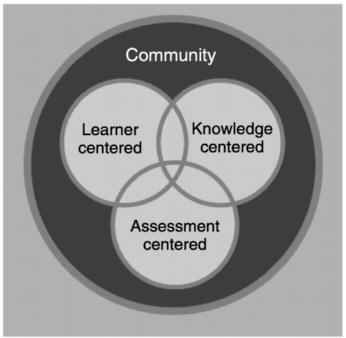
We use the term “learner centered” to refer to environments that pay careful attention to the knowledge, skills, attitudes, and beliefs that learners bring to the educational setting.
This term includes teaching practices that have been called “culturally responsive,” “culturally appropriate,” “culturally compatible,” and “culturally relevant” (Ladson-Billings, 1995).
Attempting to discover what students think in relation to the problems on hand, discussing their misconceptions sensitively, and giving them situations to go on thinking about which will enable them to readjust their ideas (Bell, 1982a:7).
Environments that are solely learner centered would not necessarily help students acquire the knowledge and skills necessary to function effectively in society. Knowledge-centered environments intersect with learnercentered environments when instruction begins with a concern for students’ initial preconceptions about the subject matter.
In addition to being learner centered and knowledge centered, effectively designed learning environments must also be assessment centered.
The key principles of assessment are that they should provide opportunities for feedback and revision and that what is assessed must be congruent with one’s learning goals.
The past few decades have witnessed rapid advancements in the field of technology and a simultaneous evolution of the education system, making learning a more interactive process than ever before.
Designing an institutional building to suit the needs and aspirations of a twenty-first century student population can be a daunting task; this requires the expertise of the top institutional architects in India.


The institution must strategize how it wants to position itself right at the beginning of the design process. The following points help establish the institution’s identity and determine how it is viewed by the community at large:
· Vision
·
Teaching philosophy
· Curriculum
· Types of students
· Courses offered
It is imperative for an institution’s development that its broader vision and goals are tied in with its architecture and design.

In order to minimize construction costs and optimize spatial efficiency, spaces should be designed to accommodate a plurality of functions.
It also makes sense to provide shared spaces for the storage of educational materials, allowing professors and teachers to store all educational supplies in a centralized location. This enables the utilization of the classroom in a more effective manner by reducing its overall size.

With technology making deeper inroads into the learning process, it is becoming increasingly important to make sure that institutional buildings are designed to accommodate present as well as future technological applications.
This includes but is not limited to computers, laptop stations, data ports, display monitors, speakers, internet servers, and its accompanying wiring and cabling. Several studies suggest that incorporating these facilities inside an educational campus can enhance the student learning experience.

Today, the world needs buildings that are environmentally conscious in terms of resource and energy use and waste discharge. Institutions must, therefore, opt for the services of the best sustainable design architects in India who practice sustainable architecture for the design of an eco-friendly campus.
This choice represents the institution’s initiative to make a positive impact on the environment and the community, while simultaneously allowing students to receive education in a healthy environment.

Some of the other design considerations for an institutional building include:
• Proper heating, air-conditioning, and lighting facilities throughout the building.
• Safety and security measures such as CCTV surveillance, etc.
• A well-designed auditorium, gymnasium, and sports complex.
• A variety of open and green spaces for student interaction and events
A well-designed institutional building provides the perfect environment for the holistic growth and development of students. Its architecture and design, therefore, should be carefully developed to effectively serve the student population as well as the larger community for years to come.
The World Green Build Council believes that schools should be designed and operated for children’s health, wellbeing and performance, as well as being energy efficient and with low greenhouse gas emissions.
As such, the World Green Building Council has released a report which summarises global research over the past two decades on indoor environments. It identifies lighting, indoor air quality, thermal comfort and acoustics as key areas where sustainable improvements can positively affect students.
Achieving optimal levels in school buildings for air quality, lighting, temperature and acoustics through green improvements, can help students achieve their full potential, says a new report from the World Green Building Council
“By designing schools that are energy efficient, low carbon, and that prioritise health and wellbeing, we can ensure students spend some of the most important days of their lives learning in truly green schools.”
Poor lighting in schools can have a negative affect on children’s health and academic performance.
Children have higher sensitivity to light because they have smaller pupils and less melatonin-suppression than adults, affecting their sleep/wake cycles and circadian rhythm. Schools can improve their lighting through thoughtful school design which balances daylight and energy-efficient artificial light.

Exposure to daylight has proved to be beneficial to children, as it reduces low-activity time and increased weekend physical activity.
What’s more, blue spectrum LED light in the morning could make children more stimulated and alert at school compared to those exposed to dim light.
LED lights use significantly less energy than older technologies, thereby reducing building energy consumption.

Poor indoor air quality in schools can also have a negative affect on children’s health and academic performance.

Indoor air quality is defined by the concentrations of various pollutants, including carbon dioxide (CO2), volatile organic compounds (VOCs), moulds, dusts and airborne fungi.
Specific concentrations of these pollutants, as well as ventilation rates, have been linked to sick building syndrome (SBS), which can include symptoms like headaches and lethargy.
Children are more susceptible to SBS because they inhale more pollutants per body weight than adults, due to higher breathing rates.
Hybrid or mechanical ventilation with appropriate filtration systems, can be powered using on-site and/or off-site renewable energy to reduce overall carbon emissions.
What’s more, low or zero-VOC furnishings, materials and cleaning products, can help reduce baseline IAQ levels.

Poor acoustics in classrooms can directly impact student health and behaviour. It can stimulate hearing loss, changes in heart rate, higher blood pressure, higher stress responses and ADHD.
Poor acoustics can also result in lower student achievement.
Schools in Florida with loud HVAC systems compared to students in quieter classrooms had lower achievement rates.
Students in a UK school located in a flight path misheard one in four words, affecting language acquisition skills. These disturbances can be reduced if new schools are located away from permanent external noise sources, and by optimising insulation in existing schools to reduce noise levels.

Children are more sensitive to higher temperatures than adults because of their higher core body temperature and less developed thermoregulation capabilities. The right temperature in a classroom is therefore vital to children’s health and academic achievement.
Natural ventilation from windows, if the outdoor air quality is good, can moderate the temperature and reduce energy needed for cooling and associated carbon emissions.
Otherwise schools can make use of energy-efficient and renewably-powered mechanical ventilation which can provide a comfortable temperature and humidity level.


Optimising lighting, indoor air quality, thermal comfort and acoustics can not only help to improve students’ learning outcomes, but –depending on the strategy used – can reduce energy use and lower carbon emissions in schools.

For example providing ample windows and energy efficient LED lighting can reduce emissions and create a productive and healthy school environment.
Companies are putting principles of green school design into action. In partnership with Associated Architects and main contractor Speller Metcalfe, Saint-Gobain recently completed the build of a new multi-purpose school hall for The King’s School in Worcester, which included building in all four key areas for optimal school environments; thermal comfort, visual comfort, acoustic comfort and indoor-air comfort.
A study, conducted by DLR Group in partnership with 11 schools in Barrington School District near Chicago examined elements of what they call “user comfort”, including acoustic satisfaction, thermal comfort, indoor air quality and visual comfort.
This information, collected through student engagement with data logger equipment, armed the district to make data-driven decisions in appropriate tax dollars to improving their learning environments.

Daylighting
When deprived of natural light, studies have shown that children’s melatonin cycles are disrupted, likely having an impact on their alertness during school.
One 2013 study analyzing data from over 21,000 students found a significant positive relationship between classrooms with daylighting and better test scores and student performance. Daylight also plays a critical role in the behavioral development of young students. This study also found a strong relationship between cognitive skill improvements and classroom daylight conditions. Skylights and large windows allow daylight into green schools, which improves student wellness and academic performance.

A broad base of research has demonstrated a multitude of benefits in ensuring that young people have access to nature.
The Children and Nature Network has compiled a research library to explore this depth of information on connections to behavior, academic, wellness, community and other positive outcomes.
Green buildings are those that provide green space and views to the outdoors for those inside. Additionally, green schoolyards, nature-based play and meaningful experiences in nature are foundational to a green school.

A measurement commonly used by design professionals to identify the percentage of light that is reflected from a surface, light reflectance value (LRV) supports our understanding of the amount of light that will be reflected from the surface.
Numerous studies attest to the benefits of views and light—particularly full spectrum light—in the educational environment

• Red: Stimulant; provokes conversation; improves performance/concentration; spurs action.
• Orange: Uplifting; stimulates critical thinking and memorization; increases appetite.
• Yellow: Promotes awareness;helps to release serotonin for happy mood.
• Green: Calming effect; stress reliever; promotes concentration
• Blue: Enhances creativity and alertness; promotes tranquility; improves overall health, memory, and mood; lessens fatigue and depression.
• Violet: Represents wisdom and authority; respectful.
• Pink: Soothing; reduces heart rate; energizing effect (with saturated shades) or comforting effect (with paler shades).
• Black: Promotes sophistication, security, and efficiency; the absence of color.
• White: Conveys sterility, simplicity, clarity, and purity; hygienic.
Classrooms – Blue is one of the most effective classroom colors. White can also be a good dominant color for a classroom if it’s accompanied by a colorful accent wall. In small doses, yellow can be effective in maintaining students’ awareness in the classroom.
Libraries – Due to its positive effects on concentration, green is a great option for libraries, where students need to focus on their studies.
Gymnasiums – Action-oriented red and highly-saturated pinks may encourage the necessary physical responses in a school gym setting.
Cafeterias – Orange’s impact on appetite makes it an appropriate color for a school cafeteria.
Authoritative areas such as the principal’s or guidance counselor’s office may benefit from the atmosphere of respect created by violet tones. For the same reason, violet can be a great choice for an auditorium as well.
Offices –
Exposed Structures – Black is ideal for concealing any exposed structures in the school, as it creates the sense of void.
Corridors and Lobbies –
Learning and concentration are not the main objectives in public spaces like hallways and reception areas, so you can be a little more “free” with your color and design choices here. For instance, consider using the school’s colors and logo to create a sense of pride and identity here.
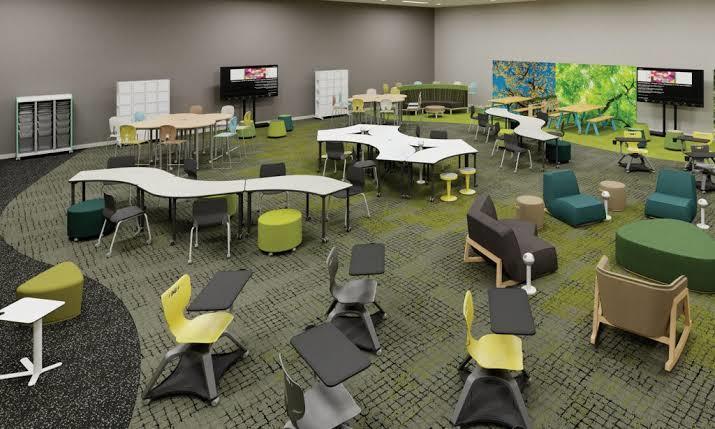
As a result, spaces that allow for a wide range of activities, such as working through problems in large groups, discussing books in small groups, or quietly focusing on projects independently, are needed. While it’s important for students to self-direct when working independently, it’s also important for teachers to observe and supervise these spaces.
Modern desks designed on casters are easily arranged to support both group work and individual study, and can be pushed aside to open up the space completely. Desks and tables with whiteboard or stain-resistant surfaces on which students can write and draw can be included to encourage creativity.
FOR CHILDREN WHO HAVE A HARD TIME SITTING STILL FOR EXTENDED PERIODS OF TIME OR WHO NEED TO FIDGET TO CONCENTRATE ON THEIR WORK, CHAIRS AND STOOLS THAT ROLL, WOBBLE, OR INCLUDE SWINGING FOOTRESTS OFFER OUTLETS FOR EXCESS ENERGY, WHICH CAN HELP THEM BETTER FOCUS DURING CLASSES.
Technology is a critical part of any 21st century classroom. Students use computers and mobile devices to learn and create, so classroom design needs to support tech advancements that foster discovery and experimentation. By designing a wall that’s both a whiteboard and a surface for projection, you can facilitate collaboration and creative learning.
Biophilic design aims to mediate some of the negative consequences that built environments can have on human health (including psychological and physiological health) through facilitating modifications to building design in line with human needs.
Health aspects related to access to fresh air, natural daylight and views to nature, have been shown to improve respiratory health, reduce mental fatigue, feelings of stress and restore attention capacity4 .
Building design can improve by understanding more about biophilia and its benefits to building occupants.
Biophilic design principles include (but are not limited to):
(i) access to natural daylight
(ii) access to fresh air
(iii) direct access to living nature
(iv) views of green spaces
(v) use of natural materials, (vi) designing for [acoustics] sound, (vii) the presence of water, and (viii) proximity to restorative (and natural) outdoor spaces. Application of these and other biophilic principles can help improve new school design and support educational communities.
1.
The connected façade:
To provide openable doors and windows in all buildings.

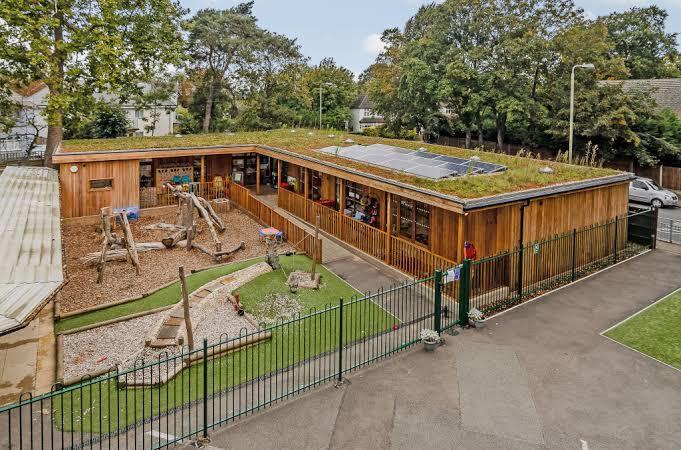
This can have a significant impact when there is a direct connection between the indoor classroom and a green outdoor space, typically found at the ground level of school buildings, where student groups can move outdoors to play and learn.
Operable components can be adjusted accordingly to achieve the necessary indoor environment quality, including acoustics.
The window seat/nook: an intimate setting to encourage peer-to-peer and self-directed learning for students.
Daylight views of nature in a comfortable window seat are an effective use of welldesigned space that can support positive outcomes in behaviour and learning. This also enhances the sense of territorial privacy, but still within observational distance by supervisors.

The courtyard:
a well-established architectural typology, the courtyard design creates a safe communal outdoor space that is both protected by and connected to indoor learning spaces (this can be on ground level or at an upper level on high rise buildings).
Attributes of biophilic design are well supported within the courtyard model, where access to outdoors, fresh air, daylight, green space and presence of water are all easily accommodated in a private setting that is suitable for several uses including group gatherings, outdoor classrooms and individual contemplation and refuge.
In particular, the cloister and/or verandah and colonnades or arcades also provide a transition from inside to outside, with this transitional space ideal for nature-oriented activities in inclement weather.
Natural materials: use of natural materials in architecture is successful because of the tactile nature, richness in texture and colour, particularly when it comes to wood. The use of timber for furniture, joinery and interior surfaces including floors, walls and ceilings, can improve the interior quality of schools and bring nature right to the heart of the learning environment.

https://www.google.com/url?sa=t&source=web&rct=j&url=https://architectus.com.au/insight/the-nature-of-new-school-design-an-evolvingconcept/&ved=2ahUKEwidlrnTidzsAhWGXSsKHZvWAVwQFjAUegQIGBAB&usg=AOvVaw1rZWuZhp8FGu2o23-y7OWI&cshid=1604122265249
https://www.google.com/url?sa=t&source=web&rct=j&url=https://architectus.com.au/insight/the-nature-of-new-school-design-an-evolvingconcept/&ved=2ahUKEwidlrnTidzsAhWGXSsKHZvWAVwQFjAUegQIGBAB&usg=AOvVaw1rZWuZhp8FGu2o23-y7OWI&cshid=1604122265249
https://www.google.com/url?sa=t&source=web&rct=j&url=https://www.hertzfurniture.com/buying-guide/classroom-design/building-a-new-school.html&ved=2ahUKEwj0oC9kvXsAhXj73MBHYgLBcYQFjAAegQIARAB&usg=AOvVaw0EKruBKDdTp4rm1hFU2OpK&cshid=1604915245362
https://www.google.com/url?sa=t&source=web&rct=j&url=https://www.cbfcontractinginc.com/top-considerations-building-school/&ved=2ahUKEwj0oC9kvXsAhXj73MBHYgLBcYQFjAJegQIHxAB&usg=AOvVaw1HWTUYSKq21v6hTmZ-BaPk&cshid=1604915245362