DAI SHIUAN WORKS
Buildings and Projects 2012-2023
Faculty of Architecture of Tamkang University
Royal Danish Academy | Architecture, Design, Conservation
DAI SHIUAN shiuandai0426@gmail.com +886 934263377 2
EDUCATION
09.2020-06.2022
Royal Danish Academy, Master of Arts
Major in Computation in Architecture
09.2012-06.2017
Tamkang University, Bachelor of Architecture
EXPERIENCES
03.2023-Present
Architectural Engineer,CTCI,Taipei
04.2021-07.2021
Student Assistan,KADK,Copenhagen
10.2018-06.2020
Assistant Designer, JUT Group Developer,Taipei
06.2016-08.2016
Project Designer, XIE,HUI-ZHONG Architects
07.2015-09.2015 | 01.2015-02.2015 | 07.2014-09.2014
Intern, ARCHIZ C. H. LIN ARCHITECTS
AWARDS
06.2014
2nd prize winner of Students architectural competition, China
03.2015
Scholarship winner from Architectural Institute of Taiwan

05.2015
Da Yu Award, Scholarship winner from the college of engineering, Tamkang University
Rhino7
Grasshopper
Robotic automation
3D printing
V-Ray
Lumion
Revit
ArchiCAD
Blender 3D
Photoshop
Illustrator
After Effects
SKILLS LANGUAGES
Mandarin Native
English Fluent
German Basic
Danish Basic
InDesign
Sketchup
Autodesk CFD
AutoCAD
Python
3D Scanning
HTML
CSS
3
Shopping Mall Design 6 Urban Renewal, Residential Housing 10 Reinterpretation of bricks segment 12 Glass bricks System Design 16 Interior Design, Residential Housing 20 Tessellation Patterns 22 Blocks Fabrication For Microclimate Control 26 Lampshade Design 30 Parametric Stool 32 Clay 3D Printing 34 Robotic Incremental Sheet Forming 36 Metropolitan 38 Vertical Water Park 38 Material Organisation 40 4
Table of Contents
DAI SHIUAN WORKS
Buildings and Projects 2012-2023
Faculty of Architecture of Tamkang
University
Royal Danish Academy | Architecture, Design, Conservation
5
Shopping Mall Design
,2020 , Taipei City, Under Construction
Skills: Sketchup, V-Ray, CAD
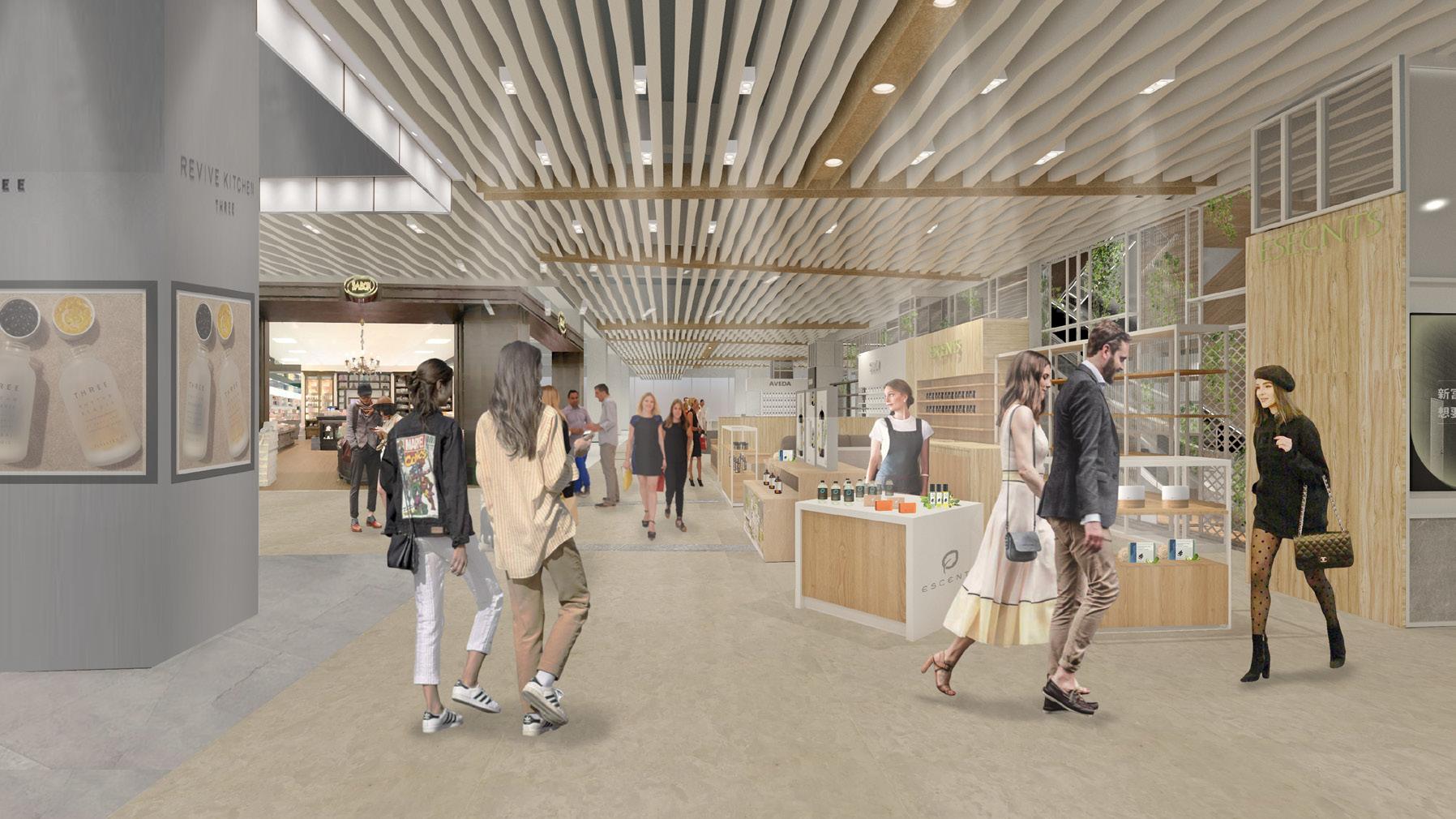
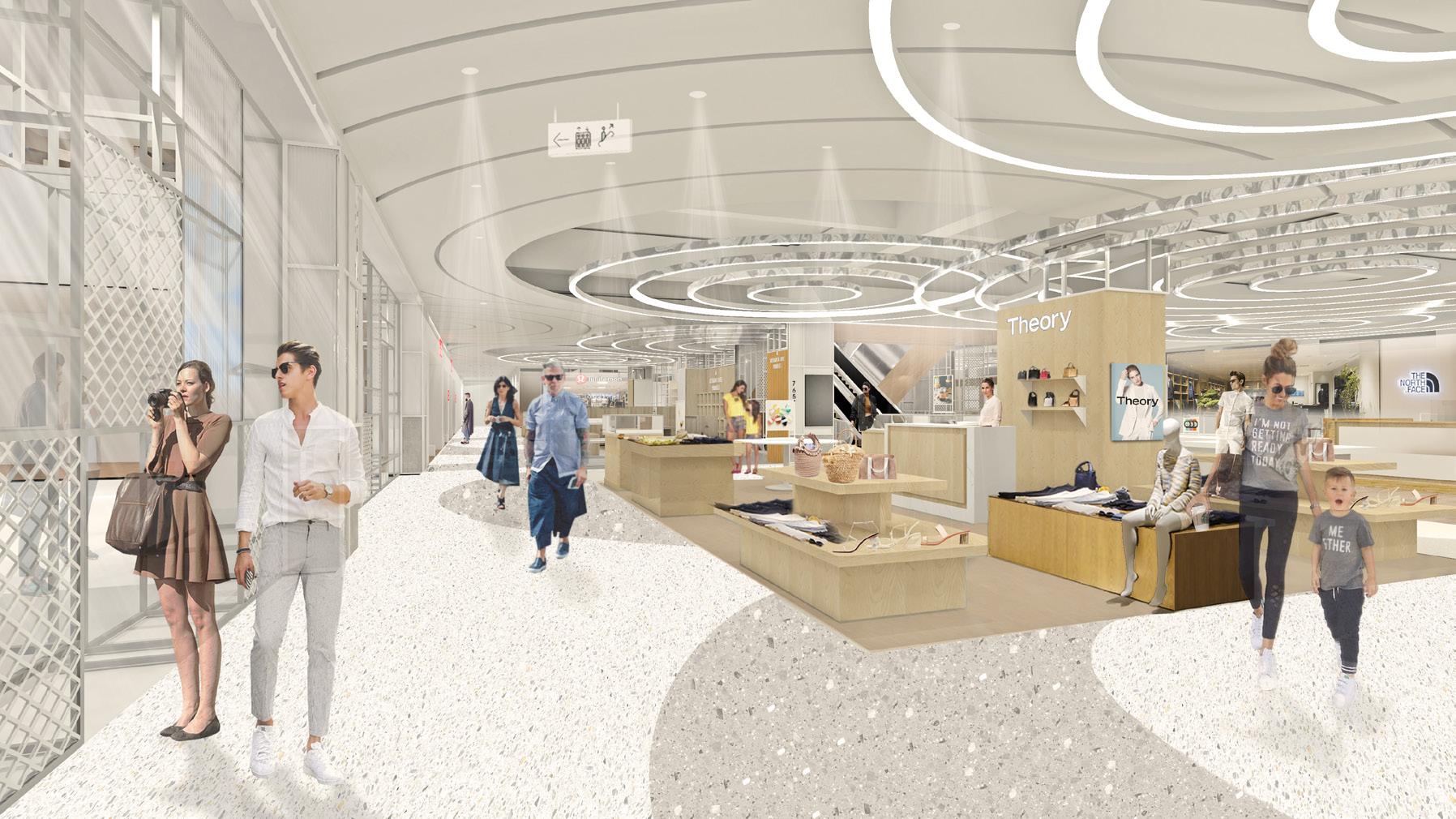
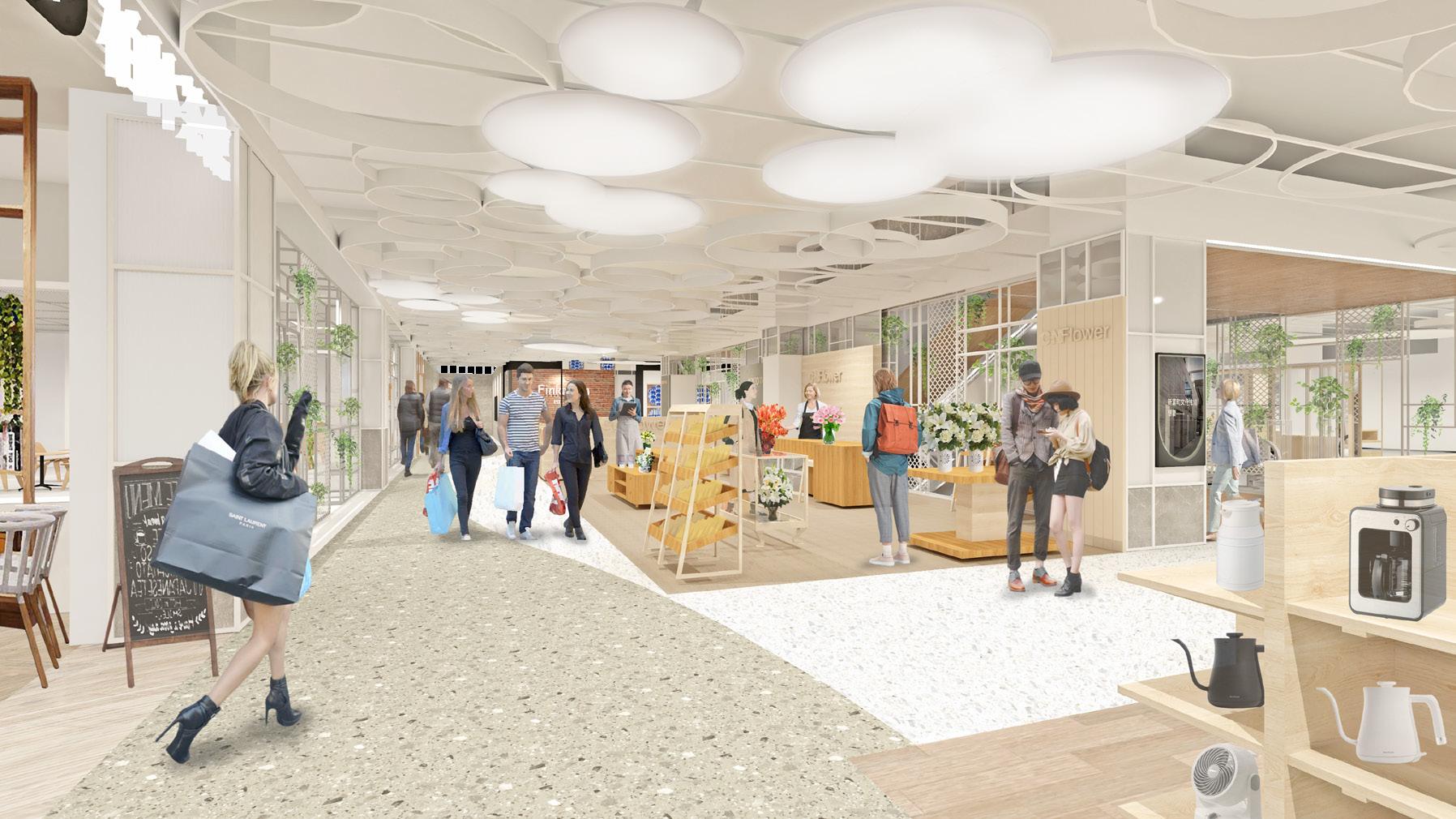
Designing the subject shopping mall was an extremely complex project. The mall comprises four floors, from stores to the rest area. The design concept was to incorporate a different design theme on each floor, where people can experience unique scenarios while having an immersive expensive when shopping.
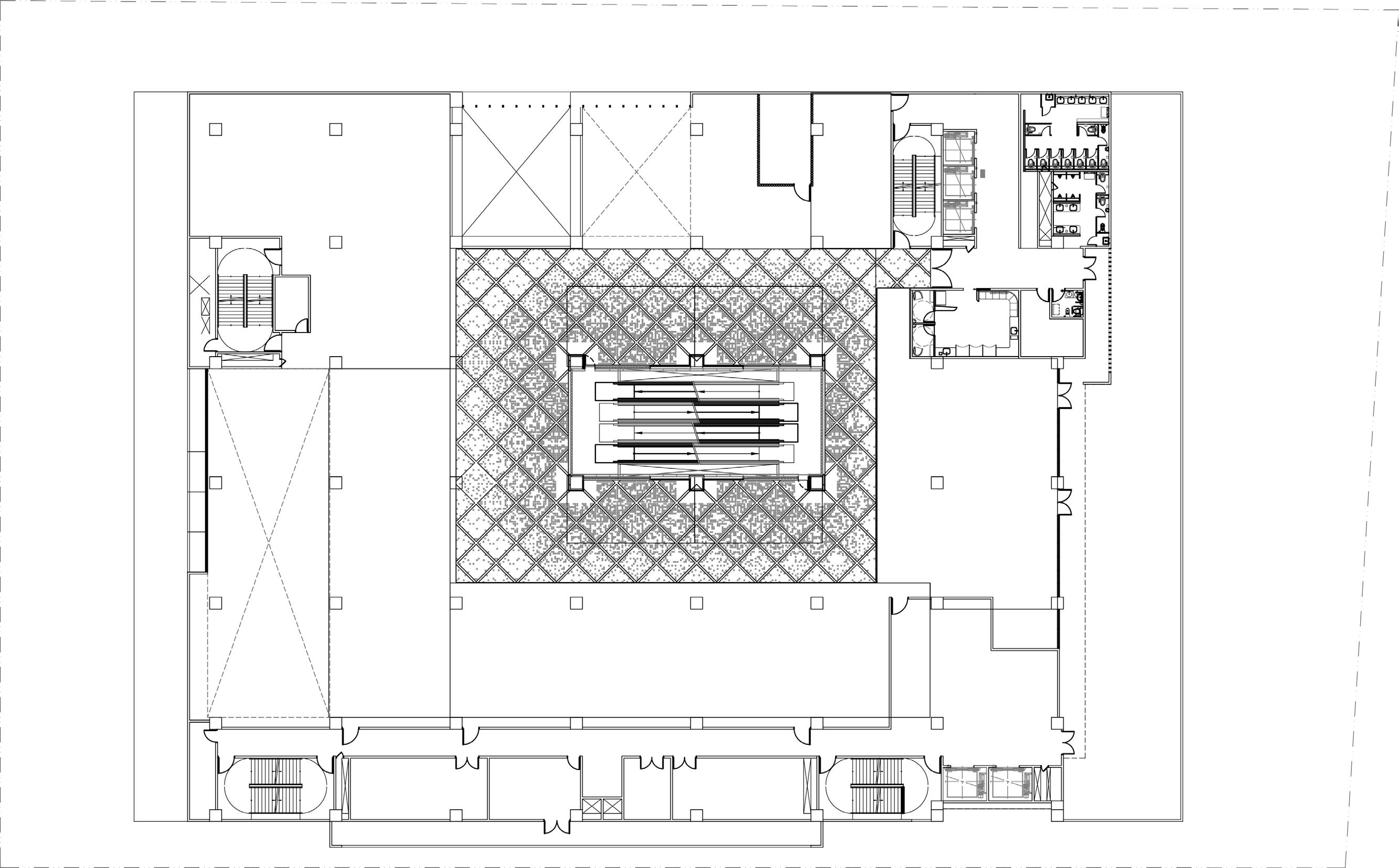
First floor: The ground floor layout plan includes the main entry gate, green area, entry and exit gates, shops and showrooms, visitor information centre, elevators and staircases. The stores on the ground floor sell organic cosmetics because many people, in recent years, have begun opting for organic cosmetics, which are both an environmentally friendly alternative and a wise choice to ensure good health. Therefore, stores on this floor have adopted natural materials in their design to strengthen this concept. The ceiling system uses wheatboard a sustainable material in architecture and interior design. An undulating image of rice ears being swayed by the wind in a rice paddy field is depicted as the ceiling pattern.
Second floor: People can buy sports equipment on the second floor. The sports shops have several reputed brands. The interior design concept has been derived from the formation of water ripples. The ceiling is filled with different sizes of concentric patterns, and the luminaire is designed to
take the shape of a ring like a ripple .
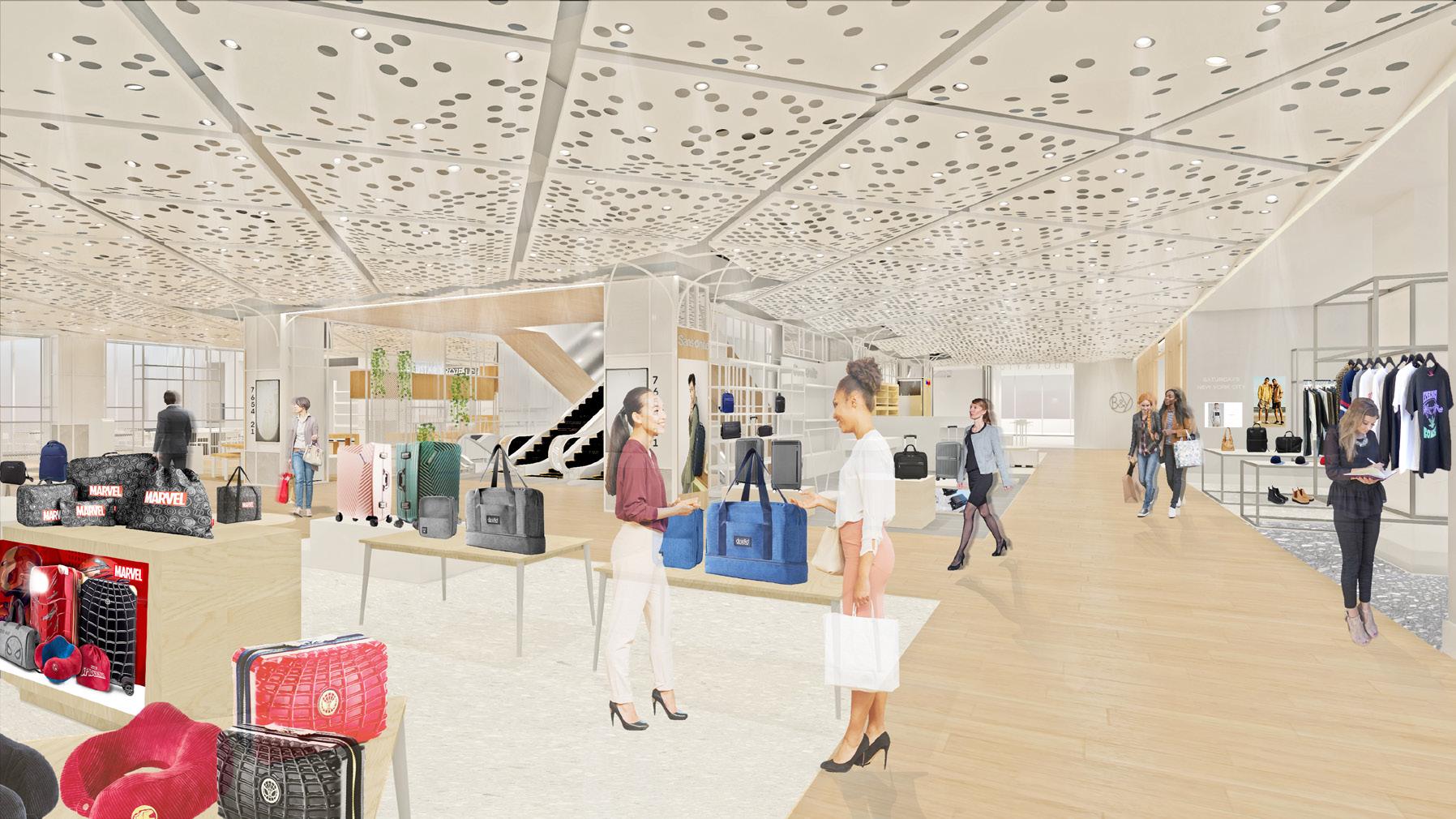
Third floor: The design concept has been extracted from the natural environment, with people walking in the forest and sunshine filtering through the leaves. The perforated metal plates are folded into pyramids that are hung from the ceiling. The spotlights placed in the holes of the metal plates represent the sunlight streaming through.
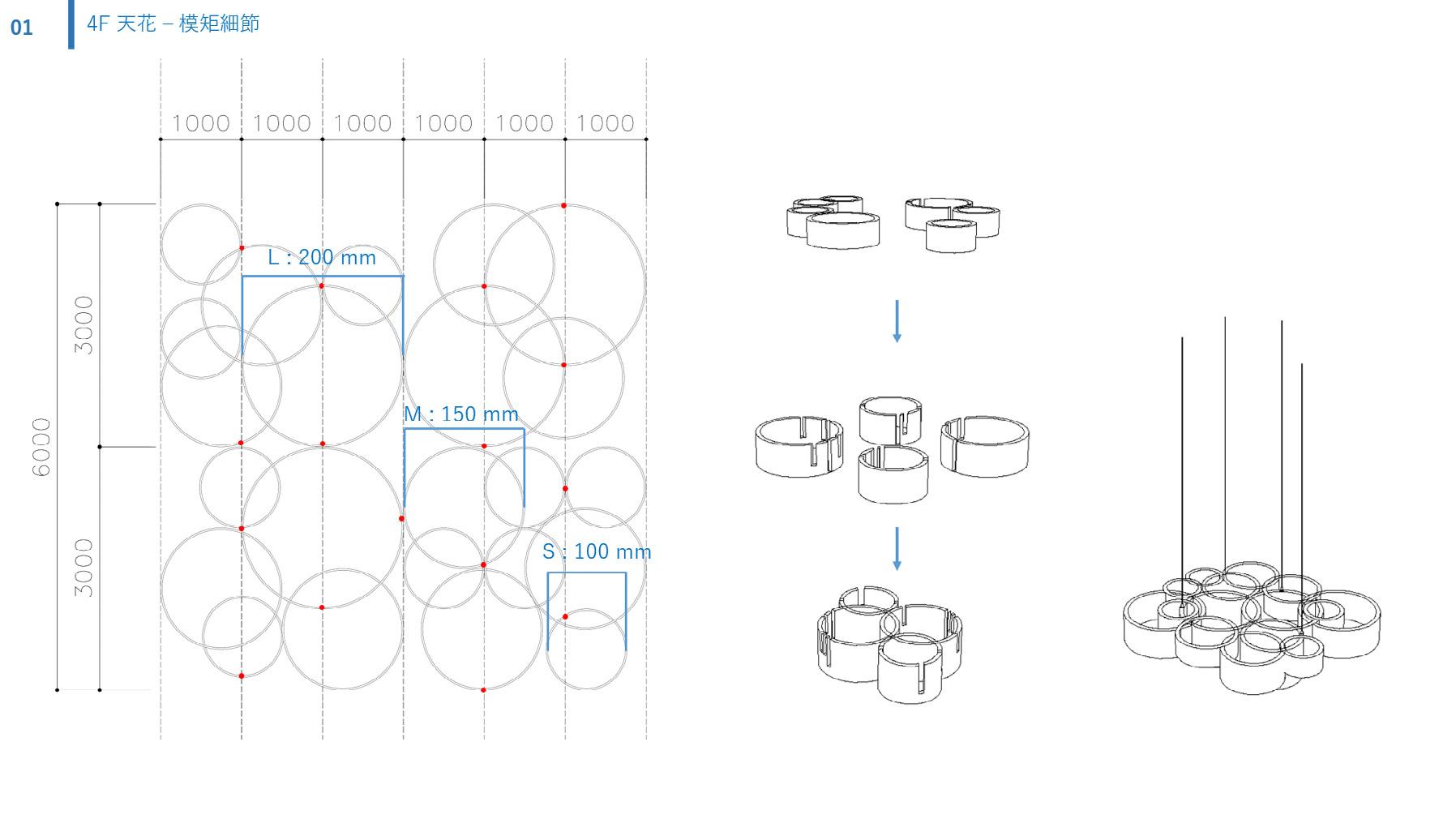
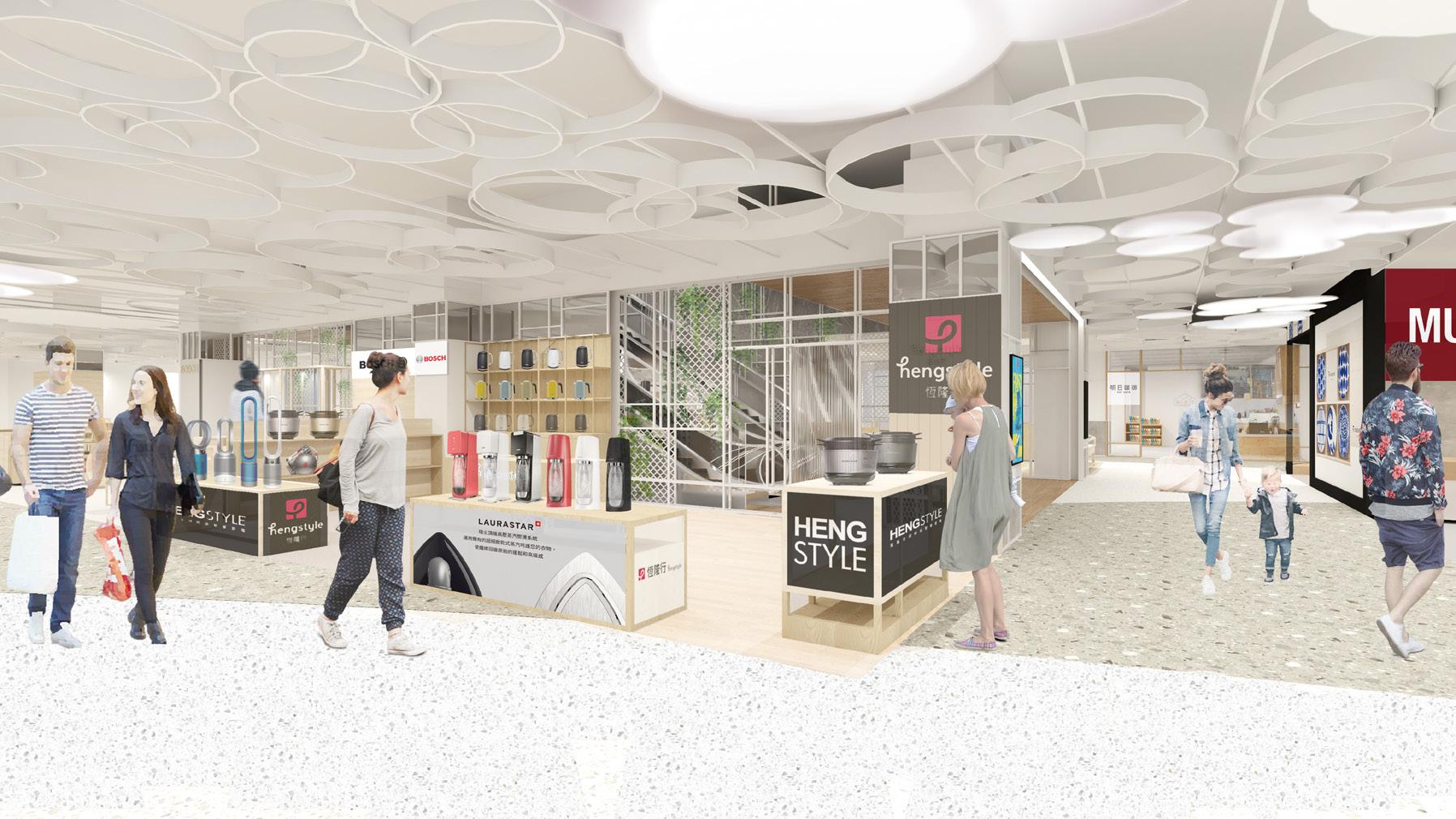
Fourth floor: The design concept on this floor is the clouds. Shopping on this floor, one feels like taking a stroll in the sky. The round metal modules were fabricated in a factory, and the translucent lampshade panels were then mounted on the modules to filter the light. To increase the number of stunning geometric patterns, the modules were overlapped and interlocked
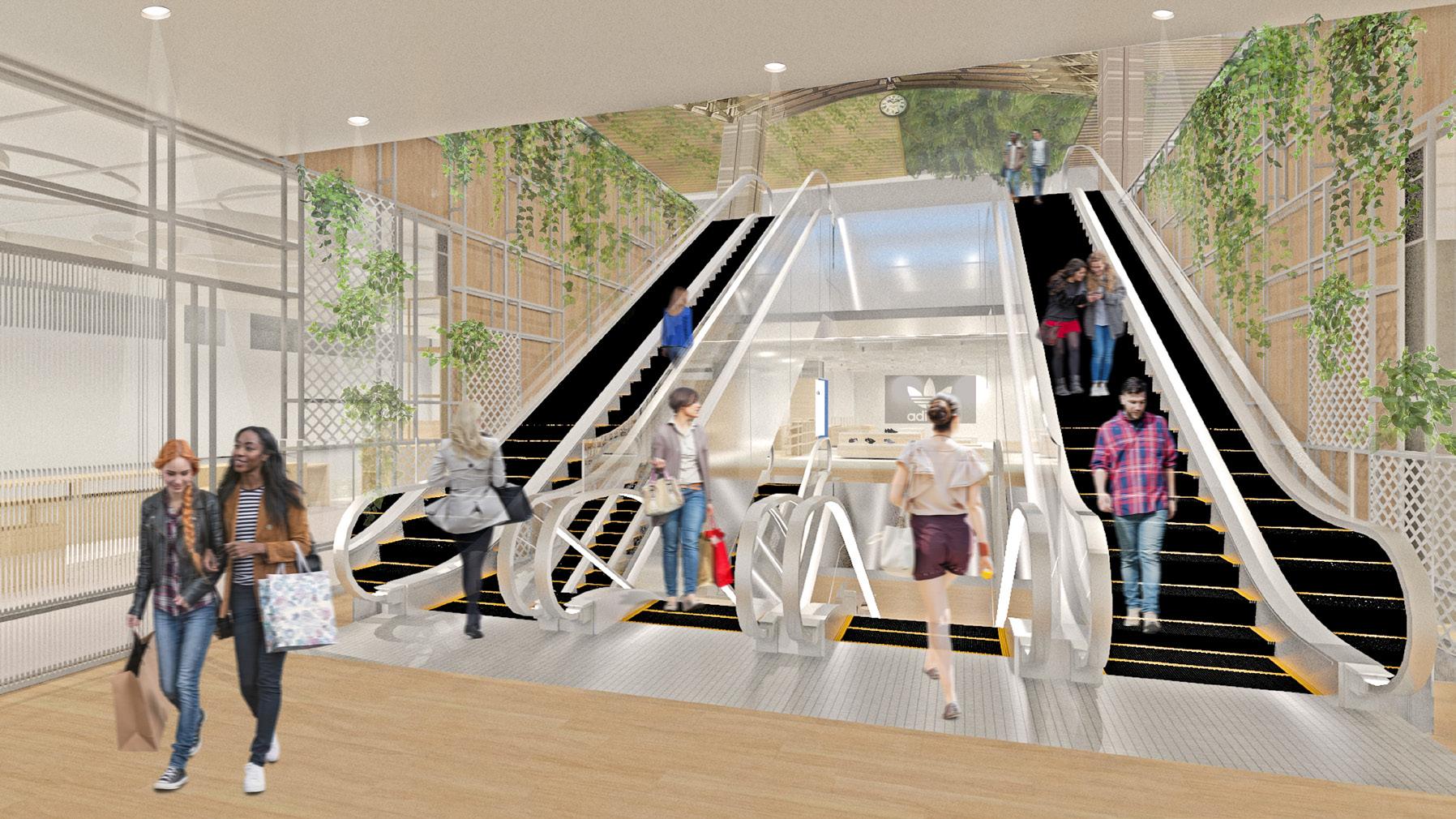
Vertical circulation: Primarily, the escalator is responsible for circulating people. A green wall, designed on both sides of the escalator, provides the beneficial effects of creating a better shopping experience for people, enhancing their sense of well-being and triggering positive emotions.
6
 2F-Sports
1F-Women Makeup
2F-Sports
1F-Women Makeup
7
Lift Zone
Plan
Module 8
3F-Ceiling
4F-Ceiling
4F-Lifestyles 4F-Lifestyles 3F-Outdoor 9
Urban Renewal, Residential Housing
, Zhongshan Dist., Taipei City , Since 2018, in the proposal stage
Skills: Rhino, V-Rray
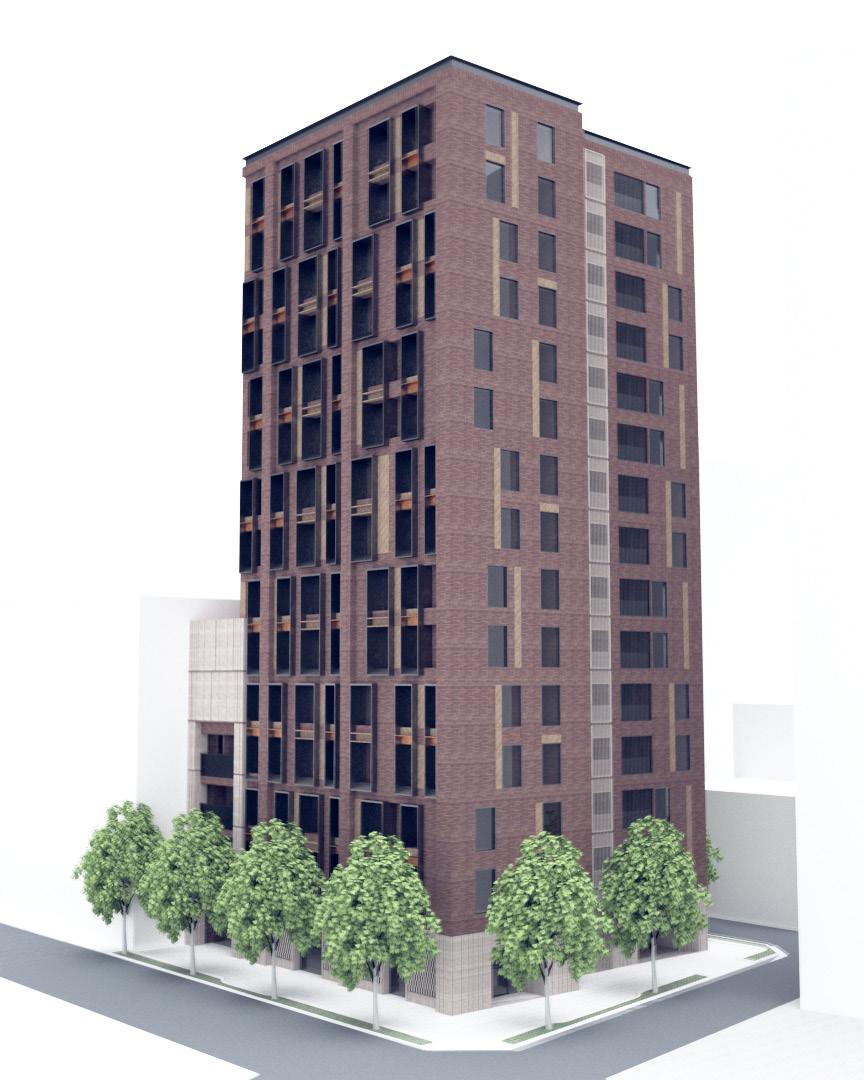
Central Taipei City is densely populated and, because the centre has more job opportunities, people are increasingly moving in from the suburbs. However, the fire resistance of the existing houses in the centre does not satisfy current safety standards. For this project, an older three-story building will be demolished and rebuilt as a 15-story high-rise apartment building. I have analysed the condition of the site and propose designing the block with floor-to-ceiling windows, through which people can enjoy a view of the local park. Variations in the
façade will be created by designing the windows two-story units, stacked in a staggered pattern.
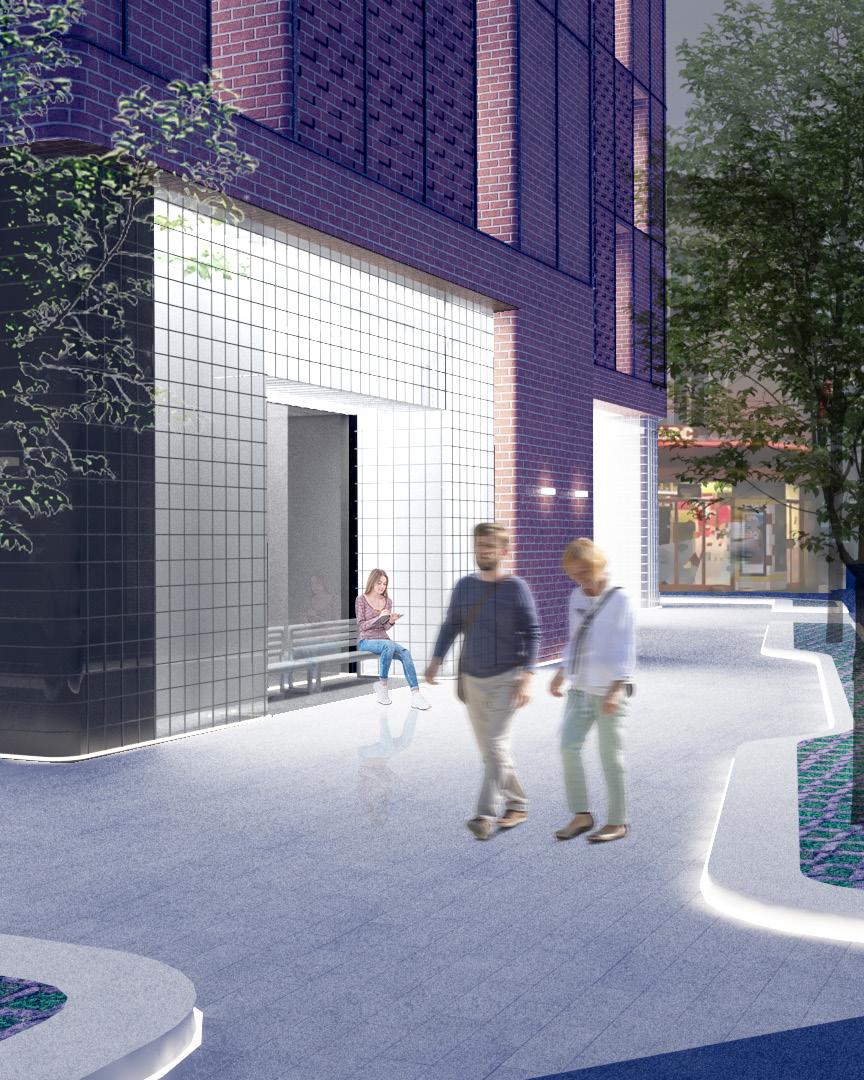
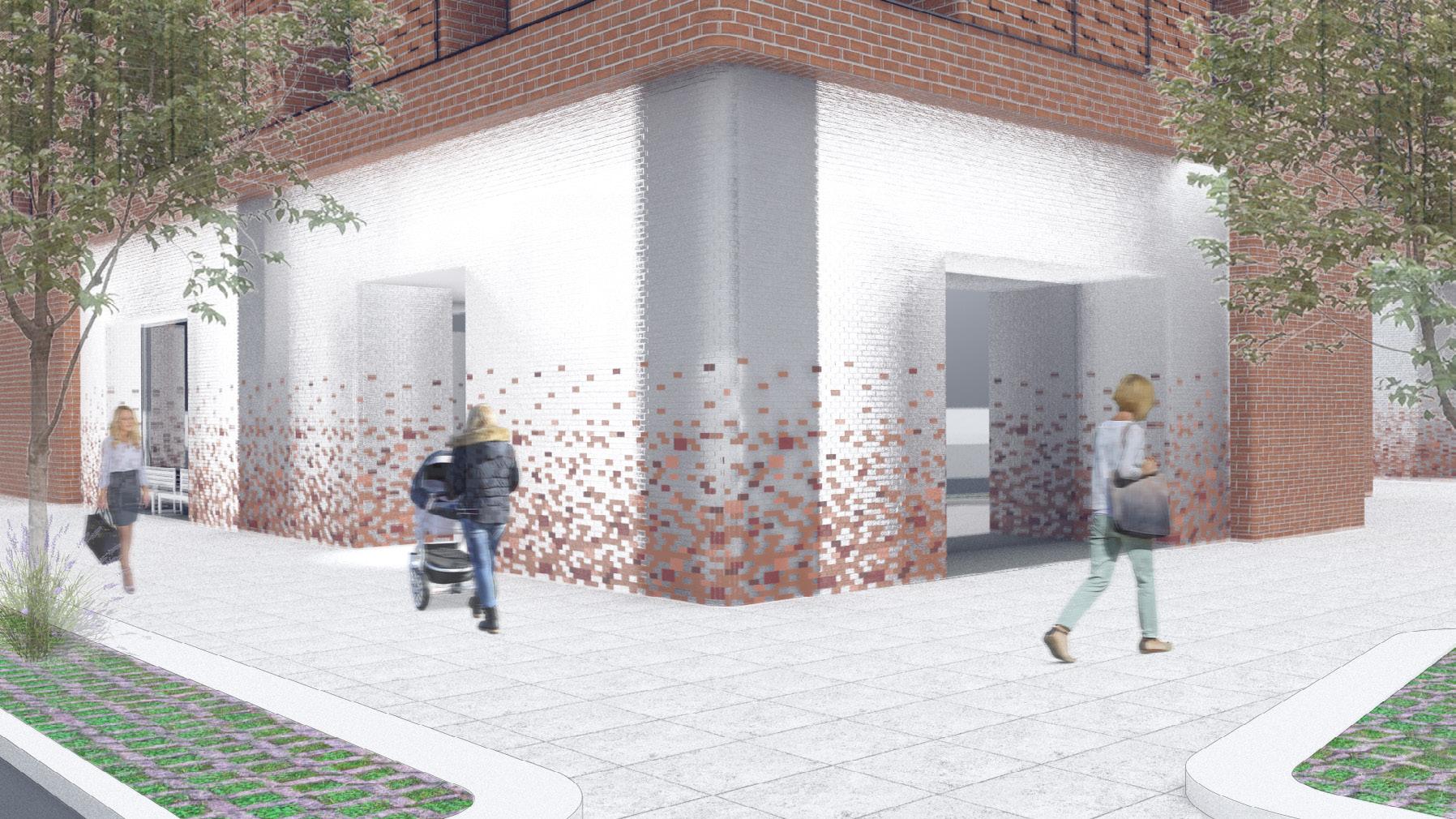
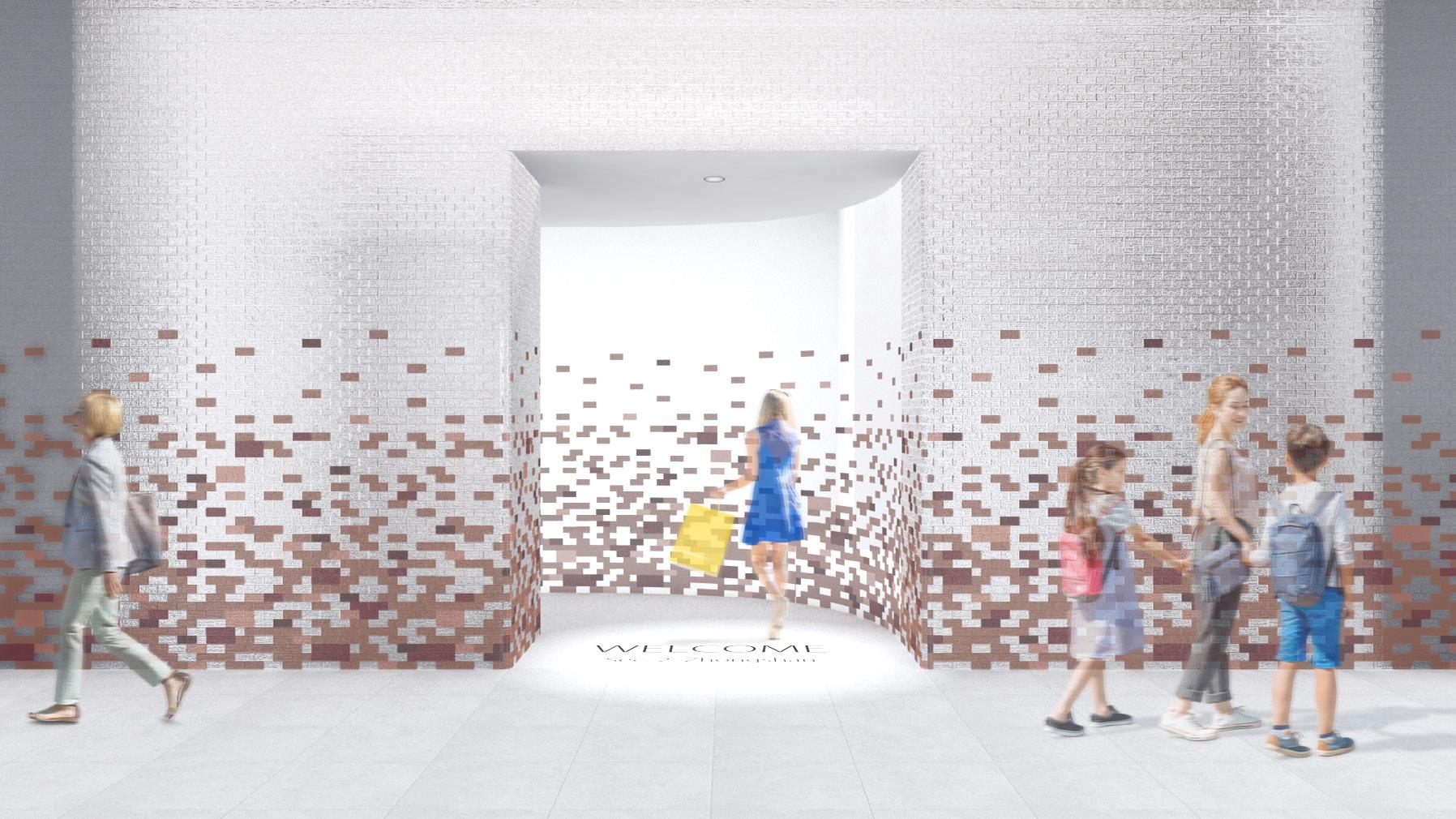
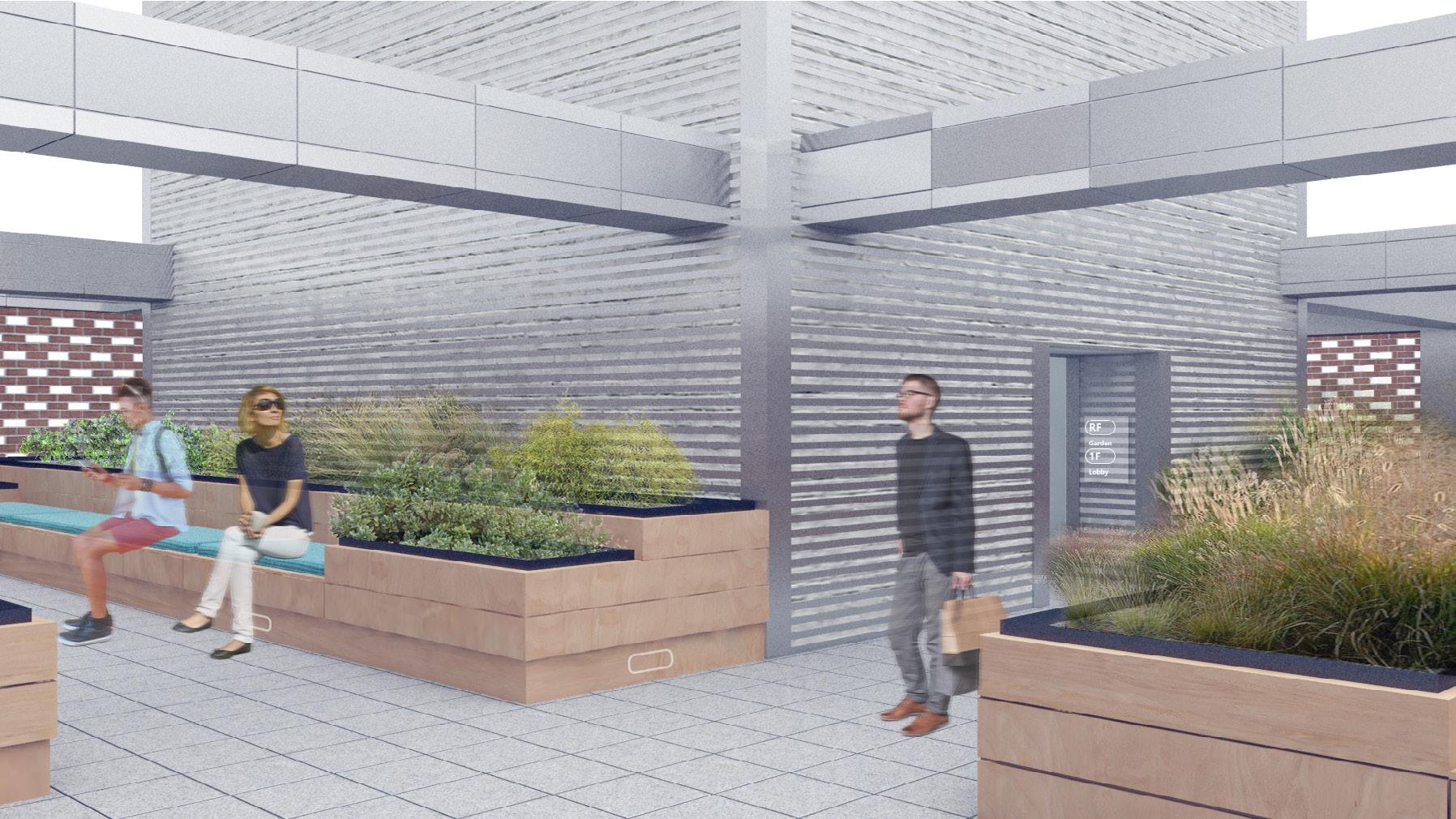
Layout planning: The wall of the entry foyer on the first floor is made of both translucent glass and red clay bricks to allow privacy. In the evening, the interior lighting shines through the façade and looks like a beautiful lantern. As an architecture designer, I care about private andW public spaces. So, there is a rooftop garden where people can enjoy sunbathing and a wonderful view of the city, providing residents with another opportunity to feel close to nature, in addition to the urban park.
 NIGHT LIGHTING
10
ROOF ENTRANCE 1st FLOOR 11
Reinterpretation of bricks segment
in historical building and exploration in cutting technology ,2021
Keywords: Mesh segmentation, robotic hot blade cutting, bricks assembly, curve optimization
Skills: Rhino, V-Ray, After Effect
Robotic block cutting technology has been used for different materials, like clay, stone, and styrofoam. Nowadays, styrofoam cutting is widely used for prefabricated concrete construction. This paper will focus on how to fabricate styrofoam material. The benefit of robotic cutting is that it decreases labor time and provides high precision during fabrication. Moreover, robots can be used to fabricate complex geometric surfaces, for example, single curved surfaces are often machined using one single robot, and a two-robot fabrication system allows the production of double-curved NURBS surfaces by means of a heated, elastically deformed blade, which are mounted on the robot arms. Using this approach will help develop a new geometric block system.
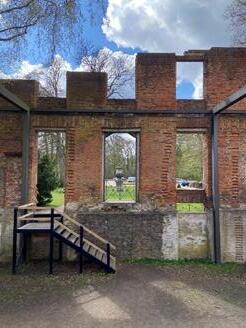
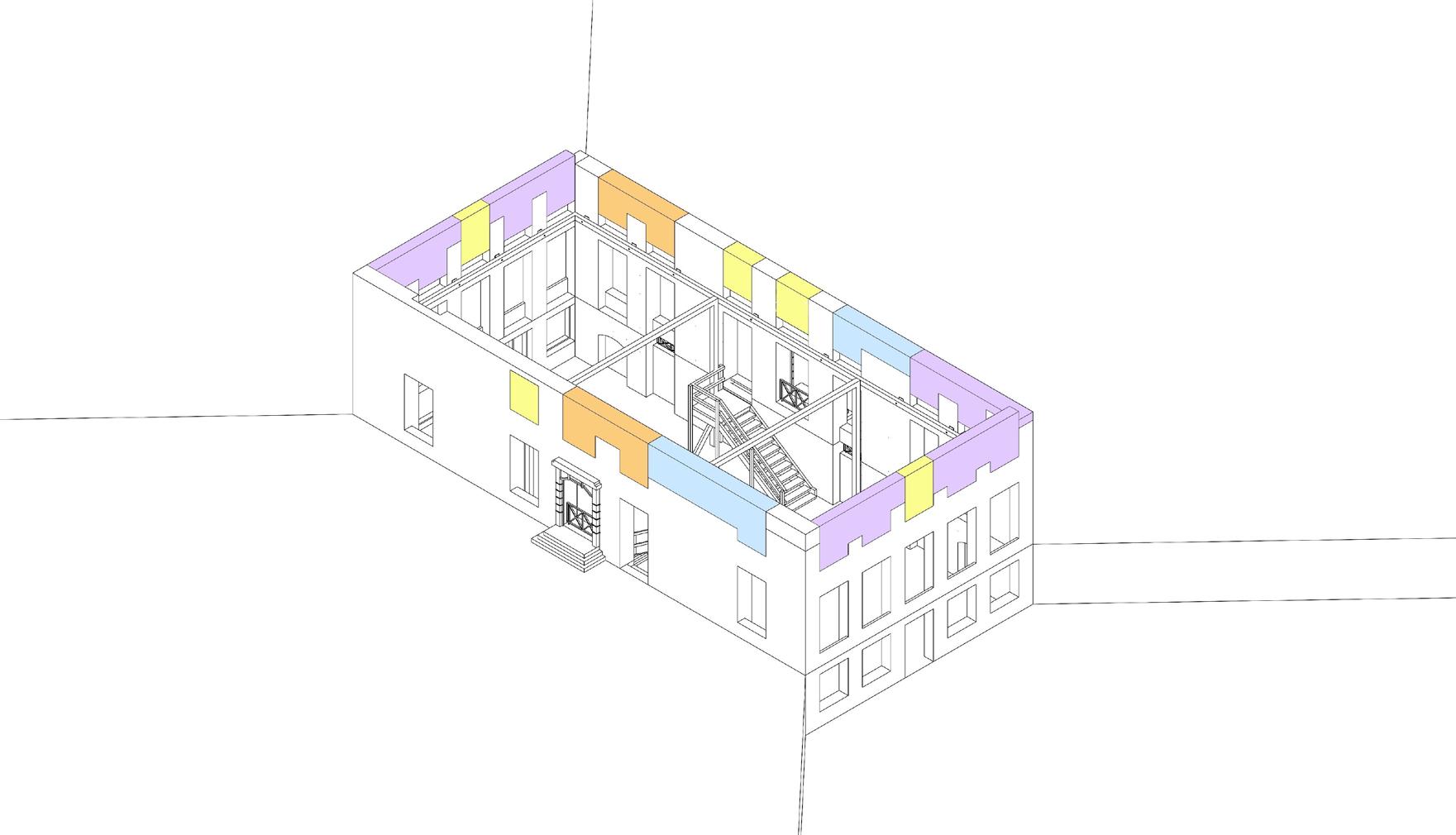
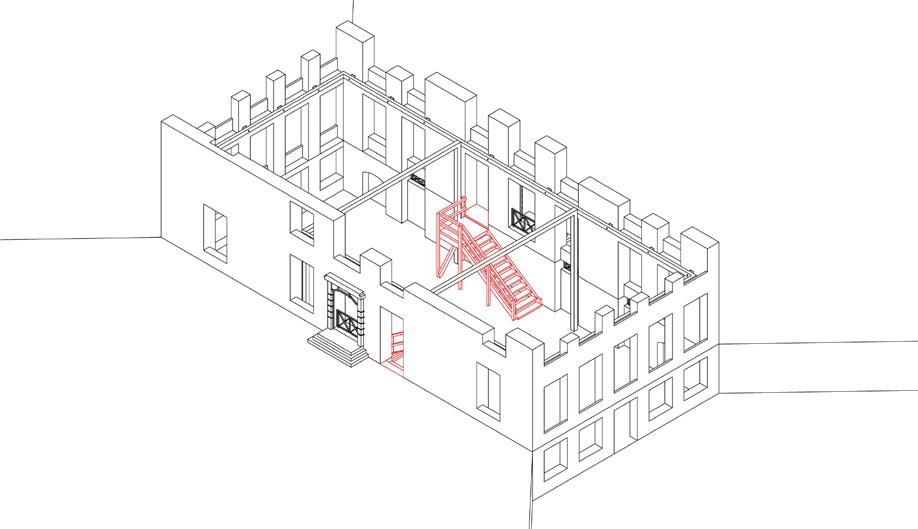
Site: Aldershvile Slotspark is located on the northwestern suburbs of Copenhagen, Denmark. It was originally a country house with a garden, which was unfortunately destroyed in a fire in 1909. In 1927, the municipality purchased the site. Today, Aldershvile is open to the public as a part of the landscaped public park and is the main entrance for visitors to enter the park. Because of the fire, the building structures have become unstable, and the damage and residual deformations that need maintenance. A new and simple steel substructure has been added to reinforce the original structure and a wooden staircase is built which creates a new
path for tourists to walk down the building. The brick structure is still fragile, necessitating the use of lightweight materials.
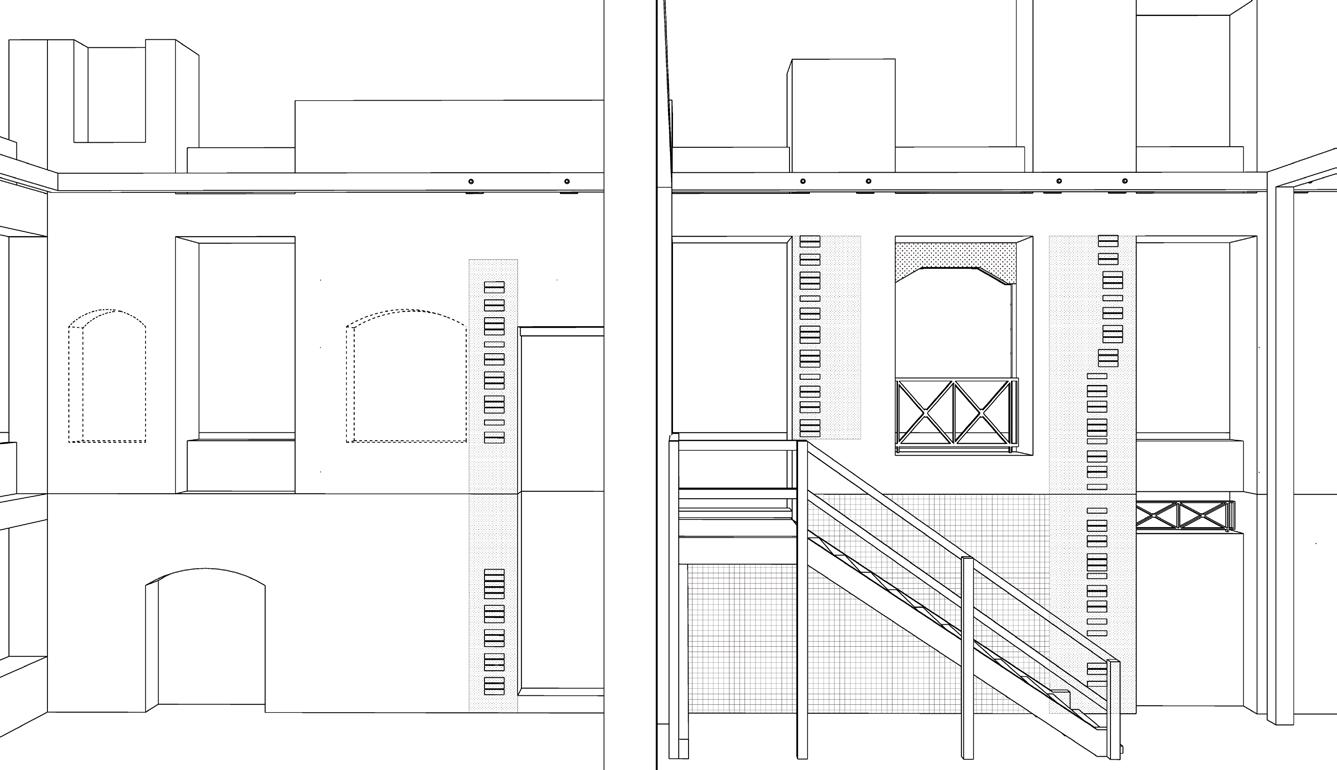
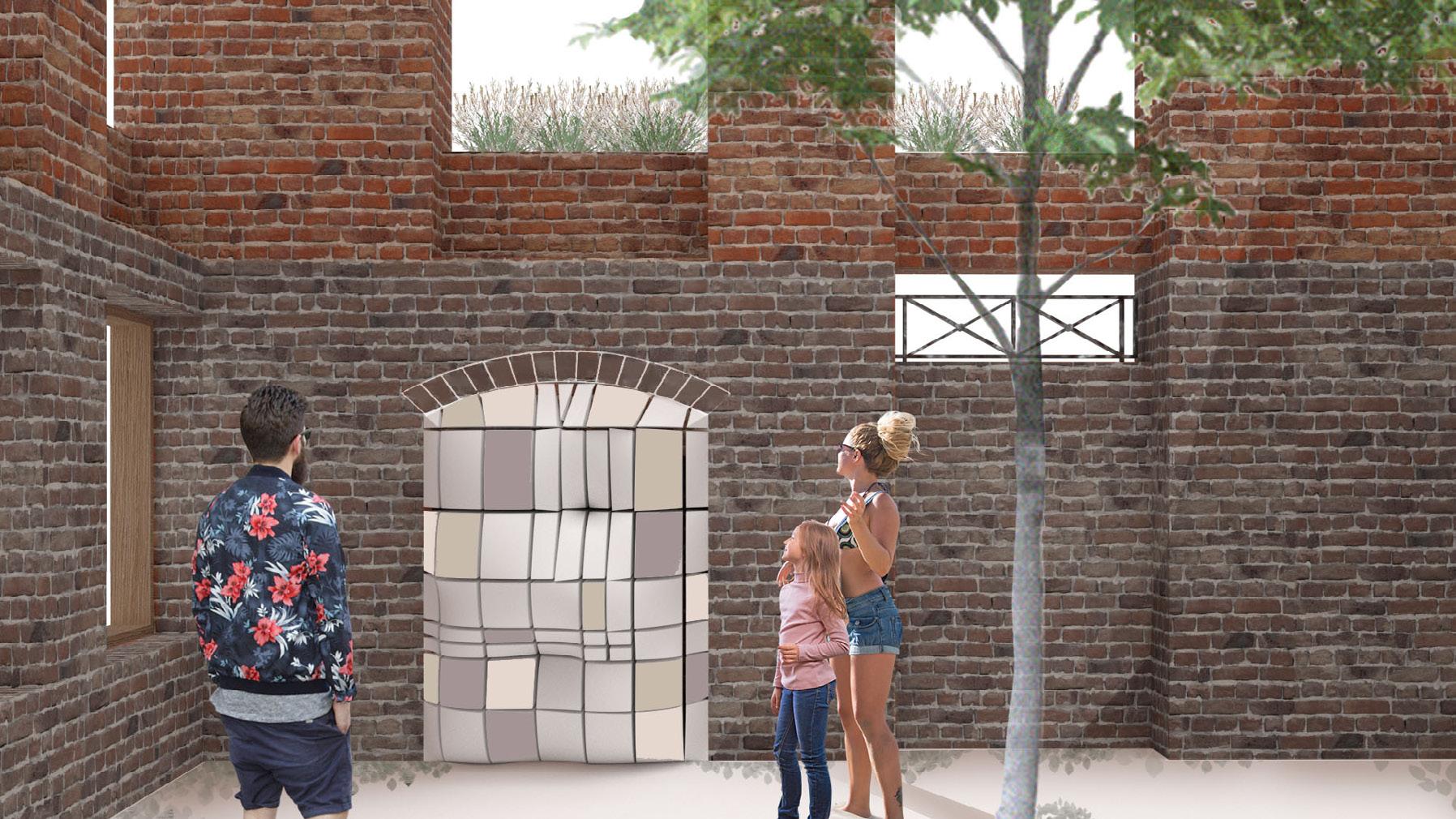
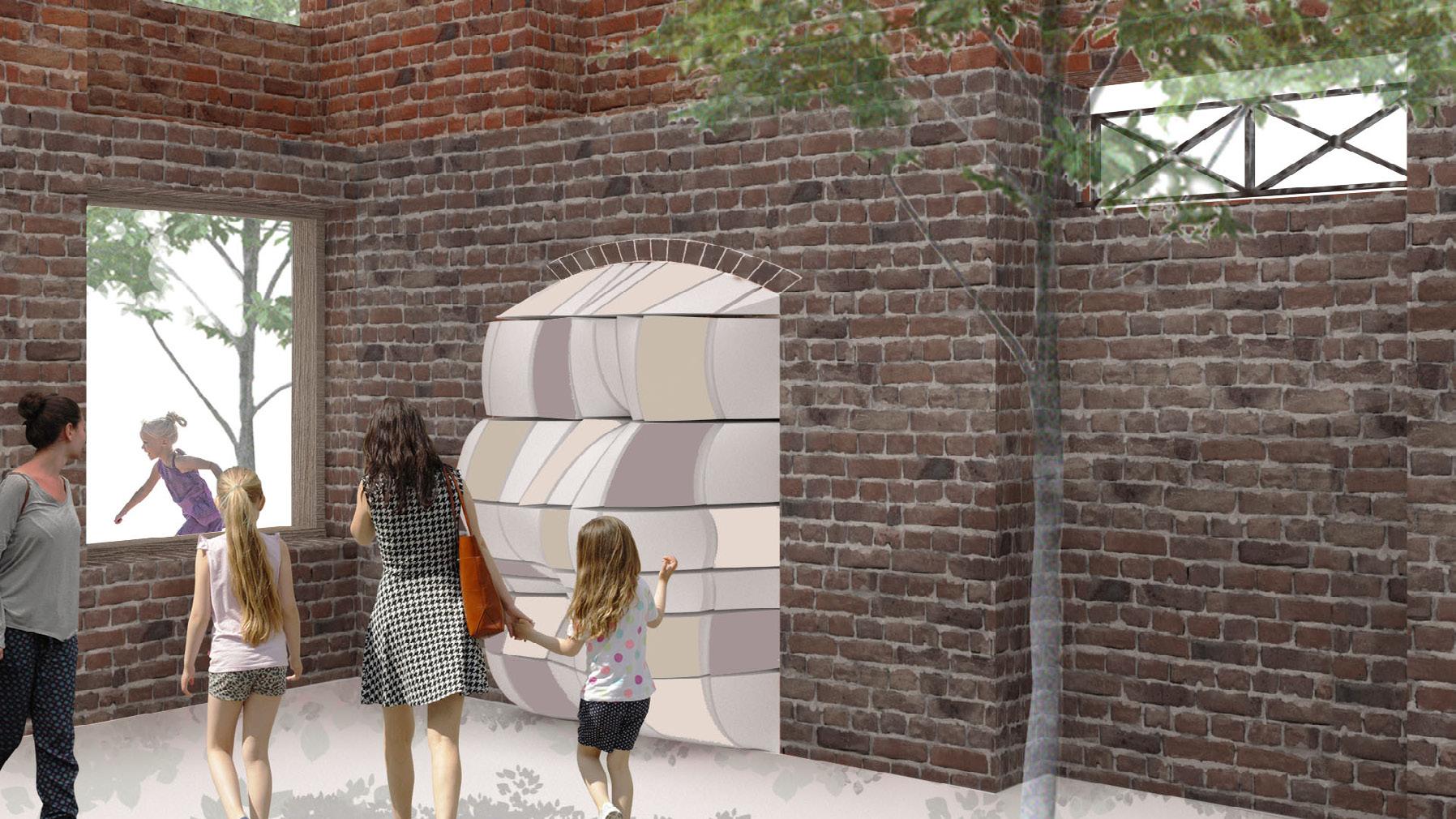
Design method: An investigation has revealed rich brick bonding patterns in the building. I propose to design a new block system which is embedded into the ruined structure. The original wooden windows, and recessed doors were completely burned out, and those parts have become hollow where the new block system will be filled in. The method of designing bricks will follow:
1. Shape generation 2. Curve skeleton extraction, and 3. Curve optimization
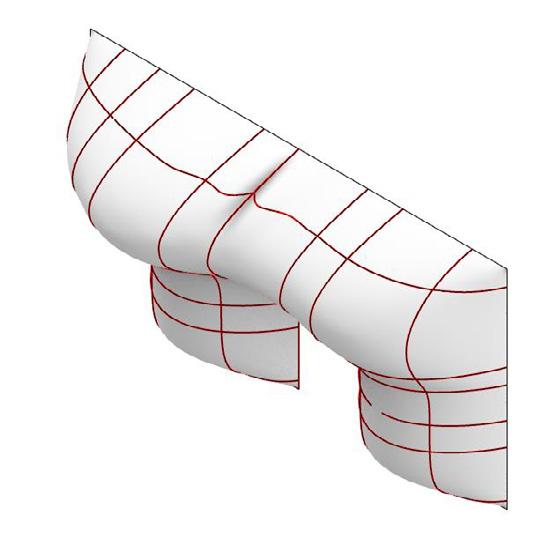
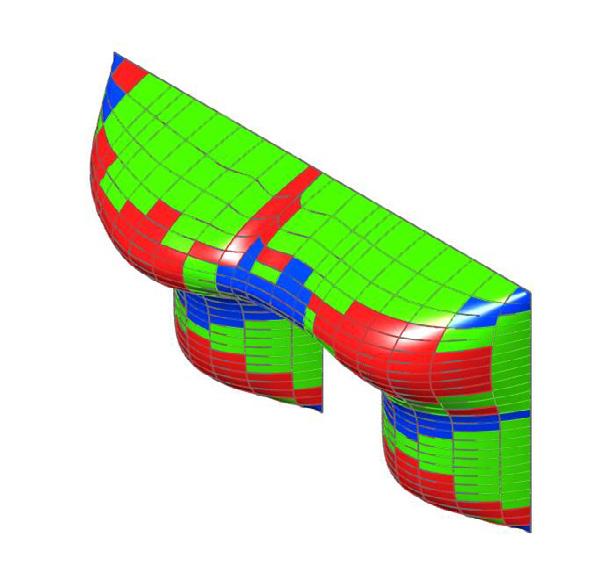
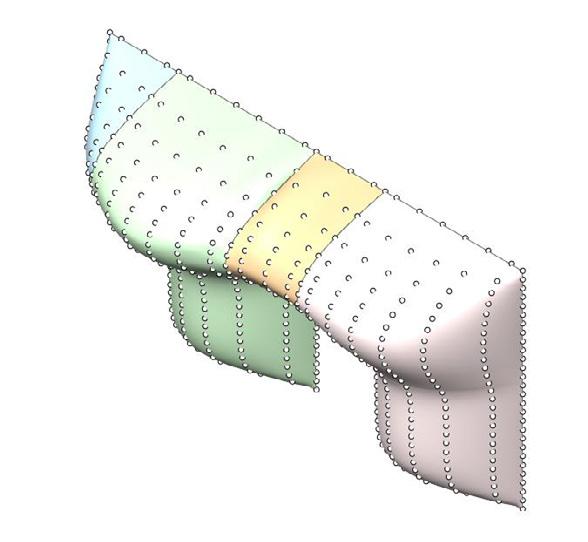
The first step is shape generation: using the KANGAROO engine to create the form using the existing bricks bonds lines as a network boundary.
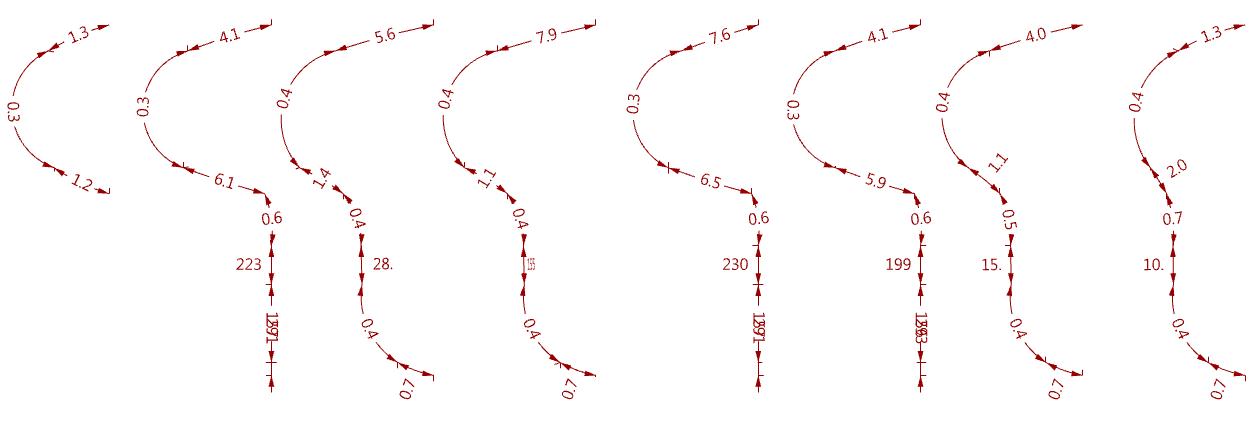
The second step: A subdivision scheme is applied. The UV curves are extracted as the model skeleton, which is used to split the surface into several segmentations.
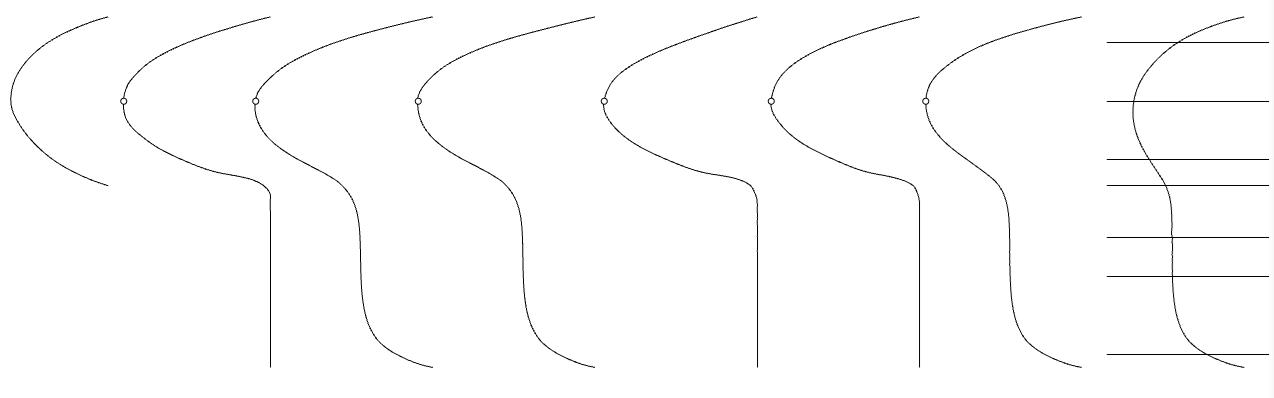
Thirdly: The boundary of each segmentis is constructed from four curves, and the inflection points in each curve will be reduced and minimized as they make fabrication limited and make the blade of the robot less stable.
12
a) Bricked-up door, probably former window
b) Bricked-up recessed door
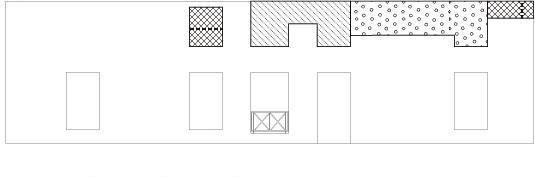
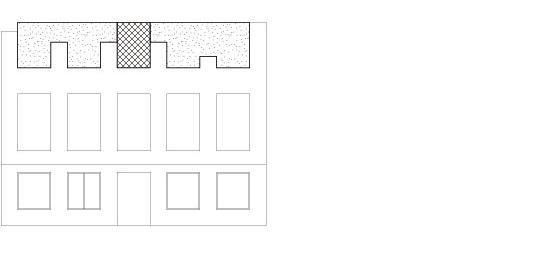
c) Recess for possible sandstone relief
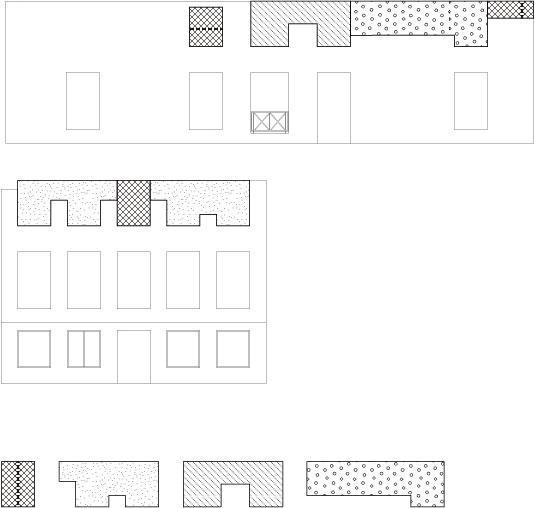
d) Weathering
e) granite walling
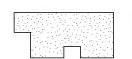
a) Rectangle
b) U shape with a horn
c) U shape
d) L shape a b c
b)
c) U shape
a) Rectangle
U shape with a horn
a b c d INTRODUCTION • STATE-OF-THE-ART • RESEARCH QUESTION • DESIGN • FABRICATION • CONCLUSION
c a
d
b a d d d e INTRODUCTION • STATE-OF-THE-ART • RESEARCH QUESTION • DESIGN • FABRICATION • CONCLUSION
fig.1 Bricks bond investigation
fig.2 Shape of blocks
13
fig.3 Blocks arrangement
INTRODUCTION
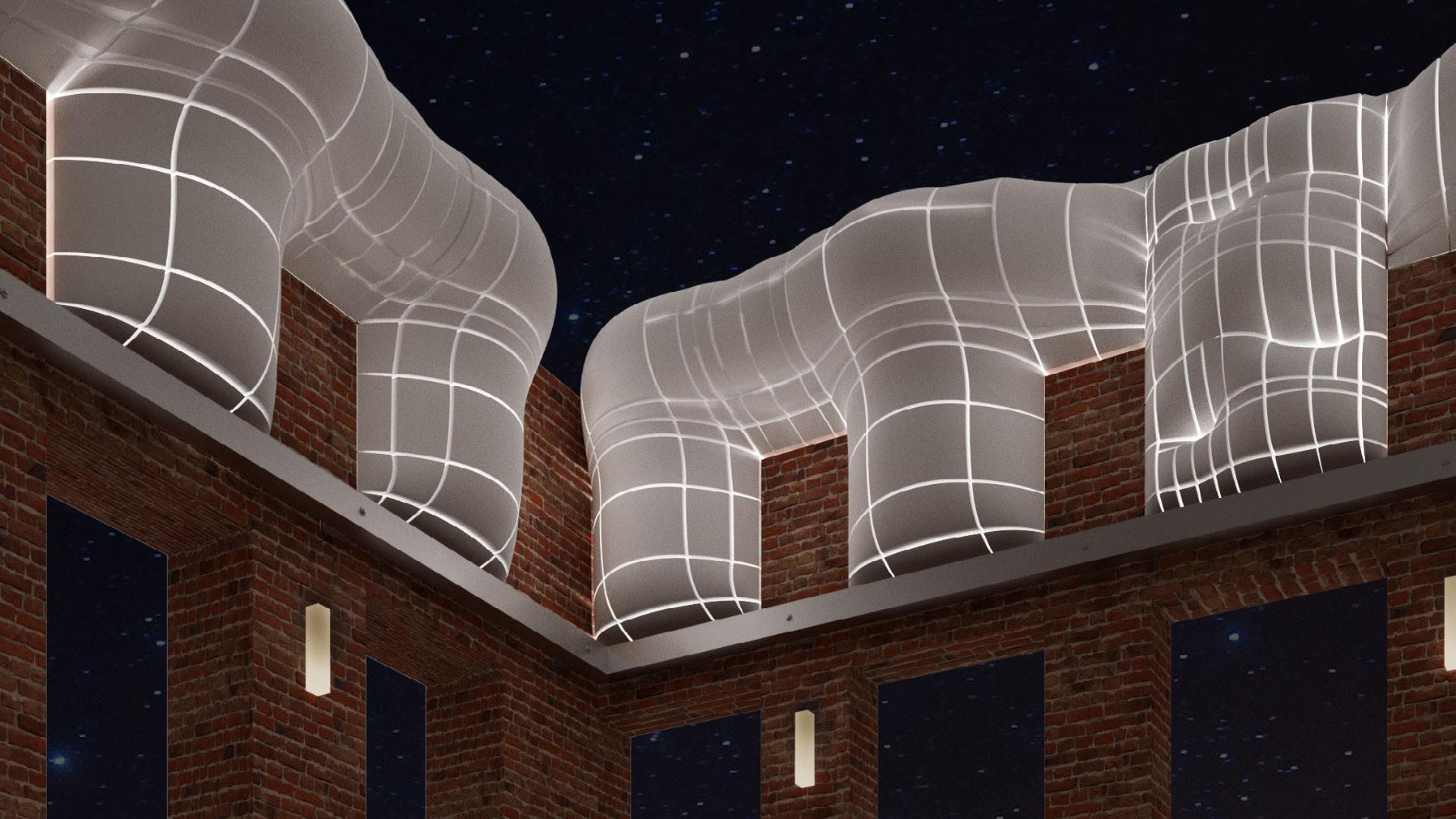
Fabrication: In the setup, the HotBlade is fi xed between two robot arms. The rotating circular table is between the two robots on which the fabrication objects will be placed. Using the rotating circular table helps to efficient machining. During the fabrication, the grooves are cut on the four sides of the blocks where the LED lighting system will be placed.
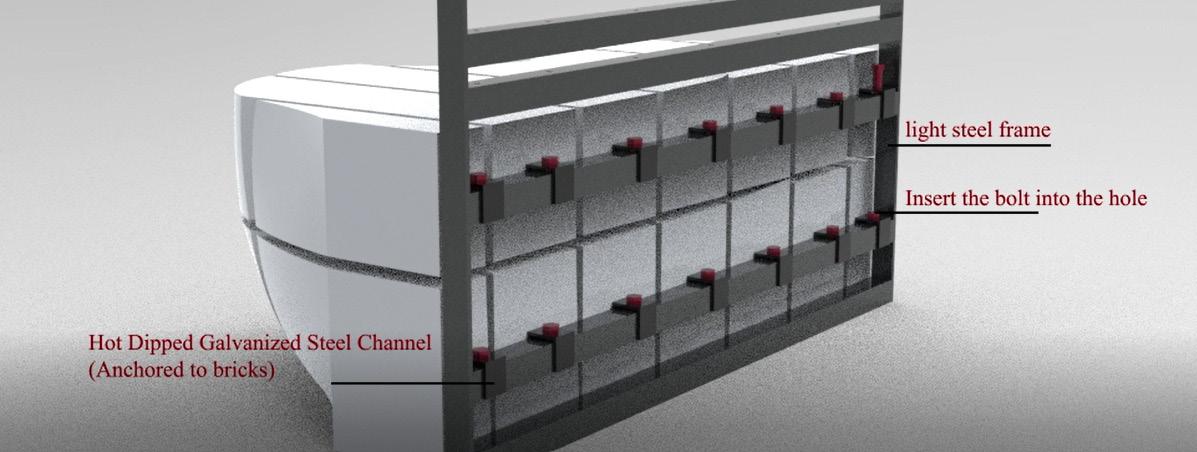
Assembly: After machining, the hot-dipped galvanized channel is anchored on the back of blocks which are then installed on a light steel frame. This is a universal and easy assembly system which can be used under different geometries.
INTRODUCTION
Finally, the design will use this system to build four different shapes in situ.
•
• RESEARCH QUESTION • DESIGN • FABRICATION • CONCLUSION
a b
bowl like
like
STATE-OF-THE-ART
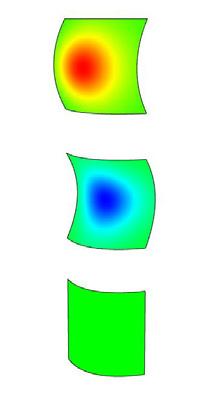
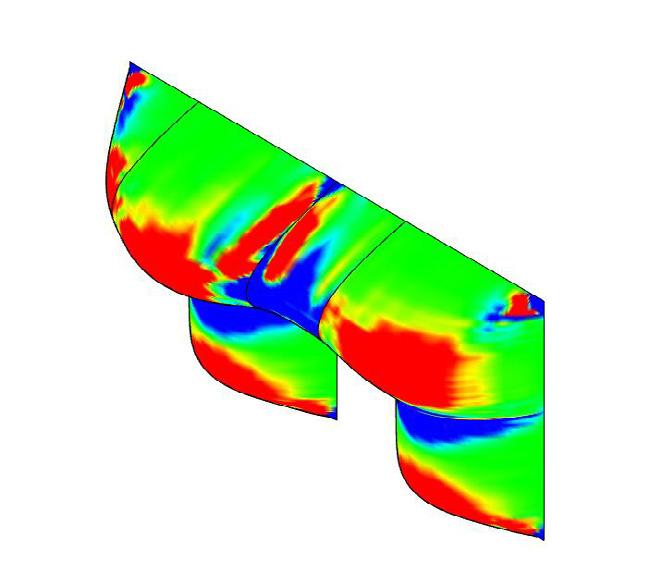
4 Chunks Surface & Gaussian Curvature
c a)
b) saddle
c) cylinder like
• RESEARCH QUESTION • DESIGN • FABRICATION • CONCLUSION
• STATE-OF-THE-ART
Curve Optoimization-vertical curves
fig.4 Shape Generation and Surface Curvature Analysis
fig.5 Curve skeleton extraction and Optimization
fig.6 Assembly System
14
 Wall Block
Roof Block
Wall Block
Roof Block
15
Front of the block
Skills: ArchiCAD, Lumion
Glass bricks System Design
Façade renewal in historical building
Guisui St., Datong Dist., Taipei City ,2016
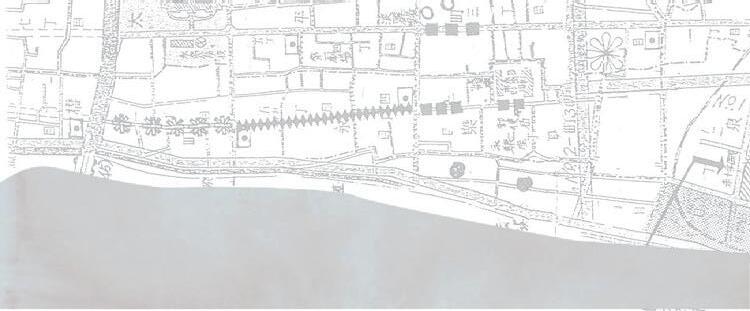
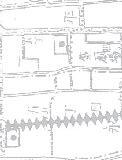
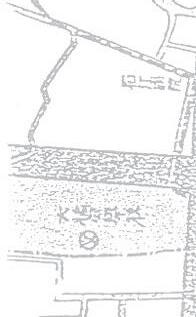
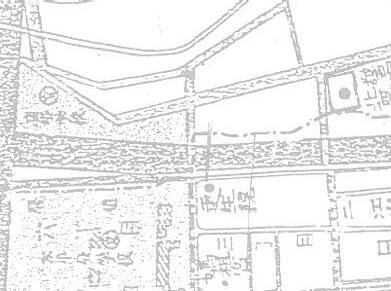
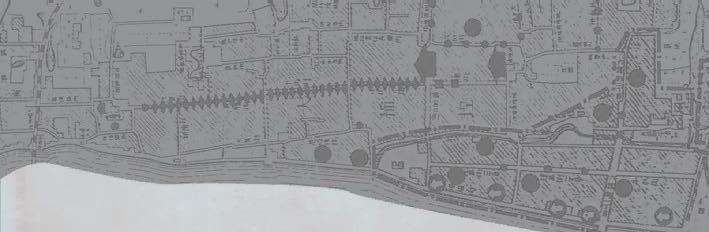
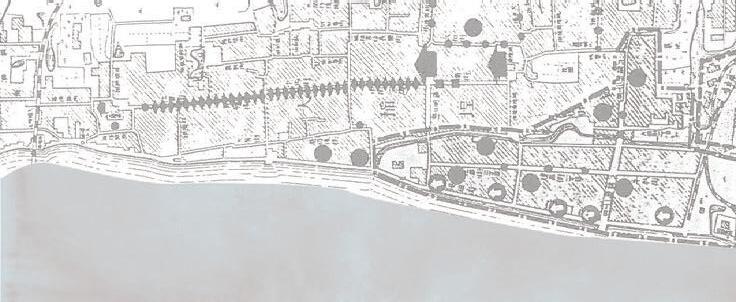
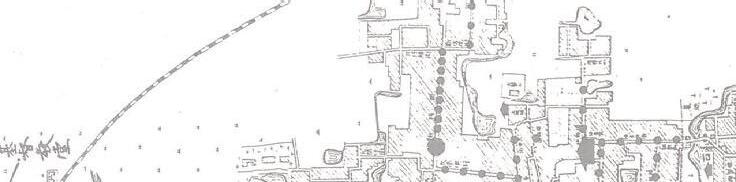
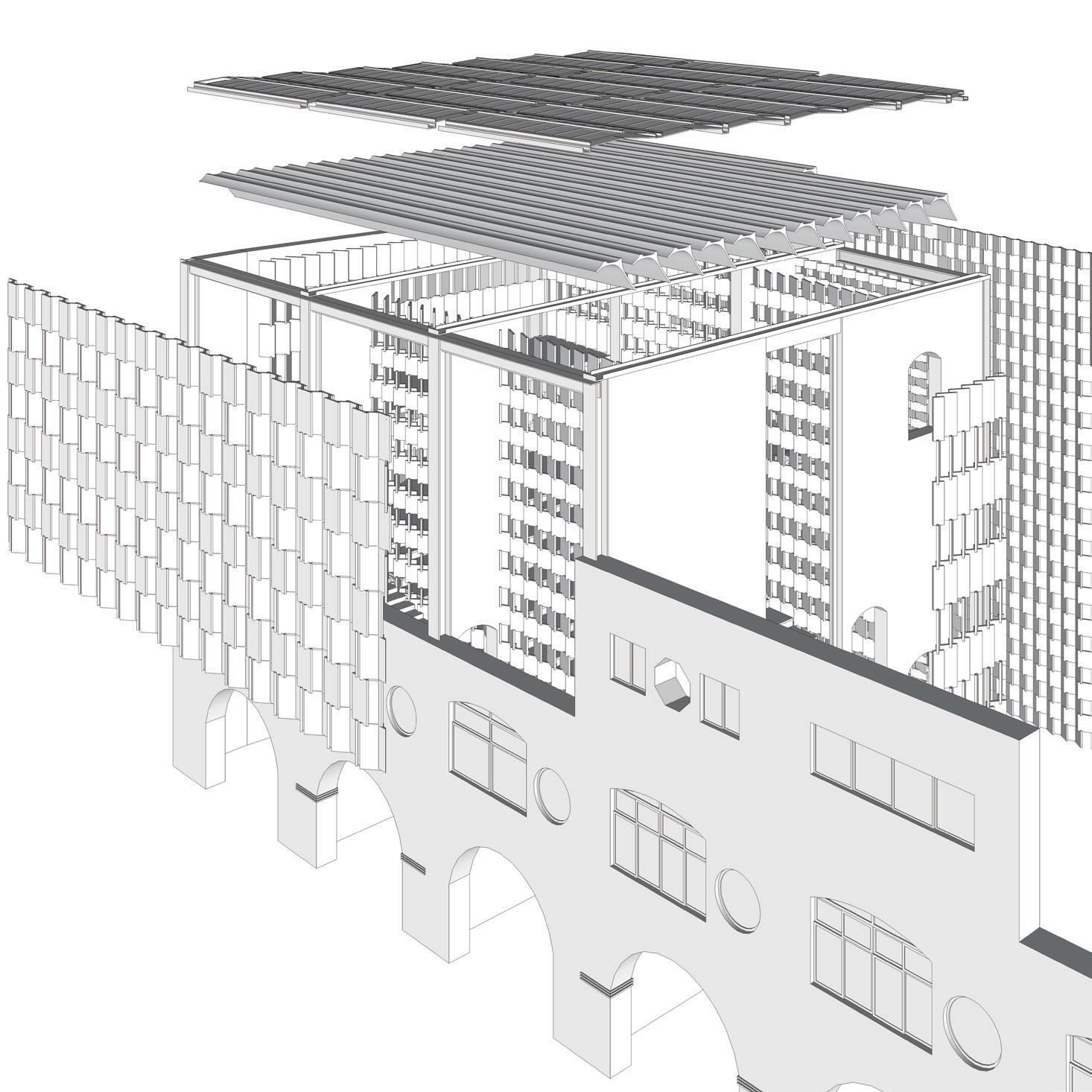
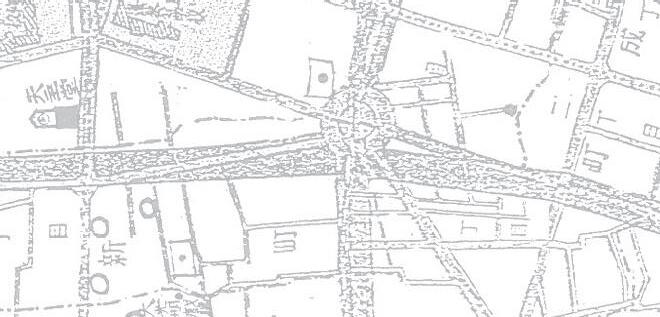
Guisui Street was a place where many brothels were located. During the Japanese occupation, the government designated the area as a Red Light District where the prostitutes served the middle and lower-class workers. Wen Meng Building in Guisui street has a long history as a brothel. However,1997in 1997, the new government abolished prostitution and subsequently, Wen Meng Building was preserved as a historic monument. In recent years, the demolition of this building had become highly controversial. The main reason is that the building is in a commercial area; hence, there is high value for real estate. The original building includes a sex service area on the ground floor and a teahouse on the second floor. In the planning process, I consider the building to be of educational value to the public, and may be renovated into a multifunctional building with different spatial program. Those space are constructed by both the structural brick walls and partition brick walls, and the design method is to adjust those walls to create complex spaces.
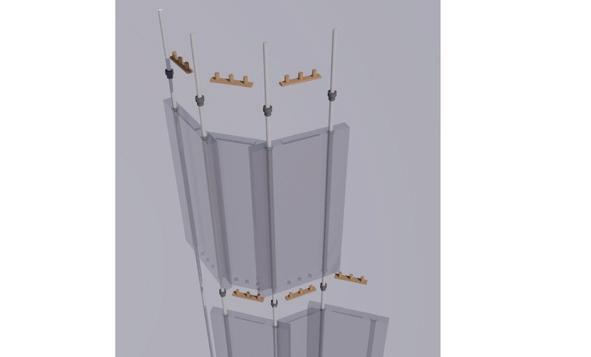
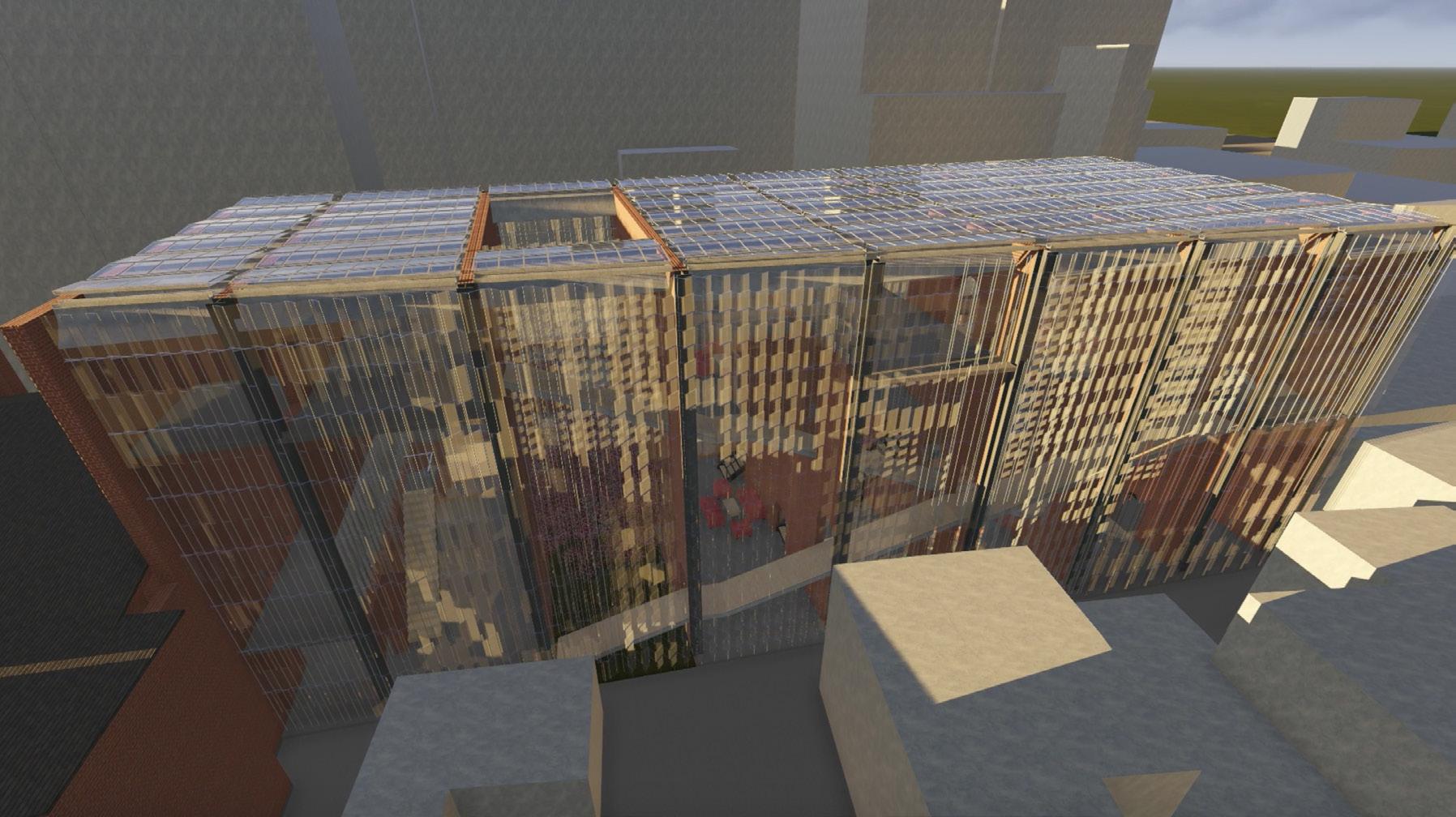
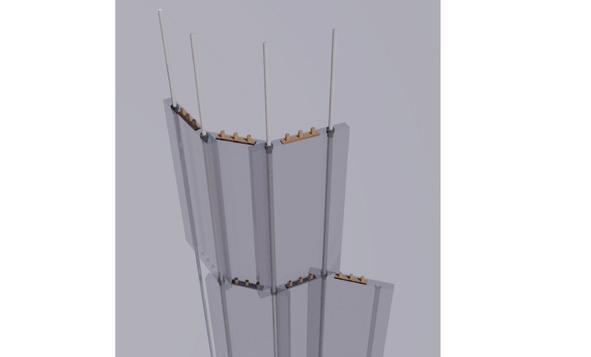
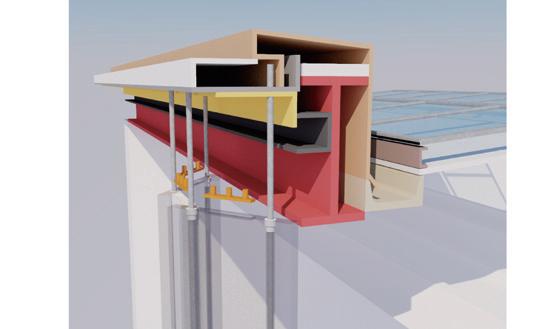
Façade design: The roll of street house consists of single buildings that are two to three stories high. I preserved the original brick façade and added a new wall system. The building will be a new convention center that is open for the public who gather to promote and share common interests. The new façade system used glass bricks which allows sunlight in. The four main bricks arrangements of glass bricks façade are developed by adjusting the
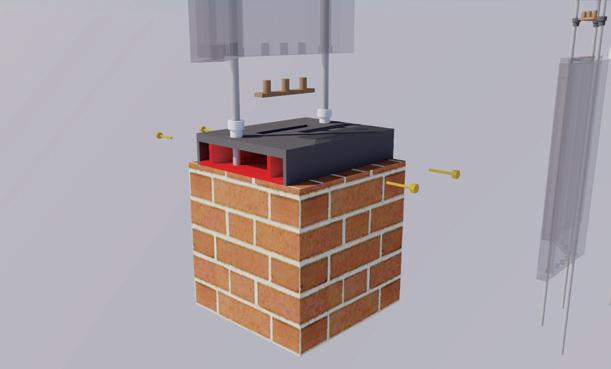
size, angles, and openness. This new system will be installed on the original structure using special metal casting components. All glass blocks are prefabricated in the factory with perforations inside the blocks to allow steel cables to pass through to connect each bricks together.
Program: The new plan for the Wen Meng Building includes a lobby, an exhibition area, a government office, a courtyard and a convention center.
Circulation: The tourists can watch the history documentary in the lobby. In the middle of the building, there is a courtyard which allows a gentle breeze into the building and provides natural ventilation and daylight. The courtyard is a scene transition for visitors where people can break and enjoy the sunlight through translucent glass bricks. After the break, they can walk along a circular route to the top floor where they can watch the public conference through the transparent glass blocks.
Future planning: The historical building will become a new meeting space and educational center for the public, as the location is near three schools. In addition, I hope that it becomes a good example of renovation and urban renewal which brings human activities back to life in social contexts. Urban renewal can be achieved not only by demolishing the entire building, but also by partial renovation to improve the space quality. In this case, increasing architectural value is only through improving the façade system.
16
Site Analysis


Glass Bricks Facade System
Glass Bricks Facade System

Heat resistance rubber seals
Heat resistance rubber seals
Glass Bricks
Cable
Glass Bricks
Cable
Metal casting compenent used to connect bricks together
Metal casting compenent used to connect bricks together
Steel Base
Steel Plate


Steel Base Steel Plate

Screw Fastener Cap
Brothel Temple
Police station
Commercial area
Skylight System
Assembly
Assembly
Glass Bricks Wall
Gutter Closure
Screw Fastener Cap I-Beam
I-Beam


Gutter

Structural bricks
Gutter Closure
Floor
Ground
Video(click the link)
VIDEO
歸綏街的發展 近年的衝 擊 基地分析 國家之權力關係 p rogram說明
妓院 廟宇 警察局 商業活動
Gutter Ground Floor Site housing
1850-1895 1930-1945
17
Skills: Rhino, V-Ray
Keelung Urban Renewal Design

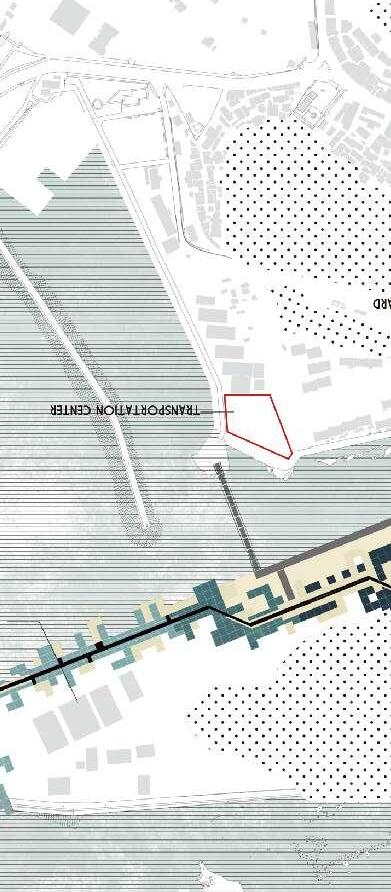
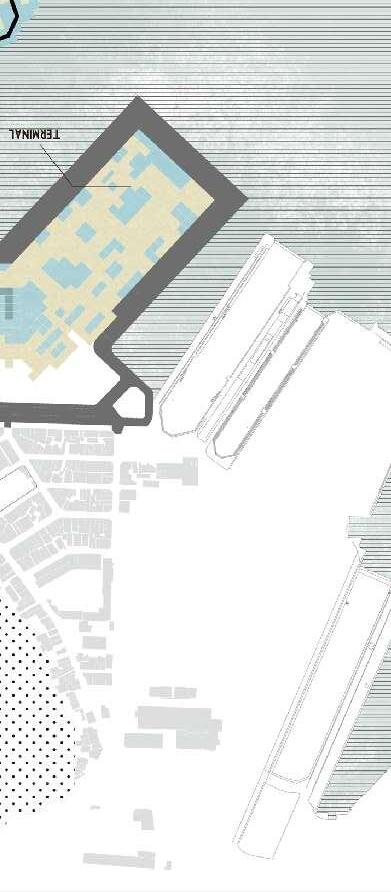
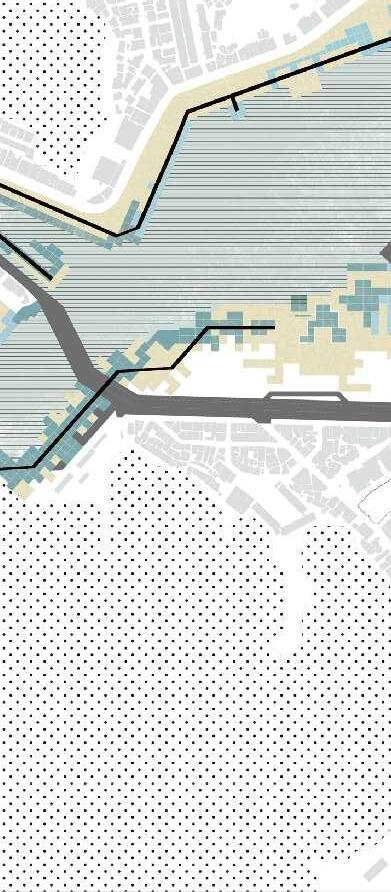
,2015
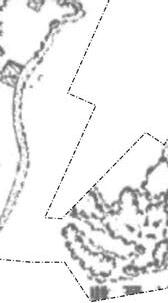
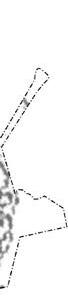
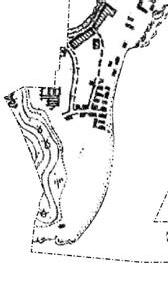
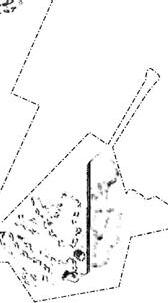
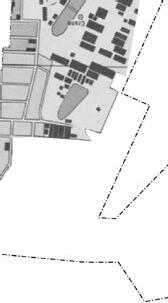
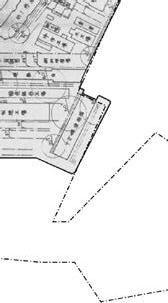
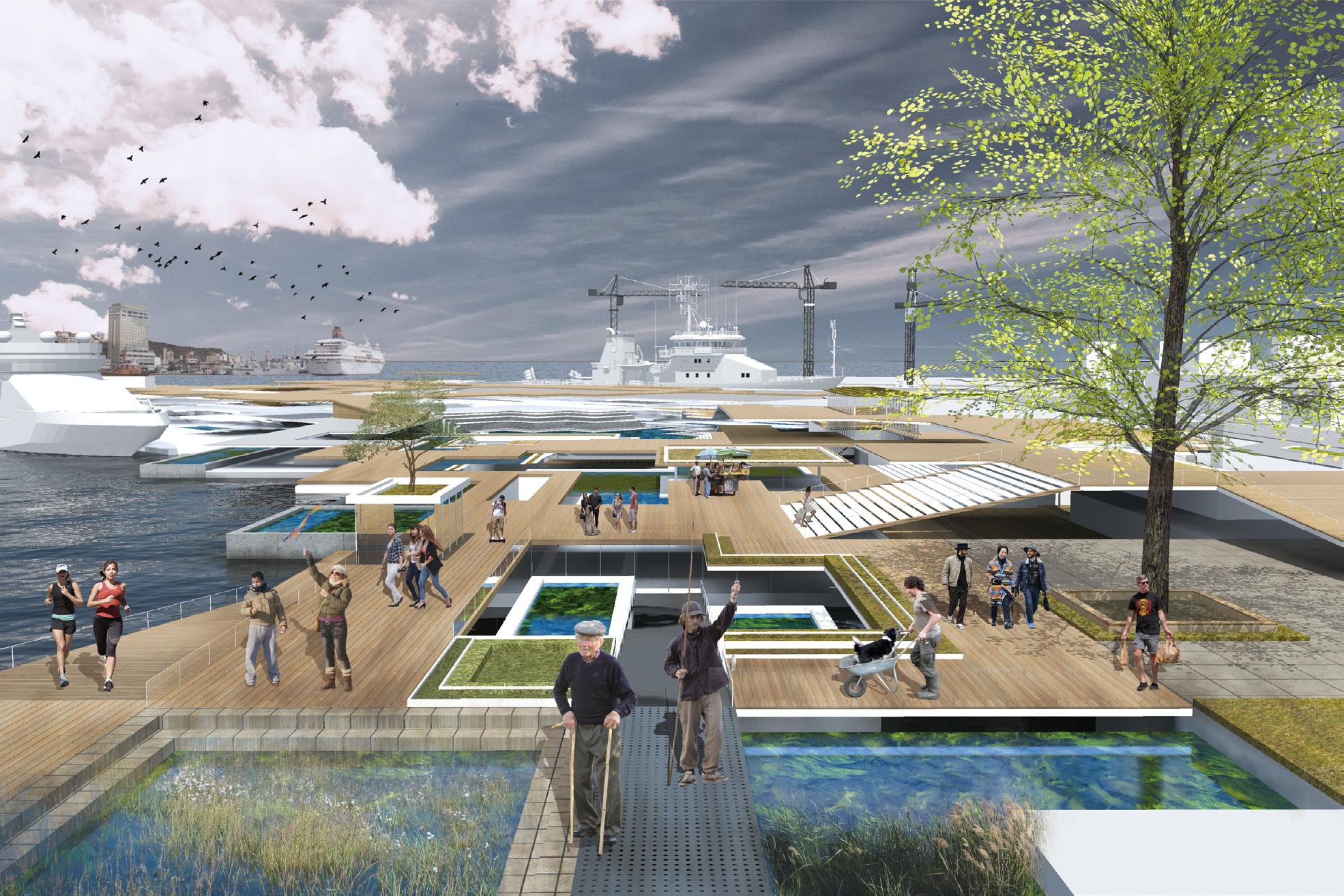
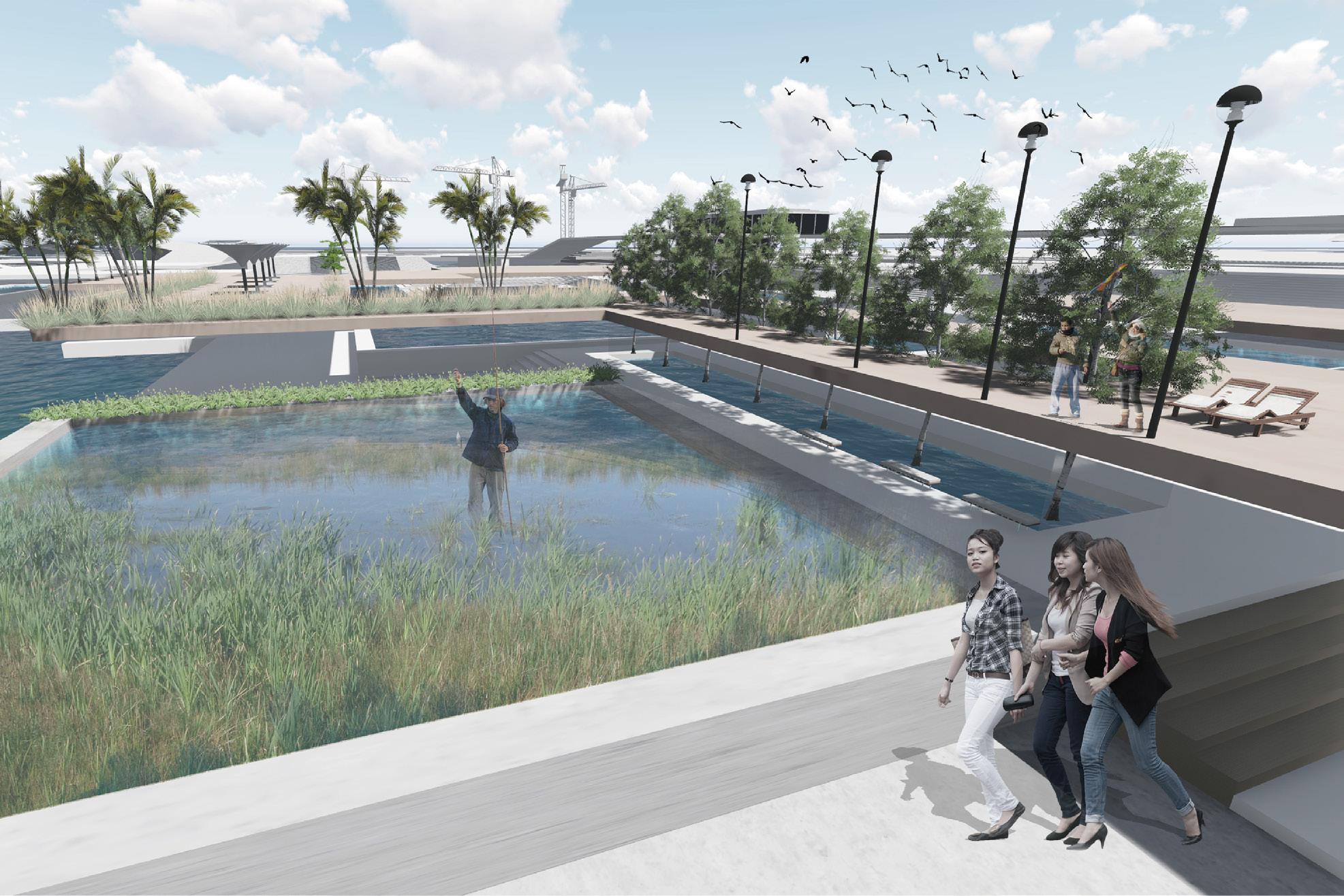
Background: Keelung City, is a major port city situated in the northeastern part of Taiwan. The city was founded by the Spanish Empire in 1626. The original infrastructure and buildings in the old city are gradually aging, therefore, urban renewal is urgently needed. The site is located beside Tianliao River in Keelung. In the past, Tianliao River is the first canal in Taiwan for the transportation of timber and coal, but it is tranformed into a place for sightseeing now.
Plan: The layout design is a strategic sector to promot the local economy. This layout encourage people to “loop” the stores. To increase human comfort, the greenbelt park is designed to improve air quality within urban areas and provides a temporary escape from the busy city life where people can walk the park and shop the market stalls and enjoy the time. Furthermore, pedestrian arcade is designed to block sunlight in the summertime and provide a comfort environment for people when shopping.
Programme: Different spatial programmes are added. Cycle track that runs along the river that gives a chance seeing a city and get a glimpse of locals' life. On the second floor, Entrepreneurship Center is built as a bridge between the education and work by developing and providing entrepreneurship education and training programs. It helps local crators to establish their studio to foster art and culture development. The housing zone is designed on third and fourth floor to enhance home privacy, where residents can enjoy the beautiful views of a city in their own place.
MASTERPLAN 18






WETLAND LANDSCAPE ENTRANCE SHIPYARD HISTORY/BOUNDARY 1670 1760 1895 1930 19
Interior Design, Residential Housing
, Taipei City , Since 2020, Under Construction
Skills: Sketchup, V-Ray
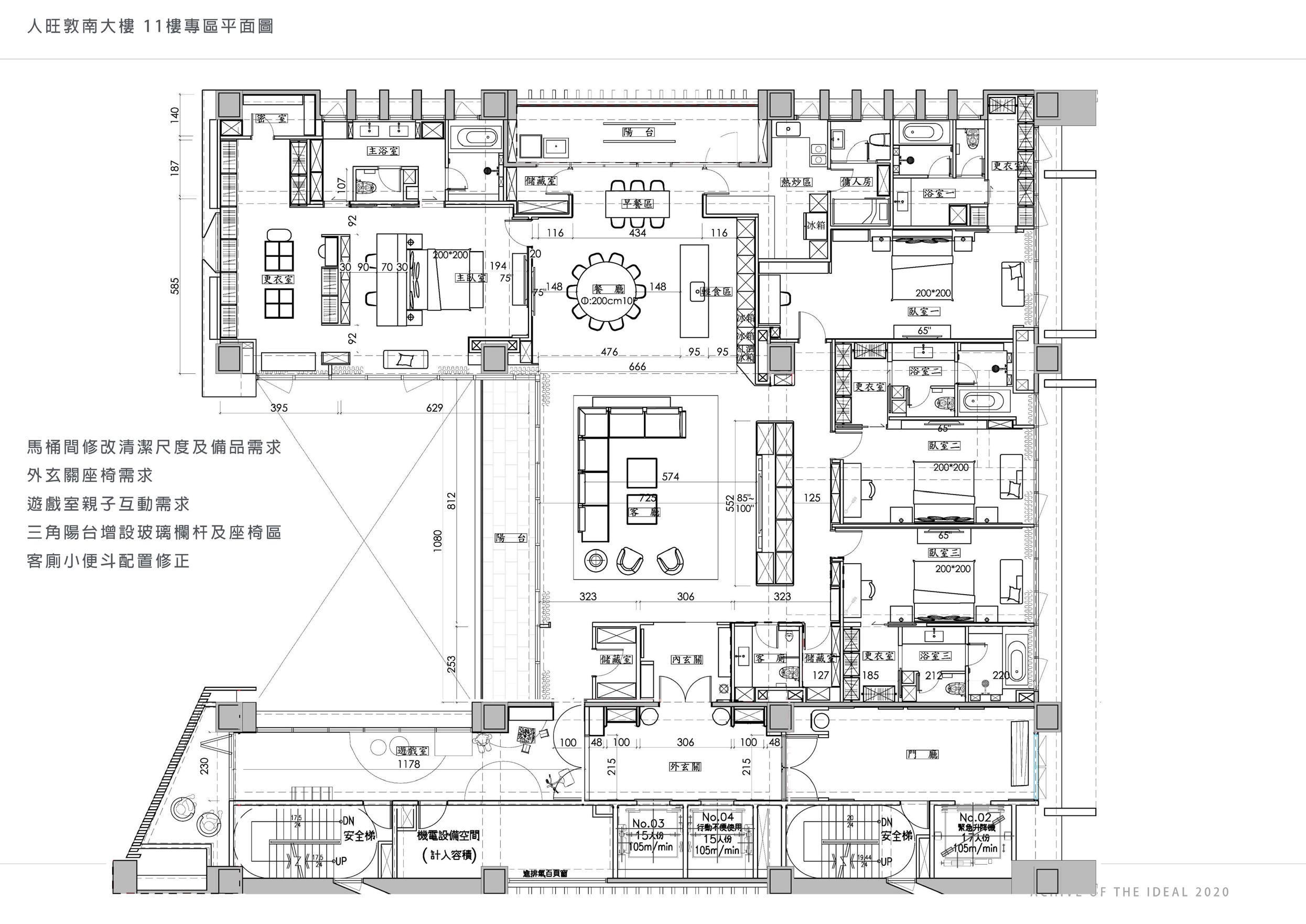
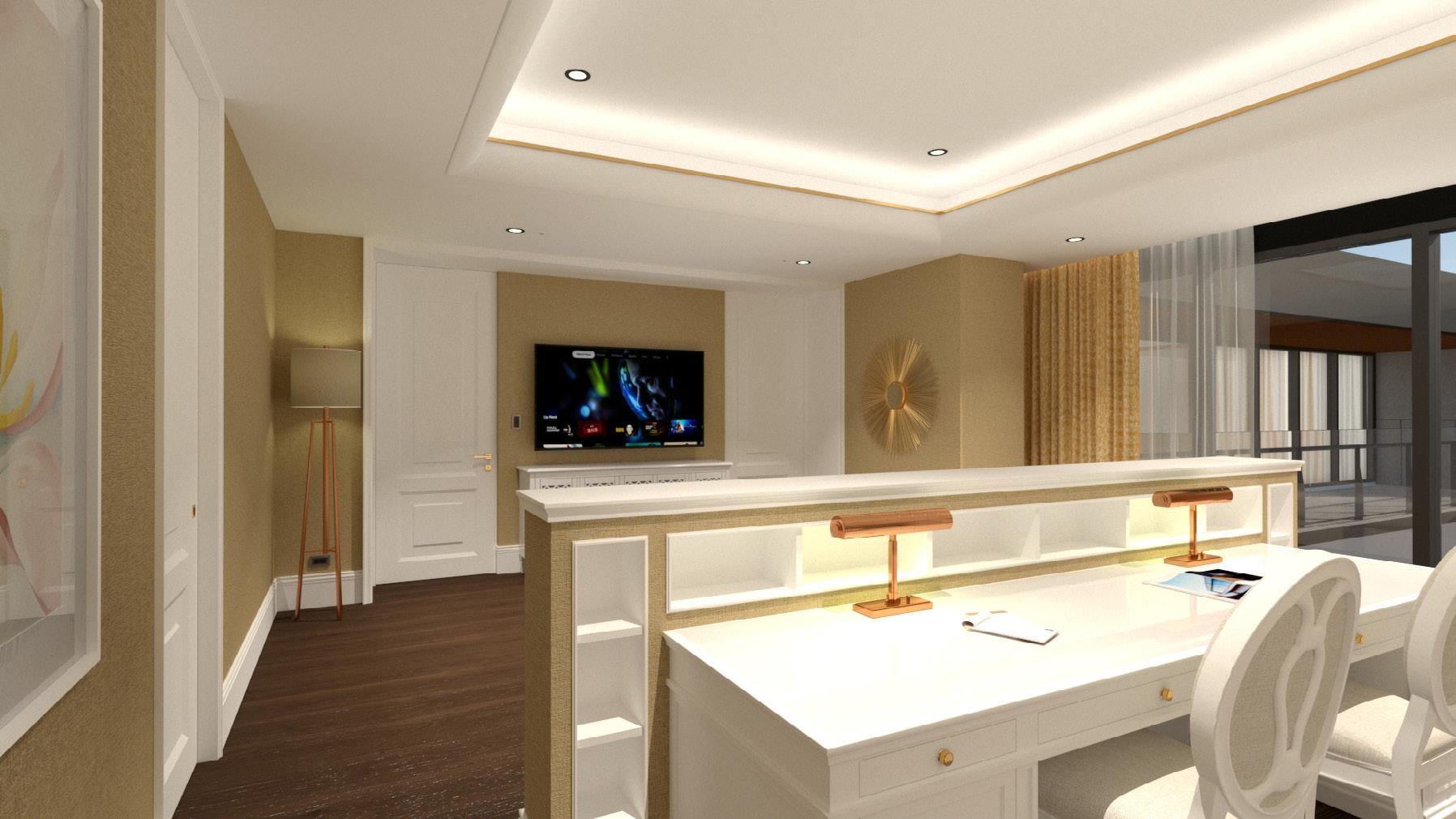
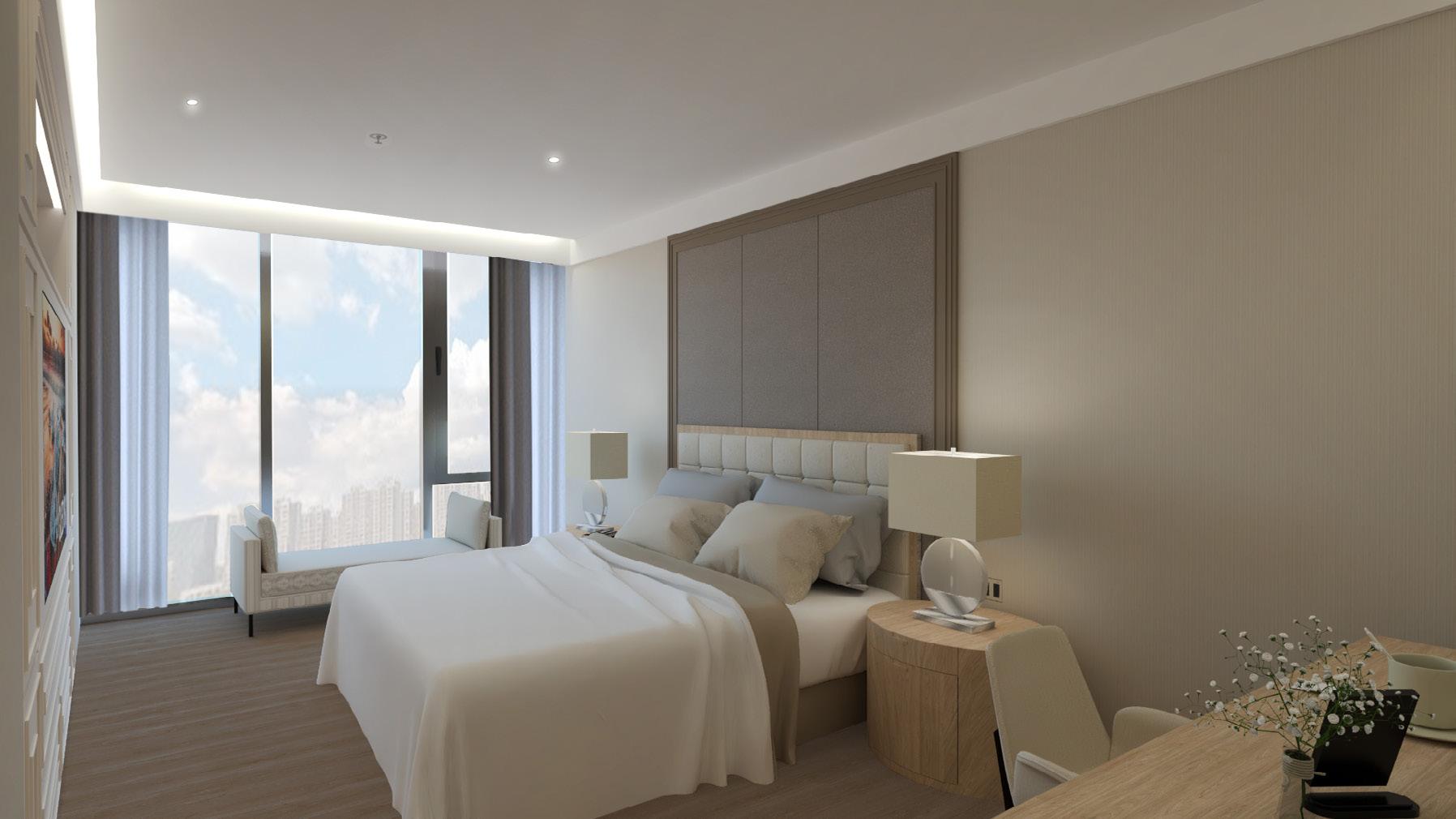
In this case, the client has commissioned us to make a proposal. The interior design concept is a visual theme that evokes a specific mood by strategically using colour, space and style. It is the art of turning an idea into reality.
Concept: The scope of interior designing involves
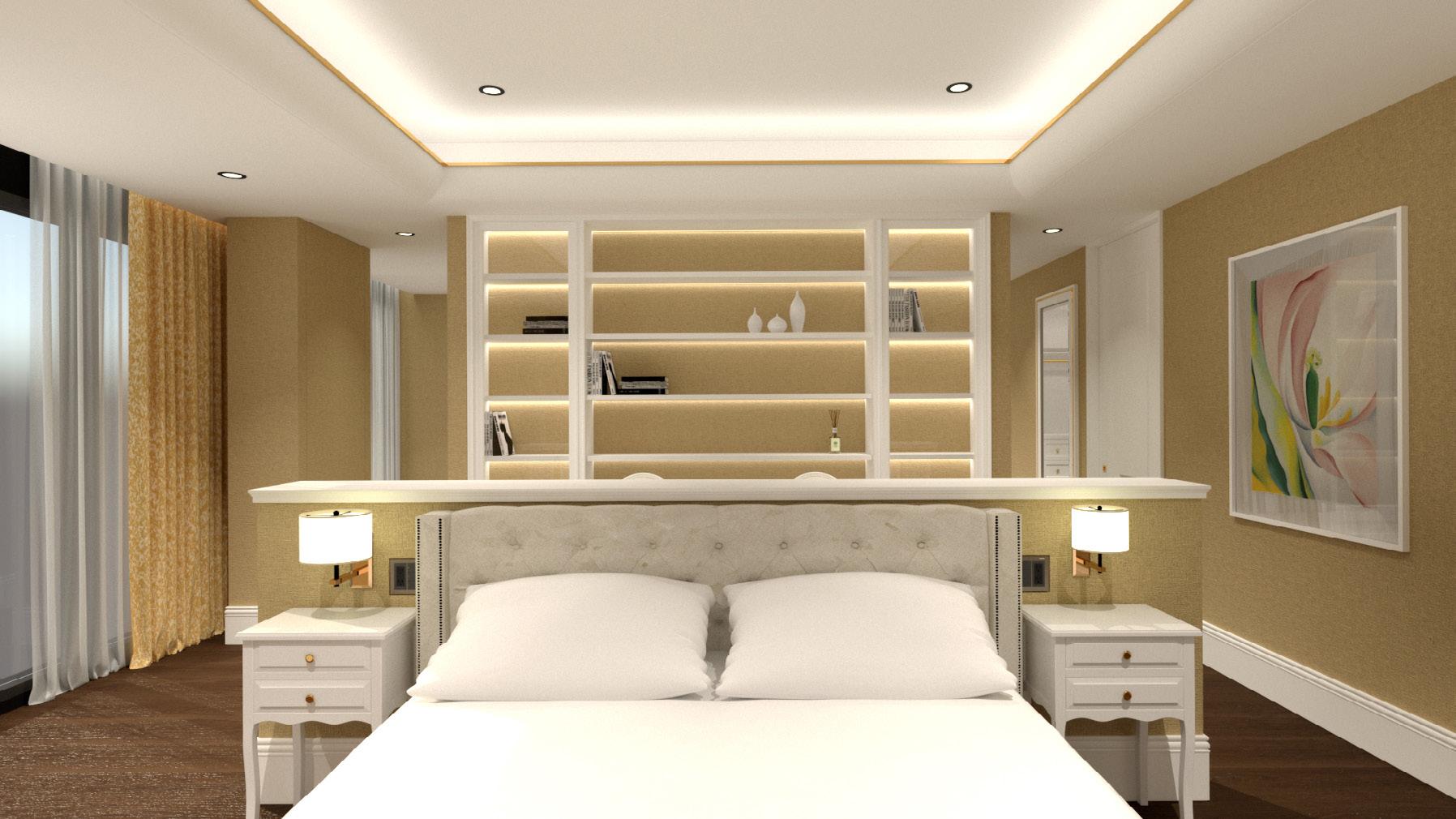
designing homes to create a warm and favourable living environment. The concept of the texture is to use gold and white colours to signify luxury in the public area and a primary bedroom; in contrast, a combination of low chroma colour and wood texture will be used in the guest room.
Details: Several dazzling visual images will be displayed. The ceiling above the bed will be adorned with thin and golden ornaments. The reading place will be combined with the bedroom, and the one-storey-high bookshelf will be used for displaying art and storing books, serving as a beautiful background in the room.
Guest Room
Primary Bedroom
20
Primary Bedroom
Primary Bedroom
21
Guest Room
Tessellation Patterns
A Study with Deconstruction of Geometric Patterns and application in Polyhedron ,2020
Skills: Ladybug, Rhino, V-Ray
In recent years, there has been an increase in the number of old, empty houses in Taiwan. Many families have moved out of their properties due to poor ventilation and bad lighting, and the renovation of old houses is very challenging as even a slight change can cause structural instability. My solution to this problem is to use lightweight materials that are easy to disassemble, which not only reduces the load on the structure but also allows for flexible adjustments according to the function of the building. I am going to design units that are arranged to form different types of walls, and then apply them to the facades of old buildings.
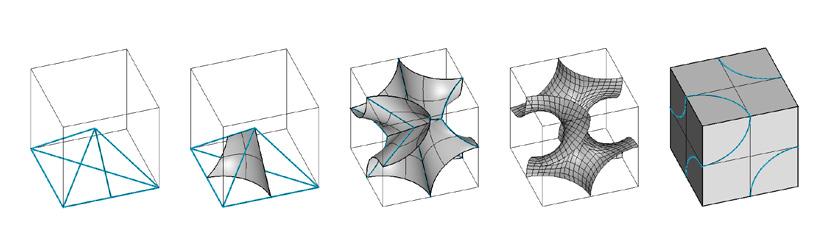
The development of the unit: I used the concept of “tessellation”. Tessellation is commonly found in Islamic architecture, where walls are often composed of simple shapes such as triangles, rectangles, and hexagons, arranged in a mosaic. This geometric logic is also often used by contemporary artists, for example, in Erwin Hauer's design of brick units, which are repeated and arranged to form an infinitely extending decorative wall, and various prototypes by the Boston Society of Architects, which are randomly organized into a screen wall.
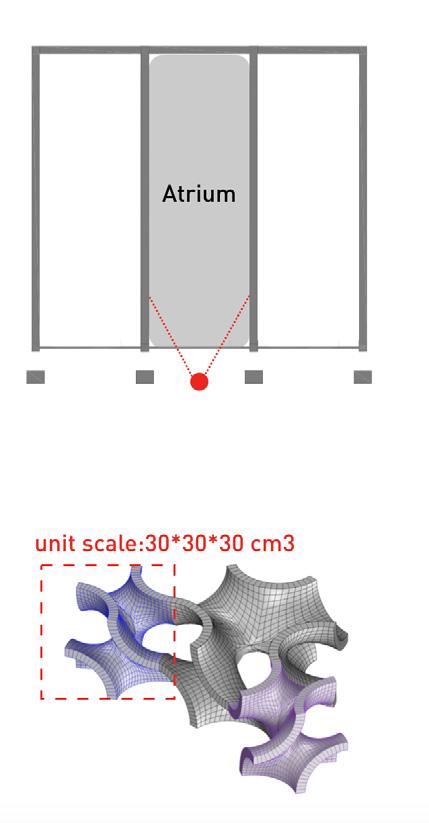
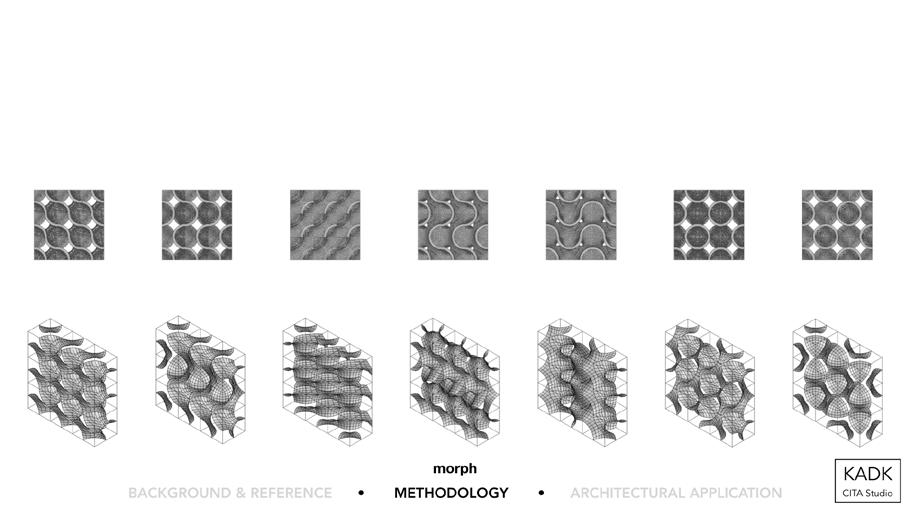
The design of the unit: The pattern was constructed from “truchet tiles”. The basic unit composition of the different images was analyzed, and then these types were rotated and arranged to produce different brick walls. To understand the effect of these walls
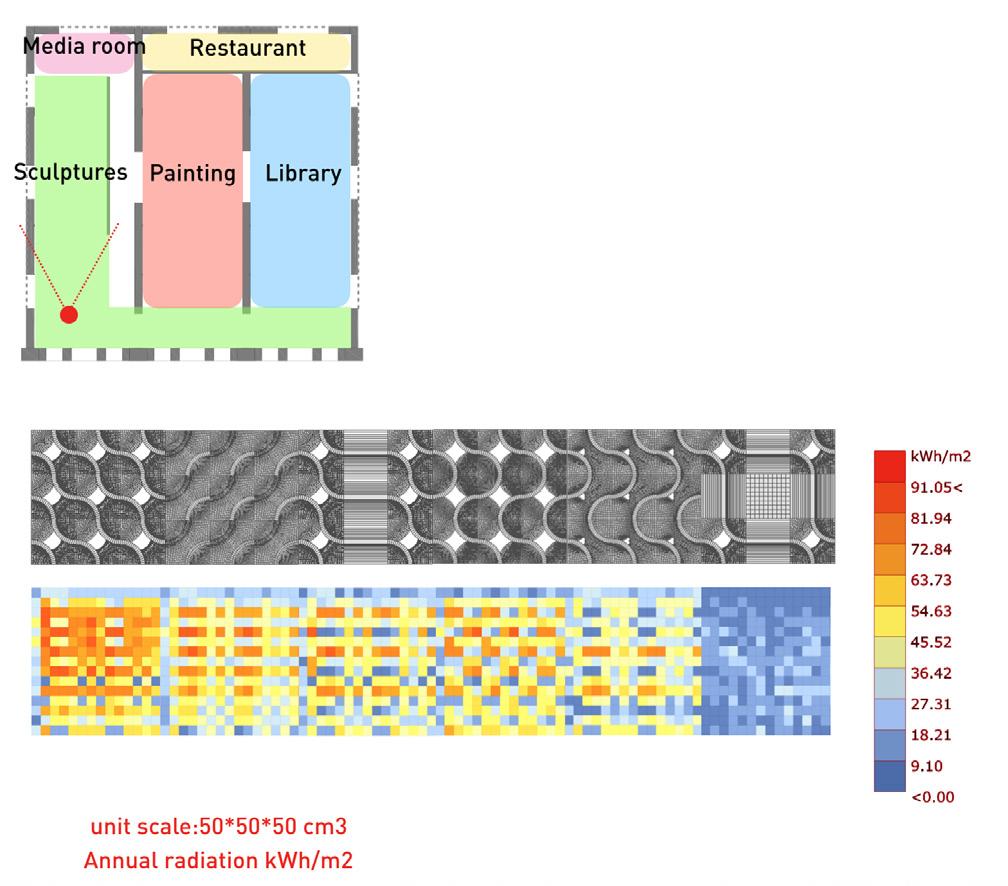
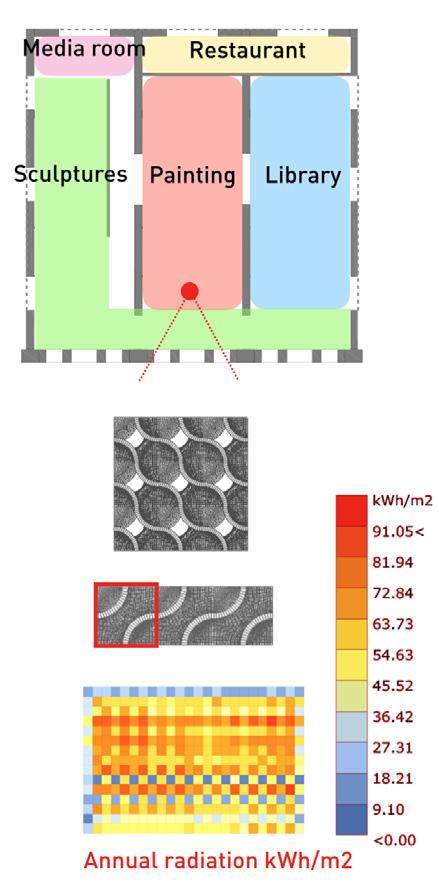
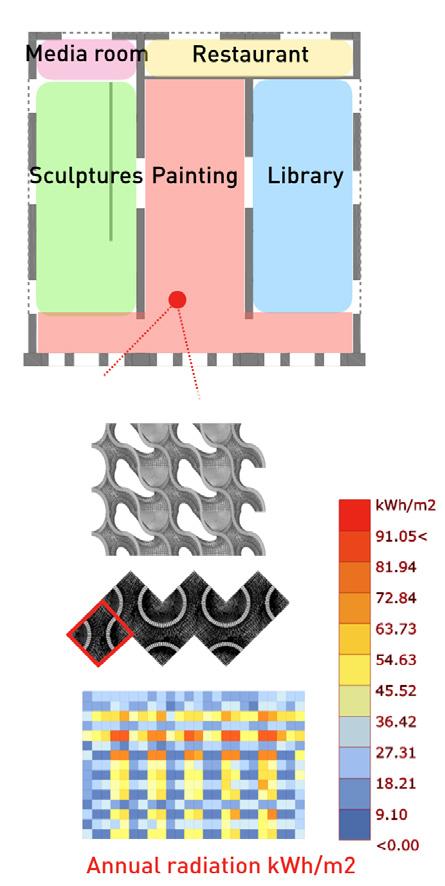
in blocking out sunlight, 3D models were imported into a physical environment analysis (Ladybug plugin) to calculate the sunlight radiation. The number of hours of direct light throughout the year was calculated, and the analysis predicted the sun’s path to show when it would most affect people using the unit.
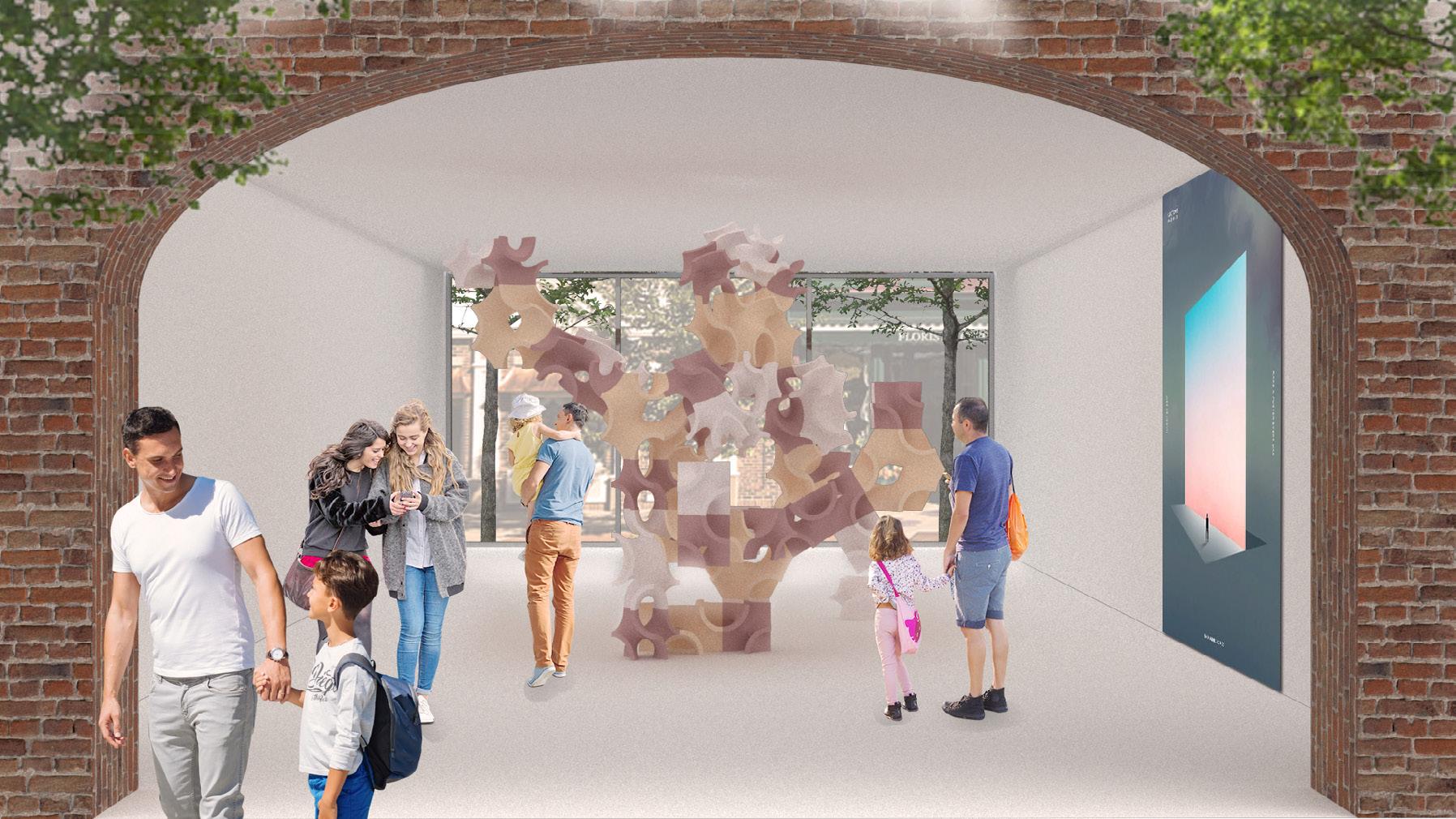
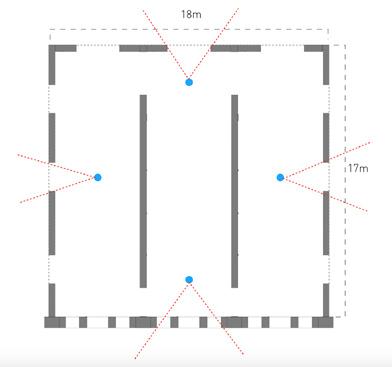
Design application: An existing old street house will be refurbished and made into a public museum. The museum will have a variety of functions, such as a painting exhibition area, a sculpture exhibition area, a media room, and an atrium. In the painting exhibition area, the brick walls will be arranged in a zigzag pattern to create more depth and block excessive sunlight, which could damage the paintings. In the sculpture area, the brick walls will be arranged in a straight line to allow more light into the room and create shadows around the sculptures, making them look more realistic. In the sculpture area, the brick walls will be arranged in a straight line to allow more light into the room and create shadows around the sculptures, making them look more realistic . In the corridor which links the sculpture exhibition area to the media room, the brick walls will be pierced by various sized holes creating changes in the light from bright to dark and guiding visitors into the media room. In the atrium, the bricks will form an interactive installation where adults and children can work together to create different 3D structures. In the future, it will be a compelling museum.
22
Atrium
Design Ideas Shape Development Site Analysis Bricks Combinations Function Elemant Generating Pattern research Prototyping The solar radiation analysis Spatial Program Digital Models
fig.3
fig.1
fig.1 Workflow
fig.2 Evolution of a Schoen’s Pa (Batwing) Surface
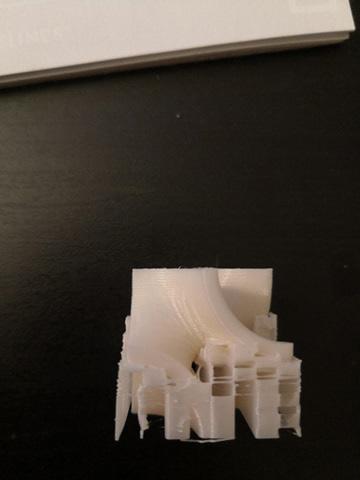
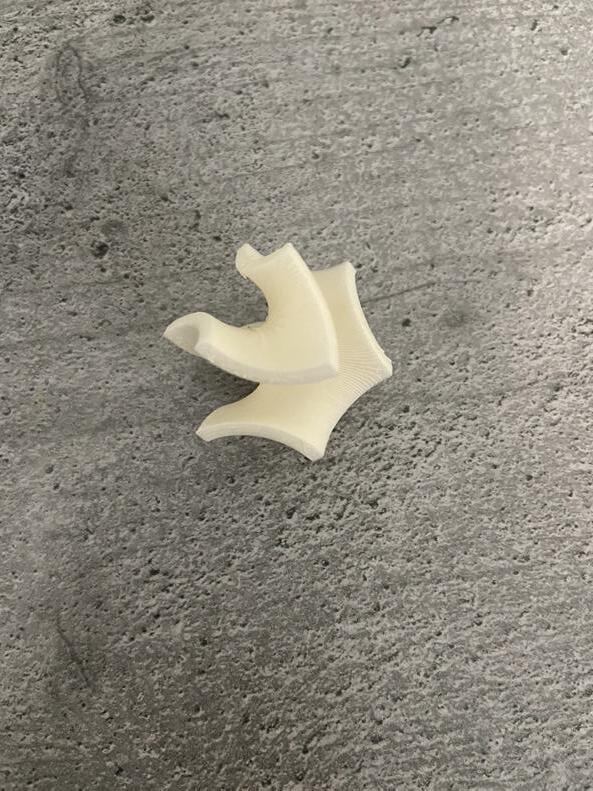
fig.3 Prototype
23
fig.2
Analysis: The annual direct sunlight analysis chart shows that the east and west sides of the building get direct sunlight throughout the year, while the south side of the building receives direct sunlight only during winter. Too much sun exposure can be harmful. It can lead to: skin cancer and eye injuries; therefore, the brick design has been developed in different prototypes to block sunlight.




1 2 3 4
4 1 2 3 4
fig.
fig.4 Annual direct light analysis
fig.5 Prototypes
fig. 5
24
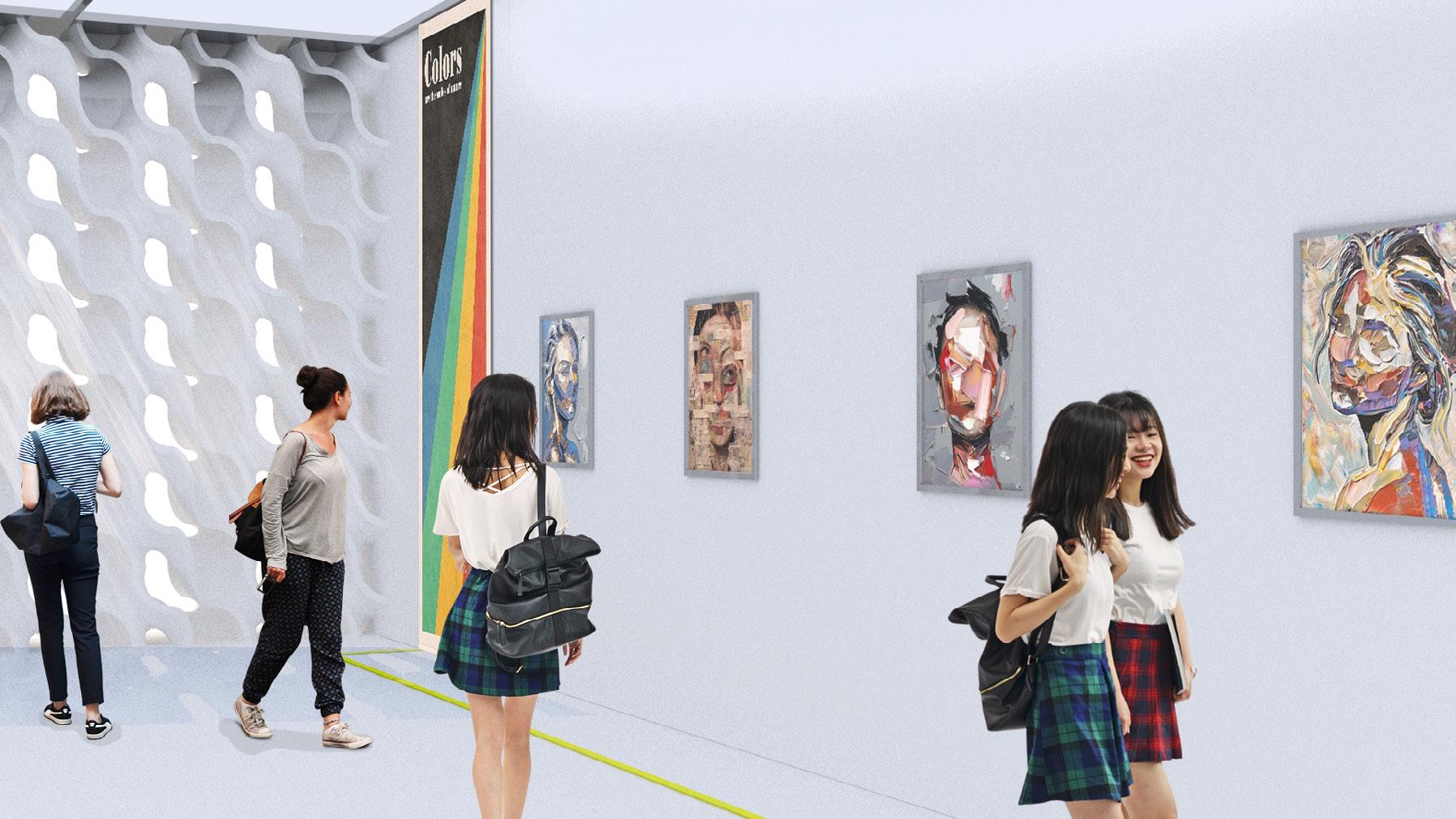
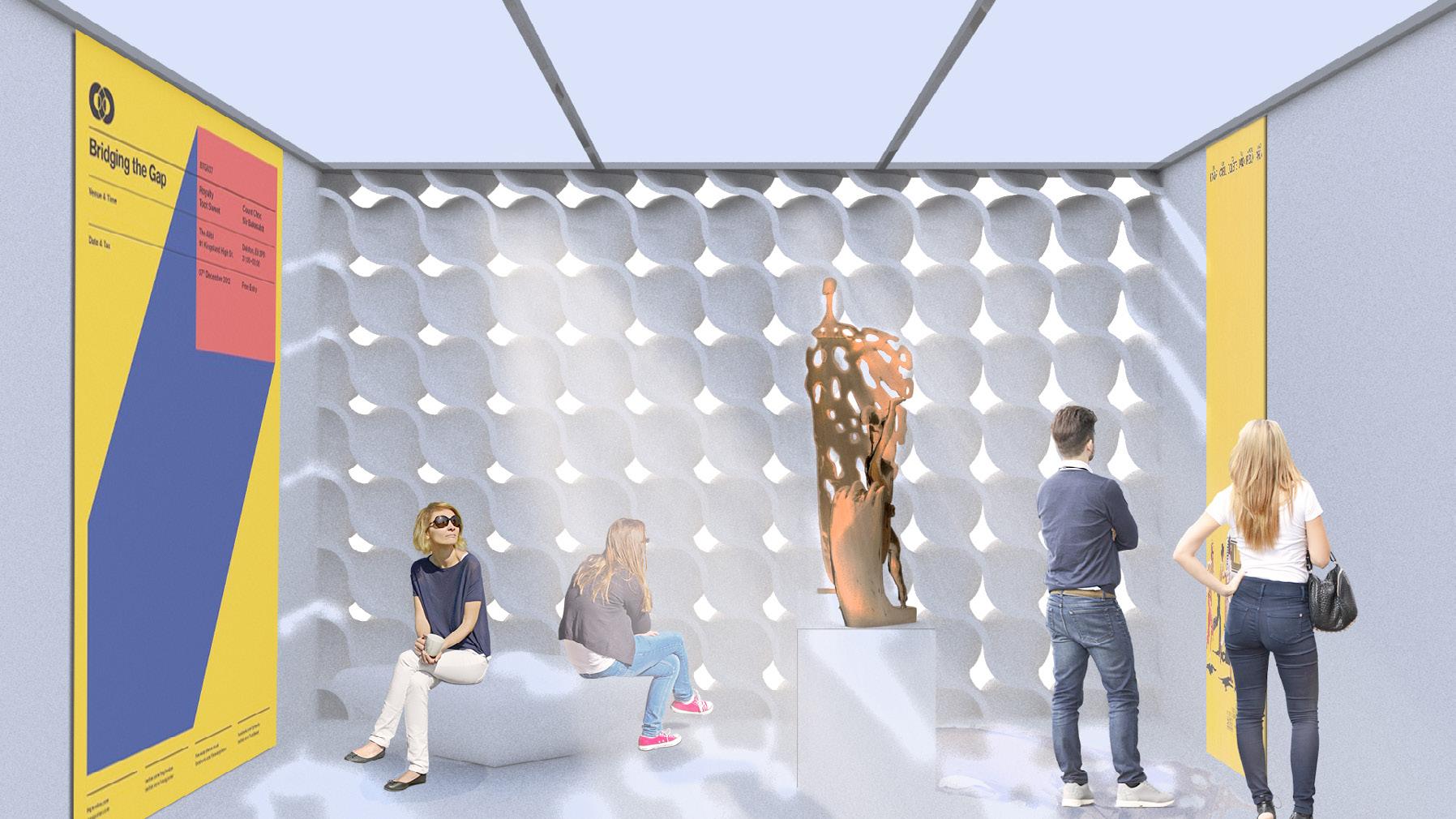
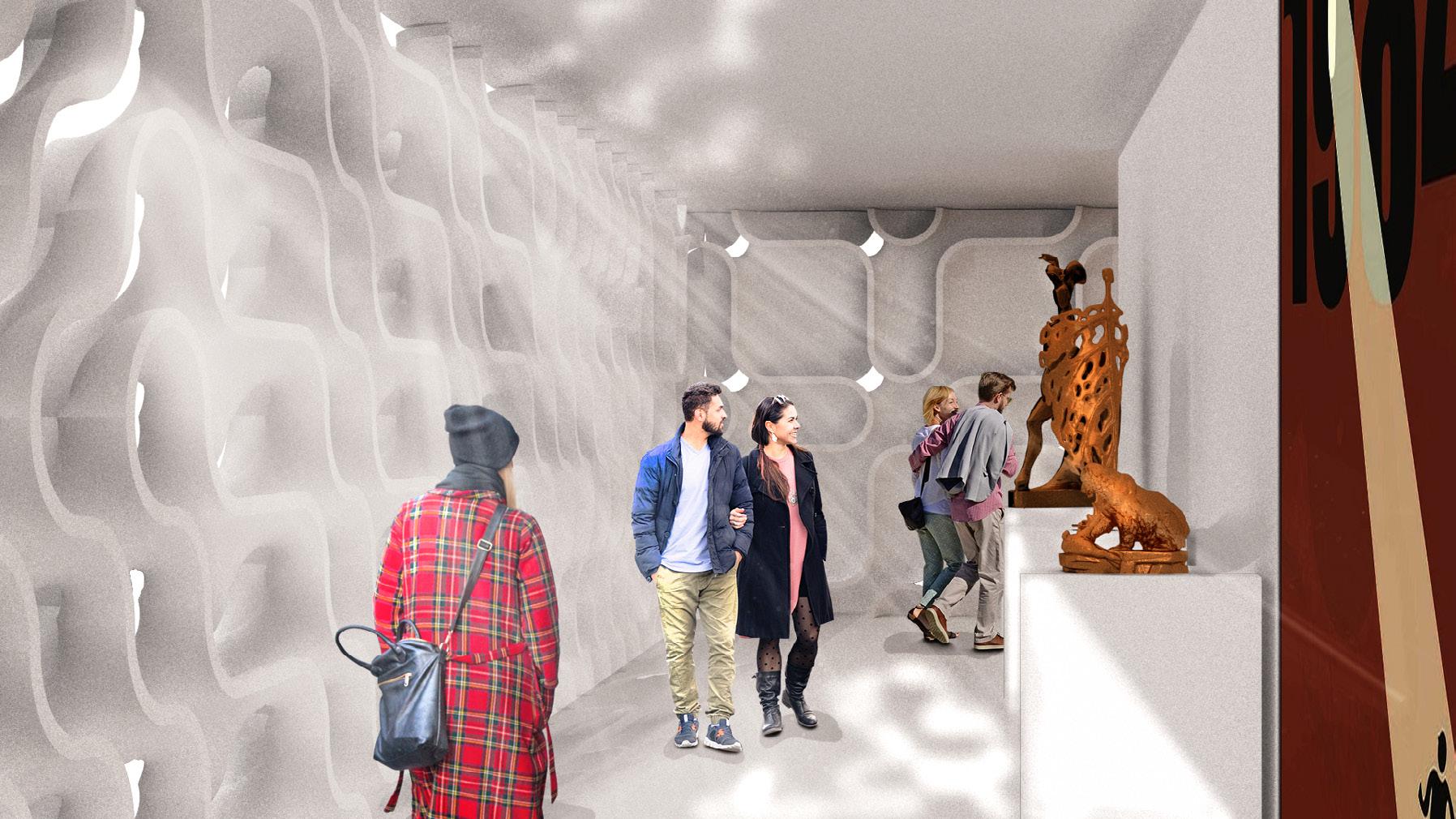 Corridor to Media Room
Sculpture Room
Corridor to Media Room
Sculpture Room
25
Painting Room
Blocks Fabrication For Microclimate Control
Exploration of Robotic Sculpting Techniques using Carving Tools ,2022
Skills: Robot, CFD, Rhino, V-Ray
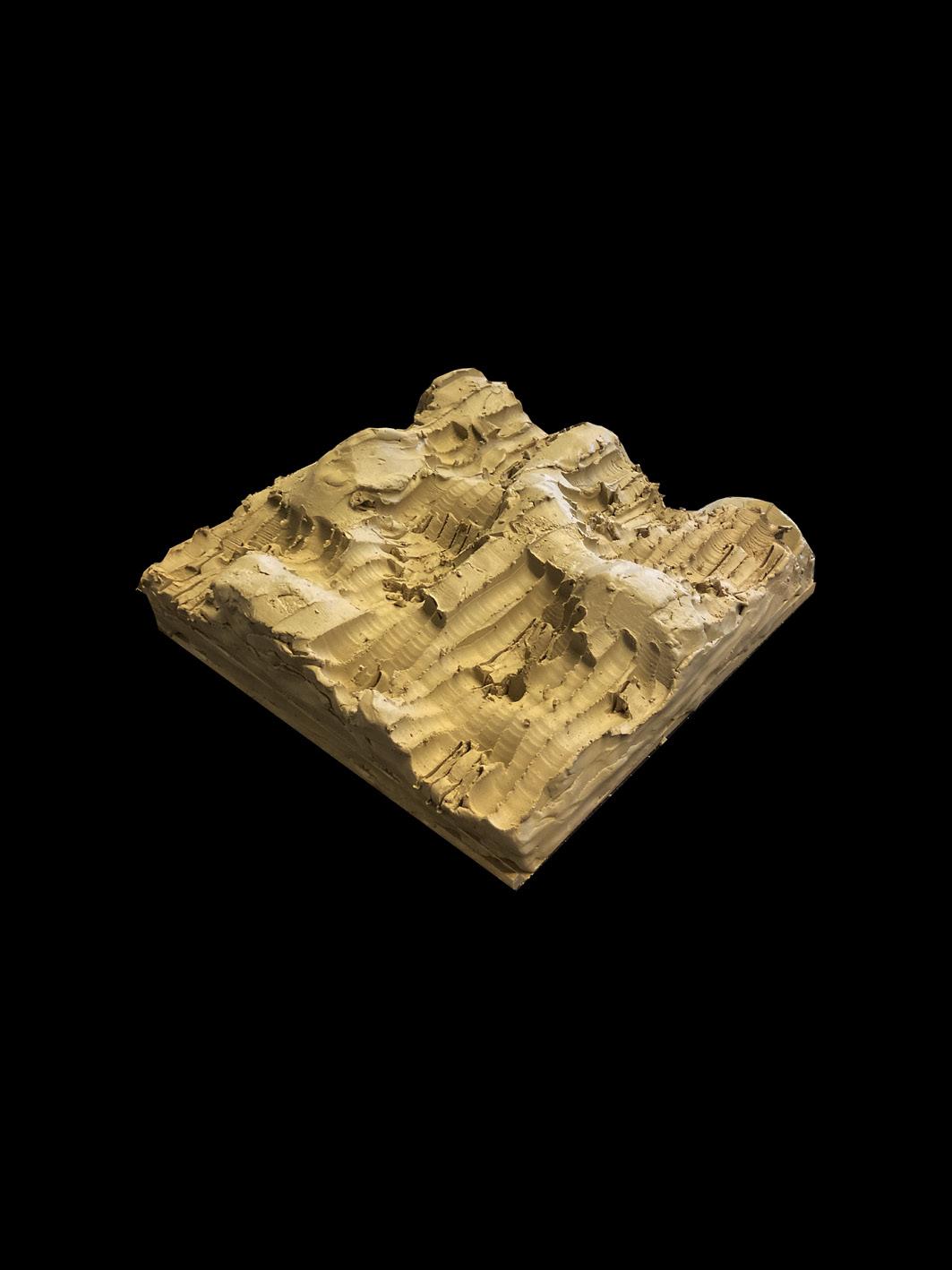
Abstract: This project aims to investigate robotic sculpting techniques for producing blocks to control microclimate. The urban heat island effect currently represents a common and growing environmental concern. Consequently, several studies have addressed the pressing challenge of how the urban microclimate can be improved. In this project, I developed a workflow to employ robotic sculpting tools to create additional surface area on clay. When long channels were carved into the clay, its surface area increased, which in turn enhanced its heat exchange effectiveness. Furthermore, using a robot allowed the design to move beyond the standard blocks during the fabrication process.
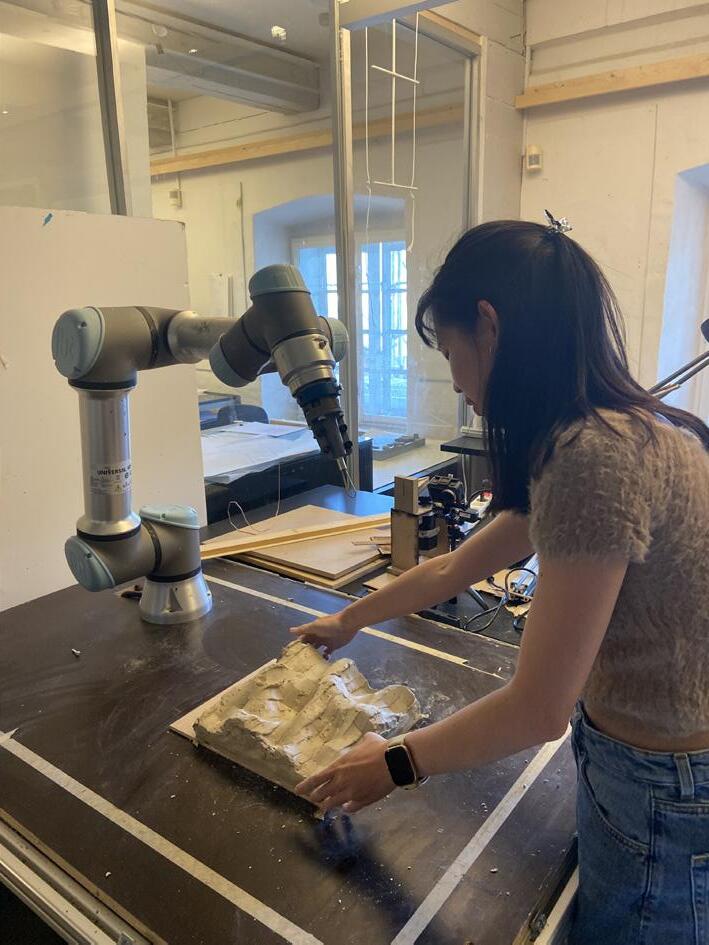
Method: The method draws inspiration from stylised robotic clay sculpting, which was proposed by Disney Research. The technique involves fabricating stylised sculptures in water-based clay using customised tools and serves as an outlet for unique artistic expression; however, the method has not been shown on the architectural scale. Therefore, through this project, I decided to seize the opportunity to develop large scale elements in architecture. The investigation elements include tool design, understanding the material properties/ terracotta cooling effect and robotic fabrication.
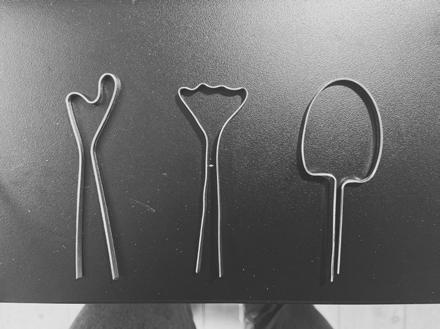
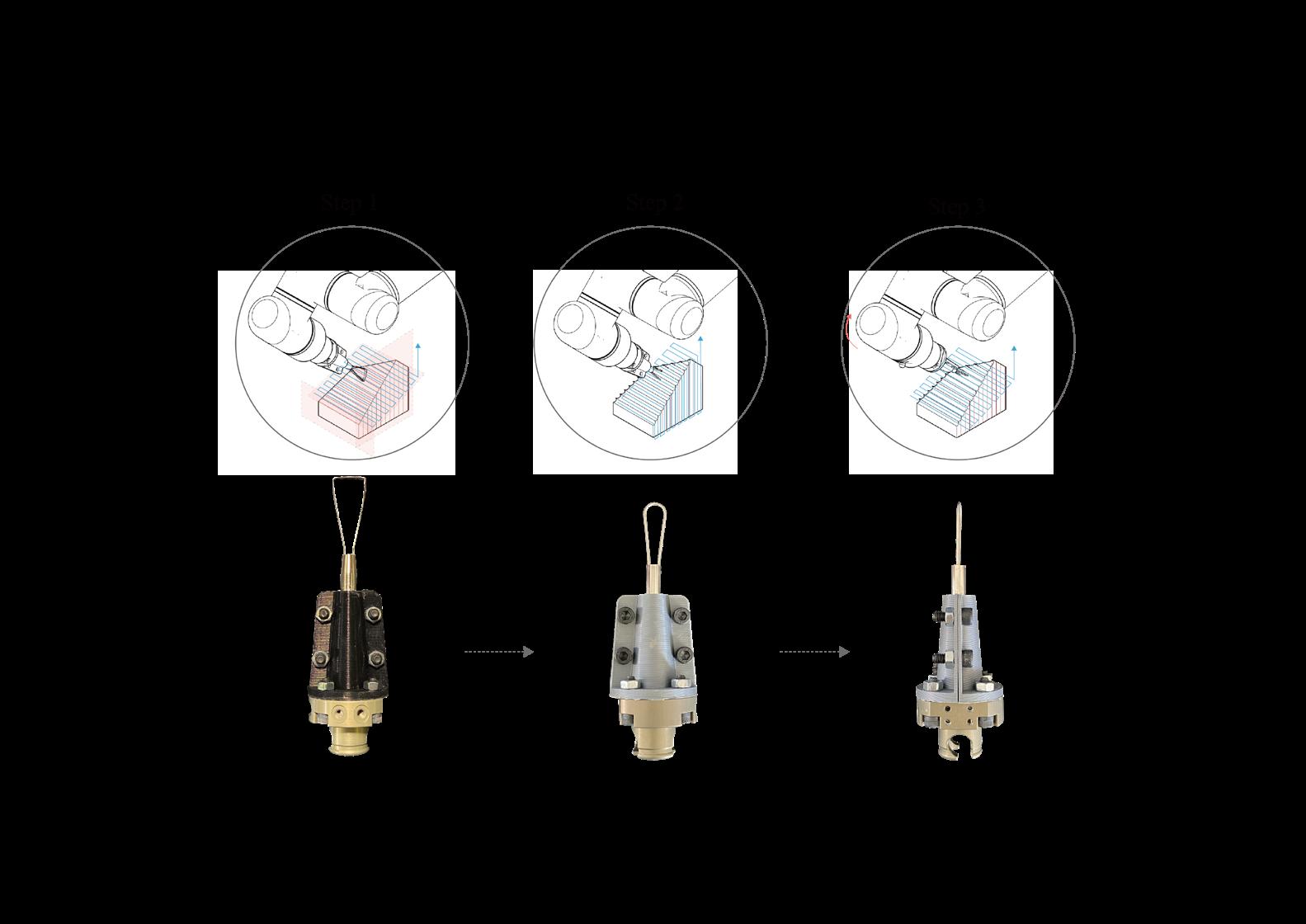
Tool set up: Three different versions of the tool were developed. The first version was made of 3
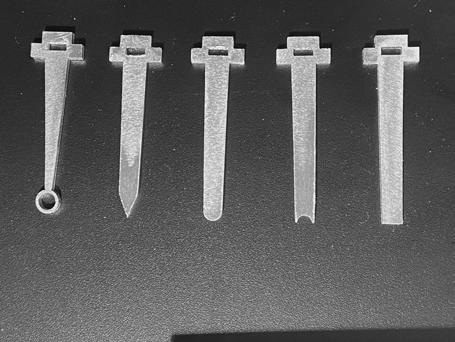
mm aluminium (Fig. 1). During testing, this version performed unsatisfactorily to remove materials efficiency. The problem was that the aluminium plate ring did not clamp the aluminium tool tightly, causing vibrations during clay cutting. In addition, the shape of the tool head affected the cutting efficiency, where the residual clay usually clogged up the hollow-shaped tool. The second version of the tool was made of steel stripes (Fig. 2). It was easy to customise the stripes by bending. However, during fabrication, the material deformed because of inadequate stiffness. The third version of the tool was a conventional loop tool comprising a handle and a thin, narrow metal strip bent into special circular profiles to fulfil different cutting needs, such as size, angle, texture and detail. A 3D printing base was used as the adaptor. This version of the tool was successfully applied for clay carving.
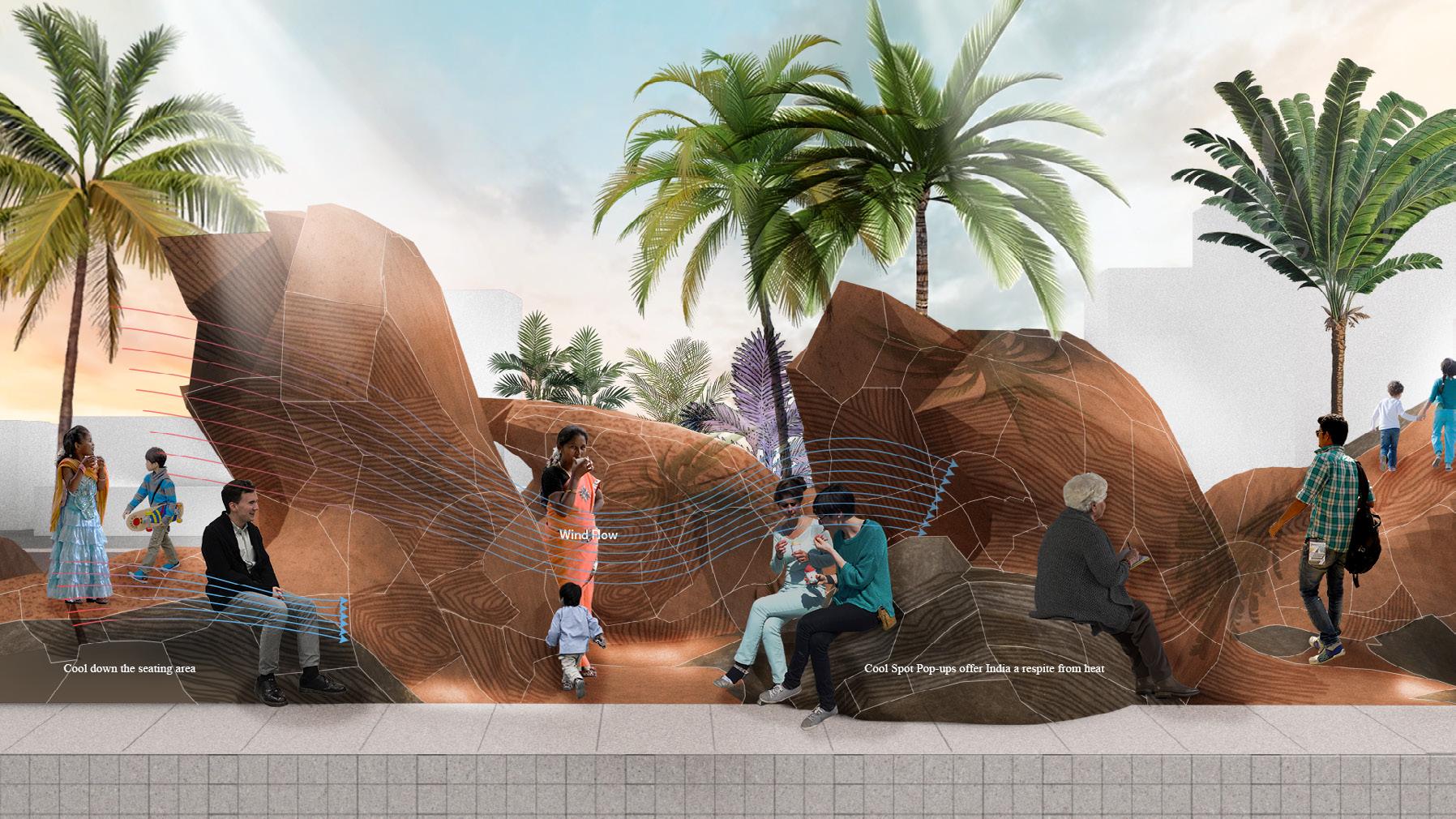
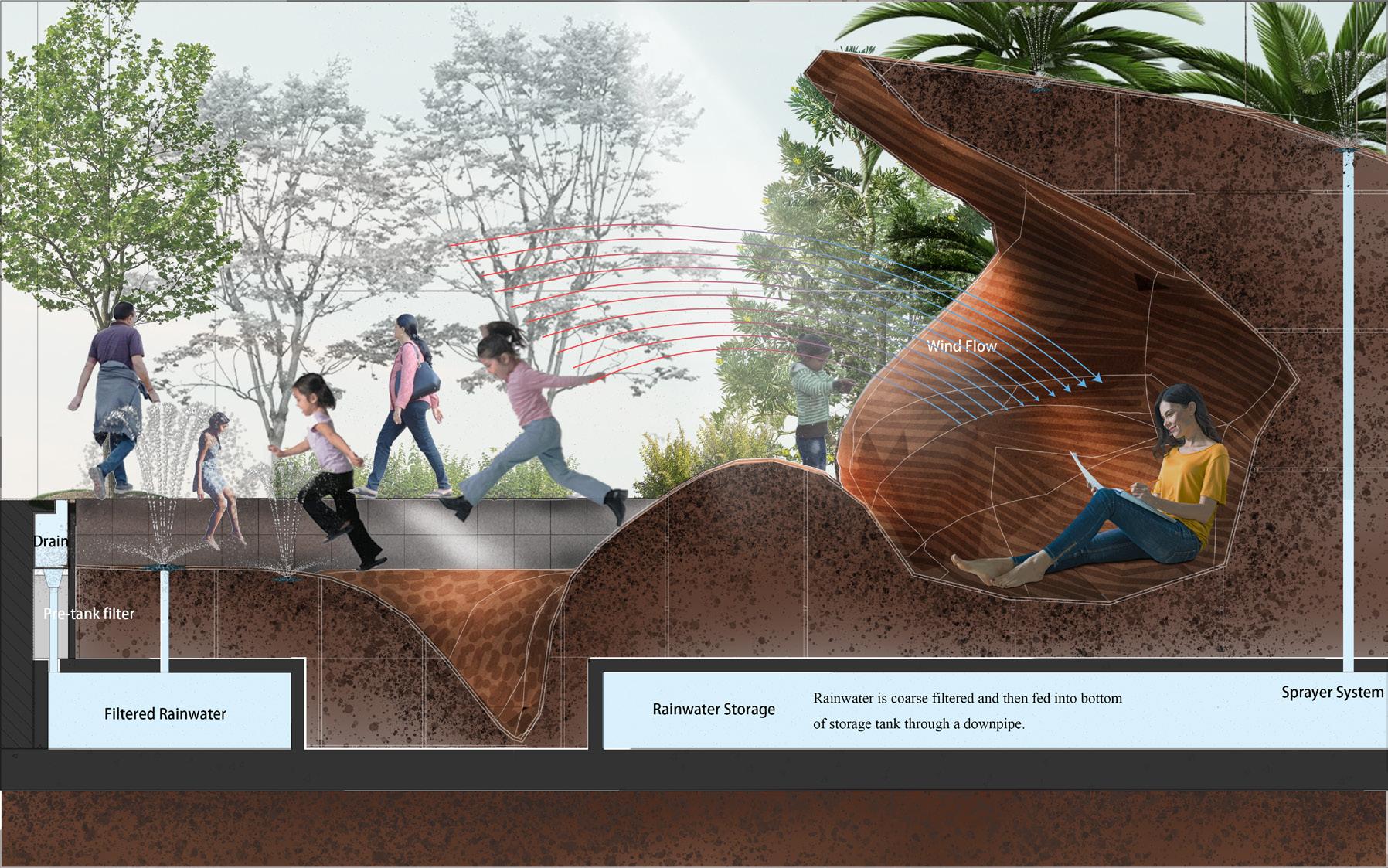
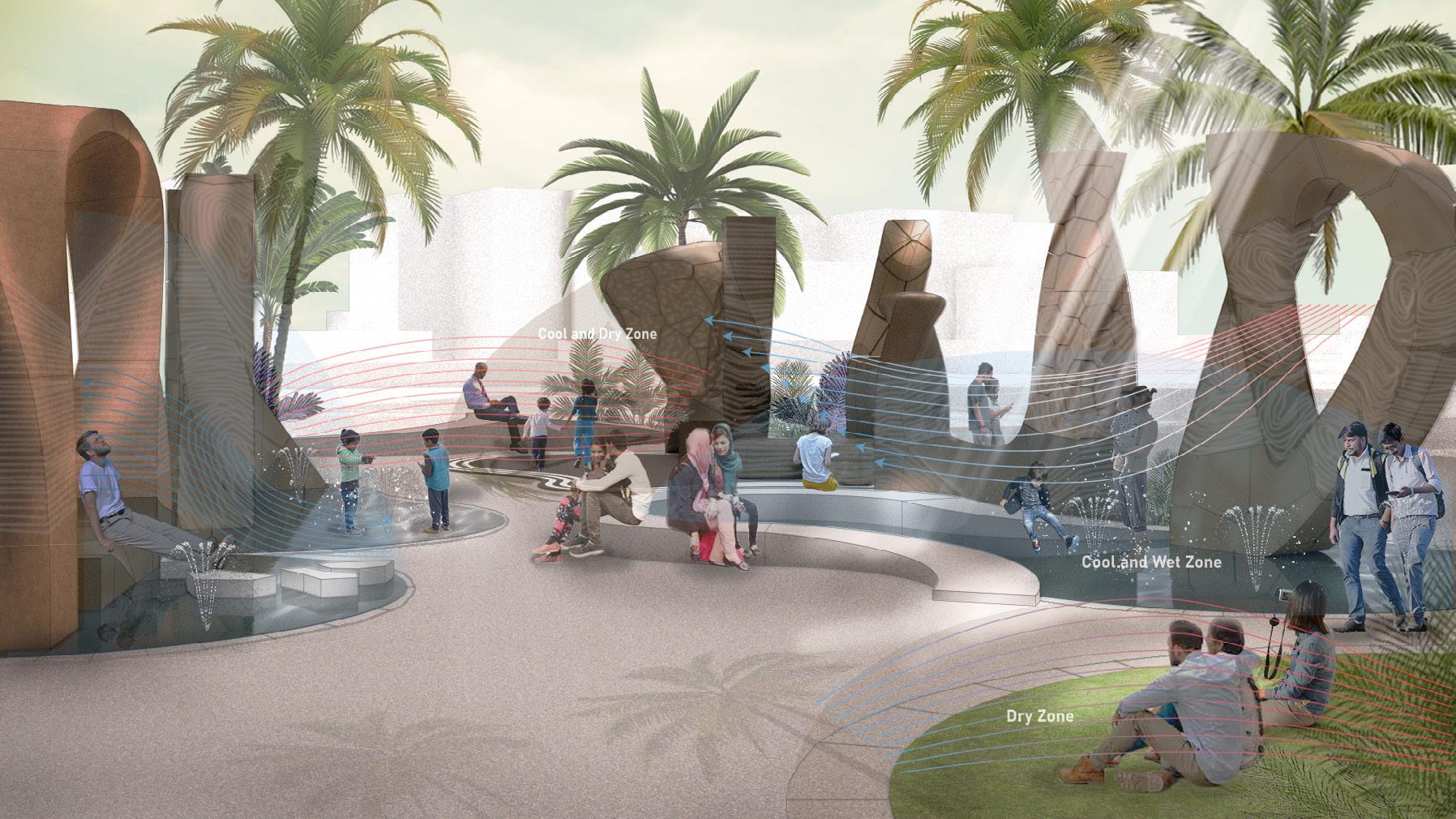
Design: This project applied a robotic cutting workflow to fabricate blocks and place them in the context of hot, semi-arid climates. The blocks were designed as two different prototypes for air cooling and were demonstrated in a public park in India. The cool and warm zones were created by placing various blocks with different carved patterns using the developed tools.
26
fig.1 fig.2
Entrance 27
Terracotta Landscape
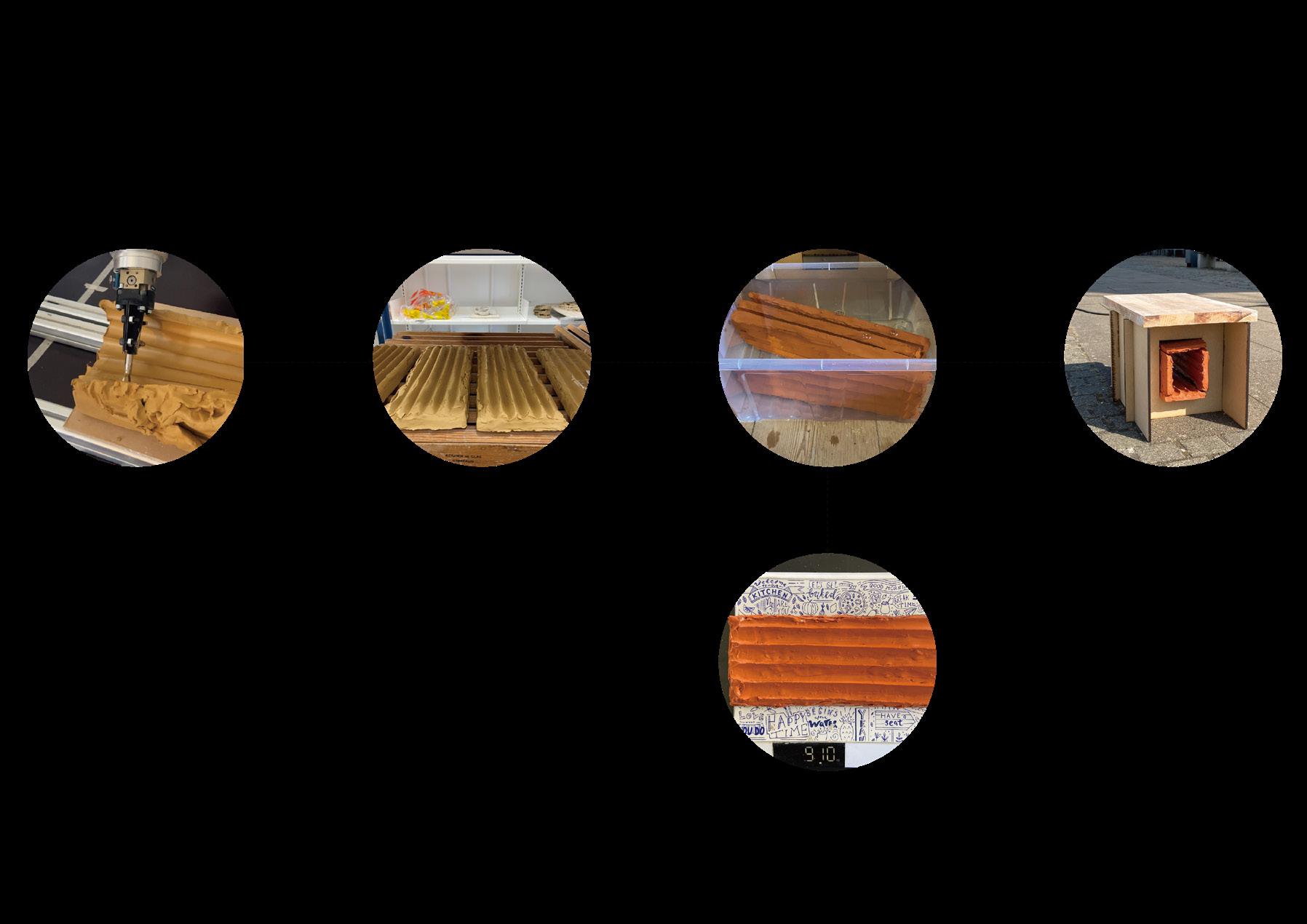
 Panel Cutting
Panel Fabrication Workflow
Panel Cutting
Panel Fabrication Workflow
28
Cooling Test Workflow
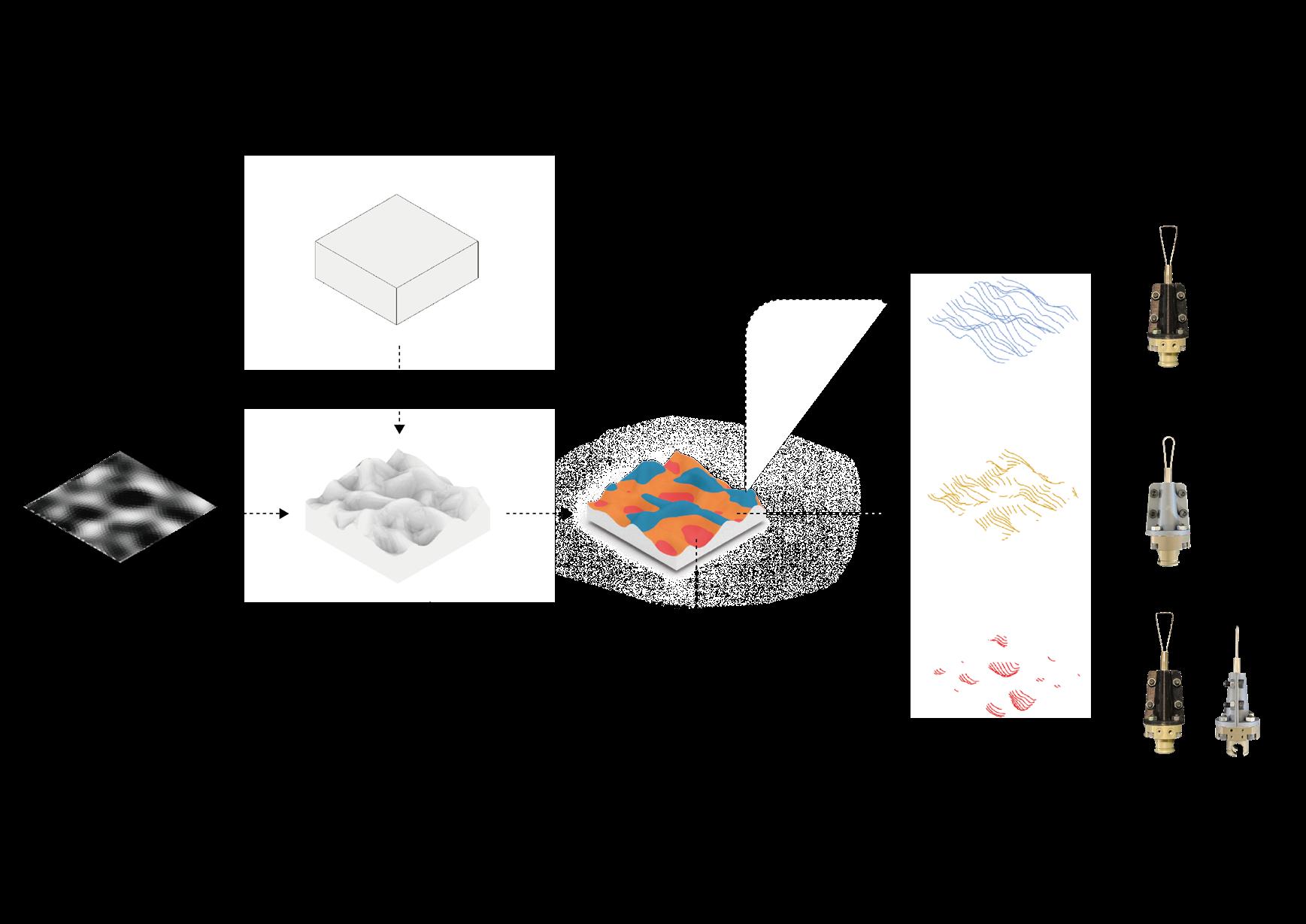
Sculpting Pattern and CFD Simulation
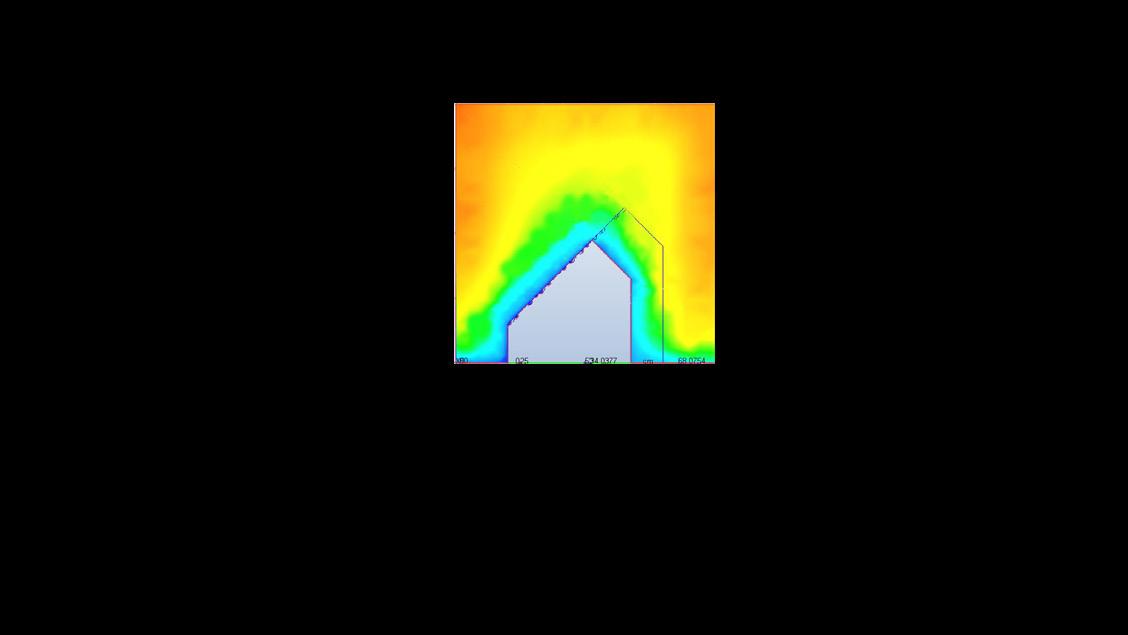
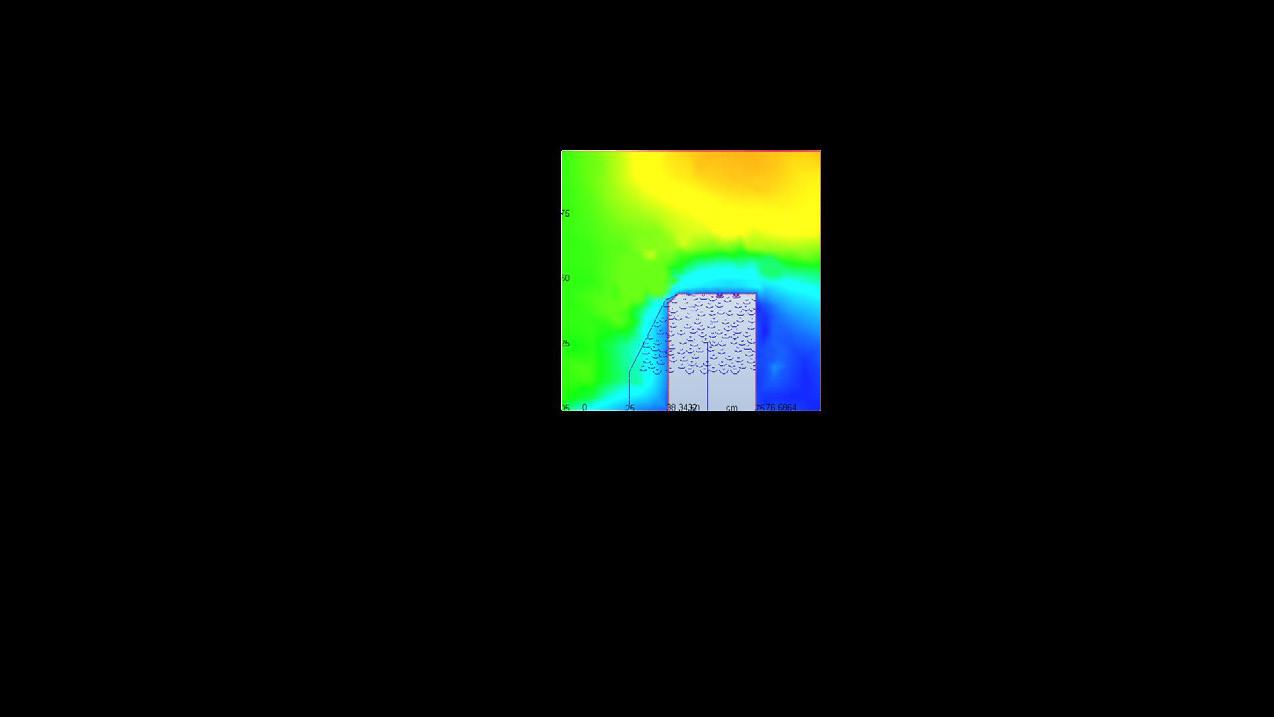
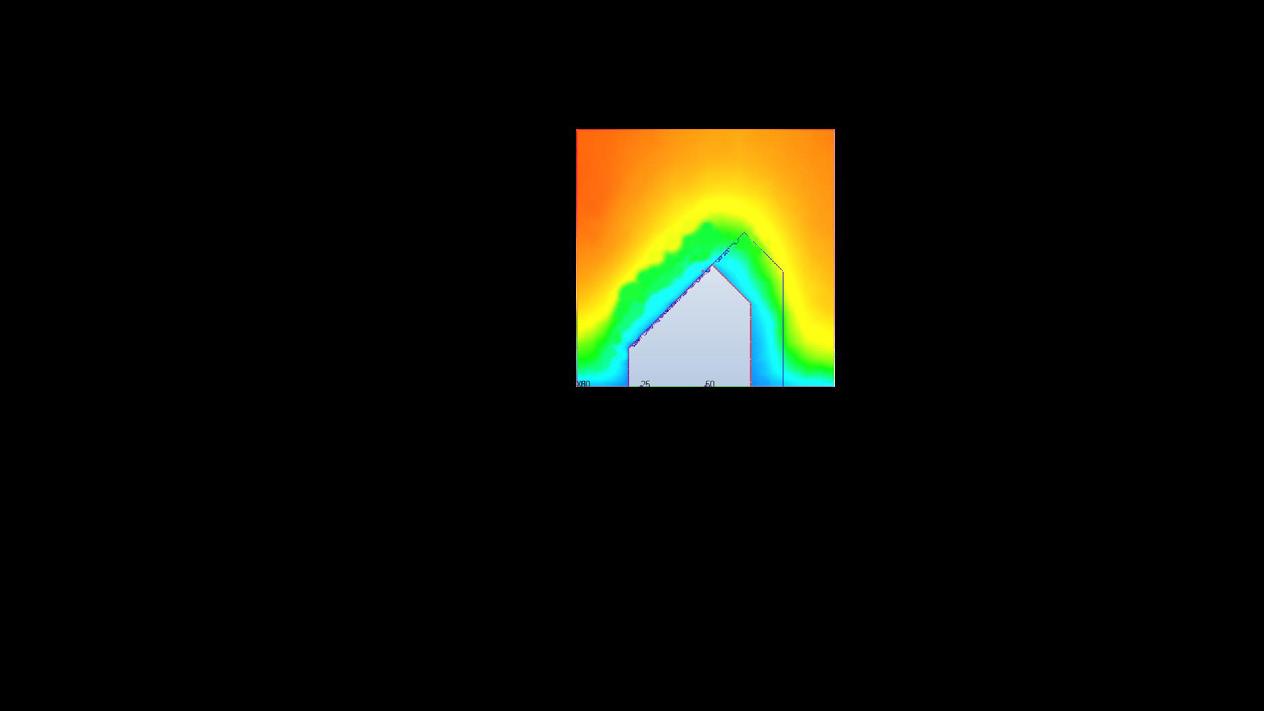
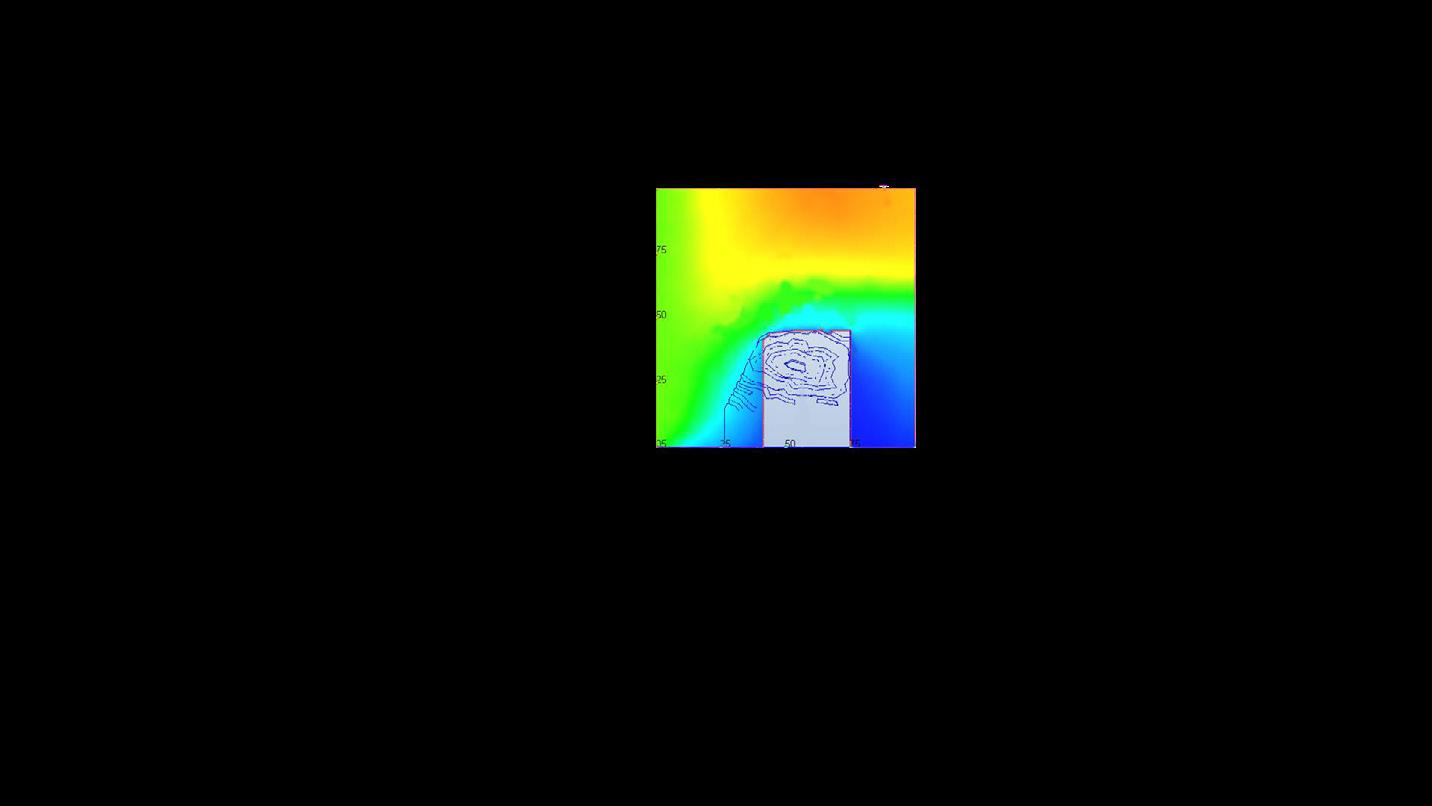
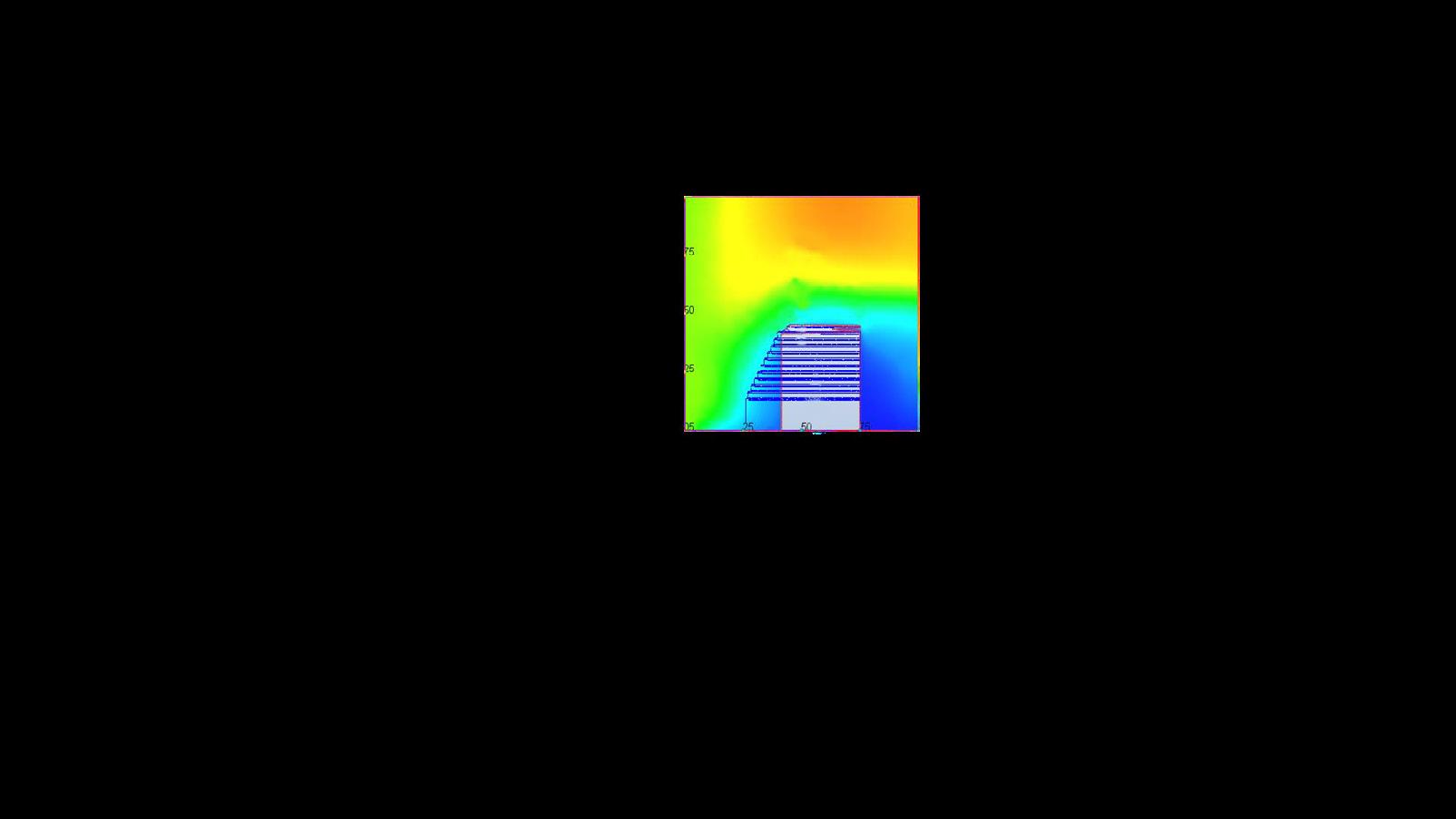
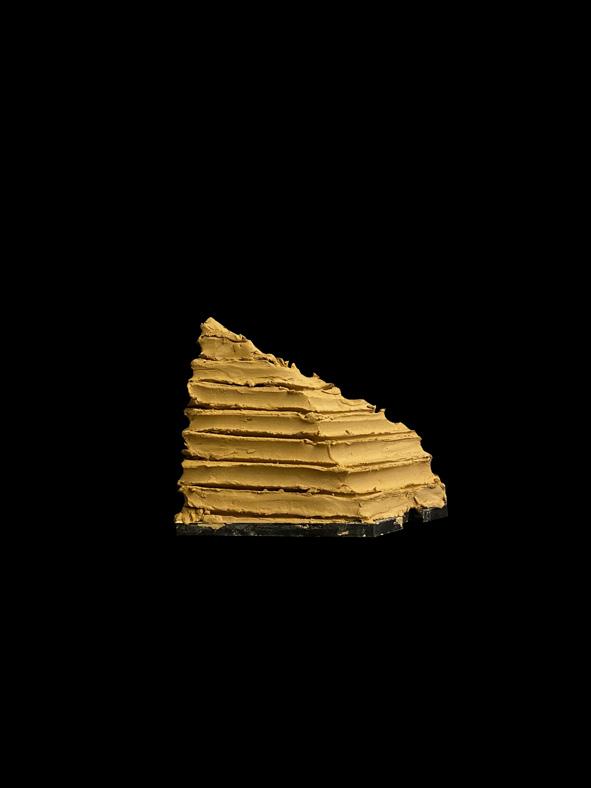
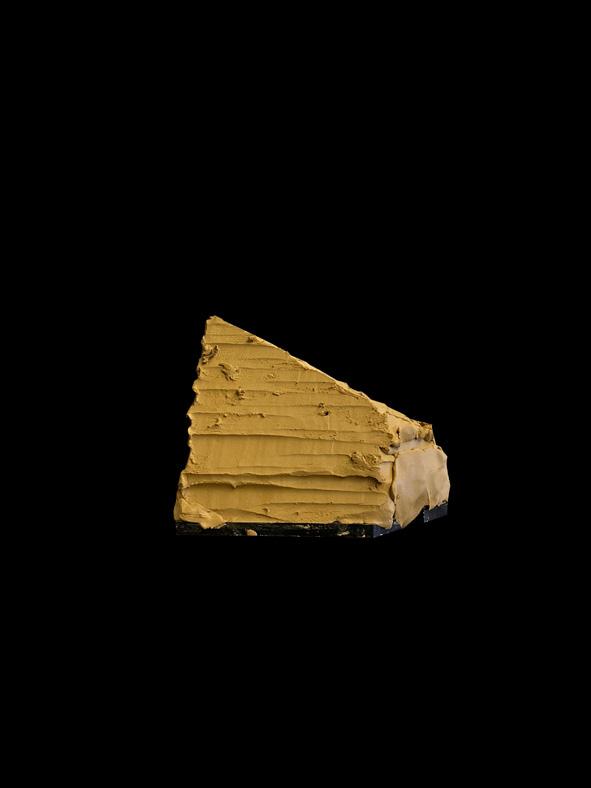
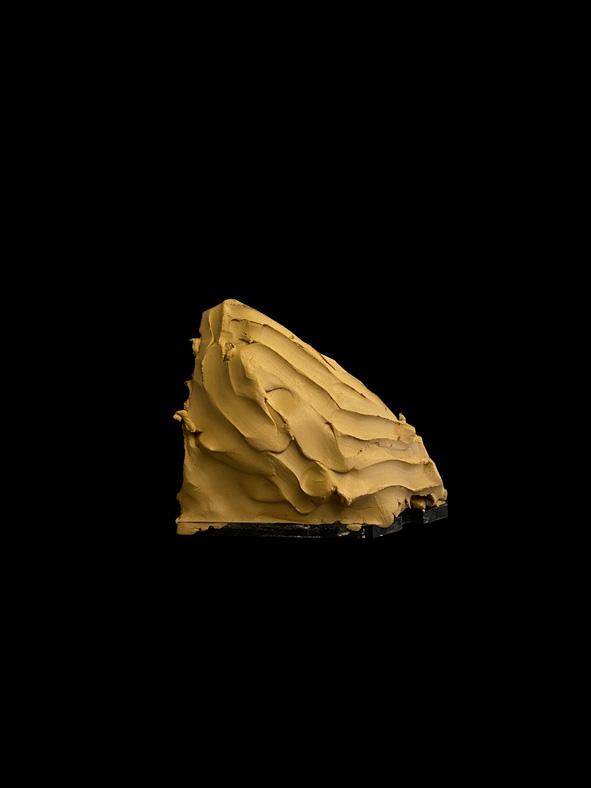
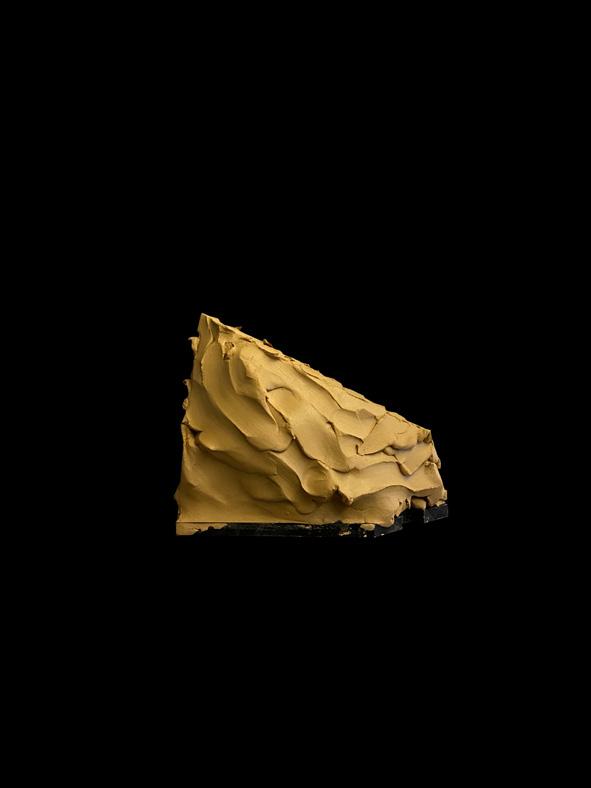
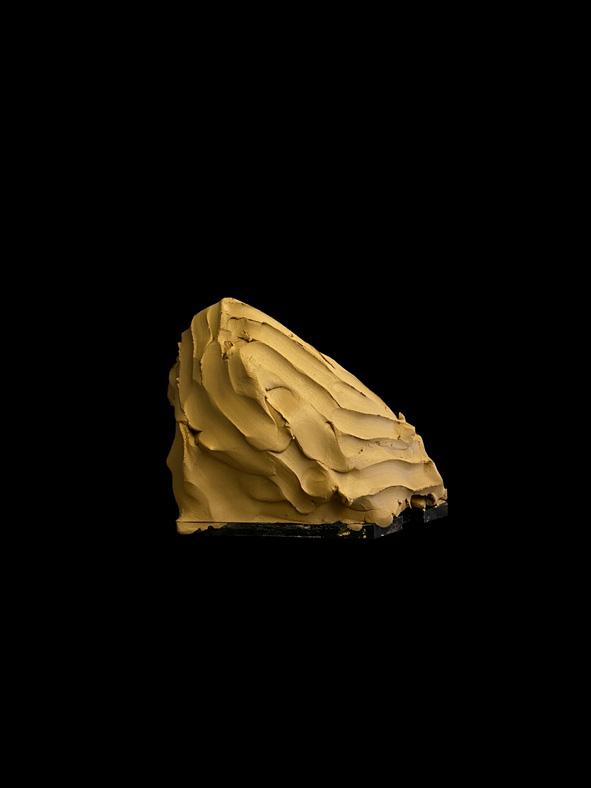
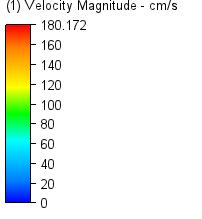
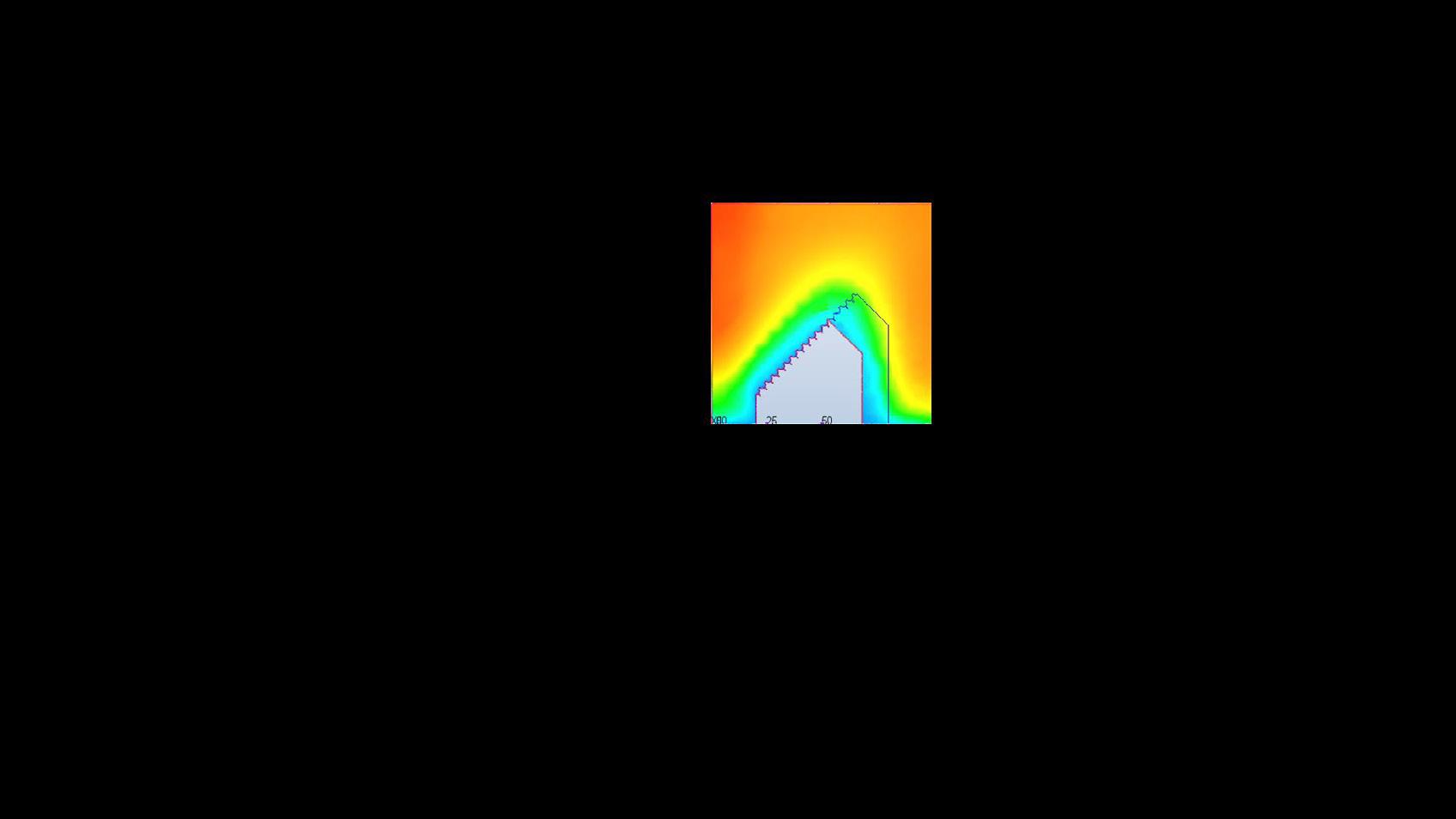
The results show that the rough surface (1) lowers the wind velocity and causes unstable air. Almost the same results are showed on the spiral(2) and straight patterns(3).
Cutting Process
Blocks Fbrication and Toolpath
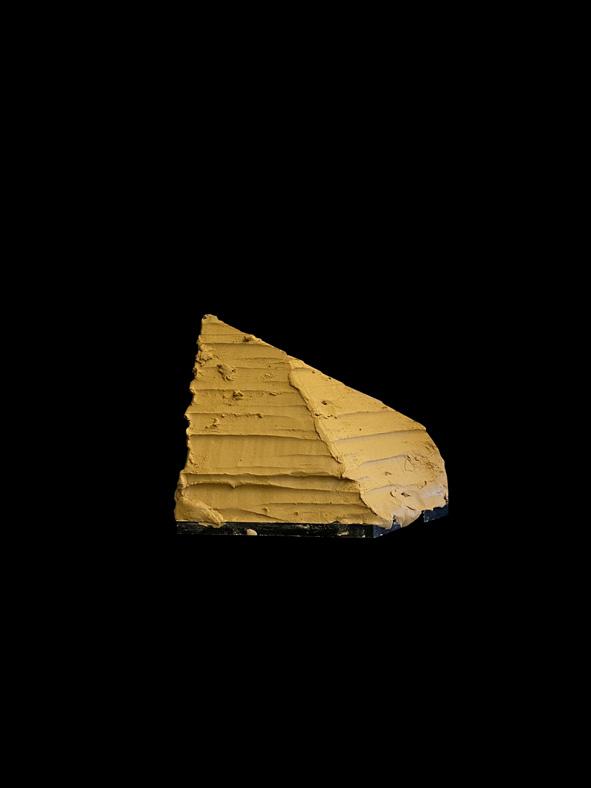
Carving multi layers creates more surface area to help heat exchange. The first experiment is to employ two different tools to create the first blocks. (A) tool is used to shape the overall form. When the first cut is done, the round grooves are created by using the (C) tool. Then, rotated the tool (D) to 90 degrees to build the narrow grooves details to express the rich surface performance.
(1) (2) (3)
Wind Direction
4.2 Grooves and Cooling Effect
29
Lampshade Design
Skills: 3D Printing, Grasshopper
The concept: This derives from the dandelion, a common flower. Many small blooms are arranged into a composite flower head, which looks like white feathers around a central core. I will deconstruct the plant’s structure and create a lampshade design, by manipulating the data structure of the model.
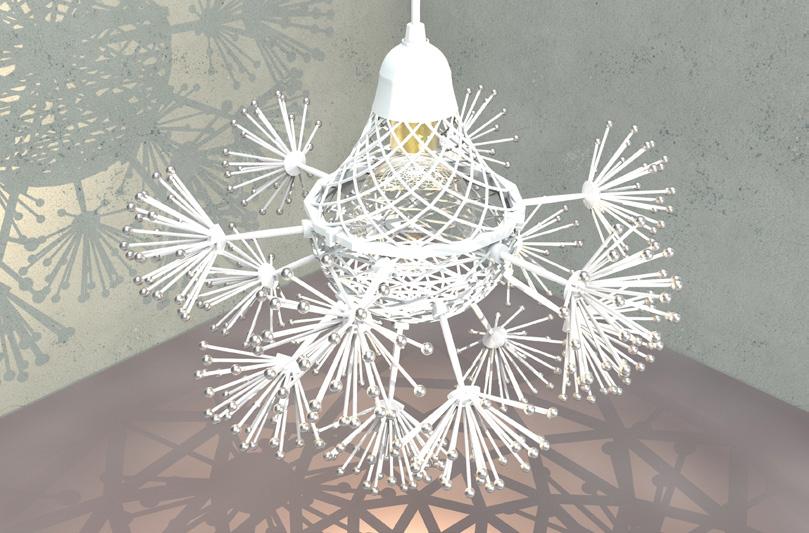
Modeling: The first step is to build a sphere surface then divide it into several smaller surfaces. Establishing the normal vector direction is important. This is found in each surface, allowing flower structures to grow in multiple directions.
Fabrication: The complete lampshade is printed by a home 3D printer and the pieces include a cap, an upper and lower mesh, 15 components with 27 small holes, and 3 c-rings. As the maximum print area of the 3D printer is 20*20*20 (L*W*H cm), I must control the components’ size to ensure they are smaller than the printing area. Printing the mesh is the most challenging part; a suitable support density setting prevents the model from crumbling during the printing process. The thickness of the mesh is also adjusted to ensure it is printable. After printing, the support is removed carefully and the model is sanded to refine the surface. The rings are unlocked and an industrial light bulb is fitted inside the lampshade. The finished piece has a distinctive geometric pattern and looks like a golden flower shining in the dark.
X
CAP 4.3*4.3*2.1cm UPPER MESH 14.2*14.2*8.6cm LOWER MESH 14.6*14.6*8.2cm C-RINGS 1*1.3*0.9cm
1 X 1 X 1 X 3 X 15
COMPONENTS WITH 27 HOLES bounding box 2*2*6.5cm
A LED LIGHT BULB
fig.1
, 2017
30
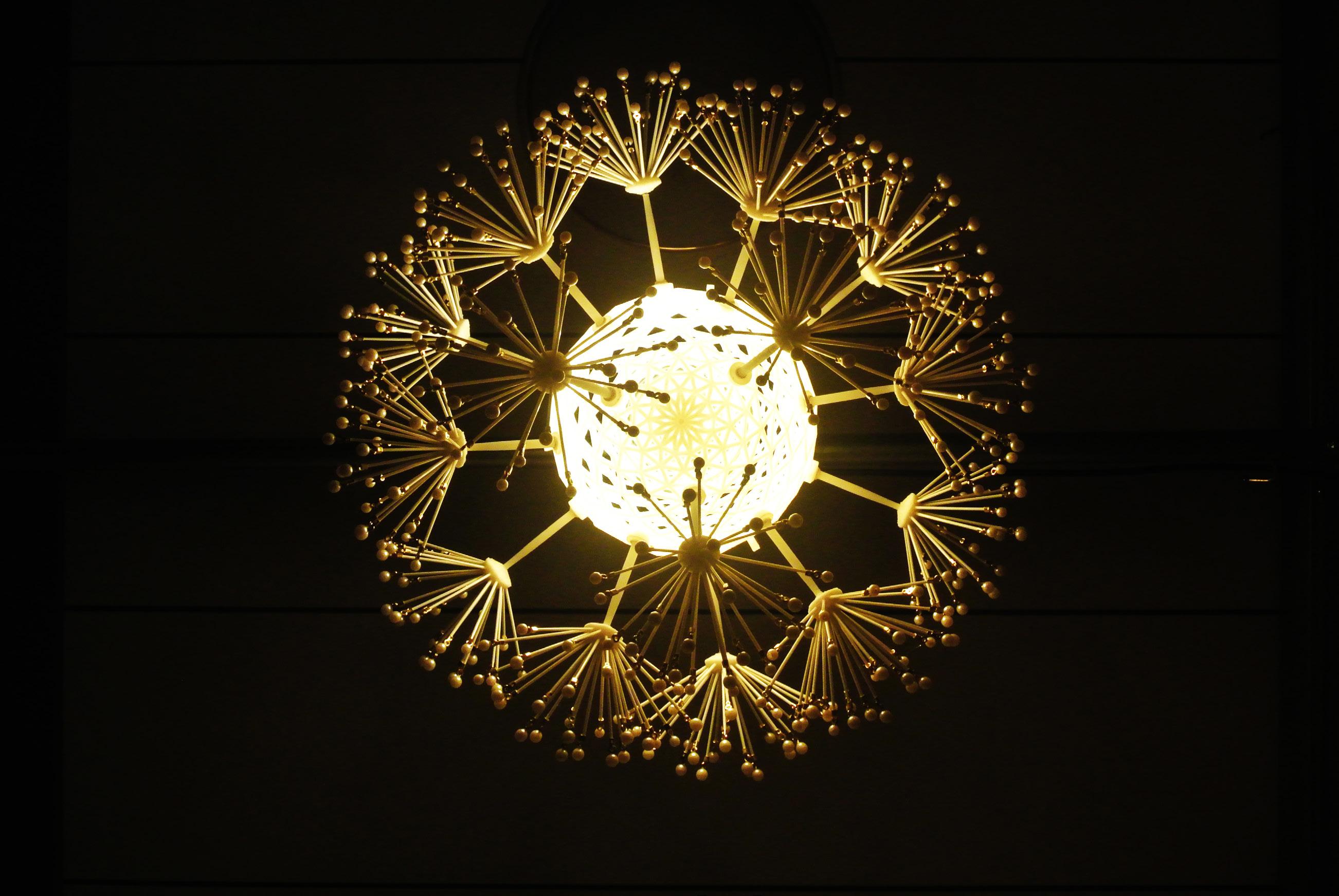
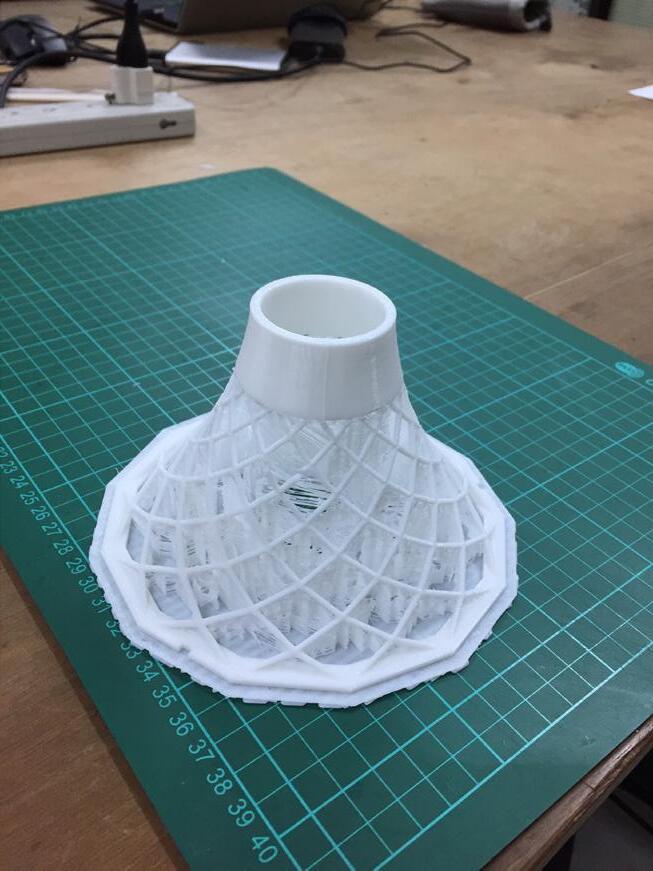
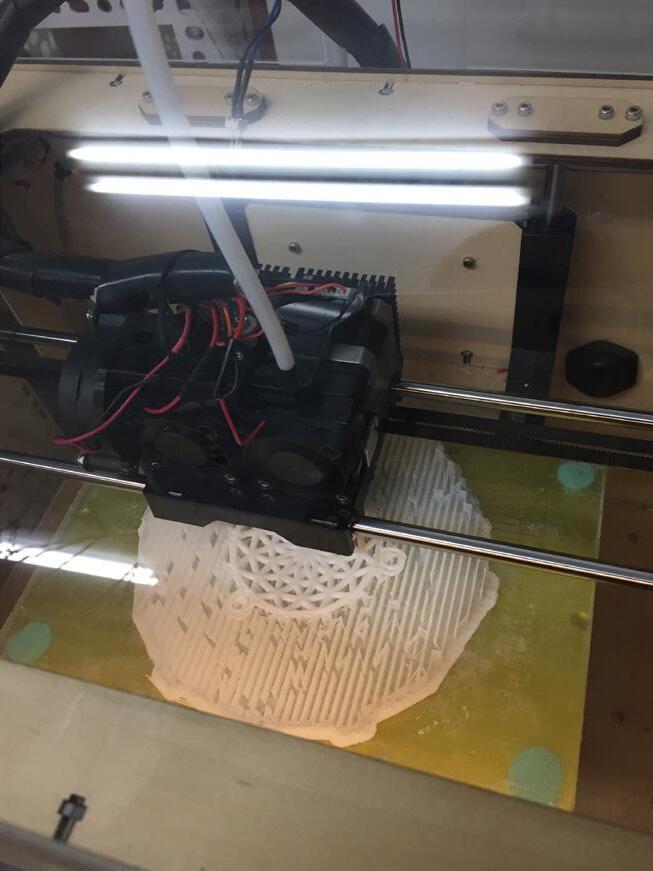
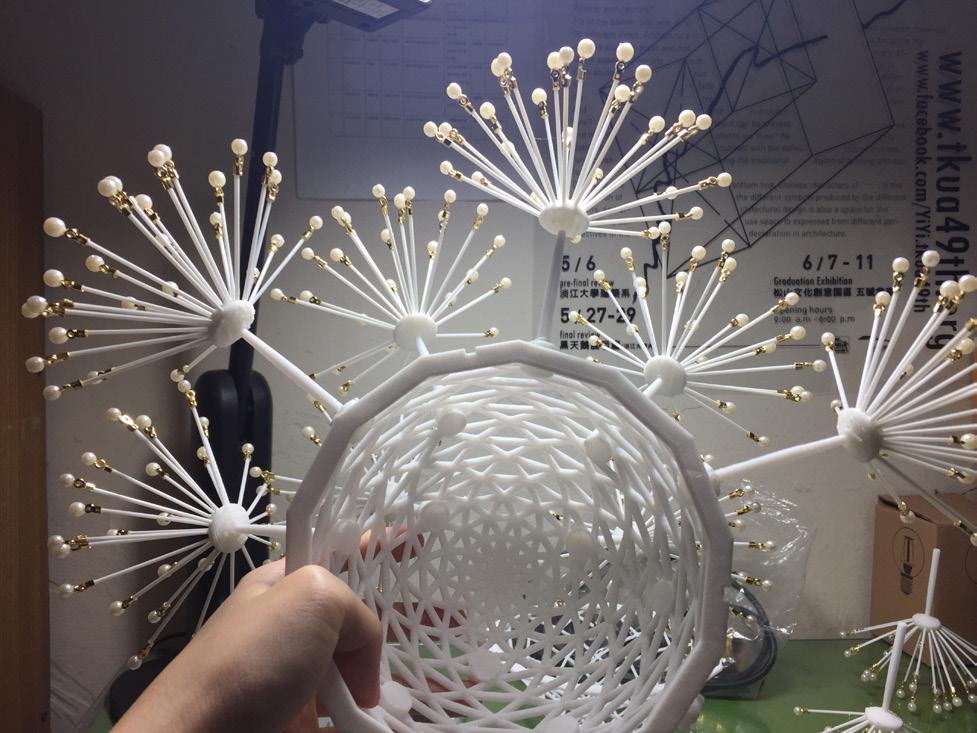
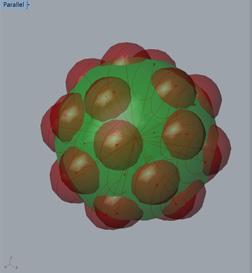
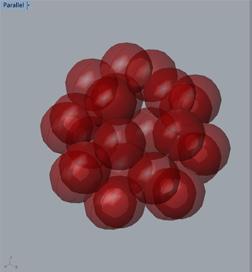
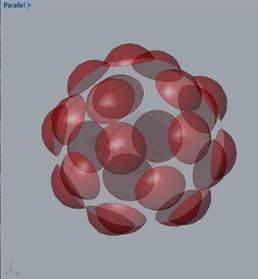
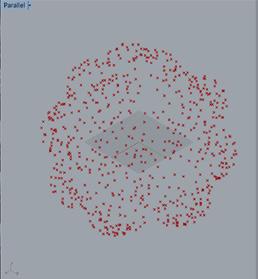
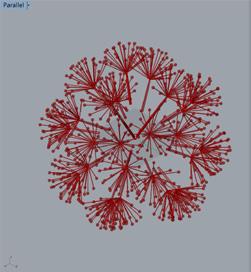
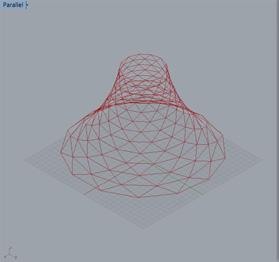
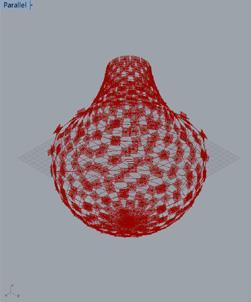
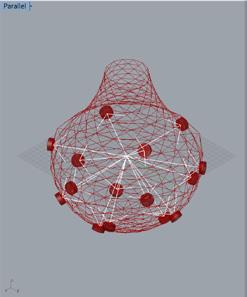 fig.1 Model Assembly
fig.2 The view from the bottom of the model
fig.3 3D printing the structure mesh
fig.2
fig.1 Model Assembly
fig.2 The view from the bottom of the model
fig.3 3D printing the structure mesh
fig.2
31
fig.3
MODELLING PROCESS
Parametric Stool
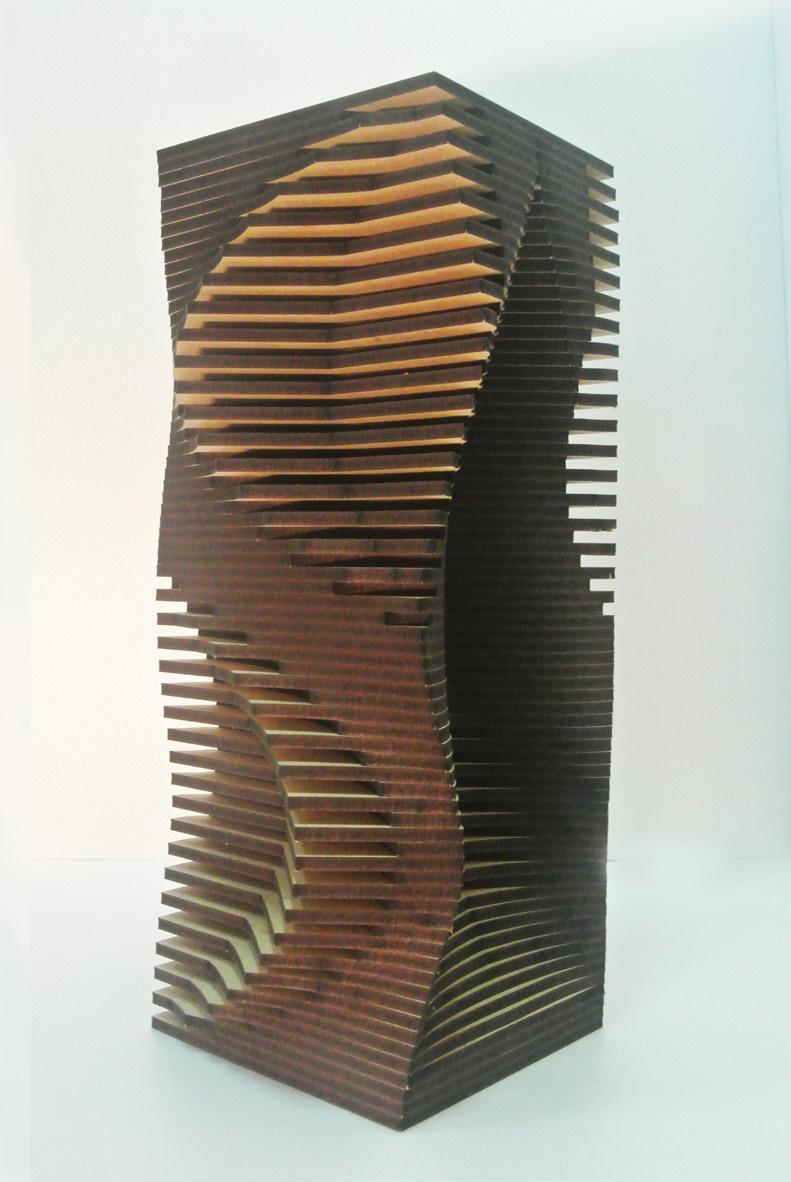
, 2017
Skills: CNC Laser Cutting, Grasshopper
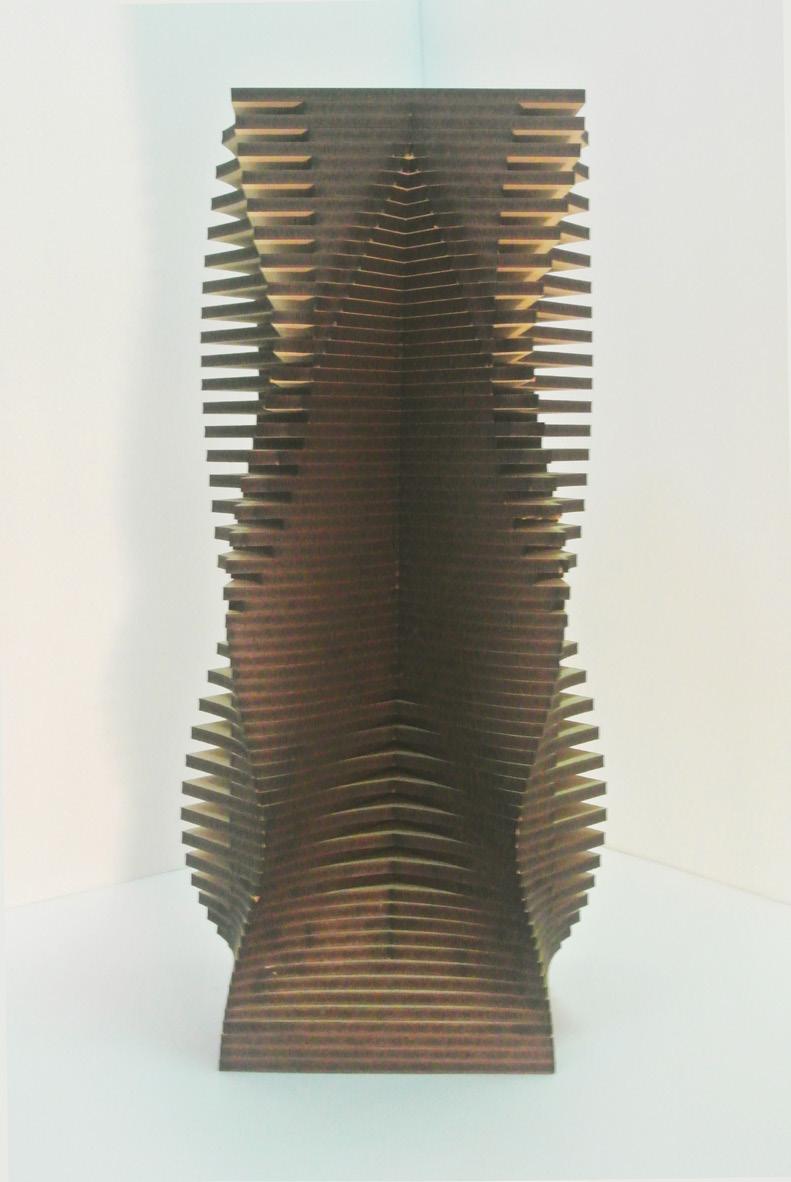
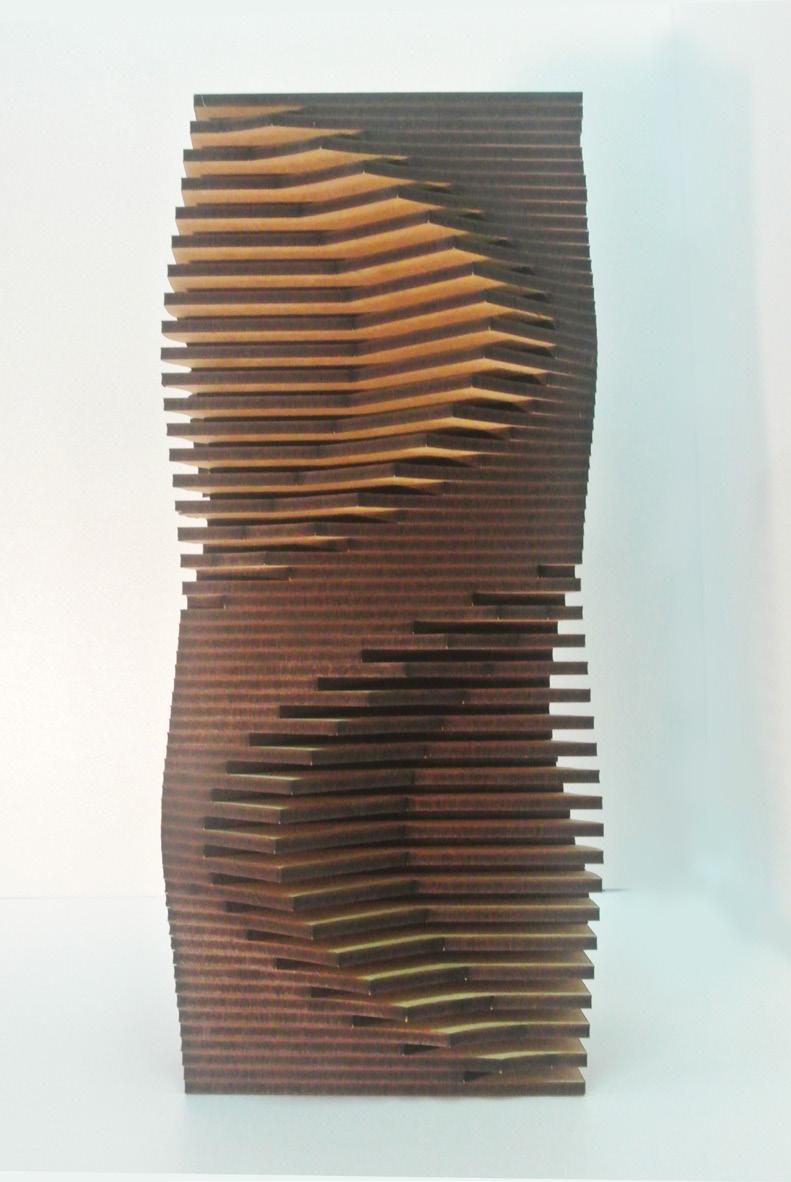
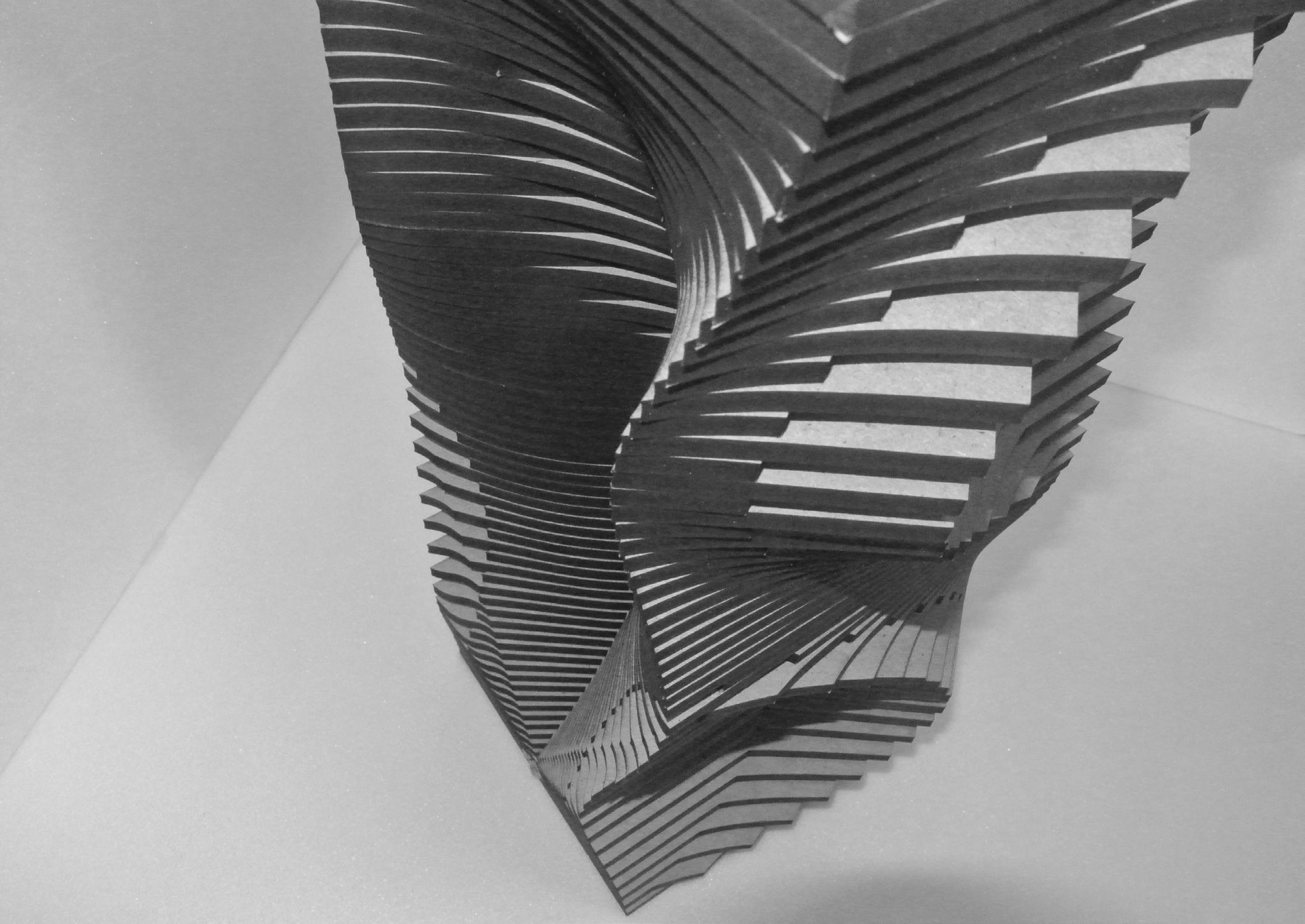
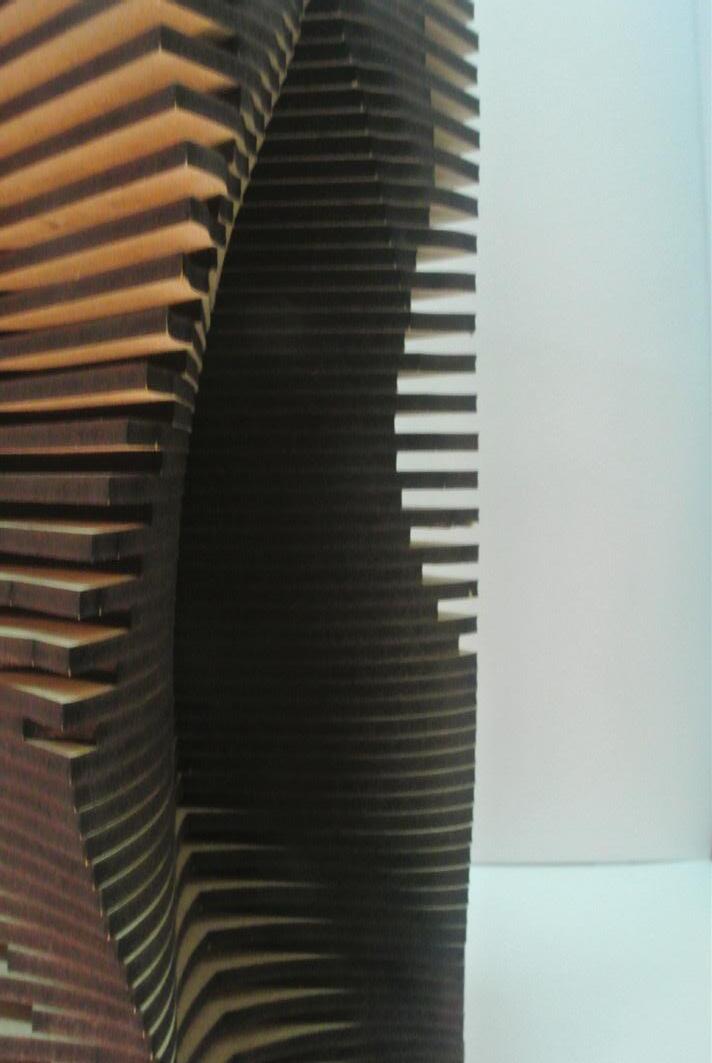
The idea this work is to design furniture using a parametric modeling tool. The advantage of parametric modeling is that the geometry of the model can be changed by adjusting parameters such as dimensions. The digital model can be adjusted in terms of height and undulating surfaces.
To gain a better understanding of modeling a "points sequence" is built, using the "graph mapper" definition in Grasshopper to control the sequence of points. Then a sequence of lines is created by connecting an ordered collection of points. The lines are then manipulated to form a surface.
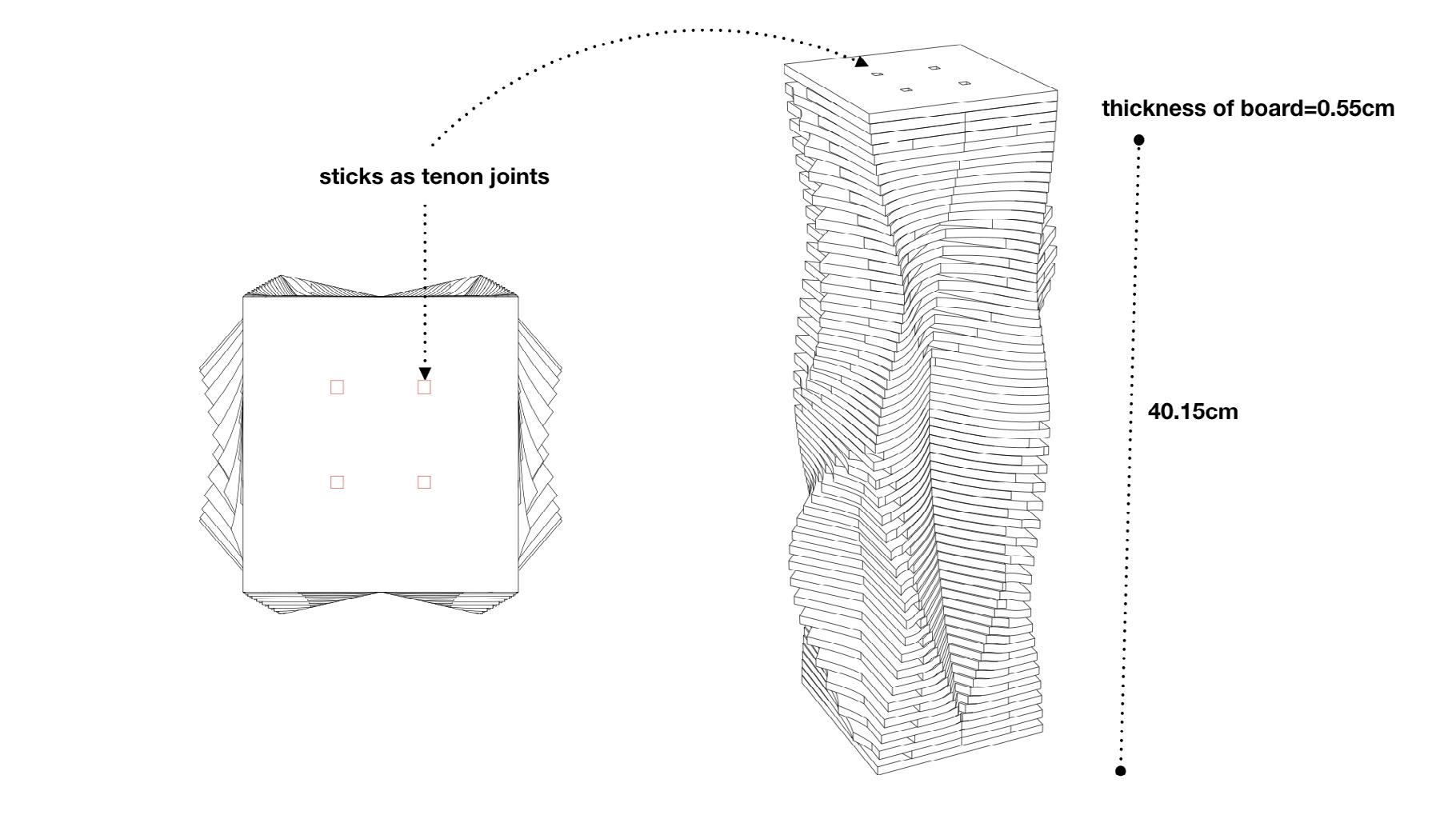
Following this, two shapes (A and B) are created and merged together to form a new shape. Both shapes are sliced into several layers. Odd layers in type A and even layers in type B are selected , after which all the layers are stacked in order.
During the manufacturing process, 5.5-mm-thick medium-density fiberboards are used as the material and fabricated using a laser-cutting machine. The Grasshopper plugin is used to assist in creating contours for laser cutting. The finished pieces (73) of wood board are cut within 30 mins, and four square mortises are cut on the middle of the board, where the long wood sticks can be placed inside to reinforce the furniture structure. Even without any adhesive, the structure of the stool piece is very stable and aesthetically pleasing.
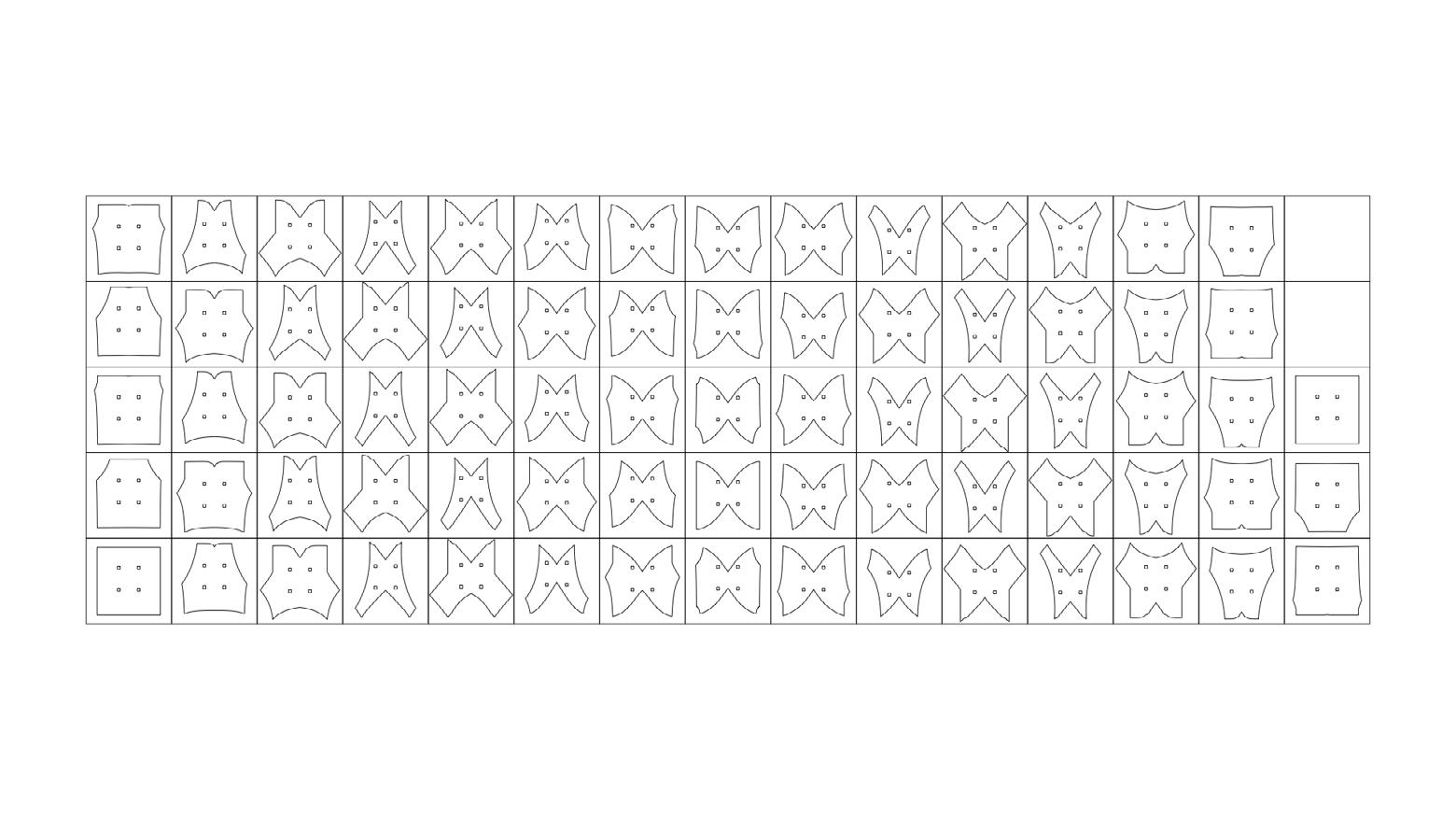 fig.2
fig.2
32
fig.1
fig.1 Models in different angles
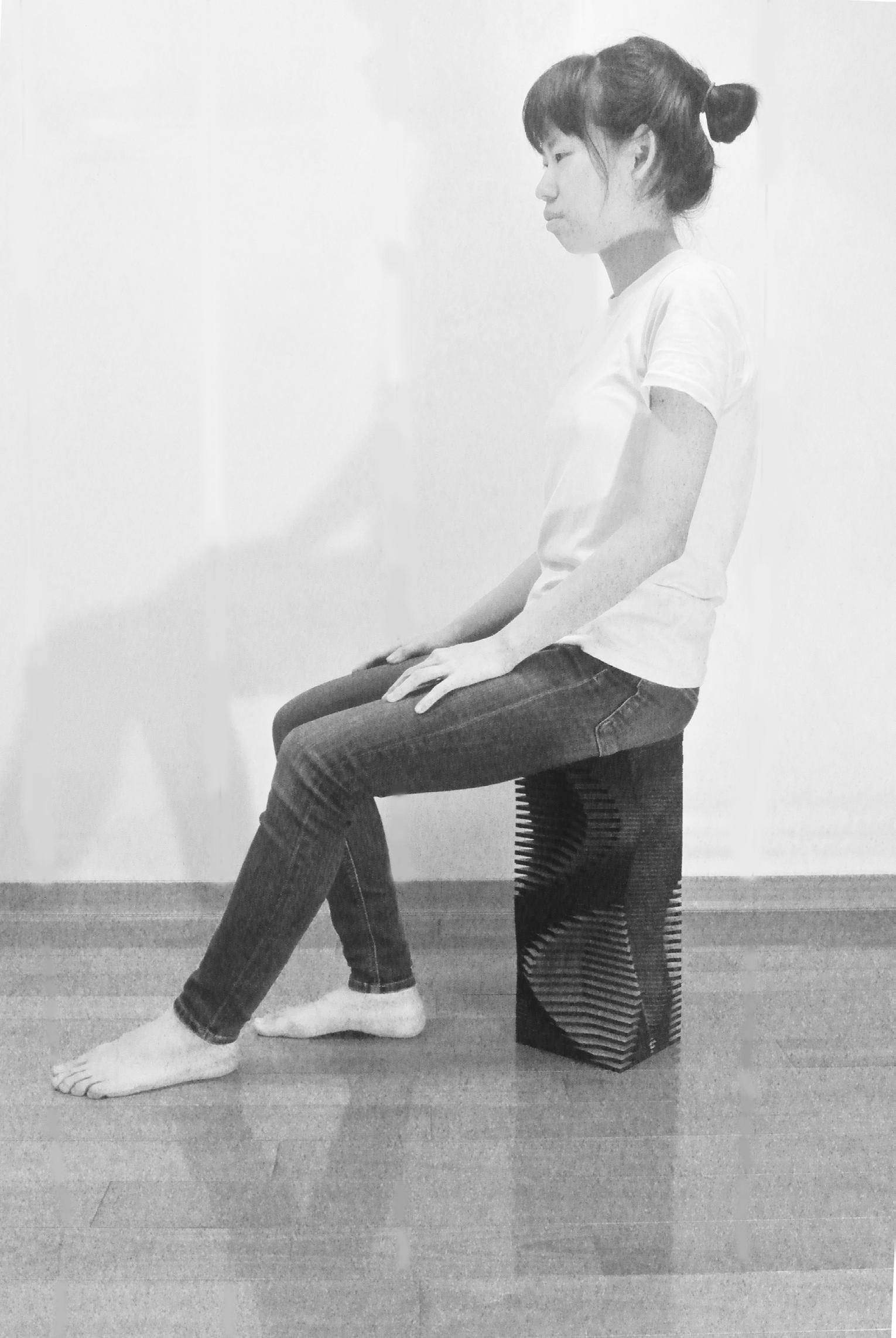
Perspective
Scale Up 33
fig.2 73 shapes for laser cutting
Clay 3D Printing
, Workshop 2016
Skills: Robot, Grasshopper
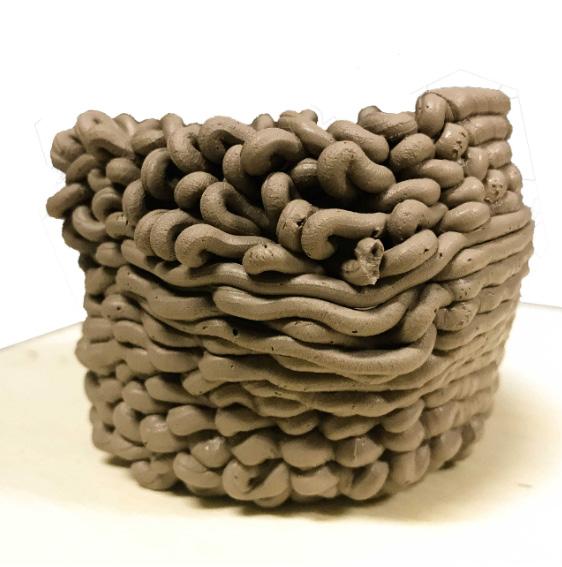
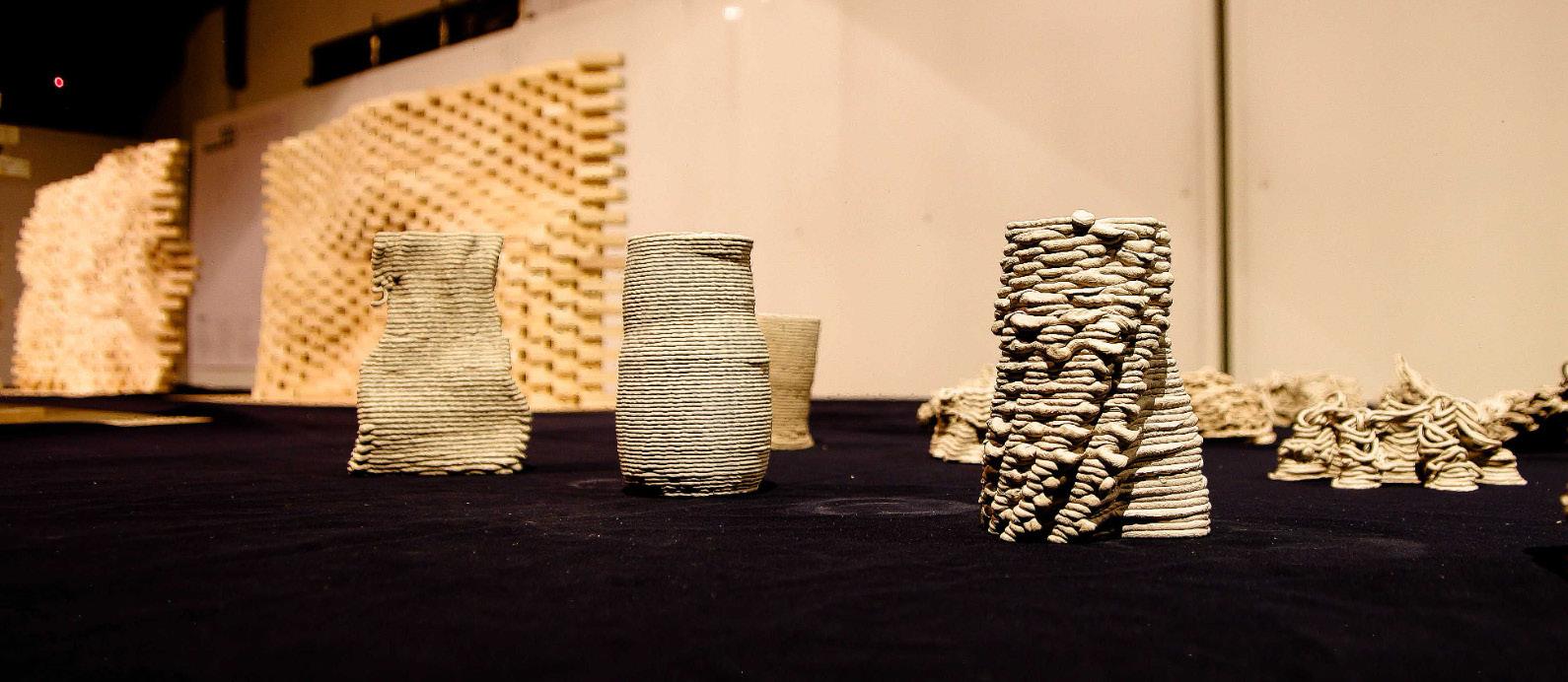
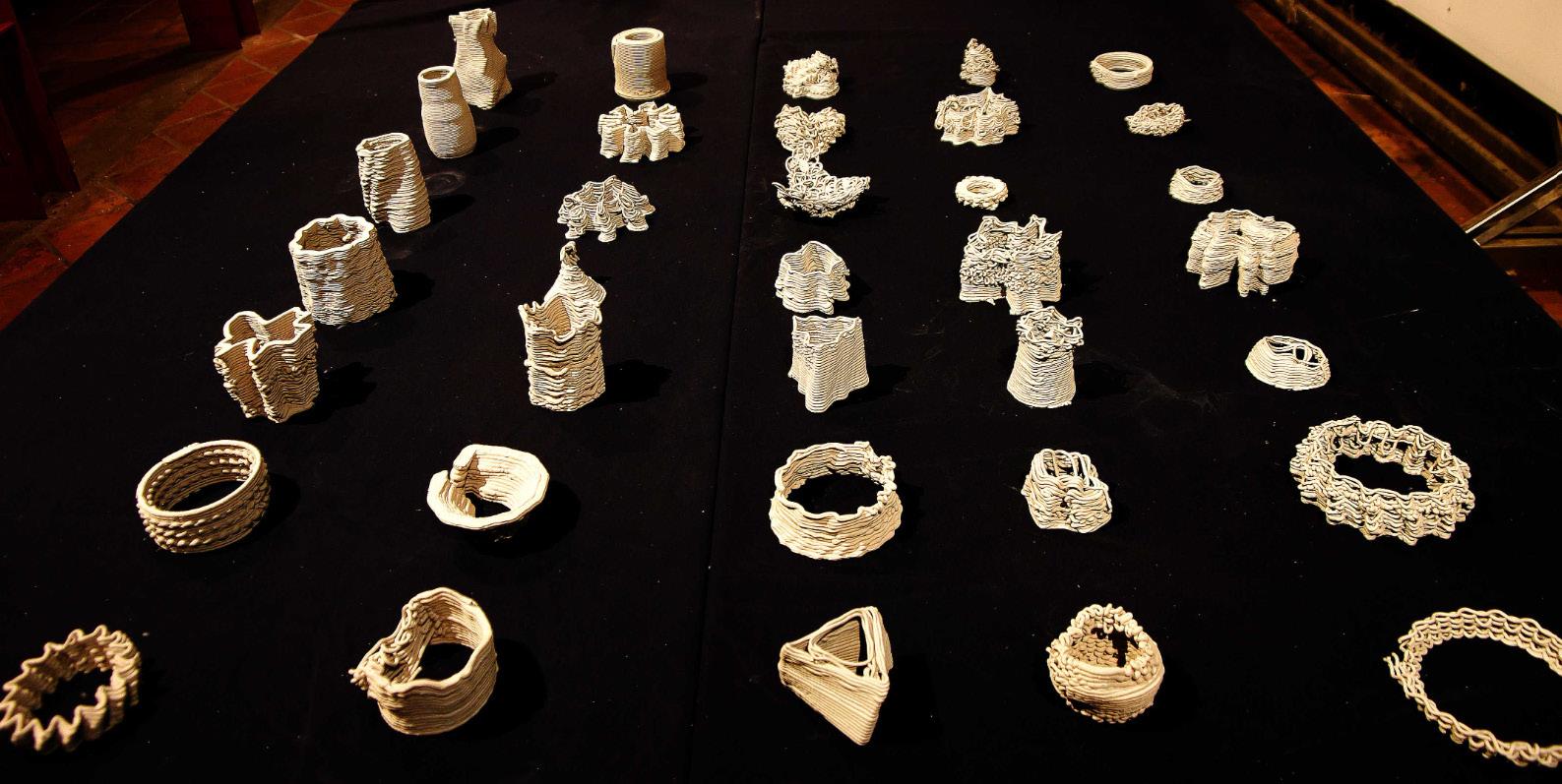
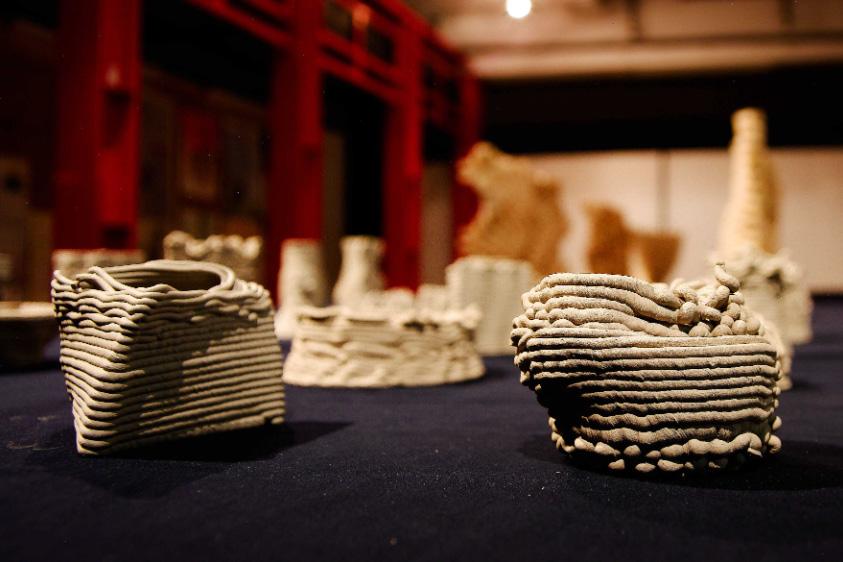
Description: This workshop aims to conduct a comprehensive parametric design investigation, driven by 3D printing parameters related to overhang control, nozzle size design and layer height control. The results revealed that the robotic arms allowed more control and precision during fabrication, thus giving the designers the opportunity to explore geometric possibilities.
Three steps:
● Digital design - Knowledge of parametric modelling tools, such as Grasshopper, is a key skill for successful parametric design. In this case, Grasshopper was used for designing and adjusting complex shapes through certain parameters. The
prototype was created by editing the cylinder geometry to create different printing textures on the surface.
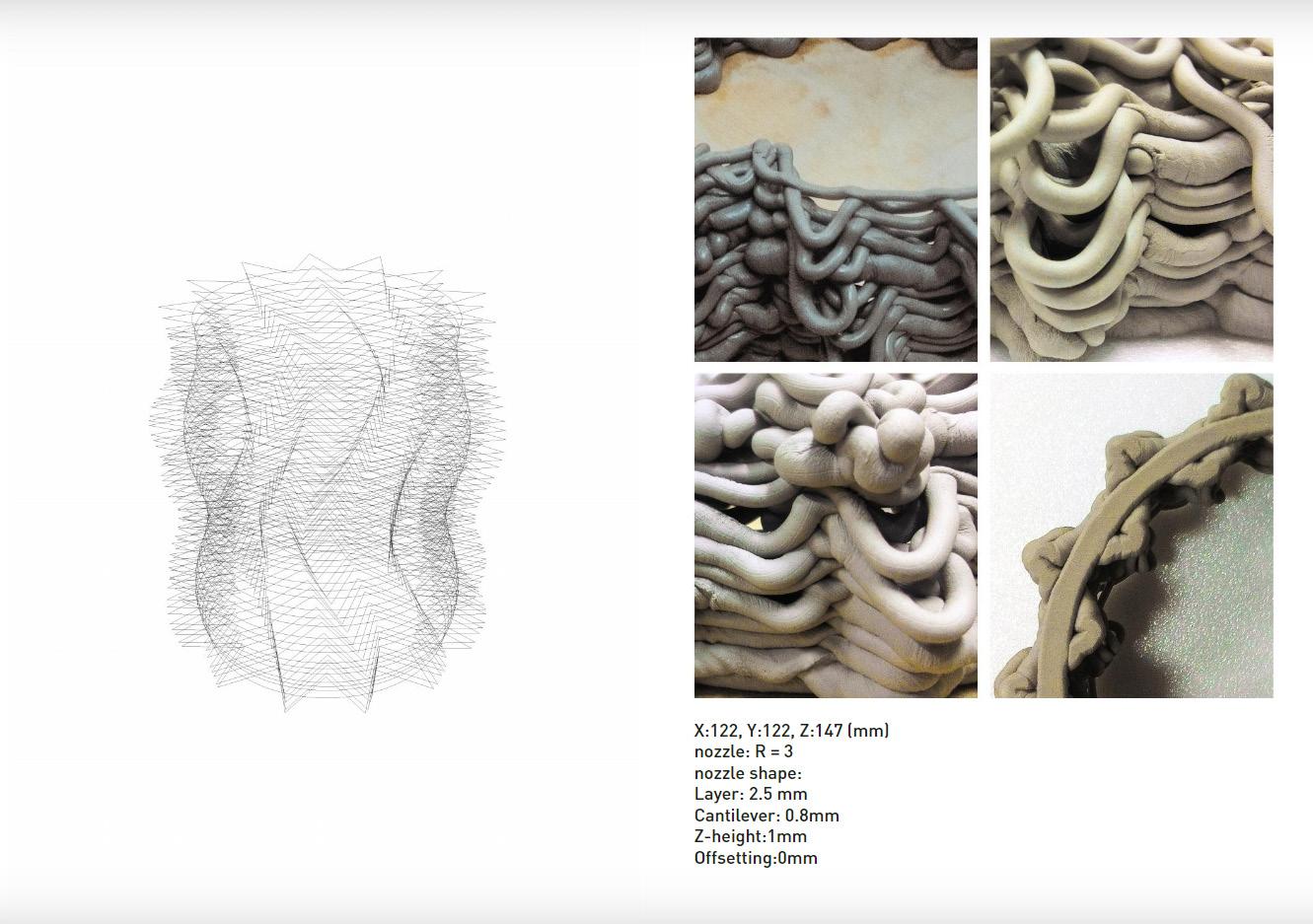
● Toolpath generation - The material extrusion height was affected by the speed of the robot. The "Contour" comment was used for creating the elevation contours that were exported to the robot as a printing toolpath.
● Testing - The experiment involved testing how much overhang could clay have during 3D printing. Many unexpected issues surfaced during printing. First, there was insufficient moisture in the clay body; thus, the material could not be extruded successfully. Second, because of material viscosity, shape deformation occurred, leadings to unexpected results.
34
35
Robotic Incremental Sheet Forming
, Workshop 2020
Skills: Robot, Grasshopper Simulation
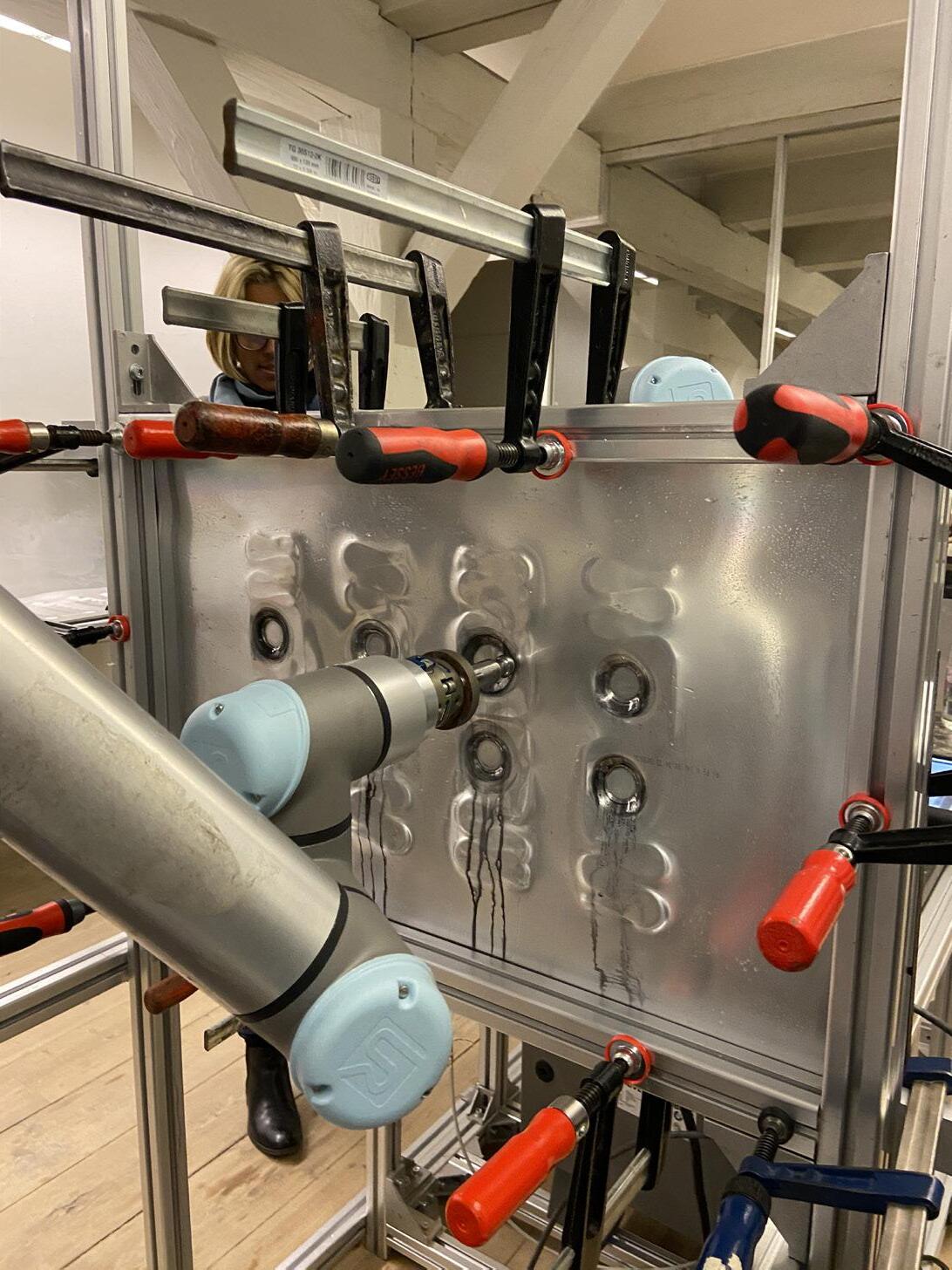
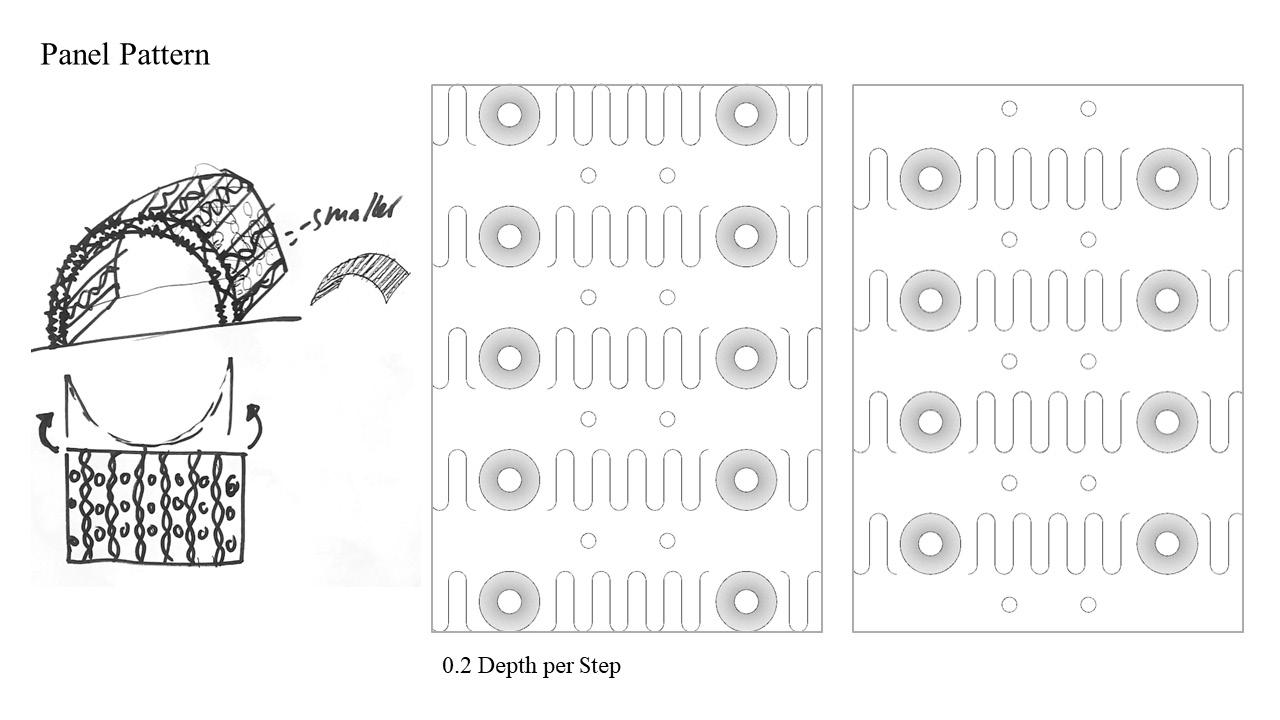
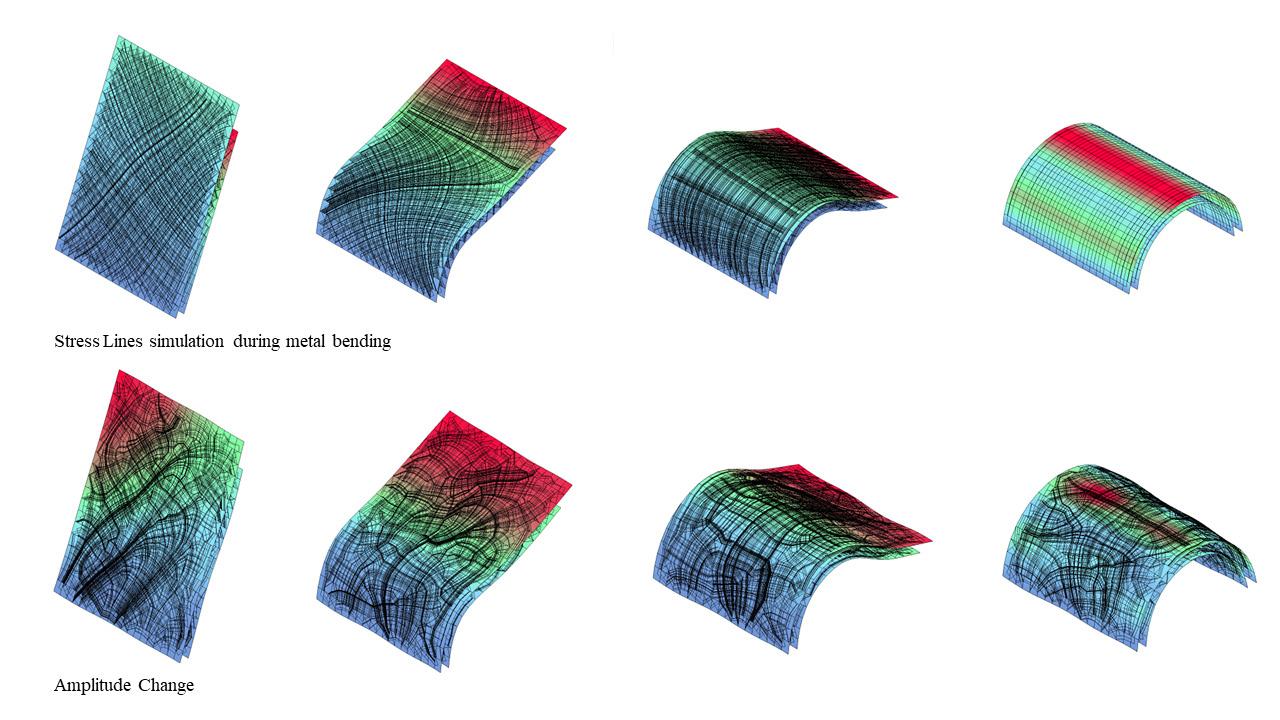
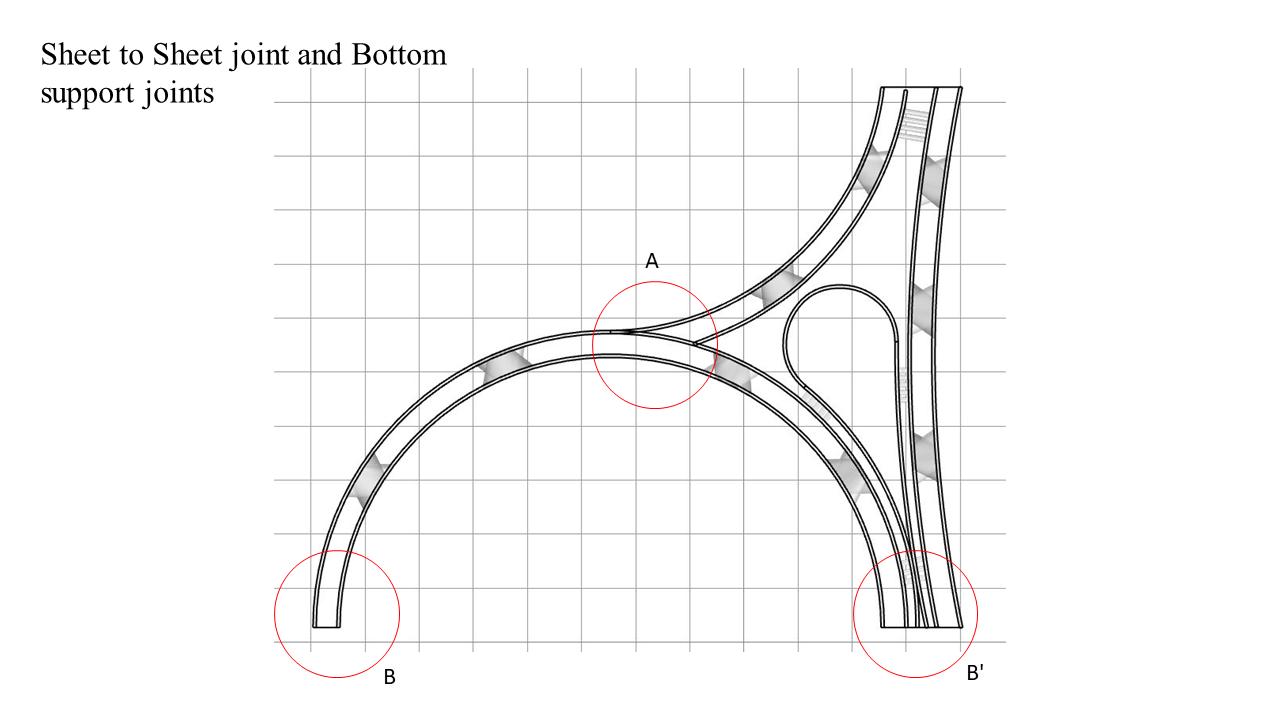
Description: The workshop takes a material and structural point of departure in Robotic Incremental Sheet Forming (RISF). RISF is a fabrication method for imparting 3D form onto initially flat thin metal sheets. During this fabrication process, a ballhead tool is moved over the surface of the metal sheet, causing a progression of localised plastic deformation. Architecturally, RISF is interesting because it bypasses the need for costly and complex molds, instead directly machining finished pieces of metal. This makes RISF particularly well suited
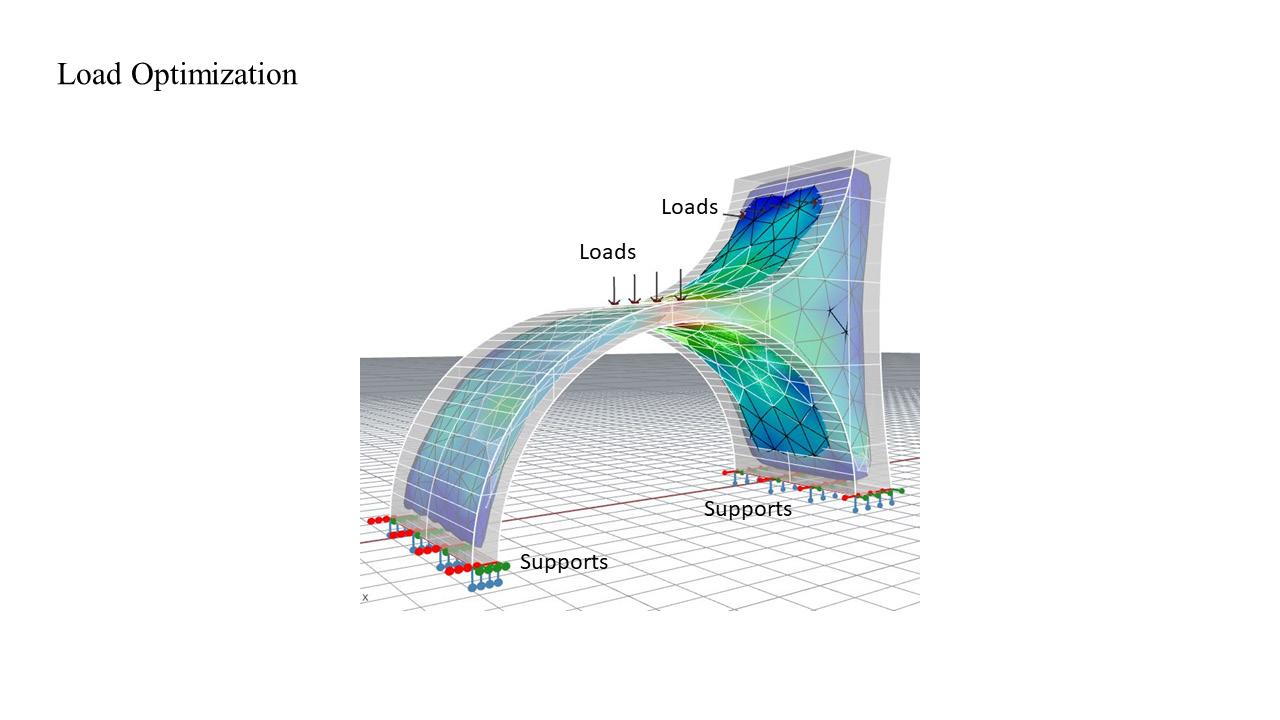
to customized and high variety production, which is otherwise extremely expensive to achieve with metal. This ongoing trajectory of CITA research explores how RISF can be used to optimize performance to enable very light and thin metallic architectural structures.
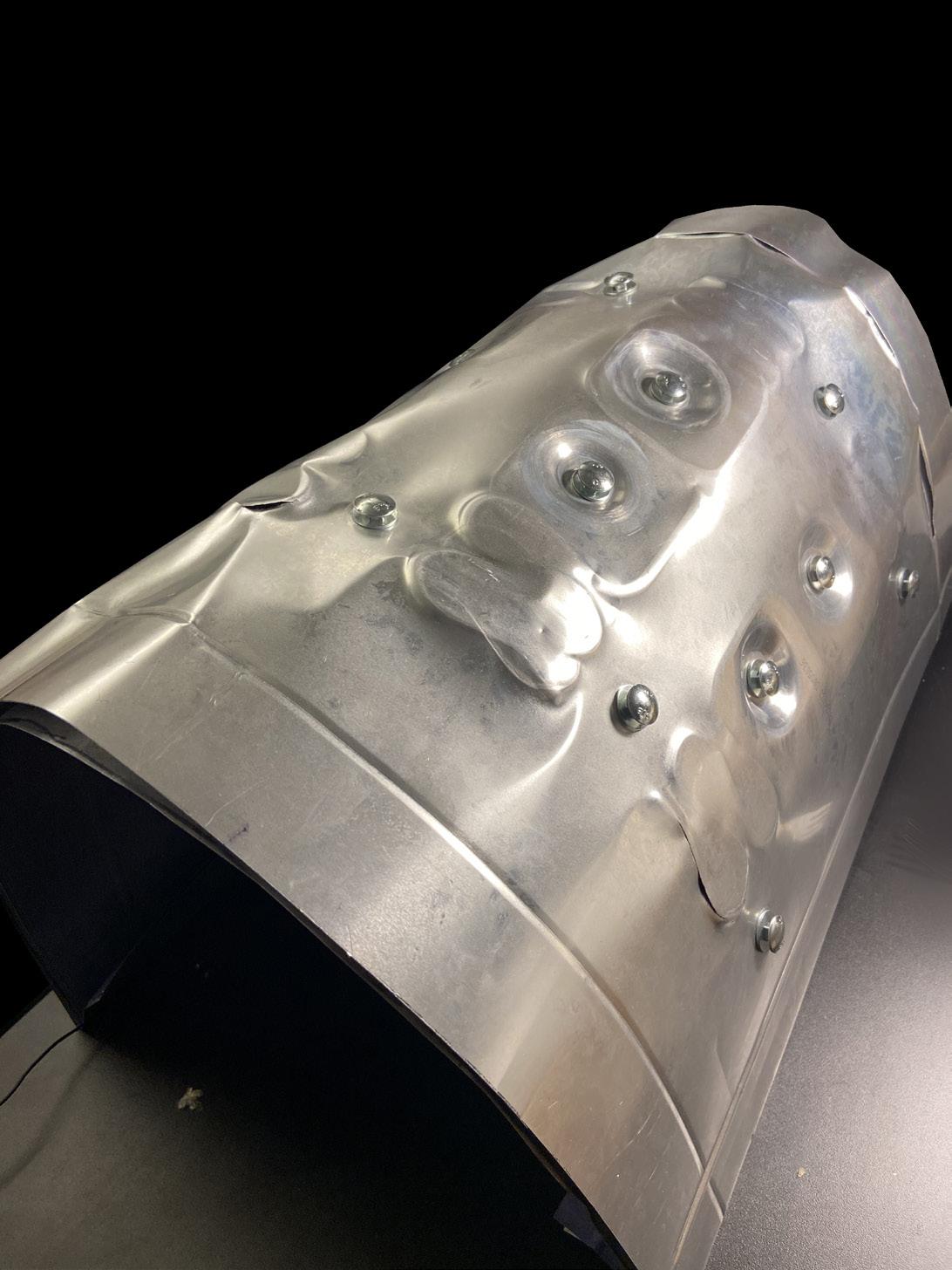
Within the workshop, we will engage our semester thematic – heterogeneity – via design exploration of material heterogeneities that are inherited, induced and assembled. We will focus specifically on the length-scales of material, element and assembly, and the time-scales of pre, intra and post fabrication. These considerations are synthesized in the proposition, manufacture and assembly of an architectural structure.
36
37
Metropolitan Vertical Water Park
,Zhongshan
Skills: Rhino
Dist., Taipei City
,2016-2017

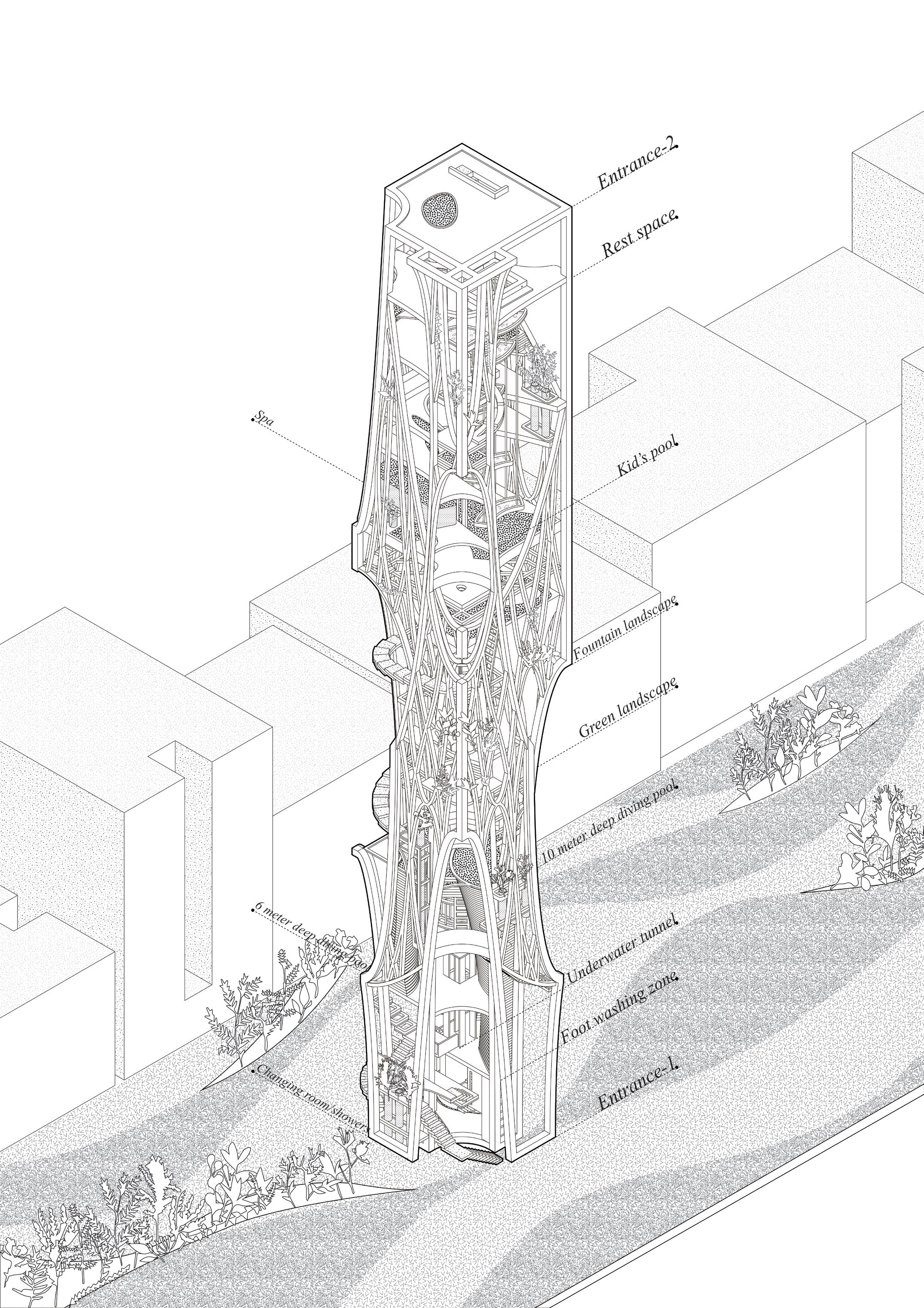
The urban heat island effect poses a considerable environmental problem in many cities, with daytime temperatures in urban areas being higher than those in suburban areas, resulting in discomfort and the spread of heat-related illnesses. To mitigate this, urban water body design should be considered an important strategy, especially in the summertime. Daytime temperatures in Taiwan may reach as high as 38℃, and citizens usually swim on a hot day. Taiwan is surrounded by the sea, and hence, swimming is compulsory as a part of the curriculum from elementary through senior high school. Hence, the education system and each Taiwanese person views swimming as a necessary and basic skill.
The first Taiwanese public bath was established in 1913 and even today, public swimming pools are considered important recreational facilities in each city.
The design of the pools is conceptualized as a water park having pools of different sizes. Architectural plans for both beginners and professional swimmers are developed by designing the depths and heights of pools. People can enjoy various activities in this waterpark, including walking up the spiral staircase to the top of the pools, from where they can enjoy the view of the city, walking in a shallow pool, floating on the water, dunking their heads underwater, or diving into the pool.
The design is organized based on an analysis of pools typology. Such urban pools not only provides entertainment for people but are also particularly beneficial for citizens to refresh during a heat wave.
38
39
Material Organisation
making, design and assembly with biomaterials, Workshop 2021
Skills: Robot, Grasshopper Simulation
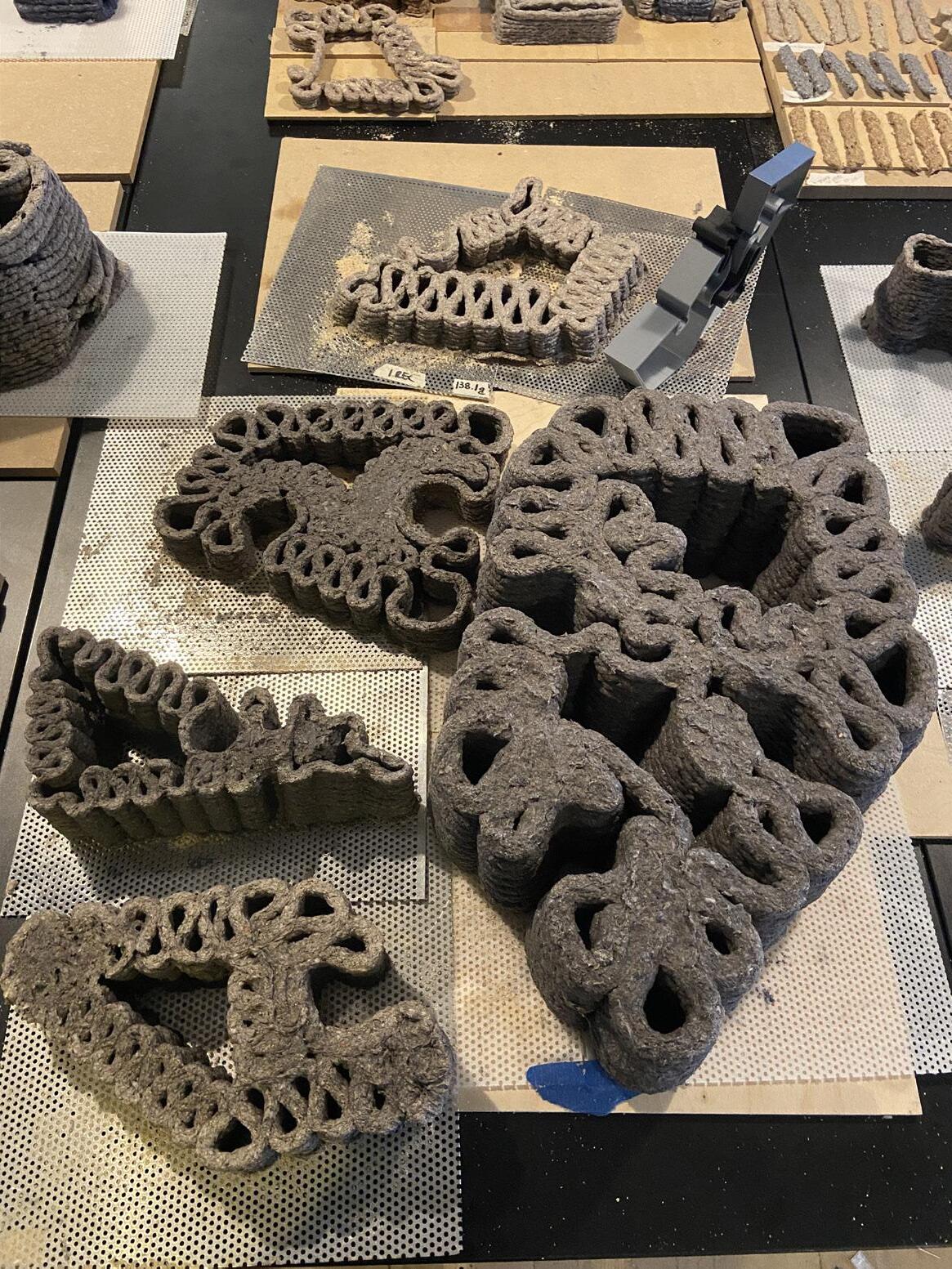
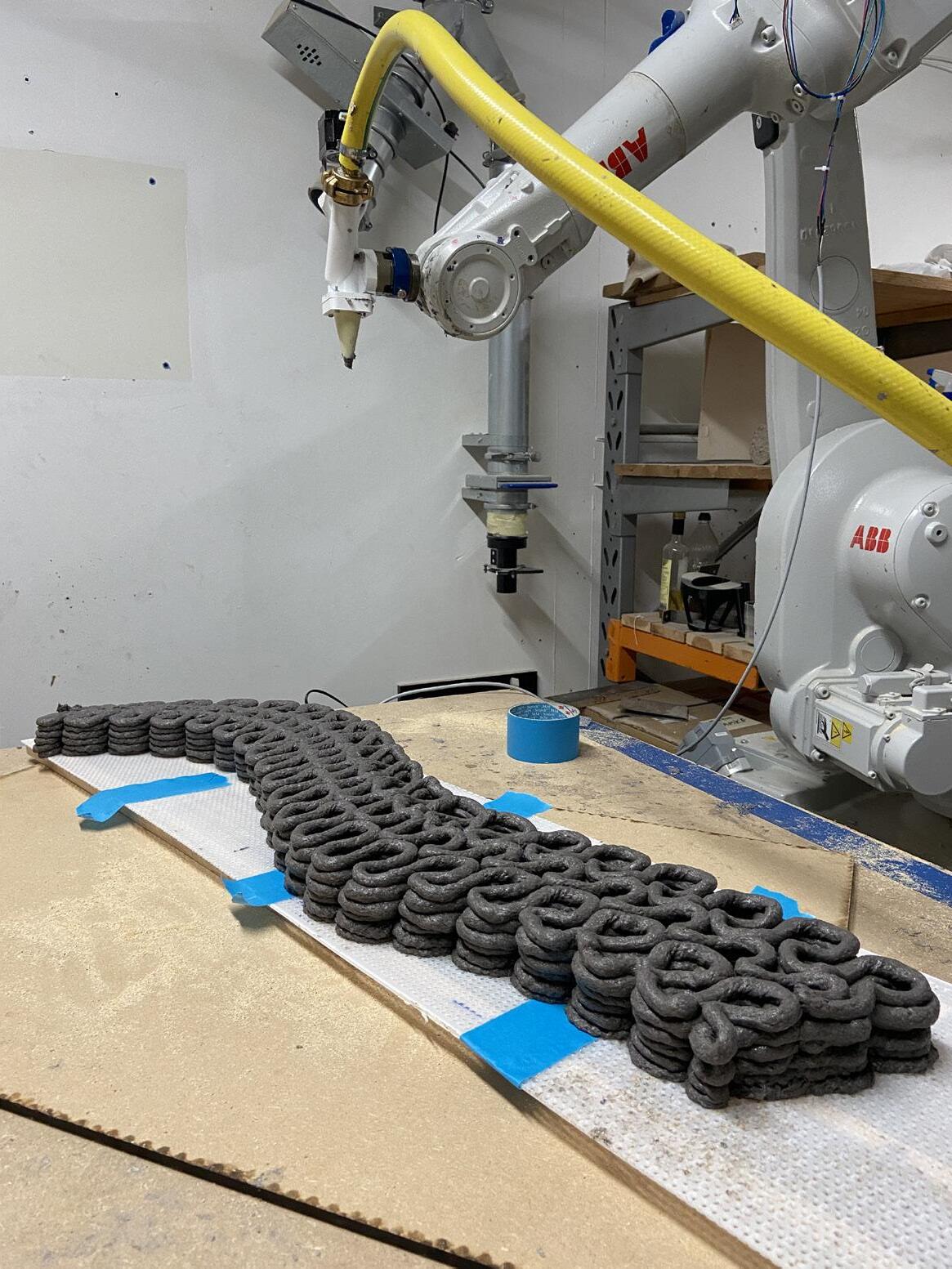
Description: This workshop asks which concepts, tools and technologies are necessary in order to scale up 3d printing with biopolymers to architectural size. The current set of standardised materials used for the build environment are given by industry to architects. In contrast the design, specifica-tion and making of biopolymers is close to designers. In the workshop we will explore how we can steer the properties of biopolymers from cellulose-based slurries and use these in design. The workshop's investigation is based on a material and design system developed within the CITA
PRINTING PROCESS
research project “Predicting Response”. This is the starting point for a two week deep dive of investigations across scales:
● Material level - we explore the impact of fibres and mixture on the materials behaviour
● Surfaces and masses - we explore the potential and limits of the robotic extrusion technol-ogy in terms of possible 3d printed geometries and surface expressions
● Tectonics - as architecture is made of many smaller parts, we will investigate and develop a modular system and joints for cellulose based material.
40
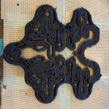
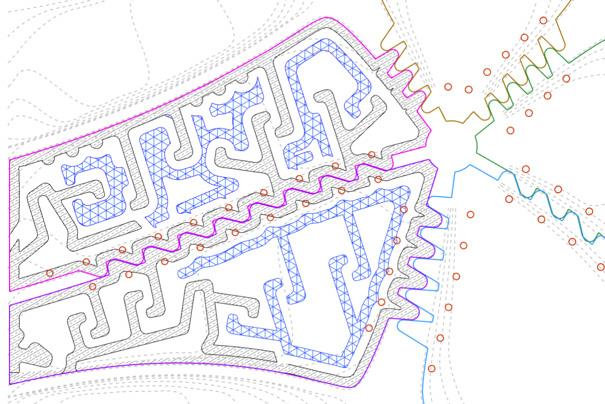
The Paper flock panels act as the structural element for the cellulose panels. They are the connection to the metal and between panels. The components inside the panel can be changed to suit the needs of the interior.
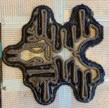
Decaying mainly occurs in seagrass portion from top to inner part; only very small part of mold growing in cotton material
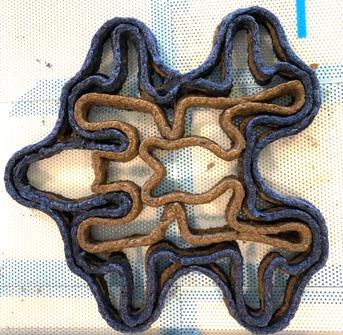
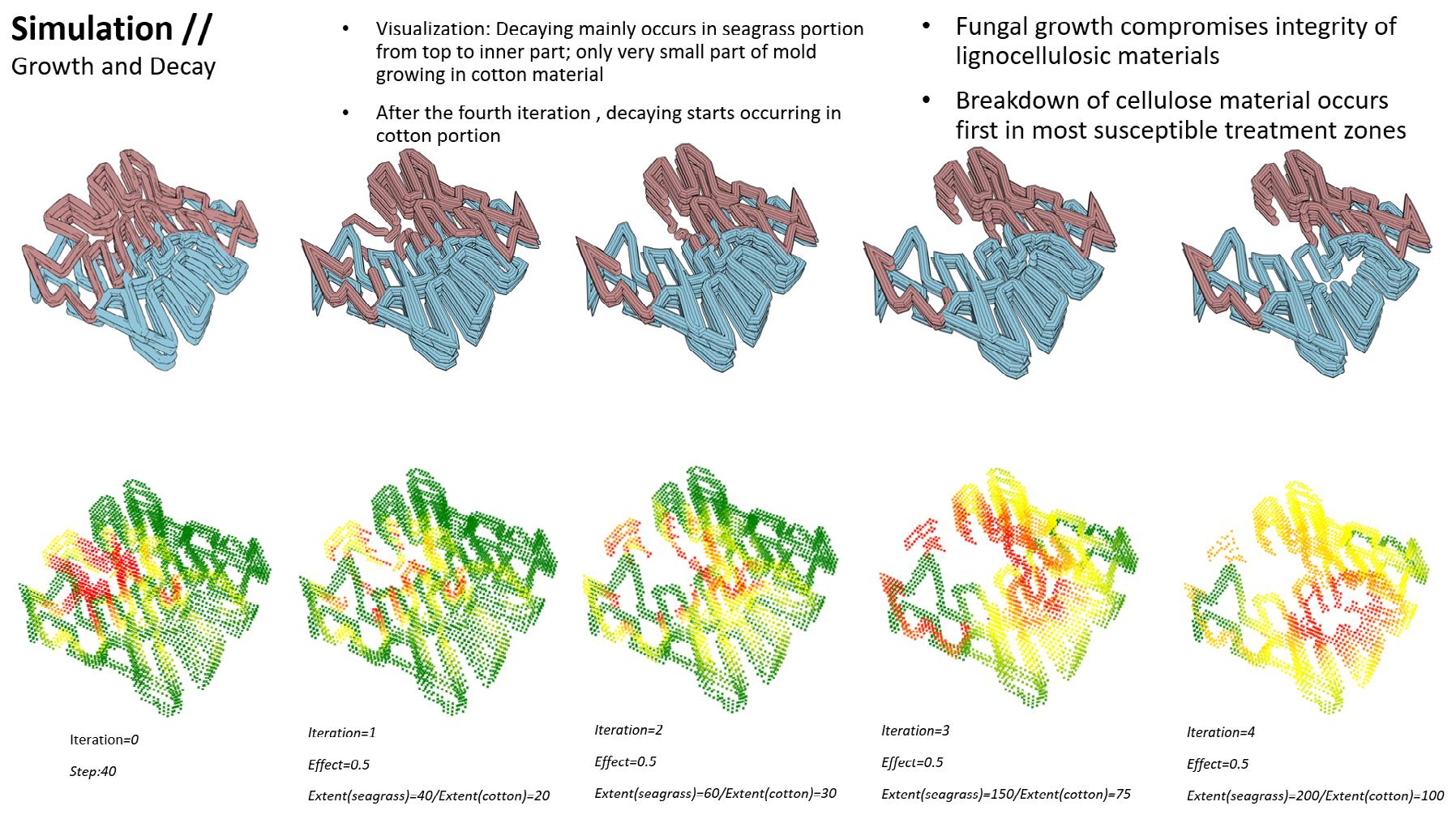
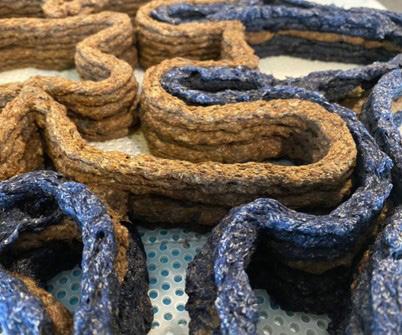 fig. 1
fig. 2
fig.2 Visualization
fig. 1
fig. 2
fig.2 Visualization
41
fig.1 Filled in with cotton panels