DAI SHIUAN WORKS
Graduation Projects 2016-2017
One-year journey - Swimming pool Research
Faculty of Architecture of Tamkang University
shiuandai0426@gmail.com
SHIUAN
DAI
2
EDUCATION
09.2020-06.2022
Royal Danish Academy, Master of Arts
Major in Computation in Architecture
09.2012-06.2017
Tamkang University, Bachelor of Architecture
EXPERIENCES
03.2023-Present
Architectural Engineer,CTCI,Taipei
04.2021-07.2021
Student Assistan,KADK,Copenhagen
10.2018-06.2020
Assistant Designer, JUT Group Developer,Taipei
06.2016-08.2016
Project Designer, XIE,HUI-ZHONG Architects
07.2015-09.2015 | 01.2015-02.2015 | 07.2014-09.2014
Intern, ARCHIZ C. H. LIN ARCHITECTS
AWARDS
06.2014
2nd prize winner of Students architectural competition, China
03.2015
Scholarship winner from Architectural Institute of Taiwan
05.2015
Da Yu Award, Scholarship winner from the college of engineering, Tamkang University
Rhino7
Grasshopper
Robotic automation
3D printing
V-Ray
Lumion
Revit
ArchiCAD
Blender 3D
Photoshop
Illustrator
After Effects
SKILLS LANGUAGES
Mandarin Native
English Fluent
German Basic
Danish Basic
InDesign
Sketchup
Autodesk CFD
AutoCAD
Python
3D Scanning
HTML
CSS
3
Table of Contents My Grandfather's Thermal Bath 6 Vertical water Pool 16 Metropolitan Vertical Water Park 20 Urban Landscape 24 4
My Grandfather's Thermal Bath
,2016 , pre-design and research stage
Bacground:
My grandfather is 80 years old and has pain in his leg joints so he often needs assistance with walking. However, his joint pain does not deter him from his daily routine of exercising in the morning. Water is a medium that allows a person to float, reducing the stress on the body. Therefore, water exercise is beneficial and enjoyed by people with arthritis. The aim of this research is to create a thermal bath for my grandfather and create a pleasant space for him to exercise and relax.
History:
Bathing culture has existed for a long time, right from the ancient Greek and Roman periods. Multiple studies have been conducted on hydrotherapy to examine its positive impact on the body, especially in treating skin disorders and muscle and joint pain. In ancient Rome, three main types of baths were widely used: balnea (home baths), balnea private (private baths) and balnea publica (public baths). Public baths also provided a place for people to meet and socialise. I visited Széchenyi gyógyfürdő in 2022, a wellknown attraction and the largest medicinal bath in Budapest, where people socialise with friends and engage in activities such as drinking and capturing photographs. It was something I had never seen before, and I found it very fascinating. By undertaking research on history and based on my personal experience, I define a bath as a place that offers individuals a private and public spatial
identity.
The Taiwanese bathing culture can be traced to the 1800s; this culture was introduced in Taiwan. In Beitou, many public baths were built due to the region’s rich natural hot spring resources. To preserve Taiwanese historical baths, the Hot Spring Museum was established, with Roman-style baths. The museum houses the largest bath in Southeast Asia in the 19th century. Based on this information, I have outlined the design guidelines in the context of Taiwanese bath history.
6
Concept:
The site is located in a small and quiet area, ensuring privacy for all visitors. The goal of the project is to analyse the behaviour and movement of my grandfather and then use this information to customise the space. By noting the actual functions he requires, I intend to develop a spatial diagram, which would allow me to organise and design a holistic space based on size and atmosphere.
Plan:
The space will be designed based on previous analysis. My grandfather enjoys floating in the water and leaning on the pool’s edge and stretching his feet. Adequate lighting and interior materials will be incorporated in the spatial design.
Architectural Circulation:
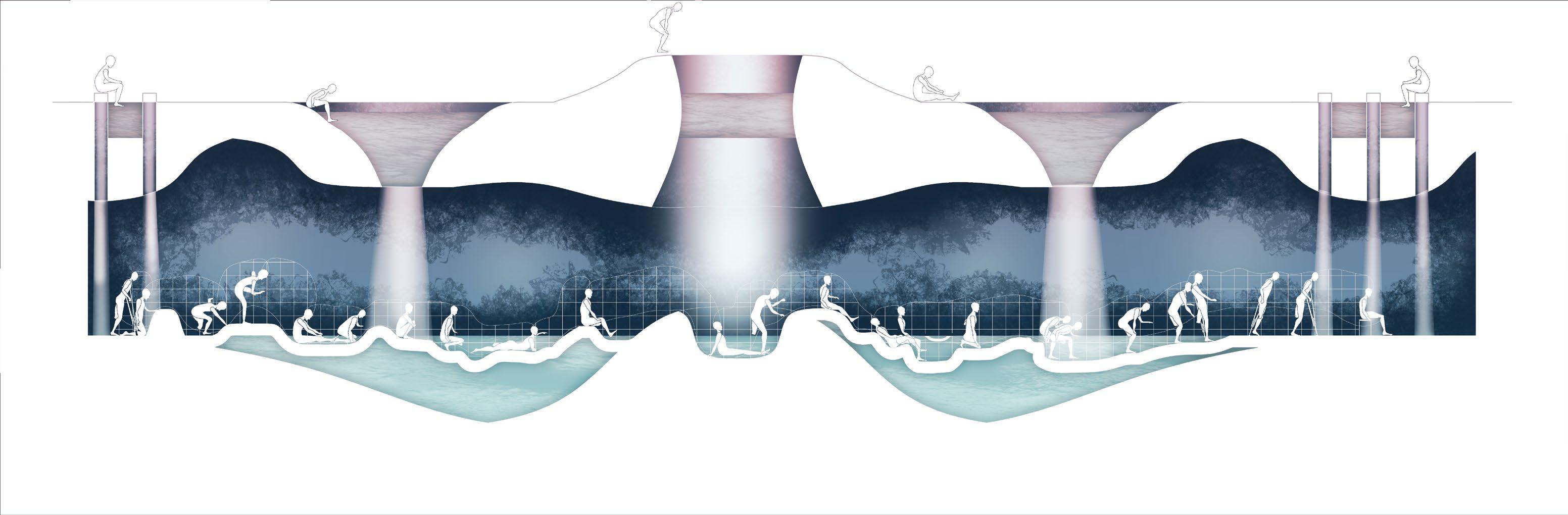
Upon entering the building, my grandfather can walk down the ramp teeming with beautiful plum trees that provide shade to help counteract the harsh summer temperatures and glare and increase human comfort. After changing his clothes, he can walk into a warm pool (20 cm depth) to wash his feet, his ritual before bathing. He can then sit in the semioutdoor pool, beside the pool, and watch children play in the water. Additionally, several pools will be maintained at different temperatures. He can soak his body in the 60 cm-depth water, moisturise his body and then proceed to the steam room to sit cross-legged and enjoy the hot steam at 80 ºC. Finally, he can go to the shower room and wash his body with warm water, with the light streaming in from the ceiling guiding him into a small public garden.
Conceptual Section Human | the micro-scale of pools
7
8
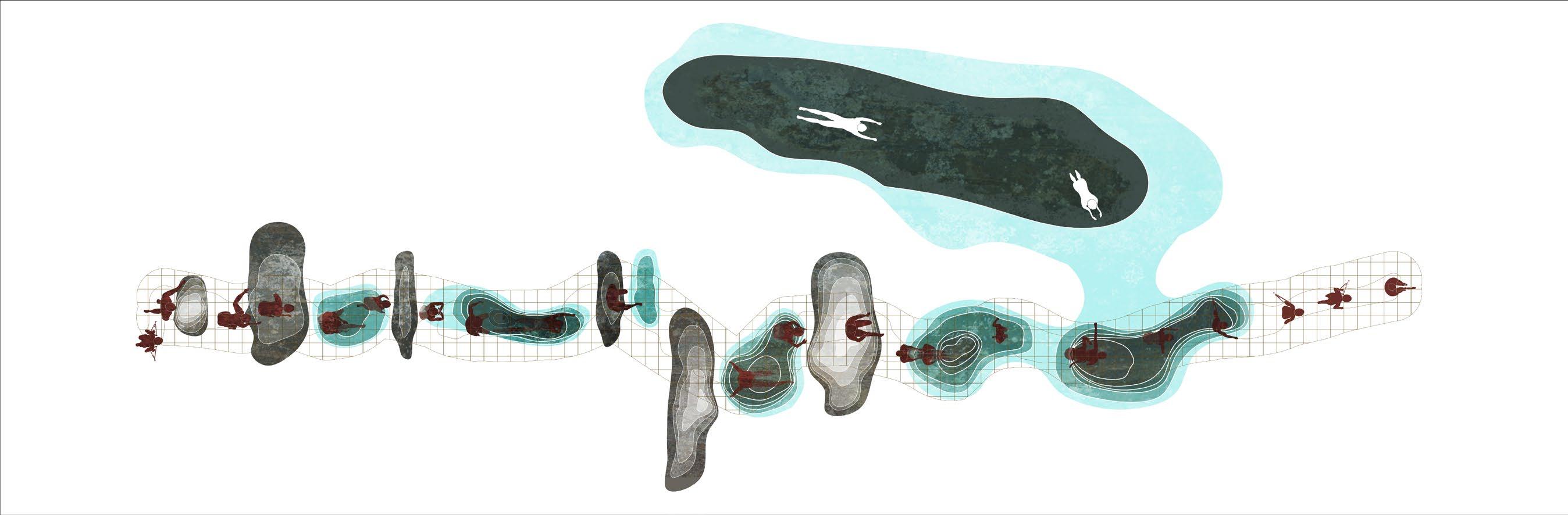
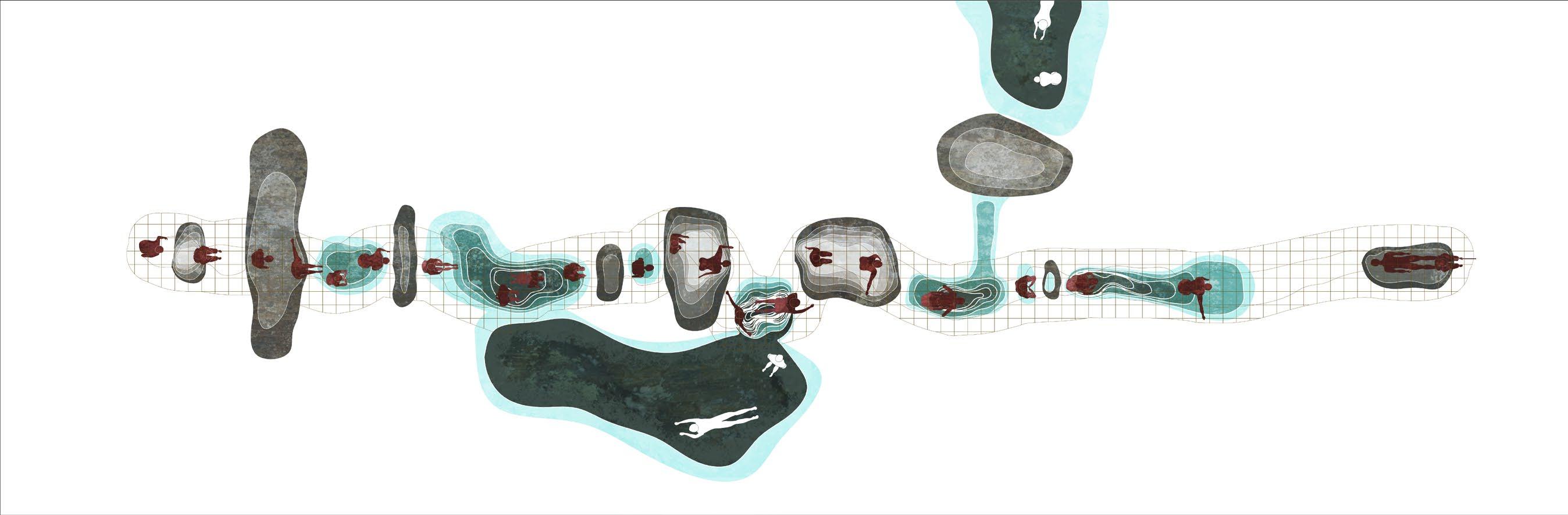
Conceptual Plan 9
10
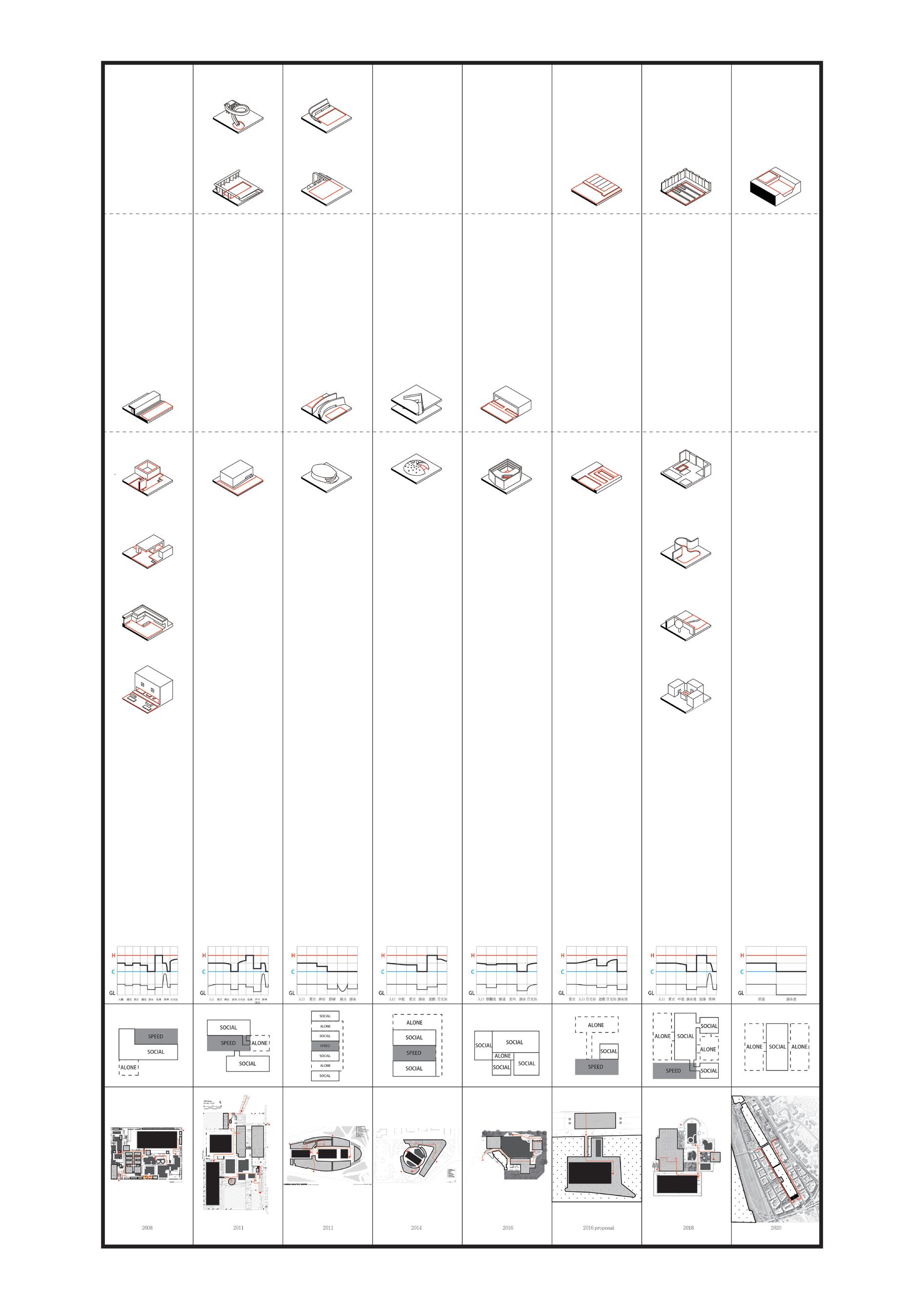
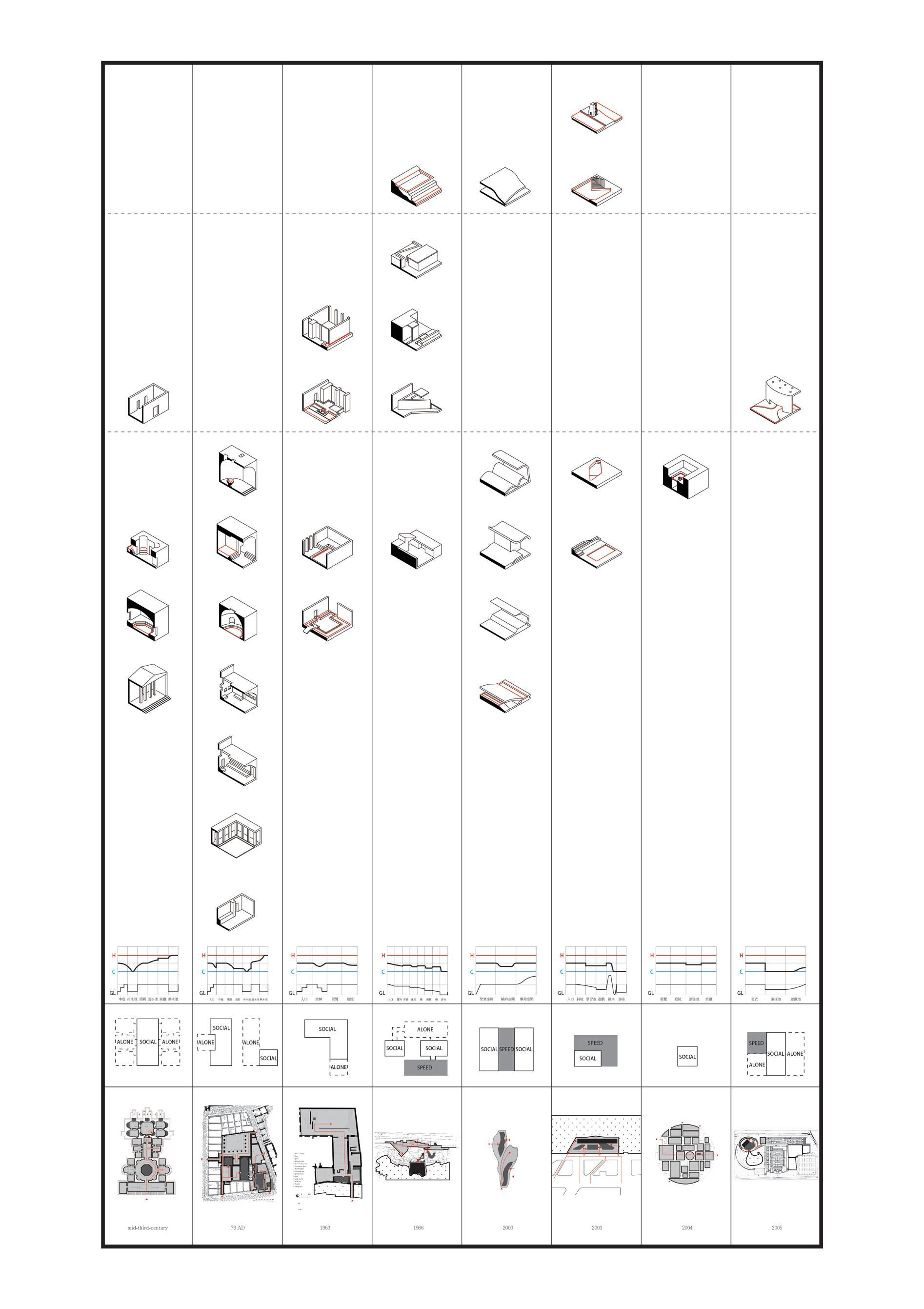
Plan Research 11
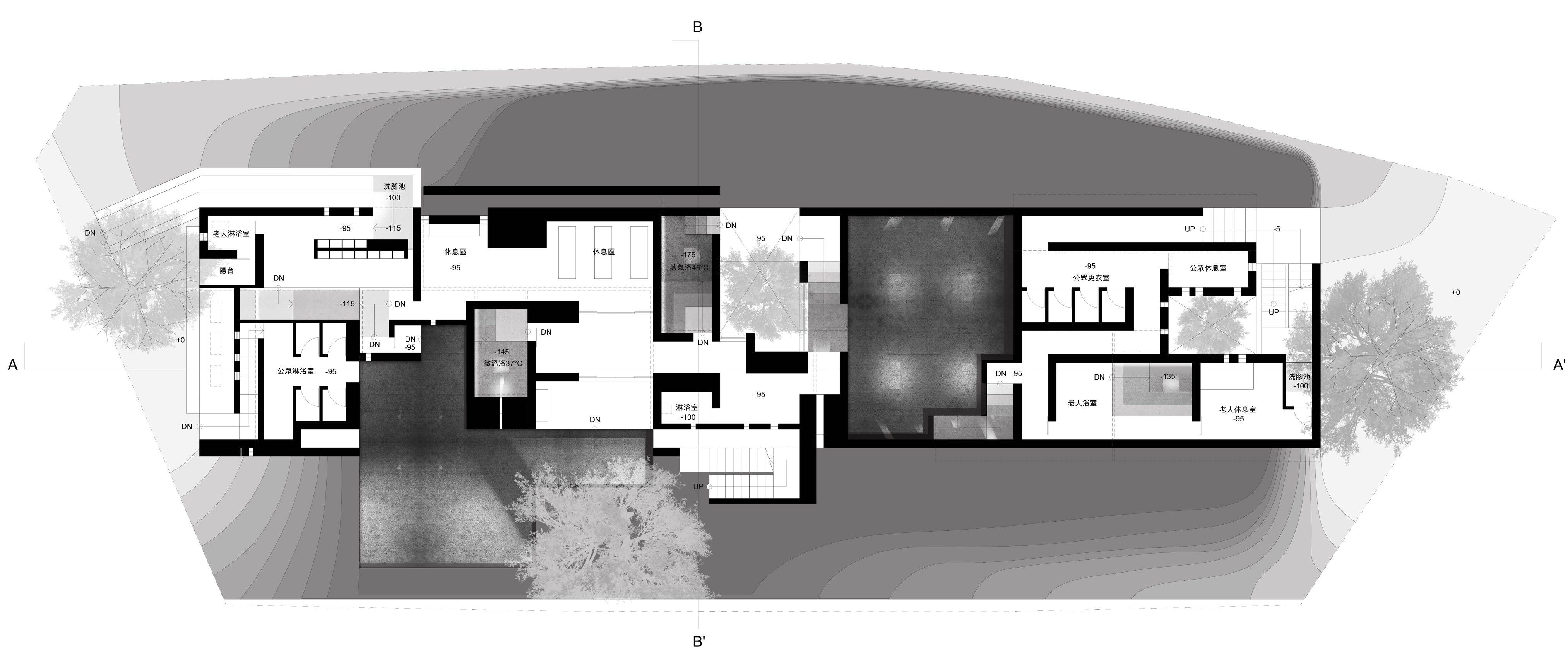
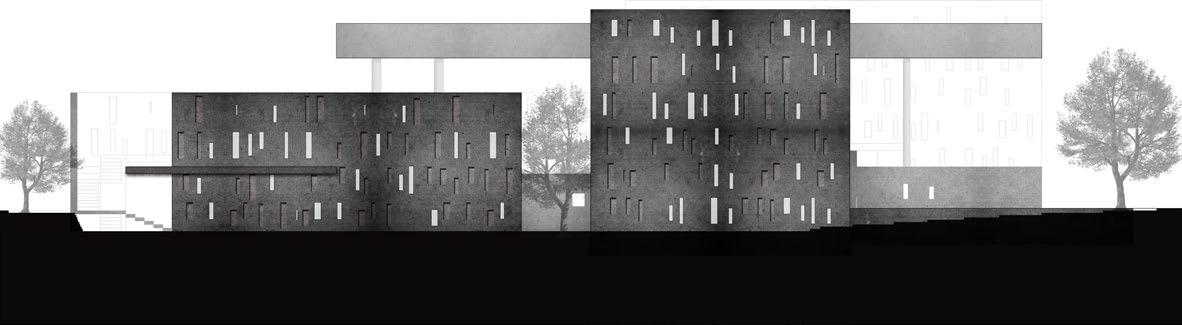
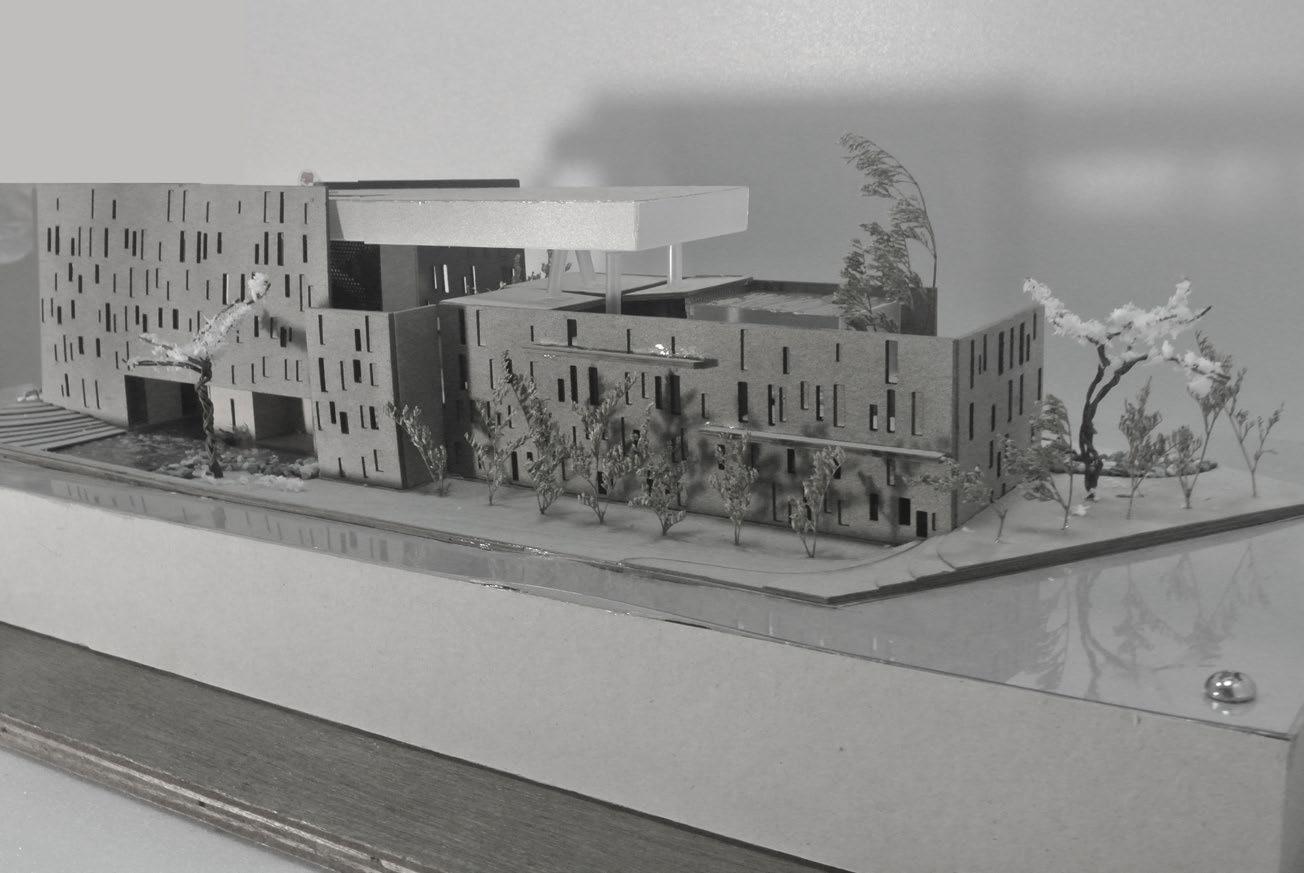
Thermal bath comprising multiple pools, including a public bath, semi-outdoor pool, steam room, sauna, lounge, indoor pool and private bath. The goal is to create a water space with different lighting and atmospheric conditions. Each space like the transition of the scene, where people can immerse into.
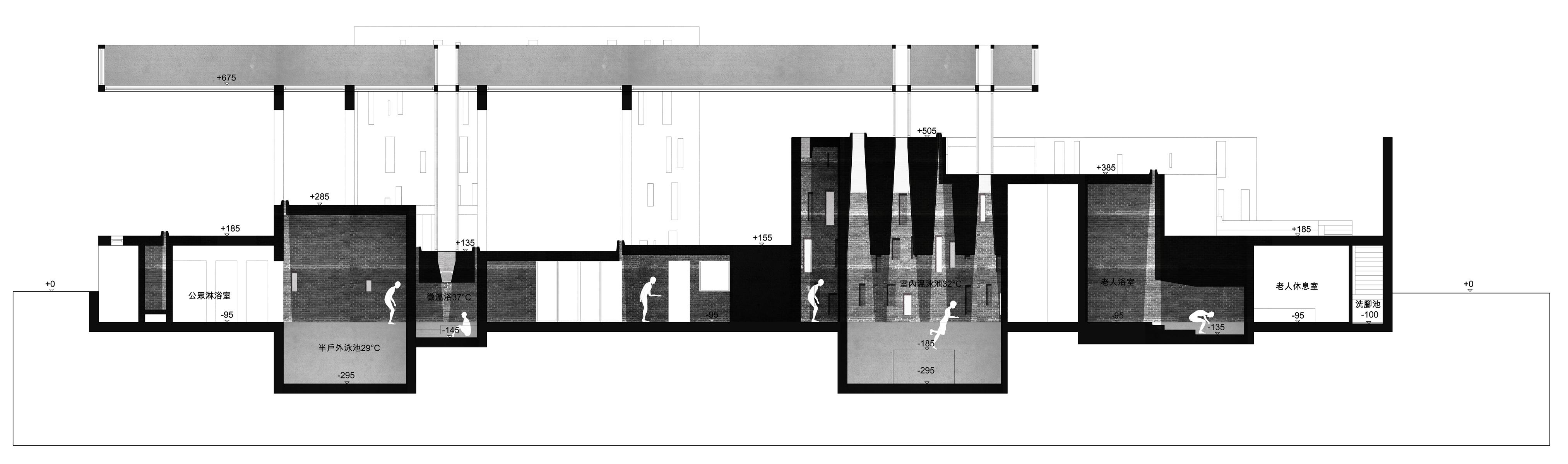 fig.1, fig.2
12
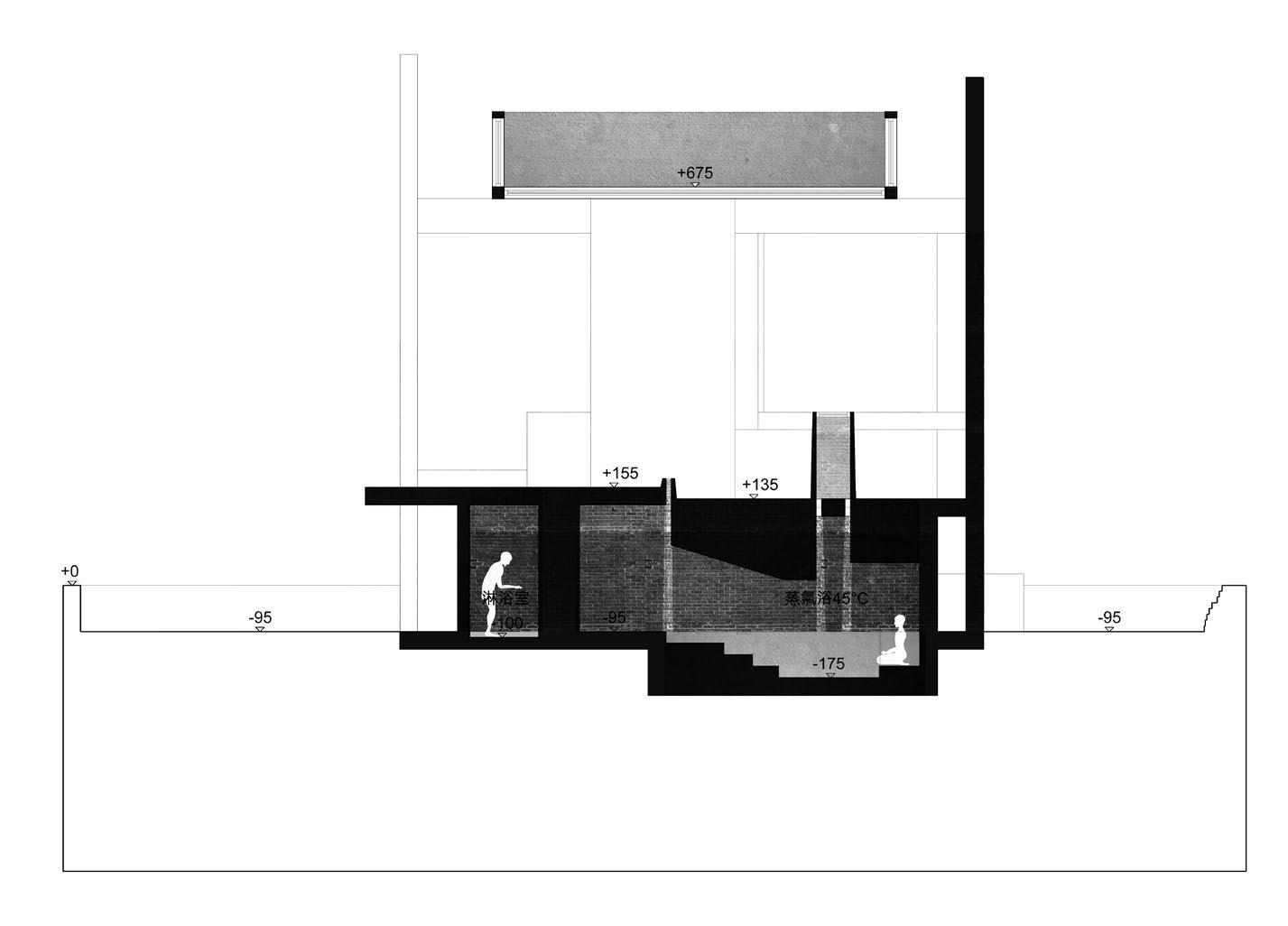 fig. 1 A-A' Section
fig. 2
fig. 1 A-A' Section
fig. 2
13
B-B' Section
14
15
Thermal Bath Plan Elevation Model
Vertical water Pool
pool typology research ,2016
Skills: Rhino, KeyShot
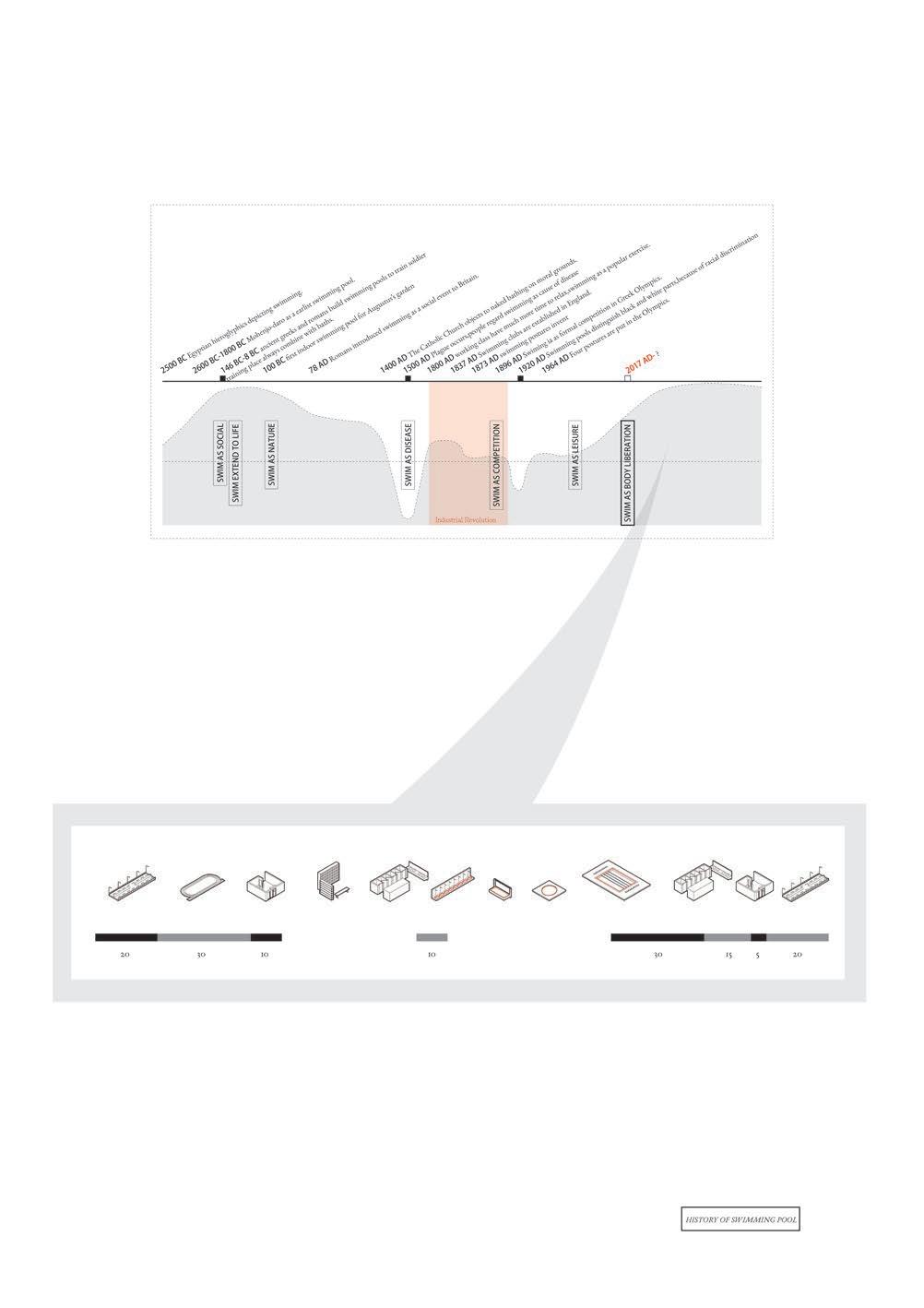
History of the Swimming Pool: Tracing the history of swimming pools, the earliest ones were mainly used for training soldiers and recreation; however, in the modern world, swimming has become a popular sport. For instance, Olympic events include swimming as an international competition, with varying distances for different events such as the butterfly, backstroke, breaststroke and freestyle.
*2500 BC– Egyptian hieroglyphics depict swimming
* 2600BC–1800BC – The earliest swimming pool called the Great Bath is located in Mohenjo-Daro
*146BC–8BC – Ancient Greeks and Romans build swimming pools to train soldiers
*100BC – First indoor swimming pool for Augustus’ Garden
* 78AD – Romans introduce swimming as a social event in Britain
* 1400AD – The Catholic church objects to naked bathing on moral grounds
*1500AD – Plague occurs, and people regard swimming as its cause
*1800 AD – The working class get much more time to relax, and swimming becomes a popular exercise
*1837AD – Swimming clubs are established in England
*1896AD – Swimming is introduced as a formal competition in the Greek Olympics
* 1920AD – Swimming pools segregate between Black and White people and fuel racial discrimination
*1964AD – Four postures are introduced in the Olympics.
Typology of Swimming Pools:
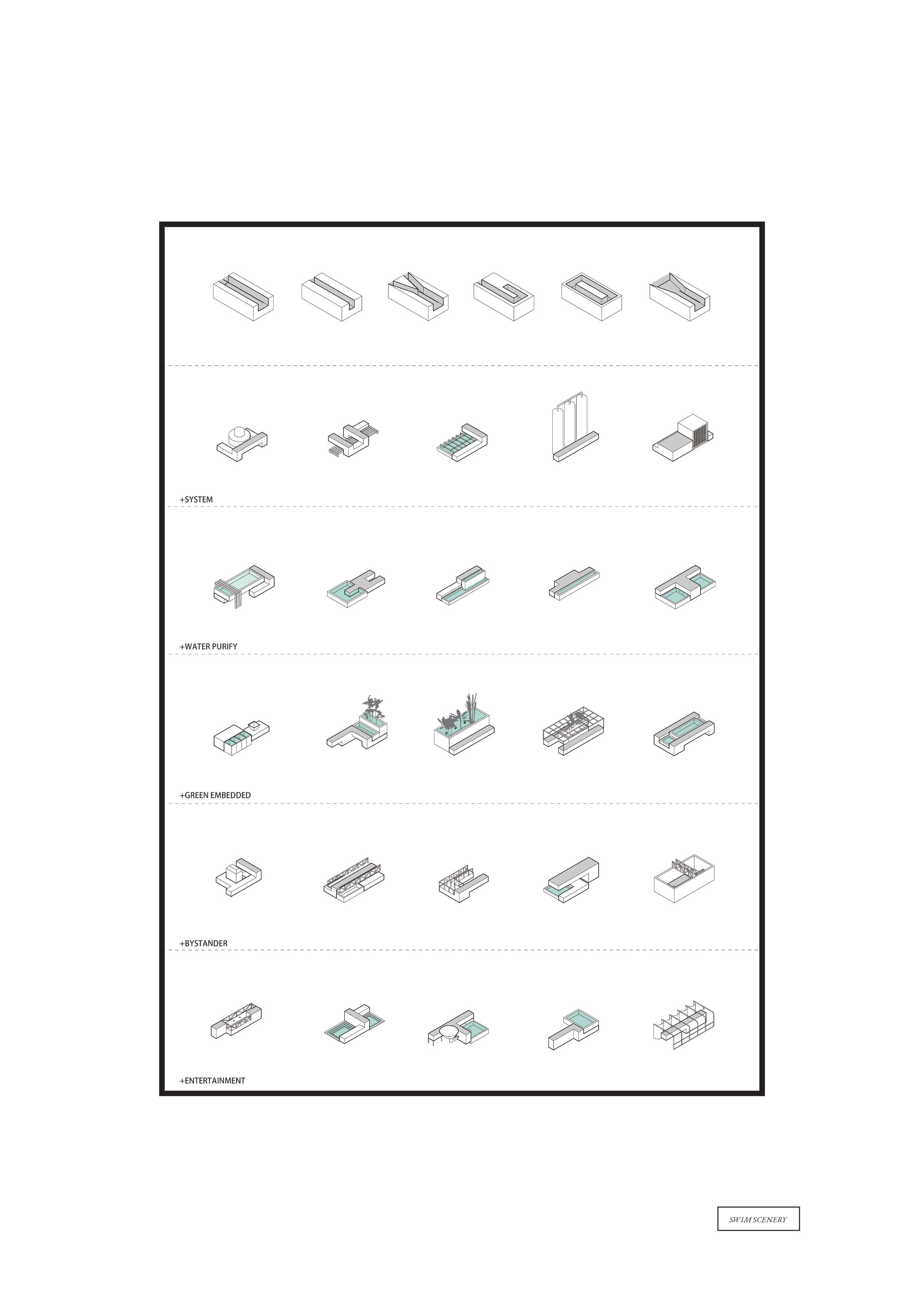
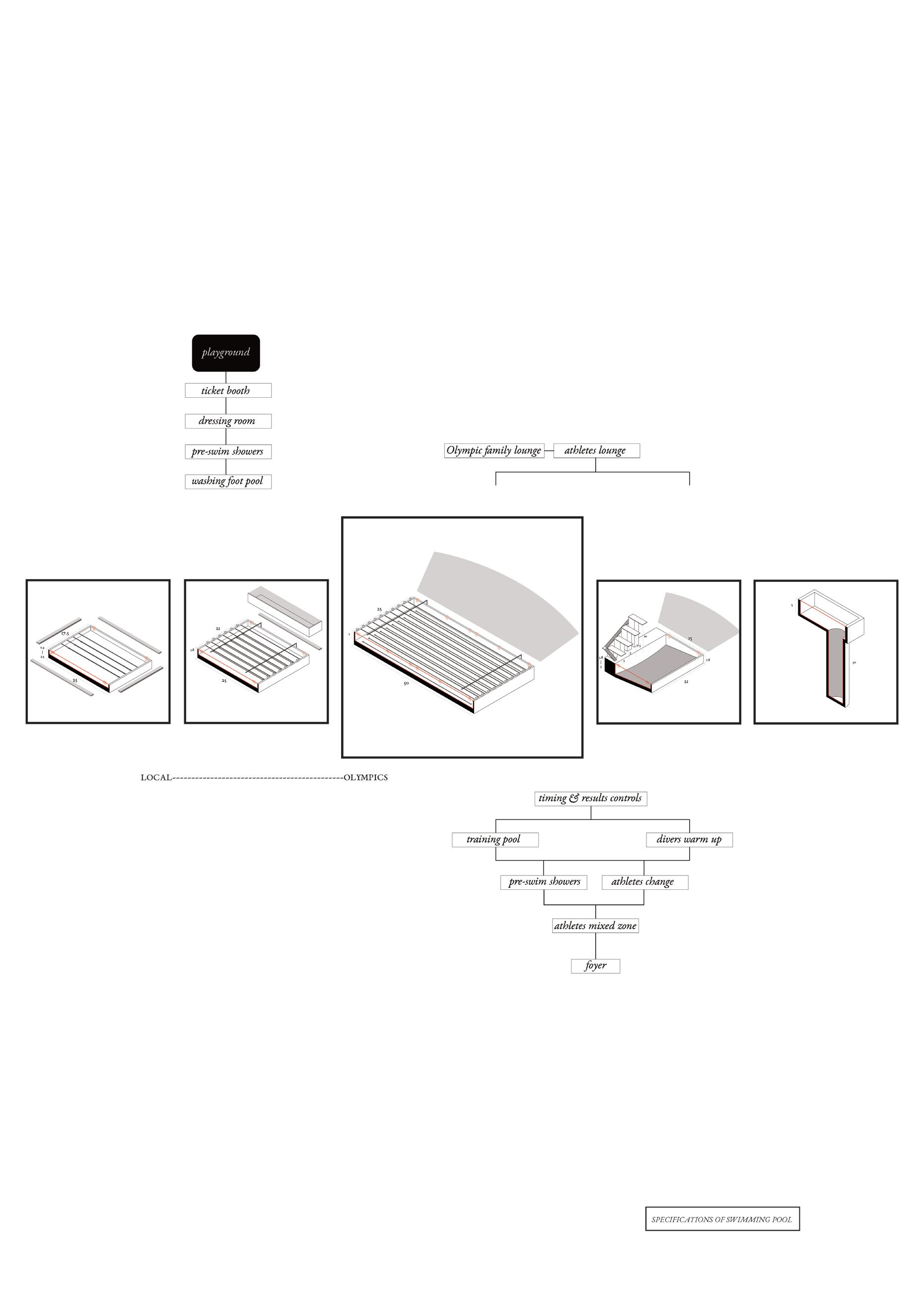
Swimming pools are special buildings, and modern swimming pools include several lanes to separate water into pools for different purposes. A standard
pool incorporates different design elements, such as the pool depth, platform and springboard diving.
If we look at the usage and dimensions of a swimming pool, the depth of the pool's border is shallow, and the central zone is deep. These factors lend a clear spatial definition: the pool’s boundary should be suitable for educating children, and the zone close to the centre should be for competitive swimming. I will thus incorporate these crucial factors into the design.
Design:
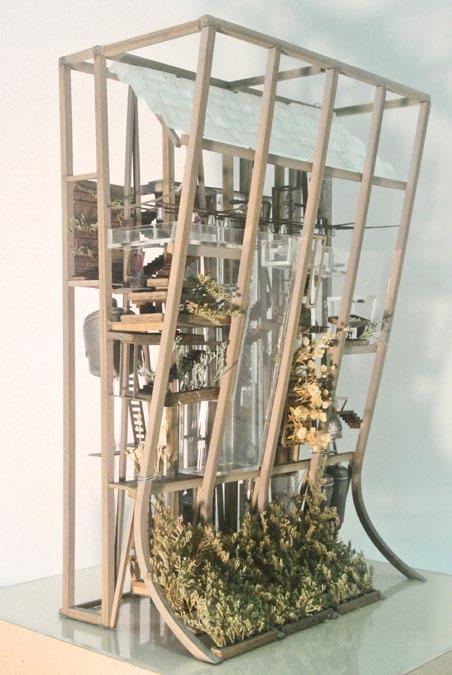
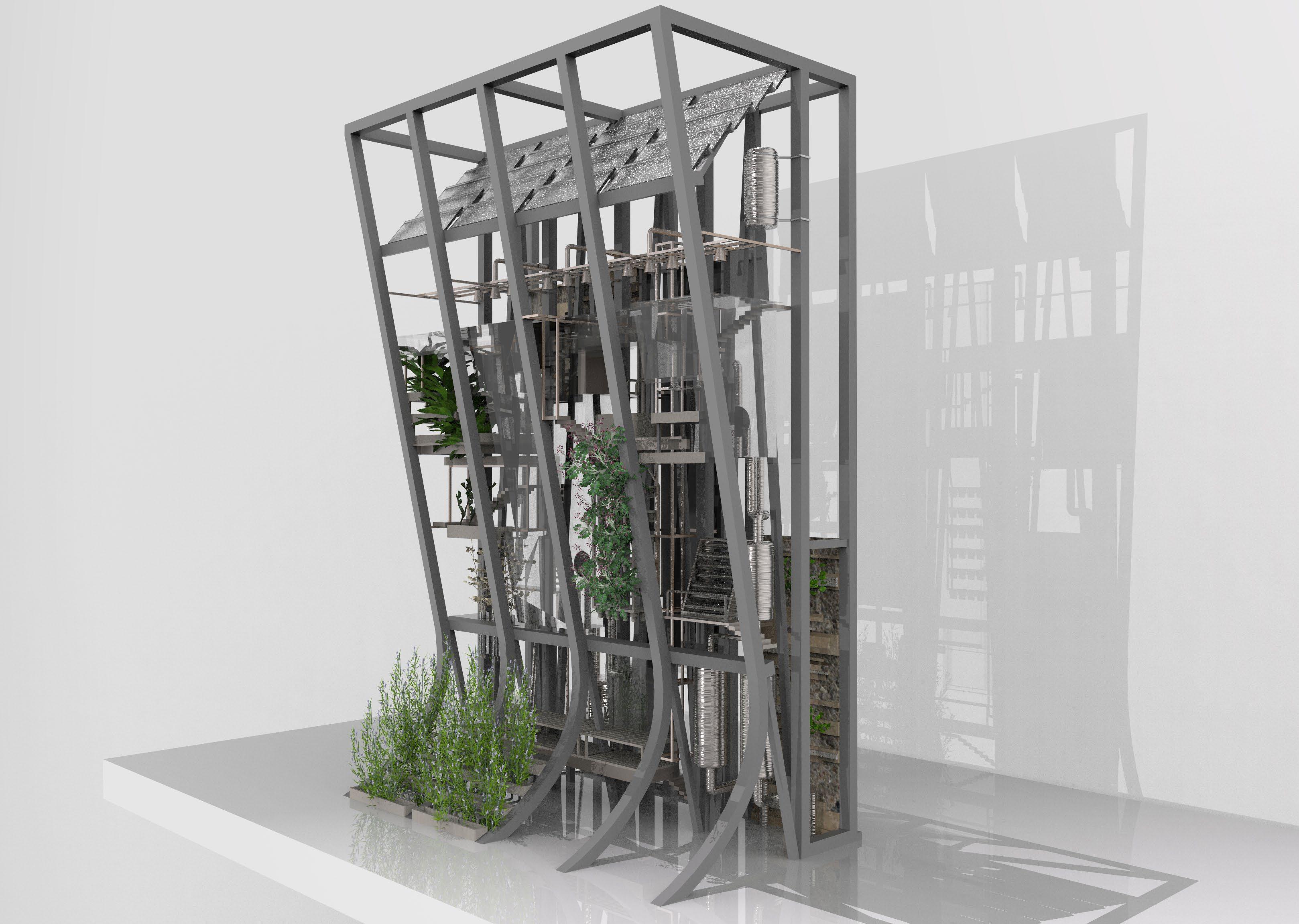
I hope that people will be able to socialise and relax, and the design should be conducive to interpersonal interactions. To achieve this goal, the staircase will be placed along the main pool, and people can easily reach or walk into the water. Next, a green garden will surround the pool to beautify the environment and improve indoor air quality. Regarding system activation, solar panels will be placed on the roof to generate the energy required to activate the water purification system and sprinklers. All the sprinklers will be installed around the staircases to help reduce the temperature and create a comfortable environment.
The pool system will be designed as a module, allowing the units to be placed in a way that creates water spaces, bringing vitality to the city.
16
17
18
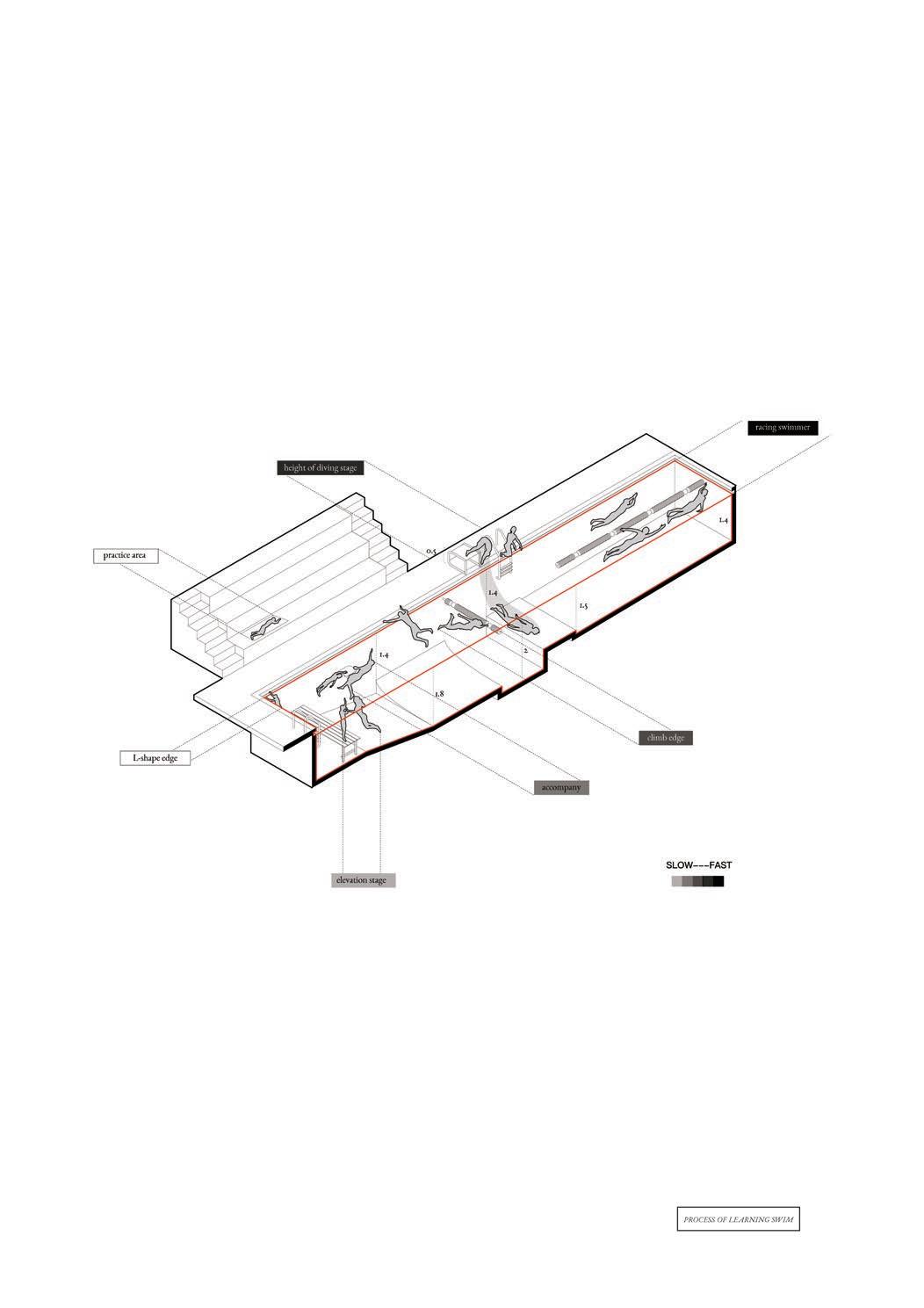
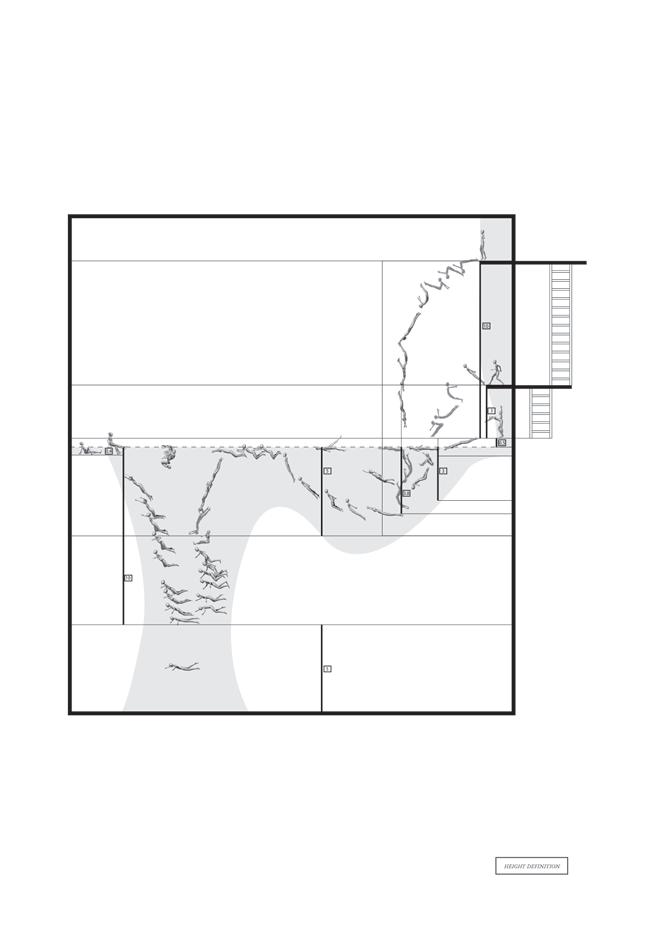
TYPOLOGY RESEARCH HISTORY
SECTION RESEARCH 19
POOL
Metropolitan Vertical Water Park
,Zhongshan Dist., Taipei City
Skills: Rhino
,2016-2017
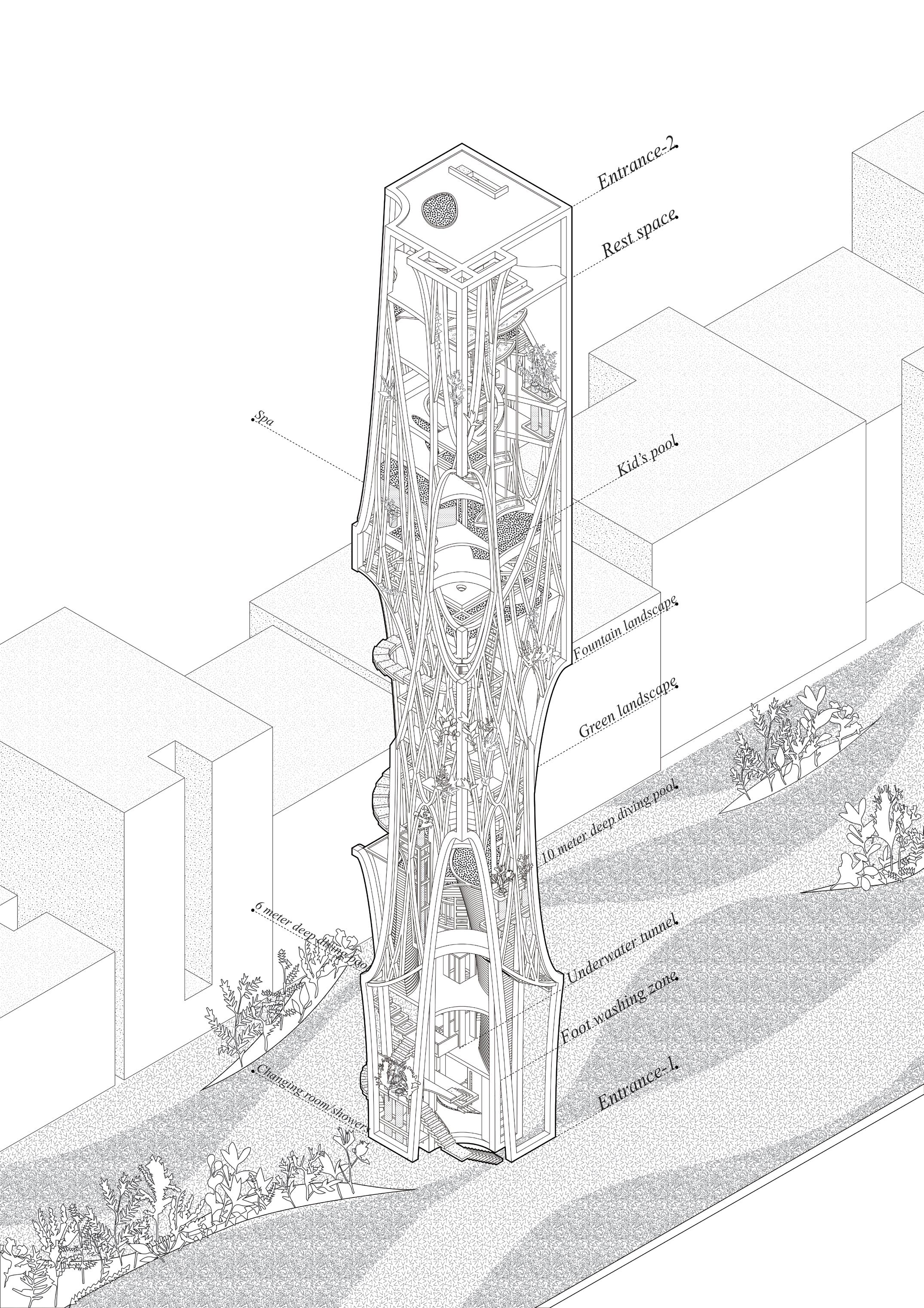
The urban heat island effect poses a considerable environmental problem in many cities, with daytime temperatures in urban areas being higher than those in suburban areas, resulting in discomfort and the spread of heat-related illnesses. To mitigate this, urban water body design should be considered an important strategy, especially in the summertime. Daytime temperatures in Taiwan may reach as high as 38℃, and citizens usually swim on a hot day. Taiwan is surrounded by the sea, and hence, swimming is compulsory as a part of the curriculum from elementary through senior high school. Hence, the education system and each Taiwanese person views swimming as a necessary and basic skill.
1913 and even today, public swimming pools are considered important recreational facilities in each city.
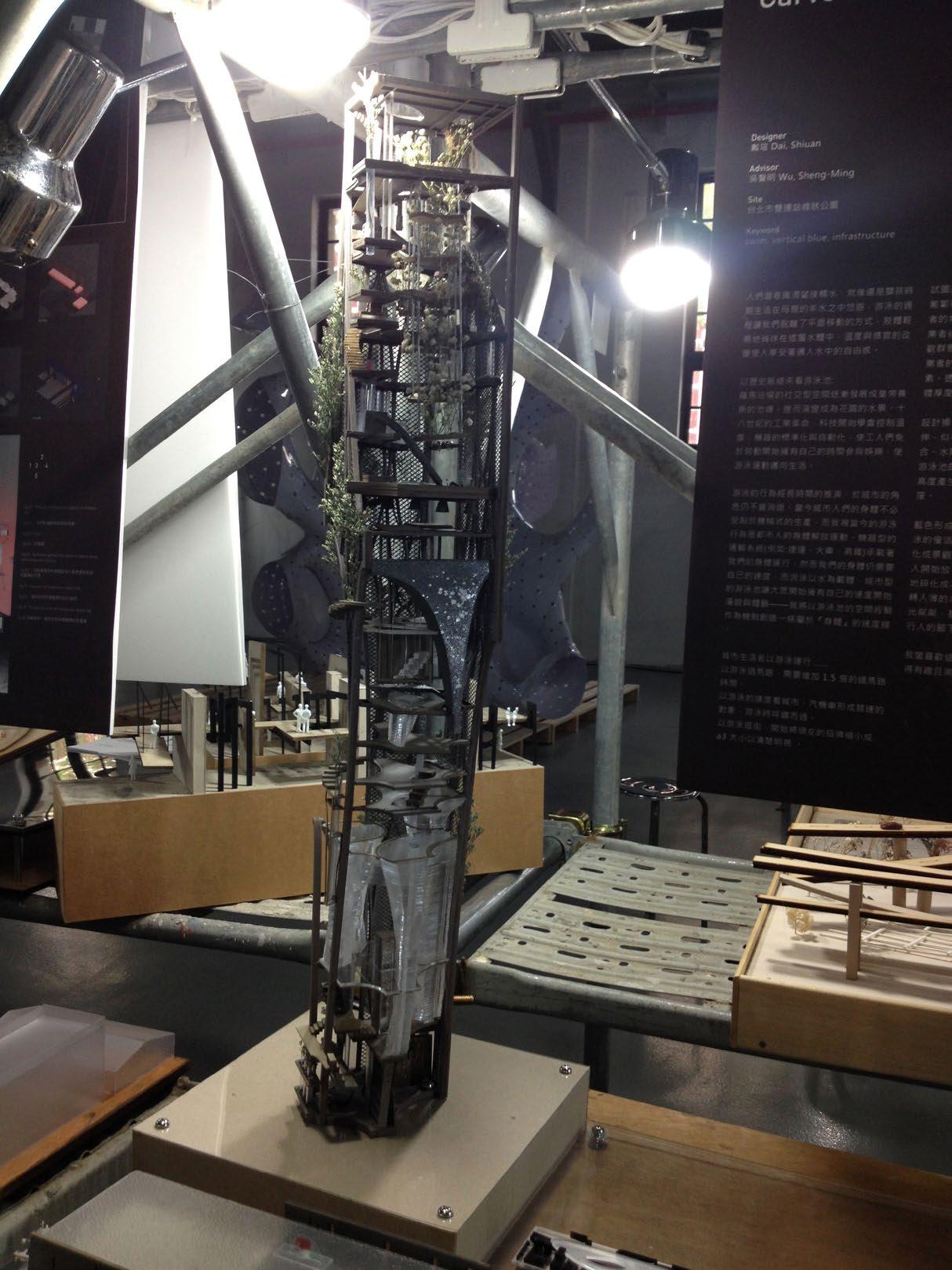
The design of the pools is conceptualized as a water park having pools of different sizes. Architectural plans for both beginners and professional swimmers are developed by designing the depths and heights of pools. People can enjoy various activities in this waterpark, including walking up the spiral staircase to the top of the pools, from where they can enjoy the view of the city, walking in a shallow pool, floating on the water, dunking their heads underwater, or diving into the pool.
The design is organized based on an analysis of pools typology. Such urban pools not only provides entertainment for people but are also particularly beneficial for citizens to refresh during a heat wave.
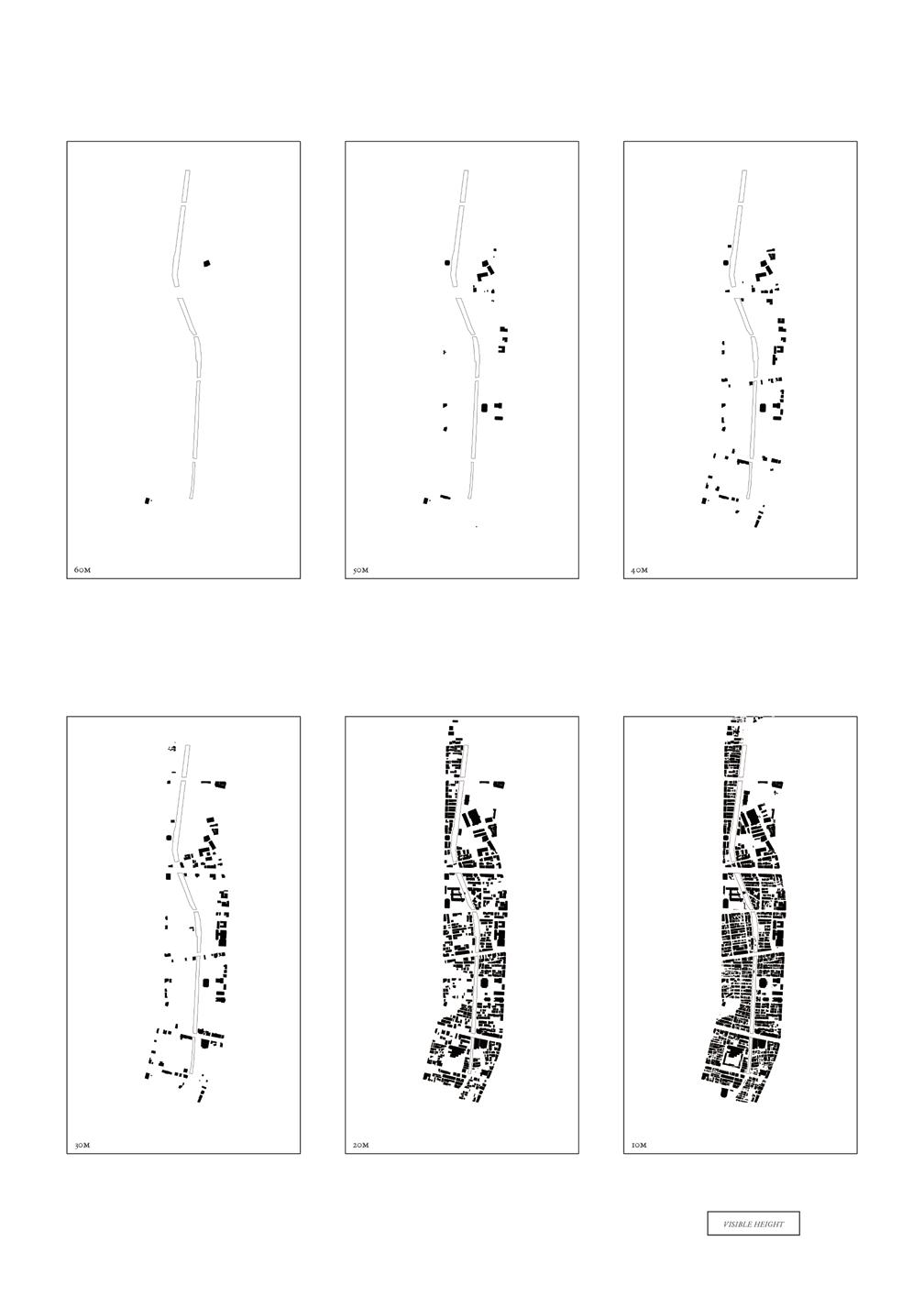
FIGURE-GROUND 20

Plan 21
Functions of the spaces
22
PROGRAM DEFINITION PROGRAM 23
Skills: Rhino, KeyShot
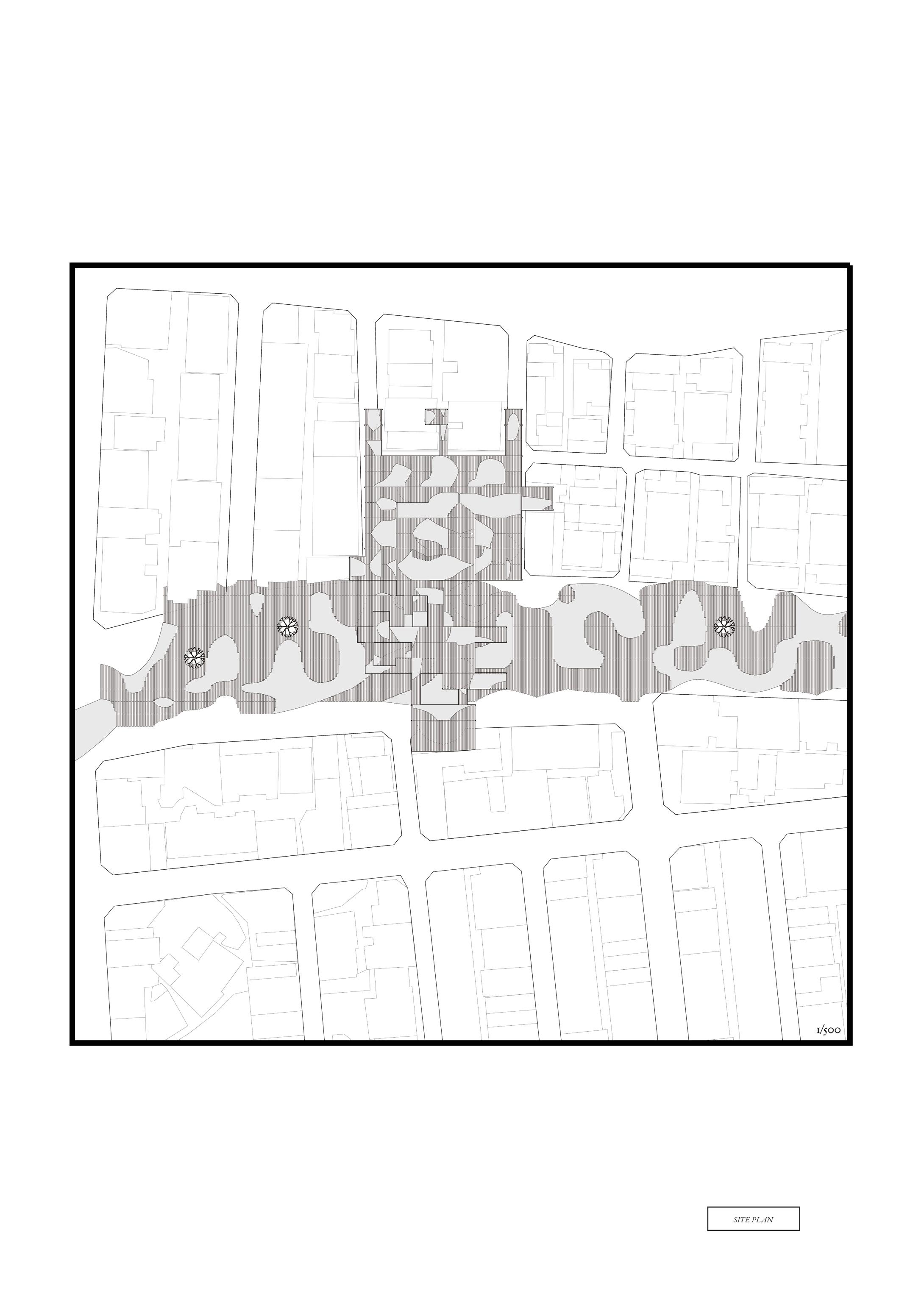
Description: The Taipei Basin was well known for its special geography, with thousands of farm tanks dotting the region for irrigation. However, rapid development and urbanization have led to the disappearance of this beautiful landscape. From 1901 to 1988, a railway line ran through the landscape, which was then converted into an underground metro system. Through urbanisation, the area above the metro system will be turned into a linear public park for future citizens.
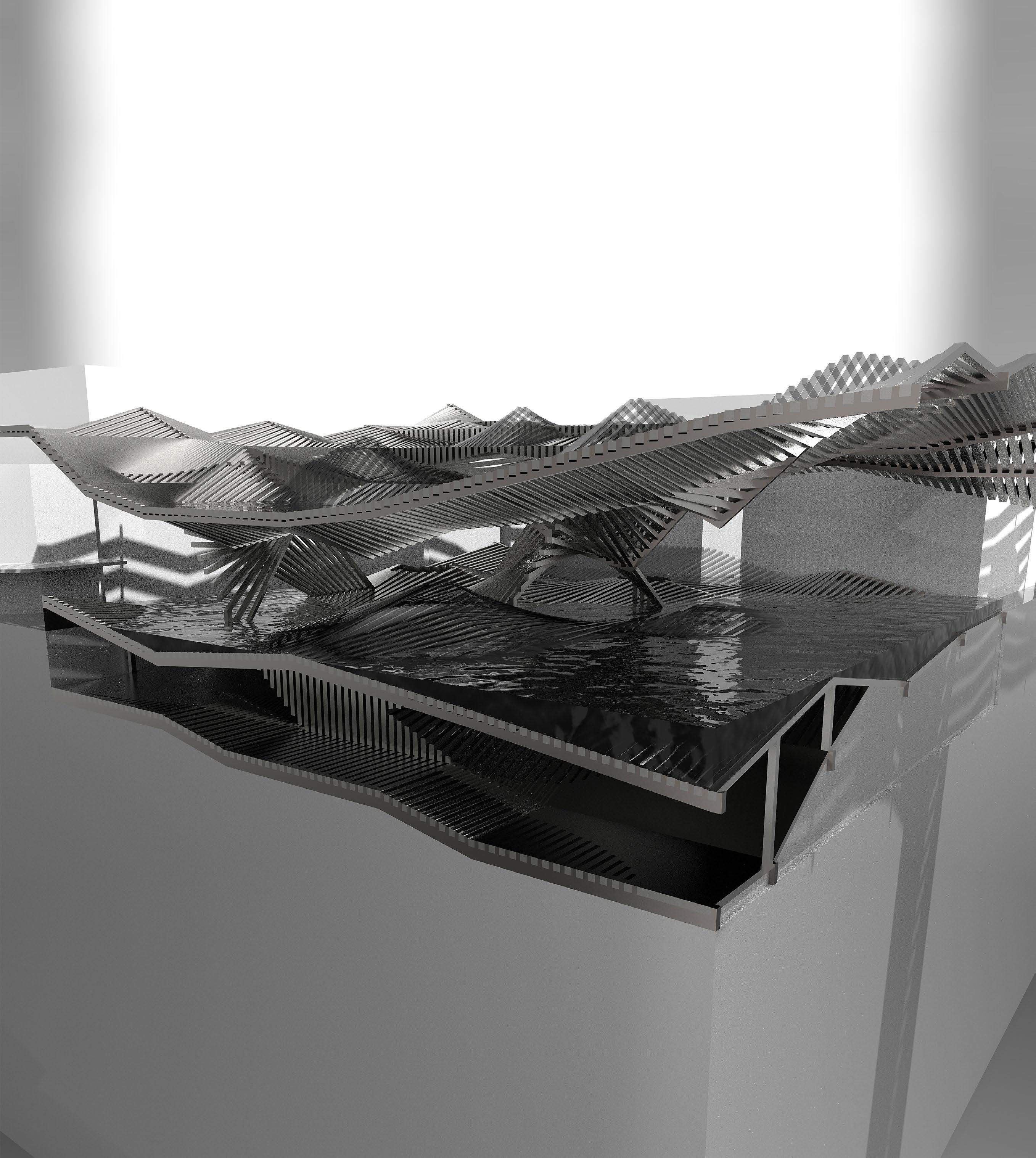
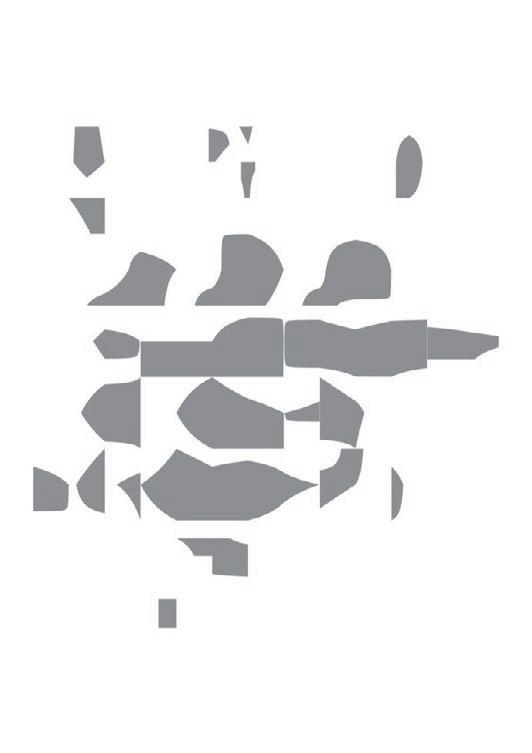
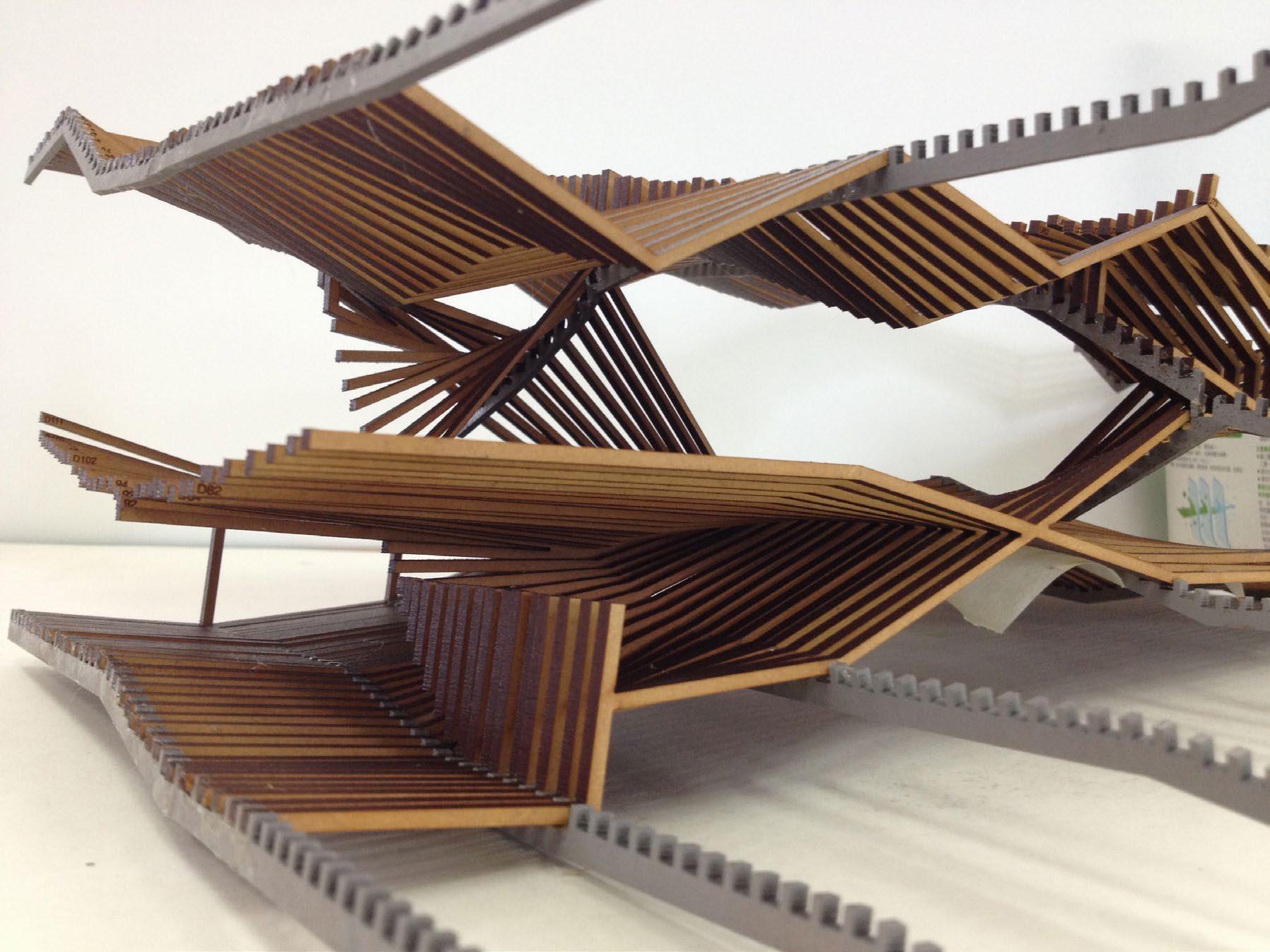
Design: I propose creating connections between the past landscape and current land usage. Thus, I will attempt to reconstruct the landscape’s irregular form and follow a geometric system using digital tools.
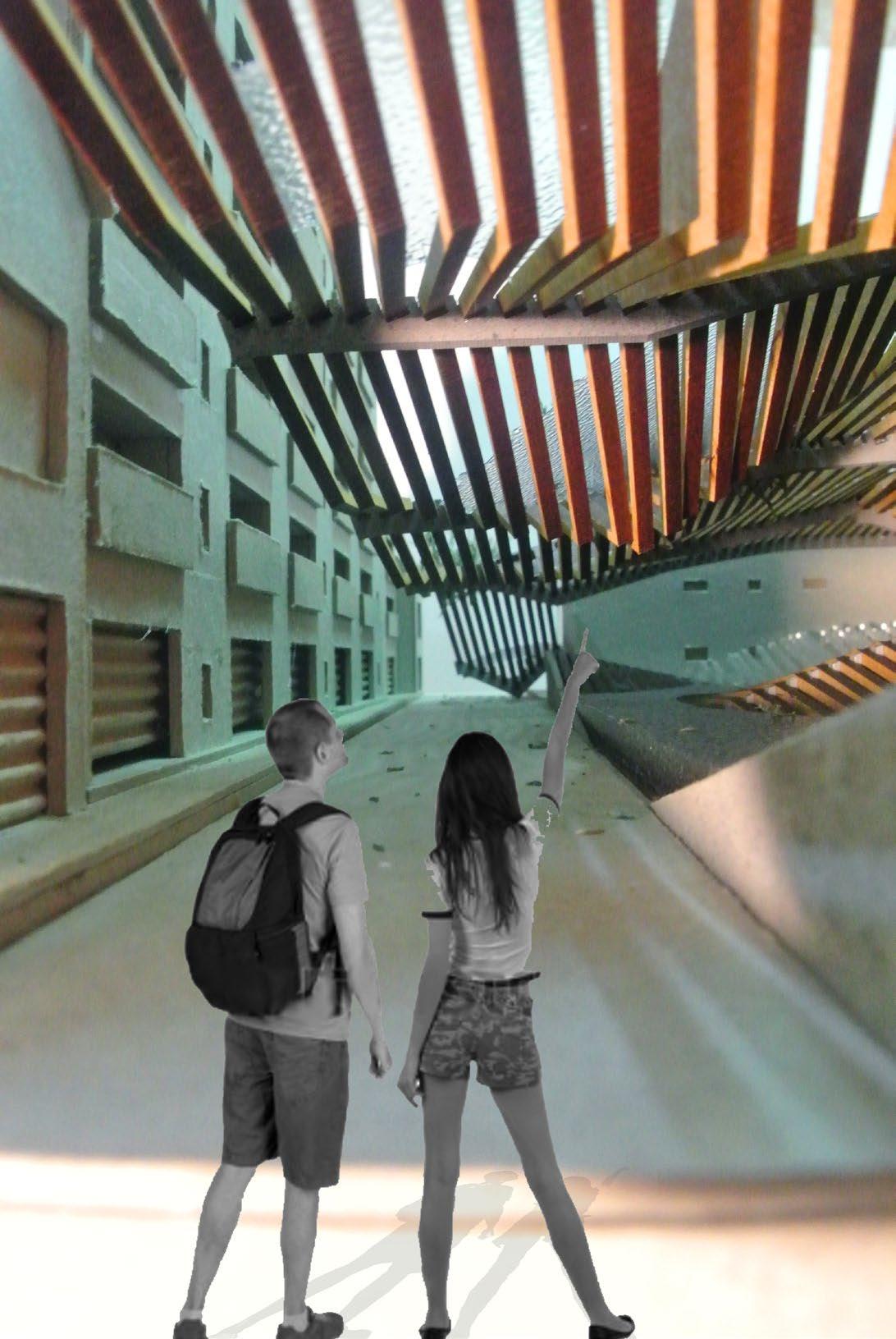
During modelling, the basic Rhinoceros command (Srfpt) will be used for building the surface (5 m* 5 m and 10 m*10 m as the two base sizes). I can thus easily control the four surface points through the modelling process.
Regarding the form, the new landscape will comprise several ponds with irregular sizes and depths. When all ponds are connected, they will form a waterway, where small boats can sail across, with the blend of nature and water creating a beautiful and organic urban landscape.
24
25


10 9 5m*5m 10m*10m +0 +0 -120 -100 +85
landscape
created and the boundary between the water and structure is blurred GROUND FLOOR 2nd FLOOR PLAN ROOF PLAN
fig.8 The artificial
is
fig.7 Creating a wood structure fig.6 Entering the “SrfPt” command in Rhinoceros to create a surface that can be changed by adjusting the height points
fig. 6 Input the "SrfPt" command in Rhino to create a surface that can be modified by adjusting the points
fig. 7 Structure is constructed along the X axis.
Master Plan 26
fig. 8 The urban environment is designed efficiently to create space for water.
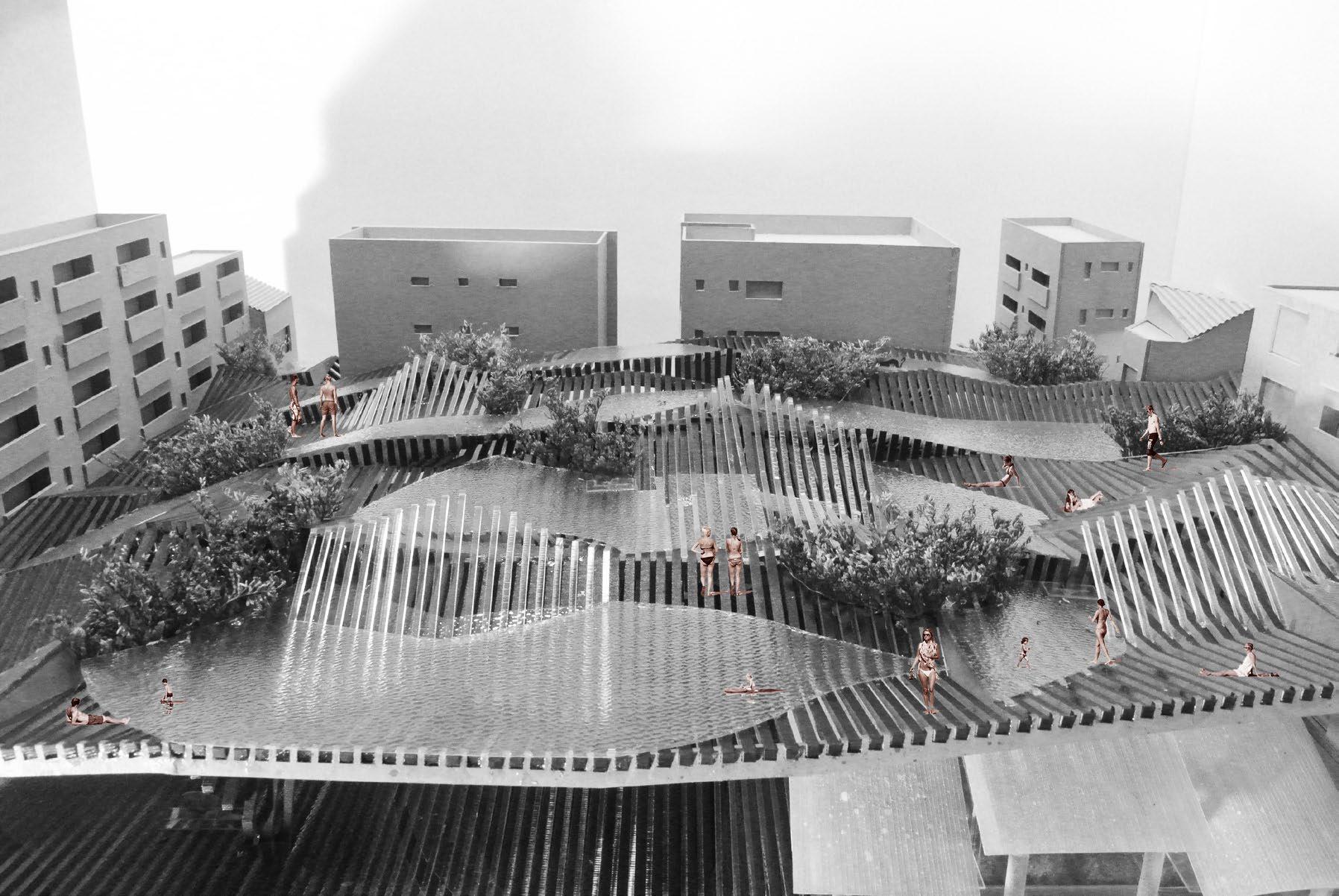
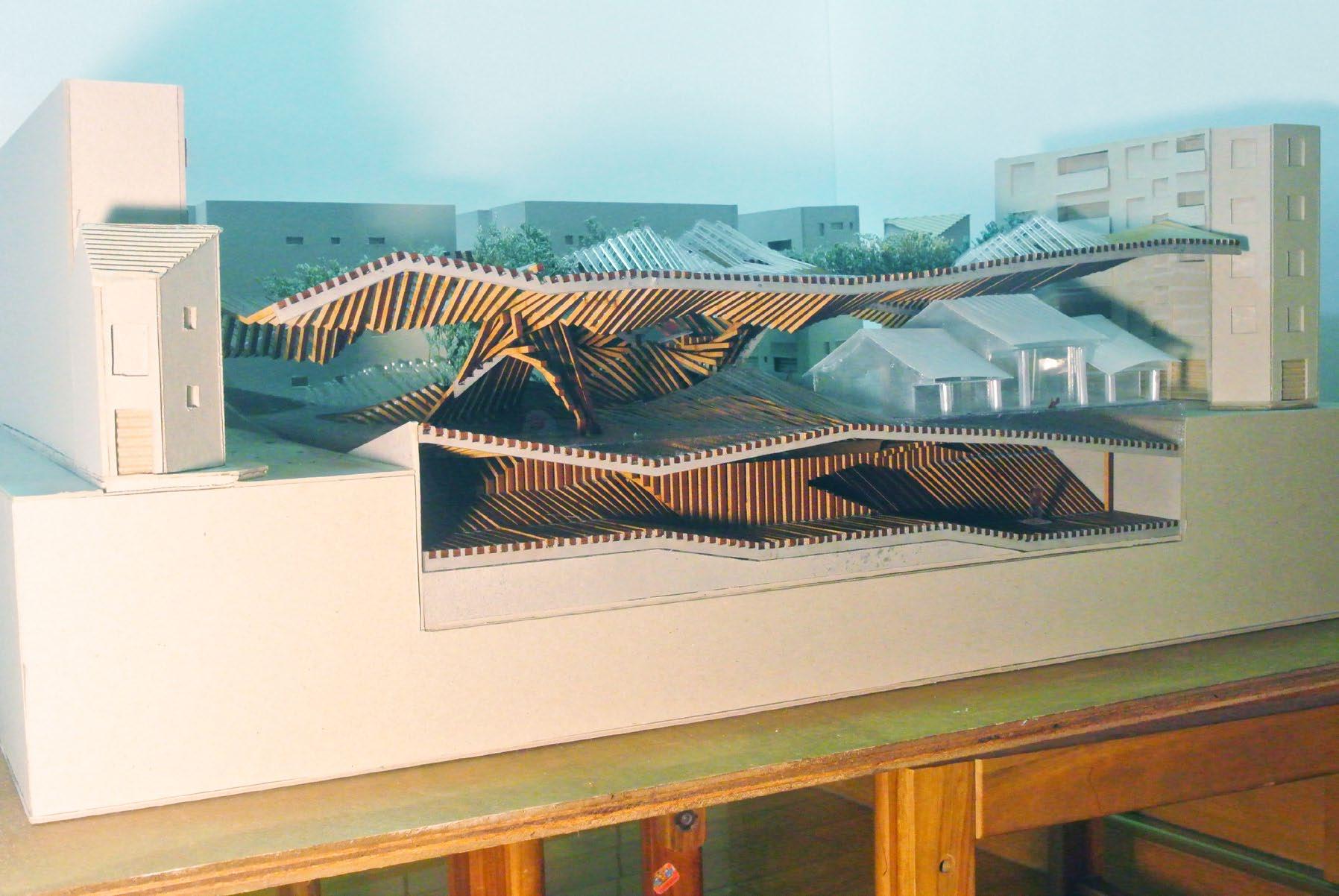
 Model
Perspective
Model
Perspective
27
Model
28
"
Many thanks for all the joy-filled days and the invaluable lessons that my tutor has shared with me! and thank you for all of mentors' guidance and support. "
-Revised Edition 2023-
29